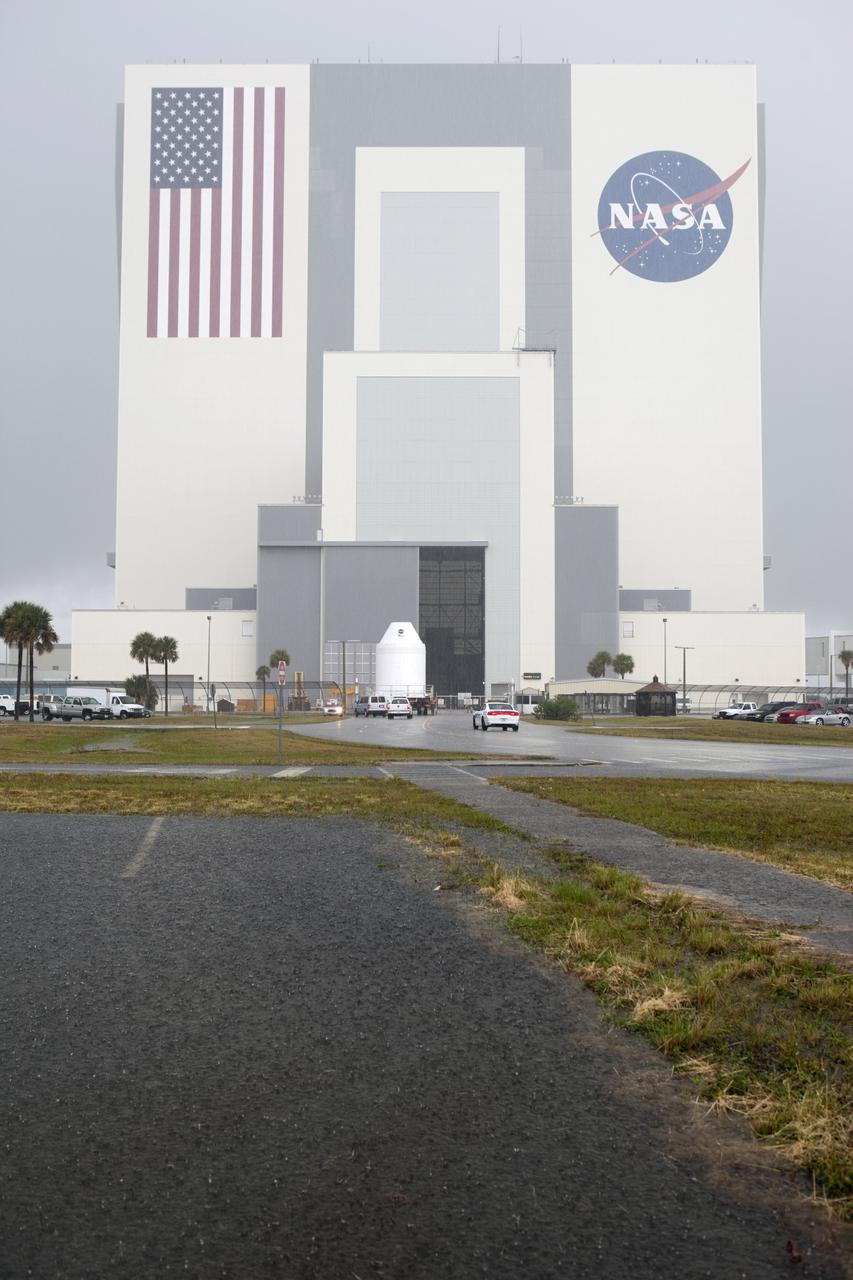
CAPE CANAVERAL, Fla. – A full-size test mock-up of the Orion spacecraft arrives at the Vehicle Assembly Building at NASA's Kennedy Space Center in Florida to test the path flight hardware will take during future launch processing. Orion is the exploration spacecraft designed to carry crews to space beyond low Earth orbit. It will provide emergency abort capability, sustain the crew during the space travel and provide safe re-entry from deep space return velocities. The first unpiloted test flight of the Orion is scheduled to launch in 2014 atop a Delta IV rocket and in 2017 on a Space Launch System rocket. For more information, visit http://www.nasa.gov/orion Photo credit: NASA/Dimitri Gerondidakis
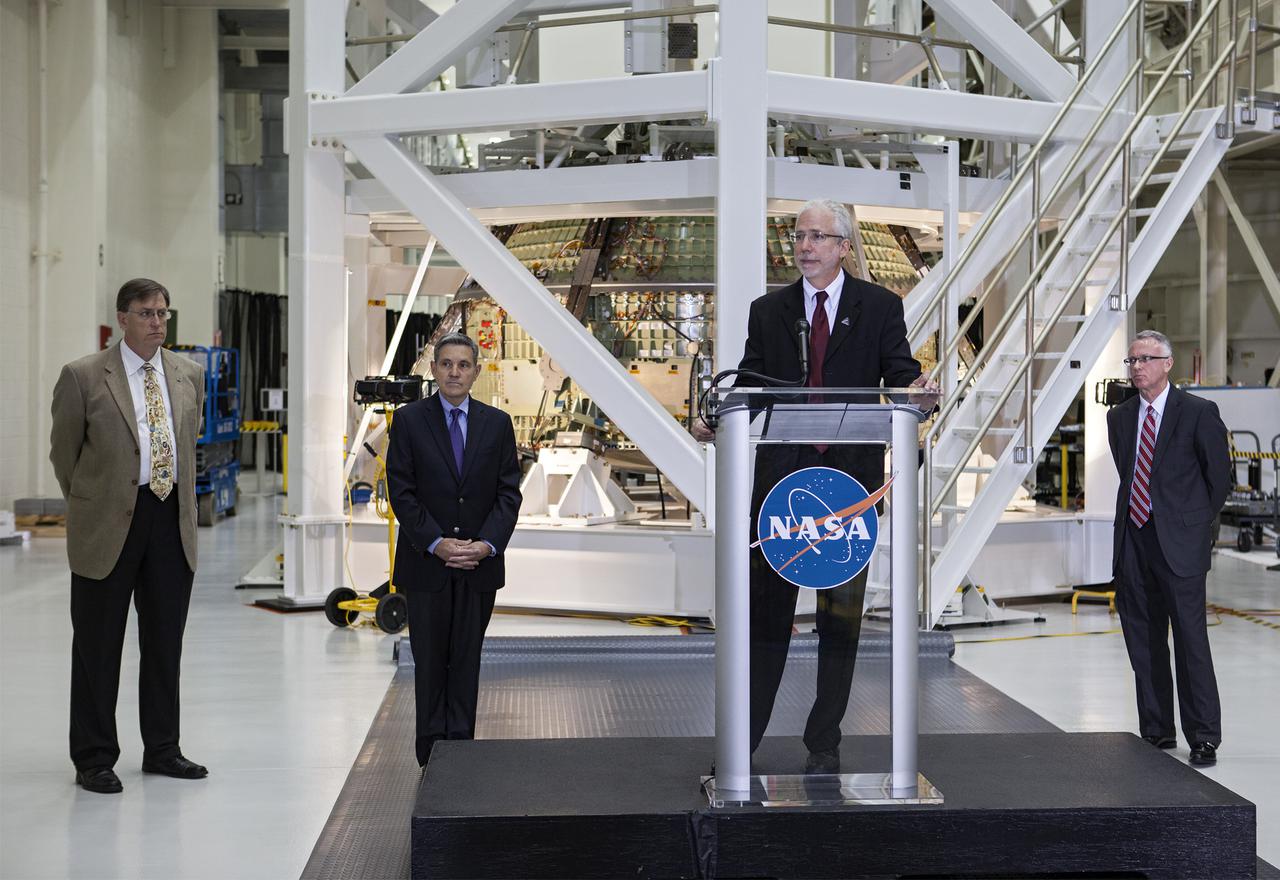
CAPE CANAVERAL, Fla. – In the Operations and Checkout Building OandC at the Kennedy Space Center in Florida, Mark Geyer, NASA's Orion program manager, speaks to news media representatives updating progress on preparing the Orion spacecraft for its first uncrewed mission, Exploration Flight Test-1 EFT-1 in 2014. The crew module is seen behind Geyer in its test stand. Launched atop NASA's heavy-lift Space Launch System rocket, Orion is now targeted to take astronauts in a sample return mission to an asteroid as early as 2021. On the third anniversary of President Barack Obama issuing his challenge to NASA to send astronauts to an asteroid, news media representatives were given an opportunity to see up-close the Orion spacecraft which could take astronauts on such a flight. They also heard from key leaders of that effort in Kennedy's OandC where Orion's assembly is taking place. Photo credit: NASA_Kim Shiflett
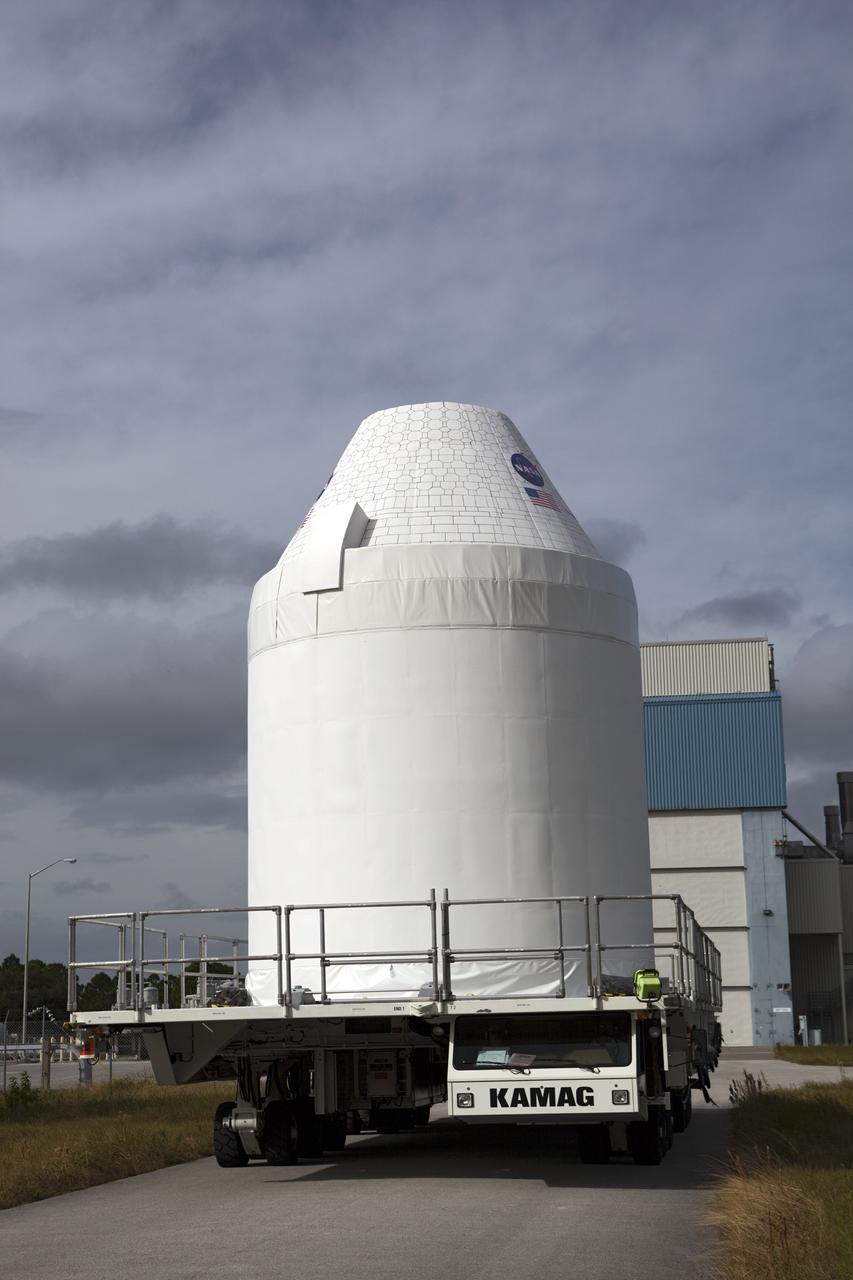
CAPE CANAVERAL, Fla. – A full-size test mock-up of the Orion spacecraft moves out of the Multi-Payload Processing Facility, or MPPF, at NASA's Kennedy Space Center in Florida to test the path flight hardware will take during future launch processing. Orion is the exploration spacecraft designed to carry crews to space beyond low Earth orbit. It will provide emergency abort capability, sustain the crew during the space travel and provide safe re-entry from deep space return velocities. The first unpiloted test flight of the Orion is scheduled to launch in 2014 atop a Delta IV rocket and in 2017 on a Space Launch System rocket. For more information, visit http://www.nasa.gov/orion Photo credit: NASA/Dimitri Gerondidakis
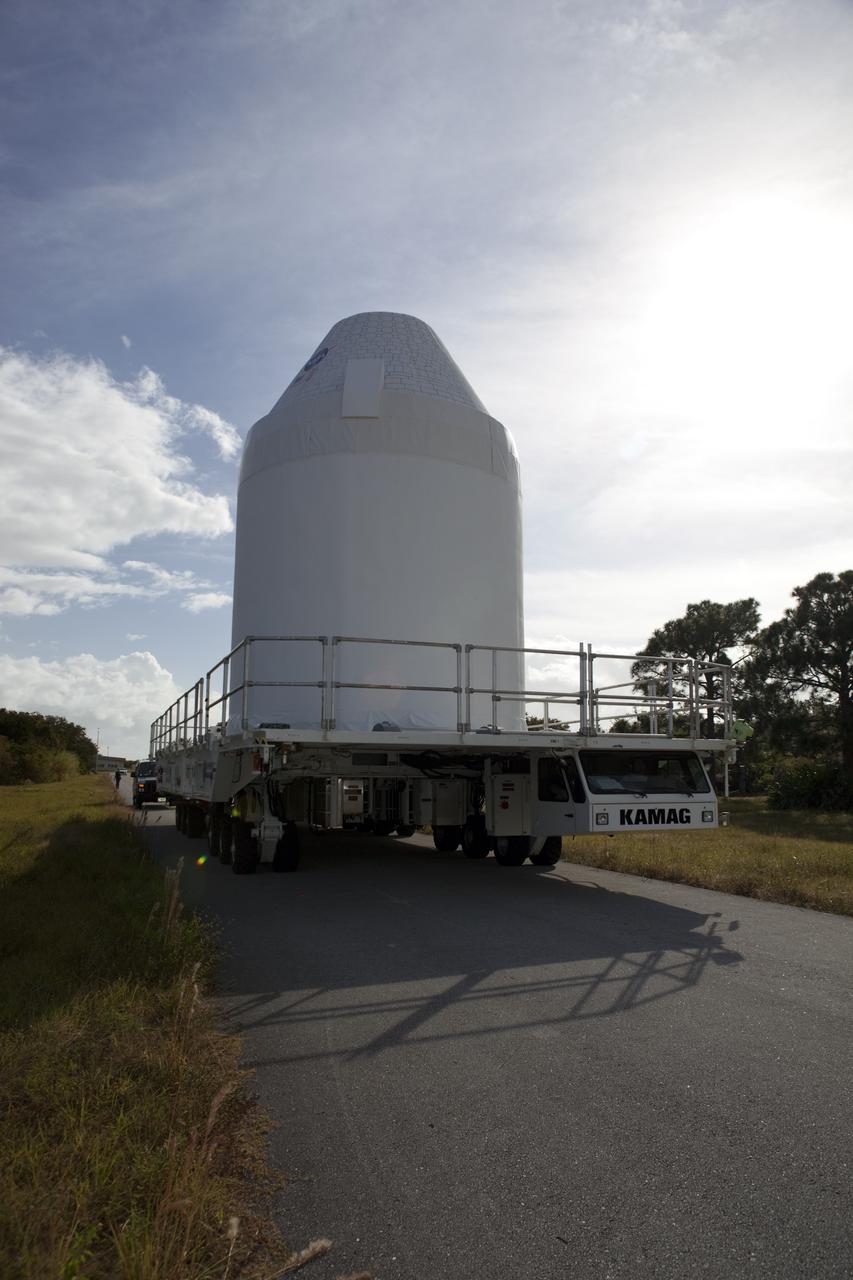
CAPE CANAVERAL, Fla. – A full-size test mock-up of the spacecraft is being transferred to the Multi-Payload Processing Facility, or MPPF, at NASA's Kennedy Space Center in Florida to test the path flight hardware will take during future launch processing. Orion is the exploration spacecraft designed to carry crews to space beyond low Earth orbit. It will provide emergency abort capability, sustain the crew during the space travel and provide safe re-entry from deep space return velocities. The first unpiloted test flight of the Orion is scheduled to launch in 2014 atop a Delta IV rocket and in 2017 on a Space Launch System rocket. For more information, visit http://www.nasa.gov/orion Photo credit: NASA/Dimitri Gerondidakis
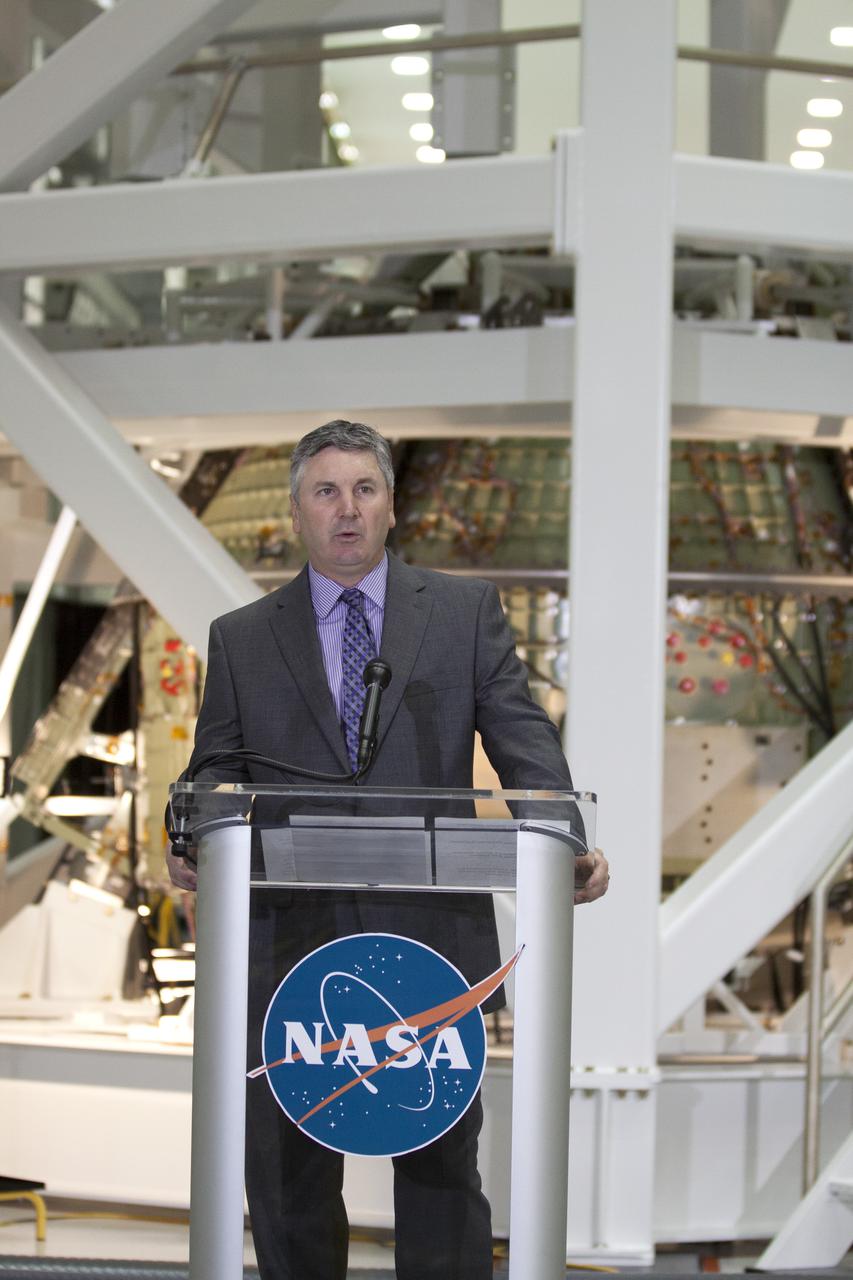
CAPE CANAVERAL, Fla. – In the Operations and Checkout Building OandC at the Kennedy Space Center in Florida, Scott Colloredo, chief architect for the Ground Systems Development and Operations Program, speaks to news media representatives updating progress on preparing the Orion spacecraft for its first uncrewed mission, Exploration Flight Test-1 EFT-1 in 2014. The crew module is seen behind Hefner in its test stand. Launched atop NASA's heavy-lift Space Launch System rocket, Orion is now targeted to take astronauts in a sample return mission to an asteroid as early as 2021. On the third anniversary of President Barack Obama issuing his challenge to NASA to send astronauts to an asteroid, news media representatives were given an opportunity to see up-close the Orion spacecraft which could take astronauts on such a flight. They also heard from key leaders of that effort in Kennedy's OandC where Orion's assembly is taking place. Photo credit: NASA_Kim Shiflett
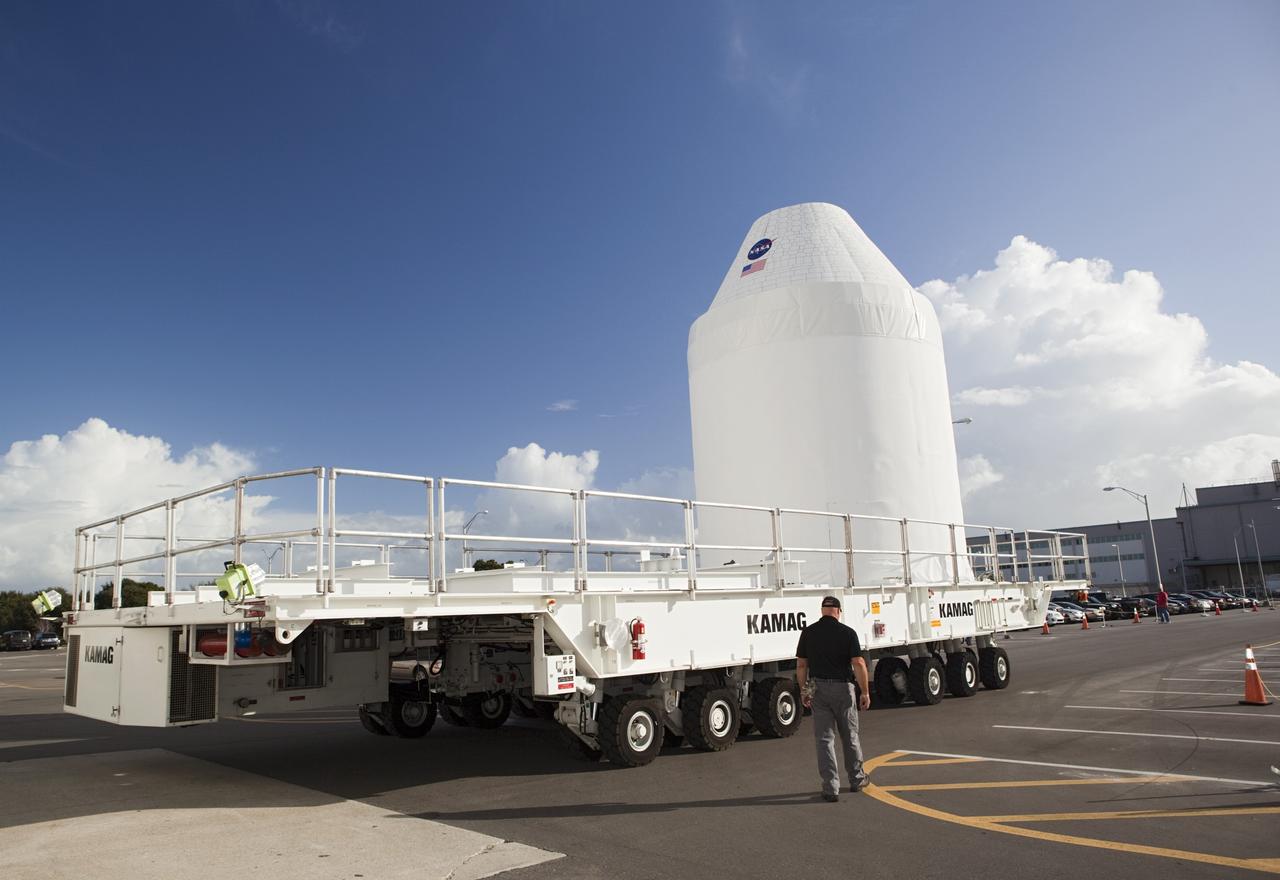
CAPE CANAVERAL, Fla. – A full-size test mock-up of the Orion spacecraft from of the Operations and Checkout Building at NASA's Kennedy Space Center in Florida. The test article is on its way to the Multi-Payload Processing Facility, or MPPF, to test the path flight hardware will take during future launch processing. Orion is the exploration spacecraft designed to carry crews to space beyond low Earth orbit. It will provide emergency abort capability, sustain the crew during the space travel and provide safe re-entry from deep space return velocities. The first unpiloted test flight of the Orion is scheduled to launch in 2014 atop a Delta IV rocket and in 2017 on a Space Launch System rocket. For more information, visit http://www.nasa.gov/orion Photo credit: NASA/Dimitri Gerondidakis
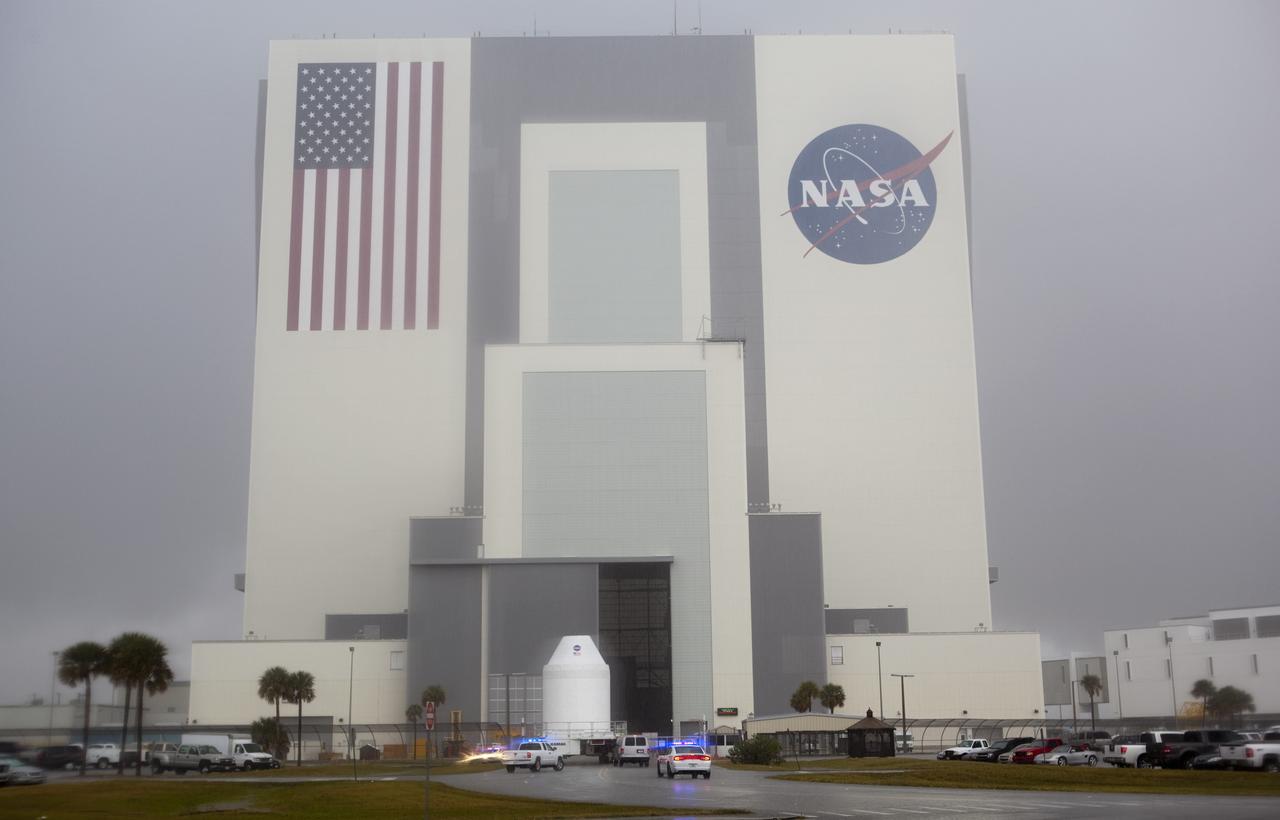
CAPE CANAVERAL, Fla. – A full-size test mock-up of the Orion spacecraft arrives at the Vehicle Assembly Building at NASA's Kennedy Space Center in Florida to test the path flight hardware will take during future launch processing. Orion is the exploration spacecraft designed to carry crews to space beyond low Earth orbit. It will provide emergency abort capability, sustain the crew during the space travel and provide safe re-entry from deep space return velocities. The first unpiloted test flight of the Orion is scheduled to launch in 2014 atop a Delta IV rocket and in 2017 on a Space Launch System rocket. For more information, visit http://www.nasa.gov/orion Photo credit: NASA/Dimitri Gerondidakis
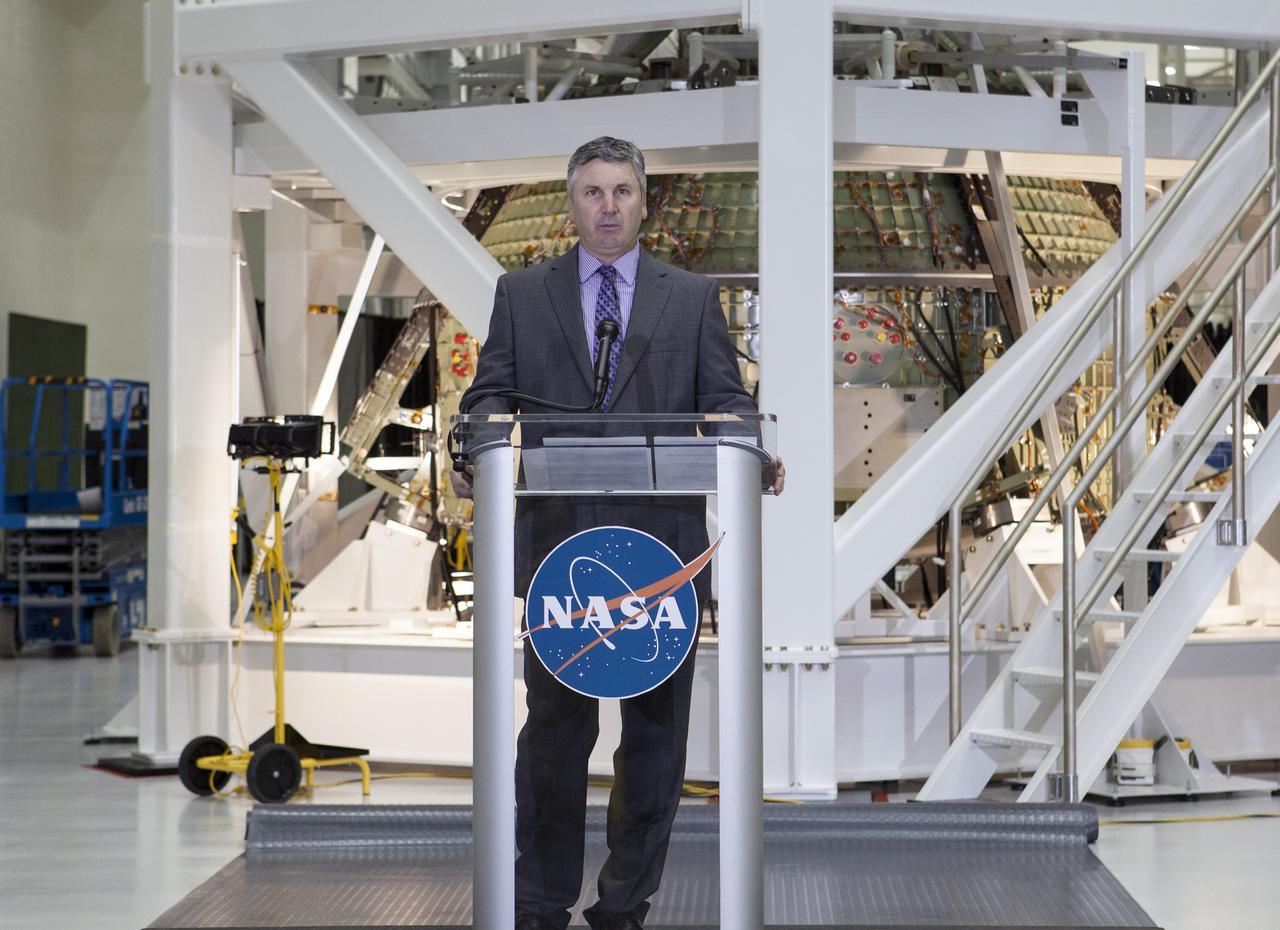
CAPE CANAVERAL, Fla. – In the Operations and Checkout Building OandC at the Kennedy Space Center in Florida, Scott Colloredo, chief architect for the Ground Systems Development and Operations Program, speaks to news media representatives updating progress on preparing the Orion spacecraft for its first uncrewed mission, Exploration Flight Test-1 EFT-1 in 2014. The crew module is seen behind Colloredo in its test stand. Launched atop NASA's heavy-lift Space Launch System rocket, Orion is now targeted to take astronauts in a sample return mission to an asteroid as early as 2021. On the third anniversary of President Barack Obama issuing his challenge to NASA to send astronauts to an asteroid, news media representatives were given an opportunity to see up-close the Orion spacecraft which could take astronauts on such a flight. They also heard from key leaders of that effort in Kennedy's OandC where Orion's assembly is taking place. Photo credit: NASA_Kim Shiflett
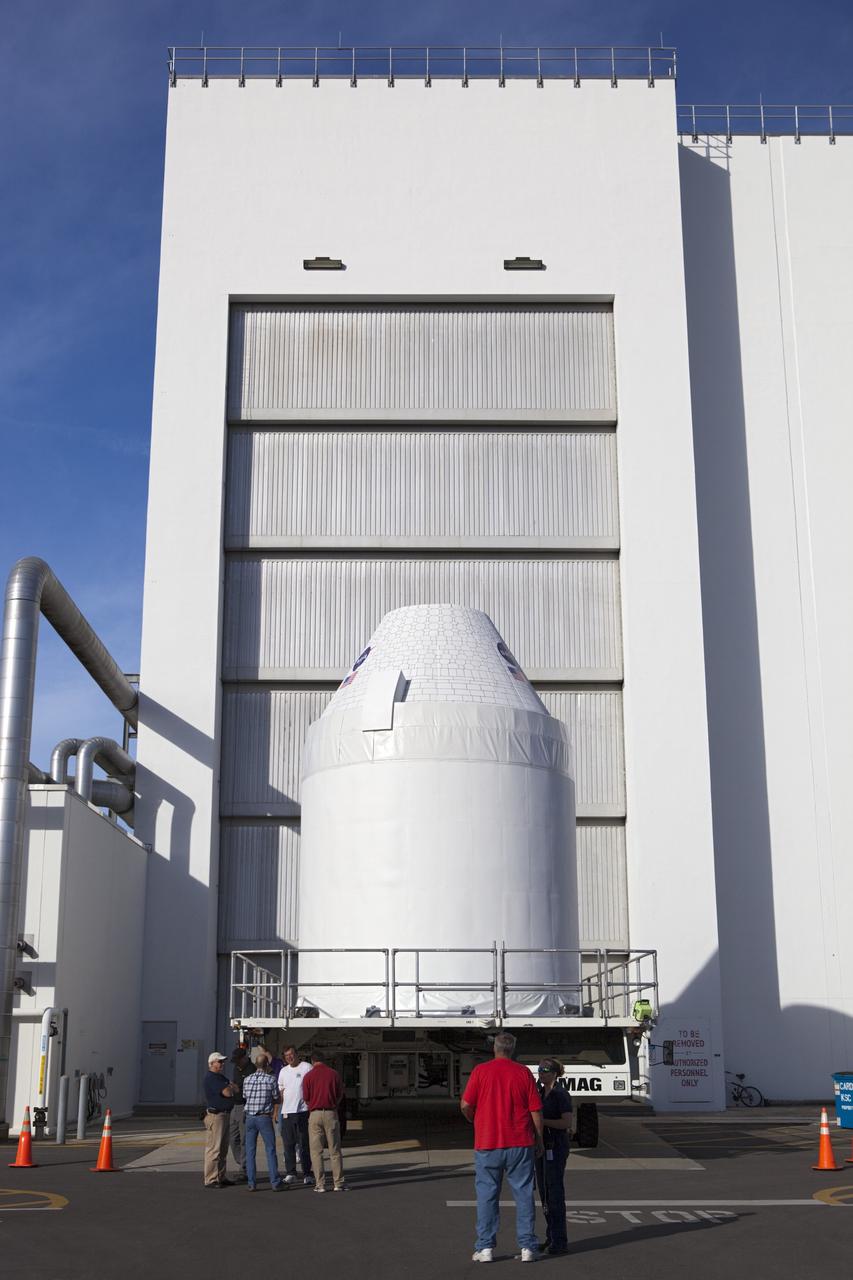
CAPE CANAVERAL, Fla. – A full-size test mock-up of the Orion spacecraft moves from the Operations and Checkout Building at NASA's Kennedy Space Center in Florida. The test article is on its way to the Multi-Payload Processing Facility, or MPPF, to test the path flight hardware will take during future launch processing. Orion is the exploration spacecraft designed to carry crews to space beyond low Earth orbit. It will provide emergency abort capability, sustain the crew during the space travel and provide safe re-entry from deep space return velocities. The first unpiloted test flight of the Orion is scheduled to launch in 2014 atop a Delta IV rocket and in 2017 on a Space Launch System rocket. For more information, visit http://www.nasa.gov/orion Photo credit: NASA/Dimitri Gerondidakis
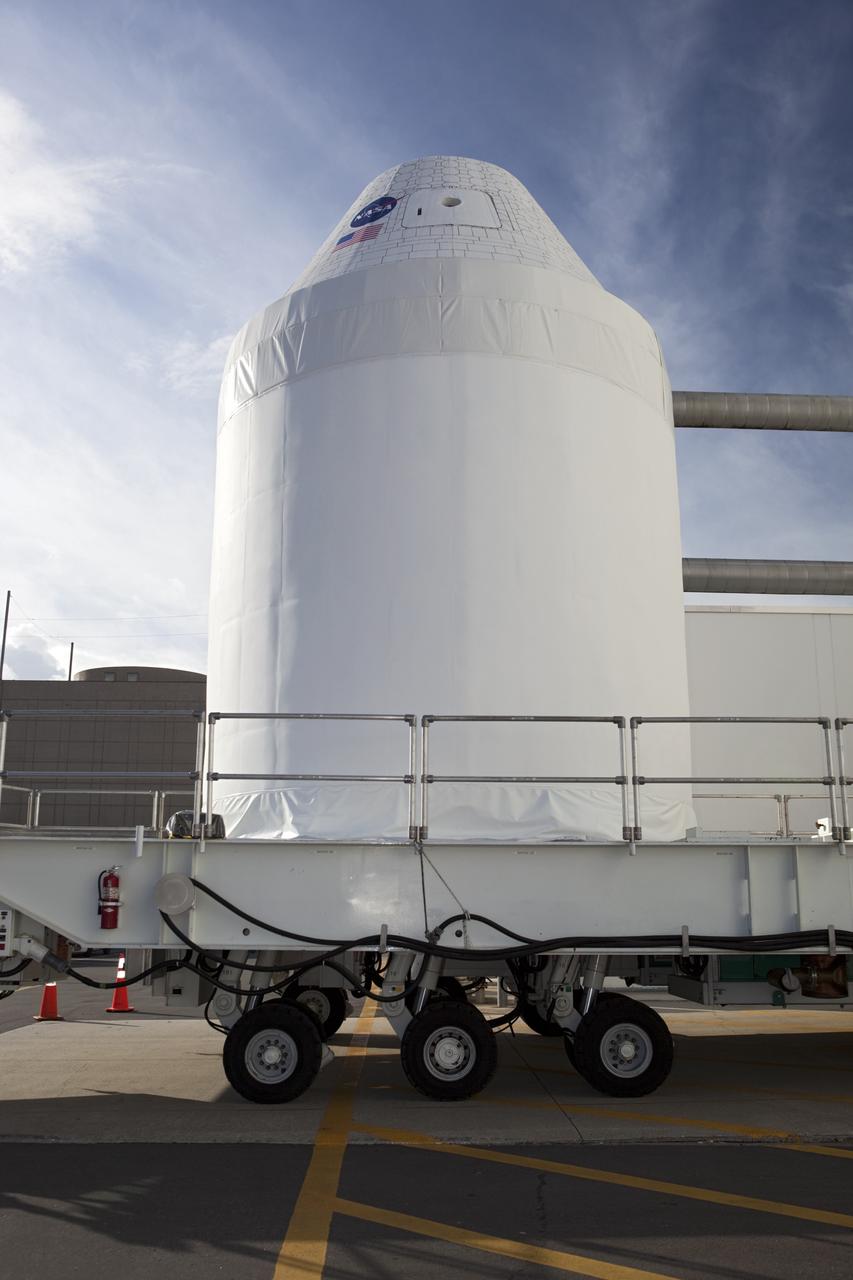
CAPE CANAVERAL, Fla. – A full-size test mock-up of the Orion spacecraft moves from the Operations and Checkout Building at NASA's Kennedy Space Center in Florida. The test article is on its way to the Multi-Payload Processing Facility, or MPPF, to test the path flight hardware will take during future launch processing. Orion is the exploration spacecraft designed to carry crews to space beyond low Earth orbit. It will provide emergency abort capability, sustain the crew during the space travel and provide safe re-entry from deep space return velocities. The first unpiloted test flight of the Orion is scheduled to launch in 2014 atop a Delta IV rocket and in 2017 on a Space Launch System rocket. For more information, visit http://www.nasa.gov/orion Photo credit: NASA/Dimitri Gerondidakis
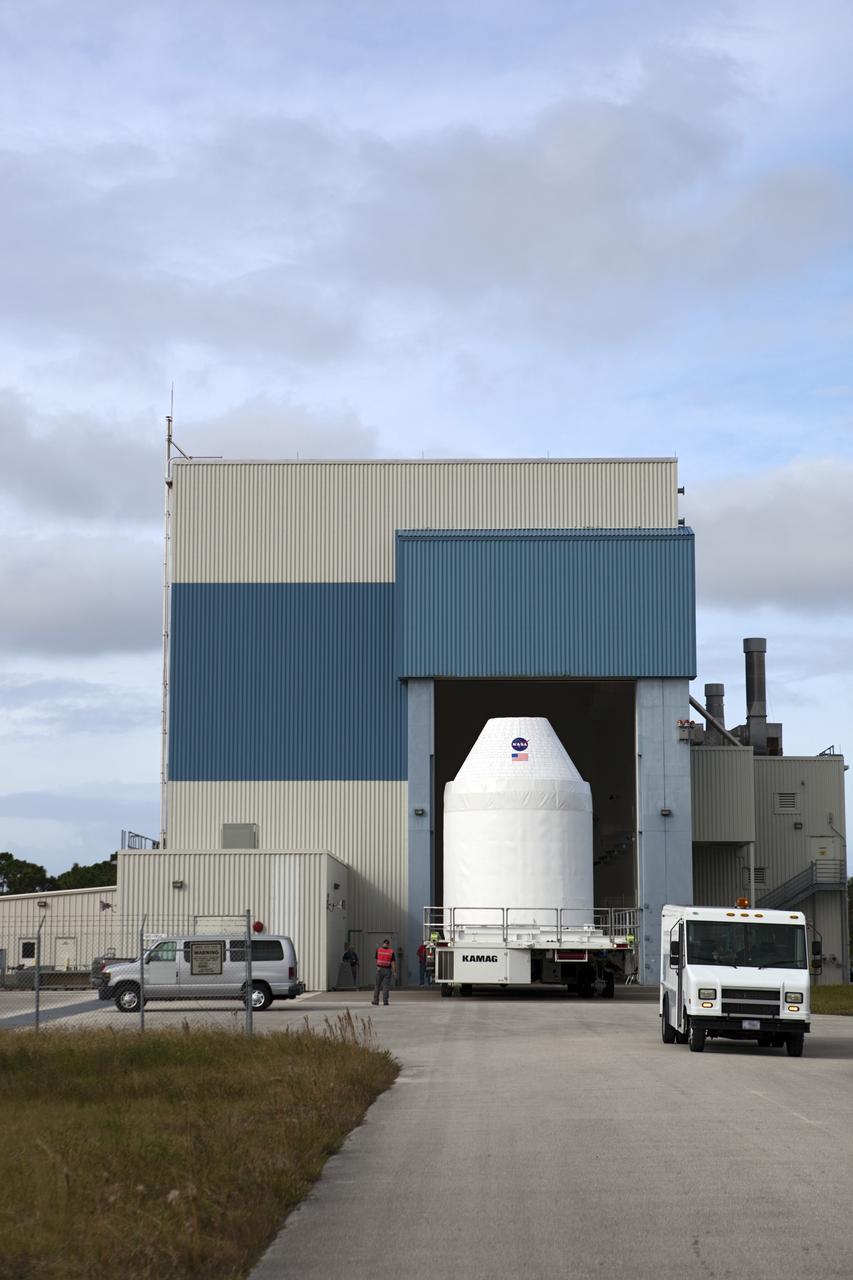
CAPE CANAVERAL, Fla. – A full-size test mock-up of the Orion spacecraft moves out of the Multi-Payload Processing Facility, or MPPF, at NASA's Kennedy Space Center in Florida to test the path flight hardware will take during future launch processing. Orion is the exploration spacecraft designed to carry crews to space beyond low Earth orbit. It will provide emergency abort capability, sustain the crew during the space travel and provide safe re-entry from deep space return velocities. The first unpiloted test flight of the Orion is scheduled to launch in 2014 atop a Delta IV rocket and in 2017 on a Space Launch System rocket. For more information, visit http://www.nasa.gov/orion Photo credit: NASA/Dimitri Gerondidakis
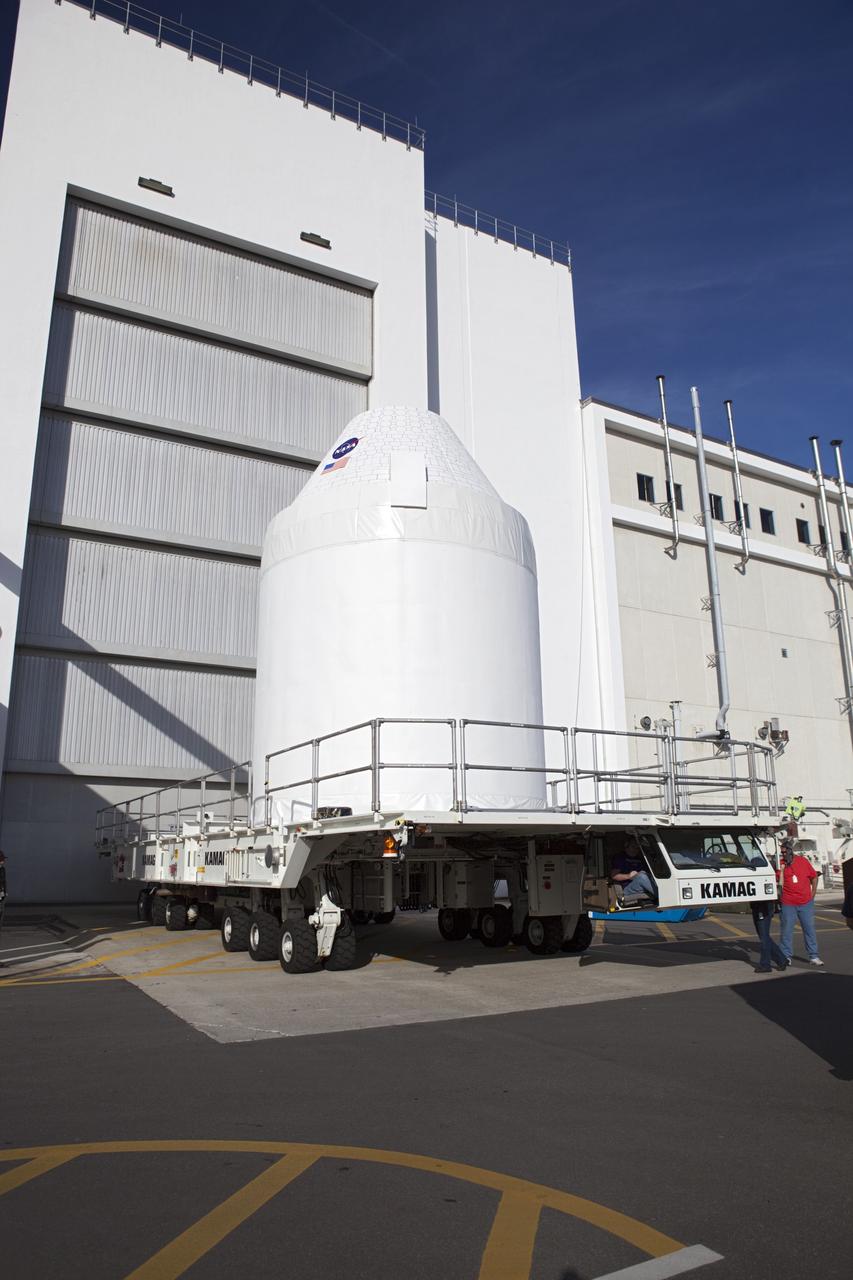
CAPE CANAVERAL, Fla. – A full-size test mock-up of the Orion crew exploration vehicle from of the Operations and Checkout Building at NASA's Kennedy Space Center in Florida. The test article is on its way to the Multi-Payload Processing Facility, or MPPF, to test the path flight hardware will take during future launch processing. Orion is the exploration spacecraft designed to carry crews to space beyond low Earth orbit. It will provide emergency abort capability, sustain the crew during the space travel and provide safe re-entry from deep space return velocities. The first unpiloted test flight of the Orion is scheduled to launch in 2014 atop a Delta IV rocket and in 2017 on a Space Launch System rocket. For more information, visit http://www.nasa.gov/orion Photo credit: NASA/Dimitri Gerondidakis
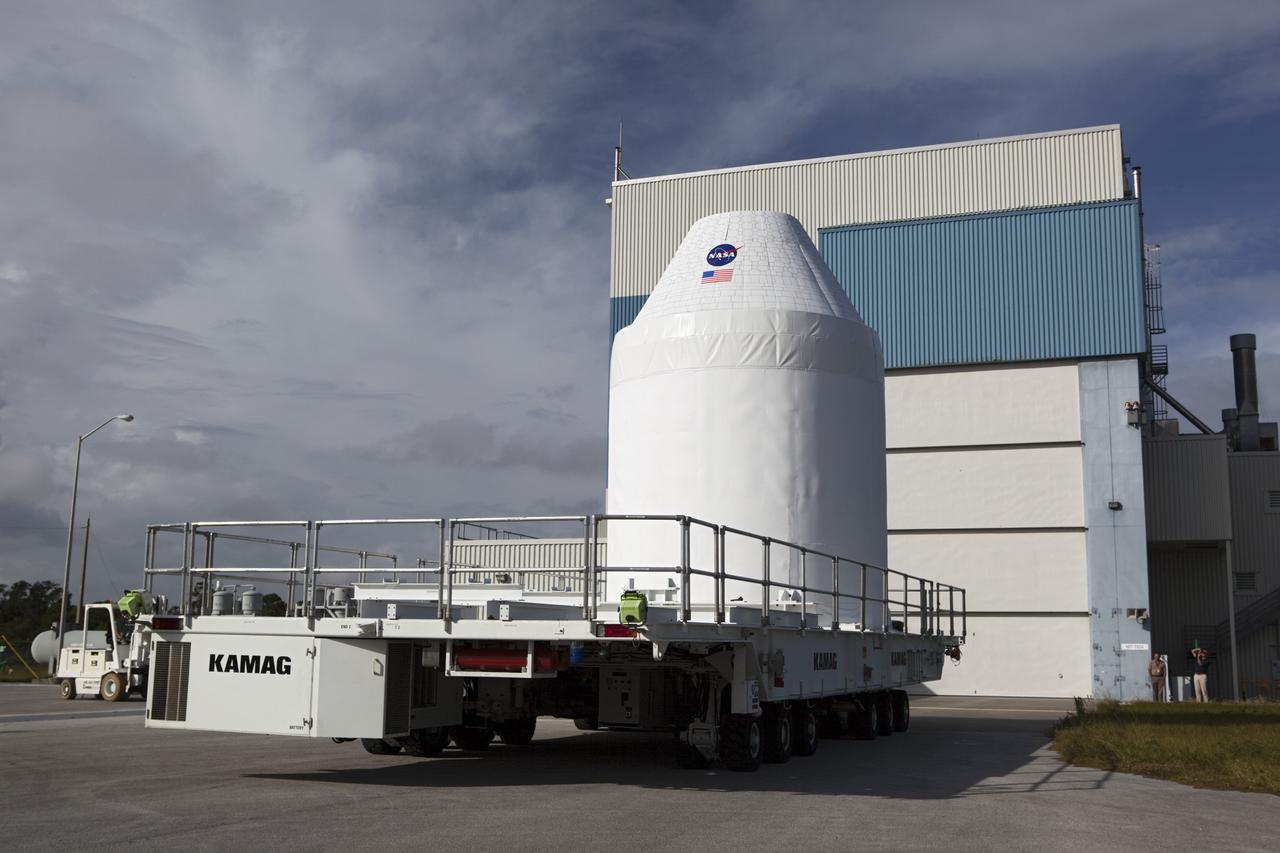
CAPE CANAVERAL, Fla. – A full-size test mock-up of the Orion spacecraft arrives at the Multi-Payload Processing Facility, or MPPF, at NASA's Kennedy Space Center in Florida to test the path flight hardware will take during future launch processing. Orion is the exploration spacecraft designed to carry crews to space beyond low Earth orbit. It will provide emergency abort capability, sustain the crew during the space travel and provide safe re-entry from deep space return velocities. The first unpiloted test flight of the Orion is scheduled to launch in 2014 atop a Delta IV rocket and in 2017 on a Space Launch System rocket. For more information, visit http://www.nasa.gov/orion Photo credit: NASA/Dimitri Gerondidakis
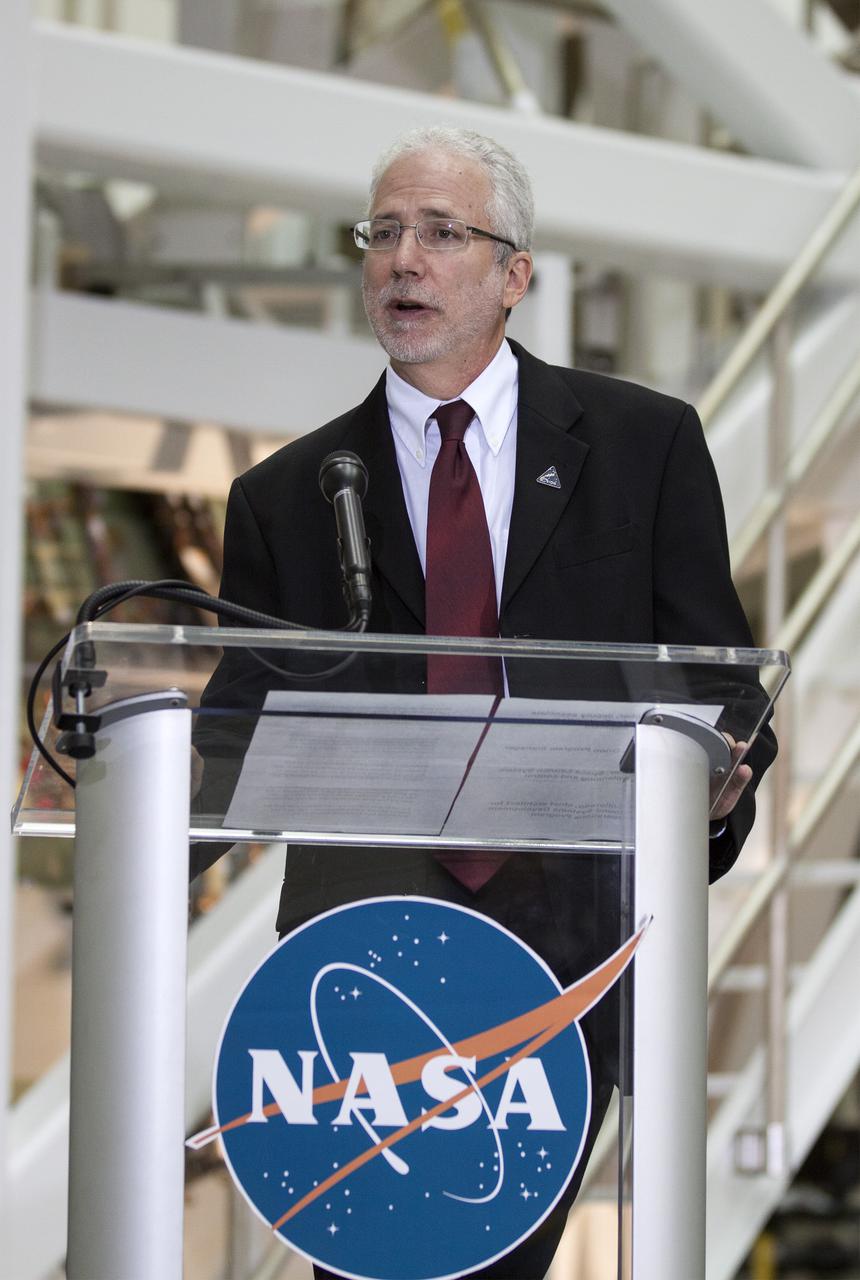
CAPE CANAVERAL, Fla. – In the Operations and Checkout Building OandC at the Kennedy Space Center in Florida, Mark Geyer, NASA's Orion program manager, speaks to news media representatives updating progress on preparing the Orion spacecraft for its first uncrewed mission, Exploration Flight Test-1 EFT-1 in 2014. Launched atop NASA's heavy-lift Space Launch System rocket, Orion is now targeted to take astronauts in a sample return mission to an asteroid as early as 2021. On the third anniversary of President Barack Obama issuing his challenge to NASA to send astronauts to an asteroid, news media representatives were given an opportunity to see up-close the Orion spacecraft which could take astronauts on such a flight. They also heard from key leaders of that effort in Kennedy's OandC where Orion's assembly is taking place. Photo credit: NASA_Kim Shiflett
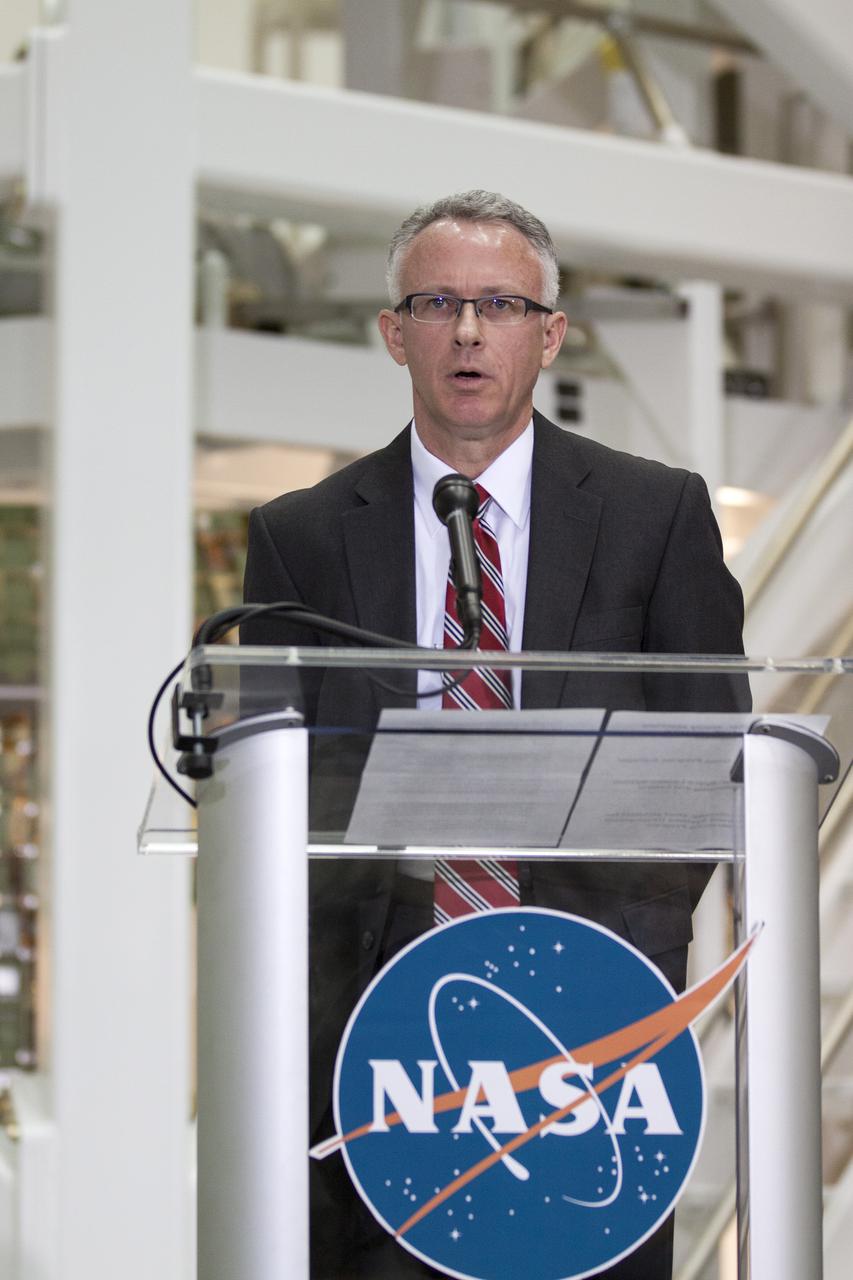
CAPE CANAVERAL, Fla. – In the Operations and Checkout Building OandC at the Kennedy Space Center in Florida, Keith Hefner, NASA's Space Launch System program planning and control manager, speaks to news media representatives updating progress on preparing the Orion spacecraft for its first uncrewed mission, Exploration Flight Test-1 EFT-1 in 2014. Launched atop NASA's heavy-lift Space Launch System rocket, Orion is now targeted to take astronauts in a sample return mission to an asteroid as early as 2021. On the third anniversary of President Barack Obama issuing his challenge to NASA to send astronauts to an asteroid, news media representatives were given an opportunity to see up-close the Orion spacecraft which could take astronauts on such a flight. They also heard from key leaders of that effort in Kennedy's OandC where Orion's assembly is taking place. Photo credit: NASA_Kim Shiflett
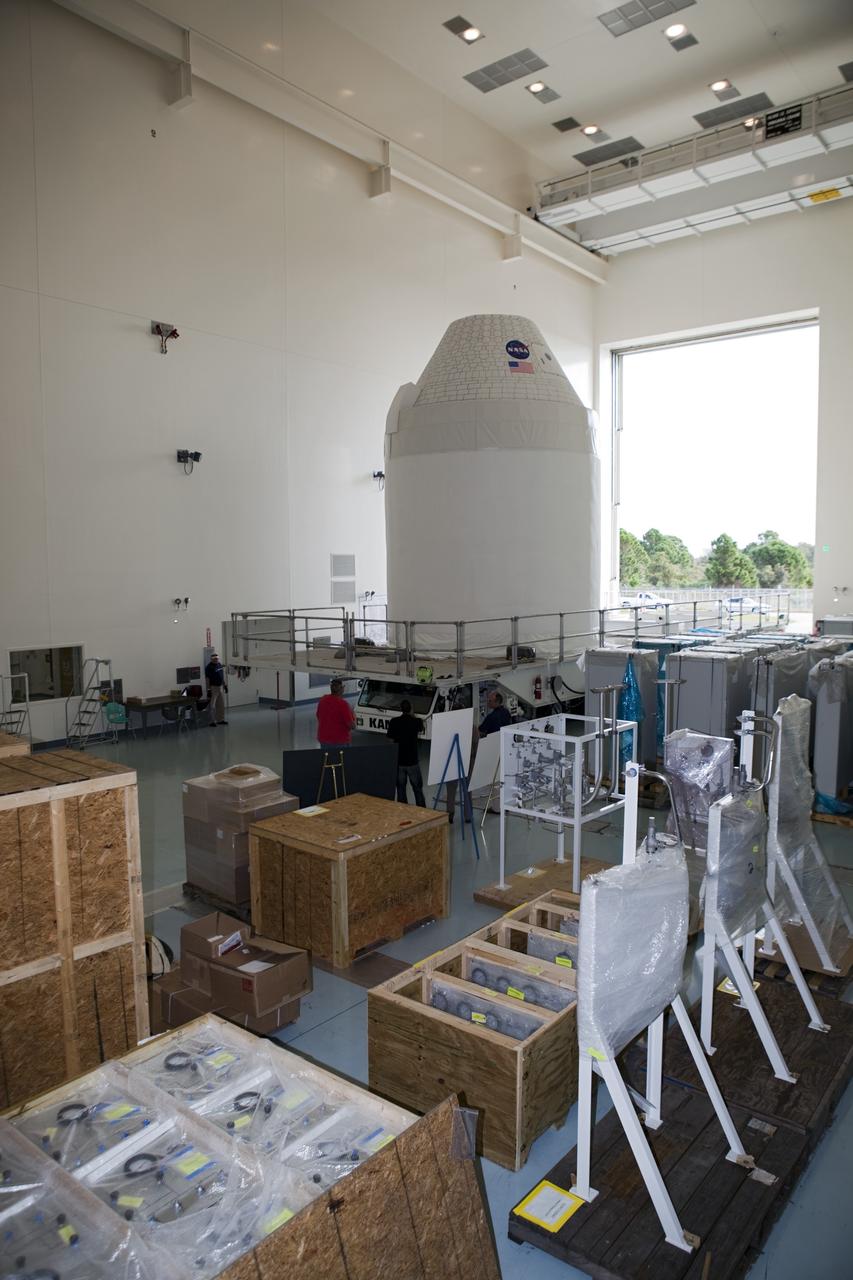
CAPE CANAVERAL, Fla. – A full-size test mock-up of the Orion spacecraft moves inside the Multi-Payload Processing Facility, or MPPF, at NASA's Kennedy Space Center in Florida to test the path flight hardware will take during future launch processing. Orion is the exploration spacecraft designed to carry crews to space beyond low Earth orbit. It will provide emergency abort capability, sustain the crew during the space travel and provide safe re-entry from deep space return velocities. The first unpiloted test flight of the Orion is scheduled to launch in 2014 atop a Delta IV rocket and in 2017 on a Space Launch System rocket. For more information, visit http://www.nasa.gov/orion Photo credit: NASA/Dimitri Gerondidakis
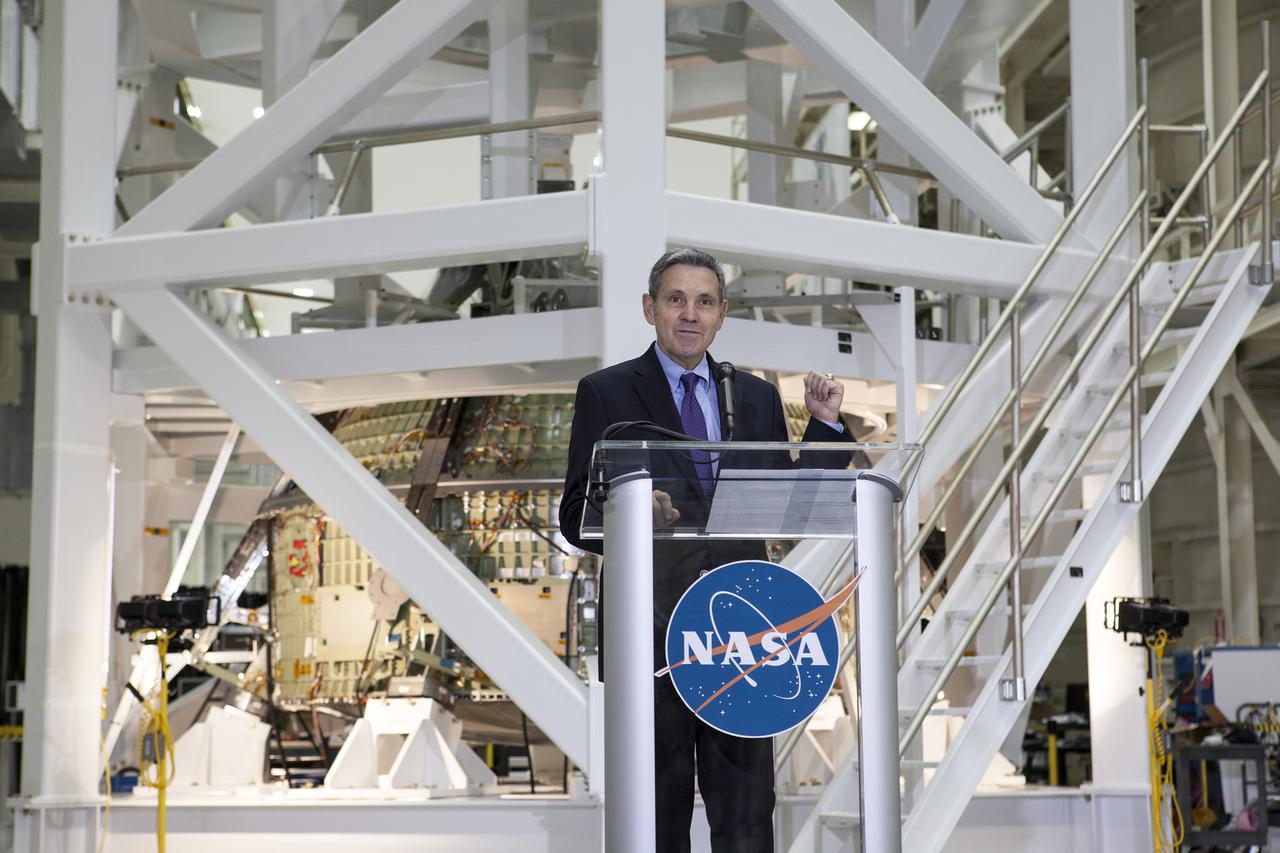
CAPE CANAVERAL, Fla. – In the Operations and Checkout Building OandC at the Kennedy Space Center in Florida, Kennedy Director Bob Cabana speaks to news media representatives updating progress on preparing the Orion spacecraft for its first uncrewed mission, Exploration Flight Test-1 EFT-1 in 2014. The crew module is seen behind Cabana in its test stand. Launched atop NASA's heavy-lift Space Launch System rocket, Orion is now targeted to take astronauts in a sample return mission to an asteroid as early as 2021. On the third anniversary of President Barack Obama issuing his challenge to NASA to send astronauts to an asteroid, news media representatives were given an opportunity to see up-close the Orion spacecraft which could take astronauts on such a flight. They also heard from key leaders of that effort in Kennedy's OandC where Orion's assembly is taking place. Photo credit: NASA_Kim Shiflett
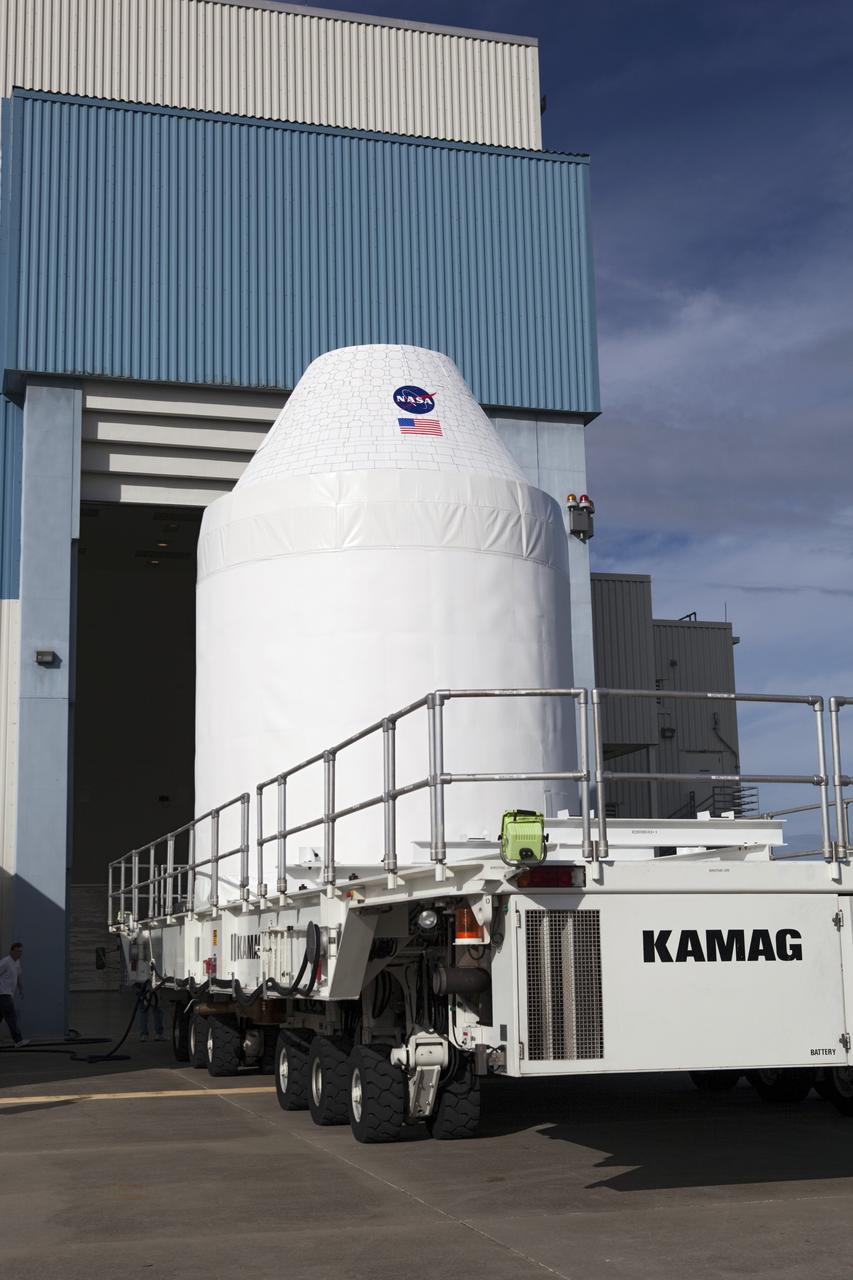
CAPE CANAVERAL, Fla. – A full-size test mock-up of the Orion crew exploration vehicle arrives at the Multi-Payload Processing Facility, or MPPF, at NASA's Kennedy Space Center in Florida to test the path flight hardware will take during future launch processing. Orion is the exploration spacecraft designed to carry crews to space beyond low Earth orbit. It will provide emergency abort capability, sustain the crew during the space travel and provide safe re-entry from deep space return velocities. The first unpiloted test flight of the Orion is scheduled to launch in 2014 atop a Delta IV rocket and in 2017 on a Space Launch System rocket. For more information, visit http://www.nasa.gov/orion Photo credit: NASA/Dimitri Gerondidakis
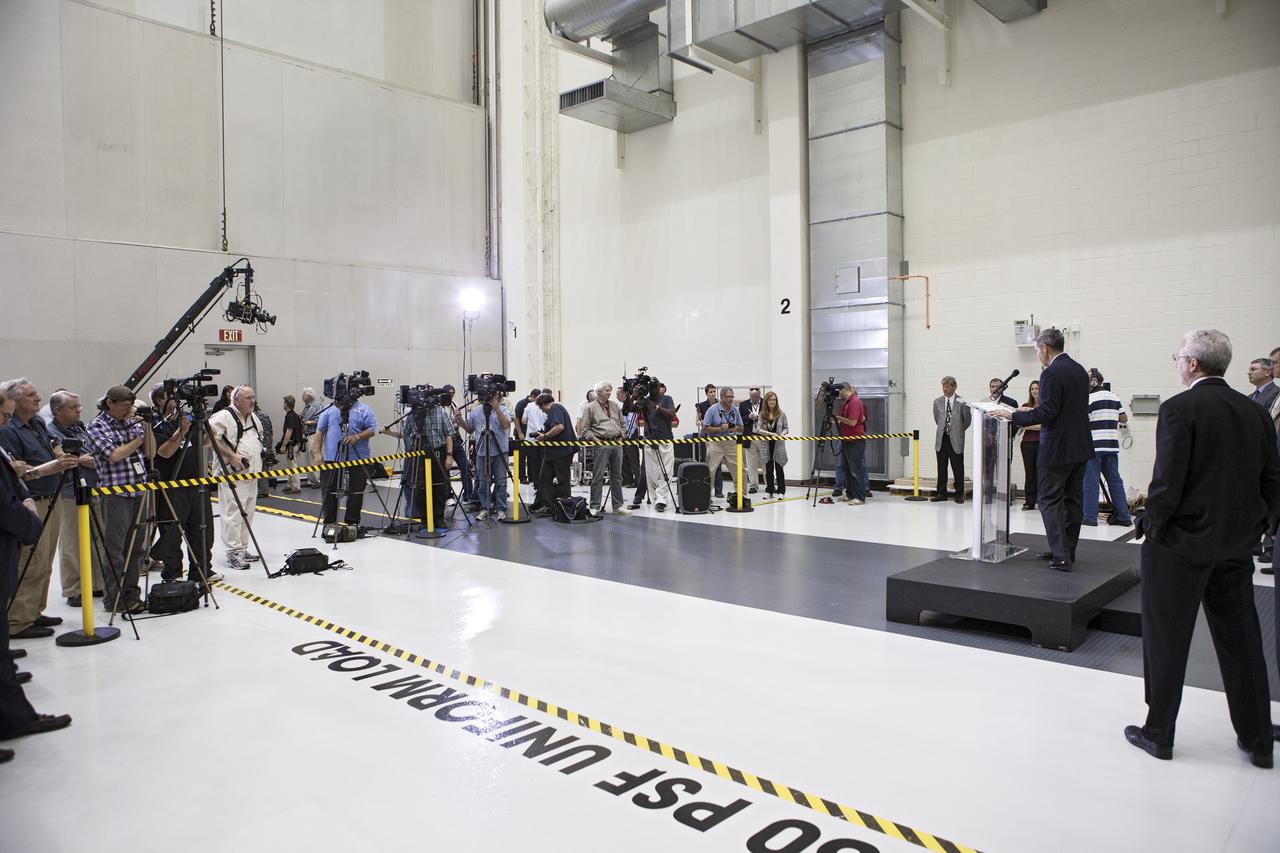
CAPE CANAVERAL, Fla. – In the Operations and Checkout Building OandC at the Kennedy Space Center in Florida, Kennedy Director Bob Cabana on the podium to the right speaks to news media representatives updating progress on preparing the Orion spacecraft for its first uncrewed mission, Exploration Flight Test-1 EFT-1 in 2014. Launched atop NASA's heavy-lift Space Launch System rocket, Orion is now targeted to take astronauts in a sample return mission to an asteroid as early as 2021. On the third anniversary of President Barack Obama issuing his challenge to NASA to send astronauts to an asteroid, news media representatives were given an opportunity to see up-close the Orion spacecraft which could take astronauts on such a flight. They also heard from key leaders of that effort in Kennedy's OandC where Orion's assembly is taking place. Photo credit: NASA_Kim Shiflett
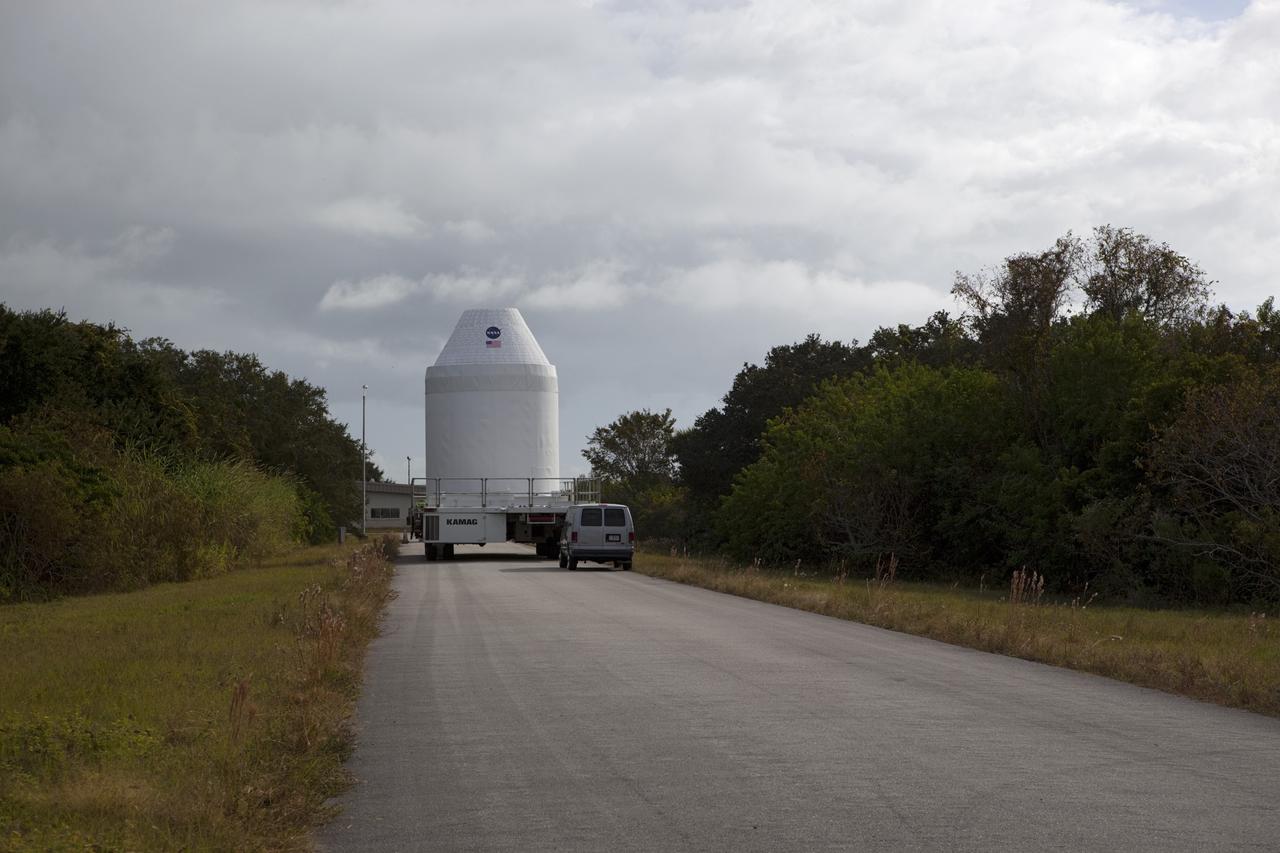
CAPE CANAVERAL, Fla. – A full-size test mock-up of the Orion spacecraft is being transferred to the Vehicle Assembly Building at NASA's Kennedy Space Center in Florida to test the path flight hardware will take during future launch processing. Orion is the exploration spacecraft designed to carry crews to space beyond low Earth orbit. It will provide emergency abort capability, sustain the crew during the space travel and provide safe re-entry from deep space return velocities. The first unpiloted test flight of the Orion is scheduled to launch in 2014 atop a Delta IV rocket and in 2017 on a Space Launch System rocket. For more information, visit http://www.nasa.gov/orion Photo credit: NASA/Dimitri Gerondidakis
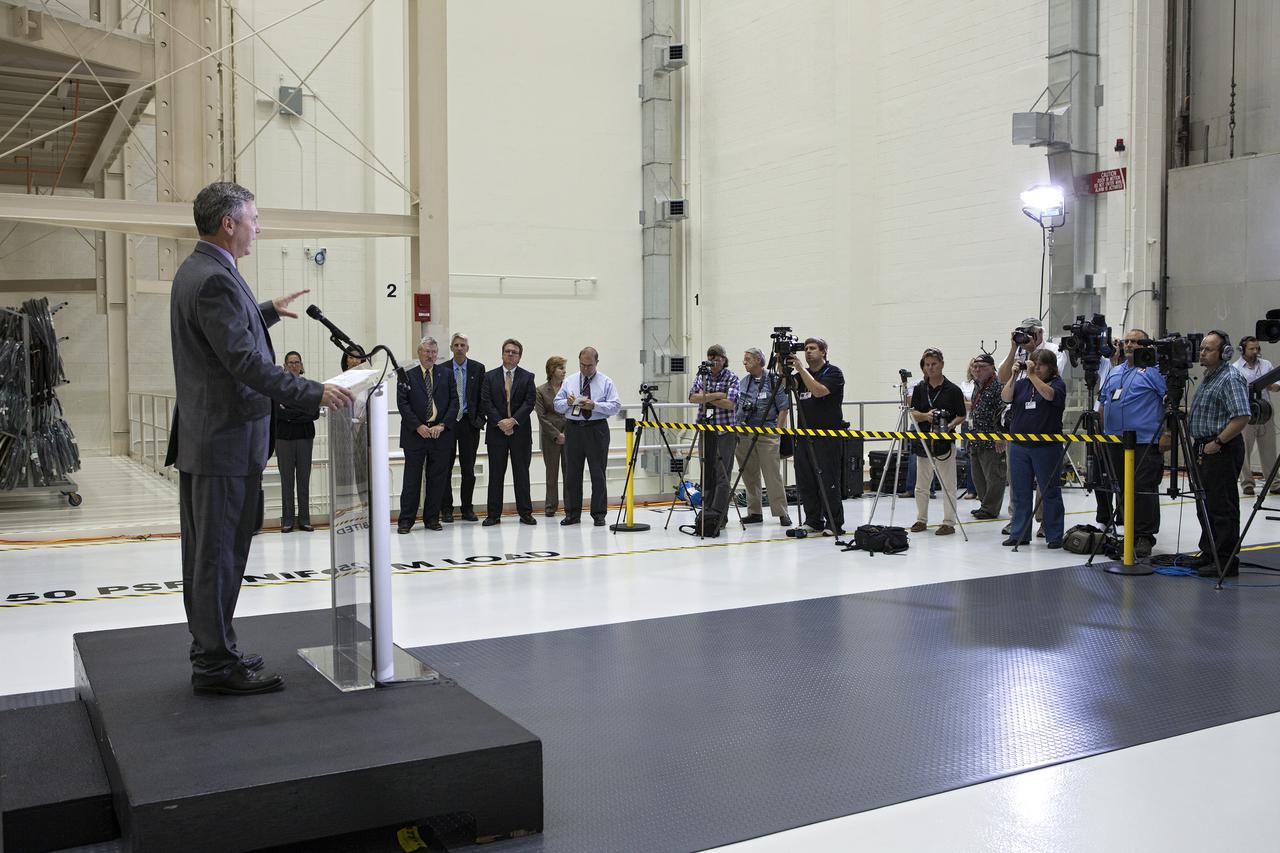
CAPE CANAVERAL, Fla. – In the Operations and Checkout Building OandC at the Kennedy Space Center in Florida, Scott Colloredo, chief architect for the Ground Systems Development and Operations Program, speaks to news media representatives updating progress on preparing the Orion spacecraft for its first uncrewed mission, Exploration Flight Test-1 EFT-1 in 2014. The crew module is seen behind Hefner in its test stand. Launched atop NASA's heavy-lift Space Launch System rocket, Orion is now targeted to take astronauts in a sample return mission to an asteroid as early as 2021. On the third anniversary of President Barack Obama issuing his challenge to NASA to send astronauts to an asteroid, news media representatives were given an opportunity to see up-close the Orion spacecraft which could take astronauts on such a flight. They also heard from key leaders of that effort in Kennedy's OandC where Orion's assembly is taking place. Photo credit: NASA_Kim Shiflett
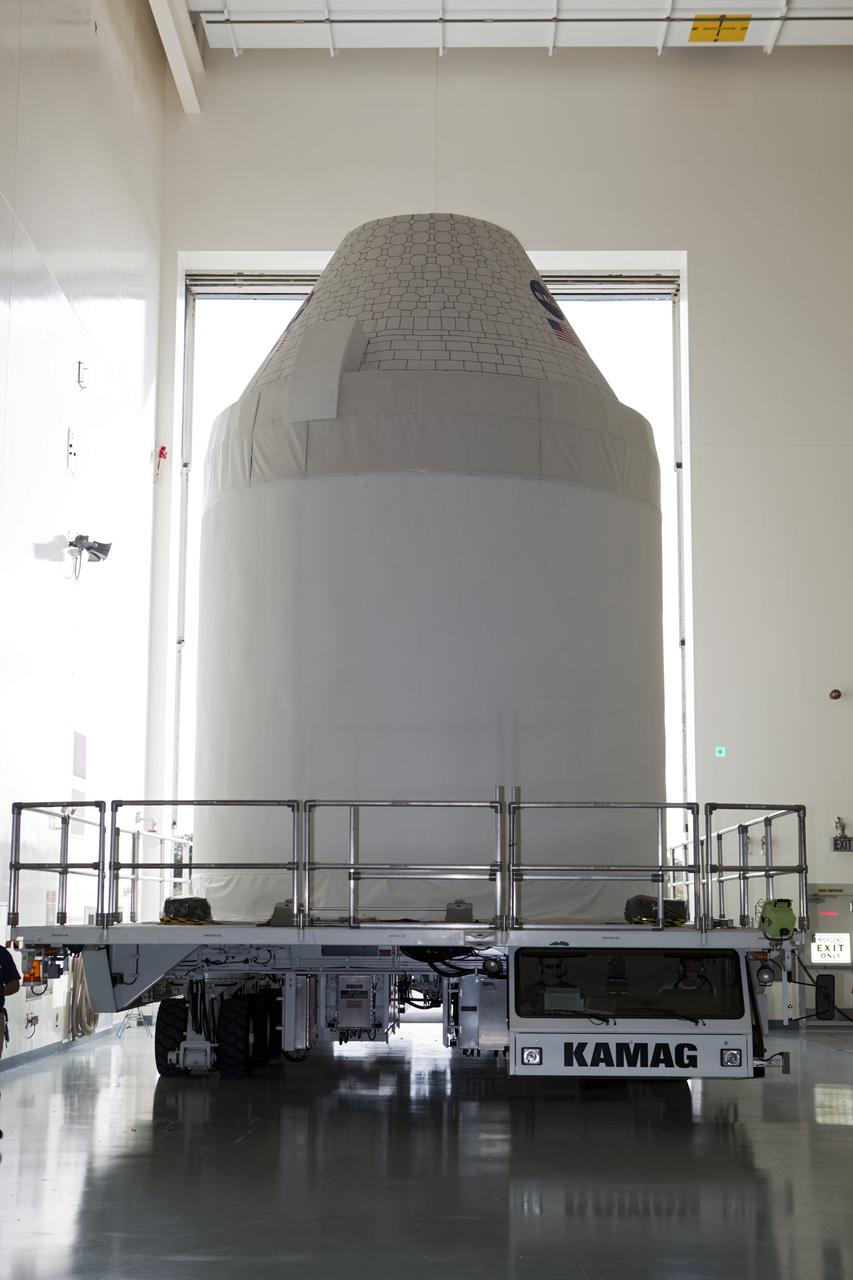
CAPE CANAVERAL, Fla. – A full-size test mock-up of the Orion spacecraft moves inside the Multi-Payload Processing Facility, or MPPF, at NASA's Kennedy Space Center in Florida to test the path flight hardware will take during future launch processing. Orion is the exploration spacecraft designed to carry crews to space beyond low Earth orbit. It will provide emergency abort capability, sustain the crew during the space travel and provide safe re-entry from deep space return velocities. The first unpiloted test flight of the Orion is scheduled to launch in 2014 atop a Delta IV rocket and in 2017 on a Space Launch System rocket. For more information, visit http://www.nasa.gov/orion Photo credit: NASA/Dimitri Gerondidakis
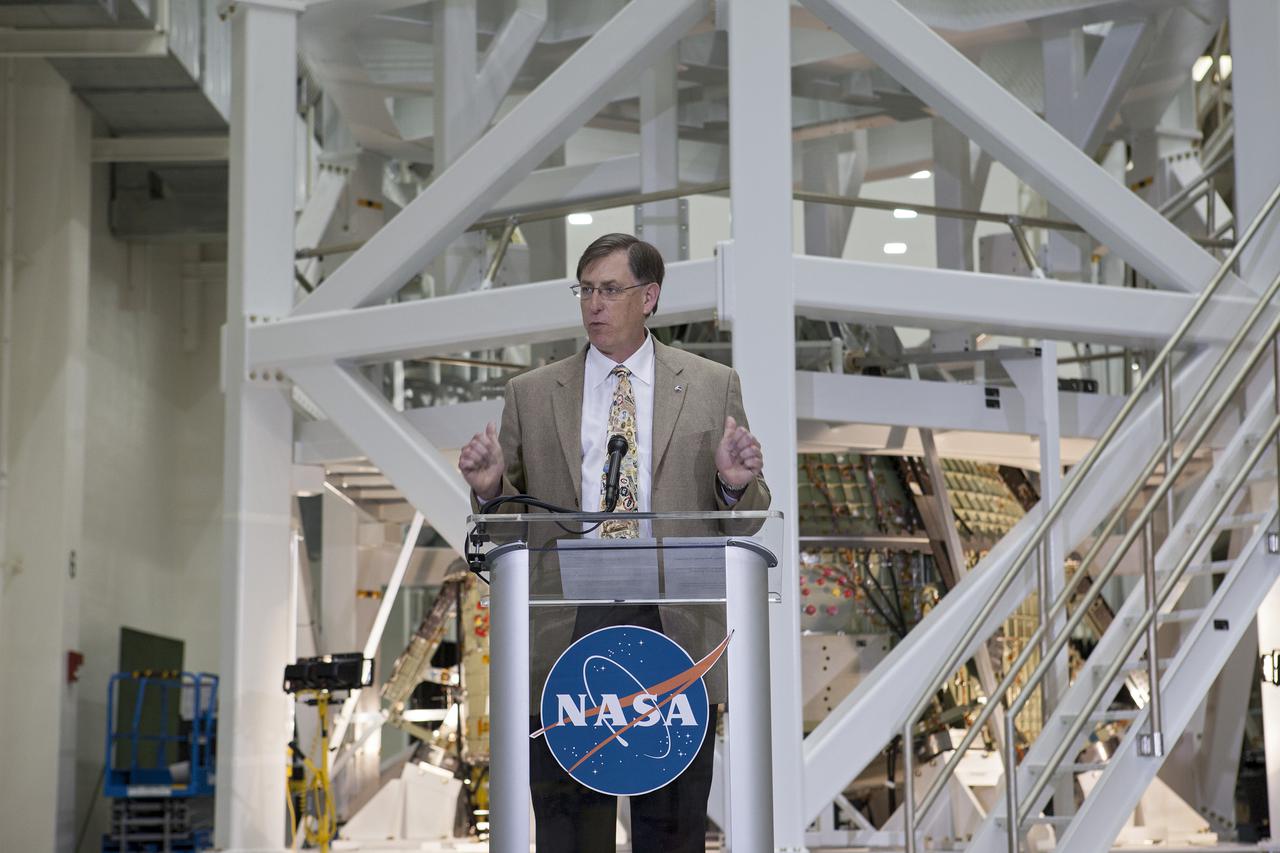
CAPE CANAVERAL, Fla. – In the Operations and Checkout Building OandC at the Kennedy Space Center in Florida, Dan Dumbacher, NASA's deputy associate administrator for Exploration Systems Development, speaks to news media representatives updating progress on preparing the Orion spacecraft for its first uncrewed mission, Exploration Flight Test-1 EFT-1 in 2014. The crew module is seen behind Dumbacher in its test stand. Launched atop NASA's heavy-lift Space Launch System rocket, Orion is now targeted to take astronauts in a sample return mission to an asteroid as early as 2021. On the third anniversary of President Barack Obama issuing his challenge to NASA to send astronauts to an asteroid, news media representatives were given an opportunity to see up-close the Orion spacecraft which could take astronauts on such a flight. They also heard from key leaders of that effort in Kennedy's OandC where Orion's assembly is taking place. Photo credit: NASA_Kim Shiflett
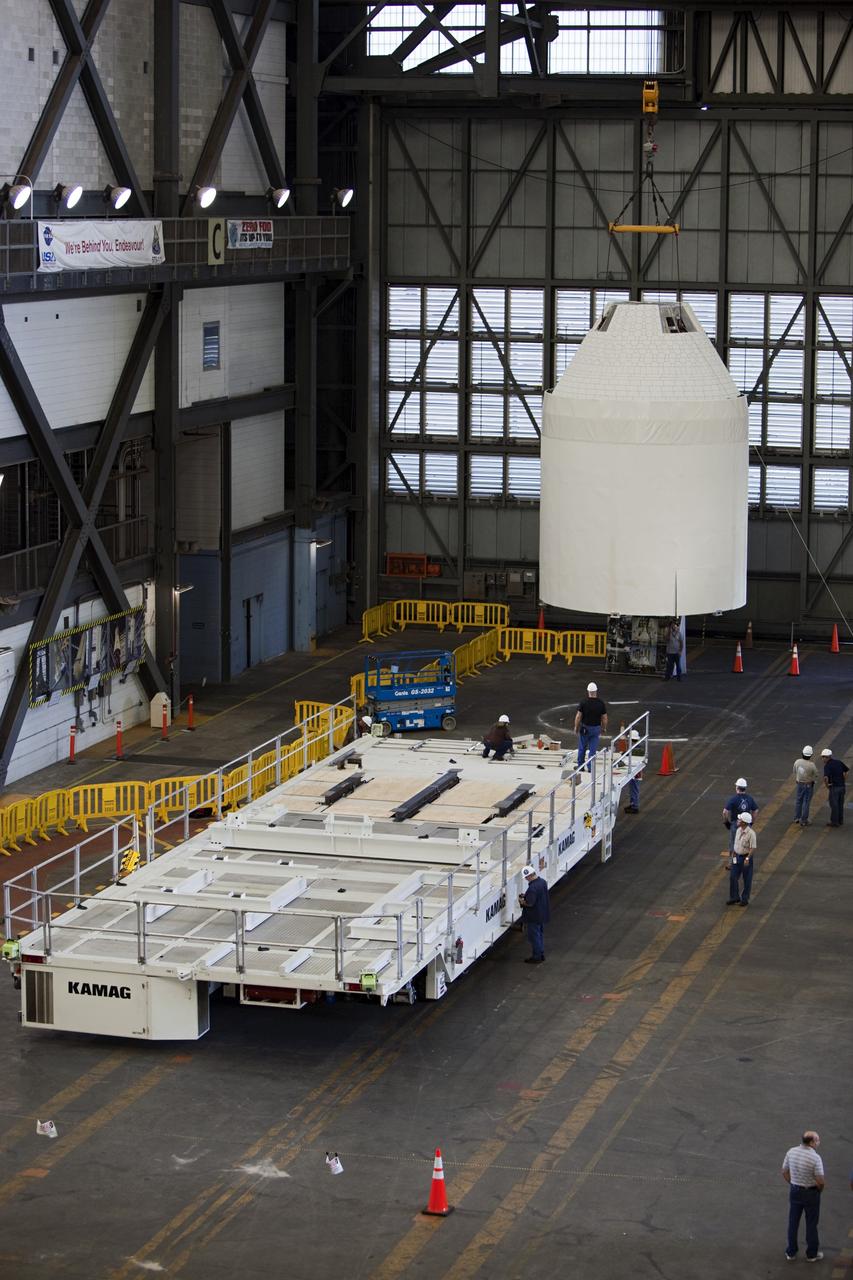
CAPE CANAVERAL, Fla. – An Orion mockup spacecraft atop its service module simulator is lifted in the transfer aisle of the Vehicle Assembly Building, or VAB, at NASA's Kennedy Space Center in Florida. The Orion mockup is exact in details on the outside, but mostly empty on the inside. The work in the VAB is crucial to making sure the designs are accurate. Orion is the exploration spacecraft designed to carry crews to space beyond low Earth orbit. It will provide emergency abort capability, sustain the crew during the space travel and provide safe re-entry from deep space return velocities. The first unpiloted test flight of the Orion is scheduled to launch in 2014 atop a Delta IV rocket and in 2017 on a Space Launch System rocket. For more information, visit http://www.nasa.gov/orion Photo credit: NASA/ Dmitri Gerondidakis
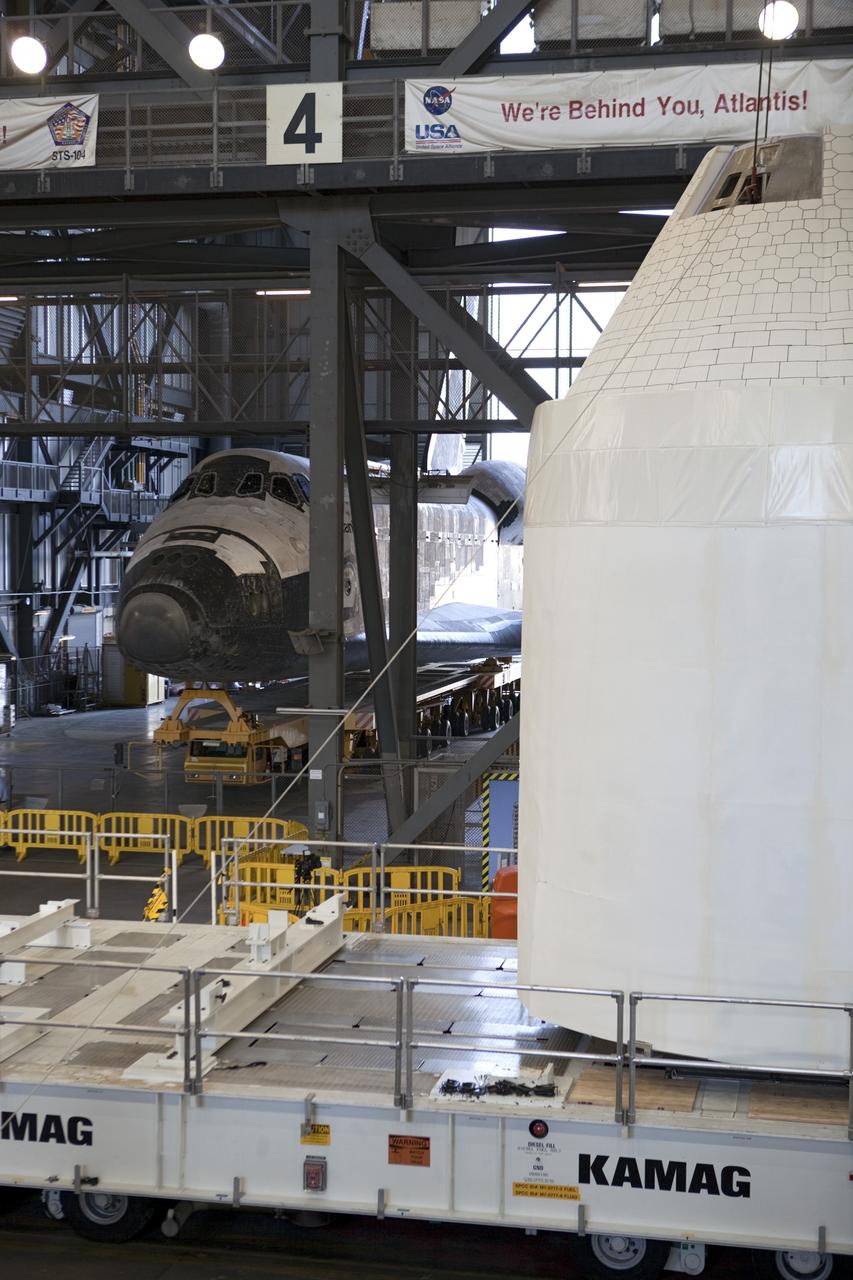
CAPE CANAVERAL, Fla. – An Orion mockup spacecraft atop its service module simulator is lowered onto a transporter in the transfer aisle of the Vehicle Assembly Building, or VAB, at NASA's Kennedy Space Center in Florida. The Orion mockup is exact in details on the outside, but mostly empty on the inside. The work in the VAB is crucial to making sure the designs are accurate. Visible in the background on the left is the space shuttle Atlantis being readied for its move to the Kennedy Space Center Visitor Complex. Orion is the exploration spacecraft designed to carry crews to space beyond low Earth orbit. It will provide emergency abort capability, sustain the crew during the space travel and provide safe re-entry from deep space return velocities. The first unpiloted test flight of the Orion is scheduled to launch in 2014 atop a Delta IV rocket and in 2017 on a Space Launch System rocket. For more information, visit http://www.nasa.gov/orion Photo credit: NASA/ Dmitri Gerondidakis
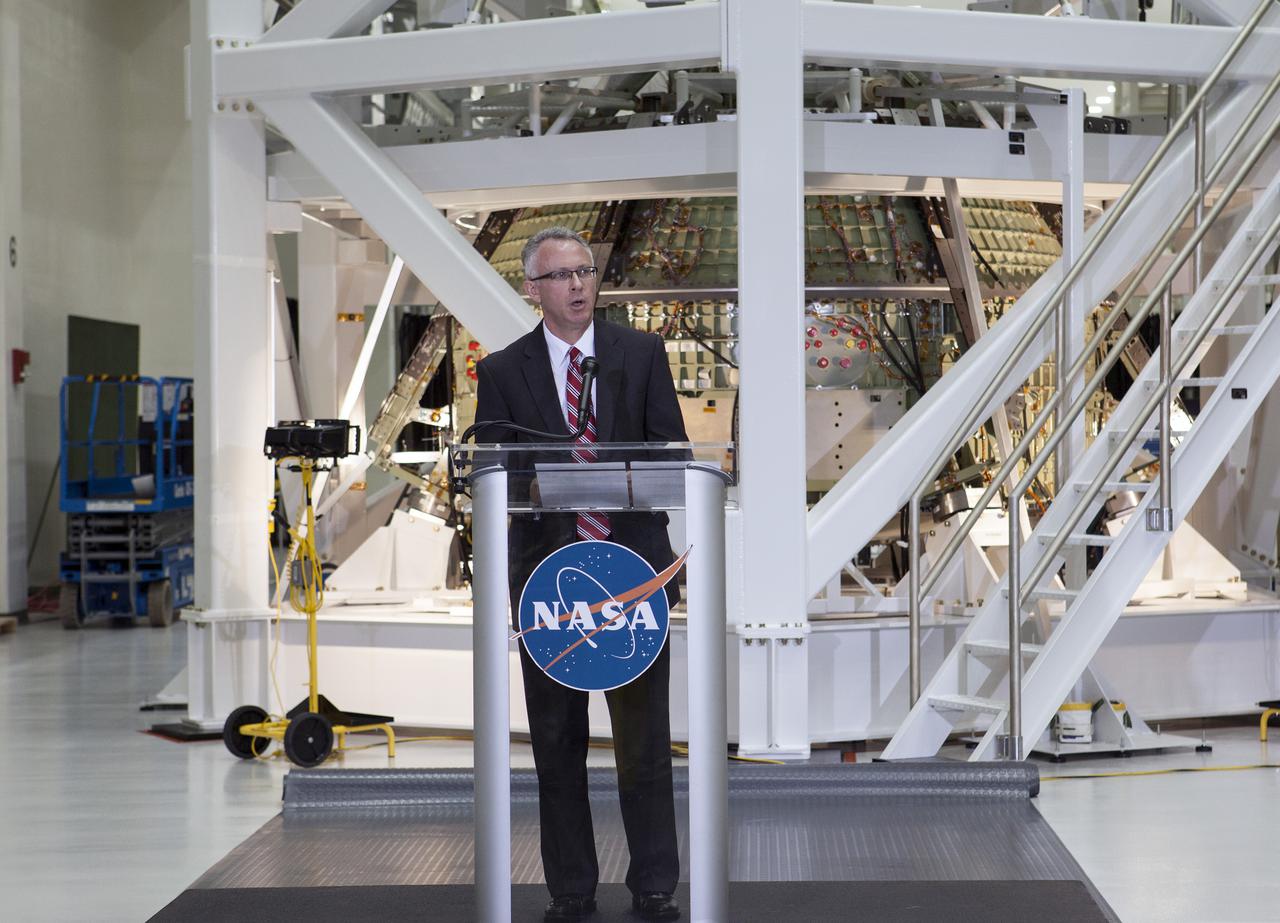
CAPE CANAVERAL, Fla. – In the Operations and Checkout Building OandC at the Kennedy Space Center in Florida, Keith Hefner, NASA's Space Launch System program planning and control manager, speaks to news media representatives updating progress on preparing the Orion spacecraft for its first uncrewed mission, Exploration Flight Test-1 EFT-1 in 2014. The crew module is seen behind Hefner in its test stand. Launched atop NASA's heavy-lift Space Launch System rocket, Orion is now targeted to take astronauts in a sample return mission to an asteroid as early as 2021. On the third anniversary of President Barack Obama issuing his challenge to NASA to send astronauts to an asteroid, news media representatives were given an opportunity to see up-close the Orion spacecraft which could take astronauts on such a flight. They also heard from key leaders of that effort in Kennedy's OandC where Orion's assembly is taking place. Photo credit: NASA_Kim Shiflett
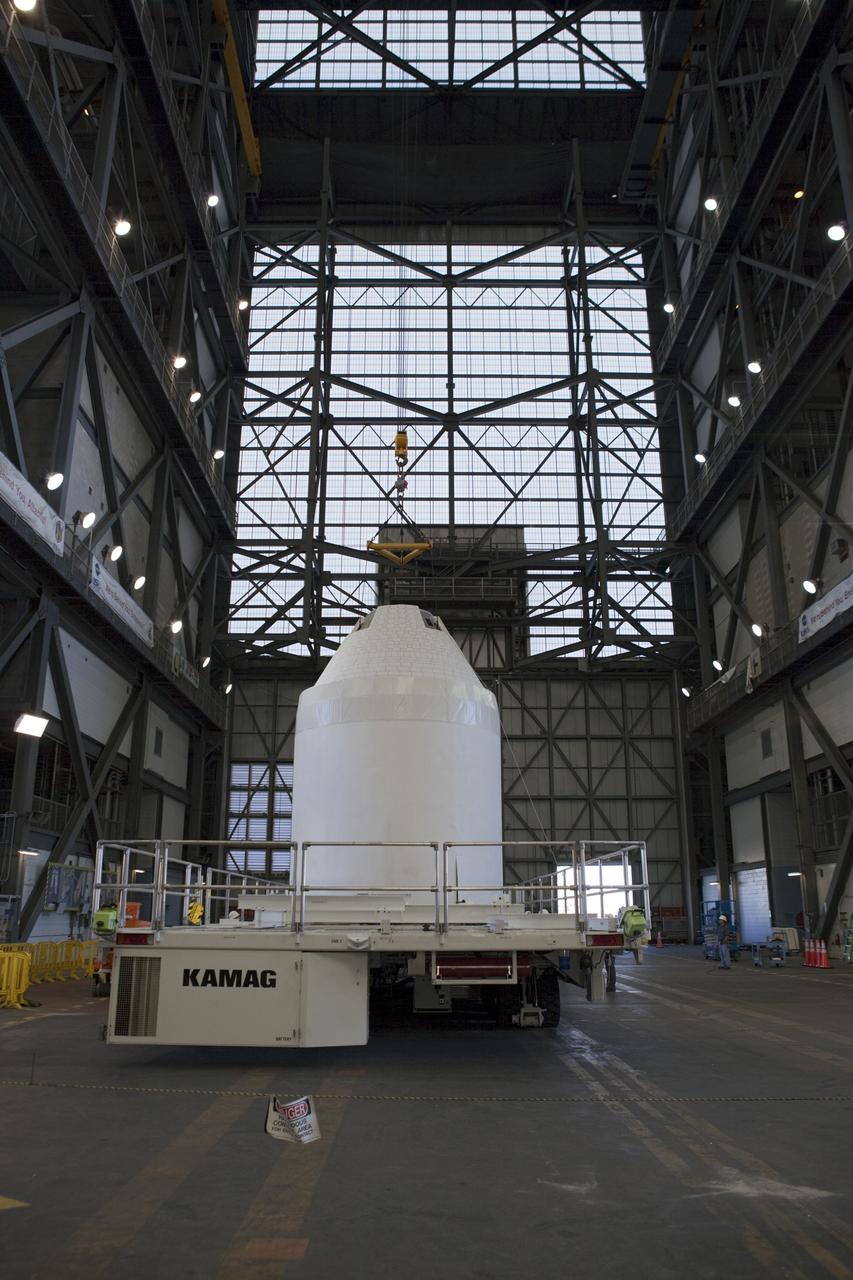
CAPE CANAVERAL, Fla. – An Orion mockup spacecraft atop its service module simulator is lowered onto a transporter in the transfer aisle of the Vehicle Assembly Building, or VAB, at NASA's Kennedy Space Center in Florida. The Orion mockup is exact in details on the outside, but mostly empty on the inside. The work in the VAB is crucial to making sure the designs are accurate. Orion is the exploration spacecraft designed to carry crews to space beyond low Earth orbit. It will provide emergency abort capability, sustain the crew during the space travel and provide safe re-entry from deep space return velocities. The first unpiloted test flight of the Orion is scheduled to launch in 2014 atop a Delta IV rocket and in 2017 on a Space Launch System rocket. For more information, visit http://www.nasa.gov/orion Photo credit: NASA/ Dmitri Gerondidakis
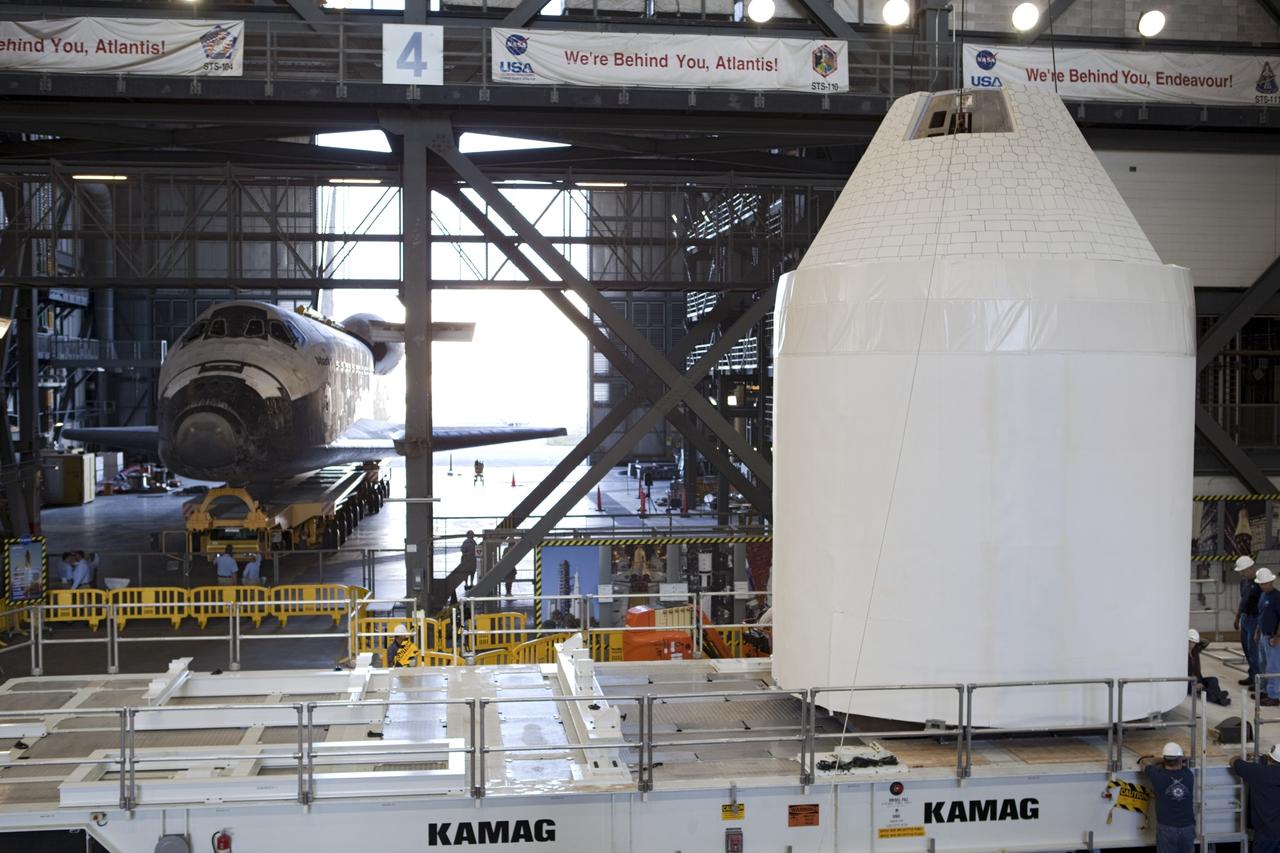
CAPE CANAVERAL, Fla. – An Orion mockup spacecraft atop its service module simulator is lowered onto a transporter in the transfer aisle of the Vehicle Assembly Building, or VAB, at NASA's Kennedy Space Center in Florida. The Orion mockup is exact in details on the outside, but mostly empty on the inside. The work in the VAB is crucial to making sure the designs are accurate. Visible in the background on the left is the space shuttle Atlantis being readied for its move to the Kennedy Space Center Visitor Complex. Orion is the exploration spacecraft designed to carry crews to space beyond low Earth orbit. It will provide emergency abort capability, sustain the crew during the space travel and provide safe re-entry from deep space return velocities. The first unpiloted test flight of the Orion is scheduled to launch in 2014 atop a Delta IV rocket and in 2017 on a Space Launch System rocket. For more information, visit http://www.nasa.gov/orion Photo credit: NASA/ Dmitri Gerondidakis
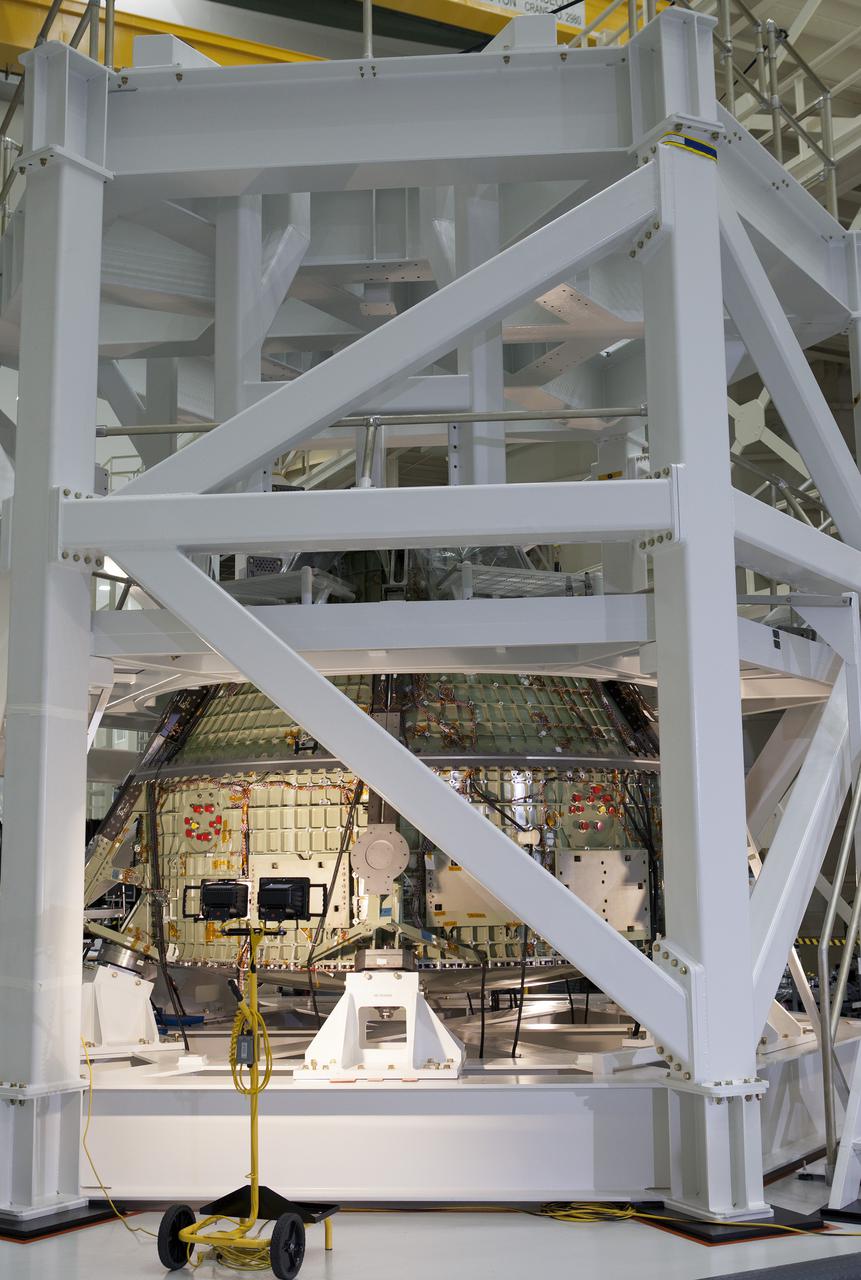
CAPE CANAVERAL, Fla. – In the Operations and Checkout Building OandC at the Kennedy Space Center in Florida, the Orion spacecraft for its first uncrewed mission, Exploration Flight Test-1 EFT-1 in 2014. The Orion is seen in its test stand preparing for a Static Loads test. Launched atop NASA's heavy-lift Space Launch System rocket, Orion is now targeted to take astronauts in a sample return mission to an asteroid as early as 2021. On the third anniversary of President Barack Obama issuing his challenge to NASA to send astronauts to an asteroid, news media representatives were given an opportunity to see up-close the Orion spacecraft which could take astronauts on such a flight. They also heard from key leaders of that effort in Kennedy's OandC where Orion's assembly is taking place. Photo credit: NASA_Kim Shiflett
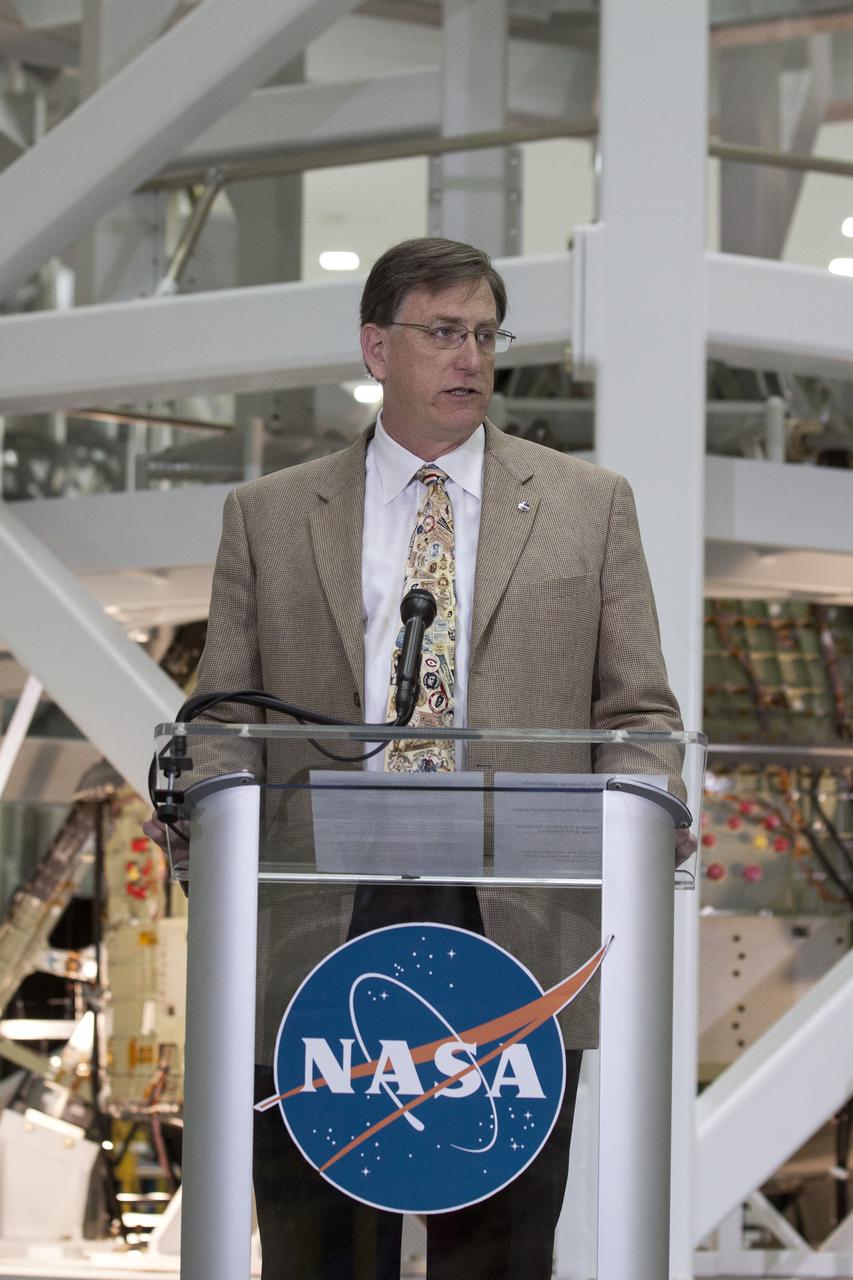
CAPE CANAVERAL, Fla. – In the Operations and Checkout Building OandC at the Kennedy Space Center in Florida, Dan Dumbacher, NASA's deputy associate administrator for Exploration Systems Development, speaks to news media representatives updating progress on preparing the Orion spacecraft for its first uncrewed mission, Exploration Flight Test-1 EFT-1 in 2014. Launched atop NASA's heavy-lift Space Launch System rocket, Orion is now targeted to take astronauts in a sample return mission to an asteroid as early as 2021. On the third anniversary of President Barack Obama issuing his challenge to NASA to send astronauts to an asteroid, news media representatives were given an opportunity to see up-close the Orion spacecraft which could take astronauts on such a flight. They also heard from key leaders of that effort in Kennedy's OandC where Orion's assembly is taking place. Photo credit: NASA_Kim Shiflett
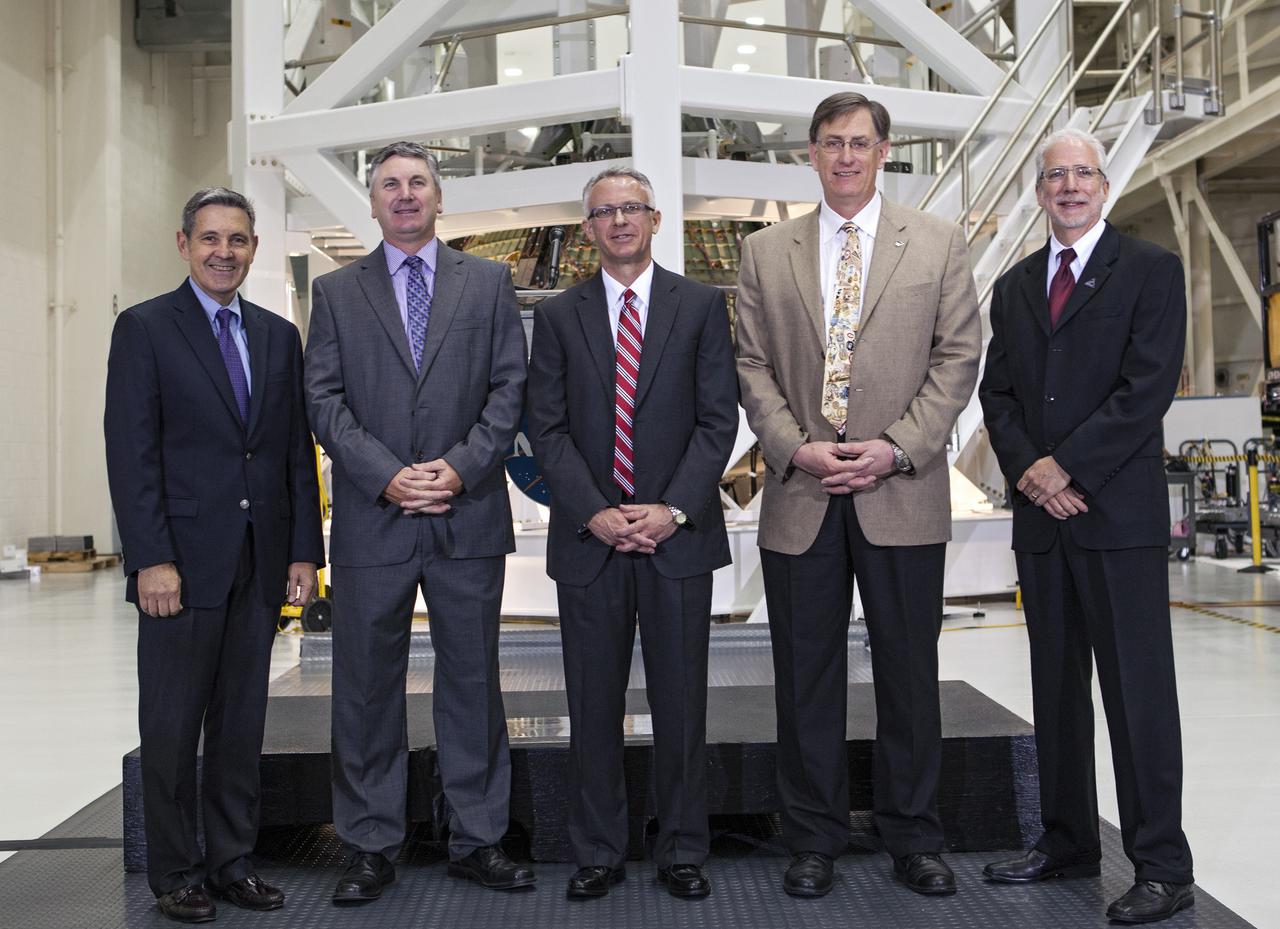
CAPE CANAVERAL, Fla. – In the Operations and Checkout Building OandC at the Kennedy Space Center in Florida, news media representatives were updated progress on preparing the Orion spacecraft for its first uncrewed mission, Exploration Flight Test-1 EFT-1 in 2014. Speakers included, from left, Kennedy Director Bob Cabana Scott Colloredo, chief architect for the Ground Systems Development and Operations Program Keith Hefner, NASA's Space Launch System program planning and control manager Dan Dumbacher, NASA's deputy associate administrator for Exploration Systems Development and Mark Geyer, NASA's Orion program manager. Launched atop NASA's heavy-lift Space Launch System rocket, Orion is now targeted to take astronauts in a sample return mission to an asteroid as early as 2021. On the third anniversary of President Barack Obama issuing his challenge to NASA to send astronauts to an asteroid, news media representatives were given an opportunity to see up-close the Orion spacecraft which could take astronauts on such a flight. They also heard from key leaders of that effort in Kennedy's OandC where Orion's assembly is taking place. Photo credit: NASA_Kim Shiflett
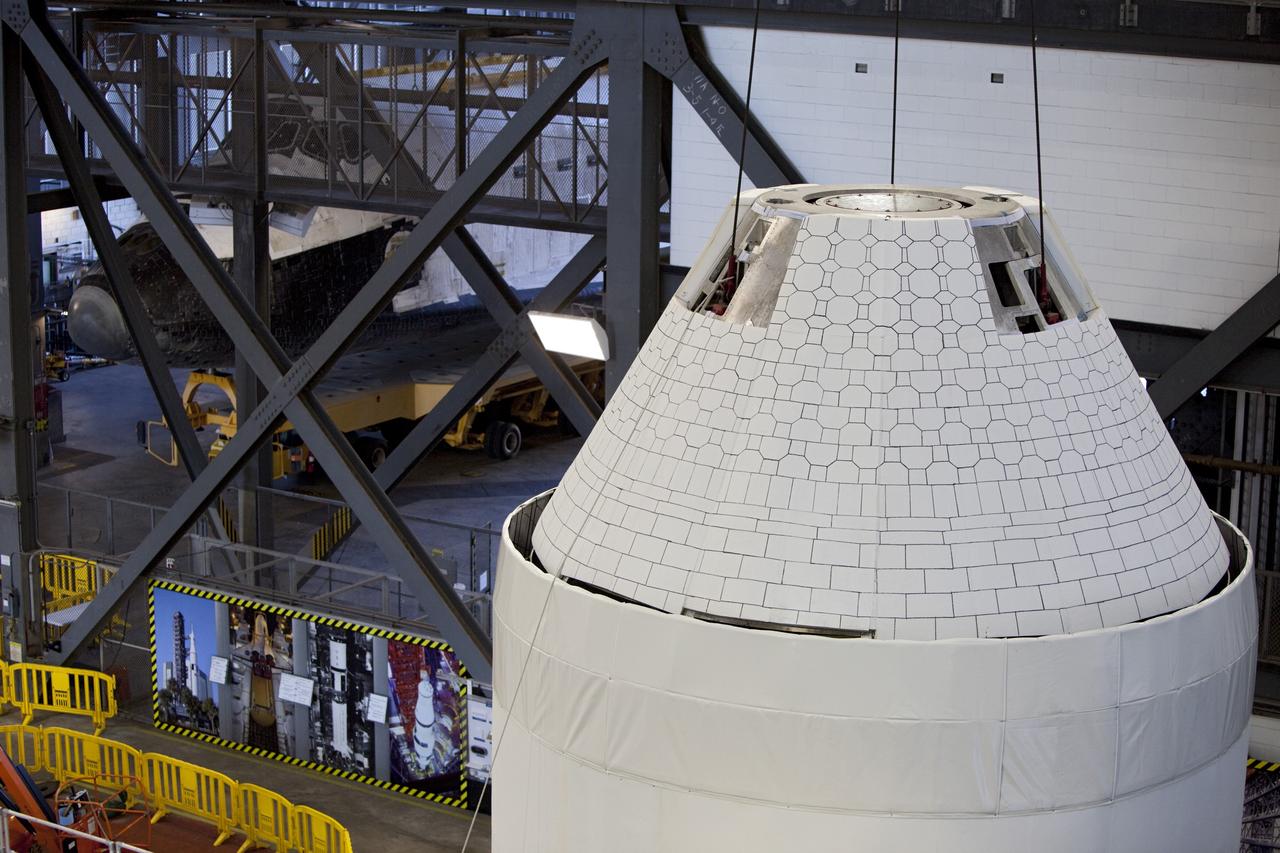
CAPE CANAVERAL, Fla. – An Orion mockup spacecraft atop its service module simulator is lifted in the transfer aisle of the Vehicle Assembly Building, or VAB, at NASA's Kennedy Space Center in Florida. The Orion mockup is exact in details on the outside, but mostly empty on the inside. The work in the VAB is crucial to making sure the designs are accurate. Visible in the background on the left is the space shuttle Atlantis being readied for its move to the Kennedy Space Center Visitor Complex. Orion is the exploration spacecraft designed to carry crews to space beyond low Earth orbit. It will provide emergency abort capability, sustain the crew during the space travel and provide safe re-entry from deep space return velocities. The first unpiloted test flight of the Orion is scheduled to launch in 2014 atop a Delta IV rocket and in 2017 on a Space Launch System rocket. For more information, visit http://www.nasa.gov/orion Photo credit: NASA/ Dmitri Gerondidakis
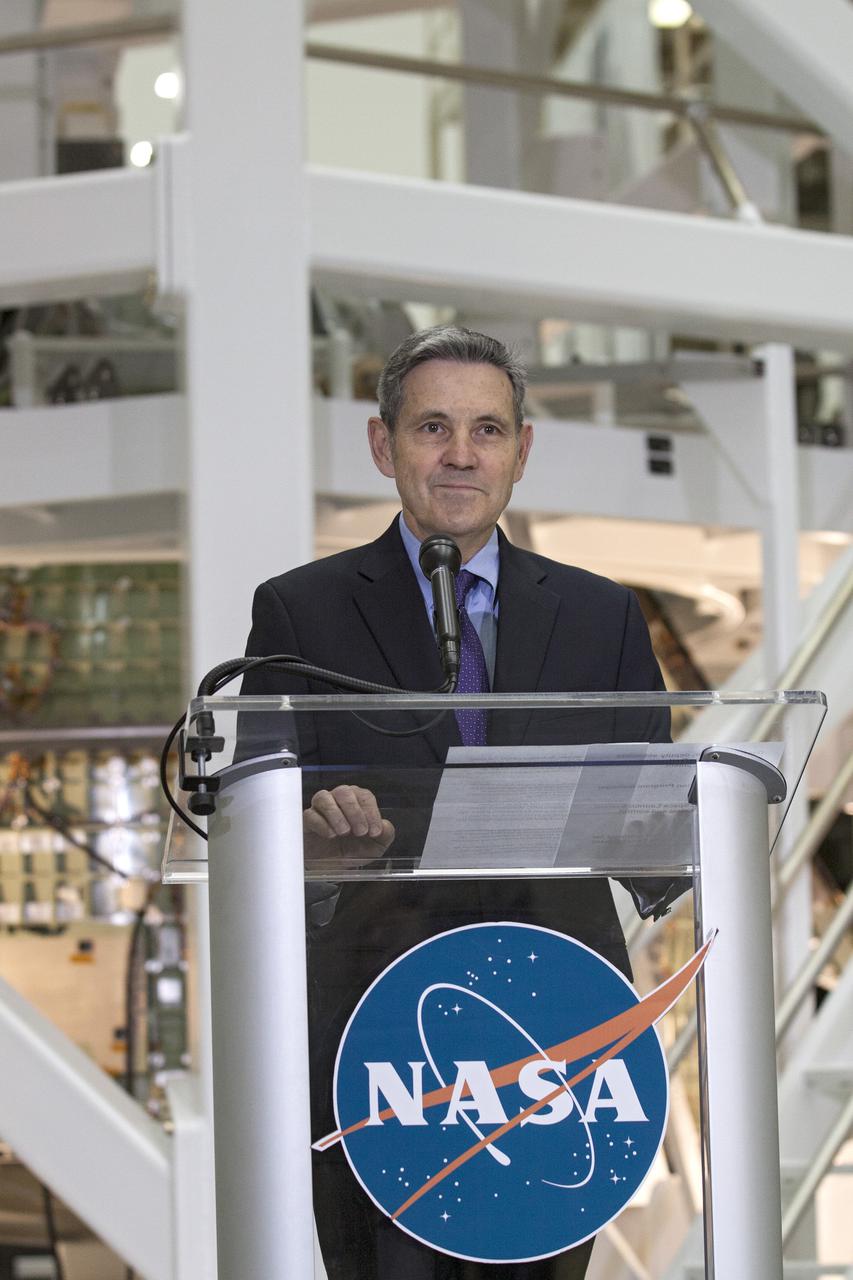
CAPE CANAVERAL, Fla. – In the Operations and Checkout Building OandC at the Kennedy Space Center in Florida, Kennedy Director Bob Cabana speaks to news media representatives updating progress on preparing the Orion spacecraft for its first uncrewed mission, Exploration Flight Test-1 EFT-1 in 2014. Launched atop NASA's heavy-lift Space Launch System rocket, Orion is now targeted to take astronauts in a sample return mission to an asteroid as early as 2021. On the third anniversary of President Barack Obama issuing his challenge to NASA to send astronauts to an asteroid, news media representatives were given an opportunity to see up-close the Orion spacecraft which could take astronauts on such a flight. They also heard from key leaders of that effort in Kennedy's OandC where Orion's assembly is taking place. Photo credit: NASA_Kim Shiflett
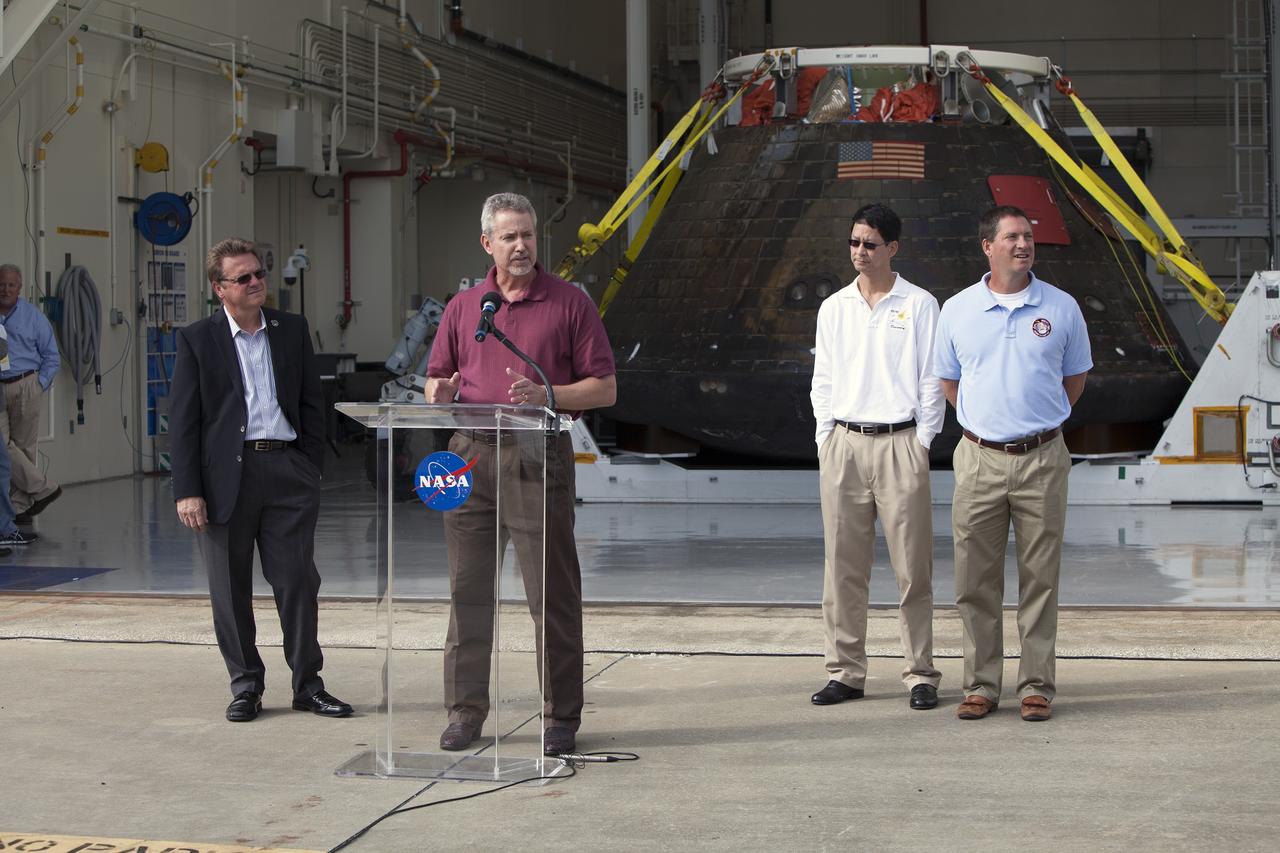
CAPE CANAVERAL, Fla. -- NASA's Orion spacecraft is viewed by members of the media at the Launch Abort System Facility at NASA's Kennedy Space Center in Florida. Speaking to the media during the viewing opportunity is Phil Weber, with the Ground Systems Development and Operations Program, or GSDO. At left is Jules Schneider, Lockheed Martin manager. At right is Glenn Chin, Orion Production Operations, and Lou Garcia, with GSDO. Orion made the 8-day, 2,700 mile overland trip back to Kennedy from Naval Base San Diego in California. Analysis of date obtained during its two-orbit, four-and-a-half hour mission Dec. 5 will provide engineers detailed information on how the spacecraft fared. GSDO led the recovery, offload and transportation efforts. For more information, visit www.nasa.gov/orion. Photo credit: NASA/Dimitri Gerondidakis
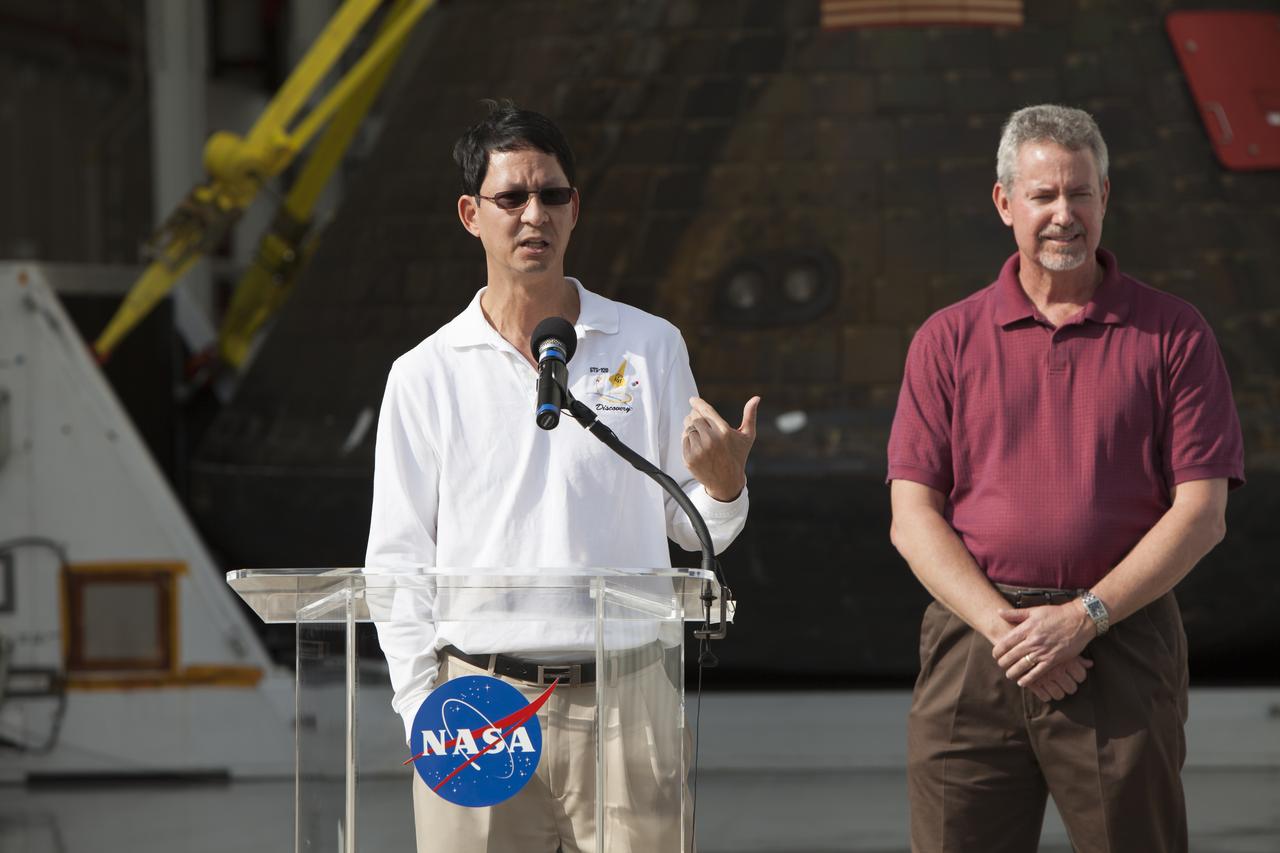
NASA's Orion spacecraft is viewed by members of the media at the Launch Abort System Facility at NASA's Kennedy Space Center in Florida. Speaking to the media during the viewing opportunity is Glenn Chin, Orion Production Operations. To his right is Phil Weber, with the Ground Systems Development and Operations Program, or GSDO. Orion made the 8-day, 2,700 mile overland trip back to Kennedy from Naval Base San Diego in California. Analysis of date obtained during its two-orbit, four-and-a-half hour mission Dec. 5 will provide engineers with detailed information on how the spacecraft fared. GSDO led the recovery, offload and transportation efforts.
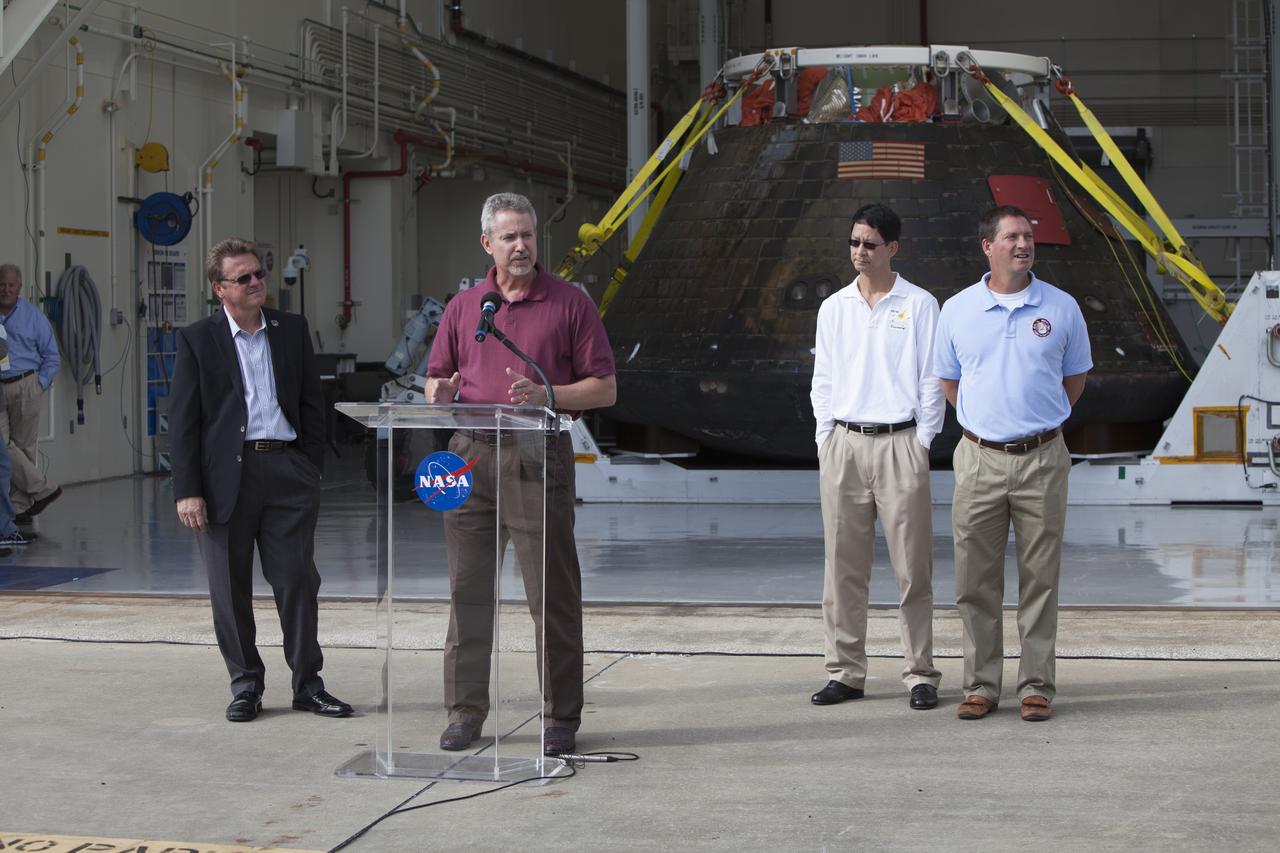
NASA's Orion spacecraft is viewed by members of the media at the Launch Abort System Facility at NASA's Kennedy Space Center in Florida. Speaking to the media during the viewing opportunity is Phil Weber, with the Ground Systems Development and Operations Program, or GSDO. At left is Jules Schneider, Lockheed Martin manager. At right is Glenn Chin, Orion Production Operations, and Lou Garcia, with GSDO. Orion made the 8-day, 2,700 mile overland trip back to Kennedy from Naval Base San Diego in California. Analysis of date obtained during its two-orbit, four-and-a-half hour mission Dec. 5 will provide engineers detailed information on how the spacecraft fared. GSDO led the recovery, offload and transportation efforts.
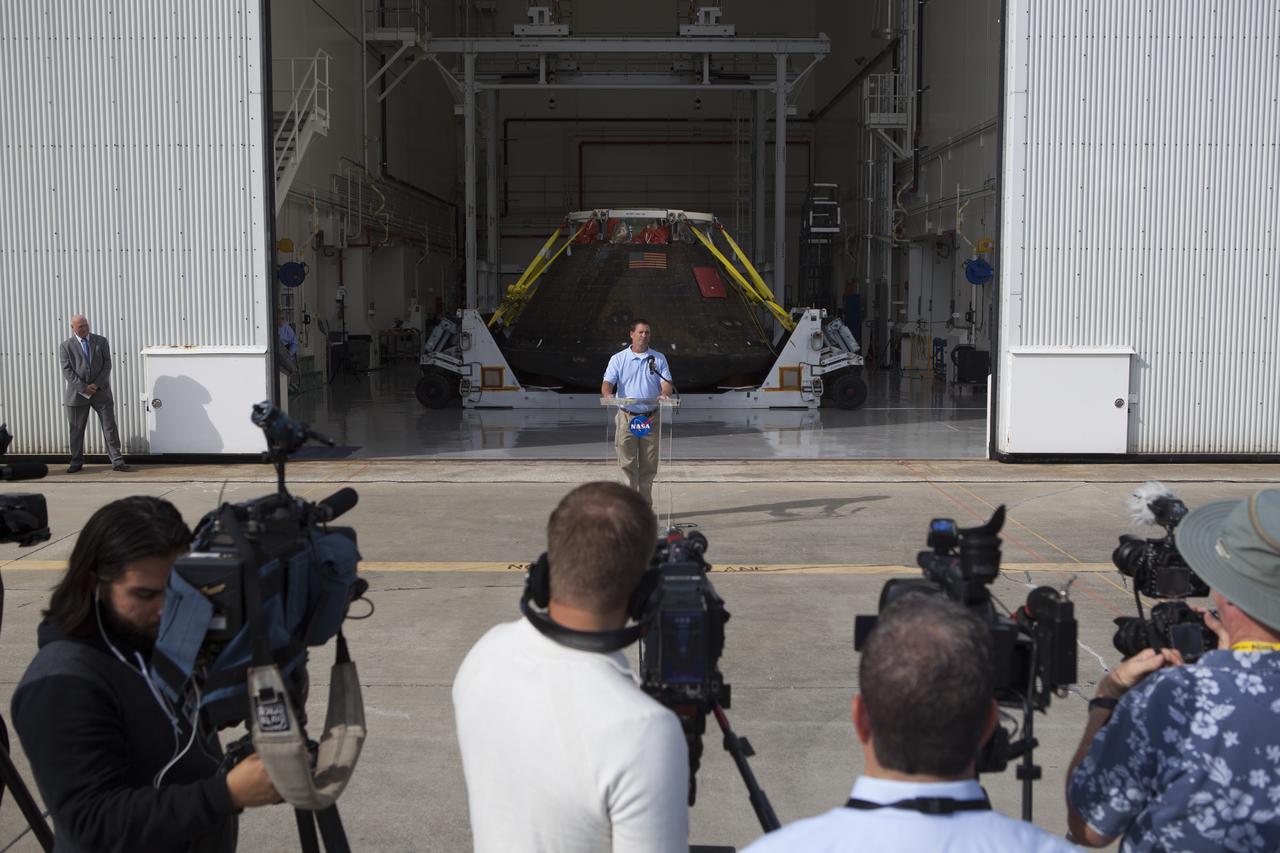
NASA's Orion spacecraft is viewed by members of the media at the Launch Abort System Facility at NASA's Kennedy Space Center in Florida. Lou Garcia, with the Ground Systems Development and Operations Program, or GSDO, speaks to the media during the viewing opportunity. The spacecraft's cross-country return, a 2,700 mile road trip from Naval Base San Diego to Kennedy, sets the stage for in-depth analysis of data obtained during Orion's trip to space. It will provide engineers with detailed information on how the spacecraft fared during its two-orbit, 4.5-hour flight test, completed on Dec. 5. GSDO led the recovery, offload and transportation efforts.
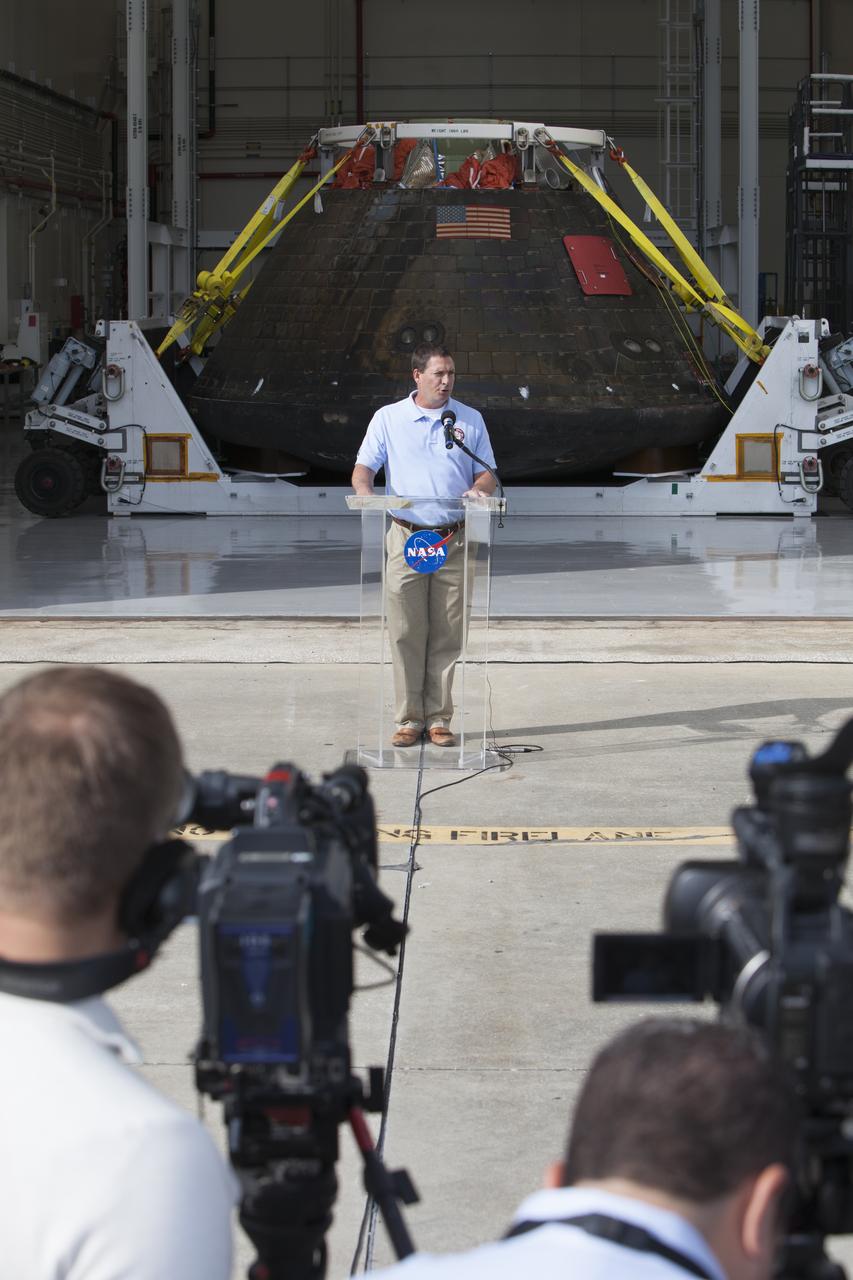
NASA's Orion spacecraft is viewed by members of the media at the Launch Abort System Facility at NASA's Kennedy Space Center in Florida. Lou Garcia, with the Ground Systems Development and Operations Program, or GSDO, speaks to the media during the viewing opportunity. The spacecraft's cross-country return, a 2,700 mile road trip from Naval Base San Diego to Kennedy, sets the stage for in-depth analysis of data obtained during Orion's trip to space. It will provide engineers with detailed information on how the spacecraft fared during its two-orbit, 4.5-hour flight test, completed on Dec. 5. GSDO led the recovery, offload and transportation efforts.

NASA's Orion spacecraft is viewed by members of the media at the Launch Abort System Facility at NASA's Kennedy Space Center in Florida. Lou Garcia, with the Ground Systems Development and Operations Program, or GSDO, speaks to the media during the viewing opportunity. The spacecraft's cross-country return, a 2,700 mile road trip from Naval Base San Diego to Kennedy, sets the stage for in-depth analysis of data obtained during Orion's trip to space. It will provide engineers with detailed information on how the spacecraft fared during its two-orbit, 4.5-hour flight test, completed on Dec. 5. GSDO led the recovery, offload and transportation efforts.
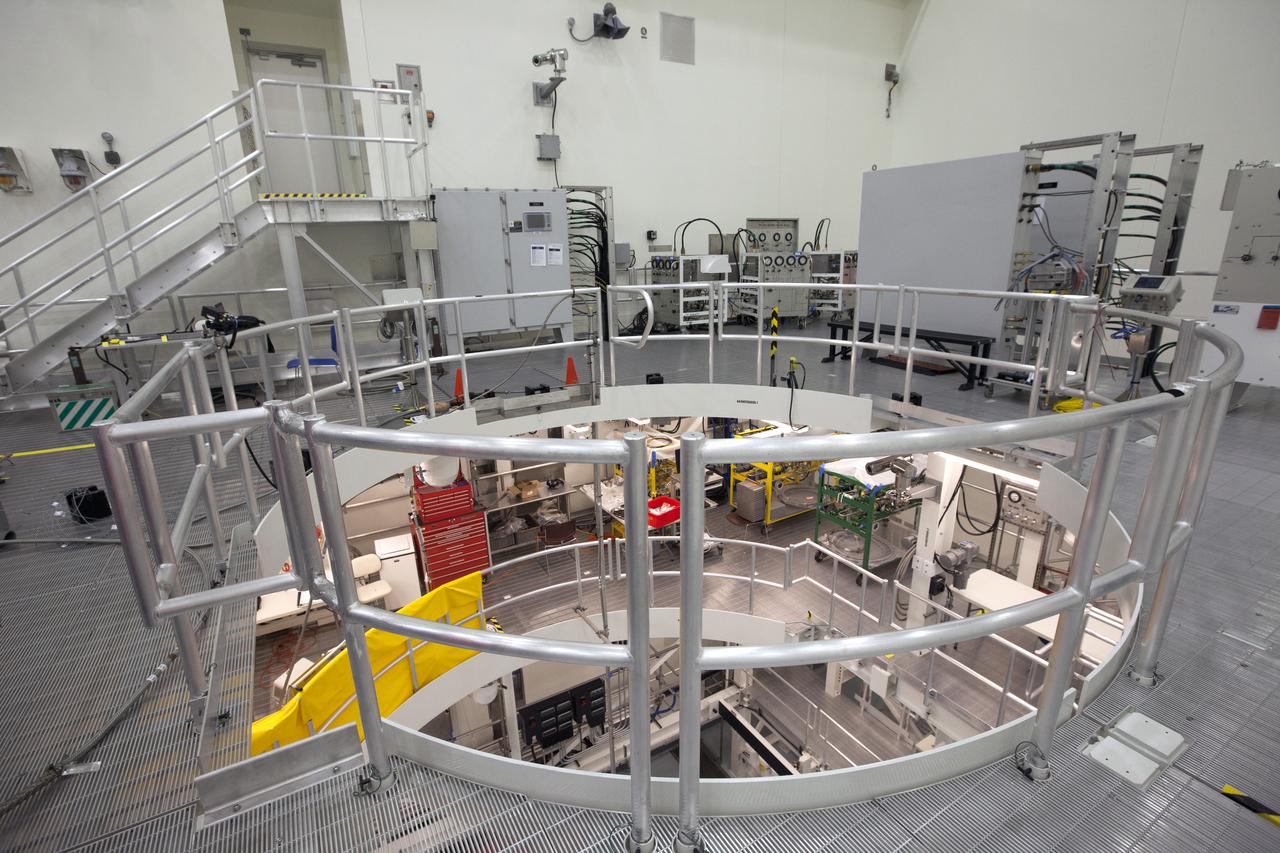
Engineers and technicians completed verification and validation testing of several pneumatic systems inside and outside the Multi-Payload Processing Facility (MPPF) at NASA's Kennedy Space Center in Florida. In view is the top level of the service platform for Orion spacecraft processing. The MPPF will be used for offline processing and fueling of the Orion spacecraft and service module stack before launch. Orion also will be de-serviced in the MPPF after a mission. The Ground Systems Development and Operations Program (GSDO) is overseeing upgrades to the facility. The Engineering Directorate led the recent pneumatic tests.
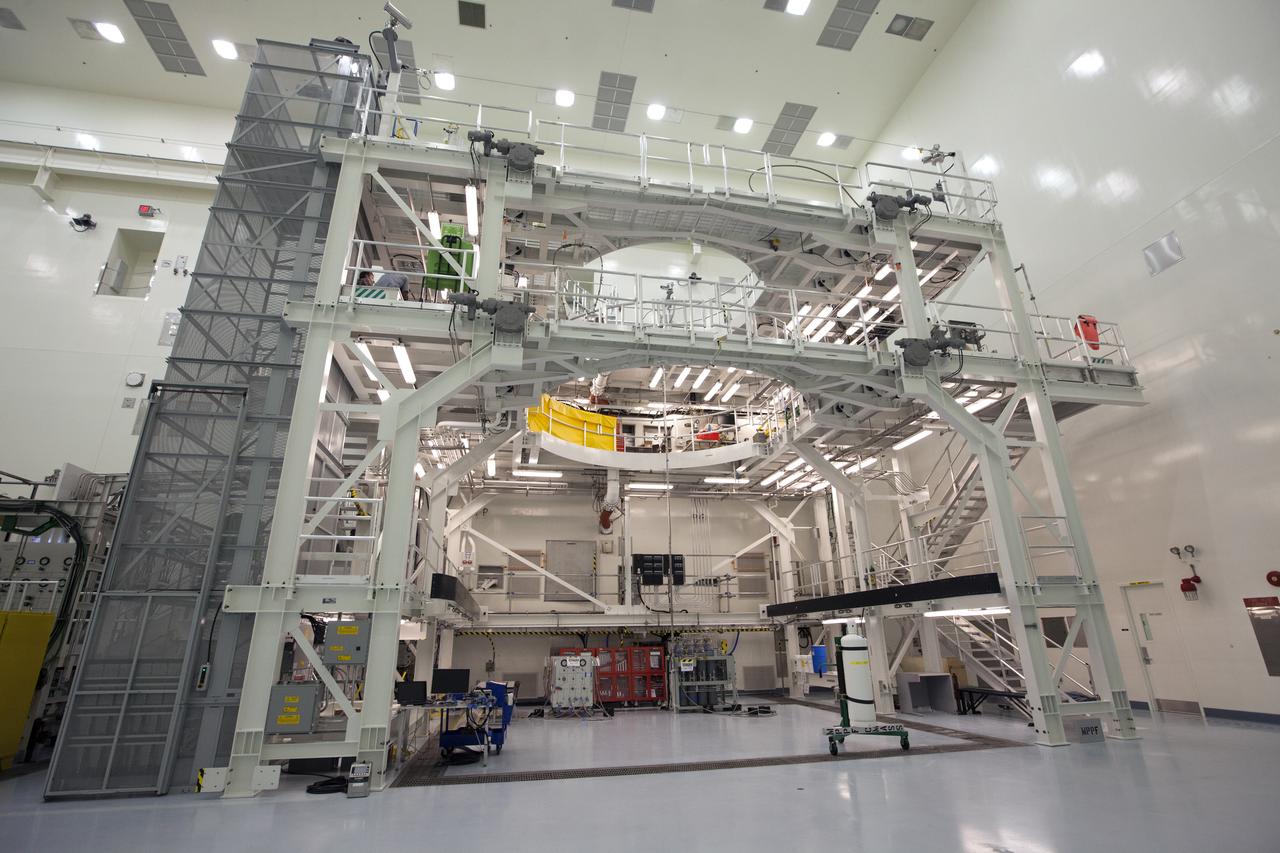
Engineers and technicians completed verification and validation testing of several pneumatic systems inside and outside the Multi-Payload Processing Facility (MPPF) at NASA's Kennedy Space Center in Florida. In view is the service platform for Orion spacecraft processing. The MPPF will be used for offline processing and fueling of the Orion spacecraft and service module stack before launch. Orion also will be de-serviced in the MPPF after a mission. The Ground Systems Development and Operations Program (GSDO) is overseeing upgrades to the facility. The Engineering Directorate led the recent pneumatic tests.
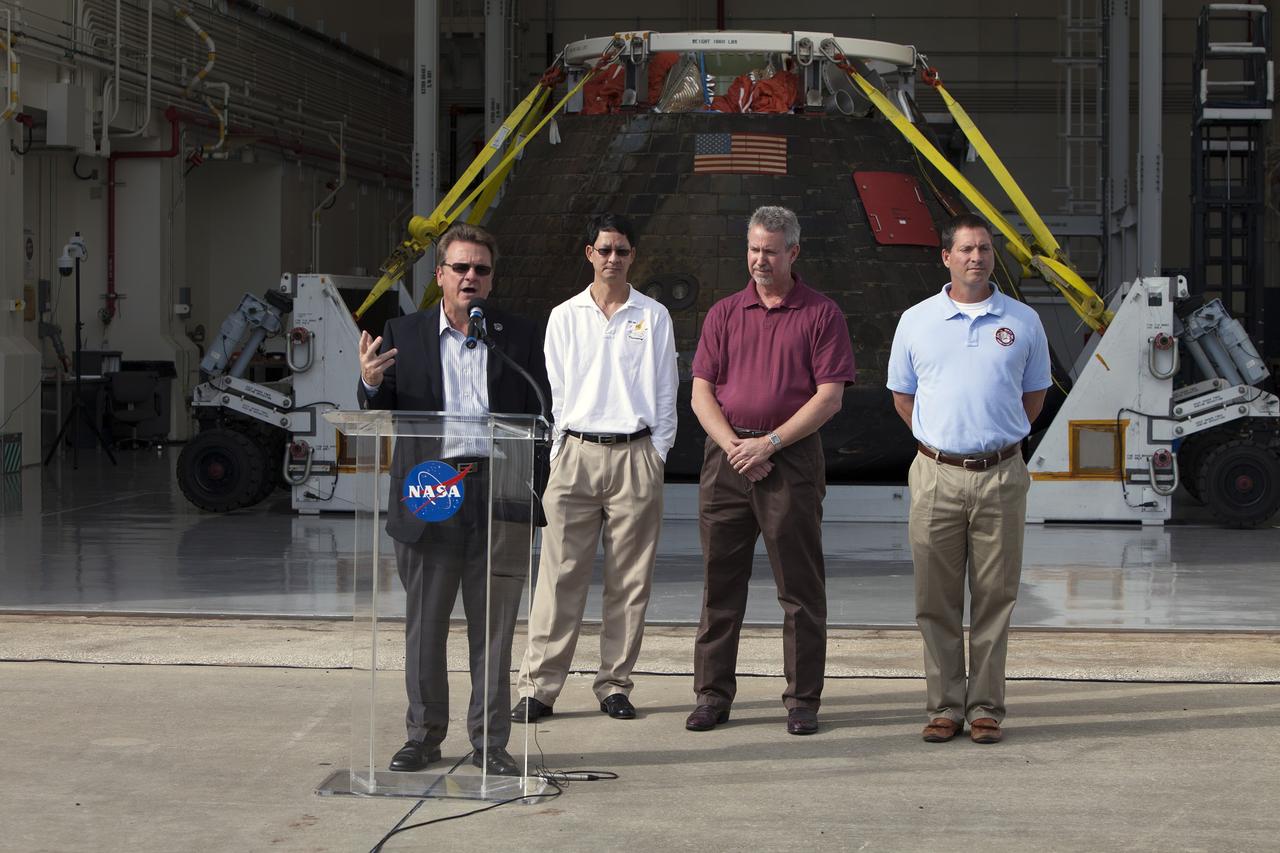
CAPE CANAVERAL, Fla. -- NASA's Orion spacecraft is viewed by members of the media at the Launch Abort System Facility at NASA's Kennedy Space Center in Florida. Speaking to the media during the viewing opportunity is Jules Schneider, Lockheed Martin Manager. Behind him, from left, are Glenn Chin, Orion Production Operations manager and Phil Weber and Lou Garcia, with the Ground Systems Development and Operations Program, or GSDO. Orion made the 8-day, 2,700 mile overland trip back to Kennedy from Naval Base San Diego in California. Analysis of date obtained during its two-orbit, four-and-a-half hour mission Dec. 5 will provide engineers with detailed information on how the spacecraft fared. GSDO led the recovery, offload and transportation efforts. For more information, visit www.nasa.gov/orion. Photo credit: NASA/Dimitri Gerondidakis
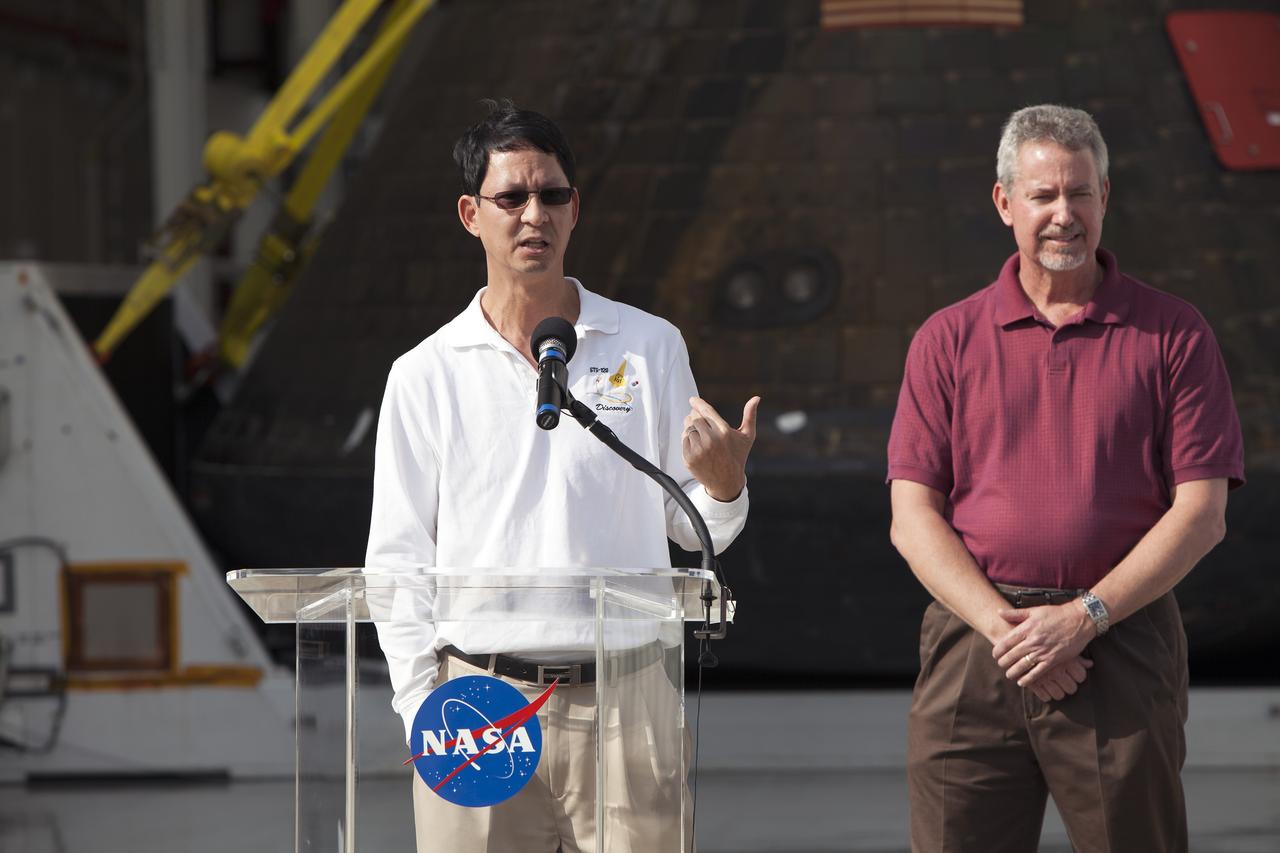
CAPE CANAVERAL, Fla. -- NASA's Orion spacecraft is viewed by members of the media at the Launch Abort System Facility at NASA's Kennedy Space Center in Florida. Speaking to the media during the viewing opportunity is Glenn Chin, Orion Production Operations. To his right is Phil Weber, with the Ground Systems Development and Operations Program, or GSDO. Orion made the 8-day, 2,700 mile overland trip back to Kennedy from Naval Base San Diego in California. Analysis of date obtained during its two-orbit, four-and-a-half hour mission Dec. 5 will provide engineers with detailed information on how the spacecraft fared. GSDO led the recovery, offload and transportation efforts. For more information, visit www.nasa.gov/orion. Photo credit: NASA/Dimitri Gerondidakis
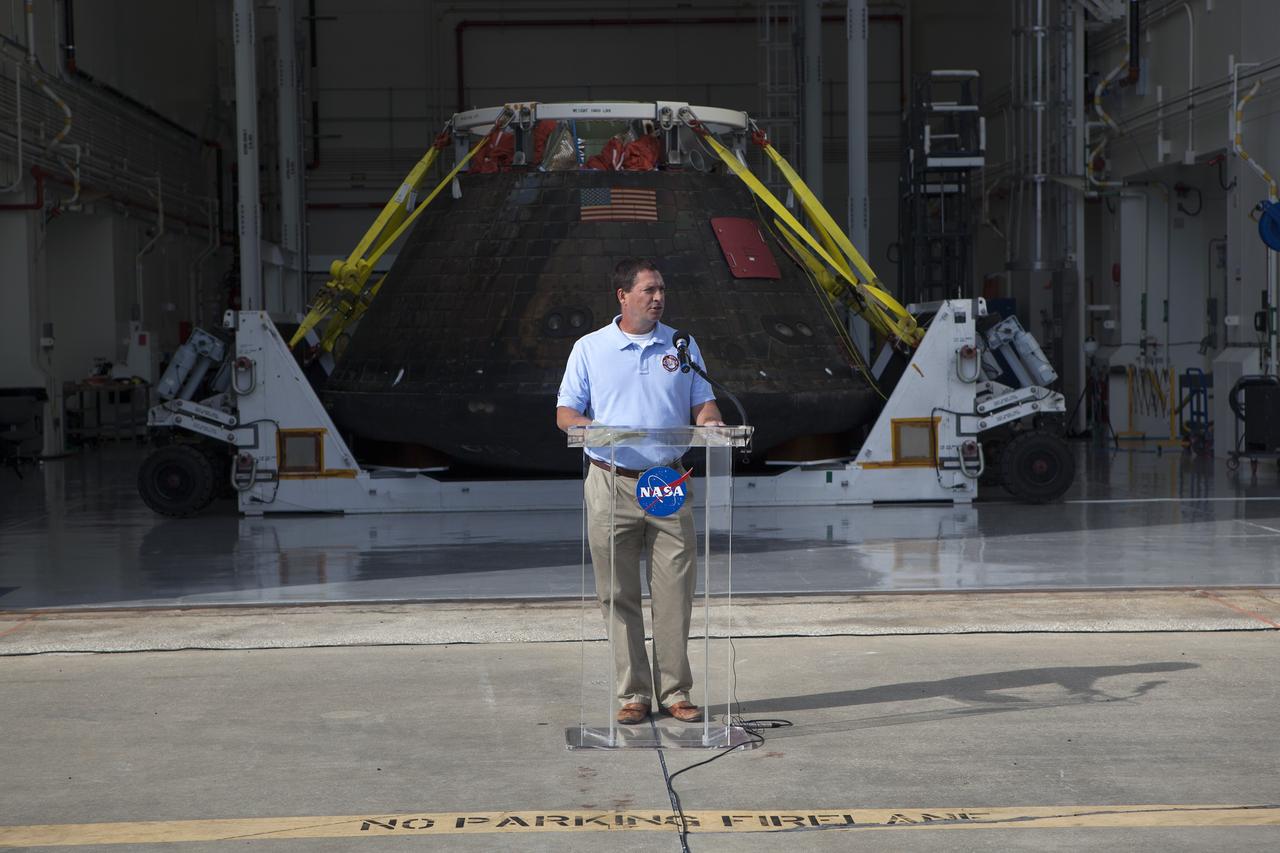
CAPE CANAVERAL, Fla. -- NASA's Orion spacecraft is viewed by members of the media at the Launch Abort System Facility at NASA's Kennedy Space Center in Florida. Lou Garcia, with the Ground Systems Development and Operations Program, or GSDO, speaks to the media during the viewing opportunity. The spacecraft's cross-country return, a 2,700 mile road trip from Naval Base San Diego to Kennedy, sets the stage for in-depth analysis of data obtained during Orion's trip to space. It will provide engineers with detailed information on how the spacecraft fared during its two-orbit, 4.5-hour flight test, completed on Dec. 5. GSDO led the recovery, offload and transportation efforts. For more information, visit www.nasa.gov/orion. Photo credit: NASA/Dimitri Gerondidakis
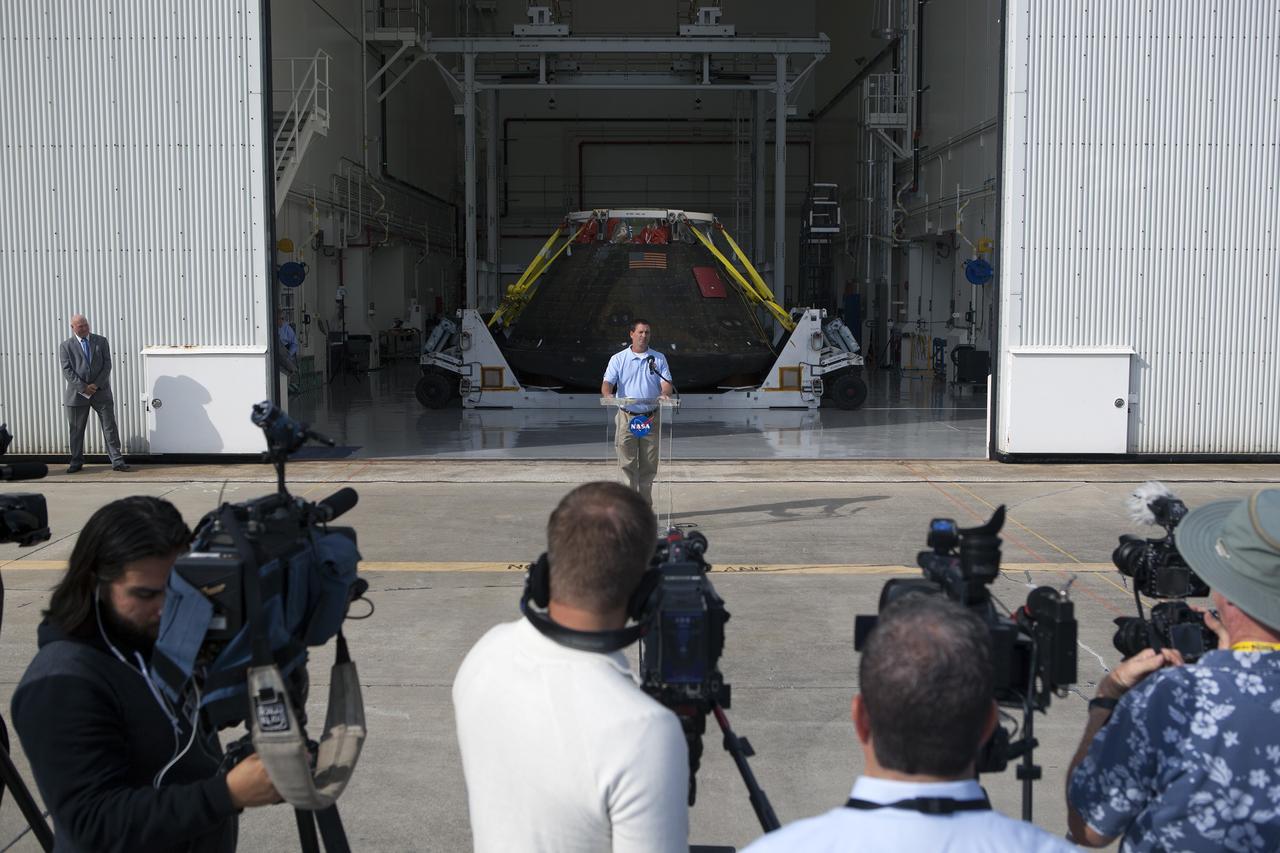
CAPE CANAVERAL, Fla. -- NASA's Orion spacecraft is viewed by members of the media at the Launch Abort System Facility at NASA's Kennedy Space Center in Florida. Lou Garcia, with the Ground Systems Development and Operations Program, or GSDO, speaks to the media during the viewing opportunity. The spacecraft's cross-country return, a 2,700 mile road trip from Naval Base San Diego to Kennedy, sets the stage for in-depth analysis of data obtained during Orion's trip to space. It will provide engineers with detailed information on how the spacecraft fared during its two-orbit, 4.5-hour flight test, completed on Dec. 5. GSDO led the recovery, offload and transportation efforts. For more information, visit www.nasa.gov/orion. Photo credit: NASA/Dimitri Gerondidakis
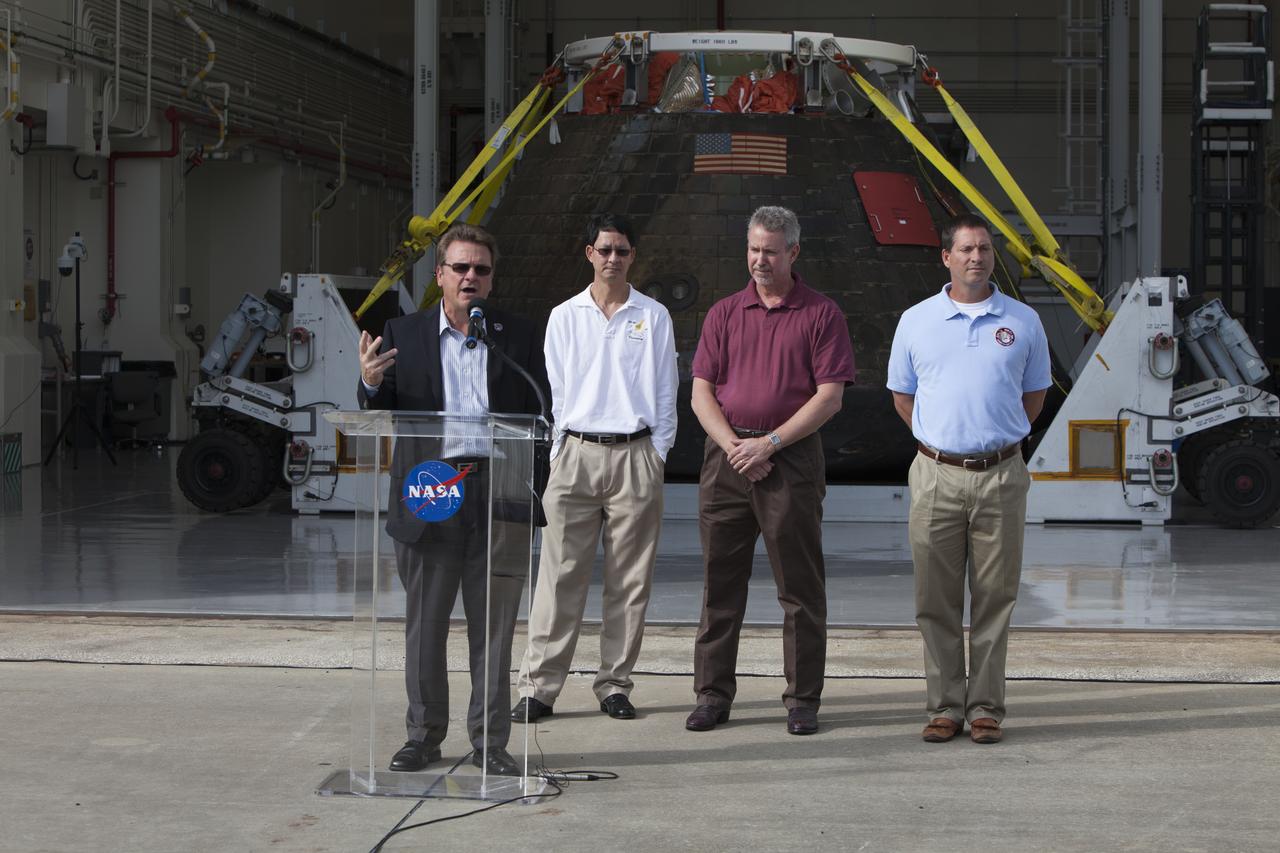
NASA's Orion spacecraft is viewed by members of the media at the Launch Abort System Facility at NASA's Kennedy Space Center in Florida. Speaking to the media during the viewing opportunity is Jules Schneider, Lockheed Martin Manager. Behind him, from left, are Glenn Chin, Orion Production Operations manager and Phil Weber and Lou Garcia, with the Ground Systems Development and Operations Program, or GSDO. Orion made the 8-day, 2,700 mile overland trip back to Kennedy from Naval Base San Diego in California. Analysis of date obtained during its two-orbit, four-and-a-half hour mission Dec. 5 will provide engineers with detailed information on how the spacecraft fared. GSDO led the recovery, offload and transportation efforts.
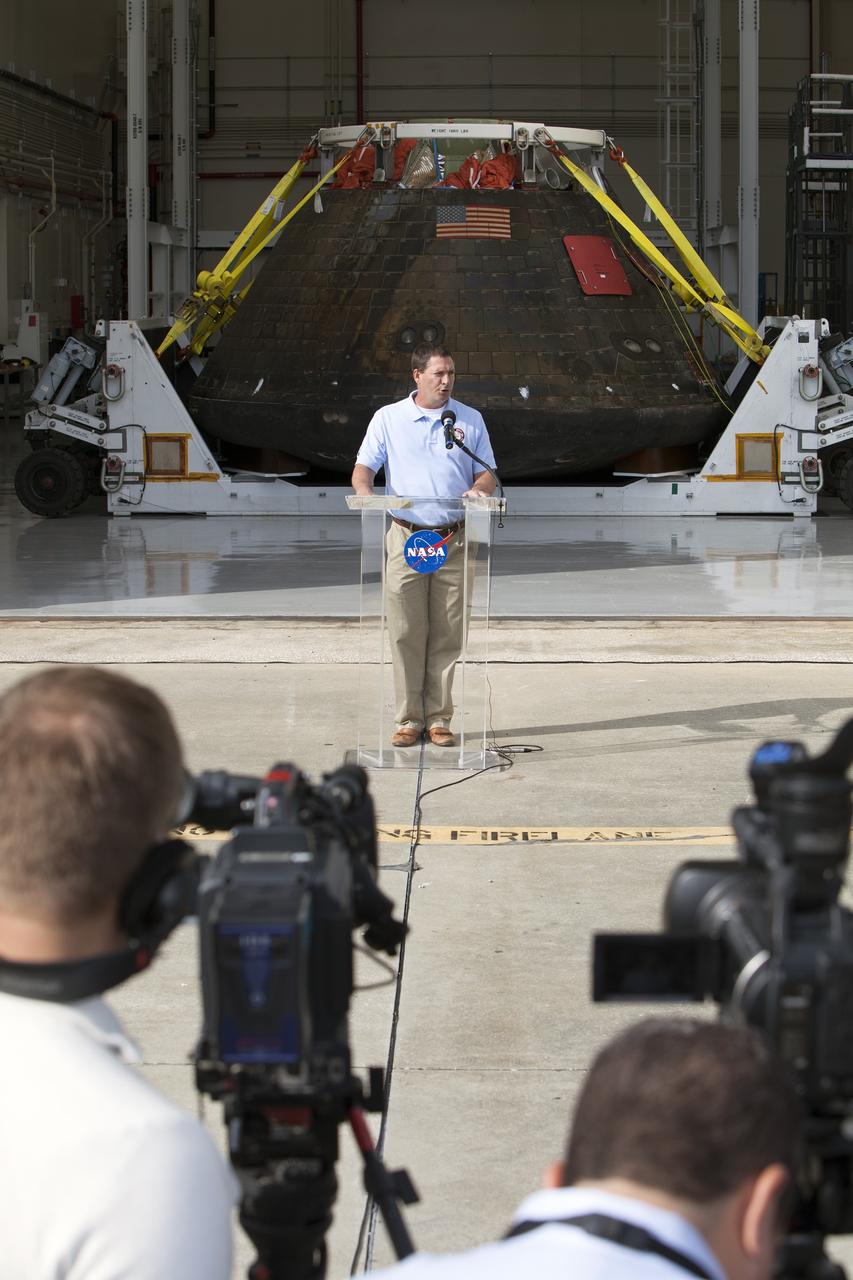
CAPE CANAVERAL, Fla. -- NASA's Orion spacecraft is viewed by members of the media at the Launch Abort System Facility at NASA's Kennedy Space Center in Florida. Lou Garcia, with the Ground Systems Development and Operations Program, or GSDO, speaks to the media during the viewing opportunity. The spacecraft's cross-country return, a 2,700 mile road trip from Naval Base San Diego to Kennedy, sets the stage for in-depth analysis of data obtained during Orion's trip to space. It will provide engineers with detailed information on how the spacecraft fared during its two-orbit, 4.5-hour flight test, completed on Dec. 5. GSDO led the recovery, offload and transportation efforts. For more information, visit www.nasa.gov/orion. Photo credit: NASA/Dimitri Gerondidakis
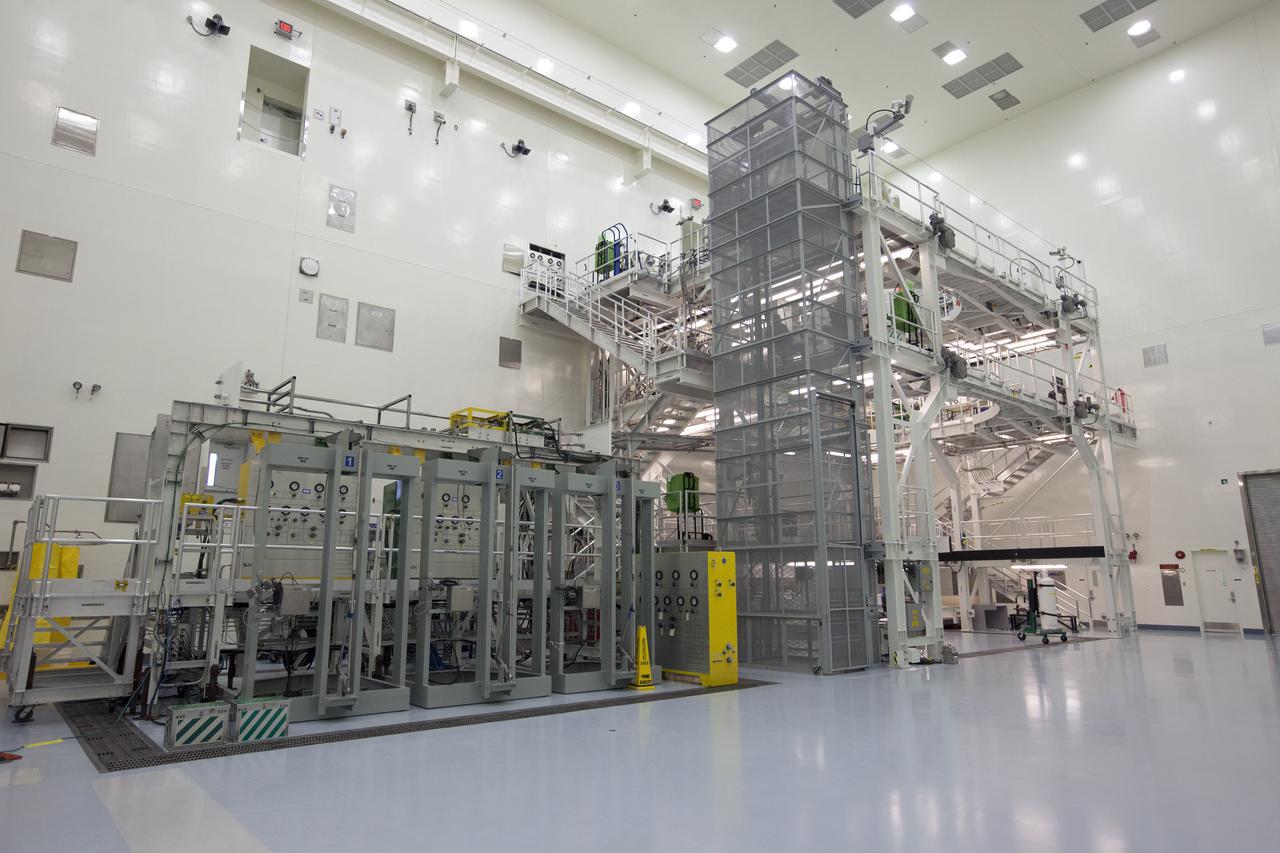
Engineers and technicians completed verification and validation testing of several pneumatic systems inside and outside the Multi-Payload Processing Facility (MPPF) at NASA's Kennedy Space Center in Florida. In view is the service platform for Orion spacecraft processing. To the left are several pneumatic panels. The MPPF will be used for offline processing and fueling of the Orion spacecraft and service module stack before launch. Orion also will be de-serviced in the MPPF after a mission. The Ground Systems Development and Operations Program (GSDO) is overseeing upgrades to the facility. The Engineering Directorate led the recent pneumatic tests.
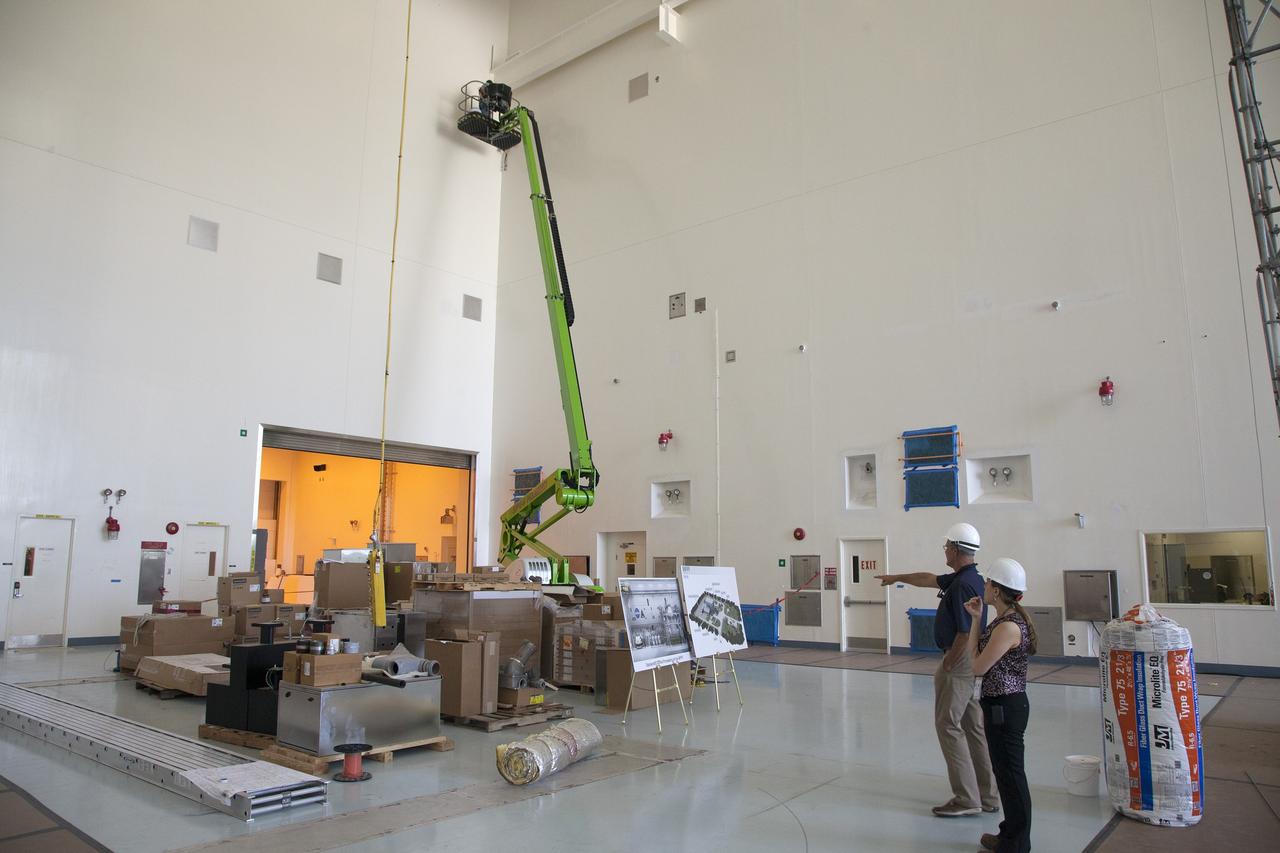
CAPE CANAVERAL, Fla. – Modifications continue on the Multi-Payload Processing Facility, or MPPF, at NASA's Kennedy Space Center in Florida. Inside the high bay, Skip Williams, Ground Systems Development and Operations, or GSDO, deputy project manager for the spacecraft offline element integration team, points out artist illustrations of how the MPPF's interior and exterior will look after modifications and upgrades have been completed. Kennedy's Center Operations Directorate is overseeing upgrades to the MPPF for GSDO Program. The extensive upgrades and modernizations will support processing of Orion spacecraft for NASA's exploration missions. The 19,647-square-foot building, originally constructed in 1995, primarily will be used for Orion hypergolic fueling, ammonia servicing and high-pressure gas servicing and checkout before being transported to the Vehicle Assembly Building for integration with the Space Launch System. Photo credit: NASA/Daniel Casper
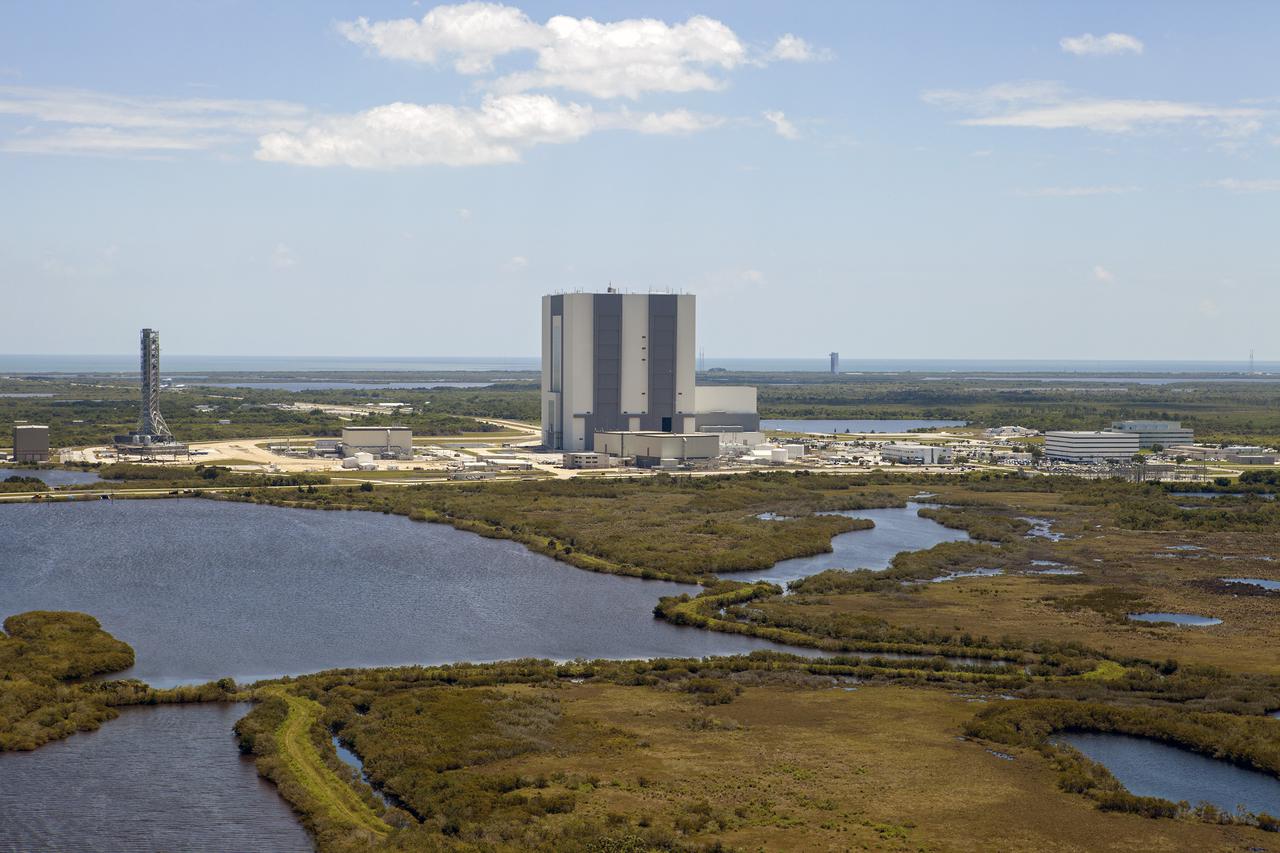
CAPE CANAVERAL, Fla. – An aerial view of the Vehicle Assembly Building and other buildings in the Launch Complex 39 area at NASA’s Kennedy Space Center in Florida. To the left is the mobile launcher that will be used to transport NASA’s Space Launch System rocket and the Orion crew capsule to Launch Pad 39B. Upgrades are underway at Pad B and other facilities in the Launch Complex 39 area. The Ground Systems Development and Operations, or GSDO, Program office at Kennedy is leading the center’s transformation from a historically government-only launch complex to a spaceport that can safely handle a variety of rockets and spacecraft, including NASA’s Space Launch System. For more information about GSDO, visit: http:__go.nasa.gov_groundsystems. Photo credit: NASA_Kim Shiflett
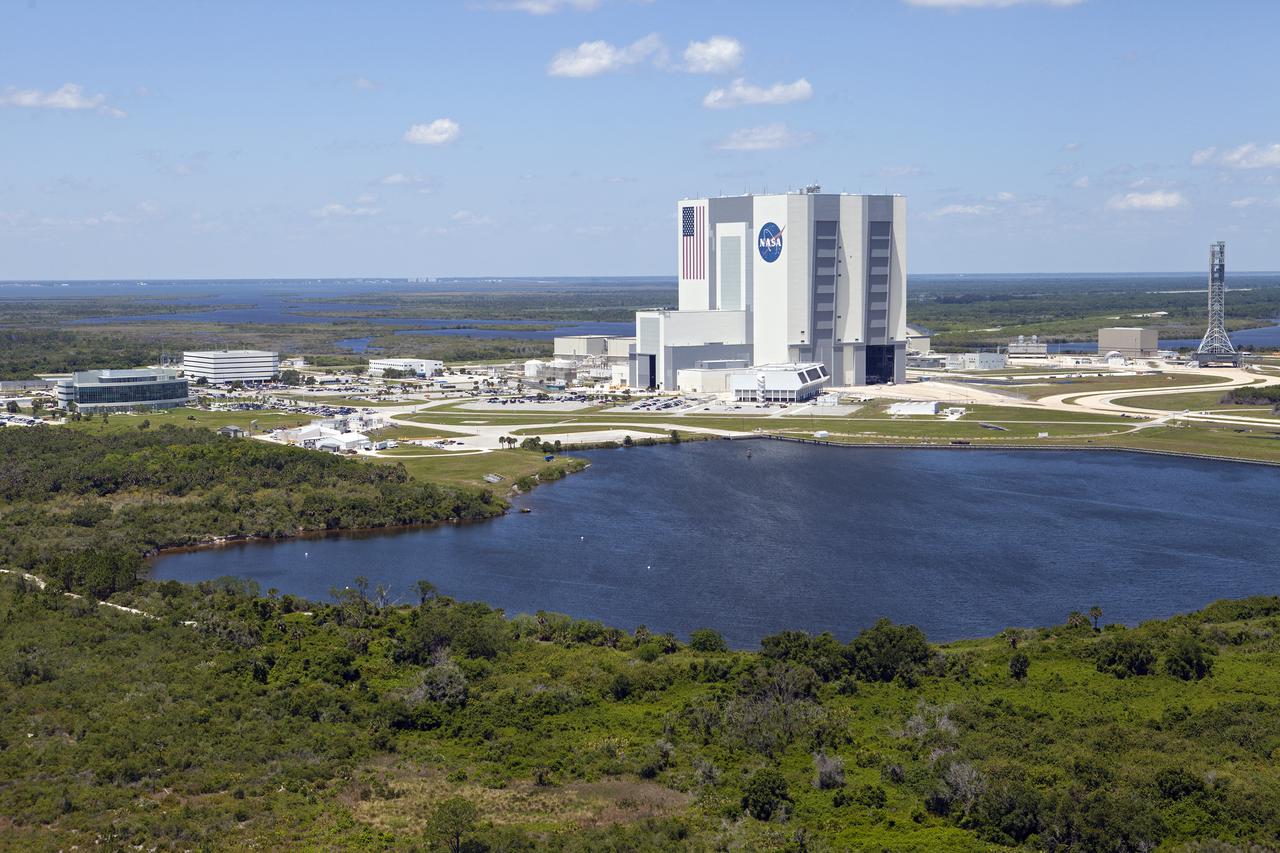
CAPE CANAVERAL, Fla. – An aerial view of the Vehicle Assembly Building, or VAB, and other buildings in the Launch Complex 39 area at NASA’s Kennedy Space Center in Florida. The Launch Control Center is in front of the VAB. To the right is the mobile launcher that will be used to transport NASA’s Space Launch System rocket and the Orion crew capsule to Launch Pad 39B. Upgrades are underway at Pad B and other facilities in the Launch Complex 39 area. The Ground Systems Development and Operations, or GSDO, Program office at Kennedy is leading the center’s transformation from a historically government-only launch complex to a spaceport that can safely handle a variety of rockets and spacecraft, including NASA’s Space Launch System. For more information about GSDO, visit: http:__go.nasa.gov_groundsystems. Photo credit: NASA_Kim Shiflett
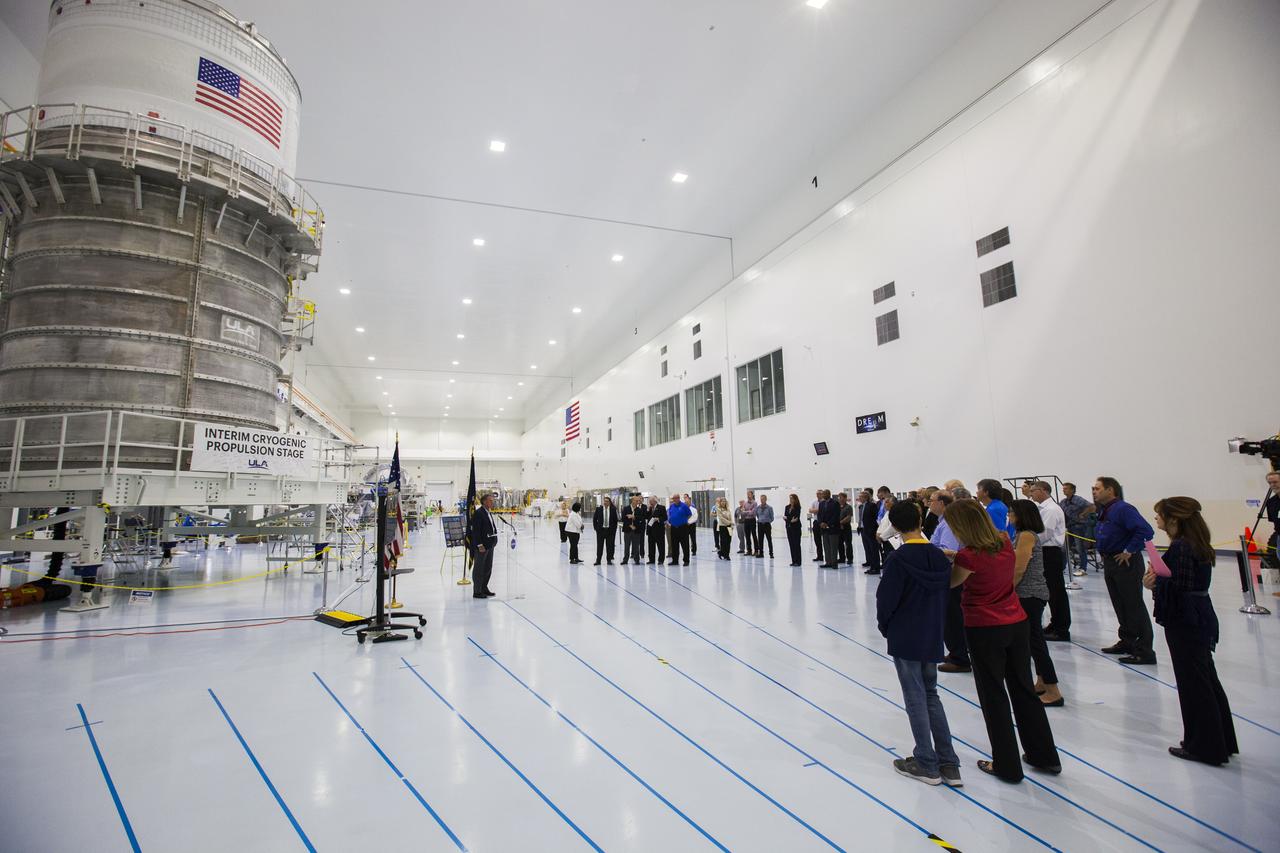
In the Space Station Processing Facility at NASA's Kennedy Space Center in Florida, a ceremony is underway marking the agency's Spacecraft/Payload Integration and Evolution (SPIE) organization formally turning over processing of the Space Launch System (SLS) rocket's Interim Cryogenic Propulsion Stage (ICPS), to the center's Ground Systems Development and Operations (GSDO) Directorate. The ICPS is seen on the left in its shipping container and is the first integrated piece of flight hardware to arrive in preparation for the uncrewed Exploration Mission-1. With the Orion attached, the ICPS sits atop the SLS rocket and will provide the spacecraft with the additional thrust needed to travel tens of thousands of miles beyond the Moon.
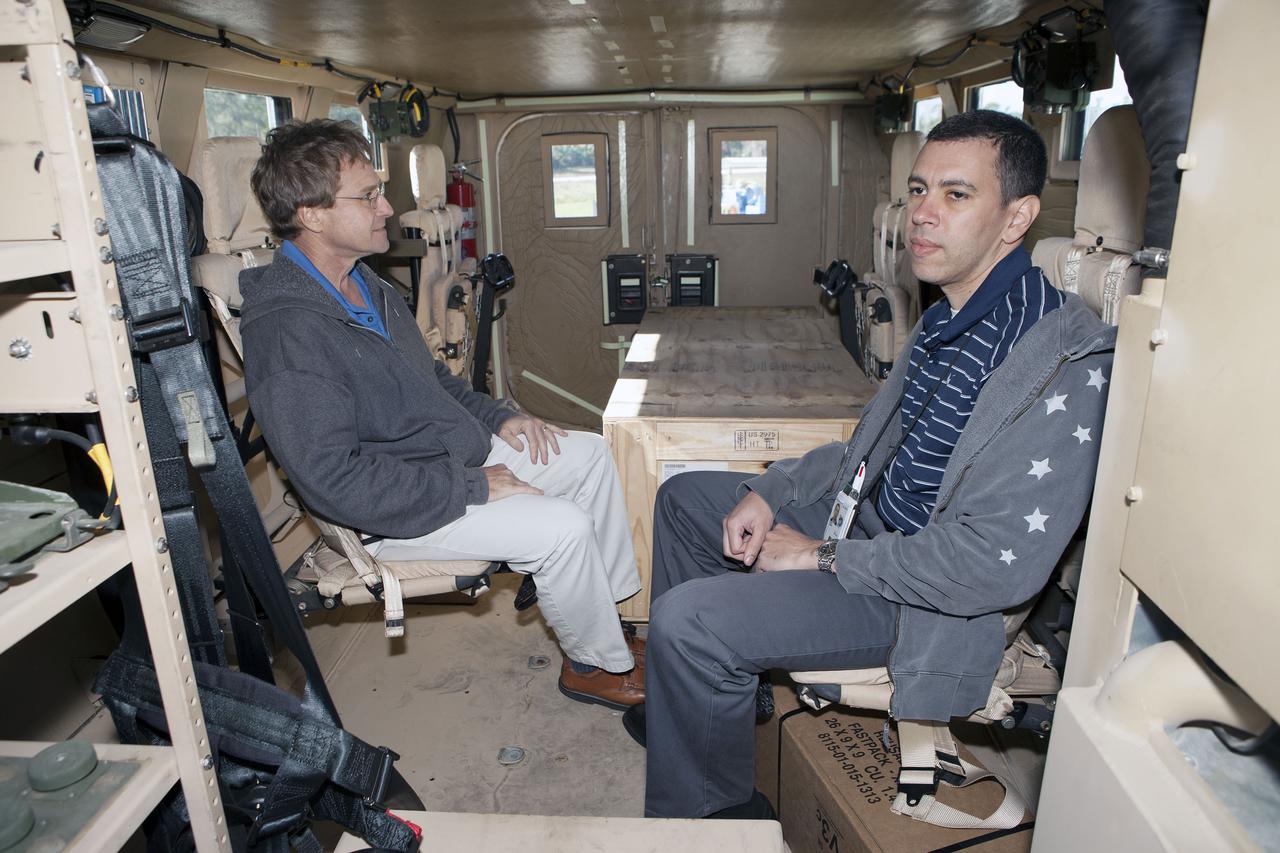
CAPE CANAVERAL, Fla. – Tom Hoffmann, left, and Danny Zeno, both Ground Systems Development and Operations, or GSDO, integration engineers, sit inside one of four new emergency egress vehicles, called Mine-Resistant Ambush-Protected, or MRAP, vehicles at the Maintenance and Operations Facility at NASA’s Kennedy Space Center in Florida. The MRAPs arrived from the U.S. Army Red River Depot in Texarkana, Texas in December 2013. The vehicles were processed in and then transported to the Rotation, Processing and Surge Facility near the Vehicle Assembly Building for temporary storage. The GSDO Program at Kennedy led the efforts to an emergency egress vehicle that future astronauts could quickly use to leave the Launch Complex 39 area in case of an emergency. During crewed launches of NASA’s Space Launch System and Orion spacecraft, the MRAP will be stationed by the slidewire termination area at the pad. In case of an emergency, the crew will ride a slidewire to the ground and immediately board the MRAP for safe egress from the pad. The new vehicles replace the M-113 vehicles that were used during the Space Shuttle Program. Photo credit: NASA_Kim Shiflett
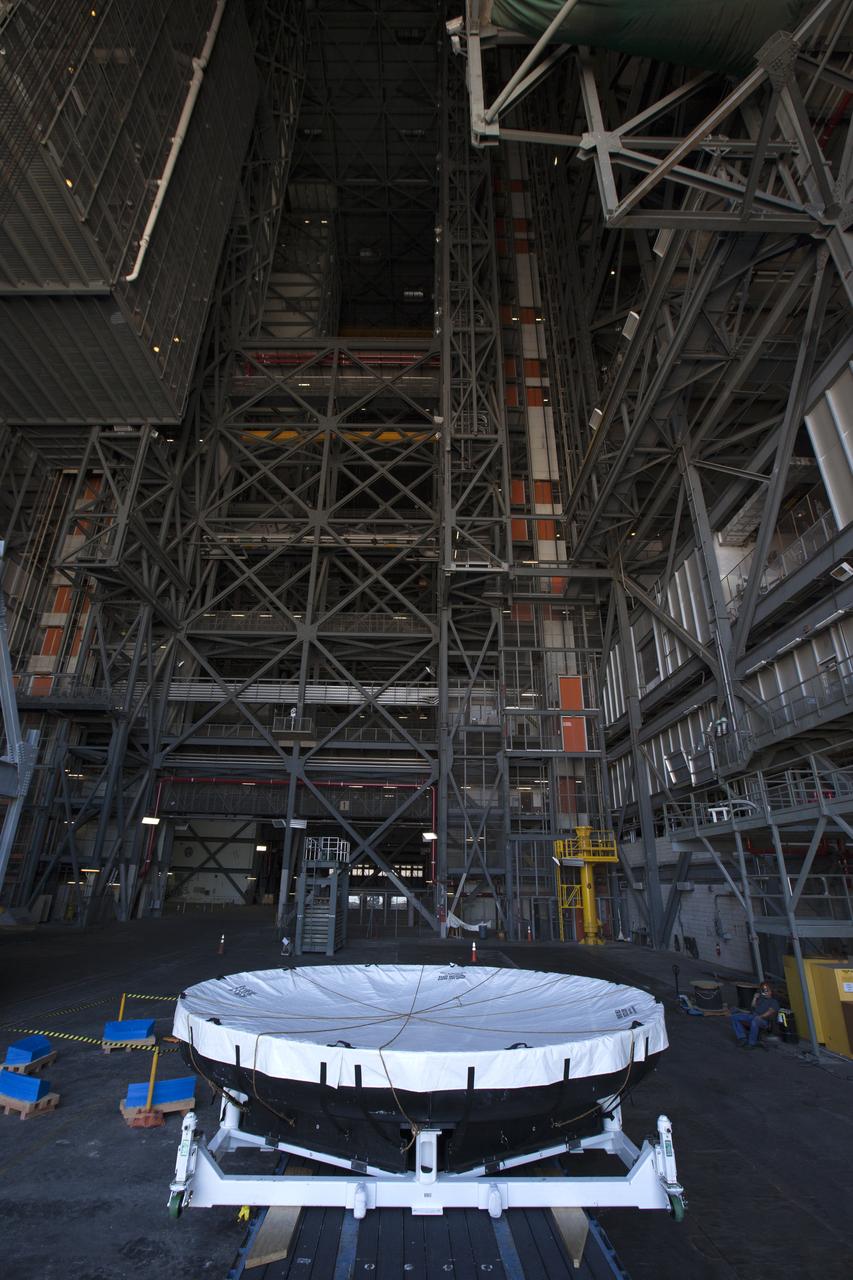
The Orion heat shield from Exploration Flight Test-1 has arrived in High Bay 2 in the Vehicle Assembly Building (VAB) at NASA's Kennedy Space Center in Florida. The heat shield was moved from the Launch Abort System Facility. The heat shield is being transferred from the Orion Program to the Ground Systems Development and Operations Program, Landing and Recovery Operations. In the VAB, the heat shield will be integrated with the Orion ground test article and used for future underway recovery testing.
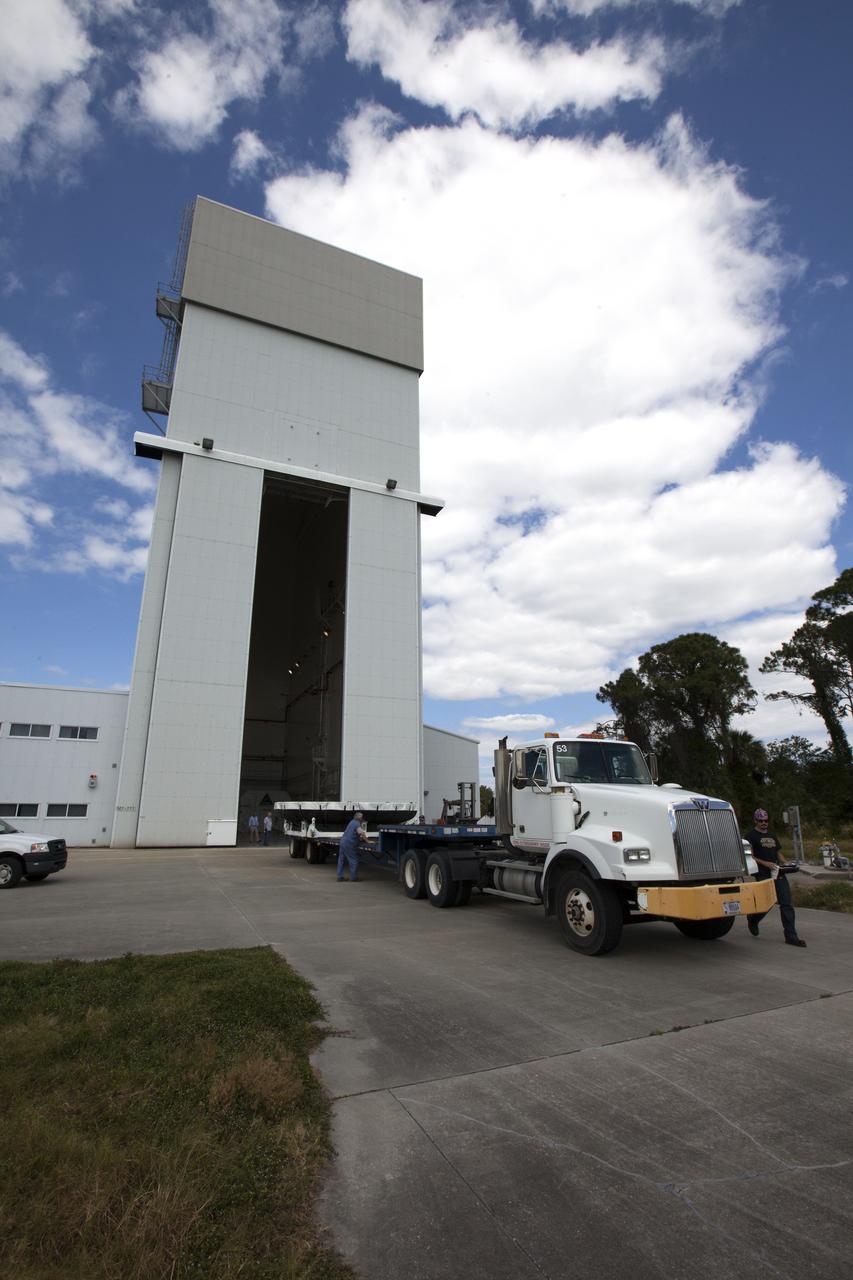
The Orion heat shield from Exploration Flight Test-1, secured on a transporter, departs the Launch Abort System Facility at NASA's Kennedy Space Center in Florida, for its move to the Vehicle Assembly Building (VAB). The heat shield is being transferred from the Orion Program to the Ground Systems Development and Operations Program, Landing and Recovery Operations. In the VAB, the heat shield will be integrated with the Orion ground test article and used for future underway recovery testing.
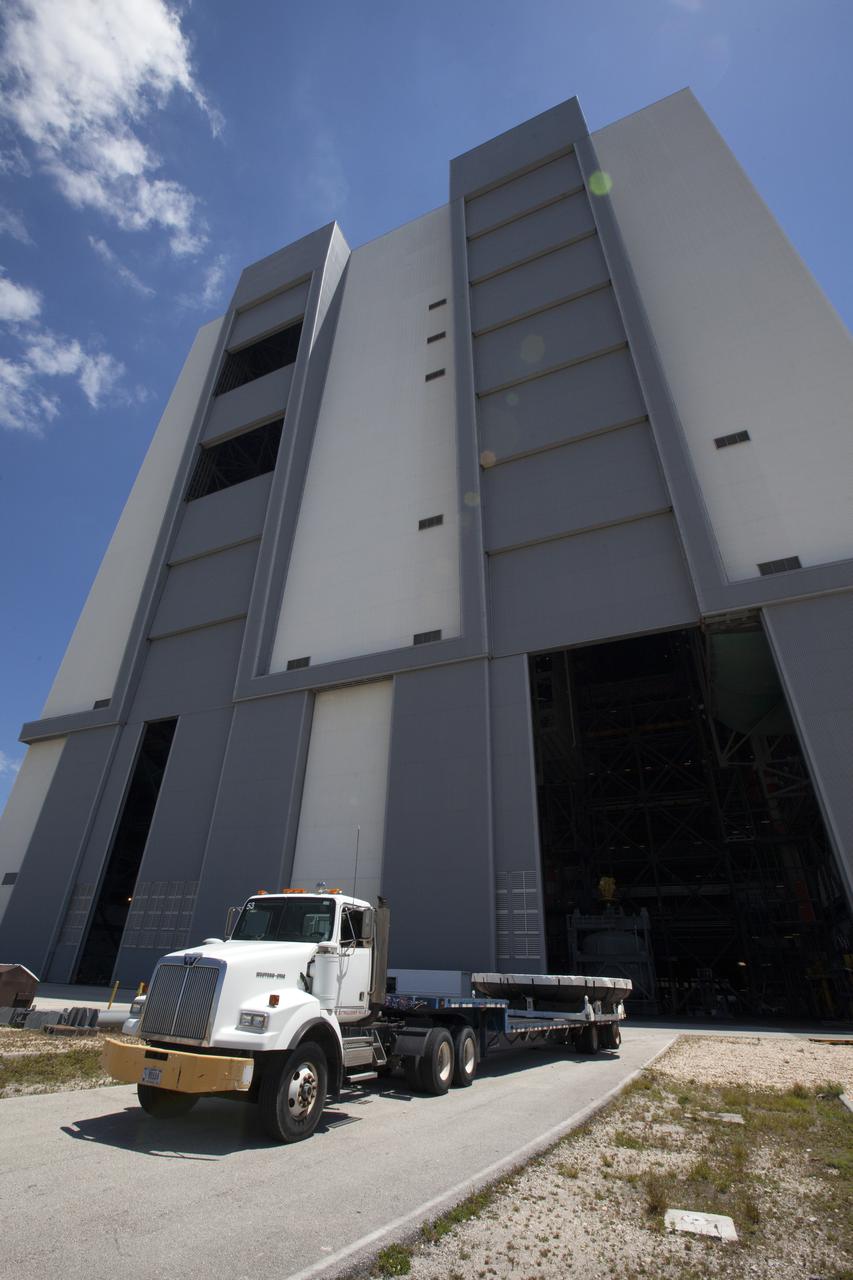
A flatbed truck carrying the Orion heat shield from Exploration Flight Test-1, prepares to back into High Bay 2 in the Vehicle Assembly Building (VAB) at NASA's Kennedy Space Center in Florida. The heat shield was moved from the Launch Abort System Facility. The heat shield is being transferred from the Orion Program to the Ground Systems Development and Operations Program, Landing and Recovery Operations. In the VAB, the heat shield will be integrated with the Orion ground test article and used for future underway recovery testing.
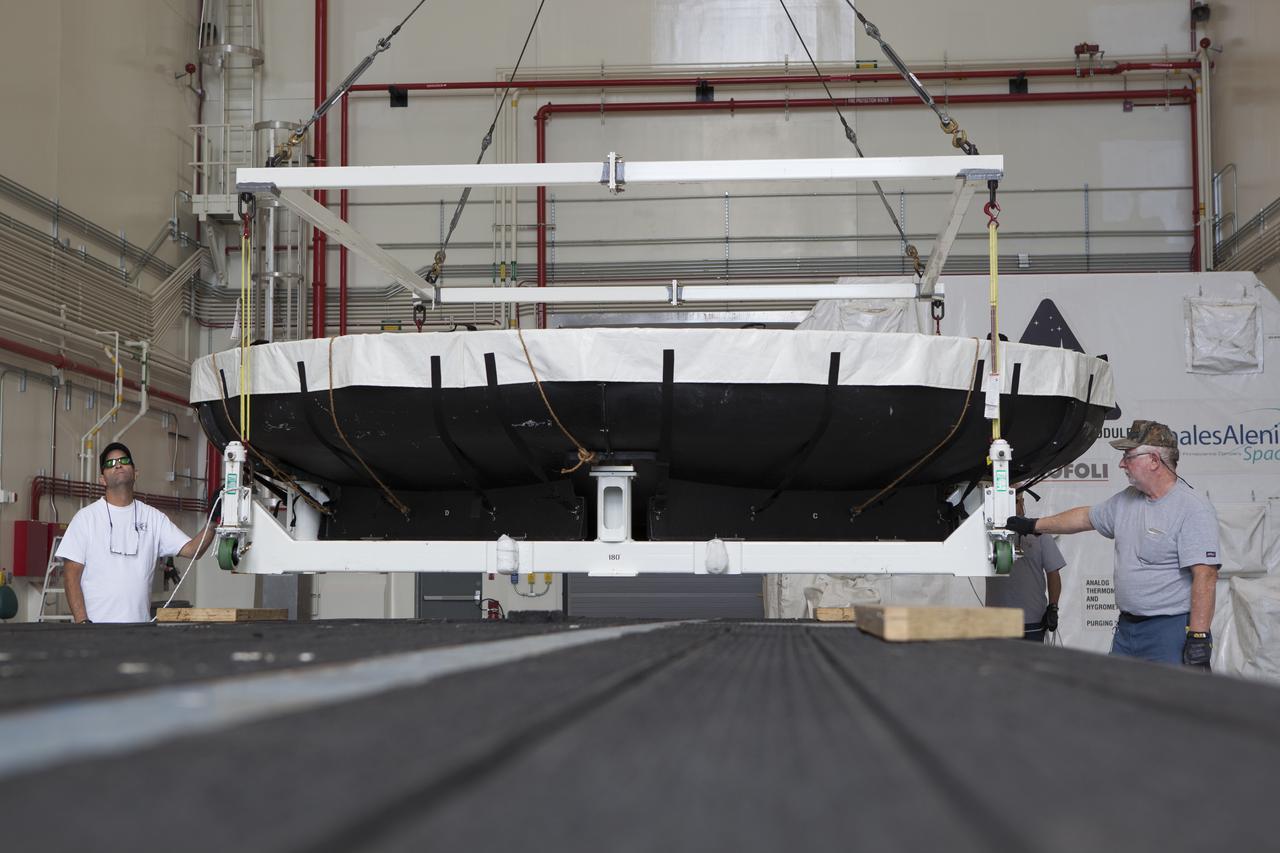
Inside the Launch Abort System Facility at NASA's Kennedy Space Center in Florida, the Orion heat shield from Exploration Flight Test-1 is being loaded onto a transporter for its move to the Vehicle Assembly Building (VAB). The heat shield is being transferred from the Orion Program to the Ground Systems Development and Operations Program, Landing and Recovery Operations. In the VAB, the heat shield will be integrated with the Orion ground test article and used for future underway recovery testing.
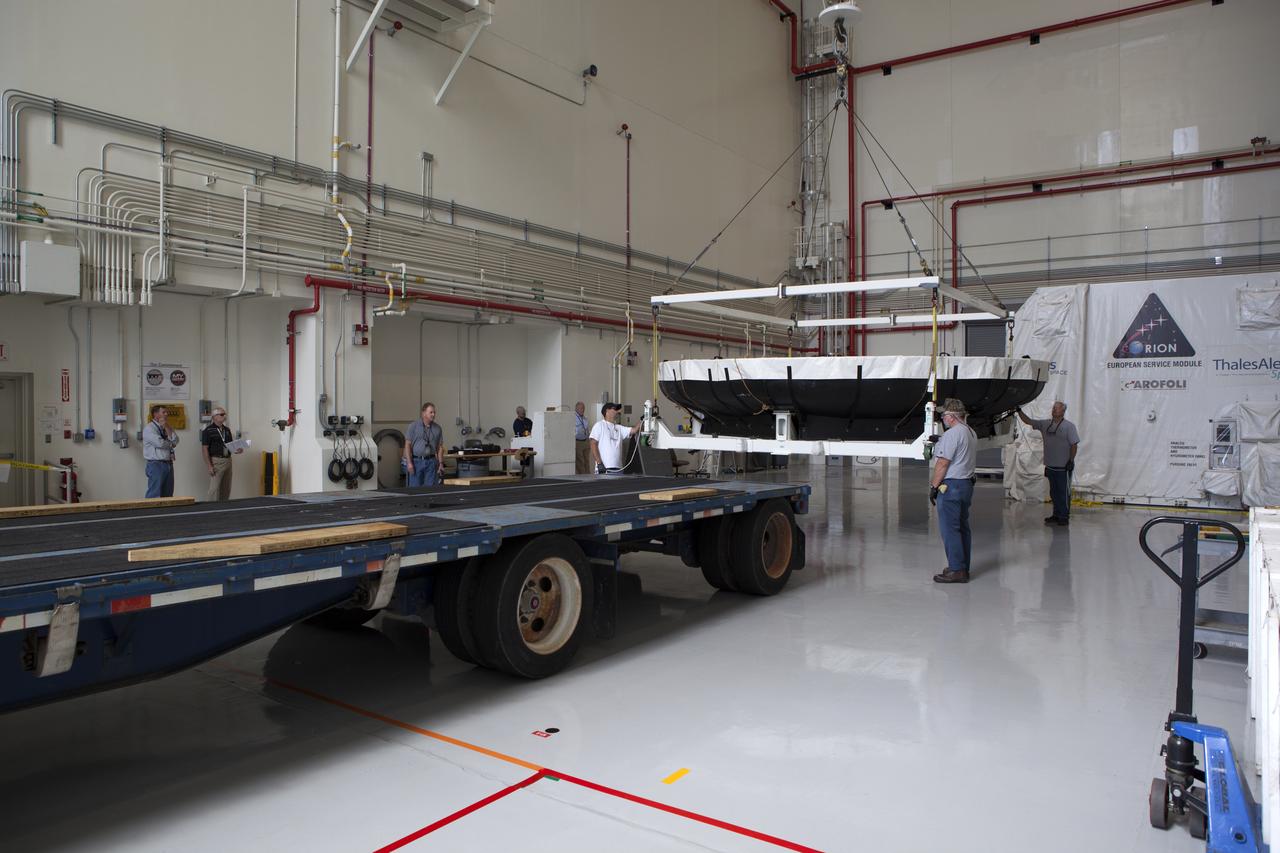
Inside the Launch Abort System Facility at NASA's Kennedy Space Center in Florida, the Orion heat shield from Exploration Flight Test-1 is being loaded onto a transporter for its move to the Vehicle Assembly Building (VAB). The heat shield is being transferred from the Orion Program to the Ground Systems Development and Operations Program, Landing and Recovery Operations. In the VAB, the heat shield will be integrated with the Orion ground test article and used for future underway recovery testing.
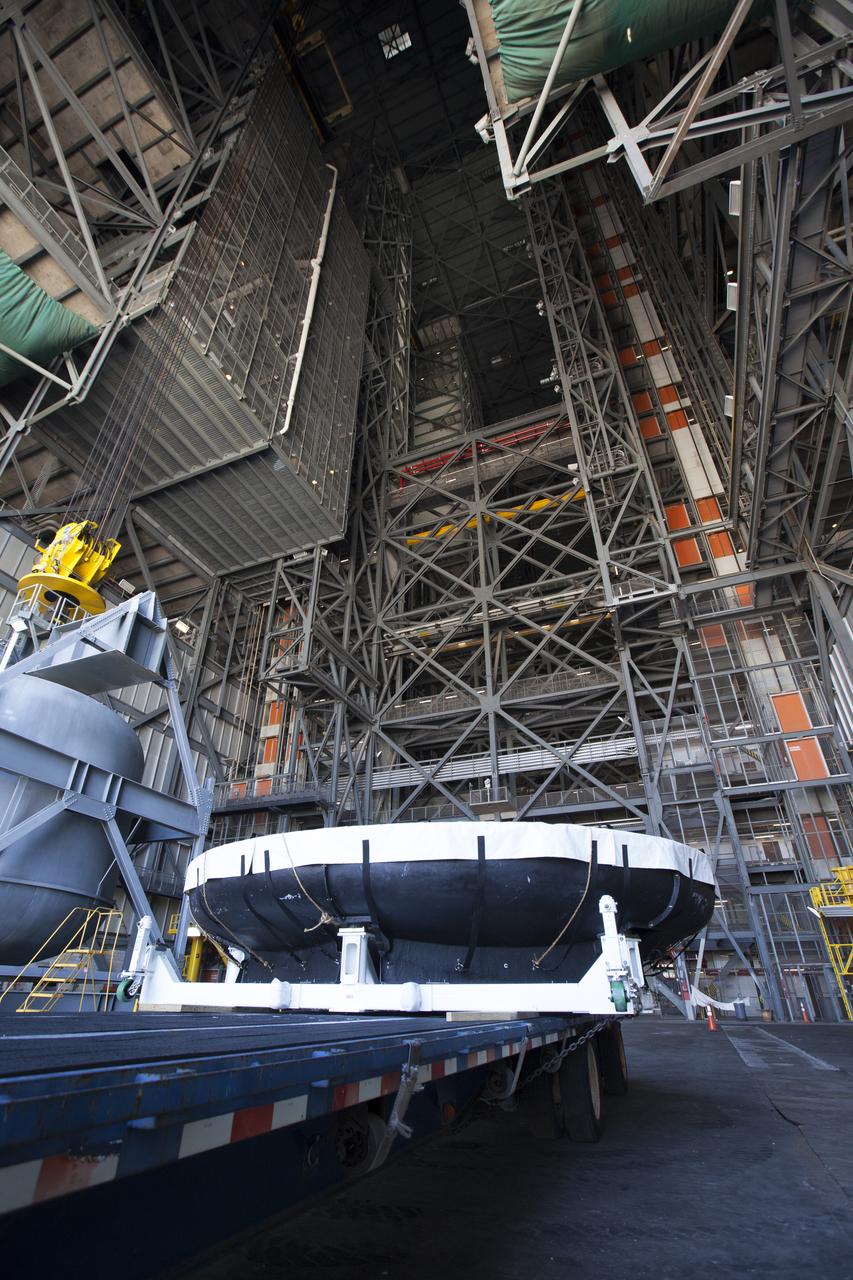
A flatbed truck carrying the Orion heat shield from Exploration Flight Test-1, backs into High Bay 2 in the Vehicle Assembly Building (VAB) at NASA's Kennedy Space Center in Florida. The heat shield was moved from the Launch Abort System Facility. The heat shield is being transferred from the Orion Program to the Ground Systems Development and Operations Program, Landing and Recovery Operations. In the VAB, the heat shield will be integrated with the Orion ground test article and used for future underway recovery testing.
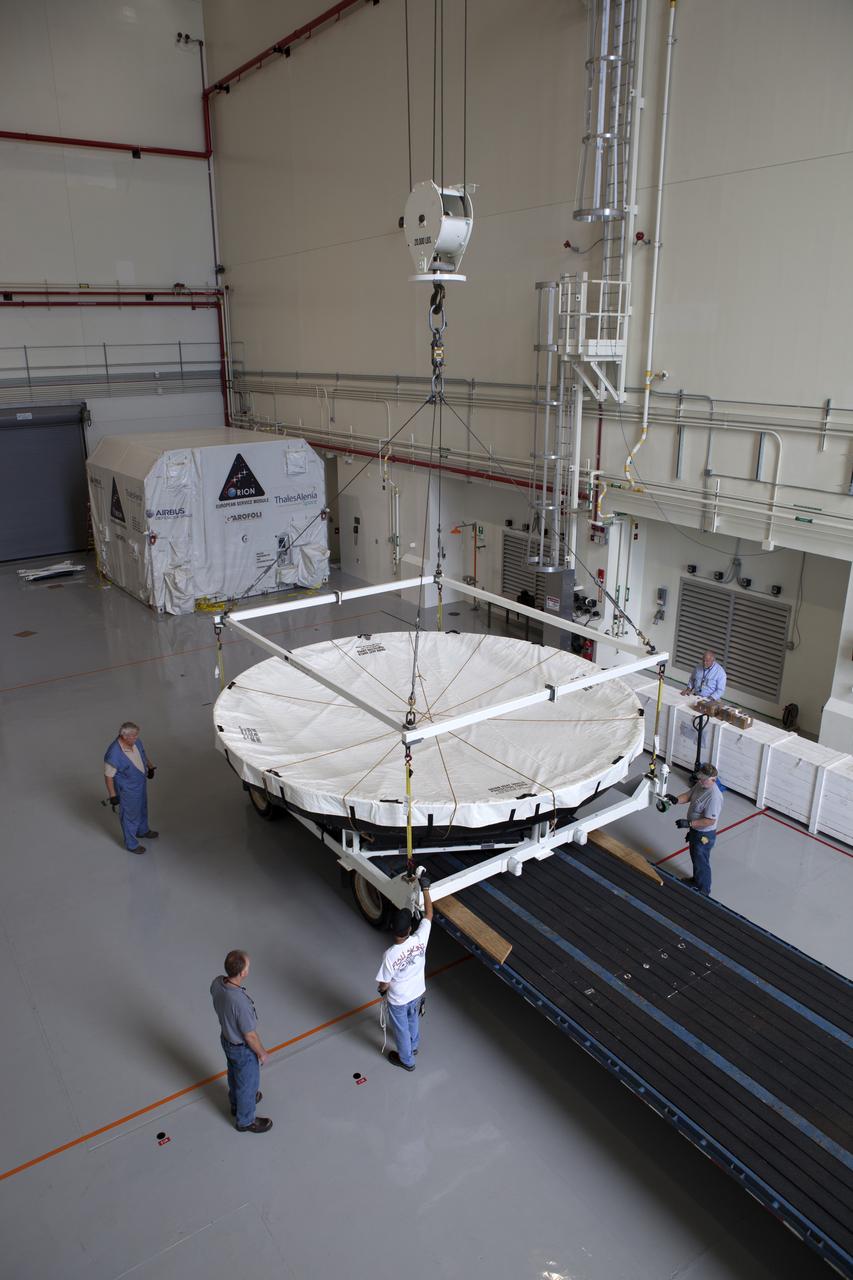
Inside the Launch Abort System Facility at NASA's Kennedy Space Center in Florida, a crane lowers the Orion heat shield from Exploration Flight Test-1 onto a transporter for its move to the Vehicle Assembly Building (VAB). The heat shield is being transferred from the Orion Program to the Ground Systems Development and Operations Program, Landing and Recovery Operations. In the VAB, the heat shield will be integrated with the Orion ground test article and used for future underway recovery testing.
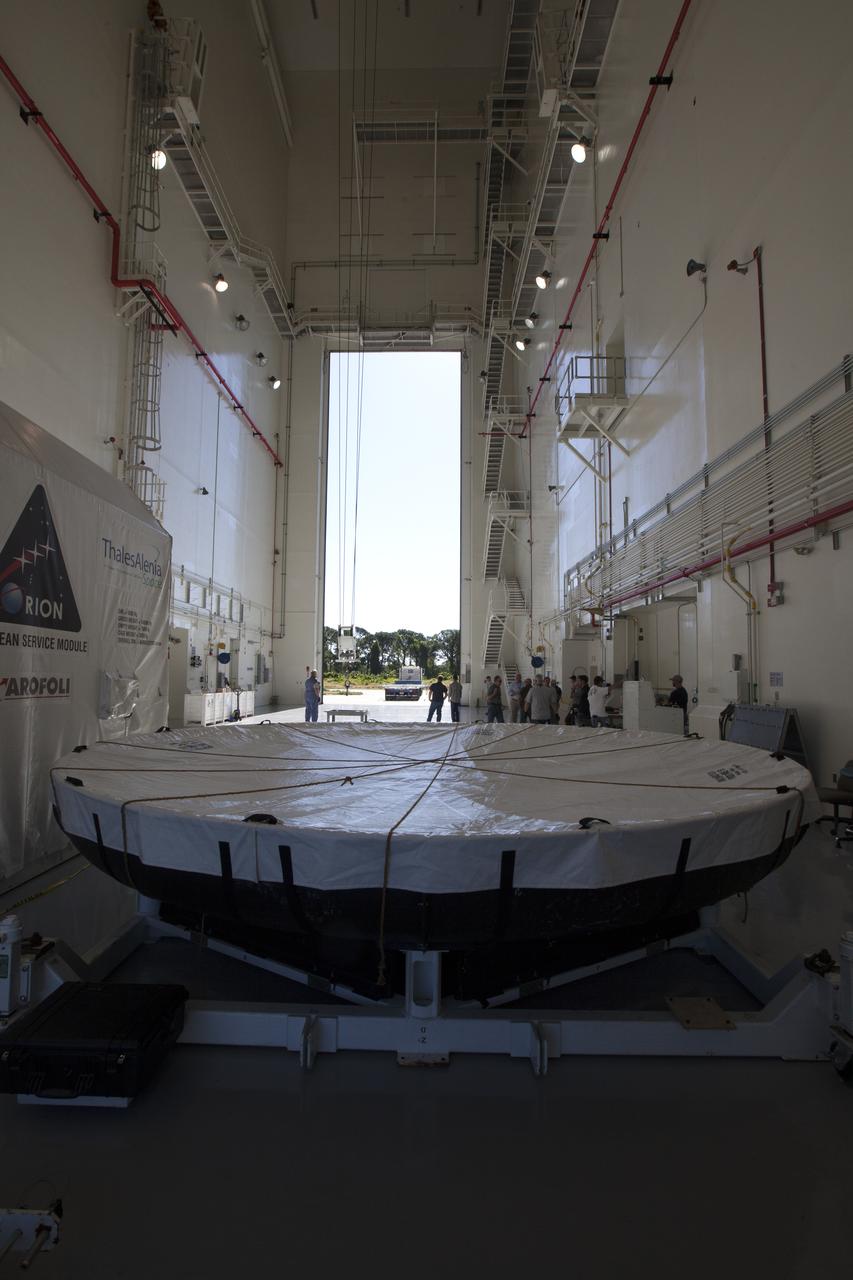
Inside the Launch Abort System Facility at NASA's Kennedy Space Center in Florida, the Orion heat shield from Exploration Flight Test-1 is being prepared for its move to the Vehicle Assembly Building (VAB). The heat shield is being transferred from the Orion Program to the Ground Systems Development and Operations Program, Landing and Recovery Operations. In the VAB, the heat shield will be integrated with the Orion ground test article and used for future underway recovery testing.
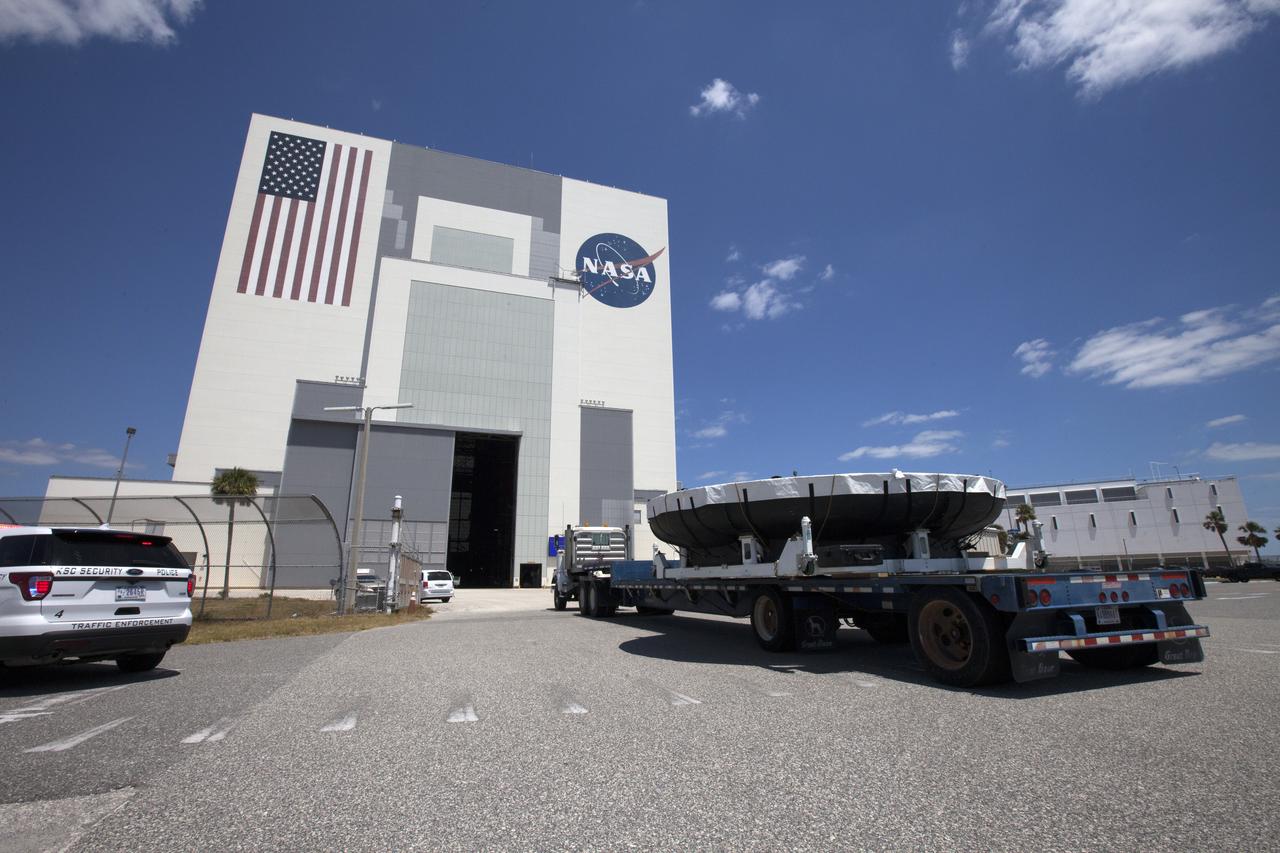
The Orion heat shield from Exploration Flight Test-1, secured on a transporter, arrives at the Vehicle Assembly Building (VAB) at NASA's Kennedy Space Center in Florida. The heat shield was moved from the Launch Abort System Facility. The heat shield is being transferred from the Orion Program to the Ground Systems Development and Operations Program, Landing and Recovery Operations. In the VAB, the heat shield will be integrated with the Orion ground test article and used for future underway recovery testing.
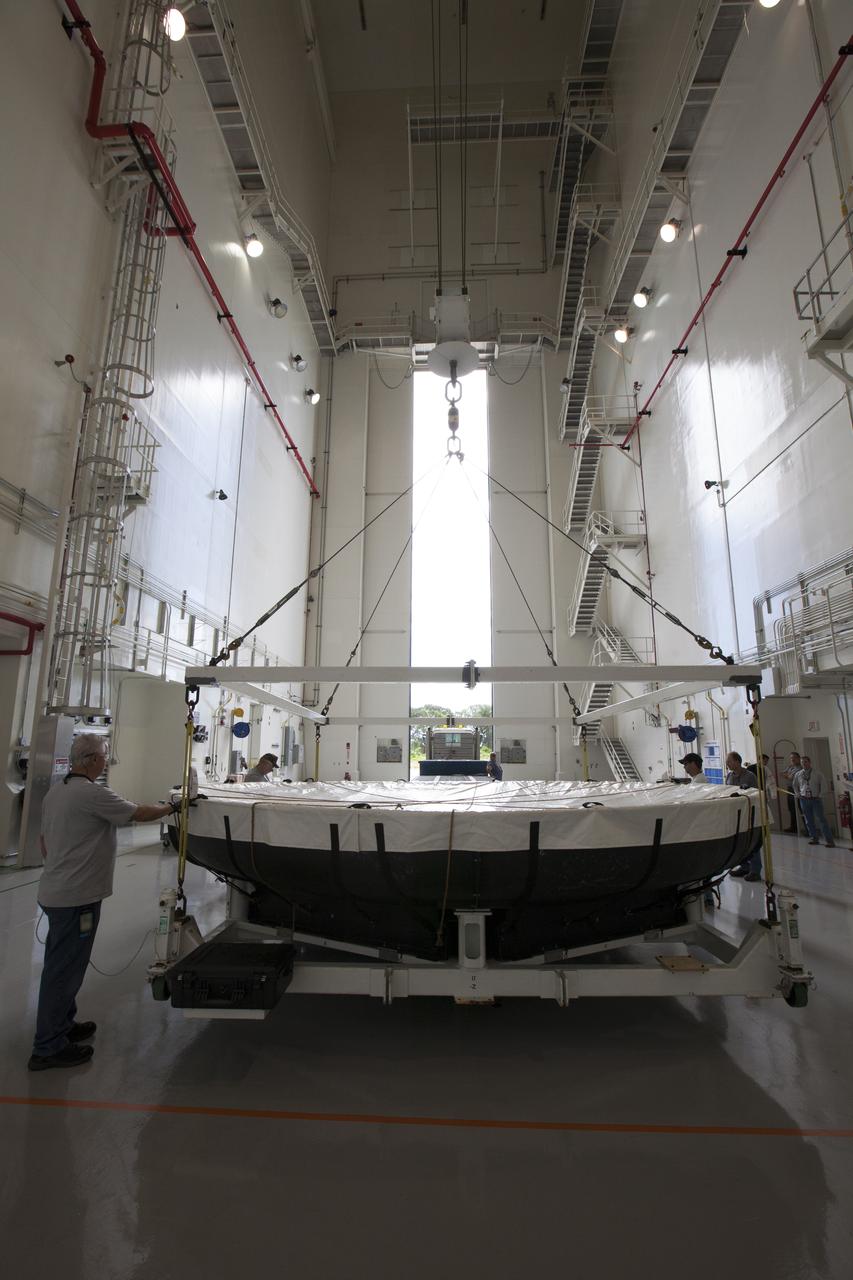
Inside the Launch Abort System Facility at NASA's Kennedy Space Center in Florida, the Orion heat shield from Exploration Flight Test-1 is secured on a transporter and ready for its move to the Vehicle Assembly Building (VAB). The heat shield is being transferred from the Orion Program to the Ground Systems Development and Operations Program, Landing and Recovery Operations. In the VAB, the heat shield will be integrated with the Orion ground test article and used for future underway recovery testing.