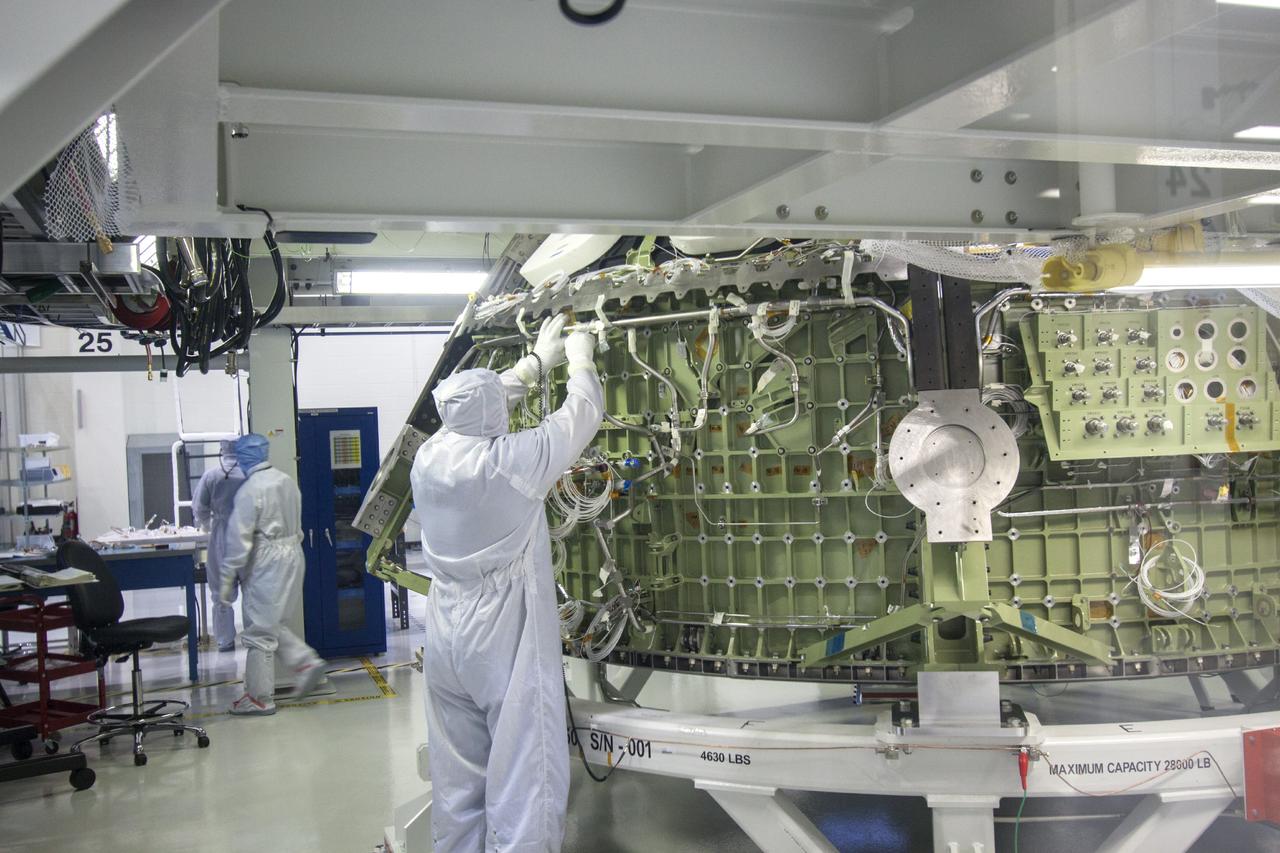
CAPE CANAVERAL, Fla. – A Lockheed Martin technician performs tube welding on the Orion crew module for Exploration Flight Test 1 inside a clean room processing cell in the Operations and Checkout Building high bay at NASA’s Kennedy Space Center in Florida. Orion is the exploration spacecraft designed to carry crews to space beyond low Earth orbit. It will provide emergency abort capability, sustain the crew during the space travel and provide safe re-entry from deep space return velocities. The first unpiloted test flight of the Orion is scheduled to launch in 2014 atop a Delta IV rocket and in 2017 on a Space Launch System rocket. For more information, visit http://www.nasa.gov/orion. Photo credit: NASA/Jim Grossmann
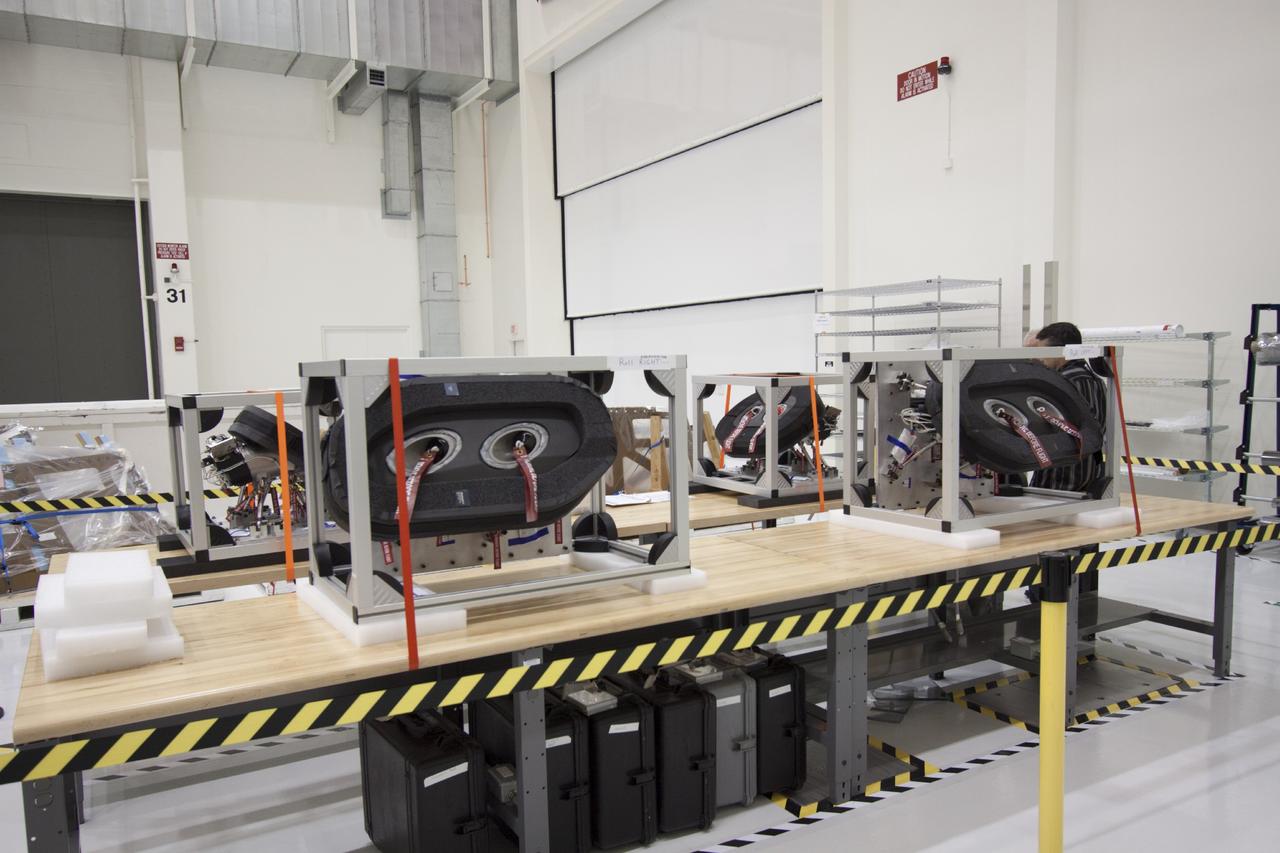
CAPE CANAVERAL, Fla. – Inside the Operations and Checkout Building high bay at NASA’s Kennedy Space Center in Florida, several of the reaction control system roll and yaw thrusters for the Orion crew module have been unpacked and placed on stands for processing. Orion is the exploration spacecraft designed to carry crews to space beyond low Earth orbit. It will provide emergency abort capability, sustain the crew during the space travel and provide safe re-entry from deep space return velocities. The first unpiloted test flight of the Orion is scheduled to launch in 2014 atop a Delta IV rocket and in 2017 on a Space Launch System rocket. For more information, visit http://www.nasa.gov/orion. Photo credit: NASA/Jim Grossmann
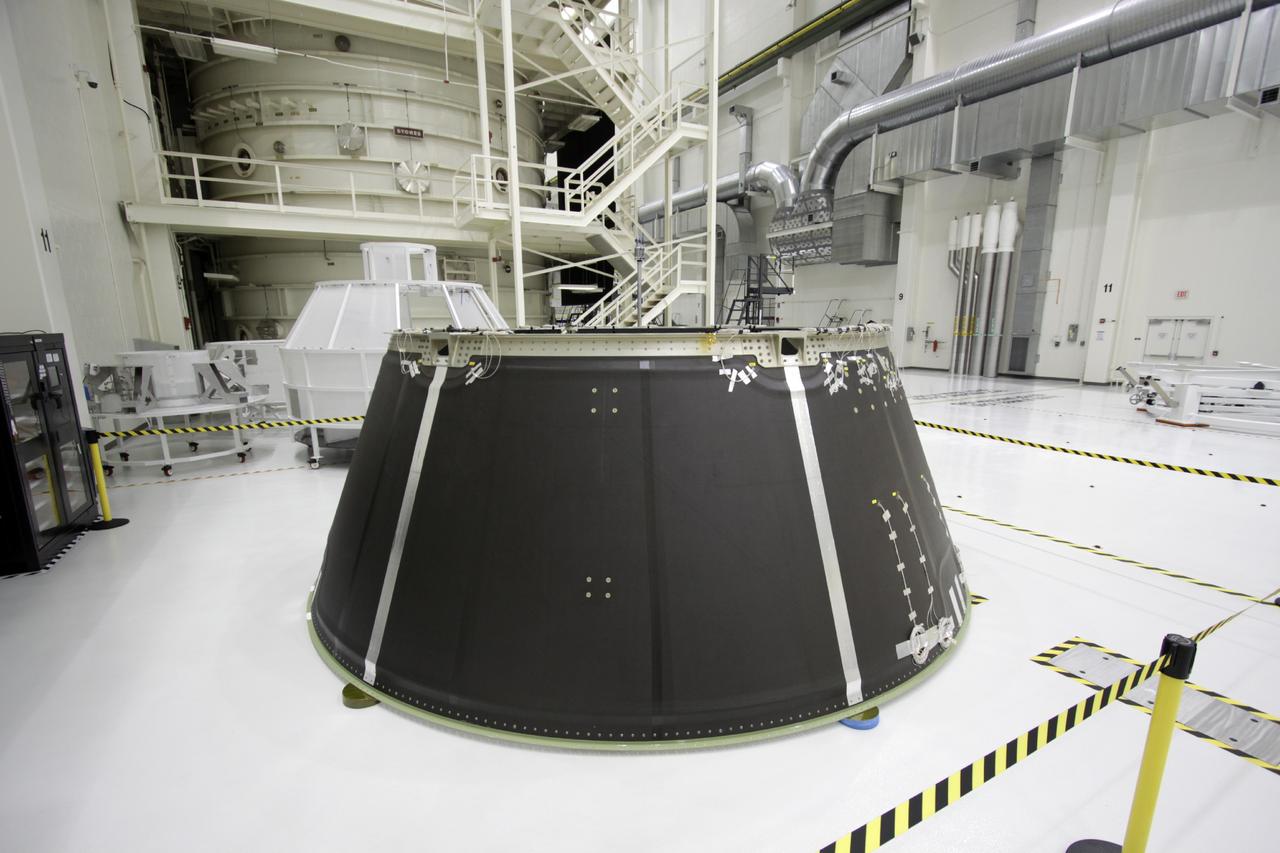
CAPE CANAVERAL, Fla. – Inside the Operations and Checkout Building high bay at NASA’s Kennedy Space Center in Florida, the Orion service module spacecraft adapter cone for Exploration Flight Test 1 has arrived for checkout and processing. Orion is the exploration spacecraft designed to carry crews to space beyond low Earth orbit. It will provide emergency abort capability, sustain the crew during the space travel and provide safe re-entry from deep space return velocities. The first unpiloted test flight of the Orion is scheduled to launch in 2014 atop a Delta IV rocket and in 2017 on a Space Launch System rocket. For more information, visit http://www.nasa.gov/orion. Photo credit: NASA/Jim Grossmann
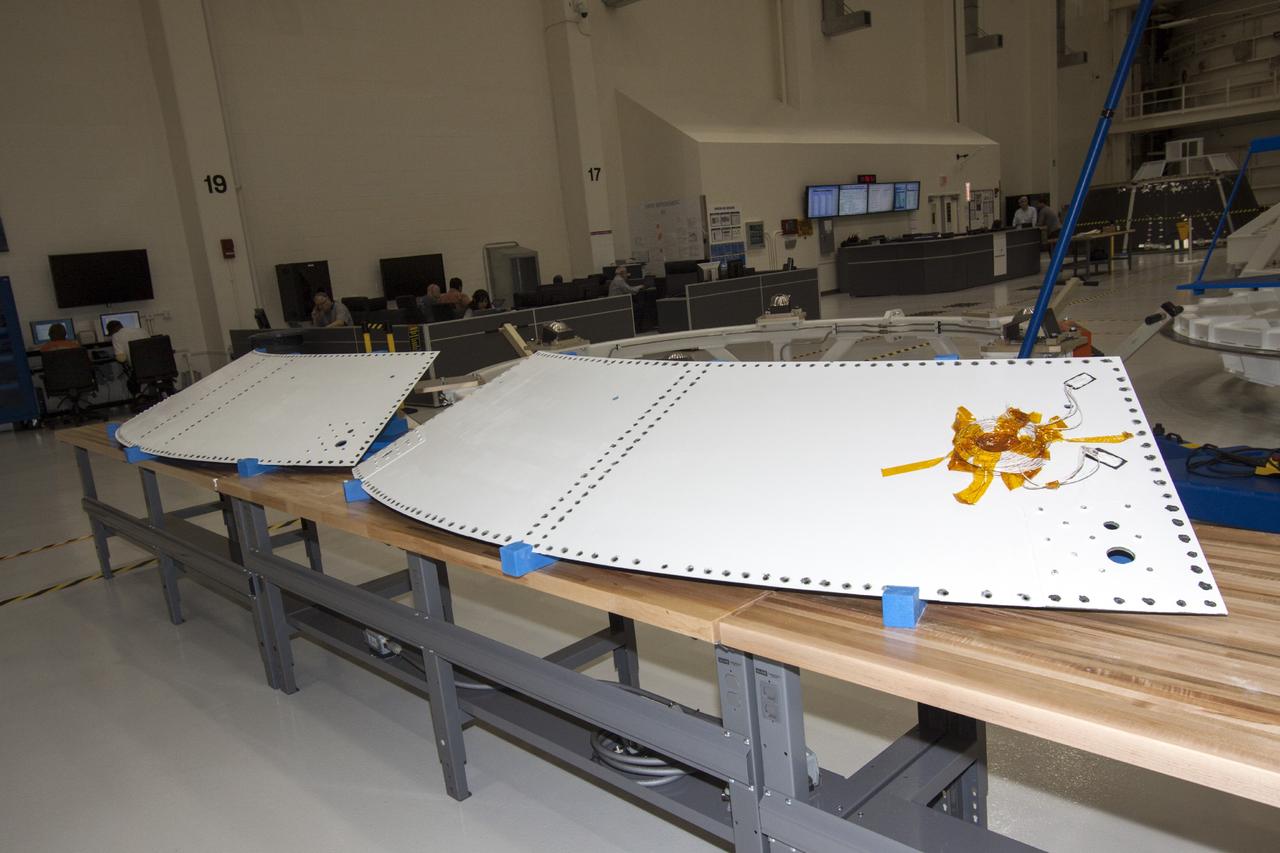
CAPE CANAVERAL, Fla. – Inside the Operations and Checkout Building high bay at NASA’s Kennedy Space Center in Florida, components of the Orion service module composite panel aft walls have been secured on work stands for processing. Orion is the exploration spacecraft designed to carry crews to space beyond low Earth orbit. It will provide emergency abort capability, sustain the crew during the space travel and provide safe re-entry from deep space return velocities. The first unpiloted test flight of the Orion is scheduled to launch in 2014 atop a Delta IV rocket and in 2017 on a Space Launch System rocket. For more information, visit http://www.nasa.gov/orion. Photo credit: NASA/Jim Grossmann
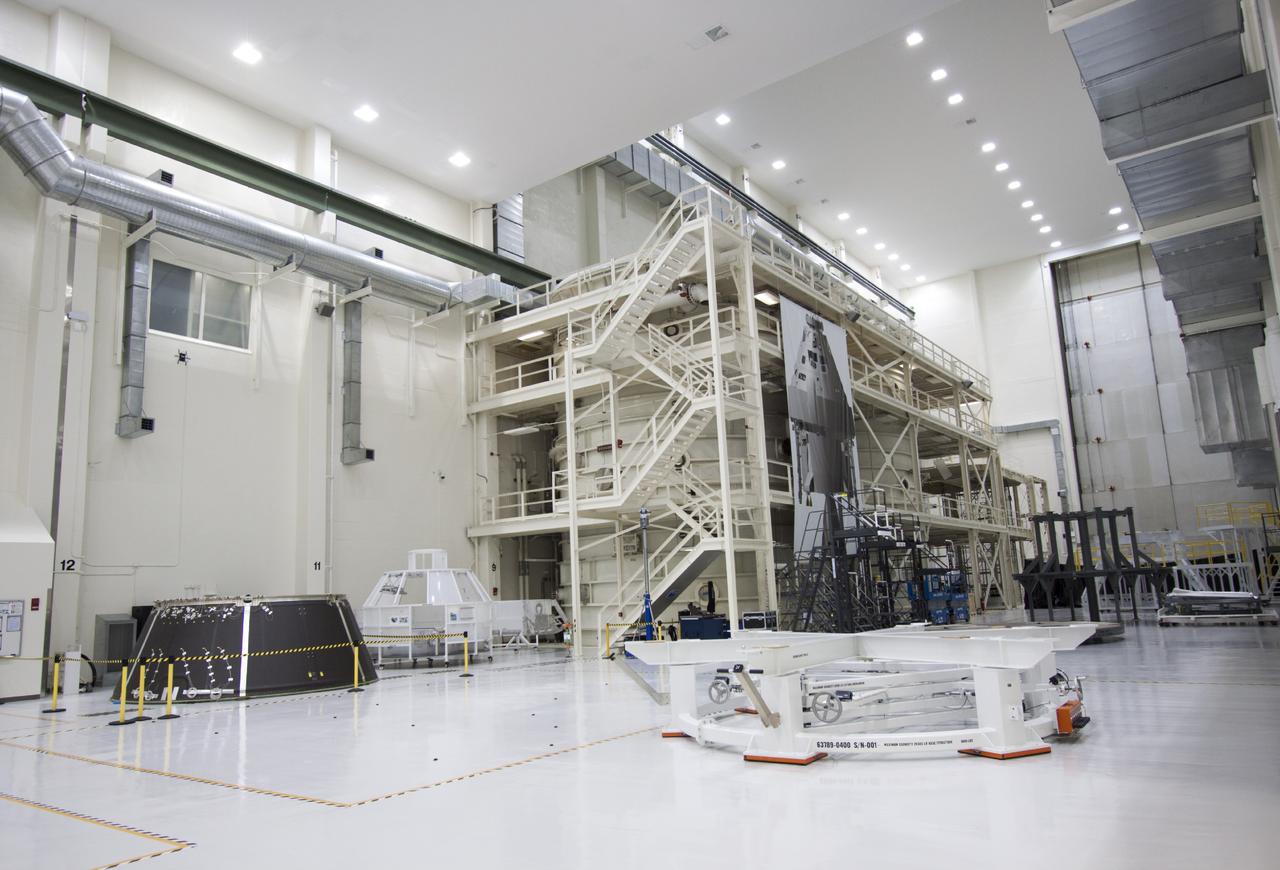
CAPE CANAVERAL, Fla. – Inside the Operations and Checkout Building high bay at NASA’s Kennedy Space Center in Florida, the Orion service module spacecraft adapter cone for Exploration Flight Test 1 has arrived for checkout and processing. Tooling and test fixtures have been attached to the cone. Orion is the exploration spacecraft designed to carry crews to space beyond low Earth orbit. It will provide emergency abort capability, sustain the crew during the space travel and provide safe re-entry from deep space return velocities. The first unpiloted test flight of the Orion is scheduled to launch in 2014 atop a Delta IV rocket and in 2017 on a Space Launch System rocket. For more information, visit http://www.nasa.gov/orion. Photo credit: NASA/Jim Grossmann
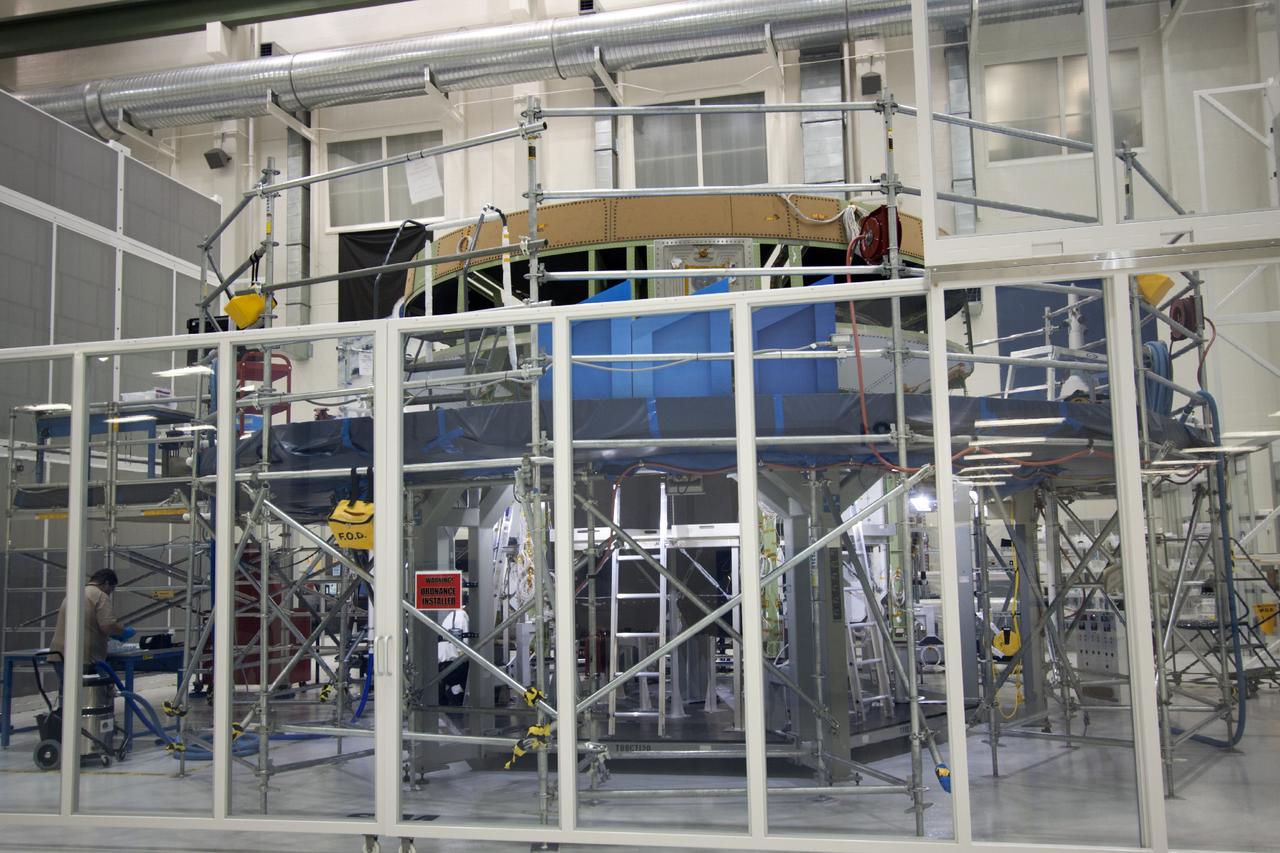
CAPE CANAVERAL, Fla. – The Orion crew module for Exploration Flight Test 1 sits inside a clean room processing cell in the Operations and Checkout Building high bay at NASA’s Kennedy Space Center in Florida. Orion is the exploration spacecraft designed to carry crews to space beyond low Earth orbit. It will provide emergency abort capability, sustain the crew during the space travel and provide safe re-entry from deep space return velocities. The first unpiloted test flight of the Orion is scheduled to launch in 2014 atop a Delta IV rocket and in 2017 on a Space Launch System rocket. For more information, visit http://www.nasa.gov/orion. Photo credit: NASA/Jim Grossmann
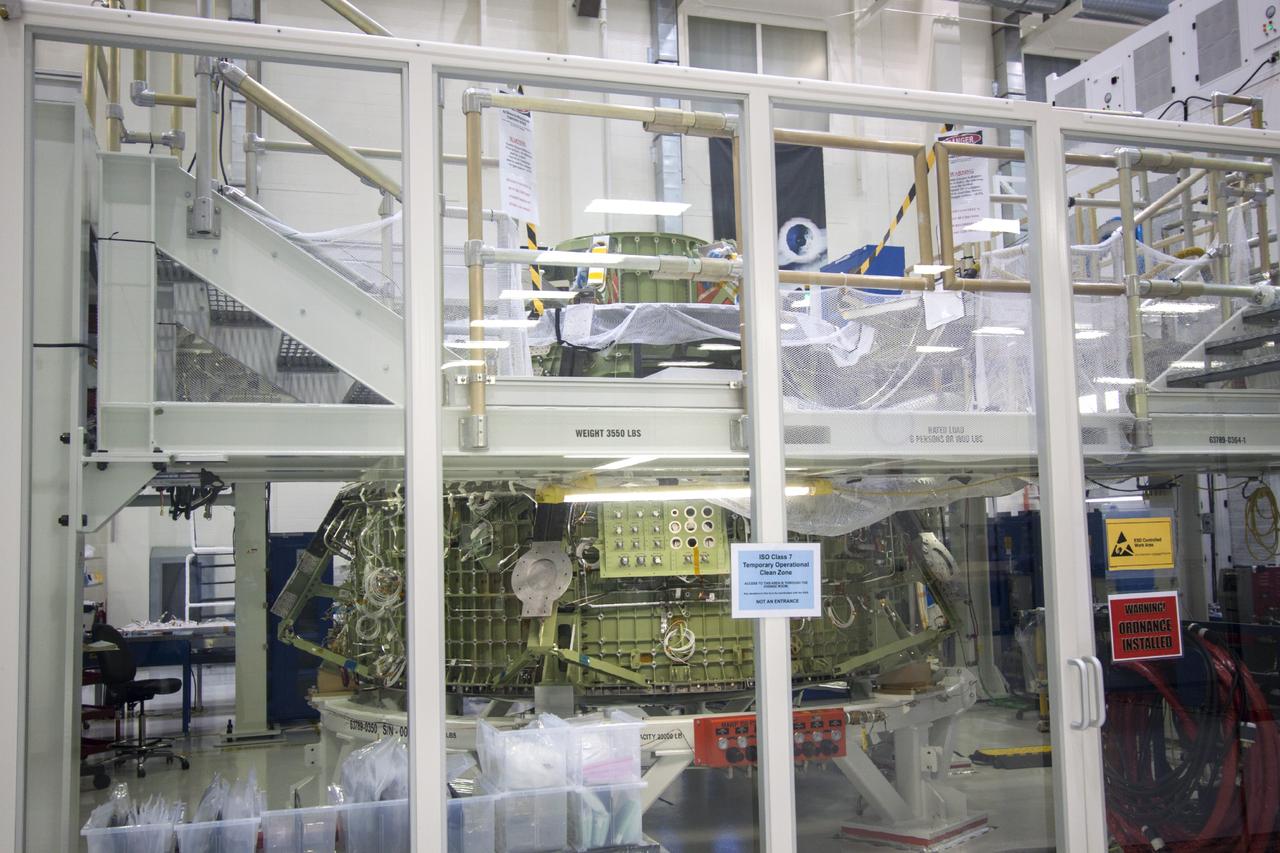
CAPE CANAVERAL, Fla. – The Orion crew module for Exploration Flight Test 1 sits inside a clean room processing cell in the Operations and Checkout Building high bay at NASA’s Kennedy Space Center in Florida. Orion is the exploration spacecraft designed to carry crews to space beyond low Earth orbit. It will provide emergency abort capability, sustain the crew during the space travel and provide safe re-entry from deep space return velocities. The first unpiloted test flight of the Orion is scheduled to launch in 2014 atop a Delta IV rocket and in 2017 on a Space Launch System rocket. For more information, visit http://www.nasa.gov/orion. Photo credit: NASA/Jim Grossmann
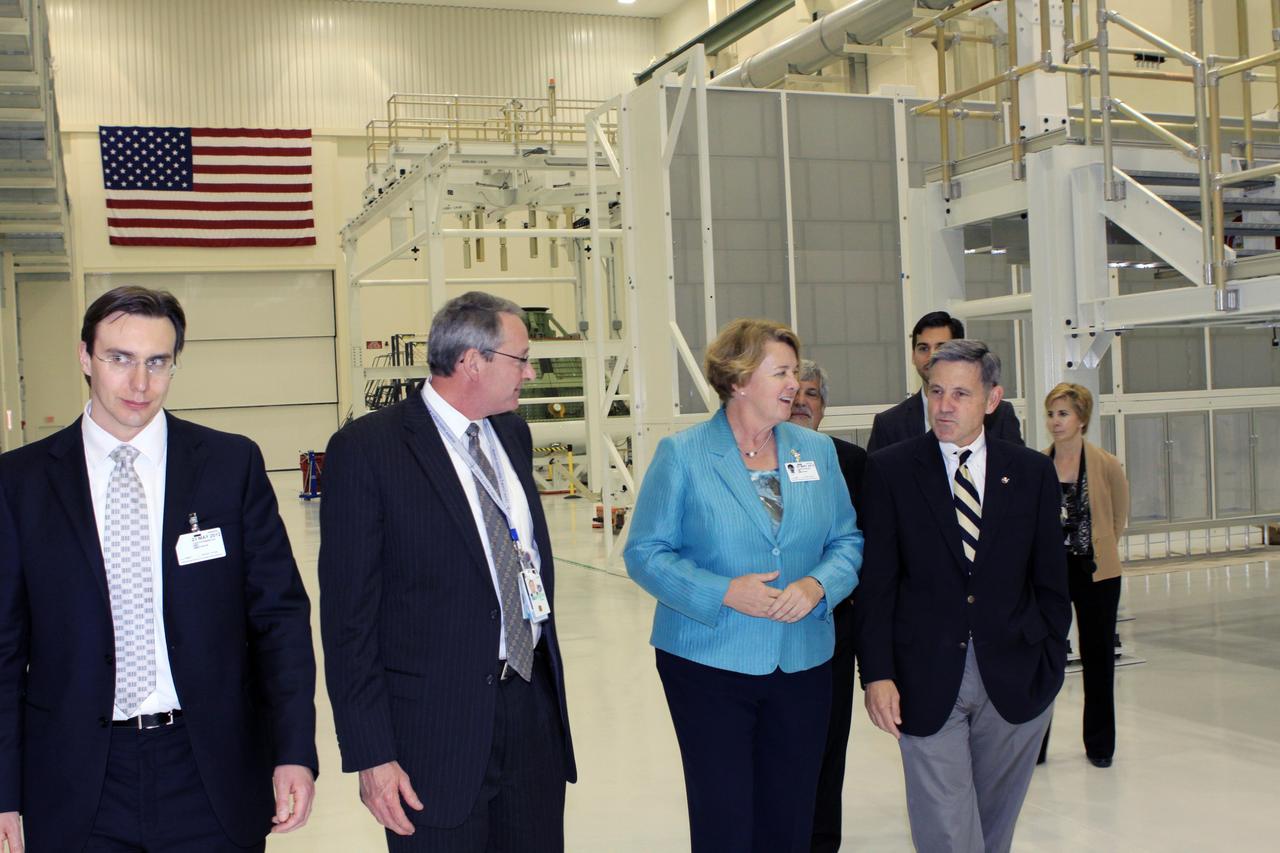
CAPE CANAVERAL, Fla. – Lockheed Martin and NASA personnel accompany Joanne Maguire, executive vice president of Space Systems for Lockheed Martin, and Kennedy Space Center Director Bob Cabana, far right, during a tour of Kennedy's Operations and Checkout Building. Lockheed Martin is the prime contractor to NASA for the Orion Multi-Purpose Crew Vehicle, which will be processed in the refurbished Operations and Checkout building. For more information, visit http://www.nasa.gov/exploration/systems/ground. Photo credit: NASA/Jim Grossmann
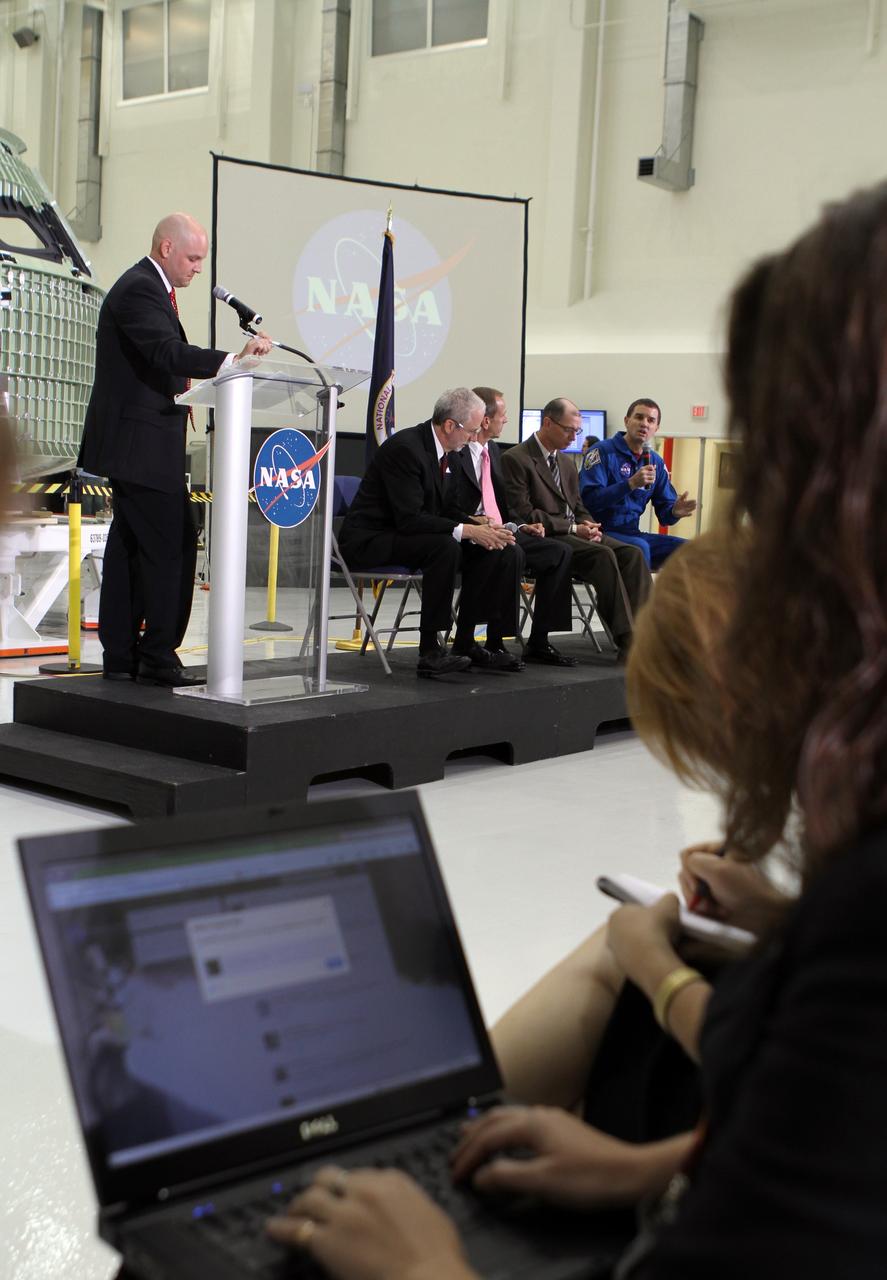
CAPE CANAVERAL, Fla. – NASA astronaut Rex Walheim, far right, addresses an participants during a NASA social question and answer session. The group is assembled in Kennedy Space Center's Operations and Checkout Building high bay for an event marking the arrival of NASA's first space-bound Orion capsule in Florida. At the podium is Trent Perrotto of NASA Public Affairs. Joining Perrotto on stage, from the left, are Mark Geyer, Orion program manager David Beaman, NASA Space Launch System spacecraft and payload integration manager Pepper Phillips, program manager for NASA's Ground Systems Development and Operations and Walheim. The tweeters will share their experiences with followers through the social networking site Twitter. Slated for Exploration Flight Test-1, an uncrewed mission planned for 2014, the capsule will travel farther into space than any human spacecraft has gone in more than 40 years. NASA's Michoud Assembly Facility in New Orleans built the crew module pressure vessel. The Orion production team will prepare the module for flight by installing heat-shielding thermal protection systems, avionics and other subsystems. For more information, visit http://www.nasa.gov/orion Photo credit: NASA/Kim Shiflett
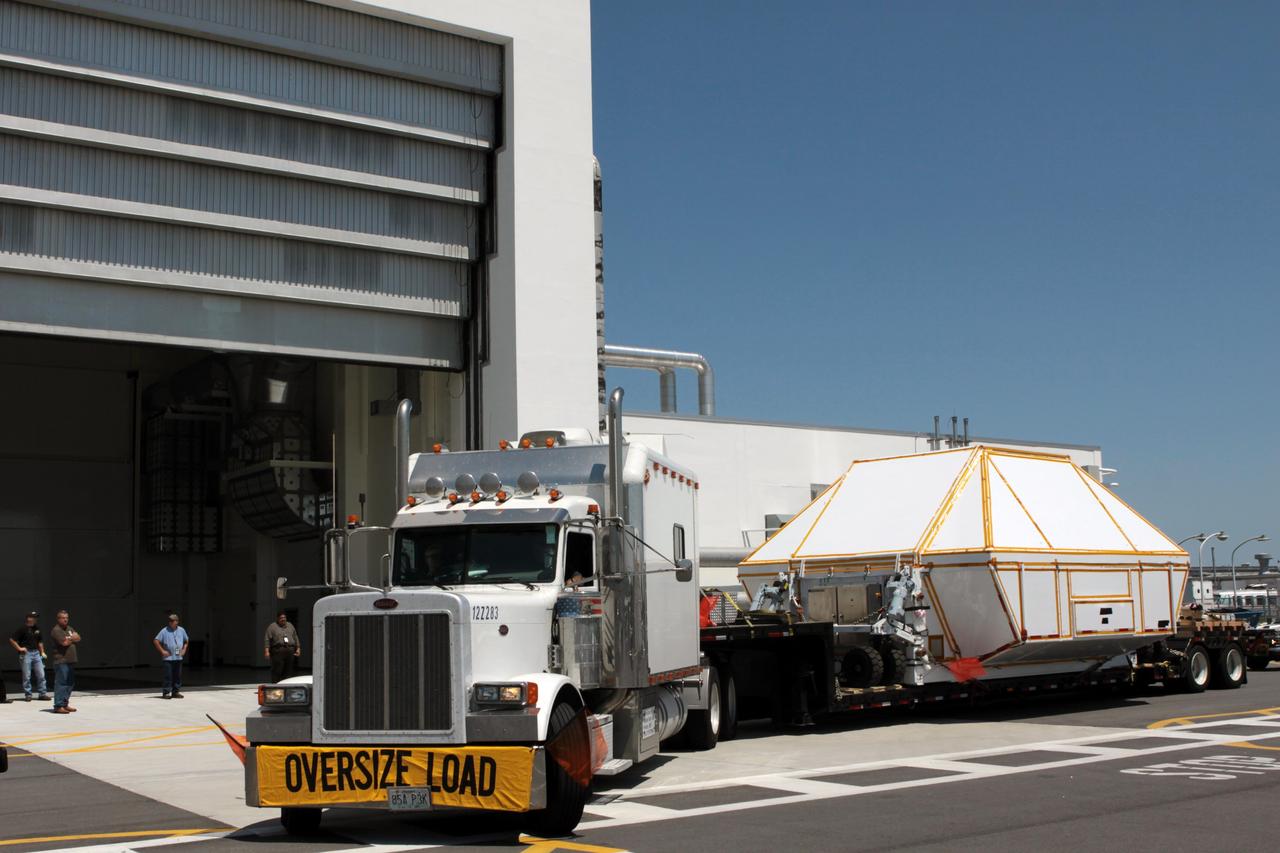
CAPE CANAVERAL, Fla. - Secured inside a transportation container, the Orion crew module arrives at the Operations and Checkout Building at NASA's Kennedy Space Center in Florida. Slated for Exploration Flight Test-1, an uncrewed mission planned for 2014, the capsule will travel farther into space than any human spacecraft has gone in more than 40 years. NASA's Michoud Assembly Facility in New Orleans built the crew module pressure vessel. The Orion production team will prepare the module for flight by installing heat-shielding thermal protection systems, avionics and other subsystems. For more information, visit http://www.nasa.gov/orion. Photo credit: NASA/Jim Grossmann
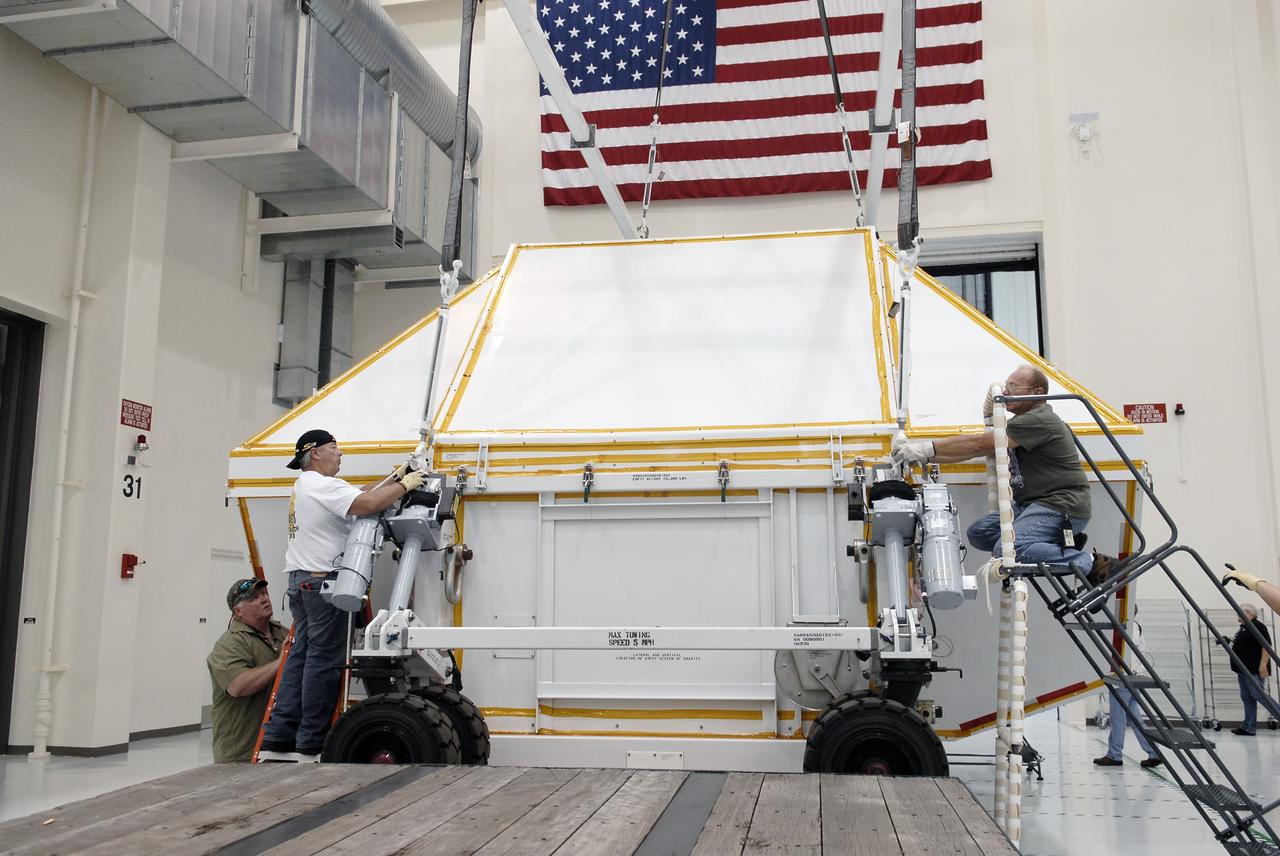
CAPE CANAVERAL, Fla. - At NASA's Kennedy Space Center in Florida, workers inside the Operations and Checkout Building high bay attach a lifting device to the transportation canister holding the Orion crew module. Slated for Exploration Flight Test-1, an uncrewed mission planned for 2014, the capsule will travel farther into space than any human spacecraft has gone in more than 40 years. NASA's Michoud Assembly Facility in New Orleans built the crew module pressure vessel. The Orion production team will prepare the module for flight by installing heat-shielding thermal protection systems, avionics and other subsystems. For more information, visit http://www.nasa.gov/orion. Photo credit: NASA/Charisse Nahser
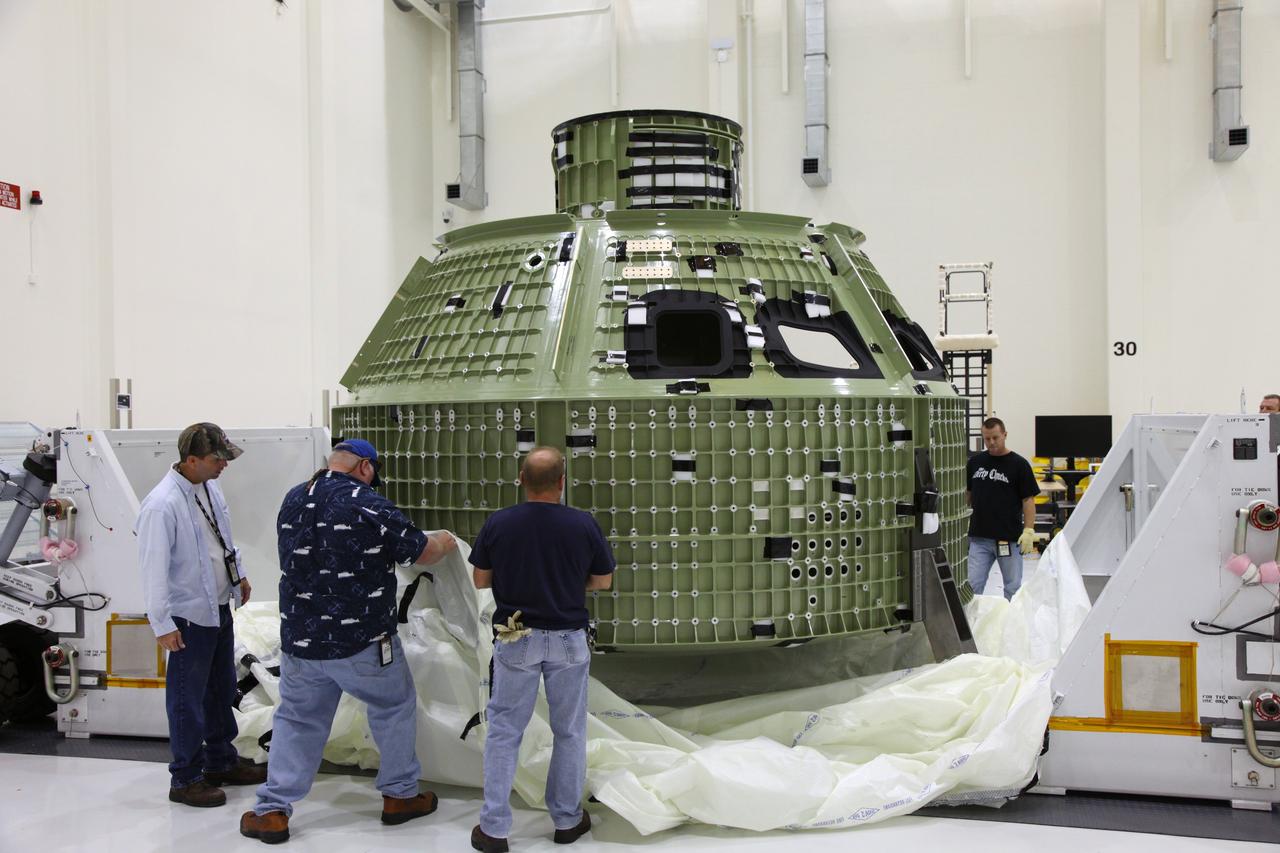
CAPE CANAVERAL, Fla. - The Orion crew module is unwrapped after its arrival in the Operations and Checkout Building high bay at NASA's Kennedy Space Center in Florida. Slated for Exploration Flight Test-1, an uncrewed mission planned for 2014, the capsule will travel farther into space than any human spacecraft has gone in more than 40 years. NASA's Michoud Assembly Facility in New Orleans built the crew module pressure vessel. The Orion production team will prepare the module for flight by installing heat-shielding thermal protection systems, avionics and other subsystems. For more information, visit http://www.nasa.gov/orion. Photo credit: NASA/Gianni Woods
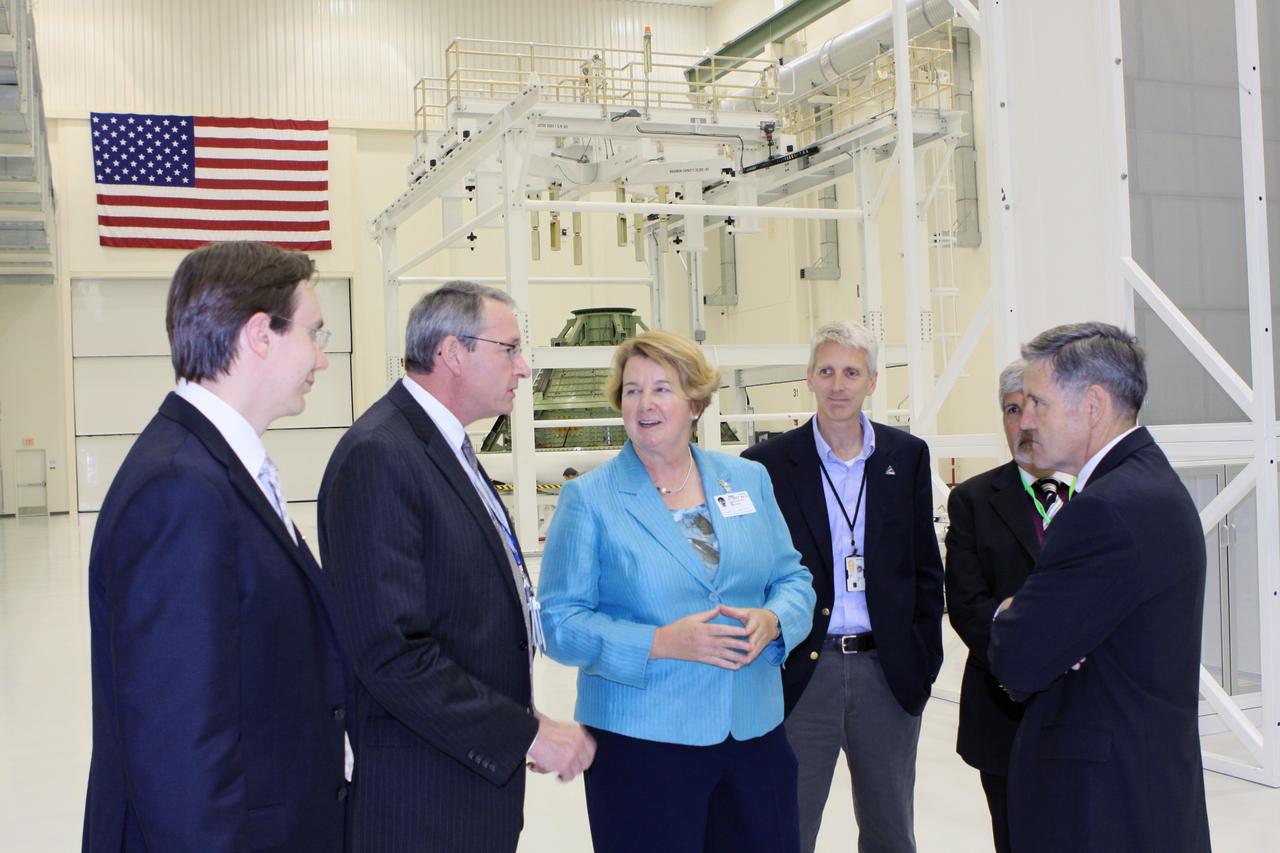
CAPE CANAVERAL, Fla. – Joanne Maguire, executive vice president of Space Systems for Lockheed Martin, and Kennedy Space Center Director Bob Cabana, far right, are accompanied by Lockheed Martin and NASA personnel during a tour of Kennedy's Operations and Checkout Building. Lockheed Martin is the prime contractor to NASA for the Orion Multi-Purpose Crew Vehicle, which will be processed in the refurbished Operations and Checkout building. For more information, visit http://www.nasa.gov/exploration/systems/ground. Photo credit: NASA/Jim Grossmann

CAPE CANAVERAL, Fla. - At NASA's Kennedy Space Center in Florida, workers inside the Operations and Checkout Building high bay detach a lifting device from the transportation canister holding the Orion crew module. Slated for Exploration Flight Test-1, an uncrewed mission planned for 2014, the capsule will travel farther into space than any human spacecraft has gone in more than 40 years. NASA's Michoud Assembly Facility in New Orleans built the crew module pressure vessel. The Orion production team will prepare the module for flight by installing heat-shielding thermal protection systems, avionics and other subsystems. For more information, visit http://www.nasa.gov/orion. Photo credit: NASA/Charisse Nahser
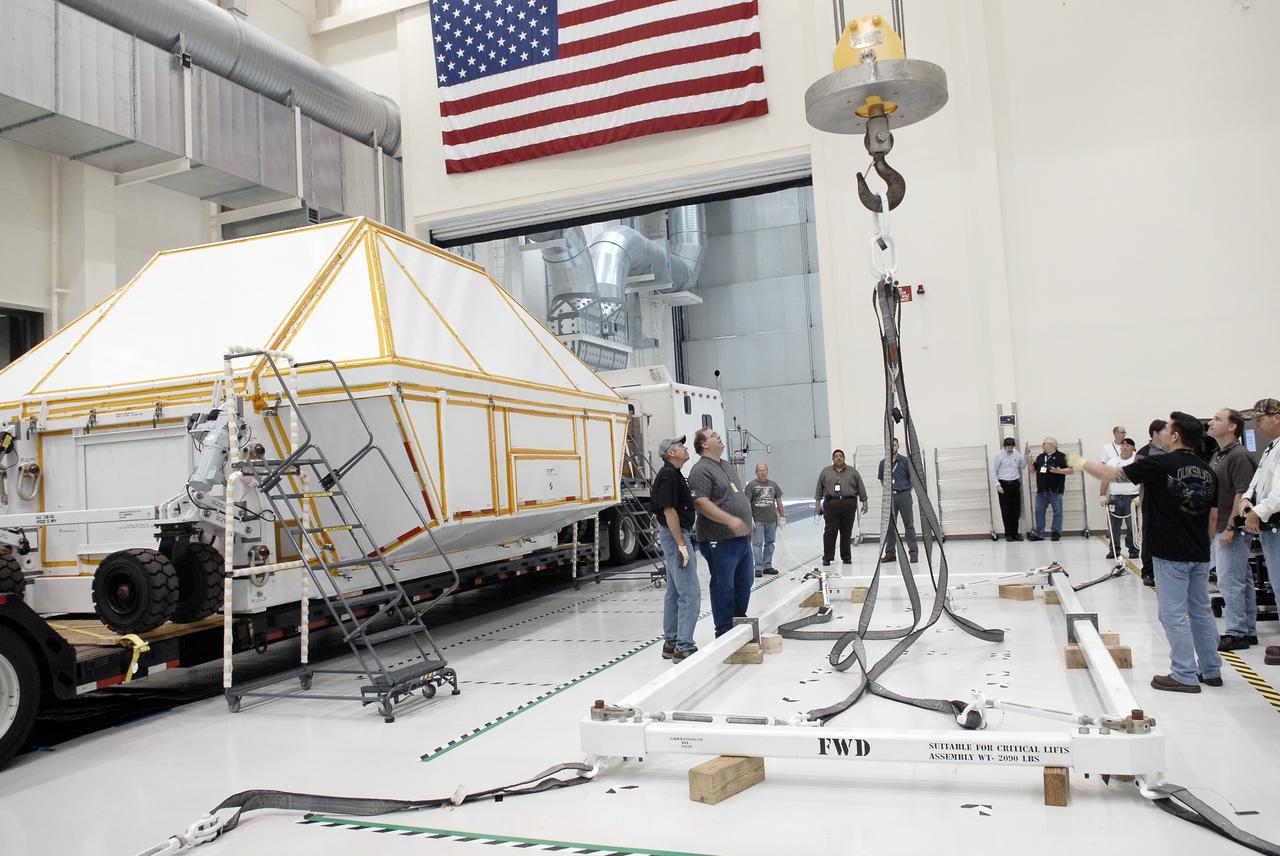
CAPE CANAVERAL, Fla. - At NASA's Kennedy Space Center in Florida, workers inside the Operations and Checkout Building high bay prepare to lift the Orion crew module, secured inside the transportation container at left. Slated for Exploration Flight Test-1, an uncrewed mission planned for 2014, the capsule will travel farther into space than any human spacecraft has gone in more than 40 years. NASA's Michoud Assembly Facility in New Orleans built the crew module pressure vessel. The Orion production team will prepare the module for flight by installing heat-shielding thermal protection systems, avionics and other subsystems. For more information, visit http://www.nasa.gov/orion. Photo credit: NASA/Charisse Nahser
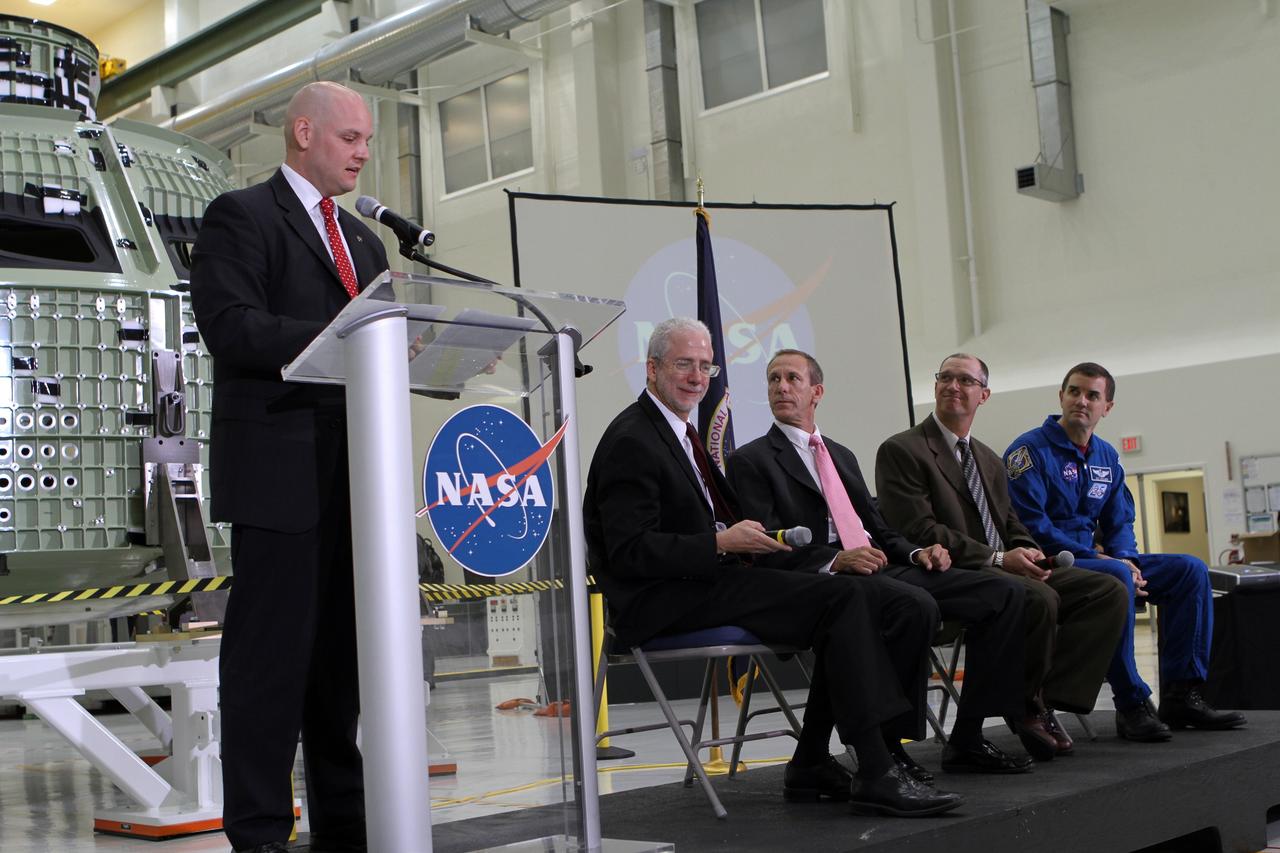
CAPE CANAVERAL, Fla. – Trent Perrotto of NASA Public Affairs addresses an audience of participants during a NASA social question and answer session. The group is assembled in Kennedy Space Center's Operations and Checkout Building high bay for an event marking the arrival of NASA's first space-bound Orion capsule in Florida. Joining Perrotto on stage, from the left, are Mark Geyer, Orion program manager David Beaman, NASA Space Launch System spacecraft and payload integration manager Pepper Phillips, program manager for NASA's Ground Systems Development and Operations and NASA astronaut Rex Walheim. The tweeters will share their experiences with followers through the social networking site Twitter. Slated for Exploration Flight Test-1, an uncrewed mission planned for 2014, the capsule will travel farther into space than any human spacecraft has gone in more than 40 years. NASA's Michoud Assembly Facility in New Orleans built the crew module pressure vessel. The Orion production team will prepare the module for flight by installing heat-shielding thermal protection systems, avionics and other subsystems. For more information, visit http://www.nasa.gov/orion Photo credit: NASA/Kim Shiflett
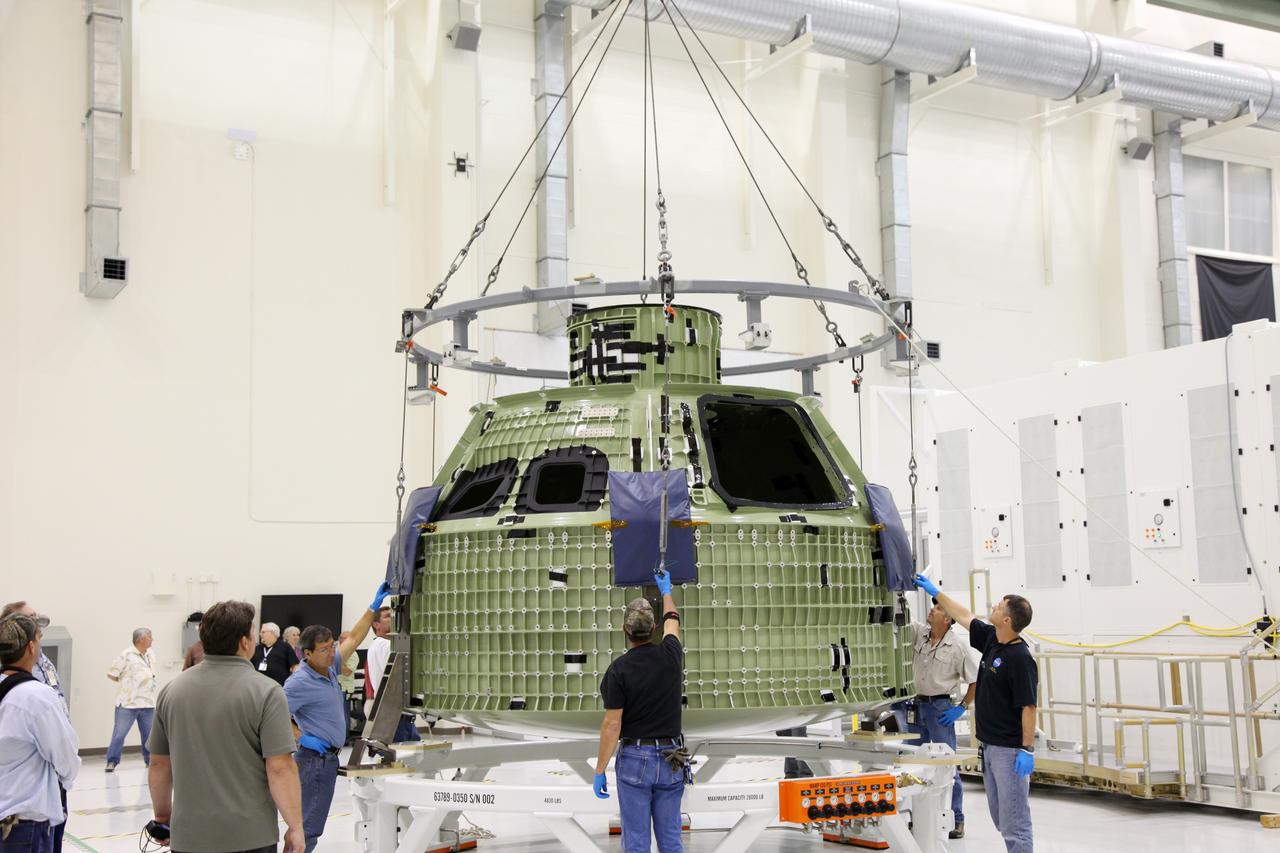
CAPE CANAVERAL, Fla. - The Orion crew module is lowered onto a workstand in the Operations and Checkout Building high bay at NASA's Kennedy Space Center in Florida. Slated for Exploration Flight Test-1, an uncrewed mission planned for 2014, the capsule will travel farther into space than any human spacecraft has gone in more than 40 years. NASA's Michoud Assembly Facility in New Orleans built the crew module pressure vessel. The Orion production team will prepare the module for flight by installing heat-shielding thermal protection systems, avionics and other subsystems. For more information, visit http://www.nasa.gov/orion. Photo credit: NASA/Gianni Woods
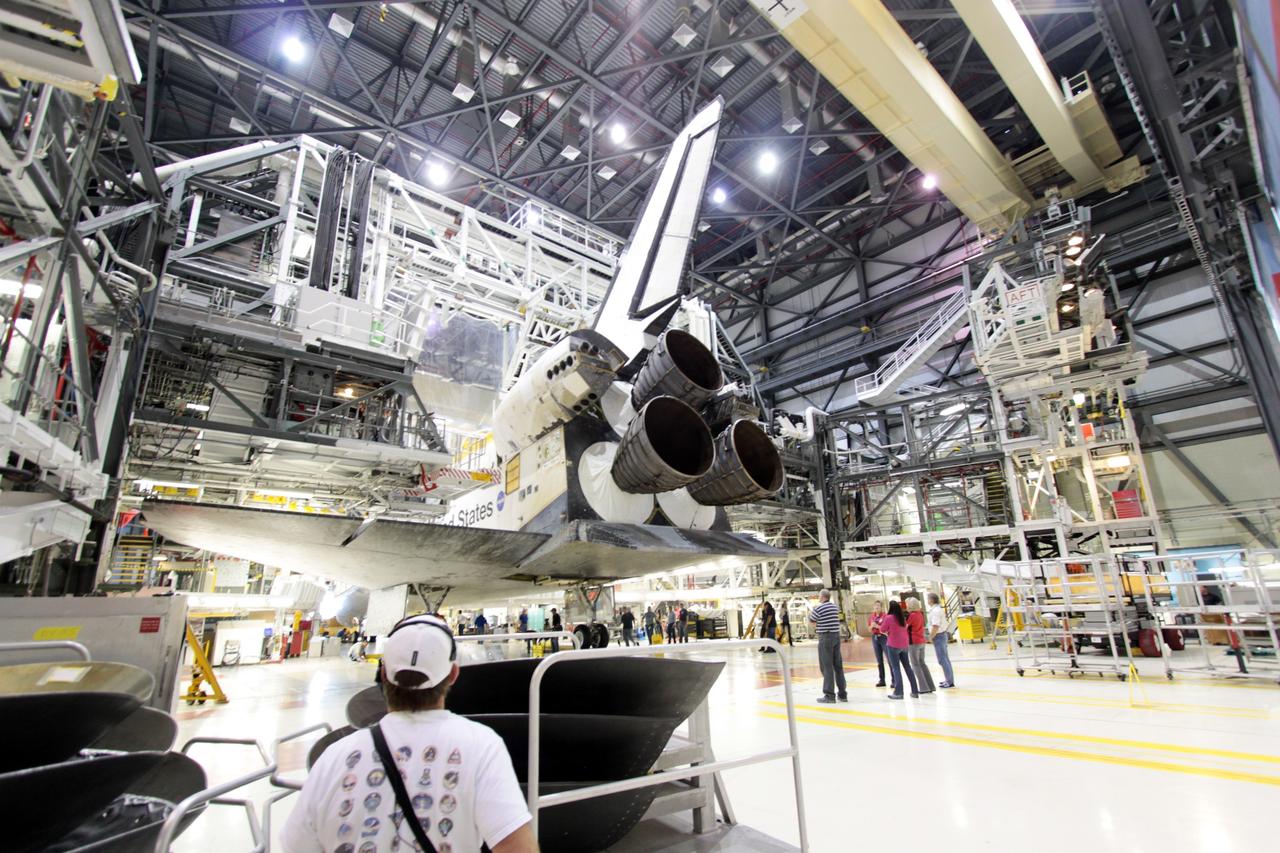
CAPE CANAVERAL, Fla. - Observers watch as preparations begin to move space shuttle Atlantis out of Orbiter Processing Facility-1 and into High Bay 4 of the nearby Vehicle Assembly Building at NASA's Kennedy Space Center in Florida. The work is part of the Space Shuttle Program's transition and retirement processing of the space shuttle fleet. A groundbreaking was held Jan. 18 for Atlantis' future home, a 65,000-square-foot exhibit hall in Shuttle Plaza at the Kennedy Space Center Visitor Complex. Atlantis is scheduled to roll over to the visitor complex in November in preparation for the exhibit's grand opening in July 2013. Photo credit: NASA/Jim Grossmann
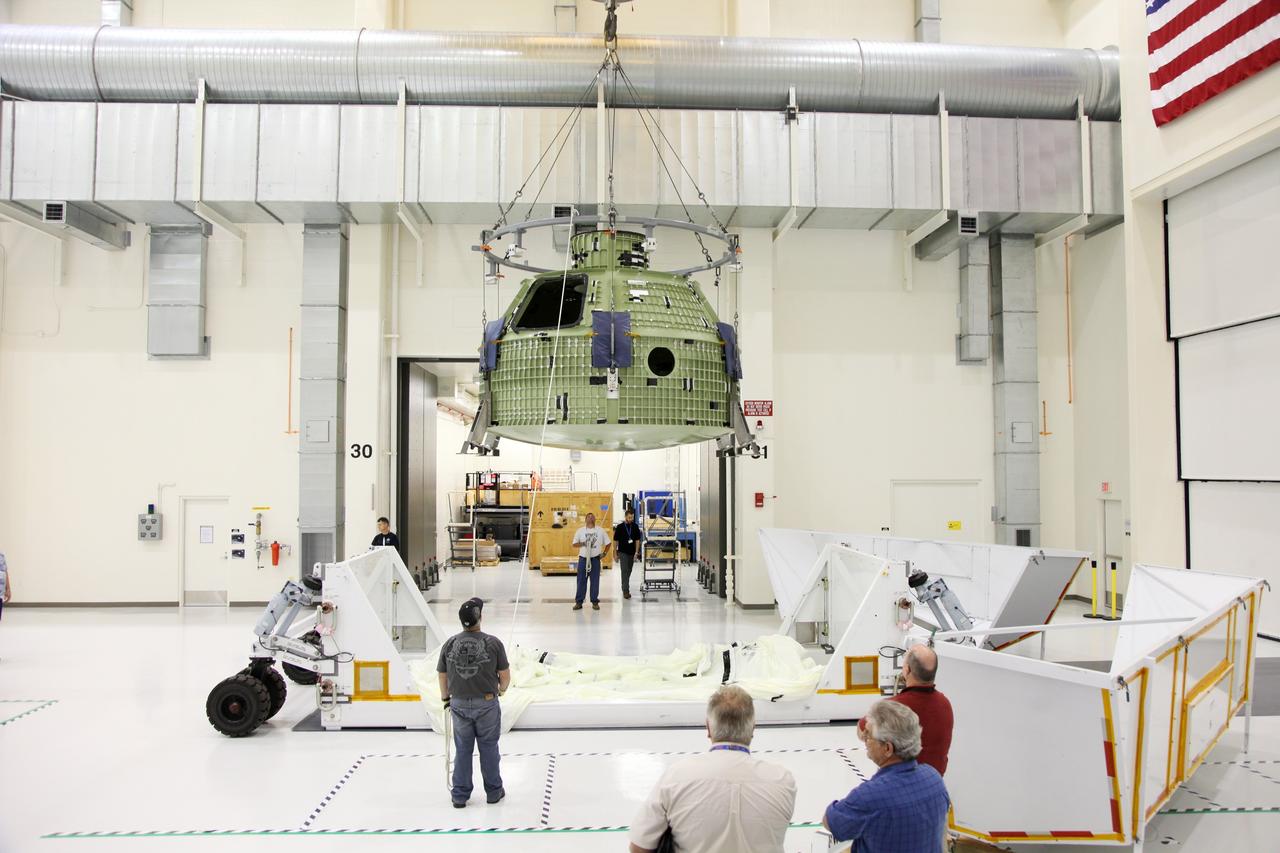
CAPE CANAVERAL, Fla. - Inside the Operations and Checkout Building high bay at NASA's Kennedy Space Center in Florida, the Orion crew module is lifted free of its protective cover and transportation canister. Slated for Exploration Flight Test-1, an uncrewed mission planned for 2014, the capsule will travel farther into space than any human spacecraft has gone in more than 40 years. NASA's Michoud Assembly Facility in New Orleans built the crew module pressure vessel. The Orion production team will prepare the module for flight by installing heat-shielding thermal protection systems, avionics and other subsystems. For more information, visit http://www.nasa.gov/orion. Photo credit: NASA/Gianni Woods
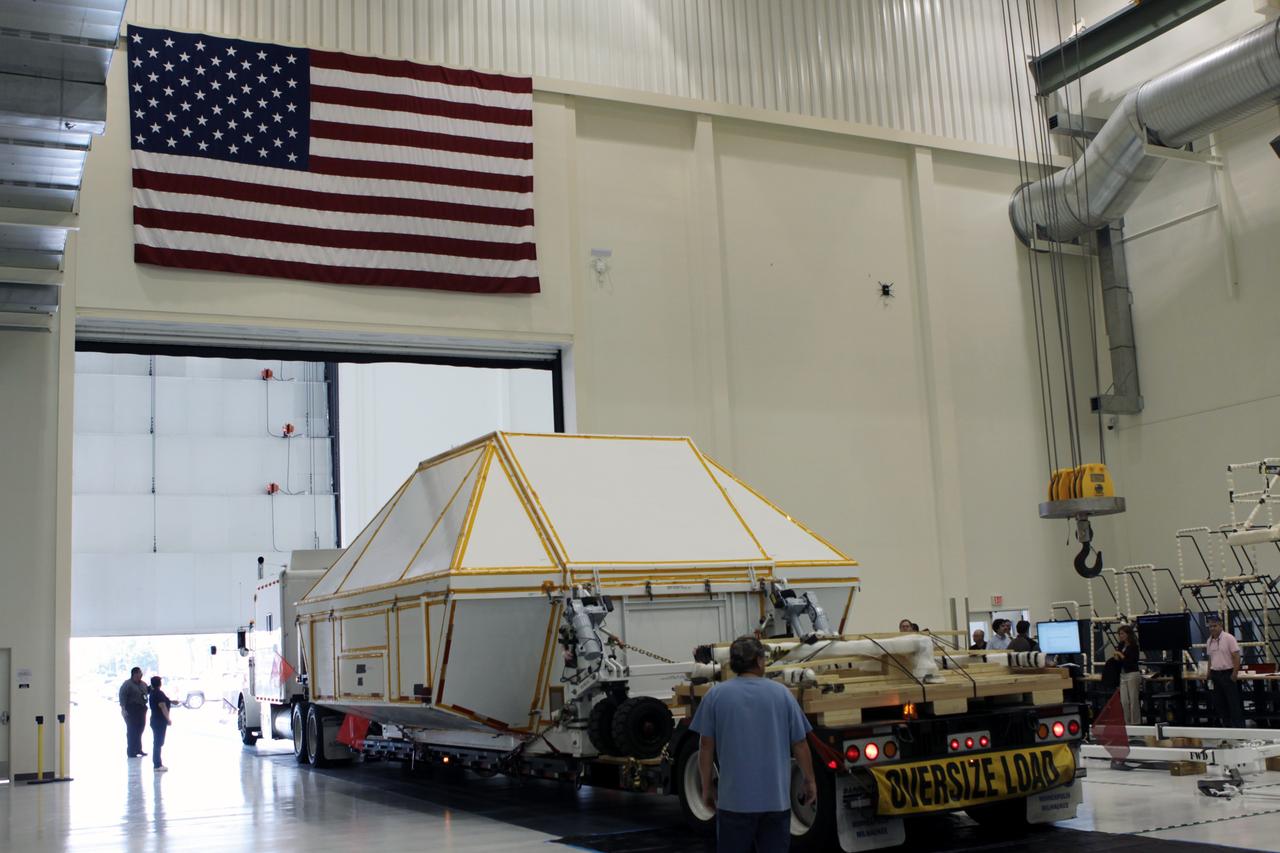
CAPE CANAVERAL, Fla. - The Orion crew module, packed inside a transportation canister, arrives inside the high bay of the Operations and Checkout Building at NASA's Kennedy Space Center in Florida. Slated for Exploration Flight Test-1, an uncrewed mission planned for 2014, the capsule will travel farther into space than any human spacecraft has gone in more than 40 years. NASA's Michoud Assembly Facility in New Orleans built the crew module pressure vessel. The Orion production team will prepare the module for flight by installing heat-shielding thermal protection systems, avionics and other subsystems. For more information, visit http://www.nasa.gov/orion. Photo credit: NASA/Jim Grossmann
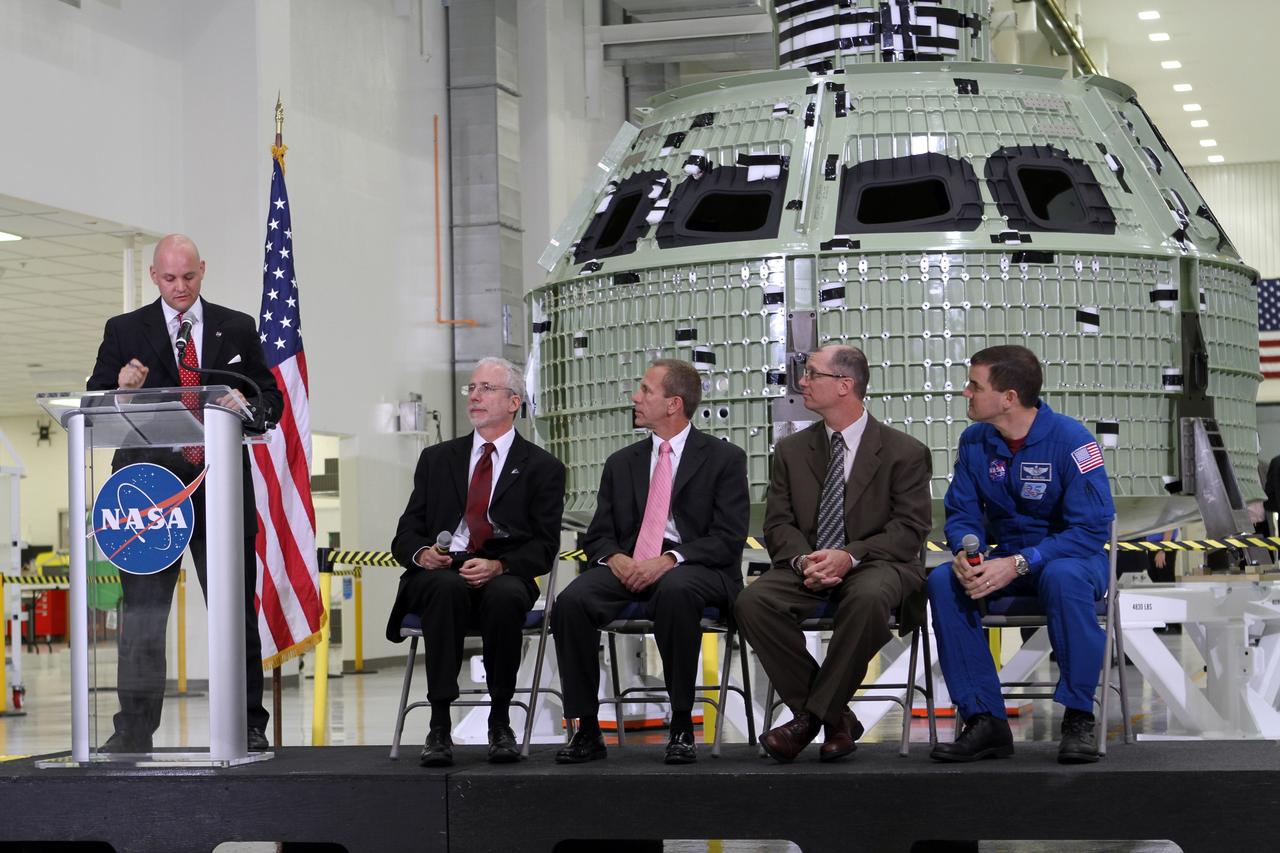
CAPE CANAVERAL, Fla. – Trent Perrotto of NASA Public Affairs addresses an audience of participants during a NASA social question and answer session. The group is assembled in Kennedy Space Center's Operations and Checkout Building high bay for an event marking the arrival of NASA's first space-bound Orion capsule in Florida. Joining Perrotto on stage, from the left, are Mark Geyer, Orion program manager David Beaman, NASA Space Launch System spacecraft and payload integration manager Pepper Phillips, program manager for NASA's Ground Systems Development and Operations and NASA astronaut Rex Walheim. The tweeters will share their experiences with followers through the social networking site Twitter. Slated for Exploration Flight Test-1, an uncrewed mission planned for 2014, the capsule will travel farther into space than any human spacecraft has gone in more than 40 years. NASA's Michoud Assembly Facility in New Orleans built the crew module pressure vessel. The Orion production team will prepare the module for flight by installing heat-shielding thermal protection systems, avionics and other subsystems. For more information, visit http://www.nasa.gov/orion Photo credit: NASA/Kim Shiflett
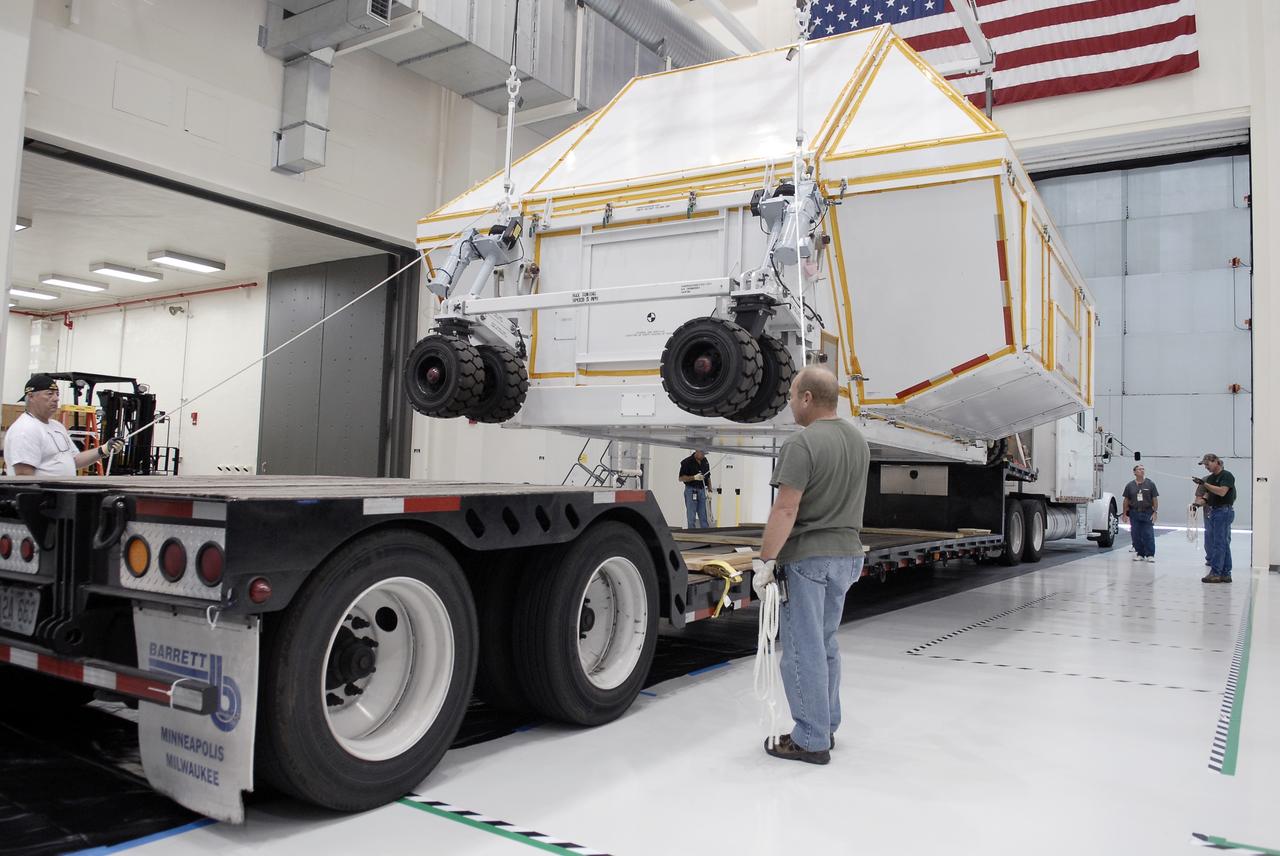
CAPE CANAVERAL, Fla. - The transportation canister holding the Orion crew module is lifted off the back of the truck that delivered it to the Operations and Checkout Building high bay at NASA's Kennedy Space Center in Florida. Slated for Exploration Flight Test-1, an uncrewed mission planned for 2014, the capsule will travel farther into space than any human spacecraft has gone in more than 40 years. NASA's Michoud Assembly Facility in New Orleans built the crew module pressure vessel. The Orion production team will prepare the module for flight by installing heat-shielding thermal protection systems, avionics and other subsystems. For more information, visit http://www.nasa.gov/orion. Photo credit: NASA/Charisse Nahser
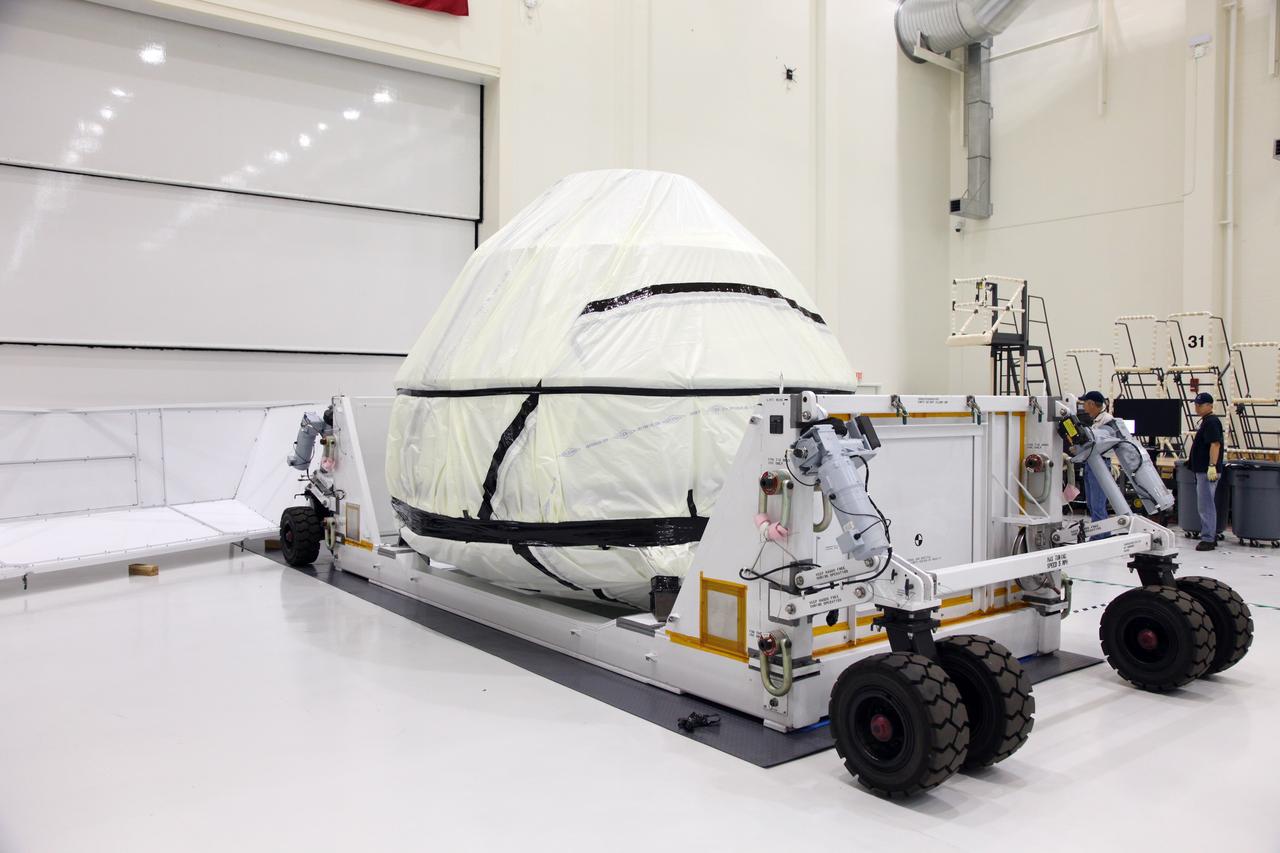
CAPE CANAVERAL, Fla. - At NASA's Kennedy Space Center in Florida, the Orion crew module, wrapped in a protective cover, has been removed from its transportation container inside the Operations and Checkout Building high bay. Slated for Exploration Flight Test-1, an uncrewed mission planned for 2014, the capsule will travel farther into space than any human spacecraft has gone in more than 40 years. NASA's Michoud Assembly Facility in New Orleans built the crew module pressure vessel. The Orion production team will prepare the module for flight by installing heat-shielding thermal protection systems, avionics and other subsystems. For more information, visit http://www.nasa.gov/orion. Photo credit: NASA/Gianni Woods
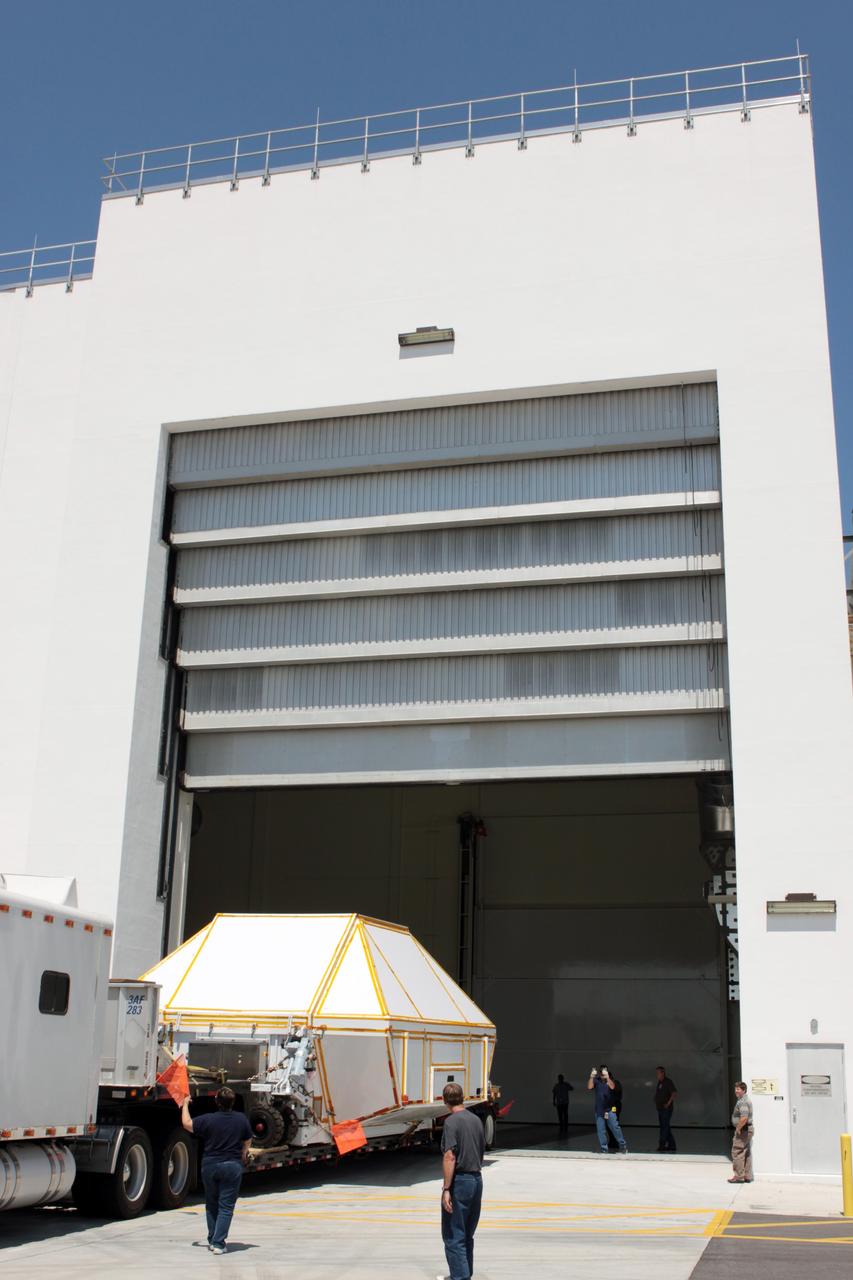
CAPE CANAVERAL, Fla. - Secured inside a transportation container, the Orion crew module is moved through the open high-bay door to the Operations and Checkout Building at NASA's Kennedy Space Center in Florida. Slated for Exploration Flight Test-1, an uncrewed mission planned for 2014, the capsule will travel farther into space than any human spacecraft has gone in more than 40 years. NASA's Michoud Assembly Facility in New Orleans built the crew module pressure vessel. The Orion production team will prepare the module for flight by installing heat-shielding thermal protection systems, avionics and other subsystems. For more information, visit http://www.nasa.gov/orion. Photo credit: NASA/Jim Grossmann
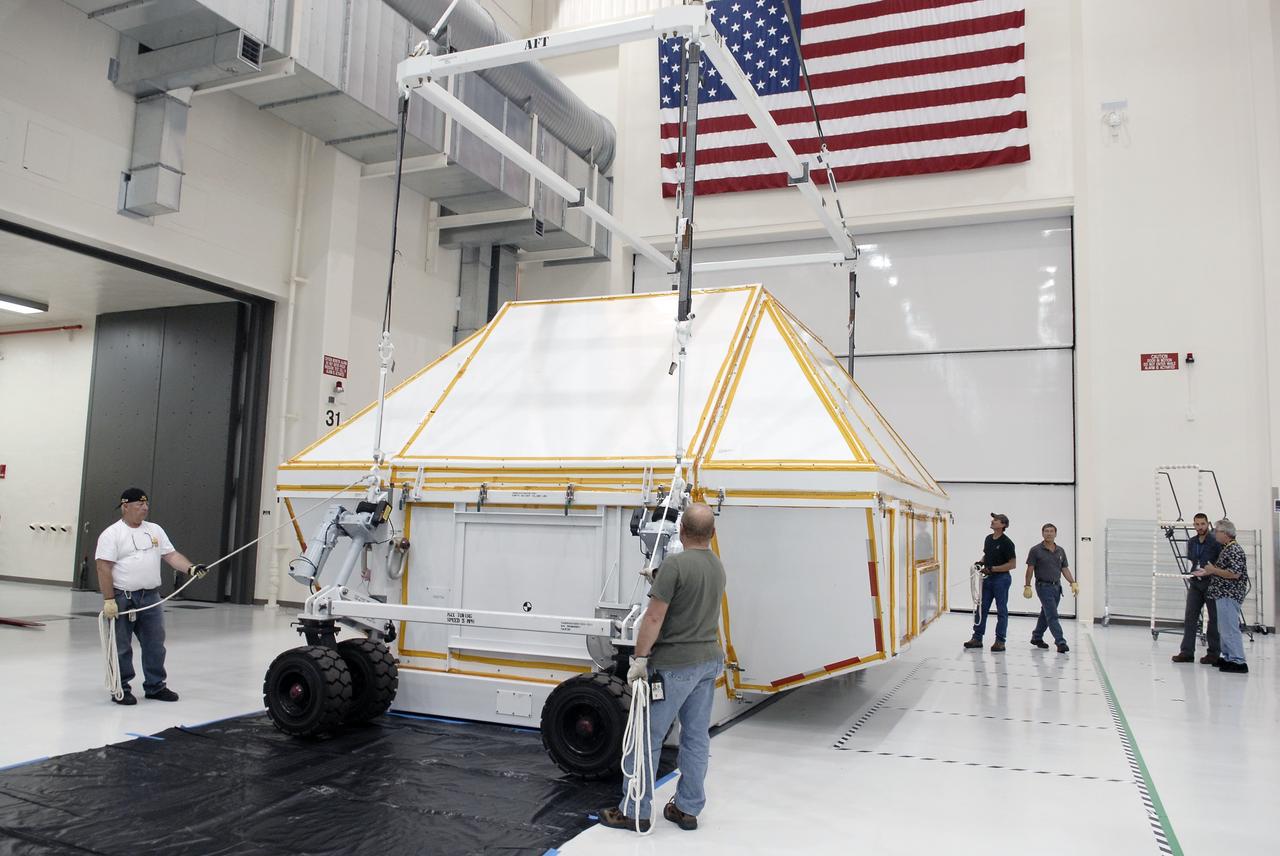
CAPE CANAVERAL, Fla. - The transportation canister holding the Orion crew module is lowered onto the floor of the Operations and Checkout Building high bay at NASA's Kennedy Space Center in Florida. Slated for Exploration Flight Test-1, an uncrewed mission planned for 2014, the capsule will travel farther into space than any human spacecraft has gone in more than 40 years. NASA's Michoud Assembly Facility in New Orleans built the crew module pressure vessel. The Orion production team will prepare the module for flight by installing heat-shielding thermal protection systems, avionics and other subsystems. For more information, visit http://www.nasa.gov/orion. Photo credit: NASA/Charisse Nahser
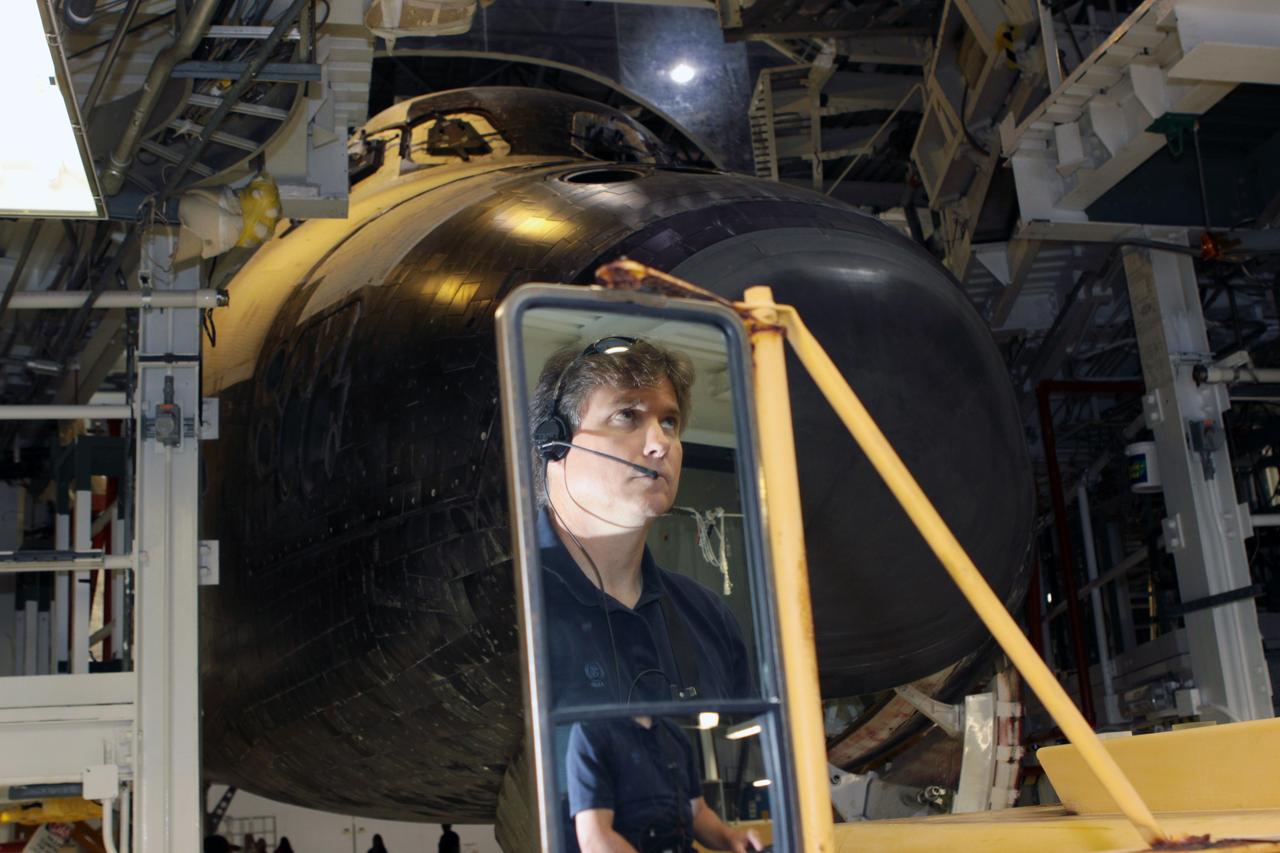
CAPE CANAVERAL, Fla. - A technician is reflected in the mirror of a transporter as preparations begin to move space shuttle Atlantis out of Orbiter Processing Facility-1 and into High Bay 4 of the nearby Vehicle Assembly Building at NASA's Kennedy Space Center in Florida. The work is part of the Space Shuttle Program's transition and retirement processing of the space shuttle fleet. A groundbreaking was held Jan. 18 for Atlantis' future home, a 65,000-square-foot exhibit hall in Shuttle Plaza at the Kennedy Space Center Visitor Complex. Atlantis is scheduled to roll over to the visitor complex in November in preparation for the exhibit's grand opening in July 2013. Photo credit: NASA/Jim Grossmann
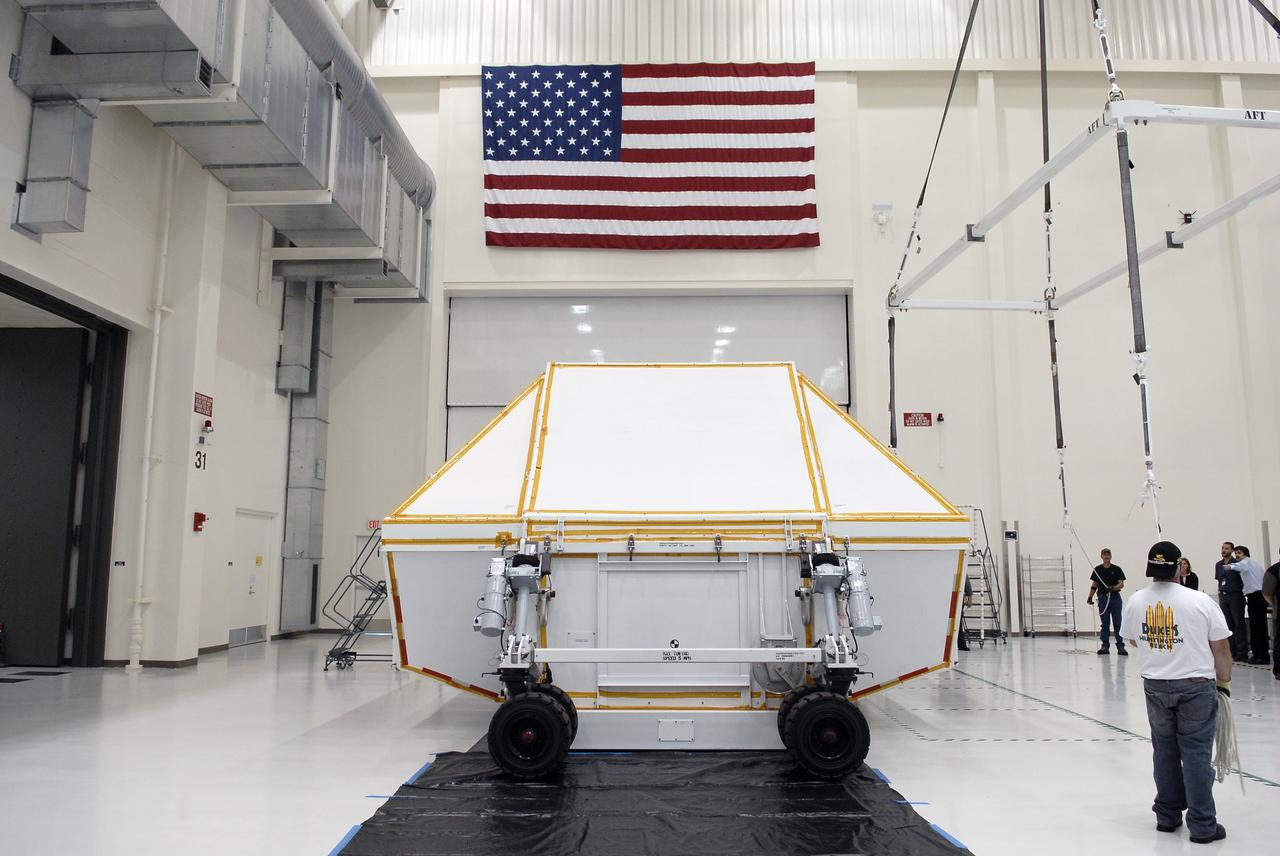
CAPE CANAVERAL, Fla. - The transportation canister holding the Orion crew module rests on the floor of the Operations and Checkout Building high bay at NASA's Kennedy Space Center in Florida. Slated for Exploration Flight Test-1, an uncrewed mission planned for 2014, the capsule will travel farther into space than any human spacecraft has gone in more than 40 years. NASA's Michoud Assembly Facility in New Orleans built the crew module pressure vessel. The Orion production team will prepare the module for flight by installing heat-shielding thermal protection systems, avionics and other subsystems. For more information, visit http://www.nasa.gov/orion. Photo credit: NASA/Charisse Nahser