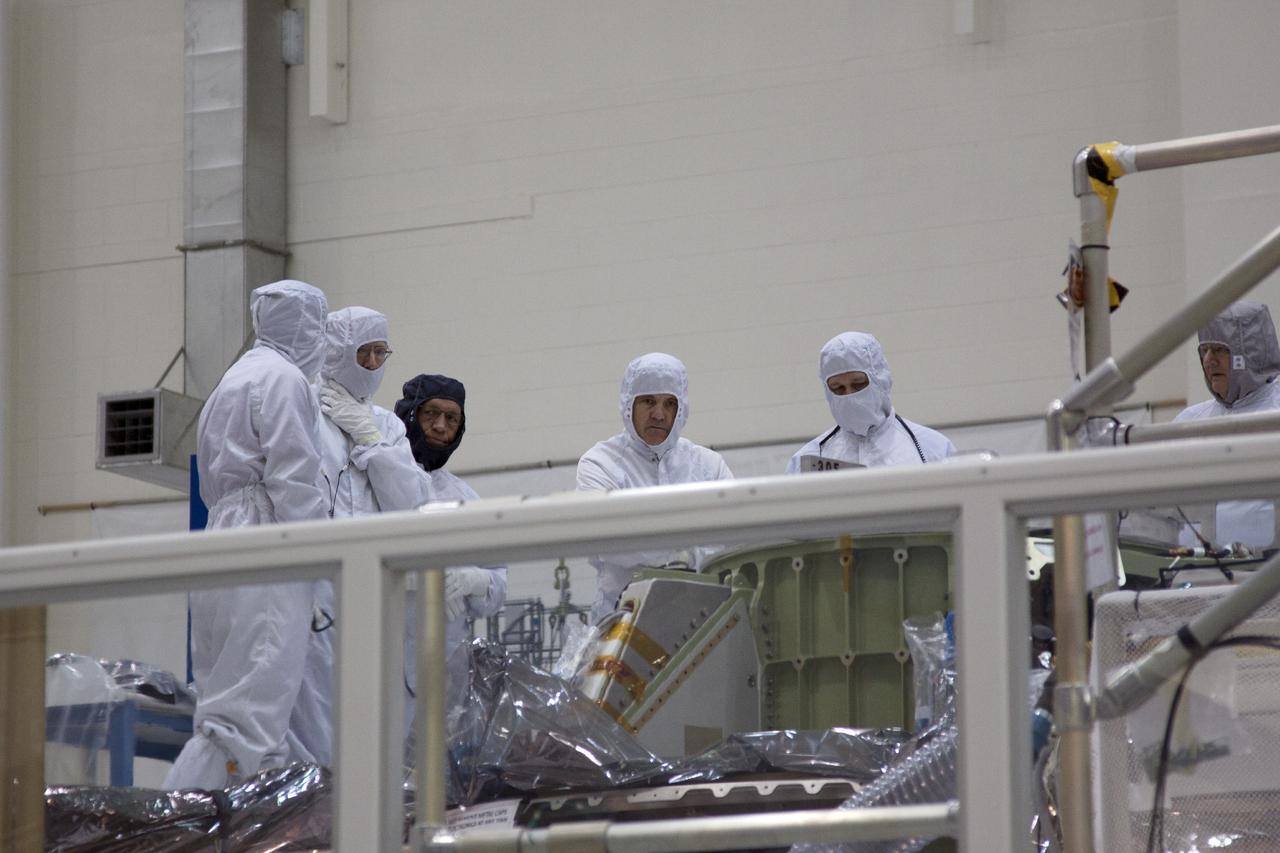
CAPE CANAVERAL, Fla. – Inside the Operations and Checkout Building high bay at NASA’s Kennedy Space Center in Florida, agency Administrator Charles Bolden, third from the left, and center Director Bob Cabana, fourth from the left, inspect the Orion spacecraft crew module for its first unpiloted launch, Exploration Test Flight 1. Orion is the exploration spacecraft designed to carry crews to space beyond low Earth orbit. It will provide emergency abort capability, sustain the crew during the space travel and provide safe re-entry from deep space return velocities. Orion’s first unpiloted test launch is scheduled for liftoff during 2014 atop a Delta IV rocket. A second unpiloted flight test is scheduled for 2017 on NASA’s Space Launch System rocket. For more information, visit http://www.nasa.gov/orion Photo credit: NASA/Jim Grossman
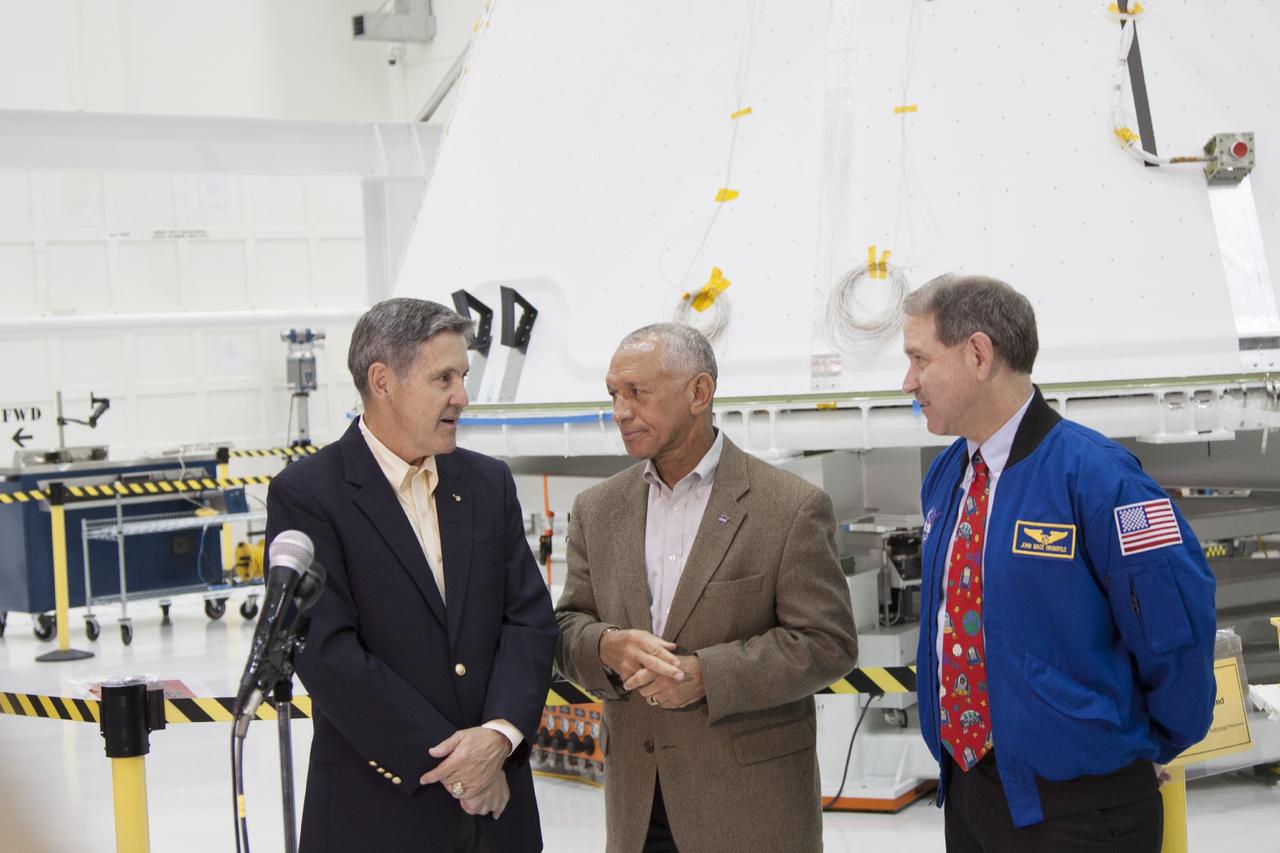
CAPE CANAVERAL, Fla. – Inside the Operations and Checkout Building high bay at NASA’s Kennedy Space Center in Florida, center Director Bob Cabana, left, and agency Administrator Charles Bolden, center, discuss preparations of the Orion spacecraft with John Grunsfeld, NASA associate administrator for the Science Mission Directorate. Orion is the exploration spacecraft designed to carry crews to space beyond low Earth orbit. It will provide emergency abort capability, sustain the crew during the space travel and provide safe re-entry from deep space return velocities. Orion’s first unpiloted test launch is scheduled for liftoff during 2014 atop a Delta IV rocket. A second unpiloted flight test is scheduled for 2017 on NASA’s Space Launch System rocket. For more information, visit http://www.nasa.gov/orion Photo credit: NASA/Jim Grossman
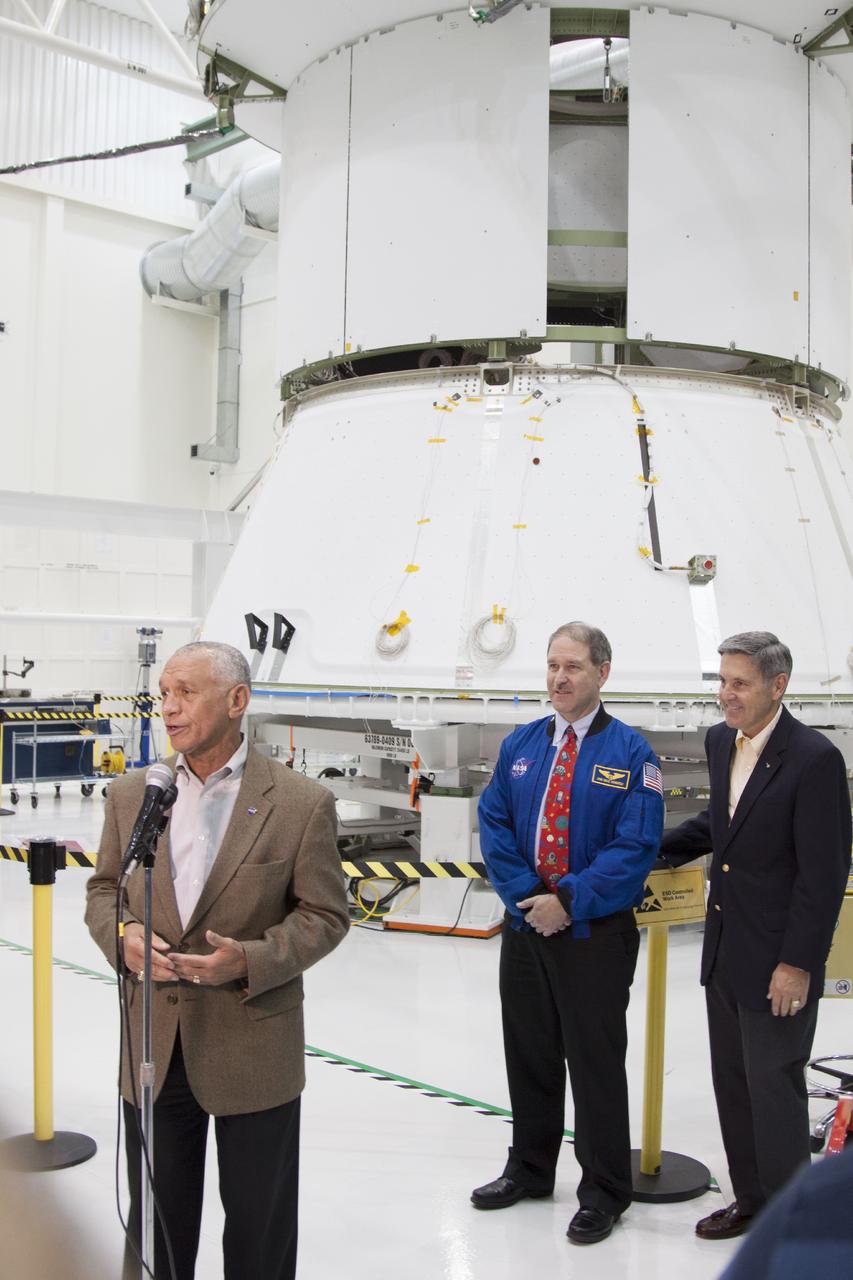
CAPE CANAVERAL, Fla. – Inside the Operations and Checkout Building high bay at NASA’s Kennedy Space Center in Florida, agency Administrator Charles Bolden speaks to members of the news media about ongoing preparations of the Orion spacecraft for its first unpiloted launch, Exploration Test Flight 1. Standing behind Bolden are John Grunsfeld, NASA associate administrator for the Science Mission Directorate, left and center Director Bob Cabana. Orion is the exploration spacecraft designed to carry crews to space beyond low Earth orbit. It will provide emergency abort capability, sustain the crew during the space travel and provide safe re-entry from deep space return velocities. Orion’s first unpiloted test launch is scheduled for liftoff during 2014 atop a Delta IV rocket. A second unpiloted flight test is scheduled for 2017 on NASA’s Space Launch System rocket. For more information, visit http://www.nasa.gov/orion Photo credit: NASA/Jim Grossman

CAPE CANAVERAL, Fla. – Inside the Operations and Checkout Building high bay at NASA’s Kennedy Space Center in Florida, center Director Bob Cabana, left, and agency Administrator Charles Bolden, center, are briefed on preparations of the Orion spacecraft crew module by Mark Geyer, NASA Orion Program manager. Orion is the exploration spacecraft designed to carry crews to space beyond low Earth orbit. It will provide emergency abort capability, sustain the crew during the space travel and provide safe re-entry from deep space return velocities. Orion’s first unpiloted test launch is scheduled for liftoff during 2014 atop a Delta IV rocket. A second unpiloted flight test is scheduled for 2017 on NASA’s Space Launch System rocket. For more information, visit http://www.nasa.gov/orion Photo credit: NASA/Jim Grossman
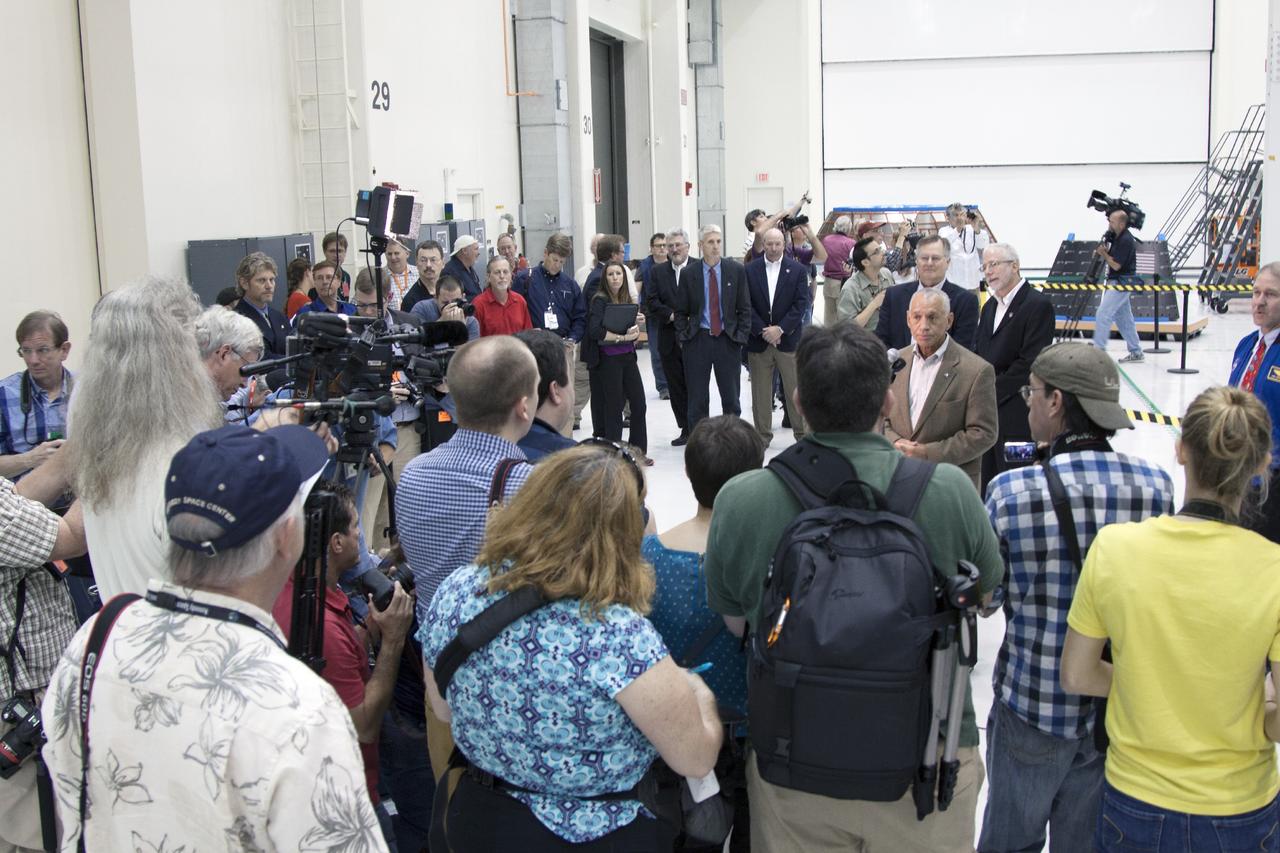
CAPE CANAVERAL, Fla. – Inside the Operations and Checkout Building high bay at NASA’s Kennedy Space Center in Florida, agency Administrator Charles Bolden answers questions from members of the news media about ongoing preparations of the Orion spacecraft for its first unpiloted launch, Exploration Test Flight 1. Orion is the exploration spacecraft designed to carry crews to space beyond low Earth orbit. It will provide emergency abort capability, sustain the crew during the space travel and provide safe re-entry from deep space return velocities. Orion’s first unpiloted test launch is scheduled for liftoff during 2014 atop a Delta IV rocket. A second unpiloted flight test is scheduled for 2017 on NASA’s Space Launch System rocket. For more information, visit http://www.nasa.gov/orion Photo credit: NASA/Jim Grossman
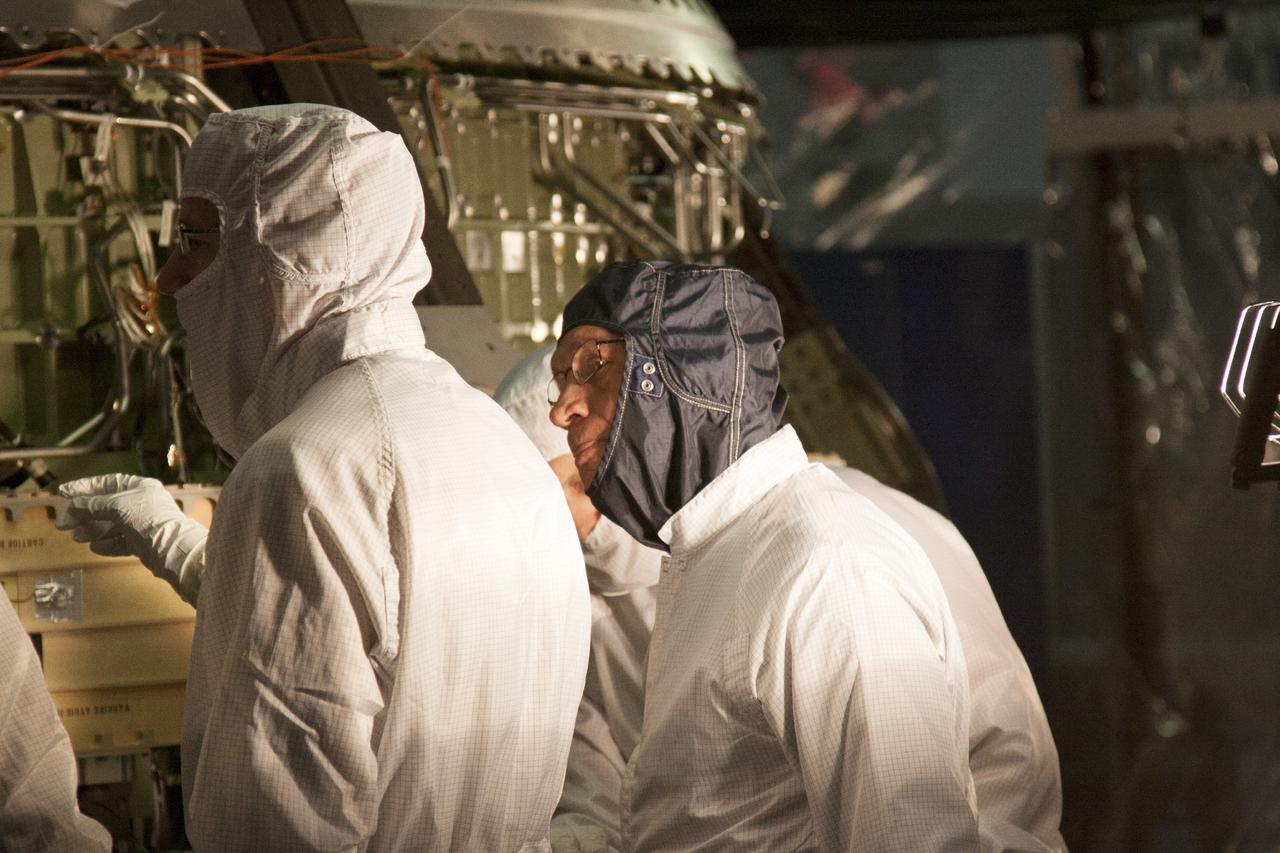
CAPE CANAVERAL, Fla. – Inside the Operations and Checkout Building high bay at NASA’s Kennedy Space Center in Florida, agency Administrator Charles Bolden, center, is updated on activities to prepare the Orion spacecraft crew module for its first unpiloted launch, Exploration Test Flight 1. He is wearing a protective garment to ensure contaminants are not introduced into the cleanroom environment. Orion is the exploration spacecraft designed to carry crews to space beyond low Earth orbit. It will provide emergency abort capability, sustain the crew during the space travel and provide safe re-entry from deep space return velocities. Orion’s first unpiloted test launch is scheduled for liftoff during 2014 atop a Delta IV rocket. A second unpiloted flight test is scheduled for 2017 on NASA’s Space Launch System rocket. For more information, visit http://www.nasa.gov/orion Photo credit: NASA/Jim Grossman