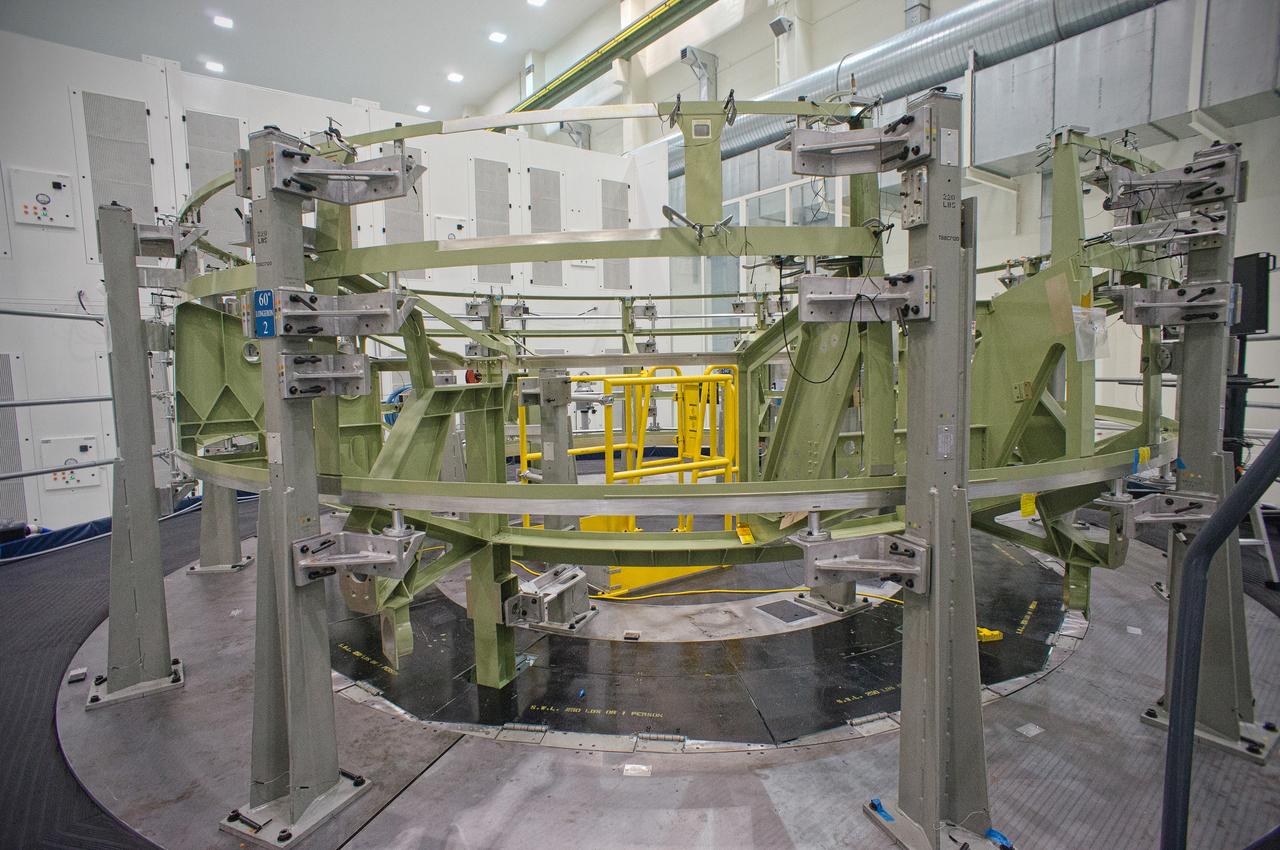
The Exploration Flight Test-1 (EFT-1) Orion service module in the Operations and Checkout (O&C) Building at NASA’s Kennedy Space Center on Dec. 31, 2011. Part of Batch image transfer from Flickr.
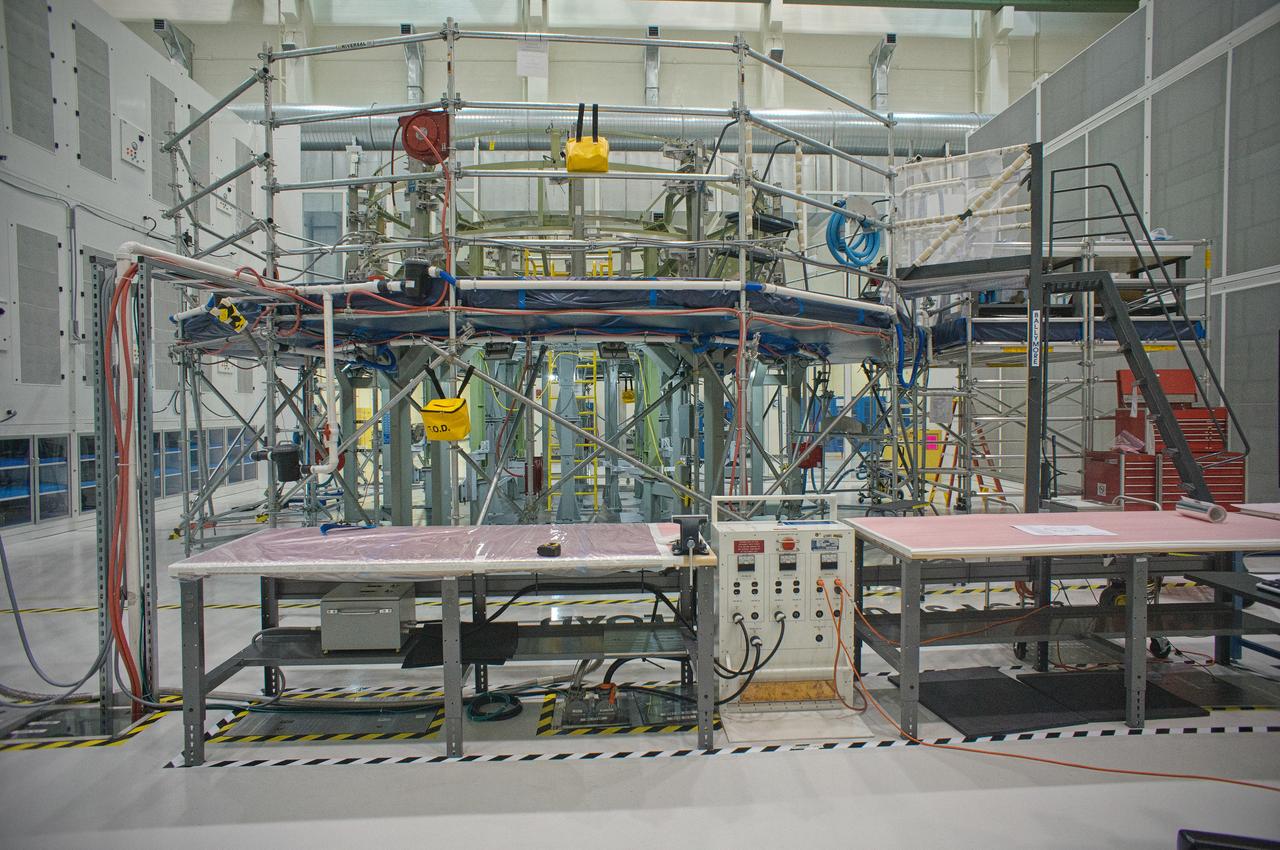
The Exploration Flight Test-1 (EFT-1) Orion service module in the Operations and Checkout (O&C) Building at NASA’s Kennedy Space Center on Dec. 31, 2011. Part of Batch image transfer from Flickr.

The Exploration Flight Test-1 (EFT-1) Orion service module in the Operations and Checkout (O&C) Building at NASA’s Kennedy Space Center on Dec. 31, 2011. Part of Batch image transfer from Flickr.
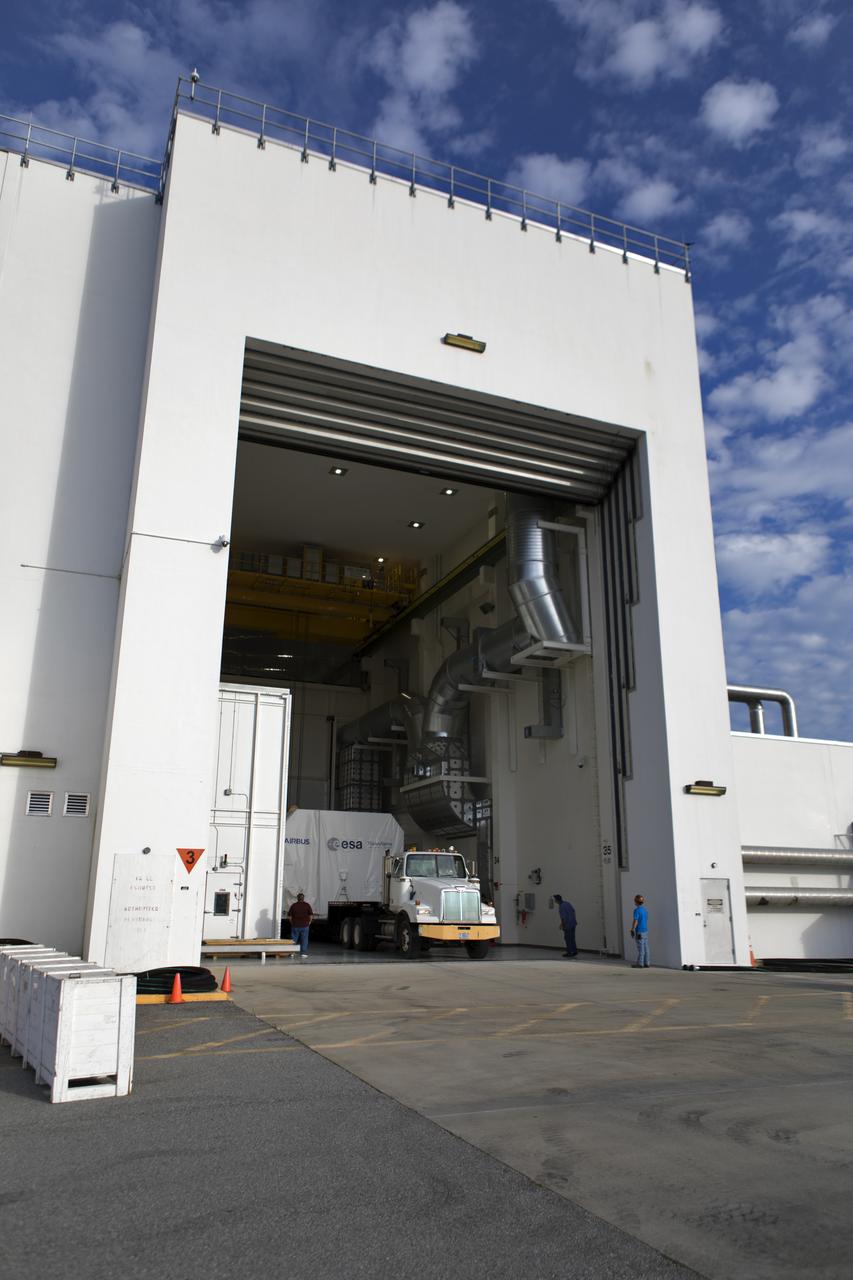
A flatbed truck carrying the European Space Agency's European Service Module (ESM) in its shipping container backs into the airlock of the Neil Armstrong Operations and Checkout Building on Nov. 6, 2018, at NASA's Kennedy Space Center in Florida. The ESM will supply the main propulsion system and power to the Orion spacecraft for Exploration Mission-1 (EM-1), a mission to the Moon. The ESM also will house air and water for astronauts on future missions. EM-1 will be an uncrewed flight test that will provide a foundation for human deep space exploration to destinations beyond Earth orbit. EM-1 will be the first integrated test of NASA's Space Launch System, Orion and the ground systems at Kennedy.
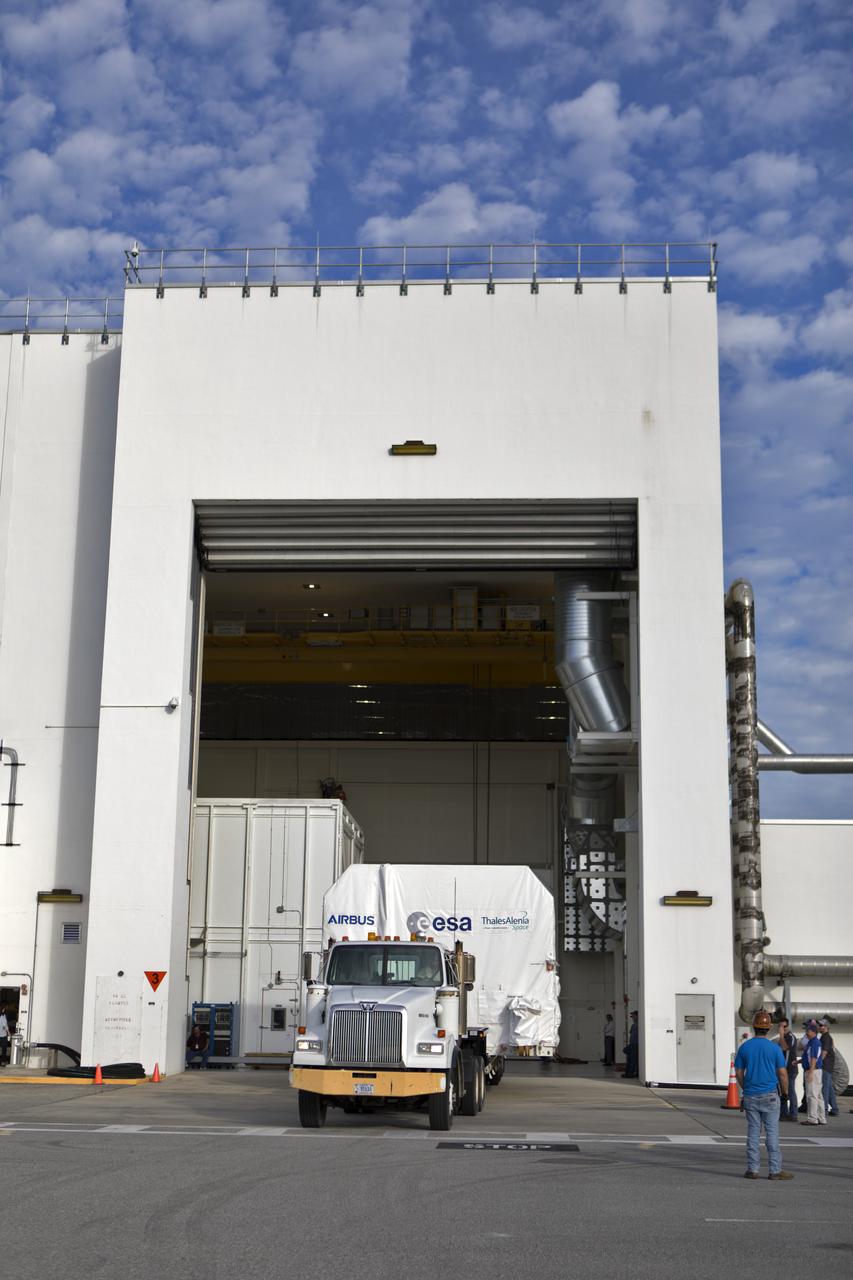
A flatbed truck carrying the European Space Agency's European Service Module (ESM) in its shipping container backs into the airlock of the Neil Armstrong Operations and Checkout Building on Nov. 6, 2018, at NASA's Kennedy Space Center in Florida. The ESM will supply the main propulsion system and power to the Orion spacecraft for Exploration Mission-1 (EM-1), a mission to the Moon. The ESM also will house air and water for astronauts on future missions. EM-1 will be an uncrewed flight test that will provide a foundation for human deep space exploration to destinations beyond Earth orbit. EM-1 will be the first integrated test of NASA's Space Launch System, Orion and the ground systems at Kennedy.
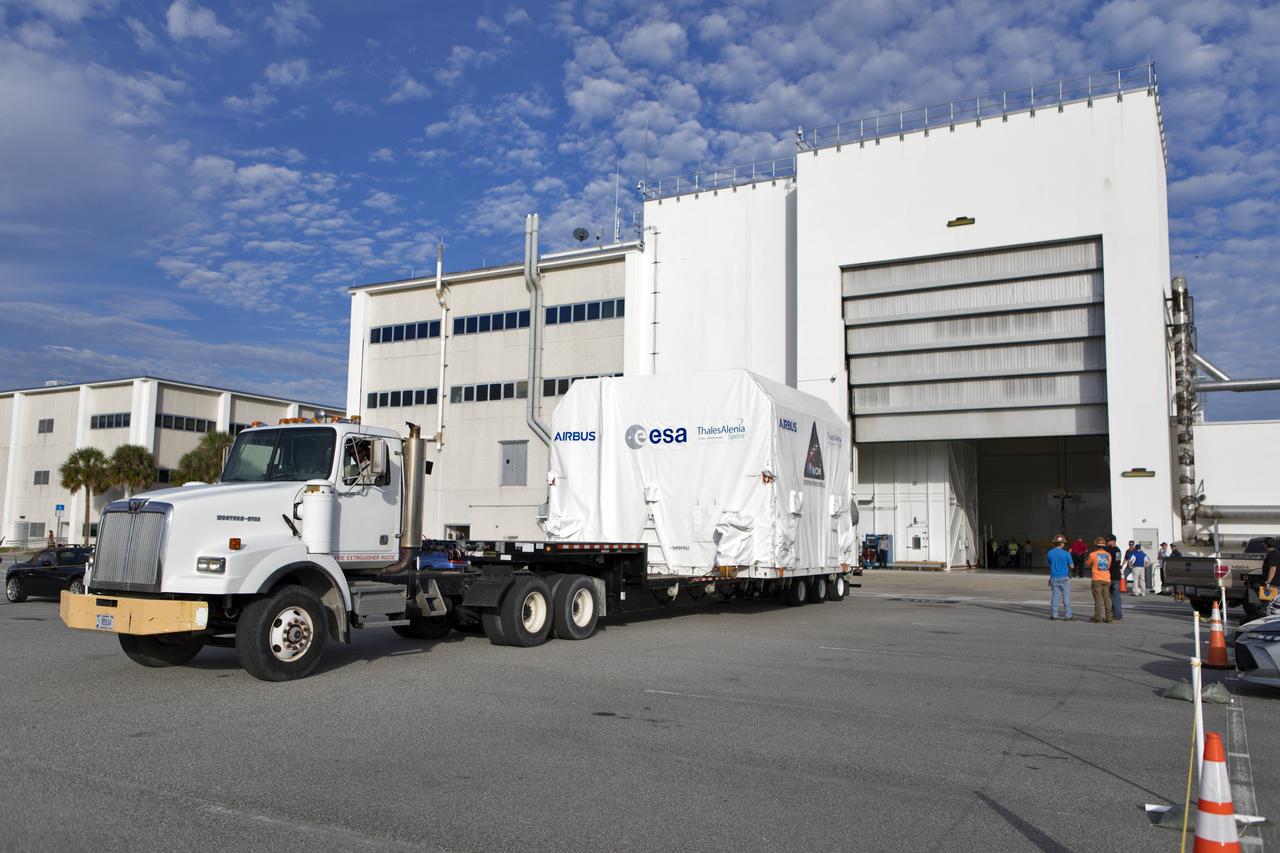
A flatbed truck carrying the European Space Agency's European Service Module (ESM) in its shipping container begins to back into the airlock of the Neil Armstrong Operations and Checkout Building on Nov. 6, 2018, at NASA's Kennedy Space Center in Florida. The ESM will supply the main propulsion system and power to the Orion spacecraft for Exploration Mission-1 (EM-1), a mission to the Moon. The ESM also will house air and water for astronauts on future missions. EM-1 will be an uncrewed flight test that will provide a foundation for human deep space exploration to destinations beyond Earth orbit. EM-1 will be the first integrated test of NASA's Space Launch System, Orion and the ground systems at Kennedy.
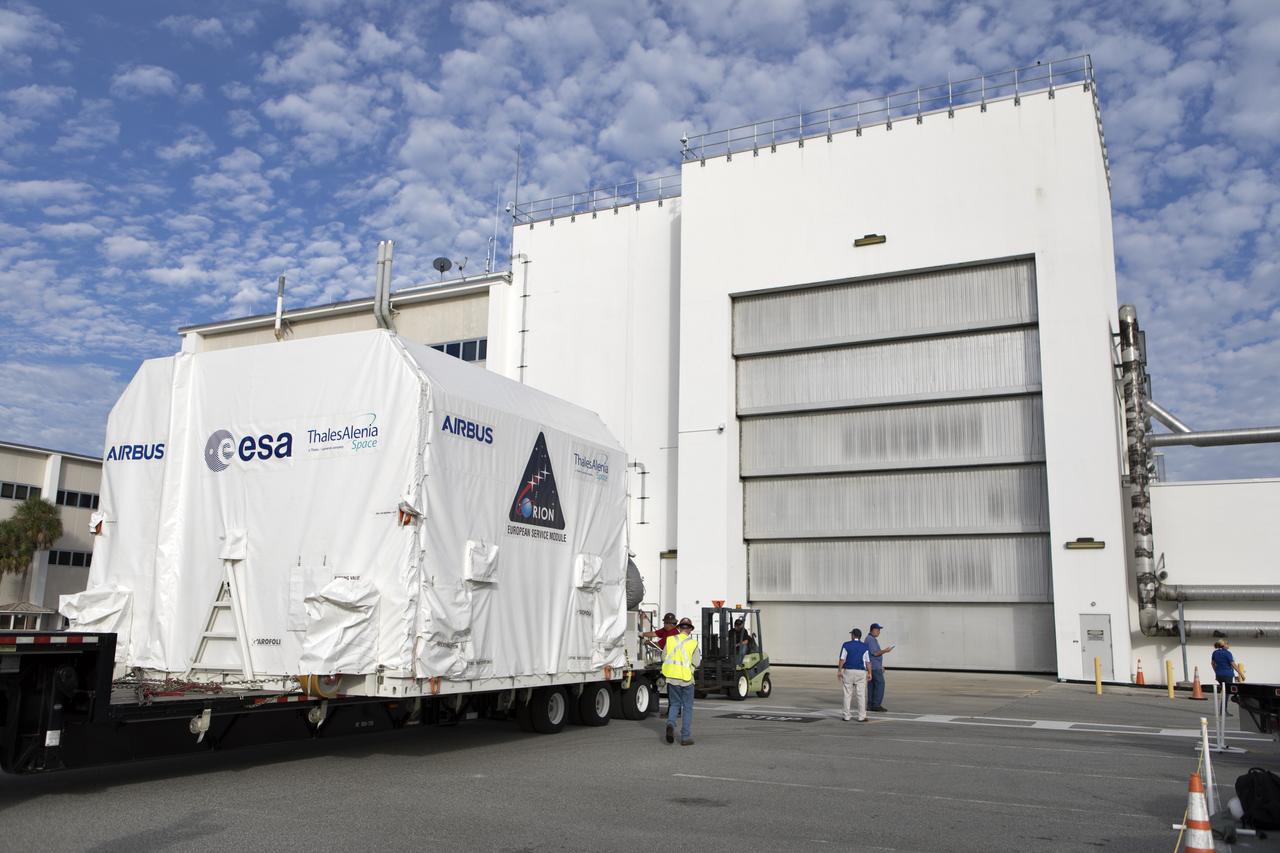
A flatbed truck carrying the European Space Agency's European Service Module (ESM) in its shipping container arrives at the Neil Armstrong Operations and Checkout Building on Nov. 6, 2018, at NASA's Kennedy Space Center in Florida. The ESM will supply the main propulsion system and power to the Orion spacecraft for Exploration Mission-1 (EM-1), a mission to the Moon. The ESM also will house air and water for astronauts on future missions. EM-1 will be an uncrewed flight test that will provide a foundation for human deep space exploration to destinations beyond Earth orbit. EM-1 will be the first integrated test of NASA's Space Launch System, Orion and the ground systems at Kennedy.
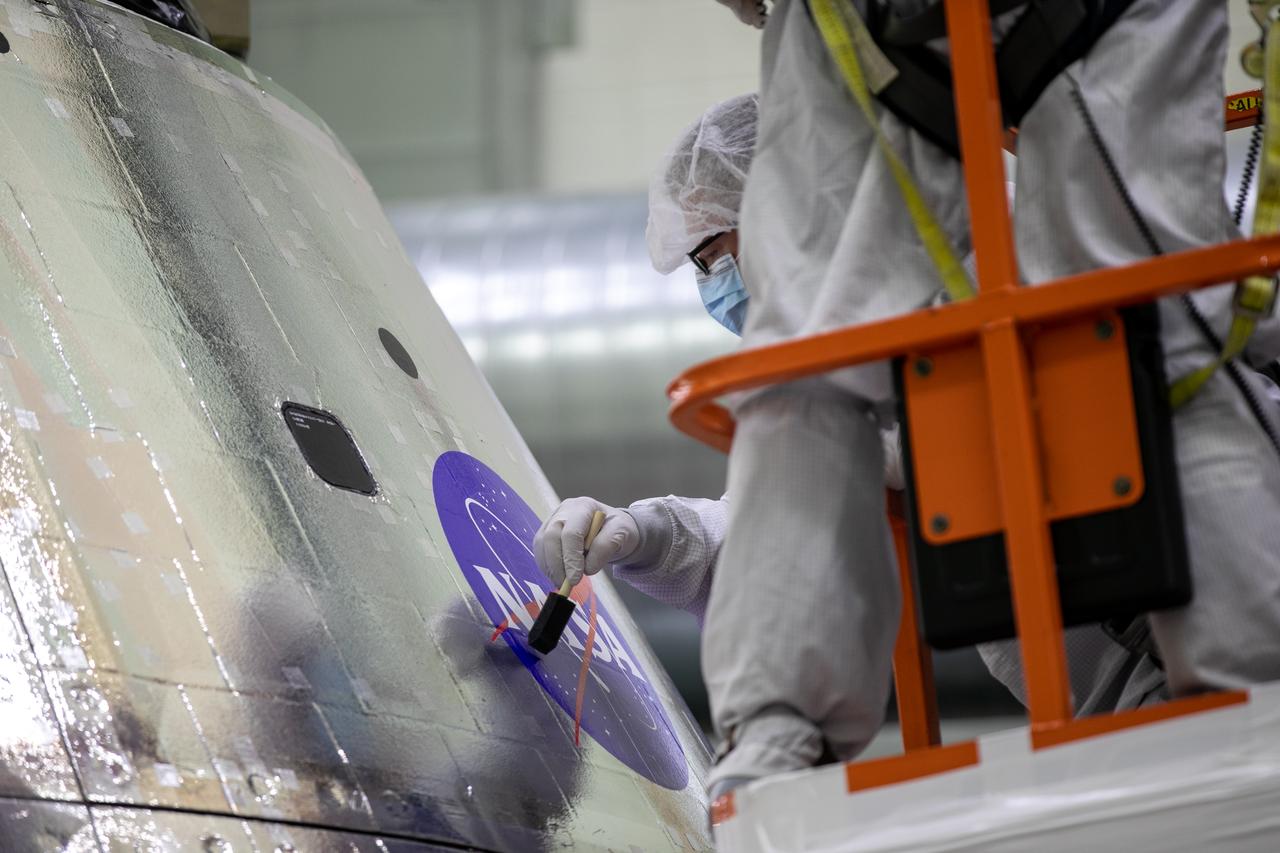
Frank Pelkey, ASRC technician, paints a clear adhesive over the NASA insignia, also called the “meatball,” on the Orion crew module back shell for the Artemis I mission on Oct. 28, 2020, inside the Neil Armstrong Operations and Checkout Building (O&C) at NASA’s Kennedy Space Center in Florida. The American Flag also has been added. Attached below Orion (not in view) are the crew module adapter and the European Service Module (ESM) with spacecraft adapter jettison fairings installed. Recently, teams from across the globe installed the four solar array wings, which are housed inside the protective covering of the fairings. The fairing panels will encapsulate the ESM to protect it from harsh environments such as heat, wind, and acoustics as the spacecraft is propelled out of Earth’s atmosphere atop the Space Launch System rocket during NASA’s Artemis I mission.
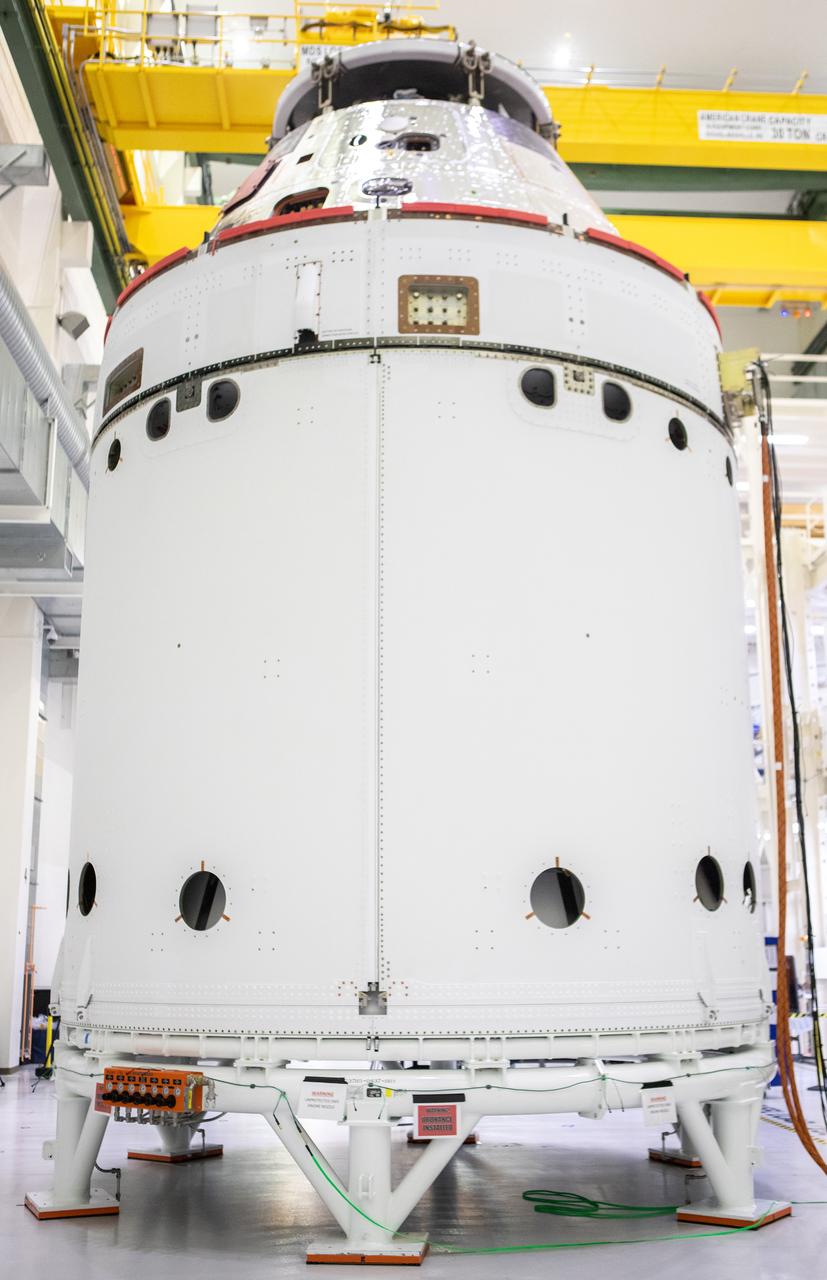
The spacecraft adapter jettison fairing panels are secured onto Orion’s European Service Module (ESM) on Oct. 27, 2020, inside the Neil Armstrong Operations and Checkout Building (O&C) at NASA’s Kennedy Space Center in Florida. The three panels were inspected and moved into place for installation by technicians with Lockheed Martin. Recently, teams from across the globe installed the four solar array wings, which are housed inside the protective covering of the fairings. The fairing panels will encapsulate the ESM to protect it from harsh environments such as heat, wind, and acoustics as the spacecraft is propelled out of Earth’s atmosphere atop the Space Launch System rocket during NASA’s Artemis I mission.
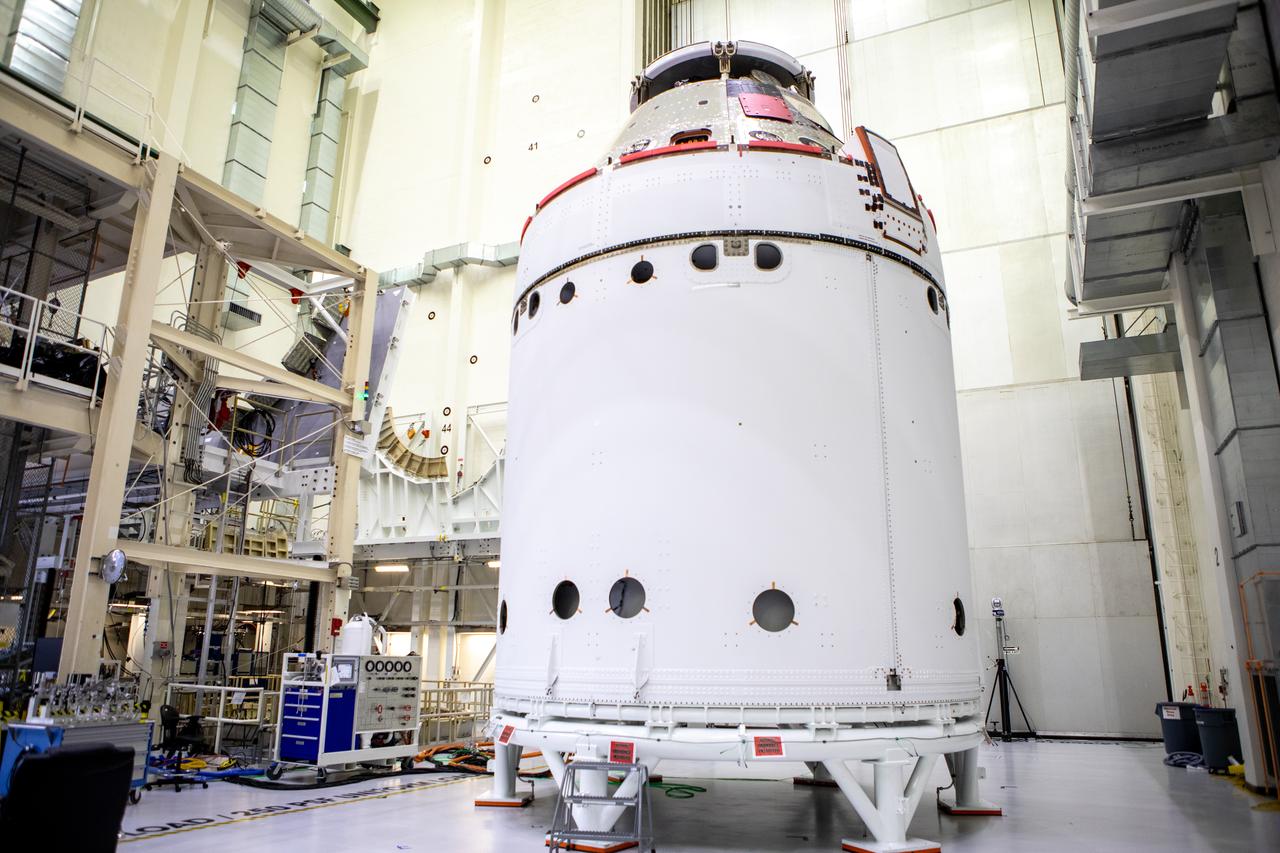
The spacecraft adapter jettison fairing panels are secured onto Orion’s European Service Module (ESM) on Oct. 27, 2020, inside the Neil Armstrong Operations and Checkout Building (O&C) at NASA’s Kennedy Space Center in Florida. The three panels were inspected and moved into place for installation by technicians with Lockheed Martin. Recently, teams from across the globe installed the four solar array wings, which are housed inside the protective covering of the fairings. The fairing panels will encapsulate the ESM to protect it from harsh environments such as heat, wind, and acoustics as the spacecraft is propelled out of Earth’s atmosphere atop the Space Launch System rocket during NASA’s Artemis I mission.
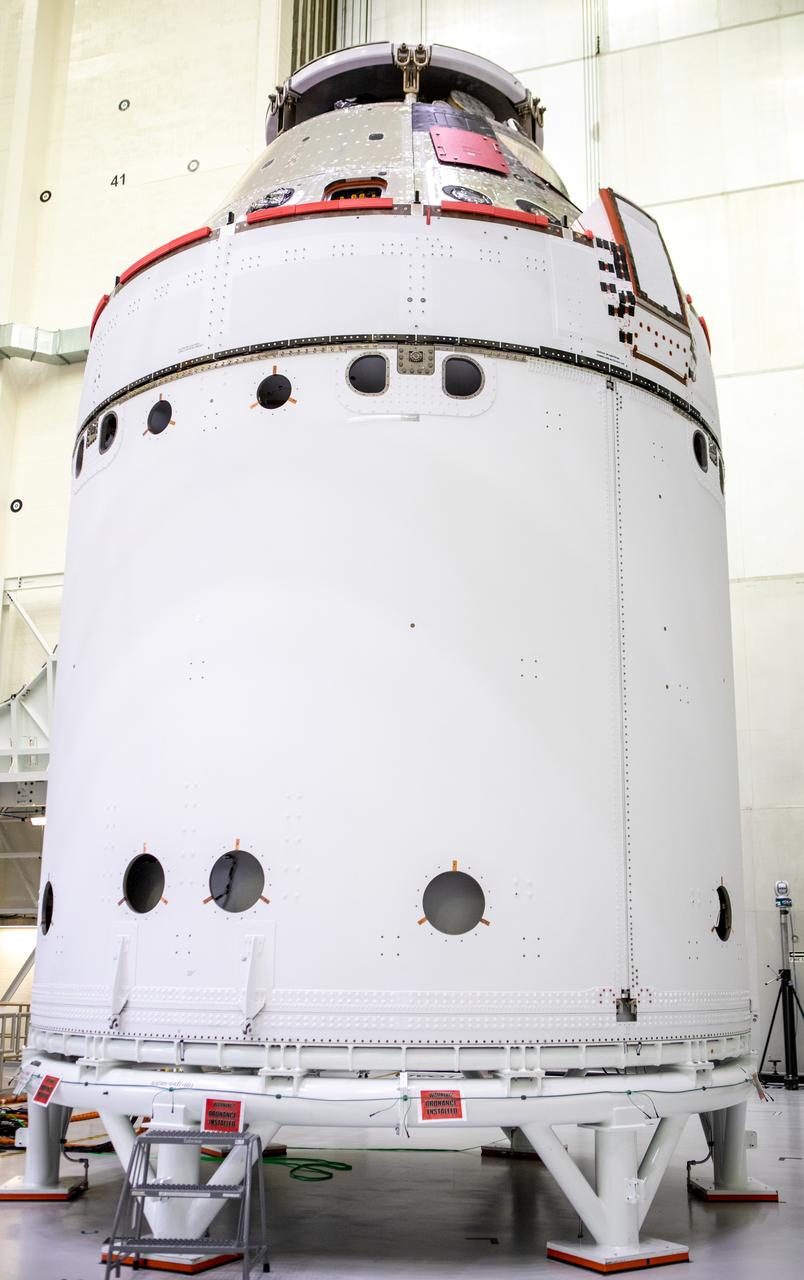
The spacecraft adapter jettison fairing panels are secured onto Orion’s European Service Module (ESM) on Oct. 27, 2020, inside the Neil Armstrong Operations and Checkout Building (O&C) at NASA’s Kennedy Space Center in Florida. The three panels were inspected and moved into place for installation by technicians with Lockheed Martin. Recently, teams from across the globe installed the four solar array wings, which are housed inside the protective covering of the fairings. The fairing panels will encapsulate the ESM to protect it from harsh environments such as heat, wind, and acoustics as the spacecraft is propelled out of Earth’s atmosphere atop the Space Launch System rocket during NASA’s Artemis I mission.
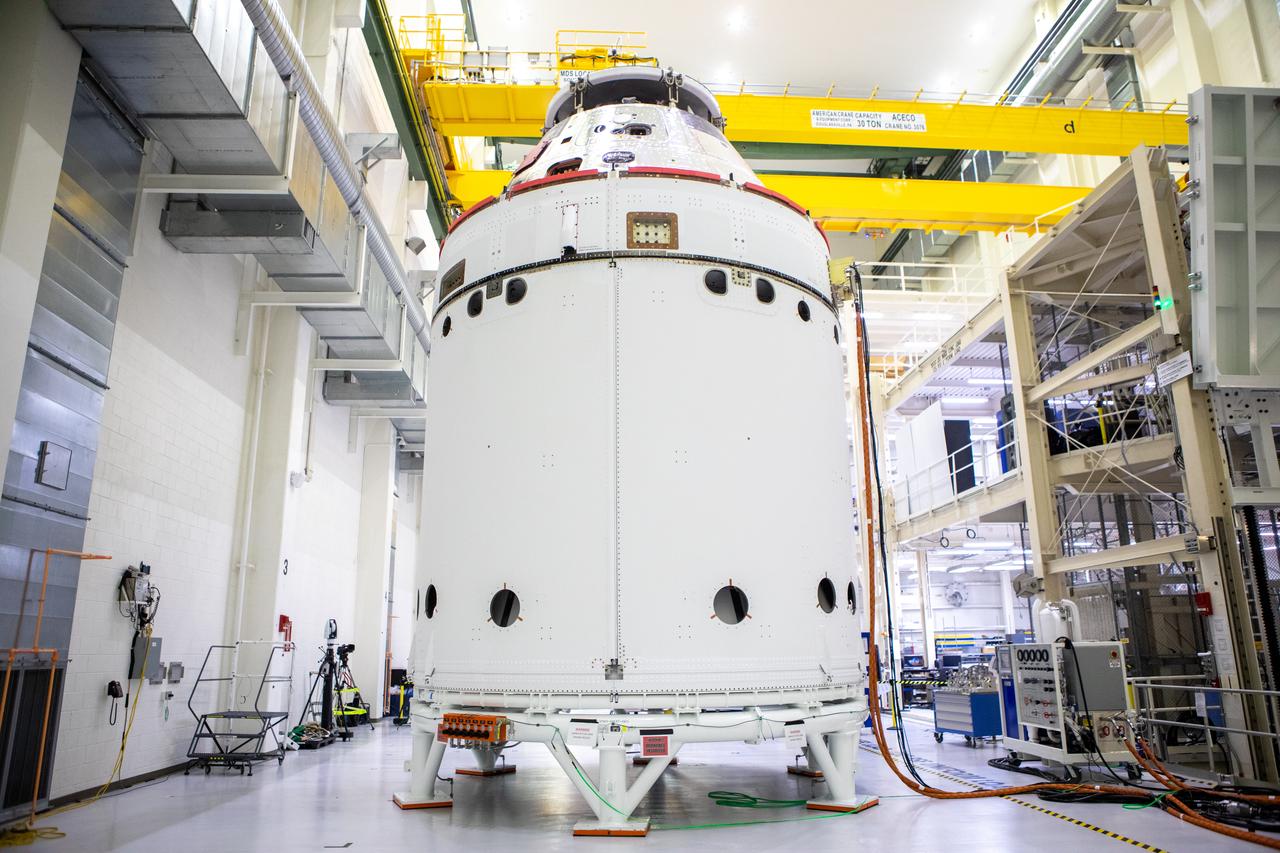
The spacecraft adapter jettison fairing panels are secured onto Orion’s European Service Module (ESM) on Oct. 27, 2020, inside the Neil Armstrong Operations and Checkout Building (O&C) at NASA’s Kennedy Space Center in Florida. The three panels were inspected and moved into place for installation by technicians with Lockheed Martin. Recently, teams from across the globe installed the four solar array wings, which are housed inside the protective covering of the fairings. The fairing panels will encapsulate the ESM to protect it from harsh environments such as heat, wind, and acoustics as the spacecraft is propelled out of Earth’s atmosphere atop the Space Launch System rocket during NASA’s Artemis I mission.
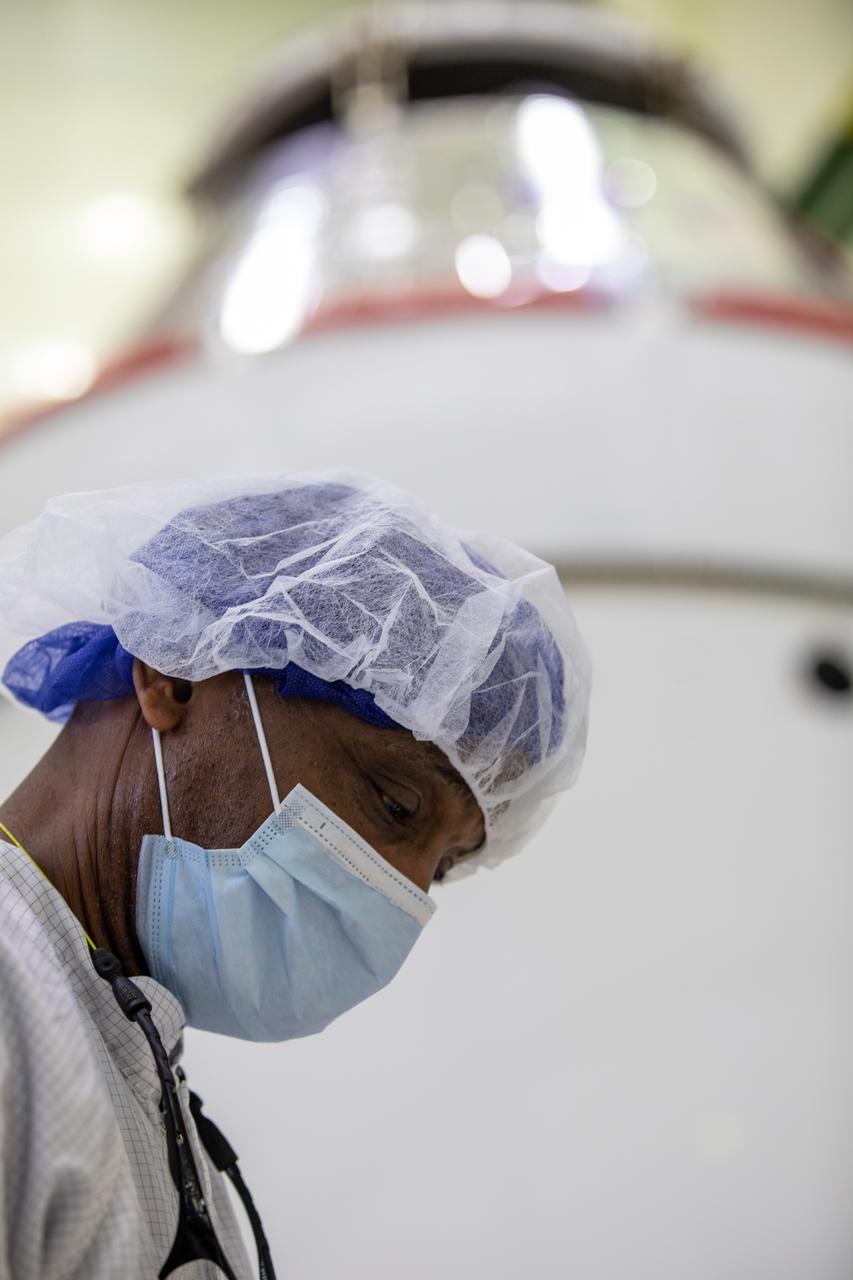
Izeal Battle, ASRC technician, is shown in the foreground with the Orion spacecraft for the Artemis I mission on Oct. 28, 2020, inside the Neil Armstrong Operations and Checkout Building (O&C) at NASA’s Kennedy Space Center in Florida. Attached below Orion (not in view) are the crew module adapter and the European Service Module (ESM) with spacecraft adapter jettison fairings installed. Recently, teams from across the globe installed the four solar array wings, which are housed inside the protective covering of the fairings. The fairing panels will encapsulate the ESM to protect it from harsh environments such as heat, wind, and acoustics as the spacecraft is propelled out of Earth’s atmosphere atop the Space Launch System rocket during NASA’s Artemis I mission.
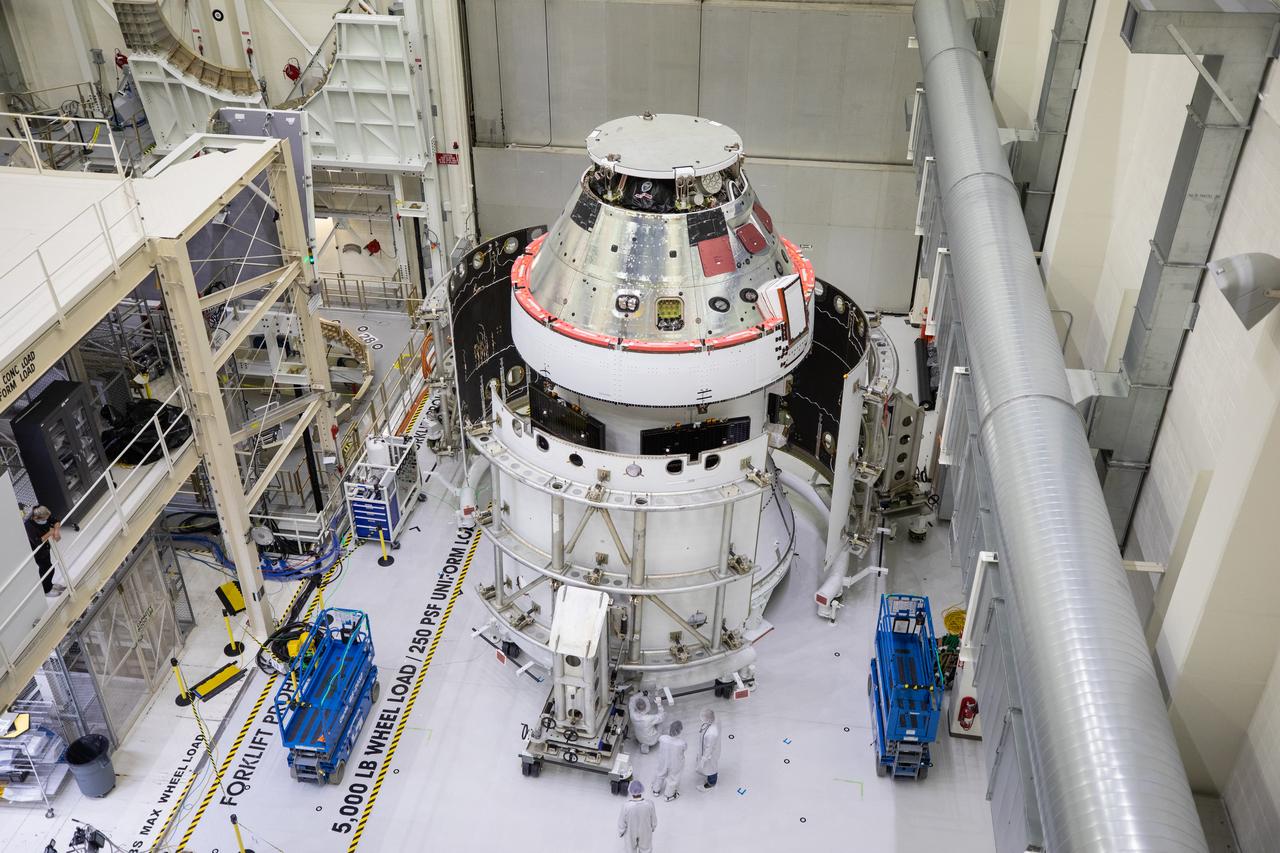
Shown is an overhead view of three spacecraft adapter jettison fairing panels fitted onto Orion’s European Service Module (ESM) on Oct. 13, 2020, inside the Neil Armstrong Operations and Checkout Building (O&C) at NASA’s Kennedy Space Center in Florida. The panels were inspected and moved into place for installation by technicians with Lockheed Martin. Recently, teams from across the globe installed the four solar array wings, which are housed inside the protective covering of the fairings. Once secured, they will encapsulate the ESM to protect it from harsh environments such as heat, wind, and acoustics as the spacecraft is propelled out of Earth’s atmosphere atop the Space Launch System (SLS) rocket during NASA’s Artemis I mission.
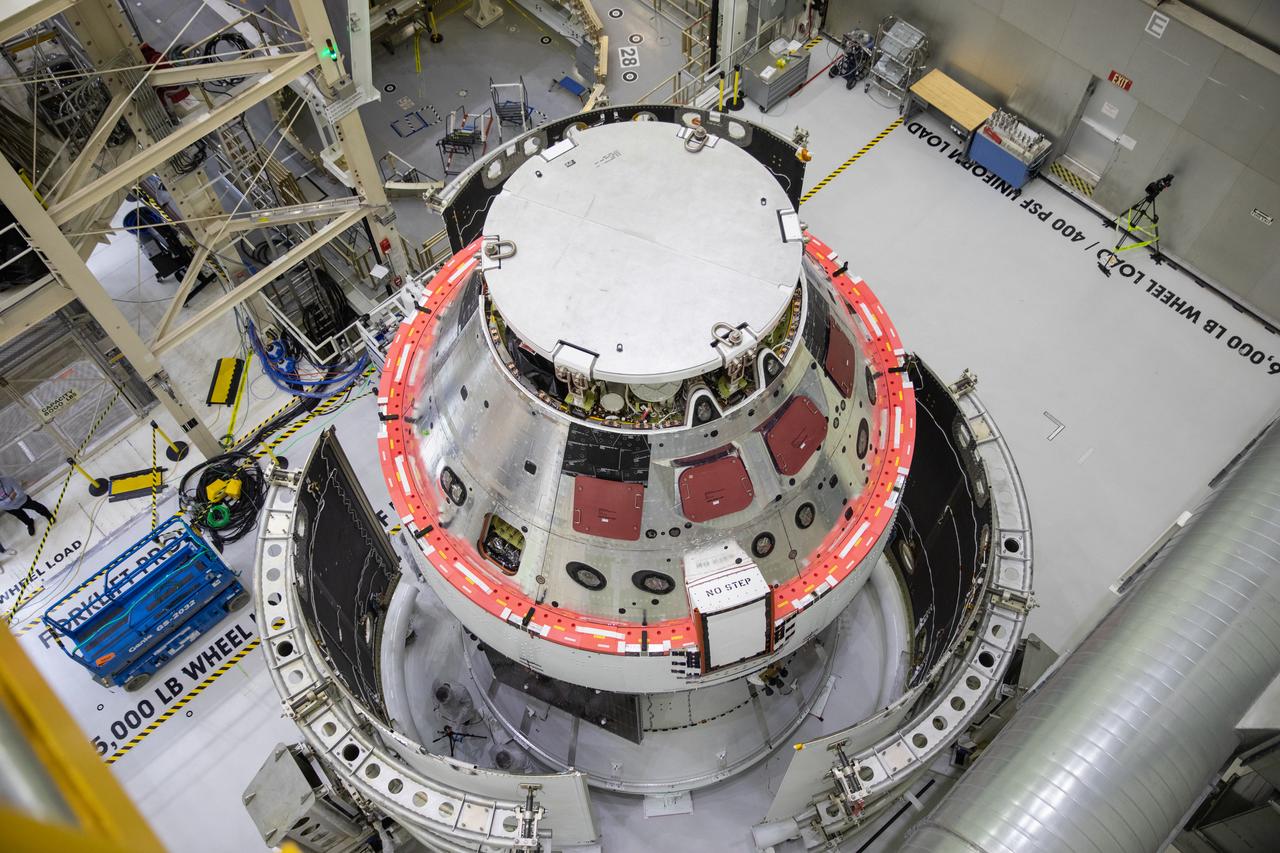
Shown is an overhead view of three spacecraft adapter jettison fairing panels fitted onto Orion’s European Service Module (ESM) on Oct. 13, 2020, inside the Neil Armstrong Operations and Checkout Building (O&C) at NASA’s Kennedy Space Center in Florida. The panels were inspected and moved into place for installation by technicians with Lockheed Martin. Recently, teams from across the globe installed the four solar array wings, which are housed inside the protective covering of the fairings. Once secured, they will encapsulate the ESM to protect it from harsh environments such as heat, wind, and acoustics as the spacecraft is propelled out of Earth’s atmosphere atop the Space Launch System (SLS) rocket during NASA’s Artemis I mission.
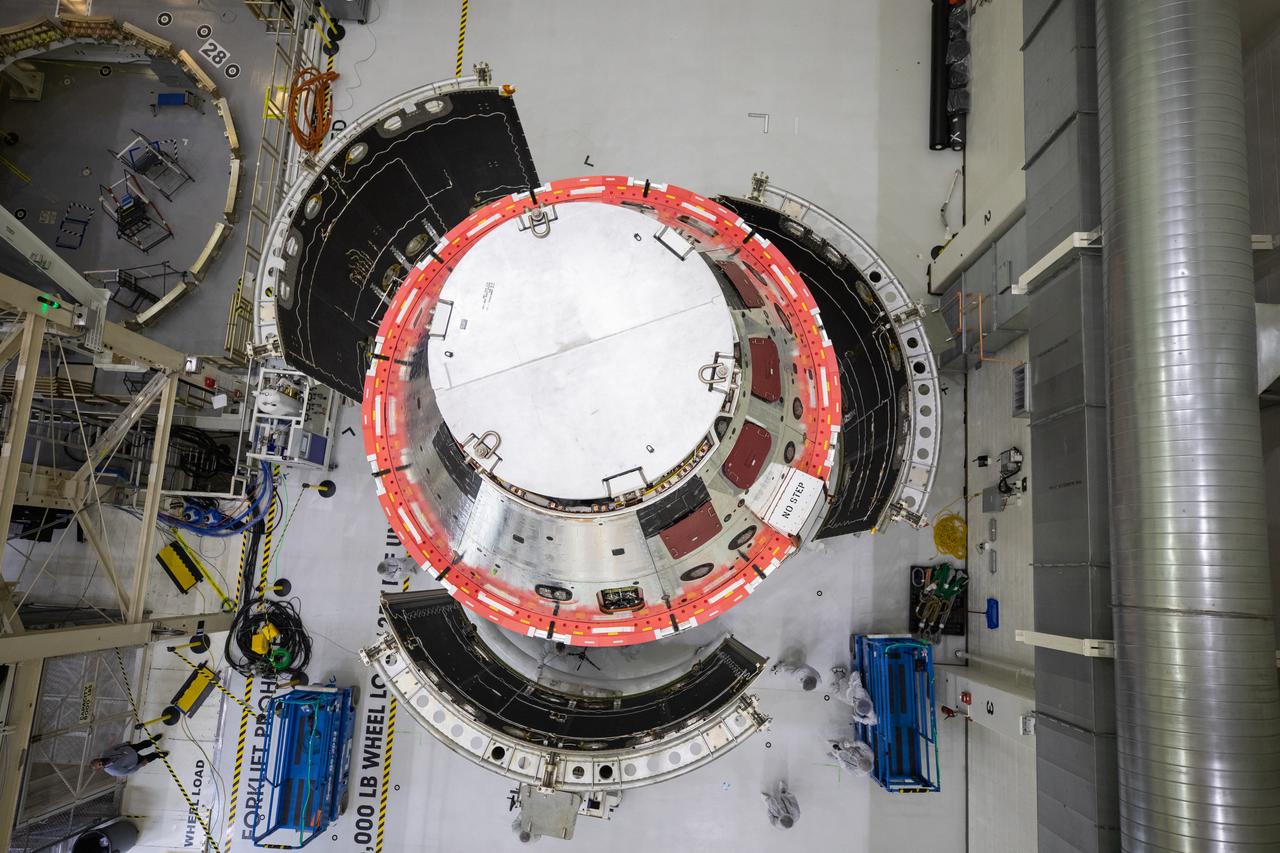
Shown is an overhead view of three spacecraft adapter jettison fairing panels fitted onto Orion’s European Service Module (ESM) on Oct. 13, 2020, inside the Neil Armstrong Operations and Checkout Building (O&C) at NASA’s Kennedy Space Center in Florida. The panels were inspected and moved into place for installation by technicians with Lockheed Martin. Recently, teams from across the globe installed the four solar array wings, which are housed inside the protective covering of the fairings. Once secured, they will encapsulate the ESM to protect it from harsh environments such as heat, wind, and acoustics as the spacecraft is propelled out of Earth’s atmosphere atop the Space Launch System (SLS) rocket during NASA’s Artemis I mission.
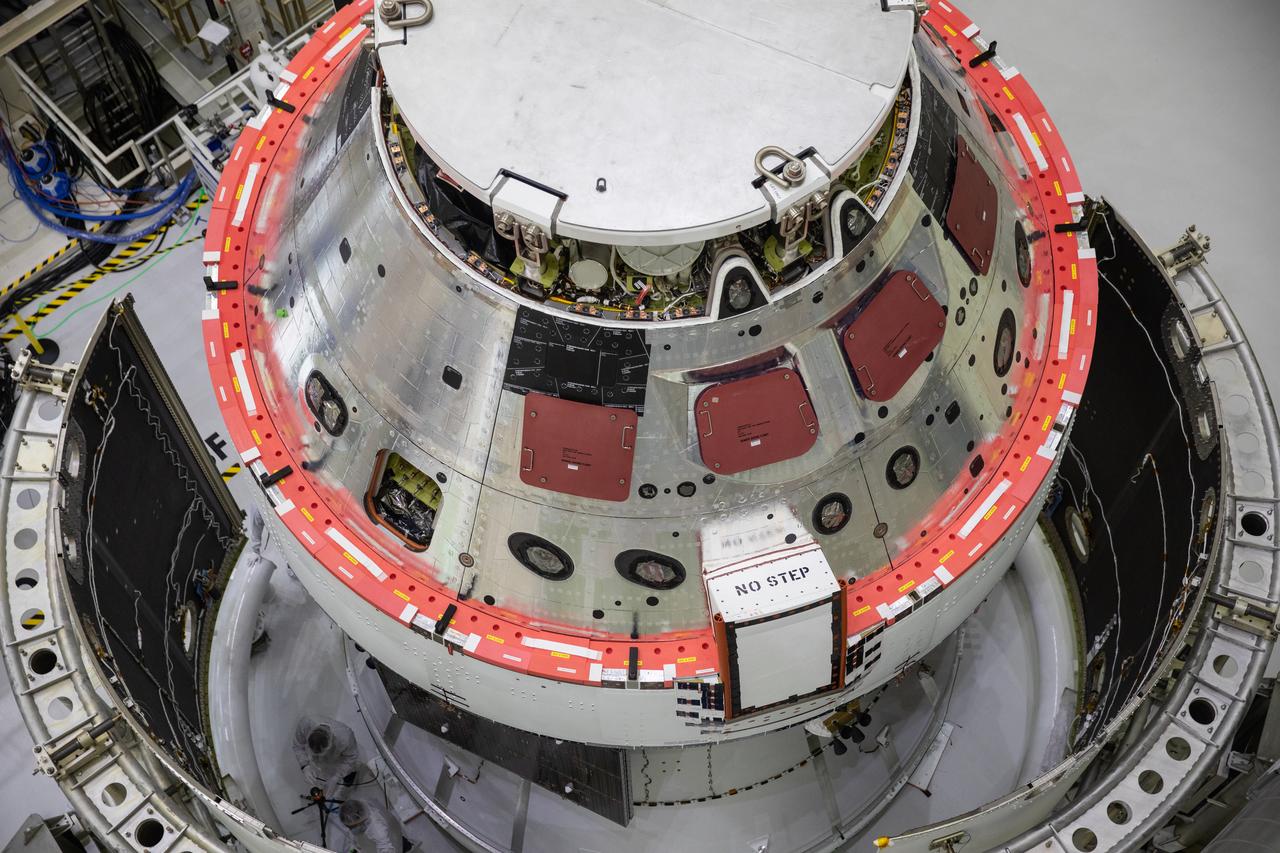
Shown is an overhead view of three spacecraft adapter jettison fairing panels fitted onto Orion’s European Service Module (ESM) on Oct. 13, 2020, inside the Neil Armstrong Operations and Checkout Building (O&C) at NASA’s Kennedy Space Center in Florida. The panels were inspected and moved into place for installation by technicians with Lockheed Martin. Recently, teams from across the globe installed the four solar array wings, which are housed inside the protective covering of the fairings. Once secured, they will encapsulate the ESM to protect it from harsh environments such as heat, wind, and acoustics as the spacecraft is propelled out of Earth’s atmosphere atop the Space Launch System (SLS) rocket during NASA’s Artemis I mission.
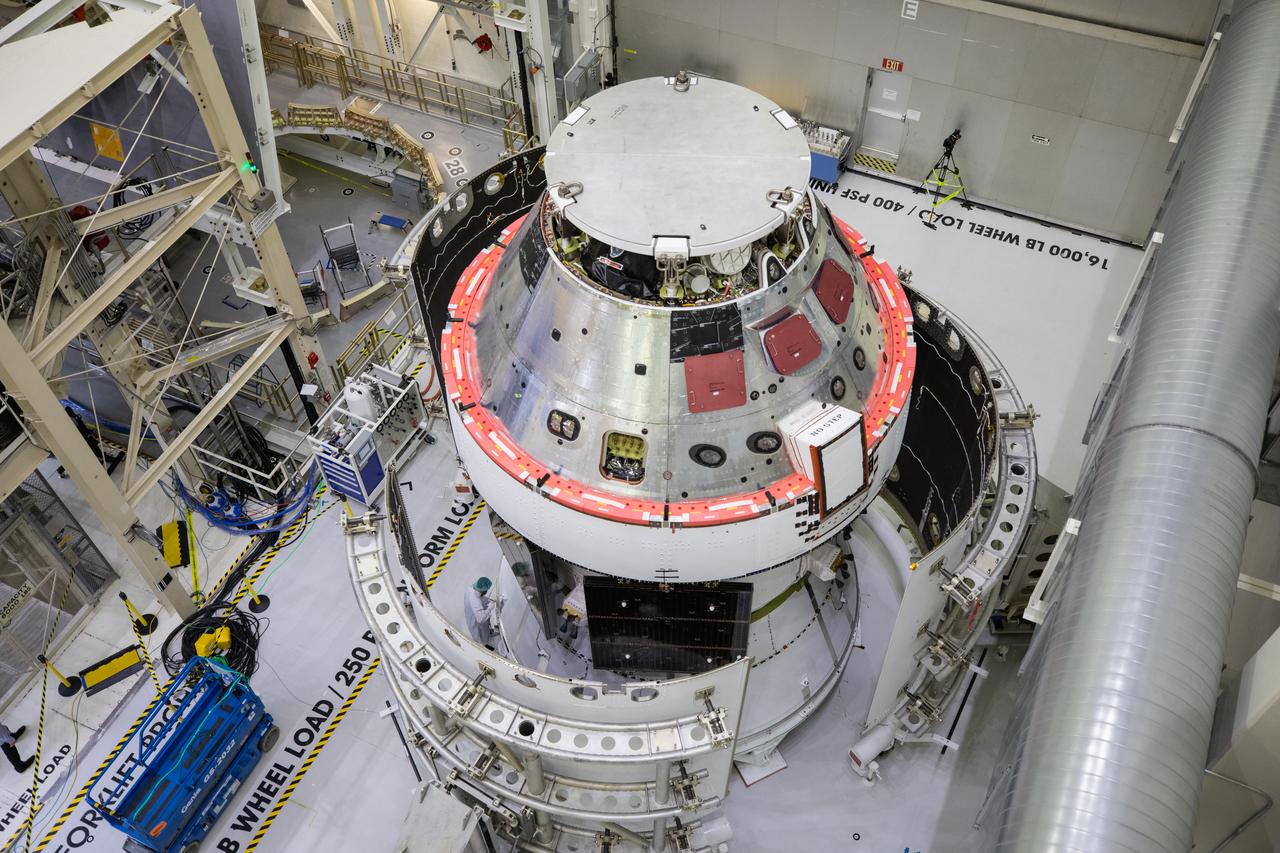
Shown is an overhead view of three spacecraft adapter jettison fairing panels fitted onto Orion’s European Service Module (ESM) on Oct. 13, 2020, inside the Neil Armstrong Operations and Checkout Building (O&C) at NASA’s Kennedy Space Center in Florida. The panels were inspected and moved into place for installation by technicians with Lockheed Martin. Recently, teams from across the globe installed the four solar array wings, which are housed inside the protective covering of the fairings. Once secured, they will encapsulate the ESM to protect it from harsh environments such as heat, wind, and acoustics as the spacecraft is propelled out of Earth’s atmosphere atop the Space Launch System (SLS) rocket during NASA’s Artemis I mission.
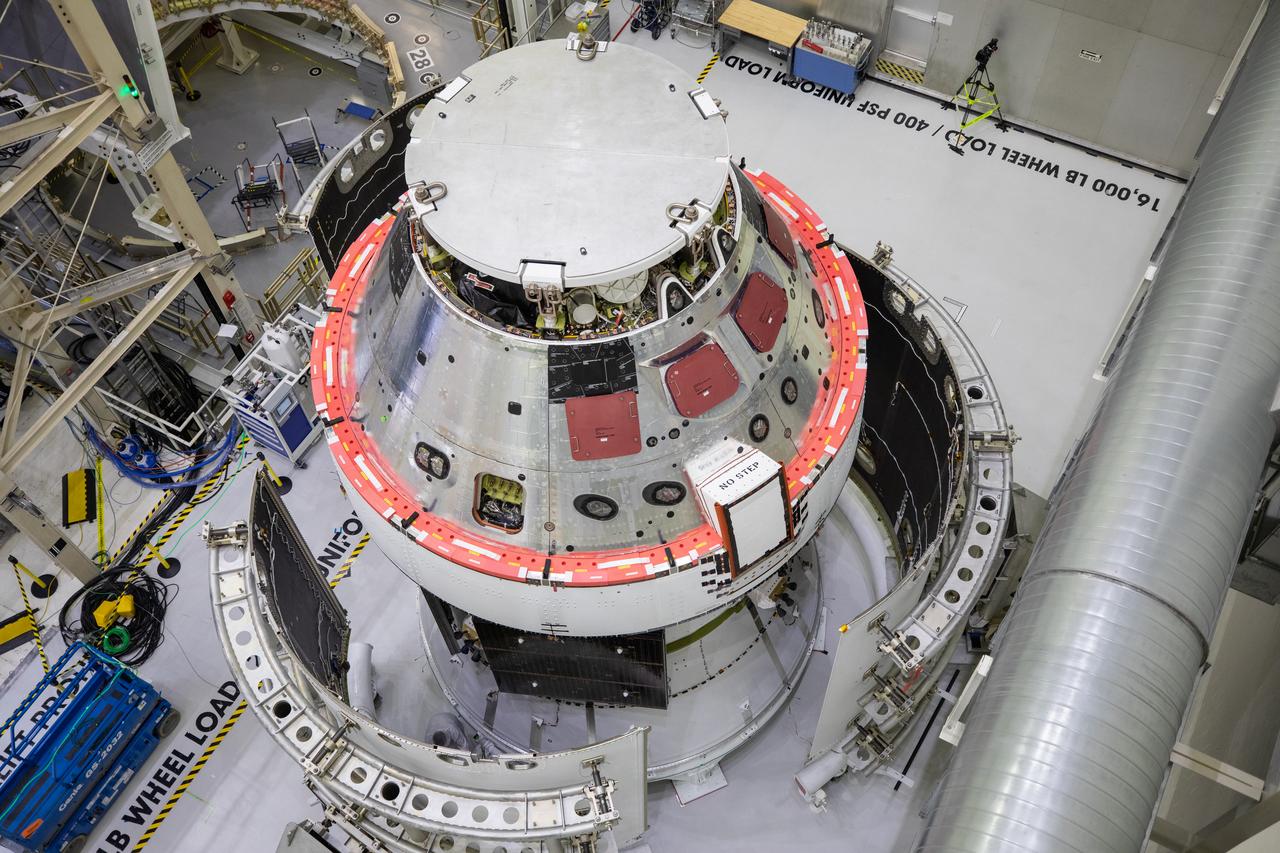
Shown is an overhead view of three spacecraft adapter jettison fairing panels fitted onto Orion’s European Service Module (ESM) on Oct. 13, 2020, inside the Neil Armstrong Operations and Checkout Building (O&C) at NASA’s Kennedy Space Center in Florida. The panels were inspected and moved into place for installation by technicians with Lockheed Martin. Recently, teams from across the globe installed the four solar array wings, which are housed inside the protective covering of the fairings. Once secured, they will encapsulate the ESM to protect it from harsh environments such as heat, wind, and acoustics as the spacecraft is propelled out of Earth’s atmosphere atop the Space Launch System (SLS) rocket during NASA’s Artemis I mission.
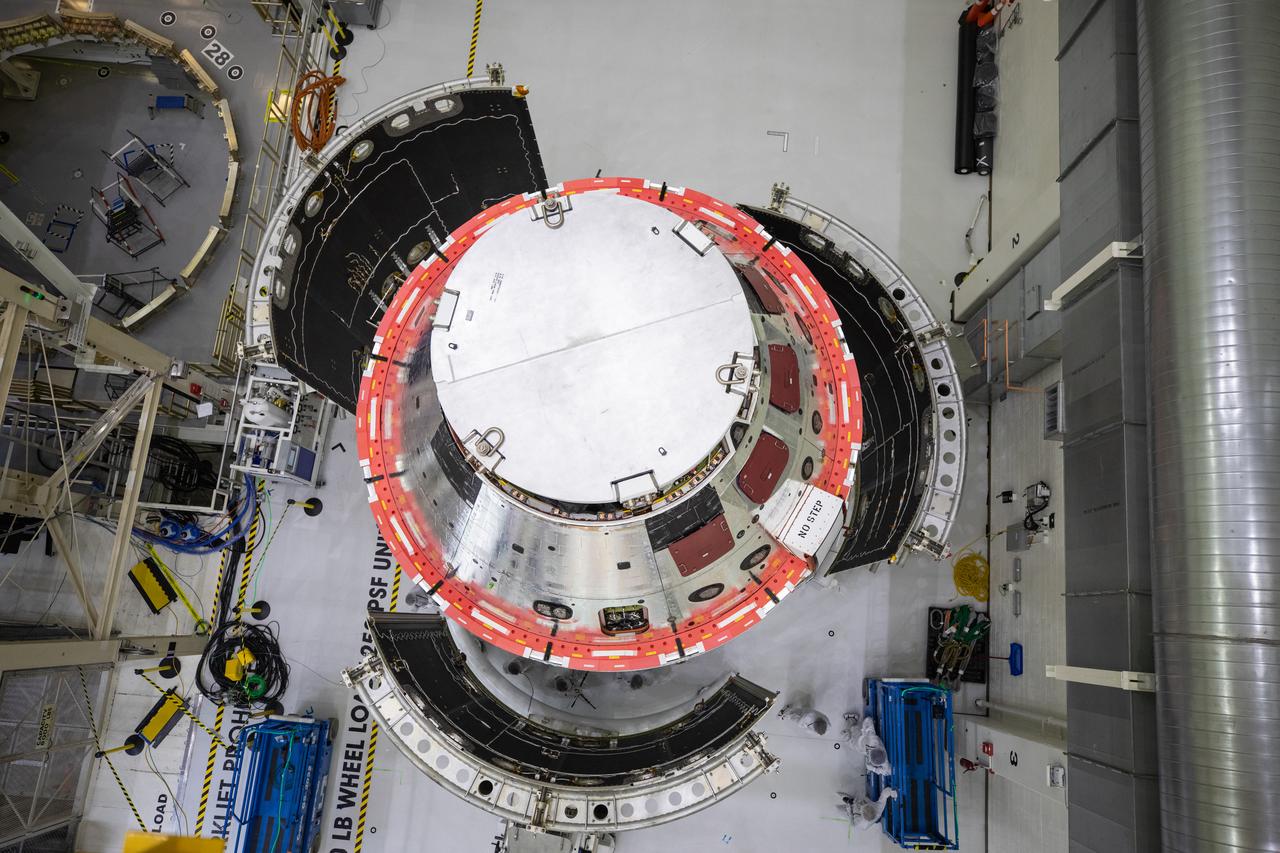
Shown is an overhead view of three spacecraft adapter jettison fairing panels fitted onto Orion’s European Service Module (ESM) on Oct. 13, 2020, inside the Neil Armstrong Operations and Checkout Building (O&C) at NASA’s Kennedy Space Center in Florida. The panels were inspected and moved into place for installation by technicians with Lockheed Martin. Recently, teams from across the globe installed the four solar array wings, which are housed inside the protective covering of the fairings. Once secured, they will encapsulate the ESM to protect it from harsh environments such as heat, wind, and acoustics as the spacecraft is propelled out of Earth’s atmosphere atop the Space Launch System (SLS) rocket during NASA’s Artemis I mission.
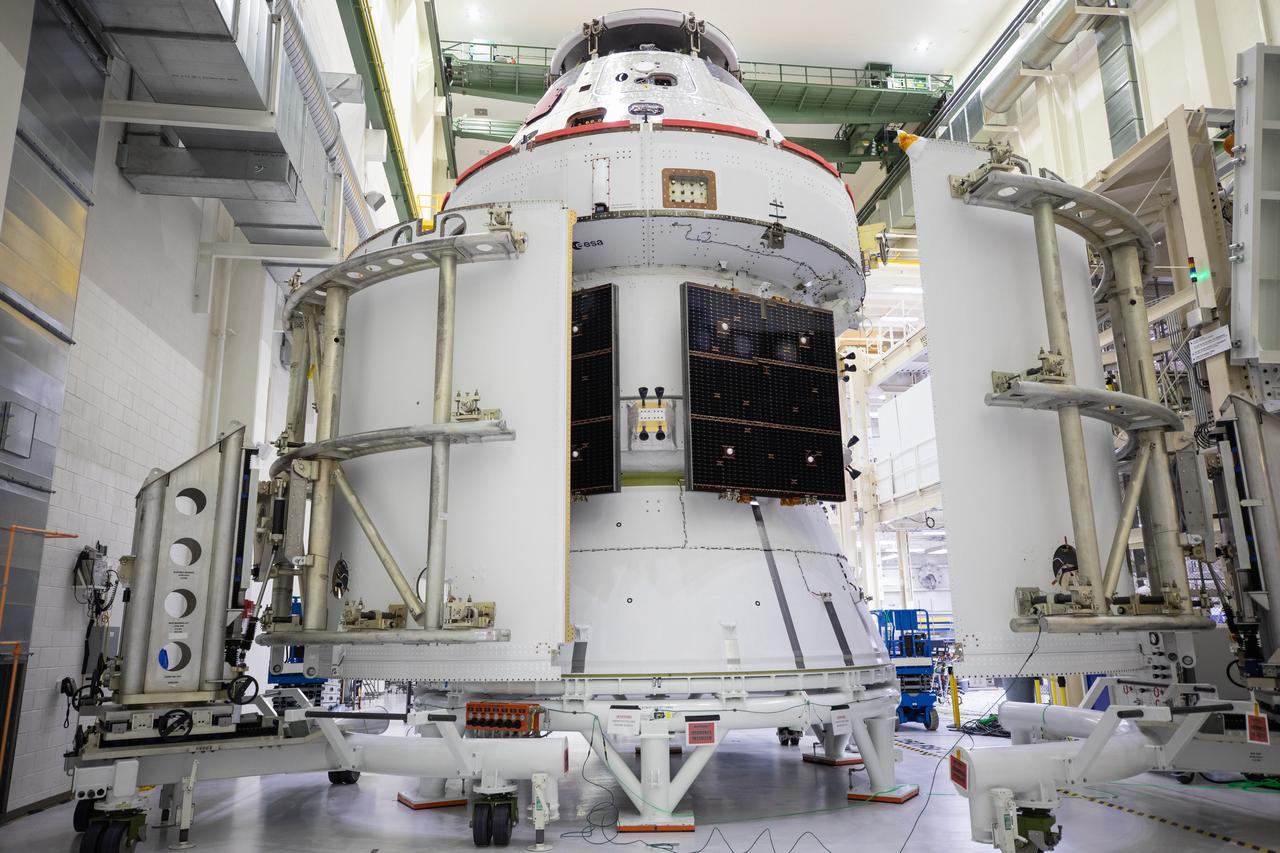
Shown is an overhead view of three spacecraft adapter jettison fairing panels fitted onto Orion’s European Service Module (ESM) on Oct. 13, 2020, inside the Neil Armstrong Operations and Checkout Building (O&C) at NASA’s Kennedy Space Center in Florida. The panels were inspected and moved into place for installation by technicians with Lockheed Martin. Recently, teams from across the globe installed the four solar array wings, which are housed inside the protective covering of the fairings. Once secured, they will encapsulate the ESM to protect it from harsh environments such as heat, wind, and acoustics as the spacecraft is propelled out of Earth’s atmosphere atop the Space Launch System (SLS) rocket during NASA’s Artemis I mission.
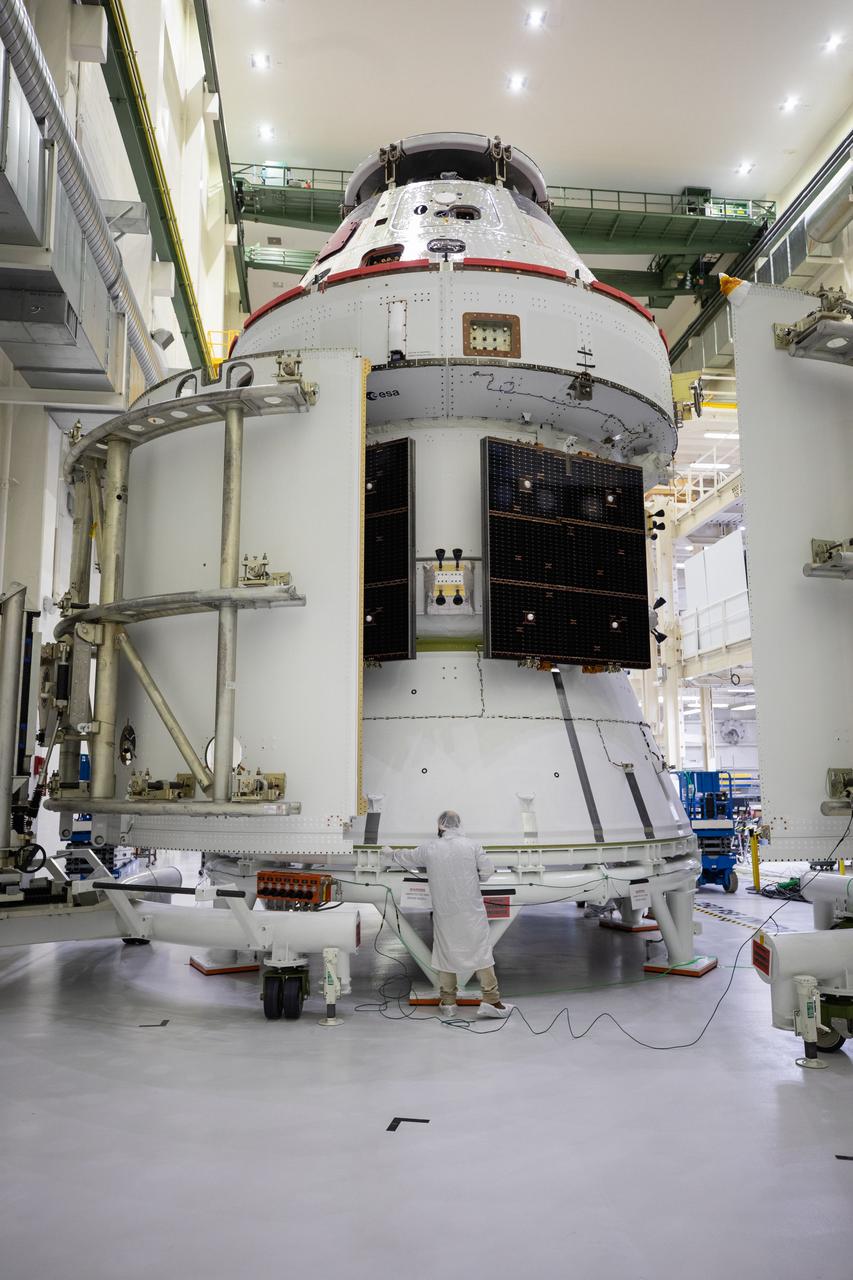
Shown is an overhead view of three spacecraft adapter jettison fairing panels fitted onto Orion’s European Service Module (ESM) on Oct. 13, 2020, inside the Neil Armstrong Operations and Checkout Building (O&C) at NASA’s Kennedy Space Center in Florida. The panels were inspected and moved into place for installation by technicians with Lockheed Martin. Recently, teams from across the globe installed the four solar array wings, which are housed inside the protective covering of the fairings. Once secured, they will encapsulate the ESM to protect it from harsh environments such as heat, wind, and acoustics as the spacecraft is propelled out of Earth’s atmosphere atop the Space Launch System (SLS) rocket during NASA’s Artemis I mission.
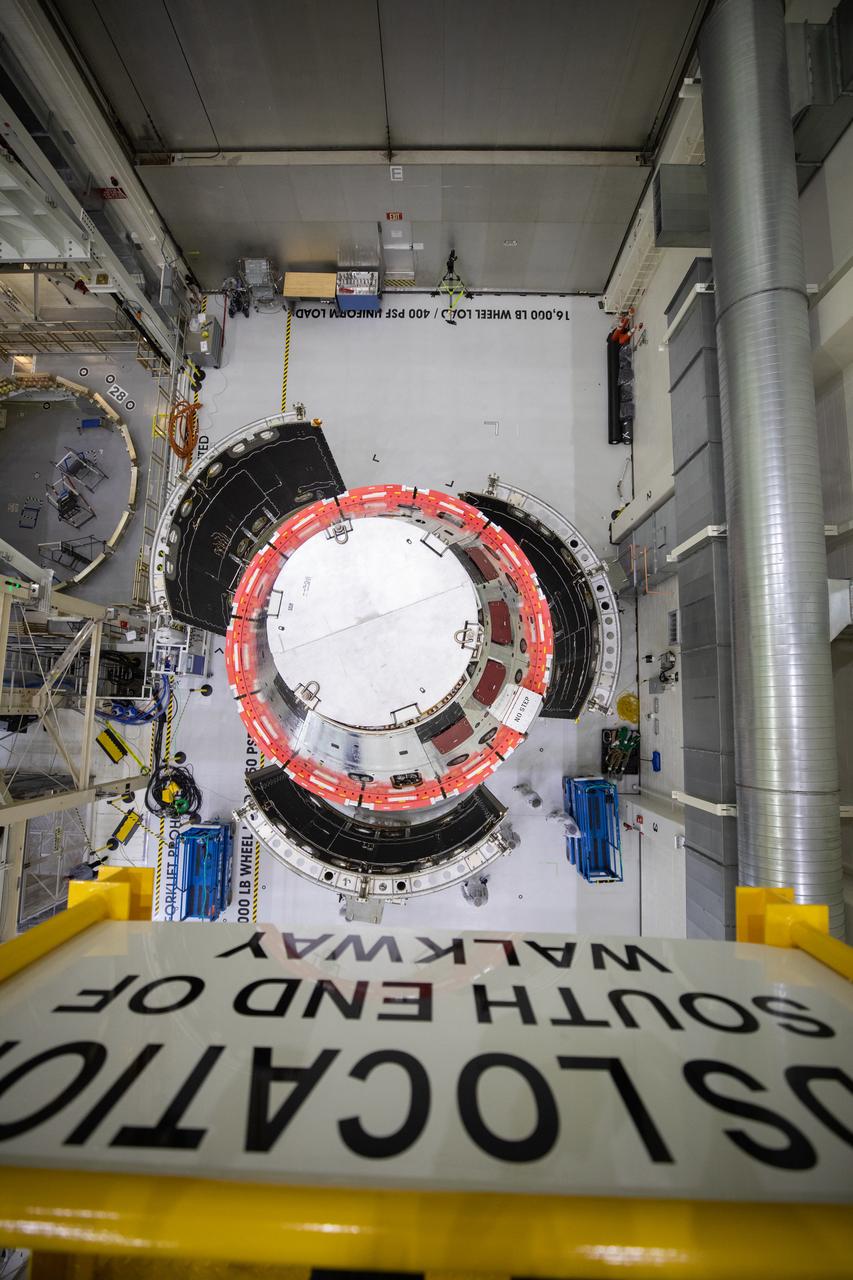
Shown is an overhead view of three spacecraft adapter jettison fairing panels fitted onto Orion’s European Service Module (ESM) on Oct. 13, 2020, inside the Neil Armstrong Operations and Checkout Building (O&C) at NASA’s Kennedy Space Center in Florida. The panels were inspected and moved into place for installation by technicians with Lockheed Martin. Recently, teams from across the globe installed the four solar array wings, which are housed inside the protective covering of the fairings. Once secured, they will encapsulate the ESM to protect it from harsh environments such as heat, wind, and acoustics as the spacecraft is propelled out of Earth’s atmosphere atop the Space Launch System (SLS) rocket during NASA’s Artemis I mission.
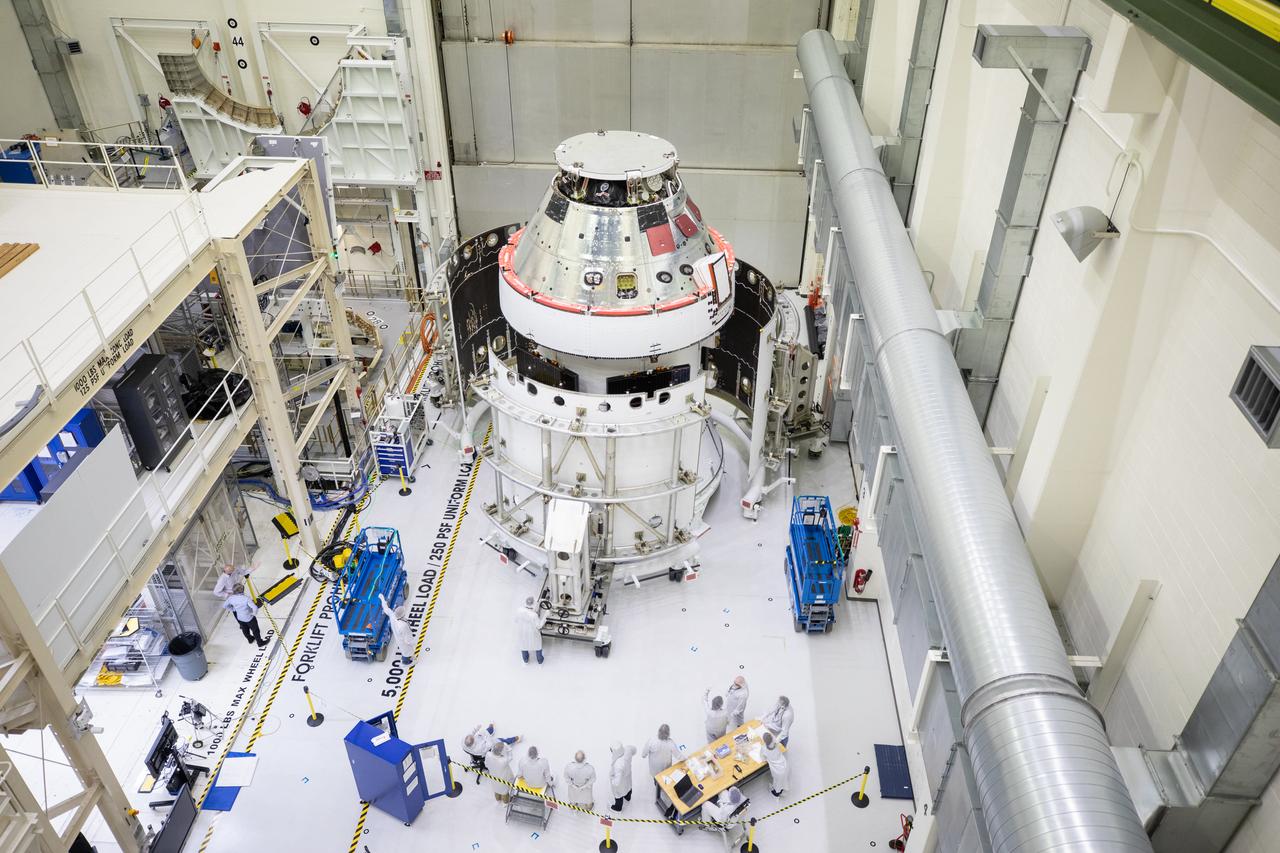
Shown is an overhead view of three spacecraft adapter jettison fairing panels fitted onto Orion’s European Service Module (ESM) on Oct. 13, 2020, inside the Neil Armstrong Operations and Checkout Building (O&C) at NASA’s Kennedy Space Center in Florida. The panels were inspected and moved into place for installation by technicians with Lockheed Martin. Recently, teams from across the globe installed the four solar array wings, which are housed inside the protective covering of the fairings. Once secured, they will encapsulate the ESM to protect it from harsh environments such as heat, wind, and acoustics as the spacecraft is propelled out of Earth’s atmosphere atop the Space Launch System (SLS) rocket during NASA’s Artemis I mission.
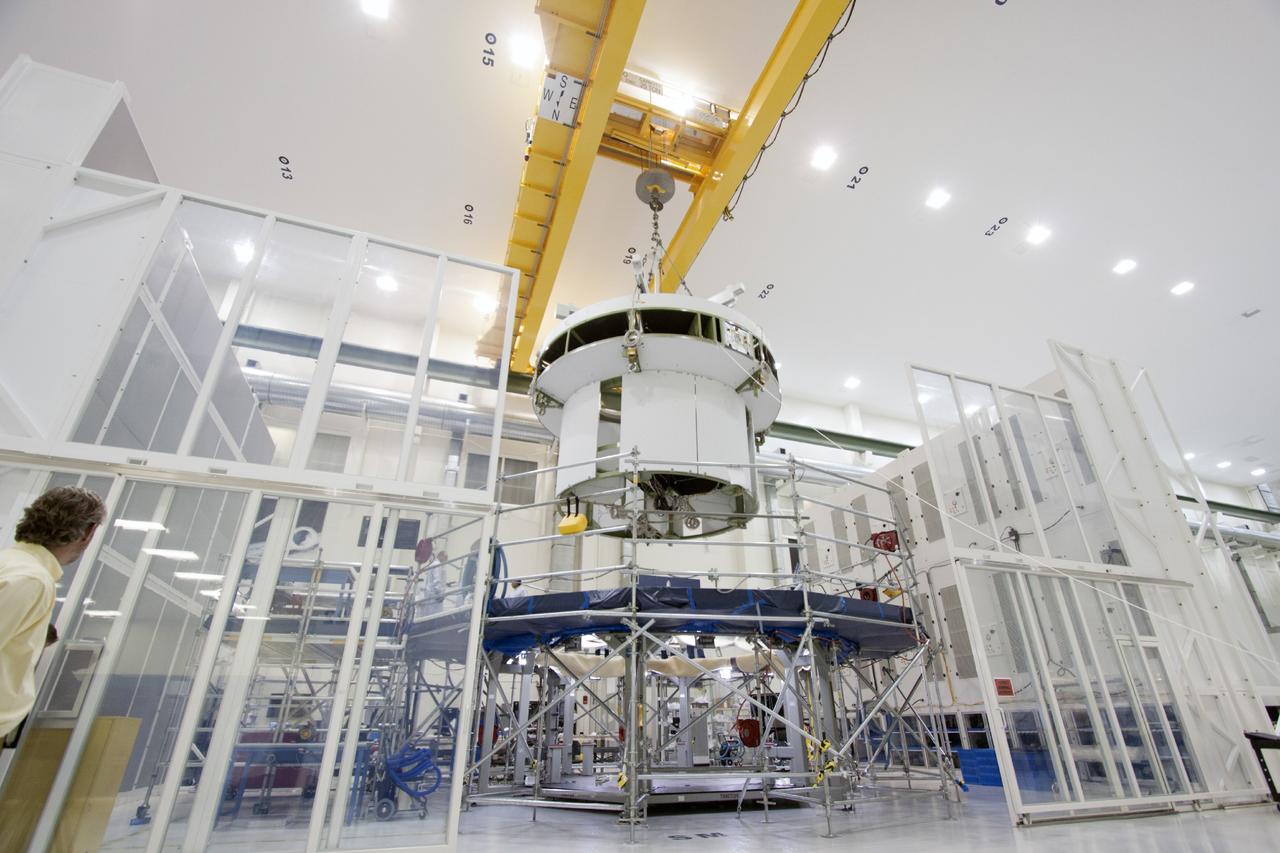
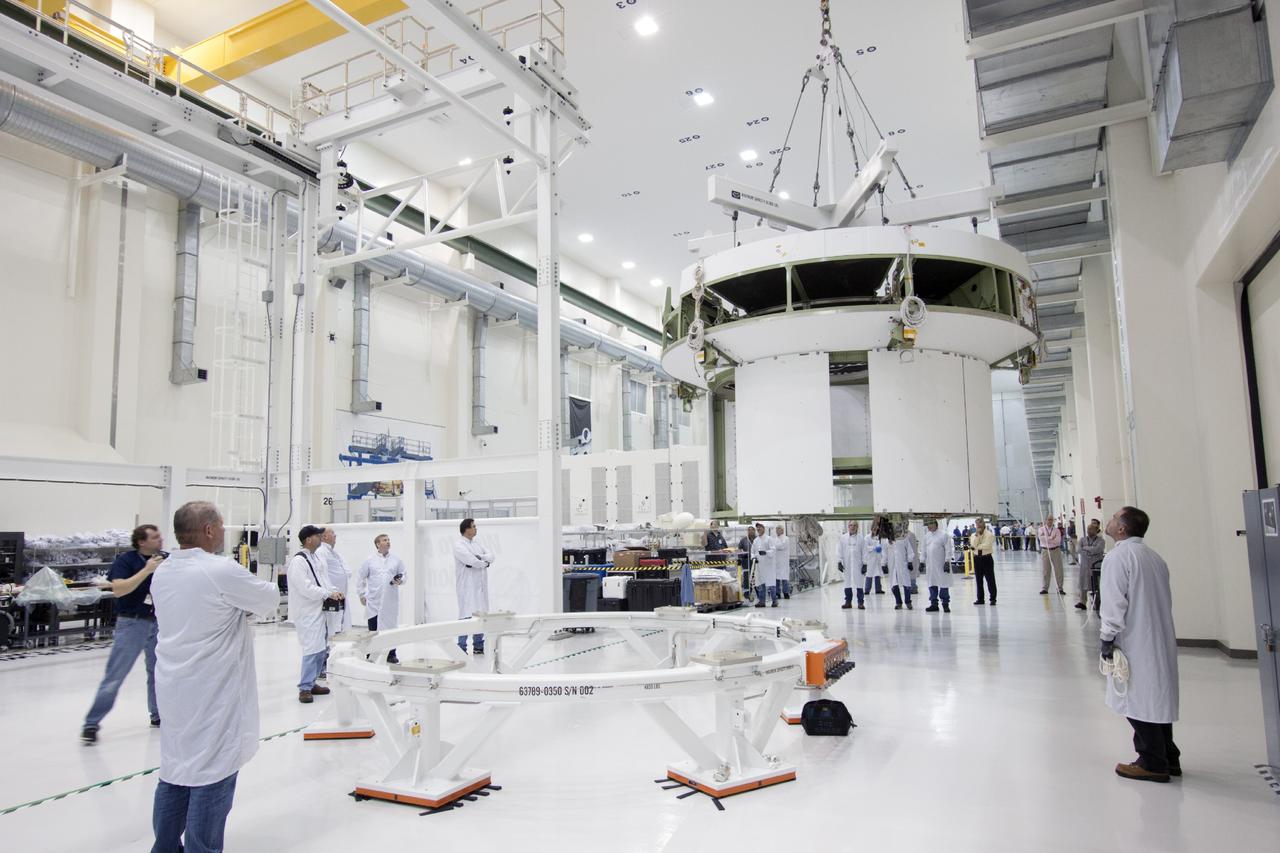
CAPE CANAVERAL, Fla. – Inside the Operations and Checkout Building high bay at NASA’s Kennedy Space Center in Florida, a crane is used to lift the service module for the Orion spacecraft from the tooling stand. The service module will be transferred to a lift station where it will be mated to the spacecraft adapter cone. Orion is the exploration spacecraft designed to carry astronauts to destinations not yet explored by humans, including an asteroid and Mars. It will have emergency abort capability, sustain the crew during space travel and provide safe re-entry from deep space return velocities. The first unpiloted test flight of the Orion is scheduled to launch in 2014 atop a Delta IV rocket and in 2017 on NASA’s Space Launch System rocket. For more information, visit http://www.nasa.gov/orion. Photo credit: NASA/Jim Grossmann
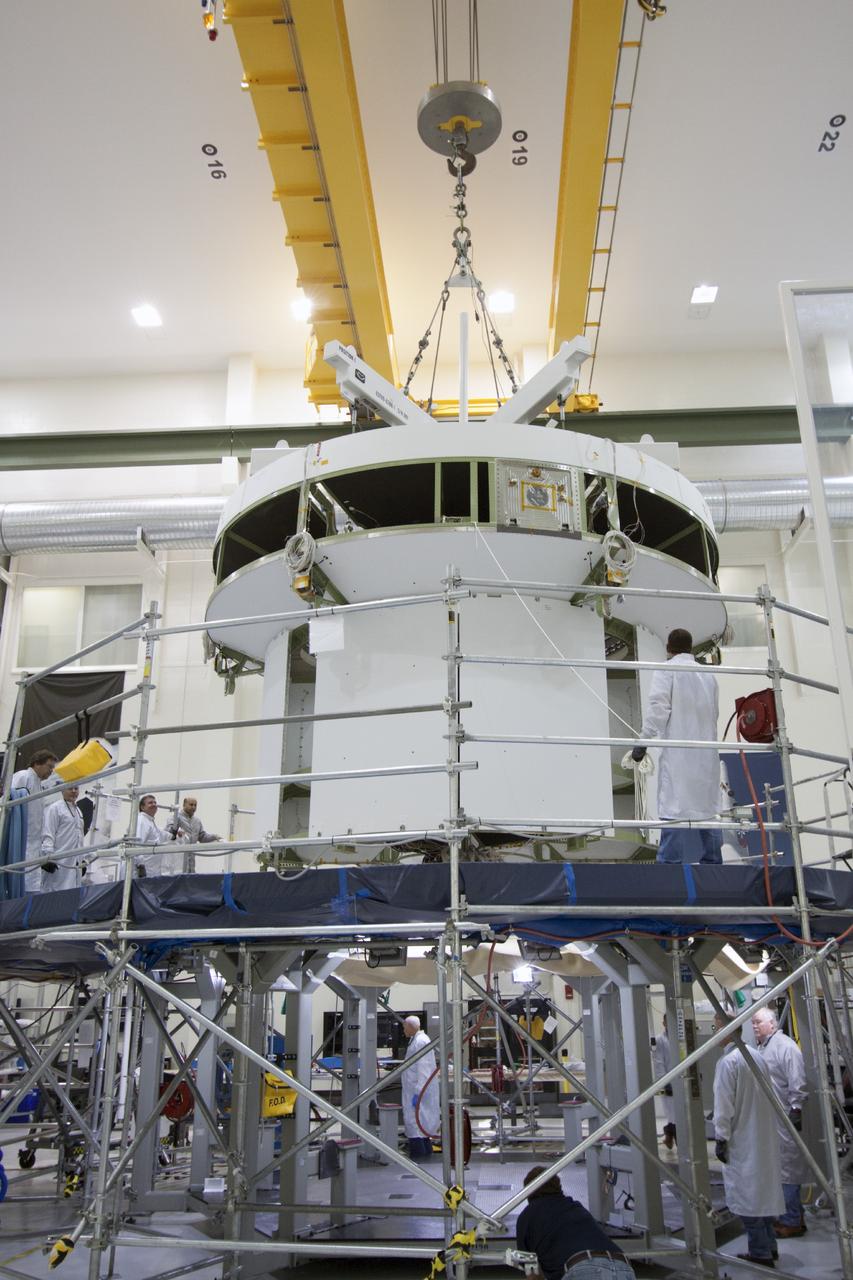
CAPE CANAVERAL, Fla. – Inside the Operations and Checkout Building high bay at NASA’s Kennedy Space Center in Florida, a crane lowers the service module for the Orion spacecraft toward a lift station where it will be mated to the spacecraft adapter cone. The service module was lifted and transferred from the tooling station. Orion is the exploration spacecraft designed to carry astronauts to destinations not yet explored by humans, including an asteroid and Mars. It will have emergency abort capability, sustain the crew during space travel and provide safe re-entry from deep space return velocities. The first unpiloted test flight of the Orion is scheduled to launch in 2014 atop a Delta IV rocket and in 2017 on NASA’s Space Launch System rocket. For more information, visit http://www.nasa.gov/orion. Photo credit: NASA/Jim Grossmann
CAPE CANAVERAL, Fla. – Inside the Operations and Checkout Building high bay at NASA’s Kennedy Space Center in Florida, a crane is used to lift the service module for the Orion spacecraft from the tooling stand. The service module will be transferred to a lift station where it will be mated to the spacecraft adapter cone. Orion is the exploration spacecraft designed to carry astronauts to destinations not yet explored by humans, including an asteroid and Mars. It will have emergency abort capability, sustain the crew during space travel and provide safe re-entry from deep space return velocities. The first unpiloted test flight of the Orion is scheduled to launch in 2014 atop a Delta IV rocket and in 2017 on NASA’s Space Launch System rocket. For more information, visit http://www.nasa.gov/orion. Photo credit: NASA/Jim Grossmann
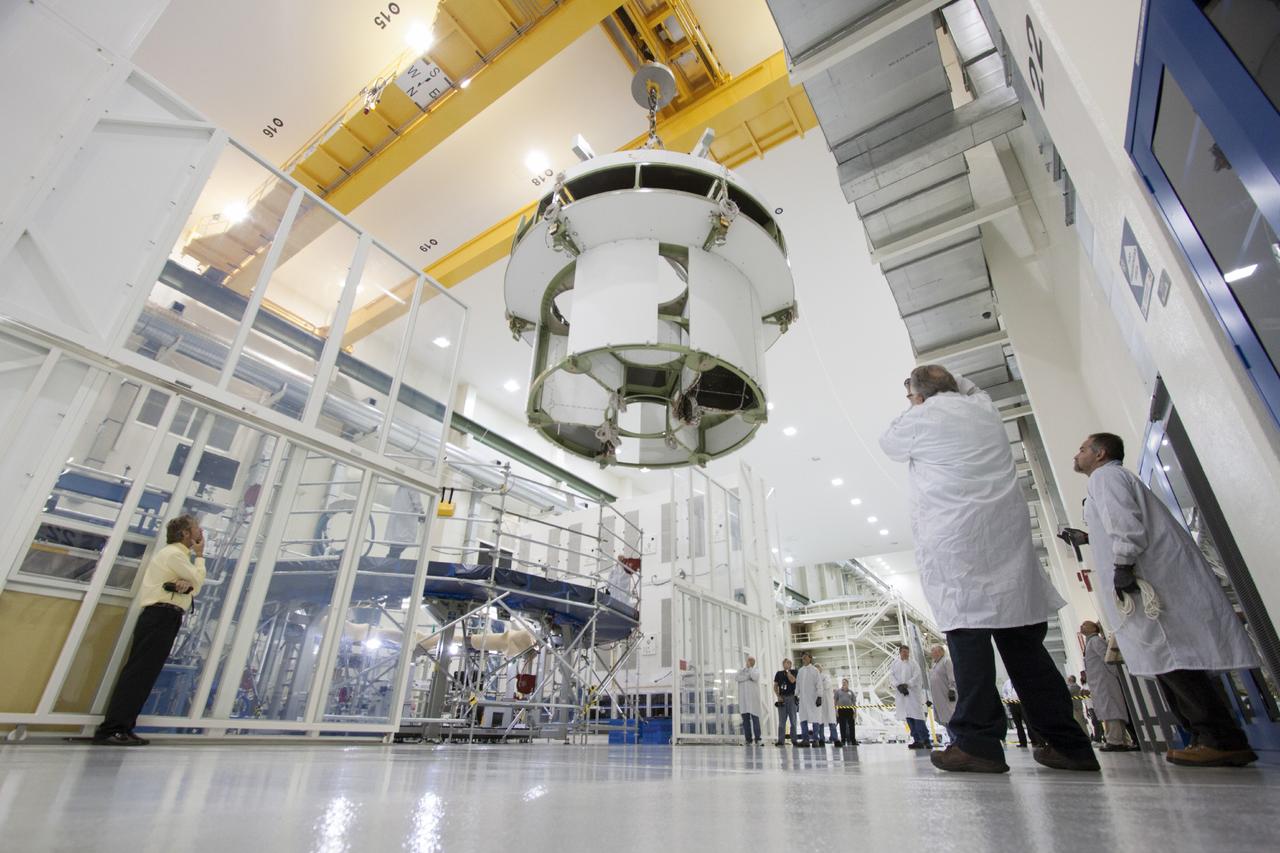
CAPE CANAVERAL, Fla. – Inside the Operations and Checkout Building high bay at NASA’s Kennedy Space Center in Florida, a crane is used to move the service module for the Orion spacecraft from the tooling stand. The service module will be transferred to a lift station where it will be mated to the spacecraft adapter cone. Orion is the exploration spacecraft designed to carry astronauts to destinations not yet explored by humans, including an asteroid and Mars. It will have emergency abort capability, sustain the crew during space travel and provide safe re-entry from deep space return velocities. The first unpiloted test flight of the Orion is scheduled to launch in 2014 atop a Delta IV rocket and in 2017 on NASA’s Space Launch System rocket. For more information, visit http://www.nasa.gov/orion. Photo credit: NASA/Jim Grossmann
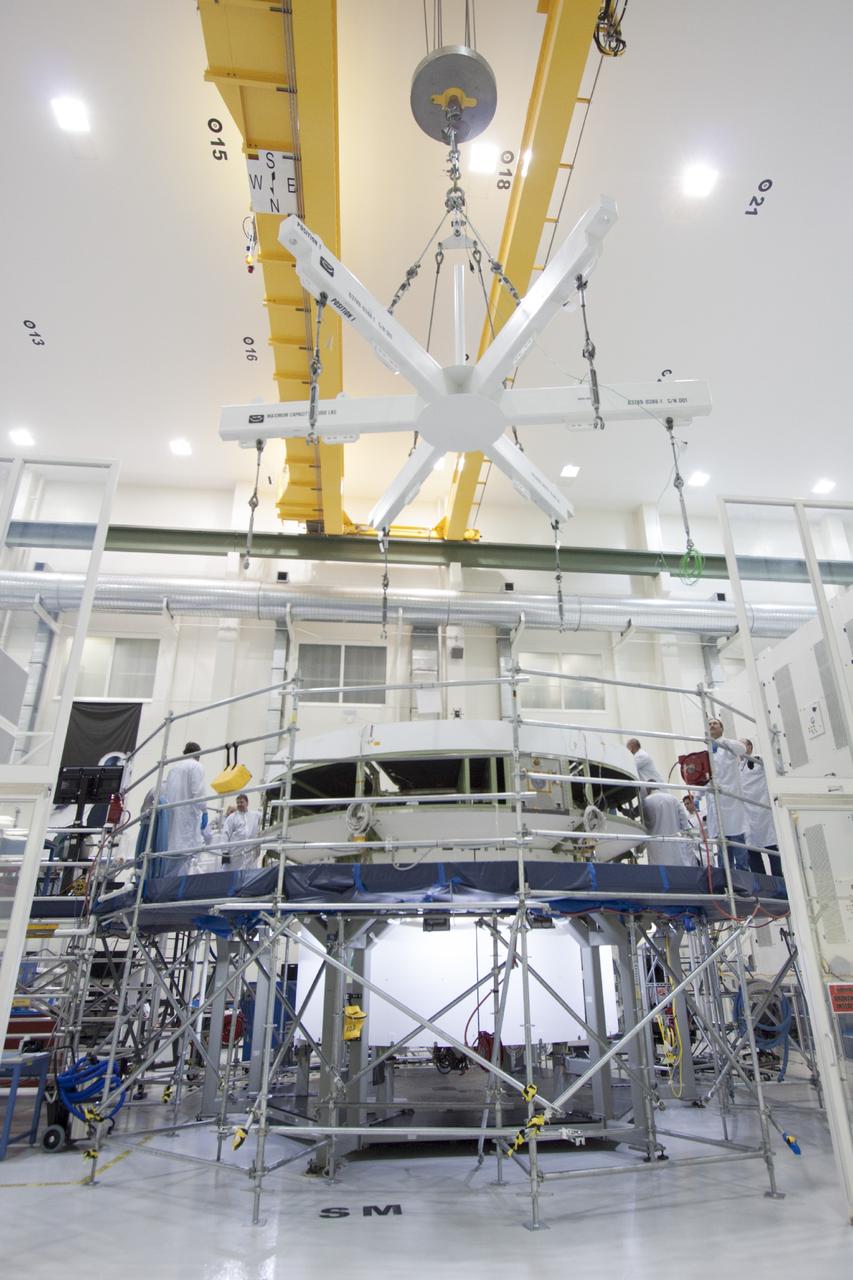
CAPE CANAVERAL, Fla. – Inside the Operations and Checkout Building high bay at NASA’s Kennedy Space Center in Florida, a lifting crane is lowered toward the service module for the Orion spacecraft. The service module will be transferred from the tooling stand onto a lift station where it will be mated to the spacecraft adapter cone. Orion is the exploration spacecraft designed to carry astronauts to destinations not yet explored by humans, including an asteroid and Mars. It will have emergency abort capability, sustain the crew during space travel and provide safe re-entry from deep space return velocities. The first unpiloted test flight of the Orion is scheduled to launch in 2014 atop a Delta IV rocket and in 2017 on NASA’s Space Launch System rocket. For more information, visit http://www.nasa.gov/orion. Photo credit: NASA/Jim Grossmann
CAPE CANAVERAL, Fla. – Inside the Operations and Checkout Building high bay at NASA’s Kennedy Space Center in Florida, technicians check to make sure the service module for the Orion spacecraft is secured to the lifting crane. The service module will be transferred from the tooling stand onto a lift station where it will be mated to the spacecraft adapter cone. Orion is the exploration spacecraft designed to carry astronauts to destinations not yet explored by humans, including an asteroid and Mars. It will have emergency abort capability, sustain the crew during space travel and provide safe re-entry from deep space return velocities. The first unpiloted test flight of the Orion is scheduled to launch in 2014 atop a Delta IV rocket and in 2017 on NASA’s Space Launch System rocket. For more information, visit http://www.nasa.gov/orion. Photo credit: NASA/Jim Grossmann
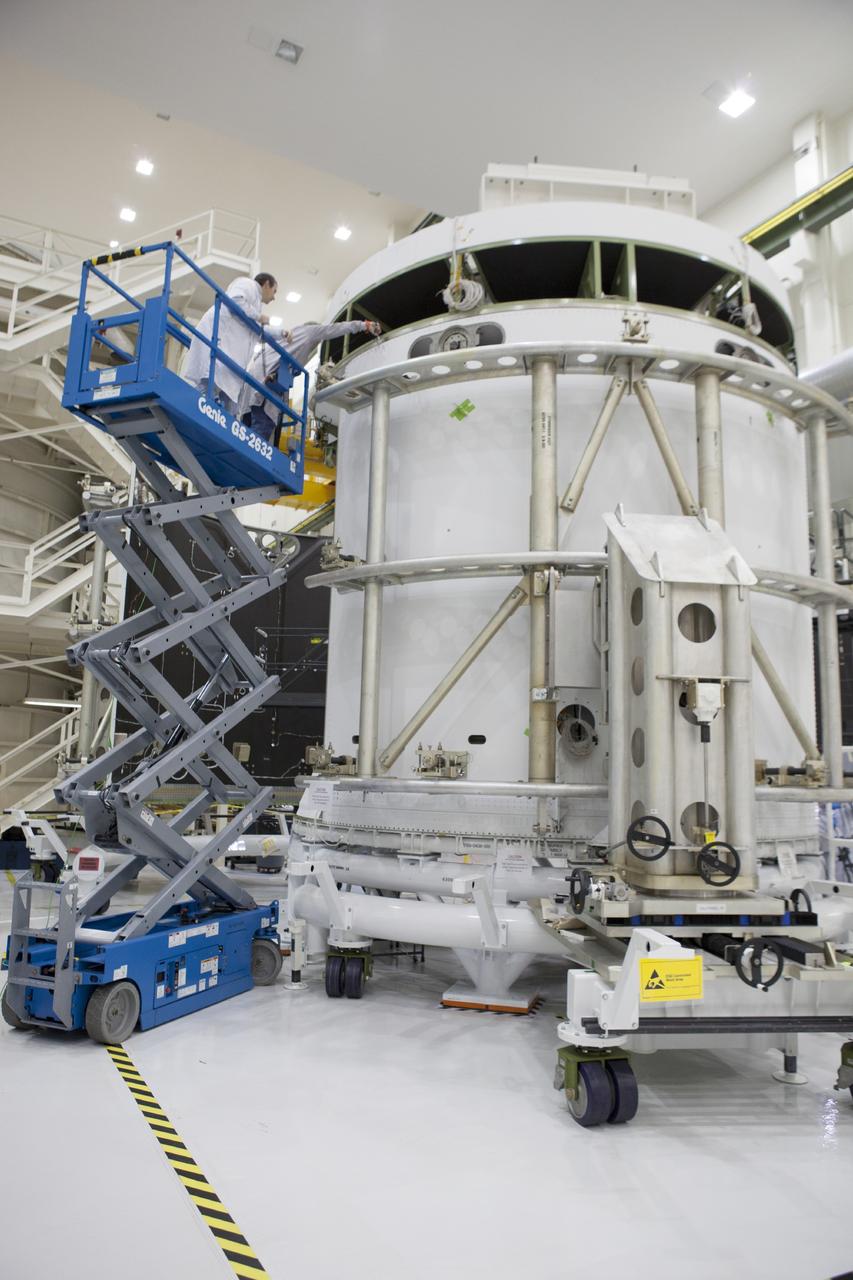
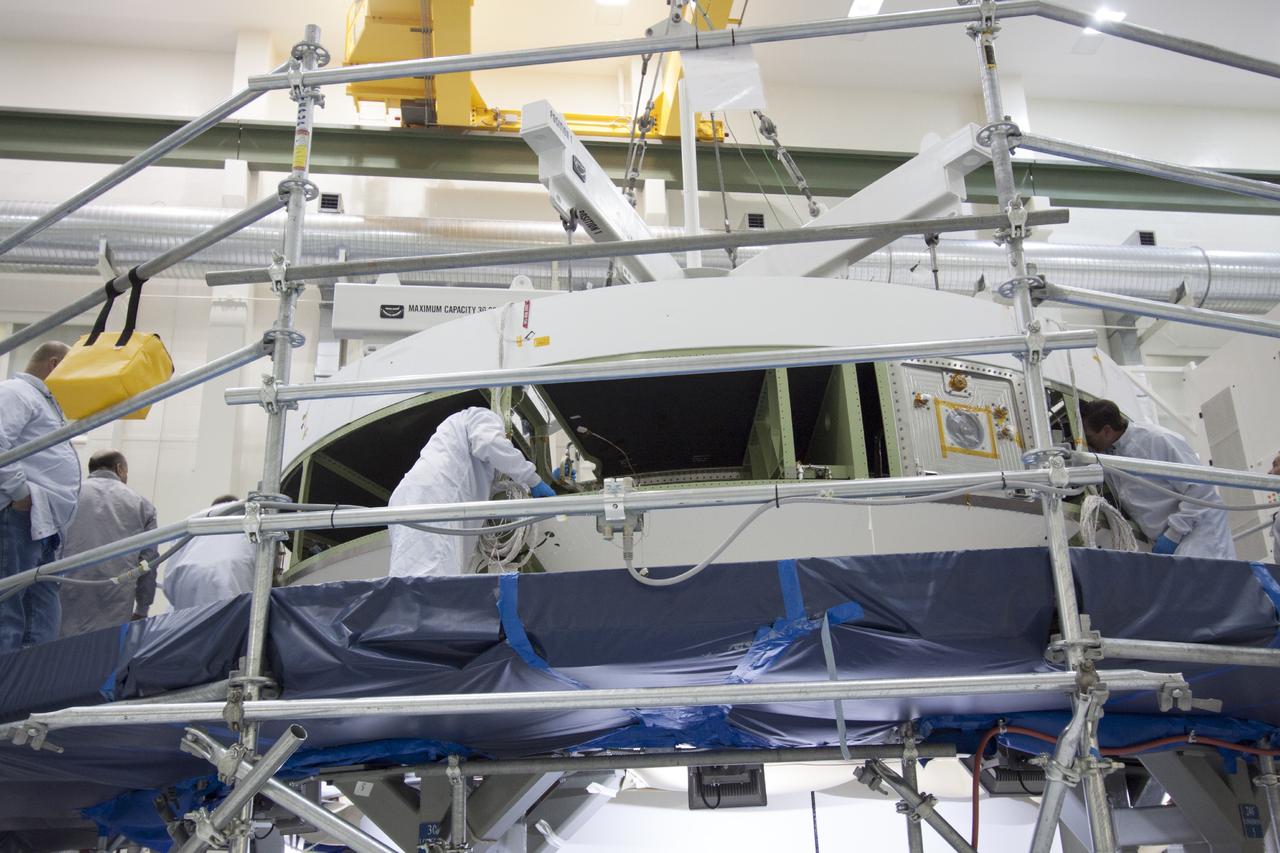
CAPE CANAVERAL, Fla. – Inside the Operations and Checkout Building high bay at NASA’s Kennedy Space Center in Florida, technicians on a scissor lift monitor the progress as a special handling device is used to move the second of three fairings closer for installation on the service module for the Orion spacecraft. The Orion spacecraft is being prepared for its first unpiloted flight test, Exploration Flight Test-1, or EFT-1, scheduled for launch atop a Delta IV rocket in September 2014. The Orion spacecraft is designed to carry astronauts to destinations not yet explored by humans. It will have emergency abort capability, sustain the crew during space travel and provide safe re-entry from deep space return velocities. Orion is scheduled to launch atop NASA’s Space Launch System rocket in 2017. For more information, visit http://www.nasa.gov/orion. Photo credit: NASA/Dimitri Gerondidakis
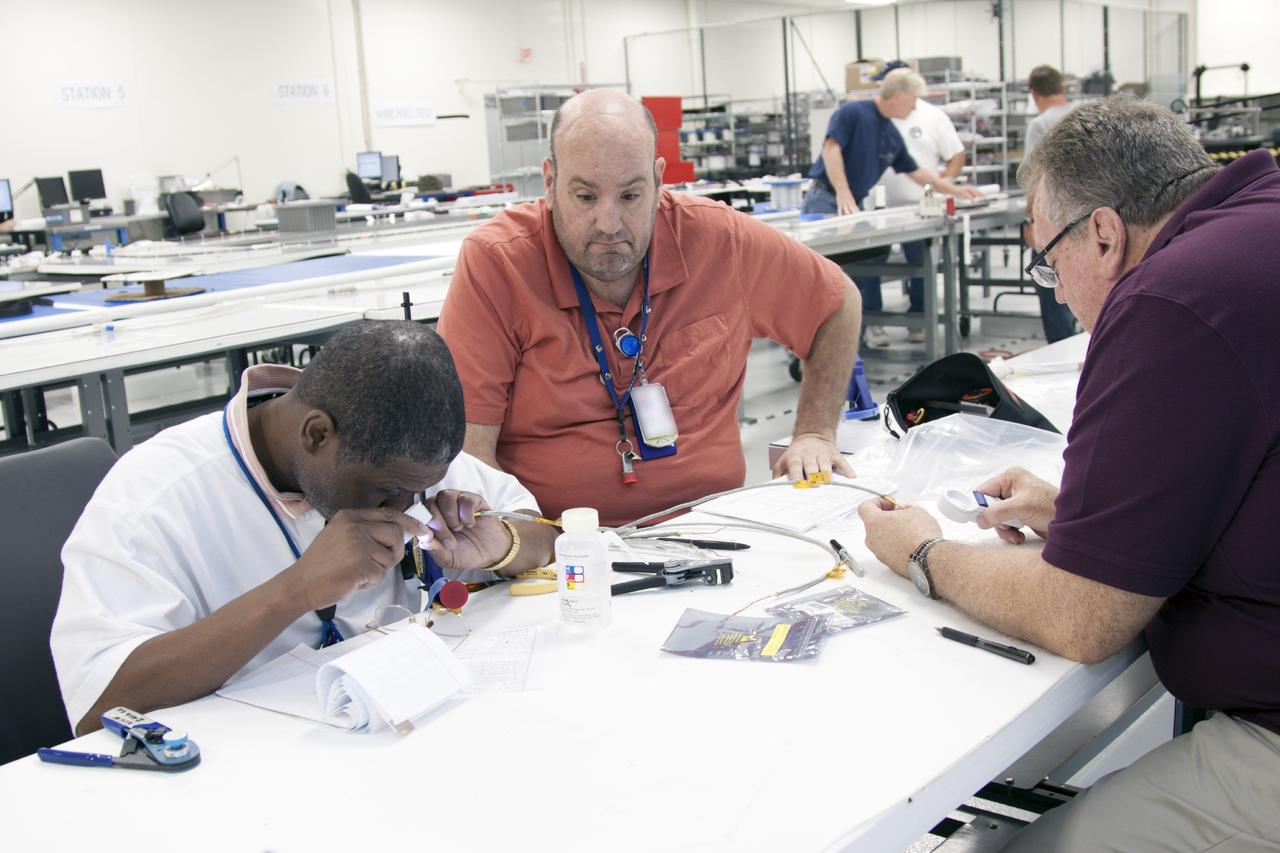
CAPE CANAVERAL, Fla. – Inside the Operations and Checkout Building high bay at NASA’s Kennedy Space Center in Florida, technicians look over components that will be installed on the service module bulkhead for the Orion spacecraft. Orion is the exploration spacecraft designed to carry astronauts to destinations not yet explored by humans, including an asteroid and Mars. It will have emergency abort capability, sustain the crew during space travel and provide safe re-entry from deep space return velocities. The first unpiloted test flight of the Orion is scheduled to launch in 2014 atop a Delta IV rocket and in 2017 on NASA’s Space Launch System rocket. For more information, visit http://www.nasa.gov/orion. Photo credit: NASA/Jim Grossmann
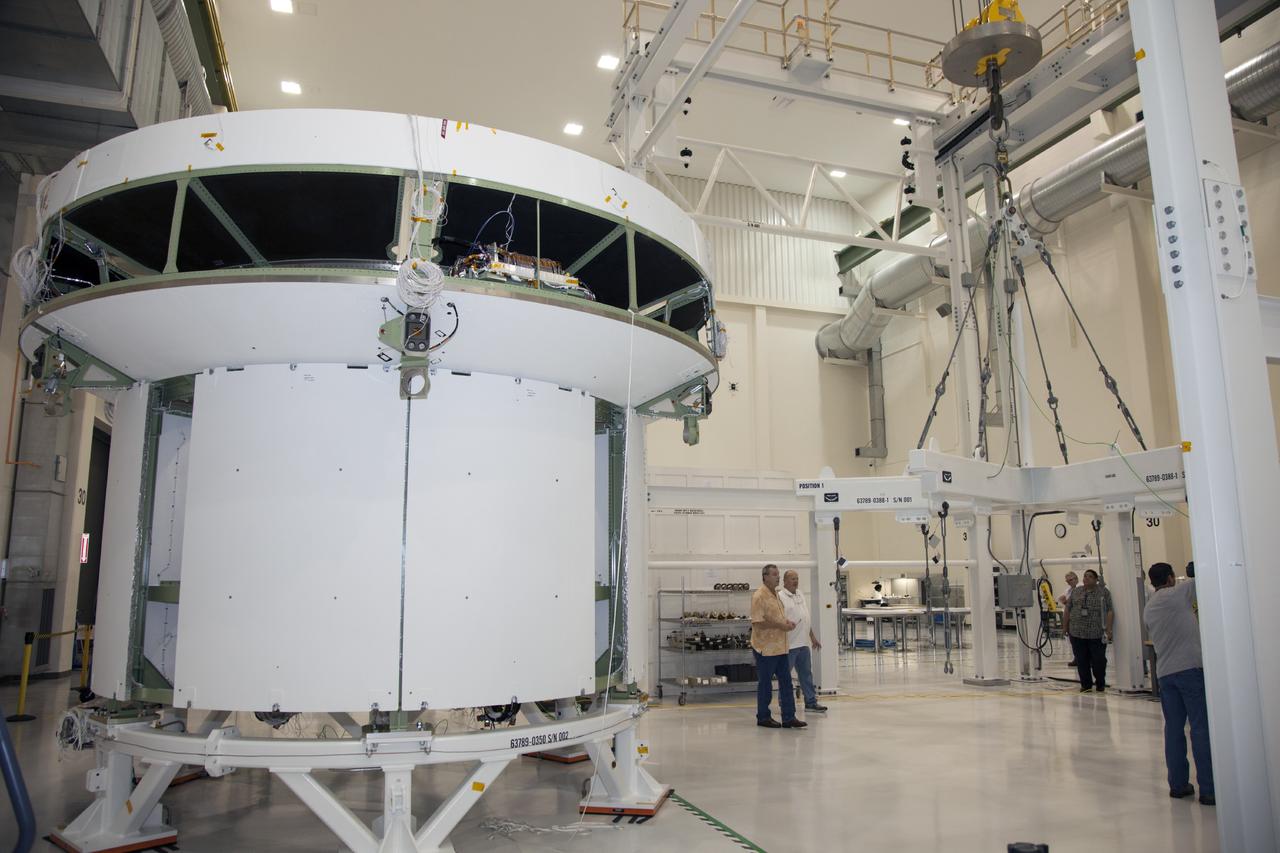
CAPE CANAVERAL, Fla. -- Inside the Operations and Checkout Building high bay at NASA’s Kennedy Space Center in Florida, technicians are preparing a crane to lift the service module bulkhead for the Orion spacecraft. The service module will be mated to the spacecraft adapter cone for testing. Technicians have applied shims, drilled fasteners and built up the cable harnesses on the bulkhead. Orion is the exploration spacecraft designed to carry astronauts to destinations not yet explored by humans, including an asteroid and Mars. It will have emergency abort capability, sustain the crew during space travel and provide safe re-entry from deep space return velocities. The first unpiloted test flight of the Orion is scheduled to launch in 2014 atop a Delta IV rocket and in 2017 on NASA’s Space Launch System rocket. For more information, visit http://www.nasa.gov/orion. Photo credit: NASA/Daniel Casper
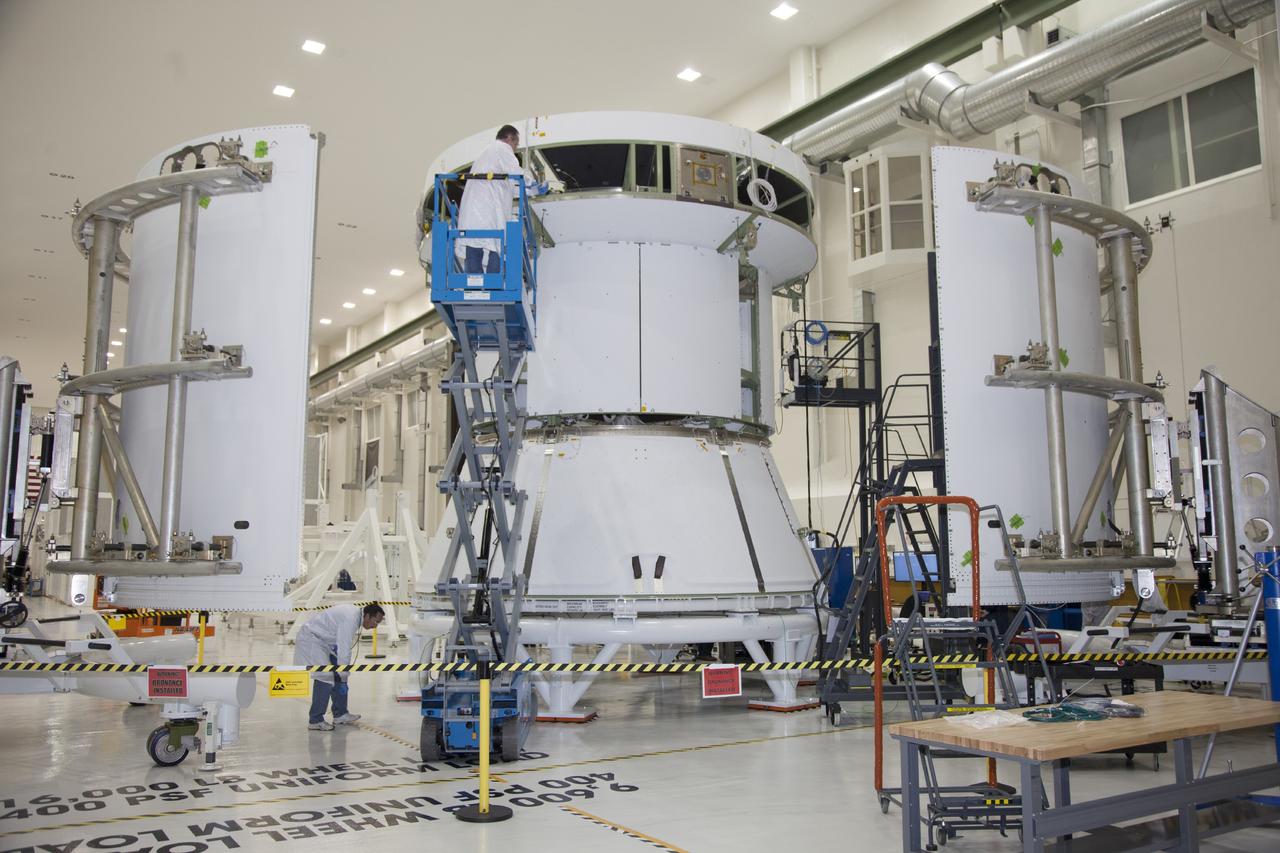
CAPE CANAVERAL, Fla. – Inside the Operations and Checkout Building high bay at NASA’s Kennedy Space Center in Florida, a technician on a scissor lift works on the service module for the Orion spacecraft. To the right and left are two of the three fairings that will be installed around the service module. The Orion spacecraft is being prepared for its first unpiloted flight test, Exploration Flight Test-1, or EFT-1, scheduled for launch atop a Delta IV rocket in September 2014. The Orion spacecraft is designed to carry astronauts to destinations not yet explored by humans. It will have emergency abort capability, sustain the crew during space travel and provide safe re-entry from deep space return velocities. Orion is scheduled to launch atop NASA’s Space Launch System rocket in 2017. For more information, visit http://www.nasa.gov/orion. Photo credit: NASA/Daniel Casper
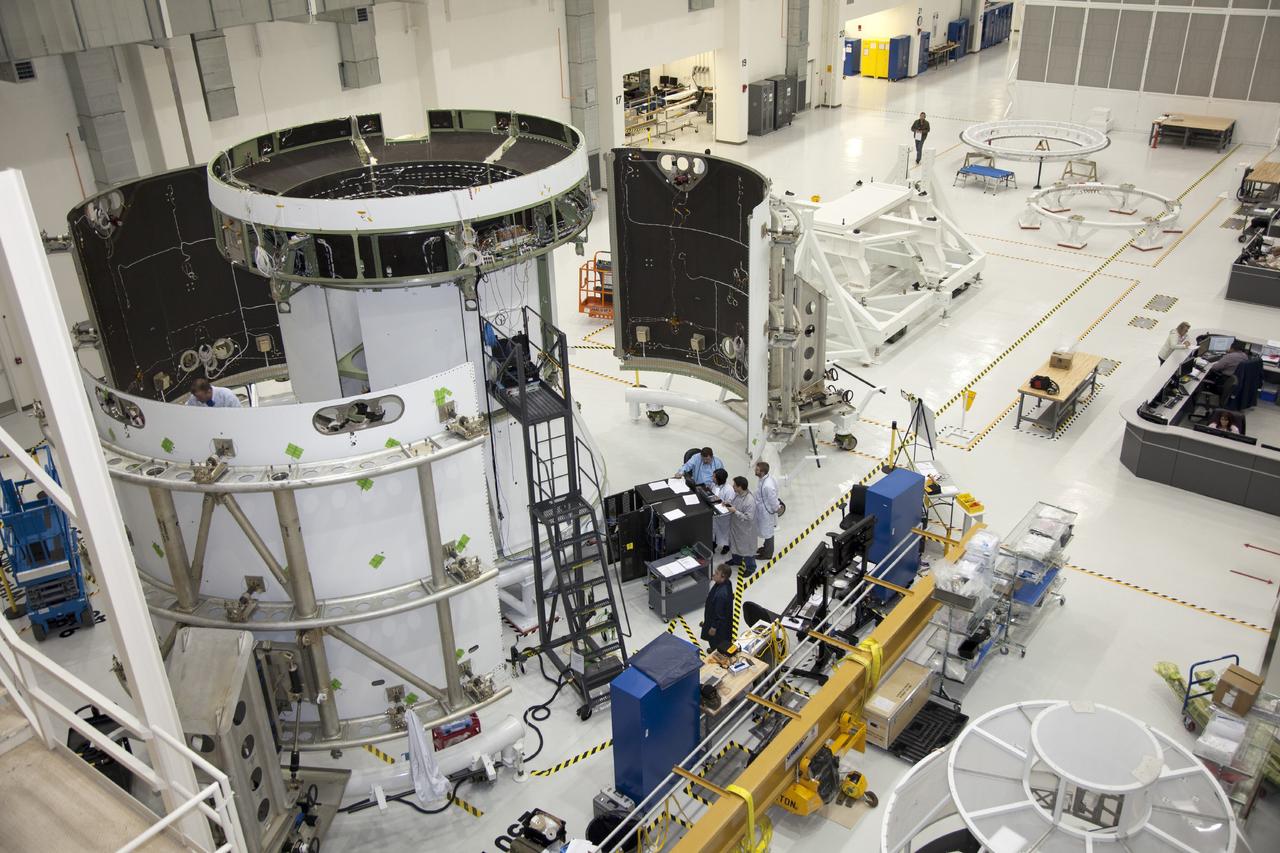
CAPE CANAVERAL, Fla. – A view from above inside the Operations and Checkout Building high bay at NASA’s Kennedy Space Center in Florida, shows the service module for the Orion spacecraft secured to a work stand. Technicians are preparing the three fairings for installation around the service module. The Orion spacecraft is being prepared for its first unpiloted flight test, Exploration Flight Test-1, or EFT-1, scheduled for launch atop a Delta IV rocket in September 2014. The Orion spacecraft is designed to carry astronauts to destinations not yet explored by humans. It will have emergency abort capability, sustain the crew during space travel and provide safe re-entry from deep space return velocities. Orion is scheduled to launch atop NASA’s Space Launch System rocket in 2017. For more information, visit http://www.nasa.gov/orion. Photo credit: NASA/Daniel Casper
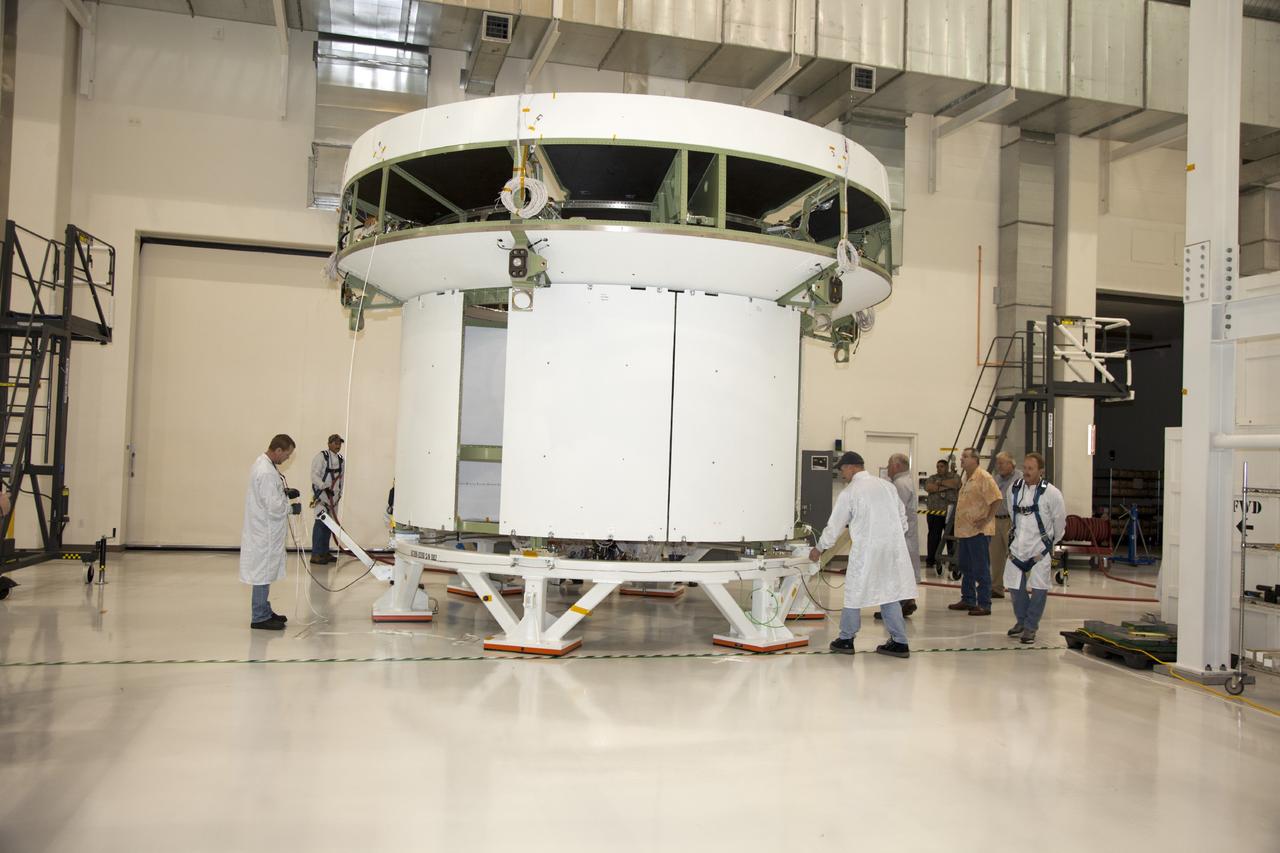
CAPE CANAVERAL, Fla. -- Inside the Operations and Checkout Building high bay at NASA’s Kennedy Space Center in Florida, technicians prepare the service module bulkhead for the Orion spacecraft for the move to a lifting station. The service module will be mated to the spacecraft adapter cone for testing. Orion is the exploration spacecraft designed to carry astronauts to destinations not yet explored by humans, including an asteroid and Mars. It will have emergency abort capability, sustain the crew during space travel and provide safe re-entry from deep space return velocities. The first unpiloted test flight of the Orion is scheduled to launch in 2014 atop a Delta IV rocket and in 2017 on NASA’s Space Launch System rocket. For more information, visit http://www.nasa.gov/orion. Photo credit: NASA/Daniel Casper
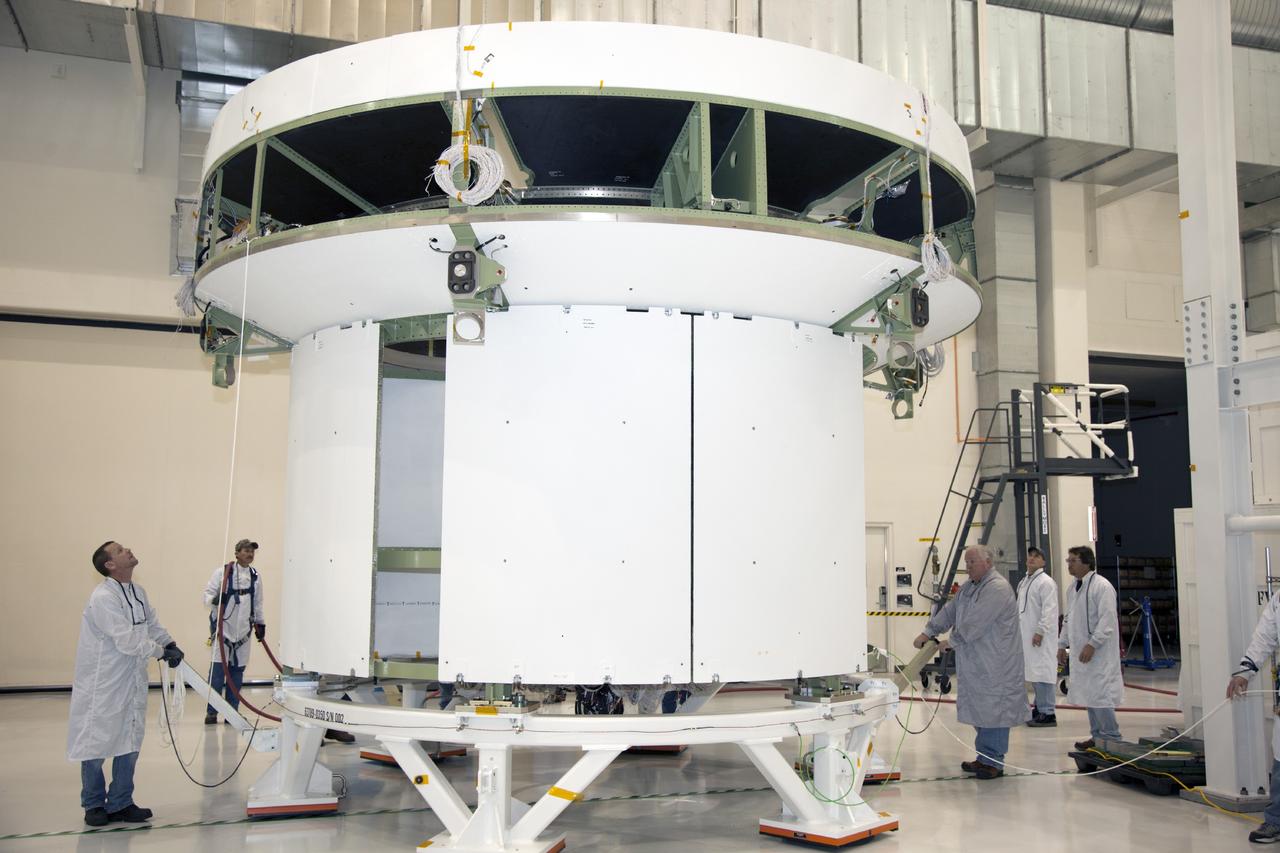
CAPE CANAVERAL, Fla. -- Inside the Operations and Checkout Building high bay at NASA’s Kennedy Space Center in Florida, technicians prepare the service module bulkhead for the Orion spacecraft for the move to a lifting station. The service module will be mated to the spacecraft adapter cone for testing. Orion is the exploration spacecraft designed to carry astronauts to destinations not yet explored by humans, including an asteroid and Mars. It will have emergency abort capability, sustain the crew during space travel and provide safe re-entry from deep space return velocities. The first unpiloted test flight of the Orion is scheduled to launch in 2014 atop a Delta IV rocket and in 2017 on NASA’s Space Launch System rocket. For more information, visit http://www.nasa.gov/orion. Photo credit: NASA/Daniel Casper
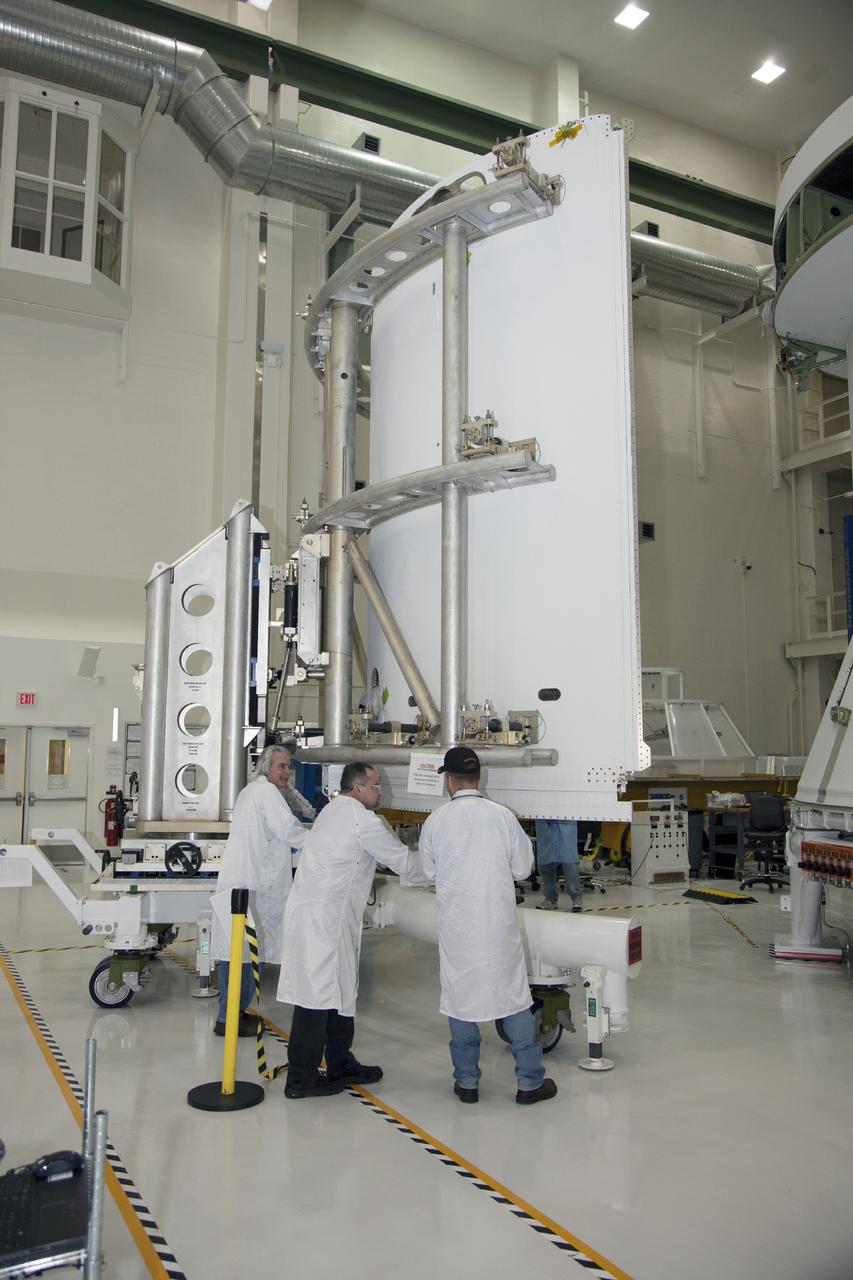
CAPE CANAVERAL, Fla. – Inside the Operations and Checkout Building high bay at NASA’s Kennedy Space Center in Florida, technicians use a special handling device to move the first of three fairings for installation on the service module for the Orion spacecraft. The Orion spacecraft is being prepared for its first unpiloted flight test, Exploration Flight Test-1, or EFT-1, scheduled for launch atop a Delta IV rocket in September 2014. The Orion spacecraft is designed to carry astronauts to destinations not yet explored by humans. It will have emergency abort capability, sustain the crew during space travel and provide safe re-entry from deep space return velocities. Orion is scheduled to launch atop NASA’s Space Launch System rocket in 2017. For more information, visit http://www.nasa.gov/orion. Photo credit: NASA/Daniel Casper
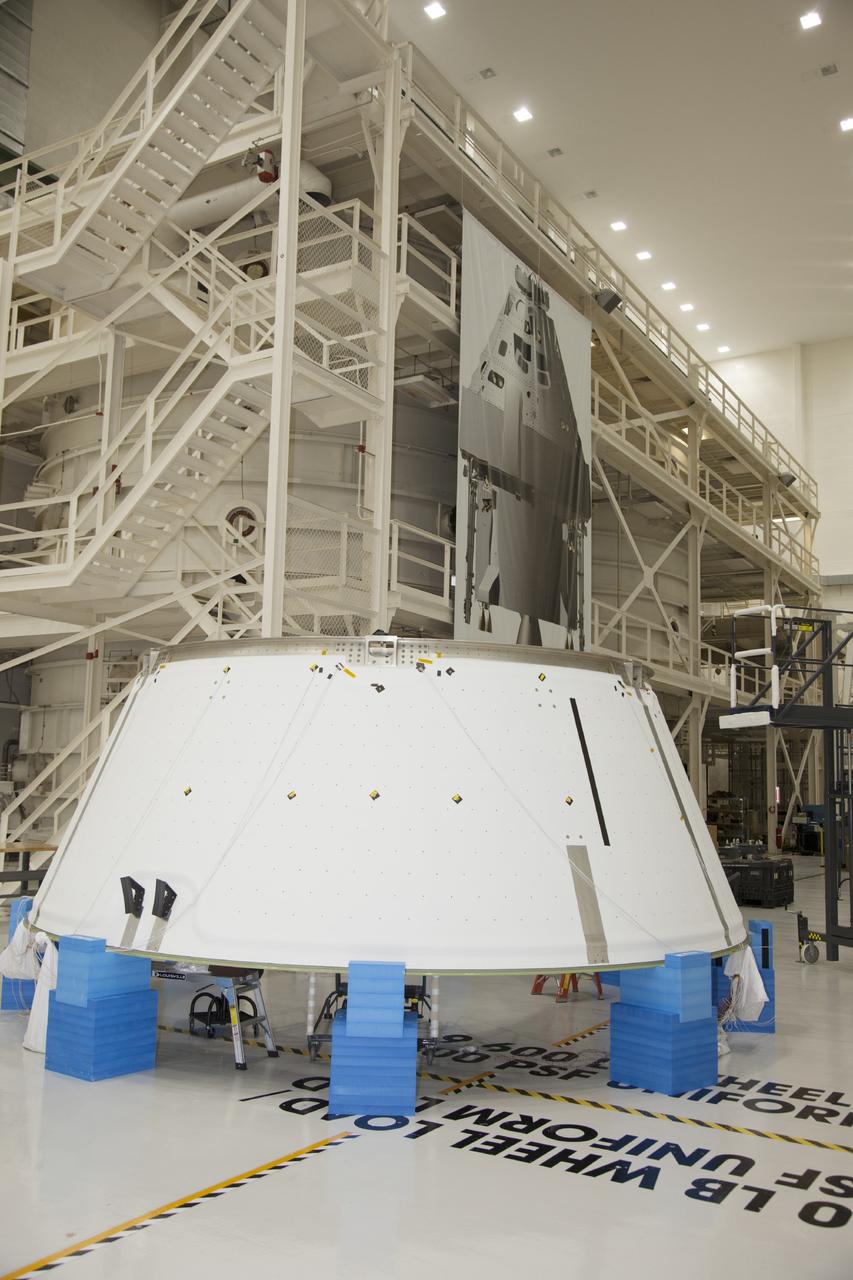
CAPE CANAVERAL, Fla. -- Inside the Operations and Checkout Building high bay at NASA’s Kennedy Space Center in Florida, the spacecraft adapter cone for the Orion spacecraft is positioned on special protective blocks for processing work. It will be mated to the service module for testing. Orion is the exploration spacecraft designed to carry astronauts to destinations not yet explored by humans, including an asteroid and Mars. It will have emergency abort capability, sustain the crew during space travel and provide safe re-entry from deep space return velocities. The first unpiloted test flight of the Orion is scheduled to launch in 2014 atop a Delta IV rocket and in 2017 on NASA’s Space Launch System rocket. For more information, visit http://www.nasa.gov/orion. Photo credit: NASA/Daniel Casper
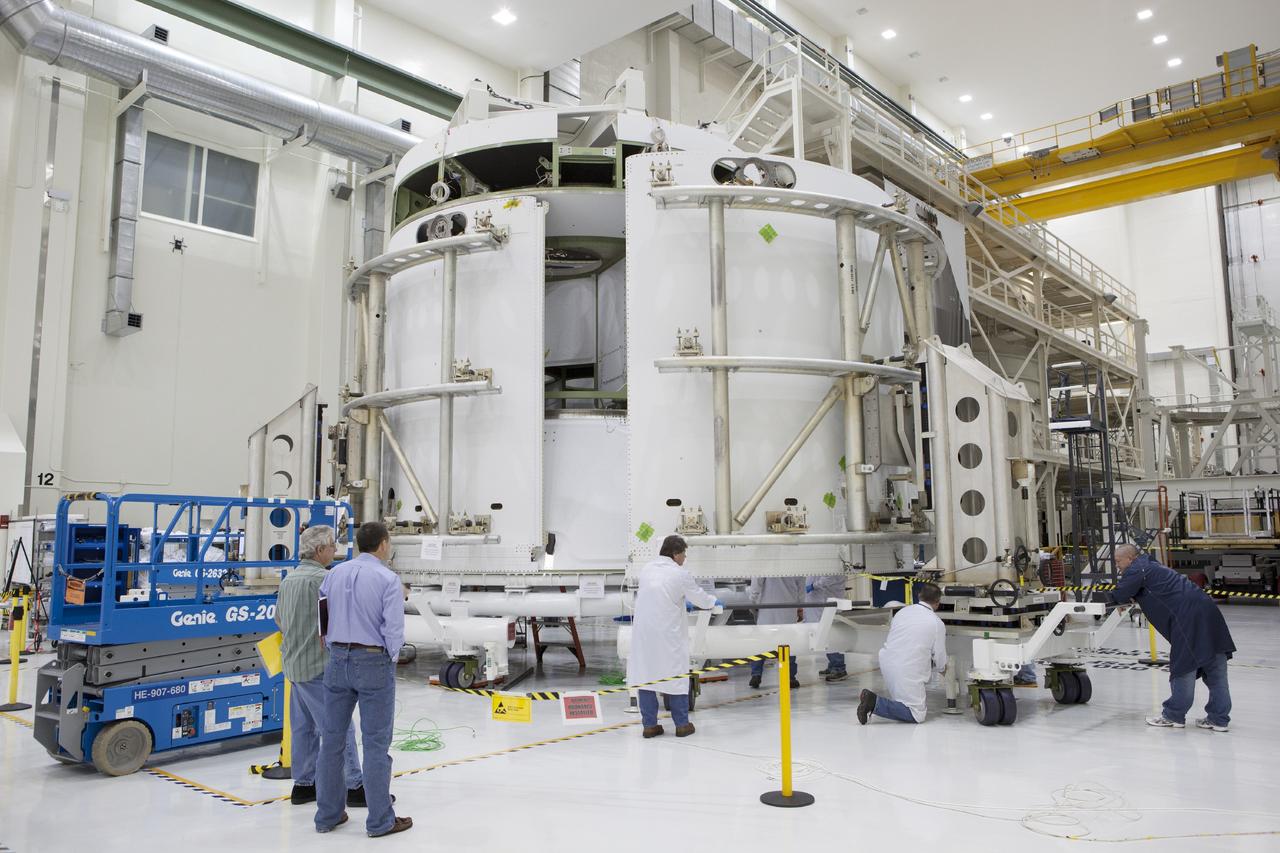
CAPE CANAVERAL, Fla. – Inside the Operations and Checkout Building high bay at NASA’s Kennedy Space Center in Florida, technicians use a special handling device to move the second of three fairings closer for installation on the service module for the Orion spacecraft. The Orion spacecraft is being prepared for its first unpiloted flight test, Exploration Flight Test-1, or EFT-1, scheduled for launch atop a Delta IV rocket in September 2014. The Orion spacecraft is designed to carry astronauts to destinations not yet explored by humans. It will have emergency abort capability, sustain the crew during space travel and provide safe re-entry from deep space return velocities. Orion is scheduled to launch atop NASA’s Space Launch System rocket in 2017. For more information, visit http://www.nasa.gov/orion. Photo credit: NASA/Dimitri Gerondidakis
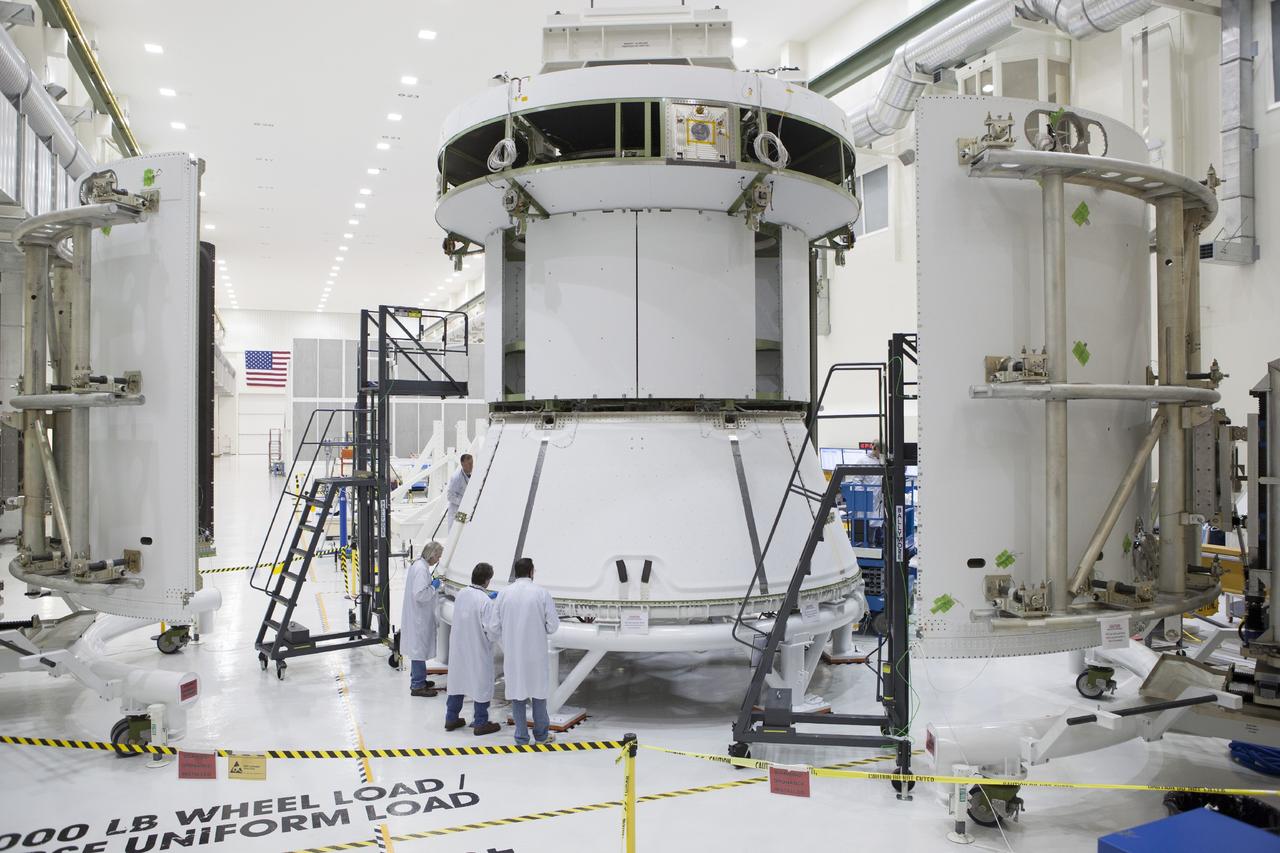
CAPE CANAVERAL, Fla. – Inside the Operations and Checkout Building high bay at NASA’s Kennedy Space Center in Florida, technicians are preparing the service module for the Orion spacecraft so that the second of three fairings can be installed. The Orion spacecraft is being prepared for its first unpiloted flight test, Exploration Flight Test-1, or EFT-1, scheduled for launch atop a Delta IV rocket in September 2014. The Orion spacecraft is designed to carry astronauts to destinations not yet explored by humans. It will have emergency abort capability, sustain the crew during space travel and provide safe re-entry from deep space return velocities. Orion is scheduled to launch atop NASA’s Space Launch System rocket in 2017. For more information, visit http://www.nasa.gov/orion. Photo credit: NASA/Dimitri Gerondidakis
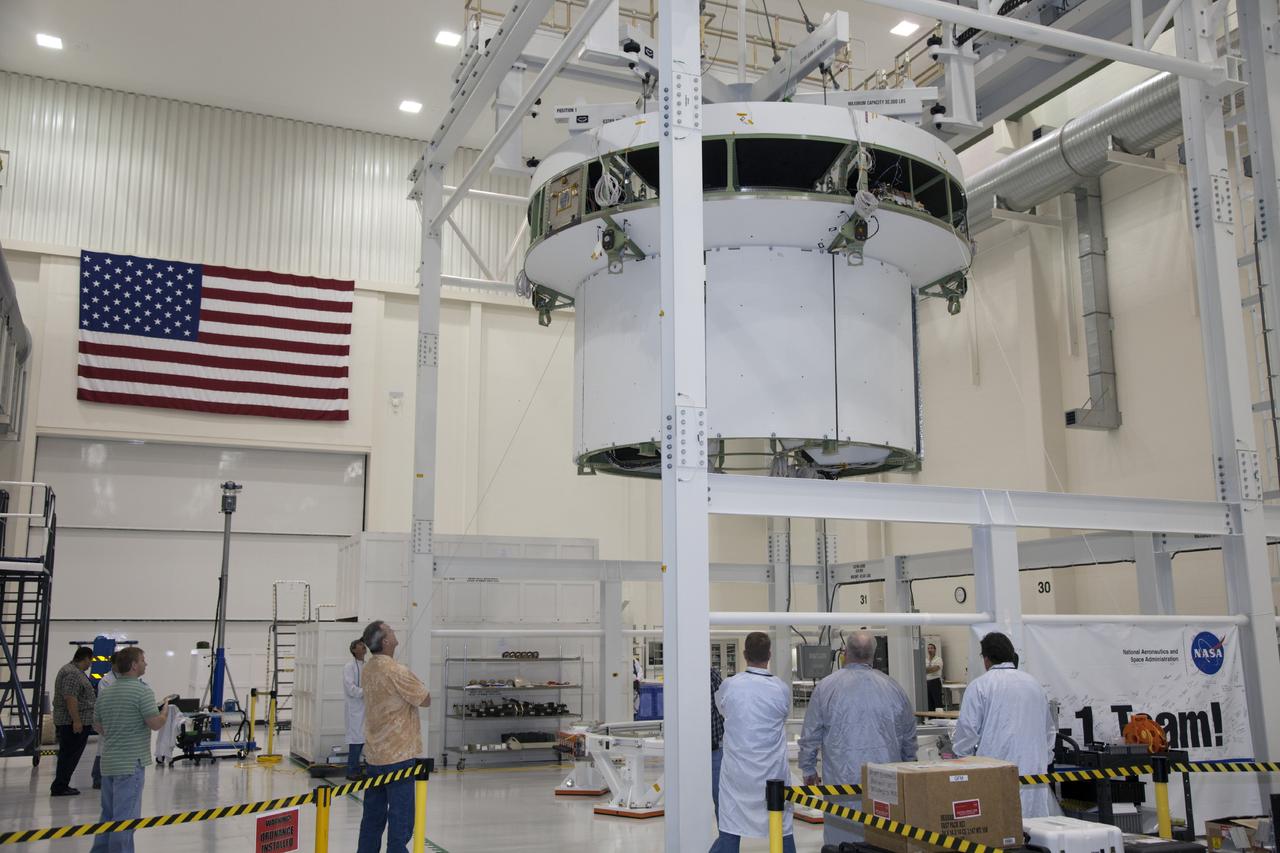
CAPE CANAVERAL, Fla. -- Inside the Operations and Checkout Building high bay at NASA’s Kennedy Space Center in Florida, technicians monitor the progress as the service module bulkhead for the Orion spacecraft is lifted by crane from a work stand. The service module will be mated to the spacecraft adapter cone for testing. Orion is the exploration spacecraft designed to carry astronauts to destinations not yet explored by humans, including an asteroid and Mars. It will have emergency abort capability, sustain the crew during space travel and provide safe re-entry from deep space return velocities. The first unpiloted test flight of the Orion is scheduled to launch in 2014 atop a Delta IV rocket and in 2017 on NASA’s Space Launch System rocket. For more information, visit http://www.nasa.gov/orion. Photo credit: NASA/Daniel Casper
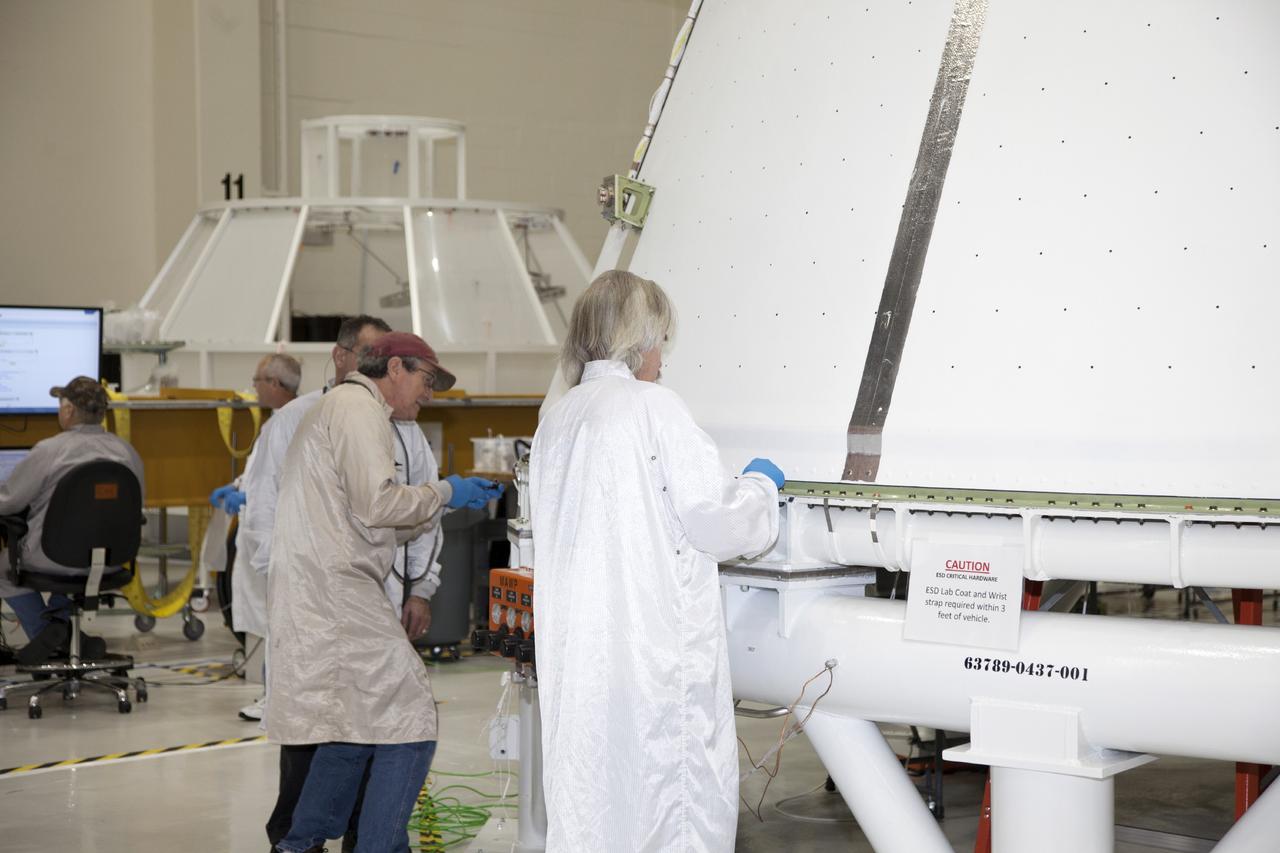
CAPE CANAVERAL, Fla. – Inside the Operations and Checkout Building high bay at NASA’s Kennedy Space Center in Florida, technicians prepare the first of three fairings for installation on the service module for the Orion spacecraft. The Orion spacecraft is being prepared for its first unpiloted flight test, Exploration Flight Test-1, or EFT-1, scheduled for launch atop a Delta IV rocket in September 2014. The Orion spacecraft is designed to carry astronauts to destinations not yet explored by humans. It will have emergency abort capability, sustain the crew during space travel and provide safe re-entry from deep space return velocities. Orion is scheduled to launch atop NASA’s Space Launch System rocket in 2017. For more information, visit http://www.nasa.gov/orion. Photo credit: NASA/Daniel Casper
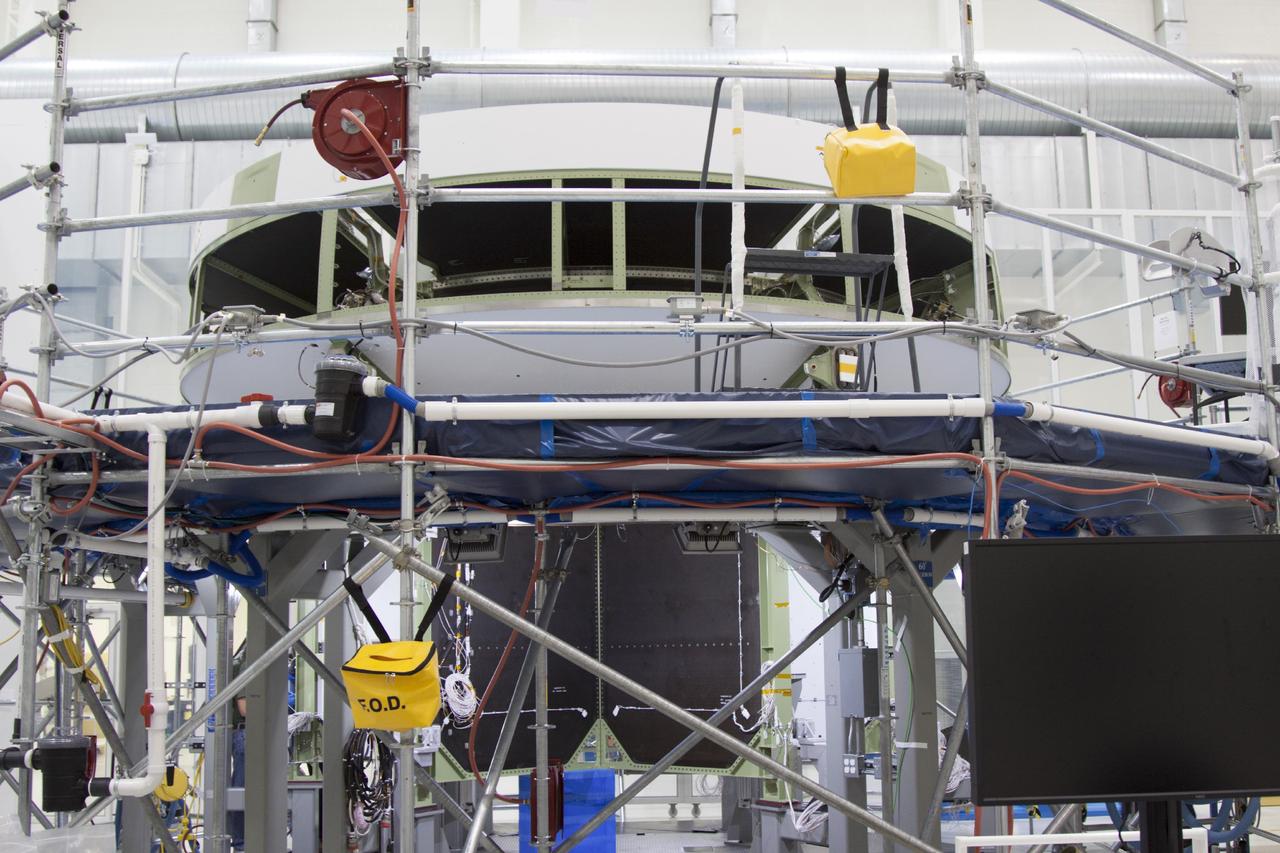
CAPE CANAVERAL, Fla. – Inside the Operations and Checkout Building high bay at NASA’s Kennedy Space Center in Florida, processing work continues on the service module bulkhead for the Orion spacecraft. Technicians have applied shims, drilled fasteners and built up the cable harnesses on the bulkhead. Orion is the exploration spacecraft designed to carry astronauts to destinations not yet explored by humans, including an asteroid and Mars. It will have emergency abort capability, sustain the crew during space travel and provide safe re-entry from deep space return velocities. The first unpiloted test flight of the Orion is scheduled to launch in 2014 atop a Delta IV rocket and in 2017 on NASA’s Space Launch System rocket. For more information, visit http://www.nasa.gov/orion. Photo credit: NASA/Jim Grossmann
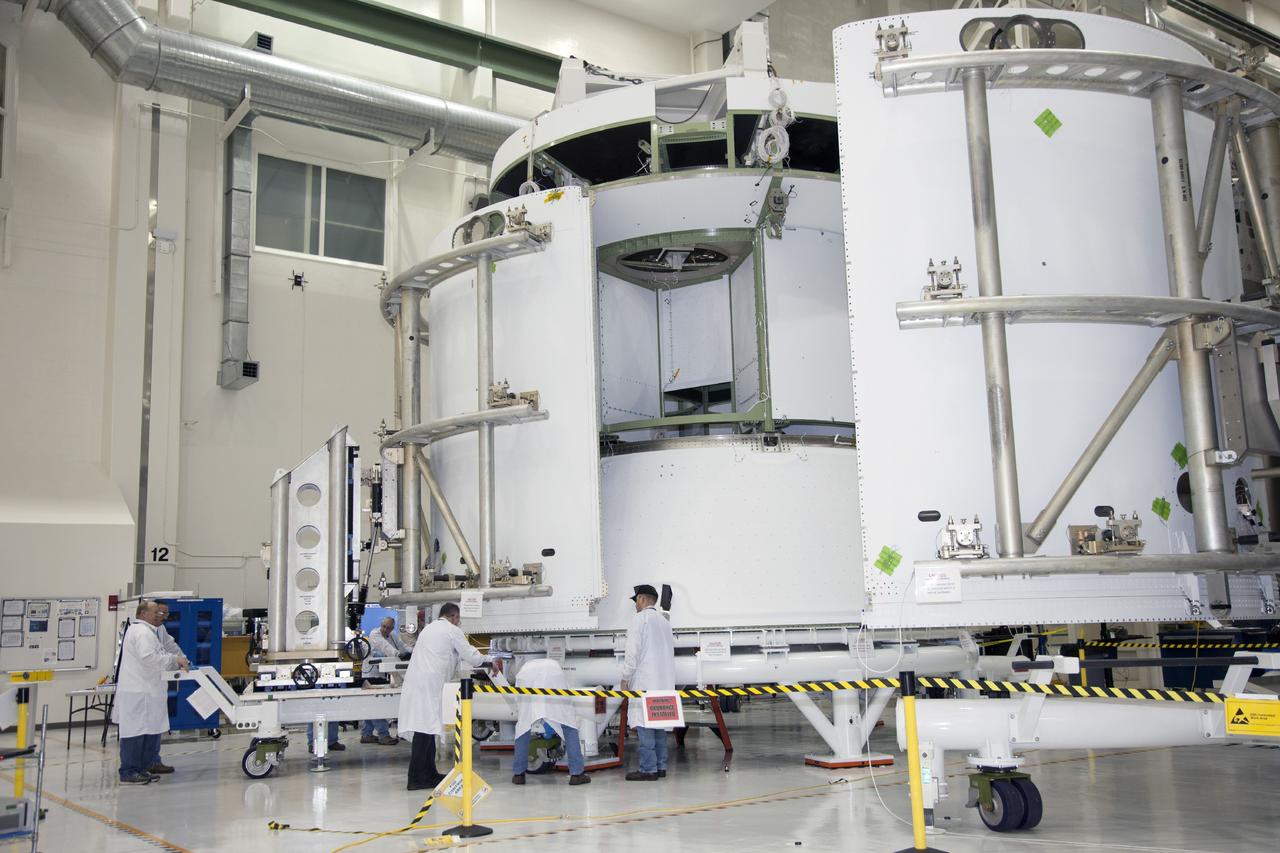
CAPE CANAVERAL, Fla. – Inside the Operations and Checkout Building high bay at NASA’s Kennedy Space Center in Florida, technicians use a special handling device to move the first of three fairings closer for installation on the service module for the Orion spacecraft. The second fairing is positioned at right and will be prepared for installation on the service module. The Orion spacecraft is being prepared for its first unpiloted flight test, Exploration Flight Test-1, or EFT-1, scheduled for launch atop a Delta IV rocket in September 2014. The Orion spacecraft is designed to carry astronauts to destinations not yet explored by humans. It will have emergency abort capability, sustain the crew during space travel and provide safe re-entry from deep space return velocities. Orion is scheduled to launch atop NASA’s Space Launch System rocket in 2017. For more information, visit http://www.nasa.gov/orion. Photo credit: NASA/Daniel Casper
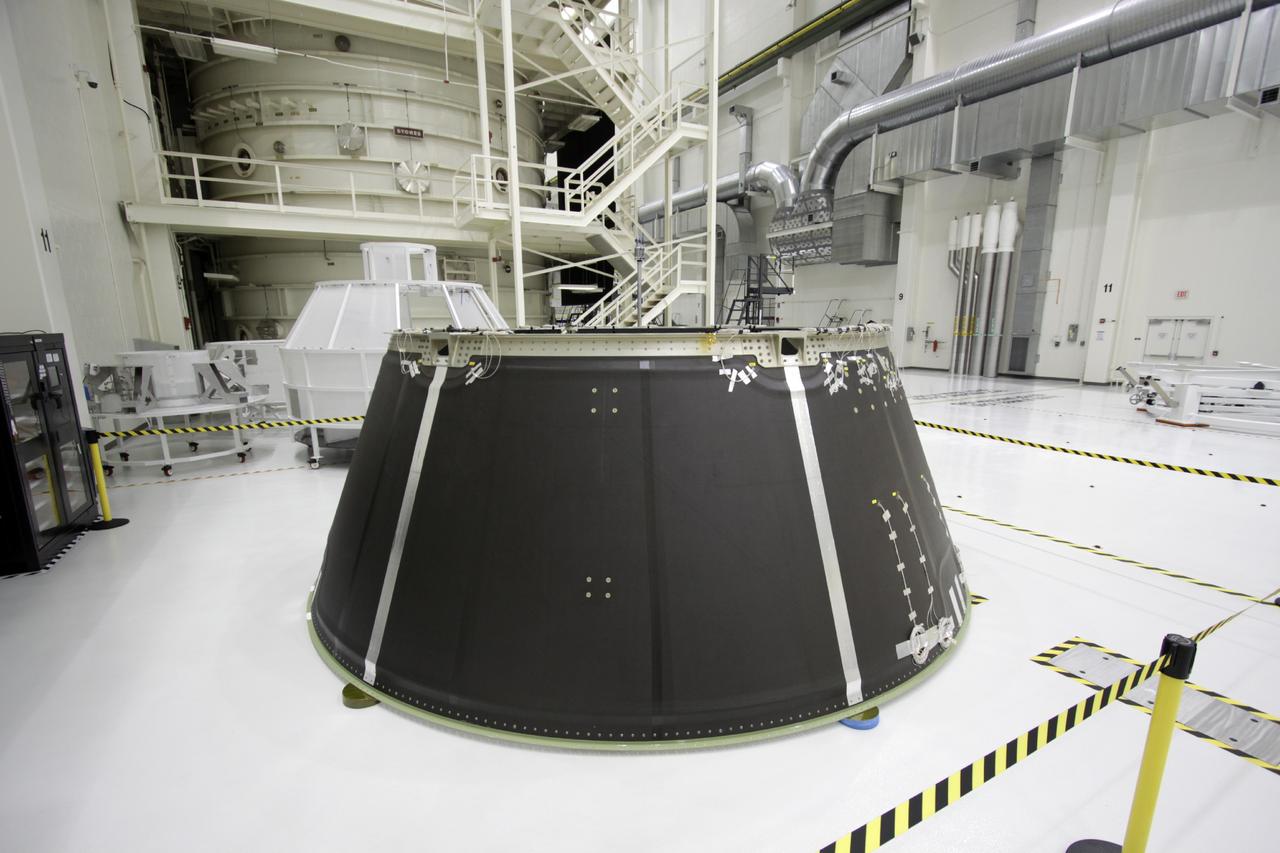
CAPE CANAVERAL, Fla. – Inside the Operations and Checkout Building high bay at NASA’s Kennedy Space Center in Florida, the Orion service module spacecraft adapter cone for Exploration Flight Test 1 has arrived for checkout and processing. Orion is the exploration spacecraft designed to carry crews to space beyond low Earth orbit. It will provide emergency abort capability, sustain the crew during the space travel and provide safe re-entry from deep space return velocities. The first unpiloted test flight of the Orion is scheduled to launch in 2014 atop a Delta IV rocket and in 2017 on a Space Launch System rocket. For more information, visit http://www.nasa.gov/orion. Photo credit: NASA/Jim Grossmann
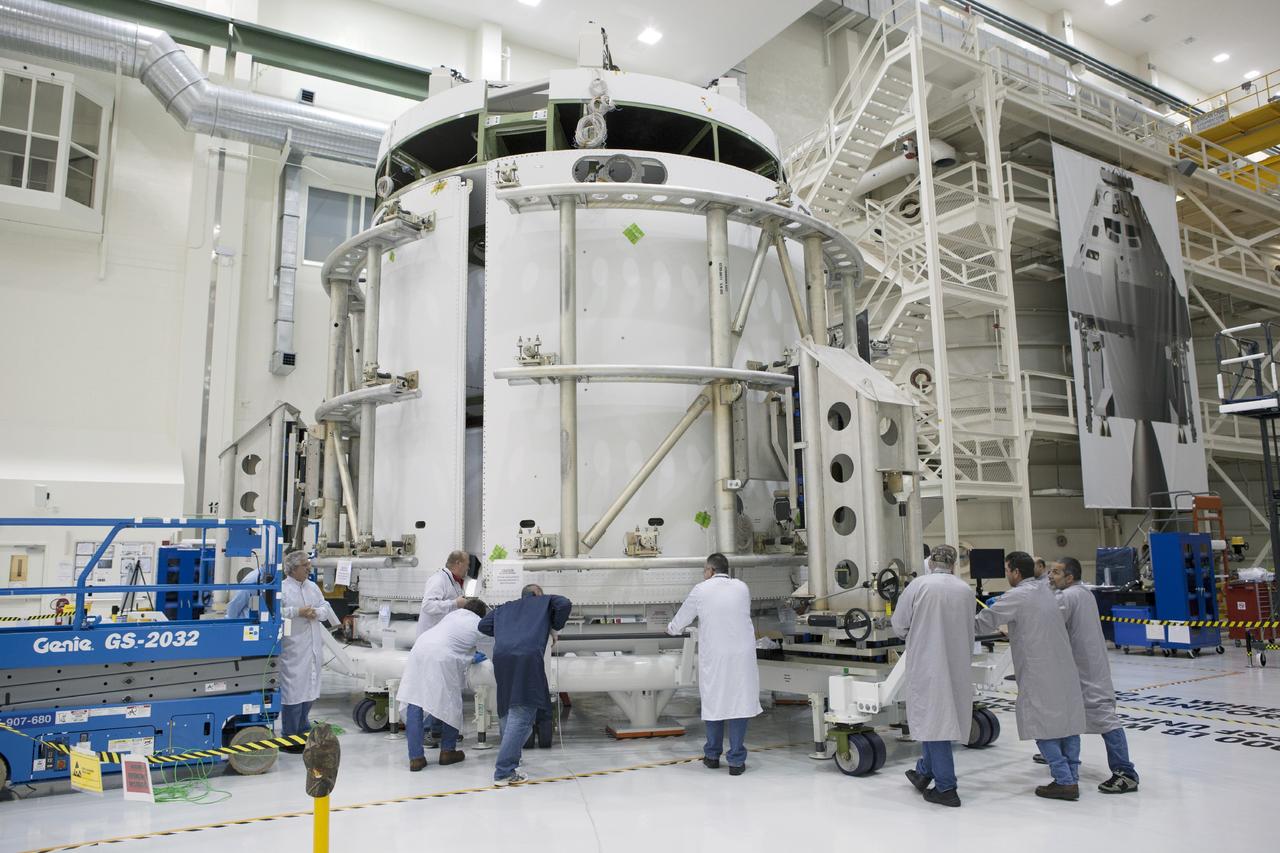
CAPE CANAVERAL, Fla. – Inside the Operations and Checkout Building high bay at NASA’s Kennedy Space Center in Florida, technicians use a special handling device to move the second of three fairings closer for installation on the service module for the Orion spacecraft. The Orion spacecraft is being prepared for its first unpiloted flight test, Exploration Flight Test-1, or EFT-1, scheduled for launch atop a Delta IV rocket in September 2014. The Orion spacecraft is designed to carry astronauts to destinations not yet explored by humans. It will have emergency abort capability, sustain the crew during space travel and provide safe re-entry from deep space return velocities. Orion is scheduled to launch atop NASA’s Space Launch System rocket in 2017. For more information, visit http://www.nasa.gov/orion. Photo credit: NASA/Dimitri Gerondidakis
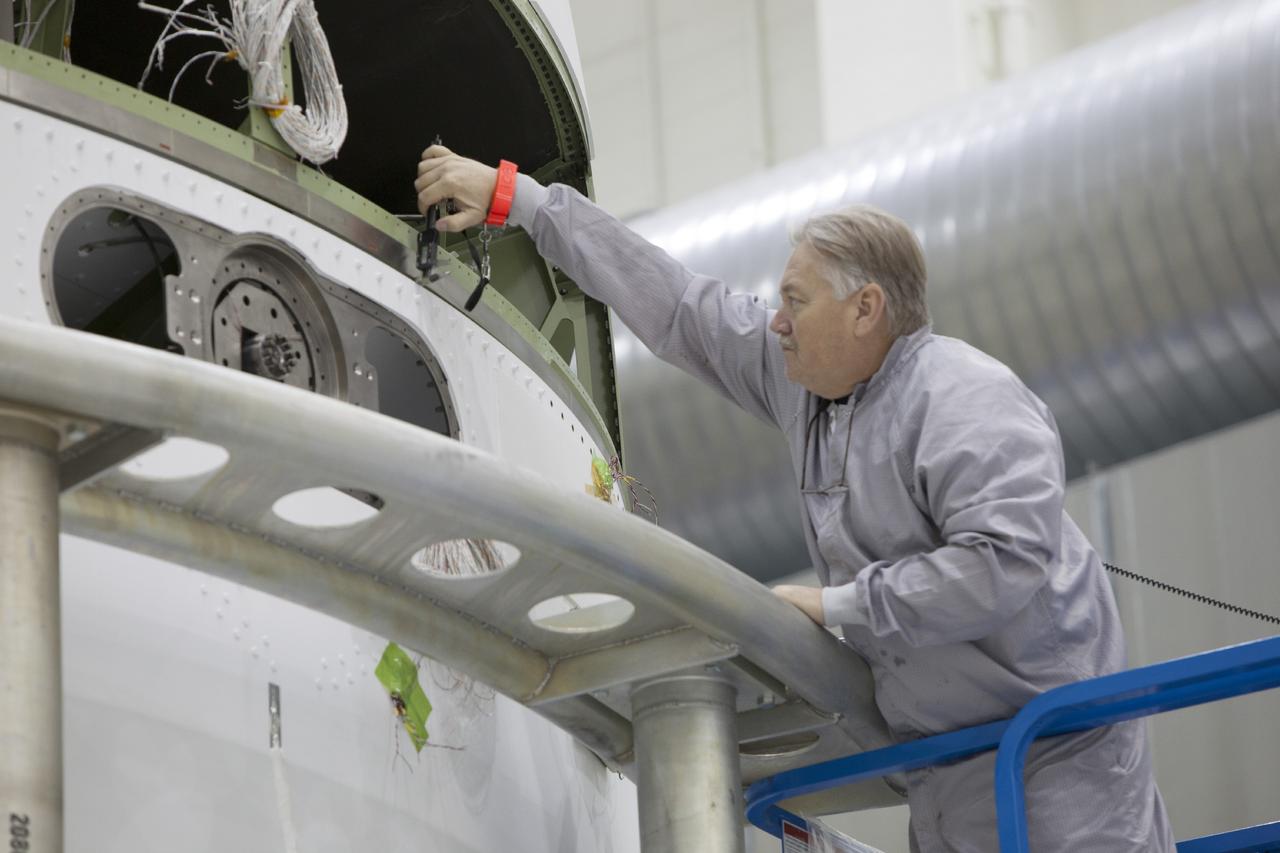
CAPE CANAVERAL, Fla. – Inside the Operations and Checkout Building high bay at NASA’s Kennedy Space Center in Florida, a technician on a scissor lift works on the installation of the second of three fairings on the service module for the Orion spacecraft. The Orion spacecraft is being prepared for its first unpiloted flight test, Exploration Flight Test-1, or EFT-1, scheduled for launch atop a Delta IV rocket in September 2014. The Orion spacecraft is designed to carry astronauts to destinations not yet explored by humans. It will have emergency abort capability, sustain the crew during space travel and provide safe re-entry from deep space return velocities. Orion is scheduled to launch atop NASA’s Space Launch System rocket in 2017. For more information, visit http://www.nasa.gov/orion. Photo credit: NASA/Dimitri Gerondidakis
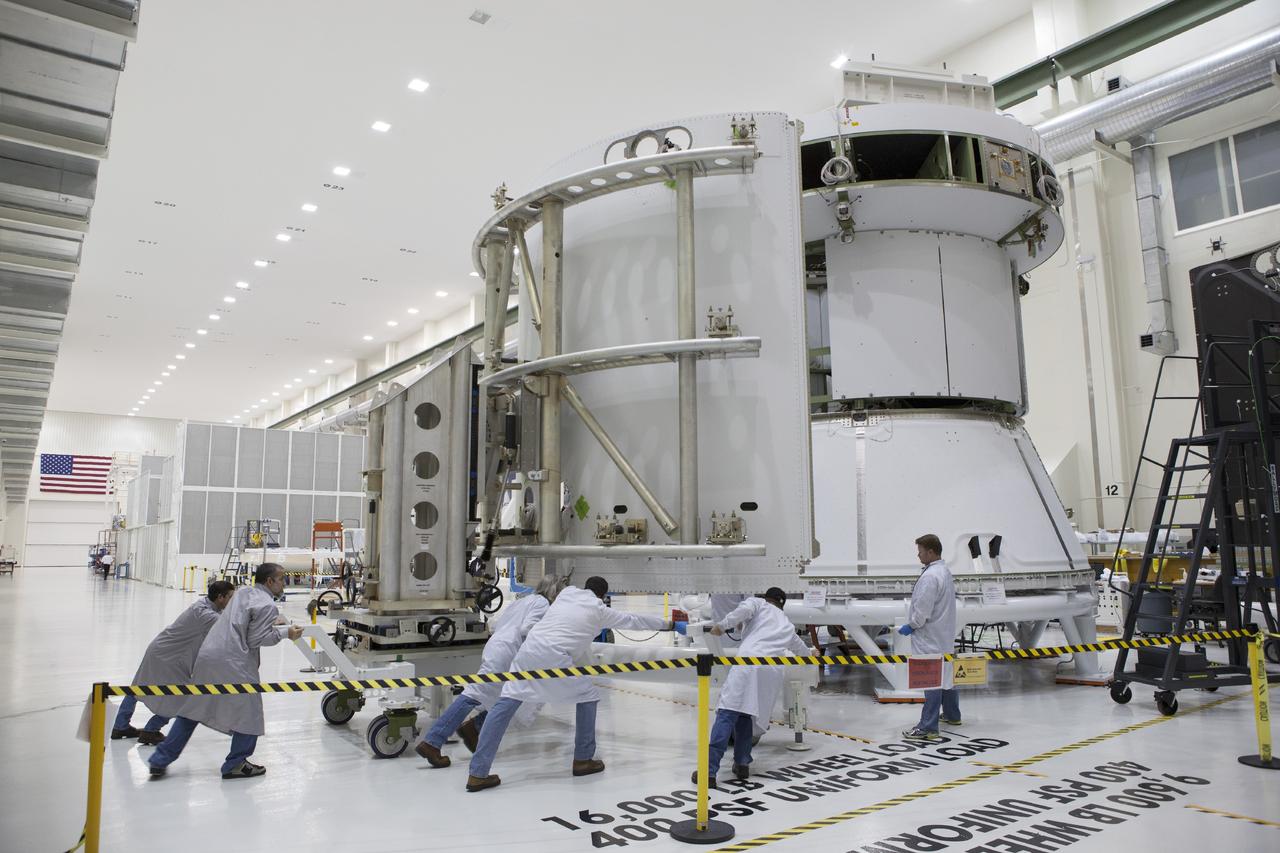
CAPE CANAVERAL, Fla. – Inside the Operations and Checkout Building high bay at NASA’s Kennedy Space Center in Florida, technicians use a special handling device to move the second of three fairings closer for installation on the service module for the Orion spacecraft. The Orion spacecraft is being prepared for its first unpiloted flight test, Exploration Flight Test-1, or EFT-1, scheduled for launch atop a Delta IV rocket in September 2014. The Orion spacecraft is designed to carry astronauts to destinations not yet explored by humans. It will have emergency abort capability, sustain the crew during space travel and provide safe re-entry from deep space return velocities. Orion is scheduled to launch atop NASA’s Space Launch System rocket in 2017. For more information, visit http://www.nasa.gov/orion. Photo credit: NASA/Dimitri Gerondidakis
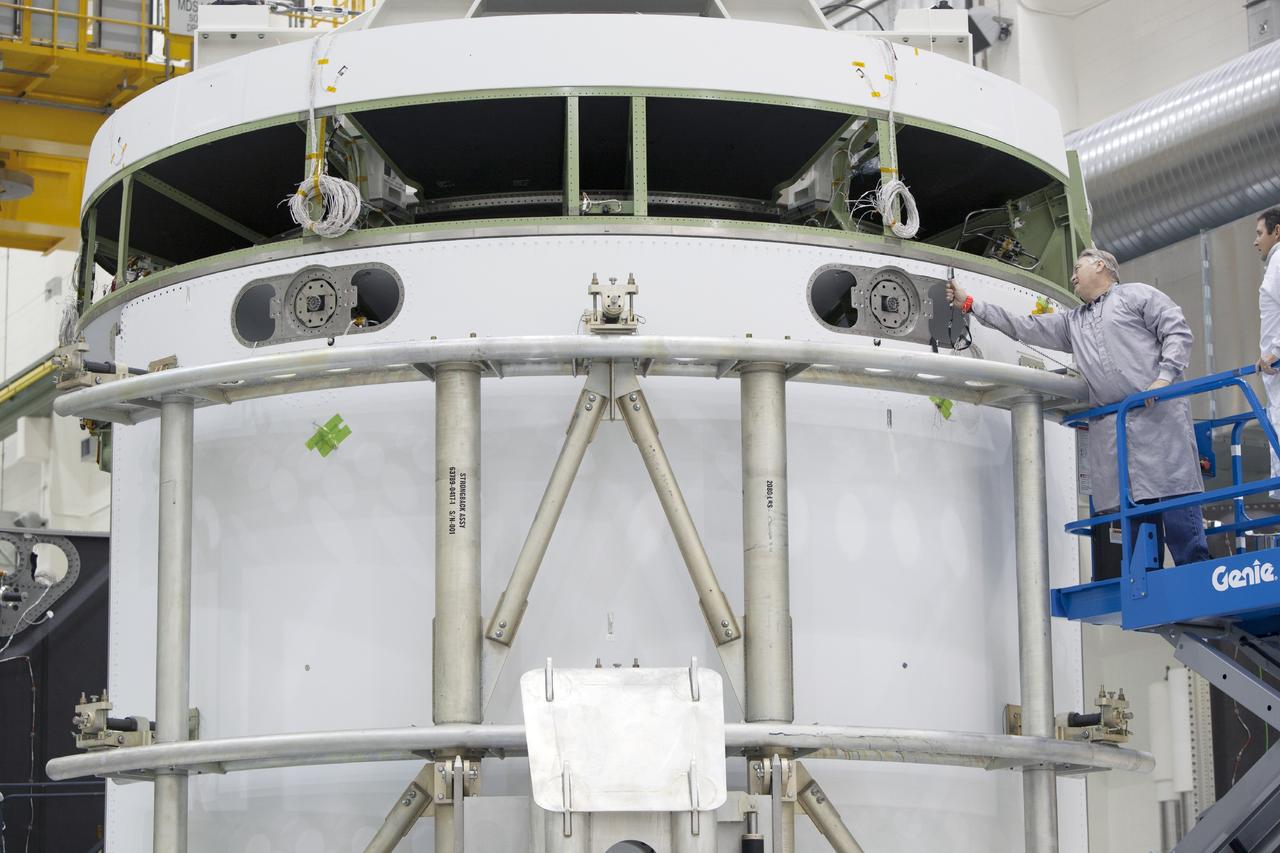
CAPE CANAVERAL, Fla. – Inside the Operations and Checkout Building high bay at NASA’s Kennedy Space Center in Florida, technicians on a scissor lift work on the installation of the second of three fairings on the service module for the Orion spacecraft. The Orion spacecraft is being prepared for its first unpiloted flight test, Exploration Flight Test-1, or EFT-1, scheduled for launch atop a Delta IV rocket in September 2014. The Orion spacecraft is designed to carry astronauts to destinations not yet explored by humans. It will have emergency abort capability, sustain the crew during space travel and provide safe re-entry from deep space return velocities. Orion is scheduled to launch atop NASA’s Space Launch System rocket in 2017. For more information, visit http://www.nasa.gov/orion. Photo credit: NASA/Dimitri Gerondidakis
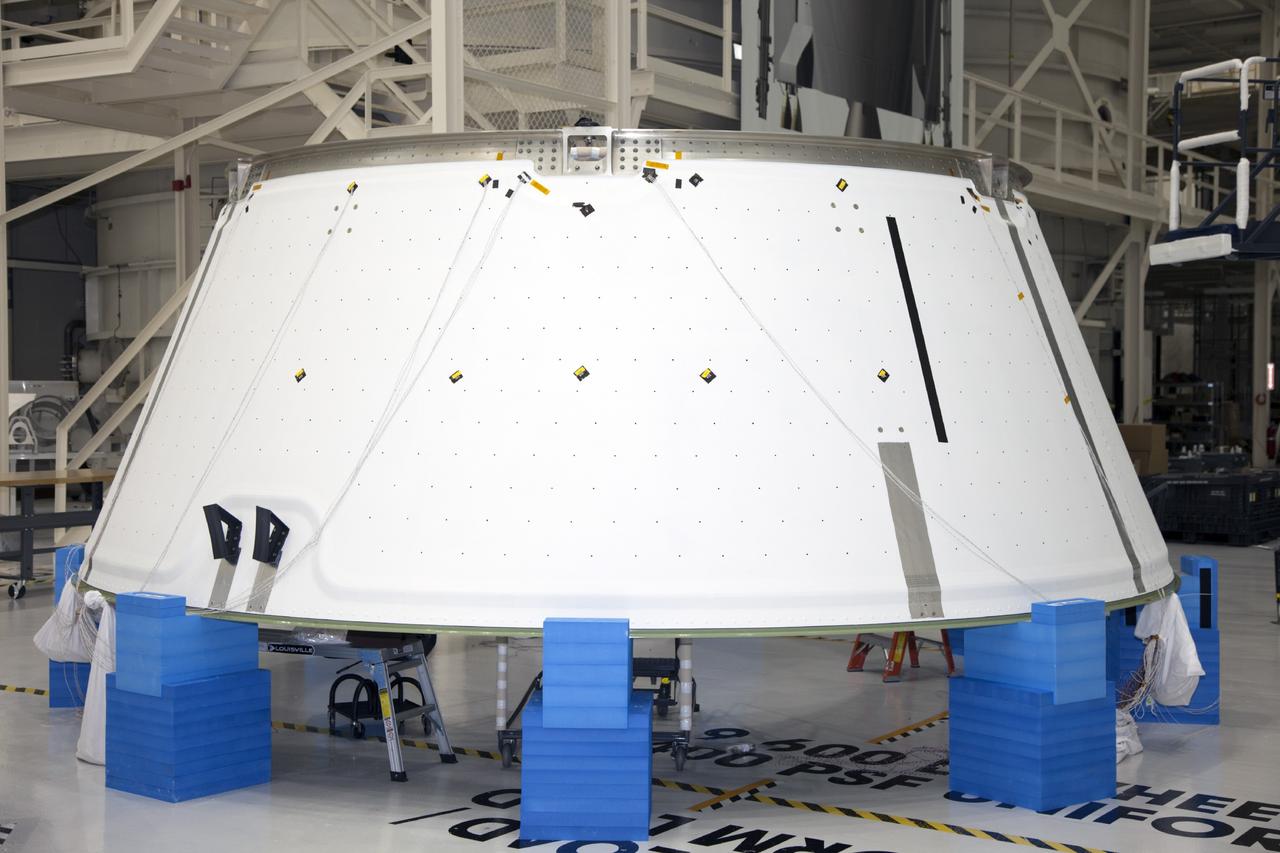
CAPE CANAVERAL, Fla. -- Inside the Operations and Checkout Building high bay at NASA’s Kennedy Space Center in Florida, the spacecraft adapter cone for the Orion spacecraft is positioned on special protective blocks for processing work. It will be mated to the service module for testing. Orion is the exploration spacecraft designed to carry astronauts to destinations not yet explored by humans, including an asteroid and Mars. It will have emergency abort capability, sustain the crew during space travel and provide safe re-entry from deep space return velocities. The first unpiloted test flight of the Orion is scheduled to launch in 2014 atop a Delta IV rocket and in 2017 on NASA’s Space Launch System rocket. For more information, visit http://www.nasa.gov/orion. Photo credit: NASA/Daniel Casper
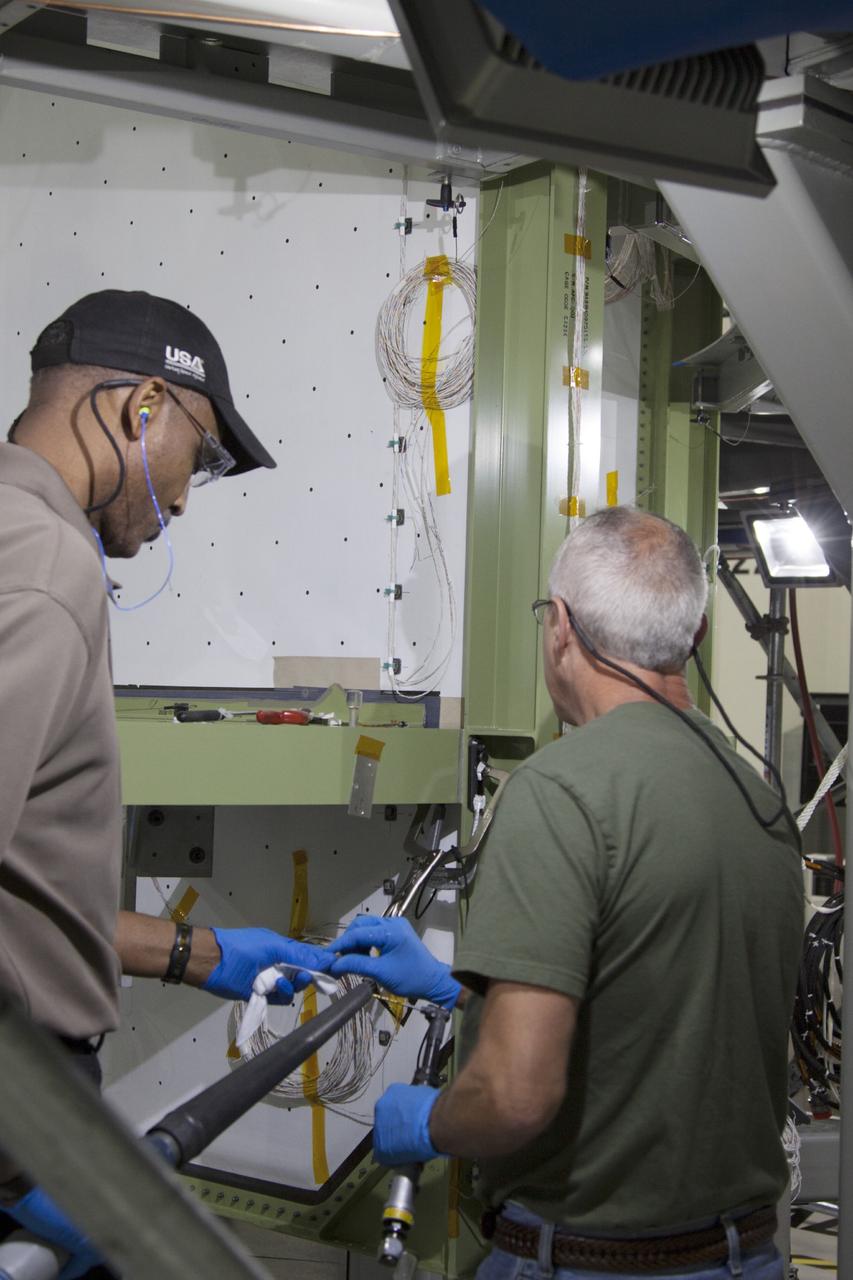
CAPE CANAVERAL, Fla. – Inside the Operations and Checkout Building high bay at NASA’s Kennedy Space Center in Florida, technicians work on the service module bulkhead wiring for the Orion spacecraft. Orion is the exploration spacecraft designed to carry astronauts to destinations not yet explored by humans, including an asteroid and Mars. It will have emergency abort capability, sustain the crew during space travel and provide safe re-entry from deep space return velocities. The first unpiloted test flight of the Orion is scheduled to launch in 2014 atop a Delta IV rocket and in 2017 on NASA’s Space Launch System rocket. For more information, visit http://www.nasa.gov/orion. Photo credit: NASA/Jim Grossmann
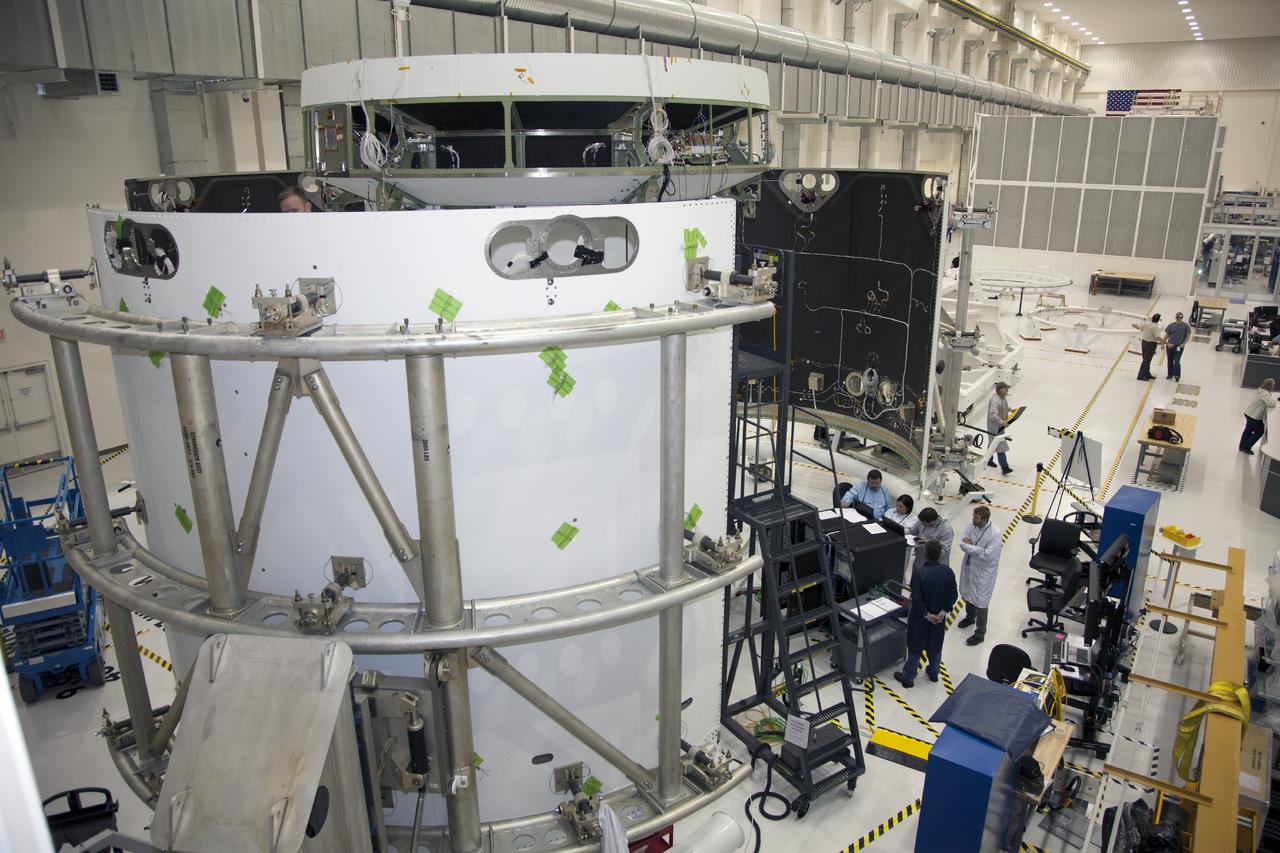
CAPE CANAVERAL, Fla. – Inside the Operations and Checkout Building high bay at NASA’s Kennedy Space Center in Florida, the service module for the Orion spacecraft is secured to a work stand. Technicians are preparing the three fairings for installation around the service module. The Orion spacecraft is being prepared for its first unpiloted flight test, Exploration Flight Test-1, or EFT-1, scheduled for launch atop a Delta IV rocket in September 2014. The Orion spacecraft is designed to carry astronauts to destinations not yet explored by humans. It will have emergency abort capability, sustain the crew during space travel and provide safe re-entry from deep space return velocities. Orion is scheduled to launch atop NASA’s Space Launch System rocket in 2017. For more information, visit http://www.nasa.gov/orion. Photo credit: NASA/Daniel Casper
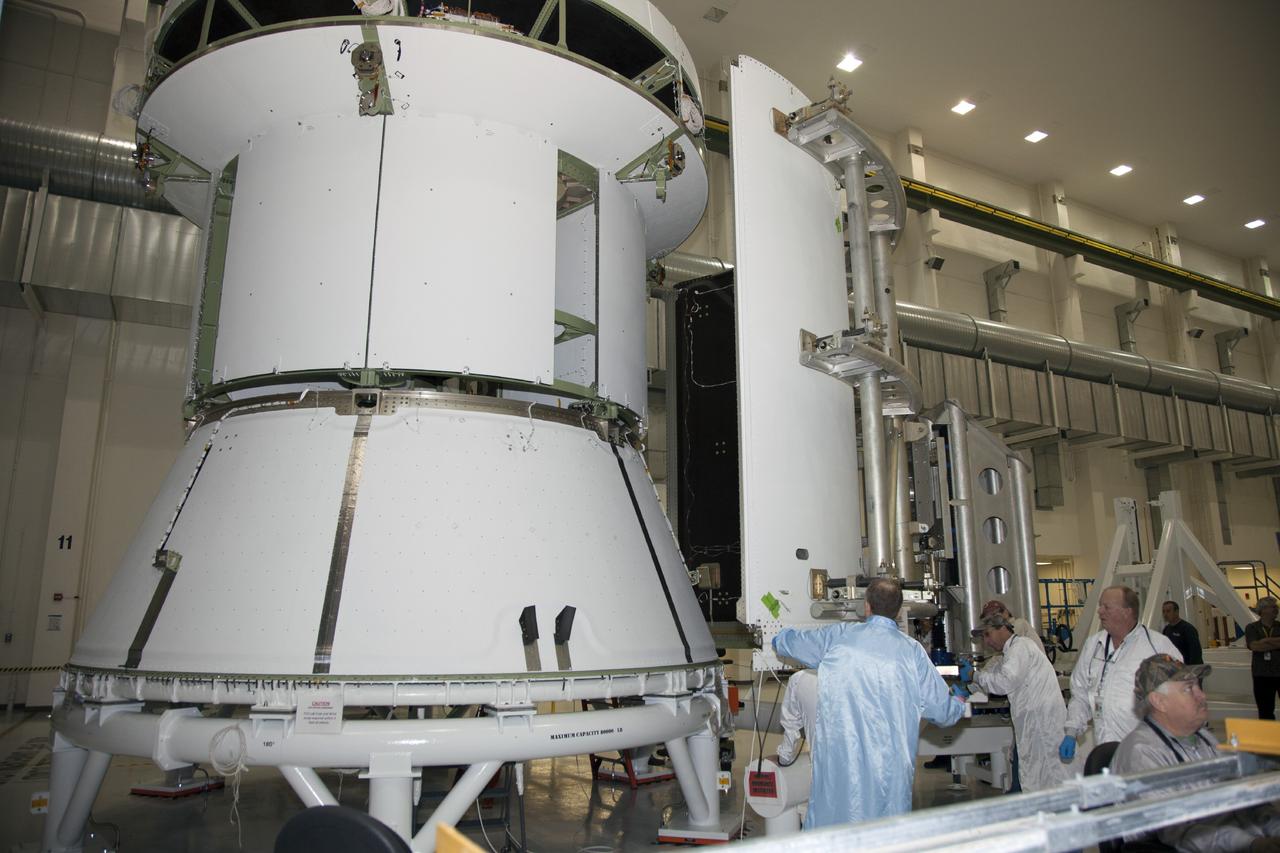
CAPE CANAVERAL, Fla. – Inside the Operations and Checkout Building high bay at NASA’s Kennedy Space Center in Florida, technicians use a special handling device to move the first of three fairings closer for installation on the service module for the Orion spacecraft. The Orion spacecraft is being prepared for its first unpiloted flight test, Exploration Flight Test-1, or EFT-1, scheduled for launch atop a Delta IV rocket in September 2014. The Orion spacecraft is designed to carry astronauts to destinations not yet explored by humans. It will have emergency abort capability, sustain the crew during space travel and provide safe re-entry from deep space return velocities. Orion is scheduled to launch atop NASA’s Space Launch System rocket in 2017. For more information, visit http://www.nasa.gov/orion. Photo credit: NASA/Daniel Casper
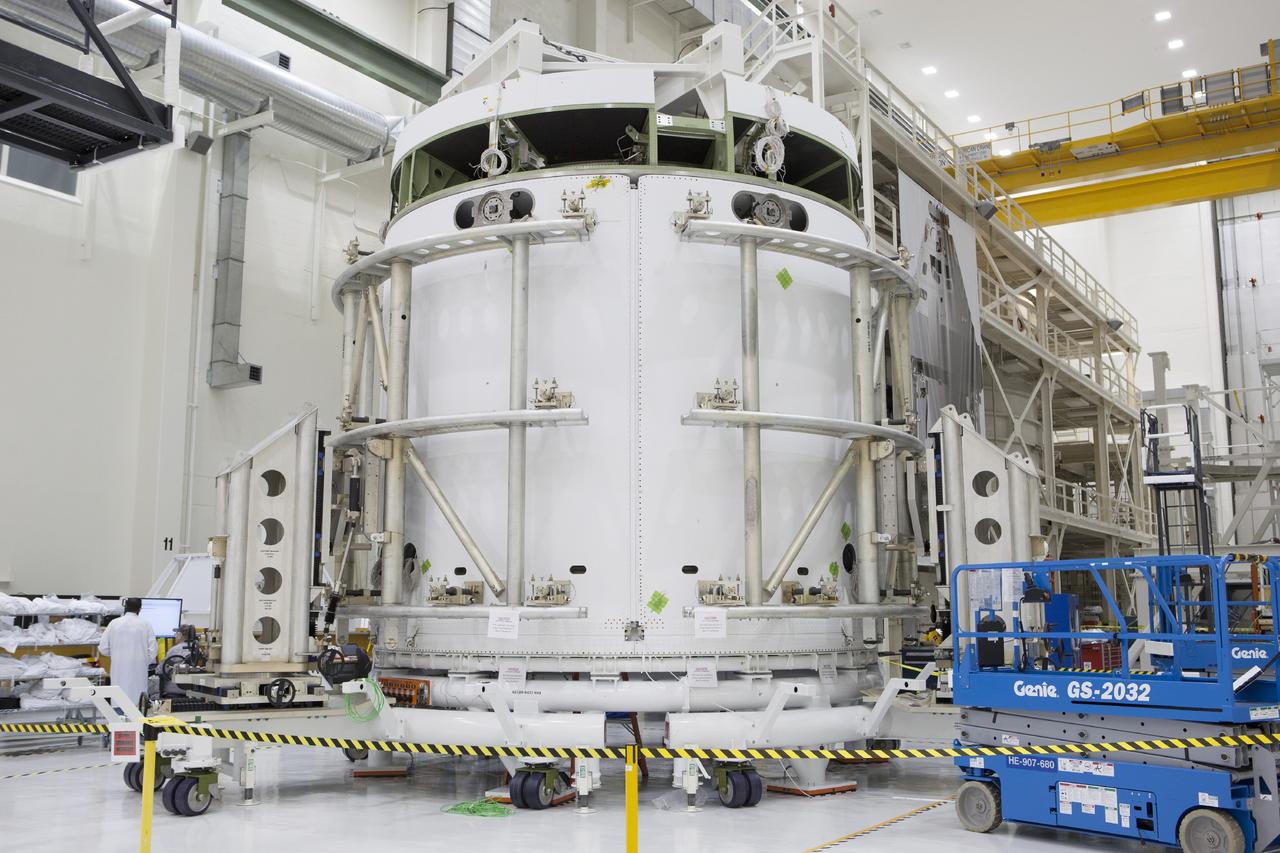
CAPE CANAVERAL, Fla. – Inside the Operations and Checkout Building high bay at NASA’s Kennedy Space Center in Florida, technicians have completed the installation of two of three fairings on the service module for the Orion spacecraft. The Orion spacecraft is being prepared for its first unpiloted flight test, Exploration Flight Test-1, or EFT-1, scheduled for launch atop a Delta IV rocket in September 2014. The Orion spacecraft is designed to carry astronauts to destinations not yet explored by humans. It will have emergency abort capability, sustain the crew during space travel and provide safe re-entry from deep space return velocities. Orion is scheduled to launch atop NASA’s Space Launch System rocket in 2017. For more information, visit http://www.nasa.gov/orion. Photo credit: NASA/Dimitri Gerondidakis
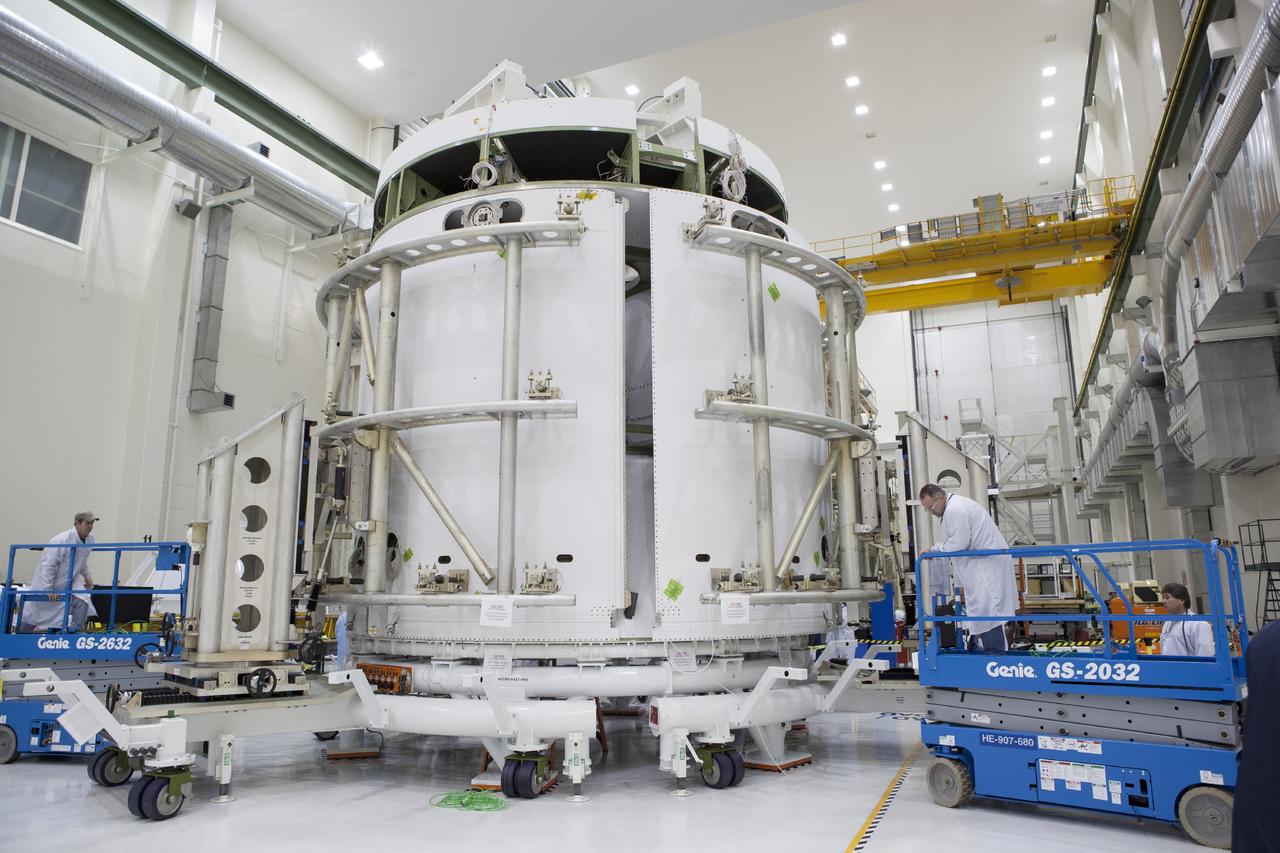
CAPE CANAVERAL, Fla. – Inside the Operations and Checkout Building high bay at NASA’s Kennedy Space Center in Florida, technicians positioned themselves on a scissor lift that will be raised so that they can assist in the installation of the second of three fairings on the service module for the Orion spacecraft. The Orion spacecraft is being prepared for its first unpiloted flight test, Exploration Flight Test-1, or EFT-1, scheduled for launch atop a Delta IV rocket in September 2014. The Orion spacecraft is designed to carry astronauts to destinations not yet explored by humans. It will have emergency abort capability, sustain the crew during space travel and provide safe re-entry from deep space return velocities. Orion is scheduled to launch atop NASA’s Space Launch System rocket in 2017. For more information, visit http://www.nasa.gov/orion. Photo credit: NASA/Dimitri Gerondidakis
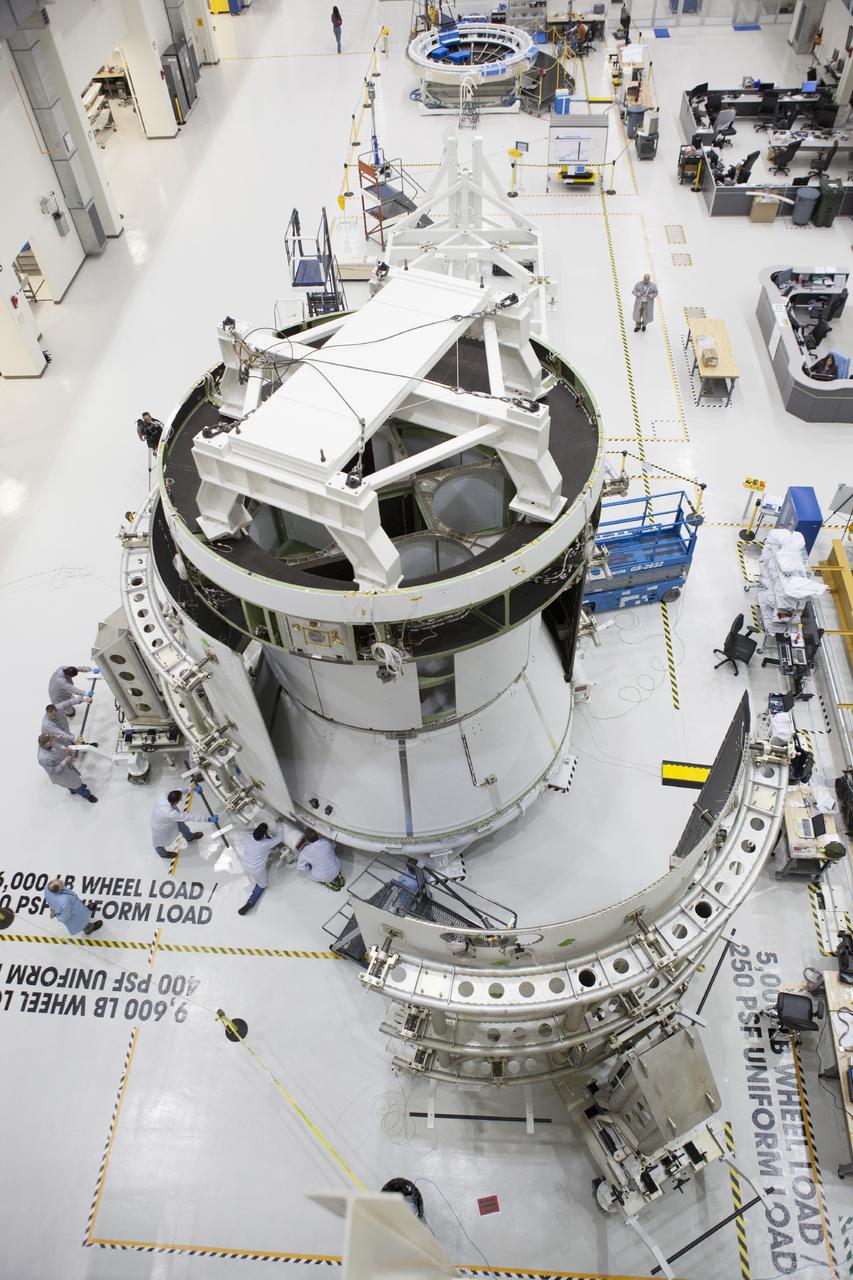
CAPE CANAVERAL, Fla. – Inside the Operations and Checkout Building high bay at NASA’s Kennedy Space Center in Florida, a view from above shows the second of three fairings being installed on the service module for the Orion spacecraft. The Orion spacecraft is being prepared for its first unpiloted flight test, Exploration Flight Test-1, or EFT-1, scheduled for launch atop a Delta IV rocket in September 2014. The Orion spacecraft is designed to carry astronauts to destinations not yet explored by humans. It will have emergency abort capability, sustain the crew during space travel and provide safe re-entry from deep space return velocities. Orion is scheduled to launch atop NASA’s Space Launch System rocket in 2017. For more information, visit http://www.nasa.gov/orion. Photo credit: NASA/Dimitri Gerondidakis
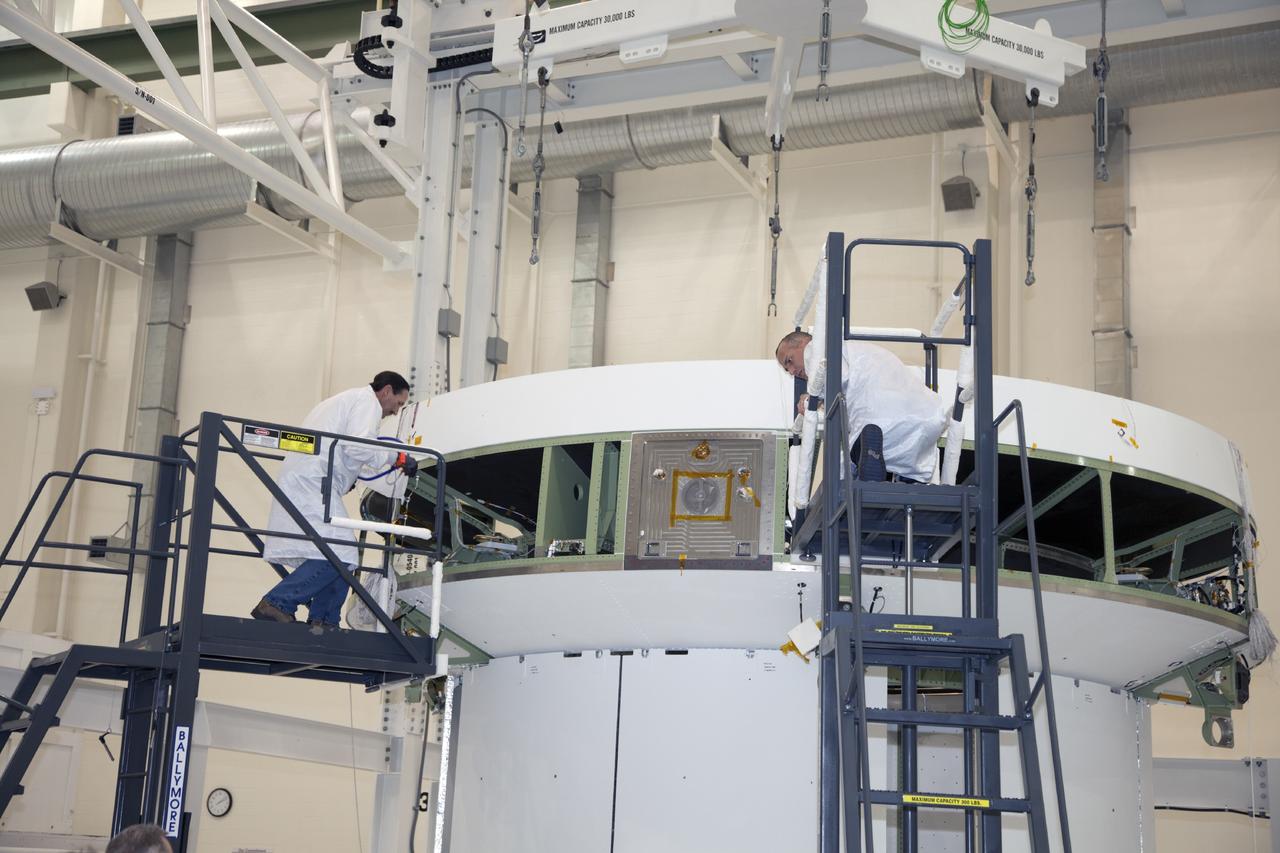
CAPE CANAVERAL, Fla. -- Inside the Operations and Checkout Building high bay at NASA’s Kennedy Space Center in Florida, prepare the service module bulkhead for the Orion spacecraft for the move to a lifting station. The service module will be mated to the spacecraft adapter cone for testing. Orion is the exploration spacecraft designed to carry astronauts to destinations not yet explored by humans, including an asteroid and Mars. It will have emergency abort capability, sustain the crew during space travel and provide safe re-entry from deep space return velocities. The first unpiloted test flight of the Orion is scheduled to launch in 2014 atop a Delta IV rocket and in 2017 on NASA’s Space Launch System rocket. For more information, visit http://www.nasa.gov/orion. Photo credit: NASA/Daniel Casper
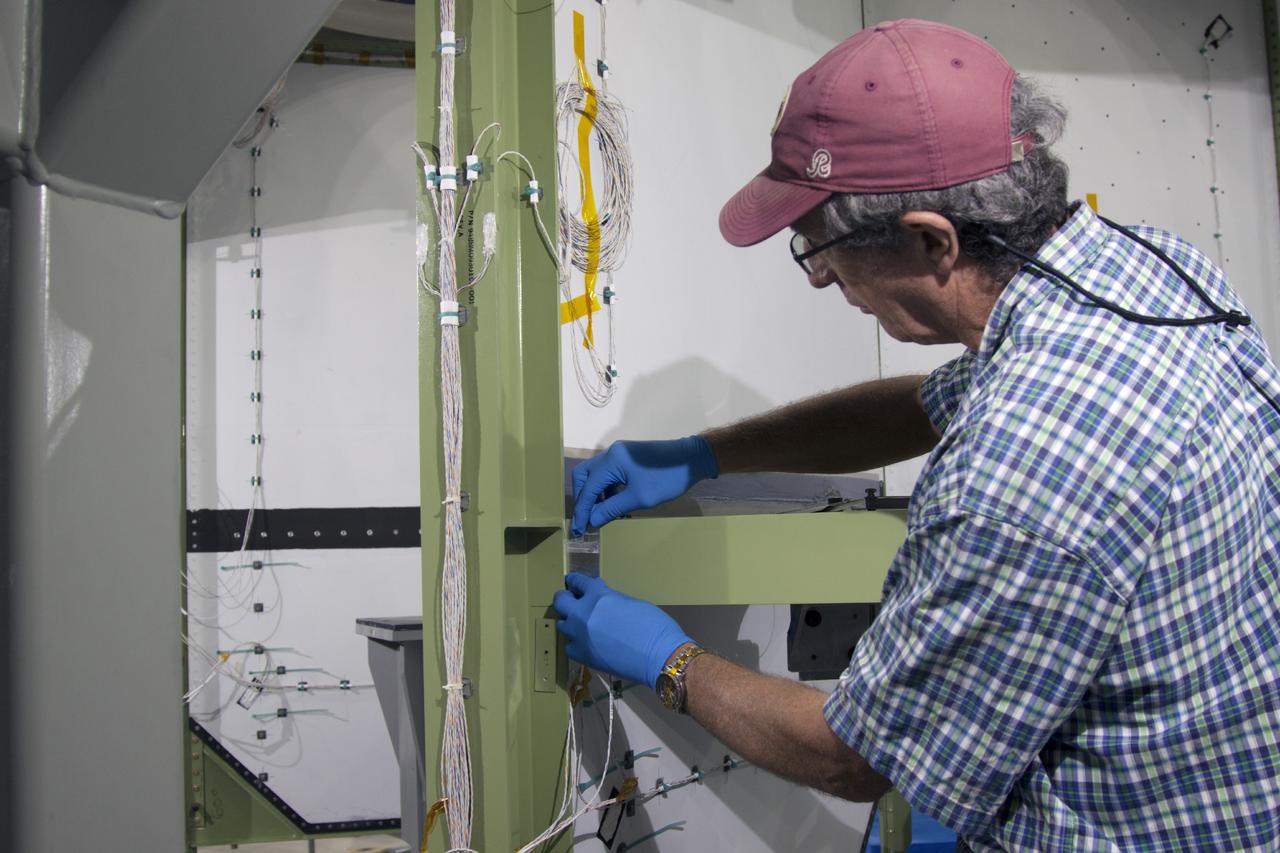
CAPE CANAVERAL, Fla. – Inside the Operations and Checkout Building high bay at NASA’s Kennedy Space Center in Florida, a technician works on the service module bulkhead wiring for the Orion spacecraft. Orion is the exploration spacecraft designed to carry astronauts to destinations not yet explored by humans, including an asteroid and Mars. It will have emergency abort capability, sustain the crew during space travel and provide safe re-entry from deep space return velocities. The first unpiloted test flight of the Orion is scheduled to launch in 2014 atop a Delta IV rocket and in 2017 on NASA’s Space Launch System rocket. For more information, visit http://www.nasa.gov/orion. Photo credit: NASA/Jim Grossmann
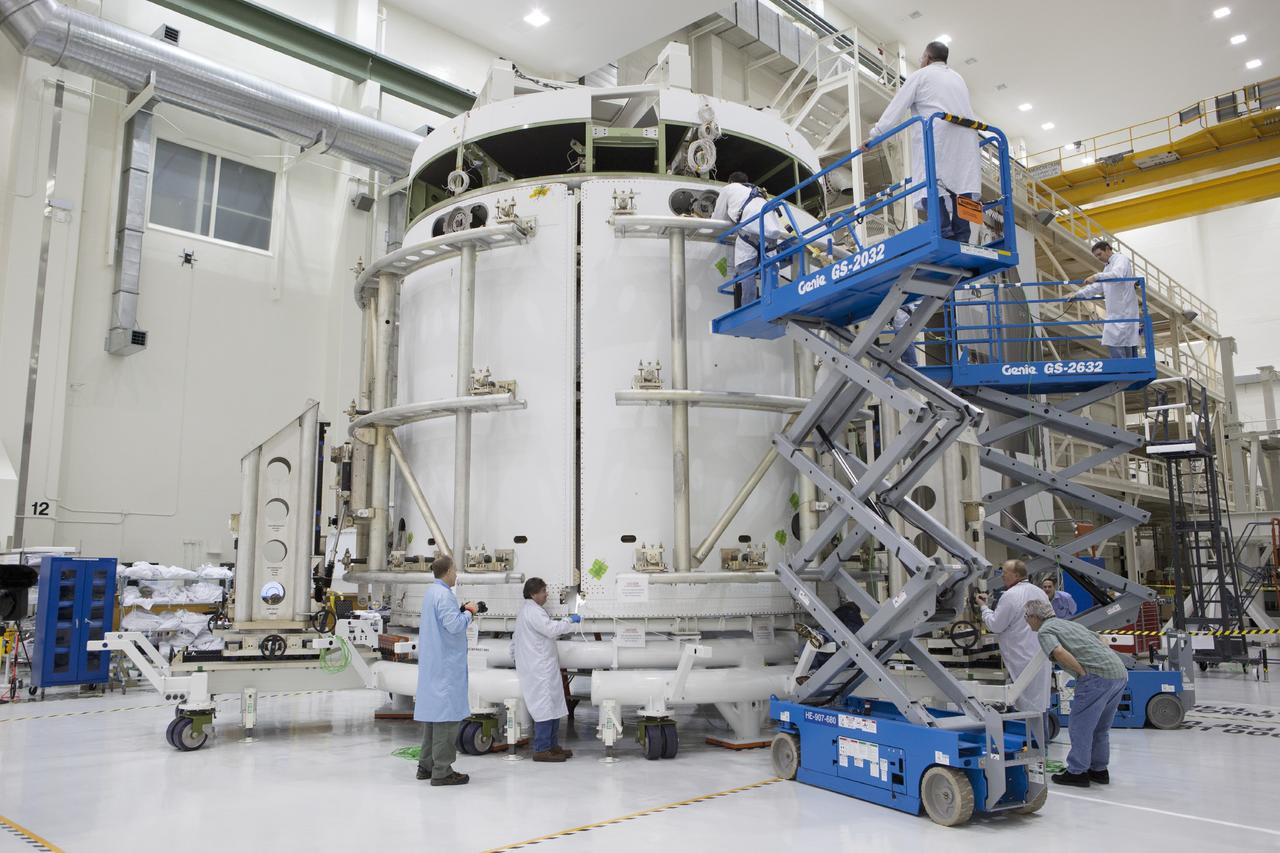
CAPE CANAVERAL, Fla. – Inside the Operations and Checkout Building high bay at NASA’s Kennedy Space Center in Florida, technicians on scissor lifts and those stationed on the floor work on the installation of the second of three fairings on the service module for the Orion spacecraft. The Orion spacecraft is being prepared for its first unpiloted flight test, Exploration Flight Test-1, or EFT-1, scheduled for launch atop a Delta IV rocket in September 2014. The Orion spacecraft is designed to carry astronauts to destinations not yet explored by humans. It will have emergency abort capability, sustain the crew during space travel and provide safe re-entry from deep space return velocities. Orion is scheduled to launch atop NASA’s Space Launch System rocket in 2017. For more information, visit http://www.nasa.gov/orion. Photo credit: NASA/Dimitri Gerondidakis
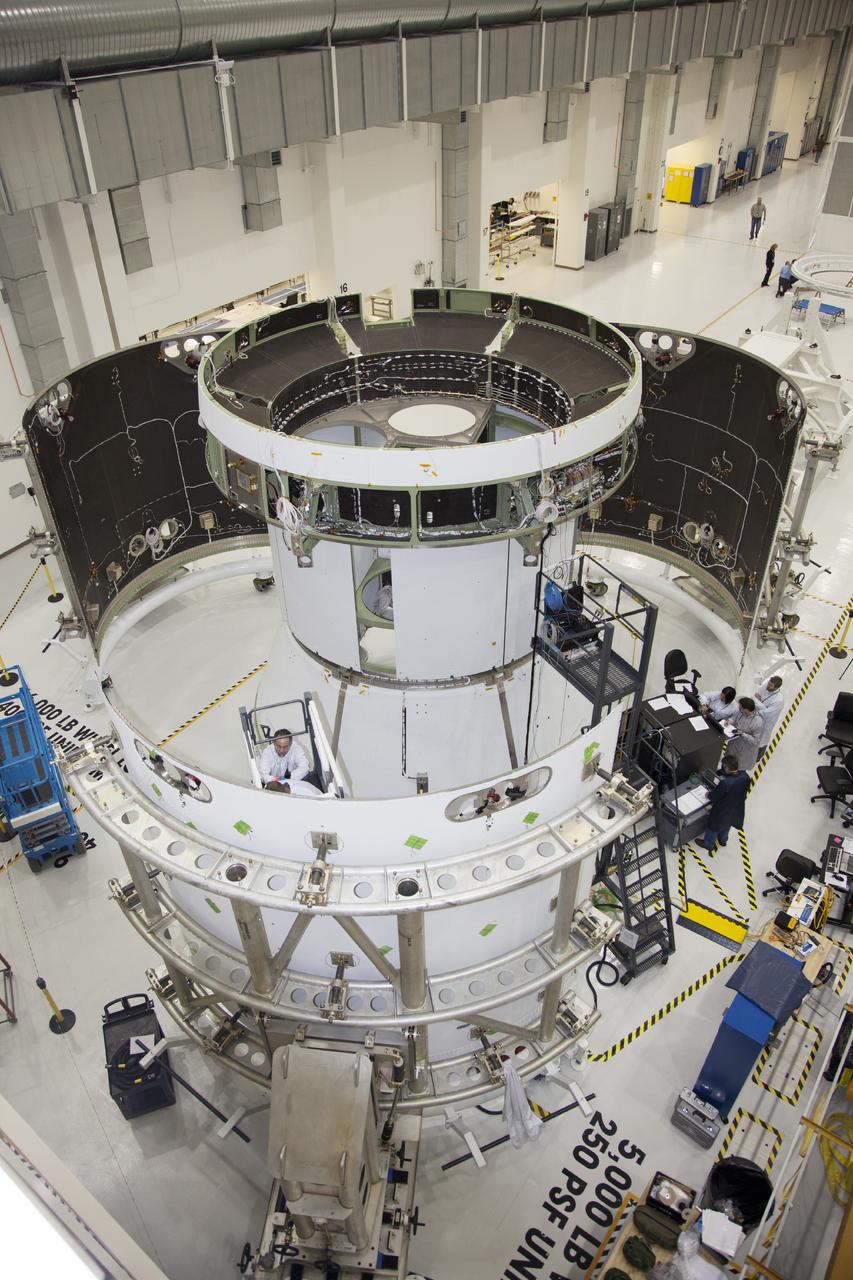
CAPE CANAVERAL, Fla. – A view from above inside the Operations and Checkout Building high bay at NASA’s Kennedy Space Center in Florida, shows the service module for the Orion spacecraft secured to a work stand. Technicians are preparing the three fairings for installation around the service module. The Orion spacecraft is being prepared for its first unpiloted flight test, Exploration Flight Test-1, or EFT-1, scheduled for launch atop a Delta IV rocket in September 2014. The Orion spacecraft is designed to carry astronauts to destinations not yet explored by humans. It will have emergency abort capability, sustain the crew during space travel and provide safe re-entry from deep space return velocities. Orion is scheduled to launch atop NASA’s Space Launch System rocket in 2017. For more information, visit http://www.nasa.gov/orion. Photo credit: NASA/Daniel Casper
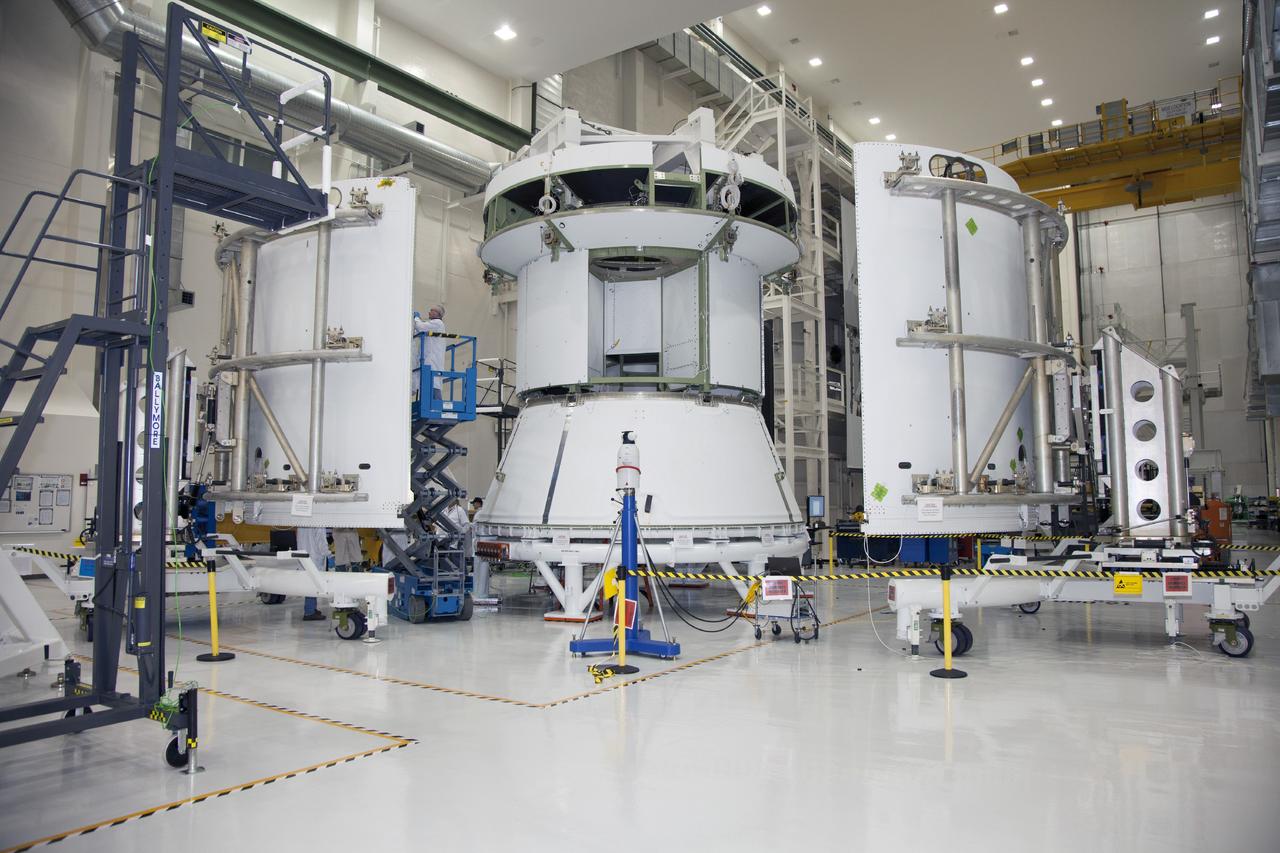
CAPE CANAVERAL, Fla. – Inside the Operations and Checkout Building high bay at NASA’s Kennedy Space Center in Florida, the service module for the Orion spacecraft has been placed on a work stand. Preparations are underway to install the first of three fairings around the service module. The Orion spacecraft is being prepared for its first unpiloted flight test, Exploration Flight Test-1, or EFT-1, scheduled for launch atop a Delta IV rocket in September 2014. The Orion spacecraft is designed to carry astronauts to destinations not yet explored by humans. It will have emergency abort capability, sustain the crew during space travel and provide safe re-entry from deep space return velocities. Orion is scheduled to launch atop NASA’s Space Launch System rocket in 2017. For more information, visit http://www.nasa.gov/orion. Photo credit: NASA/Daniel Casper
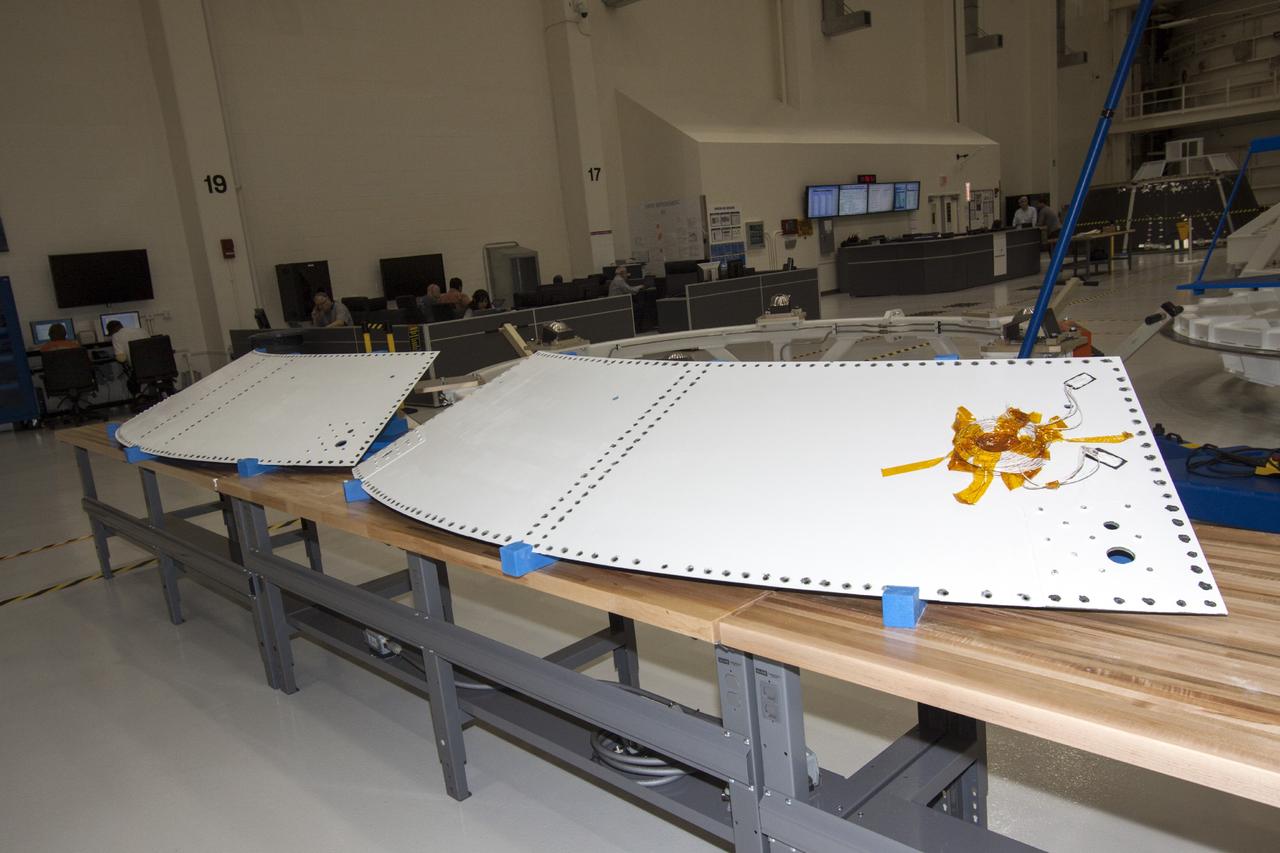
CAPE CANAVERAL, Fla. – Inside the Operations and Checkout Building high bay at NASA’s Kennedy Space Center in Florida, components of the Orion service module composite panel aft walls have been secured on work stands for processing. Orion is the exploration spacecraft designed to carry crews to space beyond low Earth orbit. It will provide emergency abort capability, sustain the crew during the space travel and provide safe re-entry from deep space return velocities. The first unpiloted test flight of the Orion is scheduled to launch in 2014 atop a Delta IV rocket and in 2017 on a Space Launch System rocket. For more information, visit http://www.nasa.gov/orion. Photo credit: NASA/Jim Grossmann
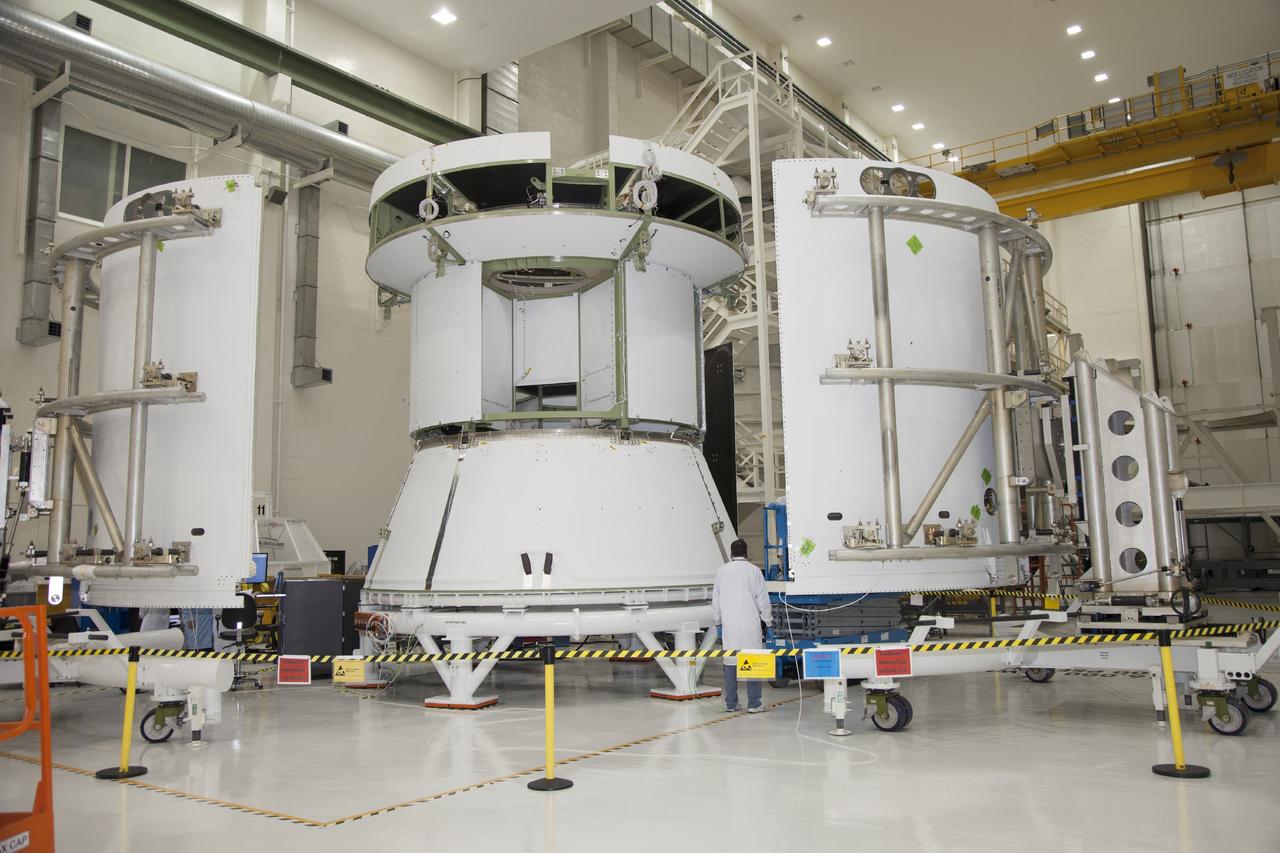
CAPE CANAVERAL, Fla. – Inside the Operations and Checkout Building high bay at NASA’s Kennedy Space Center in Florida, the service module for the Orion spacecraft is secured to a work stand and is being prepared for fairing installation. To the right and left are two of the three fairings that will be installed around the service module. The Orion spacecraft is being prepared for its first unpiloted flight test, Exploration Flight Test-1, or EFT-1, scheduled for launch atop a Delta IV rocket in September 2014. The Orion spacecraft is designed to carry astronauts to destinations not yet explored by humans. It will have emergency abort capability, sustain the crew during space travel and provide safe re-entry from deep space return velocities. Orion is scheduled to launch atop NASA’s Space Launch System rocket in 2017. For more information, visit http://www.nasa.gov/orion. Photo credit: NASA/Daniel Casper
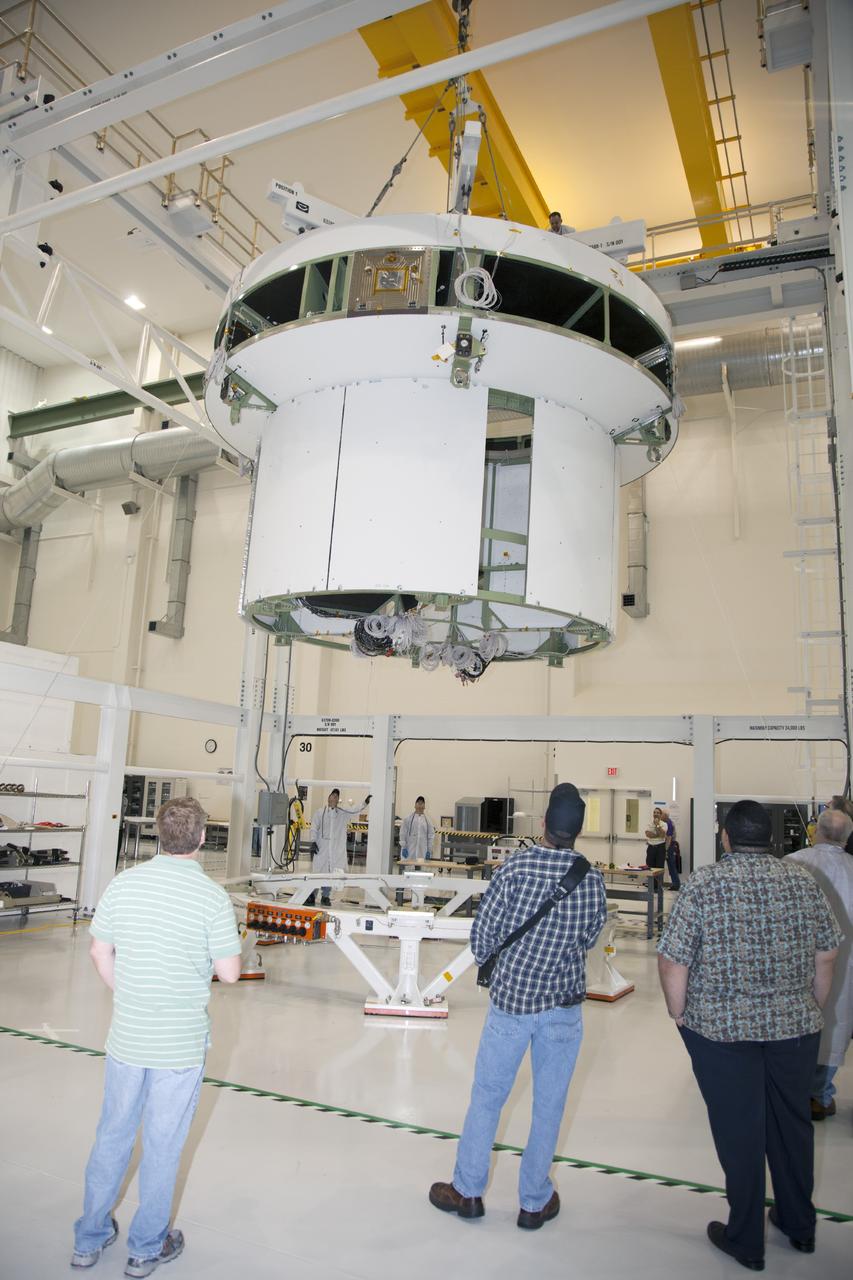
CAPE CANAVERAL, Fla. -- Inside the Operations and Checkout Building high bay at NASA’s Kennedy Space Center in Florida, technicians monitor the progress as the service module bulkhead for the Orion spacecraft is lifted by crane from a work stand. The service module will be mated to the spacecraft adapter cone for testing. Orion is the exploration spacecraft designed to carry astronauts to destinations not yet explored by humans, including an asteroid and Mars. It will have emergency abort capability, sustain the crew during space travel and provide safe re-entry from deep space return velocities. The first unpiloted test flight of the Orion is scheduled to launch in 2014 atop a Delta IV rocket and in 2017 on NASA’s Space Launch System rocket. For more information, visit http://www.nasa.gov/orion. Photo credit: NASA/Daniel Casper
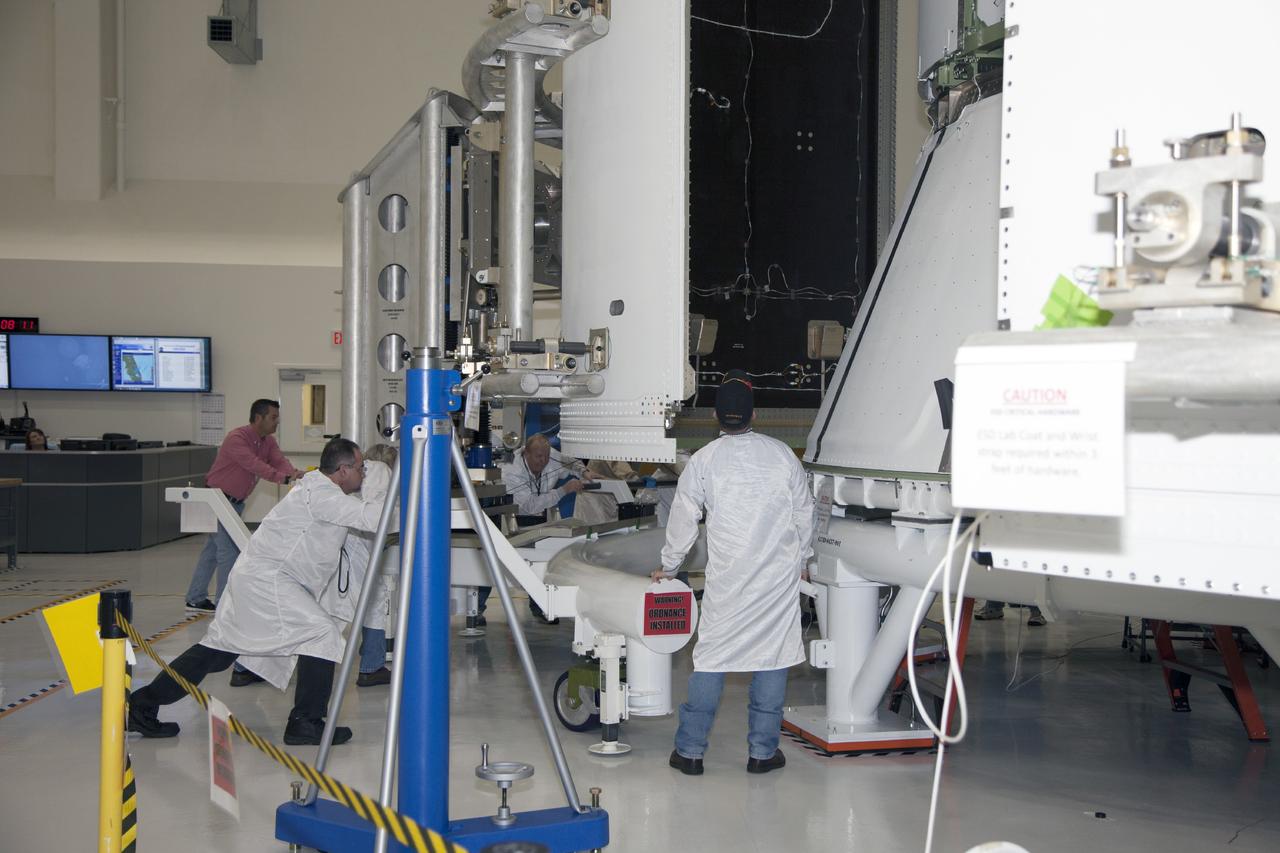
CAPE CANAVERAL, Fla. – Inside the Operations and Checkout Building high bay at NASA’s Kennedy Space Center in Florida, technicians use a special handling device to move the first of three fairings for installation on the service module for the Orion spacecraft. The Orion spacecraft is being prepared for its first unpiloted flight test, Exploration Flight Test-1, or EFT-1, scheduled for launch atop a Delta IV rocket in September 2014. The Orion spacecraft is designed to carry astronauts to destinations not yet explored by humans. It will have emergency abort capability, sustain the crew during space travel and provide safe re-entry from deep space return velocities. Orion is scheduled to launch atop NASA’s Space Launch System rocket in 2017. For more information, visit http://www.nasa.gov/orion. Photo credit: NASA/Daniel Casper
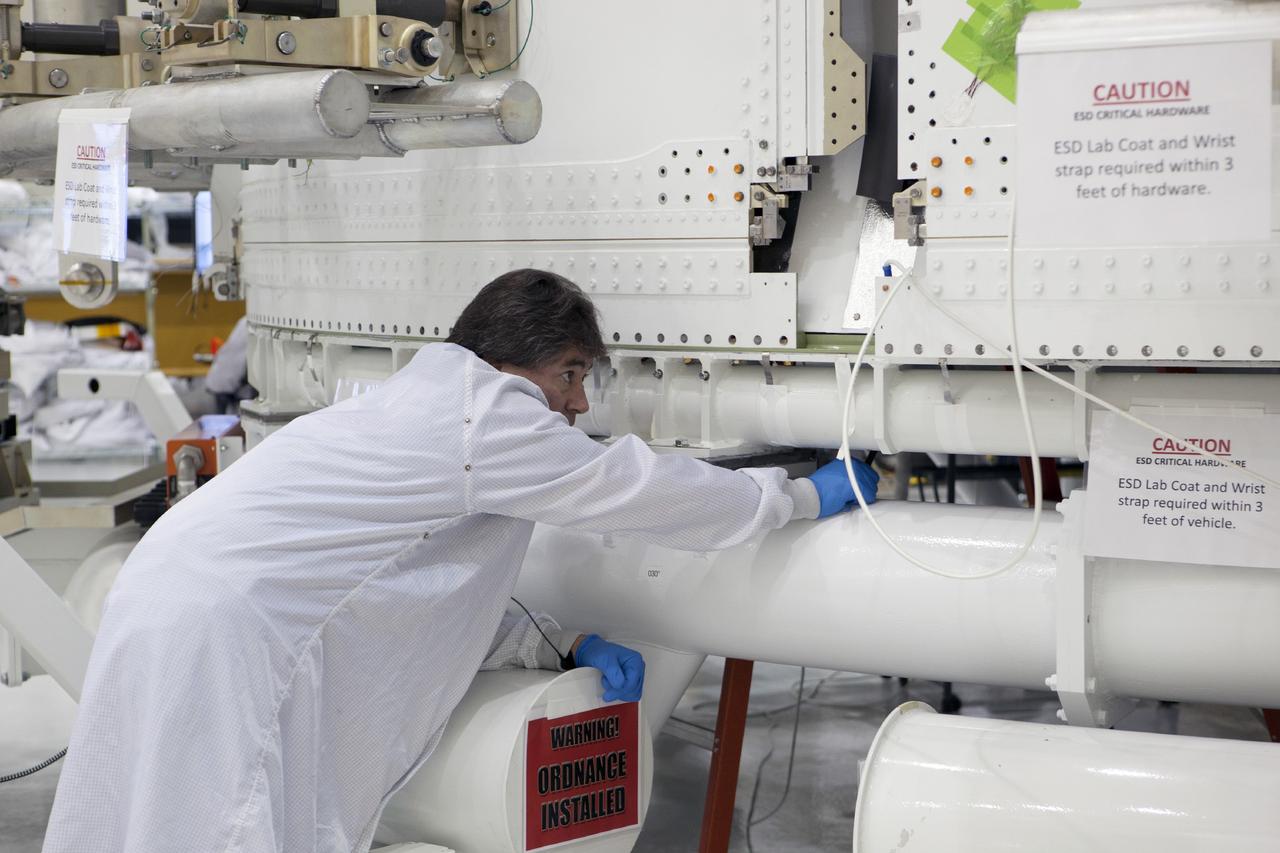
CAPE CANAVERAL, Fla. – Inside the Operations and Checkout Building high bay at NASA’s Kennedy Space Center in Florida, a technician closely monitors two fairings as they are joined together after being installed on the service module for the Orion spacecraft. The Orion spacecraft is being prepared for its first unpiloted flight test, Exploration Flight Test-1, or EFT-1, scheduled for launch atop a Delta IV rocket in September 2014. The Orion spacecraft is designed to carry astronauts to destinations not yet explored by humans. It will have emergency abort capability, sustain the crew during space travel and provide safe re-entry from deep space return velocities. Orion is scheduled to launch atop NASA’s Space Launch System rocket in 2017. For more information, visit http://www.nasa.gov/orion. Photo credit: NASA/Dimitri Gerondidakis

The Exploration Flight Test-1 (EFT-1) Orion service module in the Operations and Checkout (O&C) Building at NASA’s Kennedy Space Center on Dec. 31, 2011. Part of Batch image transfer from Flickr.
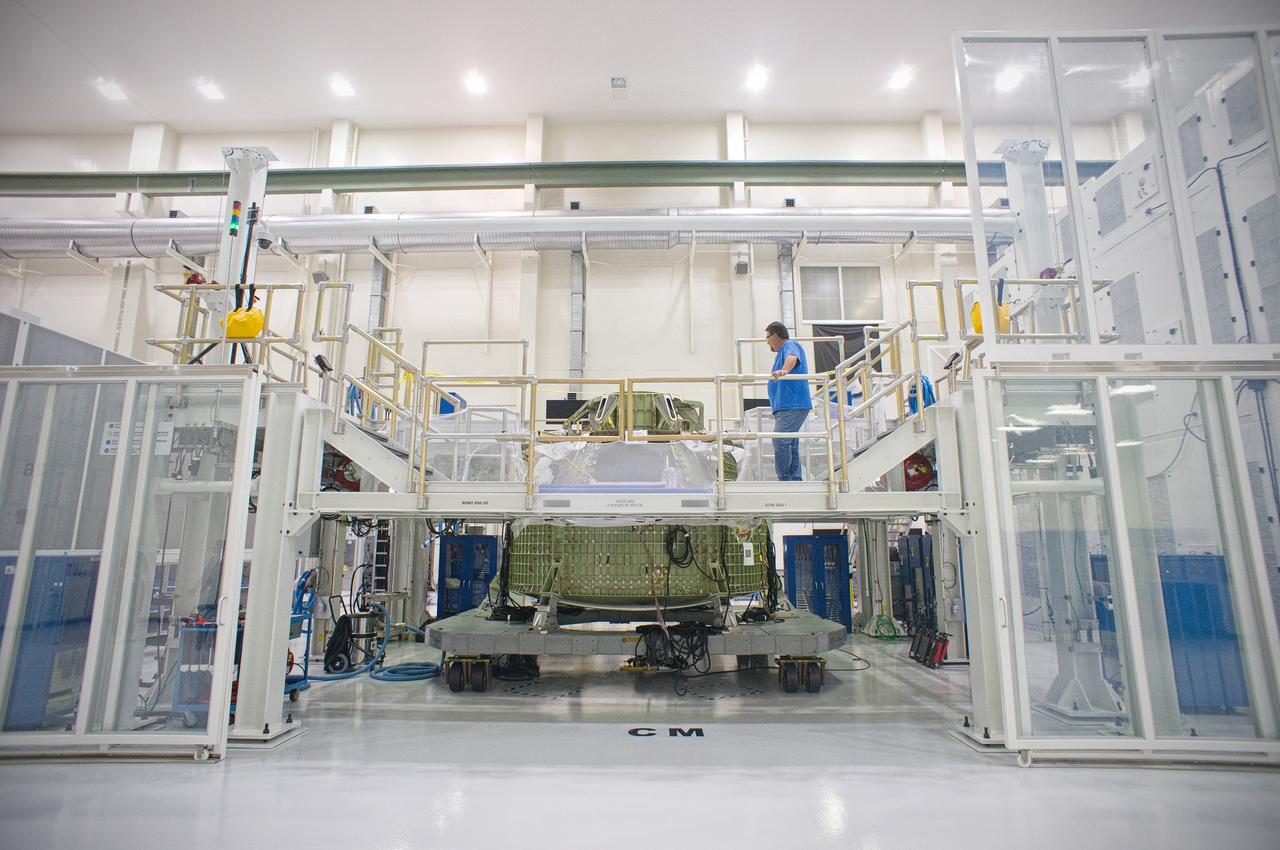
The Exploration Flight Test-1 (EFT-1) Orion service module in the Operations and Checkout (O&C) Building at NASA’s Kennedy Space Center on Dec. 31, 2011. Part of Batch image transfer from Flickr.
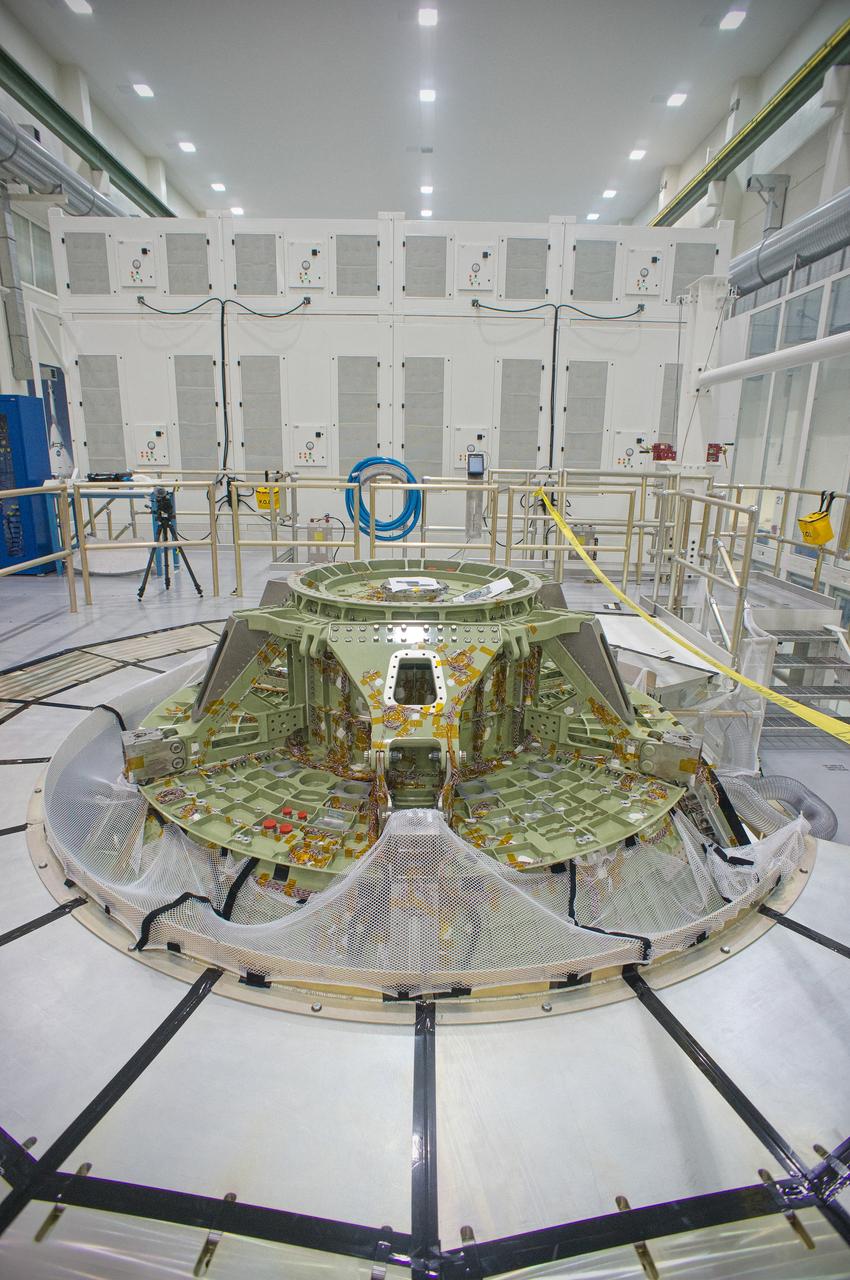
The Exploration Flight Test-1 (EFT-1) Orion service module in the Operations and Checkout (O&C) Building at NASA’s Kennedy Space Center on Dec. 31, 2011. Part of Batch image transfer from Flickr.
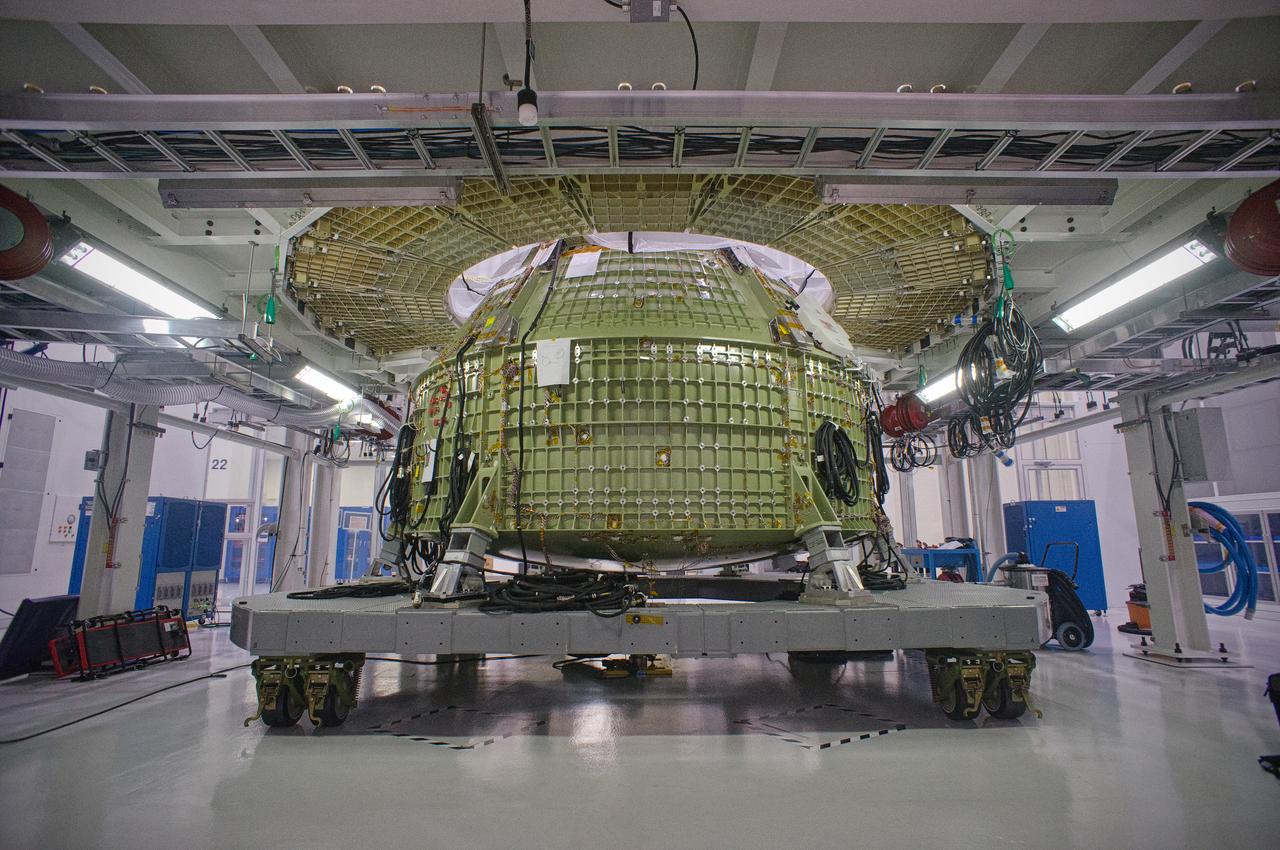
The Exploration Flight Test-1 (EFT-1) Orion service module in the Operations and Checkout (O&C) Building at NASA’s Kennedy Space Center on Dec. 31, 2011. Part of Batch image transfer from Flickr.
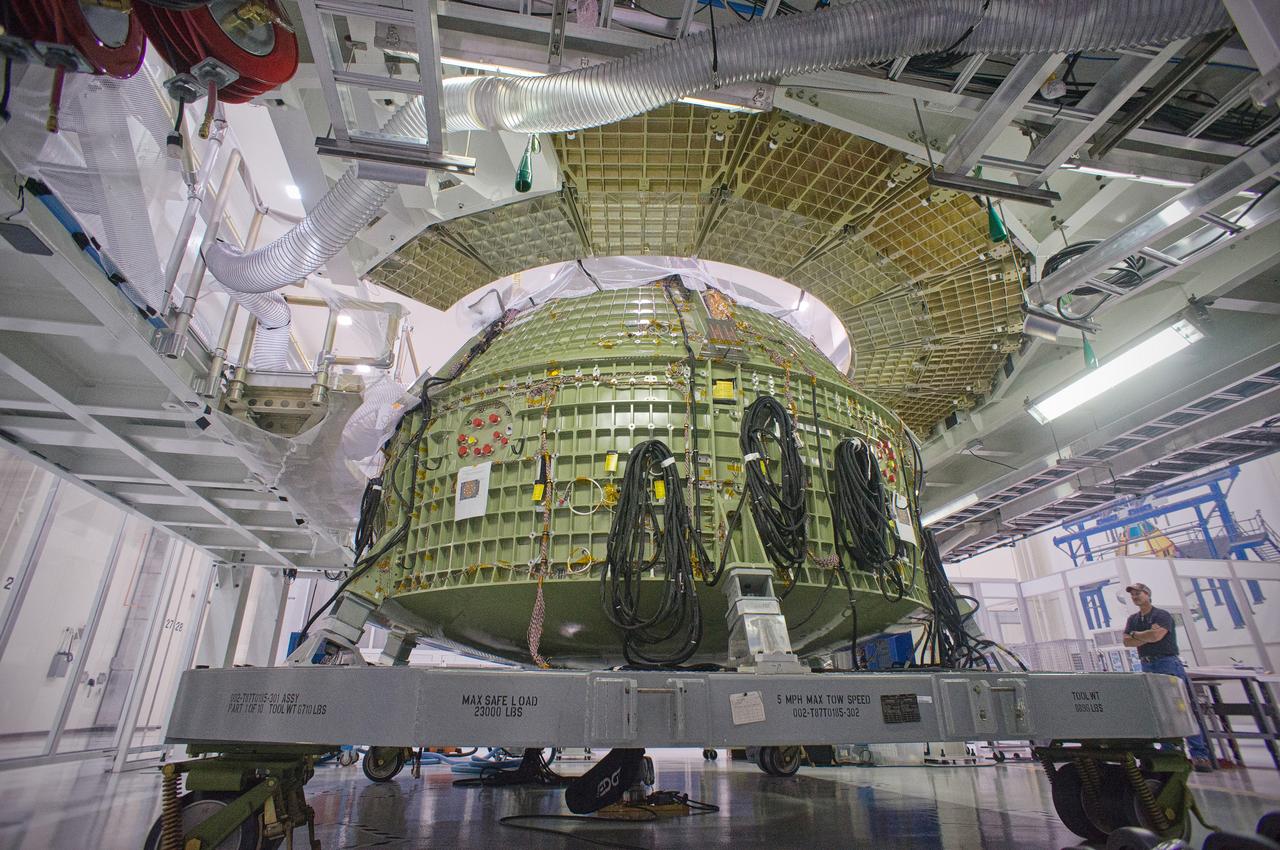
The Exploration Flight Test-1 (EFT-1) Orion service module in the Operations and Checkout (O&C) Building at NASA’s Kennedy Space Center on Dec. 31, 2011. Part of Batch image transfer from Flickr.
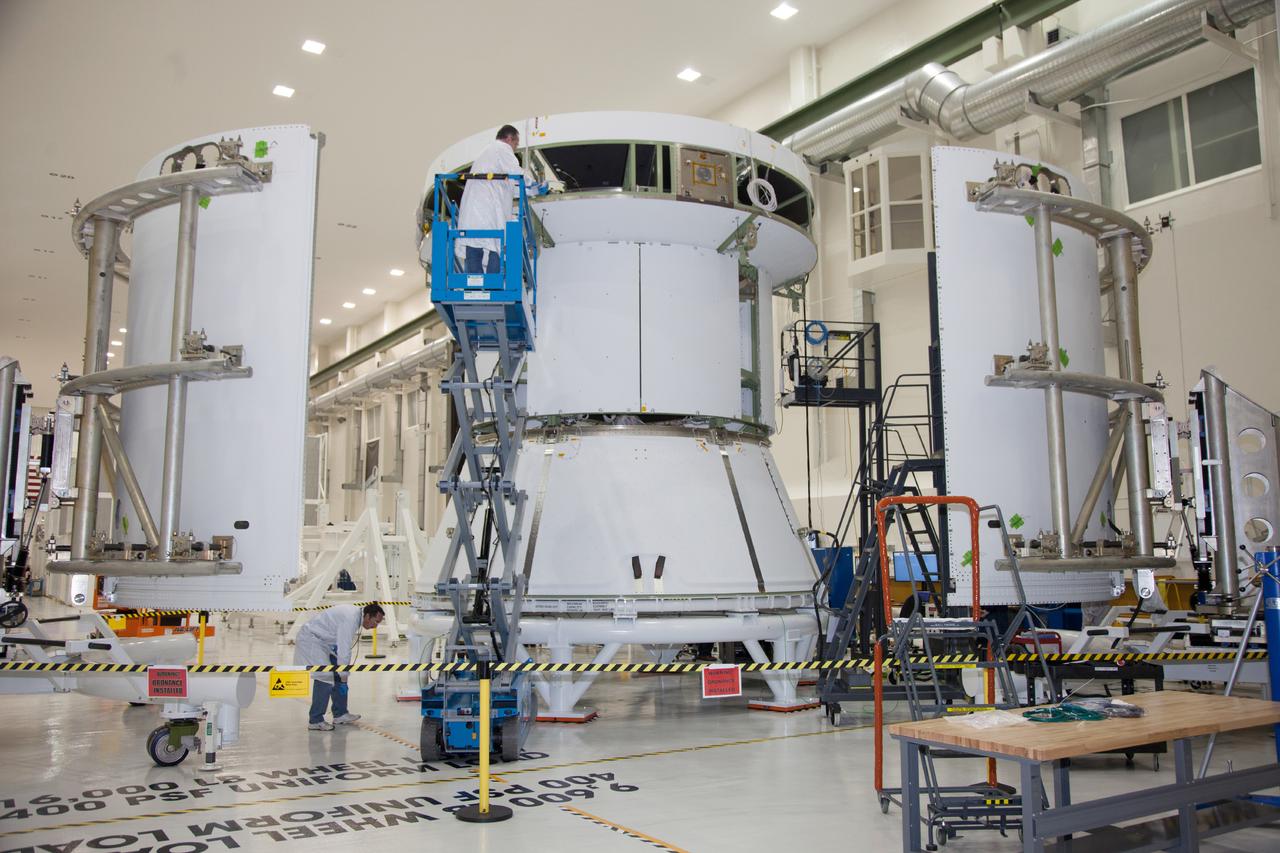
Technicians work on the Exploration Flight Test-1 (EFT-1) Orion service module in the Operations and Checkout Building (O&C) at Kennedy Space Center on Dec. 2, 2013. Part of Batch image transfer from Flickr.
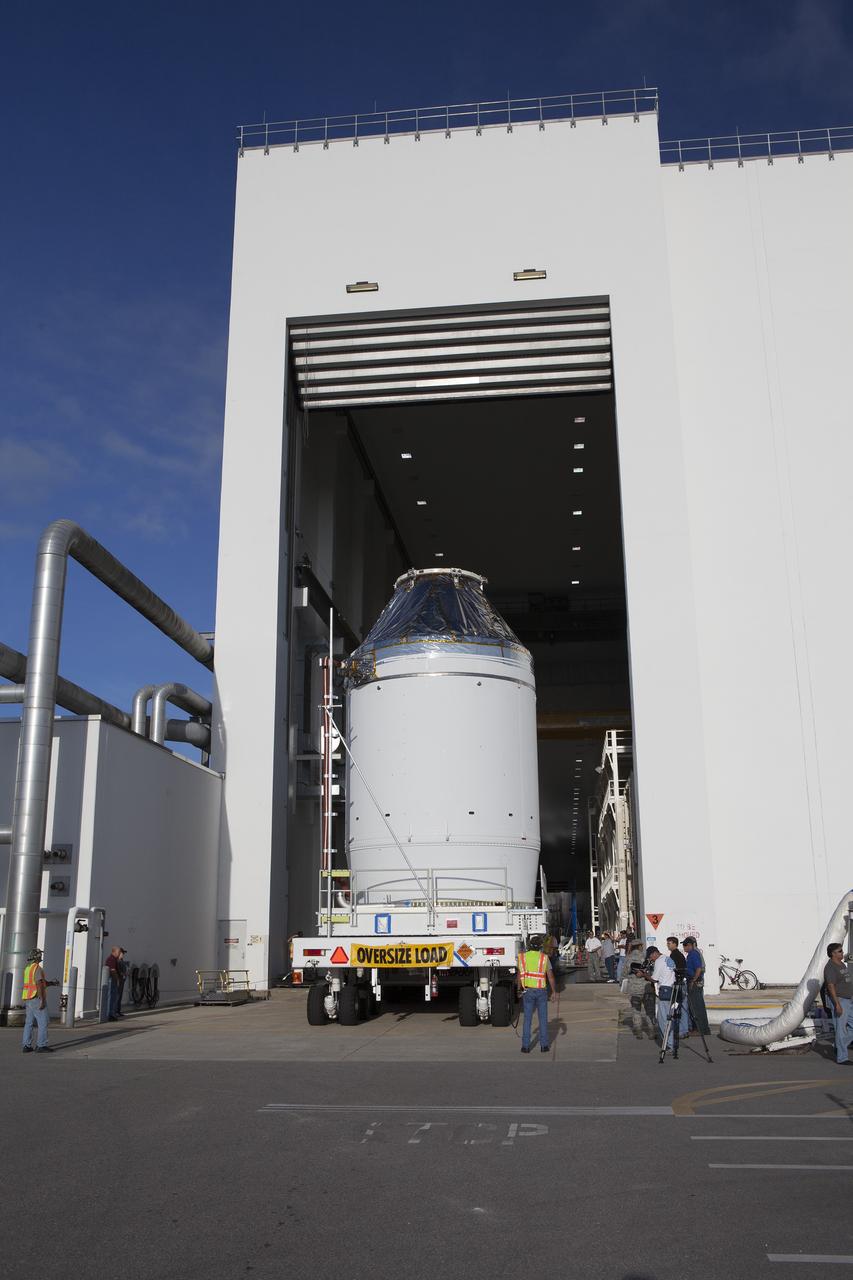
CAPE CANAVERAL, Fla. – The Orion crew module, stacked atop its service module, is slowly transported through the Neil Armstrong Operations and Checkout Building high bay door at NASA's Kennedy Space Center in Florida. The spacecraft for Exploration Flight Test-1 will be transported to the Payload Hazardous Servicing Facility where it will be fueled ahead of its December flight test. Orion is the exploration spacecraft designed to carry astronauts to destinations not yet explored by humans, including an asteroid and Mars. It will have emergency abort capability, sustain the crew during space travel and provide safe re-entry from deep space return velocities. The first unpiloted test flight of the Orion is scheduled to launch atop a United Launch Alliance Delta IV Heavy rocket from Cape Canaveral Air Force Station in Florida to an altitude of 3,600 miles above the Earth's surface. The two-orbit, four-hour flight test will help engineers evaluate the systems critical to crew safety including the heat shield, parachute system and launch abort system. For more information, visit http://www.nasa.gov/orion. Photo credit: NASA/Daniel Casper
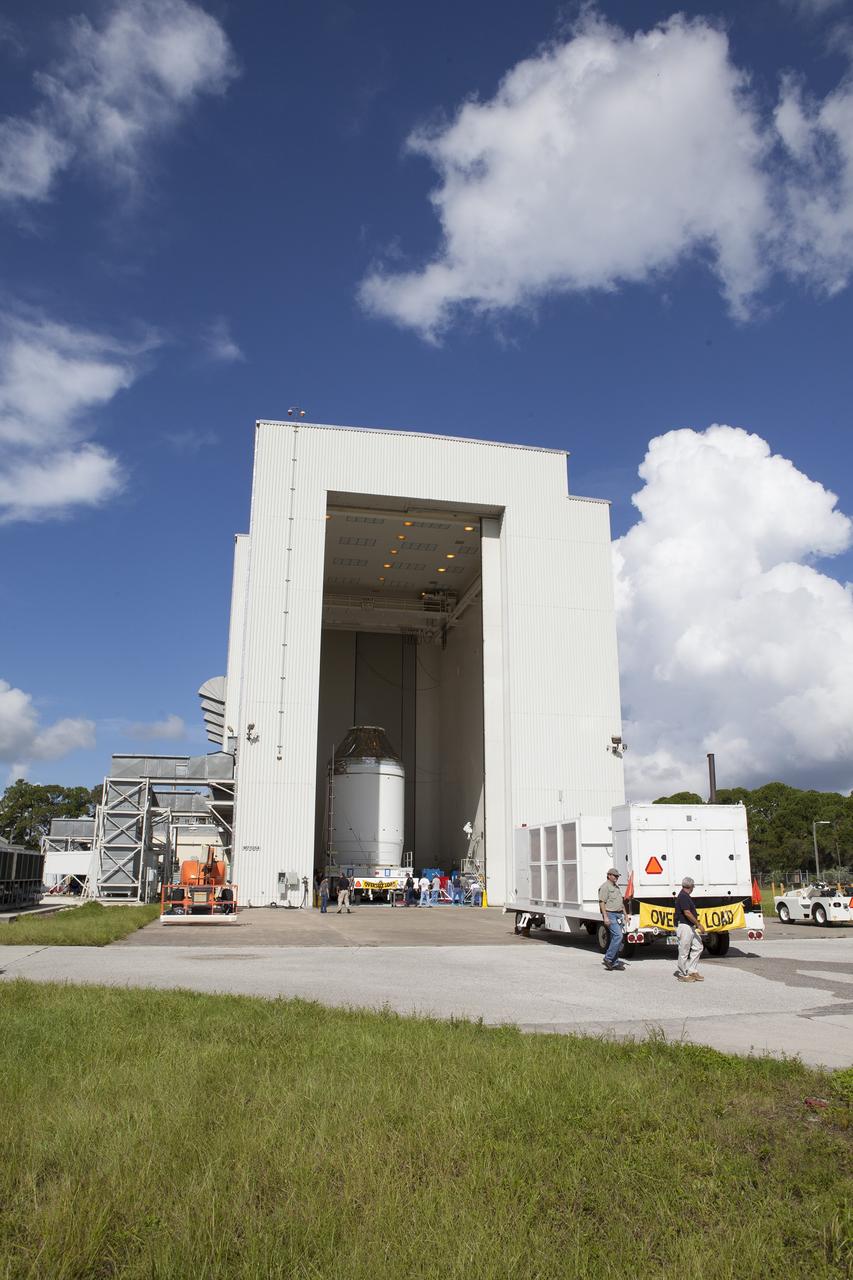
CAPE CANAVERAL, Fla. – The Orion crew module, stacked atop its service module, has been moved into the Payload Hazardous Servicing Facility at NASA's Kennedy Space Center in Florida, where it will be fueled ahead of its December flight. The spacecraft for Exploration Flight Test-1 was moved out of the Neil Armstrong Operations and Checkout Building high bay. Orion is the exploration spacecraft designed to carry astronauts to destinations not yet explored by humans, including an asteroid and Mars. It will have emergency abort capability, sustain the crew during space travel and provide safe re-entry from deep space return velocities. The first unpiloted test flight of the Orion is scheduled to launch atop a United Launch Alliance Delta IV Heavy rocket from Cape Canaveral Air Force Station in Florida to an altitude of 3,600 miles above the Earth's surface. The two-orbit, four-hour flight test will help engineers evaluate the systems critical to crew safety including the heat shield, parachute system and launch abort system. For more information, visit http://www.nasa.gov/orion. Photo credit: NASA/Daniel Casper
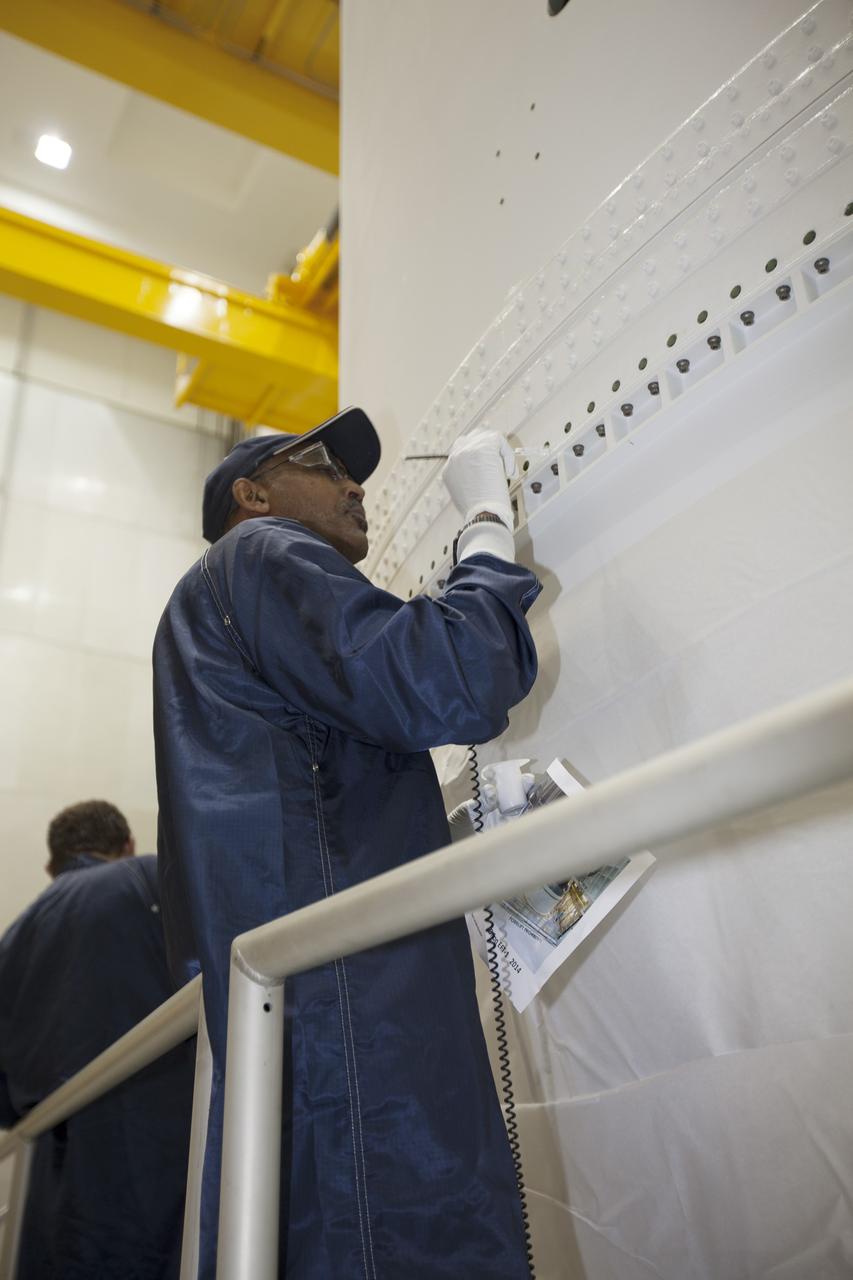
CAPE CANAVERAL, Fla. – Inside the Neil Armstrong Operations and Checkout Building high bay at NASA's Kennedy Space Center in Florida, the Orion crew and service module stack for Exploration Flight Test-1 was lifted by crane out of the test cell. The stack has been lowered onto the mating device on a stand. Technicians are attaching the stack to the mating device. Orion is the exploration spacecraft designed to carry astronauts to destinations not yet explored by humans, including an asteroid and Mars. It will have emergency abort capability, sustain the crew during space travel and provide safe re-entry from deep space return velocities. The first unpiloted test flight of the Orion is scheduled to launch later this year atop a Delta IV Heavy rocket from Cape Canaveral Air Force Station in Florida to an altitude of 3,600 miles above the Earth's surface. The two-orbit, four-hour flight test will help engineers evaluate the systems critical to crew safety including the heat shield, parachute system and launch abort system. For more information, visit http://www.nasa.gov/orion. Photo credit: NASA/Ben Smegelsky
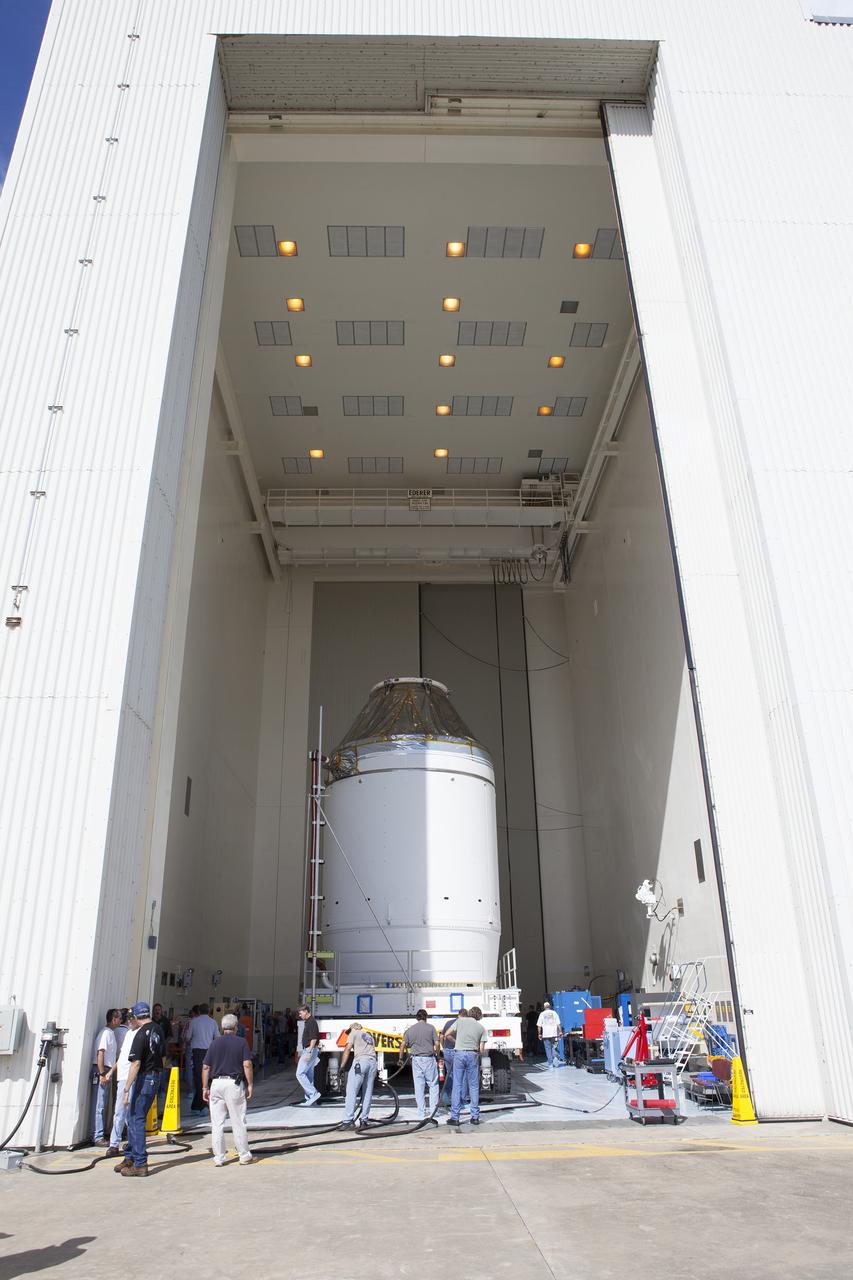
CAPE CANAVERAL, Fla. – Technicians assist as the Orion crew module, stacked atop its service module, is moved into the Payload Hazardous Servicing Facility at NASA's Kennedy Space Center in Florida, where it will be fueled ahead of its December flight. The spacecraft for Exploration Flight Test-1 was moved out of the Neil Armstrong Operations and Checkout Building high bay. Orion is the exploration spacecraft designed to carry astronauts to destinations not yet explored by humans, including an asteroid and Mars. It will have emergency abort capability, sustain the crew during space travel and provide safe re-entry from deep space return velocities. The first unpiloted test flight of the Orion is scheduled to launch atop a United Launch Alliance Delta IV Heavy rocket from Cape Canaveral Air Force Station in Florida to an altitude of 3,600 miles above the Earth's surface. The two-orbit, four-hour flight test will help engineers evaluate the systems critical to crew safety including the heat shield, parachute system and launch abort system. For more information, visit http://www.nasa.gov/orion. Photo credit: NASA/Daniel Casper
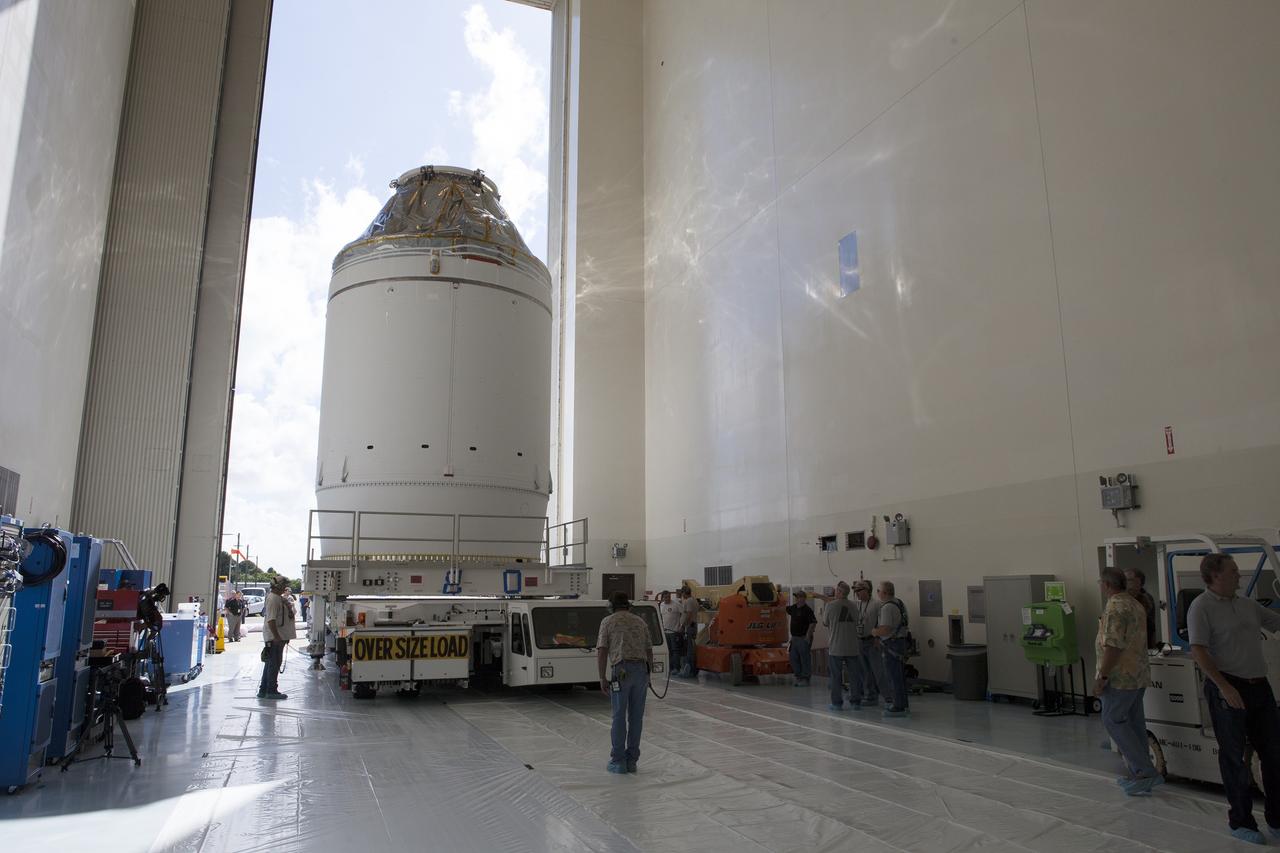
CAPE CANAVERAL, Fla. – The Orion crew module, stacked atop its service module, is transported into the Payload Hazardous Servicing Facility at NASA's Kennedy Space Center in Florida, where it will be fueled ahead of its December flight. The spacecraft for Exploration Flight Test-1 was moved out of the Neil Armstrong Operations and Checkout Building high bay. Orion is the exploration spacecraft designed to carry astronauts to destinations not yet explored by humans, including an asteroid and Mars. It will have emergency abort capability, sustain the crew during space travel and provide safe re-entry from deep space return velocities. The first unpiloted test flight of the Orion is scheduled to launch atop a United Launch Alliance Delta IV Heavy rocket from Cape Canaveral Air Force Station in Florida to an altitude of 3,600 miles above the Earth's surface. The two-orbit, four-hour flight test will help engineers evaluate the systems critical to crew safety including the heat shield, parachute system and launch abort system. For more information, visit http://www.nasa.gov/orion. Photo credit: NASA/Daniel Casper
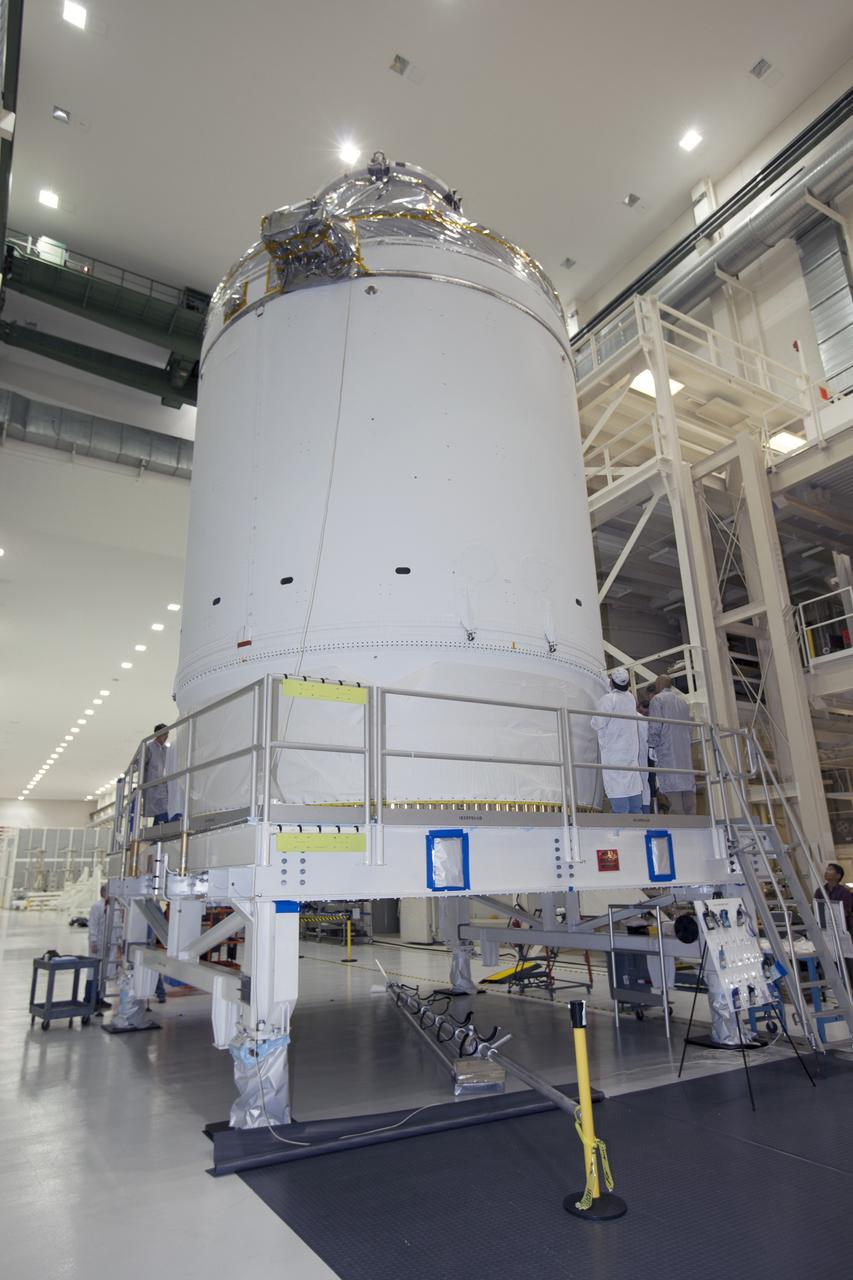
CAPE CANAVERAL, Fla. – Inside the Neil Armstrong Operations and Checkout Building high bay at NASA's Kennedy Space Center in Florida, the Orion crew and service module stack for Exploration Flight Test-1 was lifted by crane out of the test cell. The stack has been lowered onto the mating device. Technicians are attaching the stack to the mating device. A protective covering surrounds the crew module. Orion is the exploration spacecraft designed to carry astronauts to destinations not yet explored by humans, including an asteroid and Mars. It will have emergency abort capability, sustain the crew during space travel and provide safe re-entry from deep space return velocities. The first unpiloted test flight of the Orion is scheduled to launch later this year atop a Delta IV Heavy rocket from Cape Canaveral Air Force Station in Florida to an altitude of 3,600 miles above the Earth's surface. The two-orbit, four-hour flight test will help engineers evaluate the systems critical to crew safety including the heat shield, parachute system and launch abort system. For more information, visit http://www.nasa.gov/orion. Photo credit: NASA/Ben Smegelsky
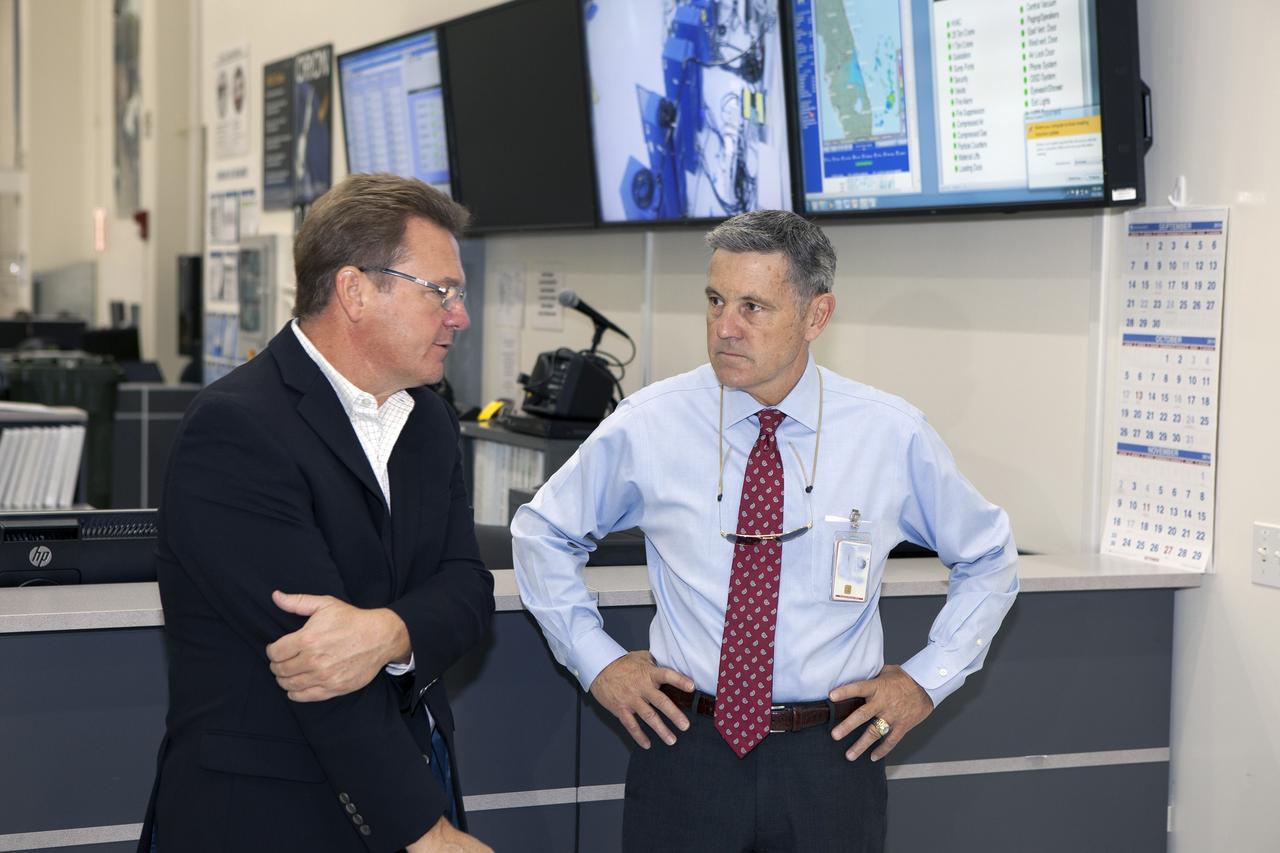
CAPE CANAVERAL, Fla. – Preparations are underway at the Neil Armstrong Operations and Checkout Building at NASA's Kennedy Space Center in Florida for the move of the Orion spacecraft for Exploration Flight Test-1 out of the high bay doors. Inside the high bay from left, are Jules Schneider, Lockheed Martin senior manager, and Kennedy Center Director Bob Cabana. The spacecraft will be transported to the Payload Hazardous Servicing Facility where it will be fueled ahead of its December flight test. Orion is the exploration spacecraft designed to carry astronauts to destinations not yet explored by humans, including an asteroid and Mars. It will have emergency abort capability, sustain the crew during space travel and provide safe re-entry from deep space return velocities. The first unpiloted test flight of the Orion is scheduled to launch atop a United Launch Alliance Delta IV Heavy rocket from Cape Canaveral Air Force Station in Florida to an altitude of 3,600 miles above the Earth's surface. The two-orbit, four-hour flight test will help engineers evaluate the systems critical to crew safety including the heat shield, parachute system and launch abort system. For more information, visit http://www.nasa.gov/orion. Photo credit: NASA/Daniel Casper
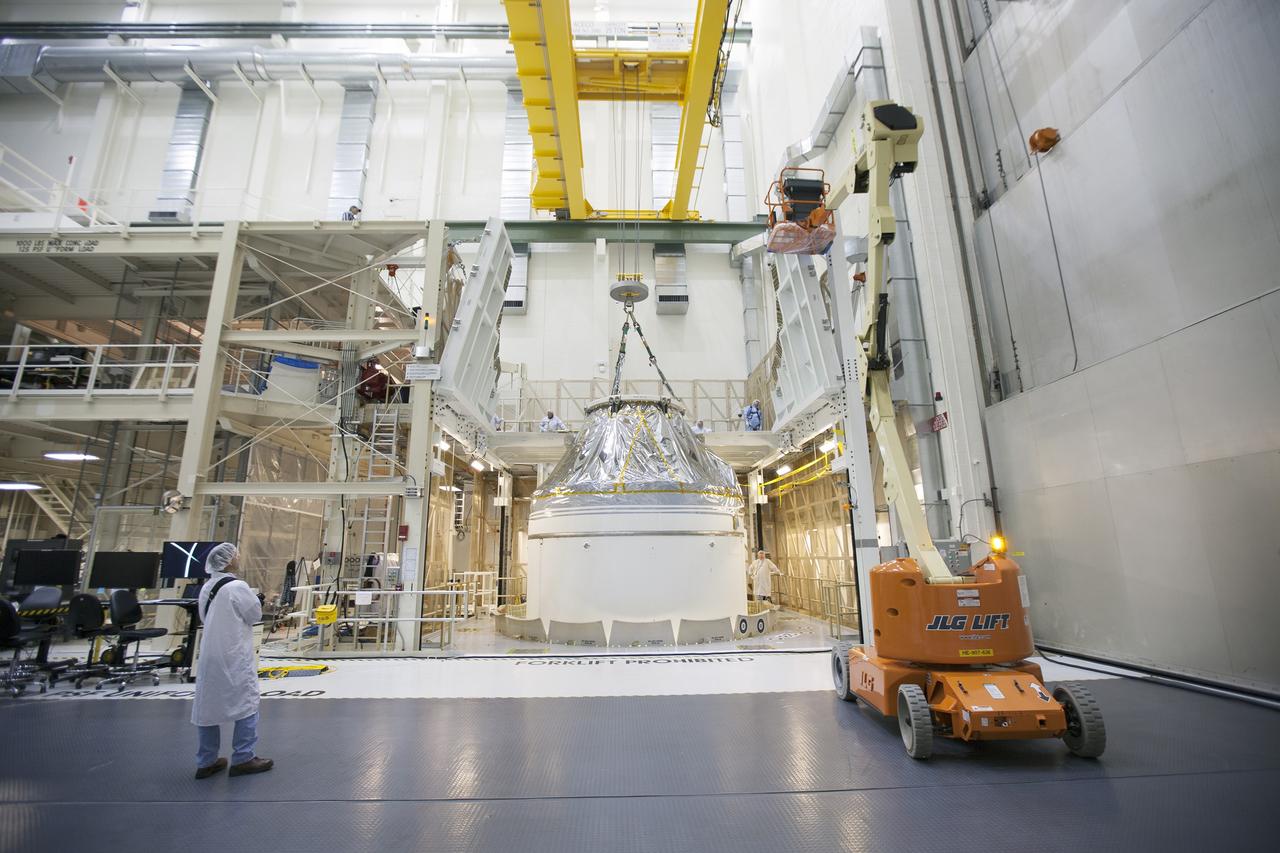
CAPE CANAVERAL, Fla. – Inside the Neil Armstrong Operations and Checkout Building high bay at NASA's Kennedy Space Center in Florida, a crane slowly lifts the Orion crew and service module stack for Exploration Flight Test-1 out of the test cell. Orion will be transferred to a mating device. Orion is the exploration spacecraft designed to carry astronauts to destinations not yet explored by humans, including an asteroid and Mars. It will have emergency abort capability, sustain the crew during space travel and provide safe re-entry from deep space return velocities. The first unpiloted test flight of the Orion is scheduled to launch later this year atop a Delta IV Heavy rocket from Cape Canaveral Air Force Station in Florida to an altitude of 3,600 miles above the Earth's surface. The two-orbit, four-hour flight test will help engineers evaluate the systems critical to crew safety including the heat shield, parachute system and launch abort system. For more information, visit http://www.nasa.gov/orion. Photo credit: NASA/Ben Smegelsky
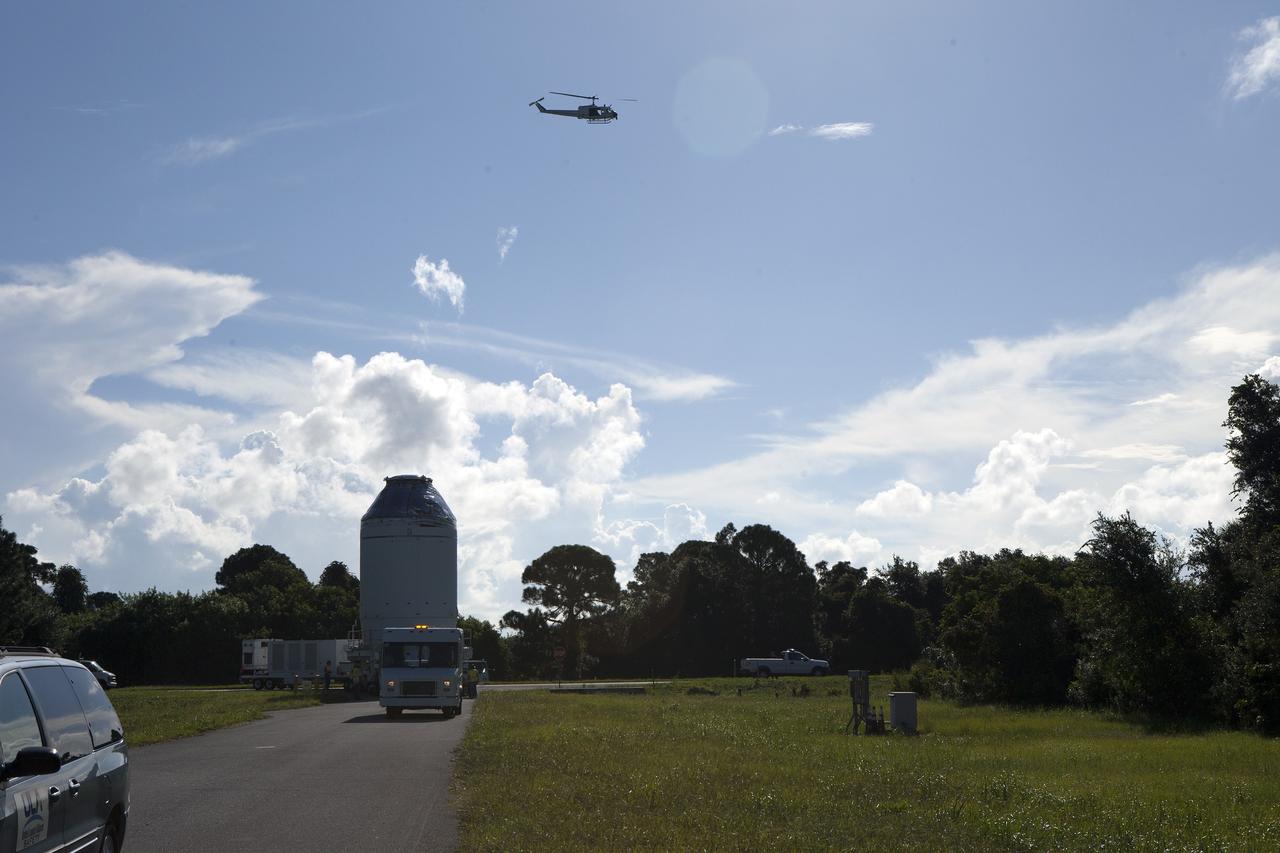
CAPE CANAVERAL, Fla. – A NASA helicopter flies overhead as the Orion crew module, stacked atop its service module, is transported to the Payload Hazardous Servicing Facility at NASA's Kennedy Space Center in Florida, where it will be fueled ahead of its December flight. The spacecraft for Exploration Flight Test-1 was moved out of the Neil Armstrong Operations and Checkout Building high bay. Orion is the exploration spacecraft designed to carry astronauts to destinations not yet explored by humans, including an asteroid and Mars. It will have emergency abort capability, sustain the crew during space travel and provide safe re-entry from deep space return velocities. The first unpiloted test flight of the Orion is scheduled to launch atop a United Launch Alliance Delta IV Heavy rocket from Cape Canaveral Air Force Station in Florida to an altitude of 3,600 miles above the Earth's surface. The two-orbit, four-hour flight test will help engineers evaluate the systems critical to crew safety including the heat shield, parachute system and launch abort system. For more information, visit http://www.nasa.gov/orion. Photo credit: NASA/Daniel Casper
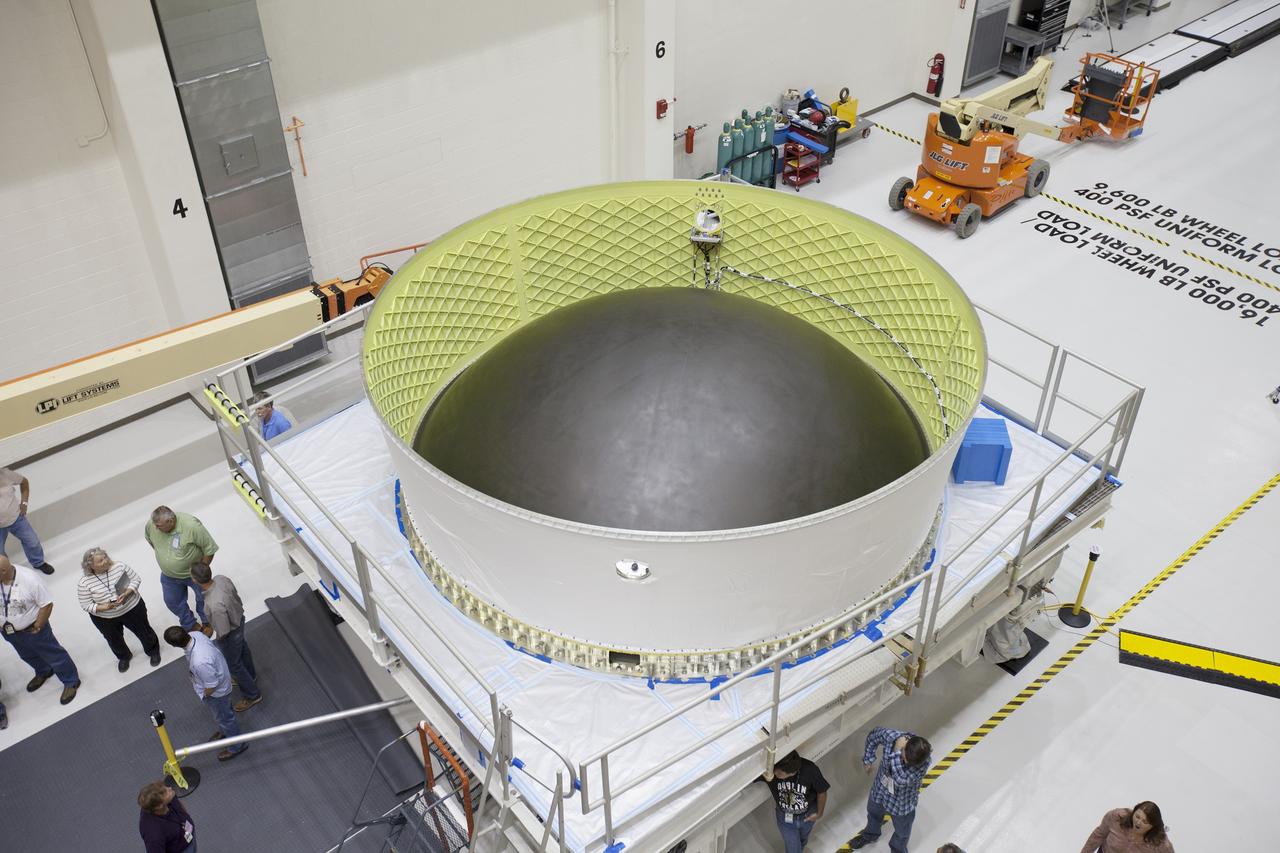
CAPE CANAVERAL, Fla. – Inside the Neil Armstrong Operations and Checkout Building high bay at NASA's Kennedy Space Center in Florida, a mating device is positioned on a work stand. Preparations are underway to lift the Orion crew and service module stack for Exploration Flight Test-1 out of the test cell and transfer it to the mating device. Orion is the exploration spacecraft designed to carry astronauts to destinations not yet explored by humans, including an asteroid and Mars. It will have emergency abort capability, sustain the crew during space travel and provide safe re-entry from deep space return velocities. The first unpiloted test flight of the Orion is scheduled to launch later this year atop a Delta IV Heavy rocket from Cape Canaveral Air Force Station in Florida to an altitude of 3,600 miles above the Earth's surface. The two-orbit, four-hour flight test will help engineers evaluate the systems critical to crew safety including the heat shield, parachute system and launch abort system. For more information, visit http://www.nasa.gov/orion. Photo credit: NASA/Ben Smegelsky
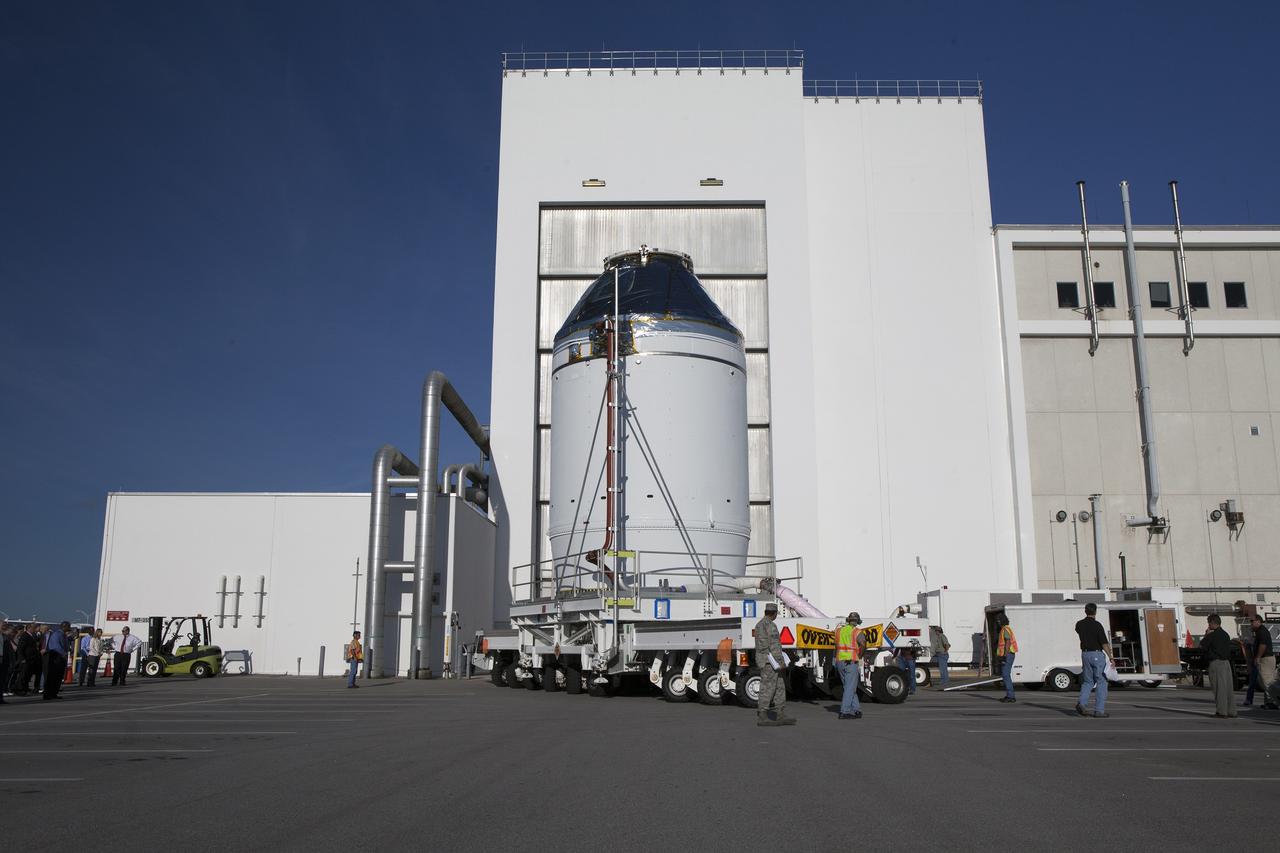
CAPE CANAVERAL, Fla. – The Orion crew module, stacked atop its service module, has moved out of the Neil Armstrong Operations and Checkout Building high bay at NASA's Kennedy Space Center in Florida. The spacecraft for Exploration Flight Test-1 will be transported to the Payload Hazardous Servicing Facility where it will be fueled ahead of its December flight test. Orion is the exploration spacecraft designed to carry astronauts to destinations not yet explored by humans, including an asteroid and Mars. It will have emergency abort capability, sustain the crew during space travel and provide safe re-entry from deep space return velocities. The first unpiloted test flight of the Orion is scheduled to launch atop a United Launch Alliance Delta IV Heavy rocket from Cape Canaveral Air Force Station in Florida to an altitude of 3,600 miles above the Earth's surface. The two-orbit, four-hour flight test will help engineers evaluate the systems critical to crew safety including the heat shield, parachute system and launch abort system. For more information, visit http://www.nasa.gov/orion. Photo credit: NASA/Daniel Casper

CAPE CANAVERAL, Fla. – Inside the Neil Armstrong Operations and Checkout Building high bay at NASA's Kennedy Space Center in Florida, the Orion crew and service module stack for Exploration Flight Test-1 was lifted by crane out of the test cell and is being moved along the center aisle. Orion will be transferred to a mating device. Orion is the exploration spacecraft designed to carry astronauts to destinations not yet explored by humans, including an asteroid and Mars. It will have emergency abort capability, sustain the crew during space travel and provide safe re-entry from deep space return velocities. The first unpiloted test flight of the Orion is scheduled to launch later this year atop a Delta IV Heavy rocket from Cape Canaveral Air Force Station in Florida to an altitude of 3,600 miles above the Earth's surface. The two-orbit, four-hour flight test will help engineers evaluate the systems critical to crew safety including the heat shield, parachute system and launch abort system. For more information, visit http://www.nasa.gov/orion. Photo credit: NASA/Ben Smegelsky
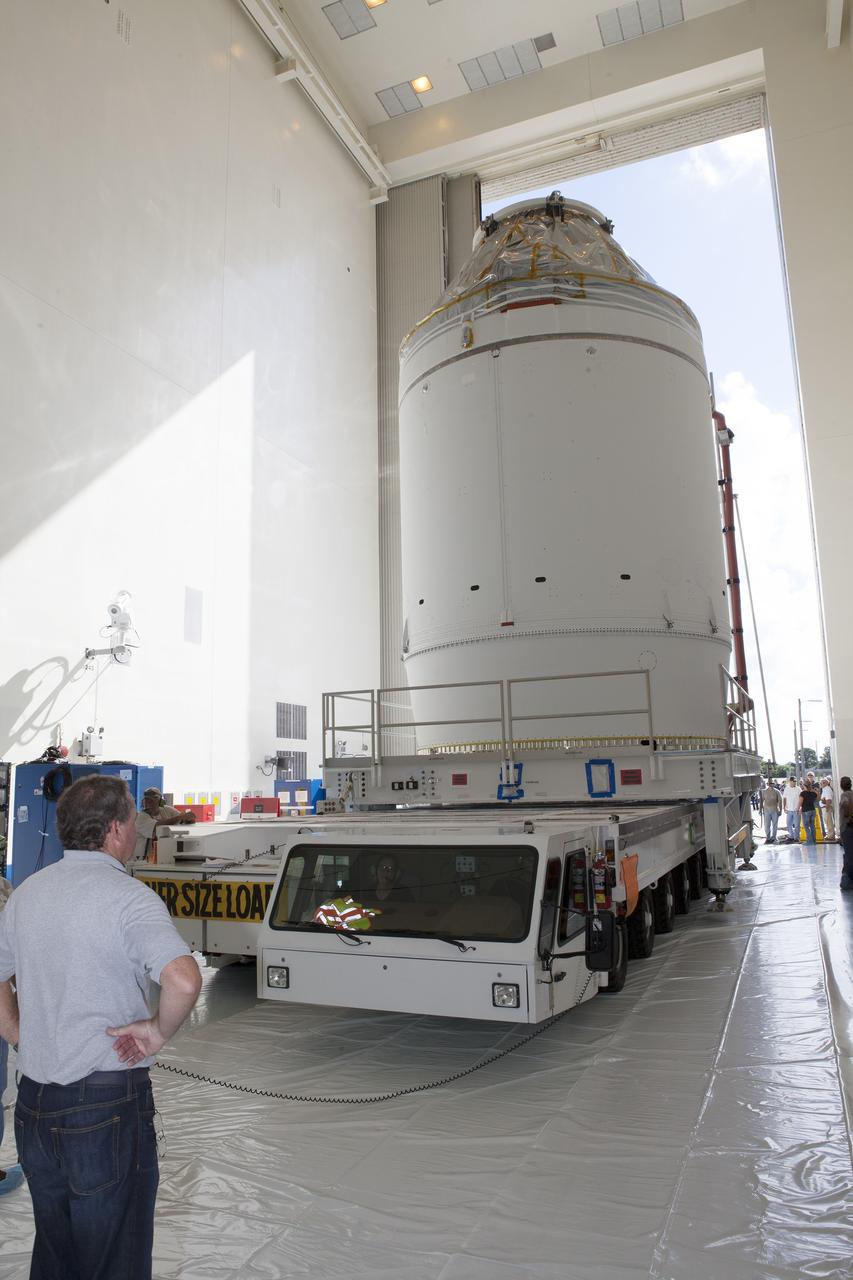
CAPE CANAVERAL, Fla. – The Orion crew module, stacked atop its service module, is transported into the Payload Hazardous Servicing Facility at NASA's Kennedy Space Center in Florida, where it will be fueled ahead of its December flight. The spacecraft for Exploration Flight Test-1 was moved out of the Neil Armstrong Operations and Checkout Building high bay. Orion is the exploration spacecraft designed to carry astronauts to destinations not yet explored by humans, including an asteroid and Mars. It will have emergency abort capability, sustain the crew during space travel and provide safe re-entry from deep space return velocities. The first unpiloted test flight of the Orion is scheduled to launch atop a United Launch Alliance Delta IV Heavy rocket from Cape Canaveral Air Force Station in Florida to an altitude of 3,600 miles above the Earth's surface. The two-orbit, four-hour flight test will help engineers evaluate the systems critical to crew safety including the heat shield, parachute system and launch abort system. For more information, visit http://www.nasa.gov/orion. Photo credit: NASA/Daniel Casper
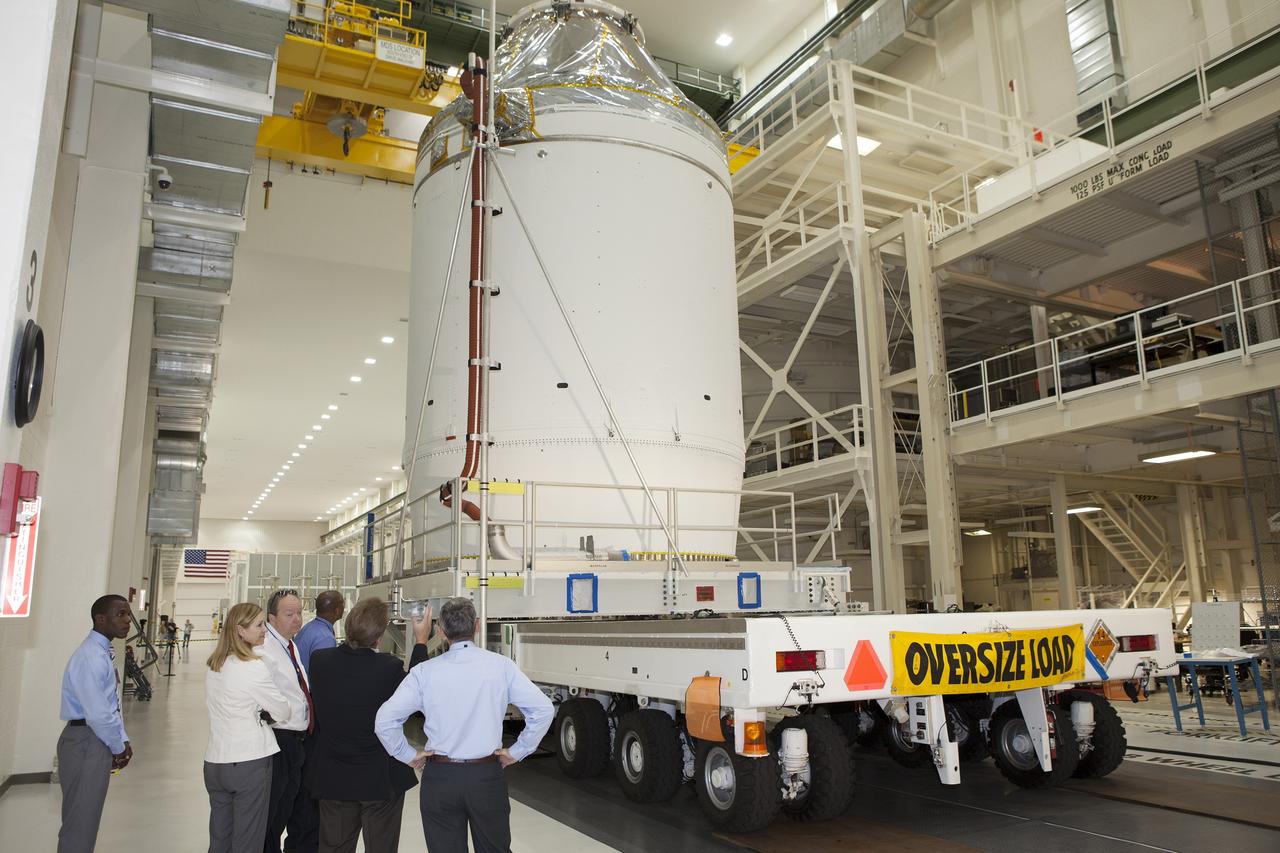
CAPE CANAVERAL, Fla. – The Orion crew module, stacked atop its service module, is being prepared for its move out of the Neil Armstrong Operations and Checkout Building high bay at NASA's Kennedy Space Center in Florida. The spacecraft for Exploration Flight Test-1 will be transported to the Payload Hazardous Servicing Facility where it will be fueled ahead of its December flight test. Orion is the exploration spacecraft designed to carry astronauts to destinations not yet explored by humans, including an asteroid and Mars. It will have emergency abort capability, sustain the crew during space travel and provide safe re-entry from deep space return velocities. The first unpiloted test flight of the Orion is scheduled to launch atop a United Launch Alliance Delta IV Heavy rocket from Cape Canaveral Air Force Station in Florida to an altitude of 3,600 miles above the Earth's surface. The two-orbit, four-hour flight test will help engineers evaluate the systems critical to crew safety including the heat shield, parachute system and launch abort system. For more information, visit http://www.nasa.gov/orion. Photo credit: NASA/Daniel Casper
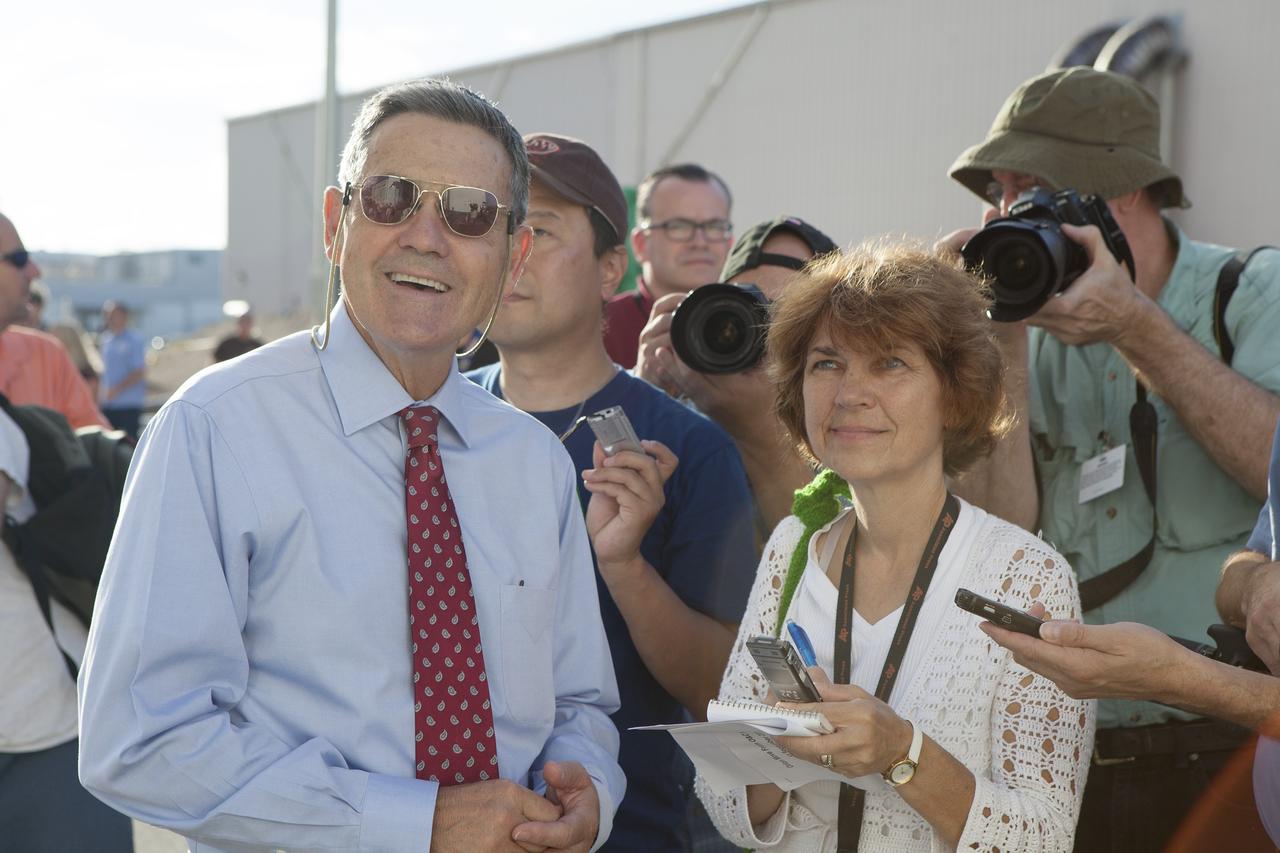
CAPE CANAVERAL, Fla. – Kennedy Space Center Director Bob Cabana, at left, watches with reporters and photographers as the Orion crew module, stacked atop its service module, moves out of the Neil Armstrong Operations and Checkout Building high bay at NASA's Kennedy Space Center in Florida. The spacecraft for Exploration Flight Test-1 will be transported to the Payload Hazardous Servicing Facility where it will be fueled ahead of its December flight test. Orion is the exploration spacecraft designed to carry astronauts to destinations not yet explored by humans, including an asteroid and Mars. It will have emergency abort capability, sustain the crew during space travel and provide safe re-entry from deep space return velocities. The first unpiloted test flight of the Orion is scheduled to launch atop a United Launch Alliance Delta IV Heavy rocket from Cape Canaveral Air Force Station in Florida to an altitude of 3,600 miles above the Earth's surface. The two-orbit, four-hour flight test will help engineers evaluate the systems critical to crew safety including the heat shield, parachute system and launch abort system. For more information, visit http://www.nasa.gov/orion. Photo credit: NASA/Daniel Casper
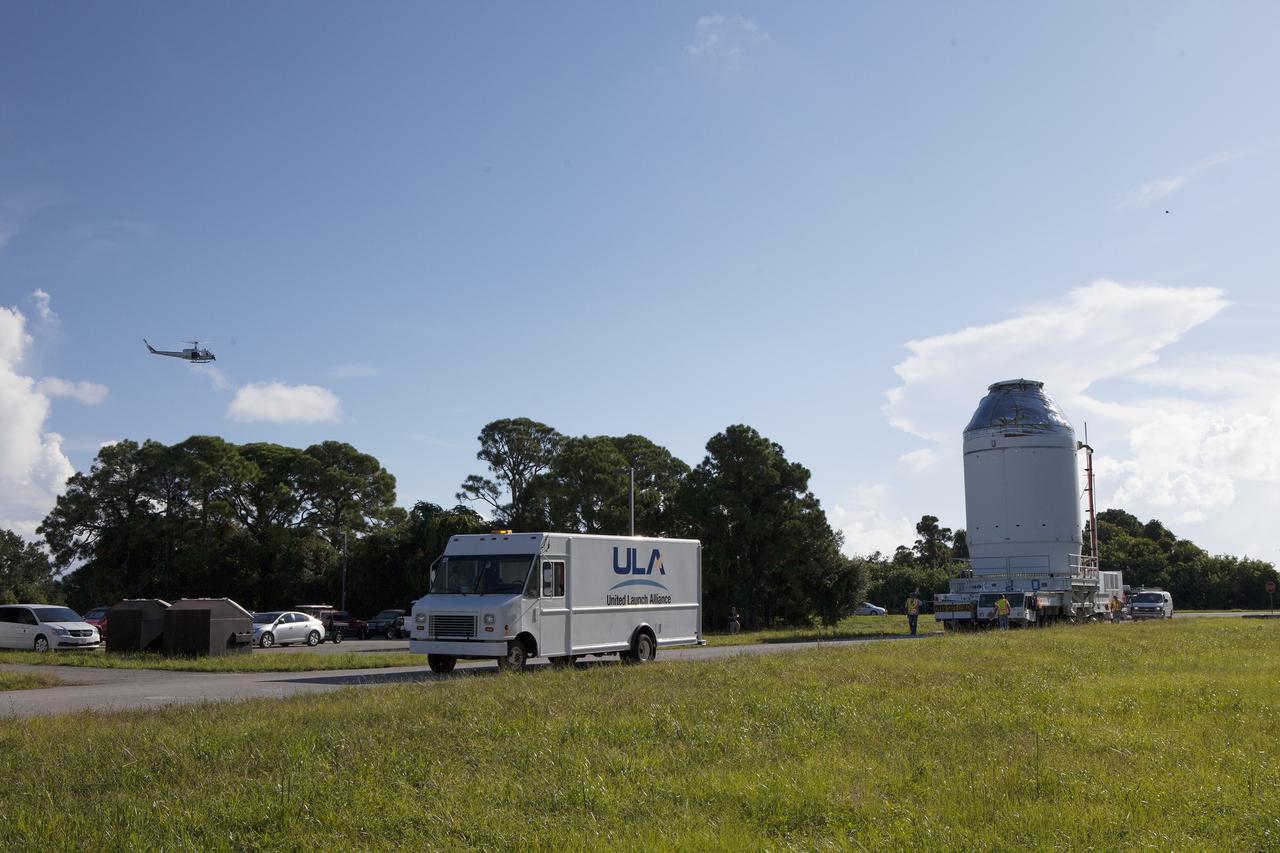
CAPE CANAVERAL, Fla. – A NASA helicopter flies overhead as the Orion crew module, stacked atop its service module, is transported to the Payload Hazardous Servicing Facility at NASA's Kennedy Space Center in Florida, where it will be fueled ahead of its December flight. The spacecraft for Exploration Flight Test-1 was moved out of the Neil Armstrong Operations and Checkout Building high bay. Orion is the exploration spacecraft designed to carry astronauts to destinations not yet explored by humans, including an asteroid and Mars. It will have emergency abort capability, sustain the crew during space travel and provide safe re-entry from deep space return velocities. The first unpiloted test flight of the Orion is scheduled to launch atop a United Launch Alliance Delta IV Heavy rocket from Cape Canaveral Air Force Station in Florida to an altitude of 3,600 miles above the Earth's surface. The two-orbit, four-hour flight test will help engineers evaluate the systems critical to crew safety including the heat shield, parachute system and launch abort system. For more information, visit http://www.nasa.gov/orion. Photo credit: NASA/Daniel Casper
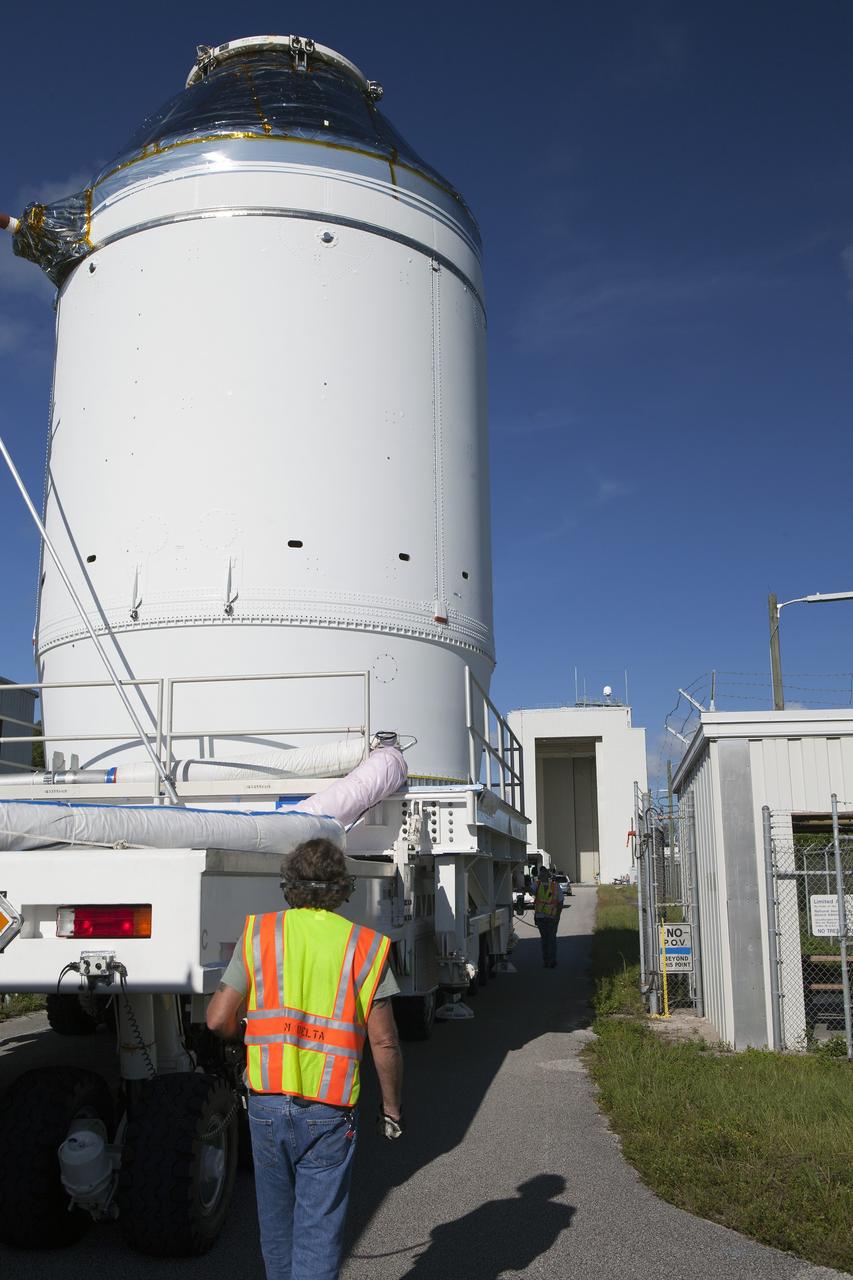
CAPE CANAVERAL, Fla. – The Orion crew module, stacked atop its service module, is being transported to the Payload Hazardous Servicing Facility at NASA's Kennedy Space Center in Florida, where it will be fueled ahead of its December flight. The spacecraft for Exploration Flight Test-1 was moved out of the Neil Armstrong Operations and Checkout Building high bay. Orion is the exploration spacecraft designed to carry astronauts to destinations not yet explored by humans, including an asteroid and Mars. It will have emergency abort capability, sustain the crew during space travel and provide safe re-entry from deep space return velocities. The first unpiloted test flight of the Orion is scheduled to launch atop a United Launch Alliance Delta IV Heavy rocket from Cape Canaveral Air Force Station in Florida to an altitude of 3,600 miles above the Earth's surface. The two-orbit, four-hour flight test will help engineers evaluate the systems critical to crew safety including the heat shield, parachute system and launch abort system. For more information, visit http://www.nasa.gov/orion. Photo credit: NASA/Daniel Casper
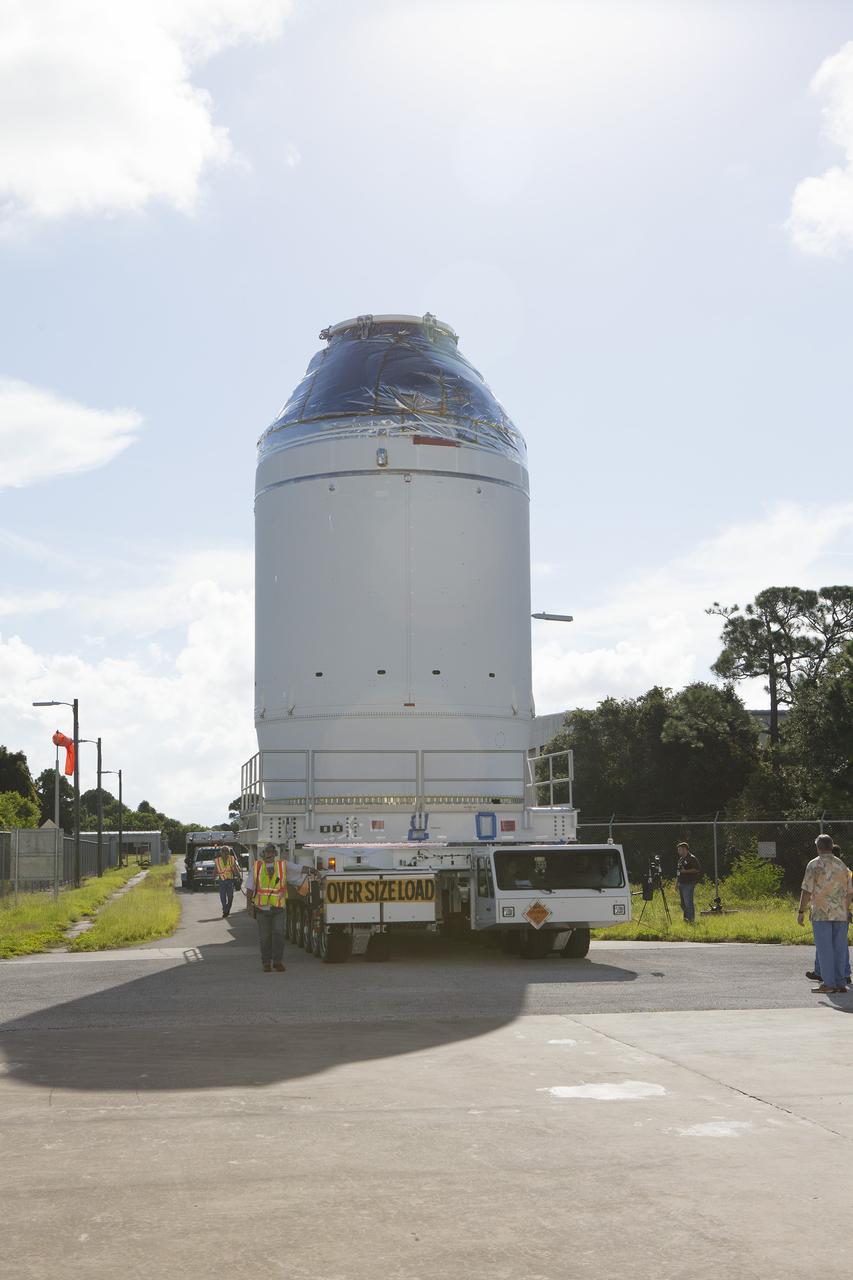
CAPE CANAVERAL, Fla. – The Orion crew module, stacked atop its service module, is being transported to the Payload Hazardous Servicing Facility at NASA's Kennedy Space Center in Florida, where it will be fueled ahead of its December flight. The spacecraft for Exploration Flight Test-1 was moved out of the Neil Armstrong Operations and Checkout Building high bay. Orion is the exploration spacecraft designed to carry astronauts to destinations not yet explored by humans, including an asteroid and Mars. It will have emergency abort capability, sustain the crew during space travel and provide safe re-entry from deep space return velocities. The first unpiloted test flight of the Orion is scheduled to launch atop a United Launch Alliance Delta IV Heavy rocket from Cape Canaveral Air Force Station in Florida to an altitude of 3,600 miles above the Earth's surface. The two-orbit, four-hour flight test will help engineers evaluate the systems critical to crew safety including the heat shield, parachute system and launch abort system. For more information, visit http://www.nasa.gov/orion. Photo credit: NASA/Daniel Casper
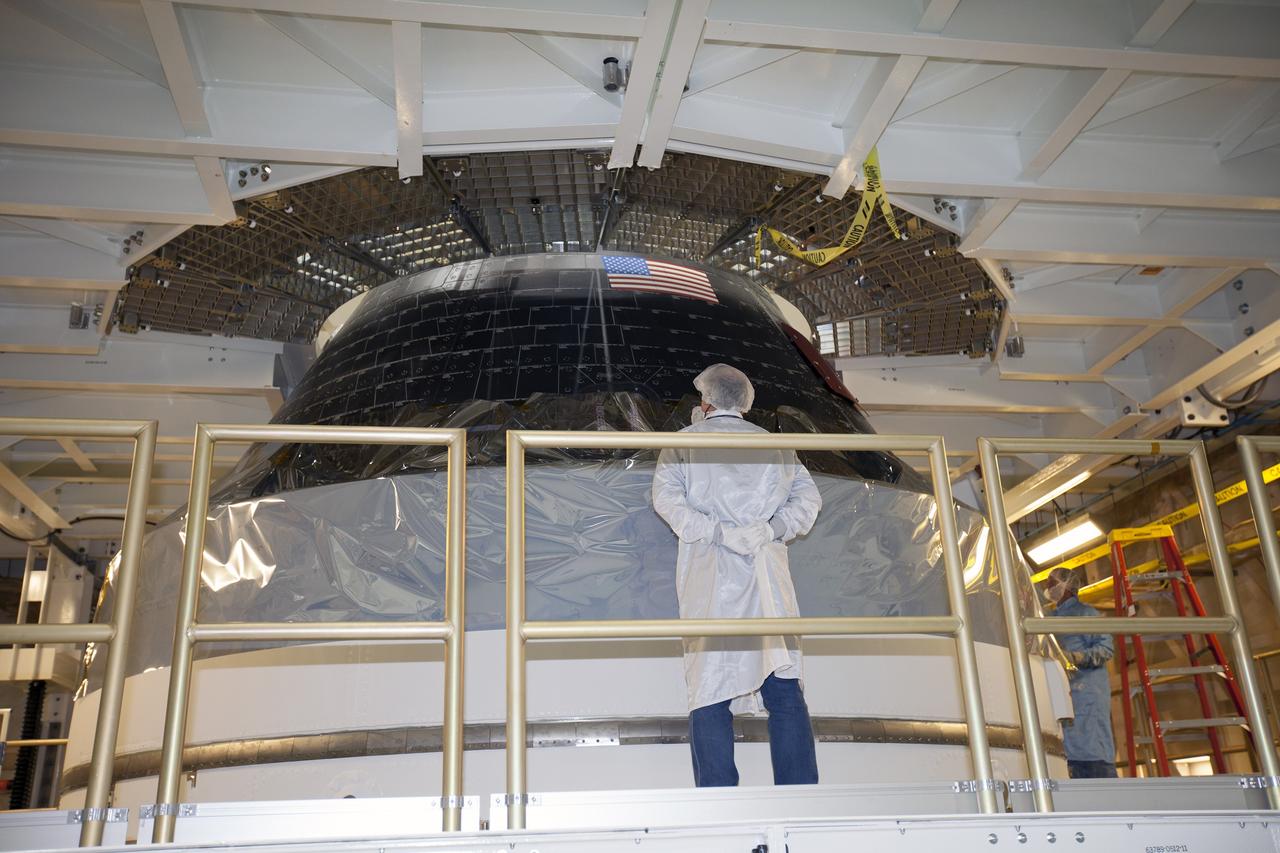
CAPE CANAVERAL, Fla. – Inside the Neil Armstrong Operations and Checkout Building high bay at NASA's Kennedy Space Center in Florida, preparations are underway to lift the Orion crew and service module stack for Exploration Flight Test-1 out of the test cell and transfer it to a mating device. Orion is the exploration spacecraft designed to carry astronauts to destinations not yet explored by humans, including an asteroid and Mars. It will have emergency abort capability, sustain the crew during space travel and provide safe re-entry from deep space return velocities. The first unpiloted test flight of the Orion is scheduled to launch later this year atop a Delta IV Heavy rocket from Cape Canaveral Air Force Station in Florida to an altitude of 3,600 miles above the Earth's surface. The two-orbit, four-hour flight test will help engineers evaluate the systems critical to crew safety including the heat shield, parachute system and launch abort system. For more information, visit http://www.nasa.gov/orion. Photo credit: NASA/Ben Smegelsky
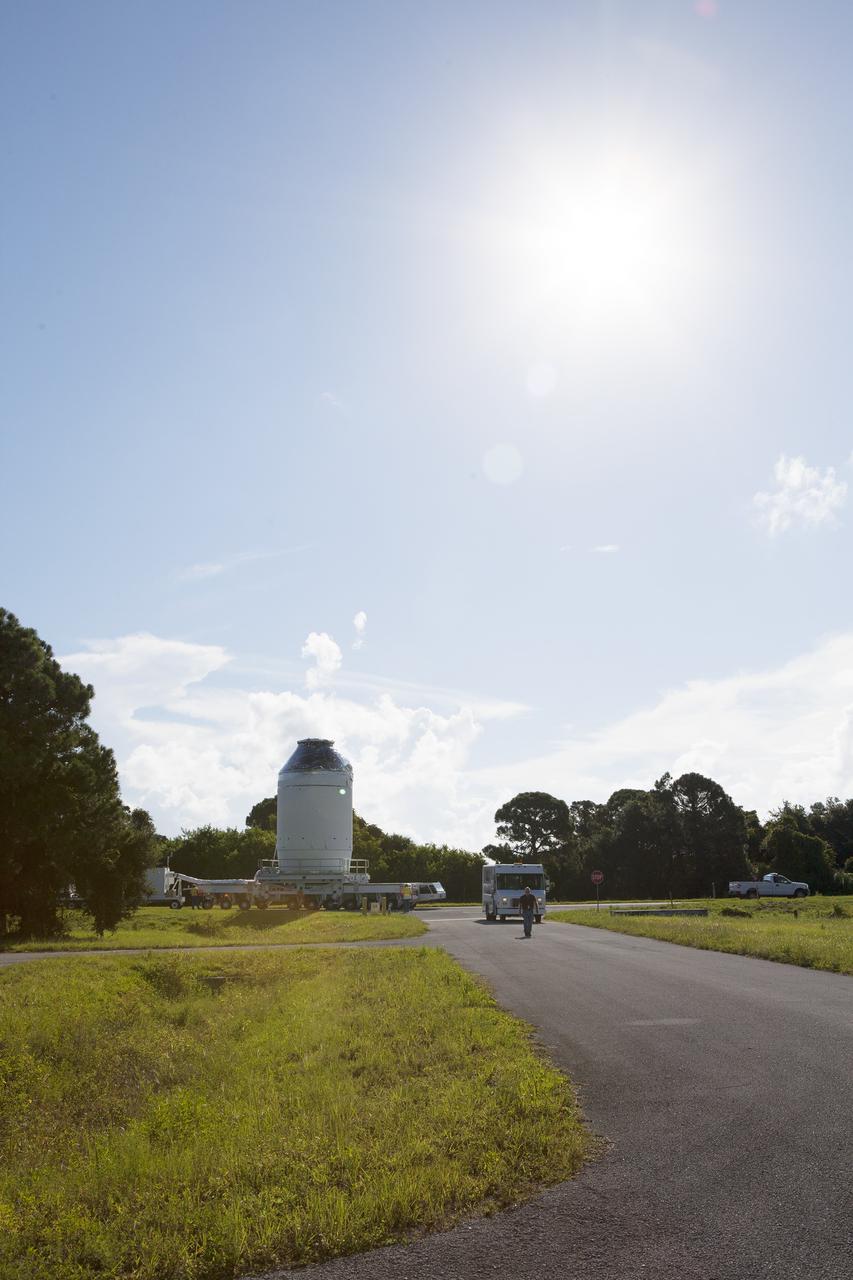
CAPE CANAVERAL, Fla. – The Orion crew module, stacked atop its service module, is being transported to the Payload Hazardous Servicing Facility at NASA's Kennedy Space Center in Florida, where it will be fueled ahead of its December flight. The spacecraft for Exploration Flight Test-1 was moved out of the Neil Armstrong Operations and Checkout Building high bay. Orion is the exploration spacecraft designed to carry astronauts to destinations not yet explored by humans, including an asteroid and Mars. It will have emergency abort capability, sustain the crew during space travel and provide safe re-entry from deep space return velocities. The first unpiloted test flight of the Orion is scheduled to launch atop a United Launch Alliance Delta IV Heavy rocket from Cape Canaveral Air Force Station in Florida to an altitude of 3,600 miles above the Earth's surface. The two-orbit, four-hour flight test will help engineers evaluate the systems critical to crew safety including the heat shield, parachute system and launch abort system. For more information, visit http://www.nasa.gov/orion. Photo credit: NASA/Daniel Casper
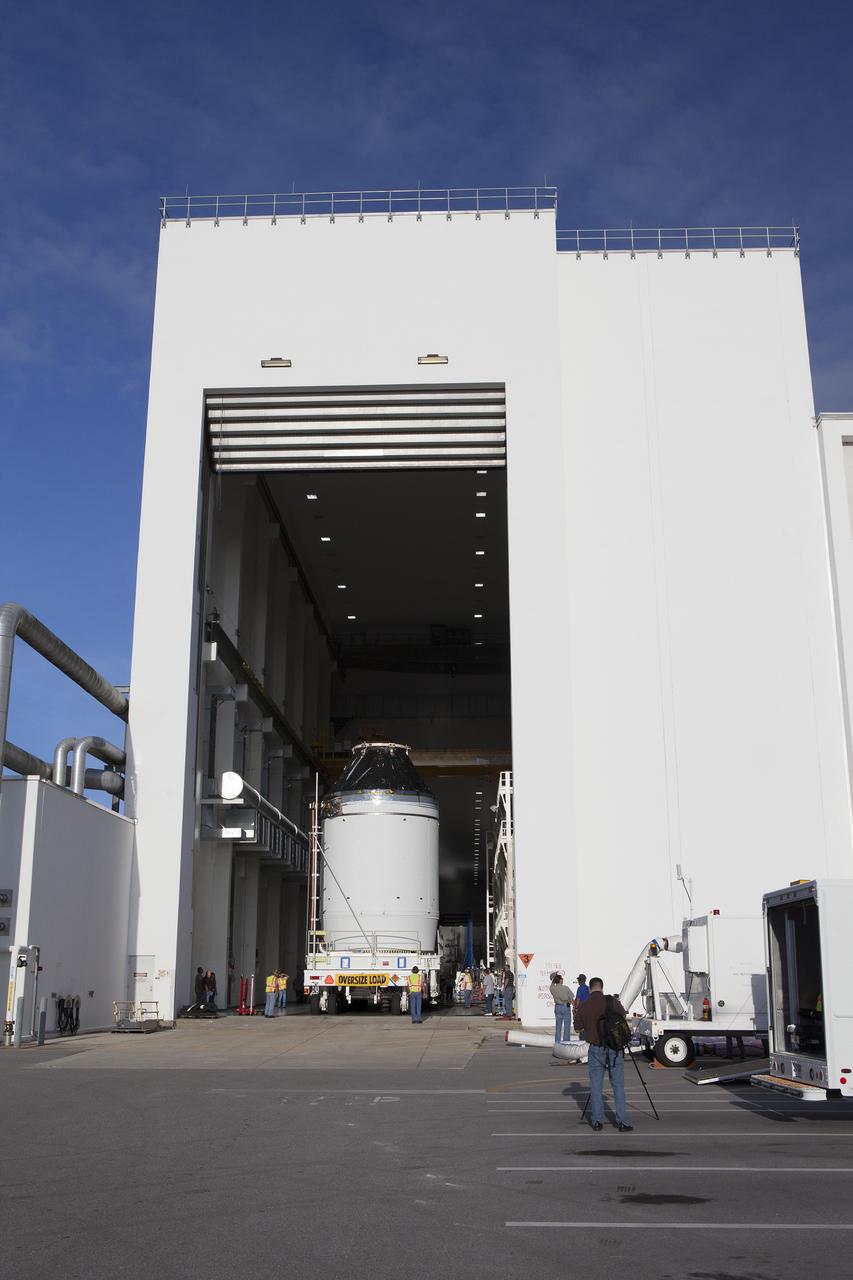
CAPE CANAVERAL, Fla. – The Orion crew module, stacked atop its service module, is moved slowly out of the Neil Armstrong Operations and Checkout Building high bay door at NASA's Kennedy Space Center in Florida. The spacecraft for Exploration Flight Test-1 will be transported to the Payload Hazardous Servicing Facility where it will be fueled ahead of its December flight test. Orion is the exploration spacecraft designed to carry astronauts to destinations not yet explored by humans, including an asteroid and Mars. It will have emergency abort capability, sustain the crew during space travel and provide safe re-entry from deep space return velocities. The first unpiloted test flight of the Orion is scheduled to launch atop a United Launch Alliance Delta IV Heavy rocket from Cape Canaveral Air Force Station in Florida to an altitude of 3,600 miles above the Earth's surface. The two-orbit, four-hour flight test will help engineers evaluate the systems critical to crew safety including the heat shield, parachute system and launch abort system. For more information, visit http://www.nasa.gov/orion. Photo credit: NASA/Daniel Casper
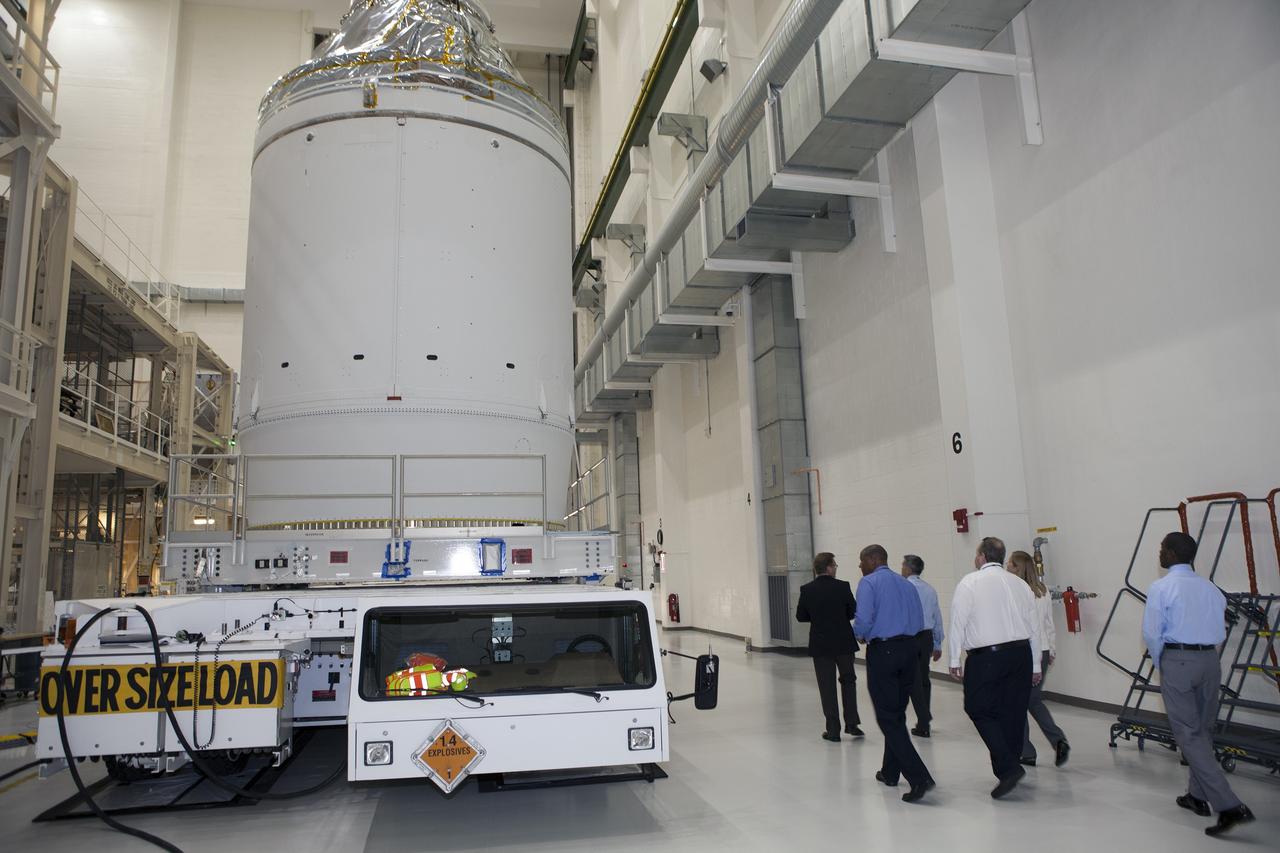
CAPE CANAVERAL, Fla. – The Orion crew module, stacked atop its service module, is being prepared for its move out of the Neil Armstrong Operations and Checkout Building high bay at NASA's Kennedy Space Center in Florida. The spacecraft for Exploration Flight Test-1 will be transported to the Payload Hazardous Servicing Facility where it will be fueled ahead of its December flight test. Orion is the exploration spacecraft designed to carry astronauts to destinations not yet explored by humans, including an asteroid and Mars. It will have emergency abort capability, sustain the crew during space travel and provide safe re-entry from deep space return velocities. The first unpiloted test flight of the Orion is scheduled to launch atop a United Launch Alliance Delta IV Heavy rocket from Cape Canaveral Air Force Station in Florida to an altitude of 3,600 miles above the Earth's surface. The two-orbit, four-hour flight test will help engineers evaluate the systems critical to crew safety including the heat shield, parachute system and launch abort system. For more information, visit http://www.nasa.gov/orion. Photo credit: NASA/Daniel Casper
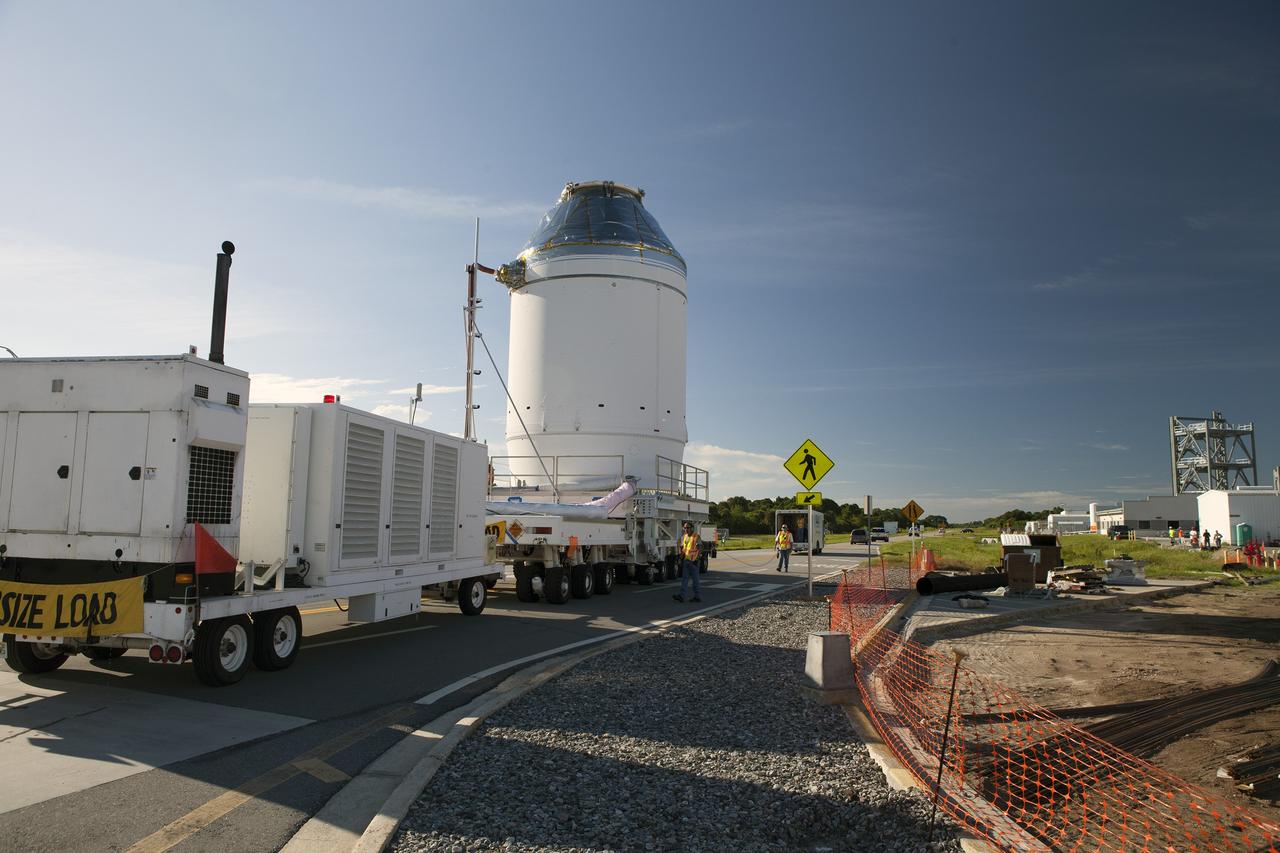
CAPE CANAVERAL, Fla. – The Orion crew module, stacked atop its service module, has moved out of the Neil Armstrong Operations and Checkout Building high bay at NASA's Kennedy Space Center in Florida. The spacecraft for Exploration Flight Test-1 is being transported to the Payload Hazardous Servicing Facility where it will be fueled ahead of its December flight test. Orion is the exploration spacecraft designed to carry astronauts to destinations not yet explored by humans, including an asteroid and Mars. It will have emergency abort capability, sustain the crew during space travel and provide safe re-entry from deep space return velocities. The first unpiloted test flight of the Orion is scheduled to launch atop a United Launch Alliance Delta IV Heavy rocket from Cape Canaveral Air Force Station in Florida to an altitude of 3,600 miles above the Earth's surface. The two-orbit, four-hour flight test will help engineers evaluate the systems critical to crew safety including the heat shield, parachute system and launch abort system. For more information, visit http://www.nasa.gov/orion. Photo credit: NASA/Daniel Casper
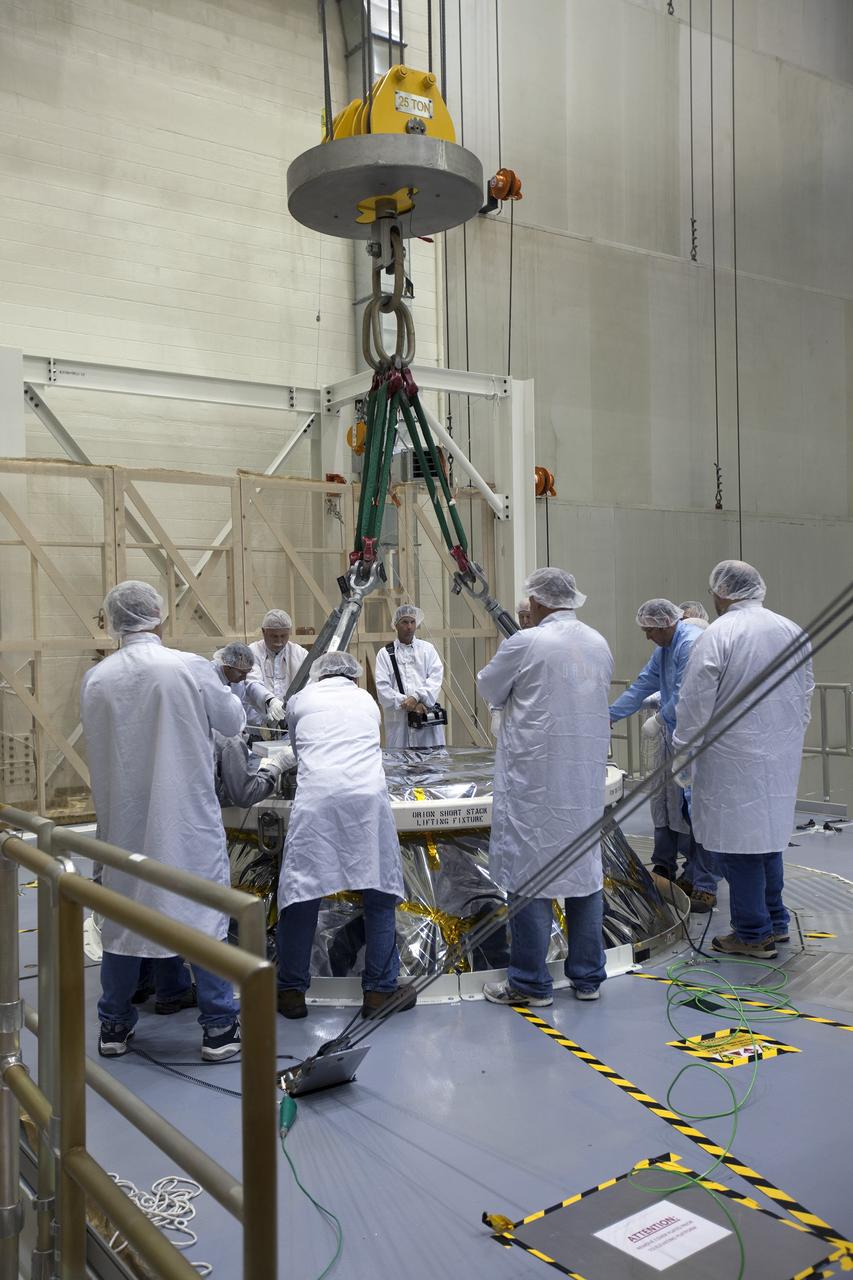
CAPE CANAVERAL, Fla. – Inside the Neil Armstrong Operations and Checkout Building high bay at NASA's Kennedy Space Center in Florida, technicians dressed in clean room suits attach a crane to the Orion crew and service module stack for Exploration Flight Test-1. Orion will be lifted out of the test cell and transferred to a mating device. Orion is the exploration spacecraft designed to carry astronauts to destinations not yet explored by humans, including an asteroid and Mars. It will have emergency abort capability, sustain the crew during space travel and provide safe re-entry from deep space return velocities. The first unpiloted test flight of the Orion is scheduled to launch later this year atop a Delta IV Heavy rocket from Cape Canaveral Air Force Station in Florida to an altitude of 3,600 miles above the Earth's surface. The two-orbit, four-hour flight test will help engineers evaluate the systems critical to crew safety including the heat shield, parachute system and launch abort system. For more information, visit http://www.nasa.gov/orion. Photo credit: NASA/Ben Smegelsky

CAPE CANAVERAL, Fla. – Inside the Neil Armstrong Operations and Checkout Building high bay at NASA's Kennedy Space Center in Florida, the Orion crew and service module stack for Exploration Flight Test-1 was lifted by crane out of the test cell and is being moved along the center aisle. Orion will be transferred to a mating device. Orion is the exploration spacecraft designed to carry astronauts to destinations not yet explored by humans, including an asteroid and Mars. It will have emergency abort capability, sustain the crew during space travel and provide safe re-entry from deep space return velocities. The first unpiloted test flight of the Orion is scheduled to launch later this year atop a Delta IV Heavy rocket from Cape Canaveral Air Force Station in Florida to an altitude of 3,600 miles above the Earth's surface. The two-orbit, four-hour flight test will help engineers evaluate the systems critical to crew safety including the heat shield, parachute system and launch abort system. For more information, visit http://www.nasa.gov/orion. Photo credit: NASA/Ben Smegelsky
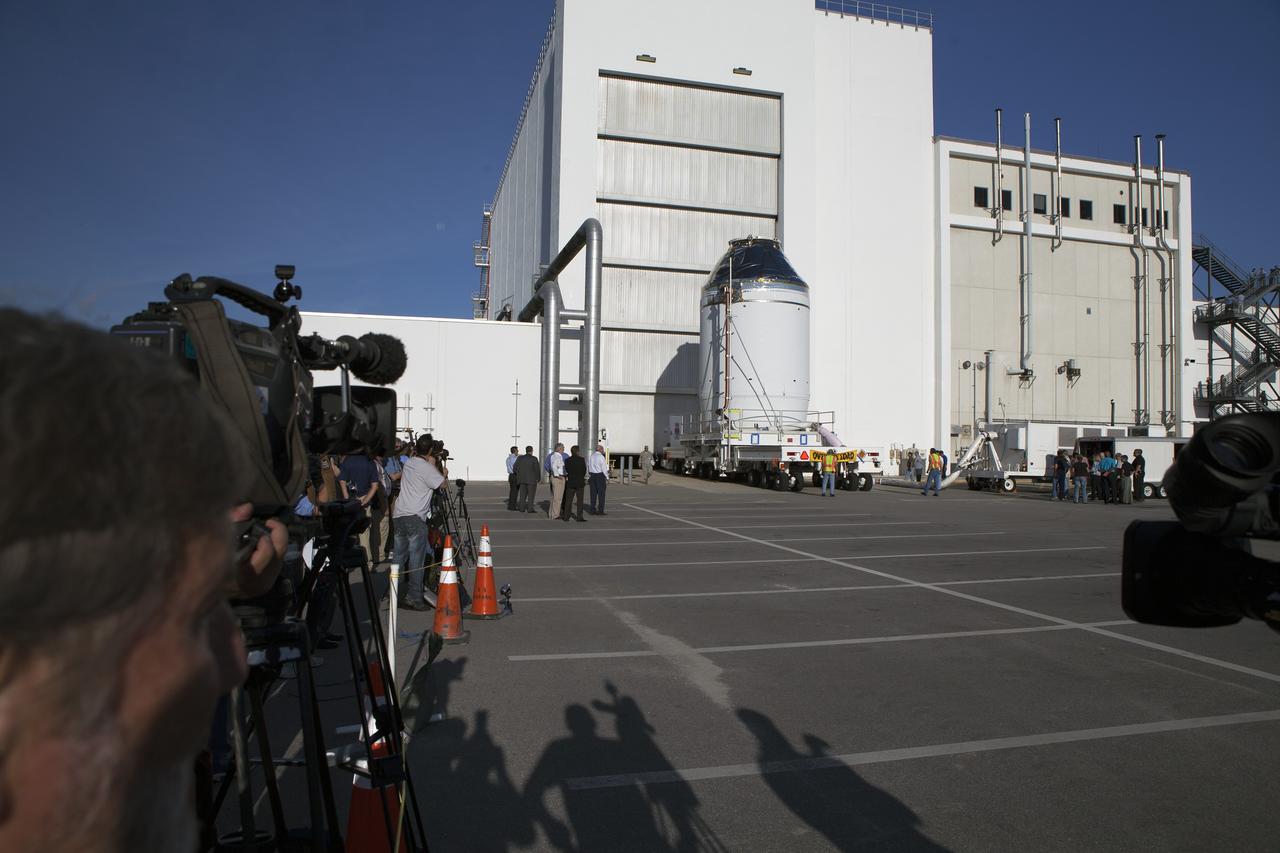
CAPE CANAVERAL, Fla. – The Orion crew module, stacked atop its service module, has moved out of the Neil Armstrong Operations and Checkout Building high bay at NASA's Kennedy Space Center in Florida. The spacecraft for Exploration Flight Test-1 will be transported to the Payload Hazardous Servicing Facility where it will be fueled ahead of its December flight test. Orion is the exploration spacecraft designed to carry astronauts to destinations not yet explored by humans, including an asteroid and Mars. It will have emergency abort capability, sustain the crew during space travel and provide safe re-entry from deep space return velocities. The first unpiloted test flight of the Orion is scheduled to launch atop a United Launch Alliance Delta IV Heavy rocket from Cape Canaveral Air Force Station in Florida to an altitude of 3,600 miles above the Earth's surface. The two-orbit, four-hour flight test will help engineers evaluate the systems critical to crew safety including the heat shield, parachute system and launch abort system. For more information, visit http://www.nasa.gov/orion. Photo credit: NASA/Daniel Casper
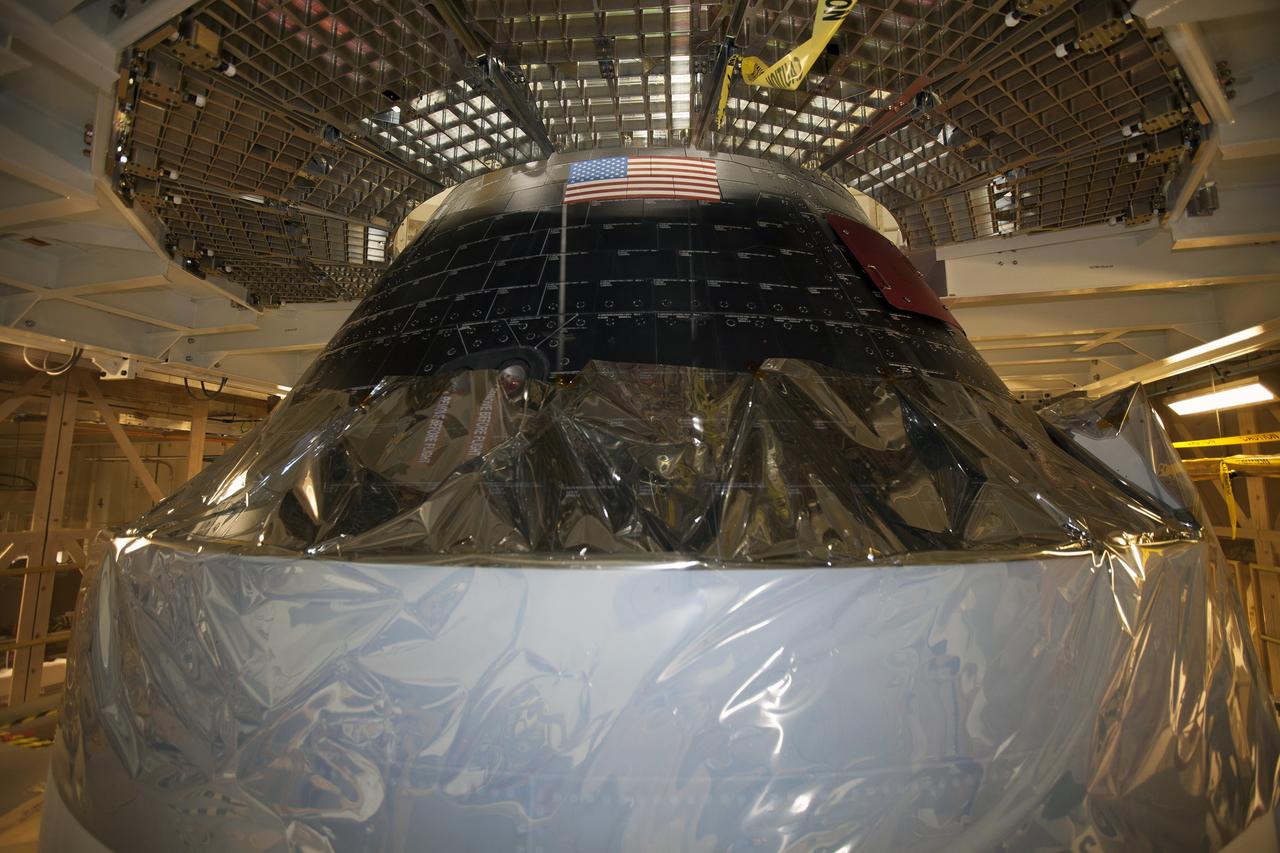
CAPE CANAVERAL, Fla. – Inside the Neil Armstrong Operations and Checkout Building high bay at NASA's Kennedy Space Center in Florida, preparations are underway to lift the Orion crew and service module stack for Exploration Flight Test-1 out of the test cell and transfer it to a mating device. Orion is the exploration spacecraft designed to carry astronauts to destinations not yet explored by humans, including an asteroid and Mars. It will have emergency abort capability, sustain the crew during space travel and provide safe re-entry from deep space return velocities. The first unpiloted test flight of the Orion is scheduled to launch later this year atop a Delta IV Heavy rocket from Cape Canaveral Air Force Station in Florida to an altitude of 3,600 miles above the Earth's surface. The two-orbit, four-hour flight test will help engineers evaluate the systems critical to crew safety including the heat shield, parachute system and launch abort system. For more information, visit http://www.nasa.gov/orion. Photo credit: NASA/Ben Smegelsky