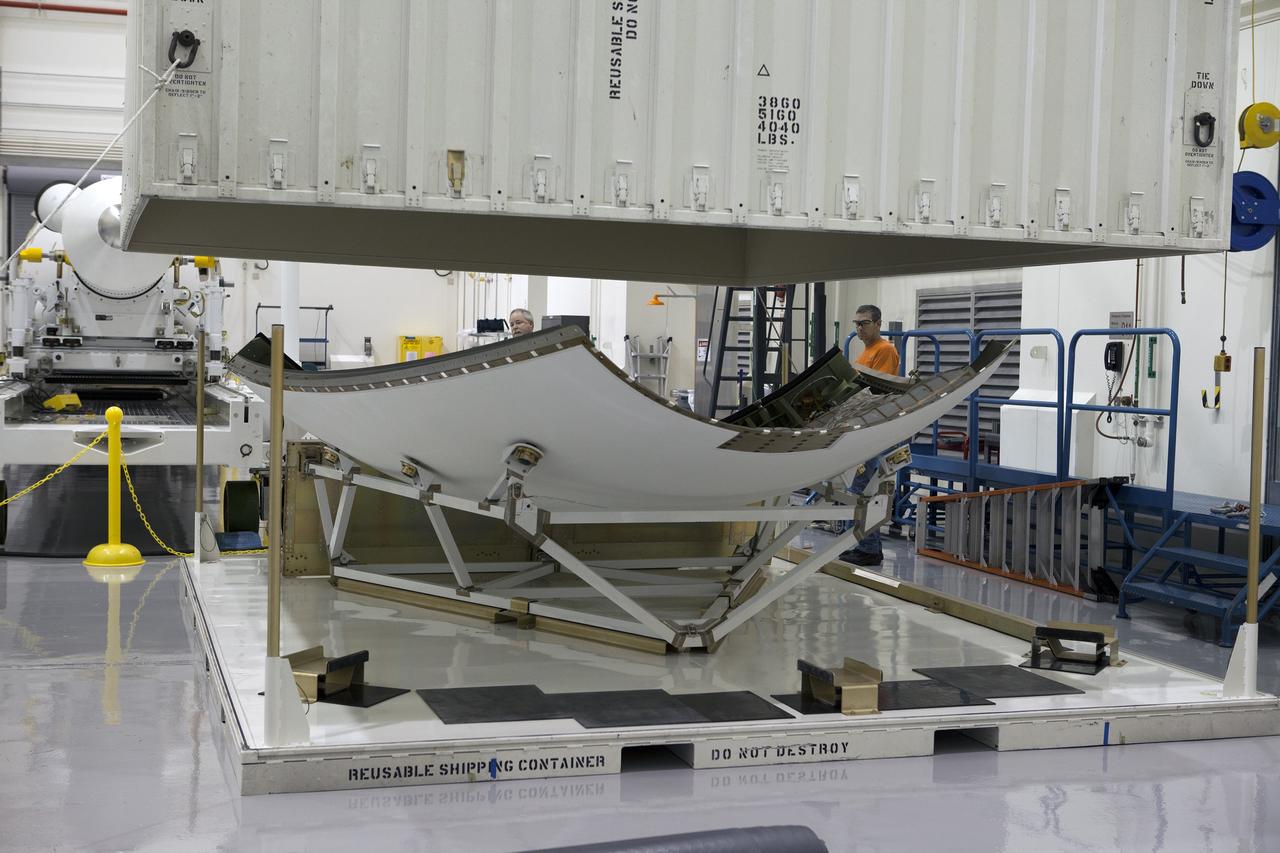
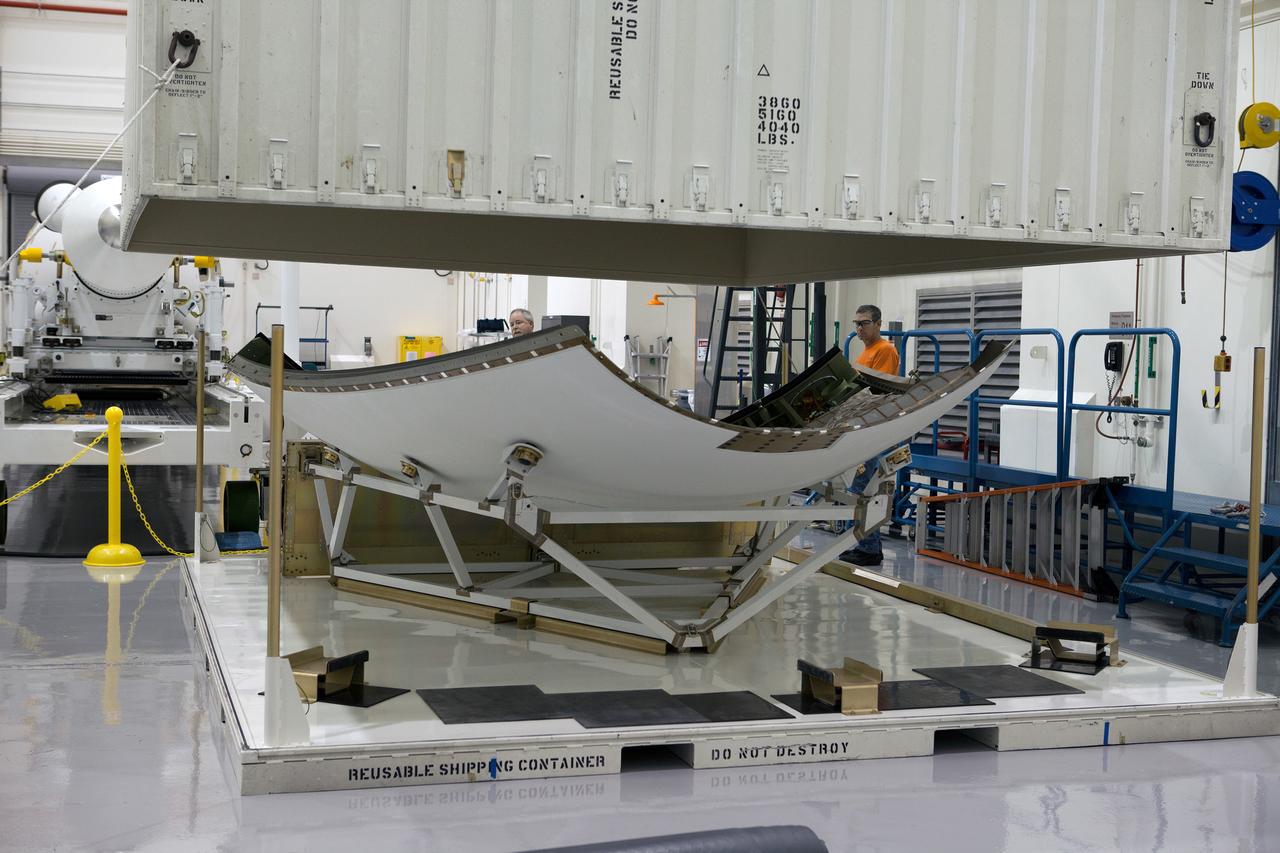
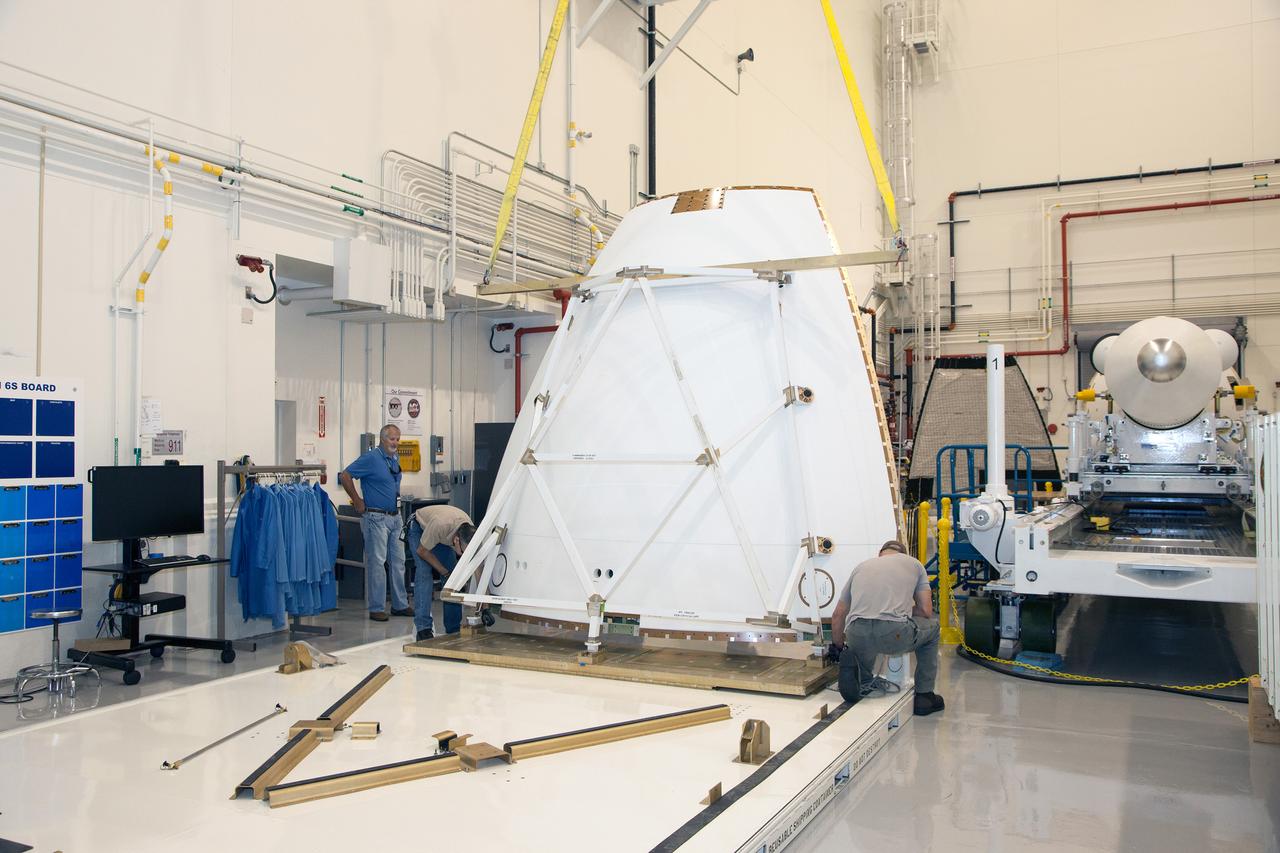
CAPE CANAVERAL, Fla. - The second set of two Ogive panels for the Orion Launch Abort System have arrived at the Launch Abort System Facility, or LASF, at NASA’s Kennedy Space Center in Florida. The Ogive panels are being uncrated for storage inside the LASF. During processing, the panels will be secured around the Orion crew module and attached to the Launch Abort System. Orion is the exploration spacecraft designed to carry astronauts to destinations not yet explored by humans, including an asteroid and Mars. It will have emergency abort capability, sustain the crew during space travel and provide safe re-entry from deep space return velocities. The first unpiloted test flight of Orion is scheduled to launch in 2014 atop a Delta IV rocket and in 2017 on NASA’s Space Launch System rocket. For more information, visit www.nasa.gov/orion. Photo credit: Kim Shiflett
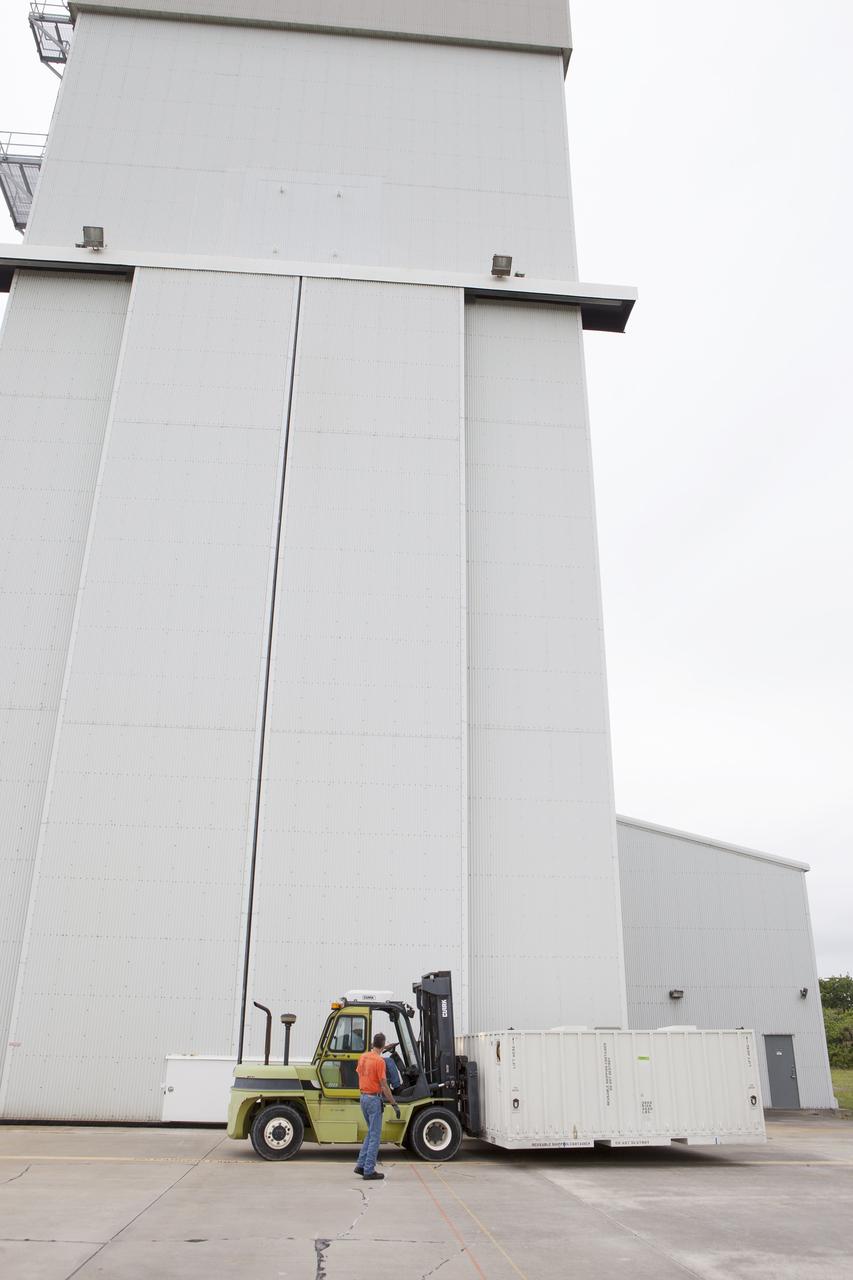
CAPE CANAVERAL, Fla. - The second set of two Ogive panels for the Orion Launch Abort System arrives by truck at the Launch Abort System Facility, or LASF, at NASA’s Kennedy Space Center in Florida. The Ogive panels will be uncrated inside the LASF. During processing, the panels will be secured around the Orion crew module and attached to the Launch Abort System. Orion is the exploration spacecraft designed to carry astronauts to destinations not yet explored by humans, including an asteroid and Mars. It will have emergency abort capability, sustain the crew during space travel and provide safe re-entry from deep space return velocities. The first unpiloted test flight of Orion is scheduled to launch in 2014 atop a Delta IV rocket and in 2017 on NASA’s Space Launch System rocket. For more information, visit www.nasa.gov/orion. Photo credit: Kim Shiflett
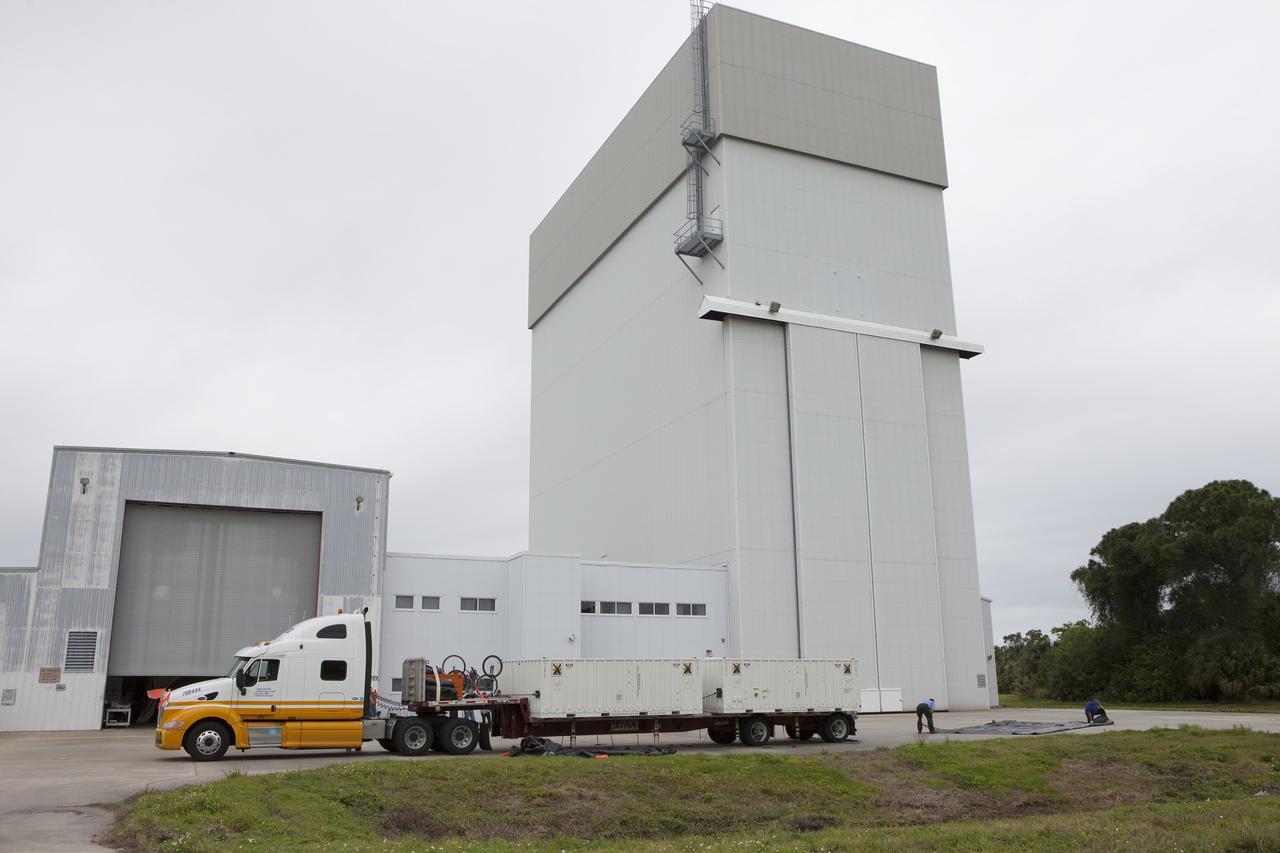
CAPE CANAVERAL, Fla. - The second set of two Ogive panels for the Orion Launch Abort System arrives by truck at the Launch Abort System Facility, or LASF, at NASA’s Kennedy Space Center in Florida. The Ogive panels will be uncrated inside the LASF. During processing, the panels will be secured around the Orion crew module and attached to the Launch Abort System. Orion is the exploration spacecraft designed to carry astronauts to destinations not yet explored by humans, including an asteroid and Mars. It will have emergency abort capability, sustain the crew during space travel and provide safe re-entry from deep space return velocities. The first unpiloted test flight of Orion is scheduled to launch in 2014 atop a Delta IV rocket and in 2017 on NASA’s Space Launch System rocket. For more information, visit www.nasa.gov/orion. Photo credit: Kim Shiflett
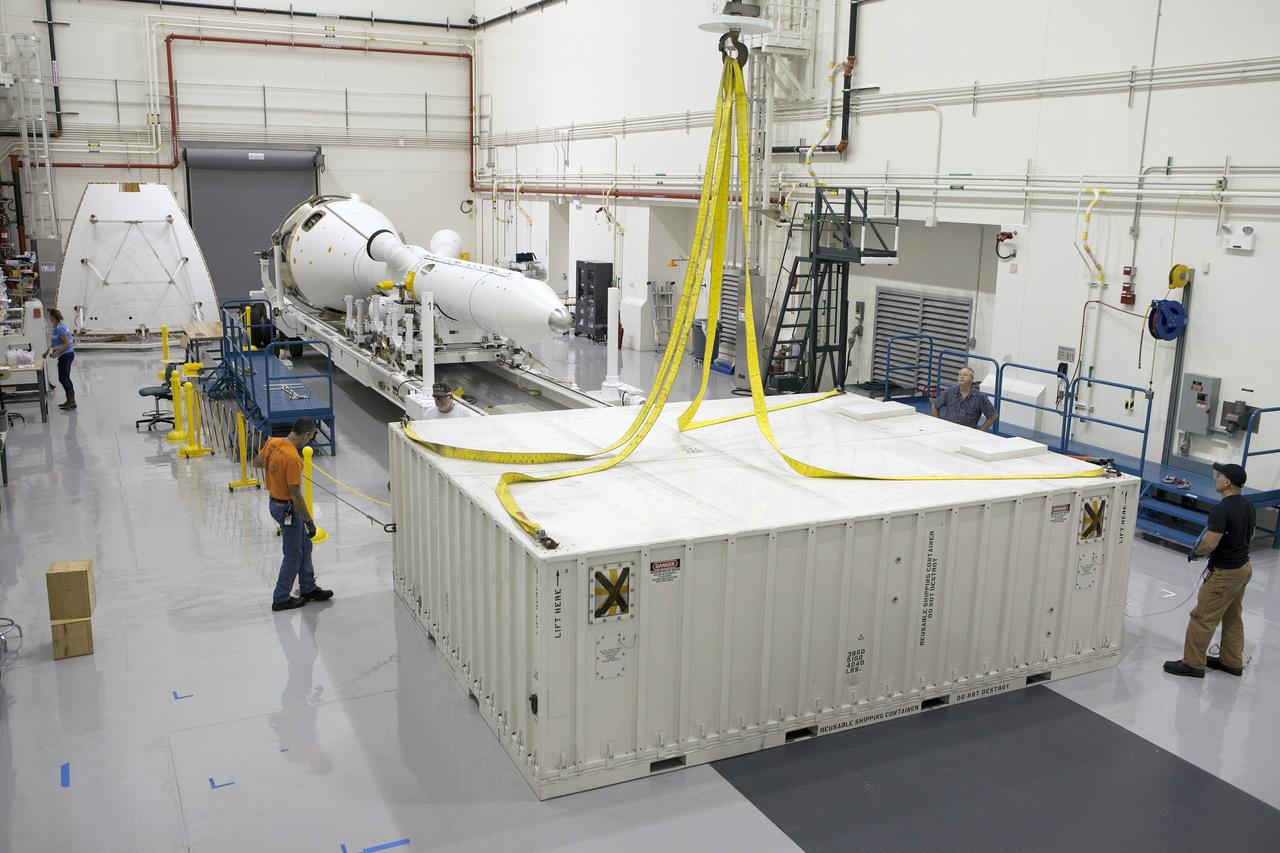
CAPE CANAVERAL, Fla. - The second set of two Ogive panels for the Orion Launch Abort System have arrived by truck at the Launch Abort System Facility, or LASF, at NASA’s Kennedy Space Center in Florida. The Ogive panels will be uncrated inside the LASF. During processing, the panels will be secured around the Orion crew module and attached to the Launch Abort System. Orion is the exploration spacecraft designed to carry astronauts to destinations not yet explored by humans, including an asteroid and Mars. It will have emergency abort capability, sustain the crew during space travel and provide safe re-entry from deep space return velocities. The first unpiloted test flight of Orion is scheduled to launch in 2014 atop a Delta IV rocket and in 2017 on NASA’s Space Launch System rocket. For more information, visit www.nasa.gov/orion. Photo credit: Kim Shiflett
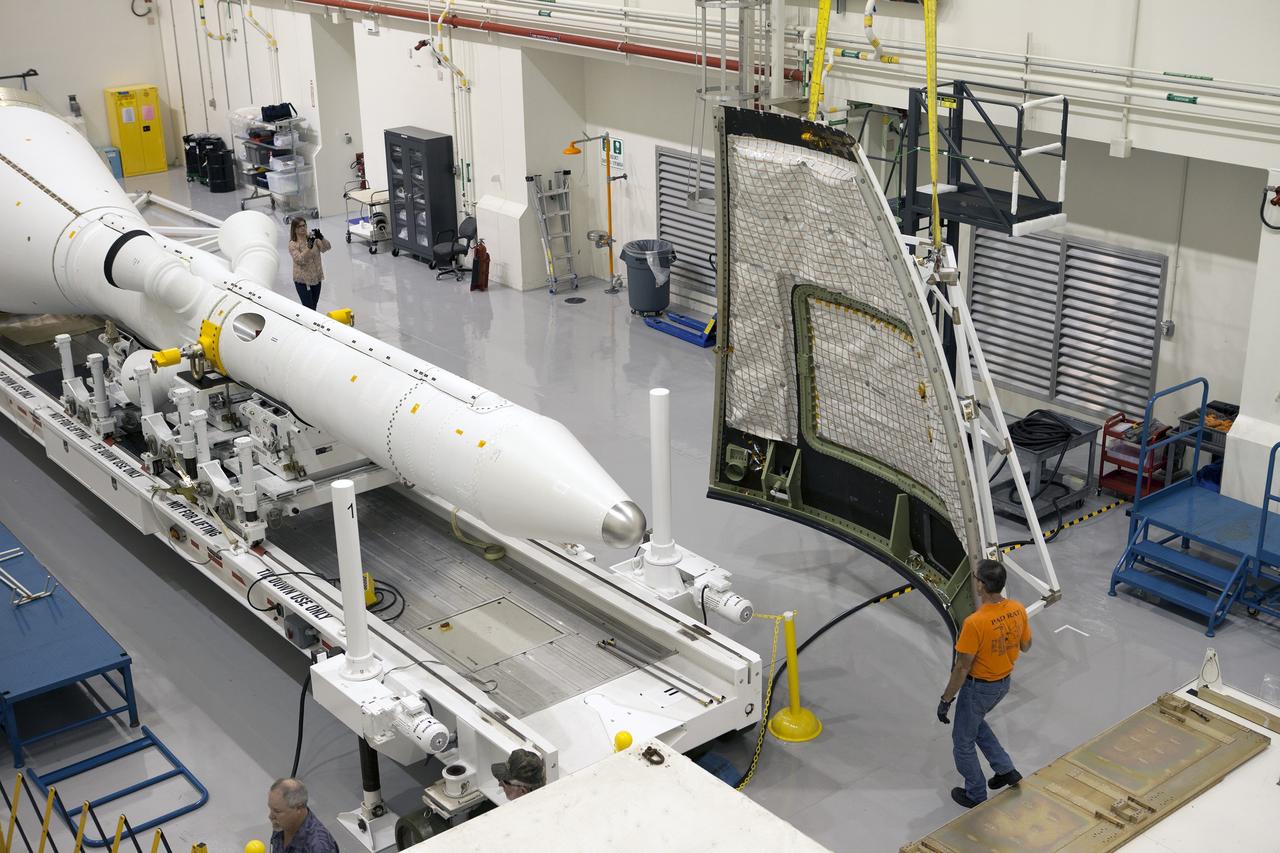
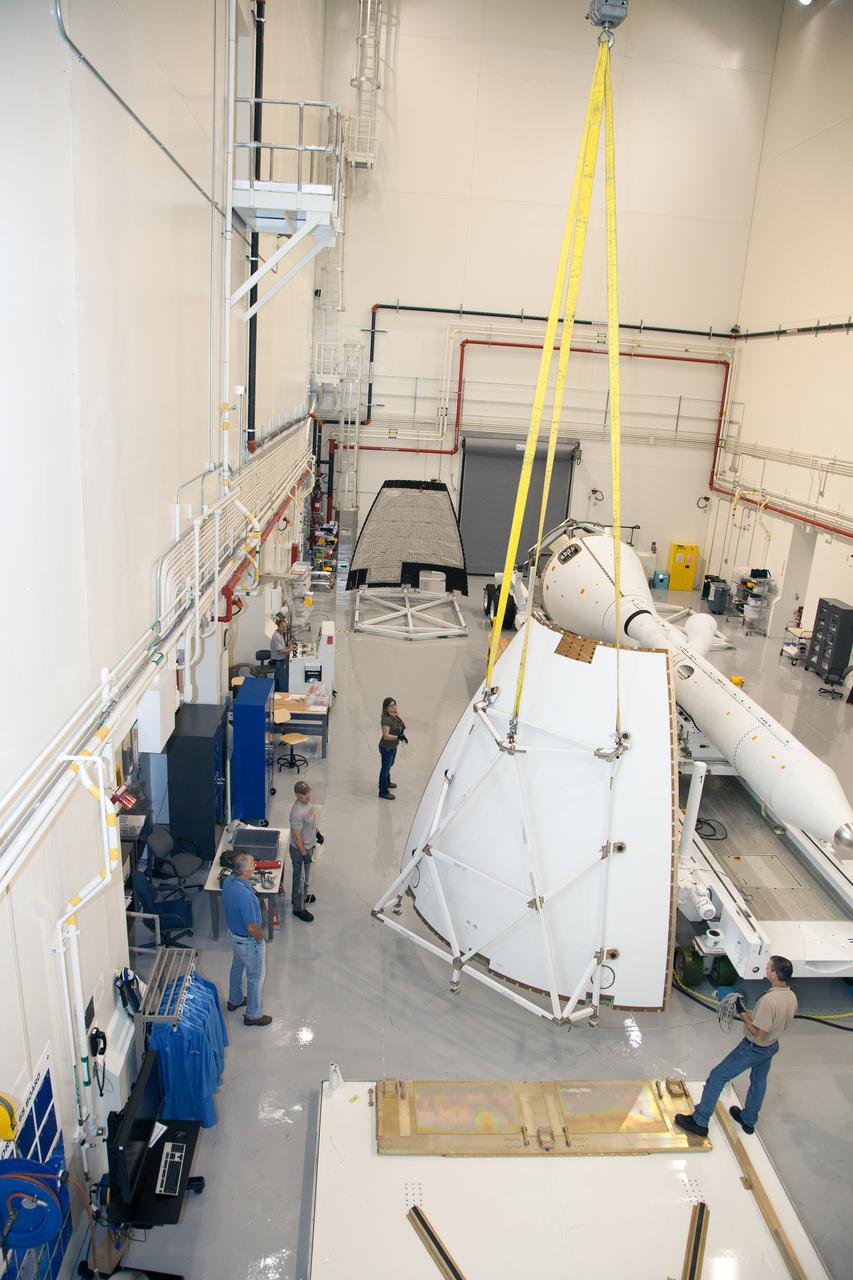
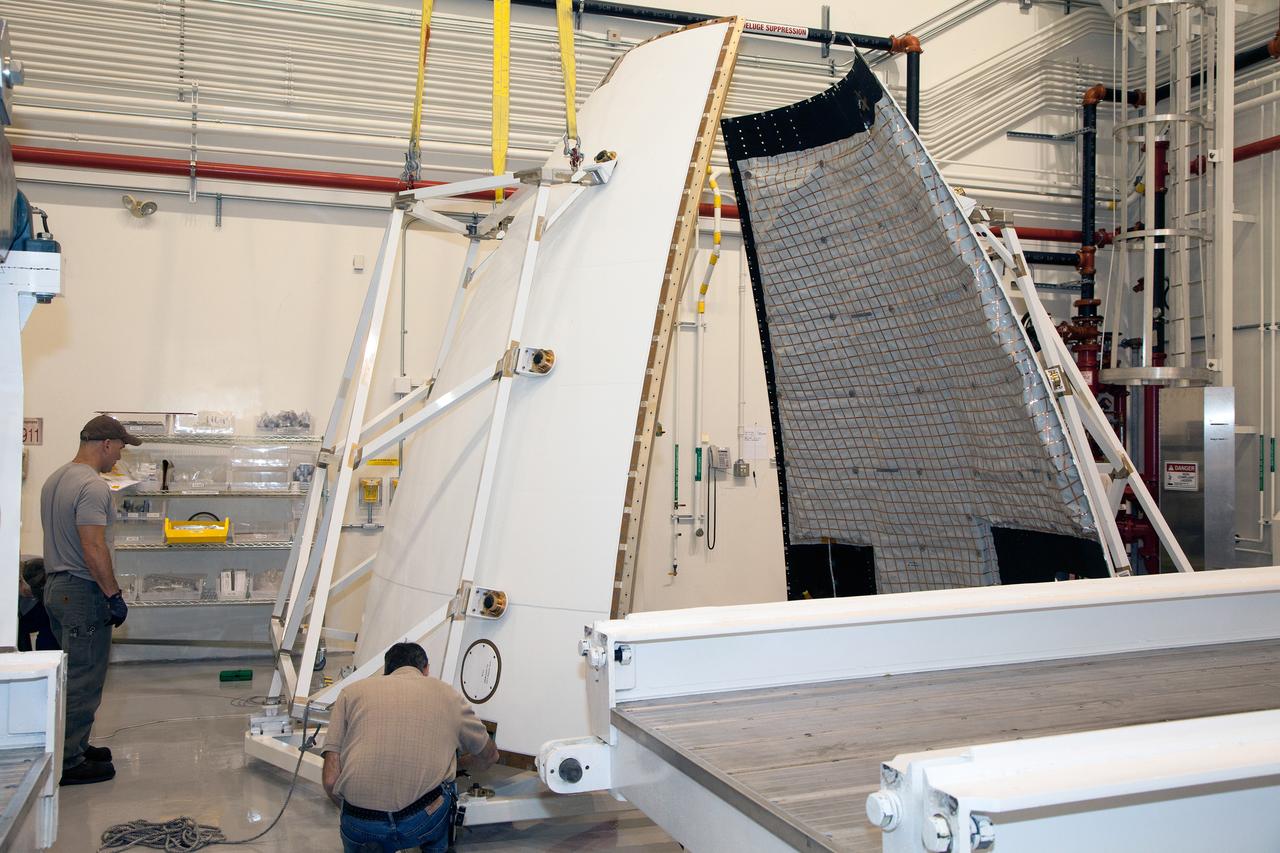
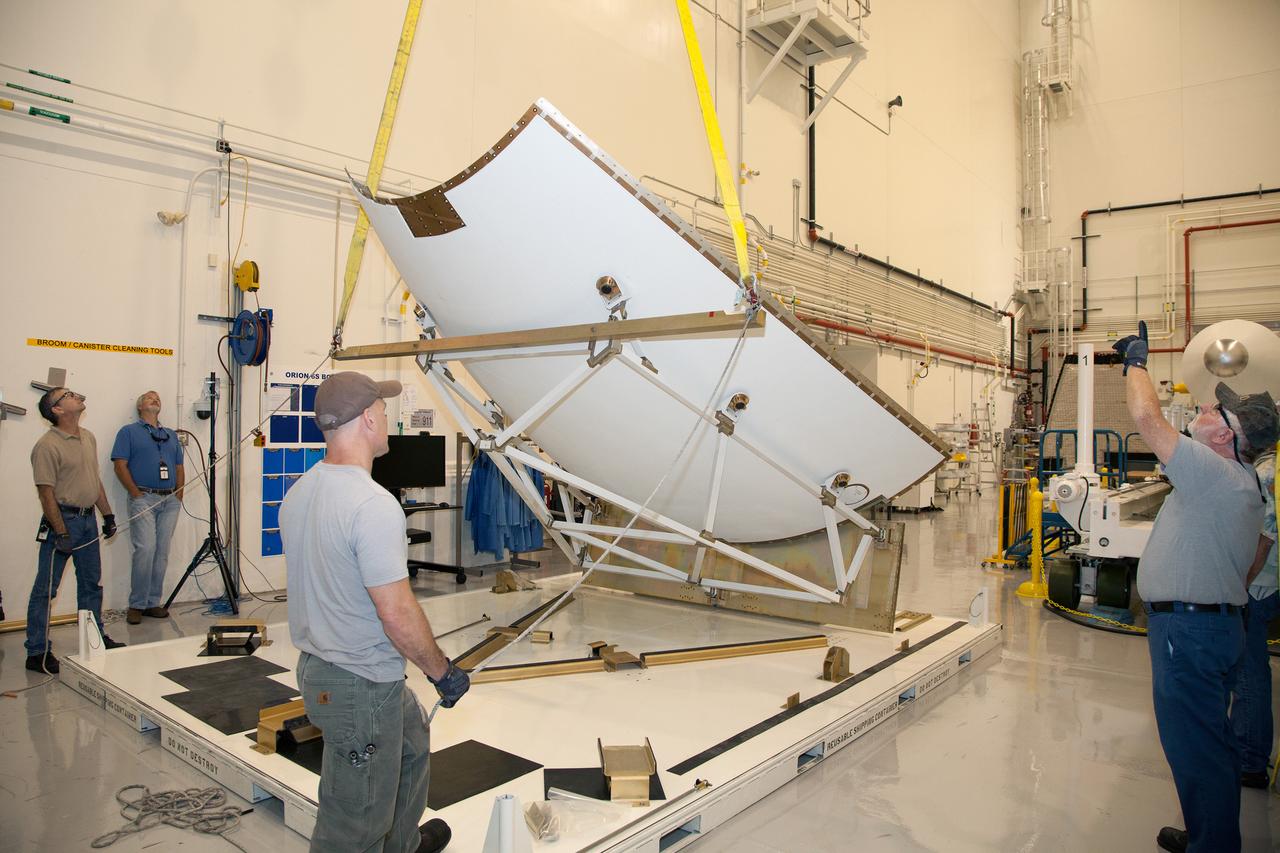
CAPE CANAVERAL, Fla. - The second set of two Ogive panels for the Orion Launch Abort System have arrived at the Launch Abort System Facility, or LASF, at NASA’s Kennedy Space Center in Florida. One of the Ogive panels has been uncrated and is being moved by crane for placement on a work stand. The launch abort system is positioned on a work stand. During processing, the panels will be secured around the Orion crew module and attached to the Launch Abort System. Orion is the exploration spacecraft designed to carry astronauts to destinations not yet explored by humans, including an asteroid and Mars. It will have emergency abort capability, sustain the crew during space travel and provide safe re-entry from deep space return velocities. The first unpiloted test flight of Orion is scheduled to launch in 2014 atop a Delta IV rocket and in 2017 on NASA’s Space Launch System rocket. For more information, visit www.nasa.gov/orion. Photo credit: Kim Shiflett
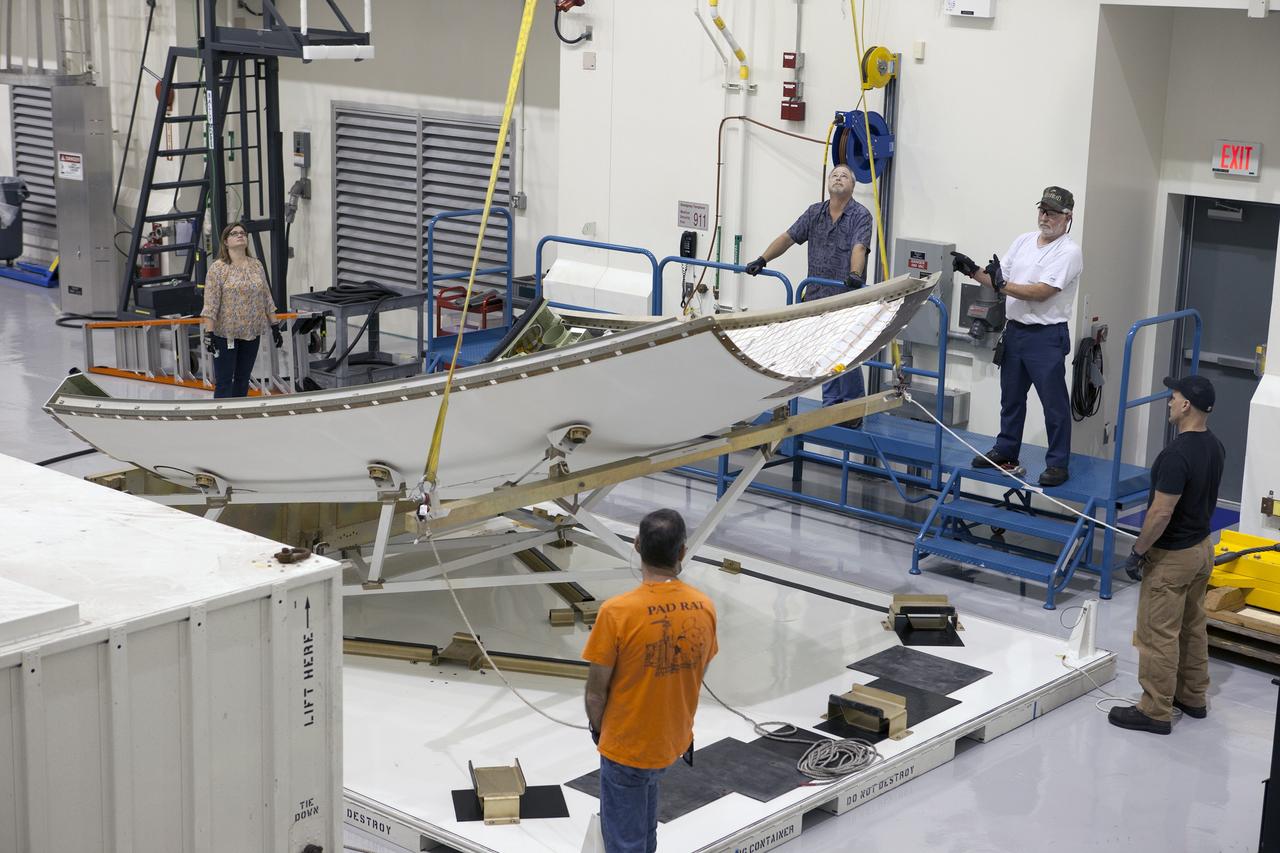
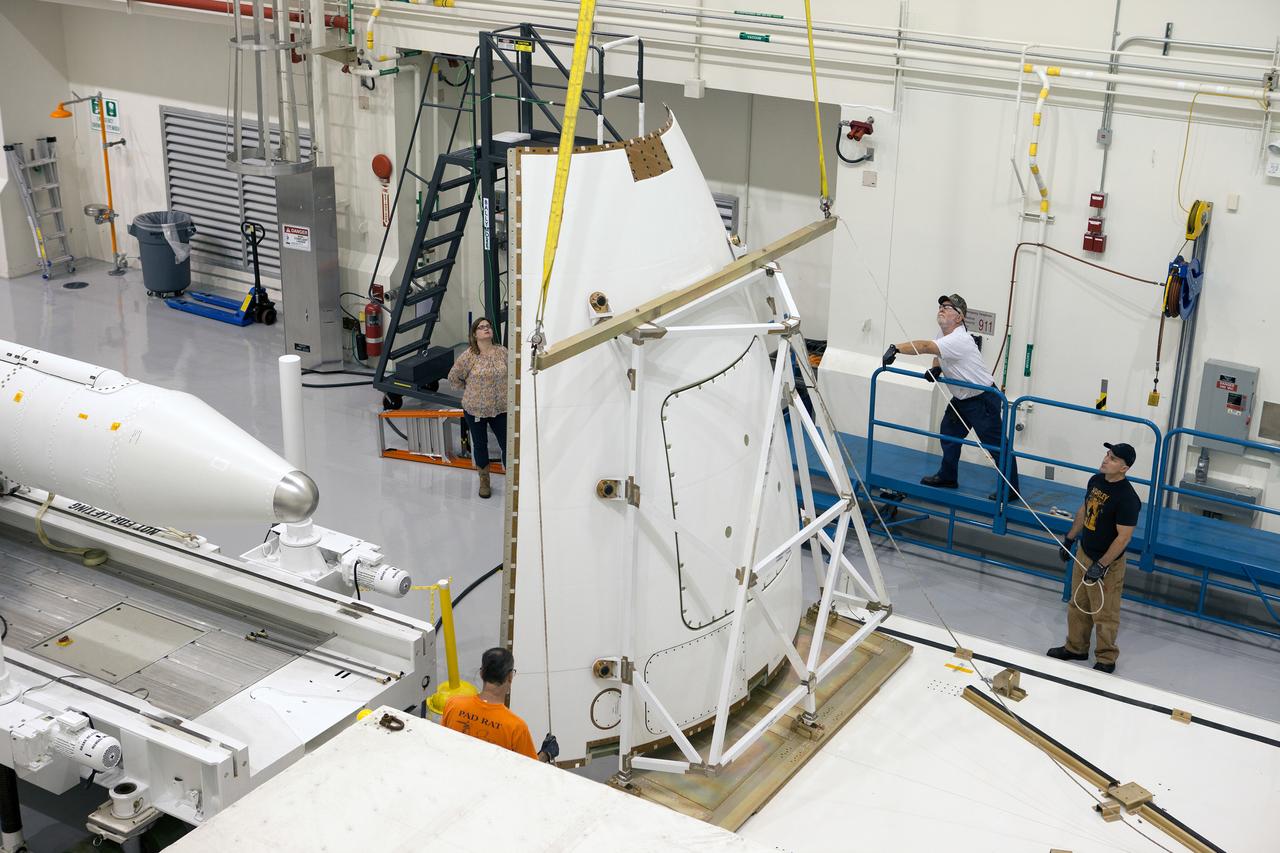
CAPE CANAVERAL, Fla. - The second set of two Ogive panels for the Orion Launch Abort System have arrived at the Launch Abort System Facility, or LASF, at NASA’s Kennedy Space Center in Florida. One of the Ogive panels has been uncrated and is being lifted by crane for placement on a work stand. During processing, the panels will be secured around the Orion crew module and attached to the Launch Abort System. Orion is the exploration spacecraft designed to carry astronauts to destinations not yet explored by humans, including an asteroid and Mars. It will have emergency abort capability, sustain the crew during space travel and provide safe re-entry from deep space return velocities. The first unpiloted test flight of Orion is scheduled to launch in 2014 atop a Delta IV rocket and in 2017 on NASA’s Space Launch System rocket. For more information, visit www.nasa.gov/orion. Photo credit: Kim Shiflett
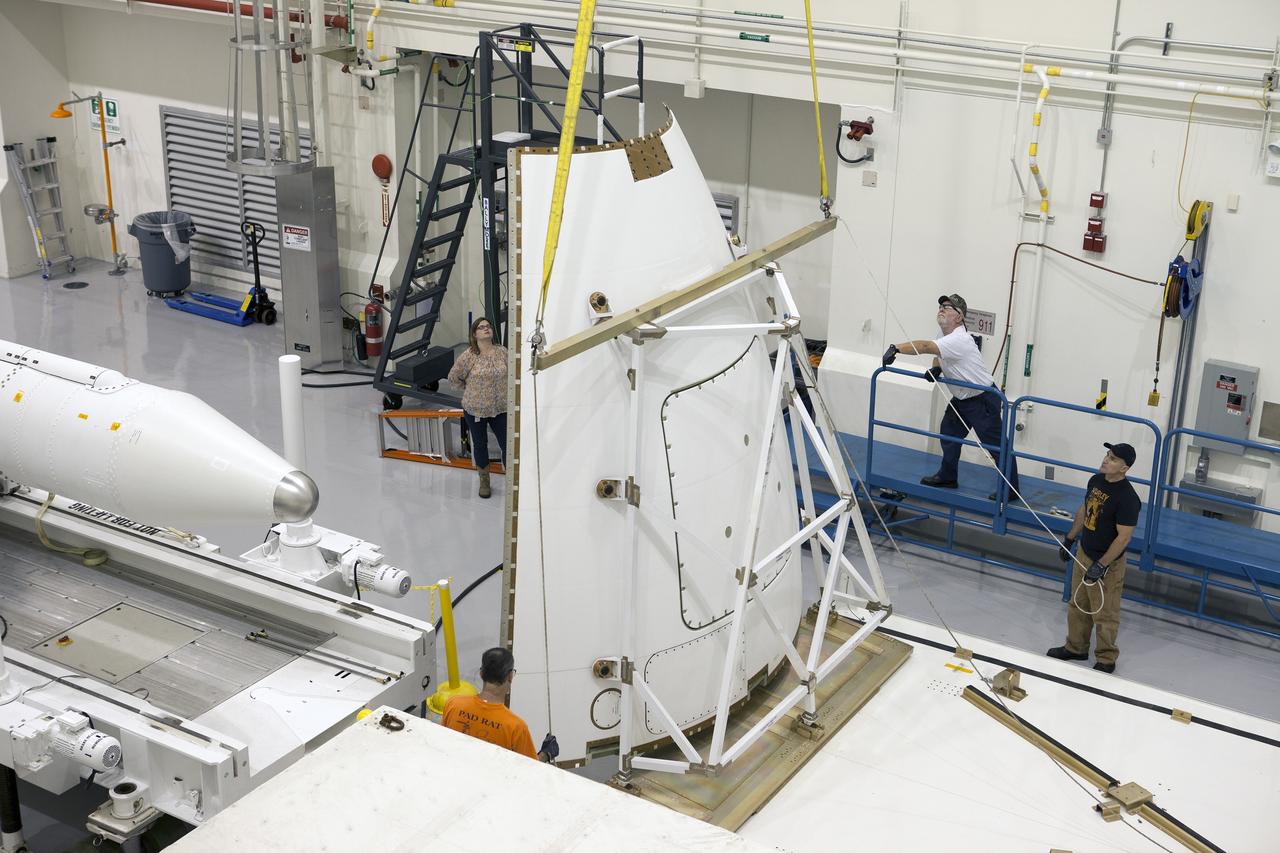
CAPE CANAVERAL, Fla. - The second set of two Ogive panels for the Orion Launch Abort System have arrived at the Launch Abort System Facility, or LASF, at NASA’s Kennedy Space Center in Florida. One of the Ogive panels has been uncrated and is being lifted by crane for placement on a work stand. During processing, the panels will be secured around the Orion crew module and attached to the Launch Abort System. Orion is the exploration spacecraft designed to carry astronauts to destinations not yet explored by humans, including an asteroid and Mars. It will have emergency abort capability, sustain the crew during space travel and provide safe re-entry from deep space return velocities. The first unpiloted test flight of Orion is scheduled to launch in 2014 atop a Delta IV rocket and in 2017 on NASA’s Space Launch System rocket. For more information, visit www.nasa.gov/orion. Photo credit: Kim Shiflett
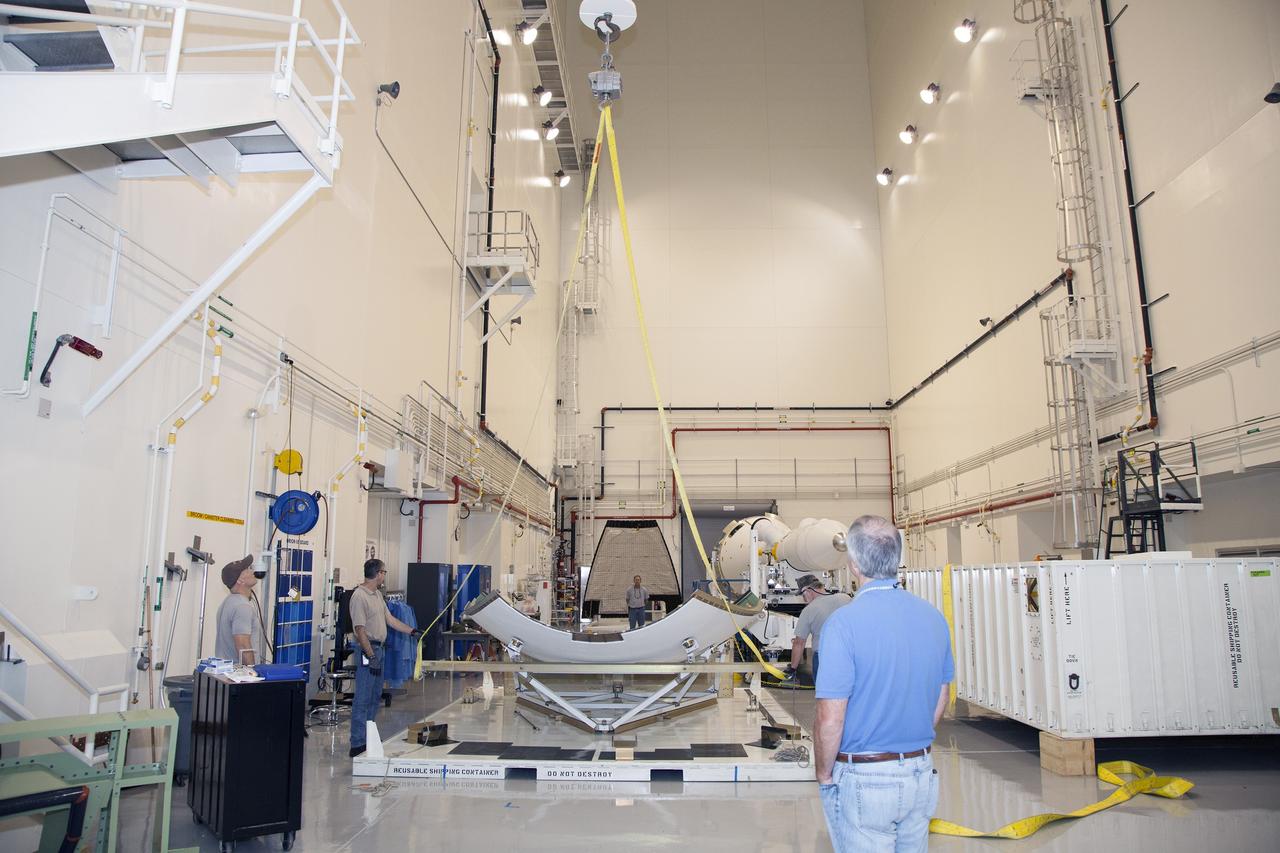
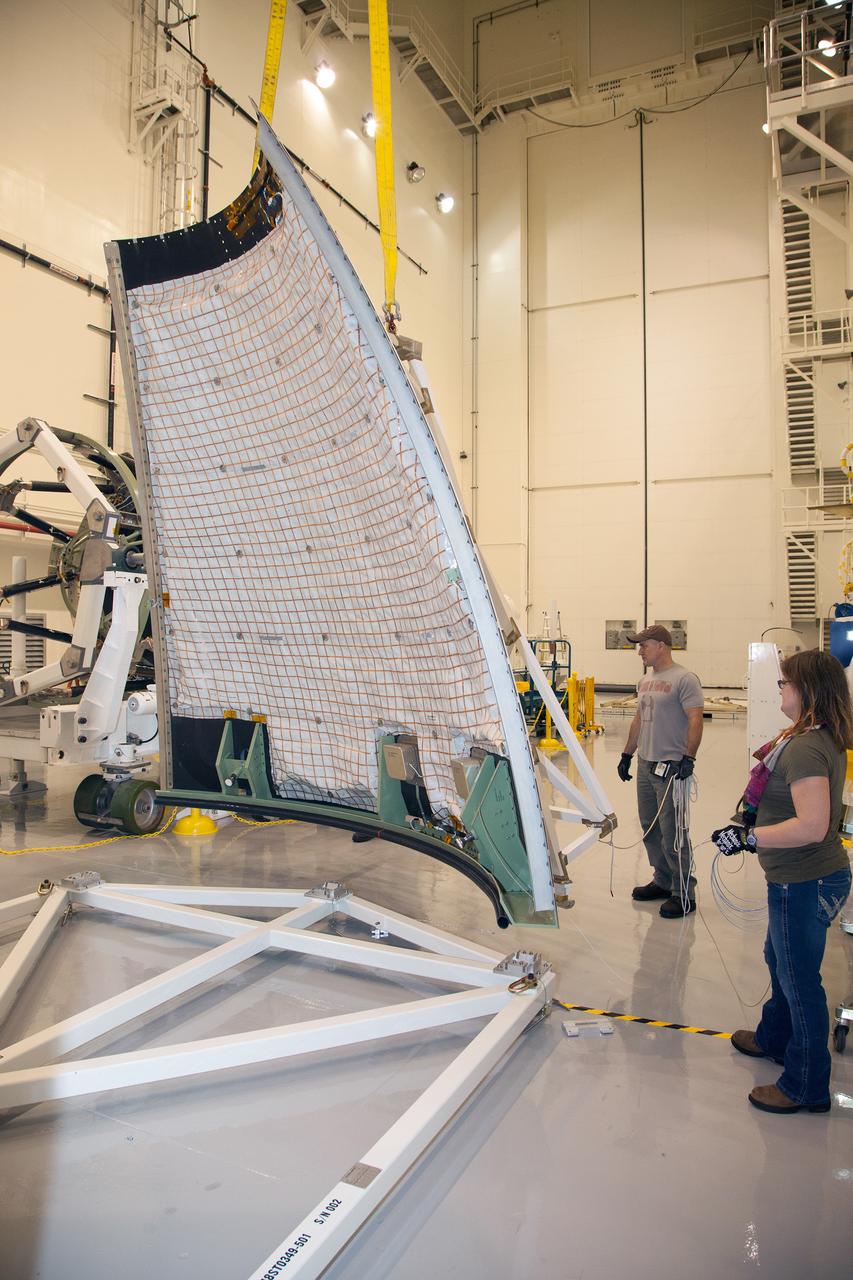
CAPE CANAVERAL, Fla. - The first set of two Ogive panels for the Orion Launch Abort System was uncrated inside the Launch Abort System Facility, or LASF, at NASA’s Kennedy Space Center in Florida. One of the panels has been secured on a stand at the far end of the facility. Technicians assist as a crane is attached to the second panel for lifting and moving to the storage stand. During processing, the panels will be secured around the Orion crew module and attached to the Launch Abort System. Orion is the exploration spacecraft designed to carry astronauts to destinations not yet explored by humans, including an asteroid and Mars. It will have emergency abort capability, sustain the crew during space travel and provide safe re-entry from deep space return velocities. The first unpiloted test flight of Orion is scheduled to launch in 2014 atop a Delta IV rocket and in 2017 on NASA’s Space Launch System rocket. For more information, visit www.nasa.gov/orion. Photo credit: Dan Casper
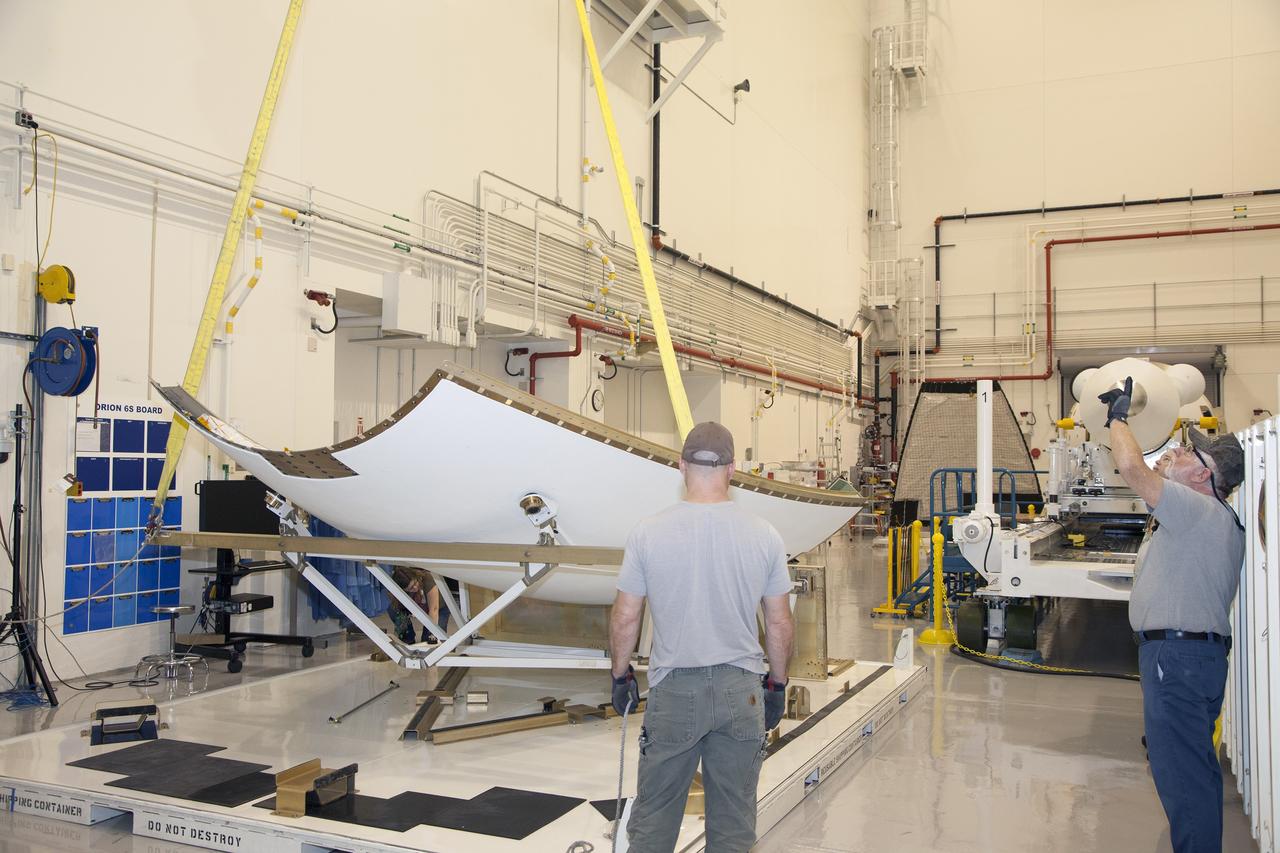
CAPE CANAVERAL, Fla. - The first set of two Ogive panels for the Orion Launch Abort System was uncrated inside the Launch Abort System Facility, or LASF, at NASA’s Kennedy Space Center in Florida. One of the panels has been secured on a stand at the far end of the facility. Technicians assist as a crane is attached to the second panel for lifting and moving to the storage stand. During processing, the panels will be secured around the Orion crew module and attached to the Launch Abort System. Orion is the exploration spacecraft designed to carry astronauts to destinations not yet explored by humans, including an asteroid and Mars. It will have emergency abort capability, sustain the crew during space travel and provide safe re-entry from deep space return velocities. The first unpiloted test flight of Orion is scheduled to launch in 2014 atop a Delta IV rocket and in 2017 on NASA’s Space Launch System rocket. For more information, visit www.nasa.gov/orion. Photo credit: Dan Casper
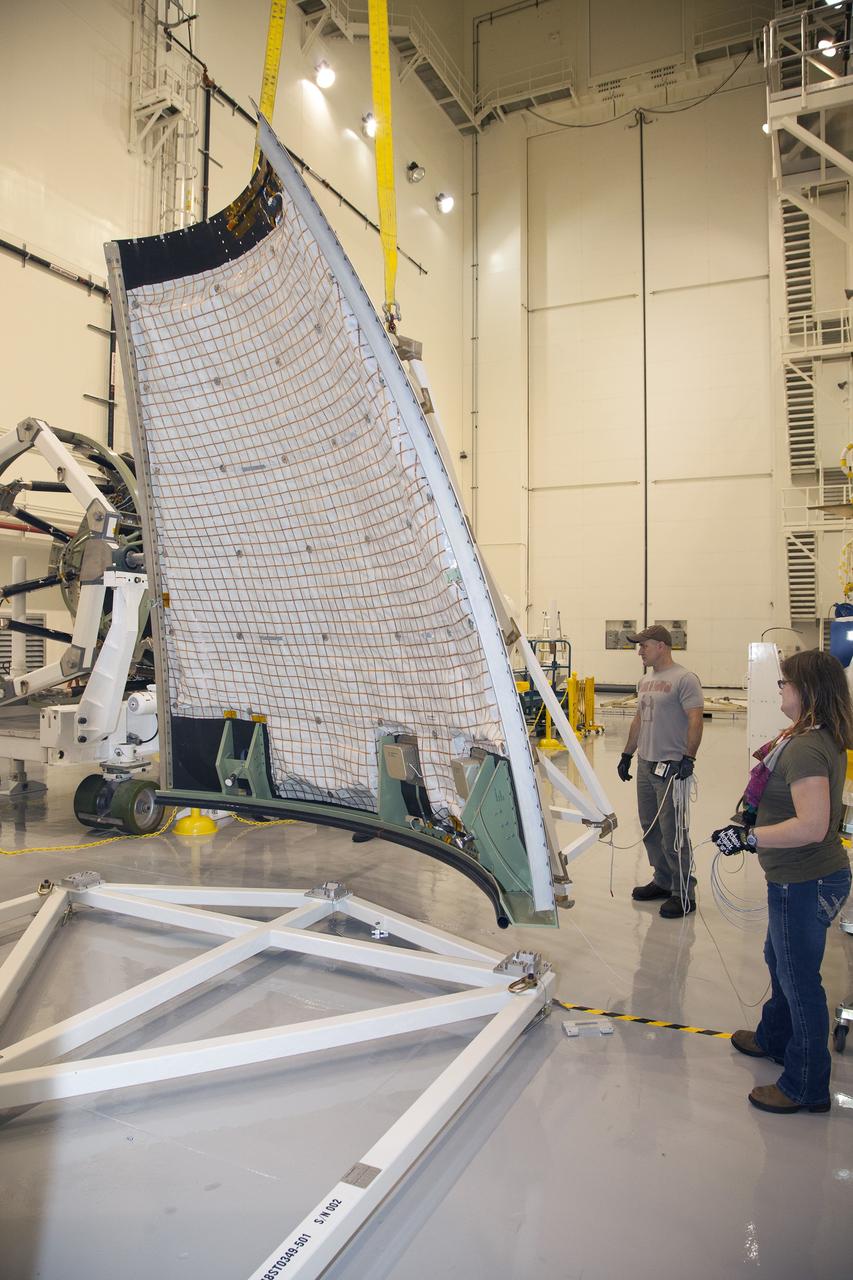
CAPE CANAVERAL, Fla. - The first set of two Ogive panels for the Orion Launch Abort System was uncrated inside the Launch Abort System Facility, or LASF, at NASA’s Kennedy Space Center in Florida. The second panel is being lifted by crane and technicians are monitoring the progress as it is being moved to join the first panel on the storage stand. During processing, the panels will be secured around the Orion crew module and attached to the Launch Abort System. Orion is the exploration spacecraft designed to carry astronauts to destinations not yet explored by humans, including an asteroid and Mars. It will have emergency abort capability, sustain the crew during space travel and provide safe re-entry from deep space return velocities. The first unpiloted test flight of Orion is scheduled to launch in 2014 atop a Delta IV rocket and in 2017 on NASA’s Space Launch System rocket. For more information, visit www.nasa.gov/orion. Photo credit: Dan Casper

CAPE CANAVERAL, Fla. - The first set of two Ogive panels for the Orion Launch Abort System was uncrated inside the Launch Abort System Facility, or LASF, at NASA’s Kennedy Space Center in Florida. One of the panels has been secured on a stand at the far end of the facility while technicians prepare to lift the second panel to move it to the storage stand. During processing, the panels will be secured around the Orion crew module and attached to the Launch Abort System. Orion is the exploration spacecraft designed to carry astronauts to destinations not yet explored by humans, including an asteroid and Mars. It will have emergency abort capability, sustain the crew during space travel and provide safe re-entry from deep space return velocities. The first unpiloted test flight of Orion is scheduled to launch in 2014 atop a Delta IV rocket and in 2017 on NASA’s Space Launch System rocket. For more information, visit www.nasa.gov/orion. Photo credit: Dan Casper
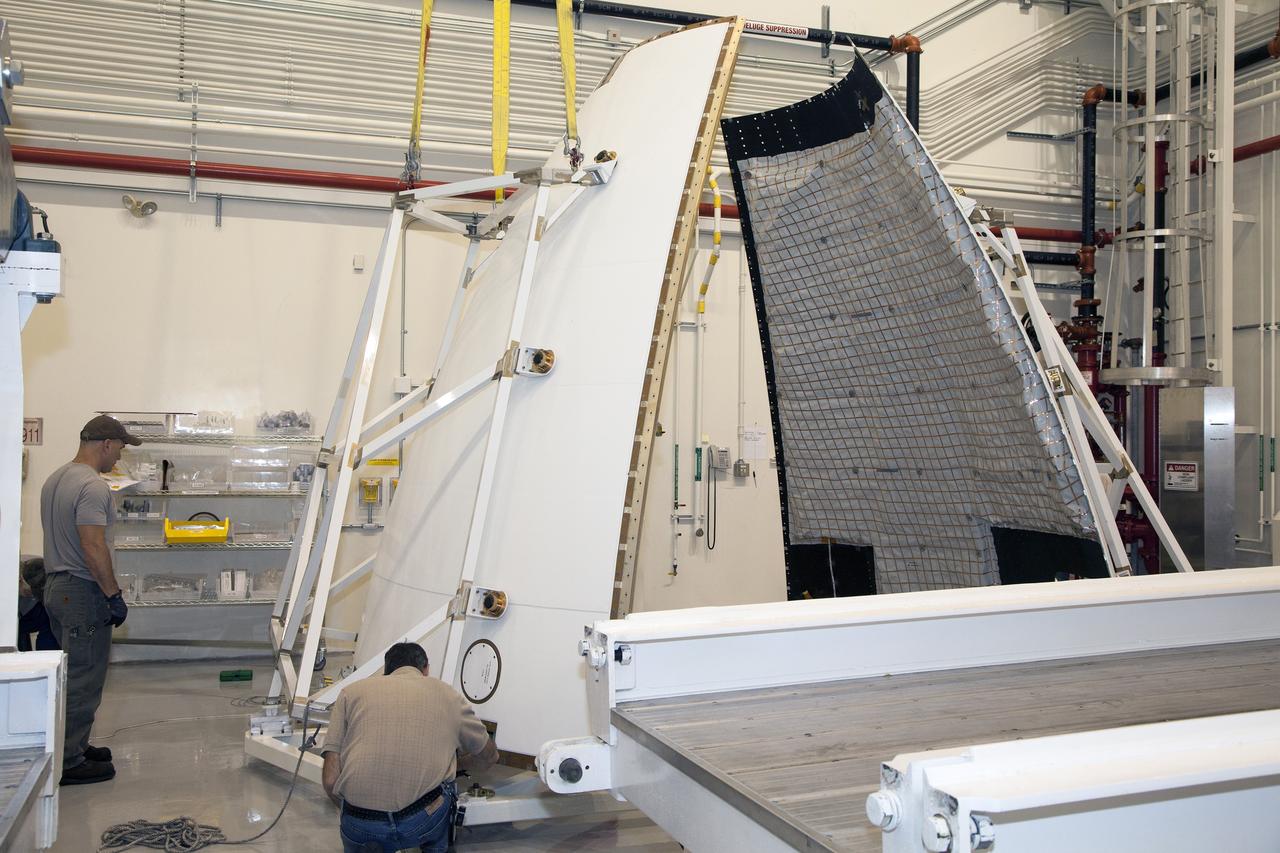
CAPE CANAVERAL, Fla. - The first set of two Ogive panels for the Orion Launch Abort System was uncrated inside the Launch Abort System Facility, or LASF, at NASA’s Kennedy Space Center in Florida. The first panel is secured on a storage stand while the second panel is being lowered by crane onto the storage stand. During processing, the panels will be secured around the Orion crew module and attached to the Launch Abort System. Orion is the exploration spacecraft designed to carry astronauts to destinations not yet explored by humans, including an asteroid and Mars. It will have emergency abort capability, sustain the crew during space travel and provide safe re-entry from deep space return velocities. The first unpiloted test flight of Orion is scheduled to launch in 2014 atop a Delta IV rocket and in 2017 on NASA’s Space Launch System rocket. For more information, visit www.nasa.gov/orion. Photo credit: Dan Casper
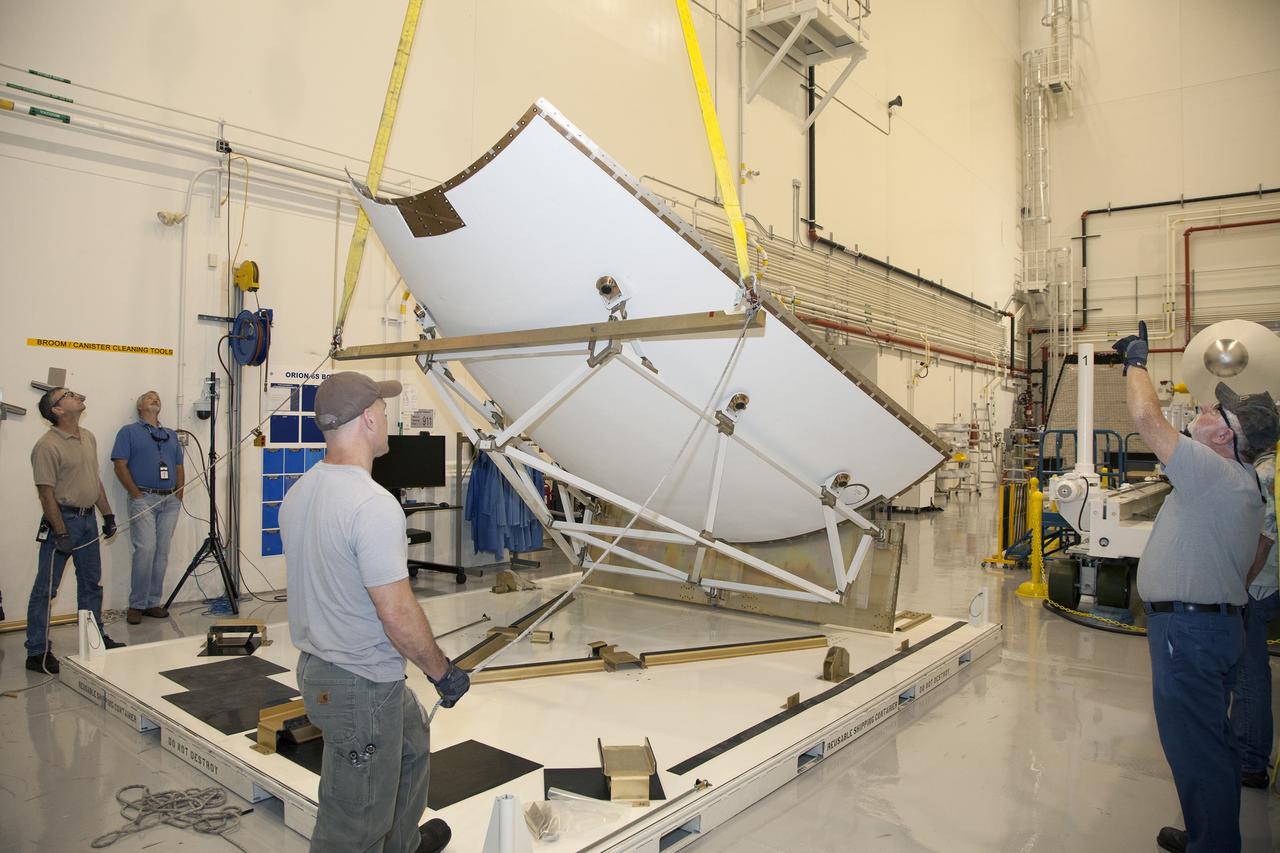
CAPE CANAVERAL, Fla. - The first set of two Ogive panels for the Orion Launch Abort System was uncrated inside the Launch Abort System Facility, or LASF, at NASA’s Kennedy Space Center in Florida. One of the panels has been secured on a stand at the far end of the facility. Technicians monitor the progress as a crane lifts the second panel to move it to the storage stand. During processing, the panels will be secured around the Orion crew module and attached to the Launch Abort System. Orion is the exploration spacecraft designed to carry astronauts to destinations not yet explored by humans, including an asteroid and Mars. It will have emergency abort capability, sustain the crew during space travel and provide safe re-entry from deep space return velocities. The first unpiloted test flight of Orion is scheduled to launch in 2014 atop a Delta IV rocket and in 2017 on NASA’s Space Launch System rocket. For more information, visit www.nasa.gov/orion. Photo credit: Dan Casper
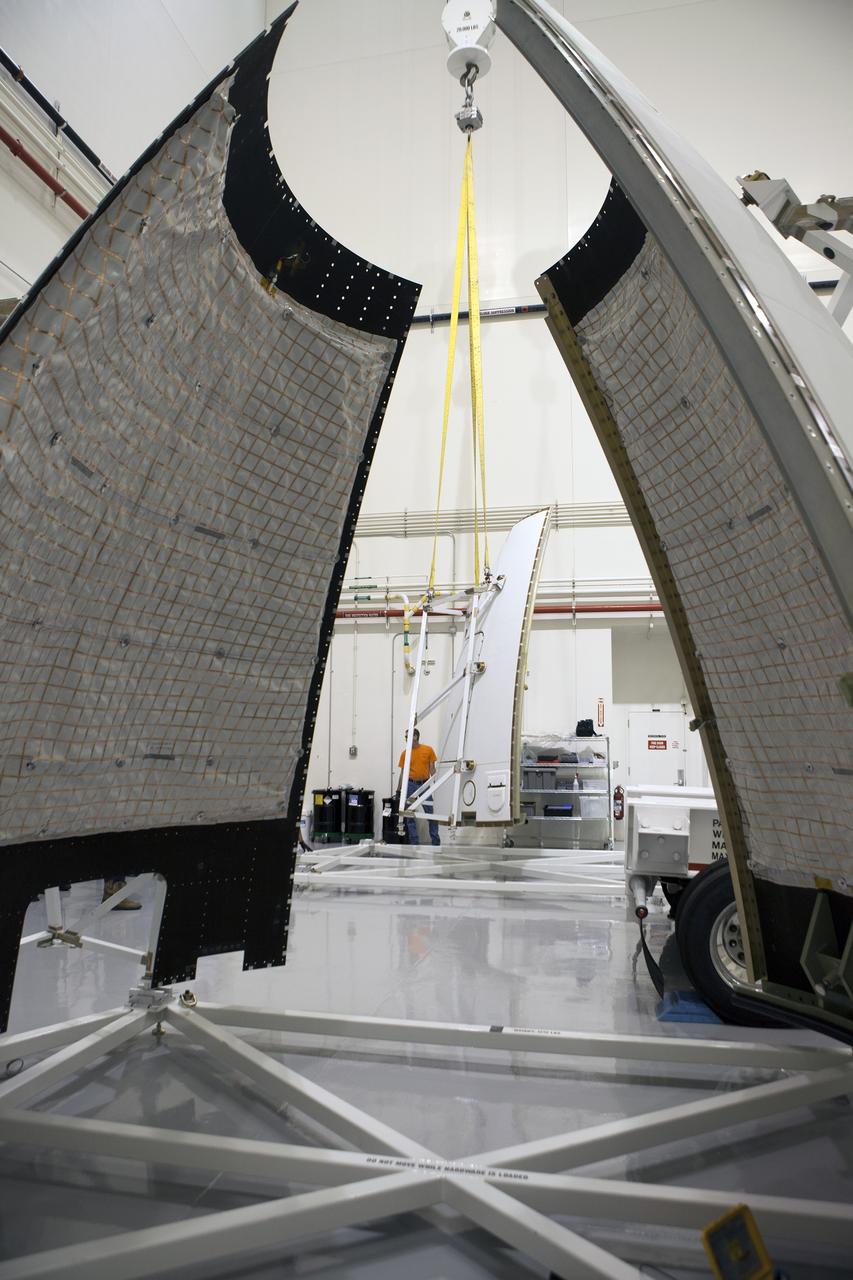
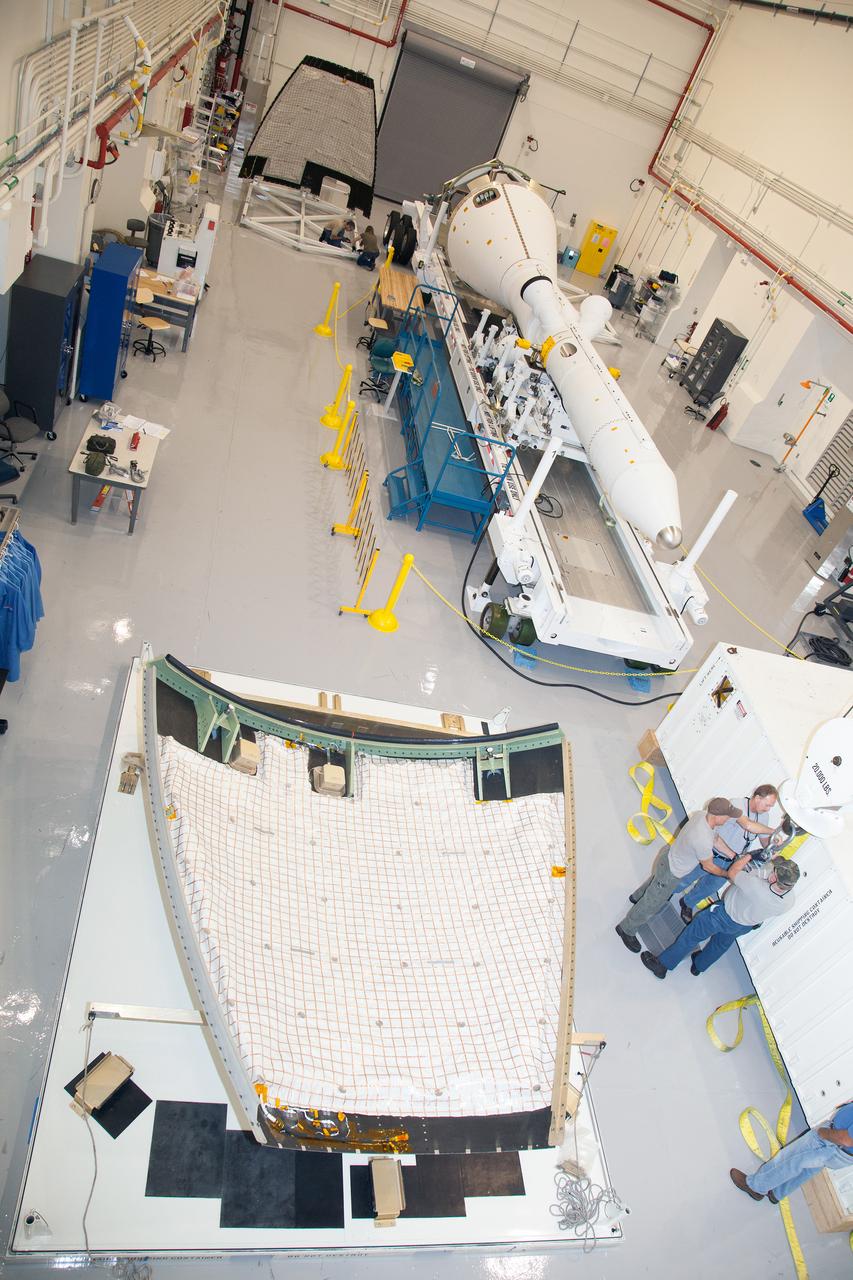
CAPE CANAVERAL, Fla. - The second set of Ogive panels for the Orion Launch Abort System have arrived at the Launch Abort System Facility, or LASF, at NASA’s Kennedy Space Center in Florida. One of the Ogive panels has been uncrated and is being moved by crane for placement on a work stand. In the foreground is the first set of two Ogive panels positioned on a work stand. During processing, the panels will be secured around the Orion crew module and attached to the Launch Abort System. Orion is the exploration spacecraft designed to carry astronauts to destinations not yet explored by humans, including an asteroid and Mars. It will have emergency abort capability, sustain the crew during space travel and provide safe re-entry from deep space return velocities. The first unpiloted test flight of Orion is scheduled to launch in 2014 atop a Delta IV rocket and in 2017 on NASA’s Space Launch System rocket. For more information, visit www.nasa.gov/orion. Photo credit: Kim Shiflett

CAPE CANAVERAL, Fla. - The second set of Ogive panels for the Orion Launch Abort System have arrived at the Launch Abort System Facility, or LASF, at NASA’s Kennedy Space Center in Florida. One of the Ogive panels has been uncrated and has been lowered by crane onto a work stand for storage. To the left are the first two Ogive panels positioned on a work stand. During processing, the panels will be secured around the Orion crew module and attached to the Launch Abort System. Orion is the exploration spacecraft designed to carry astronauts to destinations not yet explored by humans, including an asteroid and Mars. It will have emergency abort capability, sustain the crew during space travel and provide safe re-entry from deep space return velocities. The first unpiloted test flight of Orion is scheduled to launch in 2014 atop a Delta IV rocket and in 2017 on NASA’s Space Launch System rocket. For more information, visit www.nasa.gov/orion. Photo credit: Kim Shiflett
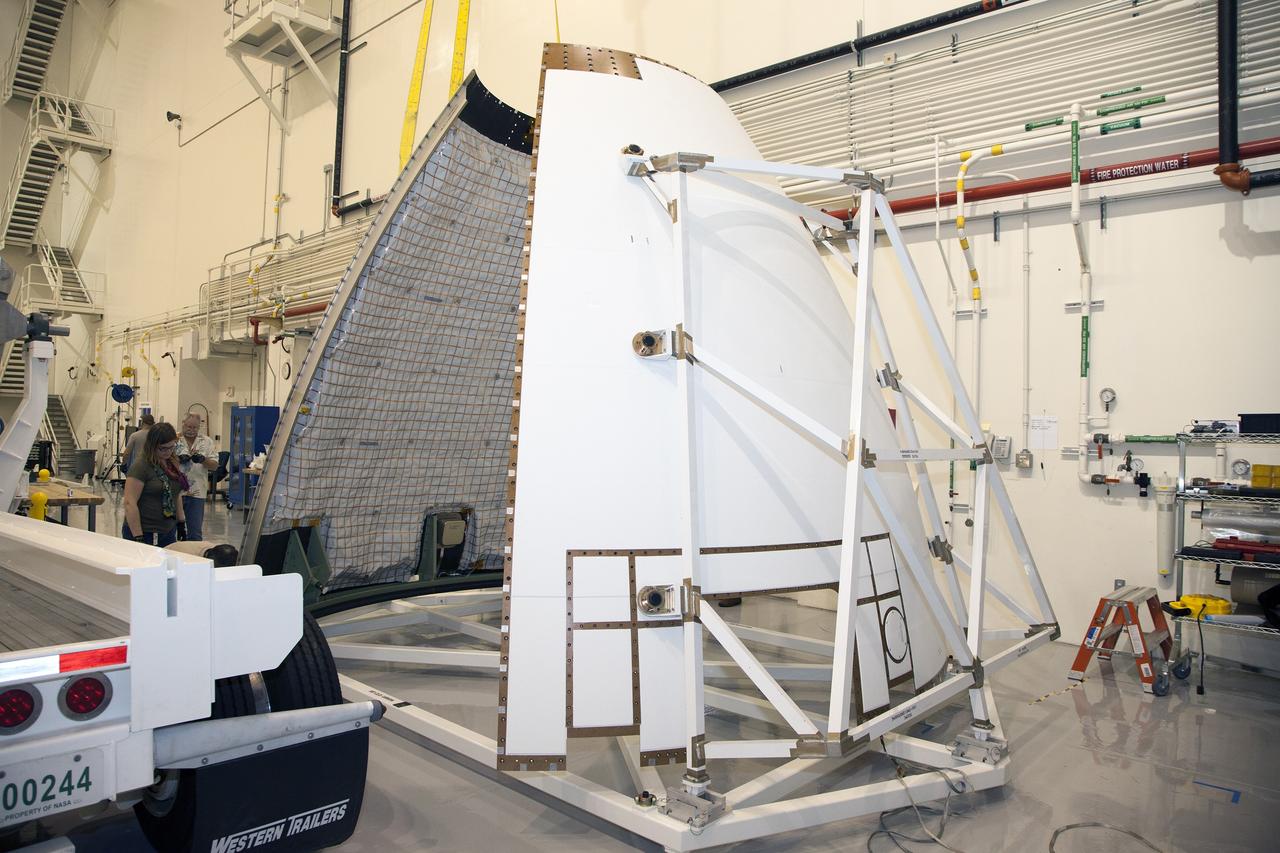
CAPE CANAVERAL, Fla. - The first set of two Ogive panels for the Orion Launch Abort System was uncrated inside the Launch Abort System Facility, or LASF, at NASA’s Kennedy Space Center in Florida. Both panels were moved by crane and lowered onto a storage stand at the far end of the facility. During processing, the panels will be secured around the Orion crew module and attached to the Launch Abort System. Orion is the exploration spacecraft designed to carry astronauts to destinations not yet explored by humans, including an asteroid and Mars. It will have emergency abort capability, sustain the crew during space travel and provide safe re-entry from deep space return velocities. The first unpiloted test flight of Orion is scheduled to launch in 2014 atop a Delta IV rocket and in 2017 on NASA’s Space Launch System rocket. For more information, visit www.nasa.gov/orion. Photo credit: Dan Casper
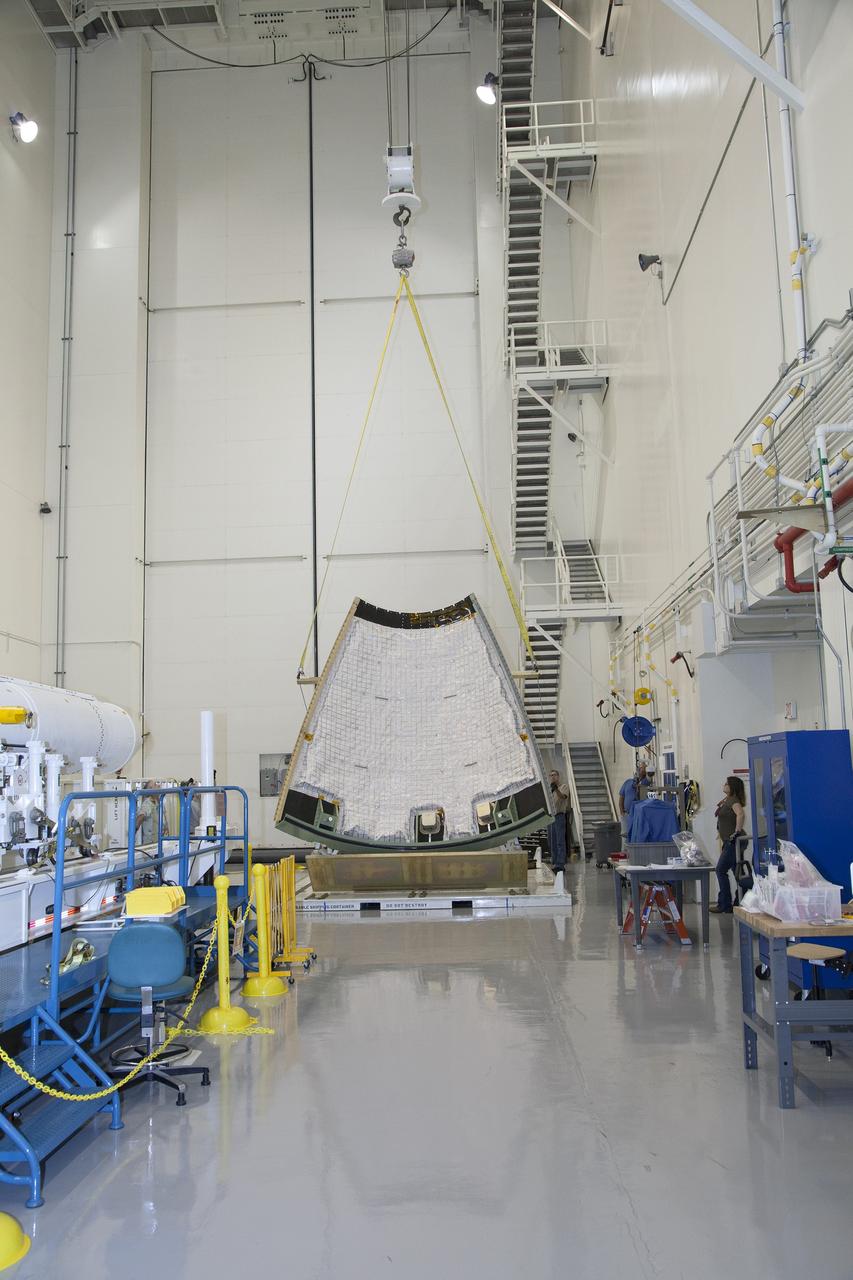
CAPE CANAVERAL, Fla. - The first set of two Ogive panels for the Orion Launch Abort System was uncrated inside the Launch Abort System Facility, or LASF, at NASA’s Kennedy Space Center in Florida. One of the panels is being lifted by crane for the move to a storage stand at the other end of the facility. During processing, the panels will be secured around the Orion crew module and attached to the Launch Abort System. Orion is the exploration spacecraft designed to carry astronauts to destinations not yet explored by humans, including an asteroid and Mars. It will have emergency abort capability, sustain the crew during space travel and provide safe re-entry from deep space return velocities. The first unpiloted test flight of Orion is scheduled to launch in 2014 atop a Delta IV rocket and in 2017 on NASA’s Space Launch System rocket. For more information, visit www.nasa.gov/orion. Photo credit: Dan Casper
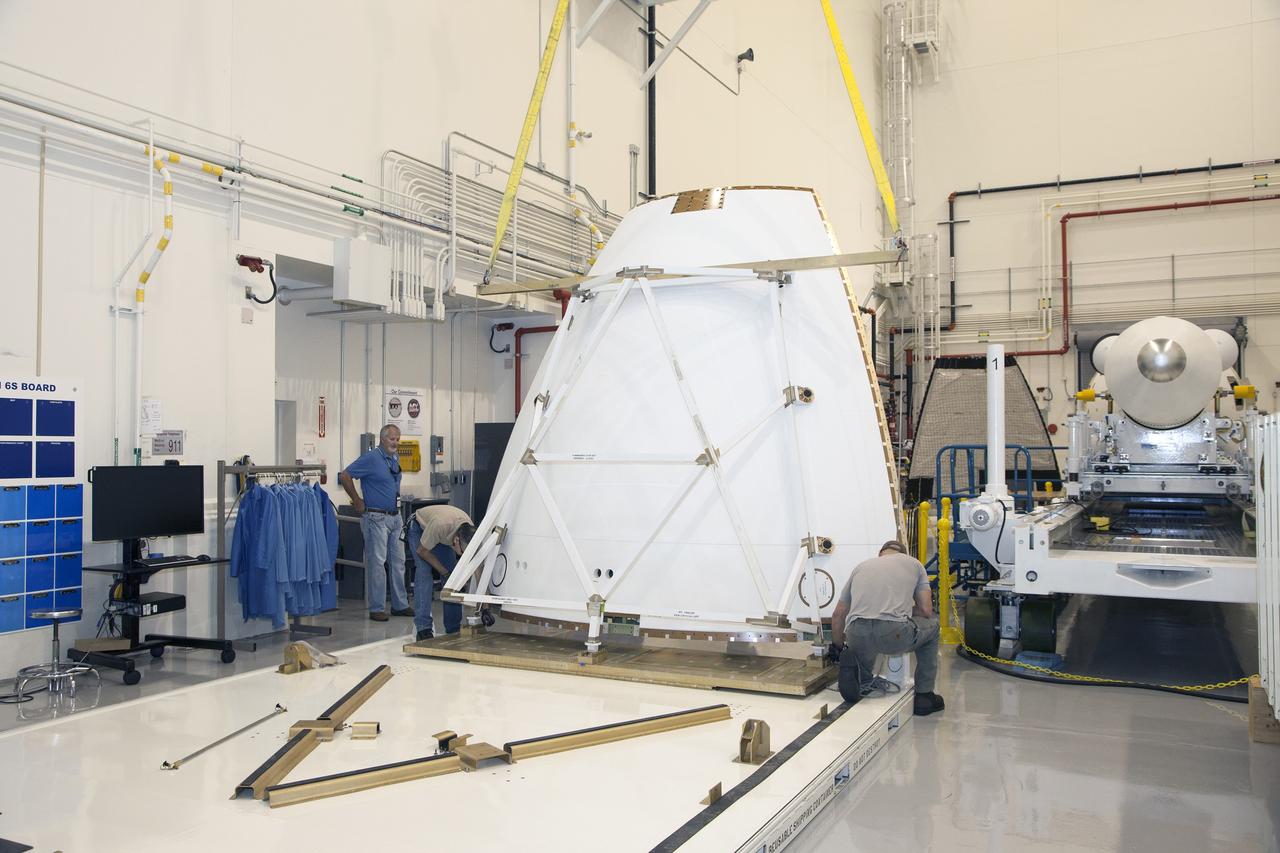
CAPE CANAVERAL, Fla. - The first set of two Ogive panels for the Orion Launch Abort System was uncrated inside the Launch Abort System Facility, or LASF, at NASA’s Kennedy Space Center in Florida. One of the panels has been lifted by crane and technicians are preparing it for the move to a storage stand at the other end of the facility. During processing, the panels will be secured around the Orion crew module and attached to the Launch Abort System. Orion is the exploration spacecraft designed to carry astronauts to destinations not yet explored by humans, including an asteroid and Mars. It will have emergency abort capability, sustain the crew during space travel and provide safe re-entry from deep space return velocities. The first unpiloted test flight of Orion is scheduled to launch in 2014 atop a Delta IV rocket and in 2017 on NASA’s Space Launch System rocket. For more information, visit www.nasa.gov/orion. Photo credit: Dan Casper

CAPE CANAVERAL, Fla. - The first set of two Ogive panels for the Orion Launch Abort System was uncrated inside the Launch Abort System Facility, or LASF, at NASA’s Kennedy Space Center in Florida. One of the panels is being lifted by crane for the move to a storage stand at the other end of the facility. During processing, the panels will be secured around the Orion crew module and attached to the Launch Abort System. Orion is the exploration spacecraft designed to carry astronauts to destinations not yet explored by humans, including an asteroid and Mars. It will have emergency abort capability, sustain the crew during space travel and provide safe re-entry from deep space return velocities. The first unpiloted test flight of Orion is scheduled to launch in 2014 atop a Delta IV rocket and in 2017 on NASA’s Space Launch System rocket. For more information, visit www.nasa.gov/orion. Photo credit: Dan Casper
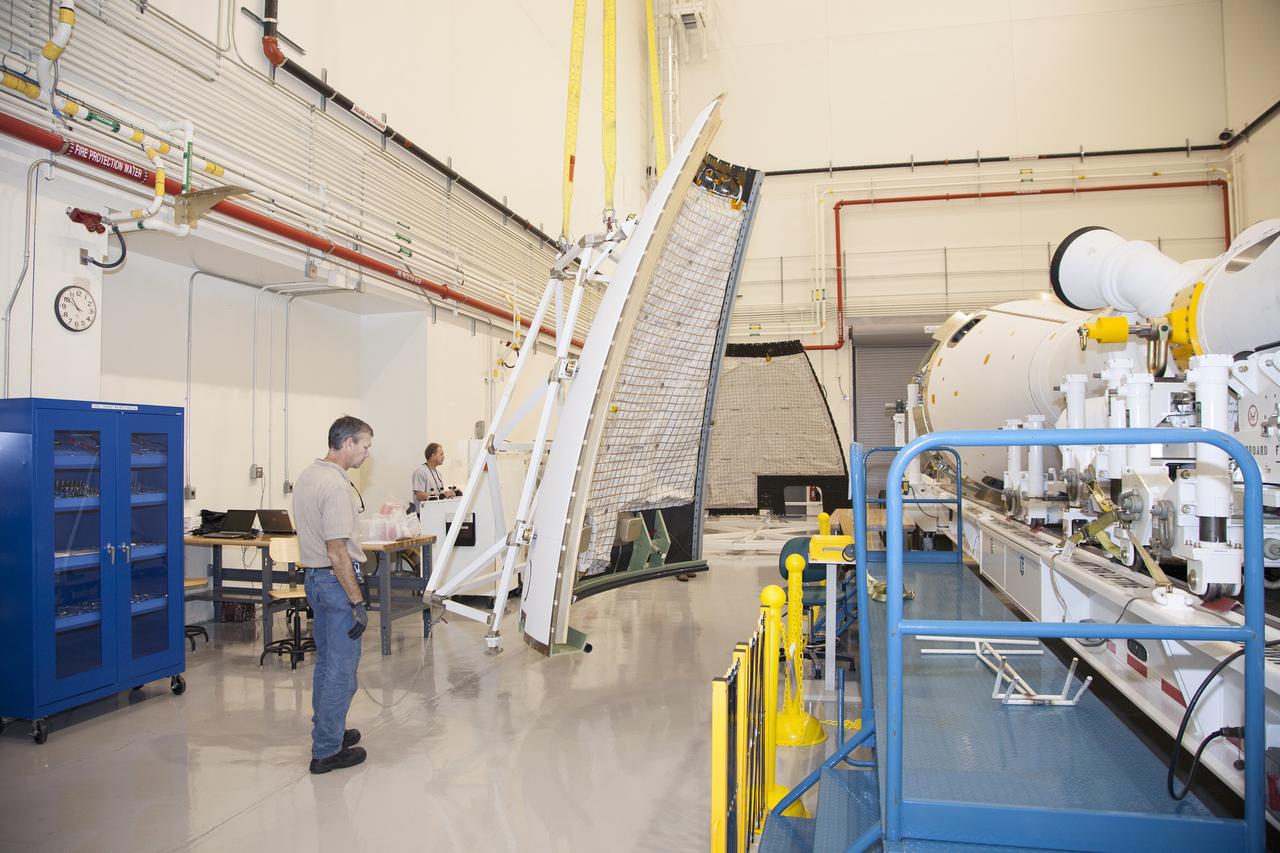
CAPE CANAVERAL, Fla. - The first set of two Ogive panels for the Orion Launch Abort System was uncrated inside the Launch Abort System Facility, or LASF, at NASA’s Kennedy Space Center in Florida. One of the panels is secured on a storage stand at the other end of the facility. Technicians monitor the progress as the second panel is being moved to join the first panel on the storage stand. To the right is the Launch Abort system secured on a work stand. During processing, the panels will be secured around the Orion crew module and attached to the Launch Abort System. Orion is the exploration spacecraft designed to carry astronauts to destinations not yet explored by humans, including an asteroid and Mars. It will have emergency abort capability, sustain the crew during space travel and provide safe re-entry from deep space return velocities. The first unpiloted test flight of Orion is scheduled to launch in 2014 atop a Delta IV rocket and in 2017 on NASA’s Space Launch System rocket. For more information, visit www.nasa.gov/orion. Photo credit: Dan Casper
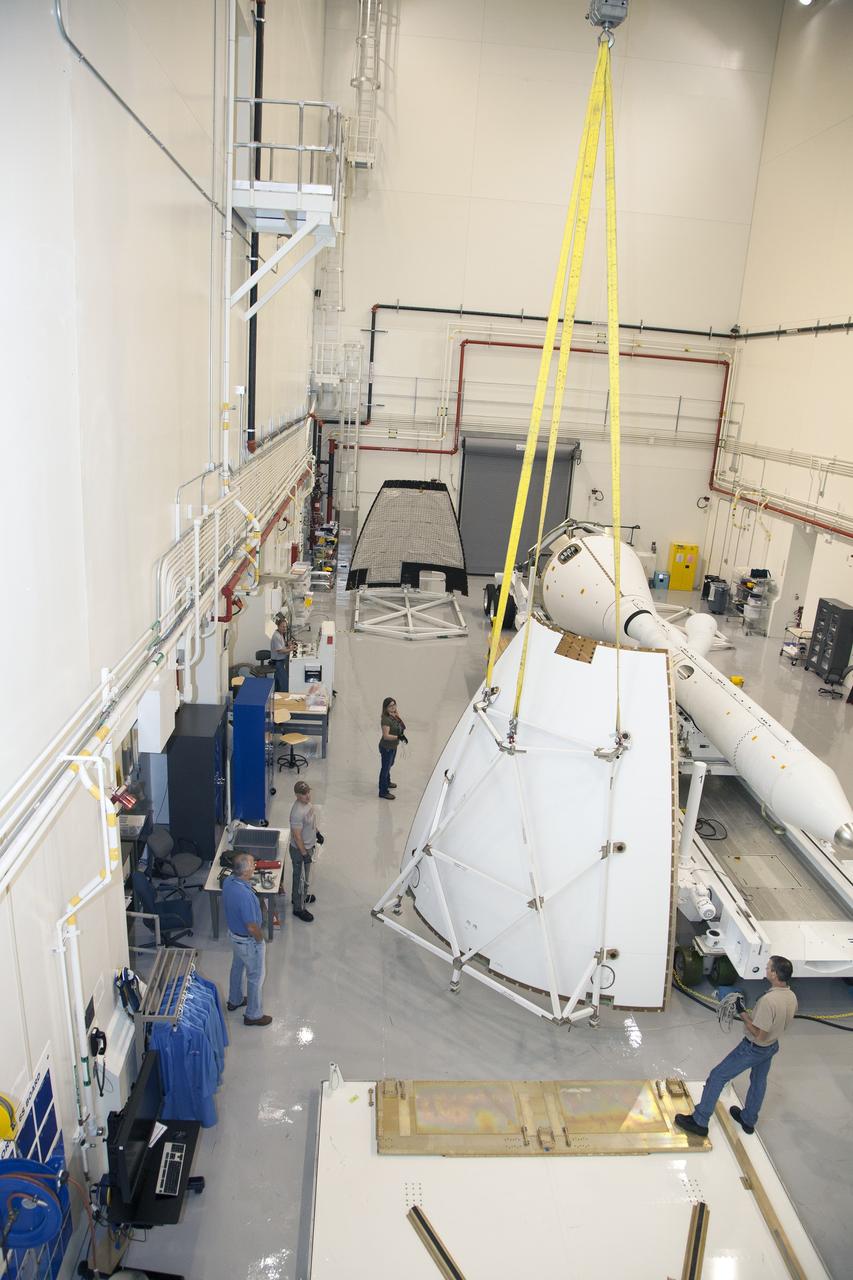
CAPE CANAVERAL, Fla. - The first set of two Ogive panels for the Orion Launch Abort System was uncrated inside the Launch Abort System Facility, or LASF, at NASA’s Kennedy Space Center in Florida. One of the panels is secured on a storage stand at the other end of the facility. The second panel is being lifted by crane and technicians are monitoring the progress as it is being moved to the storage stand. During processing, the panels will be secured around the Orion crew module and attached to the Launch Abort System. Orion is the exploration spacecraft designed to carry astronauts to destinations not yet explored by humans, including an asteroid and Mars. It will have emergency abort capability, sustain the crew during space travel and provide safe re-entry from deep space return velocities. The first unpiloted test flight of Orion is scheduled to launch in 2014 atop a Delta IV rocket and in 2017 on NASA’s Space Launch System rocket. For more information, visit www.nasa.gov/orion. Photo credit: Dan Casper
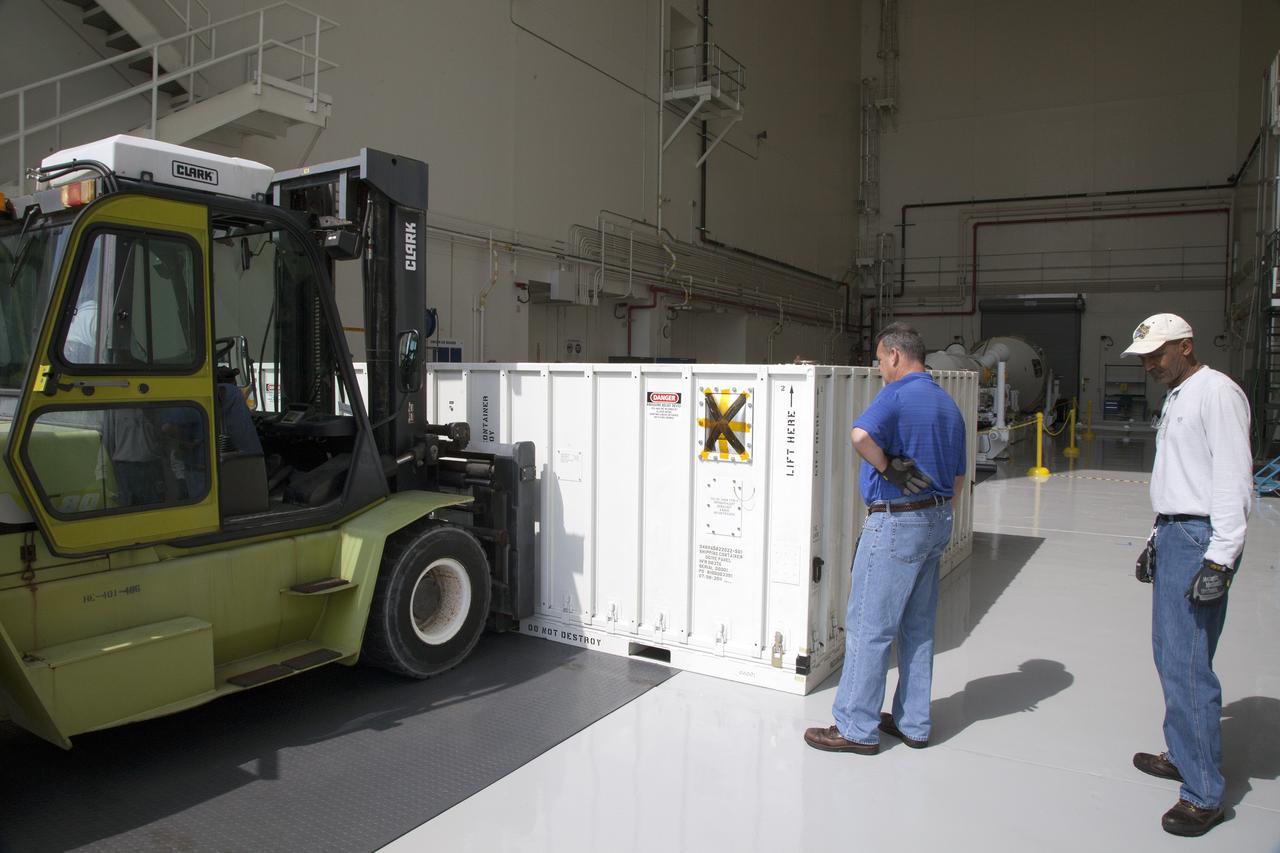
CAPE CANAVERAL, Fla. - A container carrying the first set of Ogive panels for the Orion Launch Abort System is transferred into the Launch Abort System Facility at NASA’s Kennedy Space Center in Florida. During processing, the Ogive panels will enclose and protect the Orion spacecraft and attach to the Launch Abort System. Orion is the exploration spacecraft designed to carry astronauts to destinations not yet explored by humans, including an asteroid and Mars. It will have emergency abort capability, sustain the crew during space travel and provide safe re-entry from deep space return velocities. The first unpiloted test flight of Orion is scheduled to launch in 2014 atop a Delta IV rocket and in 2017 on NASA’s Space Launch System rocket. For more information, visit www.nasa.gov/orion. Photo credit: Daniel Casper

CAPE CANAVERAL, Fla. – Inside the Launch Abort System Facility at NASA’s Kennedy Space Center in Florida, technicians monitor the progress as a crane moves the first of four Ogive panels closer for installation on Orion's Launch Abort System. The panels will smooth the airflow over the conical spacecraft to limit sound and vibration, which will make for a much smoother ride for the astronauts who will ride inside Orion in the future. The work marked the final major assembly steps for the spacecraft before it is transported to Space Launch Complex 37 at Cape Canaveral Air Force Station in November. Orion is the exploration spacecraft designed to carry astronauts to destinations not yet explored by humans, including an asteroid and Mars. It will have emergency abort capability, sustain the crew during space travel and provide safe re-entry from deep space return velocities. The first unpiloted flight test of Orion is scheduled to launch in December 2014 atop a United Launch Alliance Delta IV Heavy rocket, and in 2018 on NASA’s Space Launch System rocket. For more information, visit www.nasa.gov/orion. Photo credit: Kim Shiflett
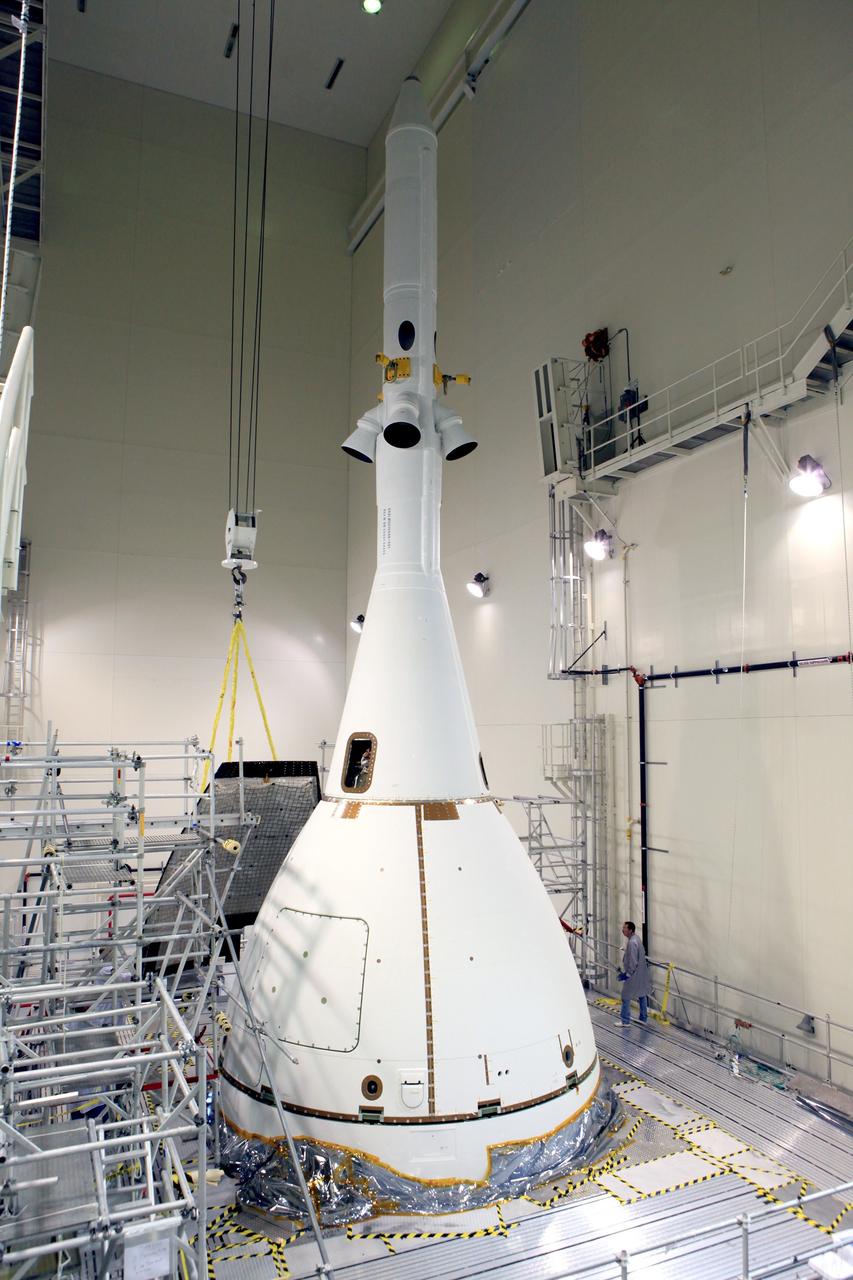
CAPE CANAVERAL, Fla. – Inside the Launch Abort System Facility at NASA’s Kennedy Space Center in Florida, a crane brings the fourth and final Ogive panel closer for installation on Orion's Launch Abort System. The panels will smooth the airflow over the conical spacecraft to limit sound and vibration, which will make for a much smoother ride for the astronauts who will ride inside Orion in the future. The work marked the final major assembly steps for the spacecraft before it is transported to Space Launch Complex 37 at Cape Canaveral Air Force Station in November. Orion is the exploration spacecraft designed to carry astronauts to destinations not yet explored by humans, including an asteroid and Mars. It will have emergency abort capability, sustain the crew during space travel and provide safe re-entry from deep space return velocities. The first unpiloted flight test of Orion is scheduled to launch in December 2014 atop a United Launch Alliance Delta IV Heavy rocket, and in 2018 on NASA’s Space Launch System rocket. For more information, visit www.nasa.gov/orion. Photo credit: Kim Shiflett
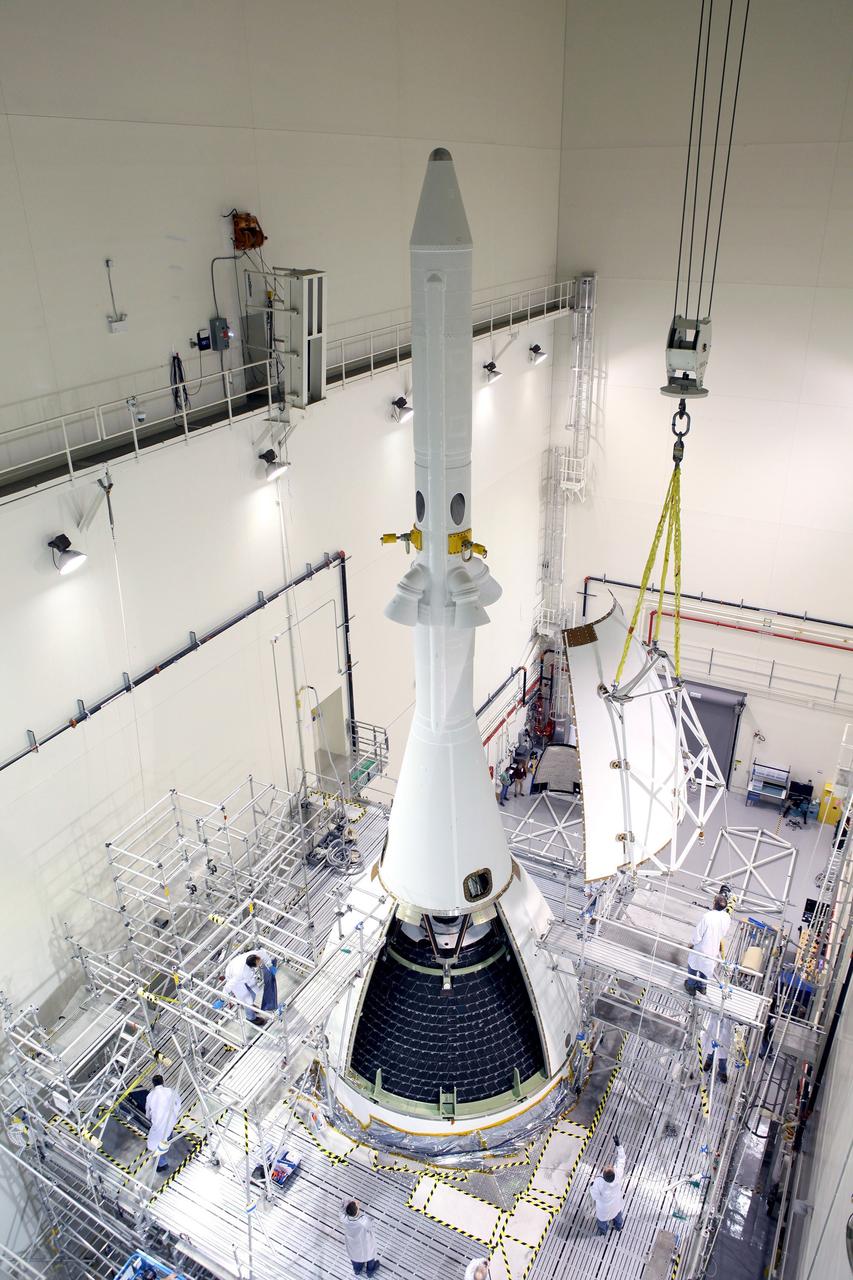
CAPE CANAVERAL, Fla. – Inside the Launch Abort System Facility at NASA's Kennedy Space Center in Florida, a crane brings the third of four Ogive panels closer for installation on Orion's Launch Abort System. The panels will smooth the airflow over the conical spacecraft to limit sound and vibration, which will make for a much smoother ride for the astronauts who will ride inside Orion in the future. The work marked the final major assembly steps for the spacecraft before it is transported to Space Launch Complex 37 at Cape Canaveral Air Force Station in November. Orion is the exploration spacecraft designed to carry astronauts to destinations not yet explored by humans, including an asteroid and Mars. It will have emergency abort capability, sustain the crew during space travel and provide safe re-entry from deep space return velocities. The first unpiloted flight test of Orion is scheduled to launch in December 2014 atop a United Launch Alliance Delta IV Heavy rocket, and in 2018 on NASA’s Space Launch System rocket. For more information, visit www.nasa.gov/orion. Photo credit: Ben Smegelsky
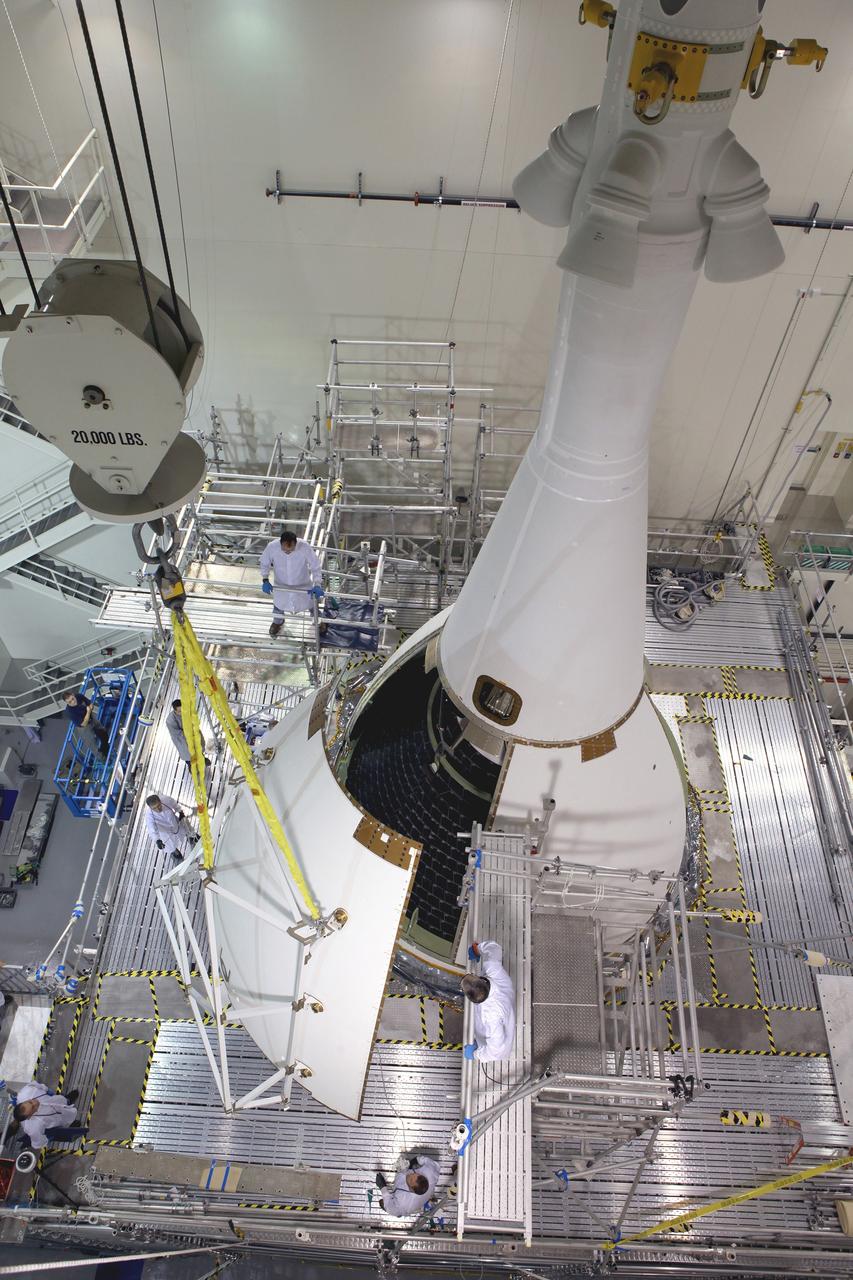
CAPE CANAVERAL, Fla. – Technicians on work platforms monitor the progress as a crane brings the third of four Ogive panels closer for installation on Orion's Launch Abort System inside the Launch Abort System Facility at NASA’s Kennedy Space Center in Florida. The panels will smooth the airflow over the conical spacecraft to limit sound and vibration, which will make for a much smoother ride for the astronauts who will ride inside Orion in the future. The work marked the final major assembly steps for the spacecraft before it is transported to Space Launch Complex 37 at Cape Canaveral Air Force Station in November. Orion is the exploration spacecraft designed to carry astronauts to destinations not yet explored by humans, including an asteroid and Mars. It will have emergency abort capability, sustain the crew during space travel and provide safe re-entry from deep space return velocities. The first unpiloted flight test of Orion is scheduled to launch in December 2014 atop a United Launch Alliance Delta IV Heavy rocket, and in 2018 on NASA’s Space Launch System rocket. For more information, visit www.nasa.gov/orion. Photo credit: Ben Smegelsky

CAPE CANAVERAL, Fla. - Containers carrying the first set of Ogive panels for the Orion Launch Abort System are being offloaded for transfer into the Launch Abort System Facility at NASA’s Kennedy Space Center in Florida. During processing, the Ogive panels will enclose and protect the Orion spacecraft and attach to the Launch Abort System. Orion is the exploration spacecraft designed to carry astronauts to destinations not yet explored by humans, including an asteroid and Mars. It will have emergency abort capability, sustain the crew during space travel and provide safe re-entry from deep space return velocities. The first unpiloted test flight of Orion is scheduled to launch in 2014 atop a Delta IV rocket and in 2017 on NASA’s Space Launch System rocket. For more information, visit www.nasa.gov/orion. Photo credit: Daniel Casper
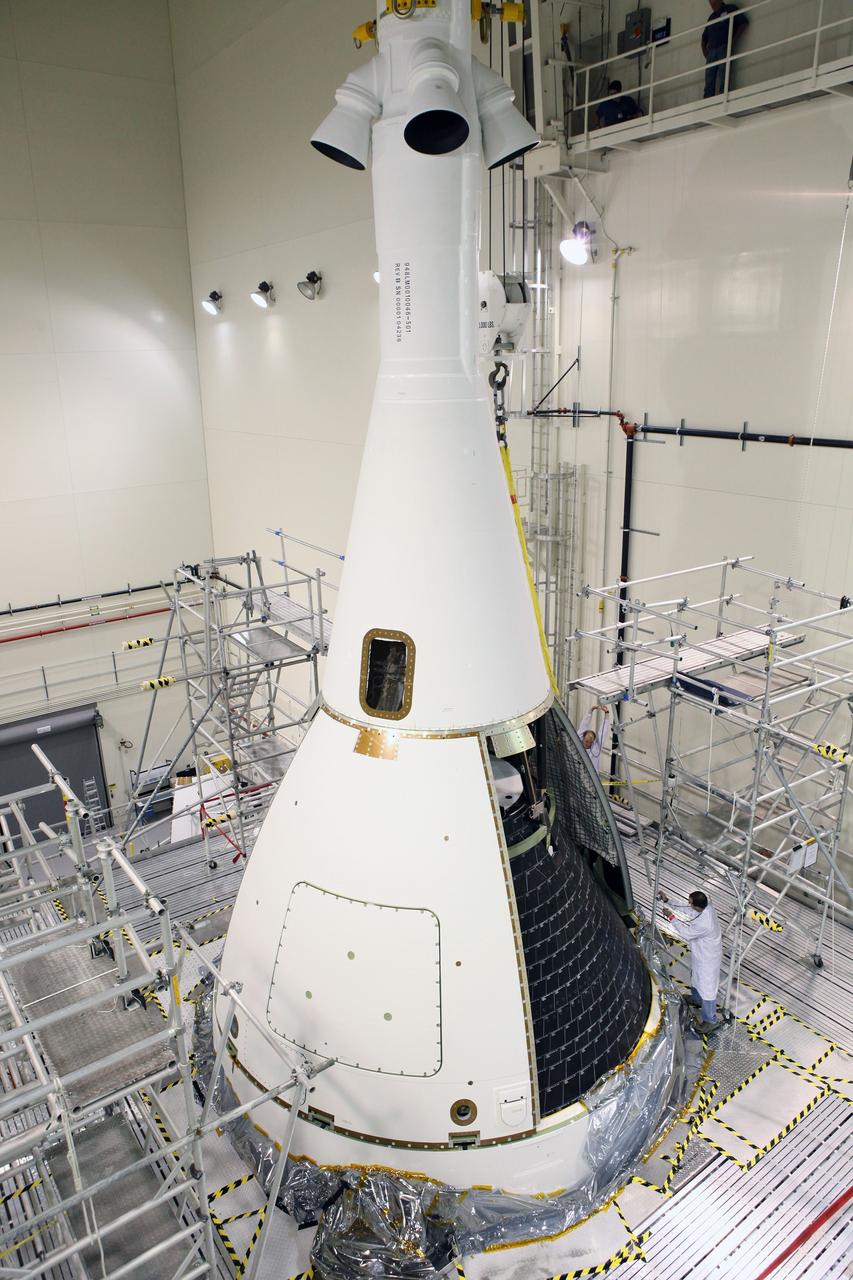
CAPE CANAVERAL, Fla. – Inside the Launch Abort System Facility at NASA’s Kennedy Space Center in Florida, technicians have installed two of the four Ogive panels on Orion's Launch Abort System. The panels will smooth the airflow over the conical spacecraft to limit sound and vibration, which will make for a much smoother ride for the astronauts who will ride inside Orion in the future. The work marked the final major assembly steps for the spacecraft before it is transported to Space Launch Complex 37 at Cape Canaveral Air Force Station in November. Orion is the exploration spacecraft designed to carry astronauts to destinations not yet explored by humans, including an asteroid and Mars. It will have emergency abort capability, sustain the crew during space travel and provide safe re-entry from deep space return velocities. The first unpiloted flight test of Orion is scheduled to launch in December 2014 atop a United Launch Alliance Delta IV Heavy rocket, and in 2018 on NASA’s Space Launch System rocket. For more information, visit www.nasa.gov/orion. Photo credit: Daniel Casper
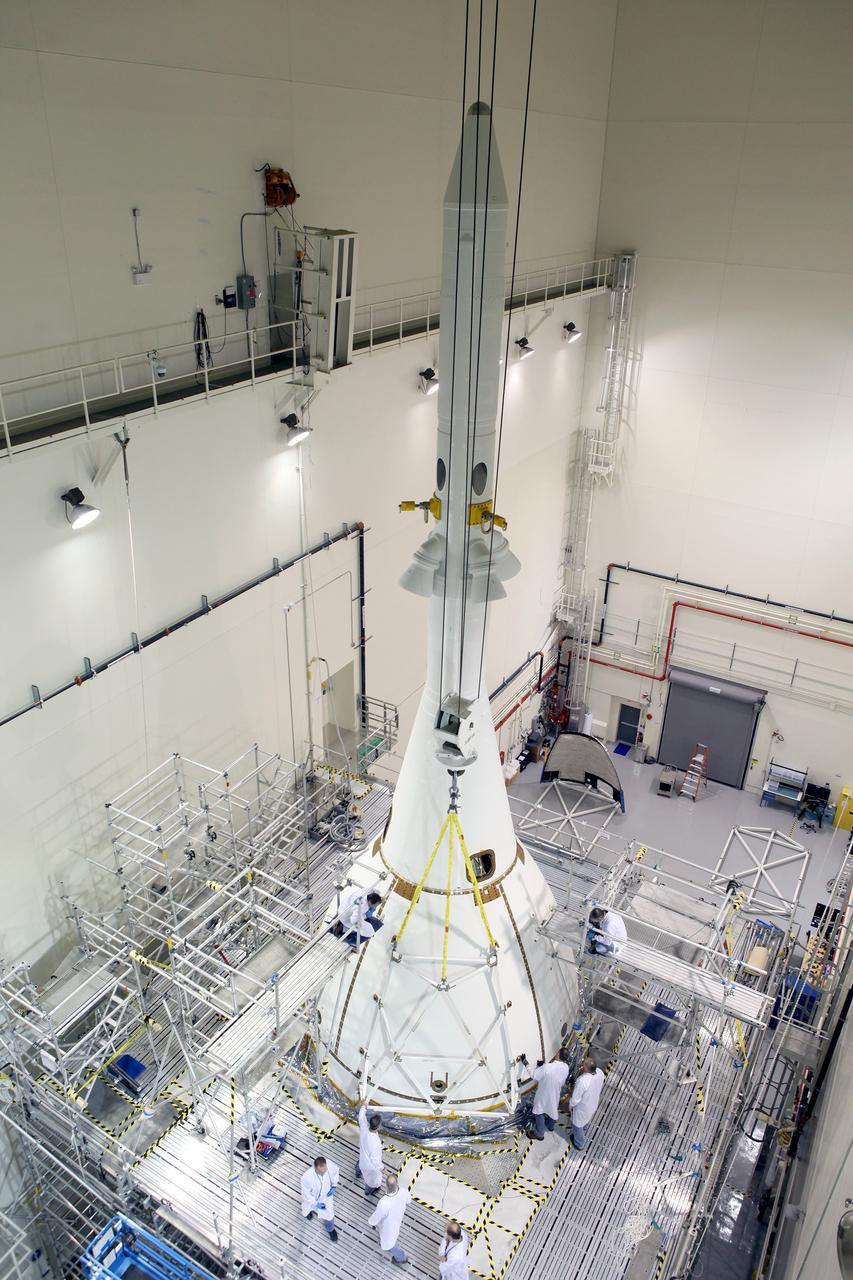
CAPE CANAVERAL, Fla. – Inside the Launch Abort System Facility at NASA’s Kennedy Space Center in Florida, technicians attach the third of four Ogive panels on Orion's Launch Abort System. The panels will smooth the airflow over the conical spacecraft to limit sound and vibration, which will make for a much smoother ride for the astronauts who will ride inside Orion in the future. The work marked the final major assembly steps for the spacecraft before it is transported to Space Launch Complex 37 at Cape Canaveral Air Force Station in November. Orion is the exploration spacecraft designed to carry astronauts to destinations not yet explored by humans, including an asteroid and Mars. It will have emergency abort capability, sustain the crew during space travel and provide safe re-entry from deep space return velocities. The first unpiloted flight test of Orion is scheduled to launch in December 2014 atop a United Launch Alliance Delta IV Heavy rocket, and in 2018 on NASA’s Space Launch System rocket. For more information, visit www.nasa.gov/orion. Photo credit: Ben Smegelsky
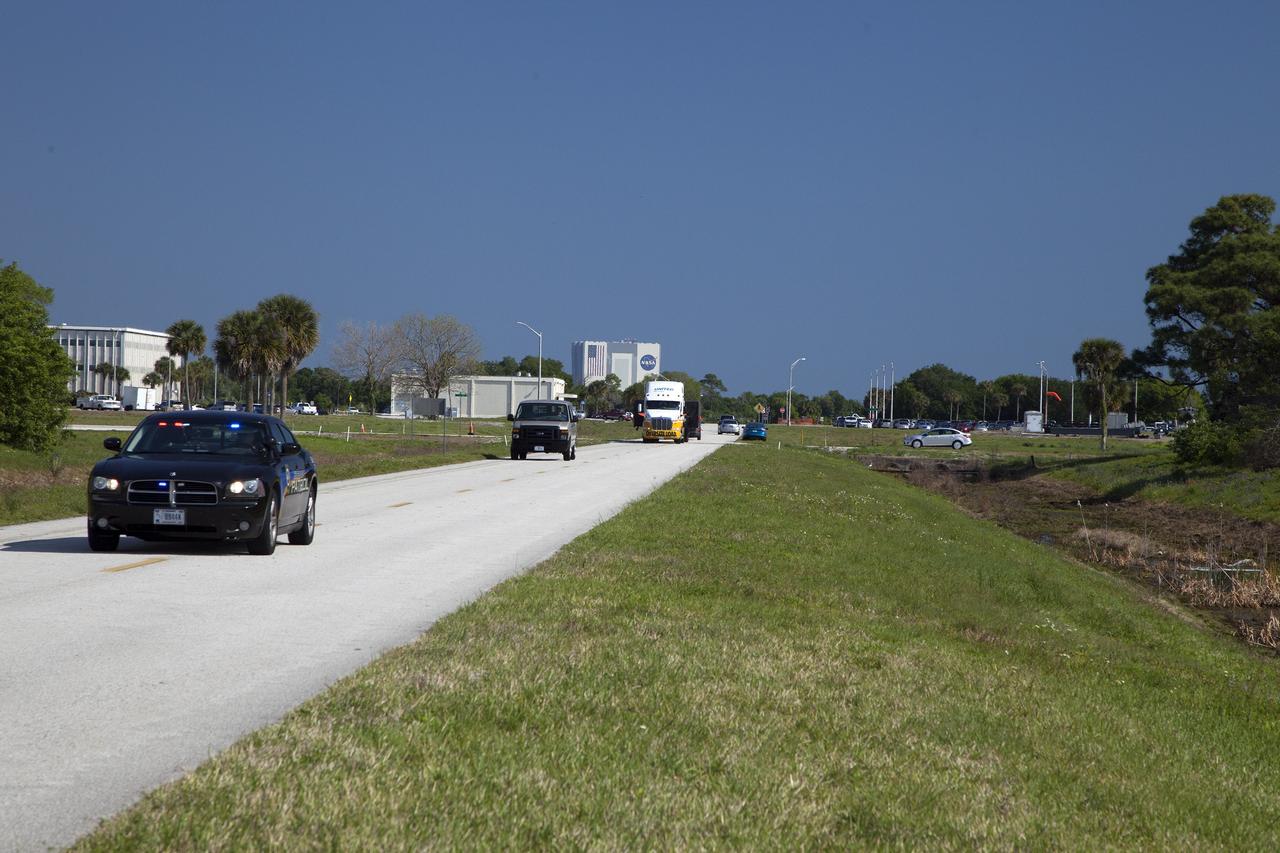
CAPE CANAVERAL, Fla. - The first set of Ogive panels for the Orion Launch Abort System arrives by truck at NASA’s Kennedy Space Center in Florida. The Ogive panels will be delivered to the Launch Abort System Facility. During processing, the panels will enclose and protect the Orion spacecraft and attach to the Launch Abort System. Orion is the exploration spacecraft designed to carry astronauts to destinations not yet explored by humans, including an asteroid and Mars. It will have emergency abort capability, sustain the crew during space travel and provide safe re-entry from deep space return velocities. The first unpiloted test flight of Orion is scheduled to launch in 2014 atop a Delta IV rocket and in 2017 on NASA’s Space Launch System rocket. For more information, visit www.nasa.gov/orion. Photo credit: Daniel Casper
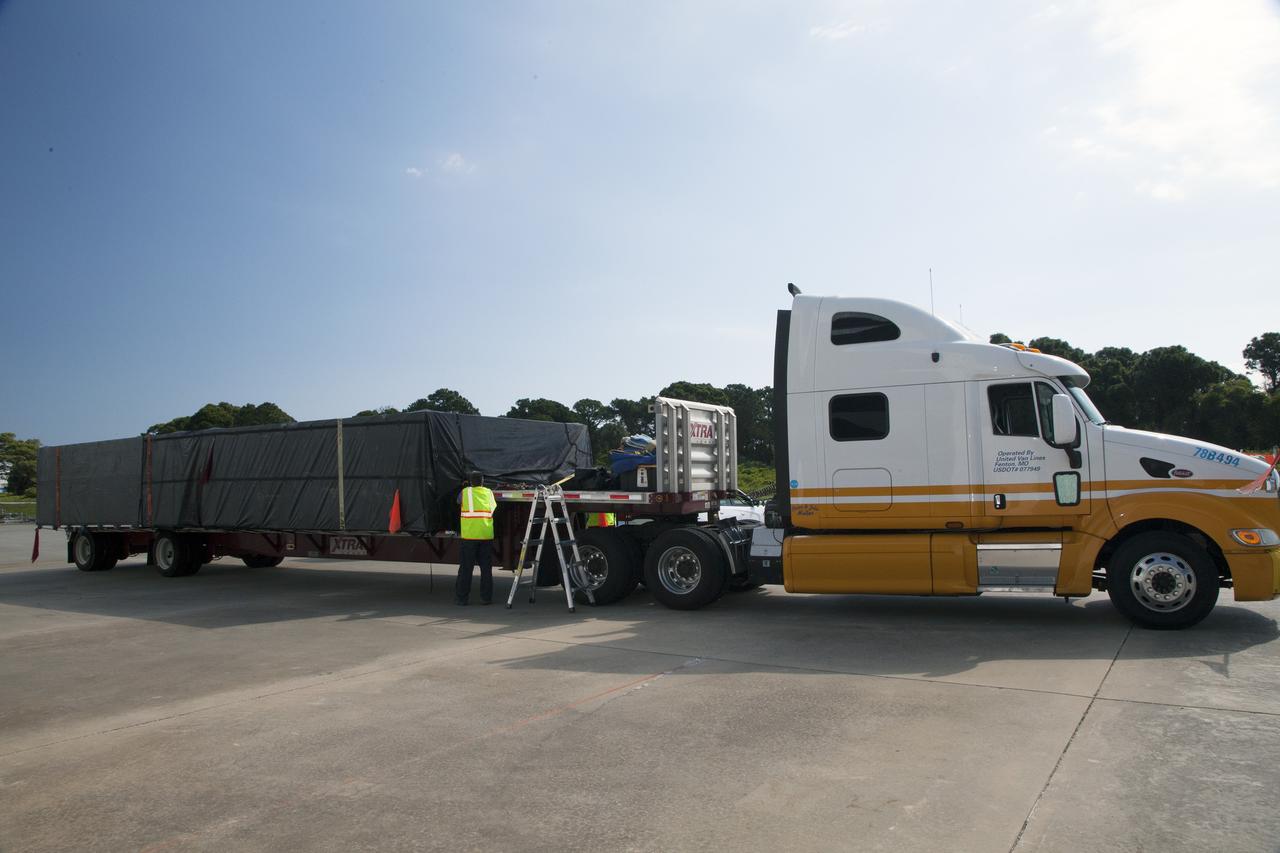
CAPE CANAVERAL, Fla. - The first set of Ogive panels for the Orion Launch Abort System arrives by truck at the Launch Abort System Facility at NASA’s Kennedy Space Center in Florida. During processing, the Ogive panels will enclose and protect the Orion spacecraft and attach to the Launch Abort System. Orion is the exploration spacecraft designed to carry astronauts to destinations not yet explored by humans, including an asteroid and Mars. It will have emergency abort capability, sustain the crew during space travel and provide safe re-entry from deep space return velocities. The first unpiloted test flight of Orion is scheduled to launch in 2014 atop a Delta IV rocket and in 2017 on NASA’s Space Launch System rocket. For more information, visit www.nasa.gov/orion. Photo credit: Daniel Casper
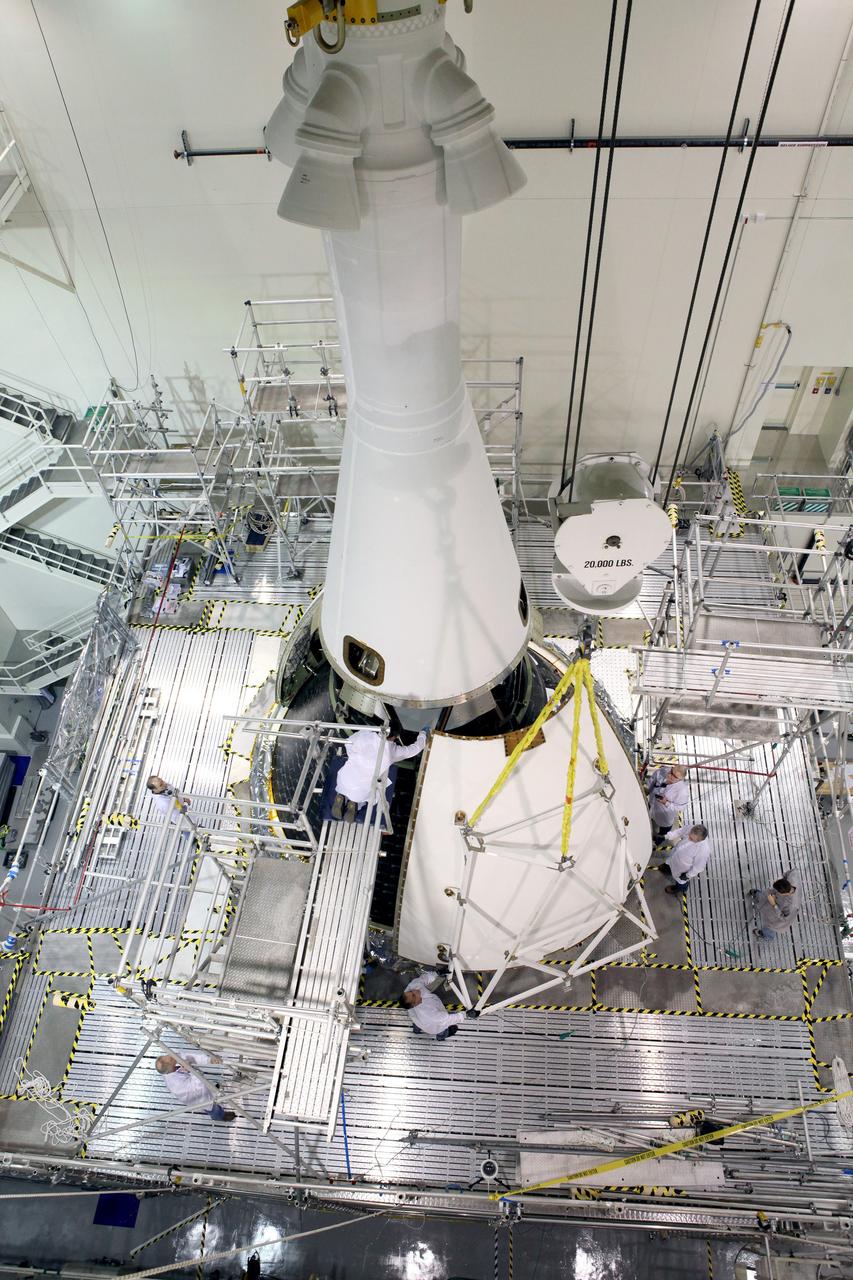
CAPE CANAVERAL, Fla. – Technicians on work platforms continue the installation of four Ogive panels on Orion's Launch Abort System inside the Launch Abort System Facility at NASA’s Kennedy Space Center in Florida. The panels will smooth the airflow over the conical spacecraft to limit sound and vibration, which will make for a much smoother ride for the astronauts who will ride inside Orion in the future. The work marked the final major assembly steps for the spacecraft before it is transported to Space Launch Complex 37 at Cape Canaveral Air Force Station in November. Orion is the exploration spacecraft designed to carry astronauts to destinations not yet explored by humans, including an asteroid and Mars. It will have emergency abort capability, sustain the crew during space travel and provide safe re-entry from deep space return velocities. The first unpiloted flight test of Orion is scheduled to launch in December 2014 atop a United Launch Alliance Delta IV Heavy rocket, and in 2018 on NASA’s Space Launch System rocket. For more information, visit www.nasa.gov/orion. Photo credit: Daniel Casper
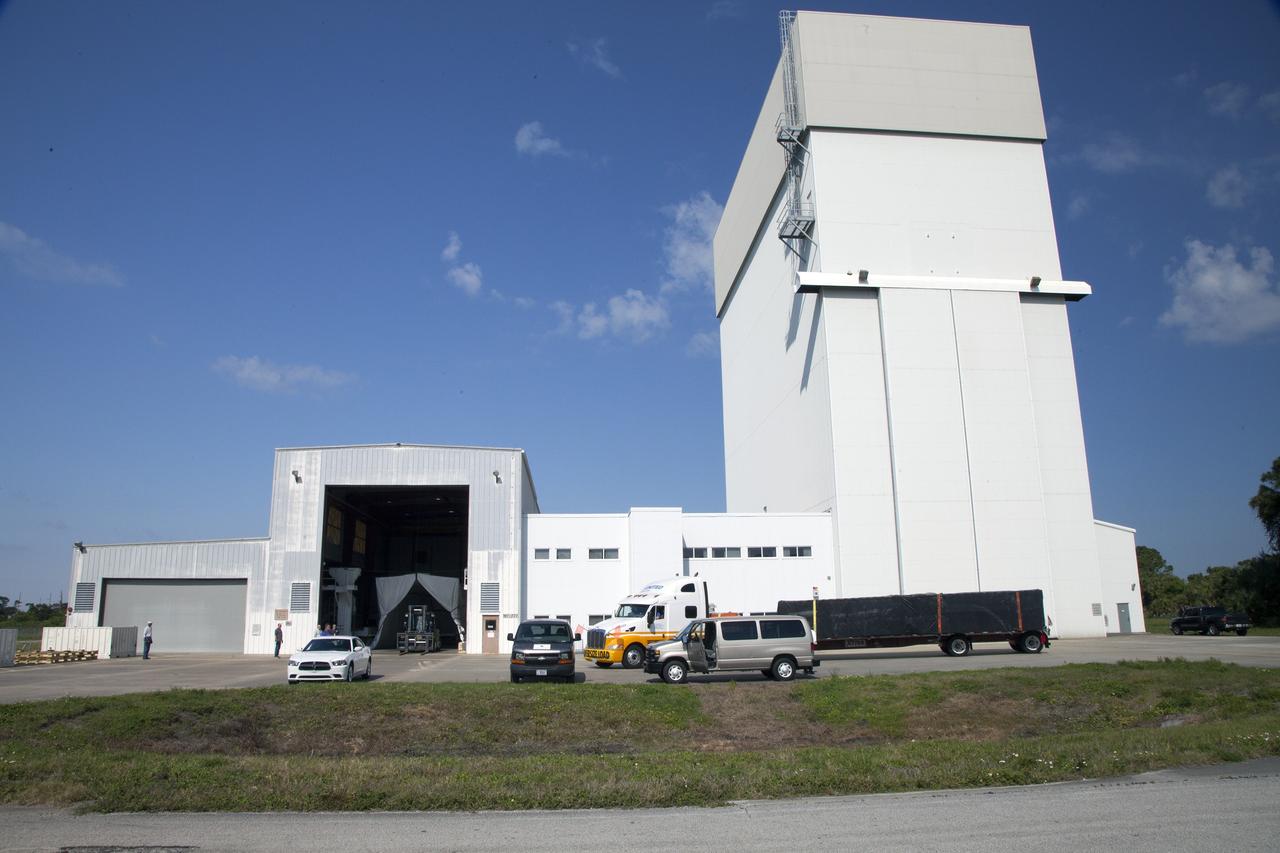
CAPE CANAVERAL, Fla. - The first set of Ogive panels for the Orion Launch Abort System arrives by truck at the Launch Abort System Facility at NASA’s Kennedy Space Center in Florida. During processing, the Ogive panels will enclose and protect the Orion spacecraft and attach to the Launch Abort System. Orion is the exploration spacecraft designed to carry astronauts to destinations not yet explored by humans, including an asteroid and Mars. It will have emergency abort capability, sustain the crew during space travel and provide safe re-entry from deep space return velocities. The first unpiloted test flight of Orion is scheduled to launch in 2014 atop a Delta IV rocket and in 2017 on NASA’s Space Launch System rocket. For more information, visit www.nasa.gov/orion. Photo credit: Daniel Casper
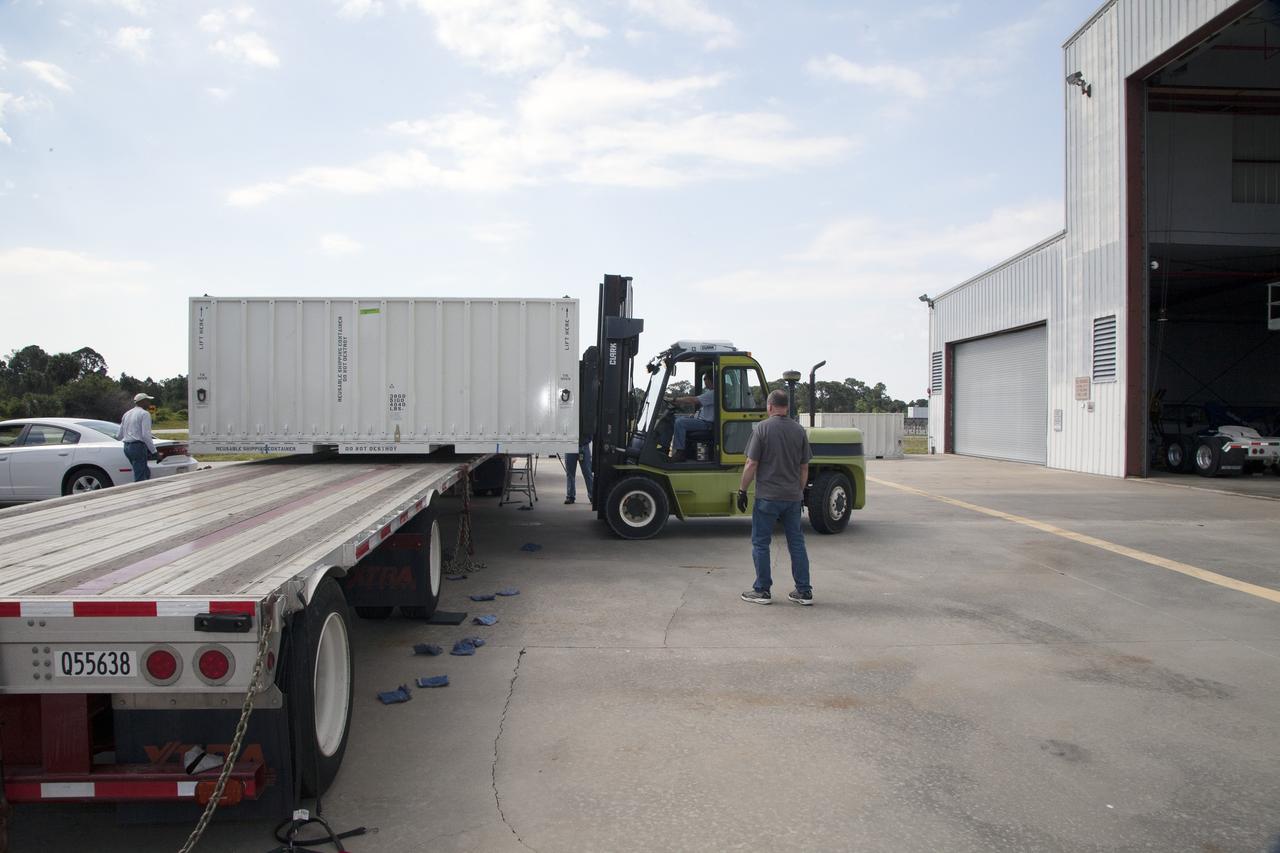
CAPE CANAVERAL, Fla. - A container carrying the first set of Ogive panels for the Orion Launch Abort System is offloaded for transfer into the Launch Abort System Facility at NASA’s Kennedy Space Center in Florida. During processing, the Ogive panels will enclose and protect the Orion spacecraft and attach to the Launch Abort System. Orion is the exploration spacecraft designed to carry astronauts to destinations not yet explored by humans, including an asteroid and Mars. It will have emergency abort capability, sustain the crew during space travel and provide safe re-entry from deep space return velocities. The first unpiloted test flight of Orion is scheduled to launch in 2014 atop a Delta IV rocket and in 2017 on NASA’s Space Launch System rocket. For more information, visit www.nasa.gov/orion. Photo credit: Daniel Casper

CAPE CANAVERAL, Fla. – The first of four Ogive panels is lifted by crane for installation on Orion's Launch Abort System inside the Launch Abort System Facility at NASA’s Kennedy Space Center in Florida. The panels will smooth the airflow over the conical spacecraft to limit sound and vibration, which will make for a much smoother ride for the astronauts who will ride inside Orion in the future. The work marked the final major assembly steps for the spacecraft before it is transported to Space Launch Complex 37 at Cape Canaveral Air Force Station in November. Orion is the exploration spacecraft designed to carry astronauts to destinations not yet explored by humans, including an asteroid and Mars. It will have emergency abort capability, sustain the crew during space travel and provide safe re-entry from deep space return velocities. The first unpiloted flight test of Orion is scheduled to launch in December 2014 atop a United Launch Alliance Delta IV Heavy rocket, and in 2018 on NASA’s Space Launch System rocket. For more information, visit www.nasa.gov/orion. Photo credit: Kim Shiflett
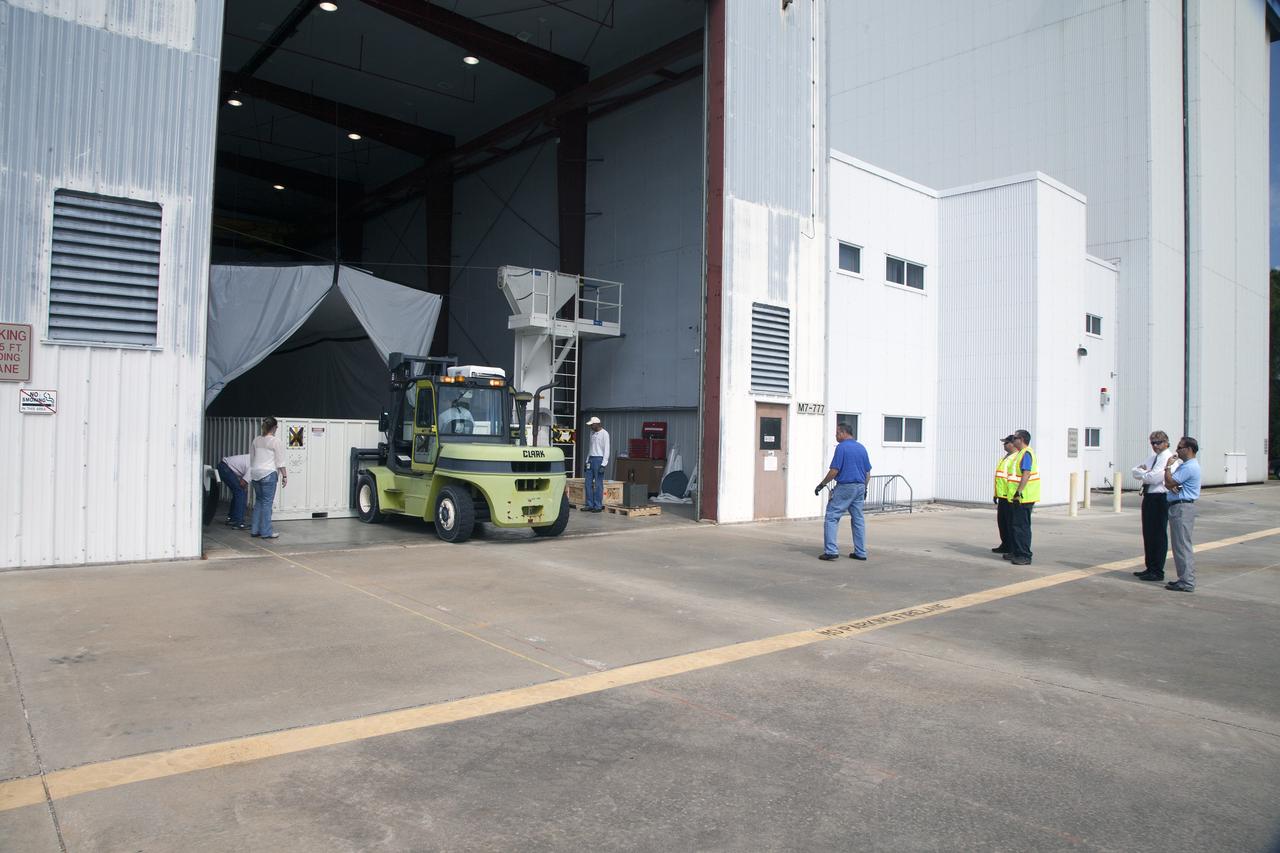
CAPE CANAVERAL, Fla. - Containers carrying the first set of Ogive panels for the Orion Launch Abort System have been transferred into the Launch Abort System Facility at NASA’s Kennedy Space Center in Florida. During processing, the Ogive panels will enclose and protect the Orion spacecraft and attach to the Launch Abort System. Orion is the exploration spacecraft designed to carry astronauts to destinations not yet explored by humans, including an asteroid and Mars. It will have emergency abort capability, sustain the crew during space travel and provide safe re-entry from deep space return velocities. The first unpiloted test flight of Orion is scheduled to launch in 2014 atop a Delta IV rocket and in 2017 on NASA’s Space Launch System rocket. For more information, visit www.nasa.gov/orion. Photo credit: Daniel Casper
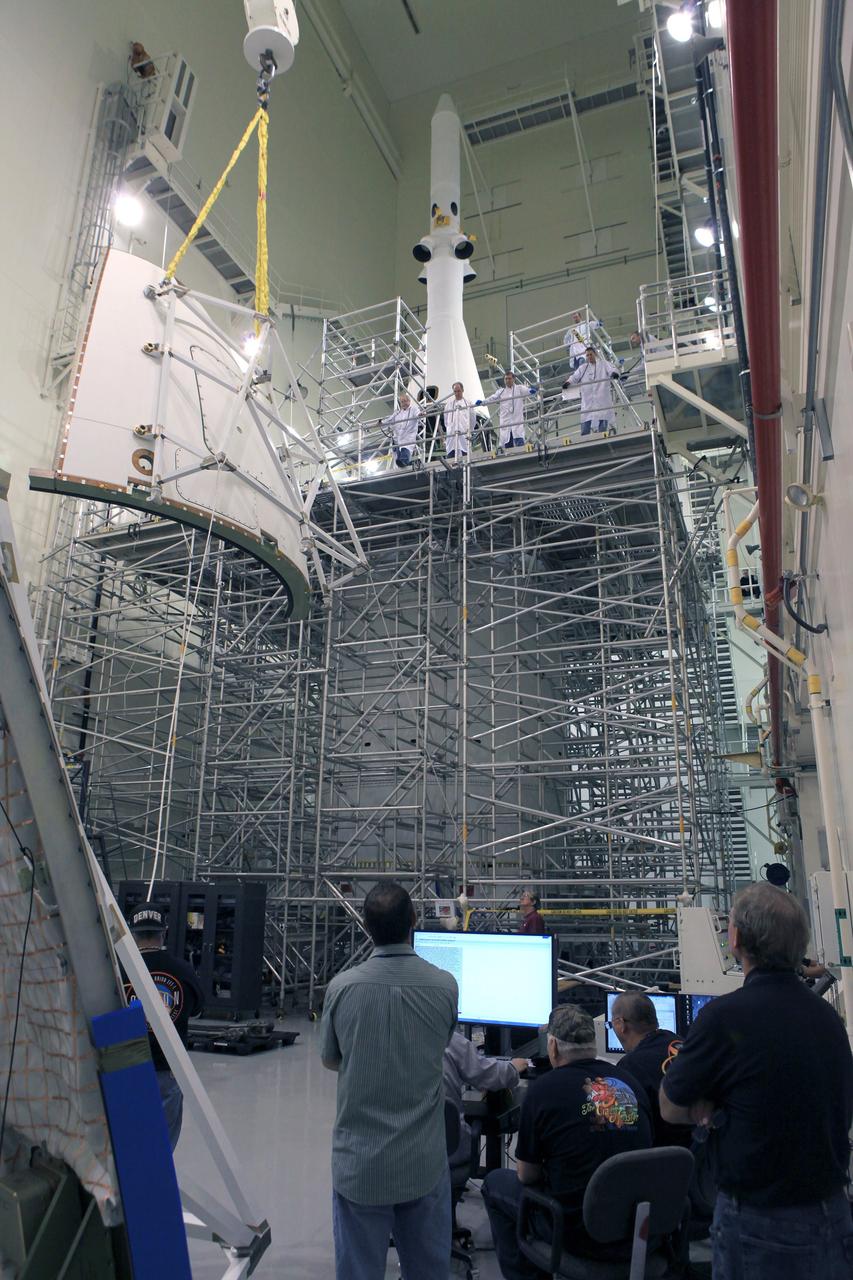
CAPE CANAVERAL, Fla. – The first of four Ogive panels is lifted by crane for installation on Orion's Launch Abort System inside the Launch Abort System Facility at NASA’s Kennedy Space Center in Florida. The panels will smooth the airflow over the conical spacecraft to limit sound and vibration, which will make for a much smoother ride for the astronauts who will ride inside Orion in the future. The work marked the final major assembly steps for the spacecraft before it is transported to Space Launch Complex 37 at Cape Canaveral Air Force Station in November. Orion is the exploration spacecraft designed to carry astronauts to destinations not yet explored by humans, including an asteroid and Mars. It will have emergency abort capability, sustain the crew during space travel and provide safe re-entry from deep space return velocities. The first unpiloted flight test of Orion is scheduled to launch in December 2014 atop a United Launch Alliance Delta IV Heavy rocket, and in 2018 on NASA’s Space Launch System rocket. For more information, visit www.nasa.gov/orion. Photo credit: Kim Shiflett
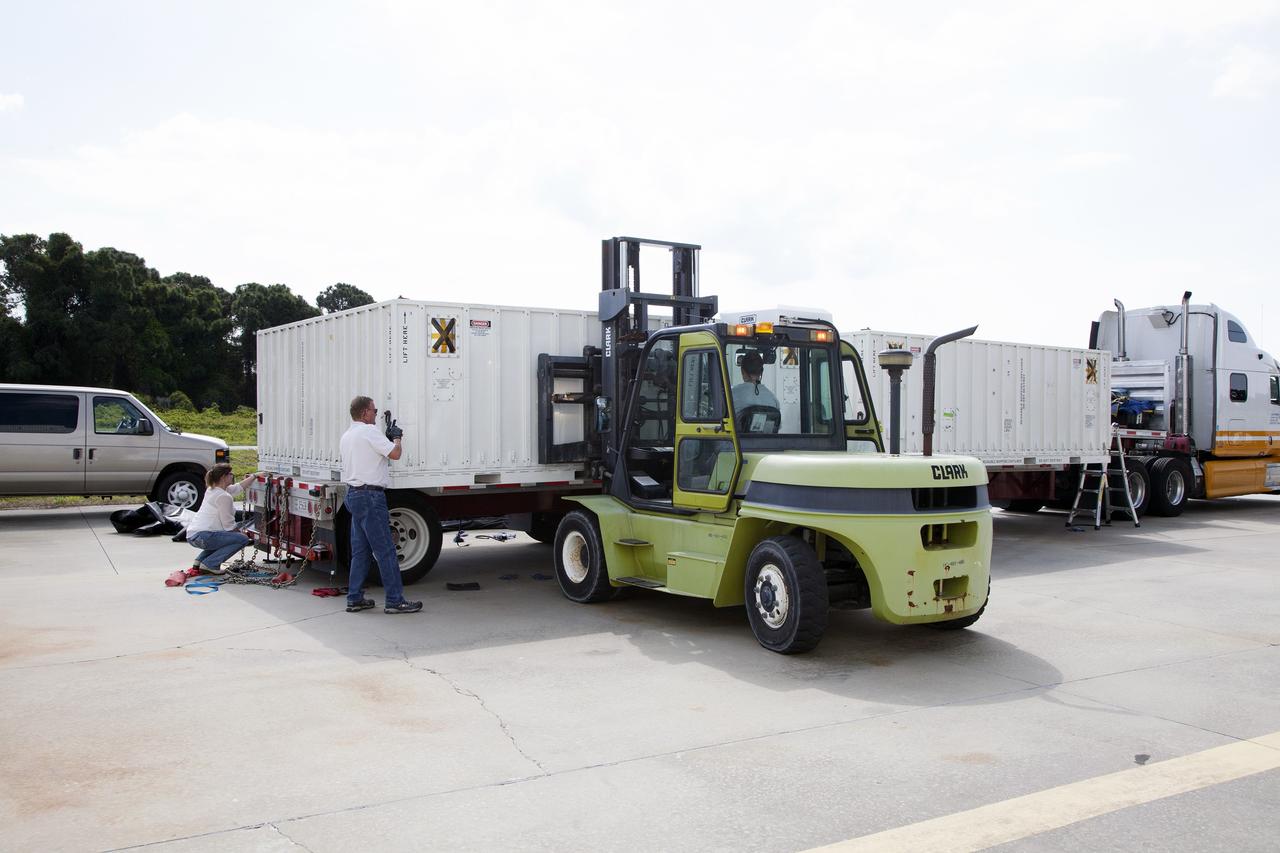
CAPE CANAVERAL, Fla. - The first set of Ogive panels for the Orion Launch Abort System arrives by truck at the Launch Abort System Facility at NASA’s Kennedy Space Center in Florida. During processing, the Ogive panels will enclose and protect the Orion spacecraft and attach to the Launch Abort System. Orion is the exploration spacecraft designed to carry astronauts to destinations not yet explored by humans, including an asteroid and Mars. It will have emergency abort capability, sustain the crew during space travel and provide safe re-entry from deep space return velocities. The first unpiloted test flight of Orion is scheduled to launch in 2014 atop a Delta IV rocket and in 2017 on NASA’s Space Launch System rocket. For more information, visit www.nasa.gov/orion. Photo credit: Daniel Casper
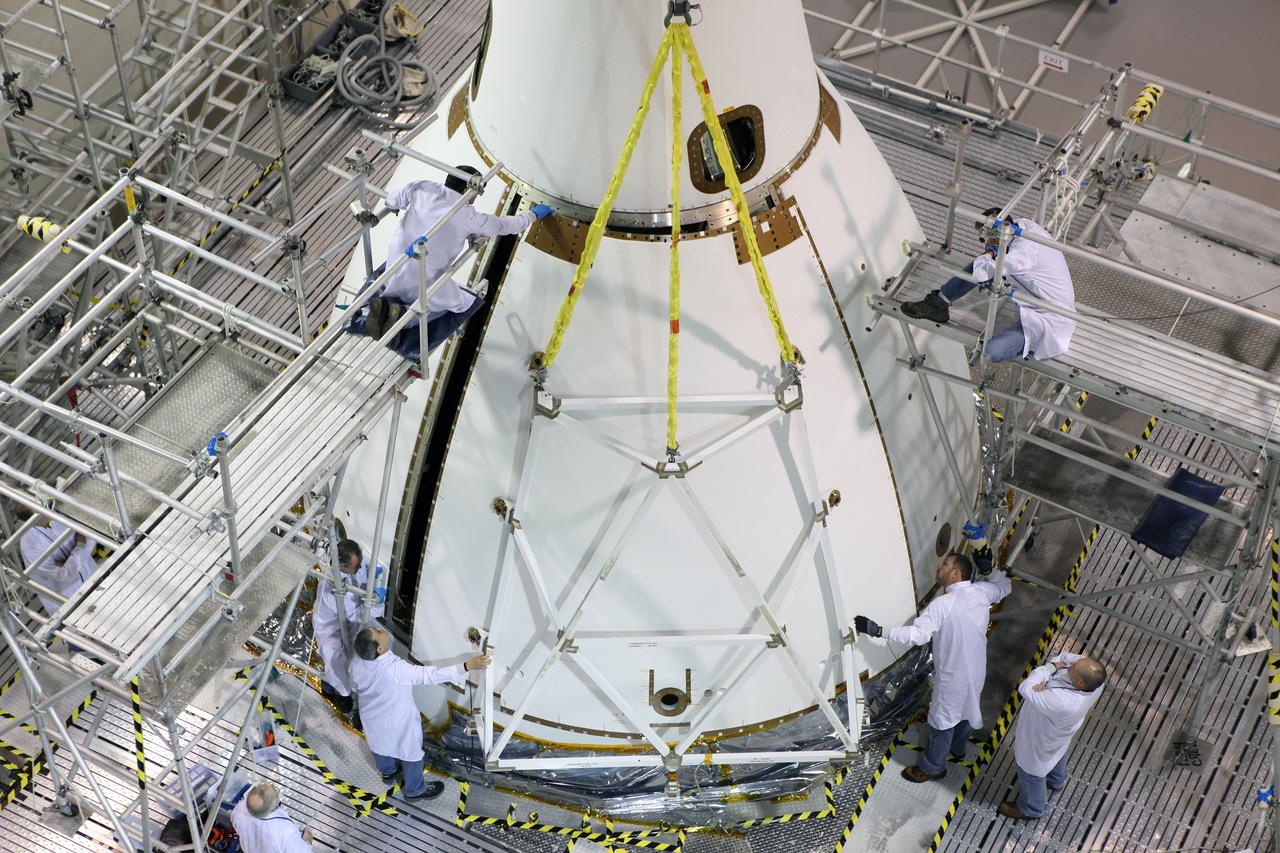
CAPE CANAVERAL, Fla. – Inside the Launch Abort System Facility at NASA’s Kennedy Space Center in Florida, technicians attach the third of four Ogive panels on Orion's Launch Abort System. The panels will smooth the airflow over the conical spacecraft to limit sound and vibration, which will make for a much smoother ride for the astronauts who will ride inside Orion in the future. The work marked the final major assembly steps for the spacecraft before it is transported to Space Launch Complex 37 at Cape Canaveral Air Force Station in November. Orion is the exploration spacecraft designed to carry astronauts to destinations not yet explored by humans, including an asteroid and Mars. It will have emergency abort capability, sustain the crew during space travel and provide safe re-entry from deep space return velocities. The first unpiloted flight test of Orion is scheduled to launch in December 2014 atop a United Launch Alliance Delta IV Heavy rocket, and in 2018 on NASA’s Space Launch System rocket. For more information, visit www.nasa.gov/orion. Photo credit: Ben Smegelsky
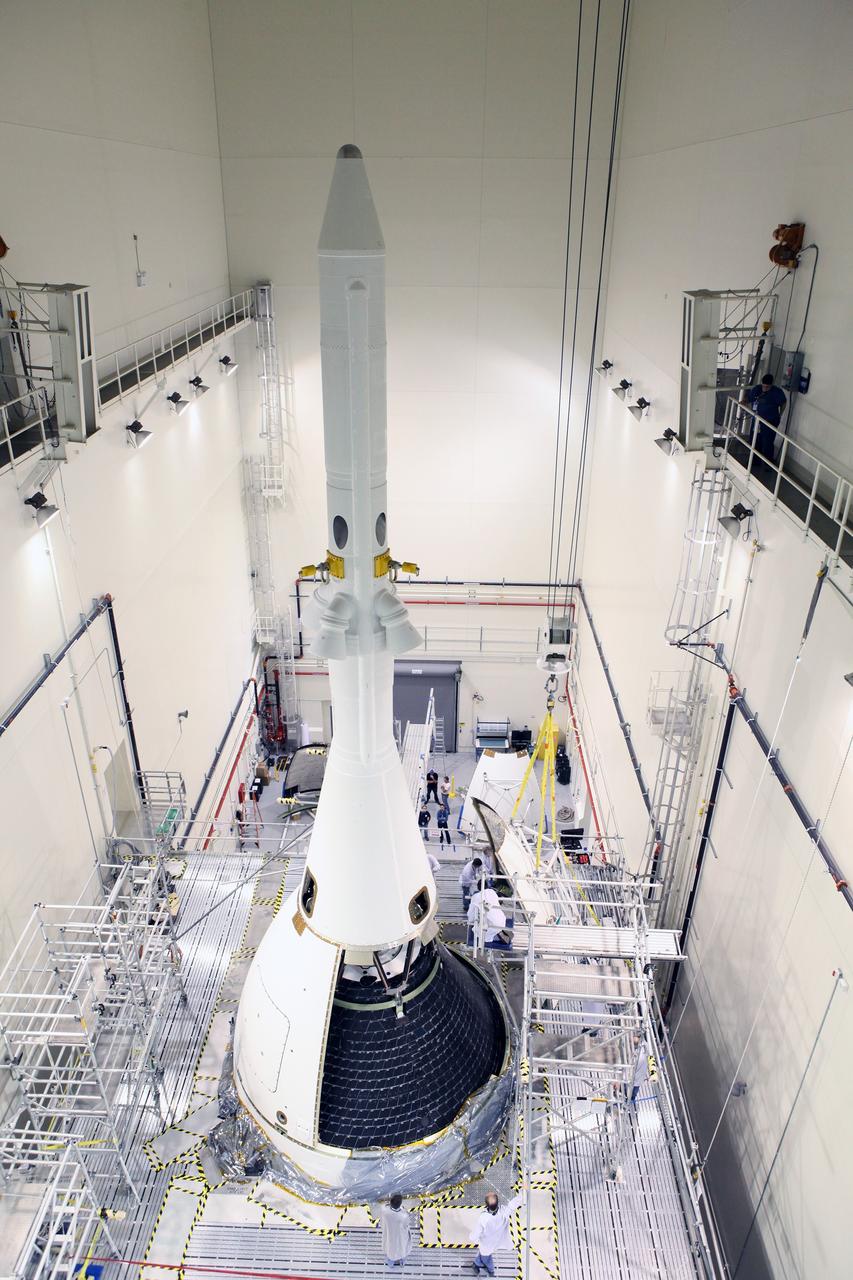
CAPE CANAVERAL, Fla. – Installation of four Ogive panels on Orion's Launch Abort System continues inside the Launch Abort System Facility at NASA’s Kennedy Space Center in Florida. The panels will smooth the airflow over the conical spacecraft to limit sound and vibration, which will make for a much smoother ride for the astronauts who will ride inside Orion in the future. The work marked the final major assembly steps for the spacecraft before it is transported to Space Launch Complex 37 at Cape Canaveral Air Force Station in November. Orion is the exploration spacecraft designed to carry astronauts to destinations not yet explored by humans, including an asteroid and Mars. It will have emergency abort capability, sustain the crew during space travel and provide safe re-entry from deep space return velocities. The first unpiloted flight test of Orion is scheduled to launch in December 2014 atop a United Launch Alliance Delta IV Heavy rocket, and in 2018 on NASA’s Space Launch System rocket. For more information, visit www.nasa.gov/orion. Photo credit: Daniel Casper
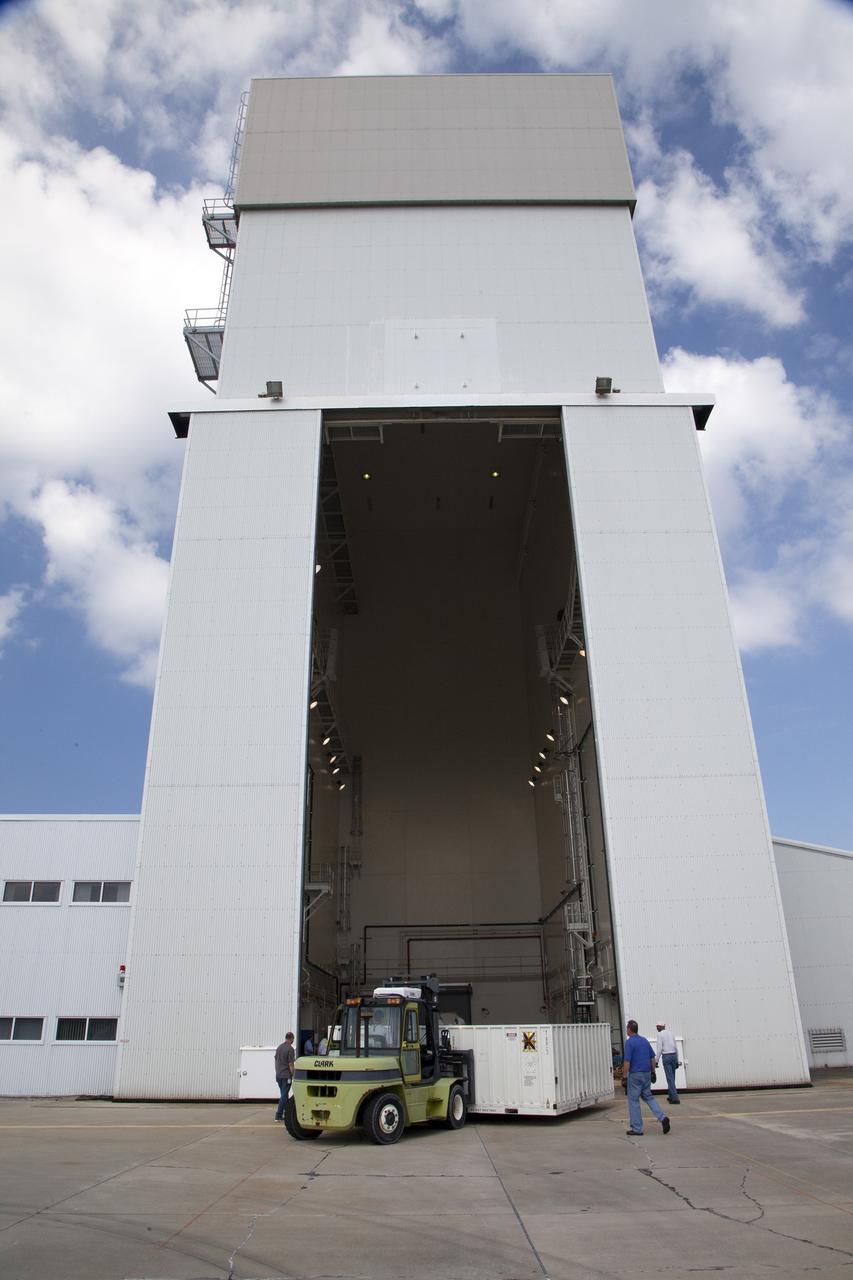
CAPE CANAVERAL, Fla. - Containers carrying the first set of Ogive panels for the Orion Launch Abort System aretransferred into the Launch Abort System Facility at NASA’s Kennedy Space Center in Florida. During processing, the Ogive panels will enclose and protect the Orion spacecraft and attach to the Launch Abort System. Orion is the exploration spacecraft designed to carry astronauts to destinations not yet explored by humans, including an asteroid and Mars. It will have emergency abort capability, sustain the crew during space travel and provide safe re-entry from deep space return velocities. The first unpiloted test flight of Orion is scheduled to launch in 2014 atop a Delta IV rocket and in 2017 on NASA’s Space Launch System rocket. For more information, visit www.nasa.gov/orion. Photo credit: Daniel Casper
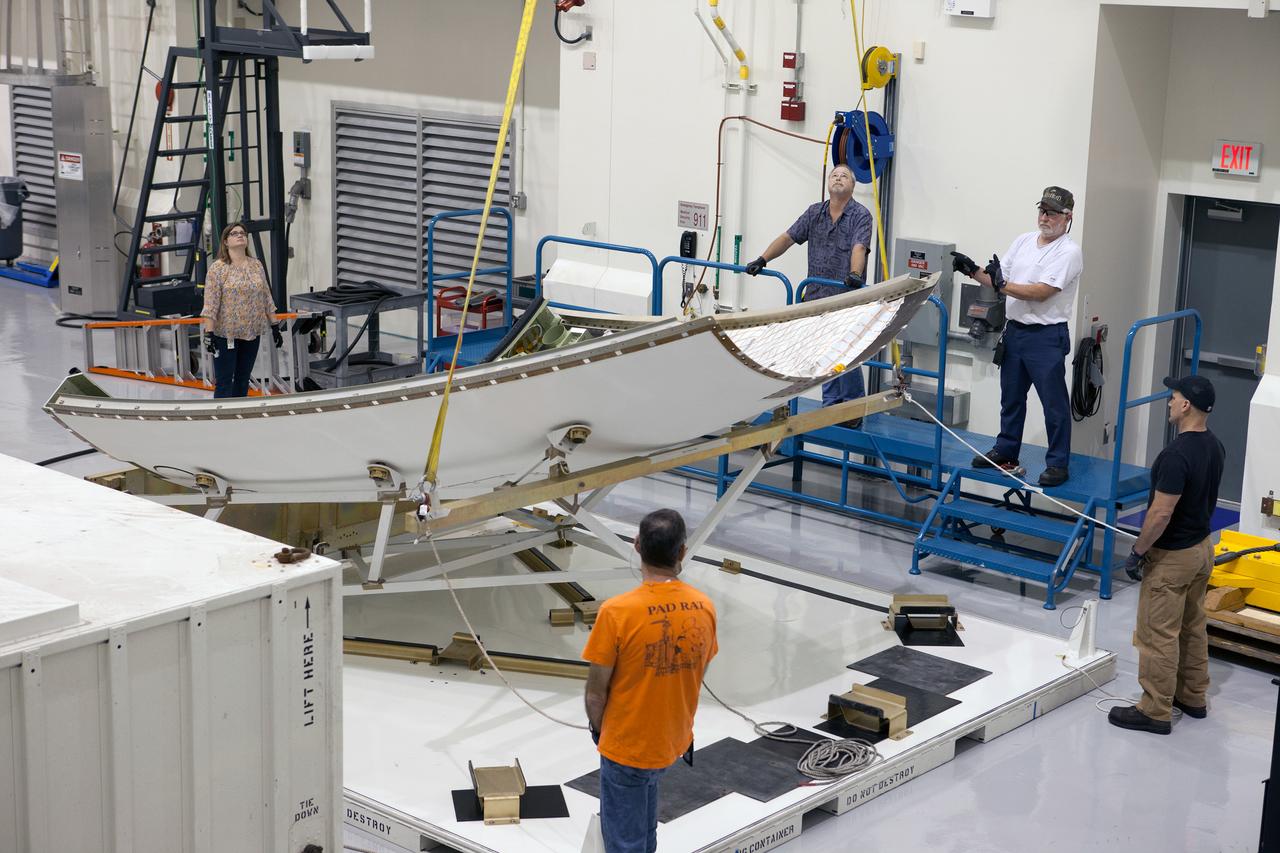
The launch abort system ogive panels are prepared for installation onto the Orion Exploration Flight Test-1 (EFT-1) launch abort system in the Launch Abort System Facility (LASF) at Kennedy Space Center on April 16, 2014. Part of Batch image transfer from Flickr.
The launch abort system ogive panels are prepared for installation onto the Orion Exploration Flight Test-1 (EFT-1) launch abort system in the Launch Abort System Facility (LASF) at Kennedy Space Center on April 16, 2014. Part of Batch image transfer from Flickr.
The launch abort system ogive panels are prepared for installation onto the Orion Exploration Flight Test-1 (EFT-1) launch abort system in the Launch Abort System Facility (LASF) at Kennedy Space Center on April 16, 2014. Part of Batch image transfer from Flickr.

The launch abort system ogive panels are prepared for installation onto the Orion Exploration Flight Test-1 (EFT-1) launch abort system in the Launch Abort System Facility (LASF) at Kennedy Space Center on April 16, 2014. Part of Batch image transfer from Flickr.

The launch abort system ogive panels are prepared for installation onto the Orion Exploration Flight Test-1 (EFT-1) launch abort system in the Launch Abort System Facility (LASF) at Kennedy Space Center on April 16, 2014. Part of Batch image transfer from Flickr.

The launch abort system ogive panels are prepared for installation onto the Orion Exploration Flight Test-1 (EFT-1) launch abort system in the Launch Abort System Facility (LASF) at Kennedy Space Center on April 16, 2014. Part of Batch image transfer from Flickr.
The launch abort system ogive panels are prepared for installation onto the Orion Exploration Flight Test-1 (EFT-1) launch abort system in the Launch Abort System Facility (LASF) at Kennedy Space Center on April 16, 2014. Part of Batch image transfer from Flickr.
The launch abort system ogive panels are prepared for installation onto the Orion Exploration Flight Test-1 (EFT-1) launch abort system in the Launch Abort System Facility (LASF) at Kennedy Space Center on April 16, 2014. Part of Batch image transfer from Flickr.
The launch abort system ogive panels are prepared for installation onto the Orion Exploration Flight Test-1 (EFT-1) launch abort system in the Launch Abort System Facility (LASF) at Kennedy Space Center on April 16, 2014. Part of Batch image transfer from Flickr.
The launch abort system ogive panels are prepared for installation onto the Orion Exploration Flight Test-1 (EFT-1) launch abort system in the Launch Abort System Facility (LASF) at Kennedy Space Center on April 16, 2014. Part of Batch image transfer from Flickr.
The launch abort system ogive panels are prepared for installation onto the Orion Exploration Flight Test-1 (EFT-1) launch abort system in the Launch Abort System Facility (LASF) at Kennedy Space Center on April 16, 2014. Part of Batch image transfer from Flickr.

The launch abort system ogive panels are prepared for installation onto the Orion Exploration Flight Test-1 (EFT-1) launch abort system in the Launch Abort System Facility (LASF) at Kennedy Space Center on April 16, 2014. Part of Batch image transfer from Flickr.

The launch abort system ogive panels are prepared for installation onto the Orion Exploration Flight Test-1 (EFT-1) launch abort system in the Launch Abort System Facility (LASF) at Kennedy Space Center on April 16, 2014. Part of Batch image transfer from Flickr.
The launch abort system ogive panels are prepared for installation onto the Orion Exploration Flight Test-1 (EFT-1) launch abort system in the Launch Abort System Facility (LASF) at Kennedy Space Center on April 16, 2014. Part of Batch image transfer from Flickr.

The launch abort system ogive panels are prepared for installation onto the Orion Exploration Flight Test-1 (EFT-1) launch abort system in the Launch Abort System Facility (LASF) at Kennedy Space Center on April 16, 2014. Part of Batch image transfer from Flickr.

The launch abort system ogive panels are prepared for installation onto the Orion Exploration Flight Test-1 (EFT-1) launch abort system in the Launch Abort System Facility (LASF) at Kennedy Space Center on April 16, 2014. Part of Batch image transfer from Flickr.
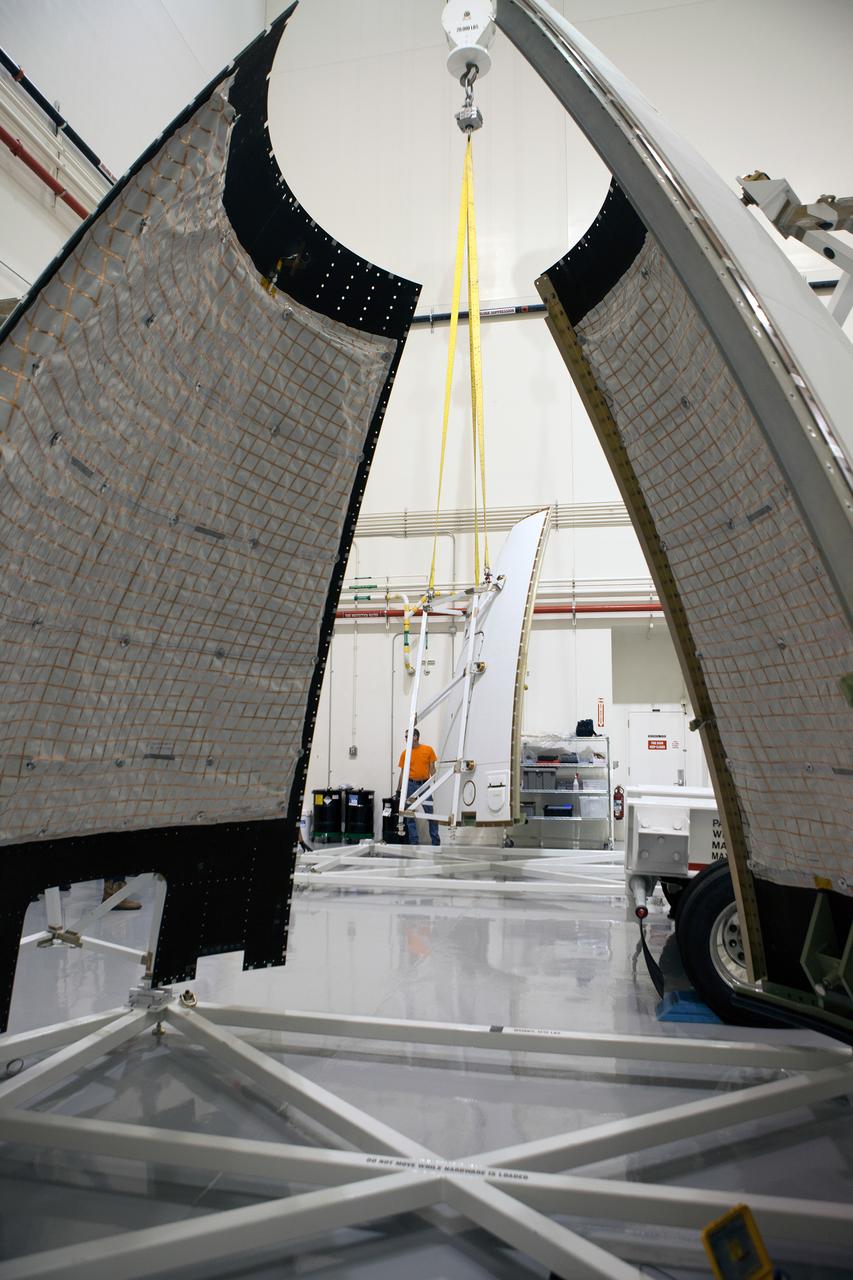
The launch abort system ogive panels are prepared for installation onto the Orion Exploration Flight Test-1 (EFT-1) launch abort system in the Launch Abort System Facility (LASF) at Kennedy Space Center on April 16, 2014. Part of Batch image transfer from Flickr.

The launch abort system ogive panels are prepared for installation onto the Orion Exploration Flight Test-1 (EFT-1) launch abort system in the Launch Abort System Facility (LASF) at Kennedy Space Center on April 16, 2014. Part of Batch image transfer from Flickr.
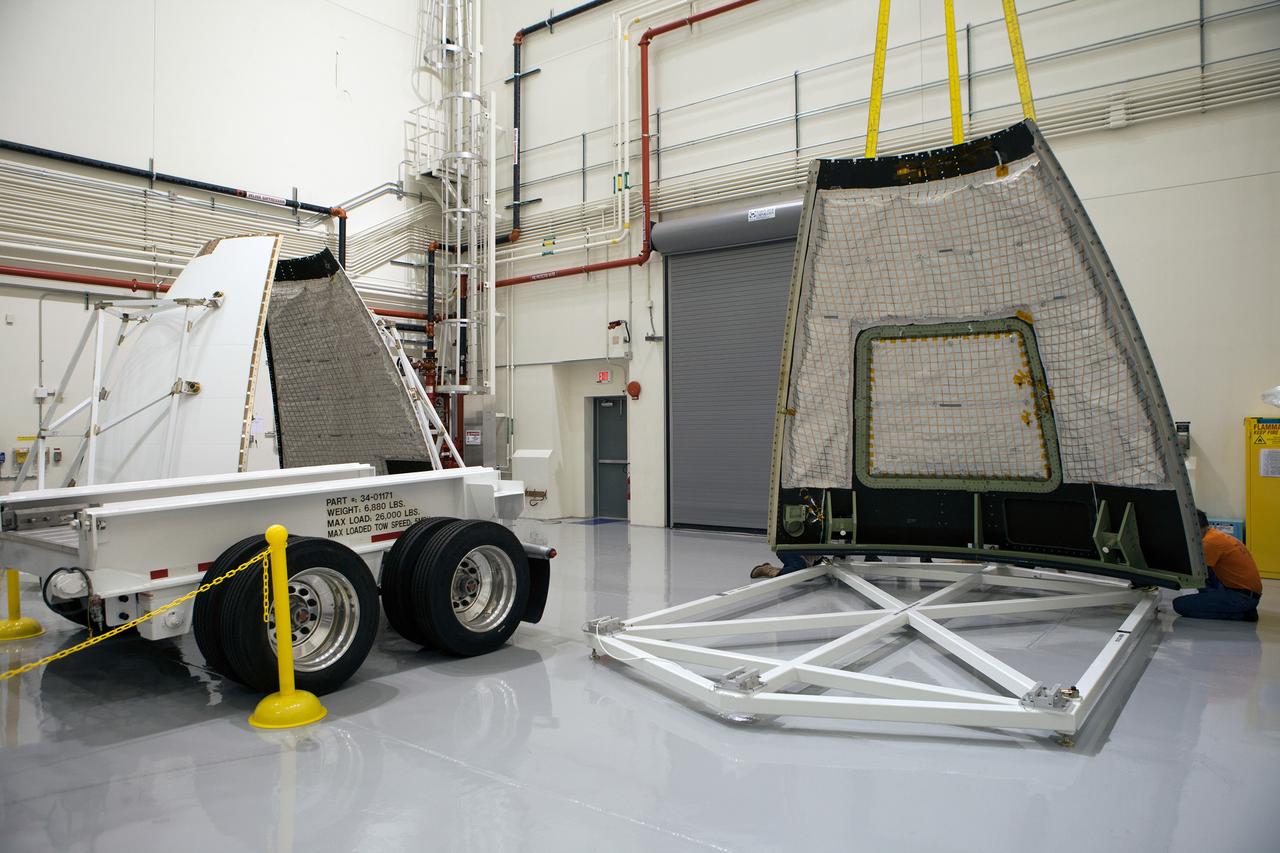
The launch abort system ogive panels are prepared for installation onto the Orion Exploration Flight Test-1 (EFT-1) launch abort system in the Launch Abort System Facility (LASF) at Kennedy Space Center on April 16, 2014. Part of Batch image transfer from Flickr.
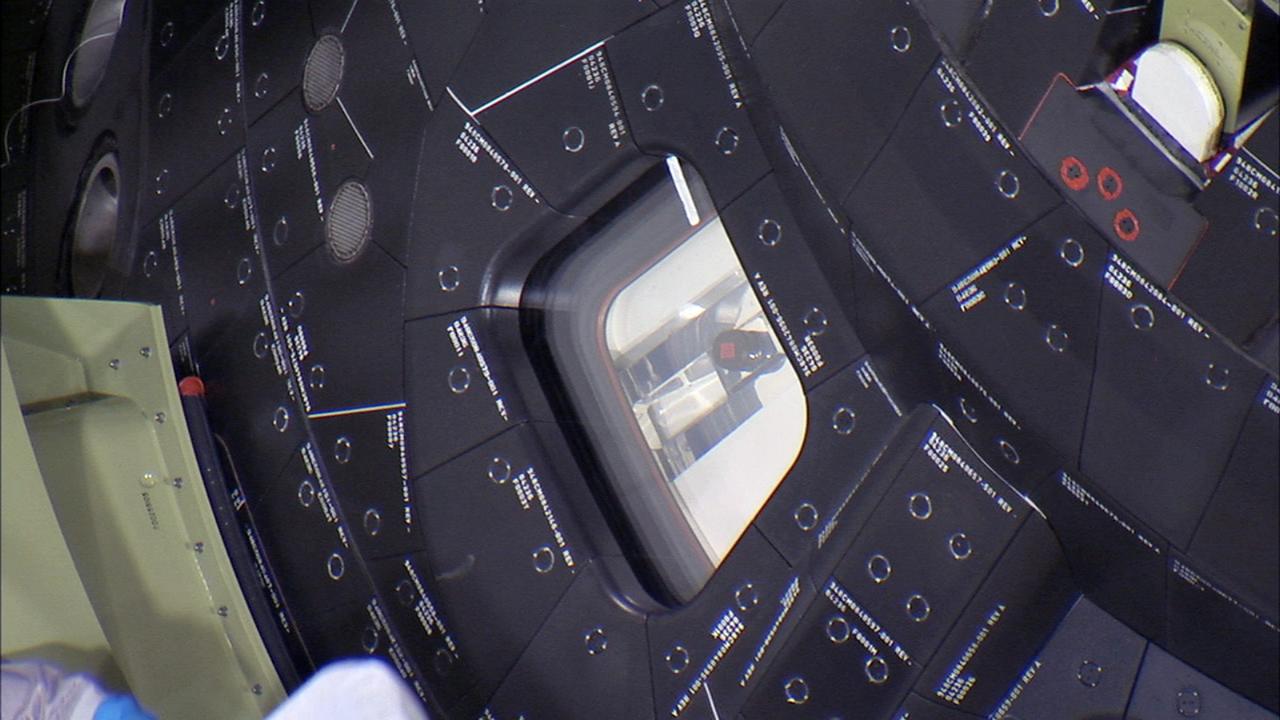
CAPE CANAVERAL, Fla. – Inside the Launch Abort System Facility at NASA’s Kennedy Space Center in Florida, a window cover has been carefully removed from the Orion spacecraft before the fourth and final Ogive panel is installed around the spacecraft and Launch Abort System. The Ogive panels will smooth the airflow over the conical spacecraft to limit sound and vibration, which will make for a much smoother ride for the astronauts who will ride inside Orion in the future. The work marked the final major assembly steps for the spacecraft before it is transported to Space Launch Complex 37 at Cape Canaveral Air Force Station in November. Orion is the exploration spacecraft designed to carry astronauts to destinations not yet explored by humans, including an asteroid and Mars. It will have emergency abort capability, sustain the crew during space travel and provide safe re-entry from deep space return velocities. The first unpiloted flight test of Orion is scheduled to launch in December 2014 atop a United Launch Alliance Delta IV Heavy rocket, and in 2018 on NASA’s Space Launch System rocket. For more information, visit www.nasa.gov/orion. Photo credit: Ben Smegelsky

CAPE CANAVERAL, Fla. – Inside the Launch Abort System Facility at NASA's Kennedy Space Center in Florida, preparations are underway to remove the window covers on Orion before the fourth and final Ogive panel is installed around the spacecraft and Launch Abort System. The Ogive panels will smooth the airflow over the conical spacecraft to limit sound and vibration, which will make for a much smoother ride for the astronauts who will ride inside Orion in the future. The work marked the final major assembly steps for the spacecraft before it is transported to Space Launch Complex 37 at Cape Canaveral Air Force Station in November. Orion is the exploration spacecraft designed to carry astronauts to destinations not yet explored by humans, including an asteroid and Mars. It will have emergency abort capability, sustain the crew during space travel and provide safe re-entry from deep space return velocities. The first unpiloted flight test of Orion is scheduled to launch in December 2014 atop a United Launch Alliance Delta IV Heavy rocket, and in 2018 on NASA’s Space Launch System rocket. For more information, visit www.nasa.gov/orion. Photo credit: Ben Smegelsky
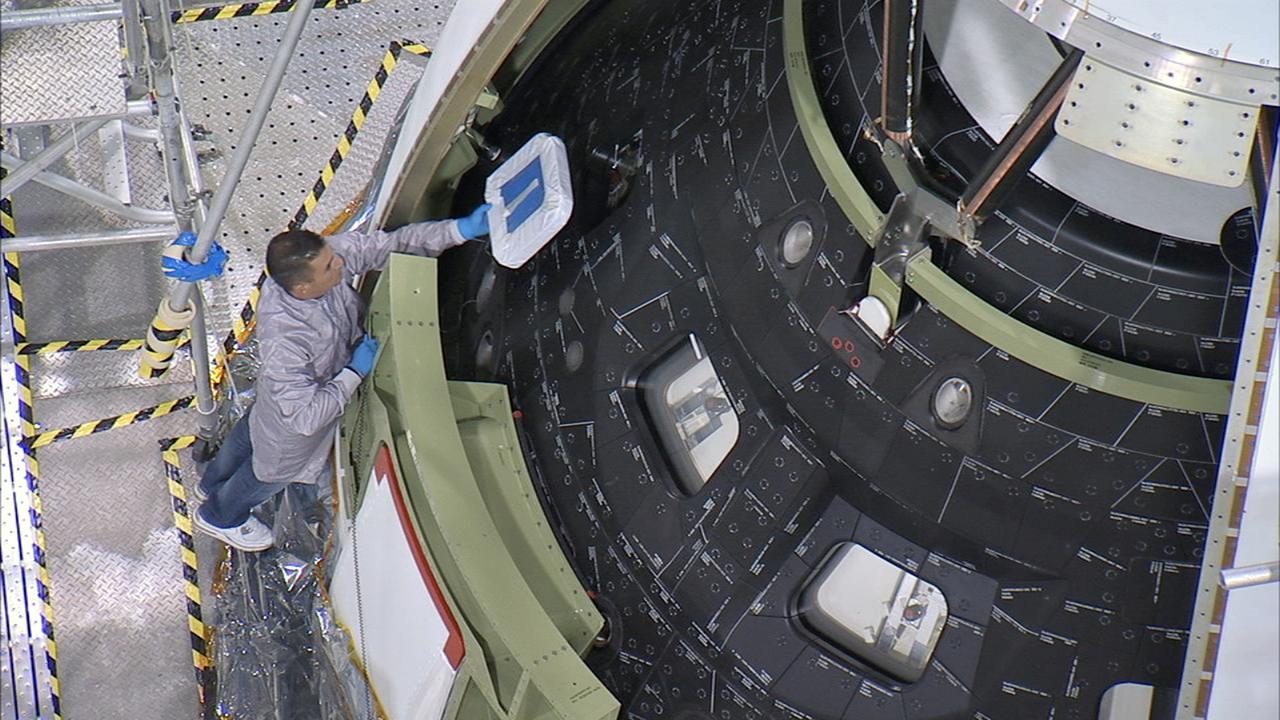
CAPE CANAVERAL, Fla. – Inside the Launch Abort System Facility at NASA's Kennedy Space Center in Florida, a technician on a work platform carefully removes the window covers on Orion before the fourth and final Ogive panel is installed around the spacecraft and Launch Abort System. The Ogive panels will smooth the airflow over the conical spacecraft to limit sound and vibration, which will make for a much smoother ride for the astronauts who will ride inside Orion in the future. The work marked the final major assembly steps for the spacecraft before it is transported to Space Launch Complex 37 at Cape Canaveral Air Force Station in November. Orion is the exploration spacecraft designed to carry astronauts to destinations not yet explored by humans, including an asteroid and Mars. It will have emergency abort capability, sustain the crew during space travel and provide safe re-entry from deep space return velocities. The first unpiloted flight test of Orion is scheduled to launch in December 2014 atop a United Launch Alliance Delta IV Heavy rocket, and in 2018 on NASA’s Space Launch System rocket. For more information, visit www.nasa.gov/orion. Photo credit: Ben Smegelsky
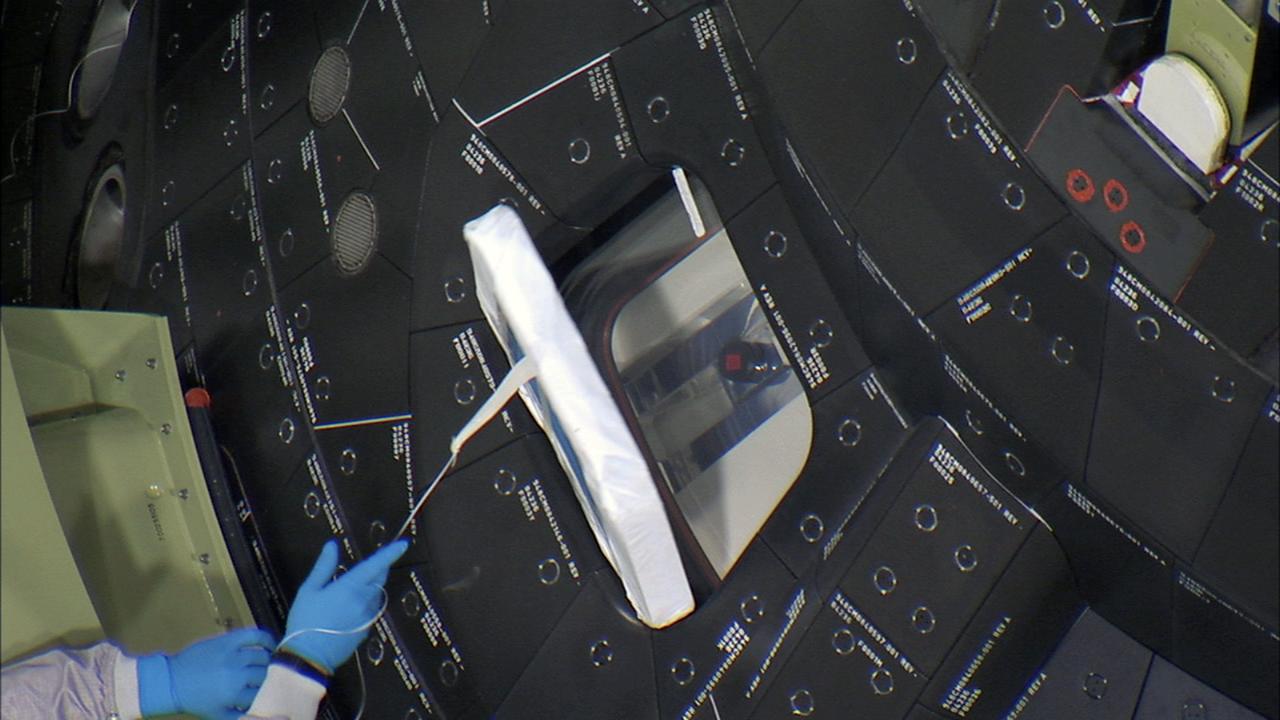
CAPE CANAVERAL, Fla. – Inside the Launch Abort System Facility at NASA's Kennedy Space Center in Florida, a technician carefully removes the window covers on Orion before the fourth and final Ogive panel is installed around the spacecraft and Launch Abort System. The Ogive panels will smooth the airflow over the conical spacecraft to limit sound and vibration, which will make for a much smoother ride for the astronauts who will ride inside Orion in the future. The work marked the final major assembly steps for the spacecraft before it is transported to Space Launch Complex 37 at Cape Canaveral Air Force Station in November. Orion is the exploration spacecraft designed to carry astronauts to destinations not yet explored by humans, including an asteroid and Mars. It will have emergency abort capability, sustain the crew during space travel and provide safe re-entry from deep space return velocities. The first unpiloted flight test of Orion is scheduled to launch in December 2014 atop a United Launch Alliance Delta IV Heavy rocket, and in 2018 on NASA’s Space Launch System rocket. For more information, visit www.nasa.gov/orion. Photo credit: Ben Smegelsky
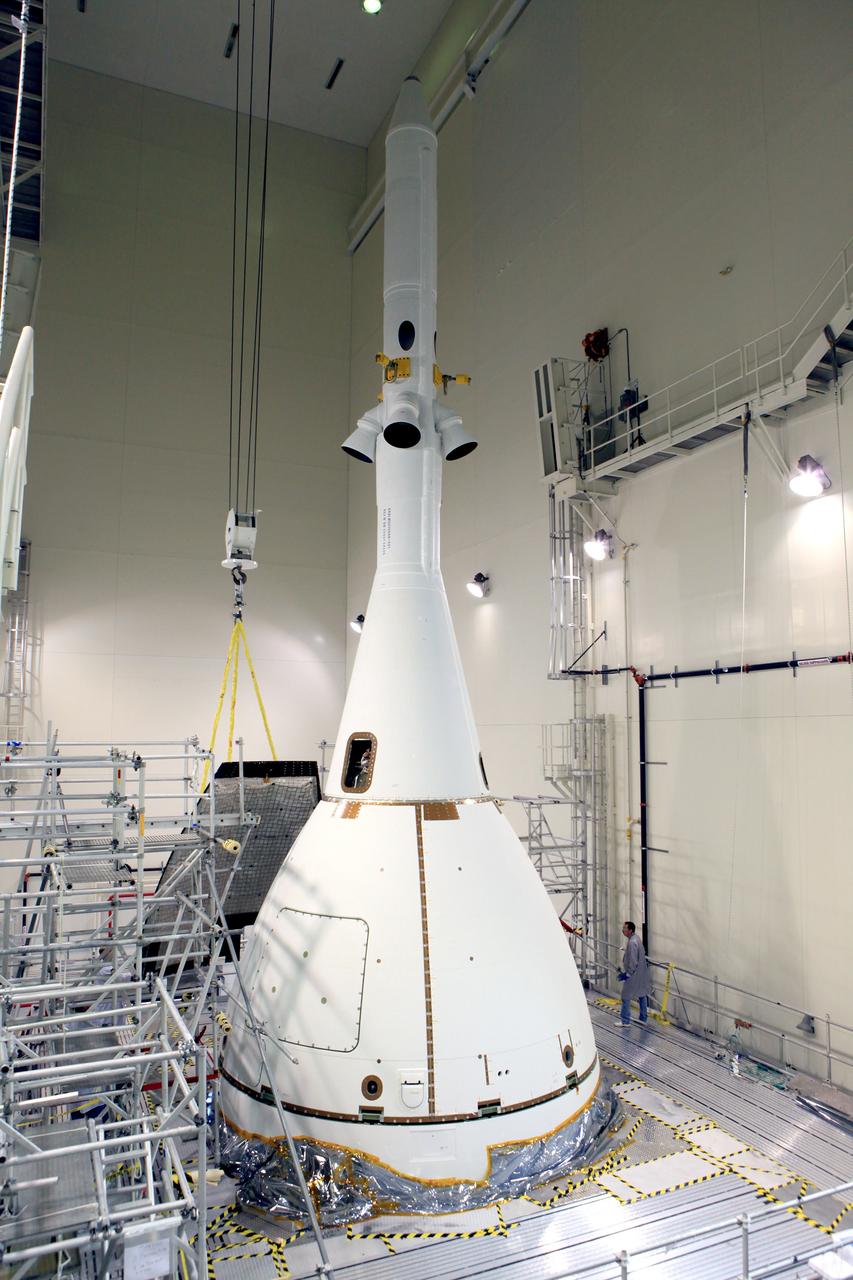
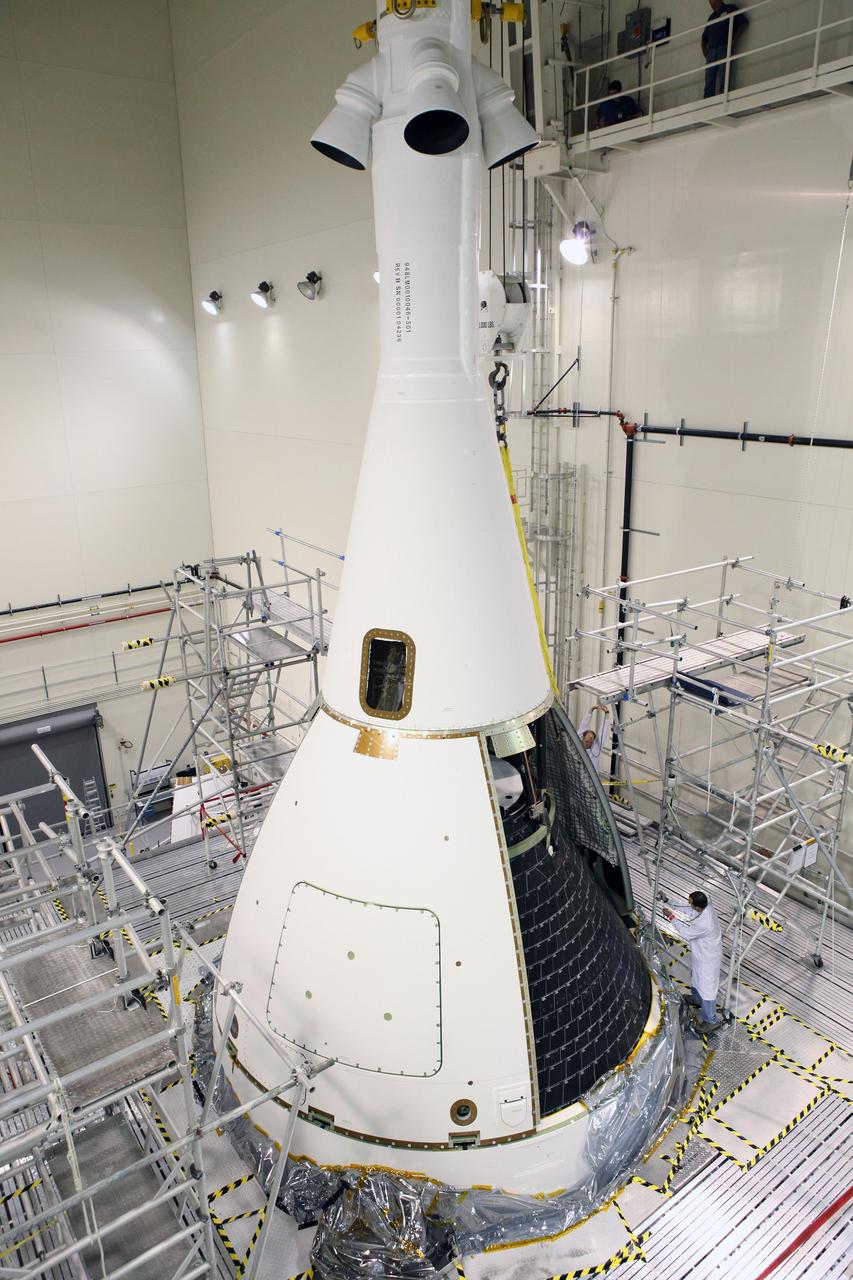
The last major assembly operation to prepare Orion for Exploration Flight Test-1 (EFT-1) is completed in the Launch Abort System Facility (LASF) at Kennedy Space Center on Oct. 11, 2014. The ogive panels, which protect the crew module from sound and vibration during ascent, were installed around the spacecraft just below the launch abort system tower. Part of Batch image transfer from Flickr.
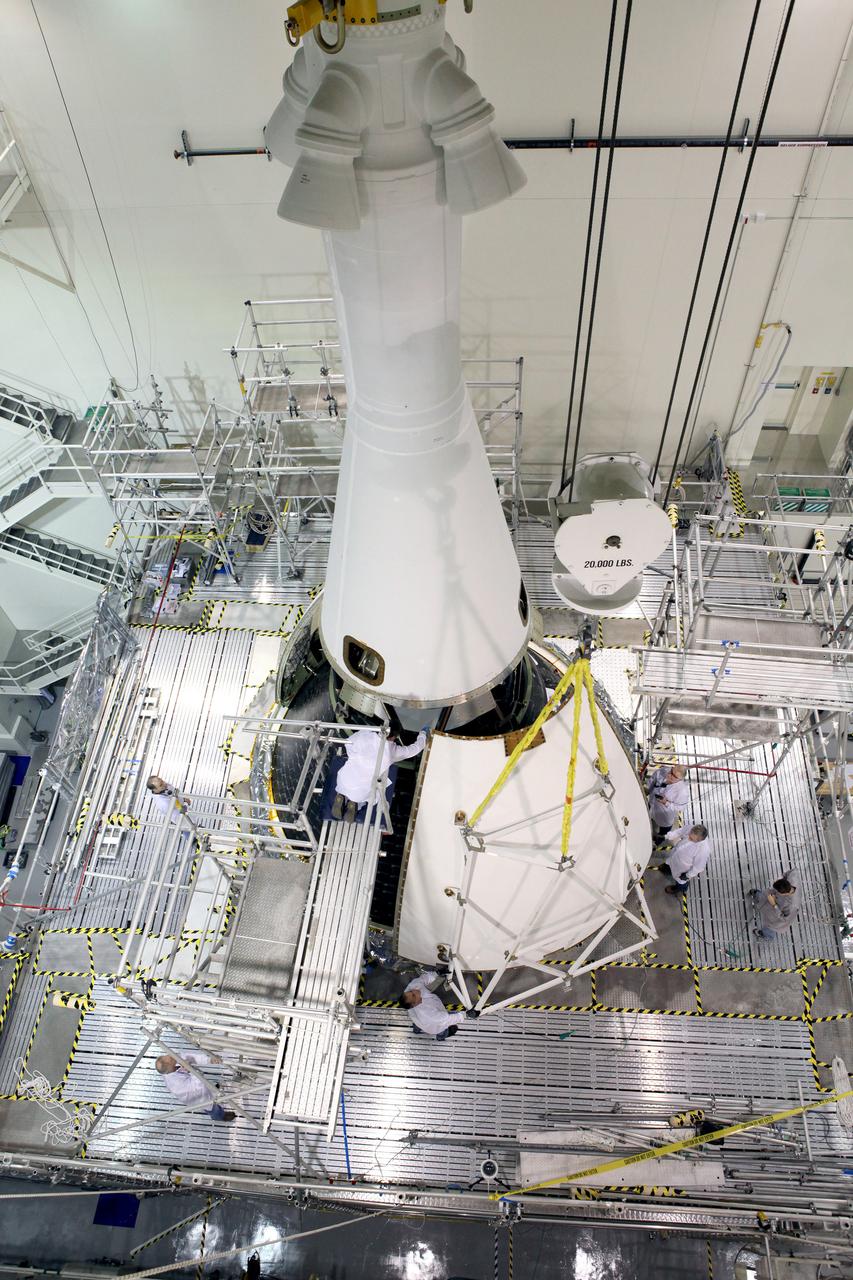
The last major assembly operation to prepare Orion for Exploration Flight Test-1 (EFT-1) is completed in the Launch Abort System Facility (LASF) at Kennedy Space Center on Oct. 11, 2014. The ogive panels, which protect the crew module from sound and vibration during ascent, were installed around the spacecraft just below the launch abort system tower. Part of Batch image transfer from Flickr.
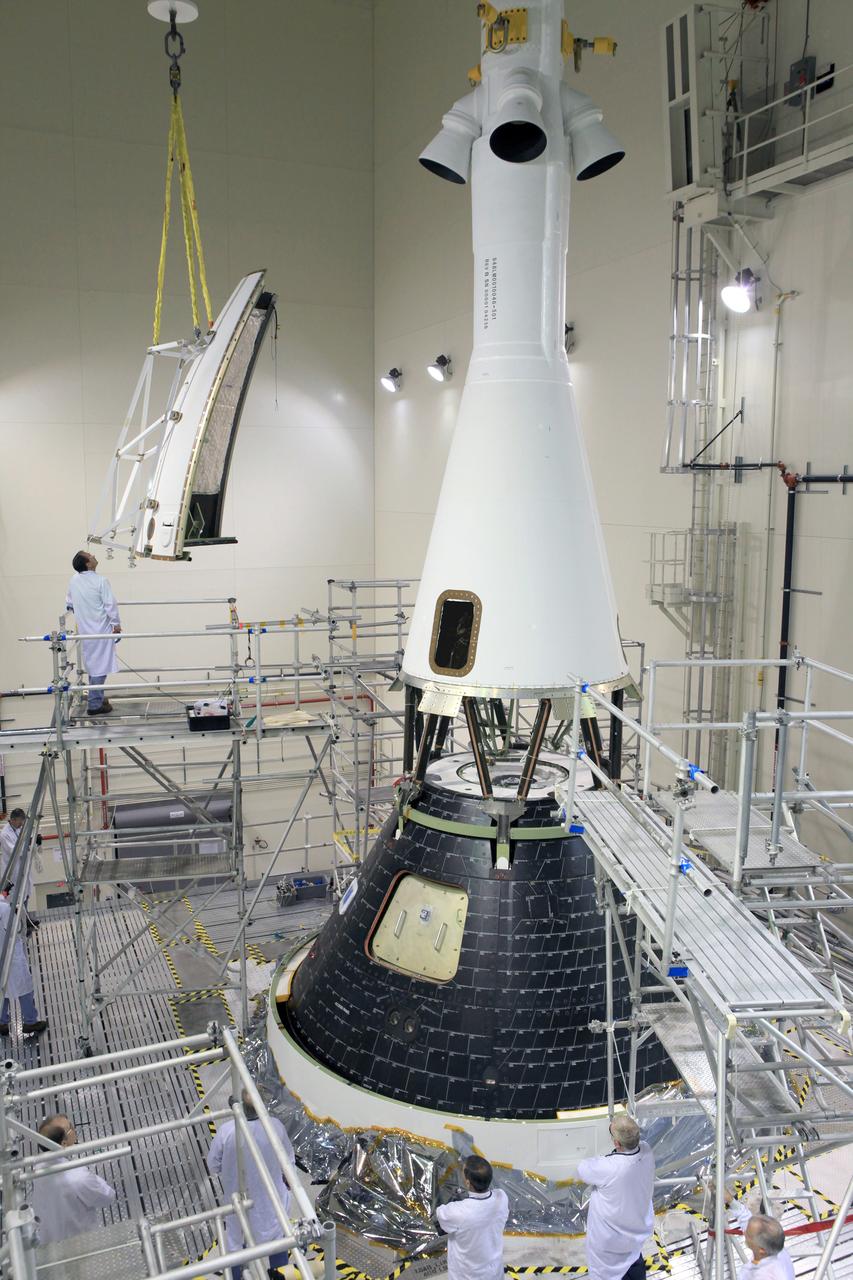
The last major assembly operation to prepare Orion for Exploration Flight Test-1 (EFT-1) is completed in the Launch Abort System Facility (LASF) at Kennedy Space Center on Oct. 11, 2014. The ogive panels, which protect the crew module from sound and vibration during ascent, were installed around the spacecraft just below the launch abort system tower. Part of Batch image transfer from Flickr.
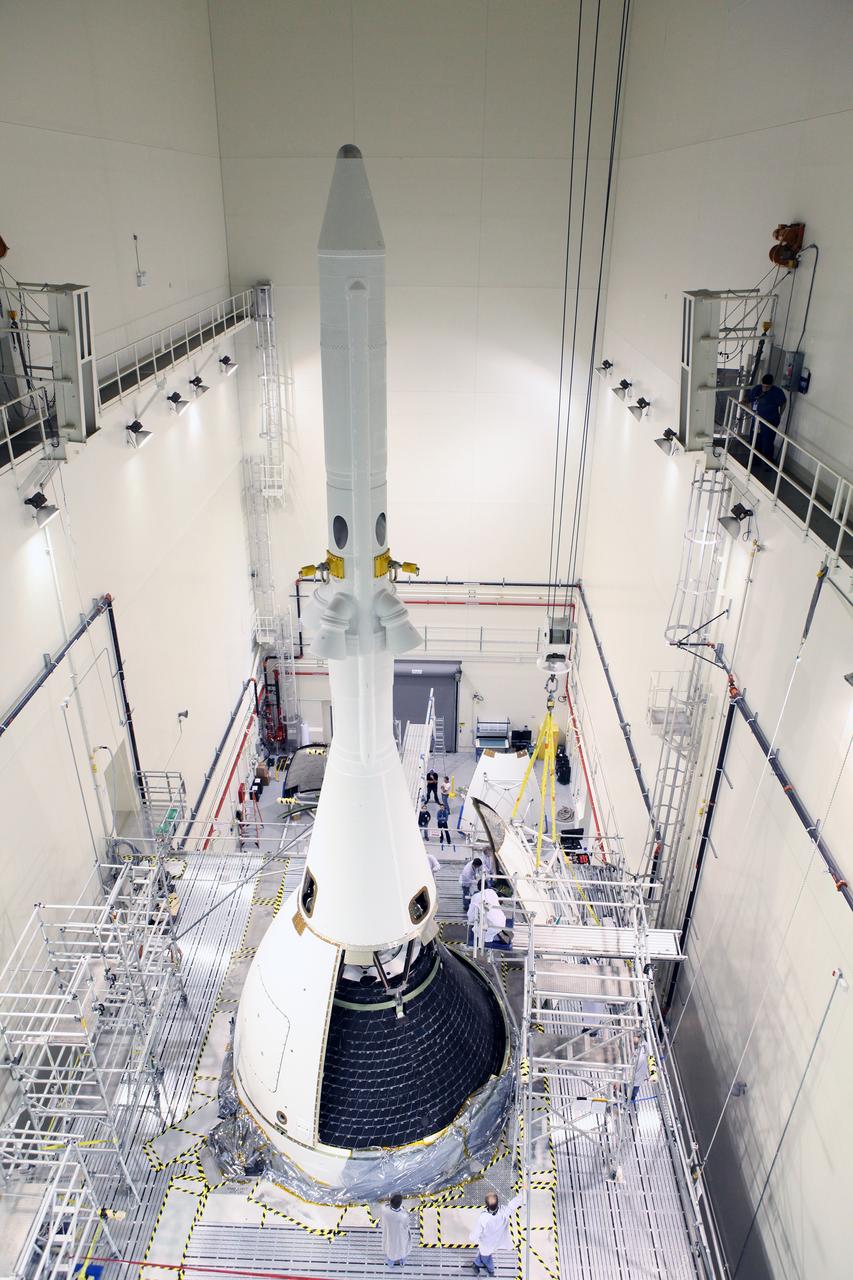
The last major assembly operation to prepare Orion for Exploration Flight Test-1 (EFT-1) is completed in the Launch Abort System Facility (LASF) at Kennedy Space Center on Oct. 11, 2014. The ogive panels, which protect the crew module from sound and vibration during ascent, were installed around the spacecraft just below the launch abort system tower. Part of Batch image transfer from Flickr.
The last major assembly operation to prepare Orion for Exploration Flight Test-1 (EFT-1) is completed in the Launch Abort System Facility (LASF) at Kennedy Space Center on Oct. 11, 2014. The ogive panels, which protect the crew module from sound and vibration during ascent, were installed around the spacecraft just below the launch abort system tower. Part of Batch image transfer from Flickr.

The last major assembly operation to prepare Orion for Exploration Flight Test-1 (EFT-1) is completed in the Launch Abort System Facility (LASF) at Kennedy Space Center on Oct. 11, 2014. The ogive panels, which protect the crew module from sound and vibration during ascent, were installed around the spacecraft just below the launch abort system tower. Part of Batch image transfer from Flickr.
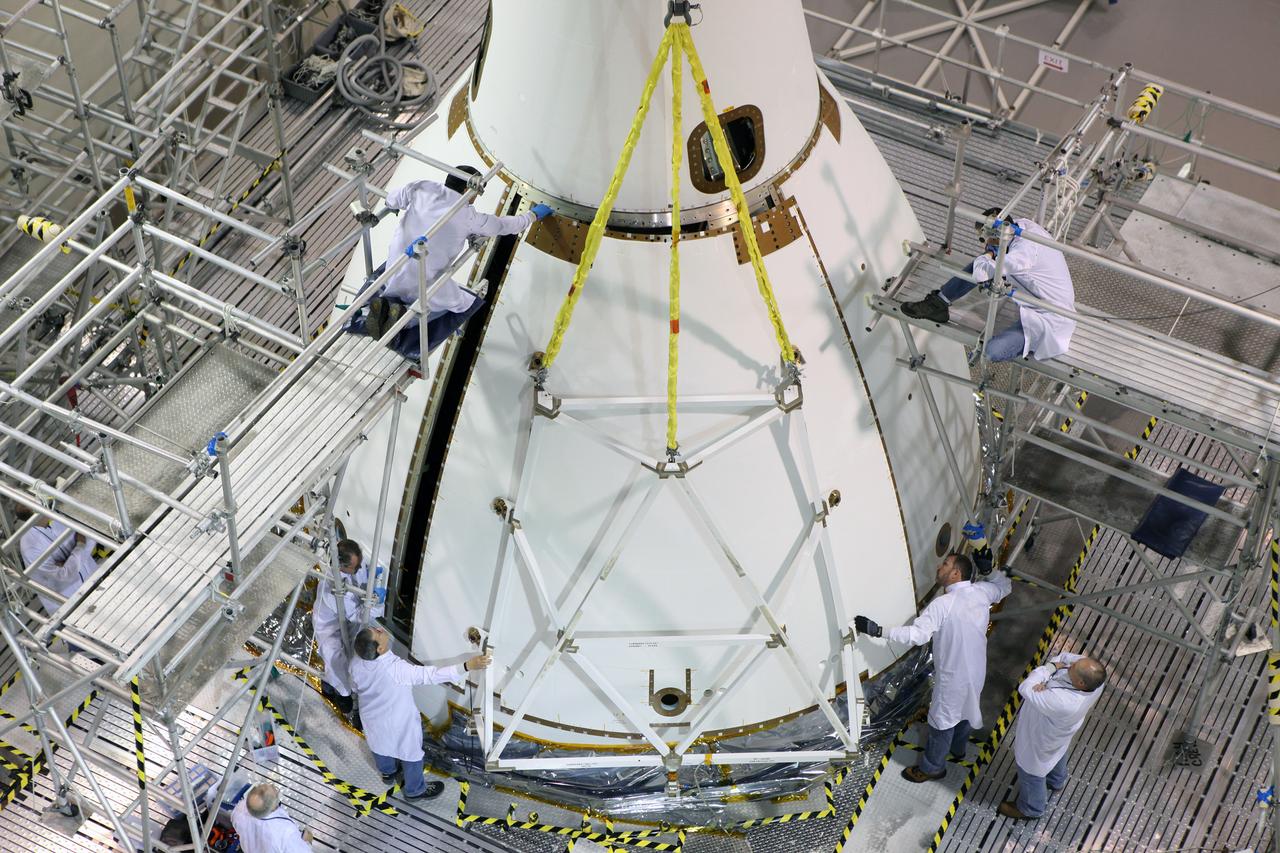
The last major assembly operation to prepare Orion for Exploration Flight Test-1 (EFT-1) is completed in the Launch Abort System Facility (LASF) at Kennedy Space Center on Oct. 11, 2014. The ogive panels, which protect the crew module from sound and vibration during ascent, were installed around the spacecraft just below the launch abort system tower. Part of Batch image transfer from Flickr.
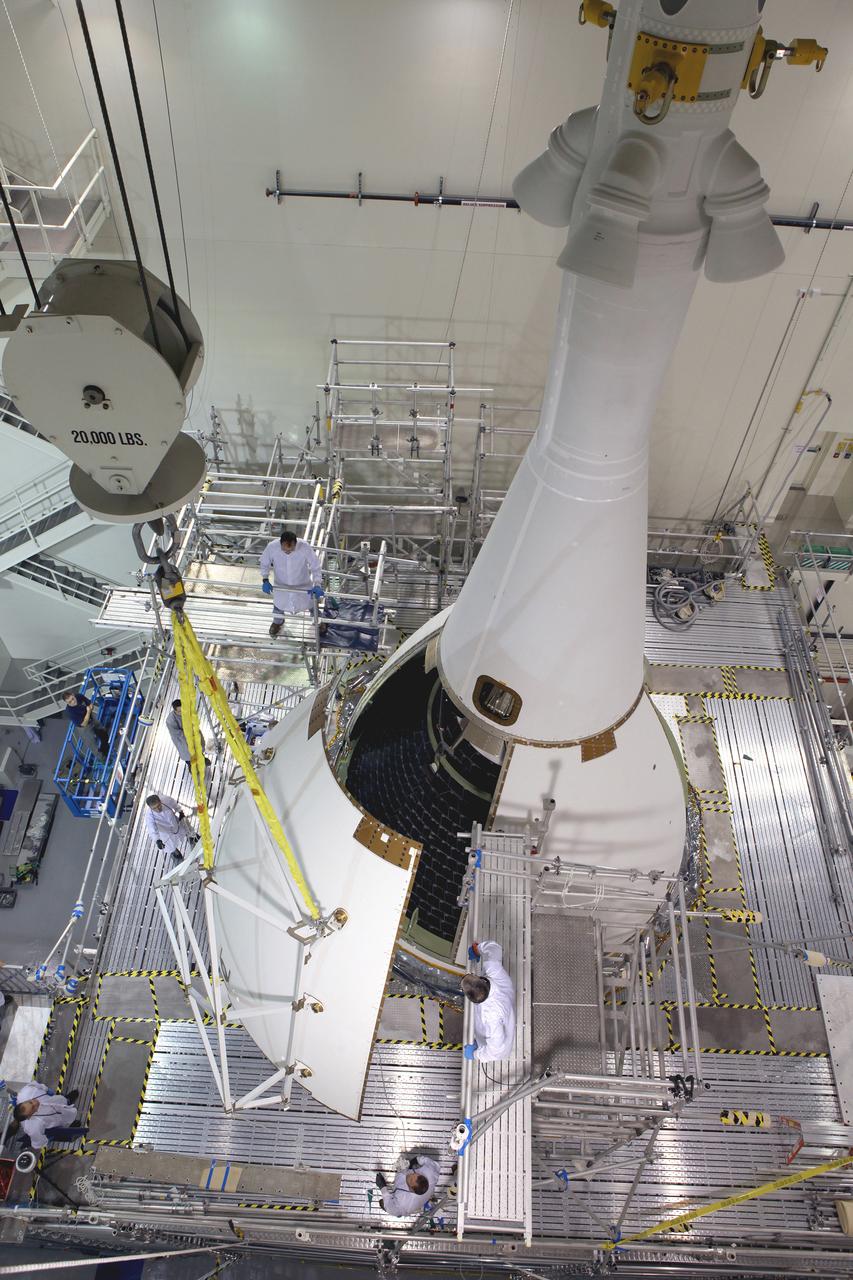
The last major assembly operation to prepare Orion for Exploration Flight Test-1 (EFT-1) is completed in the Launch Abort System Facility (LASF) at Kennedy Space Center on Oct. 11, 2014. The ogive panels, which protect the crew module from sound and vibration during ascent, were installed around the spacecraft just below the launch abort system tower. Part of Batch image transfer from Flickr.
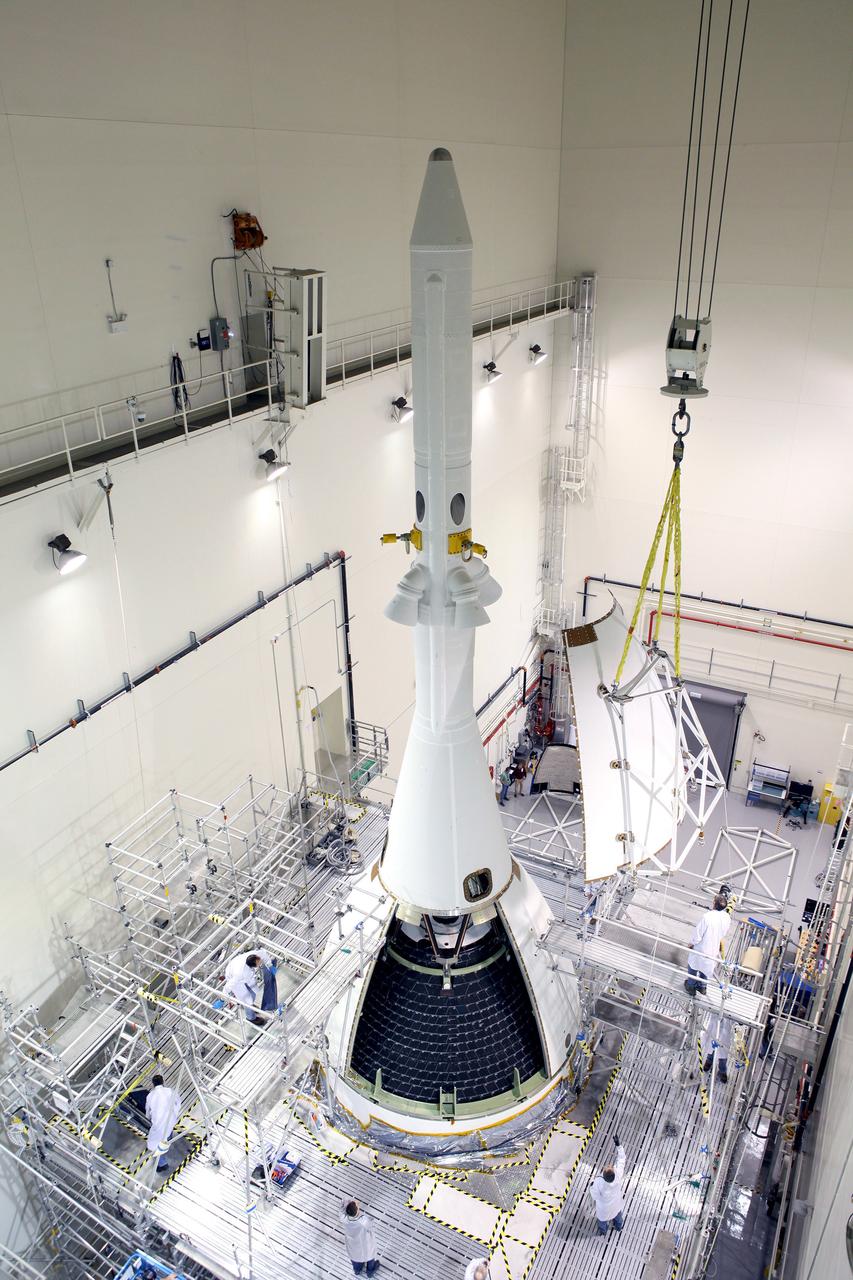
The last major assembly operation to prepare Orion for Exploration Flight Test-1 (EFT-1) is completed in the Launch Abort System Facility (LASF) at Kennedy Space Center on Oct. 11, 2014. The ogive panels, which protect the crew module from sound and vibration during ascent, were installed around the spacecraft just below the launch abort system tower. Part of Batch image transfer from Flickr.

The last major assembly operation to prepare Orion for Exploration Flight Test-1 (EFT-1) is completed in the Launch Abort System Facility (LASF) at Kennedy Space Center on Oct. 11, 2014. The ogive panels, which protect the crew module from sound and vibration during ascent, were installed around the spacecraft just below the launch abort system tower. Part of Batch image transfer from Flickr.

The last major assembly operation to prepare Orion for Exploration Flight Test-1 (EFT-1) is completed in the Launch Abort System Facility (LASF) at Kennedy Space Center on Oct. 11, 2014. The ogive panels, which protect the crew module from sound and vibration during ascent, were installed around the spacecraft just below the launch abort system tower. Part of Batch image transfer from Flickr.