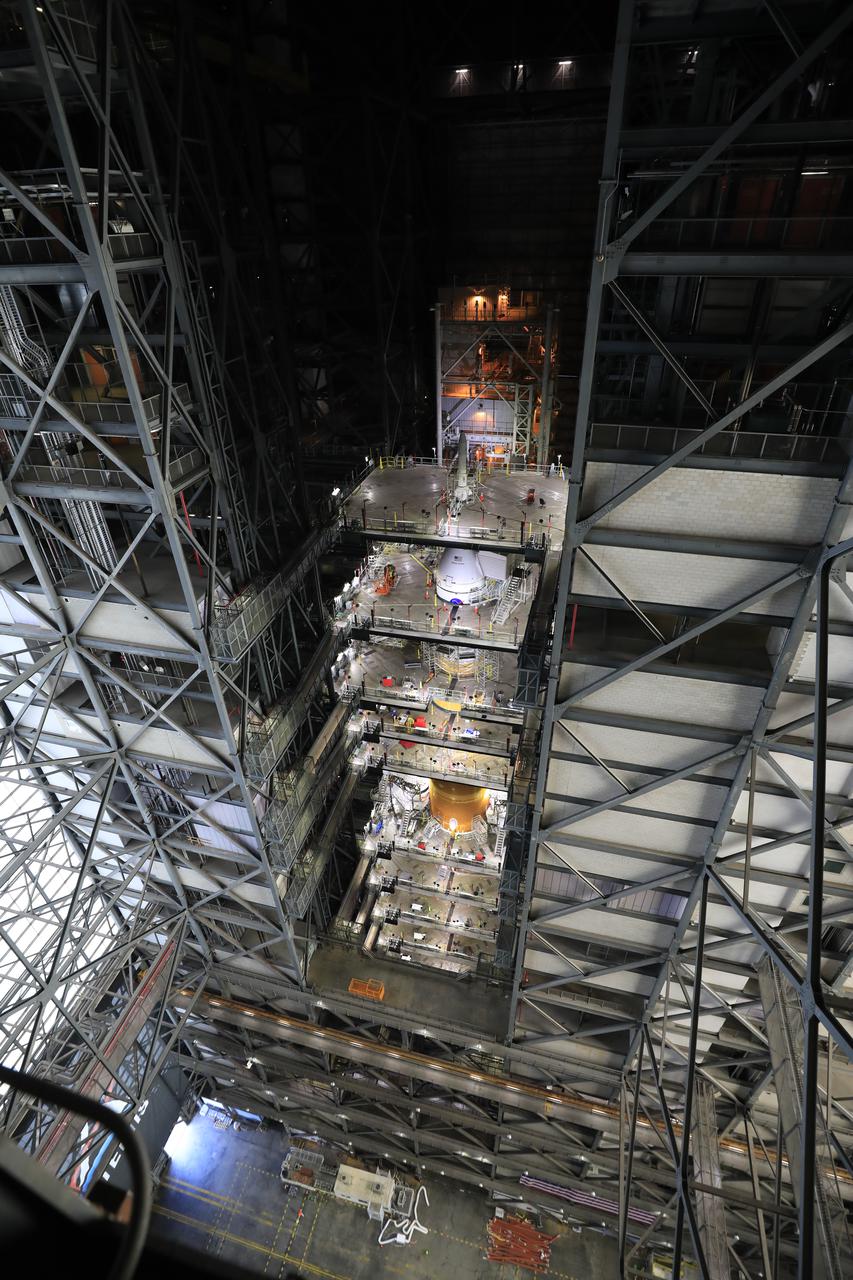
NASA’s massive Space Launch System (SLS) rocket for the agency’s Artemis I mission is shown fully stacked – with NASA’s Orion spacecraft atop – inside Kennedy Space Center’s Vehicle Assembly Building on Dec. 13, 2021. Artemis I is the inaugural launch of SLS and Orion as an integrated system. With Artemis missions, NASA will explore more of the lunar surface than ever before, using what we learn on and around the Moon to prepare for missions to Mars.
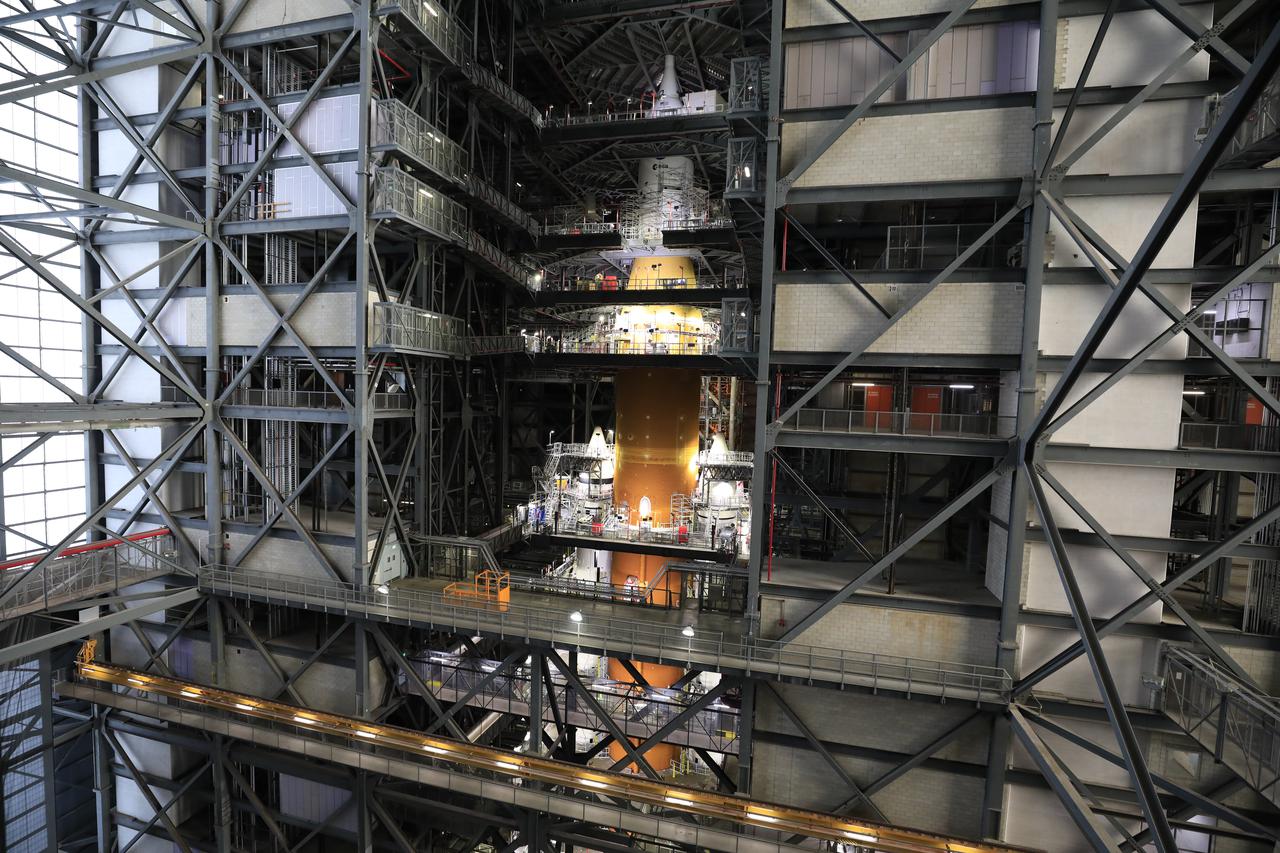
NASA’s massive Space Launch System (SLS) rocket for the agency’s Artemis I mission is shown fully stacked – with NASA’s Orion spacecraft atop – inside Kennedy Space Center’s Vehicle Assembly Building on Dec. 13, 2021. Artemis I is the inaugural launch of SLS and Orion as an integrated system. With Artemis missions, NASA will explore more of the lunar surface than ever before, using what we learn on and around the Moon to prepare for missions to Mars.
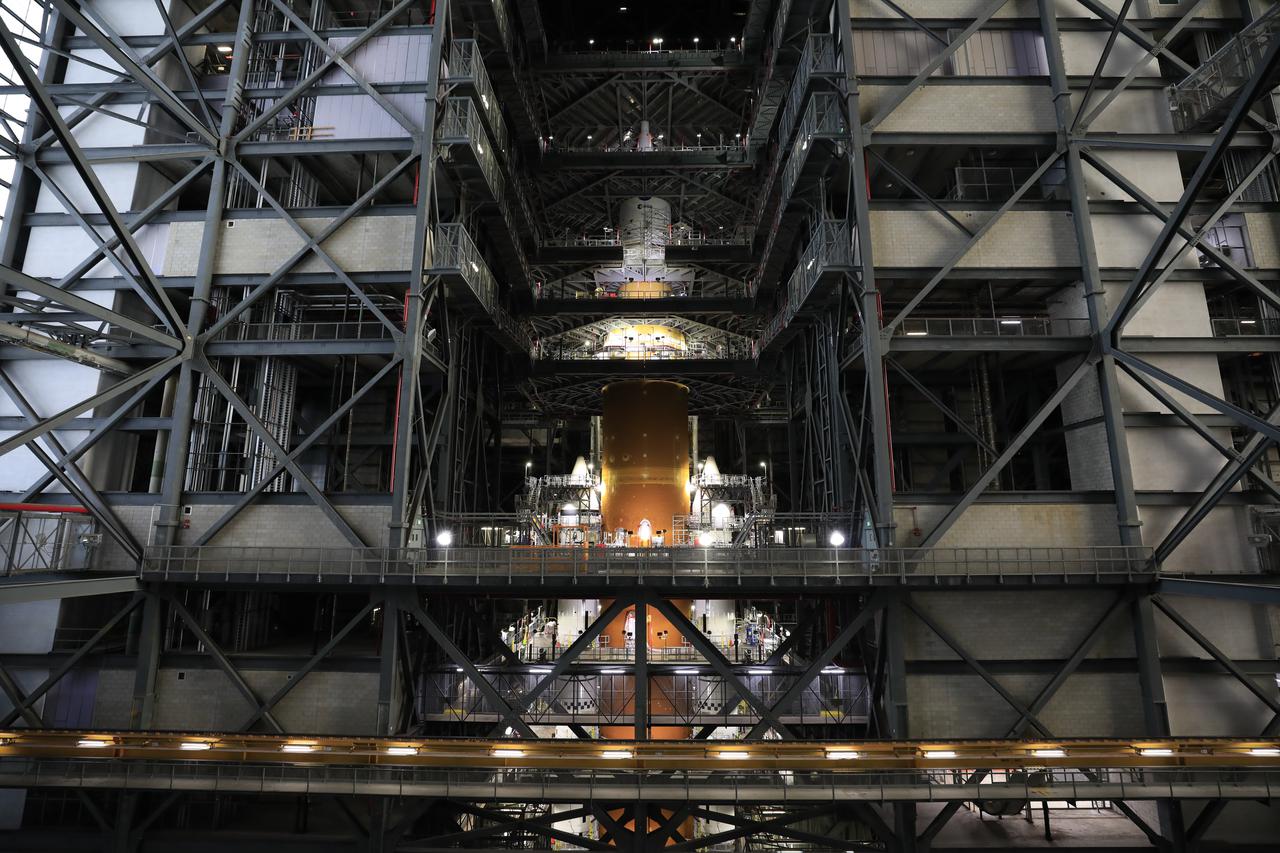
NASA’s massive Space Launch System (SLS) rocket for the agency’s Artemis I mission is shown fully stacked – with NASA’s Orion spacecraft atop – inside Kennedy Space Center’s Vehicle Assembly Building on Dec. 13, 2021. Artemis I is the inaugural launch of SLS and Orion as an integrated system. With Artemis missions, NASA will explore more of the lunar surface than ever before, using what we learn on and around the Moon to prepare for missions to Mars.
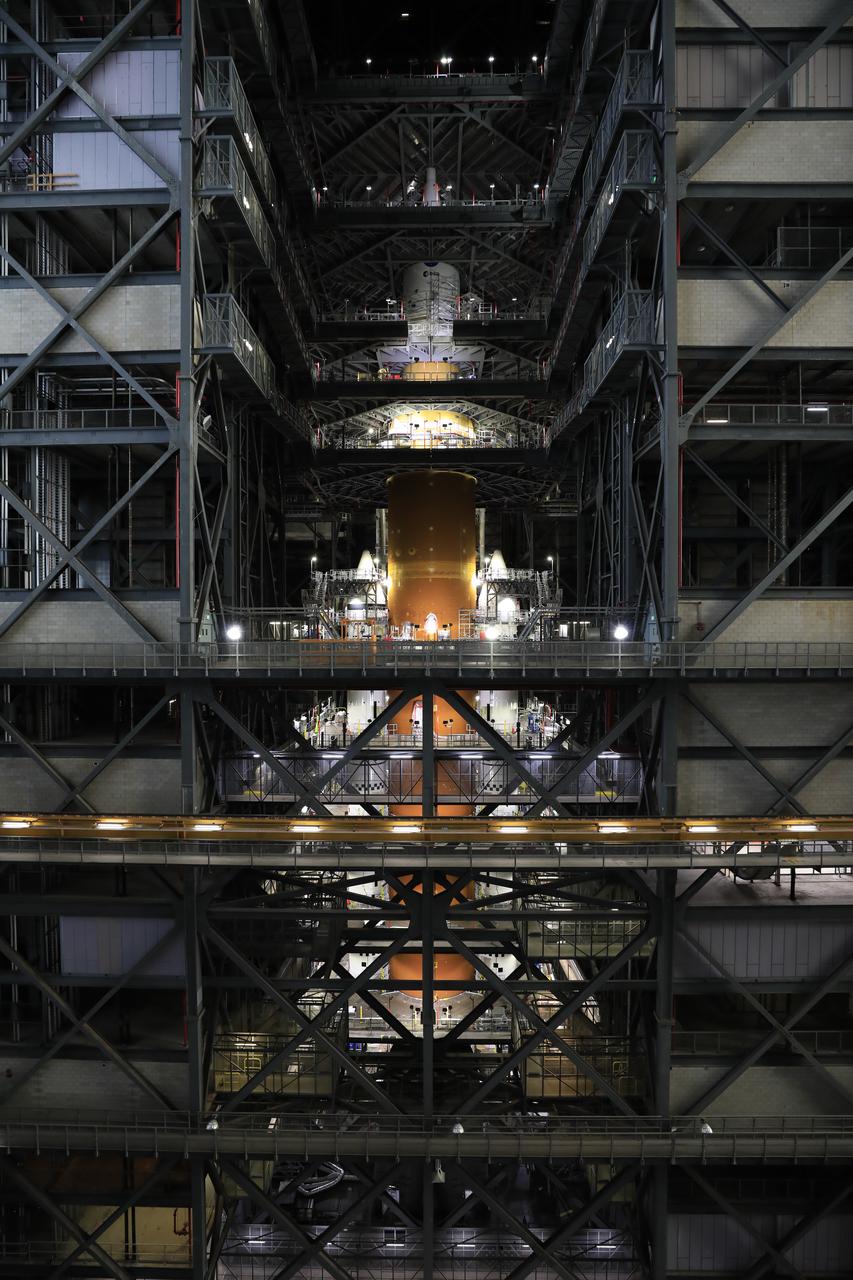
NASA’s massive Space Launch System (SLS) rocket for the agency’s Artemis I mission is shown fully stacked – with NASA’s Orion spacecraft atop – inside Kennedy Space Center’s Vehicle Assembly Building on Dec. 13, 2021. Artemis I is the inaugural launch of SLS and Orion as an integrated system. With Artemis missions, NASA will explore more of the lunar surface than ever before, using what we learn on and around the Moon to prepare for missions to Mars.
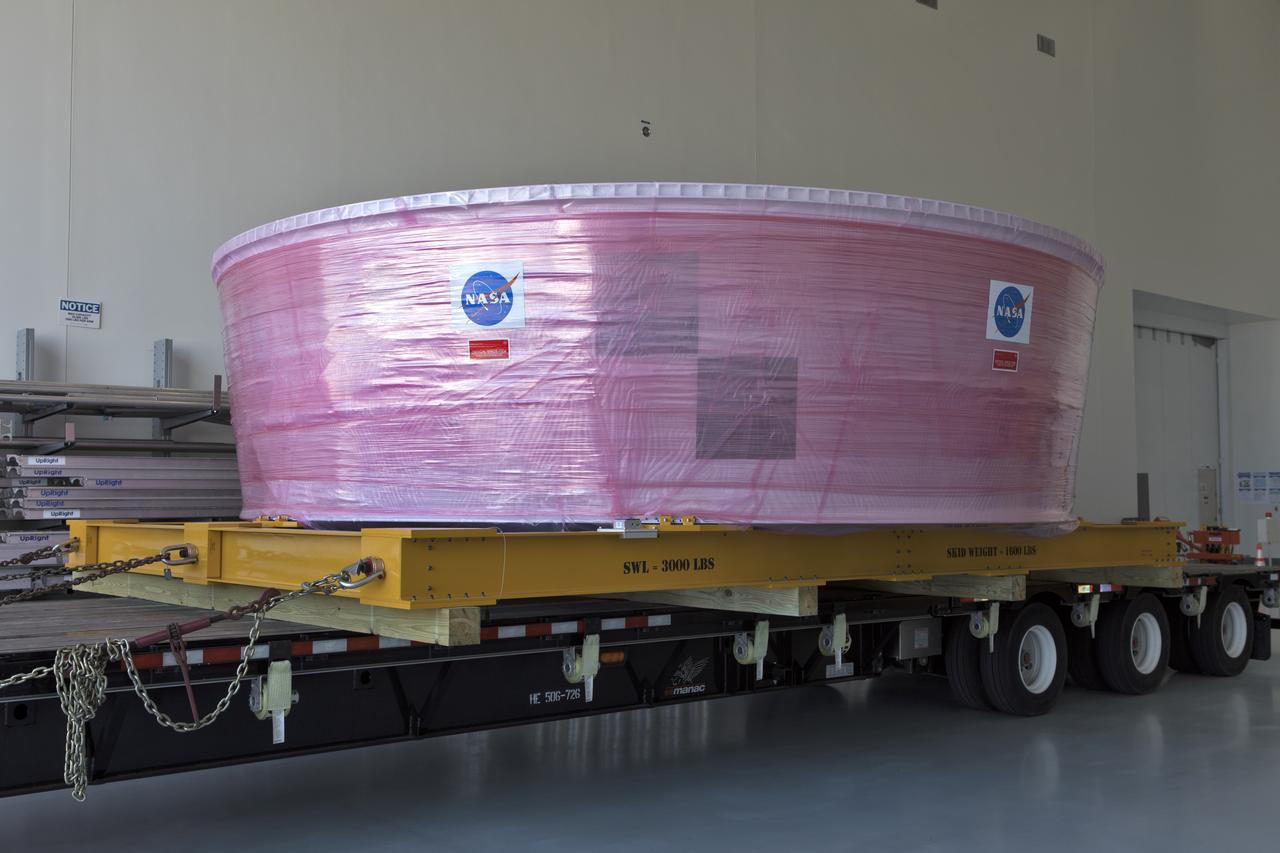
The Orion Stage Adapter (OSA), secured on flatbed transporter, is inside the low bay at the Space Station Processing Facility (SSPF) at NASA's Kennedy Space Center in Florida. The OSA is the second flight-hardware section of the agency's Space Launch System (SLS) rocket to arrive at Kennedy. The OSA will connect the Orion spacecraft to the upper part of the SLS, the interim cryogenic propulsion stage (ICPS). Both the OSA and ICPS are being stored for processing in the SSPF in preparation for Exploration Mission-1, the first uncrewed, integrated launch of the SLS rocket and Orion spacecraft.
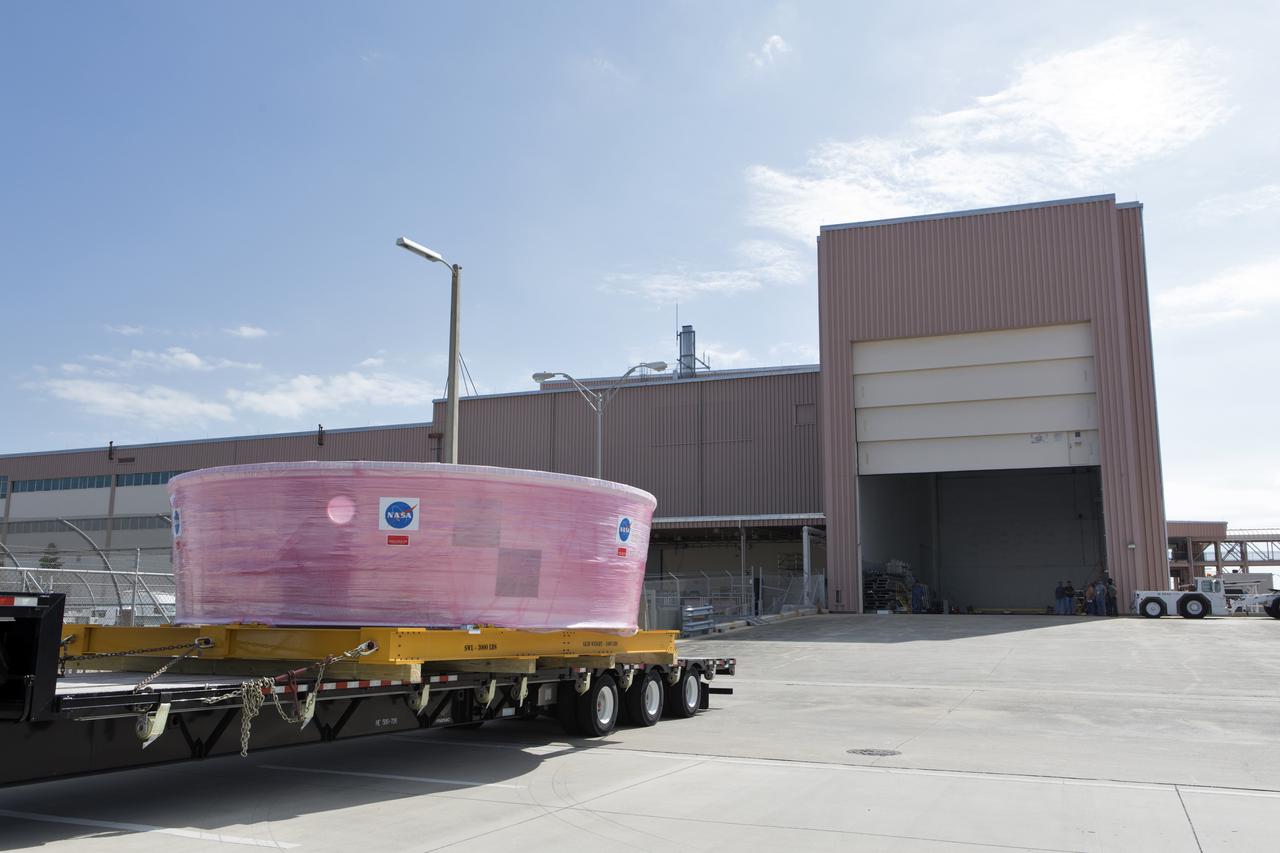
The Orion Stage Adapter (OSA), secured on flatbed transporter, arrives at the entrance to the airlock at the Space Station Processing Facility (SSPF) at NASA's Kennedy Space Center in Florida. The OSA is the second flight-hardware section of the agency's Space Launch System (SLS) rocket to arrive at Kennedy. The OSA will connect the Orion spacecraft to the upper part of the SLS, the interim cryogenic propulsion stage (ICPS). Both the OSA and ICPS are being stored for processing in the SSPF in preparation for Exploration Mission-1, the first uncrewed, integrated launch of the SLS rocket and Orion spacecraft.
The Orion Stage Adapter (OSA) is secured on a flatbed transporter for the move to the Space Station Processing Facility (SSPF) at NASA's Kennedy Space Center in Florida. The OSA is the second flight-hardware section of the agency's Space Launch System (SLS) rocket to arrive at Kennedy. The OSA will connect the Orion spacecraft to the upper part of the SLS, the interim cryogenic propulsion stage (ICPS). Both the OSA and ICPS are being stored for processing in the SSPF in preparation for Exploration Mission-1, the first uncrewed, integrated launch of the SLS rocket and Orion spacecraft.
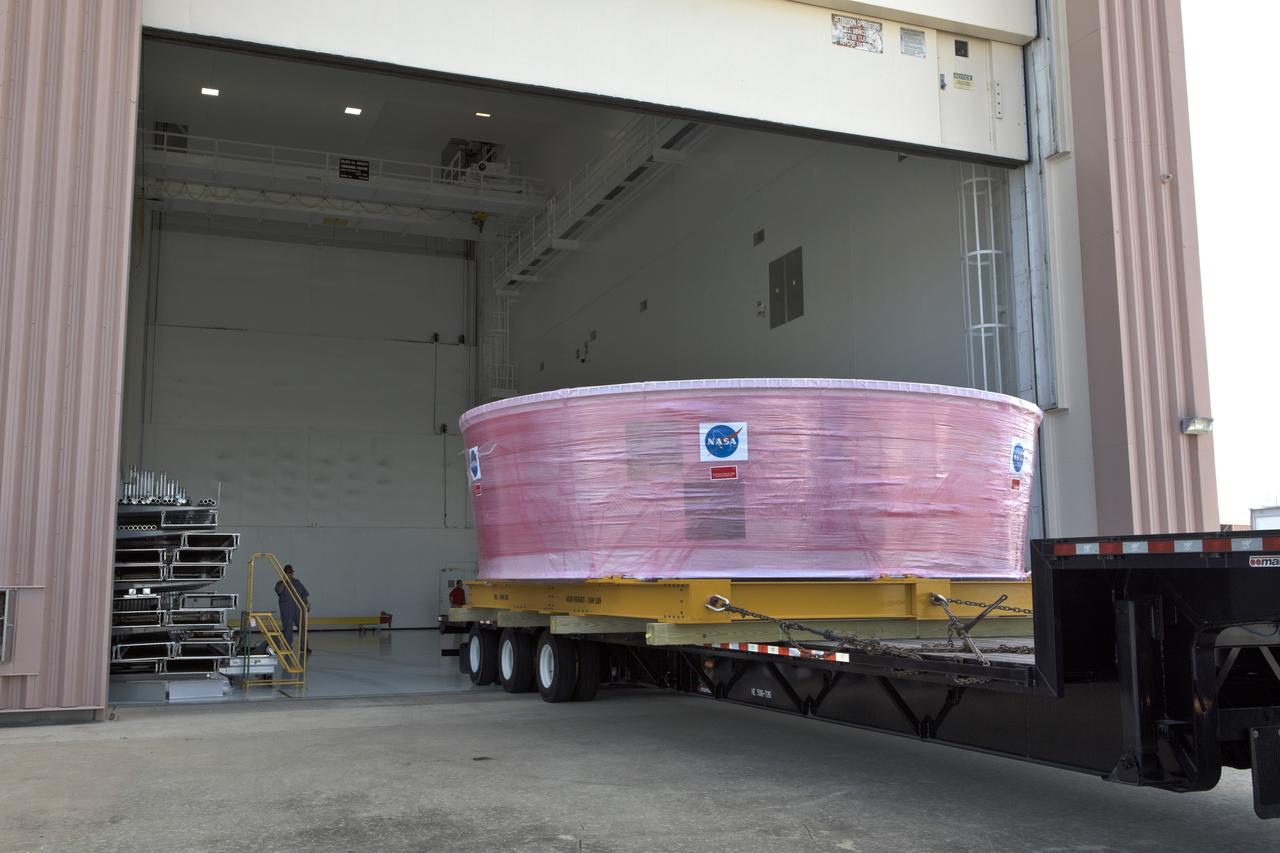
The Orion Stage Adapter (OSA), secured on flatbed transporter, is moved into the airlock at the Space Station Processing Facility (SSPF) at NASA's Kennedy Space Center in Florida. The OSA is the second flight-hardware section of the agency's Space Launch System (SLS) rocket to arrive at Kennedy. The OSA will connect the Orion spacecraft to the upper part of the SLS, the interim cryogenic propulsion stage (ICPS). Both the OSA and ICPS are being stored for processing in the SSPF in preparation for Exploration Mission-1, the first uncrewed, integrated launch of the SLS rocket and Orion spacecraft.

Inside the Space Station Processing Facility (SSPF) high bay at NASA's Kennedy Space Center in Florida, workers assist as a crane moves the Orion Stage Adapter (OSA) to a work area. The OSA is the second flight-hardware section of the agency's Space Launch System (SLS) rocket to arrive at Kennedy. The OSA will connect the Orion spacecraft to the upper part of the SLS, the interim cryogenic propulsion stage (ICPS). Both the OSA and ICPS, in view behind the OSA, are being stored for processing in the center's SSPF in preparation for Exploration Mission-1, the first uncrewed, integrated launch of the SLS rocket and Orion spacecraft.

After arriving at the Shuttle Landing Facility at NASA's Kennedy Space Center in Florida, the agency's Super Guppy aircraft was opened to begin offloading the Orion Stage Adapter (OSA), the second flight-hardware section of NASA's Space Launch System (SLS) rocket to arrive at Kennedy. The OSA will be moved out of the Super Guppy and lowered onto a flatbed transporter. The OSA will connect the Orion spacecraft to the upper part of the SLS, the interim cryogenic propulsion stage (ICPS). Both the OSA and ICPS are being stored for processing in the center's Space Station Processing Facility in preparation for Exploration Mission-1, the first uncrewed, integrated launch of the SLS rocket and Orion spacecraft.

The Orion Stage Adapter (OSA) is moved out of NASA's Super Guppy aircraft onto a flatbed transporter at the Shuttle Landing Facility at Kennedy Space Center in Florida. The OSA is the second flight-hardware section of NASA's Space Launch System (SLS) rocket to arrive at Kennedy. The OSA will connect the Orion spacecraft to the upper part of the SLS, the interim cryogenic propulsion stage (ICPS). Both the OSA and ICPS are being stored for processing in the center's Space Station Processing Facility in preparation for Exploration Mission-1, the first uncrewed, integrated launch of the SLS rocket and Orion spacecraft.
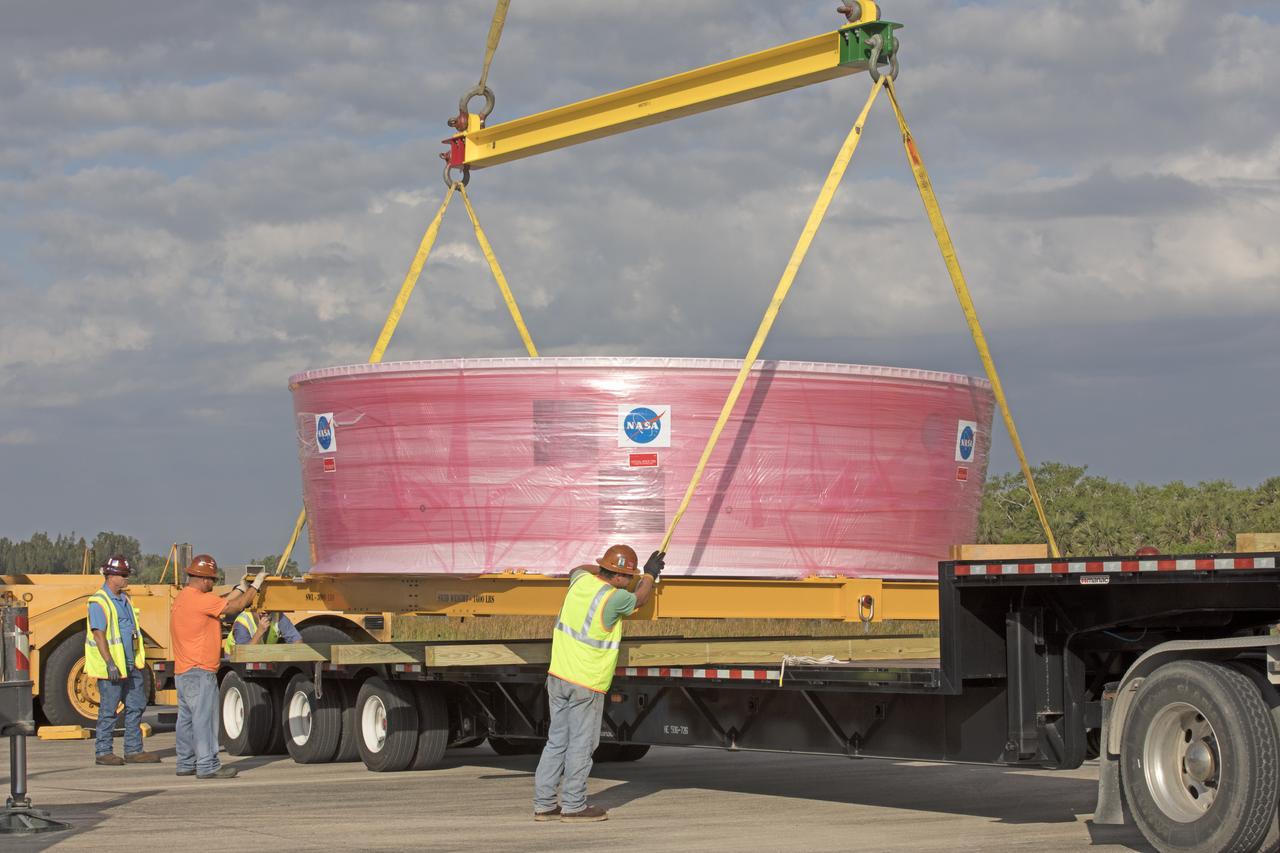
The Orion Stage Adapter (OSA) is lowered by crane onto a flatbed transporter at the Shuttle Landing Facility at NASA's Kennedy Space Center in Florida, for the move to the center's Space Station Processing Facility (SSPF). The OSA is the second flight-hardware section of the agency's Space Launch System (SLS) rocket to arrive at Kennedy. The OSA will connect the Orion spacecraft to the upper part of the SLS, the interim cryogenic propulsion stage (ICPS). Both the OSA and ICPS are being stored for processing in the SSPF in preparation for Exploration Mission-1, the first uncrewed, integrated launch of the SLS rocket and Orion spacecraft.

NASA's Super Guppy aircraft touches down at the Shuttle Landing Facility at the agency's Kennedy Space Center in Florida. The Super Guppy is carrying the Orion Stage Adapter (OSA), the second flight-hardware section of NASA's Space Launch System (SLS) rocket that has arrived at Kennedy. The OSA will connect the Orion spacecraft to the upper part of the SLS rocket, the interim cryogenic propulsion stage (ICPS). Both the OSA and ICPS are being stored for processing in the center's Space Station Processing Facility in preparation for Exploration Mission-1, the first uncrewed, integrated launch of the SLS rocket and Orion spacecraft.
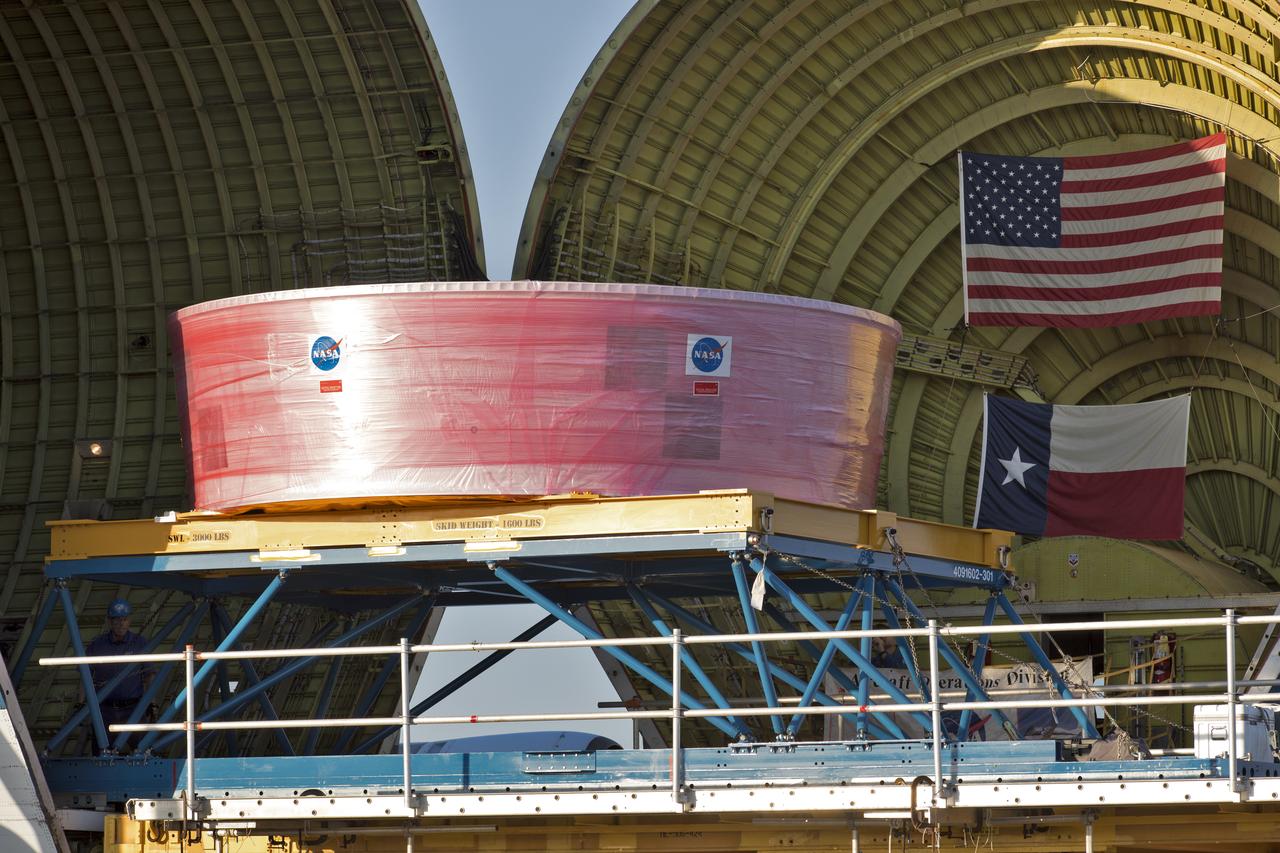
The Orion Stage Adapter (OSA) is moved out of NASA's Super Guppy aircraft onto a special payload handler at the Shuttle Landing Facility at Kennedy Space Center in Florida. The OSA is the second flight-hardware section of NASA's Space Launch System (SLS) rocket to arrive at Kennedy. The OSA will connect the Orion spacecraft to the upper part of the SLS, the interim cryogenic propulsion stage (ICPS). Both the OSA and ICPS are being stored for processing in the center's Space Station Processing Facility in preparation for Exploration Mission-1, the first uncrewed, integrated launch of the SLS rocket and Orion spacecraft.
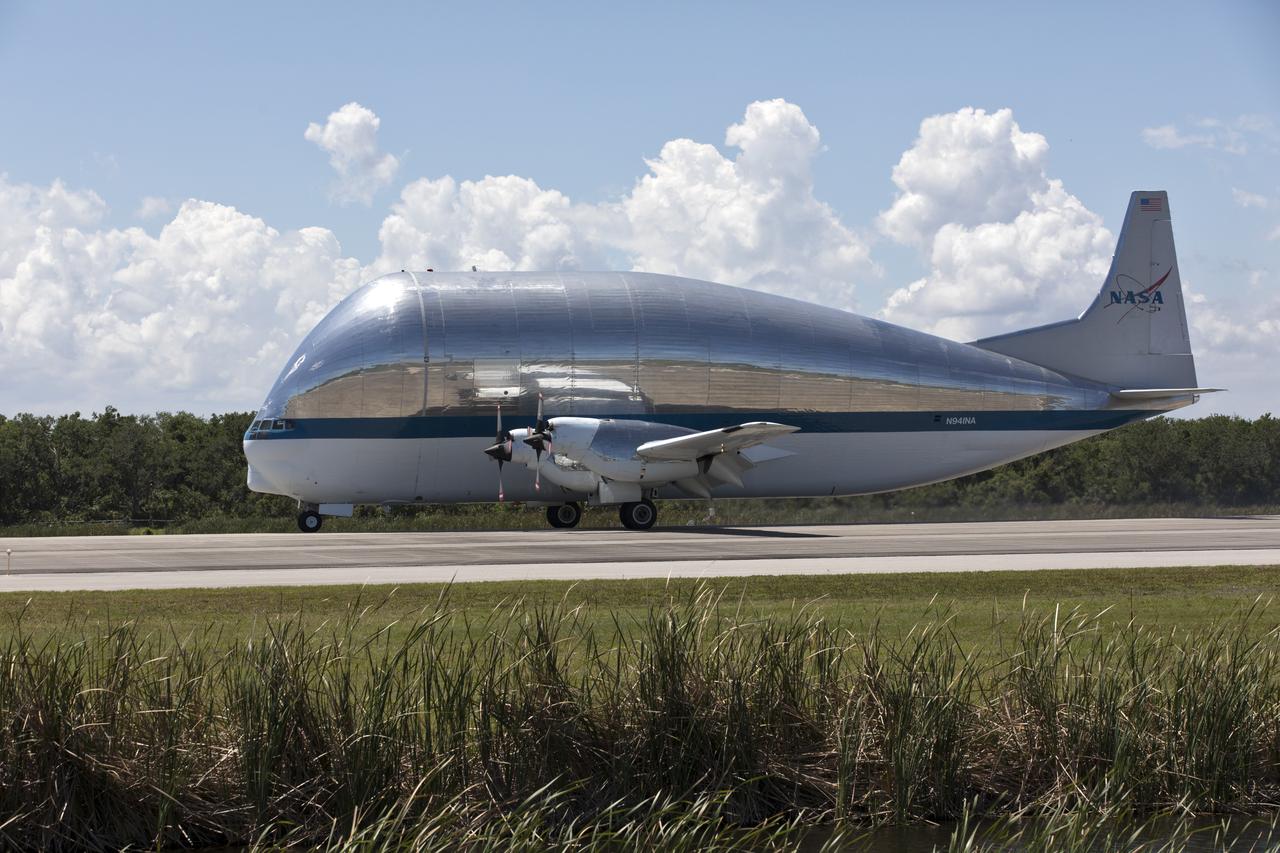
NASA's Super Guppy aircraft glides to a stop at the Shuttle Landing Facility at the agency's Kennedy Space Center in Florida. The Super Guppy is carrying the Orion Stage Adapter (OSA), the second flight-hardware section of NASA's Space Launch System (SLS) rocket that has arrived at Kennedy. The OSA will connect the Orion spacecraft to the upper part of the SLS rocket, the interim cryogenic propulsion stage (ICPS). Both the OSA and ICPS are being stored for processing in the center's Space Station Processing Facility in preparation for Exploration Mission-1, the first uncrewed, integrated launch of the SLS rocket and Orion spacecraft.
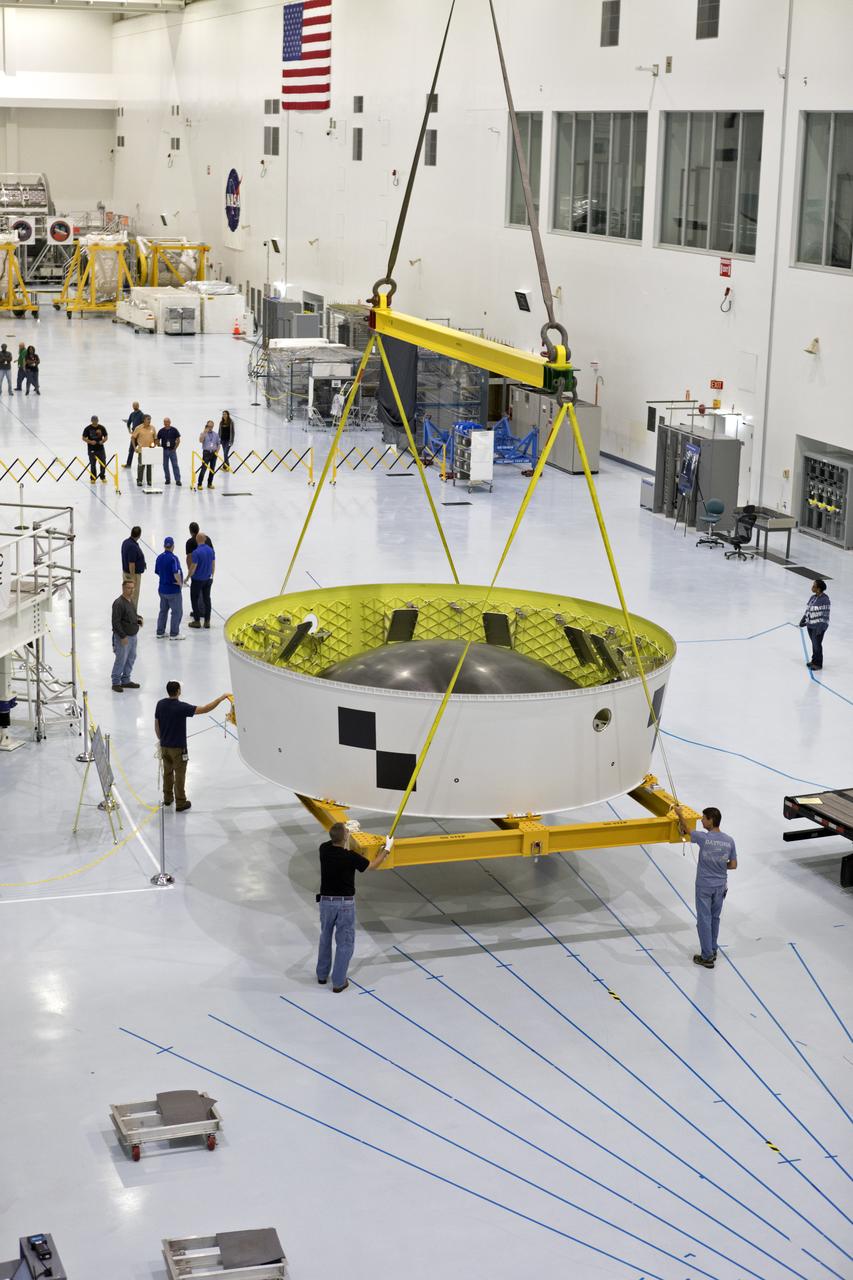
Inside the Space Station Processing Facility (SSPF) high bay at NASA's Kennedy Space Center in Florida, workers assist as a crane moves the Orion Stage Adapter (OSA) to a work area. The OSA is the second flight-hardware section of the agency's Space Launch System (SLS) rocket to arrive at Kennedy. The OSA will connect the Orion spacecraft to the upper part of the SLS, the interim cryogenic propulsion stage (ICPS). Both the OSA and ICPS are being stored for processing in the center's SSPF in preparation for Exploration Mission-1, the first uncrewed, integrated launch of the SLS rocket and Orion spacecraft.
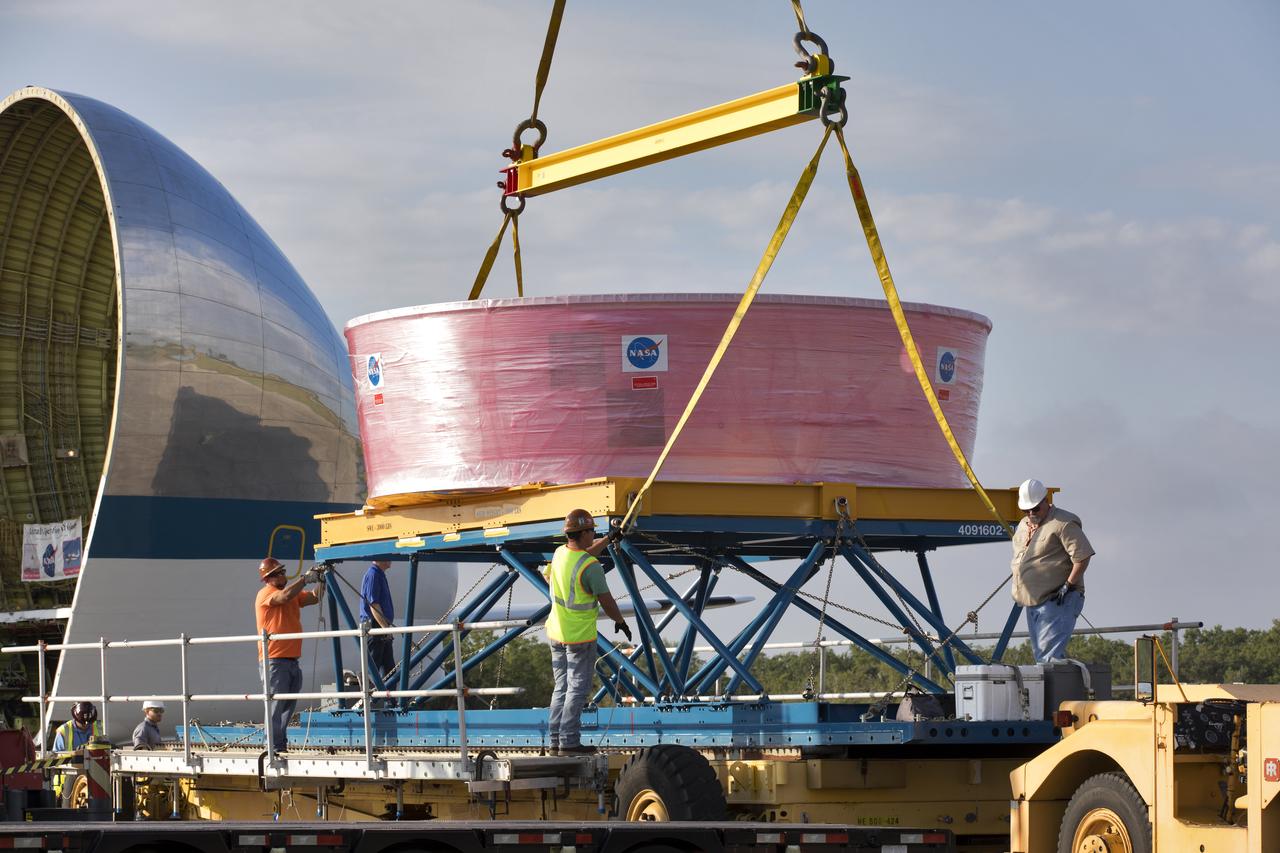
The Orion Stage Adapter (OSA) was moved out of NASA's Super Guppy aircraft onto a special payload handler at the Shuttle Landing Facility at Kennedy Space Center in Florida. The OSA is the second flight-hardware section of NASA's Space Launch System (SLS) rocket to arrive at Kennedy. The OSA will connect the Orion spacecraft to the upper part of the SLS, the interim cryogenic propulsion stage (ICPS). Both the OSA and ICPS are being stored for processing in the center's Space Station Processing Facility in preparation for Exploration Mission-1, the first uncrewed, integrated launch of the SLS rocket and Orion spacecraft.
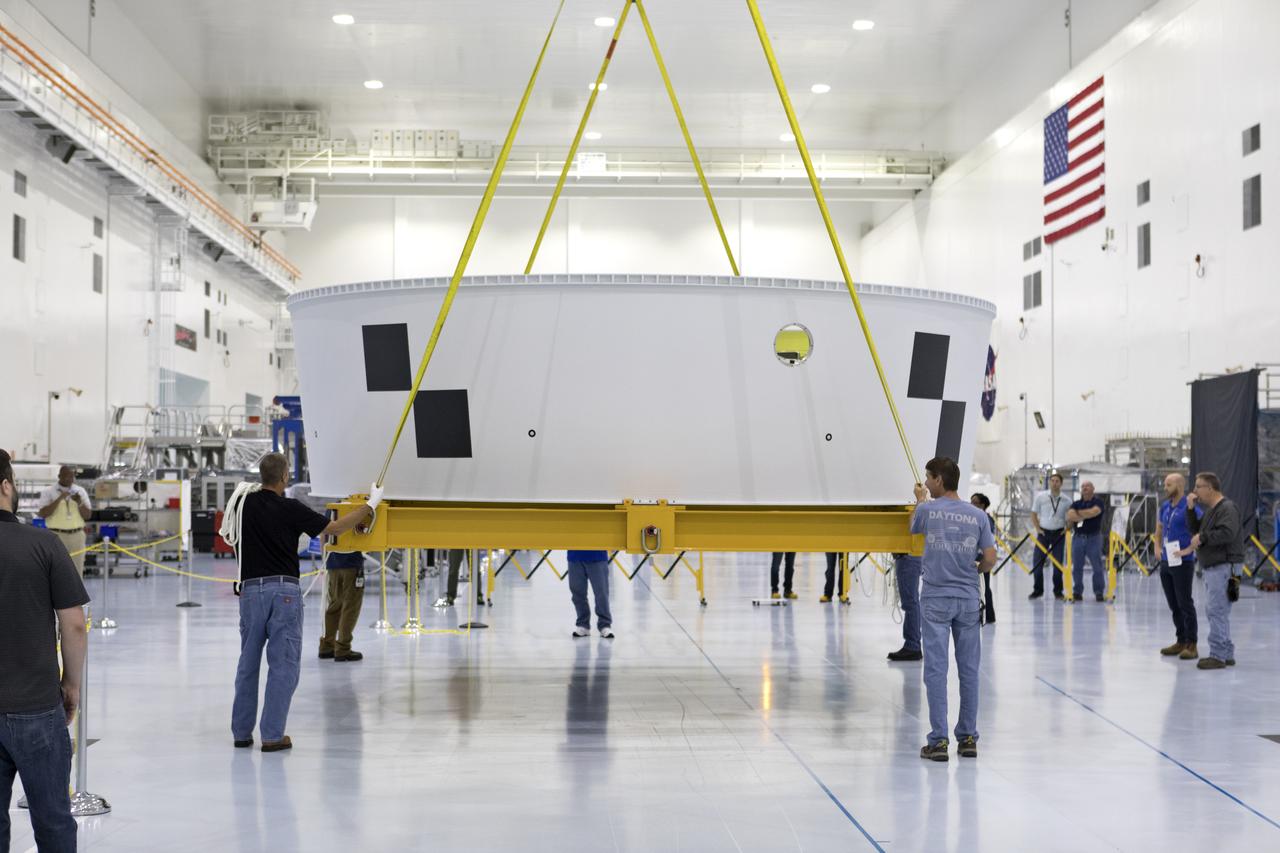
Inside the Space Station Processing Facility (SSPF) high bay at NASA's Kennedy Space Center in Florida, workers assist as a crane moves the Orion Stage Adapter (OSA) to a work area. The OSA is the second flight-hardware section of the agency's Space Launch System (SLS) rocket to arrive at Kennedy. The OSA will connect the Orion spacecraft to the upper part of the SLS, the interim cryogenic propulsion stage (ICPS). Both the OSA and ICPS are being stored for processing in the center's SSSPF in preparation for Exploration Mission-1, the first uncrewed, integrated launch of the SLS rocket and Orion spacecraft.
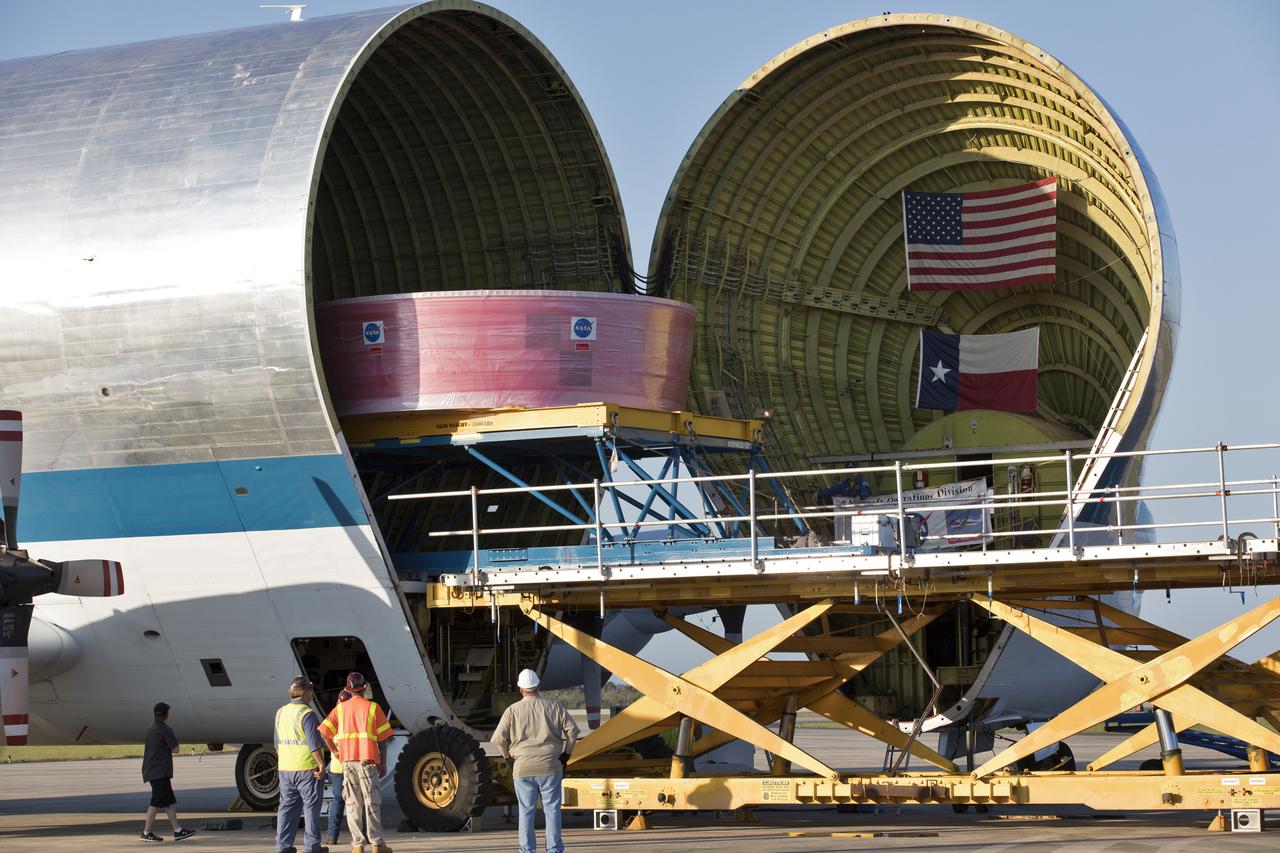
The Orion Stage Adapter (OSA) is moved out of NASA's Super Guppy aircraft onto a special payload handler at the Shuttle Landing Facility at Kennedy Space Center in Florida. The OSA is the second flight-hardware section of NASA's Space Launch System (SLS) rocket to arrive at Kennedy. The OSA will connect the Orion spacecraft to the upper part of the SLS, the interim cryogenic propulsion stage (ICPS). Both the OSA and ICPS are being stored for processing in the center's Space Station Processing Facility in preparation for Exploration Mission-1, the first uncrewed, integrated launch of the SLS rocket and Orion spacecraft.
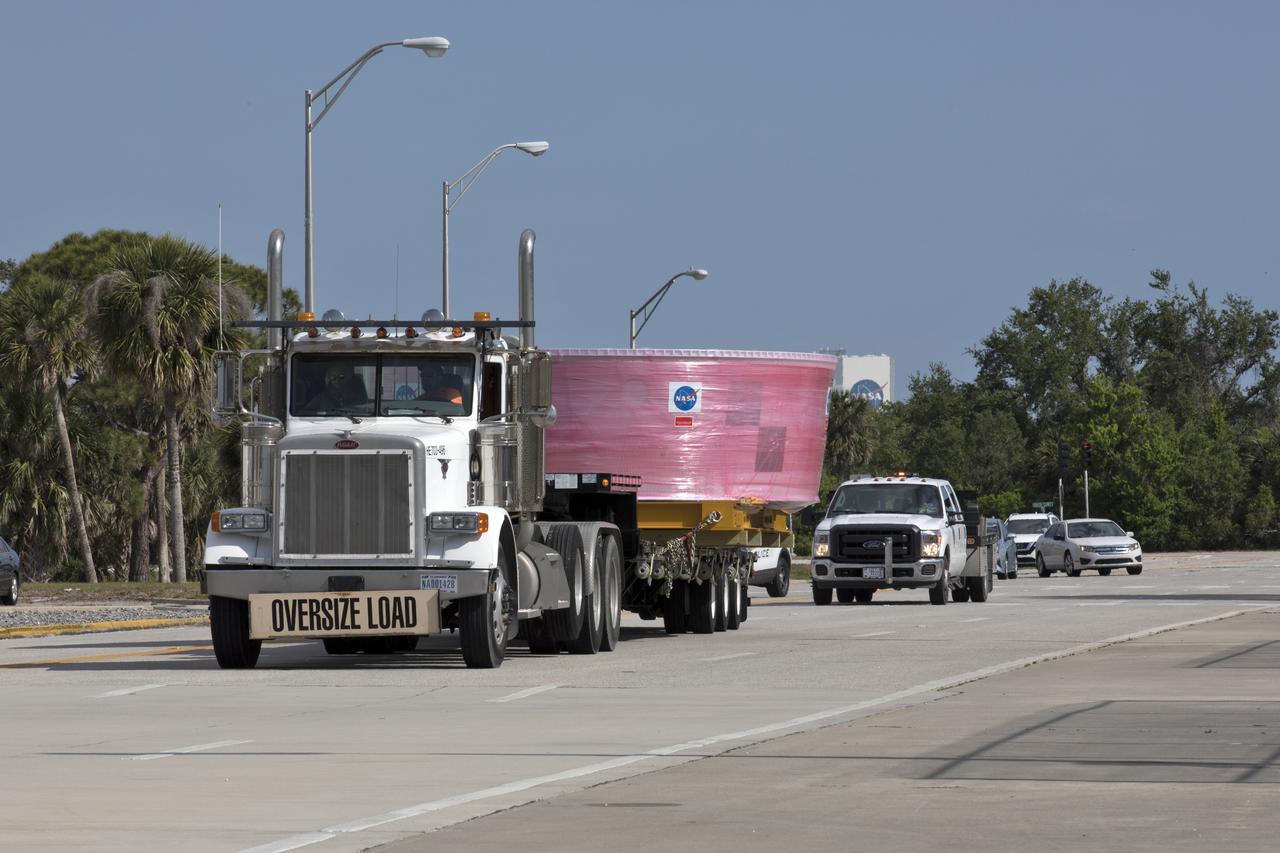
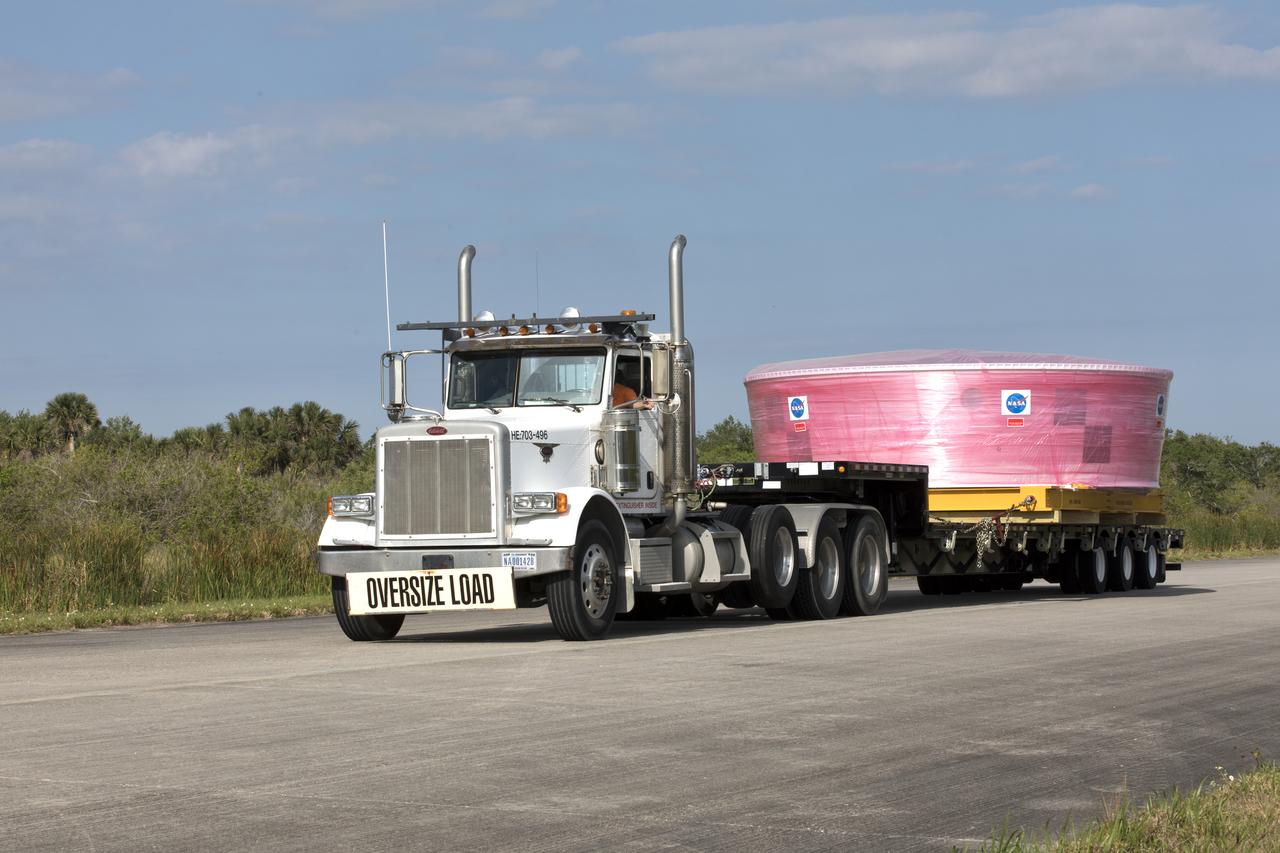
The Orion Stage Adapter (OSA), secured on flatbed transporter, is moved along State Road 3 to the Space Station Processing Facility (SSPF) at NASA's Kennedy Space Center in Florida. The OSA is the second flight-hardware section of the agency's Space Launch System (SLS) rocket to arrive at Kennedy. The OSA will connect the Orion spacecraft to the upper part of the SLS, the interim cryogenic propulsion stage (ICPS). Both the OSA and ICPS are being stored for processing in the SSPF in preparation for Exploration Mission-1, the first uncrewed, integrated launch of the SLS rocket and Orion spacecraft.

Inside the Space Station Processing Facility (SSPF) high bay at NASA's Kennedy Space Center in Florida, workers assist as a crane lifts the Orion Stage Adapter (OSA) away from the flatbed of a transport truck. The OSA is the second flight-hardware section of the agency's Space Launch System (SLS) rocket to arrive at Kennedy. The OSA will connect the Orion spacecraft to the upper part of the SLS, the interim cryogenic propulsion stage (ICPS). Both the OSA and ICPS are being stored for processing in the center's SSPF in preparation for Exploration Mission-1, the first uncrewed, integrated launch of the SLS rocket and Orion spacecraft.
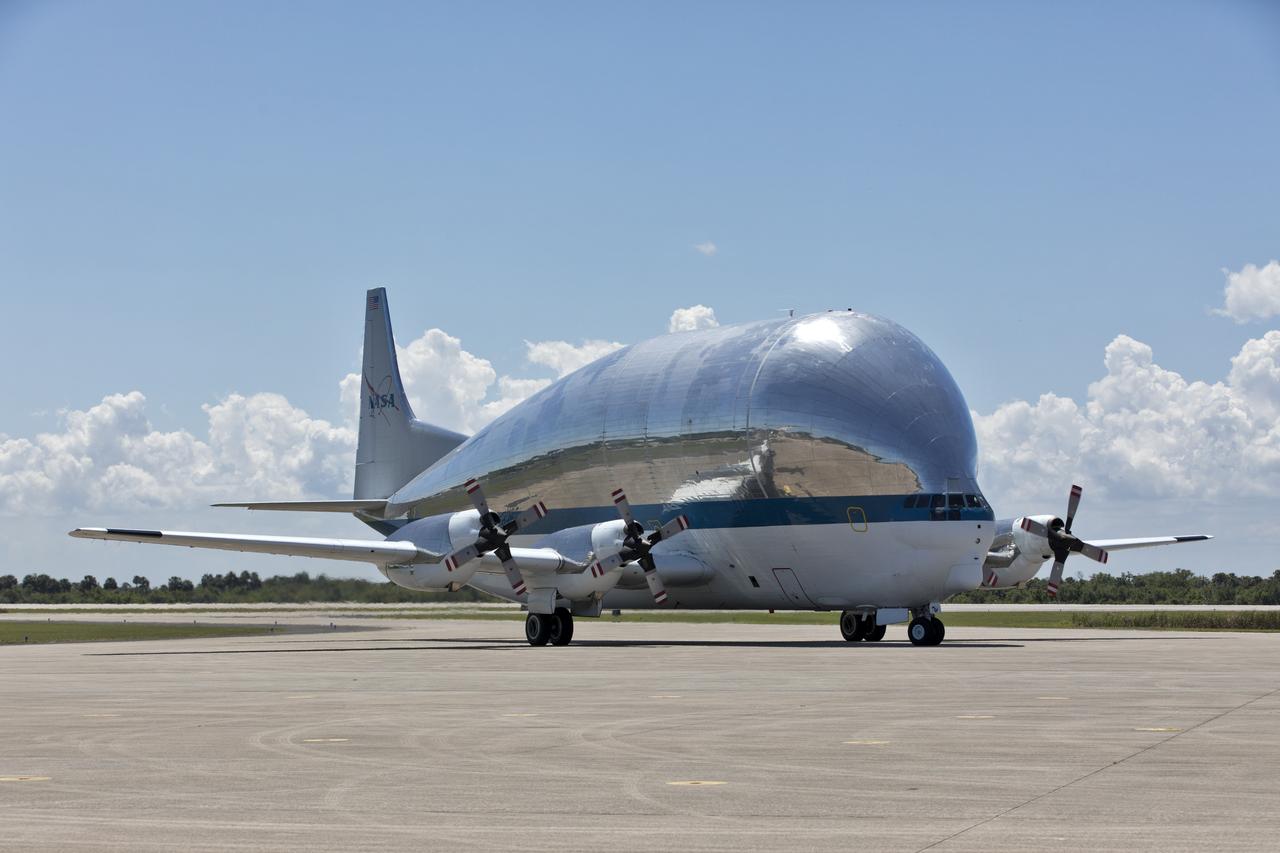
NASA's Super Guppy aircraft taxies onto the tarmac after touching down at the Shuttle Landing Facility at the agency's Kennedy Space Center in Florida. The Super Guppy is carrying the Orion Stage Adapter (OSA), the second flight-hardware section of NASA's Space Launch System (SLS) rocket that has arrived at Kennedy. The OSA will connect the Orion spacecraft to the upper part of the SLS rocket, the interim cryogenic propulsion stage (ICPS). Both the OSA and ICPS are being stored for processing in the center's Space Station Processing Facility in preparation for Exploration Mission-1, the first uncrewed, integrated launch of the SLS rocket and Orion spacecraft.
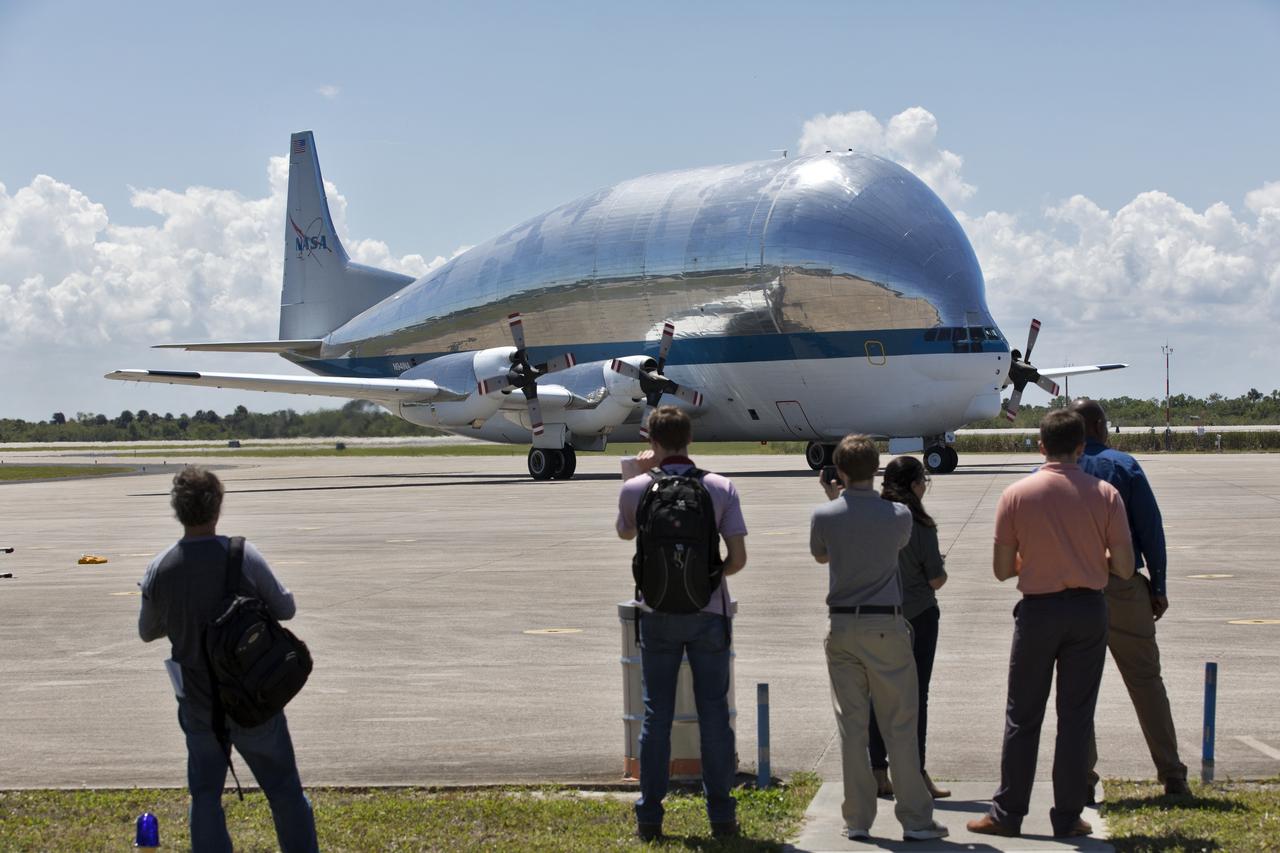
NASA's Super Guppy aircraft taxies onto the tarmac after touching down at the Shuttle Landing Facility at the agency's Kennedy Space Center in Florida. The Super Guppy is carrying the Orion Stage Adapter (OSA), the second flight-hardware section of NASA's Space Launch System (SLS) rocket that has arrived at Kennedy. The OSA will connect the Orion spacecraft to the upper part of the SLS rocket, the interim cryogenic propulsion stage (ICPS). Both the OSA and ICPS are being stored for processing in the center's Space Station Processing Facility in preparation for Exploration Mission-1, the first uncrewed, integrated launch of the SLS rocket and Orion spacecraft.
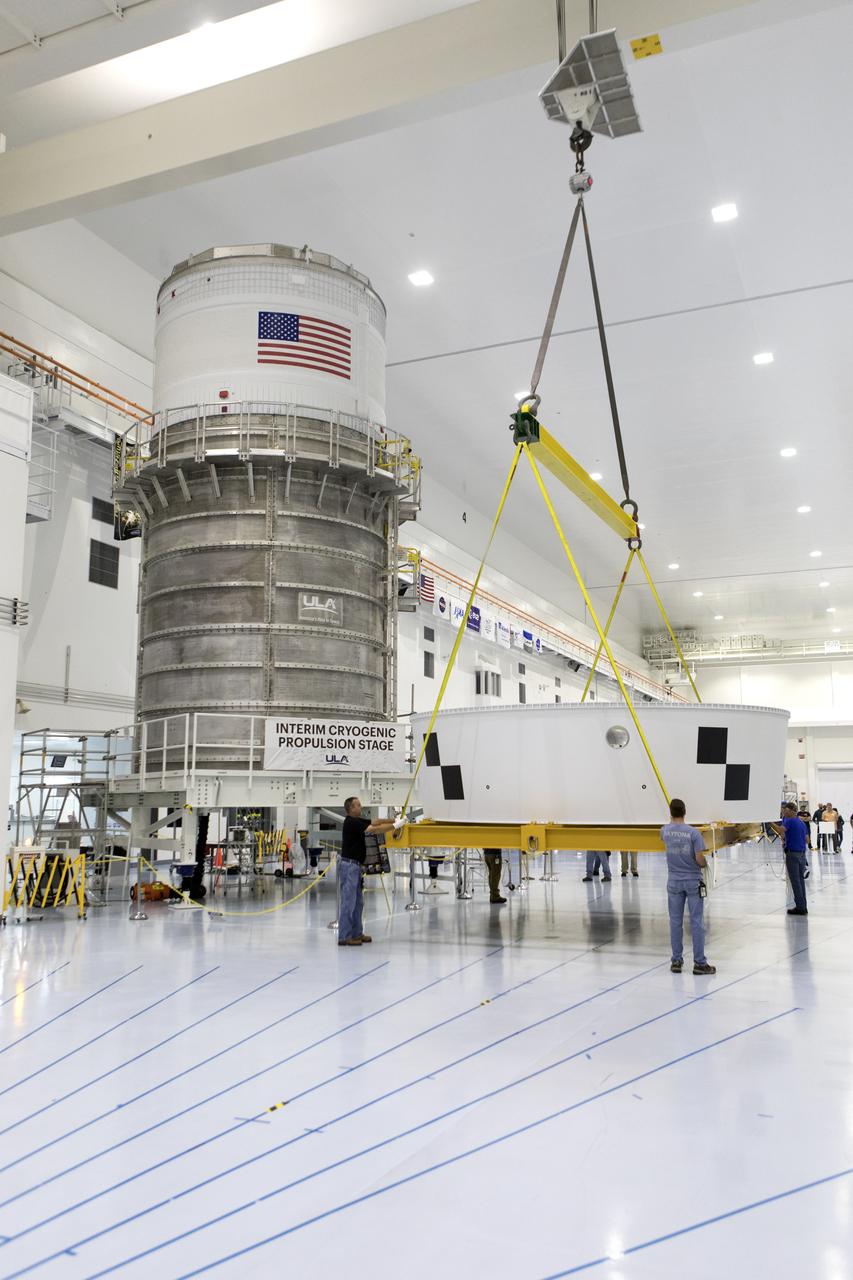
Inside the Space Station Processing Facility (SSPF) high bay at NASA's Kennedy Space Center in Florida, workers assist as a crane moves the Orion Stage Adapter (OSA) to a work area. The OSA is the second flight-hardware section of the agency's Space Launch System (SLS) rocket to arrive at Kennedy. The OSA will connect the Orion spacecraft to the upper part of the SLS, the interim cryogenic propulsion stage (ICPS). Both the OSA and ICPS, at left, are being stored for processing in the center's SSPF in preparation for Exploration Mission-1, the first uncrewed, integrated launch of the SLS rocket and Orion spacecraft.
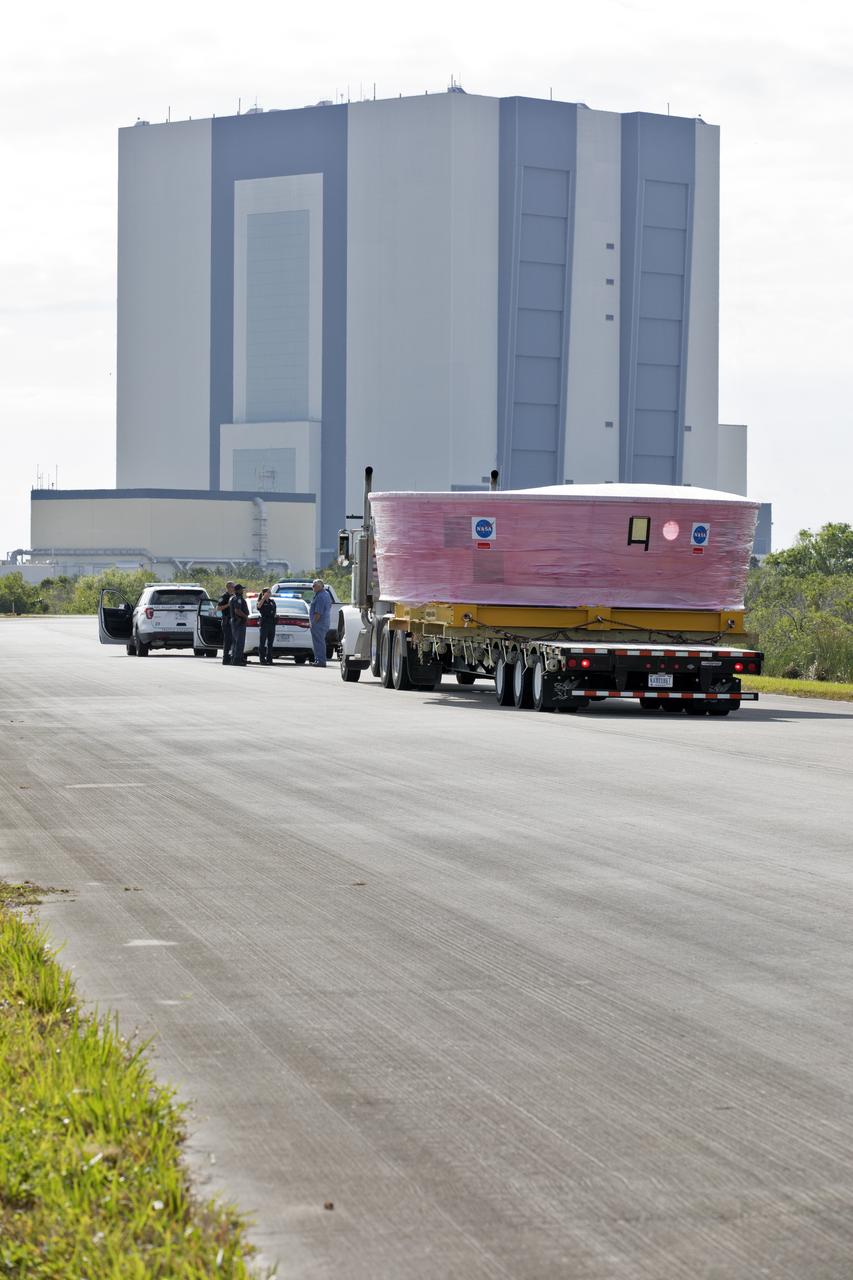
NASA Kennedy Space Center security officers prepare to escort the Orion Stage Adapter (OSA), secured on a flatbed transporter, along State Road 3 to the Space Station Processing Facility (SSPF) at NASA's Kennedy Space Center in Florida. The OSA is the second flight-hardware section of the agency's Space Launch System (SLS) rocket to arrive at Kennedy. The OSA will connect the Orion spacecraft to the upper part of the SLS, the interim cryogenic propulsion stage (ICPS). Both the OSA and ICPS are being stored for processing in the SSPF in preparation for Exploration Mission-1, the first uncrewed, integrated launch of the SLS rocket and Orion spacecraft.
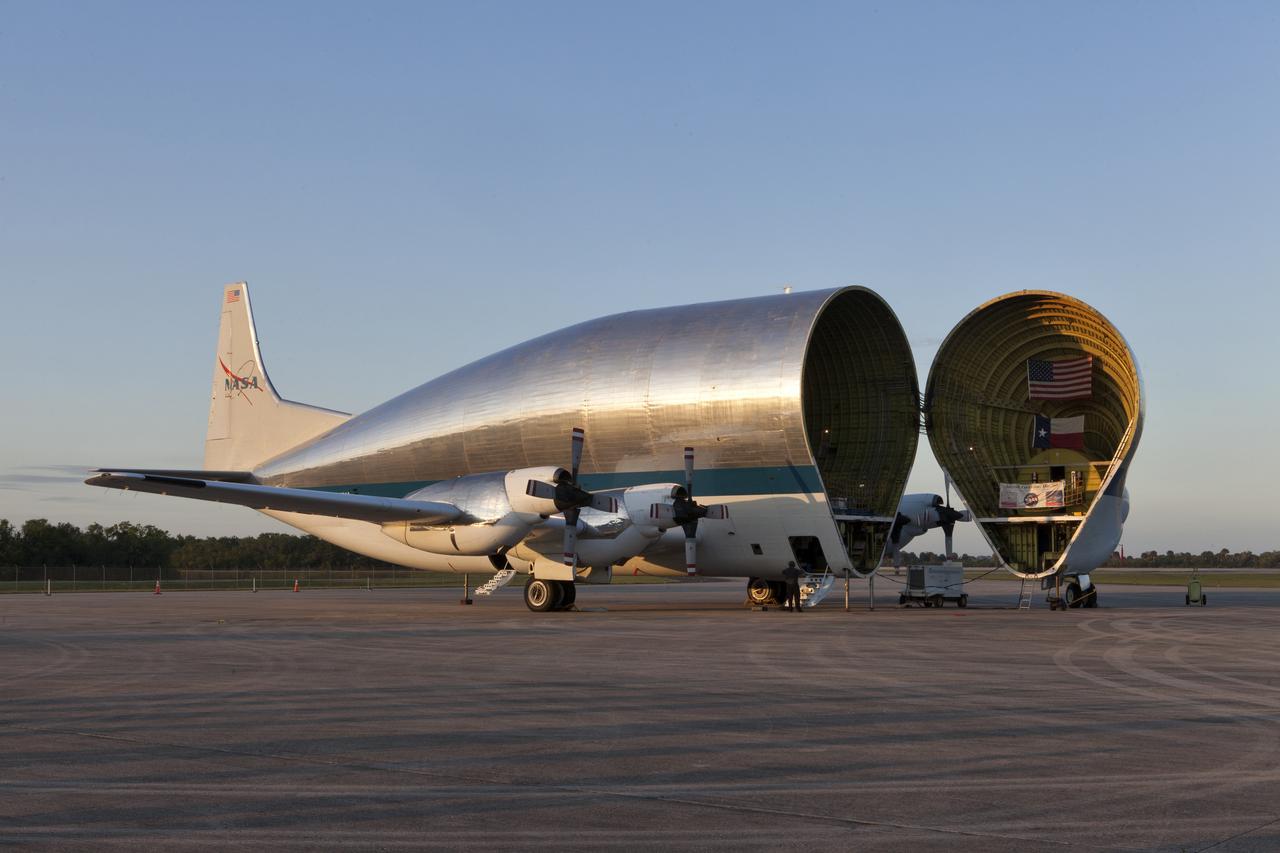
After arriving at the Shuttle Landing Facility at NASA's Kennedy Space Center in Florida, the agency's Super Guppy aircraft has been opened to begin offloading the Orion Stage Adapter (OSA), the second flight-hardware section of NASA's Space Launch System (SLS) rocket to arrive at Kennedy. The OSA will connect the Orion spacecraft to the upper part of the SLS, the interim cryogenic propulsion stage (ICPS). Both the OSA and ICPS are being stored for processing in the center's Space Station Processing Facility in preparation for Exploration Mission-1, the first uncrewed, integrated launch of the SLS rocket and Orion spacecraft.
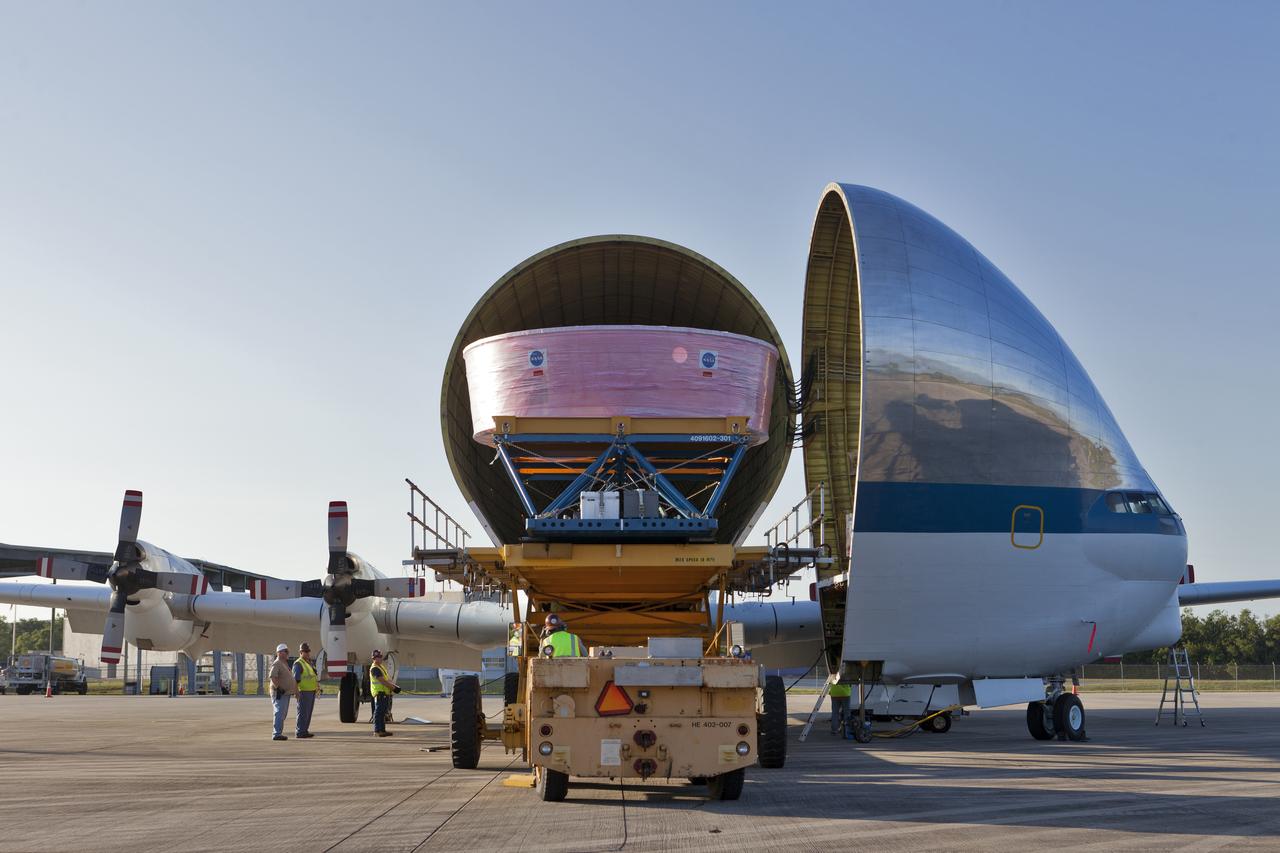
The Orion Stage Adapter (OSA) is moved out of NASA's Super Guppy aircraft onto a special payload handler at the Shuttle Landing Facility at Kennedy Space Center in Florida. The OSA is the second flight-hardware section of NASA's Space Launch System (SLS) rocket to arrive at Kennedy. The OSA will connect the Orion spacecraft to the upper part of the SLS, the interim cryogenic propulsion stage (ICPS). Both the OSA and ICPS are being stored for processing in the center's Space Station Processing Facility in preparation for Exploration Mission-1, the first uncrewed, integrated launch of the SLS rocket and Orion spacecraft.
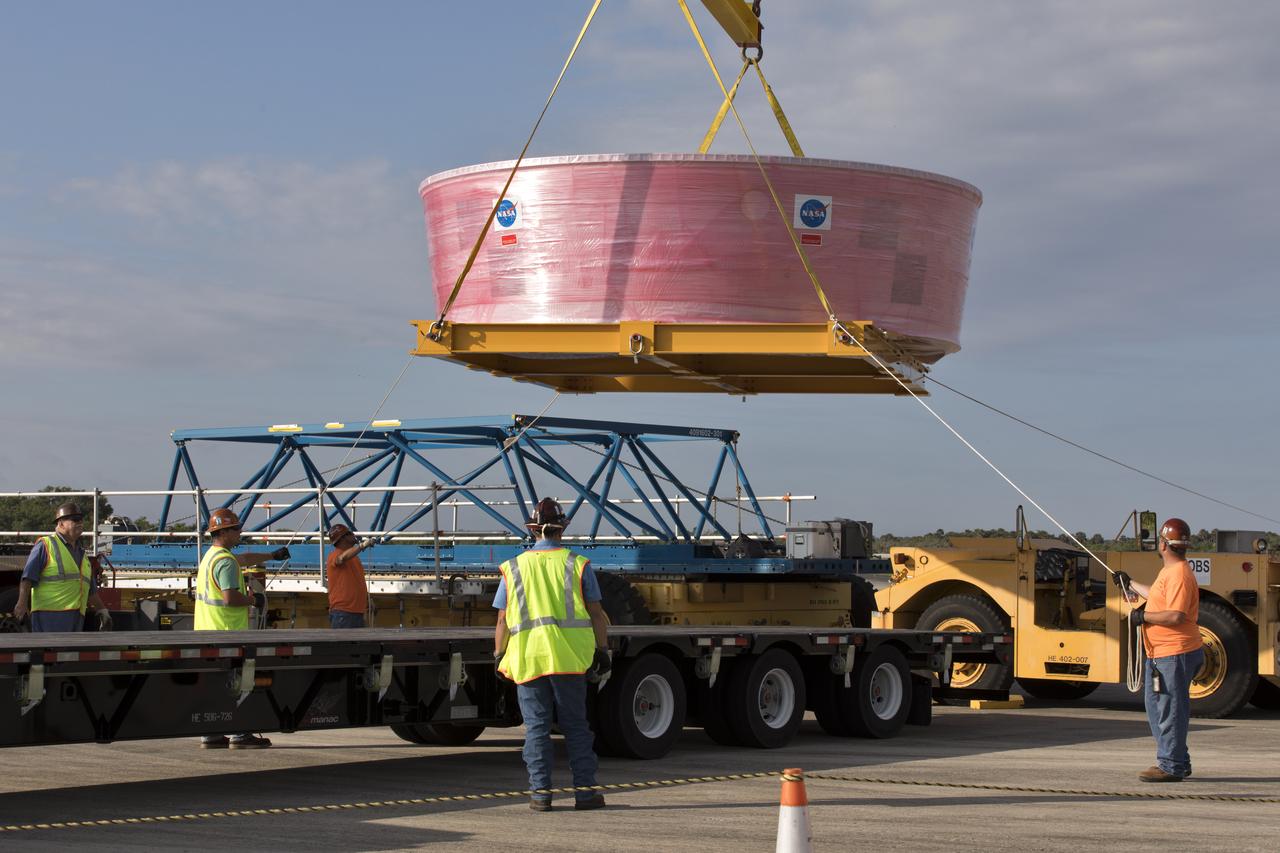
The Orion Stage Adapter (OSA) is lifted by crane up from its transport platform at the Shuttle Landing Facility at NASA's Kennedy Space Center in Florida. The OSA is the second flight-hardware section of the agency's Space Launch System (SLS) rocket to arrive at Kennedy. The OSA will connect the Orion spacecraft to the upper part of the SLS, the interim cryogenic propulsion stage (ICPS). Both the OSA and ICPS are being stored for processing in the center's Space Station Processing Facility in preparation for Exploration Mission-1, the first uncrewed, integrated launch of the SLS rocket and Orion spacecraft.
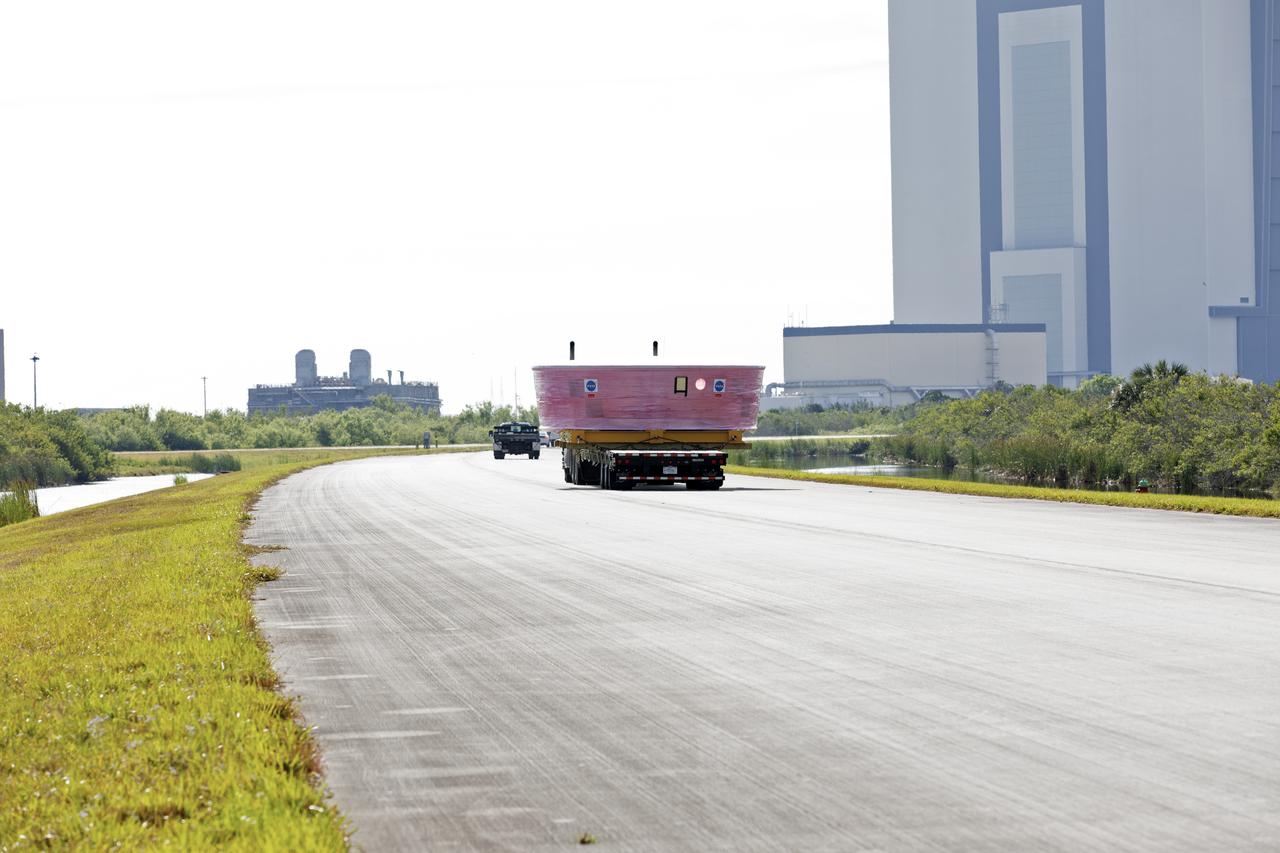
The Orion Stage Adapter (OSA), secured on a flatbed transporter, is moved along State Road 3 to the Space Station Processing Facility (SSPF) at NASA's Kennedy Space Center in Florida. The OSA is the second flight-hardware section of the agency's Space Launch System (SLS) rocket to arrive at Kennedy. The OSA will connect the Orion spacecraft to the upper part of the SLS, the interim cryogenic propulsion stage (ICPS). Both the OSA and ICPS are being stored for processing in the SSPF in preparation for Exploration Mission-1, the first uncrewed, integrated launch of the SLS rocket and Orion spacecraft.
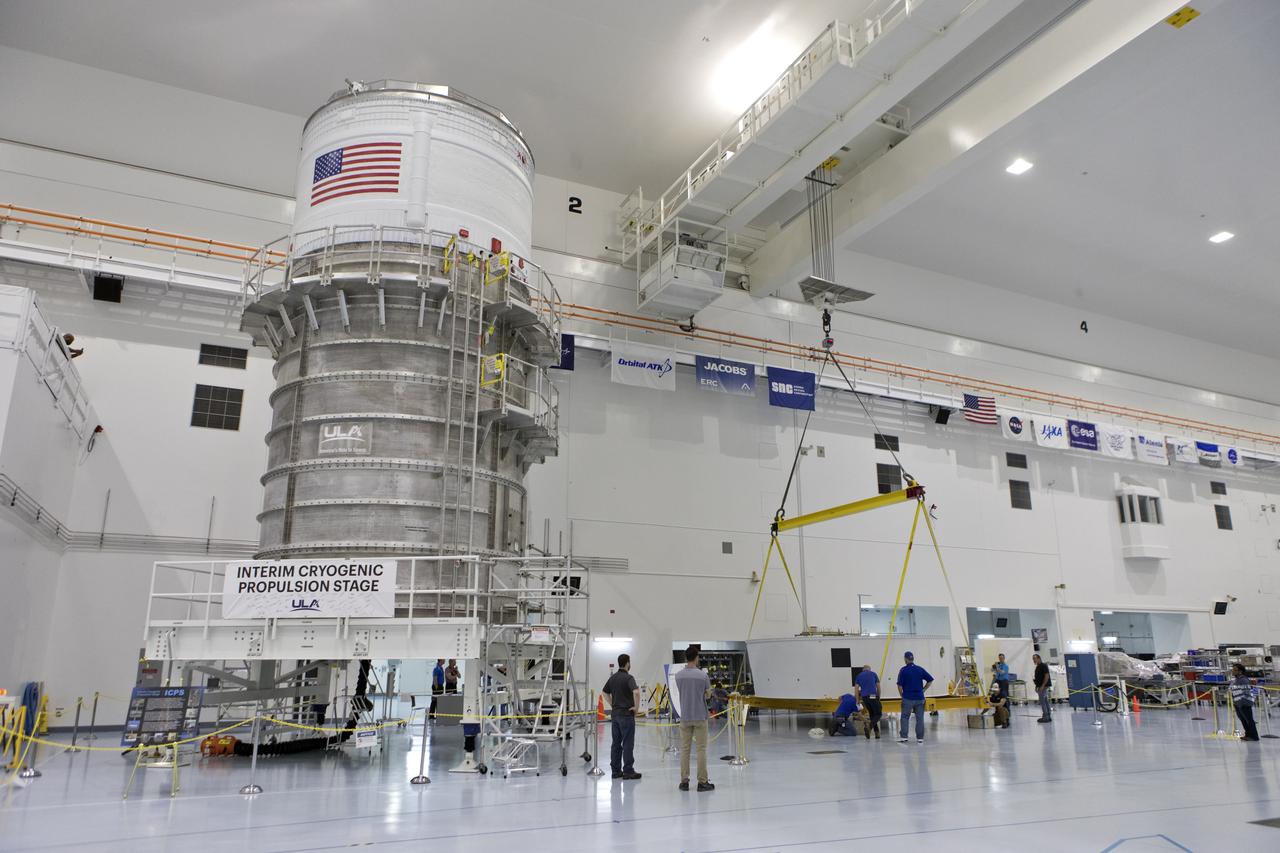
The Orion Stage Adapter (OSA) is lowered by crane into a work area in the high bay of the Space Station Processing Facility (SSPF) at NASA's Kennedy Space Center in Florida. The OSA is the second flight-hardware section of the agency's Space Launch System (SLS) rocket to arrive at Kennedy. The OSA will connect the Orion spacecraft to the upper part of the SLS, the interim cryogenic propulsion stage (ICPS). Both the OSA and ICPS, at left, are being stored for processing in the SSPF in preparation for Exploration Mission-1, the first uncrewed, integrated launch of the SLS rocket and Orion spacecraft.
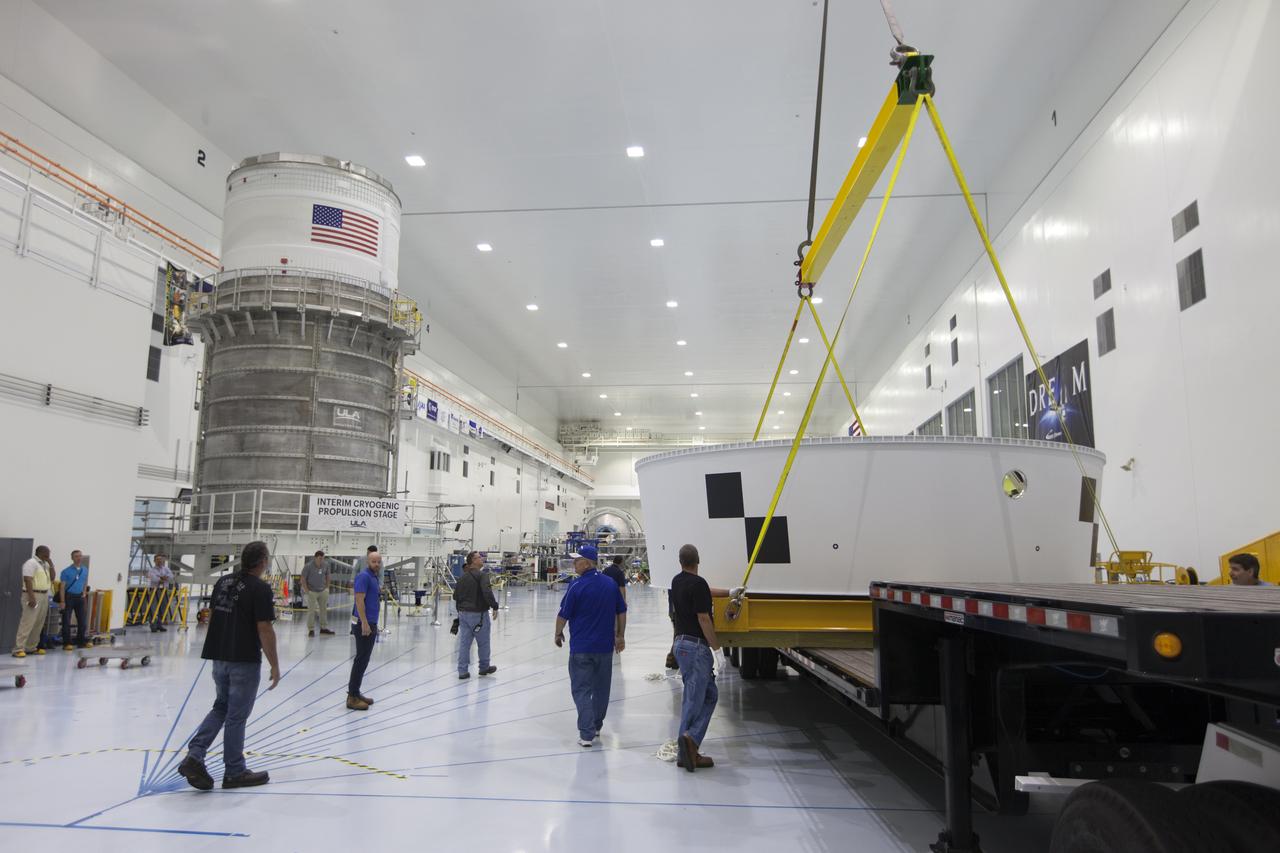
Inside the Space Station Processing Facility (SSPF) high bay at NASA's Kennedy Space Center in Florida, workers assist as a crane lifts the Orion Stage Adapter (OSA) up from the flatbed of a transport truck. The OSA is the second flight-hardware section of the agency's Space Launch System (SLS) rocket to arrive at Kennedy. The OSA will connect the Orion spacecraft to the upper part of the SLS, the interim cryogenic propulsion stage (ICPS). Both the OSA and ICPS, at left, are being stored for processing in the center's SSPF in preparation for Exploration Mission-1, the first uncrewed, integrated launch of the SLS rocket and Orion spacecraft.
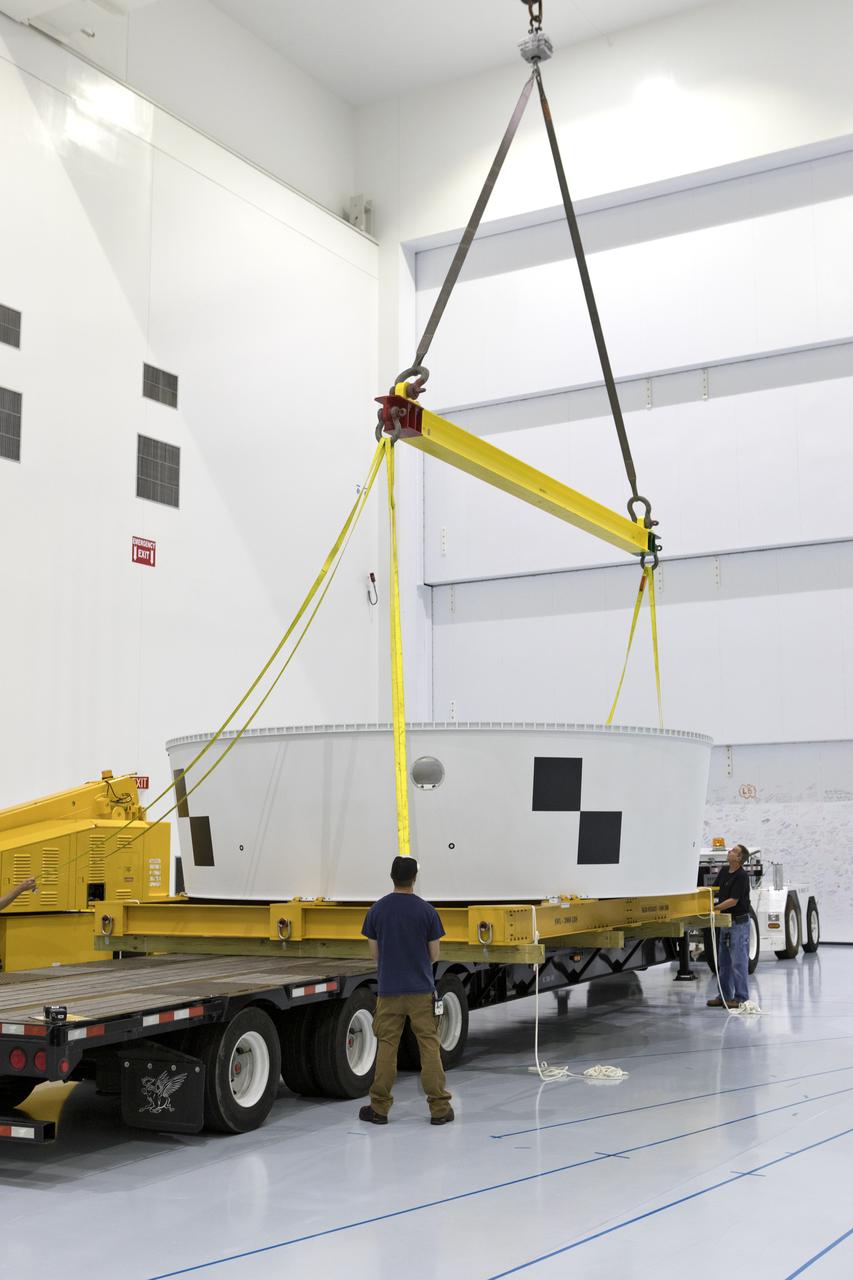
Inside the Space Station Processing Facility (SSPF) high bay at NASA's Kennedy Space Center in Florida, workers assist as a crane lifts the Orion Stage Adapter (OSA) up from the flatbed of a transport truck. The OSA is the second flight-hardware section of the agency's Space Launch System (SLS) rocket to arrive at Kennedy. The OSA will connect the Orion spacecraft to the upper part of the SLS, the interim cryogenic propulsion stage (ICPS). Both the OSA and ICPS are being stored for processing in the center's SSPF in preparation for Exploration Mission-1, the first uncrewed, integrated launch of the SLS rocket and Orion spacecraft.
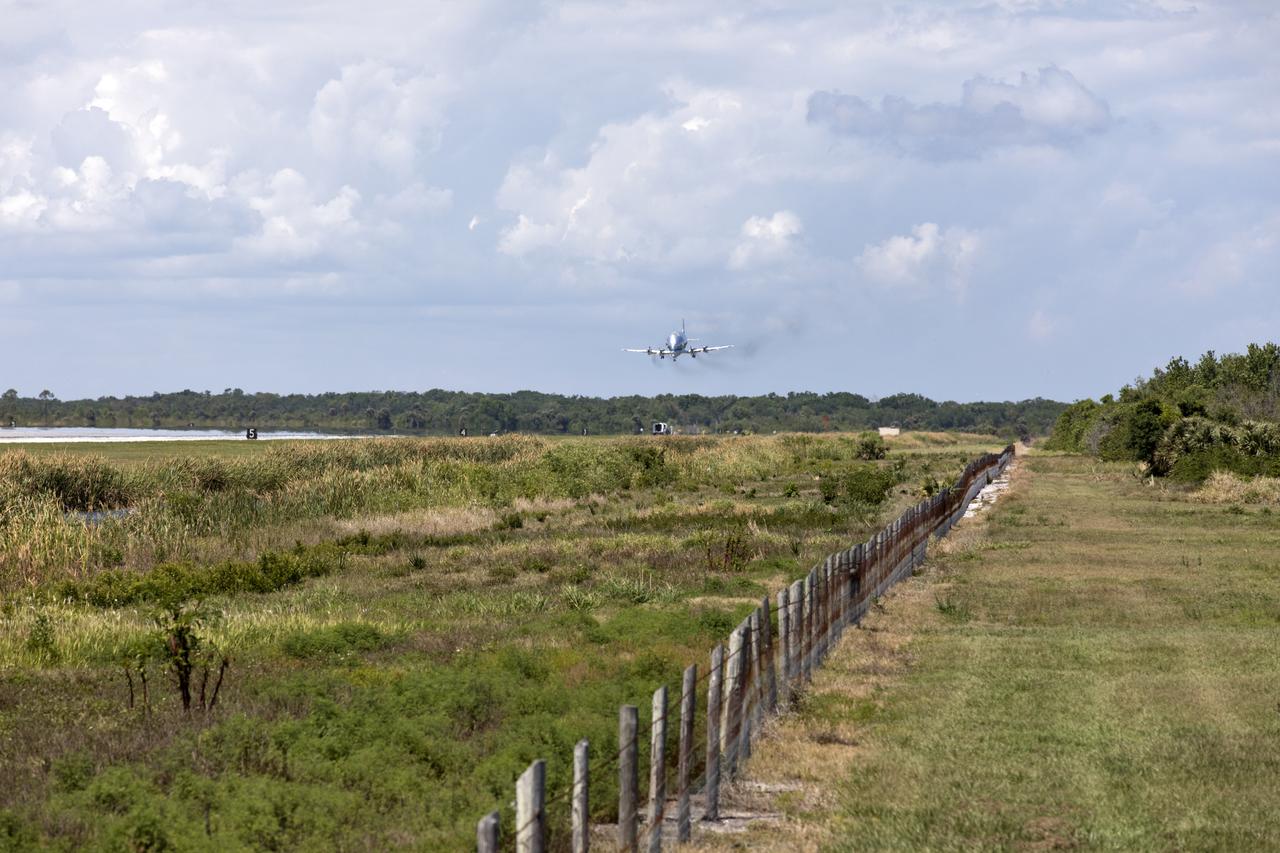
NASA's Super Guppy aircraft prepares to touch down at the Shuttle Landing Facility at the agency's Kennedy Space Center in Florida. The Super Guppy is carrying the Orion Stage Adapter (OSA), the second flight-hardware section of NASA's Space Launch System (SLS) rocket that has arrived at Kennedy. The OSA will connect the Orion spacecraft to the upper part of the SLS rocket, the interim cryogenic propulsion stage (ICPS). Both the OSA and ICPS are being stored for processing in the center's Space Station Processing Facility in preparation for Exploration Mission-1, the first uncrewed, integrated launch of the SLS rocket and Orion spacecraft.
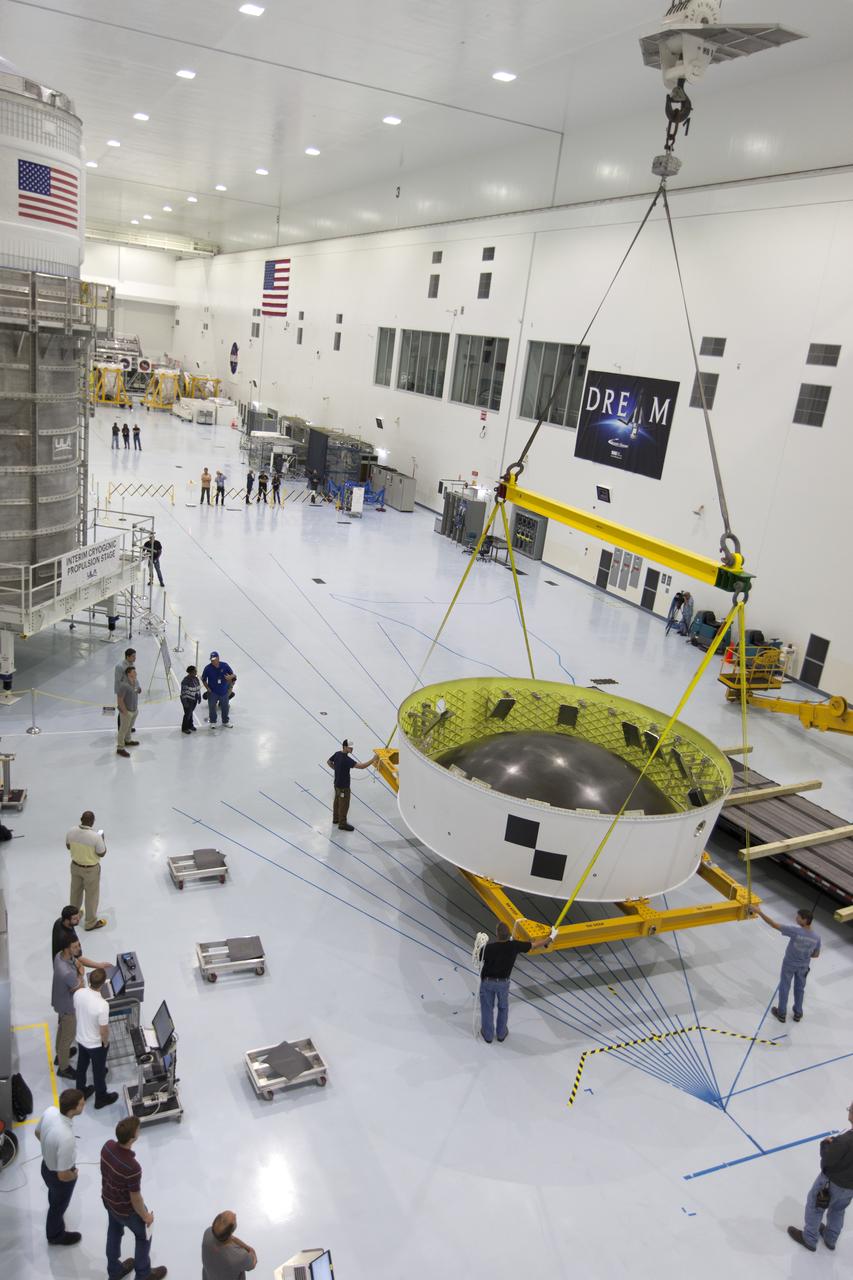
In this view from above in the Space Station Processing Facility (SSPF) high bay at NASA's Kennedy Space Center in Florida, technicians assist as a crane moves the Orion Stage Adapter (OSA) to a work area. The OSA is the second flight-hardware section of NASA's Space Launch System (SLS) rocket to arrive at Kennedy. The OSA will connect the Orion spacecraft to the upper part of the SLS, the interim cryogenic propulsion stage (ICPS). Both the OSA and ICPS, at left, are being stored for processing in the center's SSPF in preparation for Exploration Mission-1, the first uncrewed, integrated launch of the SLS rocket and Orion spacecraft.

Illustration of the SLS Exploration Upper Stage, or EUS. The Exploration Upper Stage will be used on the second configuration of the SLS rocket, known as Block 1B, and will provide in-space propulsion to send astronauts in NASA’s Orion spacecraft and heavy cargo on a precise trajectory to the Moon. The evolution of the rocket to SLS Block 1B configuration with EUS enables SLS to launch 40% more cargo to the Moon along with the crew. Manufacturing both the core stage and Exploration Upper Stage is a collaborative effort between NASA and Boeing, the lead contractor for EUS and the SLS core stage. SLS is the only rocket that can send Orion, astronauts, and supplies to the Moon in a single mission. The SLS rocket, NASA’s Orion spacecraft, Gateway, and human landing system are part of NASA’s backbone for deep space exploration. Under the Artemis program, NASA is working to land the first woman and the next man on the Moon to pave the way for sustainable exploration at the Moon and future missions to Mars. (NASA)
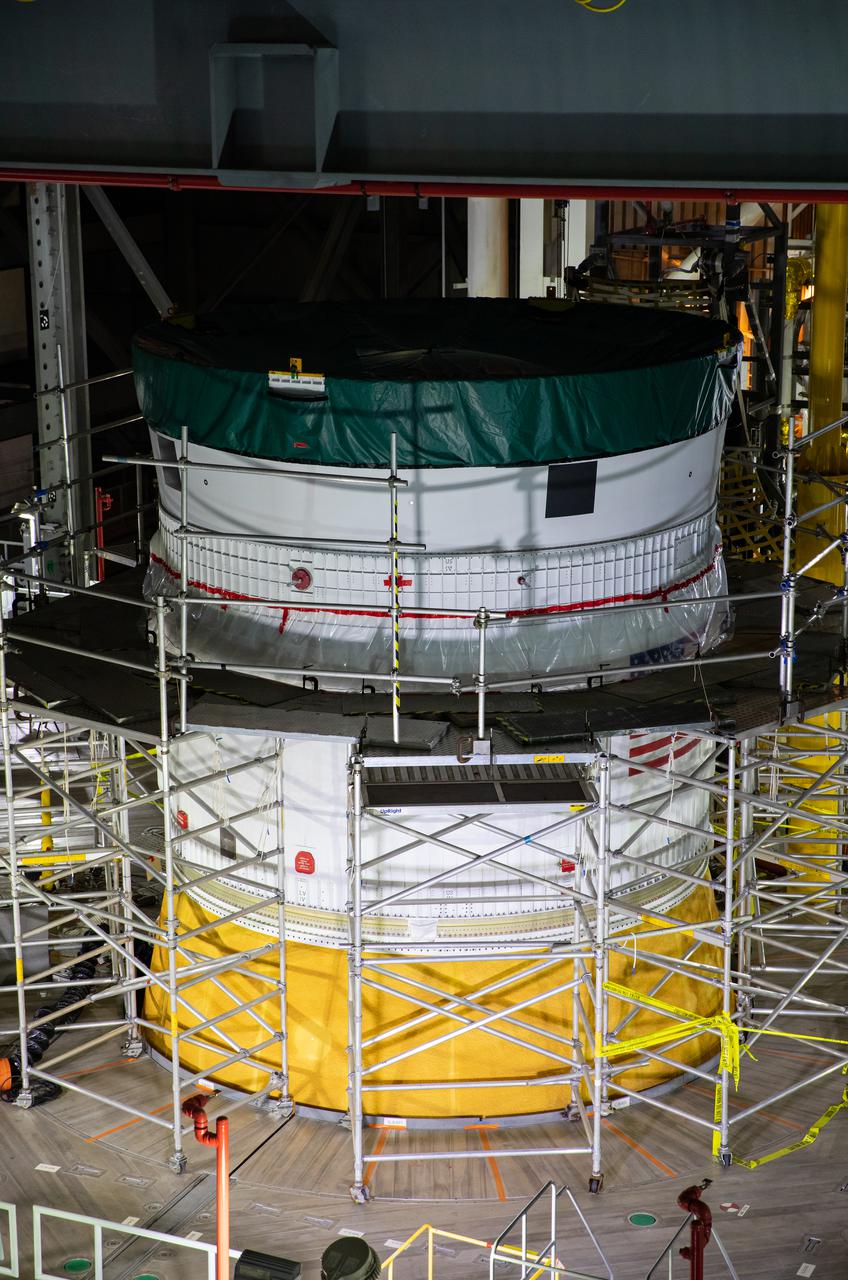
Inside NASA’s iconic Vehicle Assembly Building at Kennedy Space Center in Florida, teams from Exploration Ground Systems and contractor Jacobs mate the Orion Stage Adapter (OSA) to the Interim Cryogenic Propulsion Stage (ICPS) on top of the Space Launch System (SLS) on Oct. 9, 2021. The addition of the OSA marks the last piece of SLS rocket hardware to be added before crews soon add the Orion spacecraft and its launch abort system on top of the OSA. The ring-shaped OSA is filled with 10 shoebox-sized CubeSats that will deploy when the ICPS separates from Orion on its way to the Moon during Artemis I, which will be the first integrated flight test of the SLS and Orion spacecraft. In later missions, NASA will land the first woman and the first person of color on the surface of the Moon, paving the way for a long-term lunar presence and serving as a steppingstone on the way to Mars.
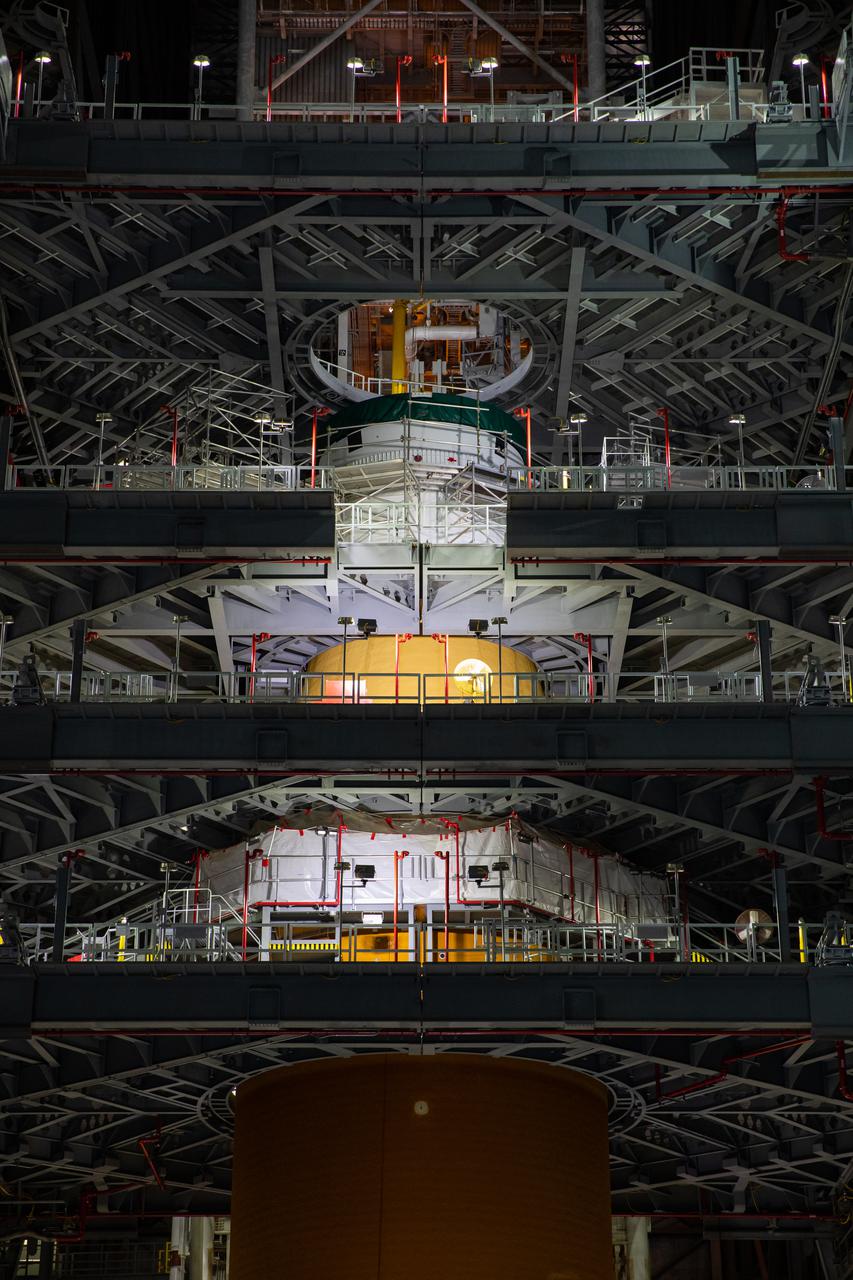
Inside NASA’s iconic Vehicle Assembly Building at Kennedy Space Center in Florida, teams from Exploration Ground Systems and contractor Jacobs mate the Orion Stage Adapter (OSA) to the Interim Cryogenic Propulsion Stage (ICPS) on top of the Space Launch System (SLS) on Oct. 9, 2021. The addition of the OSA marks the last piece of SLS rocket hardware to be added before crews soon add the Orion spacecraft and its launch abort system on top of the OSA. The ring-shaped OSA is filled with 10 shoebox-sized CubeSats that will deploy when the ICPS separates from Orion on its way to the Moon during Artemis I, which will be the first integrated flight test of the SLS and Orion spacecraft. In later missions, NASA will land the first woman and the first person of color on the surface of the Moon, paving the way for a long-term lunar presence and serving as a steppingstone on the way to Mars.

Inside NASA’s iconic Vehicle Assembly Building at Kennedy Space Center in Florida, teams from Exploration Ground Systems and contractor Jacobs mate the Orion Stage Adapter (OSA) to the Interim Cryogenic Propulsion Stage (ICPS) on top of the Space Launch System (SLS) on Oct. 9, 2021. The addition of the OSA marks the last piece of SLS rocket hardware to be added before crews soon add the Orion spacecraft and its launch abort system on top of the OSA. The ring-shaped OSA is filled with 10 shoebox-sized CubeSats that will deploy when the ICPS separates from Orion on its way to the Moon during Artemis I, which will be the first integrated flight test of the SLS and Orion spacecraft. In later missions, NASA will land the first woman and the first person of color on the surface of the Moon, paving the way for a long-term lunar presence and serving as a steppingstone on the way to Mars.
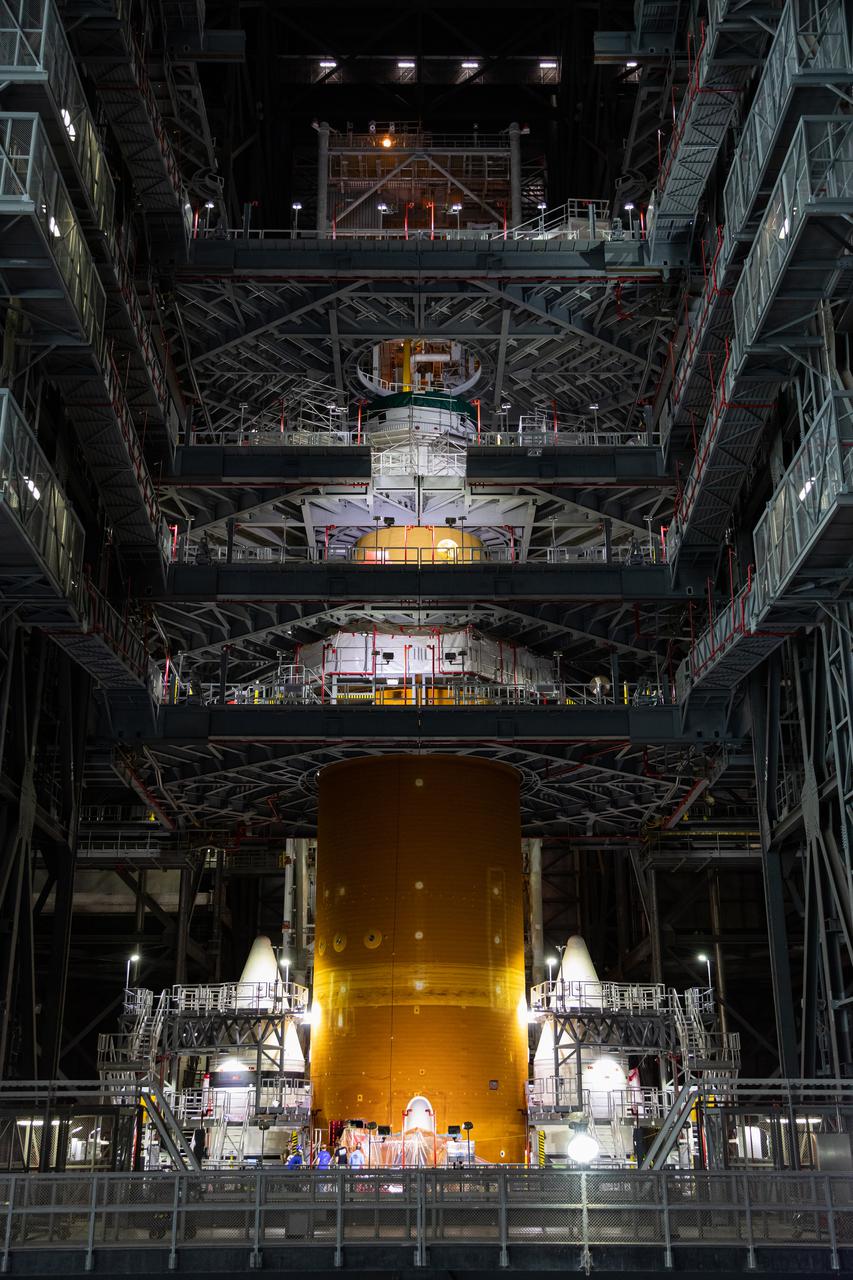
Inside NASA’s iconic Vehicle Assembly Building at Kennedy Space Center in Florida, teams from Exploration Ground Systems and contractor Jacobs mate the Orion Stage Adapter (OSA) to the Interim Cryogenic Propulsion Stage (ICPS) on top of the Space Launch System (SLS) on Oct. 9, 2021. The addition of the OSA marks the last piece of SLS rocket hardware to be added before crews soon add the Orion spacecraft and its launch abort system on top of the OSA. The ring-shaped OSA is filled with 10 shoebox-sized CubeSats that will deploy when the ICPS separates from Orion on its way to the Moon during Artemis I, which will be the first integrated flight test of the SLS and Orion spacecraft. In later missions, NASA will land the first woman and the first person of color on the surface of the Moon, paving the way for a long-term lunar presence and serving as a steppingstone on the way to Mars.
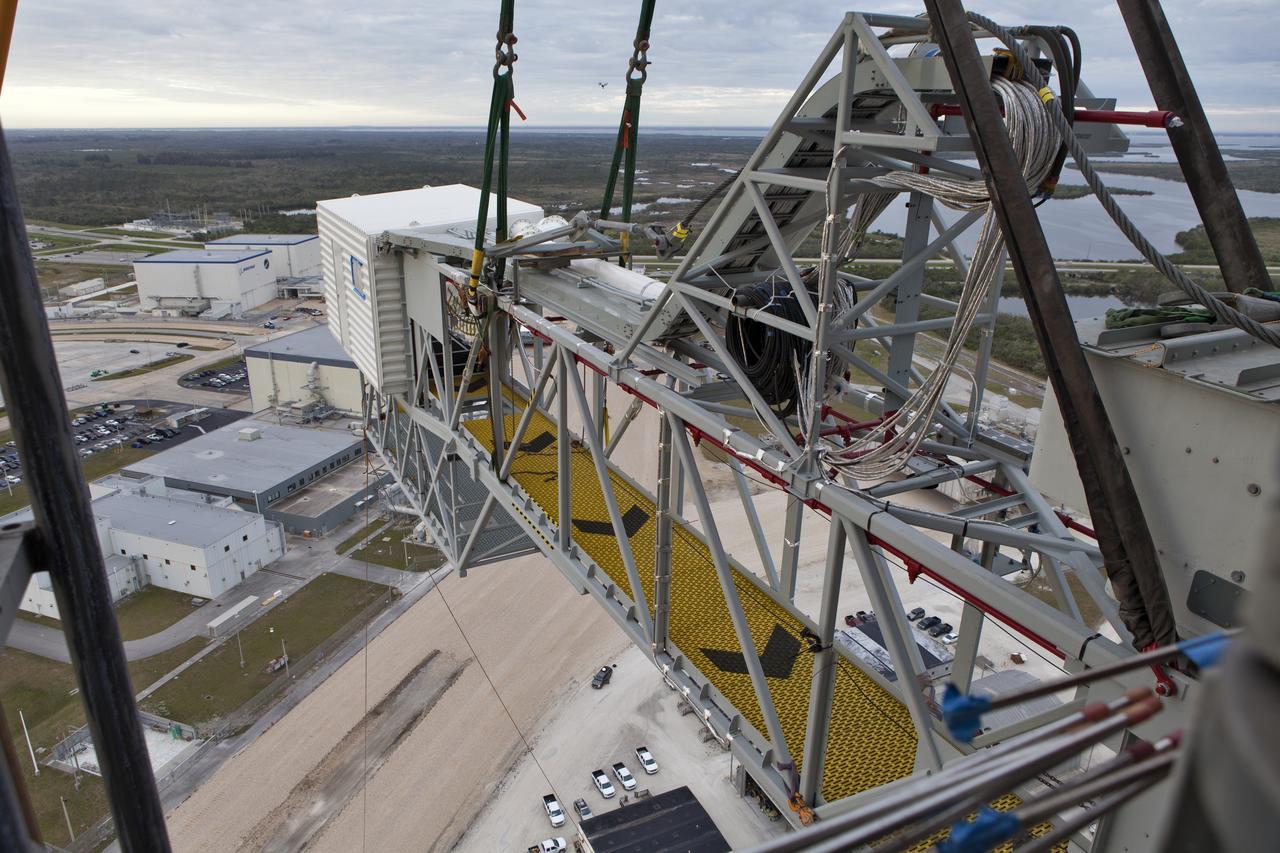
Viewed from the 274-foot level mobile launcher (ML), a crane positions the Orion crew access arm (CAA) so it can be attached to the tower that will support the Space launch System (SLS) rocket at NASA's Kennedy Space Center in Florida. NASA's Exploration Ground Systems organization has been overseeing installation of umbilicals and other launch accessories on the 380-foot-tall ML in preparation for stacking the first launch of the SLS, rocket with an Orion spacecraft. The CAA is designed to rotate from its retracted position and line up with Orion's crew hatch providing entry for astronauts and technicians.
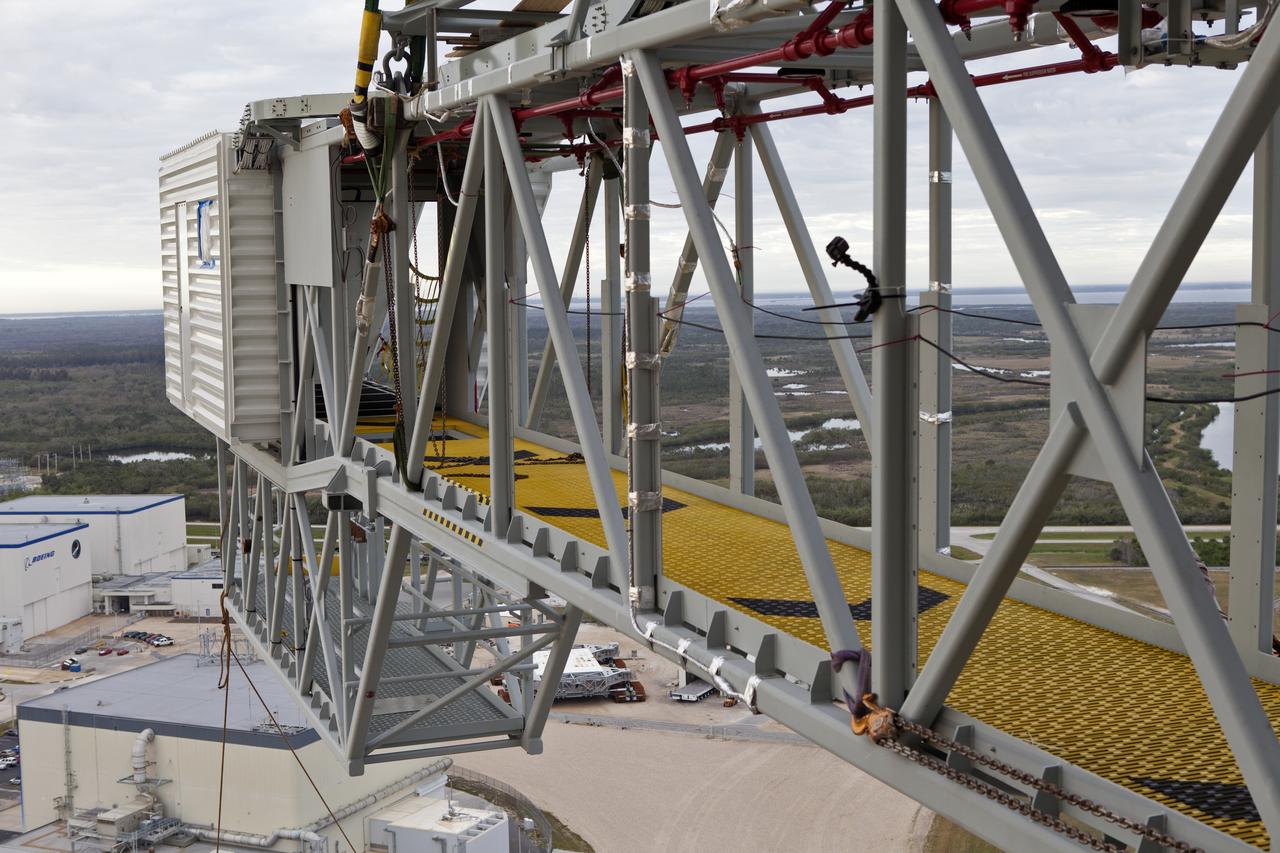
Viewed from the 274-foot level mobile launcher (ML), the Orion crew access arm (CAA) is beign installed on the tower. The CAA will support the Space launch System (SLS) rocket at NASA's Kennedy Space Center in Florida. NASA's Exploration Ground Systems organization has been overseeing installation of umbilicals and other launch accessories on the 380-foot-tall ML in preparation for stacking the first launch of the Space launch System, or SLS, rocket with an Orion spacecraft. The CAA is designed to rotate from its retracted position and line up with Orion's crew hatch providing entry for astronauts and technicians.
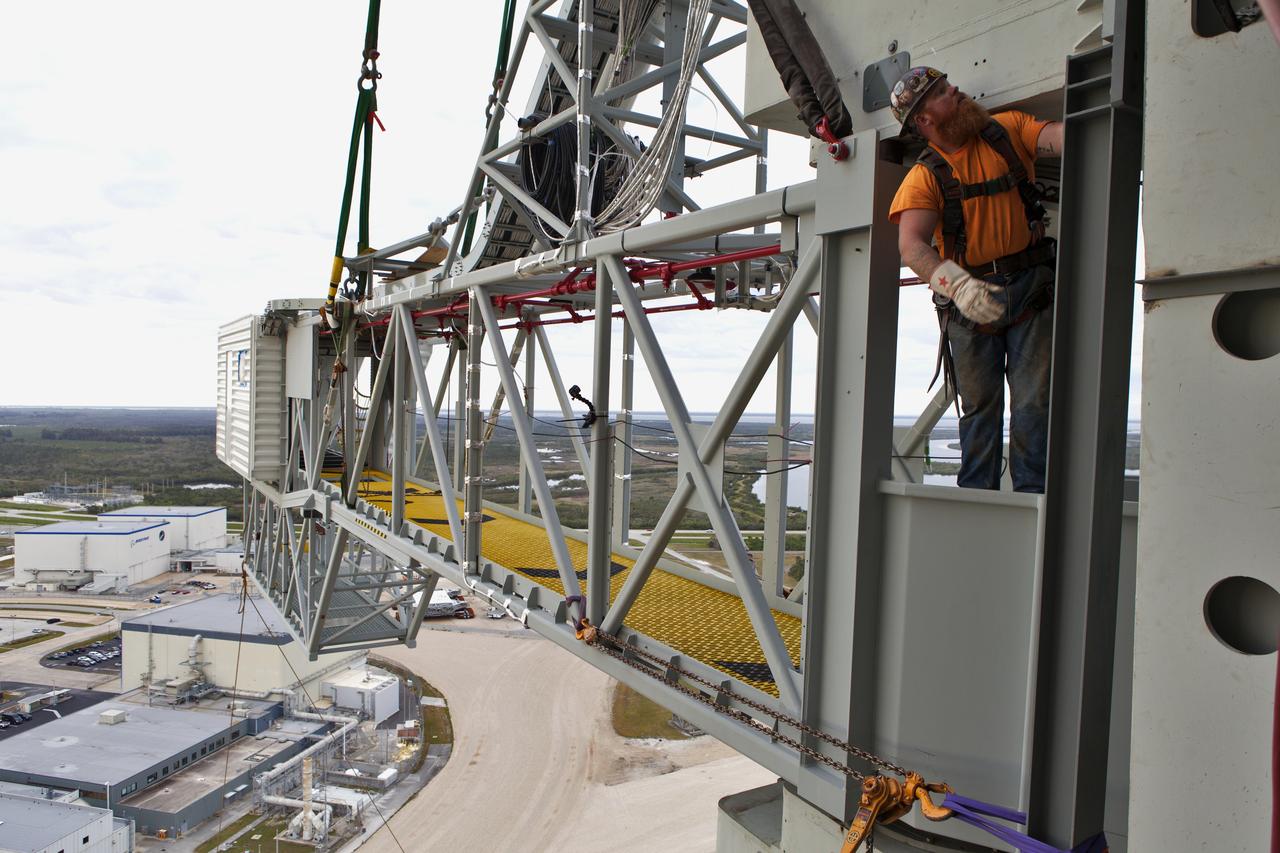
Viewed from the 274-foot level mobile launcher (ML), a technician begins installation of the Orion crew access arm (CAA) to the tower. The CAA will support the Space launch System (SLS) rocket at NASA's Kennedy Space Center in Florida. NASA's Exploration Ground Systems organization has been overseeing installation of umbilicals and other launch accessories on the 380-foot-tall ML in preparation for stacking the first launch of the Space launch System, or SLS, rocket with an Orion spacecraft. The CAA is designed to rotate from its retracted position and line up with Orion's crew hatch providing entry for astronauts and technicians.
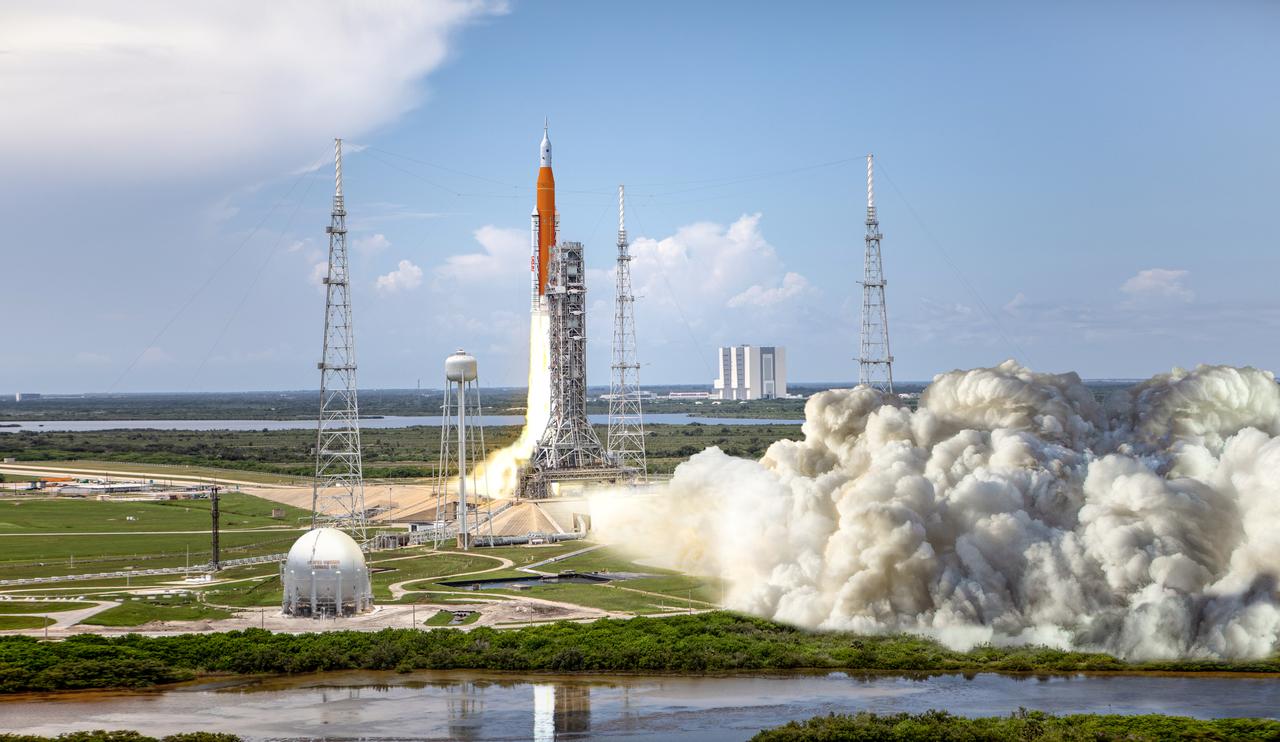
The following artist rendering shows NASA’s Space Launch System (SLS) rocket and Orion spacecraft lifting off from Kennedy Space Center’s Launch Pad 39B for the Artemis I mission -- an uncrewed test flight that will provide a foundation for human deep space exploration. Under the Artemis program, NASA will launch the first woman and next man to the lunar surface, using the Moon as a testing ground before venturing on to Mars.

Illustration of the SLS Exploration Upper Stage, or EUS. This configuration of the rocket, with the Exploration Upper Stage, will provide in-space propulsion to send astronauts in NASA’s Orion spacecraft and heavy cargo on a precise trajectory to the Moon. The evolution of the rocket to SLS Block 1B configuration with EUS enables SLS to launch 40% more cargo to the Moon along with the crew. Manufacturing both the core stage and Exploration Upper Stage is a collaborative effort between NASA and Boeing, the lead contractor for EUS and the SLS core stage. SLS is the only rocket that can send Orion, astronauts, and supplies to the Moon in a single mission. The SLS rocket, NASA’s Orion spacecraft, Gateway, and human landing system are part of NASA’s backbone for deep space exploration. Under the Artemis program, NASA is working to land the first woman and the next man on the Moon to pave the way for sustainable exploration at the Moon and future missions to Mars. (NASA)
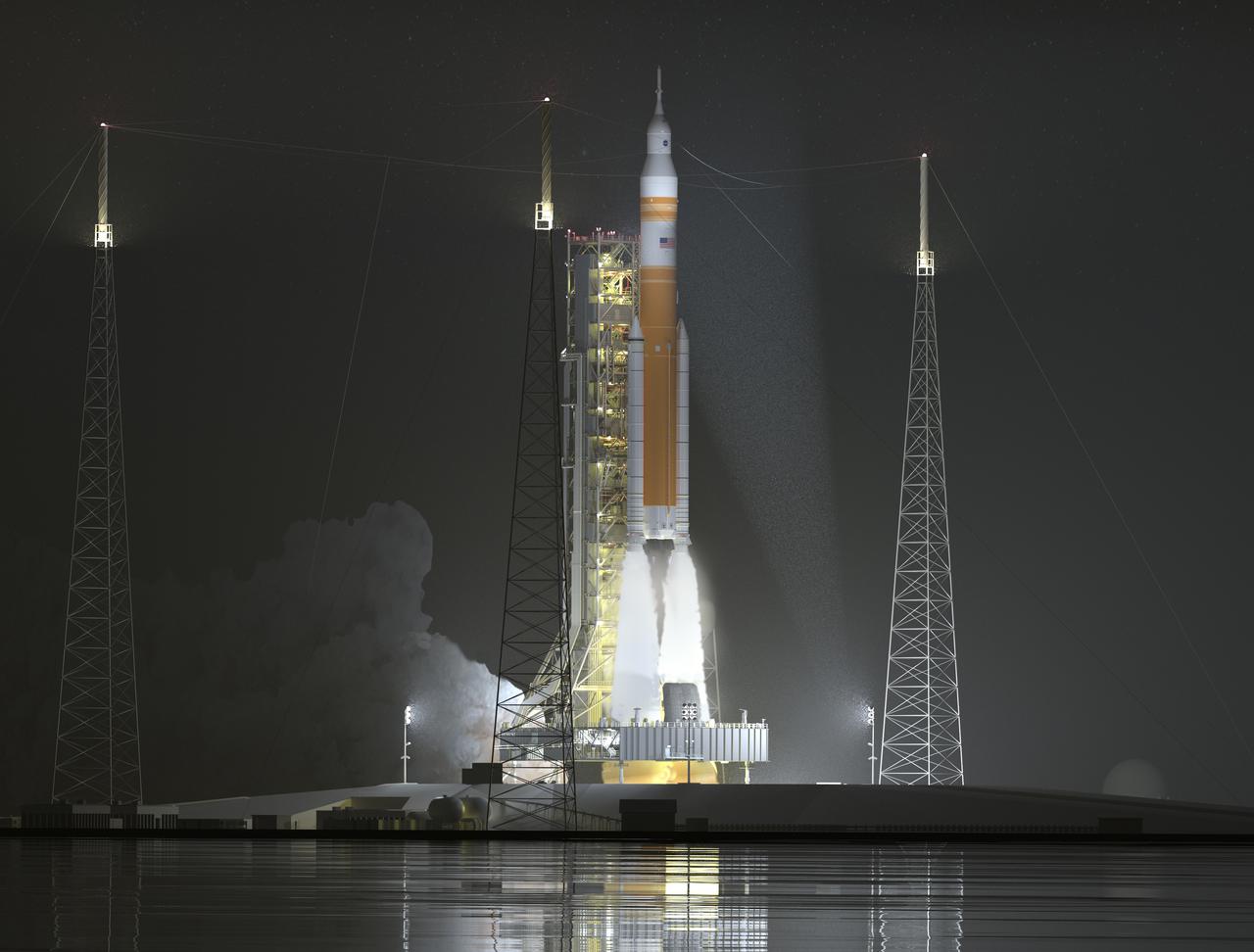
Illustration of the evolved SLS Block 1B Crew variant night launch. This configuration of the rocket, with the Exploration Upper Stage, will provide in-space propulsion to send astronauts in NASA’s Orion spacecraft and heavy cargo on a precise trajectory to the Moon. The evolution of the rocket to SLS Block 1B configuration with EUS enables SLS to launch 40% more cargo to the Moon along with the crew. Manufacturing both the core stage and Exploration Upper Stage is a collaborative effort between NASA and Boeing, the lead contractor for EUS and the SLS core stage. SLS is the only rocket that can send Orion, astronauts, and supplies to the Moon in a single mission. The SLS rocket, NASA’s Orion spacecraft, Gateway, and human landing system are part of NASA’s backbone for deep space exploration. Under the Artemis program, NASA is working to land the first woman and the next man on the Moon to pave the way for sustainable exploration at the Moon and future missions to Mars. (NASA) In album: B1B_Crew_SLS
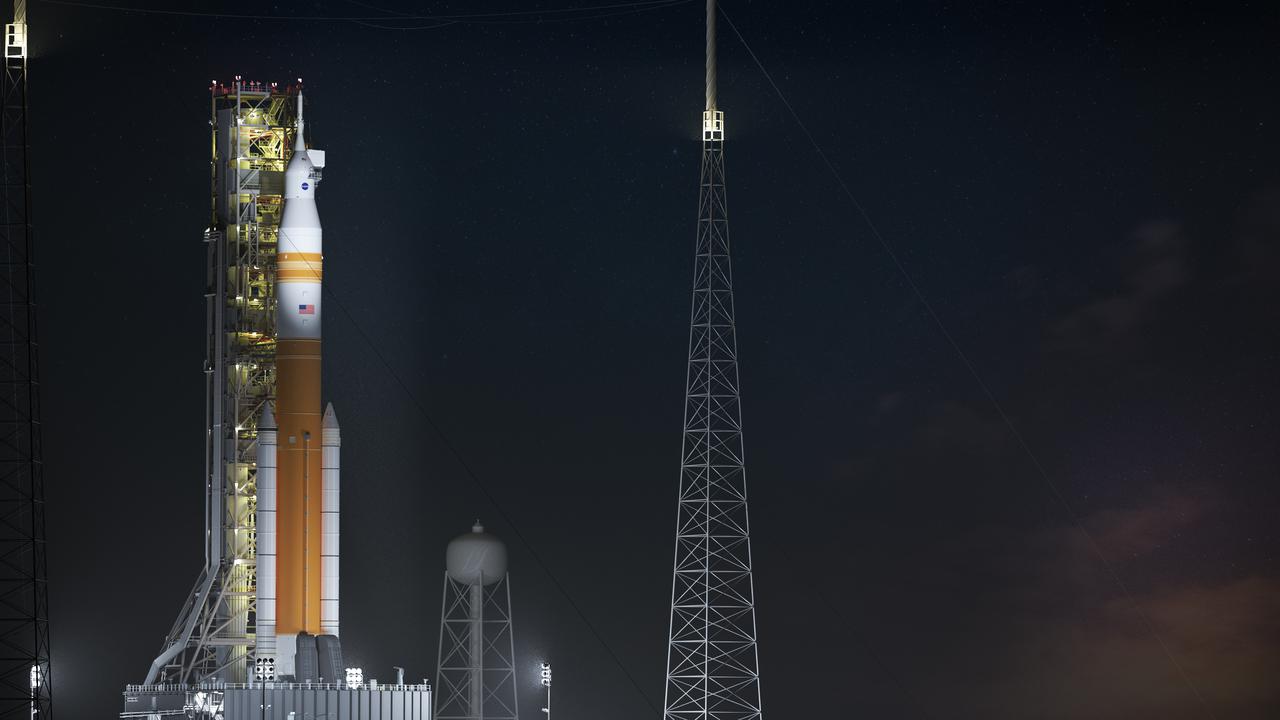
Illustration of nighttime scene of the evolved SLS Block 1B Crew variant on Pad 39B.. This configuration of the rocket, with the Exploration Upper Stage, will provide in-space propulsion to send astronauts in NASA’s Orion spacecraft and heavy cargo on a precise trajectory to the Moon. The evolution of the rocket to SLS Block 1B configuration with EUS enables SLS to launch 40% more cargo to the Moon along with the crew. Manufacturing both the core stage and Exploration Upper Stage is a collaborative effort between NASA and Boeing, the lead contractor for EUS and the SLS core stage. SLS is the only rocket that can send Orion, astronauts, and supplies to the Moon in a single mission. The SLS rocket, NASA’s Orion spacecraft, Gateway, and human landing system are part of NASA’s backbone for deep space exploration. Under the Artemis program, NASA is working to land the first woman and the next man on the Moon to pave the way for sustainable exploration at the Moon and future missions to Mars. (NASA)
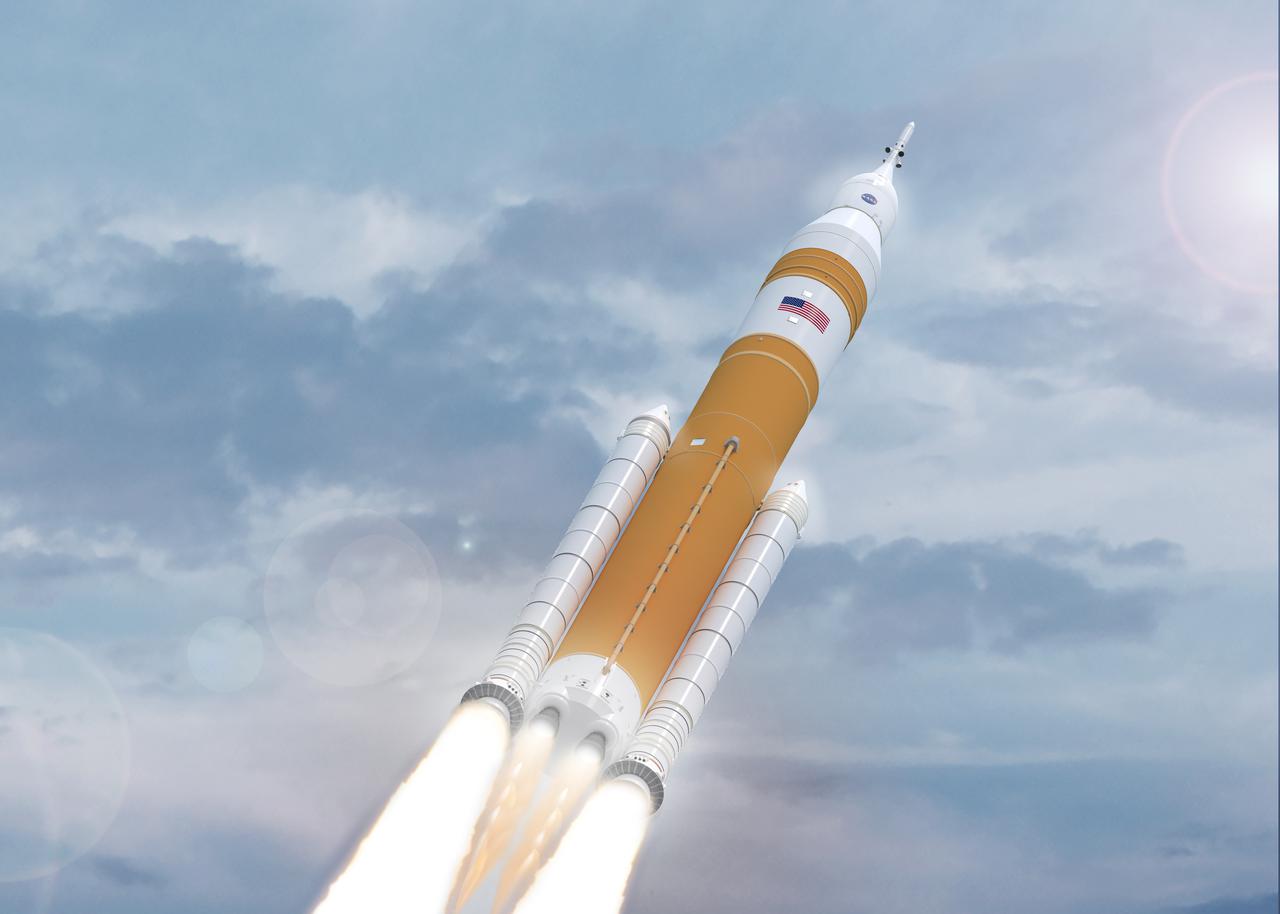
Illustration of evolved SLS Block 1B Crew variant in flight. This configuration of the rocket, with the Exploration Upper Stage, will provide in-space propulsion to send astronauts in NASA’s Orion spacecraft and heavy cargo on a precise trajectory to the Moon. The evolution of the rocket to SLS Block 1B configuration with EUS enables SLS to launch 40% more cargo to the Moon along with the crew. Manufacturing both the core stage and Exploration Upper Stage is a collaborative effort between NASA and Boeing, the lead contractor for EUS and the SLS core stage. SLS is the only rocket that can send Orion, astronauts, and supplies to the Moon in a single mission. The SLS rocket, NASA’s Orion spacecraft, Gateway, and human landing system are part of NASA’s backbone for deep space exploration. Under the Artemis program, NASA is working to land the first woman and the next man on the Moon to pave the way for sustainable exploration at the Moon and future missions to Mars. (NASA)

Illustration of the evolved SLS Block 1B Crew variant outer mold line. This configuration of the rocket, with the Exploration Upper Stage, will provide in-space propulsion to send astronauts in NASA’s Orion spacecraft and heavy cargo on a precise trajectory to the Moon. The evolution of the rocket to SLS Block 1B configuration with EUS enables SLS to launch 40% more cargo to the Moon along with the crew. Manufacturing both the core stage and Exploration Upper Stage is a collaborative effort between NASA and Boeing, the lead contractor for EUS and the SLS core stage. SLS is the only rocket that can send Orion, astronauts, and supplies to the Moon in a single mission. The SLS rocket, NASA’s Orion spacecraft, Gateway, and human landing system are part of NASA’s backbone for deep space exploration. Under the Artemis program, NASA is working to land the first woman and the next man on the Moon to pave the way for sustainable exploration at the Moon and future missions to Mars. (NASA)

Seen here, is a nighttime rendering of the evolved SLS Block 1B Crew variant positioned on the mobile launcher. This configuration of the rocket, with the Exploration Upper Stage, will provide in-space propulsion to send astronauts in NASA’s Orion spacecraft and heavy cargo on a precise trajectory to the Moon. The evolution of the rocket to SLS Block 1B configuration with EUS enables SLS to launch 40% more cargo to the Moon along with the crew. Manufacturing both the core stage and Exploration Upper Stage is a collaborative effort between NASA and Boeing, the lead contractor for EUS and the SLS core stage. SLS is the only rocket that can send Orion, astronauts, and supplies to the Moon in a single mission. The SLS rocket, NASA’s Orion spacecraft, Gateway, and human landing system are part of NASA’s backbone for deep space exploration. Under the Artemis program, NASA is working to land the first woman and the next man on the Moon to pave the way for sustainable exploration at the Moon and future missions to Mars. (NASA)
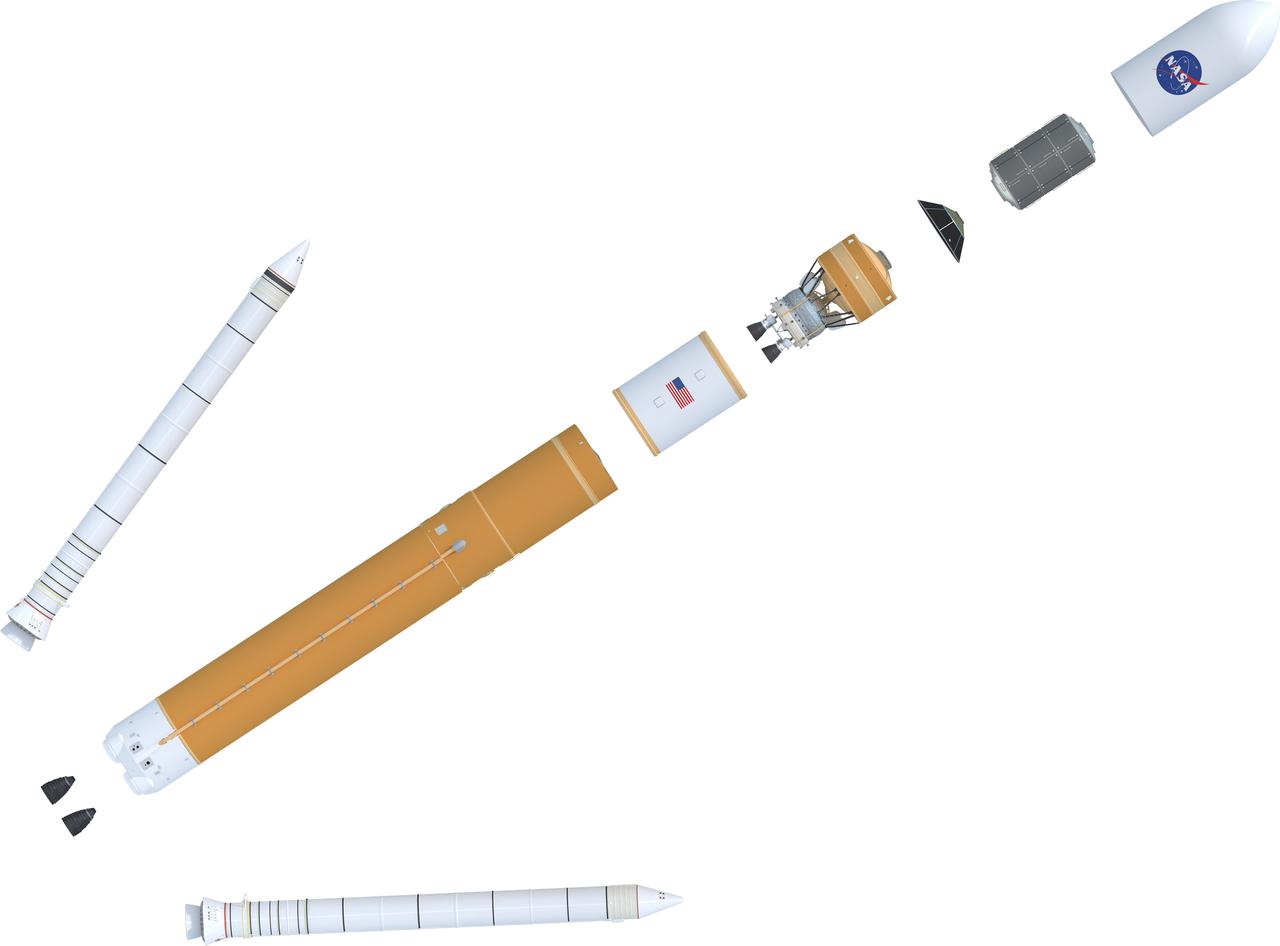
Expanded view illustration of elements of the evolved SLS Block 1B Crew variant. This configuration of the rocket, with the Exploration Upper Stage, will provide in-space propulsion to send astronauts in NASA’s Orion spacecraft and heavy cargo on a precise trajectory to the Moon. The evolution of the rocket to SLS Block 1B configuration with EUS enables SLS to launch 40% more cargo to the Moon along with the crew. Manufacturing both the core stage and Exploration Upper Stage is a collaborative effort between NASA and Boeing, the lead contractor for EUS and the SLS core stage. SLS is the only rocket that can send Orion, astronauts, and supplies to the Moon in a single mission. The SLS rocket, NASA’s Orion spacecraft, Gateway, and human landing system are part of NASA’s backbone for deep space exploration. Under the Artemis program, NASA is working to land the first woman and the next man on the Moon to pave the way for sustainable exploration at the Moon and future missions to Mars. (NASA)
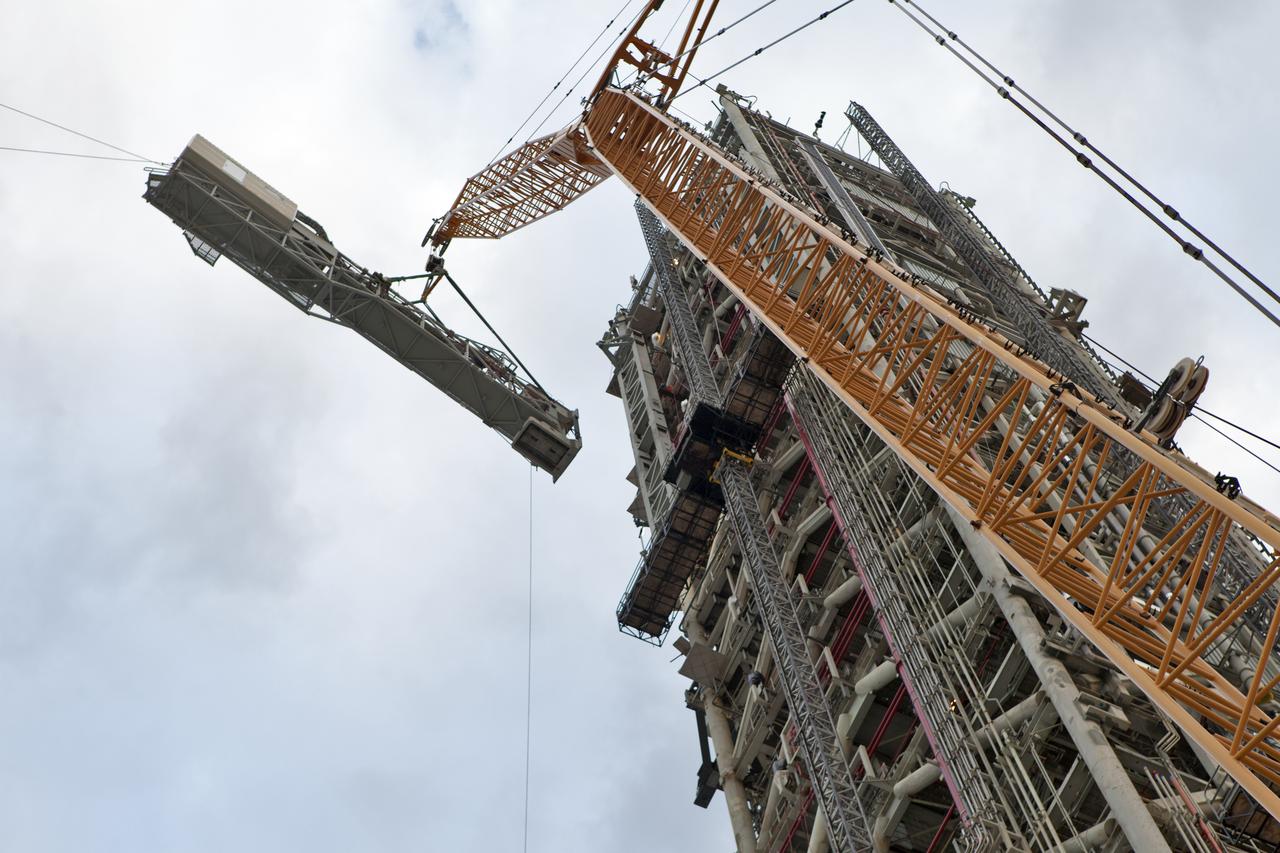
At NASA's Kennedy Space Center in Florida, a crane lifts the Orion crew access arm (CAA) so it can be attached to the mobile launcher (ML). The arm will be installed at about the 274-foot level on the ML tower. NASA's Exploration Ground Systems organization has been overseeing installation of umbilicals and other launch accessories on the 380-foot-tall ML in preparation for stacking the first launch of the Space launch System (SLS), rocket with an Orion spacecraft. The CAA is designed to rotate from its retracted position and line up with Orion's crew hatch providing entry for astronauts and technicians.
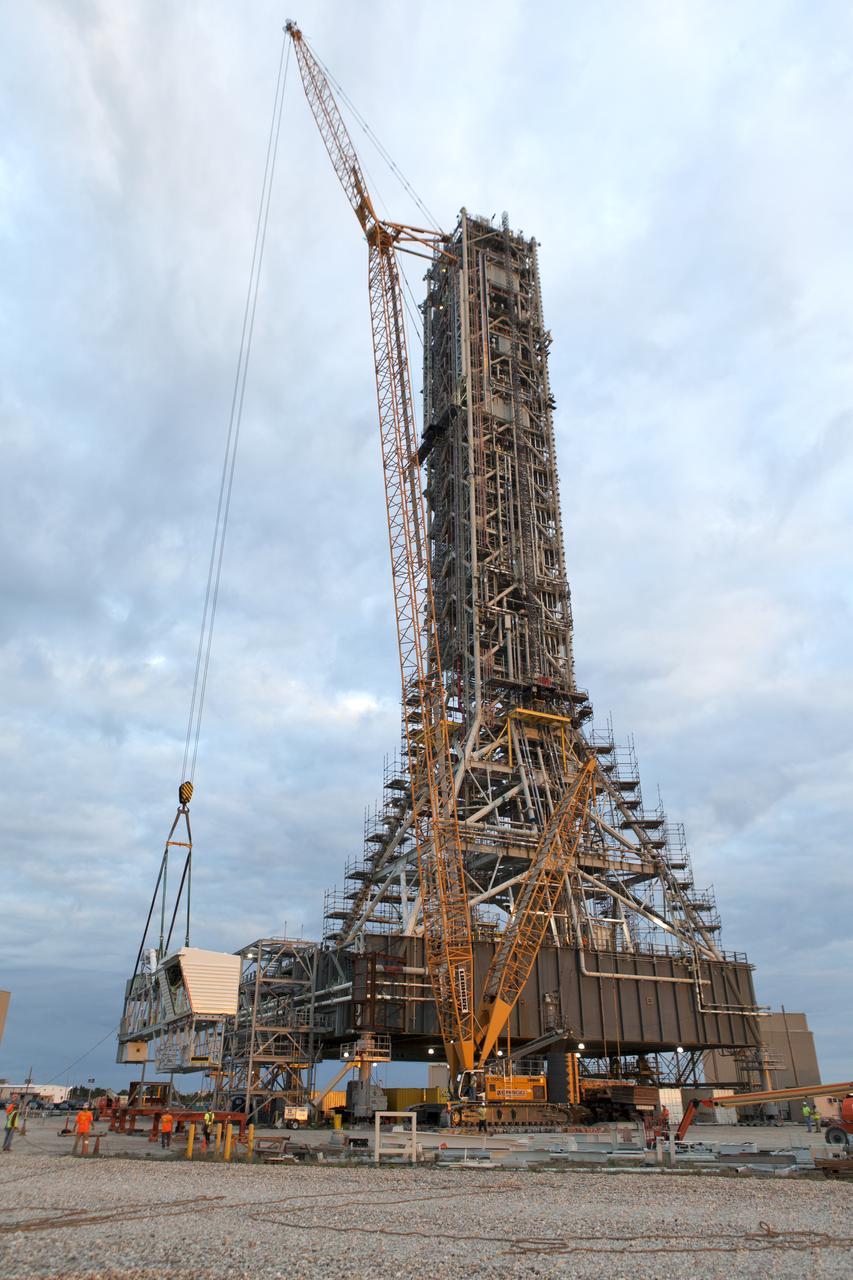
At NASA's Kennedy Space Center in Florida, a crane begins lifting the Orion crew access arm (CAA) so it can be attached to the mobile launcher (ML). The arm will be installed at about the 274-foot level on the ML tower. NASA's Exploration Ground Systems organization has been overseeing installation of umbilicals and other launch accessories on the 380-foot-tall ML in preparation for stacking the first launch of the Space launch System (SLS), rocket with an Orion spacecraft. The CAA is designed to rotate from its retracted position and line up with Orion's crew hatch providing entry for astronauts and technicians.
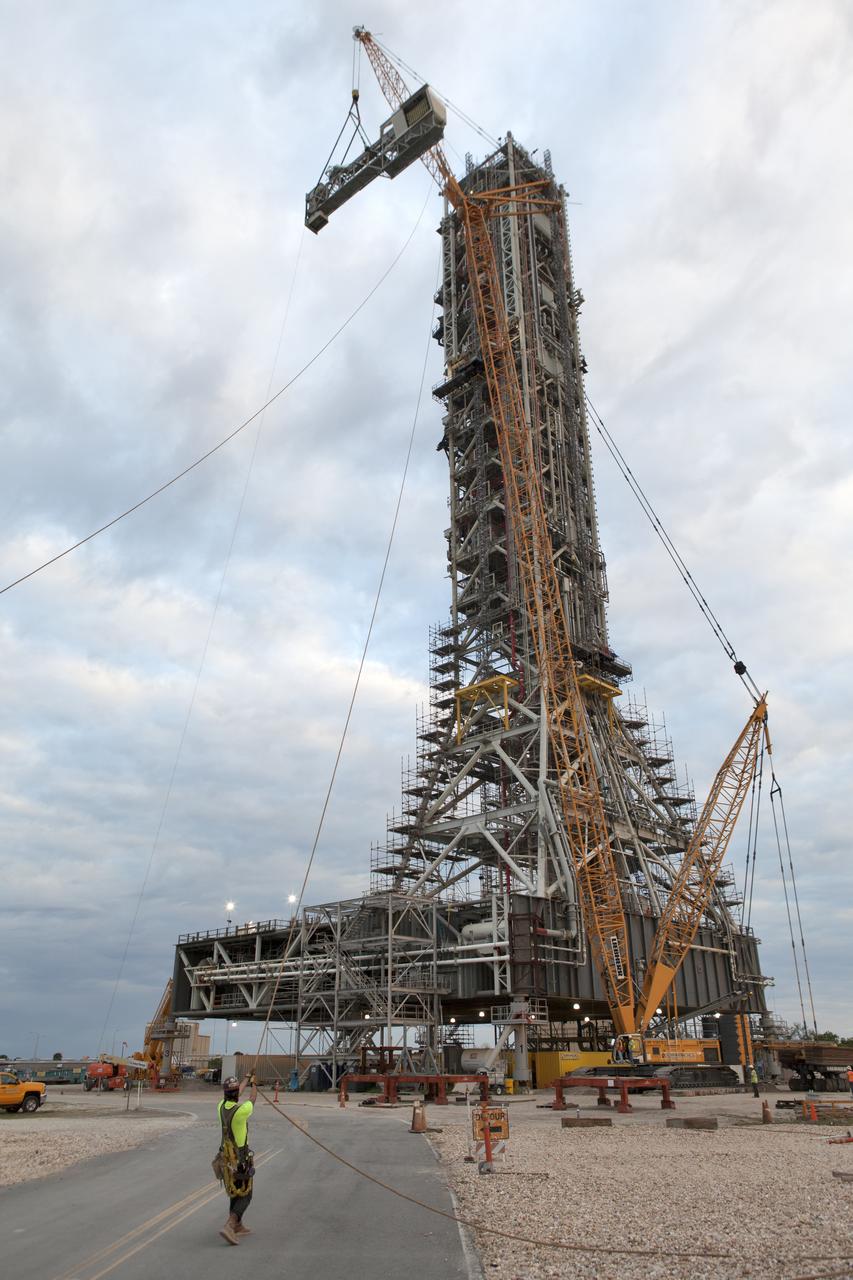
At NASA's Kennedy Space Center in Florida, a crane lifts the Orion crew access arm (CAA) so it can be attached to the mobile launcher (ML). The arm will be installed at about the 274-foot level on the ML tower. NASA's Exploration Ground Systems organization has been overseeing installation of umbilicals and other launch accessories on the 380-foot-tall ML in preparation for stacking the first launch of the Space launch System (SLS), rocket with an Orion spacecraft. The CAA is designed to rotate from its retracted position and line up with Orion's crew hatch providing entry for astronauts and technicians.
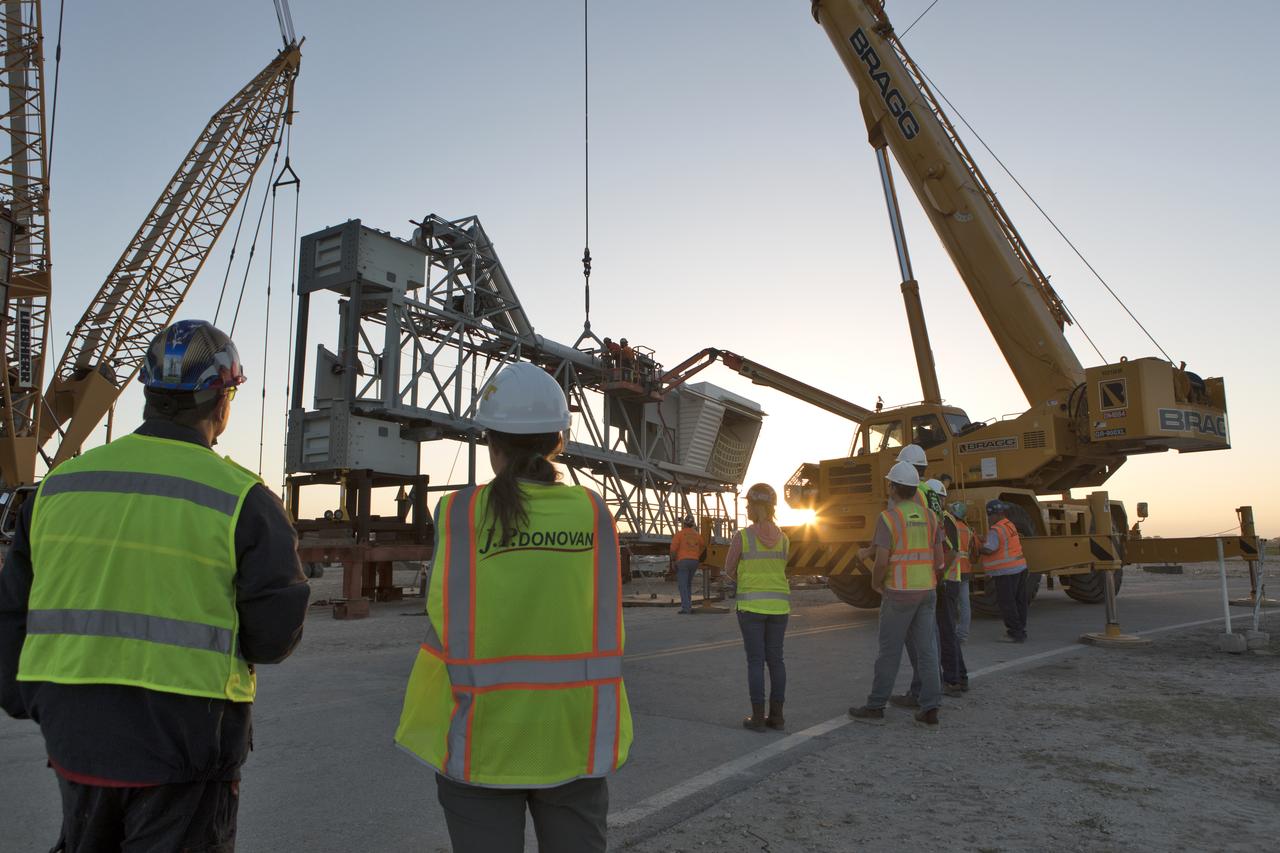
Under the watchful eye of technicians and engineers, a crane is prepared to lift the Orion crew access arm (CAA) so it can be attached to the mobile launcher (ML) at NASA's Kennedy Space Center in Florida. The arm will be installed at about the 274-foot level on the ML tower. NASA's Exploration Ground Systems organization has been overseeing installation of umbilicals and other launch accessories on the 380-foot-tall ML in preparation for stacking the first launch of the Space launch System, or SLS, rocket with an Orion spacecraft. The CAA is designed to rotate from its retracted position and line up with Orion's crew hatch providing entry for astronauts and technicians.
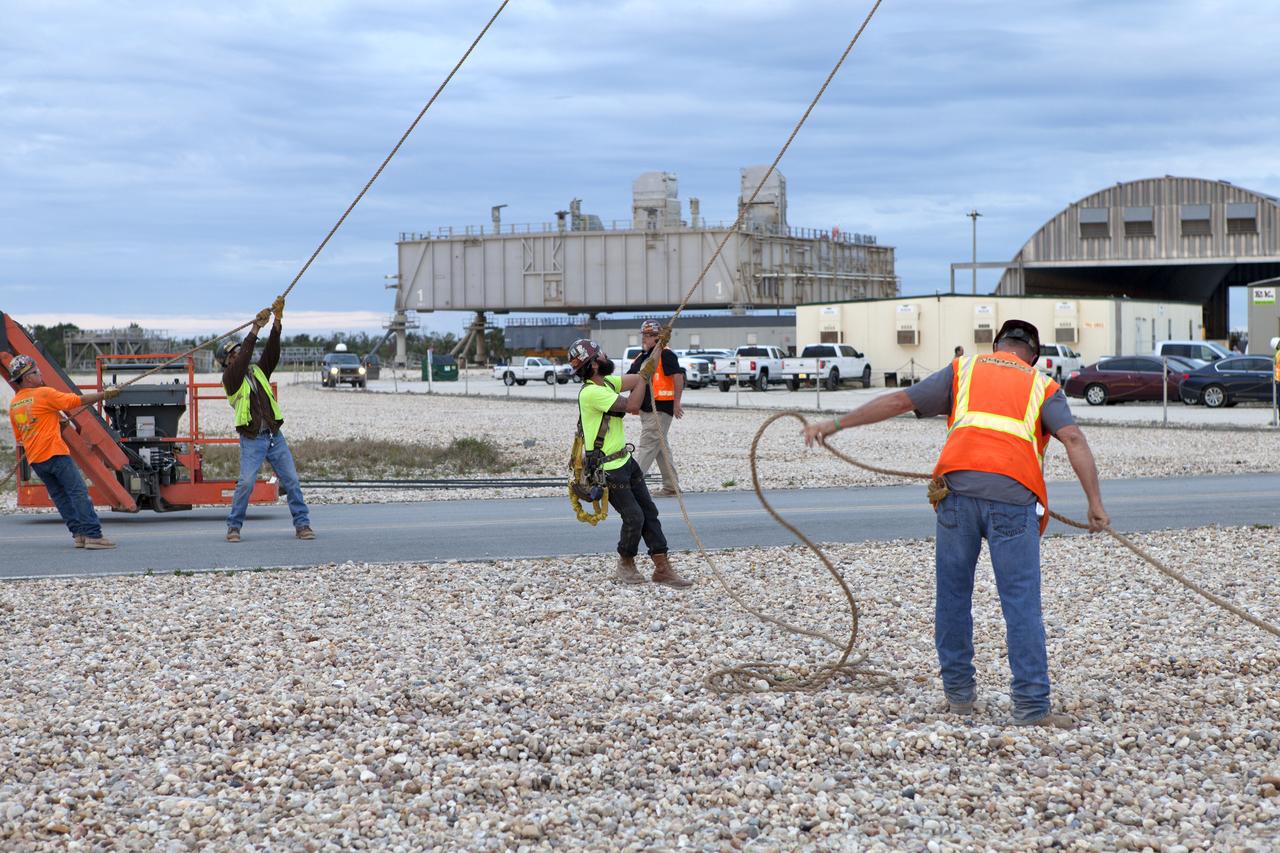
At NASA's Kennedy Space Center in Florida, technicians assist as a crane lifts the Orion crew access arm (CAA) so it can be attached to the mobile launcher (ML). The arm will be installed at about the 274-foot level on the ML tower. NASA's Exploration Ground Systems organization has been overseeing installation of umbilicals and other launch accessories on the 380-foot-tall ML in preparation for stacking the first launch of the Space launch System (SLS), rocket with an Orion spacecraft. The CAA is designed to rotate from its retracted position and line up with Orion's crew hatch providing entry for astronauts and technicians.
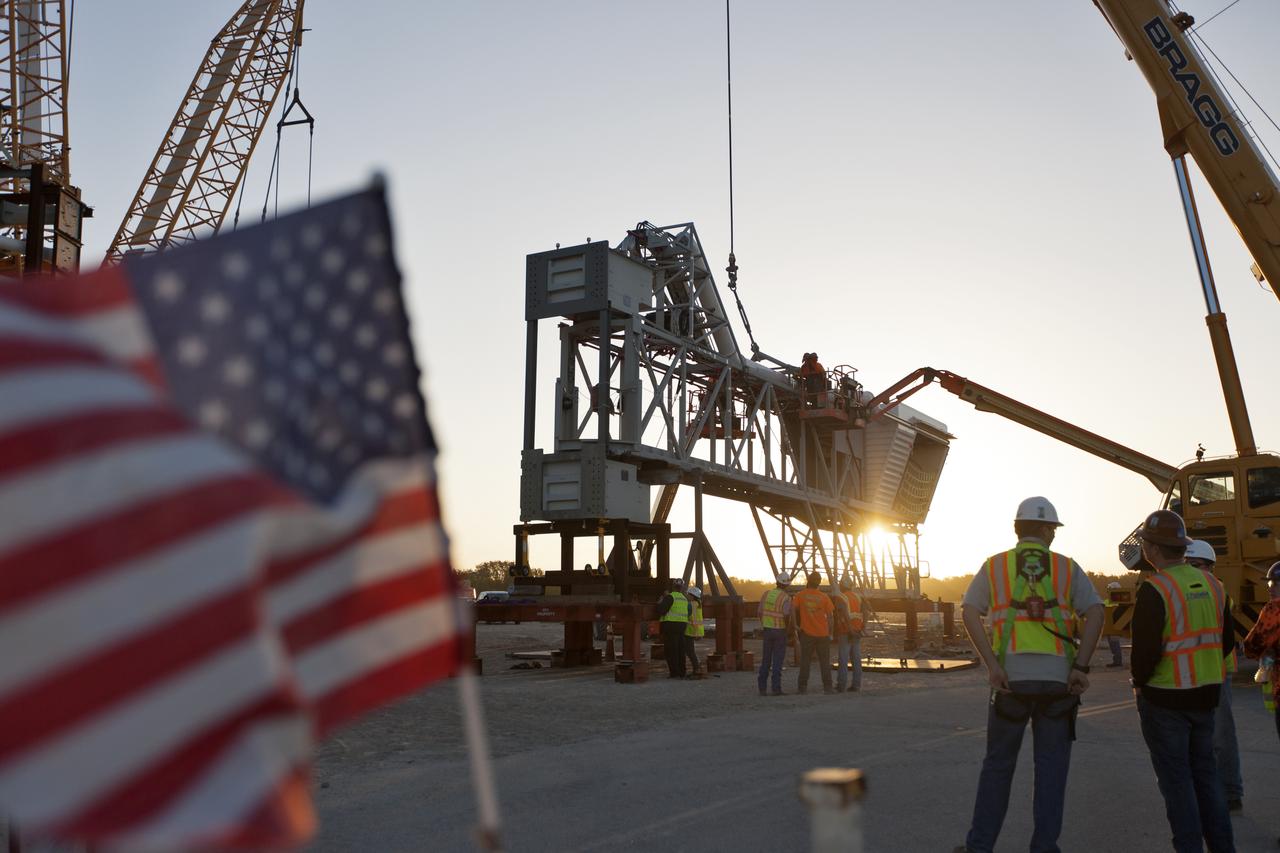
Under the watchful eye of technicians and engineers, a crane is prepared to lift the Orion crew access arm (CAA) so it can be attached to the mobile launcher (ML) at NASA's Kennedy Space Center in Florida. The arm will be installed at about the 274-foot level on the ML tower. NASA's Exploration Ground Systems organization has been overseeing installation of umbilicals and other launch accessories on the 380-foot-tall ML in preparation for stacking the first launch of the Space launch System, or SLS, rocket with an Orion spacecraft. The CAA is designed to rotate from its retracted position and line up with Orion's crew hatch providing entry for astronauts and technicians.
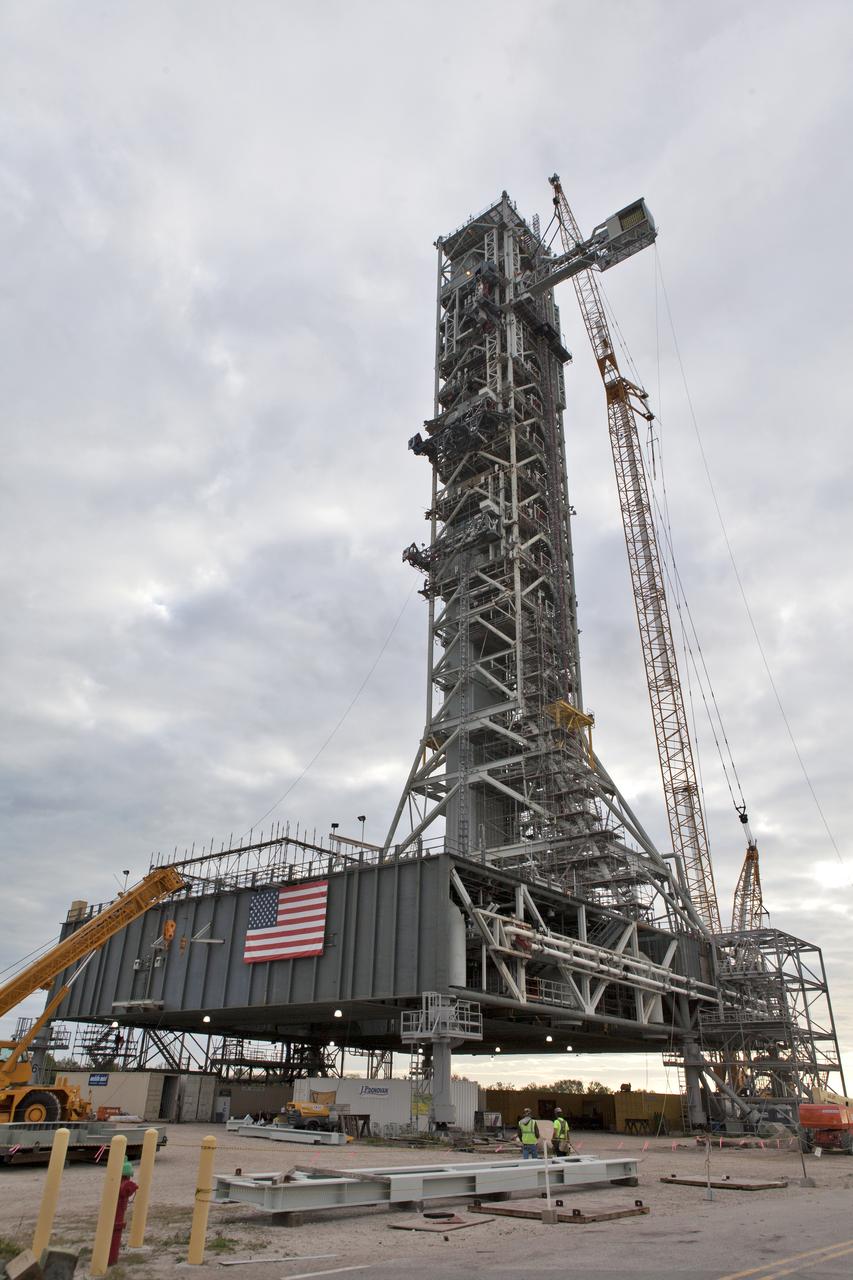
At NASA's Kennedy Space Center in Florida, a crane positions the Orion crew access arm (CAA) so it can be attached to the mobile launcher (ML). The arm will be installed at about the 274-foot level on the ML tower. NASA's Exploration Ground Systems organization has been overseeing installation of umbilicals and other launch accessories on the 380-foot-tall ML in preparation for stacking the first launch of the Space launch System (SLS), rocket with an Orion spacecraft. The CAA is designed to rotate from its retracted position and line up with Orion's crew hatch providing entry for astronauts and technicians.
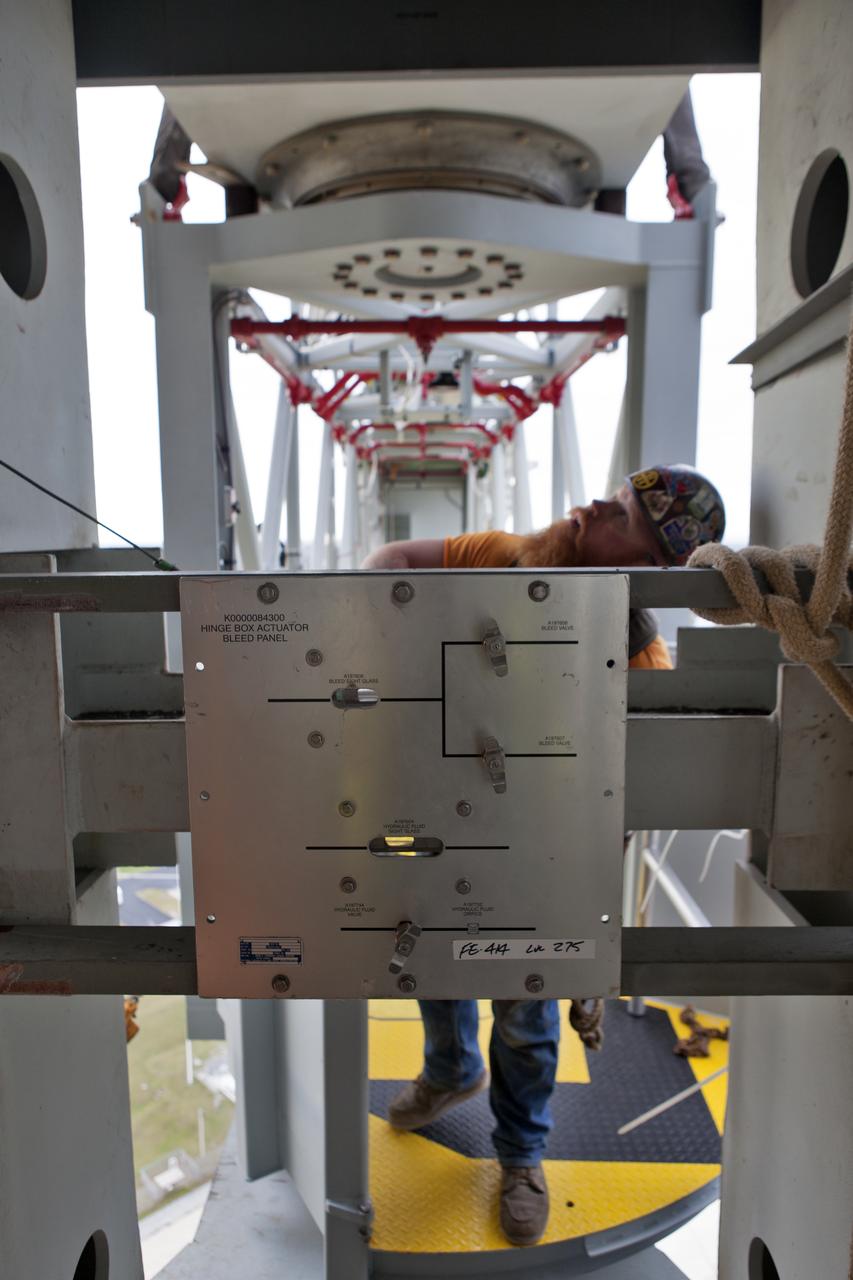
With a control panel visible in the foreground, a technician begins installation of the Orion crew access arm (CAA) to the mobile launcher (ML) tower at NASA's Kennedy Space Center in Florida. NASA's Exploration Ground Systems organization has been overseeing installation of umbilicals and other launch accessories on the 380-foot-tall ML in preparation for stacking the first launch of the Space launch System, or SLS, rocket with an Orion spacecraft. The CAA is designed to rotate from its retracted position and line up with Orion's crew hatch providing entry for astronauts and technicians.
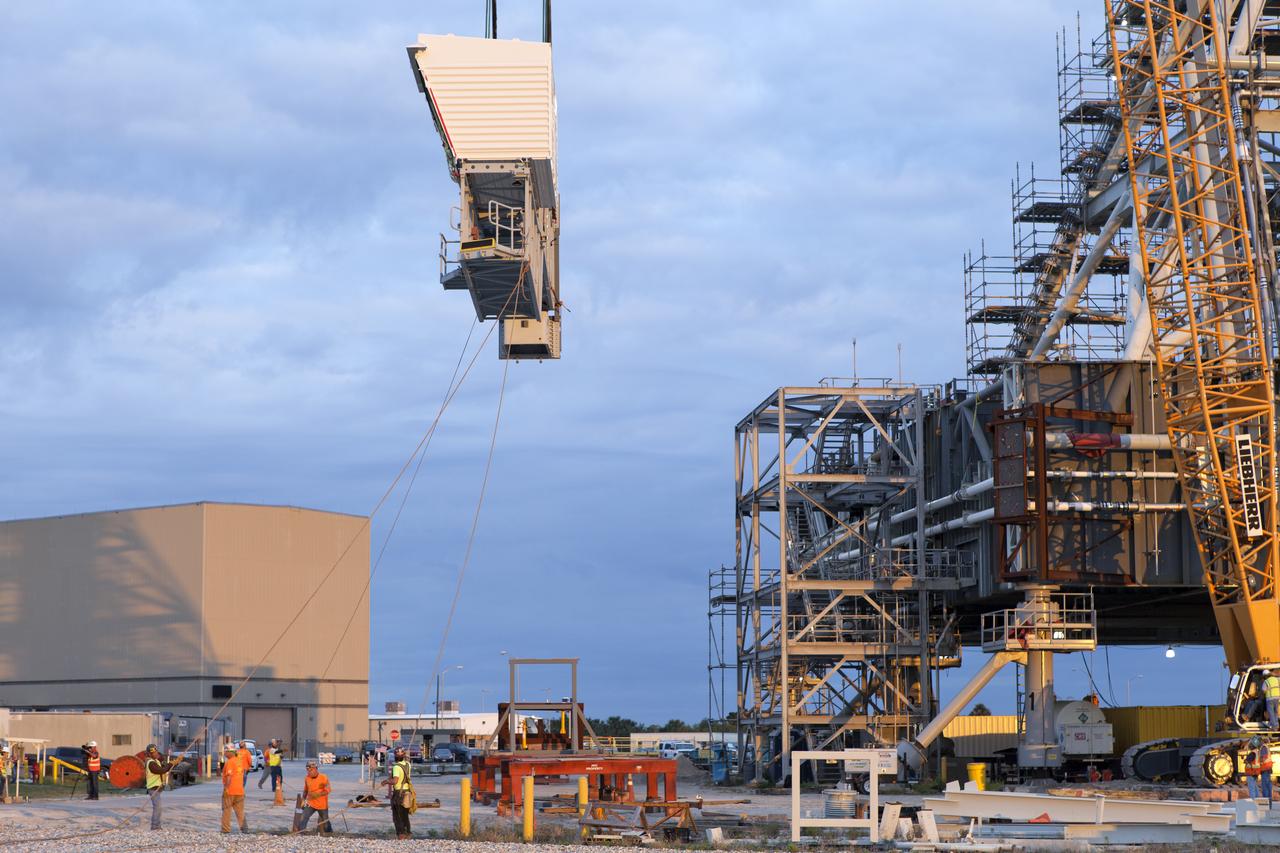
At NASA's Kennedy Space Center in Florida, a crane lifts the Orion crew access arm (CAA) so it can be attached to the mobile launcher (ML). The arm will be installed at about the 274-foot level on the ML tower. NASA's Exploration Ground Systems organization has been overseeing installation of umbilicals and other launch accessories on the 380-foot-tall ML in preparation for stacking the first launch of the Space launch System (SLS), rocket with an Orion spacecraft. The CAA is designed to rotate from its retracted position and line up with Orion's crew hatch providing entry for astronauts and technicians.
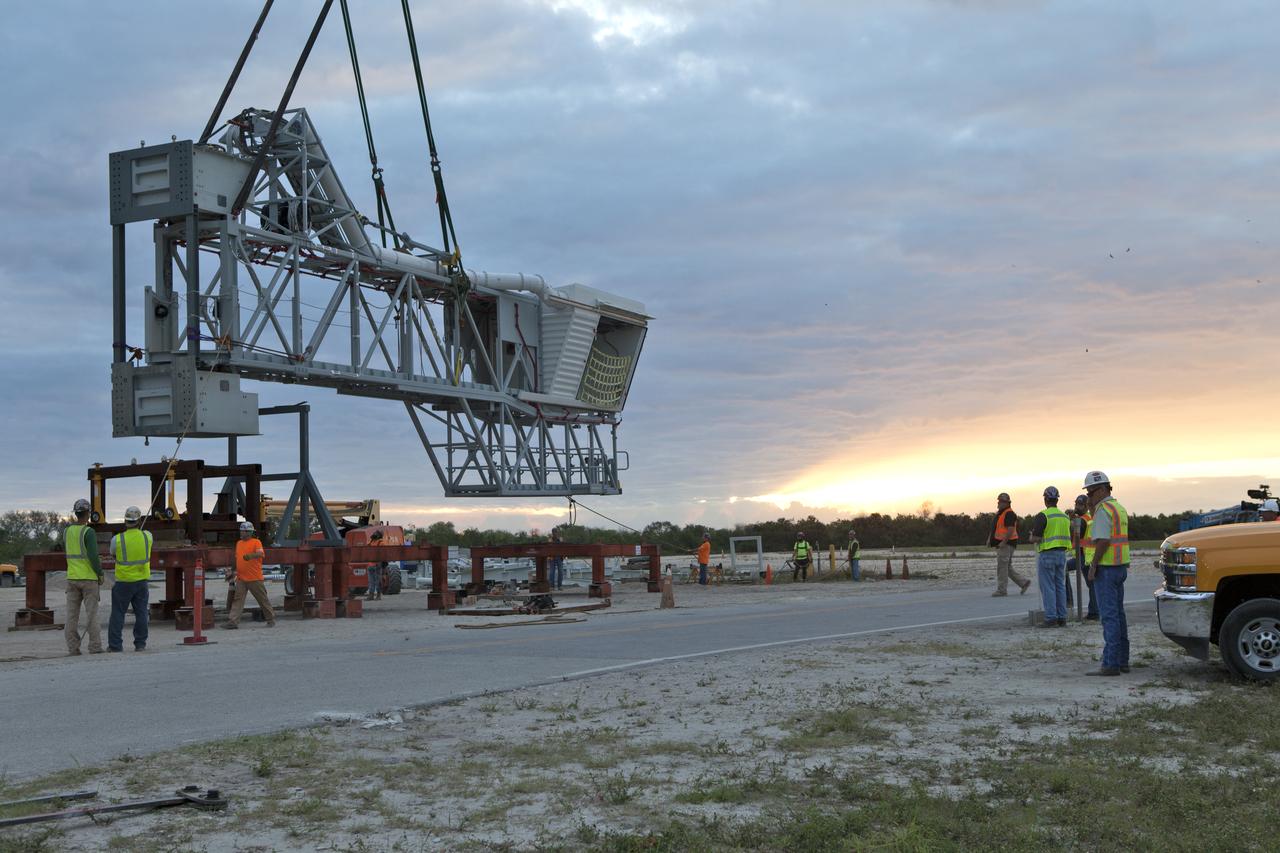
Under the watchful eye of technicians and engineers, a crane begins lifting the Orion crew access arm (CAA) so it can be attached to the mobile launcher (ML) at NASA's Kennedy Space Center in Florida. The arm will be installed at about the 274-foot level on the ML tower. NASA's Exploration Ground Systems organization has been overseeing installation of umbilicals and other launch accessories on the 380-foot-tall ML in preparation for stacking the first launch of the Space launch System (SLS), rocket with an Orion spacecraft. The CAA is designed to rotate from its retracted position and line up with Orion's crew hatch providing entry for astronauts and technicians.
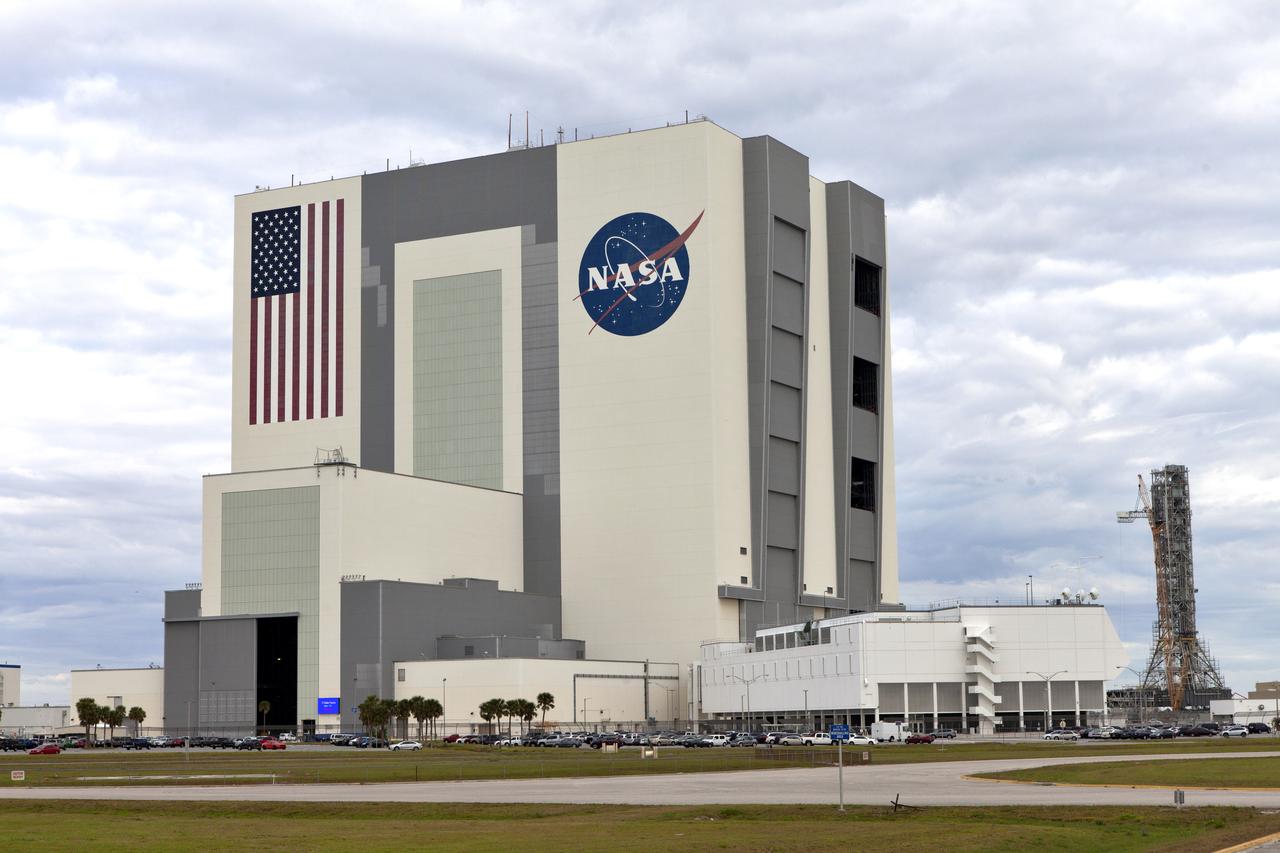
Seen to the right of the iconic Vehicle Assembly Building at NASA's Kennedy Space Center in Florida, a crane positions the Orion crew access arm (CAA) so it can be attached to the mobile launcher (ML). The arm will be installed at about the 274-foot level on the ML tower. NASA's Exploration Ground Systems organization has been overseeing installation of umbilicals and other launch accessories on the 380-foot-tall ML in preparation for stacking the first launch of the Space launch System (SLS), rocket with an Orion spacecraft. The CAA is designed to rotate from its retracted position and line up with Orion's crew hatch providing entry for astronauts and technicians.
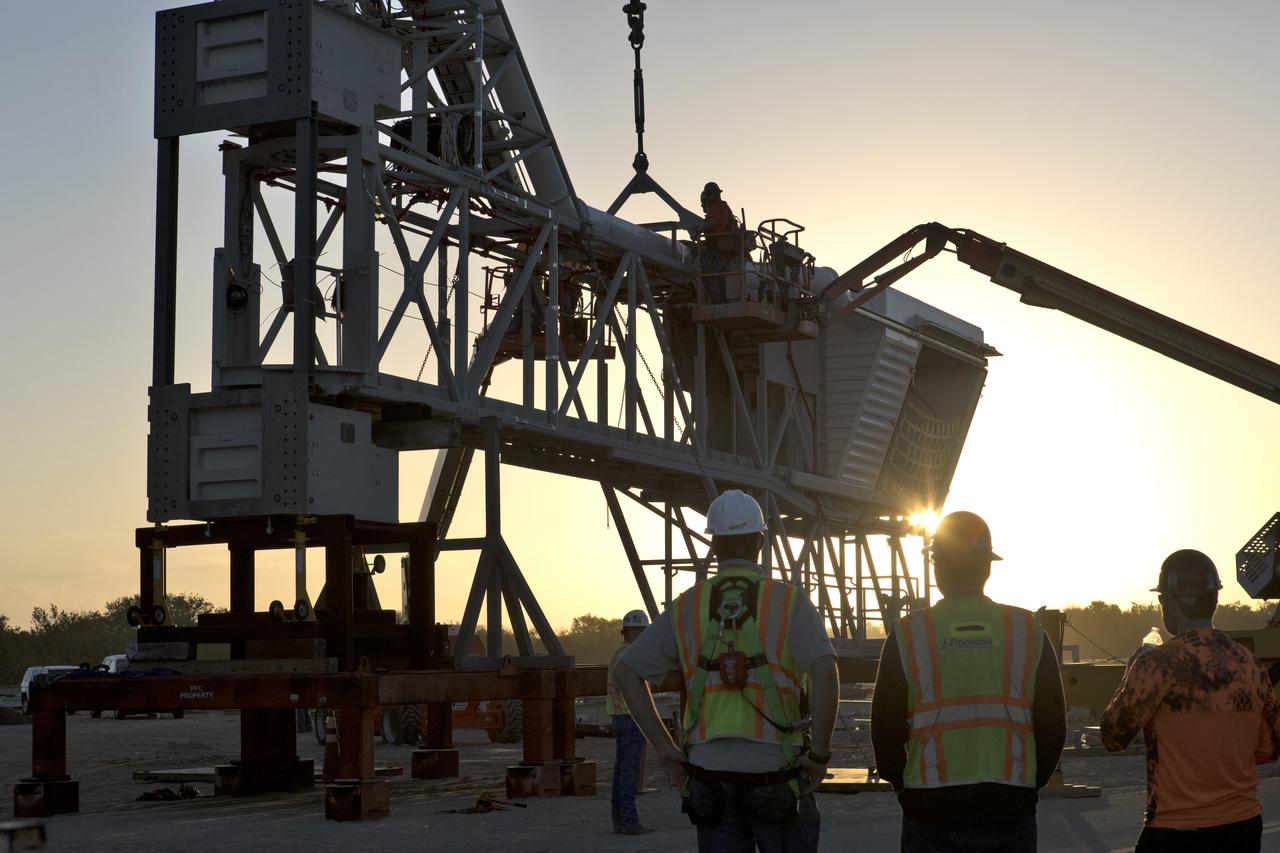
Under the watchful eye of technicians and engineers, a crane is prepared to lift the Orion crew access arm (CAA) so it can be attached to the mobile launcher (ML) at NASA's Kennedy Space Center in Florida. The arm will be installed at about the 274-foot level on the ML tower. NASA's Exploration Ground Systems organization has been overseeing installation of umbilicals and other launch accessories on the 380-foot-tall ML in preparation for stacking the first launch of the Space launch System, or SLS, rocket with an Orion spacecraft. The CAA is designed to rotate from its retracted position and line up with Orion's crew hatch providing entry for astronauts and technicians.
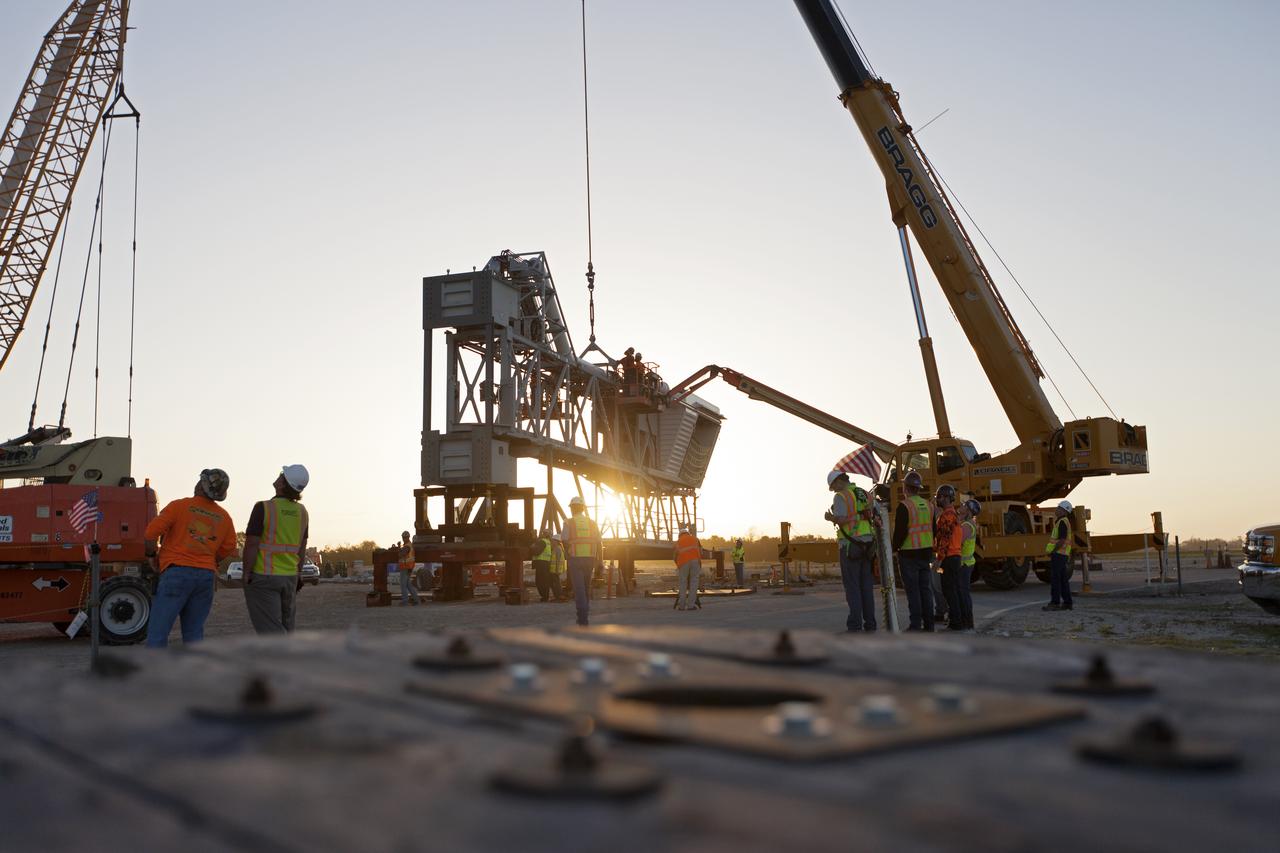
At NASA's Kennedy Space Center in Florida, a crane is prepared to lift the Orion crew access arm (CAA) so it can be attached to the mobile launcher (ML). The arm will be installed at about the 274-foot level on the ML tower. NASA's Exploration Ground Systems organization has been overseeing installation of umbilicals and other launch accessories on the 380-foot-tall ML in preparation for stacking the first launch of the Space launch System, or SLS, rocket with an Orion spacecraft. The CAA is designed to rotate from its retracted position and line up with Orion's crew hatch providing entry for astronauts and technicians.
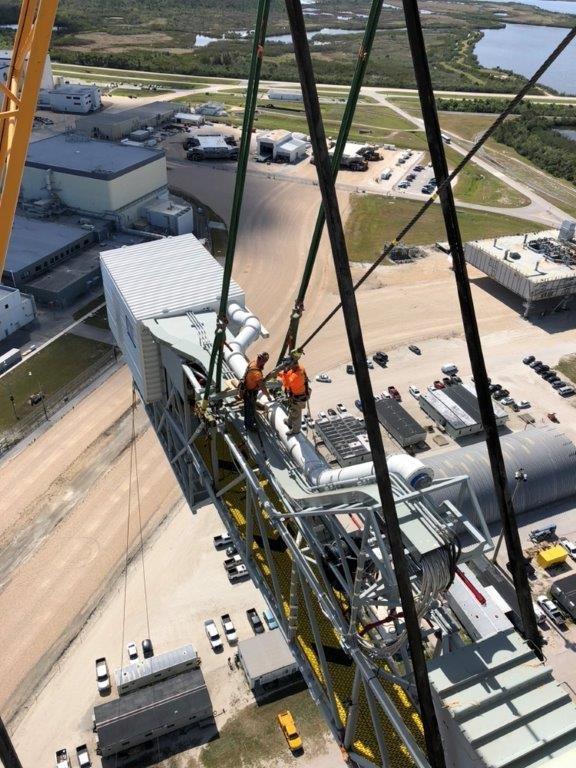
Viewed from the 274-foot level mobile launcher (ML), technicians help install the Orion crew access arm (CAA) to the tower at NASA's Kennedy Space Center in Florida. NASA's Exploration Ground Systems organization has been overseeing installation of umbilicals and other launch accessories on the 380-foot-tall ML in preparation for stacking the first launch of the Space launch System (SLS), rocket with an Orion spacecraft. The CAA is designed to rotate from its retracted position and line up with Orion's crew hatch providing entry for astronauts and technicians.
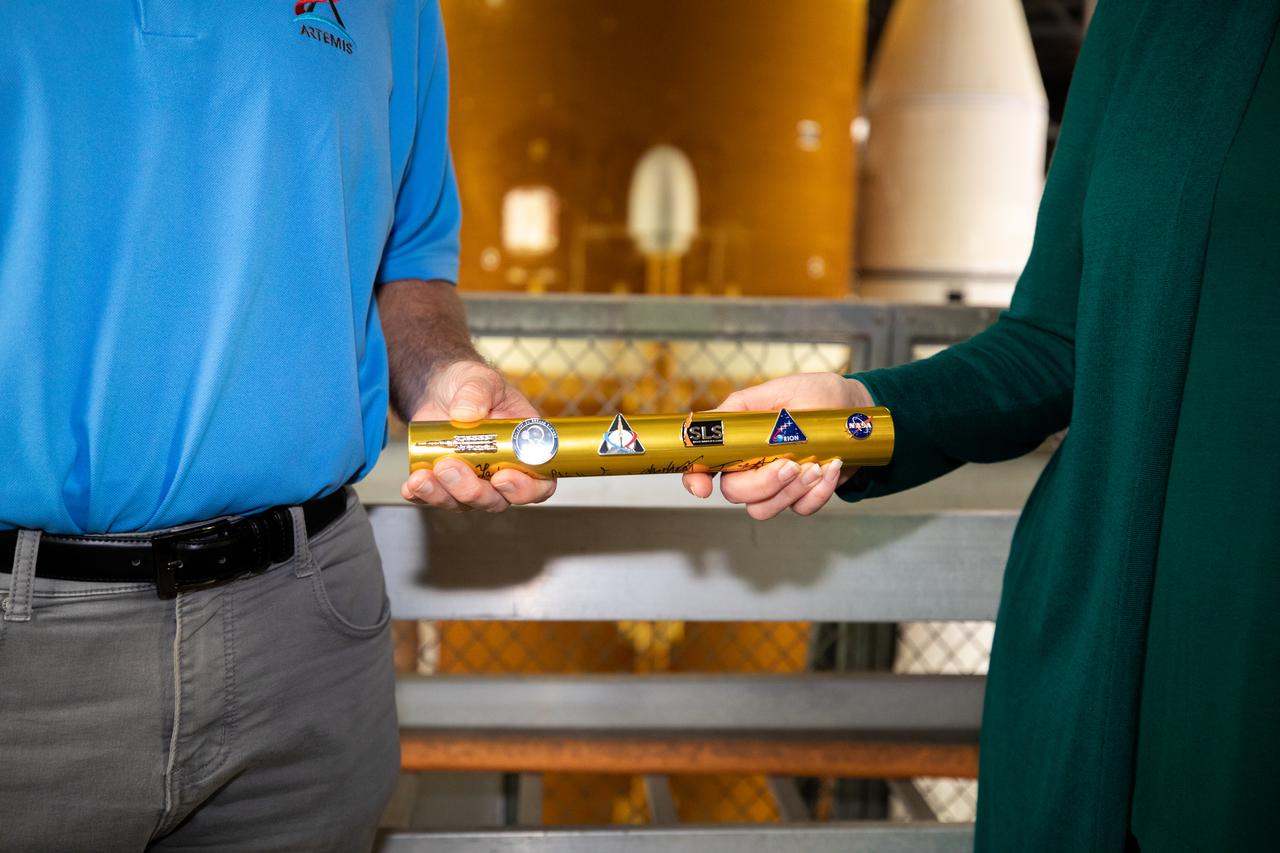
A baton is passed from Cliff Lanham, at left, ground operations manager with Exploration Ground Systems, to Charlie Blackwell-Thompson, Artemis I launch director, inside the Vehicle Assembly Building at NASA’s Kennedy Space Center in Florida on March 16, 2022. Behind them is the Artemis I Space Launch System (SLS) with the Orion spacecraft atop on the mobile launcher. The SLS and Orion will make the trek to Launch Complex 39B for a wet dress rehearsal ahead of launch atop the crawler-transporter 2. Artemis I will be the first integrated test of the SLS and Orion spacecraft. In later missions, NASA will land the first woman and the first person of color on the surface of the Moon, paving the way for a long-term lunar presence and serving as a steppingstone on the way to Mars.

Cliff Lanham, at left, ground operations manager with Exploration Ground Systems, passes the baton to Charlie Blackwell-Thompson, Artemis I launch director, inside the Vehicle Assembly Building at NASA’s Kennedy Space Center in Florida on March 16, 2022. Behind them is the Artemis I Space Launch System (SLS) with the Orion spacecraft atop on the mobile launcher. The SLS and Orion will make the trek to Launch Complex 39B for a wet dress rehearsal ahead of launch atop the crawler-transporter 2. Artemis I will be the first integrated test of the SLS and Orion spacecraft. In later missions, NASA will land the first woman and the first person of color on the surface of the Moon, paving the way for a long-term lunar presence and serving as a steppingstone on the way to Mars.
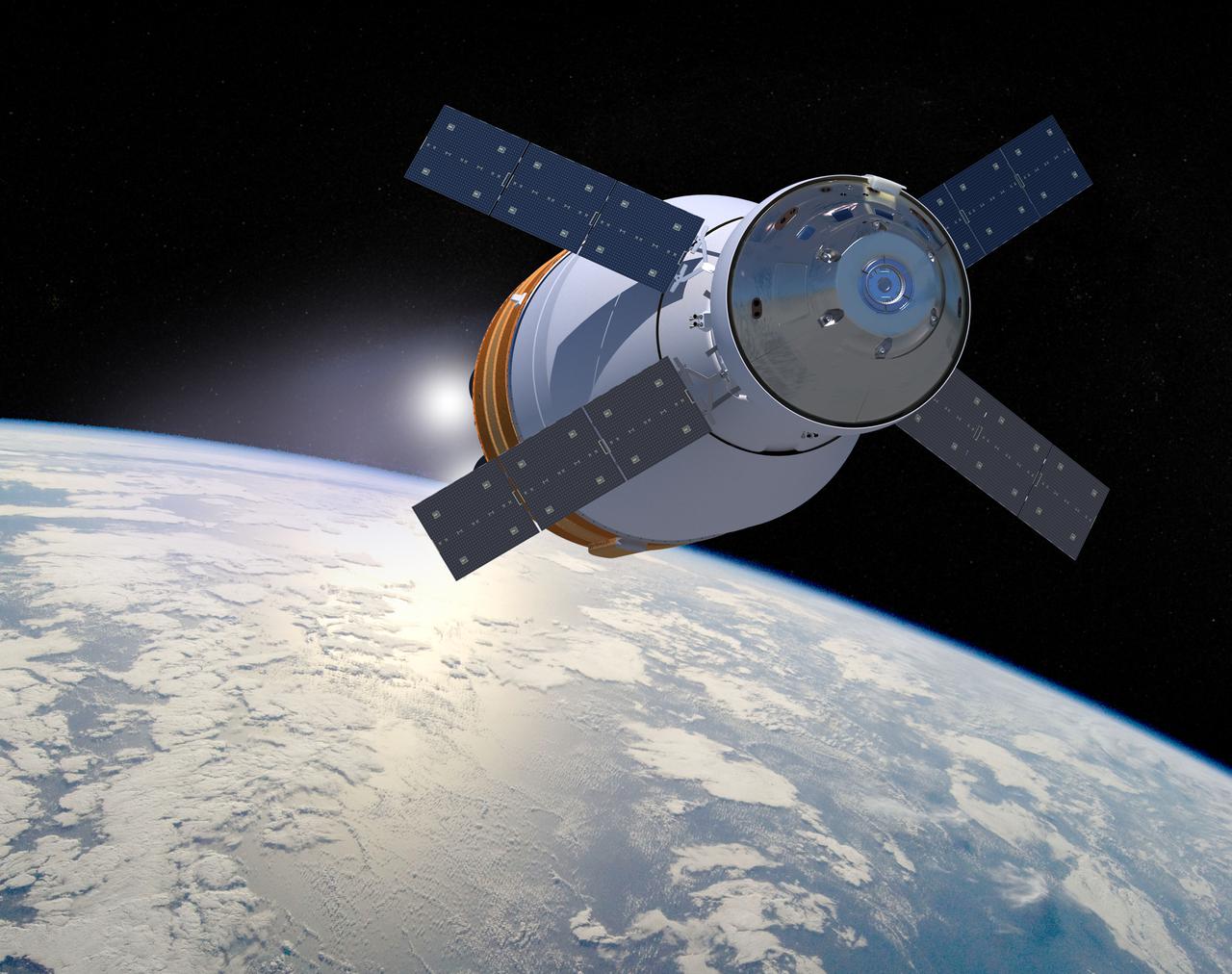
Seen here is an image of the SLS Exploration Upper Stage with the Orion Space craft on its way to a deep space mission. The Exploration Upper Stage will be used on the second configuration of the SLS rocket, known as Block 1B, and will provide in-space propulsion to send astronauts in NASA’s Orion spacecraft and heavy cargo on a precise trajectory to the Moon. The evolution of the rocket to SLS Block 1B configuration with EUS enables SLS to launch 40% more cargo to the Moon along with the crew. Manufacturing both the core stage and Exploration Upper Stage is a collaborative effort between NASA and Boeing, the lead contractor for EUS and the SLS core stage. SLS is the only rocket that can send Orion, astronauts, and supplies to the Moon in a single mission. The SLS rocket, NASA’s Orion spacecraft, Gateway, and human landing system are part of NASA’s backbone for deep space exploration. Under the Artemis program, NASA is working to land the first woman and the next man on the Moon to pave the way for sustainable exploration at the Moon and future missions to Mars. (NASA)
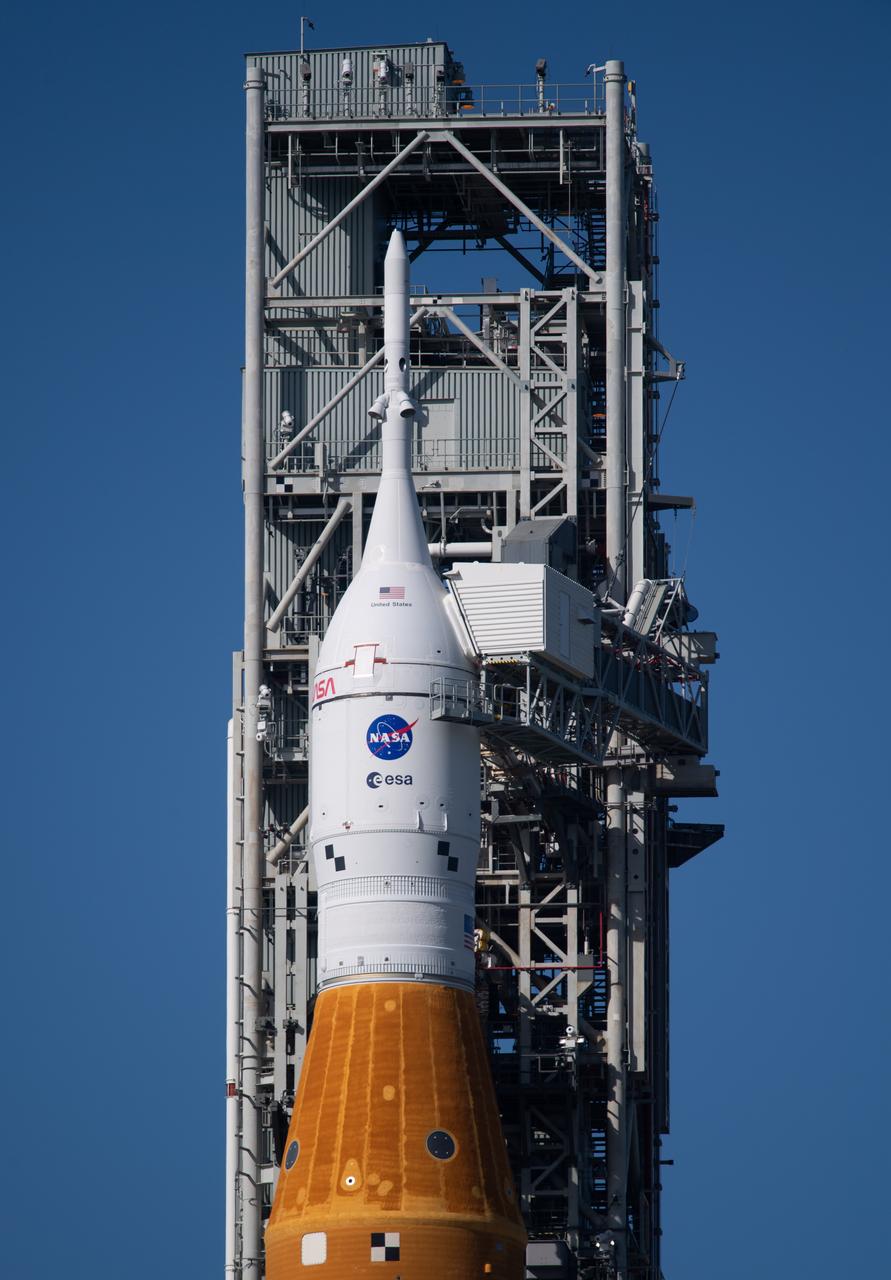
NASA’s Space Launch System (SLS) rocket with the Orion spacecraft aboard is seen atop a mobile launcher at Launch Pad 39B as preparations for launch continue, Saturday, Nov. 5, 2022, at NASA’s Kennedy Space Center in Florida. NASA’s Artemis I flight test is the first integrated test of the agency’s deep space exploration systems: the Orion spacecraft, SLS rocket, and supporting ground systems. Launch of the uncrewed flight test is targeted for Nov. 14 at 12:07 a.m. EST. Photo Credit: (NASA/Joel Kowsky)
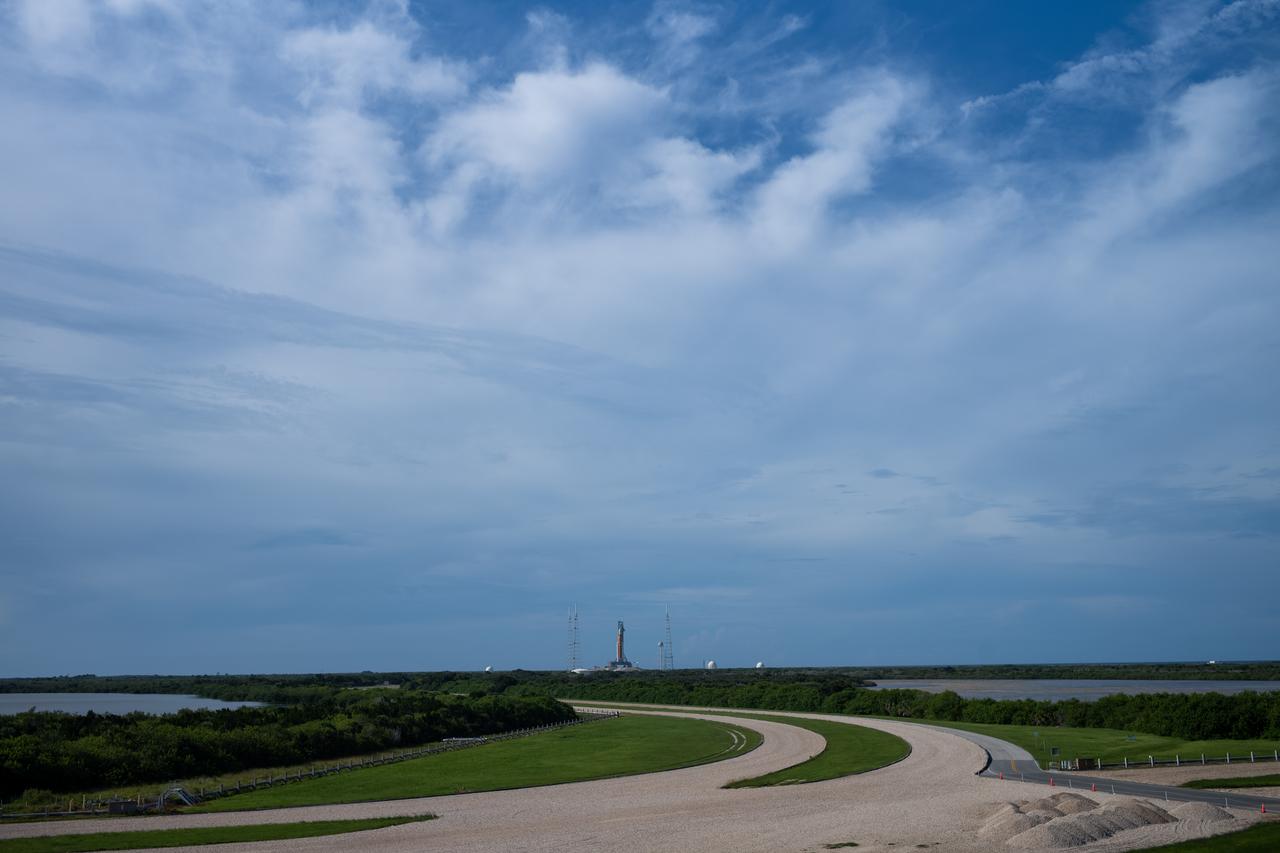
NASA’s Space Launch System (SLS) rocket with the Orion spacecraft aboard is seen atop the mobile launcher at Launch Pad 39B as preparations for launch continue, Friday, Sept. 2, 2022, at NASA’s Kennedy Space Center in Florida. NASA’s Artemis I flight test is the first integrated test of the agency’s deep space exploration systems: the Orion spacecraft, SLS rocket, and supporting ground systems. Launch of the uncrewed flight test is targeted for Sept. 3 at 2:17 p.m. EDT. Photo Credit: (NASA/Joel Kowsky)
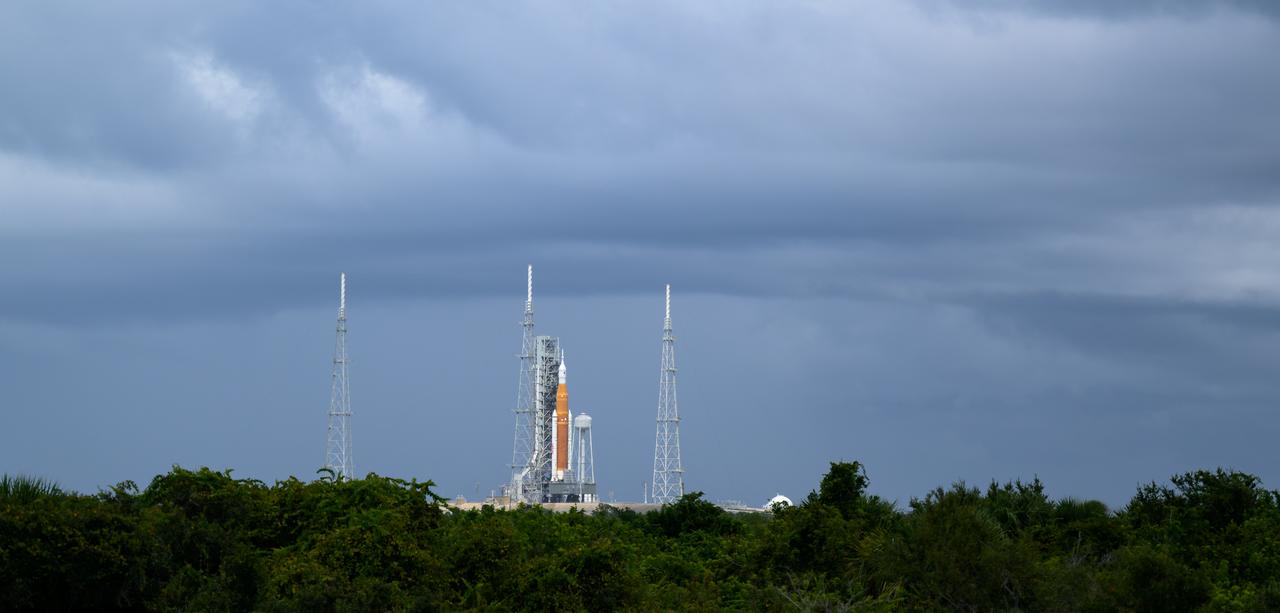
NASA’s Space Launch System (SLS) rocket with the Orion spacecraft aboard is seen atop a mobile launcher at Launch Pad 39B as preparations for launch continue, Friday, Sept. 2, 2022, at NASA’s Kennedy Space Center in Florida. NASA’s Artemis I flight test is the first integrated test of the agency’s deep space exploration systems: the Orion spacecraft, SLS rocket, and supporting ground systems. Launch of the uncrewed flight test is targeted for Sept. 3 at 2:17 p.m. EDT. Photo Credit: (NASA/Bill Ingalls)
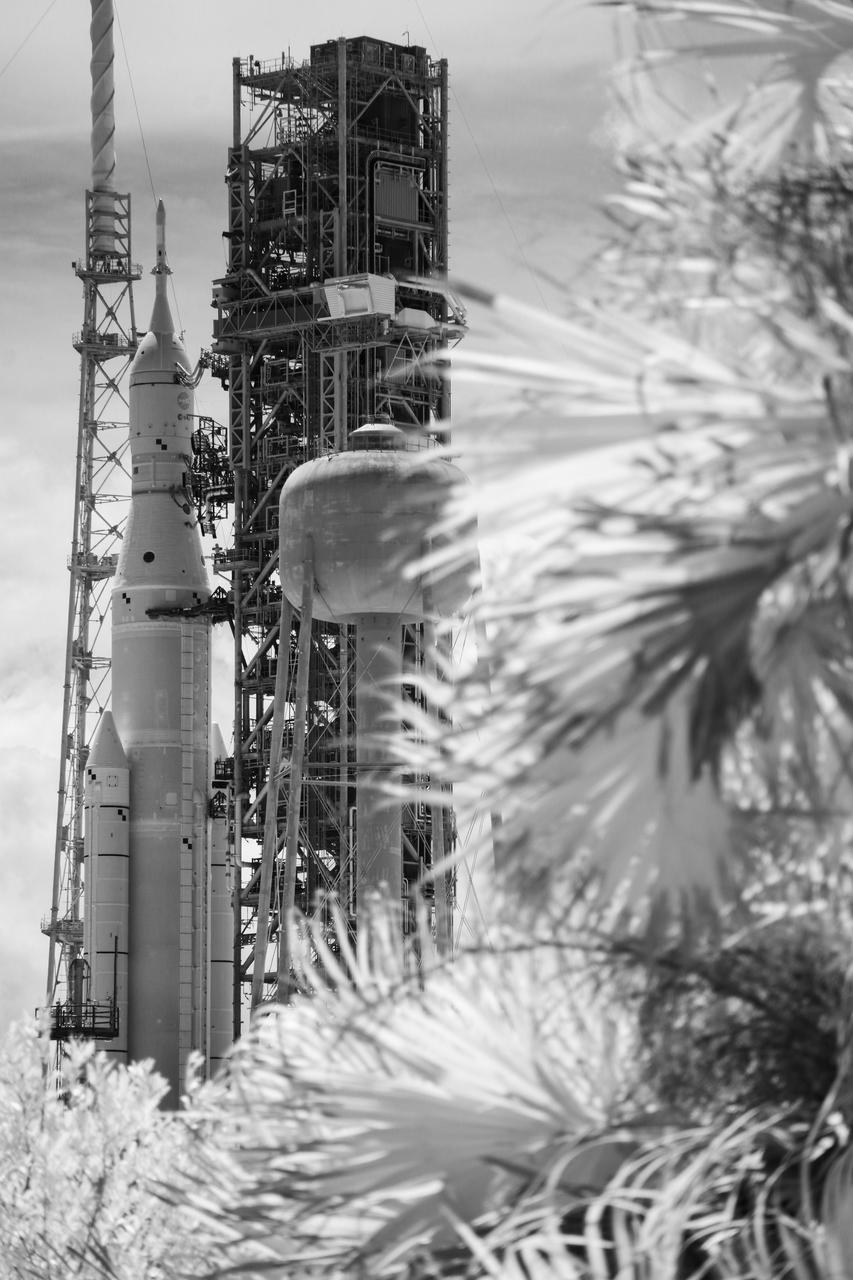
In this black and white infrared image, NASA’s Space Launch System (SLS) rocket with the Orion spacecraft aboard is seen atop the mobile launcher at Launch Pad 39B, Tuesday, Aug. 30, 2022, at NASA’s Kennedy Space Center in Florida. NASA’s Artemis I flight test is the first integrated test of the agency’s deep space exploration systems: the Orion spacecraft, SLS rocket, and supporting ground systems. Photo Credit: (NASA/Joel Kowsky)
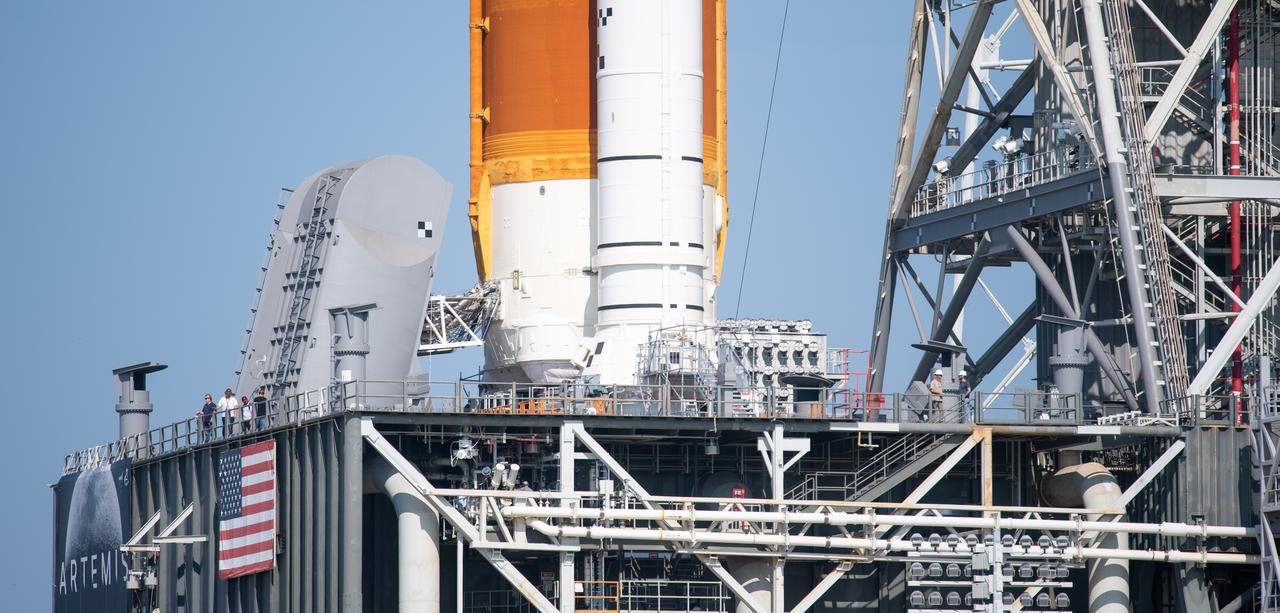
NASA’s Space Launch System (SLS) rocket with the Orion spacecraft aboard atop a mobile launcher at Launch Pad 39B, Thursday, Aug. 18, 2022, after being rolled out to the launch pad at NASA’s Kennedy Space Center in Florida. NASA’s Artemis I mission is the first integrated test of the agency’s deep space exploration systems: the Orion spacecraft, SLS rocket, and supporting ground systems. Launch of the uncrewed flight test is targeted for no earlier than Aug. 29. Photo Credit: (NASA/Joel Kowsky)
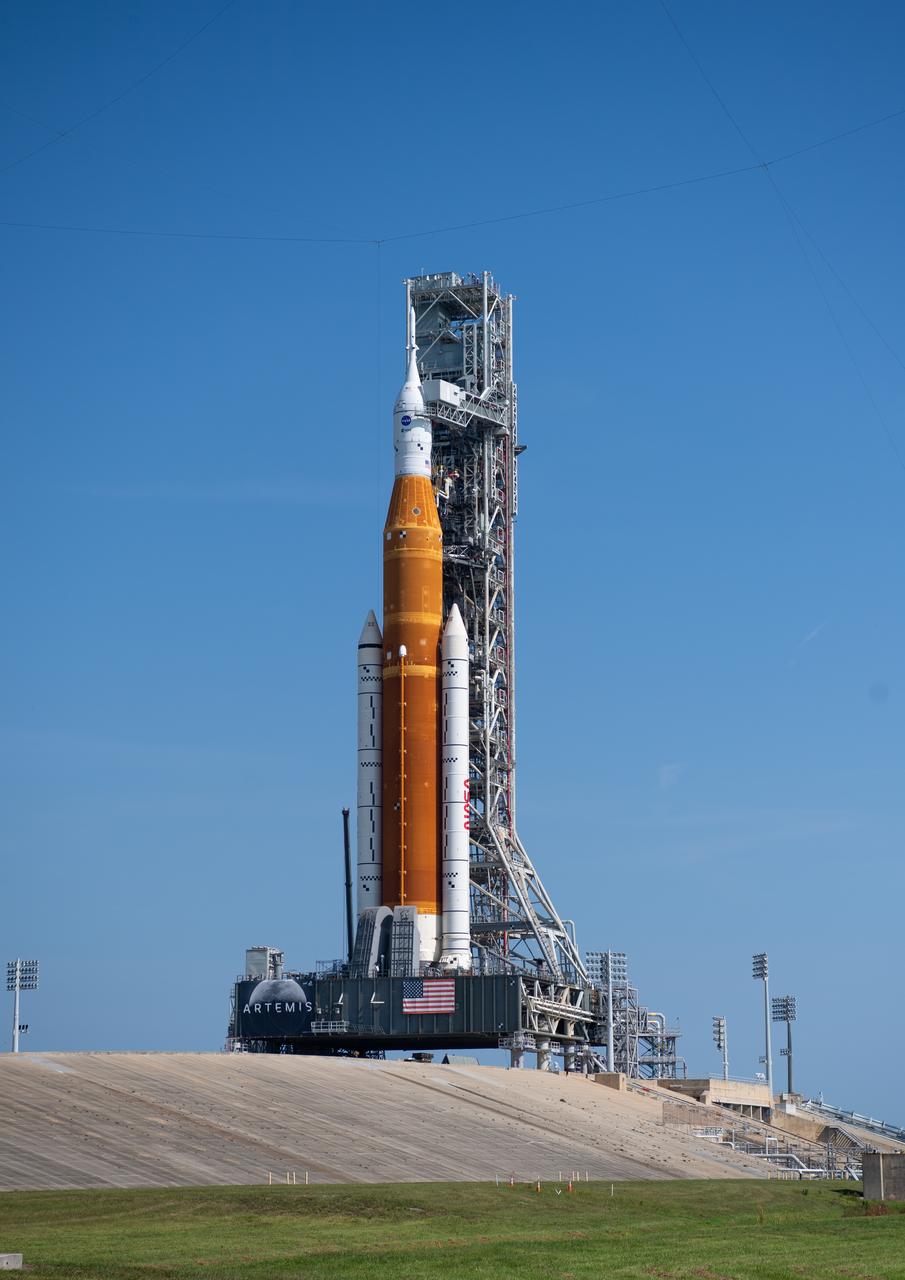
NASA’s Space Launch System (SLS) rocket with the Orion spacecraft aboard is seen atop a mobile launcher at Launch Pad 39B, Thursday, Aug. 18, 2022, after being rolled out to the launch pad at NASA’s Kennedy Space Center in Florida. NASA’s Artemis I mission is the first integrated test of the agency’s deep space exploration systems: the Orion spacecraft, SLS rocket, and supporting ground systems. Launch of the uncrewed flight test is targeted for no earlier than Aug. 29. Photo Credit: (NASA/Joel Kowsky)
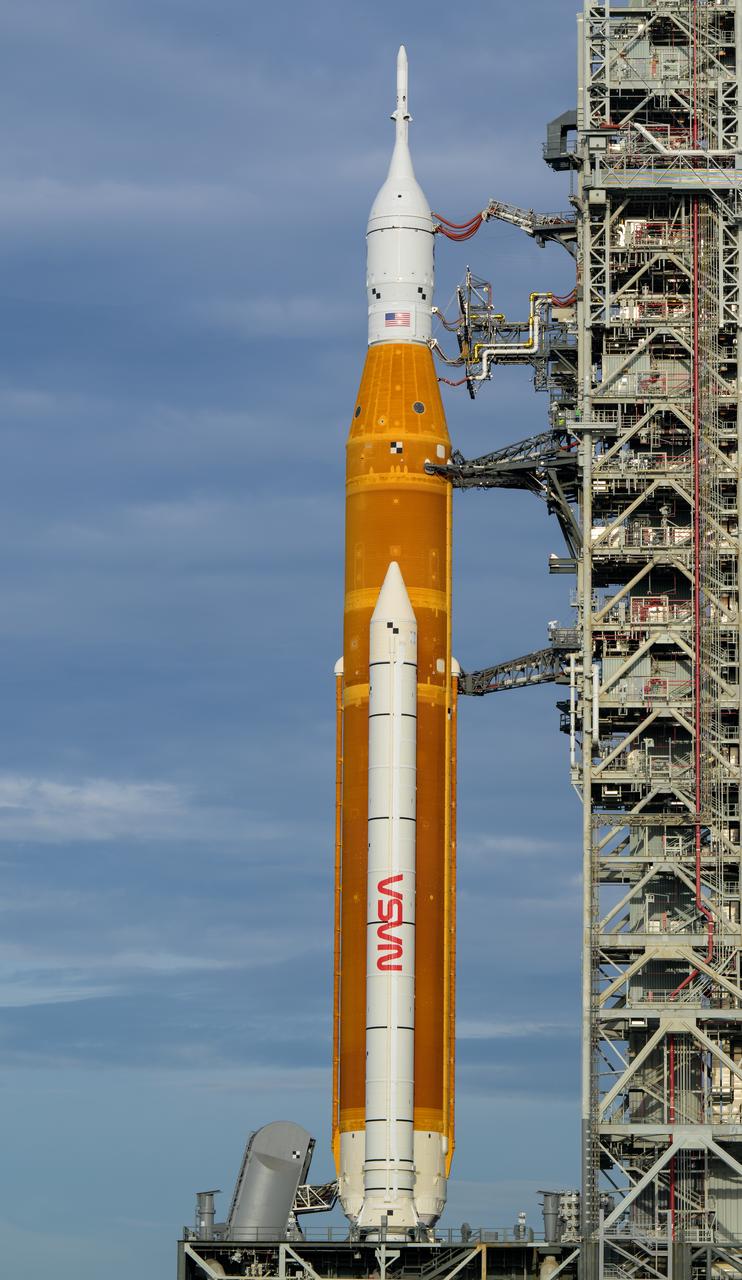
NASA’s Space Launch System (SLS) rocket with the Orion spacecraft aboard is seen atop a mobile launcher at Launch Pad 39B as preparations for launch continue, Friday, Sept. 2, 2022, at NASA’s Kennedy Space Center in Florida. NASA’s Artemis I flight test is the first integrated test of the agency’s deep space exploration systems: the Orion spacecraft, SLS rocket, and supporting ground systems. Launch of the uncrewed flight test is targeted for Sept. 3 at 2:17 p.m. EDT. Photo Credit: (NASA/Bill Ingalls)
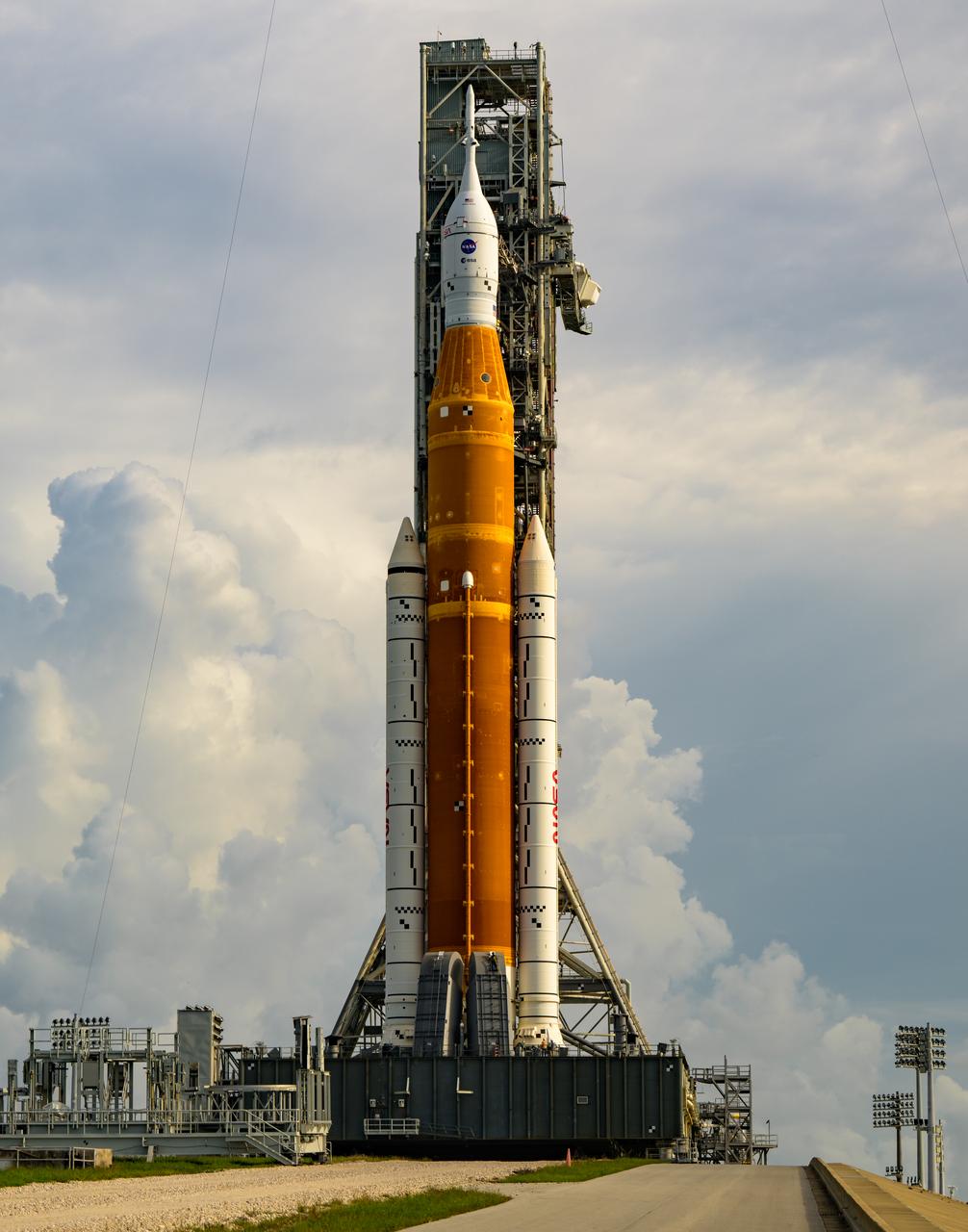
NASA’s Space Launch System (SLS) rocket with the Orion spacecraft aboard is seen atop a mobile launcher at Launch Pad 39B as preparations for launch continue, Friday, Sept. 2, 2022, at NASA’s Kennedy Space Center in Florida. NASA’s Artemis I flight test is the first integrated test of the agency’s deep space exploration systems: the Orion spacecraft, SLS rocket, and supporting ground systems. Launch of the uncrewed flight test is targeted for Sept. 3 at 2:17 p.m. EDT. Photo Credit: (NASA/Bill Ingalls)
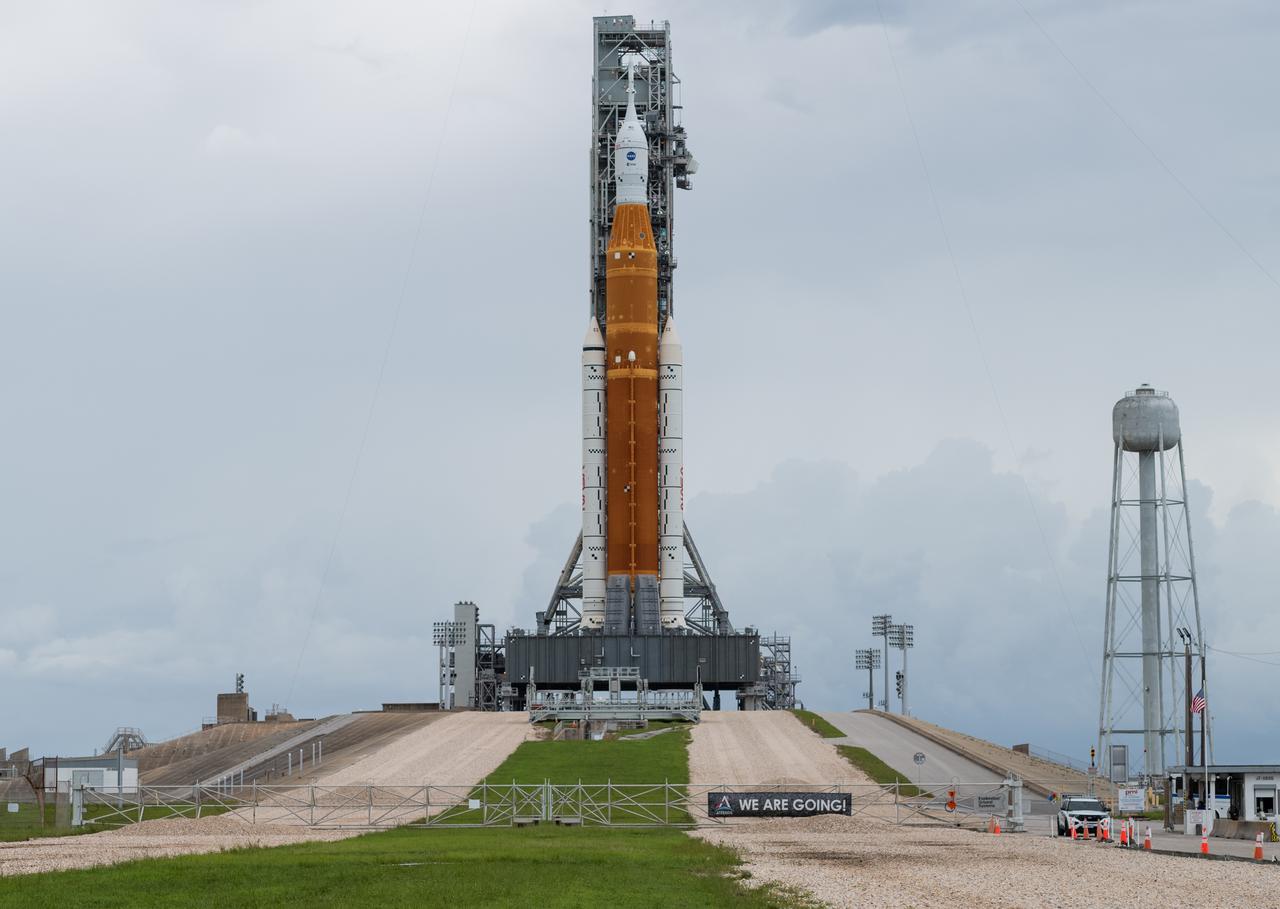
NASA’s Space Launch System (SLS) rocket with the Orion spacecraft aboard is seen atop the mobile launcher at Launch Pad 39B as preparations for launch continue, Friday, Sept. 2, 2022, at NASA’s Kennedy Space Center in Florida. NASA’s Artemis I flight test is the first integrated test of the agency’s deep space exploration systems: the Orion spacecraft, SLS rocket, and supporting ground systems. Launch of the uncrewed flight test is targeted for Sept. 3 at 2:17 p.m. EDT. Photo Credit: (NASA/Joel Kowsky)
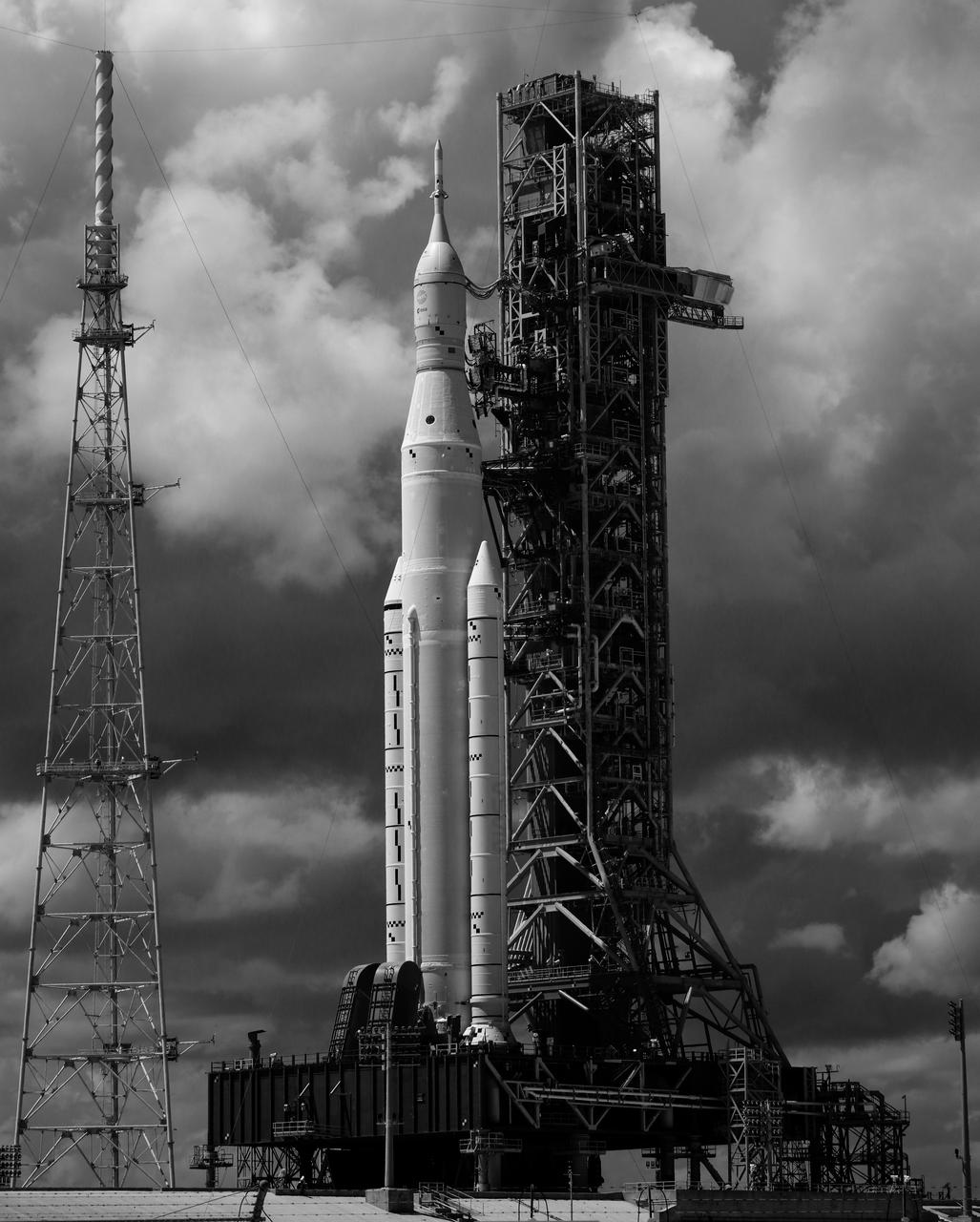
In this black and white infrared image, NASA’s Space Launch System (SLS) rocket with the Orion spacecraft aboard is seen atop the mobile launcher at Launch Pad 39B, Tuesday, Aug. 30, 2022, at NASA’s Kennedy Space Center in Florida. NASA’s Artemis I flight test is the first integrated test of the agency’s deep space exploration systems: the Orion spacecraft, SLS rocket, and supporting ground systems. Photo Credit: (NASA/Joel Kowsky)

In this black and white infrared image, NASA’s Space Launch System (SLS) rocket with the Orion spacecraft aboard is seen atop the mobile launcher at Launch Pad 39B, Tuesday, Aug. 30, 2022, at NASA’s Kennedy Space Center in Florida. NASA’s Artemis I flight test is the first integrated test of the agency’s deep space exploration systems: the Orion spacecraft, SLS rocket, and supporting ground systems. Photo Credit: (NASA/Joel Kowsky)
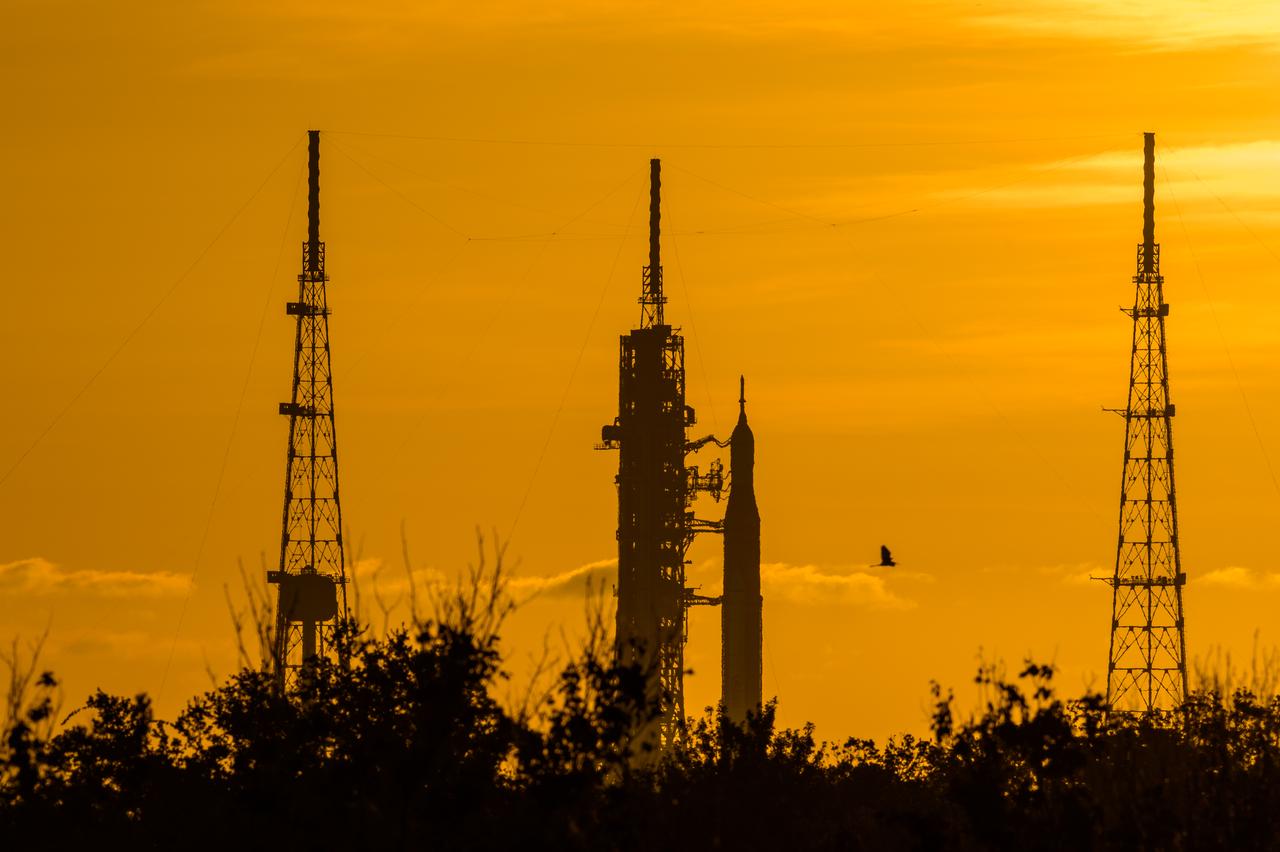
NASA’s Space Launch System (SLS) rocket with the Orion spacecraft aboard is seen atop a mobile launcher at Launch Pad 39B as preparations for launch continue, Wednesday, Aug. 31, 2022, at NASA’s Kennedy Space Center in Florida. NASA’s Artemis I flight test is the first integrated test of the agency’s deep space exploration systems: the Orion spacecraft, SLS rocket, and supporting ground systems. Photo Credit: (NASA/Bill Ingalls)
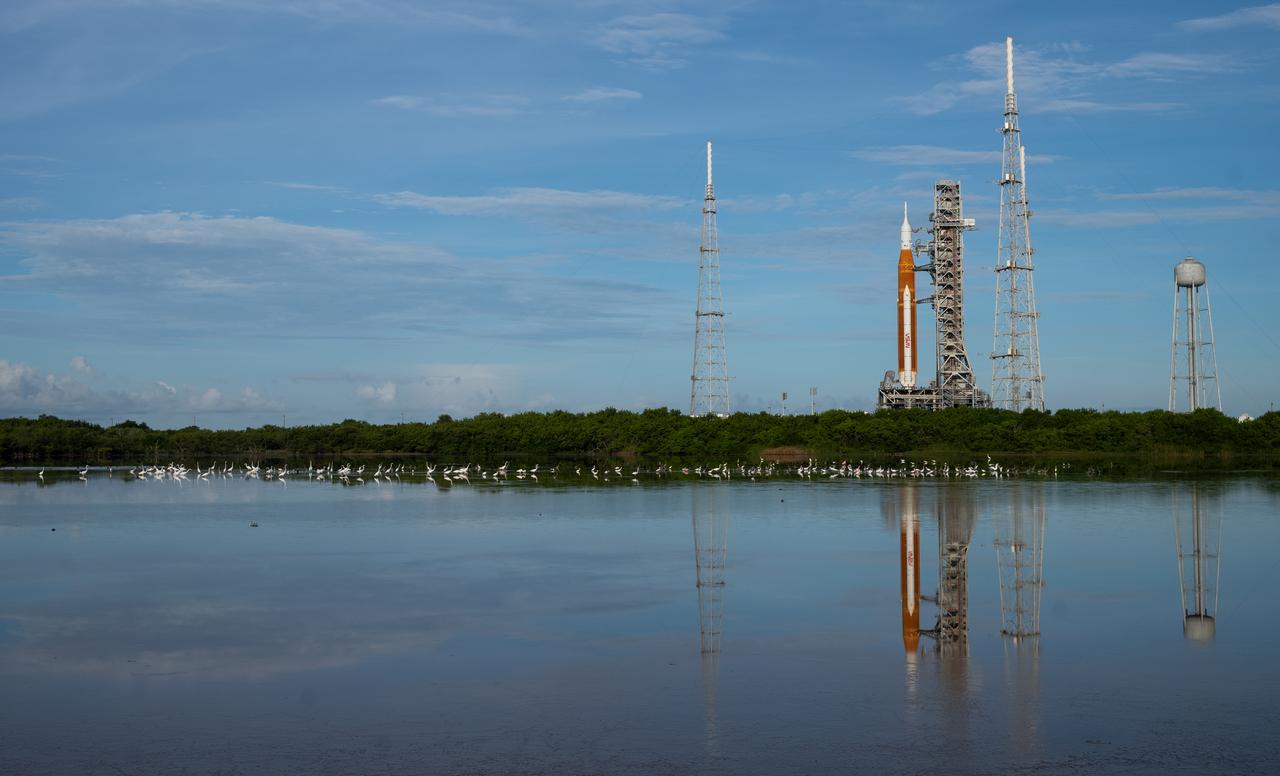
NASA’s Space Launch System (SLS) rocket with the Orion spacecraft aboard is seen atop a mobile launcher at Launch Pad 39B, Sunday, Sept. 4, 2022, at NASA’s Kennedy Space Center in Florida. NASA’s Artemis I flight test is the first integrated test of the agency’s deep space exploration systems: the Orion spacecraft, SLS rocket, and supporting ground systems. Photo Credit: (NASA/Joel Kowsky)
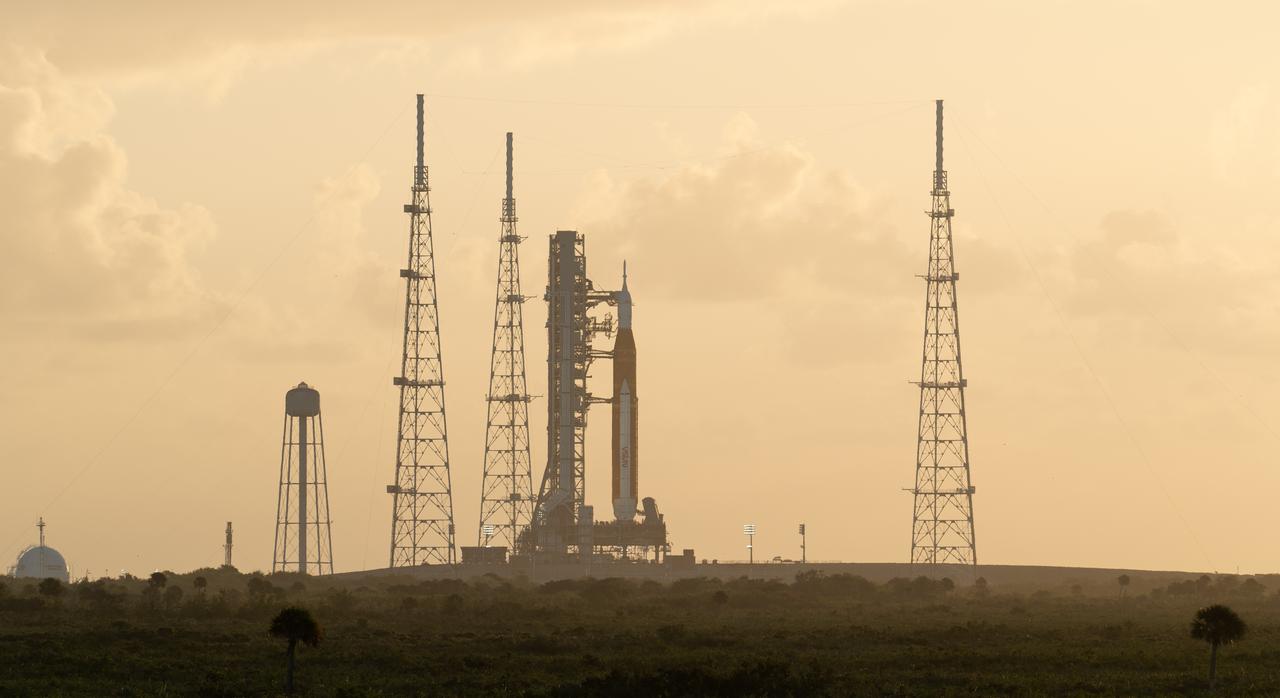
NASA’s Space Launch System (SLS) rocket with the Orion spacecraft aboard is seen atop the mobile launcher at Launch Pad 39B as preparations for launch continue, Monday, Nov. 7, 2022, at NASA’s Kennedy Space Center in Florida. NASA’s Artemis I flight test is the first integrated test of the agency’s deep space exploration systems: the Orion spacecraft, SLS rocket, and supporting ground systems. Launch of the uncrewed flight test is targeted for Nov. 14 at 12:07 a.m. EST. Photo Credit: (NASA/Joel Kowsky)
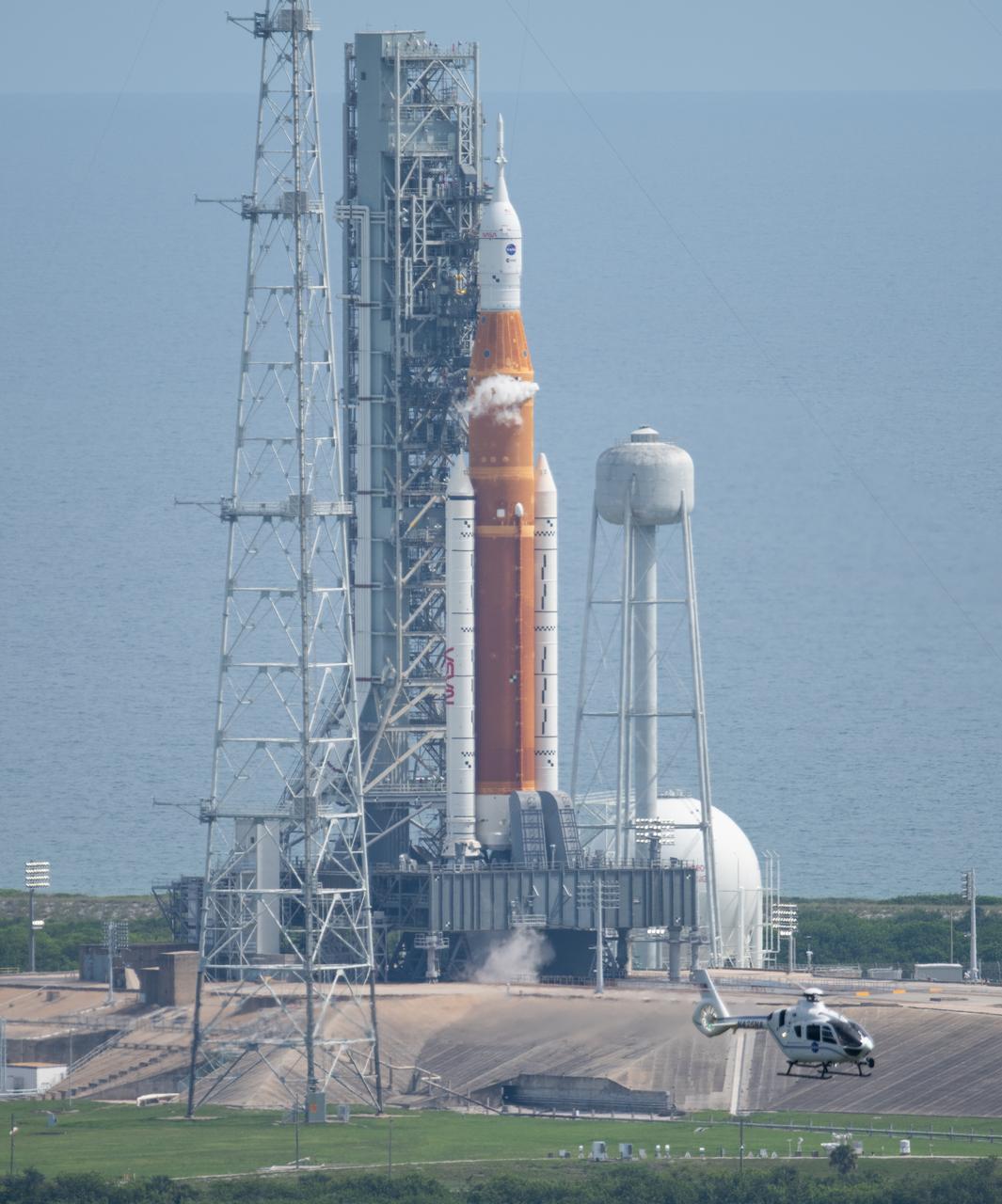
NASA’s Space Launch System (SLS) rocket with the Orion spacecraft aboard is seen atop the mobile launcher at Launch Pad 39B, Saturday, Sept. 3, 2022, at NASA’s Kennedy Space Center in Florida. NASA’s Artemis I flight test is the first integrated test of the agency’s deep space exploration systems: the Orion spacecraft, SLS rocket, and supporting ground systems. The launch director waived off today’s Artemis I launch attempt at approximately 11:17 a.m. EDT. Photo Credit: (NASA/Joel Kowsky)

NASA’s Space Launch System (SLS) rocket with the Orion spacecraft aboard is seen atop a mobile launcher at Launch Pad 39B as preparations for launch continue, Wednesday, Aug. 31, 2022, at NASA’s Kennedy Space Center in Florida. NASA’s Artemis I flight test is the first integrated test of the agency’s deep space exploration systems: the Orion spacecraft, SLS rocket, and supporting ground systems. Photo Credit: (NASA/Bill Ingalls)
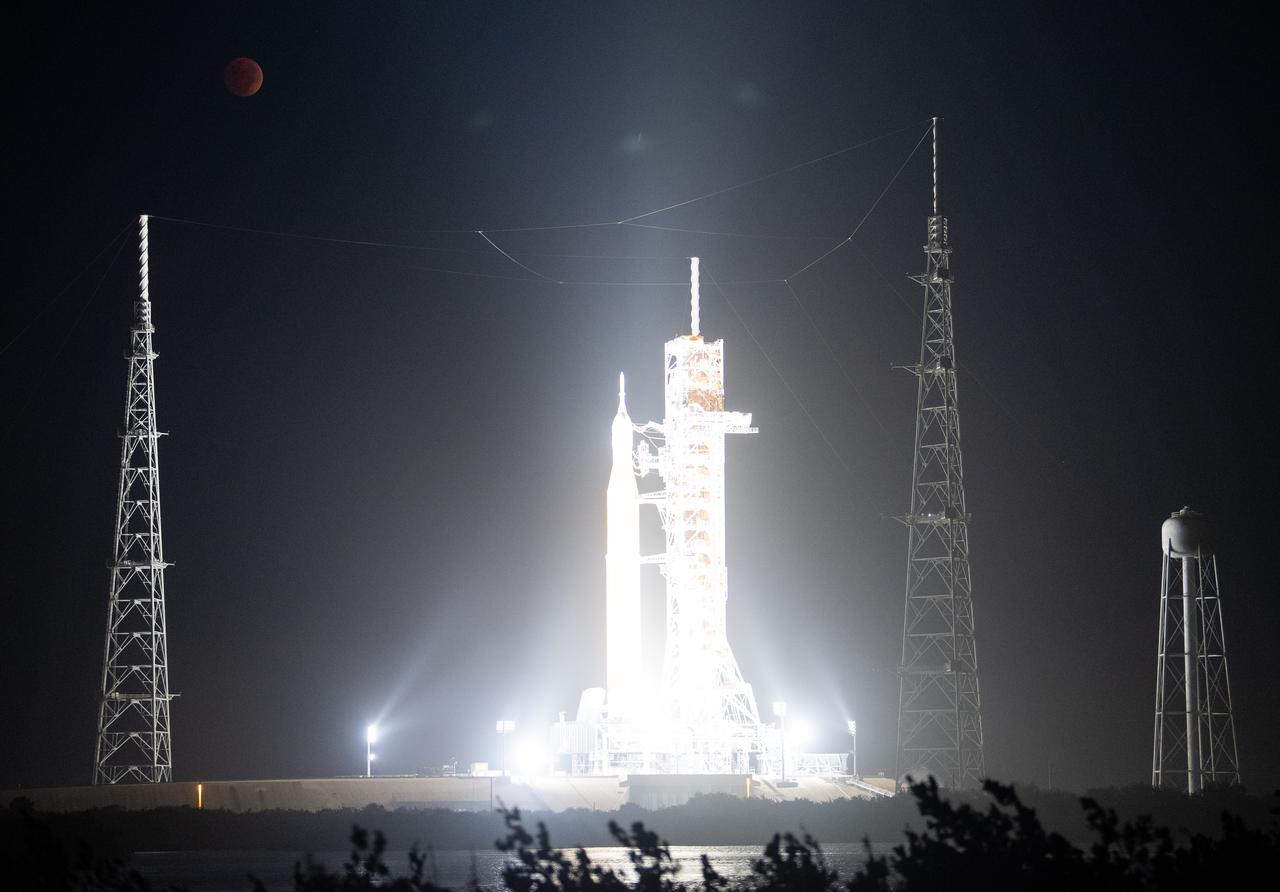
The Moon is seen during a total lunar eclipse above NASA’s Space Launch System (SLS) rocket with the Orion spacecraft aboard atop a mobile launcher at Launch Pad 39B, Tuesday, Nov. 8, 2022, at NASA’s Kennedy Space Center in Florida. NASA’s Artemis I flight test is the first integrated test of the agency’s deep space exploration systems: the Orion spacecraft, SLS rocket, and supporting ground systems. Photo Credit: (NASA/Joel Kowsky)
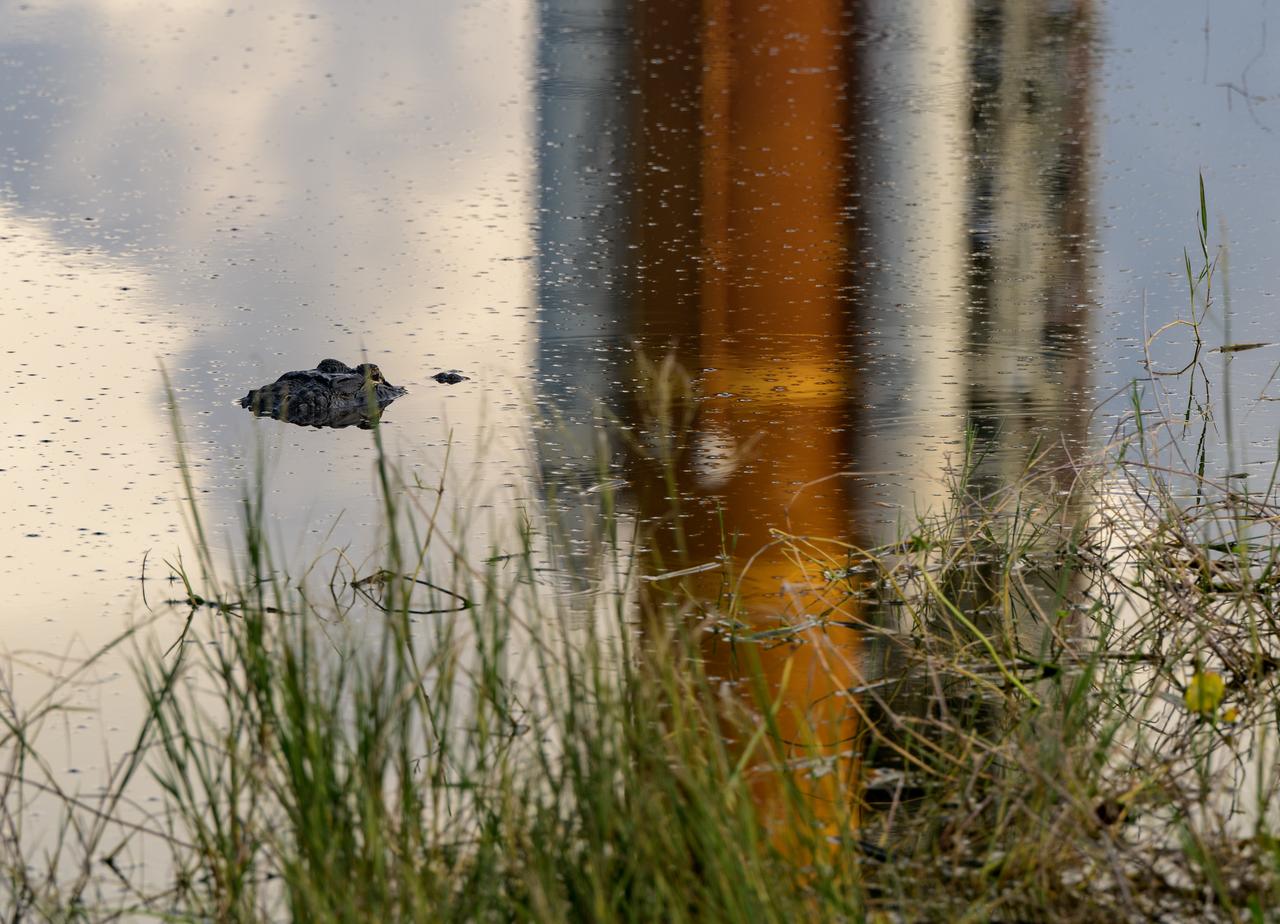
An alligator is seen in a pond outside of Launch Pad 39B as NASA’s Space Launch System (SLS) rocket with the Orion spacecraft aboard is reflected in the water, Friday, Sept. 2, 2022, at NASA’s Kennedy Space Center in Florida. NASA’s Artemis I flight test is the first integrated test of the agency’s deep space exploration systems: the Orion spacecraft, SLS rocket, and supporting ground systems. Launch of the uncrewed flight test is targeted for Sept. 3 at 2:17 p.m. EDT. Photo Credit: (NASA/Bill Ingalls)
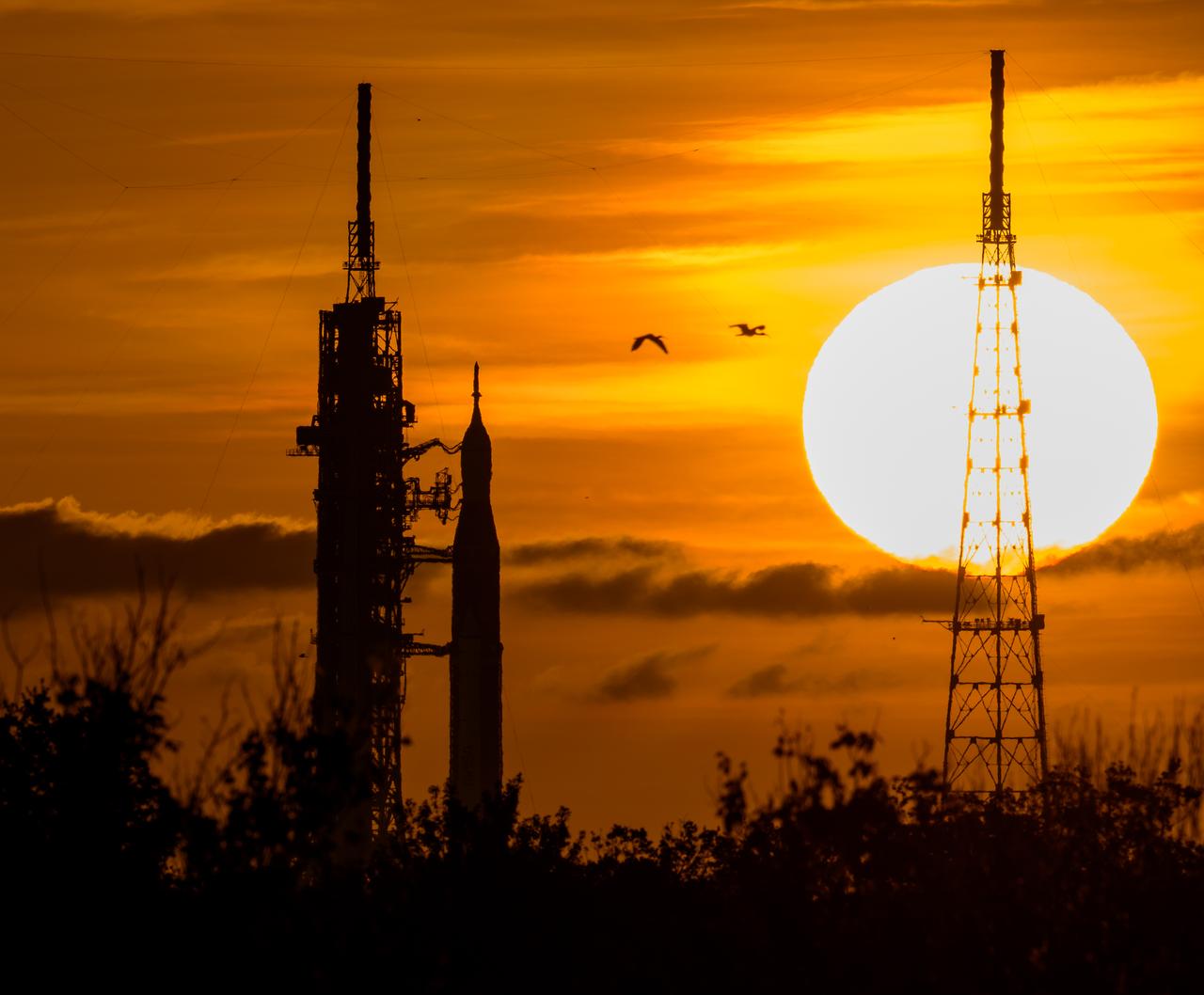
NASA’s Space Launch System (SLS) rocket with the Orion spacecraft aboard is seen during sunrise atop a mobile launcher at Launch Pad 39B as preparations for launch continue, Wednesday, Aug. 31, 2022, at NASA’s Kennedy Space Center in Florida. NASA’s Artemis I flight test is the first integrated test of the agency’s deep space exploration systems: the Orion spacecraft, SLS rocket, and supporting ground systems. Photo Credit: (NASA/Bill Ingalls)
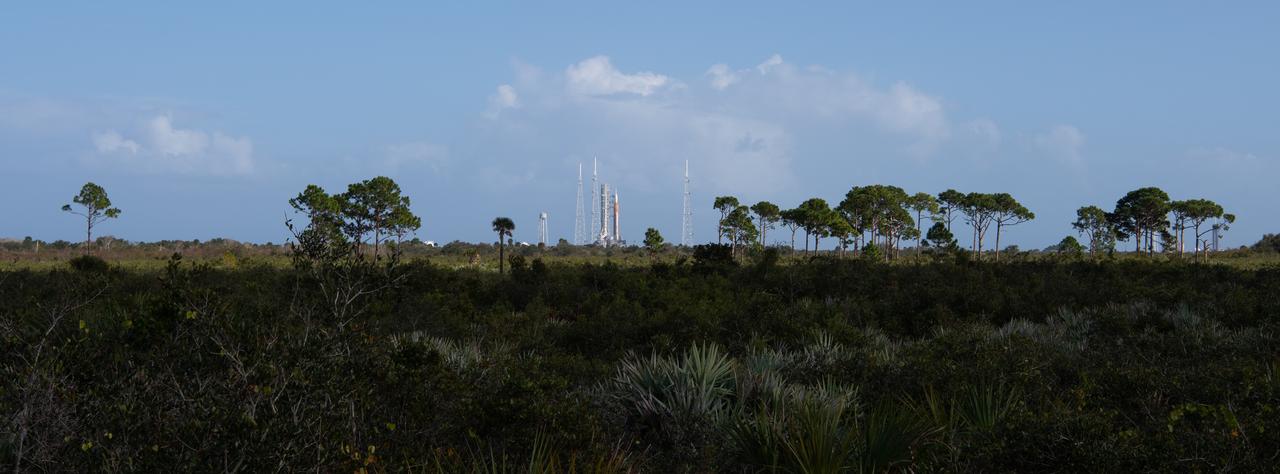
NASA’s Space Launch System (SLS) rocket with the Orion spacecraft aboard is seen atop a mobile launcher at Launch Pad 39B as preparations for launch continue, Saturday, Nov. 5, 2022, at NASA’s Kennedy Space Center in Florida. NASA’s Artemis I flight test is the first integrated test of the agency’s deep space exploration systems: the Orion spacecraft, SLS rocket, and supporting ground systems. Launch of the uncrewed flight test is targeted for Nov. 14 at 12:07 a.m. EST. Photo Credit: (NASA/Joel Kowsky)
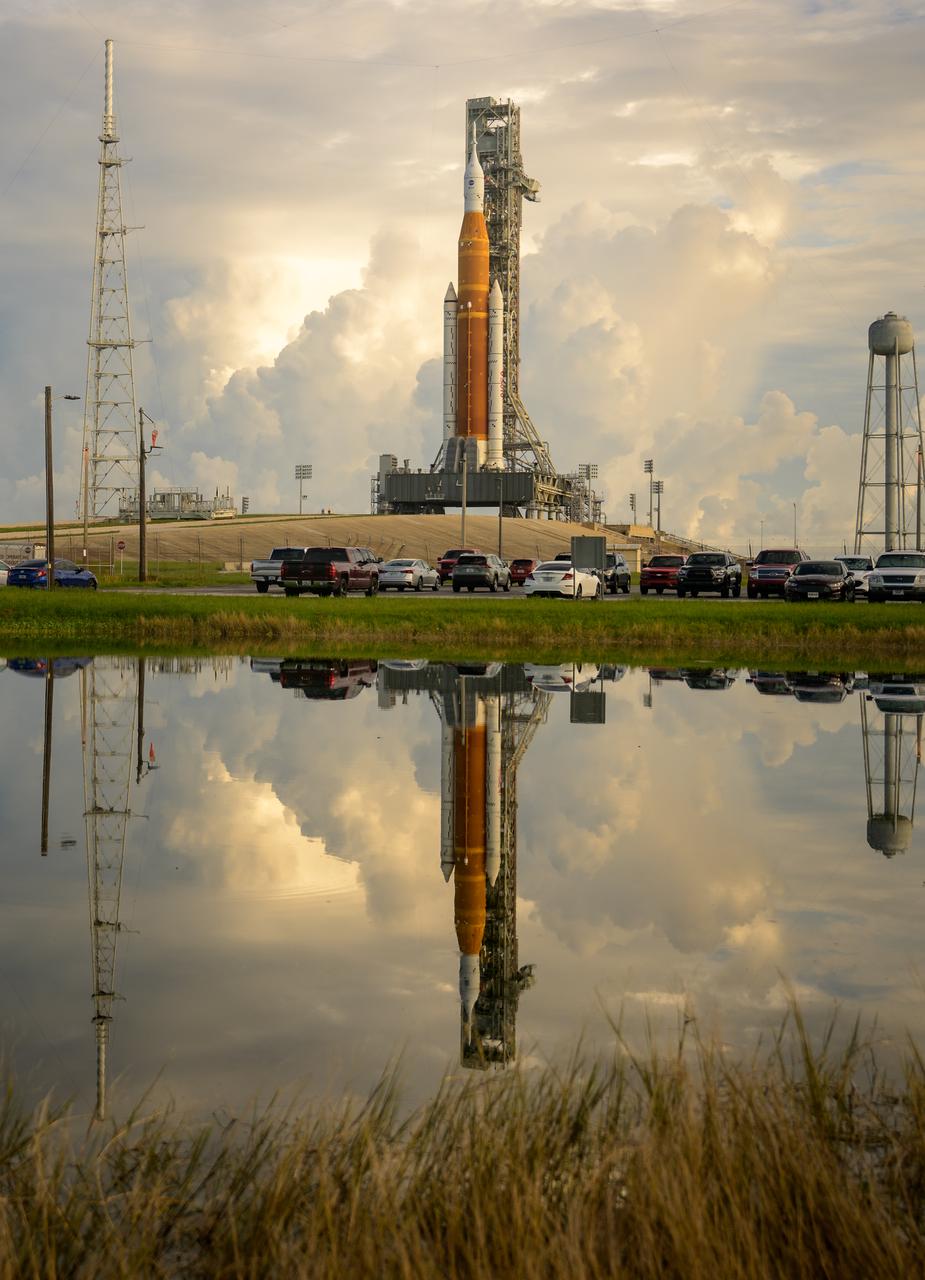
NASA’s Space Launch System (SLS) rocket with the Orion spacecraft aboard is seen atop a mobile launcher at Launch Pad 39B as preparations for launch continue, Friday, Sept. 2, 2022, at NASA’s Kennedy Space Center in Florida. NASA’s Artemis I flight test is the first integrated test of the agency’s deep space exploration systems: the Orion spacecraft, SLS rocket, and supporting ground systems. Launch of the uncrewed flight test is targeted for Sept. 3 at 2:17 p.m. EDT. Photo Credit: (NASA/Bill Ingalls)
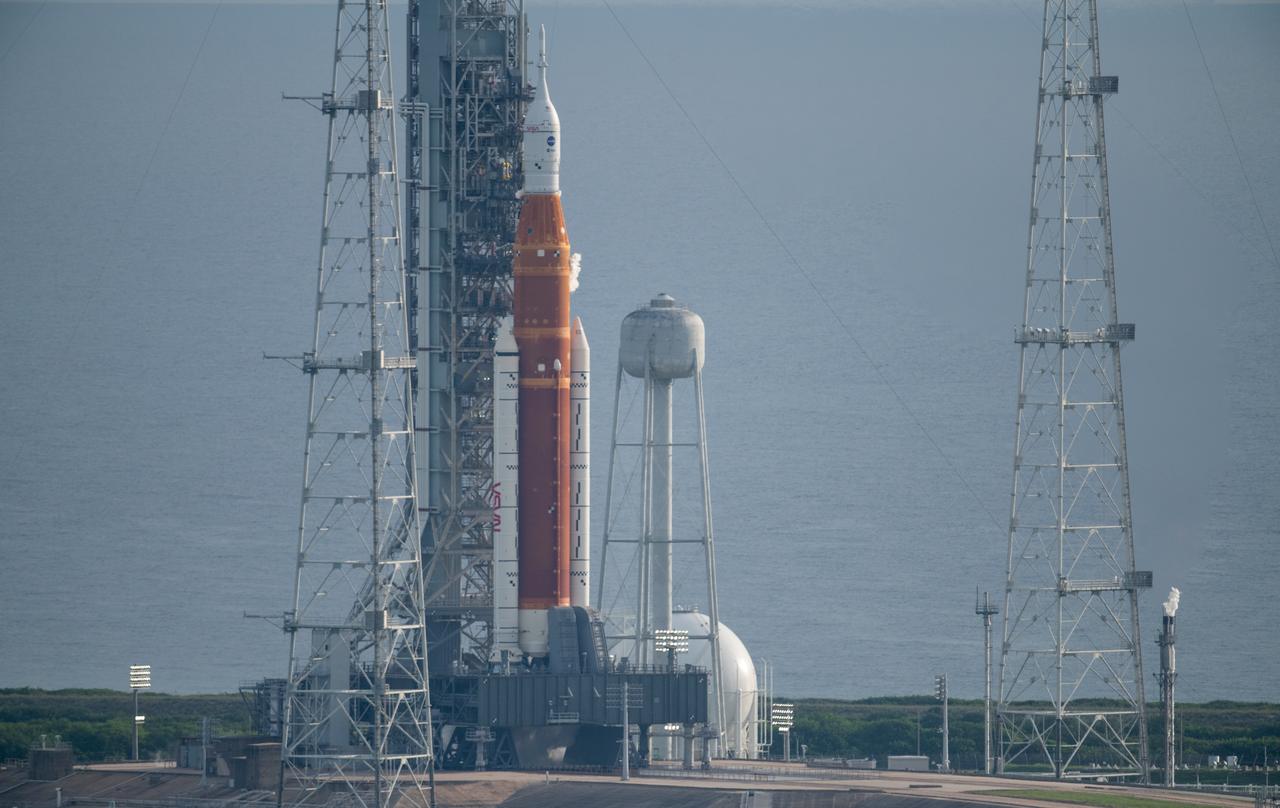
NASA’s Space Launch System (SLS) rocket with the Orion spacecraft aboard is seen atop the mobile launcher at Launch Pad 39B, Monday, Aug. 29, 2022, at NASA’s Kennedy Space Center in Florida. NASA’s Artemis I flight test is the first integrated test of the agency’s deep space exploration systems: the Orion spacecraft, SLS rocket, and supporting ground systems. The launch director halted today’s launch attempt at approximately 8:30 a.m. ET. Photo Credit: (NASA/Joel Kowsky)
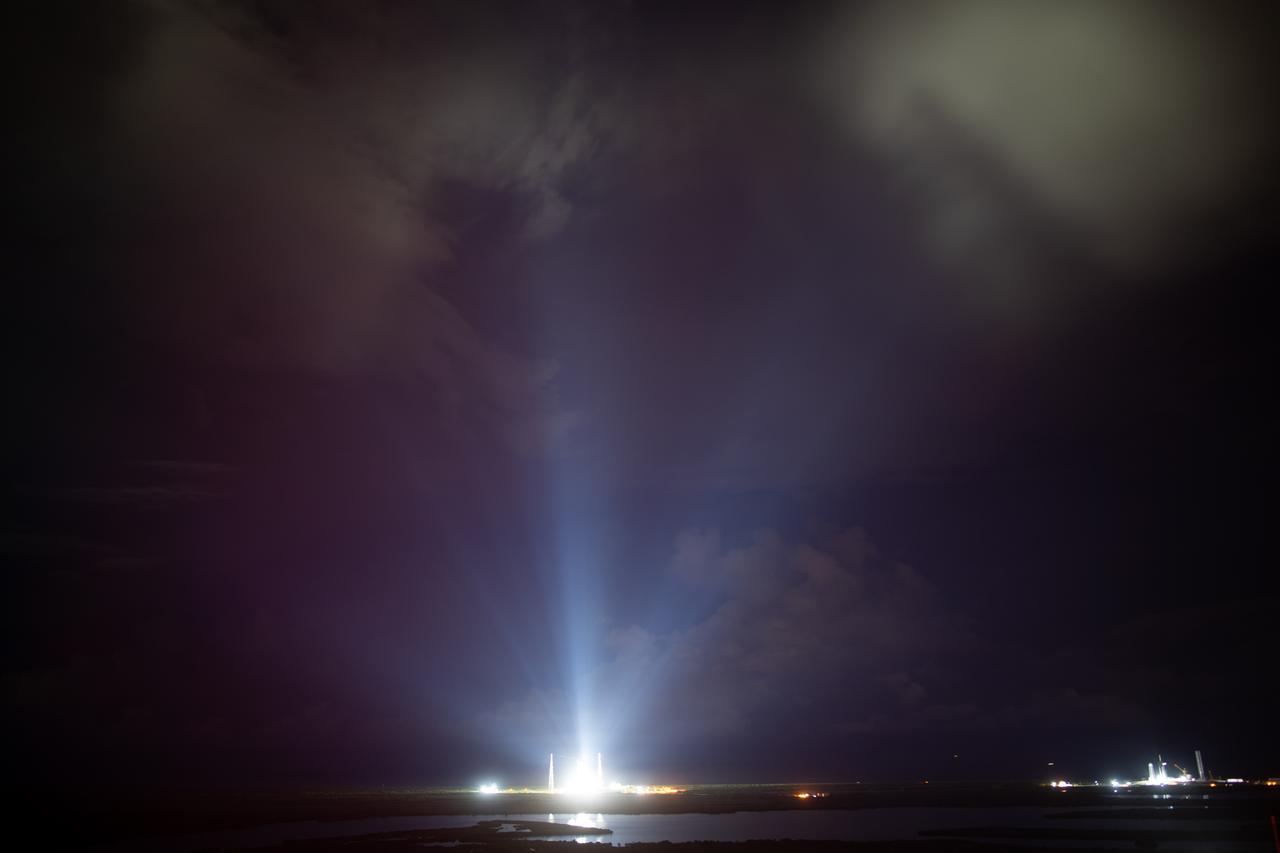
NASA’s Space Launch System (SLS) rocket with the Orion spacecraft aboard atop the mobile launcher is seen illuminated by spotlights at Launch Pad 39B as the launch countdown continues, Monday, Aug. 29, 2022, at NASA’s Kennedy Space Center in Florida. NASA’s Artemis I flight test is the first integrated test of the agency’s deep space exploration systems: the Orion spacecraft, SLS rocket, and supporting ground systems. Launch of the uncrewed flight test is targeted for 8:33 a.m. ET. Photo Credit: (NASA/Joel Kowsky)
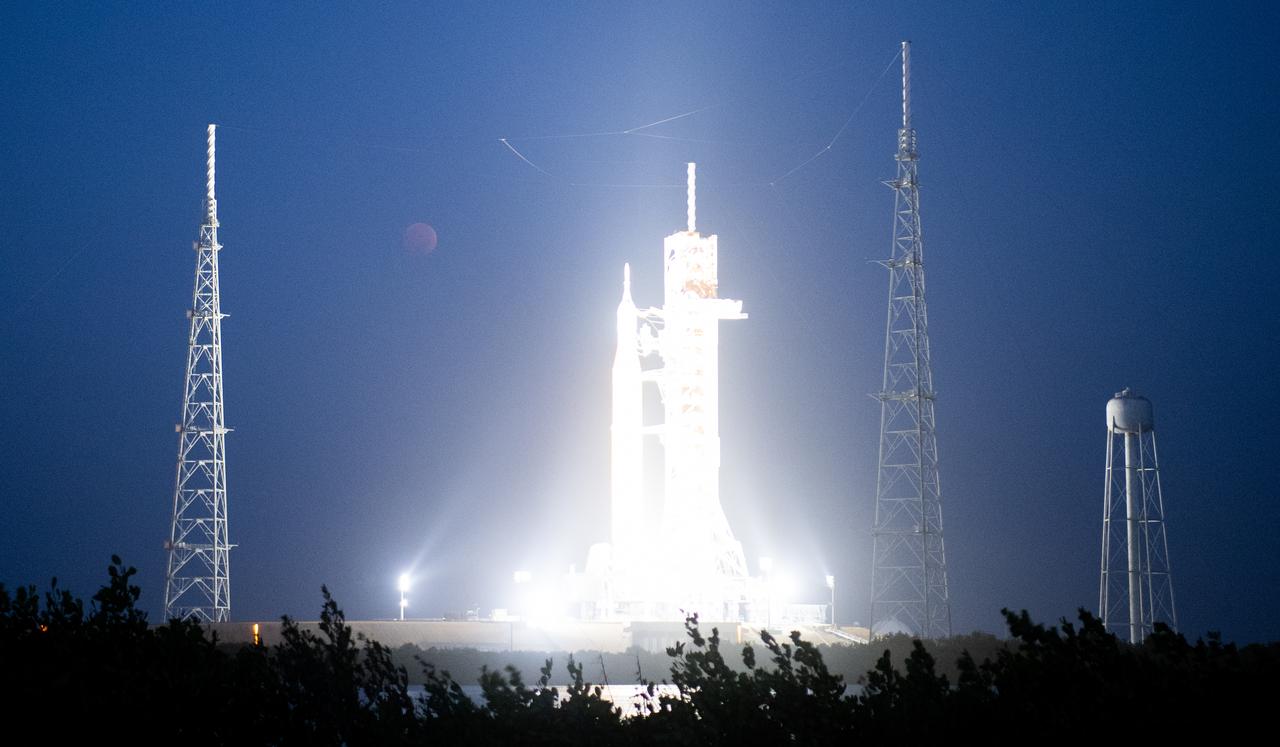
The Moon is seen during a total lunar eclipse above NASA’s Space Launch System (SLS) rocket with the Orion spacecraft aboard atop a mobile launcher at Launch Pad 39B, Tuesday, Nov. 8, 2022, at NASA’s Kennedy Space Center in Florida. NASA’s Artemis I flight test is the first integrated test of the agency’s deep space exploration systems: the Orion spacecraft, SLS rocket, and supporting ground systems. Photo Credit: (NASA/Joel Kowsky)
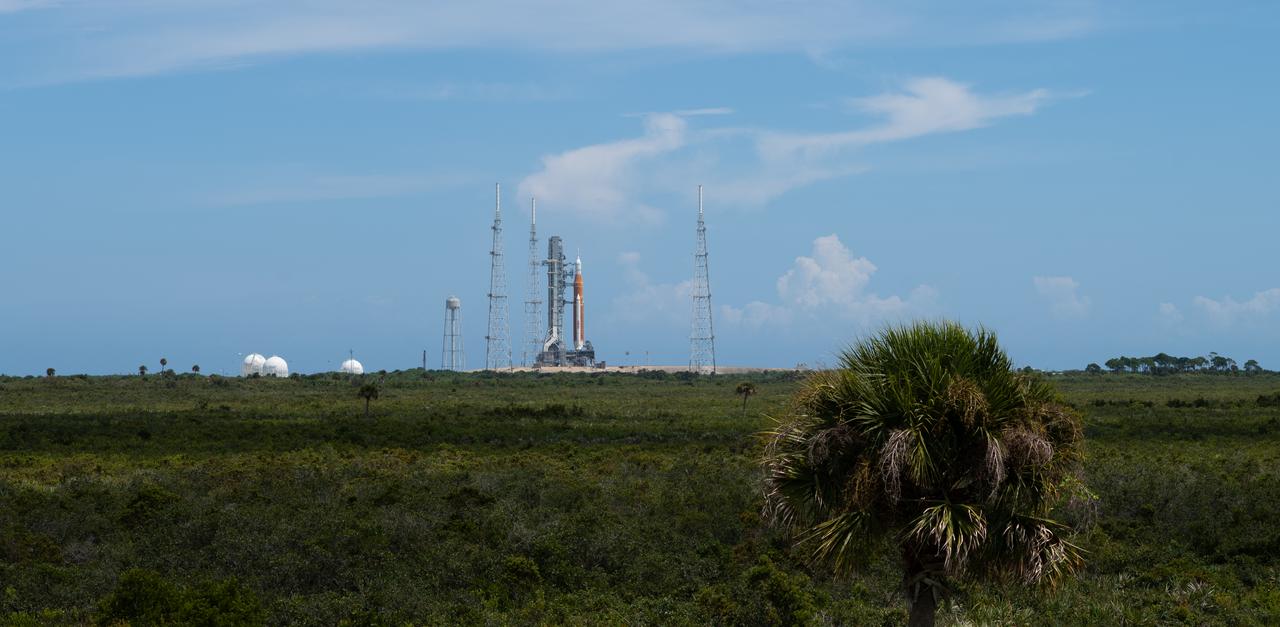
NASA’s Space Launch System (SLS) rocket with the Orion spacecraft aboard is seen atop the mobile launcher at Launch Pad 39B, Tuesday, Aug. 30, 2022, at NASA’s Kennedy Space Center in Florida. NASA’s Artemis I flight test is the first integrated test of the agency’s deep space exploration systems: the Orion spacecraft, SLS rocket, and supporting ground systems. Photo Credit: (NASA/Joel Kowsky)
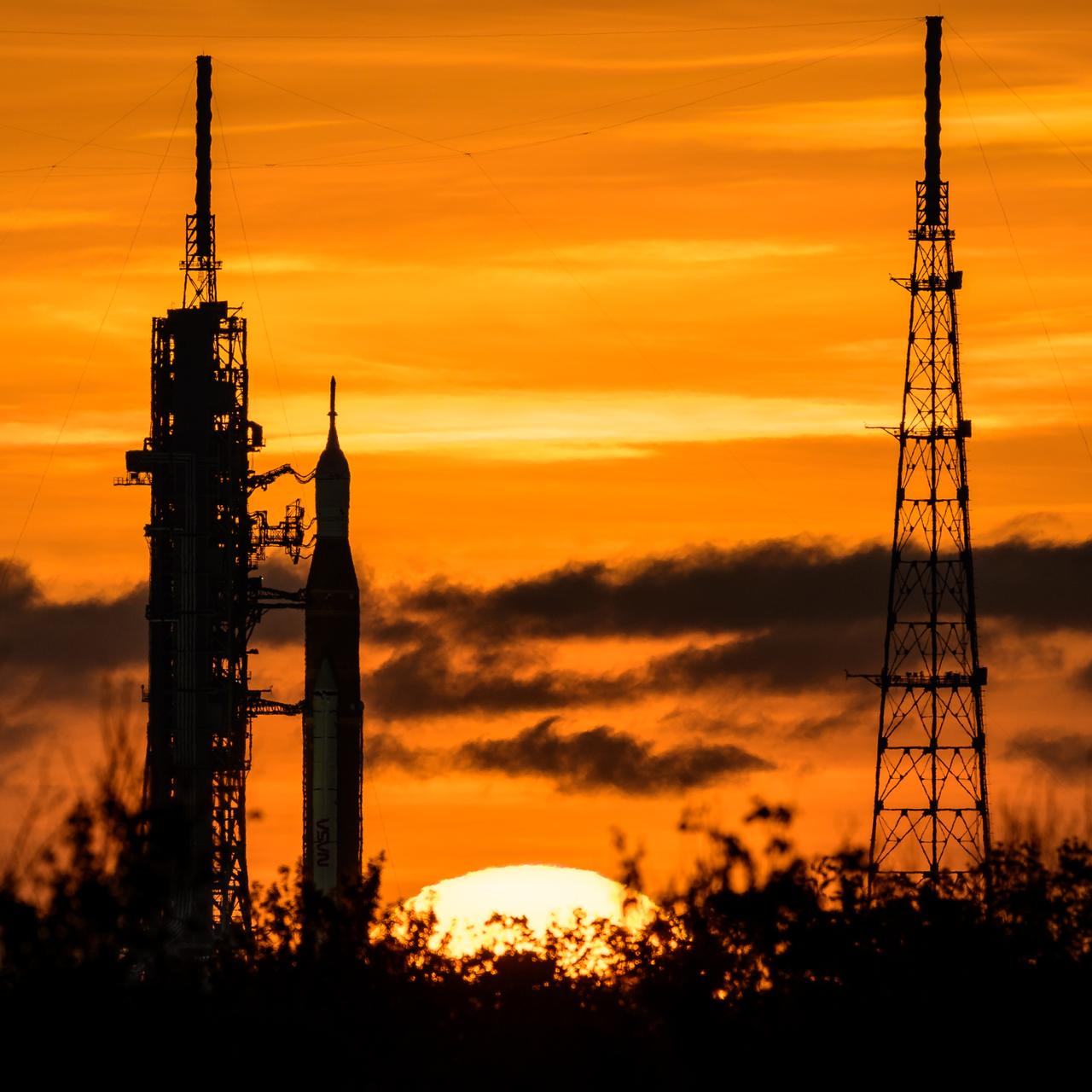
NASA’s Space Launch System (SLS) rocket with the Orion spacecraft aboard is seen during sunrise atop a mobile launcher at Launch Pad 39B as preparations for launch continue, Wednesday, Aug. 31, 2022, at NASA’s Kennedy Space Center in Florida. NASA’s Artemis I flight test is the first integrated test of the agency’s deep space exploration systems: the Orion spacecraft, SLS rocket, and supporting ground systems. Photo Credit: (NASA/Bill Ingalls)
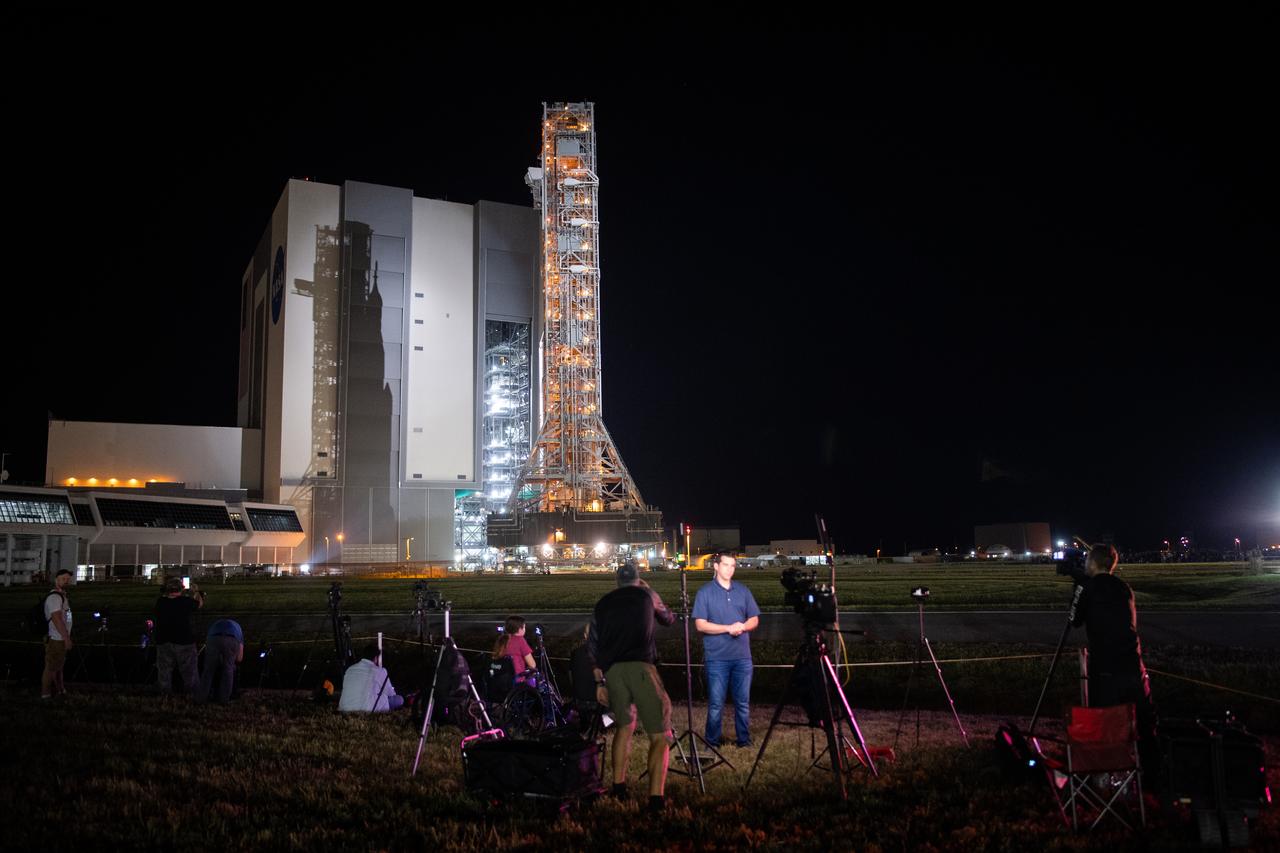
Members of the media are seen as NASA’s Space Launch System (SLS) rocket with the Orion spacecraft aboard is rolled out of the Vehicle Assembly Building, Tuesday, Aug. 16, 2022, at NASA’s Kennedy Space Center in Florida. NASA’s Artemis I flight test is the first integrated test of the agency’s deep space exploration systems: the Orion spacecraft, SLS rocket, and supporting ground systems. Launch of the uncrewed flight test is targeted for no earlier than Aug. 29. Photo Credit: (NASA/Joel Kowsky)
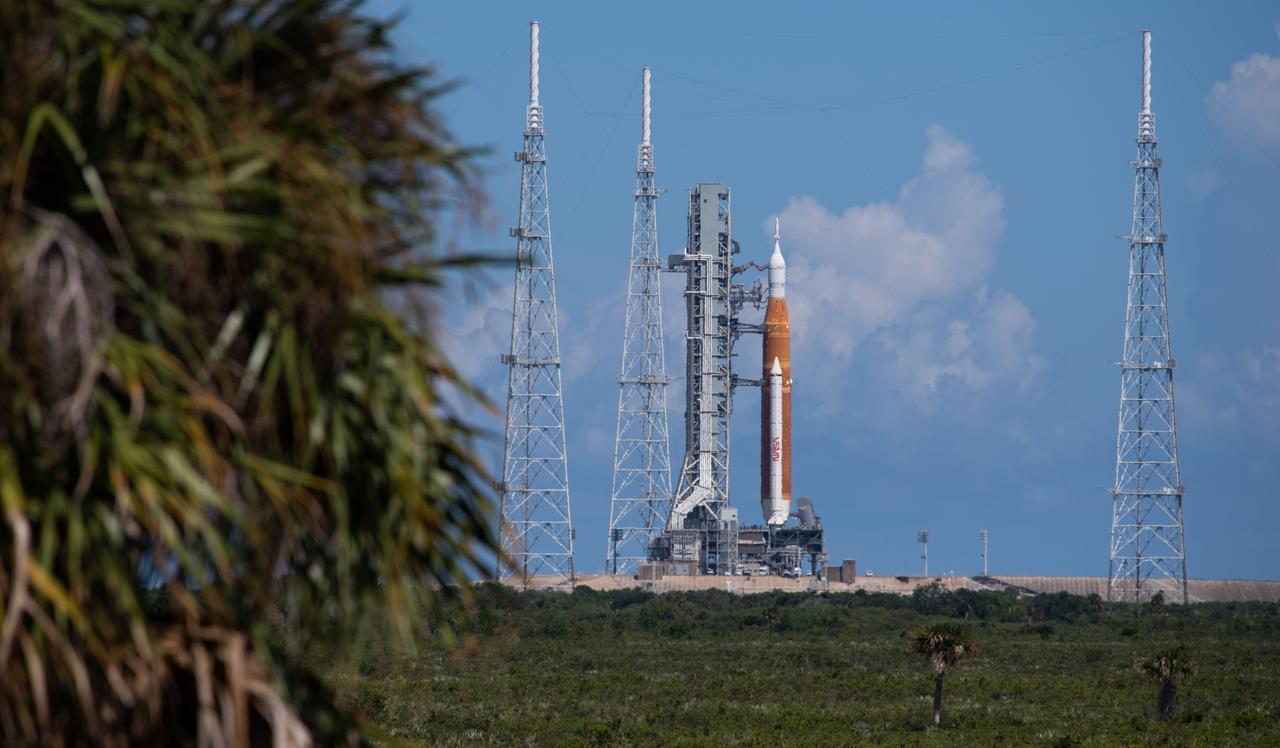
NASA’s Space Launch System (SLS) rocket with the Orion spacecraft aboard is seen atop the mobile launcher at Launch Pad 39B as preparations for launch continue, Thursday, Sept. 1, 2022, at NASA’s Kennedy Space Center in Florida. NASA’s Artemis I flight test is the first integrated test of the agency’s deep space exploration systems: the Orion spacecraft, SLS rocket, and supporting ground systems. Launch of the uncrewed flight test is targeted for Sept. 3 at 2:17 p.m. EDT. Photo Credit: (NASA/Joel Kowsky)
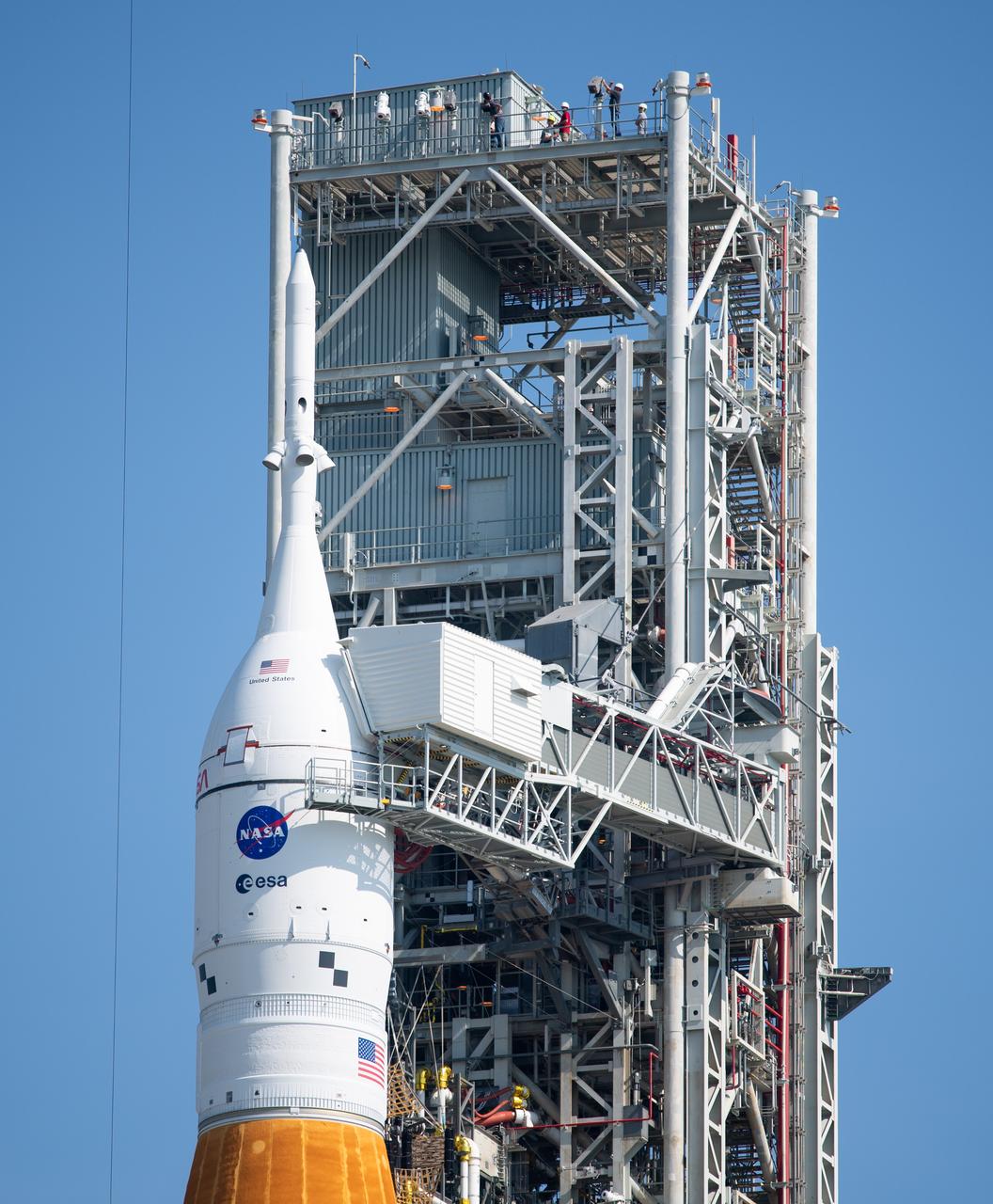
NASA’s Space Launch System (SLS) rocket with the Orion spacecraft aboard is seen atop a mobile launcher at Launch Pad 39B, Thursday, Aug. 18, 2022, after being rolled out to the launch pad at NASA’s Kennedy Space Center in Florida. NASA’s Artemis I mission is the first integrated test of the agency’s deep space exploration systems: the Orion spacecraft, SLS rocket, and supporting ground systems. Launch of the uncrewed flight test is targeted for no earlier than Aug. 29. Photo Credit: (NASA/Joel Kowsky)
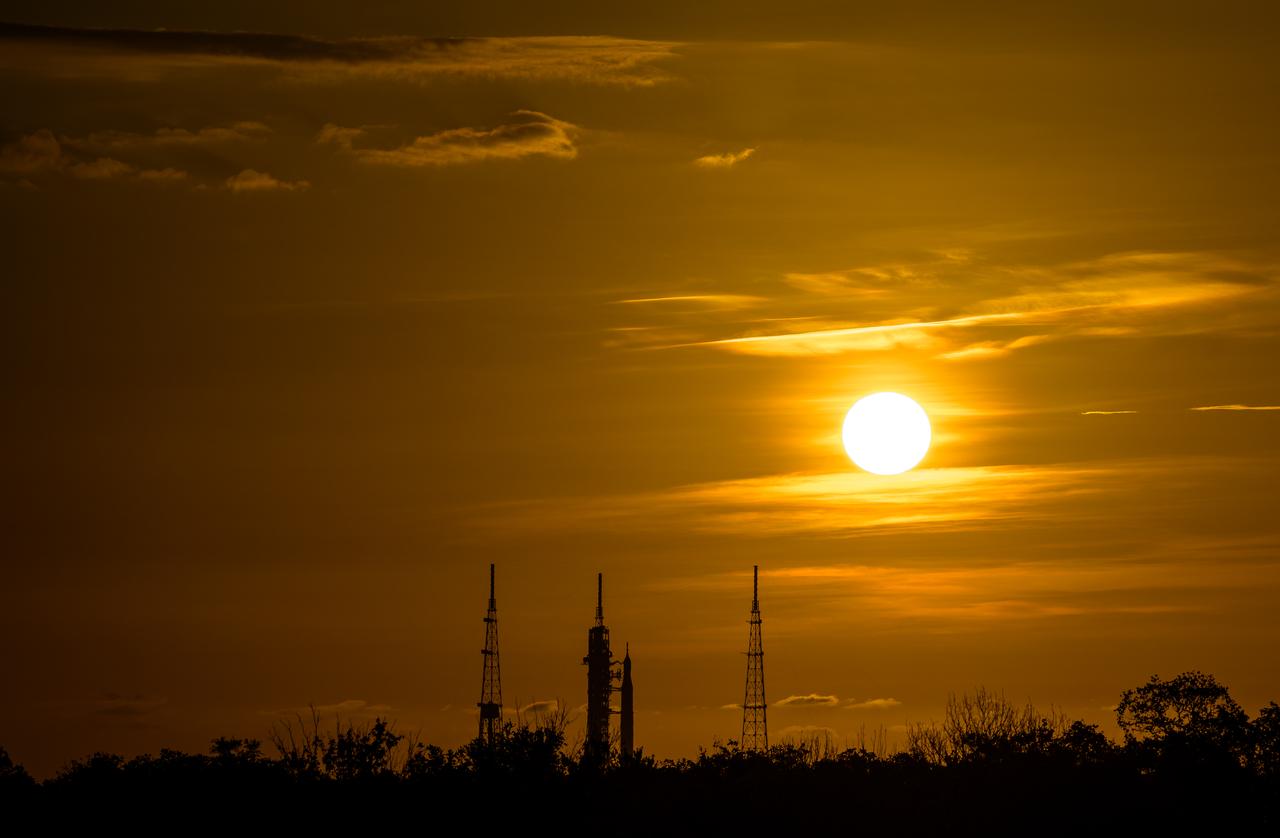
NASA’s Space Launch System (SLS) rocket with the Orion spacecraft aboard is seen during sunrise atop a mobile launcher at Launch Pad 39B as preparations for launch continue, Wednesday, Aug. 31, 2022, at NASA’s Kennedy Space Center in Florida. NASA’s Artemis I flight test is the first integrated test of the agency’s deep space exploration systems: the Orion spacecraft, SLS rocket, and supporting ground systems. Photo Credit: (NASA/Bill Ingalls)
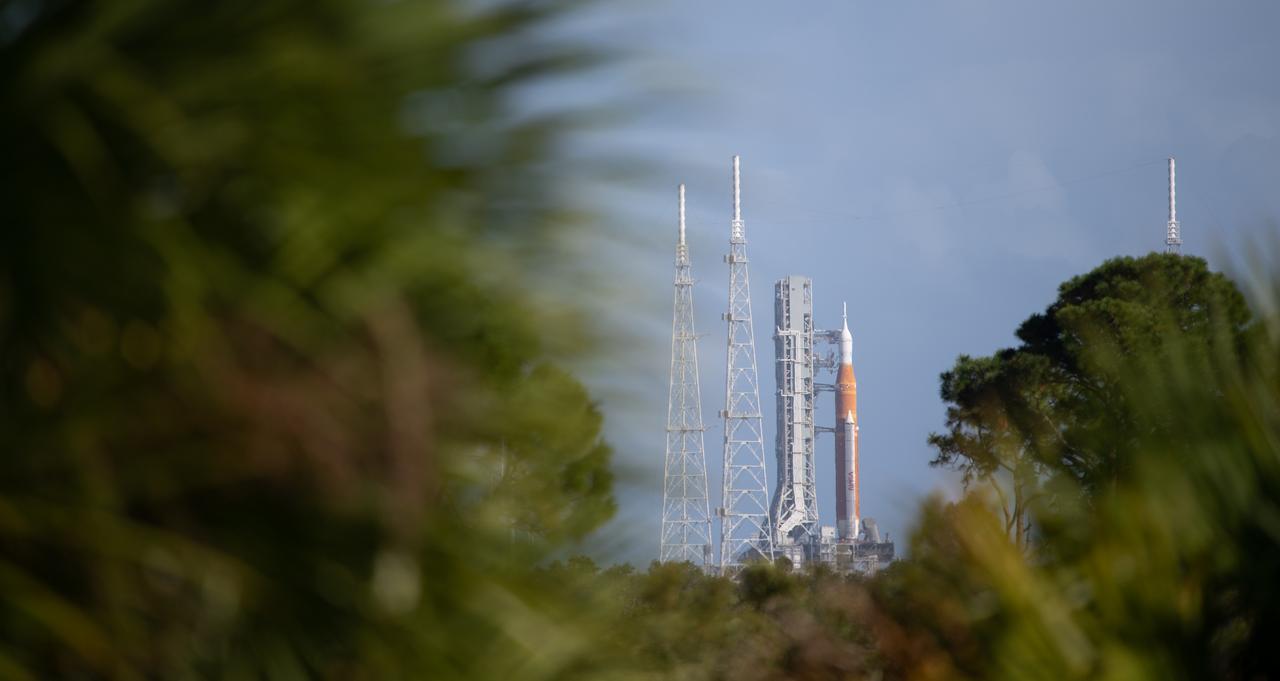
NASA’s Space Launch System (SLS) rocket with the Orion spacecraft aboard is seen atop a mobile launcher at Launch Pad 39B as preparations for launch continue, Saturday, Nov. 5, 2022, at NASA’s Kennedy Space Center in Florida. NASA’s Artemis I flight test is the first integrated test of the agency’s deep space exploration systems: the Orion spacecraft, SLS rocket, and supporting ground systems. Launch of the uncrewed flight test is targeted for Nov. 14 at 12:07 a.m. EST. Photo Credit: (NASA/Joel Kowsky)
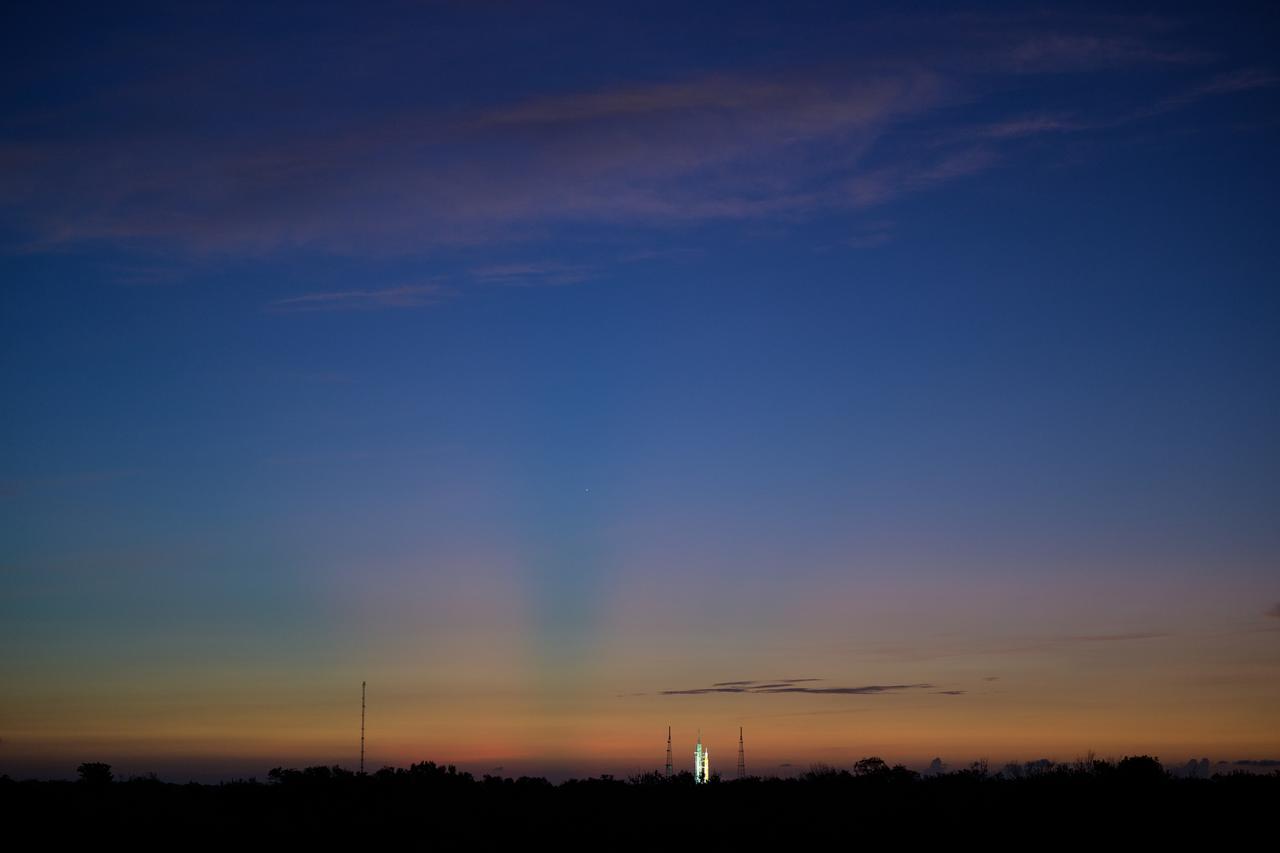
NASA’s Space Launch System (SLS) rocket with the Orion spacecraft aboard is seen prior to sunrise atop a mobile launcher at Launch Pad 39B as preparations for launch continue, Wednesday, Aug. 31, 2022, at NASA’s Kennedy Space Center in Florida. NASA’s Artemis I flight test is the first integrated test of the agency’s deep space exploration systems: the Orion spacecraft, SLS rocket, and supporting ground systems. Photo Credit: (NASA/Bill Ingalls)

The Moon is seen during a total lunar eclipse above NASA’s Space Launch System (SLS) rocket with the Orion spacecraft aboard atop a mobile launcher at Launch Pad 39B, Tuesday, Nov. 8, 2022, at NASA’s Kennedy Space Center in Florida. NASA’s Artemis I flight test is the first integrated test of the agency’s deep space exploration systems: the Orion spacecraft, SLS rocket, and supporting ground systems. Photo Credit: (NASA/Joel Kowsky)