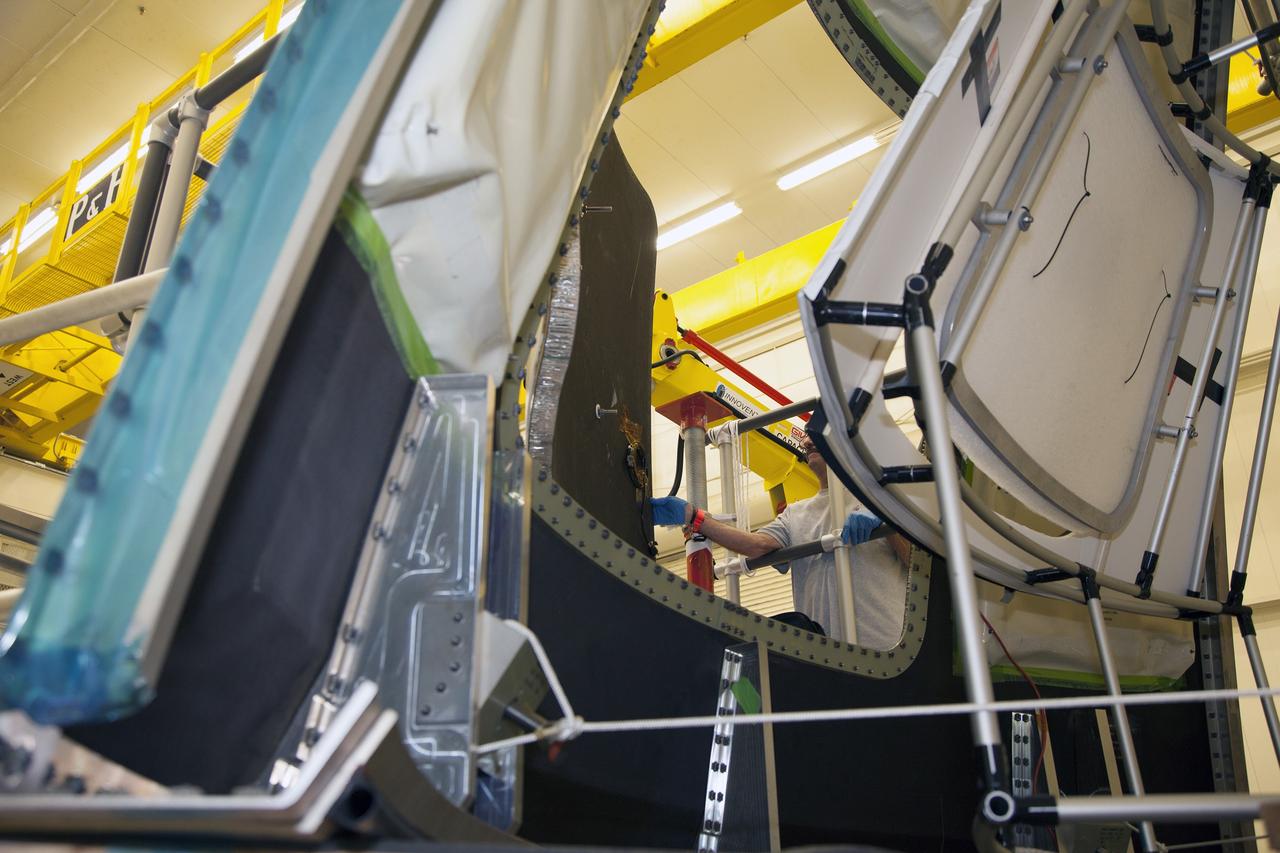
CAPE CANAVERAL, Fla. – Inside the Vehicle Assembly Building at NASA’s Kennedy Space Center in Florida, engineers and technicians are performing a GIZMO demonstration test on the ground test article Launch Abort System, or LAS, ogive panel and an Orion crew module simulator. Technicians attached the GIZMO to remove the outer ogive panel hatch on the Orion crew module simulator. The GIZMO is a pneumatically-balanced manipulator that will be used for installation of the hatches on the crew module and LAS for the uncrewed Exploration Flight Test-1 and Exploration Mission-1. The Ground Systems Development and Operations Program is running the test to demonstrate that the GIZMO can meet the reach and handling requirements for the task. Orion is the exploration spacecraft designed to carry astronauts to destinations not yet explored by humans, including an asteroid and Mars. It will have emergency abort capability, sustain the crew during space travel and provide safe re-entry from deep space return velocities. The first unpiloted test flight of the Orion is scheduled to launch later this year atop a Delta IV rocket and in 2017 on NASA’s Space Launch System rocket. For more information, visit http://www.nasa.gov/orion. Photo credit: NASA/Daniel Casper
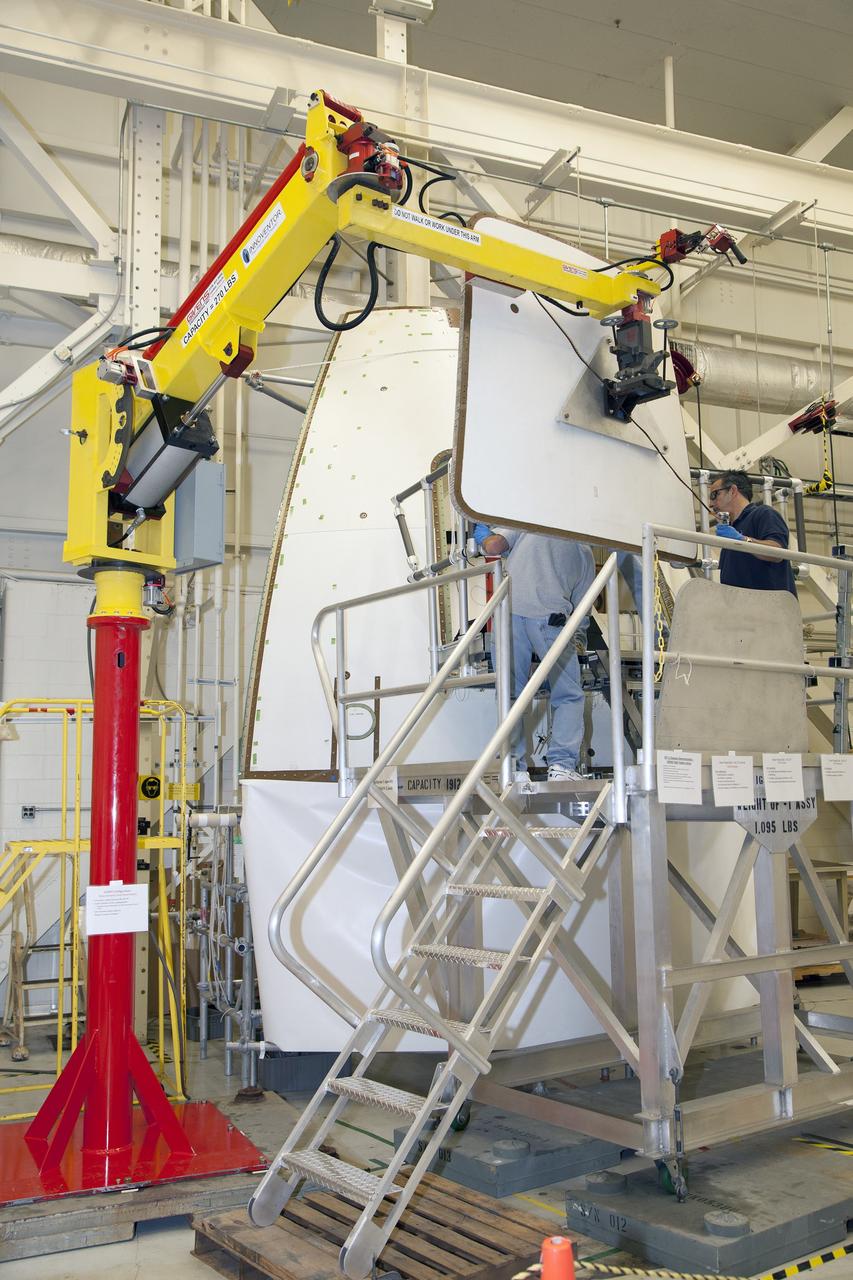
CAPE CANAVERAL, Fla. – Inside the Vehicle Assembly Building at NASA’s Kennedy Space Center in Florida, engineers and technicians are performing a GIZMO demonstration test on the ground test article Launch Abort System, or LAS, ogive panel and an Orion crew module simulator. Technicians attach the GIZMO, a pneumatically-balanced manipulator that will be used for installation of the hatches on the crew module and LAS for the uncrewed Exploration Flight Test-1 and Exploration Mission-1, onto the ogive panel mockup hatch. The Ground Systems Development and Operations Program is running the test to demonstrate that the GIZMO can meet the reach and handling requirements for the task. Orion is the exploration spacecraft designed to carry astronauts to destinations not yet explored by humans, including an asteroid and Mars. It will have emergency abort capability, sustain the crew during space travel and provide safe re-entry from deep space return velocities. The first unpiloted test flight of the Orion is scheduled to launch later this year atop a Delta IV rocket and in 2017 on NASA’s Space Launch System rocket. For more information, visit http://www.nasa.gov/orion. Photo credit: NASA/Daniel Casper
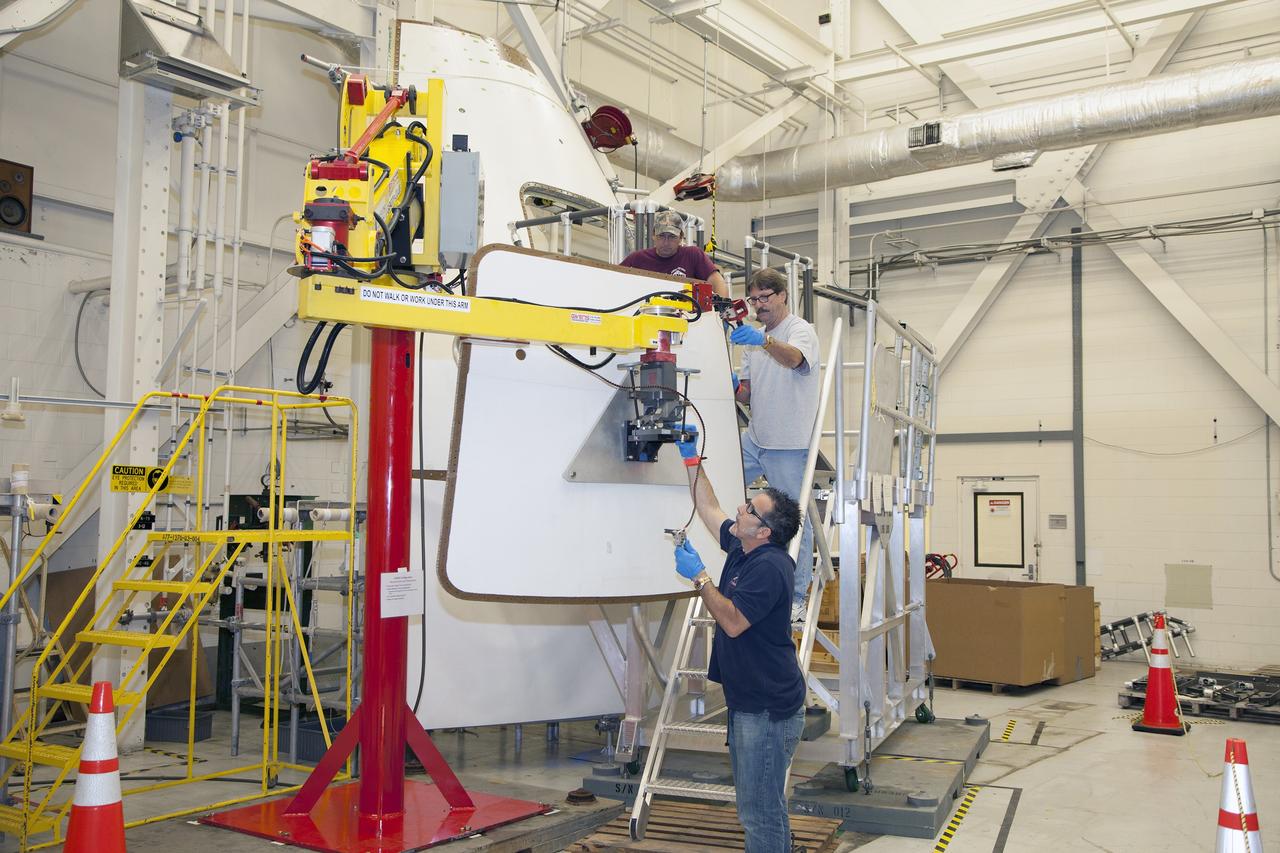
CAPE CANAVERAL, Fla. – Inside the Vehicle Assembly Building at NASA’s Kennedy Space Center in Florida, engineers and technicians are performing a GIZMO demonstration test on the ground test article Launch Abort System, or LAS, ogive panel and an Orion crew module simulator. Technicians practice lining up the GIZMO, a pneumatically-balanced manipulator that will be used for installation of the hatches on the crew module and LAS for the uncrewed Exploration Flight Test-1 and Exploration Mission-1, on the ogive panel mockup hatch. The Ground Systems Development and Operations Program is running the test to demonstrate that the GIZMO can meet the reach and handling requirements for the task. Orion is the exploration spacecraft designed to carry astronauts to destinations not yet explored by humans, including an asteroid and Mars. It will have emergency abort capability, sustain the crew during space travel and provide safe re-entry from deep space return velocities. The first unpiloted test flight of the Orion is scheduled to launch later this year atop a Delta IV rocket and in 2017 on NASA’s Space Launch System rocket. For more information, visit http://www.nasa.gov/orion. Photo credit: NASA/Daniel Casper
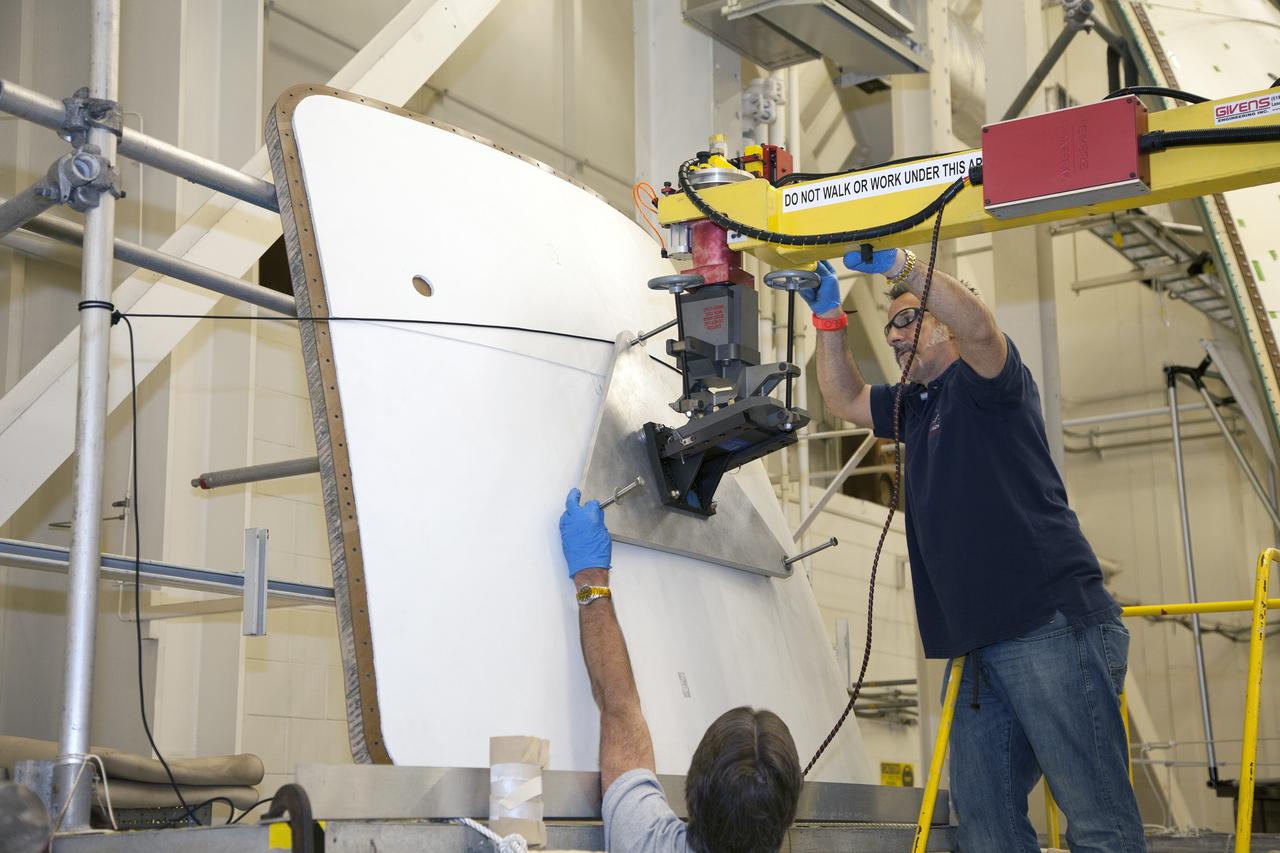
CAPE CANAVERAL, Fla. – Inside the Vehicle Assembly Building at NASA’s Kennedy Space Center in Florida, engineers and technicians are performing a GIZMO demonstration test on the ground test article Launch Abort System, or LAS, ogive panel and an Orion crew module simulator. Technicians practice lining up the GIZMO, a pneumatically-balanced manipulator that will be used for installation of the hatches on the crew module and LAS for the uncrewed Exploration Flight Test-1 and Exploration Mission-1, on the ogive panel mockup hatch. The Ground Systems Development and Operations Program is running the test to demonstrate that the GIZMO can meet the reach and handling requirements for the task. Orion is the exploration spacecraft designed to carry astronauts to destinations not yet explored by humans, including an asteroid and Mars. It will have emergency abort capability, sustain the crew during space travel and provide safe re-entry from deep space return velocities. The first unpiloted test flight of the Orion is scheduled to launch later this year atop a Delta IV rocket and in 2017 on NASA’s Space Launch System rocket. For more information, visit http://www.nasa.gov/orion. Photo credit: NASA/Daniel Casper
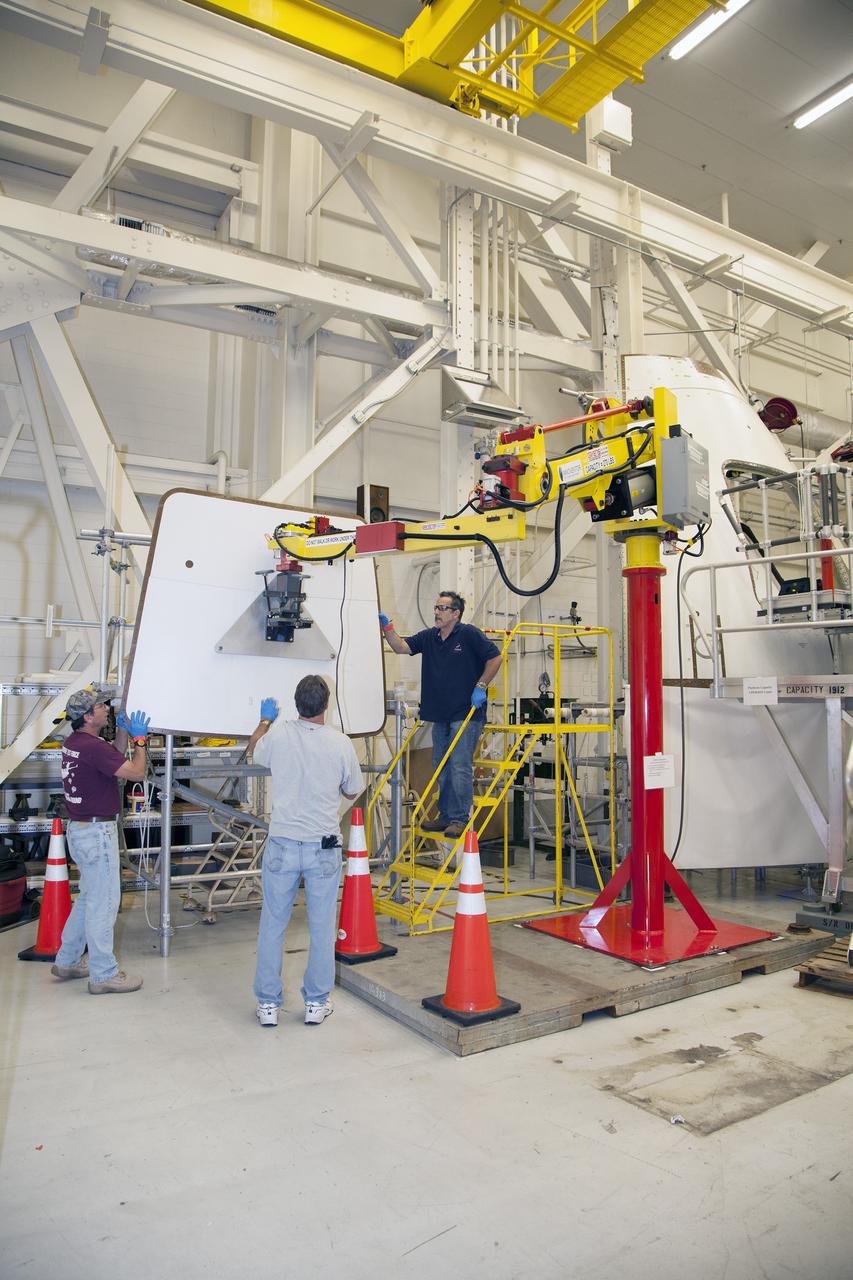
CAPE CANAVERAL, Fla. – Inside the Vehicle Assembly Building at NASA’s Kennedy Space Center in Florida, engineers and technicians are performing a GIZMO demonstration test on the ground test article Launch Abort System, or LAS, ogive panel and an Orion crew module simulator. Technicians practice lining up the GIZMO, a pneumatically-balanced manipulator that will be used for installation of the hatches on the crew module and LAS for the uncrewed Exploration Flight Test-1 and Exploration Mission-1, on the ogive panel mockup hatch. The Ground Systems Development and Operations Program is running the test to demonstrate that the GIZMO can meet the reach and handling requirements for the task. Orion is the exploration spacecraft designed to carry astronauts to destinations not yet explored by humans, including an asteroid and Mars. It will have emergency abort capability, sustain the crew during space travel and provide safe re-entry from deep space return velocities. The first unpiloted test flight of the Orion is scheduled to launch later this year atop a Delta IV rocket and in 2017 on NASA’s Space Launch System rocket. For more information, visit http://www.nasa.gov/orion. Photo credit: NASA/Daniel Casper
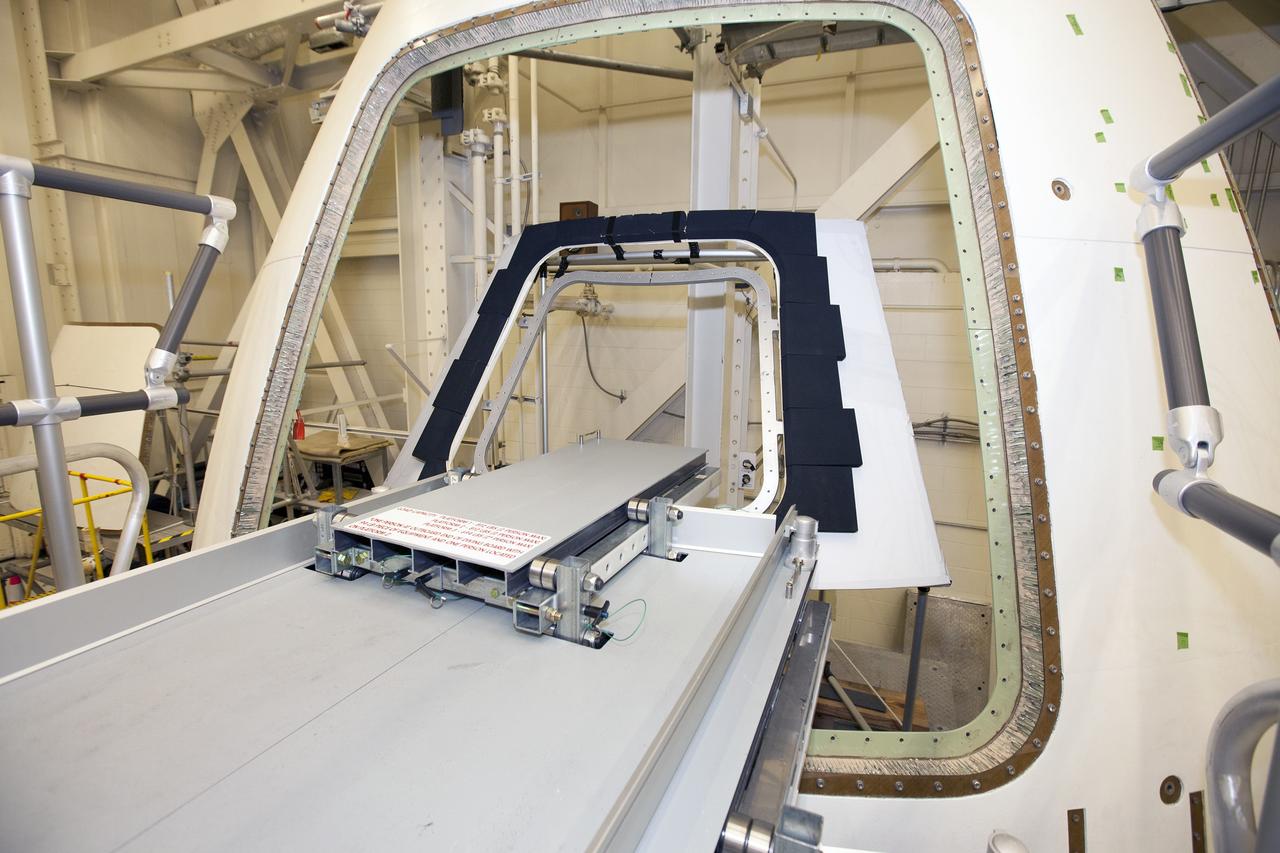
CAPE CANAVERAL, Fla. – Inside the Vehicle Assembly Building at NASA’s Kennedy Space Center in Florida, a GIZMO demonstration test is being performed on the ground test article Launch Abort System, or LAS, ogive panel and an Orion crew module simulator. An access platform and diving board have been added leading up to the mockup of the crew module hatch. The inner hatch has been removed The GIZMO is a pneumatically-balanced manipulator that will be used for installation of the hatches on the crew module and LAS for the uncrewed Exploration Flight Test-1 and Exploration Mission-1. The Ground Systems Development and Operations Program is running the test to demonstrate that the GIZMO can meet the reach and handling requirements for the task. Orion is the exploration spacecraft designed to carry astronauts to destinations not yet explored by humans, including an asteroid and Mars. It will have emergency abort capability, sustain the crew during space travel and provide safe re-entry from deep space return velocities. The first unpiloted test flight of the Orion is scheduled to launch later this year atop a Delta IV rocket and in 2017 on NASA’s Space Launch System rocket. For more information, visit http://www.nasa.gov/orion. Photo credit: NASA/Daniel Casper
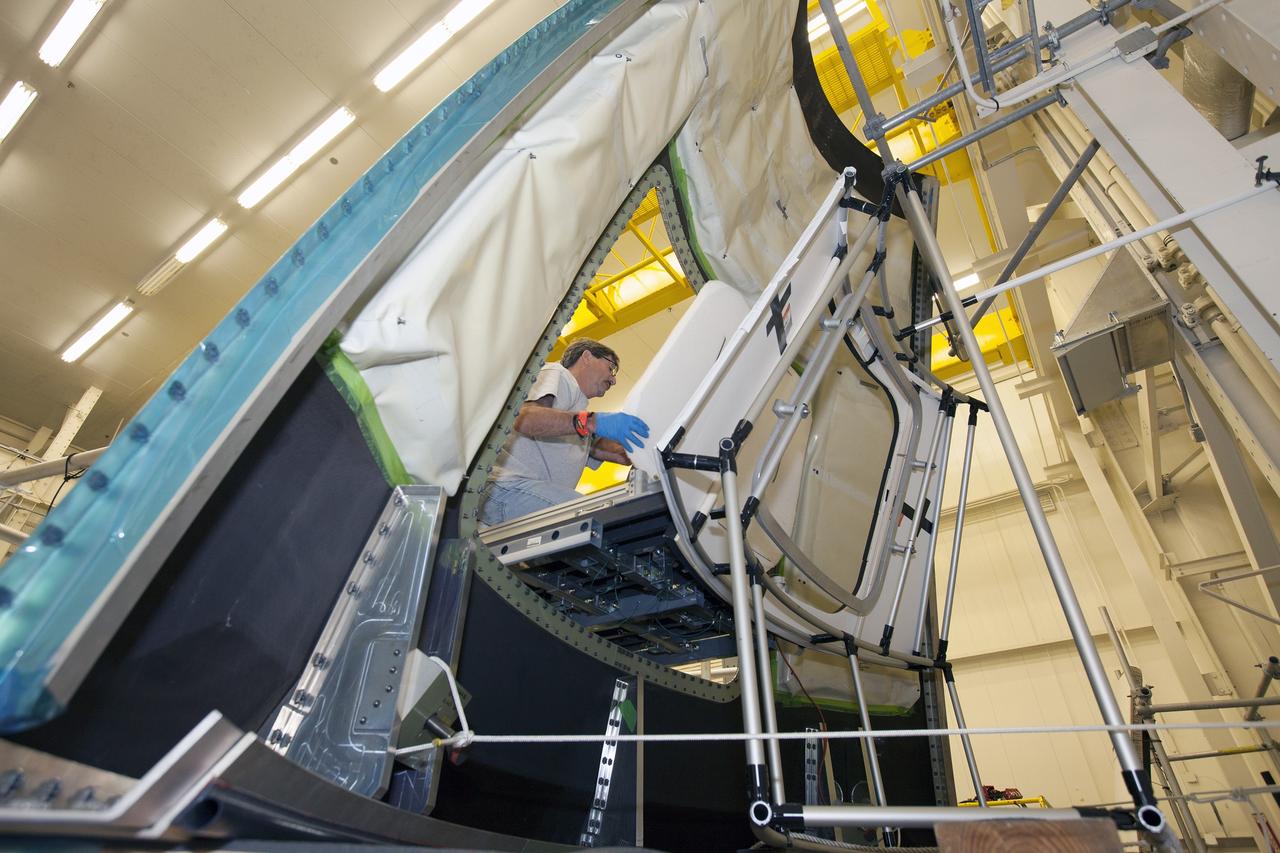
CAPE CANAVERAL, Fla. – Inside the Vehicle Assembly Building at NASA’s Kennedy Space Center in Florida, a GIZMO demonstration test is being performed on the ground test article Launch Abort System, or LAS, ogive panel and an Orion crew module simulator. A technician on an access platform and diving board removes the mockup of the crew module hatch. The GIZMO is a pneumatically-balanced manipulator that will be used for installation of the hatches on the crew module and LAS for the uncrewed Exploration Flight Test-1 and Exploration Mission-1. The Ground Systems Development and Operations Program is running the test to demonstrate that the GIZMO can meet the reach and handling requirements for the task. Orion is the exploration spacecraft designed to carry astronauts to destinations not yet explored by humans, including an asteroid and Mars. It will have emergency abort capability, sustain the crew during space travel and provide safe re-entry from deep space return velocities. The first unpiloted test flight of the Orion is scheduled to launch later this year atop a Delta IV rocket and in 2017 on NASA’s Space Launch System rocket. For more information, visit http://www.nasa.gov/orion. Photo credit: NASA/Daniel Casper
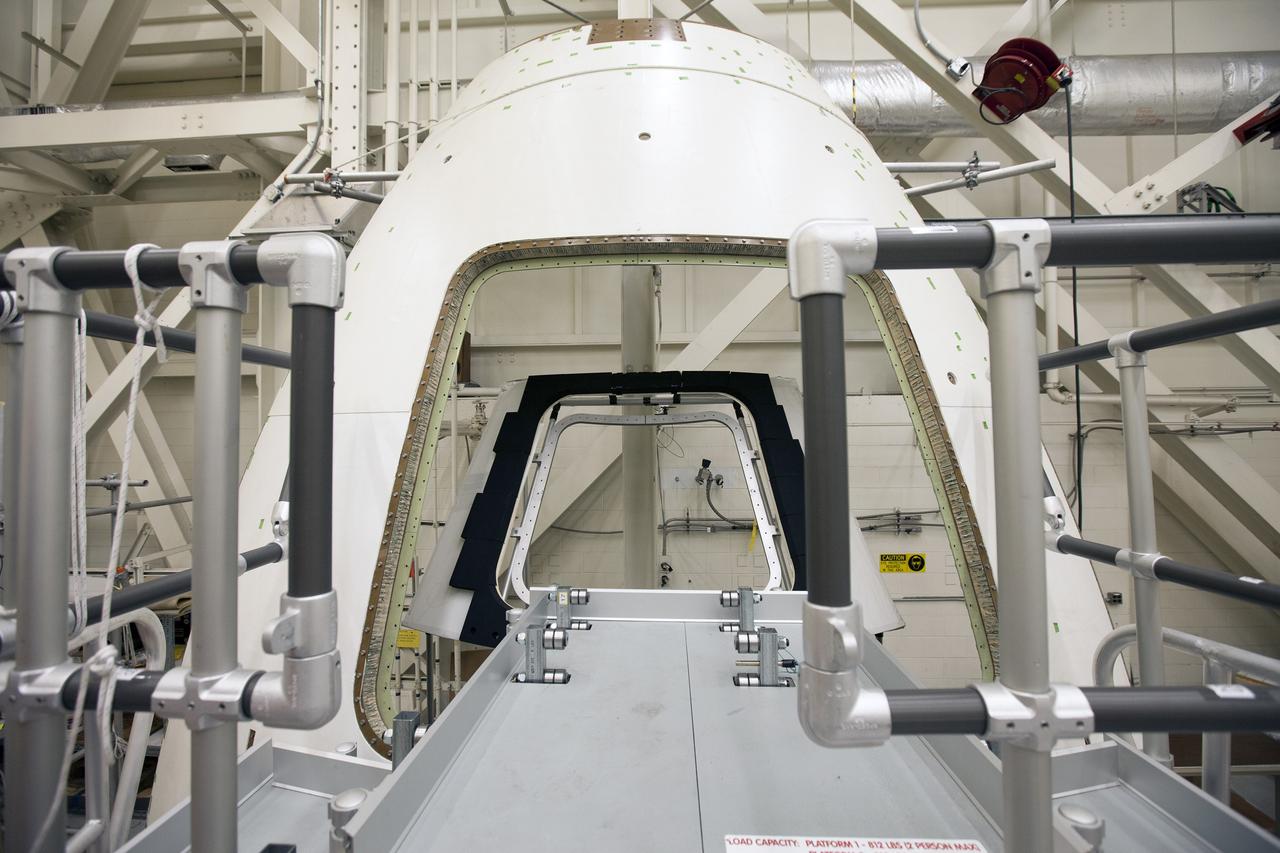
CAPE CANAVERAL, Fla. – Inside the Vehicle Assembly Building at NASA’s Kennedy Space Center in Florida, a GIZMO demonstration test is being performed on the ground test article Launch Abort System, or LAS, ogive panel and an Orion crew module simulator. An access platform has been added leading up to the mockup of the crew module. The inner hatch has been removed. The GIZMO is a pneumatically-balanced manipulator that will be used for installation of the hatches on the crew module and LAS for the uncrewed Exploration Flight Test-1 and Exploration Mission-1. The Ground Systems Development and Operations Program is running the test to demonstrate that the GIZMO can meet the reach and handling requirements for the task. Orion is the exploration spacecraft designed to carry astronauts to destinations not yet explored by humans, including an asteroid and Mars. It will have emergency abort capability, sustain the crew during space travel and provide safe re-entry from deep space return velocities. The first unpiloted test flight of the Orion is scheduled to launch later this year atop a Delta IV rocket and in 2017 on NASA’s Space Launch System rocket. For more information, visit http://www.nasa.gov/orion. Photo credit: NASA/Daniel Casper
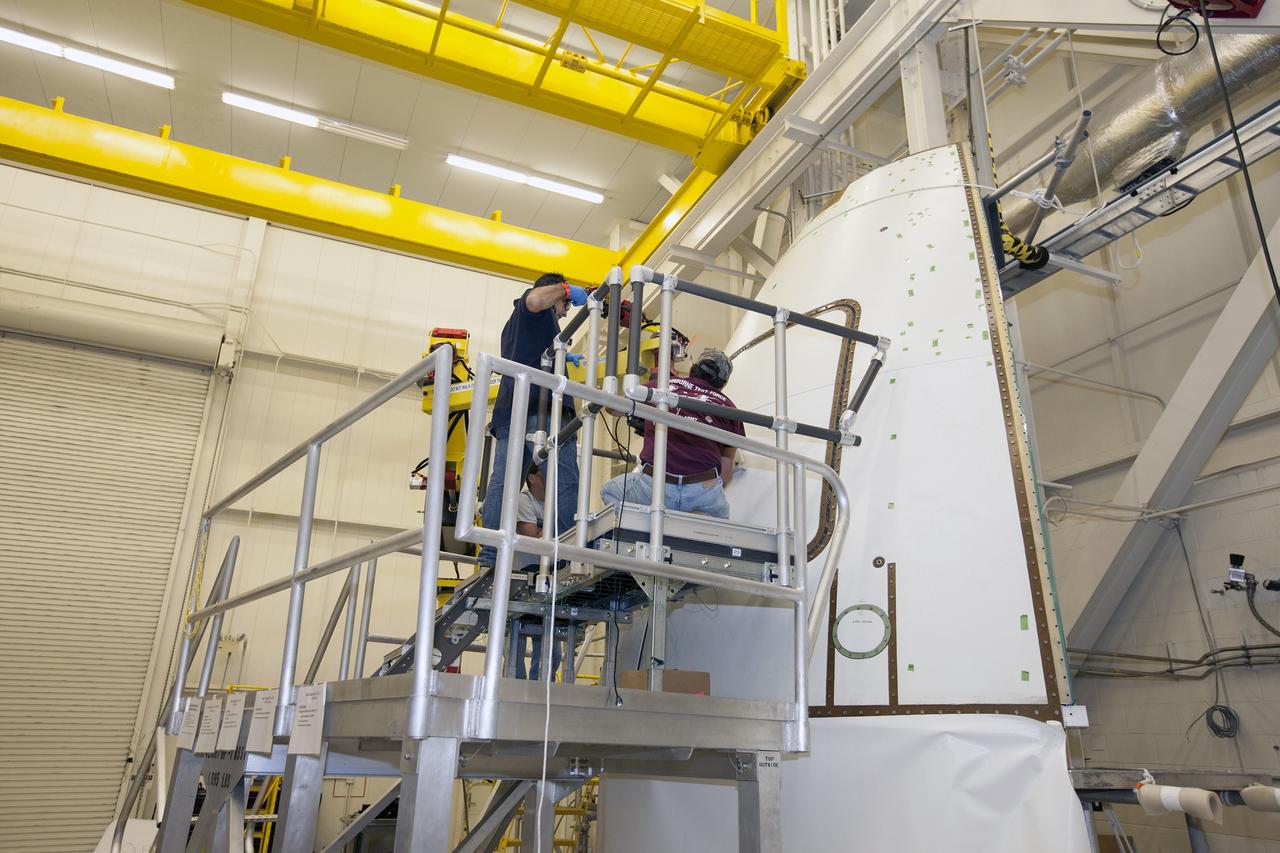
CAPE CANAVERAL, Fla. – Inside the Vehicle Assembly Building at NASA’s Kennedy Space Center in Florida, a GIZMO demonstration test is being performed on the ground test article Launch Abort System, or LAS, ogive panel and an Orion crew module simulator. Technicians installed the mockup of the ogive hatch using the GIZMO, a pneumatically-balanced manipulator that will be used for the uncrewed Exploration Flight Test-1 and Exploration Mission-1. The Ground Systems Development and Operations Program is running the test to demonstrate that the GIZMO can meet the reach and handling requirements for the task. Orion is the exploration spacecraft designed to carry astronauts to destinations not yet explored by humans, including an asteroid and Mars. It will have emergency abort capability, sustain the crew during space travel and provide safe re-entry from deep space return velocities. The first unpiloted test flight of the Orion is scheduled to launch later this year atop a Delta IV rocket and in 2017 on NASA’s Space Launch System rocket. For more information, visit http://www.nasa.gov/orion. Photo credit: NASA/Daniel Casper
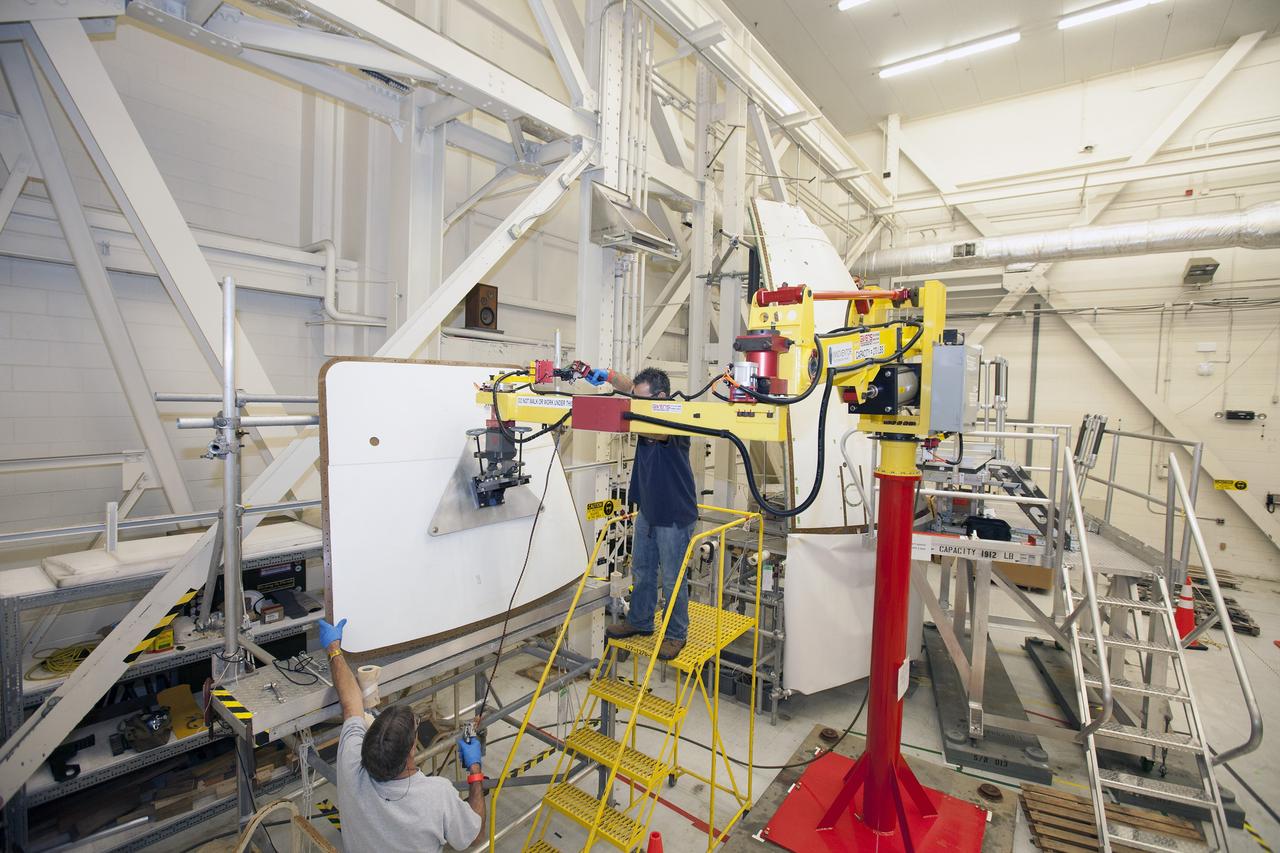
CAPE CANAVERAL, Fla. – Inside the Vehicle Assembly Building at NASA’s Kennedy Space Center in Florida, a GIZMO demonstration test is being performed on the ground test article Launch Abort System, or LAS, ogive panel and an Orion crew module simulator. Technicians are preparing the mockup of the ogive hatch for installation using the GIZMO, a pneumatically-balanced manipulator that will be used for the uncrewed Exploration Flight Test-1 and Exploration Mission-1. The Ground Systems Development and Operations Program is running the test to demonstrate that the GIZMO can meet the reach and handling requirements for the task. Orion is the exploration spacecraft designed to carry astronauts to destinations not yet explored by humans, including an asteroid and Mars. It will have emergency abort capability, sustain the crew during space travel and provide safe re-entry from deep space return velocities. The first unpiloted test flight of the Orion is scheduled to launch later this year atop a Delta IV rocket and in 2017 on NASA’s Space Launch System rocket. For more information, visit http://www.nasa.gov/orion. Photo credit: NASA/Daniel Casper
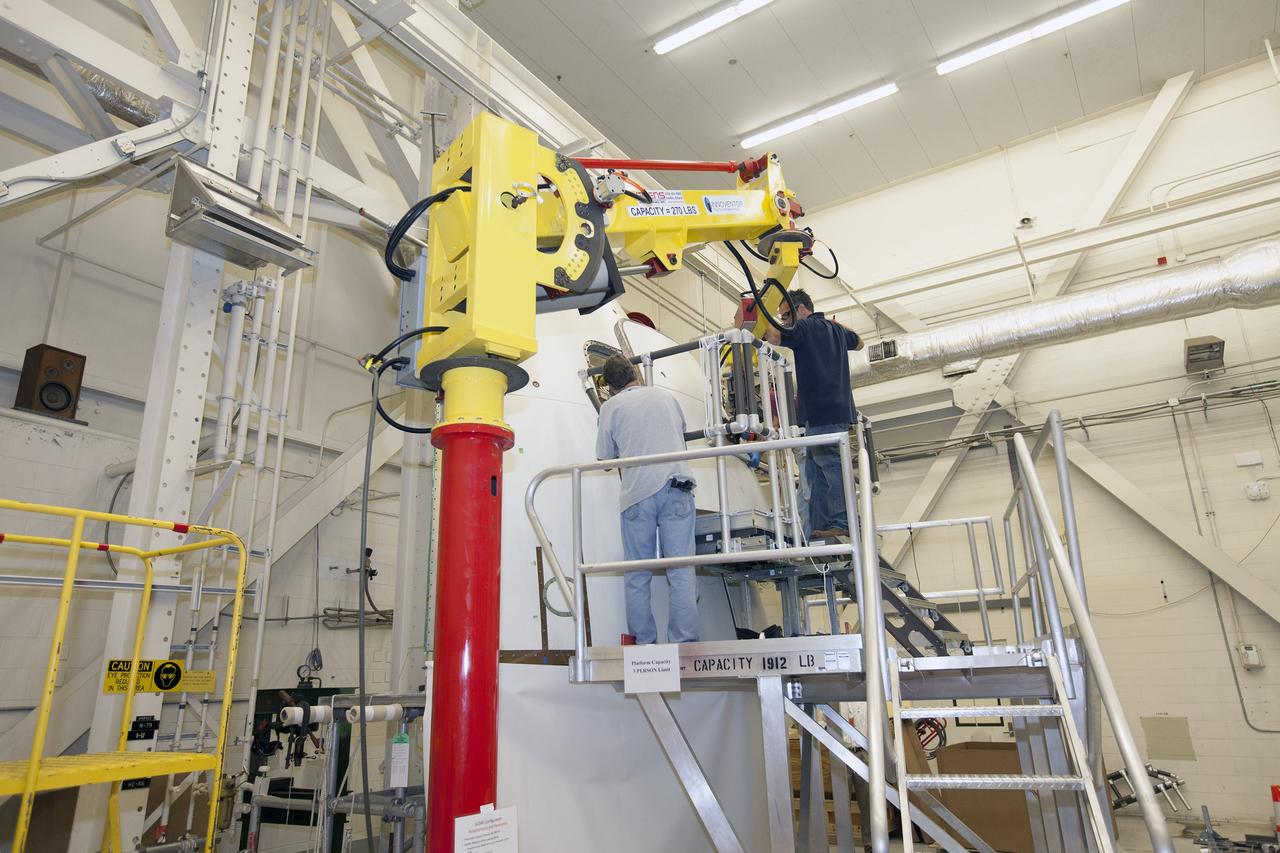
CAPE CANAVERAL, Fla. – Inside the Vehicle Assembly Building at NASA’s Kennedy Space Center in Florida, a GIZMO demonstration test is being performed on the ground test article Launch Abort System, or LAS, ogive panel and an Orion crew module simulator. Technicians are preparing the mockup of the ogive hatch for installation using the GIZMO, a pneumatically-balanced manipulator that will be used for the uncrewed Exploration Flight Test-1 and Exploration Mission-1. The Ground Systems Development and Operations Program is running the test to demonstrate that the GIZMO can meet the reach and handling requirements for the task. Orion is the exploration spacecraft designed to carry astronauts to destinations not yet explored by humans, including an asteroid and Mars. It will have emergency abort capability, sustain the crew during space travel and provide safe re-entry from deep space return velocities. The first unpiloted test flight of the Orion is scheduled to launch later this year atop a Delta IV rocket and in 2017 on NASA’s Space Launch System rocket. For more information, visit http://www.nasa.gov/orion. Photo credit: NASA/Daniel Casper
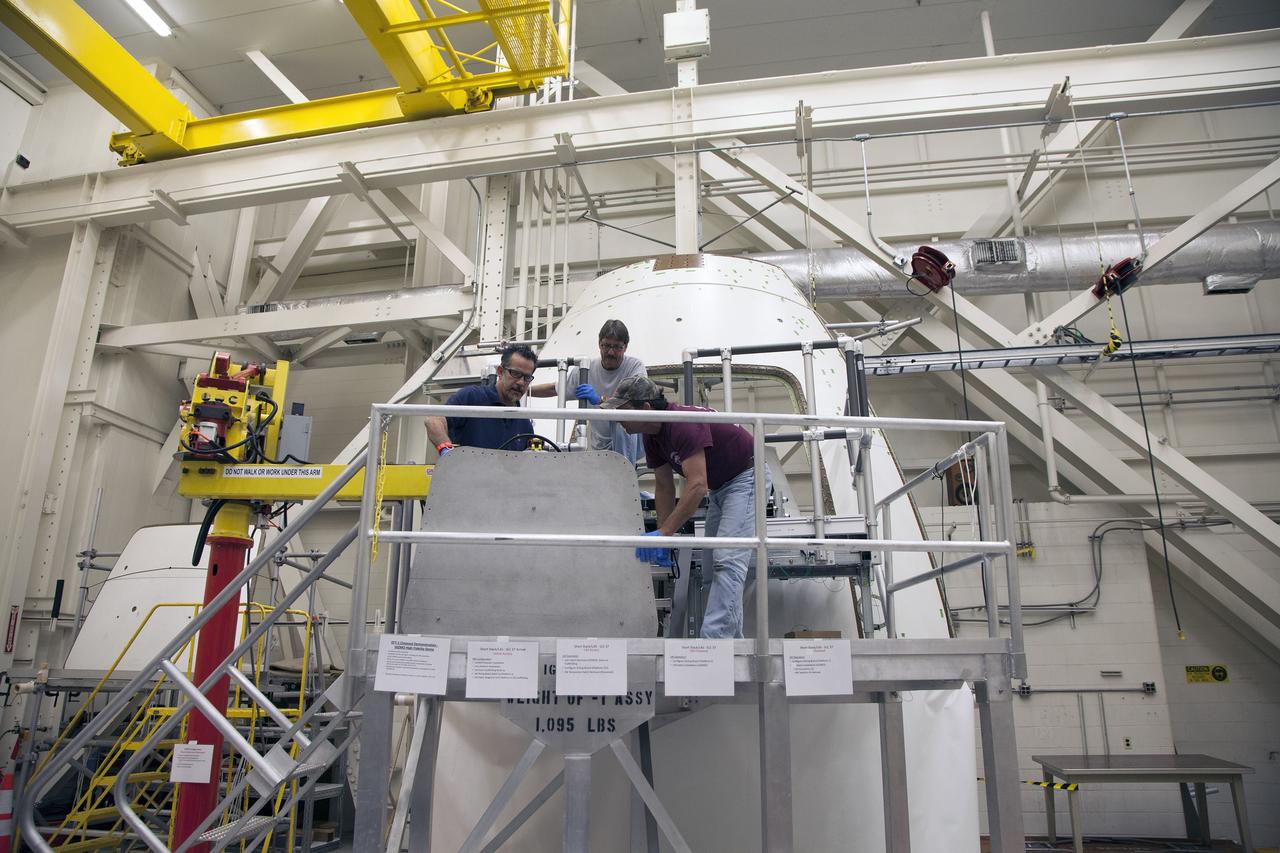
CAPE CANAVERAL, Fla. – Inside the Vehicle Assembly Building at NASA’s Kennedy Space Center in Florida, a GIZMO demonstration test is being performed on the ground test article Launch Abort System, or LAS, ogive panel and an Orion crew module simulator. An access platform has been added leading up to the mockup of the crew module. Technicians are preparing the mockup of the crew module inner hatch for installation using the GIZMO, a pneumatically-balanced manipulator that will be used for the uncrewed Exploration Flight Test-1 and Exploration Mission-1. The Ground Systems Development and Operations Program is running the test to demonstrate that the GIZMO can meet the reach and handling requirements for the task. Orion is the exploration spacecraft designed to carry astronauts to destinations not yet explored by humans, including an asteroid and Mars. It will have emergency abort capability, sustain the crew during space travel and provide safe re-entry from deep space return velocities. The first unpiloted test flight of the Orion is scheduled to launch later this year atop a Delta IV rocket and in 2017 on NASA’s Space Launch System rocket. For more information, visit http://www.nasa.gov/orion. Photo credit: NASA/Daniel Casper
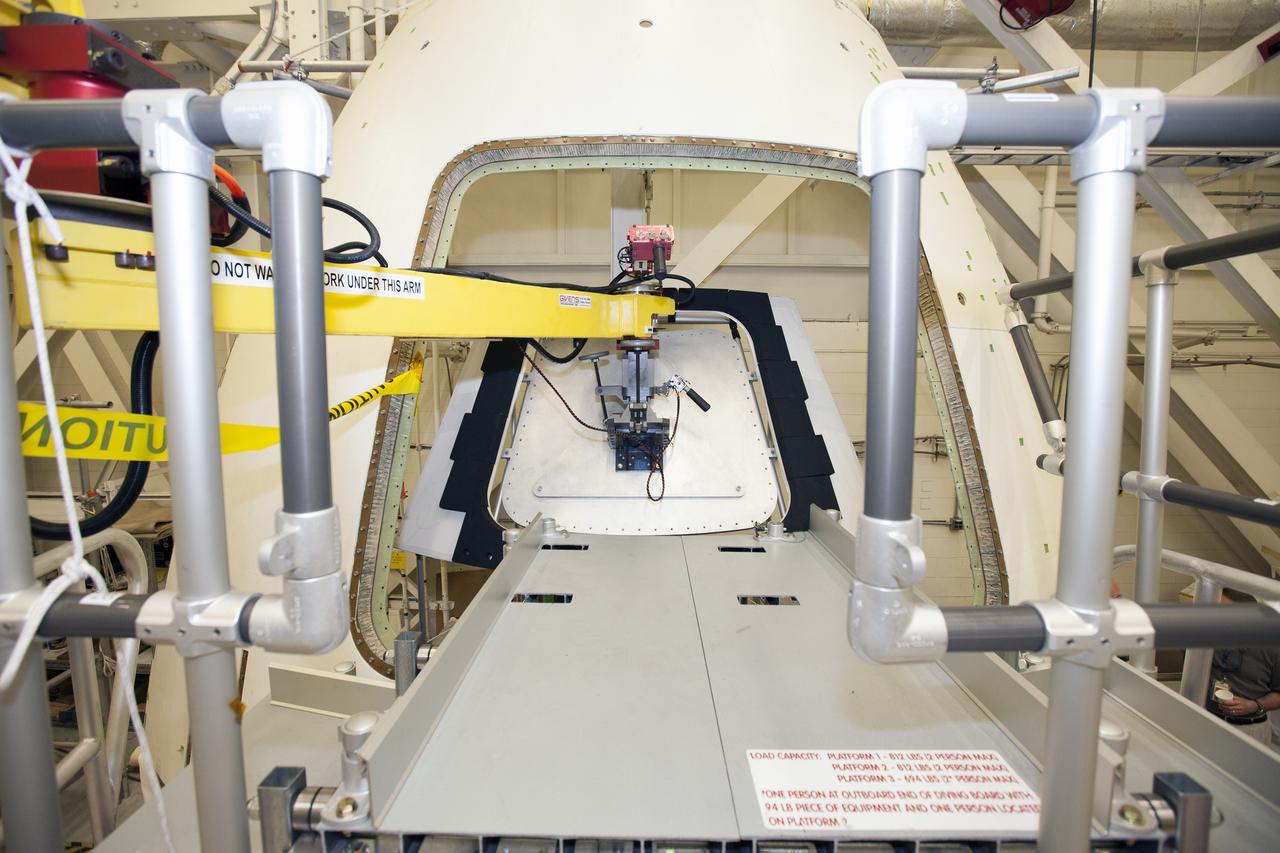
CAPE CANAVERAL, Fla. – Inside the Vehicle Assembly Building at NASA’s Kennedy Space Center in Florida, a GIZMO demonstration test is being performed on the ground test article Launch Abort System, or LAS, ogive panel and an Orion crew module simulator. An access platform has been added leading up to the mockup of the crew module. Technicians used the GIZMO, a pneumatically-balanced manipulator that will be used for the uncrewed Exploration Flight Test-1 and Exploration Mission-1, to install the mockup of the crew module inner hatch. The Ground Systems Development and Operations Program is running the test to demonstrate that the GIZMO can meet the reach and handling requirements for the task. Orion is the exploration spacecraft designed to carry astronauts to destinations not yet explored by humans, including an asteroid and Mars. It will have emergency abort capability, sustain the crew during space travel and provide safe re-entry from deep space return velocities. The first unpiloted test flight of the Orion is scheduled to launch later this year atop a Delta IV rocket and in 2017 on NASA’s Space Launch System rocket. For more information, visit http://www.nasa.gov/orion. Photo credit: NASA/Daniel Casper
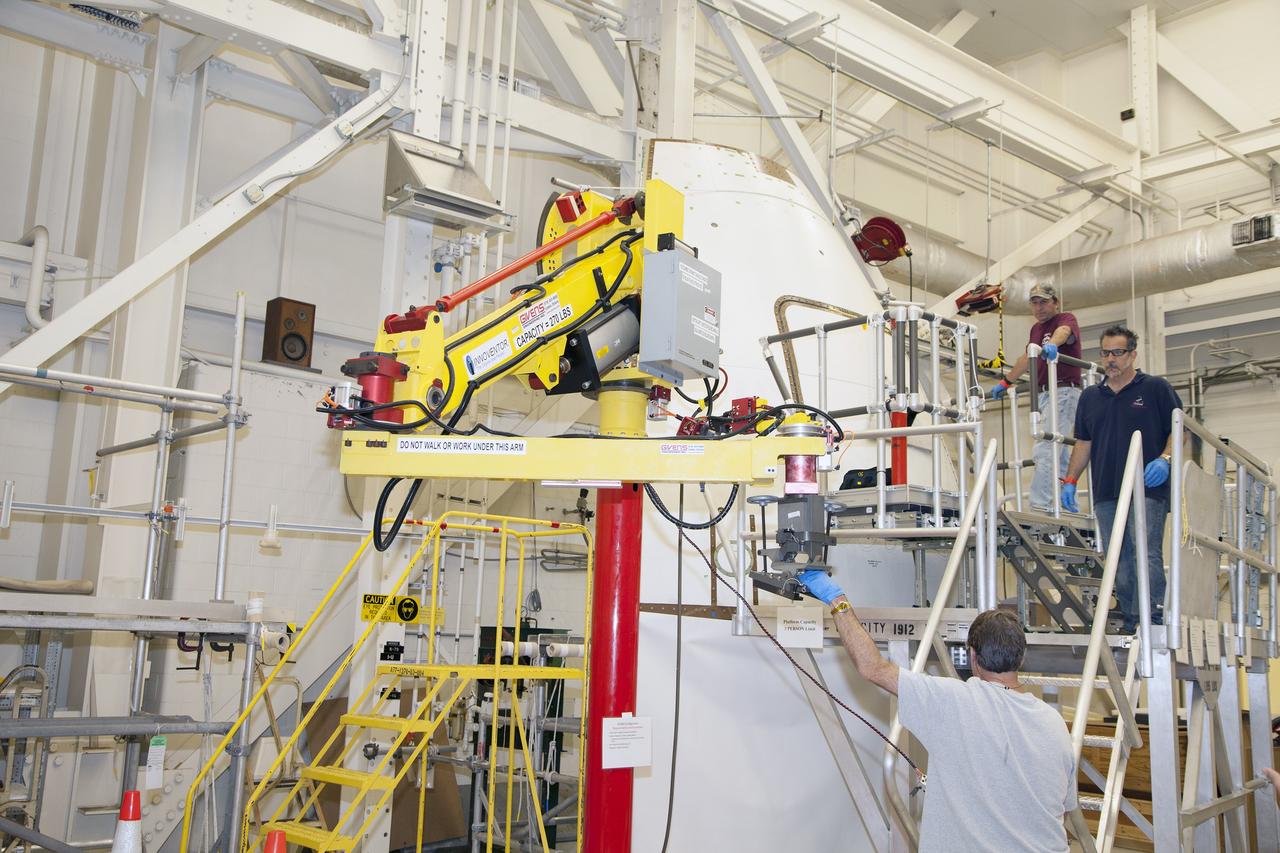
CAPE CANAVERAL, Fla. – Inside the Vehicle Assembly Building at NASA’s Kennedy Space Center in Florida, engineers and technicians prepare the ground test article Launch Abort System, or LAS, ogive panel and an Orion crew module simulator for a GIZMO demonstration test. A technician moves the GIZMO, a pneumatically-balanced manipulator that will be used for installation of the crew module and LAS flight hatches for the uncrewed Exploration Flight Test-1 and Exploration Mission-1, toward the mockup. The Ground Systems Development and Operations Program is running the test to demonstrate that the GIZMO can meet the reach and handling requirements for the task. Orion is the exploration spacecraft designed to carry astronauts to destinations not yet explored by humans, including an asteroid and Mars. It will have emergency abort capability, sustain the crew during space travel and provide safe re-entry from deep space return velocities. The first unpiloted test flight of the Orion is scheduled to launch later this year atop a Delta IV rocket and in 2017 on NASA’s Space Launch System rocket. For more information, visit http://www.nasa.gov/orion. Photo credit: NASA/Daniel Casper
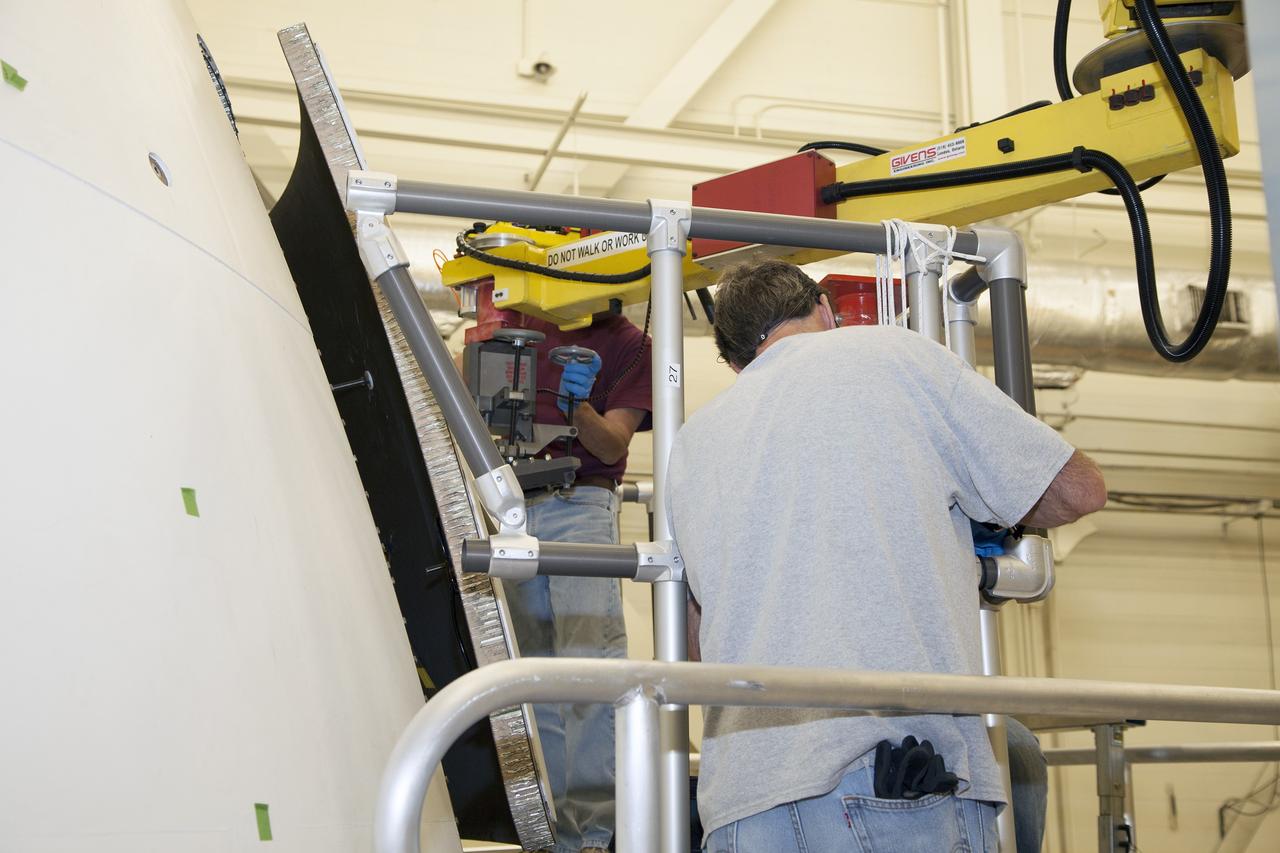
CAPE CANAVERAL, Fla. – Inside the Vehicle Assembly Building at NASA’s Kennedy Space Center in Florida, engineers and technicians are performing a GIZMO demonstration test on the ground test article Launch Abort System, or LAS, ogive panel and an Orion crew module simulator. Technicians attach the GIZMO, a pneumatically-balanced manipulator that will be used for installation of the hatches on the crew module and LAS for the uncrewed Exploration Flight Test-1 and Exploration Mission-1, onto the mockup. The Ground Systems Development and Operations Program is running the test to demonstrate that the GIZMO can meet the reach and handling requirements for the task. Orion is the exploration spacecraft designed to carry astronauts to destinations not yet explored by humans, including an asteroid and Mars. It will have emergency abort capability, sustain the crew during space travel and provide safe re-entry from deep space return velocities. The first unpiloted test flight of the Orion is scheduled to launch later this year atop a Delta IV rocket and in 2017 on NASA’s Space Launch System rocket. For more information, visit http://www.nasa.gov/orion. Photo credit: NASA/Daniel Casper
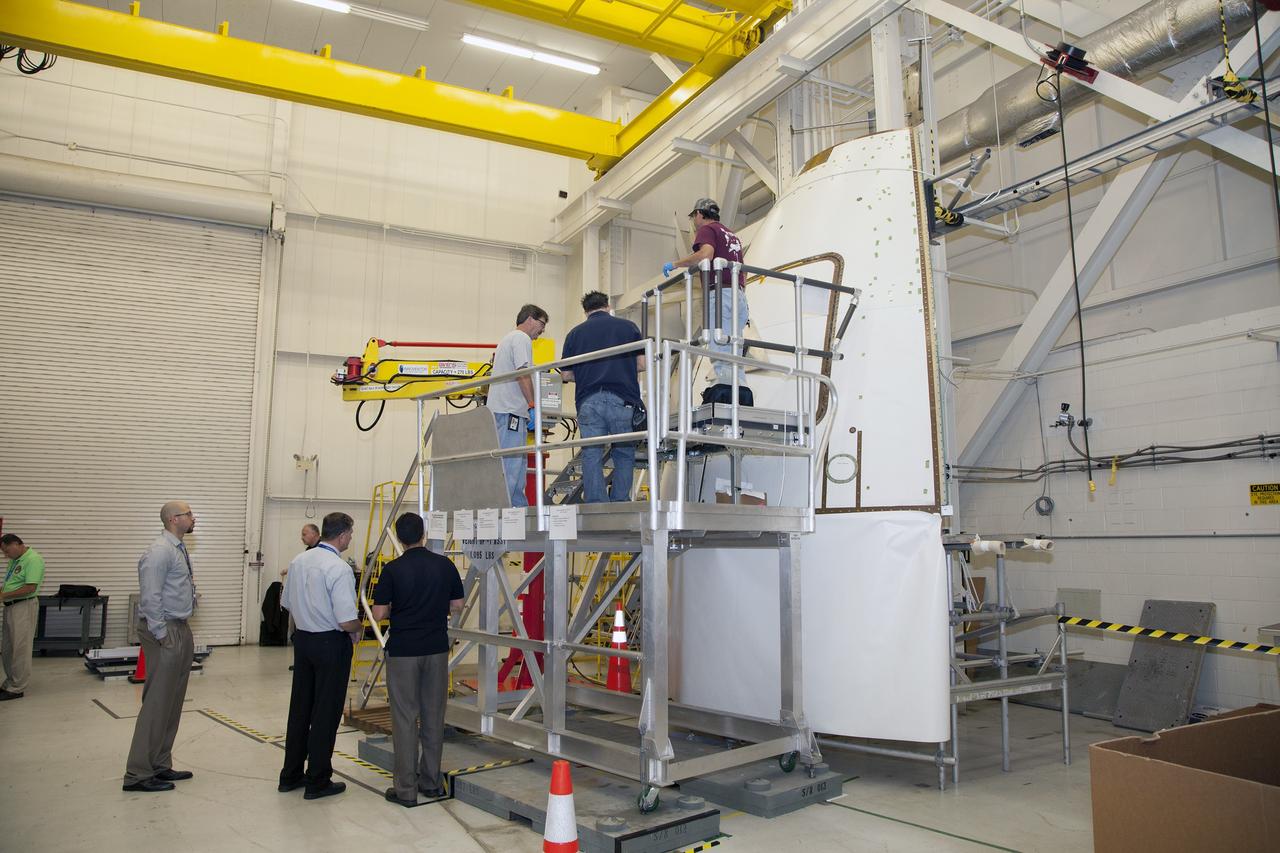
CAPE CANAVERAL, Fla. – Inside the Vehicle Assembly Building at NASA’s Kennedy Space Center in Florida, engineers and technicians prepare the ground test article Launch Abort System, or LAS, ogive panel and an Orion crew module simulator for a GIZMO demonstration test. The GIZMO is a pneumatically-balanced manipulator that will be used for installation of the crew module and LAS flight hatches for the uncrewed Exploration Flight Test-1 and Exploration Mission-1. The Ground Systems Development and Operations Program is running the test to demonstrate that the GIZMO can meet the reach and handling requirements for the task. Orion is the exploration spacecraft designed to carry astronauts to destinations not yet explored by humans, including an asteroid and Mars. It will have emergency abort capability, sustain the crew during space travel and provide safe re-entry from deep space return velocities. The first unpiloted test flight of the Orion is scheduled to launch later this year atop a Delta IV rocket and in 2017 on NASA’s Space Launch System rocket. For more information, visit http://www.nasa.gov/orion. Photo credit: NASA/Daniel Casper
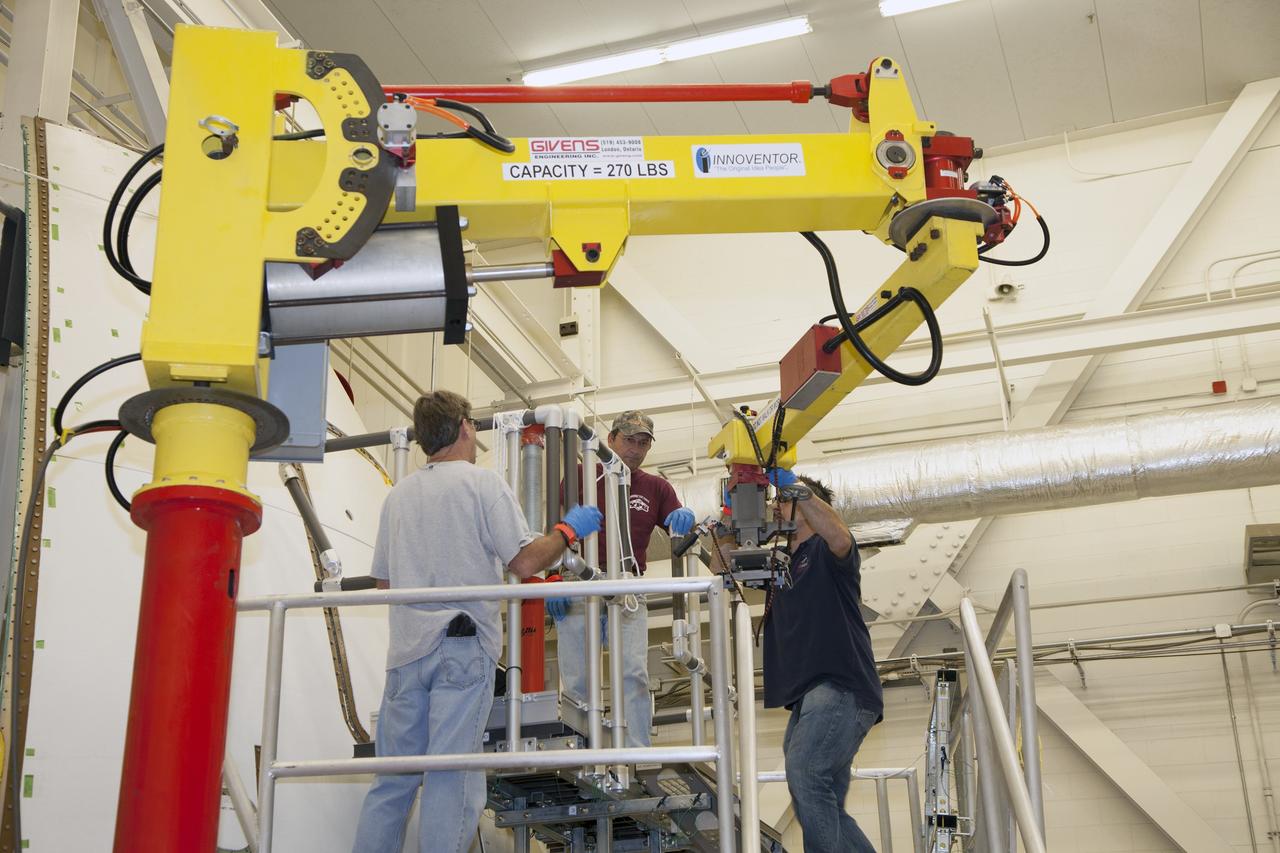
CAPE CANAVERAL, Fla. – Inside the Vehicle Assembly Building at NASA’s Kennedy Space Center in Florida, engineers and technicians have prepared the ground test article Launch Abort System, or LAS, ogive panel and an Orion crew module simulator for a GIZMO demonstration test. A technician moves the GIZMO, a pneumatically-balanced manipulator that will be used for installation of the crew module and LAS flight hatches for the uncrewed Exploration Flight Test-1 and Exploration Mission-1, toward the mockup. The Ground Systems Development and Operations Program is running the test to demonstrate that the GIZMO can meet the reach and handling requirements for the task. Orion is the exploration spacecraft designed to carry astronauts to destinations not yet explored by humans, including an asteroid and Mars. It will have emergency abort capability, sustain the crew during space travel and provide safe re-entry from deep space return velocities. The first unpiloted test flight of the Orion is scheduled to launch later this year atop a Delta IV rocket and in 2017 on NASA’s Space Launch System rocket. For more information, visit http://www.nasa.gov/orion. Photo credit: NASA/Daniel Casper
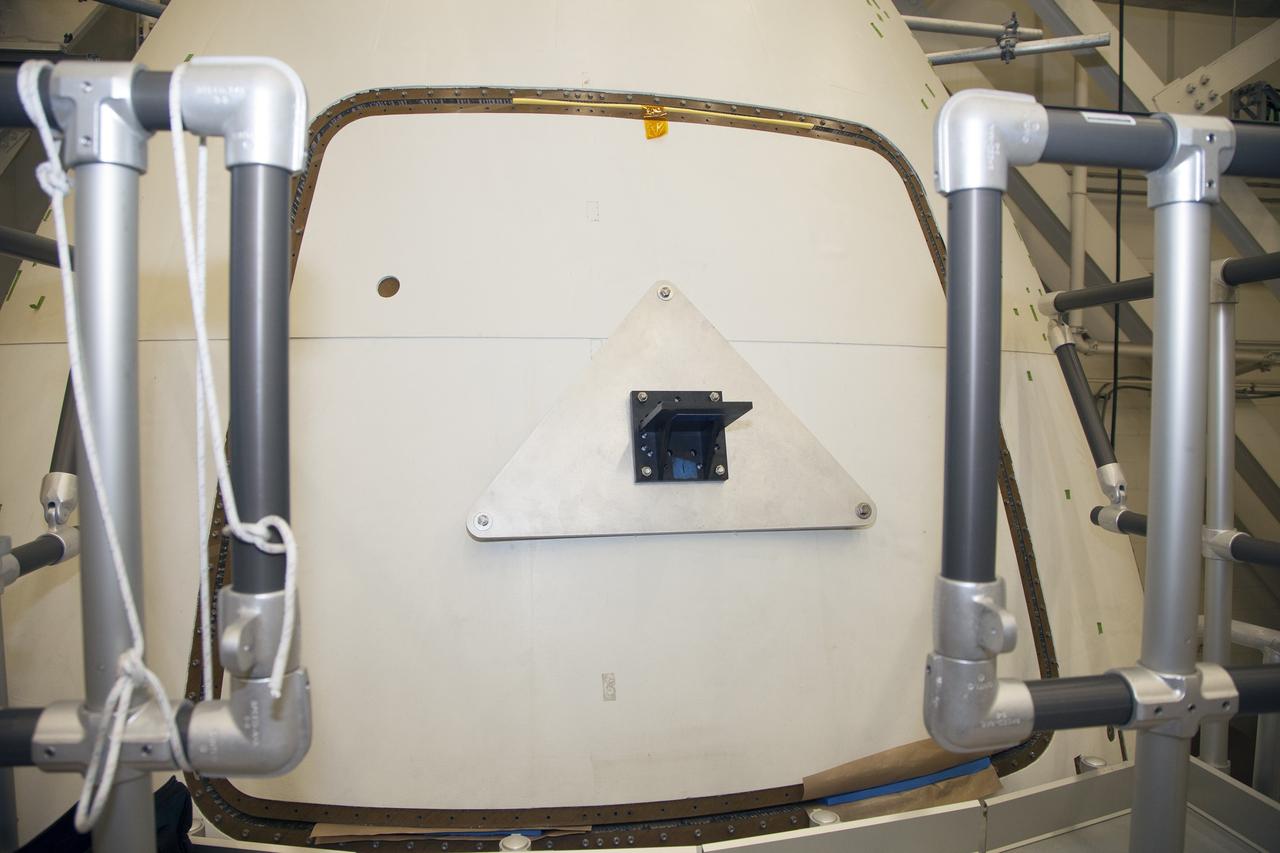
CAPE CANAVERAL, Fla. – Inside the Vehicle Assembly Building at NASA’s Kennedy Space Center in Florida, engineers and technicians prepare the ground test article Launch Abort System, or LAS, ogive panel and an Orion crew module simulator for a GIZMO demonstration test. The GIZMO is a pneumatically-balanced manipulator that will be used for installation of the crew module and LAS flight hatches for the uncrewed Exploration Flight Test-1 and Exploration Mission-1. The Ground Systems Development and Operations Program is running the test to demonstrate that the GIZMO can meet the reach and handling requirements for the task. Orion is the exploration spacecraft designed to carry astronauts to destinations not yet explored by humans, including an asteroid and Mars. It will have emergency abort capability, sustain the crew during space travel and provide safe re-entry from deep space return velocities. The first unpiloted test flight of the Orion is scheduled to launch later this year atop a Delta IV rocket and in 2017 on NASA’s Space Launch System rocket. For more information, visit http://www.nasa.gov/orion. Photo credit: NASA/Daniel Casper
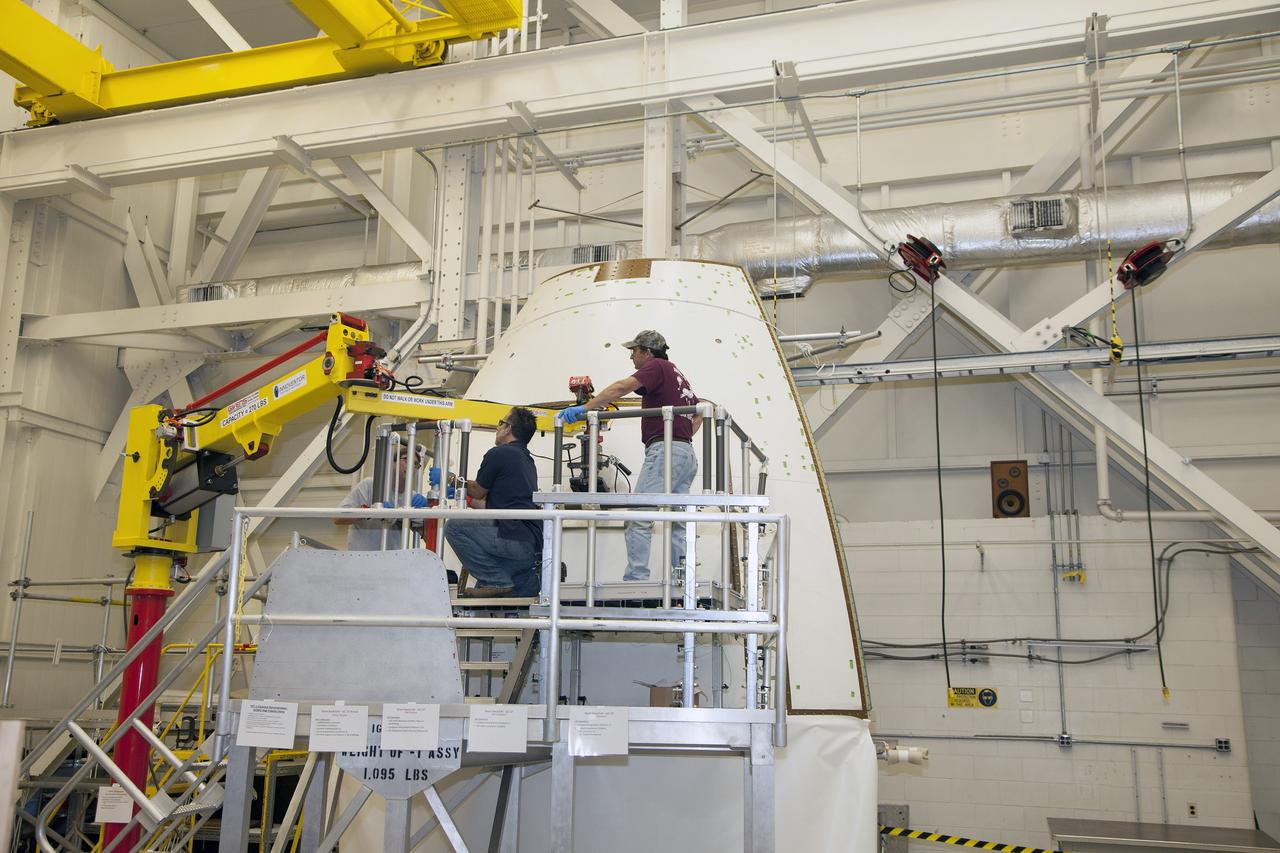
CAPE CANAVERAL, Fla. – Inside the Vehicle Assembly Building at NASA’s Kennedy Space Center in Florida, engineers and technicians have prepared the ground test article Launch Abort System, or LAS, ogive panel and an Orion crew module simulator for a GIZMO demonstration test. A technician moves the GIZMO, a pneumatically-balanced manipulator that will be used for installation of the crew module and LAS flight hatches for the uncrewed Exploration Flight Test-1 and Exploration Mission-1, toward the mockup. The Ground Systems Development and Operations Program is running the test to demonstrate that the GIZMO can meet the reach and handling requirements for the task. Orion is the exploration spacecraft designed to carry astronauts to destinations not yet explored by humans, including an asteroid and Mars. It will have emergency abort capability, sustain the crew during space travel and provide safe re-entry from deep space return velocities. The first unpiloted test flight of the Orion is scheduled to launch later this year atop a Delta IV rocket and in 2017 on NASA’s Space Launch System rocket. For more information, visit http://www.nasa.gov/orion. Photo credit: NASA/Daniel Casper