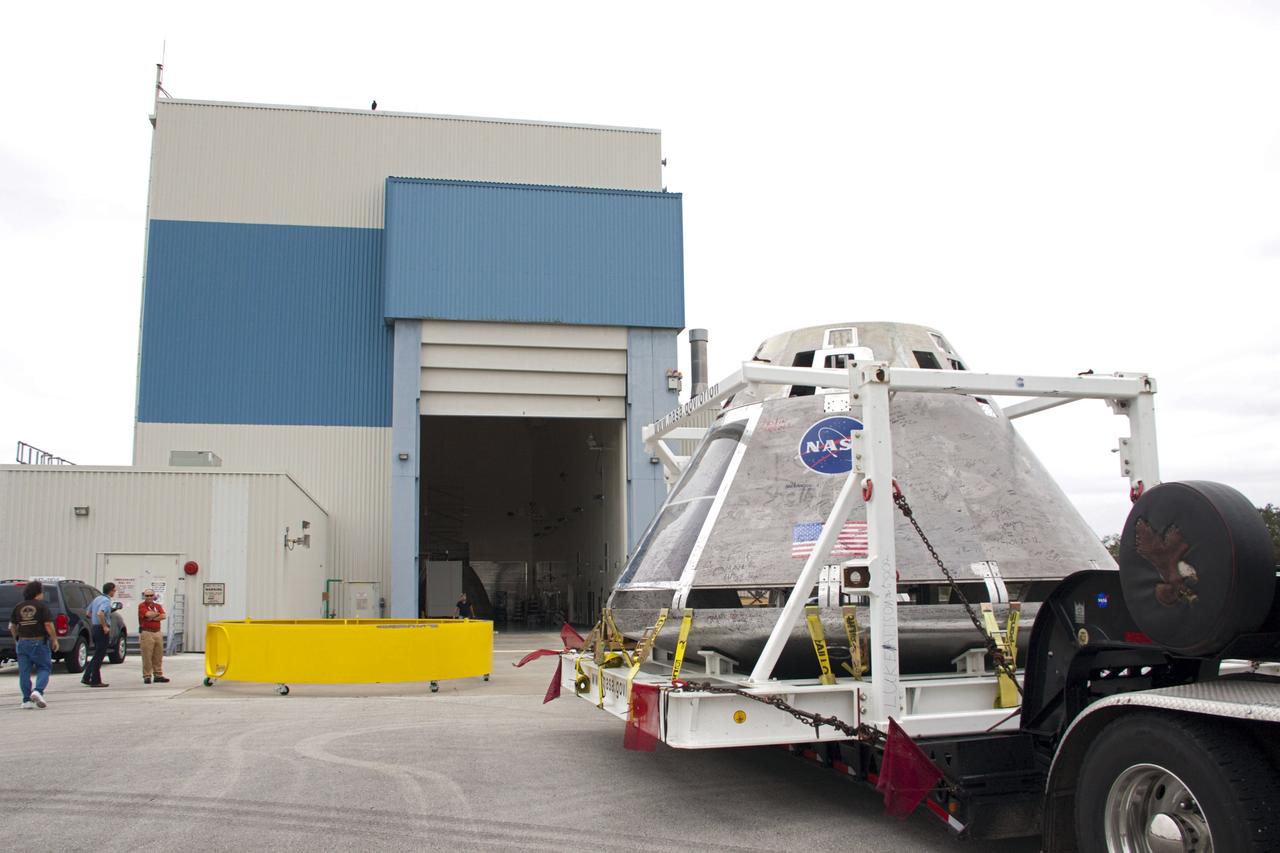
CAPE CANAVERAL, Fla. – A test version of NASA’s Orion spacecraft completed a cross-country journey at NASA’s Kennedy Space Center in Florida on Feb. 8, after giving residents in three states the chance to see a full scale mockup of the craft that will take humans into deep space. The capsule will be stored in Kennedy’s Multi-Payload Processing Facility. The test vehicle was used by ground crews in advance of the launch abort system flight test that took place in New Mexico in 2010. Photo Credit: NASA/Jim Grossmann
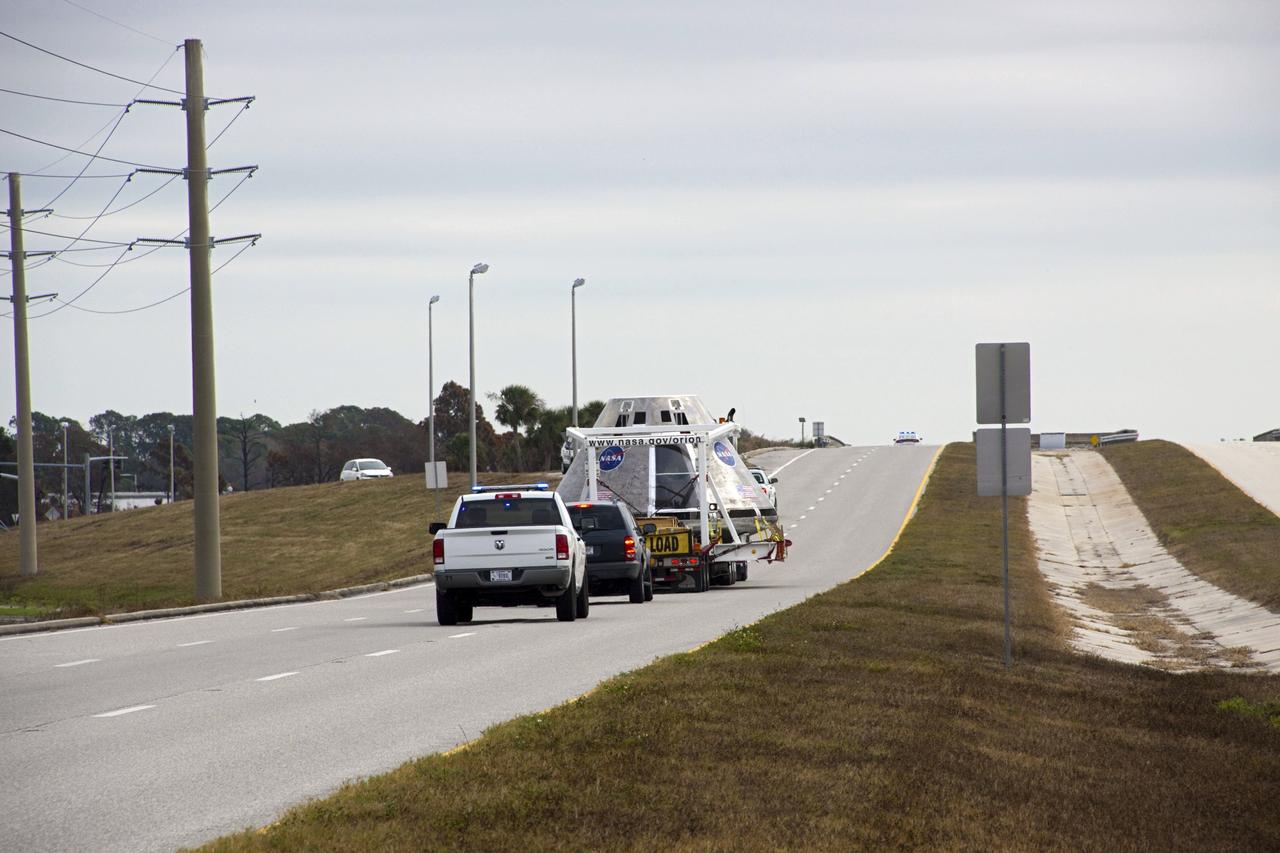
CAPE CANAVERAL, Fla. – A test version of NASA’s Orion spacecraft completed a cross-country journey at NASA’s Kennedy Space Center in Florida on Feb. 8, after giving residents in three states the chance to see a full scale mockup of the craft that will take humans into deep space. The capsule will be stored in Kennedy’s Multi-Payload Processing Facility. The test vehicle was used by ground crews in advance of the launch abort system flight test that took place in New Mexico in 2010. Photo Credit: NASA/Jim Grossmann
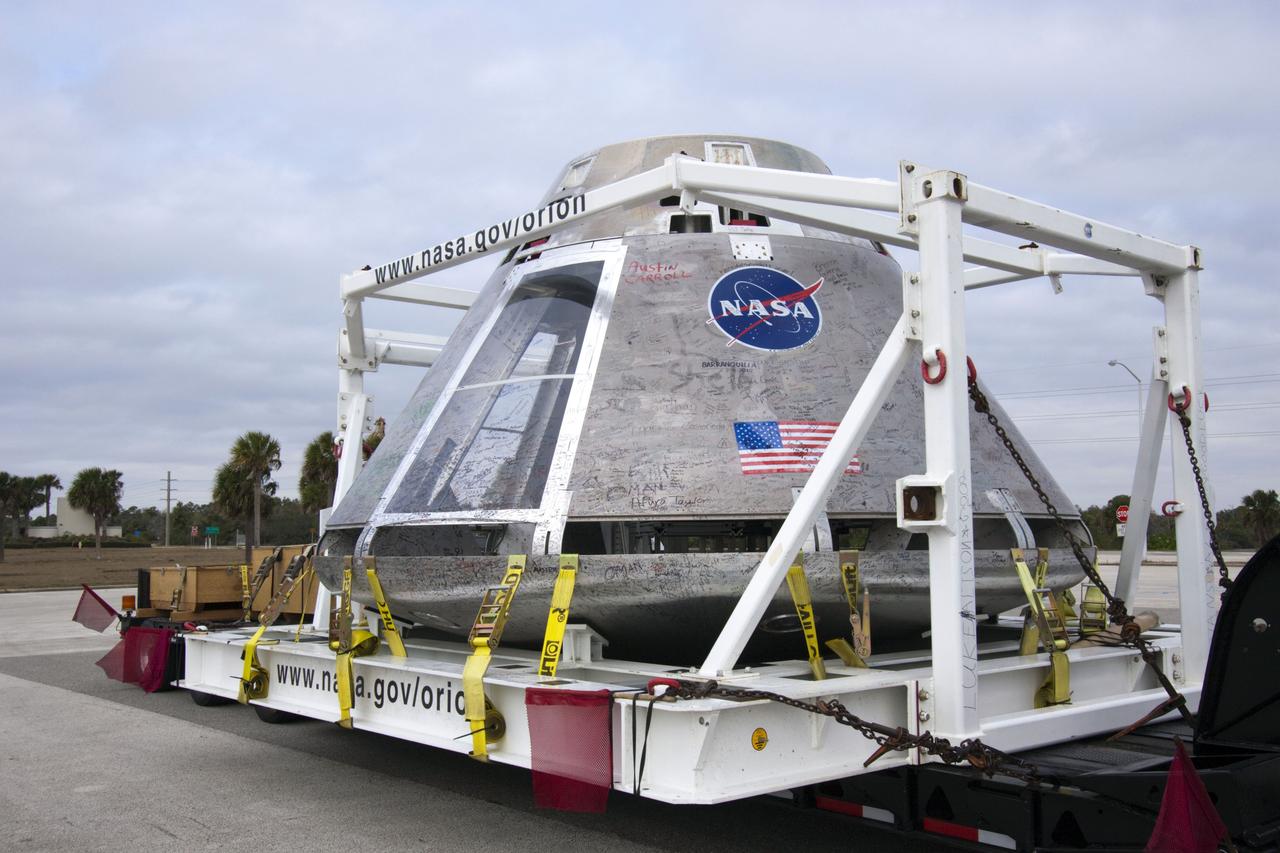
CAPE CANAVERAL, Fla. – A test version of NASA’s Orion spacecraft completed a cross-country journey at NASA’s Kennedy Space Center in Florida on Feb. 8, after giving residents in three states the chance to see a full scale mockup of the craft that will take humans into deep space. The capsule will be stored in Kennedy’s Multi-Payload Processing Facility. The test vehicle was used by ground crews in advance of the launch abort system flight test that took place in New Mexico in 2010. Photo Credit: NASA/Jim Grossmann
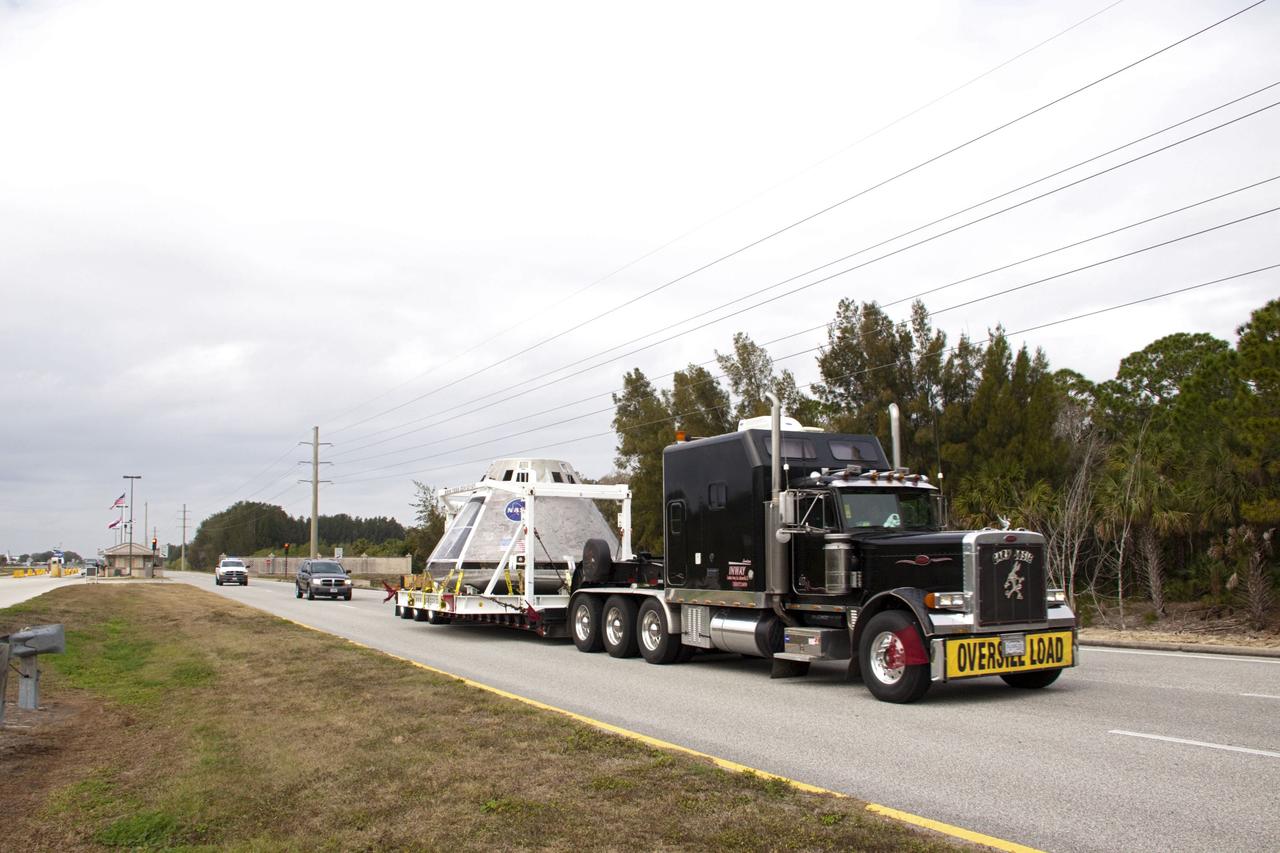
CAPE CANAVERAL, Fla. – A test version of NASA’s Orion spacecraft completed a cross-country journey at NASA’s Kennedy Space Center in Florida on Feb. 8, after giving residents in three states the chance to see a full scale mockup of the craft that will take humans into deep space. The capsule will be stored in Kennedy’s Multi-Payload Processing Facility. The test vehicle was used by ground crews in advance of the launch abort system flight test that took place in New Mexico in 2010. Photo Credit: NASA/Jim Grossmann
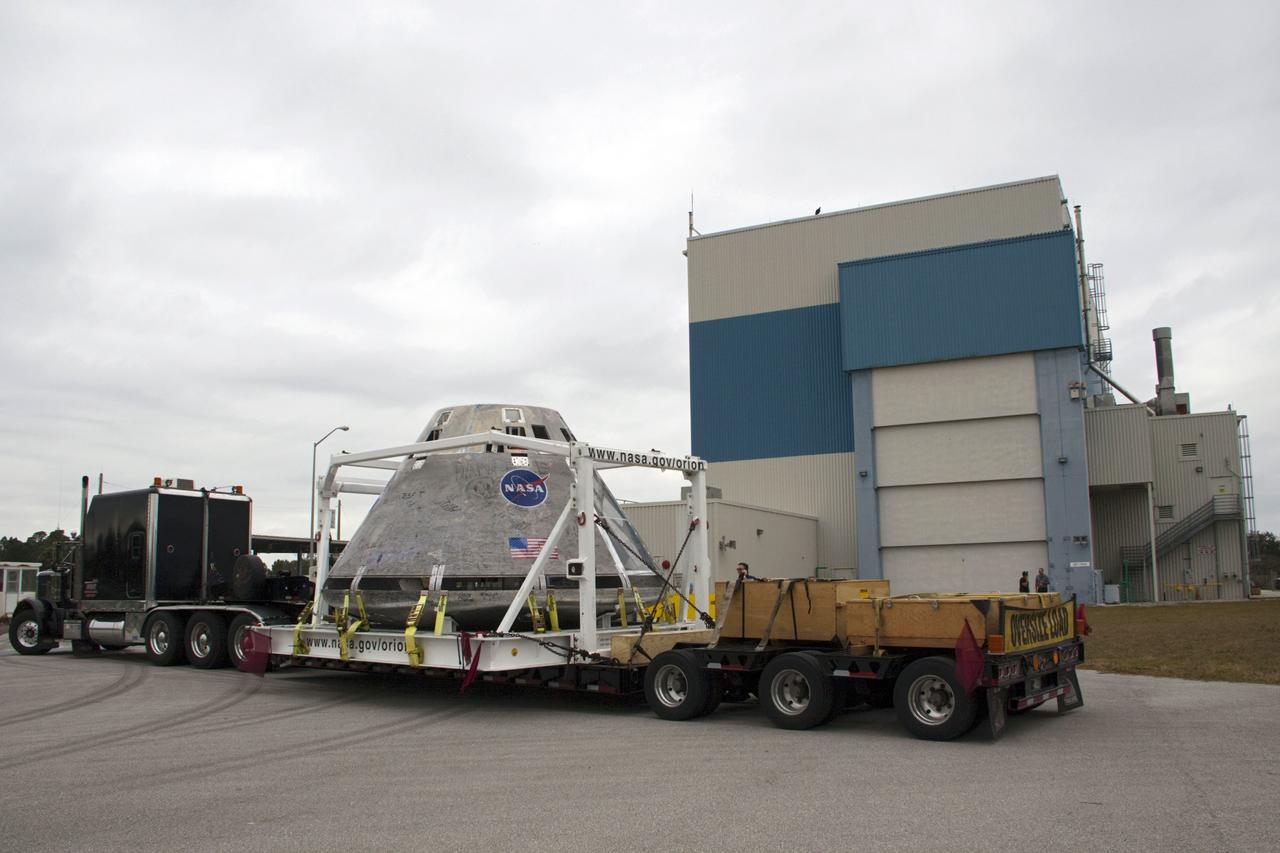
CAPE CANAVERAL, Fla. – A test version of NASA’s Orion spacecraft completed a cross-country journey at NASA’s Kennedy Space Center in Florida on Feb. 8, after giving residents in three states the chance to see a full scale mockup of the craft that will take humans into deep space. The capsule will be stored in Kennedy’s Multi-Payload Processing Facility. The test vehicle was used by ground crews in advance of the launch abort system flight test that took place in New Mexico in 2010. Photo Credit: NASA/Jim Grossmann
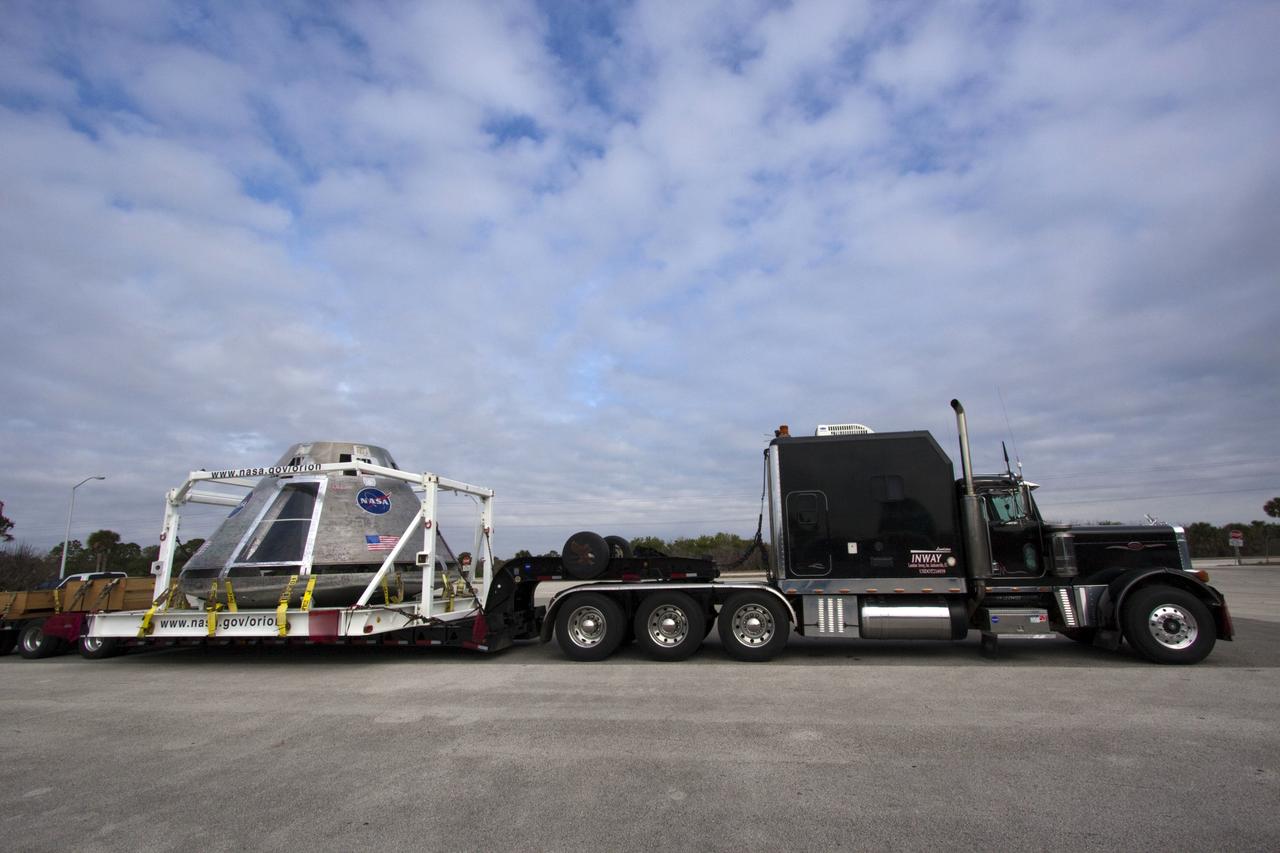
CAPE CANAVERAL, Fla. – A test version of NASA’s Orion spacecraft completed a cross-country journey at NASA’s Kennedy Space Center in Florida on Feb. 8, after giving residents in three states the chance to see a full scale mockup of the craft that will take humans into deep space. The capsule will be stored in Kennedy’s Multi-Payload Processing Facility. The test vehicle was used by ground crews in advance of the launch abort system flight test that took place in New Mexico in 2010. Photo Credit: NASA/Jim Grossmann
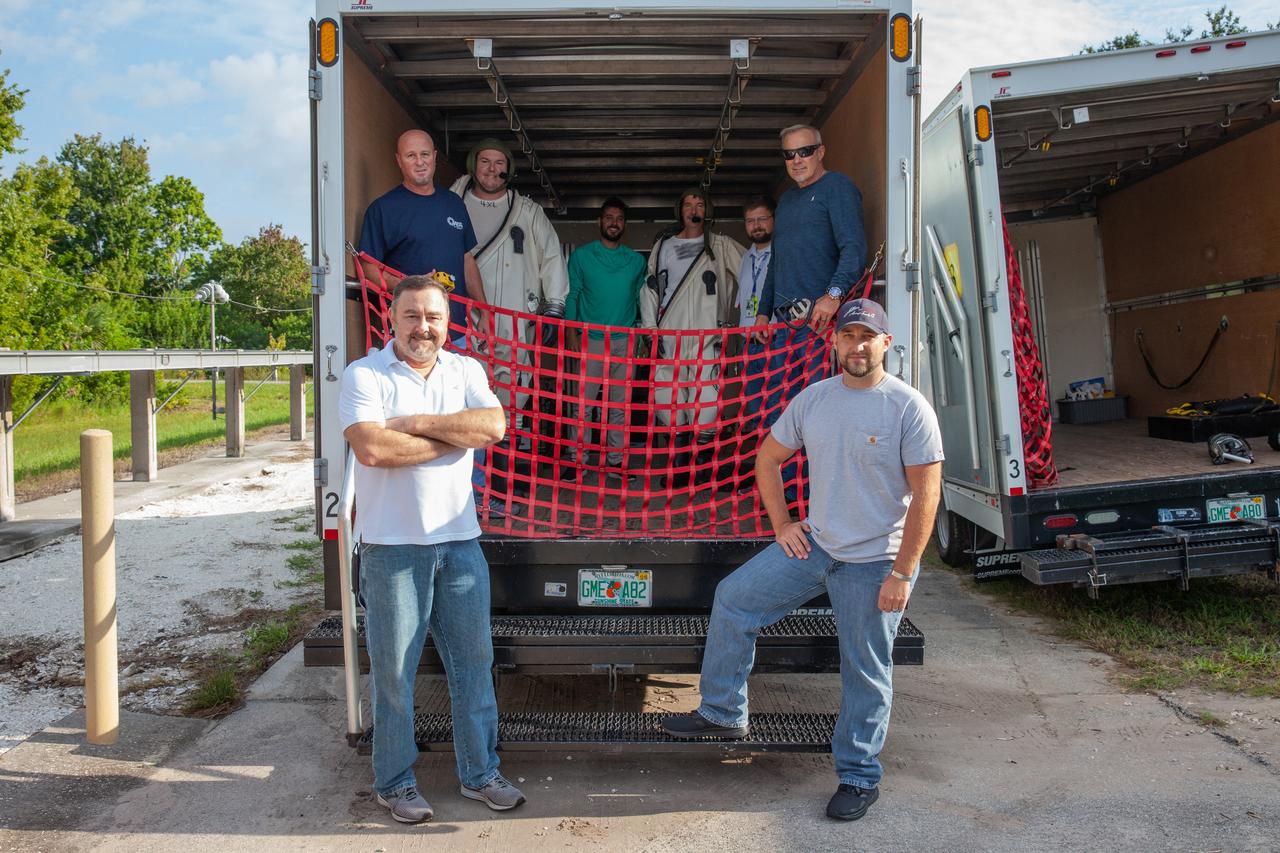
Technicians wearing Self-Contained Atmospheric Protective Ensemble (SCAPE) suits and operations support personnel prepare for a test simulation of loading propellants into a replicated test tank for Orion on Aug. 16, 2019, at NASA’s Kennedy Space Center in Florida. They are in a transport truck at the Multi-Operations Support Building near the Multi-Payload Processing Facility (MPPF). Exploration Ground Systems is preparing for Artemis 1 with a series of hazardous hyper test events at the MPPF. The technicians will complete a tanking to test the system before Orion arrives for processing. During preparations for launch, these teams will be responsible for loading the Orion vehicle with propellants prior to transportation to the Vehicle Assembly Building, where it will be secured atop the Space Launch System rocket. SCAPE suits are used in operations involving toxic propellants and are supplied with air either through a hardline or through a self-contained environmental control unit.
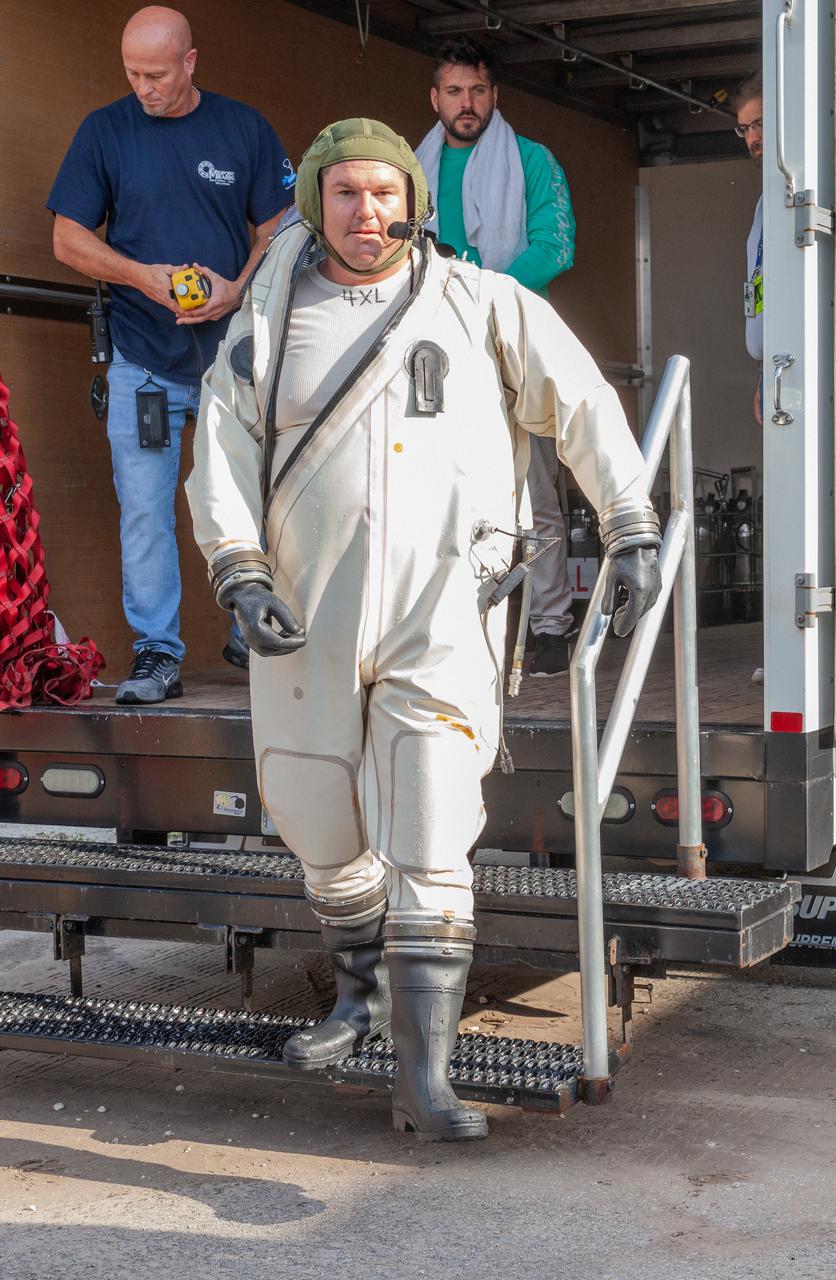
A technician in a Self-Contained Atmospheric Protective Ensemble (SCAPE) suit exits a truck near the Multi-Payload Processing Facility (MPPF) at NASA’s Kennedy Space Center in Florida on Aug. 16, 2019. SCAPE technicians are practicing by putting on the suits for a test simulation of loading propellants into a replicated test tank for Orion. Exploration Ground Systems is preparing for Artemis 1 with a series of hazardous hyper test events at the MPPF. After donning their suits, the technicians will complete a tanking to test the system before Orion arrives for processing. During preparations for launch, these teams will be responsible for loading the Orion vehicle with propellants prior to transportation to the Vehicle Assembly Building, where it will be secured atop the Space Launch System rocket. SCAPE suits are used in operations involving toxic propellants and are supplied with air either through a hardline or through a self-contained environmental control unit.

Inside the Multi-Operations Support Building near the Multi-Payload Processing Facility (MPPF) at NASA’s Kennedy Space Center in Florida on Aug. 16, 2019, rows of gloves that are part of Self-Contained Atmospheric Protective Ensemble (SCAPE) suits are in view inside a changing room. SCAPE technicians will practice putting on SCAPE suits for a test simulation of loading propellants into a replicated test tank for Orion. Exploration Ground Systems is preparing for Artemis 1 with a series of hazardous hyper test events at the MPPF. After donning their suits, the technicians will complete a tanking to test the system before Orion arrives for processing. During preparations for launch, these teams will be responsible for loading the Orion vehicle with propellants prior to transportation to the Vehicle Assembly Building, where it will be secured atop the Space Launch System rocket. SCAPE suits are used in operations involving toxic propellants and are supplied with air either through a hardline or through a self-contained environmental control unit.
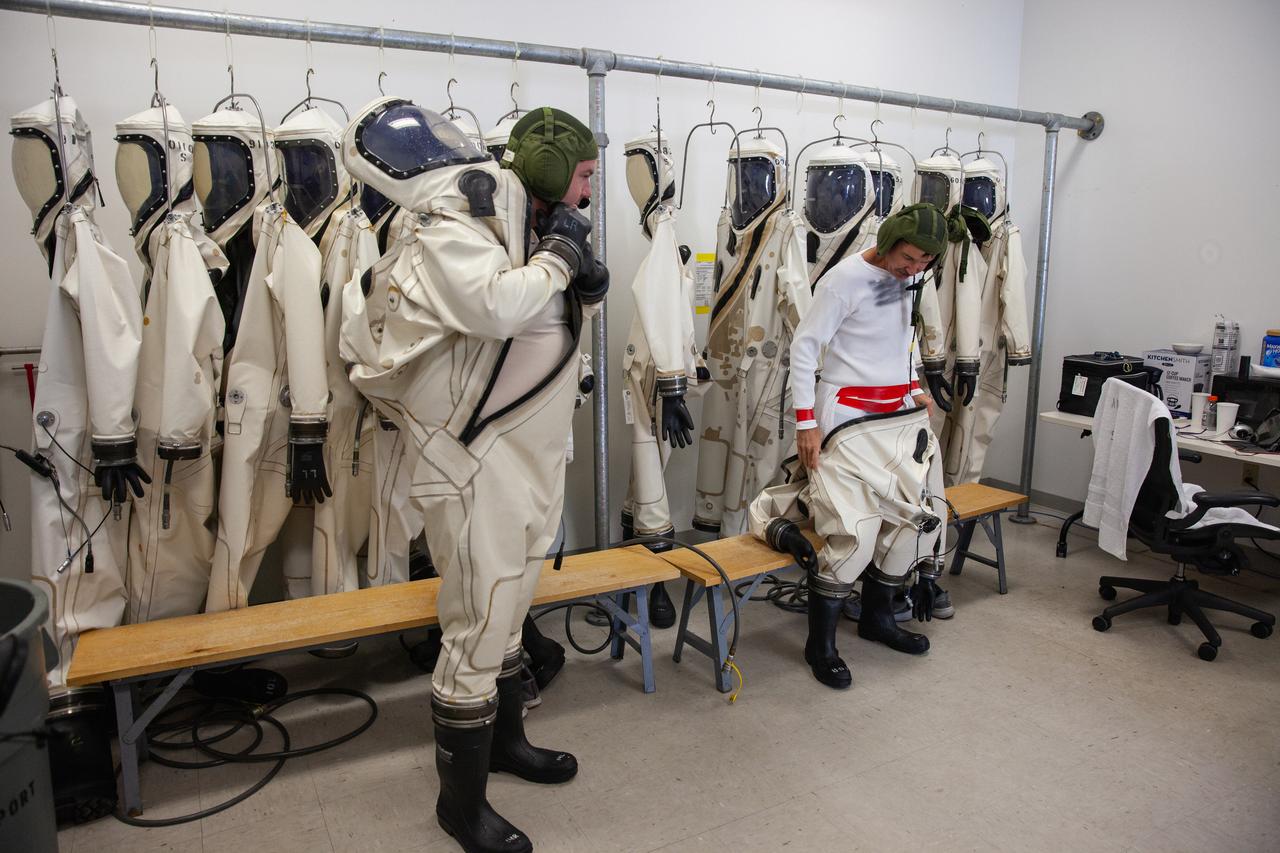
Inside the Multi-Operations Support Building near the Multi-Payload Processing Facility (MPPF) at NASA’s Kennedy Space Center in Florida, technicians put on Self-Contained Atmospheric Protective Ensemble (SCAPE) suits inside a changing room on Aug. 16, 2019. SCAPE technicians are practicing putting on the suits for a test simulation of loading propellants into a replicated test tank for Orion. Exploration Ground Systems is preparing for Artemis 1 with a series of hazardous hyper test events at the MPPF. After donning their suits, the technicians will complete a tanking to test the system before Orion arrives for processing. During preparations for launch, these teams will be responsible for loading the Orion vehicle with propellants prior to transportation to the Vehicle Assembly Building, where it will be secured atop the Space Launch System rocket. SCAPE suits are used in operations involving toxic propellants and are supplied with air either through a hardline or through a self-contained environmental control unit.
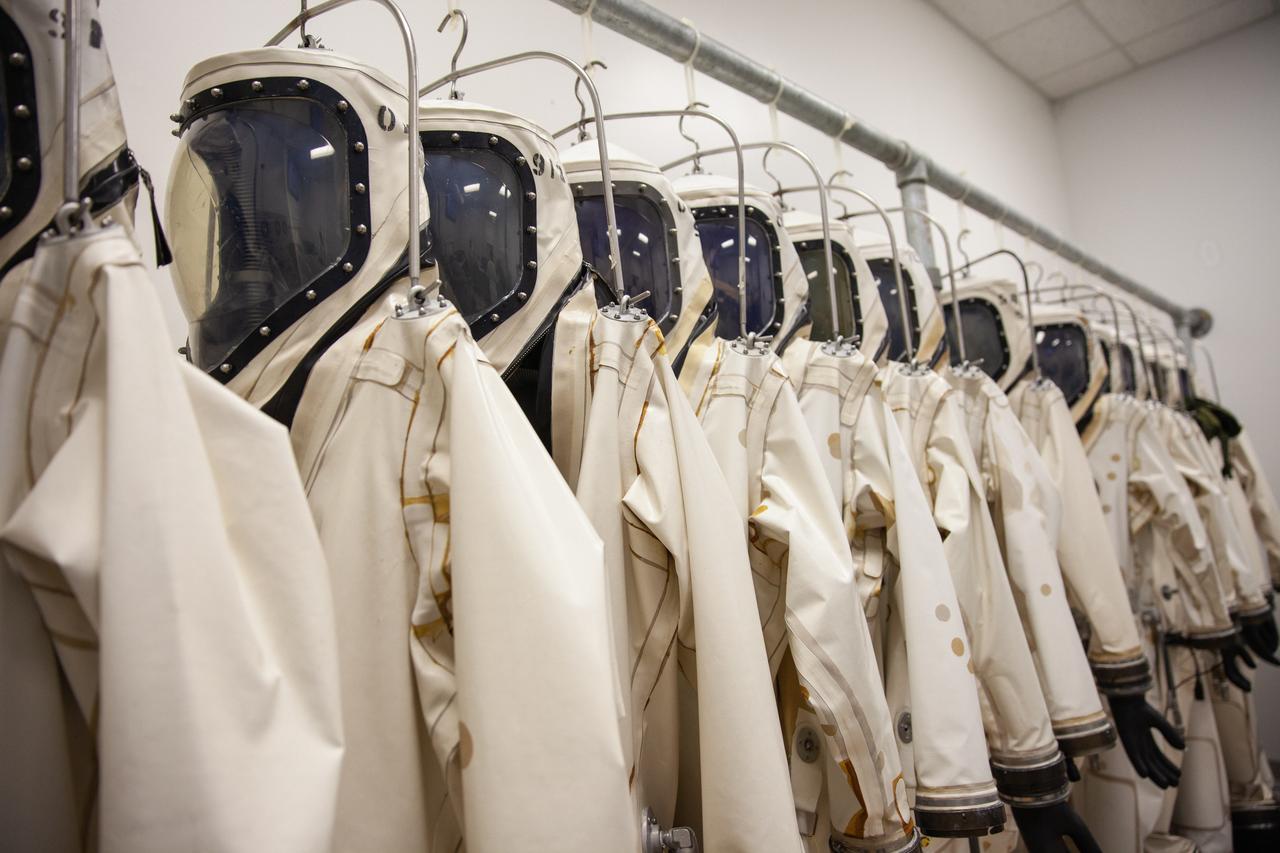
Inside the Multi-Operations Support Building near the Multi-Payload Processing Facility (MPPF) at NASA’s Kennedy Space Center in Florida on Aug. 16, 2019, a row of Self-Contained Atmospheric Protective Ensemble (SCAPE) suits are hanging inside a changing room. SCAPE technicians are practicing putting on the suits for a test simulation of loading propellants into a replicated test tank for Orion. Exploration Ground Systems is preparing for Artemis 1 with a series of hazardous hyper test events at the MPPF. After donning their suits, the technicians will complete a tanking to test the system before Orion arrives for processing. During preparations for launch, these teams will be responsible for loading the Orion vehicle with propellants prior to transportation to the Vehicle Assembly Building, where it will be secured atop the Space Launch System rocket. SCAPE suits are used in operations involving toxic propellants and are supplied with air either through a hardline or through a self-contained environmental control unit.
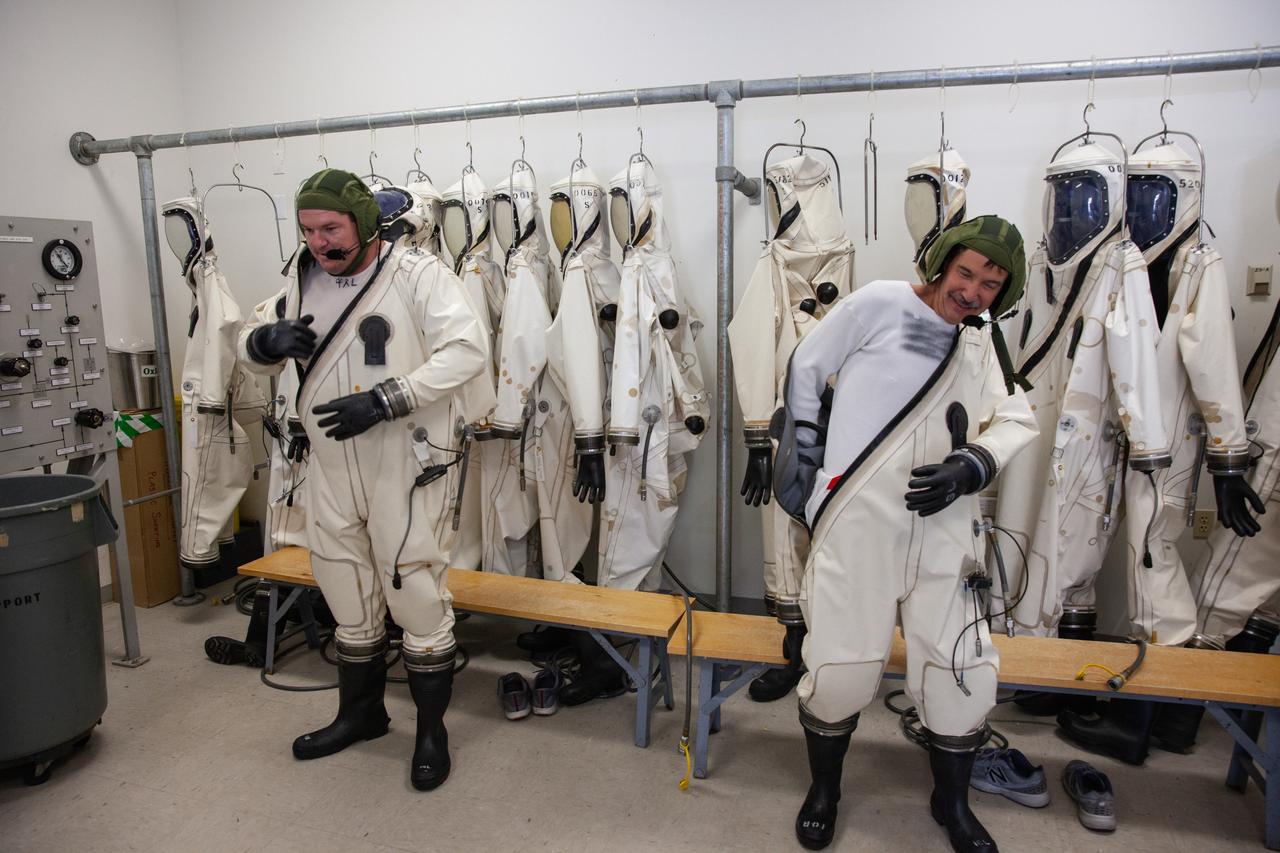
Inside the Multi-Operations Support Building near the Multi-Payload Processing Facility (MPPF) at NASA’s Kennedy Space Center in Florida, technicians put on Self-Contained Atmospheric Protective Ensemble (SCAPE) suits inside a changing room on Aug. 16, 2019. SCAPE technicians are practicing putting on the suits for a test simulation of loading propellants into a replicated test tank for Orion. Exploration Ground Systems is preparing for Artemis 1 with a series of hazardous hyper test events at the MPPF. After donning their suits, the technicians will complete a tanking to test the system before Orion arrives for processing. During preparations for launch, these teams will be responsible for loading the Orion vehicle with propellants prior to transportation to the Vehicle Assembly Building, where it will be secured atop the Space Launch System rocket. SCAPE suits are used in operations involving toxic propellants and are supplied with air either through a hardline or through a self-contained environmental control unit.
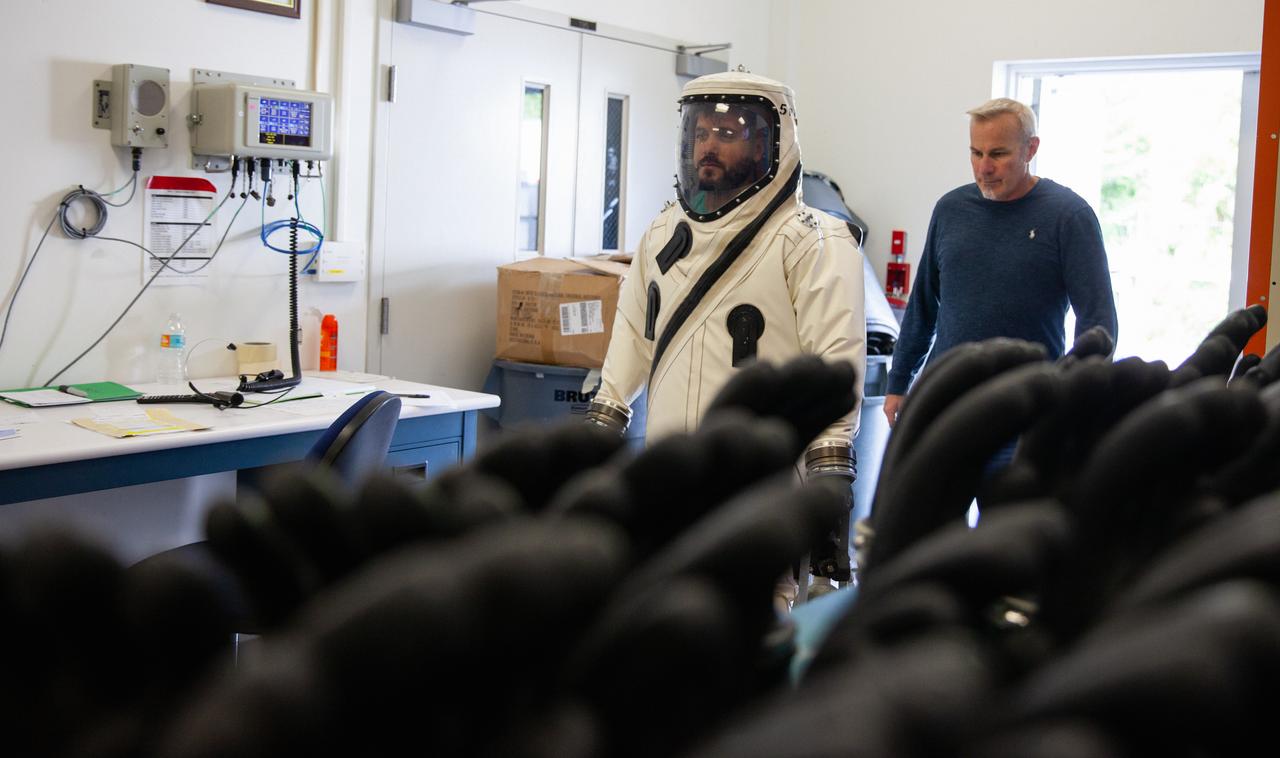
Inside the Multi-Operations Support Building near the Multi-Payload Processing Facility (MPPF) at NASA’s Kennedy Space Center in Florida, a technician is wearing a Self-Contained Atmospheric Protective Ensemble (SCAPE) suit to prepare for a test simulation of loading propellants into a replicated test tank for Orion, on Aug. 16, 2019. Exploration Ground Systems is preparing for Artemis 1 with a series of hazardous hyper test events at the MPPF. After donning their suits, the technicians will complete a tanking to test the system before Orion arrives for processing. During preparations for launch, these teams will be responsible for loading the Orion vehicle with propellants prior to transportation to the Vehicle Assembly Building, where it will be secured atop the Space Launch System rocket. SCAPE suits are used in operations involving toxic propellants and are supplied with air either through a hardline or through a self-contained environmental control unit.
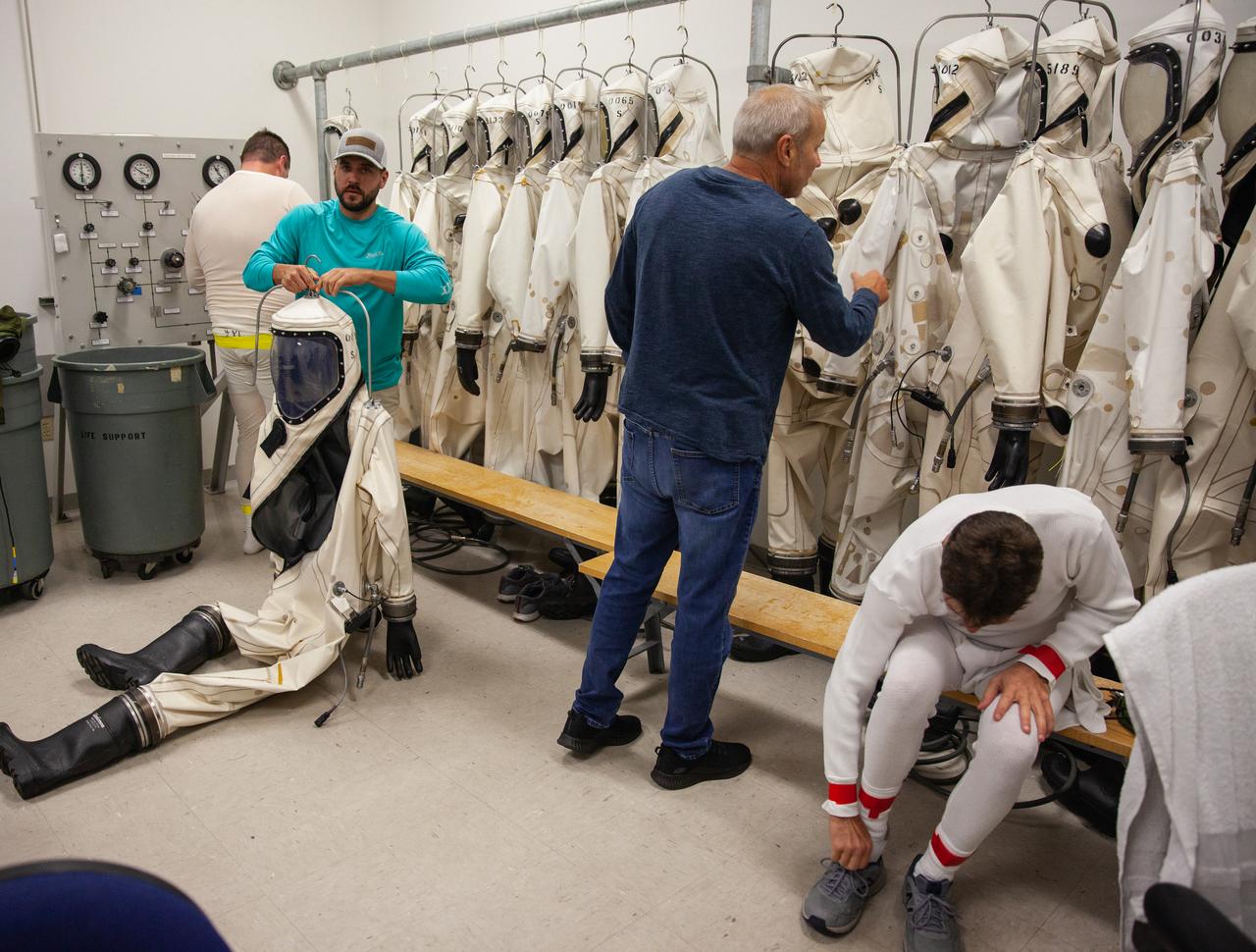
Inside the Multi-Operations Support Building near the Multi-Payload Processing Facility (MPPF) at NASA’s Kennedy Space Center in Florida, technicians are putting on Self-Contained Atmospheric Protective Ensemble (SCAPE) suits inside a changing room on Aug. 16, 2019. SCAPE technicians are practicing by putting on the suits for a test simulation of loading propellants into a replicated test tank for Orion. Exploration Ground Systems is preparing for Artemis 1 with a series of hazardous hyper test events at the MPPF. After donning their suits, the technicians will complete a tanking to test the system before Orion arrives for processing. During preparations for launch, these teams will be responsible for loading the Orion vehicle with propellants prior to transportation to the Vehicle Assembly Building, where it will be secured atop the Space Launch System rocket. SCAPE suits are used in operations involving toxic propellants and are supplied with air either through a hardline or through a self-contained environmental control unit.
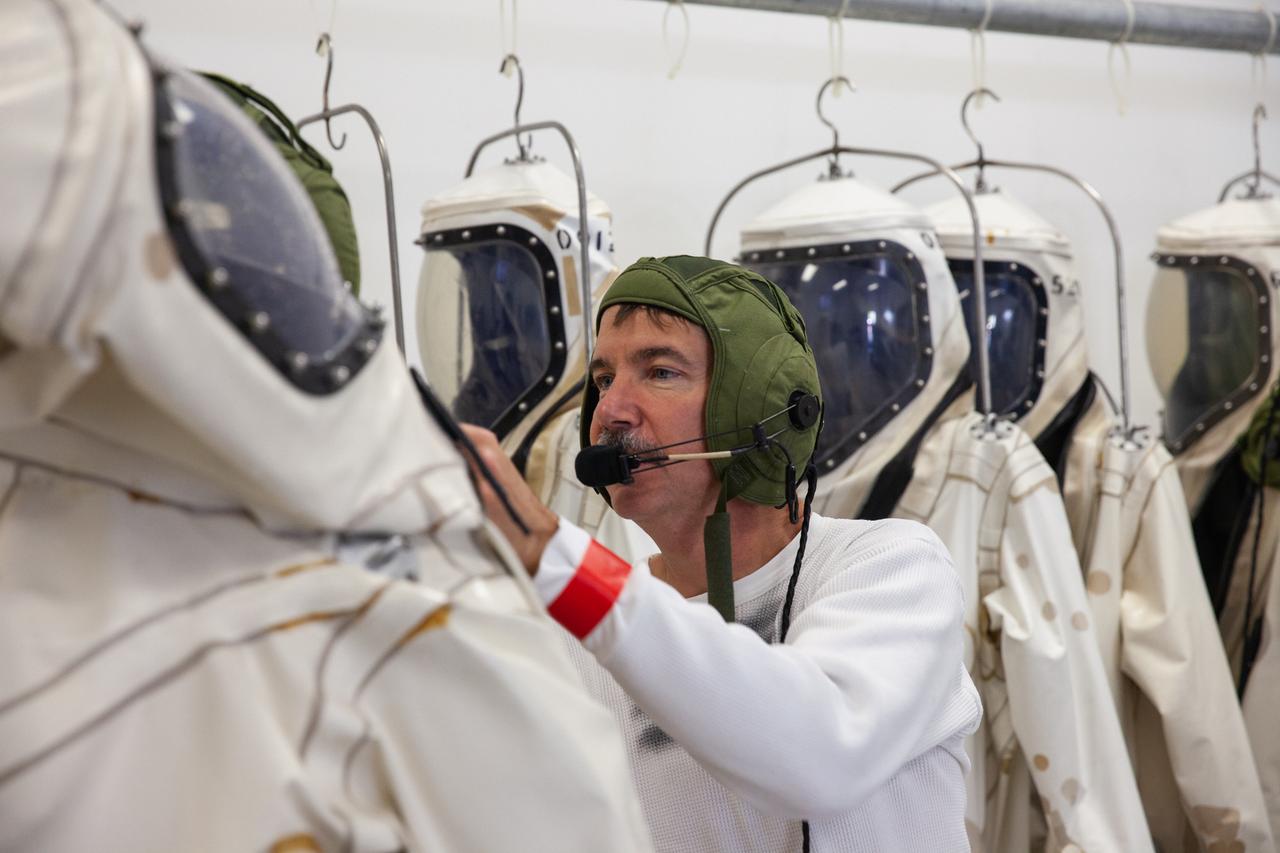
Inside the Multi-Operations Support Building near the Multi-Payload Processing Facility (MPPF) at NASA’s Kennedy Space Center in Florida, a technician prepares to put on a Self-Contained Atmospheric Protective Ensemble (SCAPE) suit inside a changing room on Aug. 16, 2019. SCAPE technicians are practicing putting on their suits for a test simulation of loading propellants into a replicated test tank for Orion. Exploration Ground Systems is preparing for Artemis 1 with a series of hazardous hyper test events at the MPPF. After donning their suits, the technicians will complete a tanking to test the system before Orion arrives for processing. During preparations for launch, these teams will be responsible for loading the Orion vehicle with propellants prior to transportation to the Vehicle Assembly Building, where it will be secured atop the Space Launch System rocket. SCAPE suits are used in operations involving toxic propellants and are supplied with air either through a hardline or through a self-contained environmental control unit.
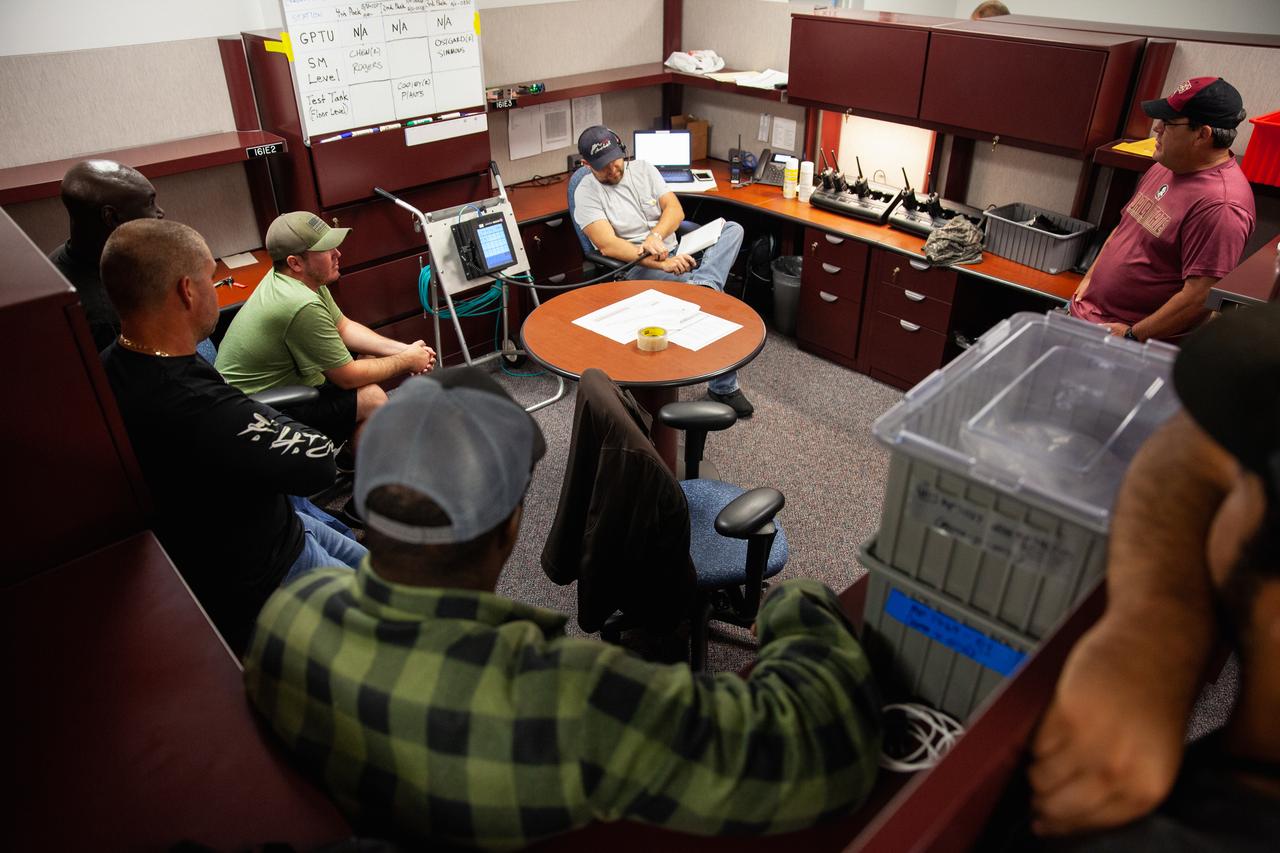
Inside the Multi-Operations Support Building near the Multi-Payload Processing Facility (MPPF) at NASA’s Kennedy Space Center in Florida, technicians and operations personnel review procedures for a test simulation of loading propellants into a replicated test tank for Orion, on Aug. 16, 2019. Exploration Ground Systems is preparing for Artemis 1 with a series of hazardous hyper test events at the MPPF. Technicians will practice putting on Self-Contained Atmospheric Protective Ensemble (SCAPE) suits and then complete tanking to test the system before Orion arrives for processing. During preparations for launch, these teams will be responsible for loading the Orion vehicle with propellants prior to transportation to the Vehicle Assembly Building, where it will be secured atop the Space Launch System rocket. SCAPE suits are used in operations involving toxic propellants and are supplied with air either through a hardline or through a self-contained environmental control unit.
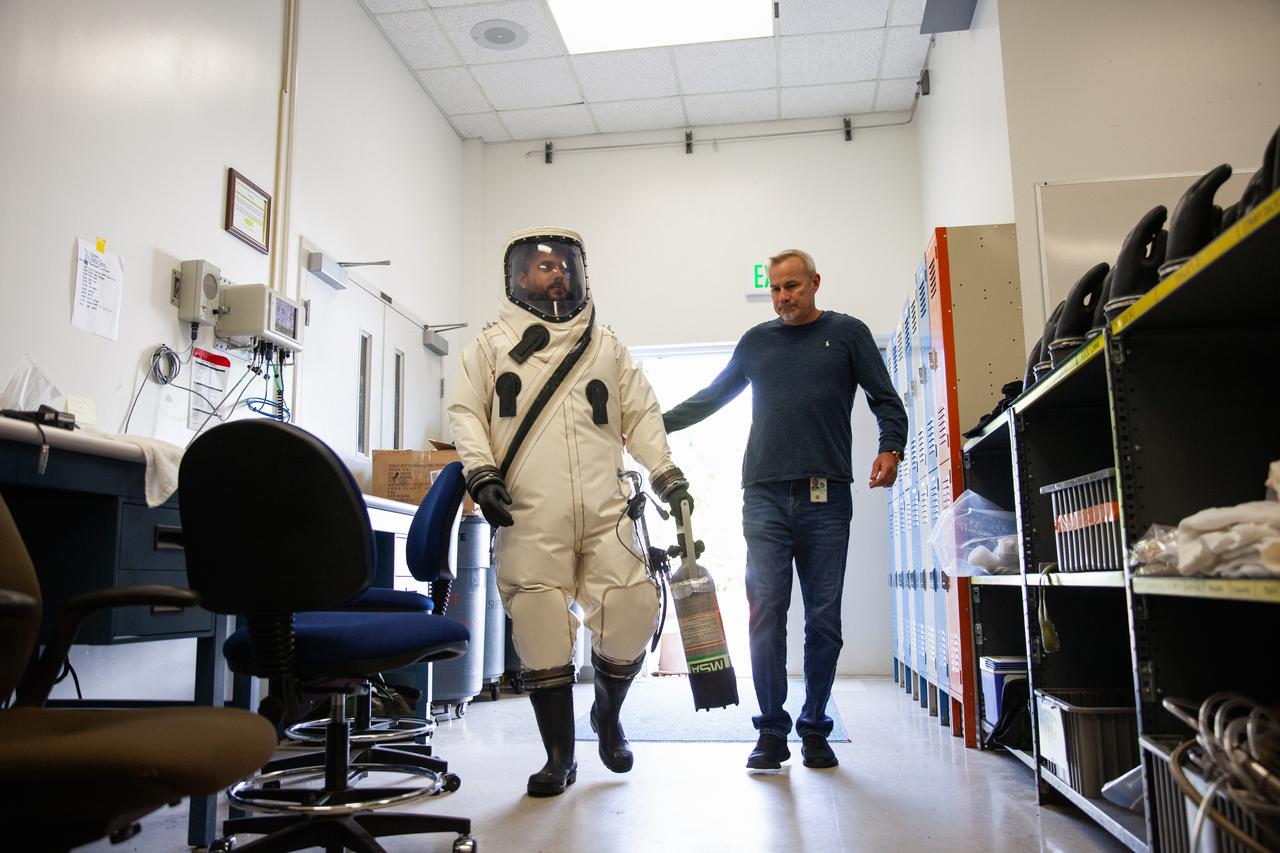
Inside the Multi-Operations Support Building near the Multi-Payload Processing Facility (MPPF) at NASA’s Kennedy Space Center in Florida, a technician is wearing a Self-Contained Atmospheric Protective Ensemble (SCAPE) suit to prepare for a test simulation of loading propellants into a replicated test tank for Orion, on Aug. 16, 2019. Exploration Ground Systems is preparing for Artemis 1 with a series of hazardous hyper test events at the MPPF. After donning their suits, the technicians will complete tanking to test the system before Orion arrives for processing. During preparations for launch, these teams will be responsible for loading the Orion vehicle with propellants prior to transportation to the Vehicle Assembly Building, where it will be secured atop the Space Launch System rocket. SCAPE suits are used in operations involving toxic propellants and are supplied with air either through a hardline or through a self-contained environmental control unit.
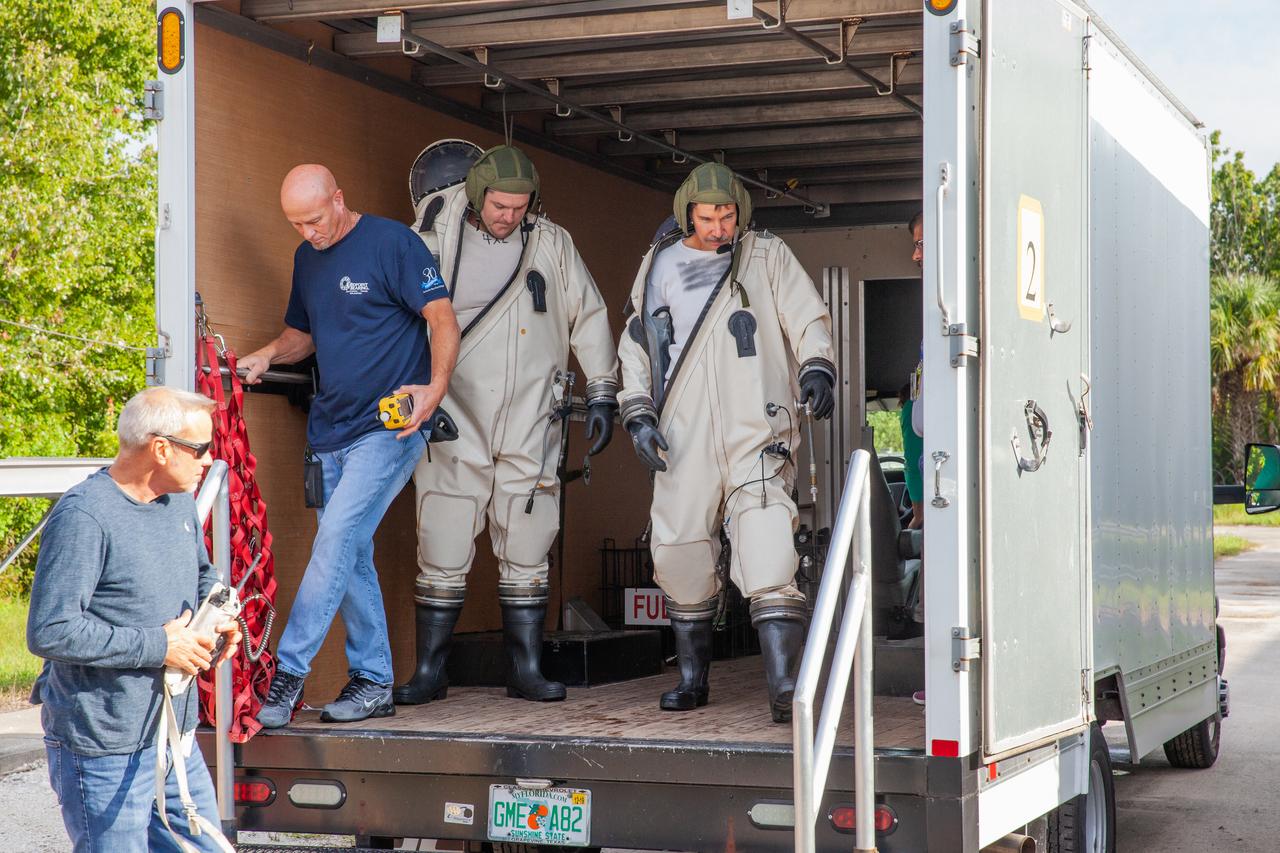
Technicians in Self-Contained Atmospheric Protective Ensemble (SCAPE) suits exit a truck near the Multi-Payload Processing Facility (MPPF) at NASA’s Kennedy Space Center in Florida, for a test simulation of loading propellants into a replicated test tank for Orion on Aug. 16, 2019. Exploration Ground Systems is preparing for Artemis 1 with a series of hazardous hyper test events at the MPPF. The technicians will complete a tanking to test the system before Orion arrives for processing. During preparations for launch, these teams will be responsible for loading the Orion vehicle with propellants prior to transportation to the Vehicle Assembly Building, where it will be secured atop the Space Launch System rocket. SCAPE suits are used in operations involving toxic propellants and are supplied with air either through a hardline or through a self-contained environmental control unit.
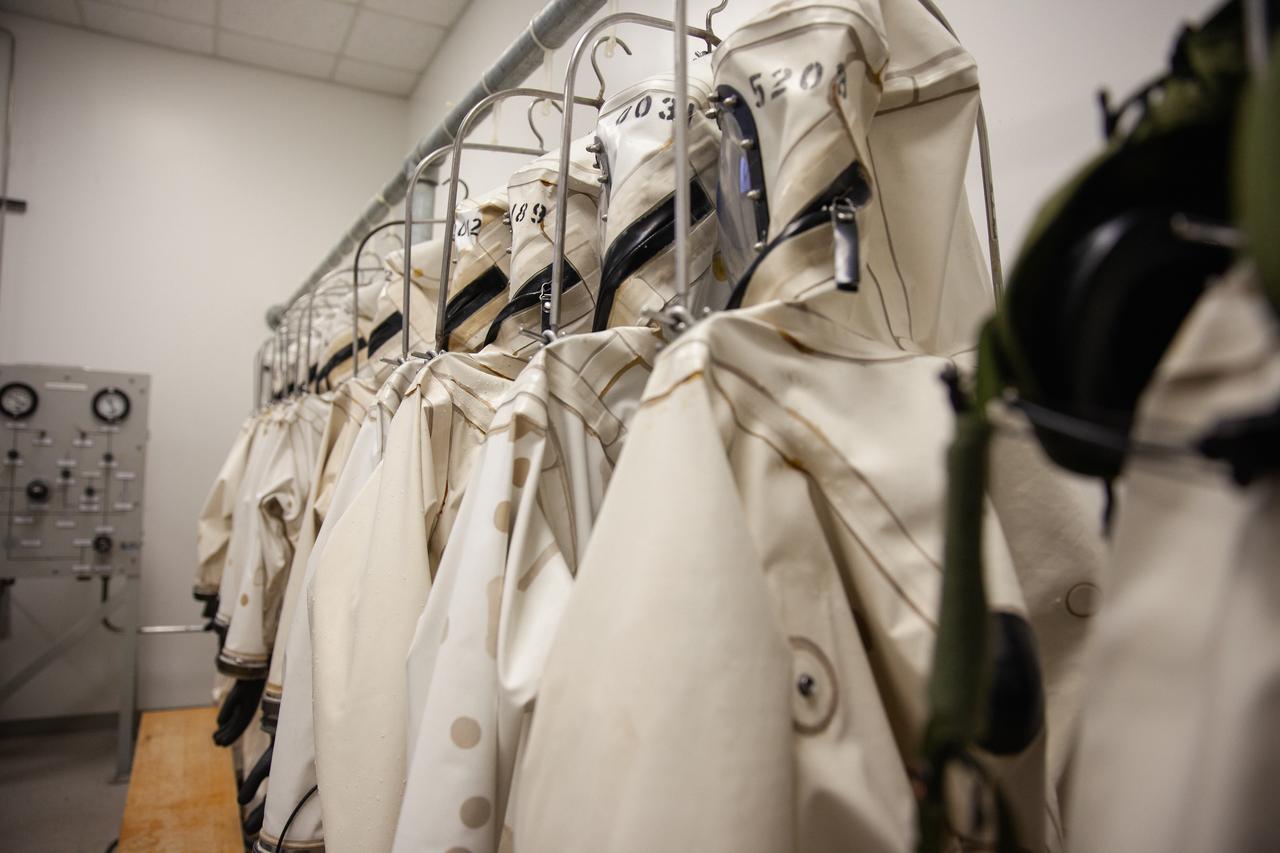
Inside the Multi-Operations Support Building near the Multi-Payload Processing Facility (MPPF) at NASA’s Kennedy Space Center in Florida on Aug. 16, 2019, a row of Self-Contained Atmospheric Protective Ensemble (SCAPE) suits are hanging inside a changing room. SCAPE technicians are practicing putting on their suits for a test simulation of loading propellants into a replicated test tank for Orion. Exploration Ground Systems is preparing for Artemis 1 with a series of hazardous hyper test events at the MPPF. After donning their suits, the technicians will complete a tanking to test the system before Orion arrives for processing. During preparations for launch, these teams will be responsible for loading the Orion vehicle with propellants prior to transportation to the Vehicle Assembly Building, where it will be secured atop the Space Launch System rocket. SCAPE suits are used in operations involving toxic propellants and are supplied with air either through a hardline or through a self-contained environmental control unit.
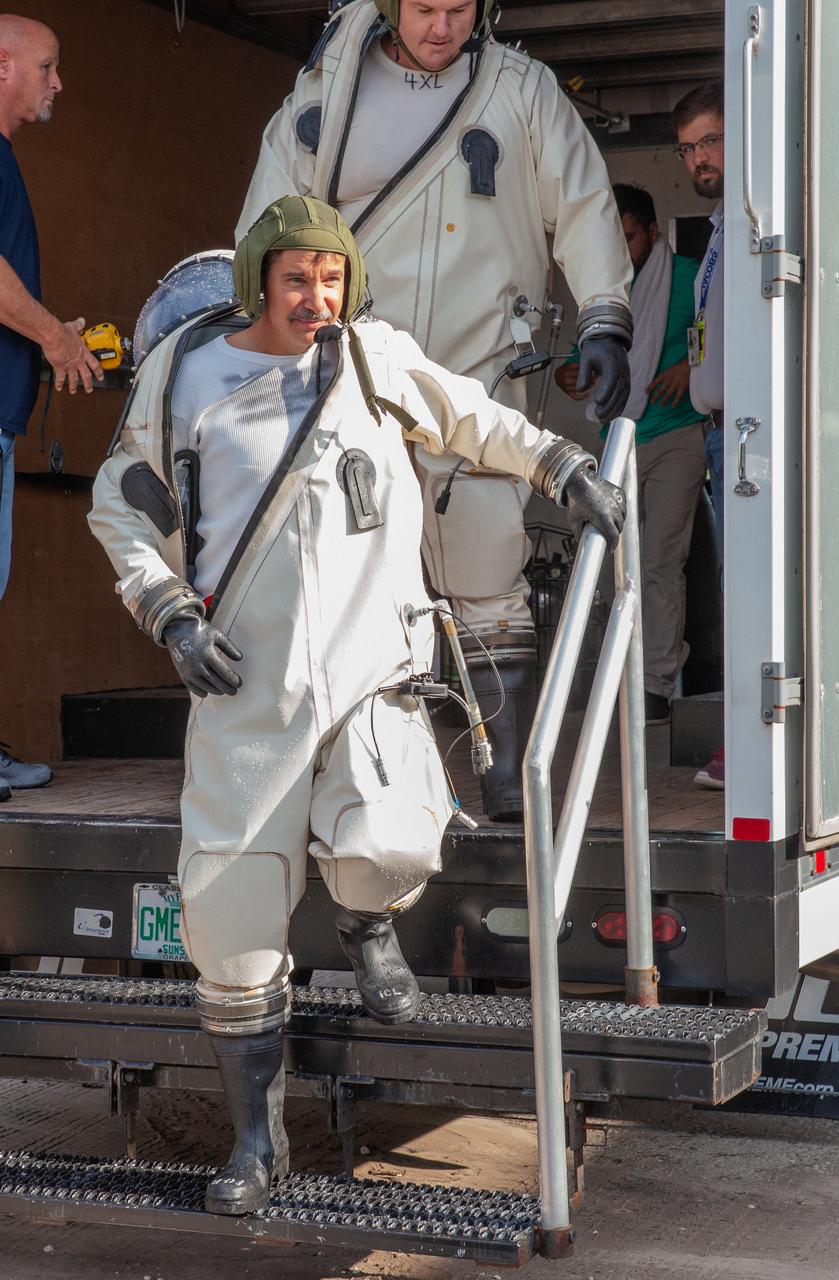
Technicians in Self-Contained Atmospheric Protective Ensemble (SCAPE) suits exit a truck near the Multi-Payload Processing Facility (MPPF) at NASA’s Kennedy Space Center in Florida, for a test simulation of loading propellants into a replicated test tank for Orion on Aug. 16, 2019. Exploration Ground Systems is preparing for Artemis 1 with a series of hazardous hyper test events at the MPPF. The technicians will complete a tanking to test the system before Orion arrives for processing. During preparations for launch, these teams will be responsible for loading the Orion vehicle with propellants prior to transportation to the Vehicle Assembly Building, where it will be secured atop the Space Launch System rocket. SCAPE suits are used in operations involving toxic propellants and are supplied with air either through a hardline or through a self-contained environmental control unit.
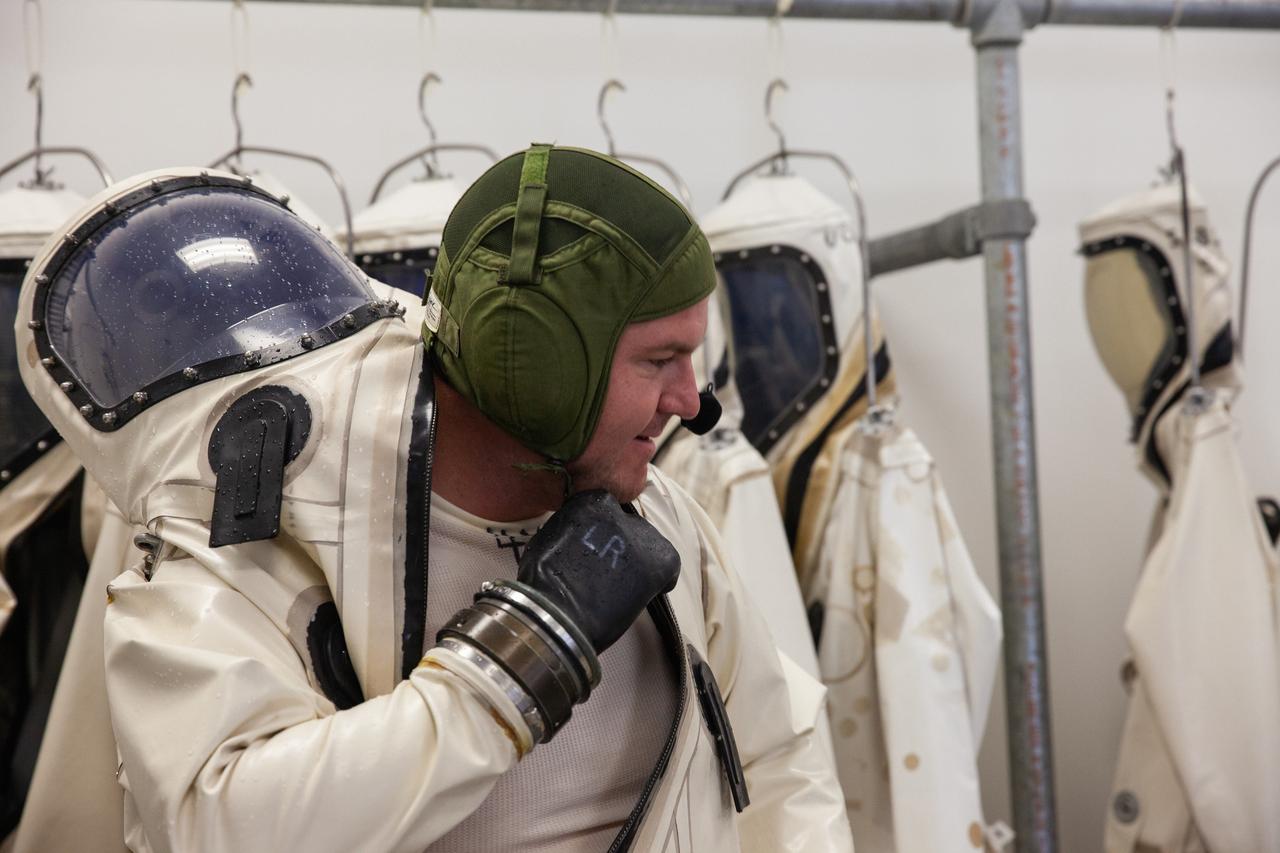
Inside the Multi-Operations Support Building near the Multi-Payload Processing Facility (MPPF) at NASA’s Kennedy Space Center in Florida, a technician puts on a Self-Contained Atmospheric Protective Ensemble (SCAPE) suit inside a changing room on Aug. 16, 2019. SCAPE technicians are practicing putting on the suits for a test simulation of loading propellants into a replicated test tank for Orion. Exploration Ground Systems is preparing for Artemis 1 with a series of hazardous hyper test events at the MPPF. After donning their suits, the technicians will complete a tanking to test the system before Orion arrives for processing. During preparations for launch, these teams will be responsible for loading the Orion vehicle with propellants prior to transportation to the Vehicle Assembly Building, where it will be secured atop the Space Launch System rocket. SCAPE suits are used in operations involving toxic propellants and are supplied with air either through a hardline or through a self-contained environmental control unit.
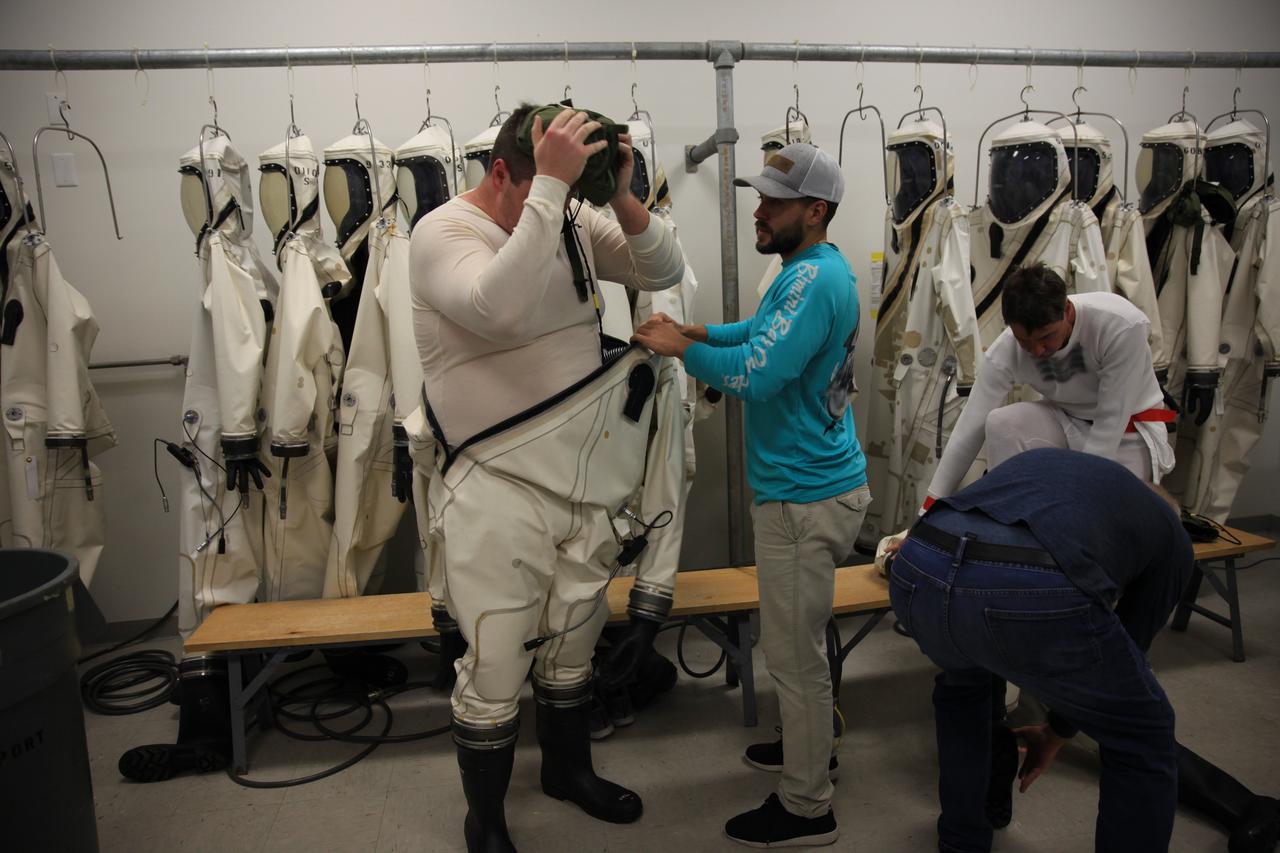
Inside the Multi-Operations Support Building near the Multi-Payload Processing Facility (MPPF) at NASA’s Kennedy Space Center in Florida, technicians put on Self-Contained Atmospheric Protective Ensemble (SCAPE) suits inside a changing room on Aug. 16, 2019. SCAPE technicians are practicing by putting on the suits for a test simulation of loading propellants into a replicated test tank for Orion. Exploration Ground Systems is preparing for Artemis 1 with a series of hazardous hyper test events at the MPPF. After donning their suits, the technicians will complete a tanking to test the system before Orion arrives for processing. During preparations for launch, these teams will be responsible for loading the Orion vehicle with propellants prior to transportation to the Vehicle Assembly Building, where it will be secured atop the Space Launch System rocket. SCAPE suits are used in operations involving toxic propellants and are supplied with air either through a hardline or through a self-contained environmental control unit.
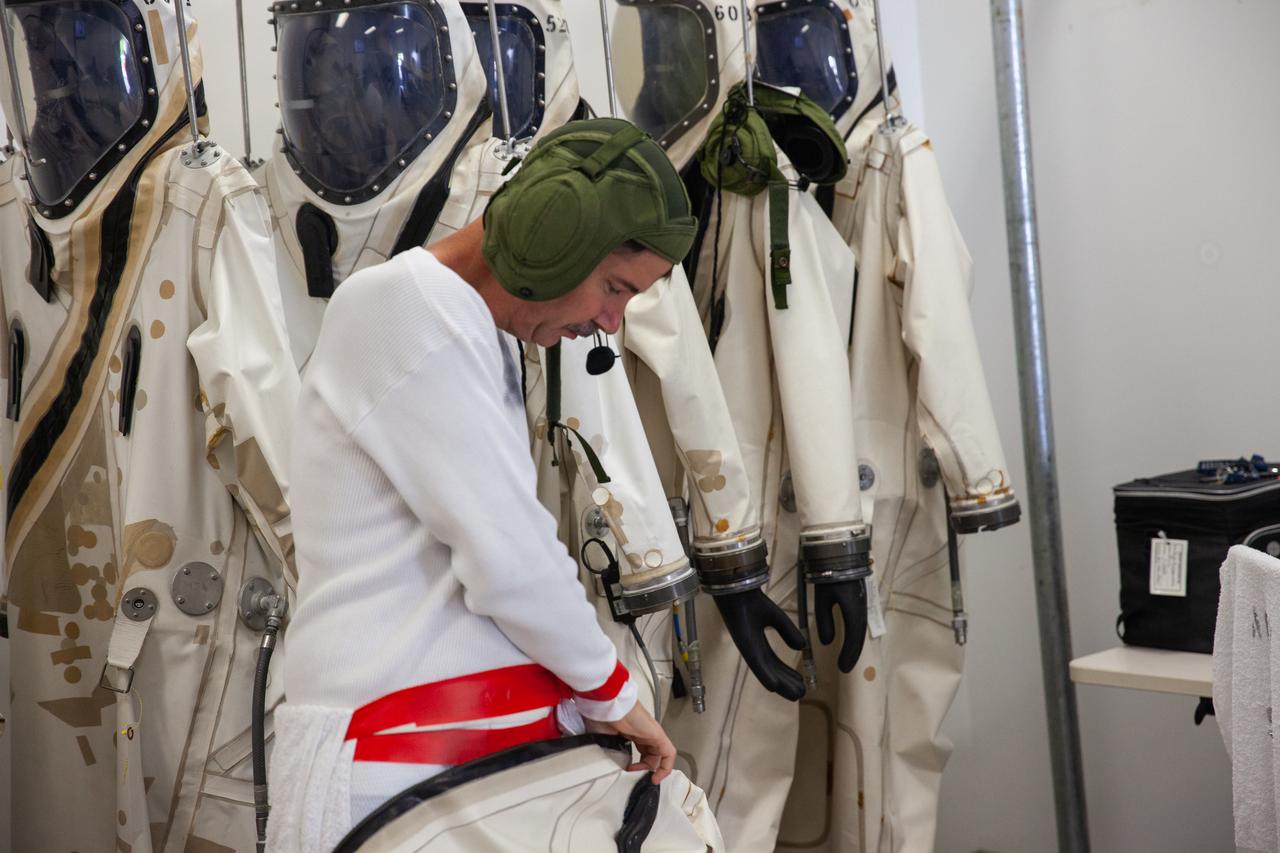
Inside the Multi-Operations Support Building near the Multi-Payload Processing Facility (MPPF) at NASA’s Kennedy Space Center in Florida, a technician prepares to put on a Self-Contained Atmospheric Protective Ensemble (SCAPE) suit inside a changing room on Aug. 16, 2019. SCAPE technicians are practicing putting on the suits for a test simulation of loading propellants into a replicated test tank for Orion. Exploration Ground Systems is preparing for Artemis 1 with a series of hazardous hyper test events at the MPPF. After donning their suits, the technicians will complete a tanking to test the system before Orion arrives for processing. During preparations for launch, these teams will be responsible for loading the Orion vehicle with propellants prior to transportation to the Vehicle Assembly Building, where it will be secured atop the Space Launch System rocket. SCAPE suits are used in operations involving toxic propellants and are supplied with air either through a hardline or through a self-contained environmental control unit.
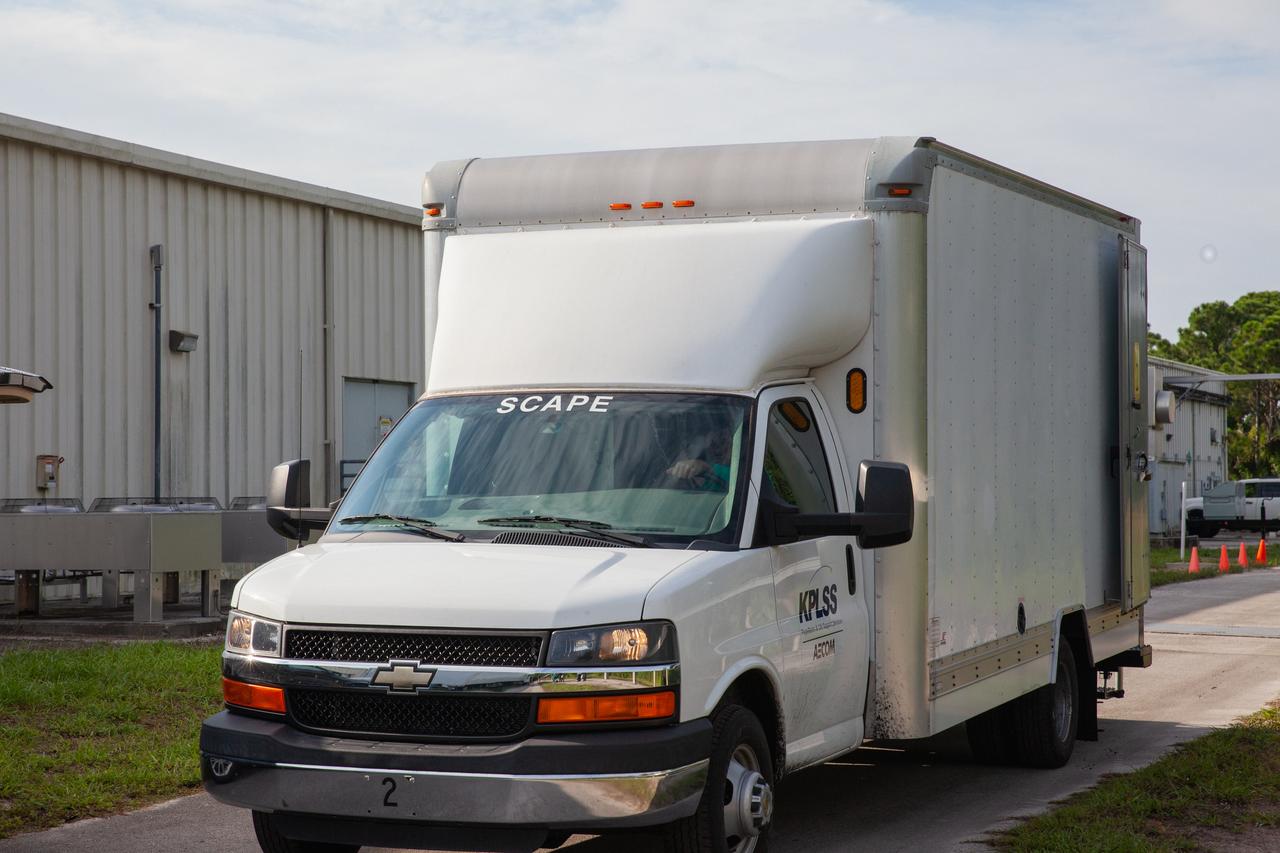
A truck transports technicians wearing Self-Contained Atmospheric Protective Ensemble (SCAPE) suits and operations support personnel to the Multi-Payload Processing Facility (MPPF) at NASA’s Kennedy Space Center in Florida, for a test simulation of loading propellants into a replicated test tank for Orion on Aug. 16, 2019. Exploration Ground Systems is preparing for Artemis 1 with a series of hazardous hyper test events at the MPPF. The technicians will complete a tanking to test the system before Orion arrives for processing. During preparations for launch, these teams will be responsible for loading the Orion vehicle with propellants prior to transportation to the Vehicle Assembly Building, where it will be secured atop the Space Launch System rocket. SCAPE suits are used in operations involving toxic propellants and are supplied with air either through a hardline or through a self-contained environmental control unit.
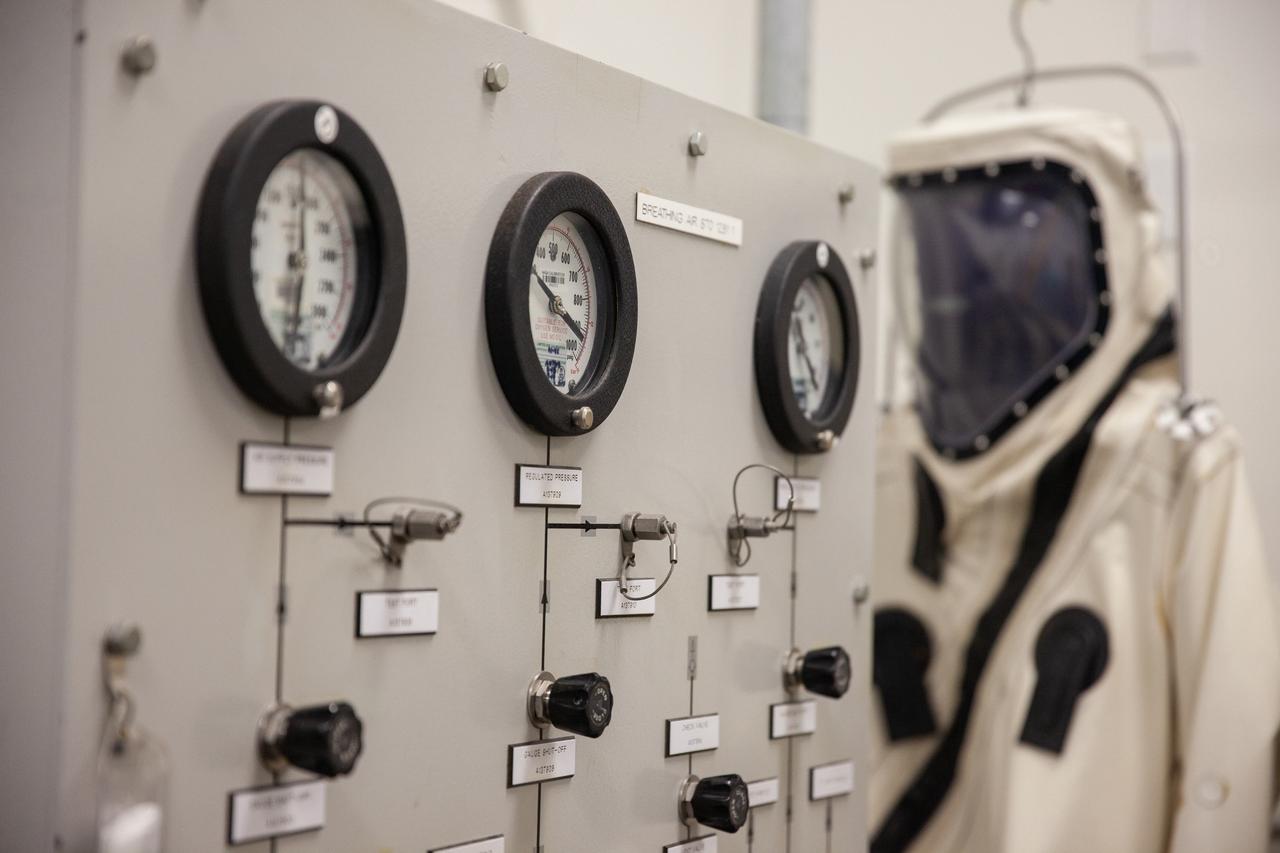
Inside the Multi-Operations Support Building near the Multi-Payload Processing Facility (MPPF) at NASA’s Kennedy Space Center in Florida on Aug. 16, 2019, a Self-Contained Atmospheric Protective Ensemble (SCAPE) suit is in view inside a changing room. SCAPE technicians are practicing putting on SCAPE suits and preparing for a test simulation of loading propellants into a replicated test tank for Orion. Exploration Ground Systems is preparing for Artemis 1 with a series of hazardous hyper test events at the MPPF. After donning their suits, the technicians will complete a tanking to test the system before Orion arrives for processing. During preparations for launch, these teams will be responsible for loading the Orion vehicle with propellants prior to transportation to the Vehicle Assembly Building, where it will be secured atop the Space Launch System rocket. SCAPE suits are used in operations involving toxic propellants and are supplied with air either through a hardline or through a self-contained environmental control unit.
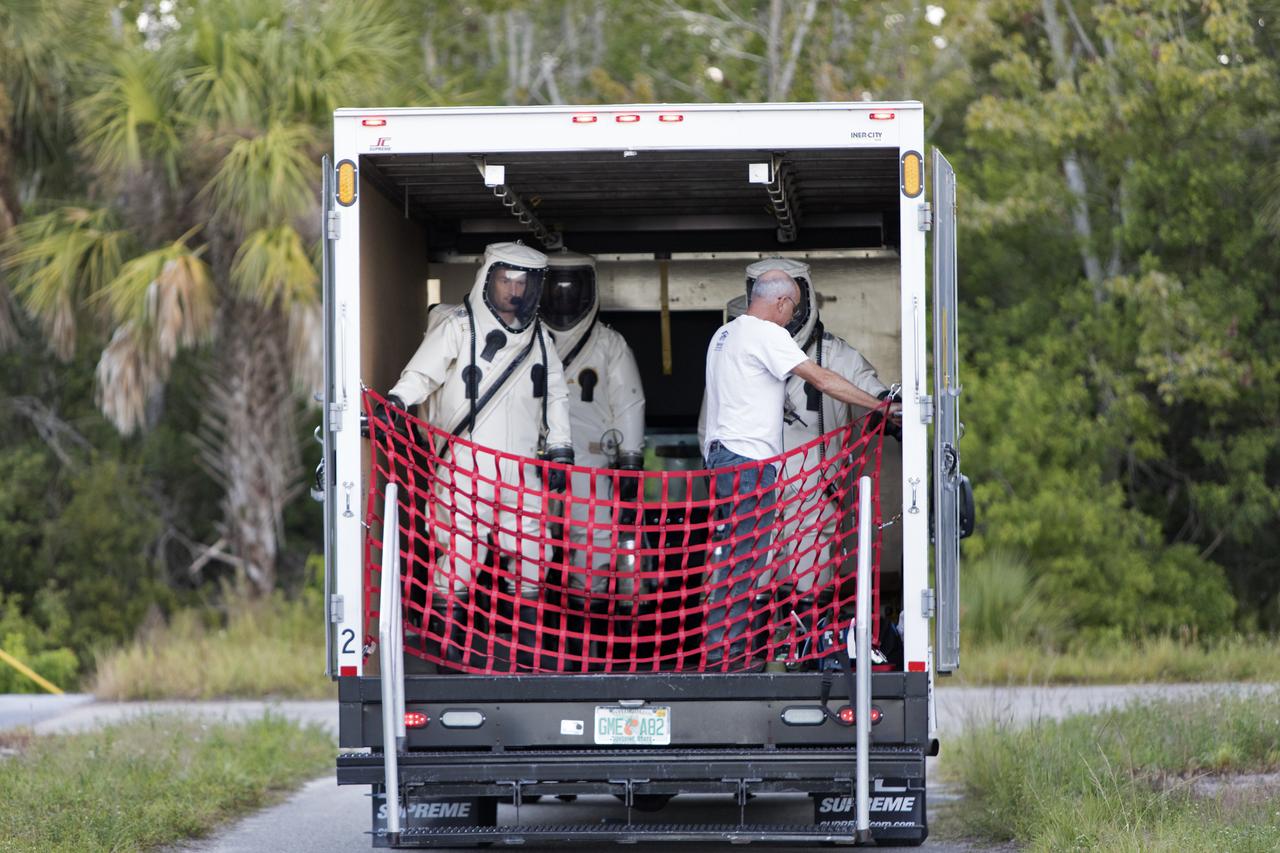
Operators wearing Self-Contained Atmospheric Protective Ensemble (SCAPE) suits are inside a transport vehicle near the Multi-Payload Processing Facility (MPPF) at NASA's Kennedy Space Center in Florida on Oct. 31, 2018. SCAPE operators, wearing the suits, will participate in a hypergolic systems hot flow test at the MPPF. The test will serve as operational validation of the hypergol subsystem and demonstrate that the hypergols subsystem can service the Orion spacecraft, flow fuel at the required rates, drain and de-service the system, and meet the intended timeline. SCAPE suite are used in operations involving toxic propellants and are supplied with air either through a hardline or through a self-contained environmental control unit.
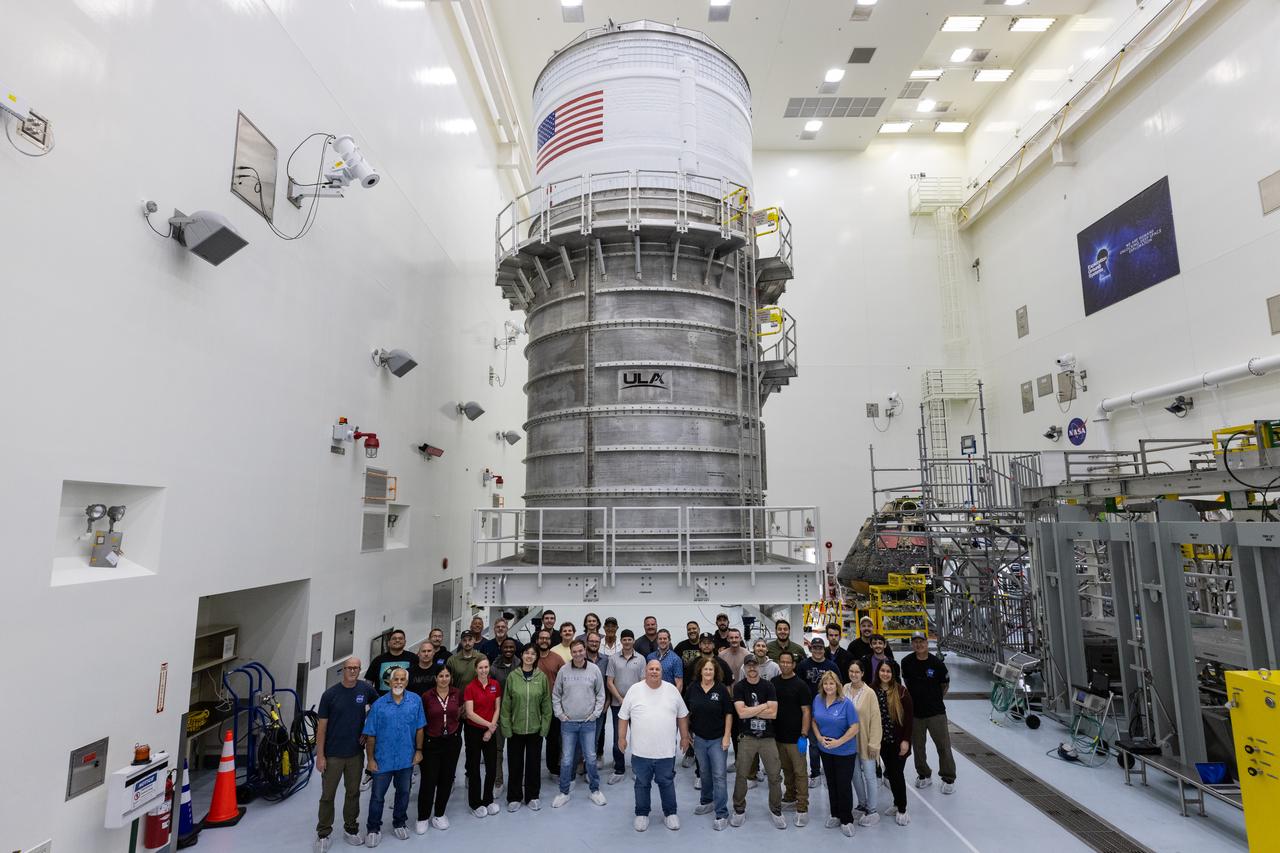
Teams with NASA’s Exploration Ground Systems Program pose for a photo in front of the upper stage for the agency’s Artemis II SLS (Space Launch System) rocket inside the Multi-Payload Processing Facility (MPPF) at NASA’s Kennedy Space Center in Florida on Wednesday, April 16, 2025. Visible in the background is also the Artemis I Orion crew module, now known as the Orion Environmental Test Article (ETA). Technicians fueled the SLS upper stage, known as the interim cryogenic propulsion stage, with hydrazine for its reaction control system at the MPPF before its transportation to the spaceport’s Vehicle Assembly Building and will now integrate the four-story propulsion system with SLS rocket elements atop mobile launcher 1.
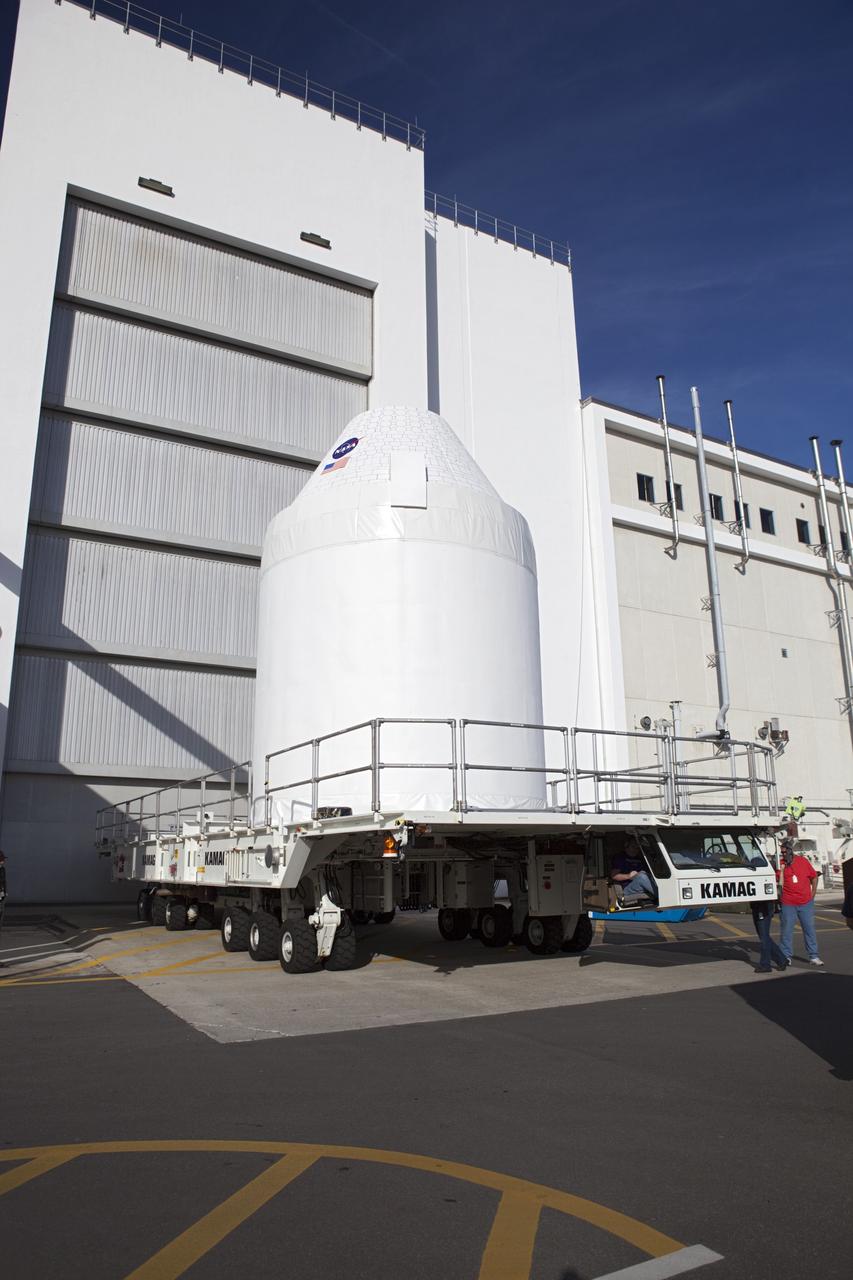
CAPE CANAVERAL, Fla. – A full-size test mock-up of the Orion crew exploration vehicle from of the Operations and Checkout Building at NASA's Kennedy Space Center in Florida. The test article is on its way to the Multi-Payload Processing Facility, or MPPF, to test the path flight hardware will take during future launch processing. Orion is the exploration spacecraft designed to carry crews to space beyond low Earth orbit. It will provide emergency abort capability, sustain the crew during the space travel and provide safe re-entry from deep space return velocities. The first unpiloted test flight of the Orion is scheduled to launch in 2014 atop a Delta IV rocket and in 2017 on a Space Launch System rocket. For more information, visit http://www.nasa.gov/orion Photo credit: NASA/Dimitri Gerondidakis
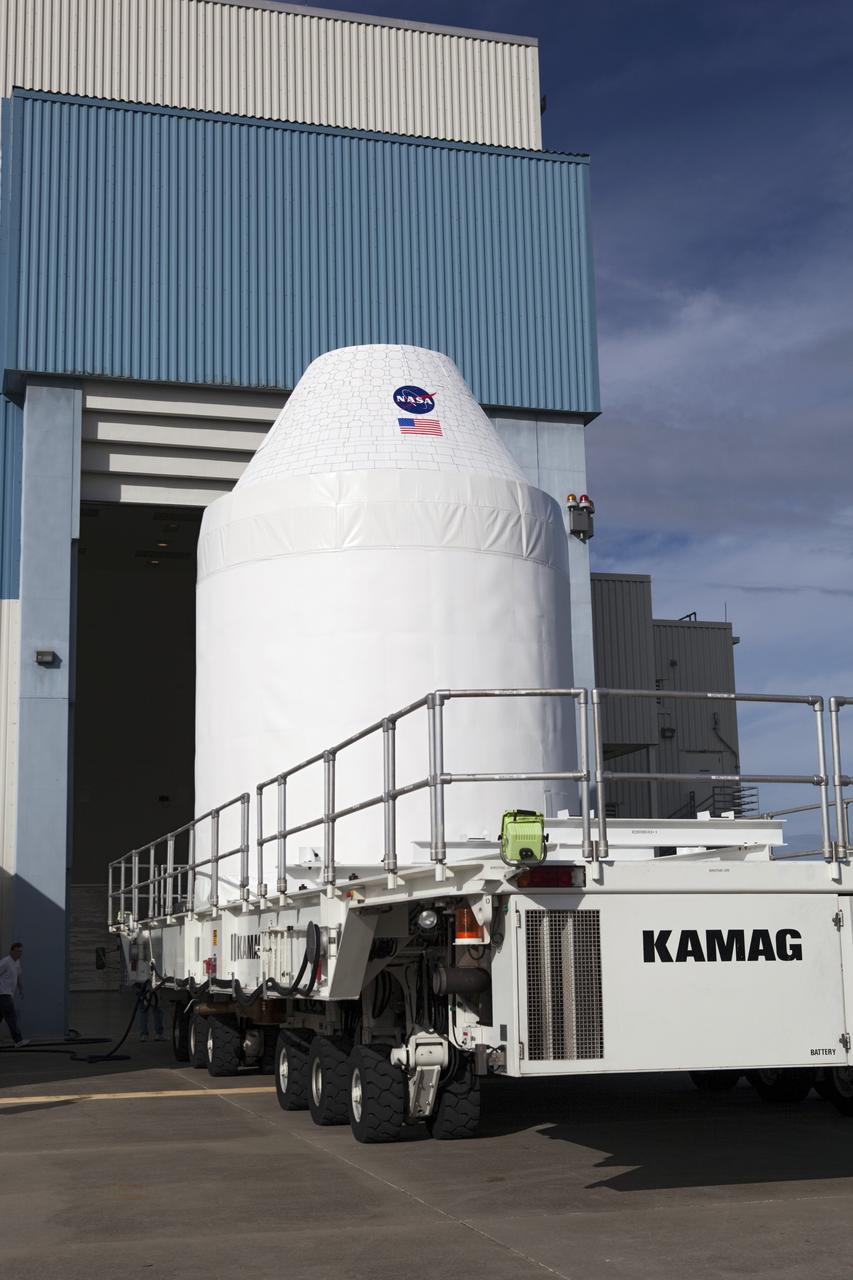
CAPE CANAVERAL, Fla. – A full-size test mock-up of the Orion crew exploration vehicle arrives at the Multi-Payload Processing Facility, or MPPF, at NASA's Kennedy Space Center in Florida to test the path flight hardware will take during future launch processing. Orion is the exploration spacecraft designed to carry crews to space beyond low Earth orbit. It will provide emergency abort capability, sustain the crew during the space travel and provide safe re-entry from deep space return velocities. The first unpiloted test flight of the Orion is scheduled to launch in 2014 atop a Delta IV rocket and in 2017 on a Space Launch System rocket. For more information, visit http://www.nasa.gov/orion Photo credit: NASA/Dimitri Gerondidakis
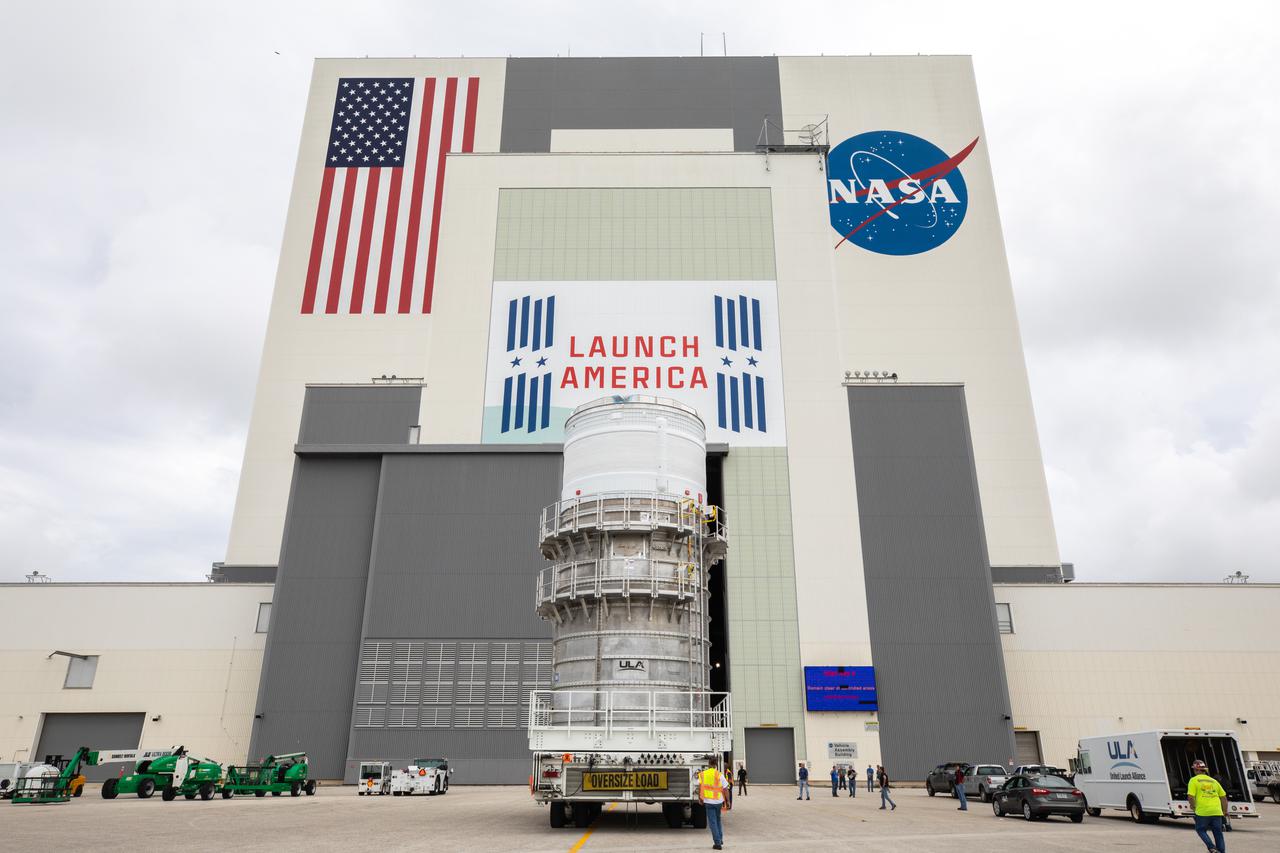
Teams with NASA’s Exploration Ground Systems and contractor Jacobs move the Space Launch System (SLS) rocket’s interim cryogenic propulsion stage (ICPS) into the Vehicle Assembly Building (VAB) at NASA’s Kennedy Space Center in Florida on Saturday, June 19, 2021. After being fueled and serviced inside the Multi-Payload Processing Facility (MPPF), the ICPS will be hoisted into place atop the SLS core stage while its Aerojet Rocketdyne-built RL-10 engine will be protected inside the launch vehicle stage adapter (LVSA) on the mobile launcher in preparation for the launch of Artemis I. The ICPS will provide Orion spacecraft with the push needed for its flight around the Moon. The first in a series of increasingly complex missions, Artemis I will test SLS and the Orion spacecraft as an integrated system prior to crewed flights in which NASA will land the first woman and person of color on the Moon.
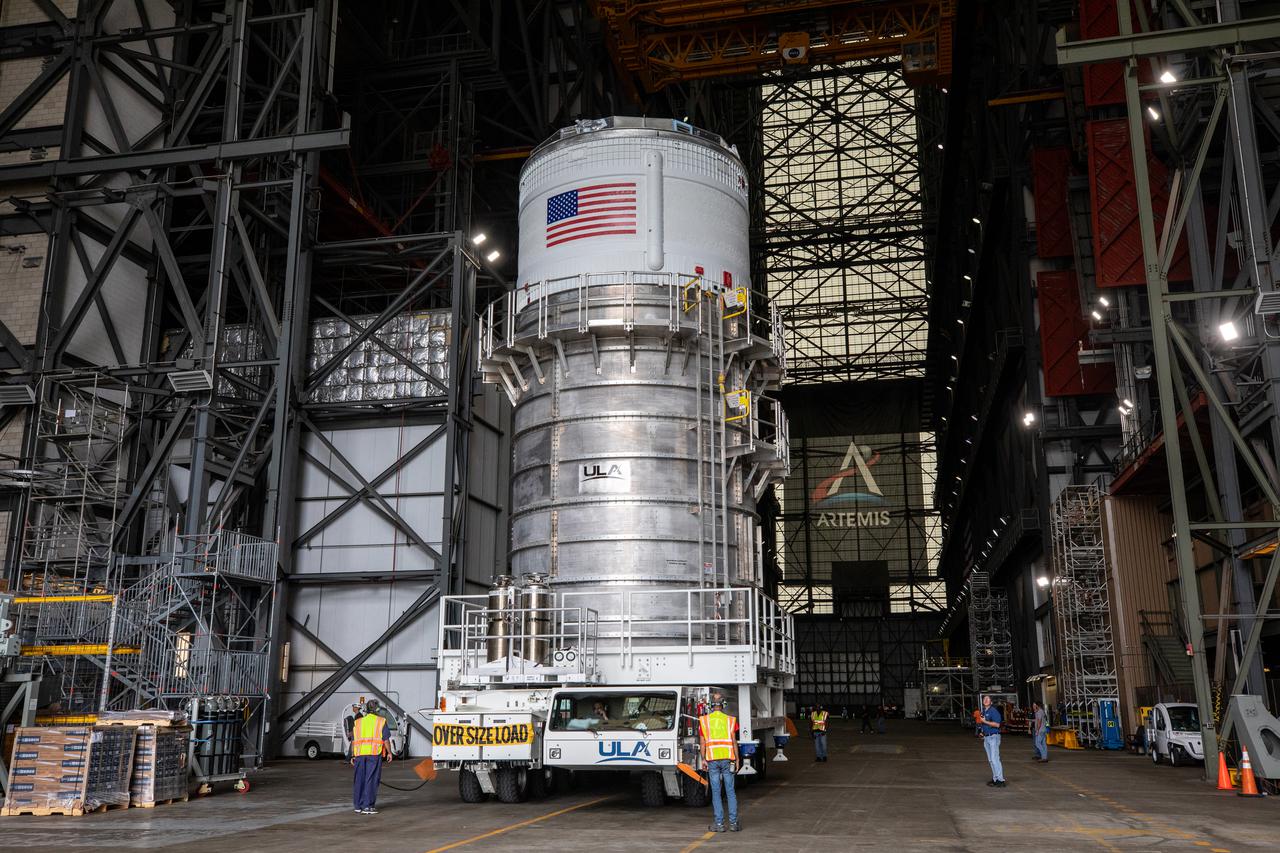
The Space Launch System (SLS) rocket’s interim cryogenic propulsion stage (ICPS) is moved into the transfer aisle of the Vehicle Assembly Building (VAB) by teams with NASA’s Exploration Ground Systems and contractor Jacobs at NASA’s Kennedy Space Center in Florida on Saturday, June 19, 2021. After being fueled and serviced inside the Multi-Payload Processing Facility (MPPF), the ICPS will be hoisted into place atop the SLS core stage while its Aerojet Rocketdyne-built RL-10 engine will be protected inside the launch vehicle stage adapter (LVSA) on the mobile launcher in preparation for the launch of Artemis I. The ICPS will provide Orion spacecraft with the push needed for its flight around the Moon. The first in a series of increasingly complex missions, Artemis I will test SLS and the Orion spacecraft as an integrated system prior to crewed flights in which NASA will land the first woman and person of color on the Moon.
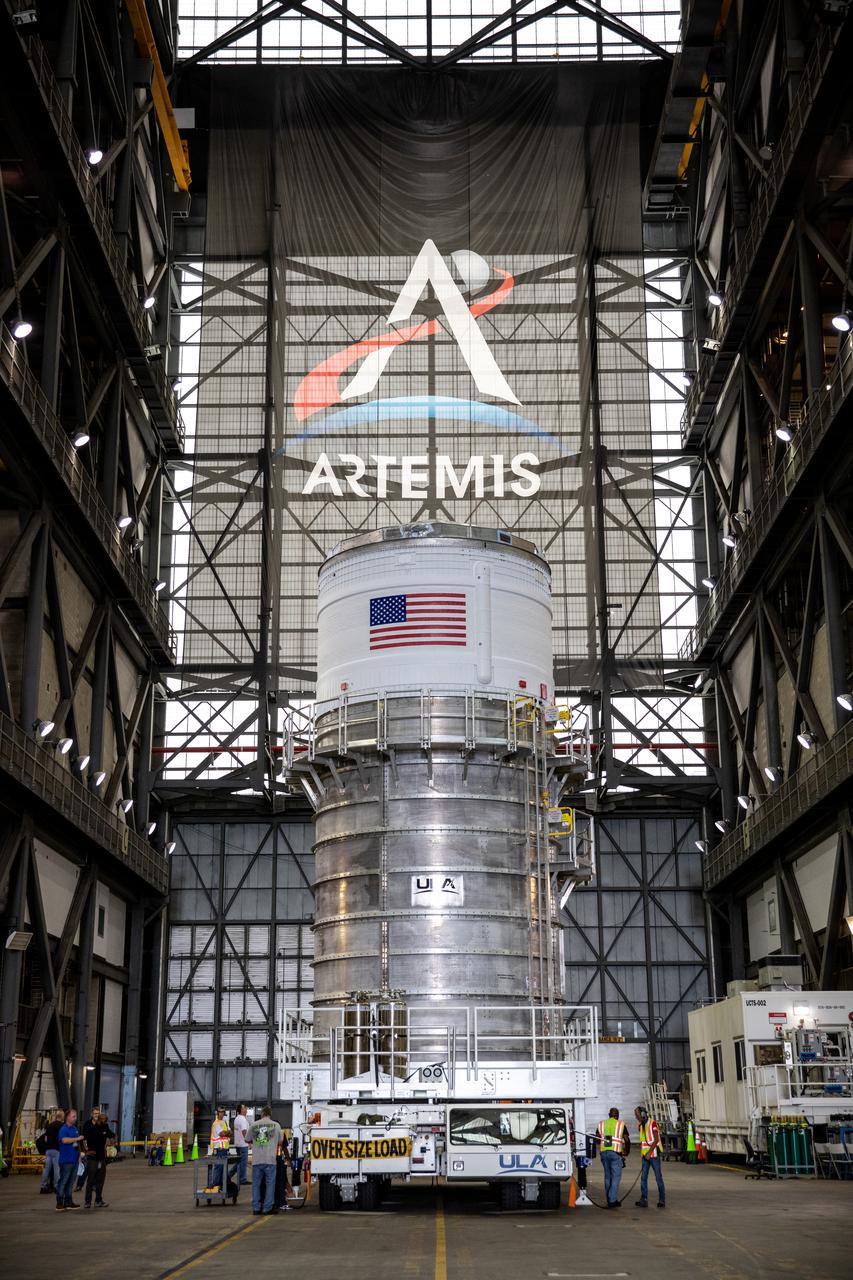
The Space Launch System (SLS) rocket’s interim cryogenic propulsion stage (ICPS) sits in the transfer aisle of the Vehicle Assembly Building (VAB), upon being moved by teams with NASA’s Exploration Ground Systems and contractor Jacobs at NASA’s Kennedy Space Center in Florida on Saturday, June 19, 2021. After being fueled and serviced inside the Multi-Payload Processing Facility (MPPF), the ICPS will be hoisted into place atop the SLS core stage while its Aerojet Rocketdyne-built RL-10 engine will be protected inside the launch vehicle stage adapter (LVSA) on the mobile launcher in preparation for the launch of Artemis I. The ICPS will provide Orion spacecraft with the push needed for its flight around the Moon. The first in a series of increasingly complex missions, Artemis I will test SLS and the Orion spacecraft as an integrated system prior to crewed flights in which NASA will land the first woman and person of color on the Moon.