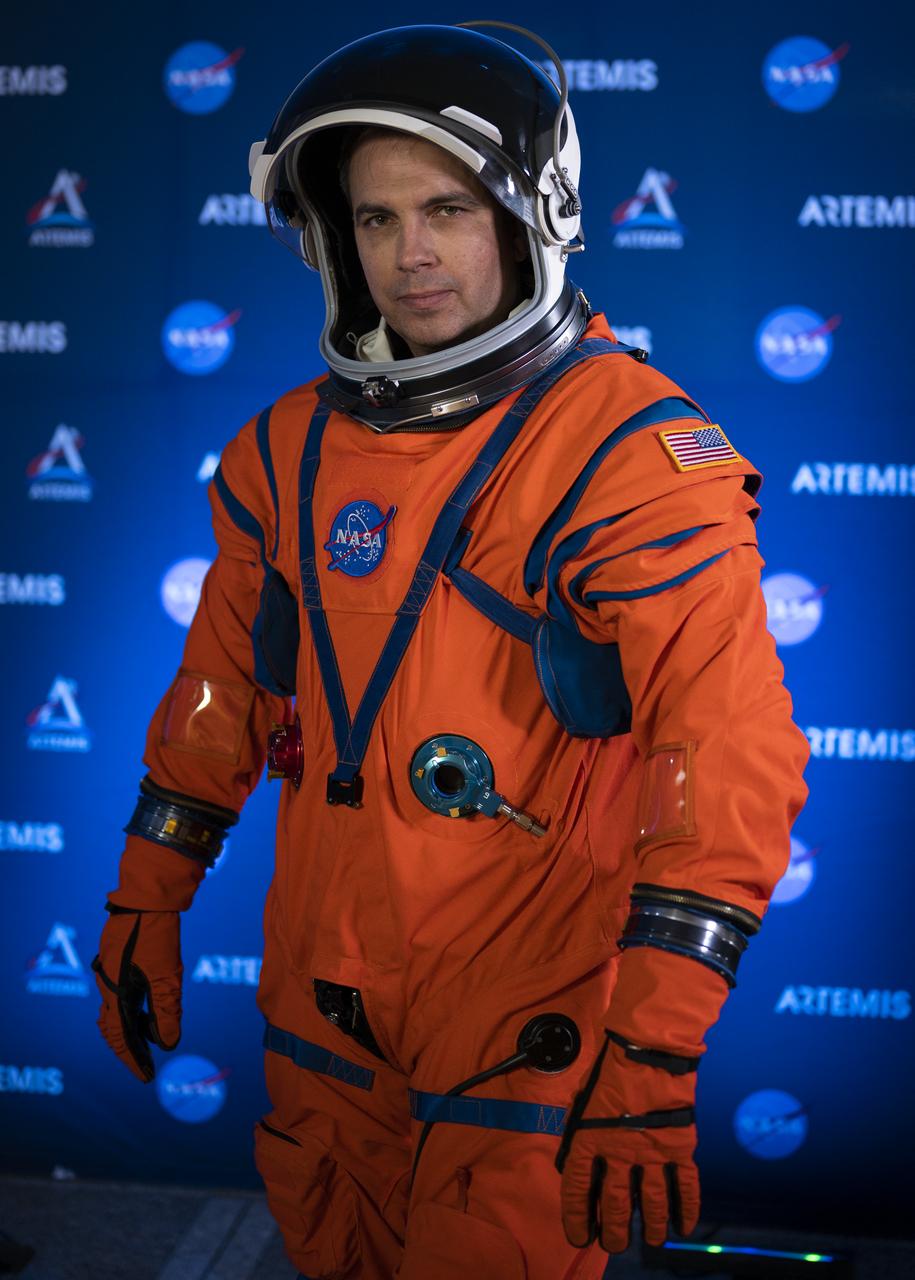
Dustin Gohmert, Orion Crew Survival Systems Project Manager at NASA’s Johnson Space Center, poses for a portrait while wearing the Orion Crew Survival System (OCSS) suit, Tuesday, Oct. 15, 2019 at NASA Headquarters in Washington, DC. The Orion suit is designed for a custom fit and incorporates safety technology and mobility features that will help protect astronauts on launch day, in emergency situations, high-risk parts of missions near the Moon, and during the high-speed return to Earth. Photo Credit: (NASA/Joel Kowsky)
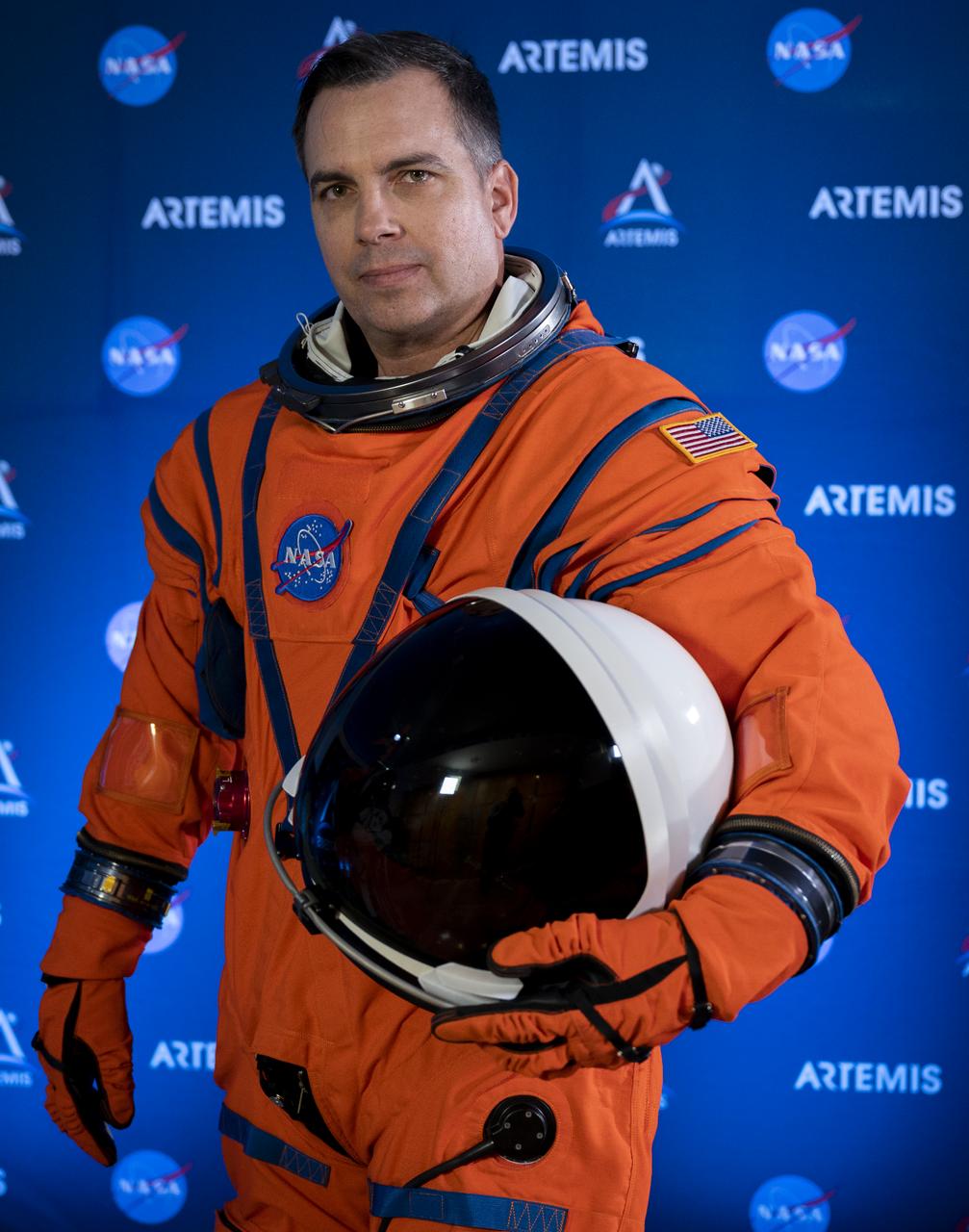
Dustin Gohmert, Orion Crew Survival Systems Project Manager at NASA’s Johnson Space Center, poses for a portrait while wearing the Orion Crew Survival System (OCSS) suit, Tuesday, Oct. 15, 2019 at NASA Headquarters in Washington, DC. The Orion suit is designed for a custom fit and incorporates safety technology and mobility features that will help protect astronauts on launch day, in emergency situations, high-risk parts of missions near the Moon, and during the high-speed return to Earth. Photo Credit: (NASA/Joel Kowsky)

Dustin Gohmert, Orion Crew Survival Systems Project Manager at NASA’s Johnson Space Center, poses for a portrait while wearing the Orion Crew Survival System (OCSS) suit, Tuesday, Oct. 15, 2019 at NASA Headquarters in Washington, DC. The Orion suit is designed for a custom fit and incorporates safety technology and mobility features that will help protect astronauts on launch day, in emergency situations, high-risk parts of missions near the Moon, and during the high-speed return to Earth. Photo Credit: (NASA/Joel Kowsky)
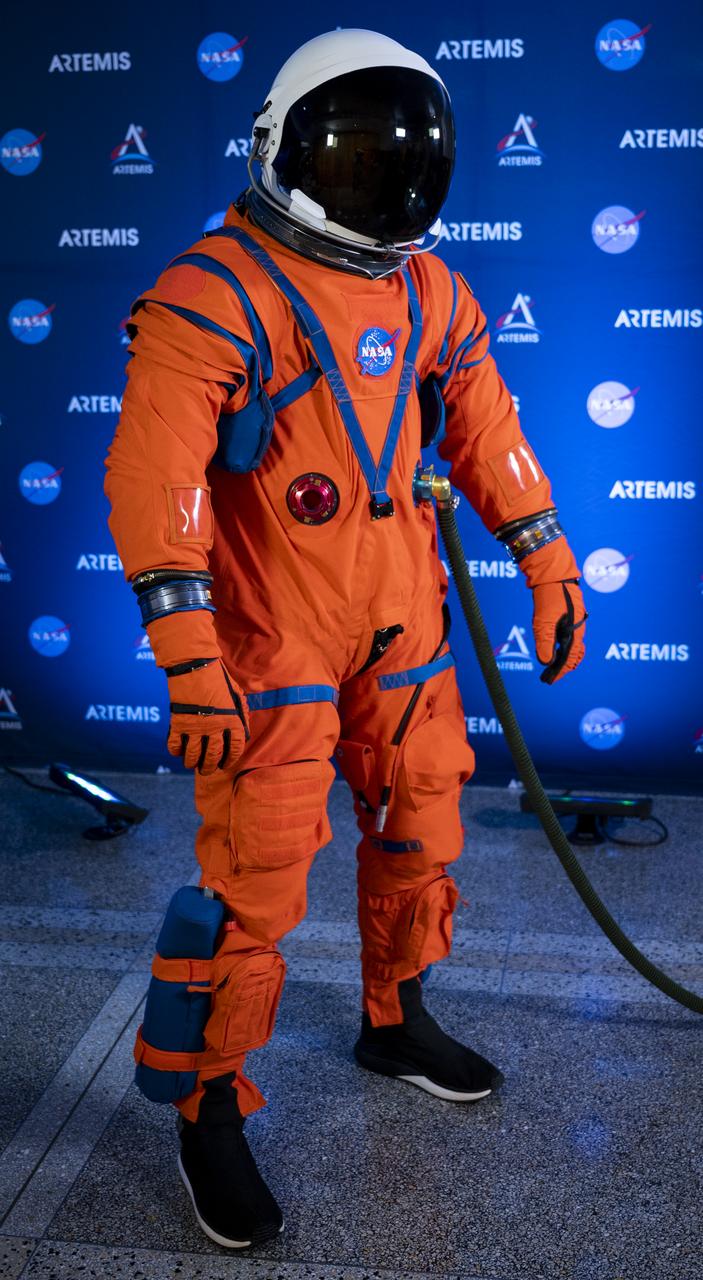
Dustin Gohmert, Orion Crew Survival Systems Project Manager at NASA’s Johnson Space Center, poses for a portrait while wearing the Orion Crew Survival System (OCSS) suit, Tuesday, Oct. 15, 2019 at NASA Headquarters in Washington, DC. The Orion suit is designed for a custom fit and incorporates safety technology and mobility features that will help protect astronauts on launch day, in emergency situations, high-risk parts of missions near the Moon, and during the high-speed return to Earth. Photo Credit: (NASA/Joel Kowsky)
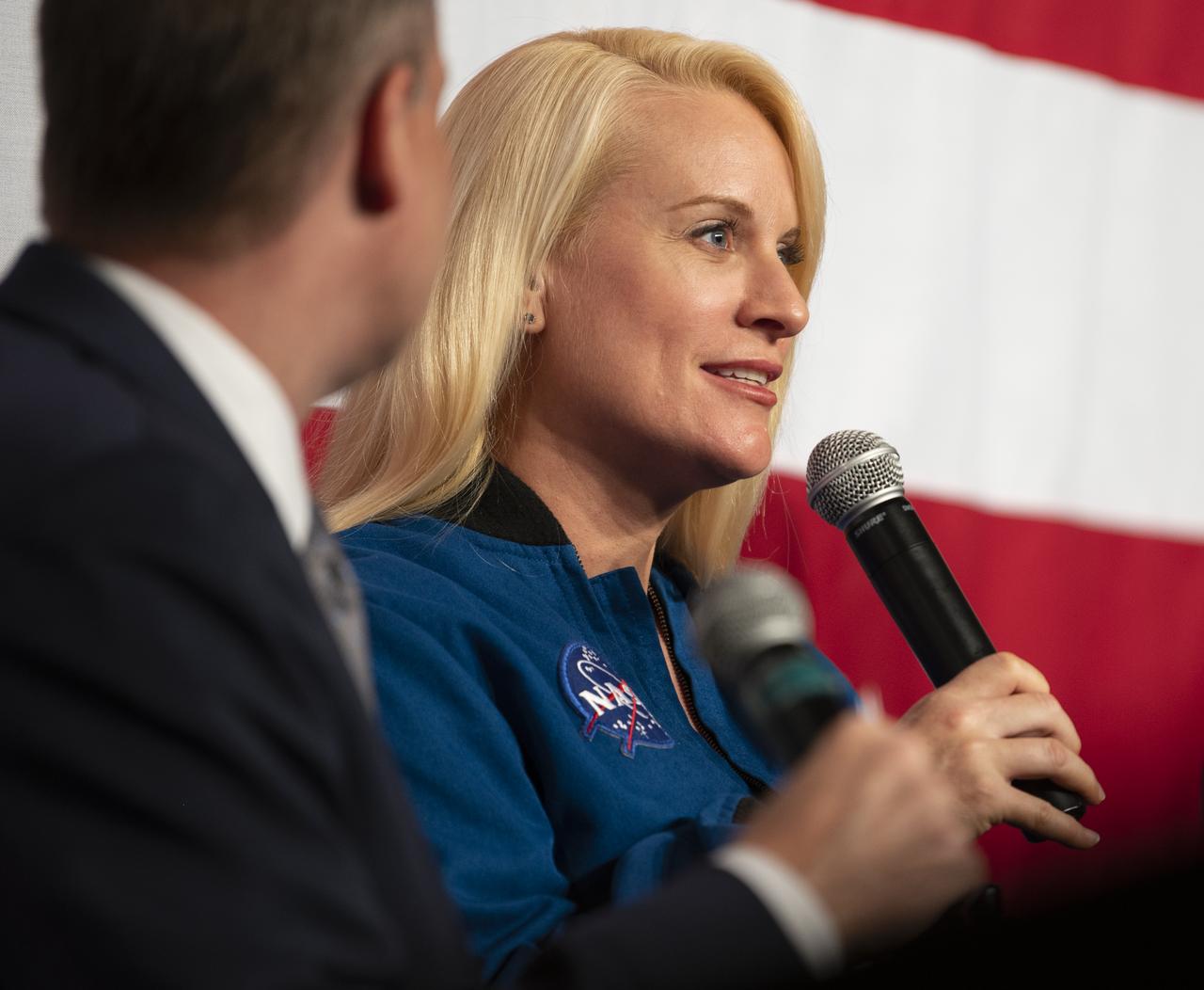
NASA astronaut Kate Rubins answers an audience question during a panel discussion with NASA Administrator Jim Bridenstine and Chris Hansen, Manager of the Extravehicular Activity office at NASA’s Johnson Space Center during the Artemis Generation Spacesuit event, Tuesday, Oct. 15, 2019 at NASA Headquarters in Washington. The Exploration Extravehicular Mobility Unit (xEMU) suit improves on the suits previous worn on the Moon during the Apollo era and those currently in use for spacewalks outside the International Space Station and will be worn by first woman and next man as they explore the Moon as part of the agency’s Artemis program. The Orion Crew Survival System (OCSS) suit is designed for a custom fit and incorporates safety technology and mobility features that will help protect astronauts on launch day, in emergency situations, high-risk parts of missions near the Moon, and during the high-speed return to Earth. Photo Credit: (NASA/Joel Kowsky)
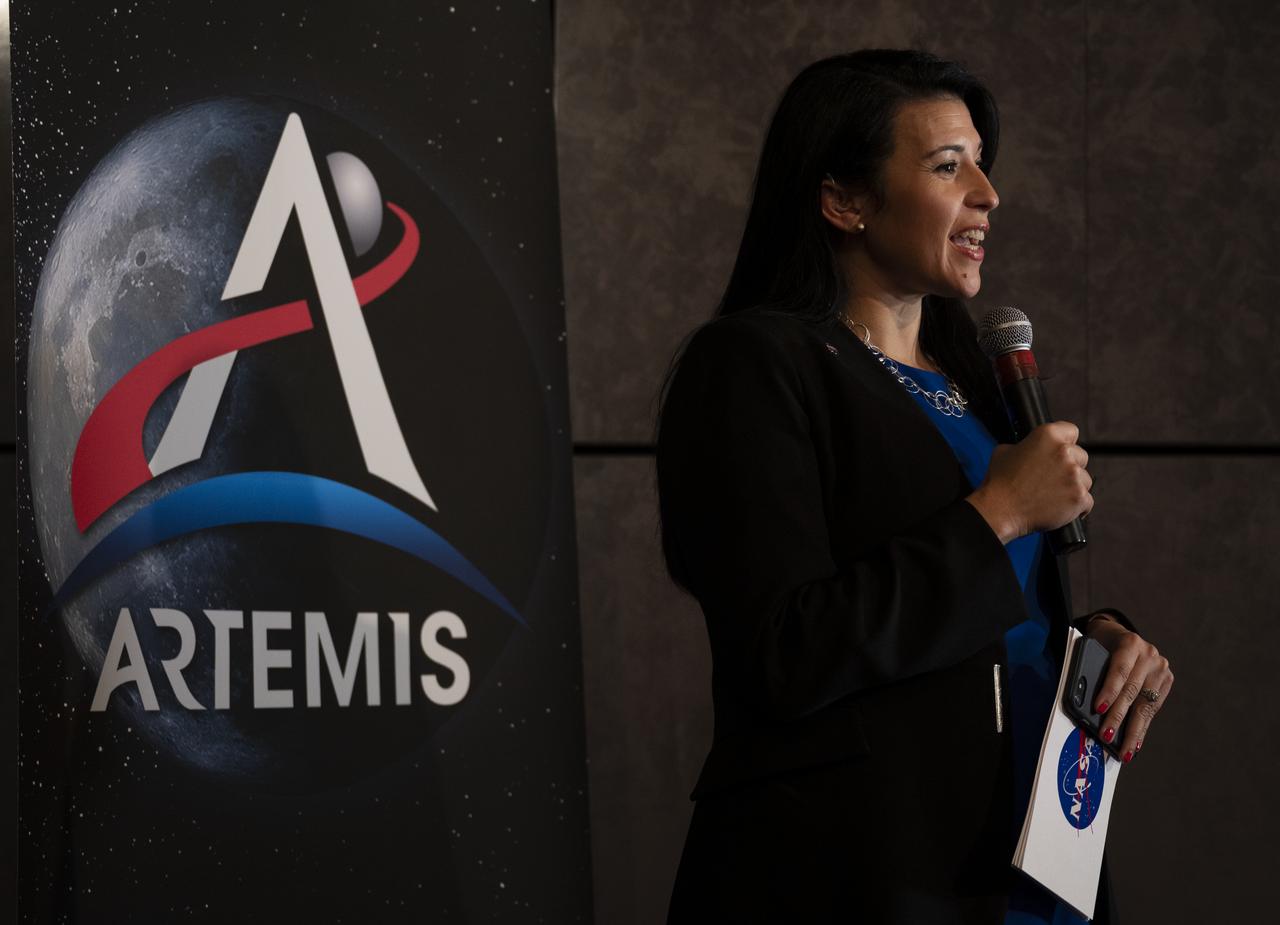
NASA Associate Administrator for the Office of Communications Bettina Inclán moderates a panel discussion with NASA Administrator Jim Bridenstine, NASA astronaut Kate Rubins, and Chris Hansen, Manager of the Extravehicular Activity office at NASA’s Johnson Space Center during the Artemis Generation Spacesuit event, Tuesday, Oct. 15, 2019 at NASA Headquarters in Washington. The Exploration Extravehicular Mobility Unit (xEMU) suit improves on the suits previous worn on the Moon during the Apollo era and those currently in use for spacewalks outside the International Space Station and will be worn by first woman and next man as they explore the Moon as part of the agency’s Artemis program. The Orion Crew Survival System (OCSS) suit is designed for a custom fit and incorporates safety technology and mobility features that will help protect astronauts on launch day, in emergency situations, high-risk parts of missions near the Moon, and during the high-speed return to Earth. Photo Credit: (NASA/Joel Kowsky)
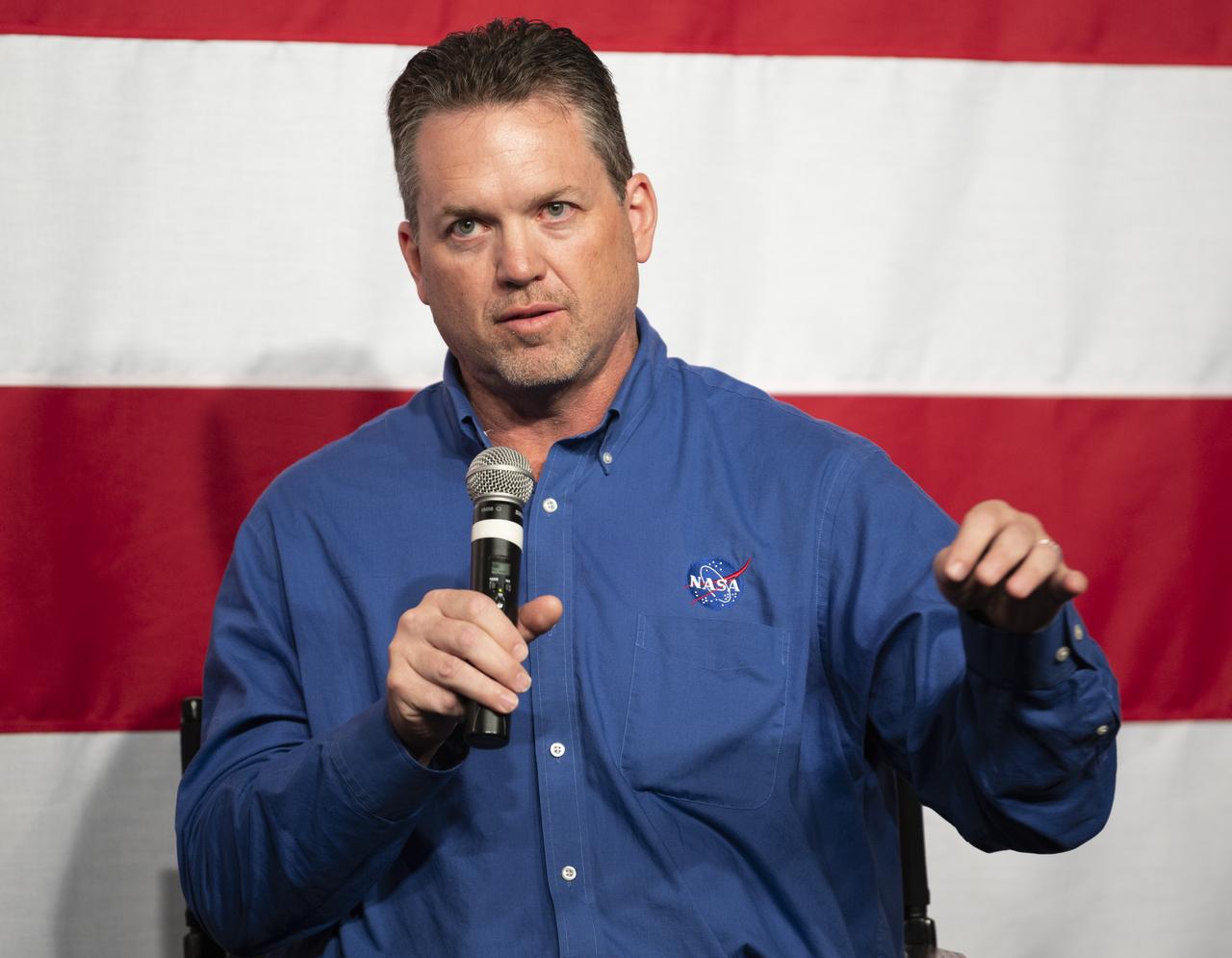
Chris Hansen, Manager of the Extravehicular Activity Office at NASA’s Johnson Space Center answers an audience question during a panel discussion with NASA Administrator Jim Bridenstine and NASA astronaut Kate Rubins during the Artemis Generation Spacesuit event, Tuesday, Oct. 15, 2019 at NASA Headquarters in Washington. The Exploration Extravehicular Mobility Unit (xEMU) suit improves on the suits previous worn on the Moon during the Apollo era and those currently in use for spacewalks outside the International Space Station and will be worn by first woman and next man as they explore the Moon as part of the agency’s Artemis program. The Orion Crew Survival System (OCSS) suit is designed for a custom fit and incorporates safety technology and mobility features that will help protect astronauts on launch day, in emergency situations, high-risk parts of missions near the Moon, and during the high-speed return to Earth. Photo Credit: (NASA/Joel Kowsky)

NASA Associate Administrator for the Office of Communications Bettina Inclán moderates a panel discussion with NASA Administrator Jim Bridenstine, NASA astronaut Kate Rubins, and Chris Hansen, Manager of the Extravehicular Activity office at NASA’s Johnson Space Center during the Artemis Generation Spacesuit event, Tuesday, Oct. 15, 2019 at NASA Headquarters in Washington. The Exploration Extravehicular Mobility Unit (xEMU) suit improves on the suits previous worn on the Moon during the Apollo era and those currently in use for spacewalks outside the International Space Station and will be worn by first woman and next man as they explore the Moon as part of the agency’s Artemis program. The Orion Crew Survival System (OCSS) suit is designed for a custom fit and incorporates safety technology and mobility features that will help protect astronauts on launch day, in emergency situations, high-risk parts of missions near the Moon, and during the high-speed return to Earth. Photo Credit: (NASA/Joel Kowsky)
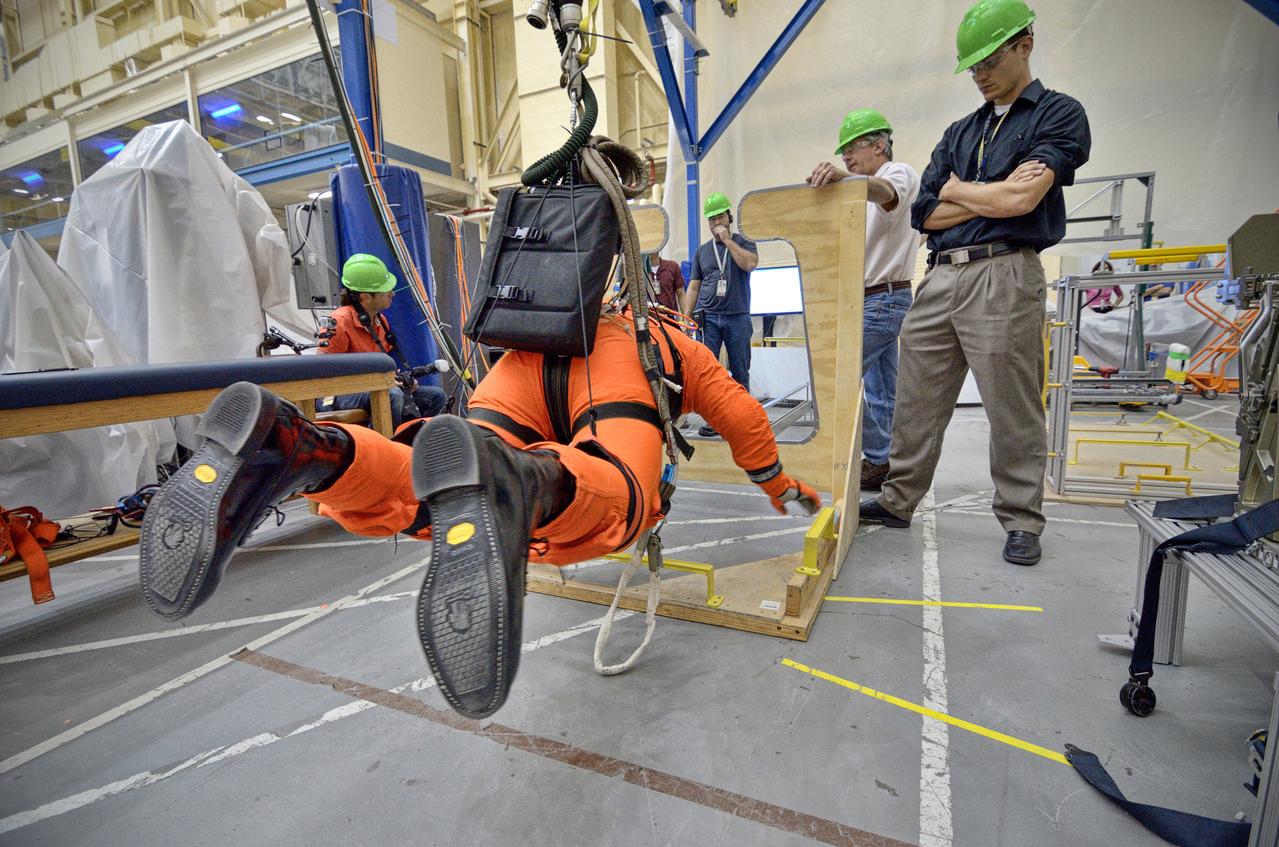
Astronaut Rex Walheim uses the Active Response Gravity Offload System (ARGOS) to perform early evaluations of the Orion Crew Survival System (OCSS) suit in Building 9 of Johnson Space Center in Houston on June 5, 2012. ARGOS is designed to simulate reduced gravity environments, such as lunar, Martian, or microgravity, using a system similar to an overhead bridge crane. Part of Batch image transfer from Flickr.
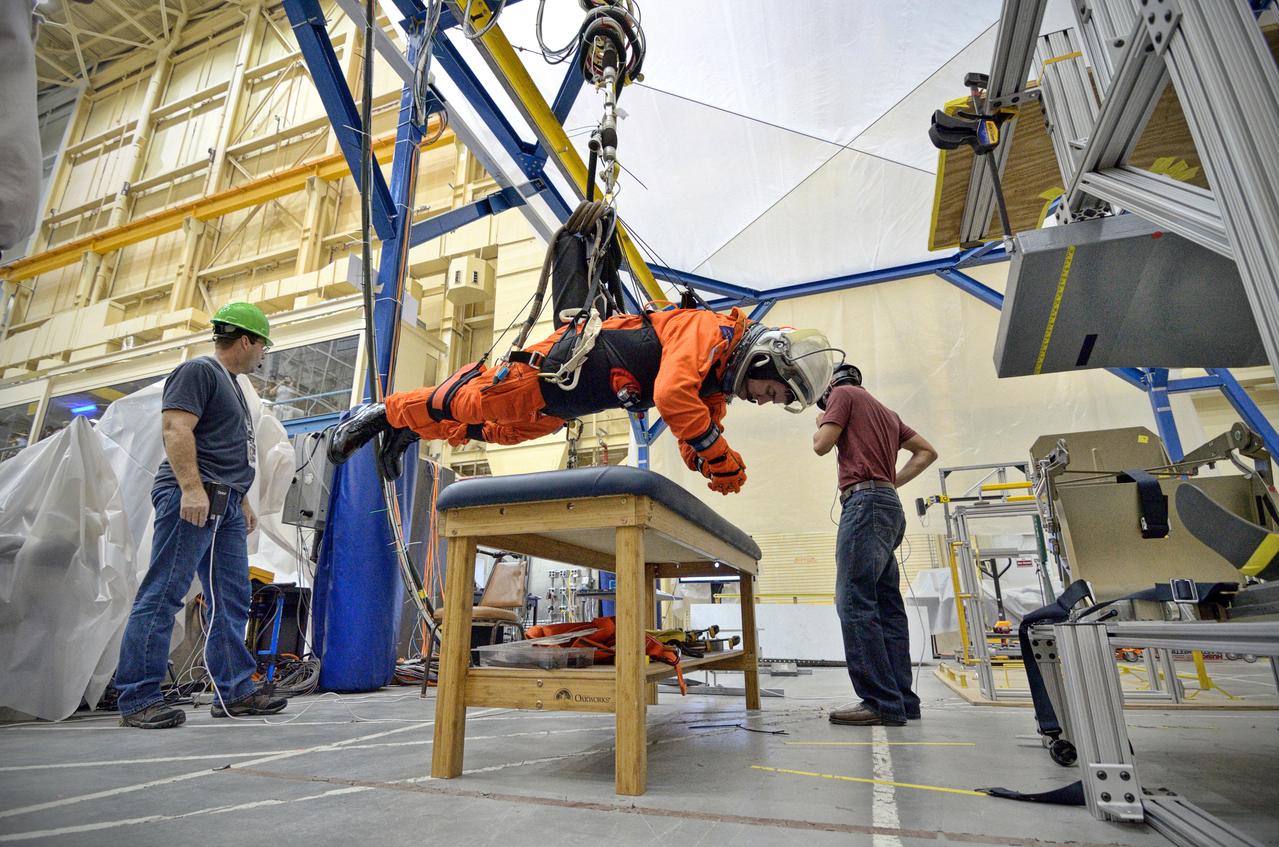
Astronaut Rex Walheim uses the Active Response Gravity Offload System (ARGOS) to perform early evaluations of the Orion Crew Survival System (OCSS) suit in Building 9 of Johnson Space Center in Houston on June 5, 2012. ARGOS is designed to simulate reduced gravity environments, such as lunar, Martian, or microgravity, using a system similar to an overhead bridge crane. Part of Batch image transfer from Flickr.
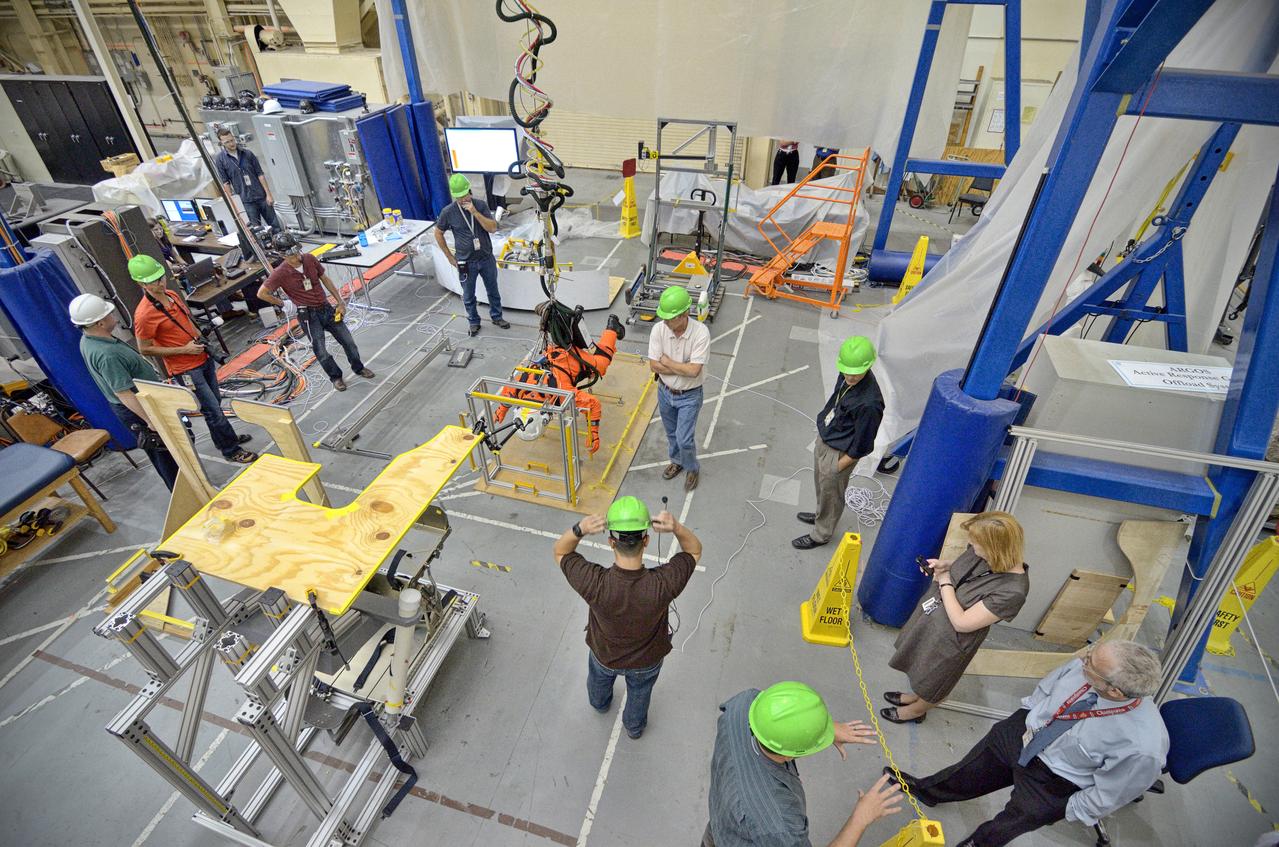
Astronaut Rex Walheim uses the Active Response Gravity Offload System (ARGOS) to perform early evaluations of the Orion Crew Survival System (OCSS) suit in Building 9 of Johnson Space Center in Houston on June 5, 2012. ARGOS is designed to simulate reduced gravity environments, such as lunar, Martian, or microgravity, using a system similar to an overhead bridge crane. Part of Batch image transfer from Flickr.
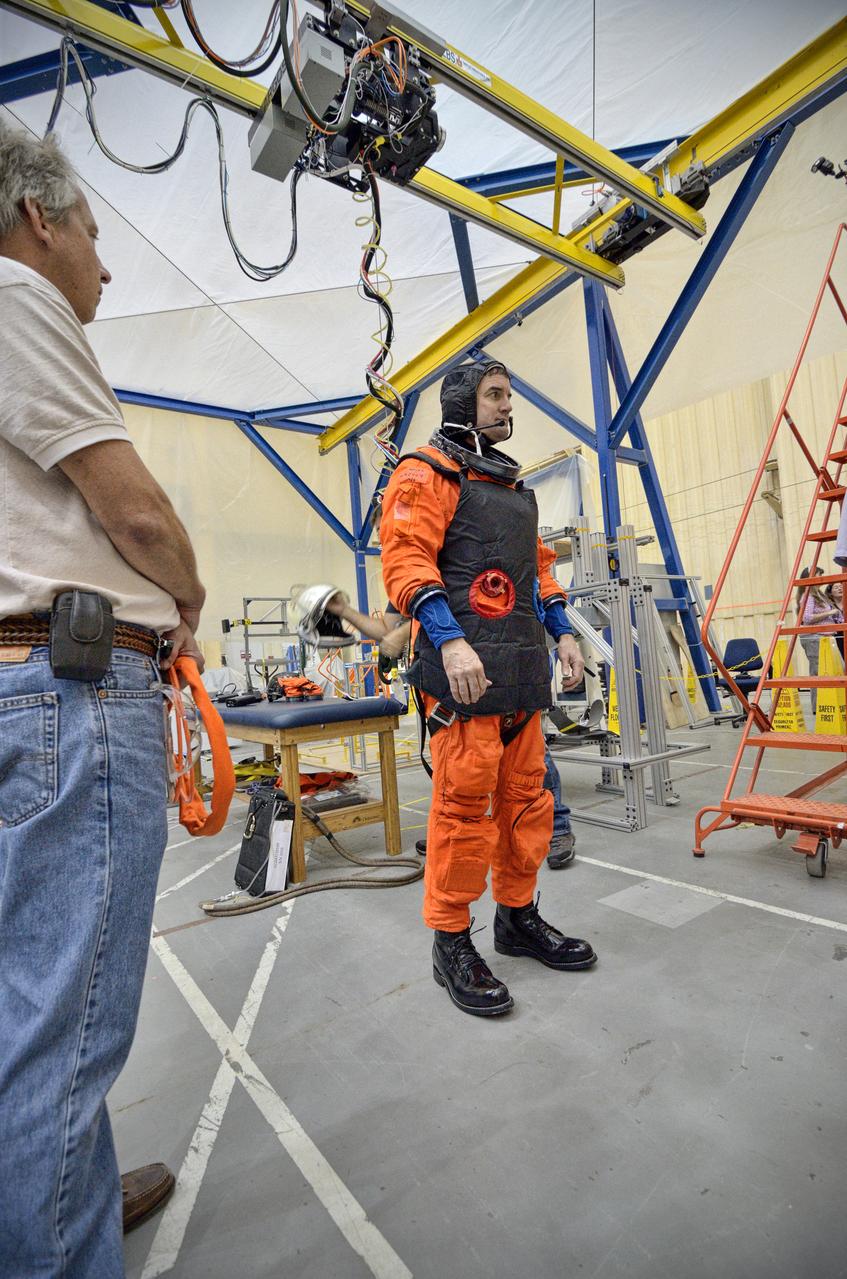
Astronaut Rex Walheim uses the Active Response Gravity Offload System (ARGOS) to perform early evaluations of the Orion Crew Survival System (OCSS) suit in Building 9 of Johnson Space Center in Houston on June 5, 2012. ARGOS is designed to simulate reduced gravity environments, such as lunar, Martian, or microgravity, using a system similar to an overhead bridge crane. Part of Batch image transfer from Flickr.
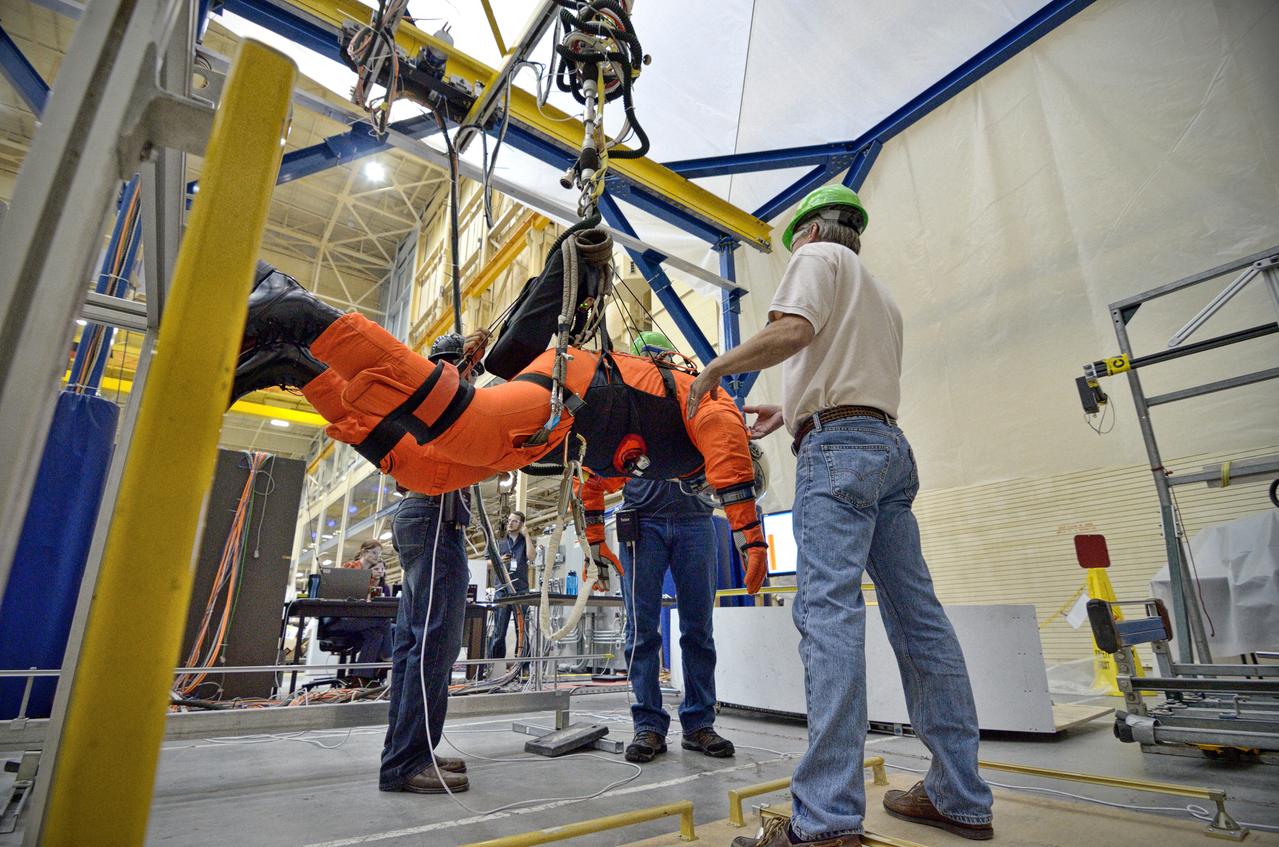
Astronaut Rex Walheim uses the Active Response Gravity Offload System (ARGOS) to perform early evaluations of the Orion Crew Survival System (OCSS) suit in Building 9 of Johnson Space Center in Houston on June 5, 2012. ARGOS is designed to simulate reduced gravity environments, such as lunar, Martian, or microgravity, using a system similar to an overhead bridge crane. Part of Batch image transfer from Flickr.
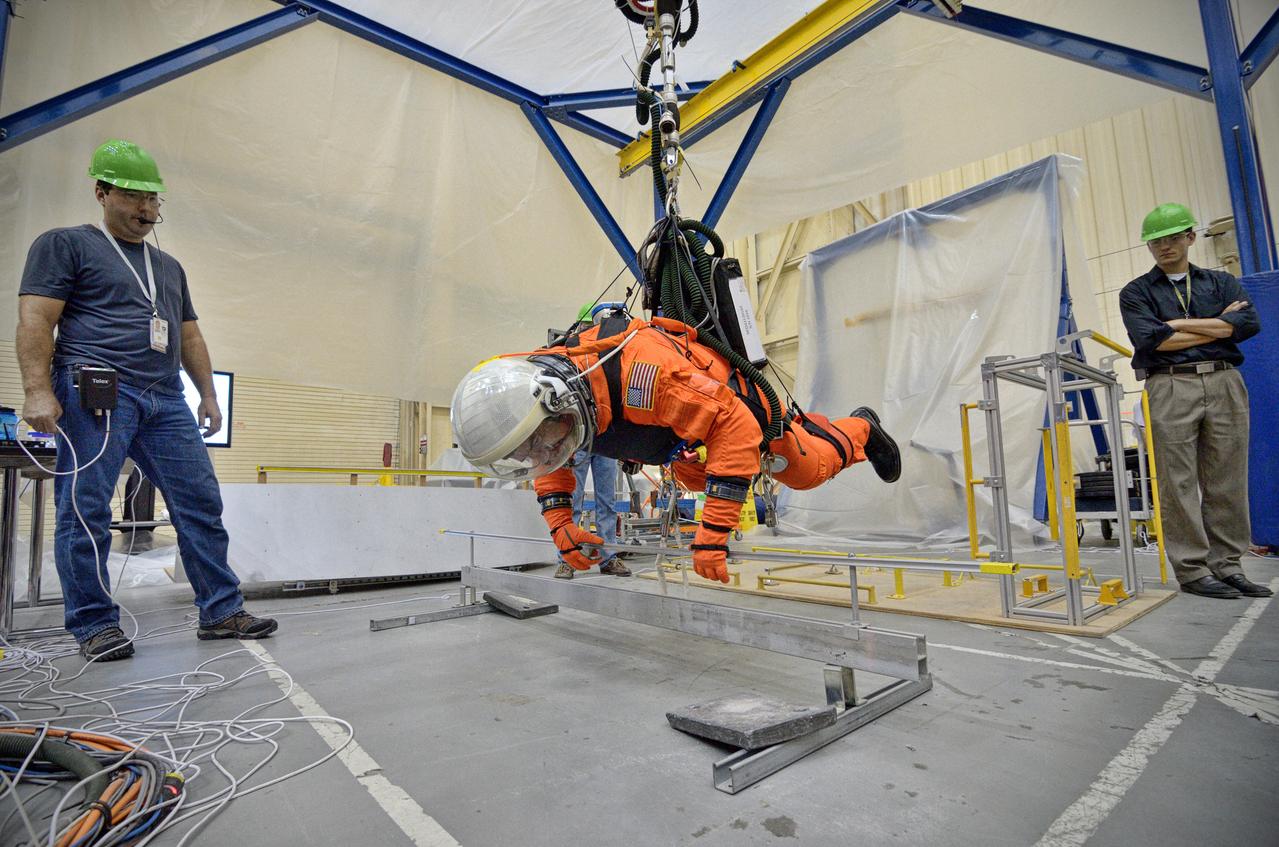
Astronaut Rex Walheim uses the Active Response Gravity Offload System (ARGOS) to perform early evaluations of the Orion Crew Survival System (OCSS) suit in Building 9 of Johnson Space Center in Houston on June 5, 2012. ARGOS is designed to simulate reduced gravity environments, such as lunar, Martian, or microgravity, using a system similar to an overhead bridge crane. Part of Batch image transfer from Flickr.
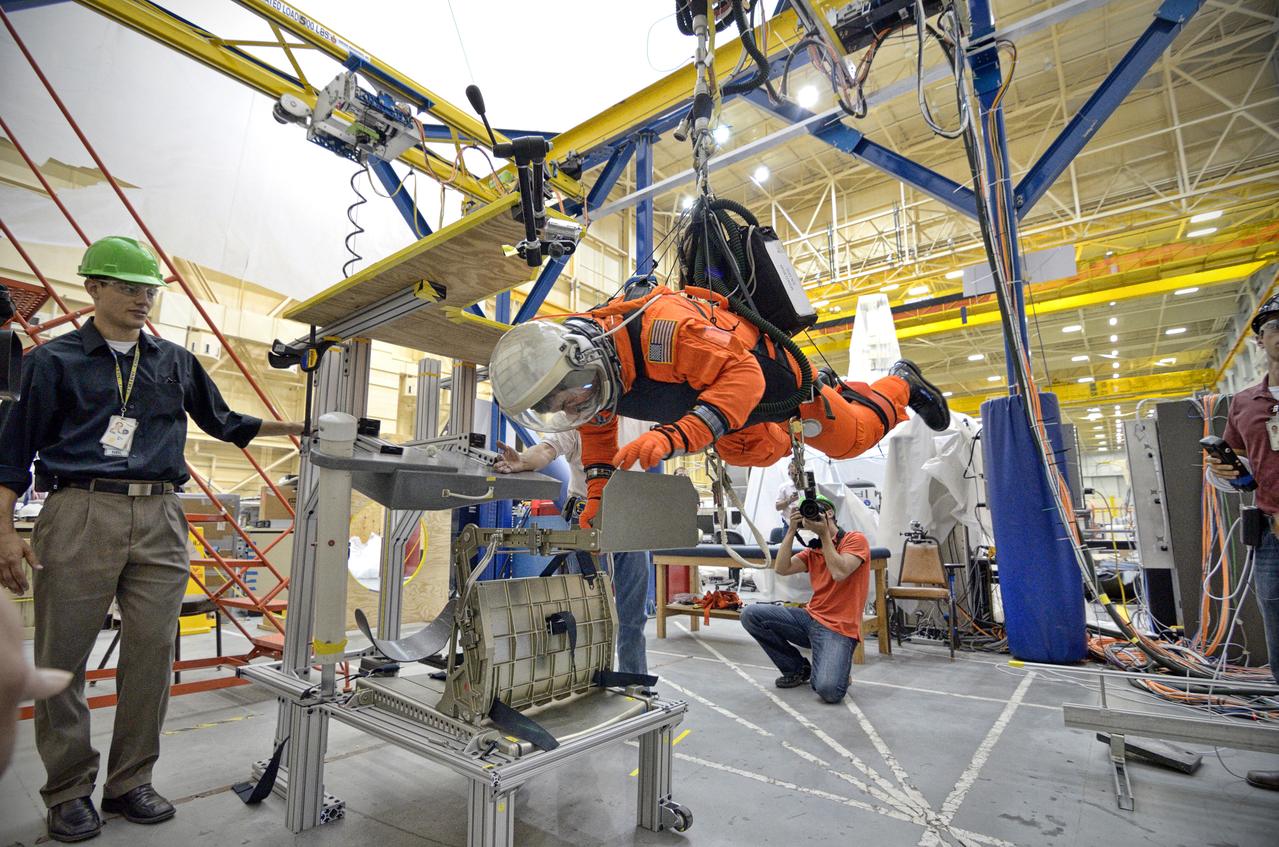
Astronaut Rex Walheim uses the Active Response Gravity Offload System (ARGOS) to perform early evaluations of the Orion Crew Survival System (OCSS) suit in Building 9 of Johnson Space Center in Houston on June 5, 2012. ARGOS is designed to simulate reduced gravity environments, such as lunar, Martian, or microgravity, using a system similar to an overhead bridge crane. Part of Batch image transfer from Flickr.
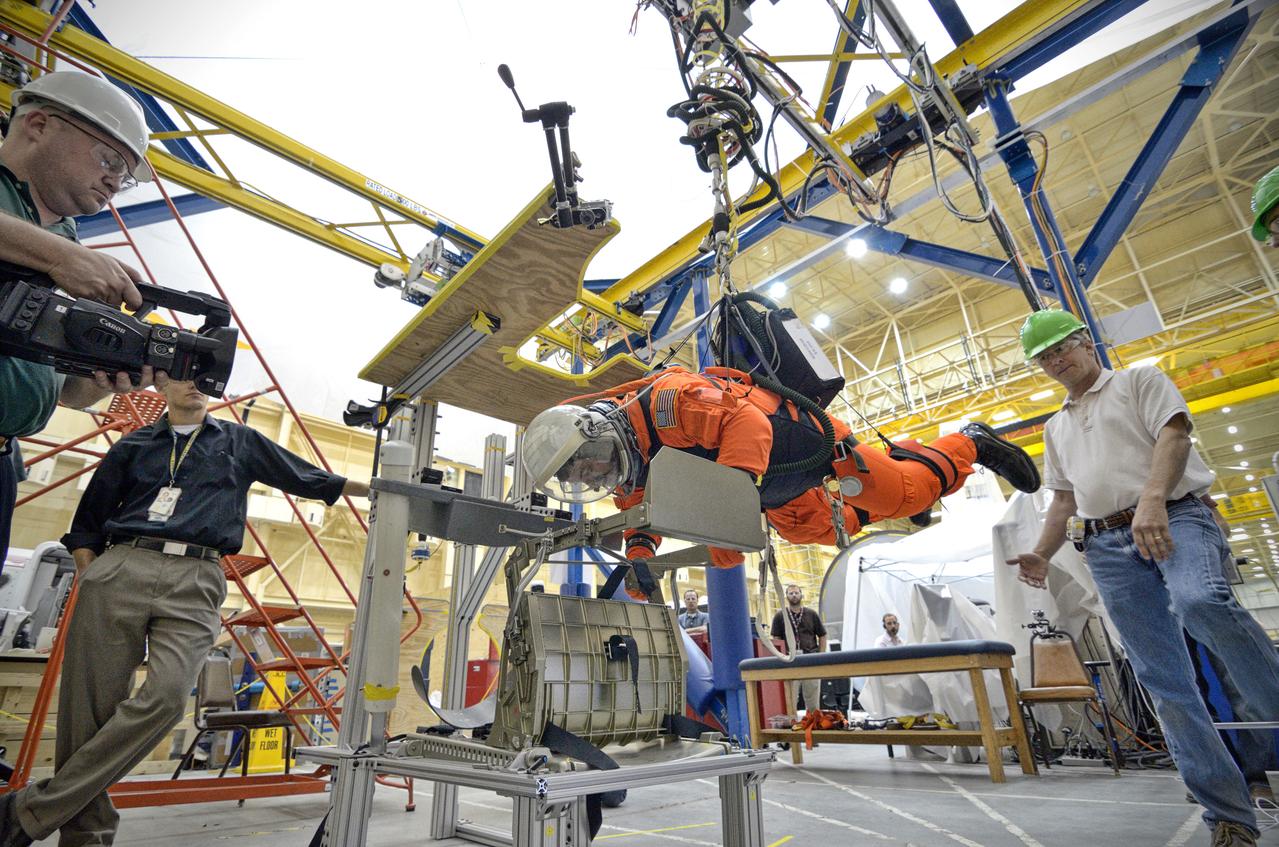
Astronaut Rex Walheim uses the Active Response Gravity Offload System (ARGOS) to perform early evaluations of the Orion Crew Survival System (OCSS) suit in Building 9 of Johnson Space Center in Houston on June 5, 2012. ARGOS is designed to simulate reduced gravity environments, such as lunar, Martian, or microgravity, using a system similar to an overhead bridge crane. Part of Batch image transfer from Flickr.
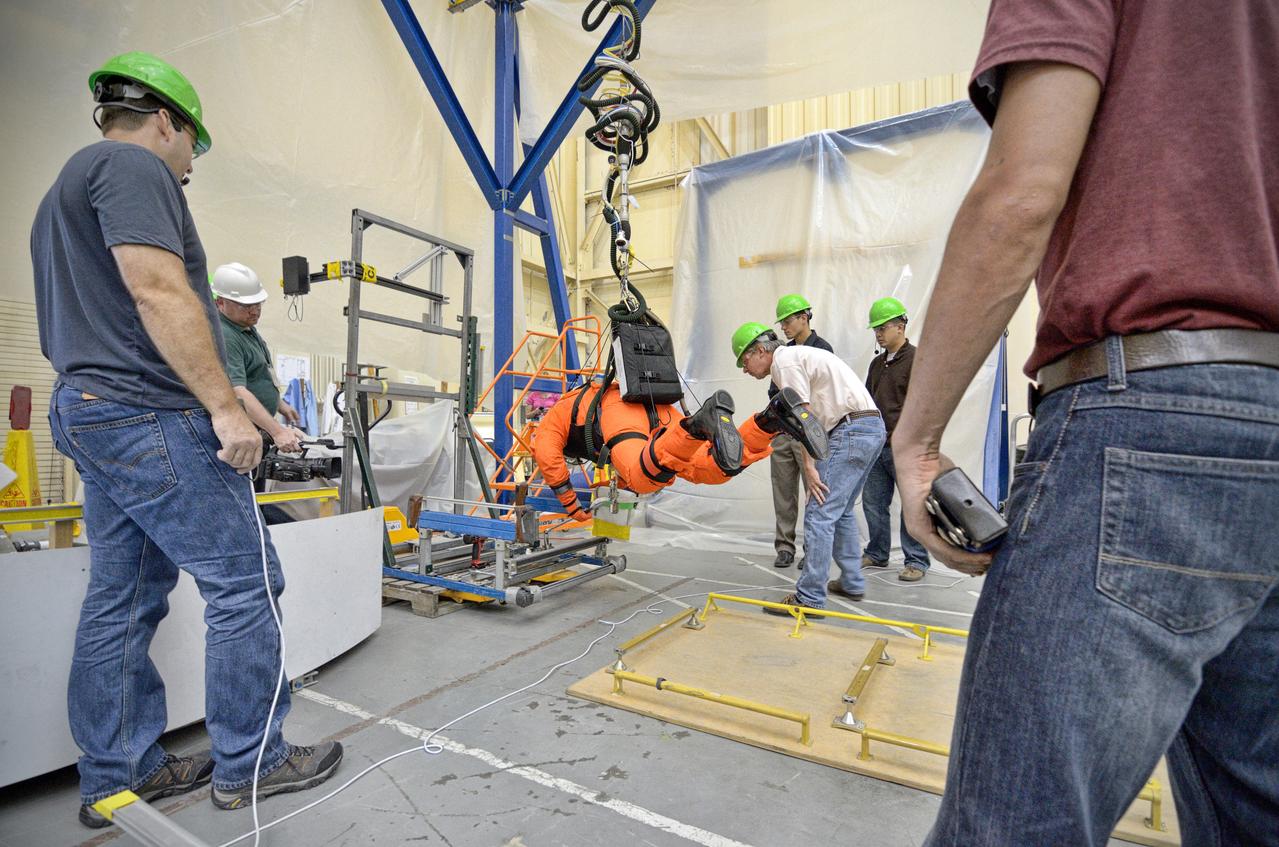
Astronaut Rex Walheim uses the Active Response Gravity Offload System (ARGOS) to perform early evaluations of the Orion Crew Survival System (OCSS) suit in Building 9 of Johnson Space Center in Houston on June 5, 2012. ARGOS is designed to simulate reduced gravity environments, such as lunar, Martian, or microgravity, using a system similar to an overhead bridge crane. Part of Batch image transfer from Flickr.
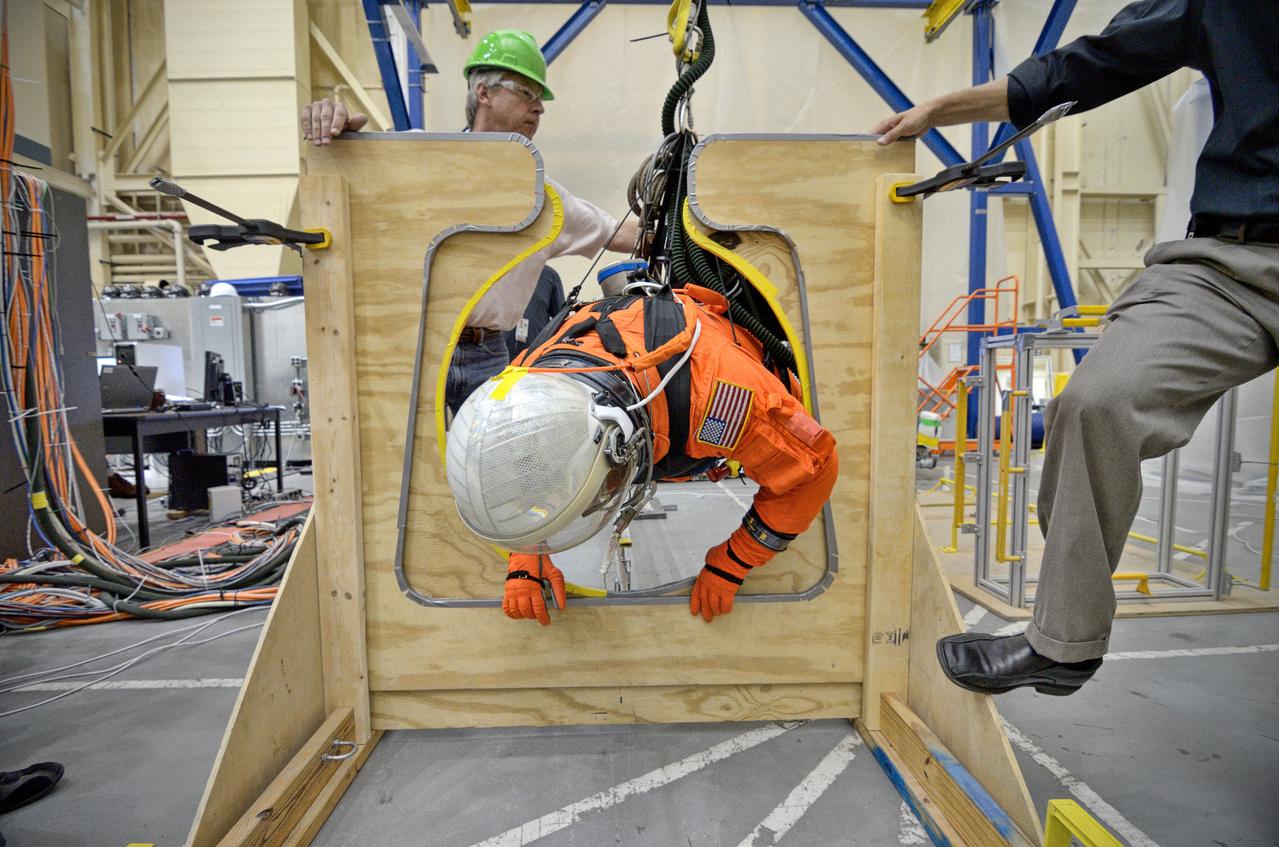
Astronaut Rex Walheim uses the Active Response Gravity Offload System (ARGOS) to perform early evaluations of the Orion Crew Survival System (OCSS) suit in Building 9 of Johnson Space Center in Houston on June 5, 2012. ARGOS is designed to simulate reduced gravity environments, such as lunar, Martian, or microgravity, using a system similar to an overhead bridge crane. Part of Batch image transfer from Flickr.
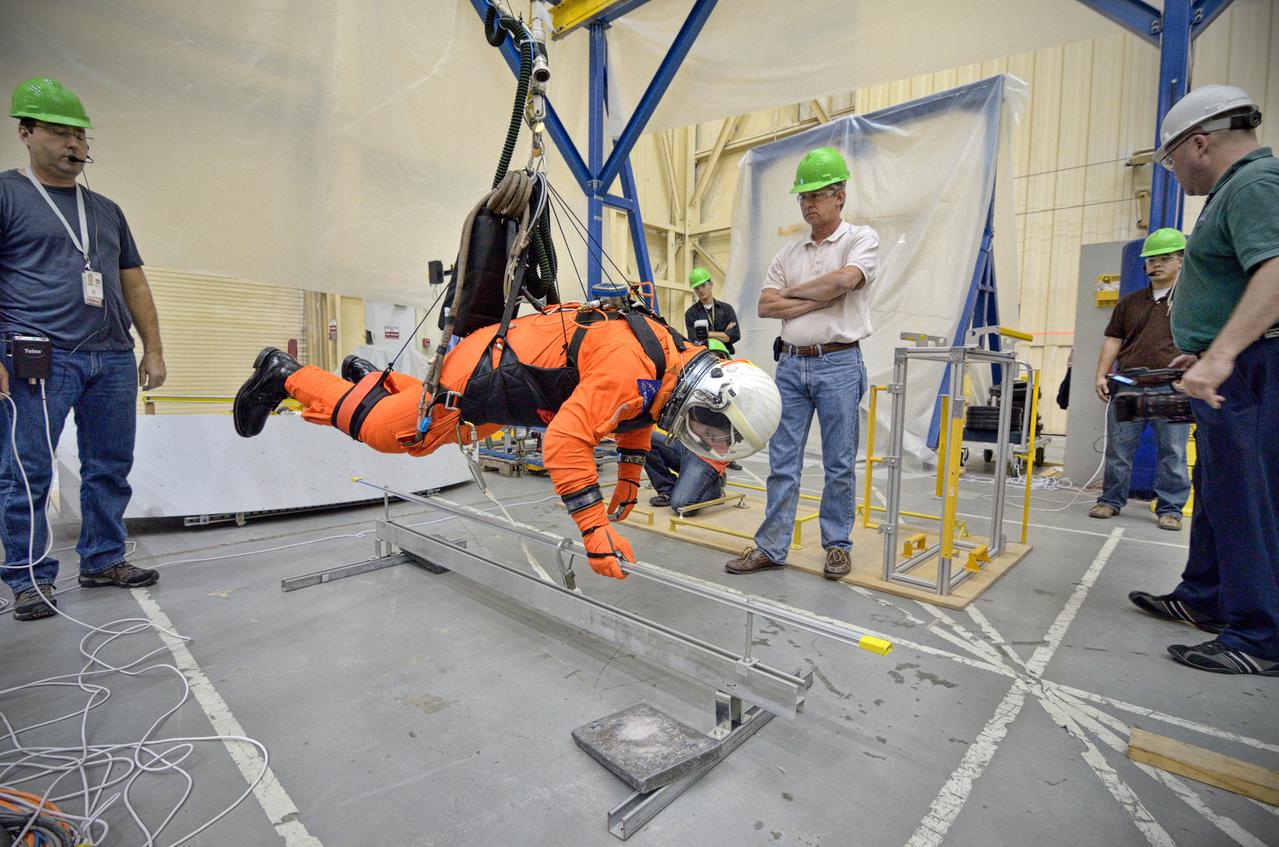
Astronaut Rex Walheim uses the Active Response Gravity Offload System (ARGOS) to perform early evaluations of the Orion Crew Survival System (OCSS) suit in Building 9 of Johnson Space Center in Houston on June 5, 2012. ARGOS is designed to simulate reduced gravity environments, such as lunar, Martian, or microgravity, using a system similar to an overhead bridge crane. Part of Batch image transfer from Flickr.
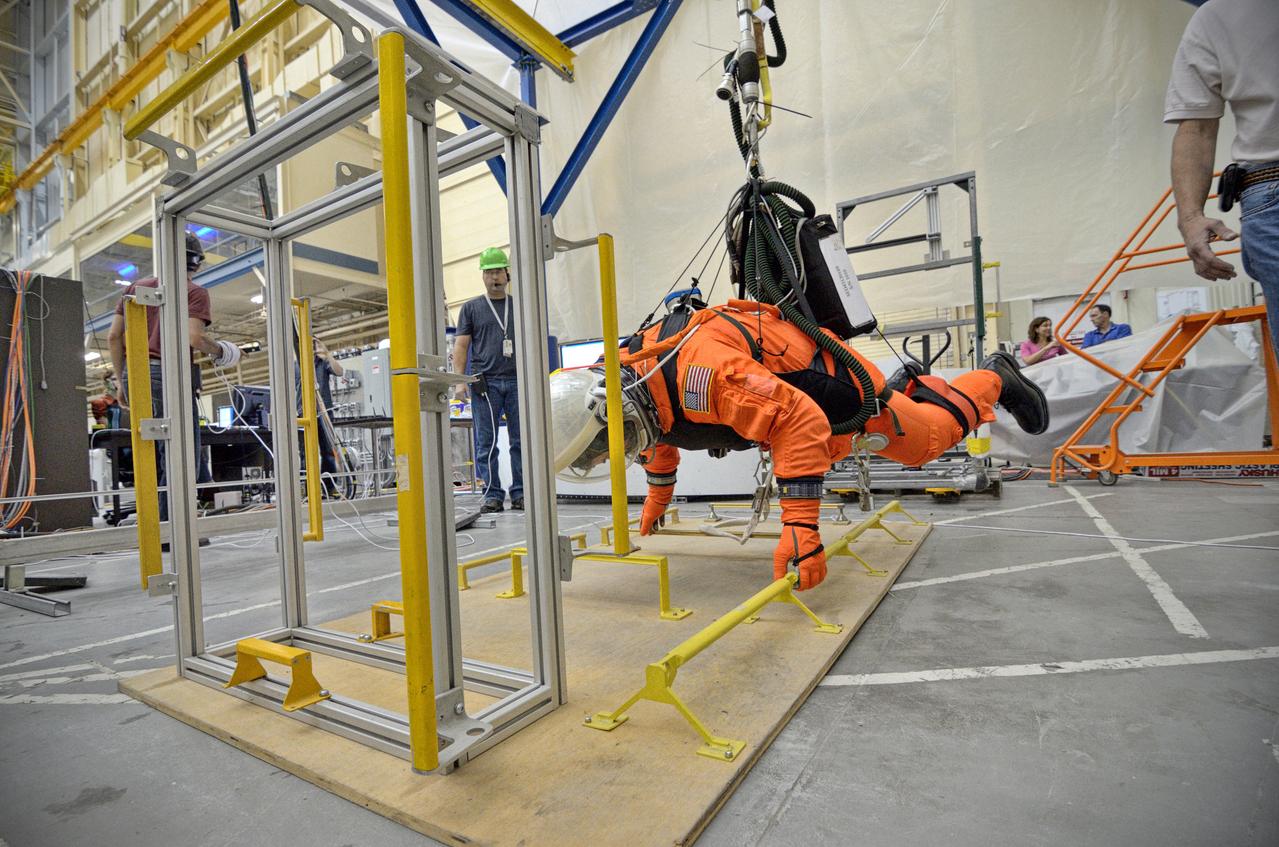
Astronaut Rex Walheim uses the Active Response Gravity Offload System (ARGOS) to perform early evaluations of the Orion Crew Survival System (OCSS) suit in Building 9 of Johnson Space Center in Houston on June 5, 2012. ARGOS is designed to simulate reduced gravity environments, such as lunar, Martian, or microgravity, using a system similar to an overhead bridge crane. Part of Batch image transfer from Flickr.
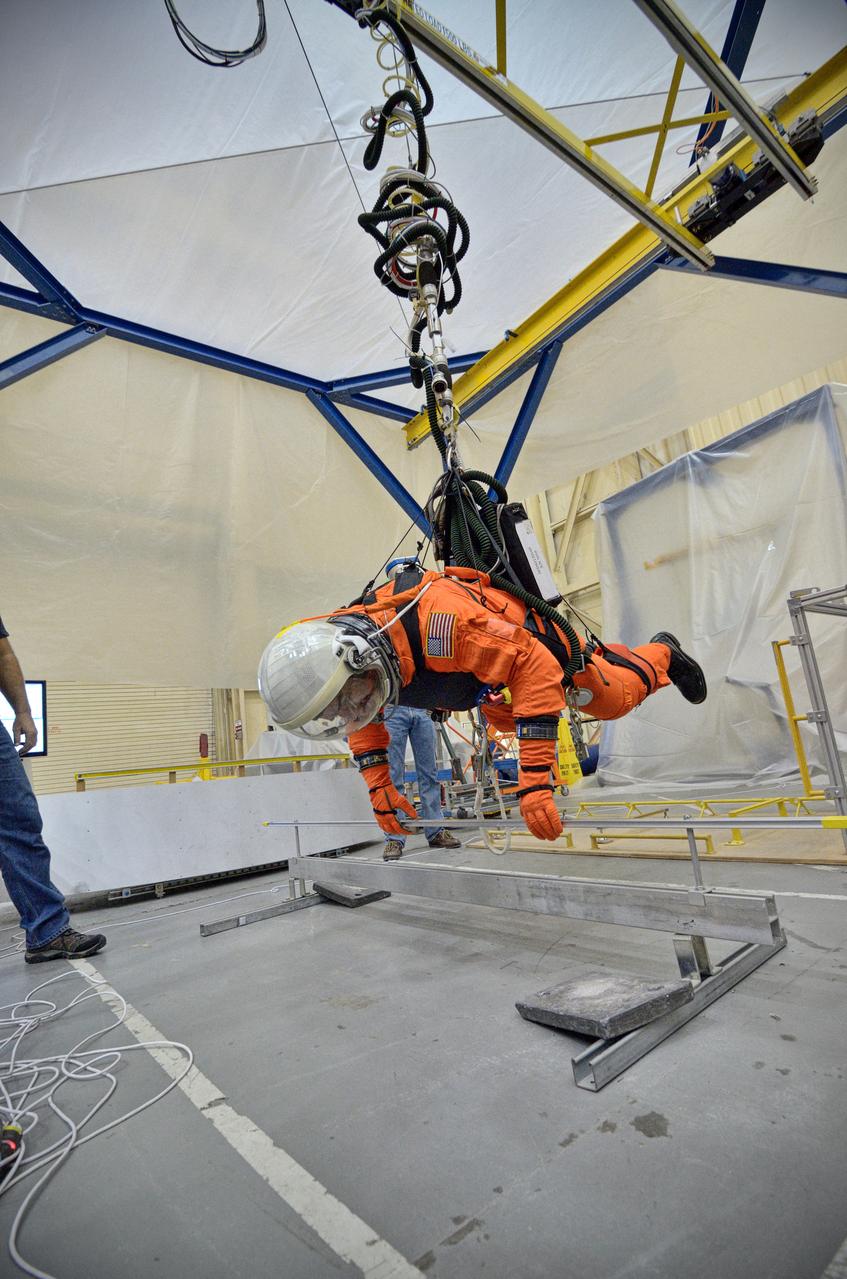
Astronaut Rex Walheim uses the Active Response Gravity Offload System (ARGOS) to perform early evaluations of the Orion Crew Survival System (OCSS) suit in Building 9 of Johnson Space Center in Houston on June 5, 2012. ARGOS is designed to simulate reduced gravity environments, such as lunar, Martian, or microgravity, using a system similar to an overhead bridge crane. Part of Batch image transfer from Flickr.
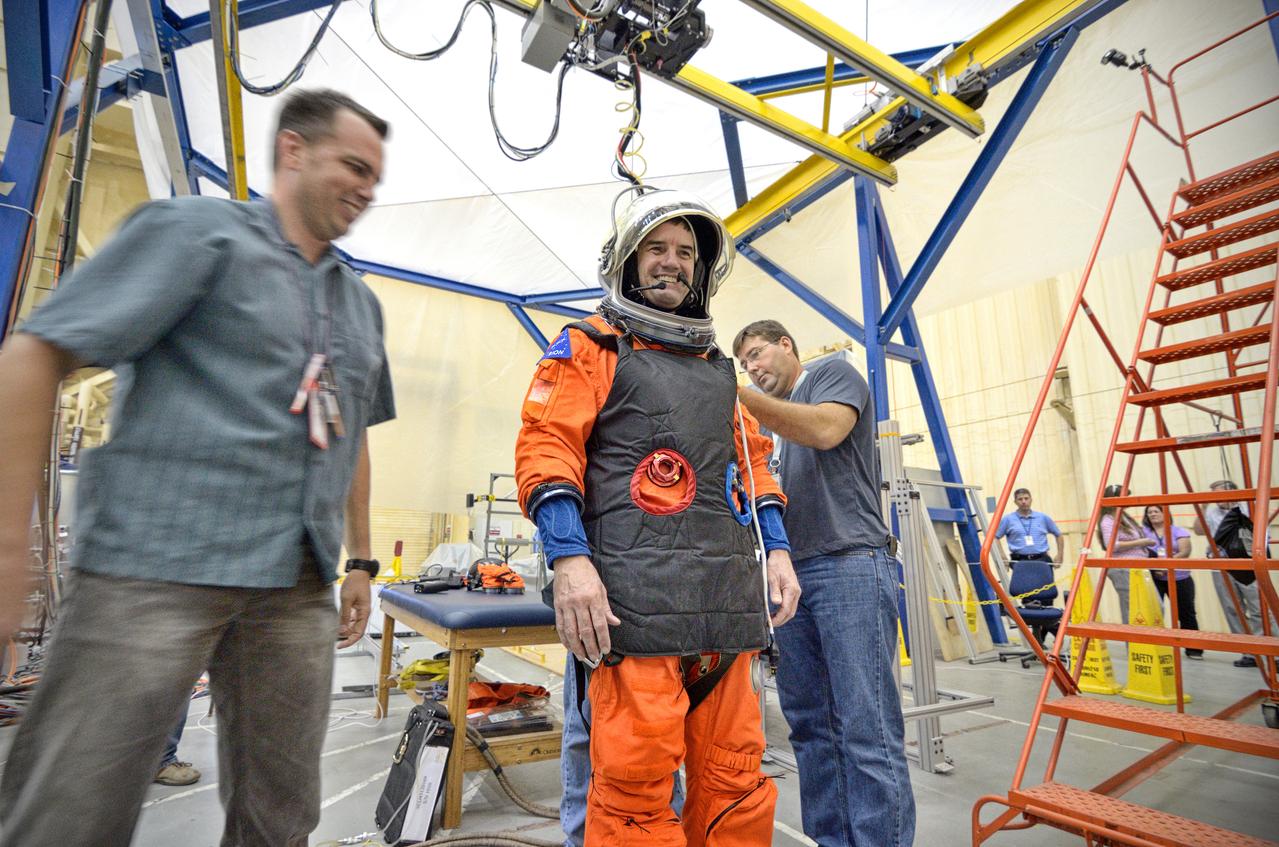
Astronaut Rex Walheim uses the Active Response Gravity Offload System (ARGOS) to perform early evaluations of the Orion Crew Survival System (OCSS) suit in Building 9 of Johnson Space Center in Houston on June 5, 2012. ARGOS is designed to simulate reduced gravity environments, such as lunar, Martian, or microgravity, using a system similar to an overhead bridge crane. Part of Batch image transfer from Flickr.
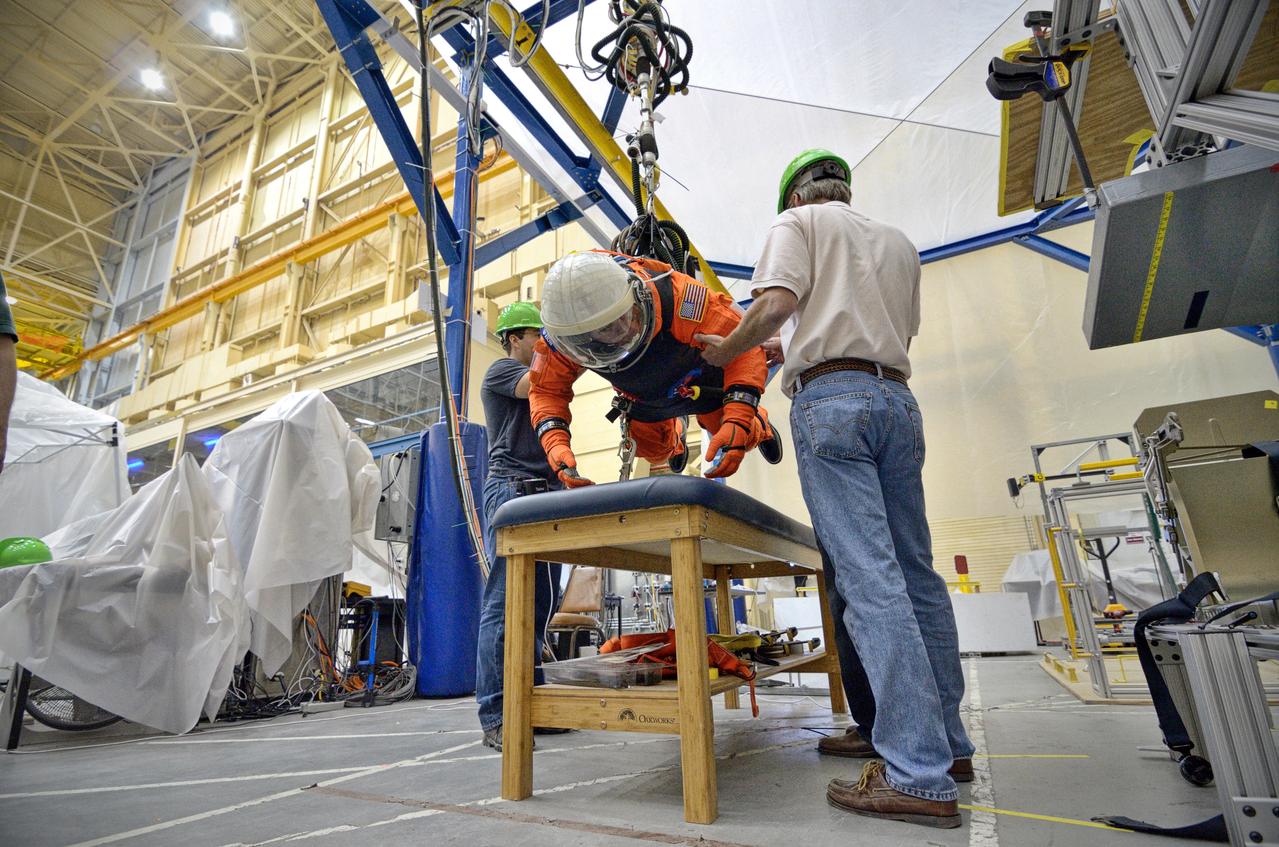
Astronaut Rex Walheim uses the Active Response Gravity Offload System (ARGOS) to perform early evaluations of the Orion Crew Survival System (OCSS) suit in Building 9 of Johnson Space Center in Houston on June 5, 2012. ARGOS is designed to simulate reduced gravity environments, such as lunar, Martian, or microgravity, using a system similar to an overhead bridge crane. Part of Batch image transfer from Flickr.
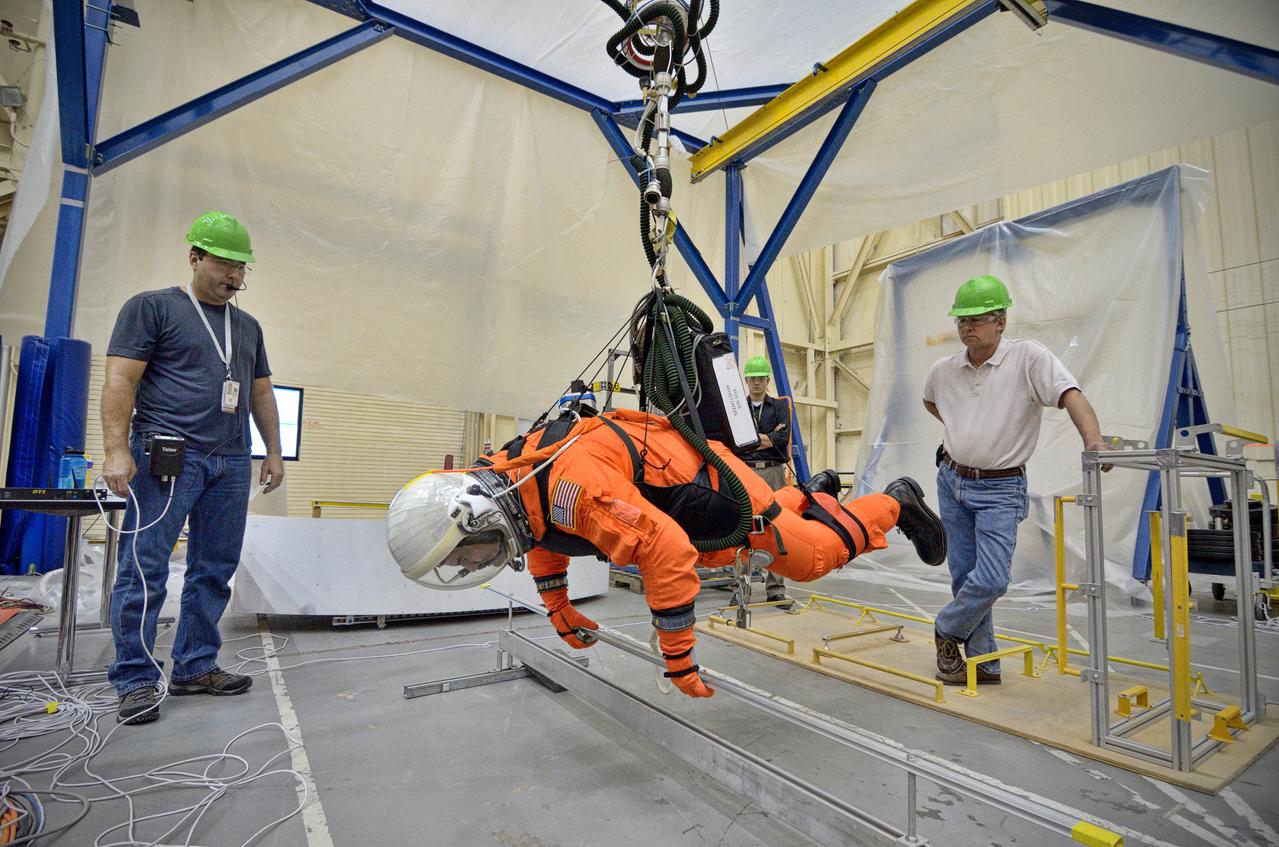
Astronaut Rex Walheim uses the Active Response Gravity Offload System (ARGOS) to perform early evaluations of the Orion Crew Survival System (OCSS) suit in Building 9 of Johnson Space Center in Houston on June 5, 2012. ARGOS is designed to simulate reduced gravity environments, such as lunar, Martian, or microgravity, using a system similar to an overhead bridge crane. Part of Batch image transfer from Flickr.
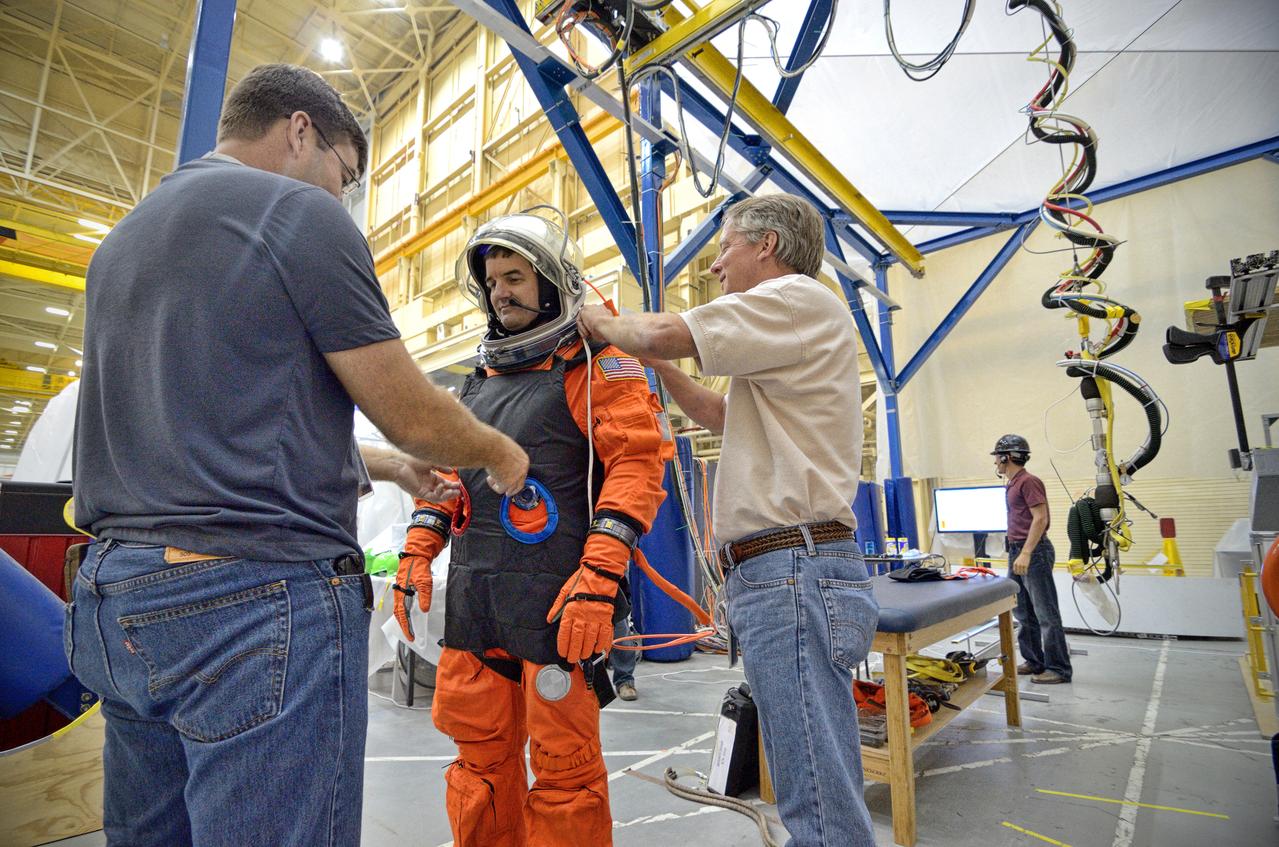
Astronaut Rex Walheim uses the Active Response Gravity Offload System (ARGOS) to perform early evaluations of the Orion Crew Survival System (OCSS) suit in Building 9 of Johnson Space Center in Houston on June 5, 2012. ARGOS is designed to simulate reduced gravity environments, such as lunar, Martian, or microgravity, using a system similar to an overhead bridge crane. Part of Batch image transfer from Flickr.
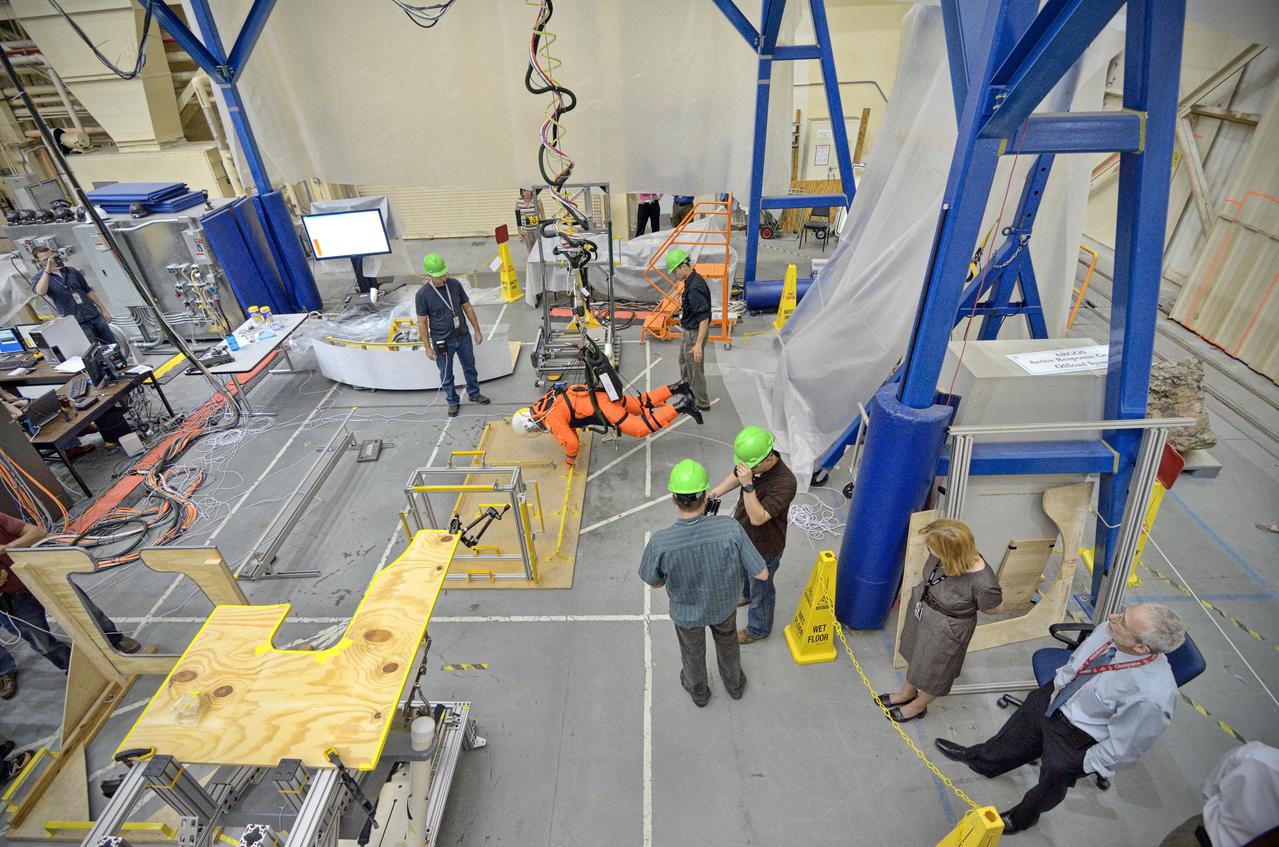
Astronaut Rex Walheim uses the Active Response Gravity Offload System (ARGOS) to perform early evaluations of the Orion Crew Survival System (OCSS) suit in Building 9 of Johnson Space Center in Houston on June 5, 2012. ARGOS is designed to simulate reduced gravity environments, such as lunar, Martian, or microgravity, using a system similar to an overhead bridge crane. Part of Batch image transfer from Flickr.
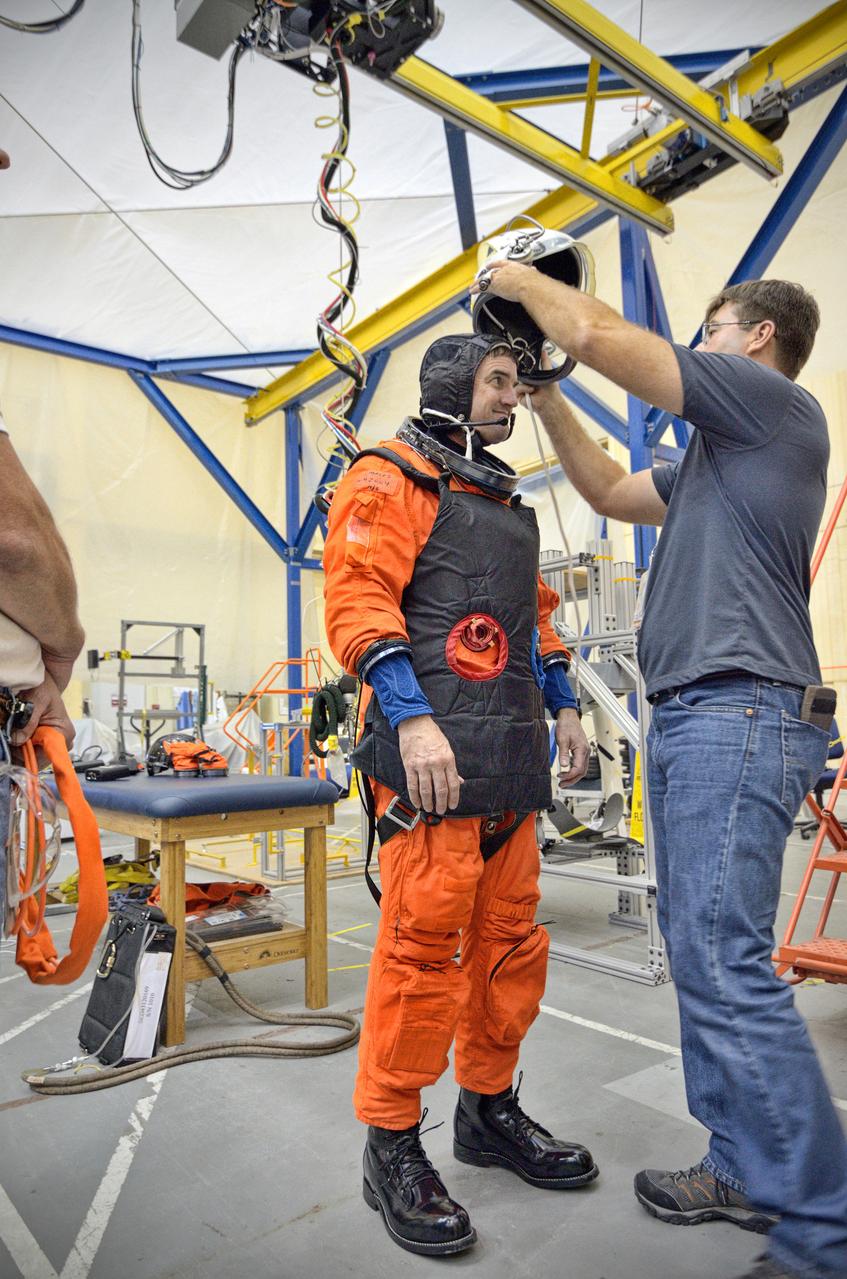
Astronaut Rex Walheim uses the Active Response Gravity Offload System (ARGOS) to perform early evaluations of the Orion Crew Survival System (OCSS) suit in Building 9 of Johnson Space Center in Houston on June 5, 2012. ARGOS is designed to simulate reduced gravity environments, such as lunar, Martian, or microgravity, using a system similar to an overhead bridge crane. Part of Batch image transfer from Flickr.
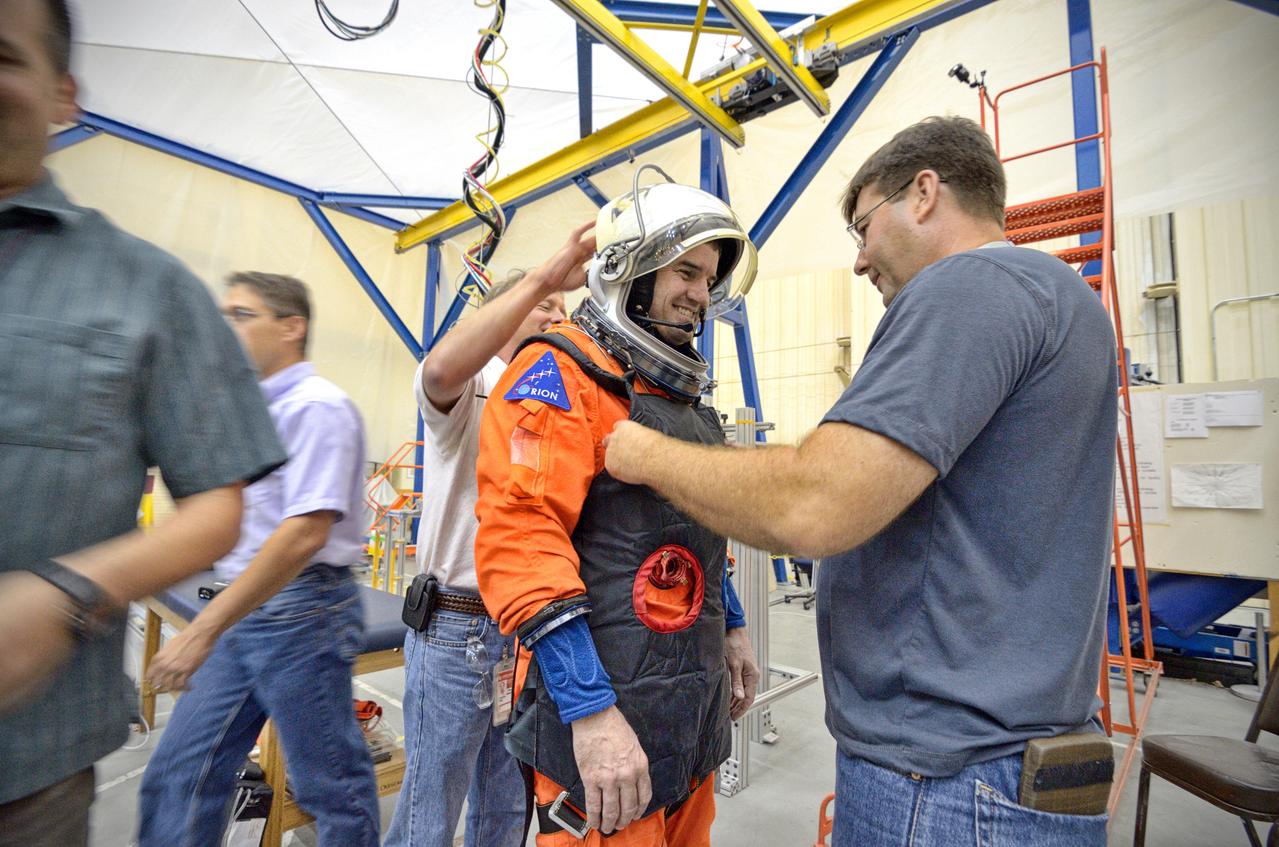
Astronaut Rex Walheim uses the Active Response Gravity Offload System (ARGOS) to perform early evaluations of the Orion Crew Survival System (OCSS) suit in Building 9 of Johnson Space Center in Houston on June 5, 2012. ARGOS is designed to simulate reduced gravity environments, such as lunar, Martian, or microgravity, using a system similar to an overhead bridge crane. Part of Batch image transfer from Flickr.
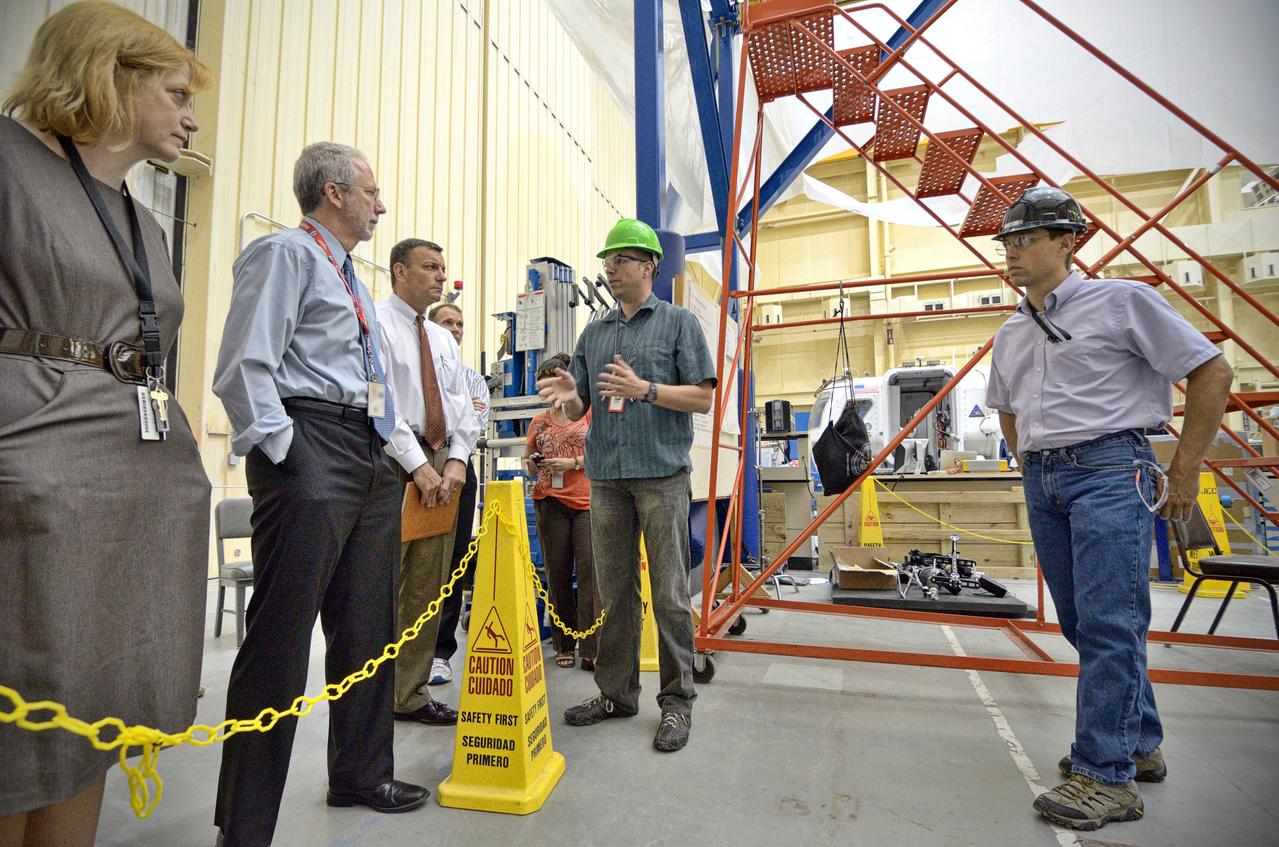
Astronaut Rex Walheim uses the Active Response Gravity Offload System (ARGOS) to perform early evaluations of the Orion Crew Survival System (OCSS) suit in Building 9 of Johnson Space Center in Houston on June 5, 2012. ARGOS is designed to simulate reduced gravity environments, such as lunar, Martian, or microgravity, using a system similar to an overhead bridge crane. Part of Batch image transfer from Flickr.
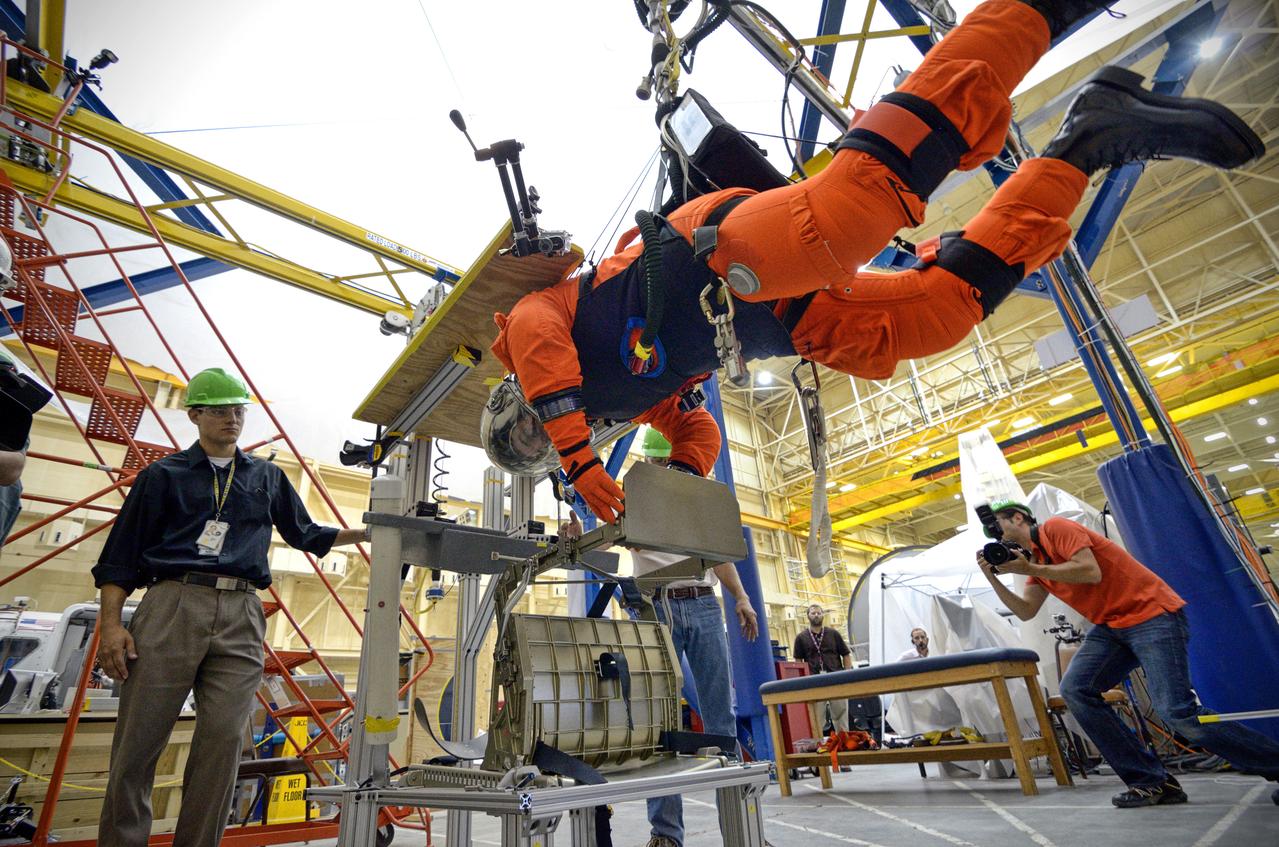
Astronaut Rex Walheim uses the Active Response Gravity Offload System (ARGOS) to perform early evaluations of the Orion Crew Survival System (OCSS) suit in Building 9 of Johnson Space Center in Houston on June 5, 2012. ARGOS is designed to simulate reduced gravity environments, such as lunar, Martian, or microgravity, using a system similar to an overhead bridge crane. Part of Batch image transfer from Flickr.
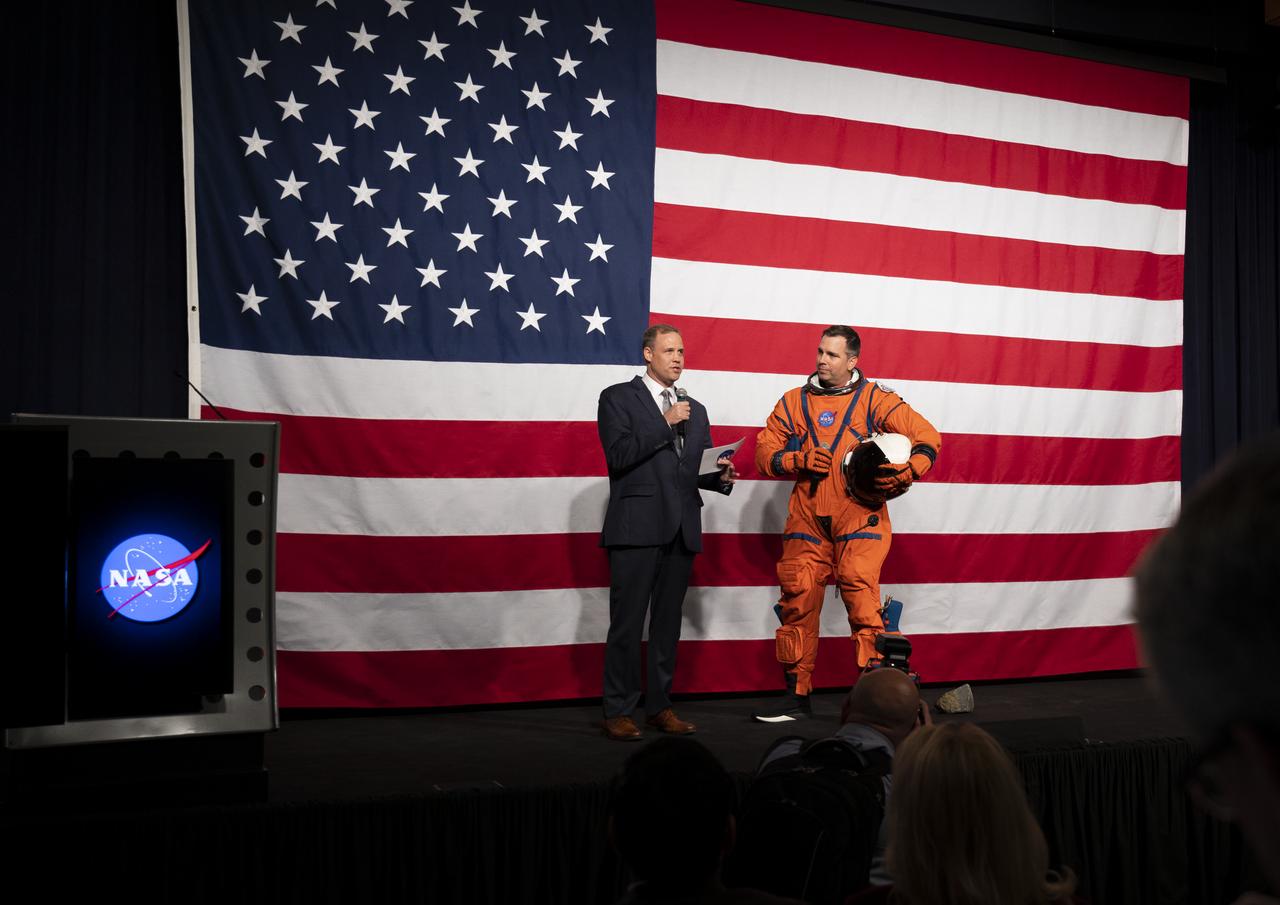
NASA Administrator Jim Bridenstine, left, speaks with Dustin Gohmert, Orion Crew Survival Systems Project Manager at NASA’s Johnson Space Center, wearing the Orion Crew Survival System suit, about the suit, Tuesday, Oct. 15, 2019 at NASA Headquarters in Washington. The Orion suit is designed for a custom fit and incorporates safety technology and mobility features that will help protect astronauts on launch day, in emergency situations, high-risk parts of missions near the Moon, and during the high-speed return to Earth. Photo Credit: (NASA/Joel Kowsky)
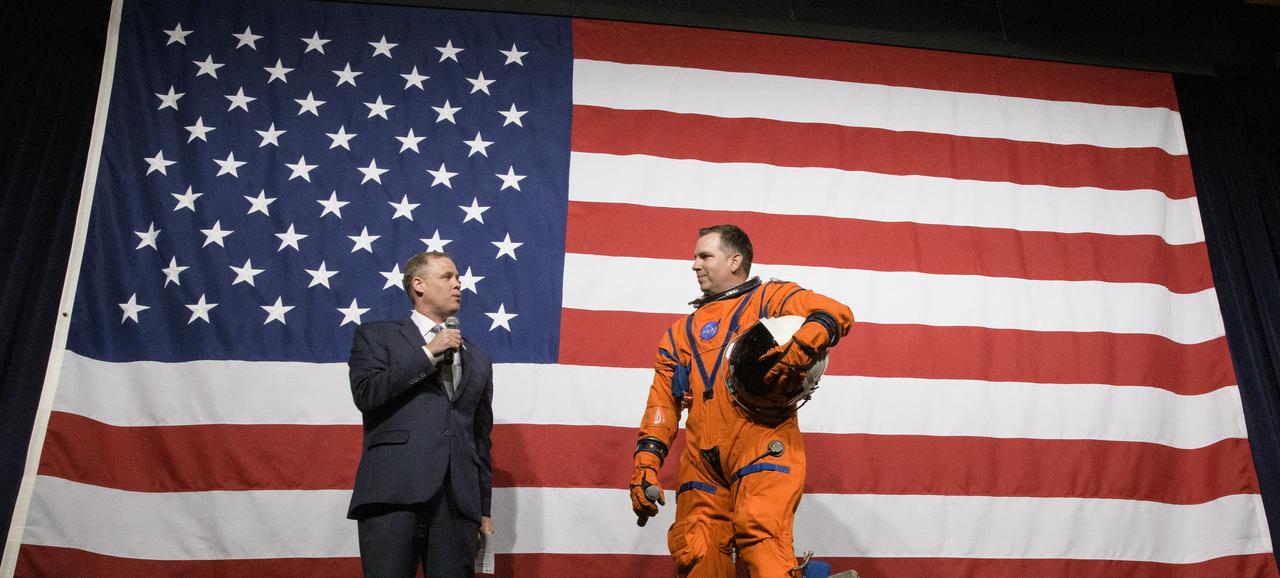
NASA Administrator Jim Bridenstine, left, speaks with Dustin Gohmert, Orion Crew Survival Systems Project Manger at NASA’s Johnson Space Center, wearing the Orion Crew Survival System suit, about the suit, Tuesday, Oct. 15, 2019 at NASA Headquarters in Washington. The Orion suit is designed for a custom fit and incorporates safety technology and mobility features that will help protect astronauts on launch day, in emergency situations, high-risk parts of missions near the Moon, and during the high-speed return to Earth. Photo Credit: (NASA/Joel Kowsky)
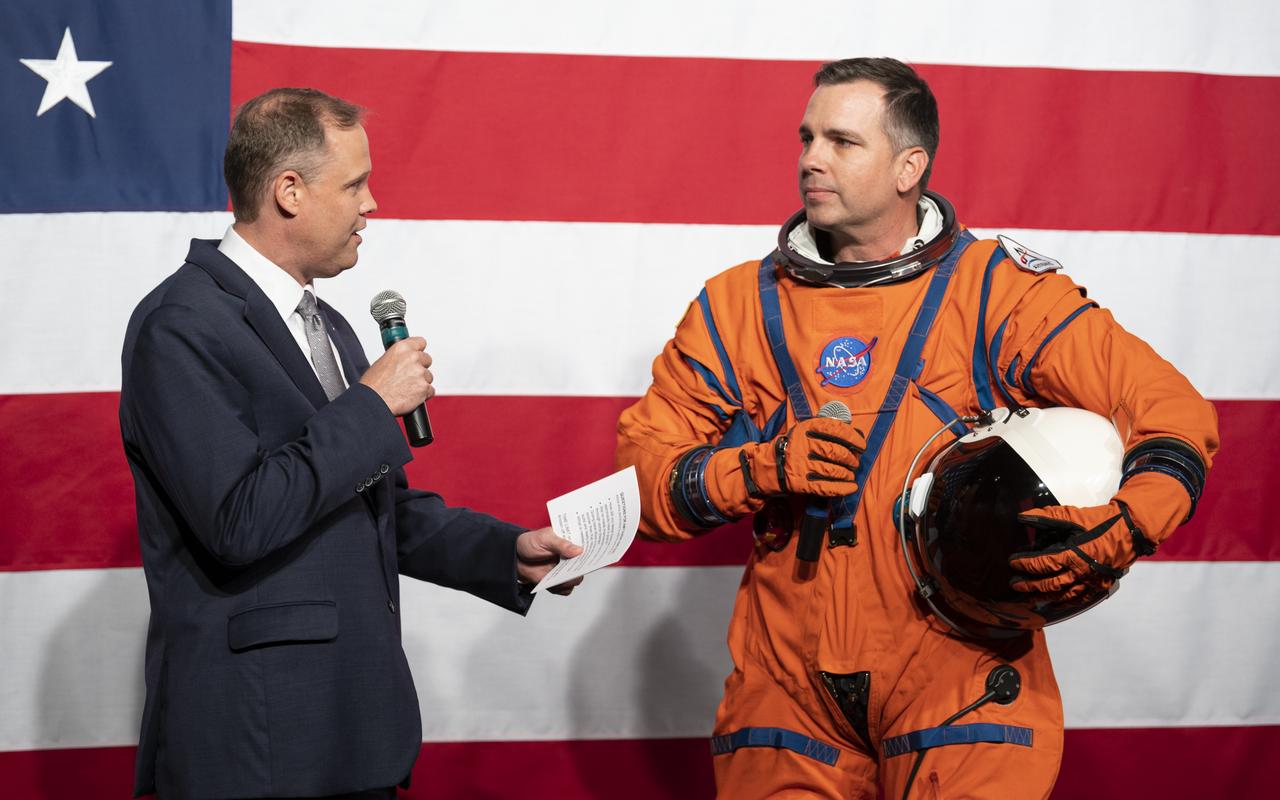
NASA Administrator Jim Bridenstine, left, speaks with Dustin Gohmert, Orion Crew Survival Systems Project Manager at NASA’s Johnson Space Center, wearing the Orion Crew Survival System suit, about the suit, Tuesday, Oct. 15, 2019 at NASA Headquarters in Washington. The Orion suit is designed for a custom fit and incorporates safety technology and mobility features that will help protect astronauts on launch day, in emergency situations, high-risk parts of missions near the Moon, and during the high-speed return to Earth. Photo Credit: (NASA/Joel Kowsky)
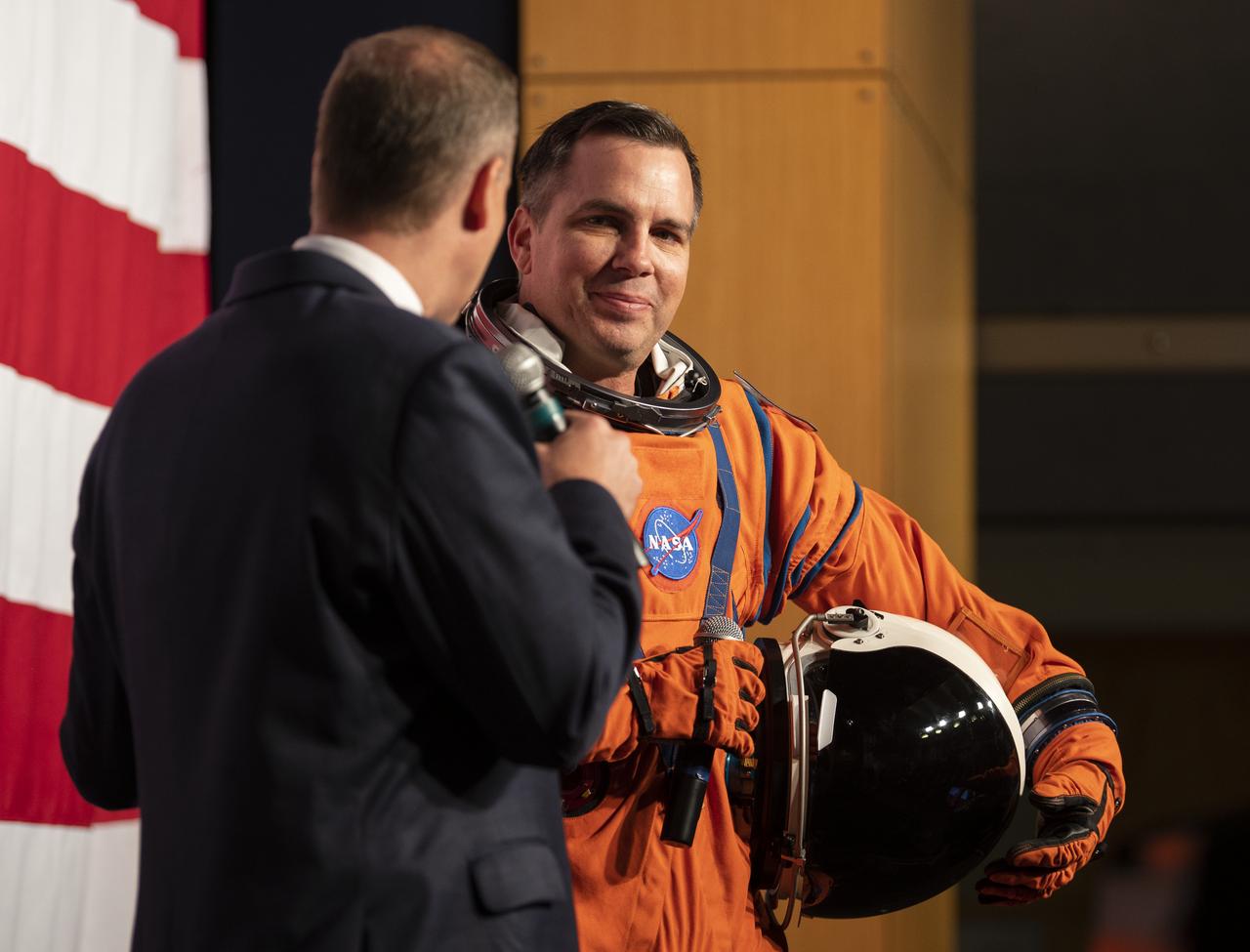
NASA Administrator Jim Bridenstine, left, speaks with Dustin Gohmert, Orion Crew Survival Systems Project Manager at NASA’s Johnson Space Center, wearing the Orion Crew Survival System suit, about the suit, Tuesday, Oct. 15, 2019 at NASA Headquarters in Washington. The Orion suit is designed for a custom fit and incorporates safety technology and mobility features that will help protect astronauts on launch day, in emergency situations, high-risk parts of missions near the Moon, and during the high-speed return to Earth. Photo Credit: (NASA/Joel Kowsky)
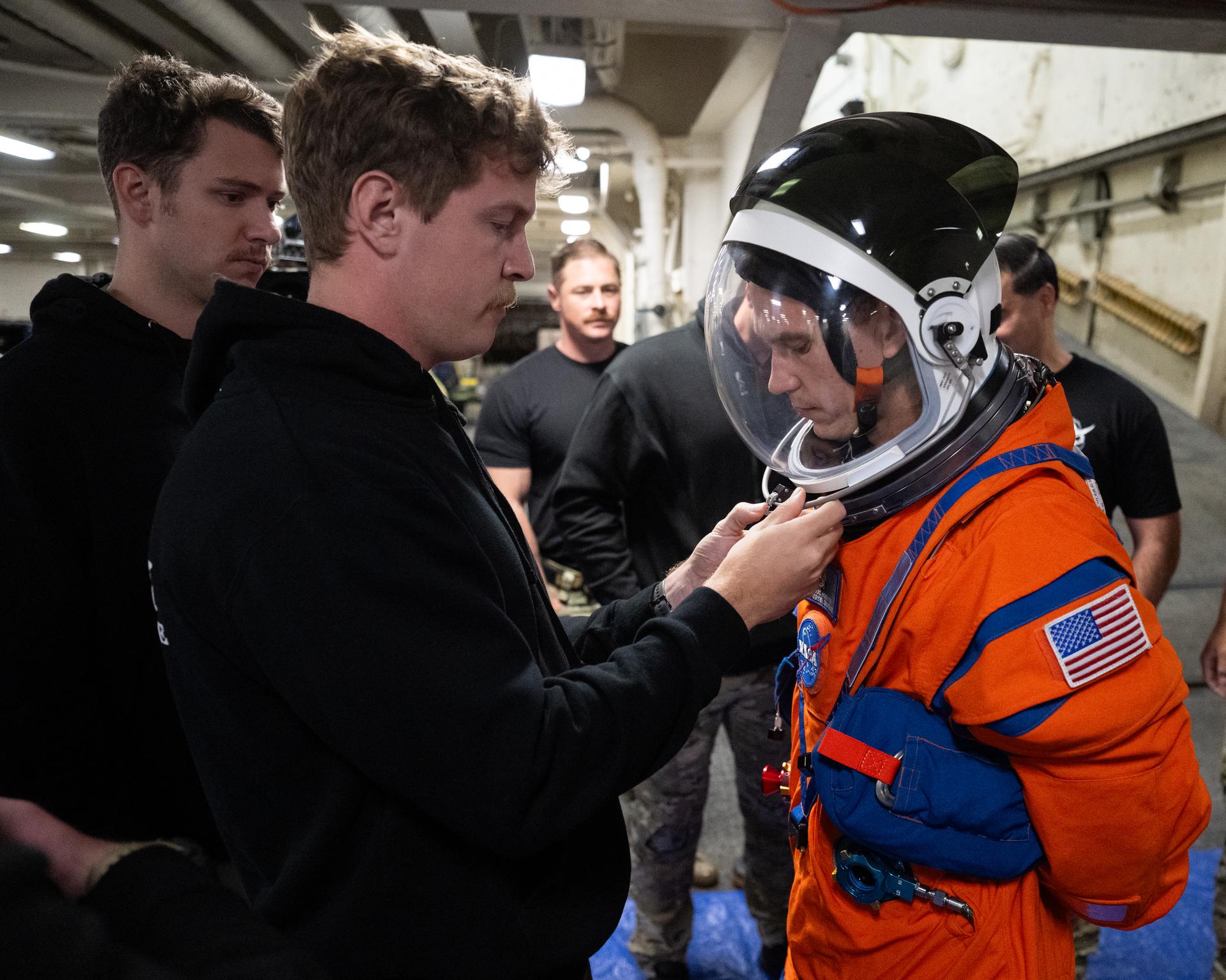
Nicholas Houghton, an Orion Crew Survival System engineer at NASA’s Johnson Space Center, wearing an Orion Crew Survival System suit, conducts familiarization training with U.S. Navy divers on doffing the suit onboard USS John P. Murtha ahead of the return of the Artemis II crewmembers to Earth, Tuesday, April 7, 2026, in the Pacific Ocean off the coast of California. NASA’s Artemis II mission is taking NASA astronauts Reid Wiseman, commander; Victor Glover, pilot; Christina Koch, mission specialist; and CSA (Canadian Space Agency) astronaut Jeremy Hansen, mission specialist on a 10-day journey around the Moon and back aboard their Orion spacecraft. Wiseman, Glover, Koch, and Hansen are scheduled to splash down off the coast of San Diego at approximately 5:07 p.m. PDT (8:07 p.m. EDT) on Friday, April 10. Photo Credit: (NASA/Joel Kowsky)
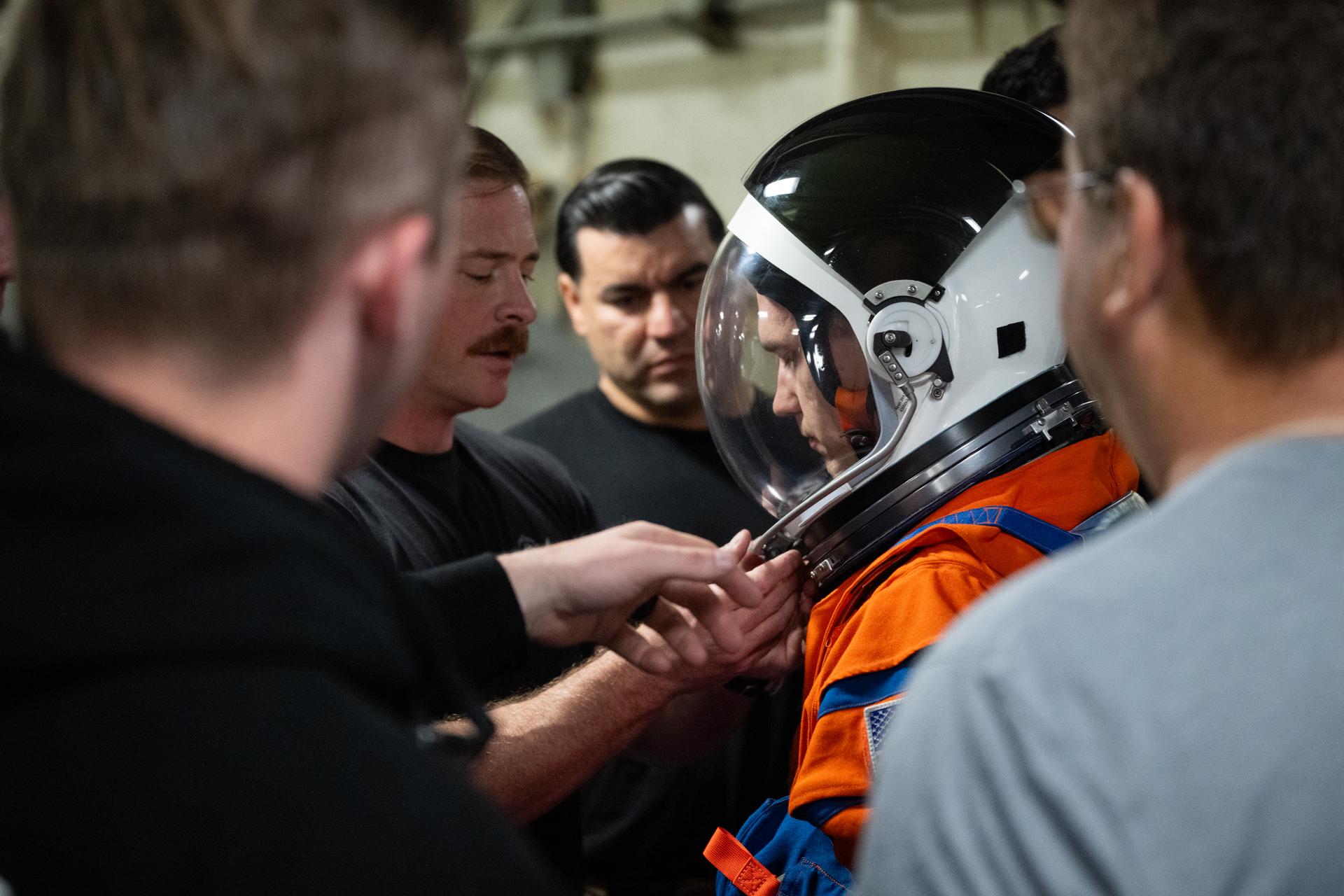
Nicholas Houghton, an Orion Crew Survival System engineer at NASA’s Johnson Space Center, wearing an Orion Crew Survival System suit, conducts familiarization training with U.S. Navy divers on doffing the suit onboard USS John P. Murtha ahead of the return of the Artemis II crewmembers to Earth, Tuesday, April 7, 2026, in the Pacific Ocean off the coast of California. NASA’s Artemis II mission is taking NASA astronauts Reid Wiseman, commander; Victor Glover, pilot; Christina Koch, mission specialist; and CSA (Canadian Space Agency) astronaut Jeremy Hansen, mission specialist on a 10-day journey around the Moon and back aboard their Orion spacecraft. Wiseman, Glover, Koch, and Hansen are scheduled to splash down off the coast of San Diego at approximately 5:07 p.m. PDT (8:07 p.m. EDT) on Friday, April 10. Photo Credit: (NASA/Joel Kowsky)
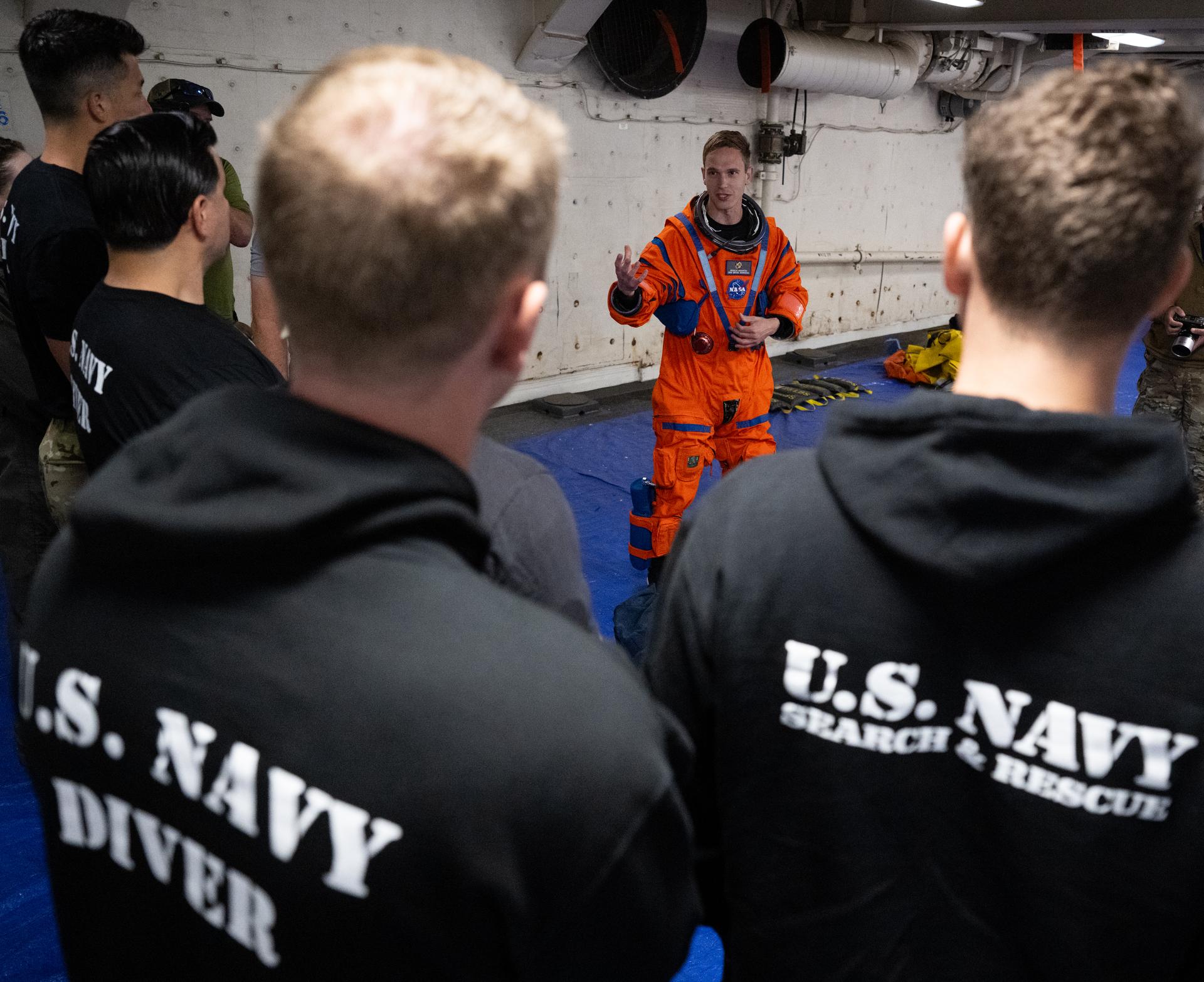
Nicholas Houghton, an Orion Crew Survival System engineer at NASA’s Johnson Space Center, wearing an Orion Crew Survival System suit, conducts familiarization training with U.S. Navy divers on doffing the suit onboard USS John P. Murtha ahead of the return of the Artemis II crewmembers to Earth, Tuesday, April 7, 2026, in the Pacific Ocean off the coast of California. NASA’s Artemis II mission is taking NASA astronauts Reid Wiseman, commander; Victor Glover, pilot; Christina Koch, mission specialist; and CSA (Canadian Space Agency) astronaut Jeremy Hansen, mission specialist on a 10-day journey around the Moon and back aboard their Orion spacecraft. Wiseman, Glover, Koch, and Hansen are scheduled to splash down off the coast of San Diego at approximately 5:07 p.m. PDT (8:07 p.m. EDT) on Friday, April 10. Photo Credit: (NASA/Joel Kowsky)
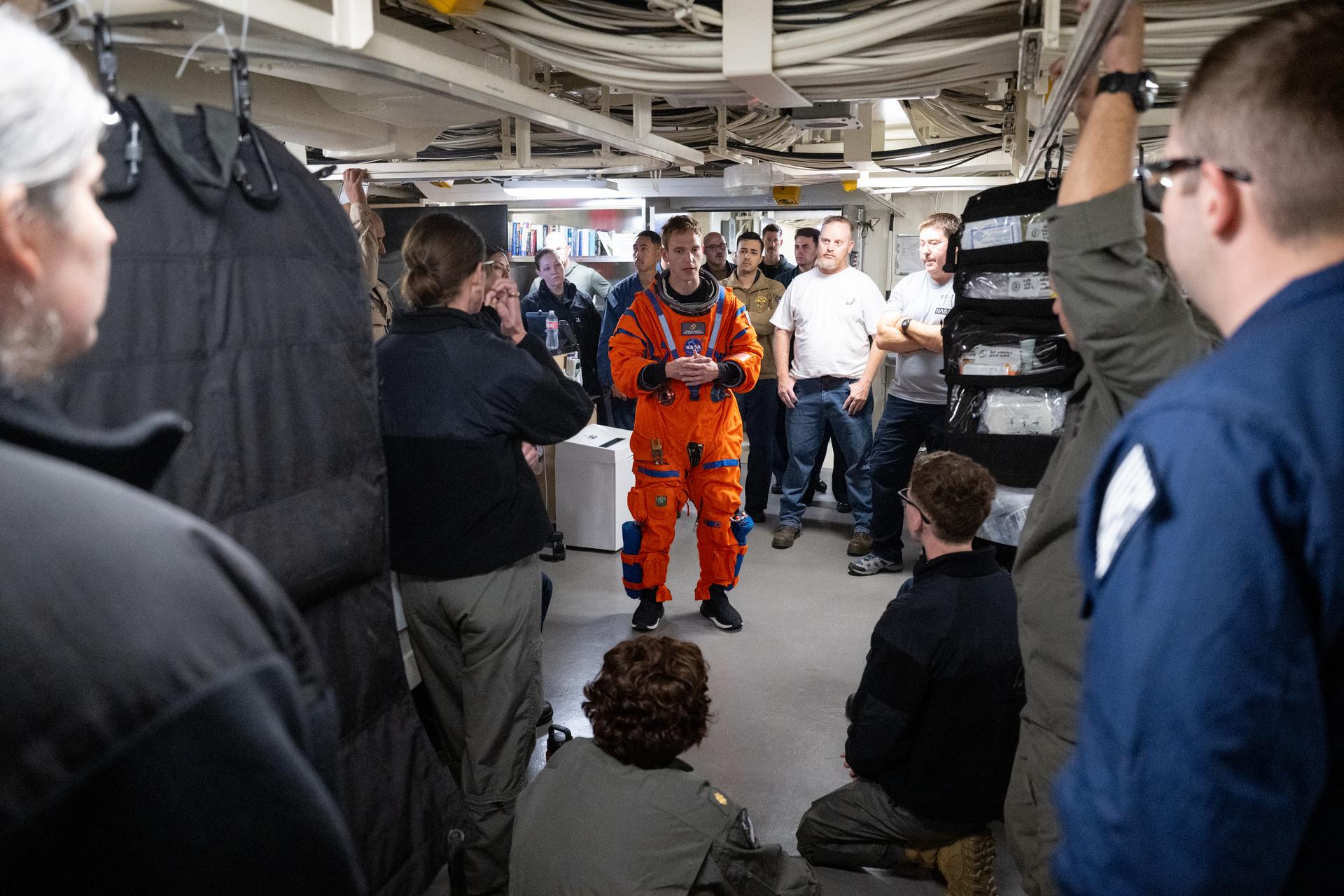
Nicholas Houghton, an Orion Crew Survival System engineer at NASA’s Johnson Space Center, wears an Orion Crew Survival System suit as he conducts familiarization training with U.S. Navy medical personnel on doffing the suit onboard USS John P. Murtha ahead of the return of the Artemis II crewmembers to Earth, Tuesday, April 7, 2026, in the Pacific Ocean off the coast of California. NASA’s Artemis II mission is taking NASA astronauts Reid Wiseman, commander; Victor Glover, pilot; Christina Koch, mission specialist; and CSA (Canadian Space Agency) astronaut Jeremy Hansen, mission specialist on a 10-day journey around the Moon and back aboard their Orion spacecraft. Wiseman, Glover, Koch, and Hansen are scheduled to splash down off the coast of San Diego at approximately 5:07 p.m. PDT (8:07 p.m. EDT) on Friday, April 10. Photo Credit: (NASA/Joel Kowsky)
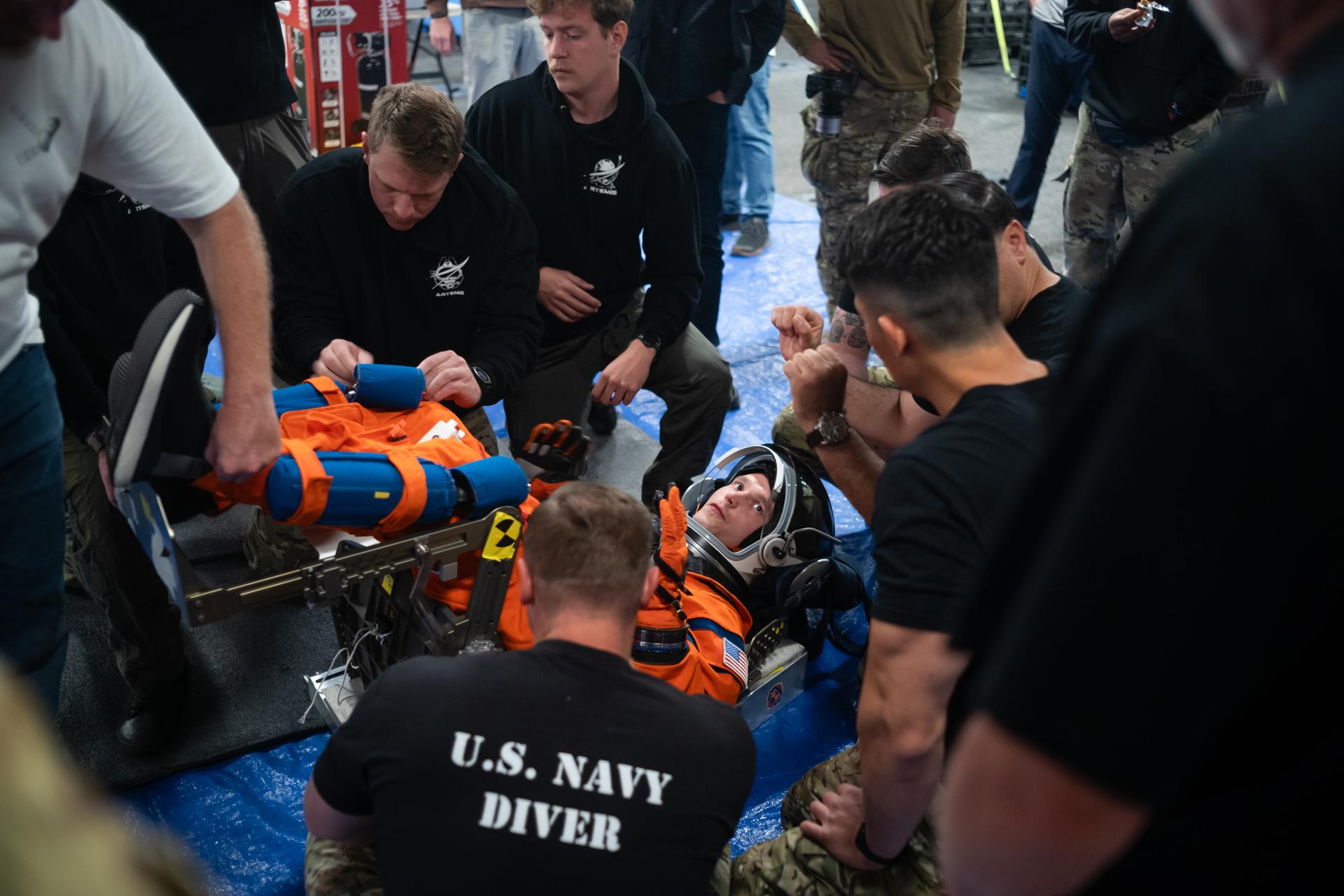
Nicholas Houghton, an Orion Crew Survival System engineer at NASA’s Johnson Space Center, wearing an Orion Crew Survival System suit, conducts familiarization training with U.S. Navy divers on doffing the suit onboard USS John P. Murtha ahead of the return of the Artemis II crewmembers to Earth, Tuesday, April 7, 2026, in the Pacific Ocean off the coast of California. NASA’s Artemis II mission is taking NASA astronauts Reid Wiseman, commander; Victor Glover, pilot; Christina Koch, mission specialist; and CSA (Canadian Space Agency) astronaut Jeremy Hansen, mission specialist on a 10-day journey around the Moon and back aboard their Orion spacecraft. Wiseman, Glover, Koch, and Hansen are scheduled to splash down off the coast of San Diego at approximately 5:07 p.m. PDT (8:07 p.m. EDT) on Friday, April 10. Photo Credit: (NASA/Joel Kowsky)
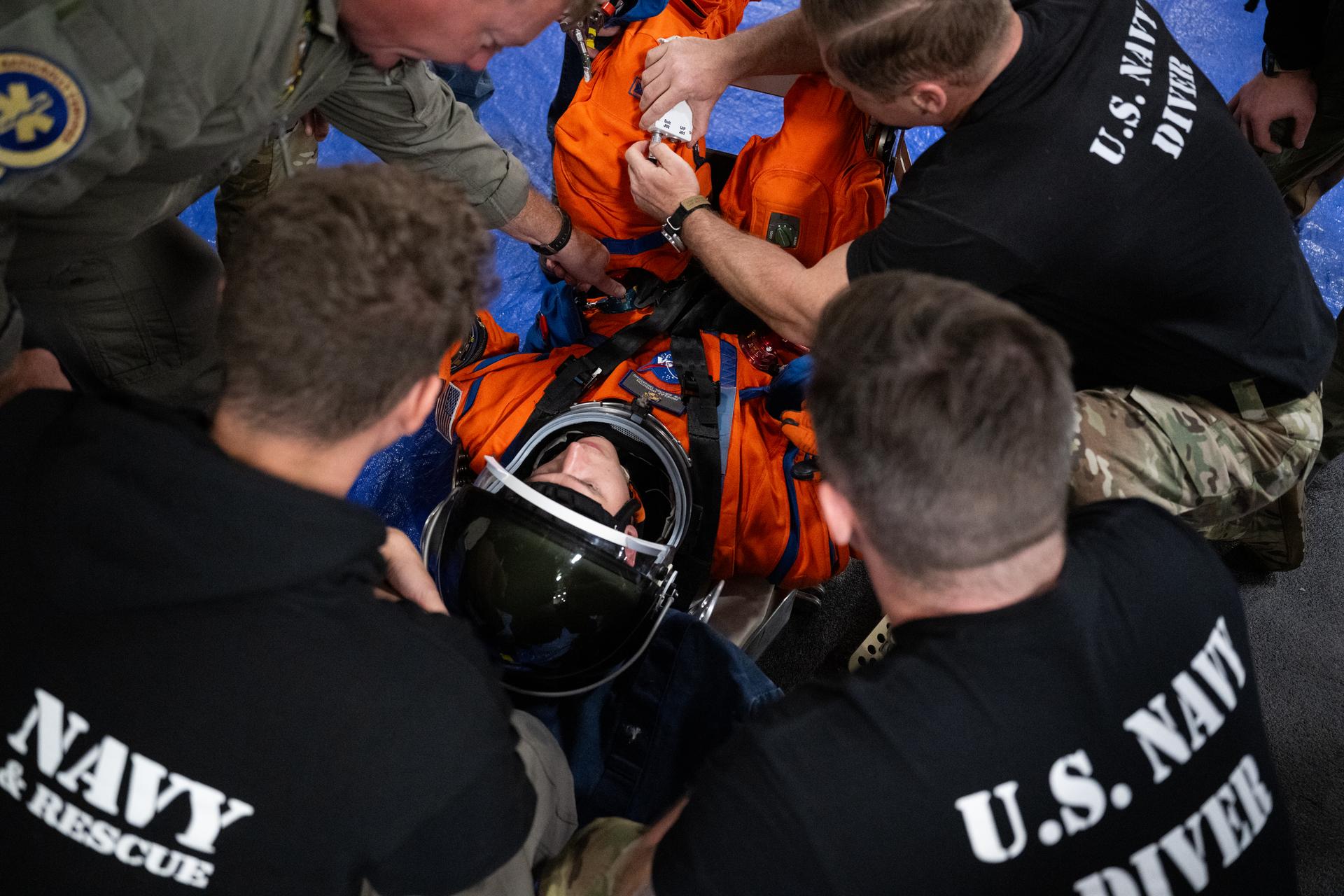
Nicholas Houghton, an Orion Crew Survival System engineer at NASA’s Johnson Space Center, wearing an Orion Crew Survival System suit, conducts familiarization training with U.S. Navy divers on doffing the suit onboard USS John P. Murtha ahead of the return of the Artemis II crewmembers to Earth, Tuesday, April 7, 2026, in the Pacific Ocean off the coast of California. NASA’s Artemis II mission is taking NASA astronauts Reid Wiseman, commander; Victor Glover, pilot; Christina Koch, mission specialist; and CSA (Canadian Space Agency) astronaut Jeremy Hansen, mission specialist on a 10-day journey around the Moon and back aboard their Orion spacecraft. Wiseman, Glover, Koch, and Hansen are scheduled to splash down off the coast of San Diego at approximately 5:07 p.m. PDT (8:07 p.m. EDT) on Friday, April 10. Photo Credit: (NASA/Joel Kowsky)
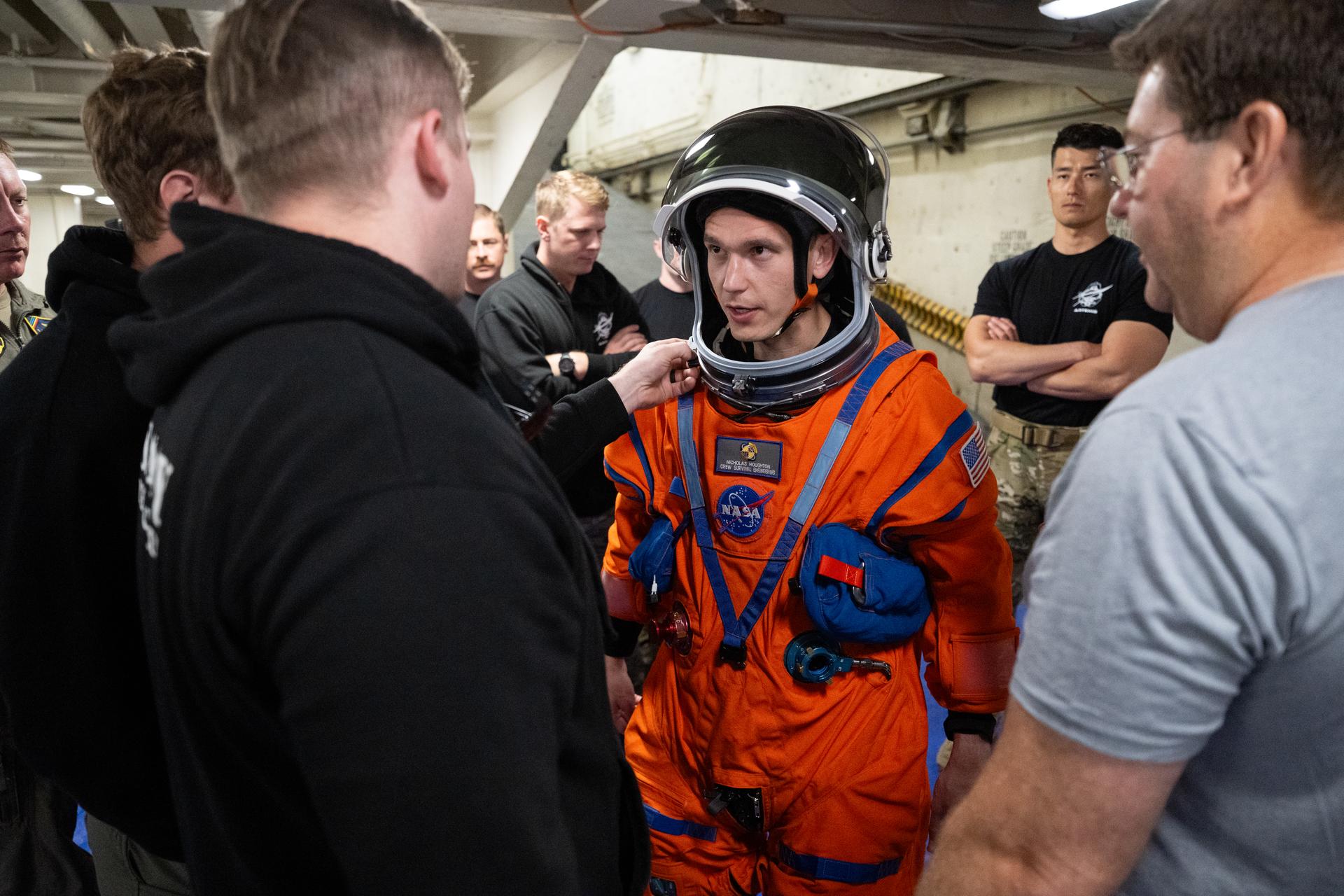
Nicholas Houghton, an Orion Crew Survival System engineer at NASA’s Johnson Space Center, wearing an Orion Crew Survival System suit, conducts familiarization training with U.S. Navy divers on doffing the suit onboard USS John P. Murtha ahead of the return of the Artemis II crewmembers to Earth, Tuesday, April 7, 2026, in the Pacific Ocean off the coast of California. NASA’s Artemis II mission is taking NASA astronauts Reid Wiseman, commander; Victor Glover, pilot; Christina Koch, mission specialist; and CSA (Canadian Space Agency) astronaut Jeremy Hansen, mission specialist on a 10-day journey around the Moon and back aboard their Orion spacecraft. Wiseman, Glover, Koch, and Hansen are scheduled to splash down off the coast of San Diego at approximately 5:07 p.m. PDT (8:07 p.m. EDT) on Friday, April 10. Photo Credit: (NASA/Joel Kowsky)
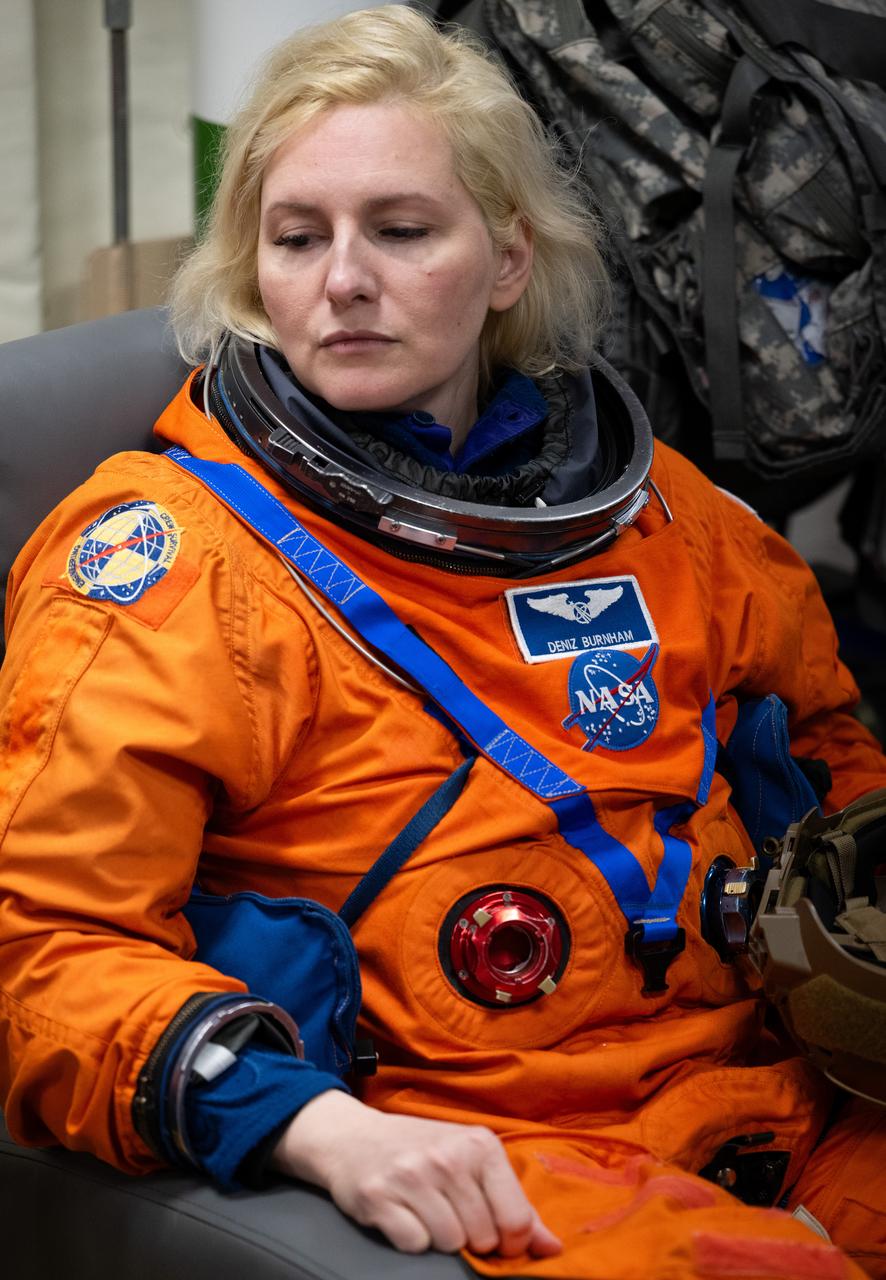
NASA astronaut Deniz Burnham is seen as she prepares to take part in practicing Artemis recovery procedures during Underway Recovery Test-12 onboard USS Somerset off the coast of California, Friday, March 28, 2025. During the test, NASA and Department of Defense teams are practicing to ensure recovery procedures are validated as NASA plans to send the Artemis II astronauts around the Moon and splashdown in the Pacific Ocean. Photo Credit: (NASA/Joel Kowsky)
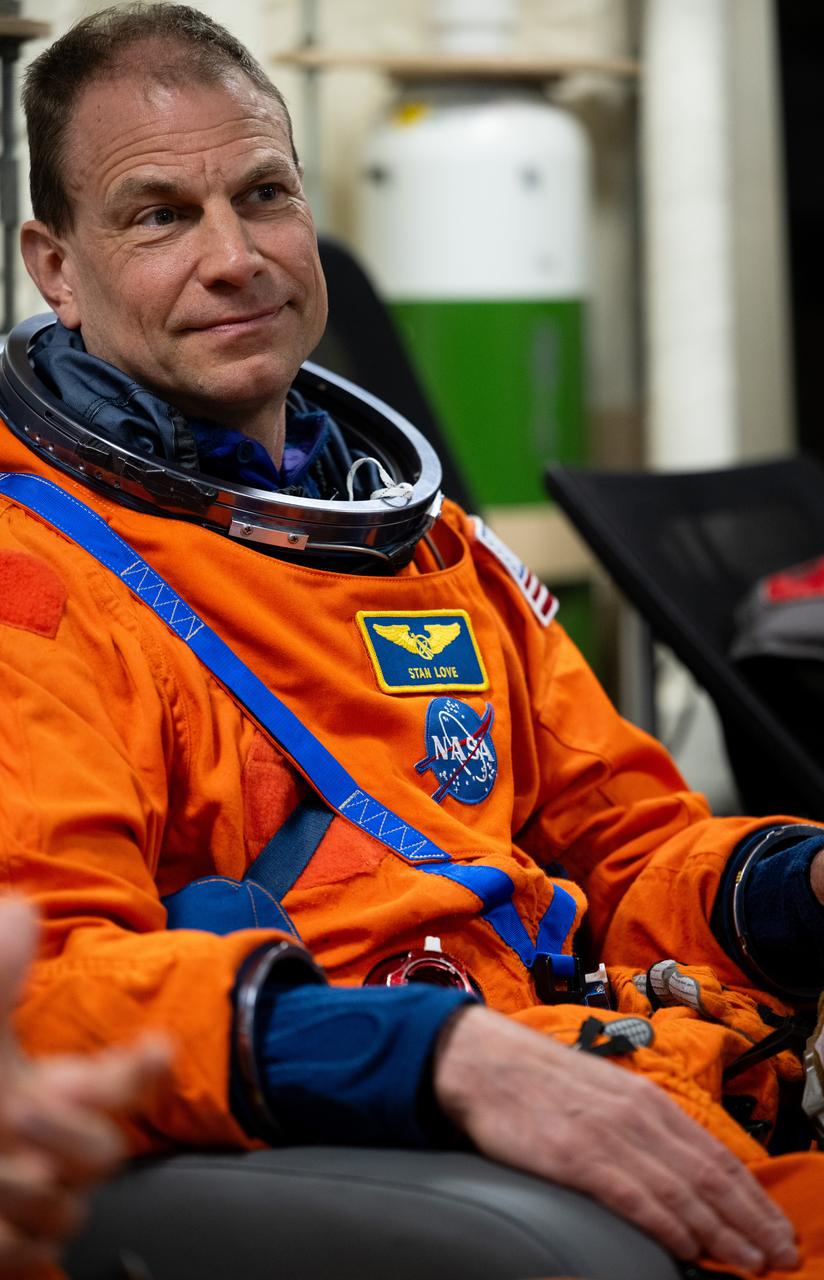
NASA astronaut Stan Love is seen as he prepares to take part in practicing Artemis recovery procedures during Underway Recovery Test-12 onboard USS Somerset off the coast of California, Friday, March 28, 2025. During the test, NASA and Department of Defense teams are practicing to ensure recovery procedures are validated as NASA plans to send the Artemis II astronauts around the Moon and splashdown in the Pacific Ocean. Photo Credit: (NASA/Joel Kowsky)
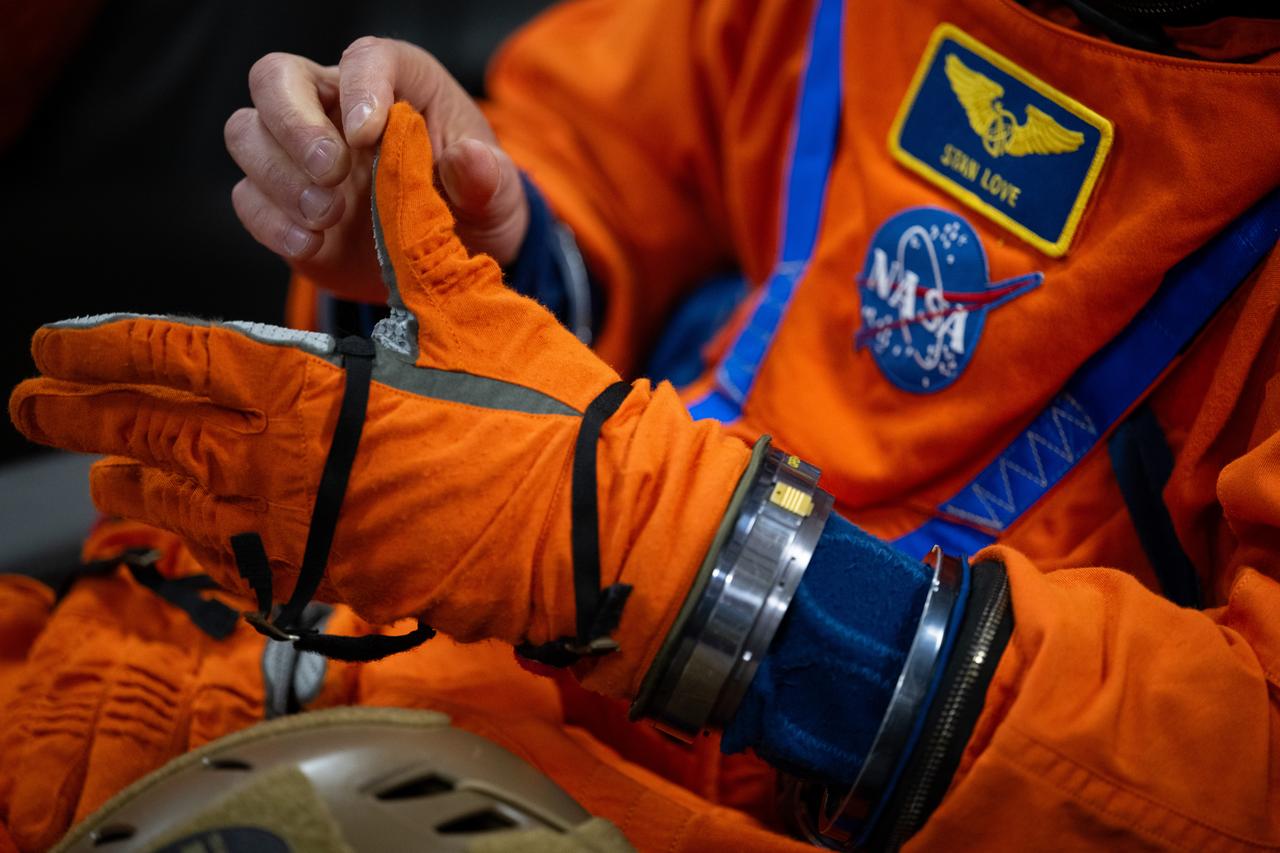
NASA astronaut Stan Love is seen as he prepares to take part in practicing Artemis recovery procedures during Underway Recovery Test-12 onboard USS Somerset off the coast of California, Friday, March 28, 2025. During the test, NASA and Department of Defense teams are practicing to ensure recovery procedures are validated as NASA plans to send the Artemis II astronauts around the Moon and splashdown in the Pacific Ocean. Photo Credit: (NASA/Joel Kowsky)
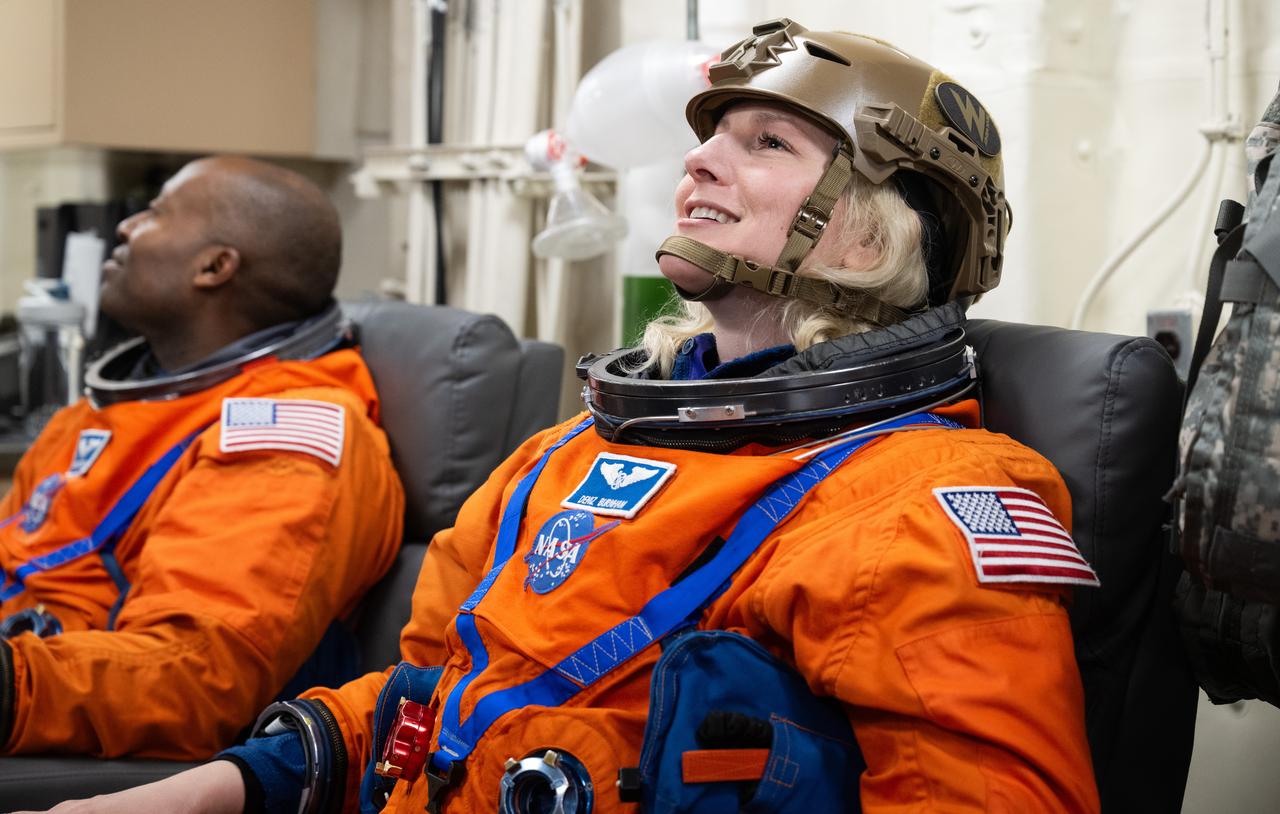
NASA astronaut Deniz Burnham is seen as she prepares to take part in practicing Artemis recovery procedures during Underway Recovery Test-12 onboard USS Somerset off the coast of California, Friday, March 28, 2025. During the test, NASA and Department of Defense teams are practicing to ensure recovery procedures are validated as NASA plans to send the Artemis II astronauts around the Moon and splashdown in the Pacific Ocean. Photo Credit: (NASA/Joel Kowsky)
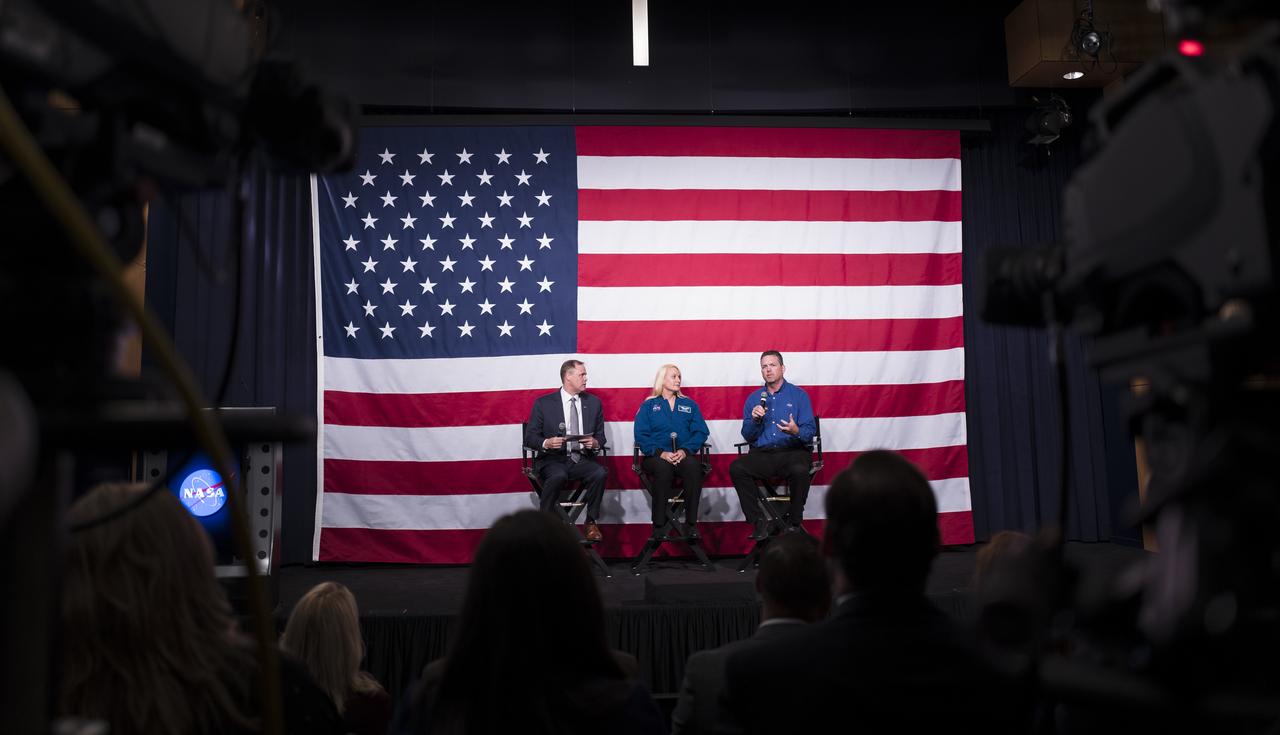
NASA Administrator Jim Bridenstine, left, NASA astronaut Kate Rubins, and Chris Hansen, Manager of the Extravehicular Activity office at NASA’s Johnson Space Center are seen during a panel discussion at the Artemis Generation Spacesuit event, Tuesday, Oct. 15, 2019 at NASA Headquarters in Washington. The Exploration Extravehicular Mobility Unit (xEMU) suit improves on the suits previous worn on the Moon during the Apollo era and those currently in use for spacewalks outside the International Space Station and will be worn by first woman and next man as they explore the Moon as part of the agency’s Artemis program. The Orion Crew Survival System (OCSS) suit is designed for a custom fit and incorporates safety technology and mobility features that will help protect astronauts on launch day, in emergency situations, high-risk parts of missions near the Moon, and during the high-speed return to Earth. Photo Credit: (NASA/Joel Kowsky)

NASA Administrator Jim Bridenstine delivers opening remarks at the Artemis Generations Spacesuit event, Tuesday, Oct. 15, 2019 at NASA Headquarters in Washington. The Exploration Extravehicular Mobility Unit (xEMU) suit improves on the suits previous worn on the Moon during the Apollo era and those currently in use for spacewalks outside the International Space Station and will be worn by first woman and next man as they explore the Moon as part of the agency’s Artemis program. The Orion Crew Survival System (OCSS) suit is designed for a custom fit and incorporates safety technology and mobility features that will help protect astronauts on launch day, in emergency situations, high-risk parts of missions near the Moon, and during the high-speed return to Earth. Photo Credit: (NASA/Joel Kowsky)
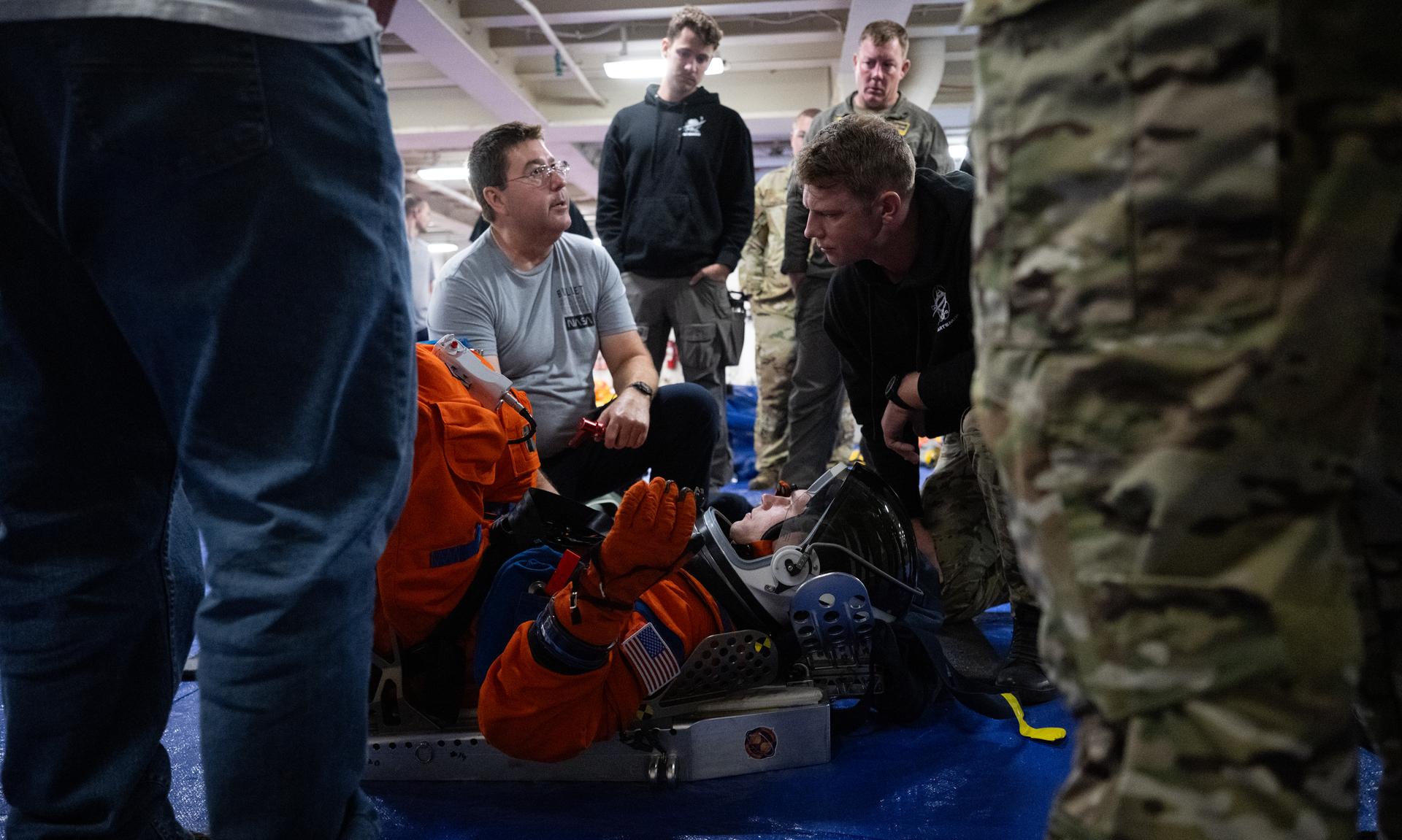
Mike Thompson, an Orion suit technician, left, and Nicholas Houghton, an Orion Crew Survival System engineer at NASA’s Johnson Space Center, wearing an Orion Crew Survival System suit, conducts familiarization training with U.S. Navy divers on doffing the suit onboard USS John P. Murtha ahead of the return of the Artemis II crewmembers to Earth, Tuesday, April 7, 2026, in the Pacific Ocean off the coast of California. NASA’s Artemis II mission is taking NASA astronauts Reid Wiseman, commander; Victor Glover, pilot; Christina Koch, mission specialist; and CSA (Canadian Space Agency) astronaut Jeremy Hansen, mission specialist on a 10-day journey around the Moon and back aboard their Orion spacecraft. Wiseman, Glover, Koch, and Hansen are scheduled to splash down off the coast of San Diego at approximately 5:07 p.m. PDT (8:07 p.m. EDT) on Friday, April 10. Photo Credit: (NASA/Joel Kowsky)
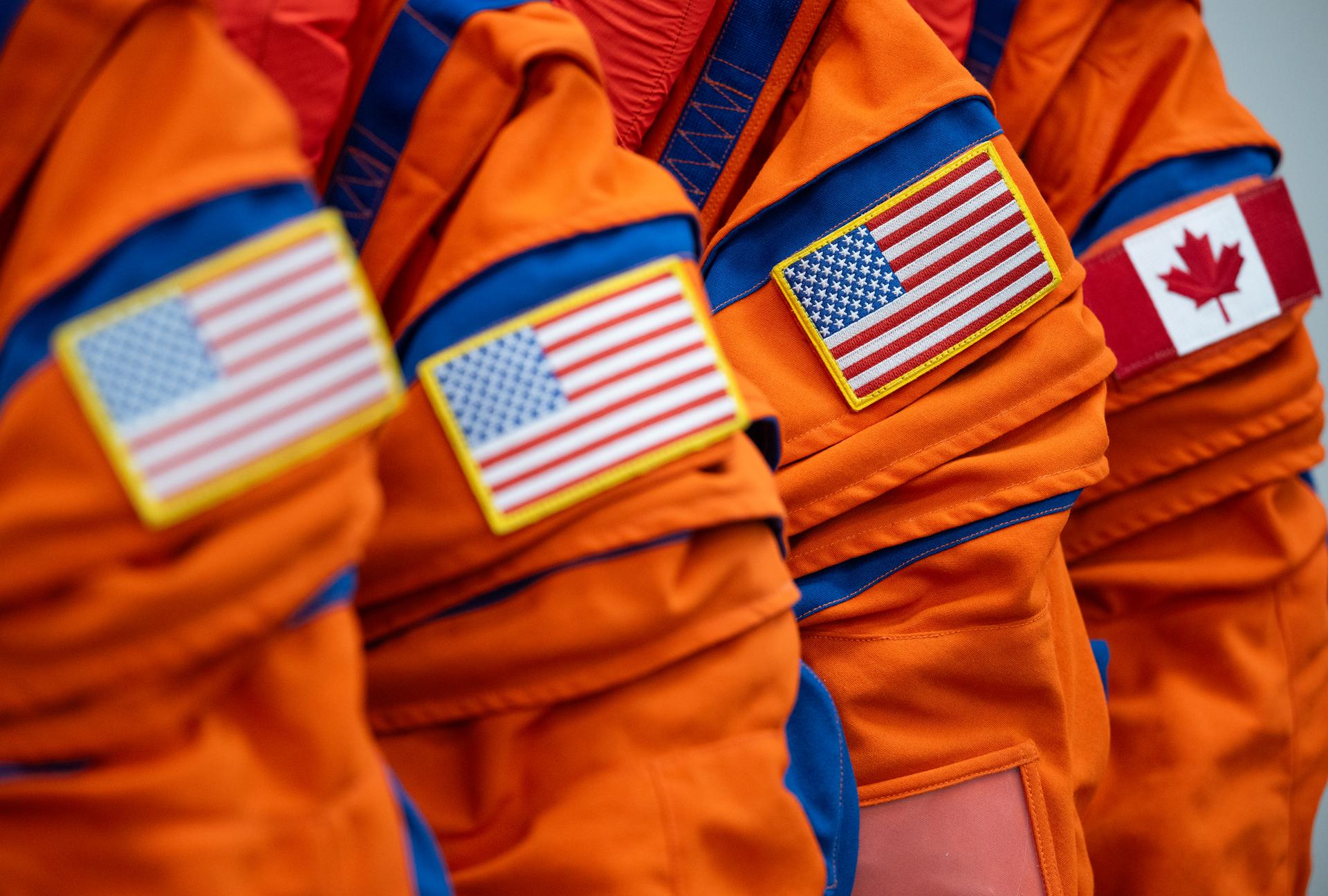
The flags of the United States and Canada are seen on the left shoulder of the Orion Crew Survival System suits that Commander Reid Wiseman, Pilot Victor Glover, and Mission Specialist Christina Koch from NASA, and Mission Specialist Jeremy Hansen from the CSA (Canadian Space Agency) will wear on the Artemis II test flight are seen, Saturday, Jan. 17, 2026, in the suit-up room of the Neil A. Armstrong Operations and Checkout Building at NASA’s Kennedy Space Center in Florida. NASA’s Artemis II test flight will take Wiseman, Glover, Koch, and Hansen around the Moon and back to Earth no later than April 2026. Photo Credit: (NASA/Joel Kowsky)
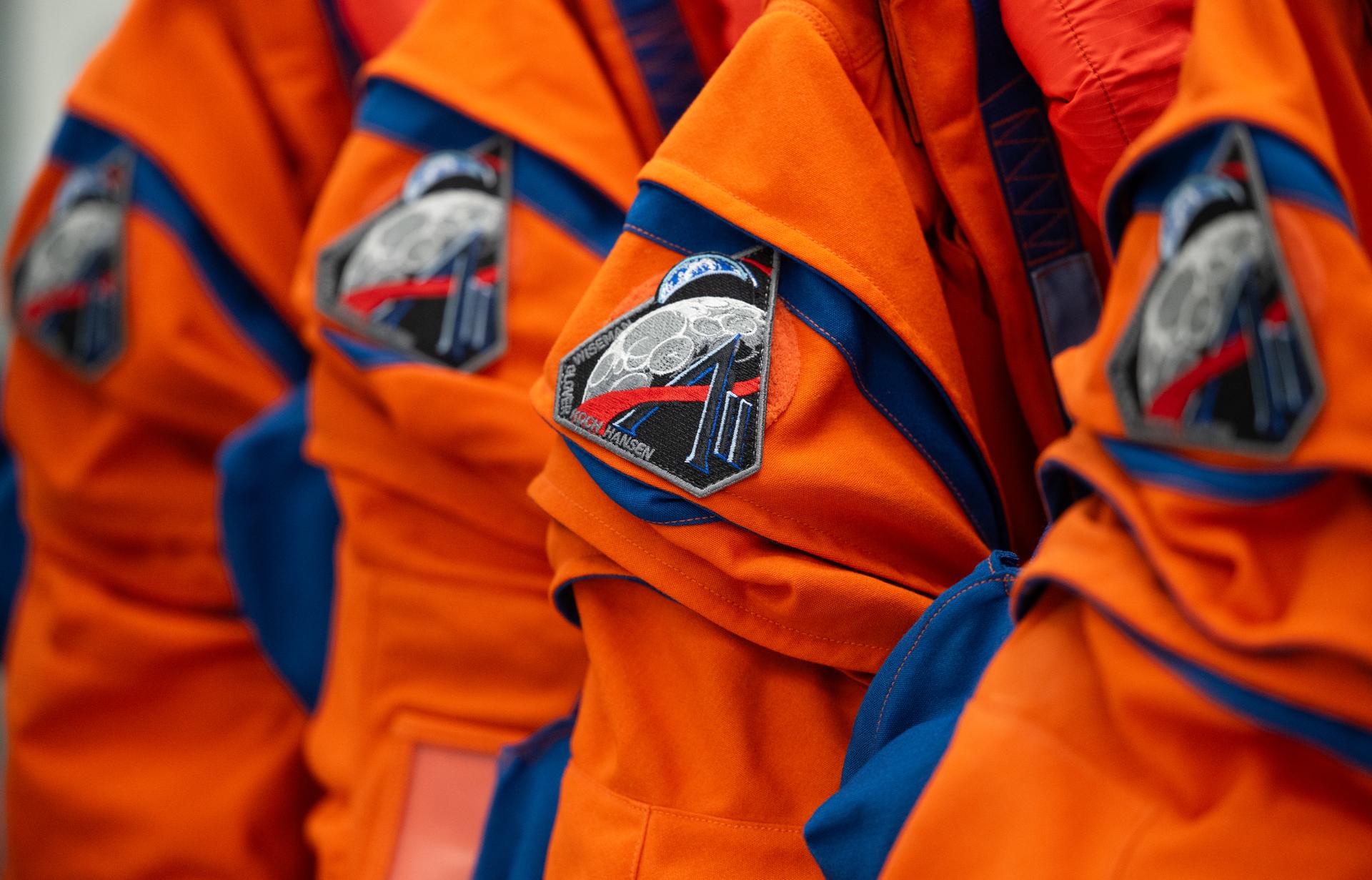
The Artemis II mission patch is seen on the right shoulder of the Orion Crew Survival System suits that Commander Reid Wiseman, Pilot Victor Glover, and Mission Specialist Christina Koch from NASA, and Mission Specialist Jeremy Hansen from the CSA (Canadian Space Agency) will wear on the Artemis II test flight are seen, Saturday, Jan. 17, 2026, in the suit-up room of the Neil A. Armstrong Operations and Checkout Building at NASA’s Kennedy Space Center in Florida. NASA’s Artemis II test flight will take Wiseman, Glover, Koch, and Hansen around the Moon and back to Earth no later than April 2026. Photo Credit: (NASA/Joel Kowsky)
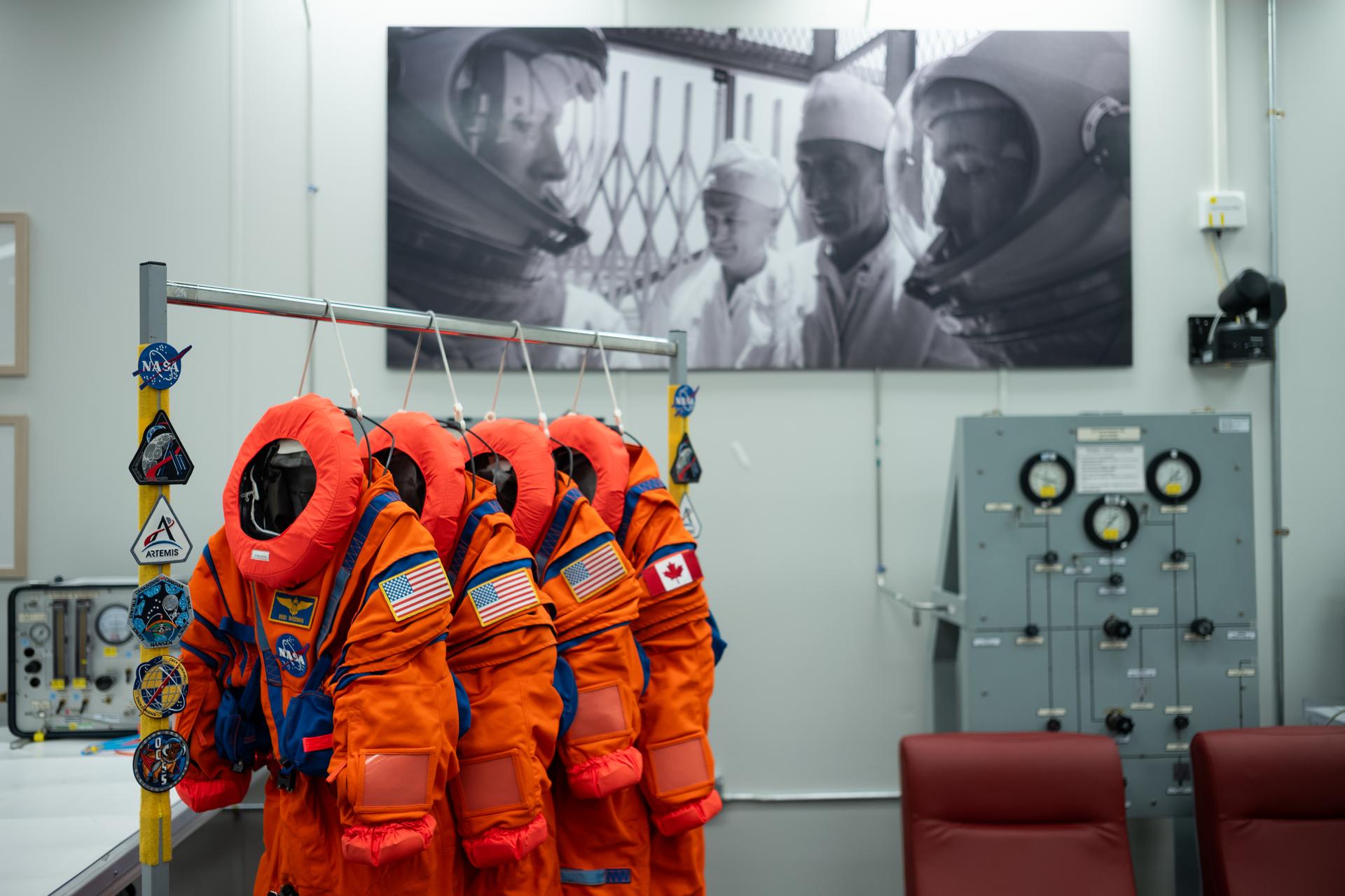
The Orion Crew Survival System suits that Commander Reid Wiseman, Pilot Victor Glover, and Mission Specialist Christina Koch from NASA, and Mission Specialist Jeremy Hansen from the CSA (Canadian Space Agency) will wear on the Artemis II test flight are seen in the suit-up room of the Neil A. Armstrong Operations and Checkout Building, Saturday, Jan. 17, 2026, at NASA’s Kennedy Space Center in Florida. NASA’s Artemis II test flight will take Wiseman, Glover, Koch, and Hansen around the Moon and back to Earth no later than April 2026. Photo Credit: (NASA/Joel Kowsky)
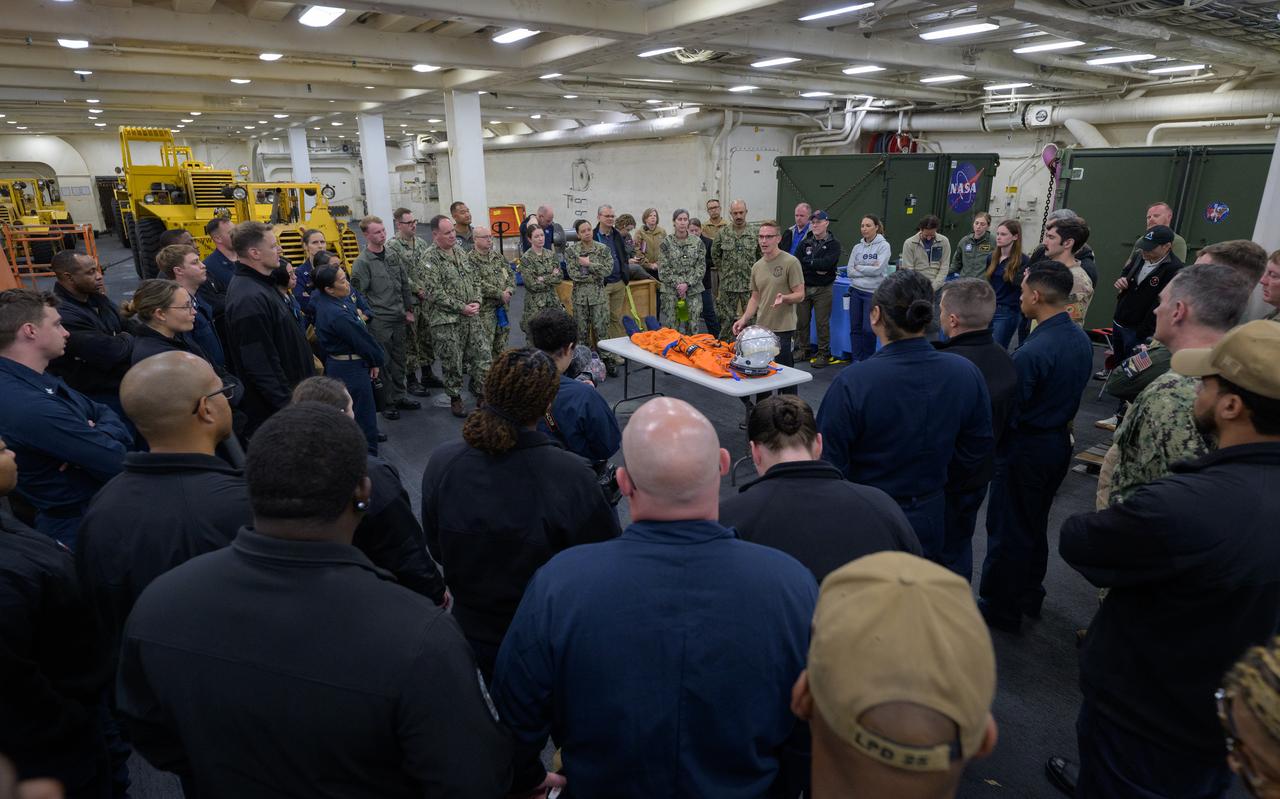
NASA and Department of Defense teams familiarize themselves with the pressure suits the Artemis II crew will be wearing when they return from their mission during Underway Recovery Test-12 onboard USS Somerset off the coast of California, Wednesday, March 26, 2025. During the test, NASA and Department of Defense teams are practicing to ensure recovery procedures are validated as NASA plans to send Artemis II astronauts around the Moon and splashdown in the Pacific Ocean. Photo Credit: (NASA/Joel Kowsky)
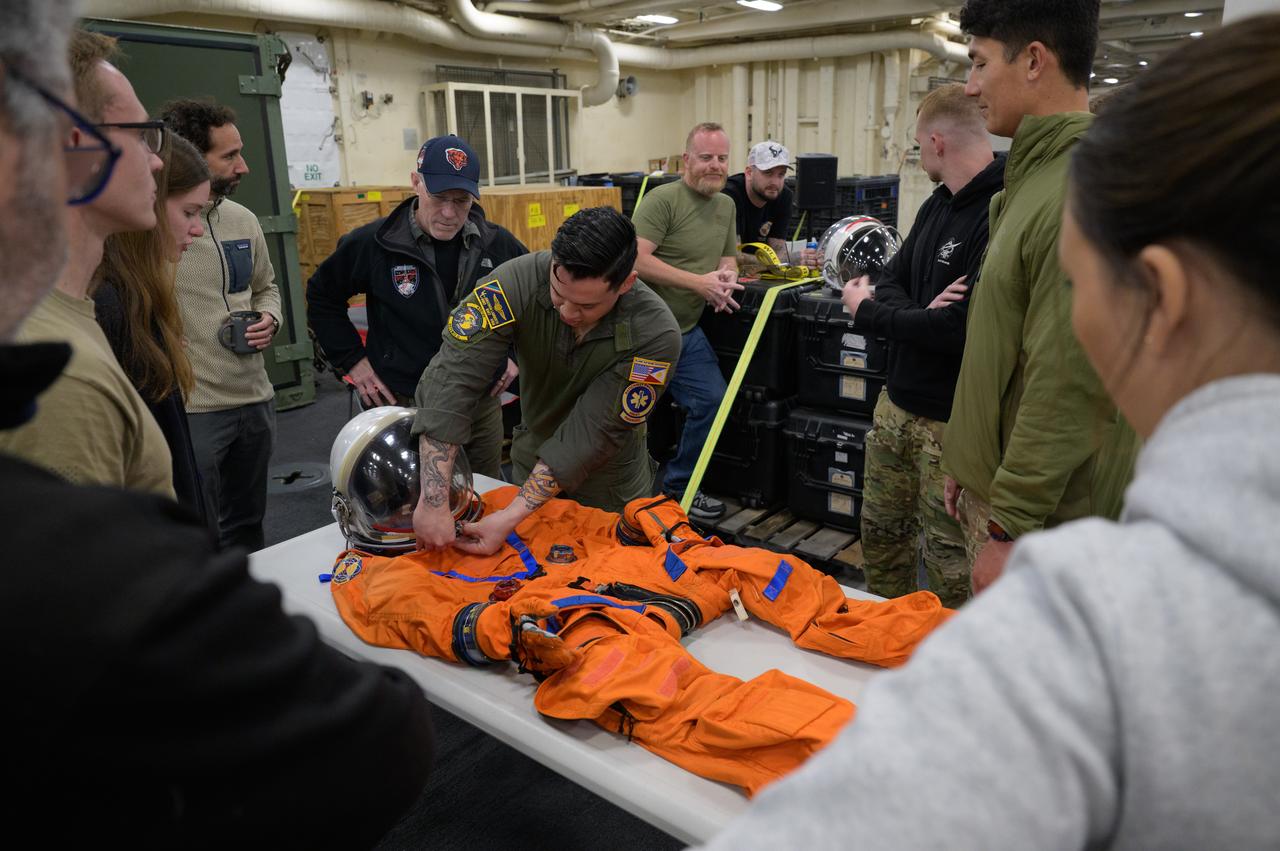
NASA and Department of Defense teams familiarize themselves with the pressure suits the Artemis II crew will be wearing when they return from their mission during Underway Recovery Test-12 onboard USS Somerset off the coast of California, Wednesday, March 26, 2025. During the test, NASA and Department of Defense teams are practicing to ensure recovery procedures are validated as NASA plans to send Artemis II astronauts around the Moon and splashdown in the Pacific Ocean. Photo Credit: (NASA/Joel Kowsky)
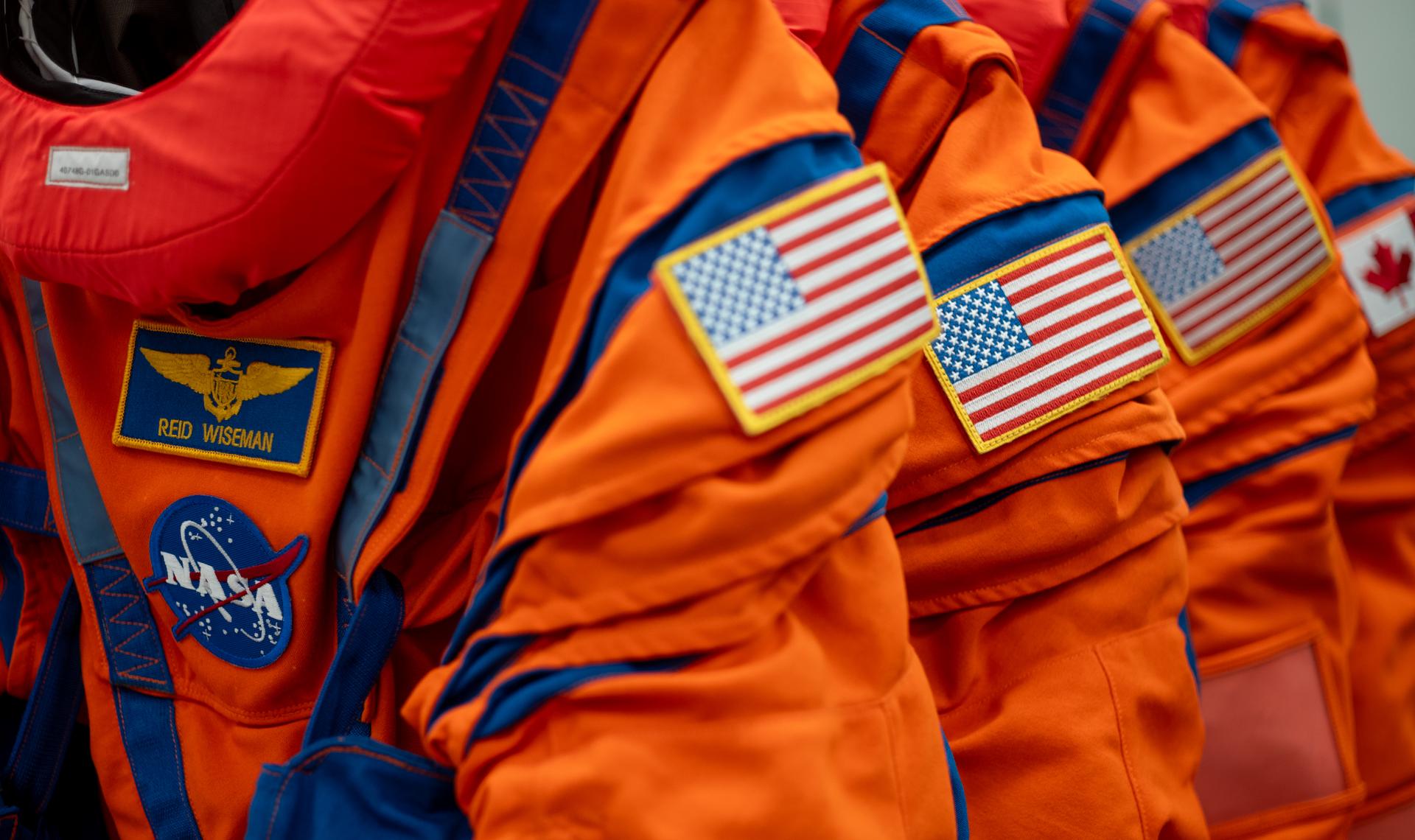
The Orion Crew Survival System suit that will be worn by Artemis II Commander Reid Wiseman of NASA and those that will be worn by Pilot Victor Glover, and Mission Specialist Christina Koch of NASA, and Mission Specialist Jeremy Hansen of the CSA (Canadian Space Agency) are seen in the suit-up room of the Neil A. Armstrong Operations and Checkout Building, Saturday, Jan. 17, 2026, at NASA’s Kennedy Space Center in Florida. NASA’s Artemis II test flight will take Wiseman, Glover, Koch, and Hansen around the Moon and back to Earth no later than April 2026. Photo Credit: (NASA/Joel Kowsky)
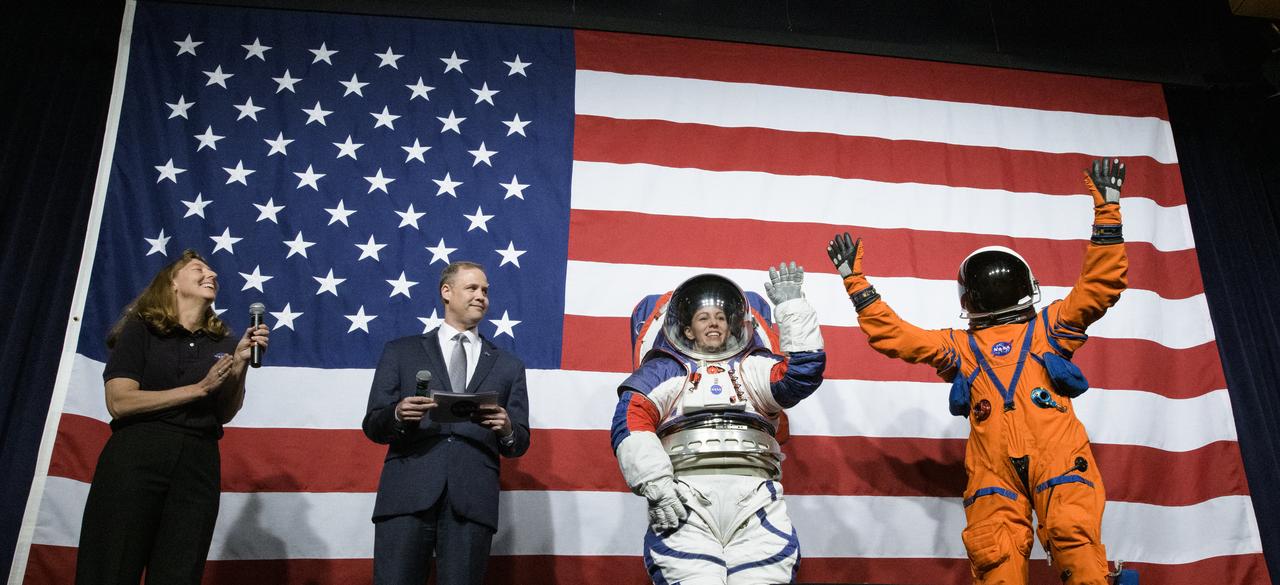
Amy Ross, a spacesuit engineer at NASA’s Johnson Space Center, left, and NASA Administrator Jim Bridenstine, second from left, watch as Kristine Davis, a spacesuit engineer at NASA’s Johnson Space Center, wearing a ground prototype of NASA’s new Exploration Extravehicular Mobility Unit (xEMU), and Dustin Gohmert, Orion Crew Survival Systems Project Manager at NASA’s Johnson Space Center, wearing the Orion Crew Survival System suit, right, wave after being introduced by the administrator, Tuesday, Oct. 15, 2019 at NASA Headquarters in Washington. The xEMU suit improves on the suits previous worn on the Moon during the Apollo era and those currently in use for spacewalks outside the International Space Station and will be worn by first woman and next man as they explore the Moon as part of the agency’s Artemis program. The Orion suit is designed for a custom fit and incorporates safety technology and mobility features that will help protect astronauts on launch day, in emergency situations, high-risk parts of missions near the Moon, and during the high-speed return to Earth. Photo Credit: (NASA/Joel Kowsky)
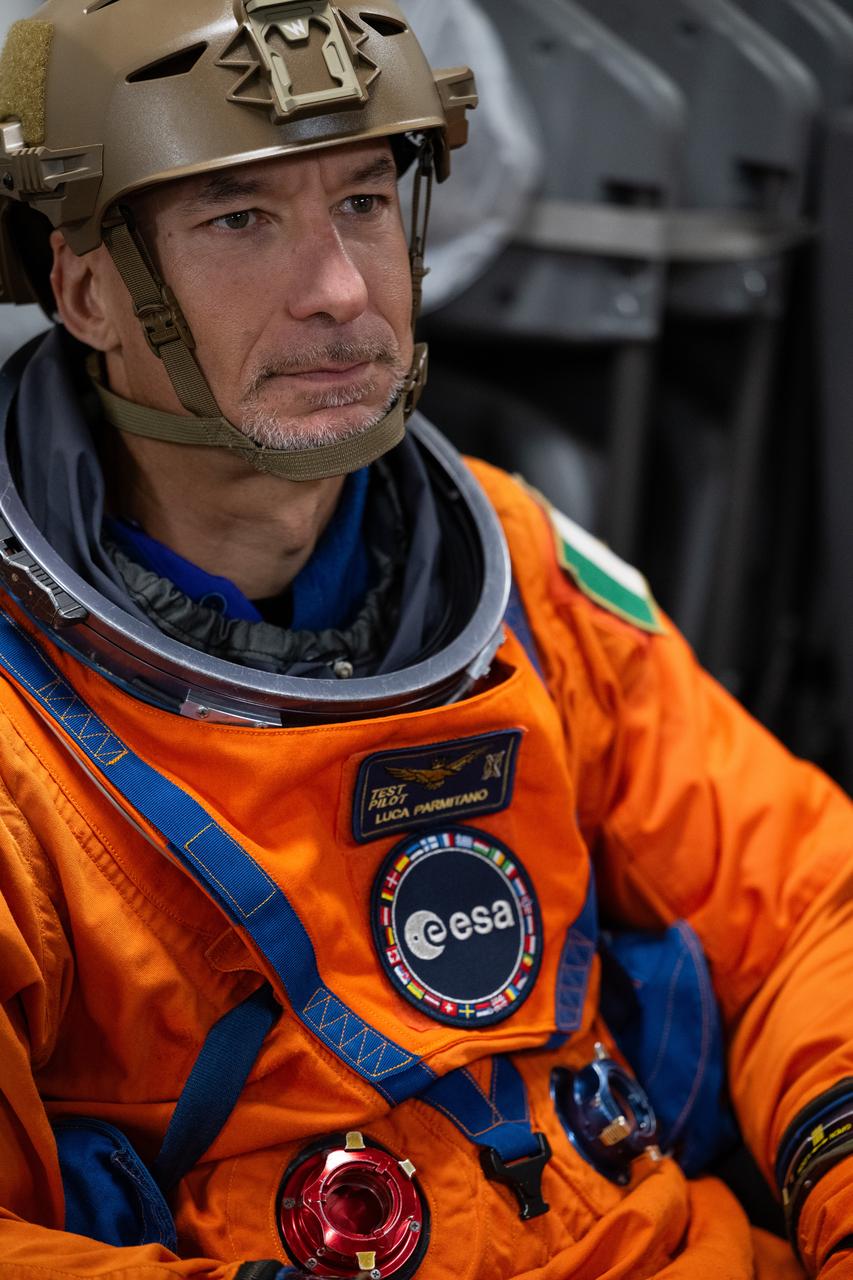
ESA (European Space Agency) astronaut Luca Parmitano is seen as he prepares to take part in practicing Artemis recovery procedures during Underway Recovery Test-12 onboard USS Somerset off the coast of California, Friday, March 28, 2025. During the test, NASA and Department of Defense teams are practicing to ensure recovery procedures are validated as NASA plans to send the Artemis II astronauts around the Moon and splashdown in the Pacific Ocean. Photo Credit: (NASA/Joel Kowsky)
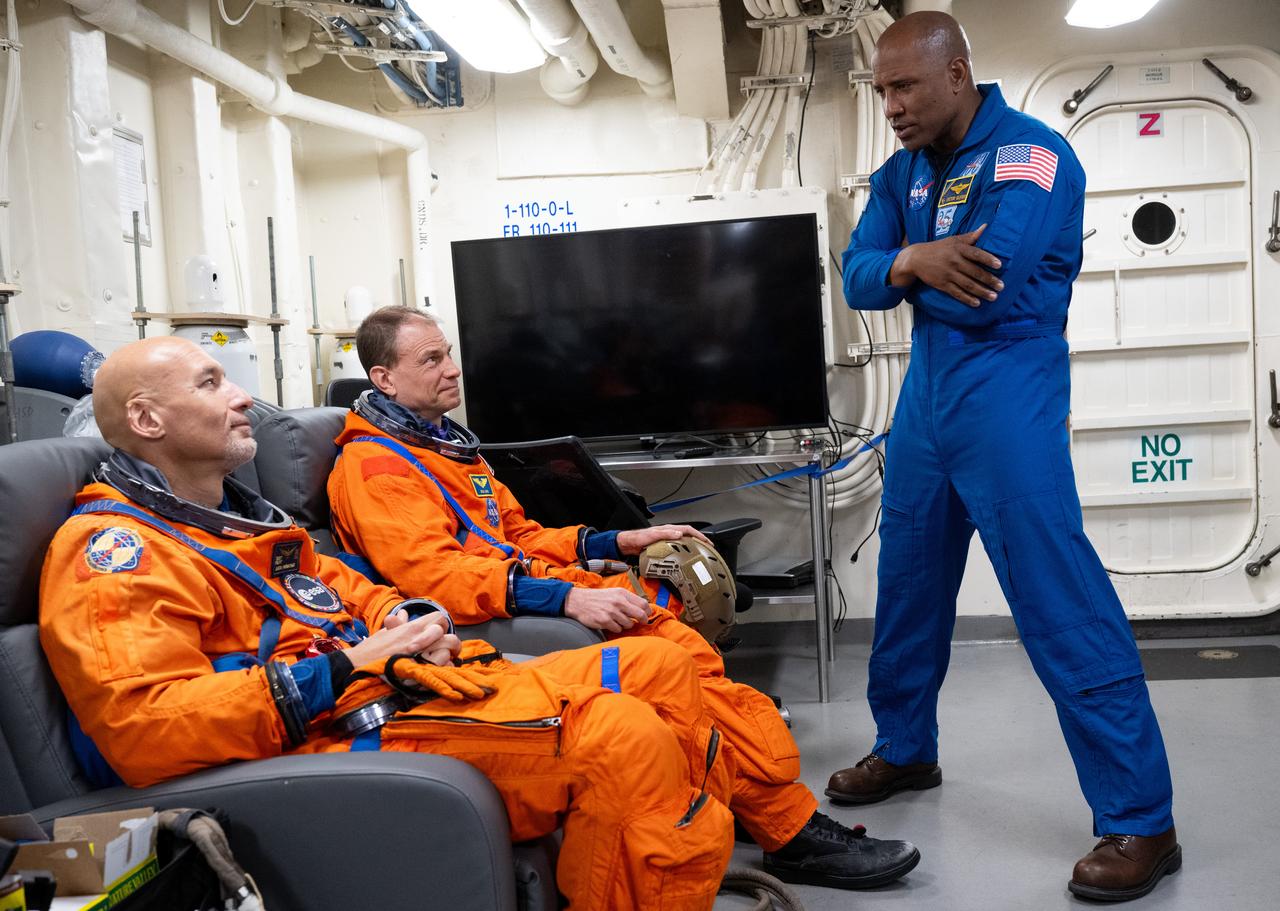
NASA astronaut and Artemis II pilot Victor Glover, right, speaks to ESA (European Space Agency) astronaut Luca Parmitano, left, and NASA astronaut Stan Love as they prepare to take part in practicing Artemis recovery procedures during Underway Recovery Test-12 onboard USS Somerset off the coast of California, Friday, March 28, 2025. During the test, NASA and Department of Defense teams are practicing to ensure recovery procedures are validated as NASA plans to send the Artemis II astronauts around the Moon and splashdown in the Pacific Ocean. Photo Credit: (NASA/Joel Kowsky)
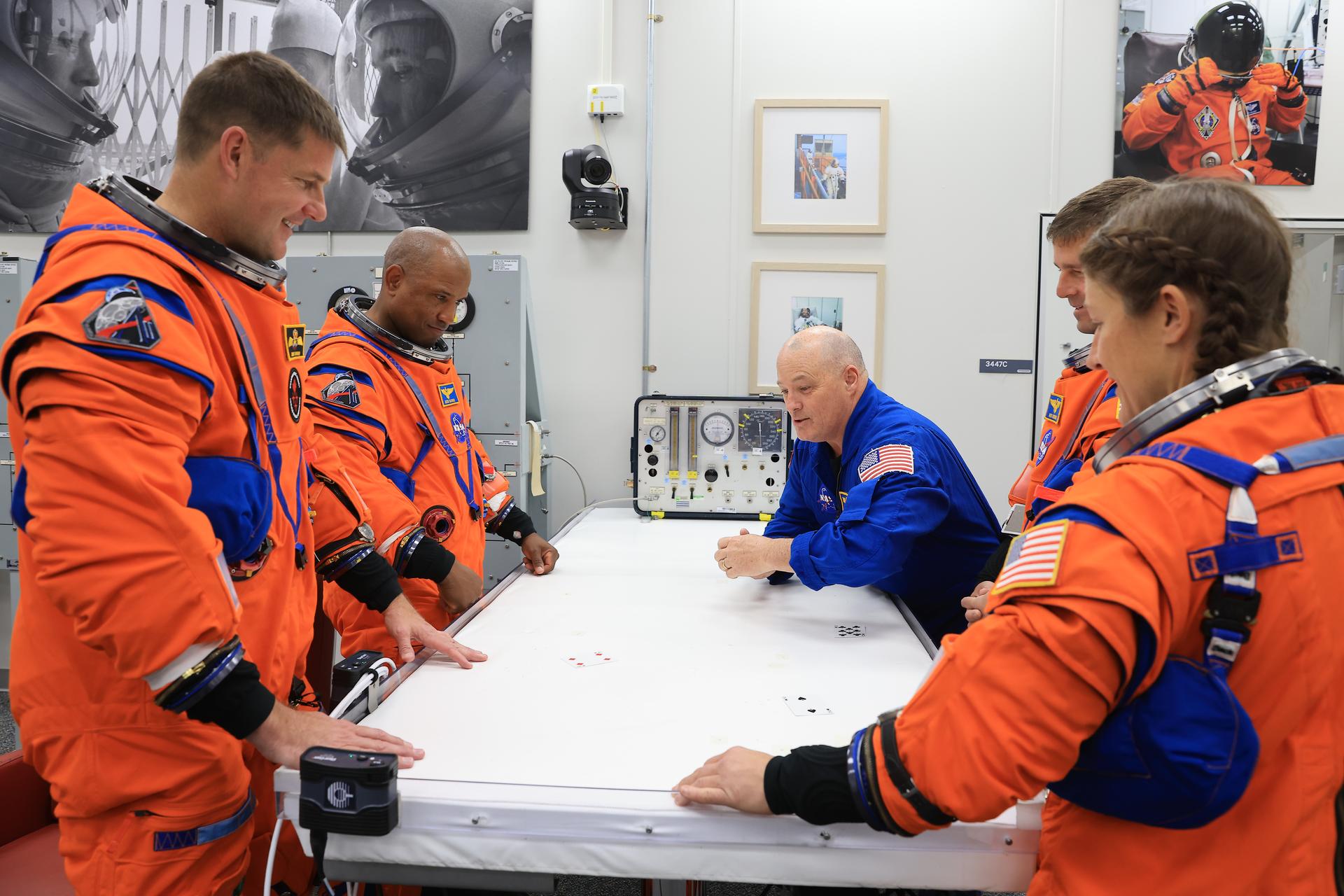
Artemis II crew members play the traditional card game with NASA astronaut chief Scott Tingle, inside the Neil A. Armstrong Operations and Checkout Building at the agency’s Kennedy Space Center in Florida on Wednesday, April 1, 2026, ahead of the Artemis II test flight. The mission will take Artemis II Commander Reid Wiseman, Pilot Victor Glover, and Mission Specialist Christina Koch from NASA, along with Mission Specialist Jeremy Hansen from the CSA (Canadian Space Agency), on a 10-day journey around the Moon and back aboard NASA’s SLS (Space Launch System) rocket and Orion spacecraft with a two hour launch window opening at 6:24 p.m. EDT from Launch Complex 39B at NASA Kennedy.
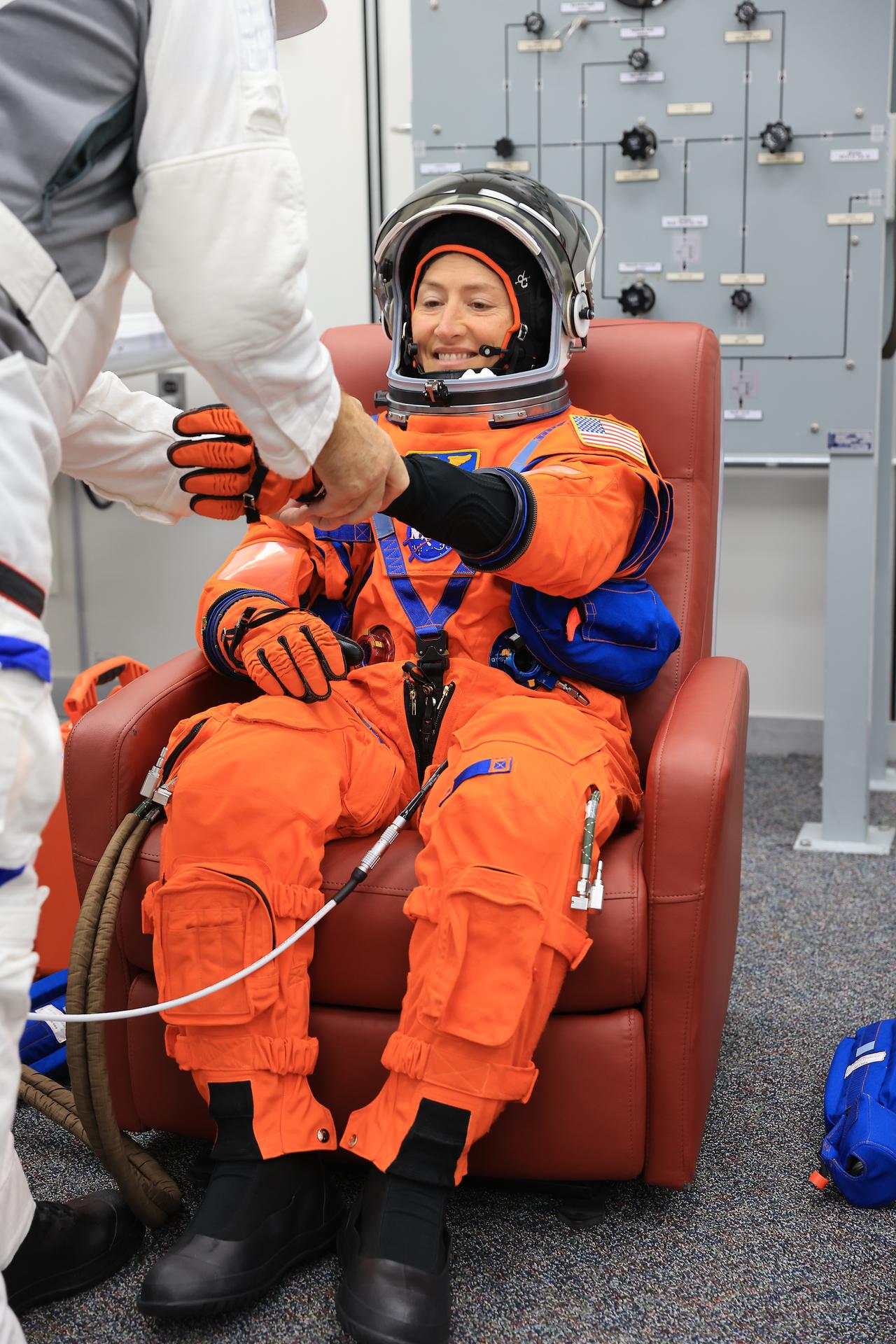
NASA astronaut Christina Koch, Artemis II mission specialist, conducts leak checks on her spacesuit inside the crew suit-up room in the Neil A. Armstrong Operations and Checkout Building at the agency’s Kennedy Space Center in Florida on Wednesday, April 1, 2026, ahead of the Artemis II test flight. The mission will take Koch, Commander Reid Wiseman, and Pilot Victor Glover, from NASA, along with Mission Specialist Jeremy Hansen from the CSA (Canadian Space Agency) on a 10-day journey around the Moon and back aboard NASA’s SLS (Space Launch System) rocket and Orion spacecraft with a two-hour launch window opening at 6:24 p.m. EDT from Launch Complex 39B at NASA Kennedy.
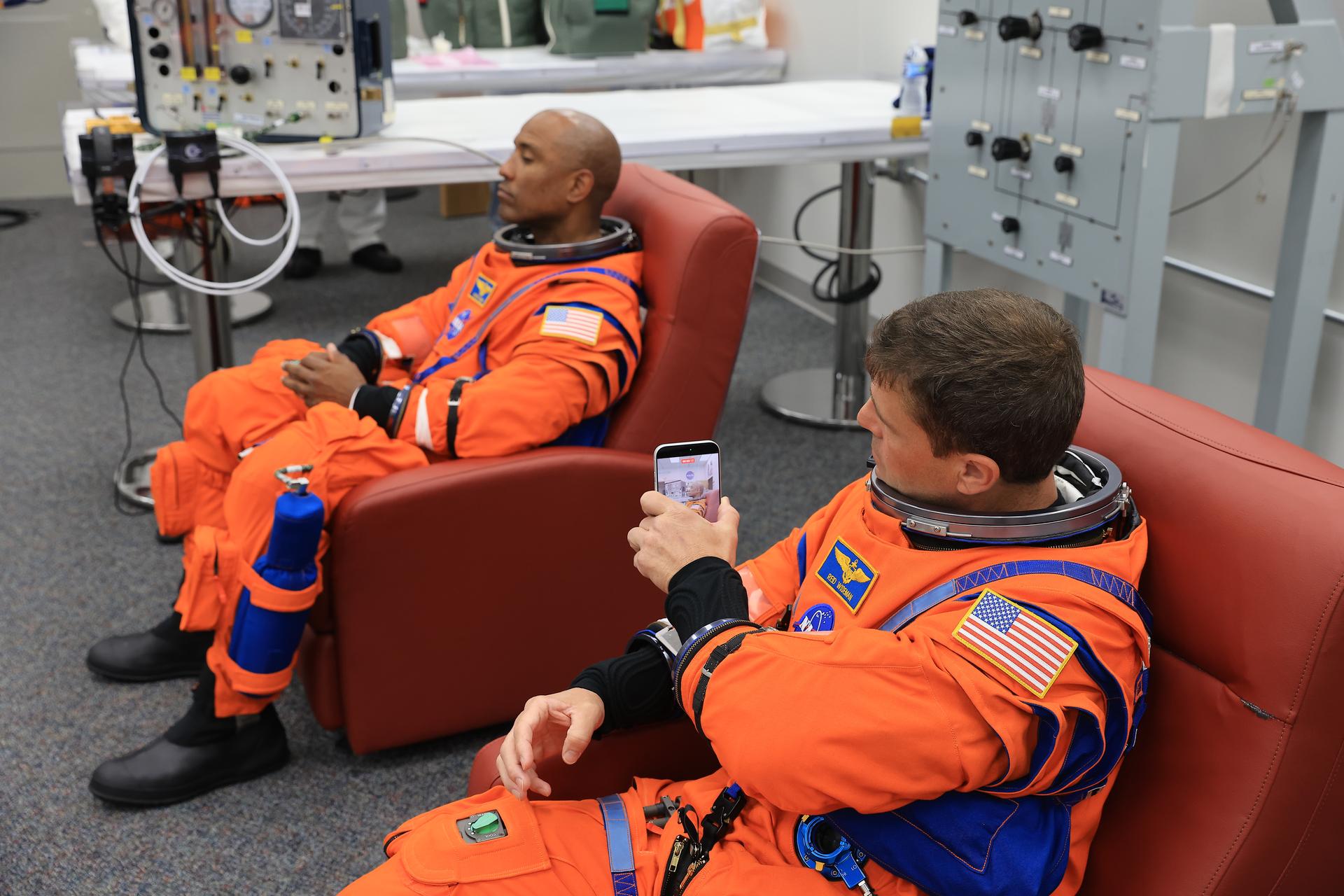
From left, NASA astronauts Victor Glover, Artemis II pilot and Reid Wiseman, Artemis II commander, conduct leak checks on his spacesuit inside the crew suit-up room in the Neil A. Armstrong Operations and Checkout Building at the agency’s Kennedy Space Center in Florida on Wednesday, April 1, 2026, ahead of the Artemis II test flight. The mission will take Wiseman, Pilot Victor Glover, and Mission Specialist Christina Koch from NASA, along with Mission Specialist Jeremy Hansen from the CSA (Canadian Space Agency), on a 10-day journey around the Moon and back aboard NASA’s SLS (Space Launch System) rocket and Orion spacecraft with a two hour launch window opening at 6:24 p.m. EDT from Launch Complex 39B at NASA Kennedy.

NASA astronaut Victor Glover, Artemis II pilot, conducts leak checks on his spacesuit inside the crew suit-up room in the Neil A. Armstrong Operations and Checkout Building at the agency’s Kennedy Space Center in Florida on Wednesday, April 1, 2026, ahead of the Artemis II test flight. The mission will take Pilot Victor Glover, Commander Reid Wiseman, and Mission Specialist Christina Koch from NASA, along with Mission Specialist Jeremy Hansen from the CSA (Canadian Space Agency) on a 10-day journey around the Moon and back aboard NASA’s SLS (Space Launch System) rocket and Orion spacecraft with a two hour launch window opening at 6:24 p.m. EDT from Launch Complex 39B at NASA Kennedy.
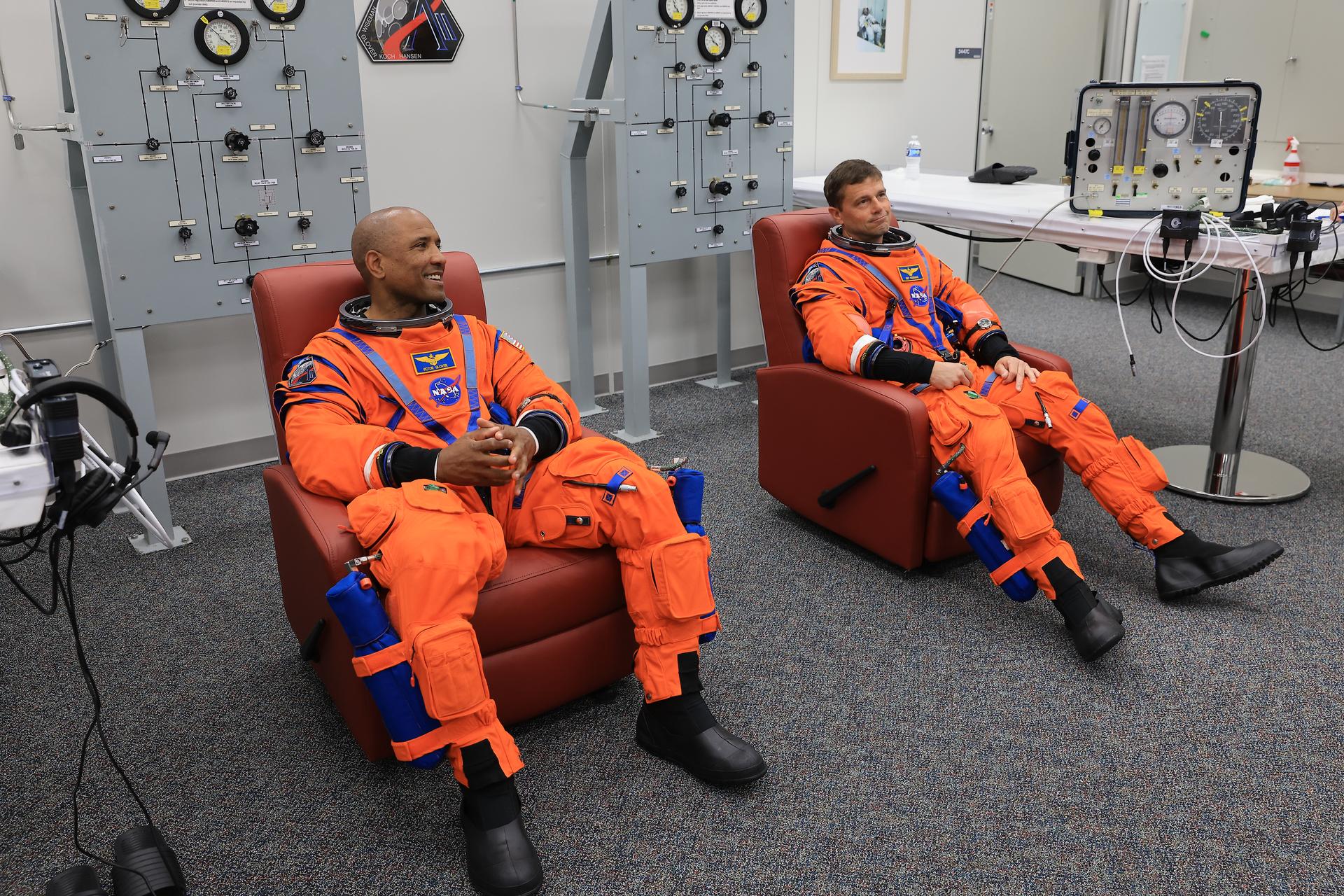
From left, NASA astronauts Victor Glover, Artemis II pilot and Reid Wiseman, Artemis II commander, conduct leak checks on his spacesuit inside the crew suit-up room in the Neil A. Armstrong Operations and Checkout Building at the agency’s Kennedy Space Center in Florida on Wednesday, April 1, 2026, ahead of the Artemis II test flight. The mission will take Wiseman, Pilot Victor Glover, and Mission Specialist Christina Koch from NASA, along with Mission Specialist Jeremy Hansen from the CSA (Canadian Space Agency), on a 10-day journey around the Moon and back aboard NASA’s SLS (Space Launch System) rocket and Orion spacecraft with a two hour launch window opening at 6:24 p.m. EDT from Launch Complex 39B at NASA Kennedy.
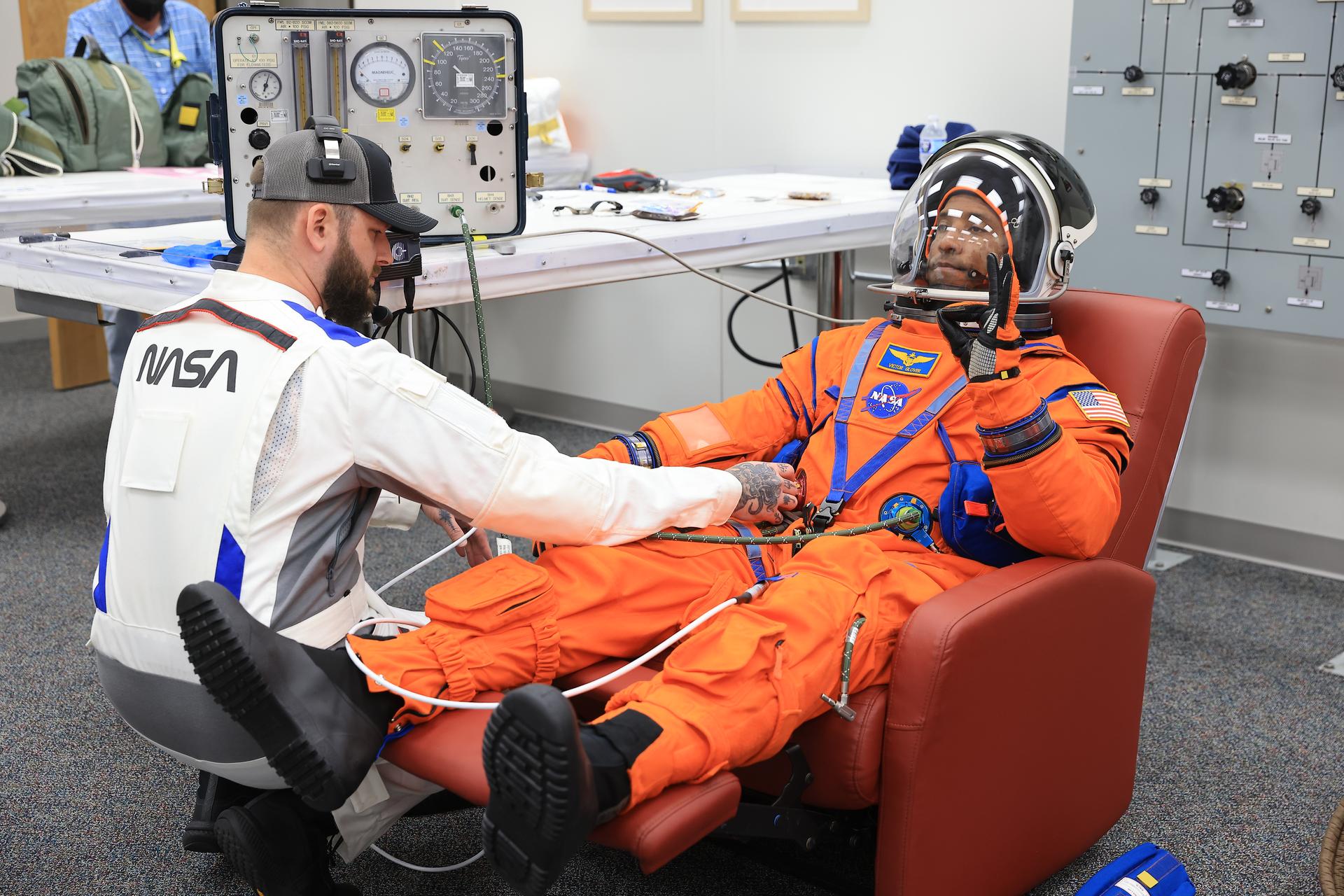
NASA astronaut Victor Glover, Artemis II pilot, conducts leak checks on his spacesuit inside the crew suit-up room in the Neil A. Armstrong Operations and Checkout Building at the agency’s Kennedy Space Center in Florida on Wednesday, April 1, 2026, ahead of the Artemis II test flight. The mission will take Pilot Victor Glover, Commander Reid Wiseman, and Mission Specialist Christina Koch from NASA, along with Mission Specialist Jeremy Hansen from the CSA (Canadian Space Agency) on a 10-day journey around the Moon and back aboard NASA’s SLS (Space Launch System) rocket and Orion spacecraft with a two hour launch window opening at 6:24 p.m. EDT from Launch Complex 39B at NASA Kennedy.
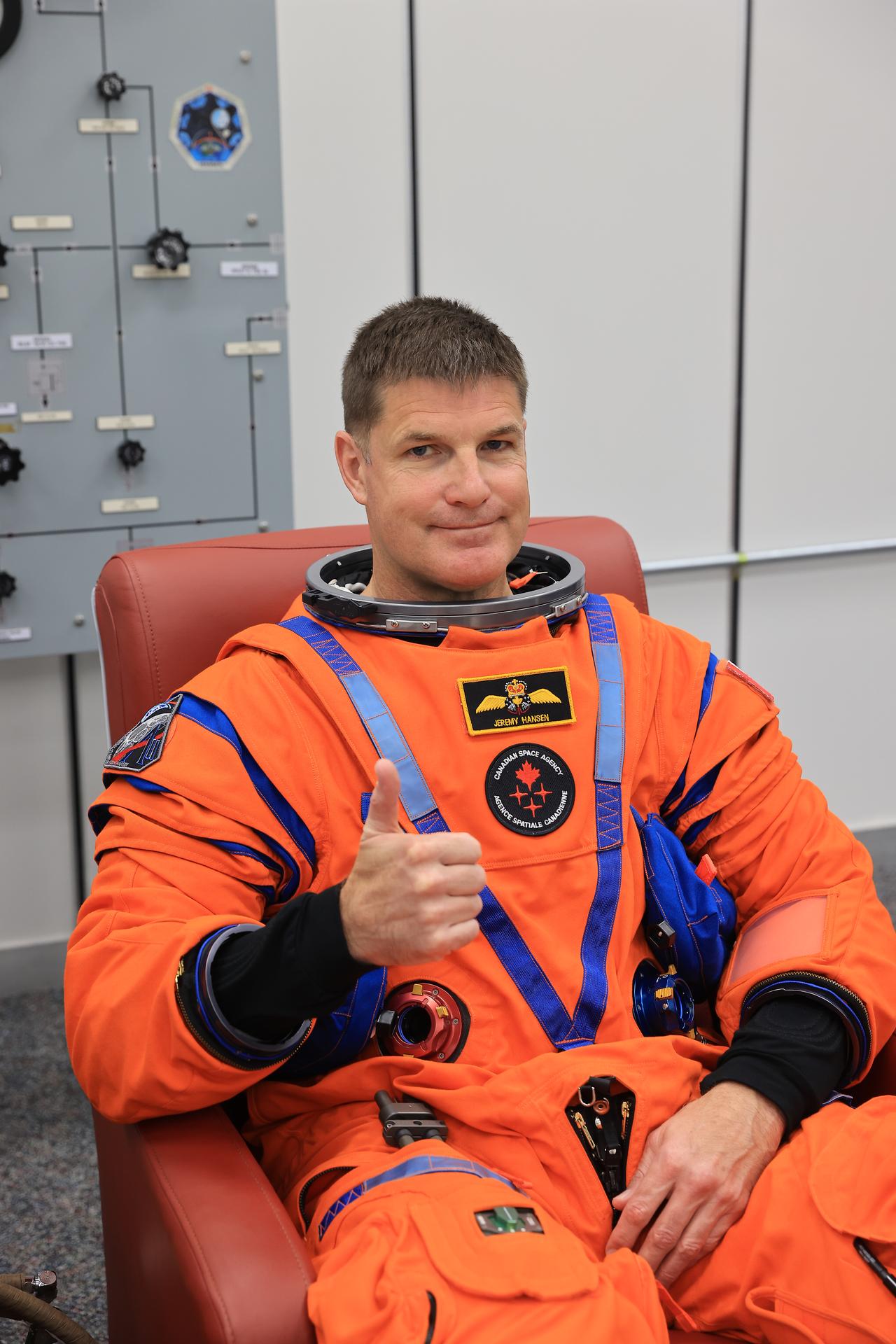
CSA (Canadian Space Agency) astronaut Jeremy Hansen, Artemis II mission specialist, conducts leak checks on his spacesuit inside the crew suit-up room in the Neil A. Armstrong Operations and Checkout Building at the agency’s Kennedy Space Center in Florida on Wednesday, April 1, 2026, ahead of the Artemis II test flight. The mission will take Hansen, Commander Reid Wiseman, Pilot Victor Glover, and Mission Specialist Christina Koch, from NASA, on a 10-day journey around the Moon and back aboard NASA’s SLS (Space Launch System) rocket and Orion spacecraft with a two-hour launch window opening at 6:24 p.m. EDT from Launch Complex 39B at NASA Kennedy.
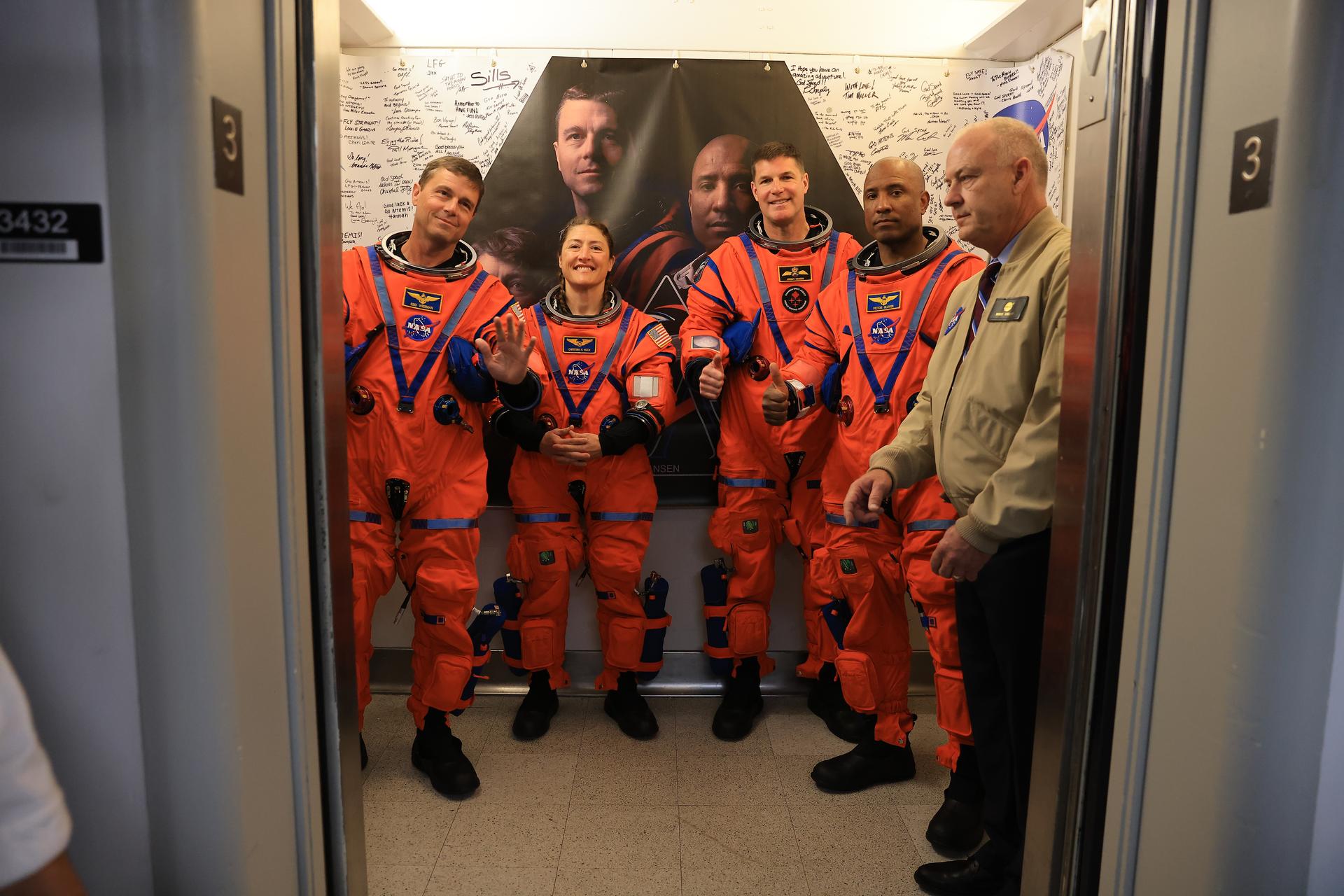
From left, Artemis II Commander Reid Wiseman, Mission Specialist Christina Koch, and Mission Specialist Jeremy Hansen, from the CSA (Canadian Space Agency), along with Pilot Victor Glover, from NASA, board the elevator to walk out of the Neil A. Armstrong Operations and Checkout Building at the agency’s Kennedy Space Center in Florida on Wednesday, April 1, 2026, ahead of the Artemis II test flight. The mission will take the Artemis II crew on a 10-day journey around the Moon and back aboard NASA’s SLS (Space Launch System) rocket and Orion spacecraft with a two hour launch window opening at 6:24 p.m. EDT from Launch Complex 39B at NASA Kennedy.
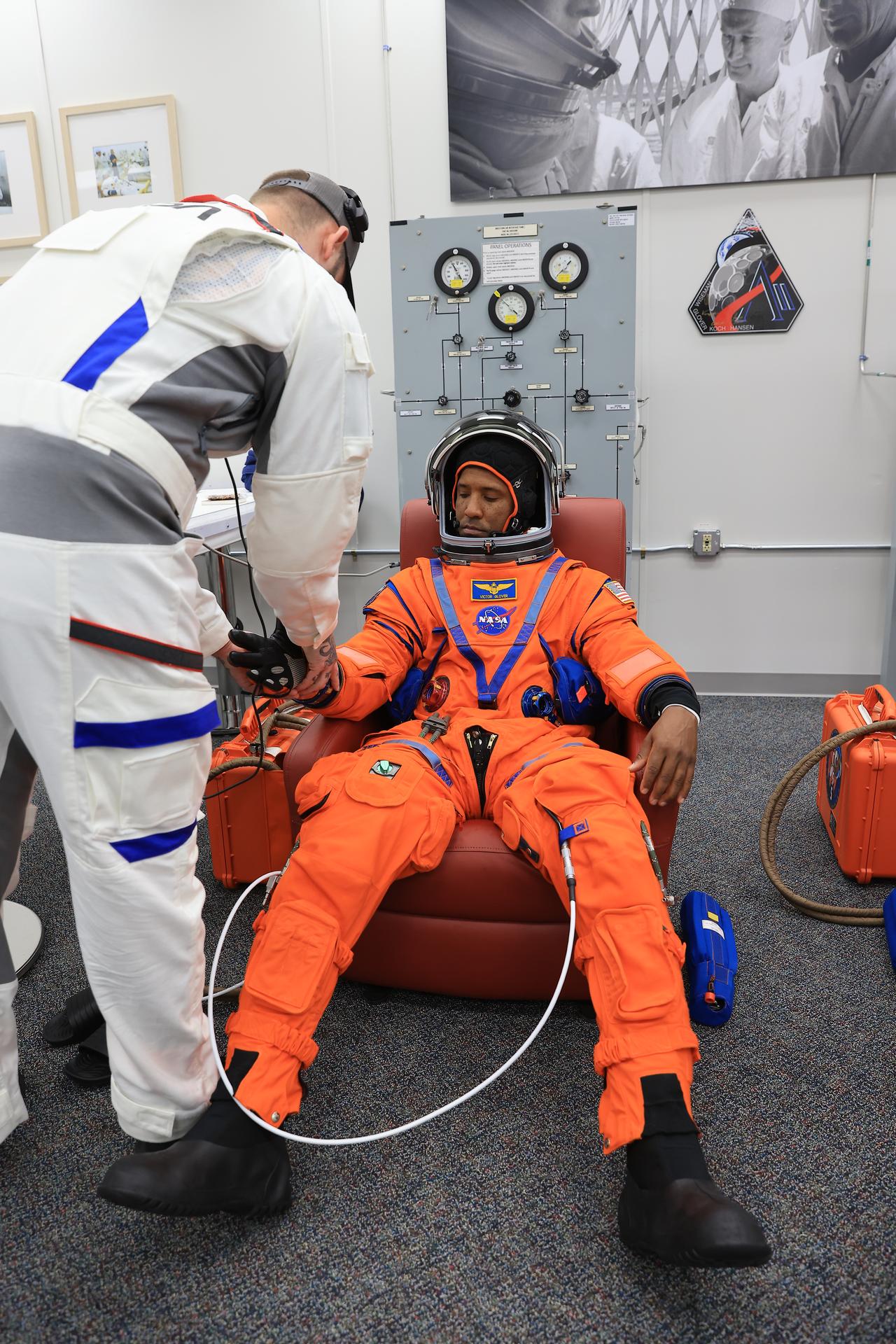
NASA astronaut Victor Glover, Artemis II pilot, conducts leak checks on his spacesuit inside the crew suit-up room in the Neil A. Armstrong Operations and Checkout Building at the agency’s Kennedy Space Center in Florida on Wednesday, April 1, 2026, ahead of the Artemis II test flight. The mission will take Pilot Victor Glover, Commander Reid Wiseman, and Mission Specialist Christina Koch from NASA, along with Mission Specialist Jeremy Hansen from the CSA (Canadian Space Agency) on a 10-day journey around the Moon and back aboard NASA’s SLS (Space Launch System) rocket and Orion spacecraft with a two hour launch window opening at 6:24 p.m. EDT from Launch Complex 39B at NASA Kennedy.
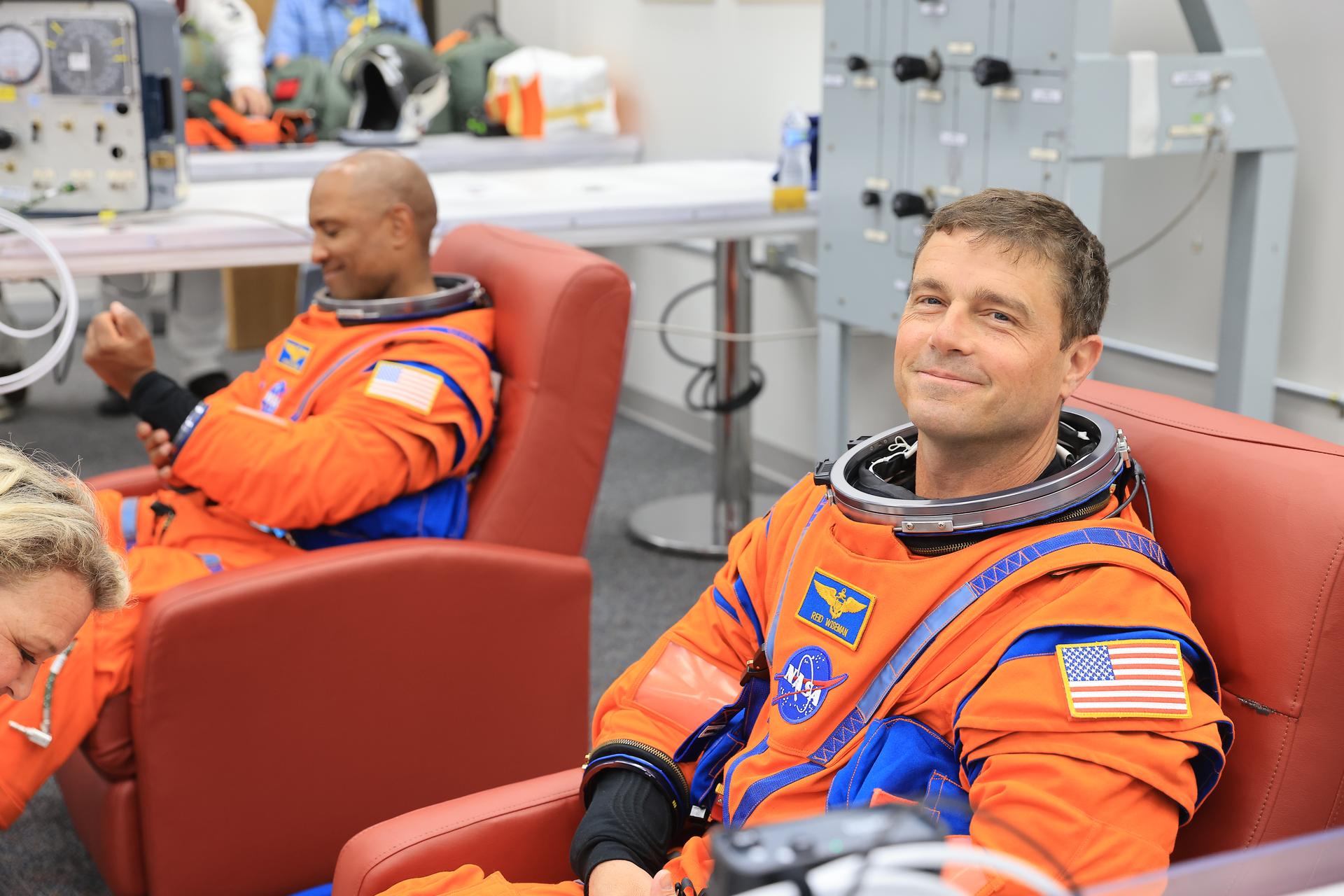
From left, NASA astronauts Victor Glover, Artemis II pilot and Reid Wiseman, Artemis II commander, conduct leak checks on his spacesuit inside the crew suit-up room in the Neil A. Armstrong Operations and Checkout Building at the agency’s Kennedy Space Center in Florida on Wednesday, April 1, 2026, ahead of the Artemis II test flight. The mission will take Wiseman, Pilot Victor Glover, and Mission Specialist Christina Koch from NASA, along with Mission Specialist Jeremy Hansen from the CSA (Canadian Space Agency), on a 10-day journey around the Moon and back aboard NASA’s SLS (Space Launch System) rocket and Orion spacecraft with a two hour launch window opening at 6:24 p.m. EDT from Launch Complex 39B at NASA Kennedy.
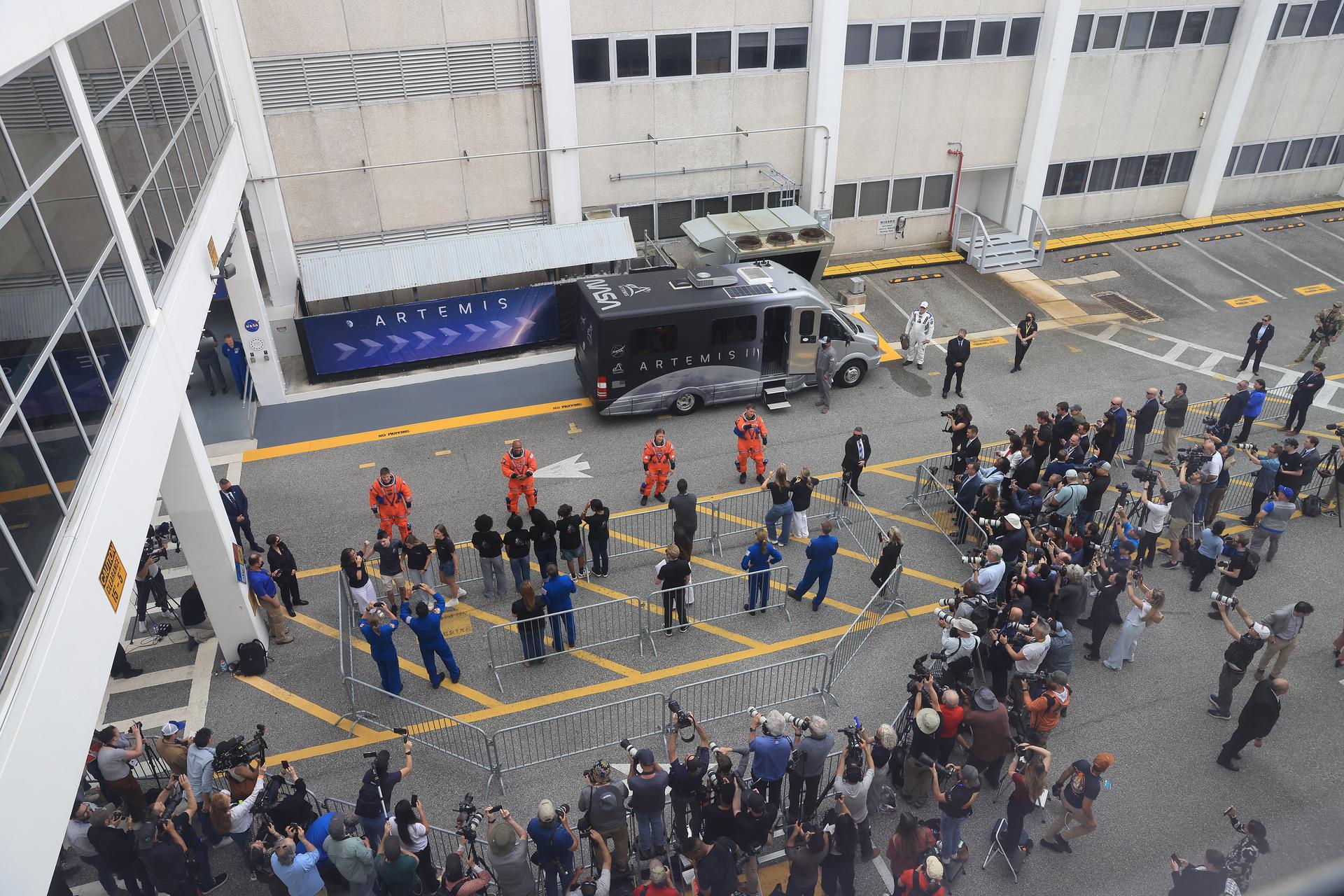
Artemis II crew members wave to family and friends as they prepare to depart the Neil A. Armstrong Operations and Checkout Building for Launch Pad 39B at the agency’s Kennedy Space Center in Florida on Wednesday, April 1, 2026, ahead of the Artemis II test flight. The mission will take Artemis II Commander Reid Wiseman, Pilot Victor Glover, and Mission Specialist Christina Koch from NASA, along with Mission Specialist Jeremy Hansen from the CSA (Canadian Space Agency), on a 10-day journey around the Moon and back aboard NASA’s SLS (Space Launch System) rocket and Orion spacecraft with a two hour launch window opening at 6:24 p.m. EDT from Launch Complex 39B at NASA Kennedy.
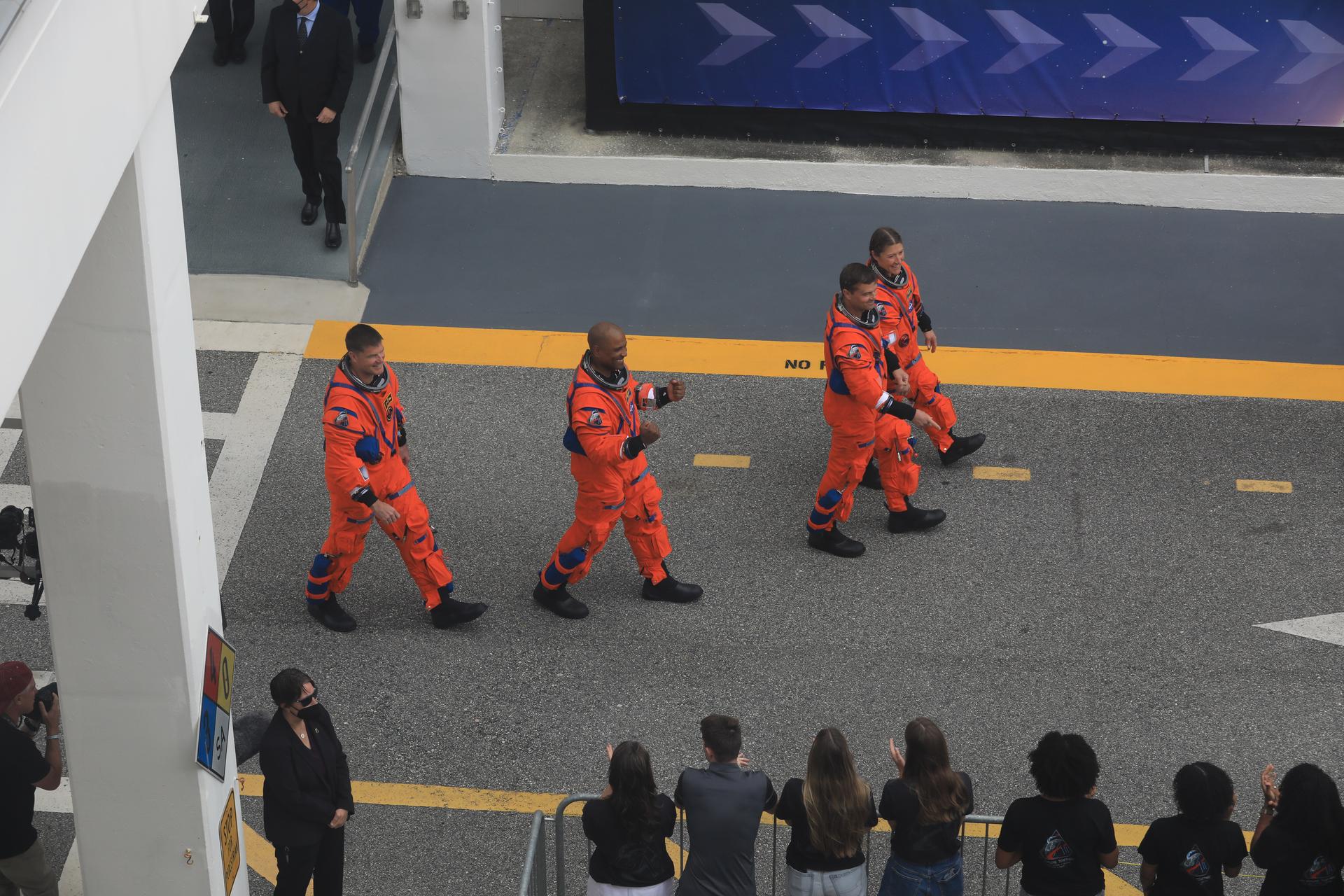
Artemis II crew members wave to family and friends as they prepare to depart the Neil A. Armstrong Operations and Checkout Building for Launch Pad 39B at the agency’s Kennedy Space Center in Florida on Wednesday, April 1, 2026, ahead of the Artemis II test flight. The mission will take Artemis II Commander Reid Wiseman, Pilot Victor Glover, and Mission Specialist Christina Koch from NASA, along with Mission Specialist Jeremy Hansen from the CSA (Canadian Space Agency), on a 10-day journey around the Moon and back aboard NASA’s SLS (Space Launch System) rocket and Orion spacecraft with a two hour launch window opening at 6:24 p.m. EDT from Launch Complex 39B at NASA Kennedy.
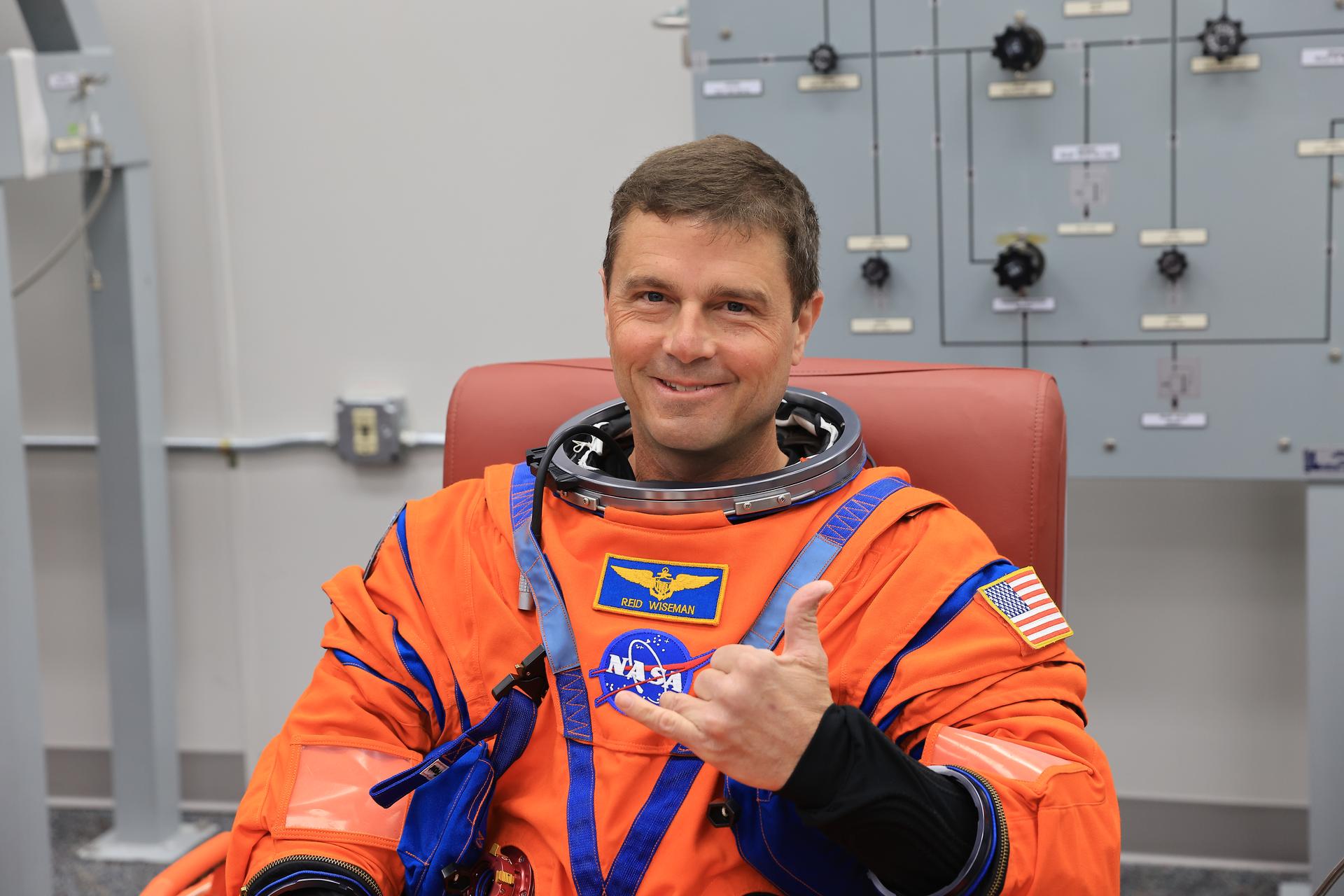
NASA astronaut Reid Wiseman, Artemis II commander, smiles during leak checks on his spacesuit inside the crew suit-up room in the Neil A. Armstrong Operations and Checkout Building at the agency’s Kennedy Space Center in Florida on Wednesday, April 1, 2026, ahead of the Artemis II test flight. The mission will take Wiseman, Pilot Victor Glover, and Mission Specialist Christina Koch from NASA, along with Mission Specialist Jeremy Hansen from the CSA (Canadian Space Agency), on a 10-day journey around the Moon and back aboard NASA’s SLS (Space Launch System) rocket and Orion spacecraft with a two hour launch window opening at 6:24 p.m. EDT from Launch Complex 39B at NASA Kennedy.
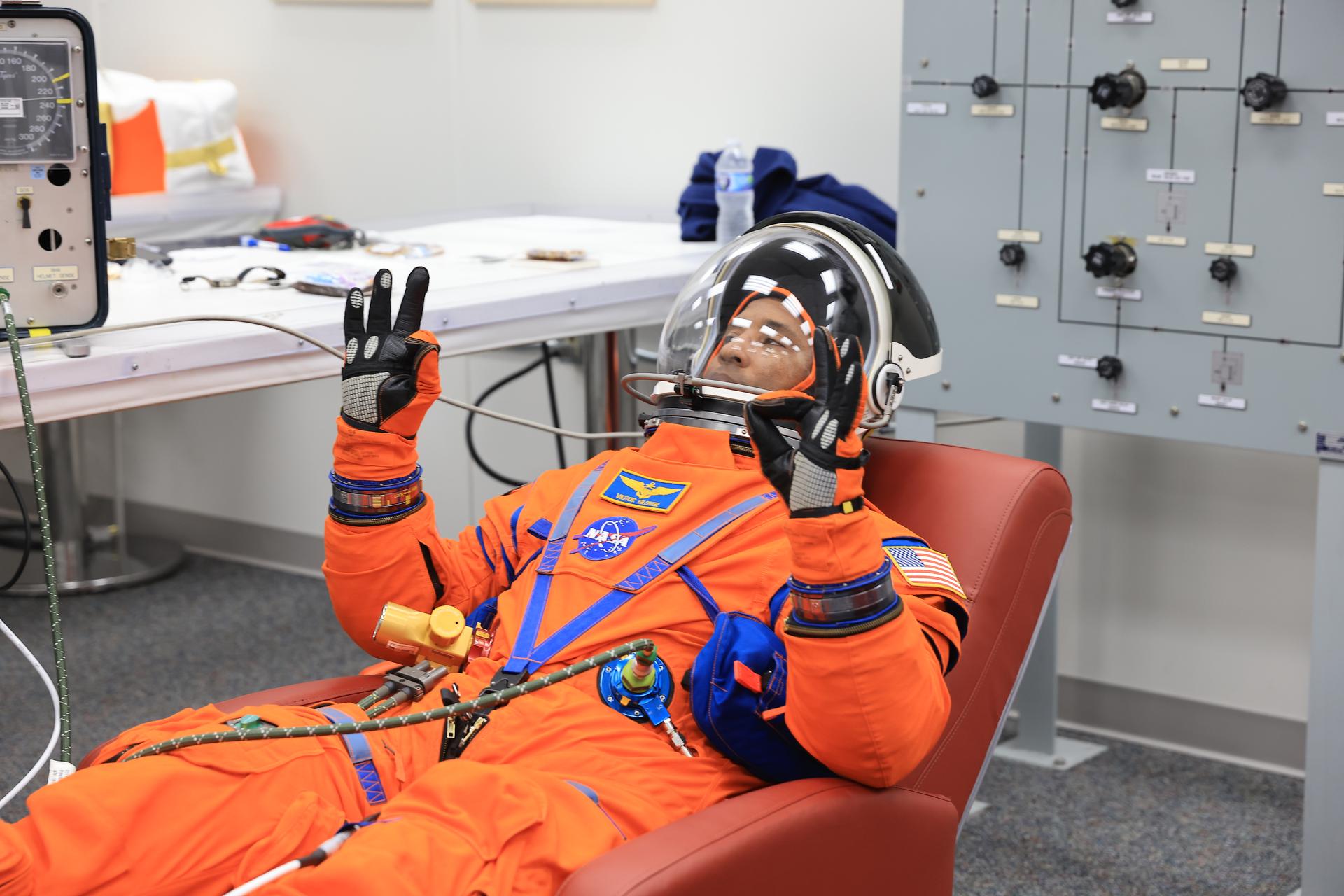
NASA astronaut Victor Glover, Artemis II pilot, conducts leak checks on his spacesuit inside the crew suit-up room in the Neil A. Armstrong Operations and Checkout Building at the agency’s Kennedy Space Center in Florida on Wednesday, April 1, 2026, ahead of the Artemis II test flight. The mission will take Pilot Victor Glover, Commander Reid Wiseman, and Mission Specialist Christina Koch from NASA, along with Mission Specialist Jeremy Hansen from the CSA (Canadian Space Agency) on a 10-day journey around the Moon and back aboard NASA’s SLS (Space Launch System) rocket and Orion spacecraft with a two hour launch window opening at 6:24 p.m. EDT from Launch Complex 39B at NASA Kennedy.
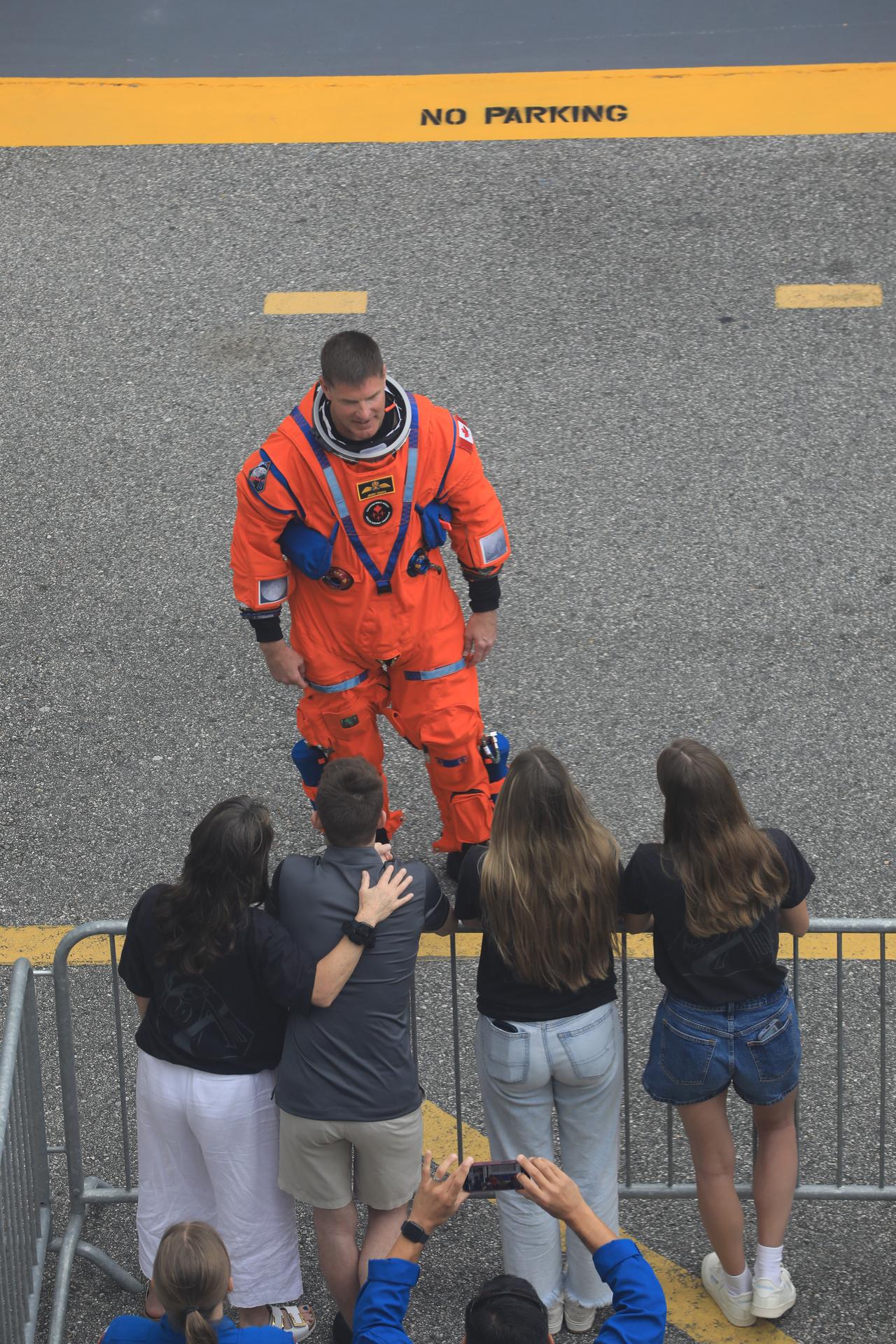
Artemis II Mission Specialist Jeremy Hansen from the CSA (Canadian Space Agency), waves to family and friends as he prepares to depart the Neil A. Armstrong Operations and Checkout Building for Launch Pad 39B at the agency’s Kennedy Space Center in Florida on Wednesday, April 1, 2026, ahead of the Artemis II test flight. The mission will take Hansen, Commander Reid Wiseman, Pilot Victor Glover, and Mission Specialist Christina Koch, from NASA, on a 10-day journey around the Moon and back aboard NASA’s SLS (Space Launch System) rocket and Orion spacecraft with a two hour launch window opening at 6:24 p.m. EDT from Launch Complex 39B at NASA Kennedy.
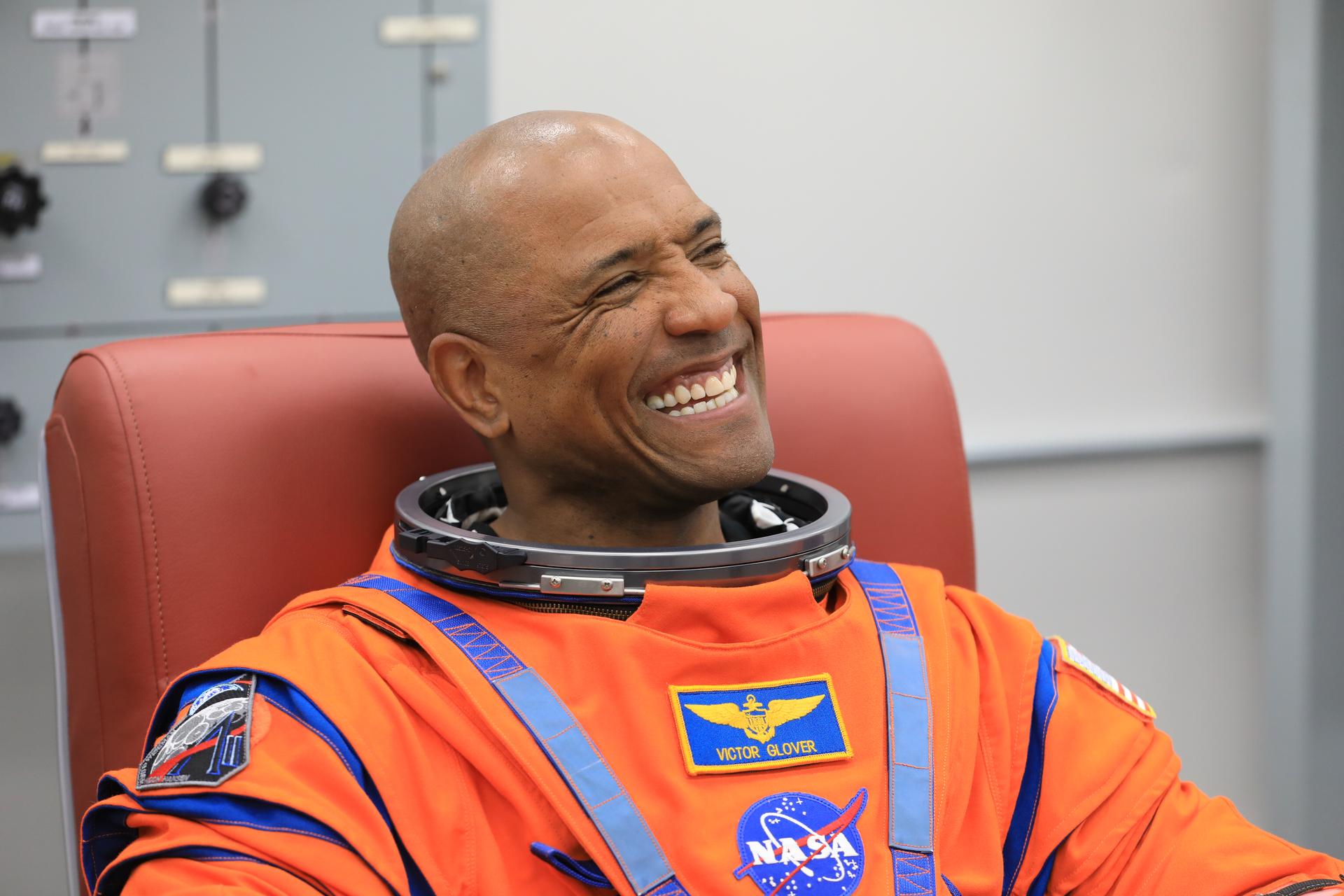
NASA astronaut Victor Glover, Artemis II pilot, smiles during leak checks on his spacesuit inside the crew suit-up room in the Neil A. Armstrong Operations and Checkout Building at the agency’s Kennedy Space Center in Florida on Wednesday, April 1, 2026, ahead of the Artemis II test flight. The mission will take Pilot Victor Glover, Commander Reid Wiseman, and Mission Specialist Christina Koch from NASA, along with Mission Specialist Jeremy Hansen from the CSA (Canadian Space Agency) on a 10-day journey around the Moon and back aboard NASA’s SLS (Space Launch System) rocket and Orion spacecraft with a two hour launch window opening at 6:24 p.m. EDT from Launch Complex 39B at NASA Kennedy.
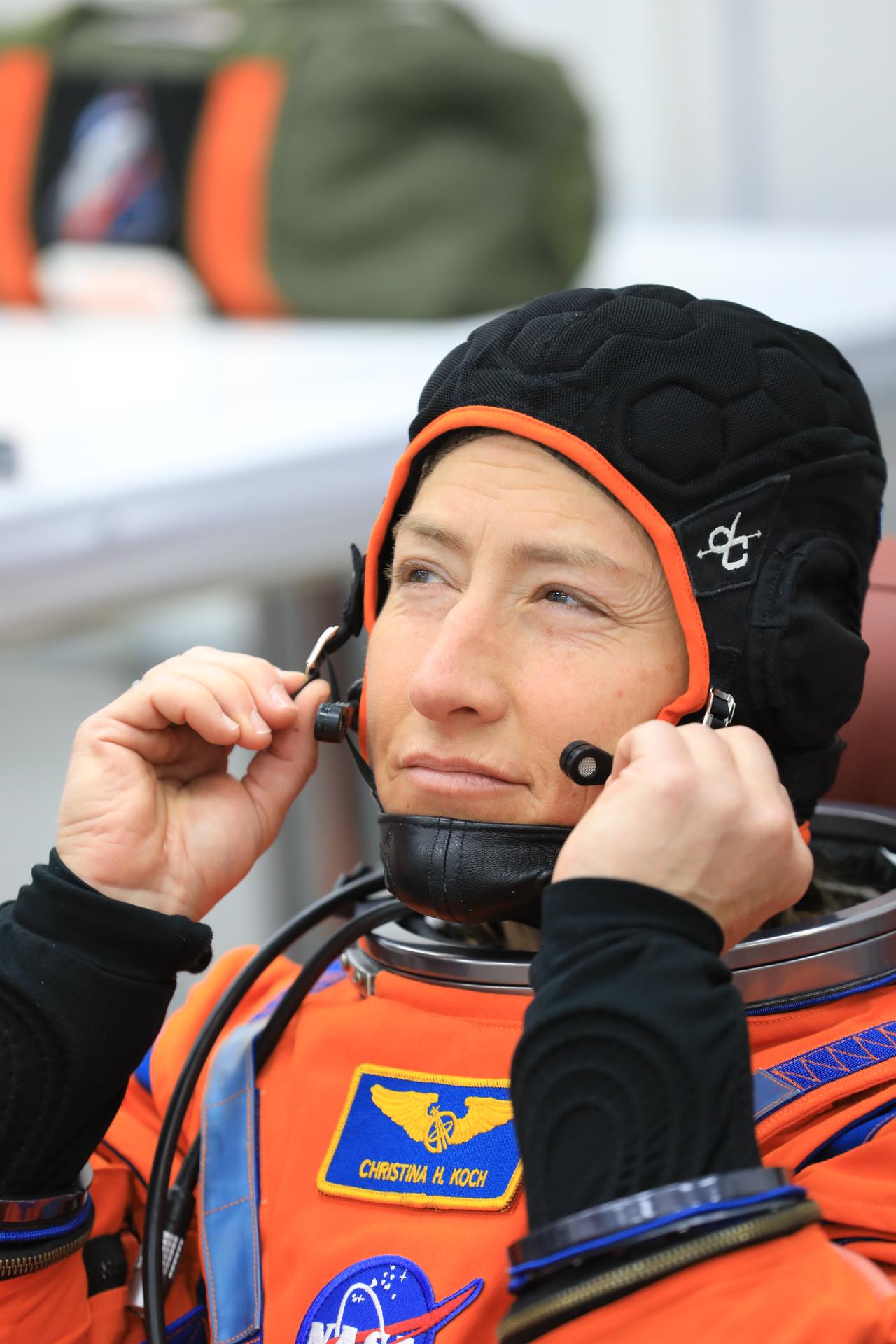
NASA astronaut Christina Koch, Artemis II mission specialist, conducts leak checks on her spacesuit inside the crew suit-up room in the Neil A. Armstrong Operations and Checkout Building at the agency’s Kennedy Space Center in Florida on Wednesday, April 1, 2026, ahead of the Artemis II test flight. The mission will take Koch, Commander Reid Wiseman, and Pilot Victor Glover, from NASA, along with Mission Specialist Jeremy Hansen from the CSA (Canadian Space Agency) on a 10-day journey around the Moon and back aboard NASA’s SLS (Space Launch System) rocket and Orion spacecraft with a two-hour launch window opening at 6:24 p.m. EDT from Launch Complex 39B at NASA Kennedy.
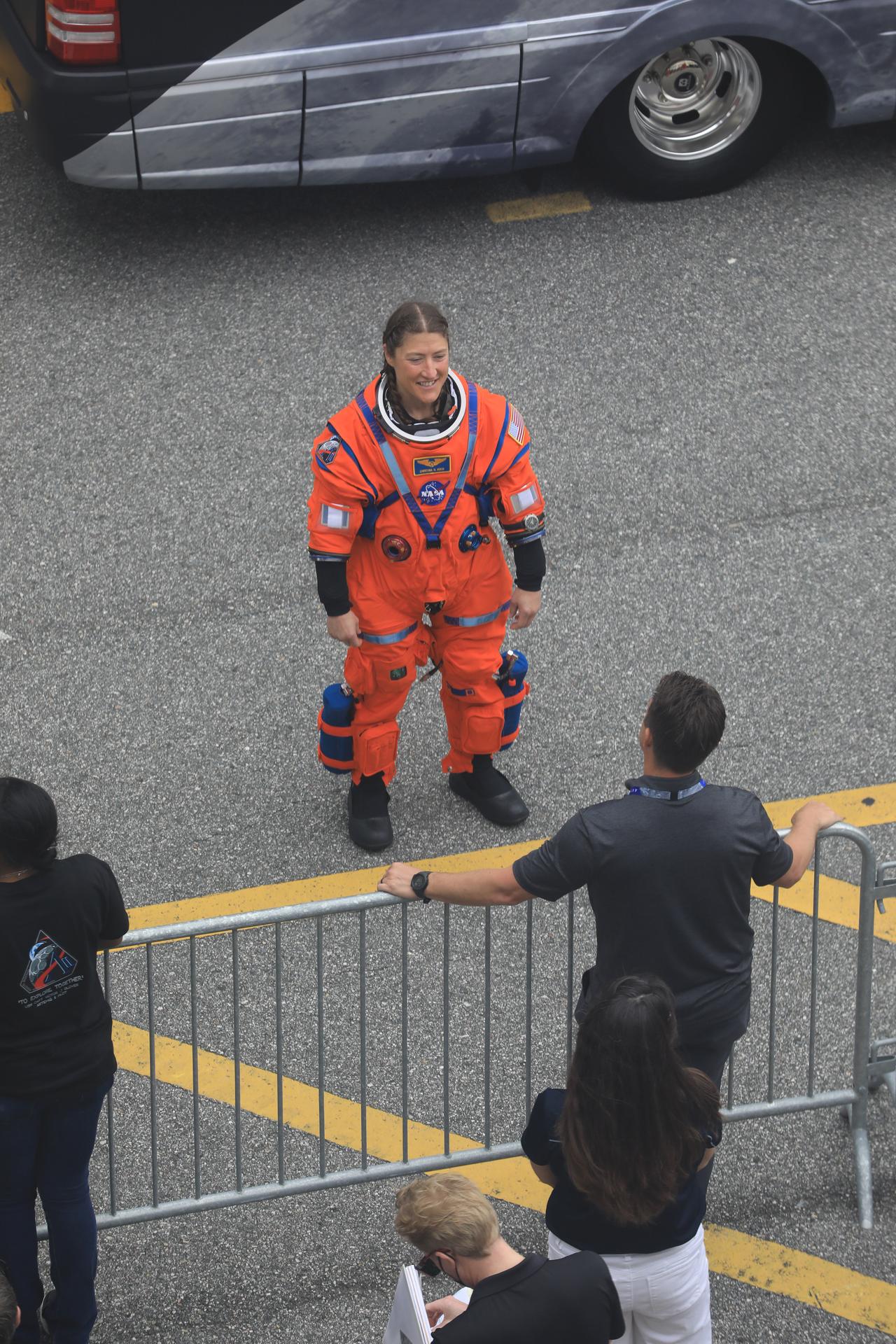
Artemis II Mission Specialist Christina Koch waves to family and friends as she prepares to depart the Neil A. Armstrong Operations and Checkout Building for Launch Pad 39B at the agency’s Kennedy Space Center in Florida on Wednesday, April 1, 2026, ahead of the Artemis II test flight. The mission will take Koch, Commander Reid Wiseman, and Pilot Victor Glover, from NASA, along with Mission Specialist Jeremy Hansen from the CSA (Canadian Space Agency), on a 10-day journey around the Moon and back aboard NASA’s SLS (Space Launch System) rocket and Orion spacecraft with a two hour launch window opening at 6:24 p.m. EDT from Launch Complex 39B at NASA Kennedy.
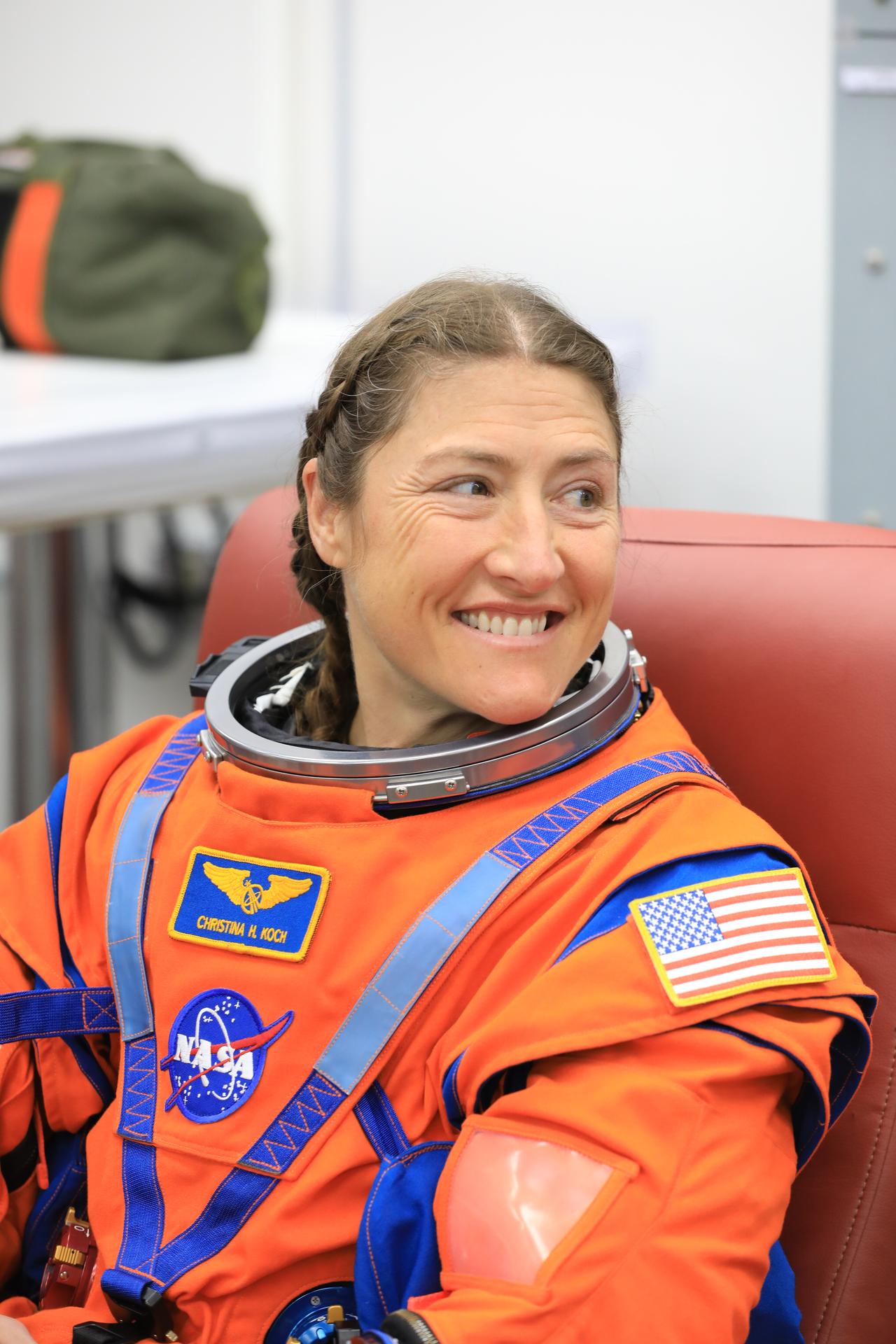
NASA astronaut Christina Koch, Artemis II mission specialist, smiles during leak checks on her spacesuit inside the crew suit-up room in the Neil A. Armstrong Operations and Checkout Building at the agency’s Kennedy Space Center in Florida on Wednesday, April 1, 2026, ahead of the Artemis II test flight. The mission will take Koch, Commander Reid Wiseman, and Pilot Victor Glover, from NASA, along with Mission Specialist Jeremy Hansen from the CSA (Canadian Space Agency) on a 10-day journey around the Moon and back aboard NASA’s SLS (Space Launch System) rocket and Orion spacecraft with a two-hour launch window opening at 6:24 p.m. EDT from Launch Complex 39B at NASA Kennedy.
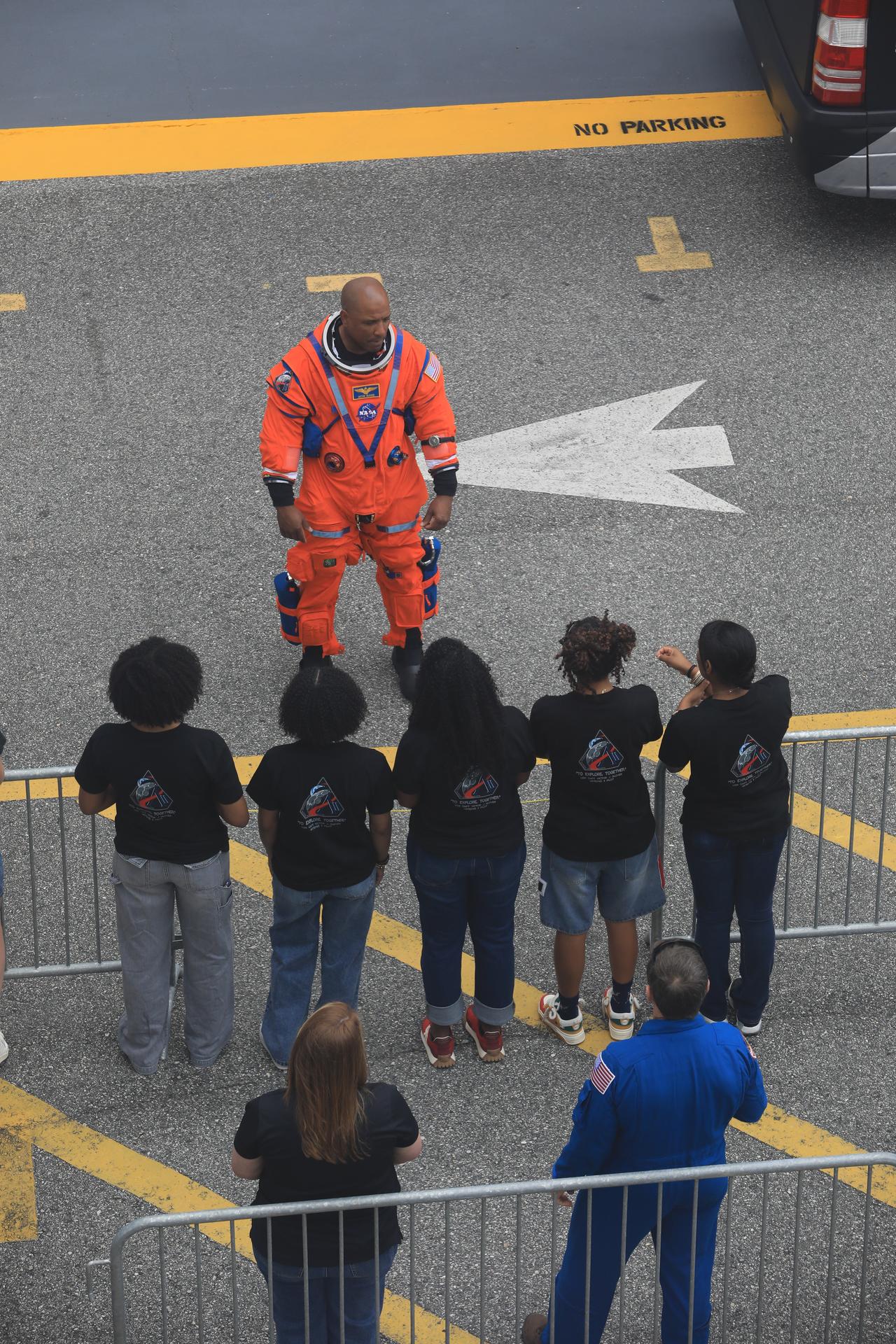
Artemis II Pilot Victor Glover waves to family and friends as he prepares to depart the Neil A. Armstrong Operations and Checkout Building for Launch Pad 39B at the agency’s Kennedy Space Center in Florida on Wednesday, April 1, 2026, ahead of the Artemis II test flight. The mission will take Glover, Commander Reid Wiseman, and Mission Specialist Christina Koch, from NASA, along with Mission Specialist Jeremy Hansen from the CSA (Canadian Space Agency), on a 10-day journey around the Moon and back aboard NASA’s SLS (Space Launch System) rocket and Orion spacecraft with a two hour launch window opening at 6:24 p.m. EDT from Launch Complex 39B at NASA Kennedy.
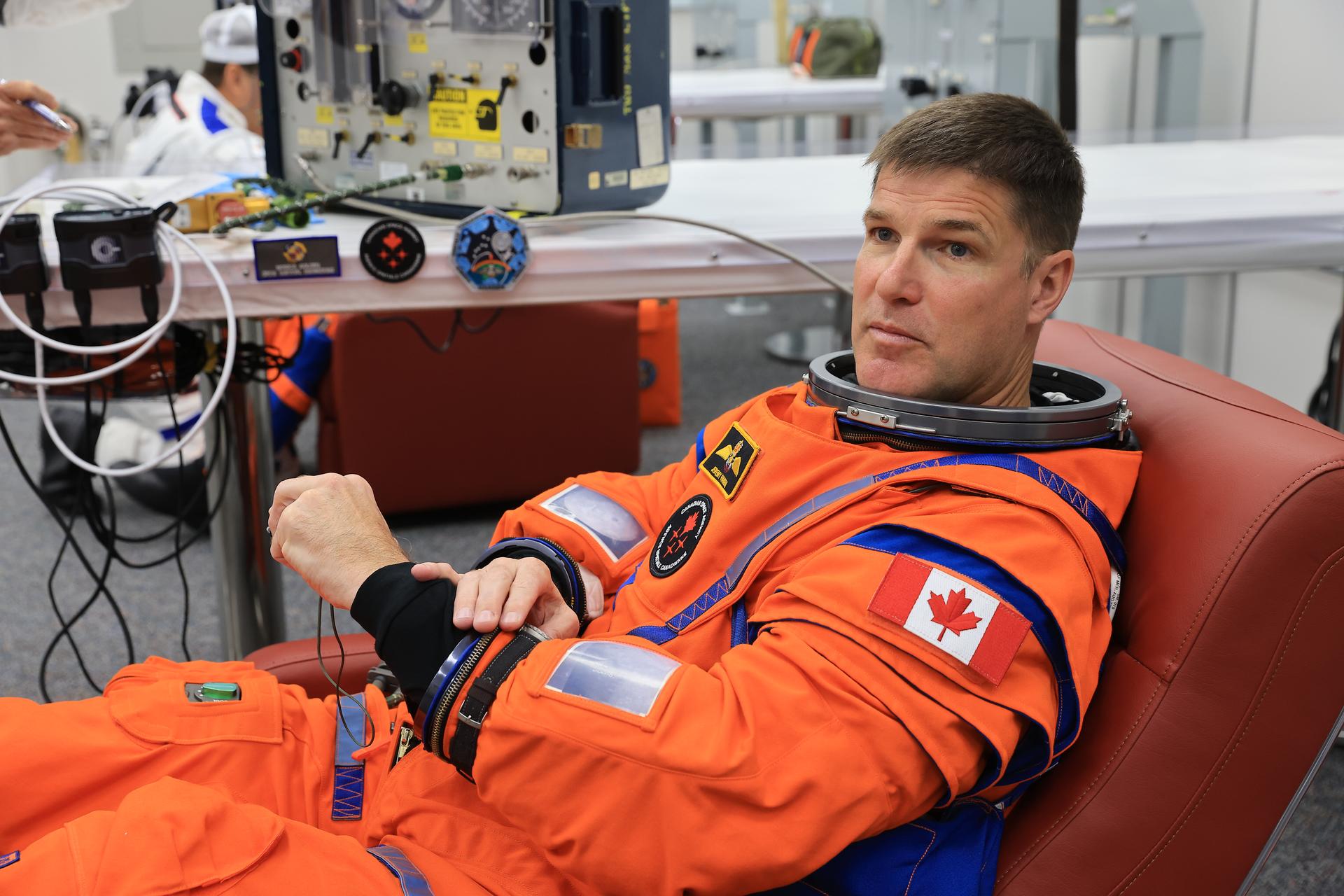
CSA (Canadian Space Agency) astronaut Jeremy Hansen, Artemis II mission specialist, conducts leak checks on his spacesuit inside the crew suit-up room in the Neil A. Armstrong Operations and Checkout Building at the agency’s Kennedy Space Center in Florida on Wednesday, April 1, 2026, ahead of the Artemis II test flight. The mission will take Hansen, Commander Reid Wiseman, Pilot Victor Glover, and Mission Specialist Christina Koch, from NASA, on a 10-day journey around the Moon and back aboard NASA’s SLS (Space Launch System) rocket and Orion spacecraft with a two-hour launch window opening at 6:24 p.m. EDT from Launch Complex 39B at NASA Kennedy.
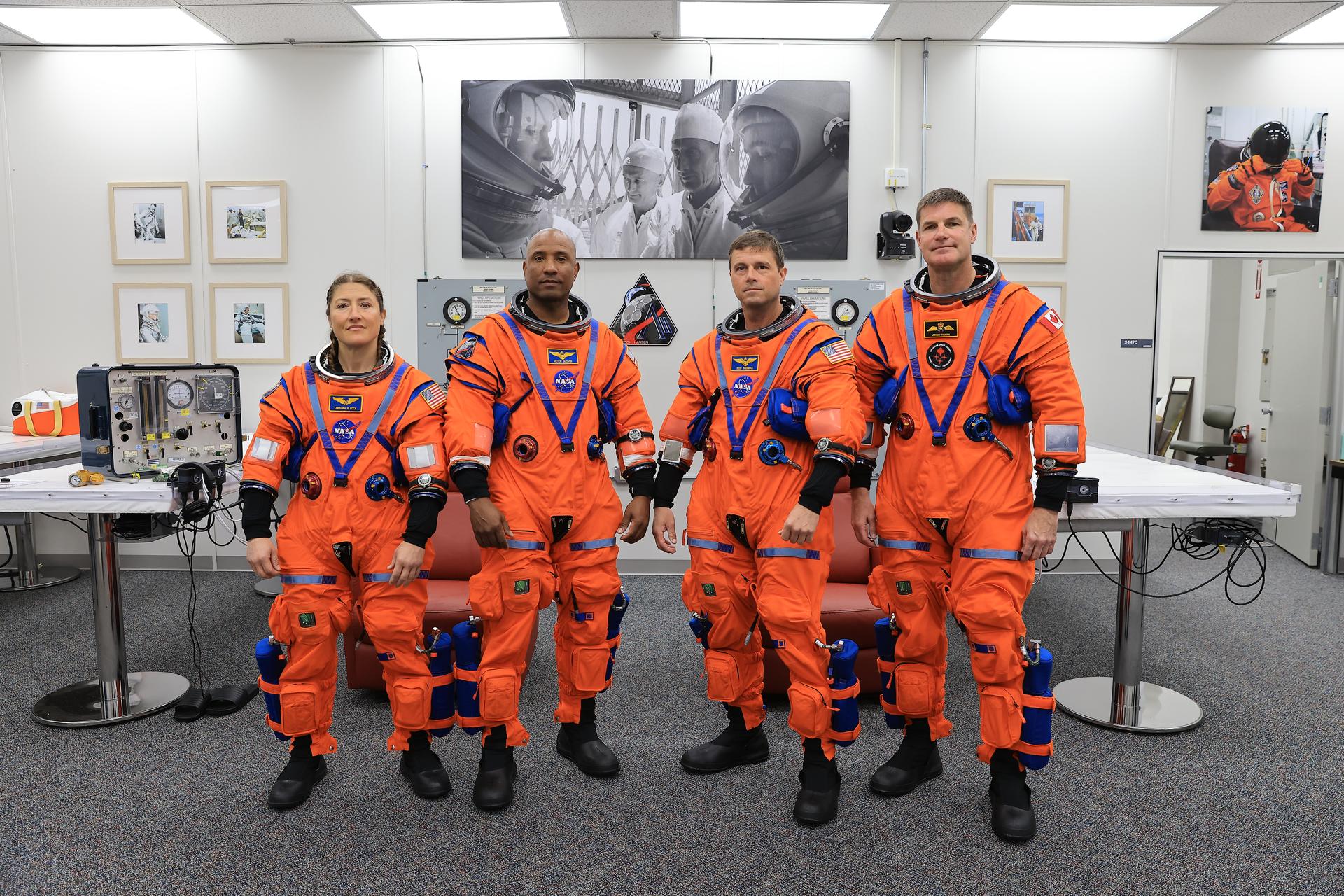
From left, Artemis II Mission Specialist Christina Koch, Pilot Victor Glover, and Commander Reid Wiseman, from NASA, along with Mission Specialist Jeremy Hansen from the CSA (Canadian Space Agency) complete leak checks on their spacesuits inside the crew suit-up room in the Neil A. Armstrong Operations and Checkout Building at the agency’s Kennedy Space Center in Florida on Wednesday, April 1, 2026, ahead of the Artemis II test flight. The mission will take the crew on a 10-day journey around the Moon and back aboard NASA’s SLS (Space Launch System) rocket and Orion spacecraft with a two hour launch window opening at 6:24 p.m. EDT from Launch Complex 39B at NASA Kennedy.
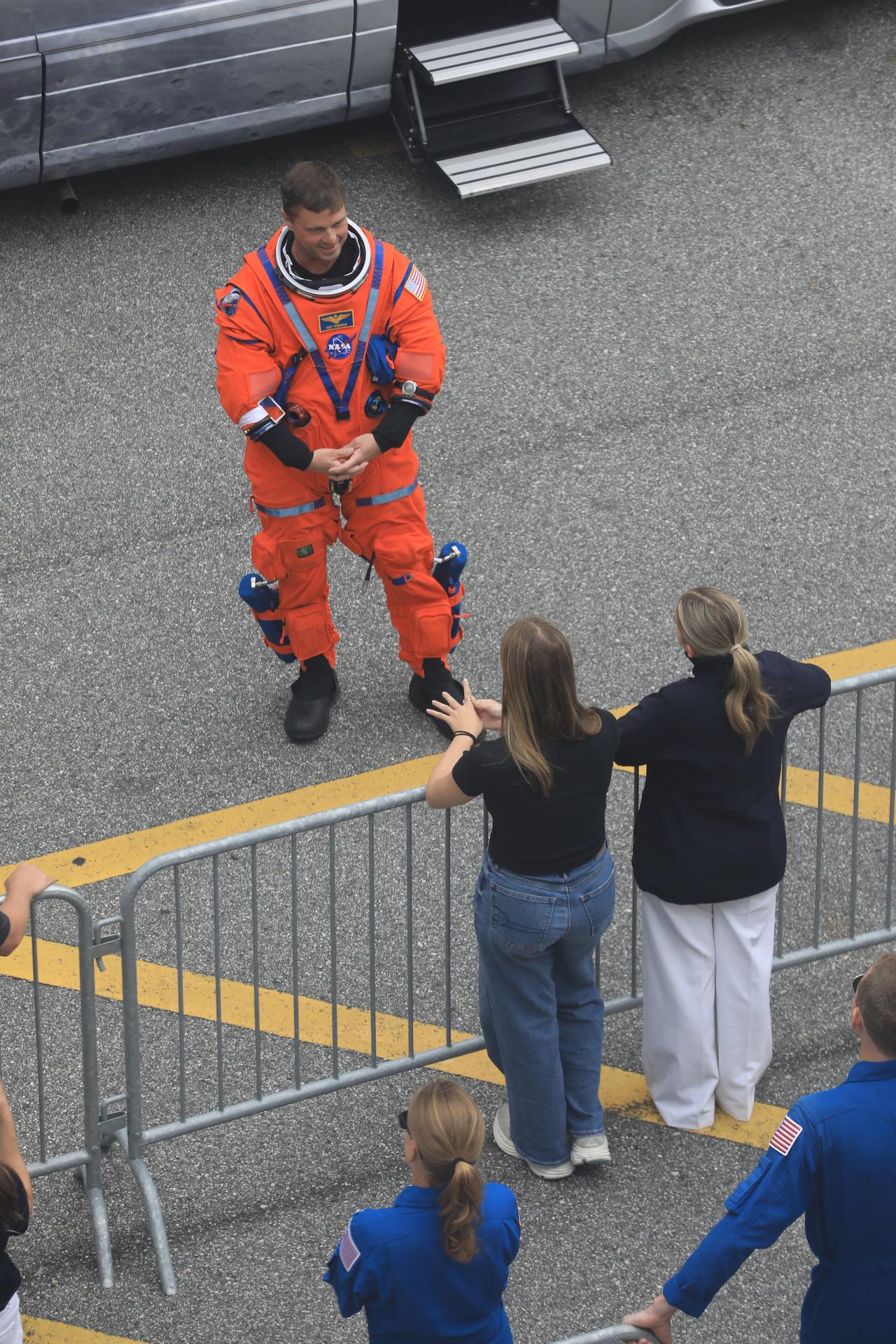
Artemis II Commander Reid Wiseman greets family and friends as he prepares to depart the Neil A. Armstrong Operations and Checkout Building for Launch Pad 39B at the agency’s Kennedy Space Center in Florida on Wednesday, April 1, 2026, ahead of the Artemis II test flight. The mission will take Wiseman, Pilot Victor Glover, and Mission Specialist Christina Koch from NASA, along with Mission Specialist Jeremy Hansen from the CSA (Canadian Space Agency), on a 10-day journey around the Moon and back aboard NASA’s SLS (Space Launch System) rocket and Orion spacecraft with a two hour launch window opening at 6:24 p.m. EDT from Launch Complex 39B at NASA Kennedy.
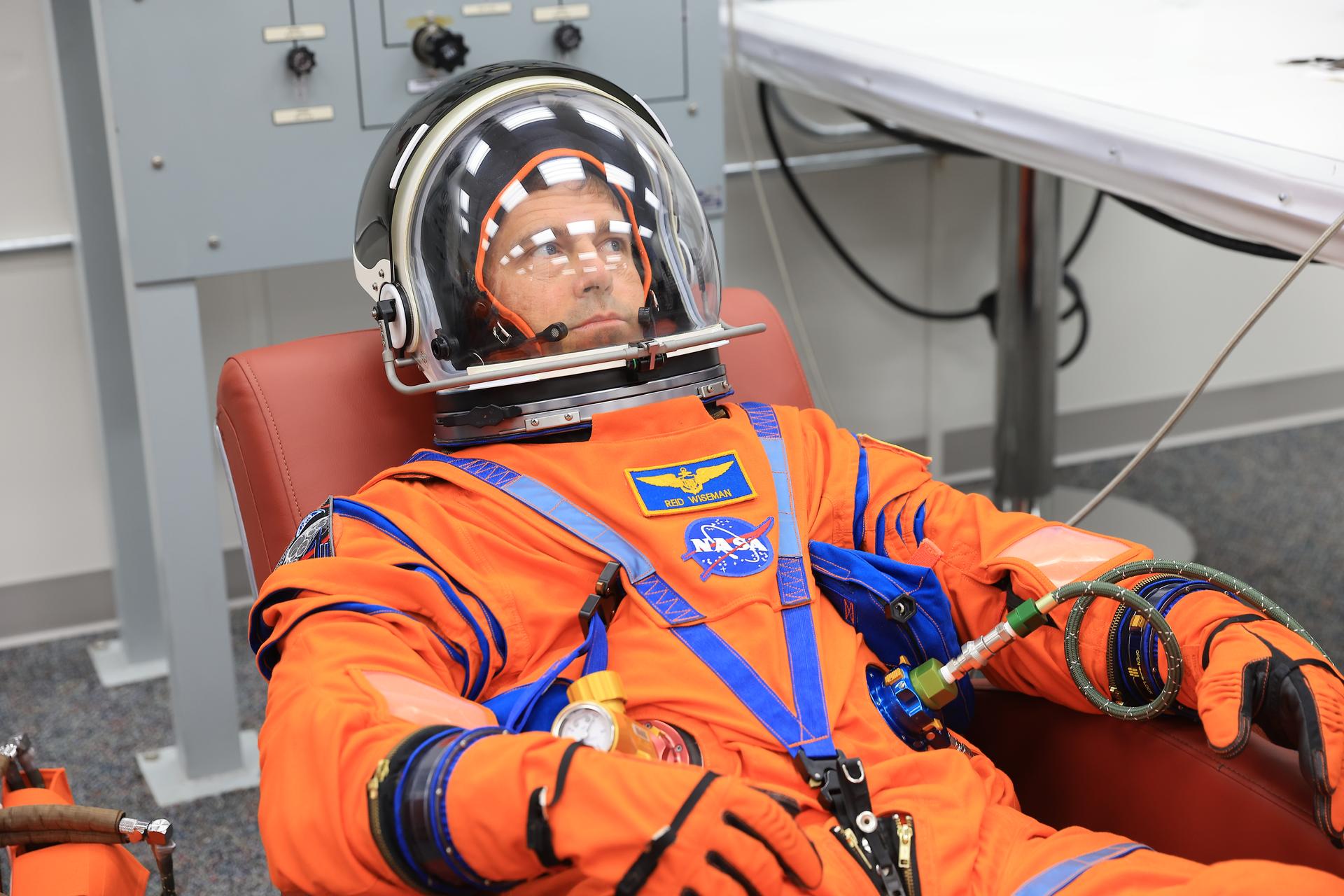
NASA astronaut Reid Wiseman, Artemis II commander, conducts leak checks on his spacesuit inside the crew suit-up room in the Neil A. Armstrong Operations and Checkout Building at the agency’s Kennedy Space Center in Florida on Wednesday, April 1, 2026, ahead of the Artemis II test flight. The mission will take Wiseman, Pilot Victor Glover, and Mission Specialist Christina Koch from NASA, along with Mission Specialist Jeremy Hansen from the CSA (Canadian Space Agency), on a 10-day journey around the Moon and back aboard NASA’s SLS (Space Launch System) rocket and Orion spacecraft with a two hour launch window opening at 6:24 p.m. EDT from Launch Complex 39B at NASA Kennedy.
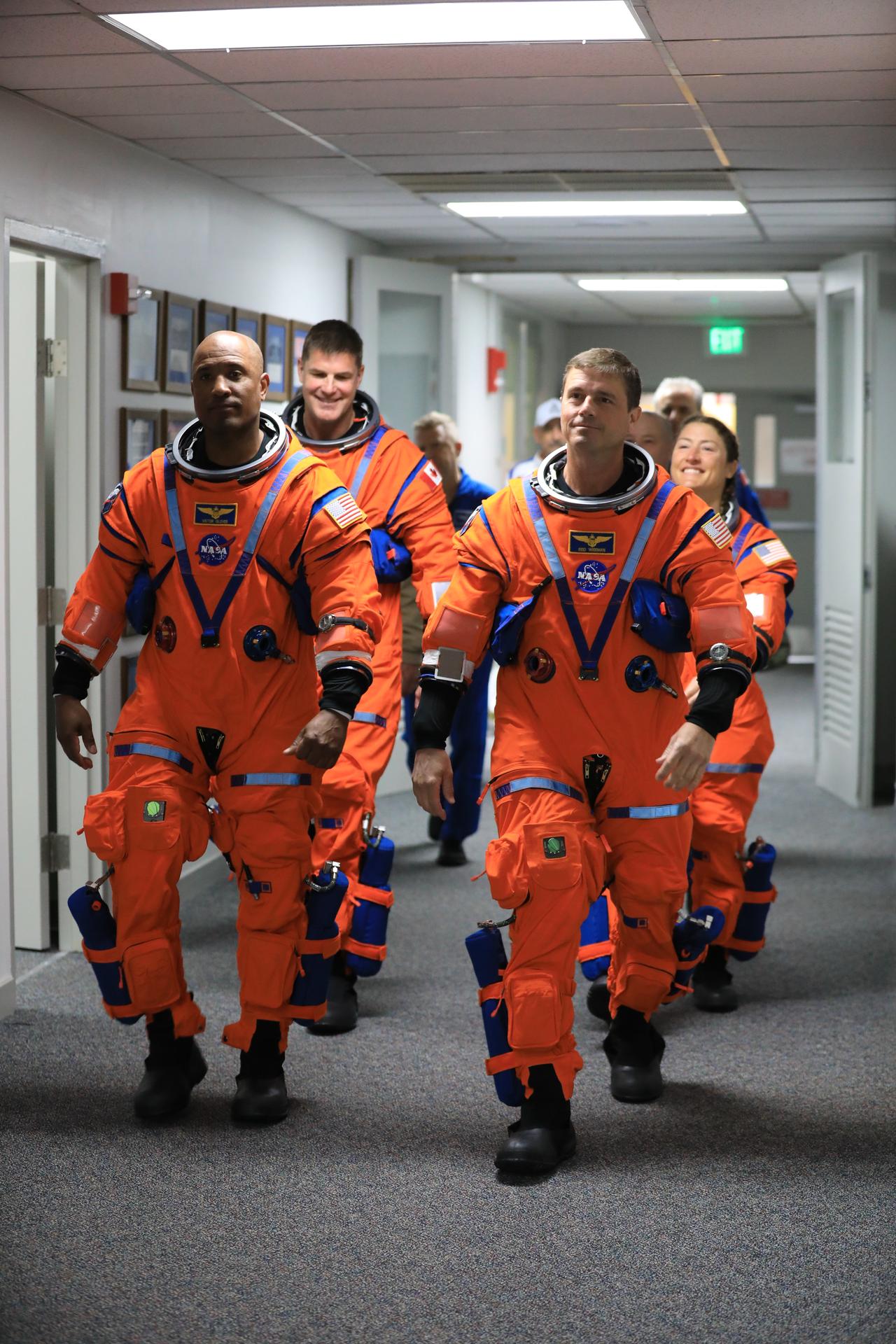
From left to right, Artemis II Pilot Victor Glover and Commander Reid Wiseman (front), Mission Specialist Jeremy Hansen from the CSA (Canadian Space Agency) and Mission Specialist Christina Koch, from NASA prepare to walk out of the Neil A. Armstrong Operations and Checkout Building at the agency’s Kennedy Space Center in Florida on Wednesday, April 1, 2026, ahead of the Artemis II test flight. The mission will take the Artemis II crew on a 10-day journey around the Moon and back aboard NASA’s SLS (Space Launch System) rocket and Orion spacecraft with a two hour launch window opening at 6:24 p.m. EDT from Launch Complex 39B at NASA Kennedy.
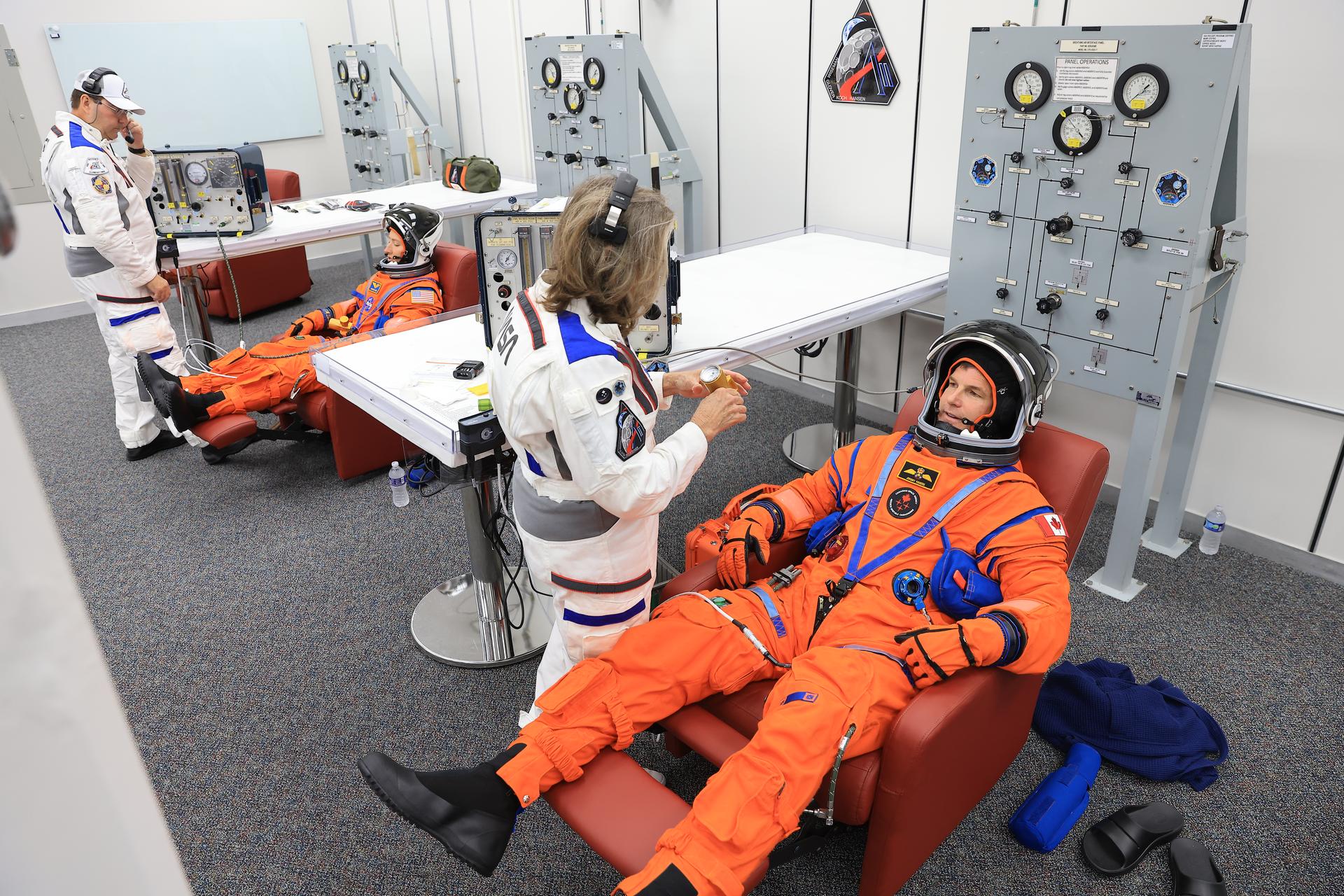
From left, Artemis II Mission Specialist Christina Koch, and Mission Specialist Jeremy Hansen from the CSA (Canadian Space Agency) complete leak checks on their spacesuits inside the crew suit-up room in the Neil A. Armstrong Operations and Checkout Building at the agency’s Kennedy Space Center in Florida on Wednesday, April 1, 2026, ahead of the Artemis II test flight. The mission will take the crew on a 10-day journey around the Moon and back aboard NASA’s SLS (Space Launch System) rocket and Orion spacecraft with a two hour launch window opening at 6:24 p.m. EDT from Launch Complex 39B at NASA Kennedy.
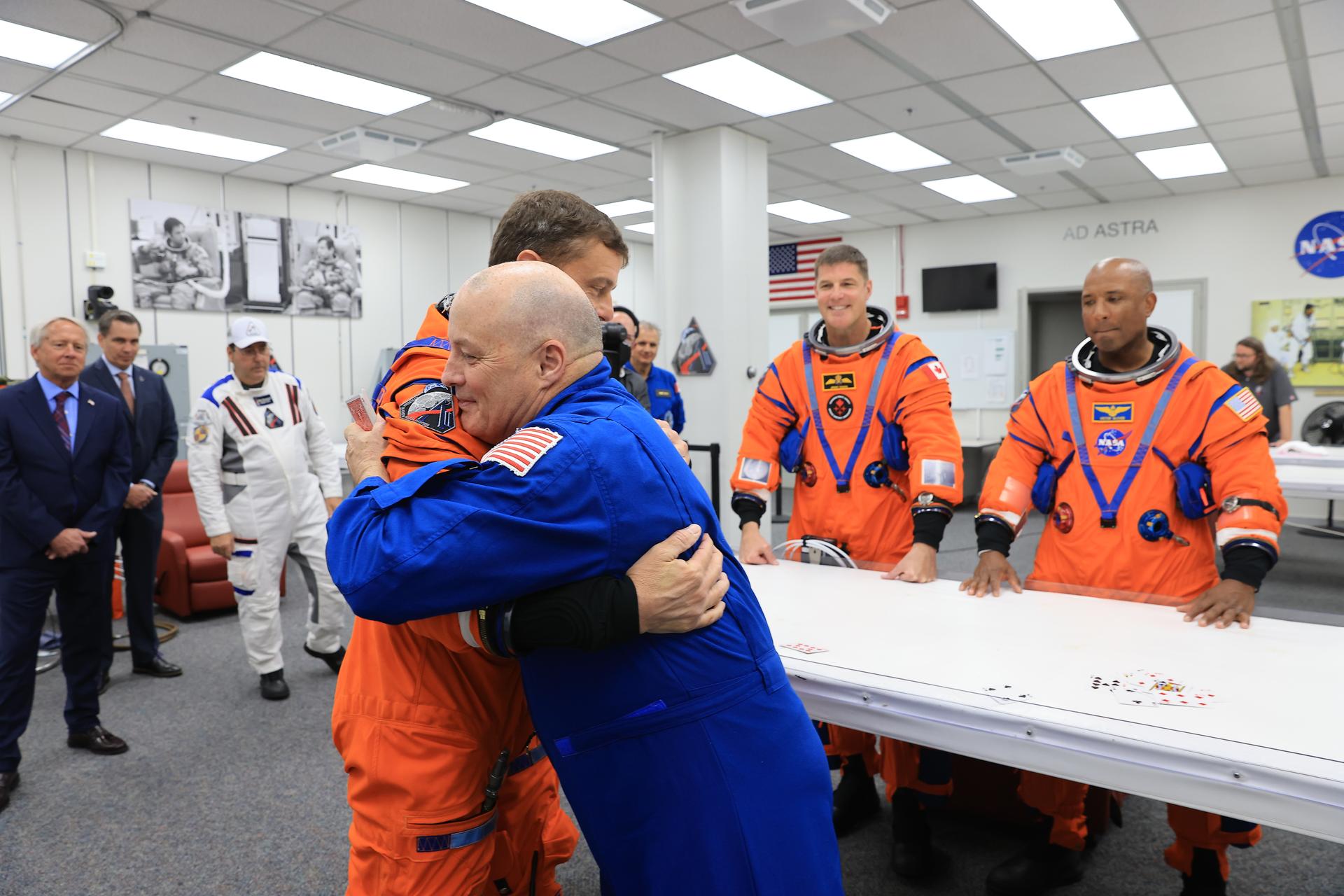
Artemis II crew members play the traditional card game with NASA astronaut chief Scott Tingle, inside the Neil A. Armstrong Operations and Checkout Building at the agency’s Kennedy Space Center in Florida on Wednesday, April 1, 2026, ahead of the Artemis II test flight. The mission will take Artemis II Commander Reid Wiseman, Pilot Victor Glover, and Mission Specialist Christina Koch from NASA, along with Mission Specialist Jeremy Hansen from the CSA (Canadian Space Agency), on a 10-day journey around the Moon and back aboard NASA’s SLS (Space Launch System) rocket and Orion spacecraft with a two hour launch window opening at 6:24 p.m. EDT from Launch Complex 39B at NASA Kennedy.
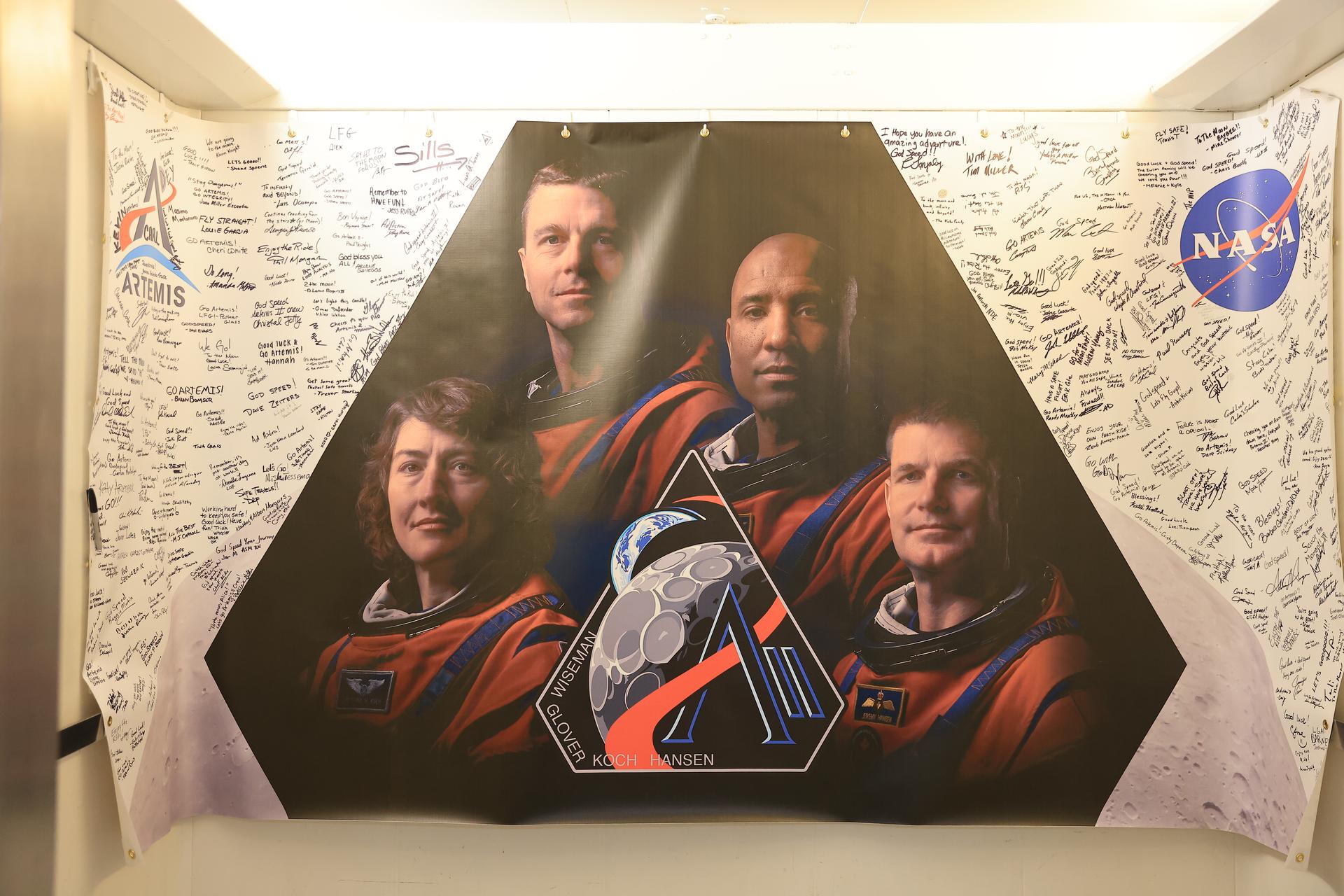
The Artemis II mission insignia is displayed with employee signatures inside the Neil A. Armstrong Operations and Checkout Building at the agency’s Kennedy Space Center in Florida on Wednesday, April 1, 2026, ahead of the Artemis II test flight. The mission will take Artemis II Commander Reid Wiseman, Pilot Victor Glover, and Mission Specialist Christina Koch from NASA, along with Mission Specialist Jeremy Hansen from the CSA (Canadian Space Agency), on a 10-day journey around the Moon and back aboard NASA’s SLS (Space Launch System) rocket and Orion spacecraft with a two hour launch window opening at 6:24 p.m. EDT from Launch Complex 39B at NASA Kennedy.
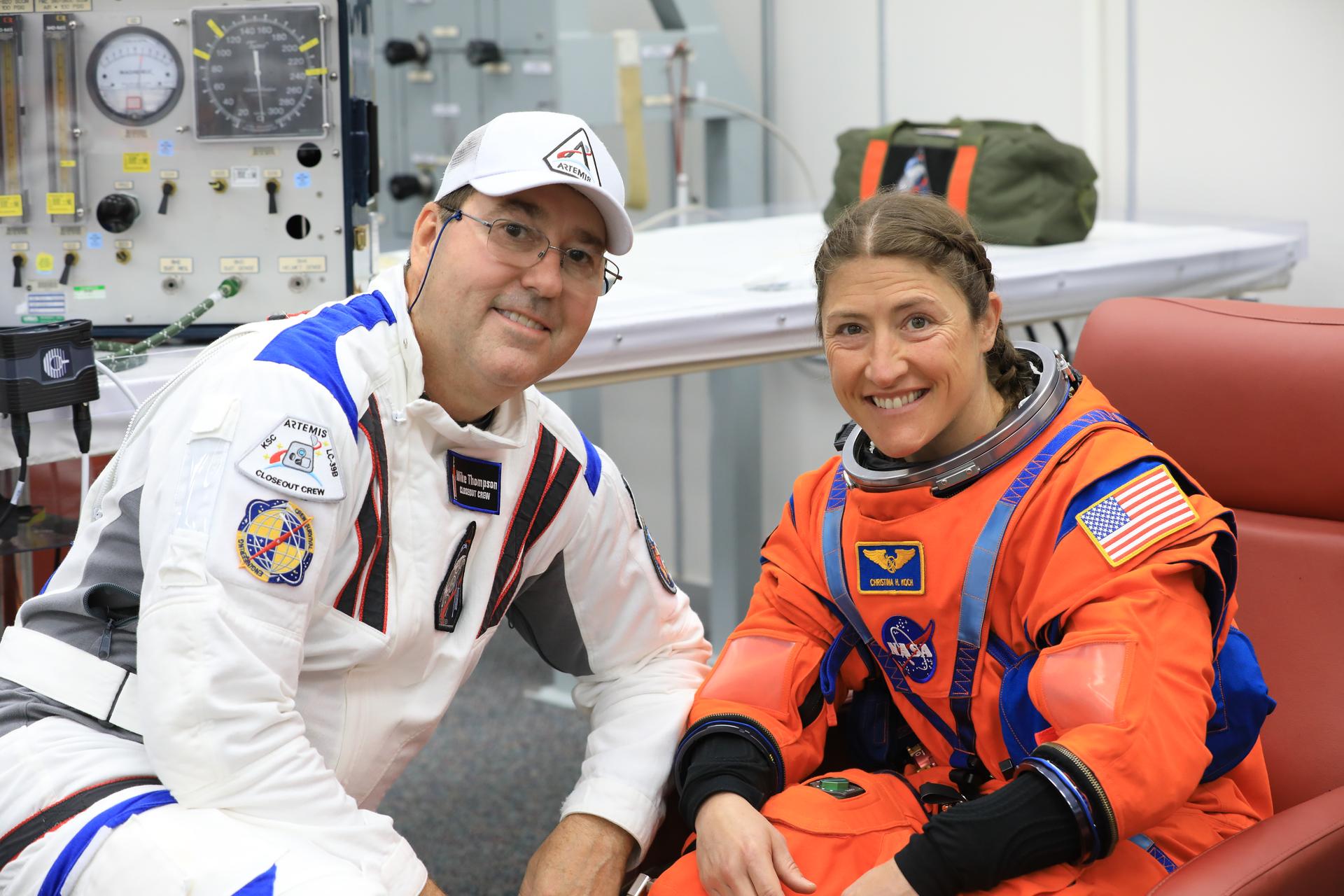
From left, a member of the Artemis closeout crew and NASA astronaut Christina Koch, Artemis II mission specialist, conducts leak checks on her spacesuit inside the crew suit-up room in the Neil A. Armstrong Operations and Checkout Building at the agency’s Kennedy Space Center in Florida on Wednesday, April 1, 2026, ahead of the Artemis II test flight. The mission will take Koch, Commander Reid Wiseman, and Pilot Victor Glover, from NASA, along with Mission Specialist Jeremy Hansen from the CSA (Canadian Space Agency) on a 10-day journey around the Moon and back aboard NASA’s SLS (Space Launch System) rocket and Orion spacecraft with a two-hour launch window opening at 6:24 p.m. EDT from Launch Complex 39B at NASA Kennedy.
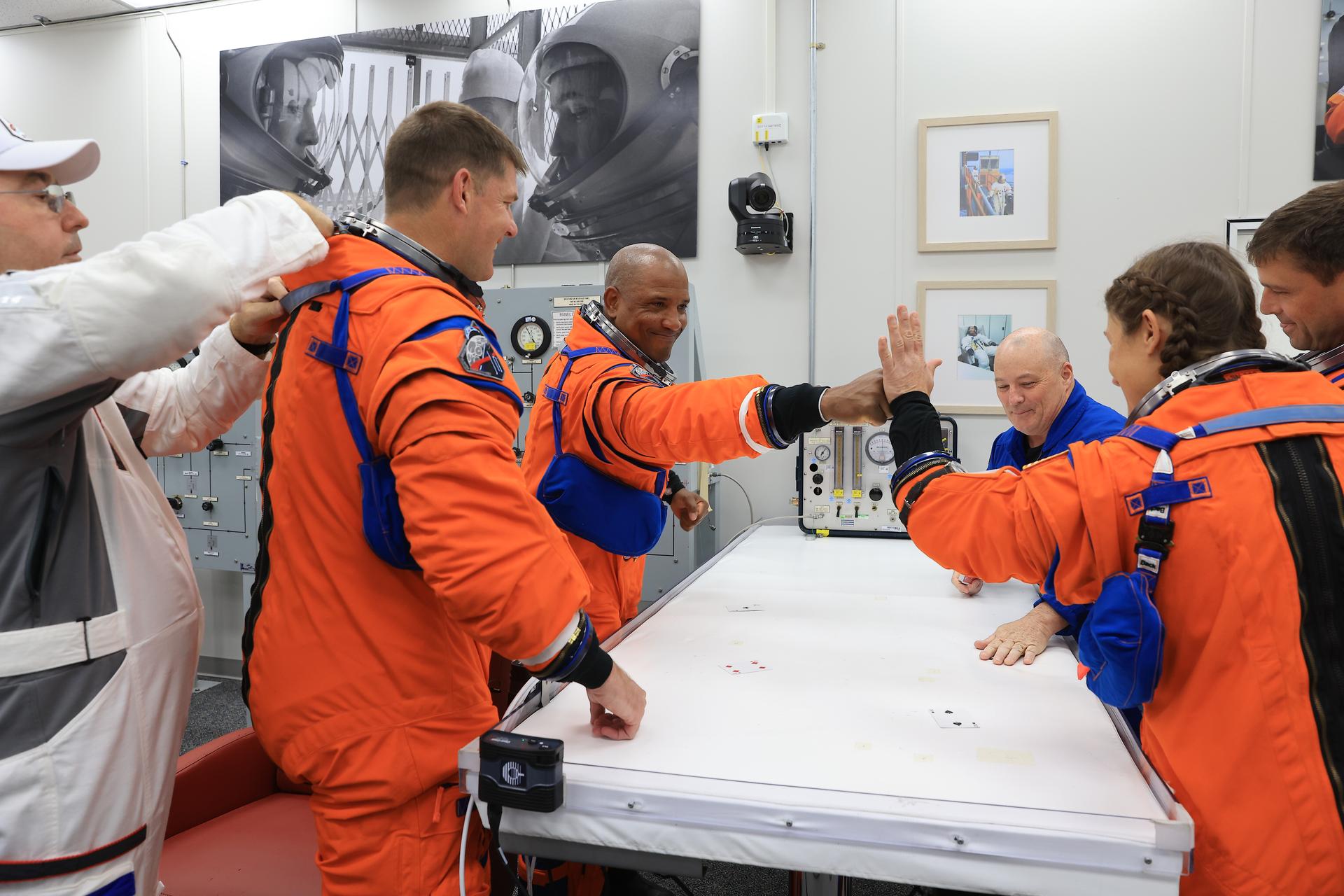
Artemis II crew members high-five after playing the traditional card game with NASA astronaut chief Scott Tingle, inside the Neil A. Armstrong Operations and Checkout Building at the agency’s Kennedy Space Center in Florida on Wednesday, April 1, 2026, ahead of the Artemis II test flight. The mission will take Artemis II Commander Reid Wiseman, Pilot Victor Glover, and Mission Specialist Christina Koch from NASA, along with Mission Specialist Jeremy Hansen from the CSA (Canadian Space Agency), on a 10-day journey around the Moon and back aboard NASA’s SLS (Space Launch System) rocket and Orion spacecraft with a two hour launch window opening at 6:24 p.m. EDT from Launch Complex 39B at NASA Kennedy.
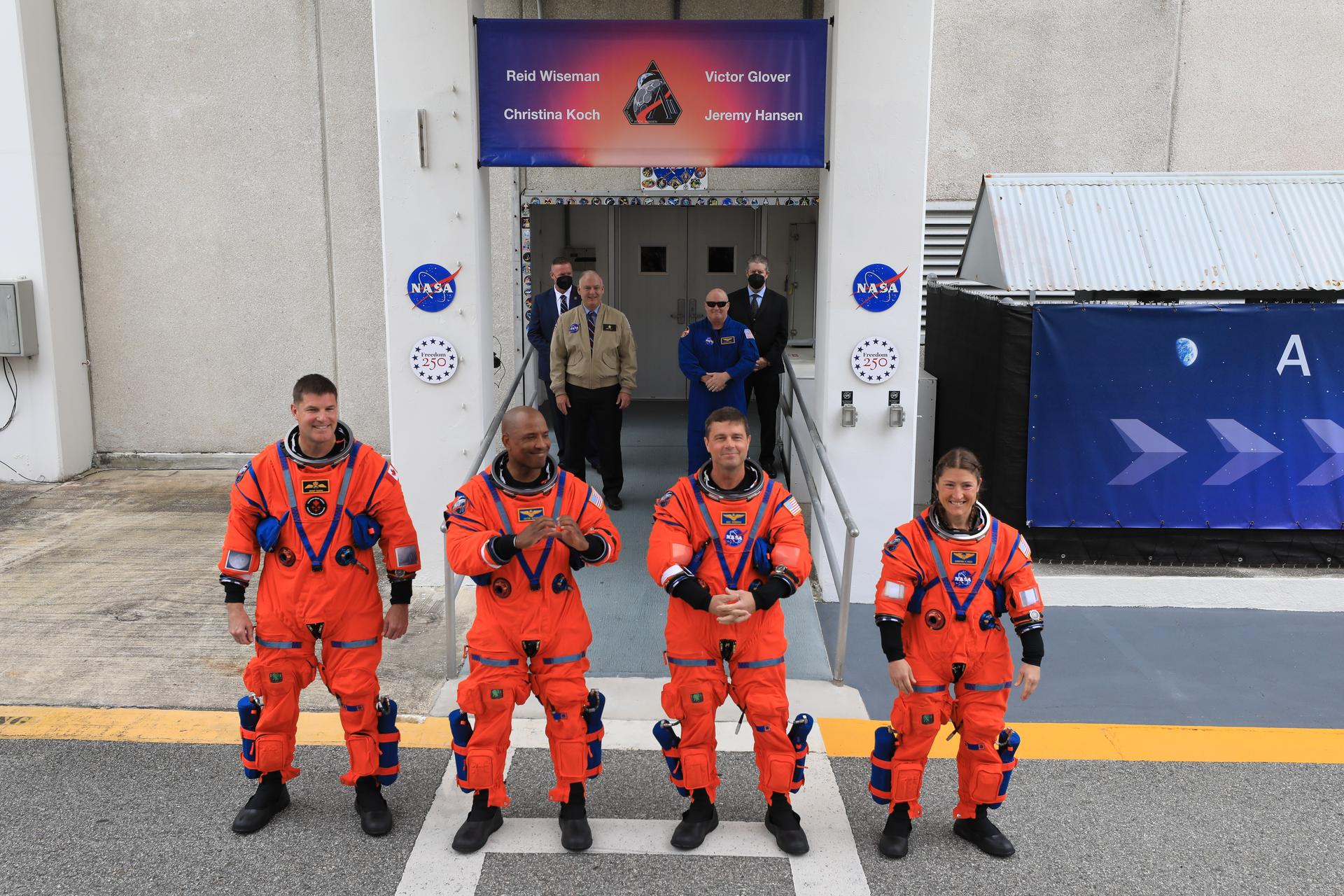
From left to right, Artemis II Mission Specialist Jeremy Hansen from the CSA (Canadian Space Agency), along with Pilot Victor Glover, Commander Reid Wiseman, and Mission Specialist Christina Koch, from NASA wave to family and friends outside the Neil A. Armstrong Operations and Checkout Building at the agency’s Kennedy Space Center in Florida on Wednesday, April 1, 2026, ahead of the Artemis II test flight. The mission will take the Artemis II crew on a 10-day journey around the Moon and back aboard NASA’s SLS (Space Launch System) rocket and Orion spacecraft with a two hour launch window opening at 6:24 p.m. EDT from Launch Complex 39B at NASA Kennedy.
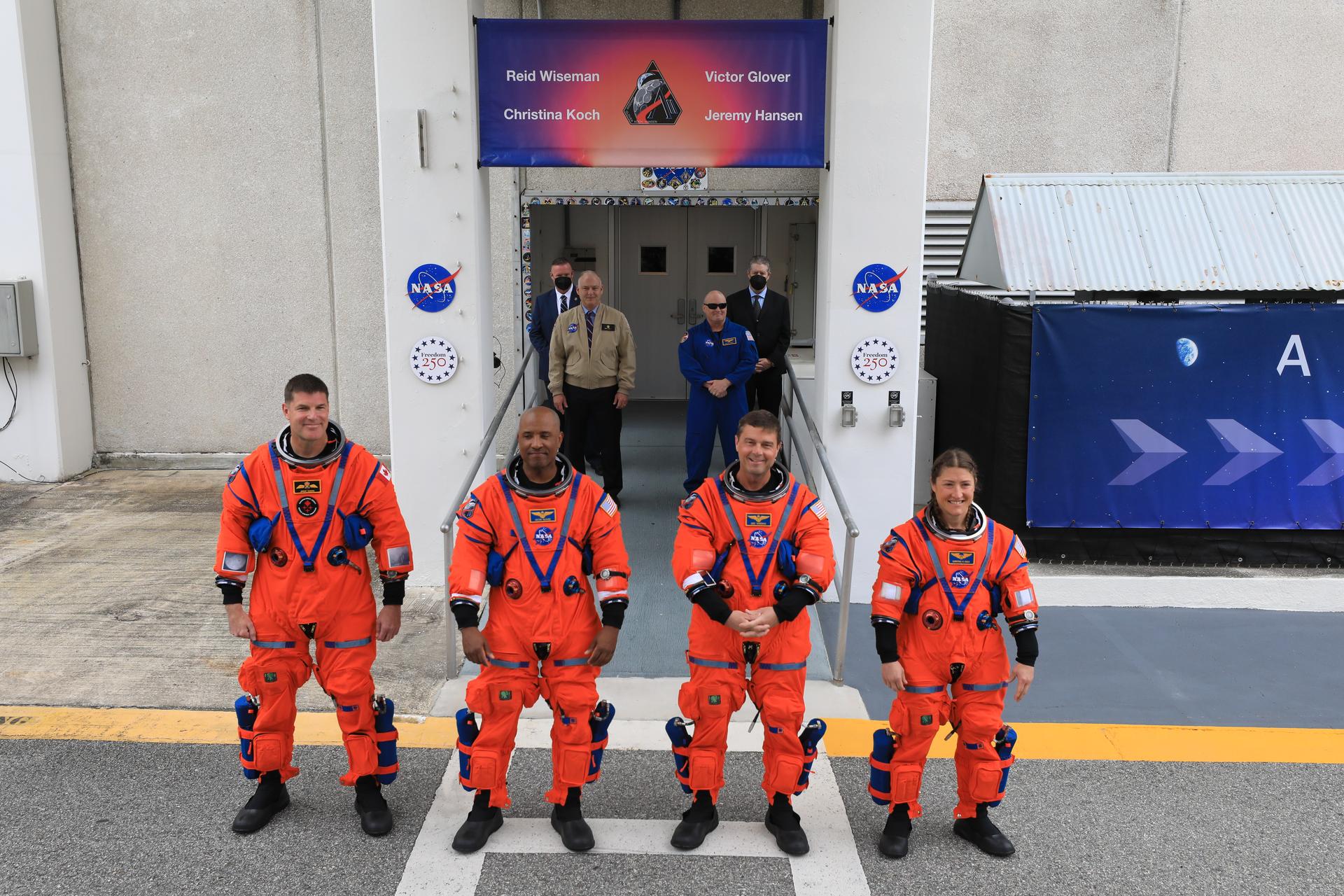
From left to right, Artemis II Mission Specialist Jeremy Hansen from the CSA (Canadian Space Agency), along with Pilot Victor Glover, Commander Reid Wiseman, and Mission Specialist Christina Koch, from NASA wave to family and friends outside the Neil A. Armstrong Operations and Checkout Building at the agency’s Kennedy Space Center in Florida on Wednesday, April 1, 2026, ahead of the Artemis II test flight. The mission will take the Artemis II crew on a 10-day journey around the Moon and back aboard NASA’s SLS (Space Launch System) rocket and Orion spacecraft with a two hour launch window opening at 6:24 p.m. EDT from Launch Complex 39B at NASA Kennedy.
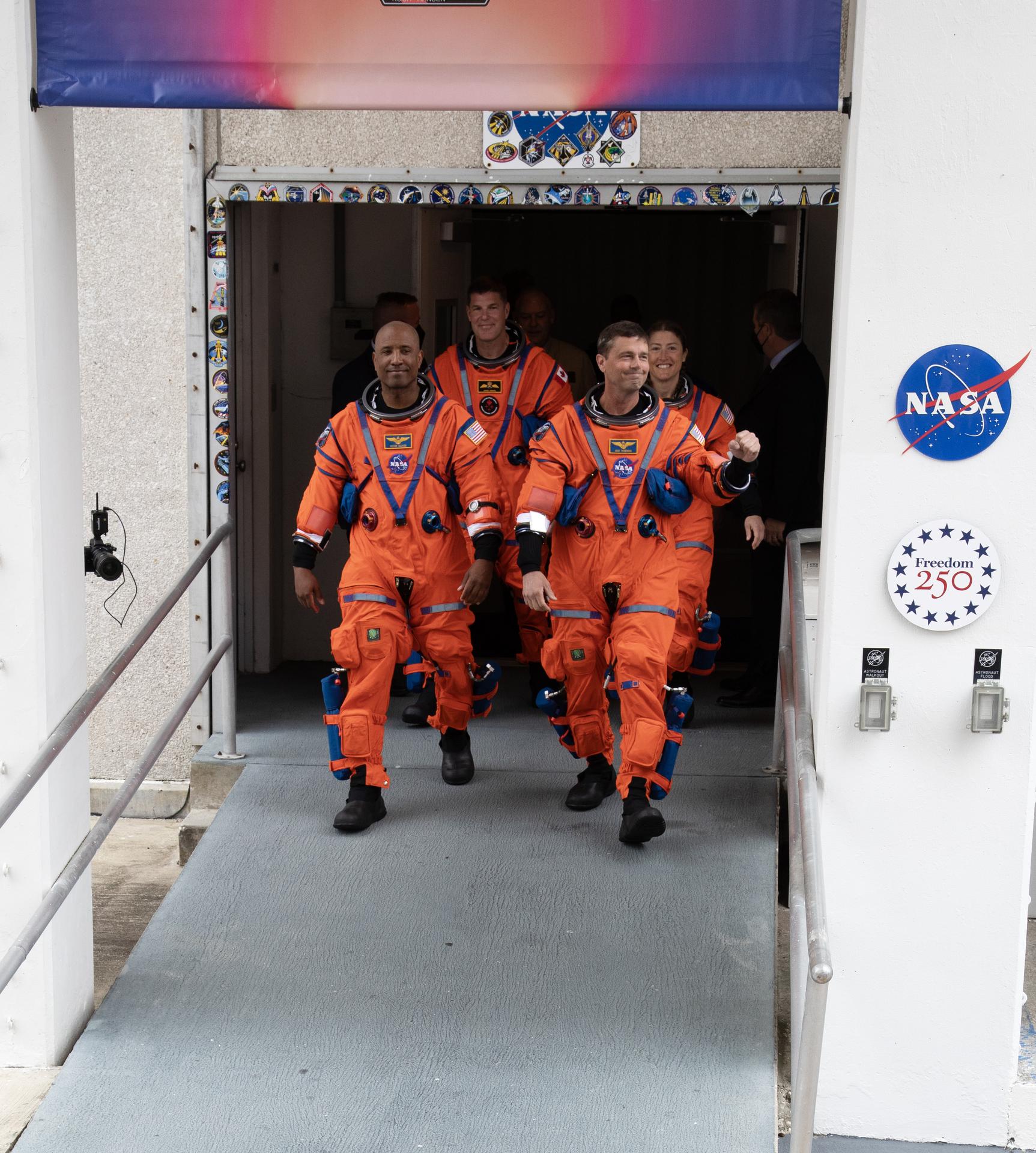
From left to right, NASA astronauts Artemis II Pilot Victor Glover and Commander Reid Wiseman (front), Mission Specialist Jeremy Hansen from the CSA (Canadian Space Agency), and Mission Specialist Christina Koch, from NASA walk out of the Neil A. Armstrong Operations and Checkout Building at the agency’s Kennedy Space Center in Florida on Wednesday, April 1, 2026, ahead of the Artemis II test flight. The mission will take the Artemis II crew on a 10-day journey around the Moon and back aboard NASA’s SLS (Space Launch System) rocket and Orion spacecraft with a two hour launch window opening at 6:24 p.m. EDT from Launch Complex 39B at NASA Kennedy.
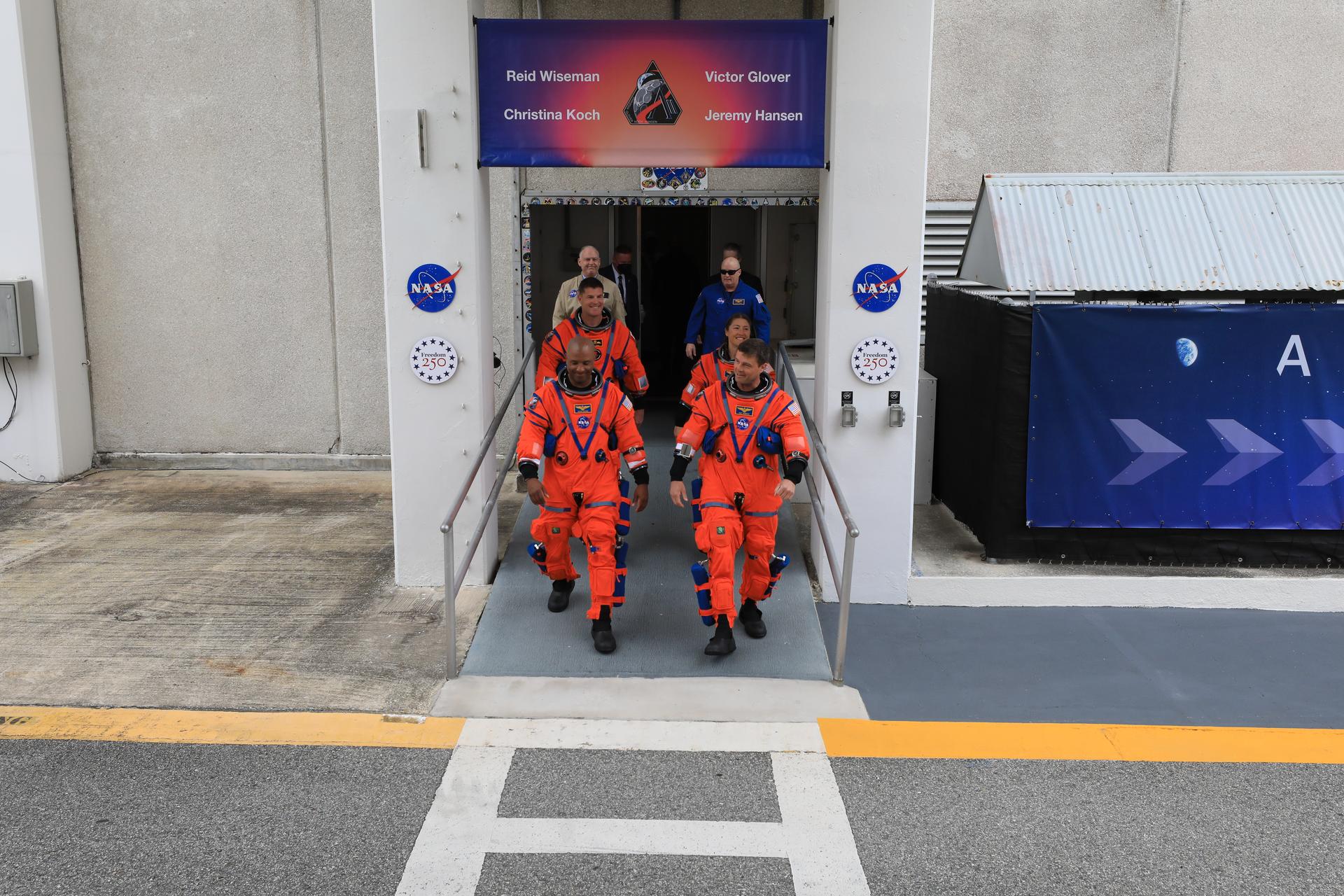
From left to right, NASA astronauts Artemis II Pilot Victor Glover and Commander Reid Wiseman (front), Mission Specialist Jeremy Hansen from the CSA (Canadian Space Agency), and Mission Specialist Christina Koch, from NASA walk out of the Neil A. Armstrong Operations and Checkout Building at the agency’s Kennedy Space Center in Florida on Wednesday, April 1, 2026, ahead of the Artemis II test flight. The mission will take the Artemis II crew on a 10-day journey around the Moon and back aboard NASA’s SLS (Space Launch System) rocket and Orion spacecraft with a two hour launch window opening at 6:24 p.m. EDT from Launch Complex 39B at NASA Kennedy.
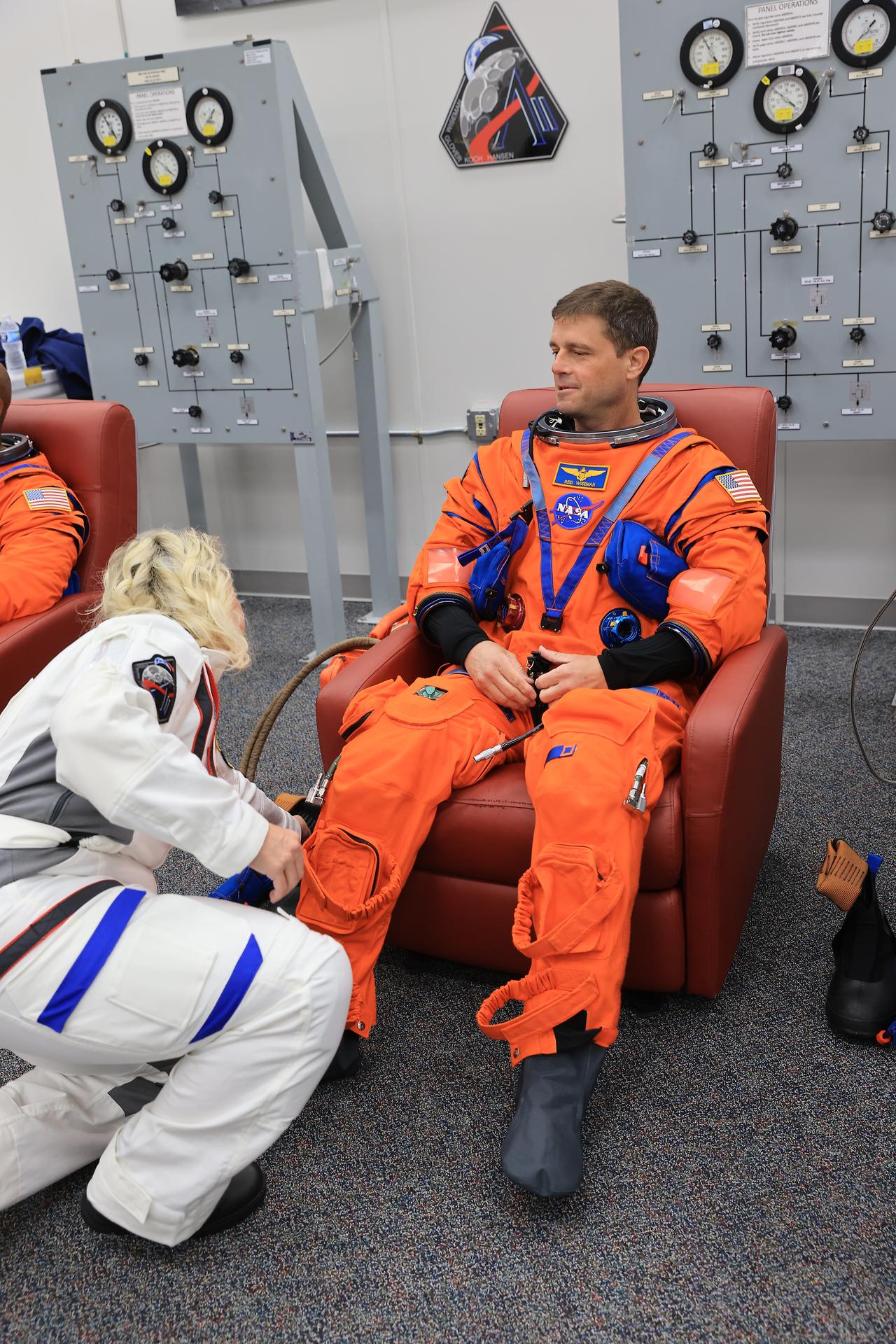
NASA astronaut Reid Wiseman, Artemis II commander, conducts leak checks on his spacesuit inside the crew suit-up room in the Neil A. Armstrong Operations and Checkout Building at the agency’s Kennedy Space Center in Florida on Wednesday, April 1, 2026, ahead of the Artemis II test flight. The mission will take Wiseman, Pilot Victor Glover, and Mission Specialist Christina Koch from NASA, along with Mission Specialist Jeremy Hansen from the CSA (Canadian Space Agency), on a 10-day journey around the Moon and back aboard NASA’s SLS (Space Launch System) rocket and Orion spacecraft with a two hour launch window opening at 6:24 p.m. EDT from Launch Complex 39B at NASA Kennedy.
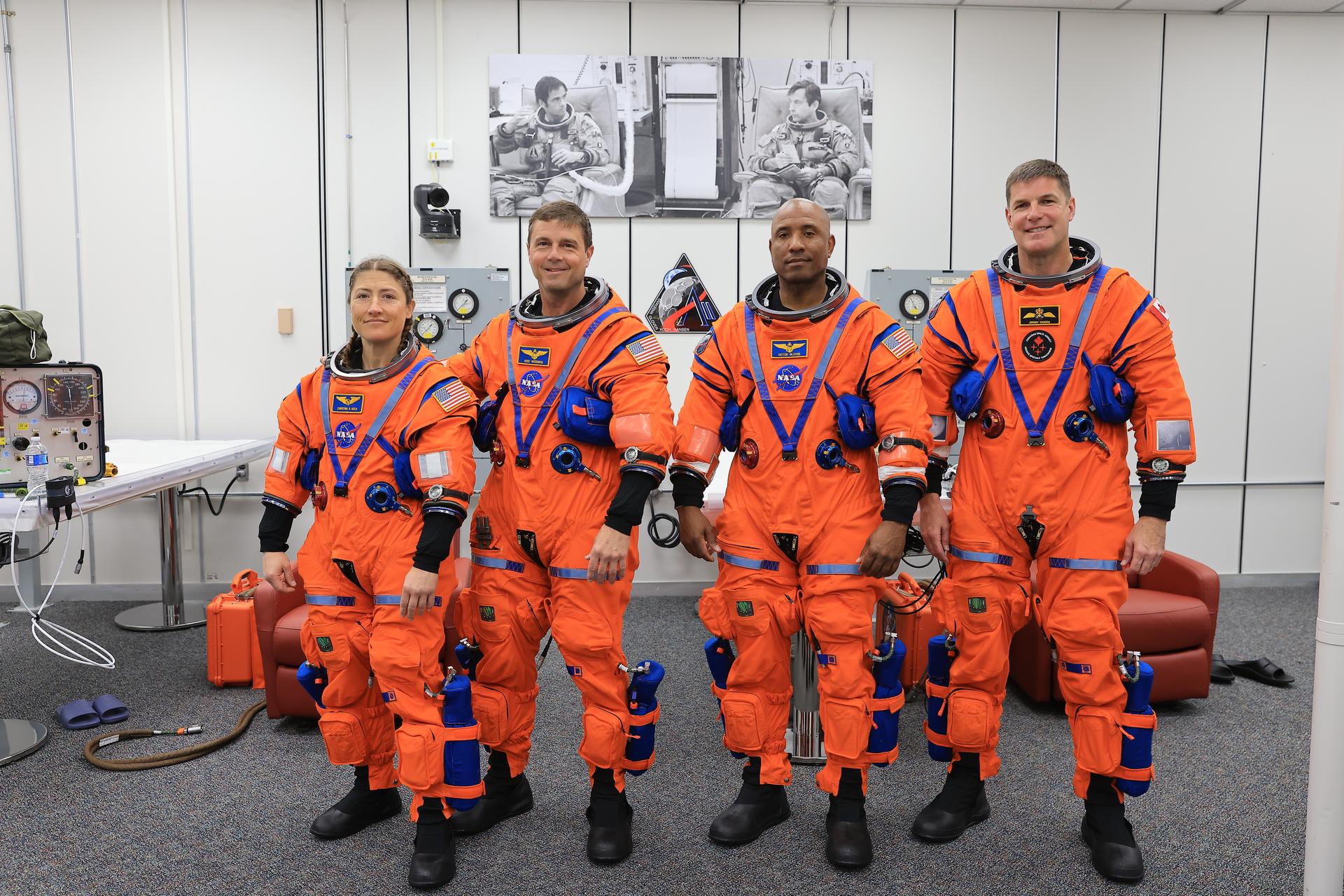
From left, Artemis II Mission Specialist Christina Koch, Commander Reid Wiseman, and Pilot Victor Glover, from NASA, along with Mission Specialist Jeremy Hansen from the CSA (Canadian Space Agency) complete leak checks on their spacesuits inside the crew suit-up room in the Neil A. Armstrong Operations and Checkout Building at the agency’s Kennedy Space Center in Florida on Wednesday, April 1, 2026, ahead of the Artemis II test flight. The mission will take the crew on a 10-day journey around the Moon and back aboard NASA’s SLS (Space Launch System) rocket and Orion spacecraft with a two hour launch window opening at 6:24 p.m. EDT from Launch Complex 39B at NASA Kennedy.