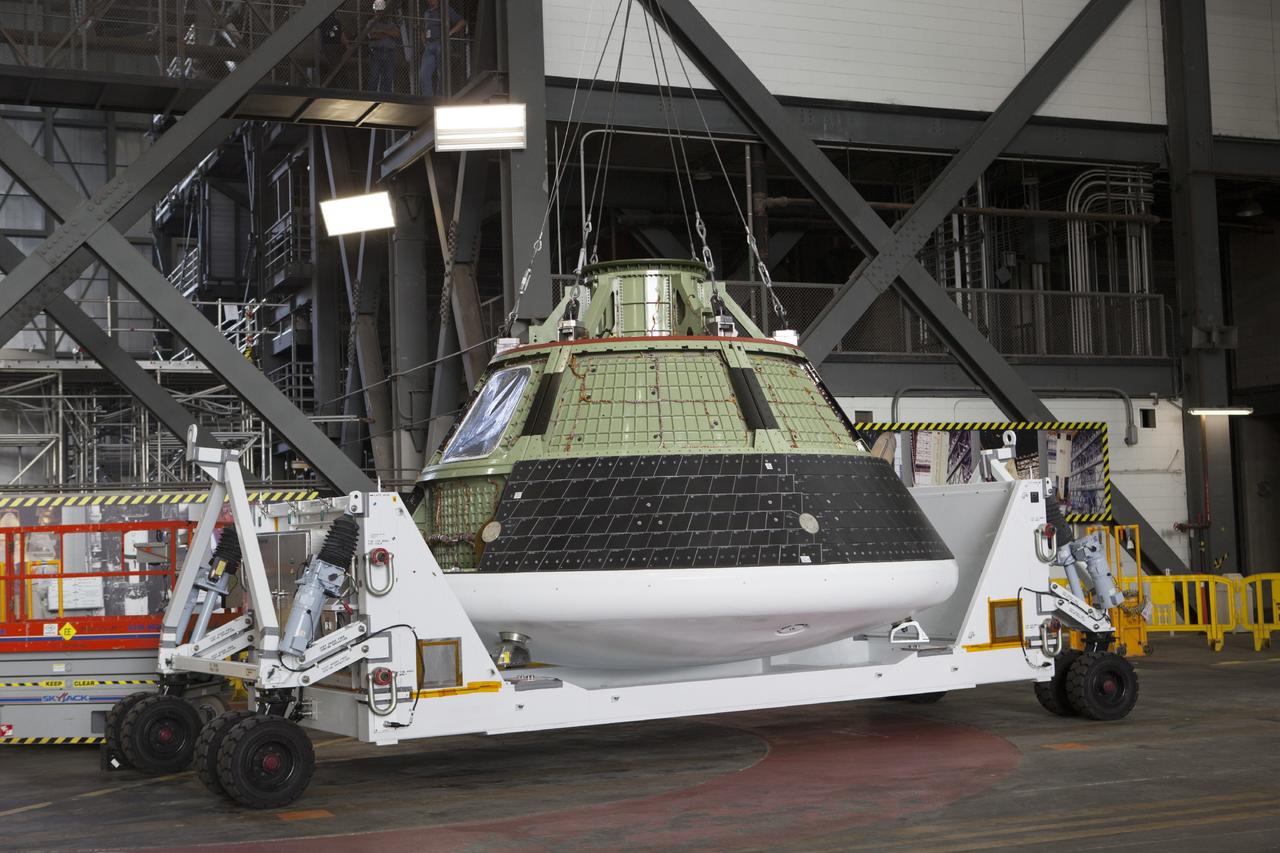
CAPE CANAVERAL, Fla. – At NASA’s Kennedy Space Center in Florida, the Orion ground test vehicle, or GTA, is being prepared for lifting in the transfer aisle of the Vehicle Assembly Building. The GTA is being used for path finding operations, including simulated manufacturing, assembly and stacking procedures. Orion is the exploration spacecraft designed to carry astronauts to destinations not yet explored by humans, including an asteroid and Mars. It will have emergency abort capability, sustain the crew during space travel and provide safe re-entry from deep space return velocities. The first unpiloted test flight of Orion is scheduled to launch in 2014 atop a Delta IV rocket and in 2017 on NASA’s Space Launch System rocket. For more information, visit www.nasa.gov/orion. Photo credit: Dimitri Gerondidakis
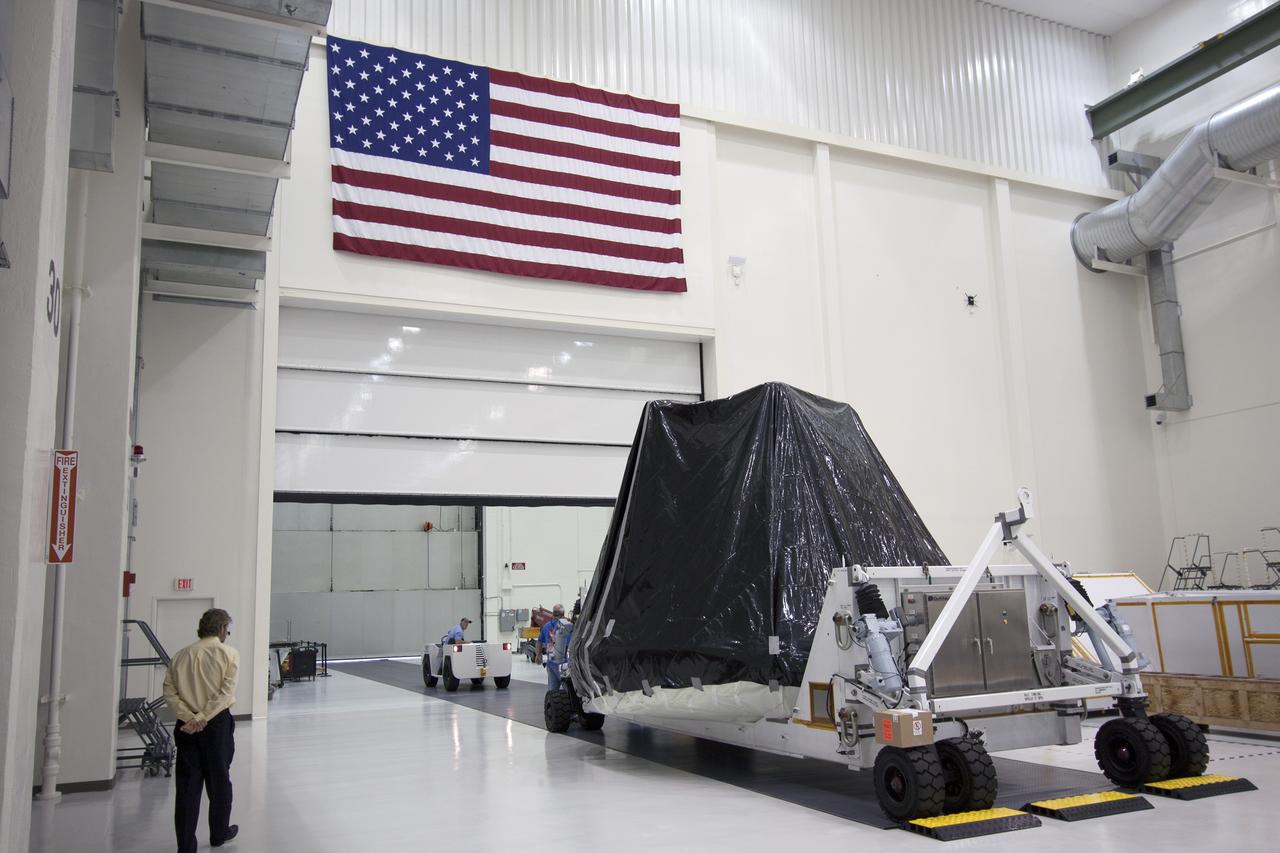
CAPE CANAVERAL, Fla. -- At NASA’s Kennedy Space Center in Florida, workers prepare to move the Orion ground test vehicle, or GTA, from the Operations and Checkout Building to the Launch Equipment Test Facility, or LETF. At the LETF, Lockheed Martin will put the GTA through a series of pyrotechnic bolt tests. The ground test vehicle is being used for path finding operations in the O&C, including simulated manufacturing and assembly procedures. Launching atop NASA's heavy-lift Space Launch System SLS, which also is under development, the Orion Multi-Purpose Crew Vehicle MPCV will serve as the exploration vehicle that will carry astronaut crews beyond low Earth orbit. It also will provide emergency abort capabilities, sustain the crew during space travel and provide safe re-entry from deep space return velocities. For more information, visit www.nasa.gov/orion. Photo credit: Jim Grossman
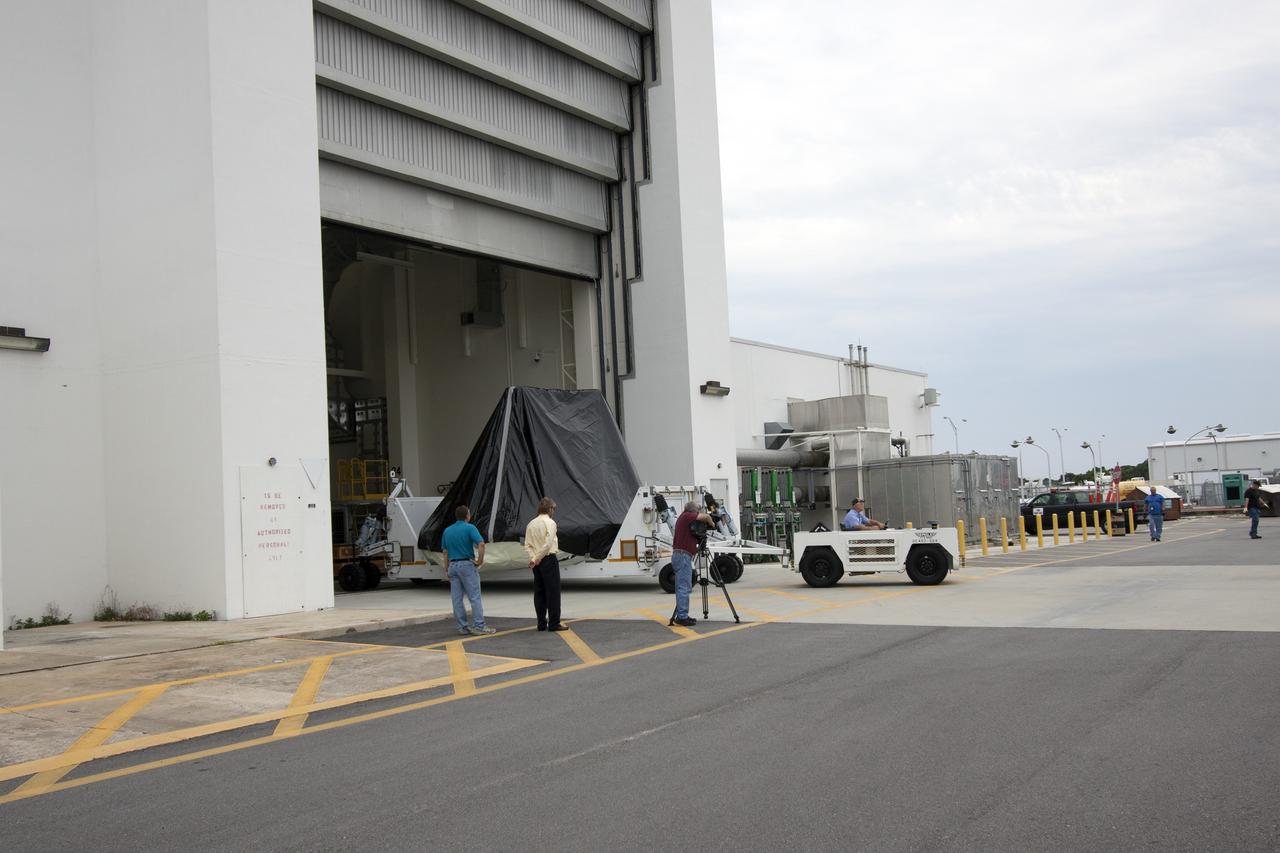
CAPE CANAVERAL, Fla. -- At NASA’s Kennedy Space Center in Florida, workers move the Orion ground test vehicle, or GTA, from the Operations and Checkout Building to the Launch Equipment Test Facility, or LETF. At the LETF, Lockheed Martin will put the GTA through a series of pyrotechnic bolt tests. The ground test vehicle is being used for path finding operations in the O&C, including simulated manufacturing and assembly procedures. Launching atop NASA's heavy-lift Space Launch System SLS, which also is under development, the Orion Multi-Purpose Crew Vehicle MPCV will serve as the exploration vehicle that will carry astronaut crews beyond low Earth orbit. It also will provide emergency abort capabilities, sustain the crew during space travel and provide safe re-entry from deep space return velocities. For more information, visit www.nasa.gov/orion. Photo credit: Jim Grossman
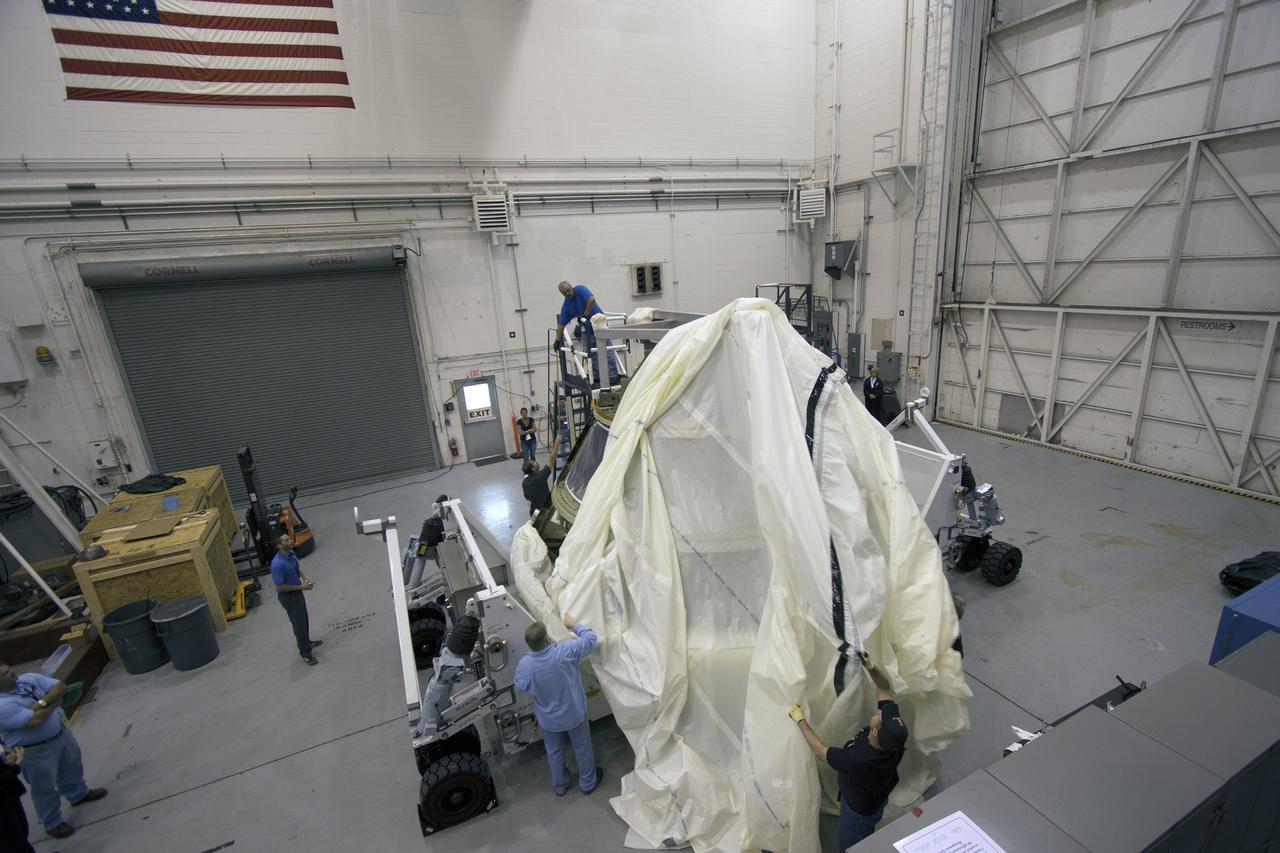
CAPE CANAVERAL, Fla. -- At NASA’s Kennedy Space Center in Florida, Lockheed Martin crews begin uncovering the Orion ground test vehicle in the Launch Equipment Test Facility, or LETF. The GTA was moved from the Operations and Checkout Facility to the LETF for a series of pyrotechnic bolt tests. The GTA is being used for path finding operations in the O&C, including simulated manufacturing and assembly procedures. Launching atop NASA's heavy-lift Space Launch System SLS, which also is under development, the Orion Multi-Purpose Crew Vehicle MPCV will serve as the exploration vehicle that will carry astronaut crews beyond low Earth orbit. It also will provide emergency abort capabilities, sustain the crew during space travel and provide safe re-entry from deep space return velocities. For more information, visit www.nasa.gov/orion. Photo credit: Jim Grossman
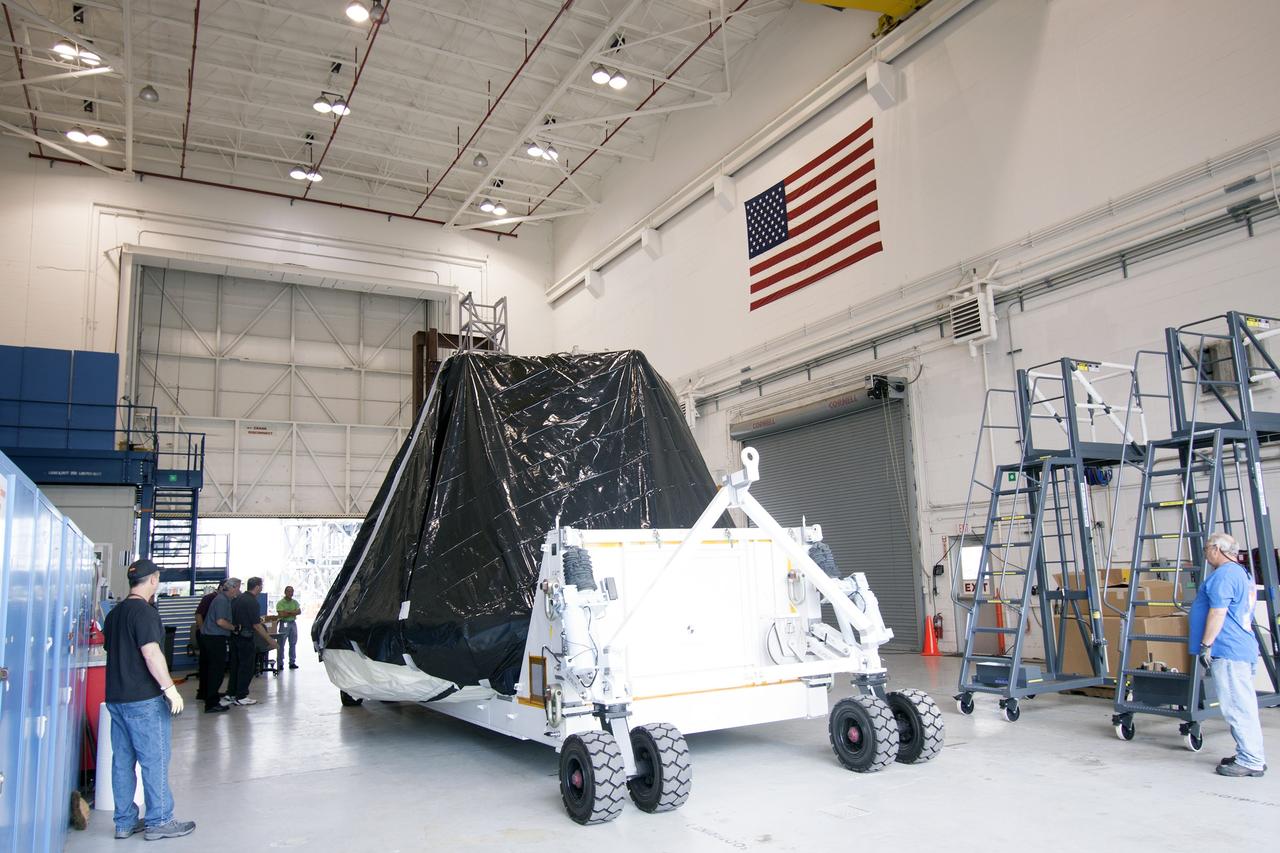
CAPE CANAVERAL, Fla. -- At NASA’s Kennedy Space Center in Florida, workers move the Orion ground test vehicle, or GTA, into the Launch Equipment Test Facility, or LETF, from the Operations and Checkout Building. At the LETF, Lockheed Martin will put the GTA through a series of pyrotechnic bolt tests. The ground test vehicle is being used for path finding operations in the O&C, including simulated manufacturing and assembly procedures. Launching atop NASA's heavy-lift Space Launch System SLS, which also is under development, the Orion Multi-Purpose Crew Vehicle MPCV will serve as the exploration vehicle that will carry astronaut crews beyond low Earth orbit. It also will provide emergency abort capabilities, sustain the crew during space travel and provide safe re-entry from deep space return velocities. For more information, visit www.nasa.gov/orion. Photo credit: Jim Grossman
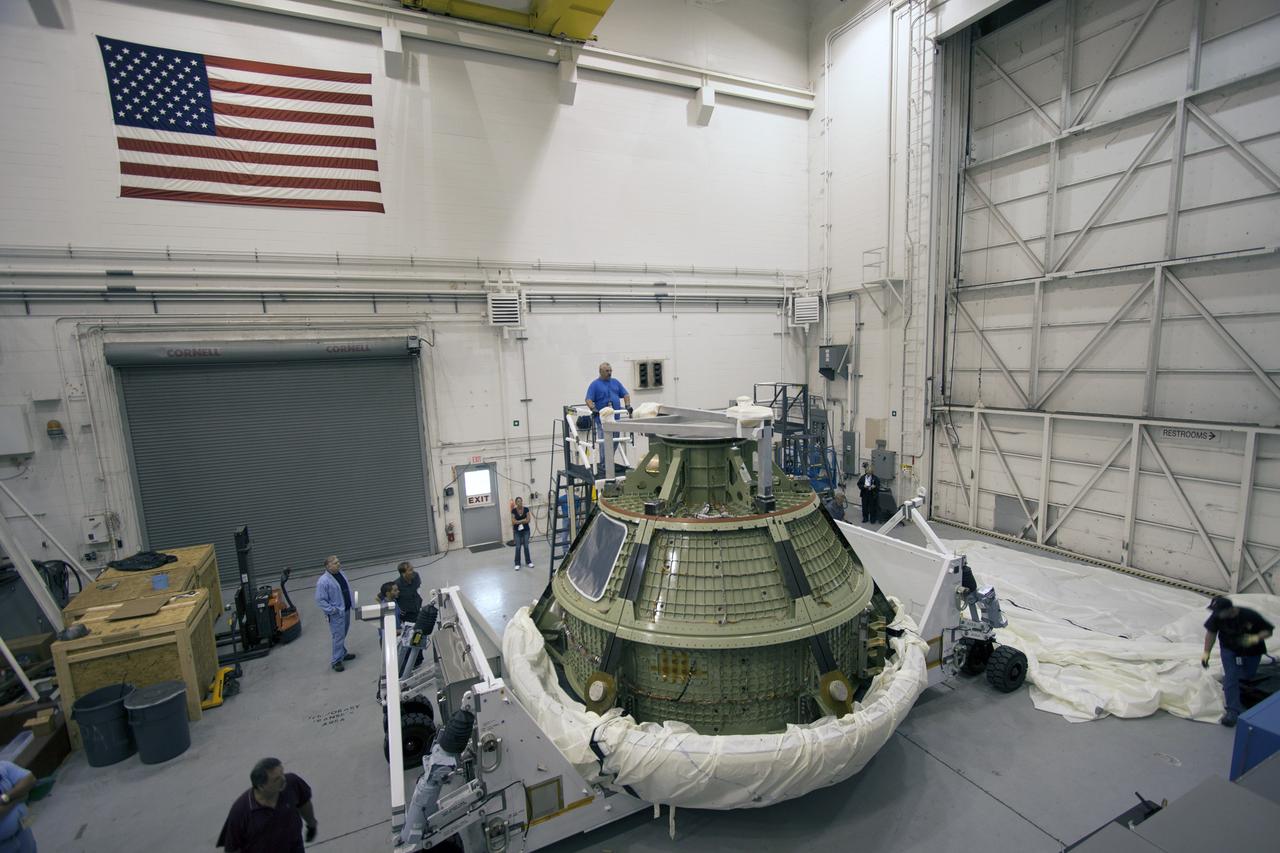
CAPE CANAVERAL, Fla. -- At NASA’s Kennedy Space Center in Florida, Lockheed Martin crews uncover the Orion ground test vehicle in the Launch Equipment Test Facility, or LETF. The GTA was moved from the Operations and Checkout Facility to the LETF for a series of pyrotechnic bolt tests. The GTA is being used for path finding operations in the O&C, including simulated manufacturing and assembly procedures. Launching atop NASA's heavy-lift Space Launch System SLS, which also is under development, the Orion Multi-Purpose Crew Vehicle MPCV will serve as the exploration vehicle that will carry astronaut crews beyond low Earth orbit. It also will provide emergency abort capabilities, sustain the crew during space travel and provide safe re-entry from deep space return velocities. For more information, visit www.nasa.gov/orion. Photo credit: Jim Grossman
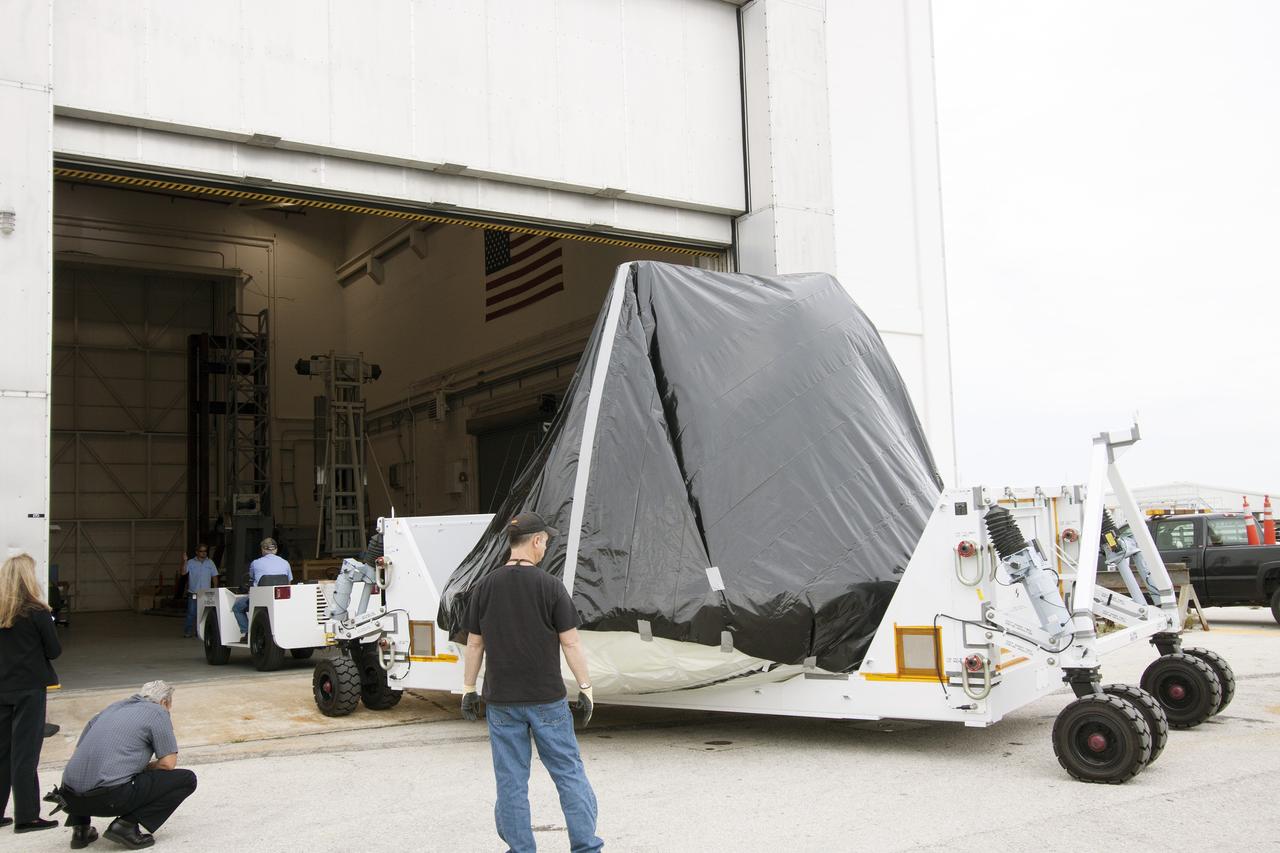
CAPE CANAVERAL, Fla. -- At NASA’s Kennedy Space Center in Florida, workers move the Orion ground test vehicle, or GTA, into the Launch Equipment Test Facility, or LETF, from the Operations and Checkout Building. At the LETF, Lockheed Martin will put the GTA through a series of pyrotechnic bolt tests. The ground test vehicle is being used for path finding operations in the O&C, including simulated manufacturing and assembly procedures. Launching atop NASA's heavy-lift Space Launch System SLS, which also is under development, the Orion Multi-Purpose Crew Vehicle MPCV will serve as the exploration vehicle that will carry astronaut crews beyond low Earth orbit. It also will provide emergency abort capabilities, sustain the crew during space travel and provide safe re-entry from deep space return velocities. For more information, visit www.nasa.gov/orion. Photo credit: Jim Grossman
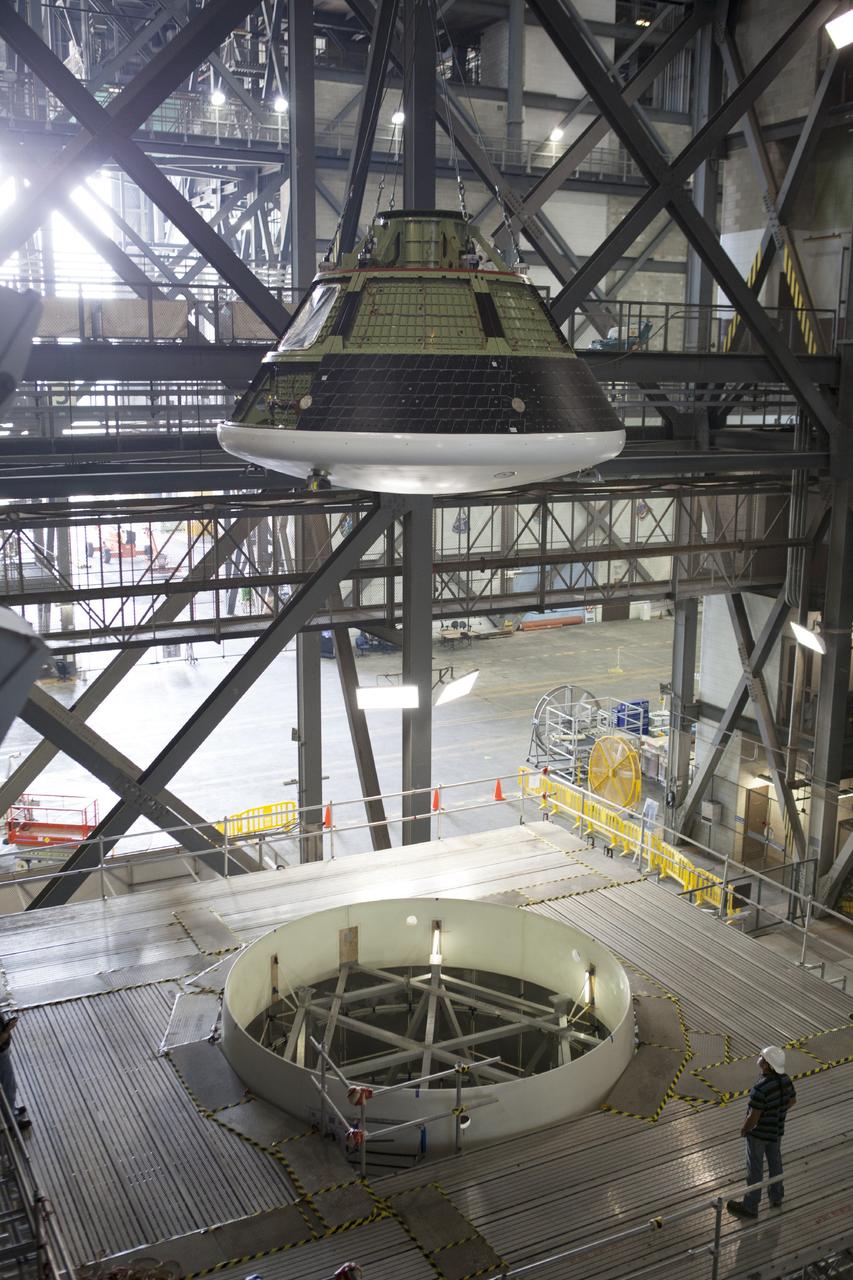
CAPE CANAVERAL, Fla. – At NASA’s Kennedy Space Center in Florida, the Orion ground test vehicle, or GTA, was lifted high in the air by crane in the transfer aisle of the Vehicle Assembly Building and is being lowered toward a mockup of the service module in high bay 4. The ground test vehicle is being used for path finding operations, including simulated manufacturing, assembly and stacking procedures. Orion is the exploration spacecraft designed to carry astronauts to destinations not yet explored by humans, including an asteroid and Mars. It will have emergency abort capability, sustain the crew during space travel and provide safe re-entry from deep space return velocities. The first unpiloted test flight of Orion is scheduled to launch in 2014 atop a Delta IV rocket and in 2017 on NASA’s Space Launch System rocket. For more information, visit www.nasa.gov/orion. Photo credit: Dimitri Gerondidakis
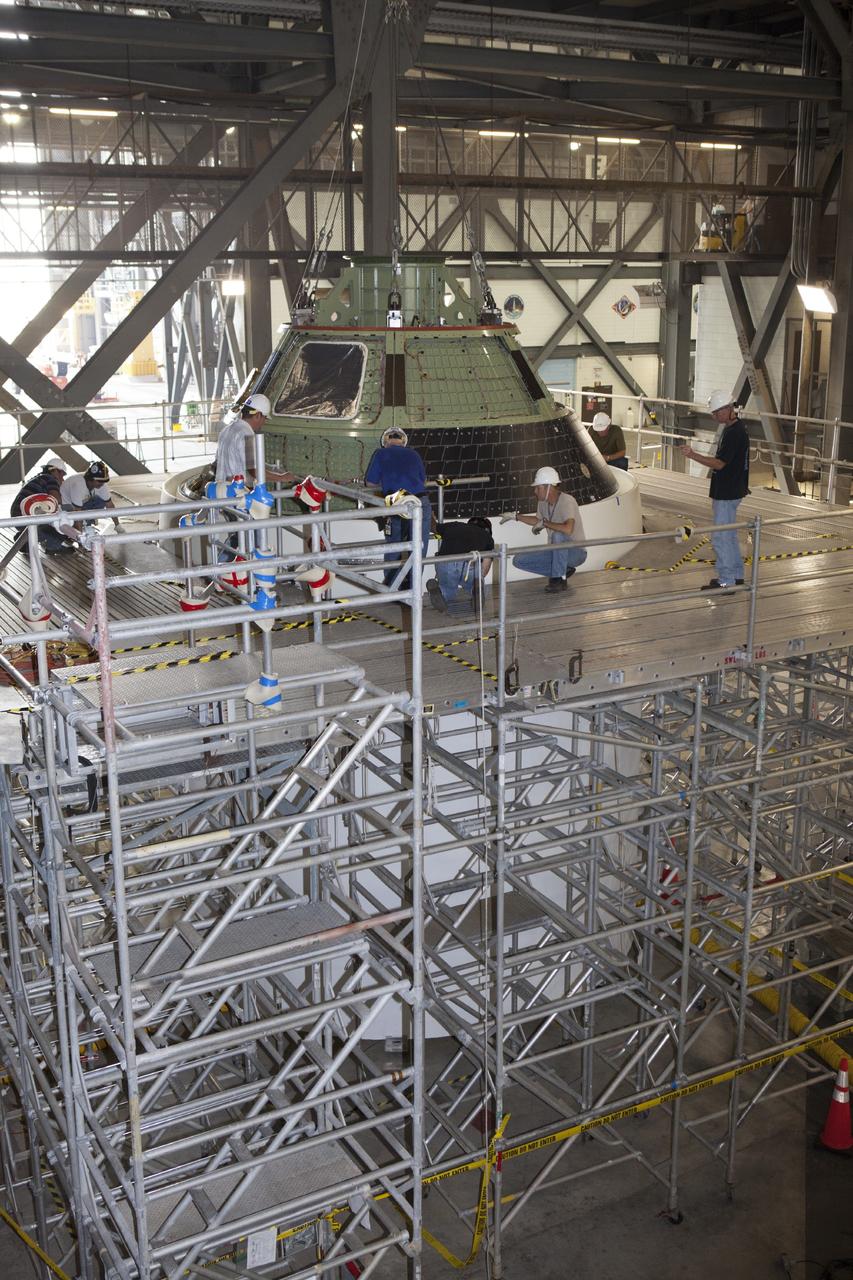
CAPE CANAVERAL, Fla. – At NASA’s Kennedy Space Center in Florida, technicians attach the Orion ground test vehicle, or GTA, to a mockup of the service module in high bay 4 of the Vehicle Assembly Building. The ground test vehicle is being used for path finding operations, including simulated manufacturing, assembly and stacking procedures. Orion is the exploration spacecraft designed to carry astronauts to destinations not yet explored by humans, including an asteroid and Mars. It will have emergency abort capability, sustain the crew during space travel and provide safe re-entry from deep space return velocities. The first unpiloted test flight of Orion is scheduled to launch in 2014 atop a Delta IV rocket and in 2017 on NASA’s Space Launch System rocket. For more information, visit www.nasa.gov/orion. Photo credit: Dimitri Gerondidakis
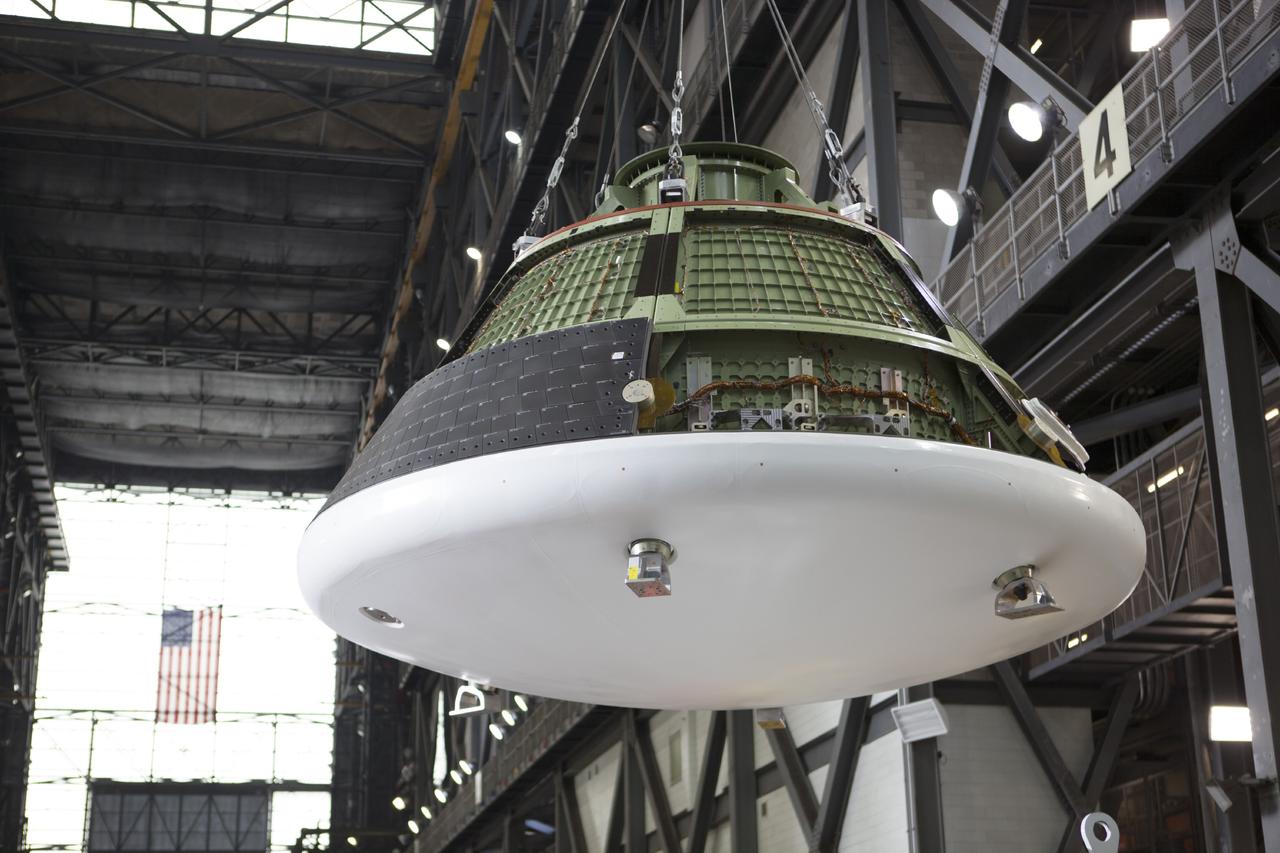
CAPE CANAVERAL, Fla. – At NASA’s Kennedy Space Center in Florida, the Orion test vehicle, or GTA, is lifted by crane in the transfer aisle of the Vehicle Assembly Building. The ground test vehicle is being used for path finding operations, including simulated manufacturing, assembly and stacking procedures. Orion is the exploration spacecraft designed to carry astronauts to destinations not yet explored by humans, including an asteroid and Mars. It will have emergency abort capability, sustain the crew during space travel and provide safe re-entry from deep space return velocities. The first unpiloted test flight of Orion is scheduled to launch in 2014 atop a Delta IV rocket and in 2017 on NASA’s Space Launch System rocket. For more information, visit www.nasa.gov/orion. Photo credit: Dimitri Gerondidakis
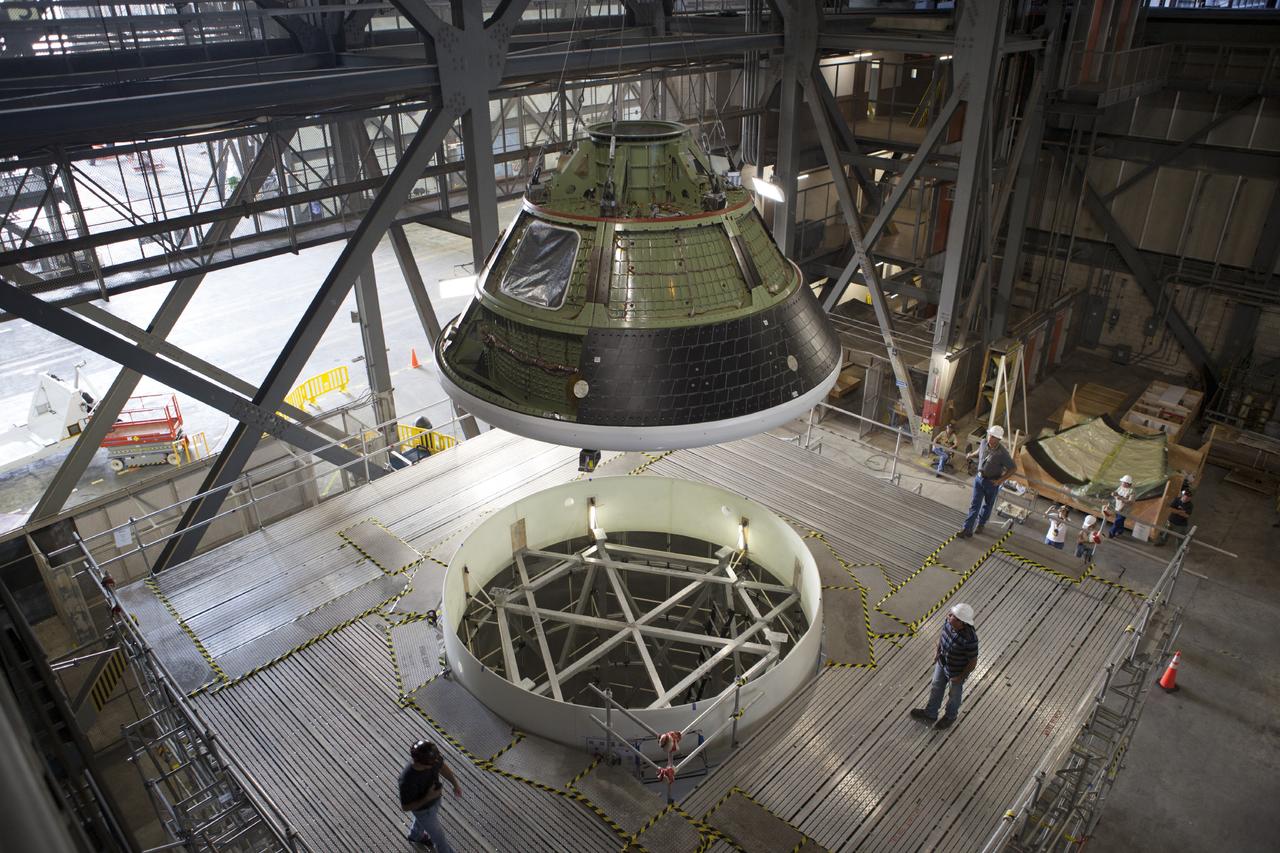
CAPE CANAVERAL, Fla. – At NASA’s Kennedy Space Center in Florida, technicians monitor the progress as the Orion ground test vehicle, or GTA, was lifted high in the air by crane in the transfer aisle of the Vehicle Assembly Building and is being lowered toward a mockup of the service module in high bay 4. The ground test vehicle is being used for path finding operations, including simulated manufacturing, assembly and stacking procedures. Orion is the exploration spacecraft designed to carry astronauts to destinations not yet explored by humans, including an asteroid and Mars. It will have emergency abort capability, sustain the crew during space travel and provide safe re-entry from deep space return velocities. The first unpiloted test flight of Orion is scheduled to launch in 2014 atop a Delta IV rocket and in 2017 on NASA’s Space Launch System rocket. For more information, visit www.nasa.gov/orion. Photo credit: Dimitri Gerondidakis
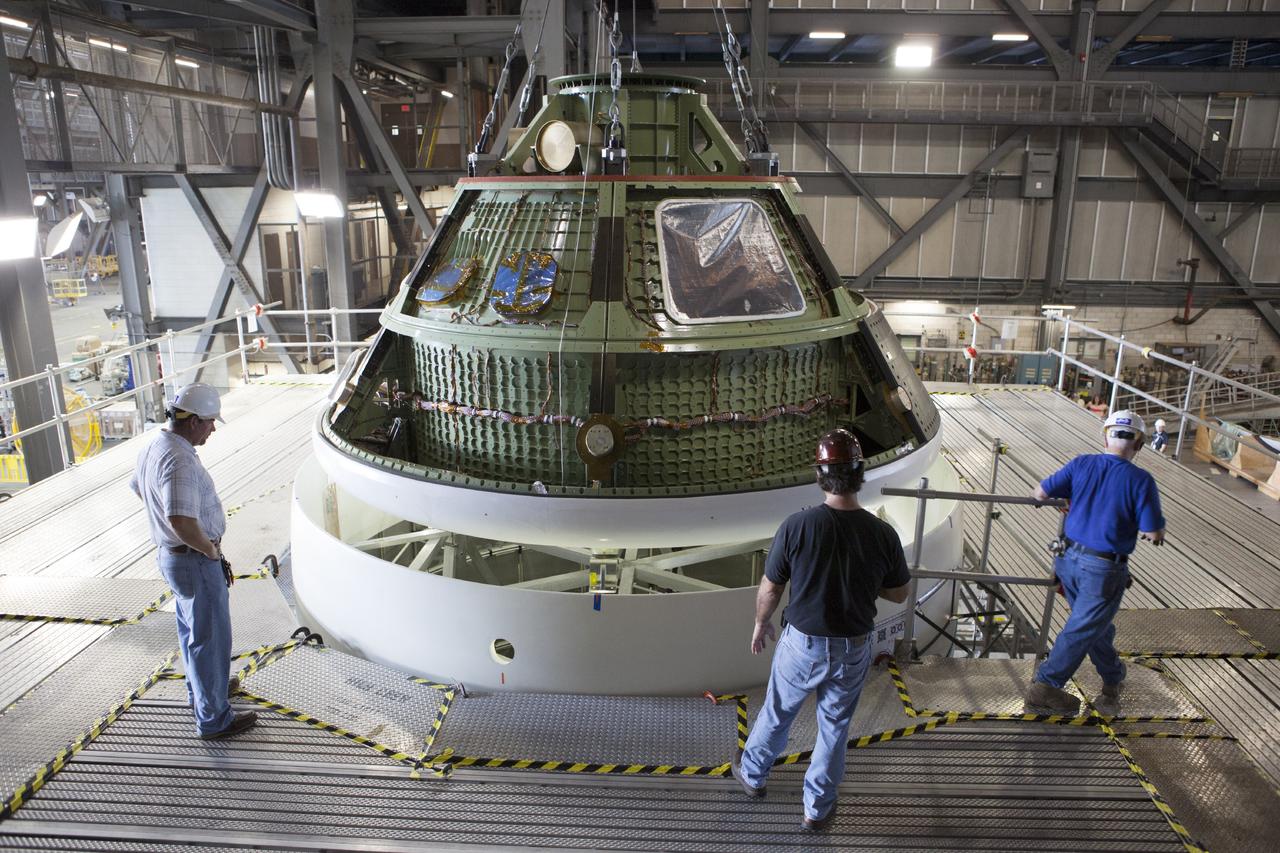
CAPE CANAVERAL, Fla. – At NASA’s Kennedy Space Center in Florida, technicians monitor the progress as the Orion ground test vehicle, or GTA, is lowered by crane toward a mockup of the service module in high bay 4 of the Vehicle Assembly Building. The ground test vehicle is being used for path finding operations, including simulated manufacturing, assembly and stacking procedures. Orion is the exploration spacecraft designed to carry astronauts to destinations not yet explored by humans, including an asteroid and Mars. It will have emergency abort capability, sustain the crew during space travel and provide safe re-entry from deep space return velocities. The first unpiloted test flight of Orion is scheduled to launch in 2014 atop a Delta IV rocket and in 2017 on NASA’s Space Launch System rocket. For more information, visit www.nasa.gov/orion. Photo credit: Dimitri Gerondidakis
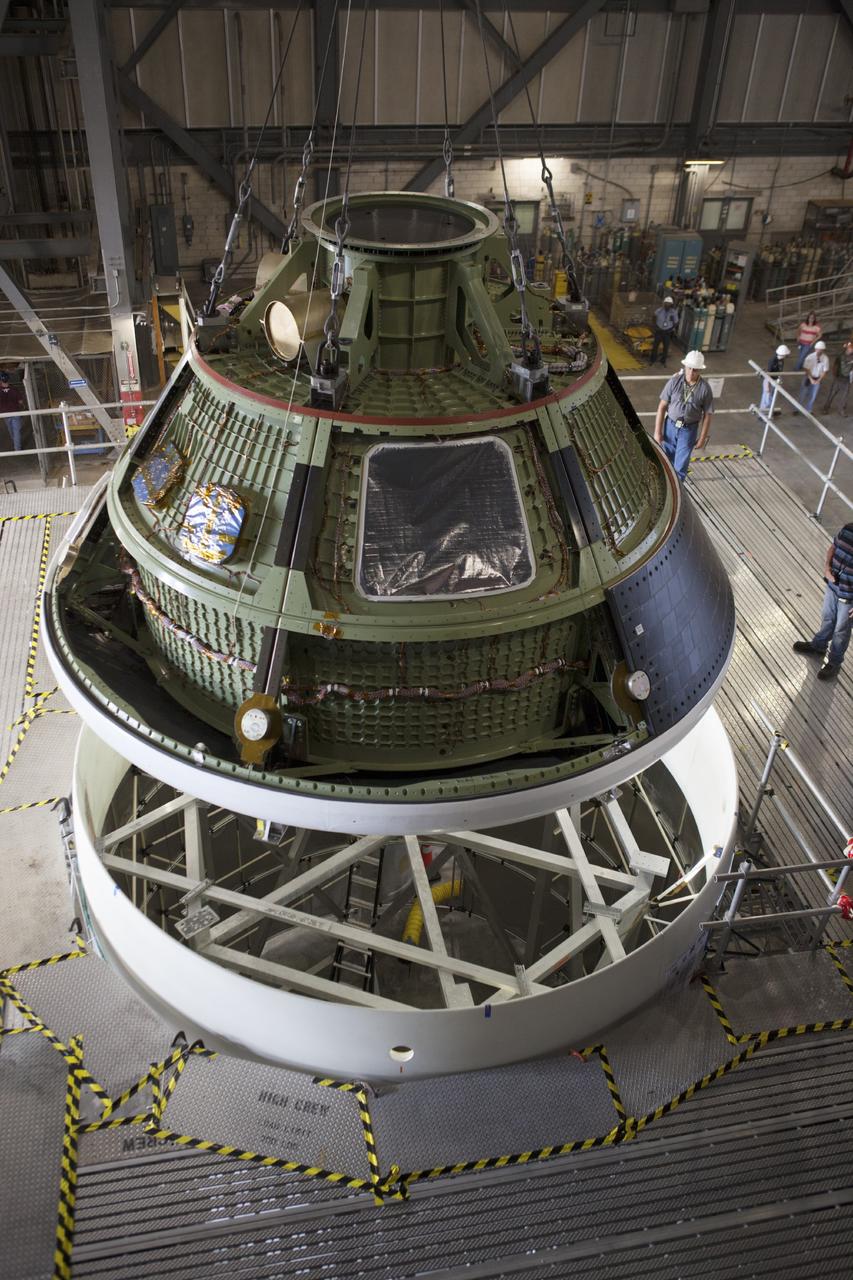
CAPE CANAVERAL, Fla. – At NASA’s Kennedy Space Center in Florida, technicians monitor the progress as the Orion ground test vehicle, or GTA, is being lowered by crane toward a mockup of the service module in high bay 4 of the Vehicle Assembly Building. The ground test vehicle is being used for path finding operations, including simulated manufacturing, assembly and stacking procedures. Orion is the exploration spacecraft designed to carry astronauts to destinations not yet explored by humans, including an asteroid and Mars. It will have emergency abort capability, sustain the crew during space travel and provide safe re-entry from deep space return velocities. The first unpiloted test flight of Orion is scheduled to launch in 2014 atop a Delta IV rocket and in 2017 on NASA’s Space Launch System rocket. For more information, visit www.nasa.gov/orion. Photo credit: Dimitri Gerondidakis
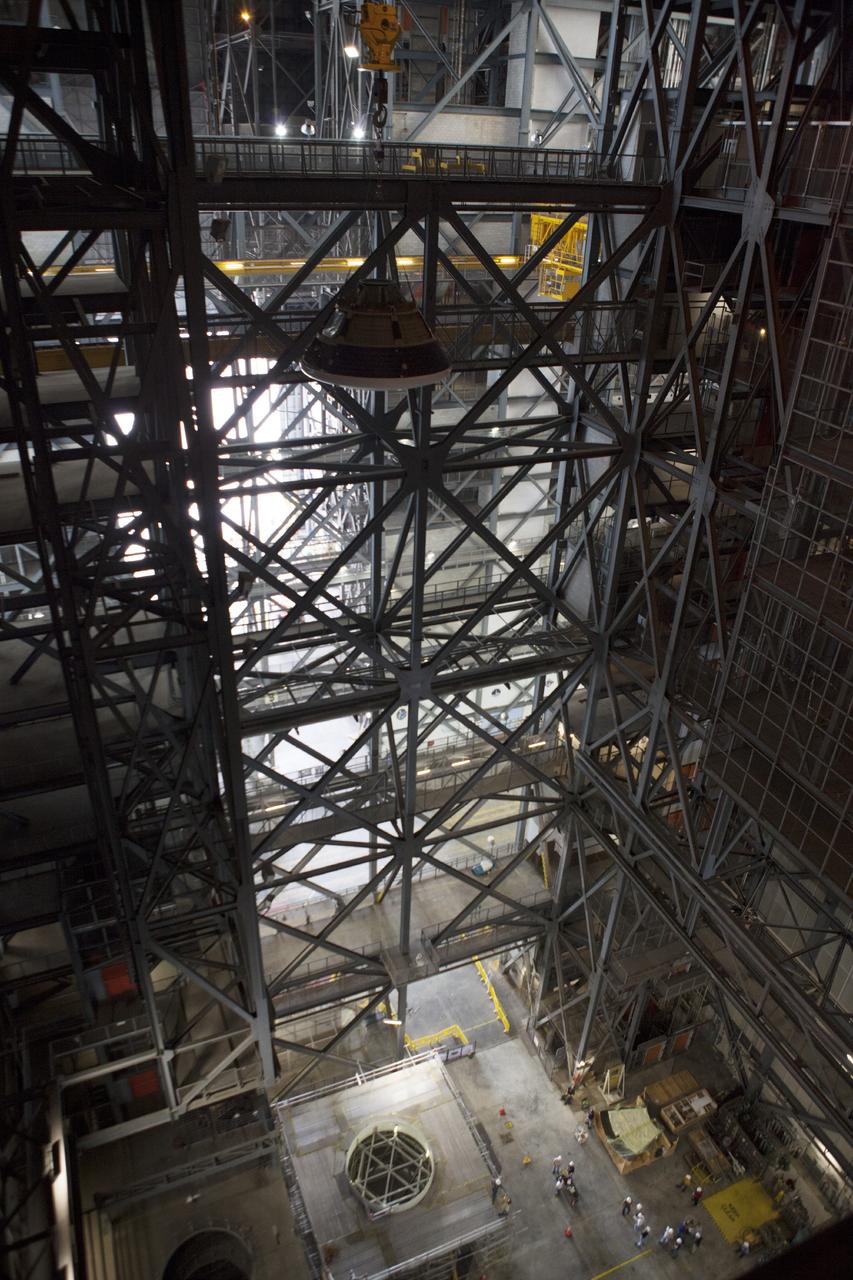
CAPE CANAVERAL, Fla. – At NASA’s Kennedy Space Center in Florida, the Orion ground test vehicle, or GTA, was lifted high in the air by crane in the transfer aisle of the Vehicle Assembly Building and is being lowered toward a mockup of the service module in high bay 4. The ground test vehicle is being used for path finding operations, including simulated manufacturing, assembly and stacking procedures. Orion is the exploration spacecraft designed to carry astronauts to destinations not yet explored by humans, including an asteroid and Mars. It will have emergency abort capability, sustain the crew during space travel and provide safe re-entry from deep space return velocities. The first unpiloted test flight of Orion is scheduled to launch in 2014 atop a Delta IV rocket and in 2017 on NASA’s Space Launch System rocket. For more information, visit www.nasa.gov/orion. Photo credit: Dimitri Gerondidakis
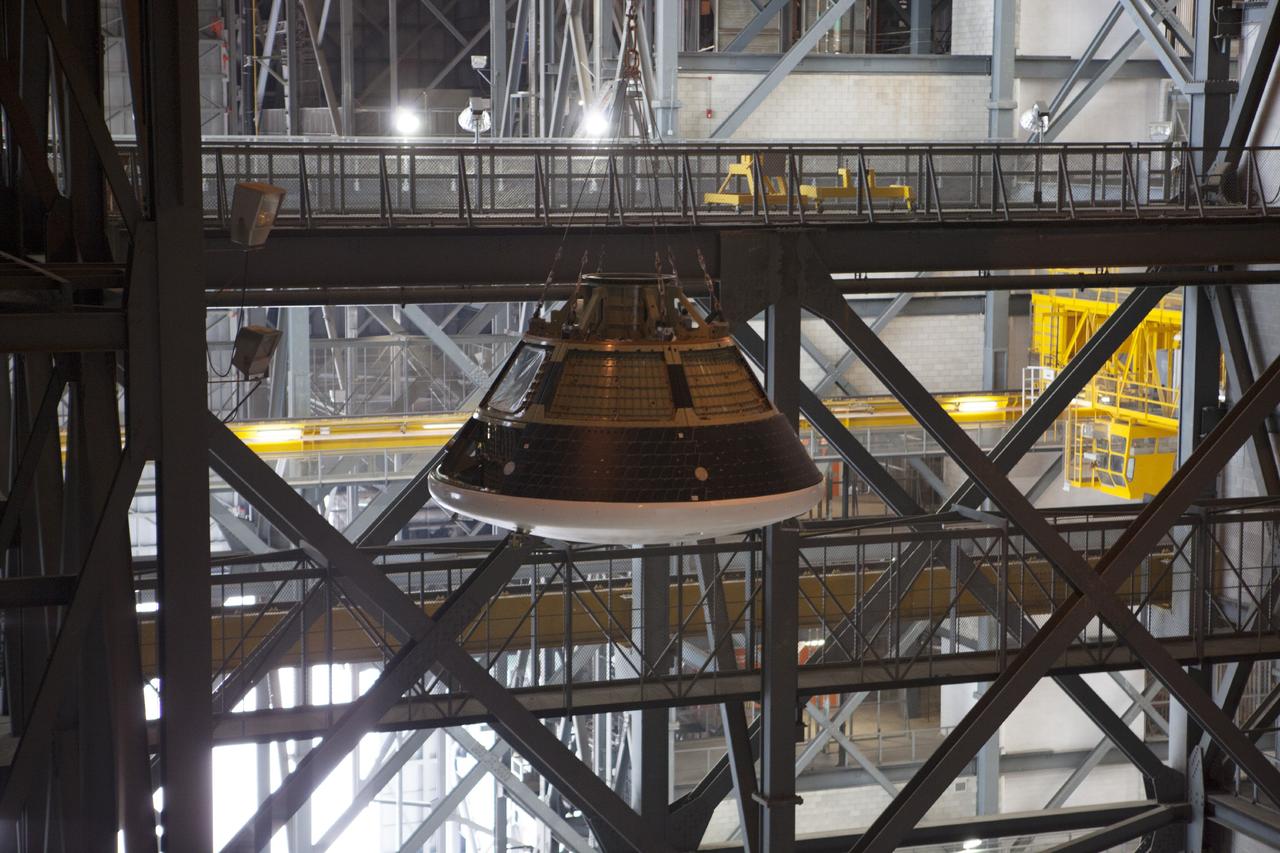
CAPE CANAVERAL, Fla. – At NASA’s Kennedy Space Center in Florida, the Orion ground test vehicle, or GTA, has been lifted high in the air by crane in the transfer aisle of the Vehicle Assembly Building and is being lowered into high bay 4. The ground test vehicle is being used for path finding operations, including simulated manufacturing, assembly and stacking procedures. Orion is the exploration spacecraft designed to carry astronauts to destinations not yet explored by humans, including an asteroid and Mars. It will have emergency abort capability, sustain the crew during space travel and provide safe re-entry from deep space return velocities. The first unpiloted test flight of Orion is scheduled to launch in 2014 atop a Delta IV rocket and in 2017 on NASA’s Space Launch System rocket. For more information, visit www.nasa.gov/orion. Photo credit: Dimitri Gerondidakis
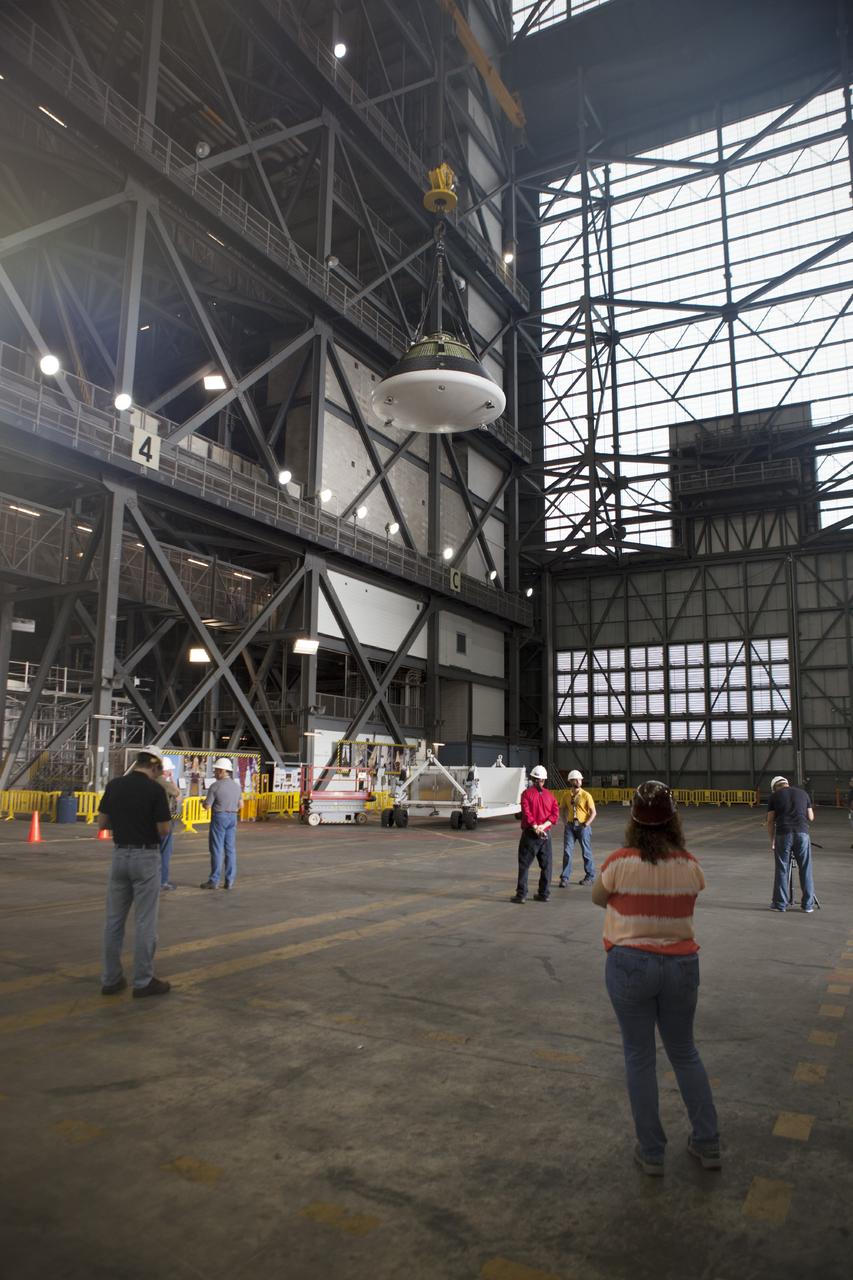
CAPE CANAVERAL, Fla. – At NASA’s Kennedy Space Center in Florida, technicians monitor the progress as the Orion ground test vehicle, or GTA, is lifted by crane in the transfer aisle of the Vehicle Assembly Building. The ground test vehicle is being used for path finding operations, including simulated manufacturing, assembly and stacking procedures. Orion is the exploration spacecraft designed to carry astronauts to destinations not yet explored by humans, including an asteroid and Mars. It will have emergency abort capability, sustain the crew during space travel and provide safe re-entry from deep space return velocities. The first unpiloted test flight of Orion is scheduled to launch in 2014 atop a Delta IV rocket and in 2017 on NASA’s Space Launch System rocket. For more information, visit www.nasa.gov/orion. Photo credit: Dimitri Gerondidakis
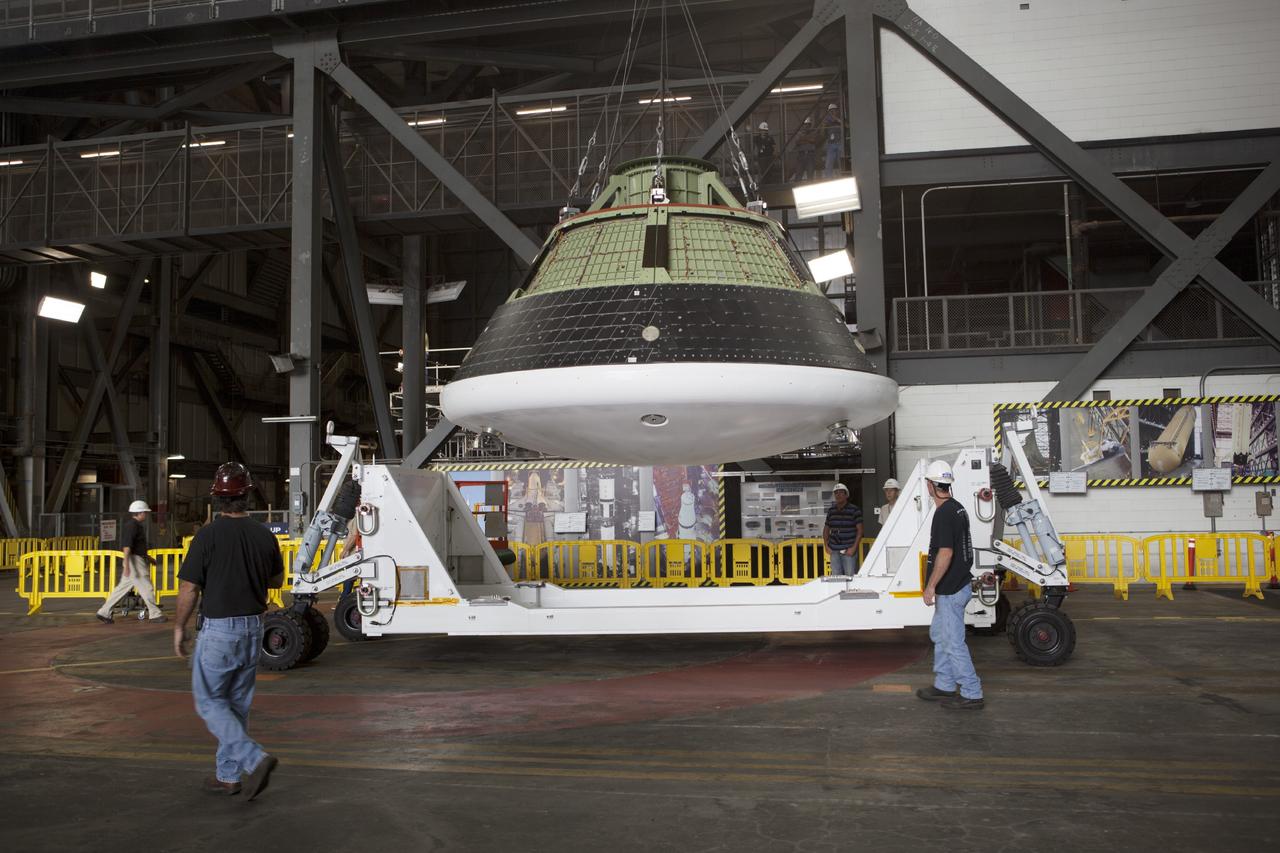
CAPE CANAVERAL, Fla. – At NASA’s Kennedy Space Center in Florida, technicians monitor the progress as the Orion ground test vehicle, or GTA, is lifted by crane in the transfer aisle of the Vehicle Assembly Building. The ground test vehicle is being used for path finding operations, including simulated manufacturing, assembly and stacking procedures. Orion is the exploration spacecraft designed to carry astronauts to destinations not yet explored by humans, including an asteroid and Mars. It will have emergency abort capability, sustain the crew during space travel and provide safe re-entry from deep space return velocities. The first unpiloted test flight of Orion is scheduled to launch in 2014 atop a Delta IV rocket and in 2017 on NASA’s Space Launch System rocket. For more information, visit www.nasa.gov/orion. Photo credit: Dimitri Gerondidakis

CAPE CANAVERAL, Fla. – At NASA’s Kennedy Space Center in Florida, the Orion ground test vehicle, or GTA, has been lifted high in the air by crane in the transfer aisle of the Vehicle Assembly Building. The ground test vehicle is being used for path finding operations, including simulated manufacturing, assembly and stacking procedures. Orion is the exploration spacecraft designed to carry astronauts to destinations not yet explored by humans, including an asteroid and Mars. It will have emergency abort capability, sustain the crew during space travel and provide safe re-entry from deep space return velocities. The first unpiloted test flight of Orion is scheduled to launch in 2014 atop a Delta IV rocket and in 2017 on NASA’s Space Launch System rocket. For more information, visit www.nasa.gov/orion. Photo credit: Dimitri Gerondidakis
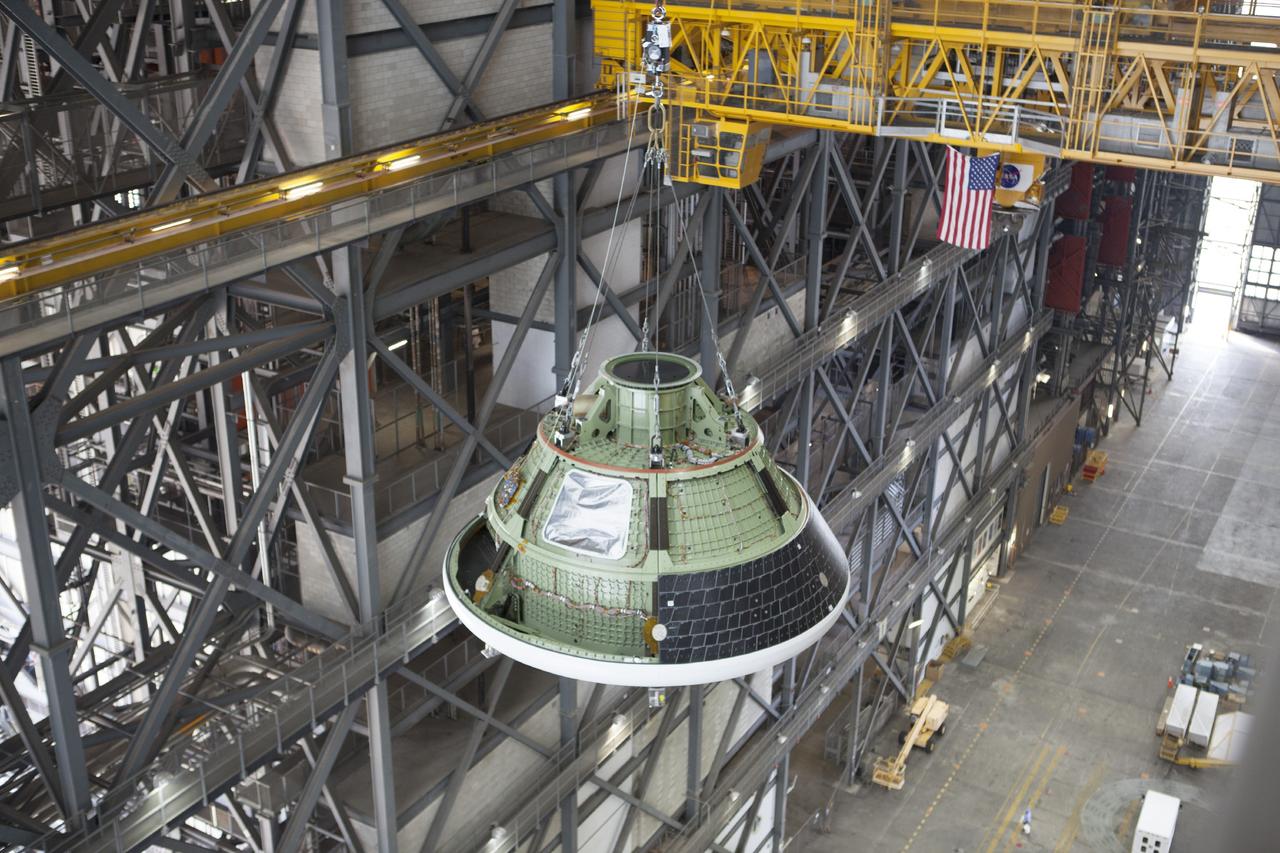
CAPE CANAVERAL, Fla. – At NASA’s Kennedy Space Center in Florida, a view from above shows the Orion ground test vehicle, or GTA, being lifted by crane in the transfer aisle of the Vehicle Assembly Building. The ground test vehicle is being used for path finding operations, including simulated manufacturing, assembly and stacking procedures. Orion is the exploration spacecraft designed to carry astronauts to destinations not yet explored by humans, including an asteroid and Mars. It will have emergency abort capability, sustain the crew during space travel and provide safe re-entry from deep space return velocities. The first unpiloted test flight of Orion is scheduled to launch in 2014 atop a Delta IV rocket and in 2017 on NASA’s Space Launch System rocket. For more information, visit www.nasa.gov/orion. Photo credit: Dimitri Gerondidakis
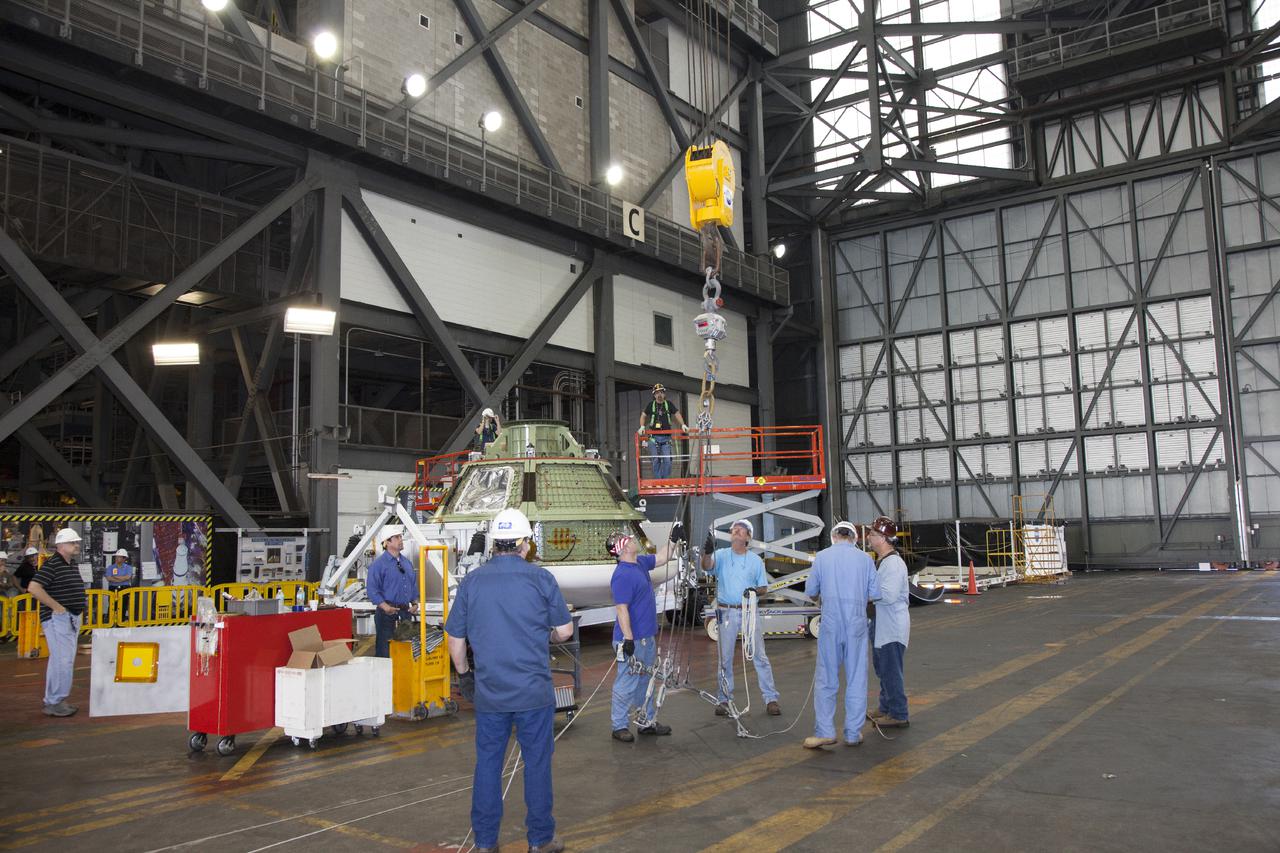
CAPE CANAVERAL, Fla. – At NASA’s Kennedy Space Center in Florida, technicians prepare to attach a bridge crane to the Orion ground test vehicle for heat shield removal inside the Vehicle Assembly Building. The ground test vehicle is being prepared for its move to Langley Research Center in Hampton, Va., for a water test. The test vehicle is being used by the Ground Systems Development and Operations Program for path finding operations, including simulated manufacturing, assembly and stacking procedures. Orion is the exploration spacecraft designed to carry astronauts to destinations not yet explored by humans. It will have emergency abort capability, sustain the crew during space travel and provide safe re-entry from deep space return velocities. The first unpiloted test flight of Orion is scheduled to launch in 2014 atop a Delta IV Heavy rocket and in 2017 on NASA’s Space Launch System rocket. For more information, visit www.nasa.gov_orion. Photo credit: Daniel Casper
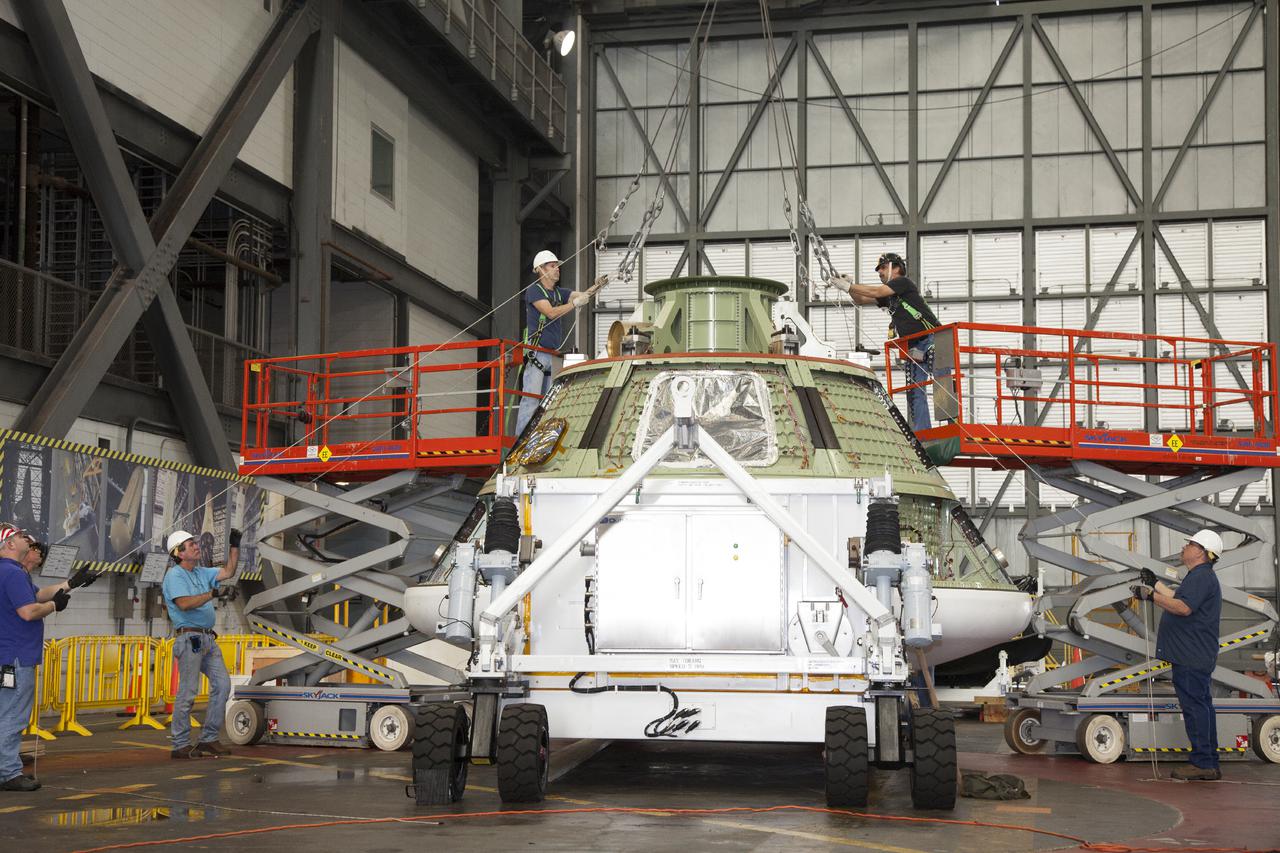
CAPE CANAVERAL, Fla. – Inside the Vehicle Assembly Building at NASA’s Kennedy Space Center in Florida, technicians on scissor lifts prepare to attach a bridge crane to the Orion ground test vehicle for heat shield removal. The ground test vehicle is being prepared for its move to Langley Research Center in Hampton, Va., for a water test. The test vehicle is being used by the Ground Systems Development and Operations Program for path finding operations, including simulated manufacturing, assembly and stacking procedures. Orion is the exploration spacecraft designed to carry astronauts to destinations not yet explored by humans. It will have emergency abort capability, sustain the crew during space travel and provide safe re-entry from deep space return velocities. The first unpiloted test flight of Orion is scheduled to launch in 2014 atop a Delta IV Heavy rocket and in 2017 on NASA’s Space Launch System rocket. For more information, visit www.nasa.gov_orion. Photo credit: Daniel Casper
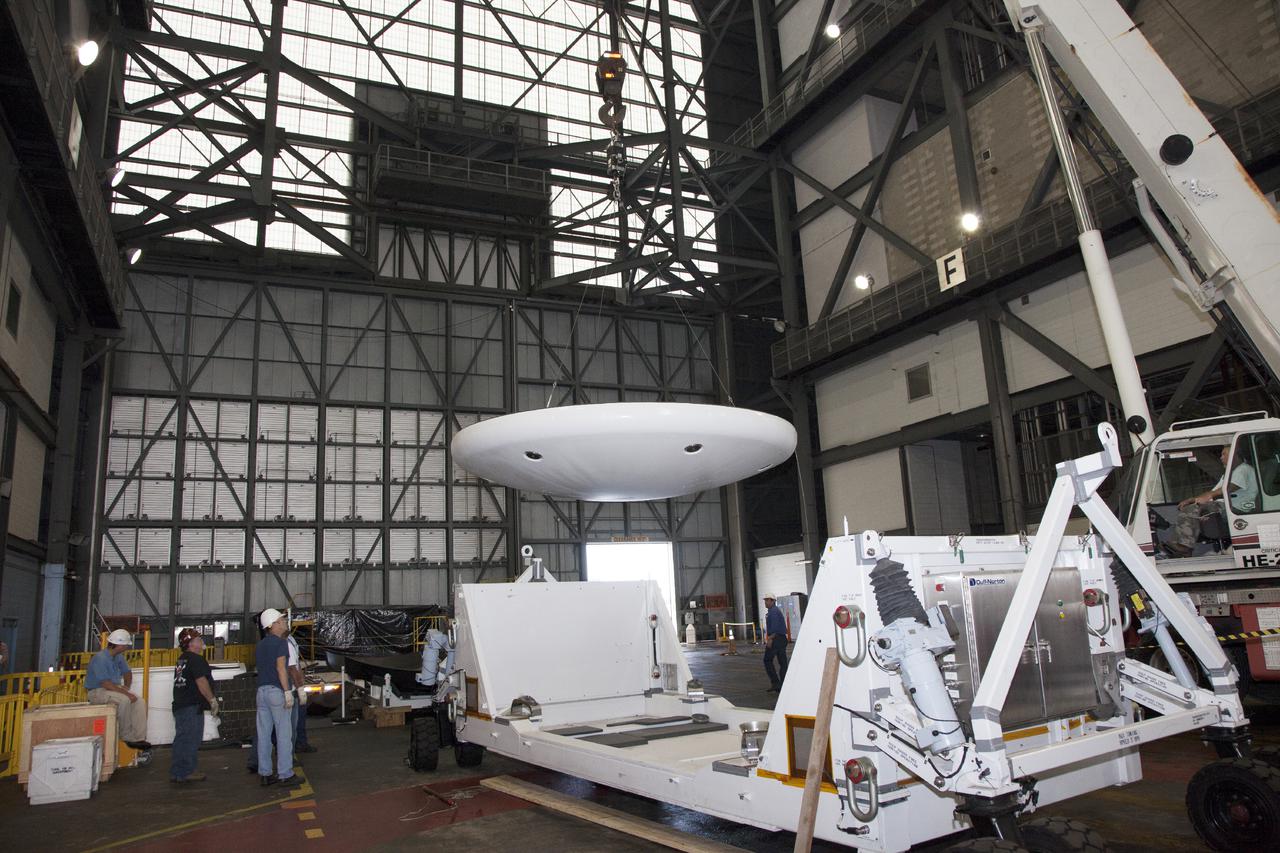
CAPE CANAVERAL, Fla. – Inside the Vehicle Assembly Building at NASA’s Kennedy Space Center in Florida, technicians monitor the progress as a crane moves the heat shield that was removed from the Orion ground test vehicle toward a special holding platform. The ground test vehicle is being prepared for its move to Langley Research Center in Hampton, Va., for a water test. The test vehicle is being used by the Ground Systems Development and Operations Program for path finding operations, including simulated manufacturing, assembly and stacking procedures. Orion is the exploration spacecraft designed to carry astronauts to destinations not yet explored by humans. It will have emergency abort capability, sustain the crew during space travel and provide safe re-entry from deep space return velocities. The first unpiloted test flight of Orion is scheduled to launch in 2014 atop a Delta IV Heavy rocket and in 2017 on NASA’s Space Launch System rocket. For more information, visit www.nasa.gov_orion. Photo credit: Daniel Casper
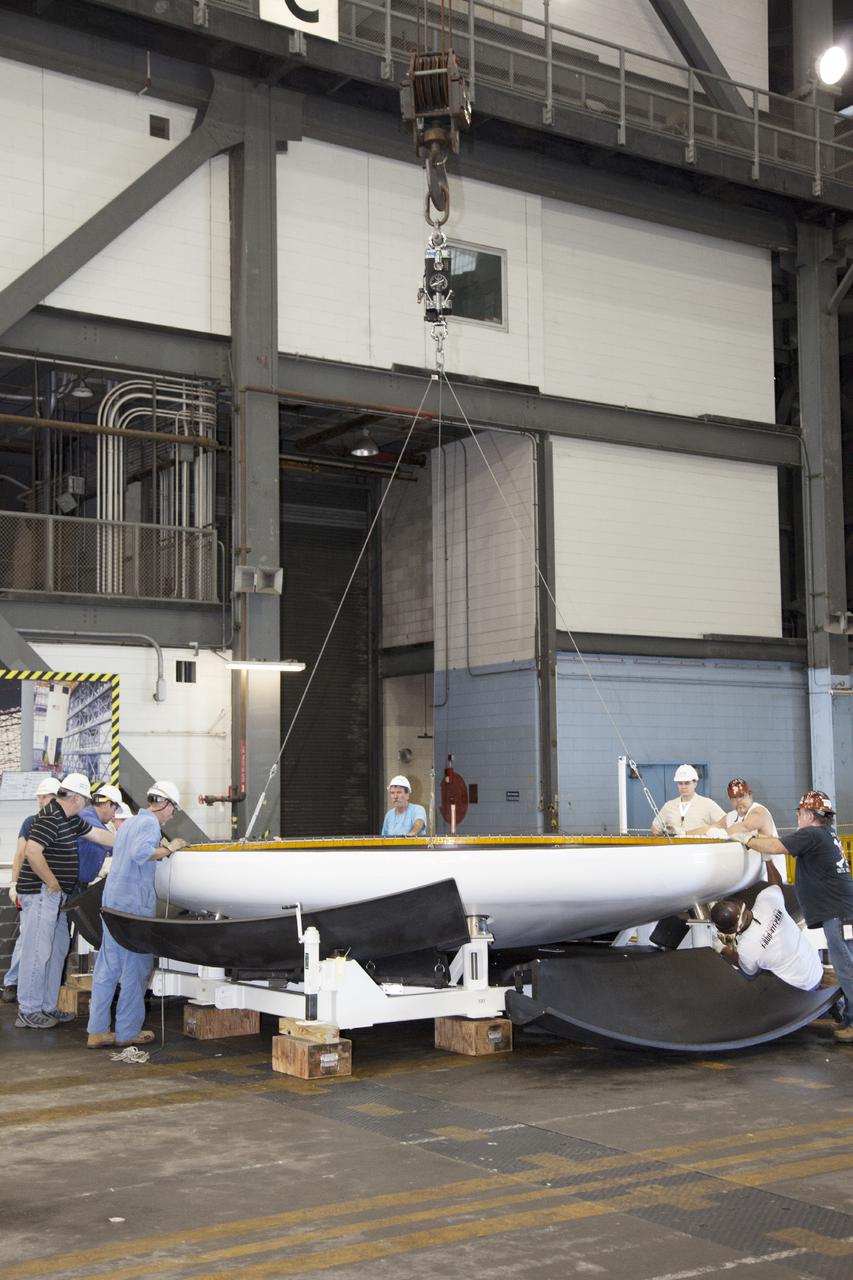
CAPE CANAVERAL, Fla. – Inside the Vehicle Assembly Building at NASA’s Kennedy Space Center in Florida, technicians help secure the heat shield that was removed from the Orion ground test vehicle onto a special holding platform. The ground test vehicle is being prepared for its move to Langley Research Center in Hampton, Va., for a water test. The test vehicle is being used by the Ground Systems Development and Operations Program for path finding operations, including simulated manufacturing, assembly and stacking procedures. Orion is the exploration spacecraft designed to carry astronauts to destinations not yet explored by humans. It will have emergency abort capability, sustain the crew during space travel and provide safe re-entry from deep space return velocities. The first unpiloted test flight of Orion is scheduled to launch in 2014 atop a Delta IV Heavy rocket and in 2017 on NASA’s Space Launch System rocket. For more information, visit www.nasa.gov_orion. Photo credit: Daniel Casper
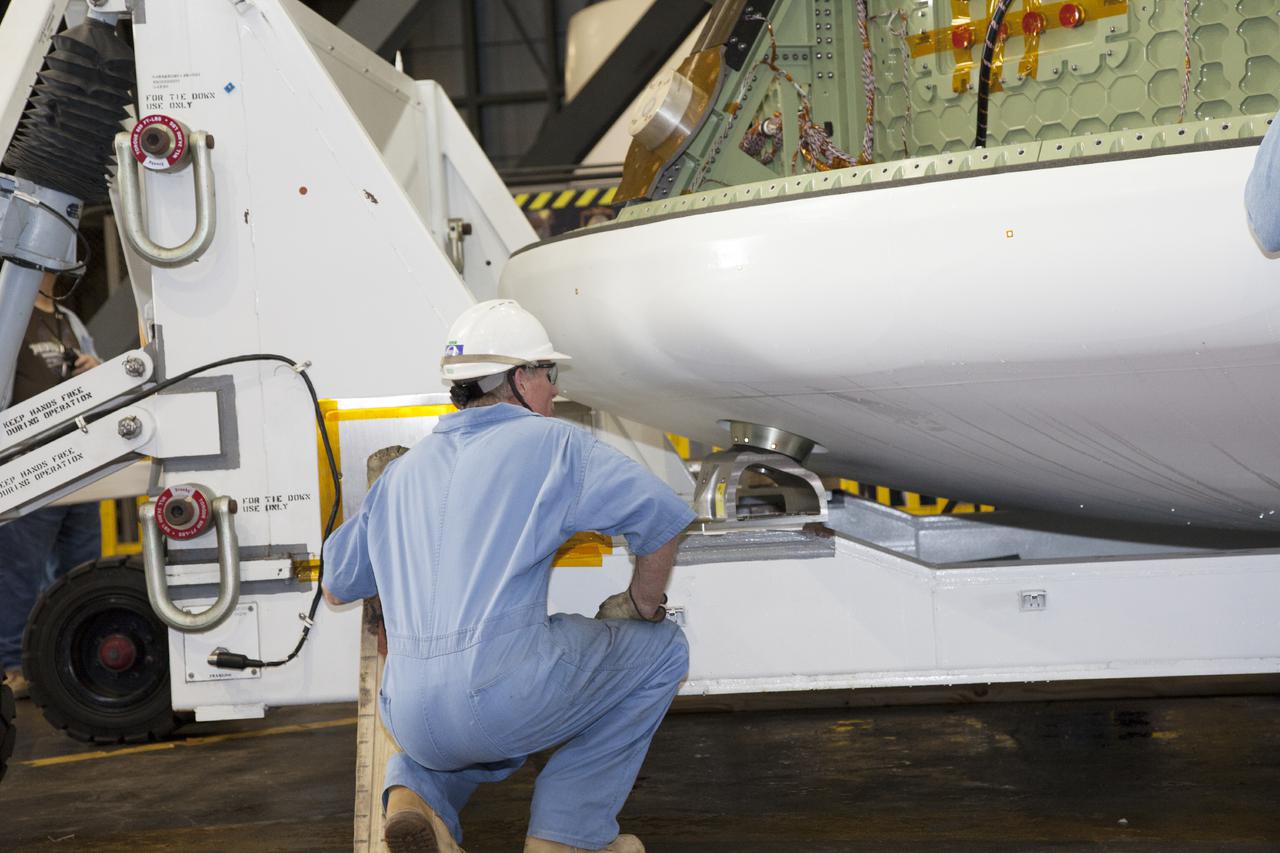
CAPE CANAVERAL, Fla. – Inside the Vehicle Assembly Building at NASA’s Kennedy Space Center in Florida, a technician monitors the progress as a bridge crane attached to the Orion ground test vehicle begins to lift it away from the heat shield. The ground test vehicle is being prepared for its move to Langley Research Center in Hampton, Va., for a water test. The test vehicle is being used by the Ground Systems Development and Operations Program for path finding operations, including simulated manufacturing, assembly and stacking procedures. Orion is the exploration spacecraft designed to carry astronauts to destinations not yet explored by humans. It will have emergency abort capability, sustain the crew during space travel and provide safe re-entry from deep space return velocities. The first unpiloted test flight of Orion is scheduled to launch in 2014 atop a Delta IV Heavy rocket and in 2017 on NASA’s Space Launch System rocket. For more information, visit www.nasa.gov_orion. Photo credit: Daniel Casper
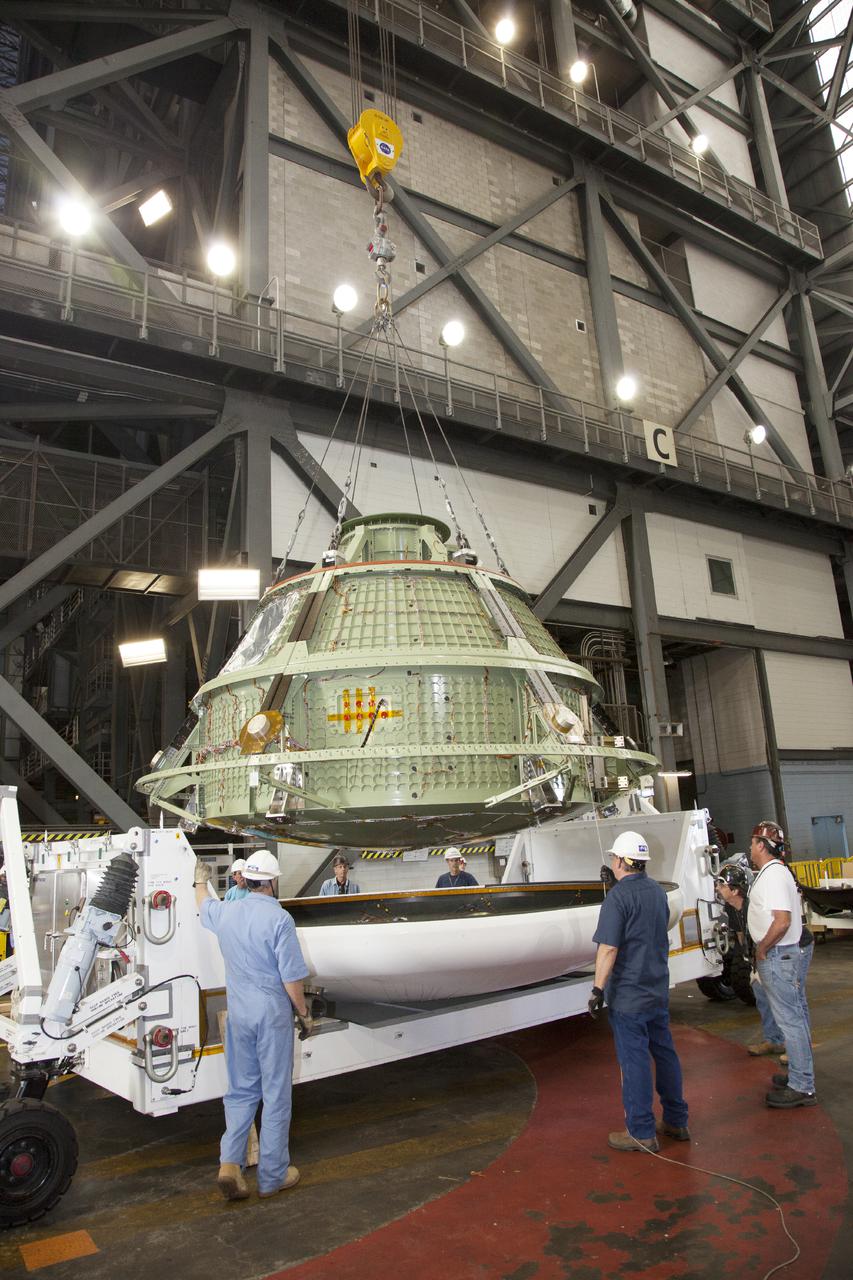
CAPE CANAVERAL, Fla. – Inside the Vehicle Assembly Building at NASA’s Kennedy Space Center in Florida, technicians monitor the progress as a bridge crane attached to the Orion ground test vehicle begins to lift it away from the heat shield. The ground test vehicle is being prepared for its move to Langley Research Center in Hampton, Va., for a water test. The test vehicle is being used by the Ground Systems Development and Operations Program for path finding operations, including simulated manufacturing, assembly and stacking procedures. Orion is the exploration spacecraft designed to carry astronauts to destinations not yet explored by humans. It will have emergency abort capability, sustain the crew during space travel and provide safe re-entry from deep space return velocities. The first unpiloted test flight of Orion is scheduled to launch in 2014 atop a Delta IV Heavy rocket and in 2017 on NASA’s Space Launch System rocket. For more information, visit www.nasa.gov_orion. Photo credit: Daniel Casper
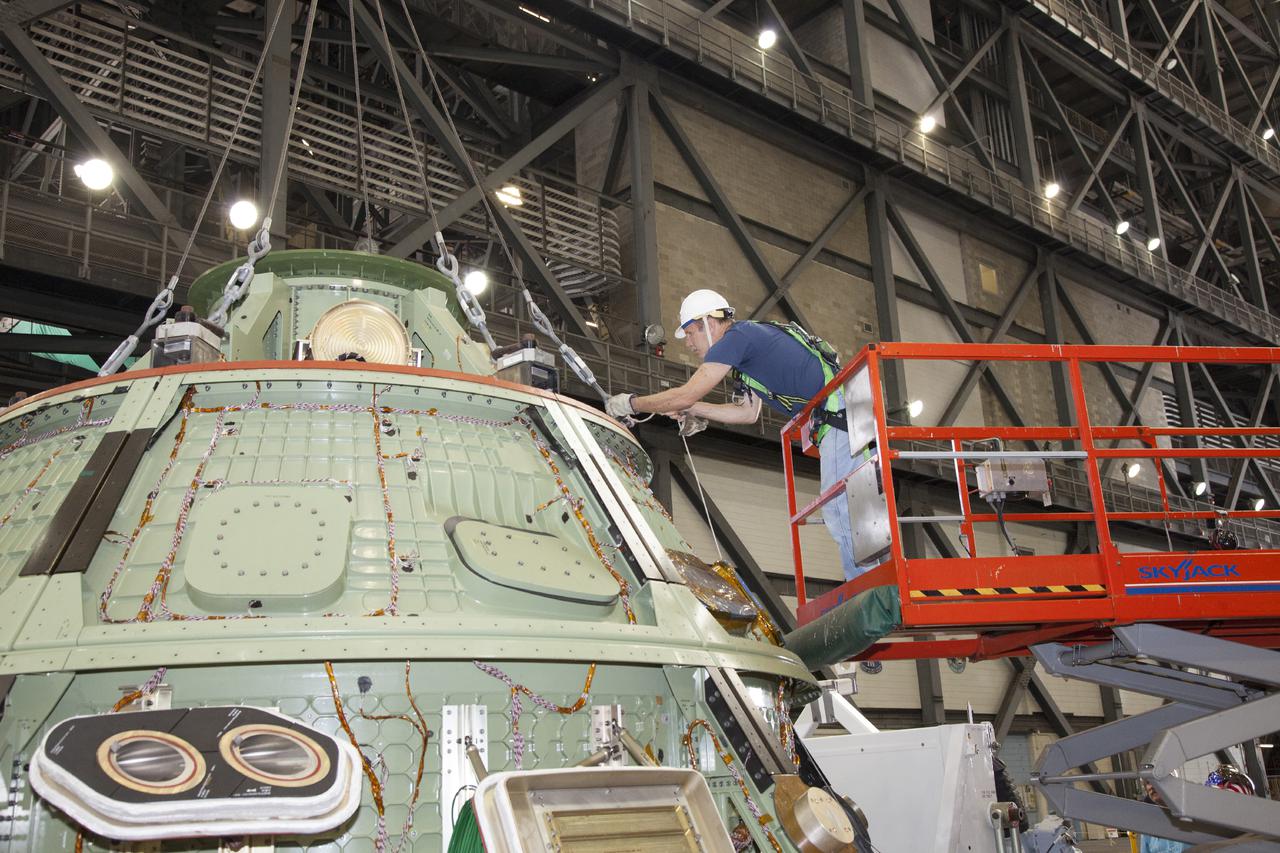
CAPE CANAVERAL, Fla. – Inside the Vehicle Assembly Building at NASA’s Kennedy Space Center in Florida, a technician on scissor lift secures the lines of a bridge crane attached to the Orion ground test vehicle for heat shield removal. The ground test vehicle is being prepared for its move to Langley Research Center in Hampton, Va., for a water test. The test vehicle is being used by the Ground Systems Development and Operations Program for path finding operations, including simulated manufacturing, assembly and stacking procedures. Orion is the exploration spacecraft designed to carry astronauts to destinations not yet explored by humans. It will have emergency abort capability, sustain the crew during space travel and provide safe re-entry from deep space return velocities. The first unpiloted test flight of Orion is scheduled to launch in 2014 atop a Delta IV Heavy rocket and in 2017 on NASA’s Space Launch System rocket. For more information, visit www.nasa.gov_orion. Photo credit: Daniel Casper
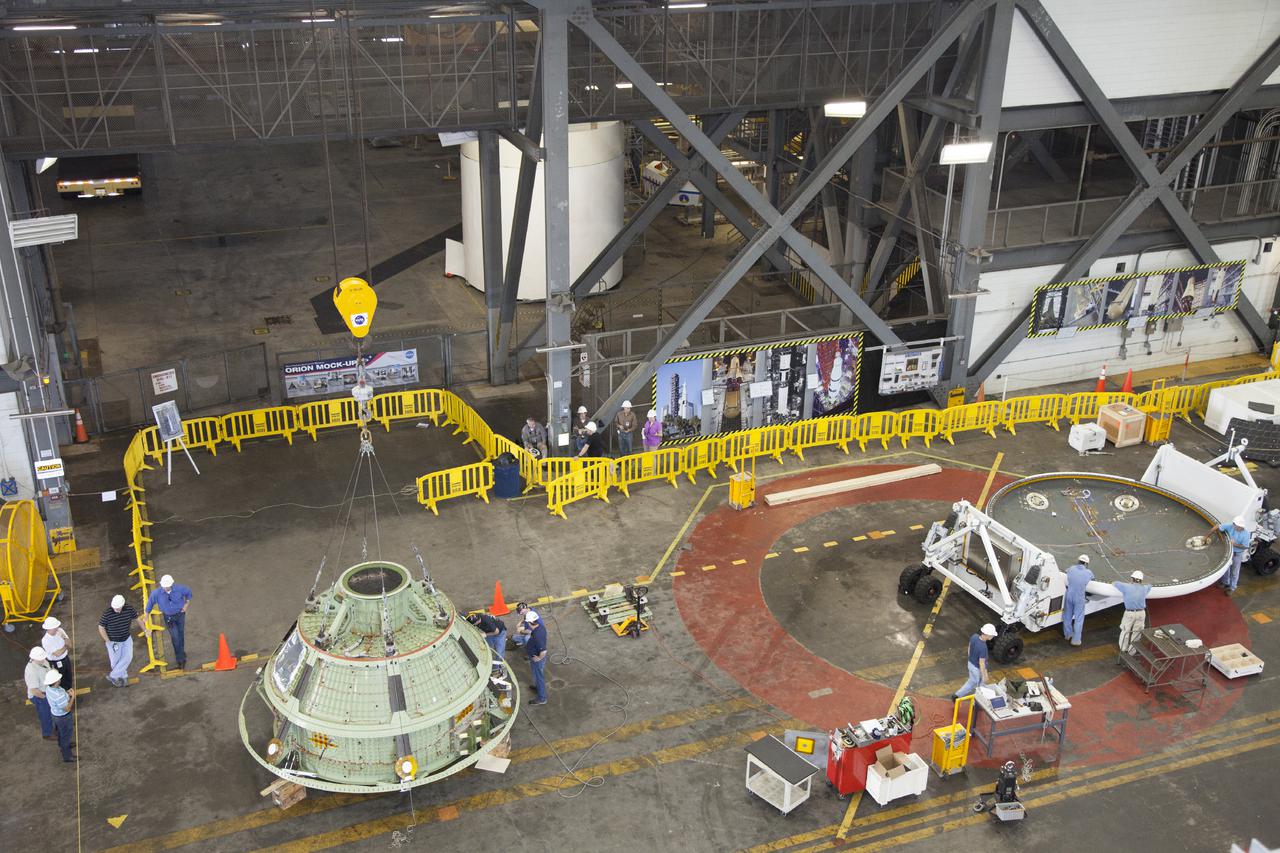
CAPE CANAVERAL, Fla. – Inside the Vehicle Assembly Building at NASA’s Kennedy Space Center in Florida, a bridge crane attached to the Orion ground test vehicle has lifted it away from the heat shield and lowered it onto a platform. The ground test vehicle is being prepared for its move to Langley Research Center in Hampton, Va., for a water test. The test vehicle is being used by the Ground Systems Development and Operations Program for path finding operations, including simulated manufacturing, assembly and stacking procedures. Orion is the exploration spacecraft designed to carry astronauts to destinations not yet explored by humans. It will have emergency abort capability, sustain the crew during space travel and provide safe re-entry from deep space return velocities. The first unpiloted test flight of Orion is scheduled to launch in 2014 atop a Delta IV Heavy rocket and in 2017 on NASA’s Space Launch System rocket. For more information, visit www.nasa.gov_orion. Photo credit: Daniel Casper
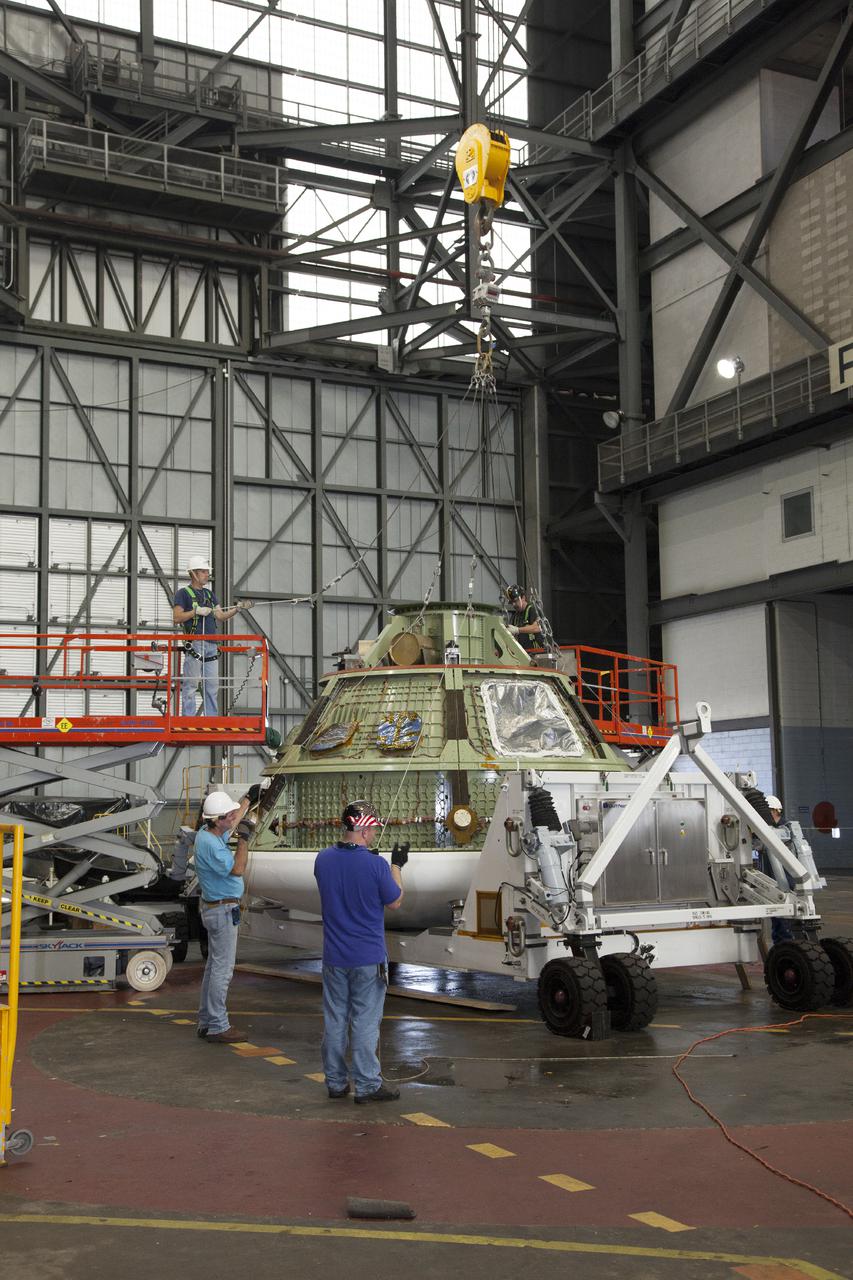
CAPE CANAVERAL, Fla. – Inside the Vehicle Assembly Building at NASA’s Kennedy Space Center in Florida, technicians on scissor lifts secure the lines of a bridge crane attached to the Orion ground test vehicle for heat shield removal. The ground test vehicle is being prepared for its move to Langley Research Center in Hampton, Va., for a water test. The test vehicle is being used by the Ground Systems Development and Operations Program for path finding operations, including simulated manufacturing, assembly and stacking procedures. Orion is the exploration spacecraft designed to carry astronauts to destinations not yet explored by humans. It will have emergency abort capability, sustain the crew during space travel and provide safe re-entry from deep space return velocities. The first unpiloted test flight of Orion is scheduled to launch in 2014 atop a Delta IV Heavy rocket and in 2017 on NASA’s Space Launch System rocket. For more information, visit www.nasa.gov_orion. Photo credit: Daniel Casper

CAPE CANAVERAL, Fla. – Inside the Vehicle Assembly Building at NASA’s Kennedy Space Center in Florida, technicians monitor the progress as a bridge crane attached to the Orion ground test vehicle moves it away from the heat shield. The ground test vehicle is being prepared for its move to Langley Research Center in Hampton, Va., for a water test. The test vehicle is being used by the Ground Systems Development and Operations Program for path finding operations, including simulated manufacturing, assembly and stacking procedures. Orion is the exploration spacecraft designed to carry astronauts to destinations not yet explored by humans. It will have emergency abort capability, sustain the crew during space travel and provide safe re-entry from deep space return velocities. The first unpiloted test flight of Orion is scheduled to launch in 2014 atop a Delta IV Heavy rocket and in 2017 on NASA’s Space Launch System rocket. For more information, visit www.nasa.gov_orion. Photo credit: Daniel Casper
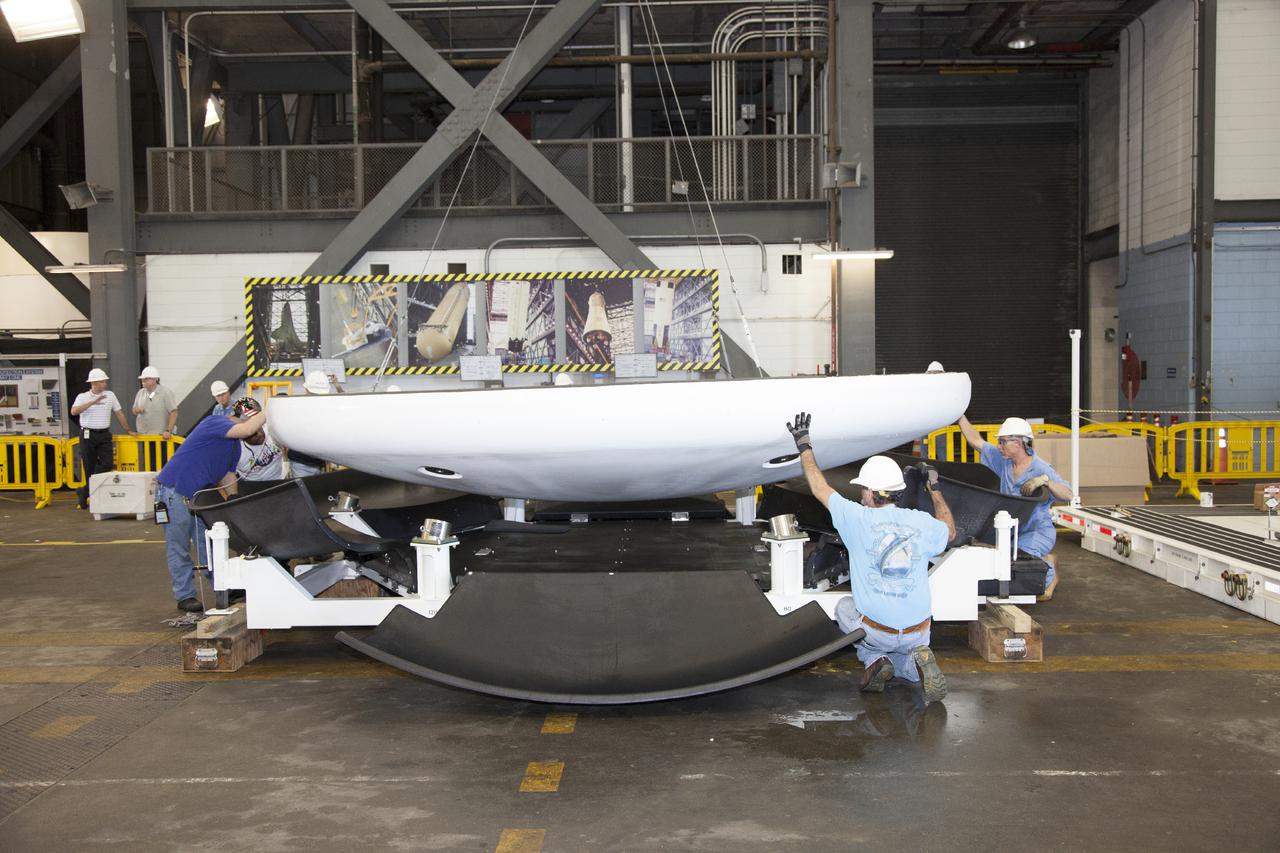
CAPE CANAVERAL, Fla. – Inside the Vehicle Assembly Building at NASA’s Kennedy Space Center in Florida, technicians assist as a crane lowers the heat shield that was removed from the Orion ground test vehicle onto a special holding platform. The ground test vehicle is being prepared for its move to Langley Research Center in Hampton, Va., for a water test. The test vehicle is being used by the Ground Systems Development and Operations Program for path finding operations, including simulated manufacturing, assembly and stacking procedures. Orion is the exploration spacecraft designed to carry astronauts to destinations not yet explored by humans. It will have emergency abort capability, sustain the crew during space travel and provide safe re-entry from deep space return velocities. The first unpiloted test flight of Orion is scheduled to launch in 2014 atop a Delta IV Heavy rocket and in 2017 on NASA’s Space Launch System rocket. For more information, visit www.nasa.gov_orion. Photo credit: Daniel Casper
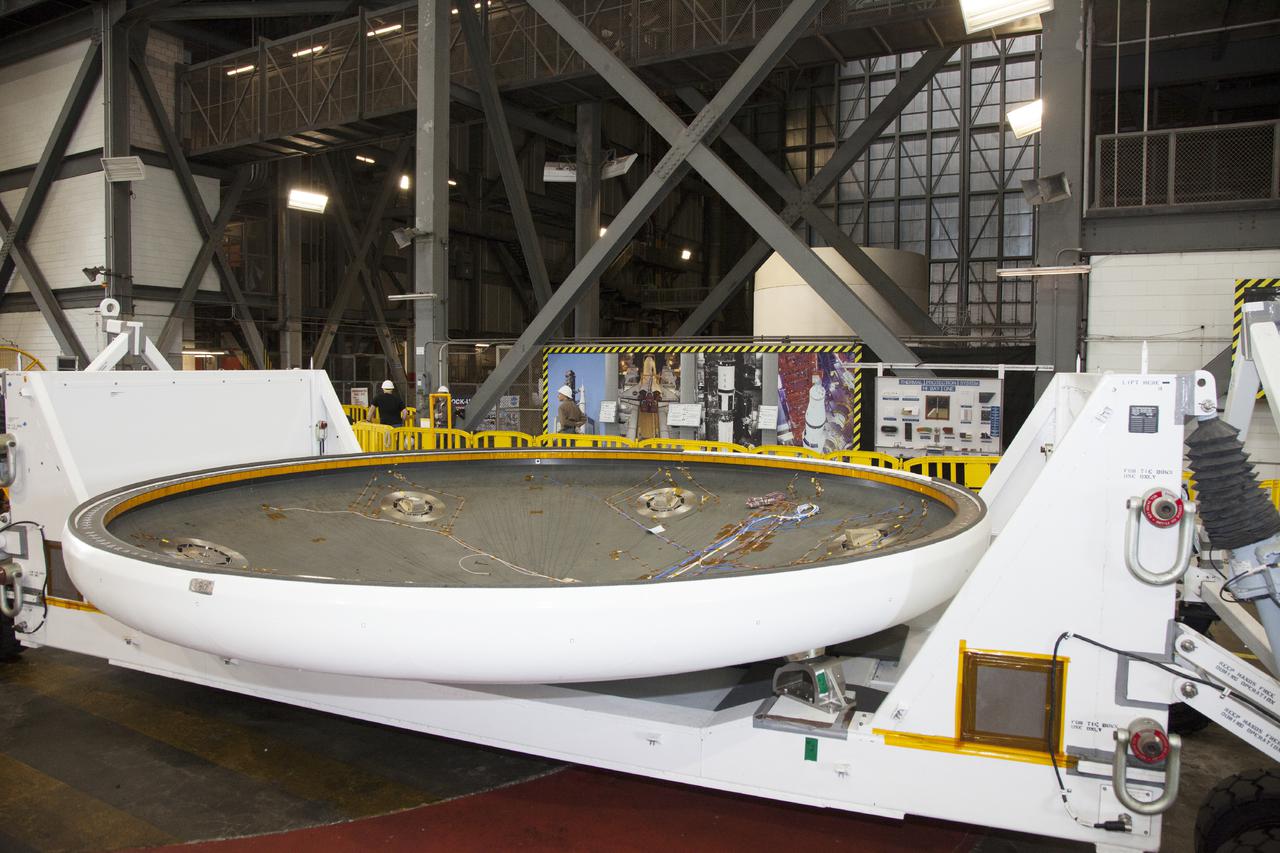
CAPE CANAVERAL, Fla. – Inside the Vehicle Assembly Building at NASA’s Kennedy Space Center in Florida, the Orion ground test vehicle has been lifted away from the heat shield. The ground test vehicle is being prepared for its move to Langley Research Center in Hampton, Va., for a water test. The test vehicle is being used by the Ground Systems Development and Operations Program for path finding operations, including simulated manufacturing, assembly and stacking procedures. Orion is the exploration spacecraft designed to carry astronauts to destinations not yet explored by humans. It will have emergency abort capability, sustain the crew during space travel and provide safe re-entry from deep space return velocities. The first unpiloted test flight of Orion is scheduled to launch in 2014 atop a Delta IV Heavy rocket and in 2017 on NASA’s Space Launch System rocket. For more information, visit www.nasa.gov_orion. Photo credit: Daniel Casper

Engineers at NASA’s Langley Research Center in Hampton, Virginia, install test dummies into the seats of an Orion test article on Feb. 26, 2016. The capsule, coupled with the heat shield from the spacecraft’s first flight, will be used for water-impact testing to simulate what astronauts will experience when landing in the Pacific Ocean during a real mission.
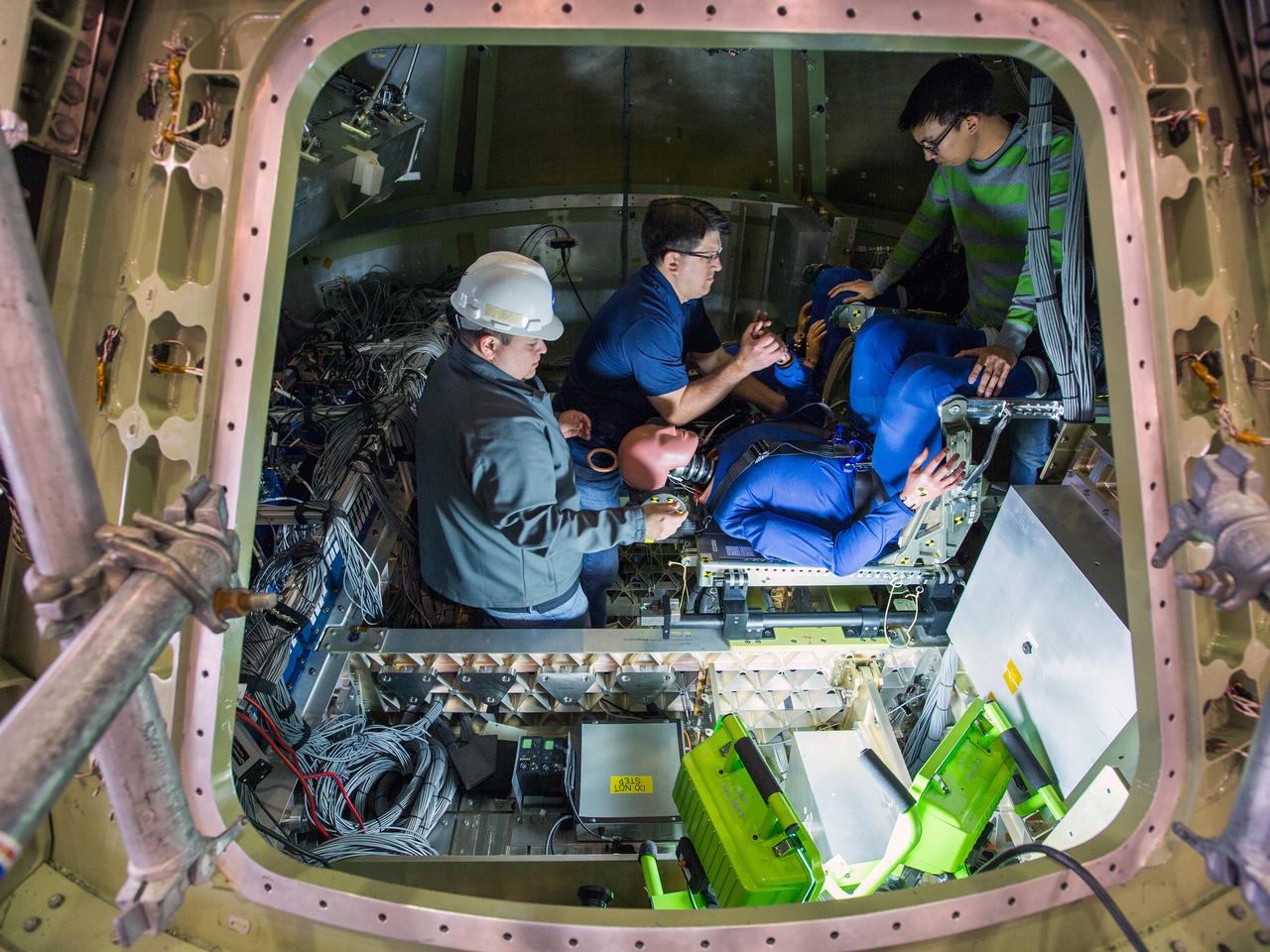
Engineers at NASA’s Langley Research Center in Hampton, Virginia, install test dummies into the seats of an Orion test article on Feb. 26, 2016. The capsule, coupled with the heat shield from the spacecraft’s first flight, will be used for water-impact testing to simulate what astronauts will experience when landing in the Pacific Ocean during a real mission.

Engineers at NASA’s Langley Research Center in Hampton, Virginia, install test dummies into the seats of an Orion test article on Feb. 26, 2016. The capsule, coupled with the heat shield from the spacecraft’s first flight, will be used for water-impact testing to simulate what astronauts will experience when landing in the Pacific Ocean during a real mission.

Engineers at NASA’s Langley Research Center in Hampton, Virginia, install test dummies into the seats of an Orion test article on Feb. 26, 2016. The capsule, coupled with the heat shield from the spacecraft’s first flight, will be used for water-impact testing to simulate what astronauts will experience when landing in the Pacific Ocean during a real mission.