
NASA Dryden technicians take measurements inside a fit-check mockup for prior to systems installation on a boilerplate Orion launch abort test crew capsule. A mockup Orion crew module has been constructed by NASA Dryden Flight Research Center's Fabrication Branch. The mockup is being used to develop integration procedures for avionics and instrumentation in advance of the arrival of the first abort flight test article.
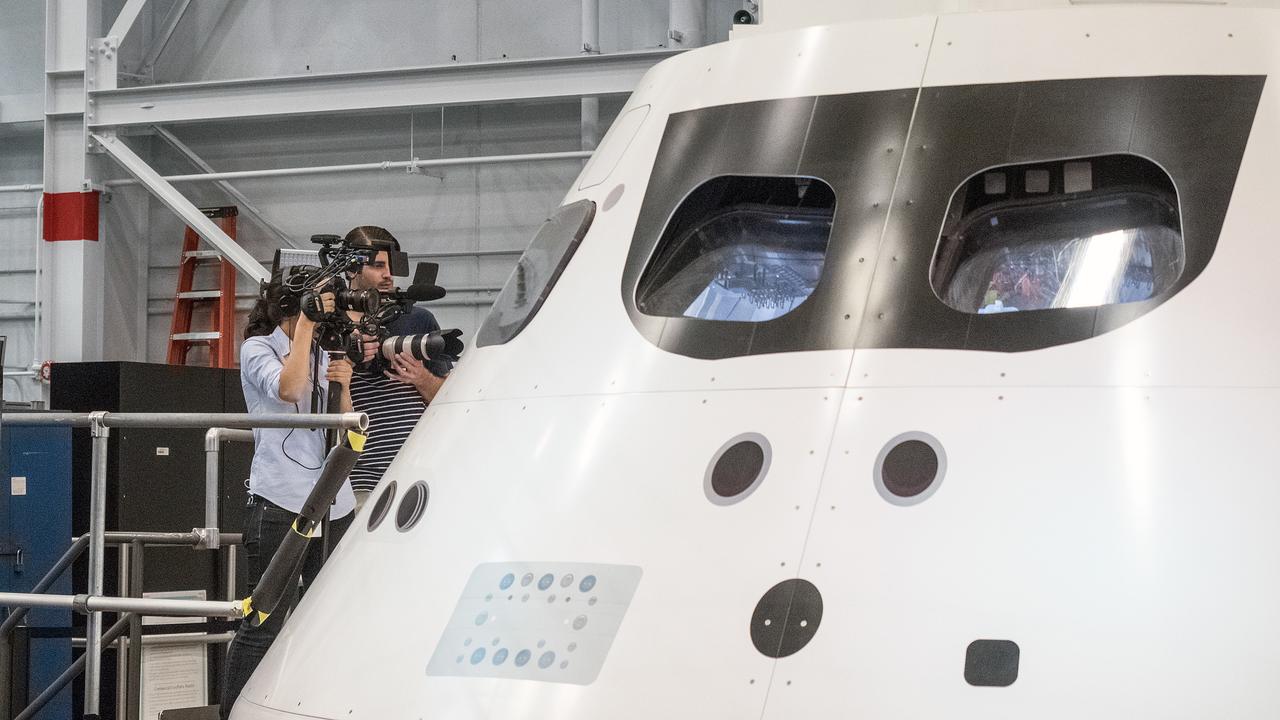
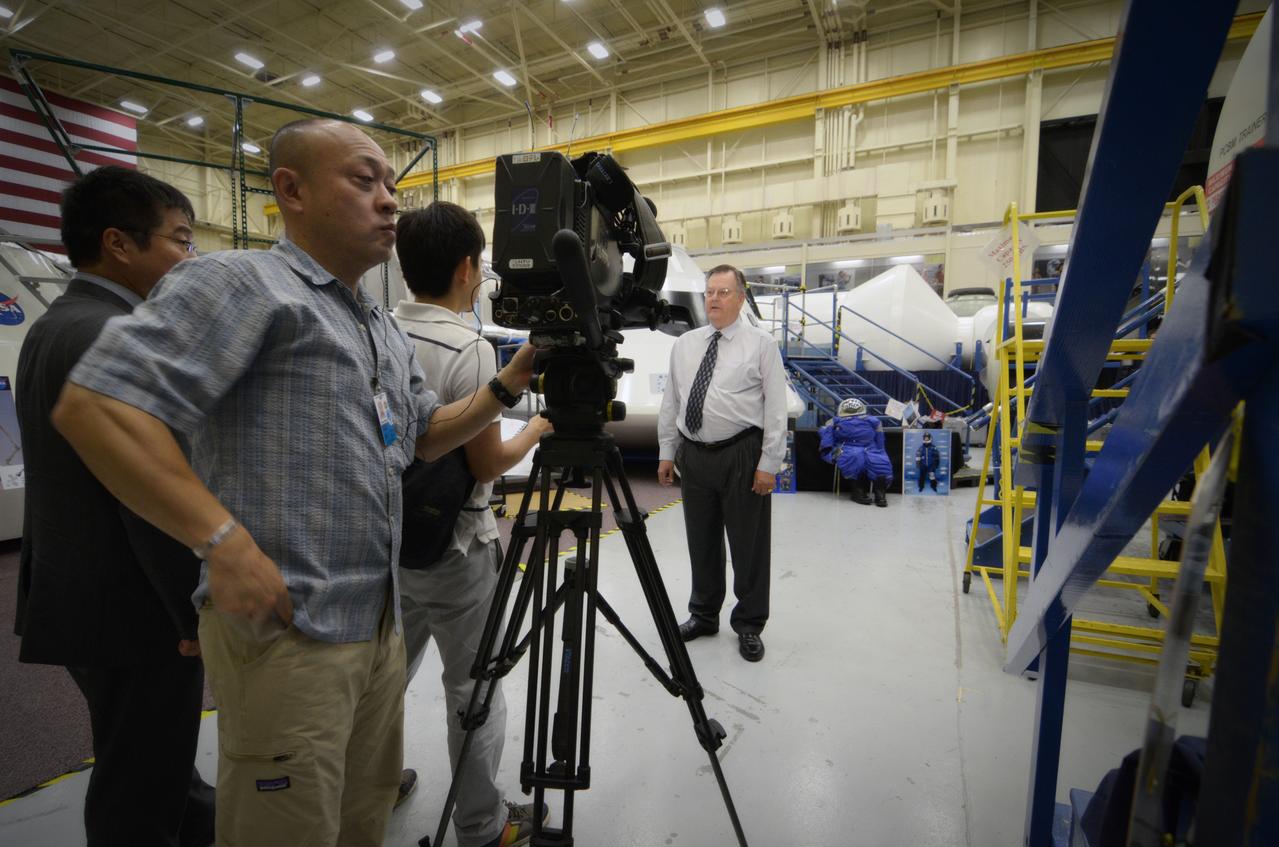
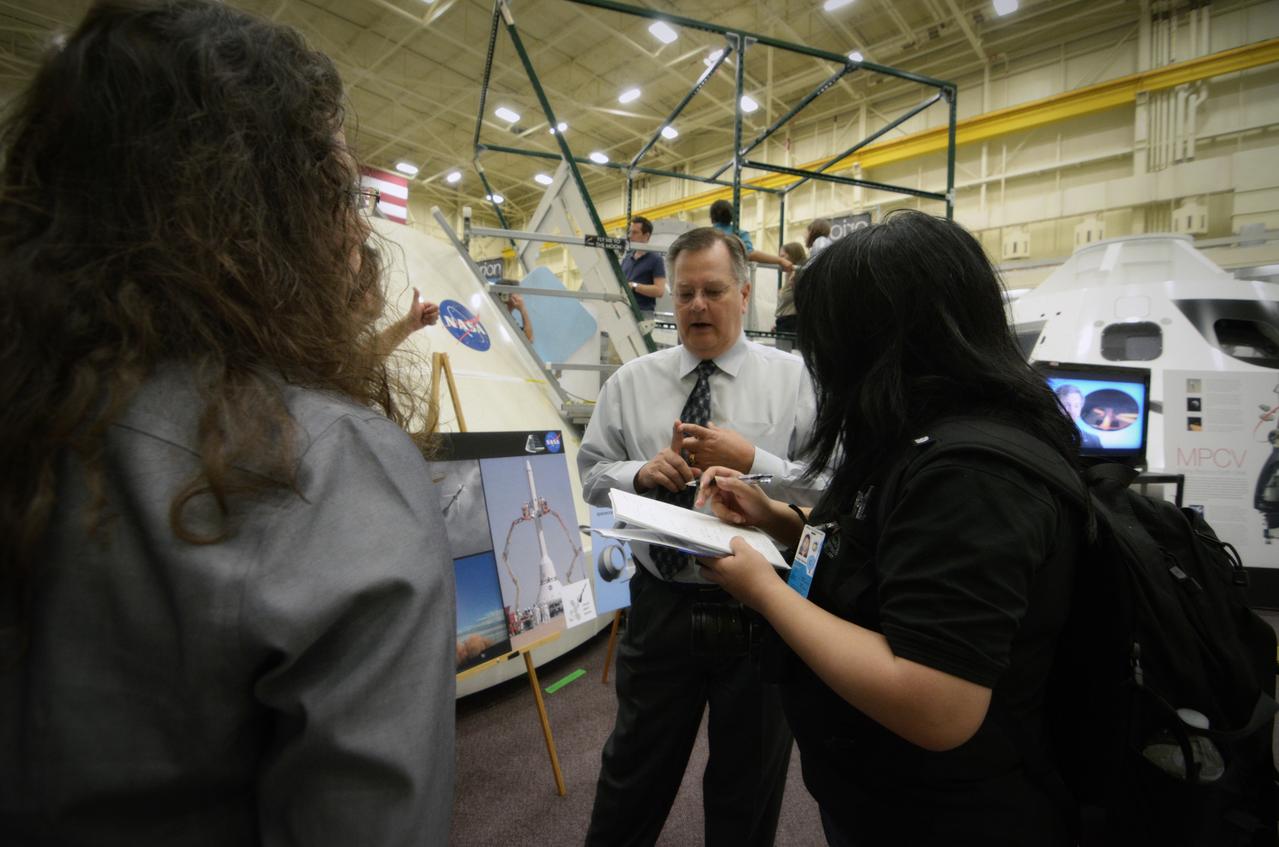
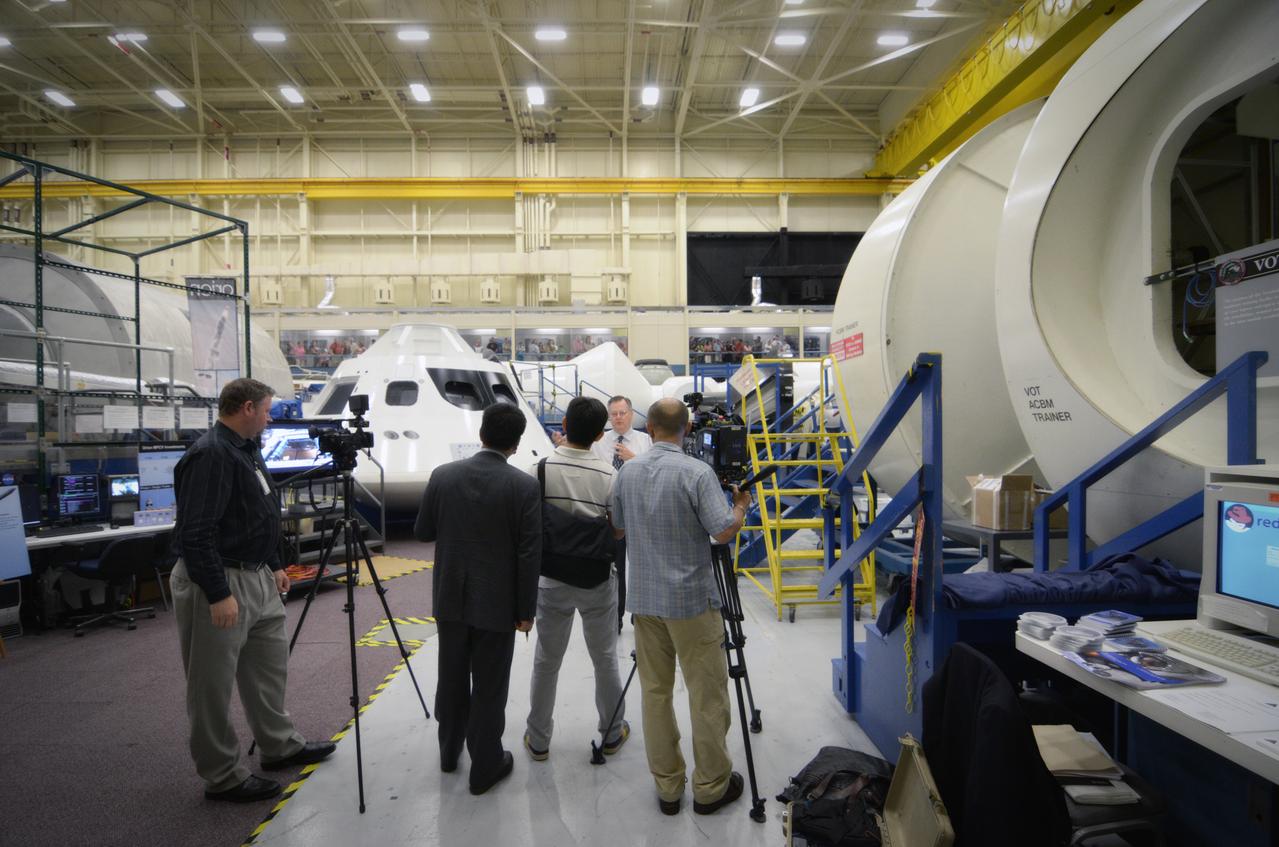
CNN's Rachel Crane talks to Orion program manager, Mark Geyer, at the Space Vehicle Mockup Facility at NASA's Johnson Space Center in Houston on June 23, 2015. Part of Batch image transfer from Flickr.
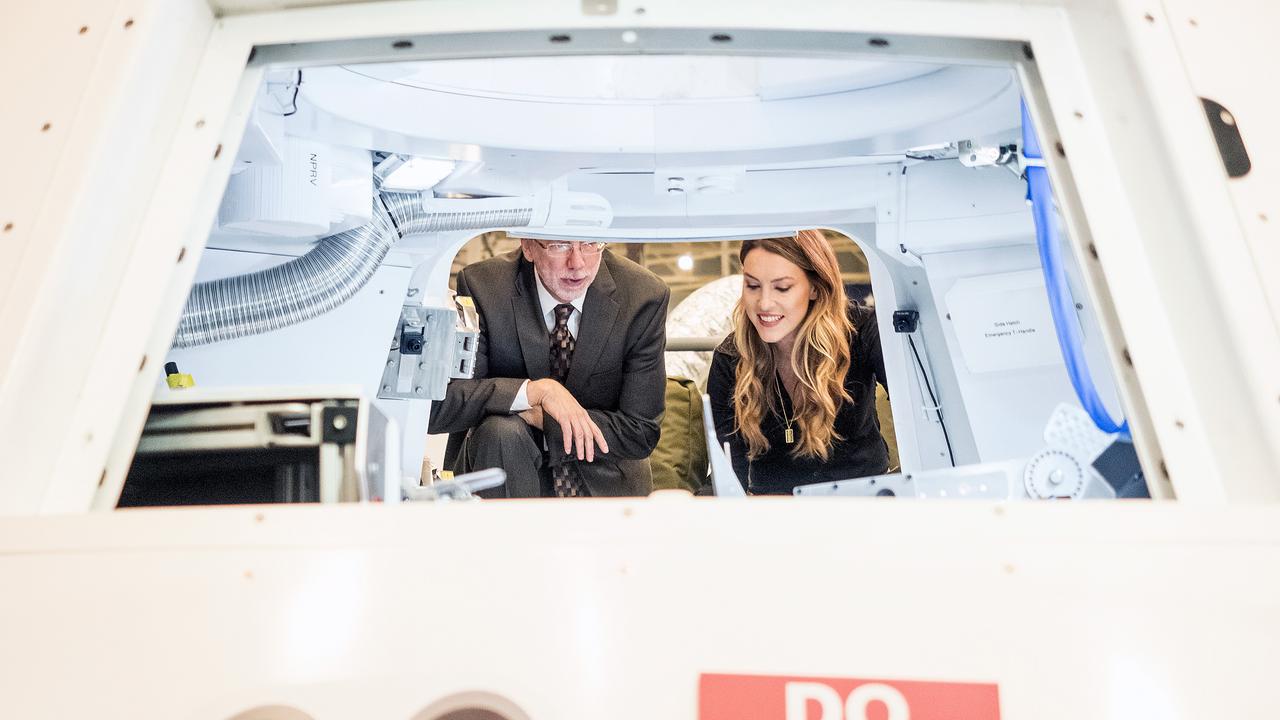
CNN's Rachel Crane talks to Orion program manager, Mark Geyer, at the Space Vehicle Mockup Facility at NASA's Johnson Space Center in Houston on June 23, 2015. Part of Batch image transfer from Flickr.
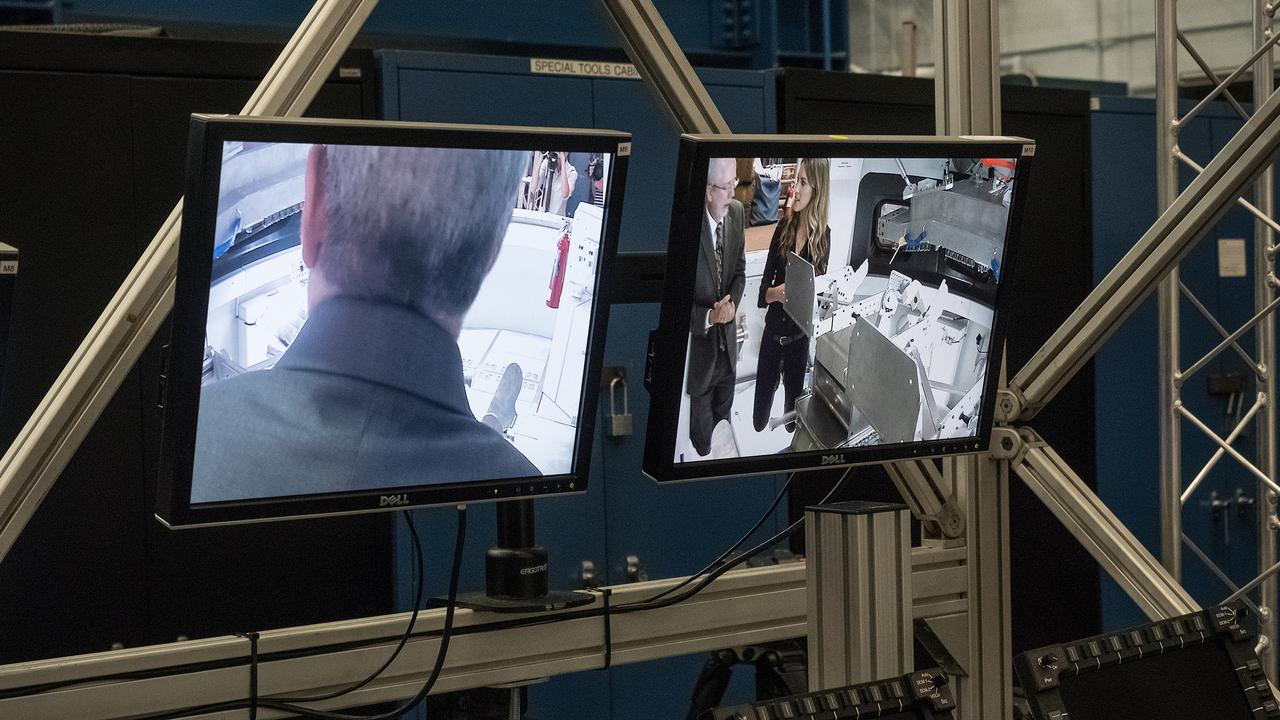
CNN's Rachel Crane talks to Orion program manager, Mark Geyer, at the Space Vehicle Mockup Facility at NASA's Johnson Space Center in Houston on June 23, 2015. Part of Batch image transfer from Flickr.
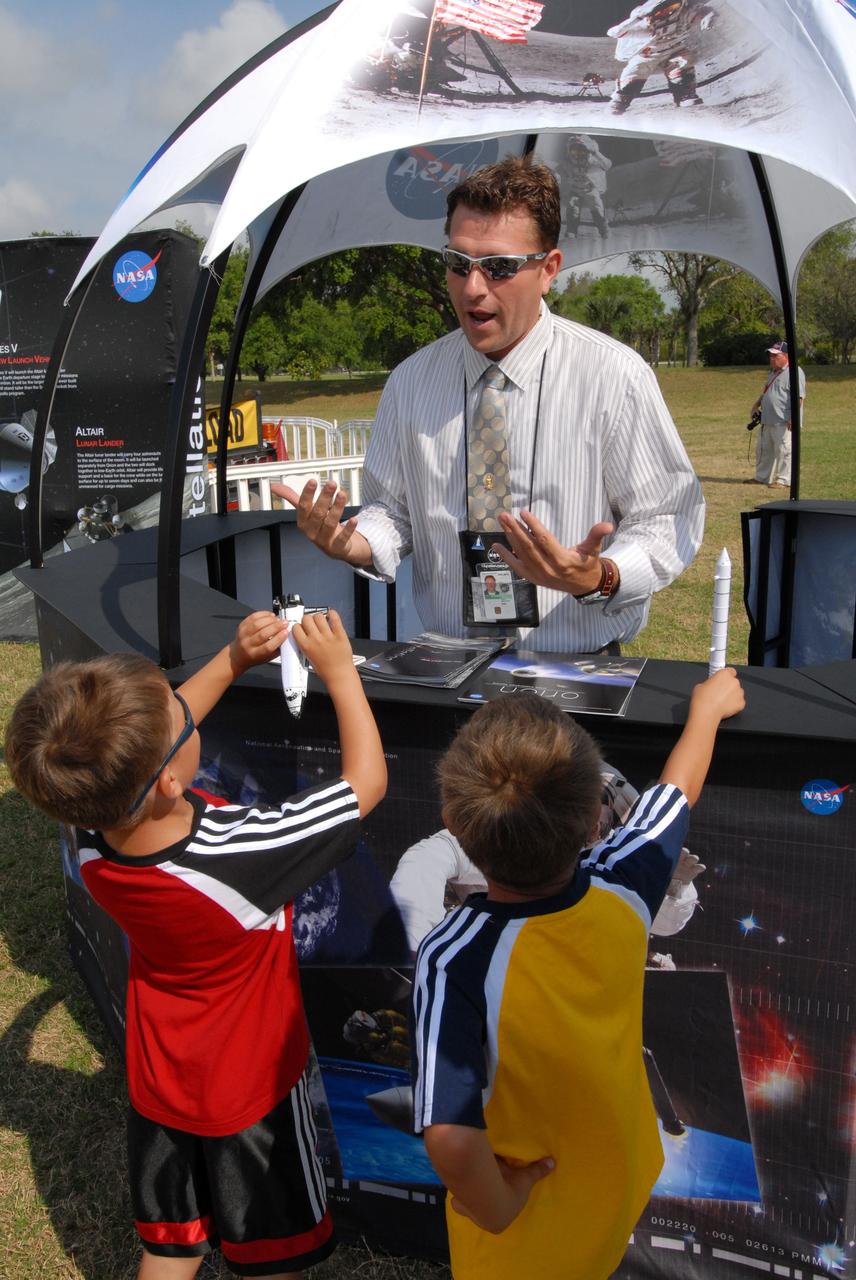
CAPE CANAVERAL, Fla. – A NASA official talks to visitors at the Kennedy Space Center Visitor Complex in Florida about the Orion crew exploration vehicle mockup and the Constellation Program. The Orion mockup is on display before heading offshore to be tested in open water. The spacecraft mock-up traveled from the Naval Surface Warfare Center's Carderock Division in Bethesda, Md. The goal of the open water testing, dubbed the Post-landing Orion Recovery Test, or PORT, is to determine what kind of motion astronauts can expect after landing, as well as outside conditions for recovery teams. Part of the Constellation Program, Orion is targeted to begin carrying humans to the International Space Station in 2015 and to the moon by 2020. Photo credit: NASA/Jack Pfaller
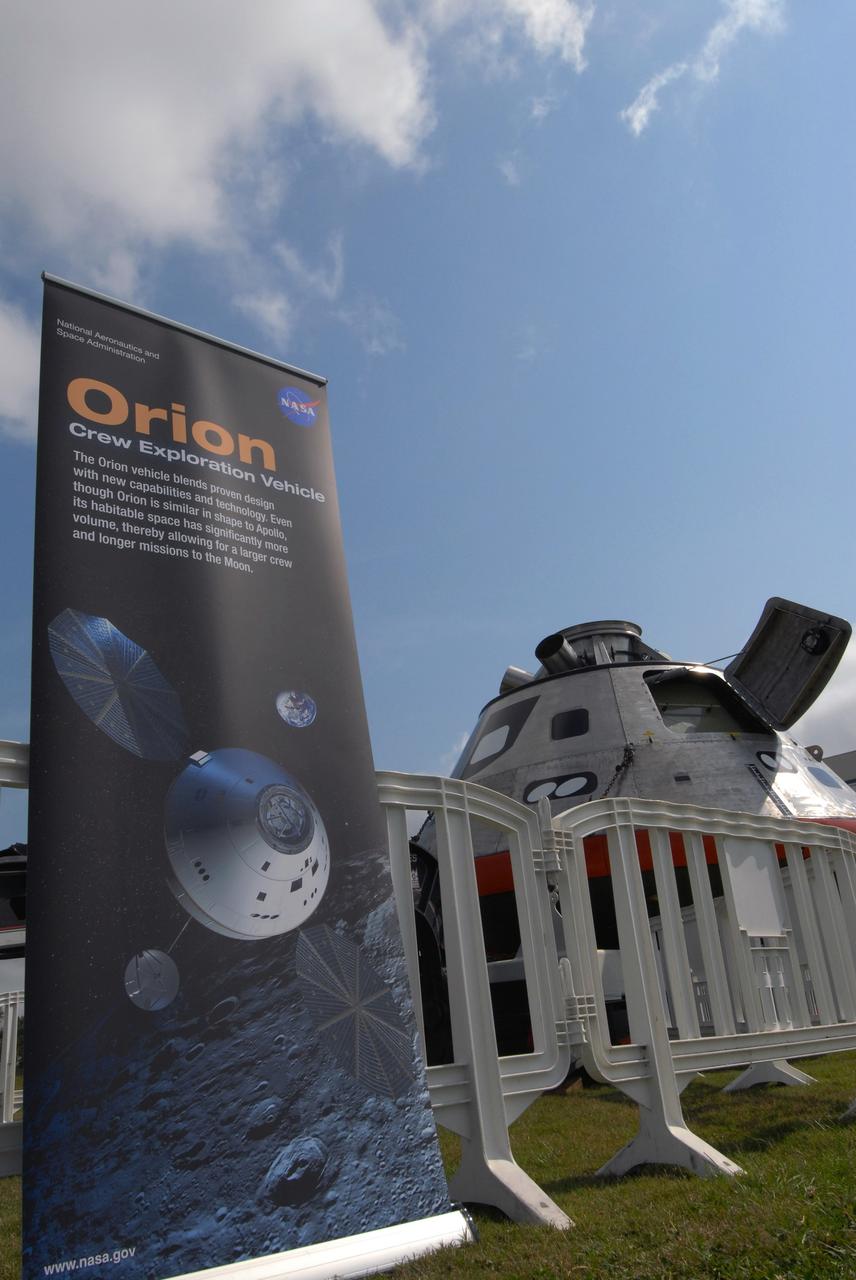
CAPE CANAVERAL, Fla. – On display at the Kennedy Space Center Visitor Complex in Florida is the Orion crew exploration vehicle mockup (right) and an exhibit about the Constellation Program. The Orion mockup is on display before heading offshore to be tested in open water. The spacecraft mock-up traveled from the Naval Surface Warfare Center's Carderock Division in Bethesda, Md. The goal of the open water testing, dubbed the Post-landing Orion Recovery Test, or PORT, is to determine what kind of motion astronauts can expect after landing, as well as outside conditions for recovery teams. Part of the Constellation Program, Orion is targeted to begin carrying humans to the International Space Station in 2015 and to the moon by 2020. Photo credit: NASA/Jack Pfaller
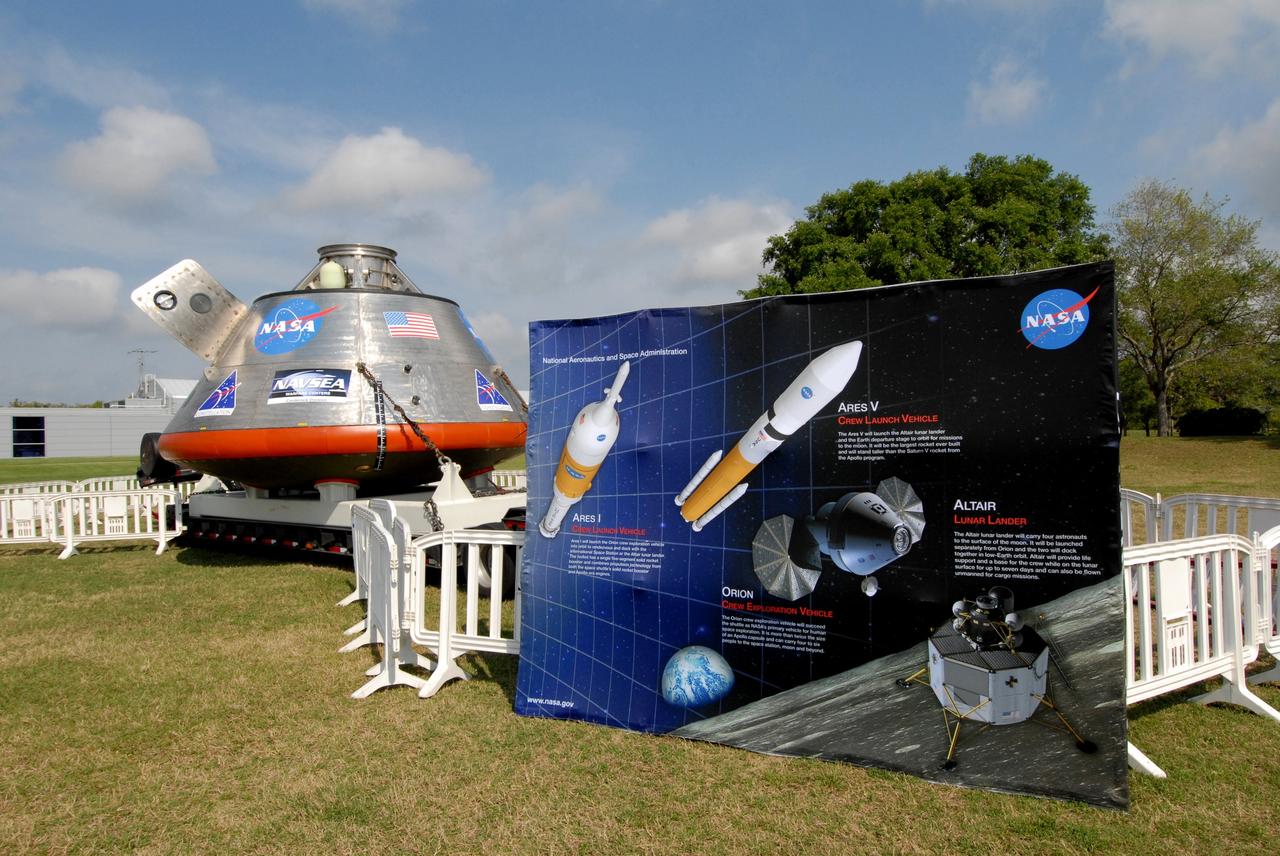
CAPE CANAVERAL, Fla. – On display at the Kennedy Space Center Visitor Complex in Florida is the Orion crew exploration vehicle mockup (left) and an exhibit about the Constellation Program. The Orion mockup is on display before heading offshore to be tested in open water. The spacecraft mock-up traveled from the Naval Surface Warfare Center's Carderock Division in Bethesda, Md. The goal of the open water testing, dubbed the Post-landing Orion Recovery Test, or PORT, is to determine what kind of motion astronauts can expect after landing, as well as outside conditions for recovery teams. Part of the Constellation Program, Orion is targeted to begin carrying humans to the International Space Station in 2015 and to the moon by 2020. Photo credit: NASA/Jack Pfaller
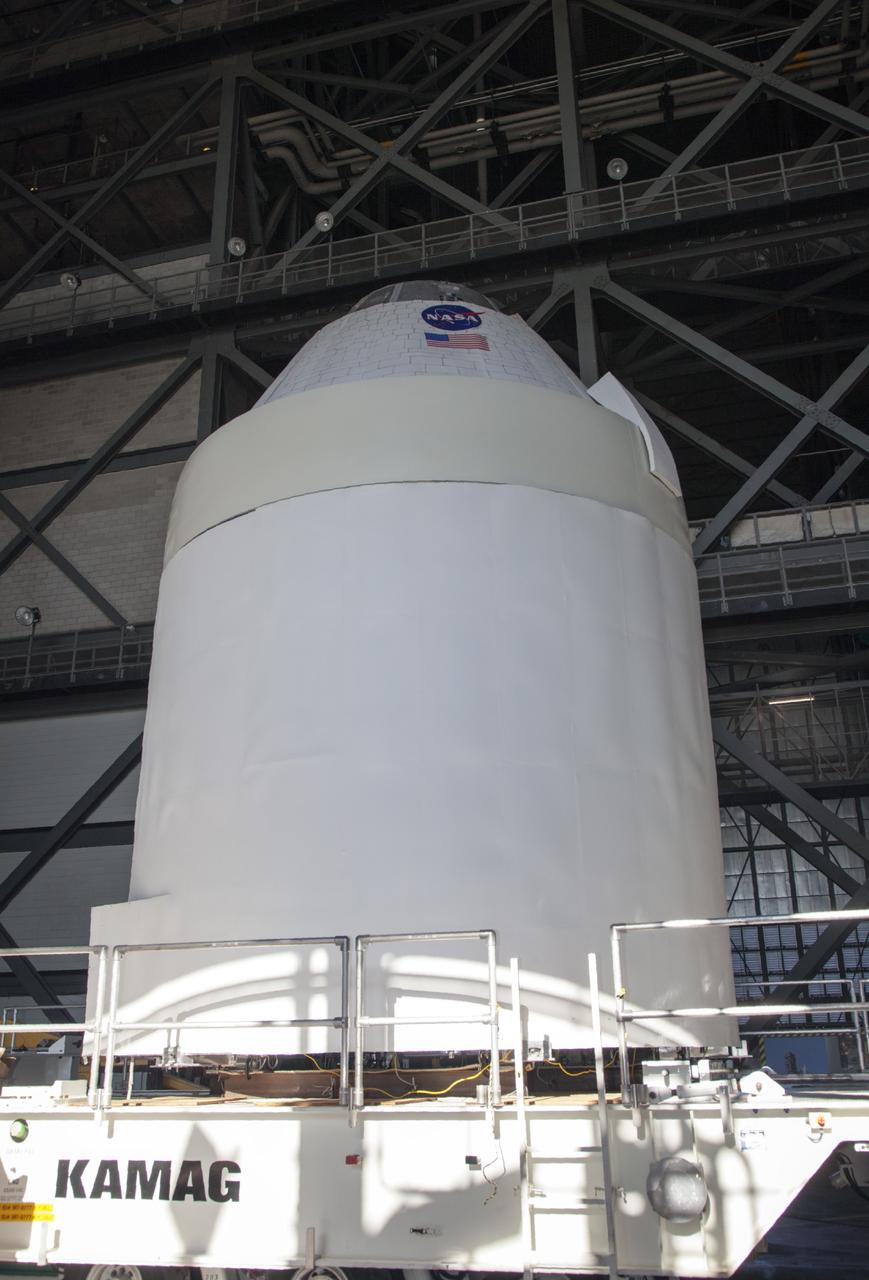
CAPE CANAVERAL, Fla. -- In the transfer aisle of the Vehicle Assembly Building at NASA’s Kennedy Space Center in Florida, a full-size mockup of the Orion spacecraft sits on a transporter. Crane operators and technicians are preparing to lift the mockup and transfer it into High Bay 4 in order to keep processing procedures and skills current for the Ground Systems Development and Operations Program. Orion is the exploration spacecraft designed to carry crews to space beyond low Earth orbit. It will provide emergency abort capability, sustain the crew during the space travel and provide safe re-entry from deep space return velocities. Orion’s first unpiloted test flight is scheduled to launch in 2014 atop a Delta IV rocket. A second uncrewed flight test is scheduled for 2017 on NASA’s Space Launch System rocket. For more information, visit http://www.nasa.gov/orion. Photo credit: NASA/Dan Casper
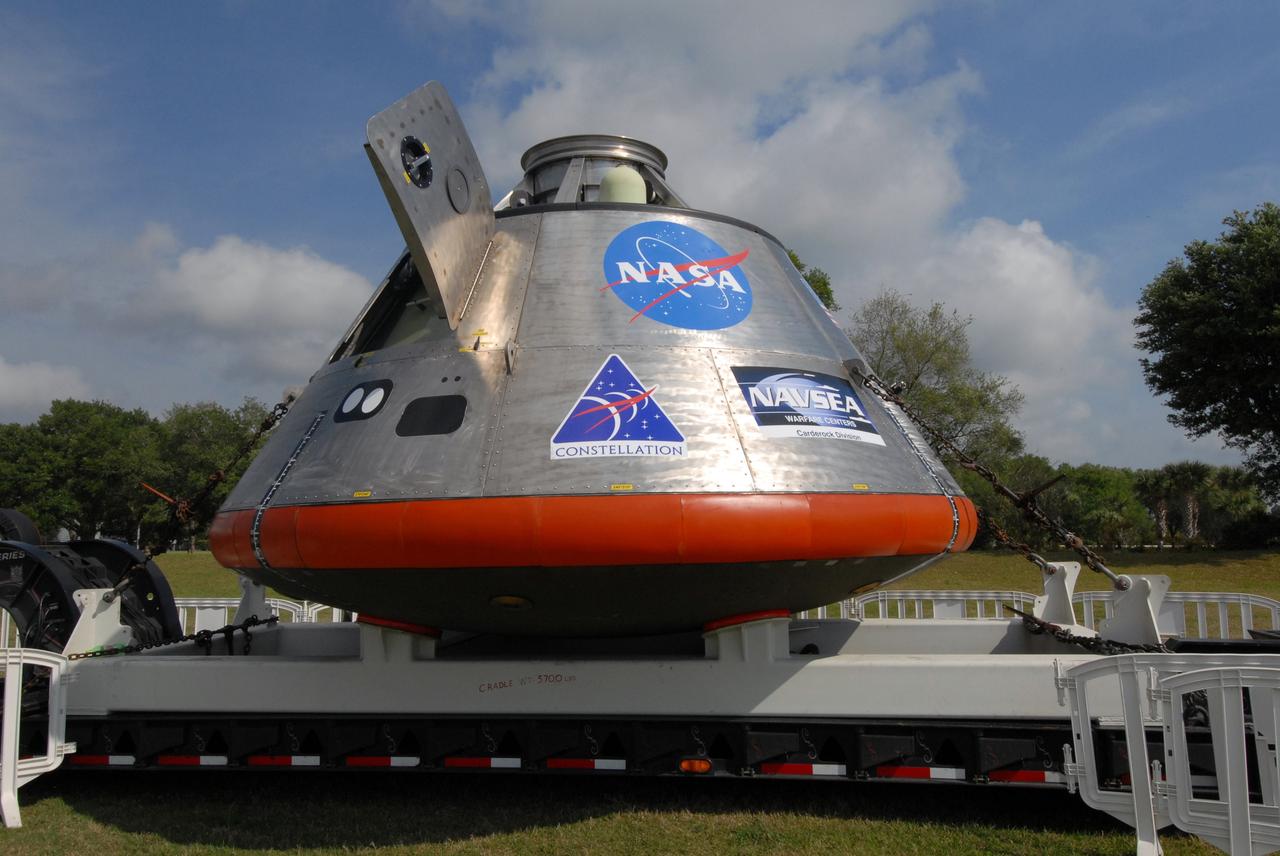
CAPE CANAVERAL, Fla. – On display at the Kennedy Space Center Visitor Complex in Florida is the Orion crew exploration vehicle mockup, which will be moved onto the center before heading offshore to be tested in open water. The spacecraft mock-up traveled from the Naval Surface Warfare Center's Carderock Division in Bethesda, Md. The goal of the open water testing, dubbed the Post-landing Orion Recovery Test, or PORT, is to determine what kind of motion astronauts can expect after landing, as well as outside conditions for recovery teams. Part of the Constellation Program, Orion is targeted to begin carrying humans to the International Space Station in 2015 and to the moon by 2020. Photo credit: NASA/Jack Pfaller
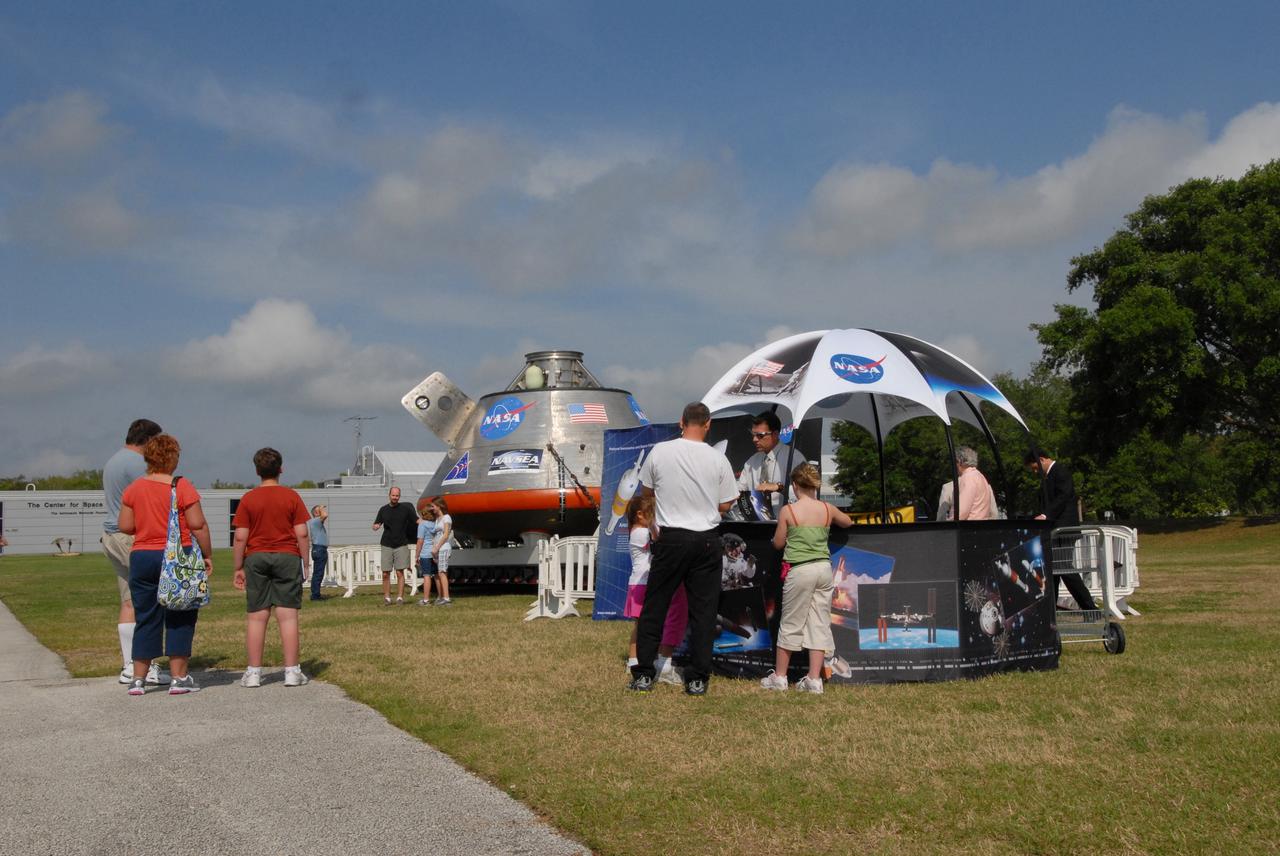
CAPE CANAVERAL, Fla. – Visitors to the Visitor Complex at NASA's Kennedy Space Center in Florida get a look at the Orion crew exploration vehicle mockup, which is on display before heading offshore to be tested in open water. The spacecraft mock-up traveled from the Naval Surface Warfare Center's Carderock Division in Bethesda, Md. The goal of the open water testing, dubbed the Post-landing Orion Recovery Test, or PORT, is to determine what kind of motion astronauts can expect after landing, as well as outside conditions for recovery teams. Part of the Constellation Program, Orion is targeted to begin carrying humans to the International Space Station in 2015 and to the moon by 2020. Photo credit: NASA/Jack Pfaller
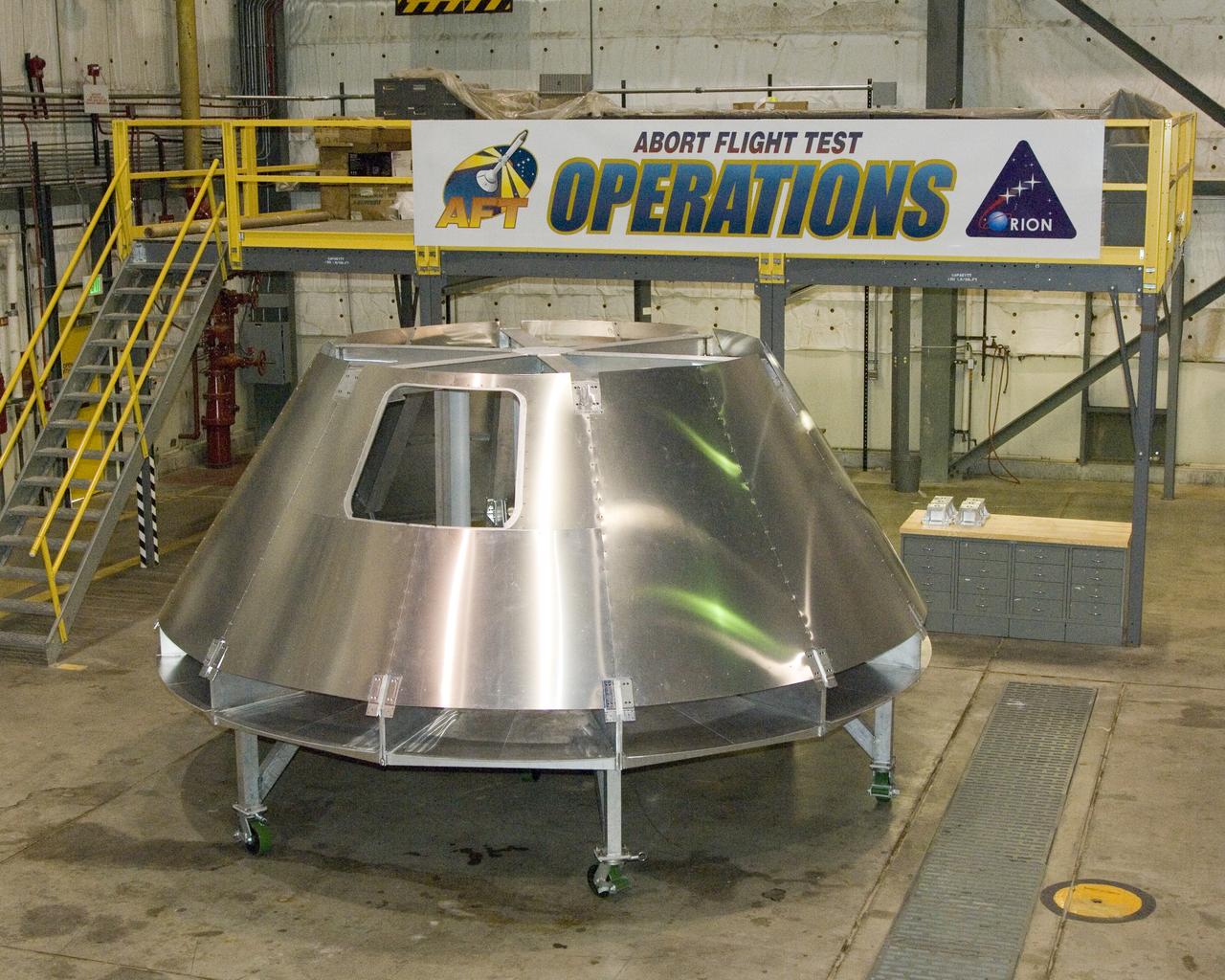
NASA Dryden's mockup Orion crew module is located in Dryden's Shuttle hangar, where abort flight test equipment is being positioned.
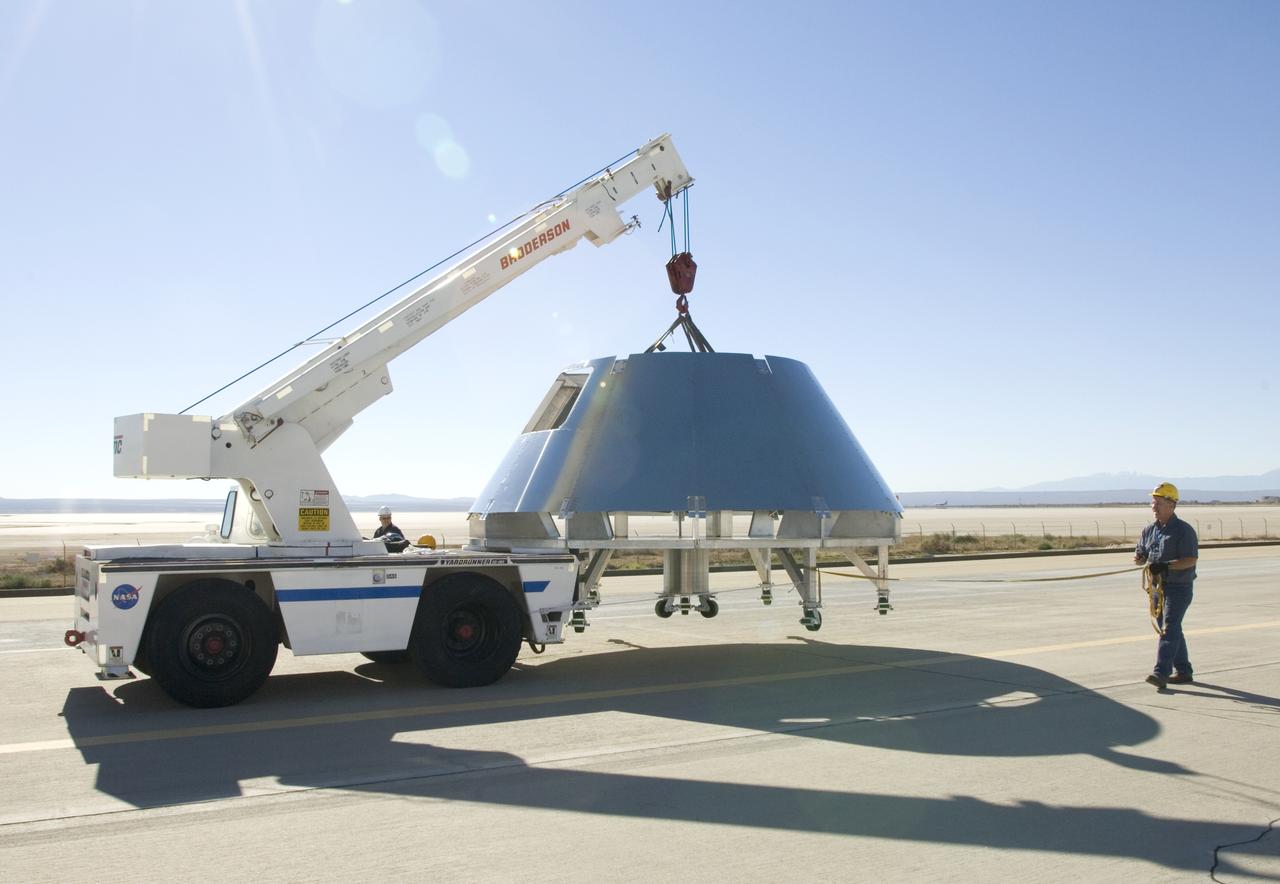
Rogers Dry Lake serves as a backdrop for a mockup Orion crew module built by NASA Dryden Flight Research Center's Fabrication Branch. The module was relocated to Dryden's Shuttle hangar on Sept. 25, 2007.
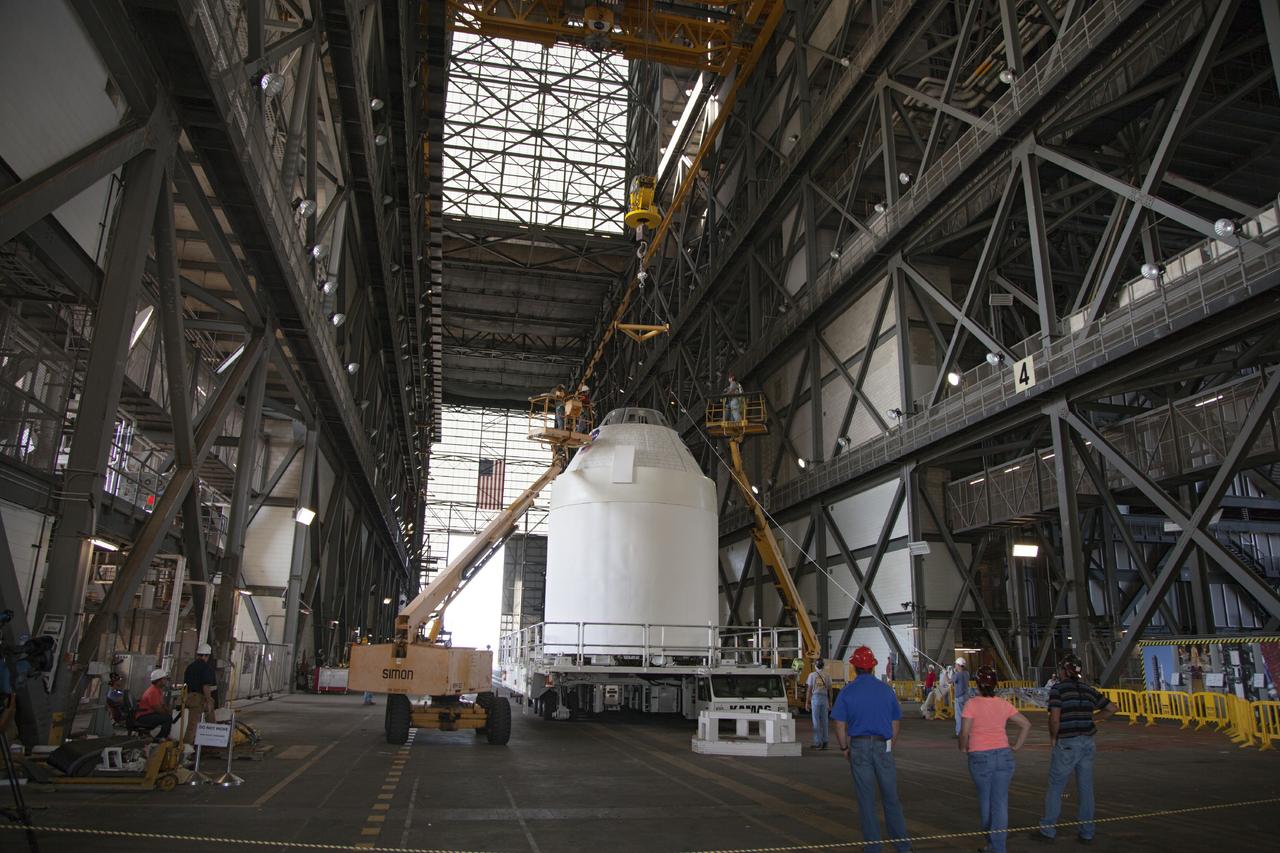
CAPE CANAVERAL, Fla. -- In the transfer aisle of the Vehicle Assembly Building at NASA’s Kennedy Space Center in Florida, a full-size mockup of the Orion spacecraft is being prepared for lifting into High Bay 4. Crane operators and technicians practice stacking and de-stacking operations in order to keep processing procedures and skills current for the Ground Systems Development and Operations Program. Orion is the exploration spacecraft designed to carry crews to space beyond low Earth orbit. It will provide emergency abort capability, sustain the crew during the space travel and provide safe re-entry from deep space return velocities. Orion’s first unpiloted test flight is scheduled to launch in 2014 atop a Delta IV rocket. A second uncrewed flight test is scheduled for 2017 on NASA’s Space Launch System rocket. For more information, visit http://www.nasa.gov/orion. Photo credit: NASA/Dan Casper
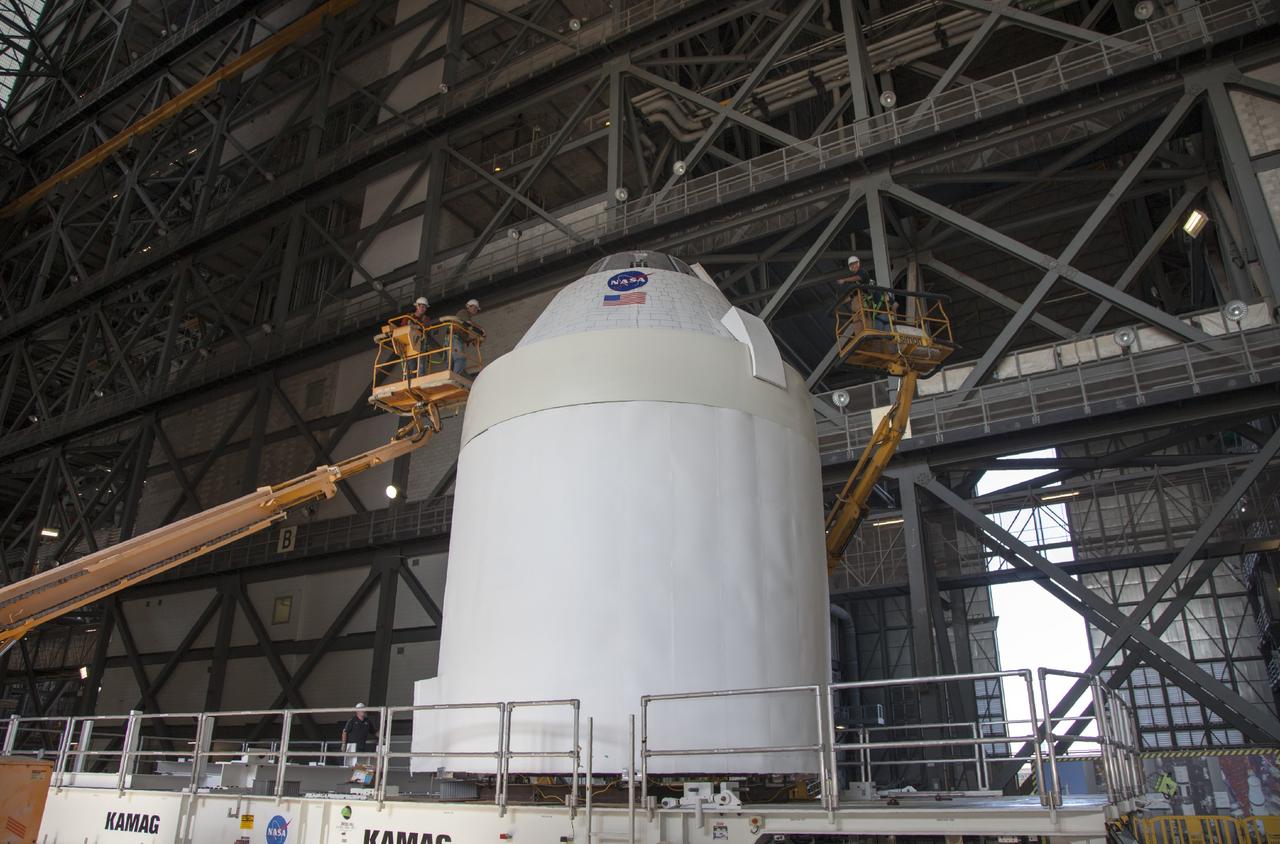
CAPE CANAVERAL, Fla. -- In the transfer aisle of the Vehicle Assembly Building at NASA’s Kennedy Space Center in Florida, a full-size mockup of the Orion spacecraft is being prepared for lifting into High Bay 4. Crane operators and technicians practice stacking and de-stacking operations in order to keep processing procedures and skills current for the Ground Systems Development and Operations Program. Orion is the exploration spacecraft designed to carry crews to space beyond low Earth orbit. It will provide emergency abort capability, sustain the crew during the space travel and provide safe re-entry from deep space return velocities. Orion’s first unpiloted test flight is scheduled to launch in 2014 atop a Delta IV rocket. A second uncrewed flight test is scheduled for 2017 on NASA’s Space Launch System rocket. For more information, visit http://www.nasa.gov/orion. Photo credit: NASA/Dan Casper
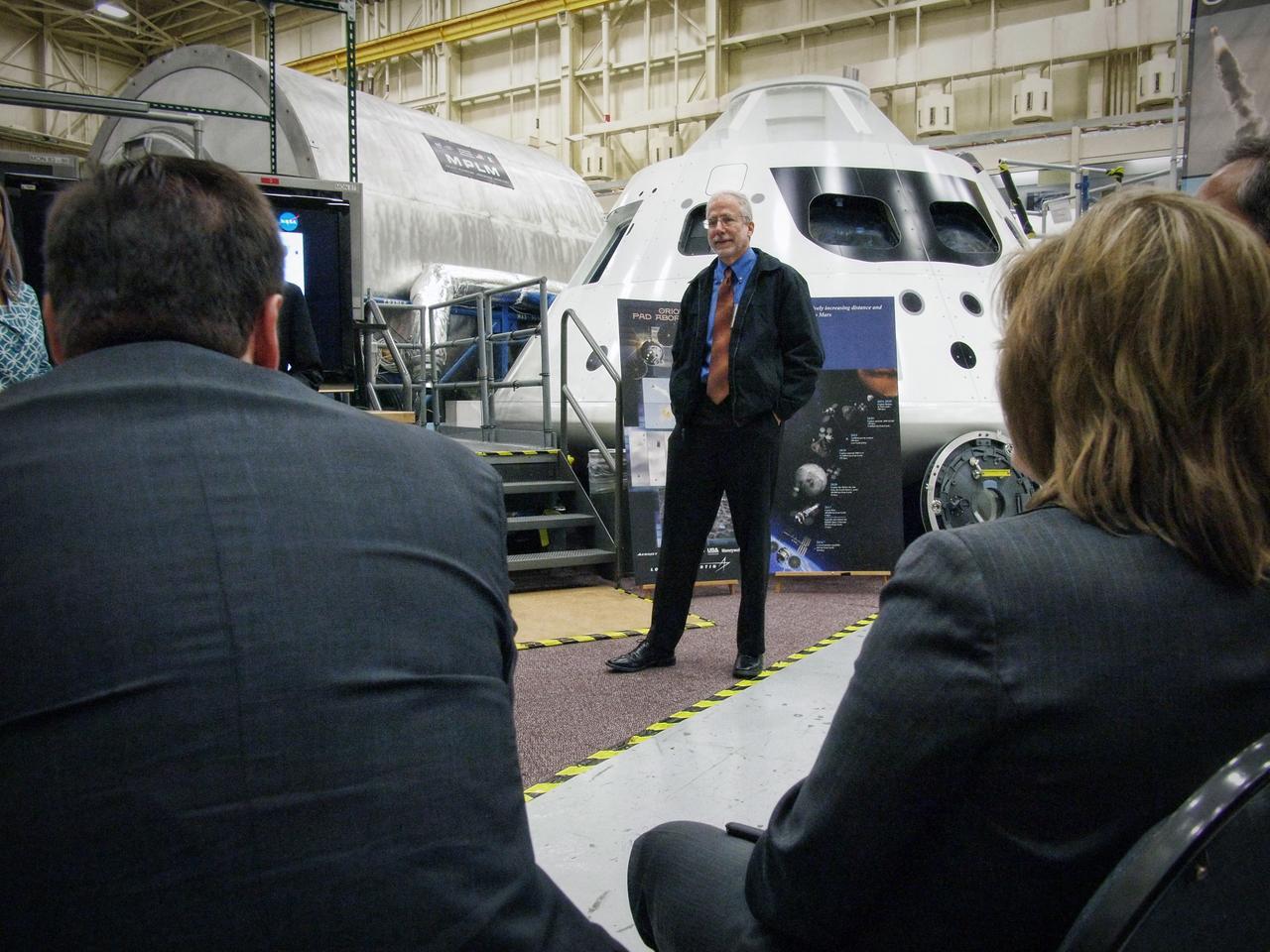
Orion Program Manager Mark Geyer stands in front of the Orion medium fidelity mockup in Building 9 at Johnson Space Center in Houston on Nov. 10, 2011. Part of Batch image transfer from Flickr.
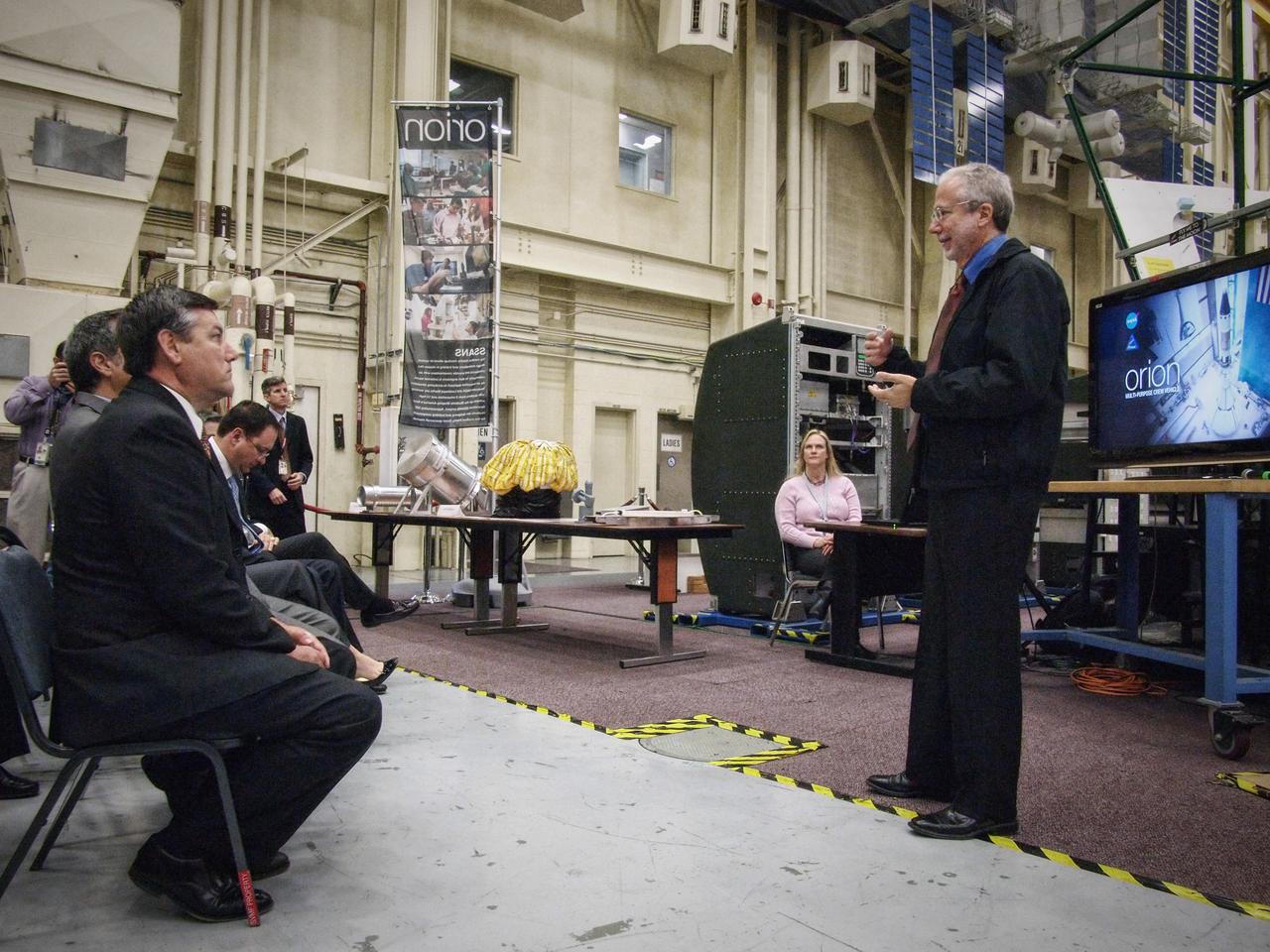
Orion Program Manager Mark Geyer speaks to NASA center directors in front of the Orion mockup in Building 9 at Johnson Space Center in Houston on Nov. 10, 2011. Part of Batch image transfer from Flickr.
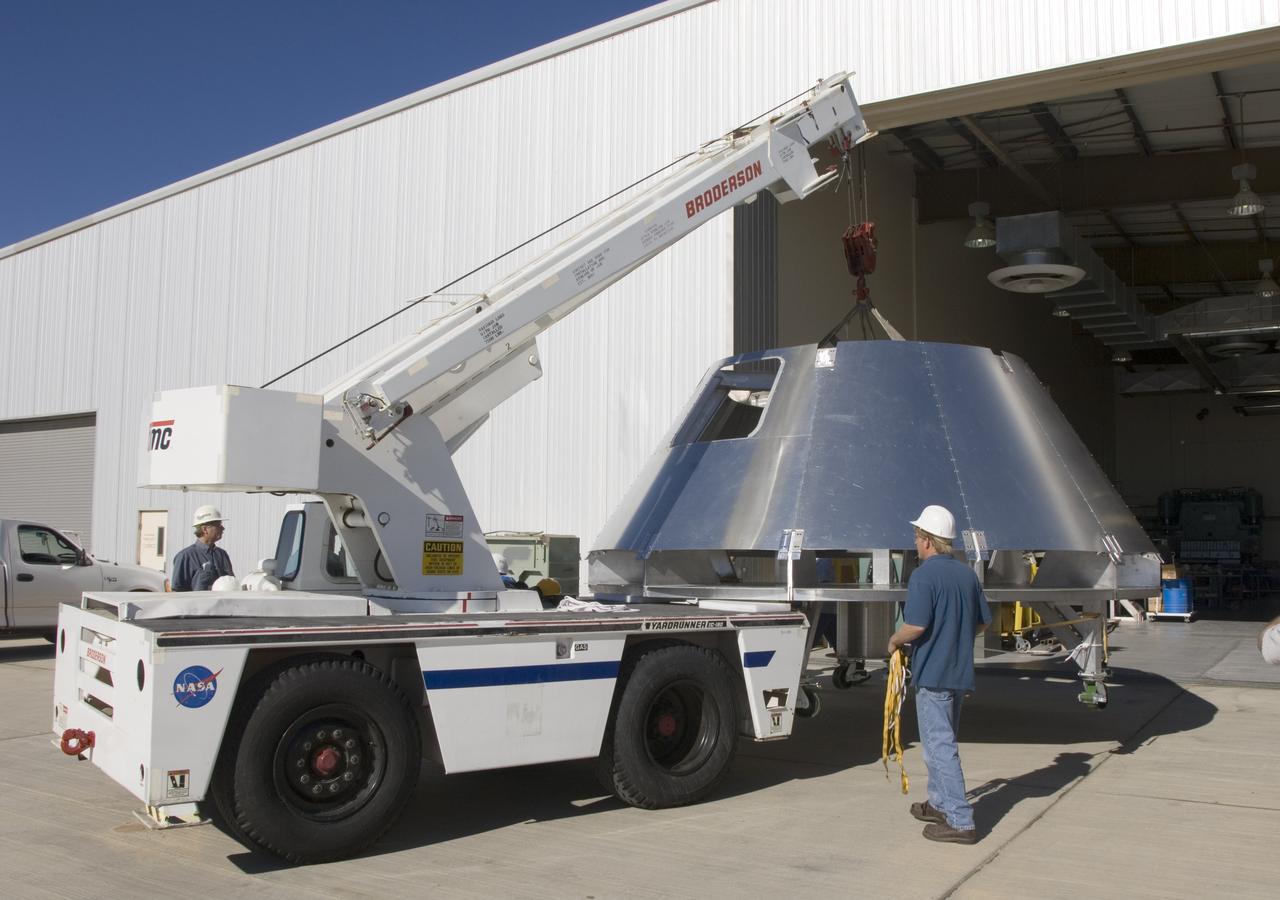
A mockup Orion crew module built by NASA Dryden Flight Research Center's Fabrication Branch gets a lift from its construction site to its new home in Dryden's Shuttle hangar.
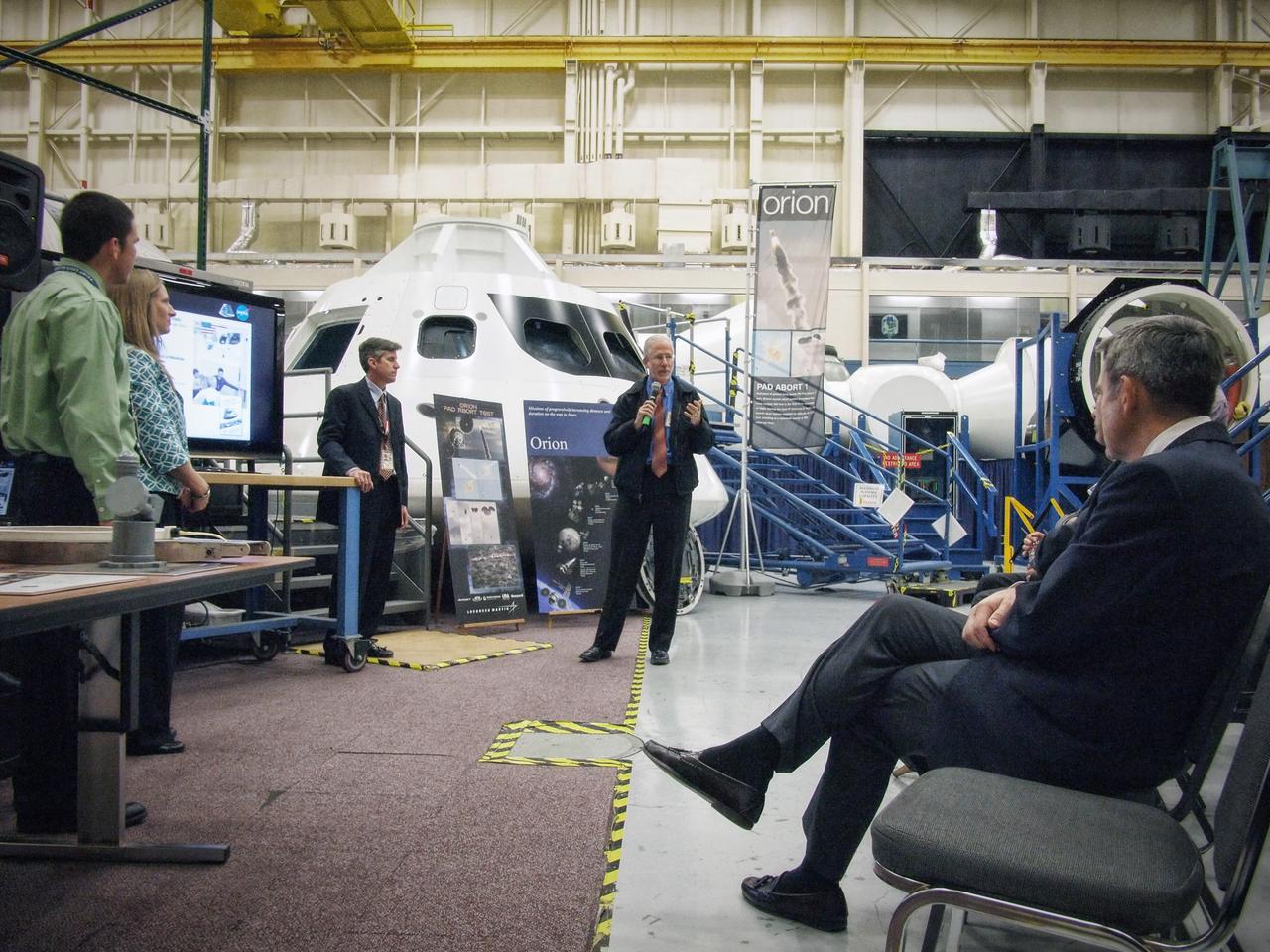
Orion Program Manager Mark Geyer introduces Jeff Fox, Christie Sauers, and Phillip Reyes to NASA center directors in front of the Orion mockup in Building 9 at Johnson Space Center in Houston on Nov. 10, 2011. Part of Batch image transfer from Flickr.
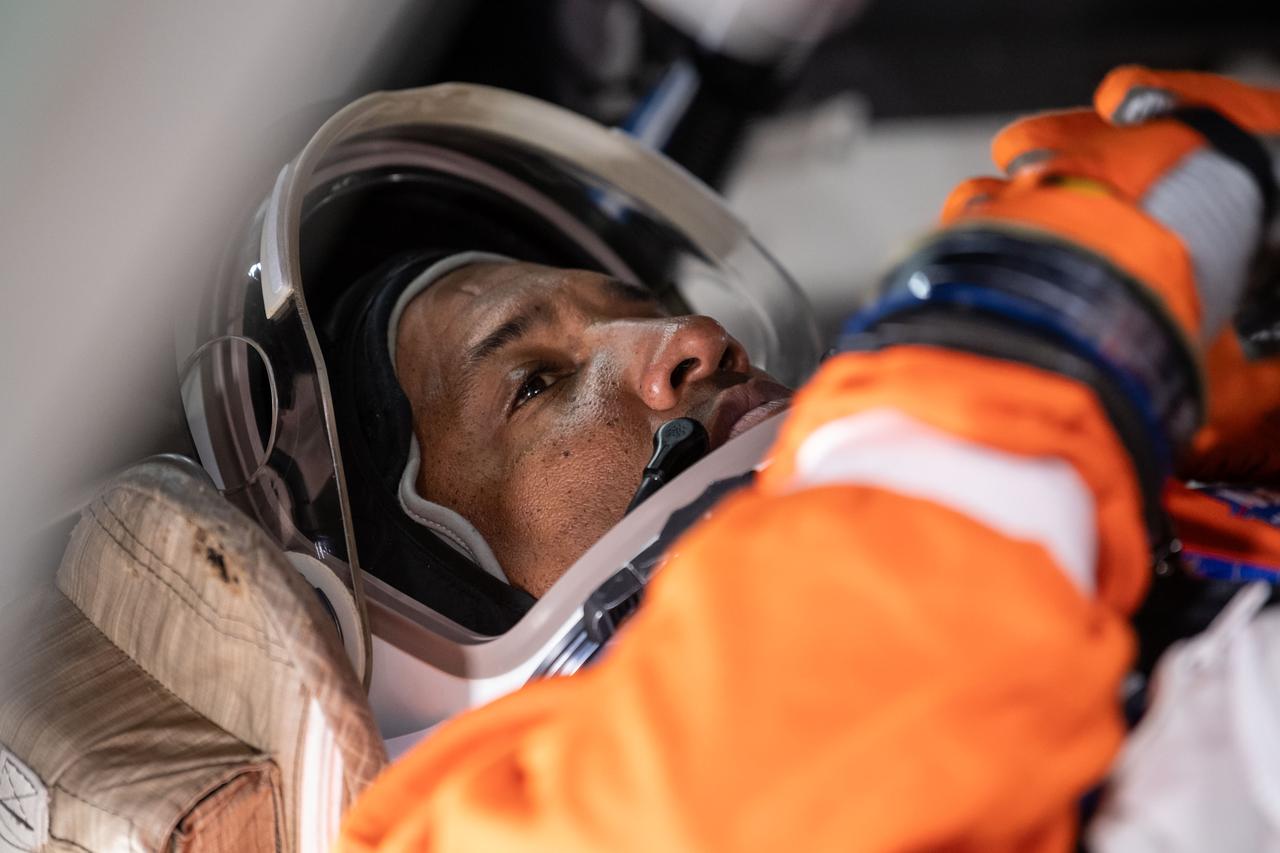
jsc2025e004071 (Jan. 30, 2025) --- NASA astronaut and Artemis II Pilot Victor Glover inside of the Orion spacecraft mockup during Post Insertion and Deorbit Preparation training at the Space Vehicle Mockup Facility in Houston, Texas. The crew practiced getting the Orion spacecraft configured once in orbit, how to make it habitable, and suited up in their entry pressure suits to prepare for their return from the Moon. Credit: NASA/Mark Sowa

jsc2025e004089 (Jan. 30, 2025) --- NASA astronaut and Artemis II mission specialist Christina Koch exits the Orion spacecraft mockup during Post Insertion and Deorbit Preparation training at the Space Vehicle Mockup Facility in Houston, Texas. The crew practiced getting the Orion spacecraft configured once in orbit, how to make it habitable, and suited up in their entry pressure suits to prepare for their return from the Moon. Credit: NASA/Mark Sowa
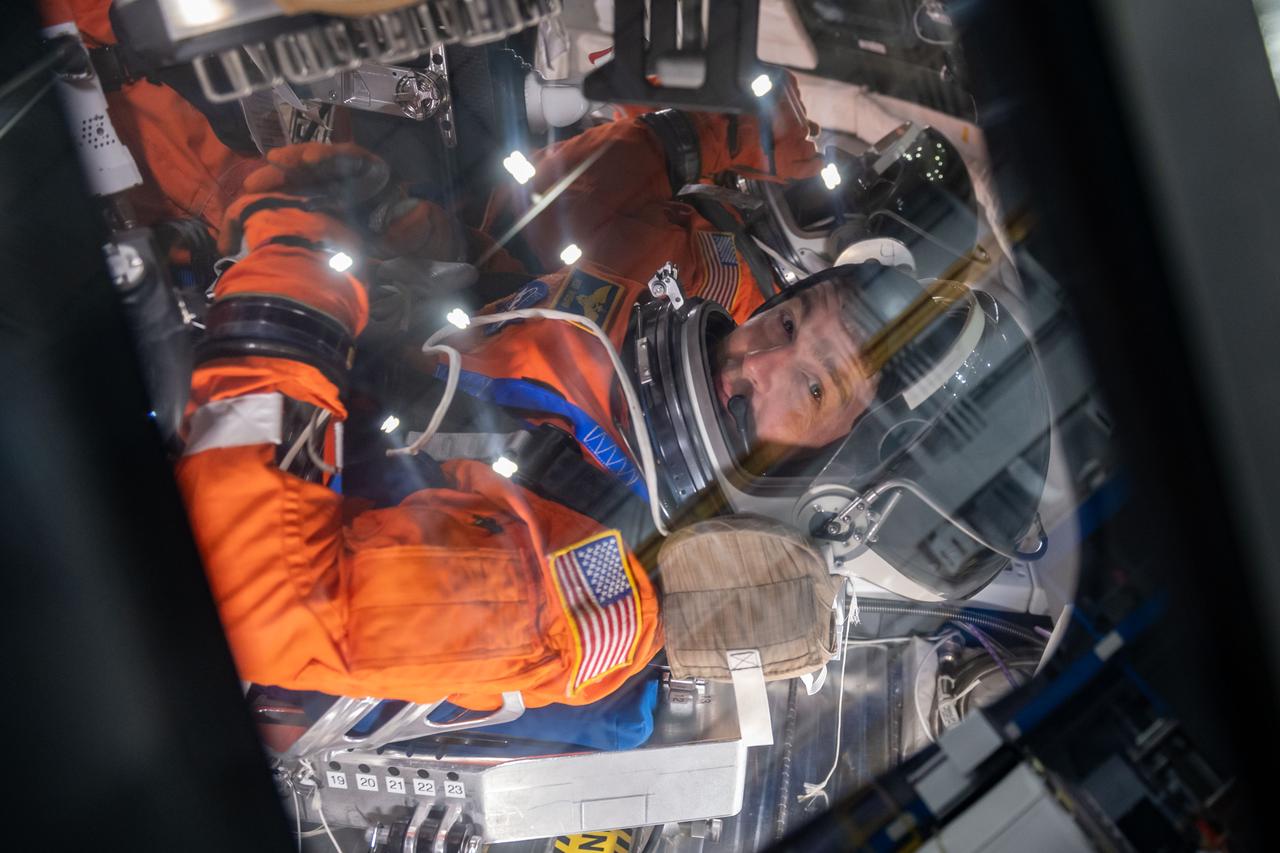
jsc2025e004075 (Jan. 30, 2025) --- NASA astronauts and Artemis II crew members Reid Wiseman and Victor Glover inside of the Orion spacecraft mockup during Post Insertion and Deorbit Preparation training at the Space Vehicle Mockup Facility in Houston, Texas. The crew practiced getting the Orion spacecraft configured once in orbit, how to make it habitable, and suited up in their entry pressure suits to prepare for their return from the Moon. Credit: NASA/Mark Sowa
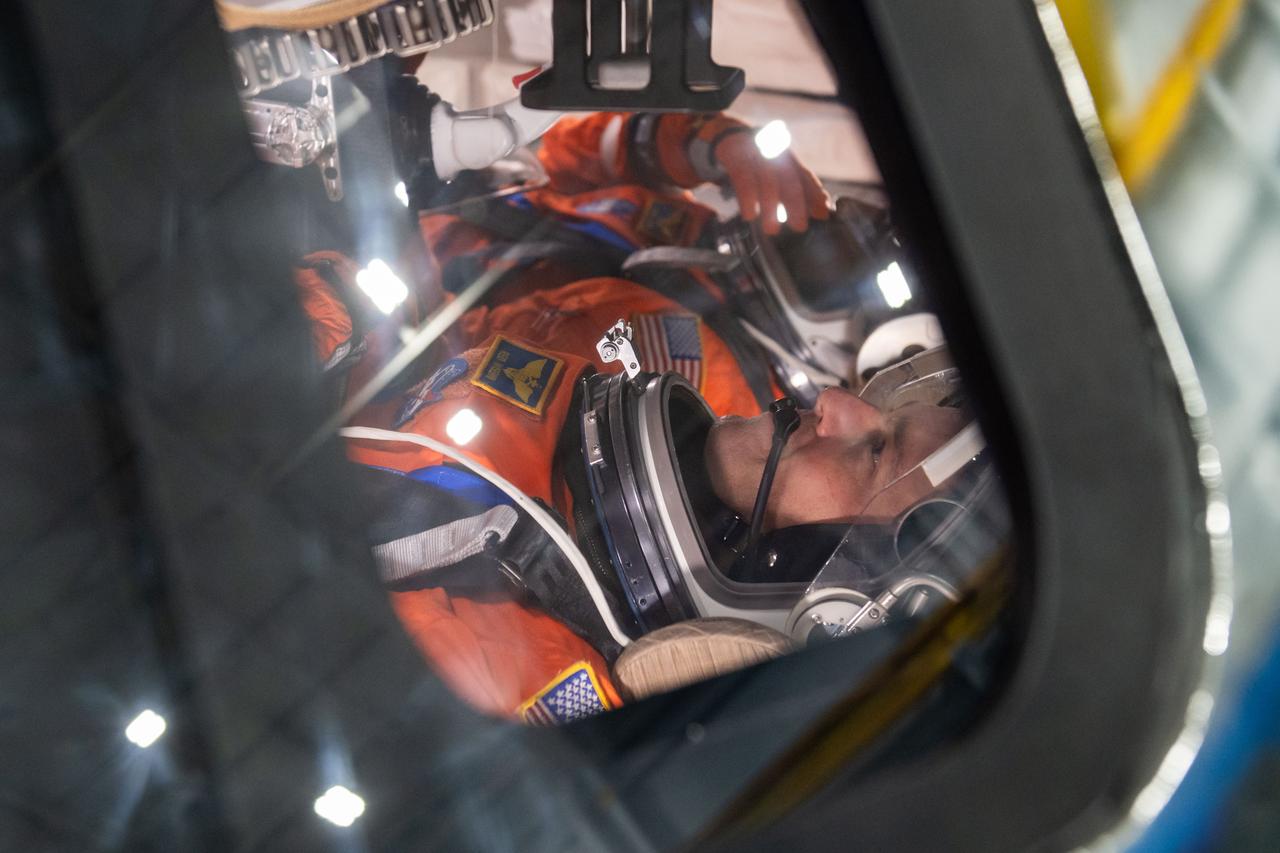
jsc2025e004074 (Jan. 30, 2025) --- NASA astronaut and Artemis II commander Reid Wiseman inside of the Orion spacecraft mockup during Post Insertion and Deorbit Preparation training at the Space Vehicle Mockup Facility in Houston, Texas. The crew practiced getting the Orion spacecraft configured once in orbit, how to make it habitable, and suited up in their entry pressure suits to prepare for their return from the Moon. Credit: NASA/Mark Sowa
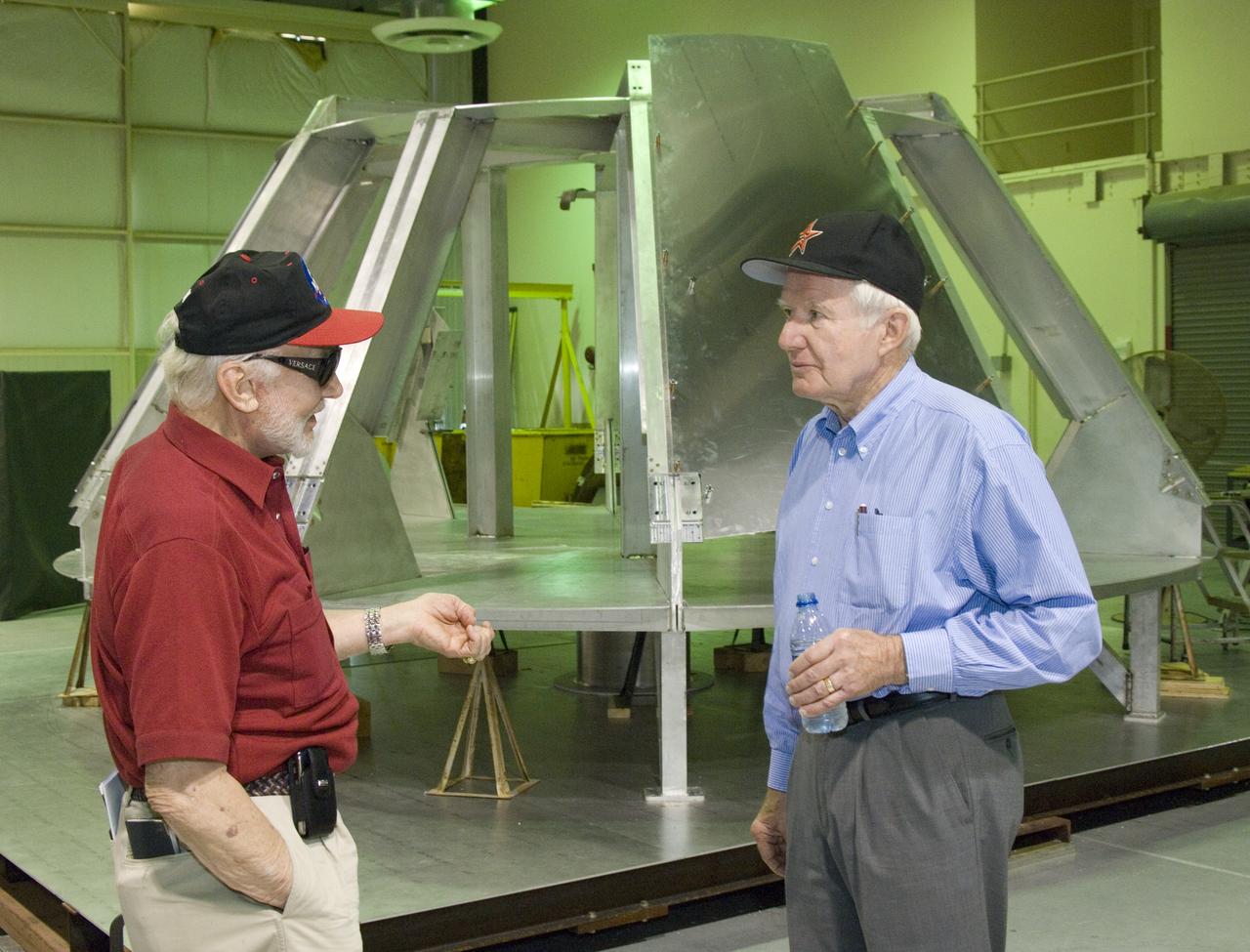
Apollo 11 astronaut Buzz Aldrin (left) and Apollo-Soyuz and space shuttle astronaut Vance Brand discuss Dryden's work on an Orion fit-check crew module mockup.
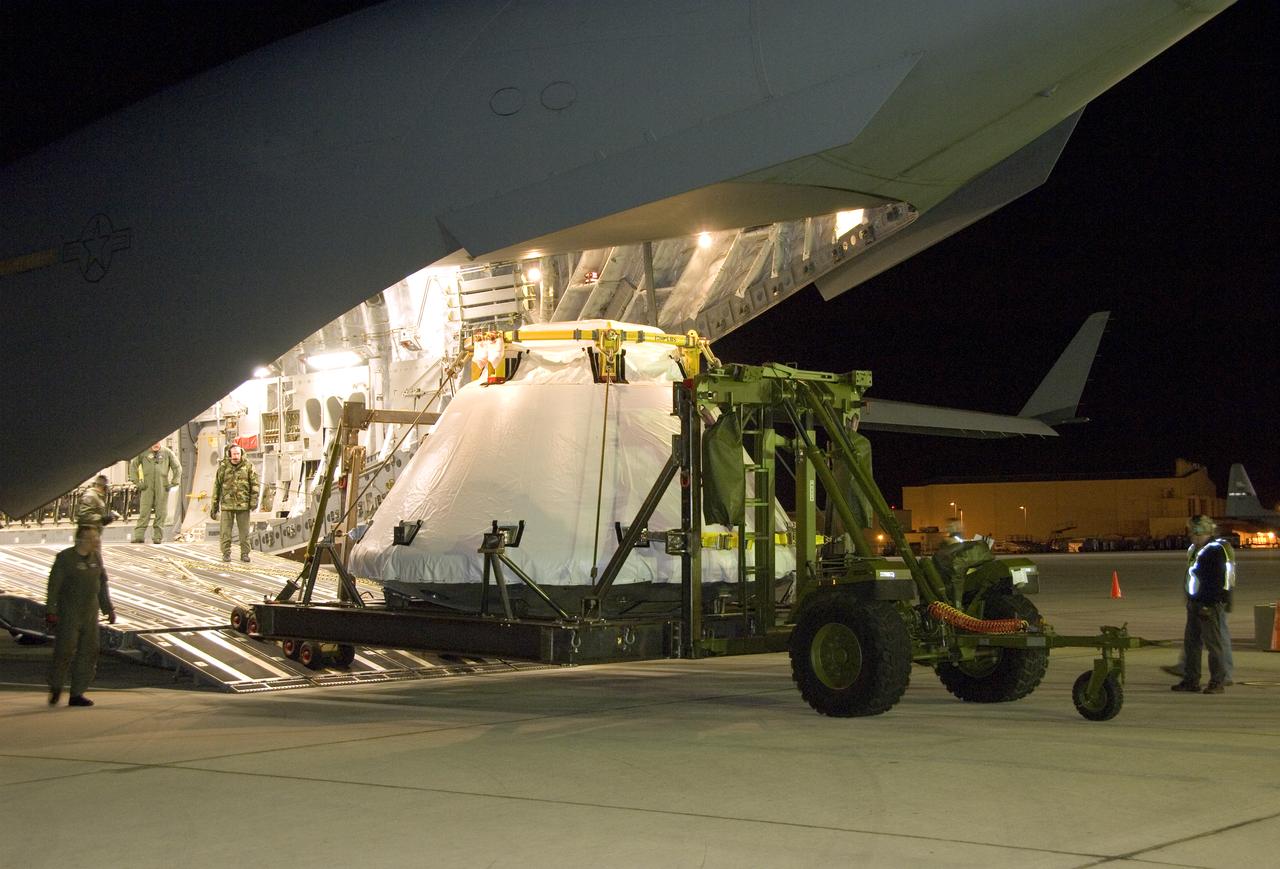
A full-scale flight-test mockup of the Constellation program's Orion crew vehicle arrived at NASA's Dryden Flight Research Center in late March 2008 to undergo preparations for the first short-range flight test of the spacecraft's astronaut escape system later that year. Engineers and technicians at NASA's Langley Research Center fabricated the structure, which precisely represents the size, outer shape and mass characteristics of the Orion space capsule. The Orion crew module mockup was ferried to NASA Dryden on an Air Force C-17. After painting in the Edwards Air Force Base paint hangar, the conical capsule was taken to Dryden for installation of flight computers, instrumentation and other electronics prior to being sent to the U.S. Army's White Sands Missile Range in New Mexico for integration with the escape system and the first abort flight test in late 2008. The tests were designed to ensure a safe, reliable method of escape for astronauts in case of an emergency.
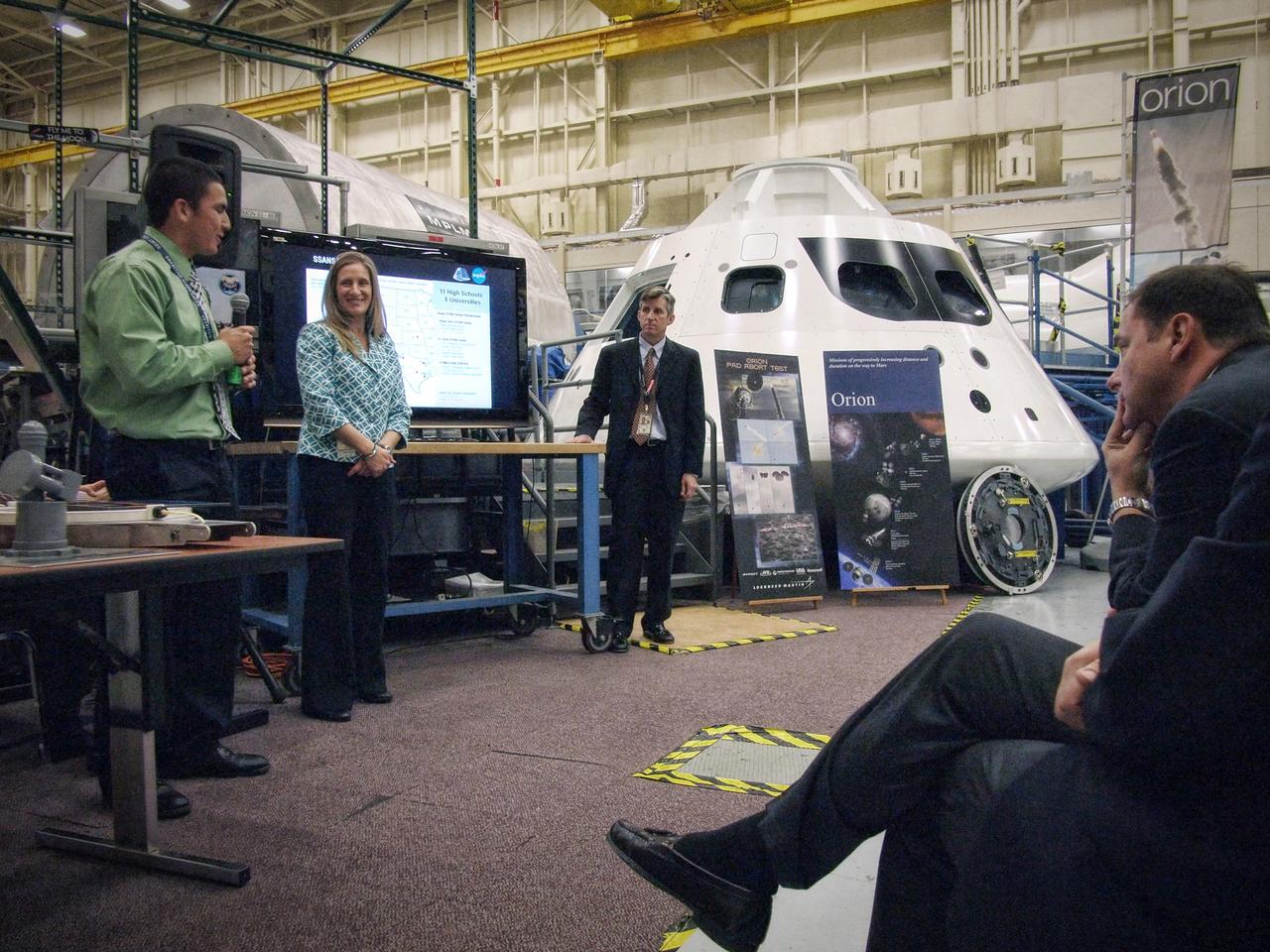
Jeff Fox, Christie Sauers, and Phillip Reyes present the Students Shaping America's Next Spacecraft (SSANS) program to NASA center directors in front of the Orion mockup in Building 9 at Johnson Space Center in Houston on Nov. 10, 2011. Part of Batch image transfer from Flickr.
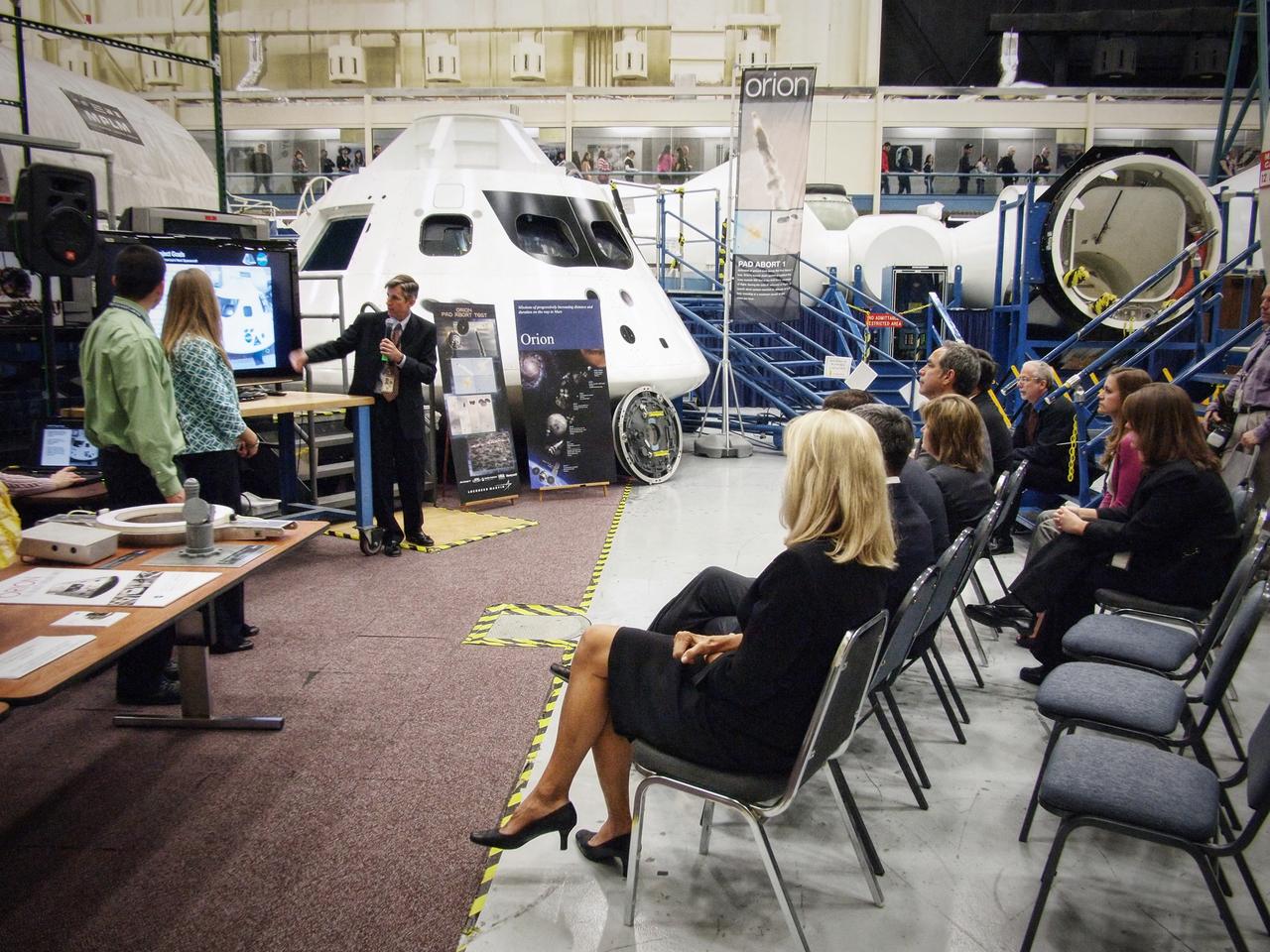
Jeff Fox, Christie Sauers, and Phillip Reyes present the Students Shaping America's Next Spacecraft (SSANS) program to NASA center directors in front of the Orion mockup in Building 9 at Johnson Space Center in Houston on Nov. 10, 2011. Part of Batch image transfer from Flickr.
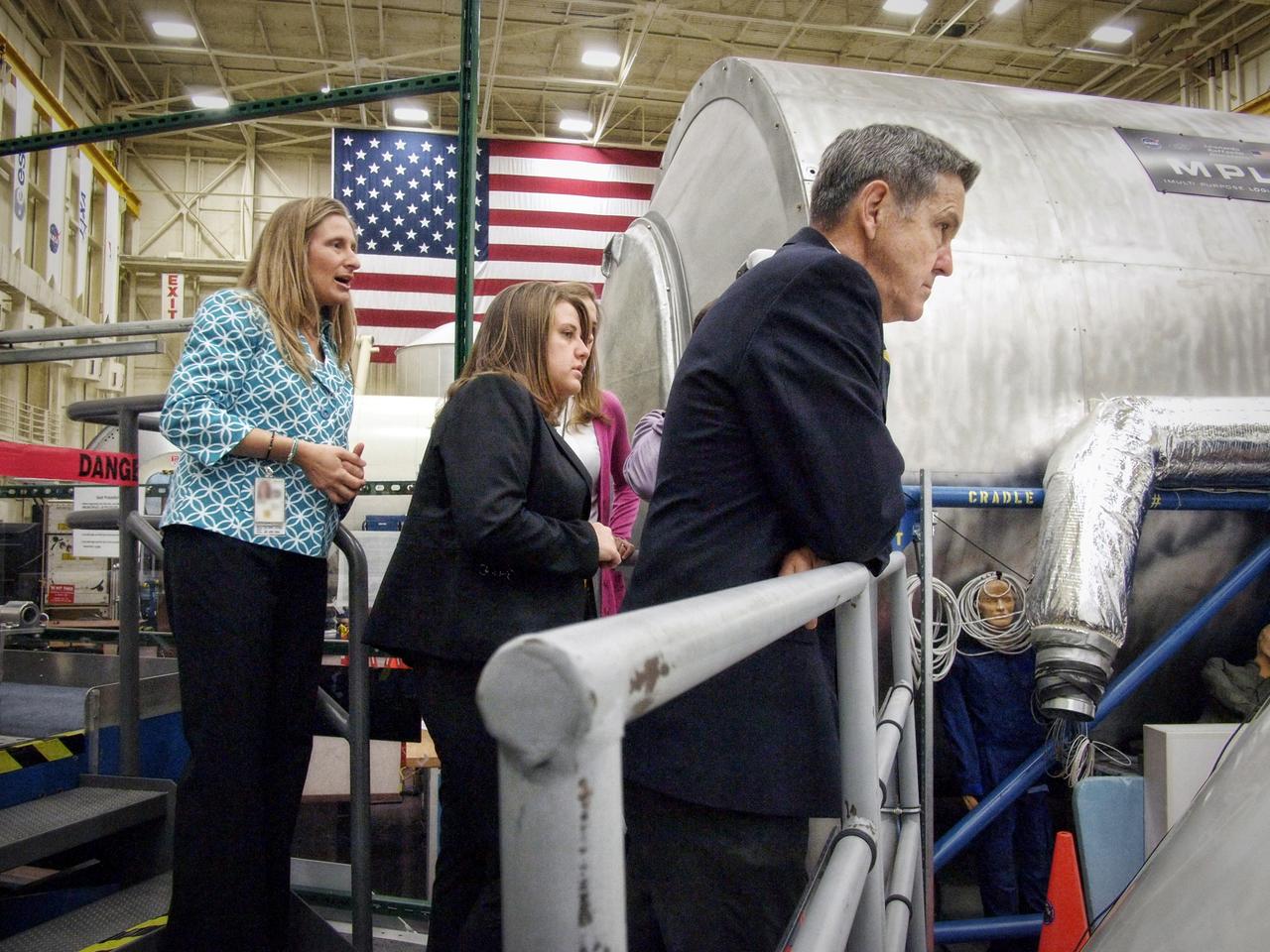
Kennedy Space Center Director Robert Cabana looks into the Orion medium fidelity mockup as Christi Sauers describes the work performed by Students Shaping America's Next Spacecraft (SSANS) program in Building 9 at Johnson Space Center in Houston on Nov. 10, 2011. Part of Batch image transfer from Flickr.

Jeff Fox presents the Students Shaping America's Next Spacecraft (SSANS) program to NASA center directors in front of the Orion mockup in Building 9 at Johnson Space Center in Houston on Nov. 10, 2011. Part of Batch image transfer from Flickr.
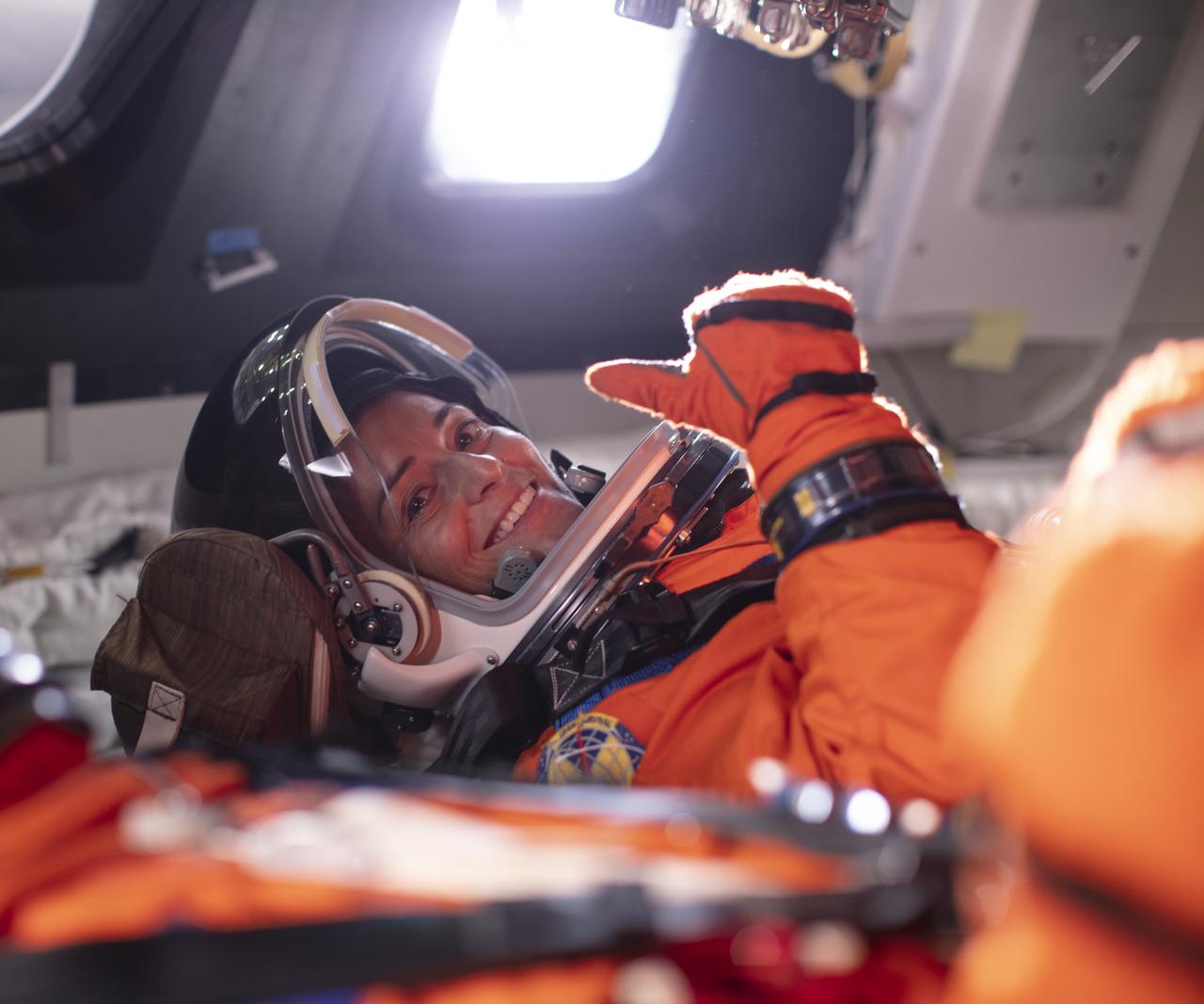
NASA astronaut Nicole Mann gives a thumbs up from inside the Orion mockup, Wednesday, July 10, 2019 at NASA's Johnson Space Center in Houston, Texas. Photo Credit: (NASA/Bill Ingalls)
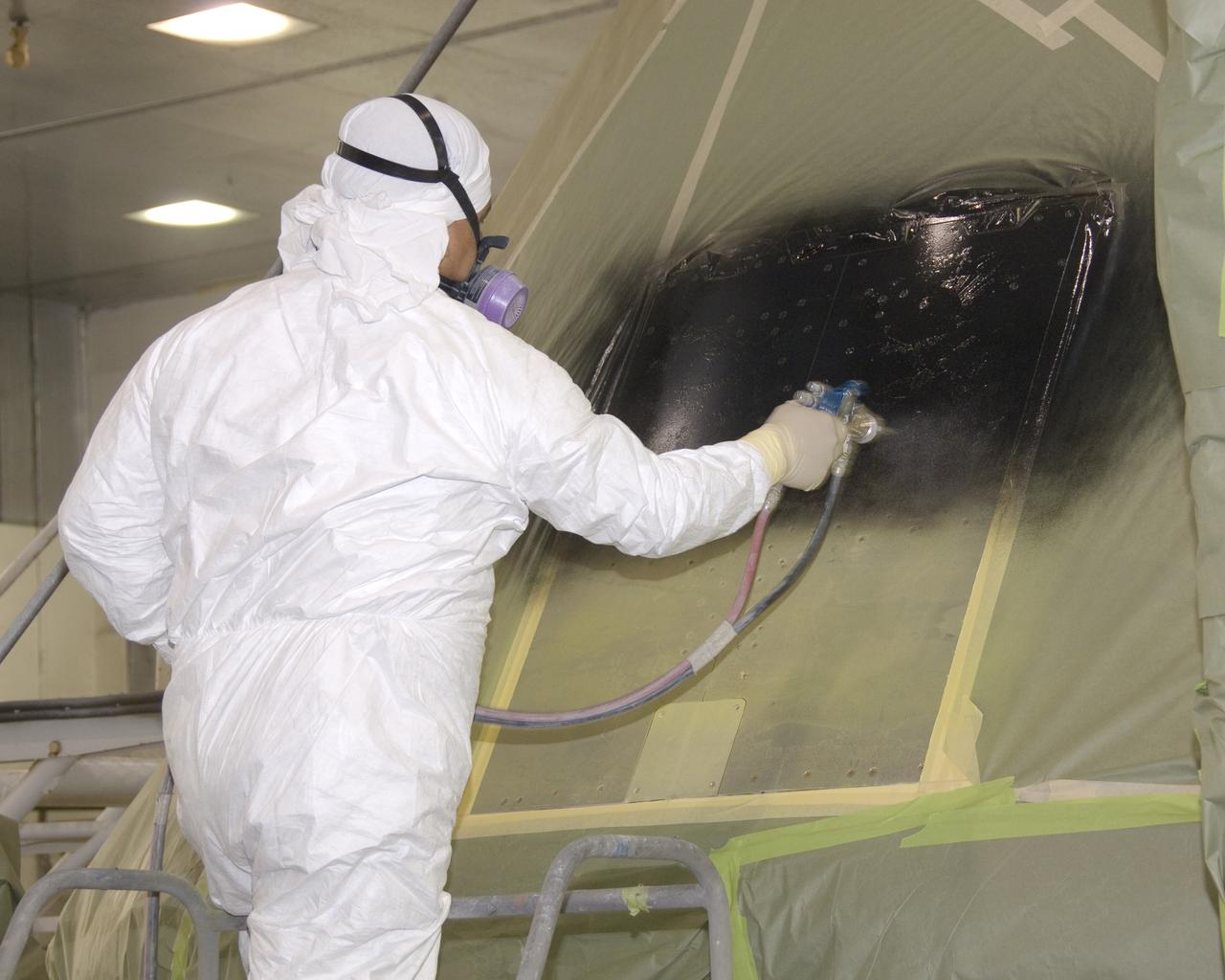
A full-scale flight-test mockup of the Constellation program's Orion crew vehicle arrived at NASA's Dryden Flight Research Center in late March 2008 to undergo preparations for the first short-range flight test of the spacecraft's astronaut escape system later that year. Engineers and technicians at NASA's Langley Research Center fabricated the structure, which precisely represents the size, outer shape and mass characteristics of the Orion space capsule. The Orion crew module mockup was ferried to NASA Dryden on an Air Force C-17. After painting in the Edwards Air Force Base paint hangar, the conical capsule was taken to Dryden for installation of flight computers, instrumentation and other electronics prior to being sent to the U.S. Army's White Sands Missile Range in New Mexico for integration with the escape system and the first abort flight test in late 2008. The tests were designed to ensure a safe, reliable method of escape for astronauts in case of an emergency.
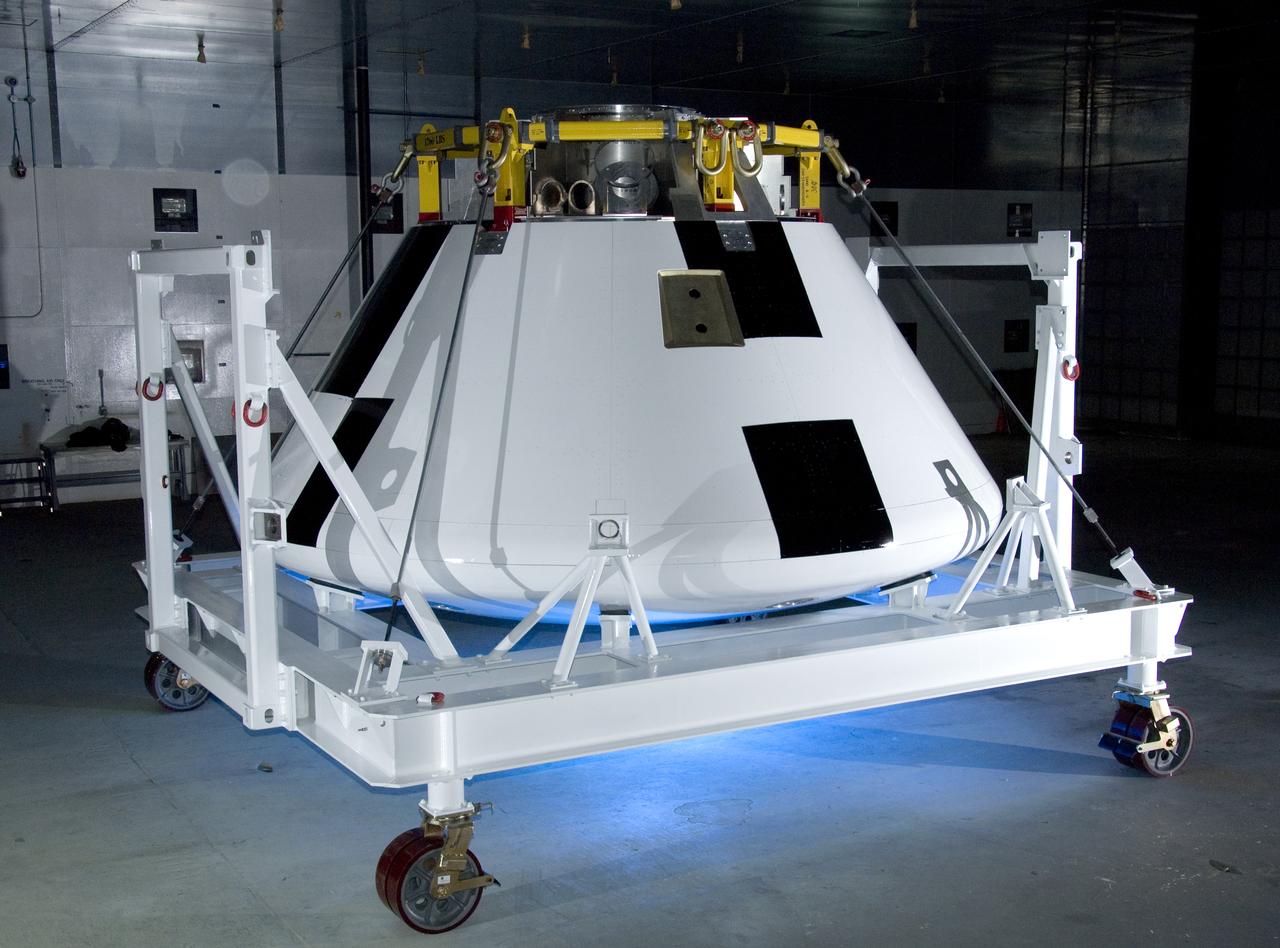
A full-scale flight-test mockup of the Constellation program's Orion crew vehicle arrived at NASA's Dryden Flight Research Center in late March 2008 to undergo preparations for the first short-range flight test of the spacecraft's astronaut escape system later that year. Engineers and technicians at NASA's Langley Research Center fabricated the structure, which precisely represents the size, outer shape and mass characteristics of the Orion space capsule. The Orion crew module mockup was ferried to NASA Dryden on an Air Force C-17. After painting in the Edwards Air Force Base paint hangar, the conical capsule was taken to Dryden for installation of flight computers, instrumentation and other electronics prior to being sent to the U.S. Army's White Sands Missile Range in New Mexico for integration with the escape system and the first abort flight test in late 2008. The tests were designed to ensure a safe, reliable method of escape for astronauts in case of an emergency.
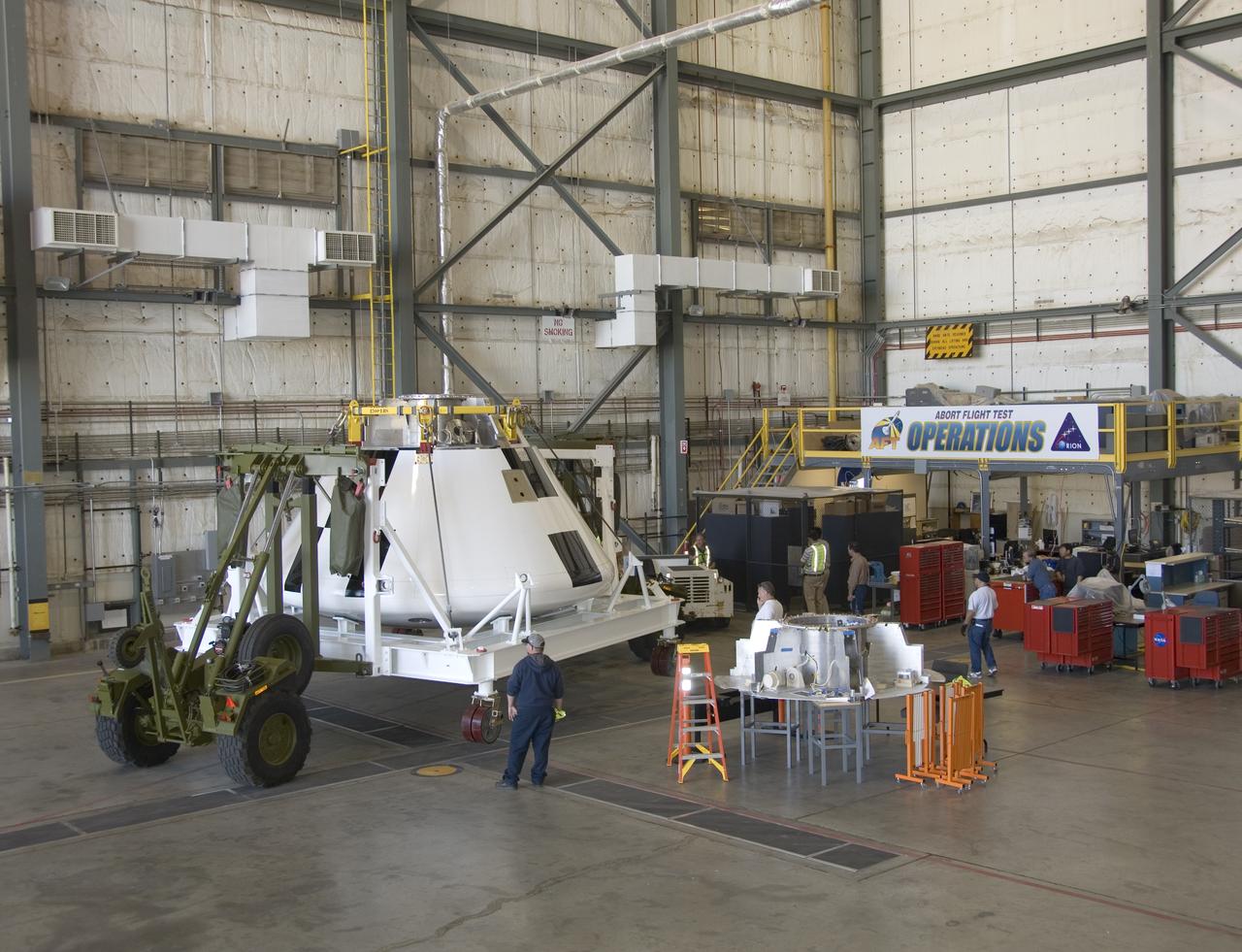
A full-scale flight-test mockup of the Constellation program's Orion crew vehicle arrived at NASA's Dryden Flight Research Center in late March 2008 to undergo preparations for the first short-range flight test of the spacecraft's astronaut escape system later that year. Engineers and technicians at NASA's Langley Research Center fabricated the structure, which precisely represents the size, outer shape and mass characteristics of the Orion space capsule. The Orion crew module mockup was ferried to NASA Dryden on an Air Force C-17. After painting in the Edwards Air Force Base paint hangar, the conical capsule was taken to Dryden for installation of flight computers, instrumentation and other electronics prior to being sent to the U.S. Army's White Sands Missile Range in New Mexico for integration with the escape system and the first abort flight test in late 2008. The tests were designed to ensure a safe, reliable method of escape for astronauts in case of an emergency.
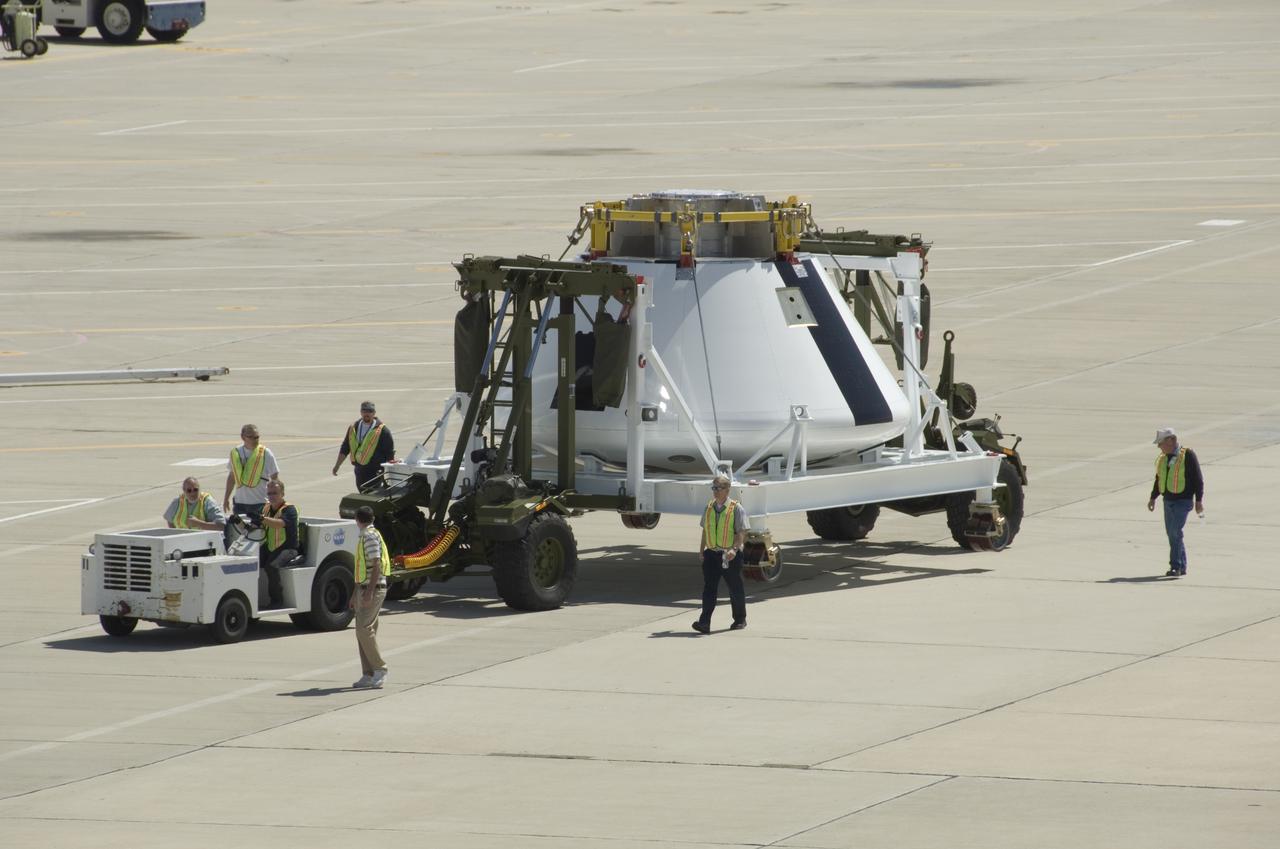
A full-scale flight-test mockup of the Constellation program's Orion crew vehicle arrived at NASA's Dryden Flight Research Center in late March 2008 to undergo preparations for the first short-range flight test of the spacecraft's astronaut escape system later that year. Engineers and technicians at NASA's Langley Research Center fabricated the structure, which precisely represents the size, outer shape and mass characteristics of the Orion space capsule. The Orion crew module mockup was ferried to NASA Dryden on an Air Force C-17. After painting in the Edwards Air Force Base paint hangar, the conical capsule was taken to Dryden for installation of flight computers, instrumentation and other electronics prior to being sent to the U.S. Army's White Sands Missile Range in New Mexico for integration with the escape system and the first abort flight test in late 2008. The tests were designed to ensure a safe, reliable method of escape for astronauts in case of an emergency.
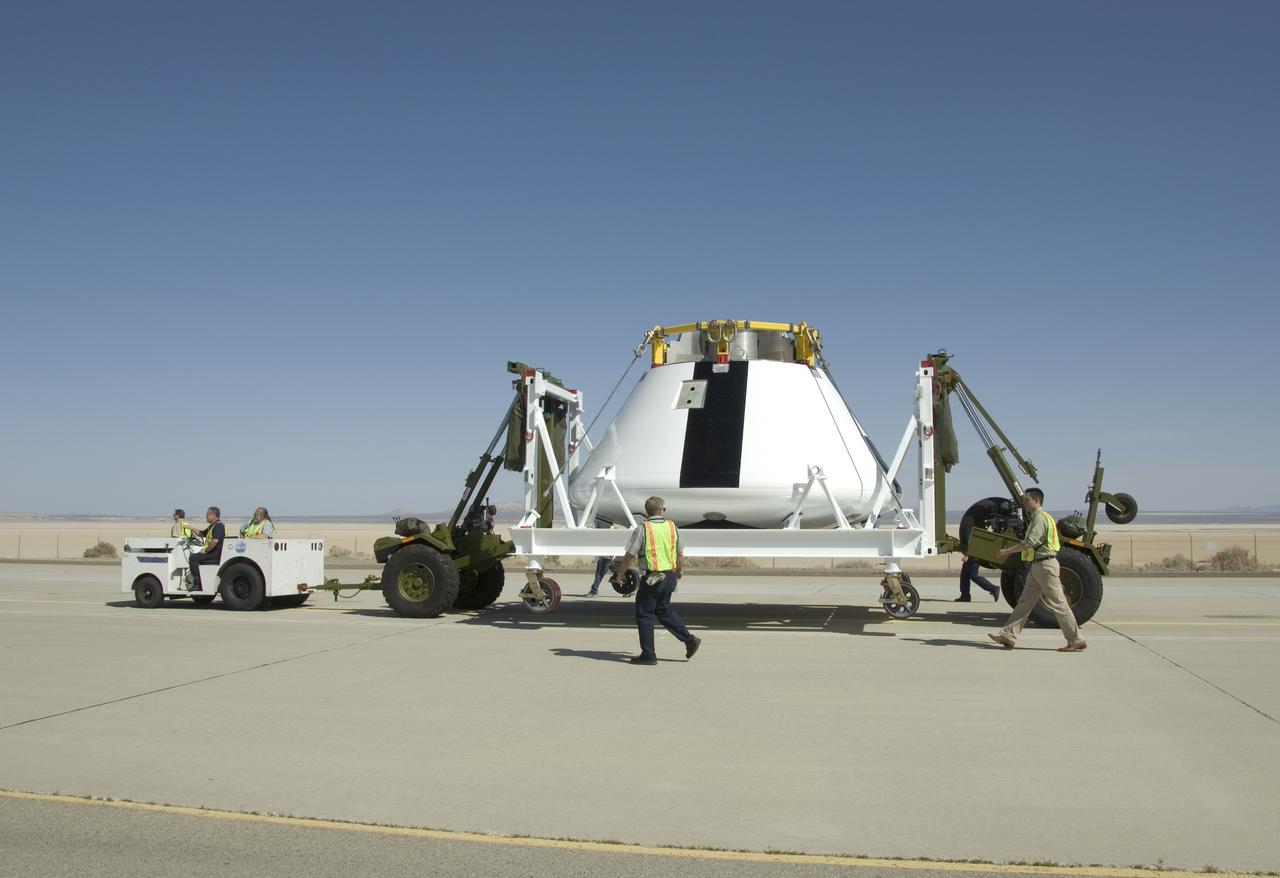
A full-scale flight-test mockup of the Constellation program's Orion crew vehicle arrived at NASA's Dryden Flight Research Center in late March 2008 to undergo preparations for the first short-range flight test of the spacecraft's astronaut escape system later that year. Engineers and technicians at NASA's Langley Research Center fabricated the structure, which precisely represents the size, outer shape and mass characteristics of the Orion space capsule. The Orion crew module mockup was ferried to NASA Dryden on an Air Force C-17. After painting in the Edwards Air Force Base paint hangar, the conical capsule was taken to Dryden for installation of flight computers, instrumentation and other electronics prior to being sent to the U.S. Army's White Sands Missile Range in New Mexico for integration with the escape system and the first abort flight test in late 2008. The tests were designed to ensure a safe, reliable method of escape for astronauts in case of an emergency.
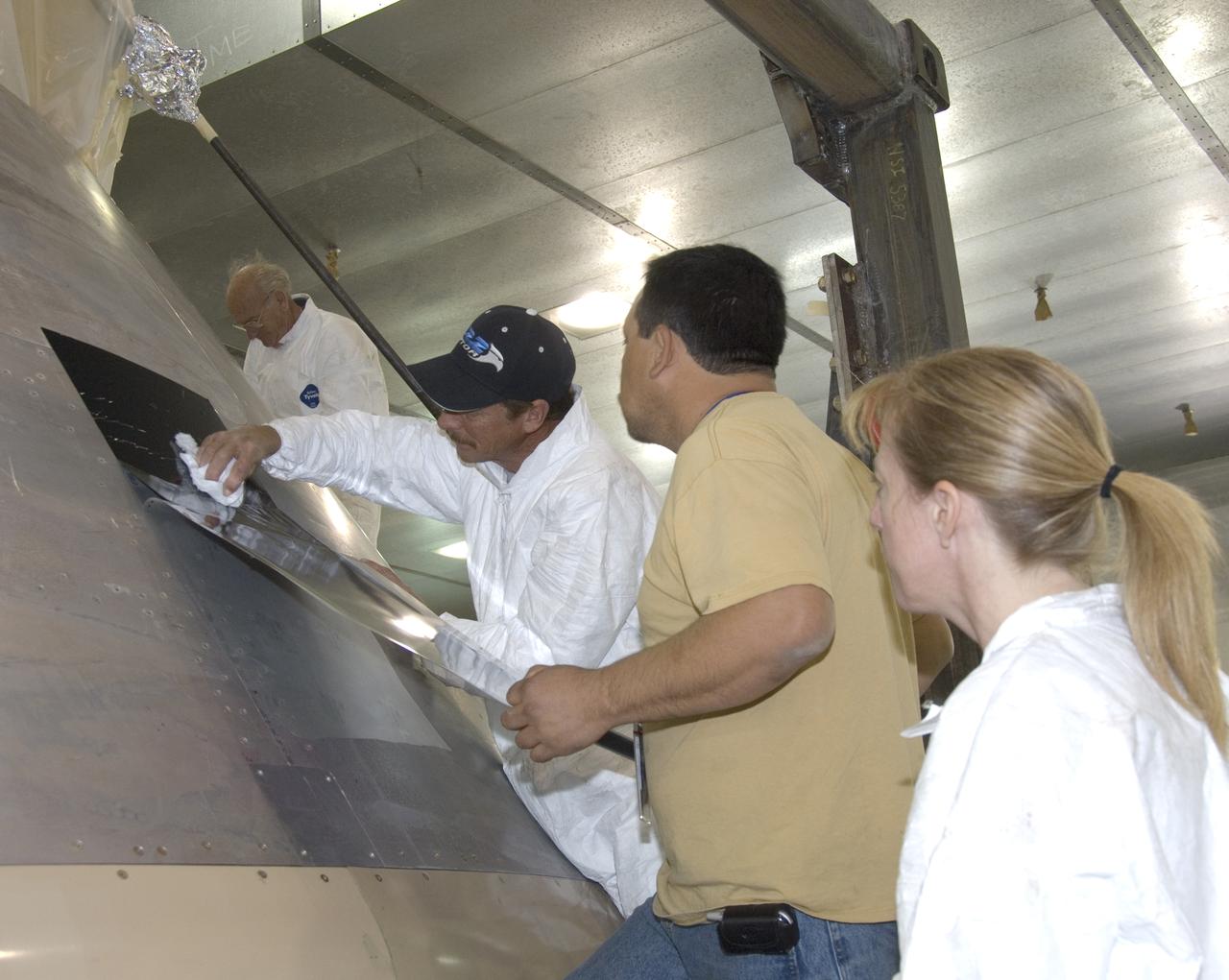
A full-scale flight-test mockup of the Constellation program's Orion crew vehicle arrived at NASA's Dryden Flight Research Center in late March 2008 to undergo preparations for the first short-range flight test of the spacecraft's astronaut escape system later that year. Engineers and technicians at NASA's Langley Research Center fabricated the structure, which precisely represents the size, outer shape and mass characteristics of the Orion space capsule. The Orion crew module mockup was ferried to NASA Dryden on an Air Force C-17. After painting in the Edwards Air Force Base paint hangar, the conical capsule was taken to Dryden for installation of flight computers, instrumentation and other electronics prior to being sent to the U.S. Army's White Sands Missile Range in New Mexico for integration with the escape system and the first abort flight test in late 2008. The tests were designed to ensure a safe, reliable method of escape for astronauts in case of an emergency.
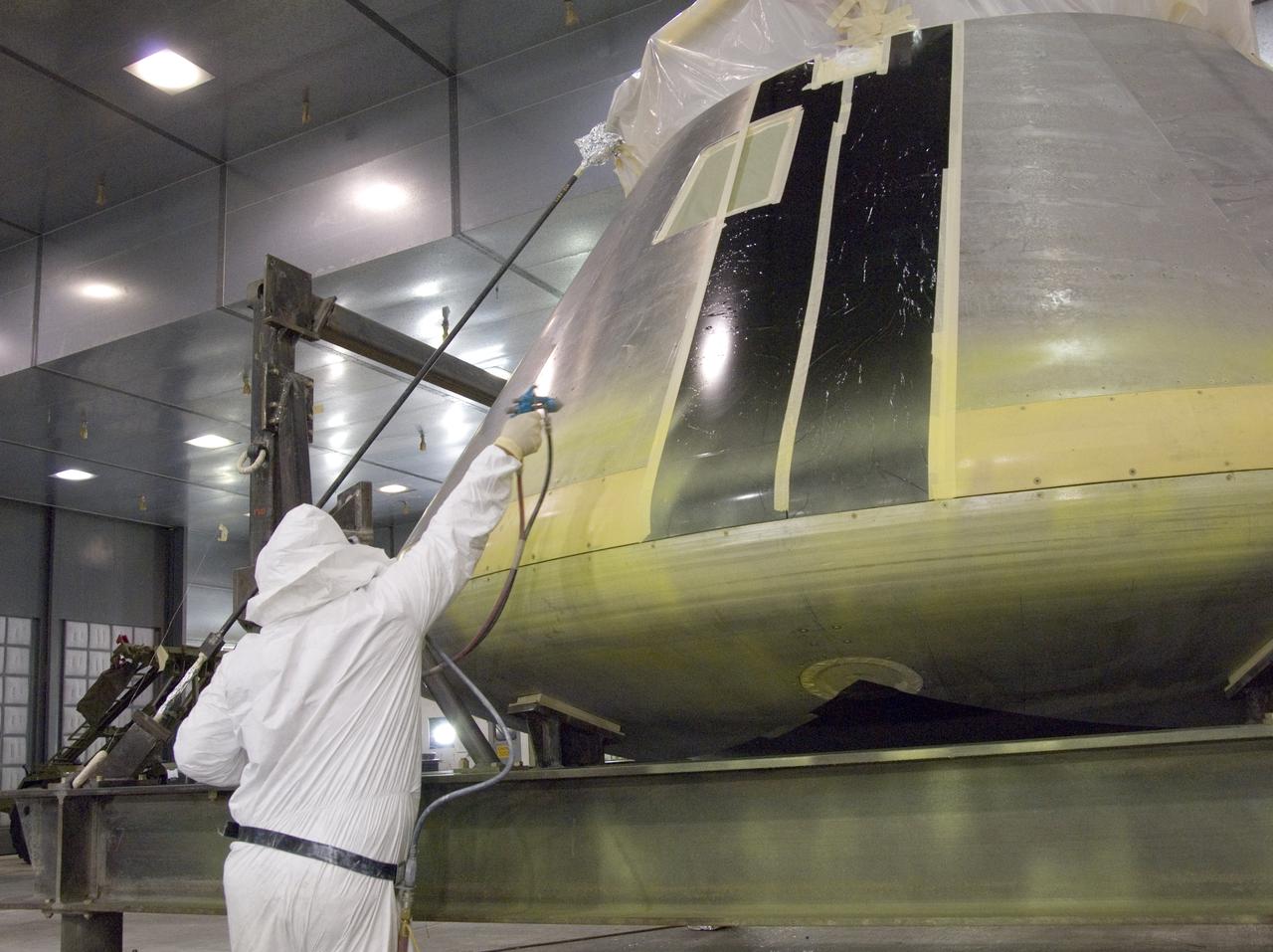
A full-scale flight-test mockup of the Constellation program's Orion crew vehicle arrived at NASA's Dryden Flight Research Center in late March 2008 to undergo preparations for the first short-range flight test of the spacecraft's astronaut escape system later that year. Engineers and technicians at NASA's Langley Research Center fabricated the structure, which precisely represents the size, outer shape and mass characteristics of the Orion space capsule. The Orion crew module mockup was ferried to NASA Dryden on an Air Force C-17. After painting in the Edwards Air Force Base paint hangar, the conical capsule was taken to Dryden for installation of flight computers, instrumentation and other electronics prior to being sent to the U.S. Army's White Sands Missile Range in New Mexico for integration with the escape system and the first abort flight test in late 2008. The tests were designed to ensure a safe, reliable method of escape for astronauts in case of an emergency.
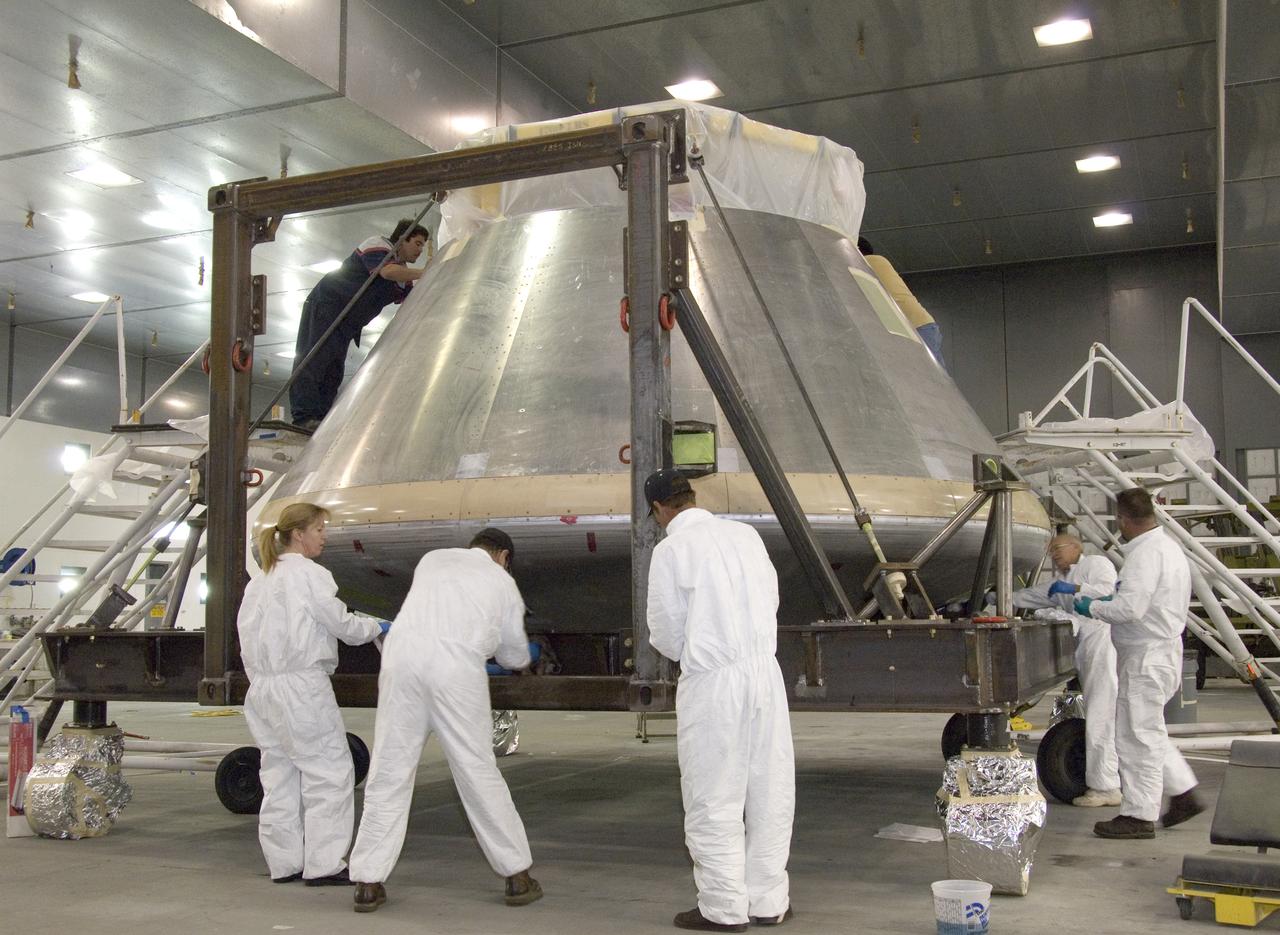
A full-scale flight-test mockup of the Constellation program's Orion crew vehicle arrived at NASA's Dryden Flight Research Center in late March 2008 to undergo preparations for the first short-range flight test of the spacecraft's astronaut escape system later that year. Engineers and technicians at NASA's Langley Research Center fabricated the structure, which precisely represents the size, outer shape and mass characteristics of the Orion space capsule. The Orion crew module mockup was ferried to NASA Dryden on an Air Force C-17. After painting in the Edwards Air Force Base paint hangar, the conical capsule was taken to Dryden for installation of flight computers, instrumentation and other electronics prior to being sent to the U.S. Army's White Sands Missile Range in New Mexico for integration with the escape system and the first abort flight test in late 2008. The tests were designed to ensure a safe, reliable method of escape for astronauts in case of an emergency.
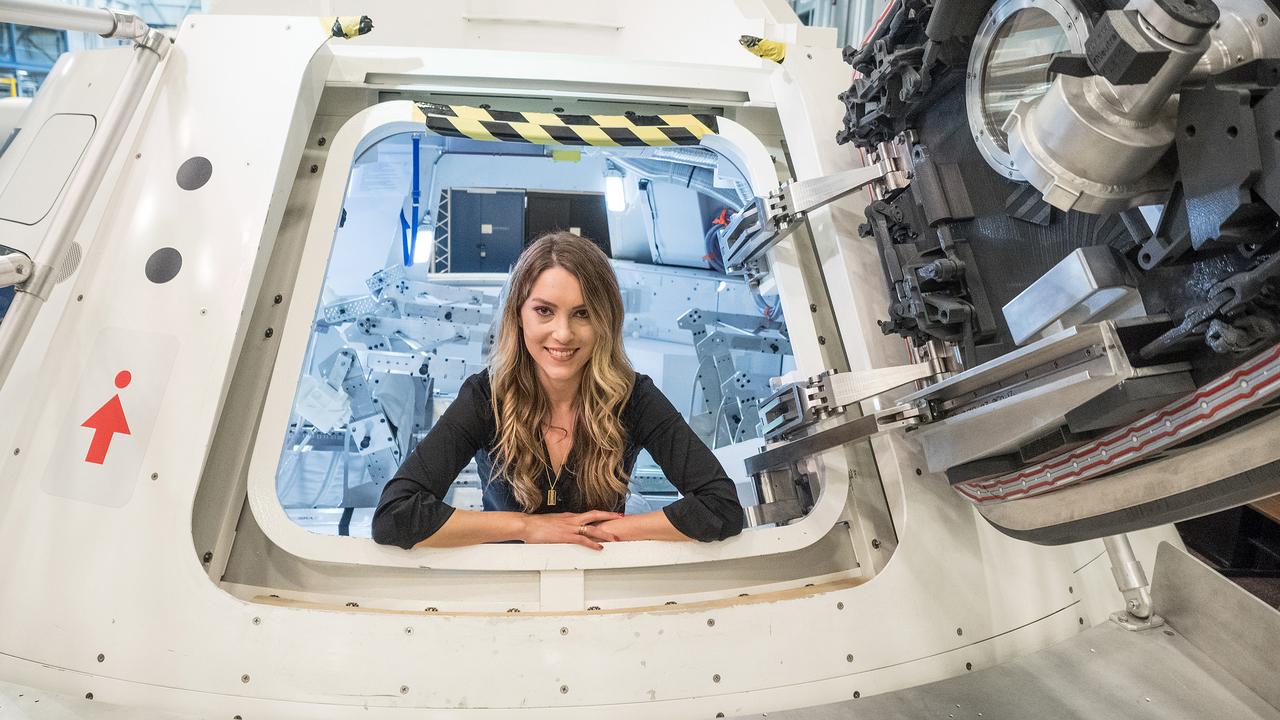
CNN's Rachel Crane at the Space Vehicle Mockup Facility at NASA's Johnson Space Center in Houston on June 23, 2015. Part of Batch image transfer from Flickr.
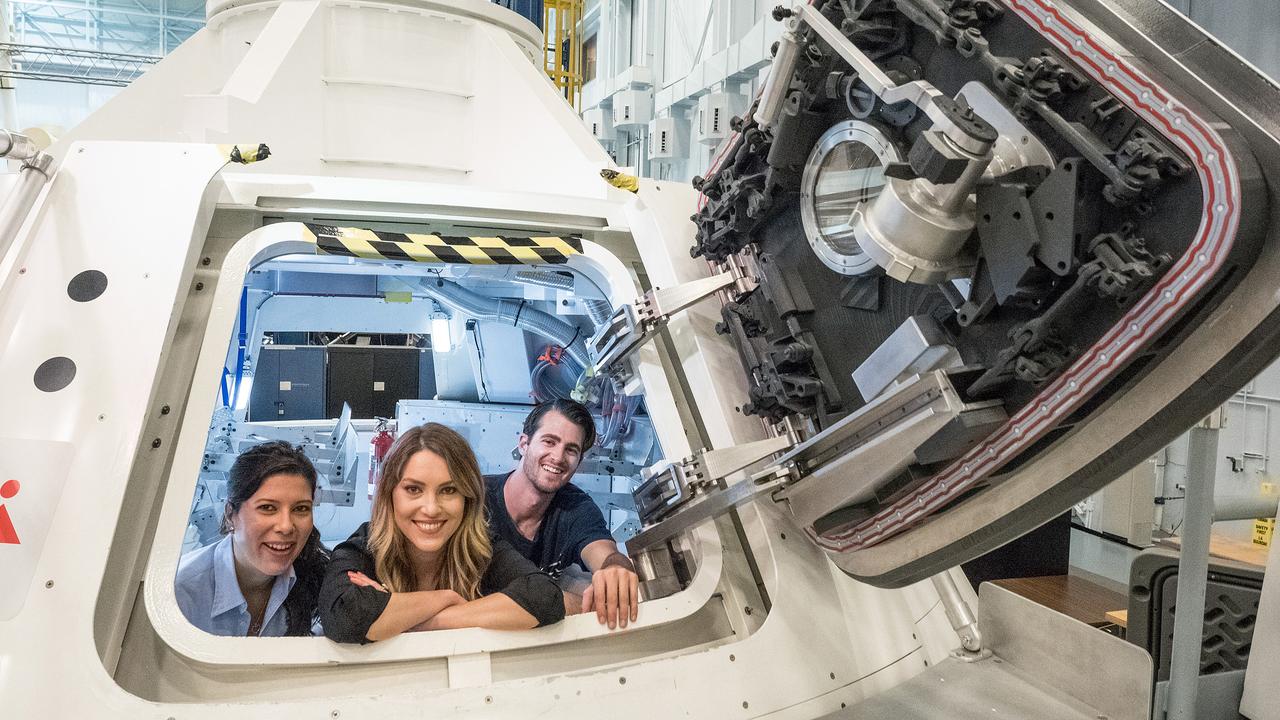
CNN's Rachel Crane at the Space Vehicle Mockup Facility at NASA's Johnson Space Center in Houston on June 23, 2015. Part of Batch image transfer from Flickr.
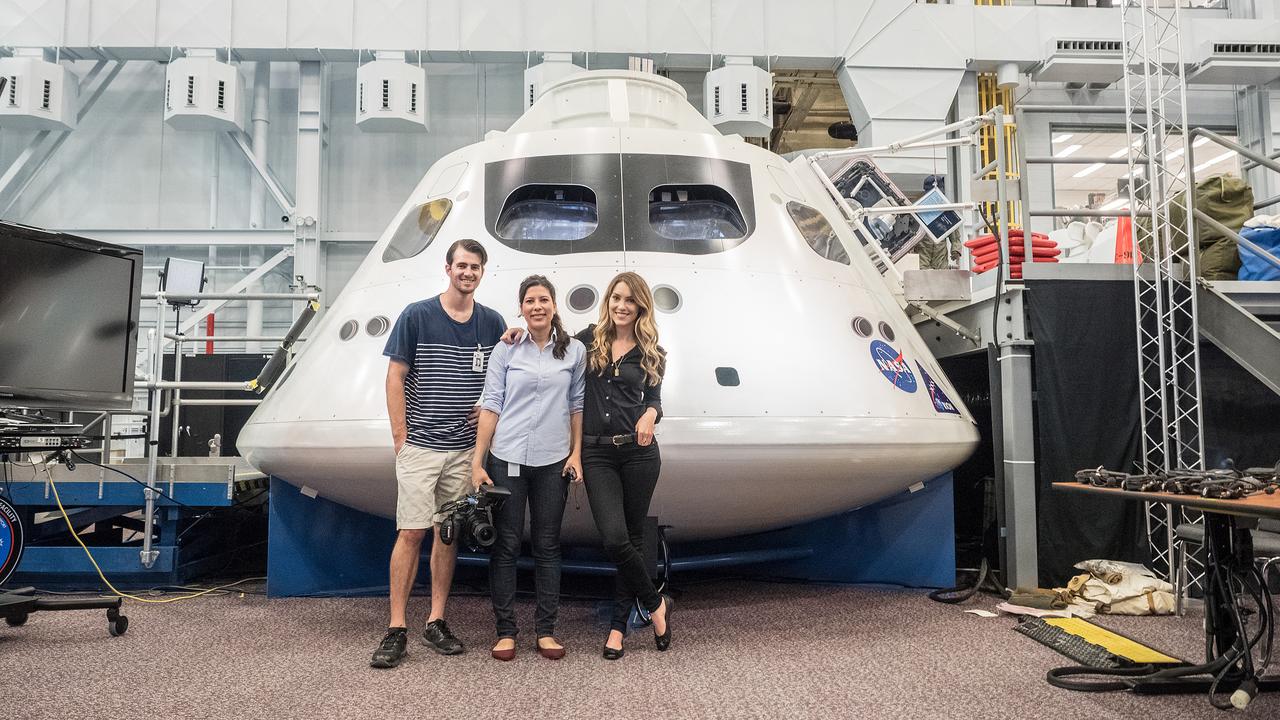
CNN's Rachel Crane at the Space Vehicle Mockup Facility at NASA's Johnson Space Center in Houston on June 23, 2015. Part of Batch image transfer from Flickr.
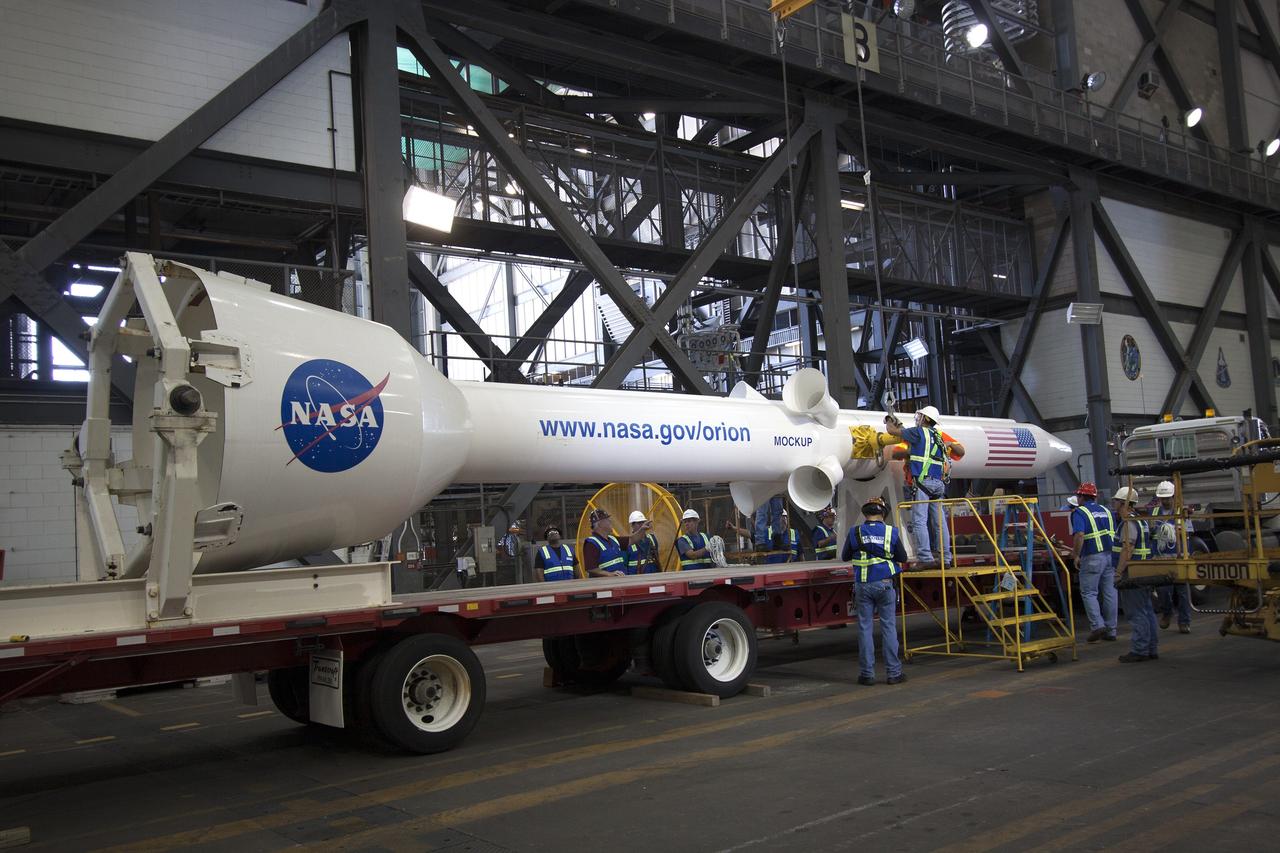
CAPE CANAVERAL, Fla. -- In the transfer aisle of the Vehicle Assembly Building at NASA’s Kennedy Space Center in Florida, a mock-up of the Orion launch abort system has been lowered onto a transporter. Crane operators and technicians practice de-stacking operations on a full-size mock-up of the Orion spacecraft and launch abort system in order to keep processing procedures and skills current. Orion is the exploration spacecraft designed to carry crews to space beyond low Earth orbit. It will provide emergency abort capability, sustain the crew during the space travel and provide safe re-entry from deep space return velocities. Orion’s first unpiloted test flight is scheduled to launch in 2014 atop a Delta IV rocket. A second uncrewed flight test is scheduled for 2017 on NASA’s Space Launch System rocket. For more information, visit http://www.nasa.gov/orion. Photo credit: NASA/Jim Grossmann
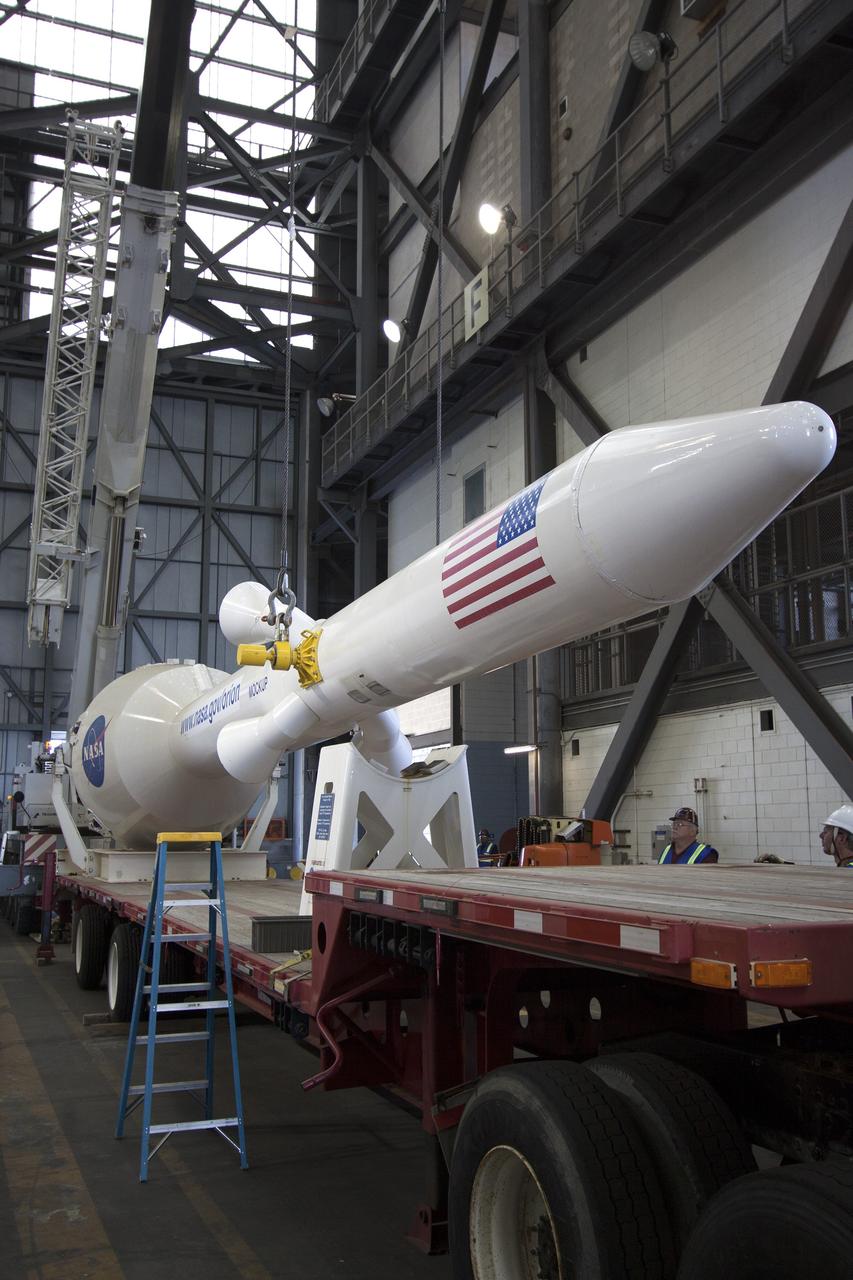
CAPE CANAVERAL, Fla. -- In the transfer aisle of the Vehicle Assembly Building at NASA’s Kennedy Space Center in Florida, crane operators and technicians practice lowering a mock-up of the Orion launch abort system onto a transporter in order to keep processing procedures and skills current. Orion is the exploration spacecraft designed to carry crews to space beyond low Earth orbit. It will provide emergency abort capability, sustain the crew during the space travel and provide safe re-entry from deep space return velocities. Orion’s first unpiloted test flight is scheduled to launch in 2014 atop a Delta IV rocket. A second uncrewed flight test is scheduled for 2017 on NASA’s Space Launch System rocket. For more information, visit http://www.nasa.gov/orion. Photo credit: NASA/Jim Grossmann

CAPE CANAVERAL, Fla. -- In the transfer aisle of the Vehicle Assembly Building at NASA’s Kennedy Space Center in Florida, a full-size mock-up of the Orion launch abort system has been lowered onto a transporter. Crane operators and technicians practice de-stacking operations on full-size mock-ups of the Orion spacecraft and launch abort system in order to keep processing procedures and skills current. Orion is the exploration spacecraft designed to carry crews to space beyond low Earth orbit. It will provide emergency abort capability, sustain the crew during the space travel and provide safe re-entry from deep space return velocities. Orion’s first unpiloted test flight is scheduled to launch in 2014 atop a Delta IV rocket. A second uncrewed flight test is scheduled for 2017 on NASA’s Space Launch System rocket. For more information, visit http://www.nasa.gov/orion. Photo credit: NASA/Tim Jacobs

CAPE CANAVERAL, Fla. -- In the transfer aisle of the Vehicle Assembly Building at NASA’s Kennedy Space Center in Florida, crane operators and technicians practice de-stacking operations on a full-size mock-up of the Orion spacecraft and launch abort system in order to keep processing procedures and skills current. Orion is the exploration spacecraft designed to carry crews to space beyond low Earth orbit. It will provide emergency abort capability, sustain the crew during the space travel and provide safe re-entry from deep space return velocities. Orion’s first unpiloted test flight is scheduled to launch in 2014 atop a Delta IV rocket. A second uncrewed flight test is scheduled for 2017 on NASA’s Space Launch System rocket. For more information, visit http://www.nasa.gov/orion. Photo credit: NASA/Jim Grossmann
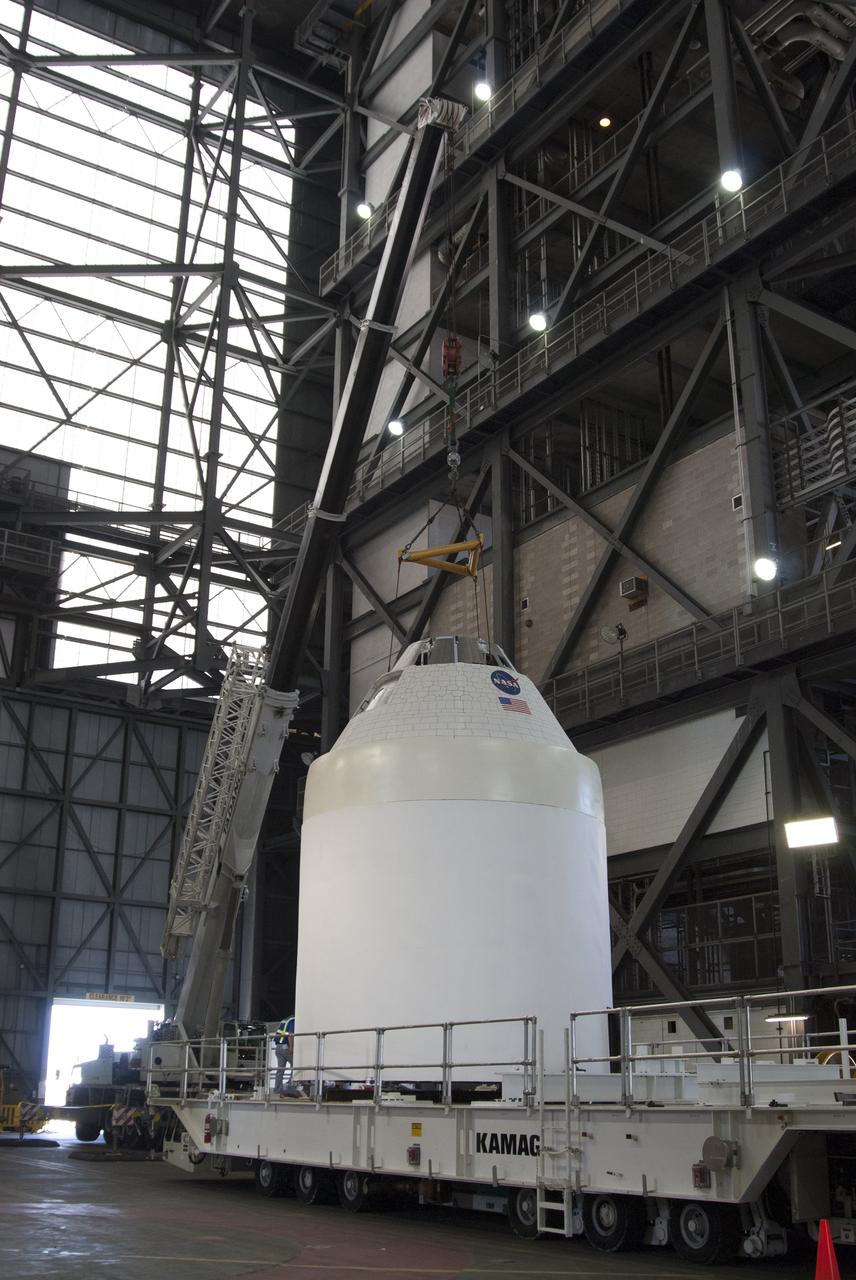
CAPE CANAVERAL, Fla. -- In the transfer aisle of the Vehicle Assembly Building at NASA’s Kennedy Space Center in Florida, a full-size test mock-up of the Orion spacecraft has been lowered onto a transporter. Crane operators and technicians practice de-stacking operations on mock-ups of the Orion spacecraft and launch abort system in order to keep processing procedures and skills current. Orion is the exploration spacecraft designed to carry crews to space beyond low Earth orbit. It will provide emergency abort capability, sustain the crew during the space travel and provide safe re-entry from deep space return velocities. Orion’s first unpiloted test flight is scheduled to launch in 2014 atop a Delta IV rocket. A second uncrewed flight test is scheduled for 2017 on NASA’s Space Launch System rocket. For more information, visit http://www.nasa.gov/orion. Photo credit: NASA/Tim Jacobs
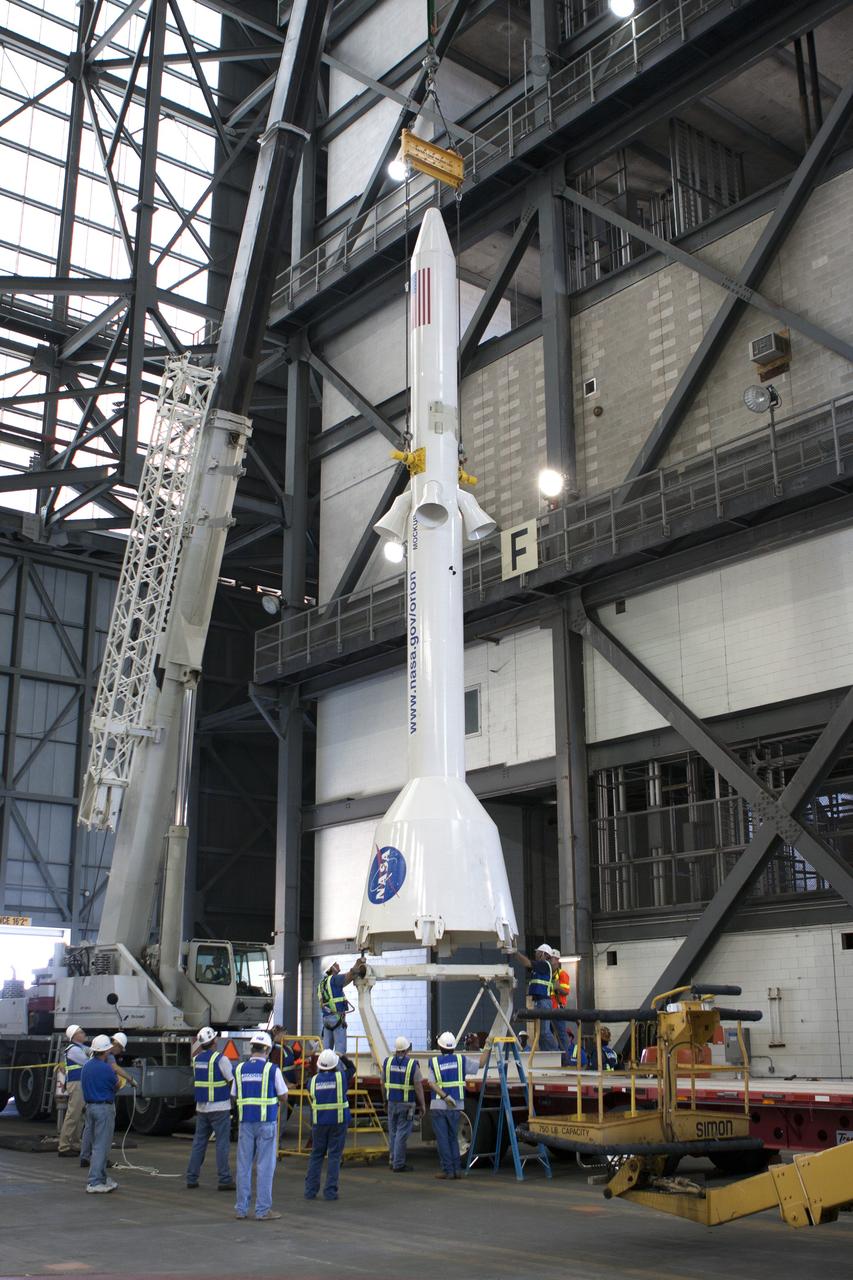
CAPE CANAVERAL, Fla. -- In the transfer aisle of the Vehicle Assembly Building at NASA’s Kennedy Space Center in Florida, crane operators and technicians practice de-stacking operations on a full-size mock-up of the Orion spacecraft and launch abort system in order to keep processing procedures and skills current. Orion is the exploration spacecraft designed to carry crews to space beyond low Earth orbit. It will provide emergency abort capability, sustain the crew during the space travel and provide safe re-entry from deep space return velocities. Orion’s first unpiloted test flight is scheduled to launch in 2014 atop a Delta IV rocket. A second uncrewed flight test is scheduled for 2017 on NASA’s Space Launch System rocket. For more information, visit http://www.nasa.gov/orion. Photo credit: NASA/Jim Grossmann
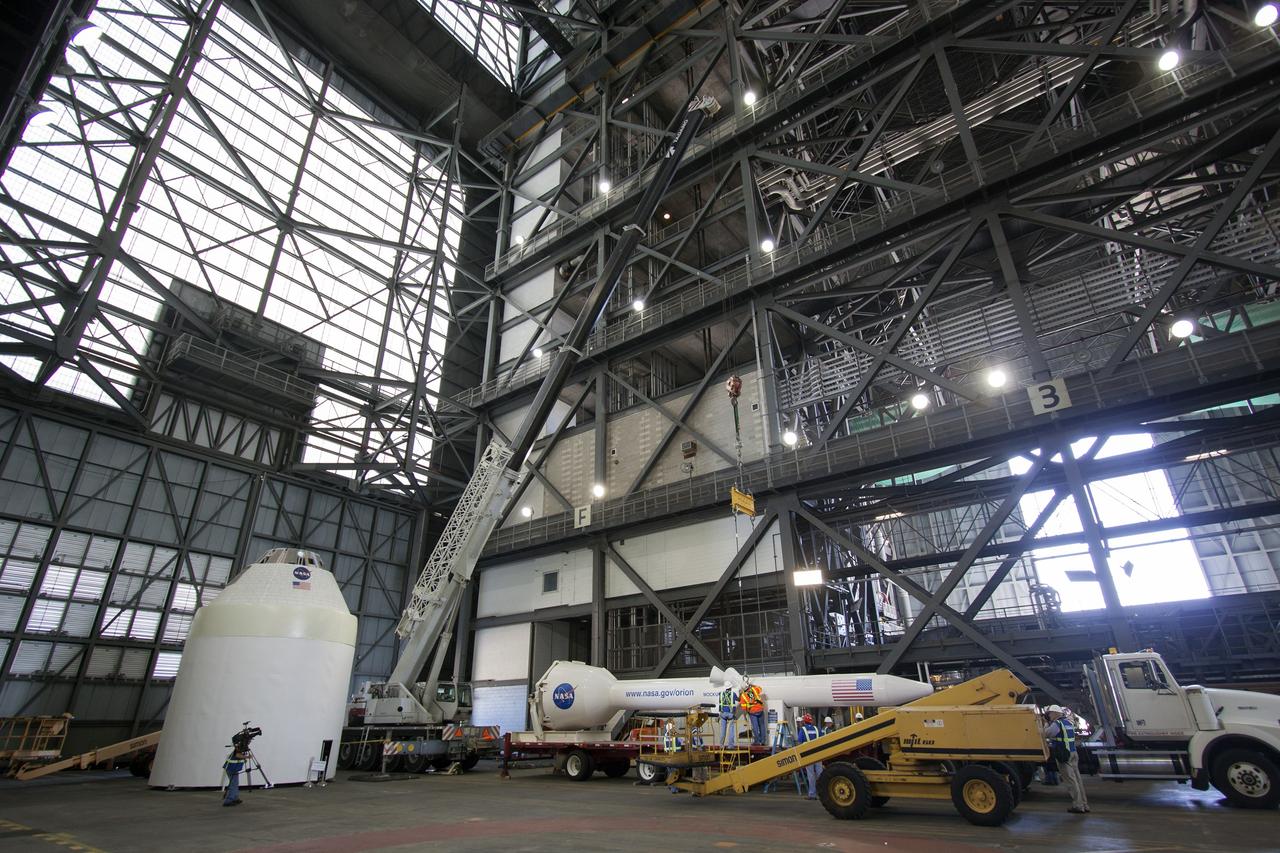
CAPE CANAVERAL, Fla. -- In the transfer aisle of the Vehicle Assembly Building at NASA’s Kennedy Space Center in Florida, a mock-up of the Orion launch abort system has been lowered onto a transporter. Crane operators and technicians practice de-stacking operations on a full-size mock-up of the Orion spacecraft and launch abort system in order to keep processing procedures and skills current. Orion is the exploration spacecraft designed to carry crews to space beyond low Earth orbit. It will provide emergency abort capability, sustain the crew during the space travel and provide safe re-entry from deep space return velocities. Orion’s first unpiloted test flight is scheduled to launch in 2014 atop a Delta IV rocket. A second uncrewed flight test is scheduled for 2017 on NASA’s Space Launch System rocket. For more information, visit http://www.nasa.gov/orion. Photo credit: NASA/Jim Grossmann
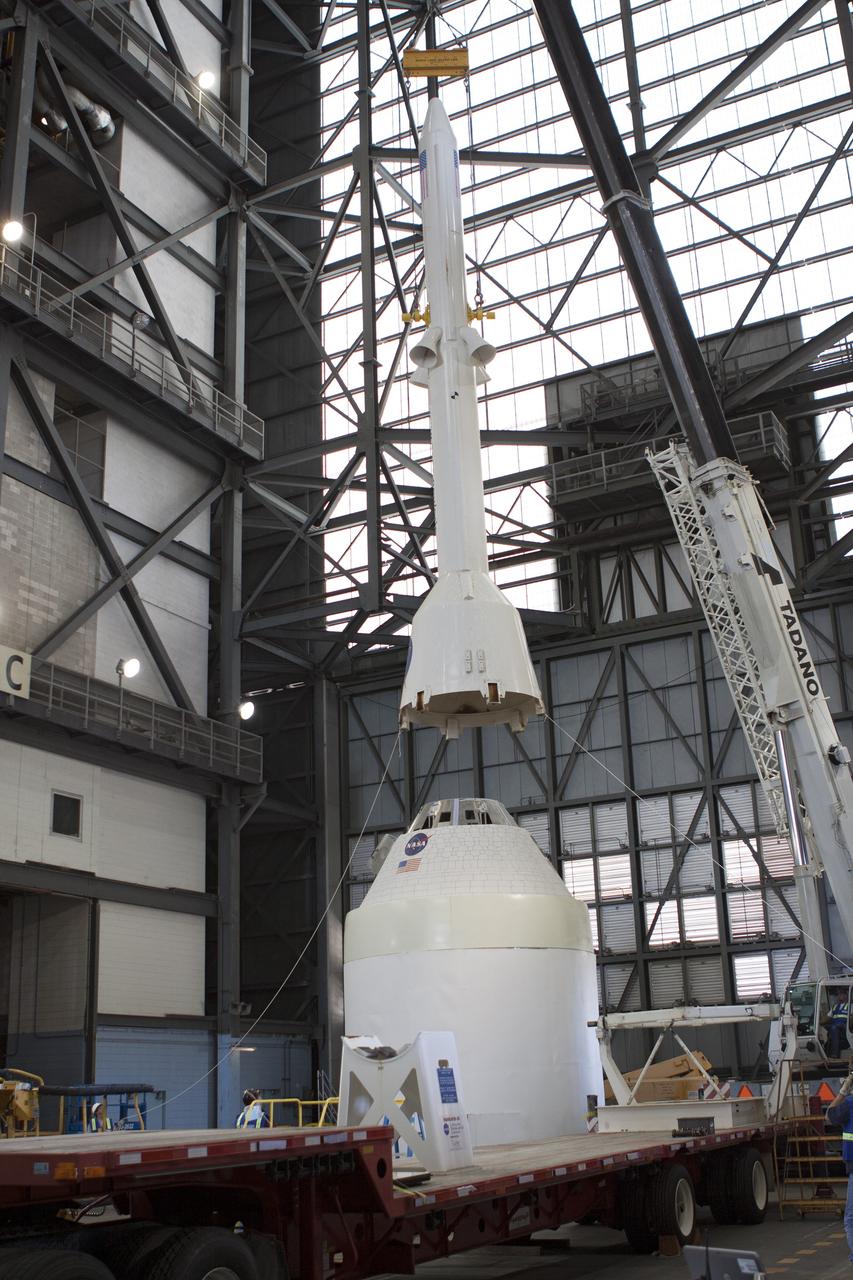
CAPE CANAVERAL, Fla. -- In the transfer aisle of the Vehicle Assembly Building at NASA’s Kennedy Space Center in Florida, crane operators and technicians practice de-stacking operations on a full-size mock-up of the Orion spacecraft and launch abort system in order to keep processing procedures and skills current. Orion is the exploration spacecraft designed to carry crews to space beyond low Earth orbit. It will provide emergency abort capability, sustain the crew during the space travel and provide safe re-entry from deep space return velocities. Orion’s first unpiloted test flight is scheduled to launch in 2014 atop a Delta IV rocket. A second uncrewed flight test is scheduled for 2017 on NASA’s Space Launch System rocket. For more information, visit http://www.nasa.gov/orion. Photo credit: NASA/Jim Grossmann
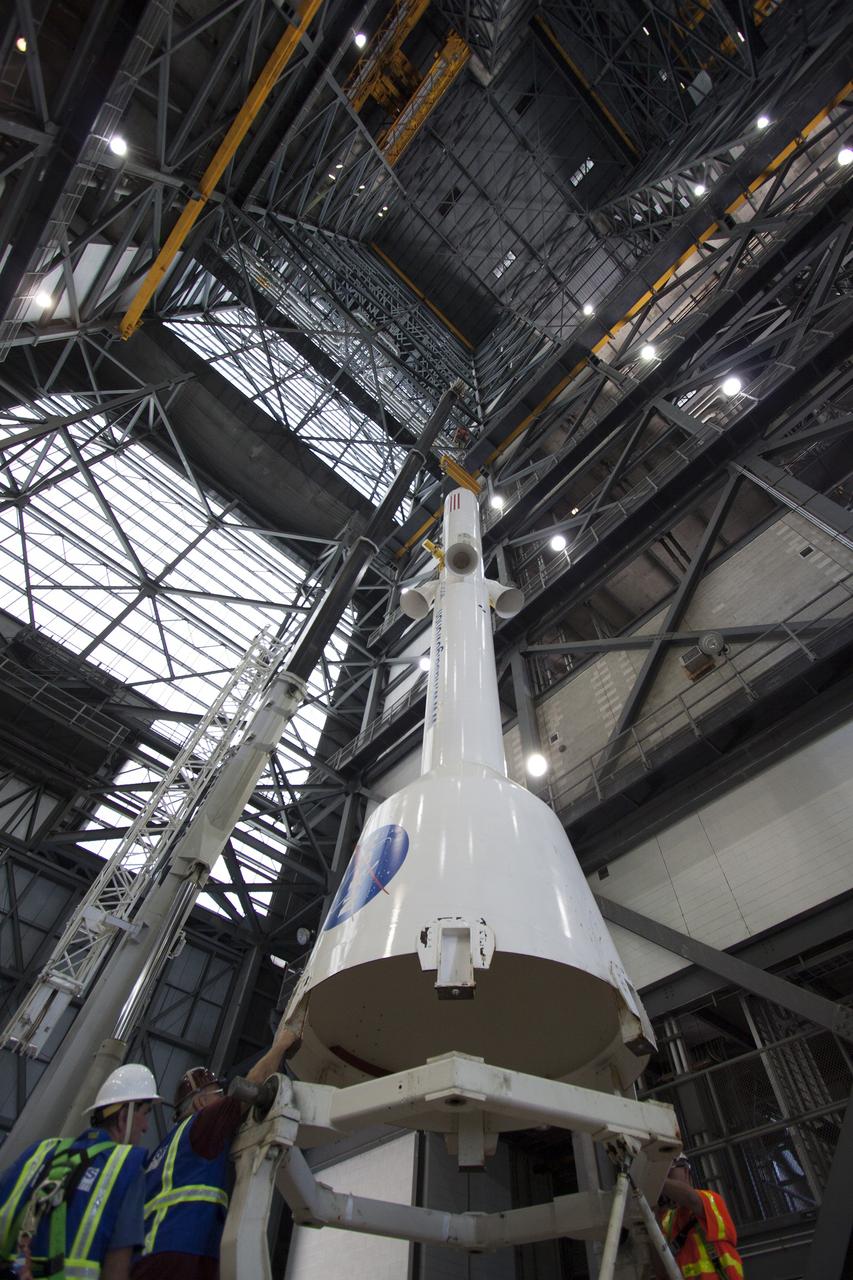
CAPE CANAVERAL, Fla. -- In the transfer aisle of the Vehicle Assembly Building at NASA’s Kennedy Space Center in Florida, crane operators and technicians practice de-stacking operations on a full-size mock-up of the Orion spacecraft and launch abort system in order to keep processing procedures and skills current. Orion is the exploration spacecraft designed to carry crews to space beyond low Earth orbit. It will provide emergency abort capability, sustain the crew during the space travel and provide safe re-entry from deep space return velocities. Orion’s first unpiloted test flight is scheduled to launch in 2014 atop a Delta IV rocket. A second uncrewed flight test is scheduled for 2017 on NASA’s Space Launch System rocket. For more information, visit http://www.nasa.gov/orion. Photo credit: NASA/Jim Grossmann

CAPE CANAVERAL, Fla. -- In the transfer aisle of the Vehicle Assembly Building at NASA’s Kennedy Space Center in Florida, a full-size test mock-up of the Orion spacecraft has been lowered onto a transporter. Crane operators and technicians practice de-stacking operations on mock-ups of the Orion spacecraft and launch abort system in order to keep processing procedures and skills current. Orion is the exploration spacecraft designed to carry crews to space beyond low Earth orbit. It will provide emergency abort capability, sustain the crew during the space travel and provide safe re-entry from deep space return velocities. Orion’s first unpiloted test flight is scheduled to launch in 2014 atop a Delta IV rocket. A second uncrewed flight test is scheduled for 2017 on NASA’s Space Launch System rocket. For more information, visit http://www.nasa.gov/orion. Photo credit: NASA/Tim Jacobs
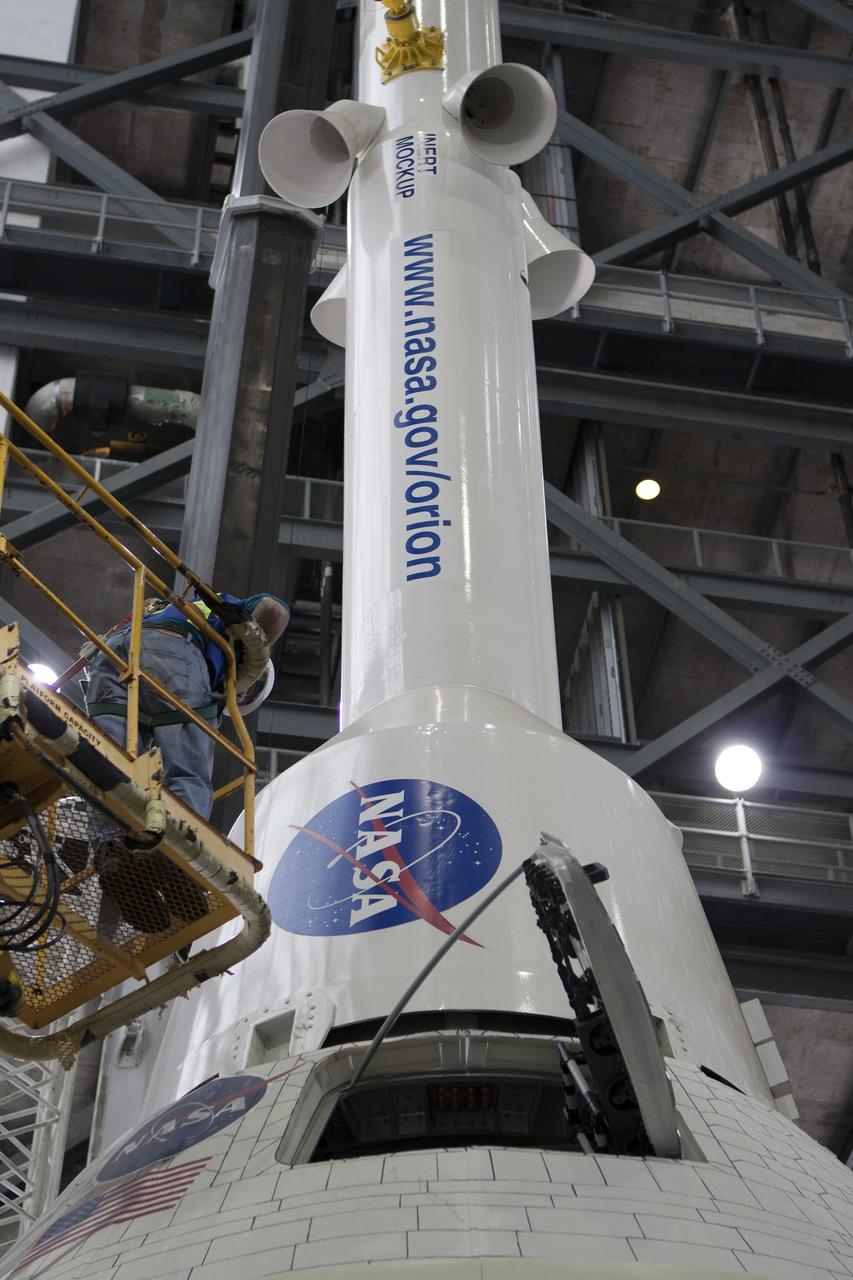
CAPE CANAVERAL, Fla. -- In the transfer aisle of the Vehicle Assembly Building at NASA’s Kennedy Space Center in Florida, a technician monitors de-stacking operations on a full-size mock-up of the Orion spacecraft and launch abort system. Crane operators and technicians practice stacking and de-stacking operations in order to keep processing procedures and skills current. Orion is the exploration spacecraft designed to carry crews to space beyond low Earth orbit. It will provide emergency abort capability, sustain the crew during the space travel and provide safe re-entry from deep space return velocities. Orion’s first unpiloted test flight is scheduled to launch in 2014 atop a Delta IV rocket. A second uncrewed flight test is scheduled for 2017 on NASA’s Space Launch System rocket. For more information, visit http://www.nasa.gov/orion. Photo credit: NASA/Jim Grossmann
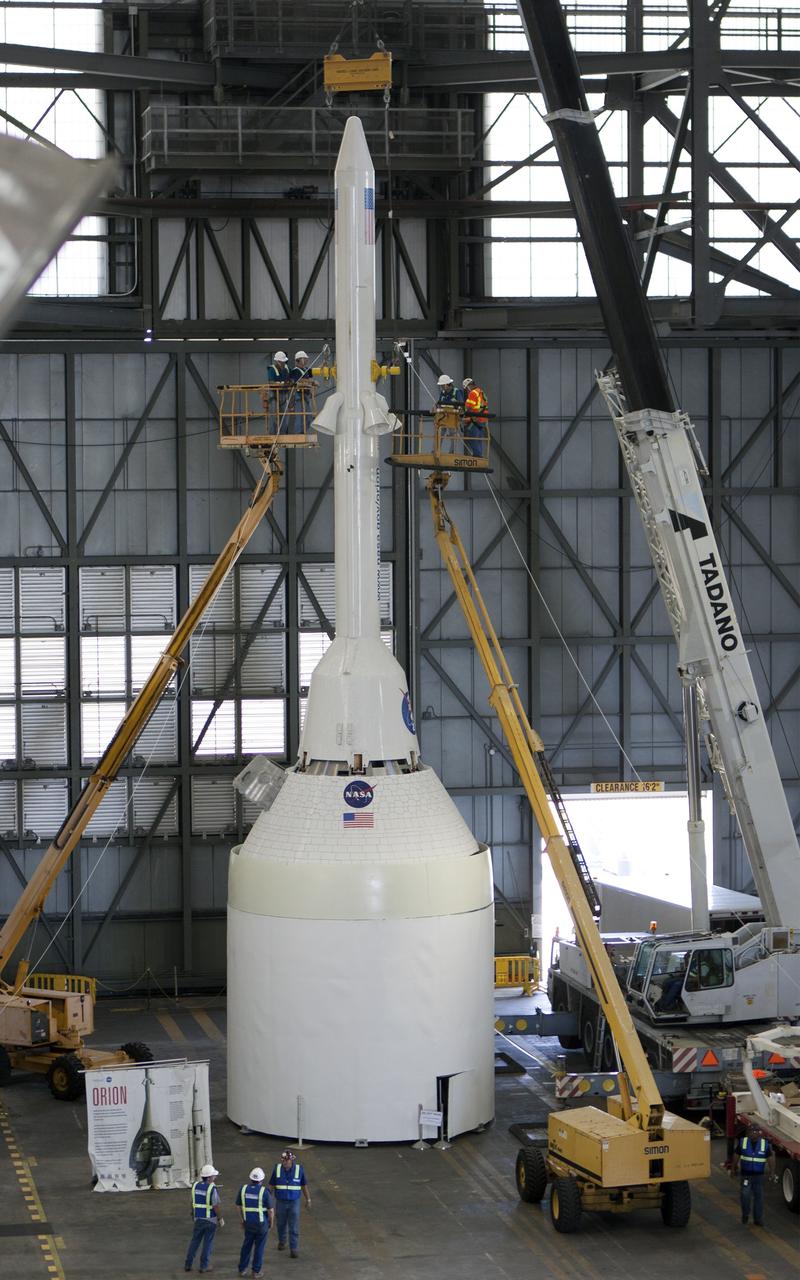
CAPE CANAVERAL, Fla. -- In the transfer aisle of the Vehicle Assembly Building at NASA’s Kennedy Space Center in Florida, crane operators and technicians practice de-stacking operations on a full-size mock-up of the Orion spacecraft and launch abort system in order to keep processing procedures and skills current. Orion is the exploration spacecraft designed to carry crews to space beyond low Earth orbit. It will provide emergency abort capability, sustain the crew during the space travel and provide safe re-entry from deep space return velocities. Orion’s first unpiloted test flight is scheduled to launch in 2014 atop a Delta IV rocket. A second uncrewed flight test is scheduled for 2017 on NASA’s Space Launch System rocket. For more information, visit http://www.nasa.gov/orion. Photo credit: NASA/Jim Grossmann
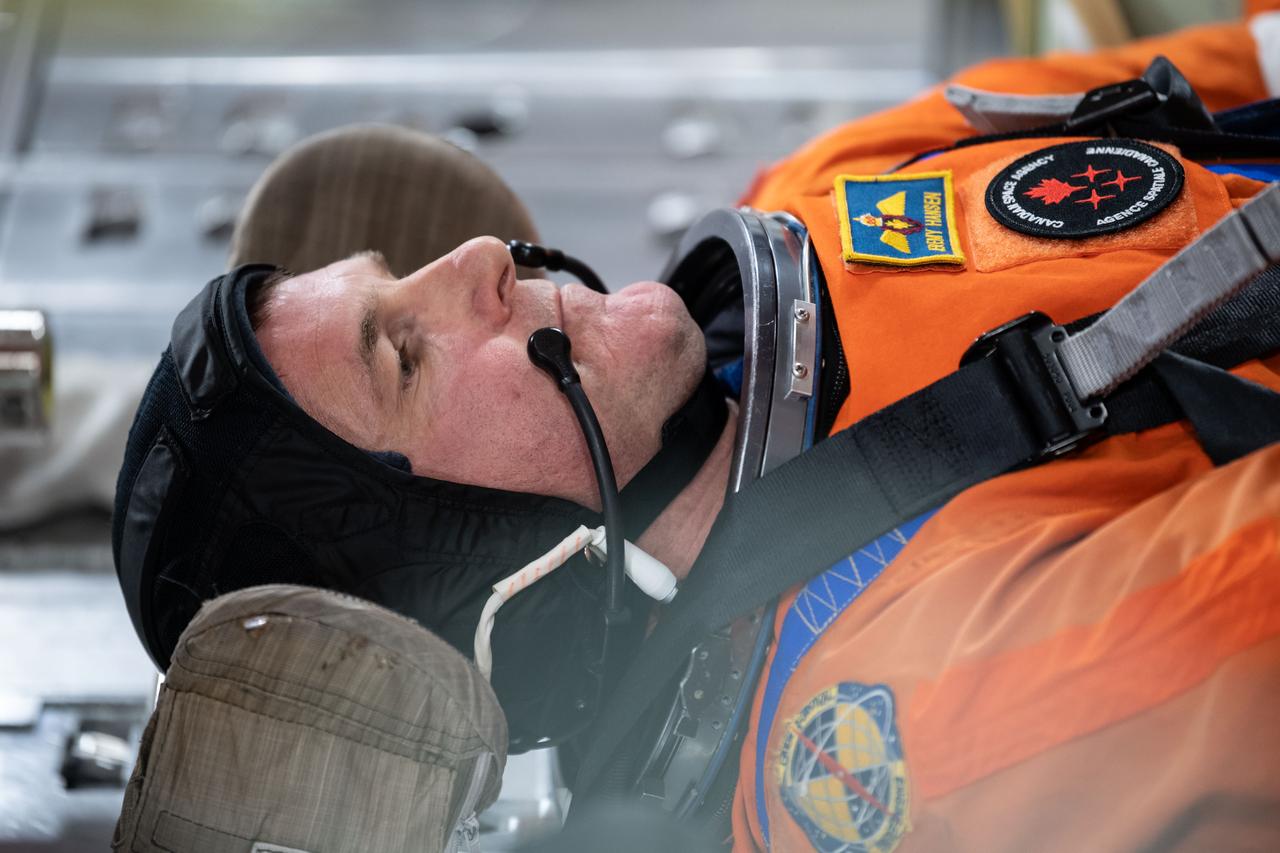
jsc2025e004073 (Jan. 30, 2025) --- Canadian Space Agency astronaut and Artemis II mission specialist Jeremy Hansen inside of the Orion spacecraft mockup during Post Insertion and Deorbit Preparation training at the Space Vehicle Mockup Facility in Houston, Texas. The crew practiced getting the Orion spacecraft configured once in orbit, how to make it habitable, and suited up in their entry pressure suits to prepare for their return from the Moon. Credit: NASA/Mark Sowa
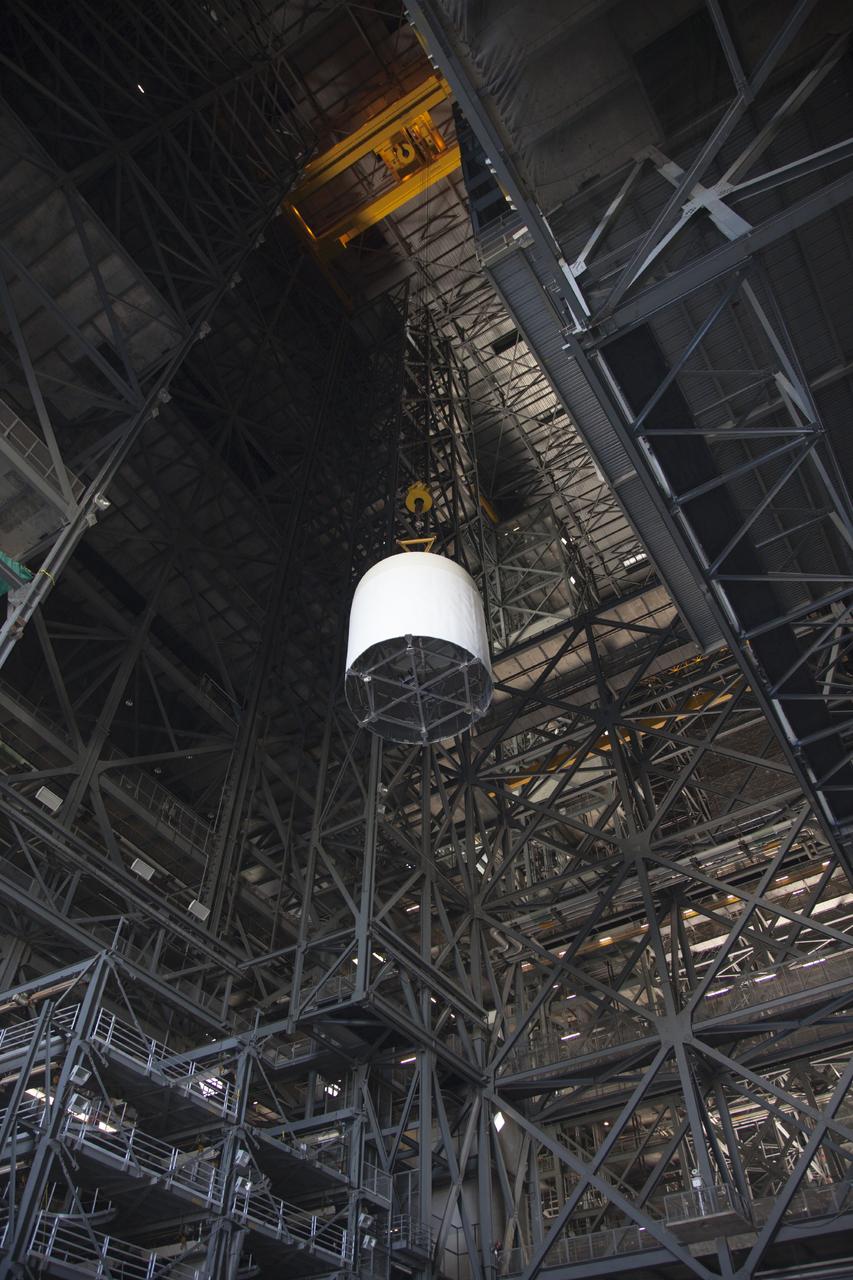
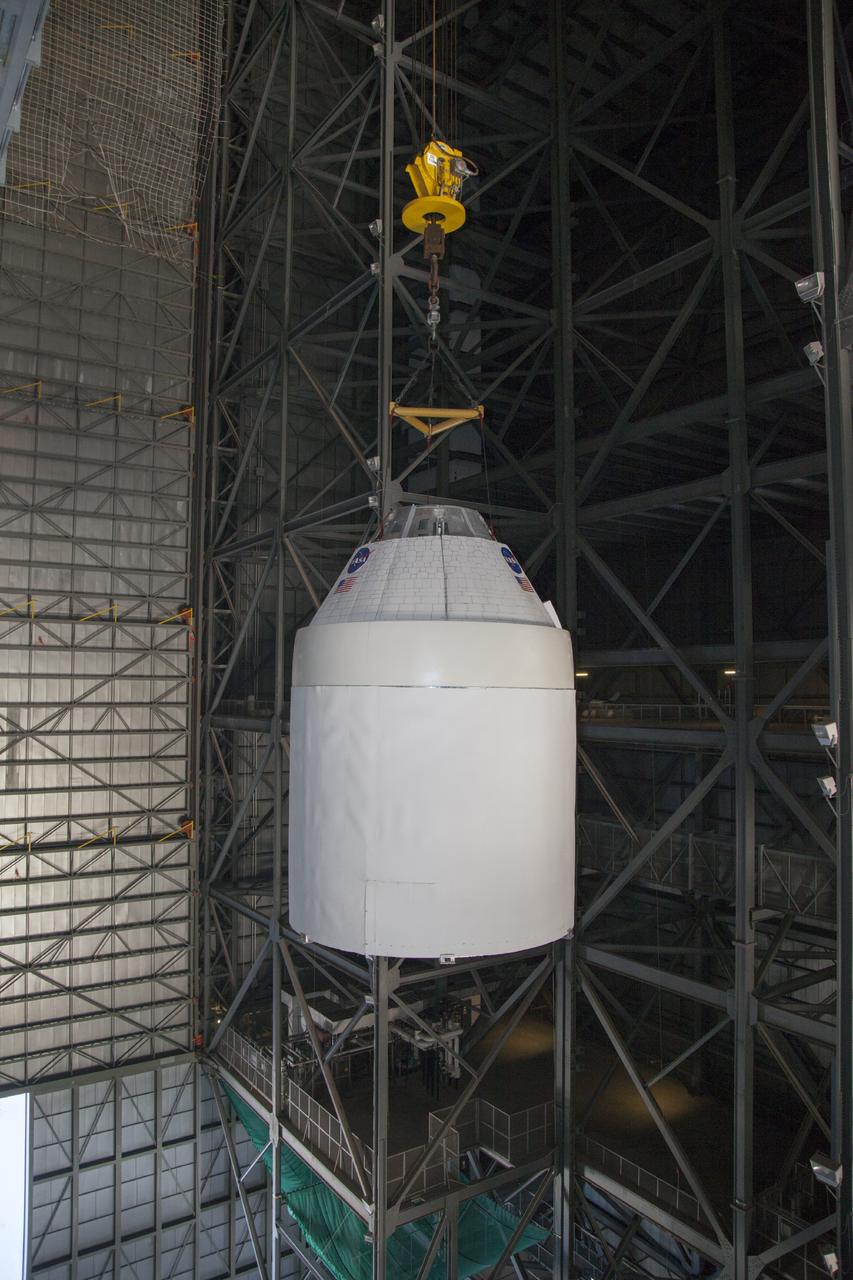
CAPE CANAVERAL, Fla. -- In the transfer aisle of the Vehicle Assembly Building at NASA’s Kennedy Space Center in Florida, a crane operator lifts a full-size mock-up of the Orion spacecraft high in the air for transfer to High Bay 4. Crane operators and technicians practice stacking and de-stacking operations in order to keep processing procedures and skills current for the Ground Systems Development and Operations Program. Orion is the exploration spacecraft designed to carry crews to space beyond low Earth orbit. It will provide emergency abort capability, sustain the crew during the space travel and provide safe re-entry from deep space return velocities. Orion’s first unpiloted test flight is scheduled to launch in 2014 atop a Delta IV rocket. A second uncrewed flight test is scheduled for 2017 on NASA’s Space Launch System rocket. For more information, visit http://www.nasa.gov/orion. Photo credit: NASA/Dan Casper

CAPE CANAVERAL, Fla. -- In the Vehicle Assembly Building at NASA’s Kennedy Space Center in Florida, a technician monitors the progress as a crane operator lowers a full-size mock-up of the Orion spacecraft in High Bay 4. Crane operators and technicians practice stacking and de-stacking operations in order to keep processing procedures and skills current for the Ground Systems Development and Operations Program. Orion is the exploration spacecraft designed to carry crews to space beyond low Earth orbit. It will provide emergency abort capability, sustain the crew during the space travel and provide safe re-entry from deep space return velocities. Orion’s first unpiloted test flight is scheduled to launch in 2014 atop a Delta IV rocket. A second uncrewed flight test is scheduled for 2017 on NASA’s Space Launch System rocket. For more information, visit http://www.nasa.gov/orion. Photo credit: NASA/Dan Casper
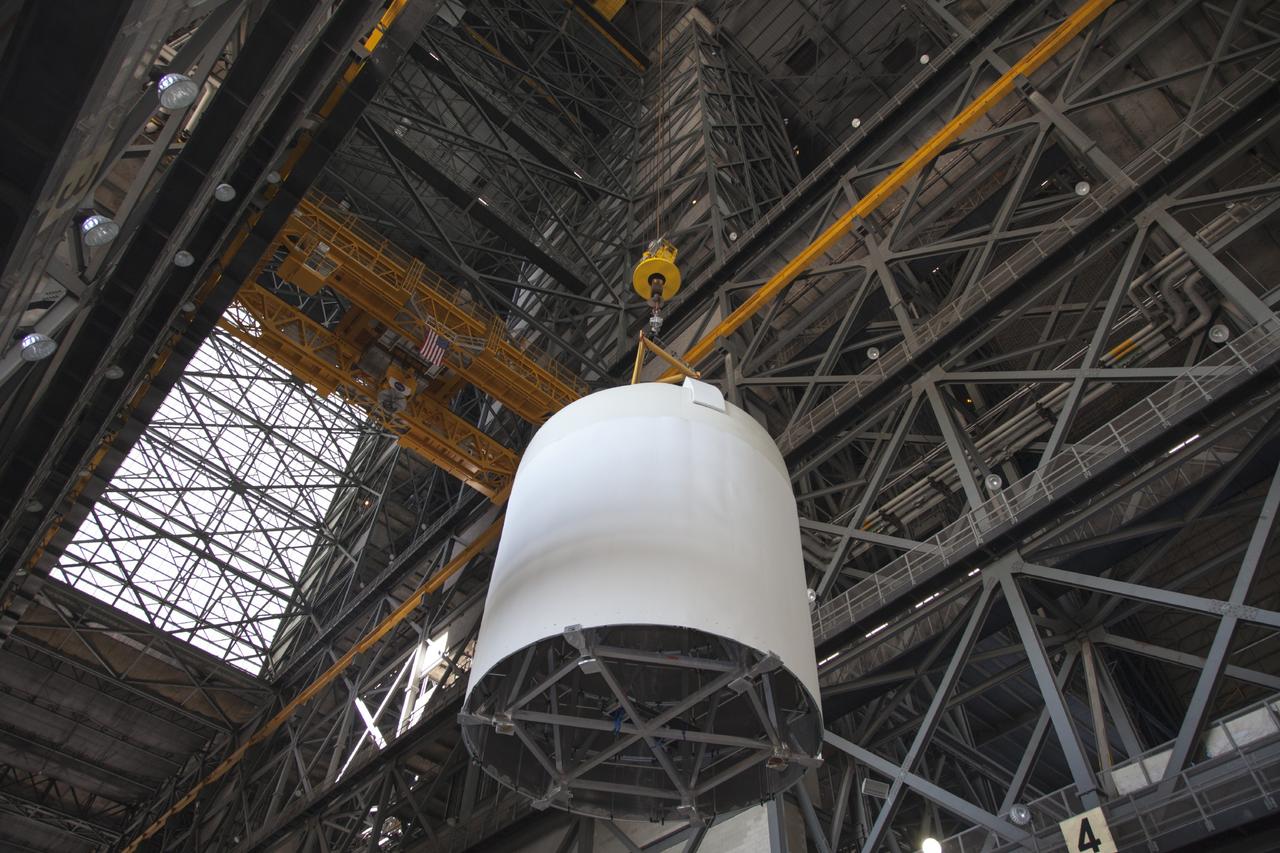
CAPE CANAVERAL, Fla. -- In the transfer aisle of the Vehicle Assembly Building at NASA’s Kennedy Space Center in Florida, a crane operator lifts a full-size mock-up of the Orion spacecraft high in the air for transfer to High Bay 4. Crane operators and technicians practice stacking and de-stacking operations in order to keep processing procedures and skills current for the Ground Systems Development and Operations Program. Orion is the exploration spacecraft designed to carry crews to space beyond low Earth orbit. It will provide emergency abort capability, sustain the crew during the space travel and provide safe re-entry from deep space return velocities. Orion’s first unpiloted test flight is scheduled to launch in 2014 atop a Delta IV rocket. A second uncrewed flight test is scheduled for 2017 on NASA’s Space Launch System rocket. For more information, visit http://www.nasa.gov/orion. Photo credit: NASA/Dan Casper

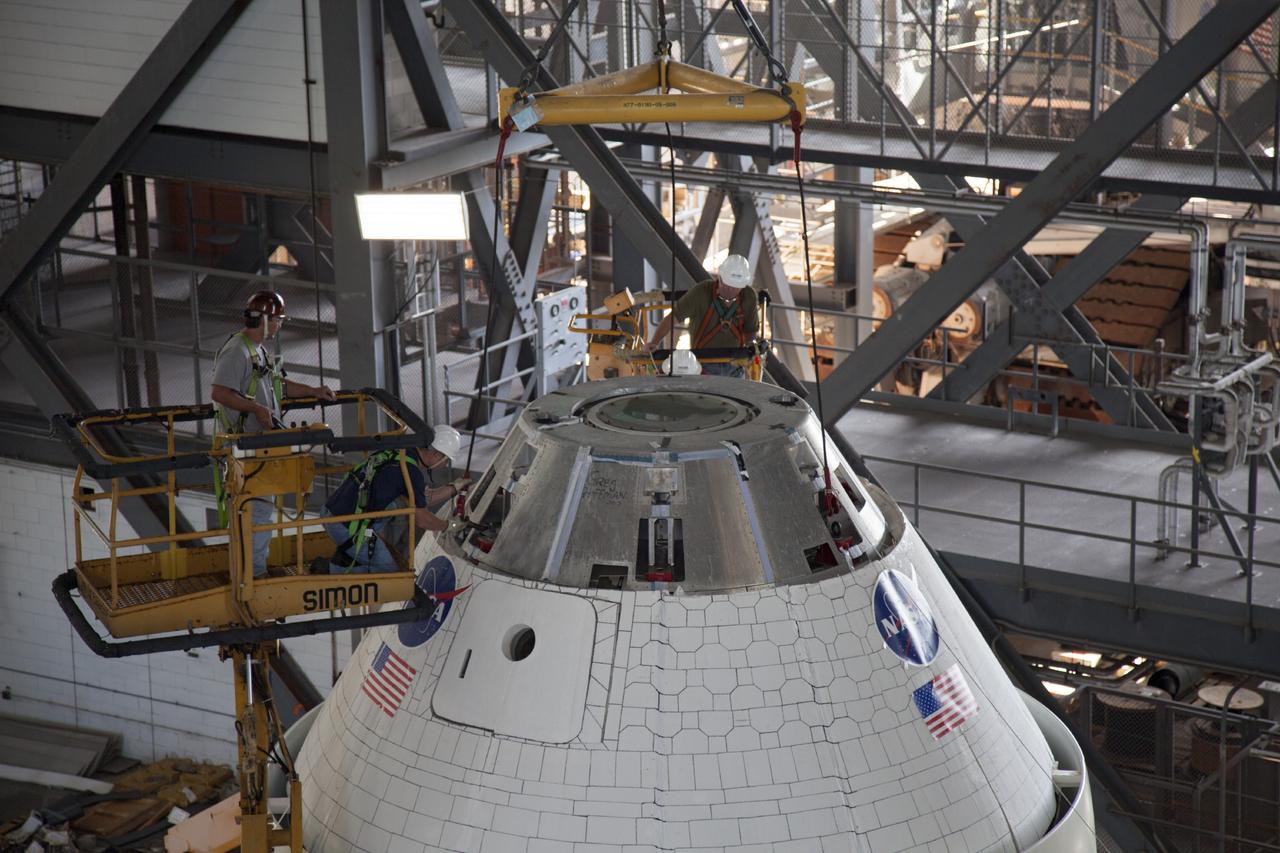
CAPE CANAVERAL, Fla. -- In the transfer aisle of the Vehicle Assembly Building at NASA’s Kennedy Space Center in Florida, technicians attach a crane to a full-size mock-up of the Orion spacecraft to prepare it to be lifted into High Bay 4. Crane operators and technicians practice stacking and de-stacking operations in order to keep processing procedures and skills current for the Ground Systems Development and Operations Program. Orion is the exploration spacecraft designed to carry crews to space beyond low Earth orbit. It will provide emergency abort capability, sustain the crew during the space travel and provide safe re-entry from deep space return velocities. Orion’s first unpiloted test flight is scheduled to launch in 2014 atop a Delta IV rocket. A second uncrewed flight test is scheduled for 2017 on NASA’s Space Launch System rocket. For more information, visit http://www.nasa.gov/orion. Photo credit: NASA/Dan Casper
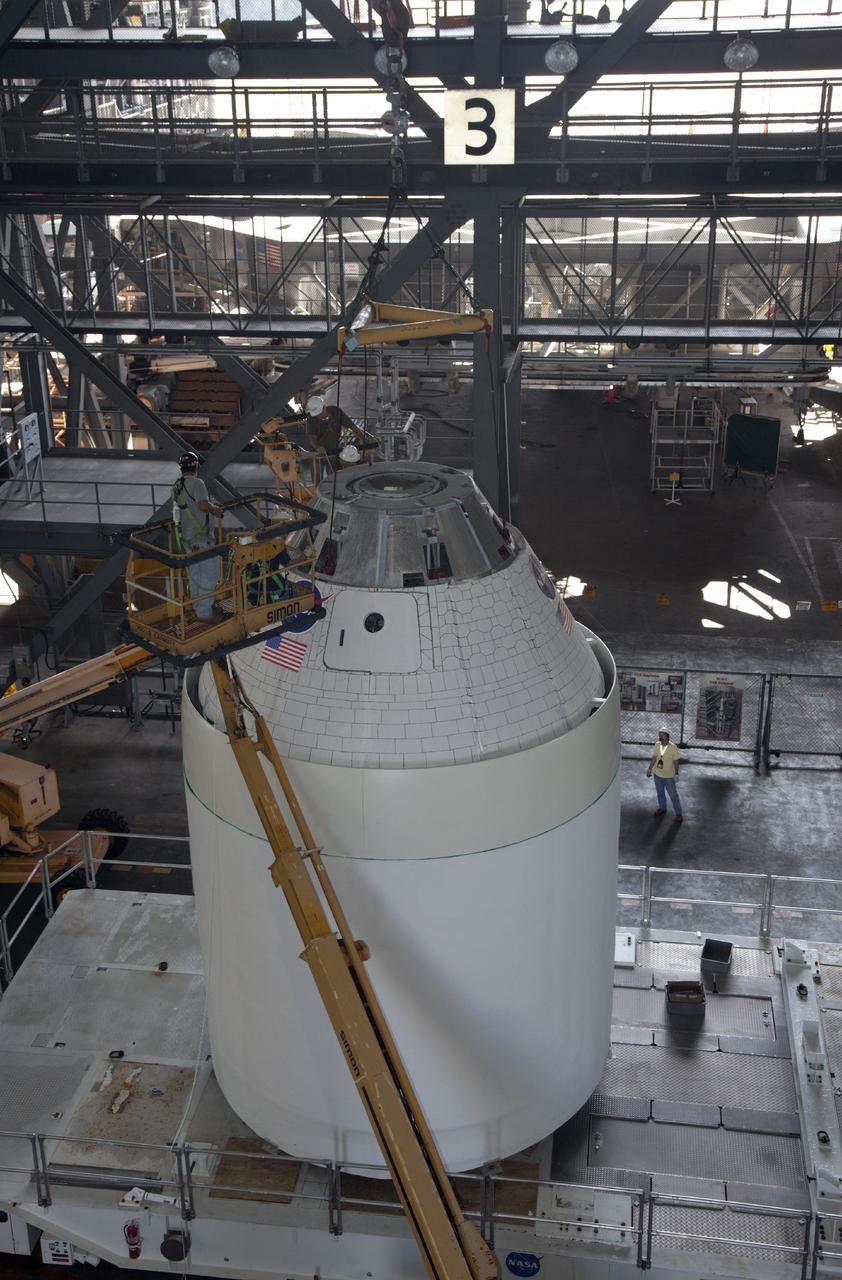
CAPE CANAVERAL, Fla. --In the transfer aisle of the Vehicle Assembly Building at NASA’s Kennedy Space Center in Florida, technicians attach a crane to a full-size mock-up of the Orion spacecraft to prepare it to be lifted into High Bay 4. Crane operators and technicians practice stacking and de-stacking operations in order to keep processing procedures and skills current for the Ground Systems Development and Operations Program. Orion is the exploration spacecraft designed to carry crews to space beyond low Earth orbit. It will provide emergency abort capability, sustain the crew during the space travel and provide safe re-entry from deep space return velocities. Orion’s first unpiloted test flight is scheduled to launch in 2014 atop a Delta IV rocket. A second uncrewed flight test is scheduled for 2017 on NASA’s Space Launch System rocket. For more information, visit http://www.nasa.gov/orion. Photo credit: NASA/Dan Casper

CAPE CANAVERAL, Fla. -- In the transfer aisle of the Vehicle Assembly Building at NASA’s Kennedy Space Center in Florida, a crane operator lifts a full-size mock-up of the Orion spacecraft high in the air for transfer to High Bay 4. Crane operators and technicians practice stacking and de-stacking operations in order to keep processing procedures and skills current for the Ground Systems Development and Operations Program. Orion is the exploration spacecraft designed to carry crews to space beyond low Earth orbit. It will provide emergency abort capability, sustain the crew during the space travel and provide safe re-entry from deep space return velocities. Orion’s first unpiloted test flight is scheduled to launch in 2014 atop a Delta IV rocket. A second uncrewed flight test is scheduled for 2017 on NASA’s Space Launch System rocket. For more information, visit http://www.nasa.gov/orion. Photo credit: NASA/Dan Casper
CAPE CANAVERAL, Fla. -- In the transfer aisle of the Vehicle Assembly Building at NASA’s Kennedy Space Center in Florida, crane operators and technicians practice stacking and de-stacking operations on a full-size mock-up of the Orion spacecraft and launch abort system in order to keep processing procedures and skills current for the Ground Systems Development and Operations Program. Orion is the exploration spacecraft designed to carry crews to space beyond low Earth orbit. It will provide emergency abort capability, sustain the crew during the space travel and provide safe re-entry from deep space return velocities. Orion’s first unpiloted test flight is scheduled to launch in 2014 atop a Delta IV rocket. A second uncrewed flight test is scheduled for 2017 on NASA’s Space Launch System rocket. For more information, visit http://www.nasa.gov/orion. Photo credit: NASA/Dan Casper
CAPE CANAVERAL, Fla. -- In the transfer aisle of the Vehicle Assembly Building at NASA’s Kennedy Space Center in Florida, a crane operator lifts a full-size mock-up of the Orion spacecraft high in the air for transfer to High Bay 4. Crane operators and technicians practice stacking and de-stacking operations in order to keep processing procedures and skills current for the Ground Systems Development and Operations Program. Orion is the exploration spacecraft designed to carry crews to space beyond low Earth orbit. It will provide emergency abort capability, sustain the crew during the space travel and provide safe re-entry from deep space return velocities. Orion’s first unpiloted test flight is scheduled to launch in 2014 atop a Delta IV rocket. A second uncrewed flight test is scheduled for 2017 on NASA’s Space Launch System rocket. For more information, visit http://www.nasa.gov/orion. Photo credit: NASA/Dan Casper

CAPE CANAVERAL, Fla. -- In the Vehicle Assembly Building at NASA’s Kennedy Space Center in Florida, technicians monitor the progress as a crane operator lowers a full-size mock-up of the Orion spacecraft in High Bay 4. Crane operators and technicians practice stacking and de-stacking operations in order to keep processing procedures and skills current. Orion is the exploration spacecraft designed to carry crews to space beyond low Earth orbit. It will provide emergency abort capability, sustain the crew during the space travel and provide safe re-entry from deep space return velocities. Orion’s first unpiloted test flight is scheduled to launch in 2014 atop a Delta IV rocket. A second uncrewed flight test is scheduled for 2017 on NASA’s Space Launch System rocket. For more information, visit http://www.nasa.gov/orion. Photo credit: NASA/Dan Casper
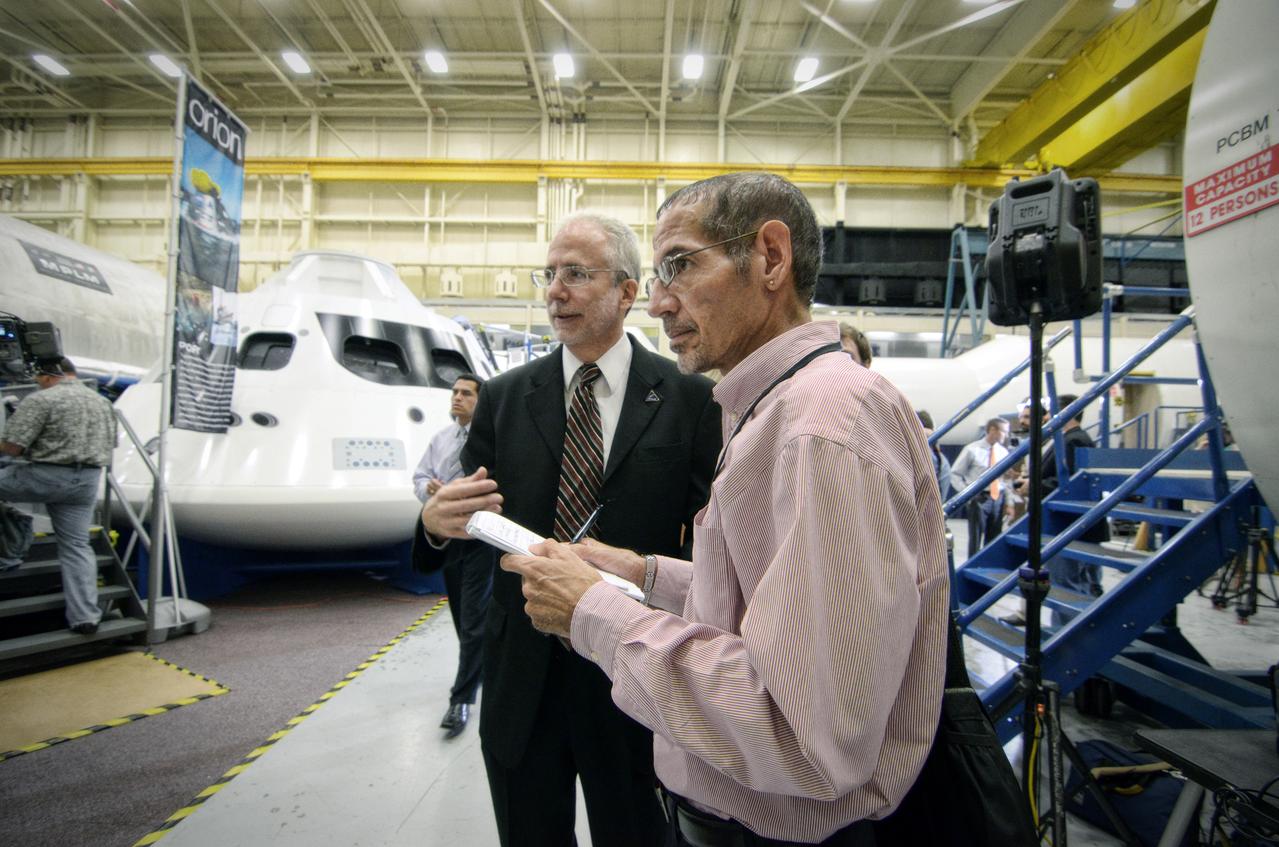
Orion Program Manager Mark Geyer tours the Orion mockups in Bldg. 9 at Johnson Space Center in Houston followed by a short Q&A in front of the mockup on Sept. 26, 2011. Part of Batch image transfer from Flickr.
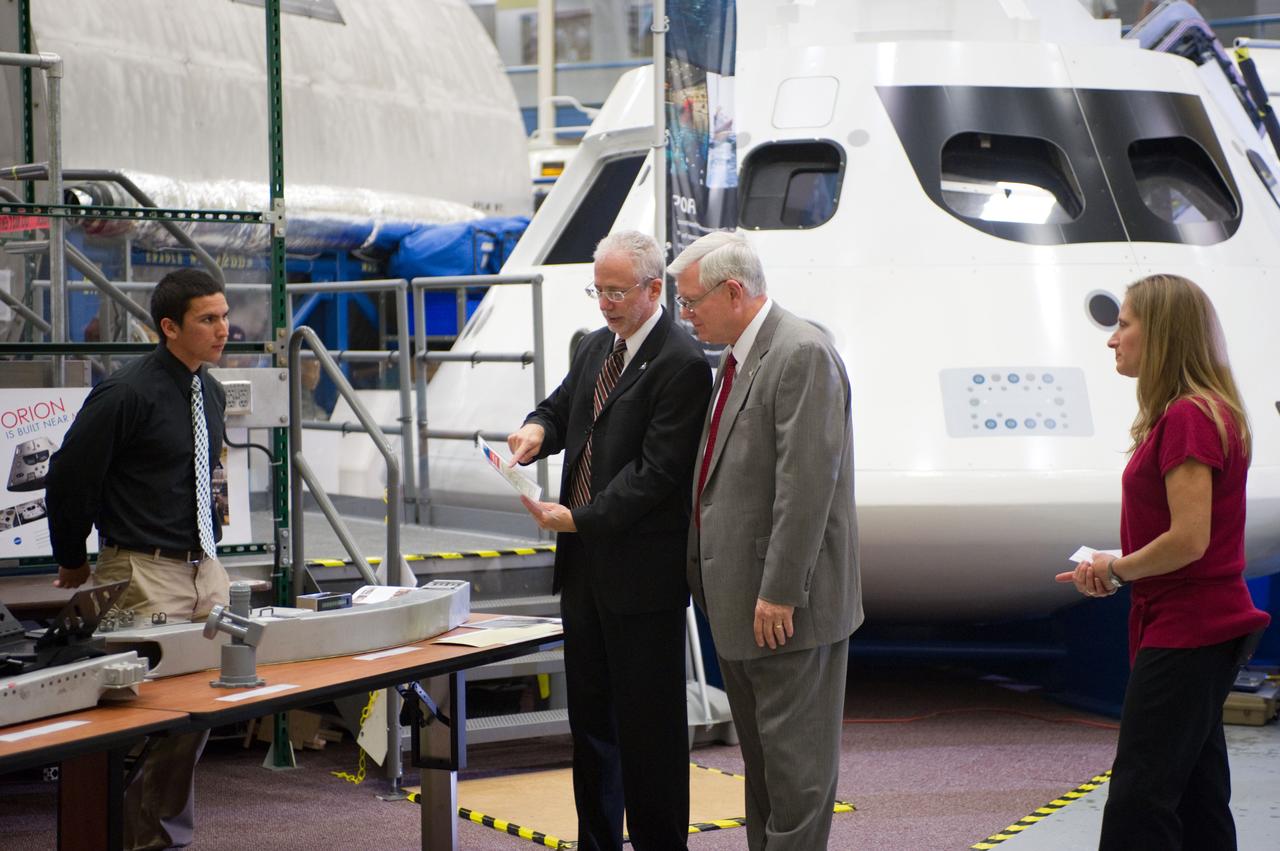
JSC Director Mike Coats and Orion Program Manager Mark Geyer tour the Orion mockups in Bldg. 9 at Johnson Space Center in Houston followed by a short Q&A in front of the mockup on Sept. 26, 2011. Part of Batch image transfer from Flickr.
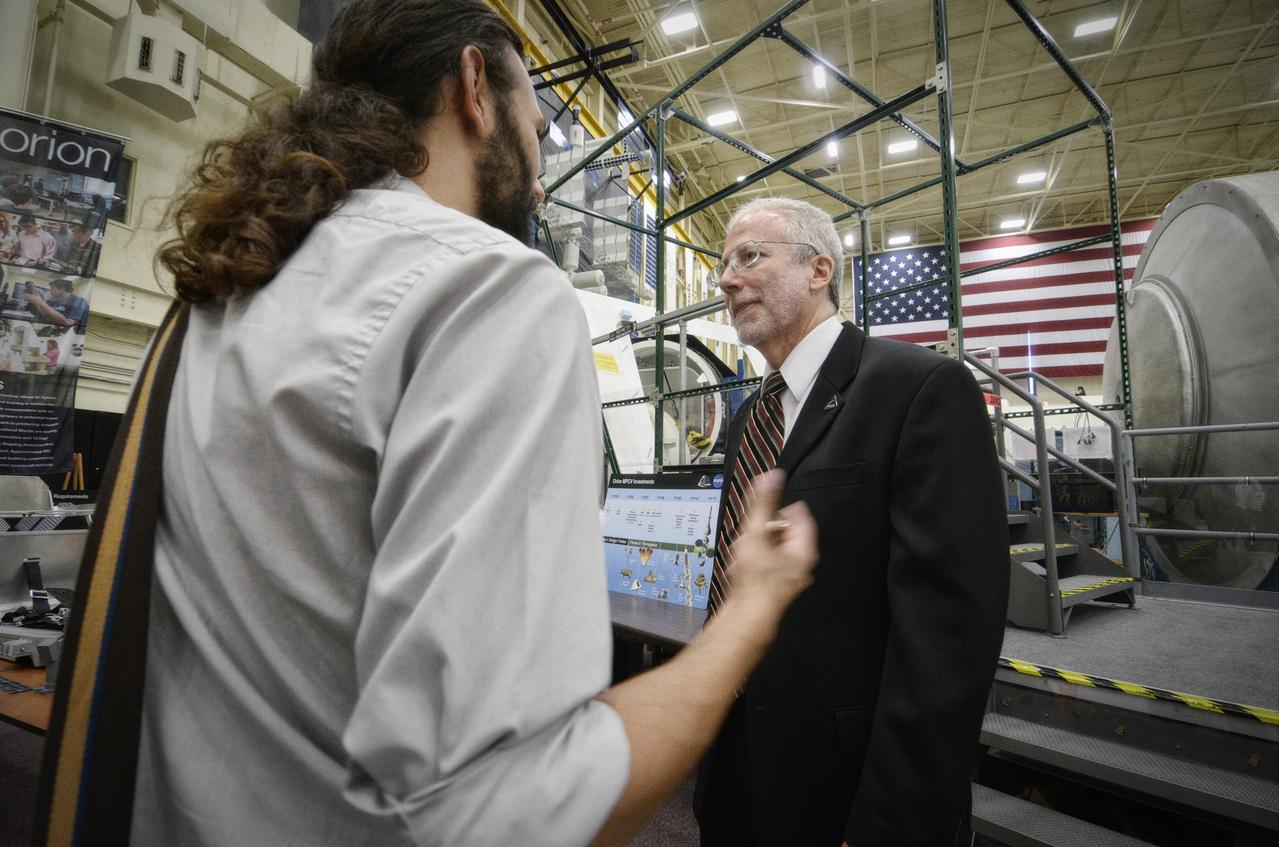
Orion Program Manager Mark Geyer tours the Orion mockups in Bldg. 9 at Johnson Space Center in Houston followed by a short Q&A in front of the mockup on Sept. 26, 2011. . Part of Batch image transfer from Flickr.
NASA Administrator Charlie Bolden, accompanied by JSC Director Mike Coats and Orion Program Manager Mark Geyer, tours the Orion mockups in Bldg. 9 at Johnson Space Center in Houston followed by a short Q&A in front of the mockup on Sept. 26, 2011. Part of Batch image transfer from Flickr.
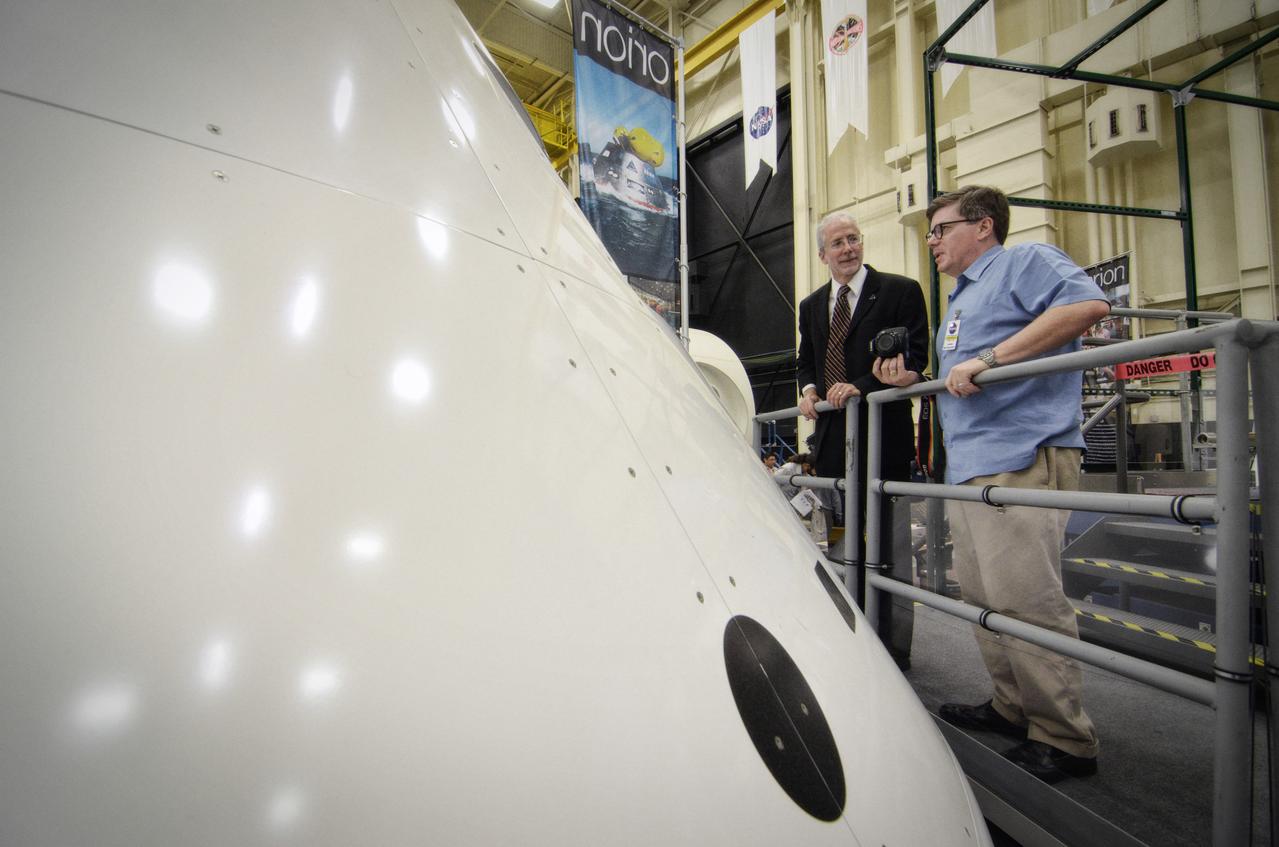
Orion Program Manager Mark Geyer tours the Orion mockups in Bldg. 9 at Johnson Space Center in Houston followed by a short Q&A in front of the mockup on Sept. 26, 2011. Part of Batch image transfer from Flickr.
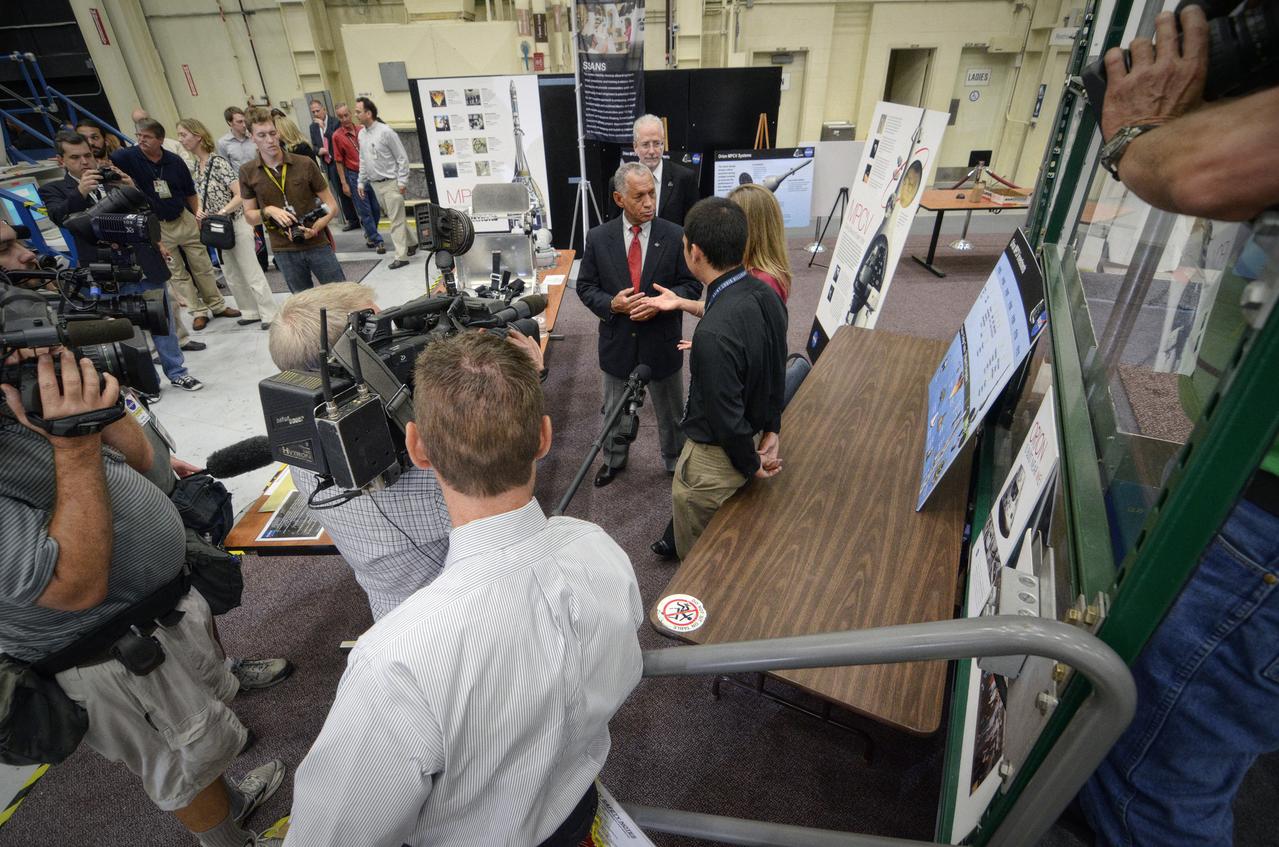
NASA Administrator Charlie Bolden and Orion Program Manager Mark Geyer tour the Orion mockups in Bldg. 9 at Johnson Space Center in Houston followed by a short Q&A in front of the mockup on Sept. 26, 2011. Part of Batch image transfer from Flickr.
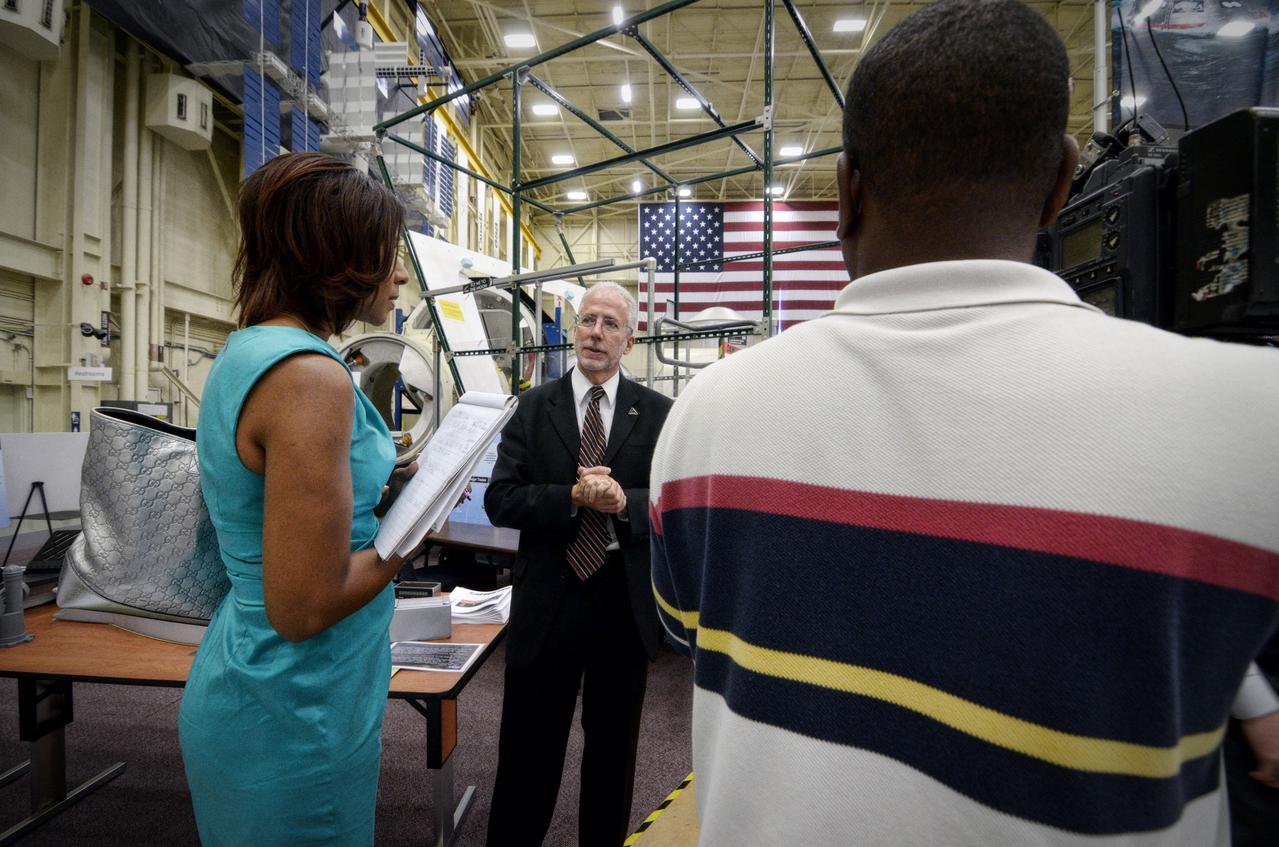
Orion Program Manager Mark Geyer tours the Orion mockups in Bldg. 9 at Johnson Space Center in Houston followed by a short Q&A in front of the mockup on Sept. 26, 2011. Part of Batch image transfer from Flickr.
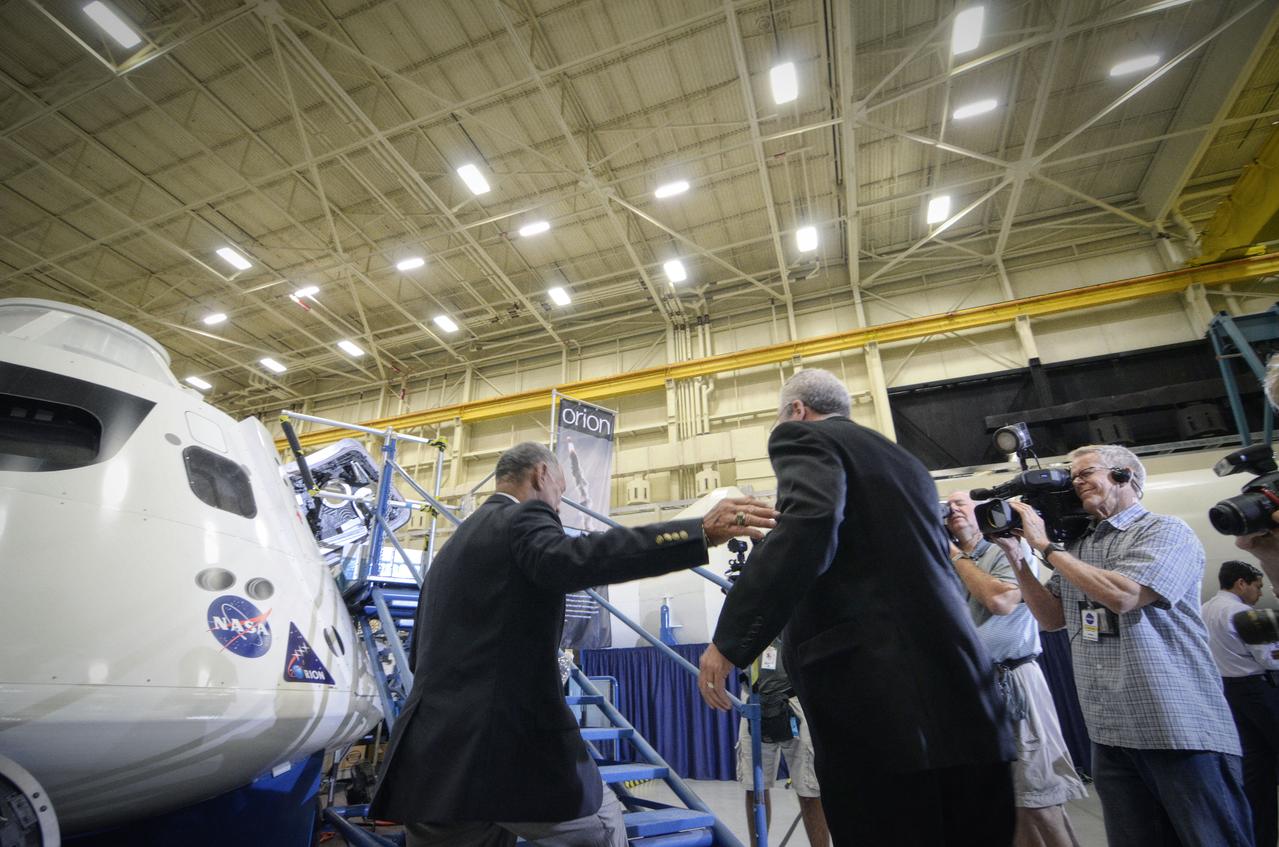
NASA Administrator Charlie Bolden Orion Program Manager Mark Geyer tour the Orion mockups in Bldg. 9 at Johnson Space Center in Houston followed by a short Q&A in front of the mockup on Sept. 26, 2011. Part of Batch image transfer from Flickr.
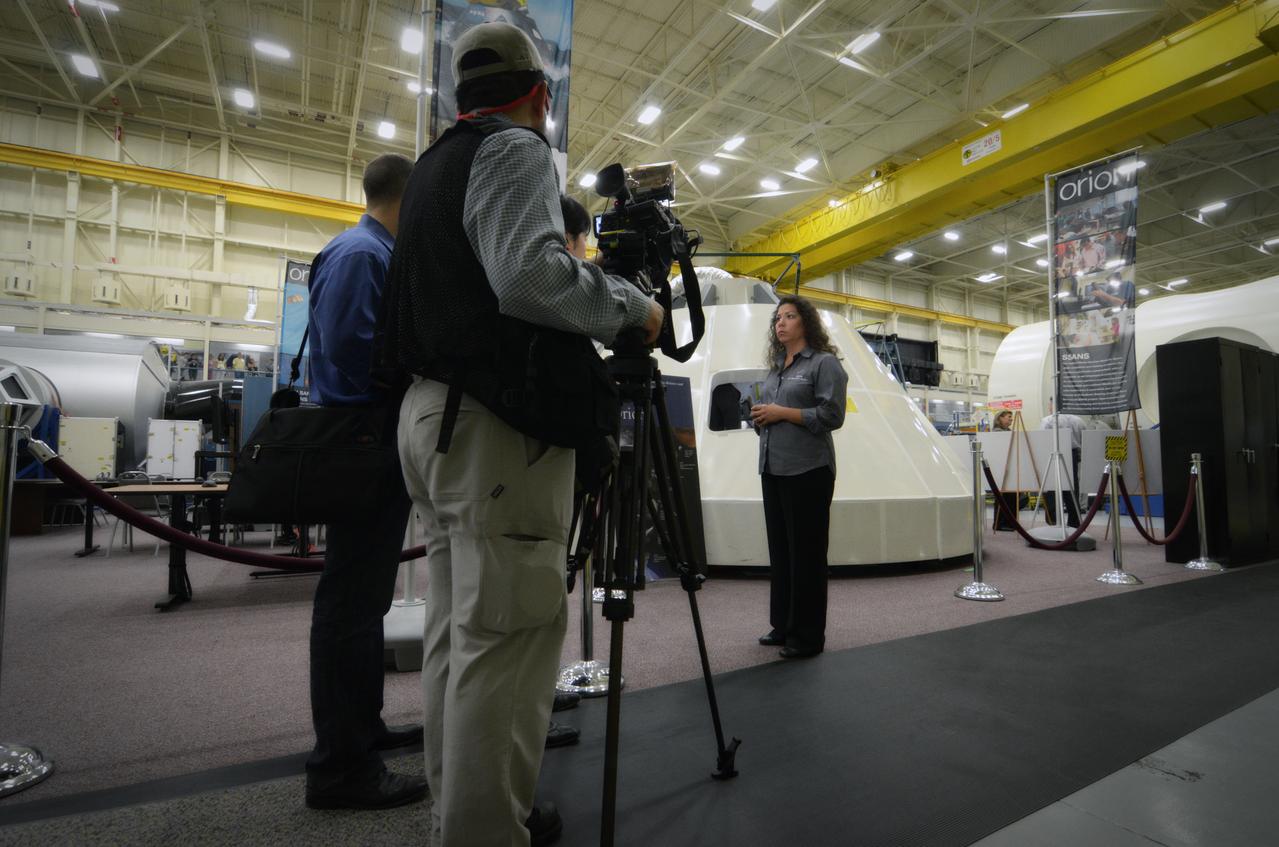
Members of the media attend a Media Day event and visit the Orion mockup in the Space Vehicle Mockup Facility in Building 9 of the Johnson Space Center in Houston on July 1, 2011. Part of Batch image transfer from Flickr.
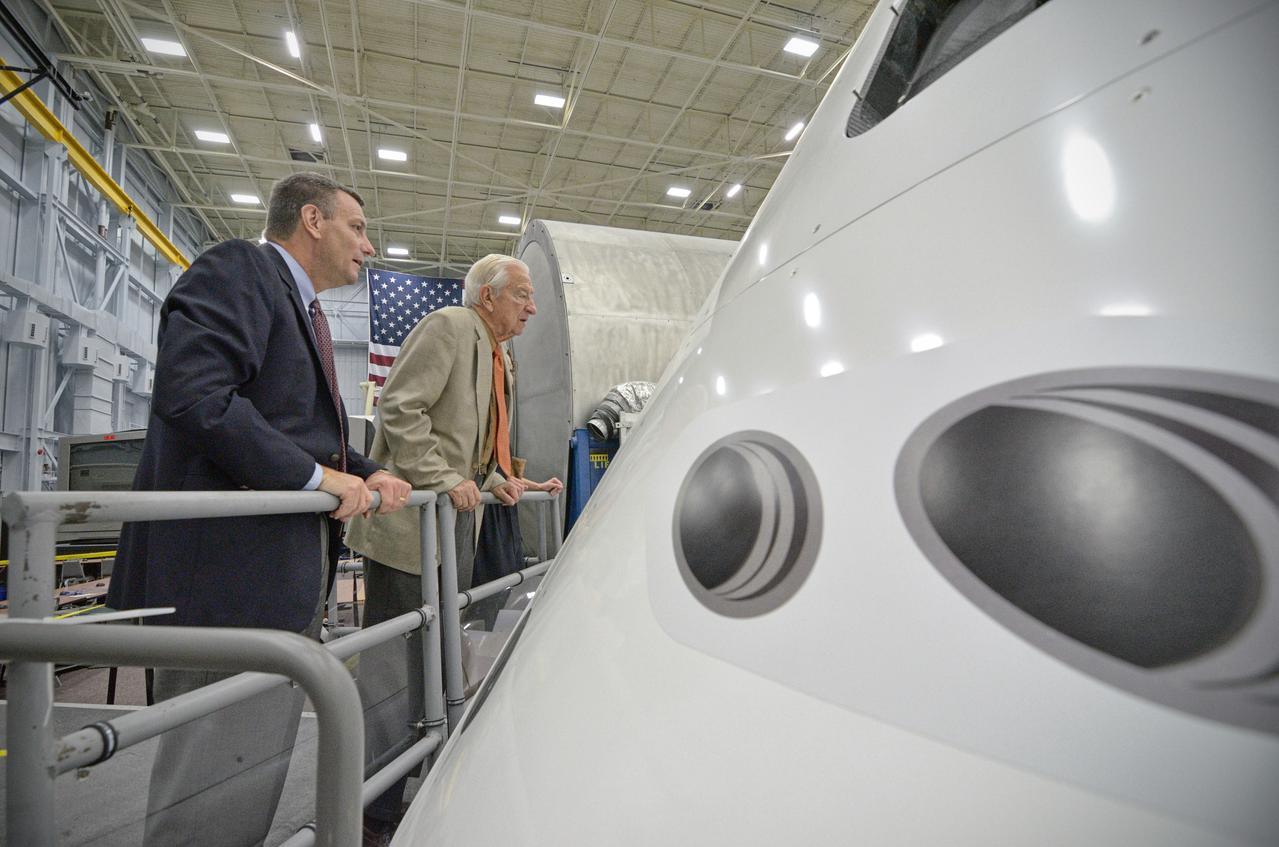
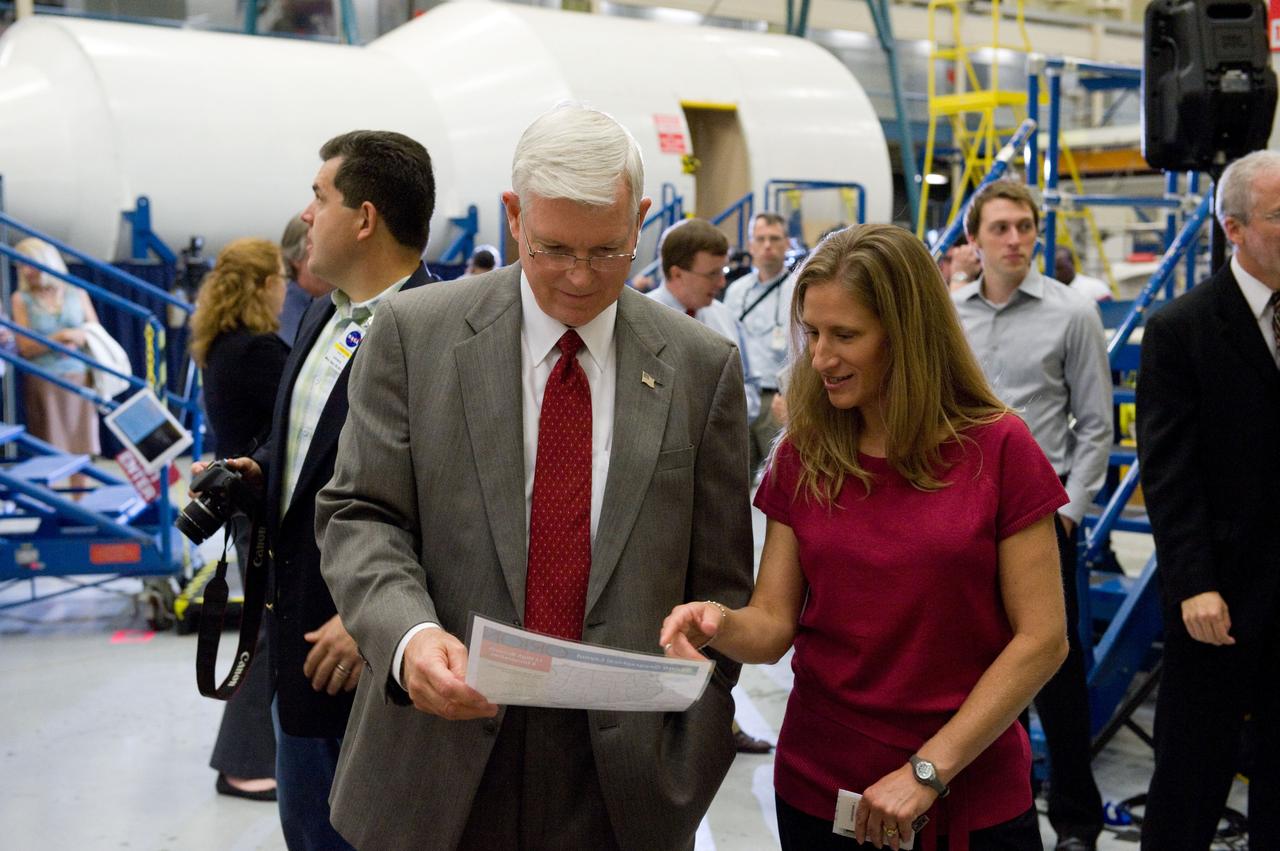
State congressional delegations visit the Orion mockup in the Space Vehicle Mockup Facility in Building 9 of Johnson Space Center in Houston on June 22, 2012. Part of Batch image transfer from Flickr.
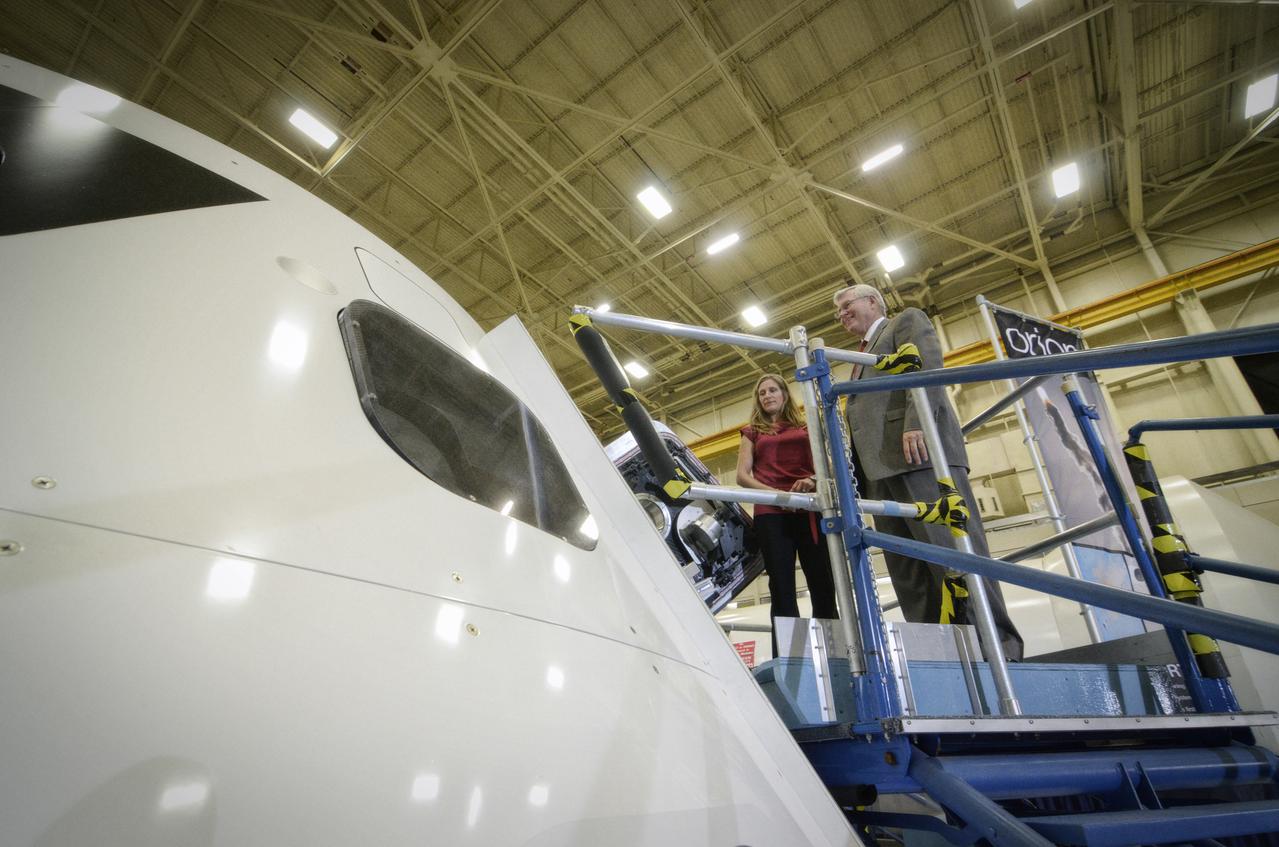
JSC Director Mike Coats tours the Orion mockups in Bldg. 9 at Johnson Space Center in Houston followed by a short Q&A in front of the mockup on Sept. 26, 2011. Part of Batch image transfer from Flickr.
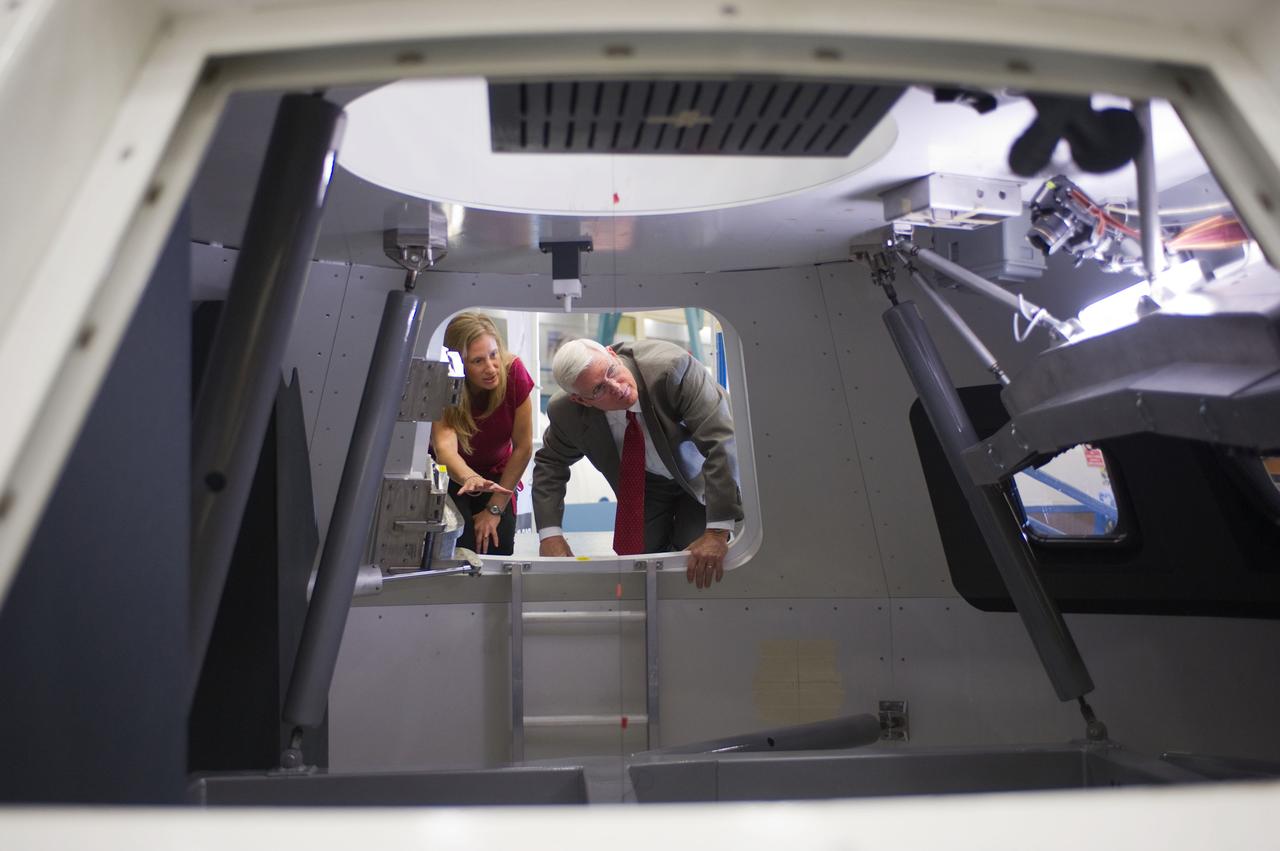
JSC Director Mike Coats tours the Orion mockups in Bldg. 9 at Johnson Space Center in Houston followed by a short Q&A in front of the mockup on Sept. 26, 2011. Part of Batch image transfer from Flickr.
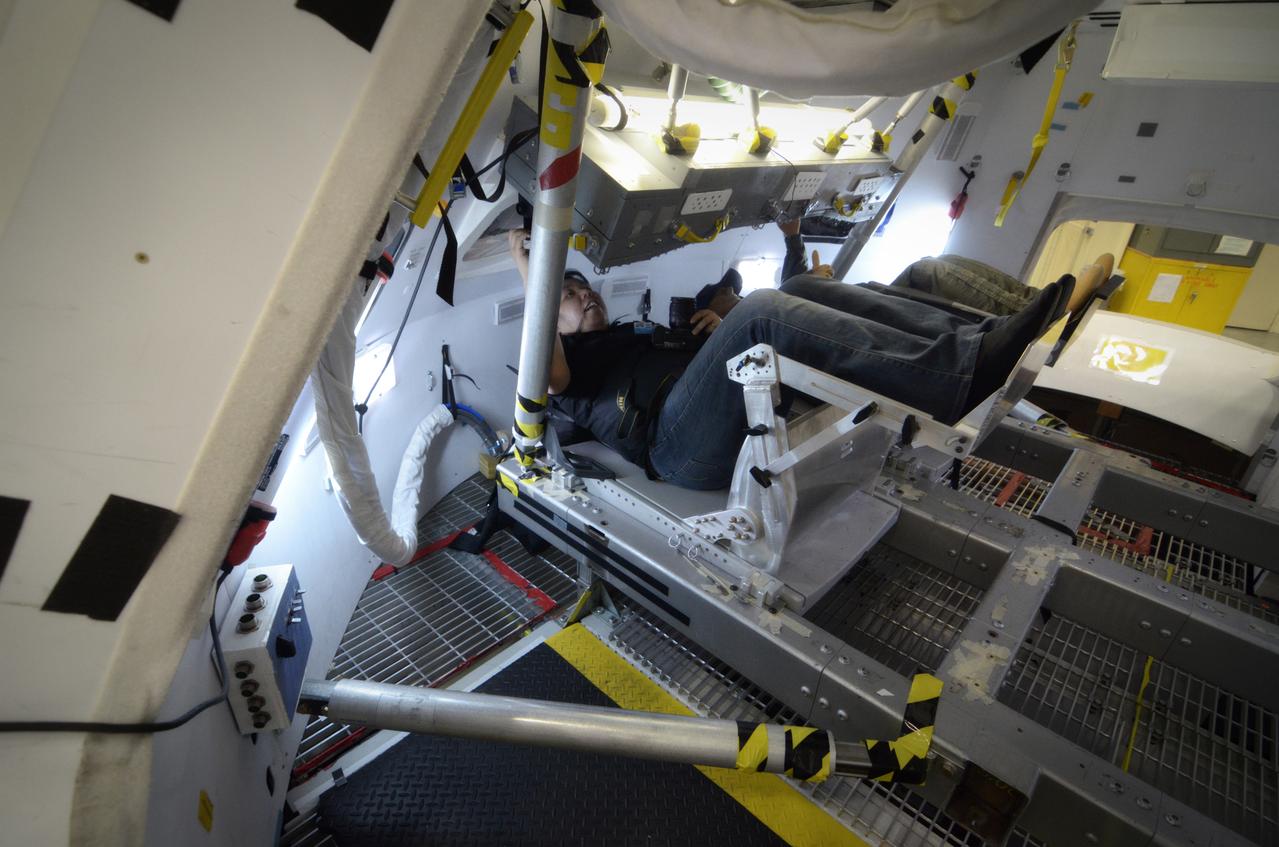
Members of the media attend a Media Day event and visit the Orion mockup in the Space Vehicle Mockup Facility in Building 9 of the Johnson Space Center in Houston on July 1, 2011. Part of Batch image transfer from Flickr.
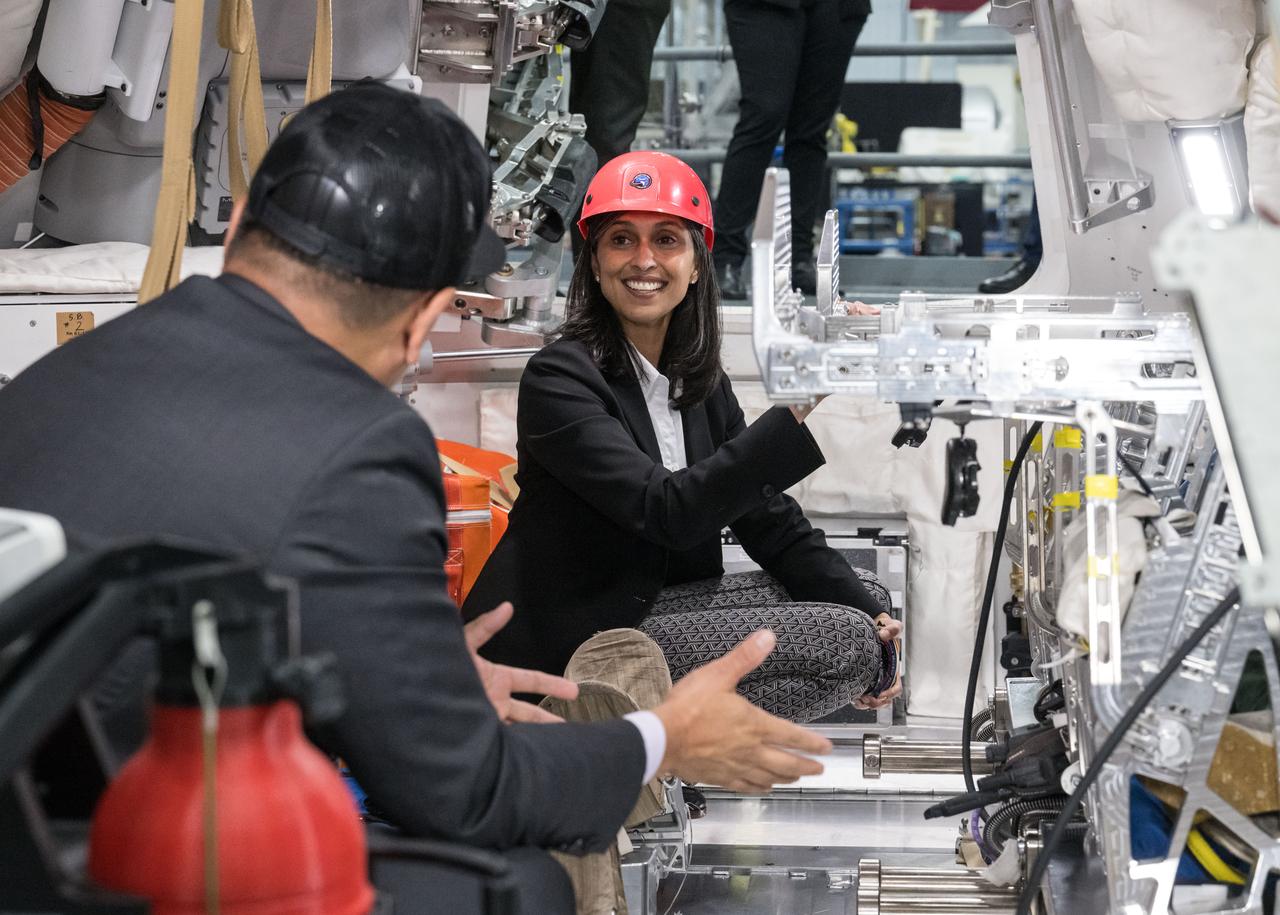
Second Lady Usha Vance tours the Johnson Space Center Mockup Facility and gets an inside look at the Orion capsule mockup. Photo Credit: NASA/James Blair
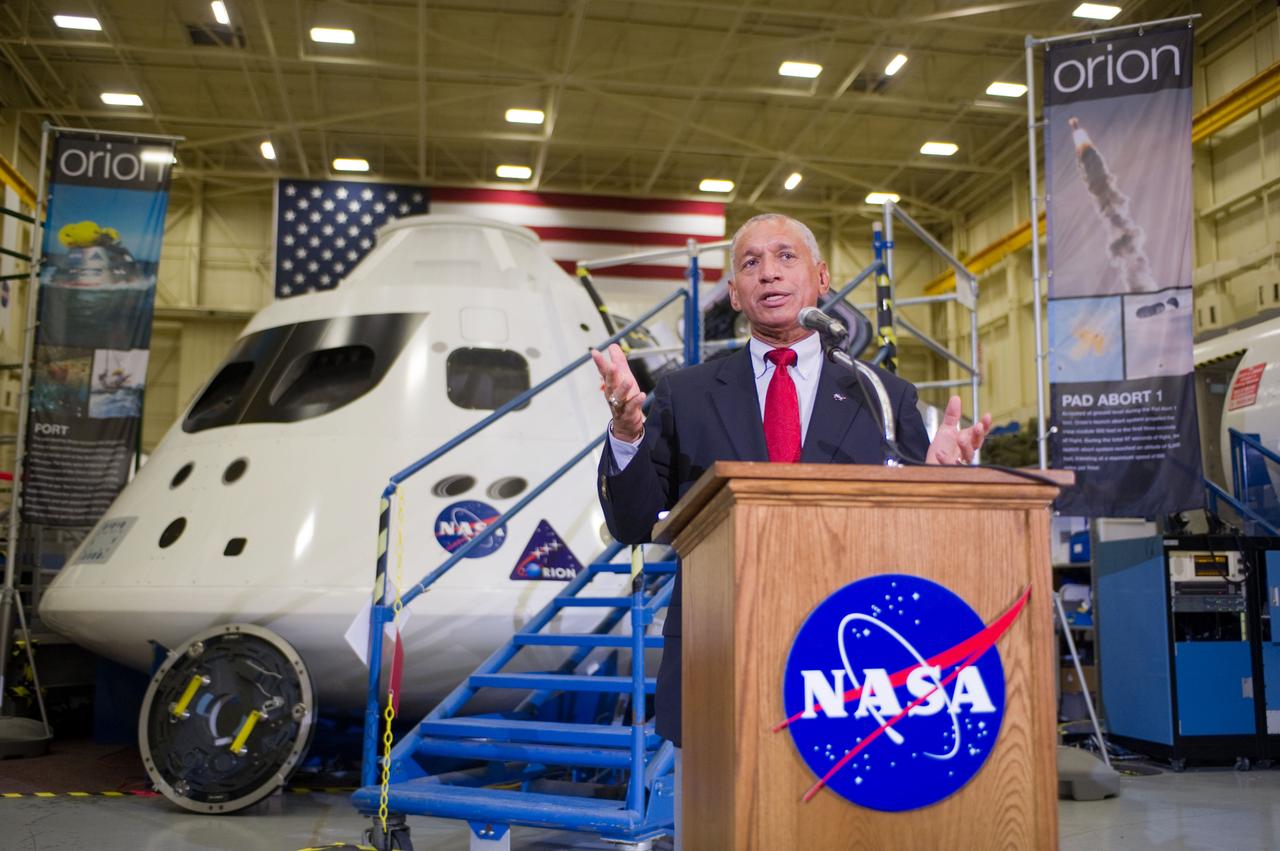
NASA Administrator Charlie Bolden tours the Orion mockups in Bldg. 9 at Johnson Space Center in Houston followed by a short Q&A in front of the mockup on Sept. 26, 2011. Part of Batch image transfer from Flickr.
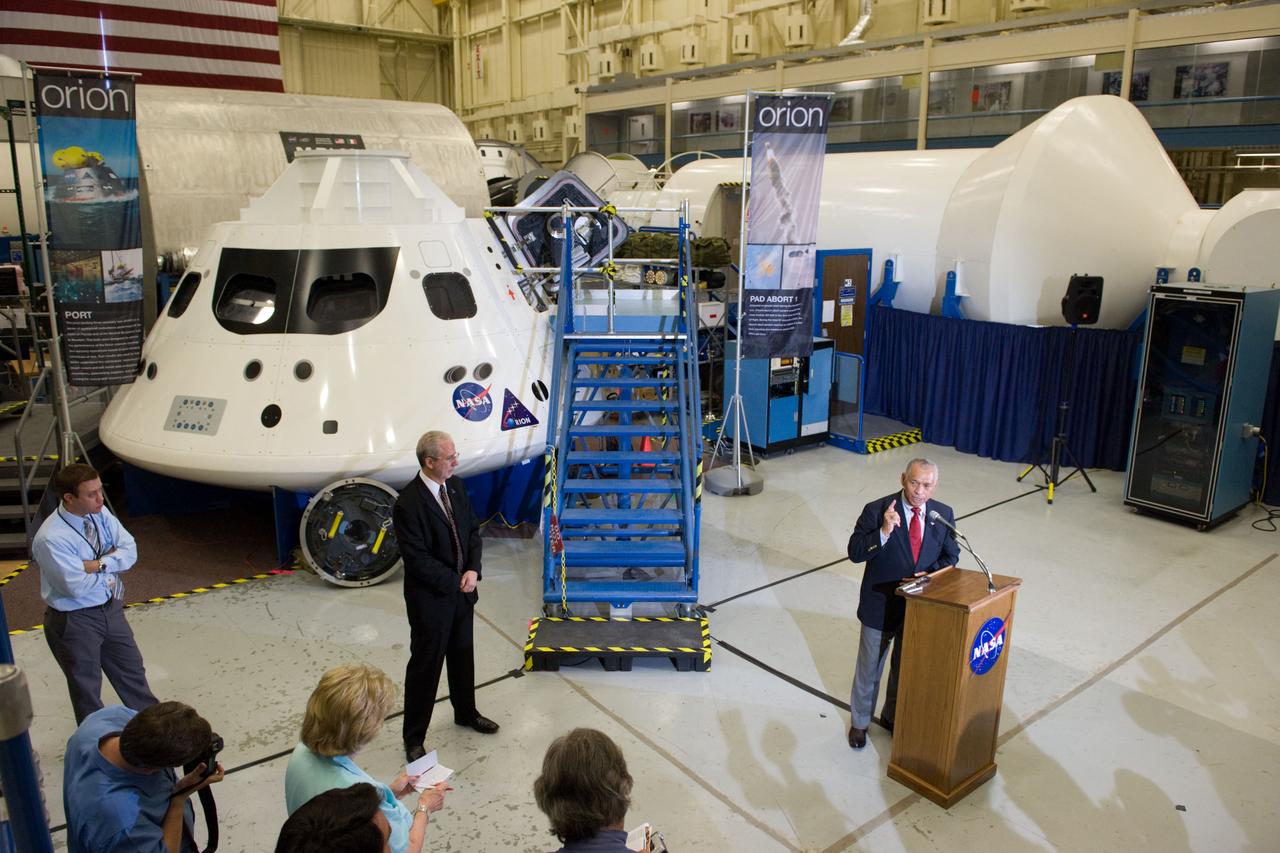
NASA Administrator Charlie Bolden tours the Orion mockups in Bldg. 9 at Johnson Space Center in Houston followed by a short Q&A in front of the mockup on Sept. 26, 2011. Part of Batch image transfer from Flickr.
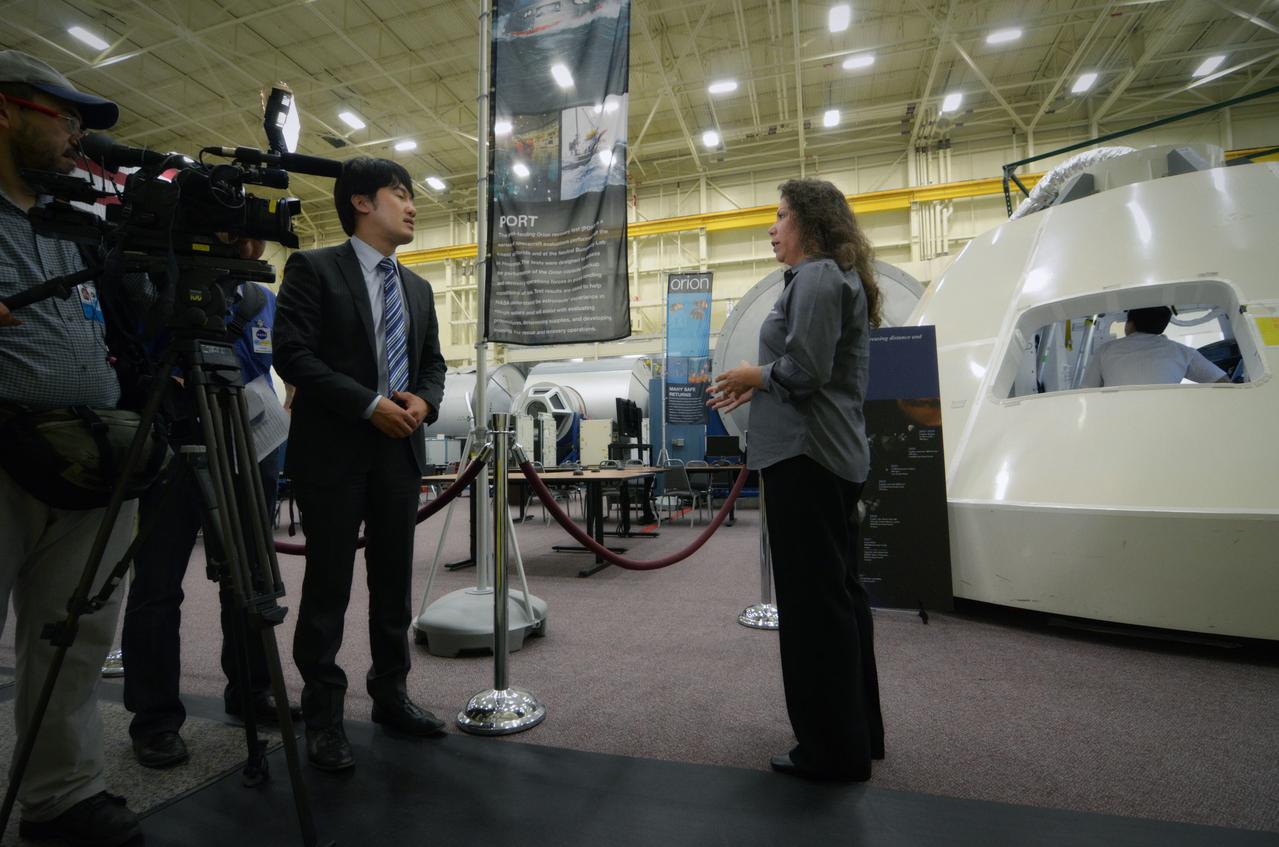
Members of the media attend a Media Day event and visit the Orion mockup in the Space Vehicle Mockup Facility in Building 9 of the Johnson Space Center in Houston on July 1, 2011. Part of Batch image transfer from Flickr.
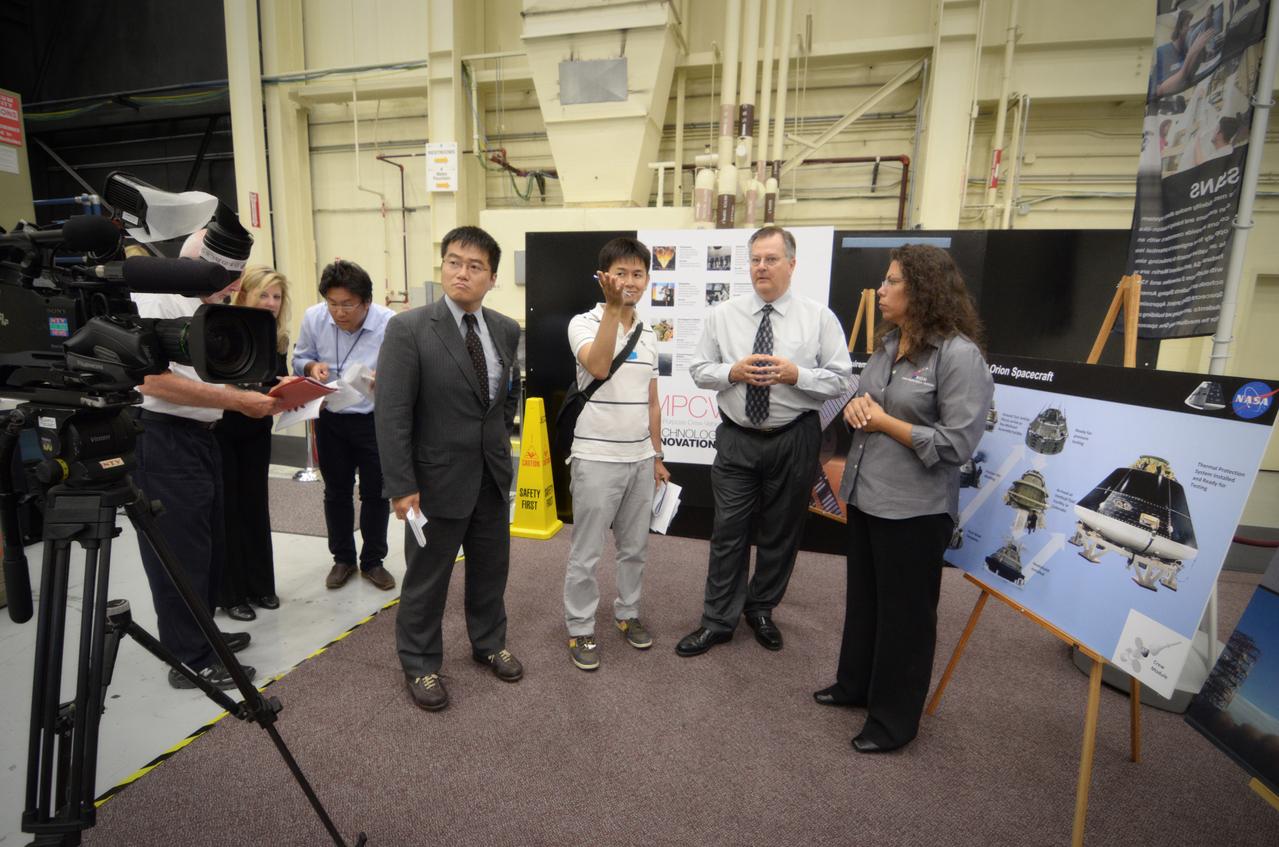
Members of the media attend a Media Day event and visit the Orion mockup in the Space Vehicle Mockup Facility in Building 9 of the Johnson Space Center in Houston on July 1, 2011. Part of Batch image transfer from Flickr.
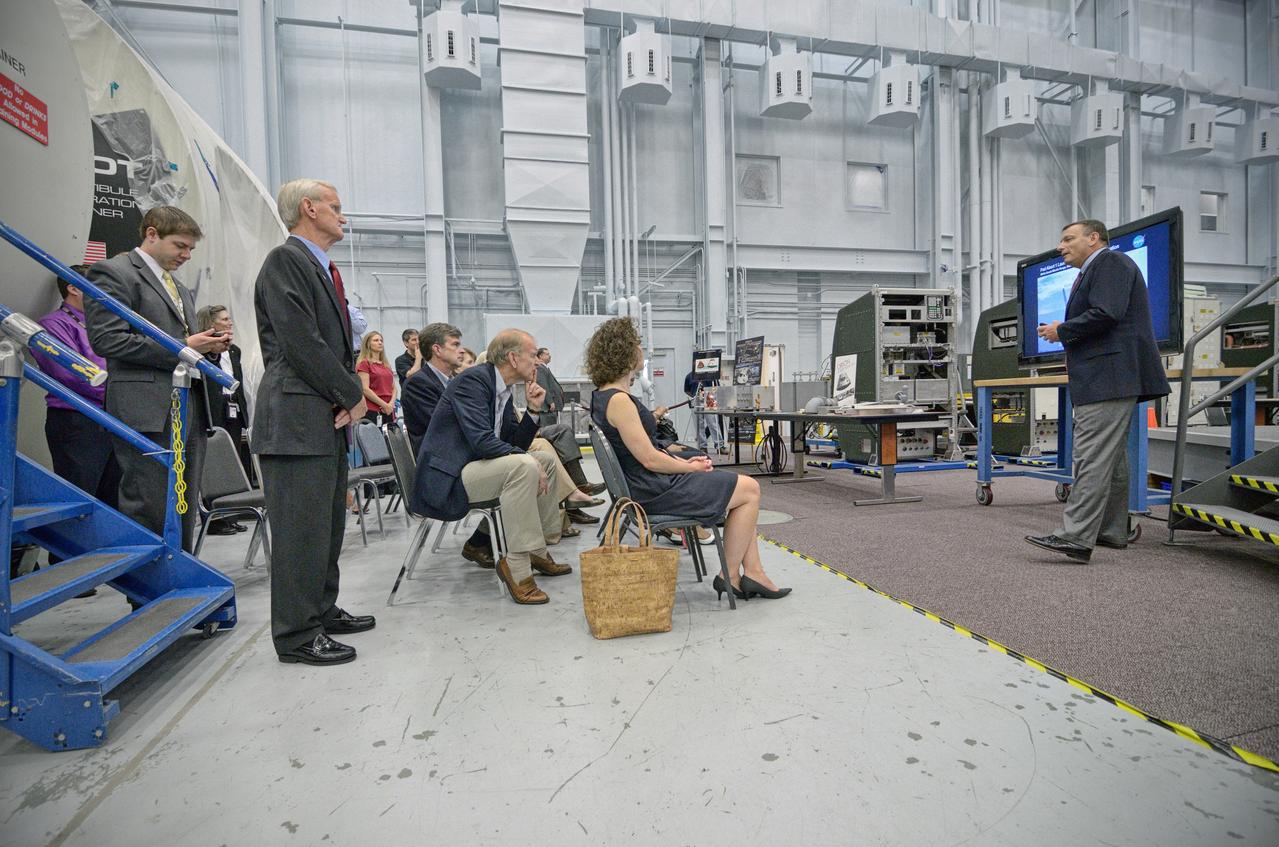
State congressional delegations visit the Orion mockup in the Space Vehicle Mockup Facility in Building 9 of Johnson Space Center in Houston on June 22, 2012. Part of Batch image transfer from Flickr.
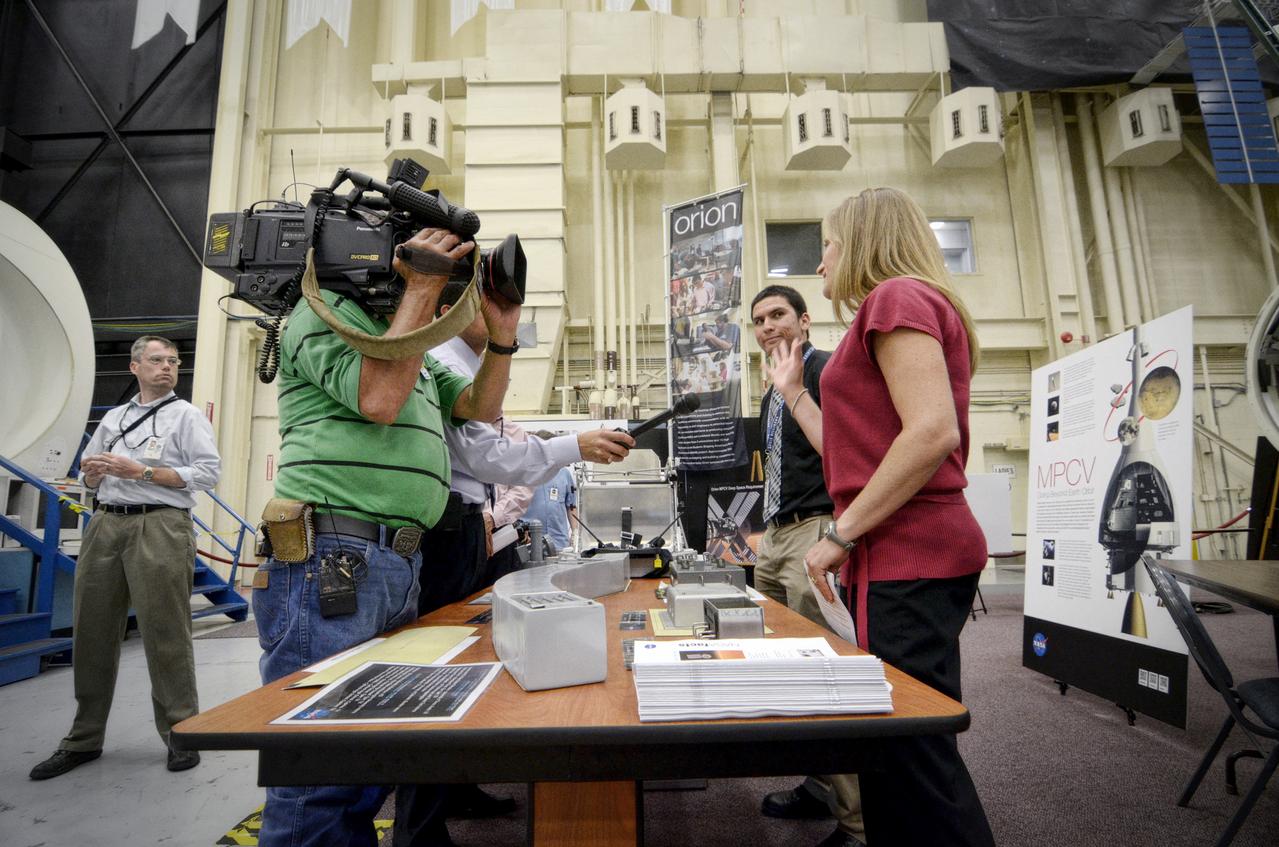
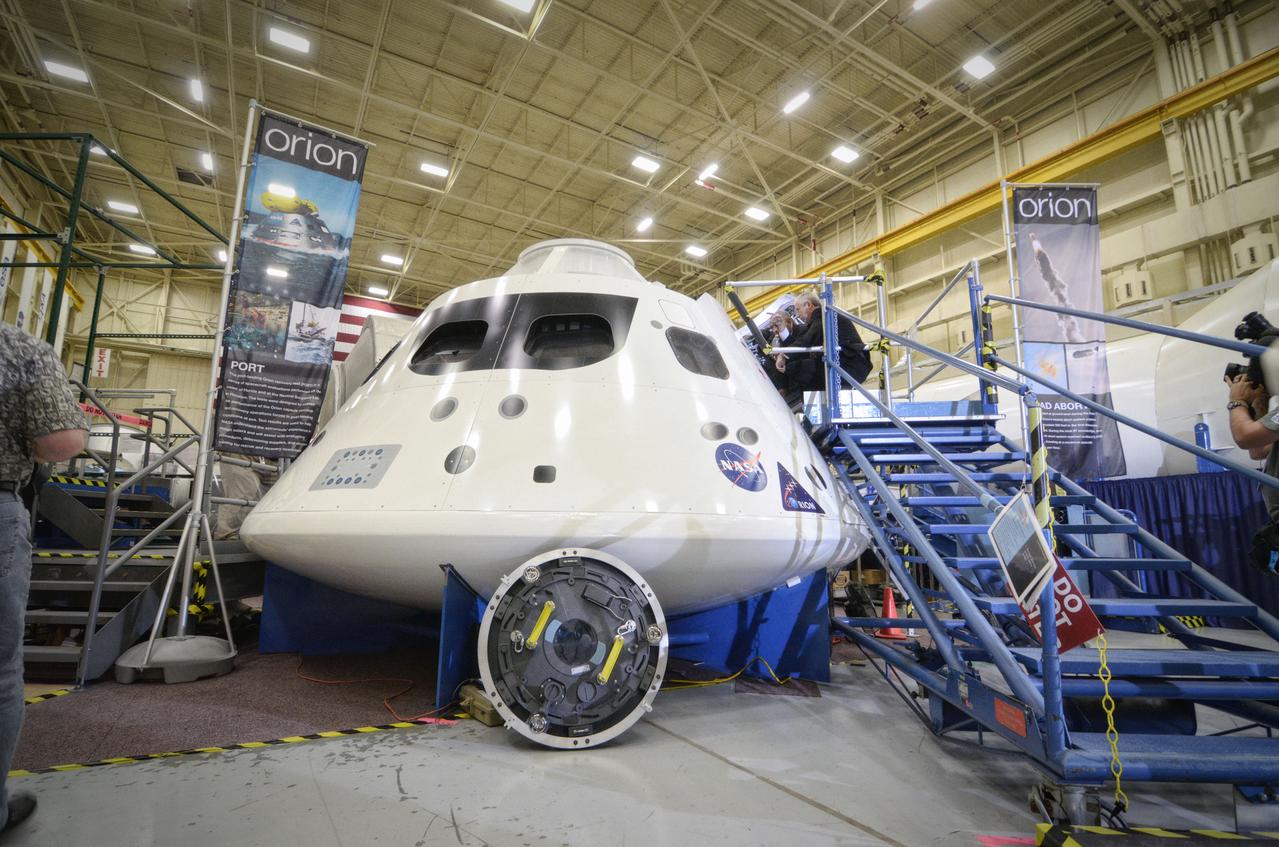
View taken during tour of the Orion mockups in Bldg. 9 at Johnson Space Center in Houston followed by a short Q&A in front of the mockup on Sept. 26, 2011. . Part of Batch image transfer from Flickr.
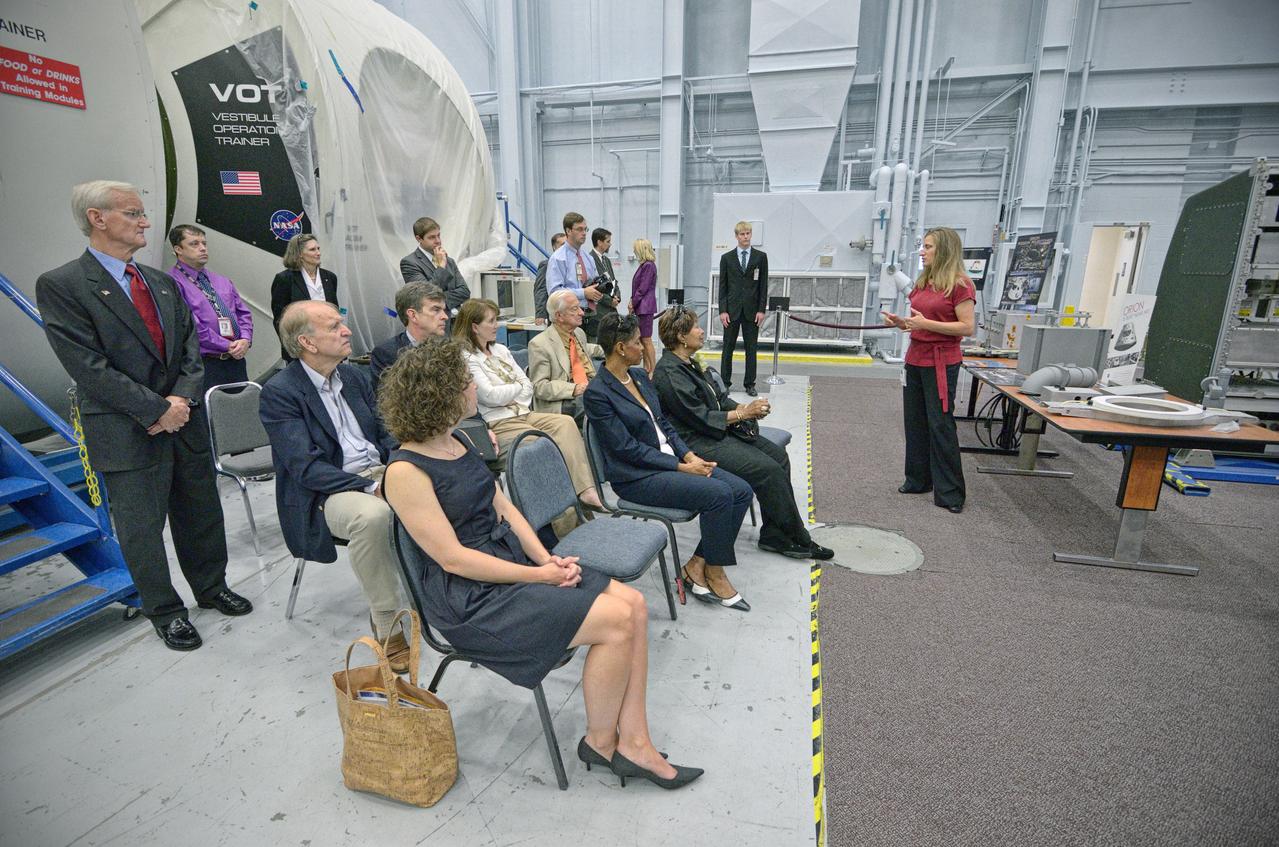
State congressional delegations visit the Orion mockup in the Space Vehicle Mockup Facility in Building 9 of Johnson Space Center in Houston on June 22, 2012. Part of Batch image transfer from Flickr.
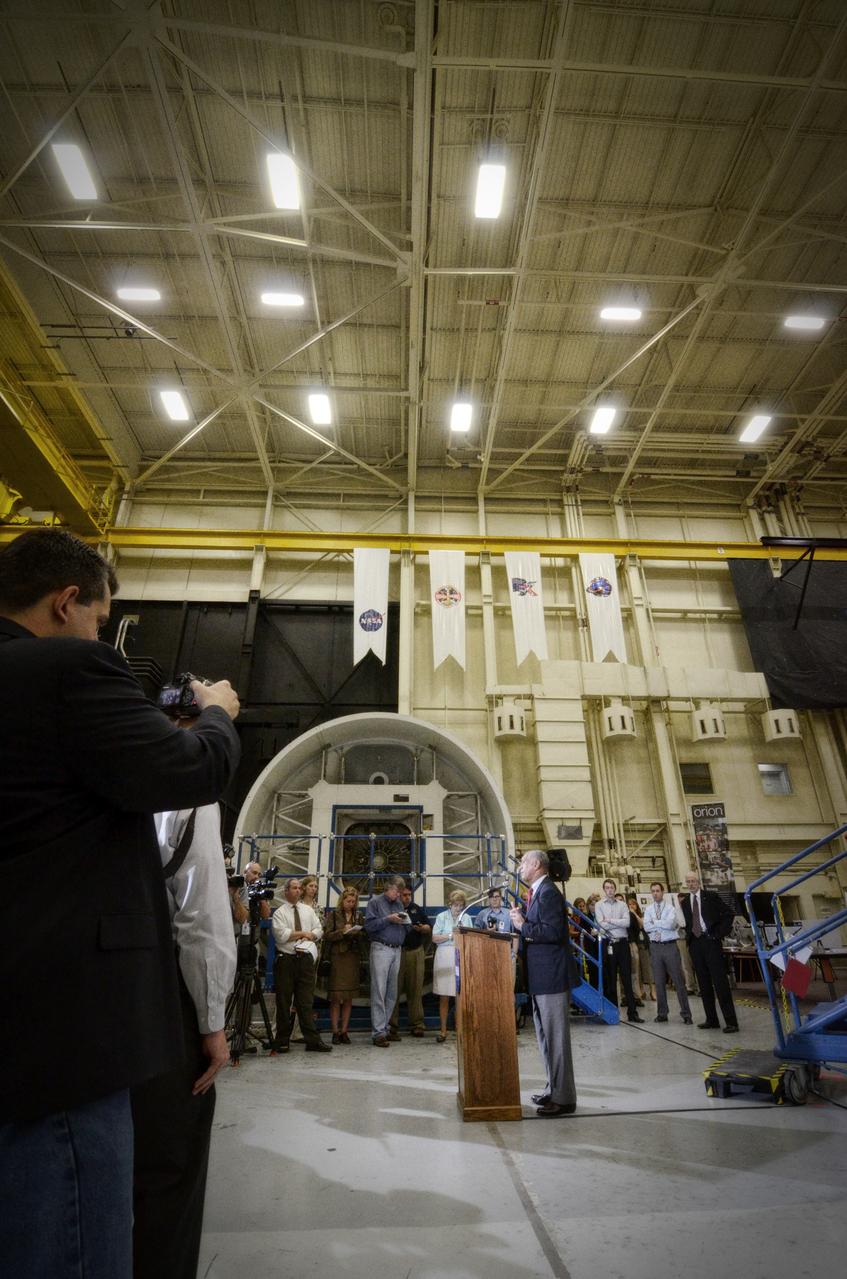
NASA Administrator Charlie Bolden tours the Orion mockups in Bldg. 9 at Johnson Space Center in Houston followed by a short Q&A in front of the mockup on Sept. 26, 2011. Part of Batch image transfer from Flickr.
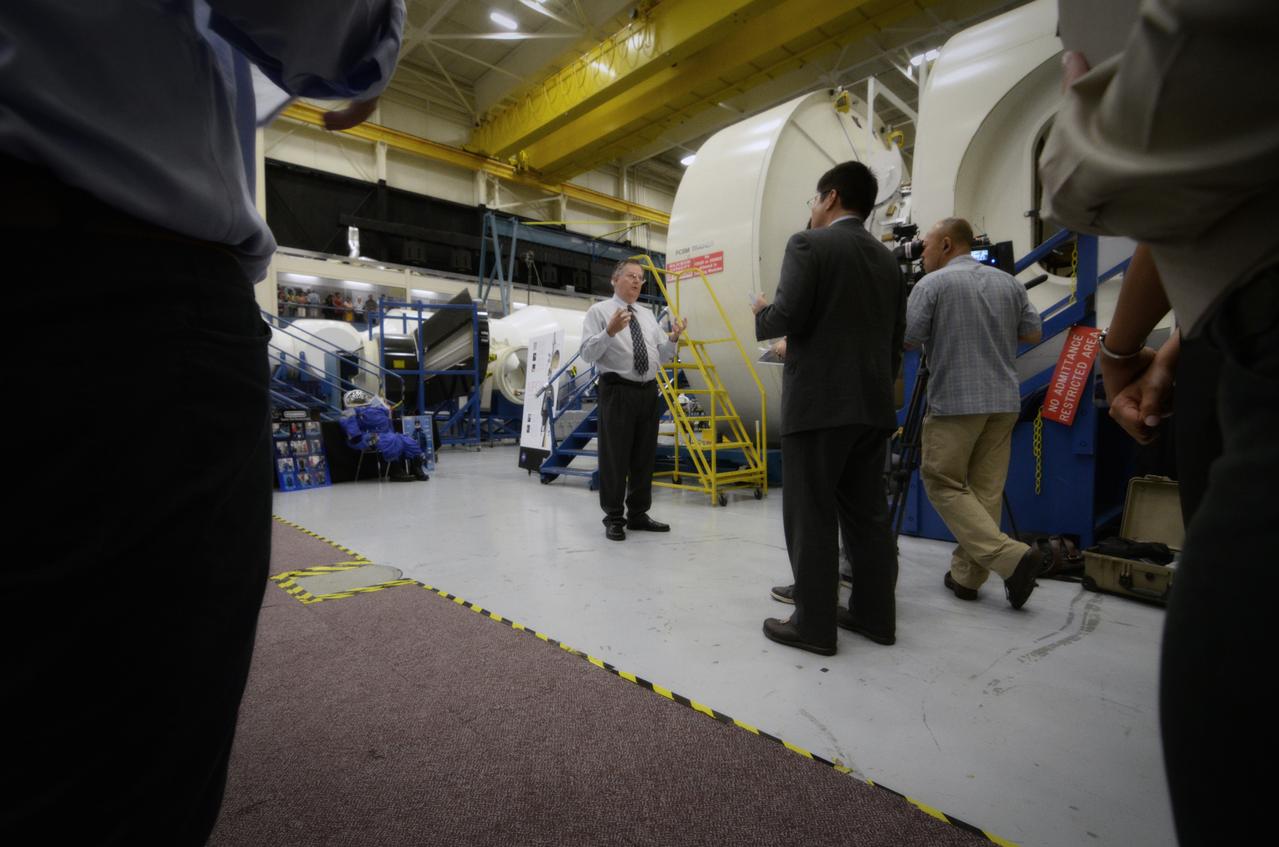
Members of the media attend a Media Day event and visit the Orion mockup in the Space Vehicle Mockup Facility in Building 9 of the Johnson Space Center in Houston on July 1, 2011. Part of Batch image transfer from Flickr.
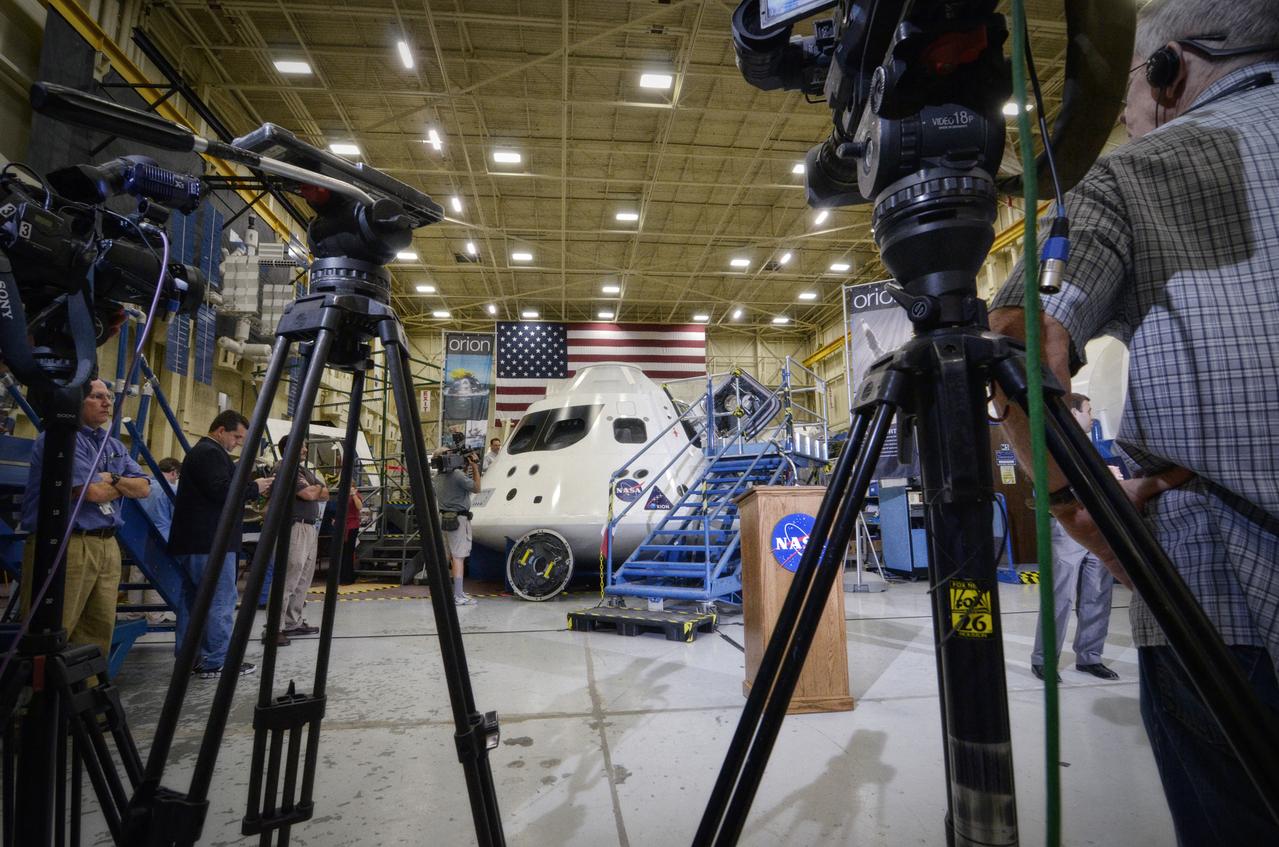
View taken during tour of the Orion mockups in Bldg. 9 at Johnson Space Center in Houston followed by a short Q&A in front of the mockup on Sept. 26, 2011. . Part of Batch image transfer from Flickr.
Members of the media attend a Media Day event and visit the Orion mockup in the Space Vehicle Mockup Facility in Building 9 of the Johnson Space Center in Houston on July 1, 2011. Part of Batch image transfer from Flickr.
Members of the media attend a Media Day event and visit the Orion mockup in the Space Vehicle Mockup Facility in Building 9 of the Johnson Space Center in Houston on July 1, 2011. Part of Batch image transfer from Flickr.
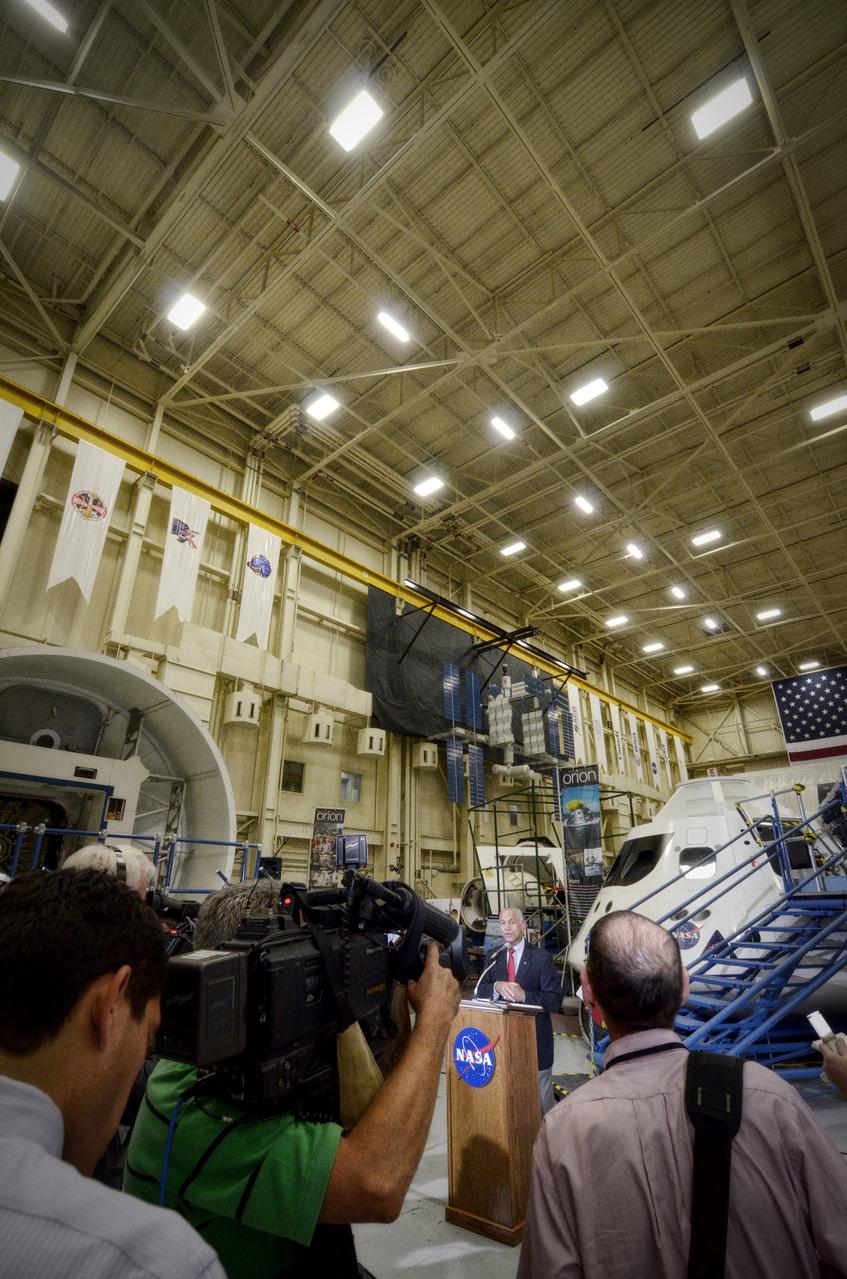
NASA Administrator Charlie Bolden tours the Orion mockups in Bldg. 9 at Johnson Space Center in Houston followed by a short Q&A in front of the mockup on Sept. 26, 2011. Part of Batch image transfer from Flickr.
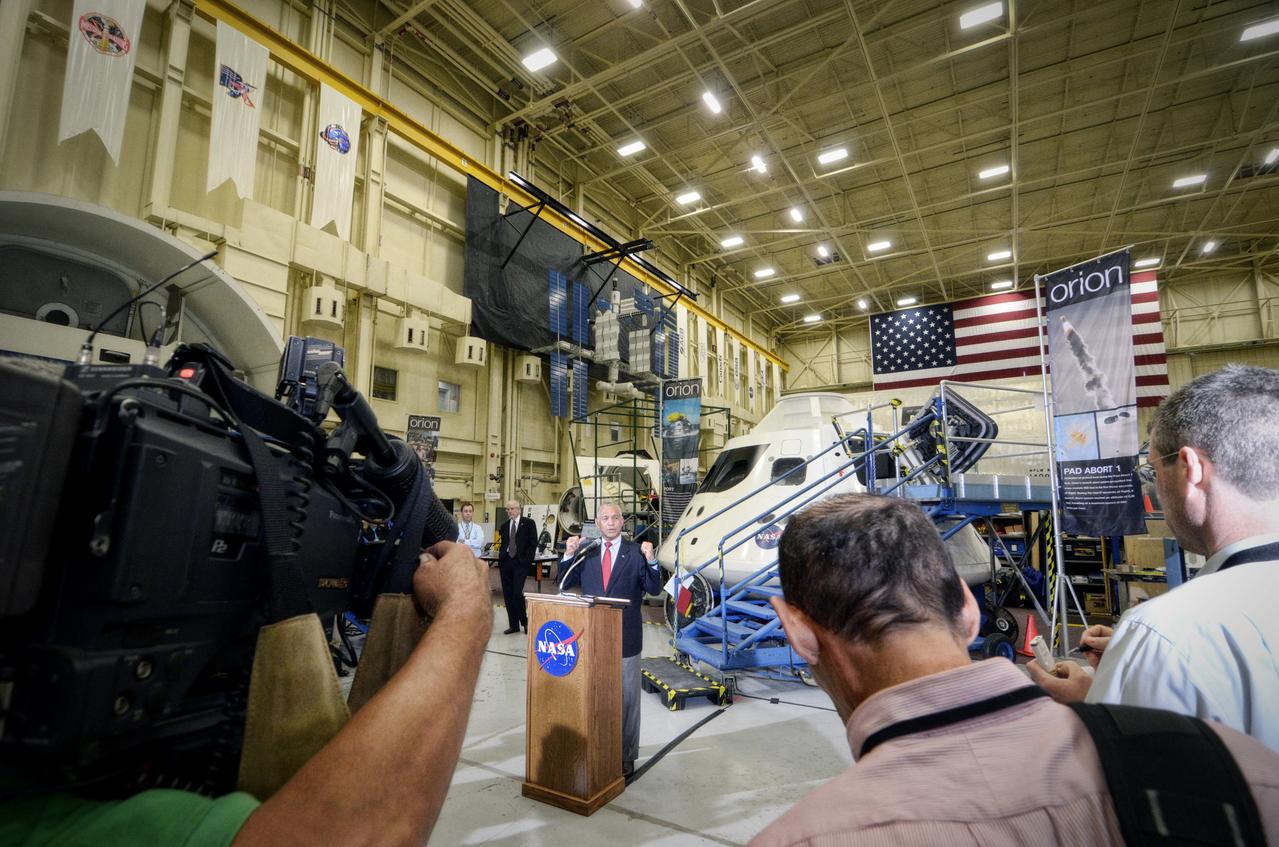
NASA Administrator Charlie Bolden tours the Orion mockups in Bldg. 9 at Johnson Space Center in Houston followed by a short Q&A in front of the mockup on Sept. 26, 2011. Part of Batch image transfer from Flickr.
Members of the media attend a Media Day event and visit the Orion mockup in the Space Vehicle Mockup Facility in Building 9 of the Johnson Space Center in Houston on July 1, 2011. Part of Batch image transfer from Flickr.
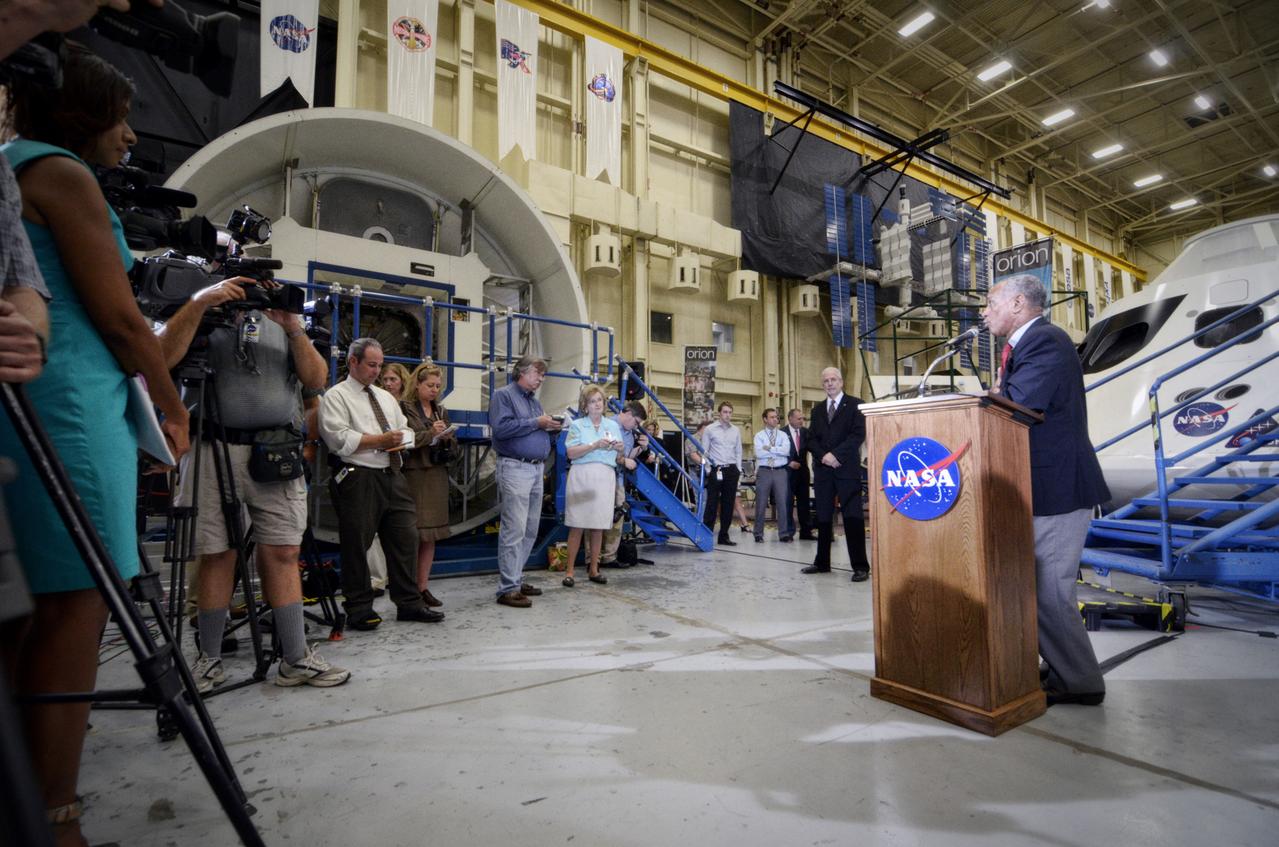
NASA Administrator Charlie Bolden tours the Orion mockups in Bldg. 9 at Johnson Space Center in Houston followed by a short Q&A in front of the mockup on Sept. 26, 2011. Part of Batch image transfer from Flickr.
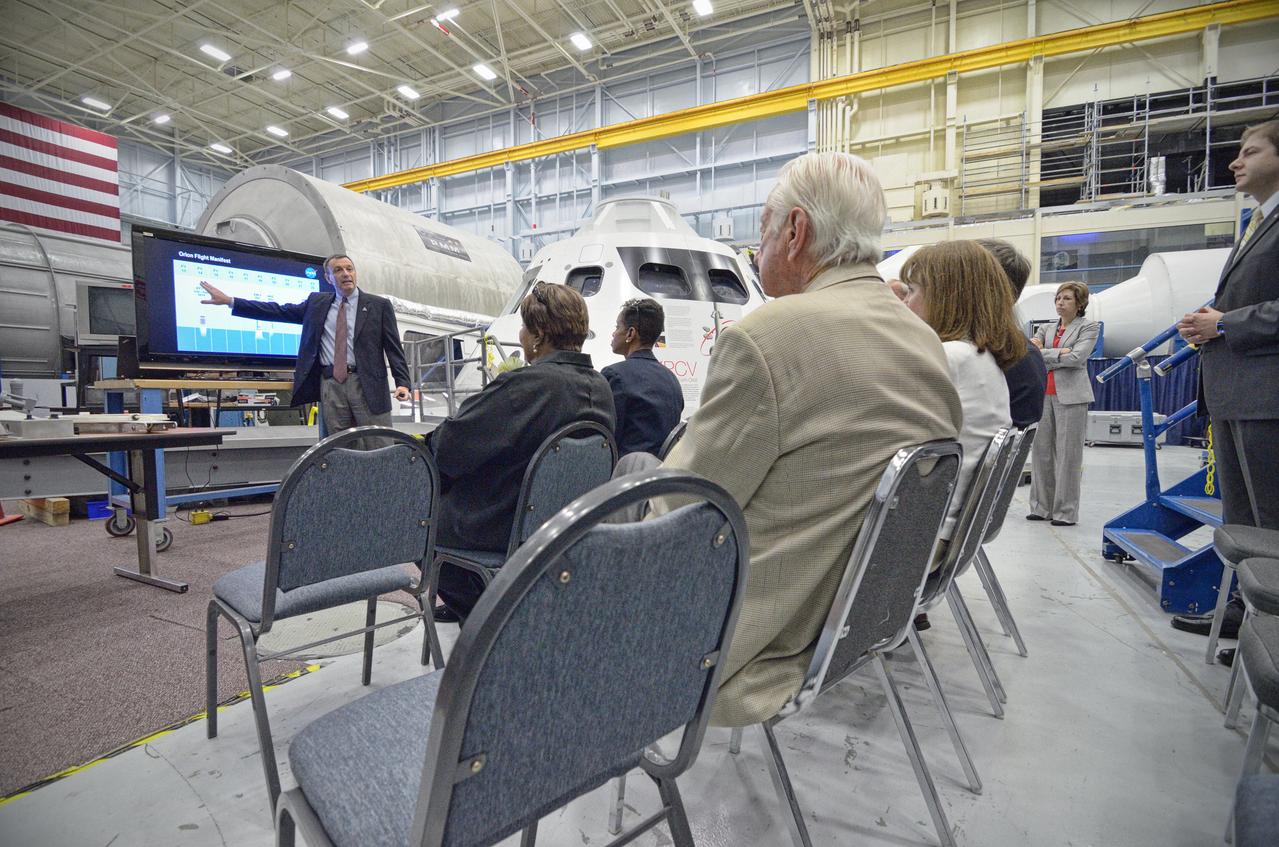
State congressional delegations visit the Orion mockup in the Space Vehicle Mockup Facility in Building 9 of Johnson Space Center in Houston on June 22, 2012. Part of Batch image transfer from Flickr.
JSC Director Mike Coats tours the Orion mockups in Bldg. 9 at Johnson Space Center in Houston followed by a short Q&A in front of the mockup on Sept. 26, 2011. Part of Batch image transfer from Flickr.
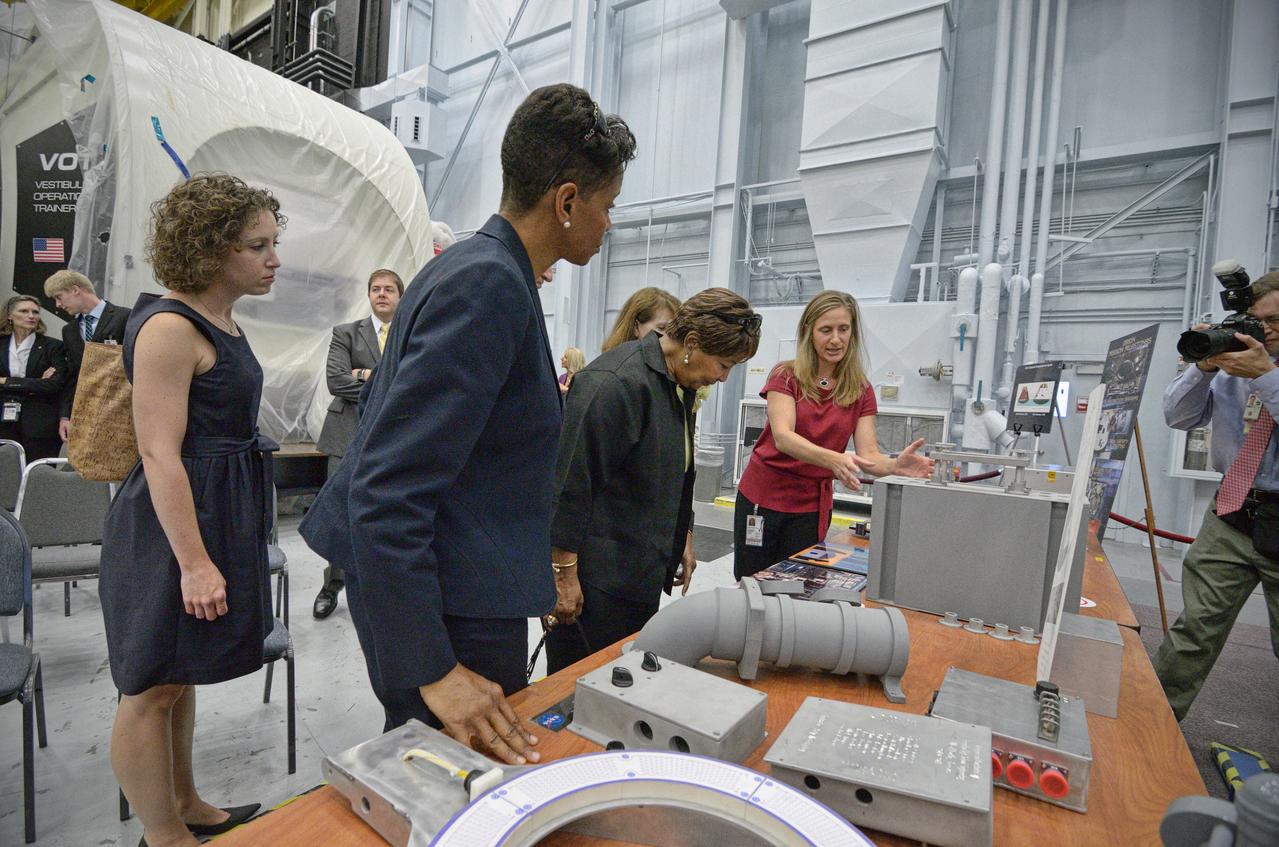
State congressional delegations visit the Orion mockup in the Space Vehicle Mockup Facility in Building 9 of Johnson Space Center in Houston on June 22, 2012. Part of Batch image transfer from Flickr.
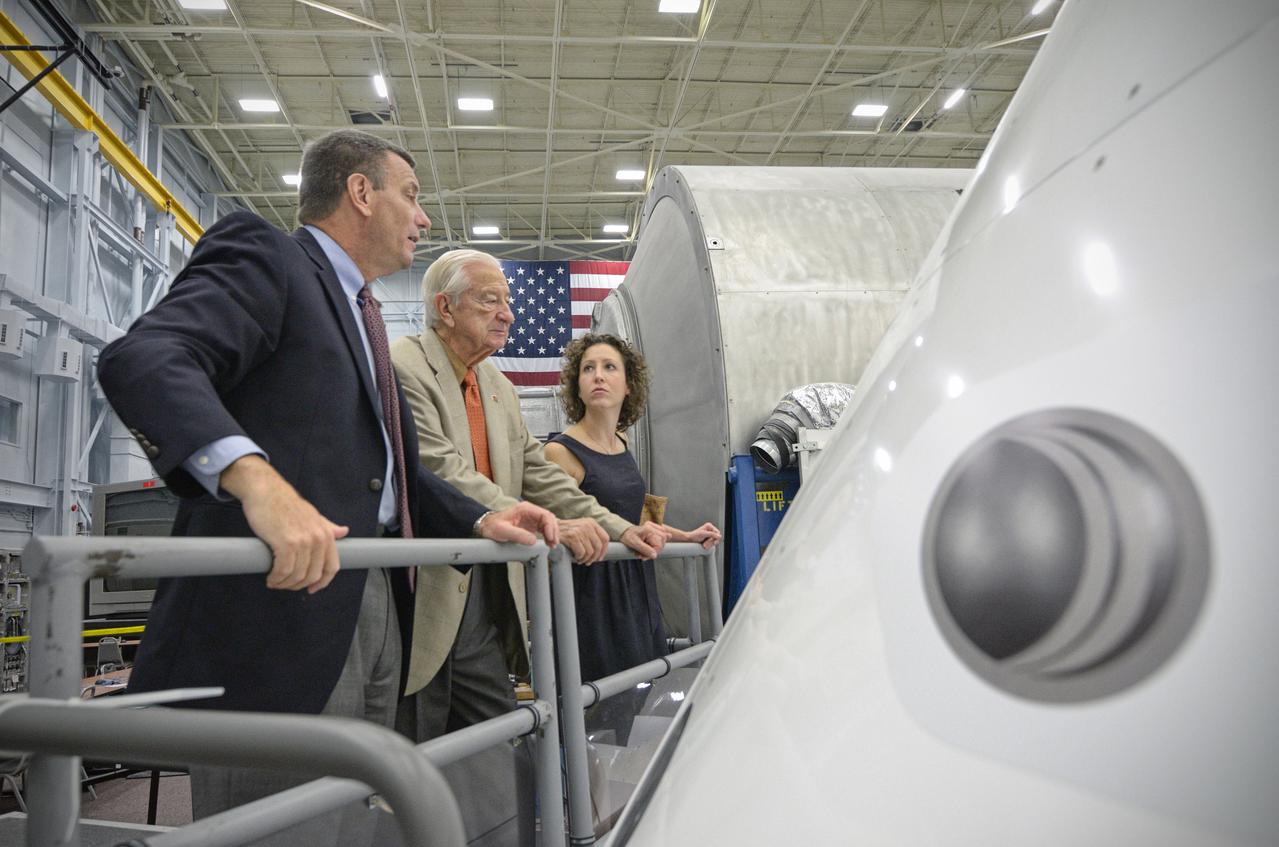
State congressional delegations visit the Orion mockup in the Space Vehicle Mockup Facility in Building 9 of Johnson Space Center in Houston on June 22, 2012. Part of Batch image transfer from Flickr.

State congressional delegations visit the Orion mockup in the Space Vehicle Mockup Facility in Building 9 of Johnson Space Center in Houston on June 22, 2012. Part of Batch image transfer from Flickr.
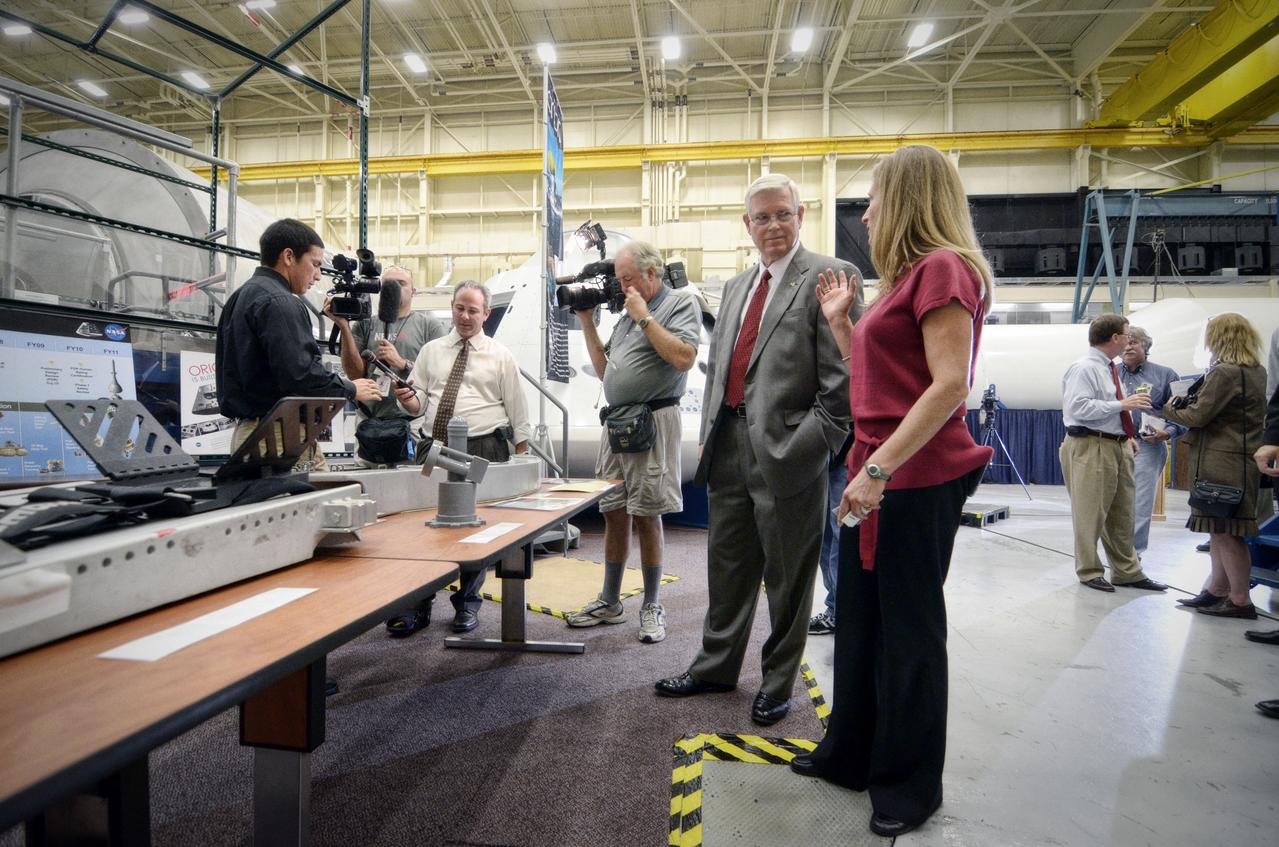
JSC Director Mike Coats tours the Orion mockups in Bldg. 9 at Johnson Space Center in Houston followed by a short Q&A in front of the mockup on Sept. 26, 2011. Part of Batch image transfer from Flickr.
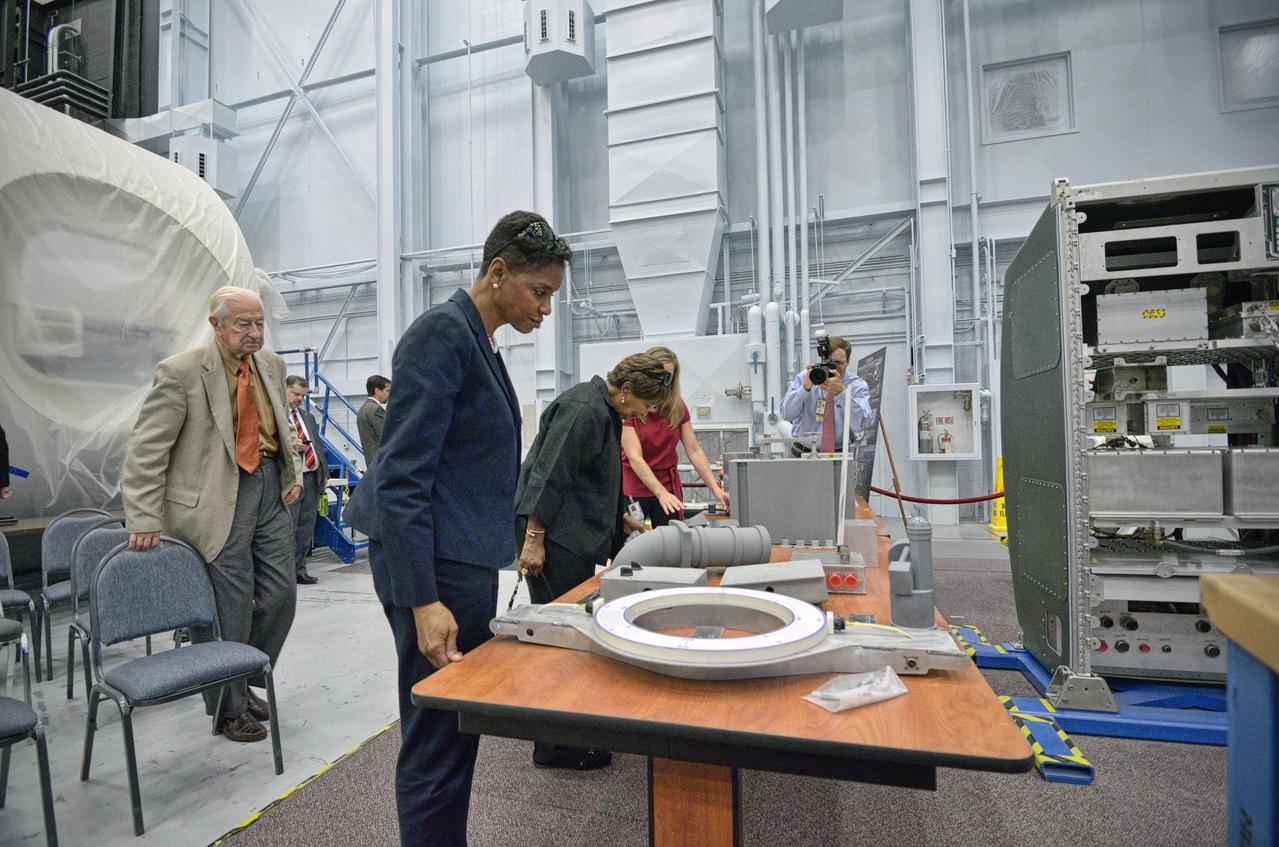
State congressional delegations visit the Orion mockup in the Space Vehicle Mockup Facility in Building 9 of Johnson Space Center in Houston on June 22, 2012. Part of Batch image transfer from Flickr.
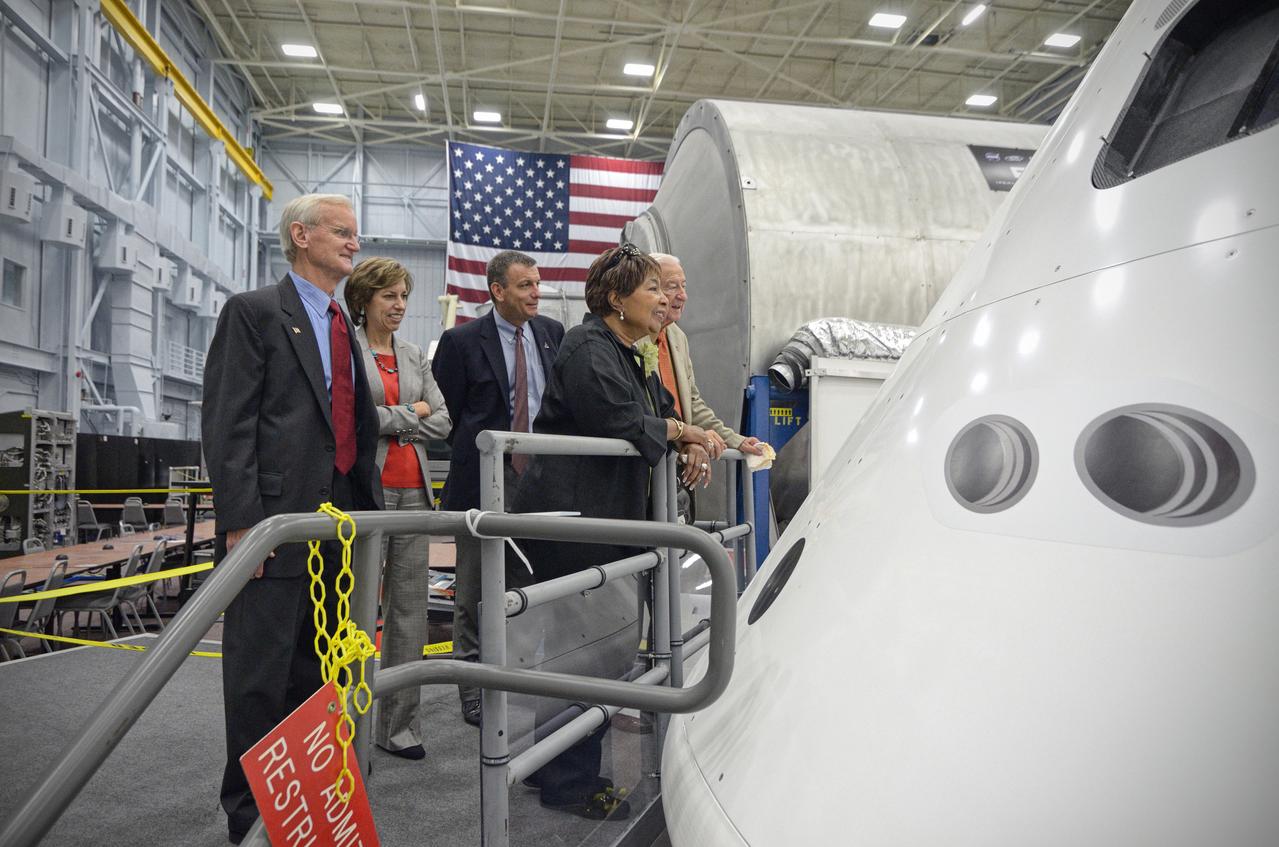
State congressional delegations visit the Orion mockup in the Space Vehicle Mockup Facility in Building 9 of Johnson Space Center in Houston on June 22, 2012. Part of Batch image transfer from Flickr.