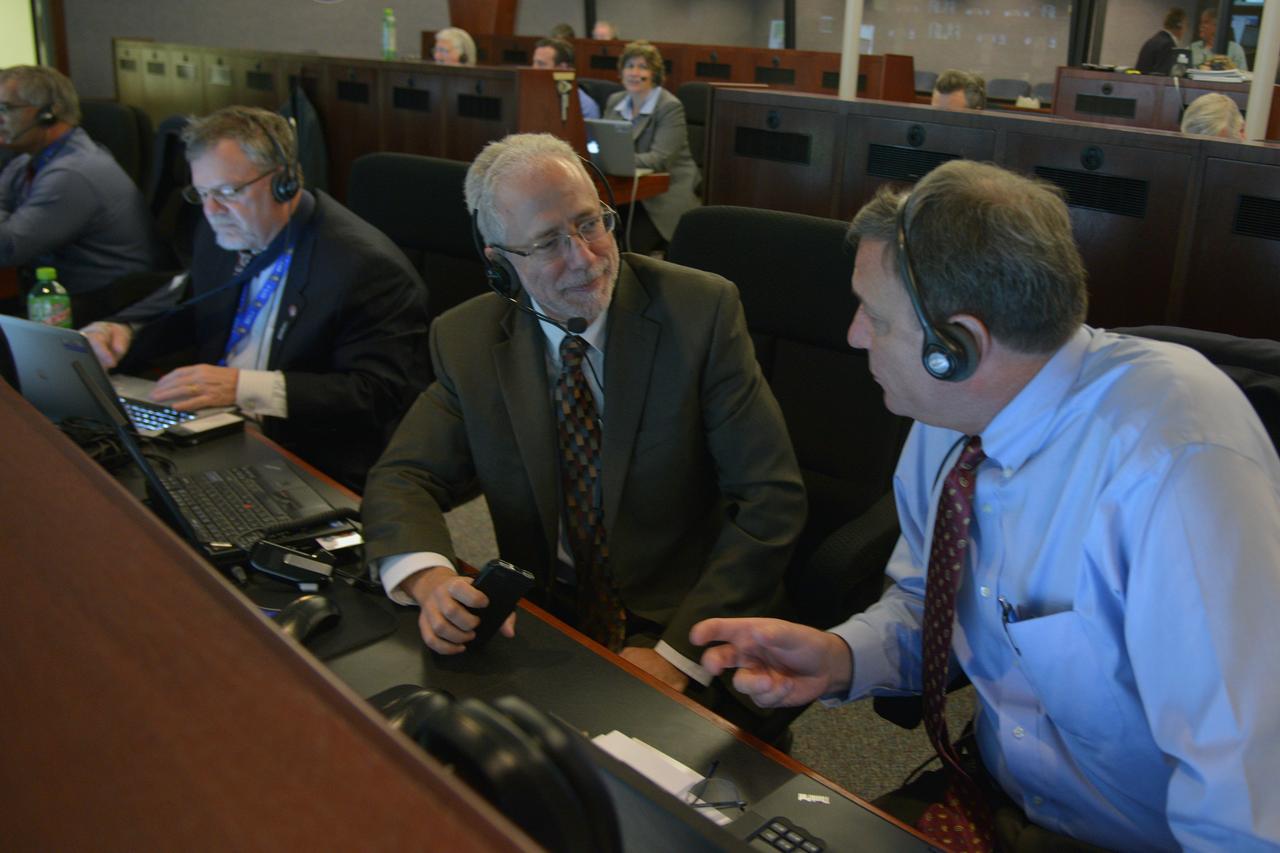
The Orion program management team reviews the launch procedure in Building AE at Cape Canaveral Air Force Station ahead of the launch of Orion on Exploration Flight Test-1 (EFT-1) on Dec. 4, 2014. Pictured from left to right: Mike Hawes, Lockheed Martin Orion program manager, Mark Geyer, NASA Orion program manager, and Mark Kirasich, NASA Orion deputy program manager. Part of Batch image transfer from Flickr.
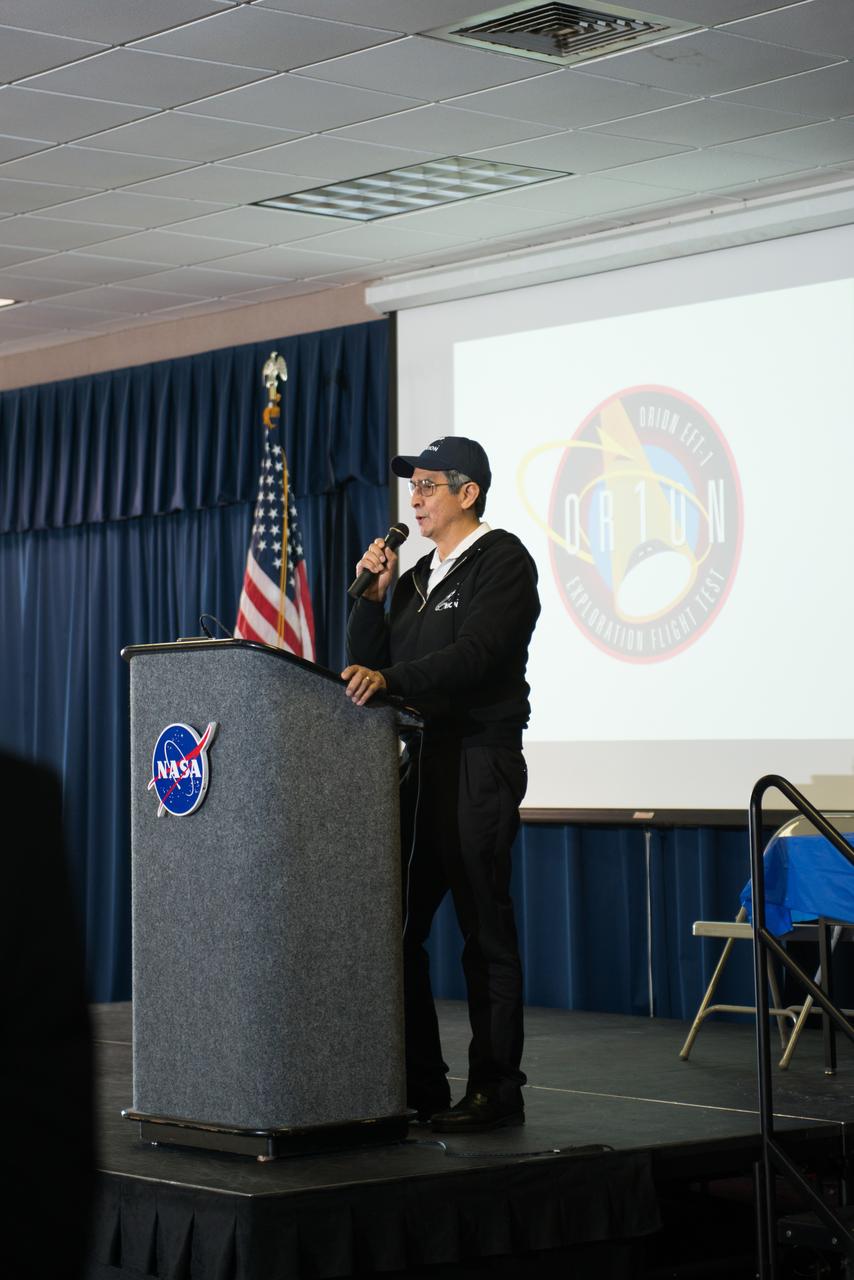
Michoud Assembly Facility Orion Program Event
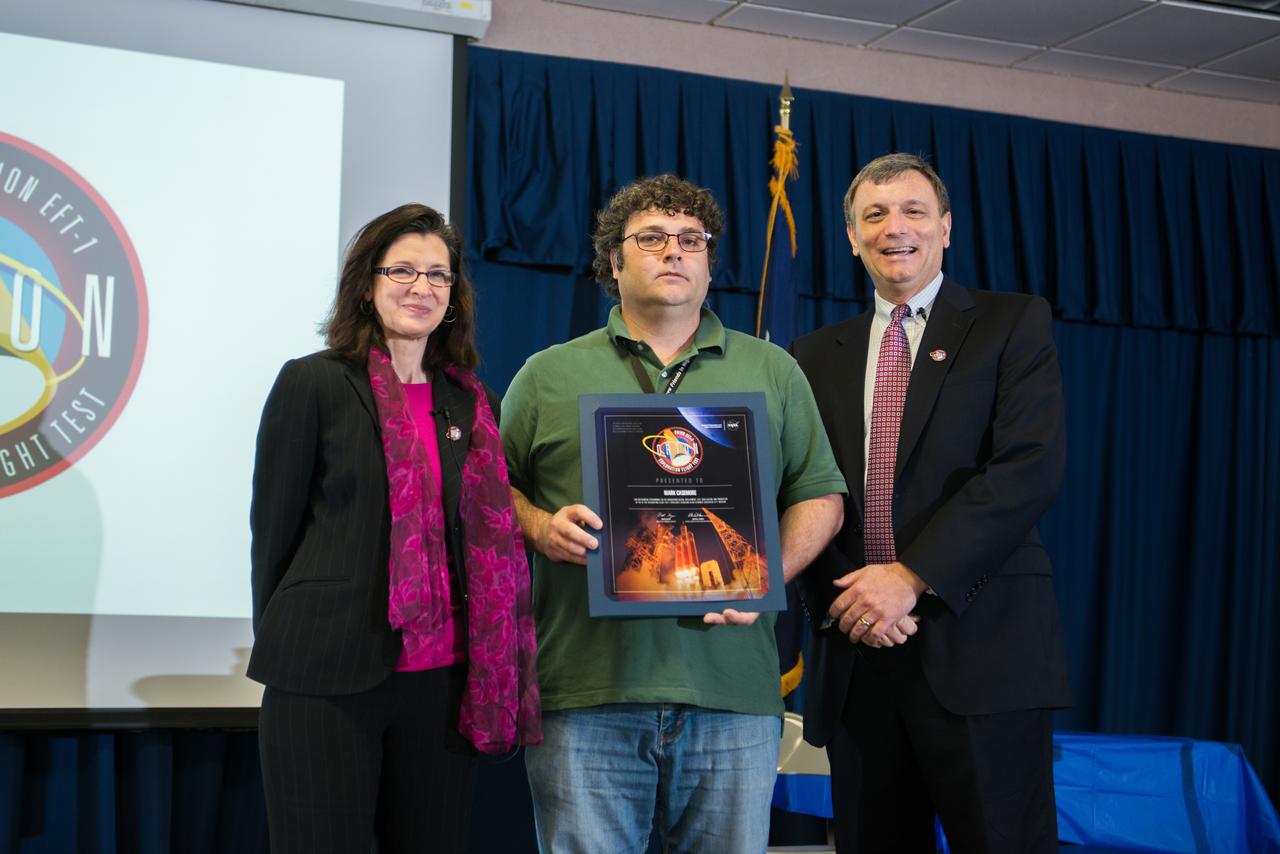
Michoud Assembly Facility Orion Program Event
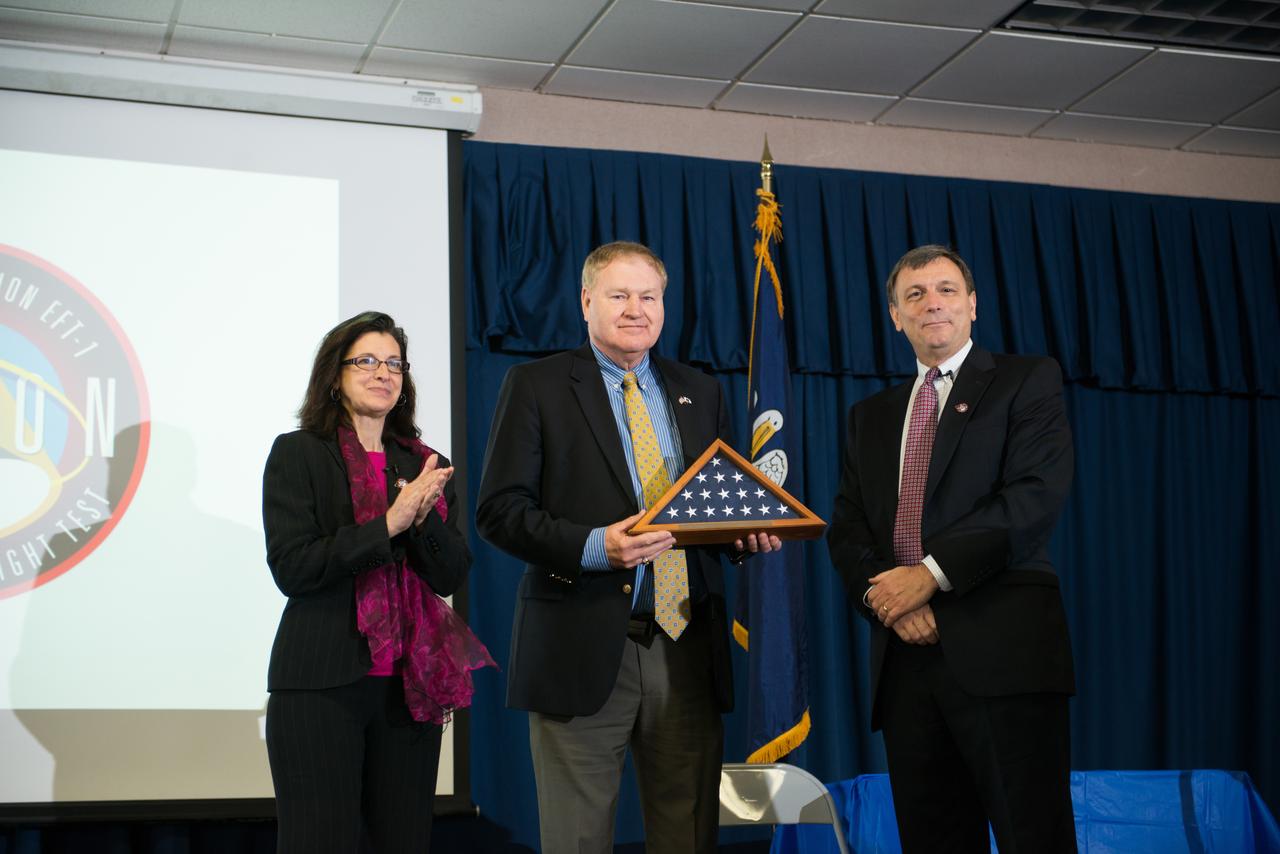
Michoud Assembly Facility Orion Program Event
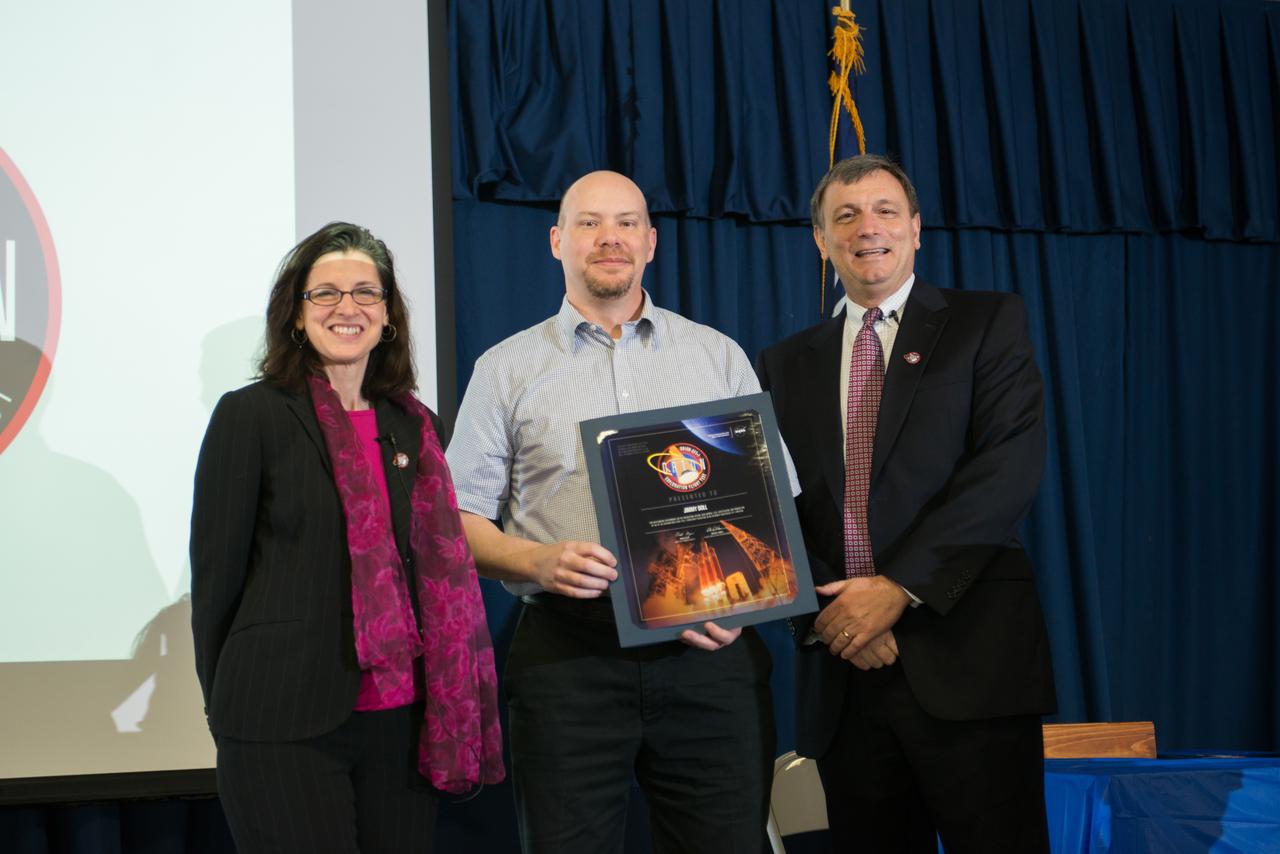
Michoud Assembly Facility Orion Program Event
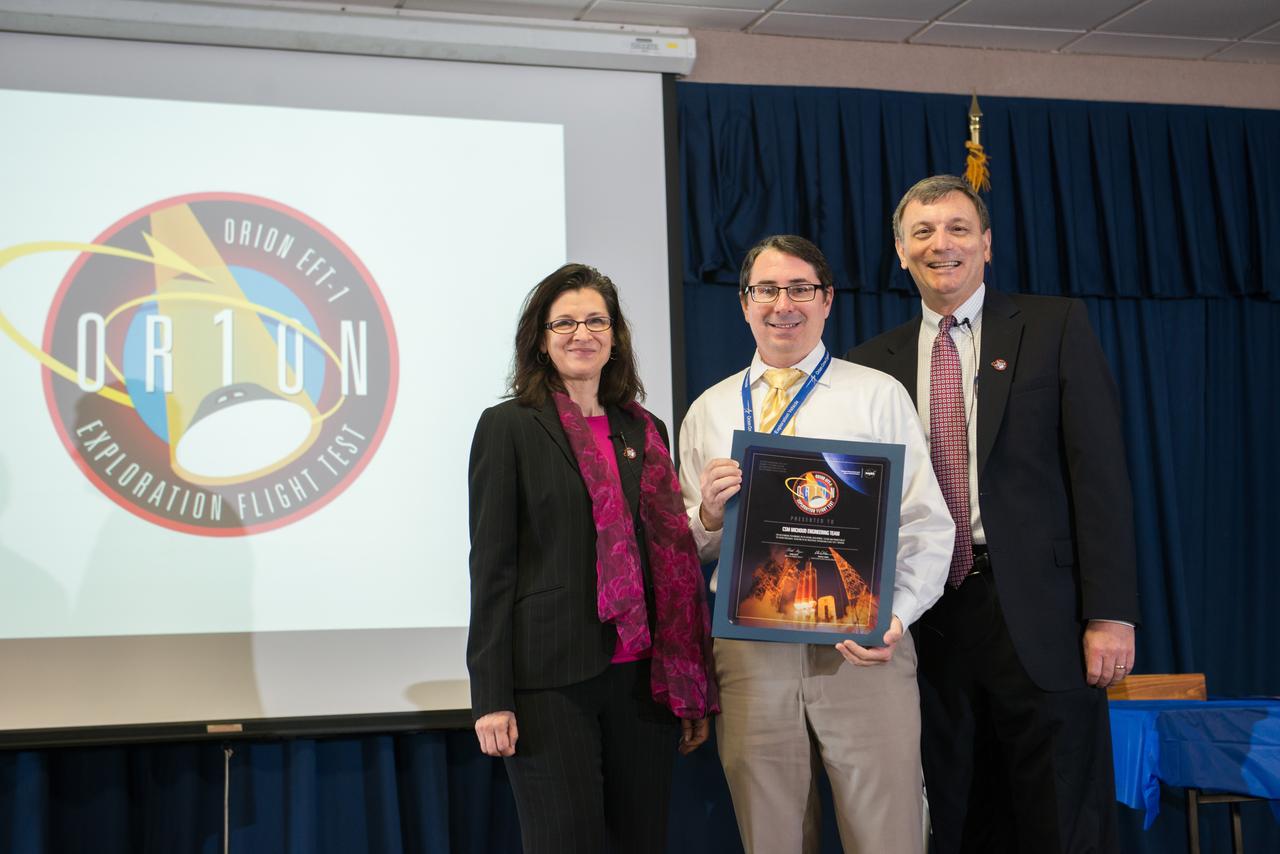
Michoud Assembly Facility Orion Program Event
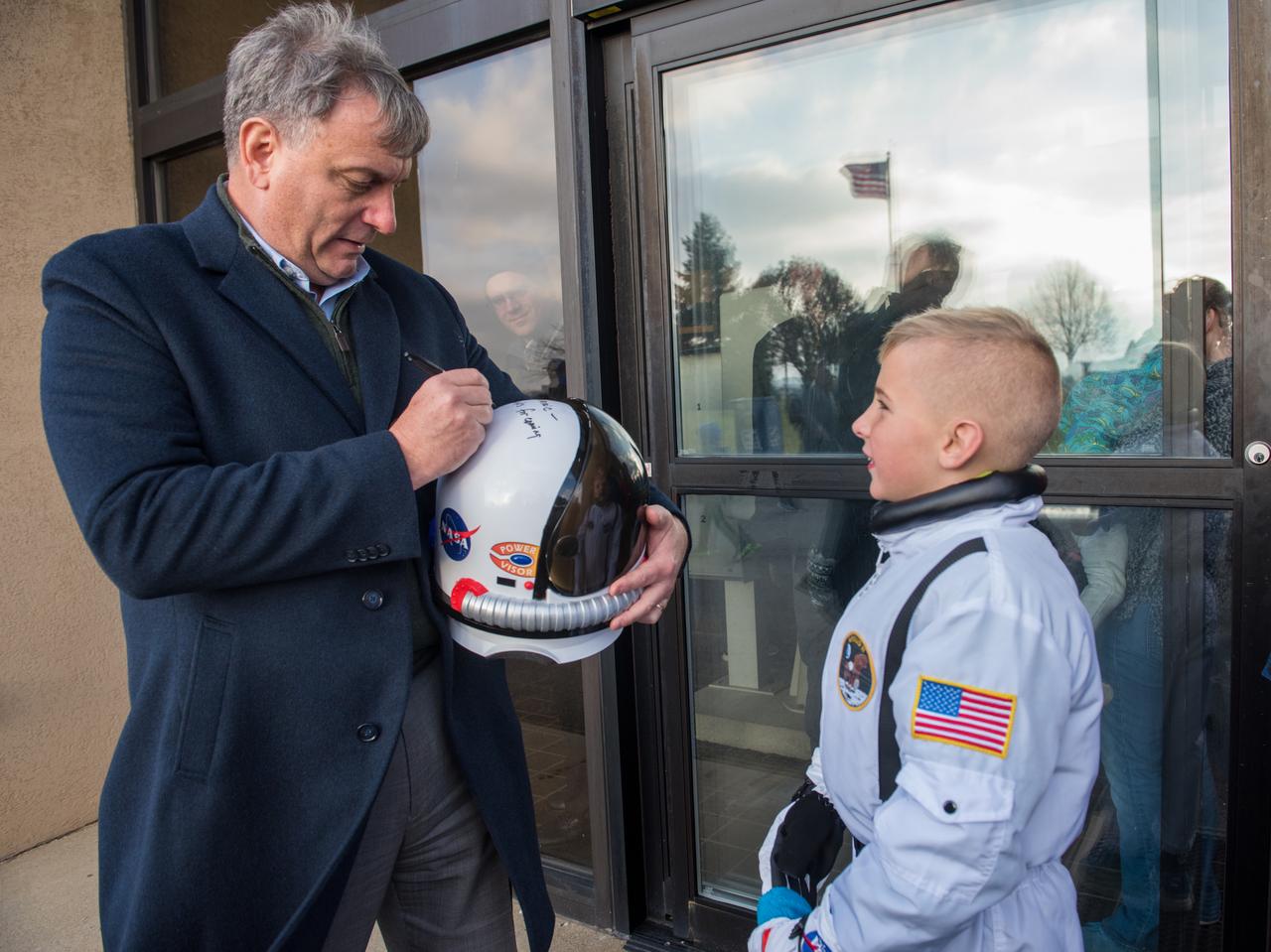
Orion Spacecraft Arrives in Ohio Aboard the Super Guppy at Mansfield Lahm Airport, Orion Program manager Mark Kirasich
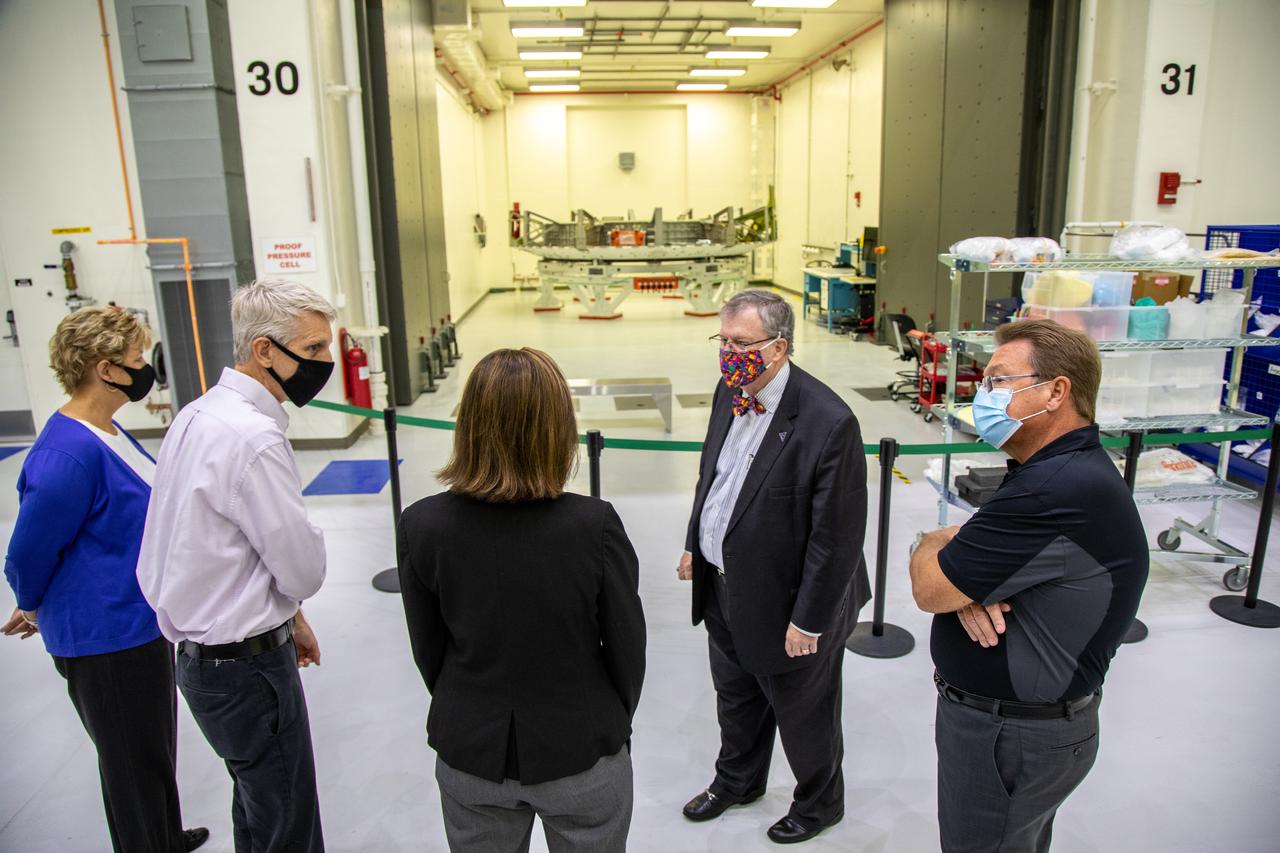
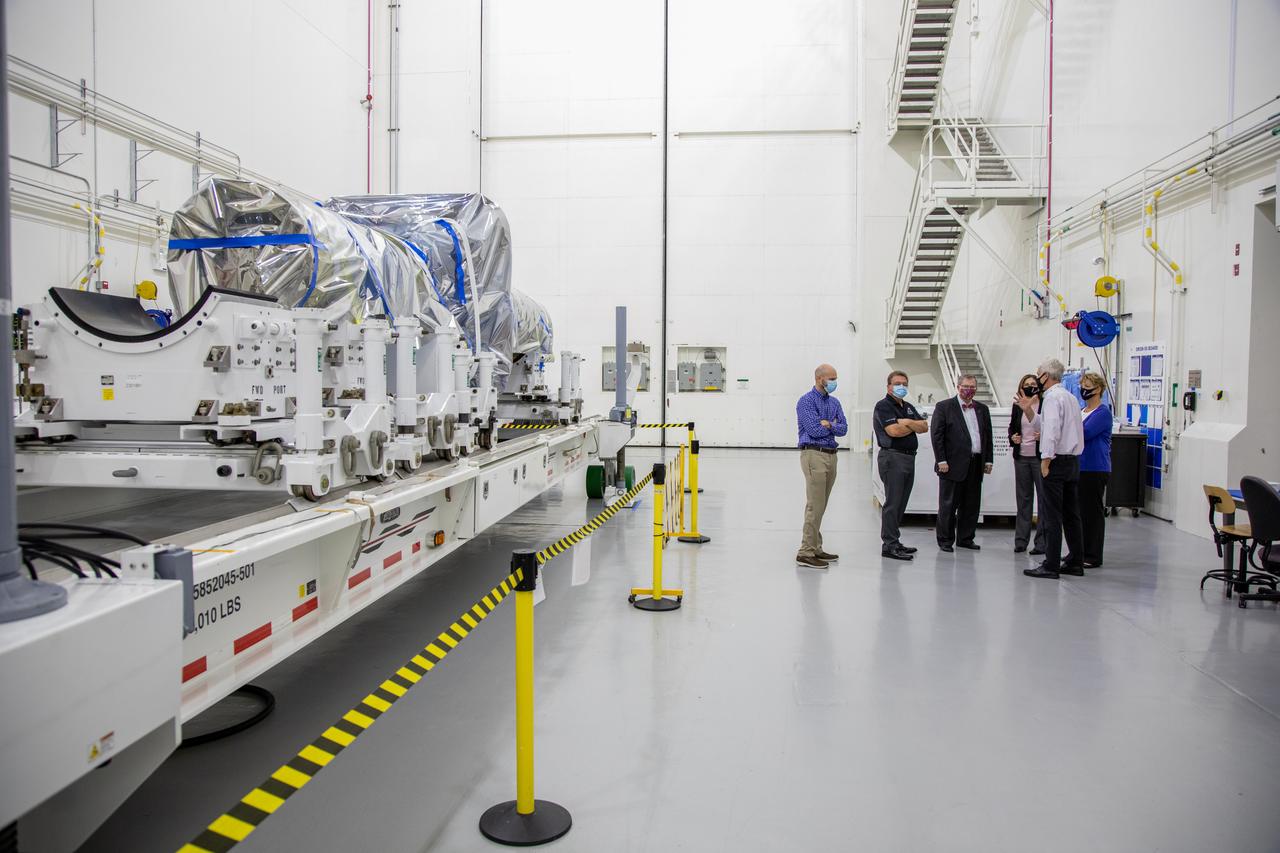
Catherine Koerner, in the center, NASA Orion Program manager, along with senior managers from Orion and Lockheed Martin, tours the Neil Armstrong Operations and Checkout Building at NASA’s Kennedy Space Center in Florida on Oct. 6, 2020. Accompanying her, from left are Annette Hasbrook, Orion Program assistant manager; Scott Wilson, NASA Kennedy Orion Production Operations manager, Mike Hawes, Lockheed Martin vice president and Orion Program manager; and Jules Schneider, Lockheed Martin Assembly, Test and Launch Operations director with Lockheed Martin. Koerner viewed the Orion spacecraft for the Artemis I and II missions. They are shown with the crew module adapter for the Orion Artemis II mission. The first in a series of increasingly complex missions, Artemis I will test the Orion spacecraft and Space Launch System as an integrated system ahead of crewed flights to the Moon. Under the Artemis program, NASA will land the first woman and the next man on the Moon in 2024.
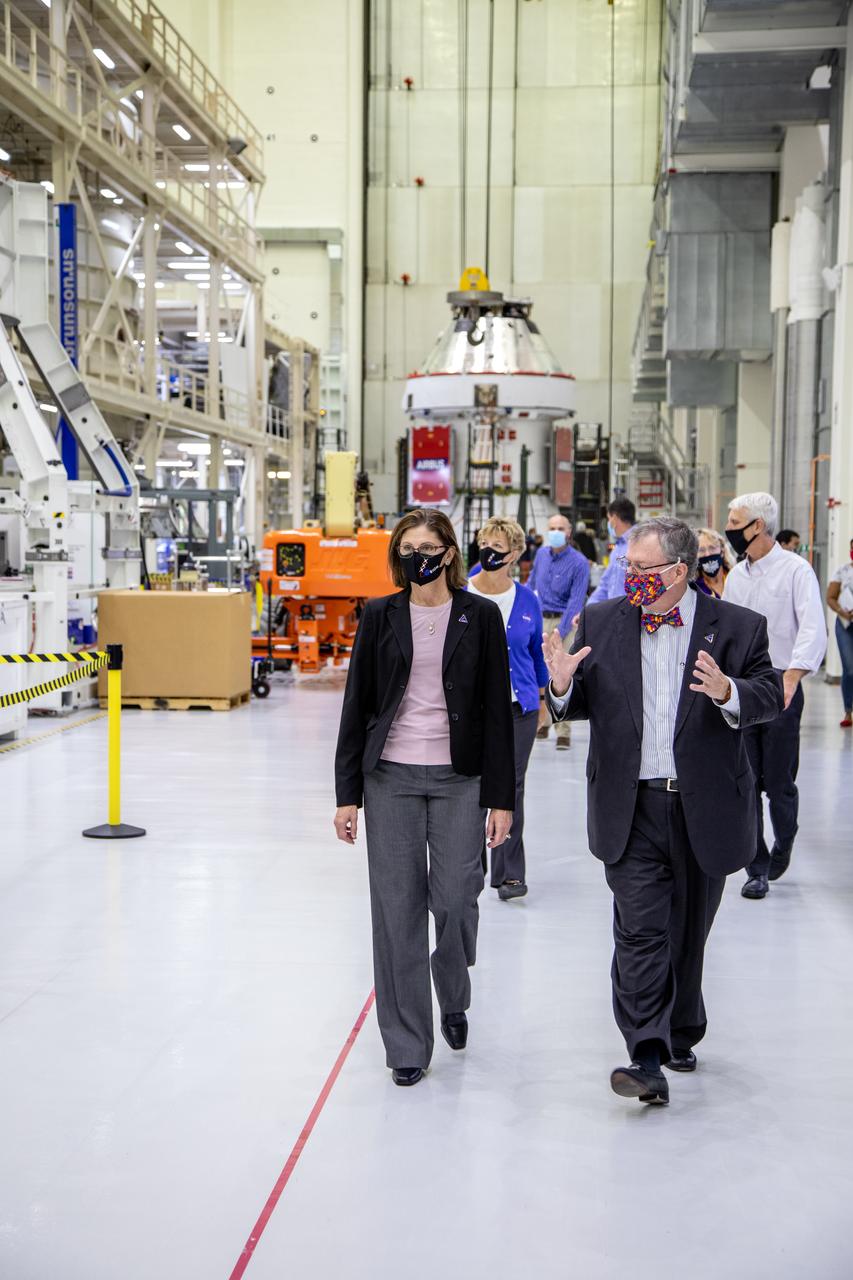
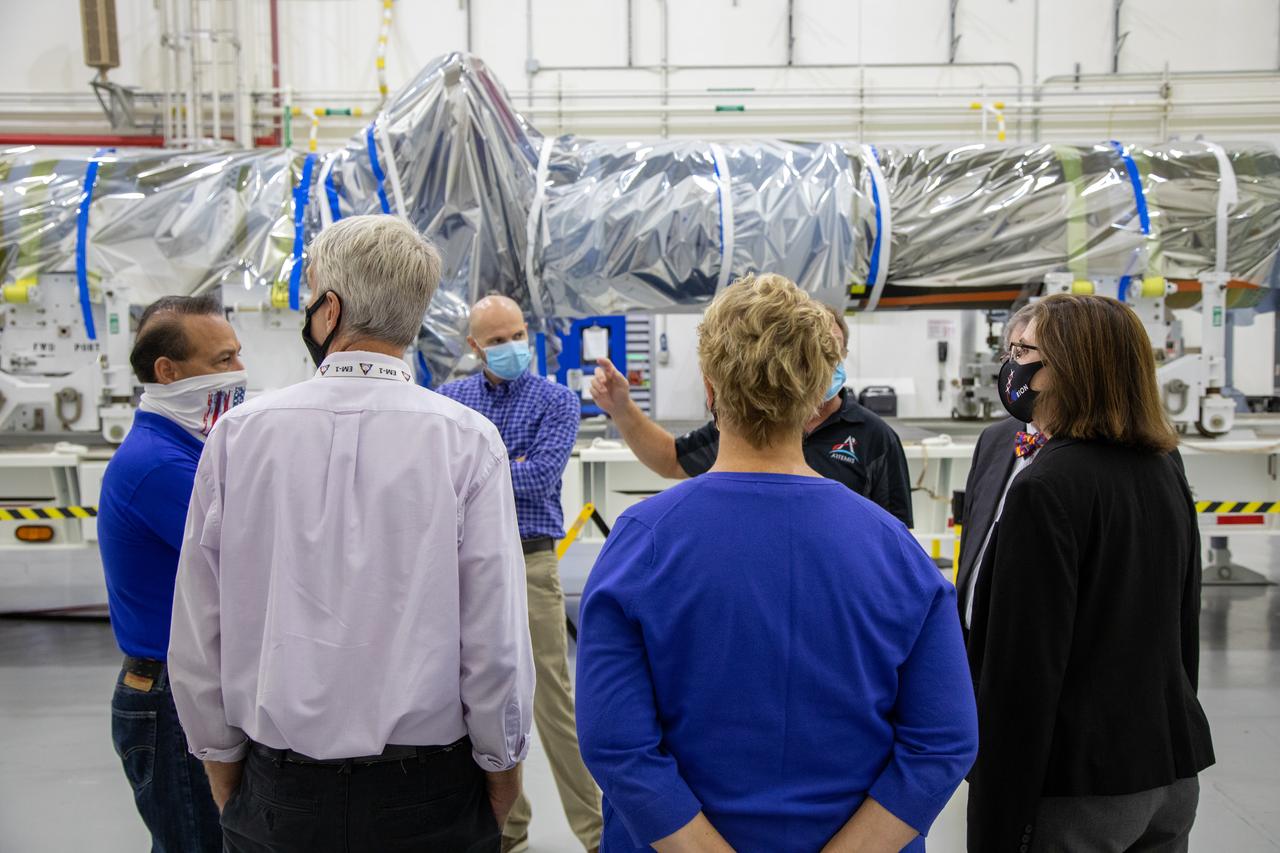
Catherine Koerner, in front at left, NASA Orion Program manager, along with senior managers from Orion and Lockheed Martin, tour the Neil Armstrong Operations and Checkout Building at NASA’s Kennedy Space Center in Florida on Oct. 6, 2020. Accompanying her, in front at right is Mike Hawes, Lockheed Martin vice president and Orion Program manager. In view behind Koerner is Annette Hasbrook, Orion Program assistant manager. In view behind Hawes is Scott Wilson, NASA Kennedy Orion Production Operations manager. Koerner viewed Orion spacecraft for the Artemis I, shown in the background, and II missions. The first in a series of increasingly complex missions, Artemis I will test the Orion spacecraft and Space Launch System as an integrated system ahead of crewed flights to the Moon. Under the Artemis program, NASA will land the first woman and the next man on the Moon in 2024.
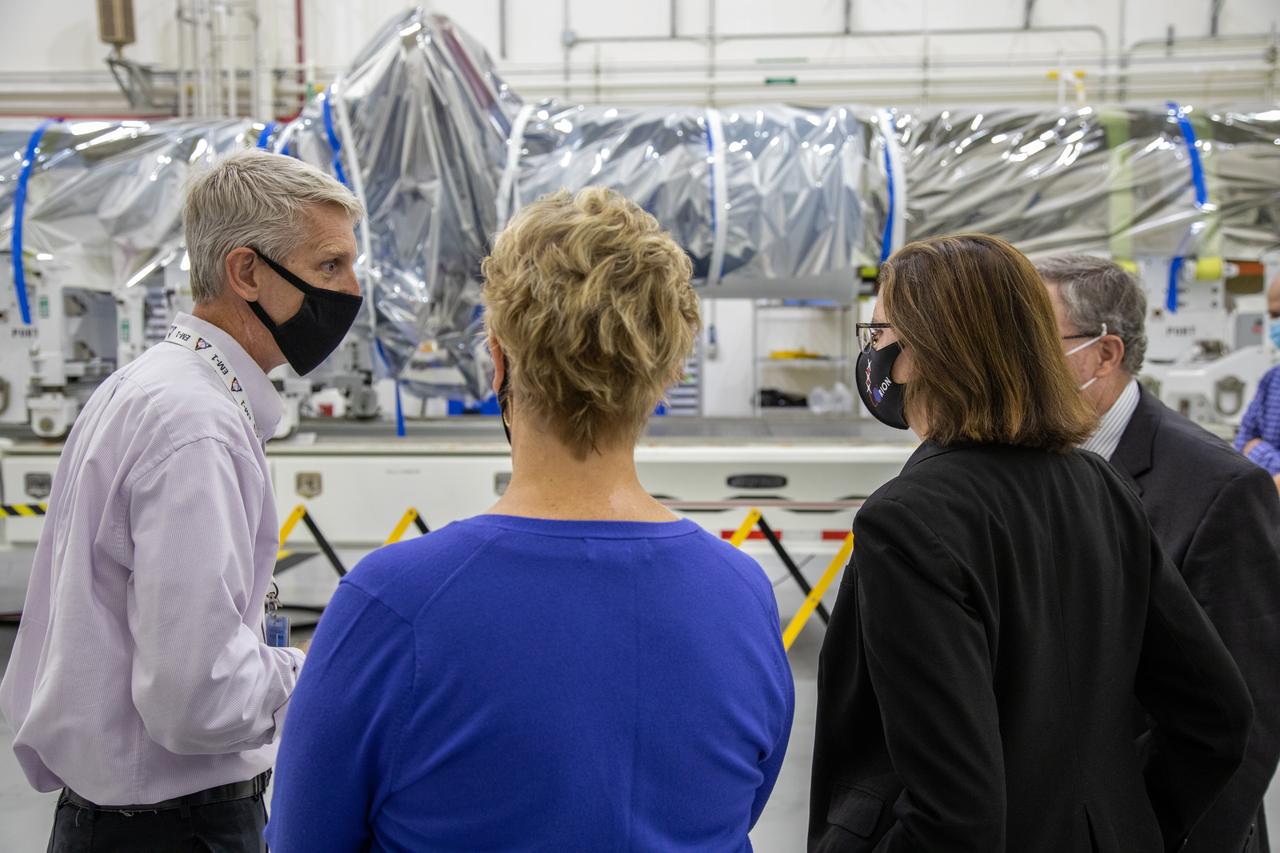
Catherine Koerner, second from right, NASA Orion Program manager, along with senior managers from Orion and Lockheed Martin, tour the Launch Abort System Facility at NASA’s Kennedy Space Center in Florida on Oct. 6, 2020. Accompanying her from left, are Scott Wilson, NASA Kennedy Orion Production Operations manager; Annette Hasbrook, Orion Program assistant manager; and Mike Hawes, Lockheed Martin vice president and Orion Program manager. They are viewing the launch abort system for the Artemis II mission. Koerner also viewed the Orion spacecraft for the Artemis I and II missions in the Neil Armstrong Operations and Checkout Building. The first in a series of increasingly complex missions, Artemis I will test the Orion spacecraft and Space Launch System as an integrated system ahead of crewed flights to the Moon. Under the Artemis program, NASA will land the first woman and the next man on the Moon in 2024.
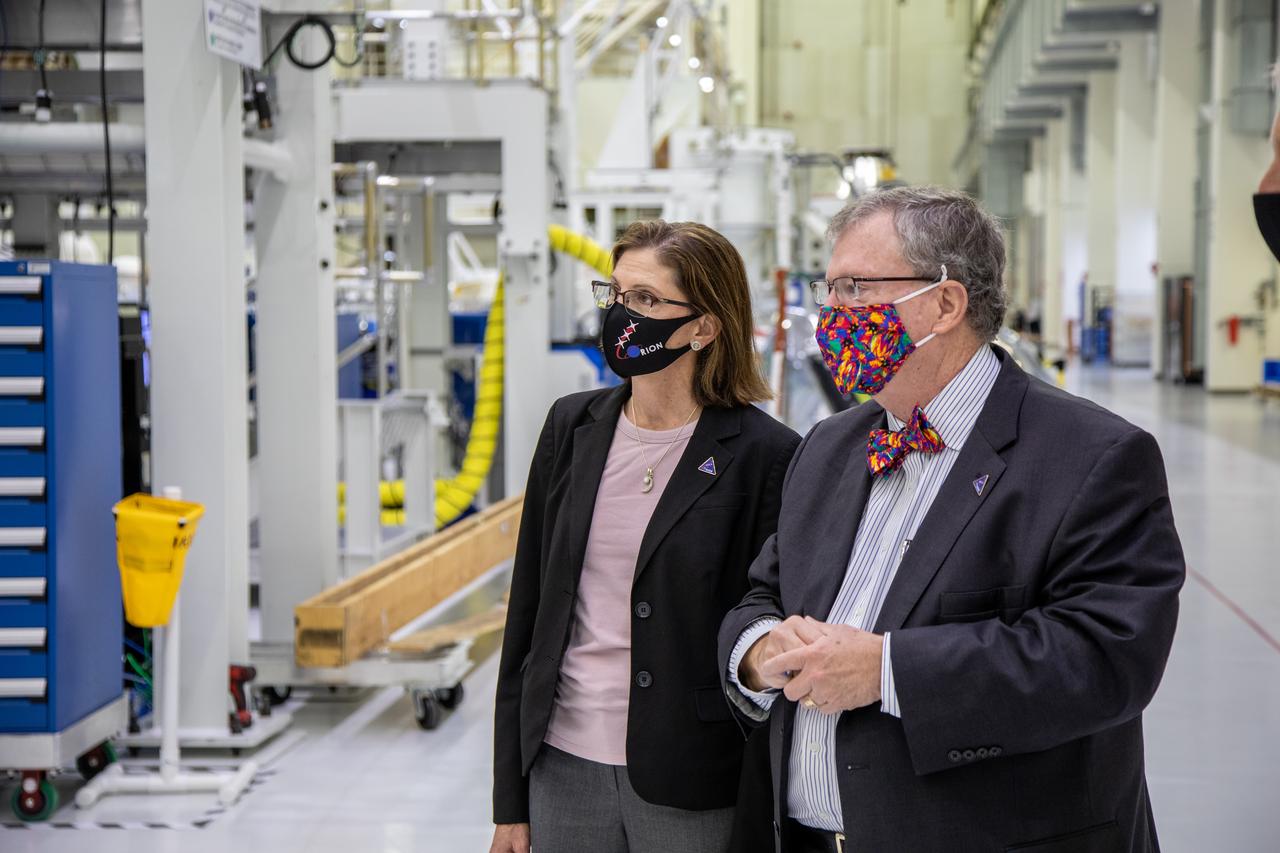
Catherine Koerner, at left, NASA Orion Program manager, along with senior managers from Orion and Lockheed Martin, tours the Neil Armstrong Operations and Checkout Building at NASA’s Kennedy Space Center in Florida on Oct. 6, 2020. Accompanying her, at right is Mike Hawes, Lockheed Martin vice president and Orion Program manager. Koerner viewed Orion spacecraft for the Artemis I and II missions. The first in a series of increasingly complex missions, Artemis I will test the Orion spacecraft and Space Launch System as an integrated system ahead of crewed flights to the Moon. Under the Artemis program, NASA will land the first woman and the next man on the Moon in 2024.
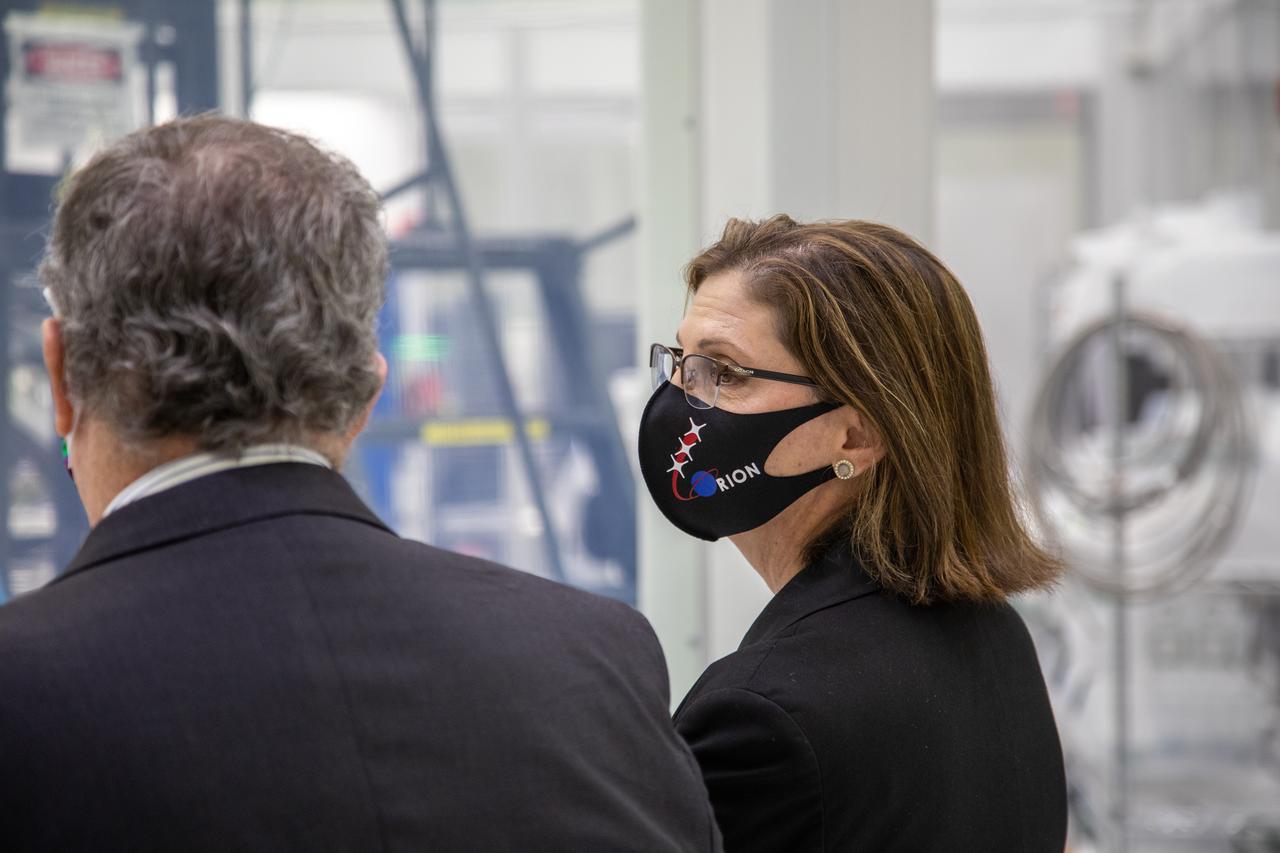
Catherine Koerner, at right, NASA Orion Program manager, along with senior managers from Orion and Lockheed Martin, tours the Neil Armstrong Operations and Checkout Building at NASA’s Kennedy Space Center in Florida on Oct. 6, 2020. Accompanying her, at left is Mike Hawes, Lockheed Martin vice president and Orion Program manager. Koerner viewed Orion spacecraft for the Artemis I and II missions. The first in a series of increasingly complex missions, Artemis I will test the Orion spacecraft and Space Launch System as an integrated system ahead of crewed flights to the Moon. Under the Artemis program, NASA will land the first woman and the next man on the Moon in 2024.
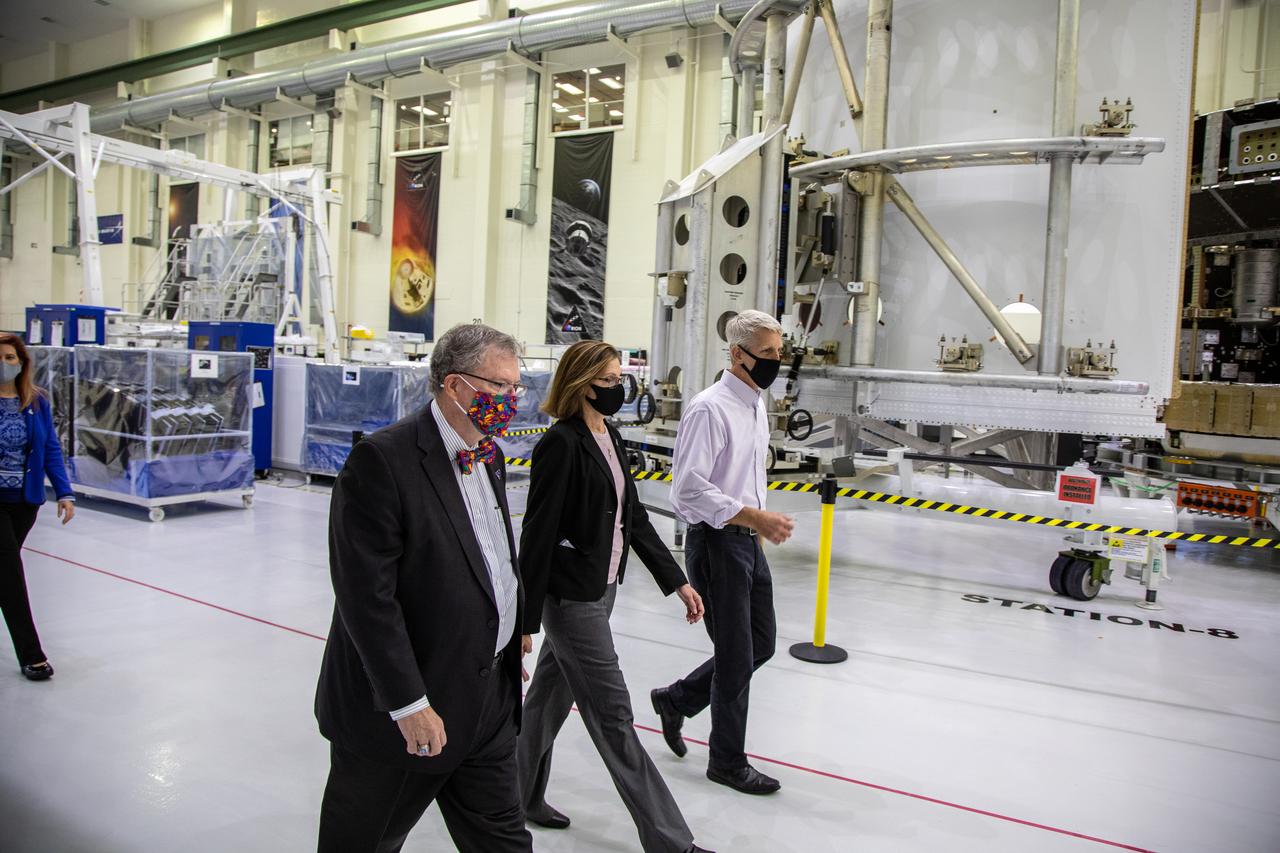
Catherine Koerner, in the center, NASA Orion Program manager, along with senior managers from Orion and Lockheed Martin, tours the Neil Armstrong Operations and Checkout Building at NASA’s Kennedy Space Center in Florida on Oct. 6, 2020. Accompanying her, at left is Mike Hawes, Lockheed Martin vice president and Orion Program manager; and at right is Scott Wilson, NASA Kennedy Orion Production Operations manager. Koerner viewed the Orion spacecraft for the Artemis I and II missions. They are shown with one of the space adapter jettison fairing panels that will be installed on Orion for the Artemis I mission. The first in a series of increasingly complex missions, Artemis I will test the Orion spacecraft and Space Launch System as an integrated system ahead of crewed flights to the Moon. Under the Artemis program, NASA will land the first woman and the next man on the Moon in 2024.
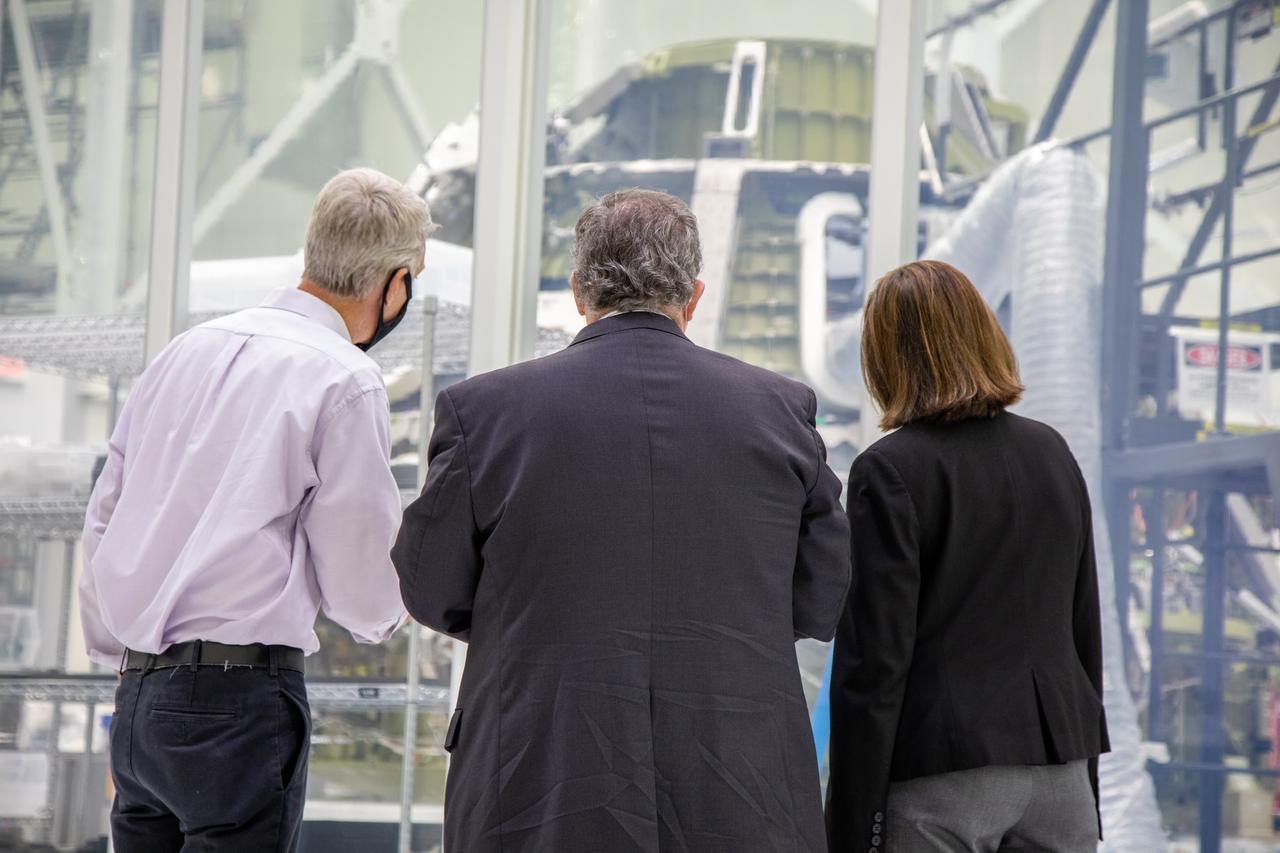
Catherine Koerner, at far right, NASA Orion Program manager, along with senior managers from Orion and Lockheed Martin, tours the Neil Armstrong Operations and Checkout Building at NASA’s Kennedy Space Center in Florida on Oct. 6, 2020. Accompanying her, from left are Scott Wilson, NASA Kennedy Orion Production Operations manager, and Mike Hawes, Lockheed Martin vice president and Orion Program manager. They are pictured viewing the Orion crew module for the Artemis II mission, and also viewed the Orion spacecraft with its solar array wings installed for Artemis I. The first in a series of increasingly complex missions, Artemis I will test the Orion spacecraft and Space Launch System as an integrated system ahead of crewed flights to the Moon. Under the Artemis program, NASA will land the first woman and the next man on the Moon in 2024.
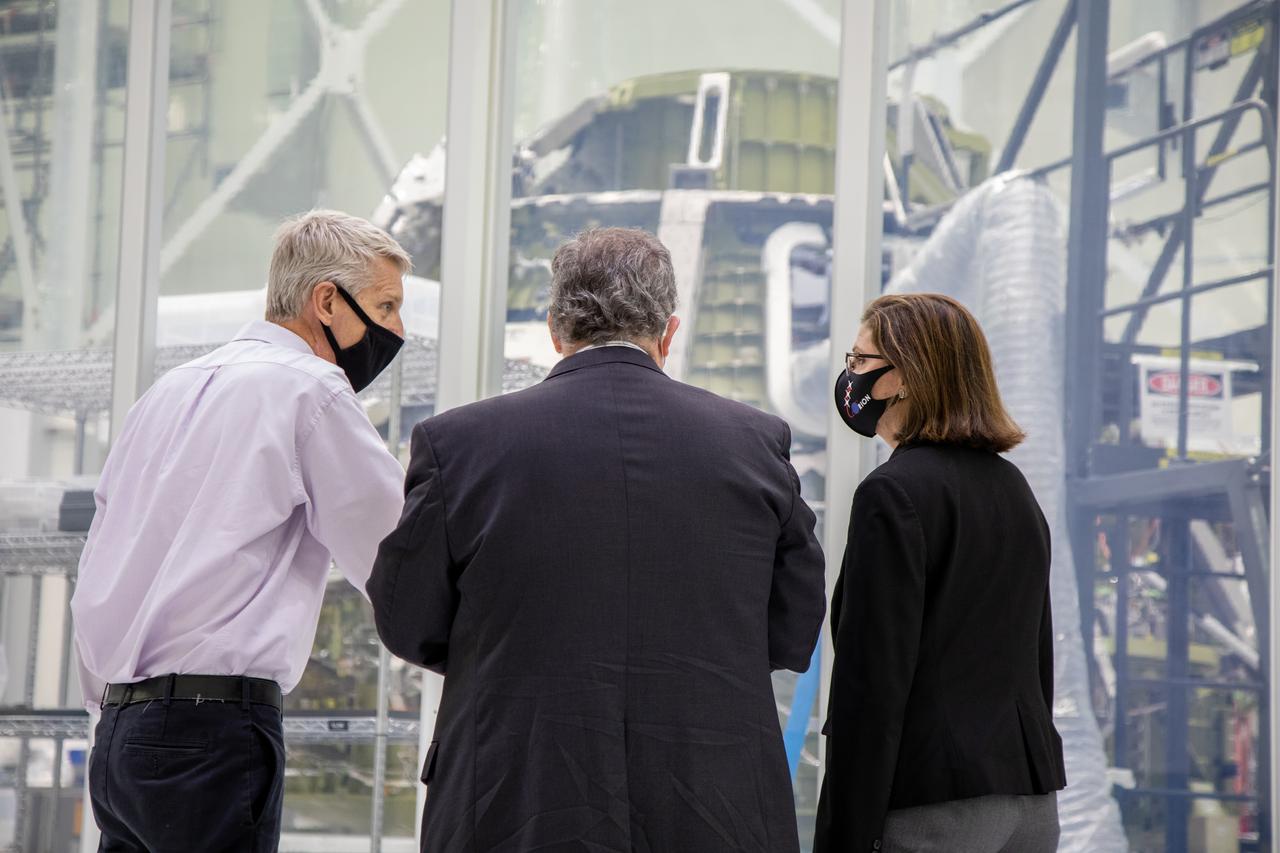
Catherine Koerner, at far right, NASA Orion Program manager, along with senior managers from Orion and Lockheed Martin, tours the Neil Armstrong Operations and Checkout Building at NASA’s Kennedy Space Center in Florida on Oct. 6, 2020. Accompanying her, from left are Scott Wilson, NASA Kennedy Orion Production Operations manager, and Mike Hawes, Lockheed Martin vice president and Orion Program manager. They are pictured viewing the Orion crew module for the Artemis II mission, and also viewed the Orion spacecraft with its solar array wings installed for Artemis I. The first in a series of increasingly complex missions, Artemis I will test the Orion spacecraft and Space Launch System as an integrated system ahead of crewed flights to the Moon. Under the Artemis program, NASA will land the first woman and the next man on the Moon in 2024.
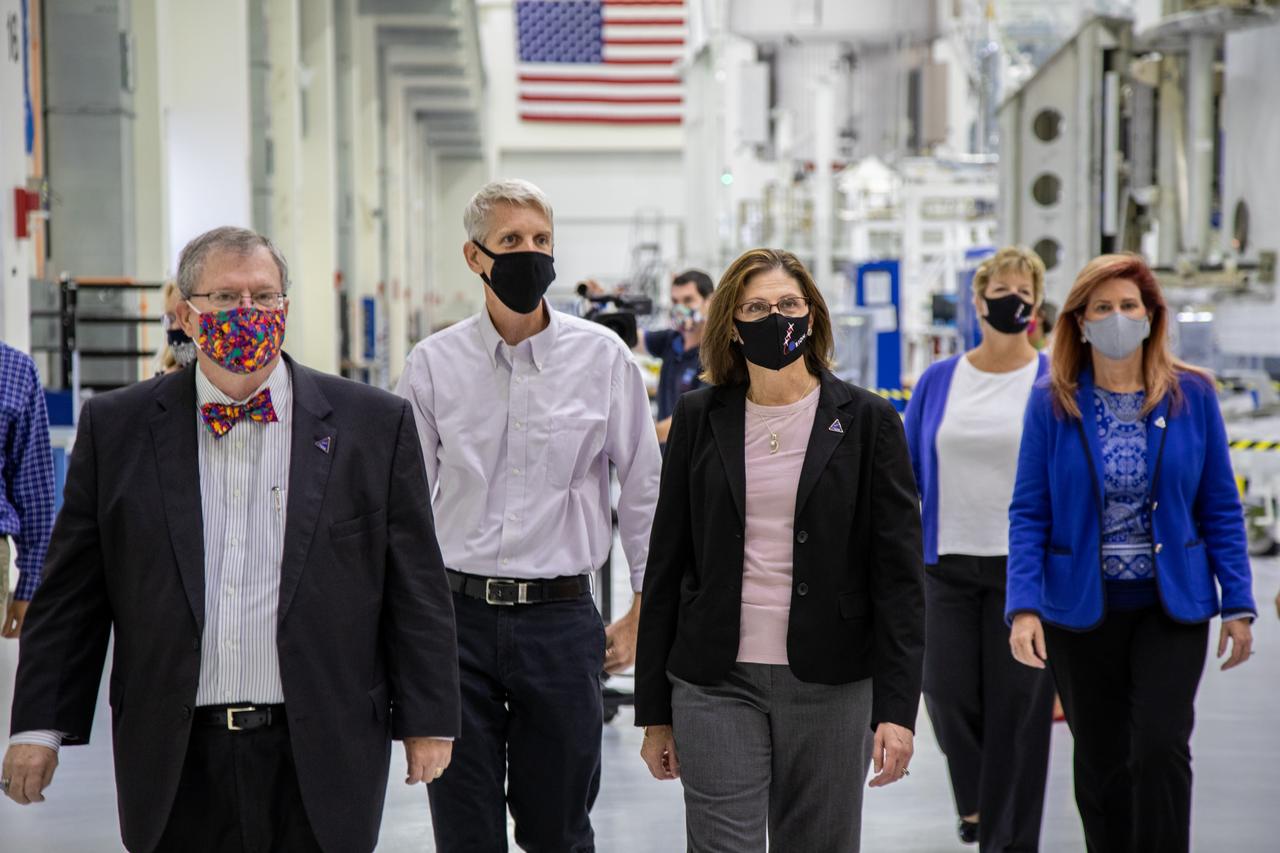
Catherine Koerner, in the center, NASA Orion Program manager, along with senior managers from Orion and Lockheed Martin, tour the Neil Armstrong Operations and Checkout Building at NASA’s Kennedy Space Center in Florida on Oct. 6, 2020. Accompanying her, from left are Mike Hawes, Lockheed Martin vice president and Orion Program manager; Scott Wilson, NASA Kennedy Orion Production Operations manager; Annette Hasbrook, Orion Program assistant manager; and Kelly DeFazio, Lockheed Martin vehicle production director on the Orion Production Operations Contract. Koerner viewed Orion spacecraft for the Artemis I and II missions. In view in the background, at right, is one of three Spacecraft Adapter Jettison fairing panels to be installed on the spacecraft. The first in a series of increasingly complex missions, Artemis I will test the Orion spacecraft and Space Launch System as an integrated system ahead of crewed flights to the Moon. Under the Artemis program, NASA will land the first woman and the next man on the Moon in 2024.
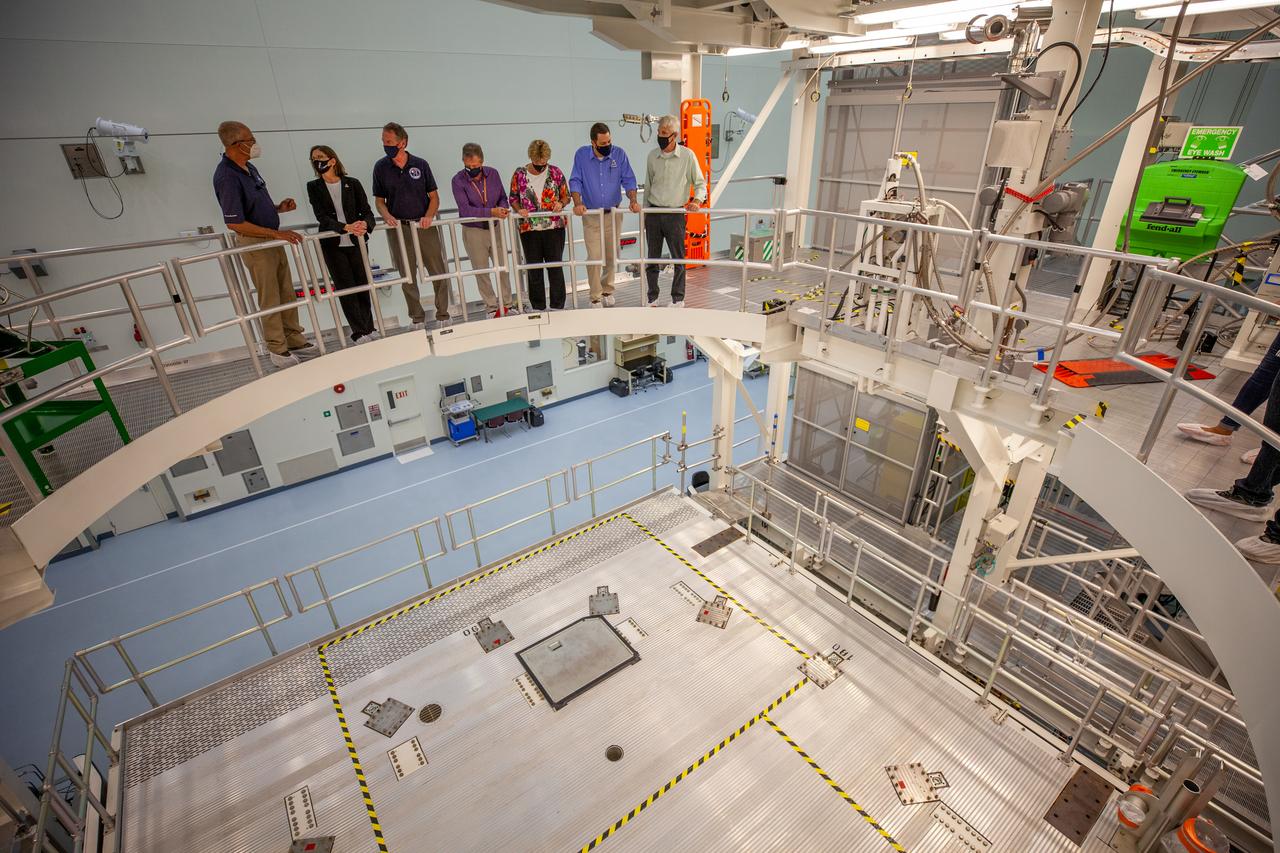
Catherine Koerner, second from left, NASA Orion Program manager, along with senior managers from Orion, Exploration Ground Systems (EGS) and TOSC, tours the Multi-Payload Processing Facility (MPPF) at NASA’s Kennedy Space Center in Florida on Oct. 5, 2020. Accompanying her, from left are Skip Williams, operations manager for the MPPF spacecraft offline element integration team; Mike Bolger, EGS manager; Nicolas Kindred, TOSC flow manager; Annette Hasbrook, Orion Program assistant manager; Jeremy Parsons, EGS deputy manager; and Scott Wilson, Orion Production Operations manager. Koerner viewed spacecraft hardware and processing facilities for the Artemis I and II missions. The first in a series of increasingly complex missions, Artemis I will test the Orion spacecraft and Space Launch System as an integrated system ahead of crewed flights to the Moon. Under the Artemis program, NASA will land the first woman and the next man on the Moon in 2024.
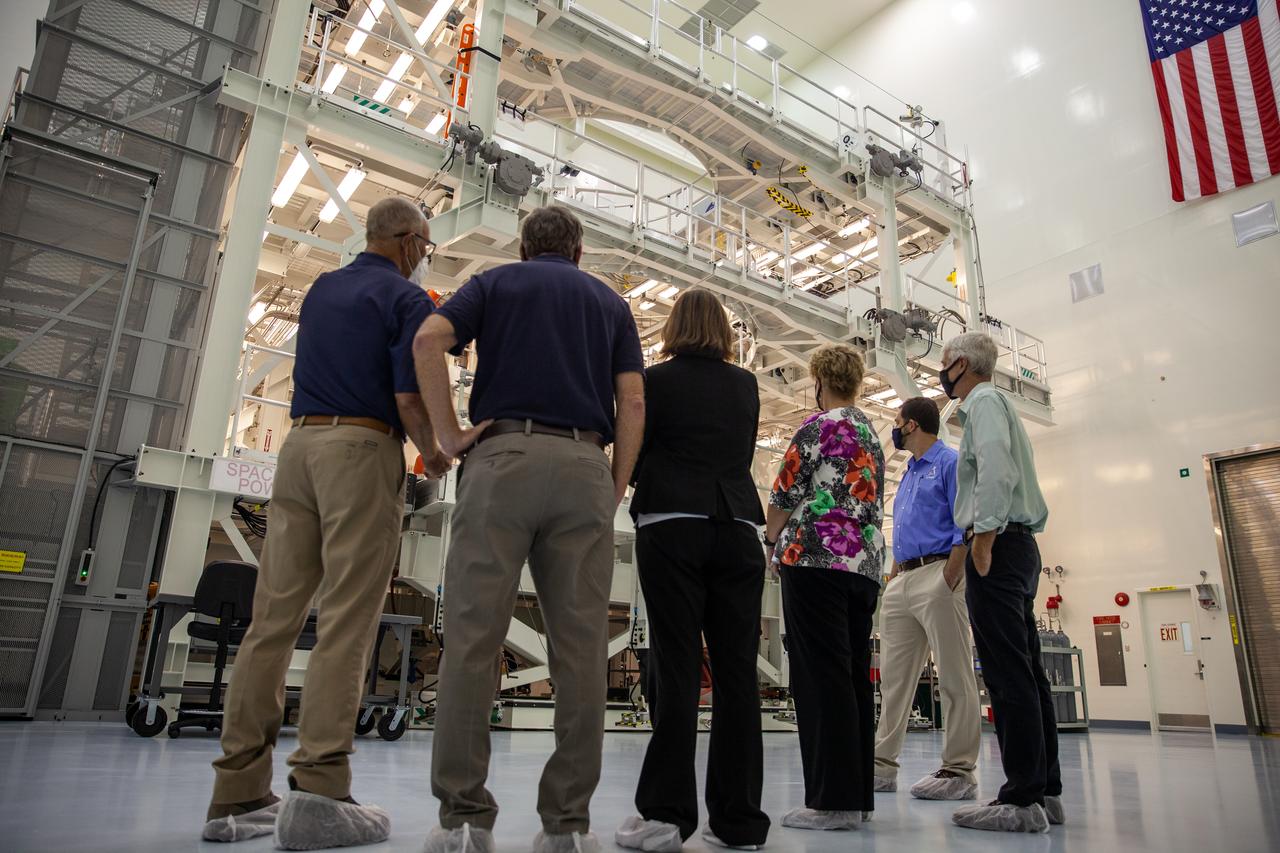
Catherine Koerner, third from left, NASA Orion Program manager, along with senior managers from Orion, and Exploration Ground Systems (EGS), visits the Multi-Payload Processing Facility (MPPF) at NASA’s Kennedy Space Center in Florida on Oct. 5, 2020. Accompanying her, from left are Skip Williams, operations manager for the MPPF spacecraft offline element integration team; Mike Bolger, EGS manager; Annette Hasbrook, Orion Program assistant manager; Scott Wilson, Orion Production Operations manager; and Jeremy Parsons, EGS deputy manager. Koerner viewed spacecraft hardware and processing facilities for the Artemis I and II missions. The first in a series of increasingly complex missions, Artemis I will test the Orion spacecraft and Space Launch System as an integrated system ahead of crewed flights to the Moon. Under the Artemis program, NASA will land the first woman and the next man on the Moon in 2024.
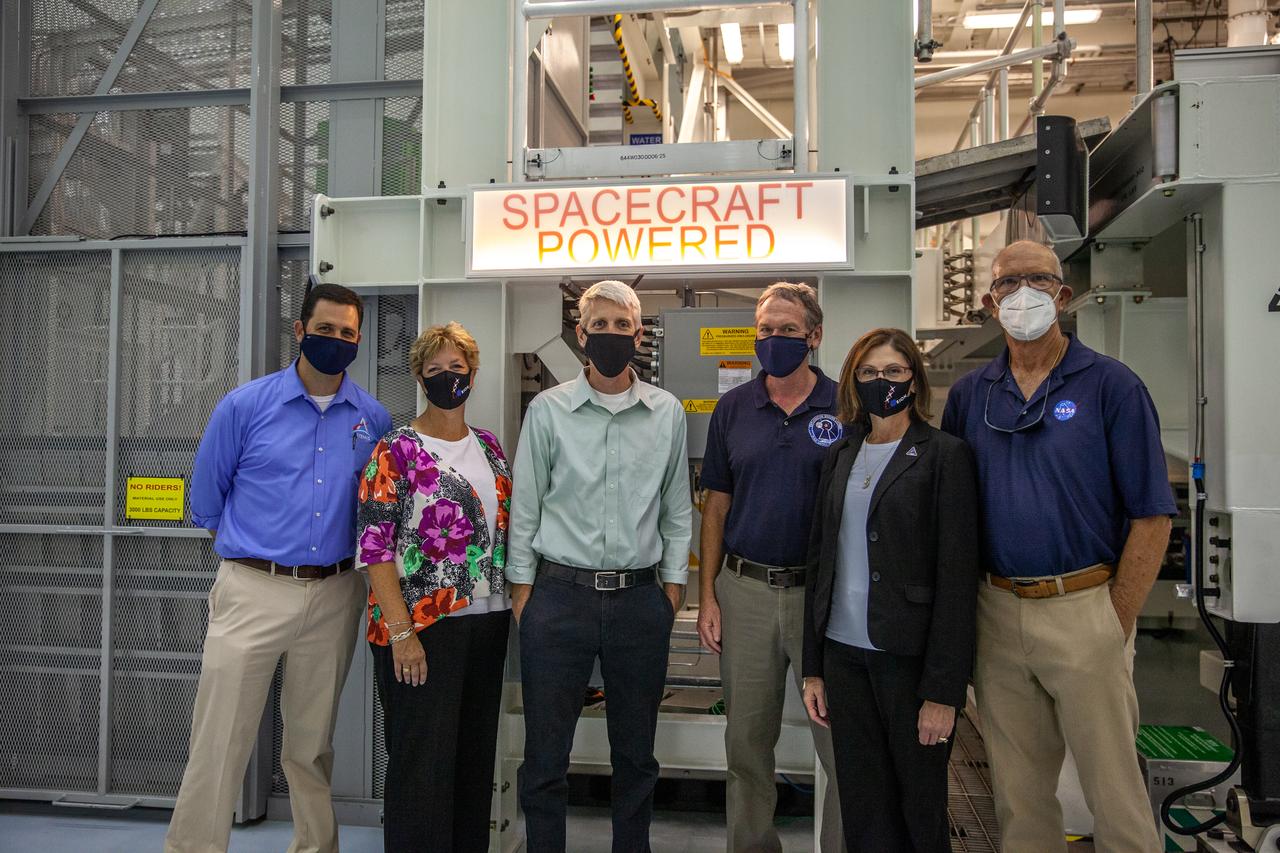
Catherine Koerner, second from right, NASA Orion Program manager, along with senior managers from Orion, and Exploration Ground Systems (EGS), tours the Multi-Payload Processing Facility (MPPF) at NASA’s Kennedy Space Center in Florida on Oct. 5, 2020. Accompanying her, from left are Jeremy Parsons, EGS deputy manager; Annette Hasbrook, Orion Program assistant manager; Scott Wilson, Orion Production Operations manager; and Mike Bolger, EGS manager. At far right is Skip Williams, operations manager for the MPPF spacecraft offline element integration team. Koerner viewed spacecraft hardware and processing facilities for the Artemis I and II missions. The first in a series of increasingly complex missions, Artemis I will test the Orion spacecraft and Space Launch System as an integrated system ahead of crewed flights to the Moon. Under the Artemis program, NASA will land the first woman and the next man on the Moon in 2024.
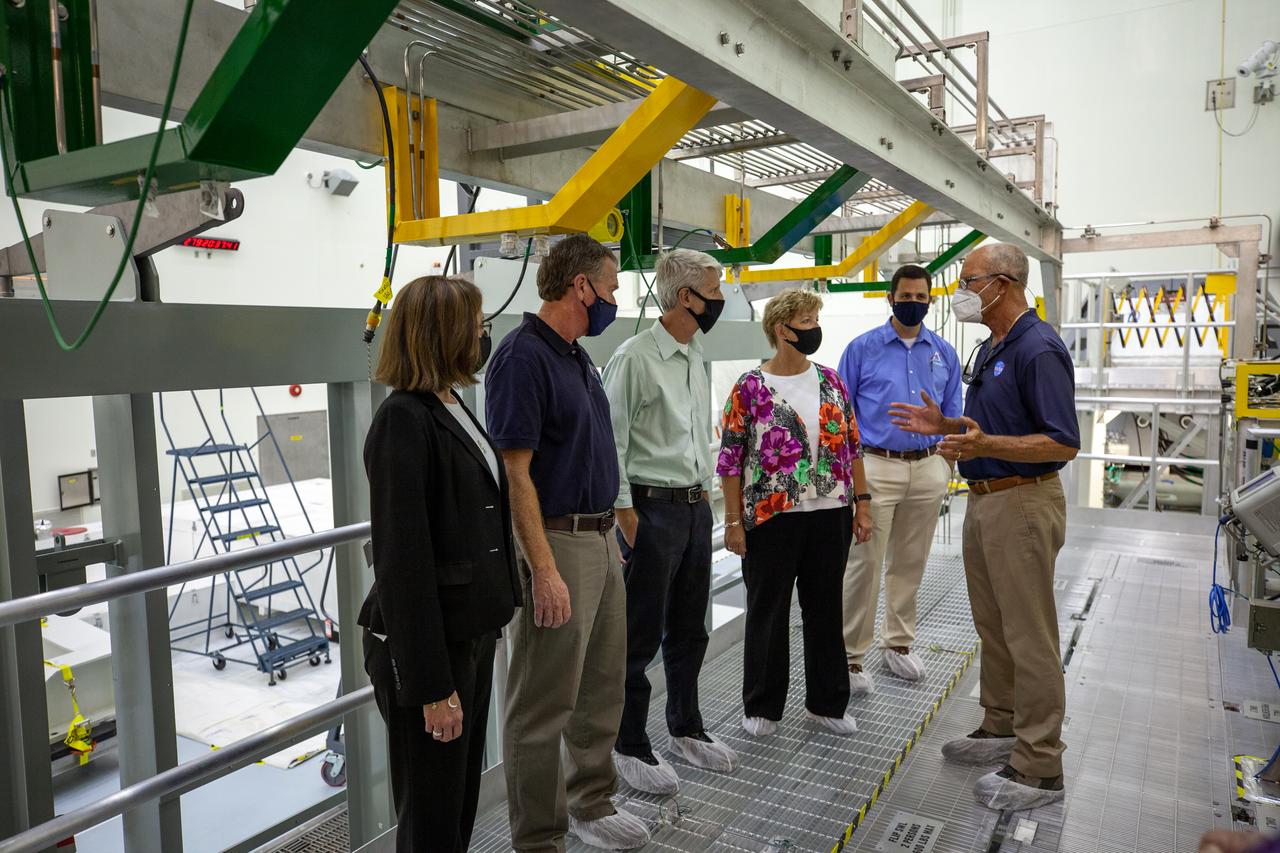
Catherine Koerner, far left, NASA Orion Program manager, along with senior managers from Orion, and Exploration Ground Systems (EGS), tours the Multi-Payload Processing Facility (MPPF) at NASA’s Kennedy Space Center in Florida on Oct. 5, 2020. Accompanying her, from left are Mike Bolger, EGS manager; Scott Wilson, Orion Production Operations manager; Annette Hasbrook, Orion Program assistant manager; and Jeremy Parsons, EGS deputy manager. Speaking to the group is Skip Williams, operations manager for the MPPF spacecraft offline element integration team. Koerner viewed spacecraft hardware and processing facilities for the Artemis I and II missions. The first in a series of increasingly complex missions, Artemis I will test the Orion spacecraft and Space Launch System as an integrated system ahead of crewed flights to the Moon. Under the Artemis program, NASA will land the first woman and the next man on the Moon in 2024.
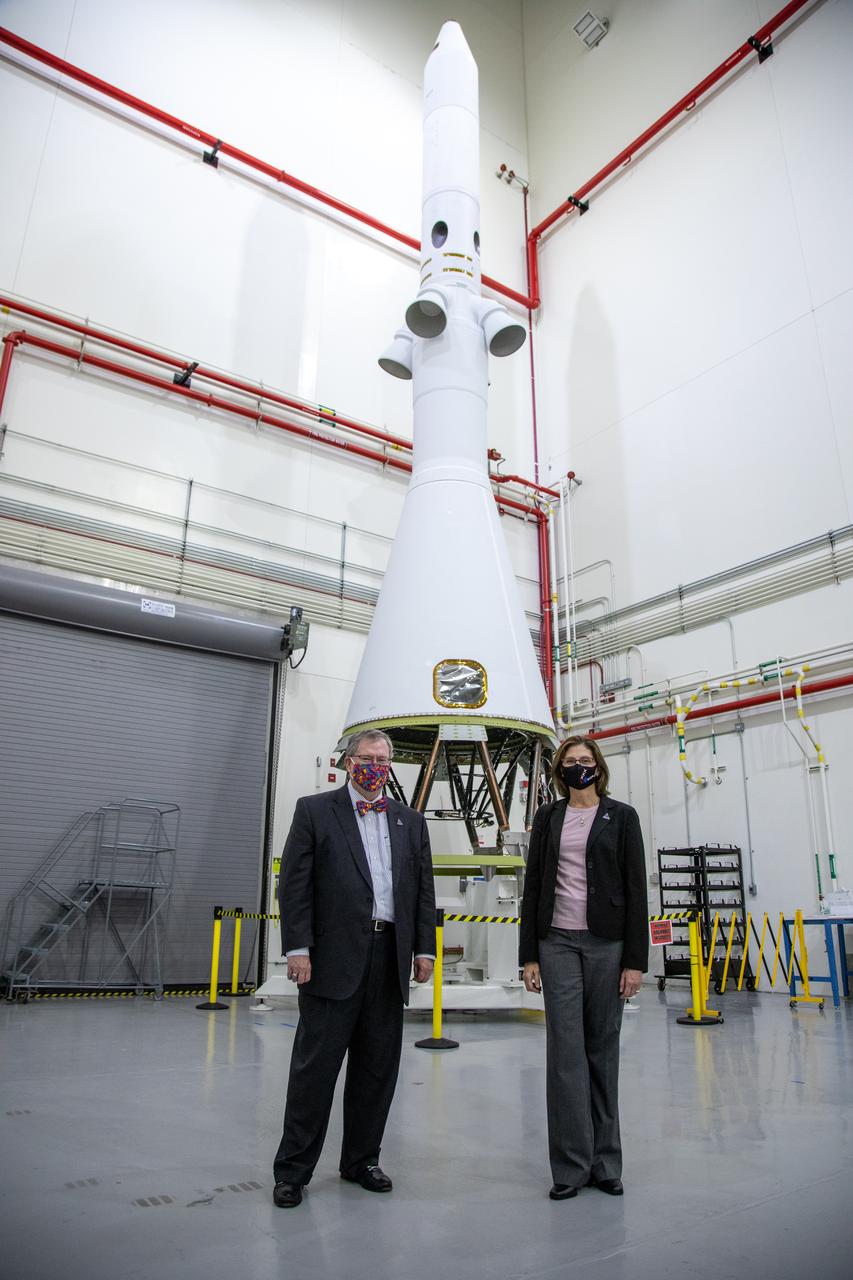
Catherine Koerner, NASA Orion Program manager, along with senior managers from Orion and Lockheed Martin, tour the Launch Abort System Facility at NASA’s Kennedy Space Center in Florida on Oct. 6, 2020. Pictured with Mike Hawes, Lockheed Martin vice president and Orion Program manager, they are viewing the launch abort system for the Artemis I mission. Koerner also viewed the Orion spacecraft for the Artemis I and II missions in the Neil Armstrong Operations and Checkout Building. The first in a series of increasingly complex missions, Artemis I will test the Orion spacecraft and Space Launch System as an integrated system ahead of crewed flights to the Moon. Under the Artemis program, NASA will land the first woman and the next man on the Moon in 2024.
Catherine Koerner, far right, NASA Orion Program manager, along with senior managers from Orion and Lockheed Martin, tour the Launch Abort System Facility at NASA’s Kennedy Space Center in Florida on Oct. 6, 2020. Accompanying her from left, are Carlos Garcia, NASA Kennedy Launch Abort System Assembly, Integration and Test lead and Resident office manager; Scott Wilson, NASA Kennedy Orion Production Operations manager; Jim Skaggs, Kennedy Operations senior manager with Lockheed Martin; Jules Schneider, Kennedy Assembly, Test and Launch Operations director with Lockheed Martin; Mike Hawes, Lockheed Martin vice president and Orion Program manager; and Annette Hasbrook, Orion Program assistant manager. They are viewing the launch abort system for the Artemis II mission. Koerner also viewed the Orion spacecraft for the Artemis I and II missions in the Neil Armstrong Operations and Checkout Building. The first in a series of increasingly complex missions, Artemis I will test the Orion spacecraft and Space Launch System as an integrated system ahead of crewed flights to the Moon. Under the Artemis program, NASA will land the first woman and the next man on the Moon in 2024.
Catherine Koerner, third from right, NASA Orion Program manager, along with senior managers from Orion and Lockheed Martin, tour the Launch Abort System Facility at NASA’s Kennedy Space Center in Florida on Oct. 6, 2020. Accompanying her from left, are Jim Skaggs, Kennedy Operations senior manager with Lockheed Martin; Jules Schneider, Kennedy Assembly, Test and Launch Operations director with Lockheed Martin; Mike Hawes, Lockheed Martin vice president and Orion Program manager; Scott Wilson, NASA Kennedy Orion Production Operations manager; and Annette Hasbrook, Orion Program assistant manager. They are viewing the launch abort system for the Artemis II mission. Koerner also viewed the Orion spacecraft for the Artemis I and II missions in the Neil Armstrong Operations and Checkout Building. The first in a series of increasingly complex missions, Artemis I will test the Orion spacecraft and Space Launch System as an integrated system ahead of crewed flights to the Moon. Under the Artemis program, NASA will land the first woman and the next man on the Moon in 2024.
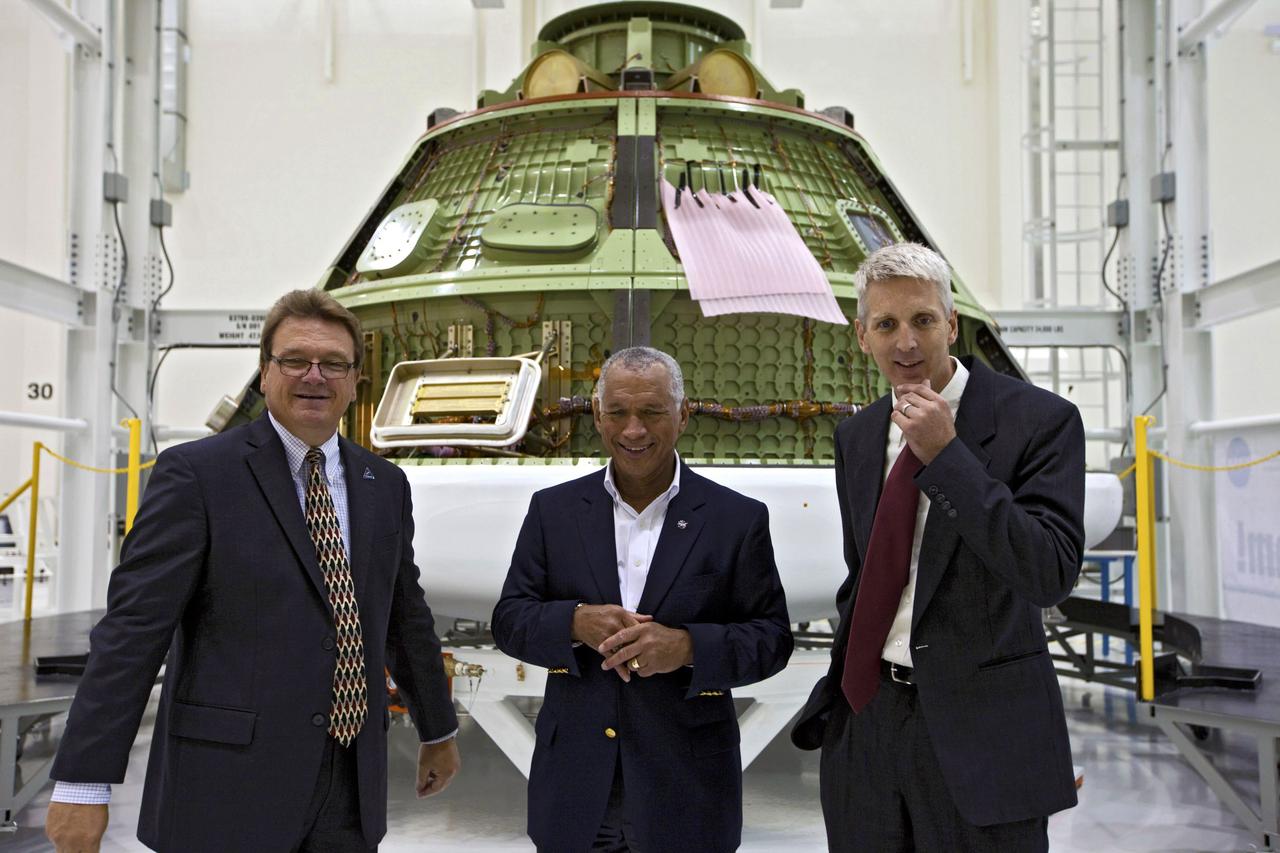
CAPE CANAVERAL, Fla. - In the Operations and Checkout Building at the Kennedy Space Center in Florida, NASA Administrator Charles Bolden, center, addresses news media in front of the Orion EFT-1 spacecraft. Also participating are Jules Schneider, senior manager of Project Engineering for the Lockheed Martin Orion Program at Kennedy, left, and Scott Wilson, NASA's manager of Production Operations for the Orion Program. Bolden took a few dozen members of the news media on a tour of the space agency's Kennedy Space Center and adjacent Cape Canaveral Air Force Station on Aug. 23, 2012 to show the progress being made for future government and commercial space endeavors that will begin from Florida's Space Coast. For more information, visit: http://www.nasa.gov/centers/kennedy/news/kennedy-bolden-tour.html Photo credit: NASA/Kim Shiflett
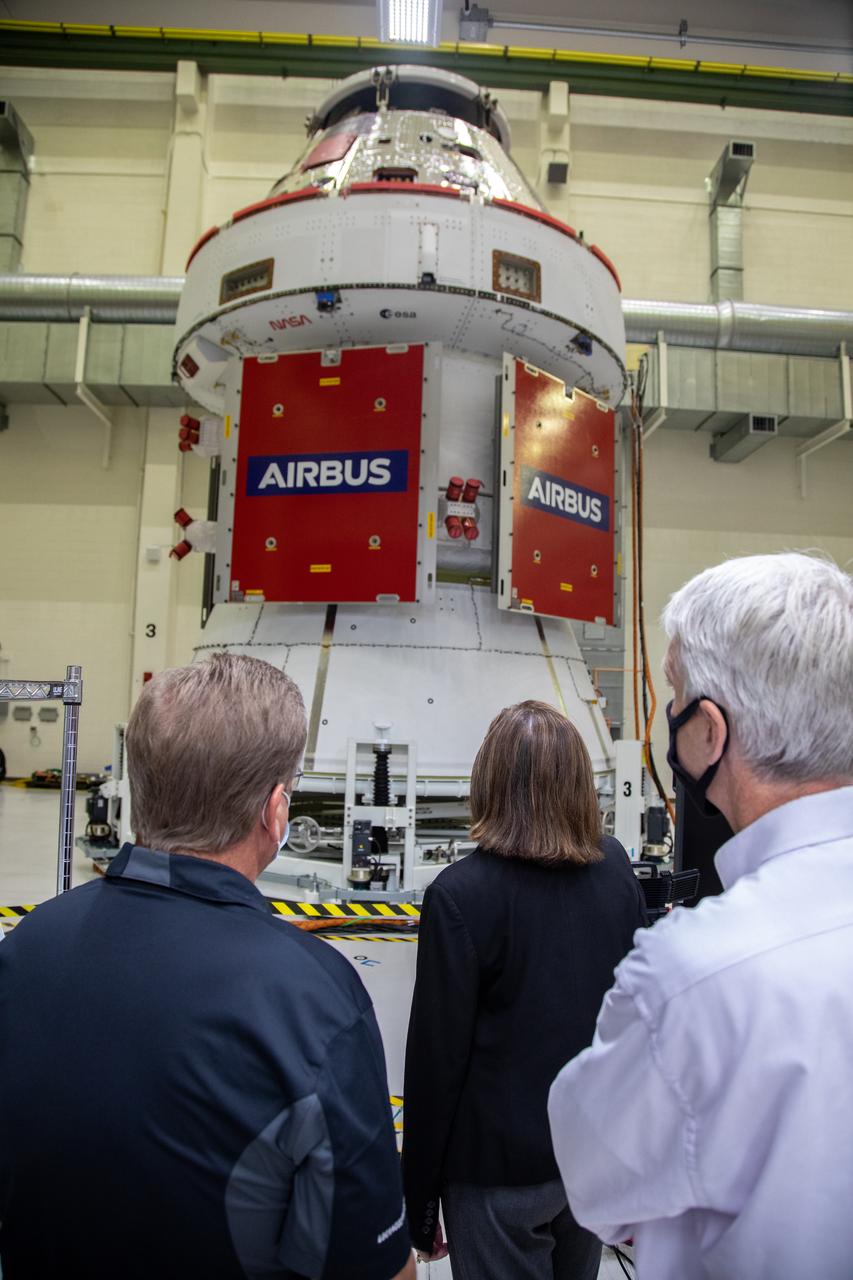
Catherine Koerner, in the center, NASA Orion Program manager, along with senior managers from Orion and Lockheed Martin, tour the Neil Armstrong Operations and Checkout Building at NASA’s Kennedy Space Center in Florida on Oct. 6, 2020. Accompanying her, at right is Scott Wilson, NASA Kennedy Orion Production Operations manager. At left is Jules Schneider, Lockheed Martin Assembly, Test and Launch Operations director with Lockheed Martin. Koerner viewed Orion spacecraft for the Artemis I and II missions. In view is the Orion spacecraft for Artemis I with its solar arrays installed and protective covers secured over them. The first in a series of increasingly complex missions, Artemis I will test the Orion spacecraft and Space Launch System as an integrated system ahead of crewed flights to the Moon. Under the Artemis program, NASA will land the first woman and the next man on the Moon in 2024.
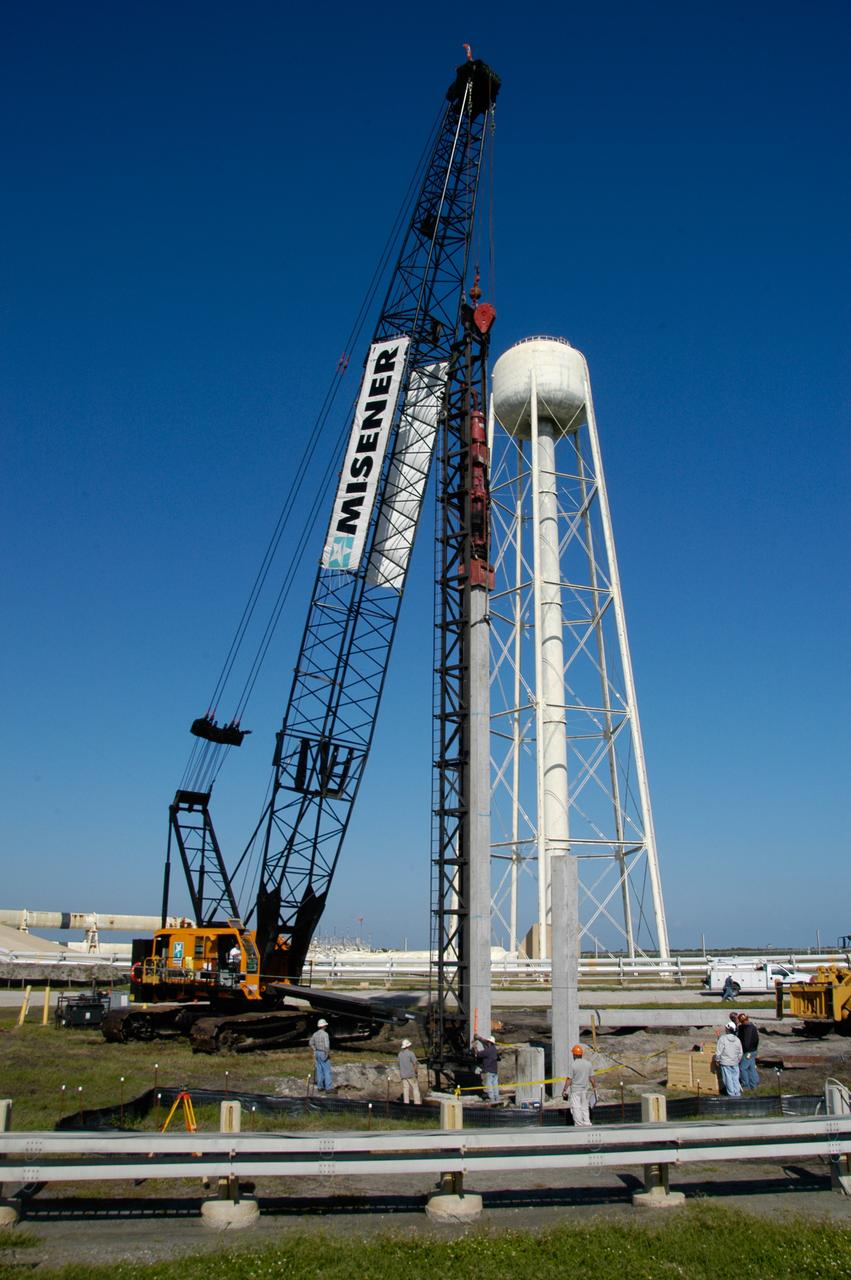
On Launch Pad 39B at NASA's Kennedy Space Center, the crane crawler puts a piling into place to be pounded into the ground to help construct lightning towers for the Constellation Program and Ares/Orion launches. Pad B will be the site of the first Ares vehicle launch, including Ares I-X which is scheduled for April 2009.

On Launch Pad 39B at NASA's Kennedy Space Center, the crane crawler lifts a piling off a truck. The piling will be pounded into the ground to help construct lightning towers for the Constellation Program and Ares/Orion launches. Pad B will be the site of the first Ares vehicle launch, including Ares I-X which is scheduled for April 2009.
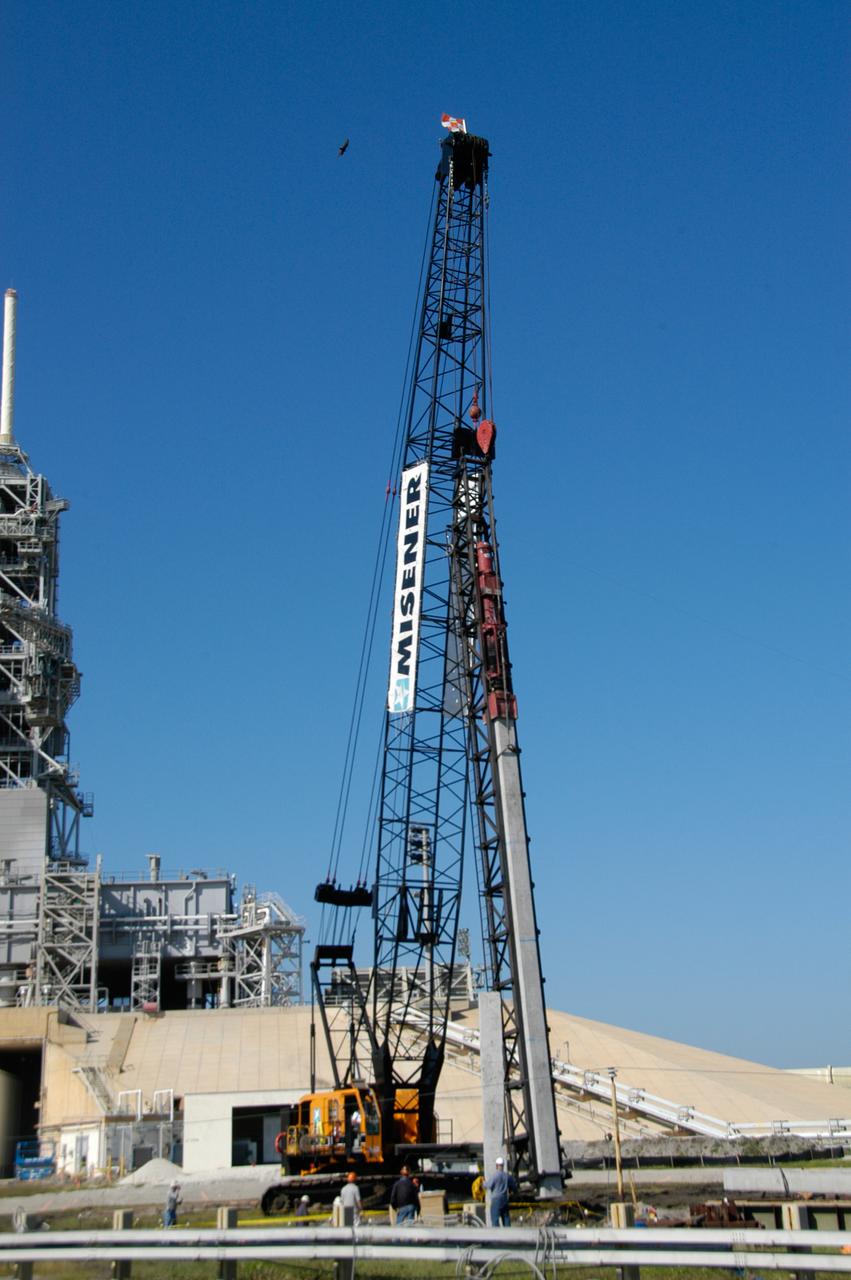
On Launch Pad 39B at NASA's Kennedy Space Center, the crane crawler lifts a piling into place to be pounded into the ground to help construct lightning towers for the Constellation Program and Ares/Orion launches. Pad B will be the site of the first Ares vehicle launch, including Ares I-X which is scheduled for April 2009.
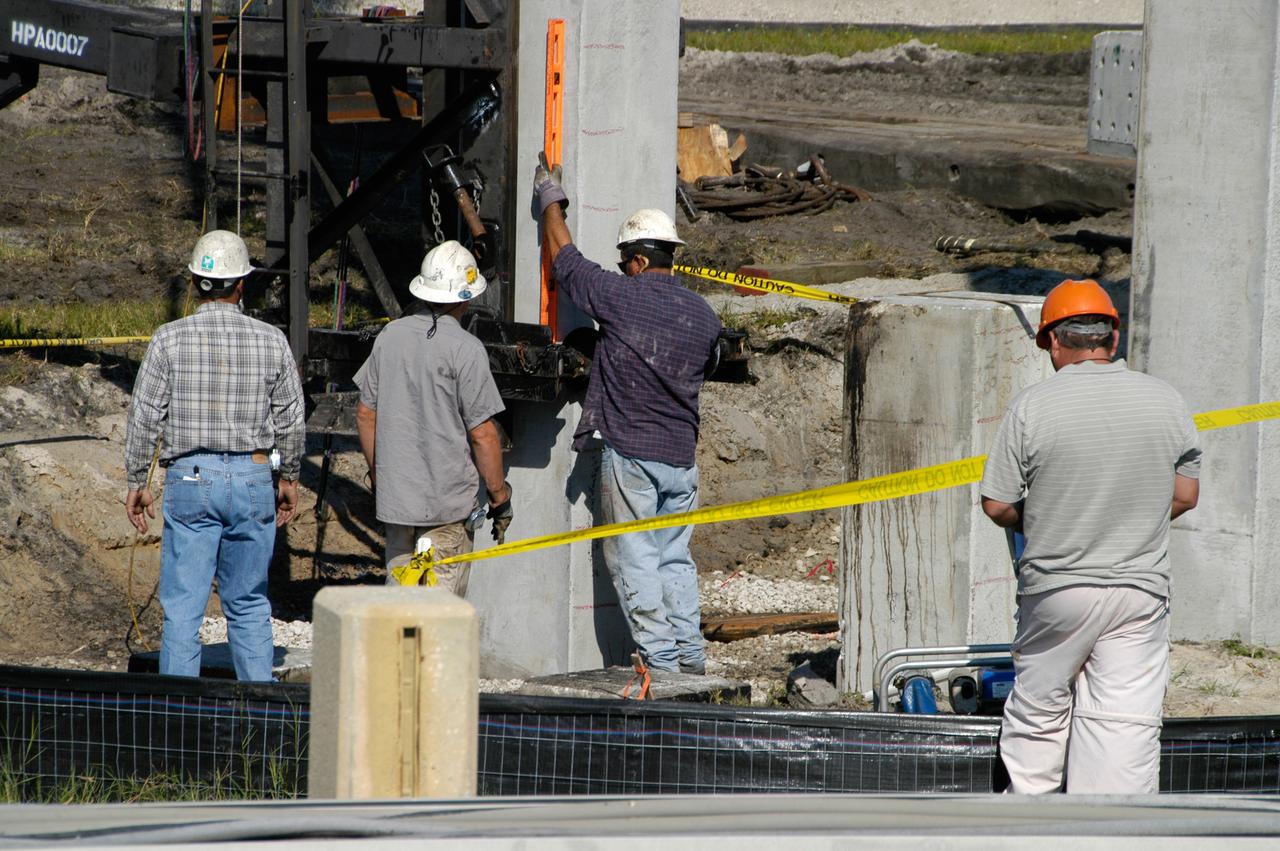
On Launch Pad 39B at NASA's Kennedy Space Center, workers measure the piling being pounded into the ground to help construct lightning towers for the Constellation Program and Ares/Orion launches. Pad B will be the site of the first Ares vehicle launch, including Ares I-X which is scheduled for April 2009.
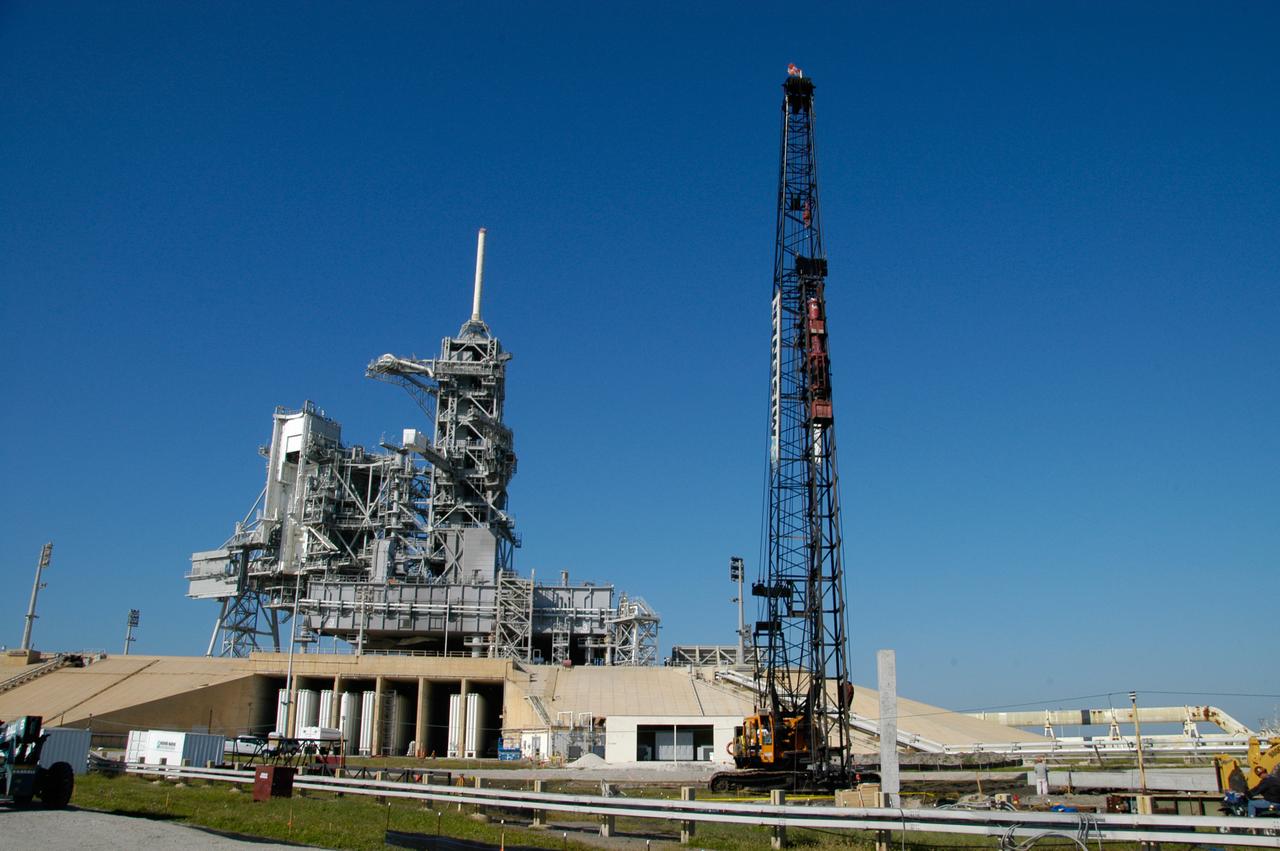
On Launch Pad 39B at NASA's Kennedy Space Center, pilings are being pounded into the ground to help construct lightning towers for the Constellation Program and Ares/Orion launches. Pad B will be the site of the first Ares vehicle launch, including Ares I-X which is scheduled for April 2009.
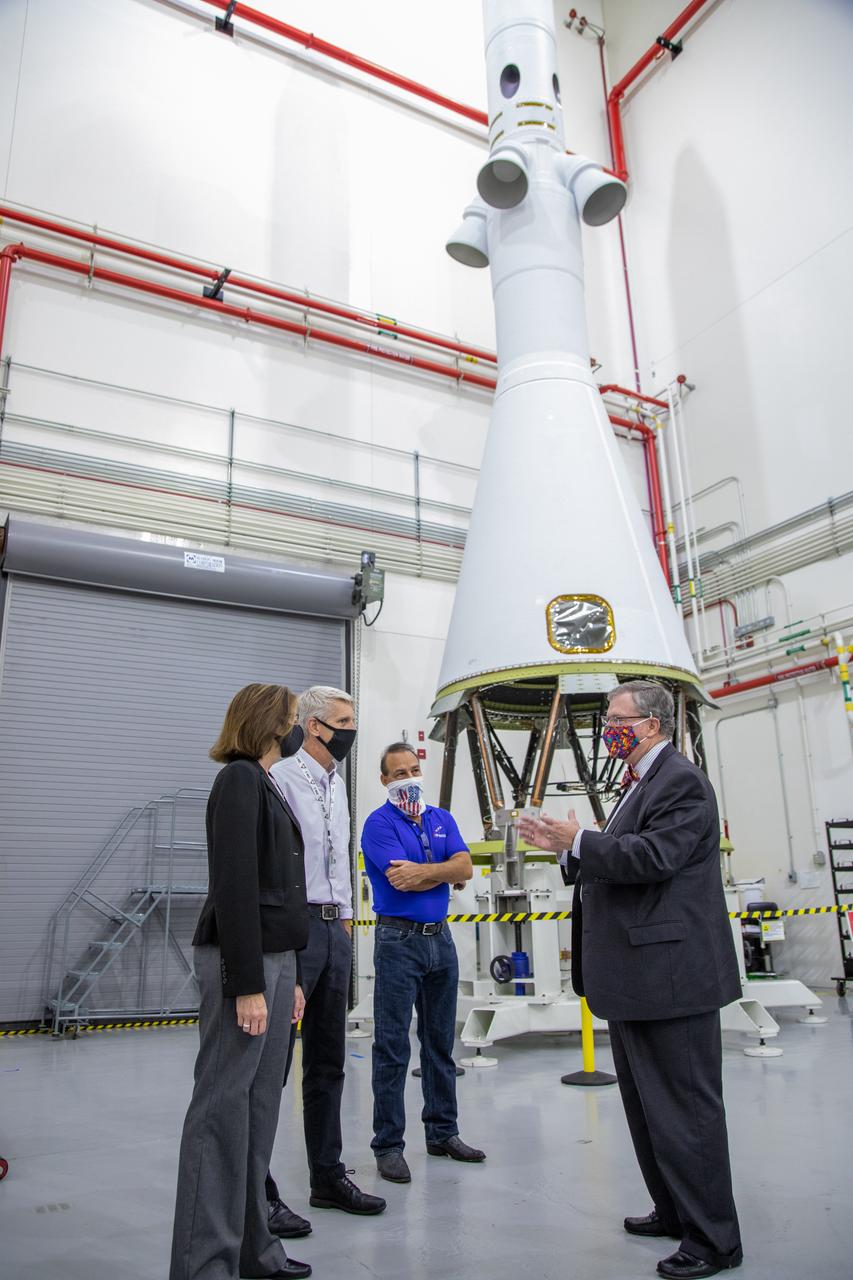
Catherine Koerner, far left, NASA Orion Program manager, along with senior managers from Orion and Lockheed Martin, tour the Launch Abort System Facility at NASA’s Kennedy Space Center in Florida on Oct. 6, 2020. Accompanying her from left, are Scott Wilson, NASA Kennedy Orion Production Operations manager; Carlos Garcia, NASA Kennedy Launch Abort System Assembly, Integration and Test lead and Resident office manager; and Mike Hawes, Lockheed Martin vice president and Orion Program manager. They are viewing the launch abort system for the Artemis I mission. Koerner also viewed the Orion spacecraft for the Artemis I and II missions in the Neil Armstrong Operations and Checkout Building. The first in a series of increasingly complex missions, Artemis I will test the Orion spacecraft and Space Launch System as an integrated system ahead of crewed flights to the Moon. Under the Artemis program, NASA will land the first woman and the next man on the Moon in 2024.

Catherine Koerner, in front, NASA Orion Program manager, along with senior managers from Orion, Exploration Ground Systems (EGS) and TOSC, tours the Multi-Payload Processing Facility (MPPF) at NASA’s Kennedy Space Center in Florida on Oct. 5, 2020. Accompanying her, from left are Nicolas Kindred, (partically hidden), TOSC flow manager; Jeremy Parsons, EGS deputy manager; Scott Wilson, Orion Production Operations manager; Mike Bolger, (partially hidden), EGS manager; and Skip Williams, operations manager for the MPPF spacecraft offline element integration team. Koerner viewed spacecraft hardware and processing facilities for the Artemis I and II missions. The first in a series of increasingly complex missions, Artemis I will test the Orion spacecraft and Space Launch System as an integrated system ahead of crewed flights to the Moon. Under the Artemis program, NASA will land the first woman and the next man on the Moon in 2024.

Catherine Koerner, second from right, NASA Orion Program manager, along with senior managers from Orion, Exploration Ground Systems (EGS) and TOSC, tours the Multi-Payload Processing Facility (MPPF) at NASA’s Kennedy Space Center in Florida on Oct. 5, 2020. Accompanying her, from left are Scott Wilson, Orion Production Operations manager; Mike Bolger, EGS manager; and Nicolas Kindred, TOSC flow manager. At right is Jeremy Parsons, EGS deputy manager. Koerner viewed spacecraft hardware and processing facilities for the Artemis I and II missions. The first in a series of increasingly complex missions, Artemis I will test the Orion spacecraft and Space Launch System as an integrated system ahead of crewed flights to the Moon. Under the Artemis program, NASA will land the first woman and the next man on the Moon in 2024.

jsc2026e396769 (June 25, 2026) - Orion Program Manager Howard Hu addresses the crowd at the Artemis II employee celebration event at NASA's Johnson Space Center. Credit: NASA
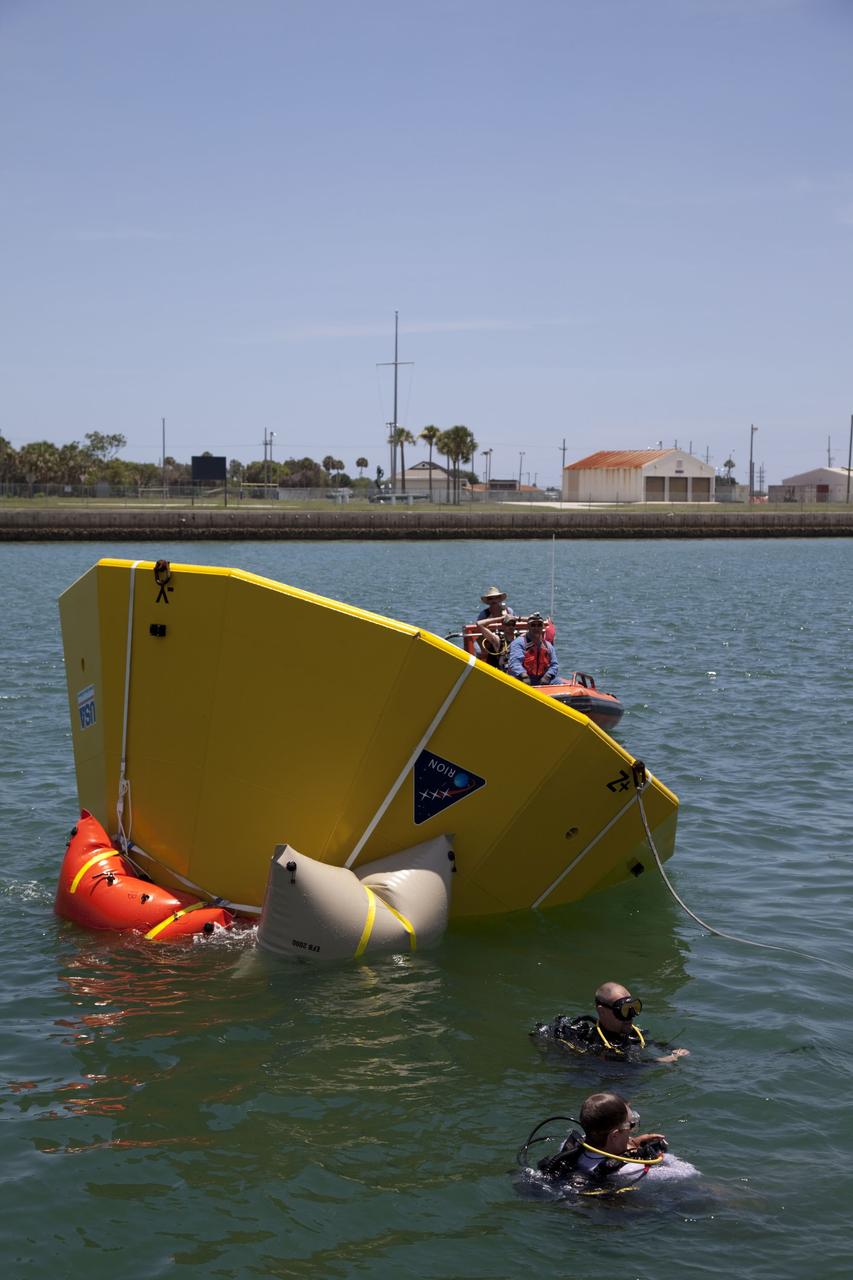
CAPE CANAVERAL, Fla. -- In the Delta turn basin at Cape Canaveral Air Force Station in Florida, United Space Alliance (USA) divers and boat crew tend an Orion test article while waiting for its lift bags to inflate. The uprighting tests are part of USA's research and development program to help develop ground operations support equipment that could be used to reorient and recover an uncrewed Orion flight test capsule after splashdown. USA is a major subcontractor to Lockheed Martin for the Orion spacecraft. The Orion Multi-Purpose Crew Vehicle is NASA's next-generation spacecraft designed for deep space missions to asteroids, moons and other interplanetary destinations throughout the solar system. Orion's first uncrewed orbital flight test is slated for 2013. For more information, visit http://www.nasa.gov/exploration/systems/mpcv/. Photo credit: NASA/Frankie Martin
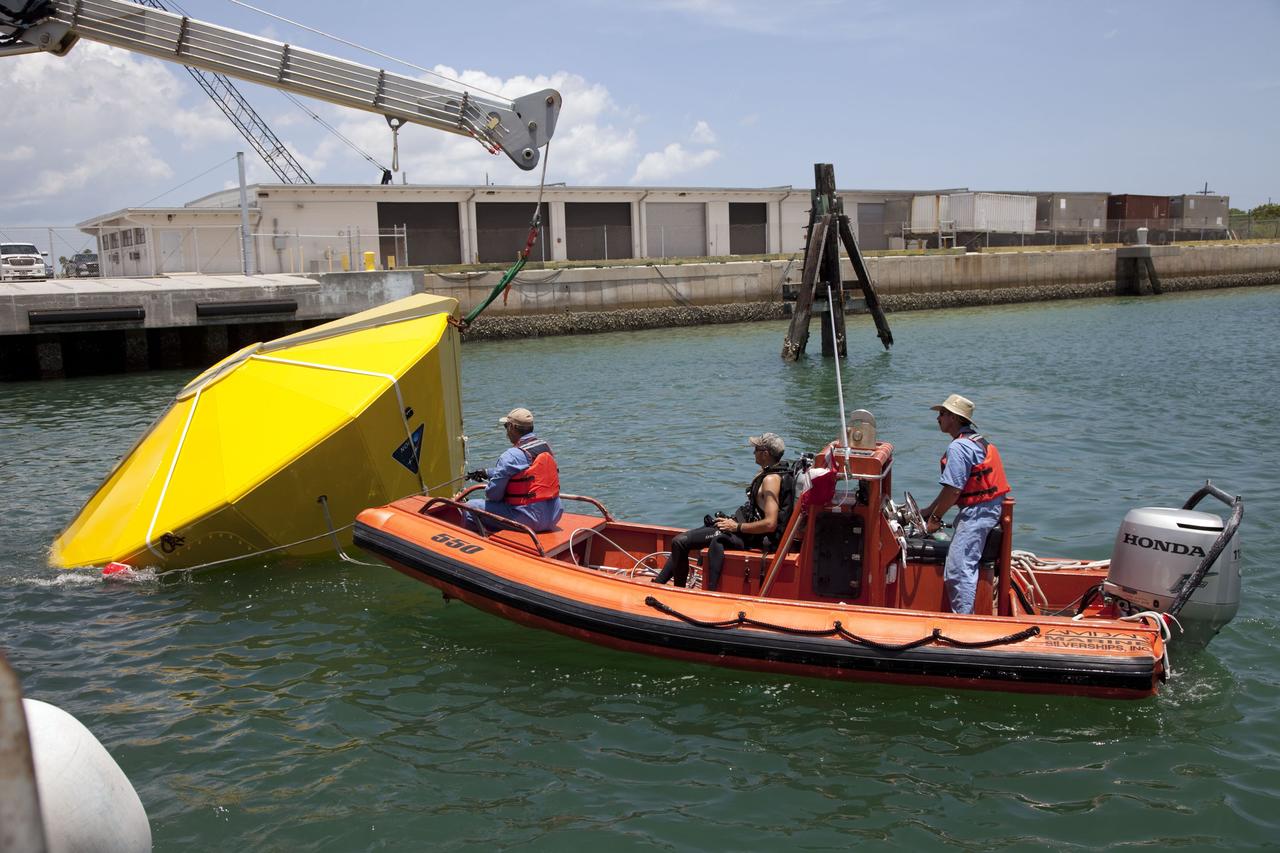
CAPE CANAVERAL, Fla. -- In the Delta turn basin at Cape Canaveral Air Force Station in Florida, United Space Alliance (USA) workers help orient an Orion test article to enable a ship's crane to rotate it. The uprighting tests are part of USA's research and development program to help develop ground operations support equipment that could be used to reorient and recover an uncrewed Orion flight test capsule after splashdown. USA is a major subcontractor to Lockheed Martin for the Orion spacecraft. The Orion Multi-Purpose Crew Vehicle is NASA's next-generation spacecraft designed for deep space missions to asteroids, moons and other interplanetary destinations throughout the solar system. Orion's first uncrewed orbital flight test is slated for 2013. For more information, visit http://www.nasa.gov/exploration/systems/mpcv/. Photo credit: NASA/Frankie Martin
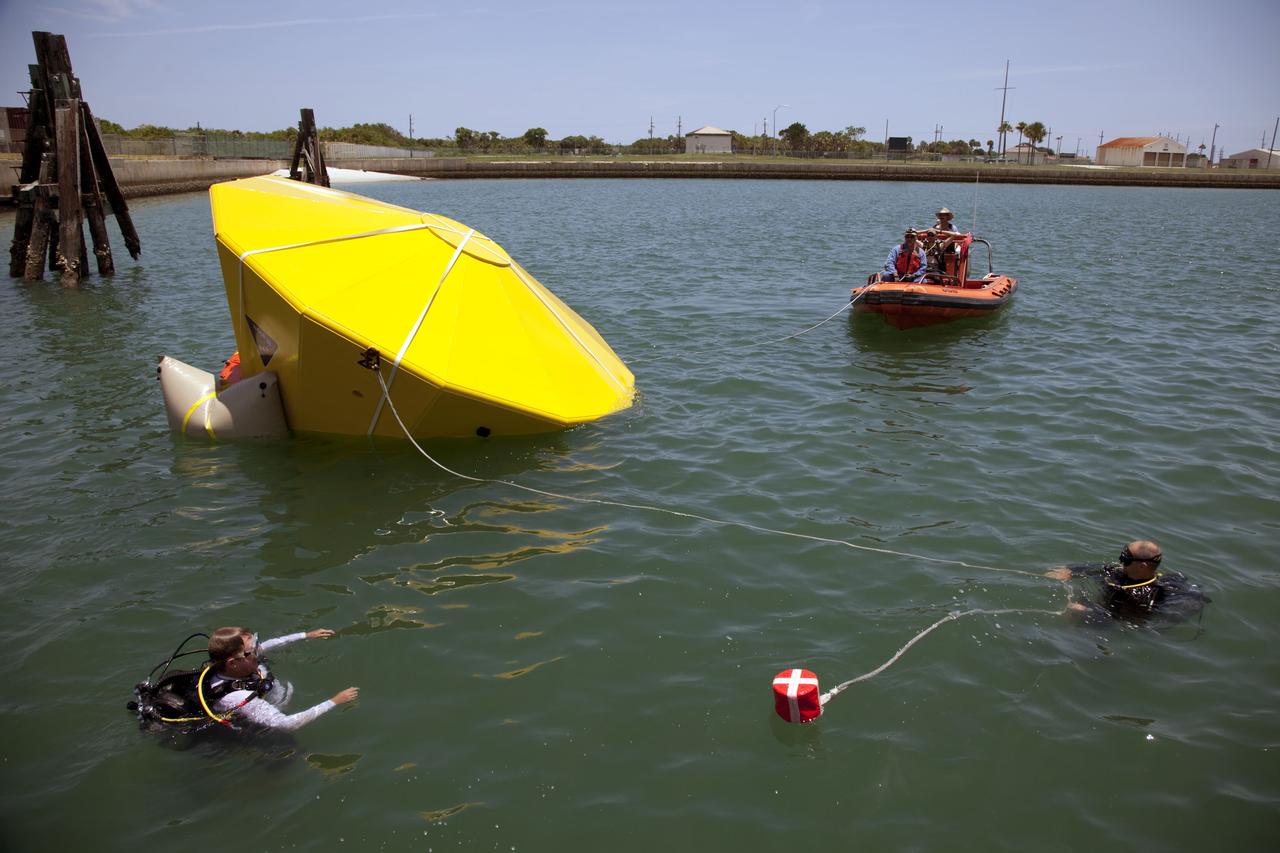
CAPE CANAVERAL, Fla. -- In the Delta turn basin at Cape Canaveral Air Force Station in Florida, United Space Alliance (USA) divers and boat crew monitor an Orion test article while waiting for its lift bags to inflate. The uprighting tests are part of USA's research and development program to help develop ground operations support equipment that could be used to reorient and recover an uncrewed Orion flight test capsule after splashdown. USA is a major subcontractor to Lockheed Martin for the Orion spacecraft. The Orion Multi-Purpose Crew Vehicle is NASA's next-generation spacecraft designed for deep space missions to asteroids, moons and other interplanetary destinations throughout the solar system. Orion's first uncrewed orbital flight test is slated for 2013. For more information, visit http://www.nasa.gov/exploration/systems/mpcv/. Photo credit: NASA/Frankie Martin
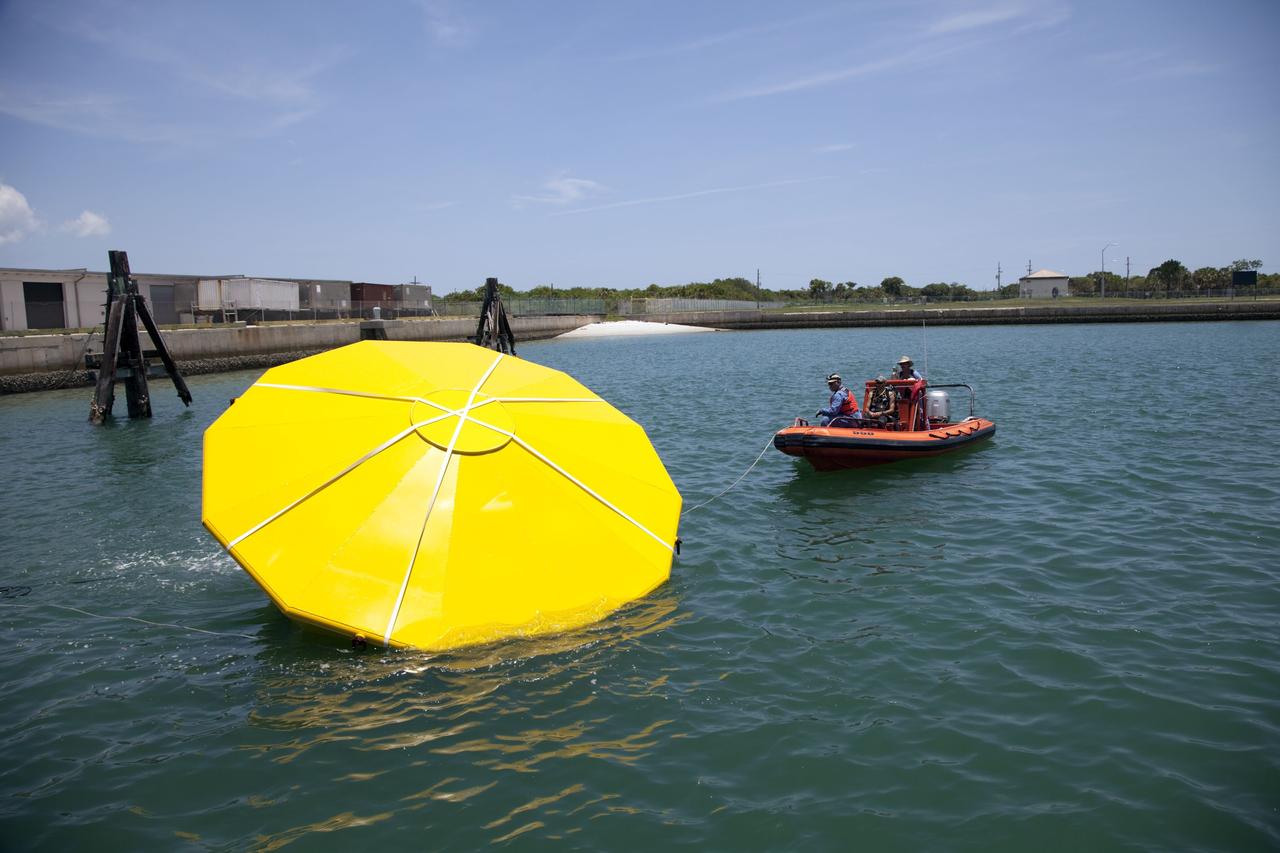
CAPE CANAVERAL, Fla. -- In the Delta turn basin at Cape Canaveral Air Force Station in Florida, United Space Alliance (USA) workers help orient an Orion test article during a roll test. The uprighting tests are part of USA's research and development program to help develop ground operations support equipment that could be used to reorient and recover an uncrewed Orion flight test capsule after splashdown. USA is a major subcontractor to Lockheed Martin for the Orion spacecraft. The Orion Multi-Purpose Crew Vehicle is NASA's next-generation spacecraft designed for deep space missions to asteroids, moons and other interplanetary destinations throughout the solar system. Orion's first uncrewed orbital flight test is slated for 2013. For more information, visit http://www.nasa.gov/exploration/systems/mpcv/. Photo credit: NASA/Frankie Martin
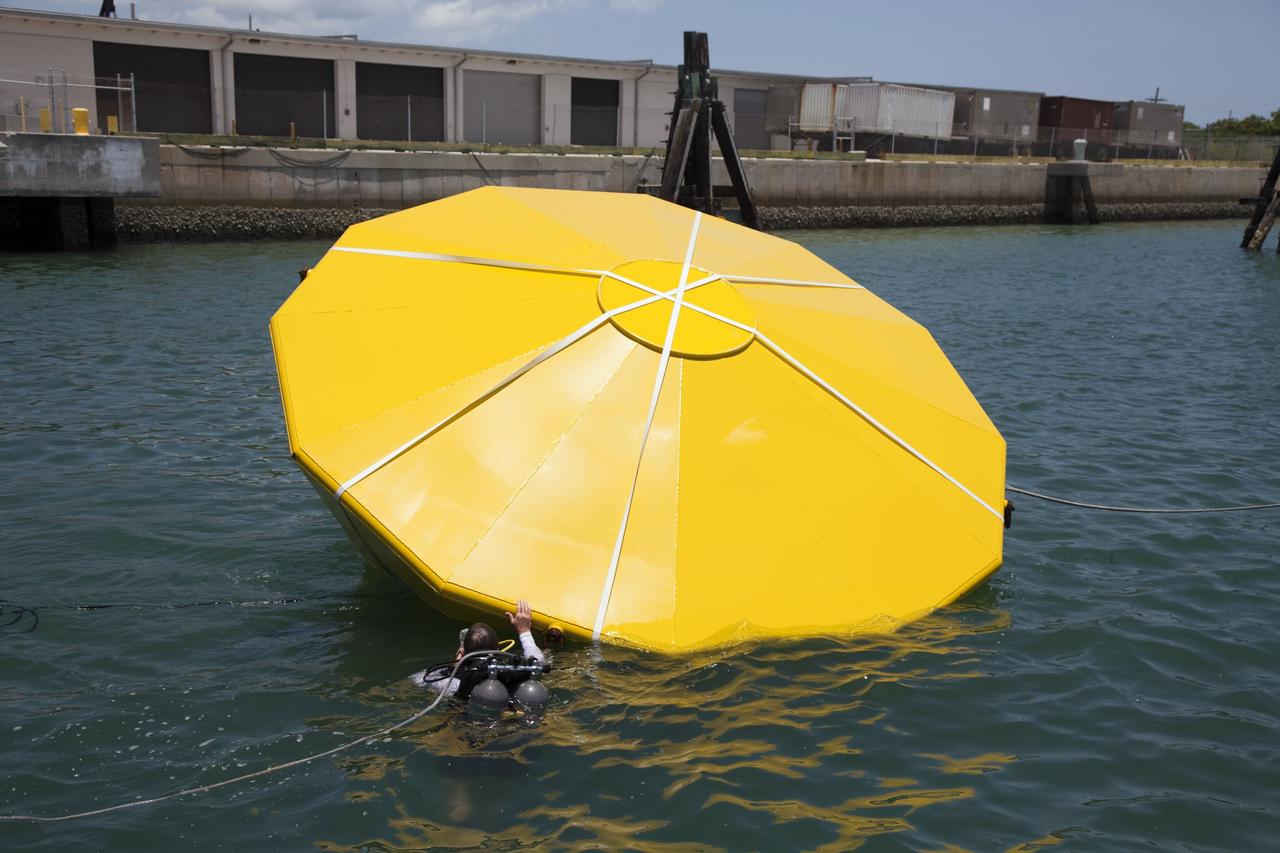
CAPE CANAVERAL, Fla. -- In the Delta turn basin at Cape Canaveral Air Force Station in Florida, a United Space Alliance (USA) diver helps orient an Orion test article during a roll test. The uprighting tests are part of USA's research and development program to help develop ground operations support equipment that could be used to reorient and recover an uncrewed Orion flight test capsule after splashdown. USA is a major subcontractor to Lockheed Martin for the Orion spacecraft. The Orion Multi-Purpose Crew Vehicle is NASA's next-generation spacecraft designed for deep space missions to asteroids, moons and other interplanetary destinations throughout the solar system. Orion's first uncrewed orbital flight test is slated for 2013. For more information, visit http://www.nasa.gov/exploration/systems/mpcv/. Photo credit: NASA/Frankie Martin
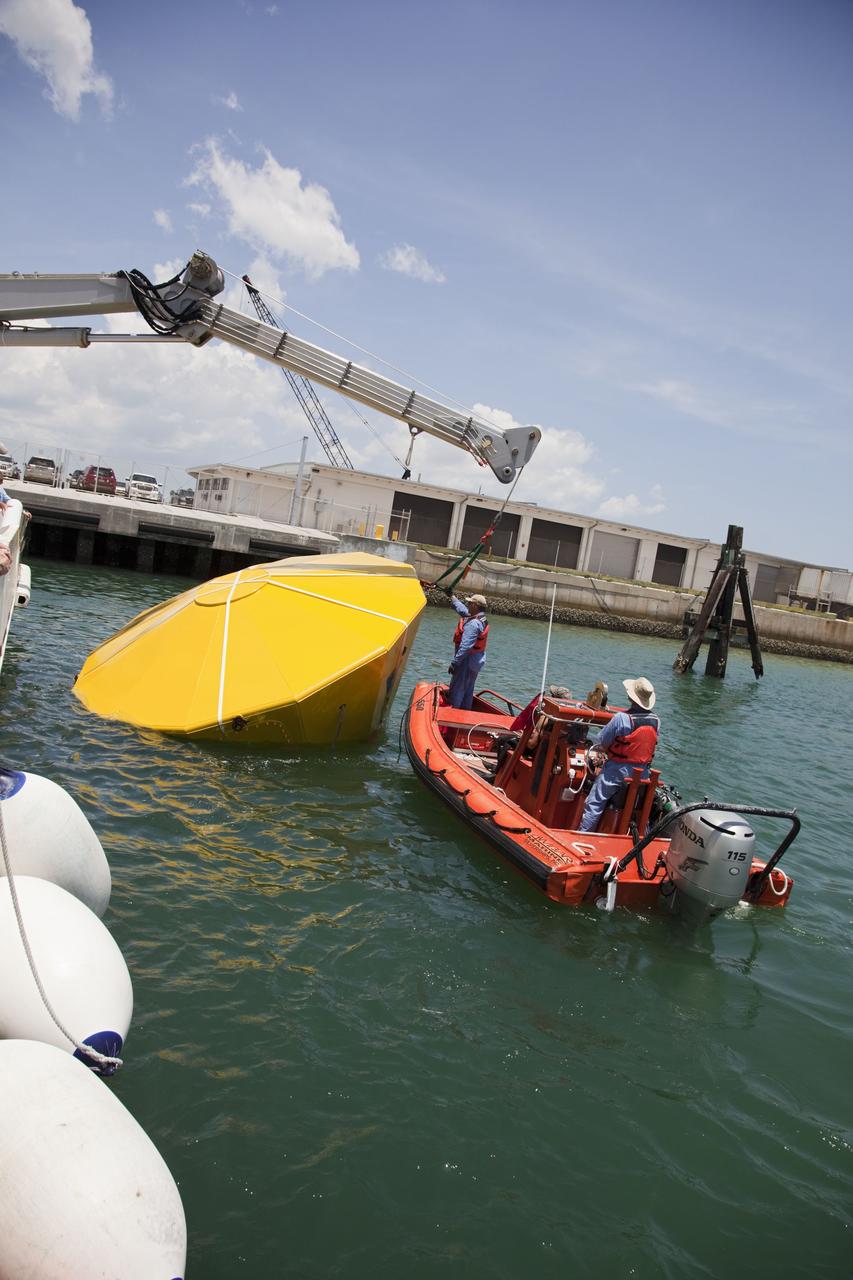
CAPE CANAVERAL, Fla. -- In the Delta turn basin at Cape Canaveral Air Force Station in Florida, United Space Alliance (USA) workers help orient an Orion test article to enable a ship's crane to rotate it. The uprighting tests are part of USA's research and development program to help develop ground operations support equipment that could be used to reorient and recover an uncrewed Orion flight test capsule after splashdown. USA is a major subcontractor to Lockheed Martin for the Orion spacecraft. The Orion Multi-Purpose Crew Vehicle is NASA's next-generation spacecraft designed for deep space missions to asteroids, moons and other interplanetary destinations throughout the solar system. Orion's first uncrewed orbital flight test is slated for 2013. For more information, visit http://www.nasa.gov/exploration/systems/mpcv/. Photo credit: NASA/Frankie Martin
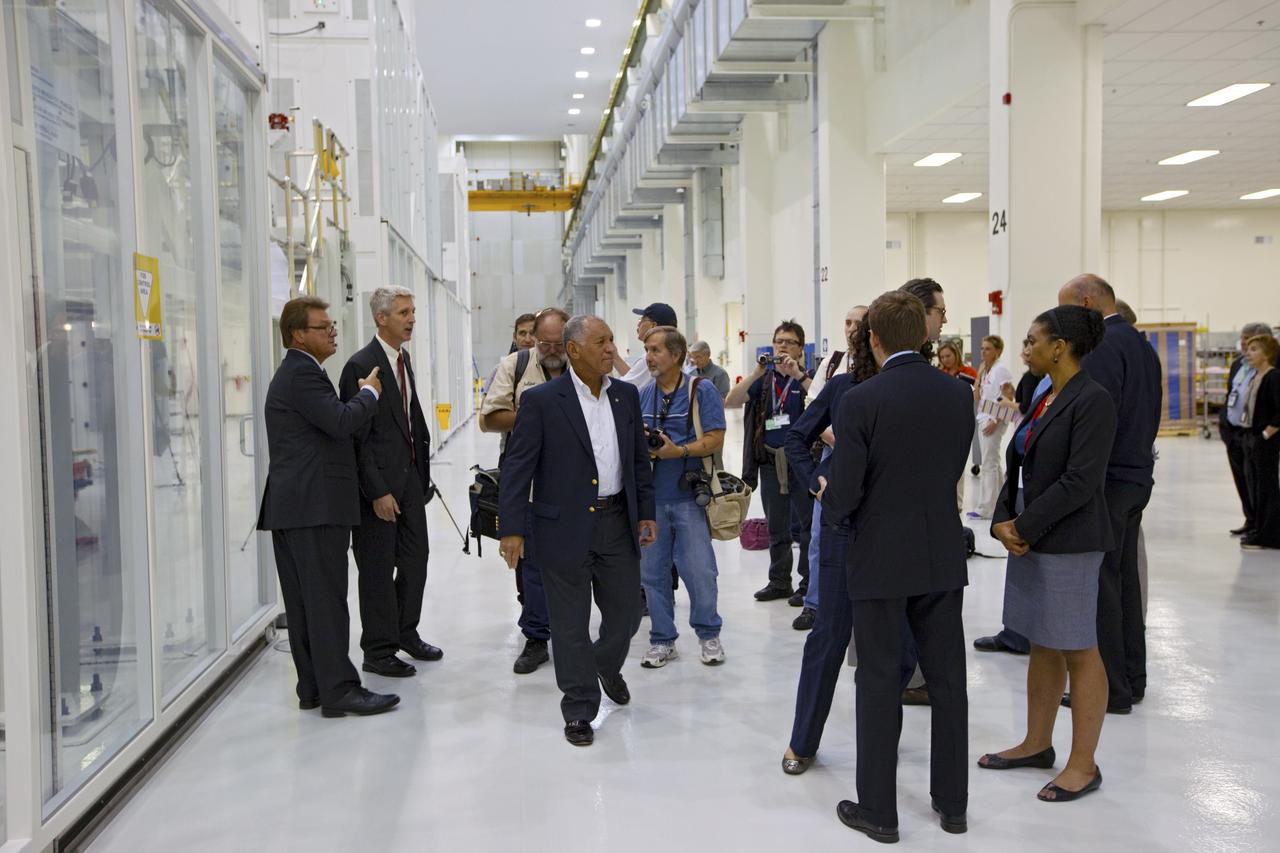
CAPE CANAVERAL, Fla. - NASA Administrator Charles Bolden tours the Operations and Checkout, or O& C, Building at the Kennedy Space Center in Florida. In the O&C, the Orion EFT-1 spacecraft is being prepared for the program's first flight. Bolden took a few dozen members of the news media on a tour of the space agency's Kennedy Space Center and adjacent Cape Canaveral Air Force Station on Aug. 23, 2012 to show the progress being made for future government and commercial space endeavors that will begin from Florida's Space Coast. For more information, visit: http://www.nasa.gov/centers/kennedy/news/kennedy-bolden-tour.html Photo credit: NASA/Kim Shiflett
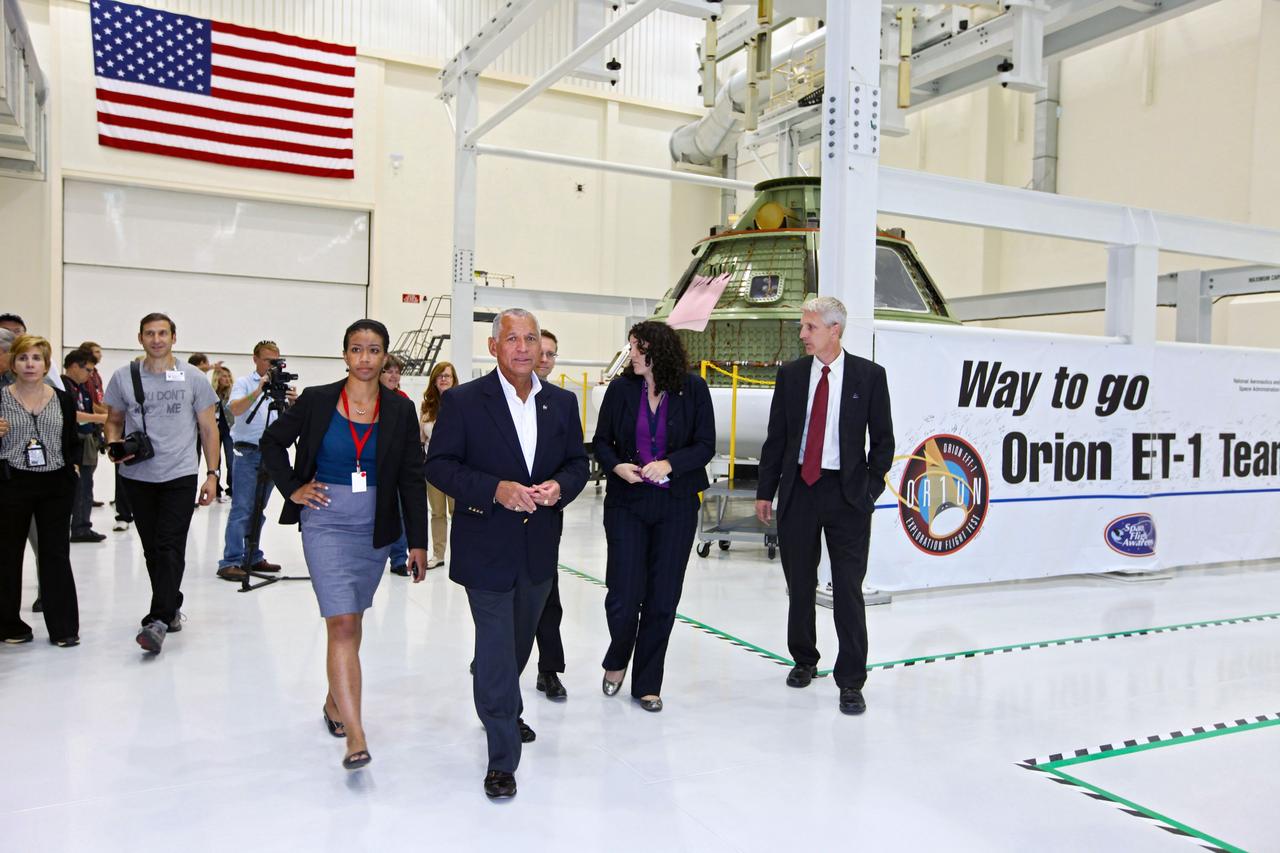
CAPE CANAVERAL, Fla. - NASA Administrator Charles Bolden tours the Operations and Checkout, or O& C, Building at the Kennedy Space Center in Florida. In the O&C, the Orion EFT-1 spacecraft is being prepared for the program's first flight. Bolden took a few dozen members of the news media on a tour of the space agency's Kennedy Space Center and adjacent Cape Canaveral Air Force Station on Aug. 23, 2012 to show the progress being made for future government and commercial space endeavors that will begin from Florida's Space Coast. For more information, visit: http://www.nasa.gov/centers/kennedy/news/kennedy-bolden-tour.html Photo credit: NASA/Kim Shiflett
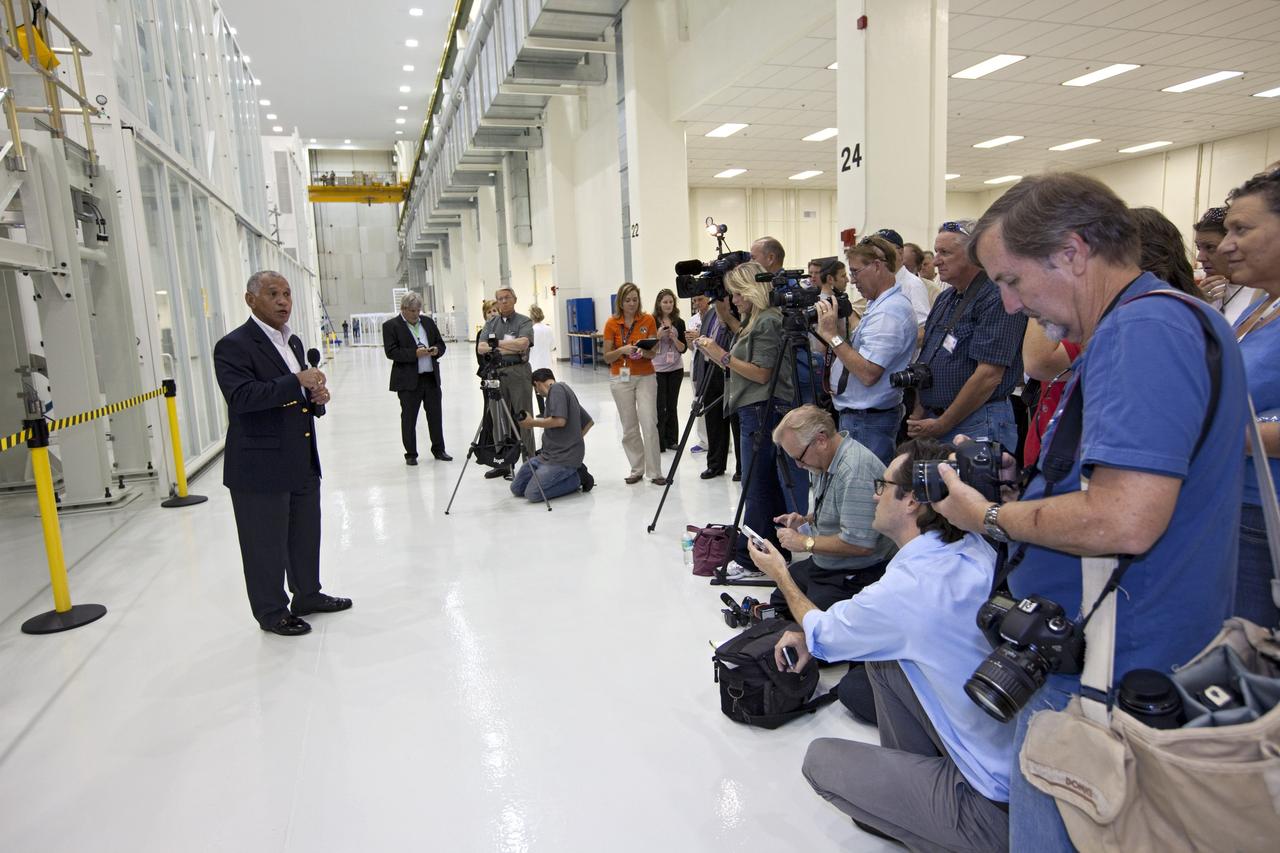
CAPE CANAVERAL, Fla. - NASA Administrator Charles Bolden addresses news media in the Operations and Checkout, or O& C, Building at the Kennedy Space Center in Florida. In the O&C, the Orion EFT-1 spacecraft is being prepared for the program's first flight. Bolden took a few dozen members of the news media on a tour of the space agency's Kennedy Space Center and adjacent Cape Canaveral Air Force Station on Aug. 23, 2012 to show the progress being made for future government and commercial space endeavors that will begin from Florida's Space Coast. For more information, visit: http://www.nasa.gov/centers/kennedy/news/kennedy-bolden-tour.html Photo credit: NASA/Kim Shiflett

Charlie Lundquist, NASA Orion deputy program manager, right, presents an American flag flown aboard the Orion capsule during the Exploration Flight Test-1 mission to Armstrong Deputy Director Patrick Stoliker.
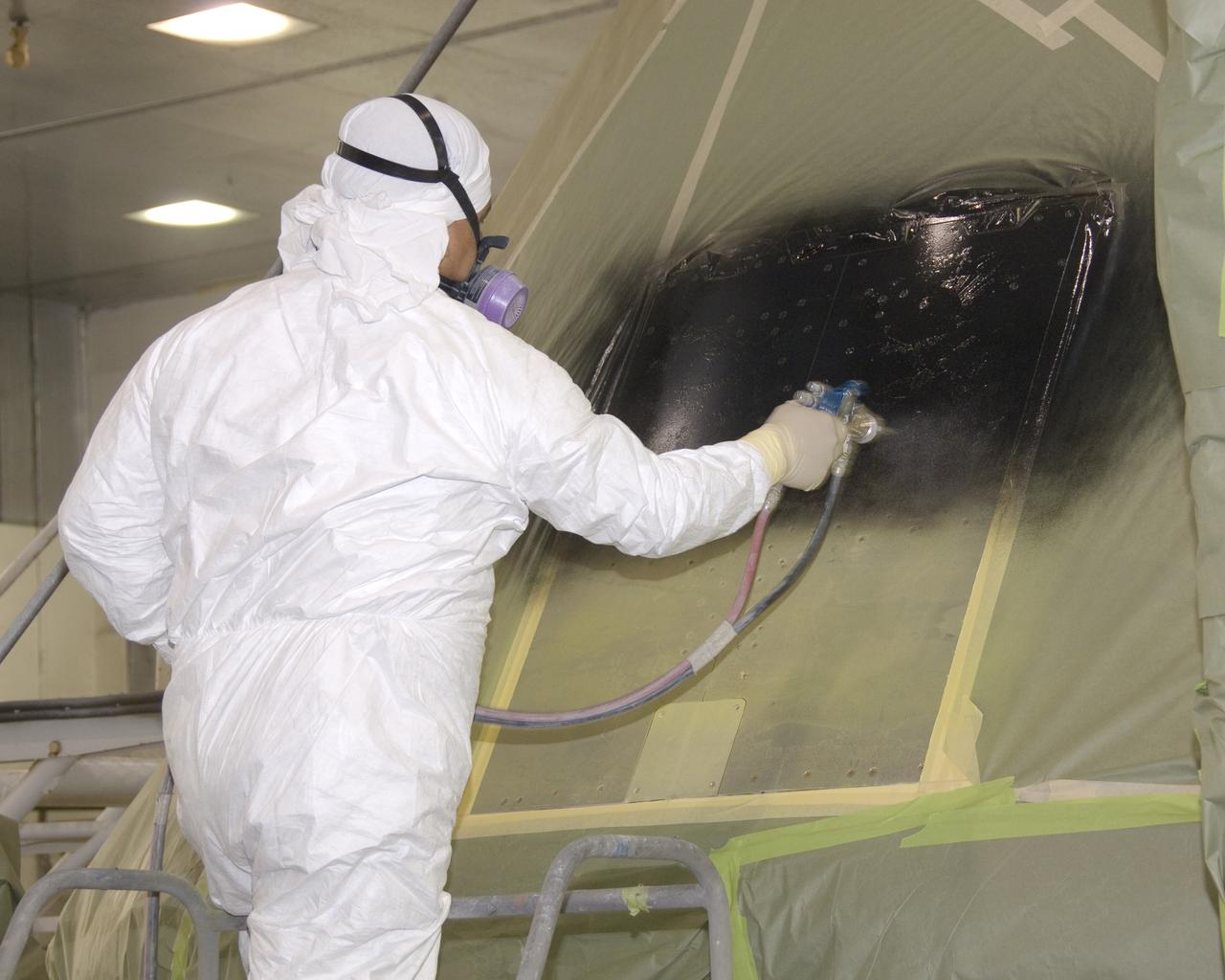
A full-scale flight-test mockup of the Constellation program's Orion crew vehicle arrived at NASA's Dryden Flight Research Center in late March 2008 to undergo preparations for the first short-range flight test of the spacecraft's astronaut escape system later that year. Engineers and technicians at NASA's Langley Research Center fabricated the structure, which precisely represents the size, outer shape and mass characteristics of the Orion space capsule. The Orion crew module mockup was ferried to NASA Dryden on an Air Force C-17. After painting in the Edwards Air Force Base paint hangar, the conical capsule was taken to Dryden for installation of flight computers, instrumentation and other electronics prior to being sent to the U.S. Army's White Sands Missile Range in New Mexico for integration with the escape system and the first abort flight test in late 2008. The tests were designed to ensure a safe, reliable method of escape for astronauts in case of an emergency.
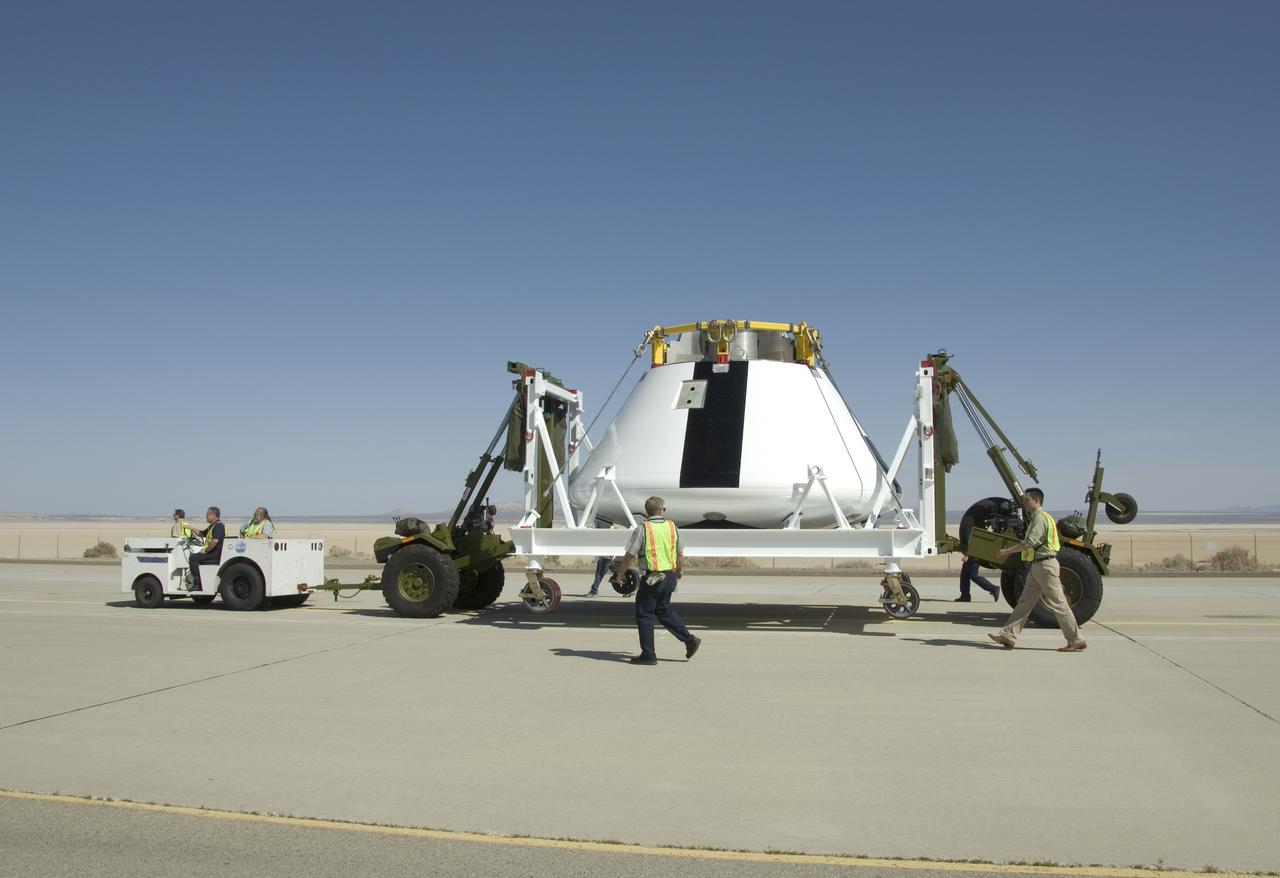
A full-scale flight-test mockup of the Constellation program's Orion crew vehicle arrived at NASA's Dryden Flight Research Center in late March 2008 to undergo preparations for the first short-range flight test of the spacecraft's astronaut escape system later that year. Engineers and technicians at NASA's Langley Research Center fabricated the structure, which precisely represents the size, outer shape and mass characteristics of the Orion space capsule. The Orion crew module mockup was ferried to NASA Dryden on an Air Force C-17. After painting in the Edwards Air Force Base paint hangar, the conical capsule was taken to Dryden for installation of flight computers, instrumentation and other electronics prior to being sent to the U.S. Army's White Sands Missile Range in New Mexico for integration with the escape system and the first abort flight test in late 2008. The tests were designed to ensure a safe, reliable method of escape for astronauts in case of an emergency.
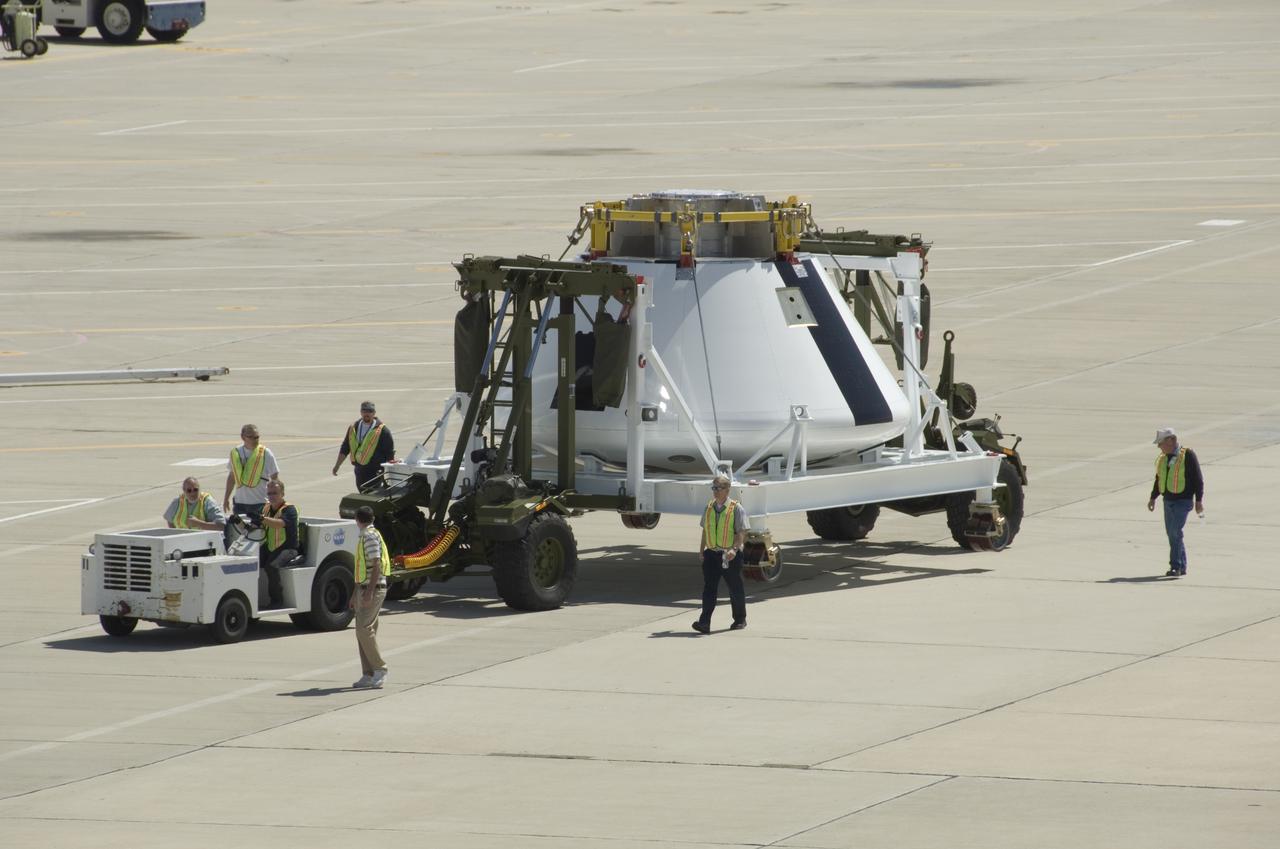
A full-scale flight-test mockup of the Constellation program's Orion crew vehicle arrived at NASA's Dryden Flight Research Center in late March 2008 to undergo preparations for the first short-range flight test of the spacecraft's astronaut escape system later that year. Engineers and technicians at NASA's Langley Research Center fabricated the structure, which precisely represents the size, outer shape and mass characteristics of the Orion space capsule. The Orion crew module mockup was ferried to NASA Dryden on an Air Force C-17. After painting in the Edwards Air Force Base paint hangar, the conical capsule was taken to Dryden for installation of flight computers, instrumentation and other electronics prior to being sent to the U.S. Army's White Sands Missile Range in New Mexico for integration with the escape system and the first abort flight test in late 2008. The tests were designed to ensure a safe, reliable method of escape for astronauts in case of an emergency.
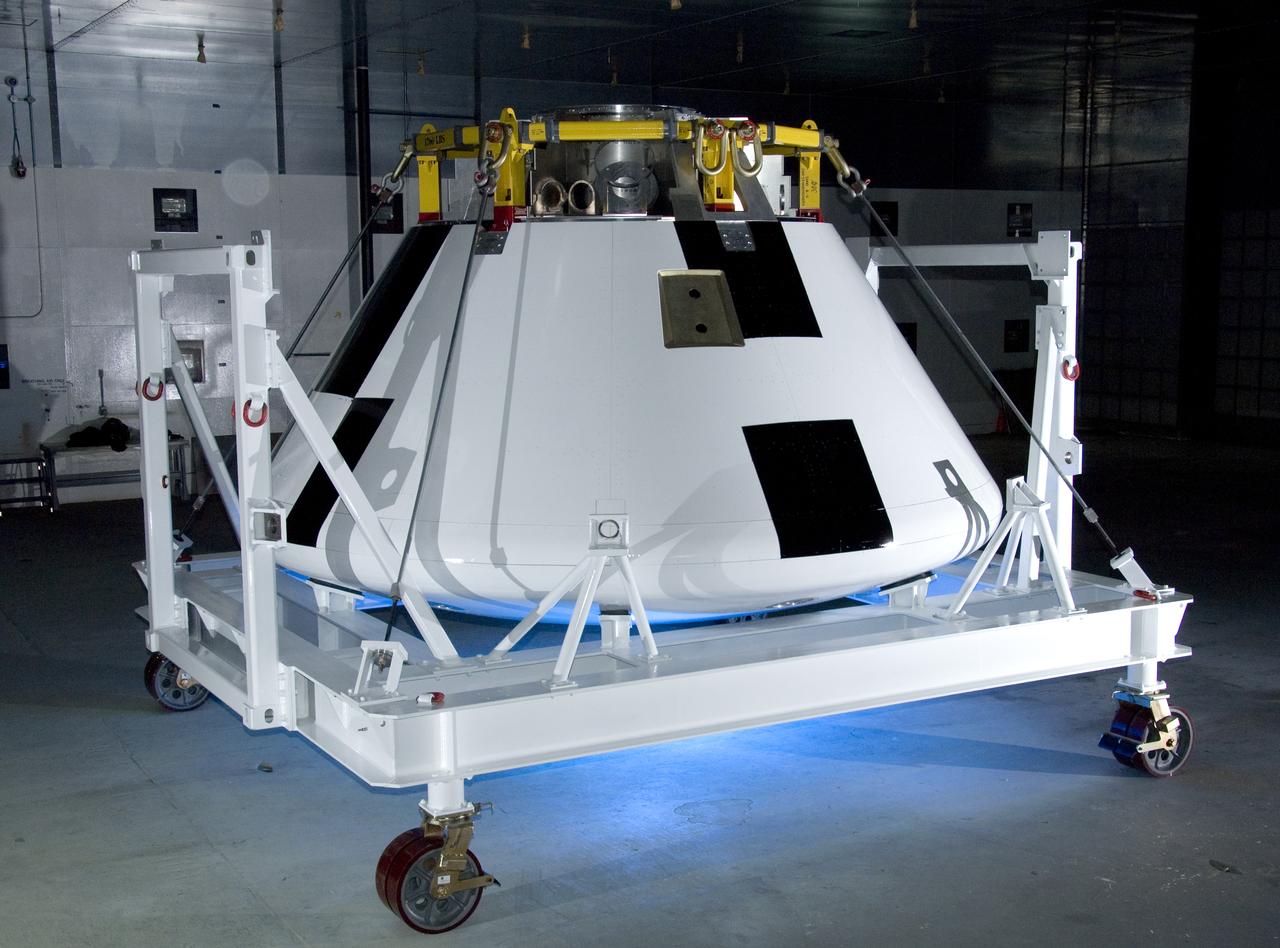
A full-scale flight-test mockup of the Constellation program's Orion crew vehicle arrived at NASA's Dryden Flight Research Center in late March 2008 to undergo preparations for the first short-range flight test of the spacecraft's astronaut escape system later that year. Engineers and technicians at NASA's Langley Research Center fabricated the structure, which precisely represents the size, outer shape and mass characteristics of the Orion space capsule. The Orion crew module mockup was ferried to NASA Dryden on an Air Force C-17. After painting in the Edwards Air Force Base paint hangar, the conical capsule was taken to Dryden for installation of flight computers, instrumentation and other electronics prior to being sent to the U.S. Army's White Sands Missile Range in New Mexico for integration with the escape system and the first abort flight test in late 2008. The tests were designed to ensure a safe, reliable method of escape for astronauts in case of an emergency.
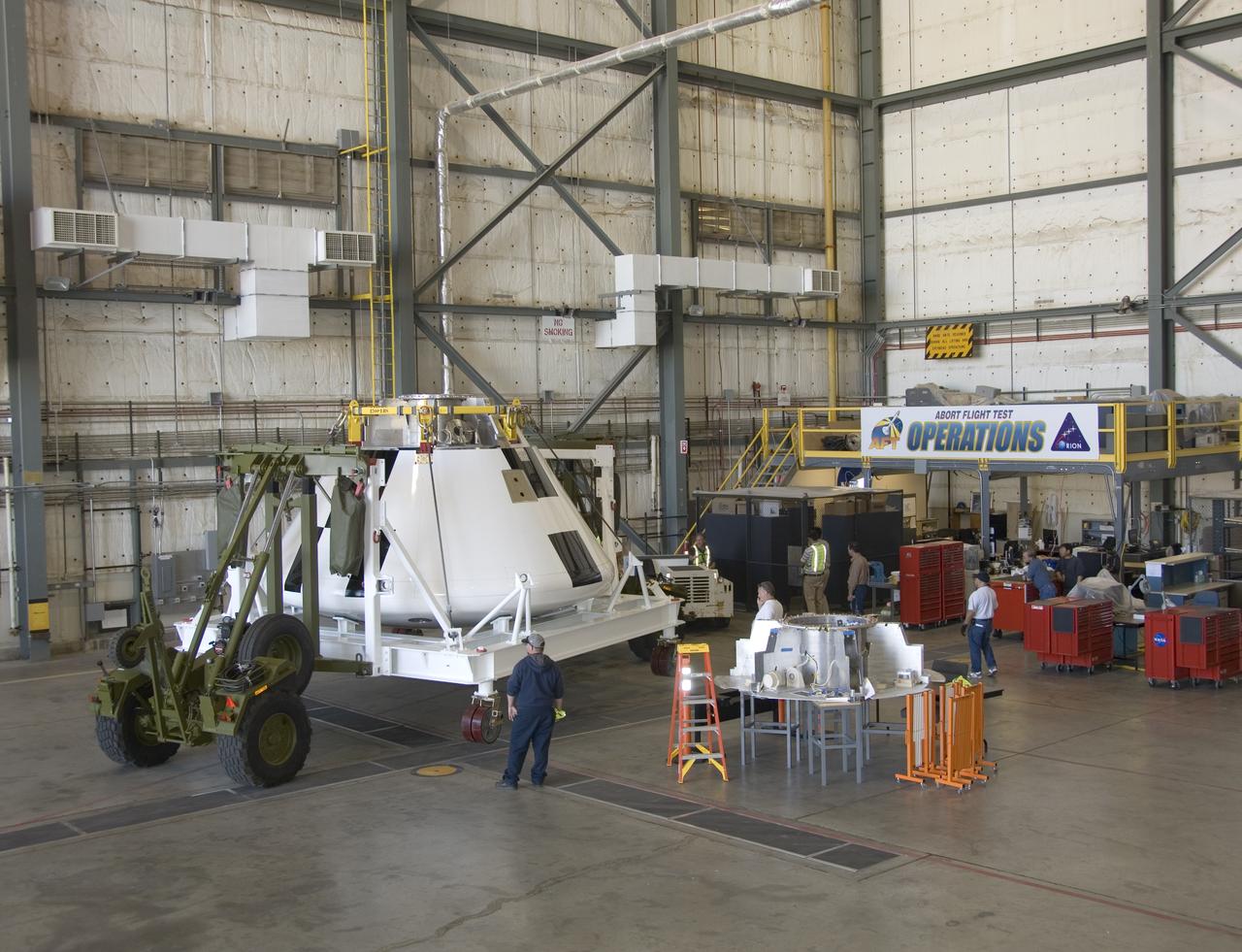
A full-scale flight-test mockup of the Constellation program's Orion crew vehicle arrived at NASA's Dryden Flight Research Center in late March 2008 to undergo preparations for the first short-range flight test of the spacecraft's astronaut escape system later that year. Engineers and technicians at NASA's Langley Research Center fabricated the structure, which precisely represents the size, outer shape and mass characteristics of the Orion space capsule. The Orion crew module mockup was ferried to NASA Dryden on an Air Force C-17. After painting in the Edwards Air Force Base paint hangar, the conical capsule was taken to Dryden for installation of flight computers, instrumentation and other electronics prior to being sent to the U.S. Army's White Sands Missile Range in New Mexico for integration with the escape system and the first abort flight test in late 2008. The tests were designed to ensure a safe, reliable method of escape for astronauts in case of an emergency.
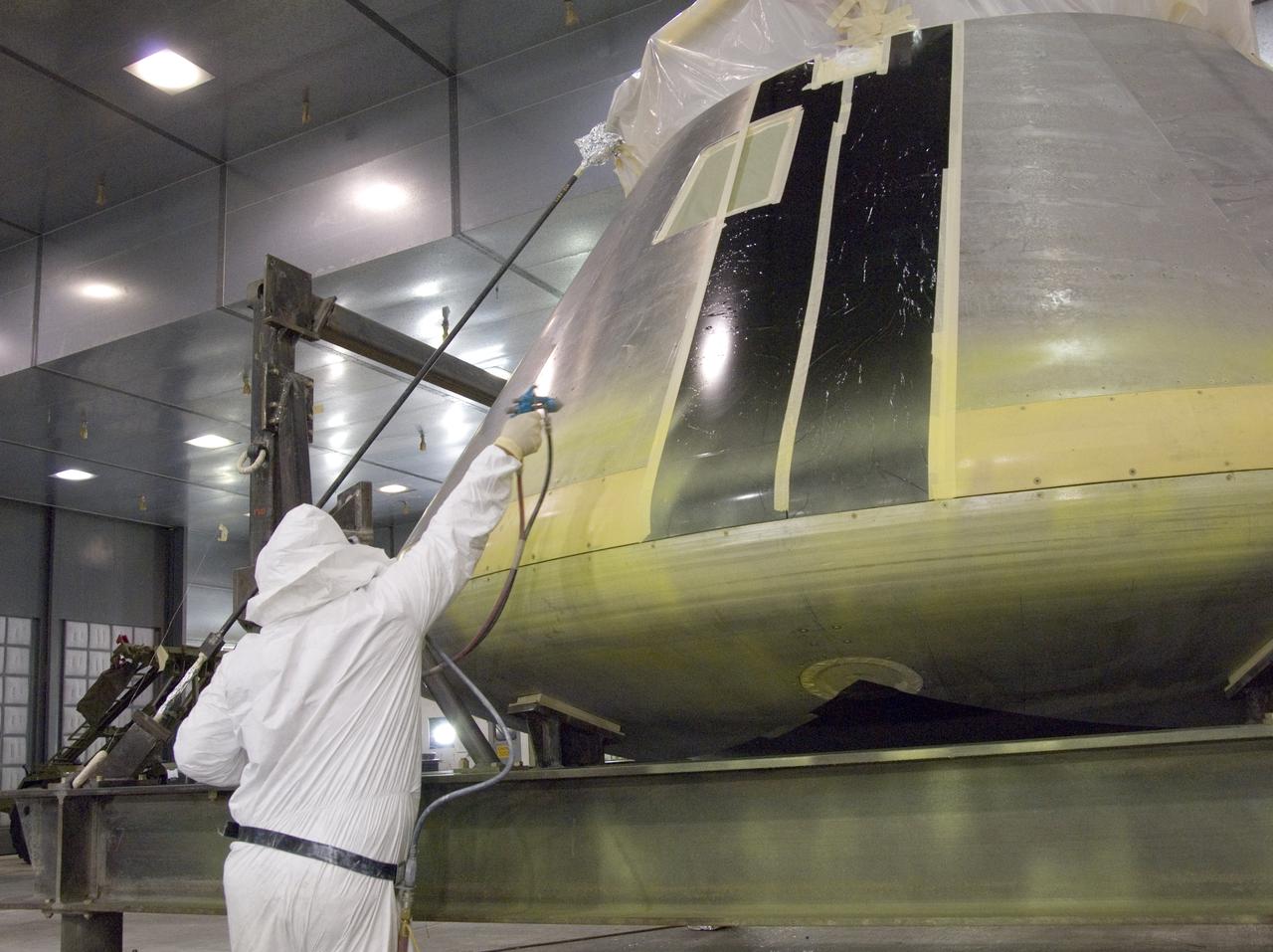
A full-scale flight-test mockup of the Constellation program's Orion crew vehicle arrived at NASA's Dryden Flight Research Center in late March 2008 to undergo preparations for the first short-range flight test of the spacecraft's astronaut escape system later that year. Engineers and technicians at NASA's Langley Research Center fabricated the structure, which precisely represents the size, outer shape and mass characteristics of the Orion space capsule. The Orion crew module mockup was ferried to NASA Dryden on an Air Force C-17. After painting in the Edwards Air Force Base paint hangar, the conical capsule was taken to Dryden for installation of flight computers, instrumentation and other electronics prior to being sent to the U.S. Army's White Sands Missile Range in New Mexico for integration with the escape system and the first abort flight test in late 2008. The tests were designed to ensure a safe, reliable method of escape for astronauts in case of an emergency.
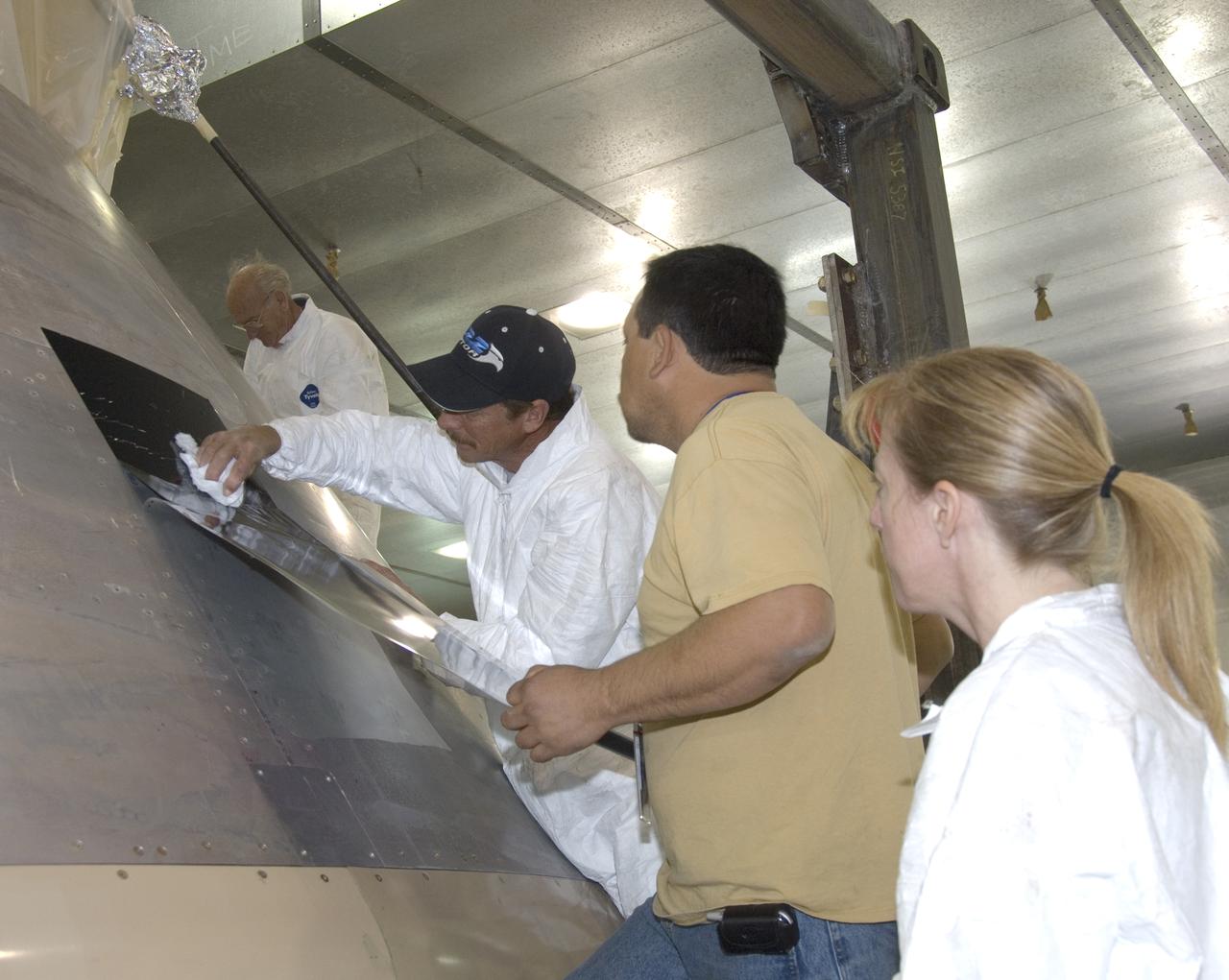
A full-scale flight-test mockup of the Constellation program's Orion crew vehicle arrived at NASA's Dryden Flight Research Center in late March 2008 to undergo preparations for the first short-range flight test of the spacecraft's astronaut escape system later that year. Engineers and technicians at NASA's Langley Research Center fabricated the structure, which precisely represents the size, outer shape and mass characteristics of the Orion space capsule. The Orion crew module mockup was ferried to NASA Dryden on an Air Force C-17. After painting in the Edwards Air Force Base paint hangar, the conical capsule was taken to Dryden for installation of flight computers, instrumentation and other electronics prior to being sent to the U.S. Army's White Sands Missile Range in New Mexico for integration with the escape system and the first abort flight test in late 2008. The tests were designed to ensure a safe, reliable method of escape for astronauts in case of an emergency.
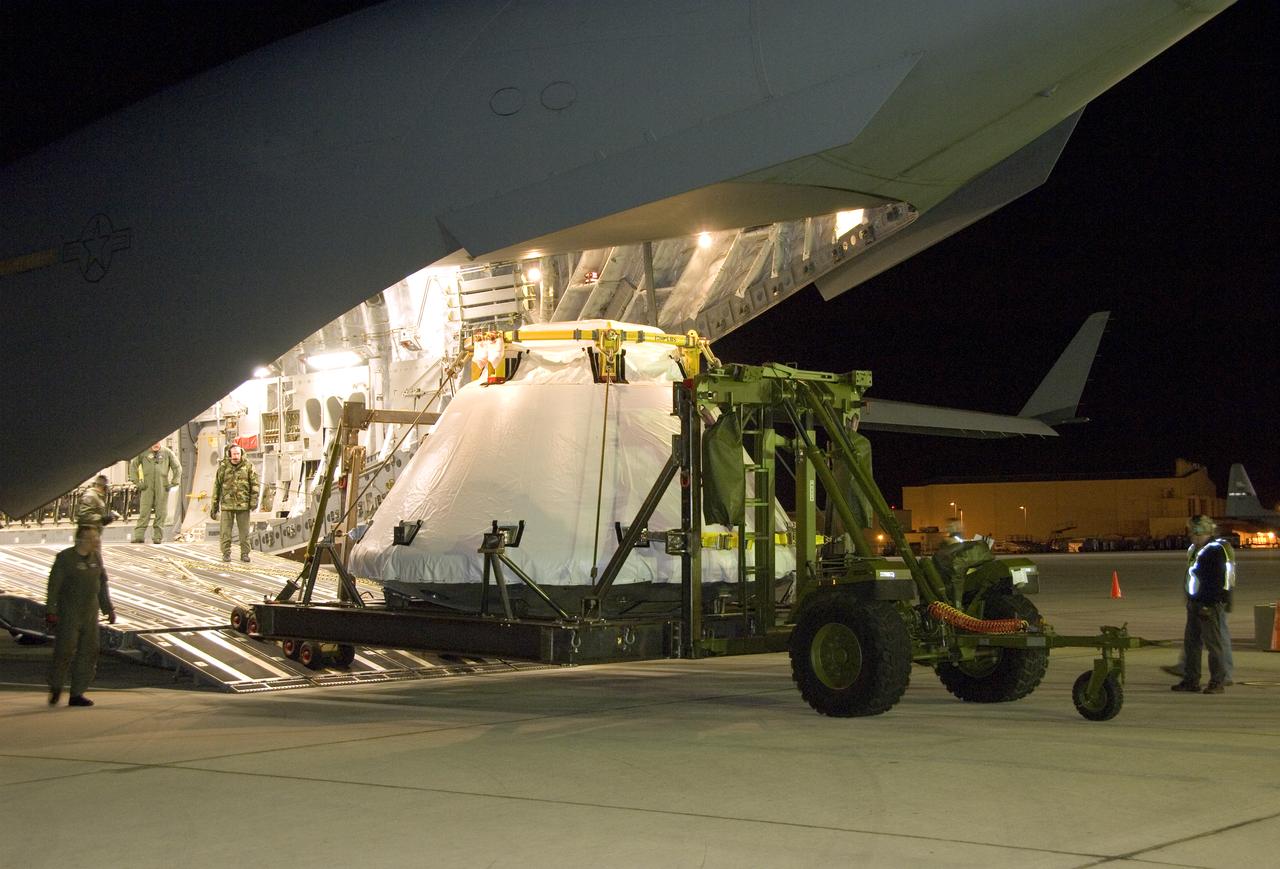
A full-scale flight-test mockup of the Constellation program's Orion crew vehicle arrived at NASA's Dryden Flight Research Center in late March 2008 to undergo preparations for the first short-range flight test of the spacecraft's astronaut escape system later that year. Engineers and technicians at NASA's Langley Research Center fabricated the structure, which precisely represents the size, outer shape and mass characteristics of the Orion space capsule. The Orion crew module mockup was ferried to NASA Dryden on an Air Force C-17. After painting in the Edwards Air Force Base paint hangar, the conical capsule was taken to Dryden for installation of flight computers, instrumentation and other electronics prior to being sent to the U.S. Army's White Sands Missile Range in New Mexico for integration with the escape system and the first abort flight test in late 2008. The tests were designed to ensure a safe, reliable method of escape for astronauts in case of an emergency.
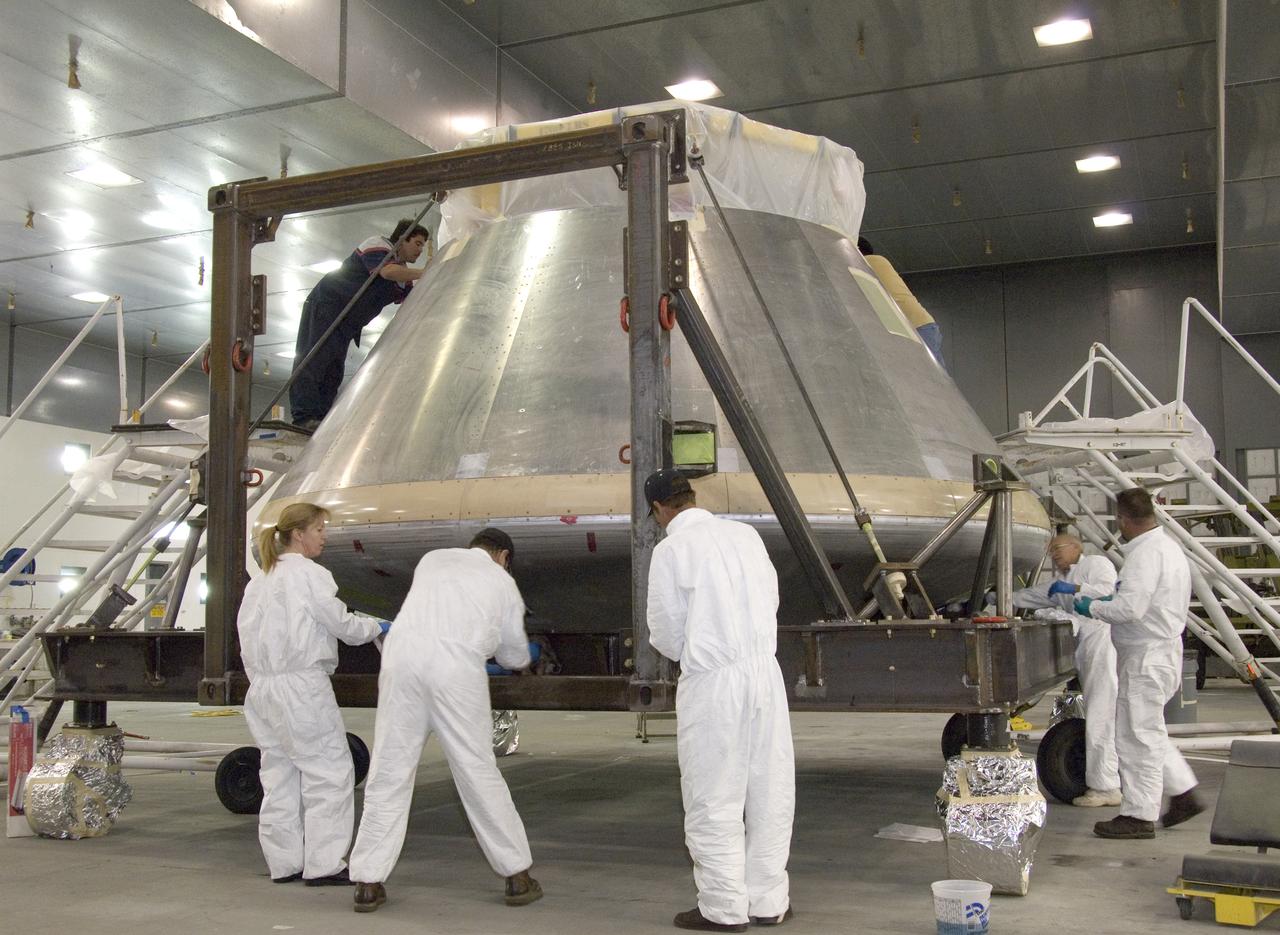
A full-scale flight-test mockup of the Constellation program's Orion crew vehicle arrived at NASA's Dryden Flight Research Center in late March 2008 to undergo preparations for the first short-range flight test of the spacecraft's astronaut escape system later that year. Engineers and technicians at NASA's Langley Research Center fabricated the structure, which precisely represents the size, outer shape and mass characteristics of the Orion space capsule. The Orion crew module mockup was ferried to NASA Dryden on an Air Force C-17. After painting in the Edwards Air Force Base paint hangar, the conical capsule was taken to Dryden for installation of flight computers, instrumentation and other electronics prior to being sent to the U.S. Army's White Sands Missile Range in New Mexico for integration with the escape system and the first abort flight test in late 2008. The tests were designed to ensure a safe, reliable method of escape for astronauts in case of an emergency.
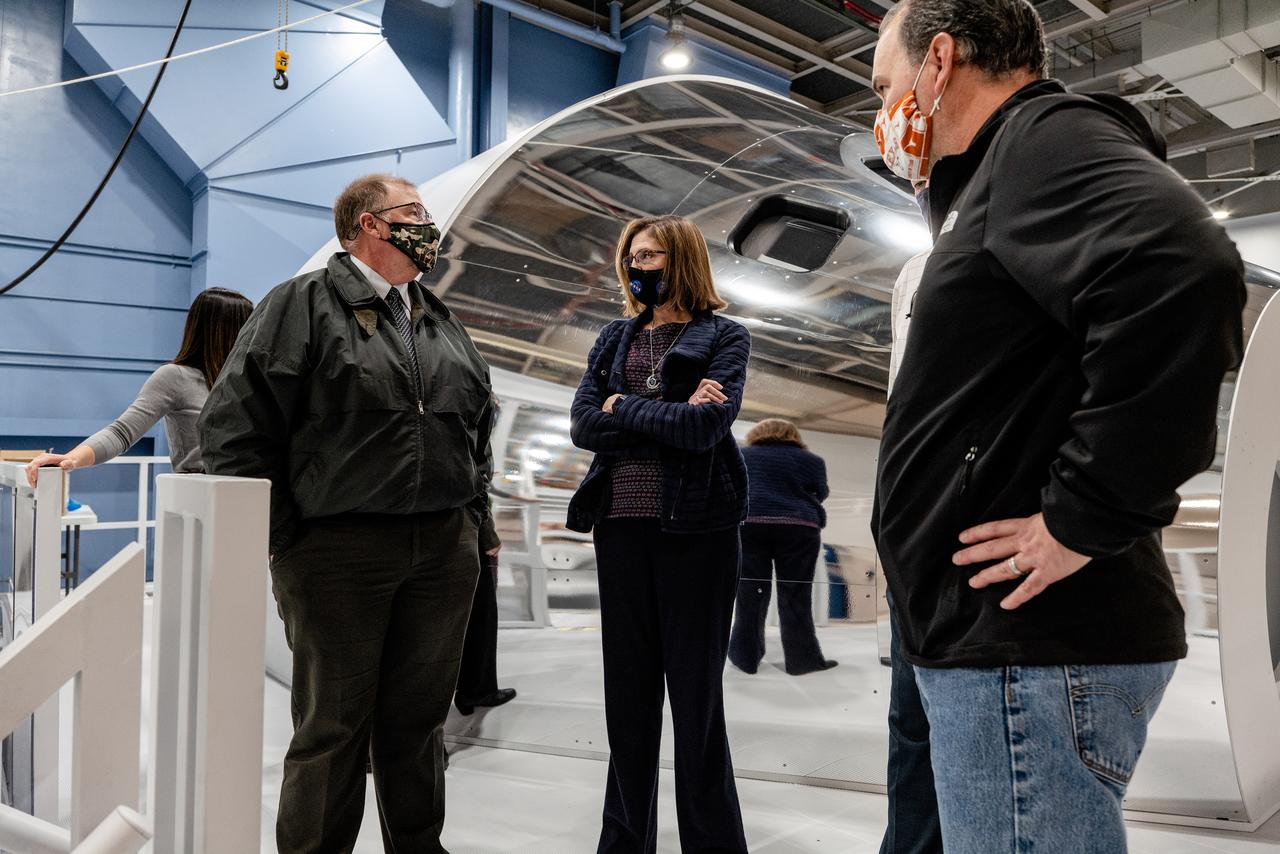
Examination of Orion spacecraft simulator that recently arrived at the agency’s Johnson Space Center in Houston on Dec. 8, 2020. The simulator provides the ability for astronauts, engineers, and flight controllers to train and practice for scenarios during Artemis missions to the Moon. The interior of the simulator is being outfitted with Orion’s display and control system and crew seats to mimic what astronaut will experience during liftoff to the lunar vicinity and on their way back home to Earth.
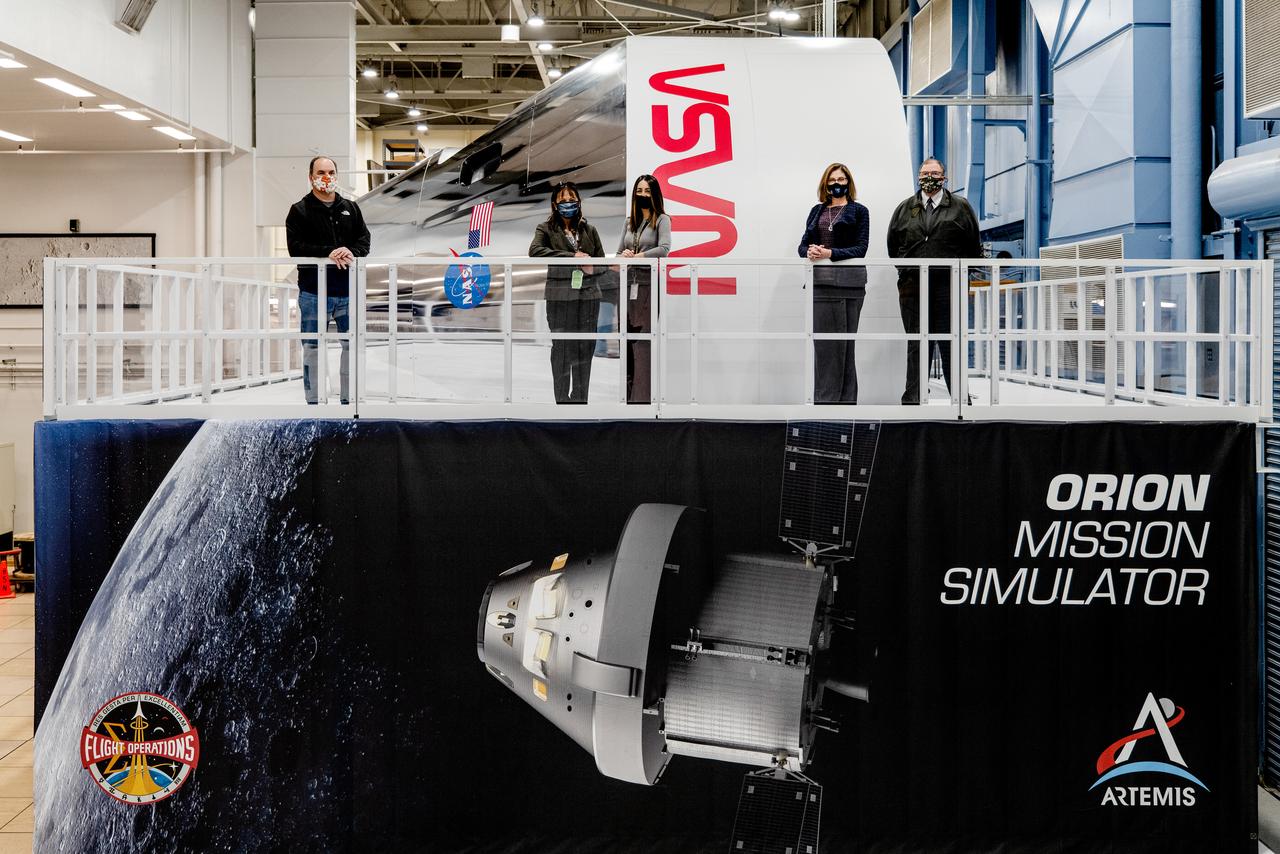
Examination of Orion spacecraft simulator that recently arrived at the agency’s Johnson Space Center in Houston on Dec. 8, 2020. The simulator provides the ability for astronauts, engineers, and flight controllers to train and practice for scenarios during Artemis missions to the Moon. The interior of the simulator is being outfitted with Orion’s display and control system and crew seats to mimic what astronaut will experience during liftoff to the lunar vicinity and on their way back home to Earth.
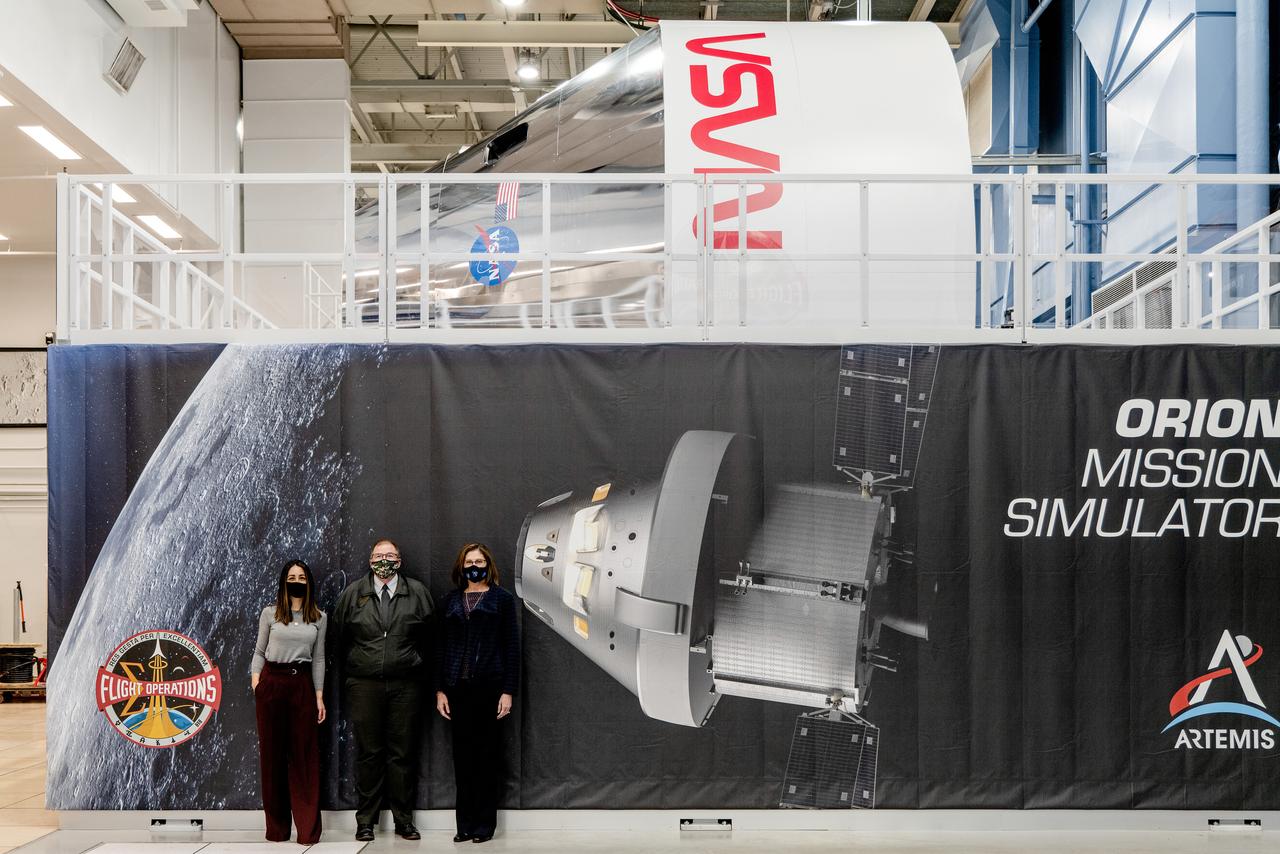
Examination of Orion spacecraft simulator that recently arrived at the agency’s Johnson Space Center in Houston on Dec. 8, 2020. The simulator provides the ability for astronauts, engineers, and flight controllers to train and practice for scenarios during Artemis missions to the Moon. The interior of the simulator is being outfitted with Orion’s display and control system and crew seats to mimic what astronaut will experience during liftoff to the lunar vicinity and on their way back home to Earth.
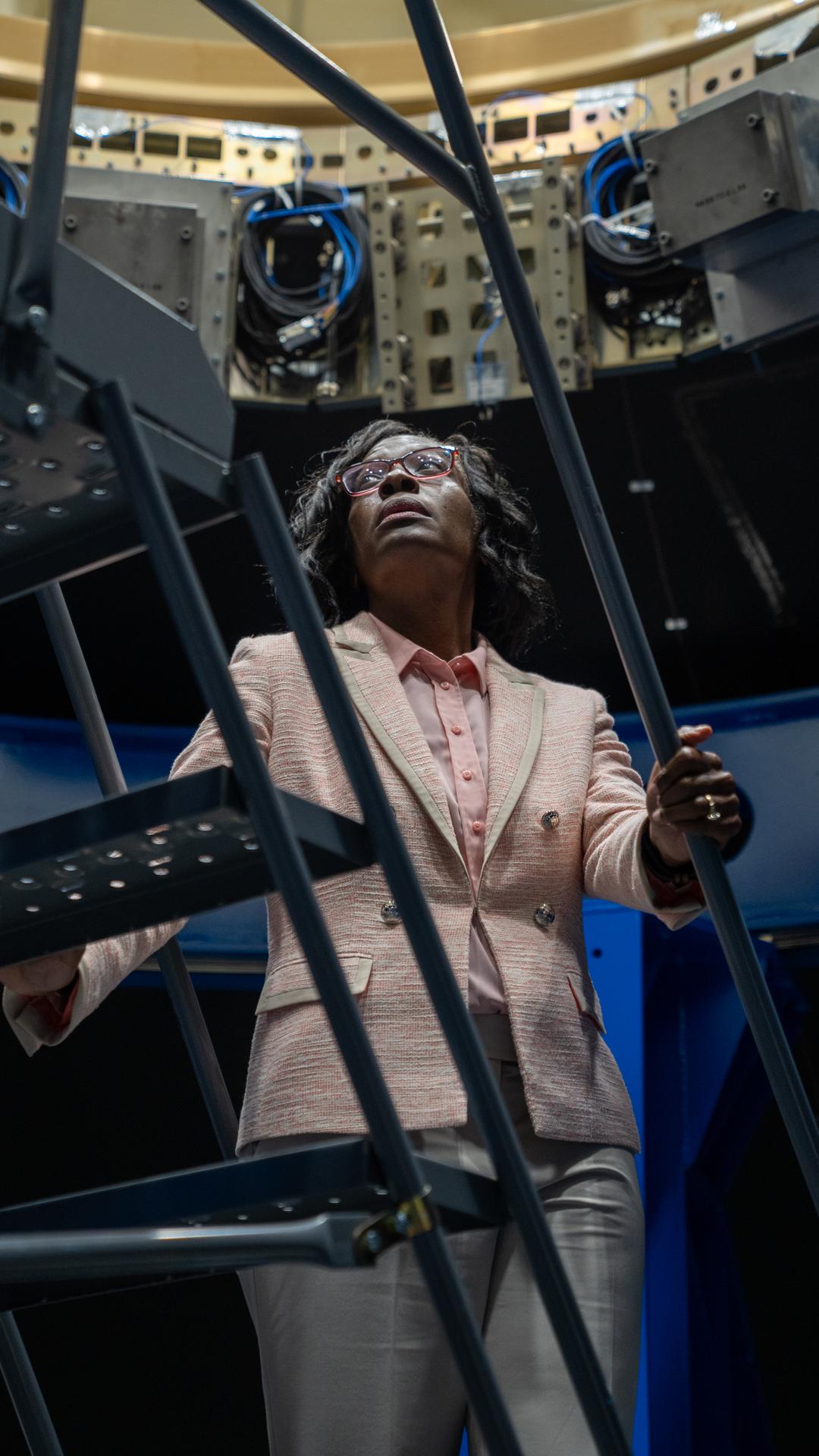
Lakiesha Hawkins, Assistant Deputy Associate Administrator for the Moon to Mars (M2M) Program within the Exploration Systems Development Mission Directorate (ESDMD), takes a peek at the Payload Adapter test article at Marshall Space Flight Center. The adapter, which will debut on NASA’s Artemis IV mission, is an evolution from the Orion stage adapter used in the Block 1 configuration of the rocket for the first three Artemis missions. It will be housed inside the universal stage adapter atop the rocket’s more powerful in-space stage, called the exploration upper stage. The payload adapter, like the launch vehicle stage adapter and the Orion stage adapter, is fully manufactured and tested at Marshall, which manages the SLS Program.
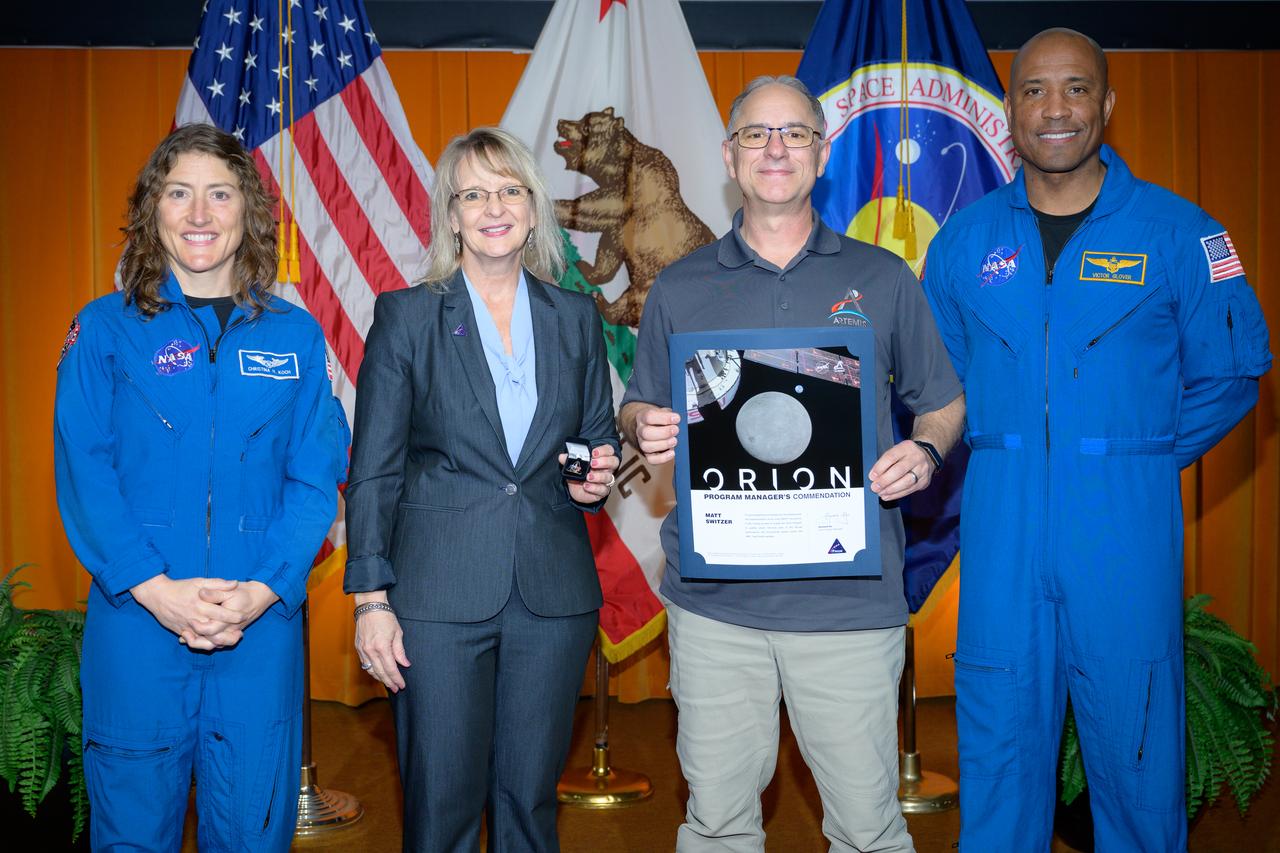
Artemis Orion program manager’s commendation award presented to Matt Switzer, center, by Orion Deputy Program Manager Debbie Korth, left, NASA astronauts Victor J. Glover, right, and Christina Koch, left, in the N201 auditorium.
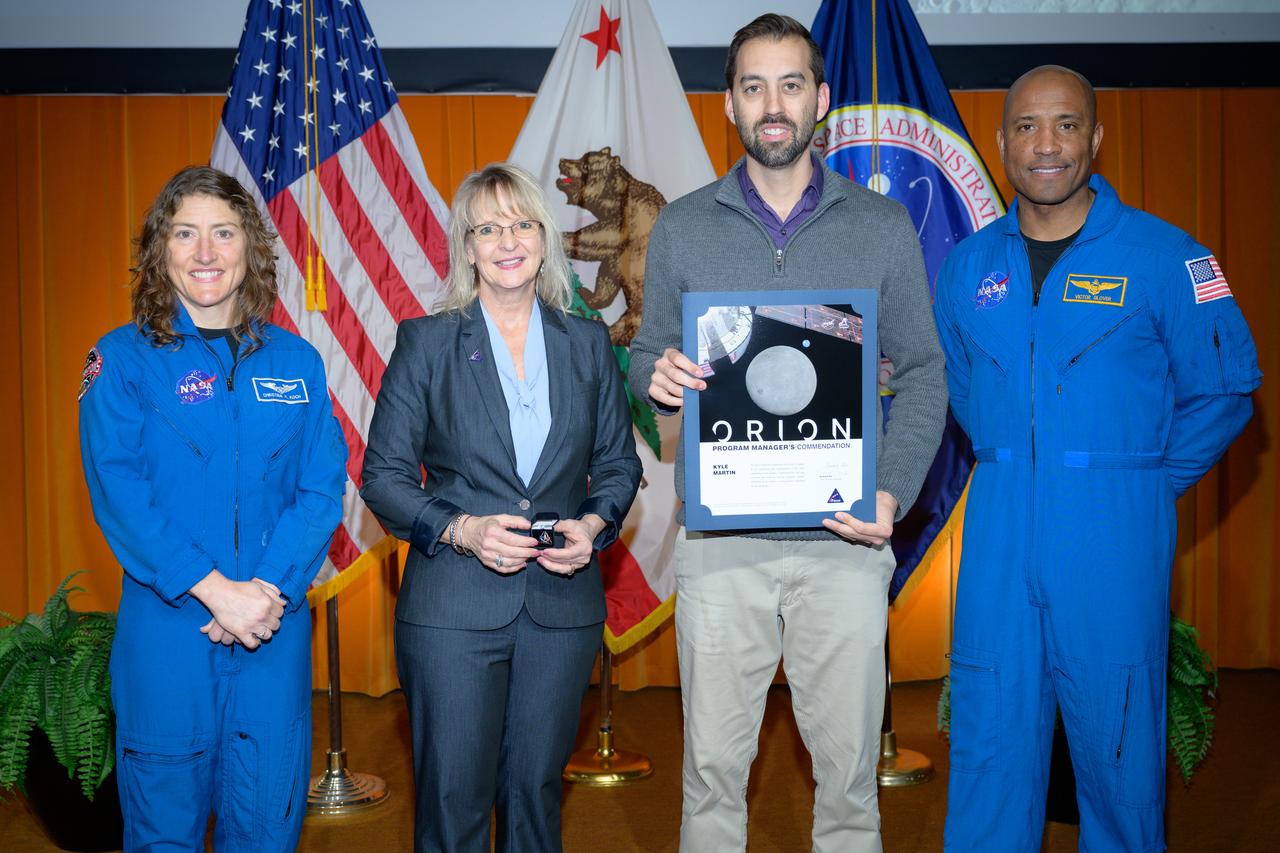
Artemis Orion program manager’s commendation award presented to Kyle Martin, center, by Orion Deputy Program Manager Debbie Korth, left, NASA astronauts Victor J. Glover, right, and Christina Koch, left, in the N201 auditorium.
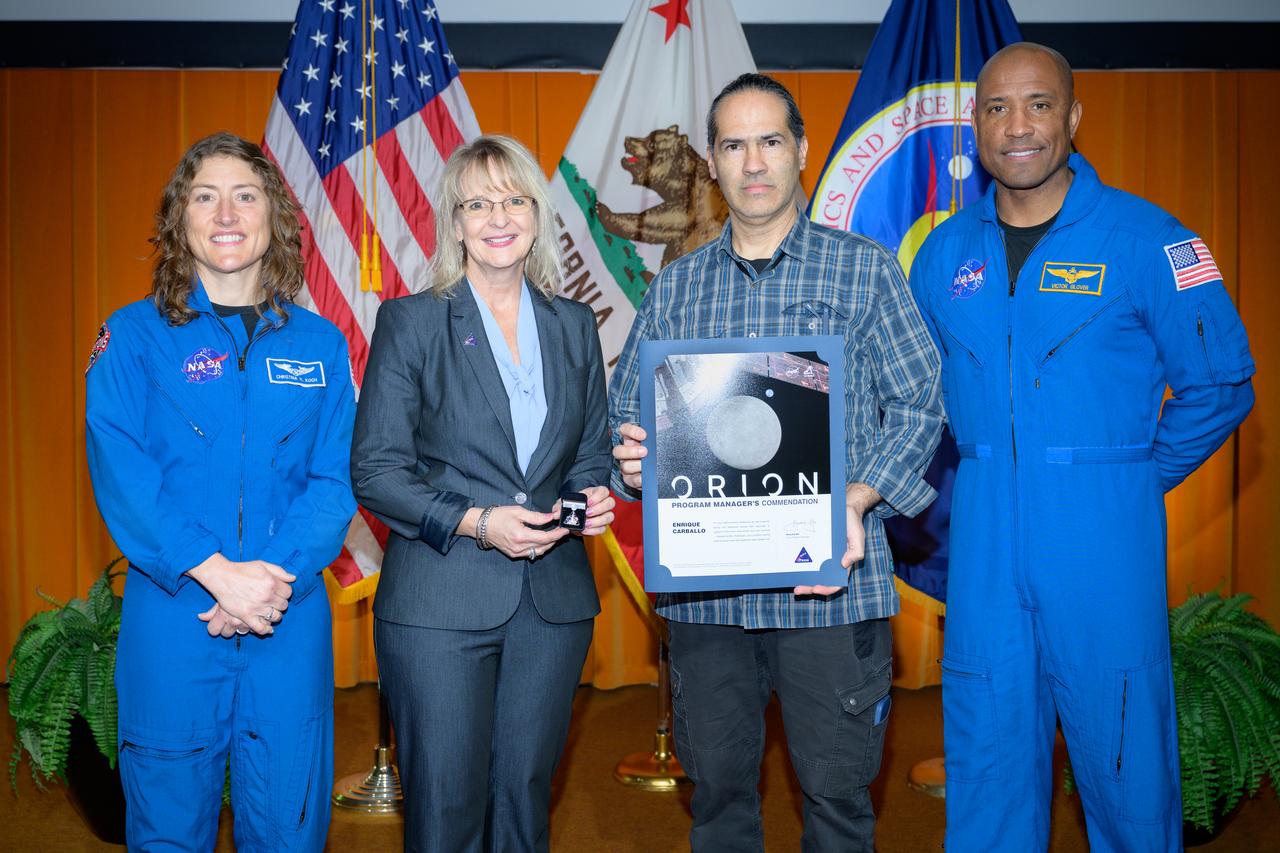
Artemis Orion program manager’s commendation award presented to Enrique Carballo, center, by Orion Deputy Program Manager Debbie Korth, left, NASA astronauts Victor J. Glover, right, and Christina Koch, left, in the N201 auditorium.
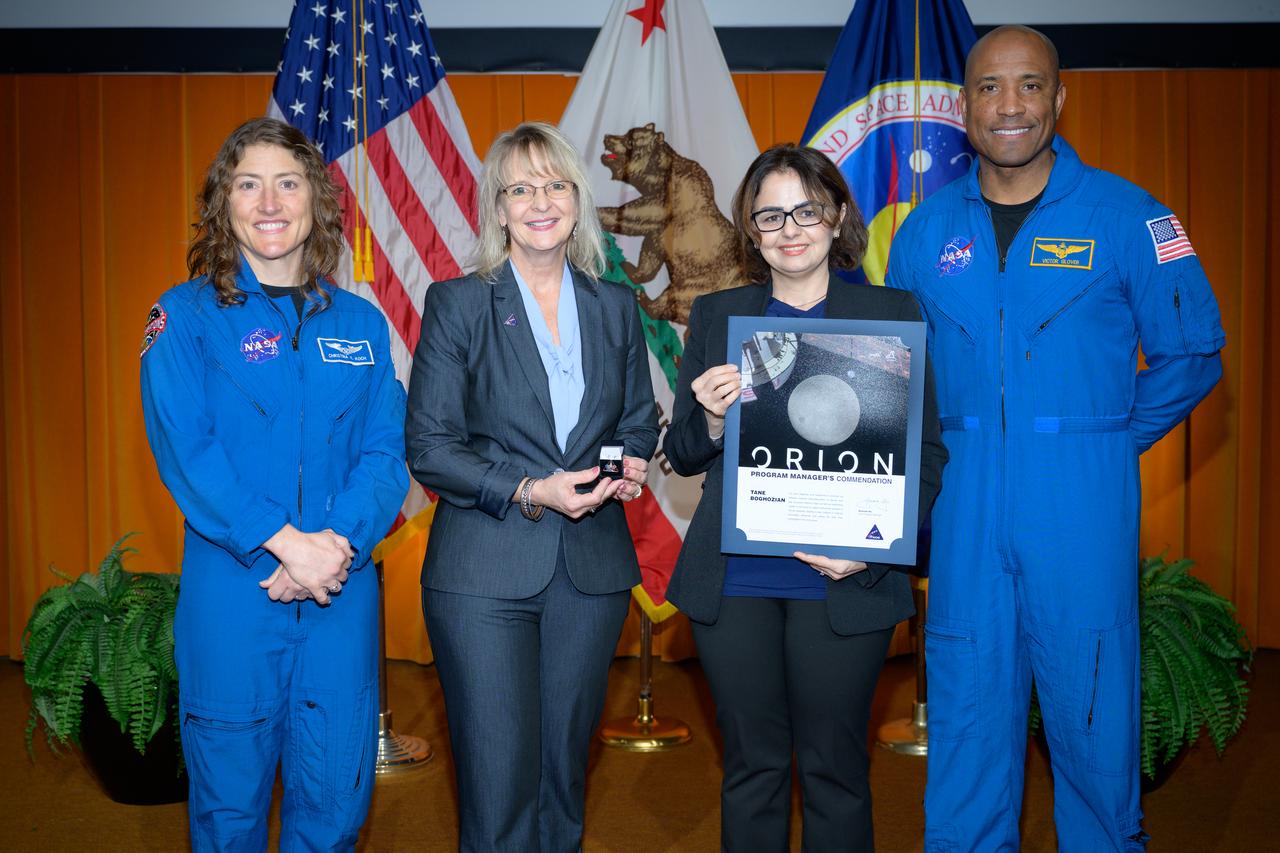
Artemis Orion program manager’s commendation award presented to Tane Boghozian, center, by Orion Deputy Program Manager Debbie Korth, left, NASA astronauts Victor J. Glover, right, and Christina Koch, left, in the N201 auditorium.
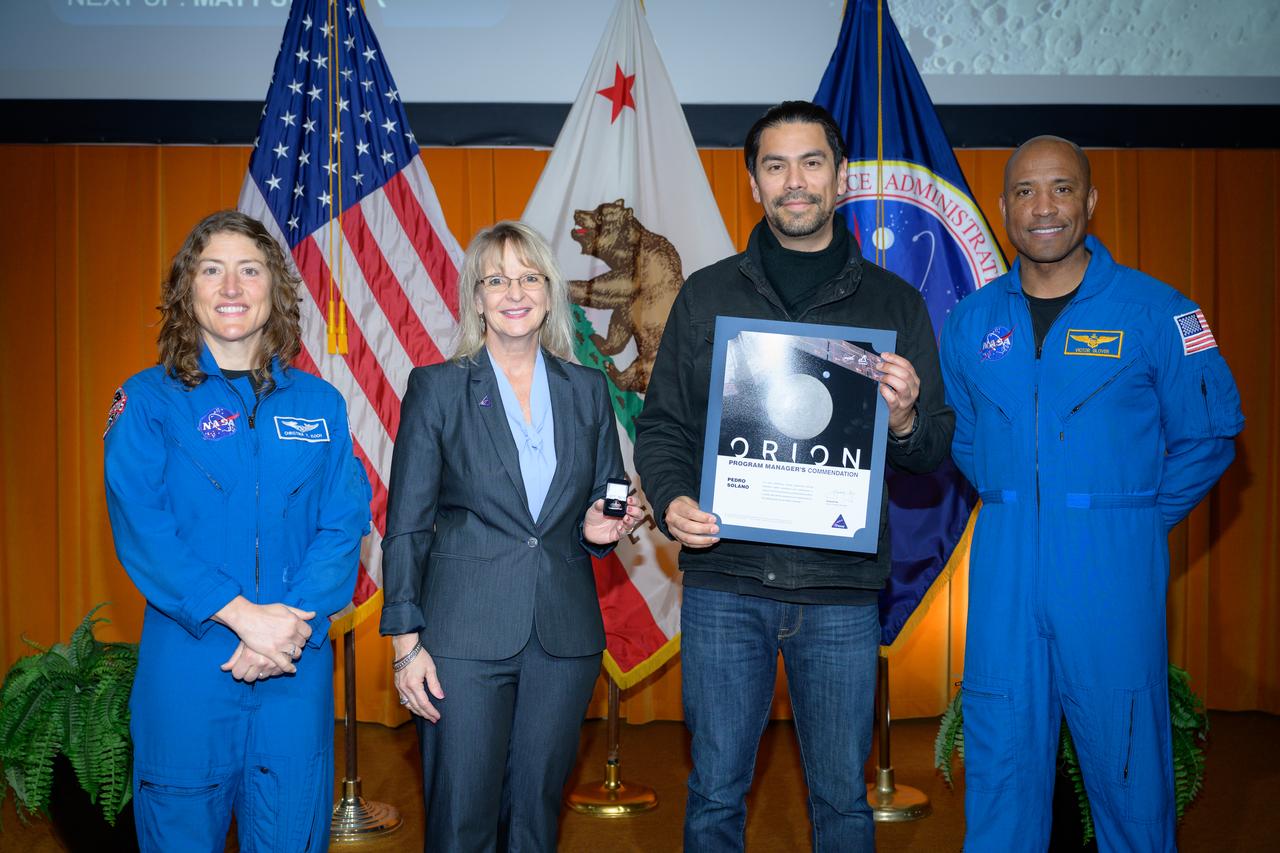
Artemis Orion program manager’s commendation award presented to Pedro Solano, center, by Orion Deputy Program Manager Debbie Korth, left, NASA astronauts Victor J. Glover, right, and Christina Koch, left, in the N201 auditorium.
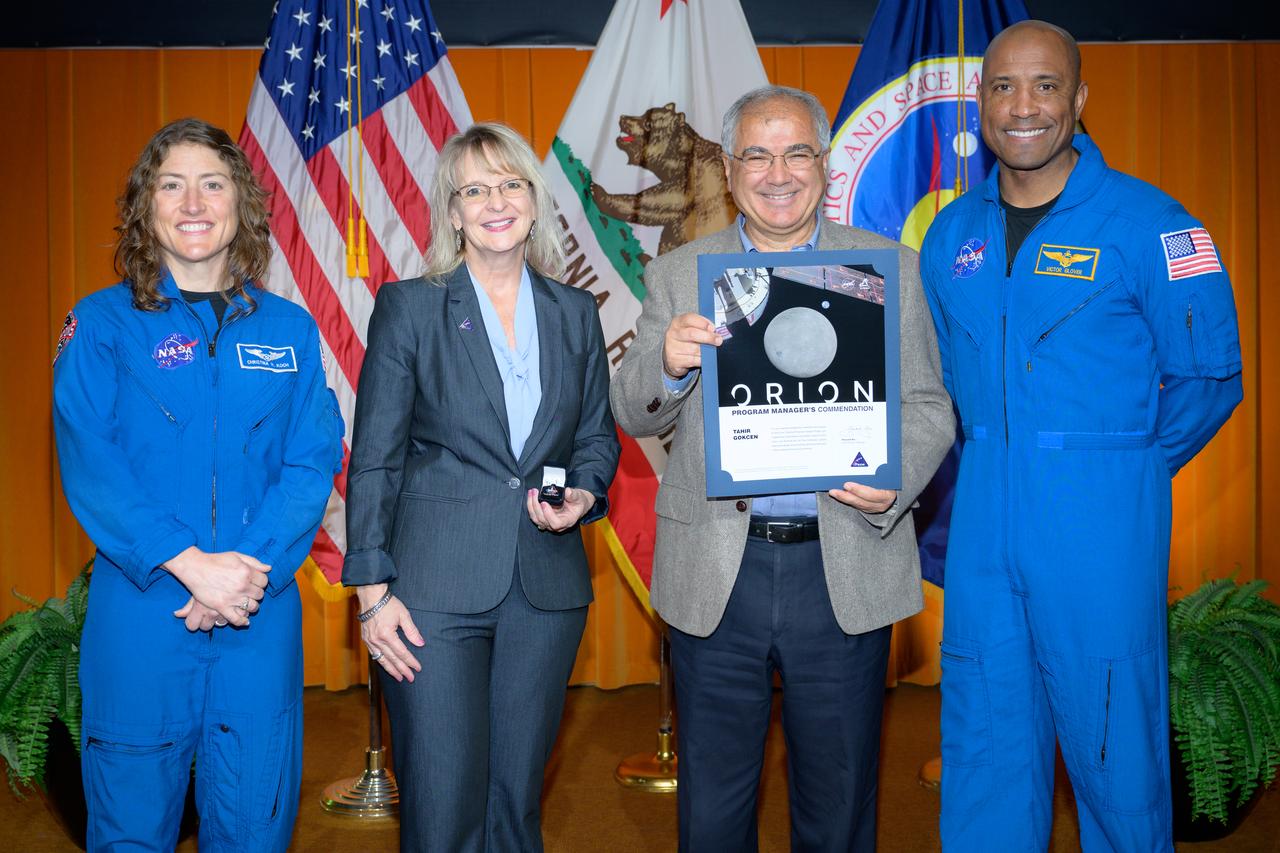
Artemis Orion program manager’s commendation award presented to Tahir Gokcen, center, by Orion Deputy Program Manager Debbie Korth, left, NASA astronauts Victor J. Glover, right, and Christina Koch, left, in the N201 auditorium.
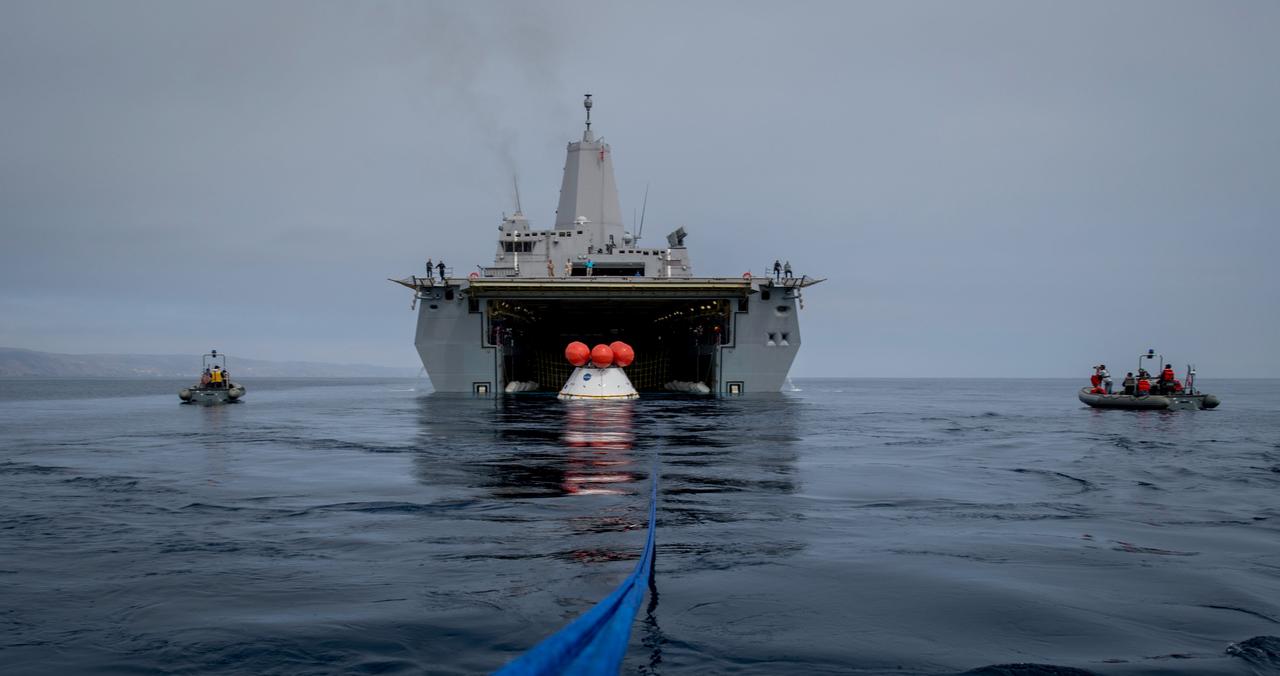
NASA Orion Programe
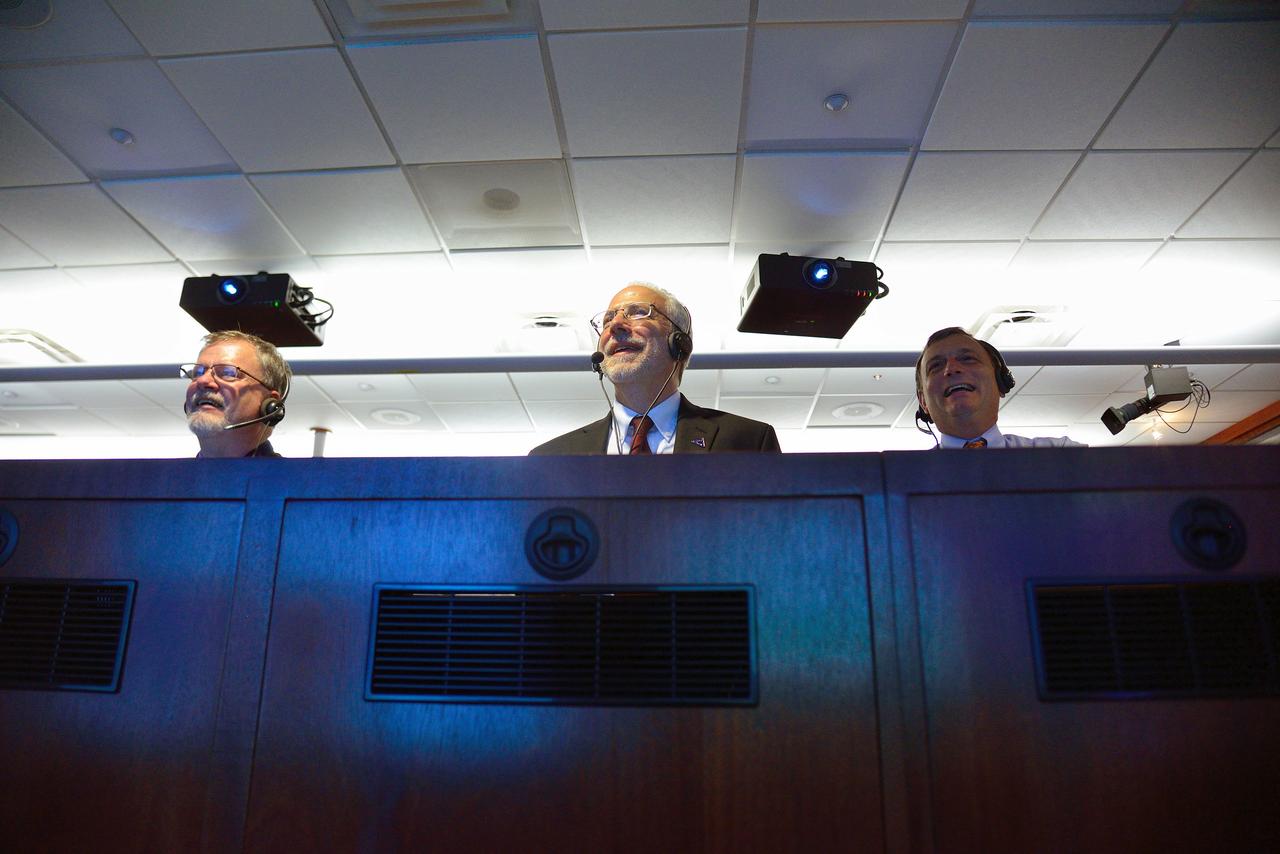
Lockheed Martin Program Manager Mike Hawes, Orion Program Manager Mark Geyer, and Orion Deputy Program Manager Mike Kirasich watch Orion's Exploration Flight Test-1 (EFT-1) reentry sequence in Building AE at Cape Canaveral Air Force Station on a live stream from the Ikhana aircraft on Dec. 5, 2014. The Orion spacecraft orbited Earth twice, reaching an altitude of approximately 3,600 miles above Earth before landing. No one was aboard Orion for this flight test, but the spacecraft is designed to allow us to journey to destinations never before visited by humans, including an asteroid and Mars. Part of Batch image transfer from Flickr.
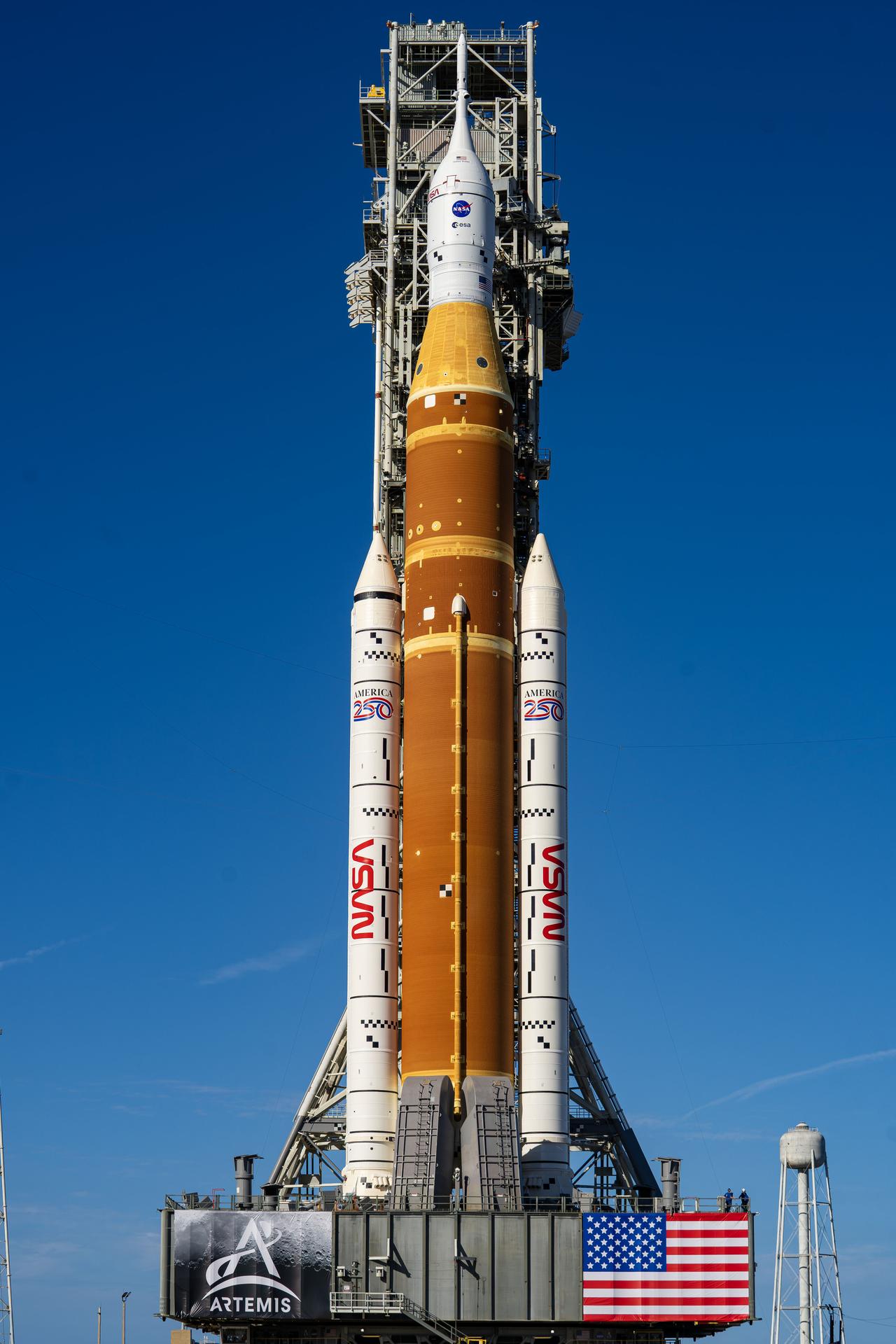
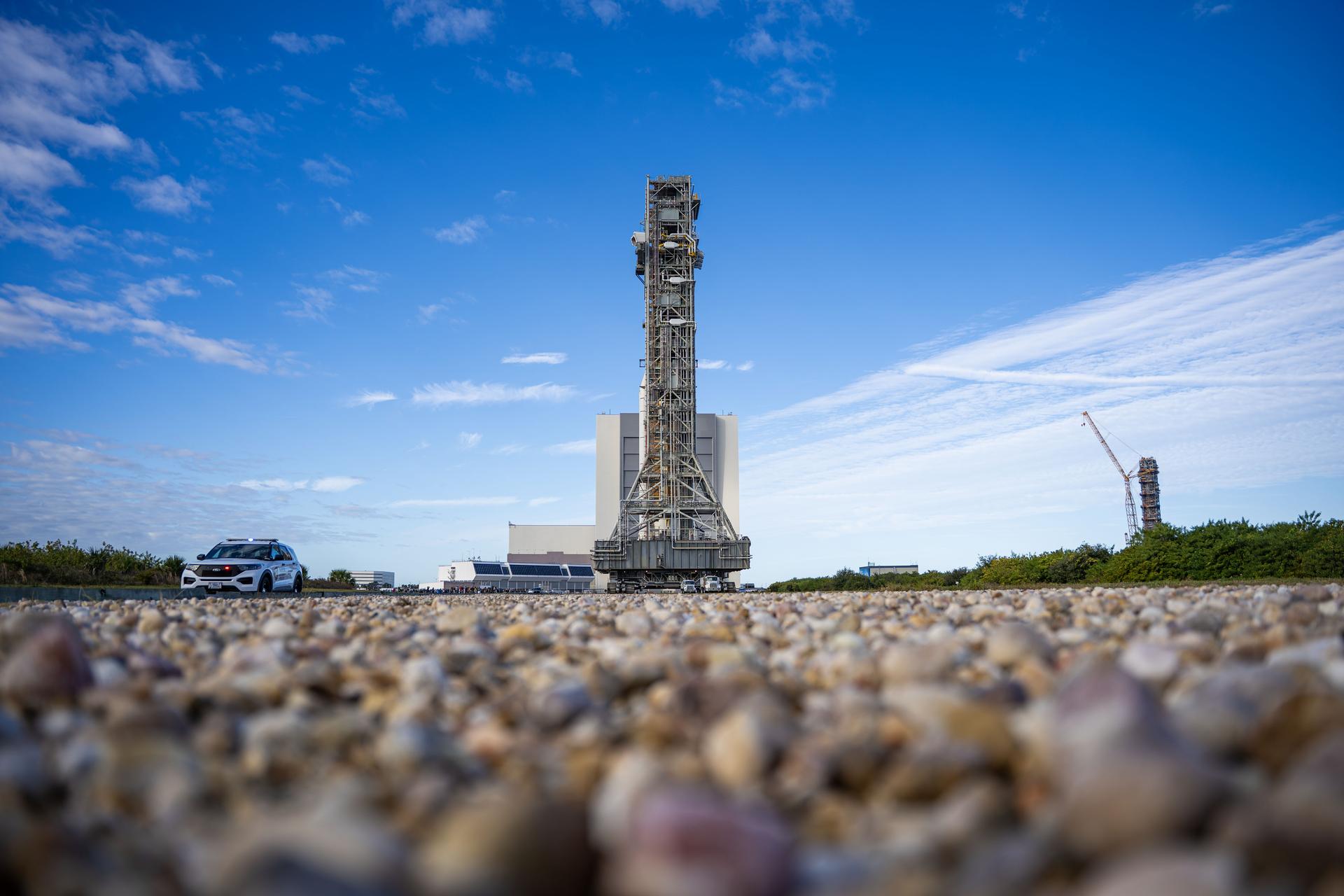
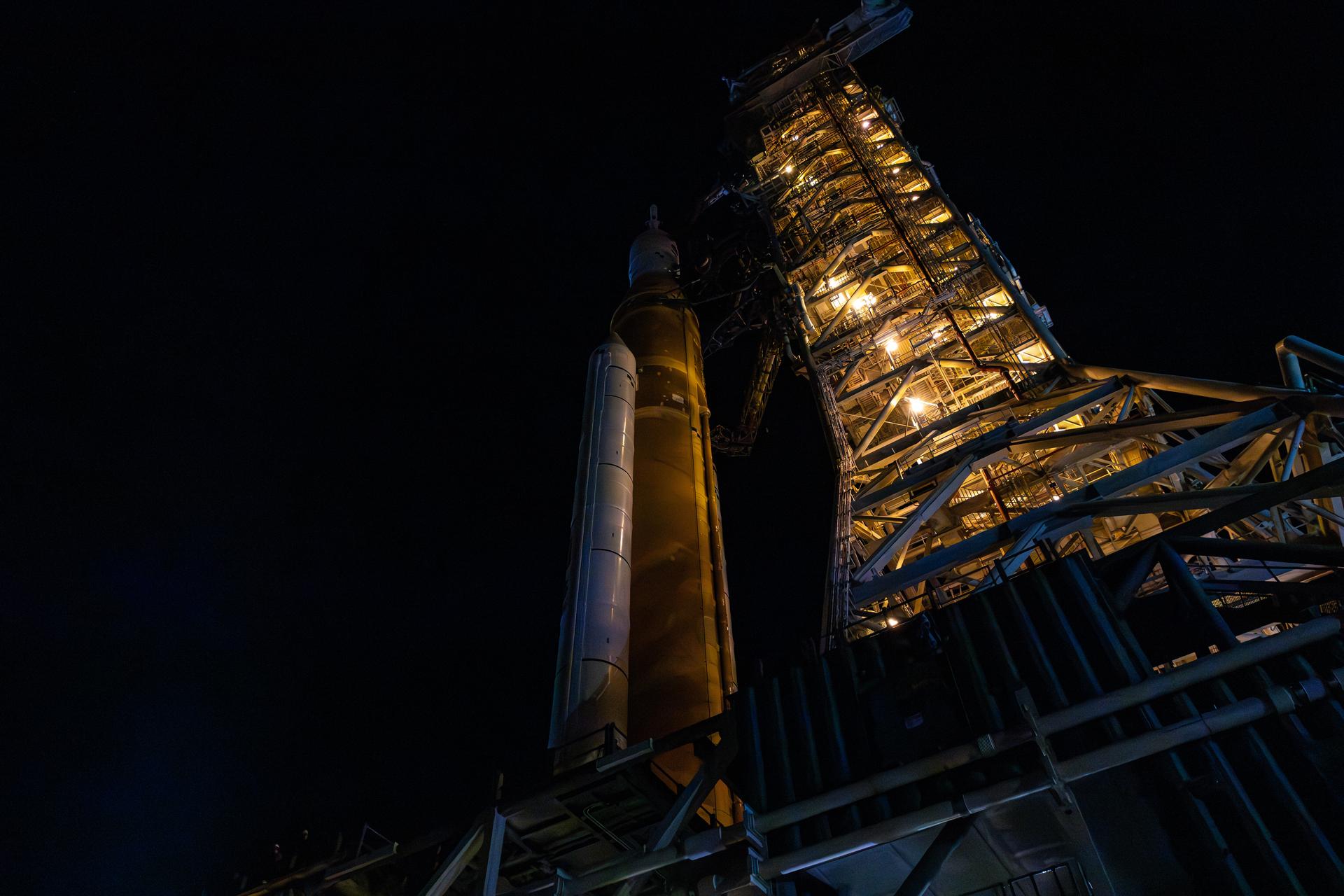
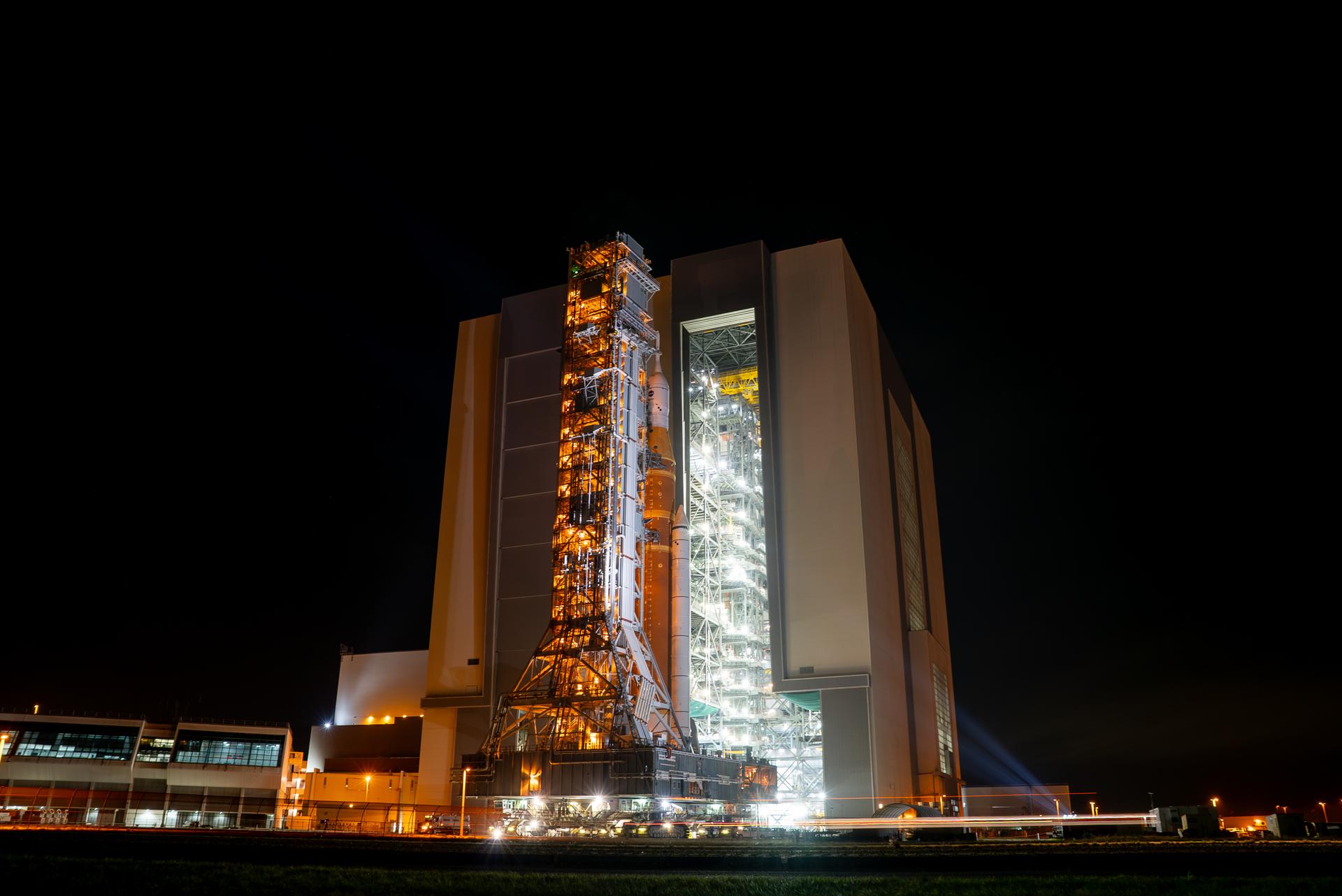
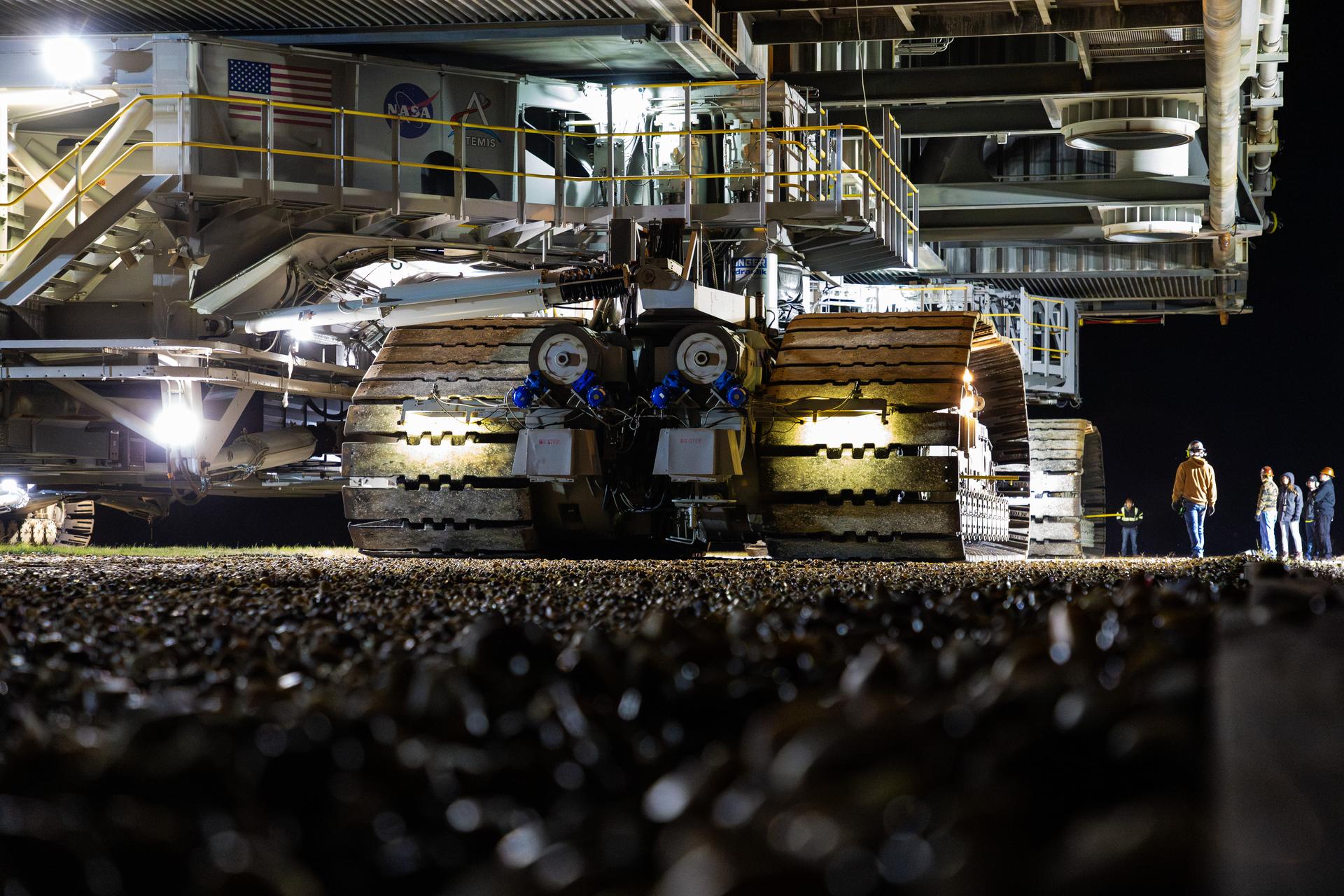
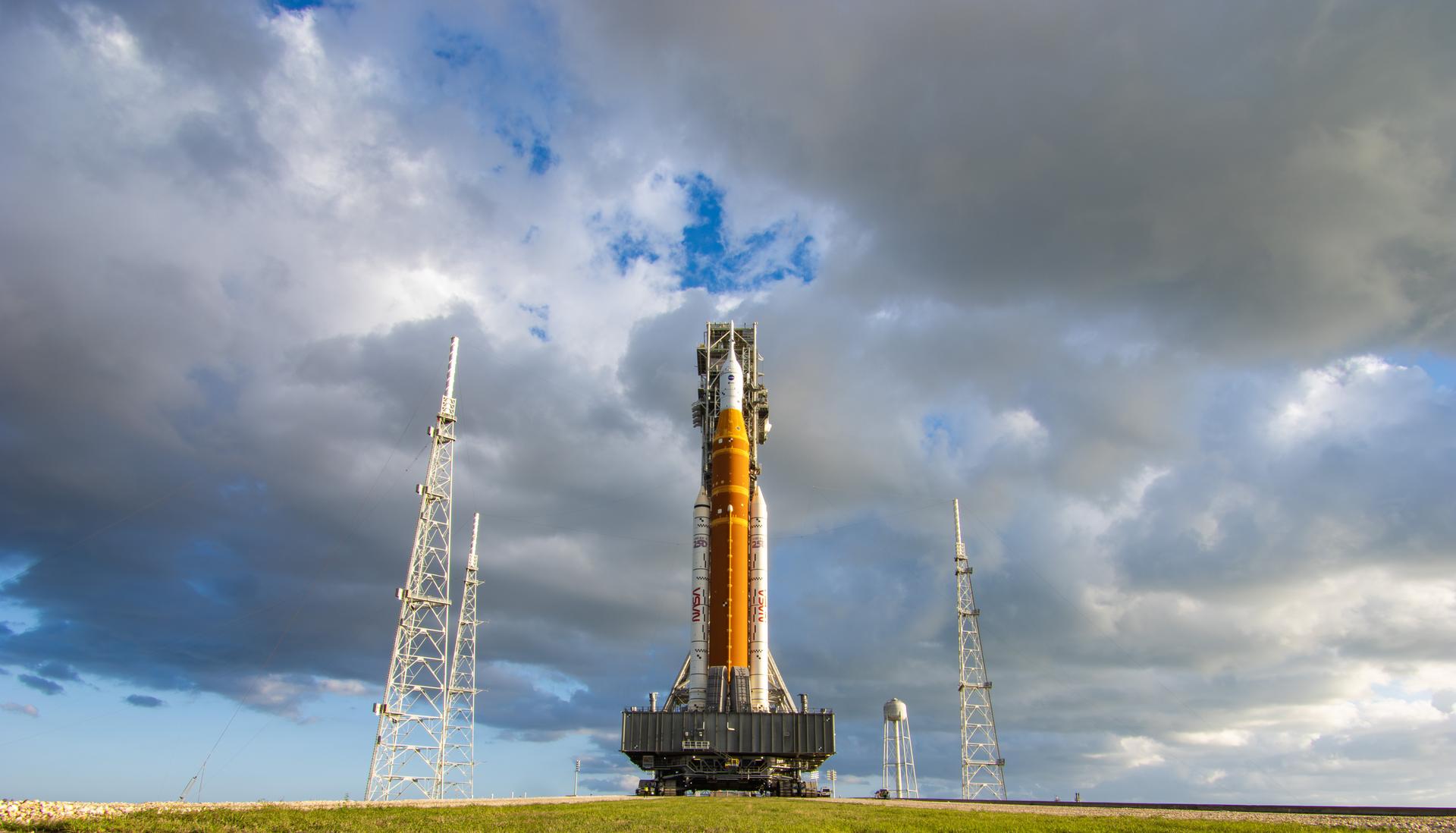
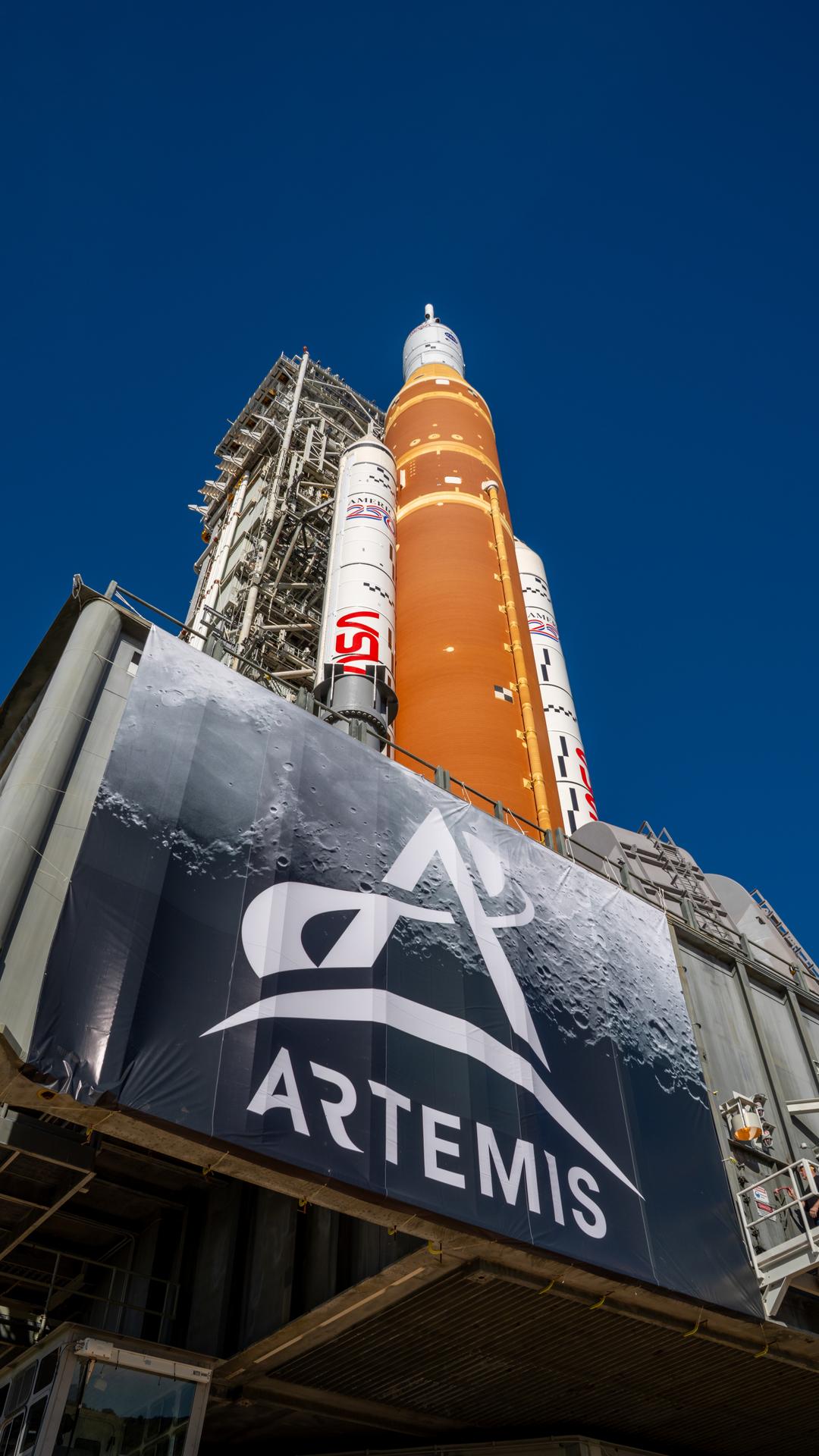
This image shows NASA’s SLS (Space Launch System) and Orion spacecraft rolling out of the Vehicle Assembly Building at NASA’s Kennedy Space Center. NASA's massive Crawler-Transporter, upgraded for the Artemis program, carries the powerful SLS rocket and Orion spacecraft on the Mobile Launcher from the Vehicle Assembly Building to Launch Pad 39B at Kennedy Space Center in preparation for the Artemis II mission.
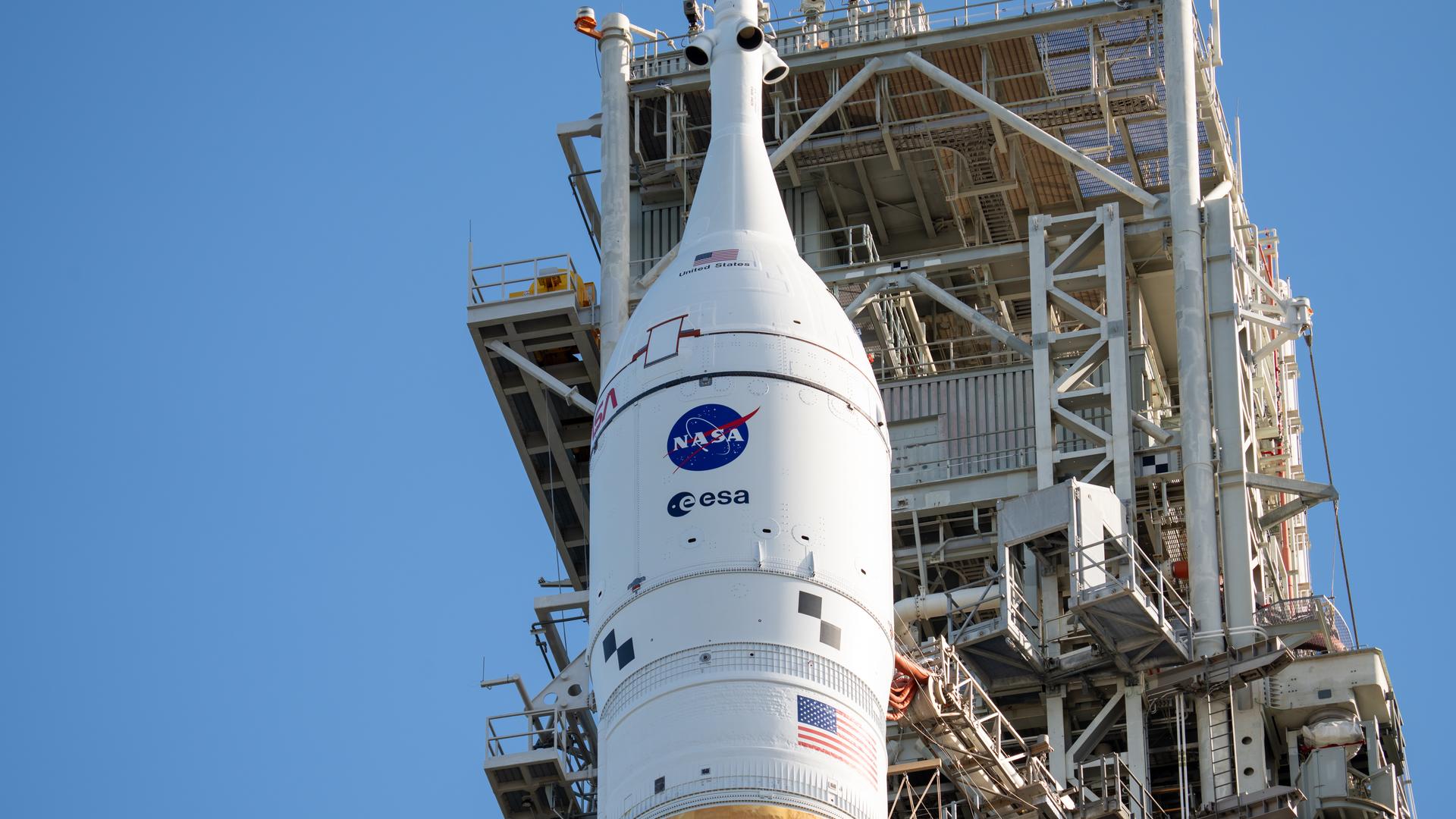
This image shows NASA’s SLS (Space Launch System) and Orion spacecraft rolling out of the Vehicle Assembly Building at NASA’s Kennedy Space Center. NASA's massive Crawler-Transporter, upgraded for the Artemis program, carries the powerful SLS rocket and Orion spacecraft on the Mobile Launcher from the Vehicle Assembly Building to Launch Pad 39B at Kennedy Space Center in preparation for the Artemis II mission.
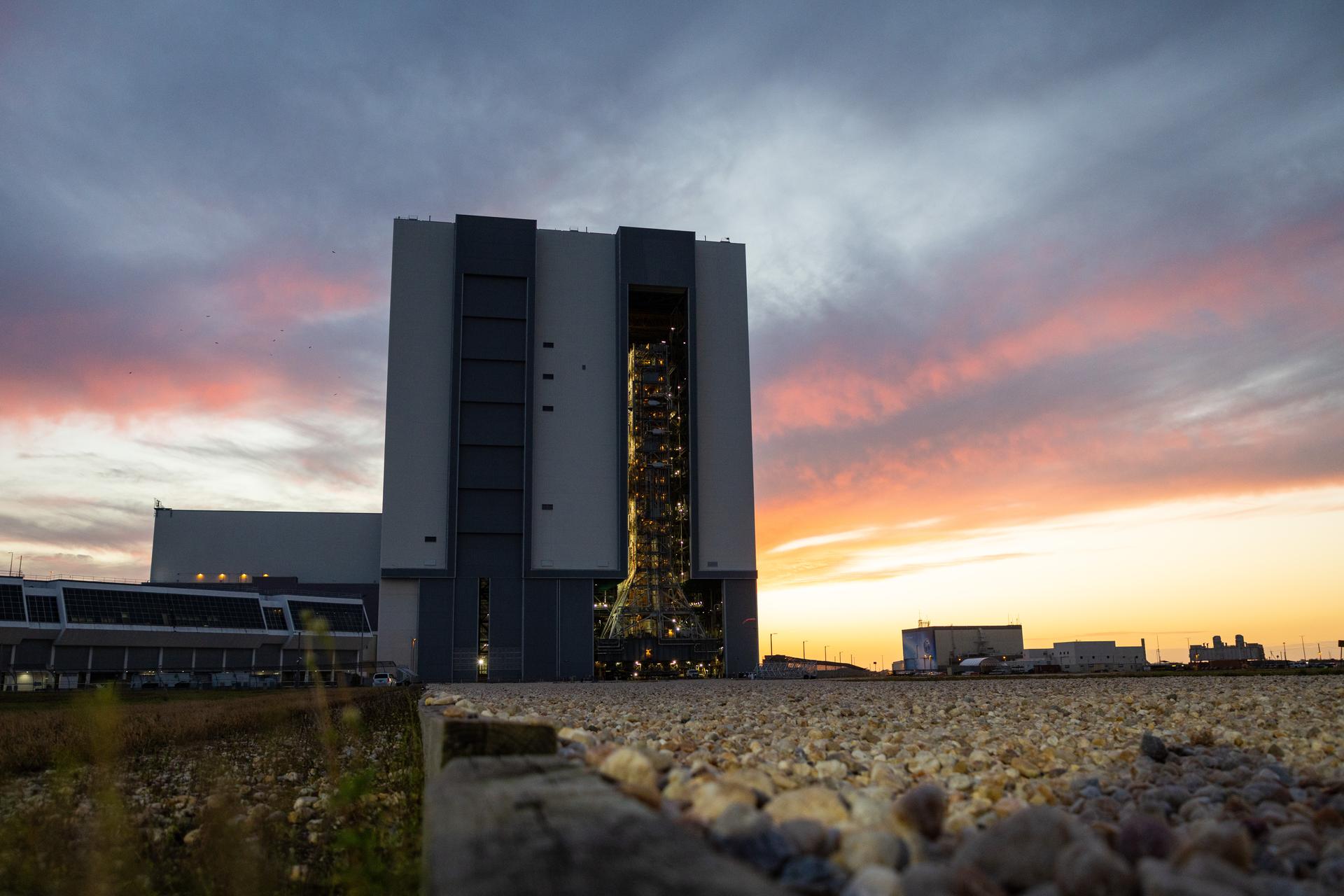
This image shows NASA’s SLS (Space Launch System) and Orion spacecraft rolling out of the Vehicle Assembly Building at NASA’s Kennedy Space Center. NASA's massive Crawler-Transporter, upgraded for the Artemis program, carries the powerful SLS rocket and Orion spacecraft on the Mobile Launcher from the Vehicle Assembly Building to Launch Pad 39B at Kennedy Space Center in preparation for the Artemis II mission.
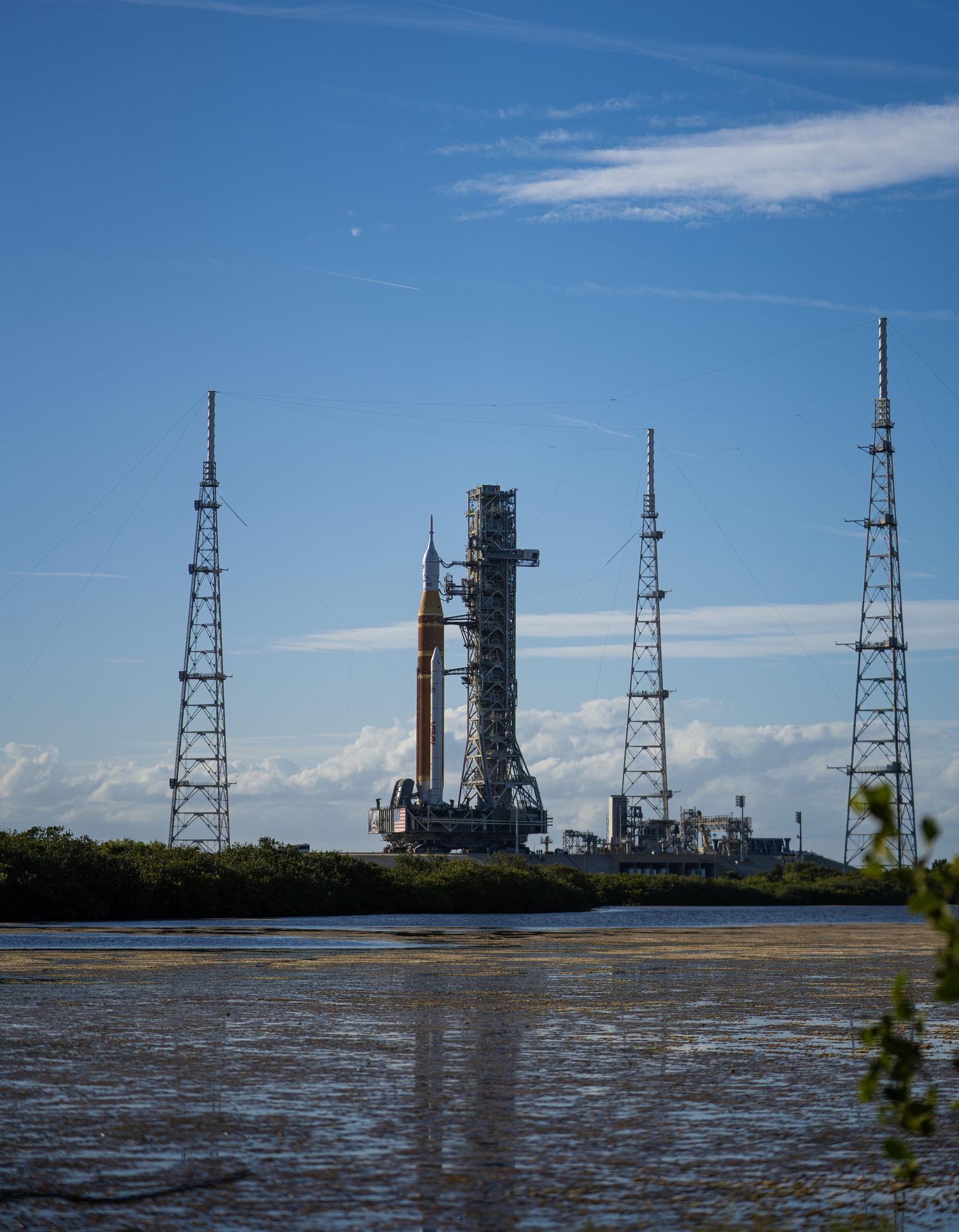
This image shows NASA’s SLS (Space Launch System) and Orion spacecraft rolling out of the Vehicle Assembly Building at NASA’s Kennedy Space Center. NASA's massive Crawler-Transporter, upgraded for the Artemis program, carries the powerful SLS rocket and Orion spacecraft on the Mobile Launcher from the Vehicle Assembly Building to Launch Pad 39B at Kennedy Space Center in preparation for the Artemis II mission.
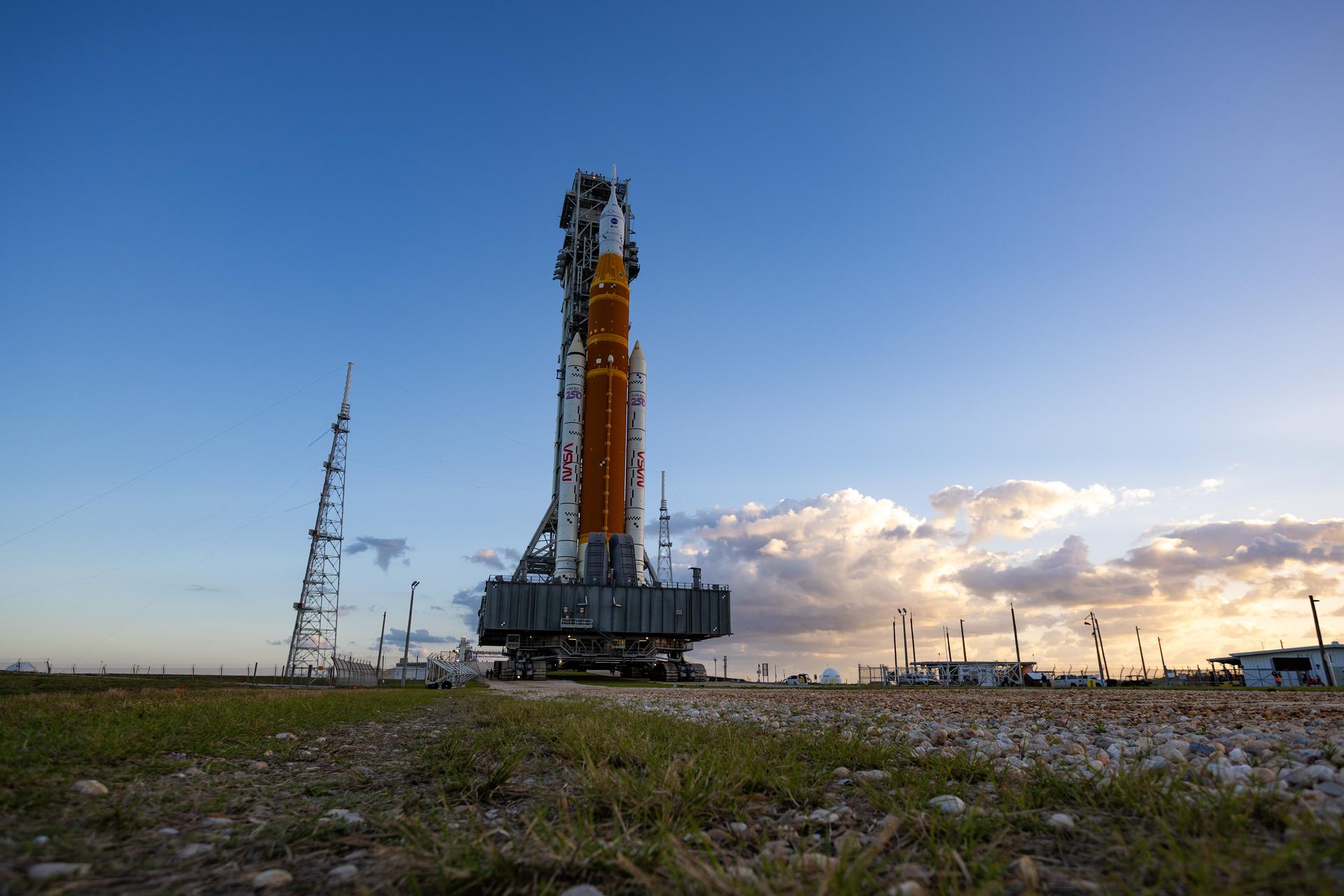
This image shows NASA’s SLS (Space Launch System) and Orion spacecraft rolling out of the Vehicle Assembly Building at NASA’s Kennedy Space Center. NASA's massive Crawler-Transporter, upgraded for the Artemis program, carries the powerful SLS rocket and Orion spacecraft on the Mobile Launcher from the Vehicle Assembly Building to Launch Pad 39B at Kennedy Space Center in preparation for the Artemis II mission.
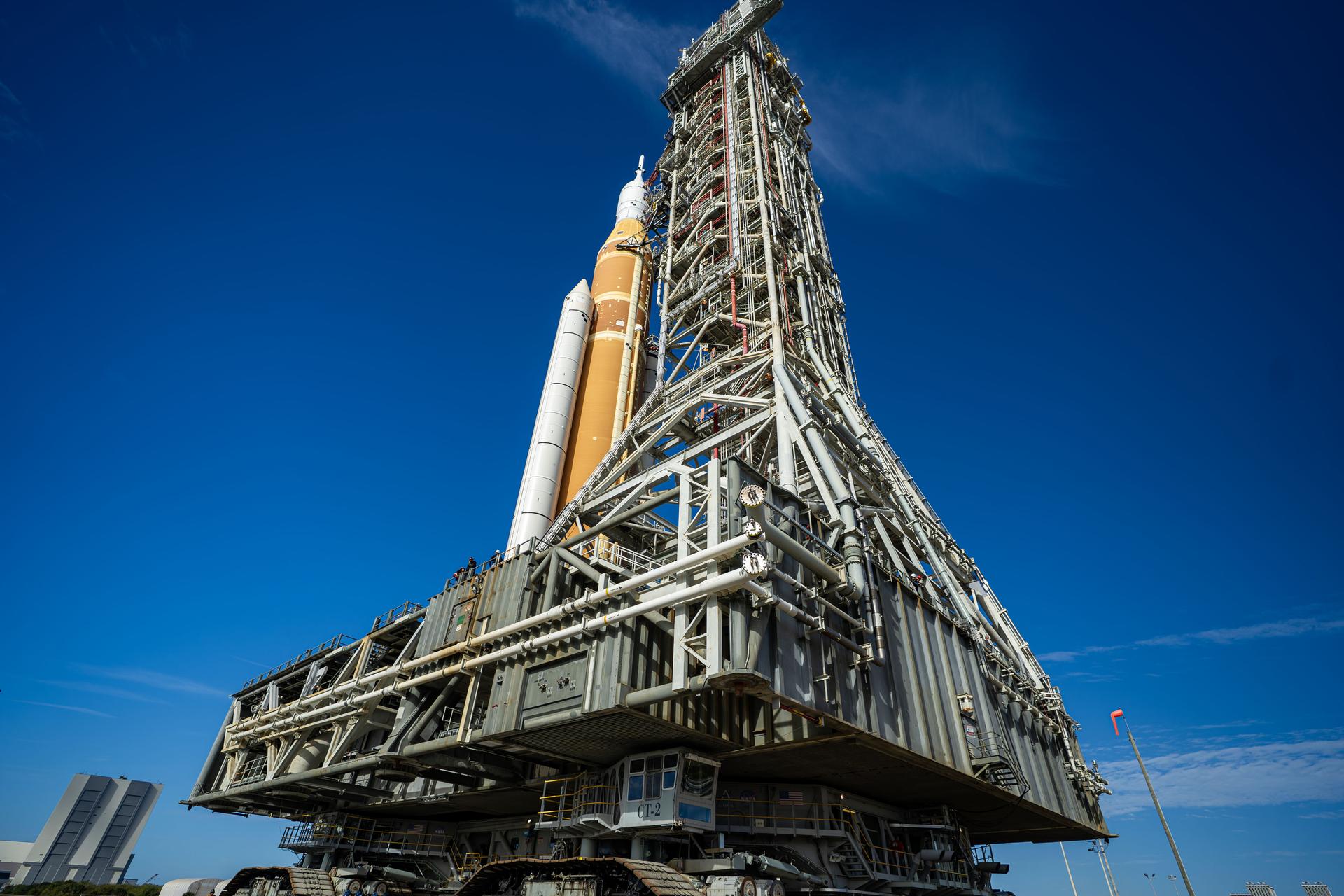
This image shows NASA’s SLS (Space Launch System) and Orion spacecraft rolling out of the Vehicle Assembly Building at NASA’s Kennedy Space Center. NASA's massive Crawler-Transporter, upgraded for the Artemis program, carries the powerful SLS rocket and Orion spacecraft on the Mobile Launcher from the Vehicle Assembly Building to Launch Pad 39B at Kennedy Space Center in preparation for the Artemis II mission.
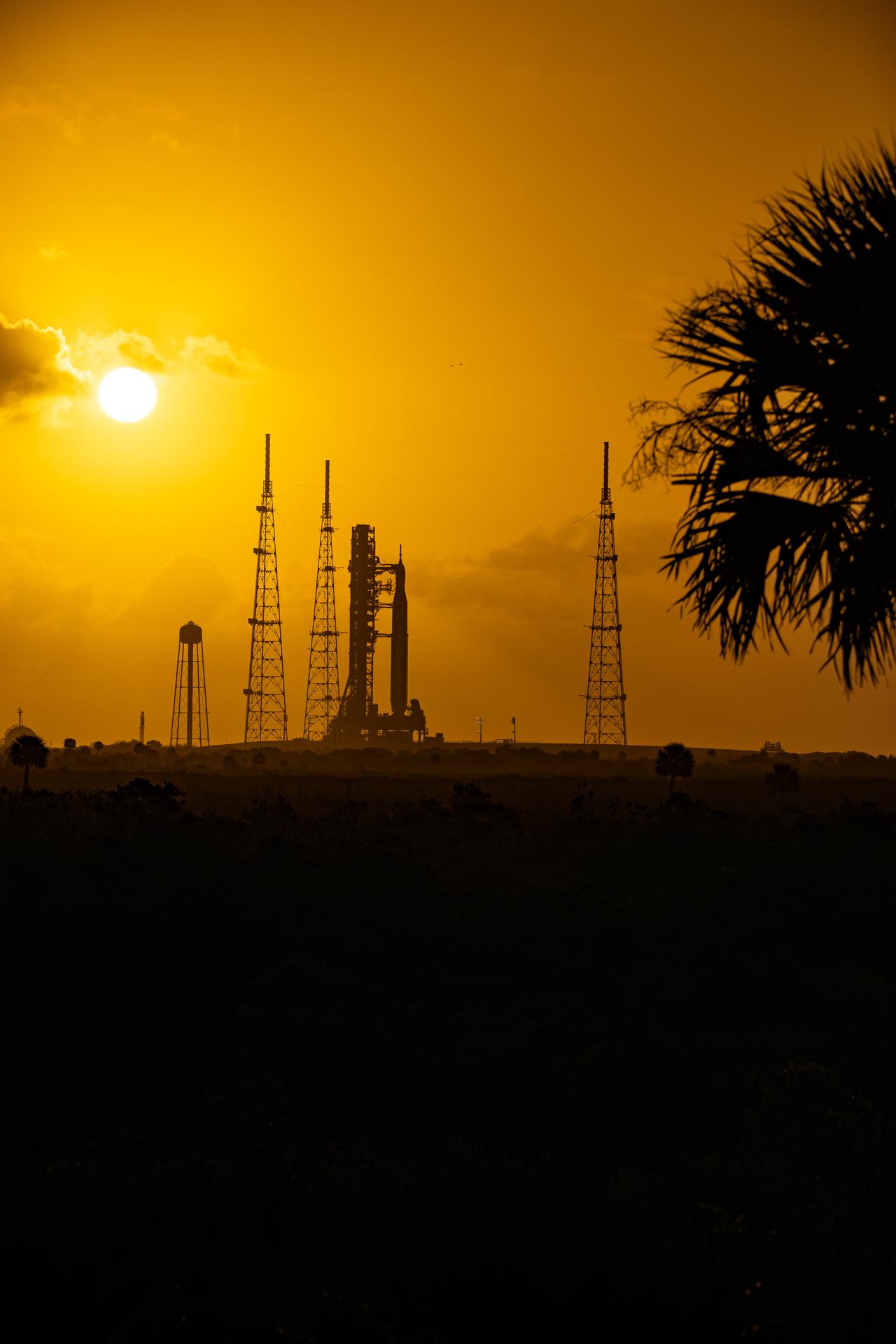
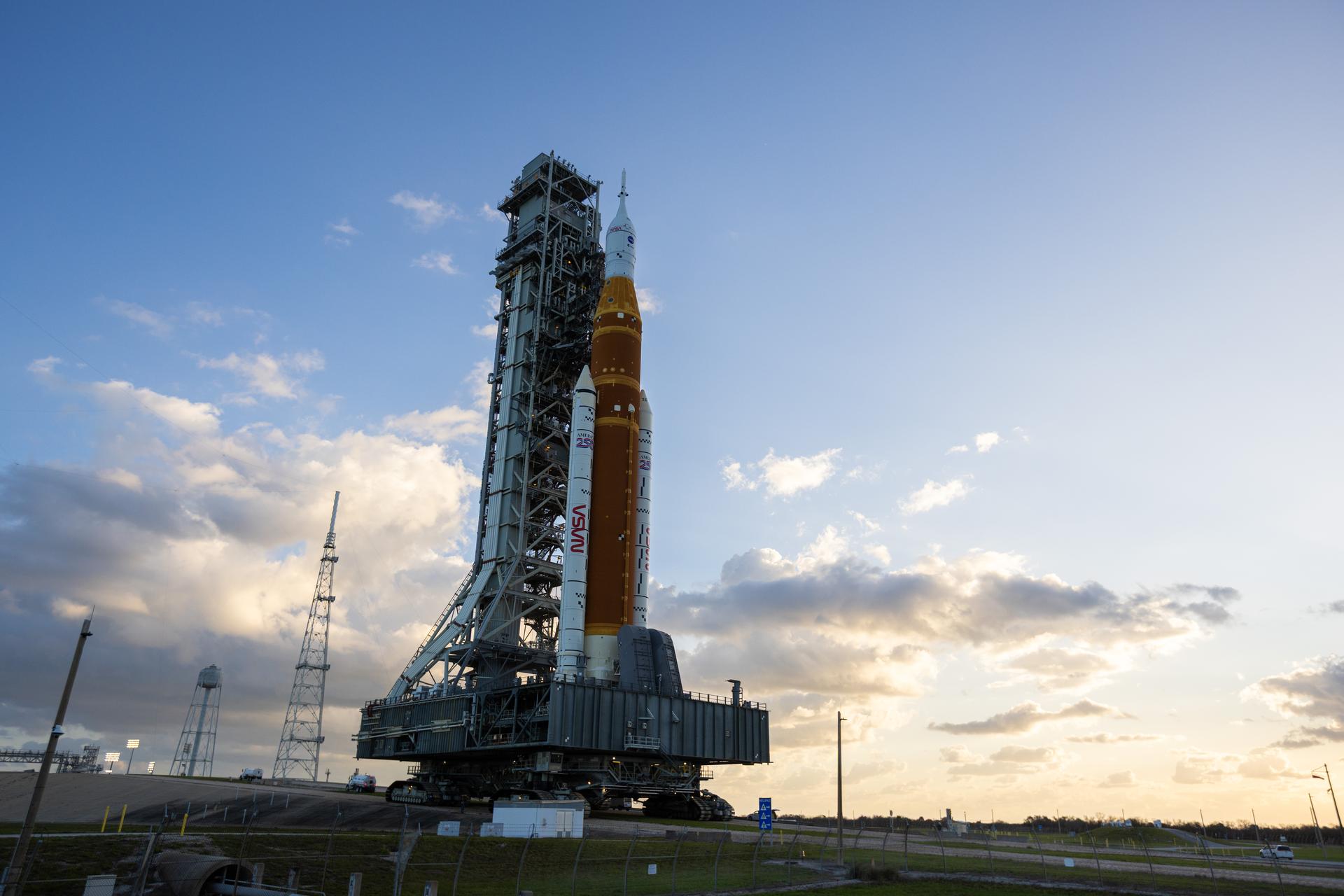
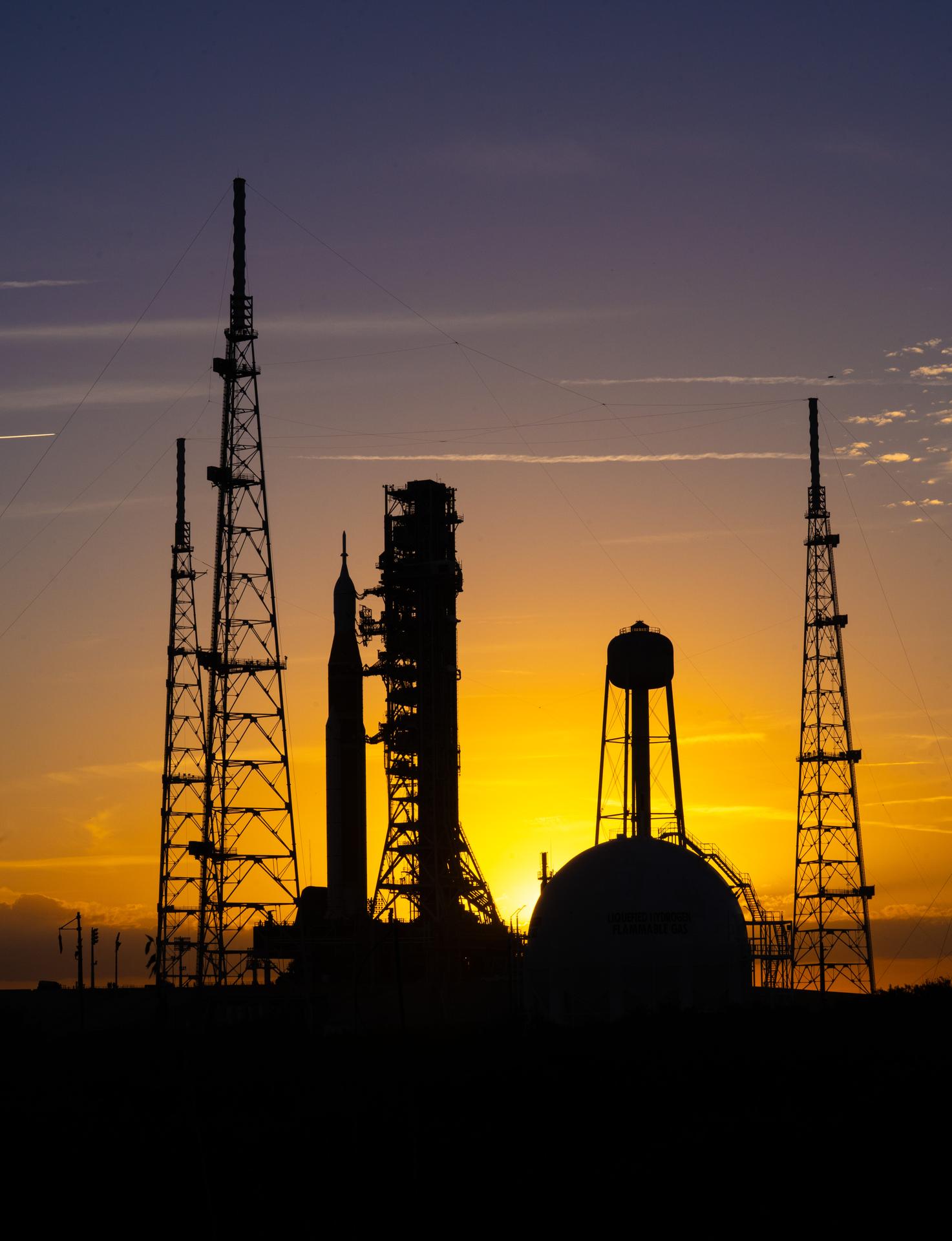
This image shows a sunset of NASA’s SLS (Space Launch System) and Orion spacecraft at NASA’s Kennedy Space Center. NASA's massive Crawler-Transporter, upgraded for the Artemis program, carried the powerful SLS rocket and Orion spacecraft on the Mobile Launcher from the Vehicle Assembly Building to Launch Pad 39B at Kennedy Space Center in preparation for the Artemis II mission.
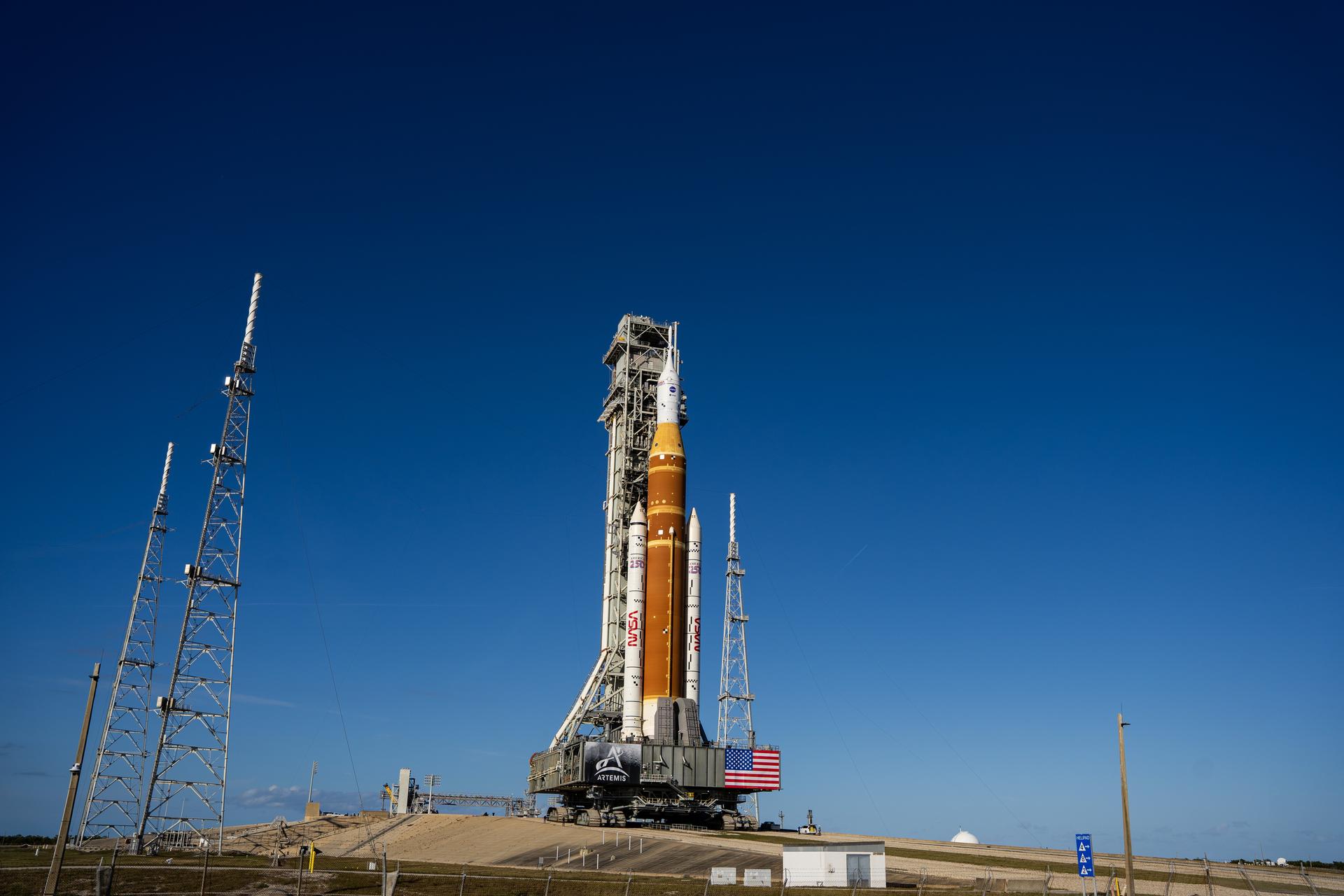
This image shows NASA’s SLS (Space Launch System) and Orion spacecraft rolling out of the Vehicle Assembly Building at NASA’s Kennedy Space Center. NASA's massive Crawler-Transporter, upgraded for the Artemis program, carries the powerful SLS rocket and Orion spacecraft on the Mobile Launcher from the Vehicle Assembly Building to Launch Pad 39B at Kennedy Space Center in preparation for the Artemis II mission.
This image shows NASA’s SLS (Space Launch System) and Orion spacecraft rolling out of the Vehicle Assembly Building at NASA’s Kennedy Space Center. NASA's massive Crawler-Transporter, upgraded for the Artemis program, carries the powerful SLS rocket and Orion spacecraft on the Mobile Launcher from the Vehicle Assembly Building to Launch Pad 39B at Kennedy Space Center in preparation for the Artemis II mission.
This image shows NASA’s SLS (Space Launch System) and Orion spacecraft rolling out of the Vehicle Assembly Building at NASA’s Kennedy Space Center. NASA's massive Crawler-Transporter, upgraded for the Artemis program, carries the powerful SLS rocket and Orion spacecraft on the Mobile Launcher from the Vehicle Assembly Building to Launch Pad 39B at Kennedy Space Center in preparation for the Artemis II mission.
This image shows NASA’s SLS (Space Launch System) and Orion spacecraft rolling out of the Vehicle Assembly Building at NASA’s Kennedy Space Center. NASA's massive Crawler-Transporter, upgraded for the Artemis program, carries the powerful SLS rocket and Orion spacecraft on the Mobile Launcher from the Vehicle Assembly Building to Launch Pad 39B at Kennedy Space Center in preparation for the Artemis II mission.
This image shows NASA’s SLS (Space Launch System) and Orion spacecraft rolling out of the Vehicle Assembly Building at NASA’s Kennedy Space Center. NASA's massive Crawler-Transporter, upgraded for the Artemis program, carries the powerful SLS rocket and Orion spacecraft on the Mobile Launcher from the Vehicle Assembly Building to Launch Pad 39B at Kennedy Space Center in preparation for the Artemis II mission.
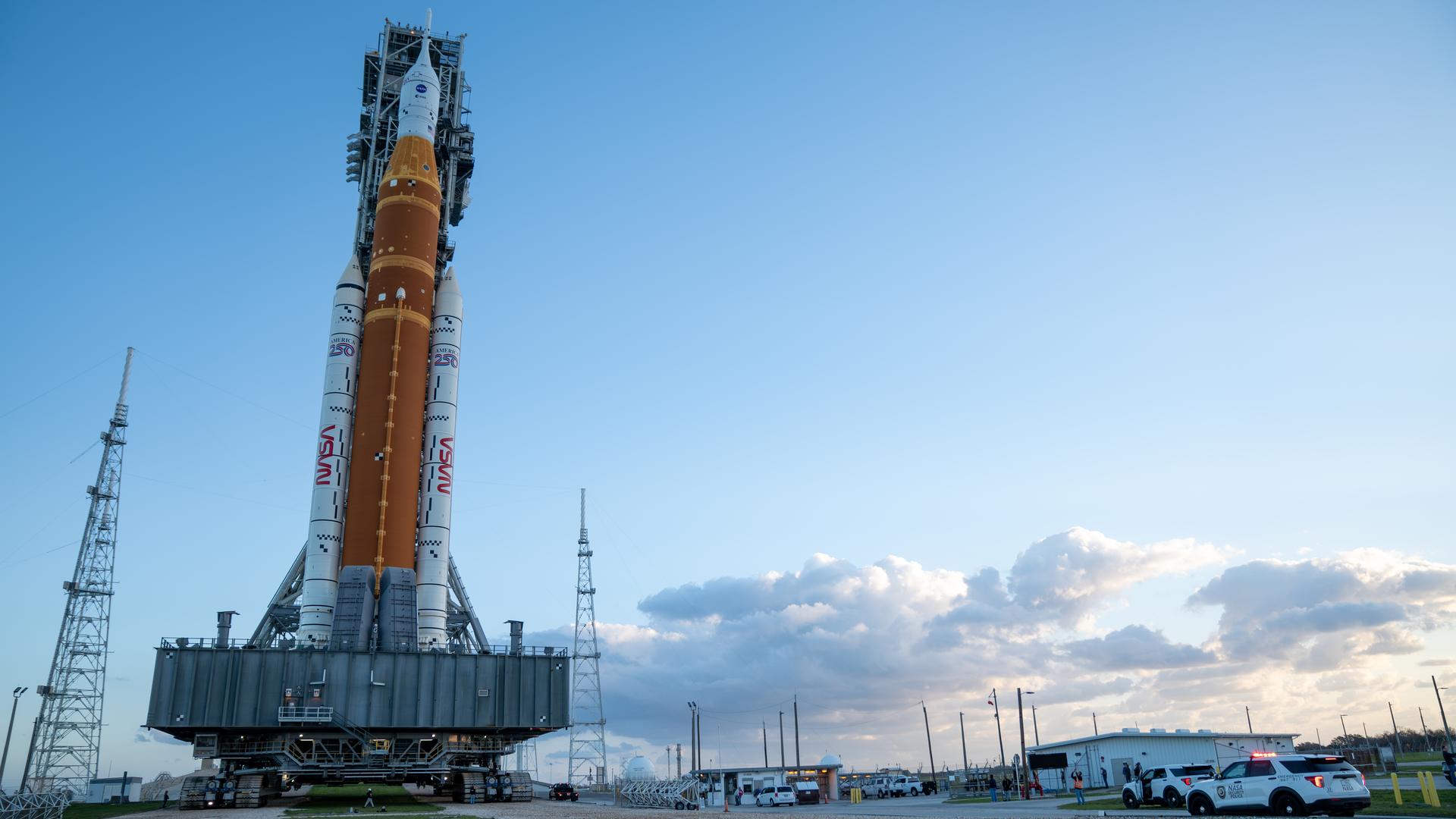
This image shows NASA’s SLS (Space Launch System) and Orion spacecraft rolling out of the Vehicle Assembly Building at NASA’s Kennedy Space Center. NASA's massive Crawler-Transporter, upgraded for the Artemis program, carries the powerful SLS rocket and Orion spacecraft on the Mobile Launcher from the Vehicle Assembly Building to Launch Pad 39B at Kennedy Space Center in preparation for the Artemis II mission.
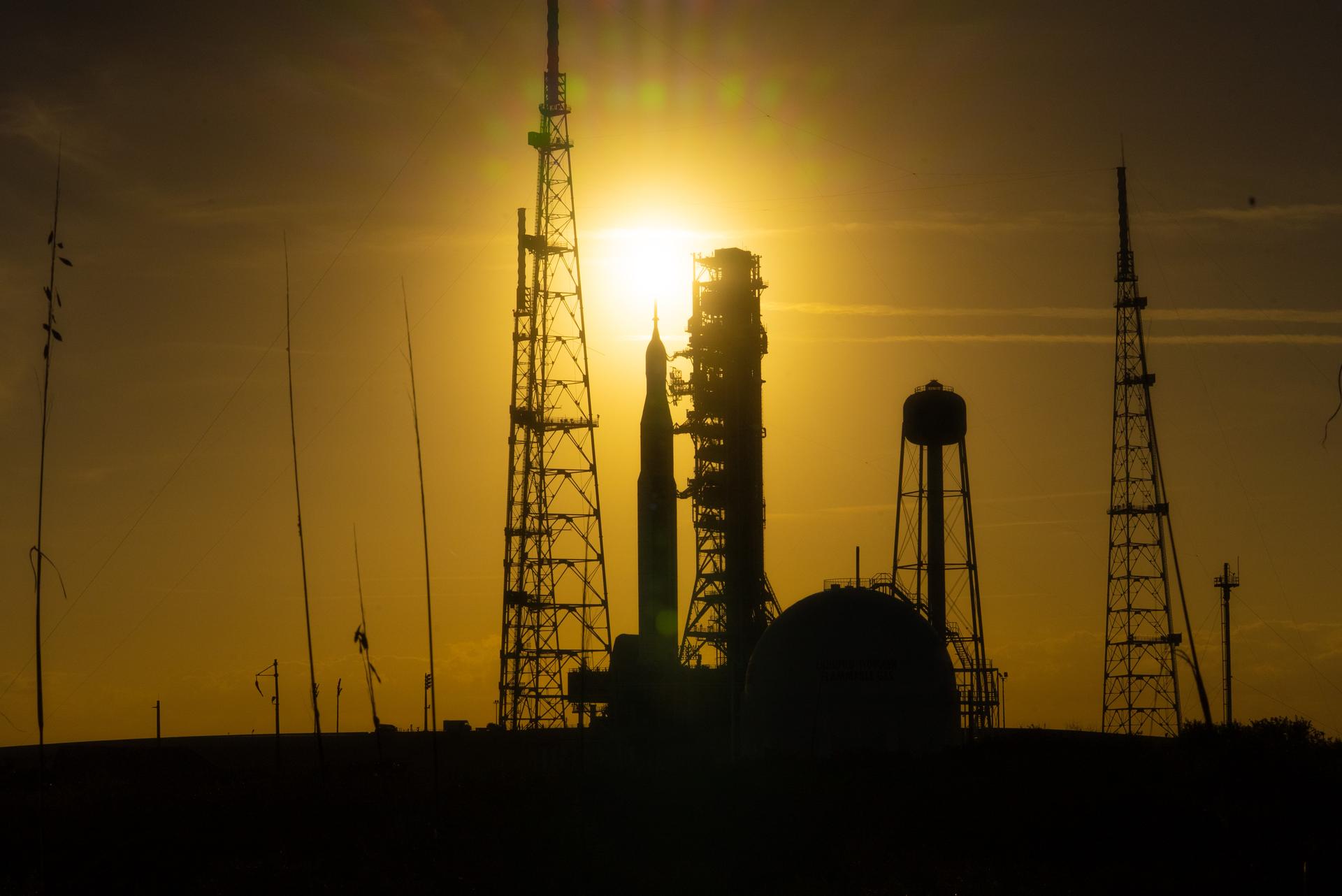
This image shows NASA’s SLS (Space Launch System) and Orion spacecraft rolling out of the Vehicle Assembly Building at NASA’s Kennedy Space Center. NASA's massive Crawler-Transporter, upgraded for the Artemis program, carries the powerful SLS rocket and Orion spacecraft on the Mobile Launcher from the Vehicle Assembly Building to Launch Pad 39B at Kennedy Space Center in preparation for the Artemis II mission.
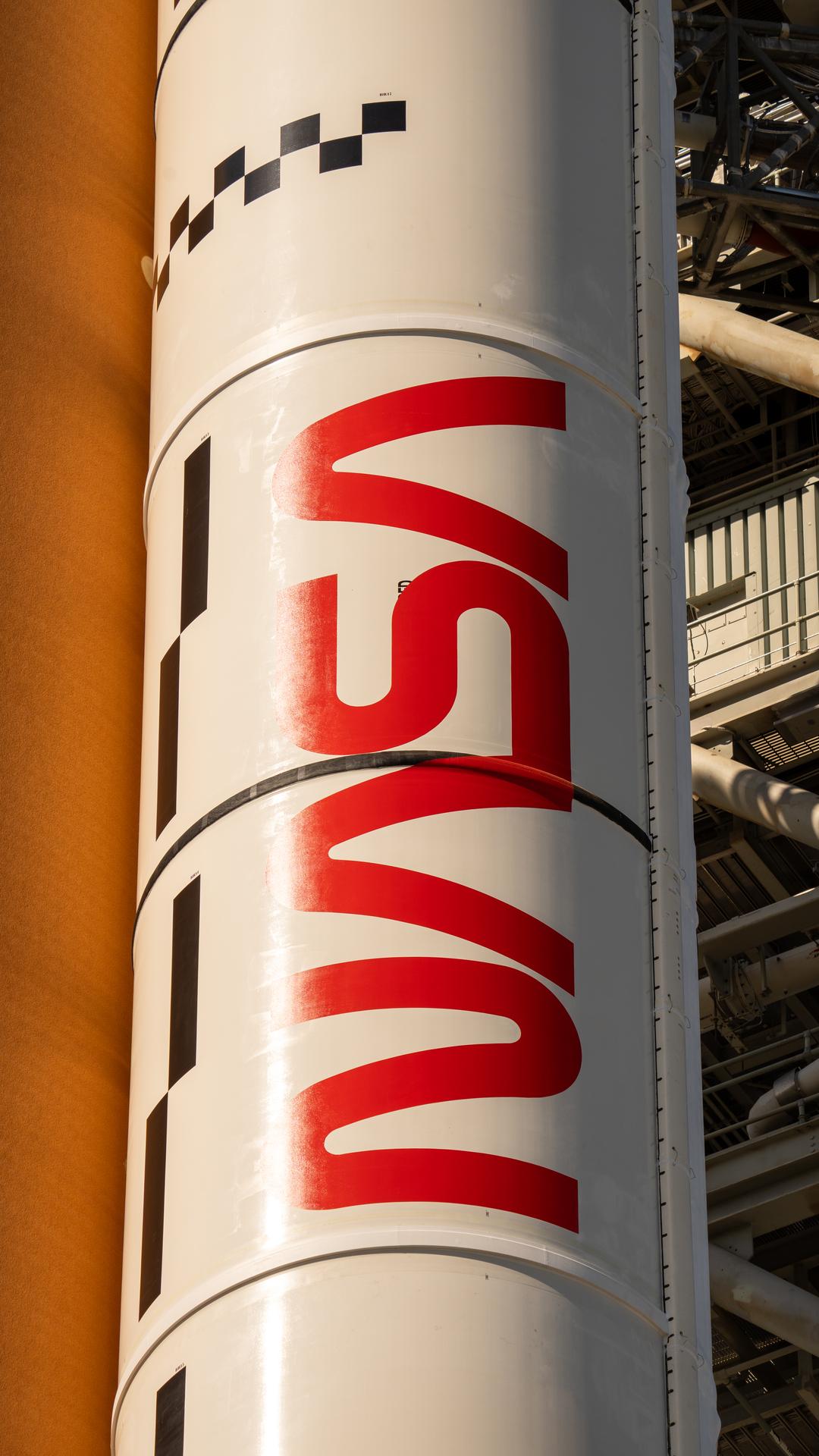
This image shows NASA’s SLS (Space Launch System) and Orion spacecraft rolling out of the Vehicle Assembly Building at NASA’s Kennedy Space Center. NASA's massive Crawler-Transporter, upgraded for the Artemis program, carries the powerful SLS rocket and Orion spacecraft on the Mobile Launcher from the Vehicle Assembly Building to Launch Pad 39B at Kennedy Space Center in preparation for the Artemis II mission.
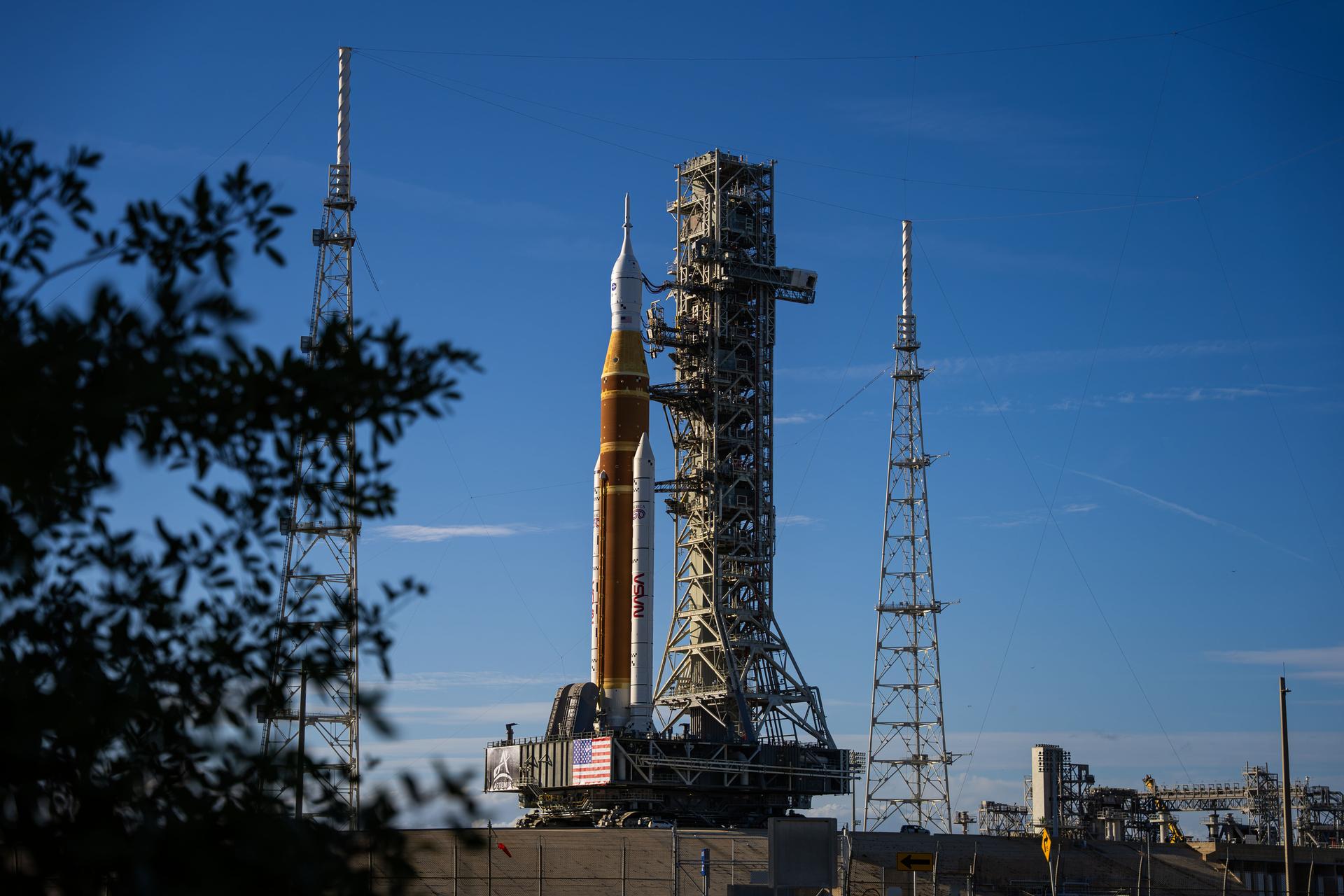
This image shows NASA’s SLS (Space Launch System) and Orion spacecraft rolling out of the Vehicle Assembly Building at NASA’s Kennedy Space Center. NASA's massive Crawler-Transporter, upgraded for the Artemis program, carries the powerful SLS rocket and Orion spacecraft on the Mobile Launcher from the Vehicle Assembly Building to Launch Pad 39B at Kennedy Space Center in preparation for the Artemis II mission.
This image shows NASA’s SLS (Space Launch System) and Orion spacecraft rolling out of the Vehicle Assembly Building at NASA’s Kennedy Space Center. NASA's massive Crawler-Transporter, upgraded for the Artemis program, carries the powerful SLS rocket and Orion spacecraft on the Mobile Launcher from the Vehicle Assembly Building to Launch Pad 39B at Kennedy Space Center in preparation for the Artemis II mission.
This image shows NASA’s SLS (Space Launch System) and Orion spacecraft rolling out of the Vehicle Assembly Building at NASA’s Kennedy Space Center. NASA's massive Crawler-Transporter, upgraded for the Artemis program, carries the powerful SLS rocket and Orion spacecraft on the Mobile Launcher from the Vehicle Assembly Building to Launch Pad 39B at Kennedy Space Center in preparation for the Artemis II mission.
This image shows NASA’s SLS (Space Launch System) and Orion spacecraft rolling out of the Vehicle Assembly Building at NASA’s Kennedy Space Center. NASA's massive Crawler-Transporter, upgraded for the Artemis program, carries the powerful SLS rocket and Orion spacecraft on the Mobile Launcher from the Vehicle Assembly Building to Launch Pad 39B at Kennedy Space Center in preparation for the Artemis II mission.
This image shows NASA’s SLS (Space Launch System) and Orion spacecraft rolling out of the Vehicle Assembly Building at NASA’s Kennedy Space Center. NASA's massive Crawler-Transporter, upgraded for the Artemis program, carries the powerful SLS rocket and Orion spacecraft on the Mobile Launcher from the Vehicle Assembly Building to Launch Pad 39B at Kennedy Space Center in preparation for the Artemis II mission.
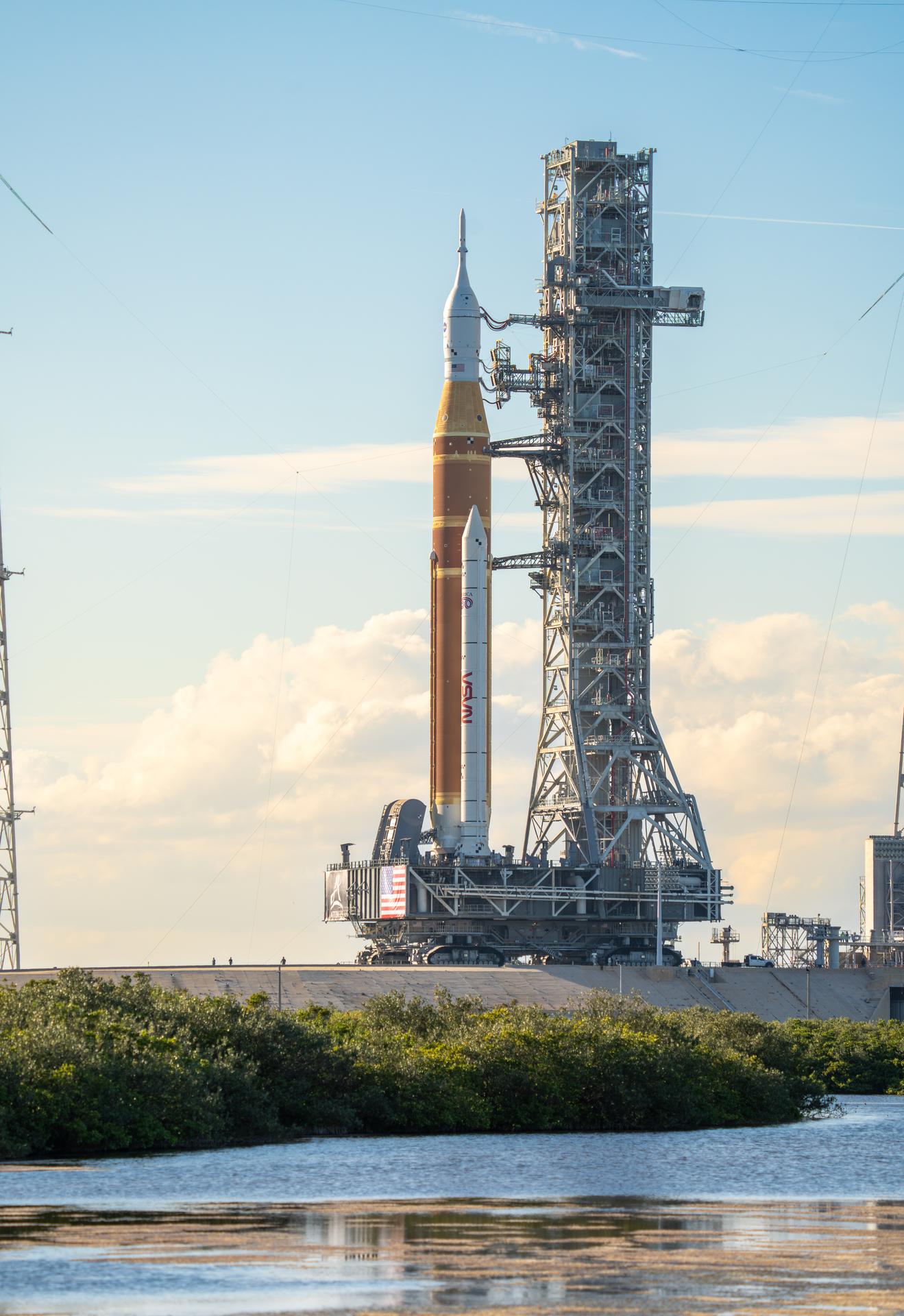
This image shows NASA’s SLS (Space Launch System) and Orion spacecraft rolling out of the Vehicle Assembly Building at NASA’s Kennedy Space Center. NASA's massive Crawler-Transporter, upgraded for the Artemis program, carries the powerful SLS rocket and Orion spacecraft on the Mobile Launcher from the Vehicle Assembly Building to Launch Pad 39B at Kennedy Space Center in preparation for the Artemis II mission.
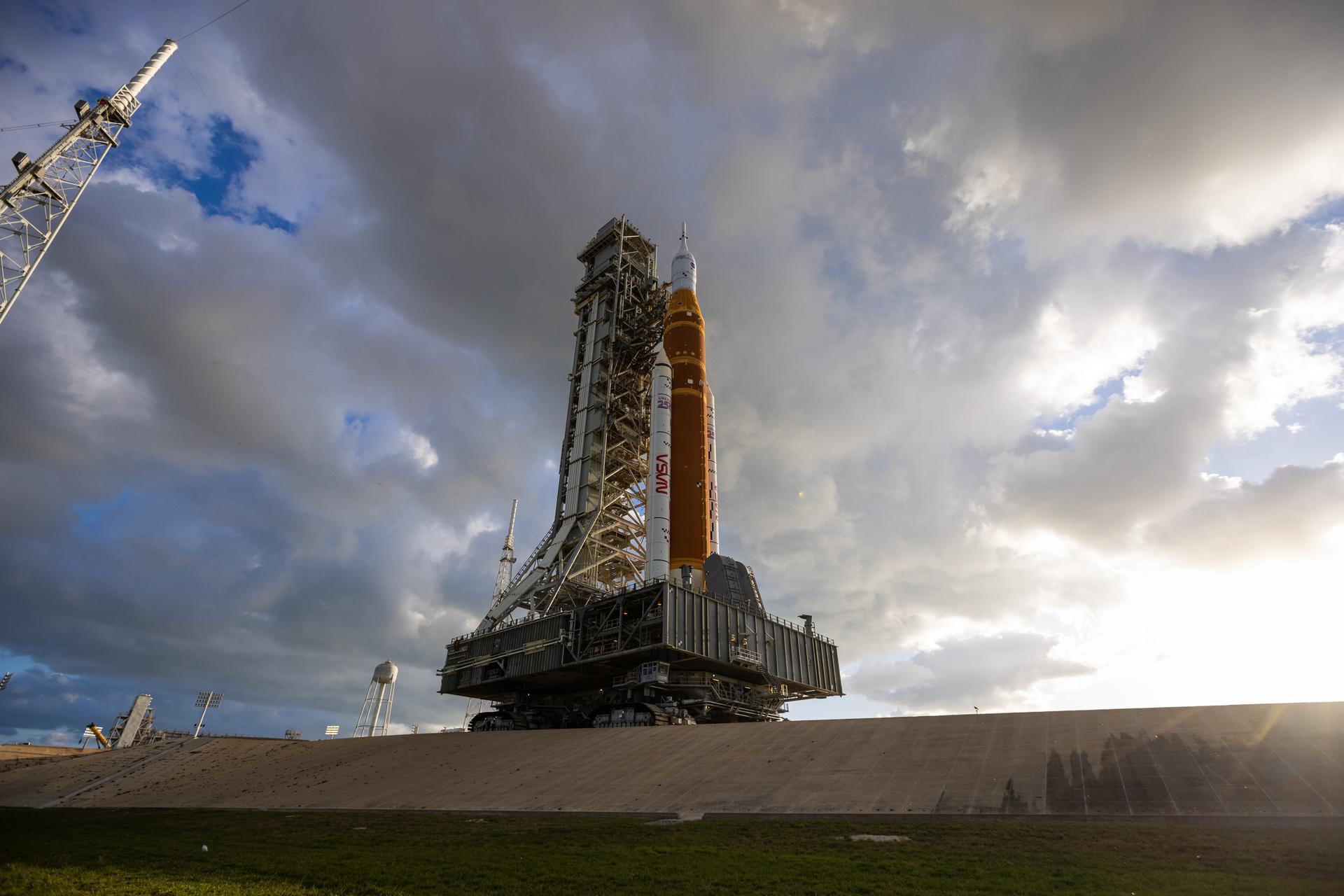
This image shows NASA’s SLS (Space Launch System) and Orion spacecraft rolling out of the Vehicle Assembly Building at NASA’s Kennedy Space Center. NASA's massive Crawler-Transporter, upgraded for the Artemis program, carries the powerful SLS rocket and Orion spacecraft on the Mobile Launcher from the Vehicle Assembly Building to Launch Pad 39B at Kennedy Space Center in preparation for the Artemis II mission.
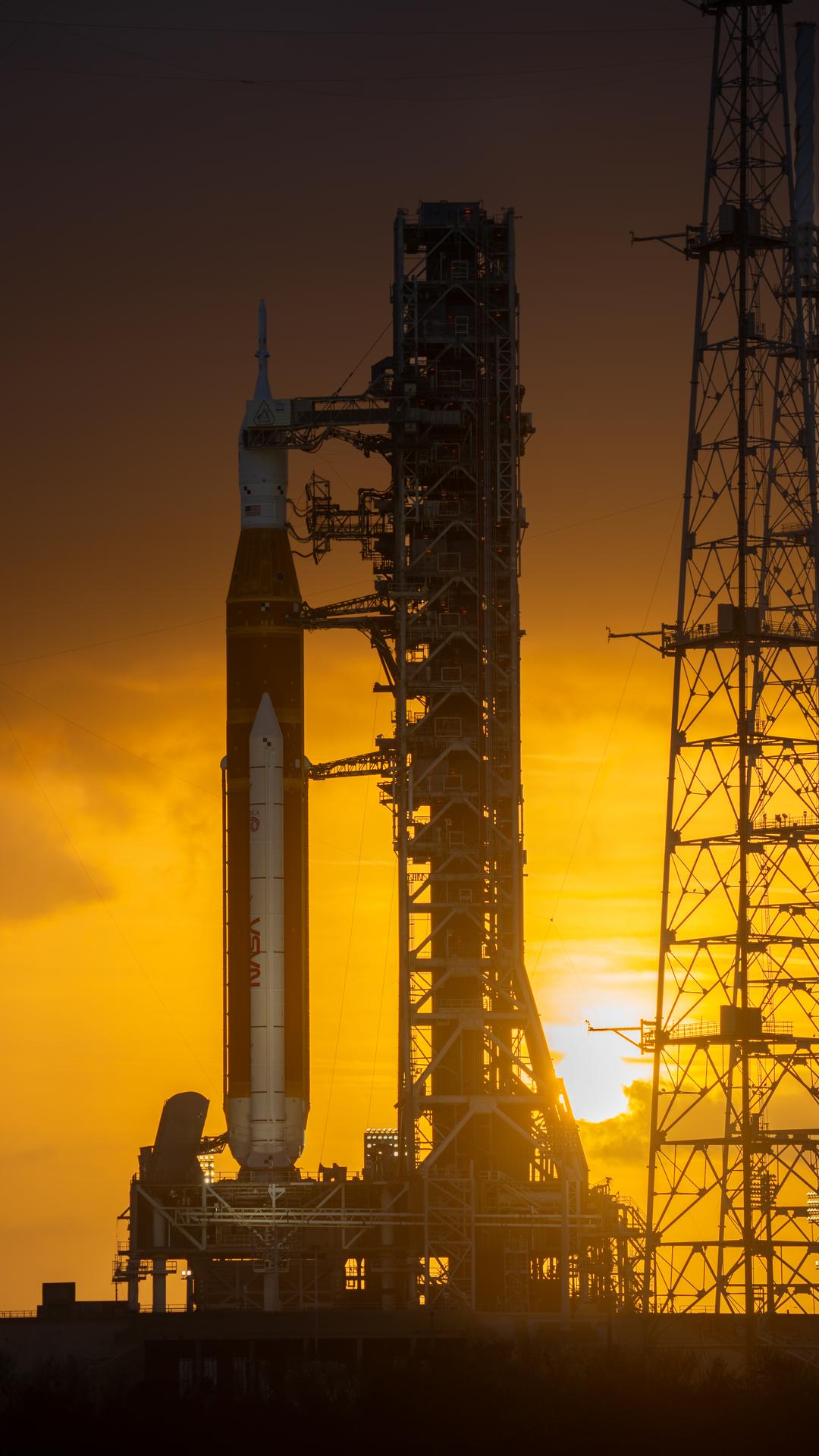
This image shows a sunset of NASA’s SLS (Space Launch System) and Orion spacecraft at NASA’s Kennedy Space Center. NASA's massive Crawler-Transporter, upgraded for the Artemis program, carried the powerful SLS rocket and Orion spacecraft on the Mobile Launcher from the Vehicle Assembly Building to Launch Pad 39B at Kennedy Space Center in preparation for the Artemis II mission.
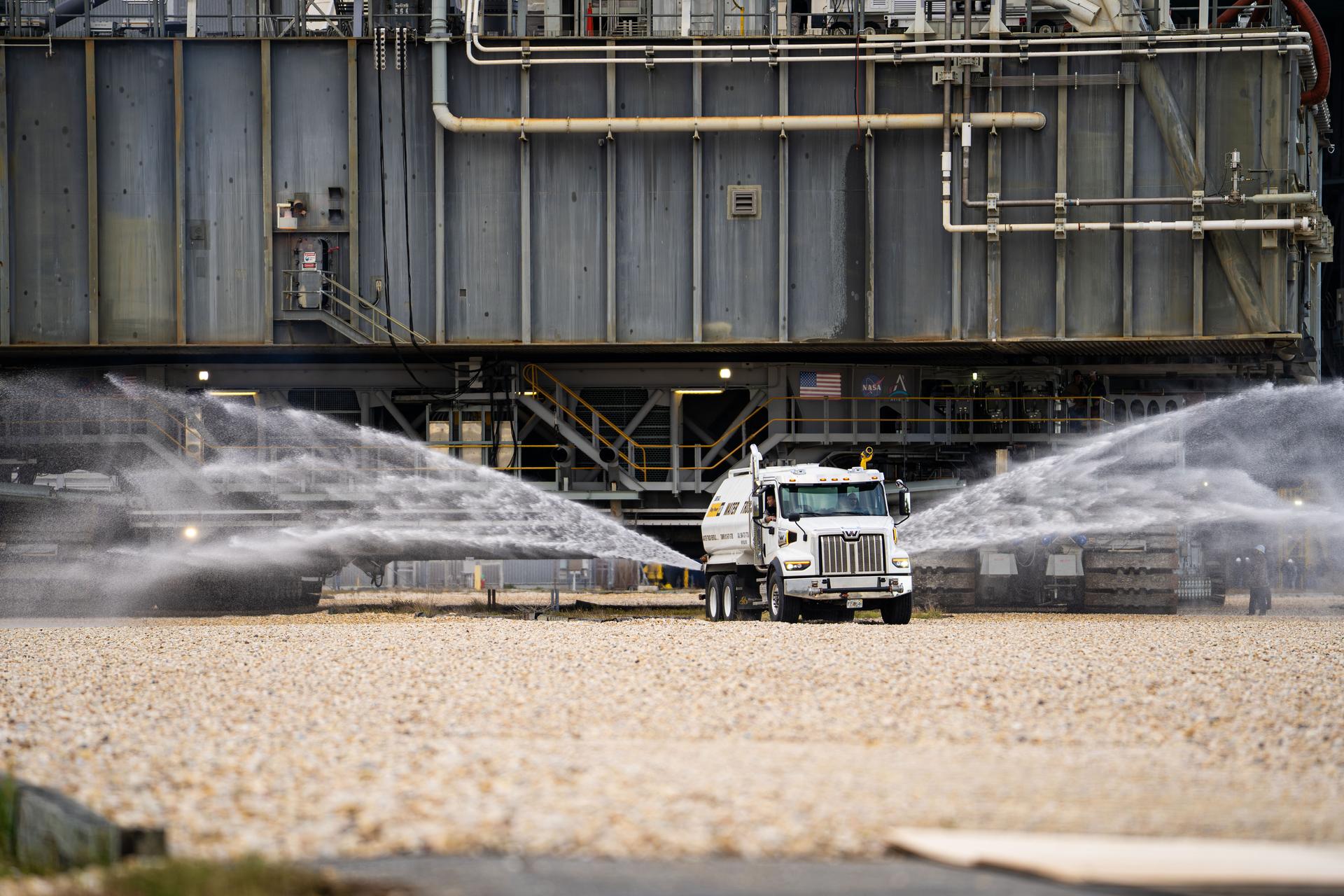
This image shows NASA’s SLS (Space Launch System) and Orion spacecraft rolling out of the Vehicle Assembly Building at NASA’s Kennedy Space Center. NASA's massive Crawler-Transporter, upgraded for the Artemis program, carries the powerful SLS rocket and Orion spacecraft on the Mobile Launcher from the Vehicle Assembly Building to Launch Pad 39B at Kennedy Space Center in preparation for the Artemis II mission.
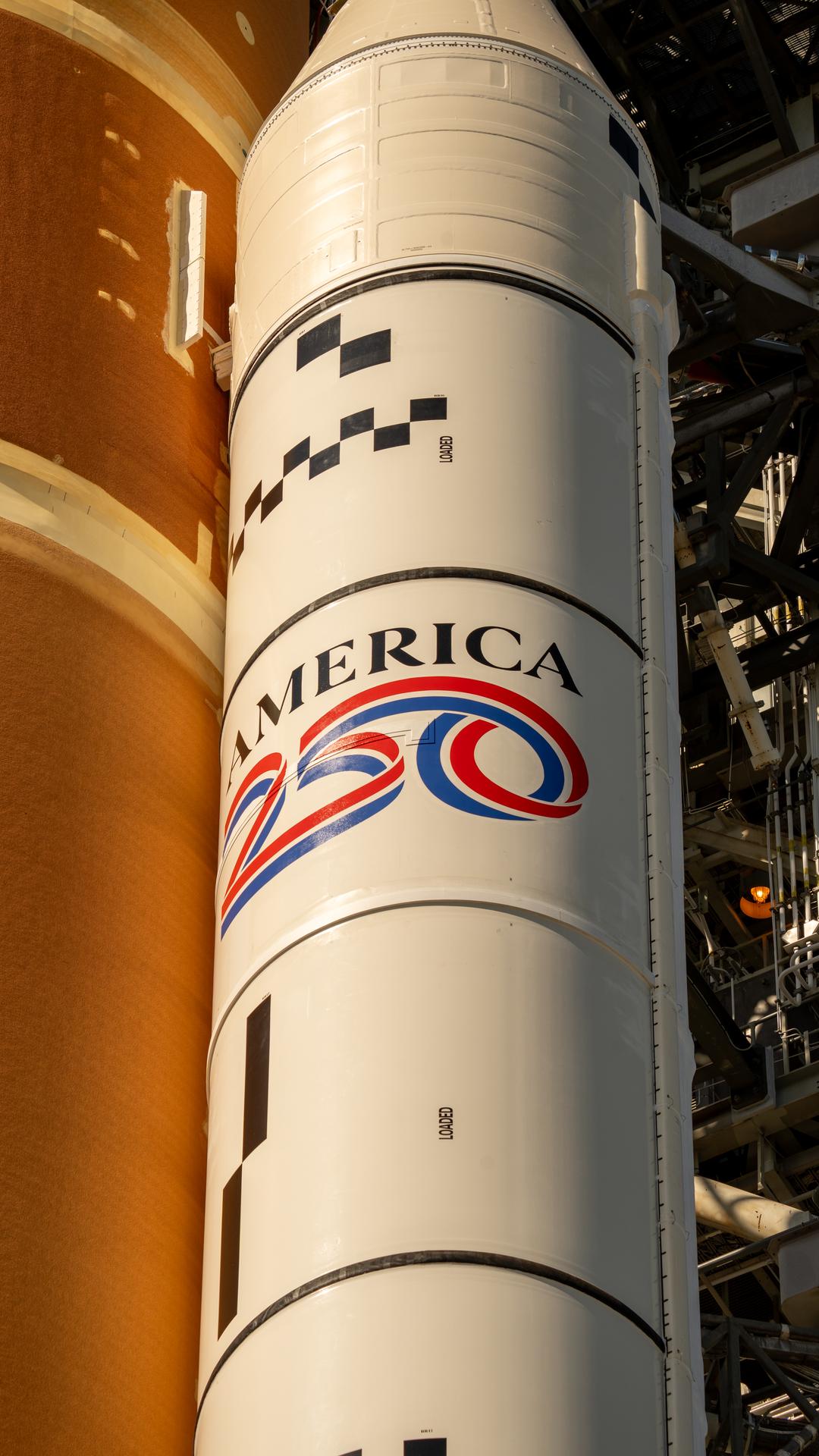
This image shows NASA’s SLS (Space Launch System) and Orion spacecraft rolling out of the Vehicle Assembly Building at NASA’s Kennedy Space Center. NASA's massive Crawler-Transporter, upgraded for the Artemis program, carries the powerful SLS rocket and Orion spacecraft on the Mobile Launcher from the Vehicle Assembly Building to Launch Pad 39B at Kennedy Space Center in preparation for the Artemis II mission.
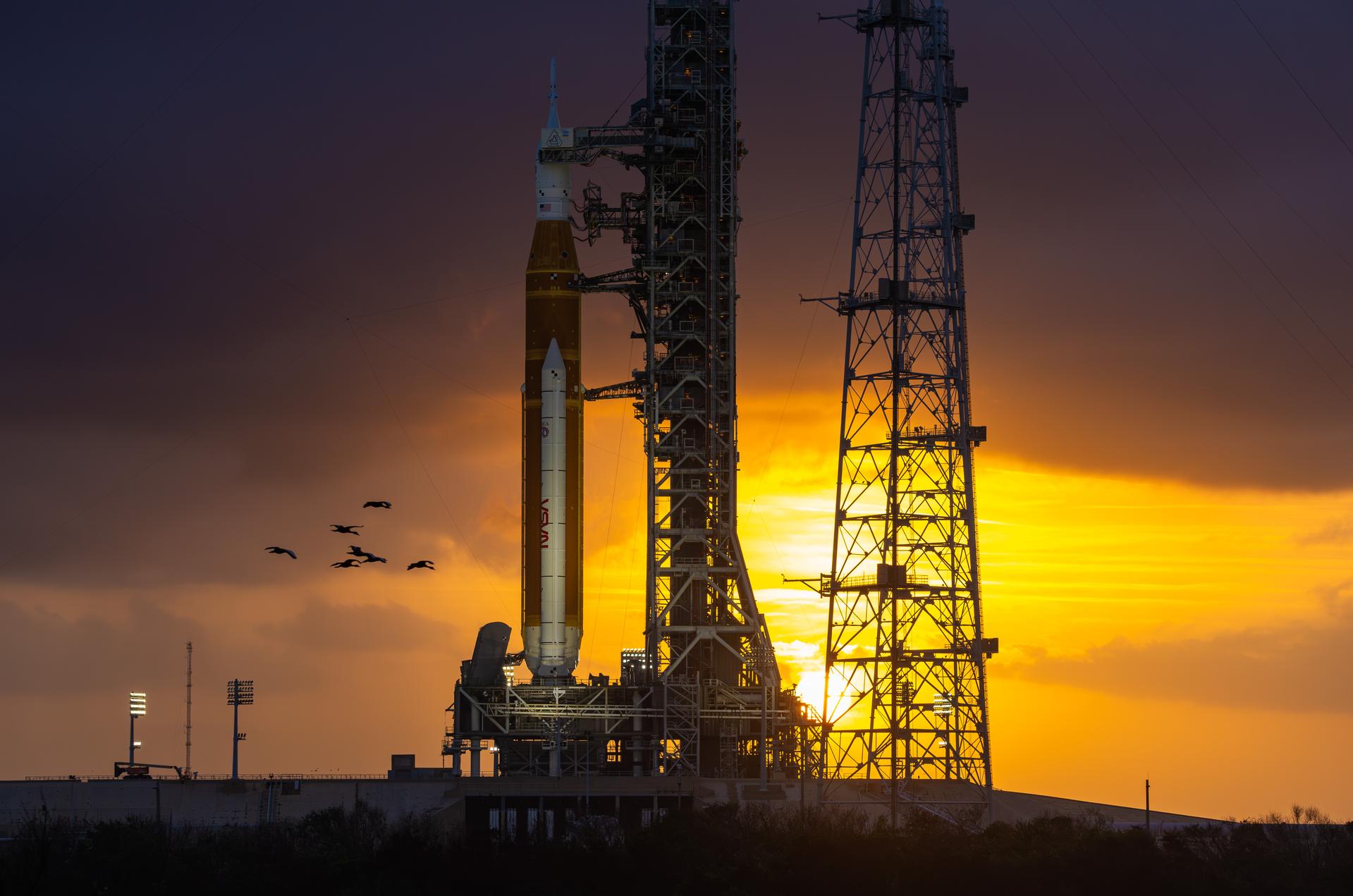
This image shows a sunset of NASA’s SLS (Space Launch System) and Orion spacecraft at NASA’s Kennedy Space Center. NASA's massive Crawler-Transporter, upgraded for the Artemis program, carried the powerful SLS rocket and Orion spacecraft on the Mobile Launcher from the Vehicle Assembly Building to Launch Pad 39B at Kennedy Space Center in preparation for the Artemis II mission.
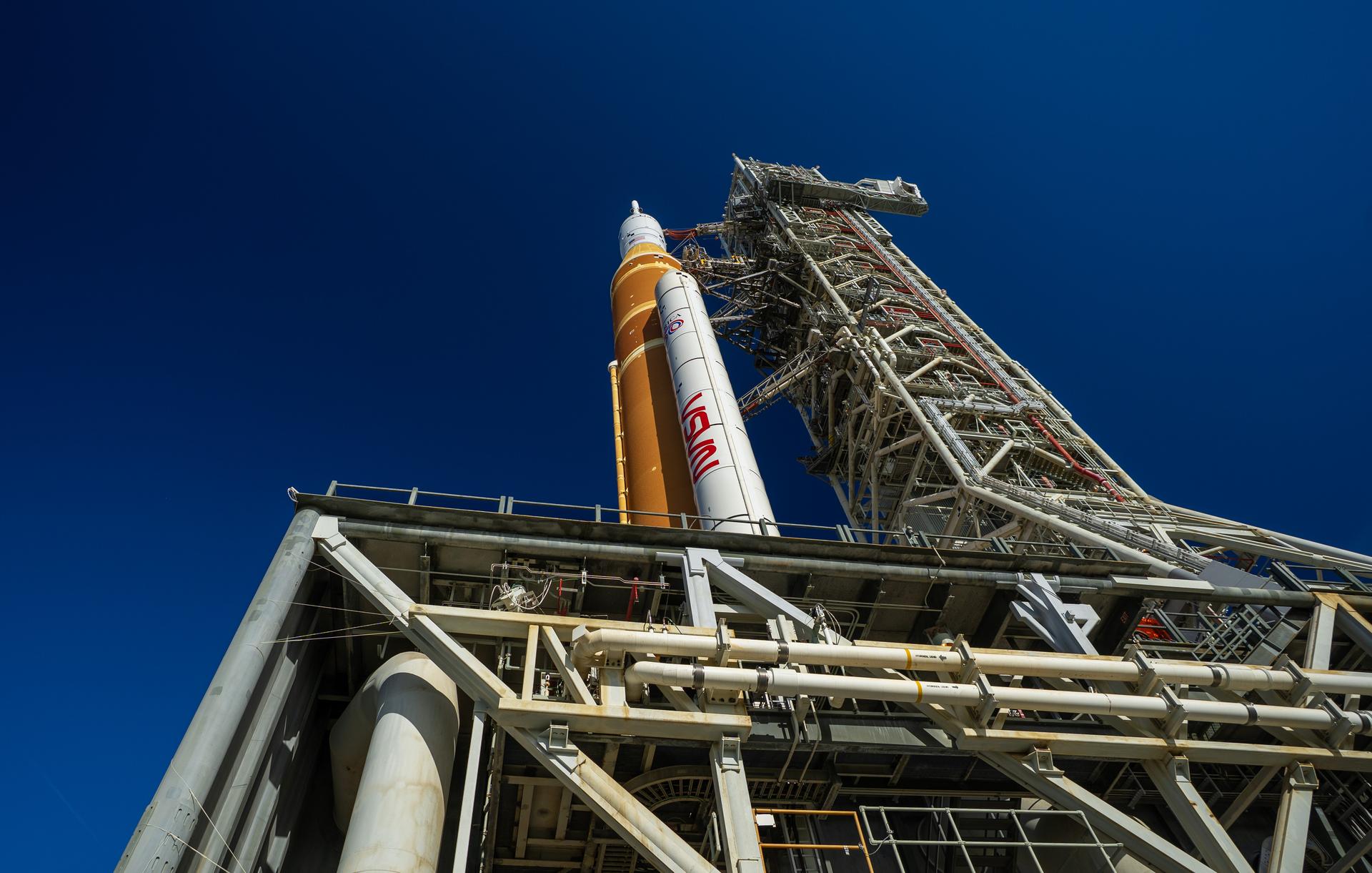
This image shows NASA’s SLS (Space Launch System) and Orion spacecraft rolling out of the Vehicle Assembly Building at NASA’s Kennedy Space Center. NASA's massive Crawler-Transporter, upgraded for the Artemis program, carries the powerful SLS rocket and Orion spacecraft on the Mobile Launcher from the Vehicle Assembly Building to Launch Pad 39B at Kennedy Space Center in preparation for the Artemis II mission.
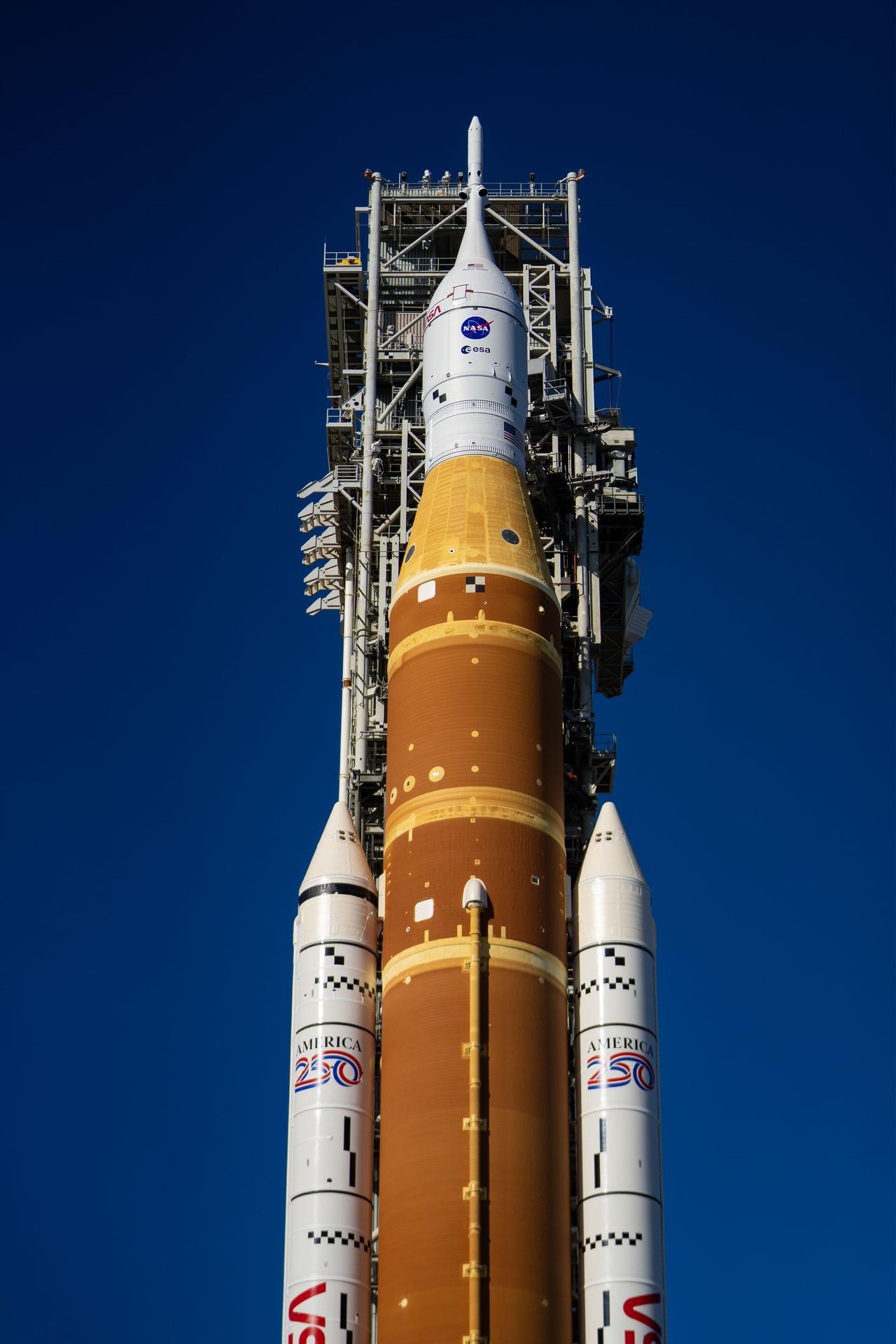
This image shows NASA’s SLS (Space Launch System) and Orion spacecraft rolling out of the Vehicle Assembly Building at NASA’s Kennedy Space Center. NASA's massive Crawler-Transporter, upgraded for the Artemis program, carries the powerful SLS rocket and Orion spacecraft on the Mobile Launcher from the Vehicle Assembly Building to Launch Pad 39B at Kennedy Space Center in preparation for the Artemis II mission.
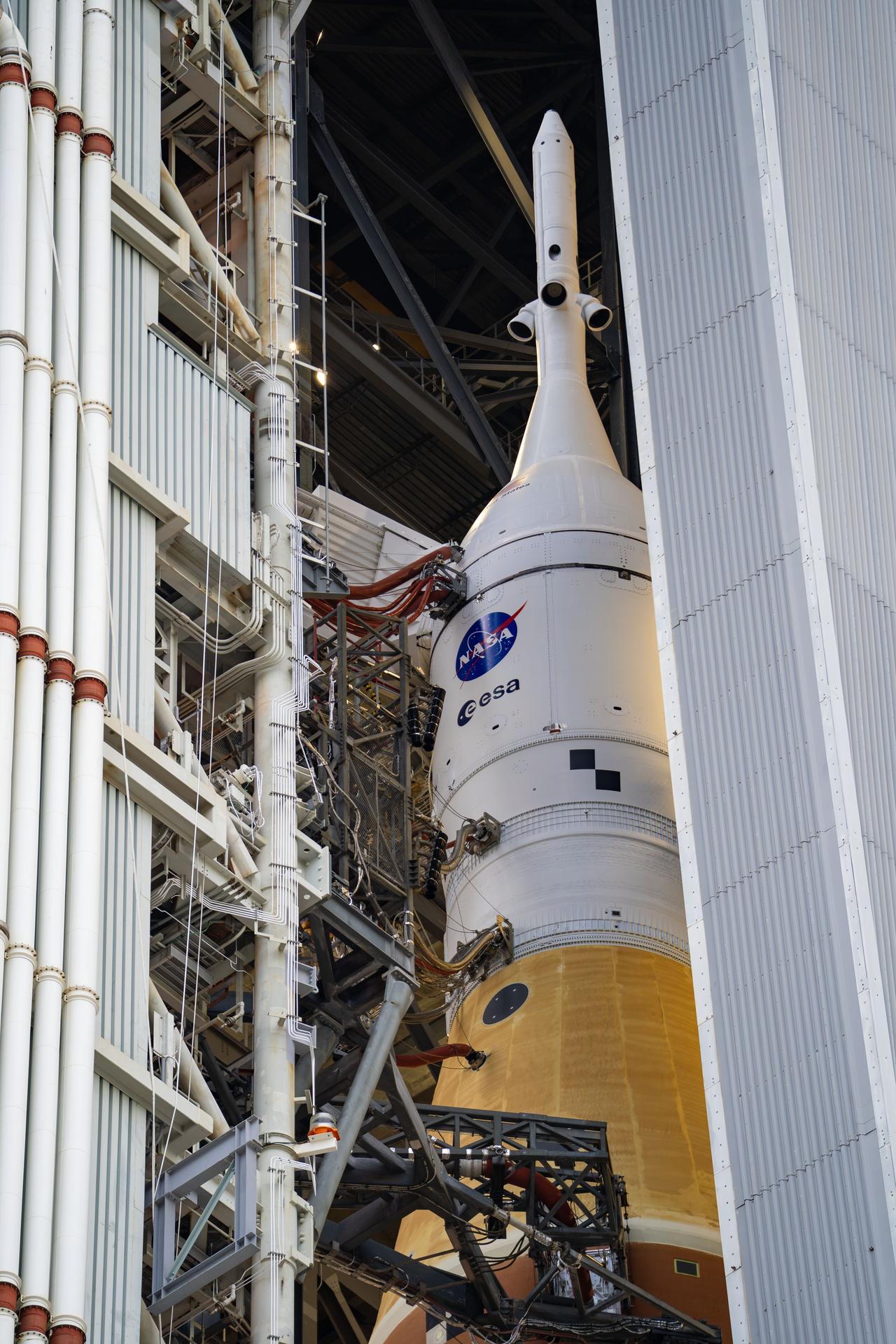
This image shows NASA’s SLS (Space Launch System) and Orion spacecraft rolling out of the Vehicle Assembly Building at NASA’s Kennedy Space Center. NASA's massive Crawler-Transporter, upgraded for the Artemis program, carries the powerful SLS rocket and Orion spacecraft on the Mobile Launcher from the Vehicle Assembly Building to Launch Pad 39B at Kennedy Space Center in preparation for the Artemis II mission.
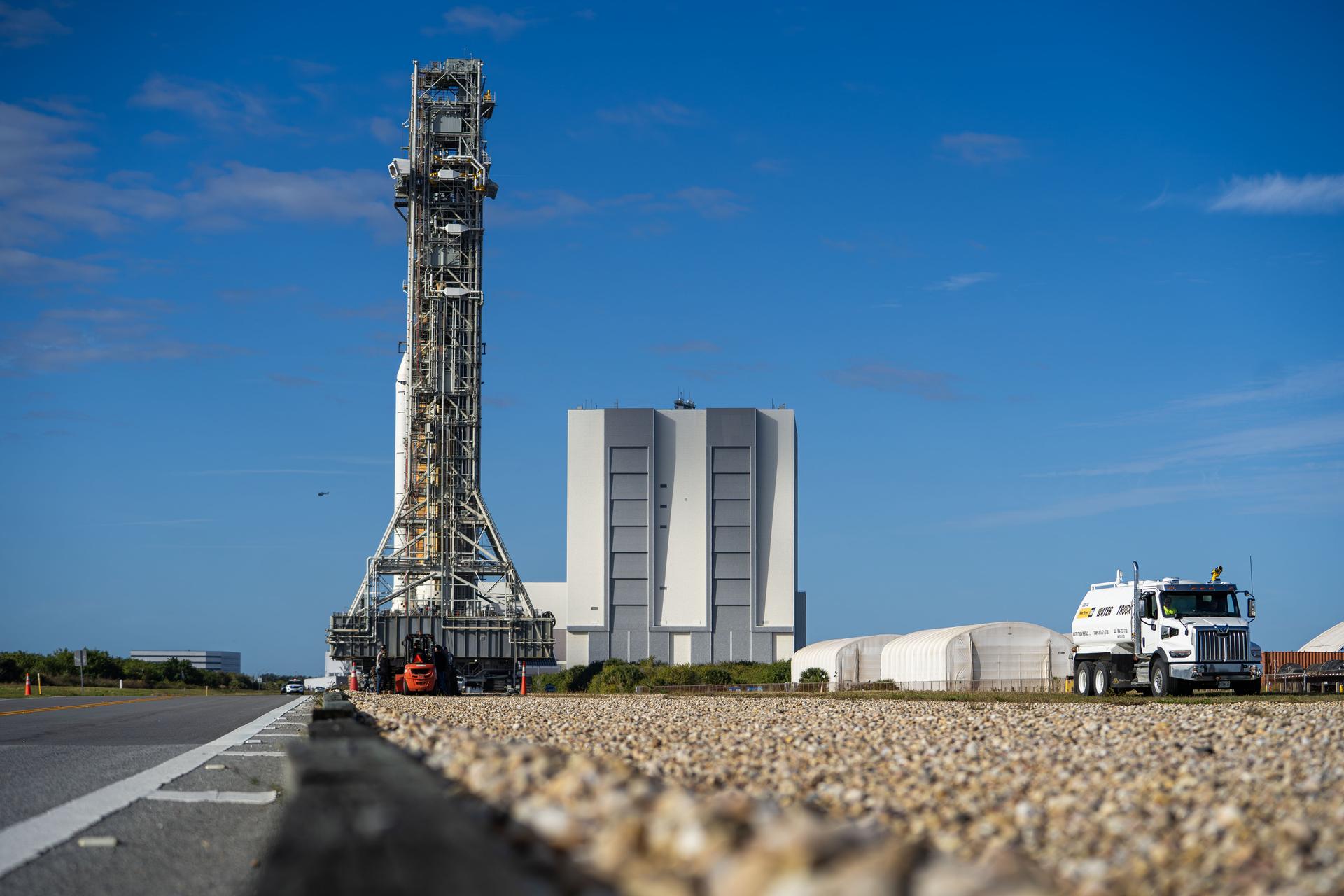
This image shows NASA’s SLS (Space Launch System) and Orion spacecraft rolling out of the Vehicle Assembly Building at NASA’s Kennedy Space Center. NASA's massive Crawler-Transporter, upgraded for the Artemis program, carries the powerful SLS rocket and Orion spacecraft on the Mobile Launcher from the Vehicle Assembly Building to Launch Pad 39B at Kennedy Space Center in preparation for the Artemis II mission.
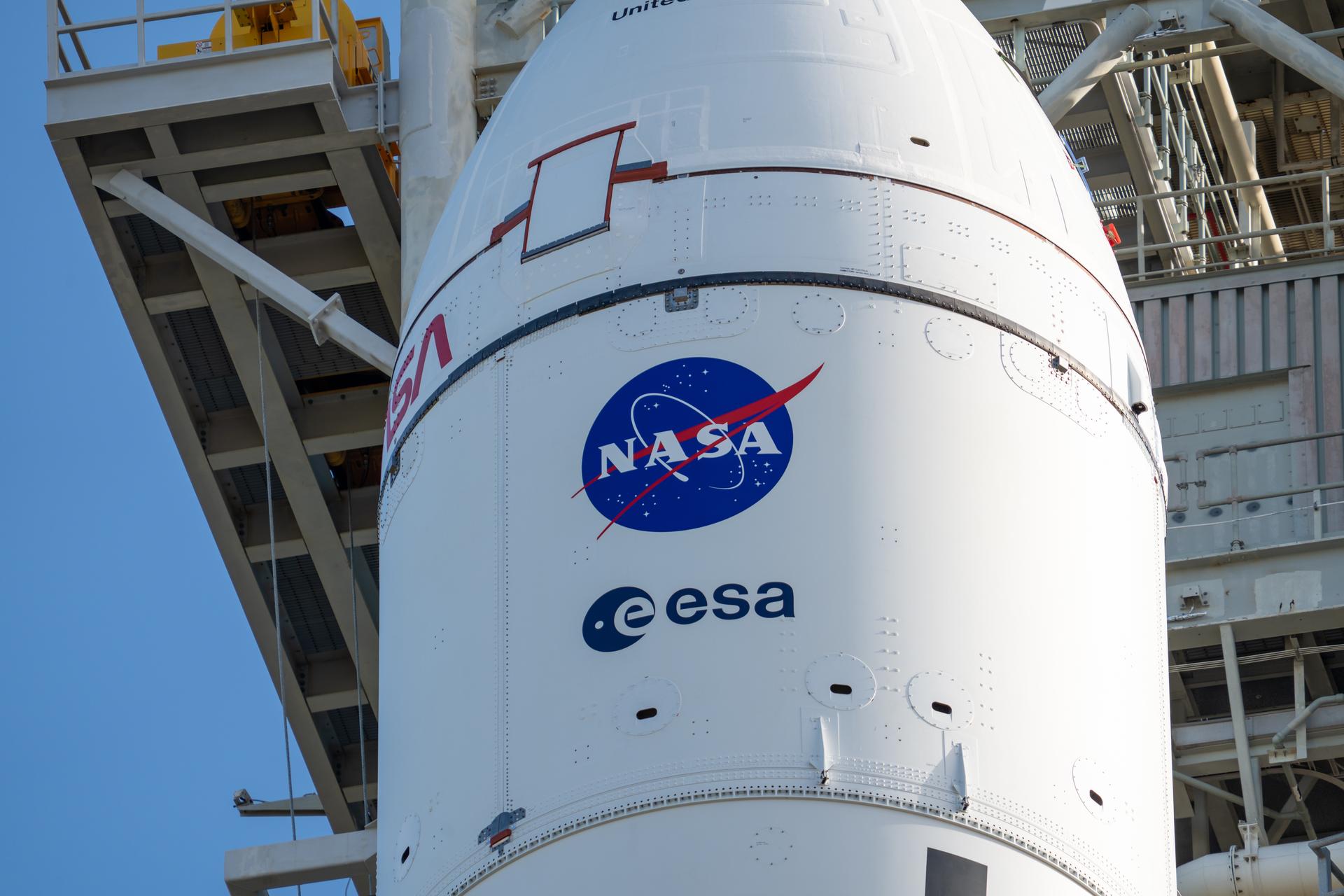
This image shows NASA’s SLS (Space Launch System) and Orion spacecraft rolling out of the Vehicle Assembly Building at NASA’s Kennedy Space Center. NASA's massive Crawler-Transporter, upgraded for the Artemis program, carries the powerful SLS rocket and Orion spacecraft on the Mobile Launcher from the Vehicle Assembly Building to Launch Pad 39B at Kennedy Space Center in preparation for the Artemis II mission.
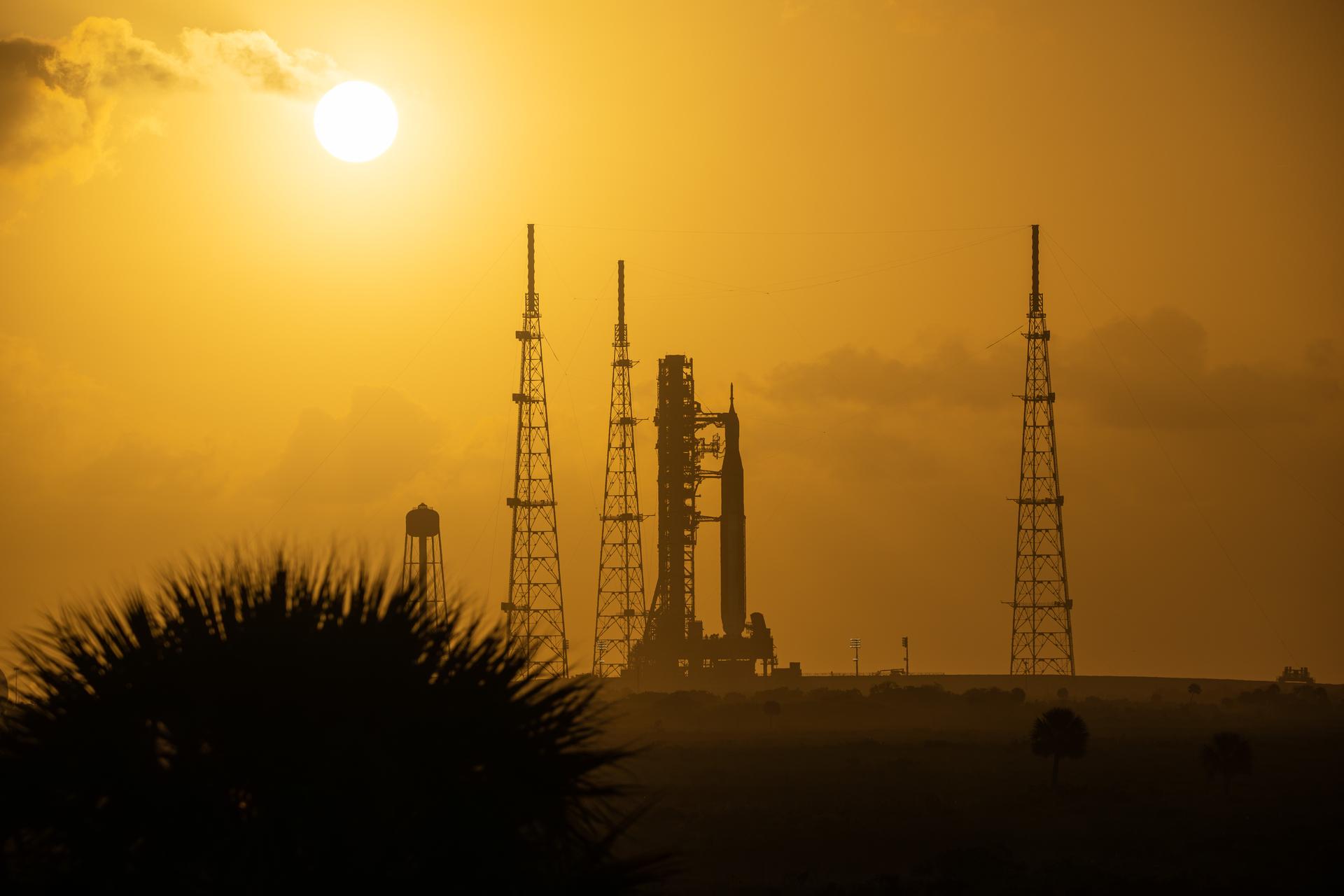
This image shows a sunset of NASA’s SLS (Space Launch System) and Orion spacecraft at NASA’s Kennedy Space Center. NASA's massive Crawler-Transporter, upgraded for the Artemis program, carried the powerful SLS rocket and Orion spacecraft on the Mobile Launcher from the Vehicle Assembly Building to Launch Pad 39B at Kennedy Space Center in preparation for the Artemis II mission.
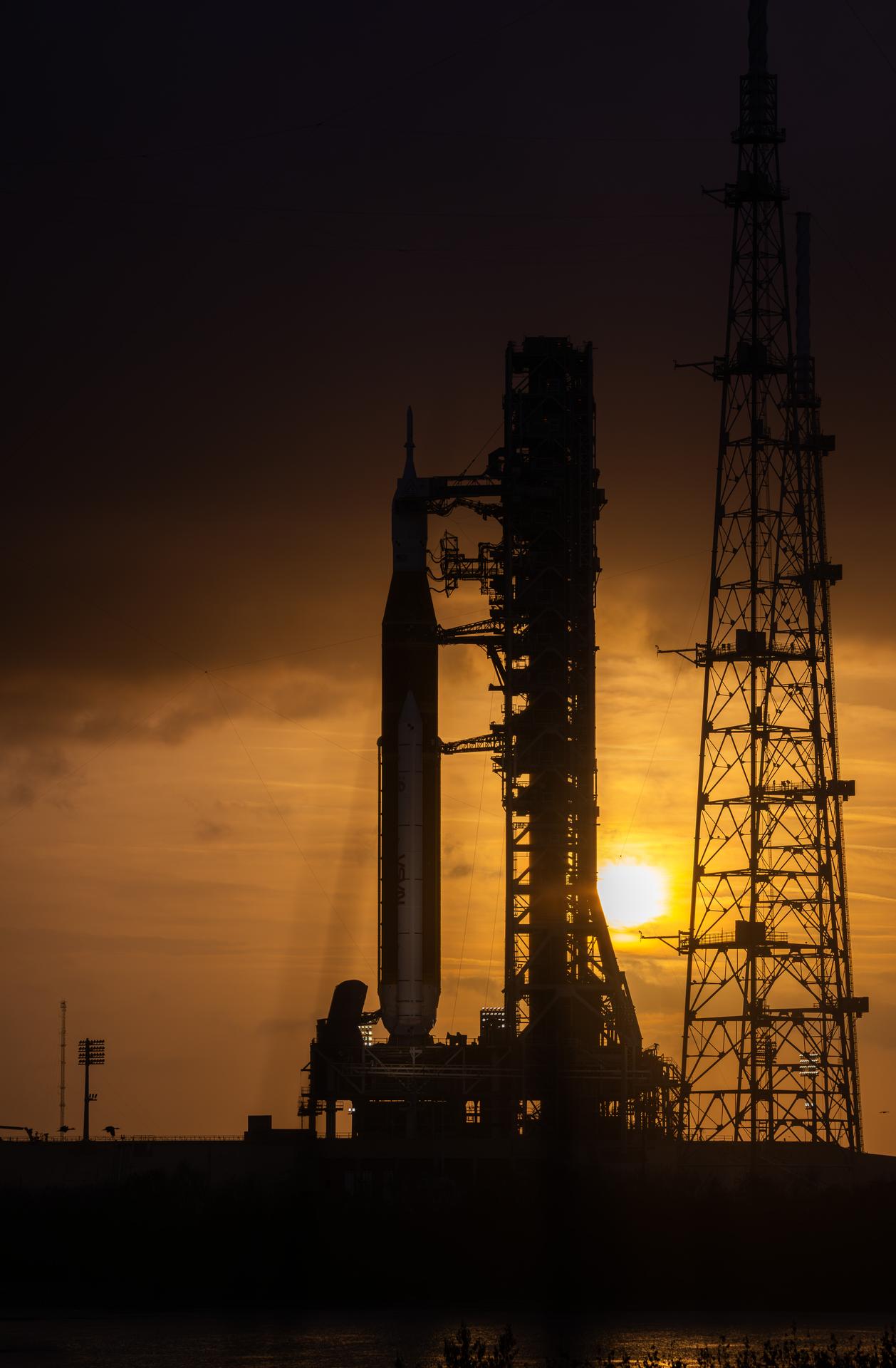
This image shows a sunset of NASA’s SLS (Space Launch System) and Orion spacecraft at NASA’s Kennedy Space Center. NASA's massive Crawler-Transporter, upgraded for the Artemis program, carried the powerful SLS rocket and Orion spacecraft on the Mobile Launcher from the Vehicle Assembly Building to Launch Pad 39B at Kennedy Space Center in preparation for the Artemis II mission.
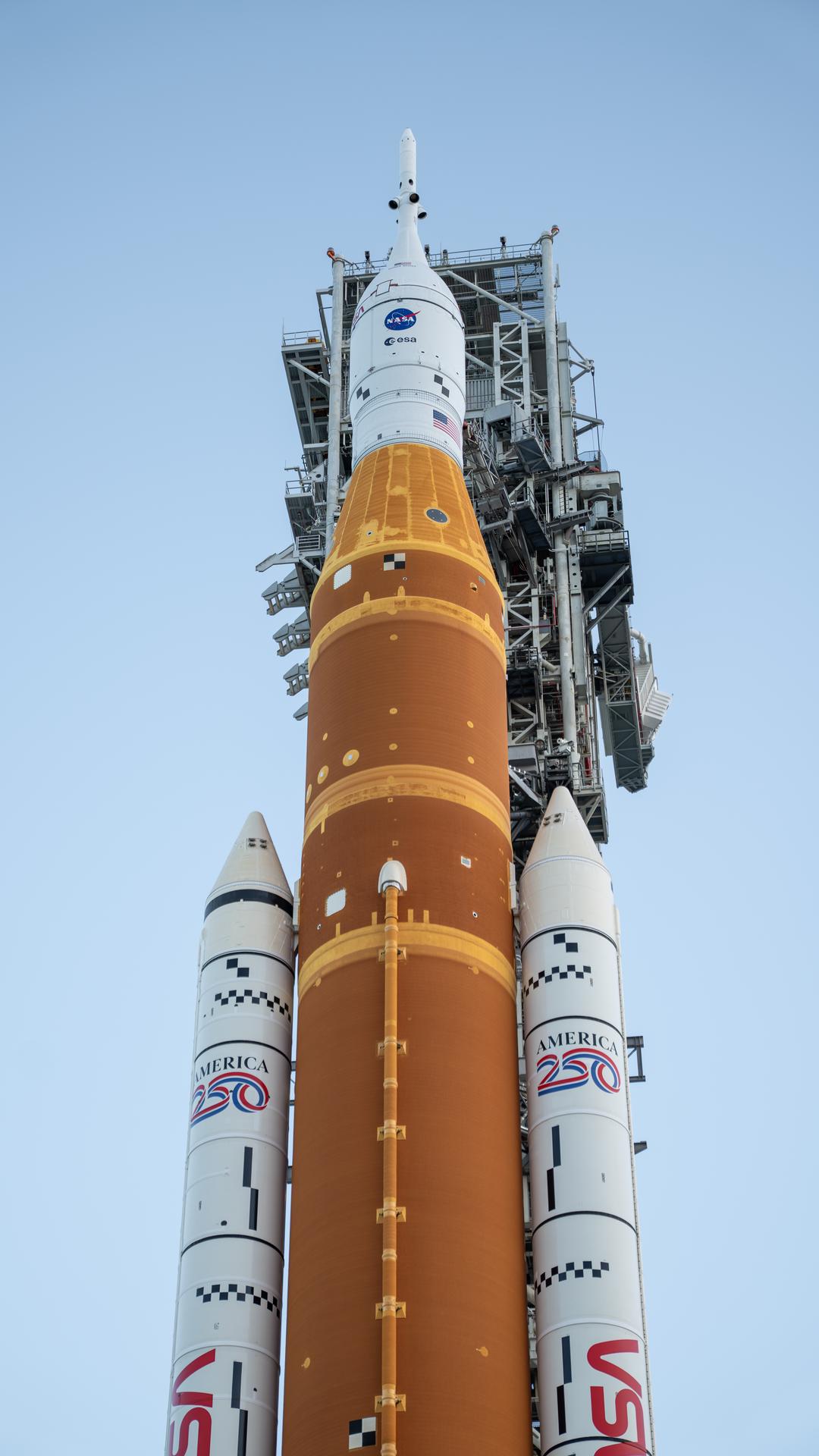
This image shows NASA’s SLS (Space Launch System) and Orion spacecraft rolling out of the Vehicle Assembly Building at NASA’s Kennedy Space Center. NASA's massive Crawler-Transporter, upgraded for the Artemis program, carries the powerful SLS rocket and Orion spacecraft on the Mobile Launcher from the Vehicle Assembly Building to Launch Pad 39B at Kennedy Space Center in preparation for the Artemis II mission.
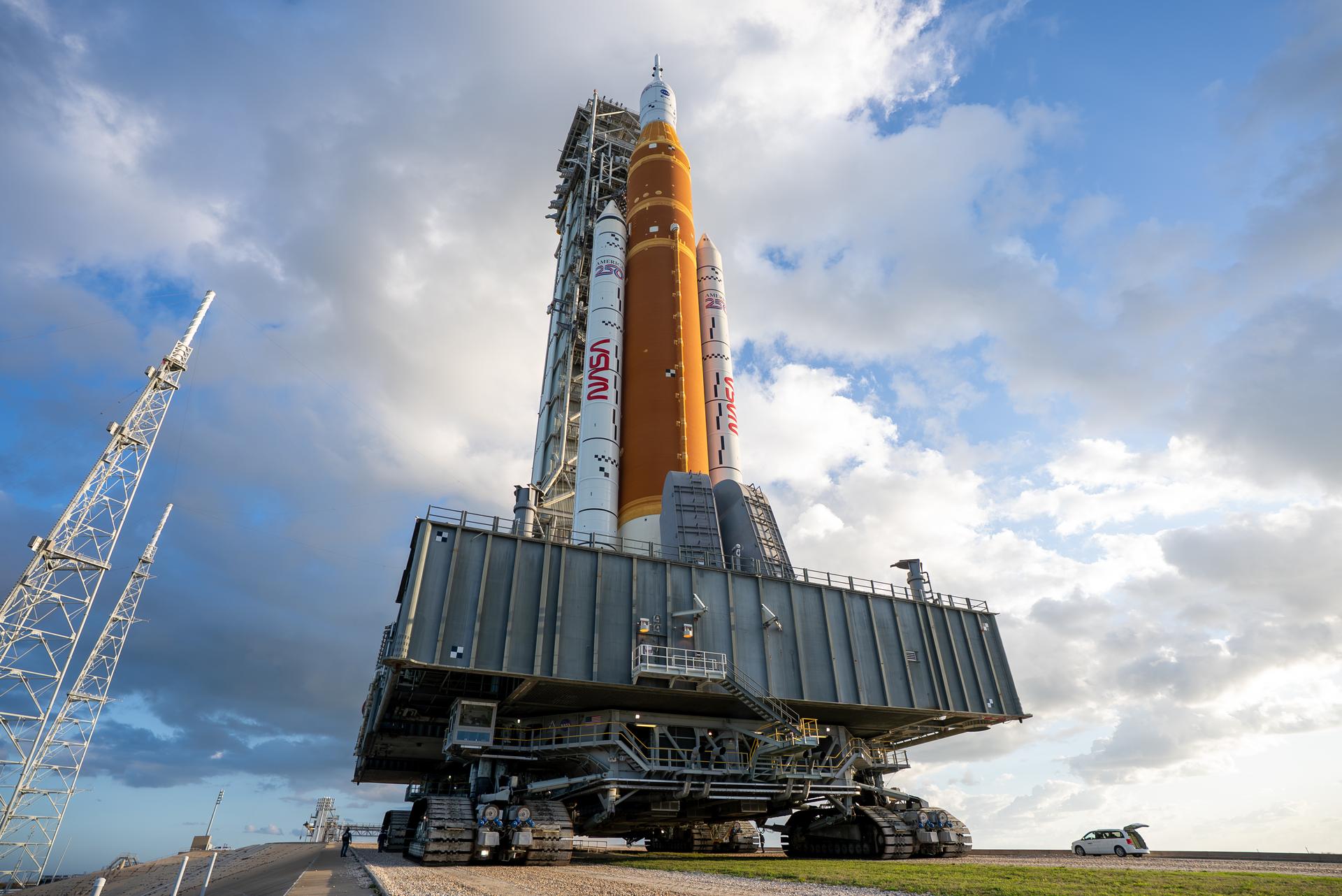
This image shows NASA’s SLS (Space Launch System) and Orion spacecraft rolling out of the Vehicle Assembly Building at NASA’s Kennedy Space Center. NASA's massive Crawler-Transporter, upgraded for the Artemis program, carries the powerful SLS rocket and Orion spacecraft on the Mobile Launcher from the Vehicle Assembly Building to Launch Pad 39B at Kennedy Space Center in preparation for the Artemis II mission.