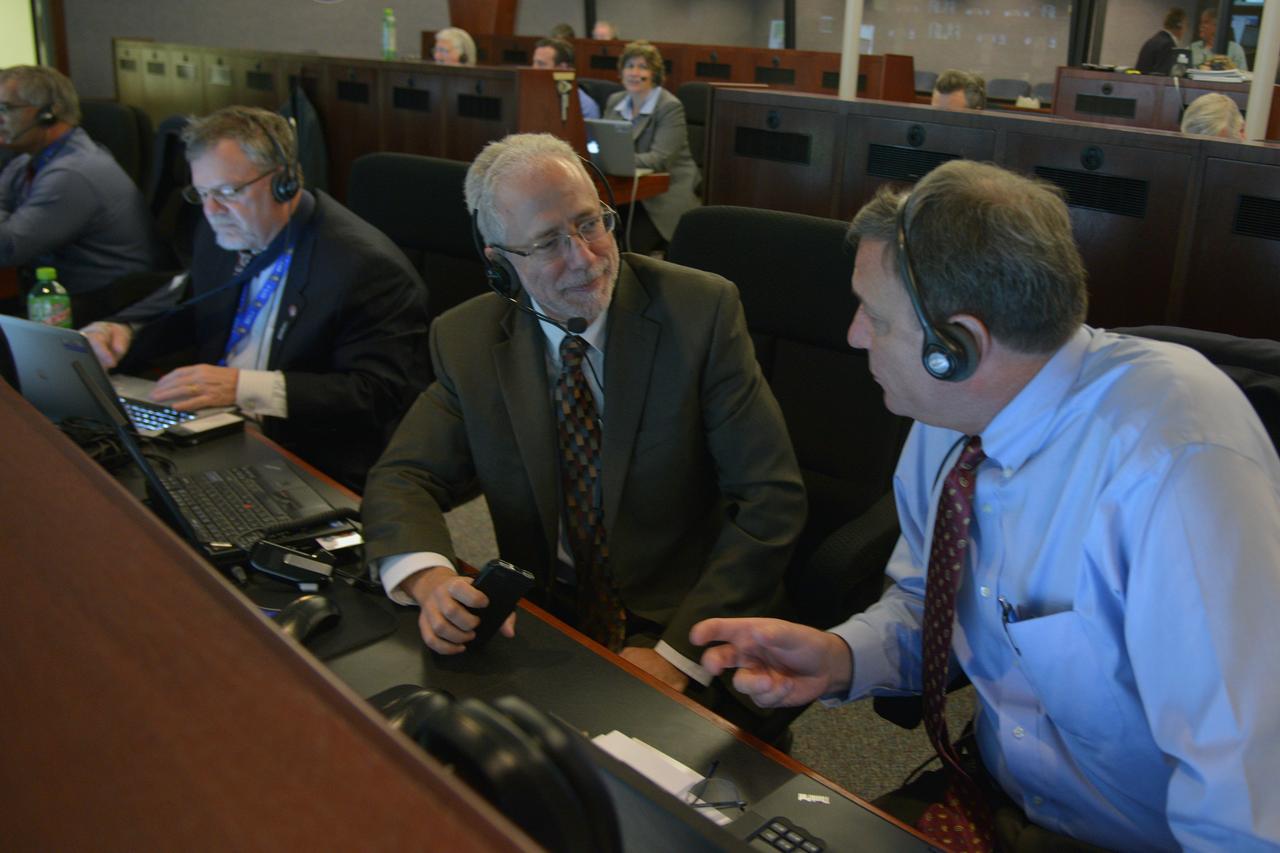
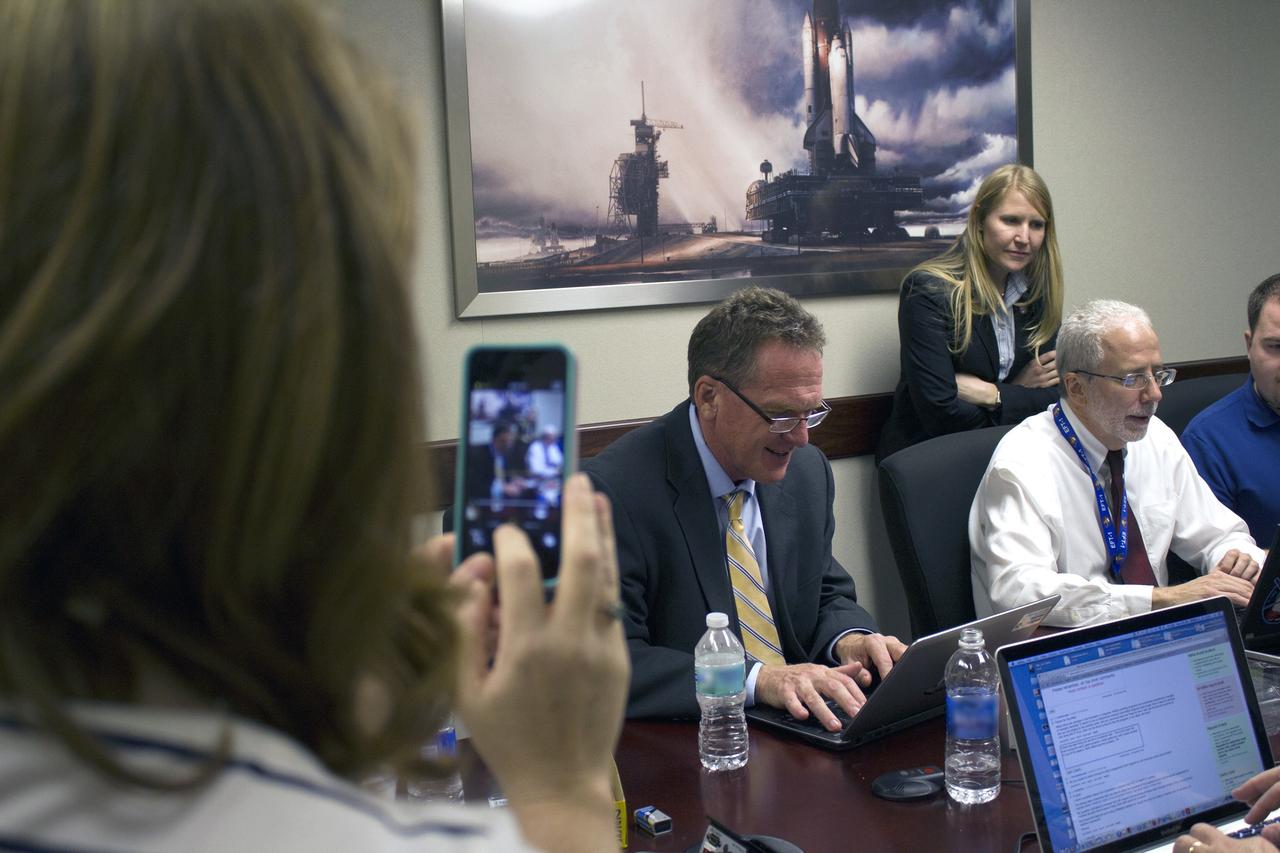
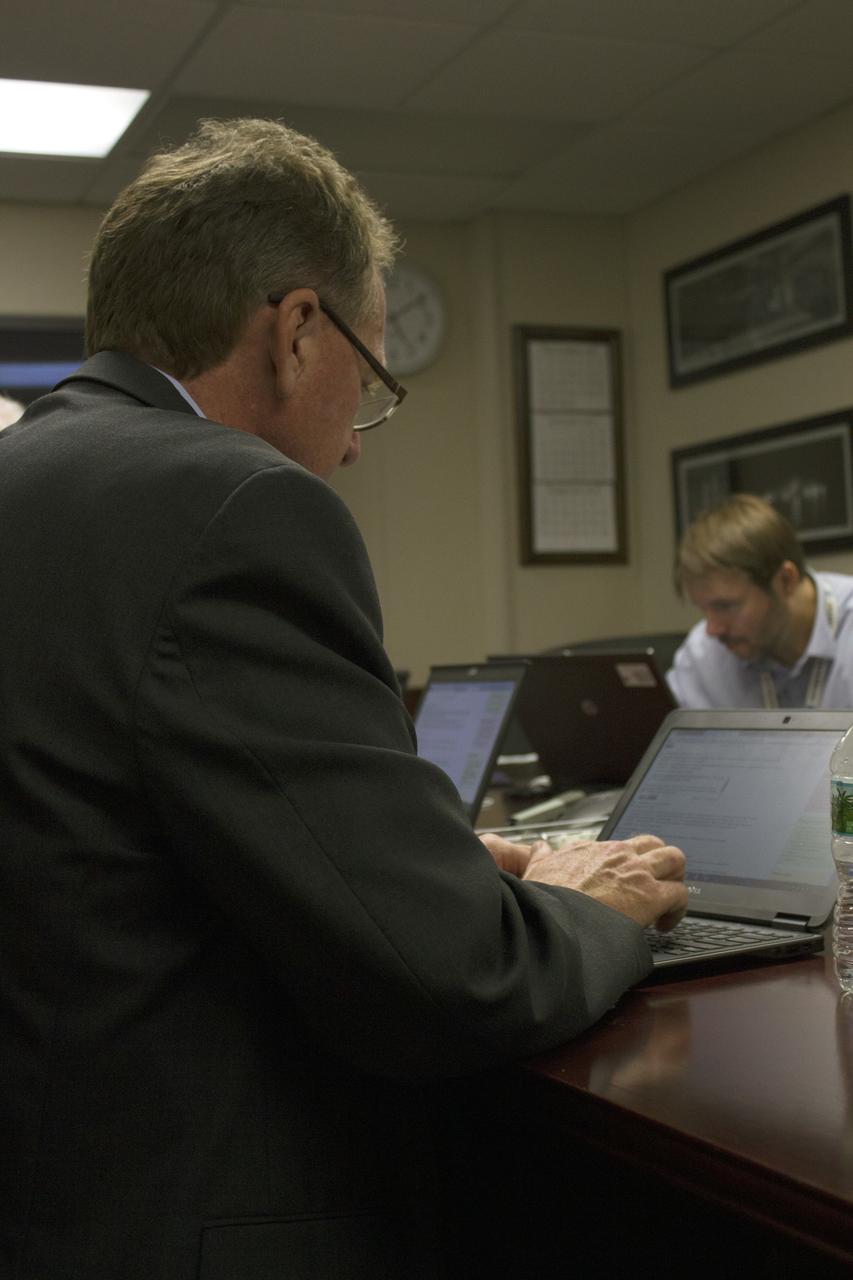
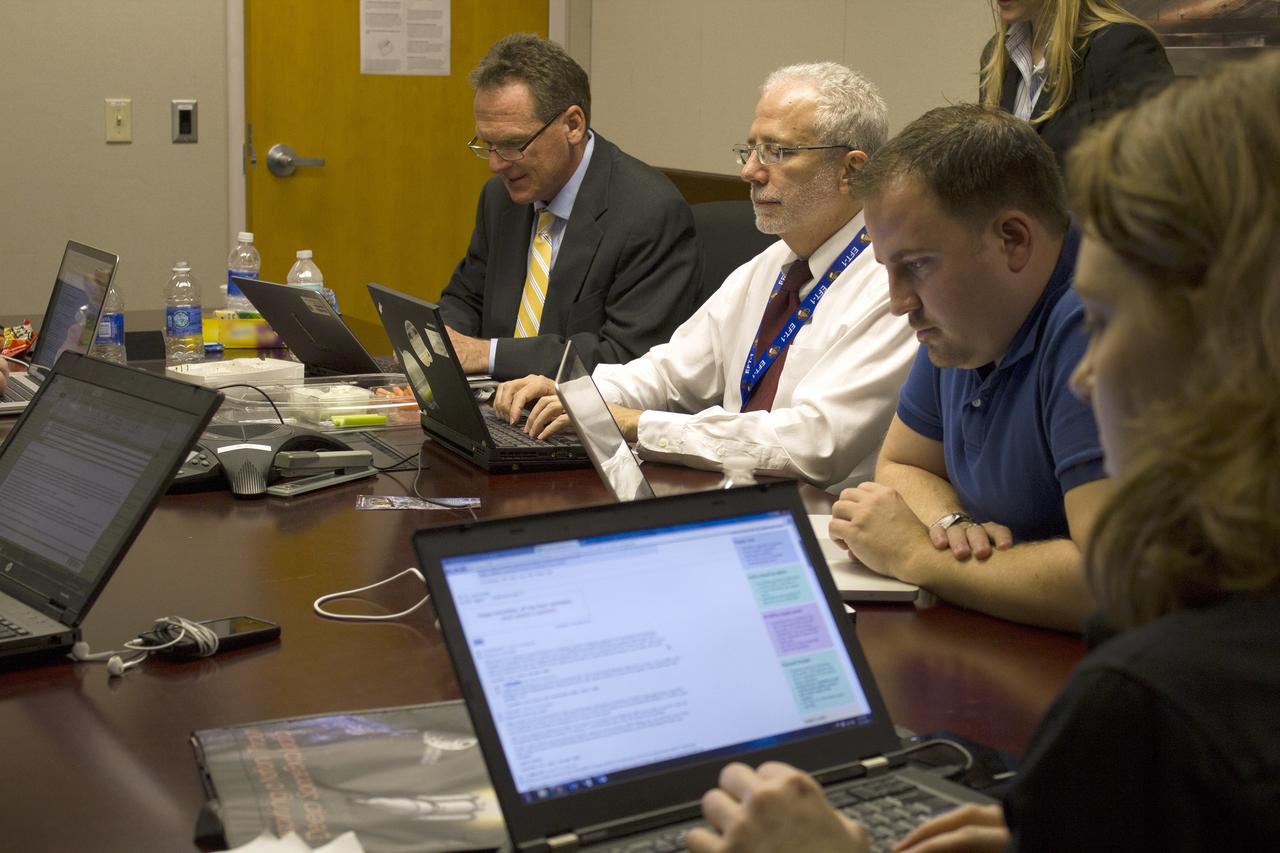
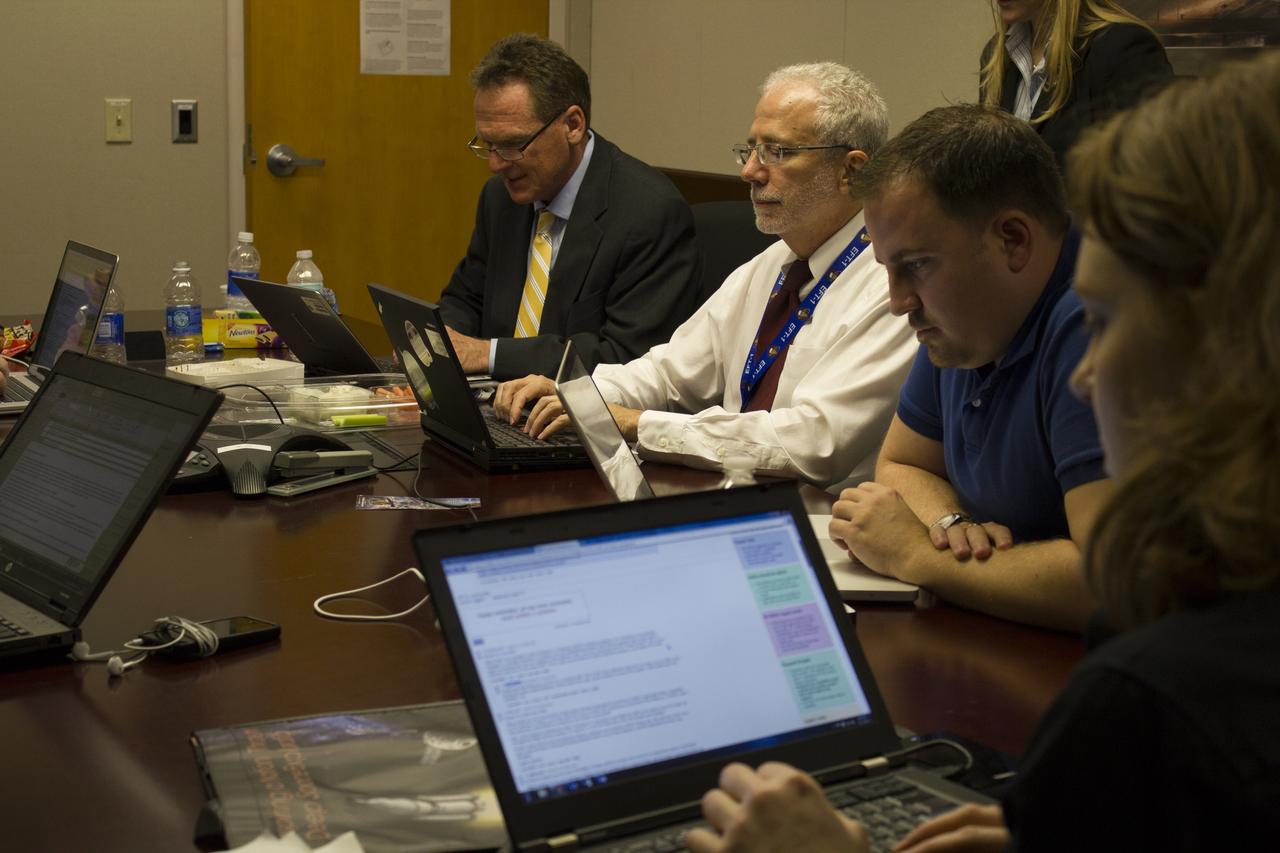
The Orion program management team reviews the launch procedure in Building AE at Cape Canaveral Air Force Station ahead of the launch of Orion on Exploration Flight Test-1 (EFT-1) on Dec. 4, 2014. Pictured from left to right: Mike Hawes, Lockheed Martin Orion program manager, Mark Geyer, NASA Orion program manager, and Mark Kirasich, NASA Orion deputy program manager. Part of Batch image transfer from Flickr.
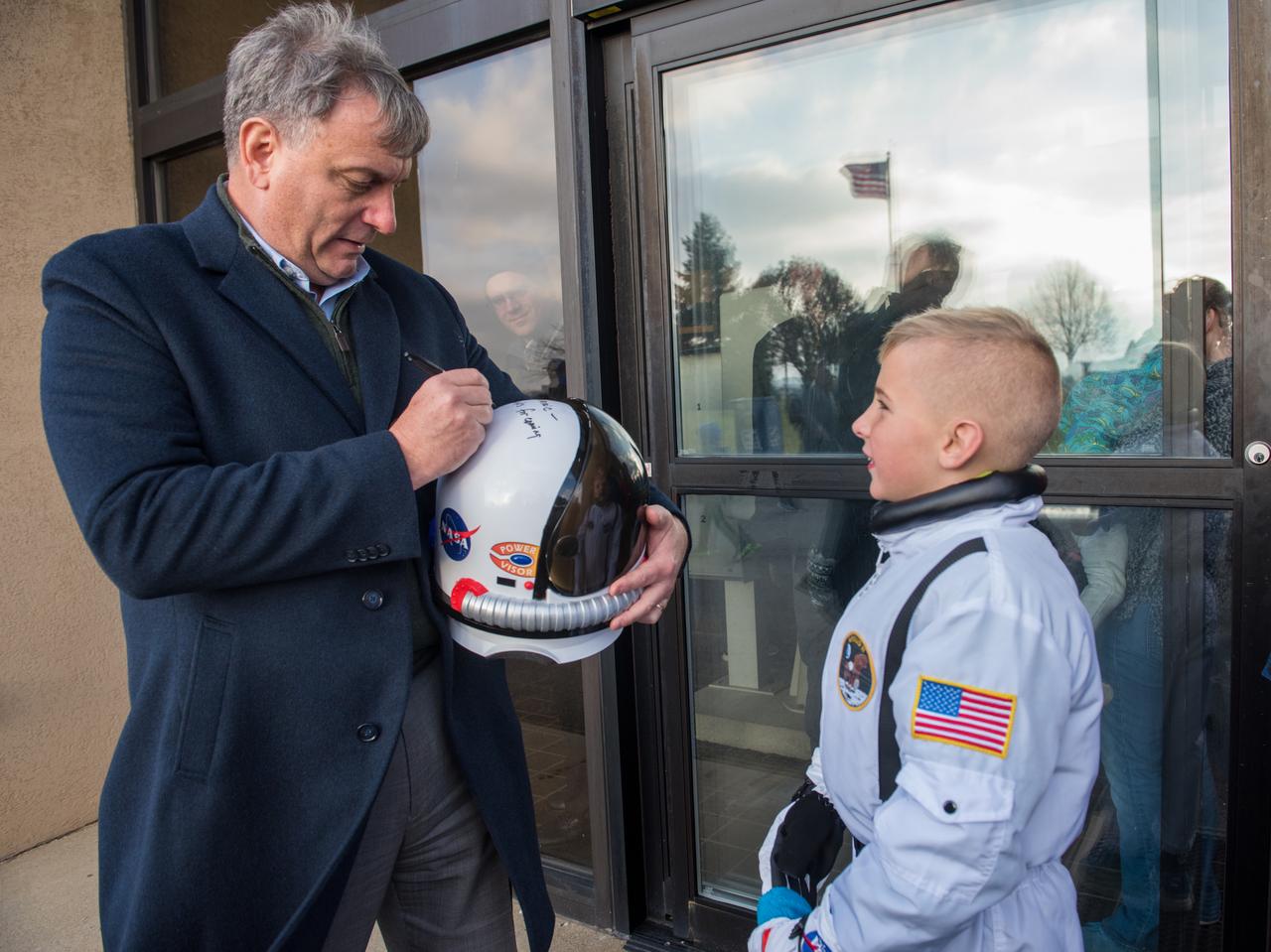
Orion Spacecraft Arrives in Ohio Aboard the Super Guppy at Mansfield Lahm Airport, Orion Program manager Mark Kirasich
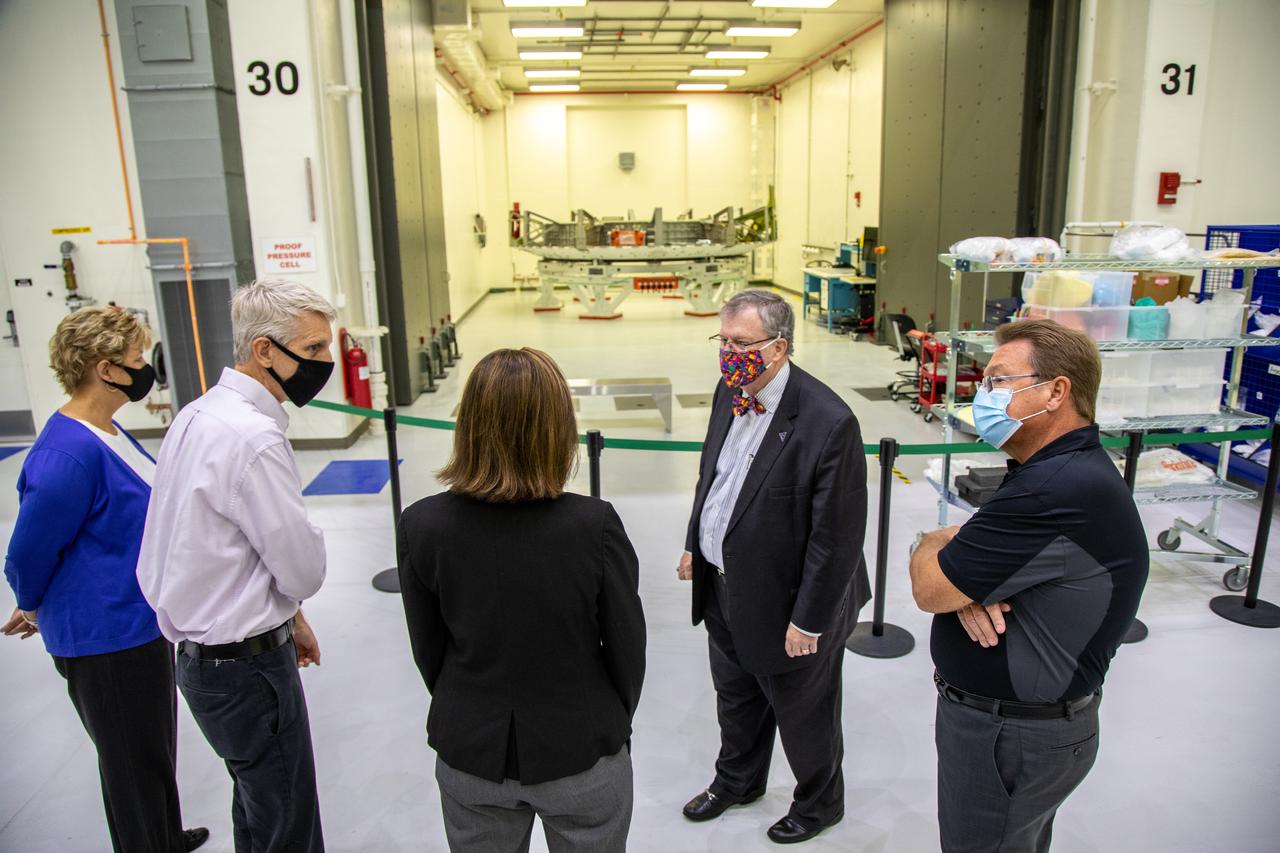
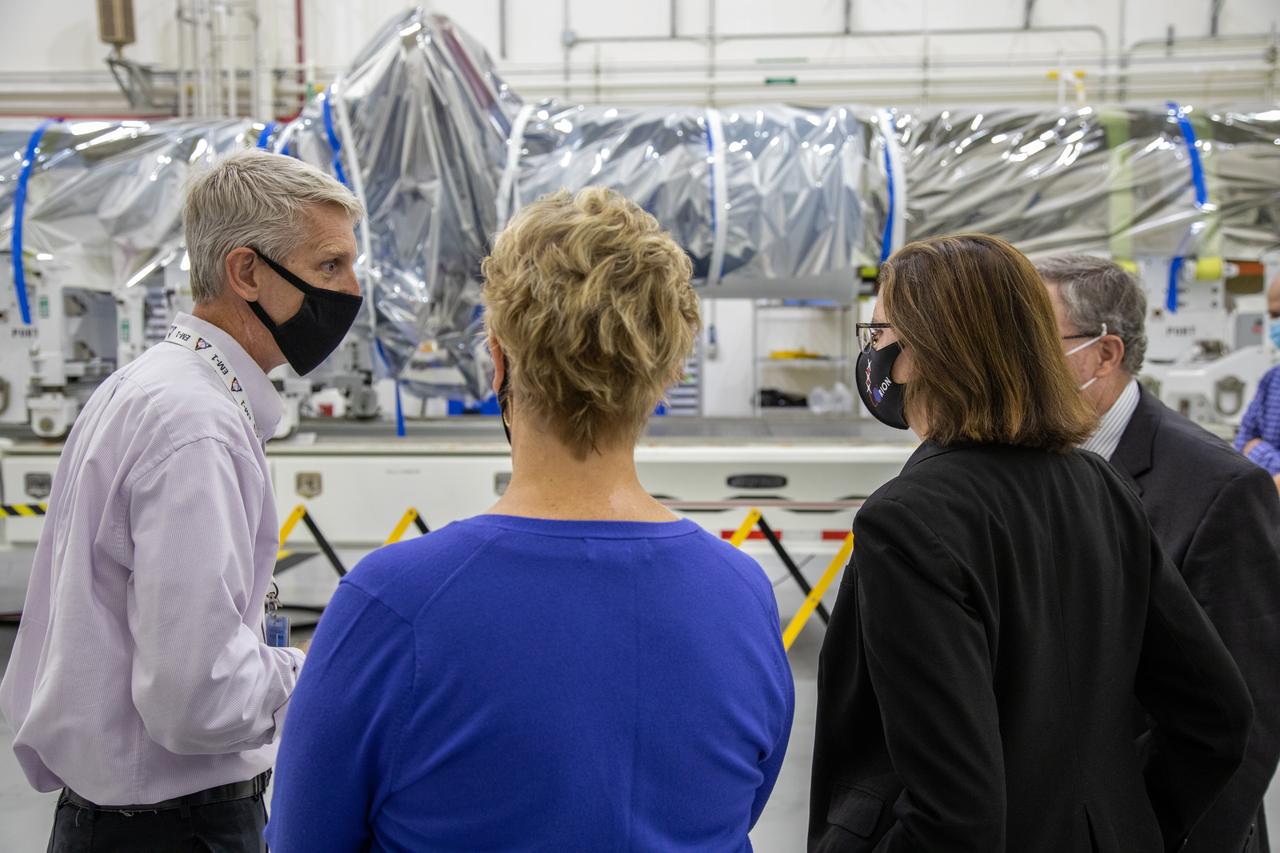
Catherine Koerner, in the center, NASA Orion Program manager, along with senior managers from Orion and Lockheed Martin, tours the Neil Armstrong Operations and Checkout Building at NASA’s Kennedy Space Center in Florida on Oct. 6, 2020. Accompanying her, from left are Annette Hasbrook, Orion Program assistant manager; Scott Wilson, NASA Kennedy Orion Production Operations manager, Mike Hawes, Lockheed Martin vice president and Orion Program manager; and Jules Schneider, Lockheed Martin Assembly, Test and Launch Operations director with Lockheed Martin. Koerner viewed the Orion spacecraft for the Artemis I and II missions. They are shown with the crew module adapter for the Orion Artemis II mission. The first in a series of increasingly complex missions, Artemis I will test the Orion spacecraft and Space Launch System as an integrated system ahead of crewed flights to the Moon. Under the Artemis program, NASA will land the first woman and the next man on the Moon in 2024.
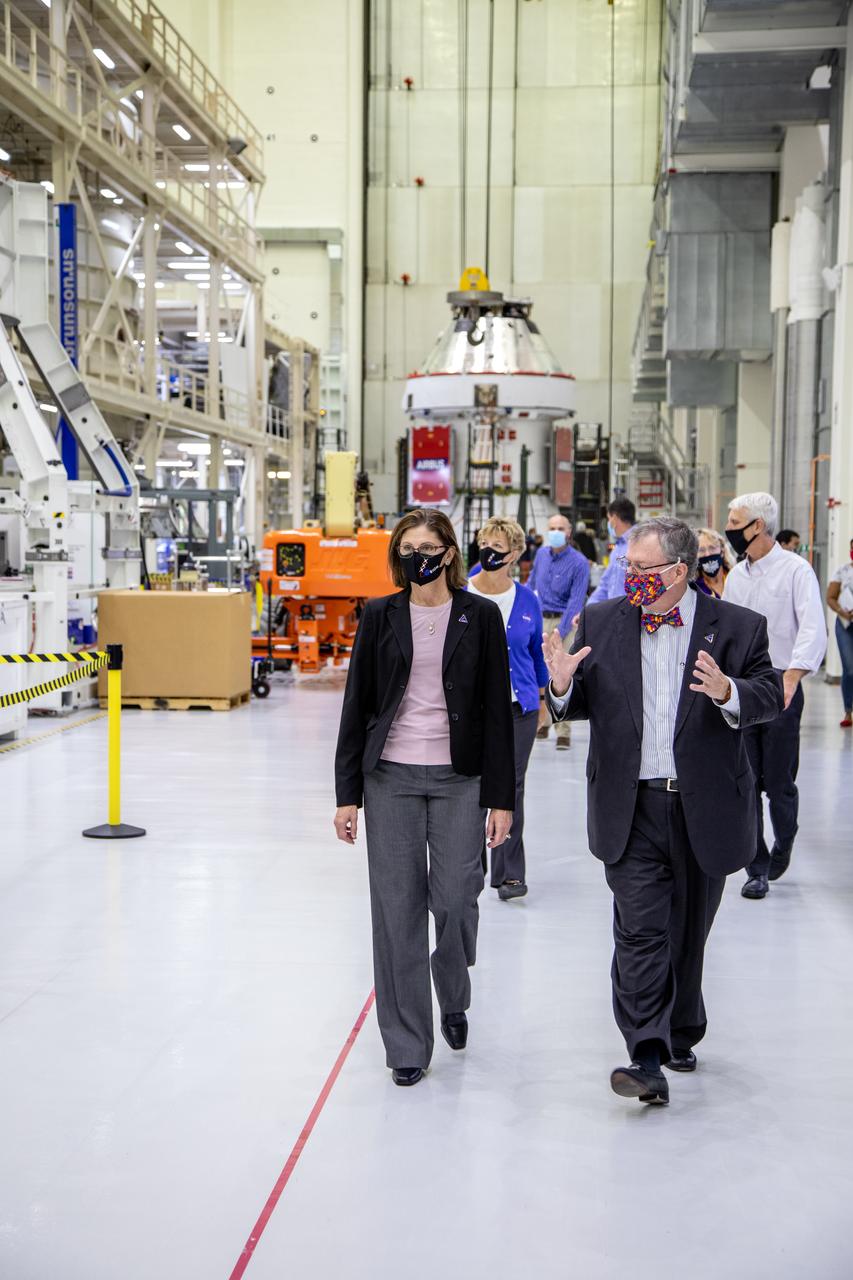
Catherine Koerner, in front at left, NASA Orion Program manager, along with senior managers from Orion and Lockheed Martin, tour the Neil Armstrong Operations and Checkout Building at NASA’s Kennedy Space Center in Florida on Oct. 6, 2020. Accompanying her, in front at right is Mike Hawes, Lockheed Martin vice president and Orion Program manager. In view behind Koerner is Annette Hasbrook, Orion Program assistant manager. In view behind Hawes is Scott Wilson, NASA Kennedy Orion Production Operations manager. Koerner viewed Orion spacecraft for the Artemis I, shown in the background, and II missions. The first in a series of increasingly complex missions, Artemis I will test the Orion spacecraft and Space Launch System as an integrated system ahead of crewed flights to the Moon. Under the Artemis program, NASA will land the first woman and the next man on the Moon in 2024.
Catherine Koerner, second from right, NASA Orion Program manager, along with senior managers from Orion and Lockheed Martin, tour the Launch Abort System Facility at NASA’s Kennedy Space Center in Florida on Oct. 6, 2020. Accompanying her from left, are Scott Wilson, NASA Kennedy Orion Production Operations manager; Annette Hasbrook, Orion Program assistant manager; and Mike Hawes, Lockheed Martin vice president and Orion Program manager. They are viewing the launch abort system for the Artemis II mission. Koerner also viewed the Orion spacecraft for the Artemis I and II missions in the Neil Armstrong Operations and Checkout Building. The first in a series of increasingly complex missions, Artemis I will test the Orion spacecraft and Space Launch System as an integrated system ahead of crewed flights to the Moon. Under the Artemis program, NASA will land the first woman and the next man on the Moon in 2024.
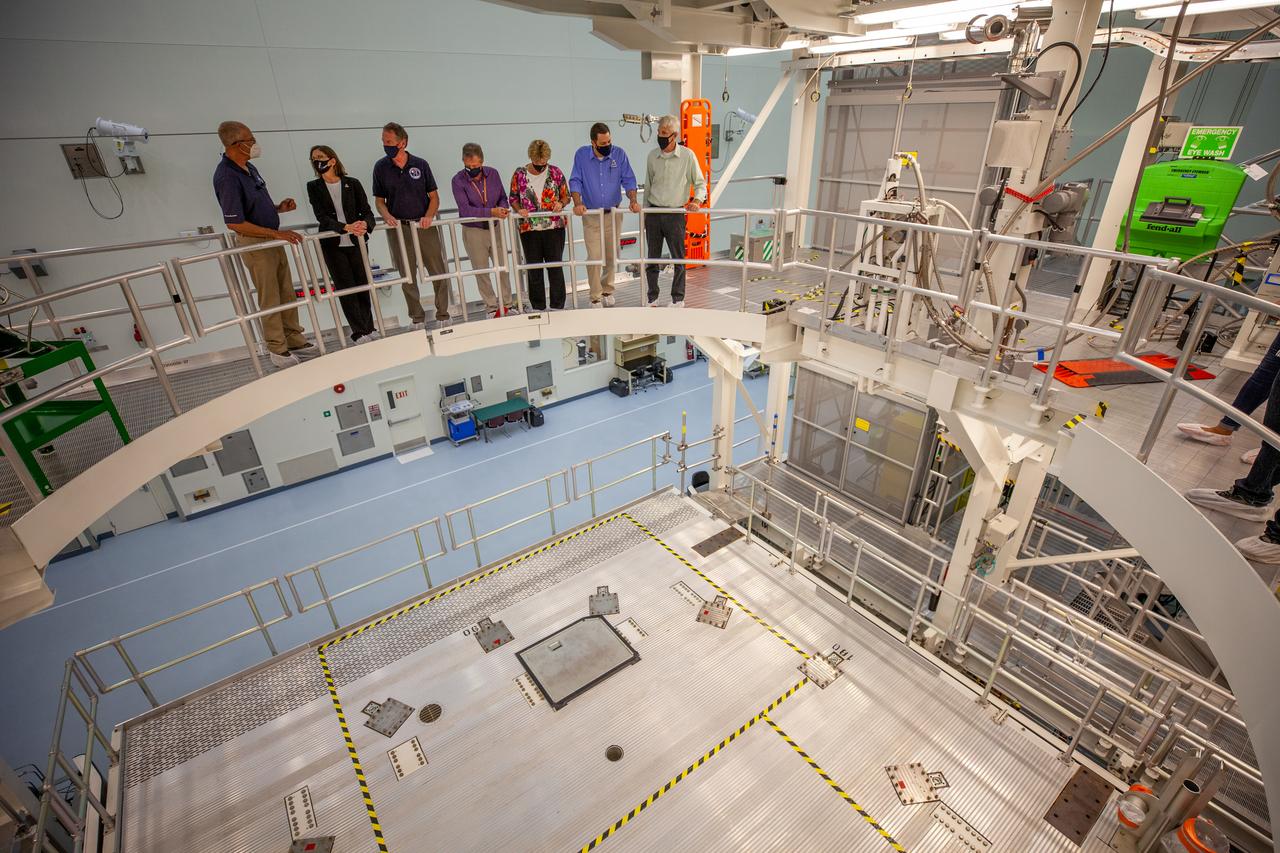
Catherine Koerner, second from left, NASA Orion Program manager, along with senior managers from Orion, Exploration Ground Systems (EGS) and TOSC, tours the Multi-Payload Processing Facility (MPPF) at NASA’s Kennedy Space Center in Florida on Oct. 5, 2020. Accompanying her, from left are Skip Williams, operations manager for the MPPF spacecraft offline element integration team; Mike Bolger, EGS manager; Nicolas Kindred, TOSC flow manager; Annette Hasbrook, Orion Program assistant manager; Jeremy Parsons, EGS deputy manager; and Scott Wilson, Orion Production Operations manager. Koerner viewed spacecraft hardware and processing facilities for the Artemis I and II missions. The first in a series of increasingly complex missions, Artemis I will test the Orion spacecraft and Space Launch System as an integrated system ahead of crewed flights to the Moon. Under the Artemis program, NASA will land the first woman and the next man on the Moon in 2024.
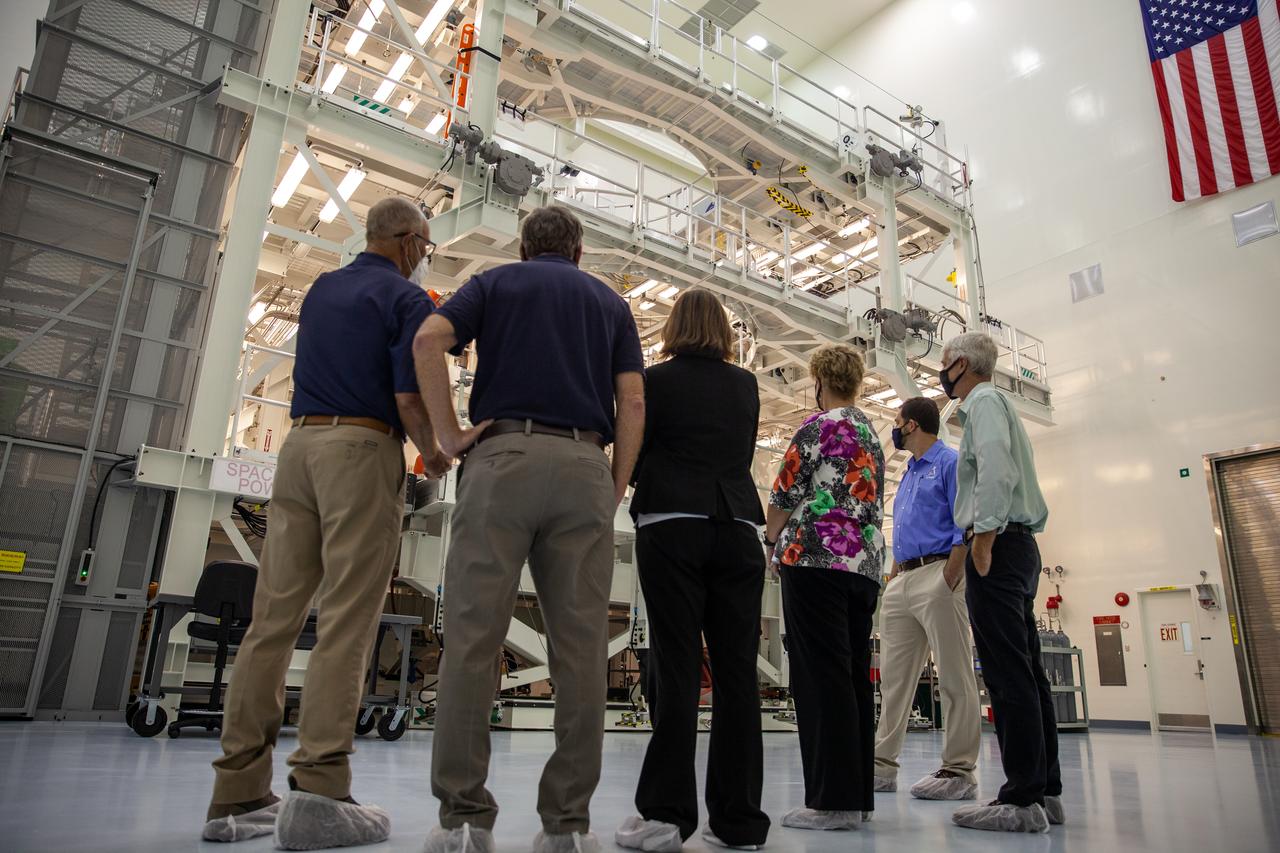
Catherine Koerner, third from left, NASA Orion Program manager, along with senior managers from Orion, and Exploration Ground Systems (EGS), visits the Multi-Payload Processing Facility (MPPF) at NASA’s Kennedy Space Center in Florida on Oct. 5, 2020. Accompanying her, from left are Skip Williams, operations manager for the MPPF spacecraft offline element integration team; Mike Bolger, EGS manager; Annette Hasbrook, Orion Program assistant manager; Scott Wilson, Orion Production Operations manager; and Jeremy Parsons, EGS deputy manager. Koerner viewed spacecraft hardware and processing facilities for the Artemis I and II missions. The first in a series of increasingly complex missions, Artemis I will test the Orion spacecraft and Space Launch System as an integrated system ahead of crewed flights to the Moon. Under the Artemis program, NASA will land the first woman and the next man on the Moon in 2024.
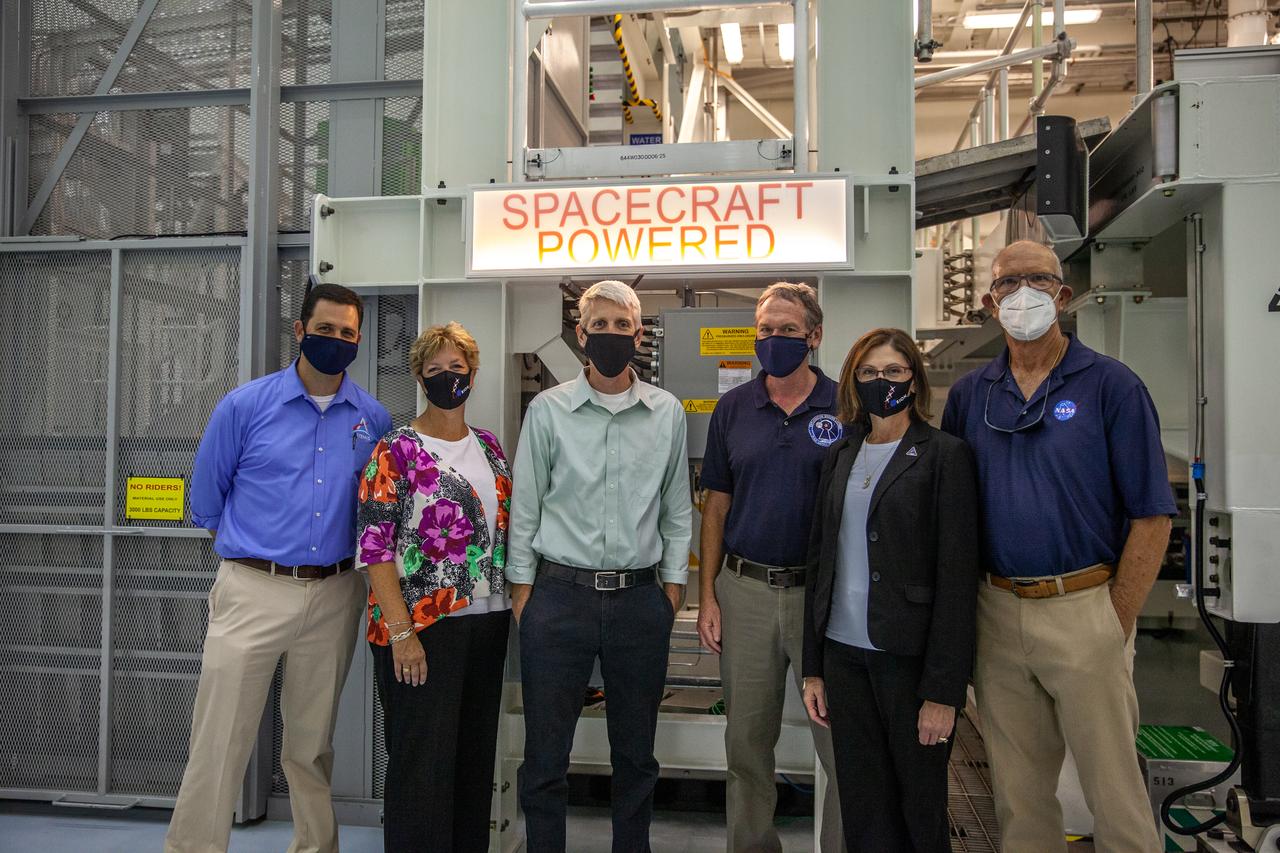
Catherine Koerner, second from right, NASA Orion Program manager, along with senior managers from Orion, and Exploration Ground Systems (EGS), tours the Multi-Payload Processing Facility (MPPF) at NASA’s Kennedy Space Center in Florida on Oct. 5, 2020. Accompanying her, from left are Jeremy Parsons, EGS deputy manager; Annette Hasbrook, Orion Program assistant manager; Scott Wilson, Orion Production Operations manager; and Mike Bolger, EGS manager. At far right is Skip Williams, operations manager for the MPPF spacecraft offline element integration team. Koerner viewed spacecraft hardware and processing facilities for the Artemis I and II missions. The first in a series of increasingly complex missions, Artemis I will test the Orion spacecraft and Space Launch System as an integrated system ahead of crewed flights to the Moon. Under the Artemis program, NASA will land the first woman and the next man on the Moon in 2024.
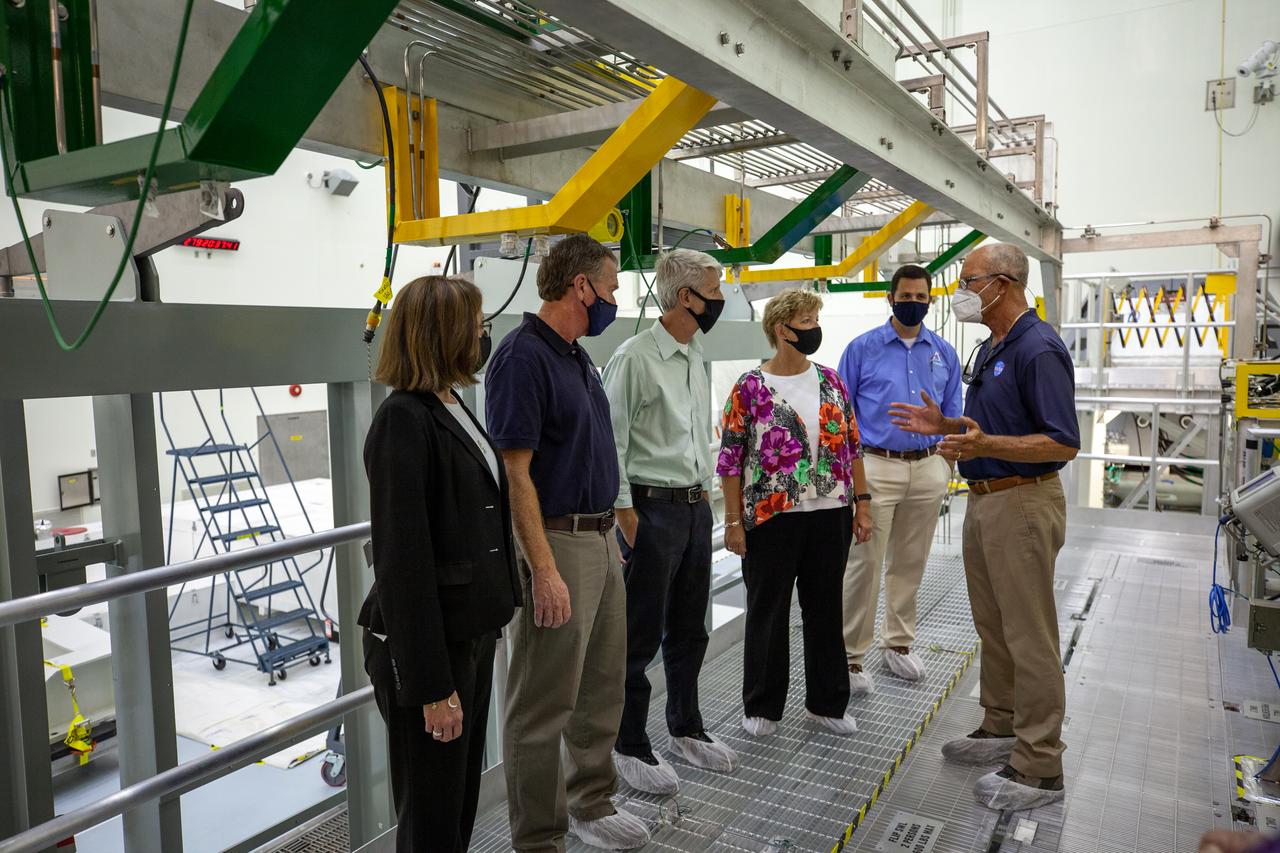
Catherine Koerner, far left, NASA Orion Program manager, along with senior managers from Orion, and Exploration Ground Systems (EGS), tours the Multi-Payload Processing Facility (MPPF) at NASA’s Kennedy Space Center in Florida on Oct. 5, 2020. Accompanying her, from left are Mike Bolger, EGS manager; Scott Wilson, Orion Production Operations manager; Annette Hasbrook, Orion Program assistant manager; and Jeremy Parsons, EGS deputy manager. Speaking to the group is Skip Williams, operations manager for the MPPF spacecraft offline element integration team. Koerner viewed spacecraft hardware and processing facilities for the Artemis I and II missions. The first in a series of increasingly complex missions, Artemis I will test the Orion spacecraft and Space Launch System as an integrated system ahead of crewed flights to the Moon. Under the Artemis program, NASA will land the first woman and the next man on the Moon in 2024.
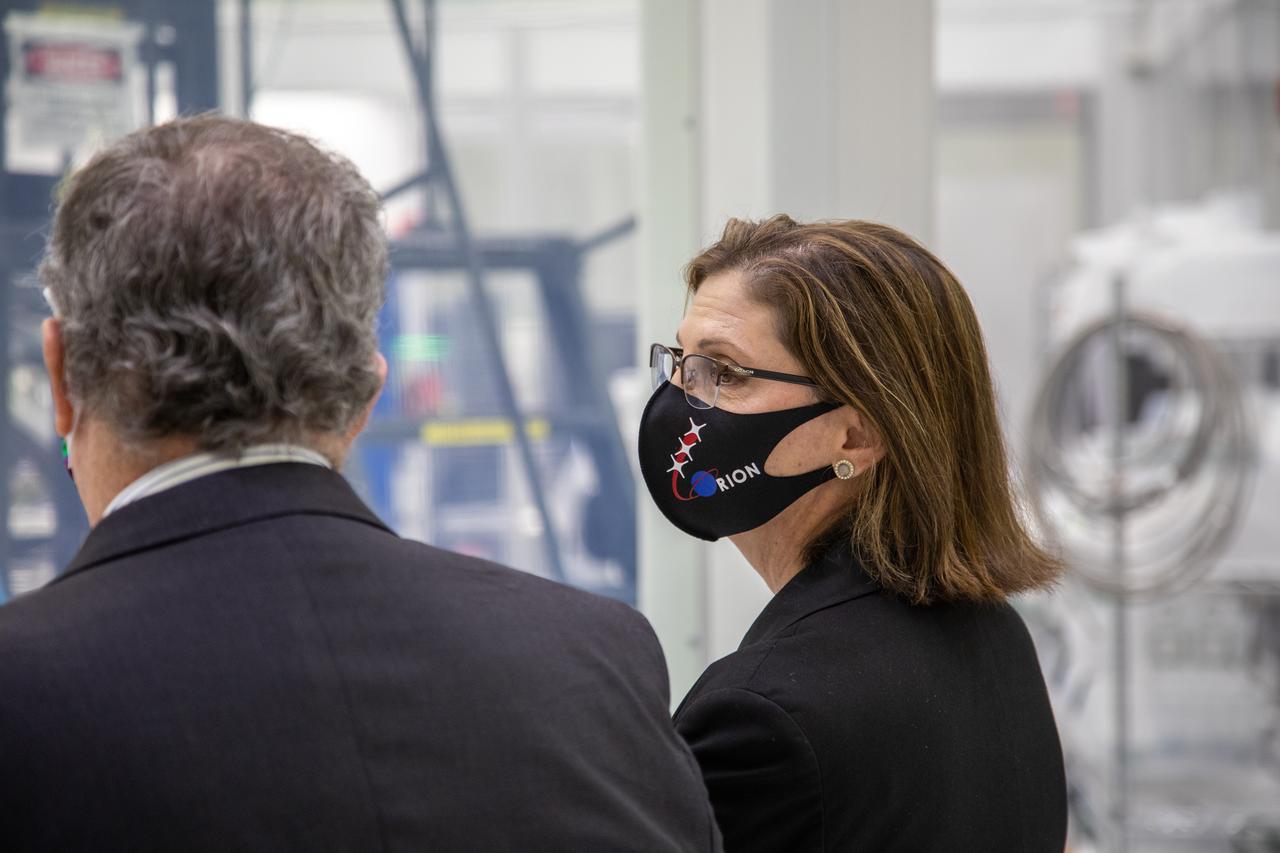
Catherine Koerner, at right, NASA Orion Program manager, along with senior managers from Orion and Lockheed Martin, tours the Neil Armstrong Operations and Checkout Building at NASA’s Kennedy Space Center in Florida on Oct. 6, 2020. Accompanying her, at left is Mike Hawes, Lockheed Martin vice president and Orion Program manager. Koerner viewed Orion spacecraft for the Artemis I and II missions. The first in a series of increasingly complex missions, Artemis I will test the Orion spacecraft and Space Launch System as an integrated system ahead of crewed flights to the Moon. Under the Artemis program, NASA will land the first woman and the next man on the Moon in 2024.
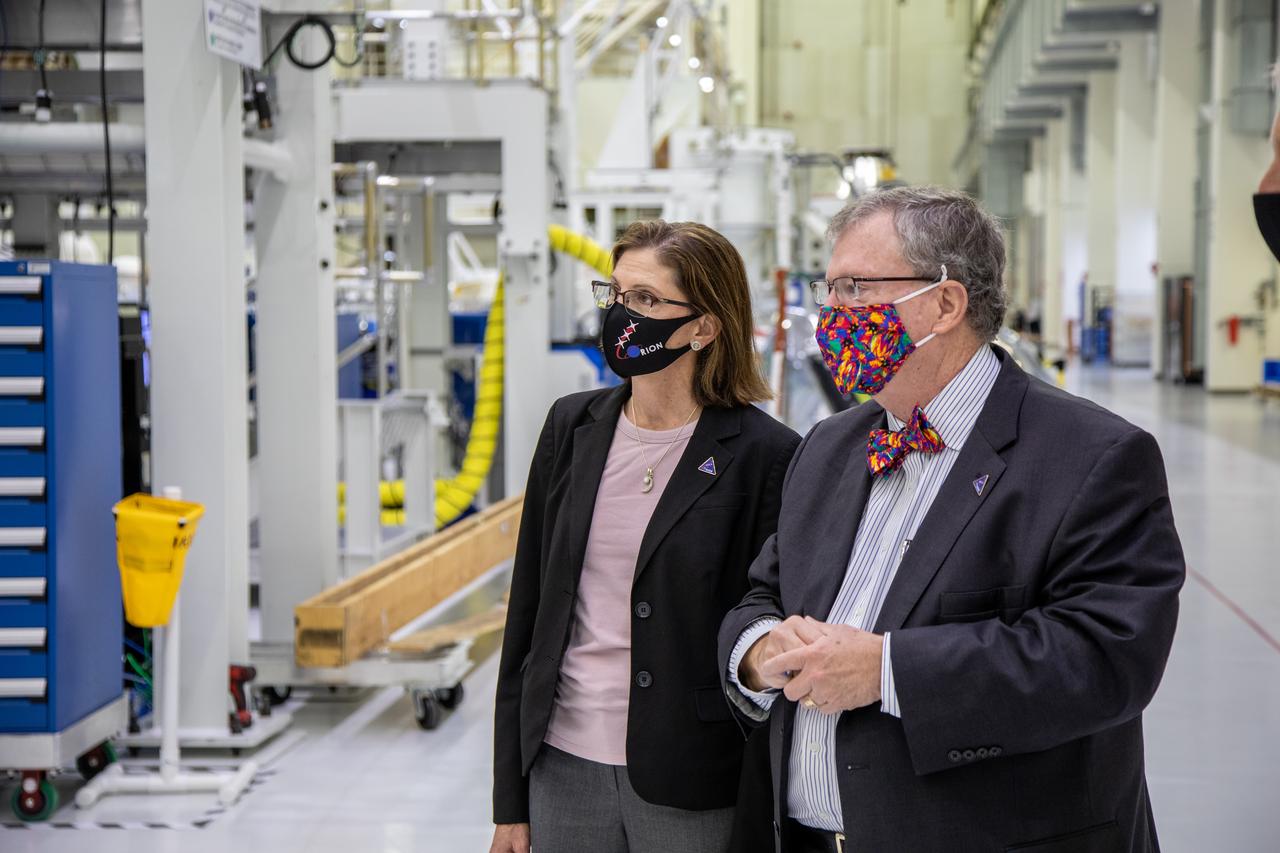
Catherine Koerner, at left, NASA Orion Program manager, along with senior managers from Orion and Lockheed Martin, tours the Neil Armstrong Operations and Checkout Building at NASA’s Kennedy Space Center in Florida on Oct. 6, 2020. Accompanying her, at right is Mike Hawes, Lockheed Martin vice president and Orion Program manager. Koerner viewed Orion spacecraft for the Artemis I and II missions. The first in a series of increasingly complex missions, Artemis I will test the Orion spacecraft and Space Launch System as an integrated system ahead of crewed flights to the Moon. Under the Artemis program, NASA will land the first woman and the next man on the Moon in 2024.
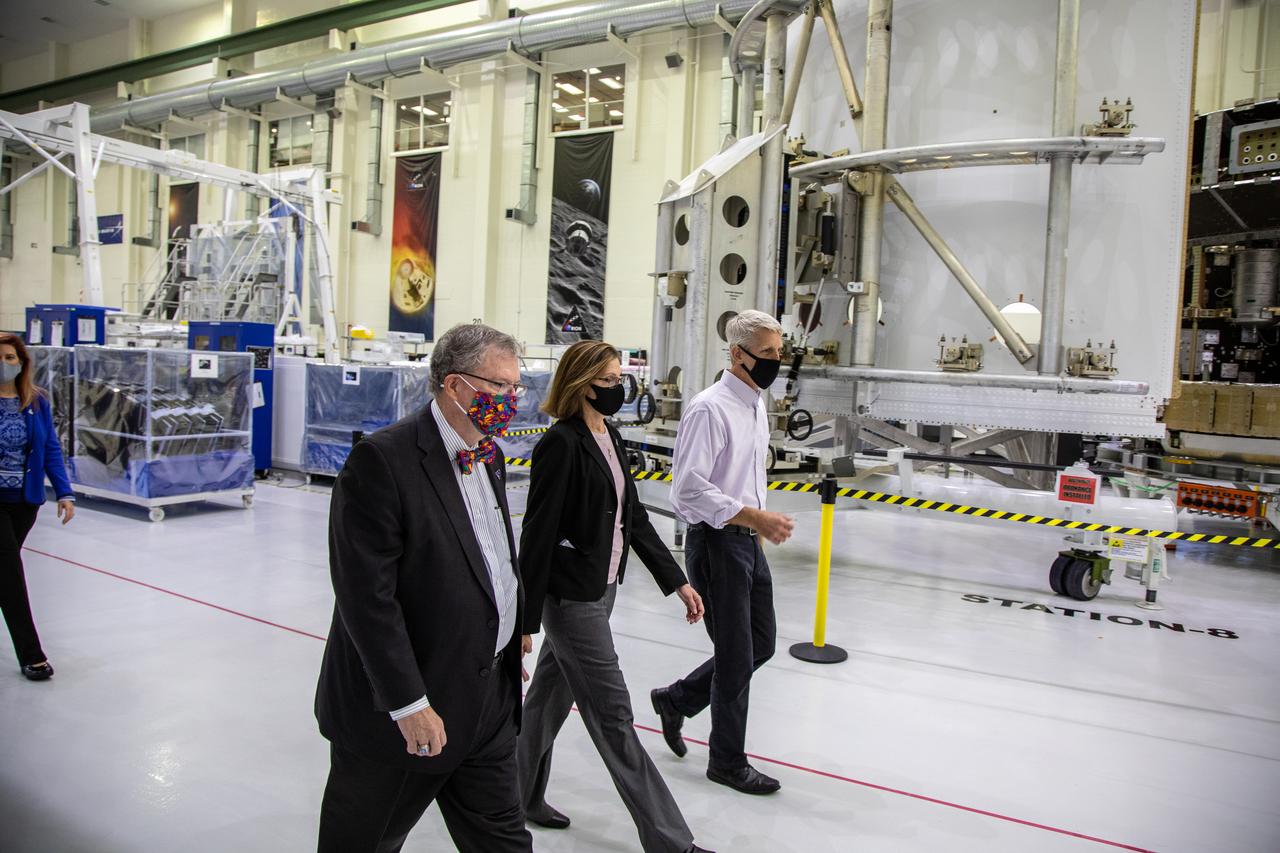
Catherine Koerner, in the center, NASA Orion Program manager, along with senior managers from Orion and Lockheed Martin, tours the Neil Armstrong Operations and Checkout Building at NASA’s Kennedy Space Center in Florida on Oct. 6, 2020. Accompanying her, at left is Mike Hawes, Lockheed Martin vice president and Orion Program manager; and at right is Scott Wilson, NASA Kennedy Orion Production Operations manager. Koerner viewed the Orion spacecraft for the Artemis I and II missions. They are shown with one of the space adapter jettison fairing panels that will be installed on Orion for the Artemis I mission. The first in a series of increasingly complex missions, Artemis I will test the Orion spacecraft and Space Launch System as an integrated system ahead of crewed flights to the Moon. Under the Artemis program, NASA will land the first woman and the next man on the Moon in 2024.
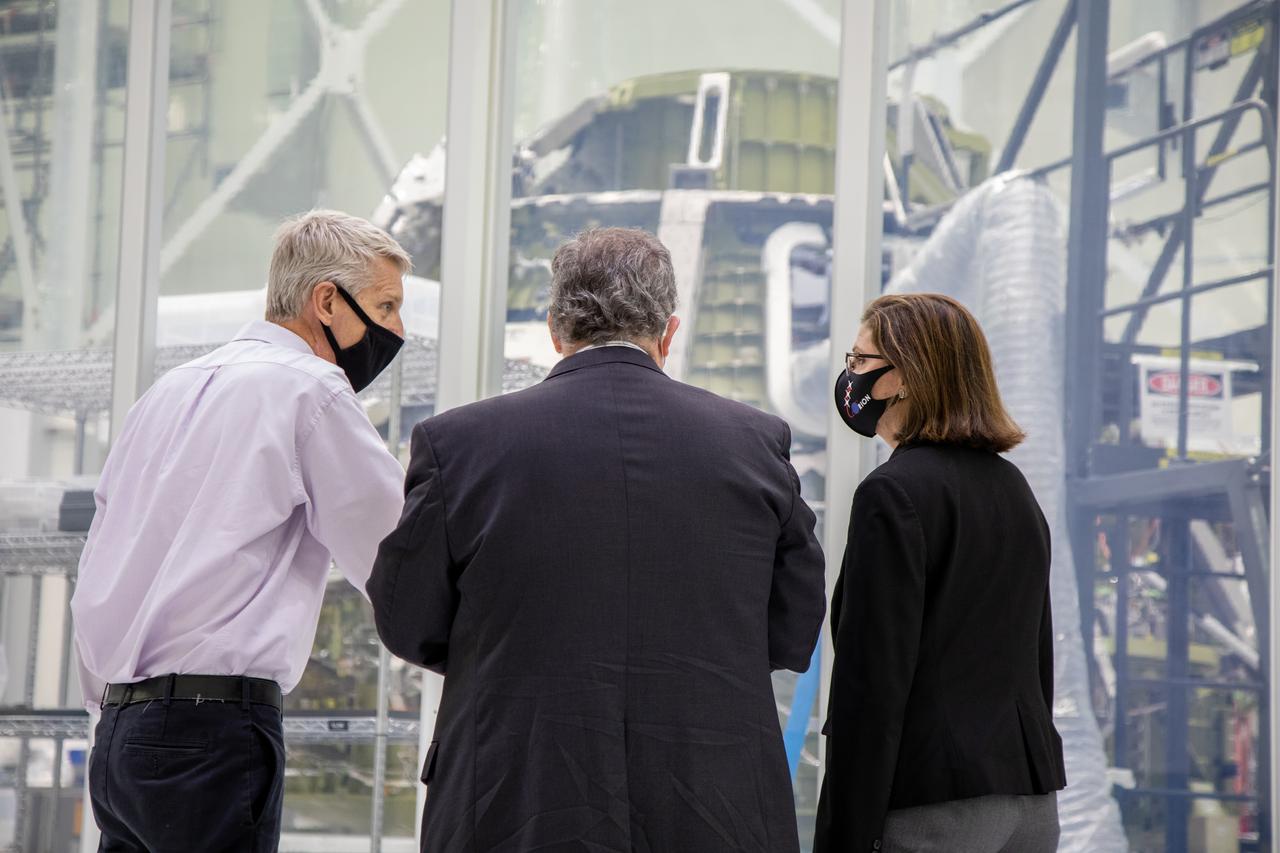
Catherine Koerner, at far right, NASA Orion Program manager, along with senior managers from Orion and Lockheed Martin, tours the Neil Armstrong Operations and Checkout Building at NASA’s Kennedy Space Center in Florida on Oct. 6, 2020. Accompanying her, from left are Scott Wilson, NASA Kennedy Orion Production Operations manager, and Mike Hawes, Lockheed Martin vice president and Orion Program manager. They are pictured viewing the Orion crew module for the Artemis II mission, and also viewed the Orion spacecraft with its solar array wings installed for Artemis I. The first in a series of increasingly complex missions, Artemis I will test the Orion spacecraft and Space Launch System as an integrated system ahead of crewed flights to the Moon. Under the Artemis program, NASA will land the first woman and the next man on the Moon in 2024.
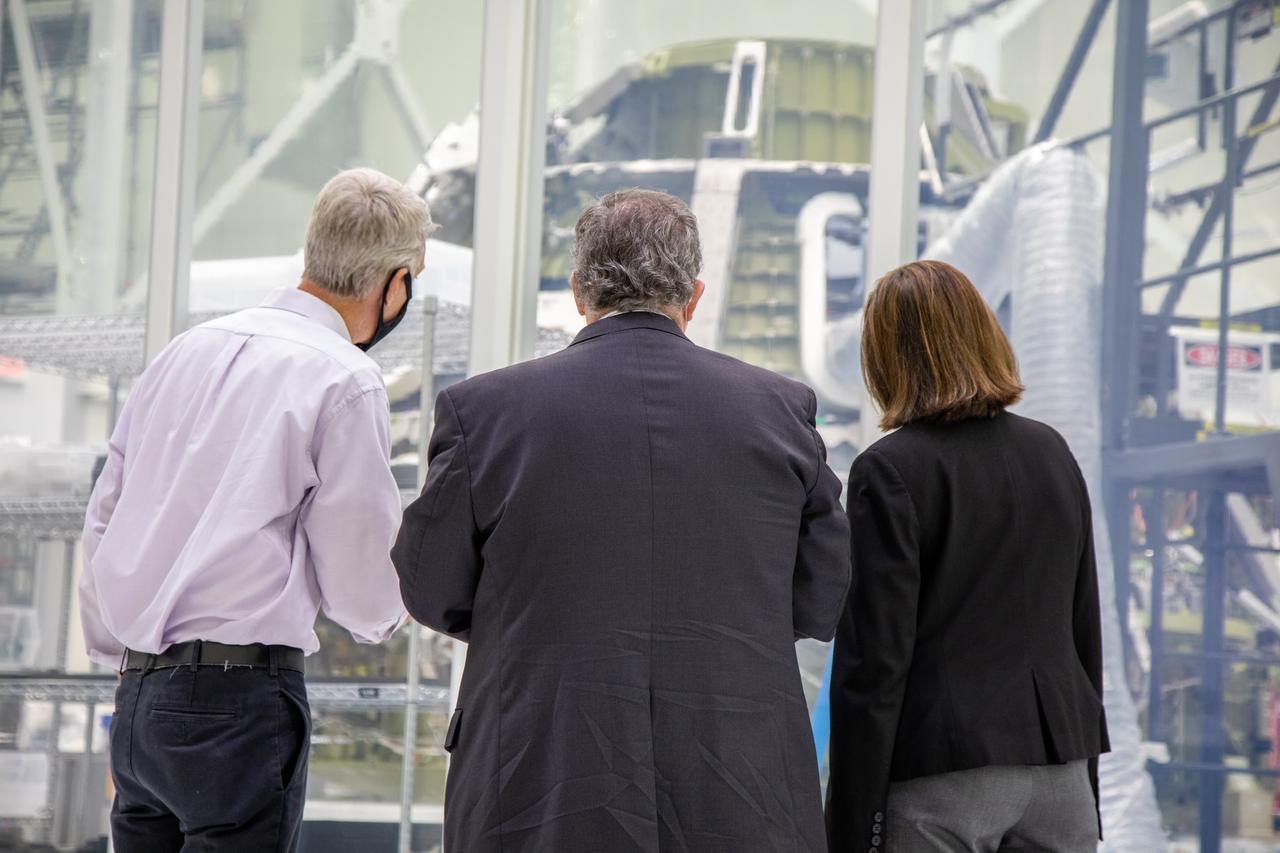
Catherine Koerner, at far right, NASA Orion Program manager, along with senior managers from Orion and Lockheed Martin, tours the Neil Armstrong Operations and Checkout Building at NASA’s Kennedy Space Center in Florida on Oct. 6, 2020. Accompanying her, from left are Scott Wilson, NASA Kennedy Orion Production Operations manager, and Mike Hawes, Lockheed Martin vice president and Orion Program manager. They are pictured viewing the Orion crew module for the Artemis II mission, and also viewed the Orion spacecraft with its solar array wings installed for Artemis I. The first in a series of increasingly complex missions, Artemis I will test the Orion spacecraft and Space Launch System as an integrated system ahead of crewed flights to the Moon. Under the Artemis program, NASA will land the first woman and the next man on the Moon in 2024.
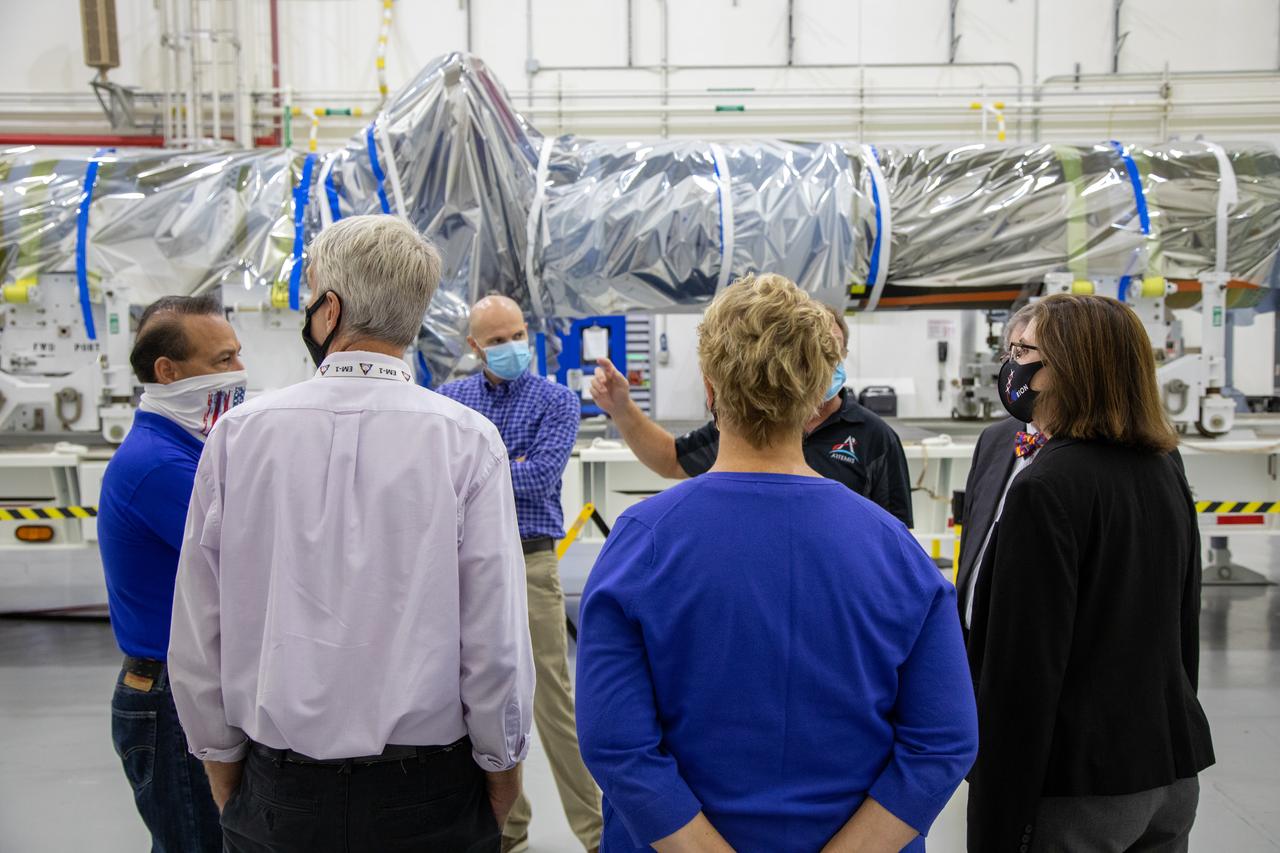
Catherine Koerner, far right, NASA Orion Program manager, along with senior managers from Orion and Lockheed Martin, tour the Launch Abort System Facility at NASA’s Kennedy Space Center in Florida on Oct. 6, 2020. Accompanying her from left, are Carlos Garcia, NASA Kennedy Launch Abort System Assembly, Integration and Test lead and Resident office manager; Scott Wilson, NASA Kennedy Orion Production Operations manager; Jim Skaggs, Kennedy Operations senior manager with Lockheed Martin; Jules Schneider, Kennedy Assembly, Test and Launch Operations director with Lockheed Martin; Mike Hawes, Lockheed Martin vice president and Orion Program manager; and Annette Hasbrook, Orion Program assistant manager. They are viewing the launch abort system for the Artemis II mission. Koerner also viewed the Orion spacecraft for the Artemis I and II missions in the Neil Armstrong Operations and Checkout Building. The first in a series of increasingly complex missions, Artemis I will test the Orion spacecraft and Space Launch System as an integrated system ahead of crewed flights to the Moon. Under the Artemis program, NASA will land the first woman and the next man on the Moon in 2024.
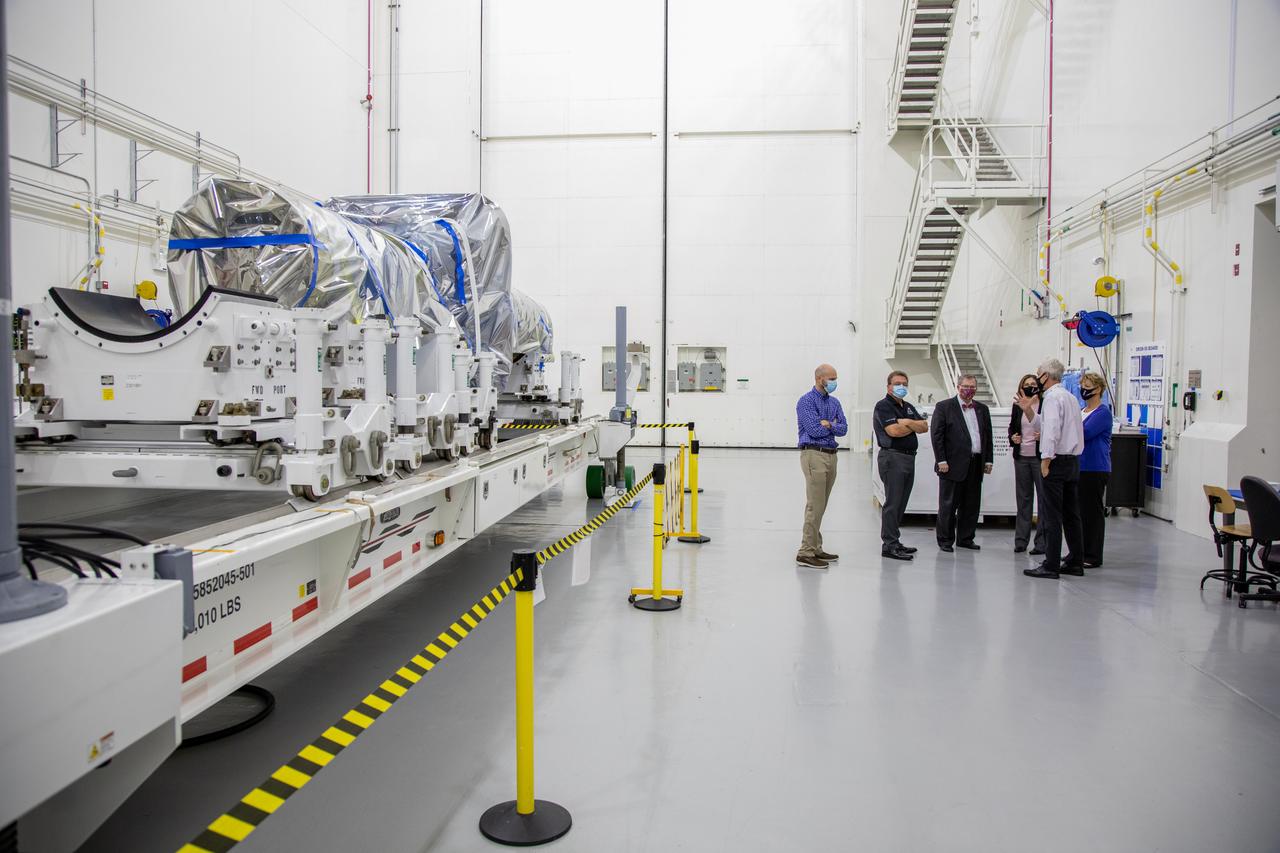
Catherine Koerner, third from right, NASA Orion Program manager, along with senior managers from Orion and Lockheed Martin, tour the Launch Abort System Facility at NASA’s Kennedy Space Center in Florida on Oct. 6, 2020. Accompanying her from left, are Jim Skaggs, Kennedy Operations senior manager with Lockheed Martin; Jules Schneider, Kennedy Assembly, Test and Launch Operations director with Lockheed Martin; Mike Hawes, Lockheed Martin vice president and Orion Program manager; Scott Wilson, NASA Kennedy Orion Production Operations manager; and Annette Hasbrook, Orion Program assistant manager. They are viewing the launch abort system for the Artemis II mission. Koerner also viewed the Orion spacecraft for the Artemis I and II missions in the Neil Armstrong Operations and Checkout Building. The first in a series of increasingly complex missions, Artemis I will test the Orion spacecraft and Space Launch System as an integrated system ahead of crewed flights to the Moon. Under the Artemis program, NASA will land the first woman and the next man on the Moon in 2024.

Catherine Koerner, in front, NASA Orion Program manager, along with senior managers from Orion, Exploration Ground Systems (EGS) and TOSC, tours the Multi-Payload Processing Facility (MPPF) at NASA’s Kennedy Space Center in Florida on Oct. 5, 2020. Accompanying her, from left are Nicolas Kindred, (partically hidden), TOSC flow manager; Jeremy Parsons, EGS deputy manager; Scott Wilson, Orion Production Operations manager; Mike Bolger, (partially hidden), EGS manager; and Skip Williams, operations manager for the MPPF spacecraft offline element integration team. Koerner viewed spacecraft hardware and processing facilities for the Artemis I and II missions. The first in a series of increasingly complex missions, Artemis I will test the Orion spacecraft and Space Launch System as an integrated system ahead of crewed flights to the Moon. Under the Artemis program, NASA will land the first woman and the next man on the Moon in 2024.
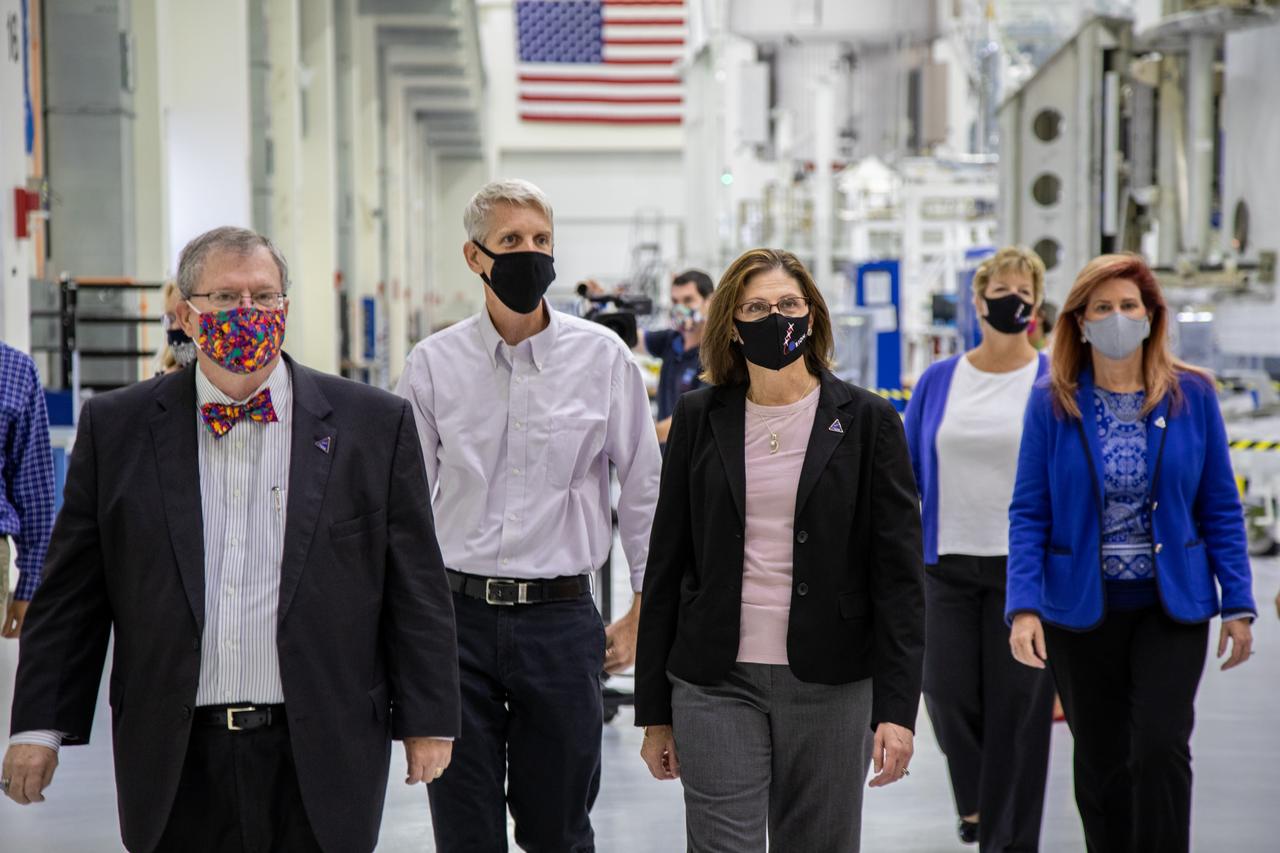
Catherine Koerner, in the center, NASA Orion Program manager, along with senior managers from Orion and Lockheed Martin, tour the Neil Armstrong Operations and Checkout Building at NASA’s Kennedy Space Center in Florida on Oct. 6, 2020. Accompanying her, from left are Mike Hawes, Lockheed Martin vice president and Orion Program manager; Scott Wilson, NASA Kennedy Orion Production Operations manager; Annette Hasbrook, Orion Program assistant manager; and Kelly DeFazio, Lockheed Martin vehicle production director on the Orion Production Operations Contract. Koerner viewed Orion spacecraft for the Artemis I and II missions. In view in the background, at right, is one of three Spacecraft Adapter Jettison fairing panels to be installed on the spacecraft. The first in a series of increasingly complex missions, Artemis I will test the Orion spacecraft and Space Launch System as an integrated system ahead of crewed flights to the Moon. Under the Artemis program, NASA will land the first woman and the next man on the Moon in 2024.

Catherine Koerner, second from right, NASA Orion Program manager, along with senior managers from Orion, Exploration Ground Systems (EGS) and TOSC, tours the Multi-Payload Processing Facility (MPPF) at NASA’s Kennedy Space Center in Florida on Oct. 5, 2020. Accompanying her, from left are Scott Wilson, Orion Production Operations manager; Mike Bolger, EGS manager; and Nicolas Kindred, TOSC flow manager. At right is Jeremy Parsons, EGS deputy manager. Koerner viewed spacecraft hardware and processing facilities for the Artemis I and II missions. The first in a series of increasingly complex missions, Artemis I will test the Orion spacecraft and Space Launch System as an integrated system ahead of crewed flights to the Moon. Under the Artemis program, NASA will land the first woman and the next man on the Moon in 2024.
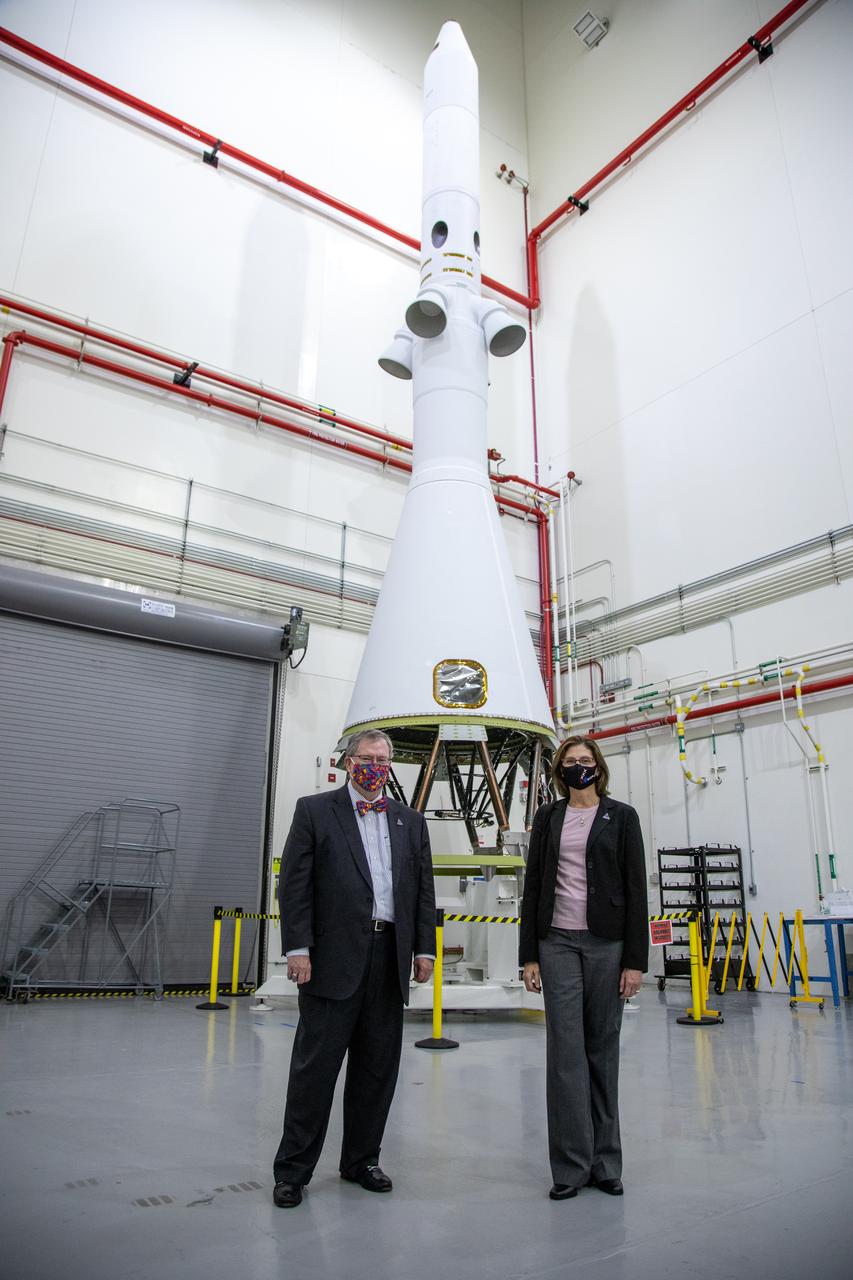
Catherine Koerner, NASA Orion Program manager, along with senior managers from Orion and Lockheed Martin, tour the Launch Abort System Facility at NASA’s Kennedy Space Center in Florida on Oct. 6, 2020. Pictured with Mike Hawes, Lockheed Martin vice president and Orion Program manager, they are viewing the launch abort system for the Artemis I mission. Koerner also viewed the Orion spacecraft for the Artemis I and II missions in the Neil Armstrong Operations and Checkout Building. The first in a series of increasingly complex missions, Artemis I will test the Orion spacecraft and Space Launch System as an integrated system ahead of crewed flights to the Moon. Under the Artemis program, NASA will land the first woman and the next man on the Moon in 2024.
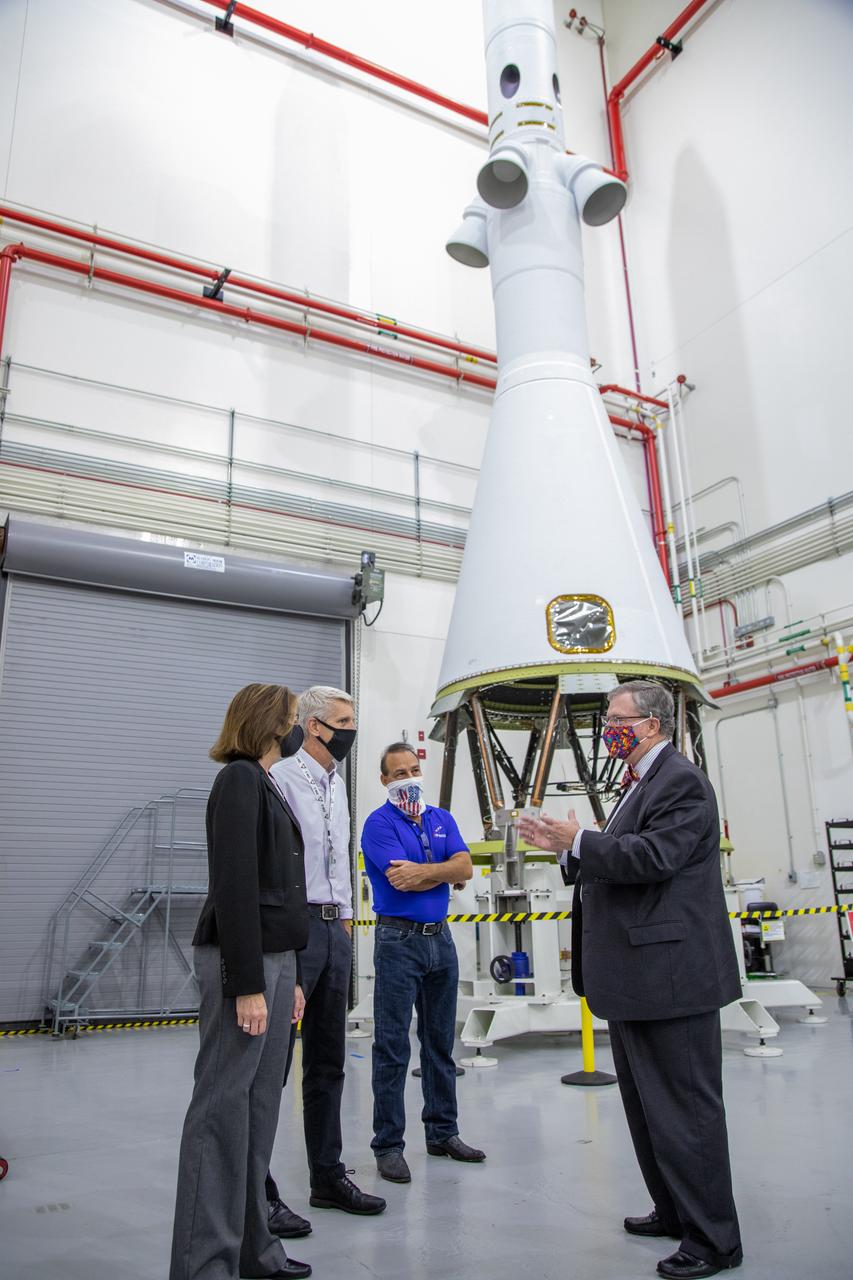
Catherine Koerner, far left, NASA Orion Program manager, along with senior managers from Orion and Lockheed Martin, tour the Launch Abort System Facility at NASA’s Kennedy Space Center in Florida on Oct. 6, 2020. Accompanying her from left, are Scott Wilson, NASA Kennedy Orion Production Operations manager; Carlos Garcia, NASA Kennedy Launch Abort System Assembly, Integration and Test lead and Resident office manager; and Mike Hawes, Lockheed Martin vice president and Orion Program manager. They are viewing the launch abort system for the Artemis I mission. Koerner also viewed the Orion spacecraft for the Artemis I and II missions in the Neil Armstrong Operations and Checkout Building. The first in a series of increasingly complex missions, Artemis I will test the Orion spacecraft and Space Launch System as an integrated system ahead of crewed flights to the Moon. Under the Artemis program, NASA will land the first woman and the next man on the Moon in 2024.
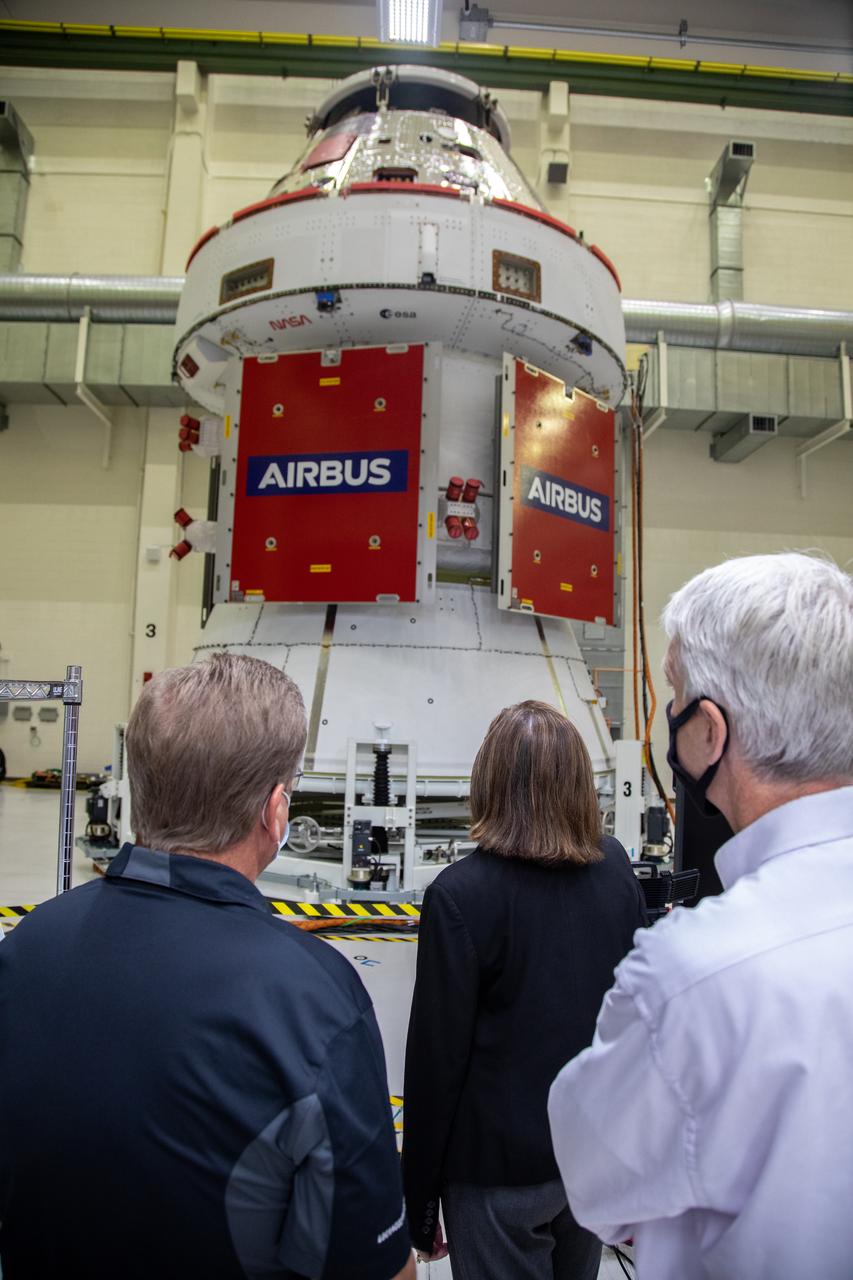
Catherine Koerner, in the center, NASA Orion Program manager, along with senior managers from Orion and Lockheed Martin, tour the Neil Armstrong Operations and Checkout Building at NASA’s Kennedy Space Center in Florida on Oct. 6, 2020. Accompanying her, at right is Scott Wilson, NASA Kennedy Orion Production Operations manager. At left is Jules Schneider, Lockheed Martin Assembly, Test and Launch Operations director with Lockheed Martin. Koerner viewed Orion spacecraft for the Artemis I and II missions. In view is the Orion spacecraft for Artemis I with its solar arrays installed and protective covers secured over them. The first in a series of increasingly complex missions, Artemis I will test the Orion spacecraft and Space Launch System as an integrated system ahead of crewed flights to the Moon. Under the Artemis program, NASA will land the first woman and the next man on the Moon in 2024.

Charlie Lundquist, NASA Orion deputy program manager, right, presents an American flag flown aboard the Orion capsule during the Exploration Flight Test-1 mission to Armstrong Deputy Director Patrick Stoliker.
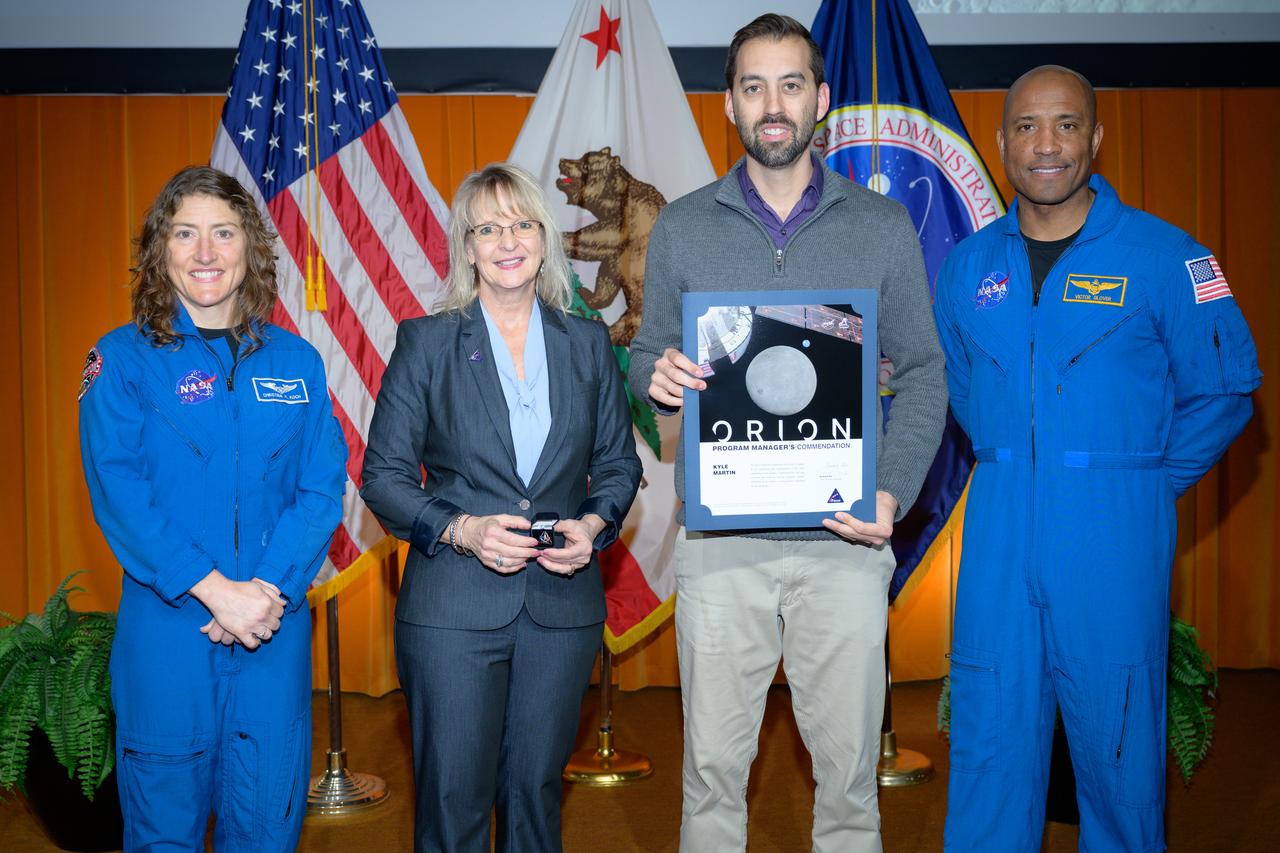
Artemis Orion program manager’s commendation award presented to Kyle Martin, center, by Orion Deputy Program Manager Debbie Korth, left, NASA astronauts Victor J. Glover, right, and Christina Koch, left, in the N201 auditorium.
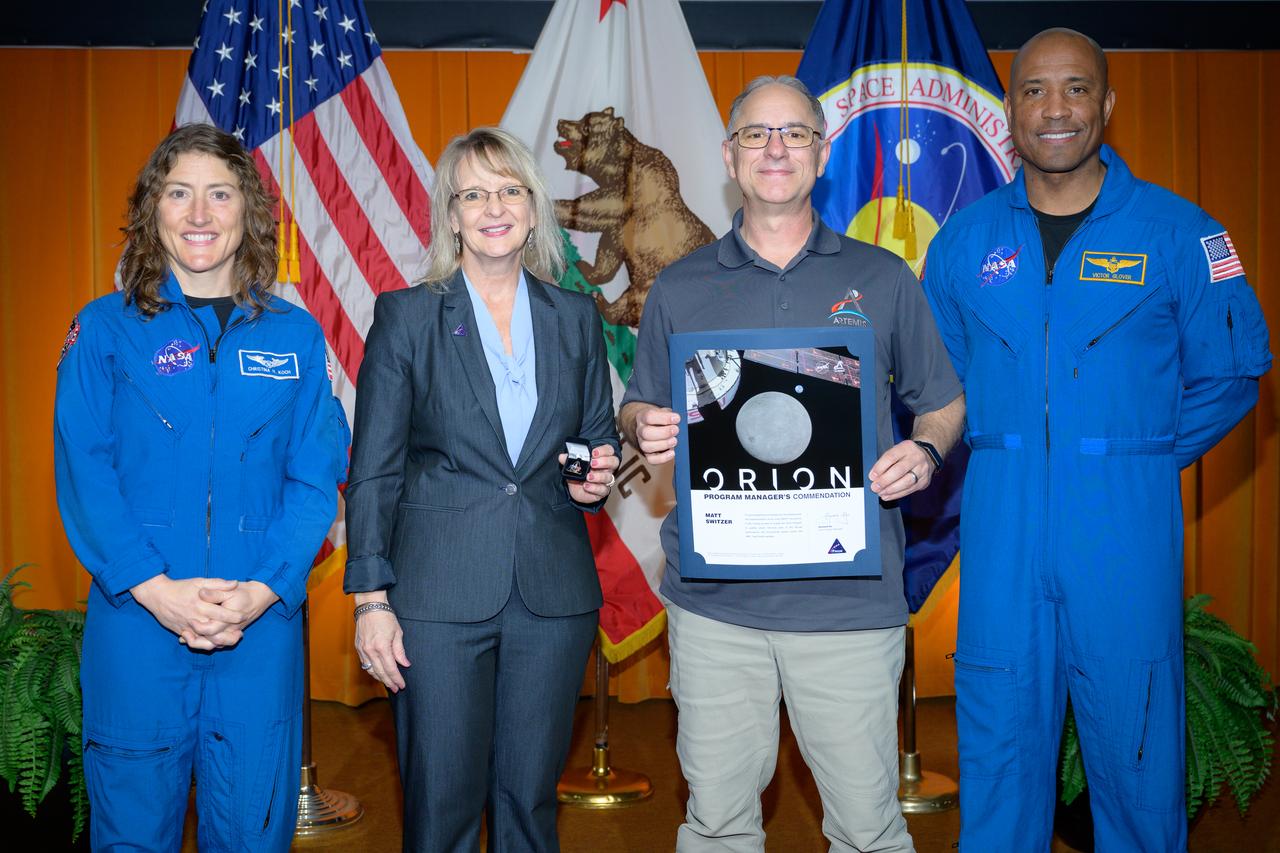
Artemis Orion program manager’s commendation award presented to Matt Switzer, center, by Orion Deputy Program Manager Debbie Korth, left, NASA astronauts Victor J. Glover, right, and Christina Koch, left, in the N201 auditorium.
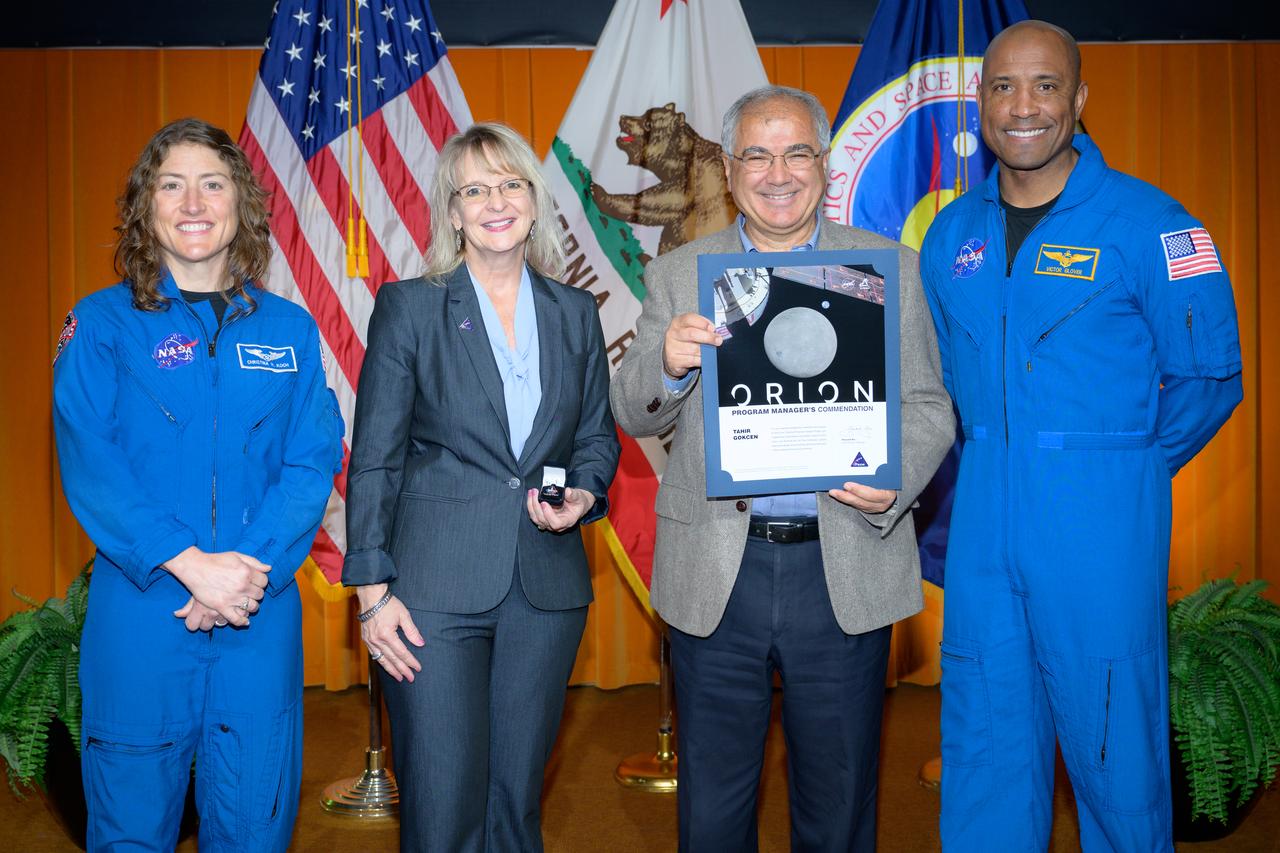
Artemis Orion program manager’s commendation award presented to Tahir Gokcen, center, by Orion Deputy Program Manager Debbie Korth, left, NASA astronauts Victor J. Glover, right, and Christina Koch, left, in the N201 auditorium.
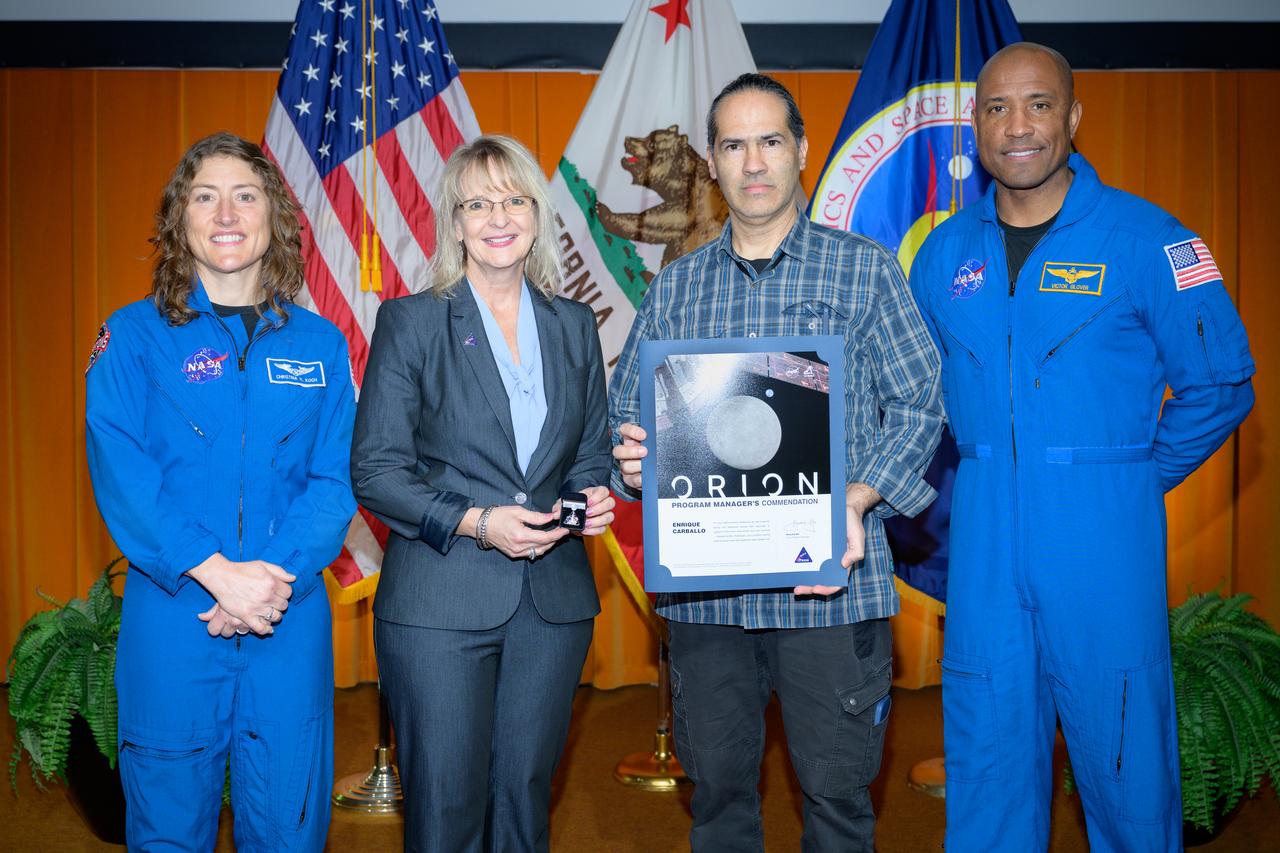
Artemis Orion program manager’s commendation award presented to Enrique Carballo, center, by Orion Deputy Program Manager Debbie Korth, left, NASA astronauts Victor J. Glover, right, and Christina Koch, left, in the N201 auditorium.
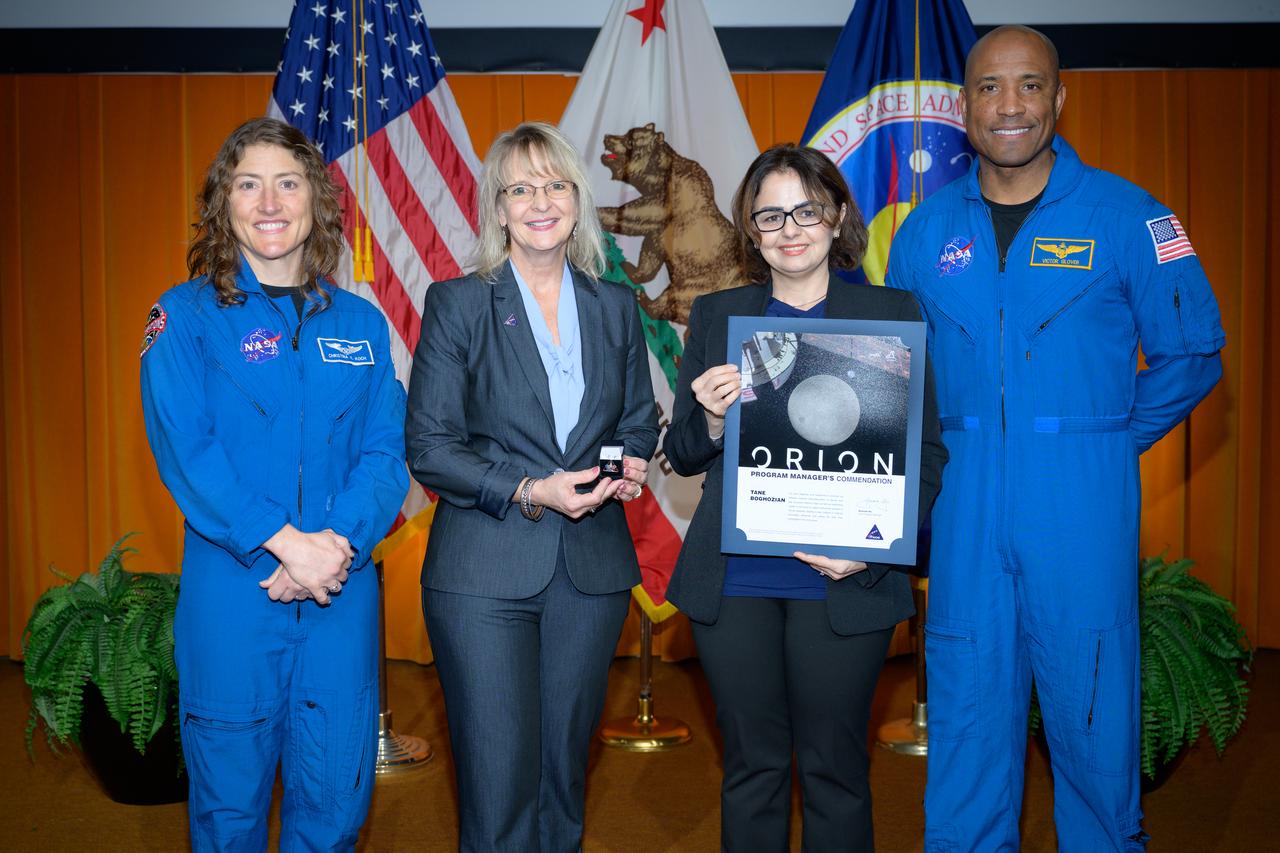
Artemis Orion program manager’s commendation award presented to Tane Boghozian, center, by Orion Deputy Program Manager Debbie Korth, left, NASA astronauts Victor J. Glover, right, and Christina Koch, left, in the N201 auditorium.
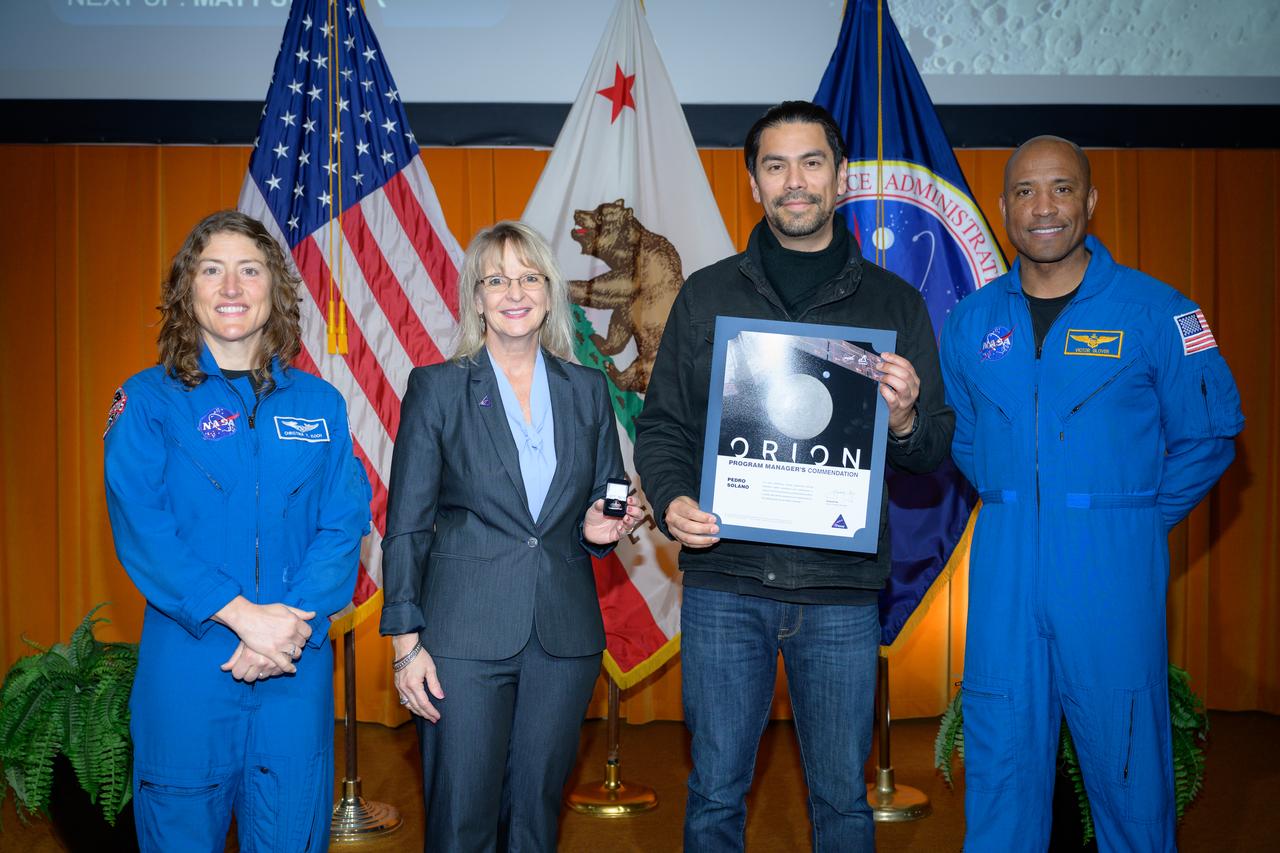
Artemis Orion program manager’s commendation award presented to Pedro Solano, center, by Orion Deputy Program Manager Debbie Korth, left, NASA astronauts Victor J. Glover, right, and Christina Koch, left, in the N201 auditorium.
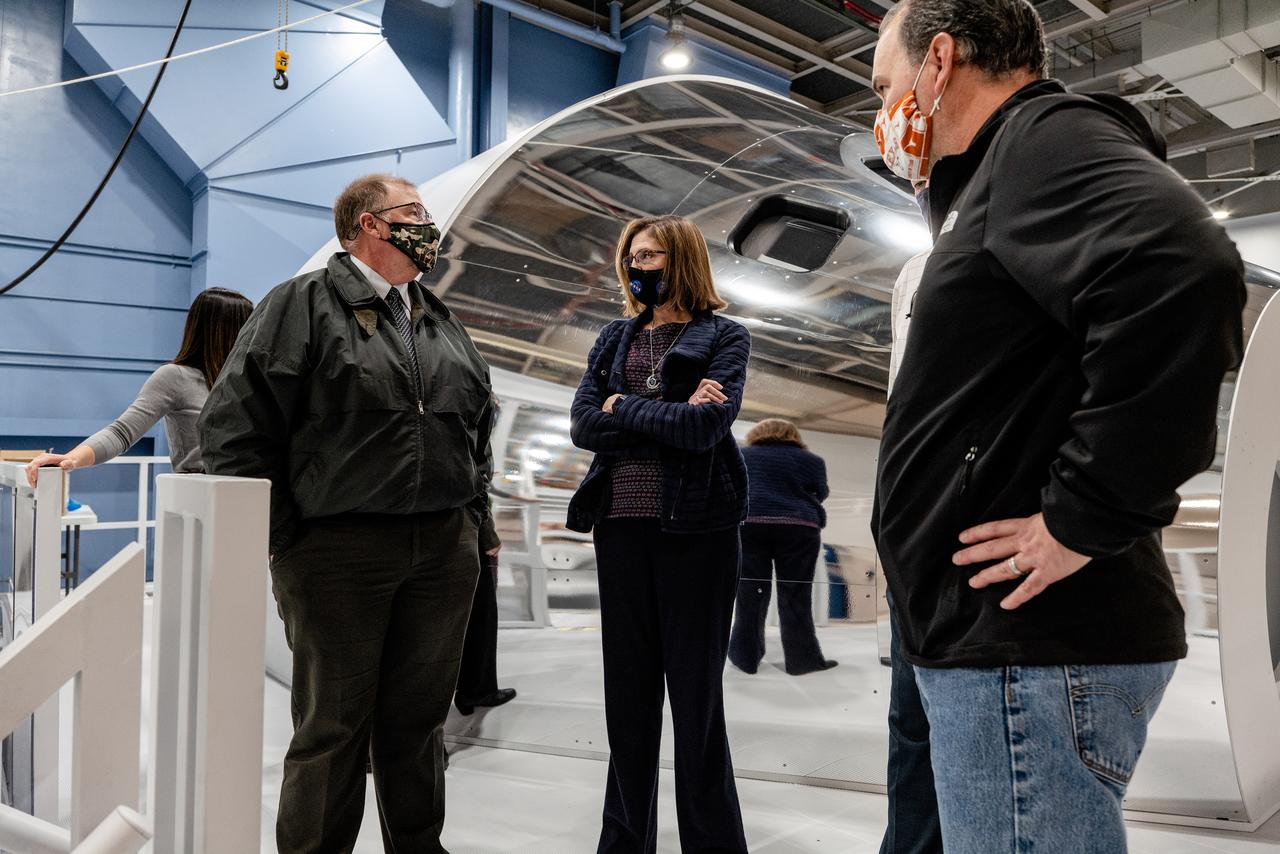
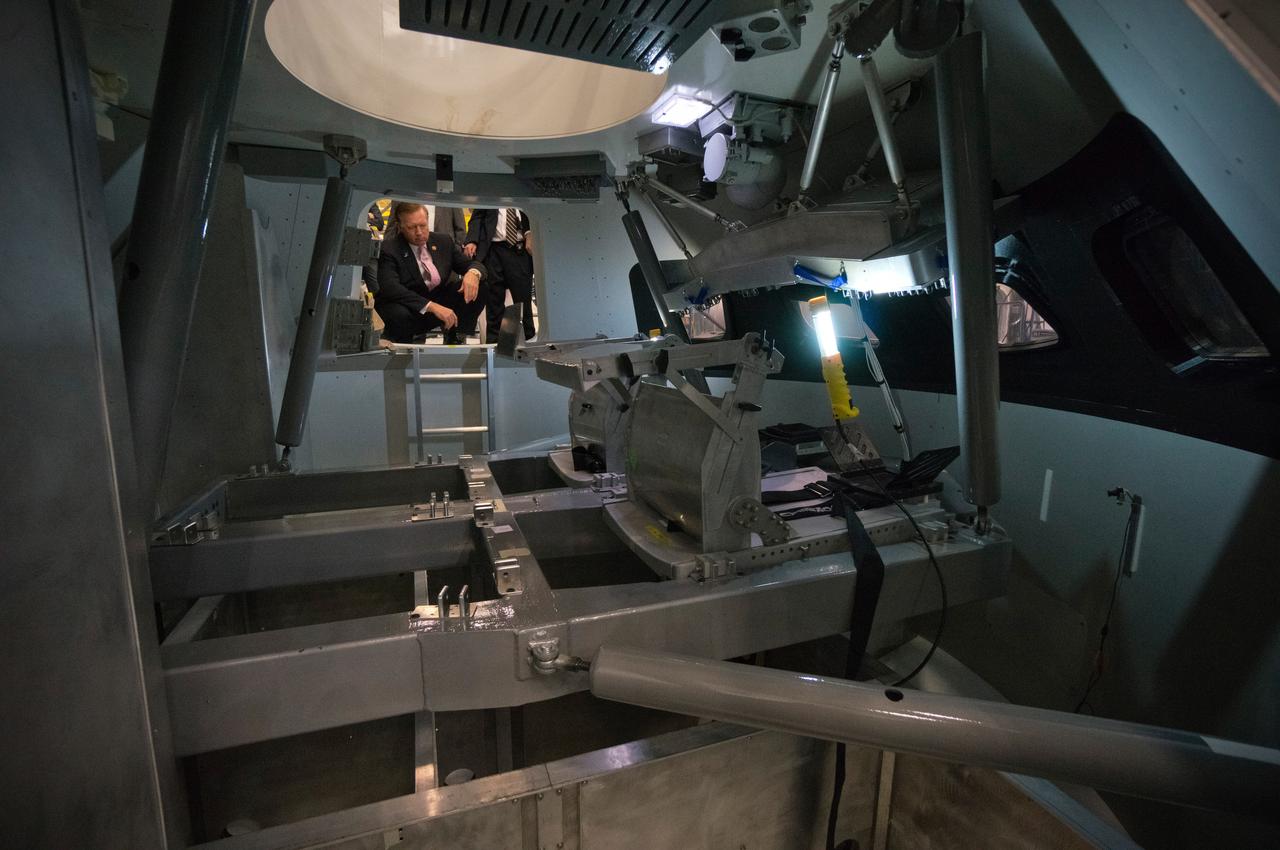
Examination of Orion spacecraft simulator that recently arrived at the agency’s Johnson Space Center in Houston on Dec. 8, 2020. The simulator provides the ability for astronauts, engineers, and flight controllers to train and practice for scenarios during Artemis missions to the Moon. The interior of the simulator is being outfitted with Orion’s display and control system and crew seats to mimic what astronaut will experience during liftoff to the lunar vicinity and on their way back home to Earth.
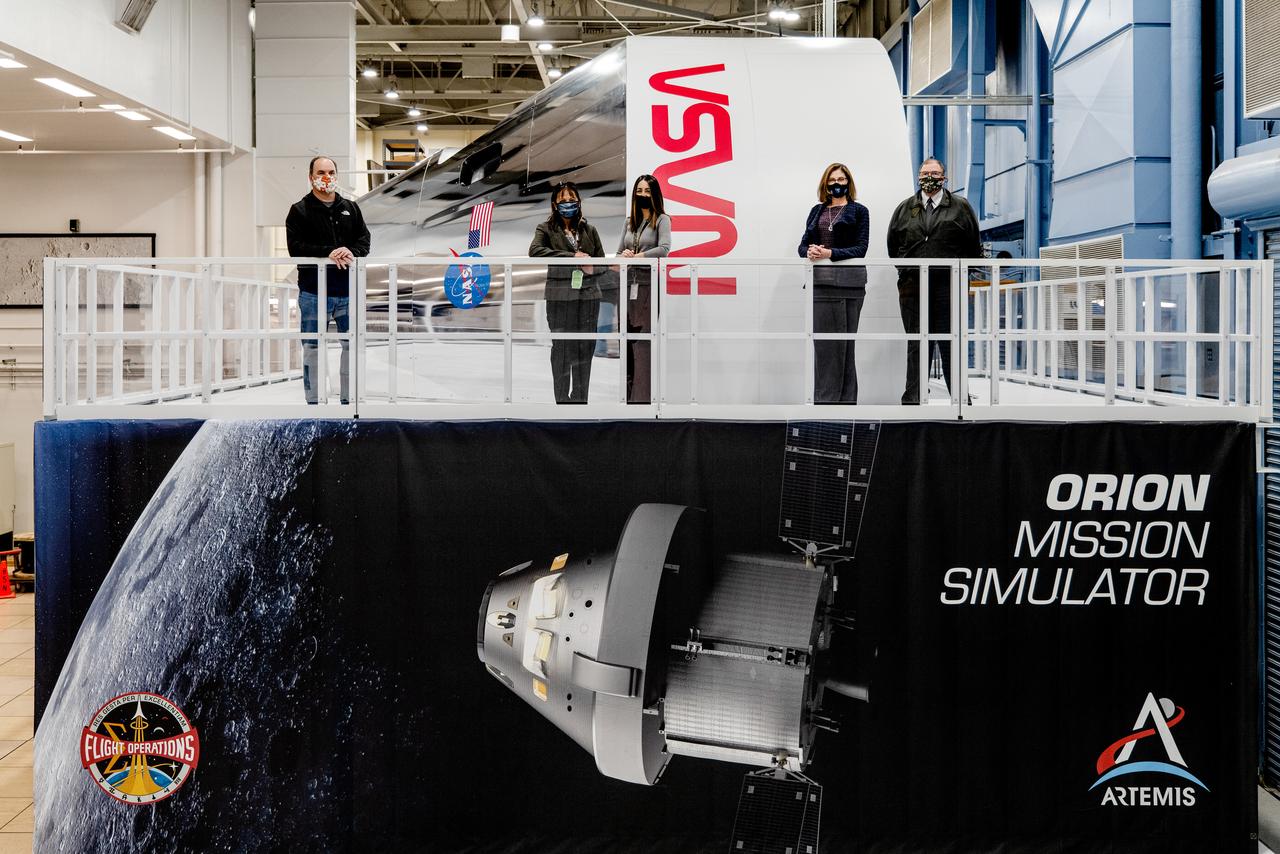
Examination of Orion spacecraft simulator that recently arrived at the agency’s Johnson Space Center in Houston on Dec. 8, 2020. The simulator provides the ability for astronauts, engineers, and flight controllers to train and practice for scenarios during Artemis missions to the Moon. The interior of the simulator is being outfitted with Orion’s display and control system and crew seats to mimic what astronaut will experience during liftoff to the lunar vicinity and on their way back home to Earth.
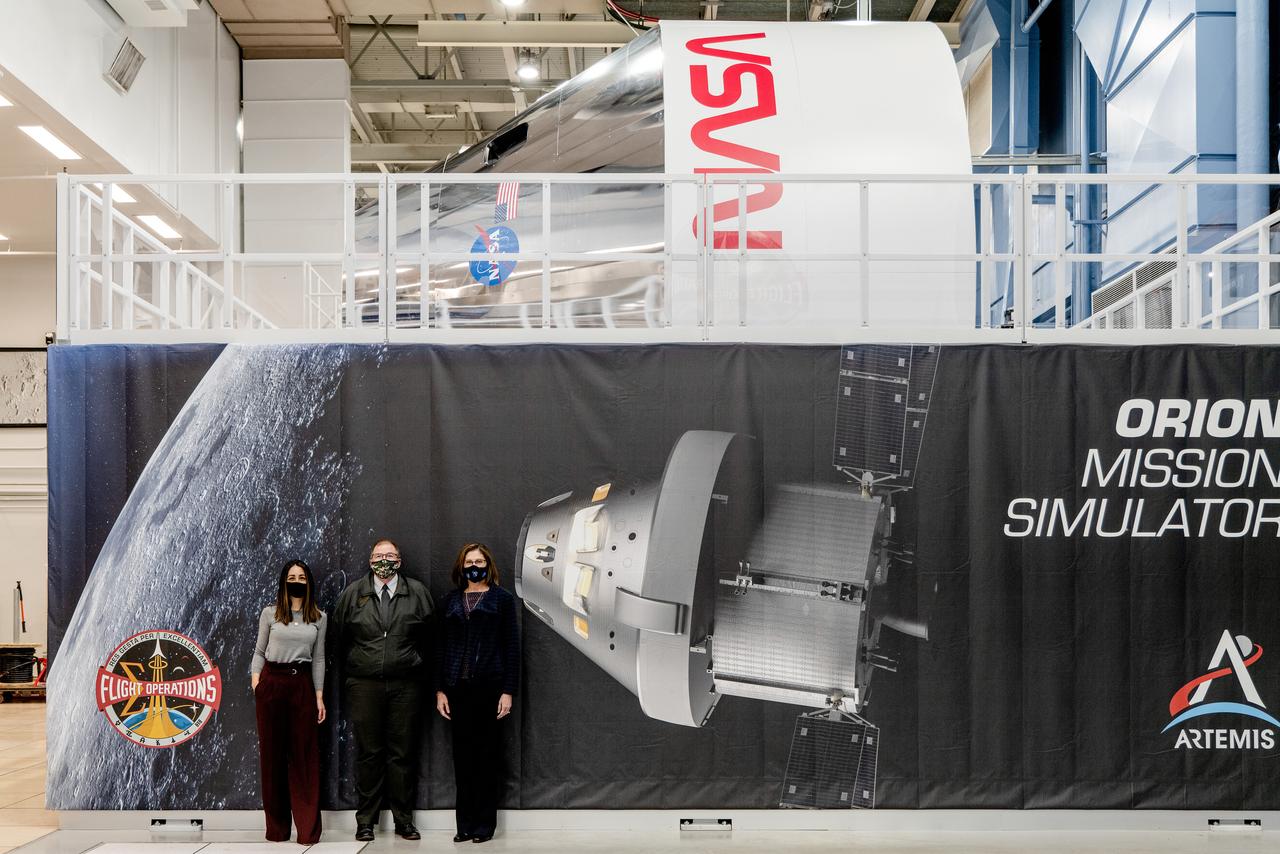
Examination of Orion spacecraft simulator that recently arrived at the agency’s Johnson Space Center in Houston on Dec. 8, 2020. The simulator provides the ability for astronauts, engineers, and flight controllers to train and practice for scenarios during Artemis missions to the Moon. The interior of the simulator is being outfitted with Orion’s display and control system and crew seats to mimic what astronaut will experience during liftoff to the lunar vicinity and on their way back home to Earth.
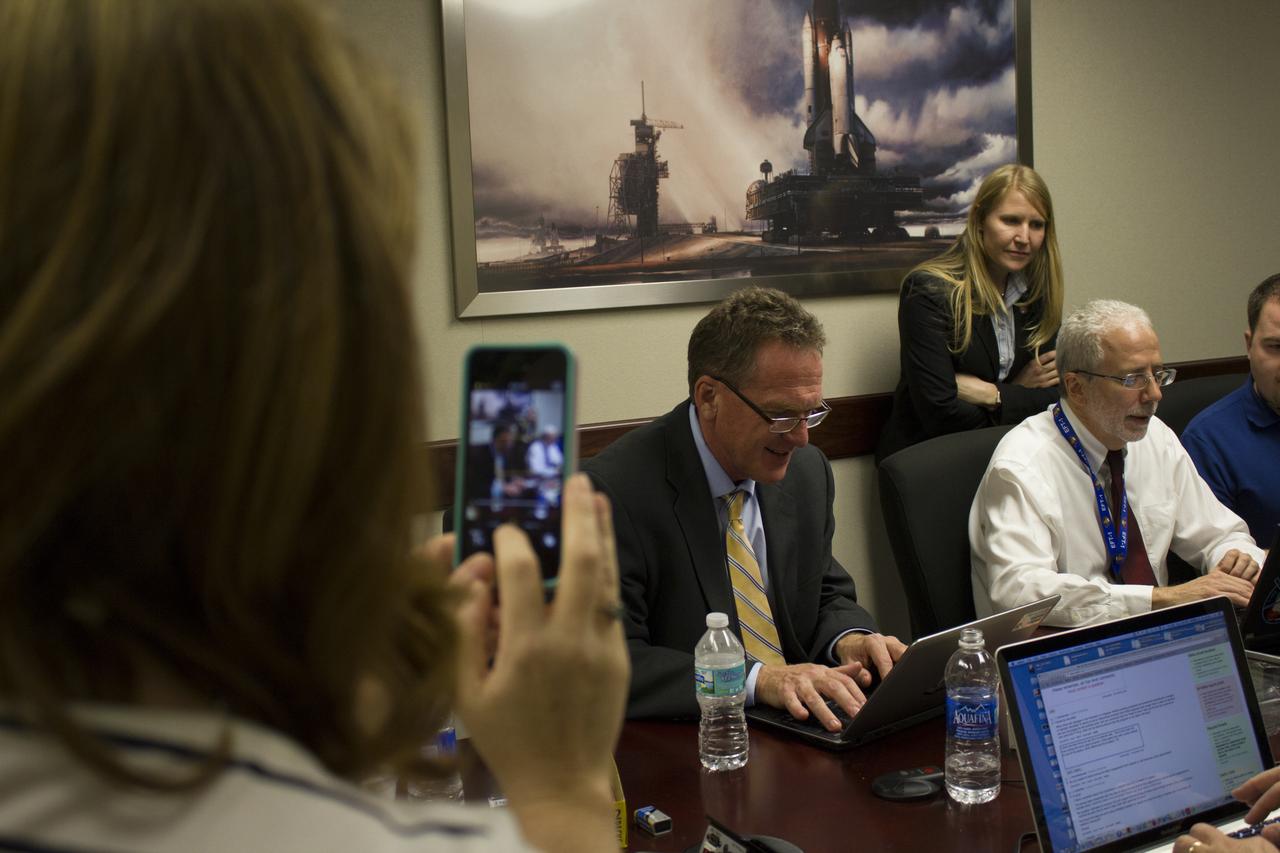
NASA managers participate in a live online Ask Me Anything, or AMA, session for reddit.com followers during Orion preflight activities at NASA Kennedy Space Center's News Center in Florida. From left, are Mike Bolger, Ground Systems Development and Operations program manager and Mark Geyer, Orion program manager. Also participating, but not shown in the photo is Todd May, Space Launch System program manager. Discussion topics include Mars and technology.
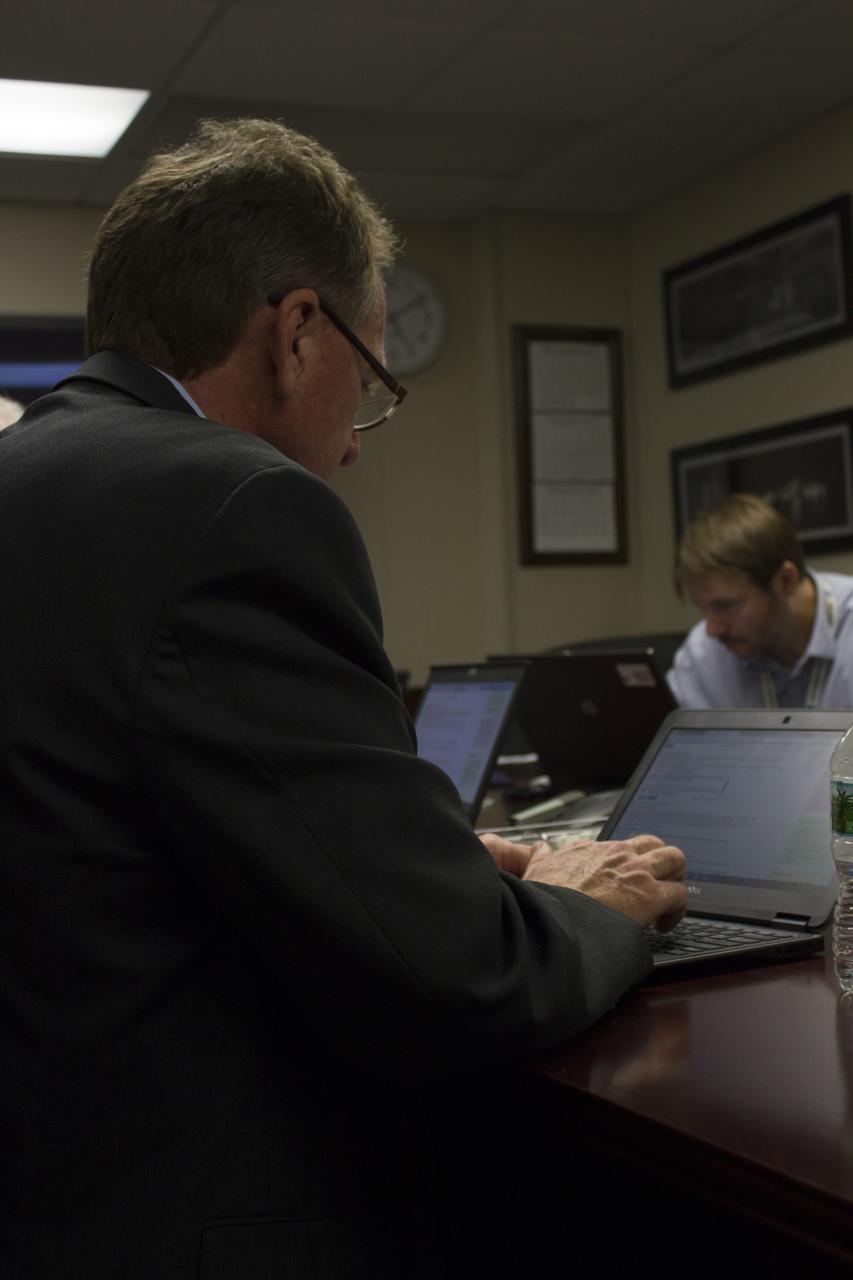
NASA managers participate in a live online Ask Me Anything, or AMA, session for reddit.com followers during Orion preflight activities at NASA Kennedy Space Center's News Center in Florida. At left, is Mike Bolger, Ground Systems Development and Operations program manager. Not shown, but also participating were Mark Geyer, Orion program manager, and Todd May, Space Launch System program manager. Discussion topics include Mars and technology.
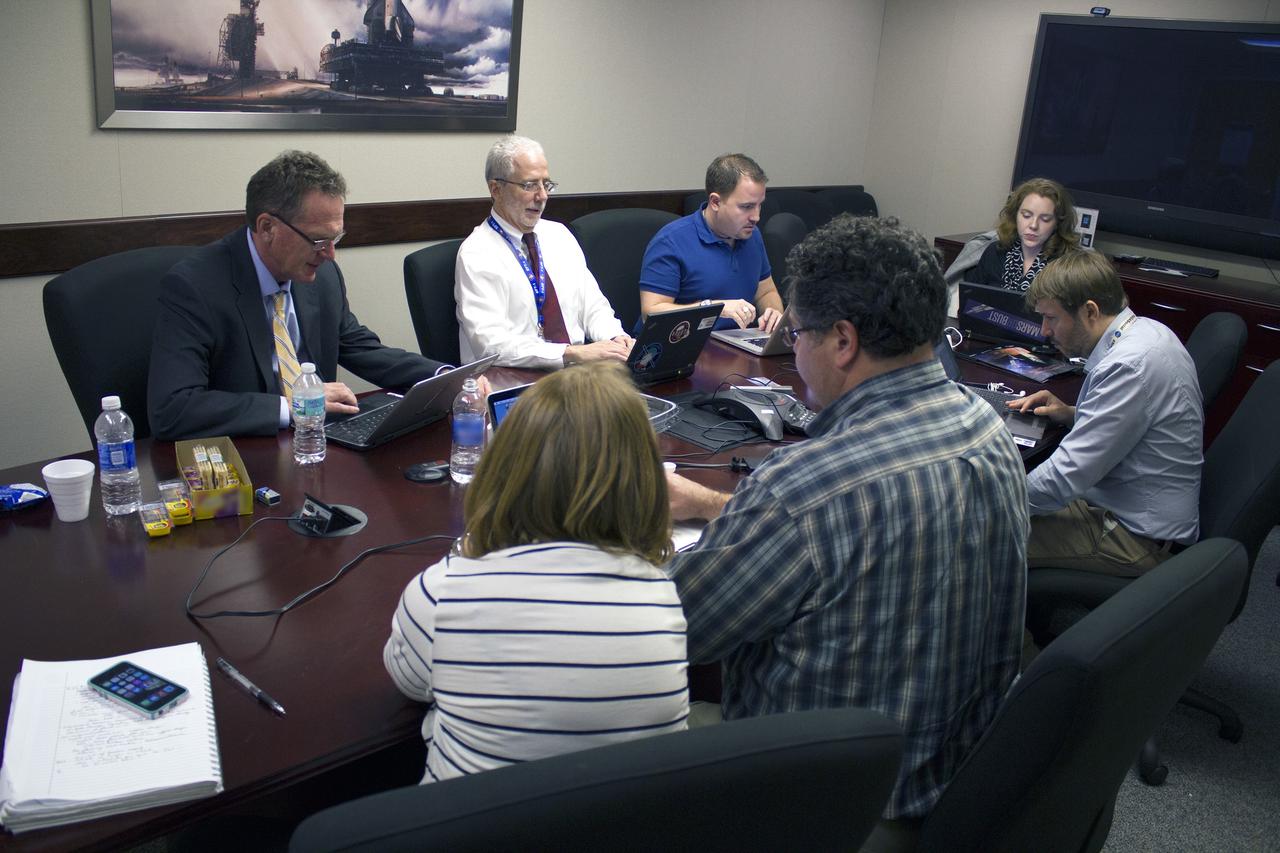
CAPE CANAVERAL, Fla. – NASA managers participate in a live online Ask Me Anything, or AMA, session for reddit.com followers during Orion preflight activities at NASA Kennedy Space Center's News Center in Florida. From left, are Mike Bolger, Ground Systems Development and Operations program manager and Mark Geyer, Orion program manager. Across from them, in the plaid shirt is Todd May, Space Launch System program manager. Discussion topics include Mars and technology. Photo credit: NASA/Frankie Martin

NASA managers participate in a live online Ask Me Anything, or AMA, session for reddit.com followers during Orion preflight activities at NASA Kennedy Space Center's News Center in Florida. Participating are Mike Bolger, Ground Systems Development and Operations program manager Mark Geyer, Orion program manager and Todd May, Space Launch System program manager. Discussion topics include Mars and technology. Monitoring the live discussion is Brandi Dean, public affairs specialist from Johnson Space Center in Houston.
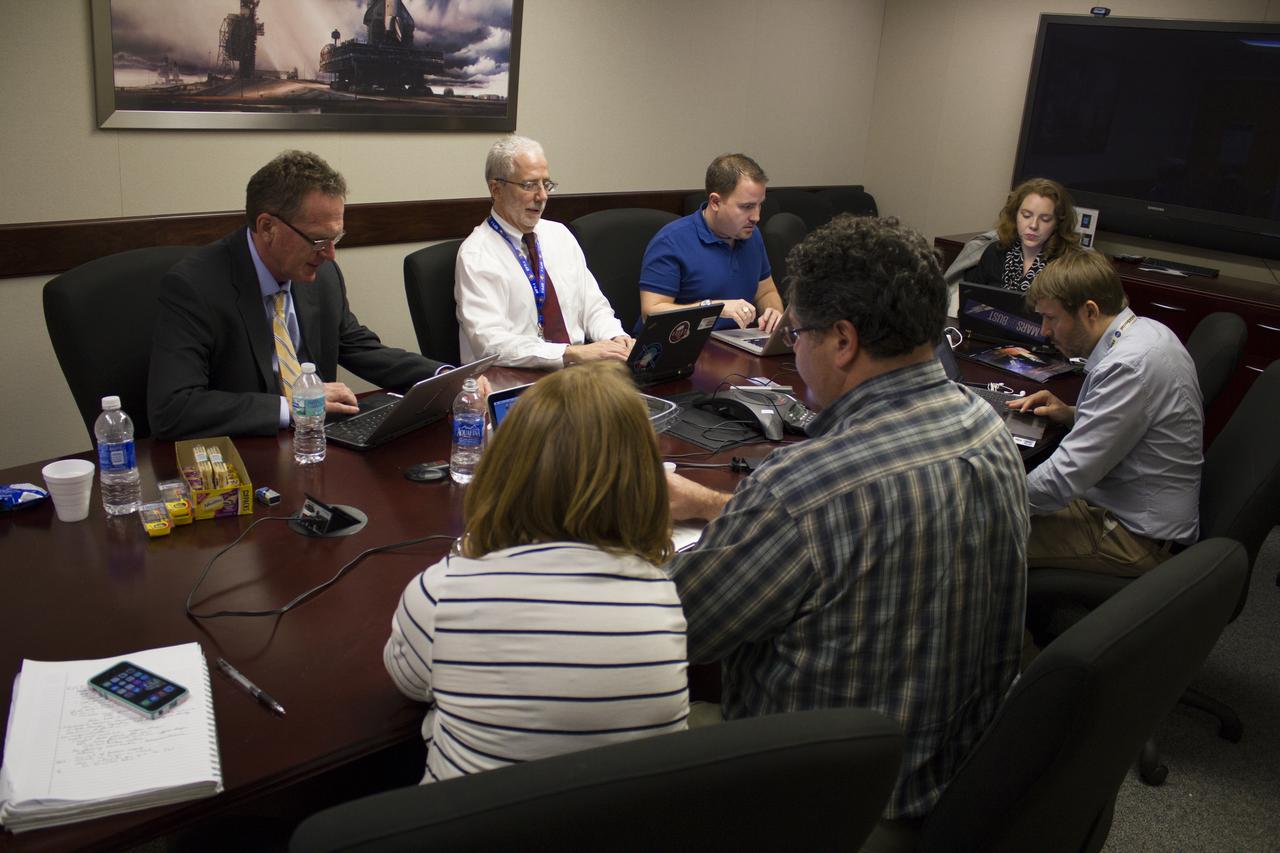
NASA managers participate in a live online Ask Me Anything, or AMA, session for reddit.com followers during Orion preflight activities at NASA Kennedy Space Center's News Center in Florida. From left, are Mike Bolger, Ground Systems Development and Operations program manager; and Mark Geyer, Orion program manager. Across from them, in the plaid shirt is Todd May, Space Launch System program manager. Discussion topics include Mars and technology.
CAPE CANAVERAL, Fla. – NASA managers participate in a live online Ask Me Anything, or AMA, session for reddit.com followers during Orion preflight activities at NASA Kennedy Space Center's News Center in Florida. From left, are Mike Bolger, Ground Systems Development and Operations program manager and Mark Geyer, Orion program manager. Also participating, but not shown in the photo is Todd May, Space Launch System program manager. Discussion topics include Mars and technology. Photo credit: NASA/Frankie Martin
CAPE CANAVERAL, Fla. – NASA managers participate in a live online Ask Me Anything, or AMA, session for reddit.com followers during Orion preflight activities at NASA Kennedy Space Center's News Center in Florida. At left, is Mike Bolger, Ground Systems Development and Operations program manager. Not shown, but also participating were Mark Geyer, Orion program manager, and Todd May, Space Launch System program manager. Discussion topics include Mars and technology. Photo credit: NASA/Frankie Martin
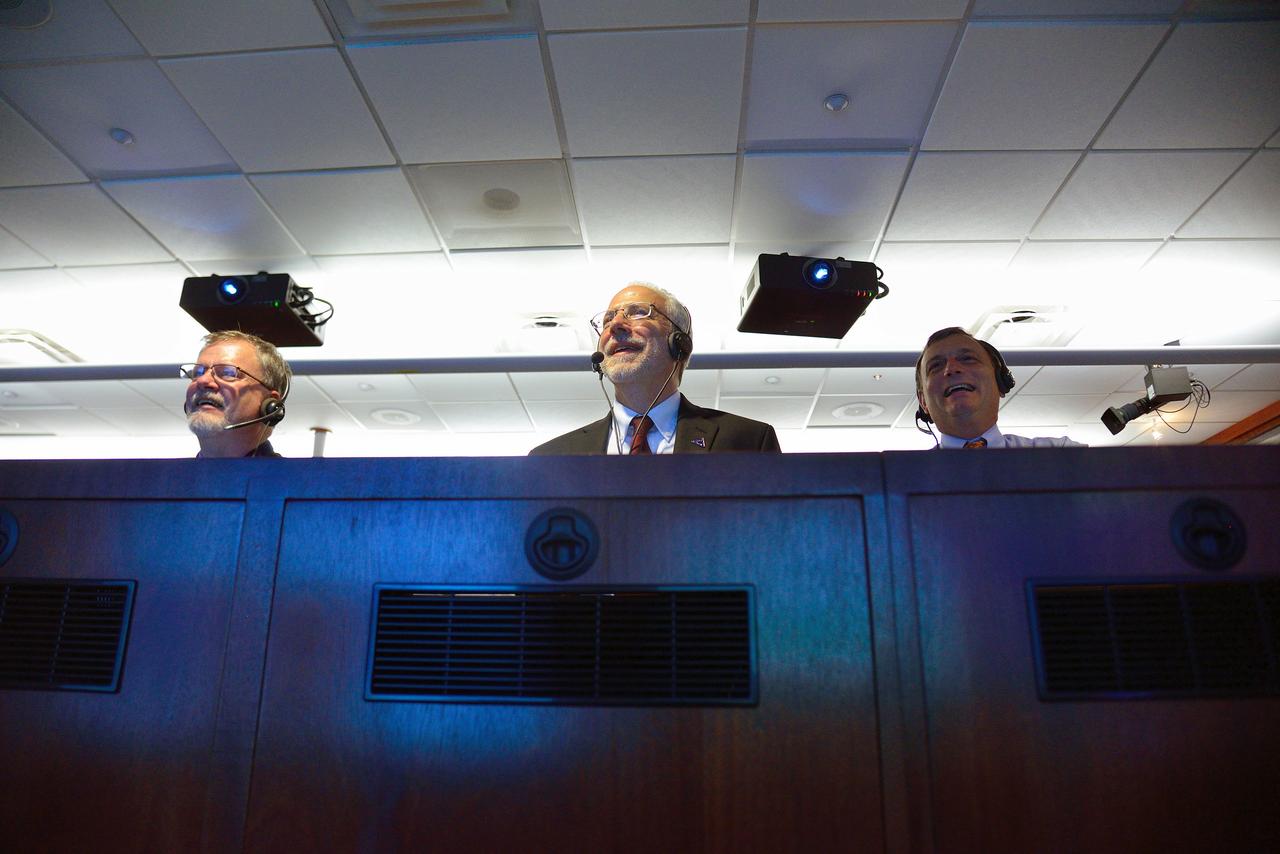
Lockheed Martin Program Manager Mike Hawes, Orion Program Manager Mark Geyer, and Orion Deputy Program Manager Mike Kirasich watch Orion's Exploration Flight Test-1 (EFT-1) reentry sequence in Building AE at Cape Canaveral Air Force Station on a live stream from the Ikhana aircraft on Dec. 5, 2014. The Orion spacecraft orbited Earth twice, reaching an altitude of approximately 3,600 miles above Earth before landing. No one was aboard Orion for this flight test, but the spacecraft is designed to allow us to journey to destinations never before visited by humans, including an asteroid and Mars. Part of Batch image transfer from Flickr.
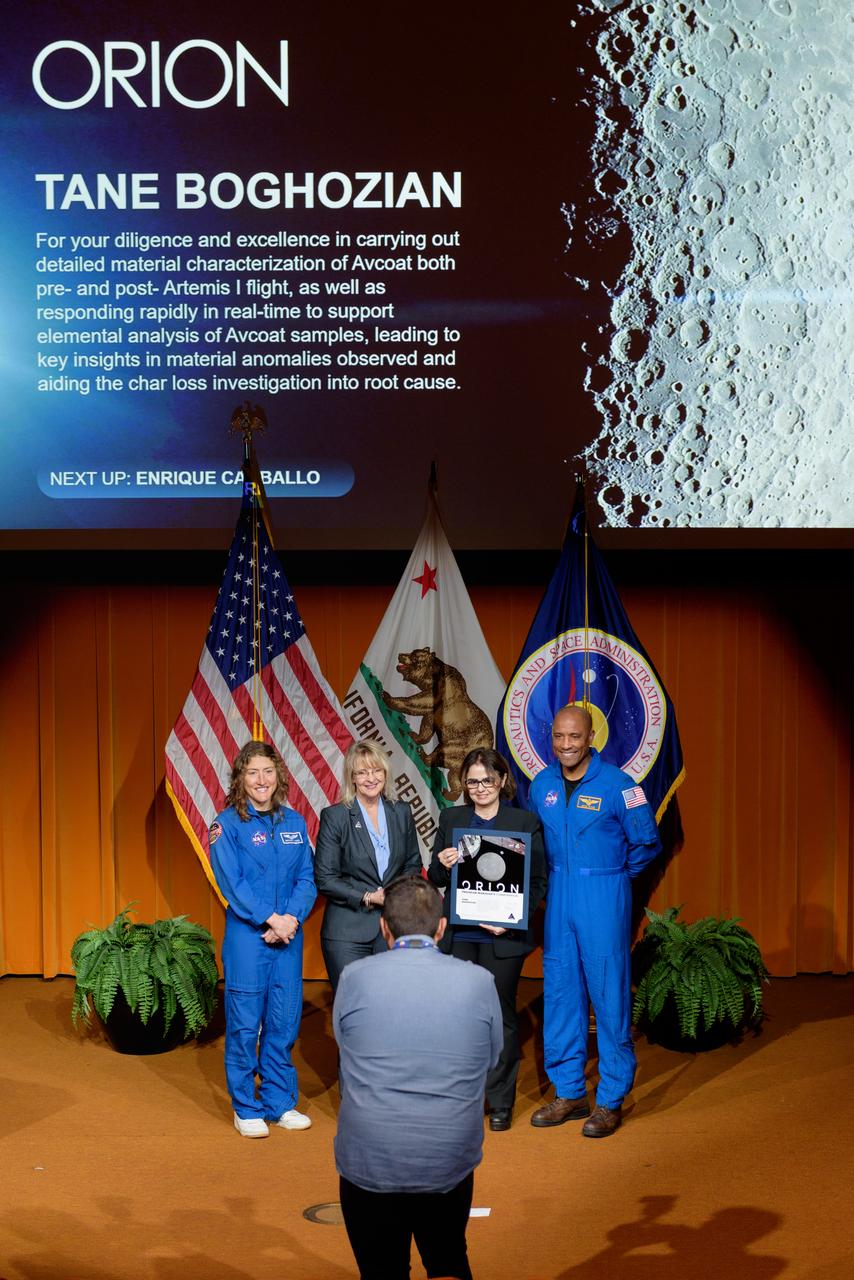
NASA Ames staff photographer Brandon Torres Navarette, front, photographs Orion program manager’s commendation award presented to Tane Boghozian (ACD25-0023-005), center, by Orion Deputy Program Manager Debbie Korth, left, NASA astronauts Victor J. Glover, right, and Christina Koch, left, in the Syvertson Auditorium, N201.
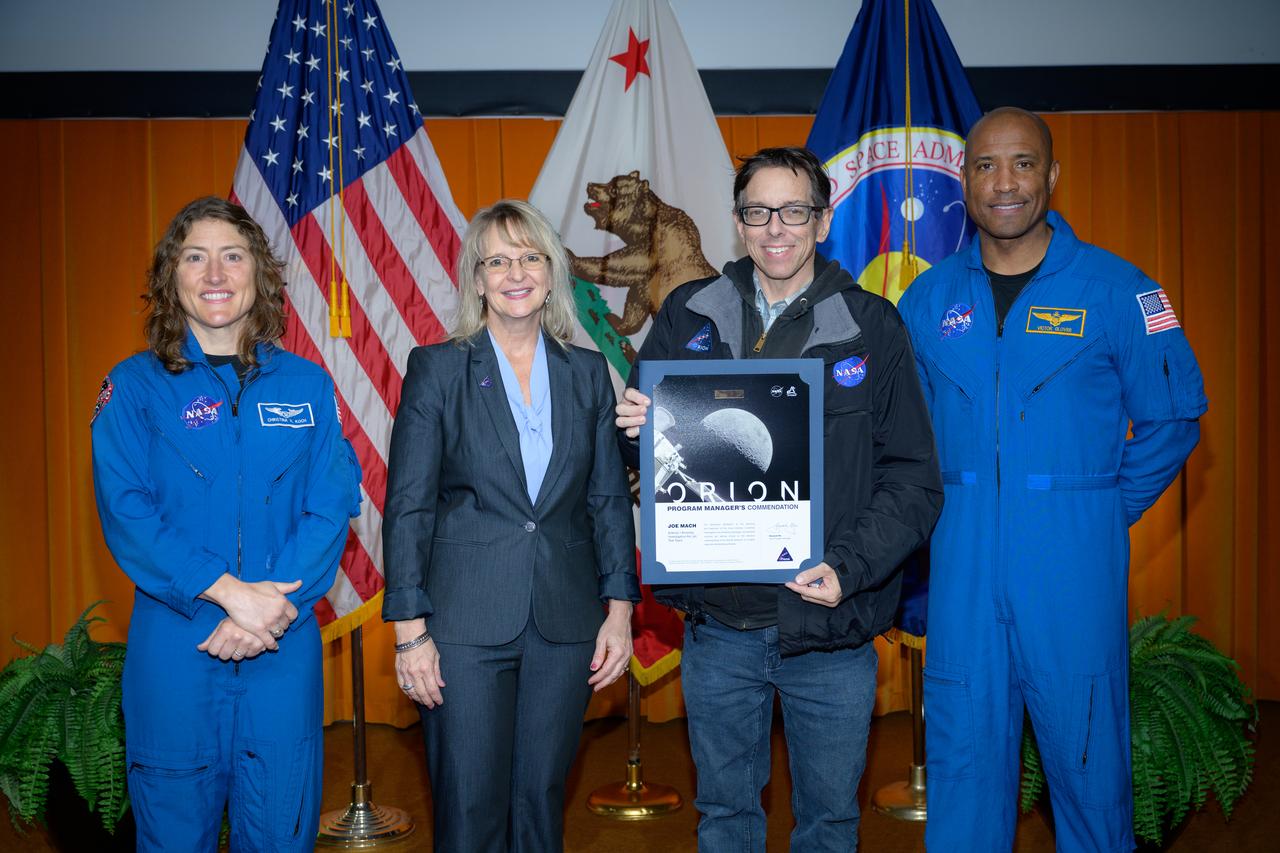
Artemis Orion program manager’s commendation team award presented to the Artemis I Investigation Arc Jet Test team accepted by Joe Mach, center, by Orion Deputy Program Manager Debbie Korth, left, NASA astronauts Victor J. Glover, right, and Christina Koch, left, in the N201 auditorium.
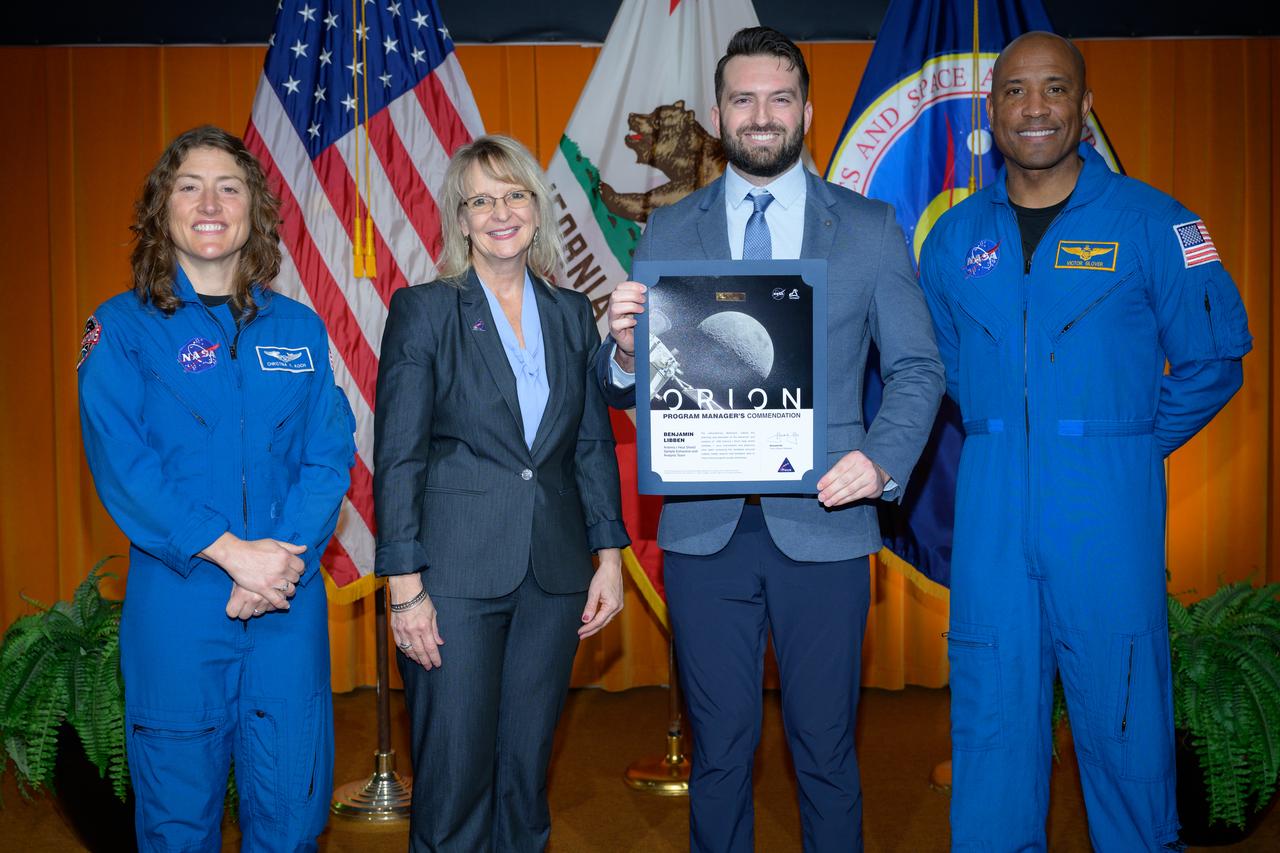
Artemis Orion program manager’s commendation team award presented to the Artemis I Heat Shield Sample Extraction and Analysis team accepted by Benjamin Libben, center, by Orion Deputy Program Manager Debbie Korth, left, NASA astronauts Victor J. Glover, right, and Christina Koch, left, in the N201 auditorium.
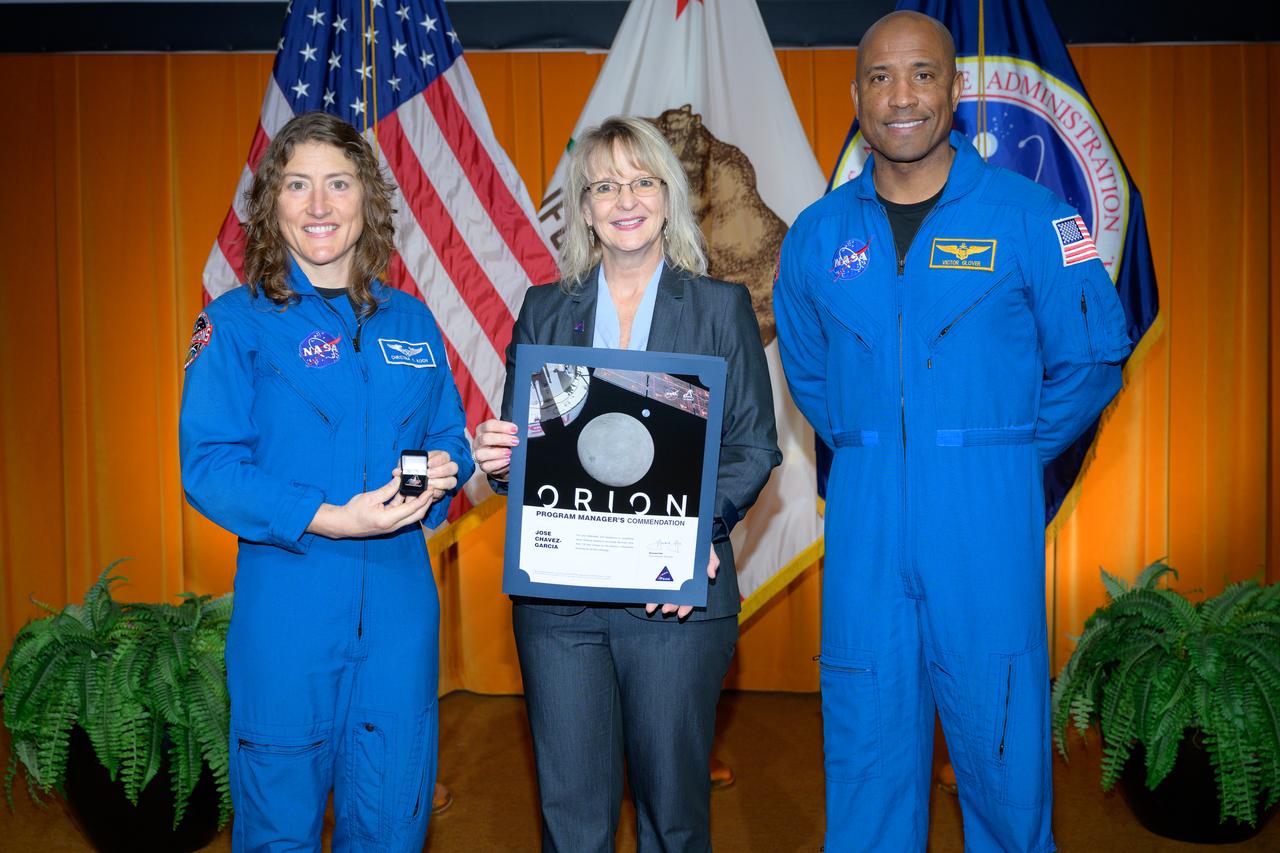
Artemis Orion program manager’s commendation award presented to Jose Chavez Garcia received by Orion Deputy Program Manager Debbie Korth, left, NASA astronauts Victor J. Glover, right, and Christina Koch, left, in the N201 auditorium.
CAPE CANAVERAL, Fla. – From left, Mike Bolger, Ground Systems Development and Operations program manager and Mark Geyer, Orion program manager, participate in a live online Ask Me Anything, or AMA, session for reddit.com followers during Orion preflight activities at NASA Kennedy Space Center's News Center in Florida. Not shown, but also participating is Todd May, Space Launch System program manager. Discussion topics include Mars and technology. Photo credit: NASA/Frankie Martin
From left, Mike Bolger, Ground Systems Development and Operations program manager; and Mark Geyer, Orion program manager, participate in a live online Ask Me Anything, or AMA, session for reddit.com followers during Orion preflight activities at NASA Kennedy Space Center's News Center in Florida. Not shown is Todd May, Space Launch System program manager. Discussion topics include Mars and technology.
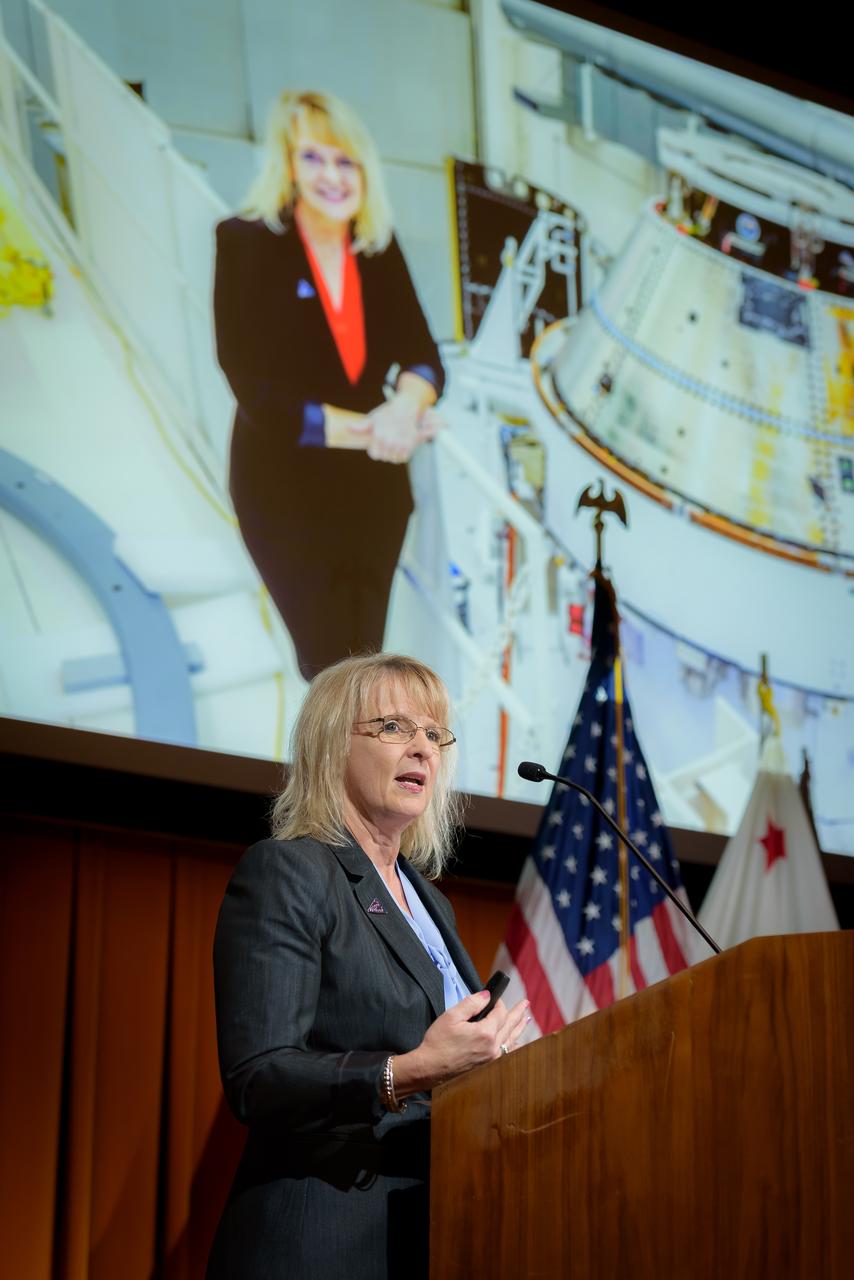
Orion Deputy Program Manager Debbie Korth welcomes Ames employees to the Orion Circle of Excellence Award Ceremony in the Syvertson Auditorium, N201.
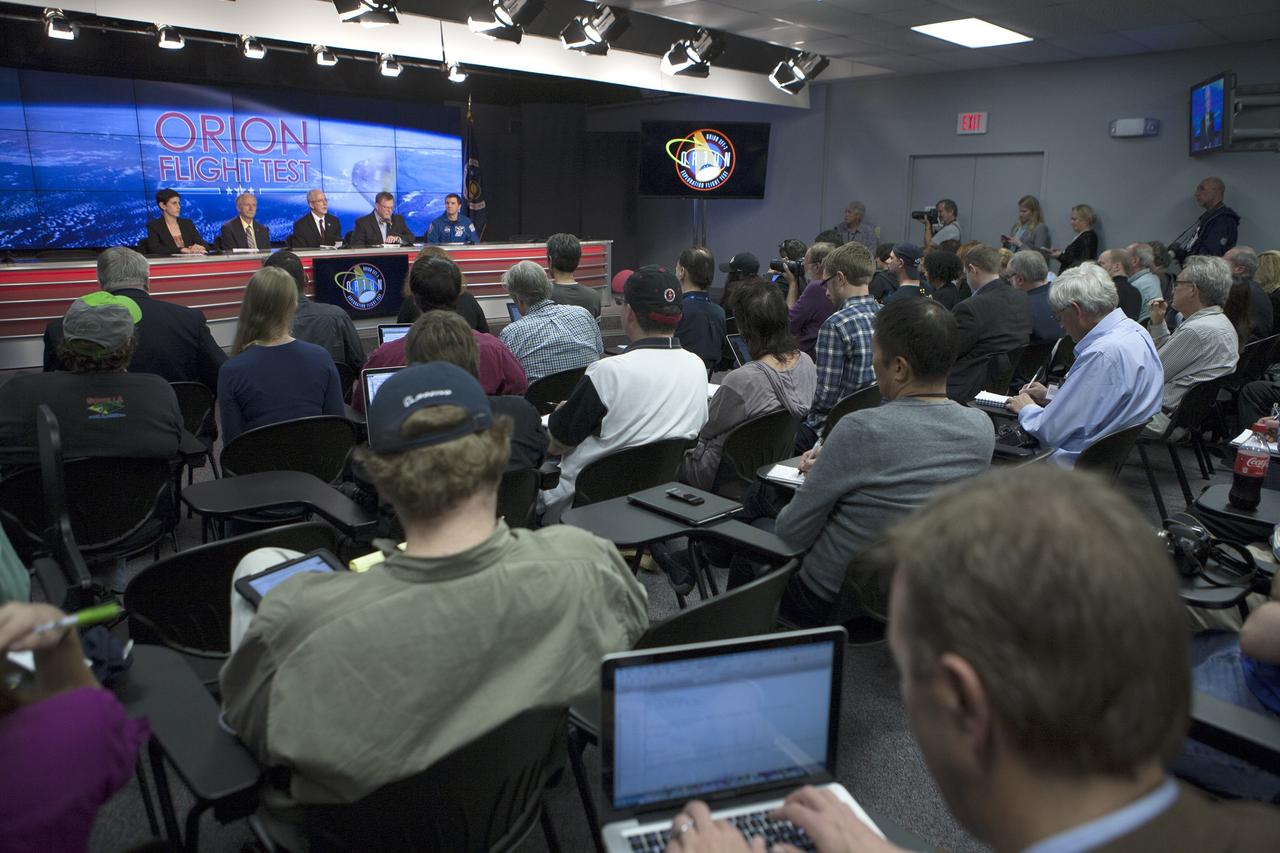
CAPE CANAVERAL, Fla. -- In the Kennedy Space Center’s Press Site auditorium, agency leaders spoke to members of the news media about the successful Orion Flight Test. From left are: Rachel Kraft, of NASA Public Affairs, Bill Gerstenmaier, NASA associate administrator for Human Exploration and Operations, Mark Geyer, Orion program manager, Mike Hawes, Lockheed Martin Orion Program manager, and NASA astronaut Rex Walheim. For more information, visit www.nasa.gov/orion Photo credit: NASA/Kim Shiflett
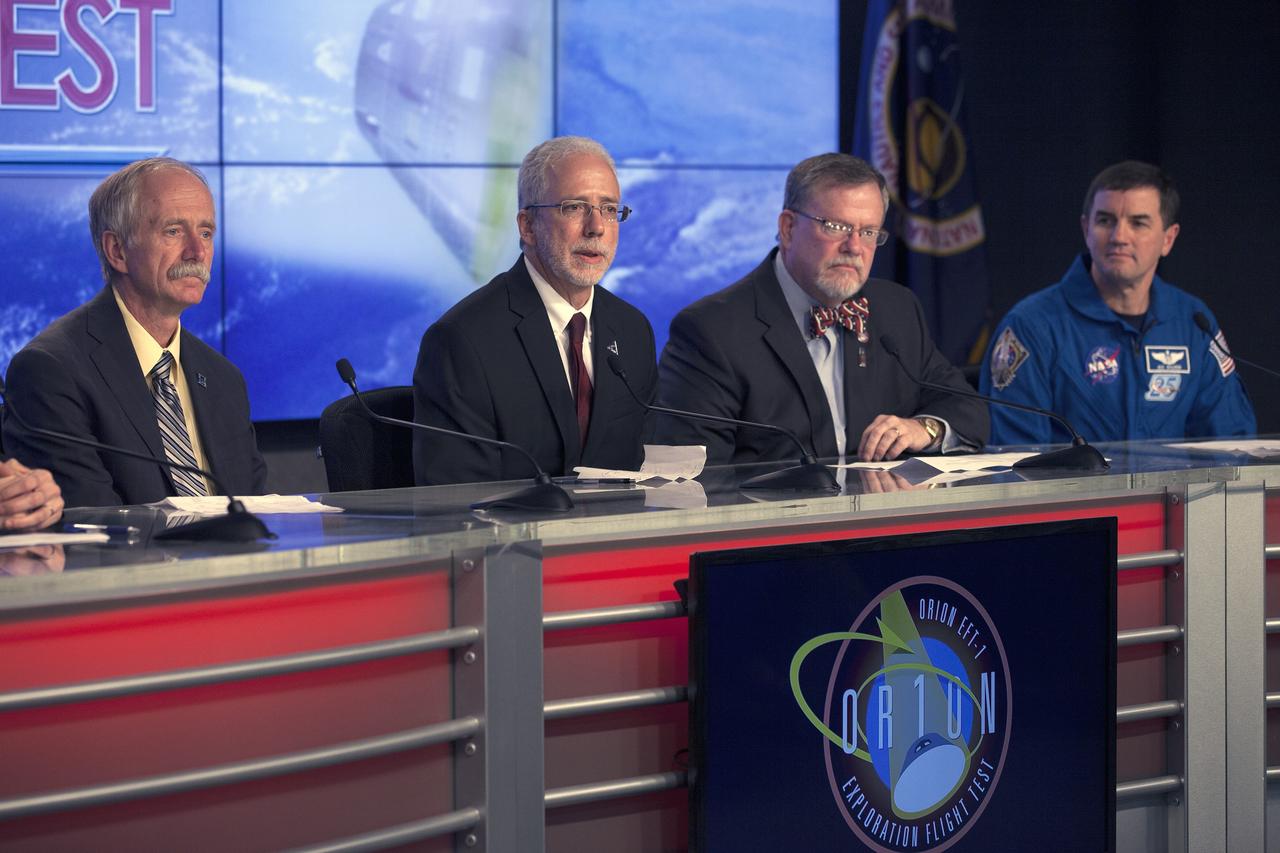
CAPE CANAVERAL, Fla. -- In the Kennedy Space Center’s Press Site auditorium, agency leaders spoke to members of the news media about the successful Orion Flight Test. From left are: Bill Gerstenmaier, NASA associate administrator for Human Exploration and Operations, Mark Geyer, Orion program manager, Mike Hawes, Lockheed Martin Orion Program manager, and NASA astronaut Rex Walheim. For more information, visit www.nasa.gov/orion Photo credit: NASA/Kim Shiflett
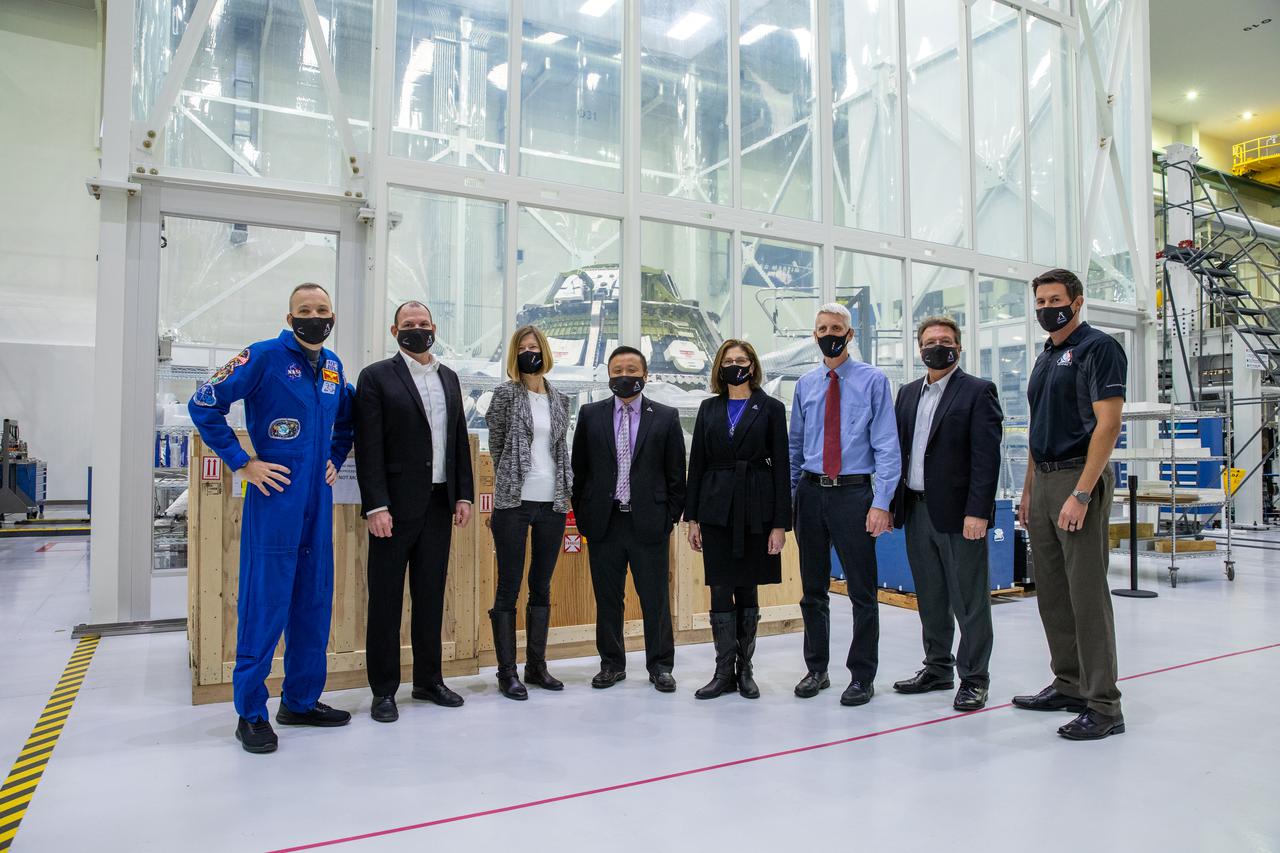
Kathy Lueders, third from left, associate administrator of the Human Exploration and Operations Mission Directorate, tours the Neil Armstrong Operations and Checkout Building high bay at NASA’s Kennedy Space Center in Florida on Jan. 14, 2021. In the background is the Orion crew module for the Artemis II mission. From left are NASA astronaut Randy Bresnik; Tony Antonelli, Lockheed Martin Orion Program director and Artemis II Mission director; Howard Hu, Orion deputy program manager; Cathy Koerner, Orion Program manager; Scott Wilson, Orion Production Operations manager; Jules Schneider, Lockheed Martin director of Orion Assembly, Test and Launch Operations at Kennedy; and Nathan Varn, Lockheed Martin Production Control director. The group also viewed the Orion spacecraft for Artemis I as it was lowered onto a transporter for the move to the Multi-Payload Processing Facility to begin ground processing by the Exploration Ground Systems and Jacobs teams.
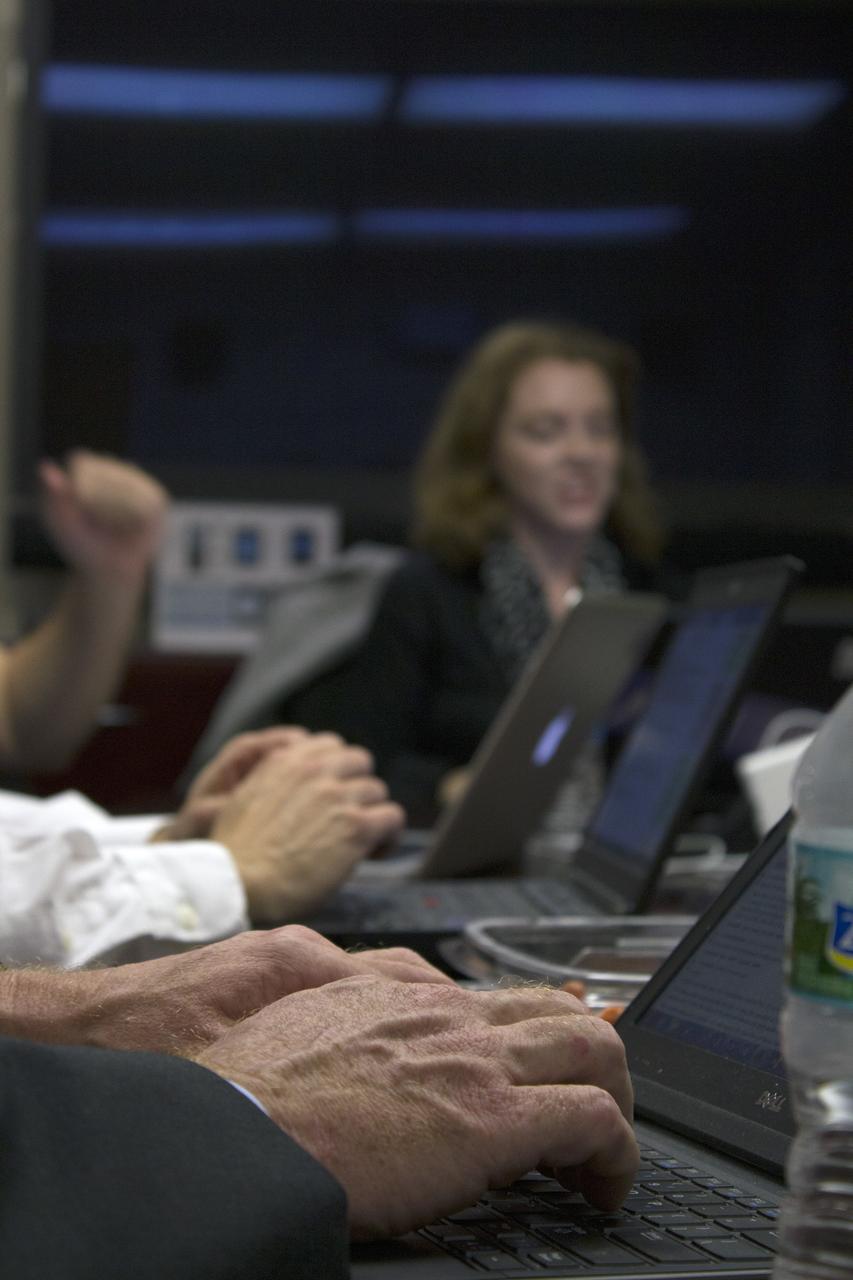
CAPE CANAVERAL, Fla. – NASA managers participate in a live online Ask Me Anything, or AMA, session for reddit.com followers during Orion preflight activities at NASA Kennedy Space Center's News Center in Florida. Participating are Mike Bolger, Ground Systems Development and Operations program manager Mark Geyer, Orion program manager and Todd May, Space Launch System program manager. Discussion topics include Mars and technology. Monitoring the live discussion is Brandi Dean, public affairs specialist from Johnson Space Center in Houston. Photo credit: NASA/Frankie Martin
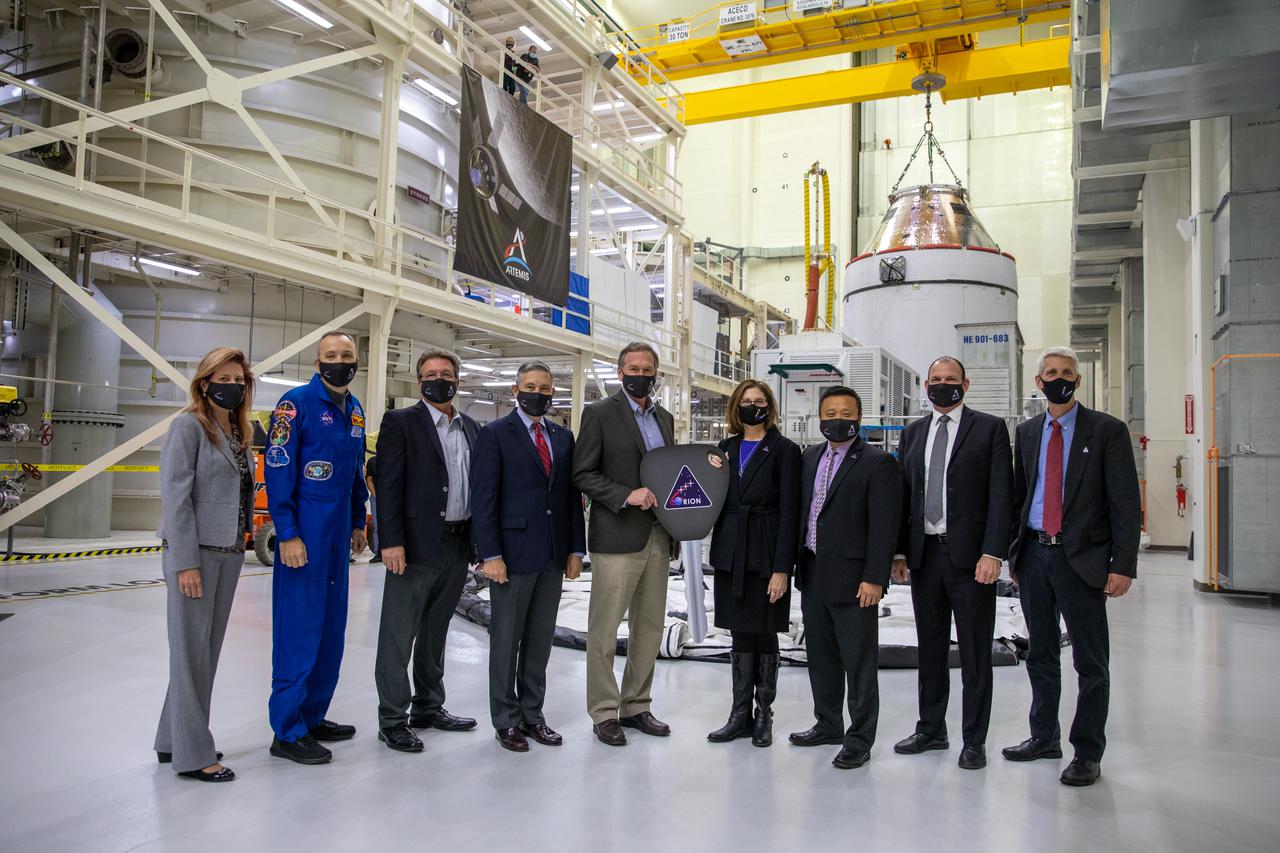
Orion is revealed for one of the final times on Jan. 14, as it is readied atop its transport pallet from the Neil Armstrong Operations and Checkout Building at NASA’s Kennedy Space Center in Florida, along its path to the pad ahead of the Artemis I launch. Standing in front of Orion, from left, are Kelly DeFazio, Lockheed Martin Orion Program director for production; NASA astronaut Randy Bresnik; Jules Schneider, Lockheed Martin director of Orion Assembly, Test & Launch at Kennedy; Kennedy Space Center Director Bob Cabana; Mike Bolger, Exploration Ground Systems (EGS) manager; Cathy Koerner, Orion Program manager; Howard Hu, Orion Program deputy manager; Tony Antonelli, Lockheed Martin Orion Program director and Artemis II mission director; and Scott Wilson, Orion Production Office manager. Teams across the globe have worked tirelessly to assemble the spacecraft, which will receive a protective covering prior to departing for the Multi-Payload Processing Facility to begin ground processing by the EGS and Jacobs teams.
In the Kennedy Space Center’s Press Site auditorium, agency and industry leaders spoke to members of the news media about the postponement of the Orion Flight Test launch due to an issue related to fill and drain valves on the Delta IV Heavy rocket. From left are: Brandi Dean of NASA Public Affairs, Mark Geyer, NASA's Orion program manager, Mike Hawes, Lockheed Martin Orion Program manager, and Dan Collins, United Launch Alliance chief operating officer.
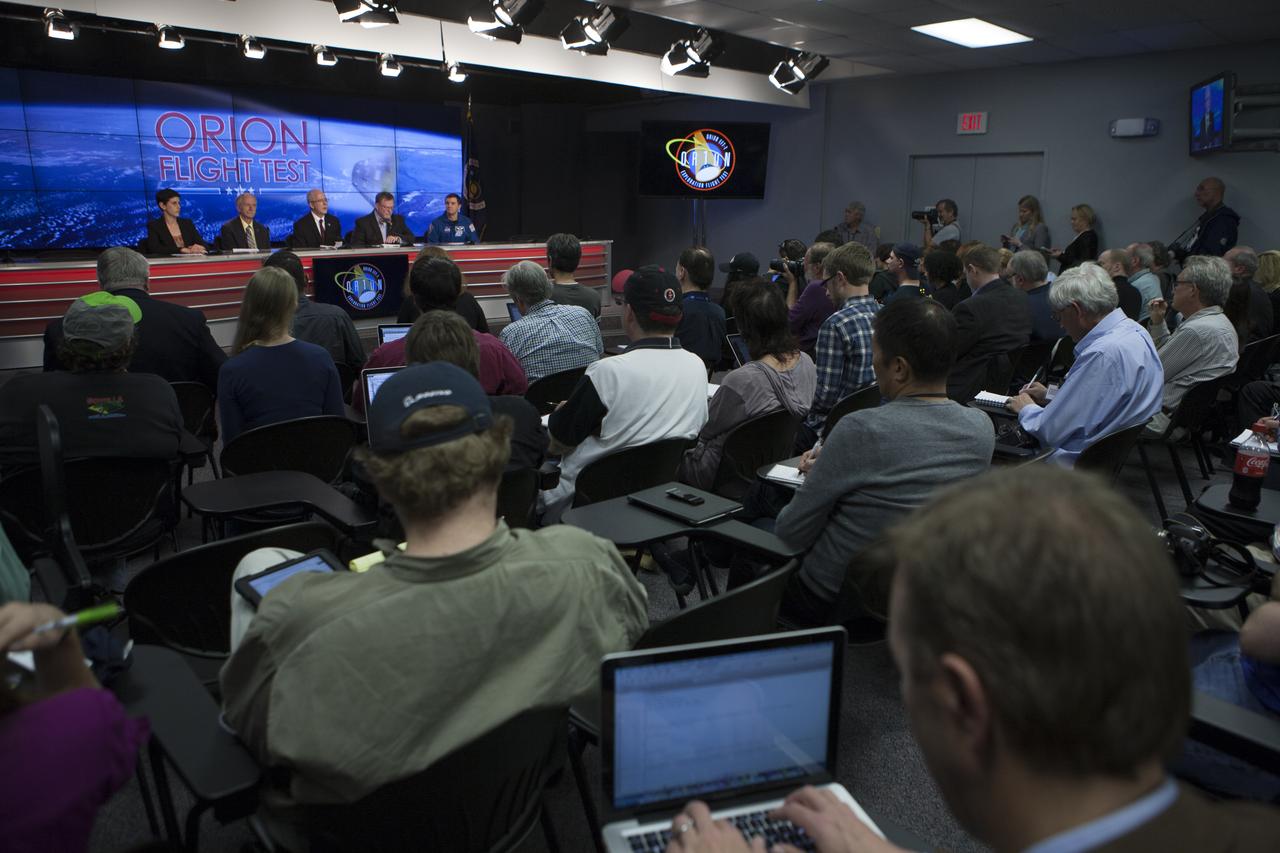
In the Kennedy Space Center’s Press Site auditorium, agency leaders spoke to members of the news media about the successful Orion Flight Test. From left are: Rachel Kraft, of NASA Public Affairs, Bill Gerstenmaier, NASA associate administrator for Human Exploration and Operations, Mark Geyer, Orion program manager, Mike Hawes, Lockheed Martin Orion Program manager, and NASA astronaut Rex Walheim.
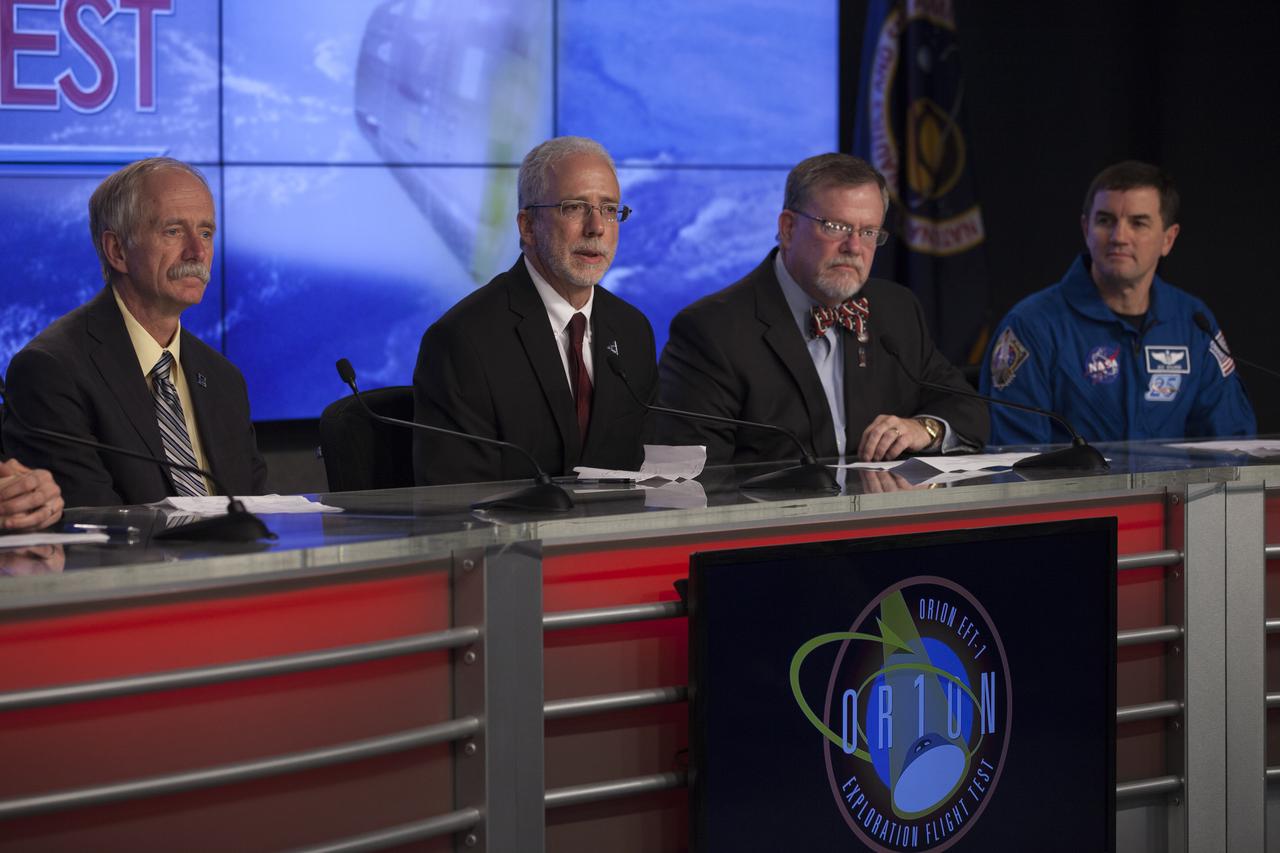
In the Kennedy Space Center’s Press Site auditorium, agency leaders spoke to members of the news media about the successful Orion Flight Test. From left are: Bill Gerstenmaier, NASA associate administrator for Human Exploration and Operations, Mark Geyer, Orion program manager, Mike Hawes, Lockheed Martin Orion Program manager, and NASA astronaut Rex Walheim.
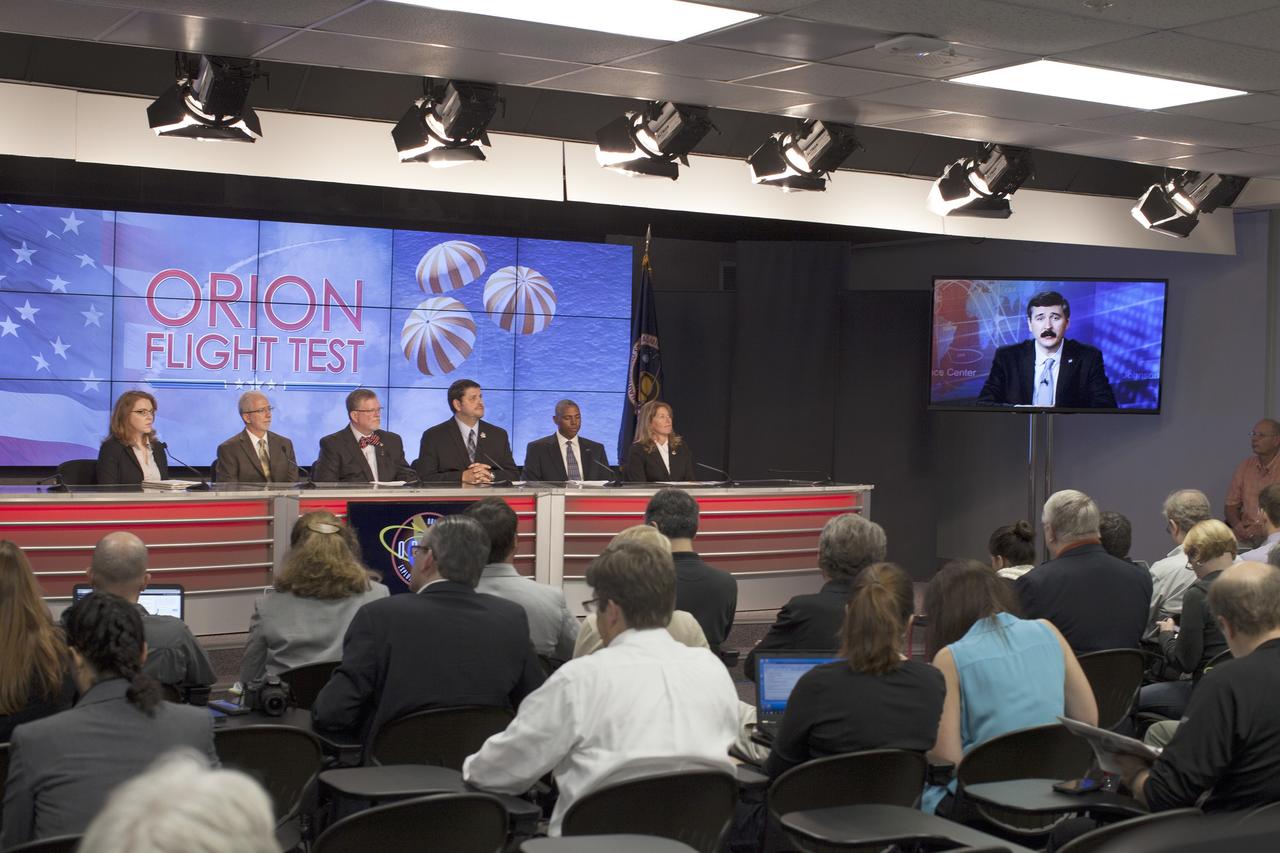
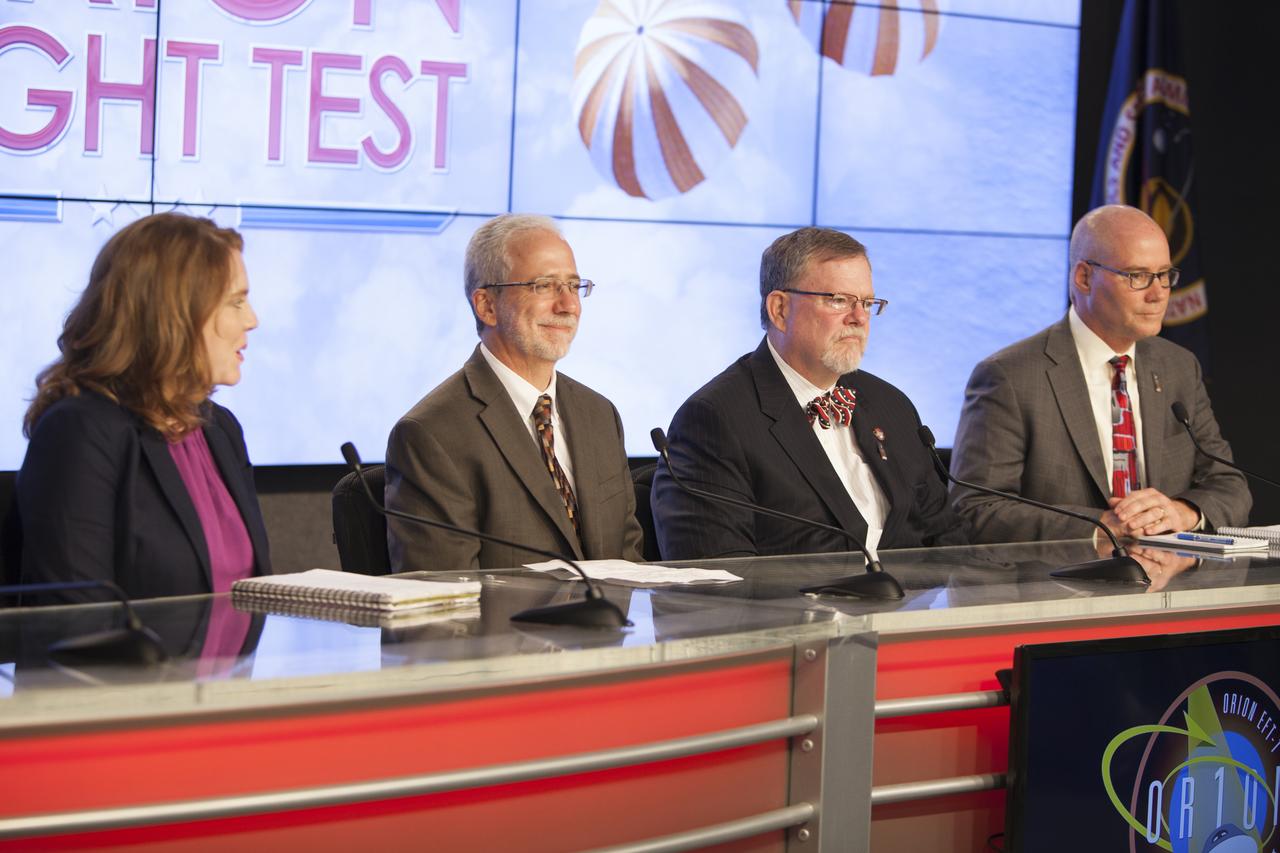
CAPE CANAVERAL, Fla. -- In the Kennedy Space Center’s Press Site auditorium, agency and industry leaders spoke to members of the news media as the Orion spacecraft and its Delta IV Heavy rocket were being prepared for launch. From left are: Brandi Dean of NASA Public Affairs, Mark Geyer, Orion program manager, Mike Hawes, Lockheed Martin Orion Program manager, Jeff Angermeier, Exploration Flight Test-1 Ground Systems Development and Operations mission manager, Ron Fortson, United Launch Alliance director of mission management, and Kathy Winters, U.S. Air Force 45th Space Wing Launch Weather officer. On the right, Mike Sarafin, Orion flight director, participated via video from the Johnson Space Center. For more information, visit www.nasa.gov/orion. Photo credit: NASA/Frankie Martin
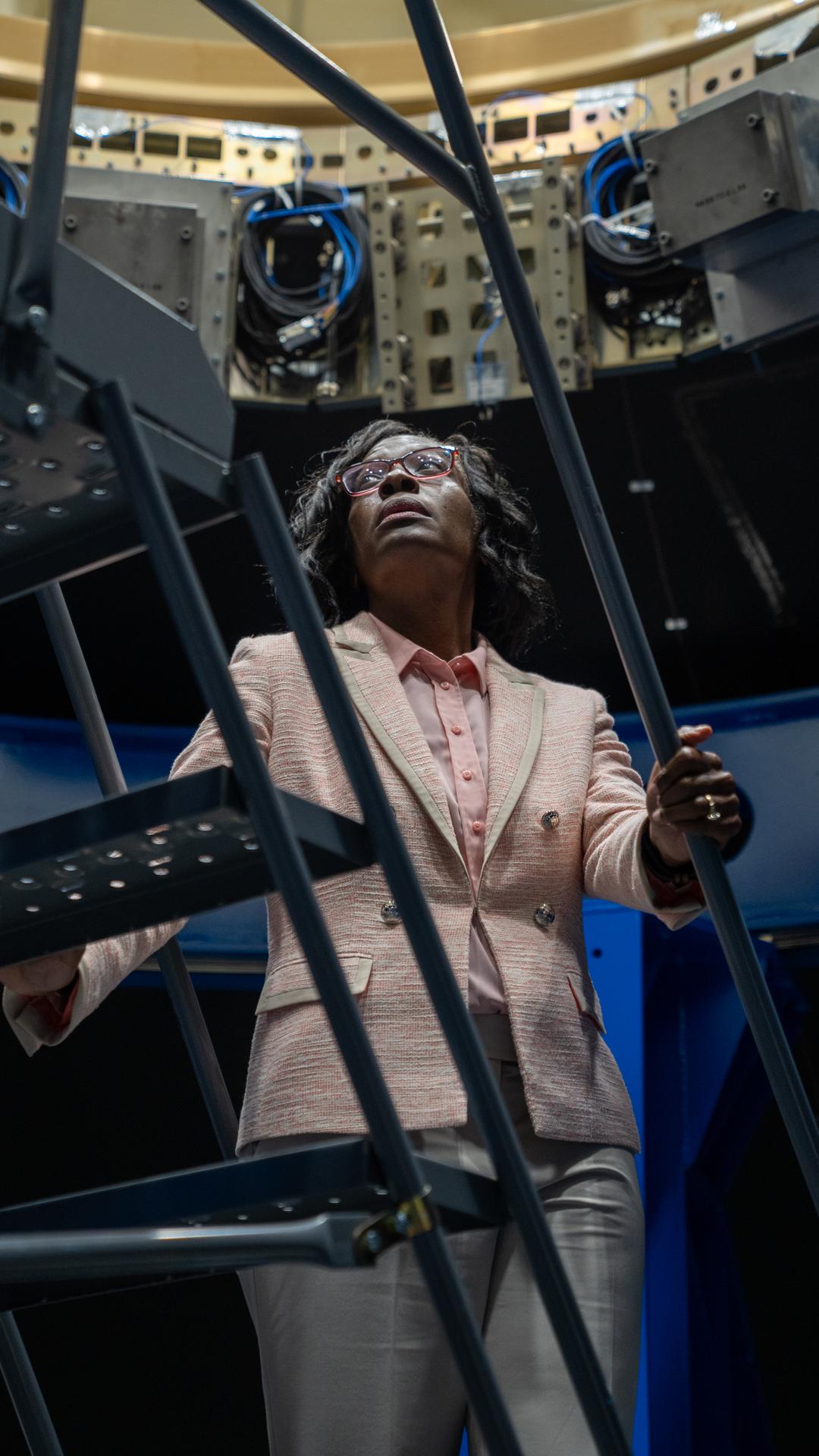
Lakiesha Hawkins, Assistant Deputy Associate Administrator for the Moon to Mars (M2M) Program within the Exploration Systems Development Mission Directorate (ESDMD), takes a peek at the Payload Adapter test article at Marshall Space Flight Center. The adapter, which will debut on NASA’s Artemis IV mission, is an evolution from the Orion stage adapter used in the Block 1 configuration of the rocket for the first three Artemis missions. It will be housed inside the universal stage adapter atop the rocket’s more powerful in-space stage, called the exploration upper stage. The payload adapter, like the launch vehicle stage adapter and the Orion stage adapter, is fully manufactured and tested at Marshall, which manages the SLS Program.
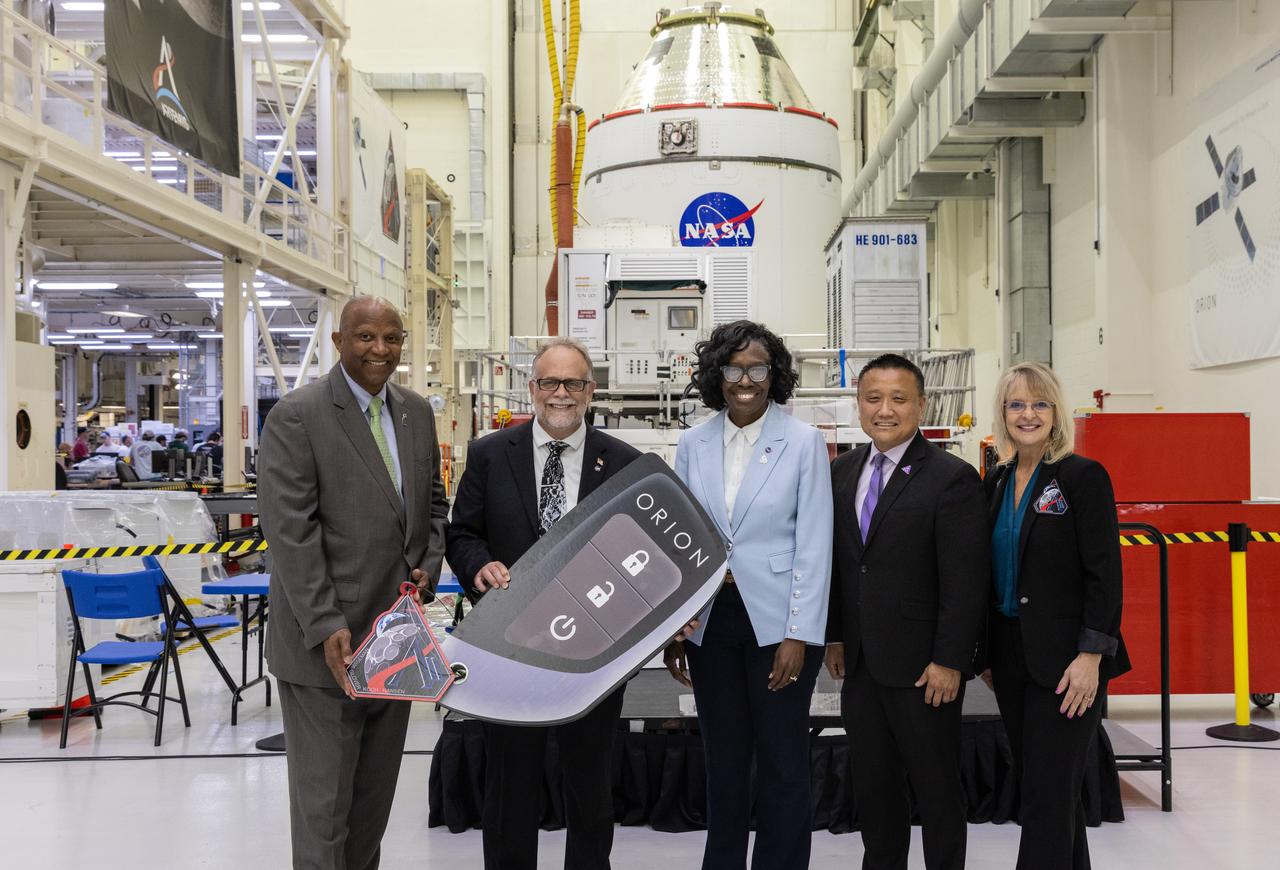
From left, Kelvin Manning, acting center director, NASA’s Kennedy Space Center; Shawn Quinn, Exploration Ground Systems program manager; Lakiesha Hawkins, assistant deputy associate administrator, Moon to Mars Program office; Howard Hu, Orion program manager; Debbie Korth, Orion deputy program manager, participate in a handover ceremony of NASA’s Artemis II Orion spacecraft to crews with the agency’s Exploration Ground Systems Program at the Neil A. Armstrong Operations and Checkout Building at NASA’s Kennedy Space Center in Florida on Thursday, May 1, 2025. The spacecraft will be transported to the Multi-Payload Processing Facility to undergo fueling and processing for prelaunch operations. The Artemis II test flight is the first crewed flight under NASA’s Artemis campaign and is another step toward missions on the lunar surface and helping the agency prepare for future human missions to Mars.
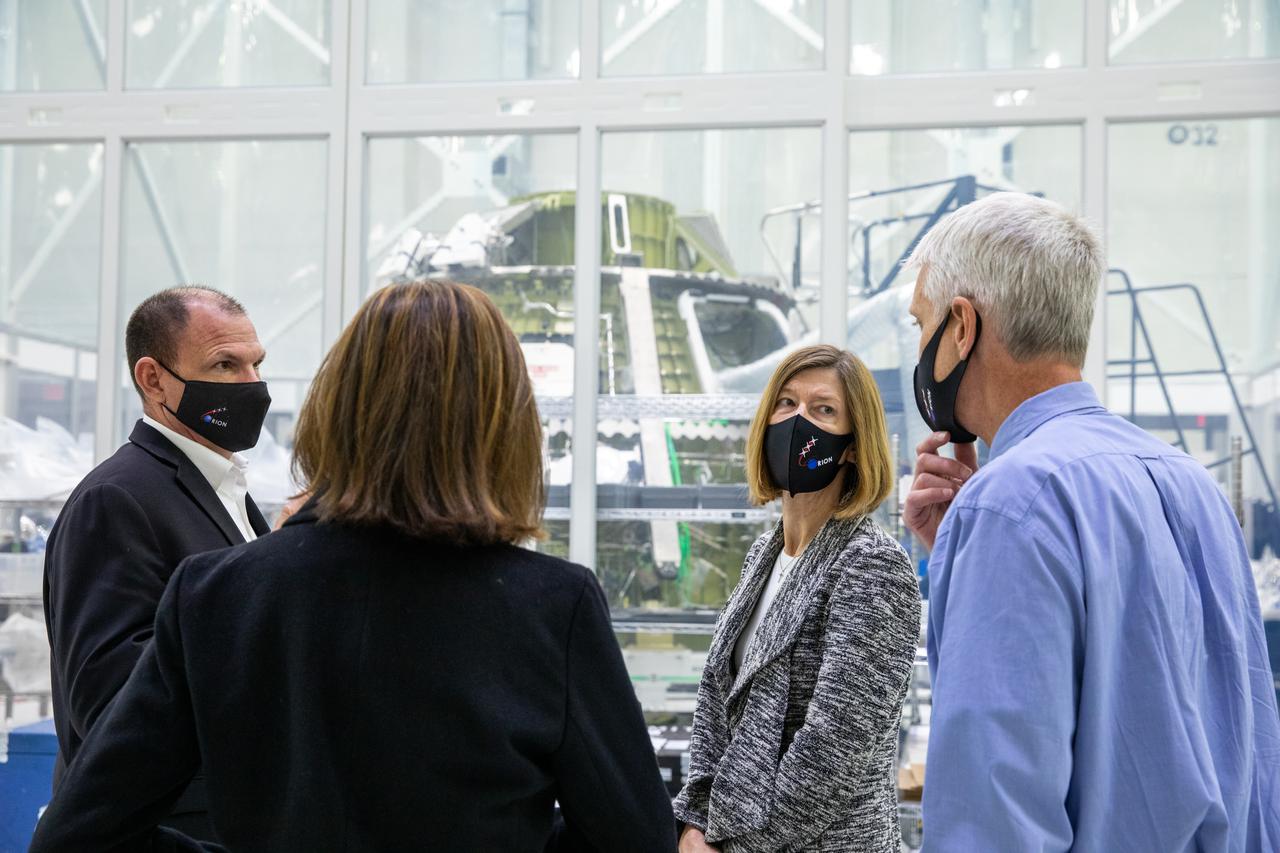
Kathy Lueders, second from right, associate administrator of the Human Exploration and Operations Mission Directorate, tours the Neil Armstrong Operations and Checkout Building high bay at NASA’s Kennedy Space Center in Florida on Jan. 14, 2021. In the background is the Orion crew module for the Artemis II mission. From left are Tony Antonelli, Lockheed Martin Orion Program director and Artemis II Mission director; Cathy Koerner, Orion Program manager; and Scott Wilson, Orion Production Operations manager. The group also viewed the Orion spacecraft for Artemis I as it was lowered onto a transporter for the move to the Multi-Payload Processing Facility to begin ground processing by the Exploration Ground Systems and Jacobs teams.
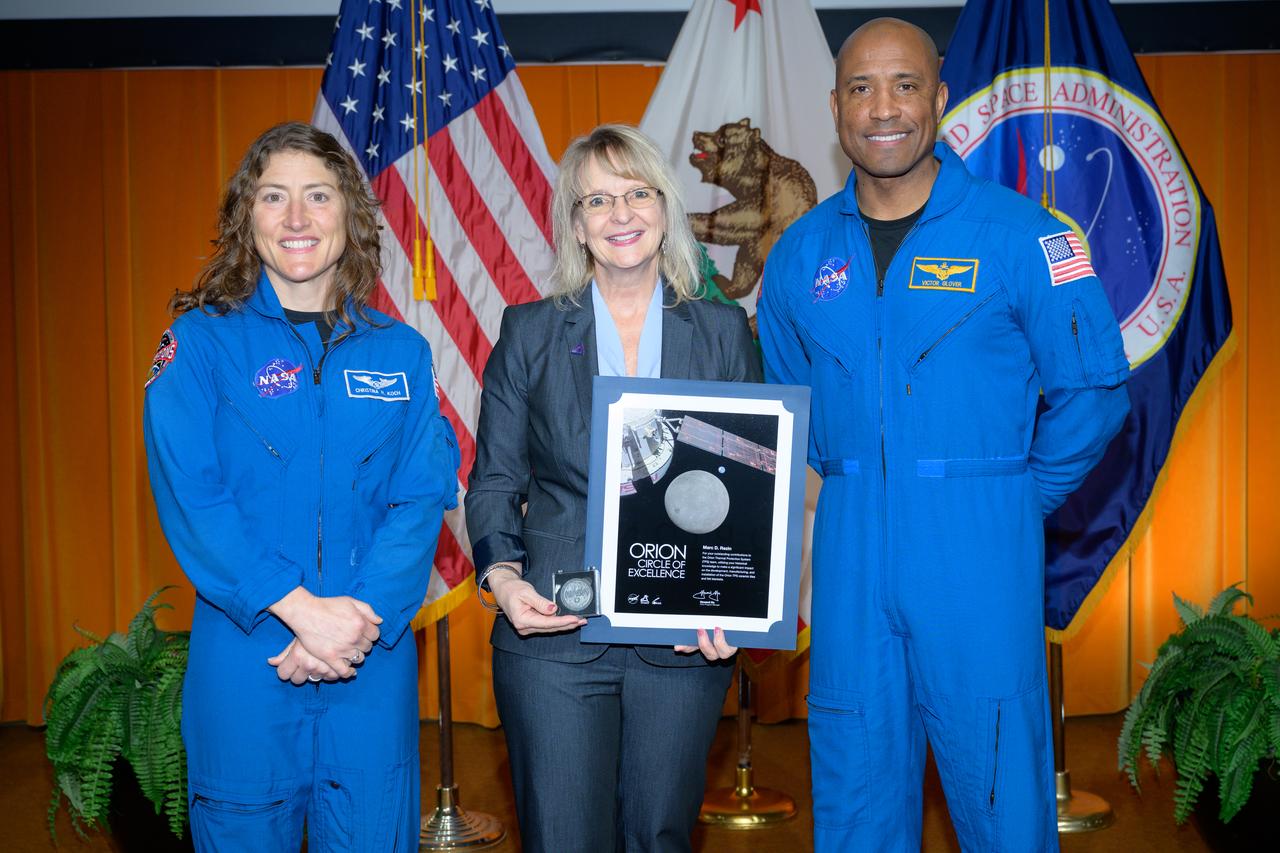
Artemis Orion Circle of Excellence Award presented to Marc D. Rezin received by Orion Deputy Program Manager Debbie Korth, left, NASA astronauts Victor J. Glover, right, and Christina Koch, left, in the N201 auditorium.
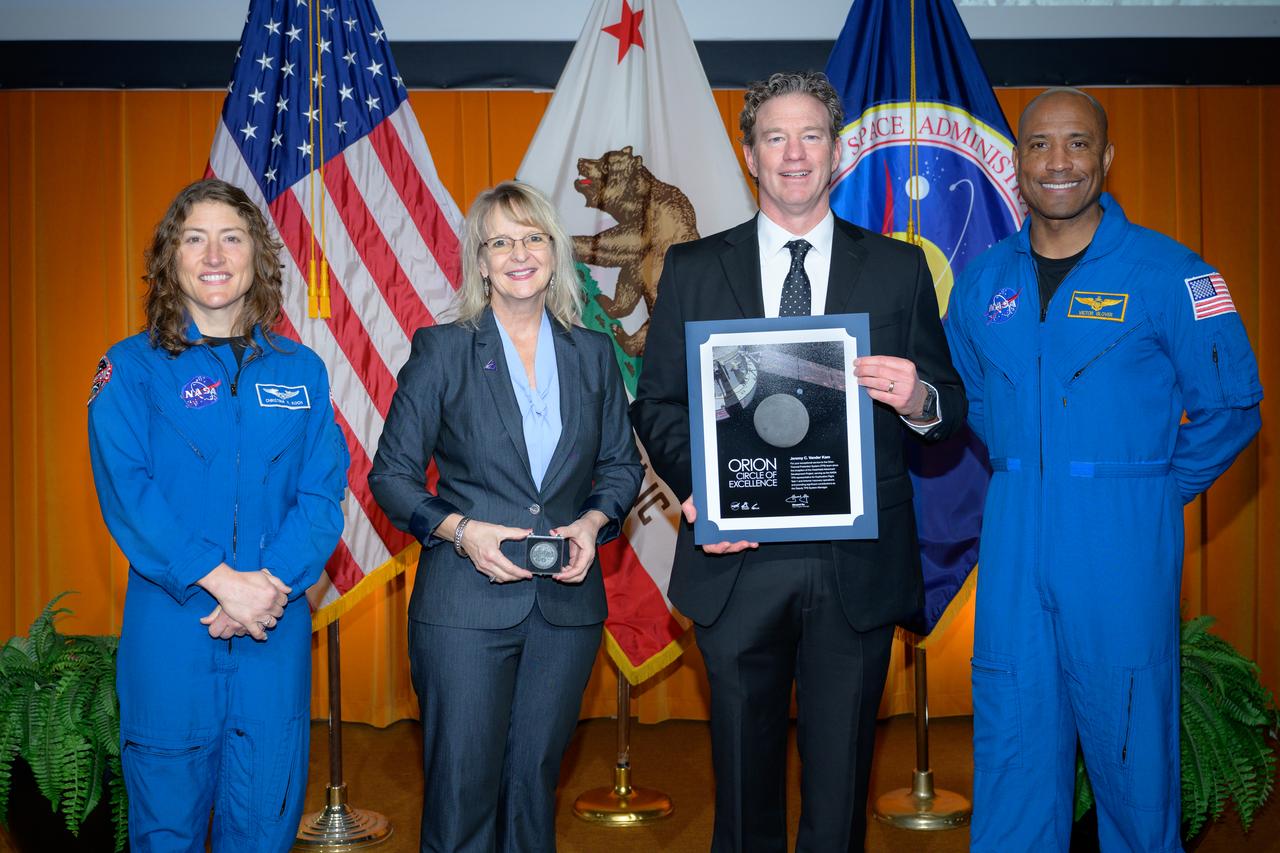
Artemis Orion Circle of Excellence Award presented to Jeremy Vander Kam, center, by Orion Deputy Program Manager Debbie Korth, left, NASA astronauts Victor J. Glover, right, and Christina Koch, left, in the N201 auditorium.
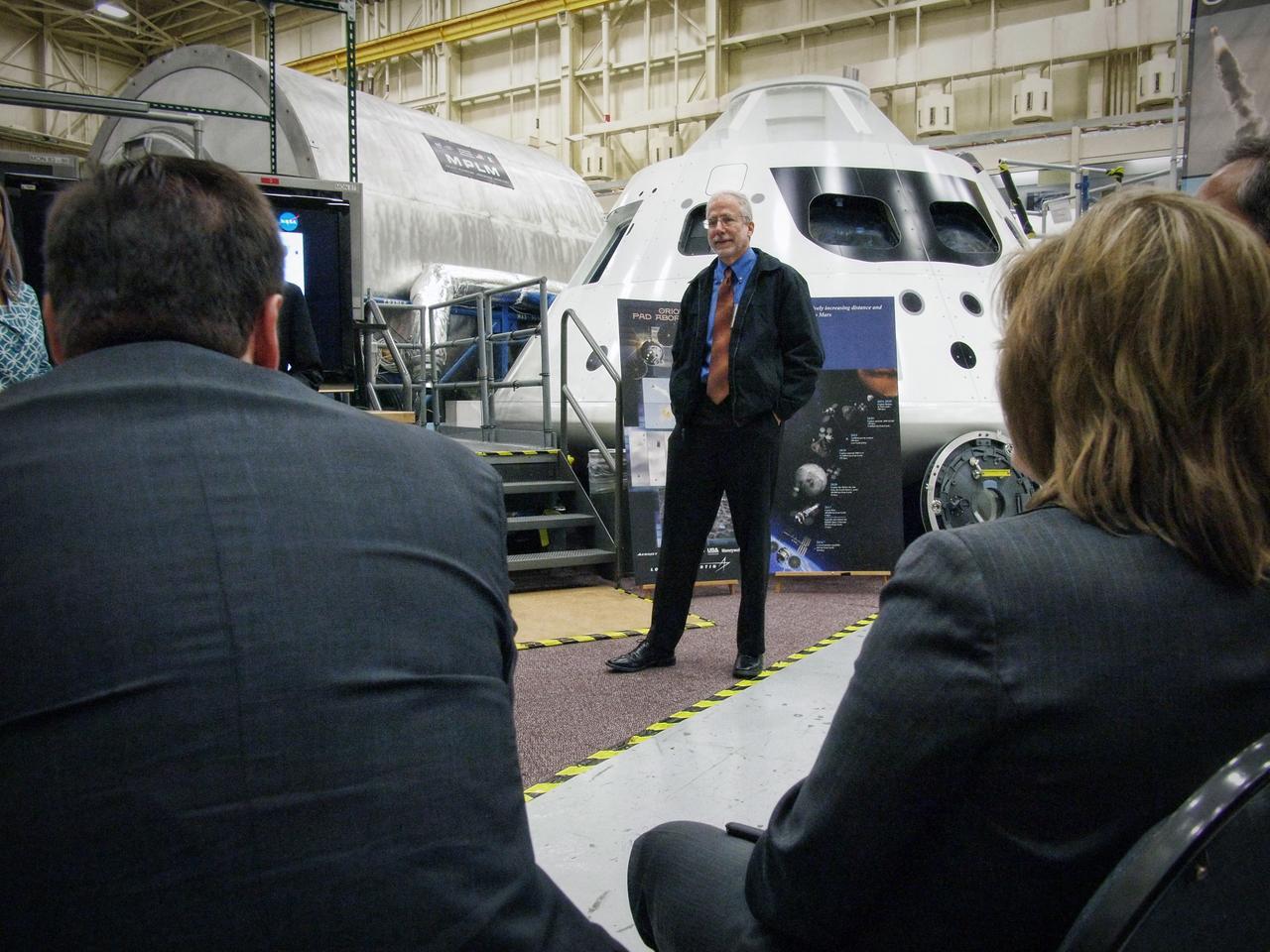
Orion Program Manager Mark Geyer stands in front of the Orion medium fidelity mockup in Building 9 at Johnson Space Center in Houston on Nov. 10, 2011. Part of Batch image transfer from Flickr.
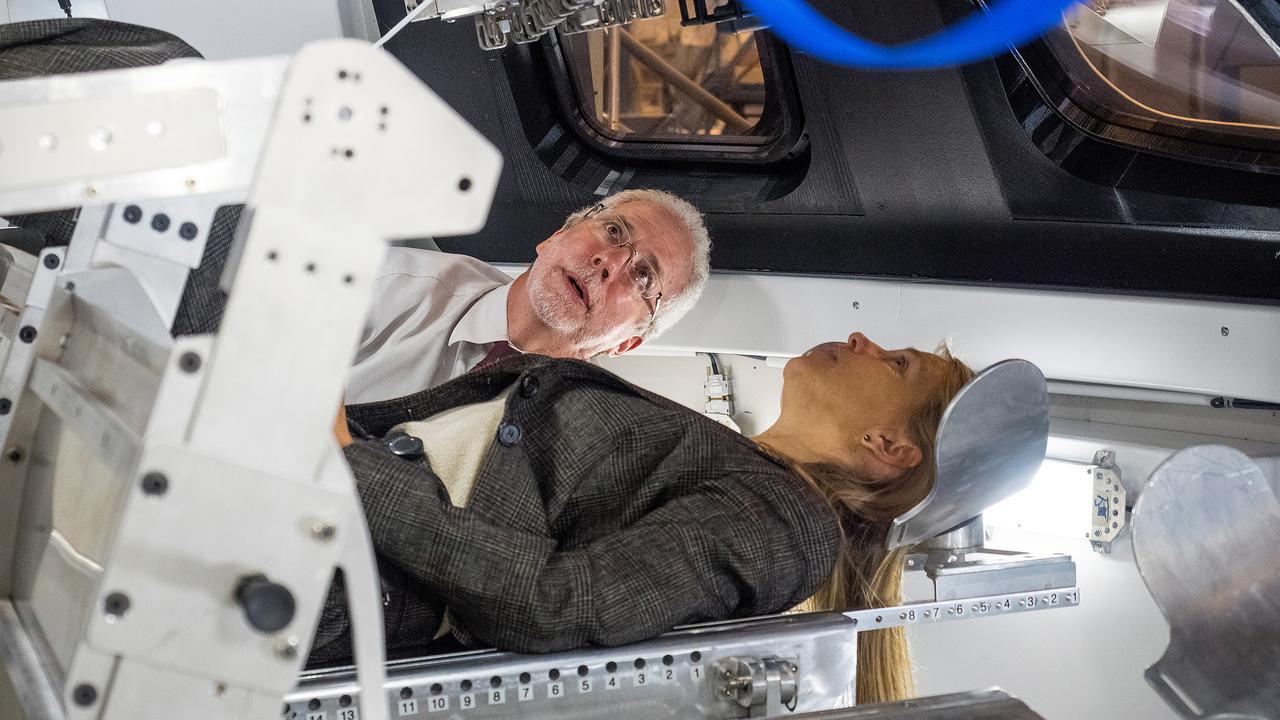
NASA Deputy Administrator Dava Newman visits the Orion medium fidelity mockup with Orion program manager, Mark Geyer, at the Johnson Space Center in Houston on June 8, 2015. Part of Batch image transfer from Flickr.
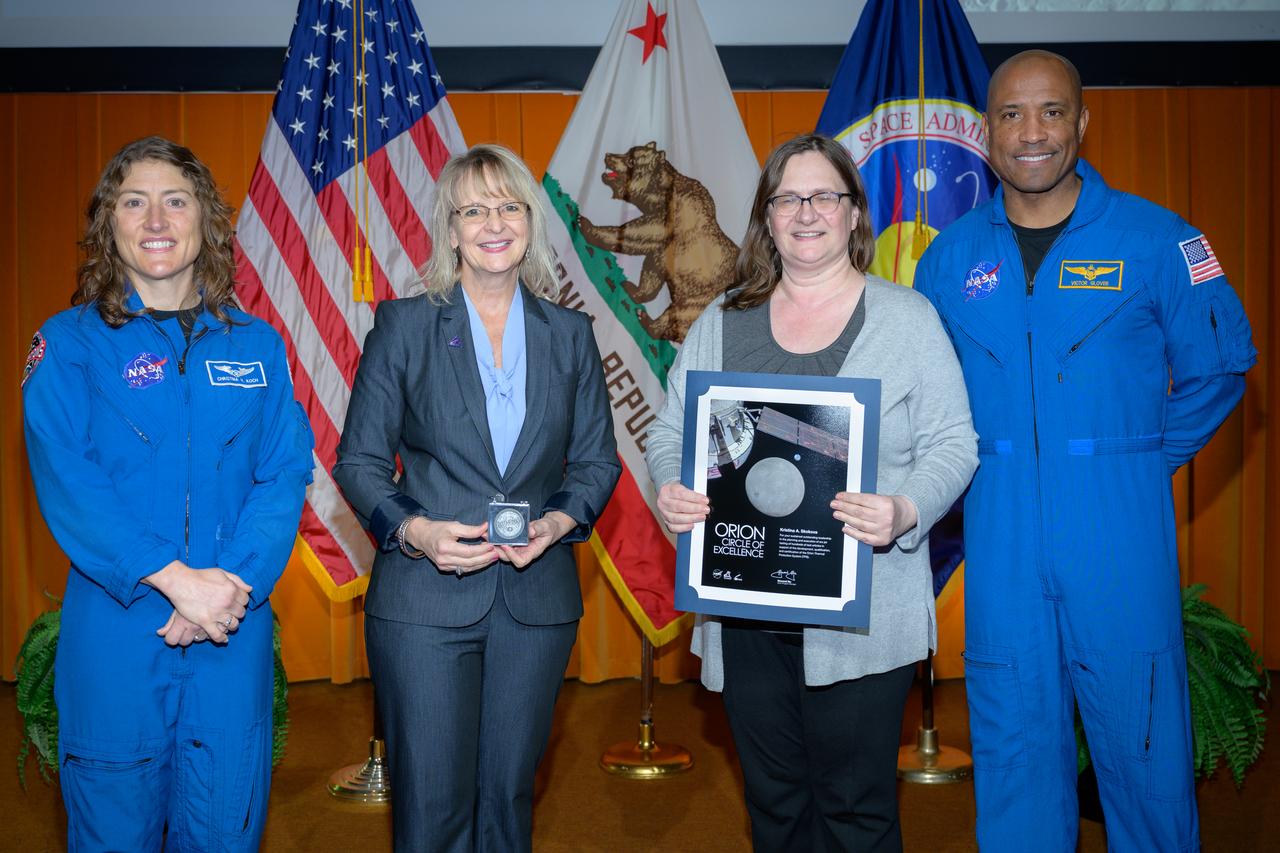
Artemis Orion Circle of Excellence Award presented to Kristina A. Skokova, center, by Orion Deputy Program Manager Debbie Korth, left, NASA astronauts Victor J. Glover, right, and Christina Koch, left, in the N201 auditorium.
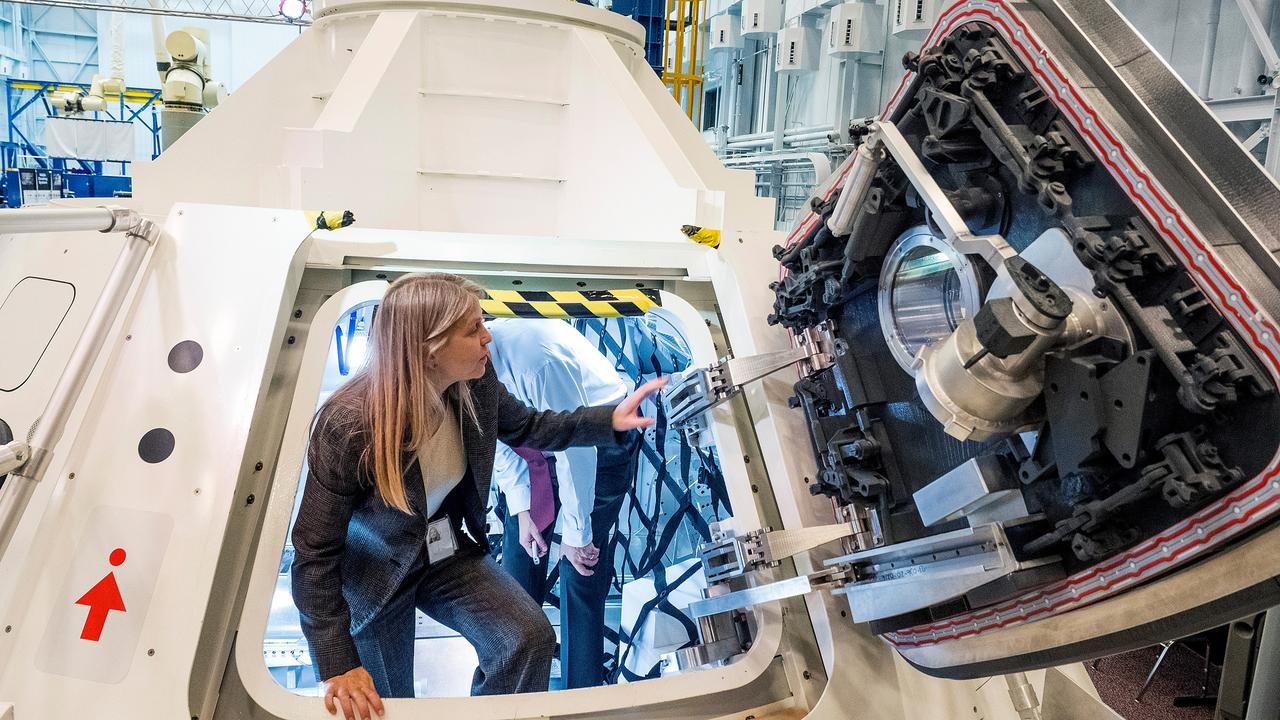
NASA Deputy Administrator Dava Newman visits the Orion medium fidelity mockup with Orion program manager, Mark Geyer, at the Johnson Space Center in Houston on June 8, 2015. Part of Batch image transfer from Flickr.
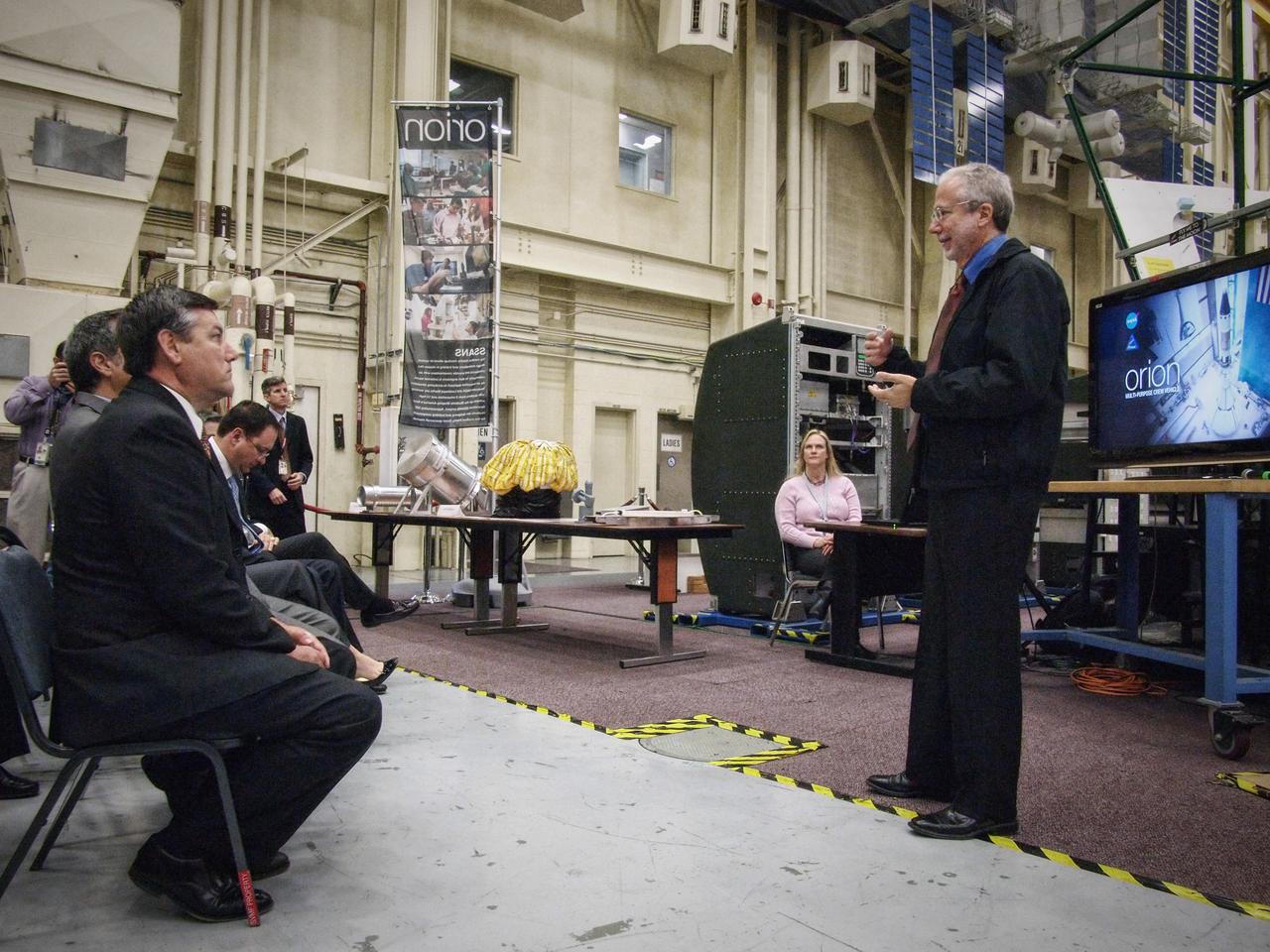
Orion Program Manager Mark Geyer speaks to NASA center directors in front of the Orion mockup in Building 9 at Johnson Space Center in Houston on Nov. 10, 2011. Part of Batch image transfer from Flickr.
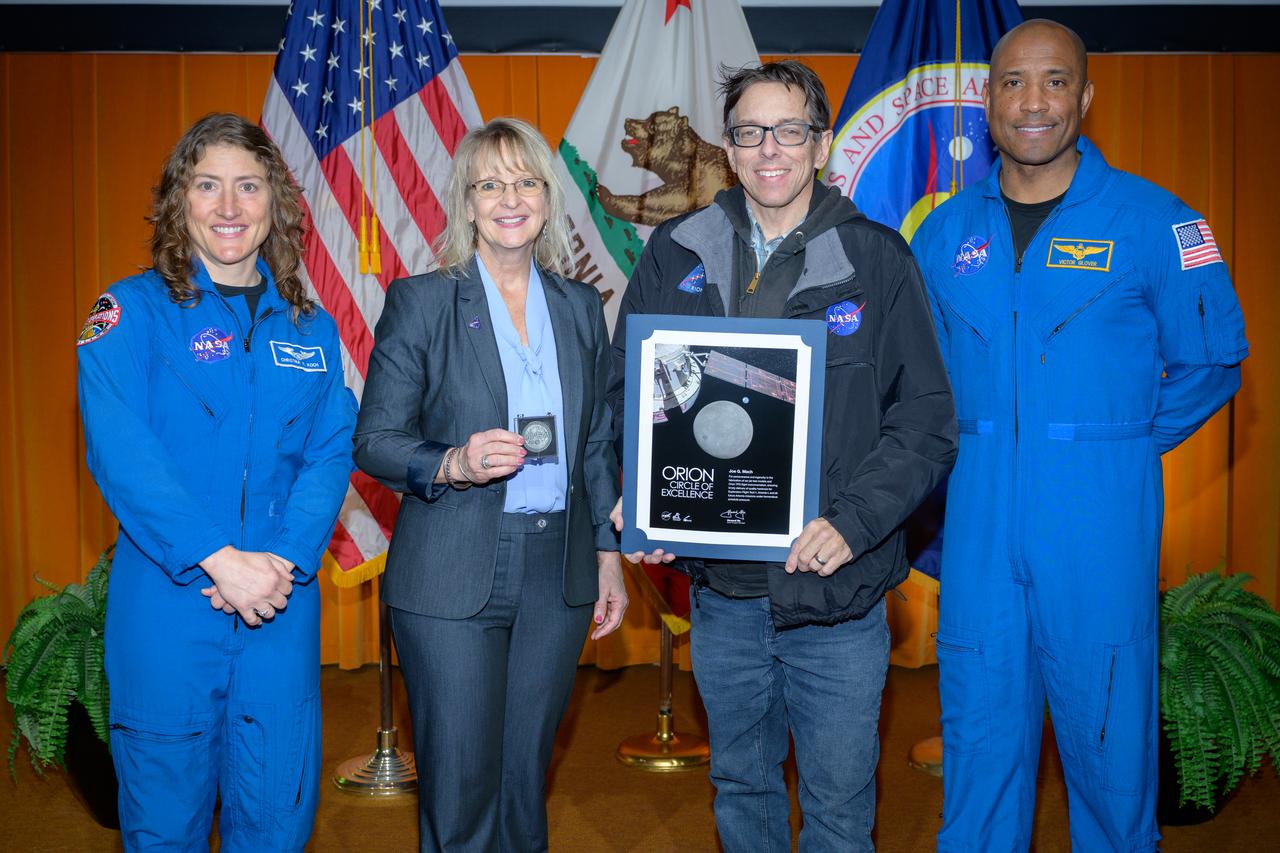
Artemis Orion Circle of Excellence Award presented to Joe G. Mach, center, by Orion Deputy Program Manager Debbie Korth, left, NASA astronauts Victor J. Glover, right, and Christina Koch, left, in the N201 auditorium.

Artemis Orion Circle of Excellence Award presented to Jose A. B. Santos, center, by Orion Deputy Program Manager Debbie Korth, left, NASA astronauts Victor J. Glover, right, and Christina Koch, left, in the N201 auditorium.
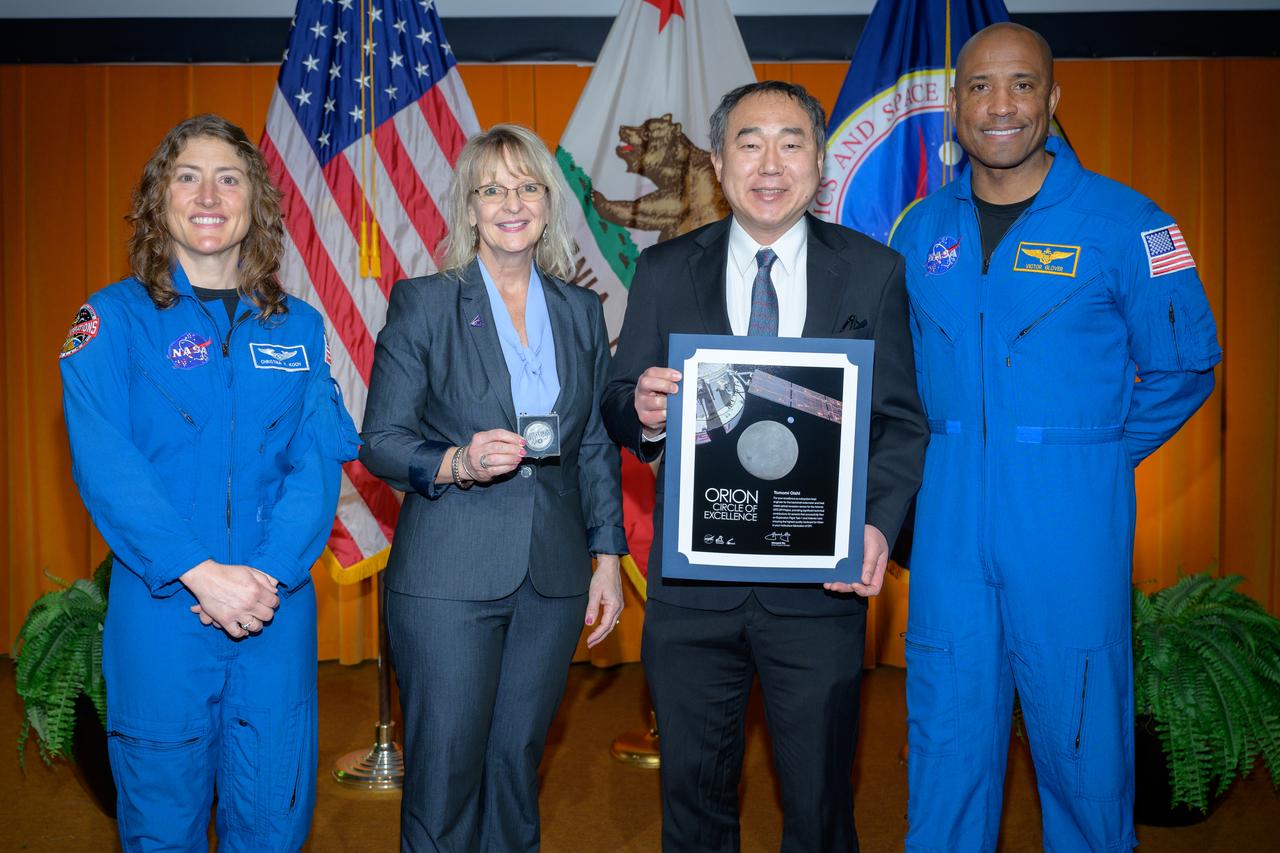
Artemis Orion Circle of Excellence Award presented to Tomomi Oishi, center, by Orion Deputy Program Manager Debbie Korth, left, NASA astronauts Victor J. Glover, right, and Christina Koch, left, in the N201 auditorium.
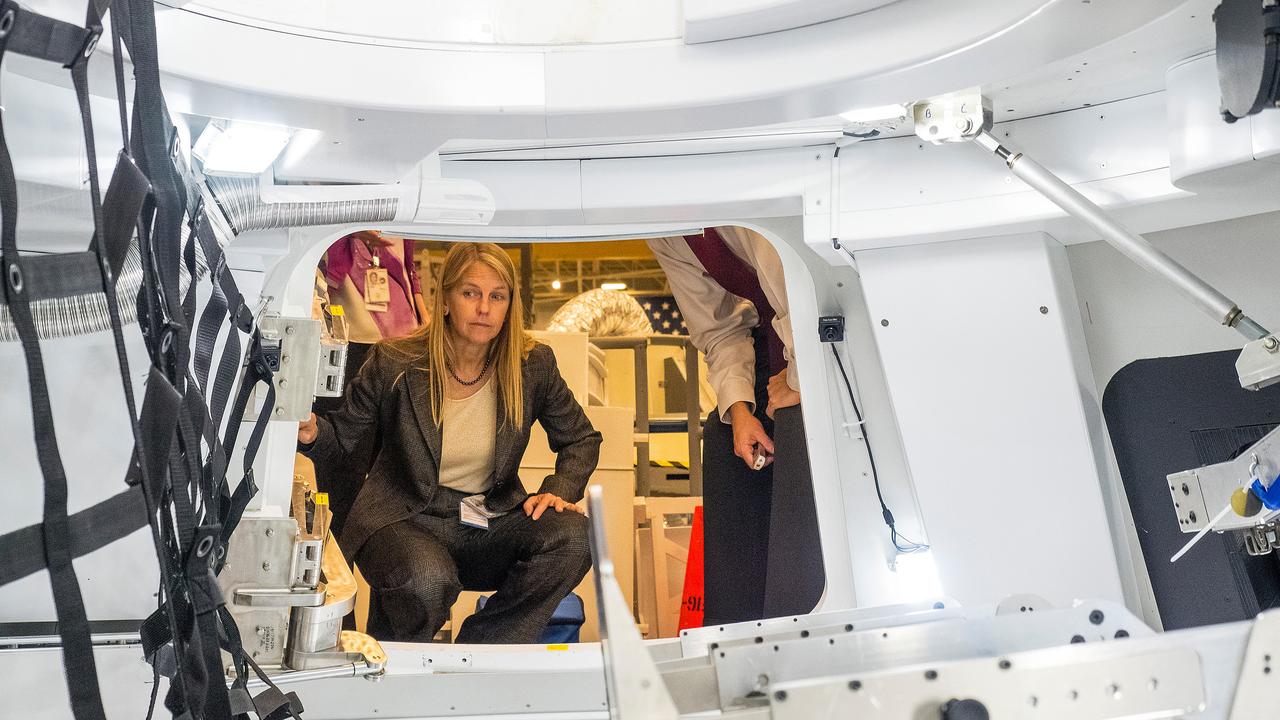
NASA Deputy Administrator Dava Newman visits the Orion medium fidelity mockup with Orion program manager, Mark Geyer, at the Johnson Space Center in Houston on June 8, 2015. Part of Batch image transfer from Flickr.
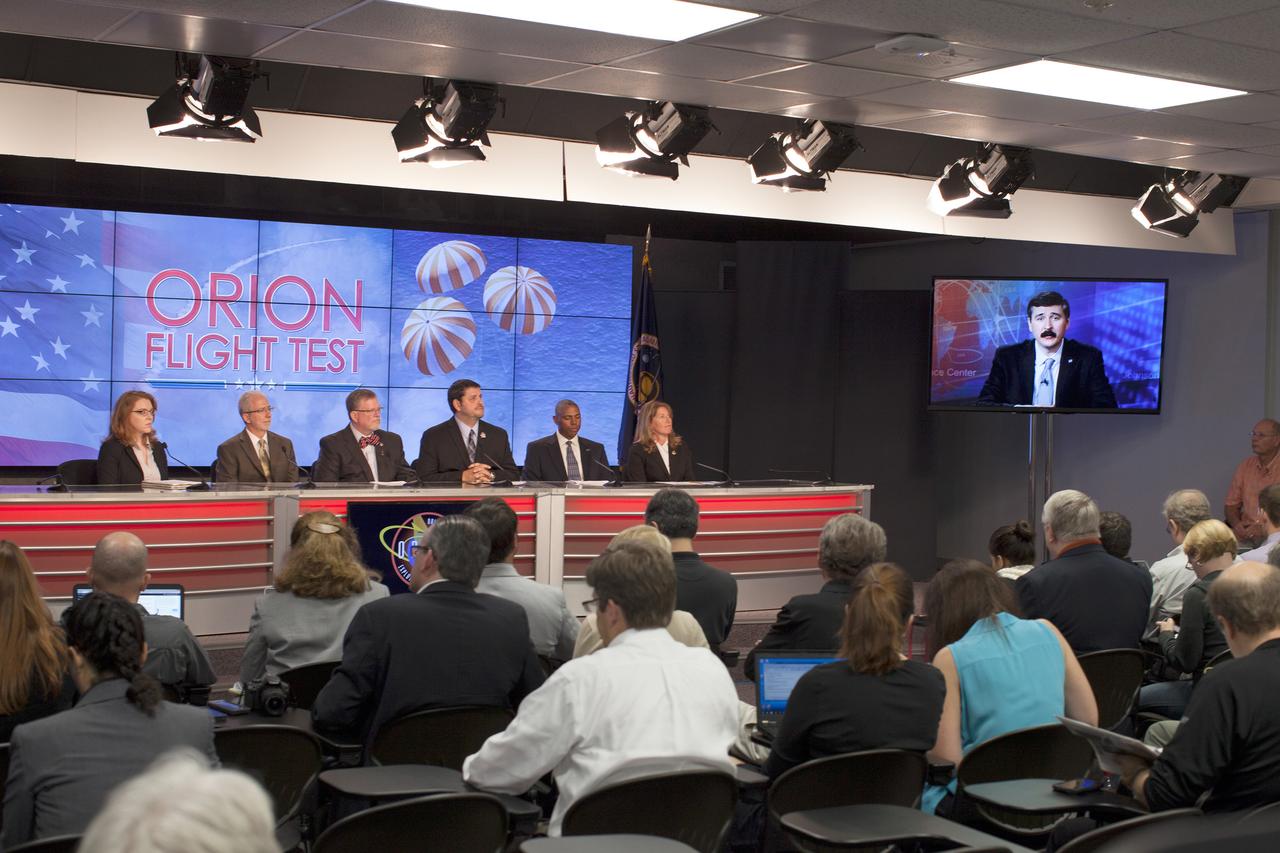
In the Kennedy Space Center’s Press Site auditorium, agency and industry leaders spoke to members of the news media as the Orion spacecraft and its Delta IV Heavy rocket were being prepared for launch on Dec. 3, 2014. From left are: Brandi Dean of NASA Public Affairs, Mark Geyer, Orion program manager, Mike Hawes, Lockheed Martin Orion Program manager, Jeff Angermeier, Exploration Flight Test-1 Ground Systems Development and Operations mission manager, Ron Fortson, United Launch Alliance director of mission management, and Kathy Winters, U.S. Air Force 45th Space Wing Launch Weather officer. On the right, Mike Sarafin, Orion flight director, participated via video from the Johnson Space Center. Part of Batch image transfer from Flickr.
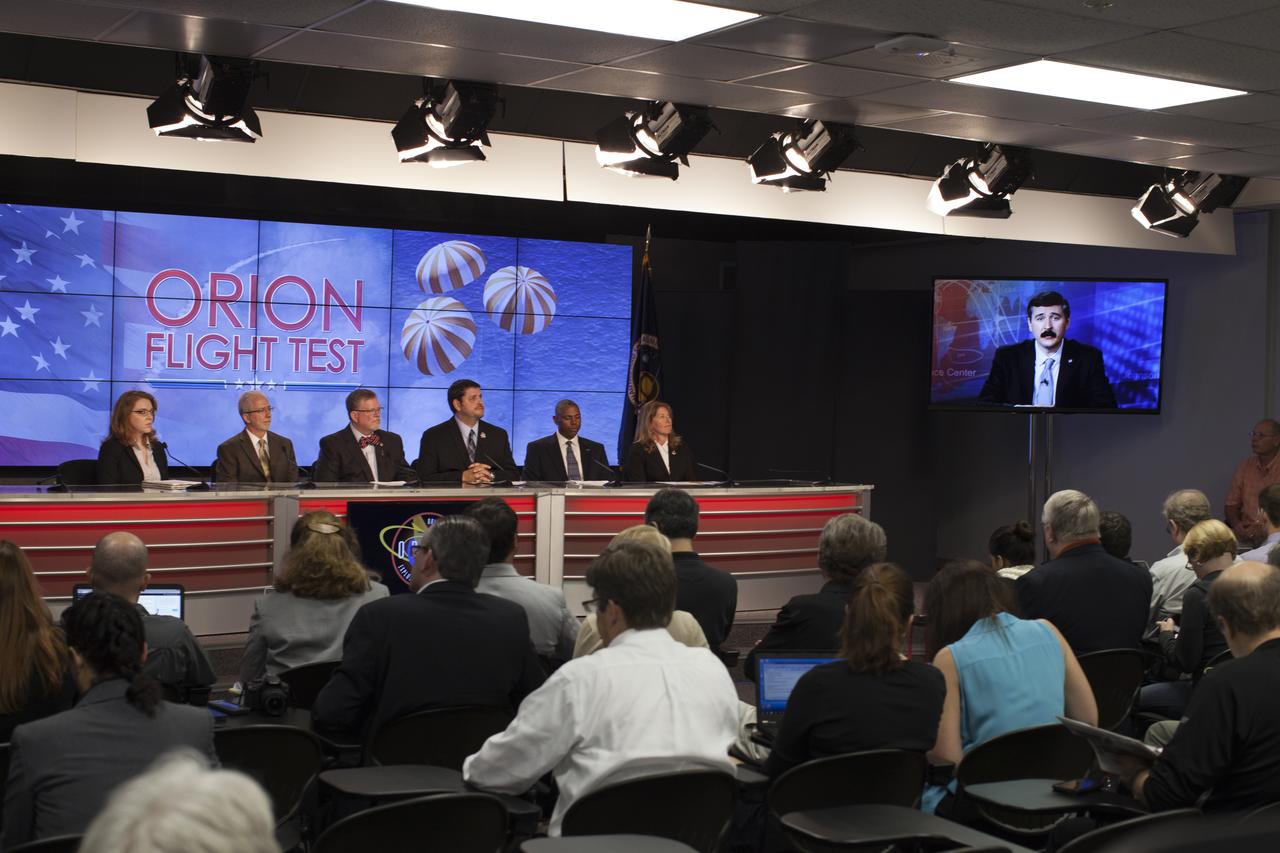
In the Kennedy Space Center’s Press Site auditorium, agency and industry leaders spoke to members of the news media as the Orion spacecraft and its Delta IV Heavy rocket were being prepared for launch. From left are: Brandi Dean of NASA Public Affairs, Mark Geyer, Orion program manager, Mike Hawes, Lockheed Martin Orion Program manager, Jeff Angermeier, Exploration Flight Test-1 Ground Systems Development and Operations mission manager, Ron Fortson, United Launch Alliance director of mission management, and Kathy Winters, U.S. Air Force 45th Space Wing Launch Weather officer. On the right, Mike Sarafin, Orion flight director, participated via video from the Johnson Space Center.
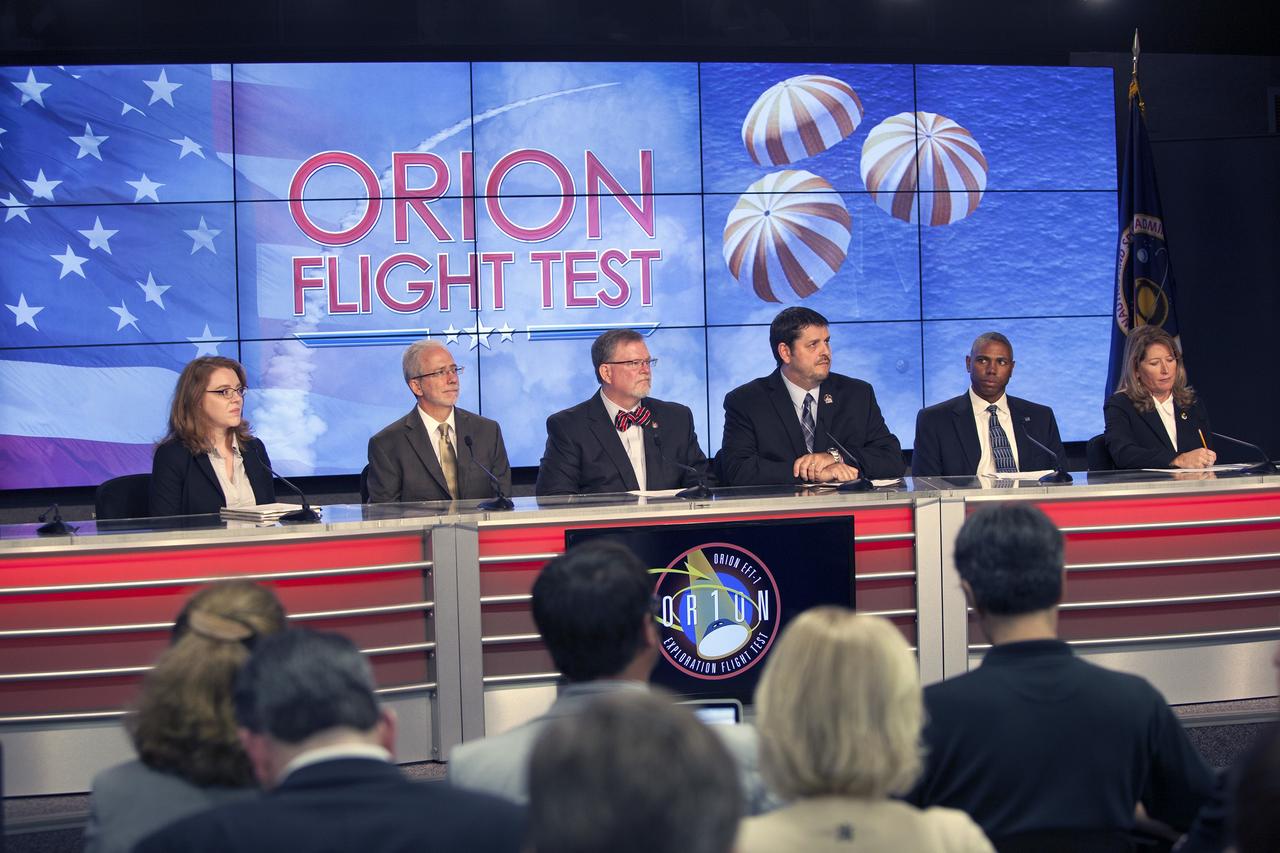
CAPE CANAVERAL, Fla. -- In the Kennedy Space Center’s Press Site auditorium, agency and industry leaders spoke to members of the news media as the Orion spacecraft and its Delta IV Heavy rocket were being prepared for launch. From left are: Brandi Dean of NASA Public Affairs, Mark Geyer, Orion program manager, Mike Hawes, Lockheed Martin Orion Program manager, Jeff Angermeier, Exploration Flight Test-1 Ground Systems Development and Operations mission manager, Ron Fortson, United Launch Alliance director of mission management, and Kathy Winters, U.S. Air Force 45th Space Wing Launch Weather officer. For more information, visit www.nasa.gov/orion. Photo credit: NASA/Frankie Martin
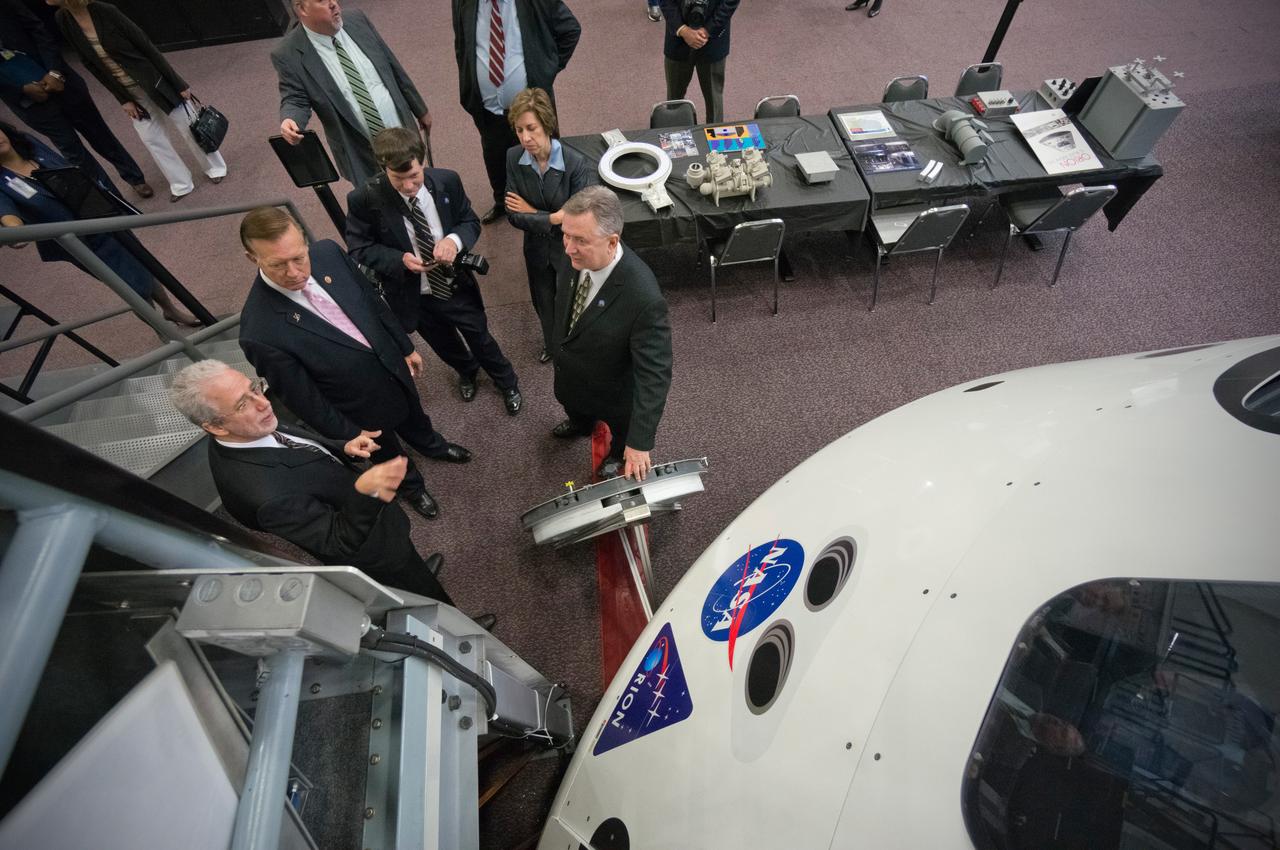
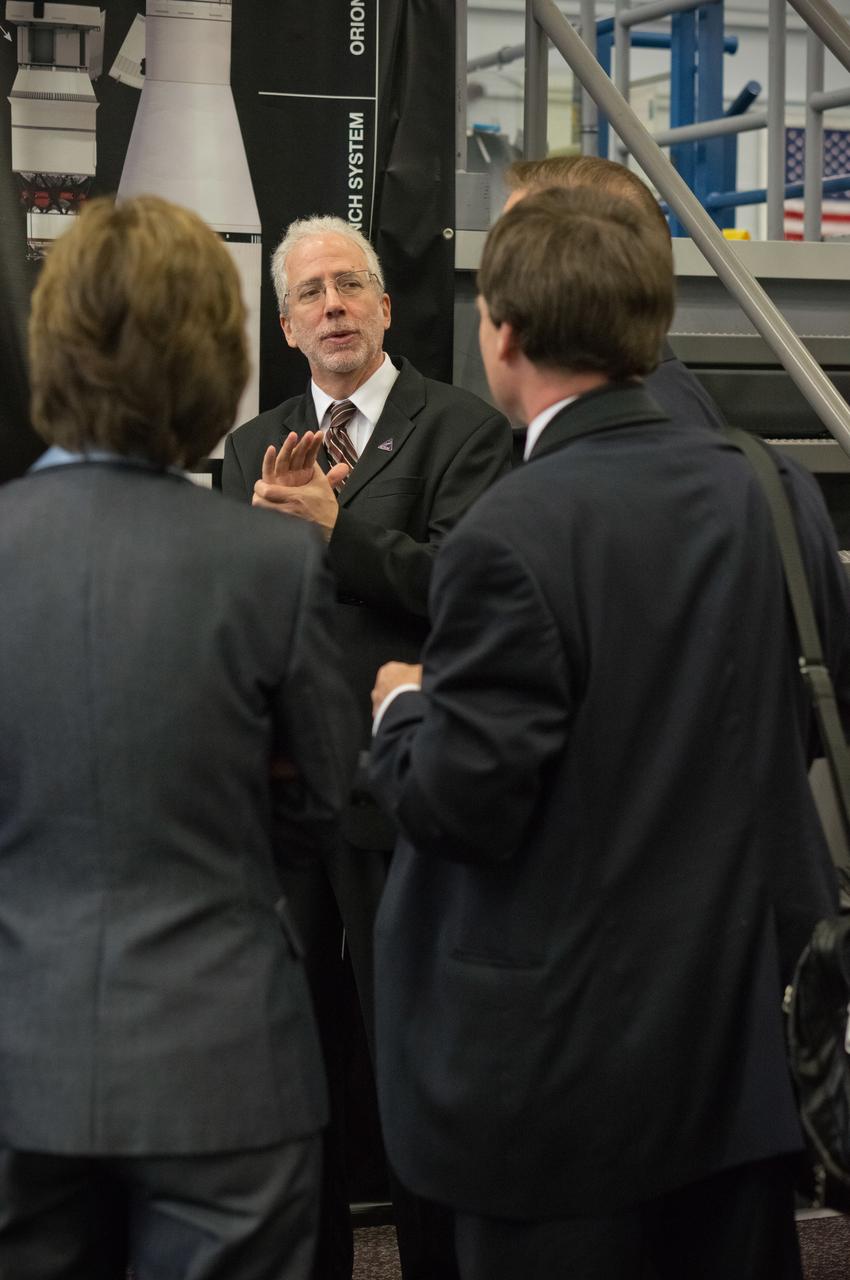
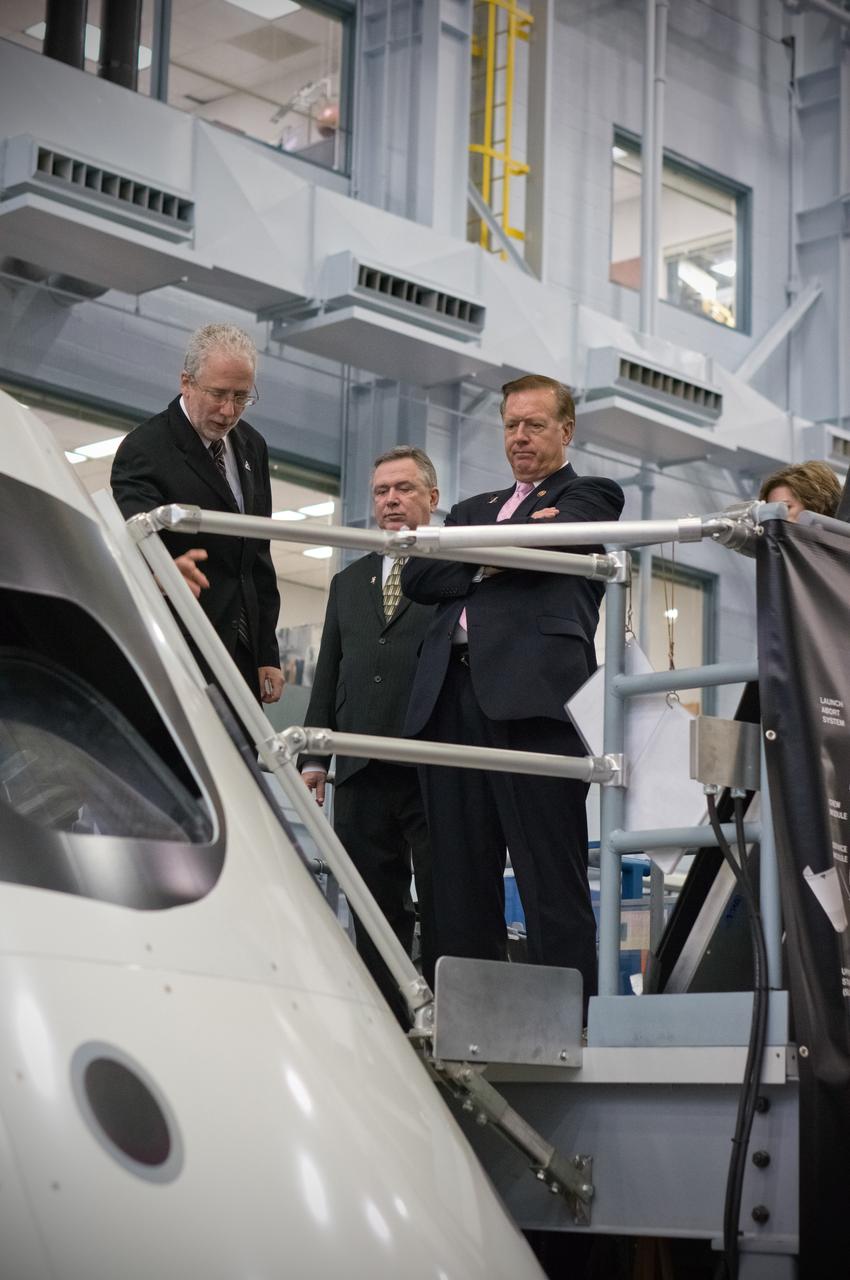
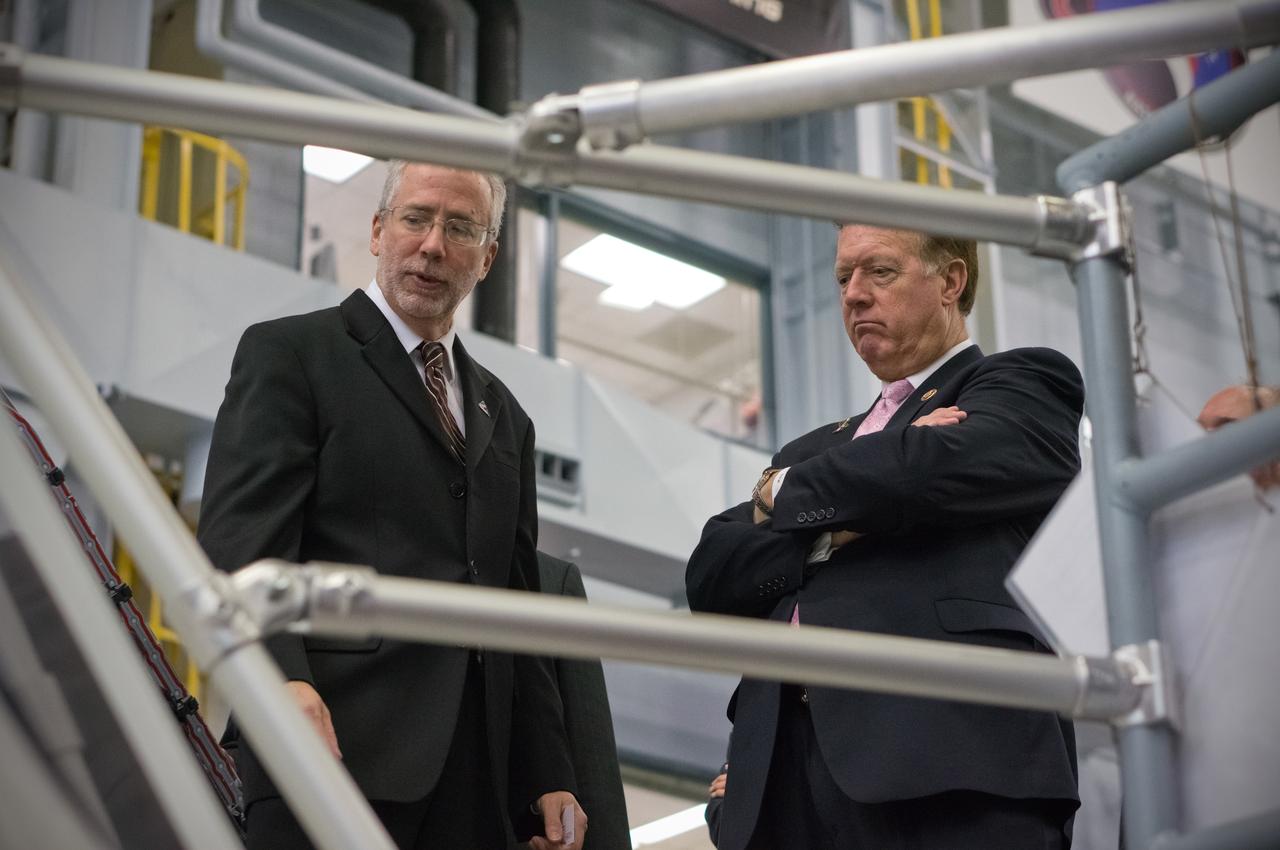
Congressman Steve Stockman, Texas 36th district, and Congressman Randy Weber, Texas 14th district, visit NASA’s Johnson Space Center in Houston on Feb. 20, 2013. Orion Program Manager Mark Geyer discussed the status and accomplishments of the Orion program. Part of Batch image transfer from Flickr.
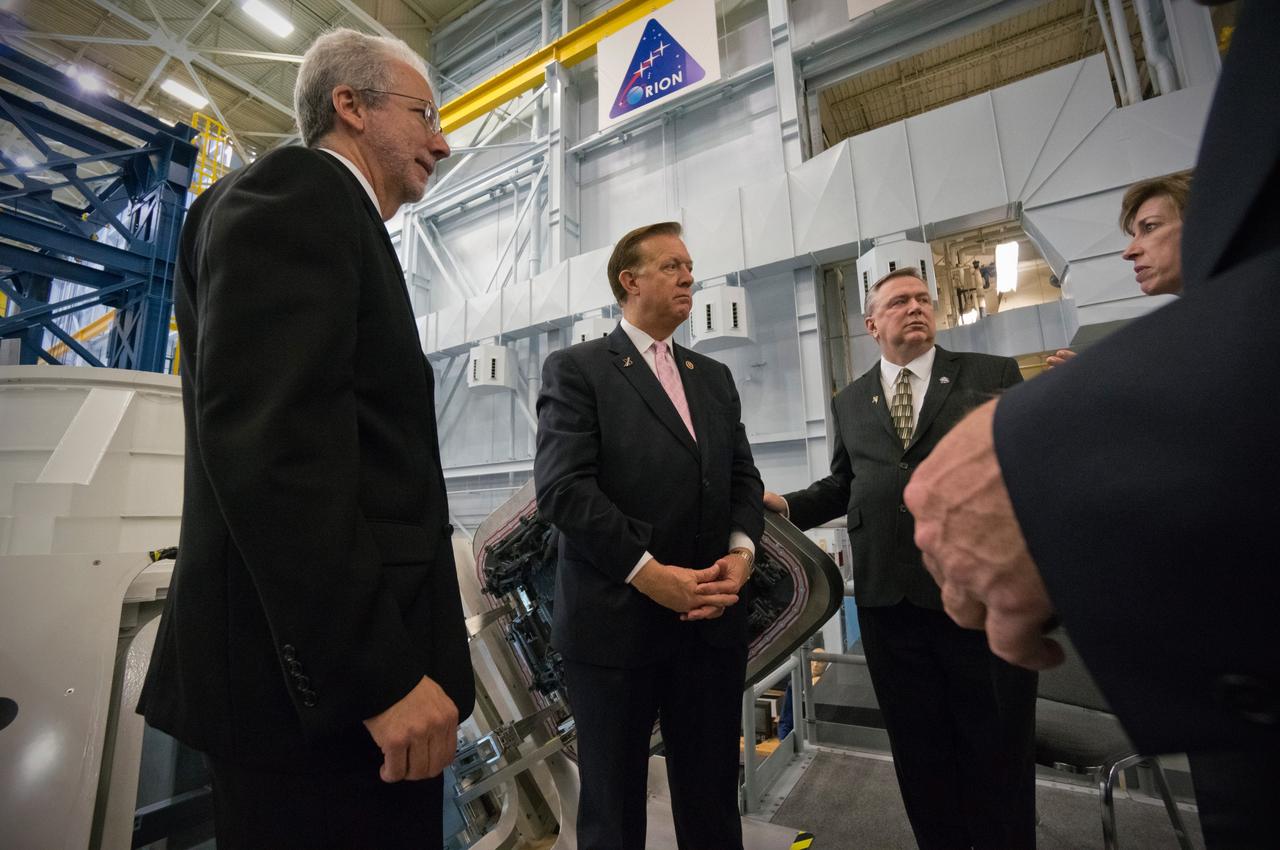
Congressman Steve Stockman, Texas 36th district, and Congressman Randy Weber, Texas 14th district, visit NASA’s Johnson Space Center in Houston on Feb. 20, 2013. Orion Program Manager Mark Geyer discussed the status and accomplishments of the Orion program. Part of Batch image transfer from Flickr.
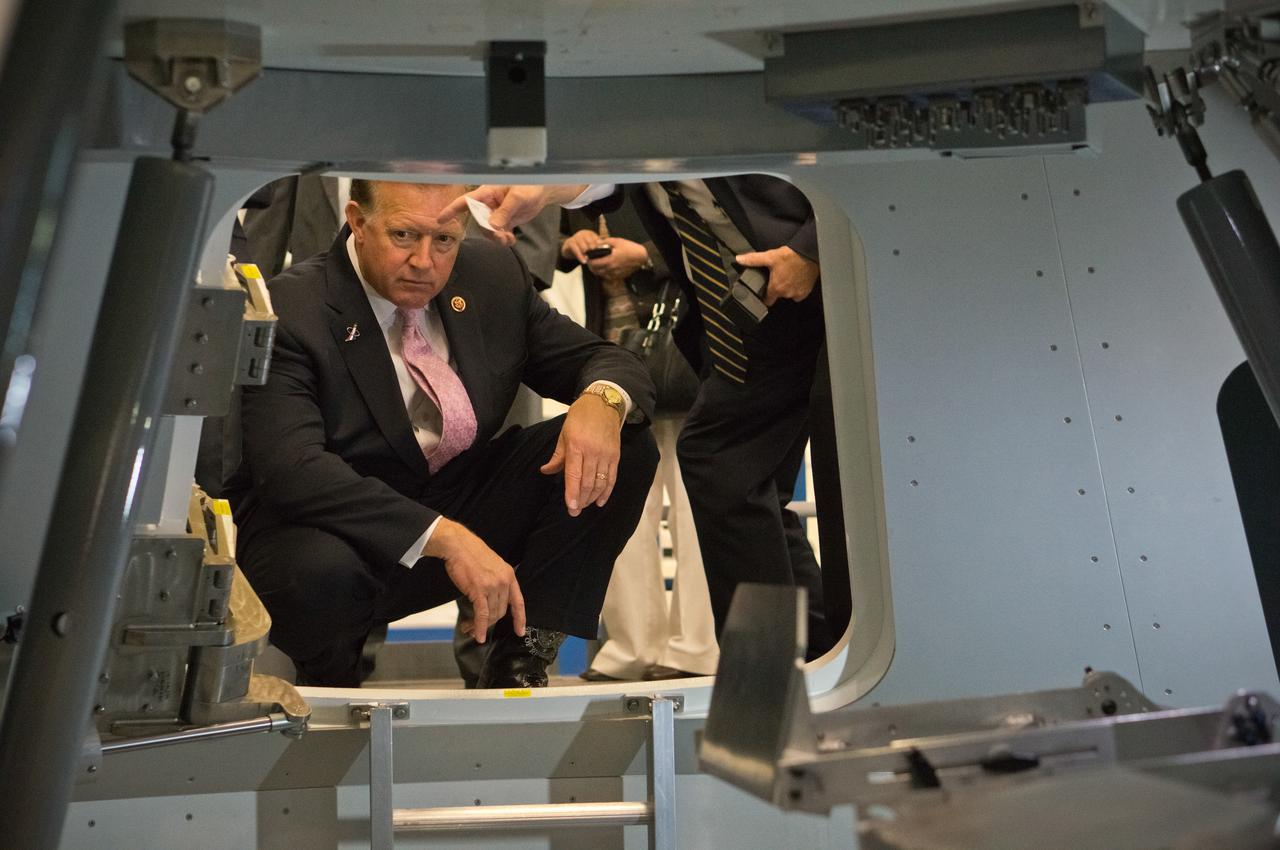
Congressman Steve Stockman, Texas 36th district, and Congressman Randy Weber, Texas 14th district, visit NASA’s Johnson Space Center in Houston on Feb. 20, 2013. Orion Program Manager Mark Geyer discussed the status and accomplishments of the Orion program. Part of Batch image transfer from Flickr.
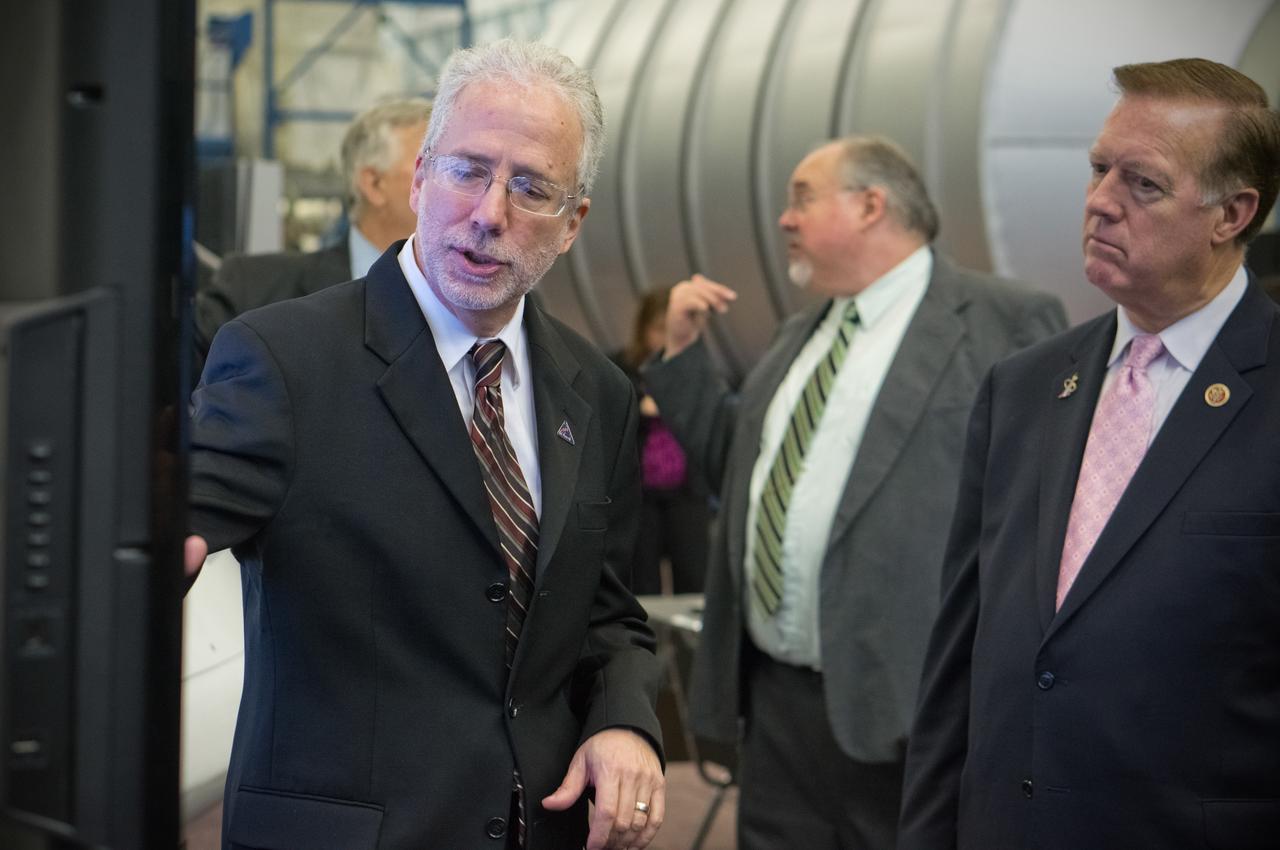
Congressman Steve Stockman, Texas 36th district, and Congressman Randy Weber, Texas 14th district, visit NASA’s Johnson Space Center in Houston on Feb. 20, 2013. Orion Program Manager Mark Geyer discussed the status and accomplishments of the Orion program. Part of Batch image transfer from Flickr.
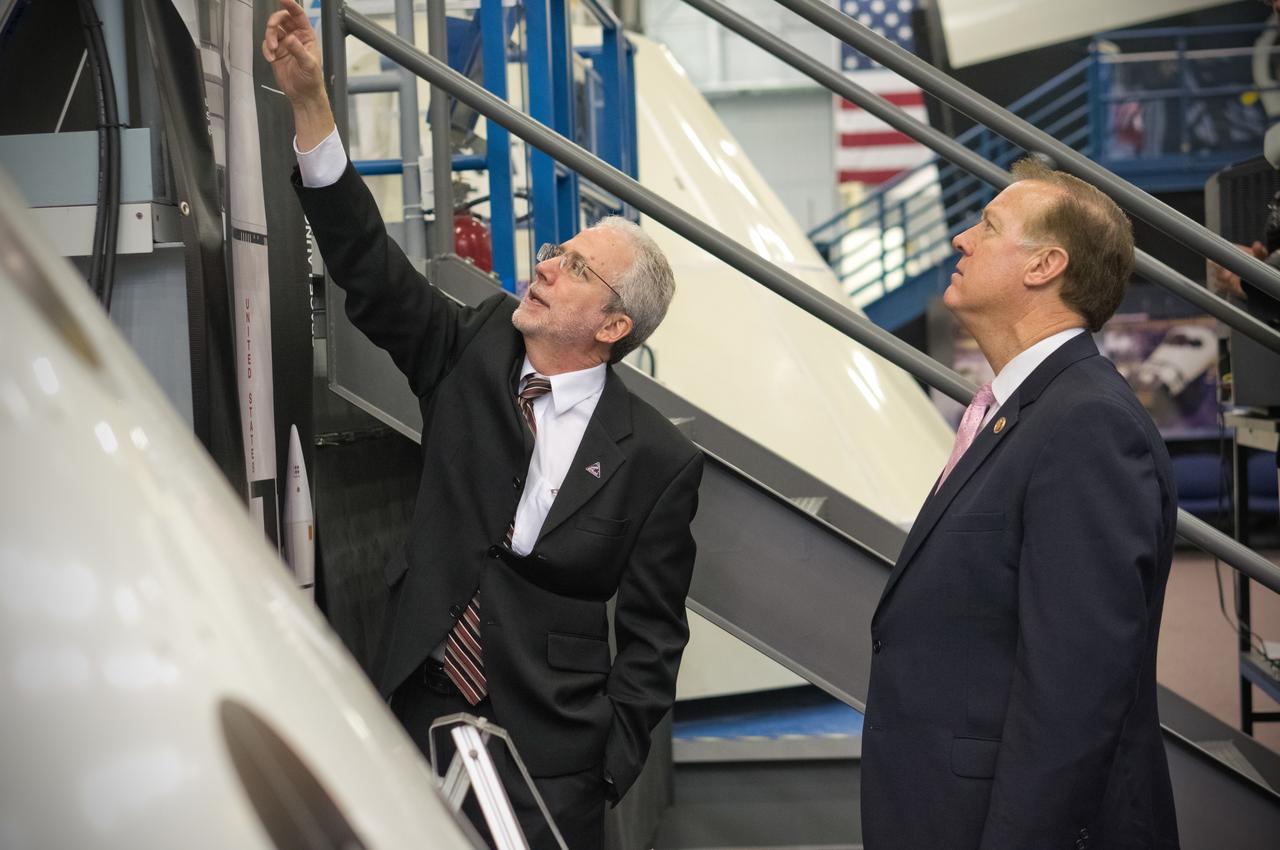
Congressman Steve Stockman, Texas 36th district, and Congressman Randy Weber, Texas 14th district, visit NASA’s Johnson Space Center in Houston on Feb. 20, 2013. Orion Program Manager Mark Geyer discussed the status and accomplishments of the Orion program. Part of Batch image transfer from Flickr.
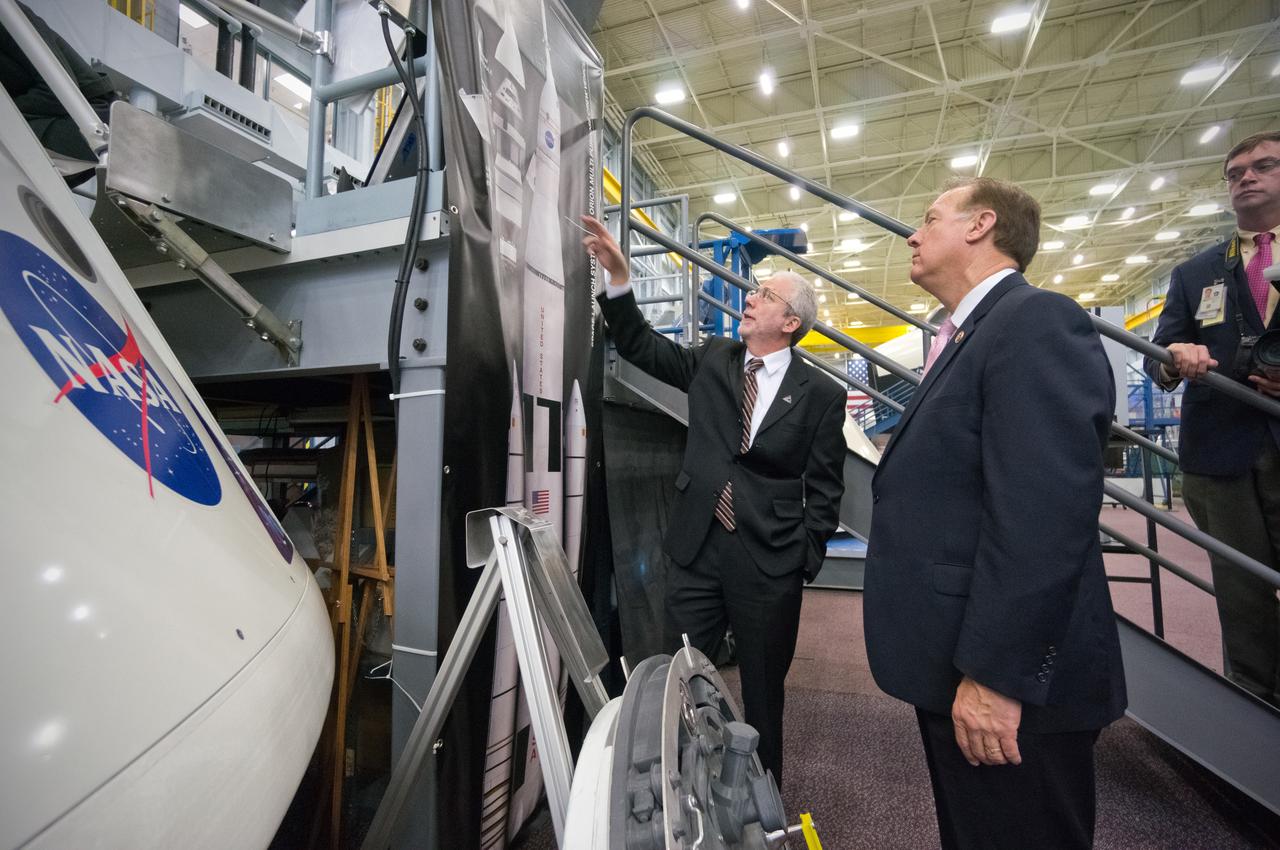
Congressman Steve Stockman, Texas 36th district, and Congressman Randy Weber, Texas 14th district, visit NASA’s Johnson Space Center in Houston on Feb. 20, 2013. Orion Program Manager Mark Geyer discussed the status and accomplishments of the Orion program. Part of Batch image transfer from Flickr.
Congressman Steve Stockman, Texas 36th district, and Congressman Randy Weber, Texas 14th district, visit NASA’s Johnson Space Center in Houston on Feb. 20, 2013. Orion Program Manager Mark Geyer discussed the status and accomplishments of the Orion program. Part of Batch image transfer from Flickr.
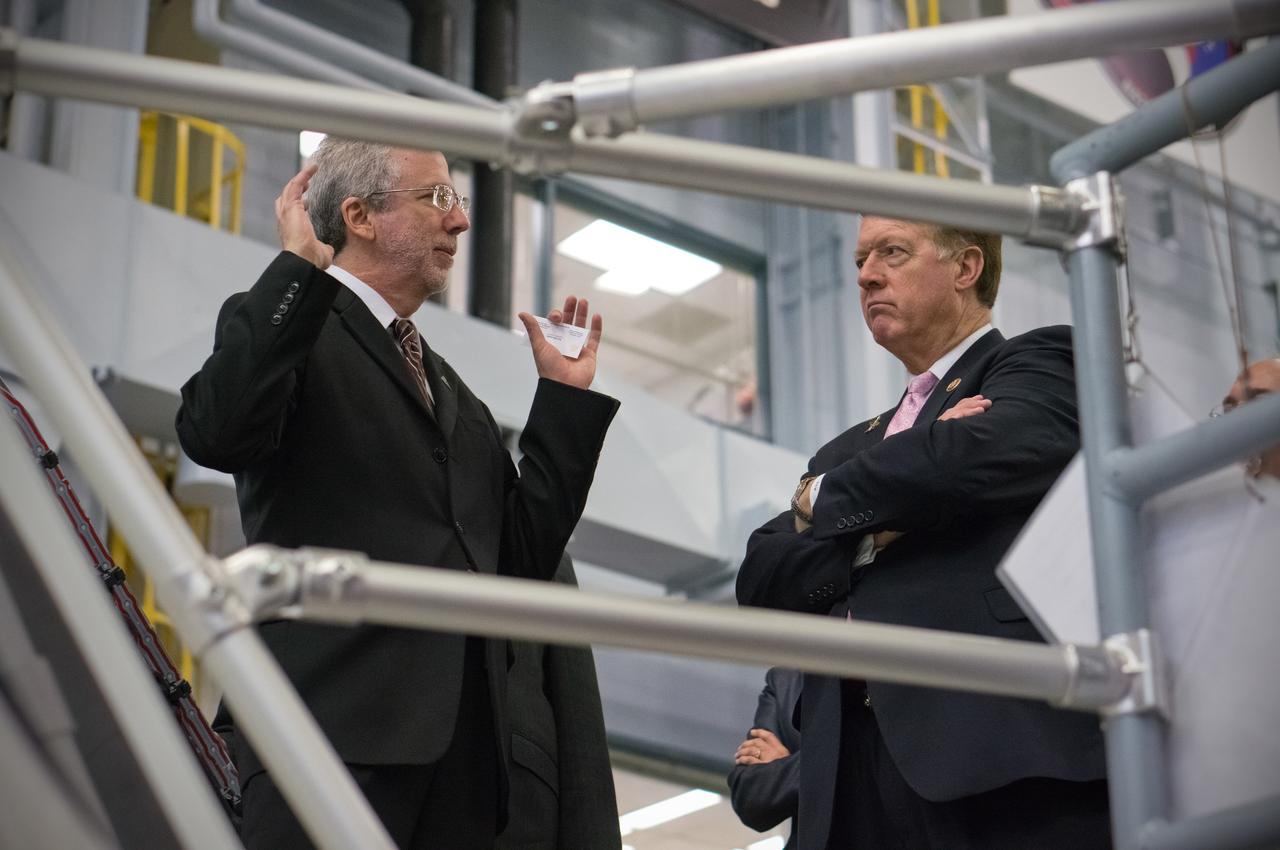
Congressman Steve Stockman, Texas 36th district, and Congressman Randy Weber, Texas 14th district, visit NASA’s Johnson Space Center in Houston on Feb. 20, 2013. Orion Program Manager Mark Geyer discussed the status and accomplishments of the Orion program. Part of Batch image transfer from Flickr.
Congressman Steve Stockman, Texas 36th district, and Congressman Randy Weber, Texas 14th district, visit NASA’s Johnson Space Center in Houston on Feb. 20, 2013. Orion Program Manager Mark Geyer discussed the status and accomplishments of the Orion program. Part of Batch image transfer from Flickr.

Congressman Steve Stockman, Texas 36th district, and Congressman Randy Weber, Texas 14th district, visit NASA’s Johnson Space Center in Houston on Feb. 20, 2013. Orion Program Manager Mark Geyer discussed the status and accomplishments of the Orion program. Part of Batch image transfer from Flickr.
Congressman Steve Stockman, Texas 36th district, and Congressman Randy Weber, Texas 14th district, visit NASA’s Johnson Space Center in Houston on Feb. 20, 2013. Orion Program Manager Mark Geyer discussed the status and accomplishments of the Orion program. Part of Batch image transfer from Flickr.
Congressman Steve Stockman, Texas 36th district, and Congressman Randy Weber, Texas 14th district, visit NASA’s Johnson Space Center in Houston on Feb. 20, 2013. Orion Program Manager Mark Geyer discussed the status and accomplishments of the Orion program. Part of Batch image transfer from Flickr.

Howard Hu, manager of the Orion Program at NASA’s Johnson Space Center, center, speaks during an Artemis Program progress update panel at the 2024 Artemis Suppliers Conference, Tuesday, Feb. 27, 2024, at the Grand Hyatt Hotel in Washington. Also participating in the panel was, from left, Amit Kshatriya, deputy associate administrator for the Moon to Mars Program in NASA’s Explorations Systems Development Mission Directorate; Shawn Quinn, manager of Exploration Ground Systems at NASA’s Kennedy Space Center; John Honeycutt, manager of the Space Launch System Program at NASA’s Marshall Space Flight Center; Lisa Watson-Morgan, manager of the Human Landing System Program at NASA’s Marshall Space Flight Center; Jon B. Olansen, manager of the Gateway Program at NASA’s Johnson Space Center; and Lara Kearney, manager of Extravehicular Activity and Human Surface Mobility Program at NASA’s Johnson Space Center. Photo Credit: (NASA/Joel Kowsky)
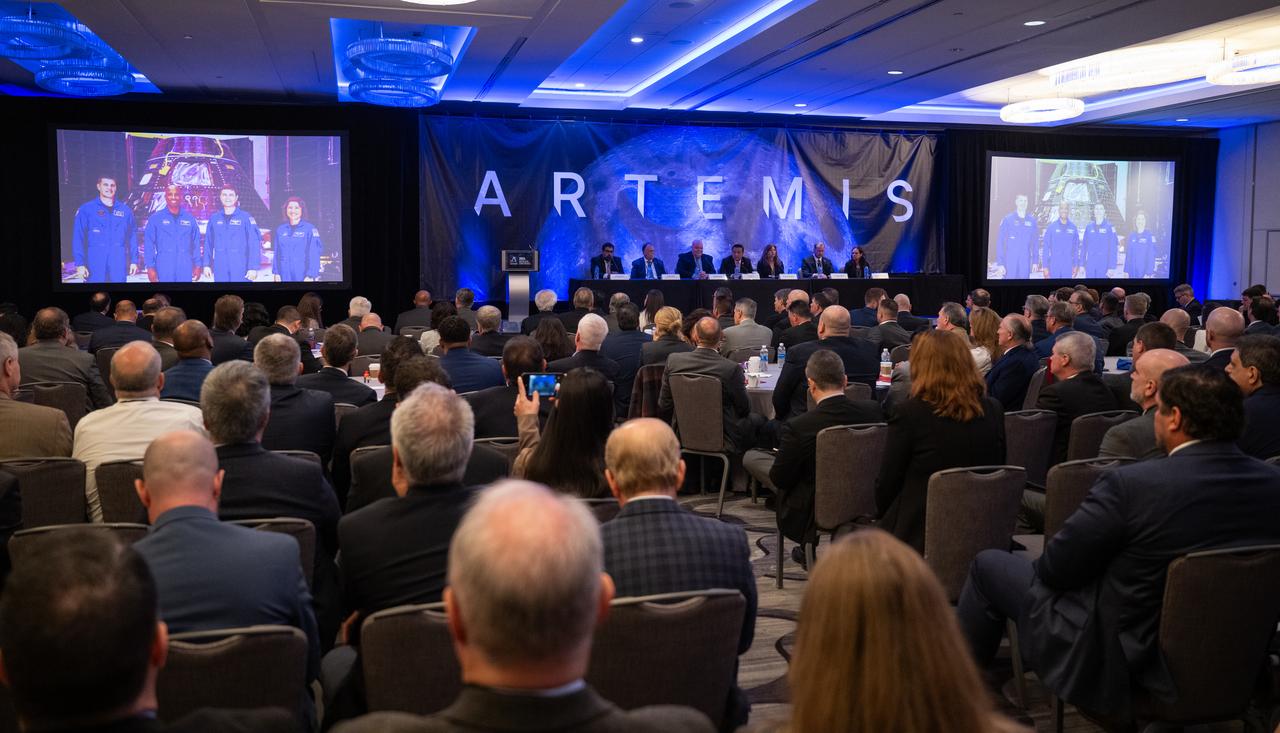
Howard Hu, manager of the Orion Program at NASA’s Johnson Space Center, center, speaks during an Artemis Program progress update panel at the 2024 Artemis Suppliers Conference, Tuesday, Feb. 27, 2024, at the Grand Hyatt Hotel in Washington. Also participating in the panel was, from left, Amit Kshatriya, deputy associate administrator for the Moon to Mars Program in NASA’s Explorations Systems Development Mission Directorate; Shawn Quinn, manager of Exploration Ground Systems at NASA’s Kennedy Space Center; John Honeycutt, manager of the Space Launch System Program at NASA’s Marshall Space Flight Center; Lisa Watson-Morgan, manager of the Human Landing System Program at NASA’s Marshall Space Flight Center; Jon B. Olansen, manager of the Gateway Program at NASA’s Johnson Space Center; and Lara Kearney, manager of Extravehicular Activity and Human Surface Mobility Program at NASA’s Johnson Space Center. Photo Credit: (NASA/Joel Kowsky)
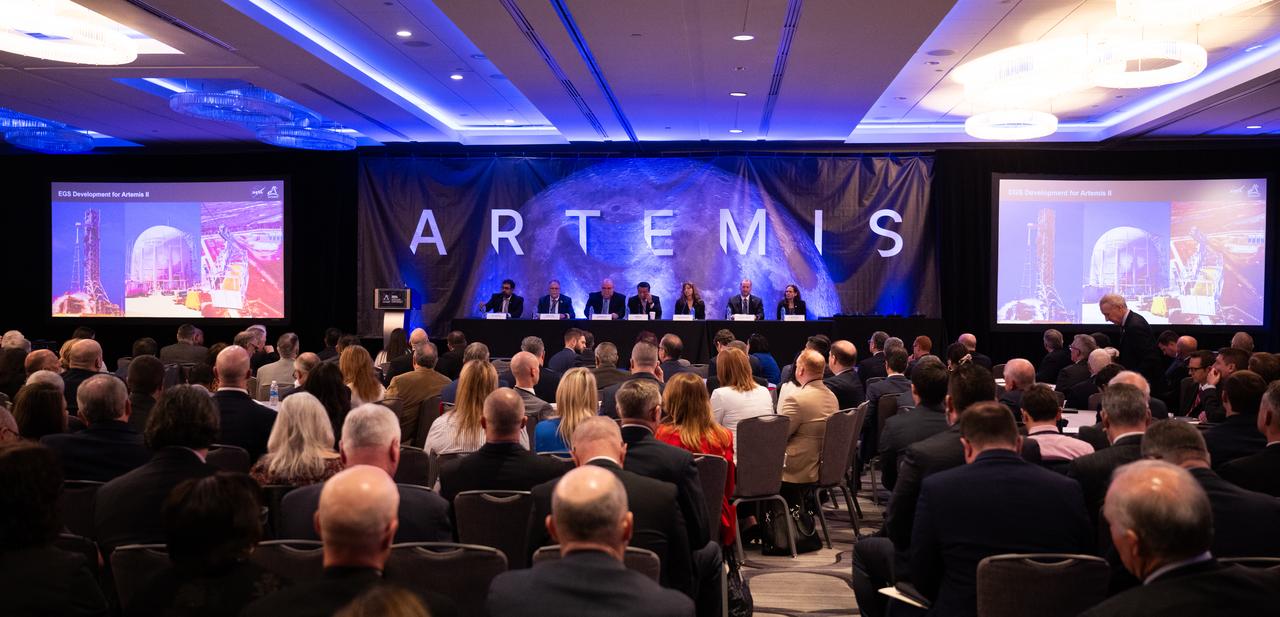
Shawn Quinn, manager of Exploration Ground Systems at NASA’s Kennedy Space Center, second from left, speaks during an Artemis Program progress update panel at the 2024 Artemis Suppliers Conference, Tuesday, Feb. 27, 2024, at the Grand Hyatt Hotel in Washington. Also participating in the panel was, from left, Amit Kshatriya, deputy associate administrator for the Moon to Mars Program in NASA’s Explorations Systems Development Mission Directorate; John Honeycutt, manager of the Space Launch System Program at NASA’s Marshall Space Flight Center; Howard Hu, manager of the Orion Program at NASA’s Johnson Space Center; Lisa Watson-Morgan, manager of the Human Landing System Program at NASA’s Marshall Space Flight Center; Jon B. Olansen, manager of the Gateway Program at NASA’s Johnson Space Center; and Lara Kearney, manager of Extravehicular Activity and Human Surface Mobility Program at NASA’s Johnson Space Center. Photo Credit: (NASA/Joel Kowsky)
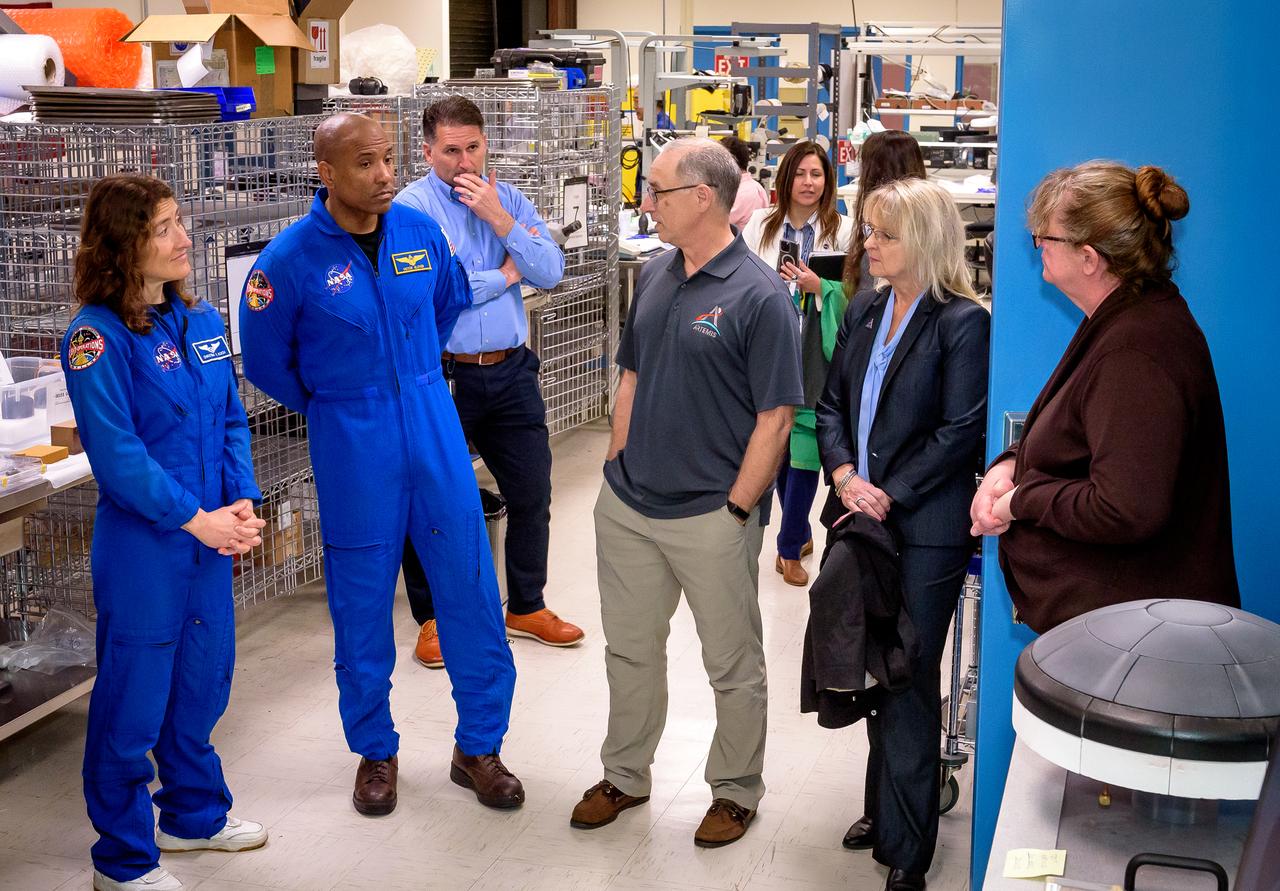
NASA astronauts Christina Koch, left, Victor J. Glover, Matt Switzer, Orion Deputy Program Manager Debbie Korth, and Margaret Stackpoole.
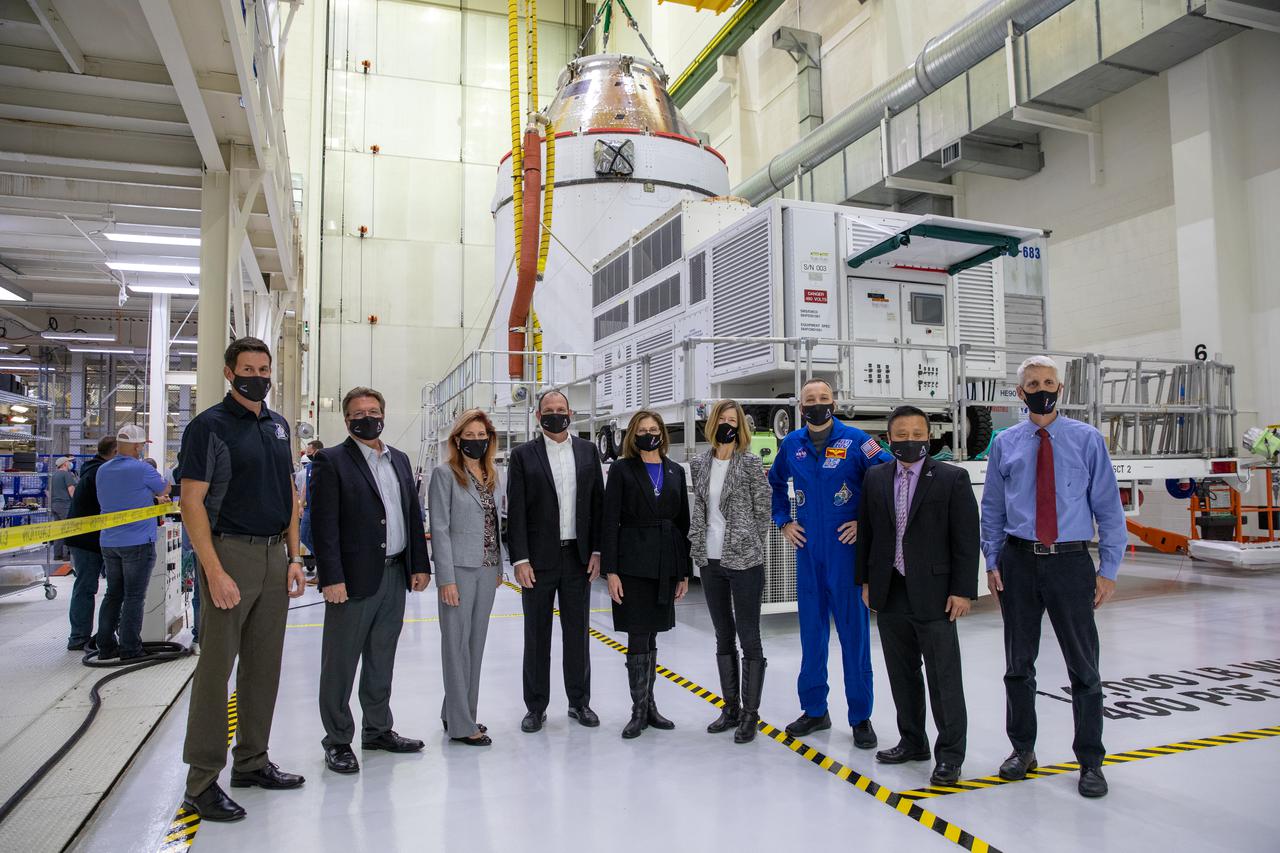
Orion is revealed for one of the final times on Jan. 14, as it is moved by crane to its transport pallet inside the Neil Armstrong Operations and Checkout Building at NASA’s Kennedy Space Center in Florida, along its path to the pad ahead of the Artemis I launch. Standing near Orion, from left, are Nathan Varn, Lockheed Martin Production Control director; Jules Schneider, Lockheed Martin Director of Orion Assembly, Test and Launch at Kennedy; Kelly DeFazio, Lockheed Martin Orion Program director for production operations; Tony Antonelli, Lockheed Martin Orion Program director and Artemis II mission director; Cathy Koerner, Orion Program manager; Kathy Lueders, associate administrator of the Human Exploration and Operations Mission Directorate; NASA astronaut Randy Bresnik; Howard Hu Orion Program deputy manager; and Scott Wilson, Orion Production Office manager. Teams across the globe have worked tirelessly to assemble the spacecraft, which will receive a protective covering prior to departing for the Multi-Payload Processing Facility to begin ground processing by the Exploration Ground Systems and Jacobs teams.
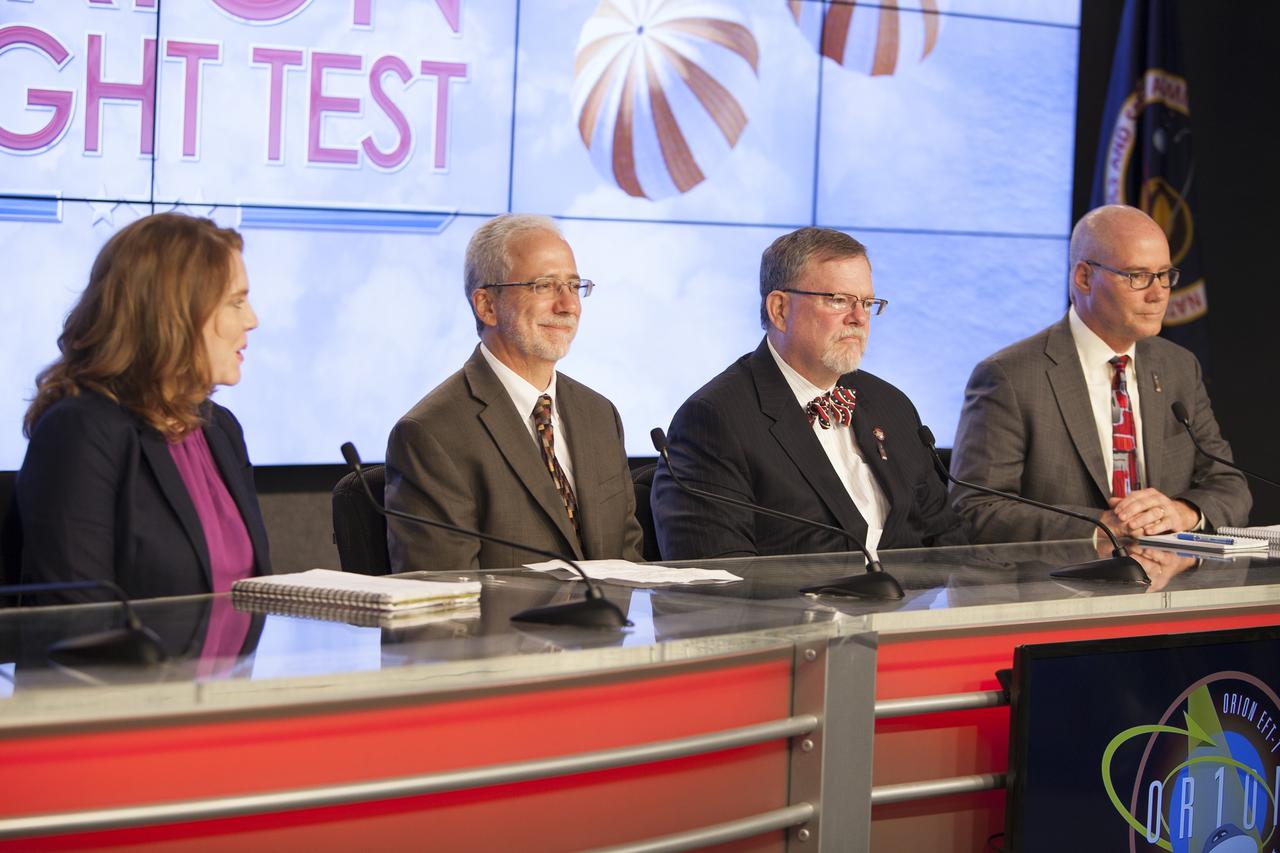
CAPE CANAVERAL, Fla. -- In the Kennedy Space Center’s Press Site auditorium, agency and industry leaders spoke to members of the news media about the postponement of the Orion Flight Test launch due to an issue related to fill and drain valves on the Delta IV Heavy rocket. From left are: Brandi Dean of NASA Public Affairs, Mark Geyer, NASA's Orion program manager, Mike Hawes, Lockheed Martin Orion Program manager, and Dan Collins, United Launch Alliance chief operating officer. For more information, visit www.nasa.gov/orion Photo credit: NASA/Frankie Martin
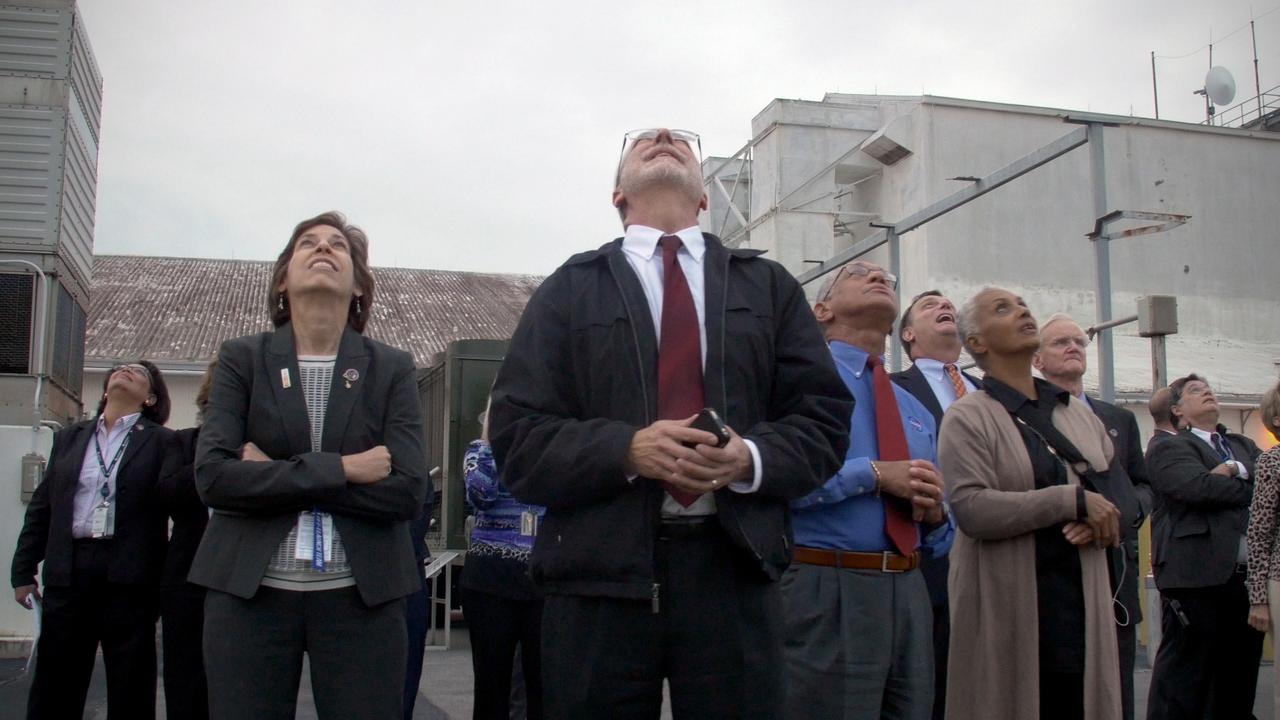
The NASA/Lockheed Martin leadership team watches the Exploration Flight Test-1 (EFT-1) launch outside Hanger AE at the Cape Canaveral Air Force Station in Florida on Dec. 5, 2014. Johnson Space Center Director Ellen Ochoa, Orion Program Manager Mark Geyer, NASA Administrator Charles Bolden and Jackie Bolden, Orion Deputy Program Manager Mark Kirasich, NASA Astronaut John Casper. Part of Batch image transfer from Flickr.
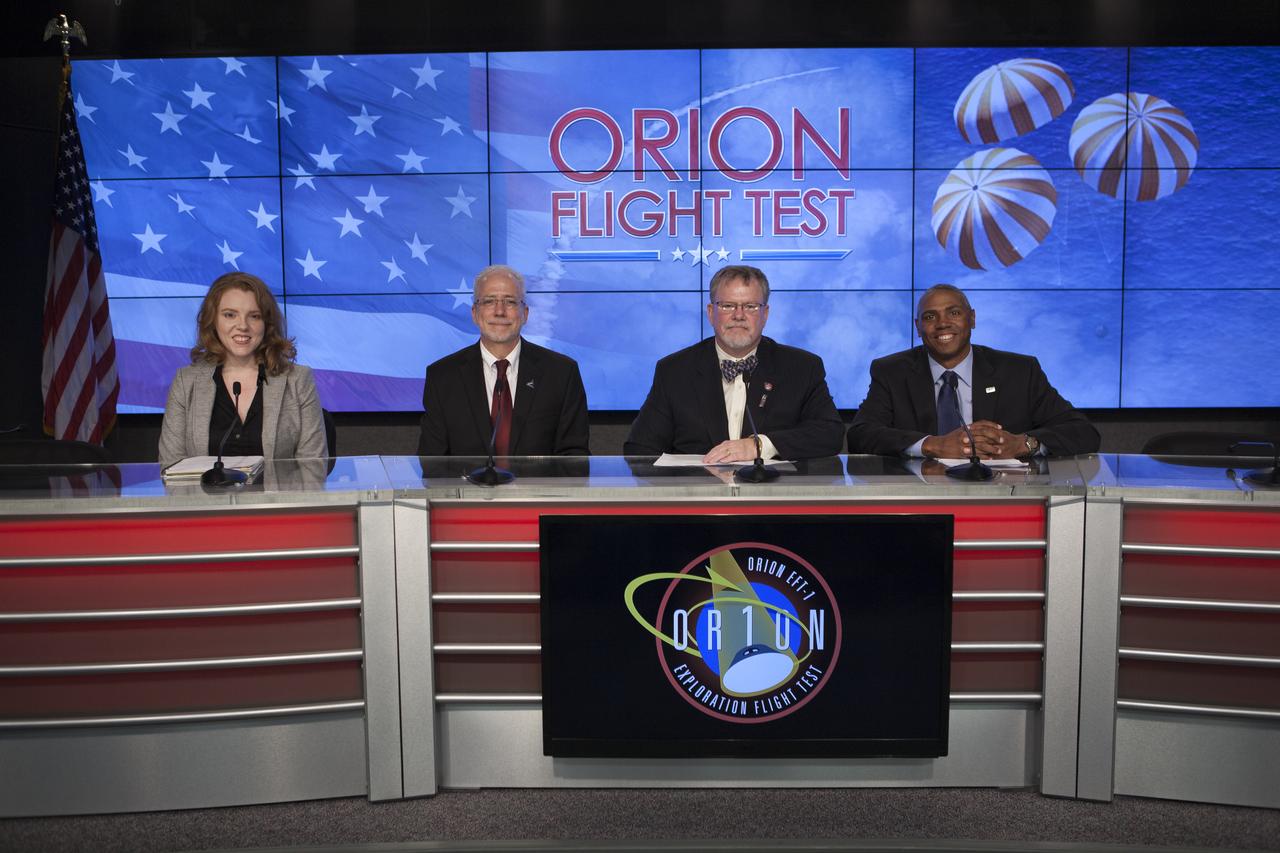
In the Kennedy Space Center’s Press Site auditorium, agency and industry leaders spoke to members of the news media as the Orion spacecraft and its Delta IV Heavy rocket were being prepared for launch. From left are: Brandi Dean of NASA Public Affairs, Mark Geyer, Orion program manager, Mike Hawes, Lockheed Martin Orion Program manager, and Ron Fortson, United Launch Alliance director of mission management. Orion is the exploration spacecraft designed to carry astronauts to destinations not yet explored by humans, including an asteroid and Mars. It will have emergency abort capability, sustain the crew during space travel and provide safe re-entry from deep space return velocities. The first unpiloted flight test of Orion is scheduled to launch Dec. 4, 2014 atop a United Launch Alliance Delta IV Heavy rocket, and in 2018 on NASA’s Space Launch System rocket.
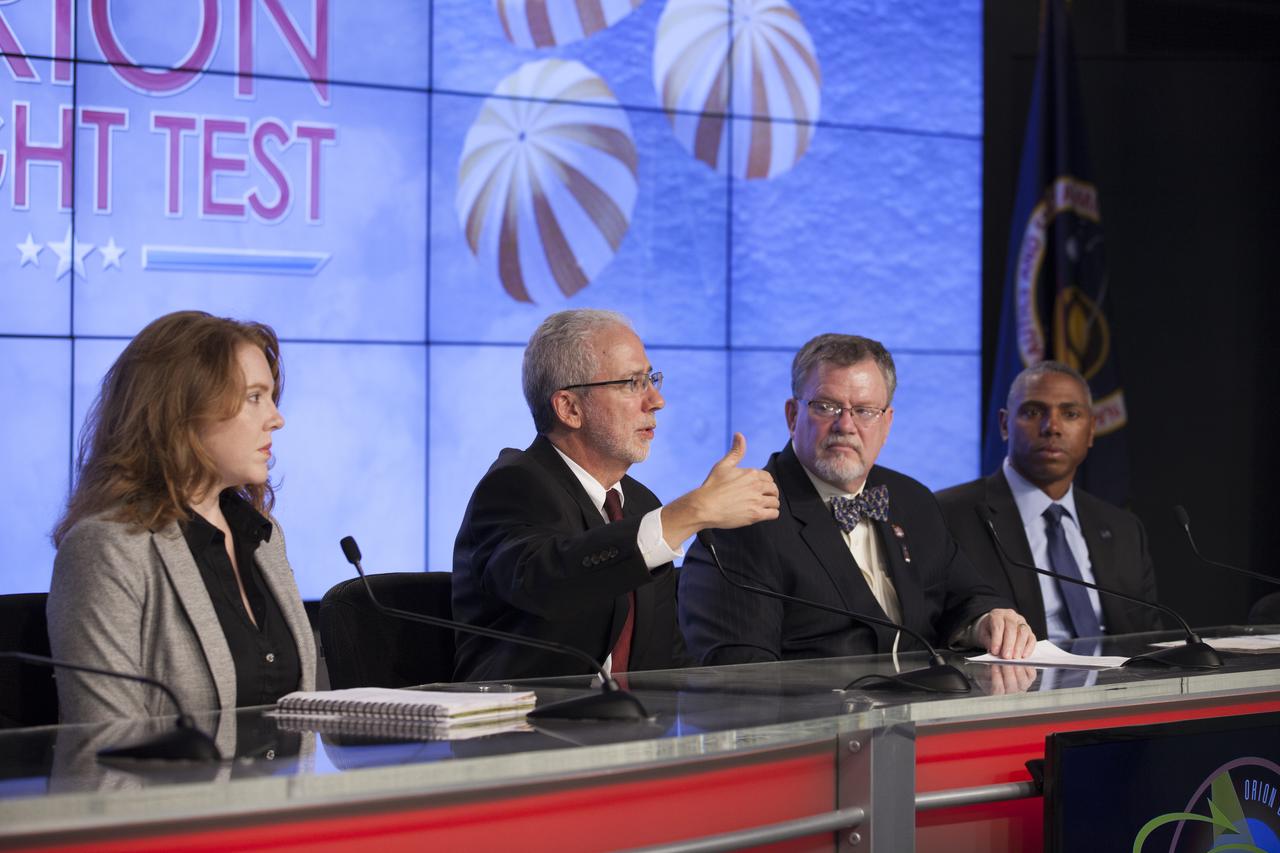
In the Kennedy Space Center’s Press Site auditorium, agency and industry leaders spoke to members of the news media as the Orion spacecraft and its Delta IV Heavy rocket were being prepared for launch. From left are: Brandi Dean of NASA Public Affairs, Mark Geyer, Orion program manager, Mike Hawes, Lockheed Martin Orion Program manager, and Ron Fortson, United Launch Alliance director of mission management. Orion is the exploration spacecraft designed to carry astronauts to destinations not yet explored by humans, including an asteroid and Mars. It will have emergency abort capability, sustain the crew during space travel and provide safe re-entry from deep space return velocities. The first unpiloted flight test of Orion is scheduled to launch Dec. 4, 2014 atop a United Launch Alliance Delta IV Heavy rocket, and in 2018 on NASA’s Space Launch System rocket.
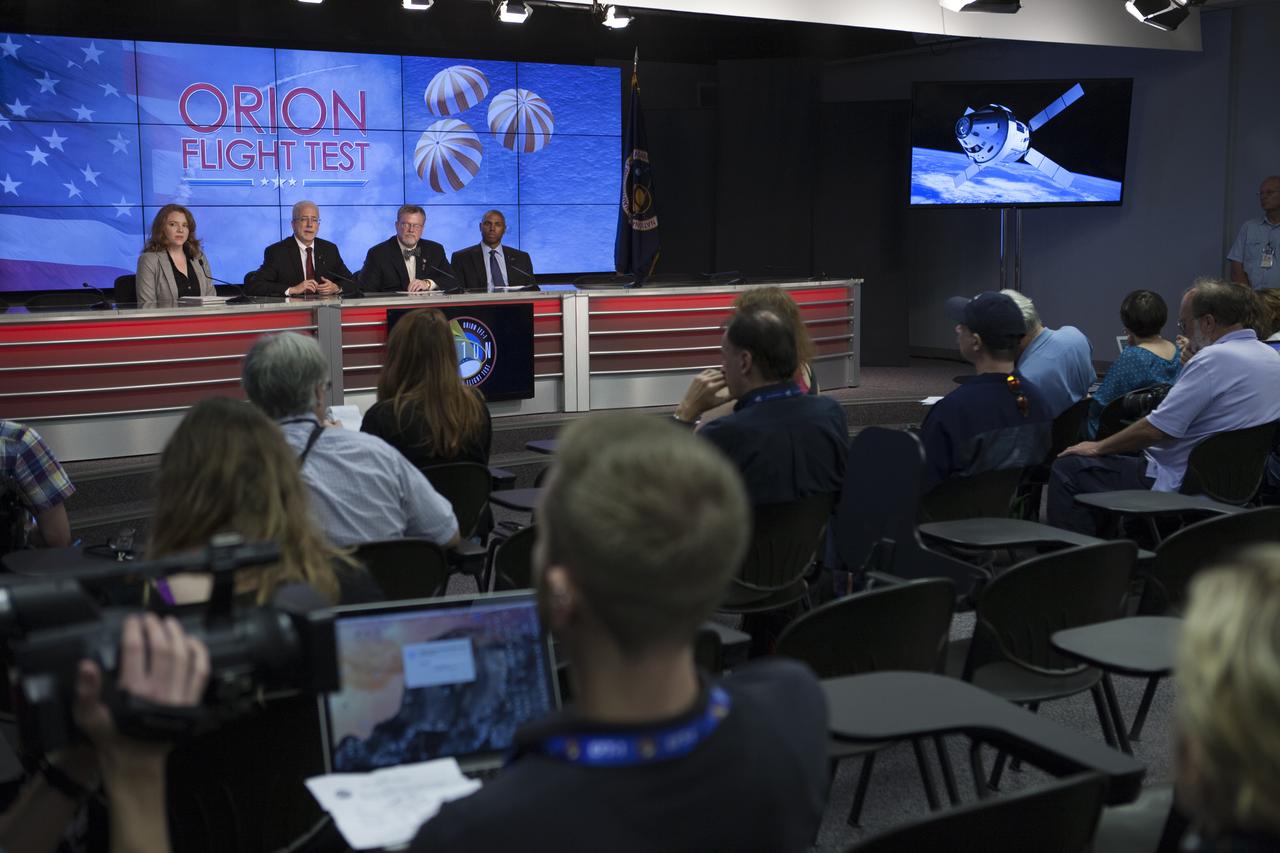
In the Kennedy Space Center’s Press Site auditorium, news media members listen as agency and industry leaders the status of preparations for launch of the Orion spacecraft atop a Delta IV Heavy rocket. From left are: Brandi Dean of NASA Public Affairs, Mark Geyer, Orion program manager, Mike Hawes, Lockheed Martin Orion Program manager, and Ron Fortson, United Launch Alliance director of mission management. Orion is the exploration spacecraft designed to carry astronauts to destinations not yet explored by humans, including an asteroid and Mars. It will have emergency abort capability, sustain the crew during space travel and provide safe re-entry from deep space return velocities. The first unpiloted flight test of Orion is scheduled to launch Dec. 4, 2014 atop a United Launch Alliance Delta IV Heavy rocket, and in 2018 on NASA’s Space Launch System rocket.

Shown in front of the Artemis I spacecraft, Larry Price, at left, Lockheed Martin Orion program manager, accompanies Russell Vought, director of the White House Office of Management and Budget, during a tour of the Neil Armstrong Operations and Checkout Building high bay at NASA’s Kennedy Space Center in Florida on Aug. 28, 2020. Orion spacecraft are being prepared for Artemis I and Artemis II. The Office of Management and Budget is working with the U.S. Congress to line up the necessary resources to land the first woman and the next man on the Moon in 2024.
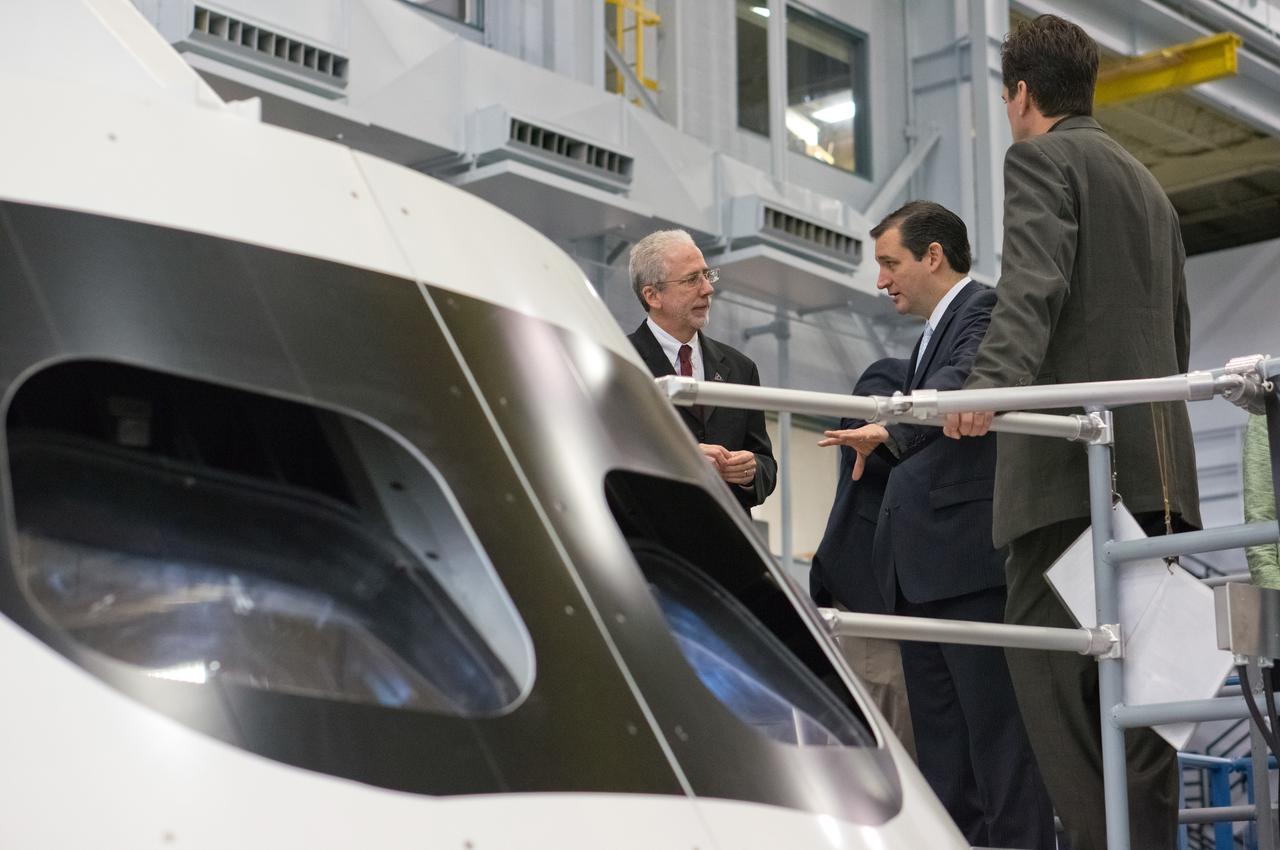
U.S. Senator for Texas Ted Cruz visits Orion at the Johnson Space Center in Houston on Feb. 8, 2013. Orion Program Manager Mark Geyer discussed Orion progress with the Senator. Part of Batch image transfer from Flickr.
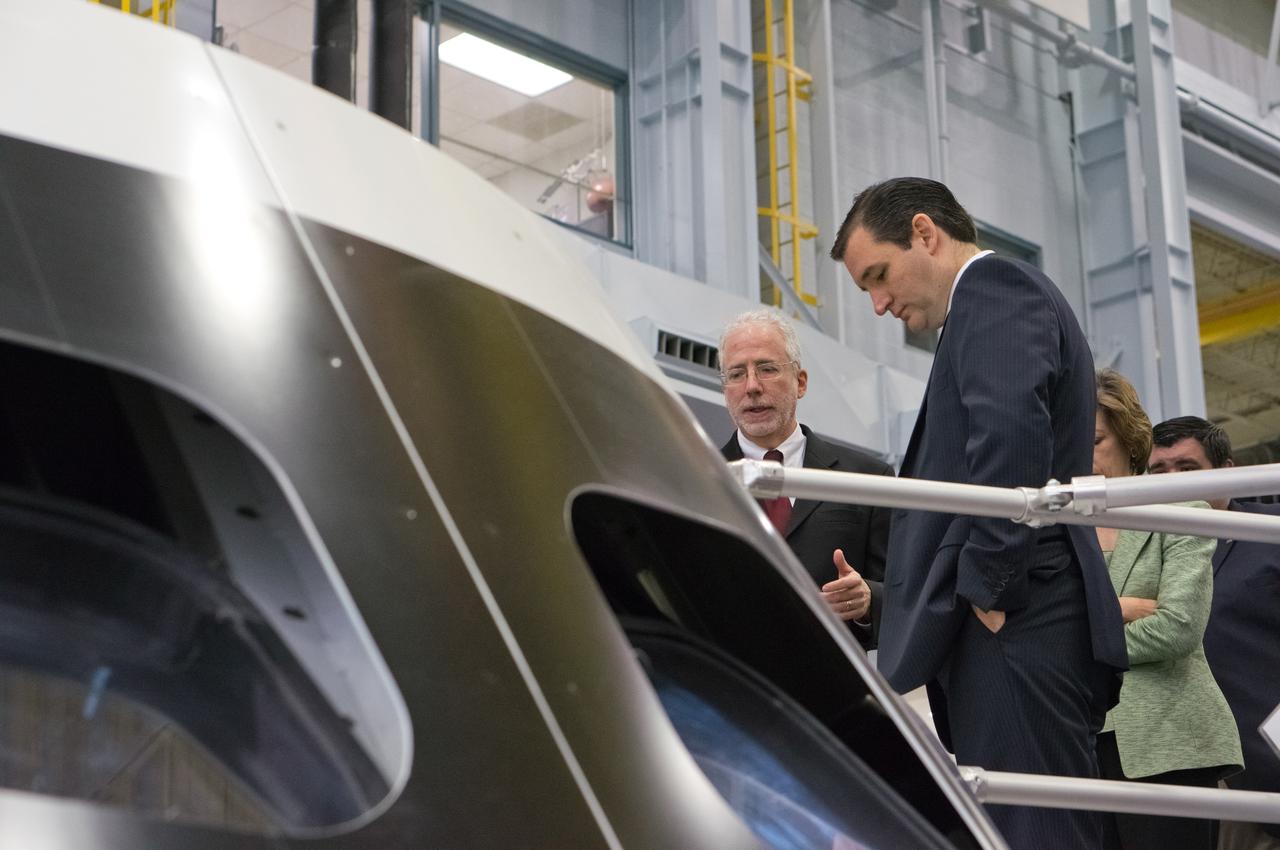
U.S. Senator for Texas Ted Cruz visits Orion at the Johnson Space Center in Houston on Feb. 8, 2013. Orion Program Manager Mark Geyer and Johnson Space Center Director Dr. Ellen Ochoa discussed Orion progress with the Senator. Part of Batch image transfer
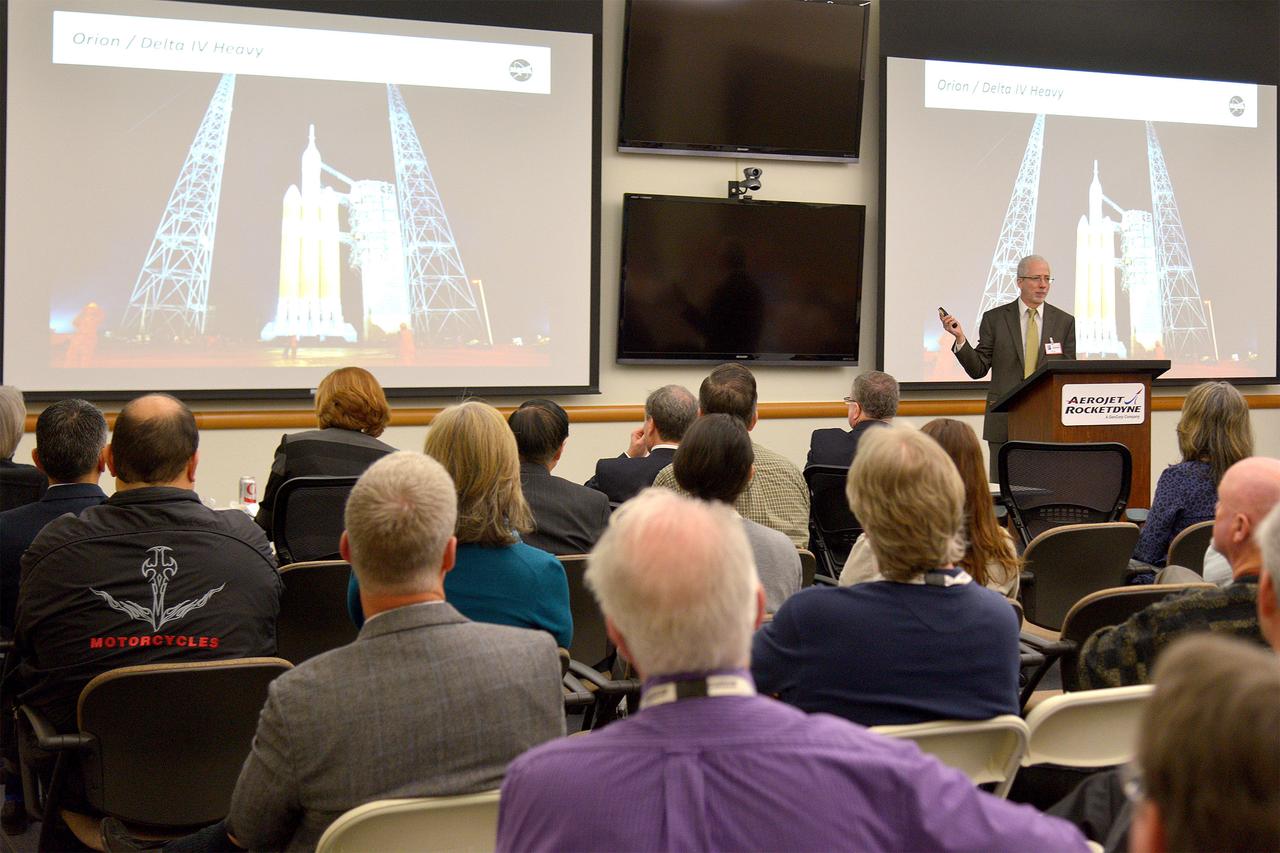
Orion leadership (including Orion Program Manager Mark Geyer) visits Aerojet Rocketdyne in Sacramento, CA on March 3, 2015 to recognize the great work performed in support of Orion's first flight, Exploration Flight Test-1 (EFT-1). Part of Batch image transfer from Flickr.
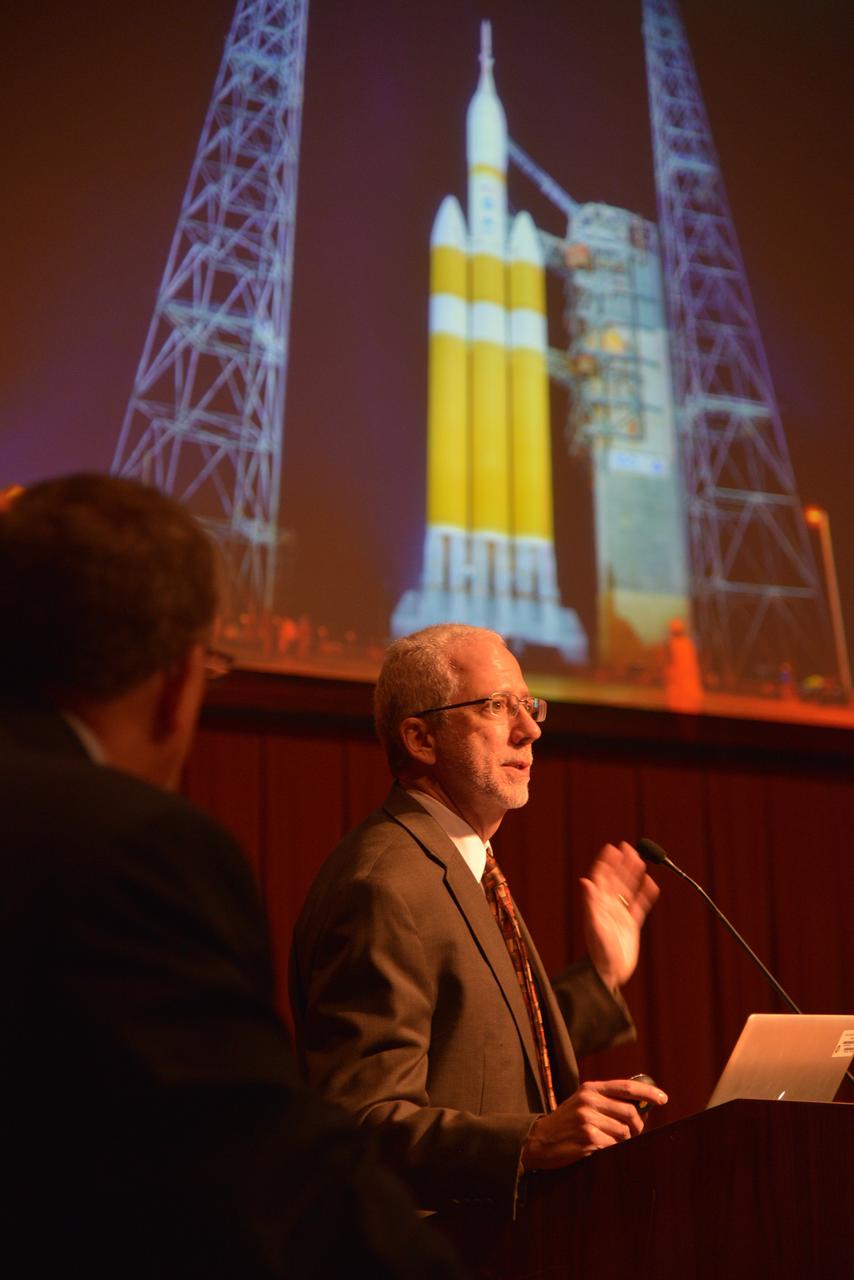
The Orion leadership (including Orion Program Manager Mark Geyer) visited Ames Research Center in California on March 2, 2015 to recognize the great work performed at the center in support of Orion's first flight, Exploration Flight Test-1 (EFT-1). Part of Batch image transfer from Flickr.