
CAPE CANAVERAL, Fla. -- This is a printable version of the NASA Kennedy Space Center 2012 holiday poster. It depicts Santa Claus riding a spacecraft from NASA's Commercial Crew Program as he delivers toys all over the world for the holidays, including Astro Socks, Cosmic Soda and Magnetic boots that have been International Space Station certified. Santa also holds a model rocket for delivery and is steering his rocketship toward a stop at the space station during his deliveries. Lifting off from NASA's Kennedy Space Center in Florida, Santa is taking advantage of technologies developed at Kennedy in the Ground Systems Operations and Development Program and the Launch Services Program. The same advancements that are propelling Santa through space will be used for NASA's next generation of deep space missions: the Space Launch System rocket and Orion spacecraft. The NASA insignia appears in the upper right corner. For a black-and-white coloring sheet version, go to http://go.nasa.gov/V3KLEc. For more information, visit www.nasa.gov/kennedy.Poster designed by Kennedy Space Center Graphics Department. Credit: NASA
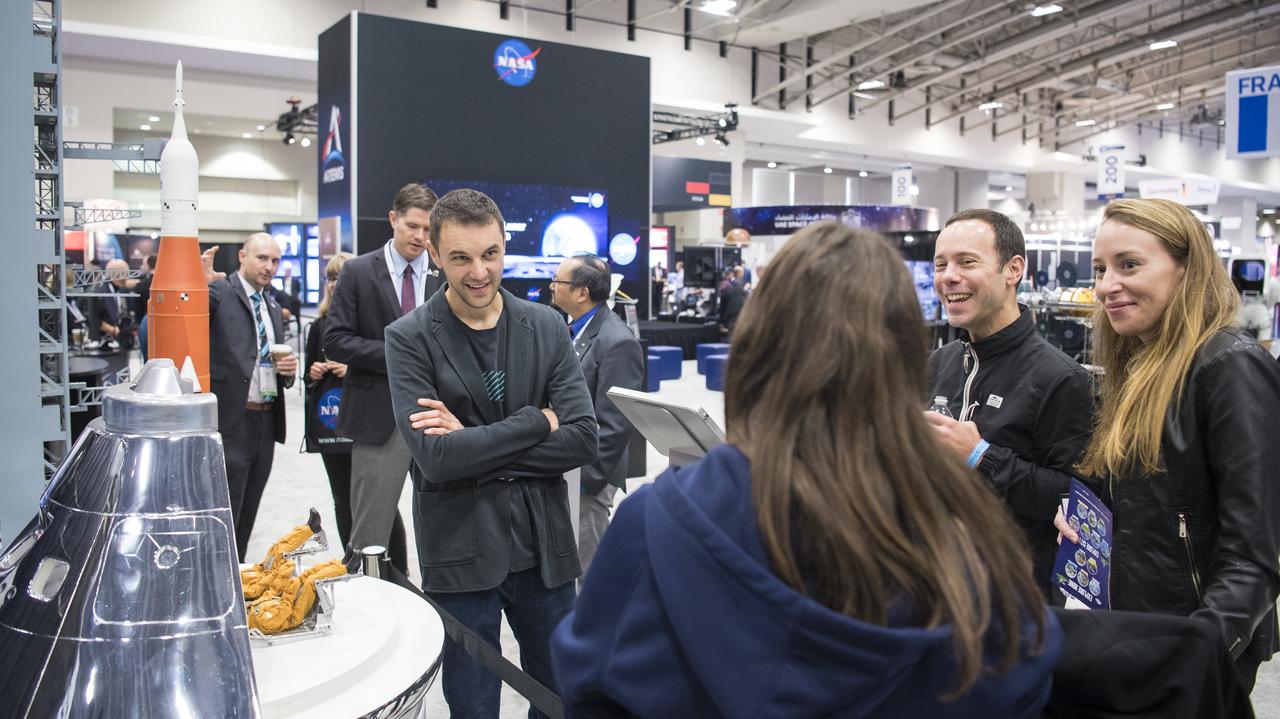
Visitors to the NASA exhibit at the 70th International Astronautical Congress view a cutaway model of the agency’s Orion spacecraft, Friday, Oct. 25, 2019, at the Walter E. Washington Convention Center in Washington. Photo Credit: (NASA/Joel Kowsky)
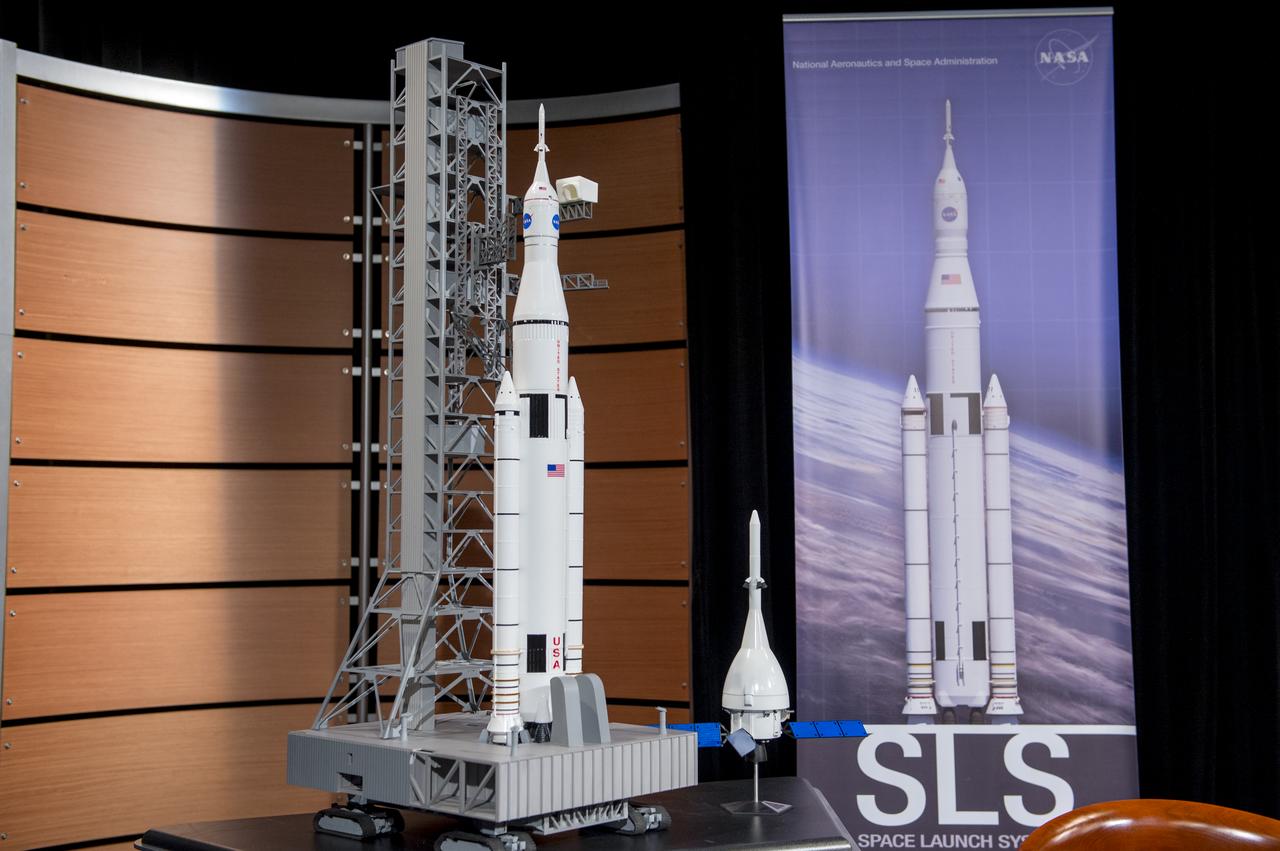
Models of the Space Launch System and Orion spacecraft are displayed during a panel discussion on deep space eploration at the Newseum on Tuesday, November 12, 2013 in Washington. Photo Credit: (NASA/Jay Westcott)
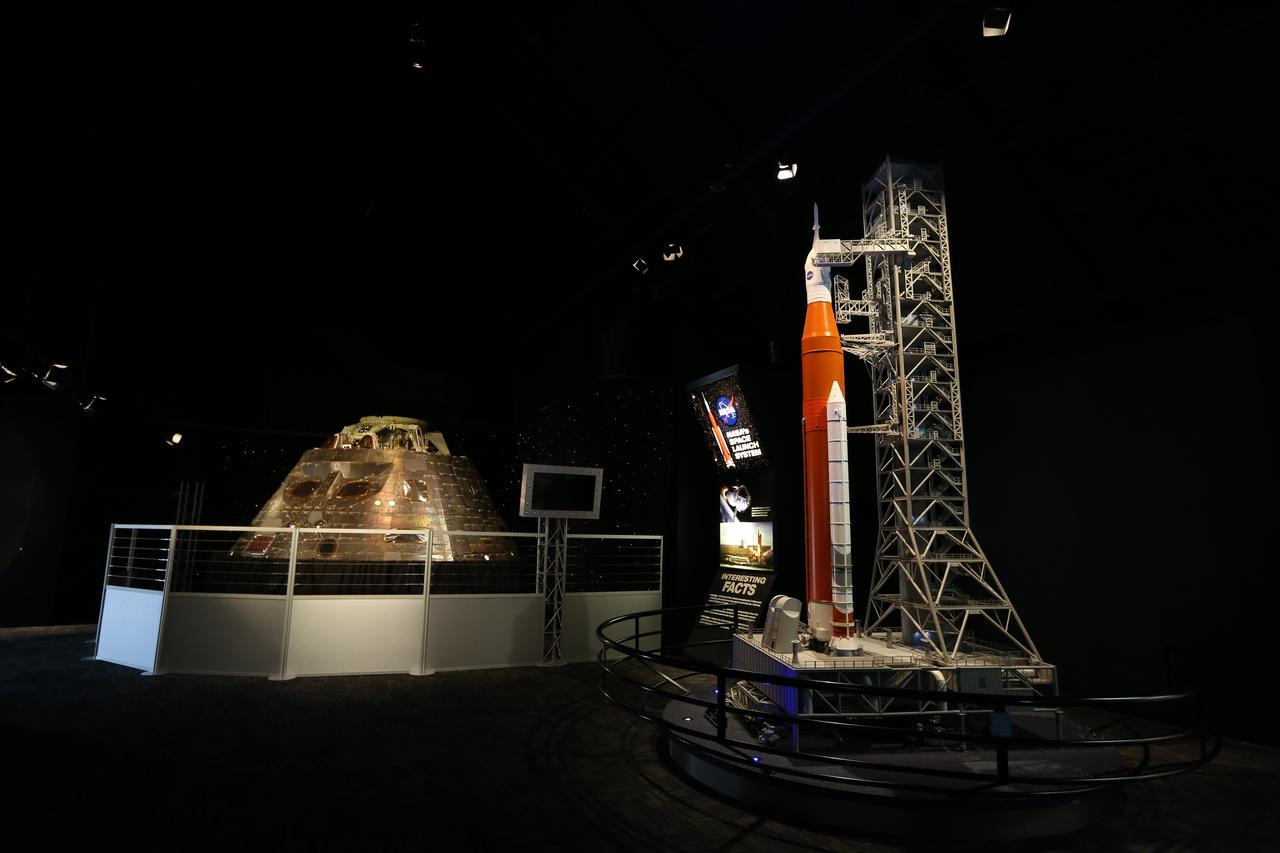
The Orion crew module from Exploration Flight Test 1 (EFT-1) is on display at nearby NASA Kennedy Space Center Visitor Complex in Florida. The crew module is part of the NASA Now exhibit in the IMAX Theater. Also in view is a scale model of NASA's Space Launch System rocket and Orion spacecraft on the mobile launcher. The Orion EFT-1 spacecraft launched atop a United Launch Alliance Delta IV rocket Dec. 5, 2014, from Space Launch Complex 37 at Cape Canaveral Air Force Station. The spacecraft built for humans traveled 3,604 miles above Earth and splashed down about 4.5 hours later in the Pacific Ocean.
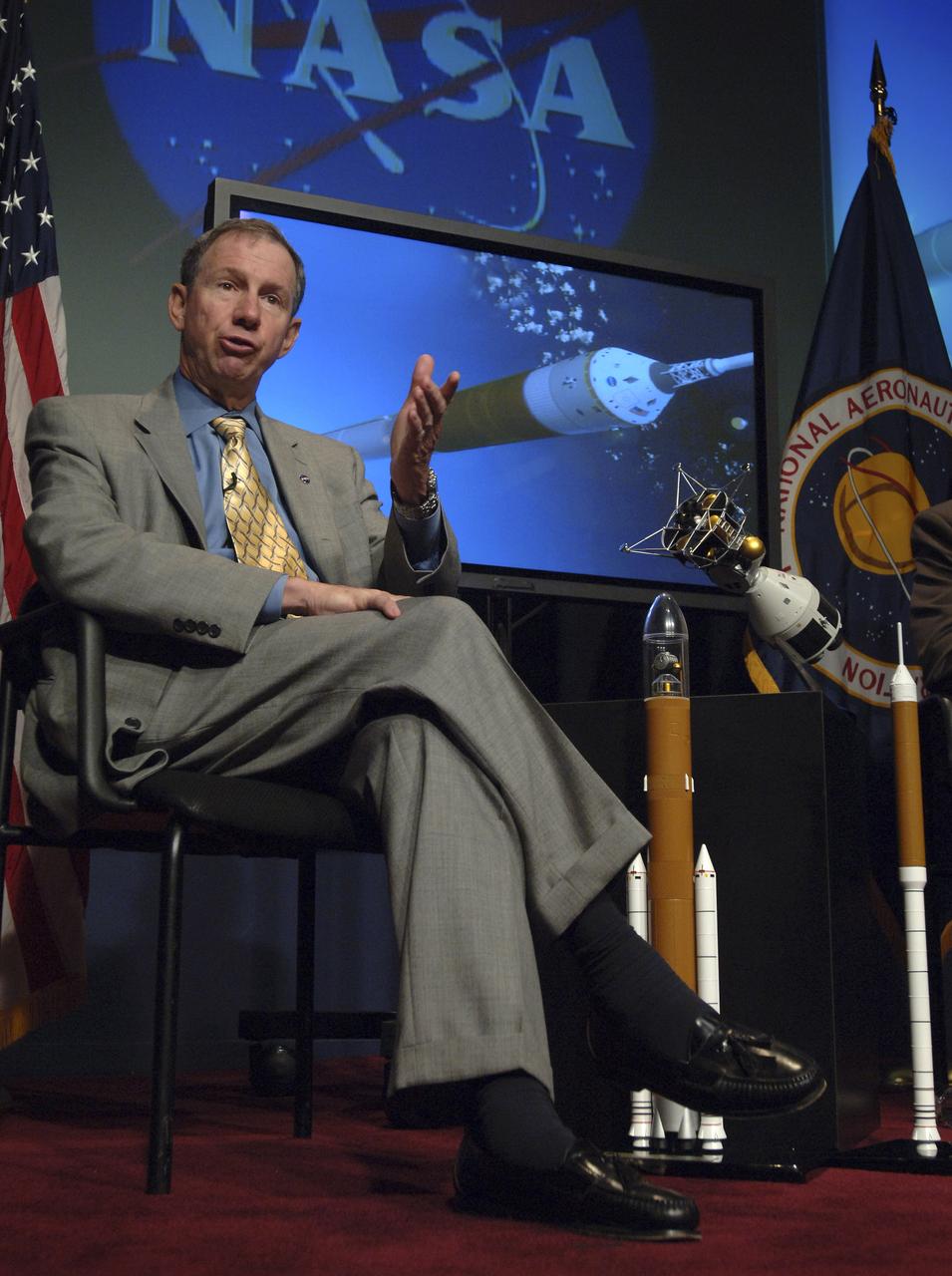
NASA Administrator Michael Griffin discusses the results of the agency's exploration architecture study on Monday, Sept. 19, 2005, at NASA Headquarters in Washington. The study made specific design recommendations for a vehicle to carry crews into space, a family of launch vehicles to take missions to the moon and beyond, and a "lunar mission architecture" for landing on the moon. Photo Credit: (NASA/Bill Ingalls)
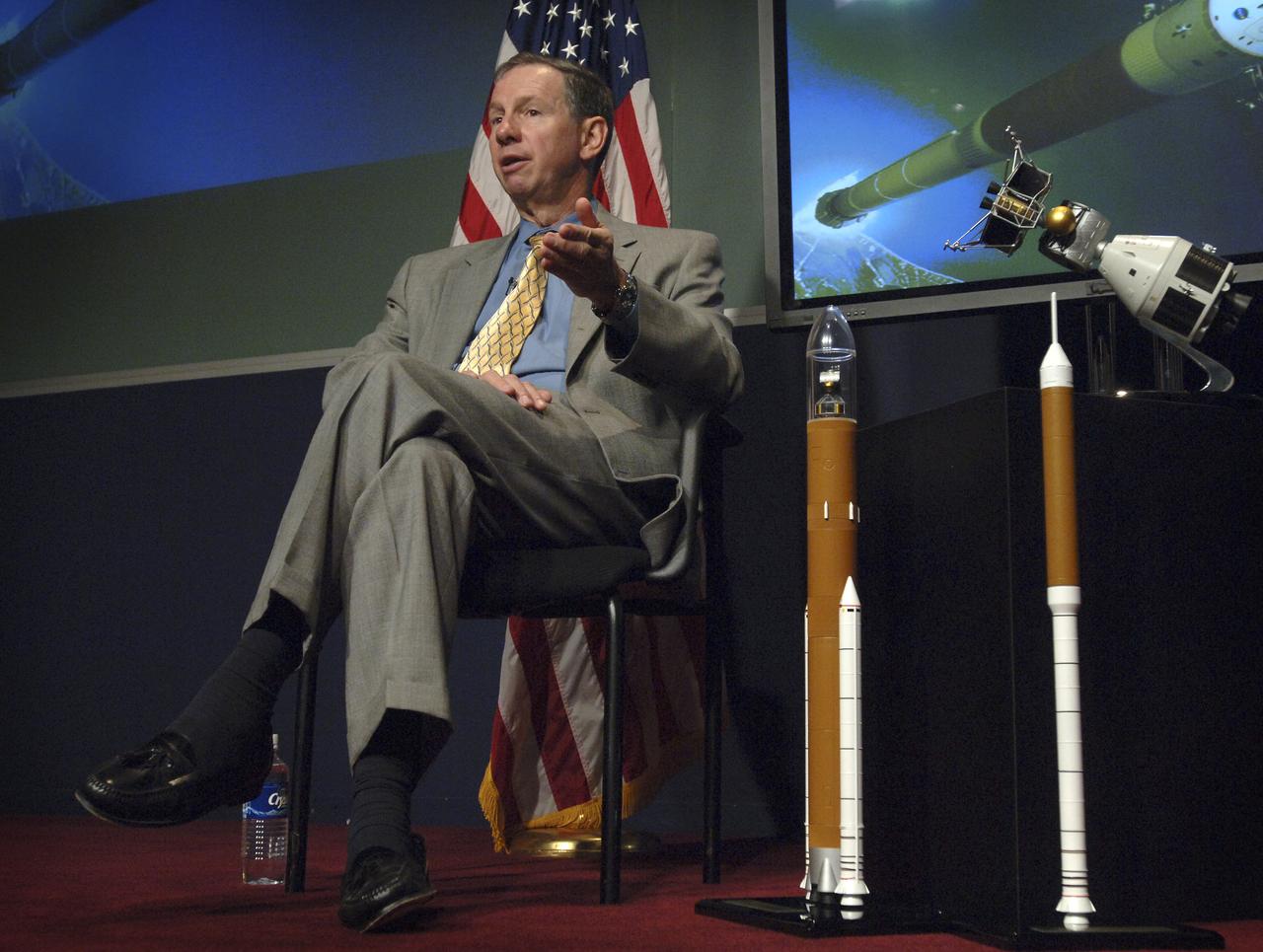
NASA Administrator Michael Griffin discusses the results of the agency's exploration architecture study on Monday, Sept. 19, 2005, at NASA Headquarters in Washington. The study made specific design recommendations for a vehicle to carry crews into space, a family of launch vehicles to take missions to the moon and beyond, and a "lunar mission architecture" for landing on the moon. Photo Credit: (NASA/Bill Ingalls)
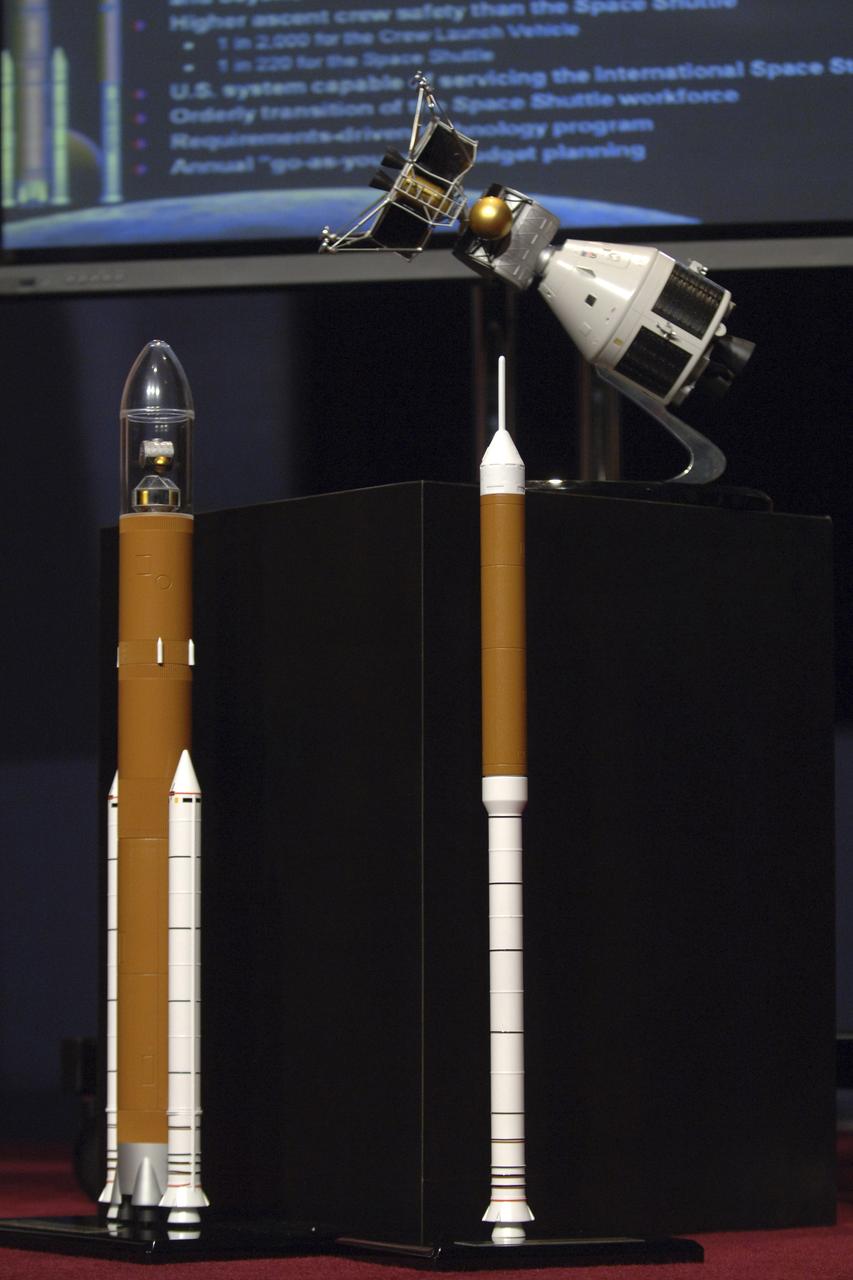
NASA Administrator Michael Griffin discusses the results of the agency's exploration architecture study on Monday, Sept. 19, 2005, at NASA Headquarters in Washington. The study made specific design recommendations for a vehicle to carry crews into space, a family of launch vehicles to take missions to the moon and beyond, and a "lunar mission architecture" for landing on the moon. Photo Credit: (NASA/Bill Ingalls)
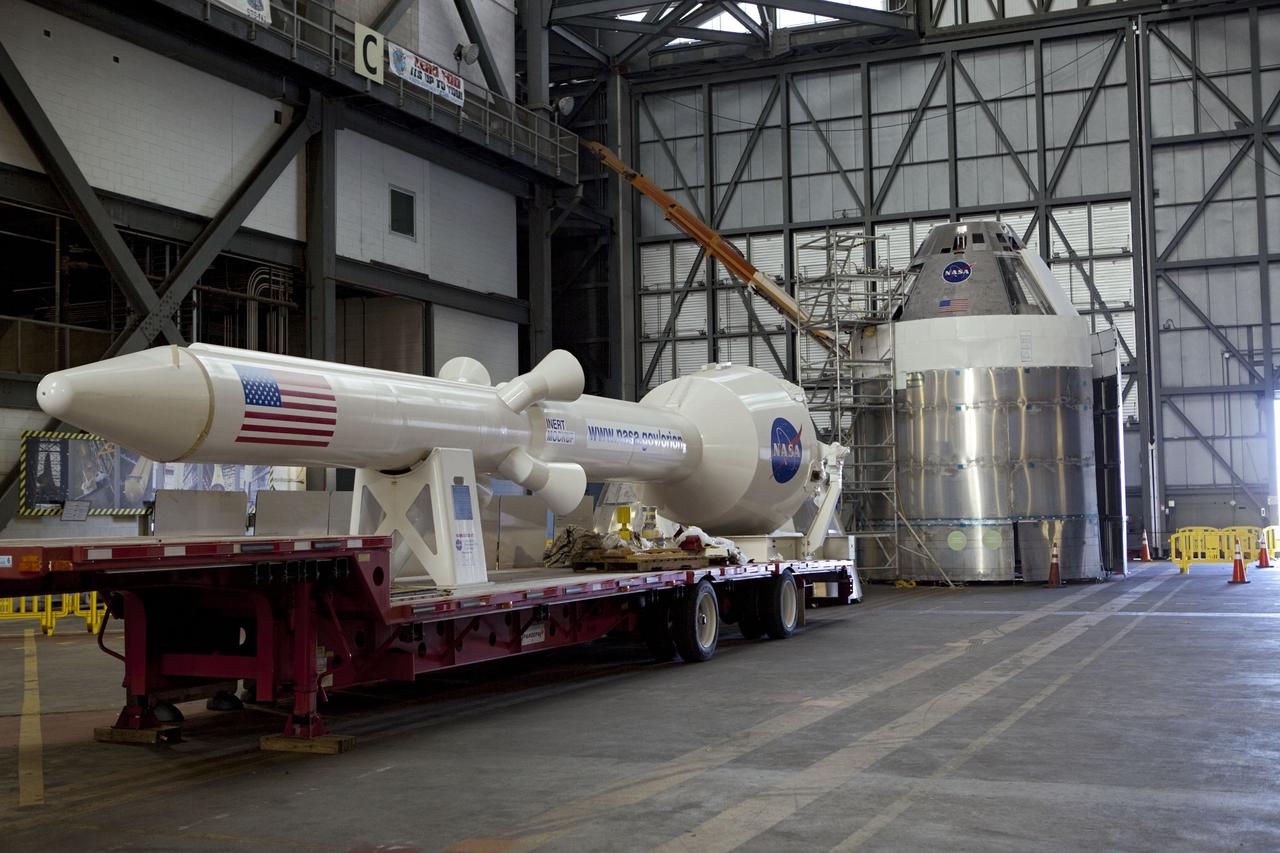
CAPE CANAVERAL, Fla. – Mockup components of an Orion spacecraft are laid out in the transfer aisle of the Vehicle Assembly Building, or VAB, at NASA's Kennedy Space Center in Florida. In the foreground is the Launch Abort System. In the background is the Orion capsule model on top of a service module simulator. Orion is the exploration spacecraft designed to carry crews to space beyond low Earth orbit. It will provide emergency abort capability, sustain the crew during the space travel and provide safe re-entry from deep space return velocities. The first uncrewed test flight of the Orion is scheduled to launch in 2014 atop a Delta IV rocket and in 2017 on a Space Launch System rocket. The Orion mockup is exact in details on the outside, but mostly empty on the inside except for four mockup astronaut seats and hatch. The work in the VAB is crucial to making sure the designs are accurate. For more information, visit http://www.nasa.gov/orion Photo credit: NASA/ Dmitri Gerondidakis
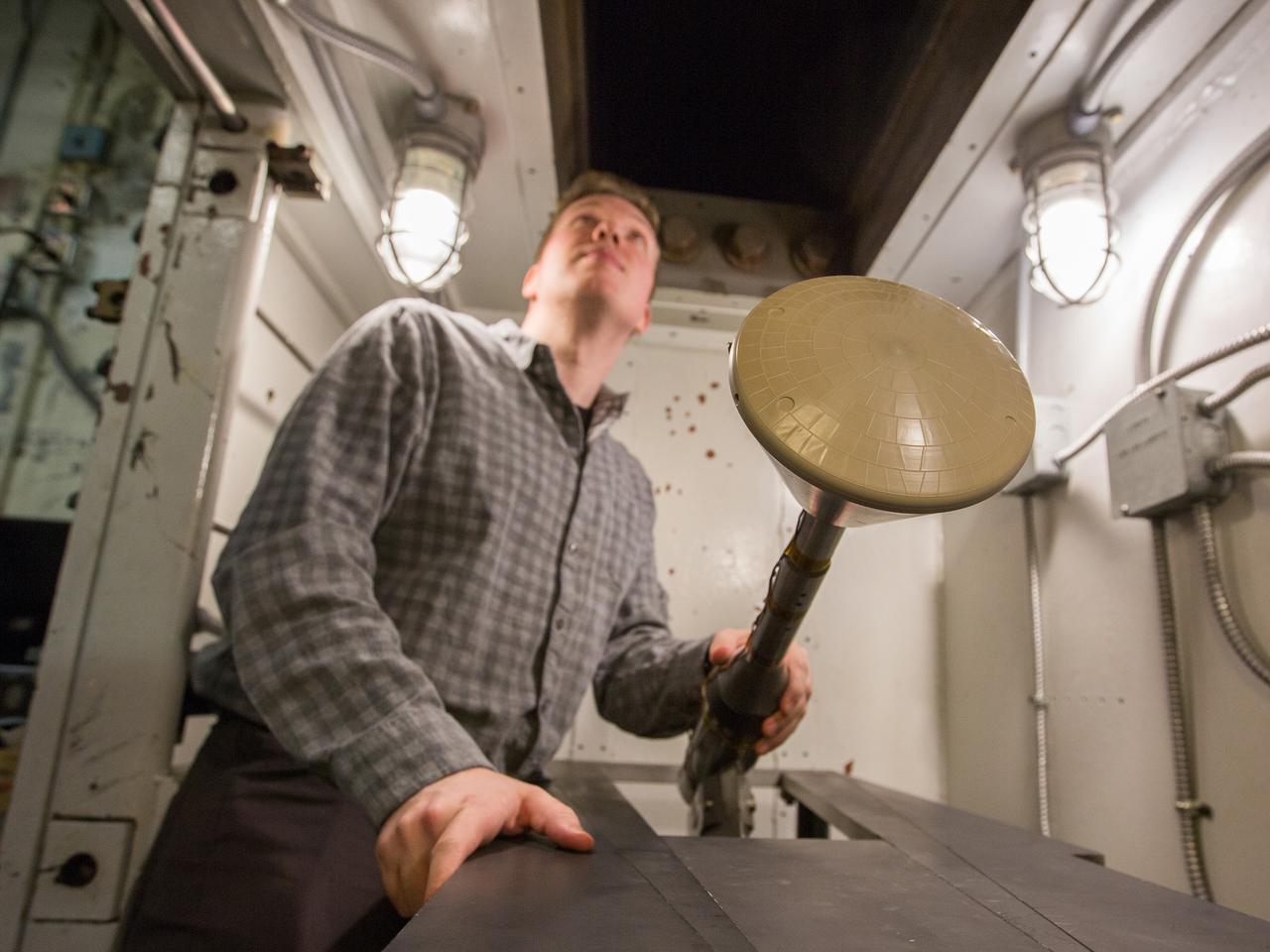
The Orion aerosciences team has performed more than 30 tests across the United States in support of the program, investigating the heating of the spacecraft during re-entry into Earth’s atmosphere. Testing recently concluded at NASA’s Langley Research Center in Hampton, Virginia with a 6-inch Orion heat shield model in the 20-inch Mach 6 wind tunnel, shown here on Feb. 4, 2019. The team includes engineers at Langley, NASA’s Johnson Space Center in Houston, Texas, and NASA’s Ames Research Center in Silicon Valley.
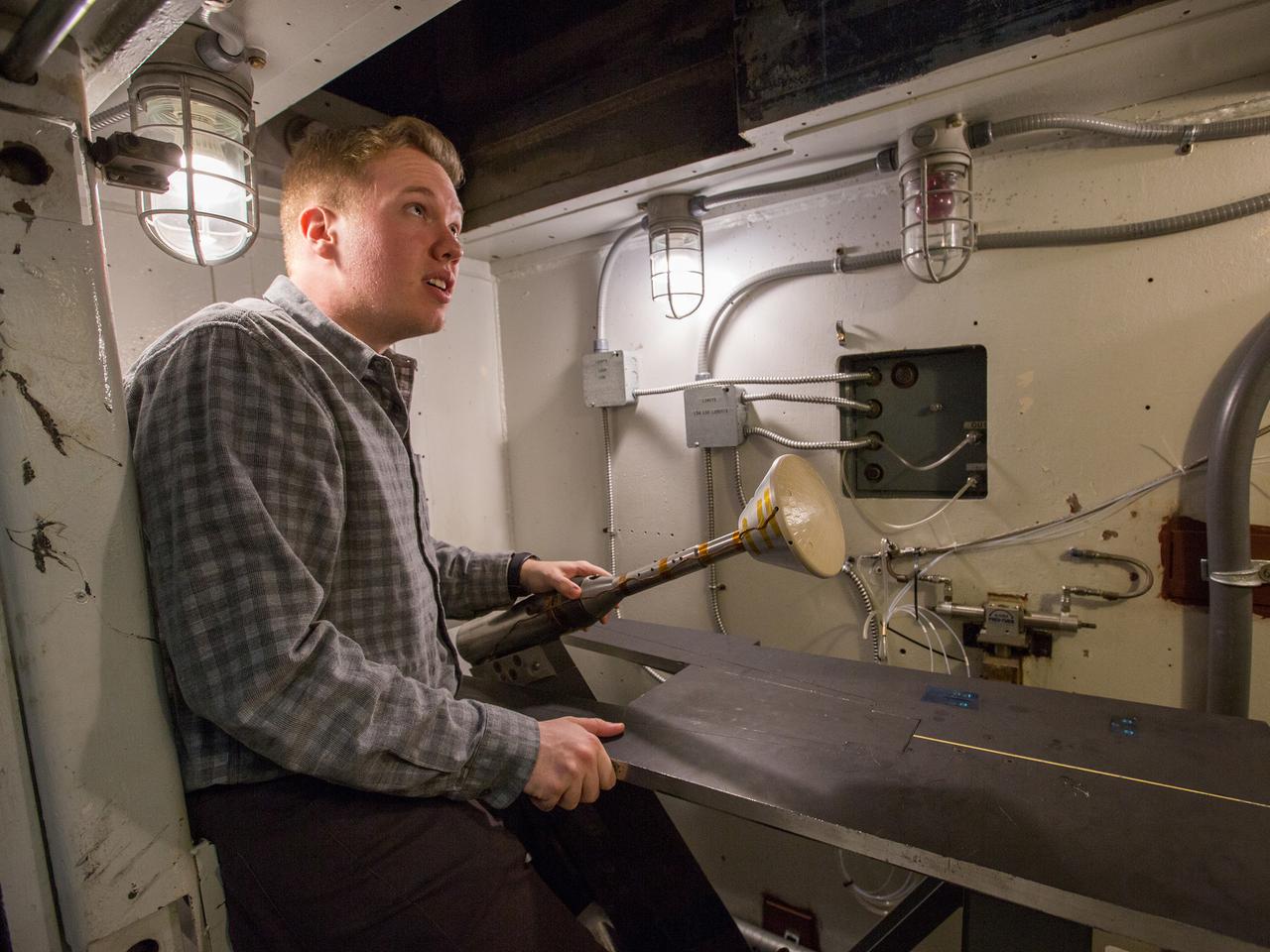
The Orion aerosciences team has performed more than 30 tests across the United States in support of the program, investigating the heating of the spacecraft during re-entry into Earth’s atmosphere. Testing recently concluded at NASA’s Langley Research Center in Hampton, Virginia with a 6-inch Orion heat shield model in the 20-inch Mach 6 wind tunnel, shown here on Feb. 4, 2019. The team includes engineers at Langley, NASA’s Johnson Space Center in Houston, Texas, and NASA’s Ames Research Center in Silicon Valley.
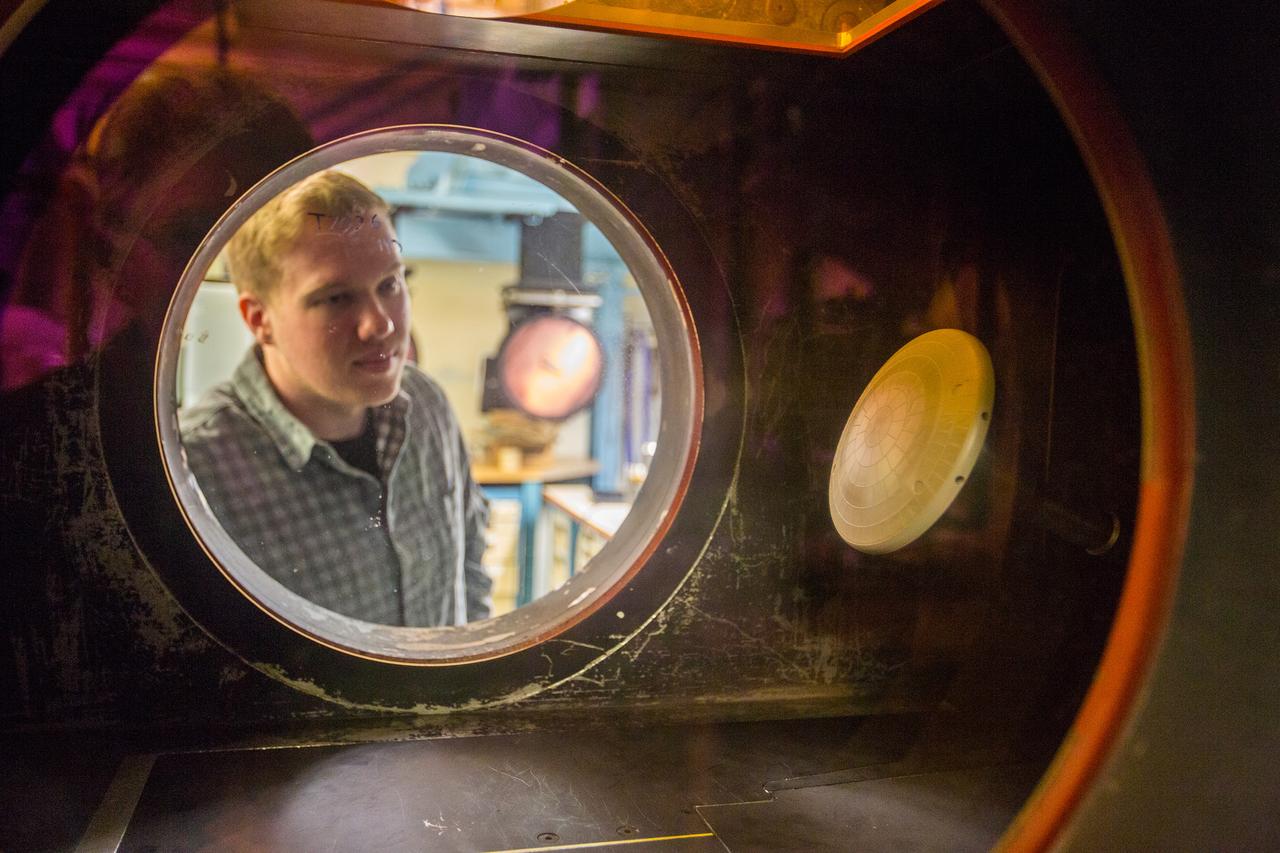
The Orion aerosciences team has performed more than 30 tests across the United States in support of the program, investigating the heating of the spacecraft during re-entry into Earth’s atmosphere. Testing recently concluded at NASA’s Langley Research Center in Hampton, Virginia with a 6-inch Orion heat shield model in the 20-inch Mach 6 wind tunnel, shown here on Feb. 4, 2019. The team includes engineers at Langley, NASA’s Johnson Space Center in Houston, Texas, and NASA’s Ames Research Center in Silicon Valley.
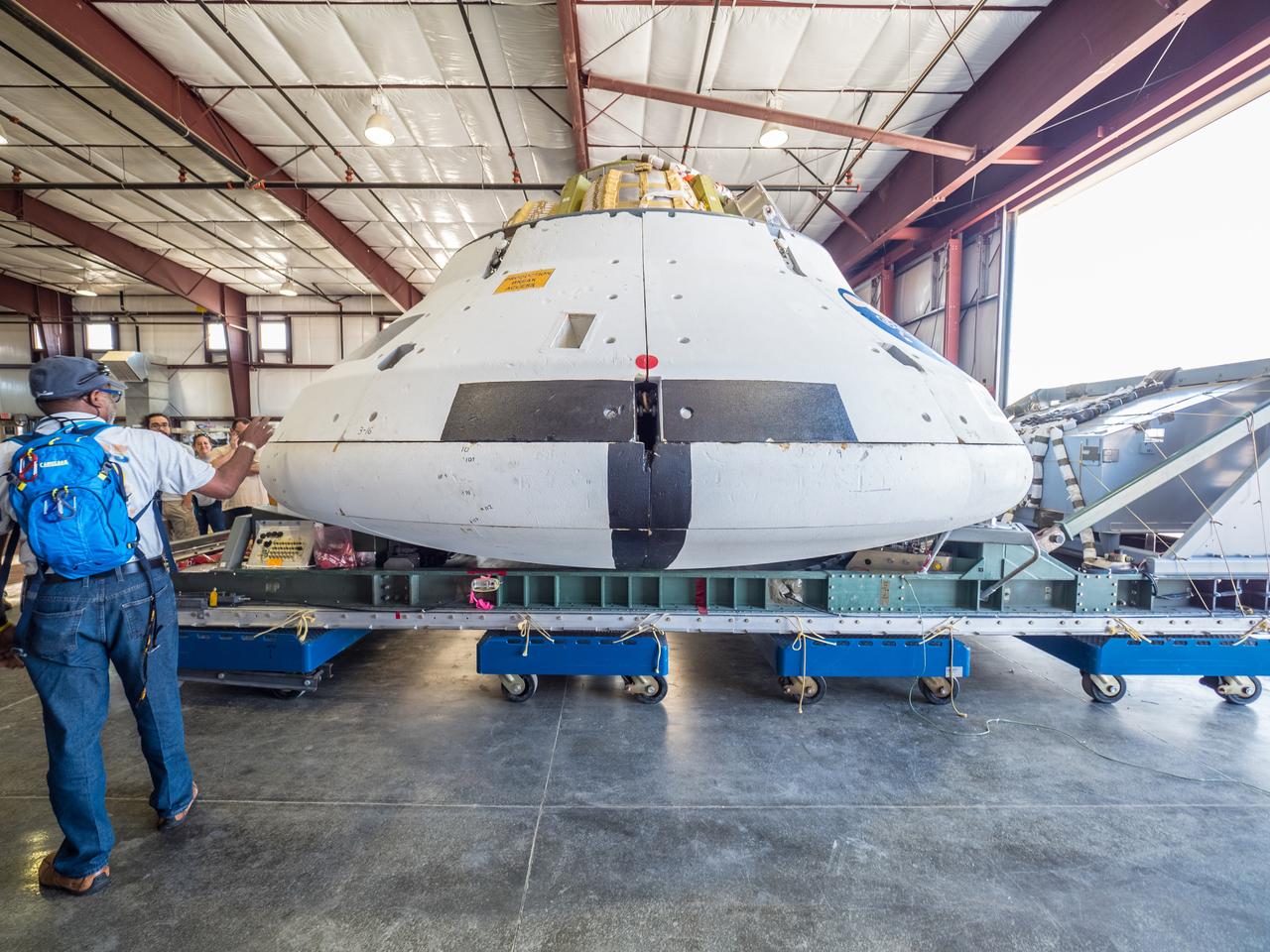
NASA engineers prepare for the test of the Orion spacecraft’s parachutes on Wednesday, Aug. 26 at the U.S. Army’s Yuma Proving Ground in Arizona on Aug. 24, 2015. An engineering model of the spacecraft will drop from an airplane 35,000 feet up to evaluate how it fares when the parachute system does not perform as expected...During the test, Orion engineers will carry out a scenario in which one of the spacecraft’s two drogue parachutes and one of its three main parachutes fail. This high-risk assessment is the penultimate drop test of the scheduled engineering evaluations leading up to next year’s tests to qualify the parachute system for crewed flights. Part of Batch image transfer from Flickr.
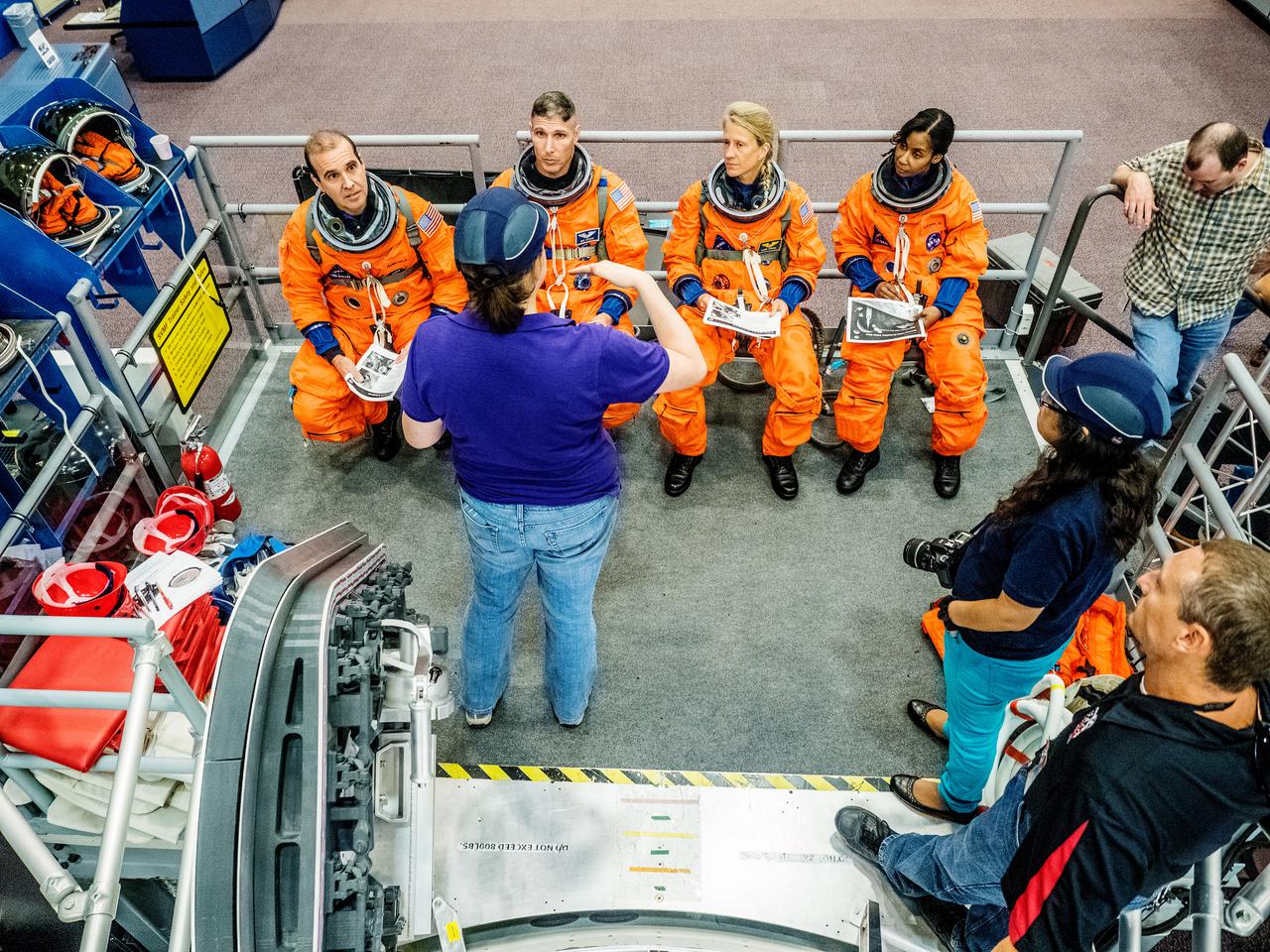
Engineers and astronauts conduct testing in a representative model of the Orion spacecraft at NASA’s Johnson Space Center in Houston on July 28, 2016 to gather the crew's feedback on the design of the docking hatch and on post-landing equipment operations. ..While the crew will primarily use the side hatch for entry and exit on Earth and the docking hatch to travel between Orion and a habitation module on long-duration deep space missions, the crew will need to be able to exit out of the docking hatch if wave heights in the Pacific Ocean upon splashdown are too high. The work is being done to help ensure all elements of Orion's design are safe and effective for the crew to use on future missions on the journey to Mars.
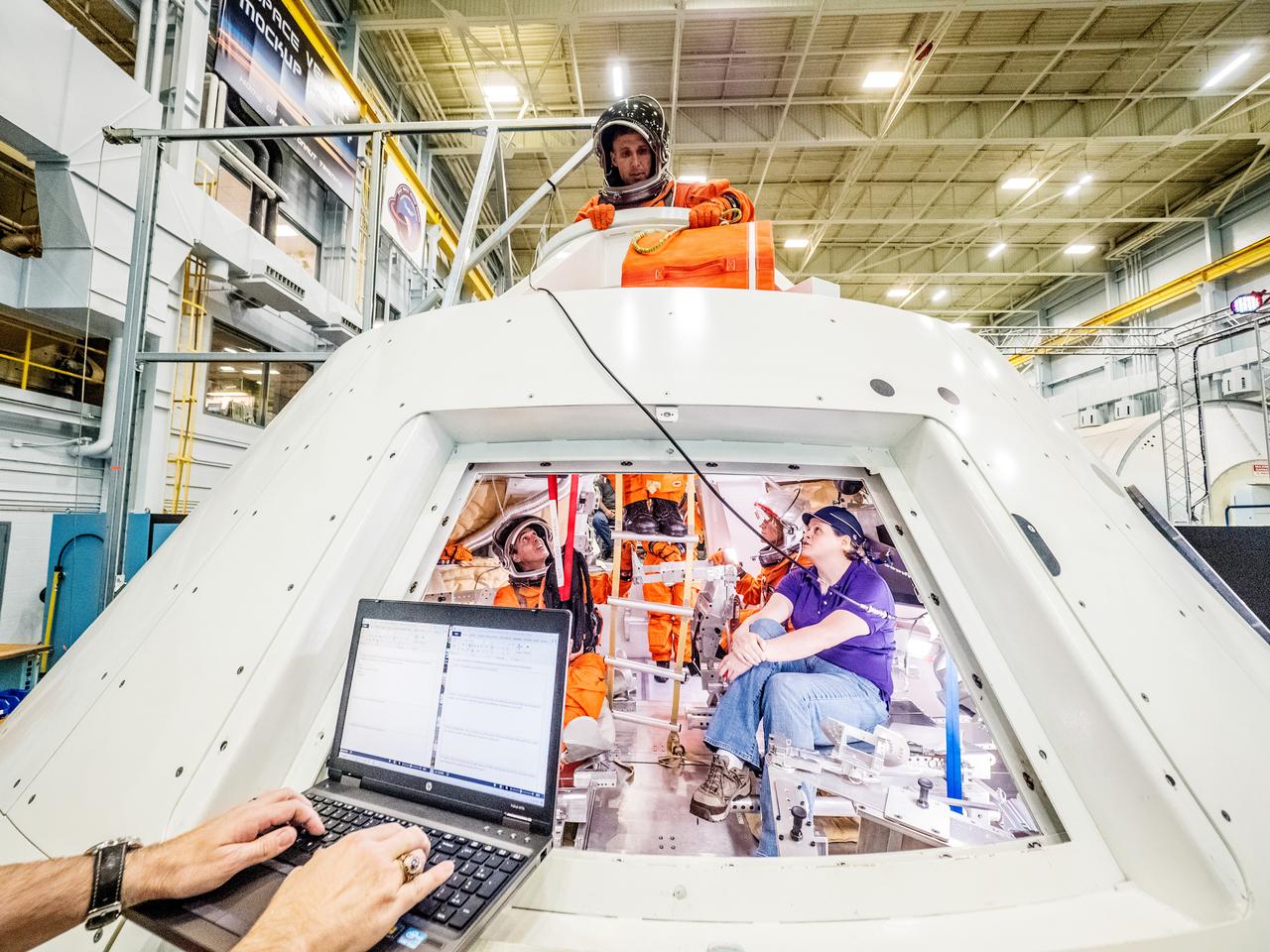
Engineers and astronauts conduct testing in a representative model of the Orion spacecraft at NASA’s Johnson Space Center in Houston on July 28, 2016 to gather the crew's feedback on the design of the docking hatch and on post-landing equipment operations. ..While the crew will primarily use the side hatch for entry and exit on Earth and the docking hatch to travel between Orion and a habitation module on long-duration deep space missions, the crew will need to be able to exit out of the docking hatch if wave heights in the Pacific Ocean upon splashdown are too high. The work is being done to help ensure all elements of Orion's design are safe and effective for the crew to use on future missions on the journey to Mars.
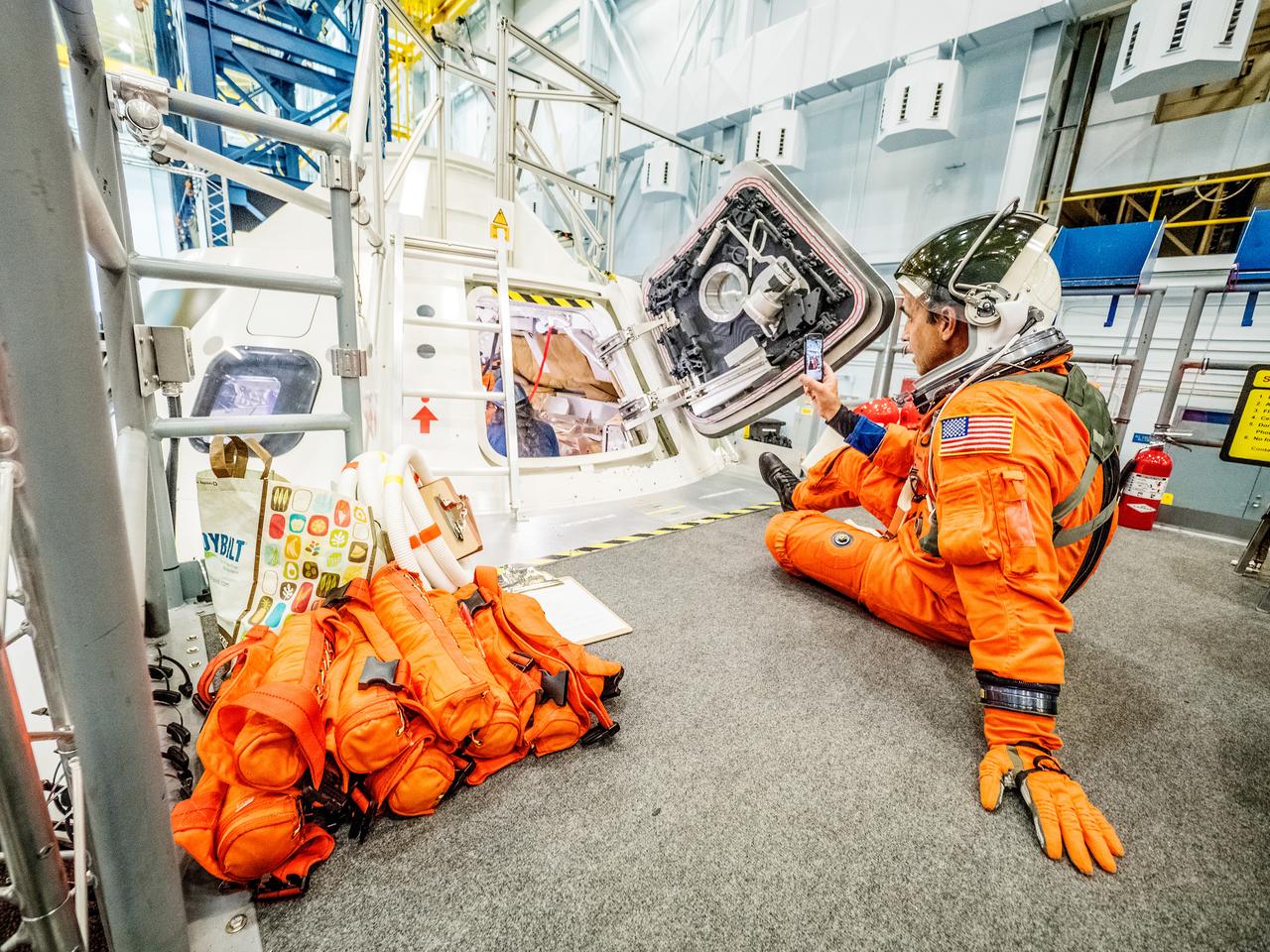
Engineers and astronauts conduct testing in a representative model of the Orion spacecraft at NASA’s Johnson Space Center in Houston on July 28, 2016 to gather the crew's feedback on the design of the docking hatch and on post-landing equipment operations. ..While the crew will primarily use the side hatch for entry and exit on Earth and the docking hatch to travel between Orion and a habitation module on long-duration deep space missions, the crew will need to be able to exit out of the docking hatch if wave heights in the Pacific Ocean upon splashdown are too high. The work is being done to help ensure all elements of Orion's design are safe and effective for the crew to use on future missions on the journey to Mars.
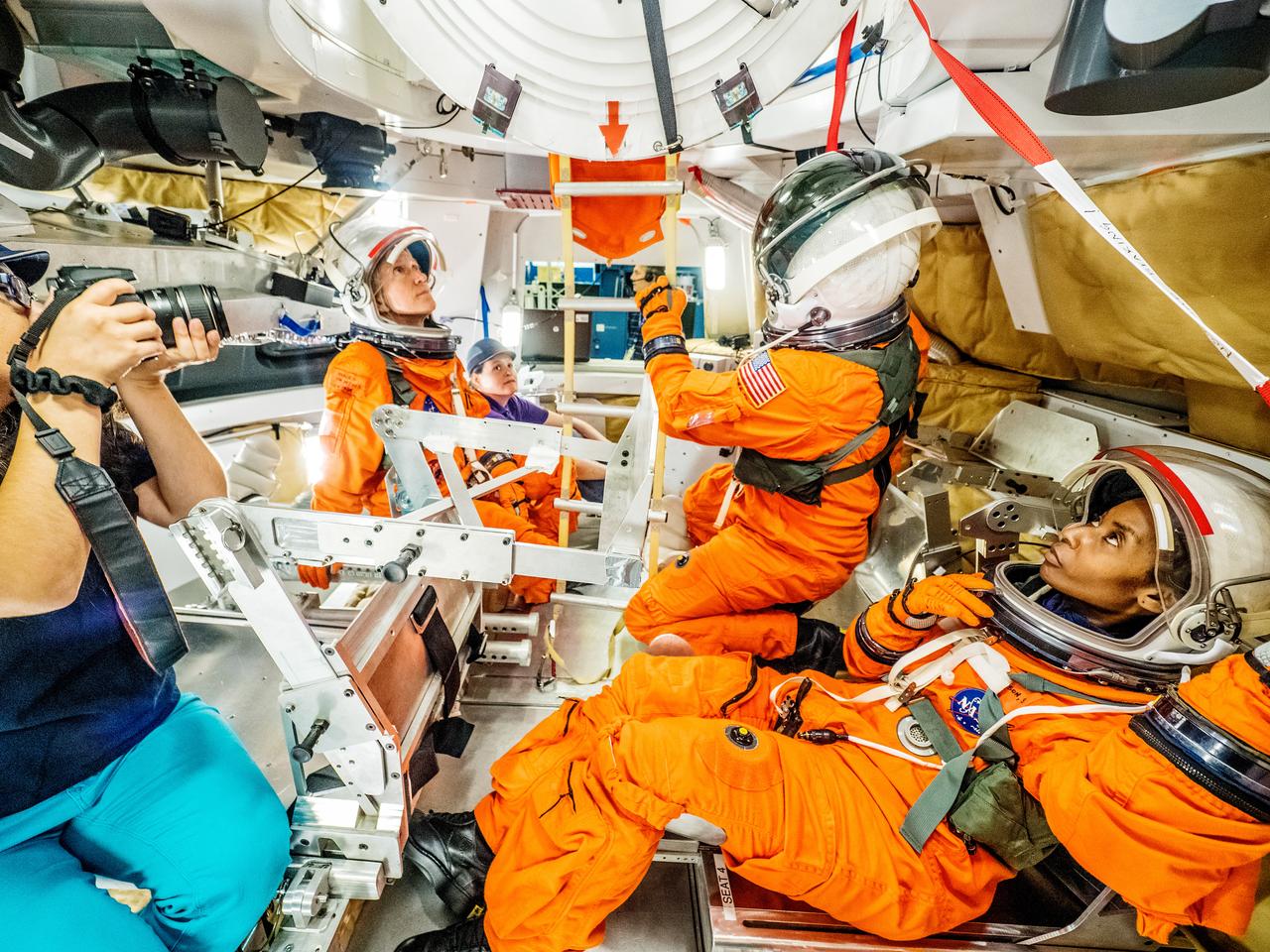
Engineers and astronauts conduct testing in a representative model of the Orion spacecraft at NASA’s Johnson Space Center in Houston on July 28, 2016 to gather the crew's feedback on the design of the docking hatch and on post-landing equipment operations. ..While the crew will primarily use the side hatch for entry and exit on Earth and the docking hatch to travel between Orion and a habitation module on long-duration deep space missions, the crew will need to be able to exit out of the docking hatch if wave heights in the Pacific Ocean upon splashdown are too high. The work is being done to help ensure all elements of Orion's design are safe and effective for the crew to use on future missions on the journey to Mars.
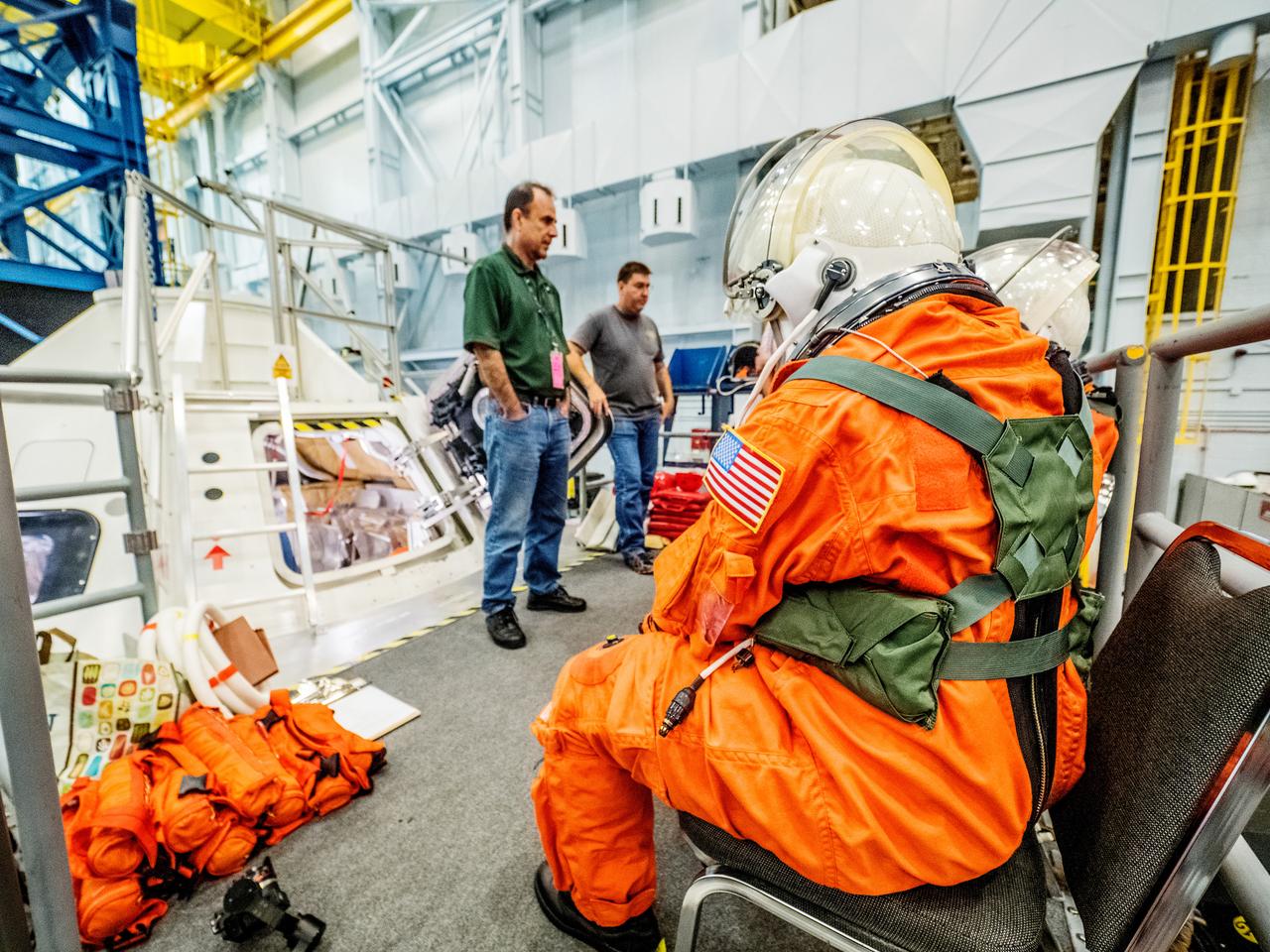
Engineers and astronauts conduct testing in a representative model of the Orion spacecraft at NASA’s Johnson Space Center in Houston on July 28, 2016 to gather the crew's feedback on the design of the docking hatch and on post-landing equipment operations. ..While the crew will primarily use the side hatch for entry and exit on Earth and the docking hatch to travel between Orion and a habitation module on long-duration deep space missions, the crew will need to be able to exit out of the docking hatch if wave heights in the Pacific Ocean upon splashdown are too high. The work is being done to help ensure all elements of Orion's design are safe and effective for the crew to use on future missions on the journey to Mars.
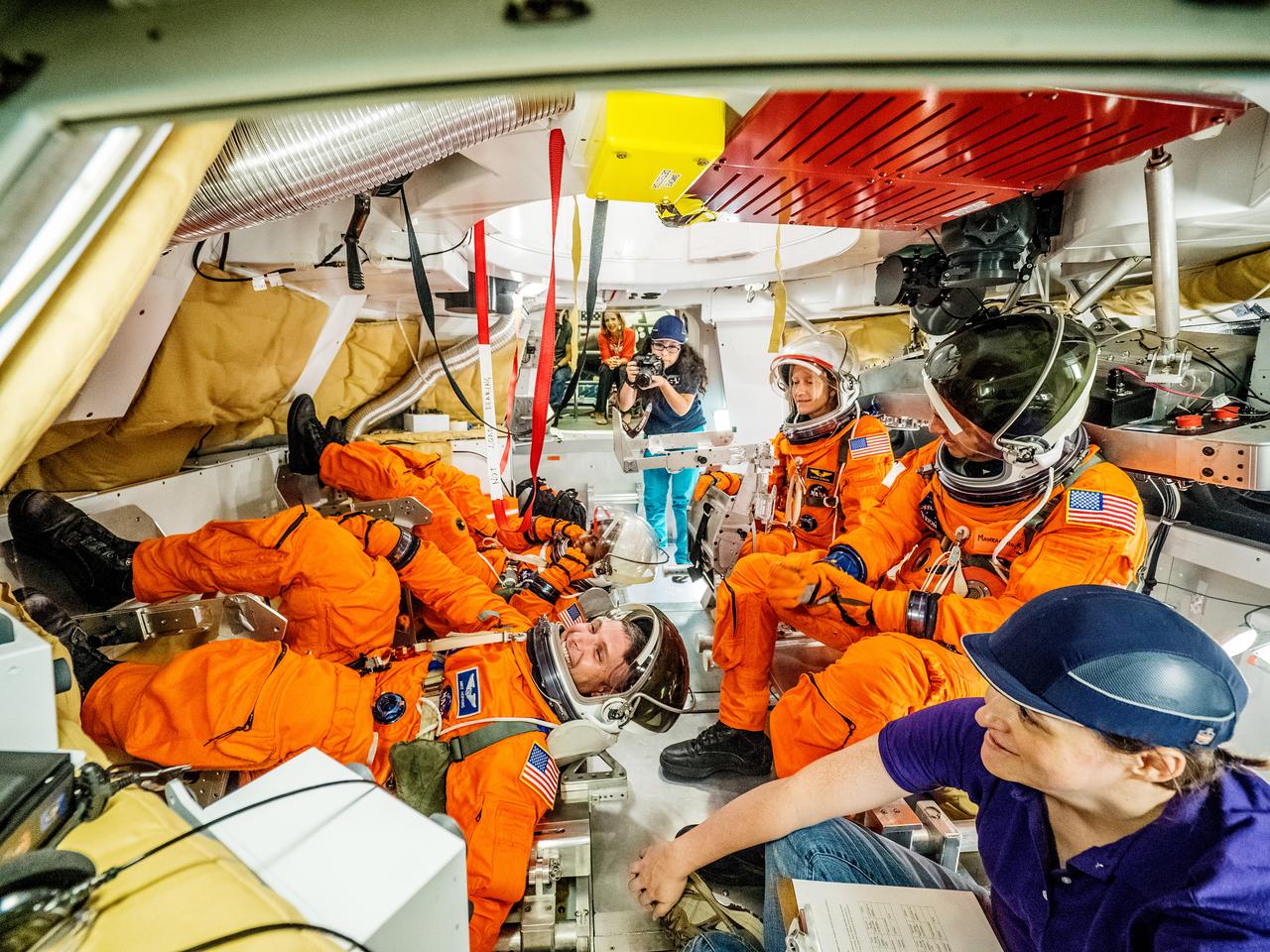
Engineers and astronauts conduct testing in a representative model of the Orion spacecraft at NASA’s Johnson Space Center in Houston on July 28, 2016 to gather the crew's feedback on the design of the docking hatch and on post-landing equipment operations. ..While the crew will primarily use the side hatch for entry and exit on Earth and the docking hatch to travel between Orion and a habitation module on long-duration deep space missions, the crew will need to be able to exit out of the docking hatch if wave heights in the Pacific Ocean upon splashdown are too high. The work is being done to help ensure all elements of Orion's design are safe and effective for the crew to use on future missions on the journey to Mars.
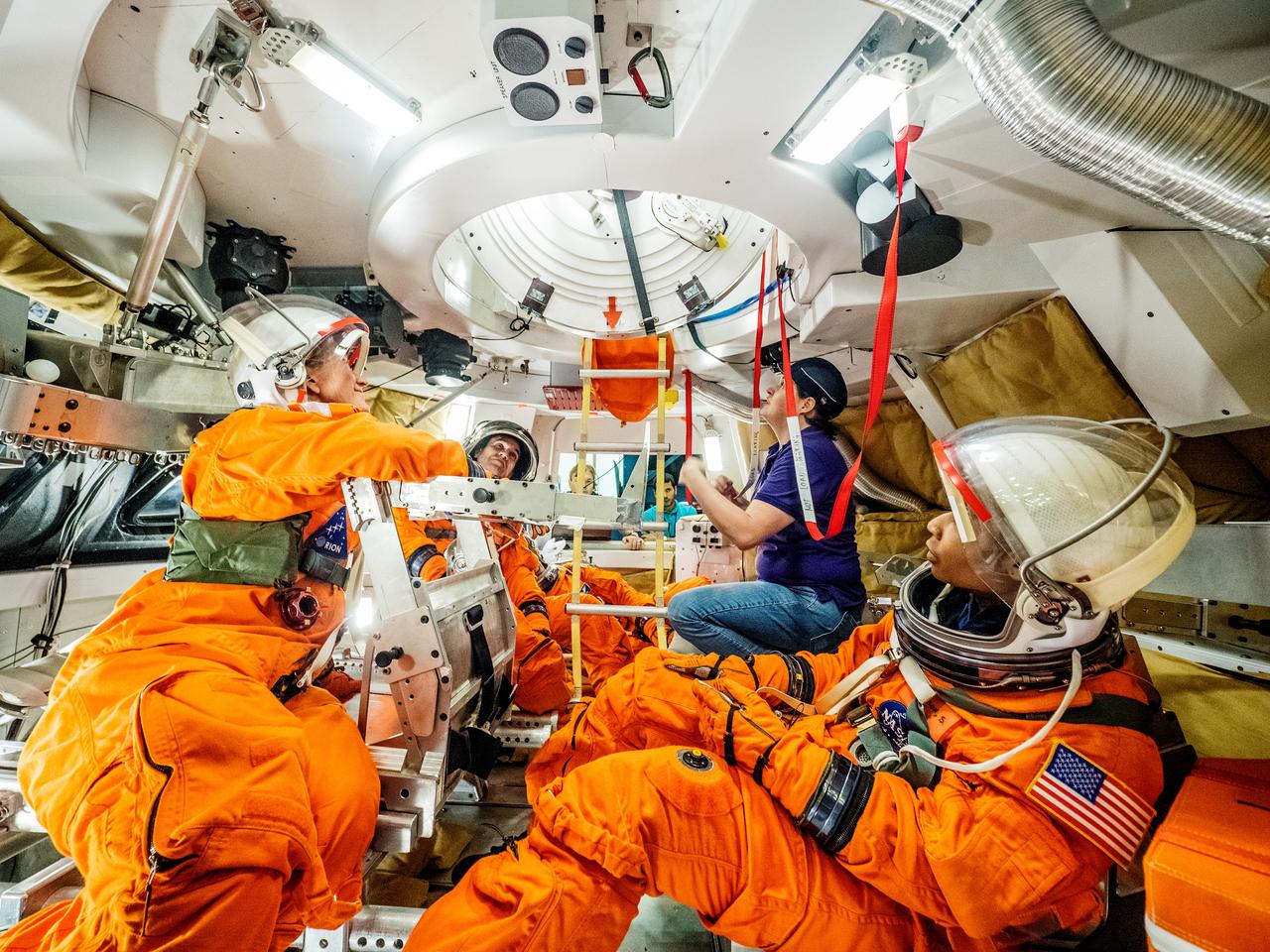
Engineers and astronauts conduct testing in a representative model of the Orion spacecraft at NASA’s Johnson Space Center in Houston on July 28, 2016 to gather the crew's feedback on the design of the docking hatch and on post-landing equipment operations. ..While the crew will primarily use the side hatch for entry and exit on Earth and the docking hatch to travel between Orion and a habitation module on long-duration deep space missions, the crew will need to be able to exit out of the docking hatch if wave heights in the Pacific Ocean upon splashdown are too high. The work is being done to help ensure all elements of Orion's design are safe and effective for the crew to use on future missions on the journey to Mars.
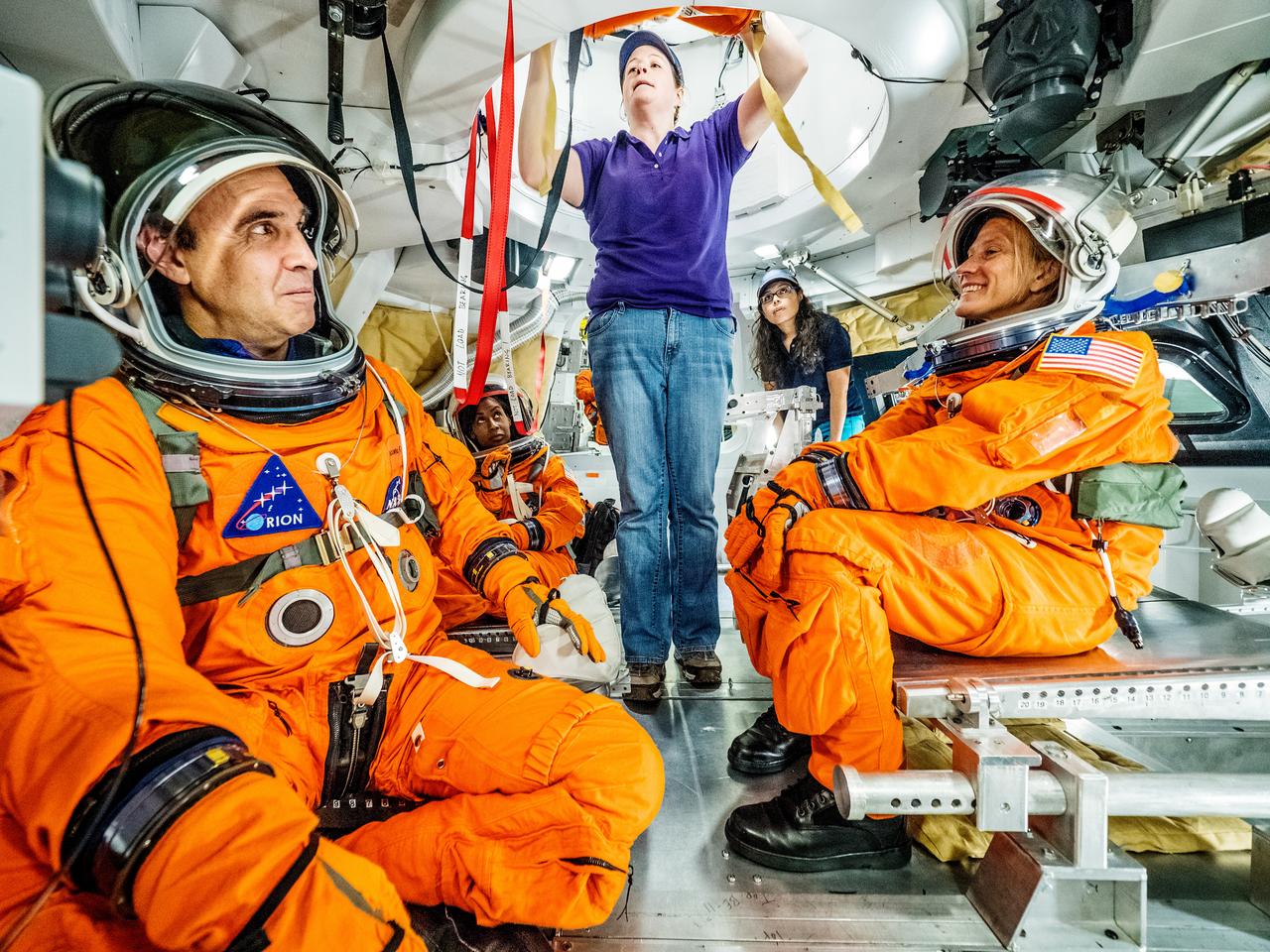
Engineers and astronauts conduct testing in a representative model of the Orion spacecraft at NASA’s Johnson Space Center in Houston on July 28, 2016 to gather the crew's feedback on the design of the docking hatch and on post-landing equipment operations. ..While the crew will primarily use the side hatch for entry and exit on Earth and the docking hatch to travel between Orion and a habitation module on long-duration deep space missions, the crew will need to be able to exit out of the docking hatch if wave heights in the Pacific Ocean upon splashdown are too high. The work is being done to help ensure all elements of Orion's design are safe and effective for the crew to use on future missions on the journey to Mars.

Engineers and astronauts conduct testing in a representative model of the Orion spacecraft at NASA’s Johnson Space Center in Houston on July 28, 2016 to gather the crew's feedback on the design of the docking hatch and on post-landing equipment operations. ..While the crew will primarily use the side hatch for entry and exit on Earth and the docking hatch to travel between Orion and a habitation module on long-duration deep space missions, the crew will need to be able to exit out of the docking hatch if wave heights in the Pacific Ocean upon splashdown are too high. The work is being done to help ensure all elements of Orion's design are safe and effective for the crew to use on future missions on the journey to Mars.
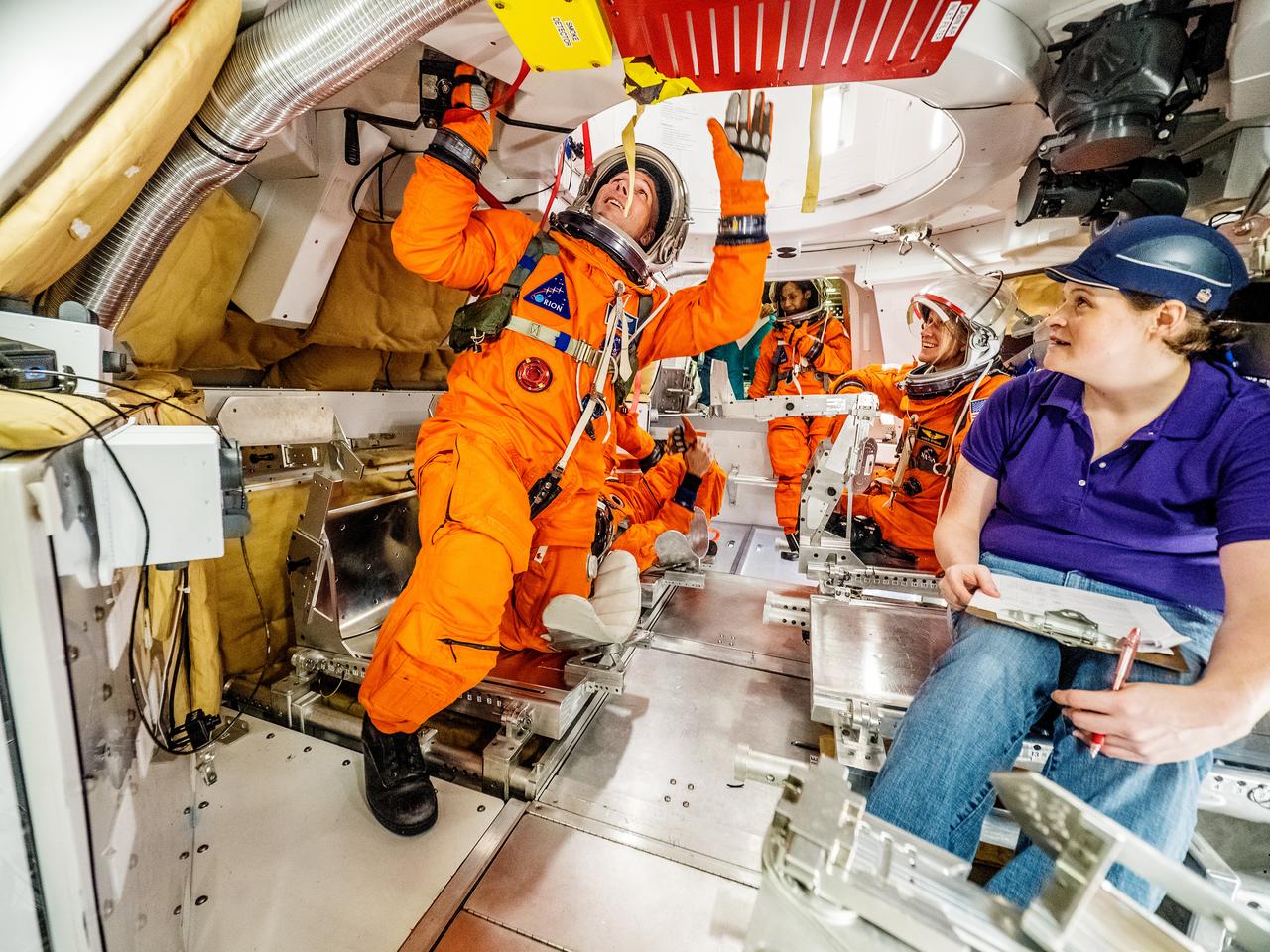
Engineers and astronauts conduct testing in a representative model of the Orion spacecraft at NASA’s Johnson Space Center in Houston on July 28, 2016 to gather the crew's feedback on the design of the docking hatch and on post-landing equipment operations. ..While the crew will primarily use the side hatch for entry and exit on Earth and the docking hatch to travel between Orion and a habitation module on long-duration deep space missions, the crew will need to be able to exit out of the docking hatch if wave heights in the Pacific Ocean upon splashdown are too high. The work is being done to help ensure all elements of Orion's design are safe and effective for the crew to use on future missions on the journey to Mars.
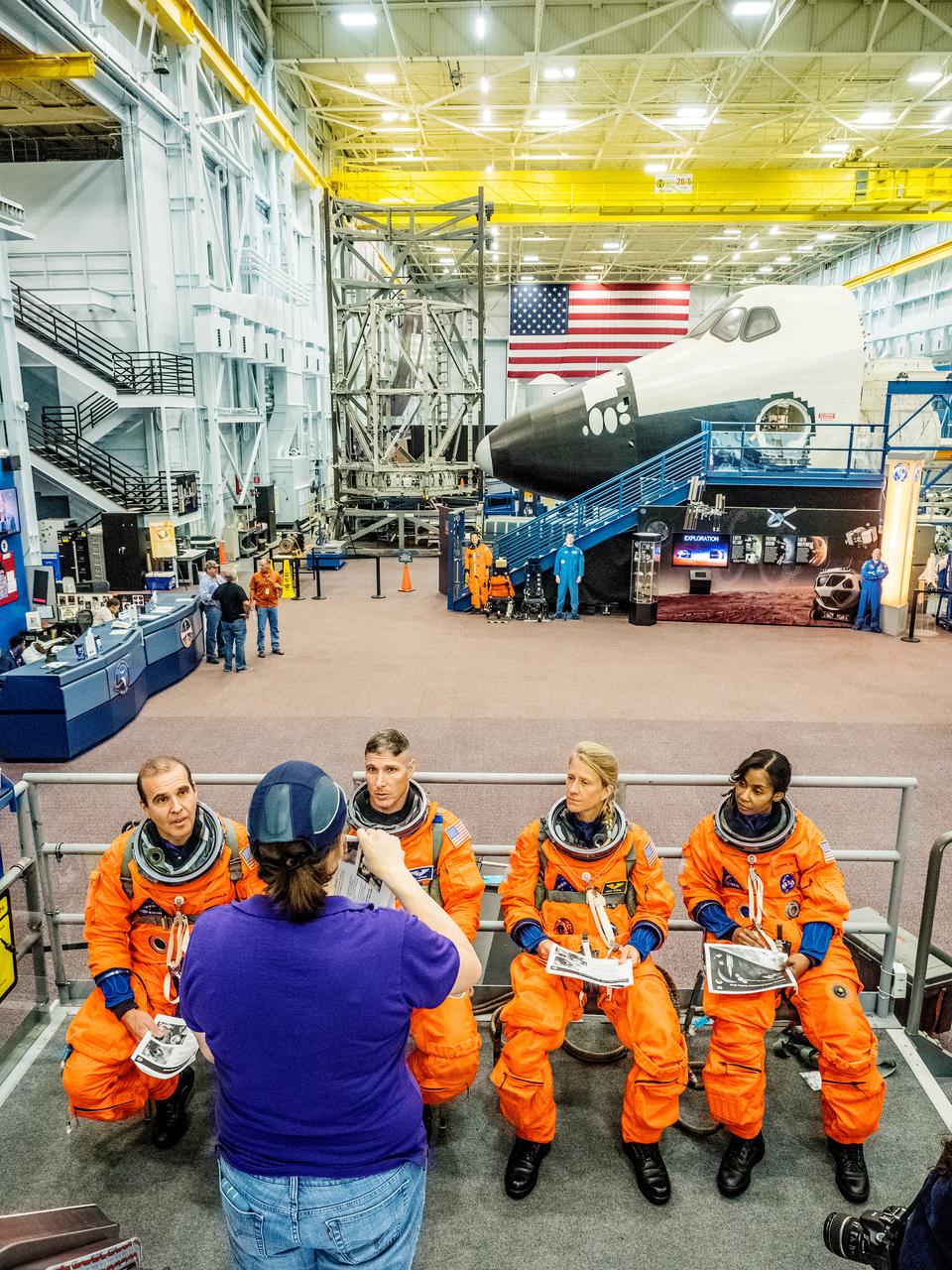
Engineers and astronauts conduct testing in a representative model of the Orion spacecraft at NASA’s Johnson Space Center in Houston on July 28, 2016 to gather the crew's feedback on the design of the docking hatch and on post-landing equipment operations. ..While the crew will primarily use the side hatch for entry and exit on Earth and the docking hatch to travel between Orion and a habitation module on long-duration deep space missions, the crew will need to be able to exit out of the docking hatch if wave heights in the Pacific Ocean upon splashdown are too high. The work is being done to help ensure all elements of Orion's design are safe and effective for the crew to use on future missions on the journey to Mars.
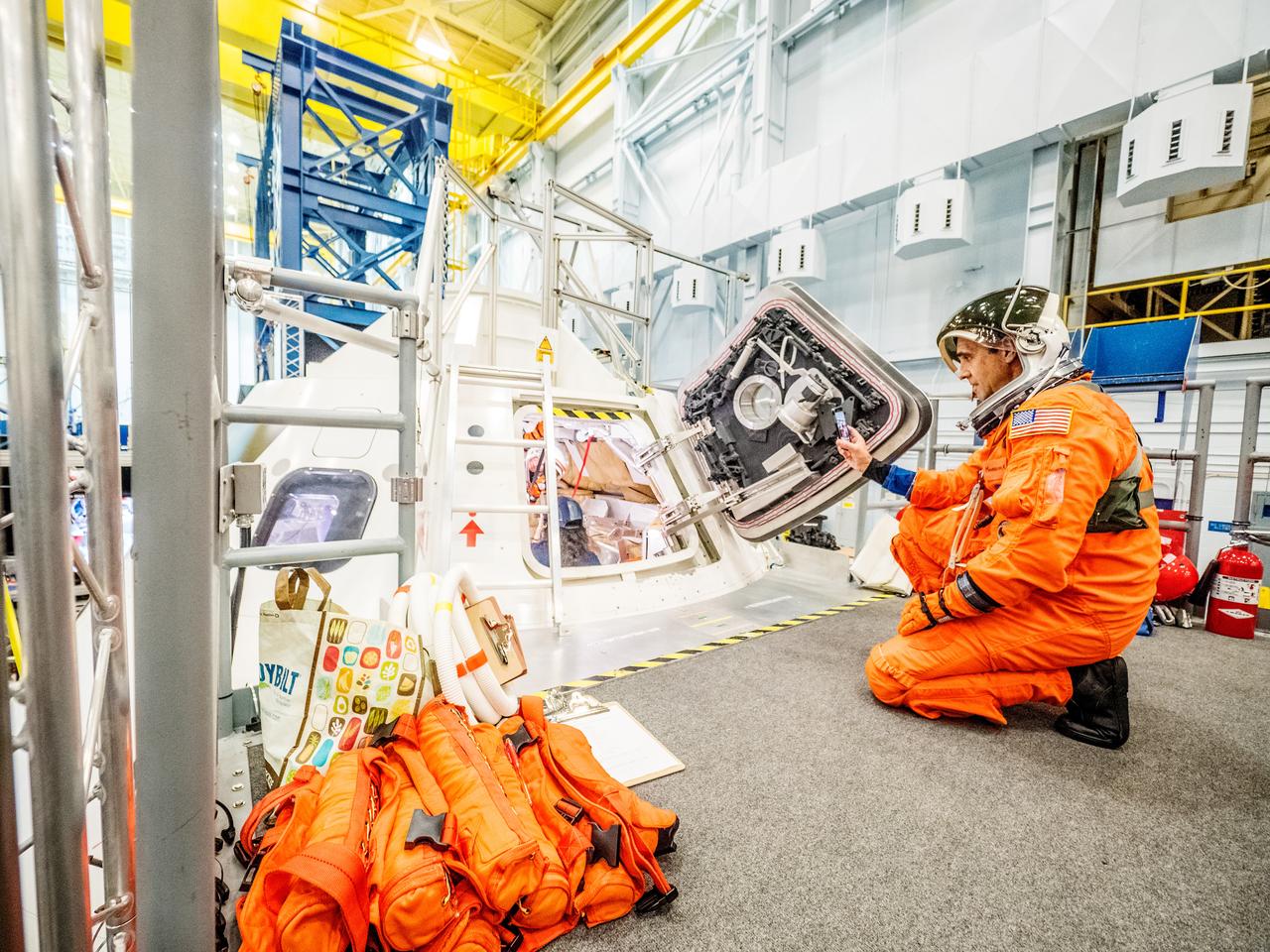
Engineers and astronauts conduct testing in a representative model of the Orion spacecraft at NASA’s Johnson Space Center in Houston on July 28, 2016 to gather the crew's feedback on the design of the docking hatch and on post-landing equipment operations. ..While the crew will primarily use the side hatch for entry and exit on Earth and the docking hatch to travel between Orion and a habitation module on long-duration deep space missions, the crew will need to be able to exit out of the docking hatch if wave heights in the Pacific Ocean upon splashdown are too high. The work is being done to help ensure all elements of Orion's design are safe and effective for the crew to use on future missions on the journey to Mars.
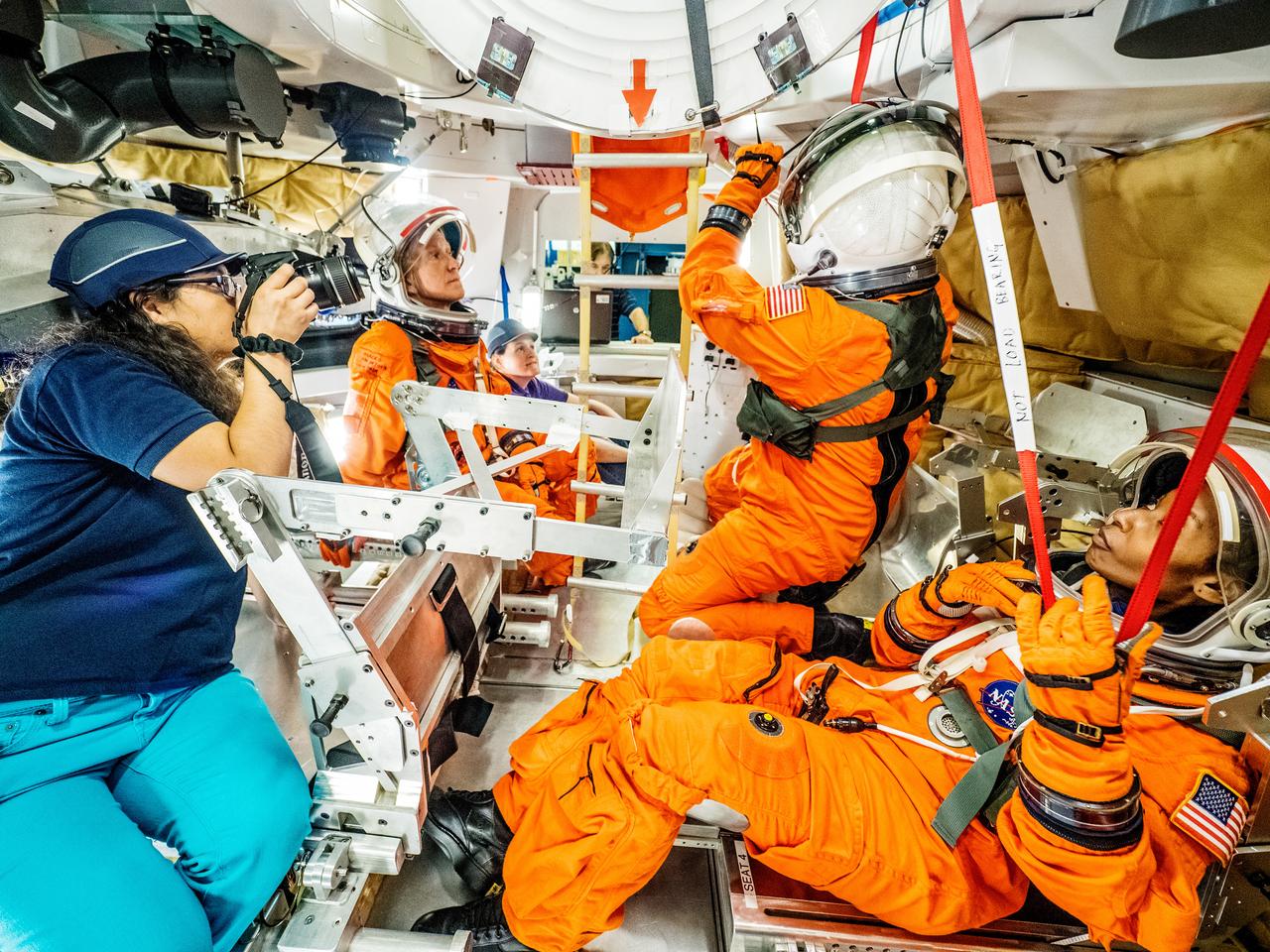
Engineers and astronauts conduct testing in a representative model of the Orion spacecraft at NASA’s Johnson Space Center in Houston on July 28, 2016 to gather the crew's feedback on the design of the docking hatch and on post-landing equipment operations. ..While the crew will primarily use the side hatch for entry and exit on Earth and the docking hatch to travel between Orion and a habitation module on long-duration deep space missions, the crew will need to be able to exit out of the docking hatch if wave heights in the Pacific Ocean upon splashdown are too high. The work is being done to help ensure all elements of Orion's design are safe and effective for the crew to use on future missions on the journey to Mars.
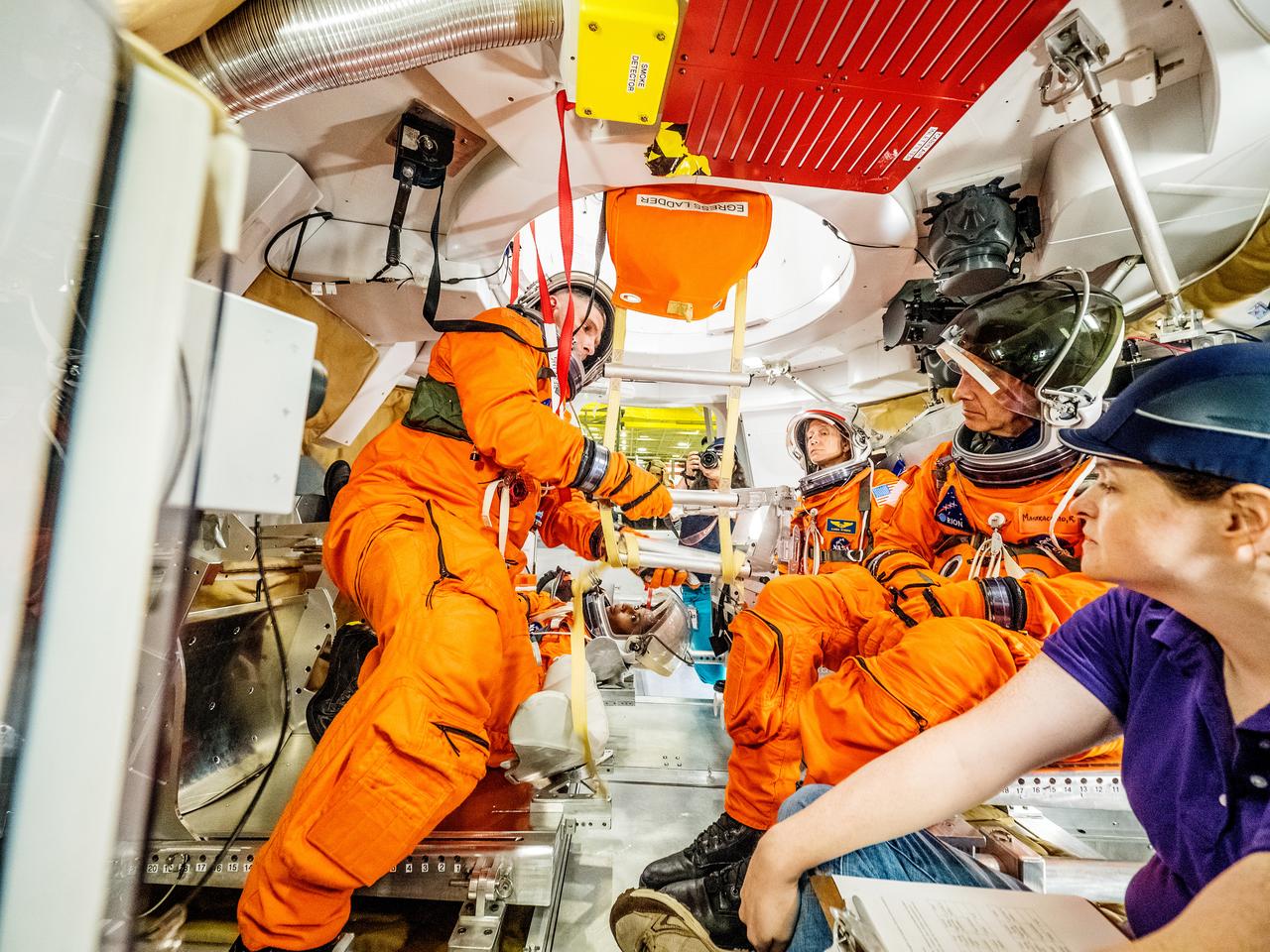
Engineers and astronauts conduct testing in a representative model of the Orion spacecraft at NASA’s Johnson Space Center in Houston on July 28, 2016 to gather the crew's feedback on the design of the docking hatch and on post-landing equipment operations. ..While the crew will primarily use the side hatch for entry and exit on Earth and the docking hatch to travel between Orion and a habitation module on long-duration deep space missions, the crew will need to be able to exit out of the docking hatch if wave heights in the Pacific Ocean upon splashdown are too high. The work is being done to help ensure all elements of Orion's design are safe and effective for the crew to use on future missions on the journey to Mars.
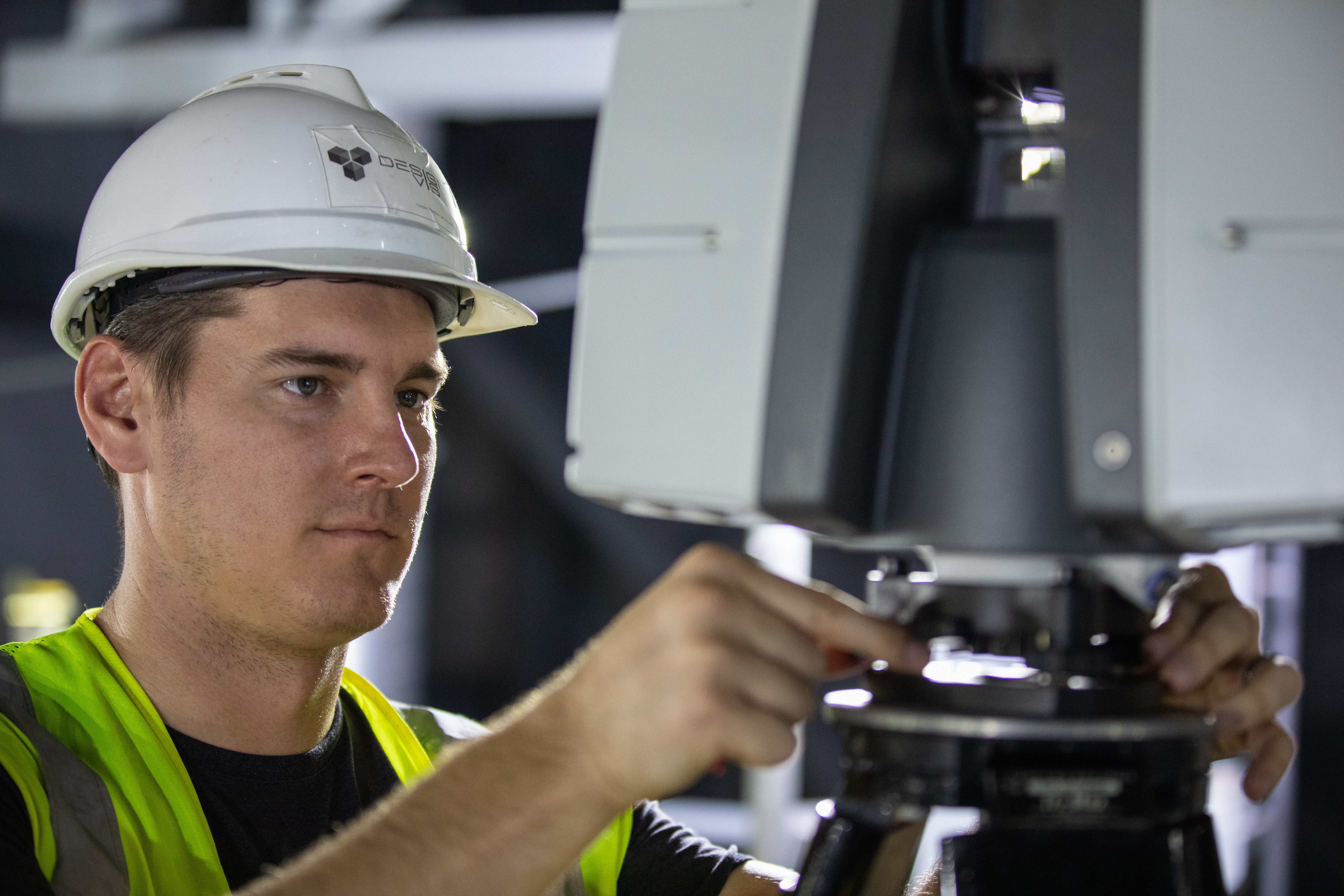
An engineer adjusts equipment from the Design Visualization Lab set up inside High Bay 3 of the Vehicle Assembly Building at NASA’s Kennedy Space Center on Oct. 14, 2020. The equipment will be used to do 3-D modeling of the mobile launcher that will carry the Space Launch System and Orion spacecraft to Launch Complex 39B for the Artemis I mission. Artemis I will test the Orion spacecraft and SLS as an integrated system ahead of crewed flights to the Moon. Under the Artemis program, NASA will land the first woman and the next man on the Moon in 2024.
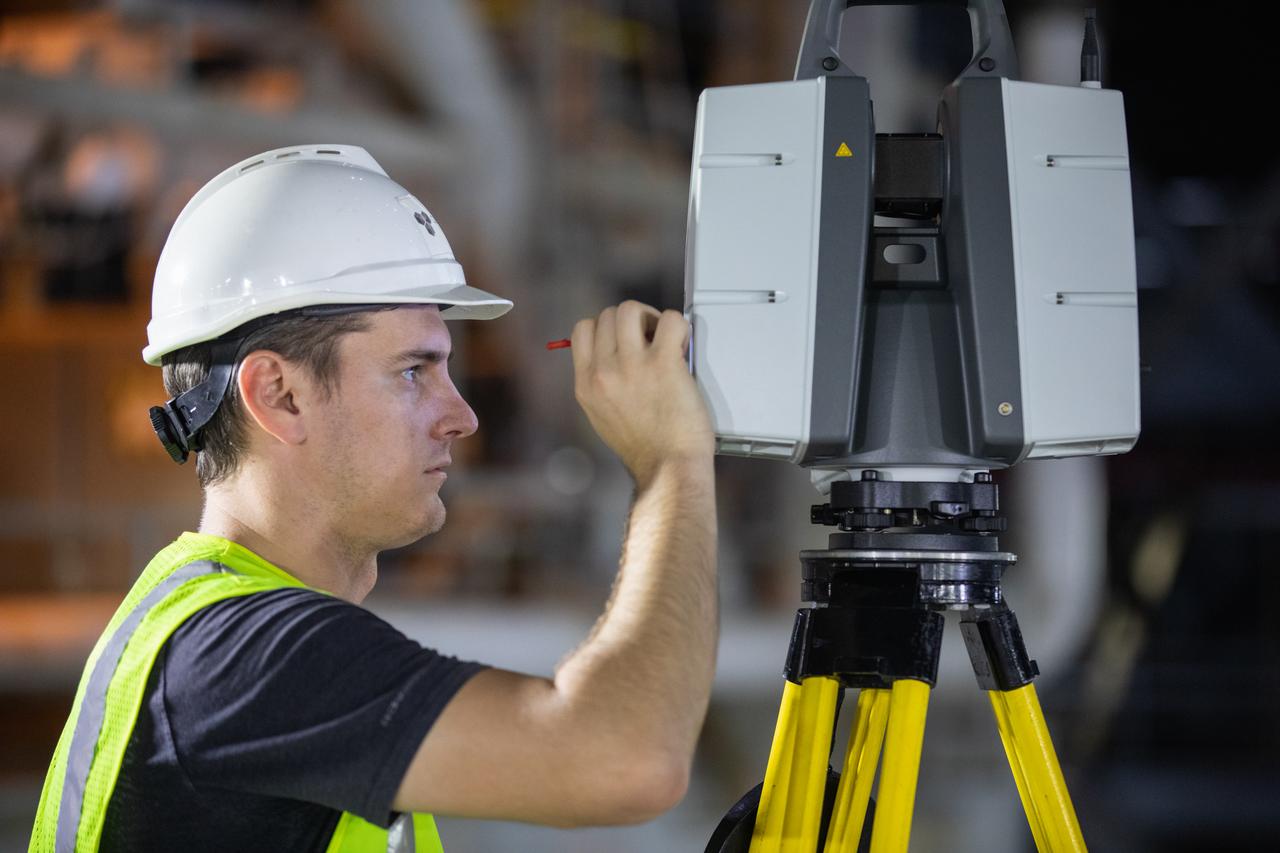
An engineer adjusts equipment from the Design Visualization Lab set up inside High Bay 3 of the Vehicle Assembly Building at NASA’s Kennedy Space Center on Oct. 14, 2020. The equipment will be used to do 3-D modeling of the mobile launcher that will carry the Space Launch System and Orion spacecraft to Launch Complex 39B for the Artemis I mission. Artemis I will test the Orion spacecraft and SLS as an integrated system ahead of crewed flights to the Moon. Under the Artemis program, NASA will land the first woman and the next man on the Moon in 2024.
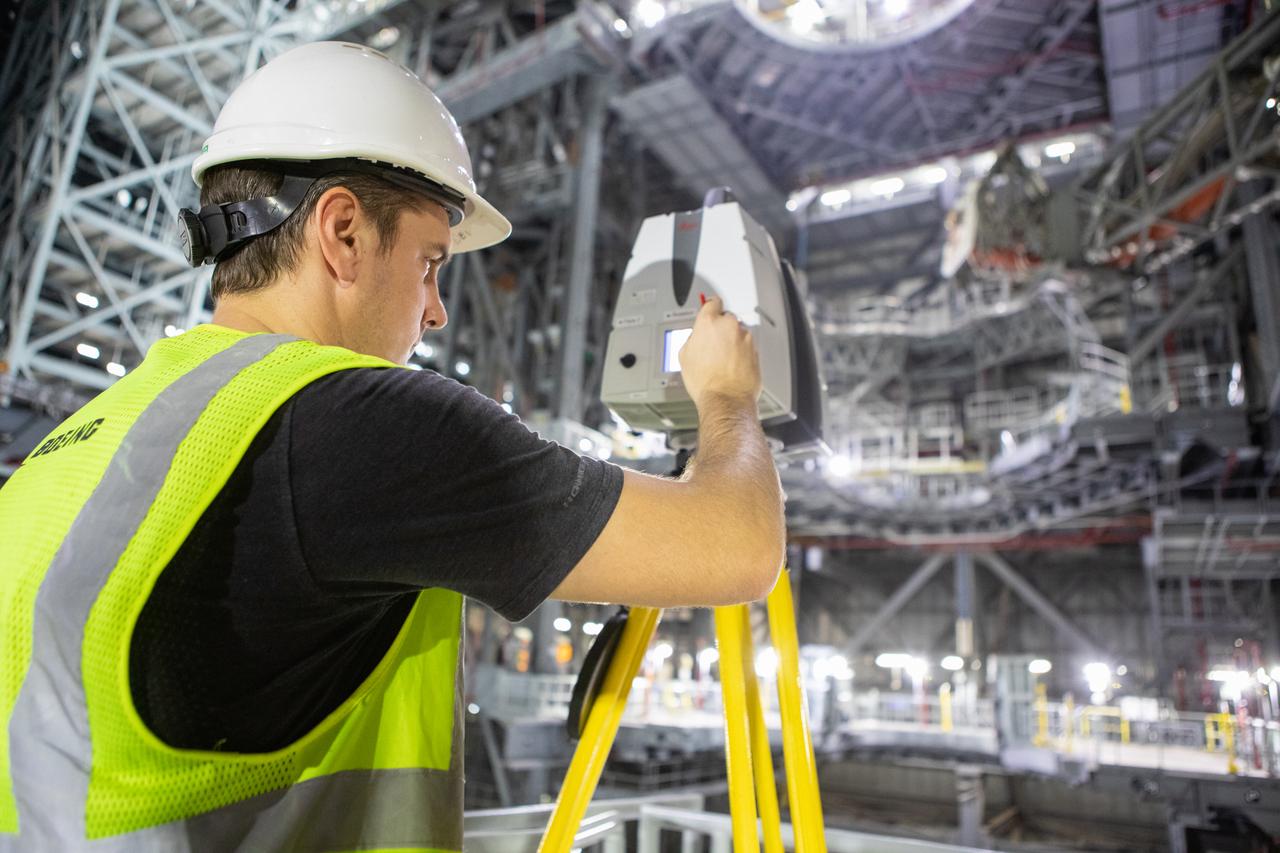
An engineer sets up equipment from the Design Visualization Lab inside High Bay 3 of the Vehicle Assembly Building at NASA’s Kennedy Space Center on Oct. 14, 2020. The equipment will be used to do 3-D modeling of the mobile launcher that will carry the Space Launch System and Orion spacecraft to Launch Complex 39B for the Artemis I mission. Artemis I will test the Orion spacecraft and SLS as an integrated system ahead of crewed flights to the Moon. Under the Artemis program, NASA will land the first woman and the next man on the Moon in 2024.
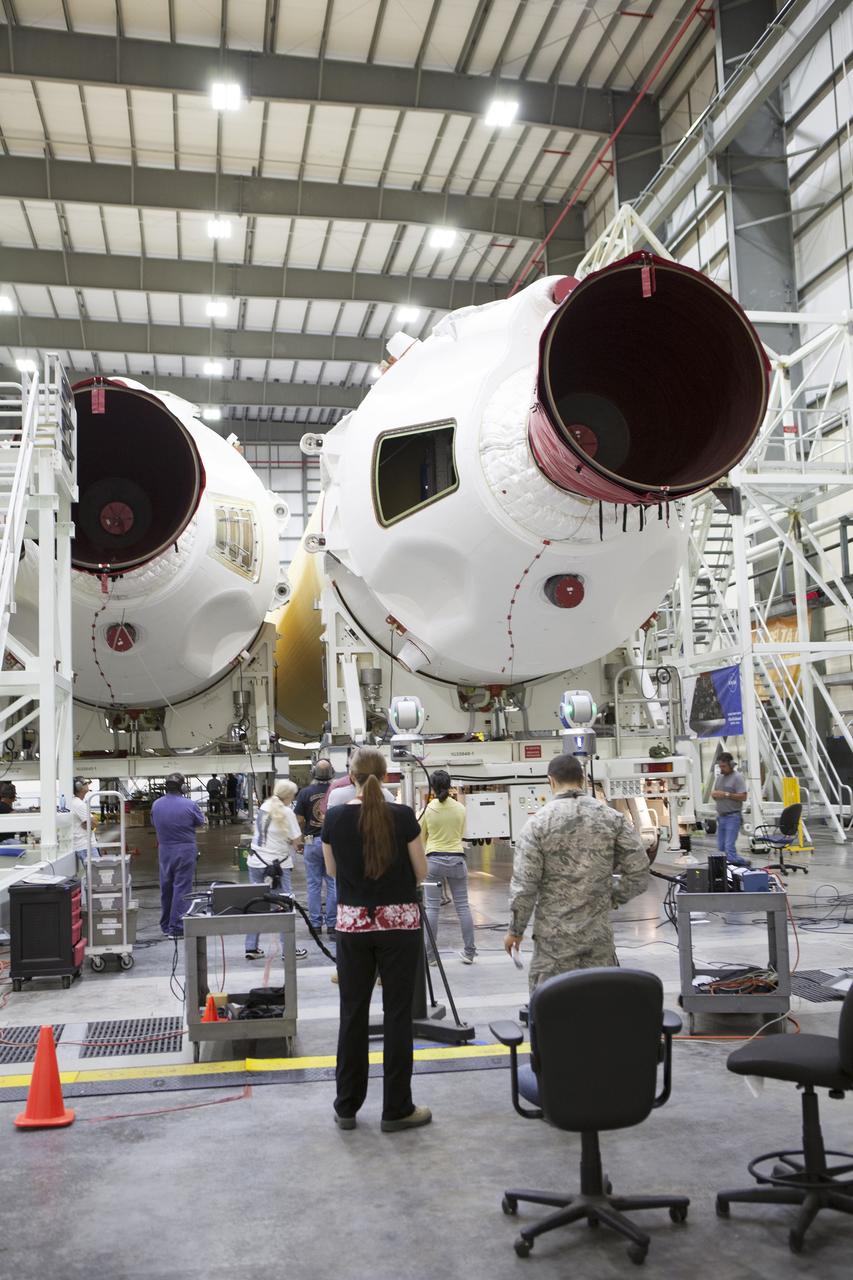
CAPE CANAVERAL, Fla. – United Launch Alliance, or ULA, technicians monitor the progress as the Delta IV port booster is mated to the core booster inside the Horizontal Integration Facility at Space Launch Complex 37 on Cape Canaveral Air Force Station in Florida. The ULA Delta IV Heavy rocket will launch an uncrewed Orion spacecraft on Exploration Flight Test-1. During the mission, Orion will travel farther into space than any human spacecraft has gone in more than 40 years. The data gathered during the flight will influence design decisions, validate existing computer models and innovative new approaches to space systems development, as well as reduce overall mission risks and costs for later Orion flights. Liftoff of Orion on the first flight test is planned for December 2014. Photo credit: NASA/Ben Smegelsky
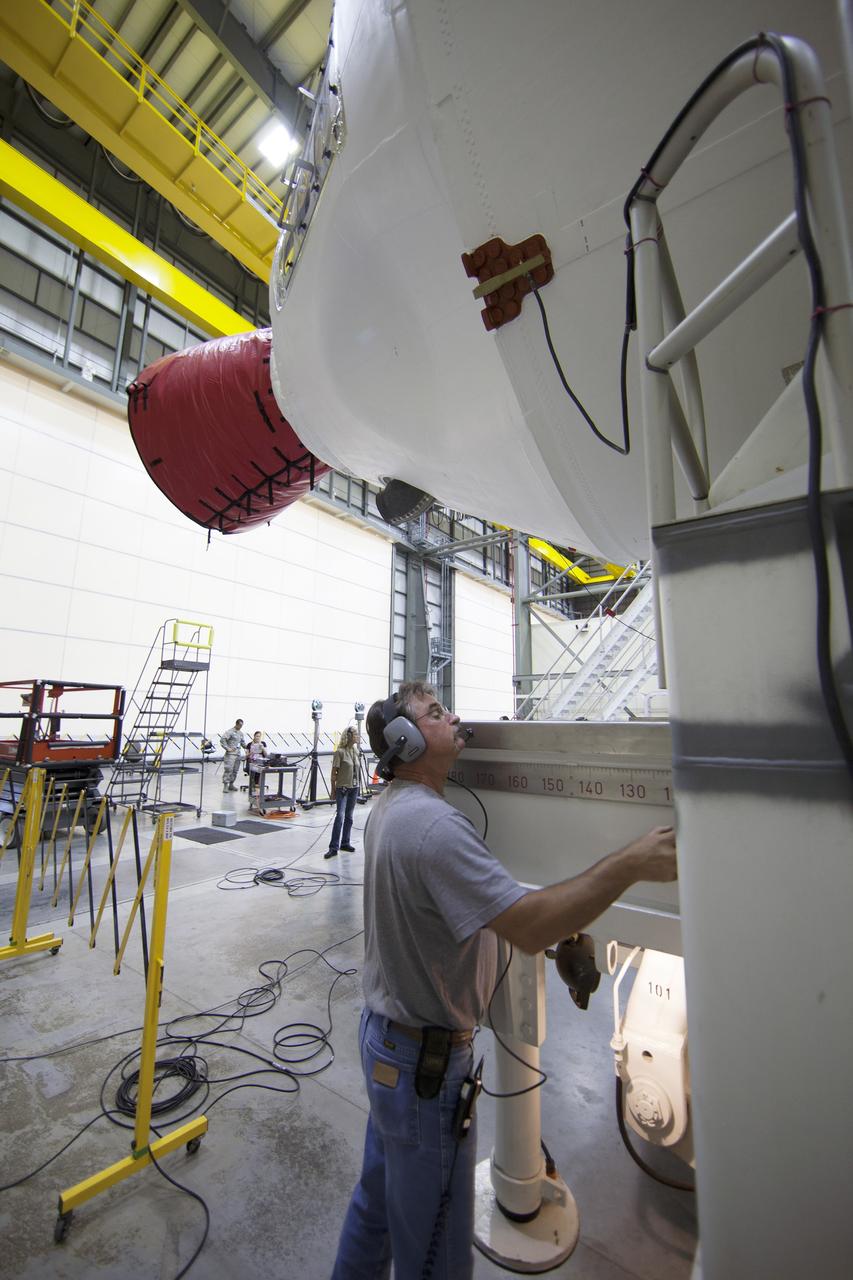
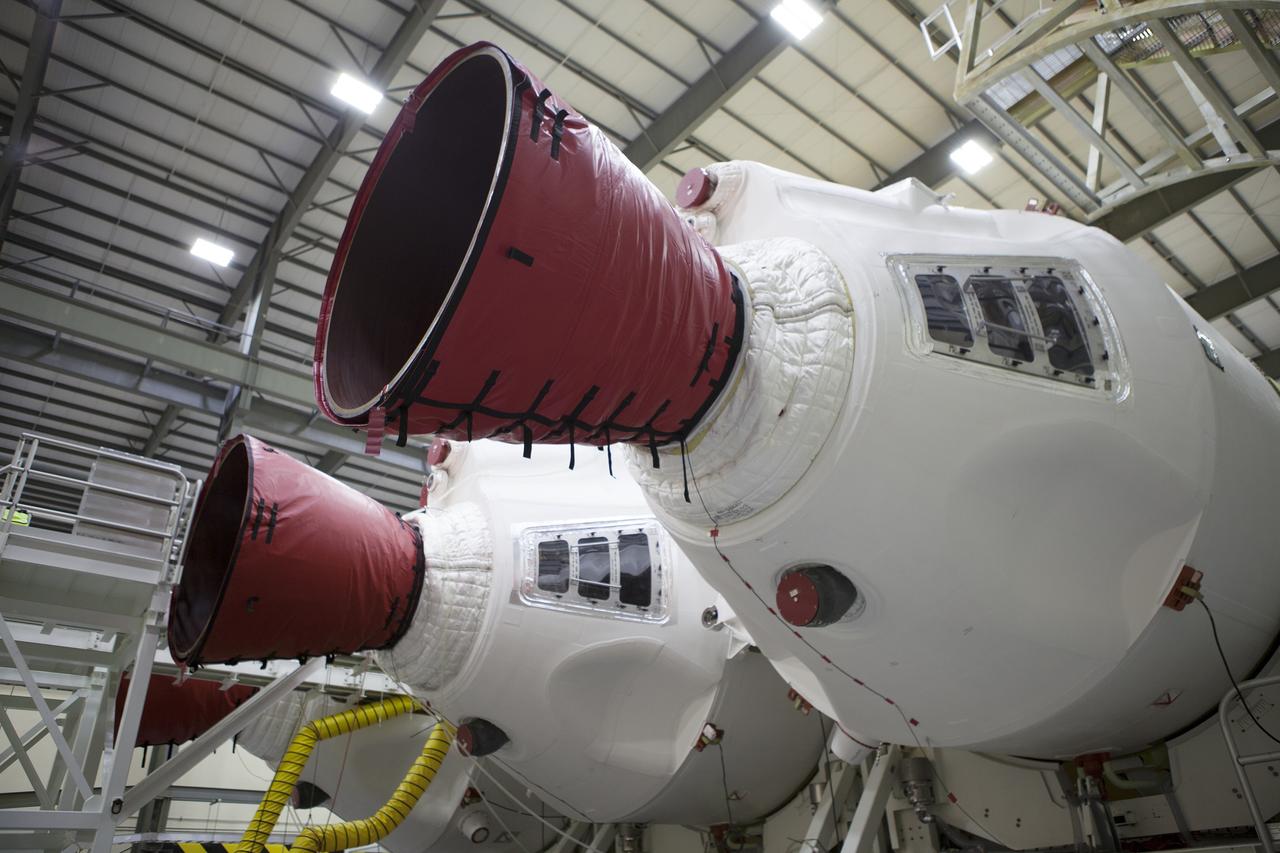
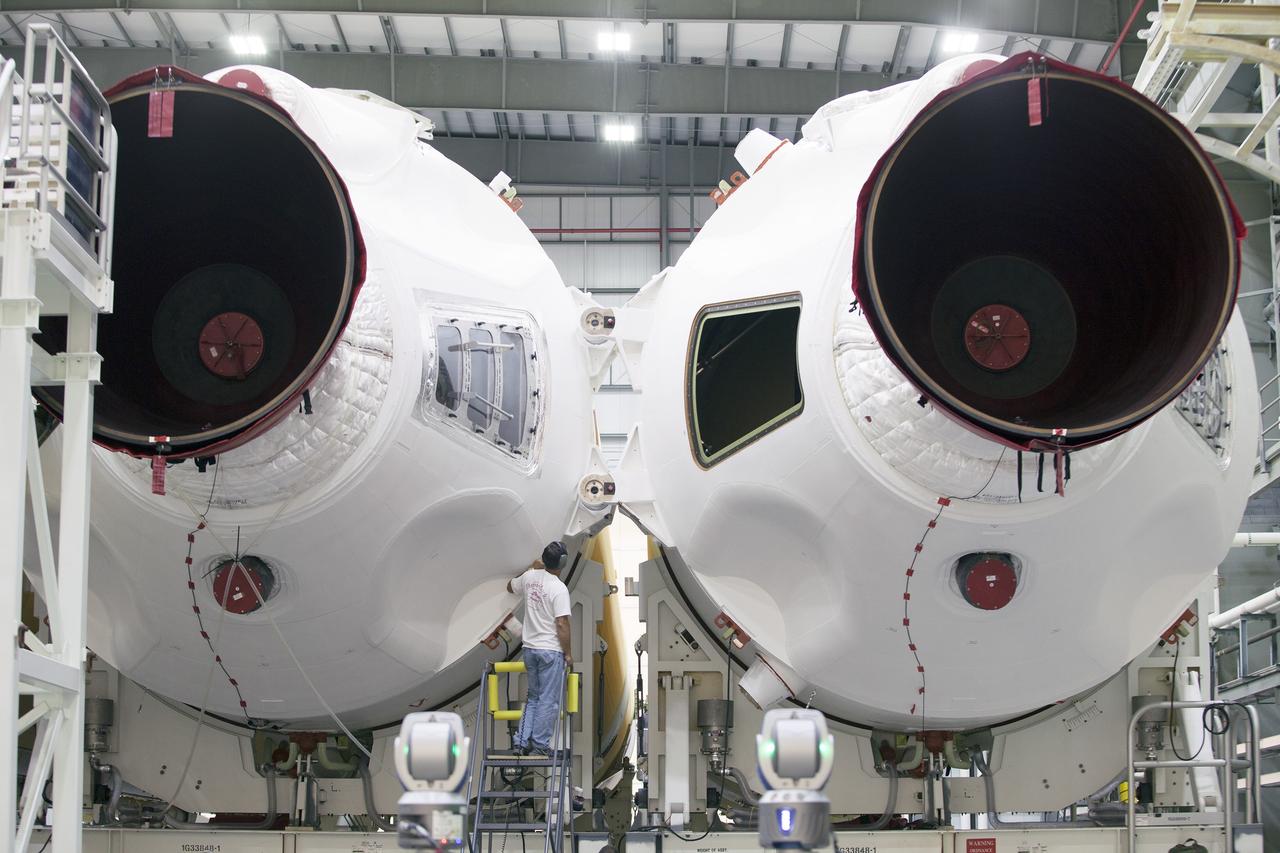
CAPE CANAVERAL, Fla. – United Launch Alliance, or ULA, technicians monitor the progress as the Delta IV port booster is mated to the core booster inside the Horizontal Integration Facility at Space Launch Complex 37 on Cape Canaveral Air Force Station in Florida. The ULA Delta IV Heavy rocket will launch an uncrewed Orion spacecraft on Exploration Flight Test-1. During the mission, Orion will travel farther into space than any human spacecraft has gone in more than 40 years. The data gathered during the flight will influence design decisions, validate existing computer models and innovative new approaches to space systems development, as well as reduce overall mission risks and costs for later Orion flights. Liftoff of Orion on the first flight test is planned for December 2014. Photo credit: NASA/Ben Smegelsky
CAPE CANAVERAL, Fla. – All three of the United Launch Alliance, or ULA, Delta IV boosters for Exploration Flight Test-1 are in view inside the Horizontal Integration Facility at Space Launch Complex 37 on Cape Canaveral Air Force Station in Florida. The port booster is being mated to the core booster. The ULA Delta IV Heavy rocket will launch an uncrewed Orion spacecraft on Exploration Flight Test-1. During the mission, Orion will travel farther into space than any human spacecraft has gone in more than 40 years. The data gathered during the flight will influence design decisions, validate existing computer models and innovative new approaches to space systems development, as well as reduce overall mission risks and costs for later Orion flights. Liftoff of Orion on the first flight test is planned for December 2014. Photo credit: NASA/Ben Smegelsky
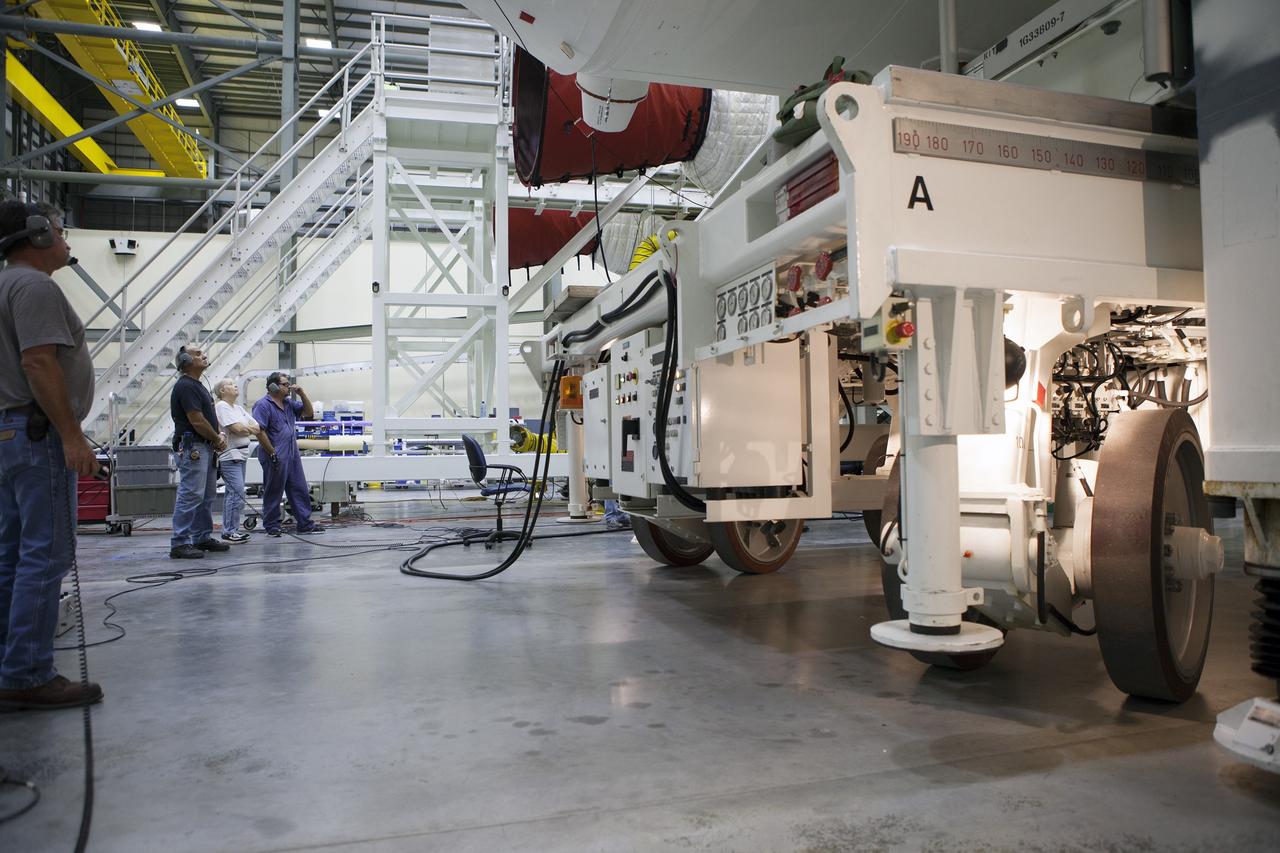
CAPE CANAVERAL, Fla. – United Launch Alliance, or ULA, technicians monitor the progress as the Delta IV port booster is mated to the core booster inside the Horizontal Integration Facility at Space Launch Complex 37 on Cape Canaveral Air Force Station in Florida. The ULA Delta IV Heavy rocket will launch an uncrewed Orion spacecraft on Exploration Flight Test-1. During the mission, Orion will travel farther into space than any human spacecraft has gone in more than 40 years. The data gathered during the flight will influence design decisions, validate existing computer models and innovative new approaches to space systems development, as well as reduce overall mission risks and costs for later Orion flights. Liftoff of Orion on the first flight test is planned for December 2014. Photo credit: NASA/Ben Smegelsky
CAPE CANAVERAL, Fla. – A United Launch Alliance, or ULA, technician monitors the progress as the Delta IV port booster is mated to the core booster inside the Horizontal Integration Facility at Space Launch Complex 37 on Cape Canaveral Air Force Station in Florida. The ULA Delta IV Heavy rocket will launch an uncrewed Orion spacecraft on Exploration Flight Test-1. During the mission, Orion will travel farther into space than any human spacecraft has gone in more than 40 years. The data gathered during the flight will influence design decisions, validate existing computer models and innovative new approaches to space systems development, as well as reduce overall mission risks and costs for later Orion flights. Liftoff of Orion on the first flight test is planned for December 2014. Photo credit: NASA/Ben Smegelsky
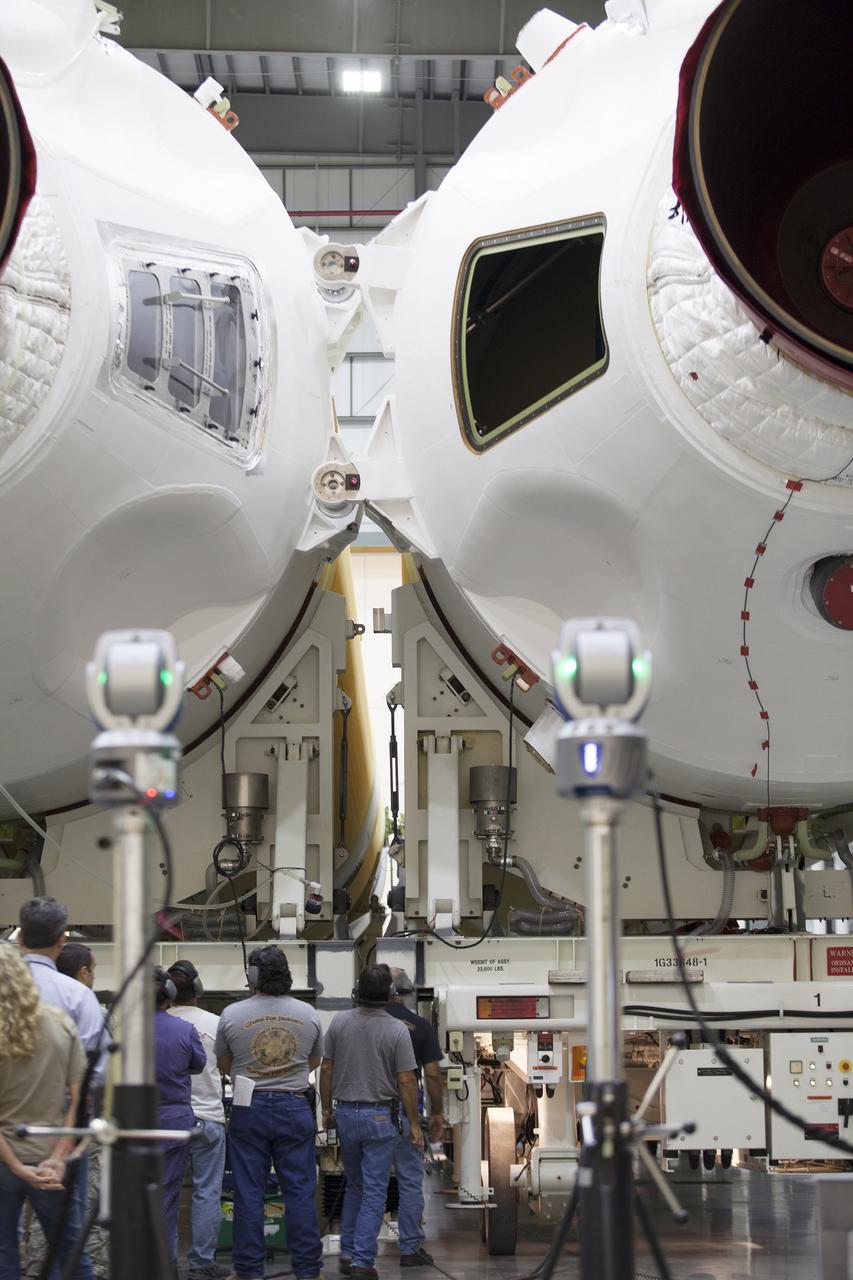
CAPE CANAVERAL, Fla. – United Launch Alliance, or ULA, technicians monitor the progress as the Delta IV port booster is mated to the core booster inside the Horizontal Integration Facility at Space Launch Complex 37 on Cape Canaveral Air Force Station in Florida. The ULA Delta IV Heavy rocket will launch an uncrewed Orion spacecraft on Exploration Flight Test-1. During the mission, Orion will travel farther into space than any human spacecraft has gone in more than 40 years. The data gathered during the flight will influence design decisions, validate existing computer models and innovative new approaches to space systems development, as well as reduce overall mission risks and costs for later Orion flights. Liftoff of Orion on the first flight test is planned for December 2014. Photo credit: NASA/Ben Smegelsky
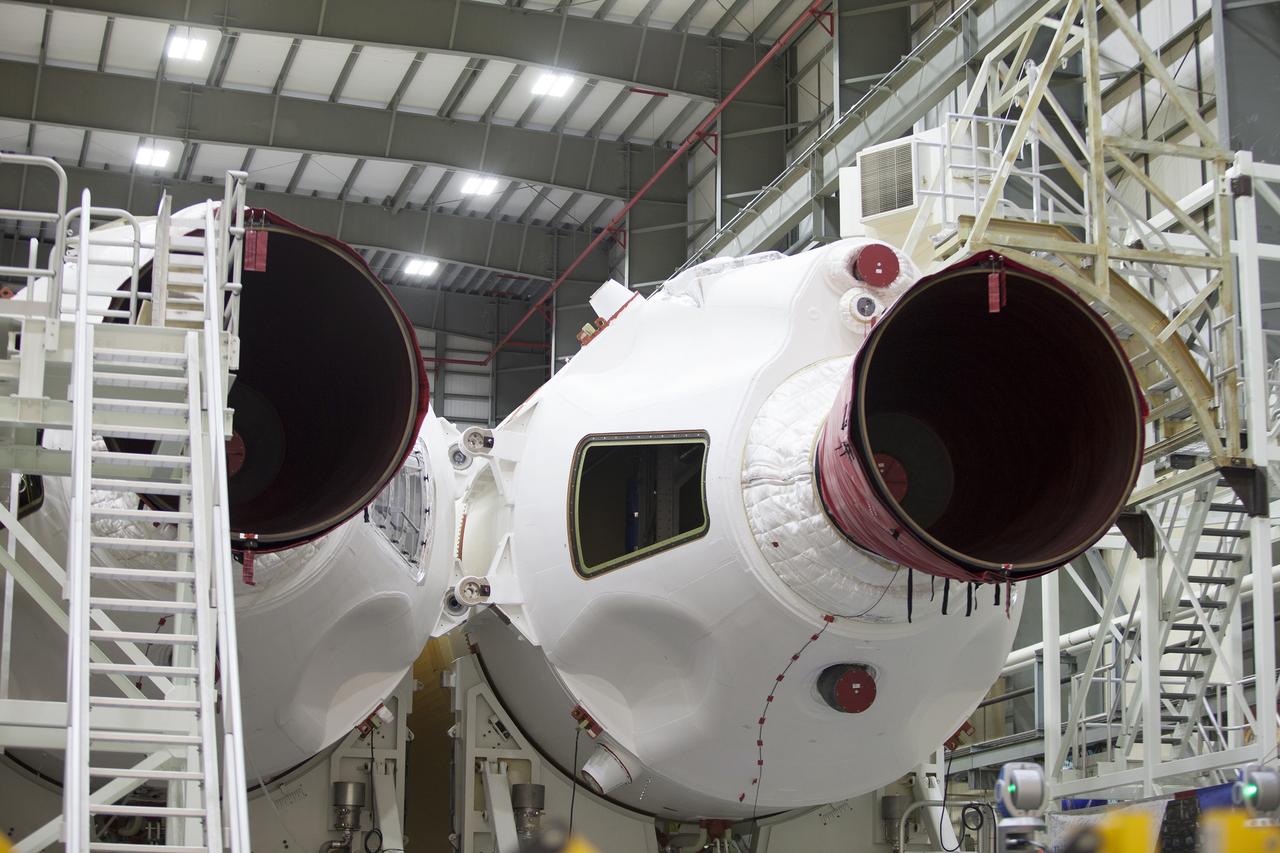
CAPE CANAVERAL, Fla. – The United Launch Alliance Delta IV port booster is being mated to the core booster inside the Horizontal Integration Facility at Space Launch Complex 37 on Cape Canaveral Air Force Station in Florida. The Delta IV Heavy rocket will launch an uncrewed Orion spacecraft on Exploration Flight Test-1. During the mission, Orion will travel farther into space than any human spacecraft has gone in more than 40 years. The data gathered during the flight will influence design decisions, validate existing computer models and innovative new approaches to space systems development, as well as reduce overall mission risks and costs for later Orion flights. Liftoff of Orion on the first flight test is planned for December 2014. Photo credit: NASA/Ben Smegelsky
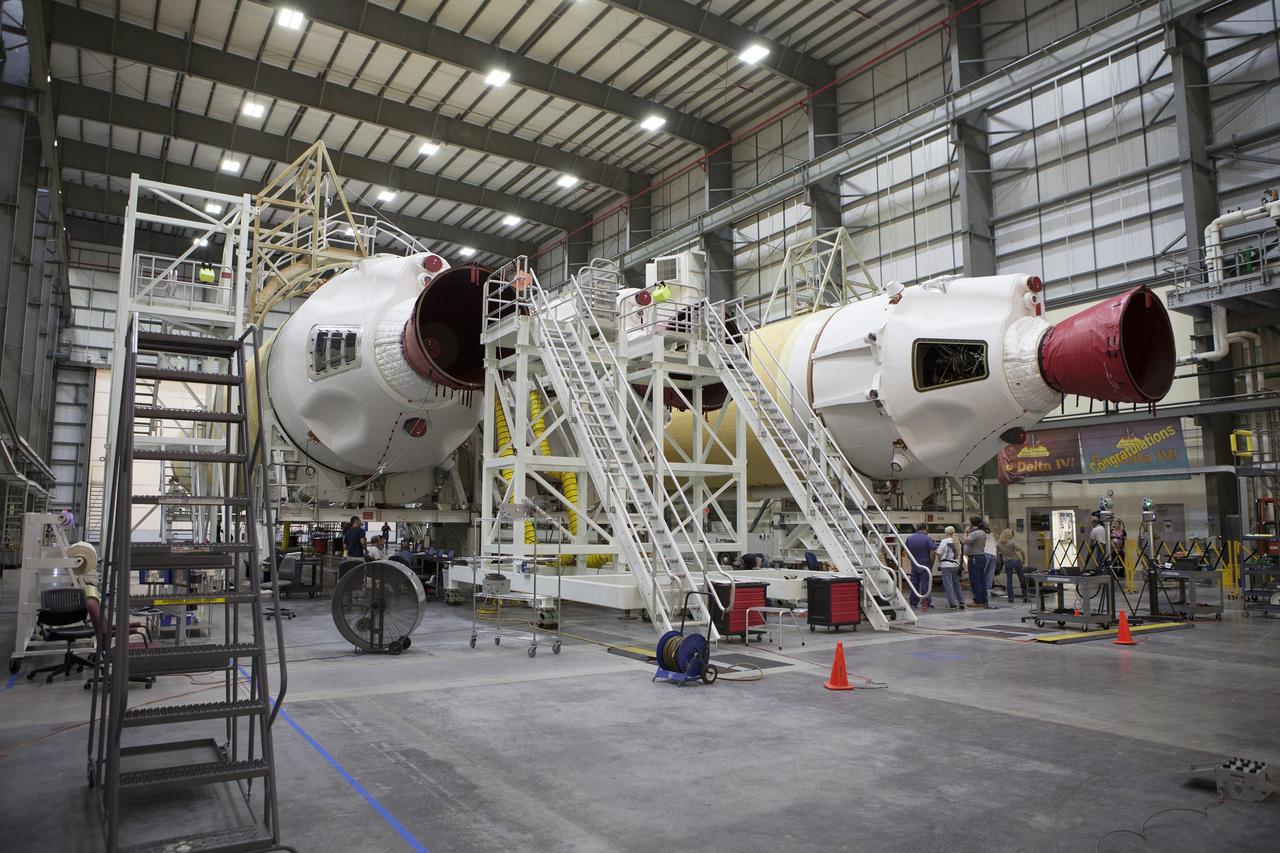
CAPE CANAVERAL, Fla. – Preparations are underway to begin mating the United Launch Alliance Delta IV port booster to the core booster inside the Horizontal Integration Facility at Space Launch Complex 37 on Cape Canaveral Air Force Station in Florida. The Delta IV Heavy rocket will launch an uncrewed Orion spacecraft on Exploration Flight Test-1. During the mission, Orion will travel farther into space than any human spacecraft has gone in more than 40 years. The data gathered during the flight will influence design decisions, validate existing computer models and innovative new approaches to space systems development, as well as reduce overall mission risks and costs for later Orion flights. Liftoff of Orion on the first flight test is planned for December 2014. Photo credit: NASA/Ben Smegelsky
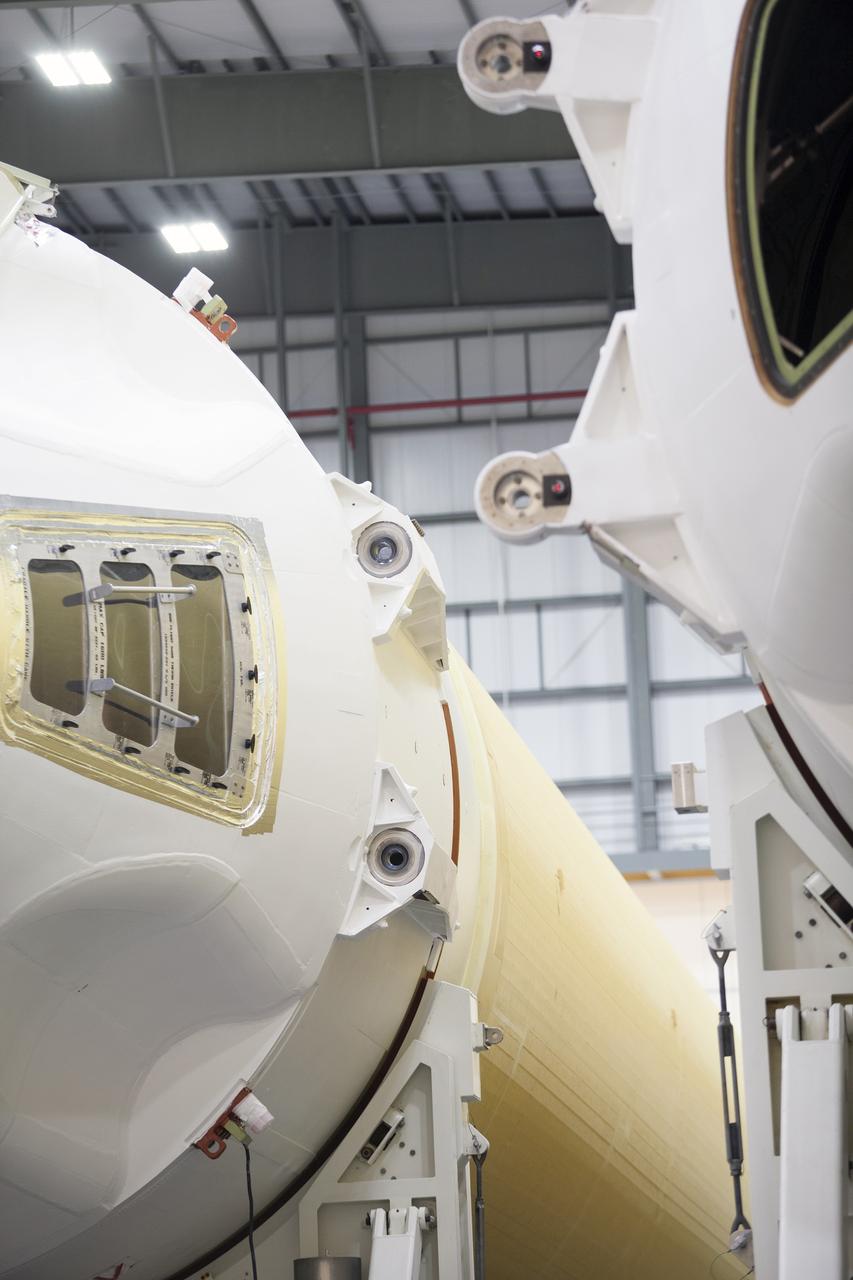
CAPE CANAVERAL, Fla. – In this close-up photograph, the United Launch Alliance Delta IV port booster is being mated to the core booster inside the Horizontal Integration Facility at Space Launch Complex 37 on Cape Canaveral Air Force Station in Florida. The Delta IV Heavy rocket will launch an uncrewed Orion spacecraft on Exploration Flight Test-1. During the mission, Orion will travel farther into space than any human spacecraft has gone in more than 40 years. The data gathered during the flight will influence design decisions, validate existing computer models and innovative new approaches to space systems development, as well as reduce overall mission risks and costs for later Orion flights. Liftoff of Orion on the first flight test is planned for December 2014. Photo credit: NASA/Ben Smegelsky
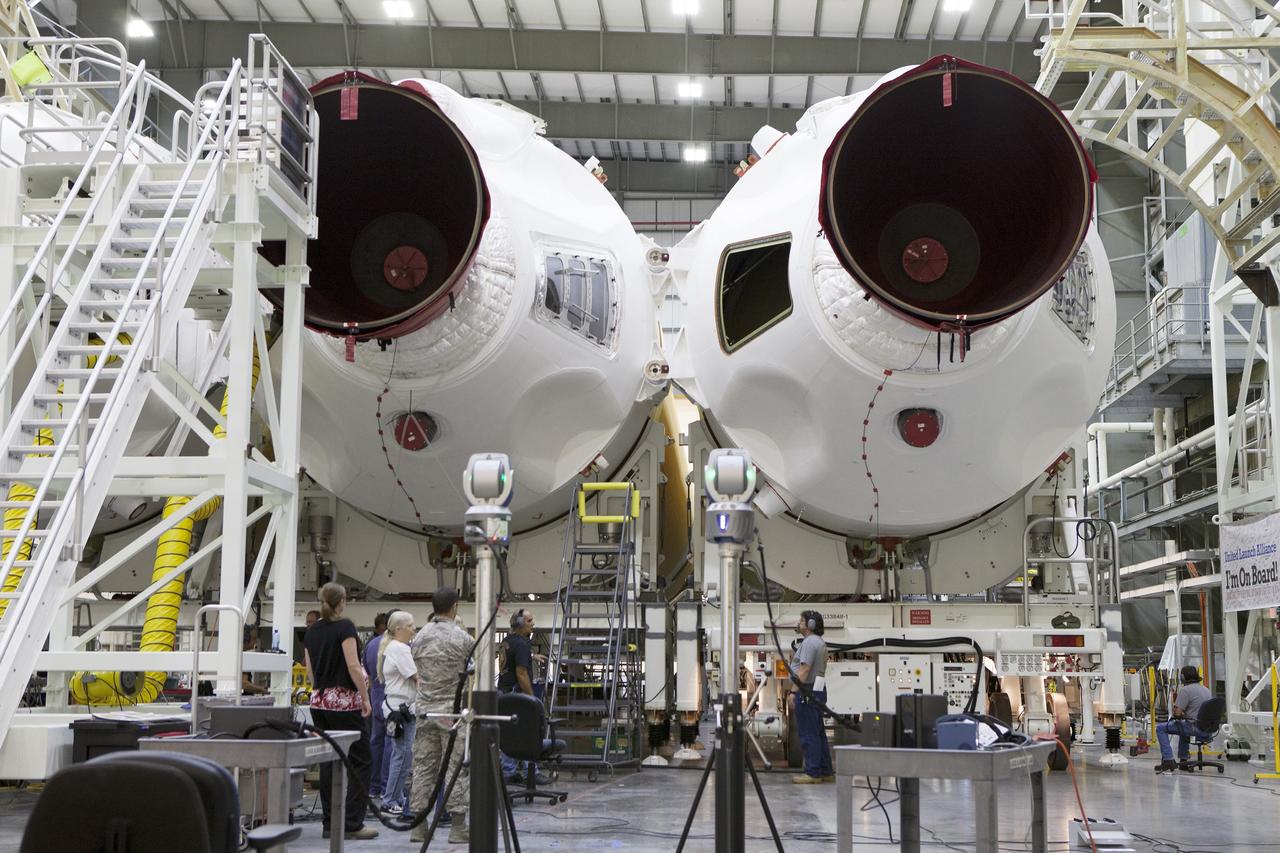
CAPE CANAVERAL, Fla. – United Launch Alliance, or ULA, technicians monitor the progress as the Delta IV port booster is mated to the core booster inside the Horizontal Integration Facility at Space Launch Complex 37 on Cape Canaveral Air Force Station in Florida. The ULA Delta IV Heavy rocket will launch an uncrewed Orion spacecraft on Exploration Flight Test-1. During the mission, Orion will travel farther into space than any human spacecraft has gone in more than 40 years. The data gathered during the flight will influence design decisions, validate existing computer models and innovative new approaches to space systems development, as well as reduce overall mission risks and costs for later Orion flights. Liftoff of Orion on the first flight test is planned for December 2014. Photo credit: NASA/Ben Smegelsky
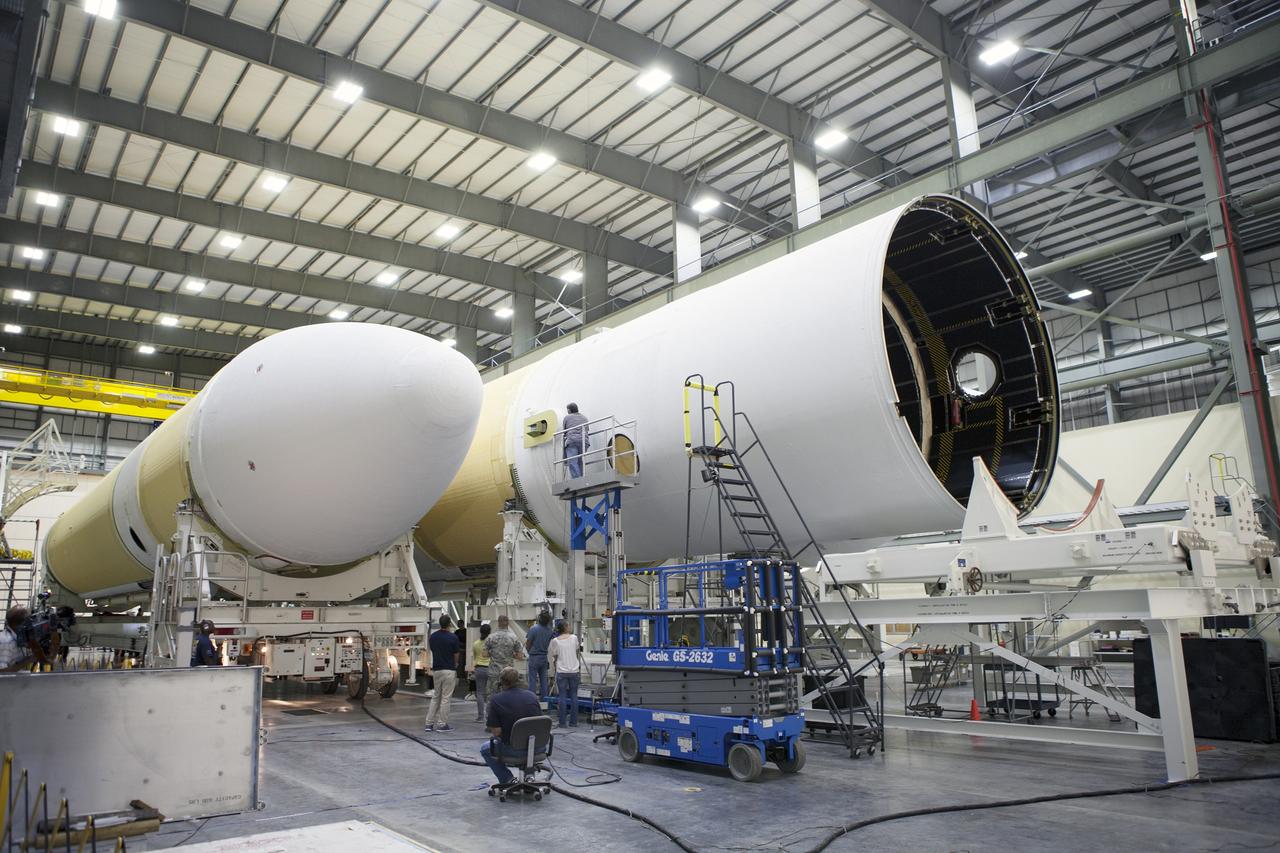
CAPE CANAVERAL, Fla. – United Launch Alliance, or ULA, technicians monitor the progress as the Delta IV port booster is mated to the core booster inside the Horizontal Integration Facility at Space Launch Complex 37 on Cape Canaveral Air Force Station in Florida. The ULA Delta IV Heavy rocket will launch an uncrewed Orion spacecraft on Exploration Flight Test-1. During the mission, Orion will travel farther into space than any human spacecraft has gone in more than 40 years. The data gathered during the flight will influence design decisions, validate existing computer models and innovative new approaches to space systems development, as well as reduce overall mission risks and costs for later Orion flights. Liftoff of Orion on the first flight test is planned for December 2014. Photo credit: NASA/Ben Smegelsky
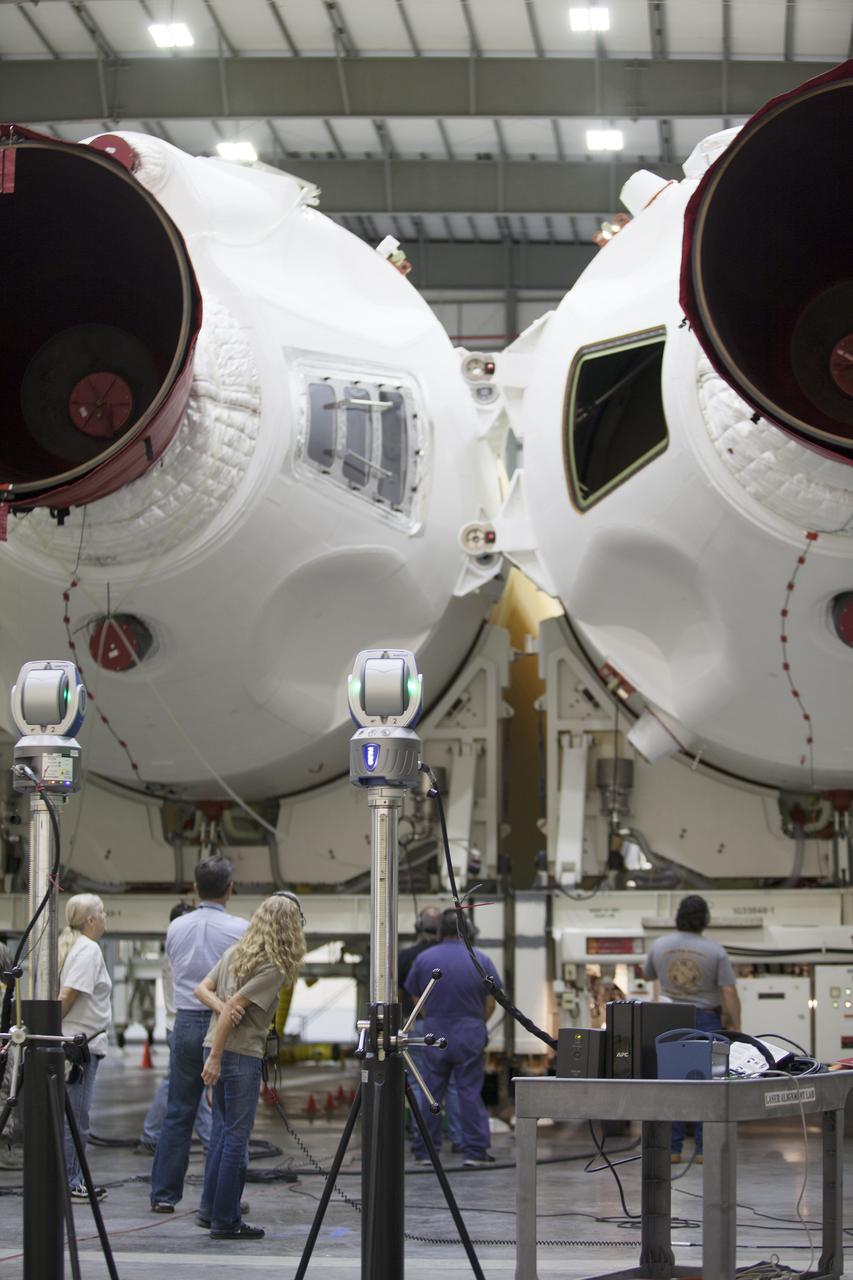
CAPE CANAVERAL, Fla. – United Launch Alliance, or ULA, technicians monitor the progress as the Delta IV port booster is mated to the core booster inside the Horizontal Integration Facility at Space Launch Complex 37 on Cape Canaveral Air Force Station in Florida. The ULA Delta IV Heavy rocket will launch an uncrewed Orion spacecraft on Exploration Flight Test-1. During the mission, Orion will travel farther into space than any human spacecraft has gone in more than 40 years. The data gathered during the flight will influence design decisions, validate existing computer models and innovative new approaches to space systems development, as well as reduce overall mission risks and costs for later Orion flights. Liftoff of Orion on the first flight test is planned for December 2014. Photo credit: NASA/Ben Smegelsky
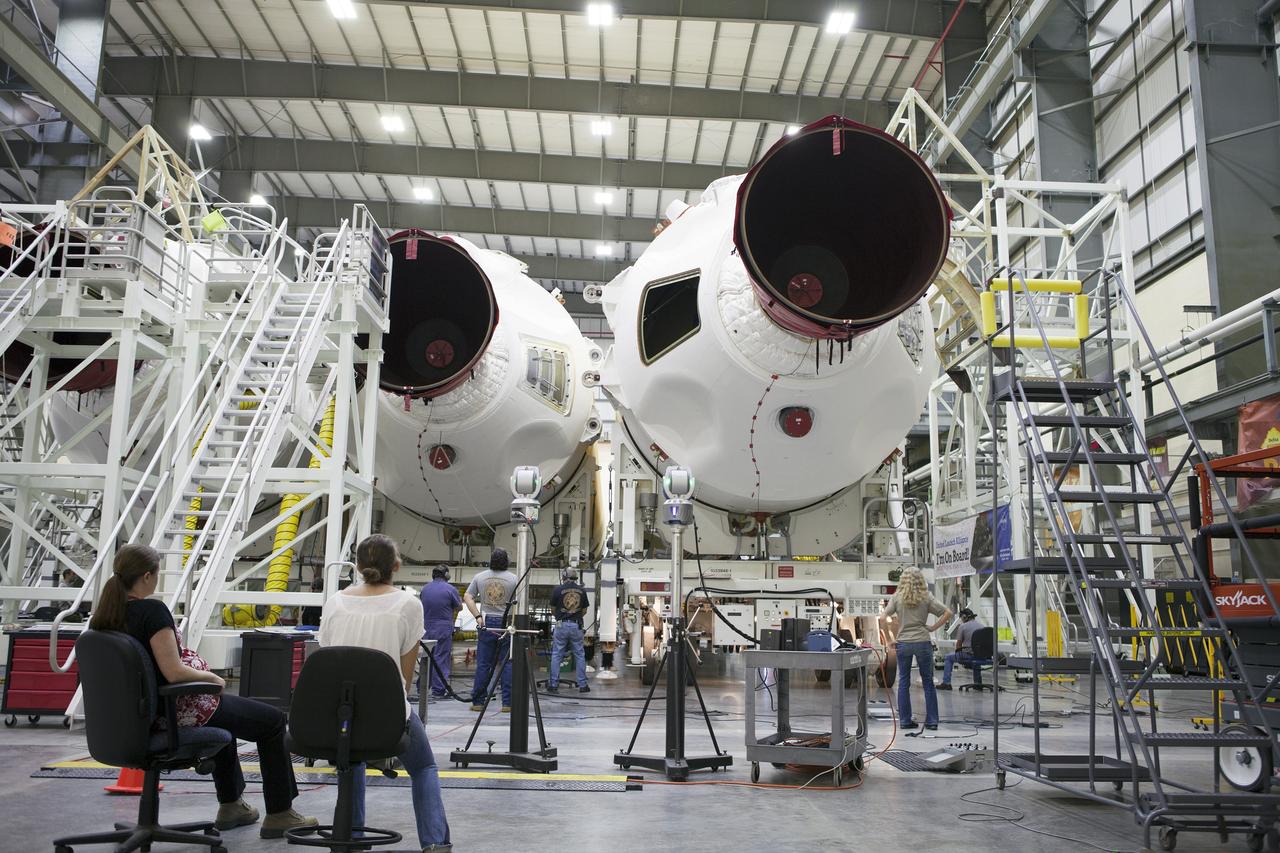
CAPE CANAVERAL, Fla. – United Launch Alliance, or ULA, technicians monitor the progress as the Delta IV port booster is mated to the core booster inside the Horizontal Integration Facility at Space Launch Complex 37 on Cape Canaveral Air Force Station in Florida. The ULA Delta IV Heavy rocket will launch an uncrewed Orion spacecraft on Exploration Flight Test-1. During the mission, Orion will travel farther into space than any human spacecraft has gone in more than 40 years. The data gathered during the flight will influence design decisions, validate existing computer models and innovative new approaches to space systems development, as well as reduce overall mission risks and costs for later Orion flights. Liftoff of Orion on the first flight test is planned for December 2014. Photo credit: NASA/Ben Smegelsky
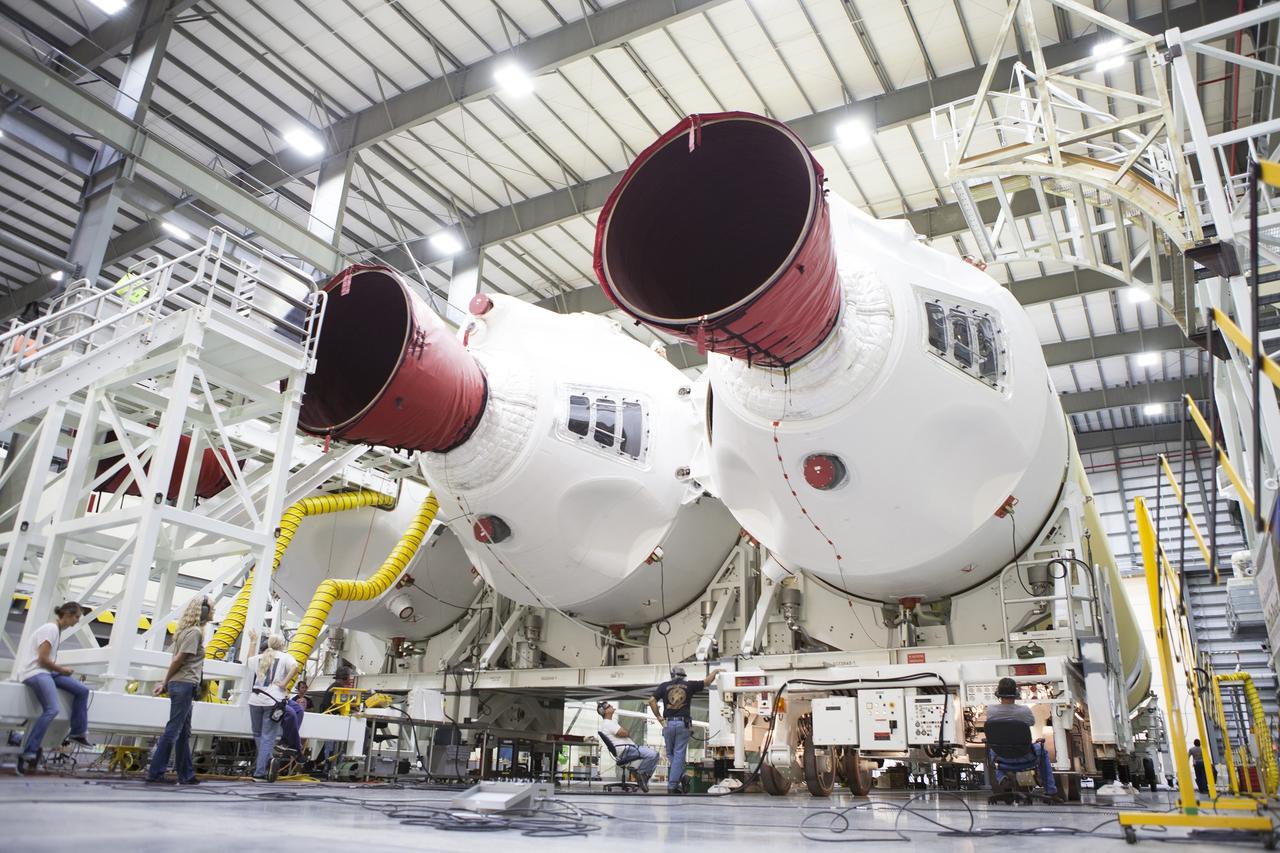
CAPE CANAVERAL, Fla. – All three of the United Launch Alliance, or ULA, Delta IV boosters for Exploration Flight Test-1 are in view inside the Horizontal Integration Facility at Space Launch Complex 37 on Cape Canaveral Air Force Station in Florida. The port booster is being mated to the core booster. The ULA Delta IV Heavy rocket will launch an uncrewed Orion spacecraft on Exploration Flight Test-1. During the mission, Orion will travel farther into space than any human spacecraft has gone in more than 40 years. The data gathered during the flight will influence design decisions, validate existing computer models and innovative new approaches to space systems development, as well as reduce overall mission risks and costs for later Orion flights. Liftoff of Orion on the first flight test is planned for December 2014. Photo credit: NASA/Ben Smegelsky
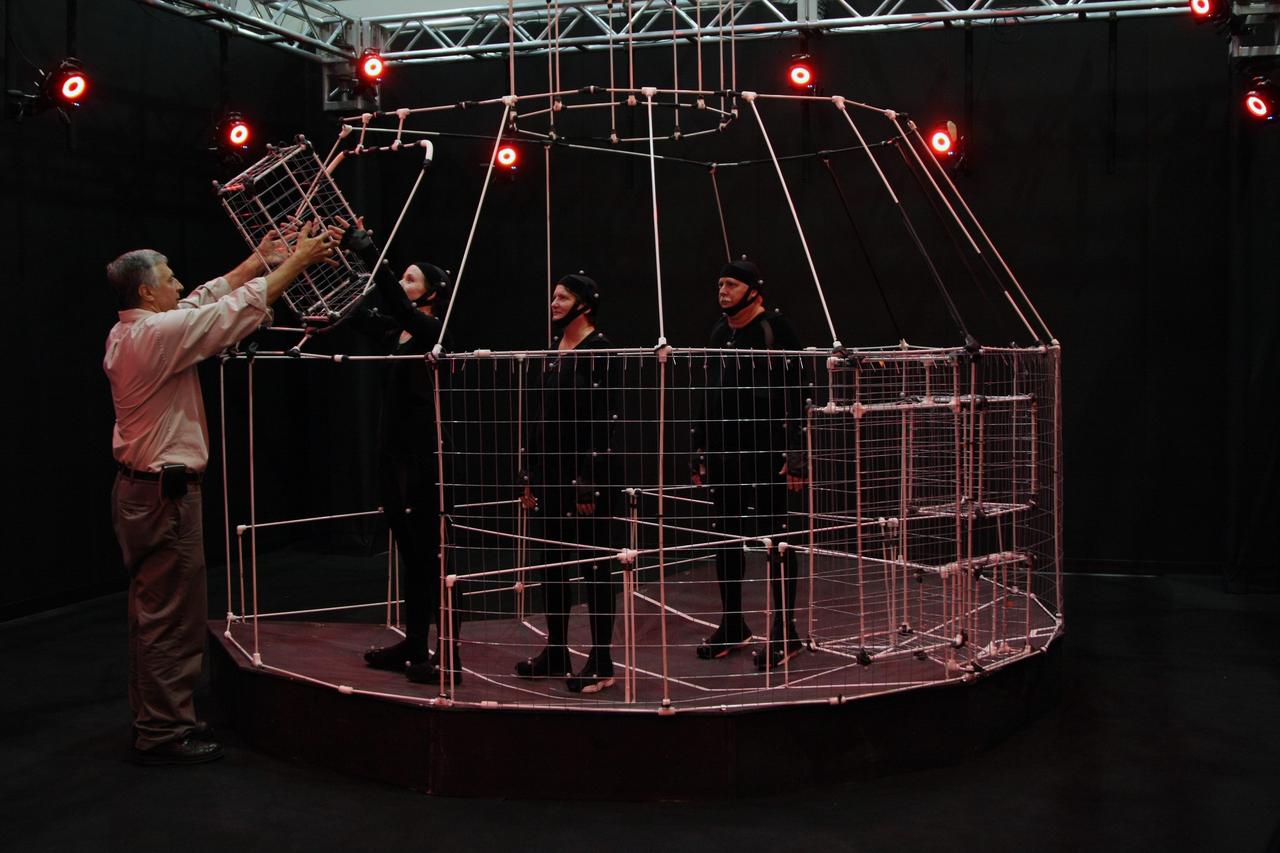
CAPE CANAVERAL, Fla. – Professor Peter Voci, NYIT MOCAP (Motion Capture) team director, (left) hands a component of the Orion Crew Module mockup to one of three technicians inside the mockup. The technicians wear motion capture suits. The motion tracking aims to improve efficiency of assembly processes and identify potential ergonomic risks for technicians assembling the mockup. The work is being performed in United Space Alliance's Human Engineering Modeling and Performance Lab in the RLV Hangar at NASA's Kennedy Space Center. The motion tracking aims to improve efficiency of assembly processes and identify potential ergonomic risks for technicians assembling the mockup. The work is being performed in United Space Alliance's Human Engineering Modeling and Performance Lab in the RLV Hangar at NASA's Kennedy Space Center. Part of NASA's Constellation Program, the Orion spacecraft will return humans to the moon and prepare for future voyages to Mars and other destinations in our solar system.
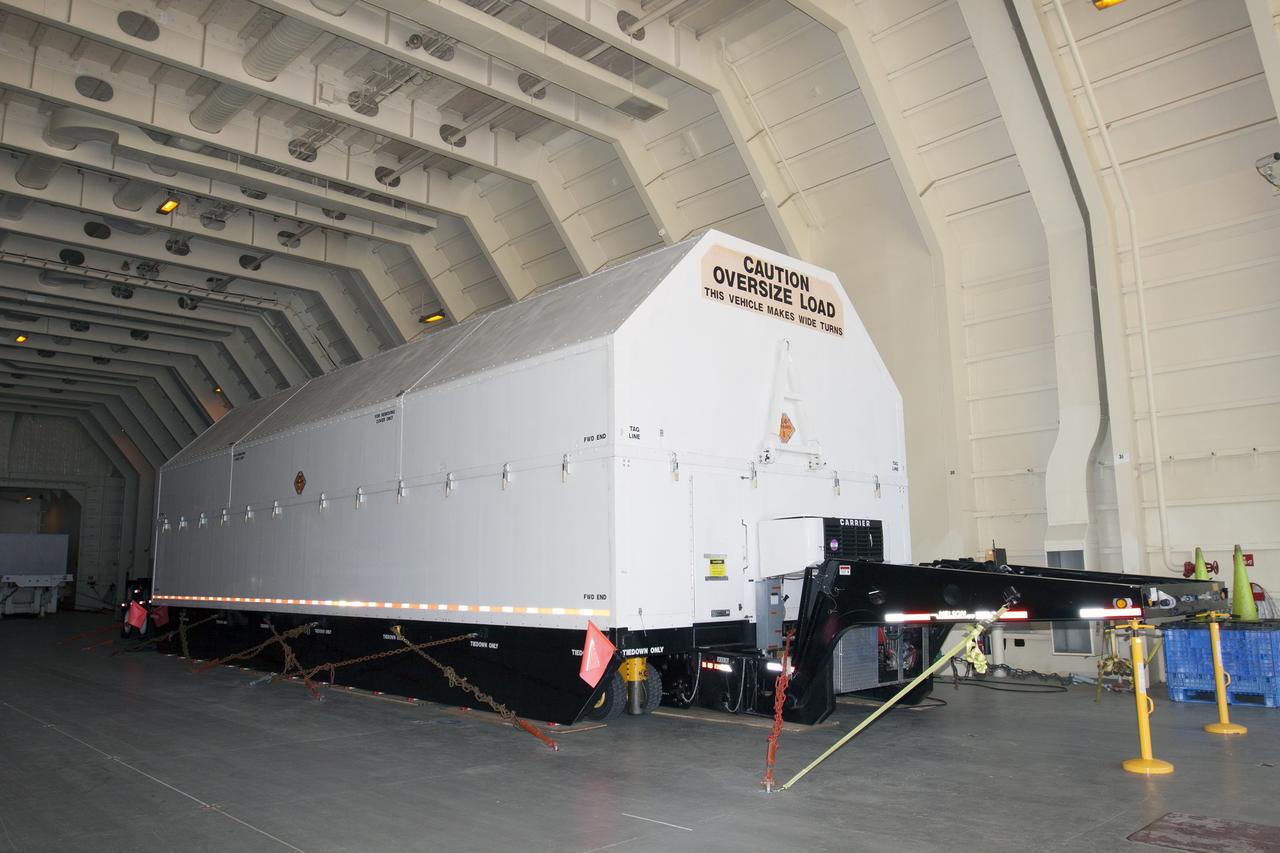
CAPE CANAVERAL, Fla. -- A barge has arrived at the U.S. Army Outpost wharf at Port Canaveral in Florida, carrying the second stage, port booster and spacecraft adapter, the remaining stages for the United Launch Alliance Delta IV Heavy boosters for NASA’s upcoming Exploration Flight Test-1, or EFT-1, mission with the Orion spacecraft. They are being offloaded in their containers for transport to the Horizontal Integration Facility, or HIF, at Space Launch Complex 37 on Cape Canaveral Air Force Station. At the HIF, all three booster stages will be processed and checked out before being moved to the nearby launch pad and hoisted into position. The spacecraft adapter will connect Orion to the ULA Delta IV, and also will connect Orion to NASA's new rocket, the Space Launch System, on its first mission in 2017. During the EFT-1 mission, Orion will travel farther into space than any human spacecraft has gone in more than 40 years. The data gathered during the flight will influence design decisions, validate existing computer models and innovative new approaches to space systems development, as well as reduce overall mission risks and costs for later Orion flights. Liftoff of Orion on EFT-1 is planned for fall 2014. Photo credit: NASA/Kim Shiflett
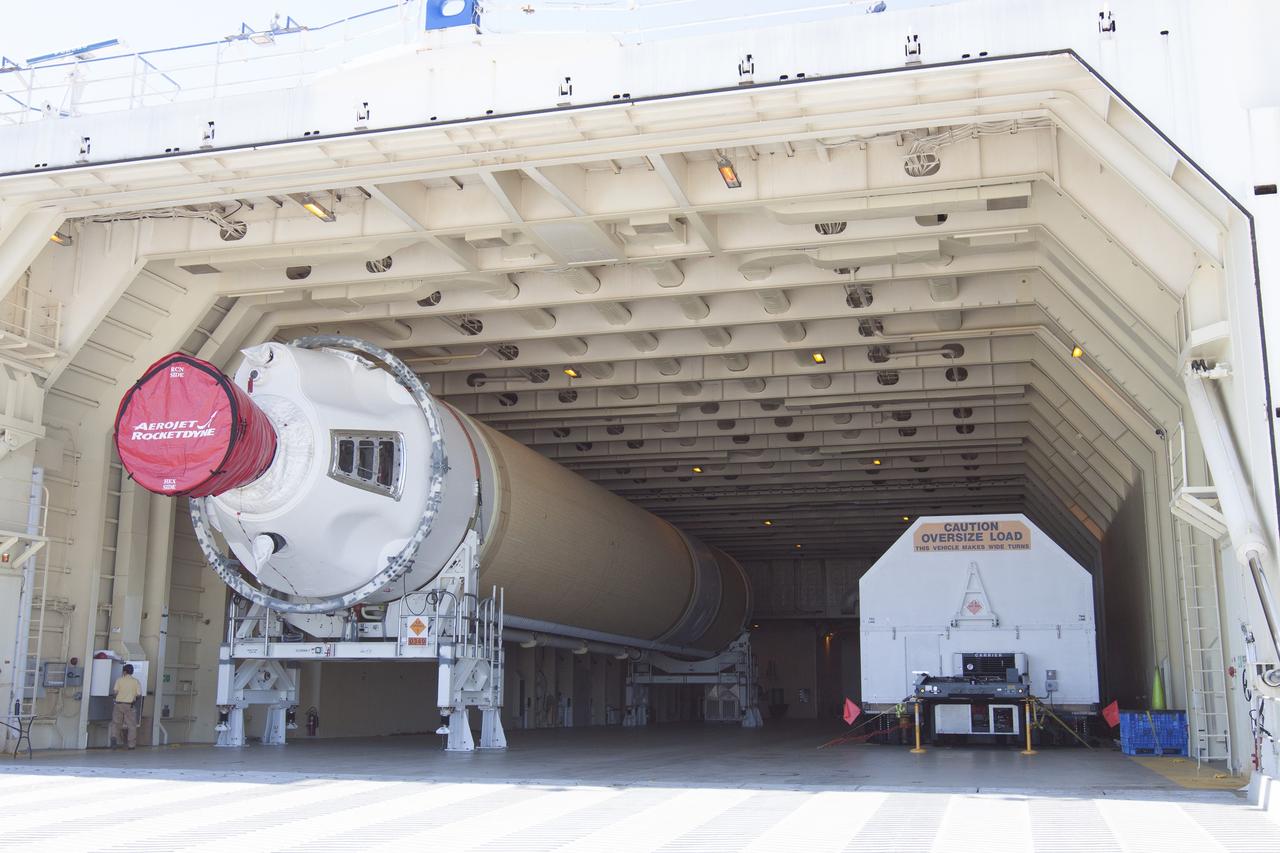
CAPE CANAVERAL, Fla. -- A barge arrives at the U.S. Army Outpost wharf at Port Canaveral in Florida, carrying the second stage, port booster and spacecraft adapter, the remaining stages for the United Launch Alliance Delta IV Heavy boosters for NASA’s upcoming Exploration Flight Test-1, or EFT-1, mission with the Orion spacecraft. They will be offloaded in their containers and transported to the Horizontal Integration Facility, or HIF, at Space Launch Complex 37 on Cape Canaveral Air Force Station. At the HIF, all three booster stages will be processed and checked out before being moved to the nearby launch pad and hoisted into position. The spacecraft adapter will connect Orion to the ULA Delta IV, and also will connect Orion to NASA's new rocket, the Space Launch System, on its first mission in 2017. During the EFT-1 mission, Orion will travel farther into space than any human spacecraft has gone in more than 40 years. The data gathered during the flight will influence design decisions, validate existing computer models and innovative new approaches to space systems development, as well as reduce overall mission risks and costs for later Orion flights. Liftoff of Orion on EFT-1 is planned for fall 2014. Photo credit: NASA/Kim Shiflett
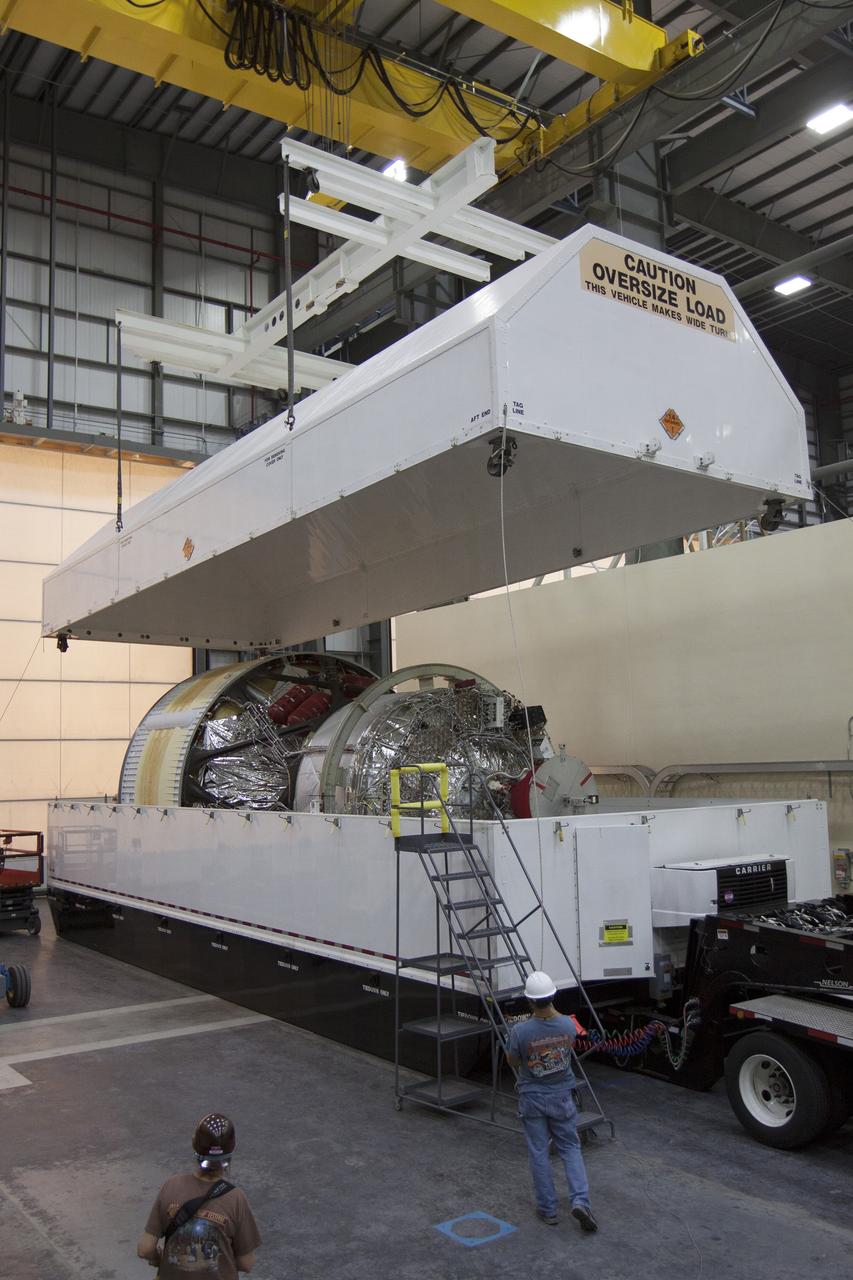
CAPE CANAVERAL, Fla. -- The second stage, port booster and spacecraft adapter, the remaining stages for the United Launch Alliance Delta IV Heavy boosters for NASA’s upcoming Exploration Flight Test-1, or EFT-1, mission with the Orion spacecraft, have been transported in their containers to the Horizontal Integration Facility, or HIF, at Space Launch Complex 37 on Cape Canaveral Air Force Station in Florida. Inside the facility, technicians uncrate the upper stage. The segments arrived by barge at the U.S. Army Outpost wharf at Port Canaveral. At the HIF, all three booster stages will be processed and checked out before being moved to the nearby launch pad and hoisted into position. The spacecraft adapter will connect Orion to the ULA Delta IV, and also will connect Orion to NASA's new rocket, the Space Launch System, on its first mission in 2017. During the EFT-1 mission, Orion will travel farther into space than any human spacecraft has gone in more than 40 years. The data gathered during the flight will influence design decisions, validate existing computer models and innovative new approaches to space systems development, as well as reduce overall mission risks and costs for later Orion flights. Liftoff of Orion on EFT-1 is planned for fall 2014. Photo credit: NASA/Kim Shiflett
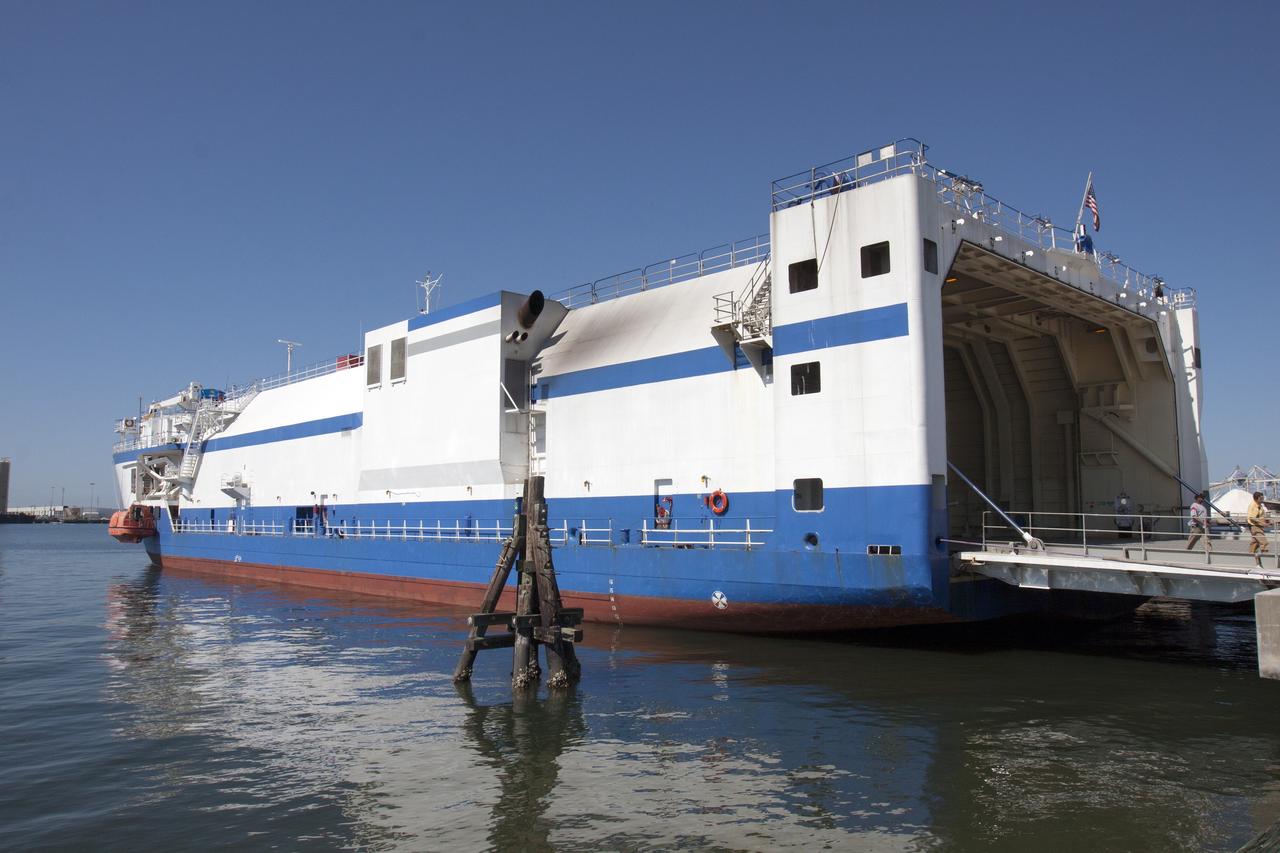
CAPE CANAVERAL, Fla. -- A barge arrives at the U.S. Army Outpost wharf at Port Canaveral in Florida, carrying the second stage, port booster and spacecraft adapter, the remaining stages for the United Launch Alliance Delta IV Heavy boosters for NASA’s upcoming Exploration Flight Test-1, or EFT-1, mission with the Orion spacecraft. They will be offloaded in their containers and transported to the Horizontal Integration Facility, or HIF, at Space Launch Complex 37 on Cape Canaveral Air Force Station. At the HIF, all three booster stages will be processed and checked out before being moved to the nearby launch pad and hoisted into position. The spacecraft adapter will connect Orion to the ULA Delta IV, and also will connect Orion to NASA's new rocket, the Space Launch System, on its first mission in 2017. During the EFT-1 mission, Orion will travel farther into space than any human spacecraft has gone in more than 40 years. The data gathered during the flight will influence design decisions, validate existing computer models and innovative new approaches to space systems development, as well as reduce overall mission risks and costs for later Orion flights. Liftoff of Orion on EFT-1 is planned for fall 2014. Photo credit: NASA/Kim Shiflett
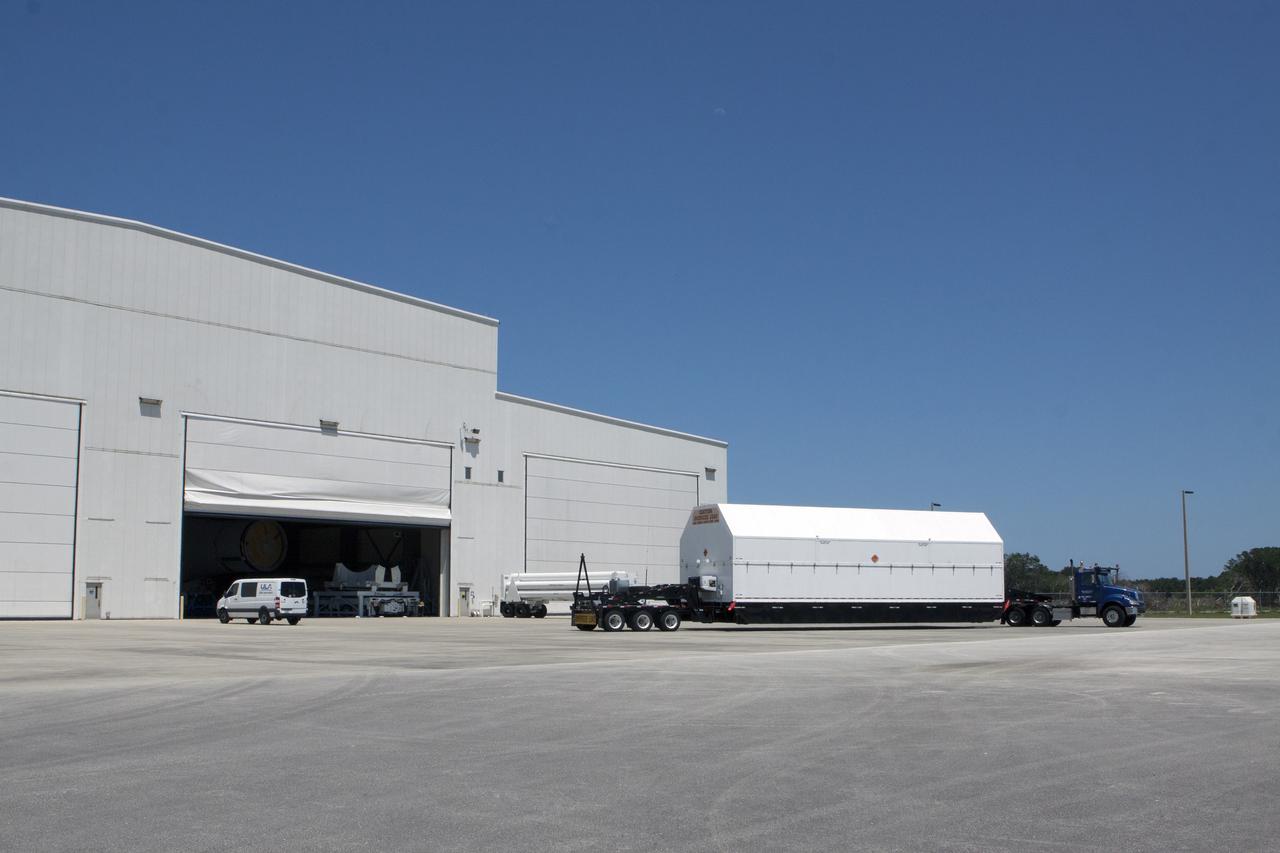
CAPE CANAVERAL, Fla. -- After arriving by barge at the U.S. Army Outpost wharf at Port Canaveral in Florida, the second stage, port booster and spacecraft adapter, the remaining stages for the United Launch Alliance Delta IV Heavy boosters for NASA’s upcoming Exploration Flight Test-1, or EFT-1, mission with the Orion spacecraft, were offloaded in their containers. They were transported to the Horizontal Integration Facility, or HIF, at Space Launch Complex 37 on Cape Canaveral Air Force Station. At the HIF, all three booster stages will be processed and checked out before being moved to the nearby launch pad and hoisted into position. The spacecraft adapter will connect Orion to the ULA Delta IV, and also will connect Orion to NASA's new rocket, the Space Launch System, on its first mission in 2017. During the EFT-1 mission, Orion will travel farther into space than any human spacecraft has gone in more than 40 years. The data gathered during the flight will influence design decisions, validate existing computer models and innovative new approaches to space systems development, as well as reduce overall mission risks and costs for later Orion flights. Liftoff of Orion on EFT-1 is planned for fall 2014. Photo credit: NASA/Kim Shiflett
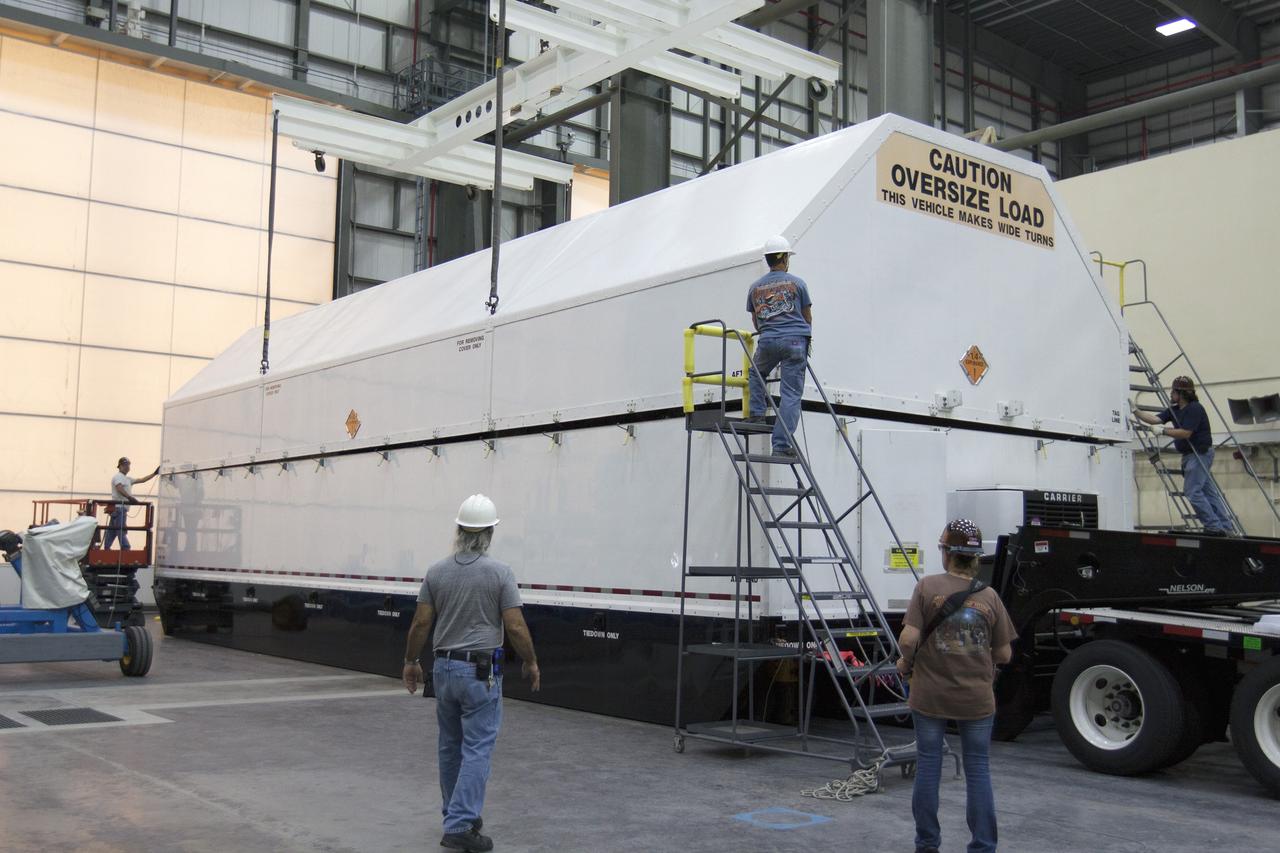
CAPE CANAVERAL, Fla. -- The second stage, port booster and spacecraft adapter, the remaining stages for the United Launch Alliance Delta IV Heavy boosters for NASA’s upcoming Exploration Flight Test-1, or EFT-1, mission with the Orion spacecraft, have been transported in their containers to the Horizontal Integration Facility, or HIF, at Space Launch Complex 37 on Cape Canaveral Air Force Station in Florida for uncrating. The segments arrived by barge at the U.S. Army Outpost wharf at Port Canaveral. At the HIF, all three booster stages will be processed and checked out before being moved to the nearby launch pad and hoisted into position. The spacecraft adapter will connect Orion to the ULA Delta IV, and also will connect Orion to NASA's new rocket, the Space Launch System, on its first mission in 2017. During the EFT-1 mission, Orion will travel farther into space than any human spacecraft has gone in more than 40 years. The data gathered during the flight will influence design decisions, validate existing computer models and innovative new approaches to space systems development, as well as reduce overall mission risks and costs for later Orion flights. Liftoff of Orion on EFT-1 is planned for fall 2014. Photo credit: NASA/Kim Shiflett
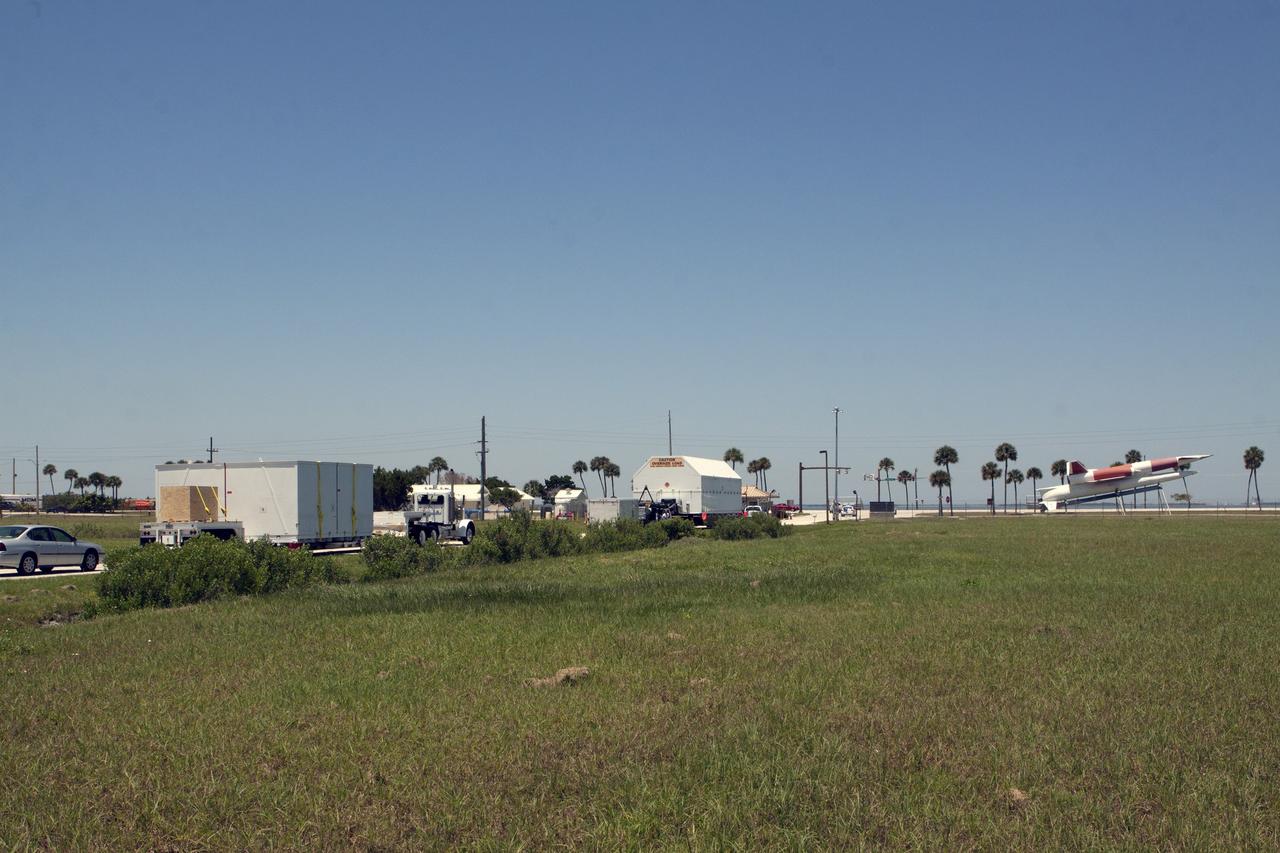
CAPE CANAVERAL, Fla. -- After arriving by barge at the U.S. Army Outpost wharf at Port Canaveral in Florida, the second stage, port booster and spacecraft adapter, the remaining stages for the United Launch Alliance Delta IV Heavy boosters for NASA’s upcoming Exploration Flight Test-1, or EFT-1, mission with the Orion spacecraft, were offloaded in their containers. They are being transported to the Horizontal Integration Facility, or HIF, at Space Launch Complex 37 on Cape Canaveral Air Force Station. At the HIF, all three booster stages will be processed and checked out before being moved to the nearby launch pad and hoisted into position. The spacecraft adapter will connect Orion to the ULA Delta IV, and also will connect Orion to NASA's new rocket, the Space Launch System, on its first mission in 2017. During the EFT-1 mission, Orion will travel farther into space than any human spacecraft has gone in more than 40 years. The data gathered during the flight will influence design decisions, validate existing computer models and innovative new approaches to space systems development, as well as reduce overall mission risks and costs for later Orion flights. Liftoff of Orion on EFT-1 is planned for fall 2014. Photo credit: NASA/Kim Shiflett
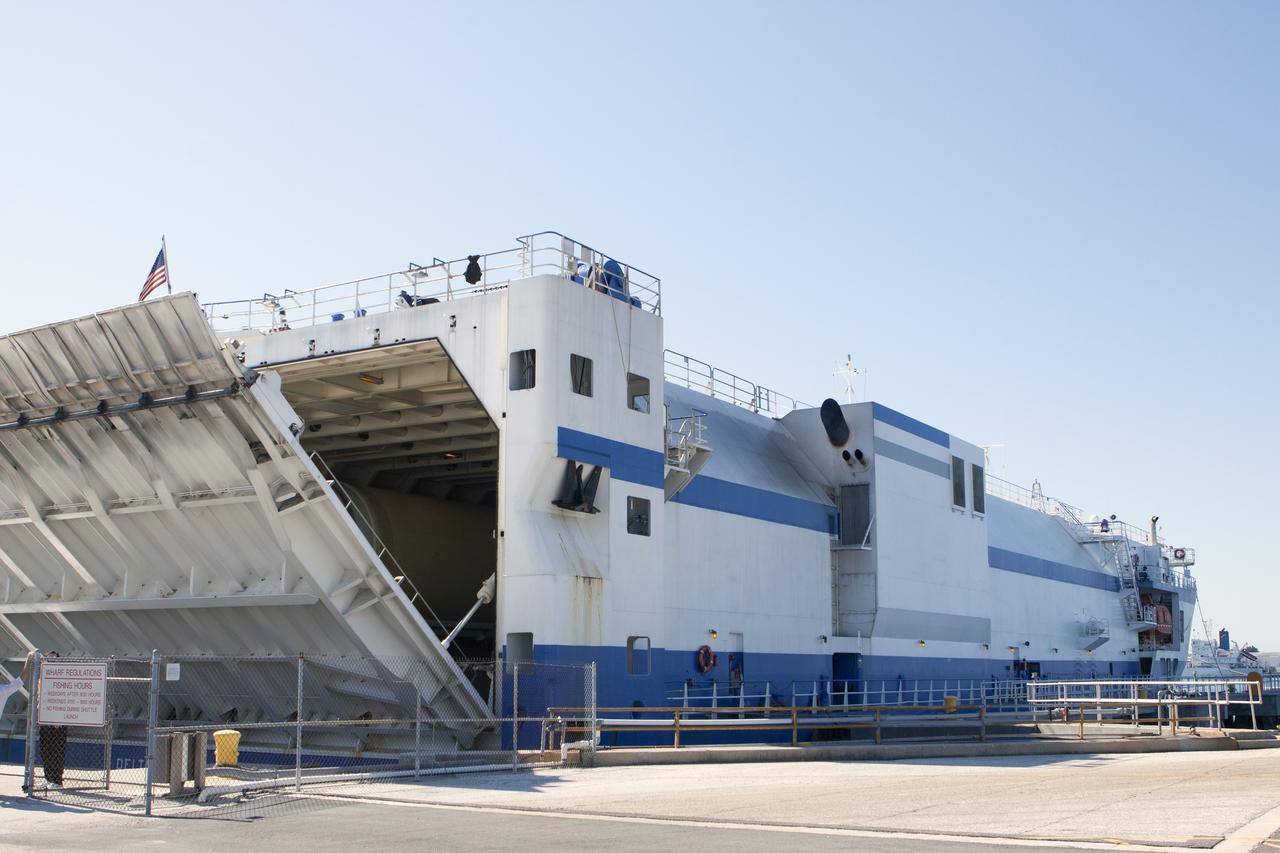
CAPE CANAVERAL, Fla. -- A barge arrives at the U.S. Army Outpost wharf at Port Canaveral in Florida, carrying the second stage, port booster and spacecraft adapter, the remaining stages for the United Launch Alliance Delta IV Heavy boosters for NASA’s upcoming Exploration Flight Test-1, or EFT-1, mission with the Orion spacecraft. They will be offloaded in their containers and transported to the Horizontal Integration Facility, or HIF, at Space Launch Complex 37 on Cape Canaveral Air Force Station. At the HIF, all three booster stages will be processed and checked out before being moved to the nearby launch pad and hoisted into position. The spacecraft adapter will connect Orion to the ULA Delta IV, and also will connect Orion to NASA's new rocket, the Space Launch System, on its first mission in 2017. During the EFT-1 mission, Orion will travel farther into space than any human spacecraft has gone in more than 40 years. The data gathered during the flight will influence design decisions, validate existing computer models and innovative new approaches to space systems development, as well as reduce overall mission risks and costs for later Orion flights. Liftoff of Orion on EFT-1 is planned for fall 2014. Photo credit: NASA/Kim Shiflett
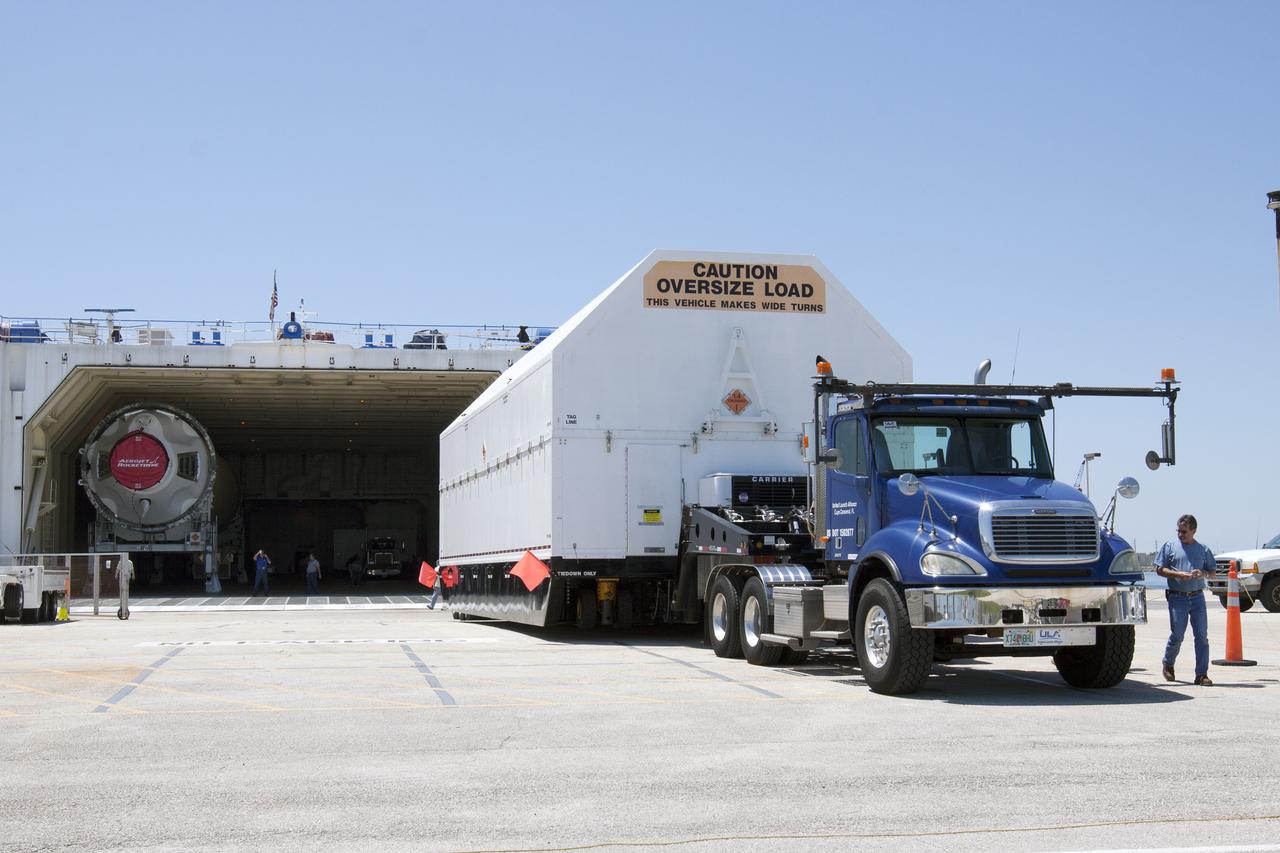
CAPE CANAVERAL, Fla. -- A barge has arrived at the U.S. Army Outpost wharf at Port Canaveral in Florida, carrying the second stage, port booster and spacecraft adapter, the remaining stages for the United Launch Alliance Delta IV Heavy boosters for NASA’s upcoming Exploration Flight Test-1, or EFT-1, mission with the Orion spacecraft. They are being offloaded in their containers for transport to the Horizontal Integration Facility, or HIF, at Space Launch Complex 37 on Cape Canaveral Air Force Station. At the HIF, all three booster stages will be processed and checked out before being moved to the nearby launch pad and hoisted into position. The spacecraft adapter will connect Orion to the ULA Delta IV, and also will connect Orion to NASA's new rocket, the Space Launch System, on its first mission in 2017. During the EFT-1 mission, Orion will travel farther into space than any human spacecraft has gone in more than 40 years. The data gathered during the flight will influence design decisions, validate existing computer models and innovative new approaches to space systems development, as well as reduce overall mission risks and costs for later Orion flights. Liftoff of Orion on EFT-1 is planned for fall 2014. Photo credit: NASA/Kim Shiflett
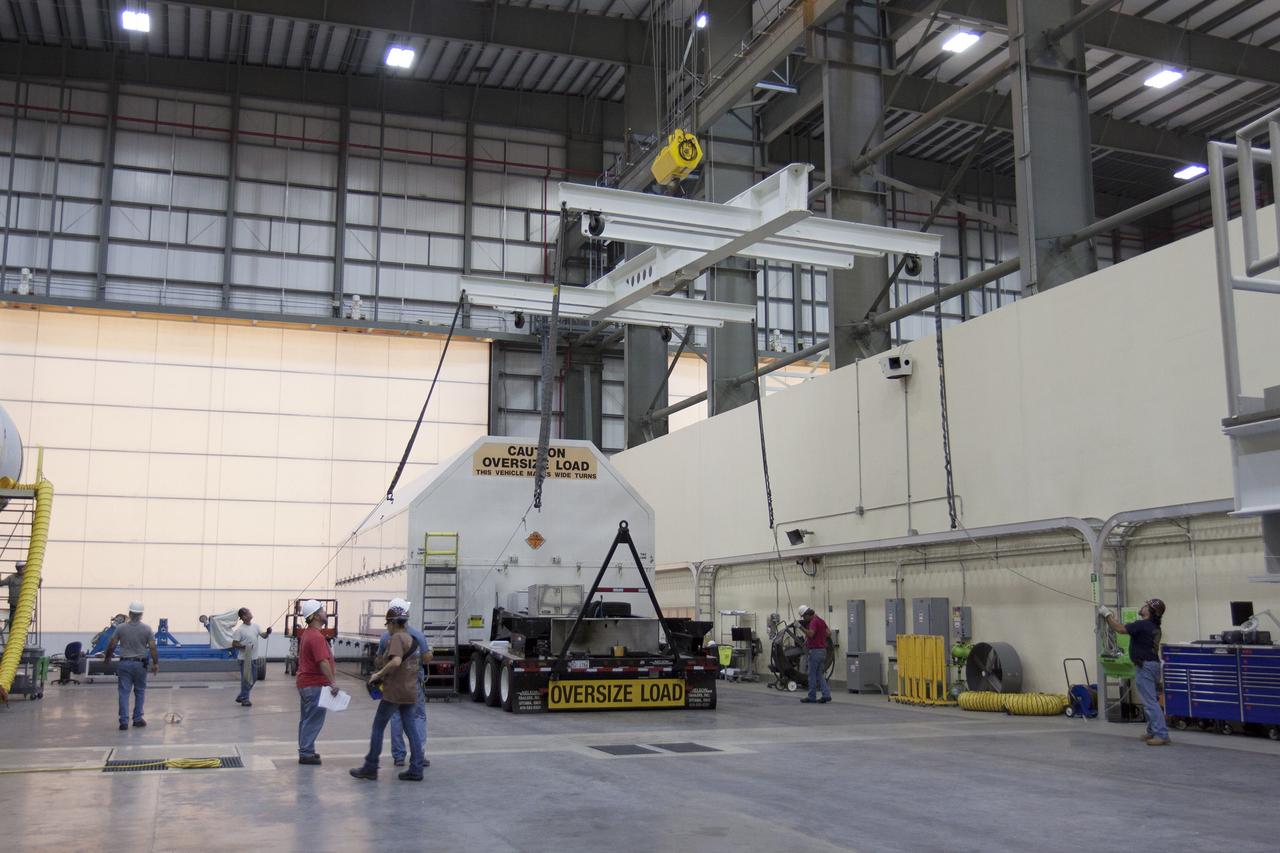
CAPE CANAVERAL, Fla. -- The second stage, port booster and spacecraft adapter, the remaining stages for the United Launch Alliance Delta IV Heavy boosters for NASA’s upcoming Exploration Flight Test-1, or EFT-1, mission with the Orion spacecraft, have been transported in their containers to the Horizontal Integration Facility, or HIF, at Space Launch Complex 37 on Cape Canaveral Air Force Station in Florida for uncrating. The segments arrived by barge at the U.S. Army Outpost wharf at Port Canaveral. At the HIF, all three booster stages will be processed and checked out before being moved to the nearby launch pad and hoisted into position. The spacecraft adapter will connect Orion to the ULA Delta IV, and also will connect Orion to NASA's new rocket, the Space Launch System, on its first mission in 2017. During the EFT-1 mission, Orion will travel farther into space than any human spacecraft has gone in more than 40 years. The data gathered during the flight will influence design decisions, validate existing computer models and innovative new approaches to space systems development, as well as reduce overall mission risks and costs for later Orion flights. Liftoff of Orion on EFT-1 is planned for fall 2014. Photo credit: NASA/Kim Shiflett
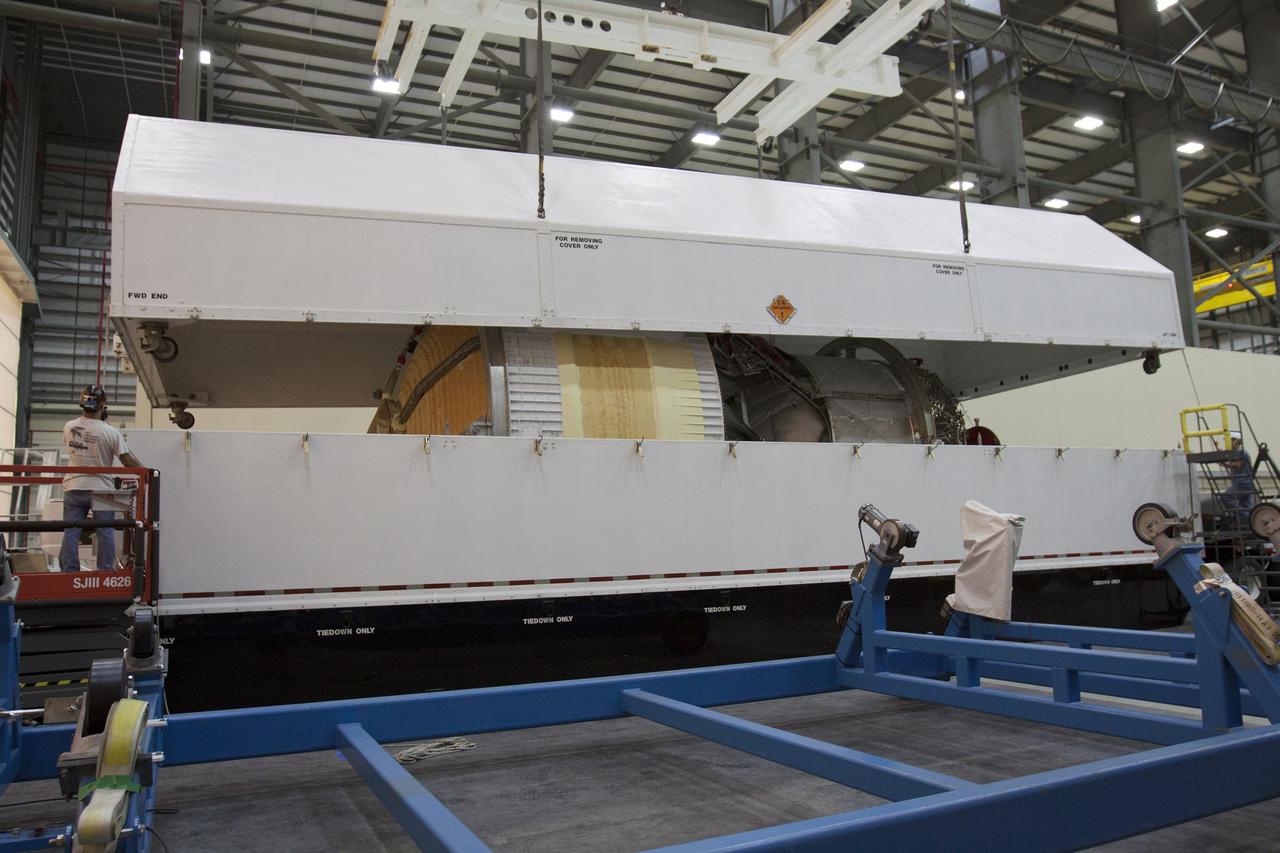
CAPE CANAVERAL, Fla. -- The second stage, port booster and spacecraft adapter, the remaining stages for the United Launch Alliance Delta IV Heavy boosters for NASA’s upcoming Exploration Flight Test-1, or EFT-1, mission with the Orion spacecraft, have been transported in their containers to the Horizontal Integration Facility, or HIF, at Space Launch Complex 37 on Cape Canaveral Air Force Station in Florida. Inside the facility, technicians uncrate the upper stage. The segments arrived by barge at the U.S. Army Outpost wharf at Port Canaveral. At the HIF, all three booster stages will be processed and checked out before being moved to the nearby launch pad and hoisted into position. The spacecraft adapter will connect Orion to the ULA Delta IV, and also will connect Orion to NASA's new rocket, the Space Launch System, on its first mission in 2017. During the EFT-1 mission, Orion will travel farther into space than any human spacecraft has gone in more than 40 years. The data gathered during the flight will influence design decisions, validate existing computer models and innovative new approaches to space systems development, as well as reduce overall mission risks and costs for later Orion flights. Liftoff of Orion on EFT-1 is planned for fall 2014. Photo credit: NASA/Kim Shiflett
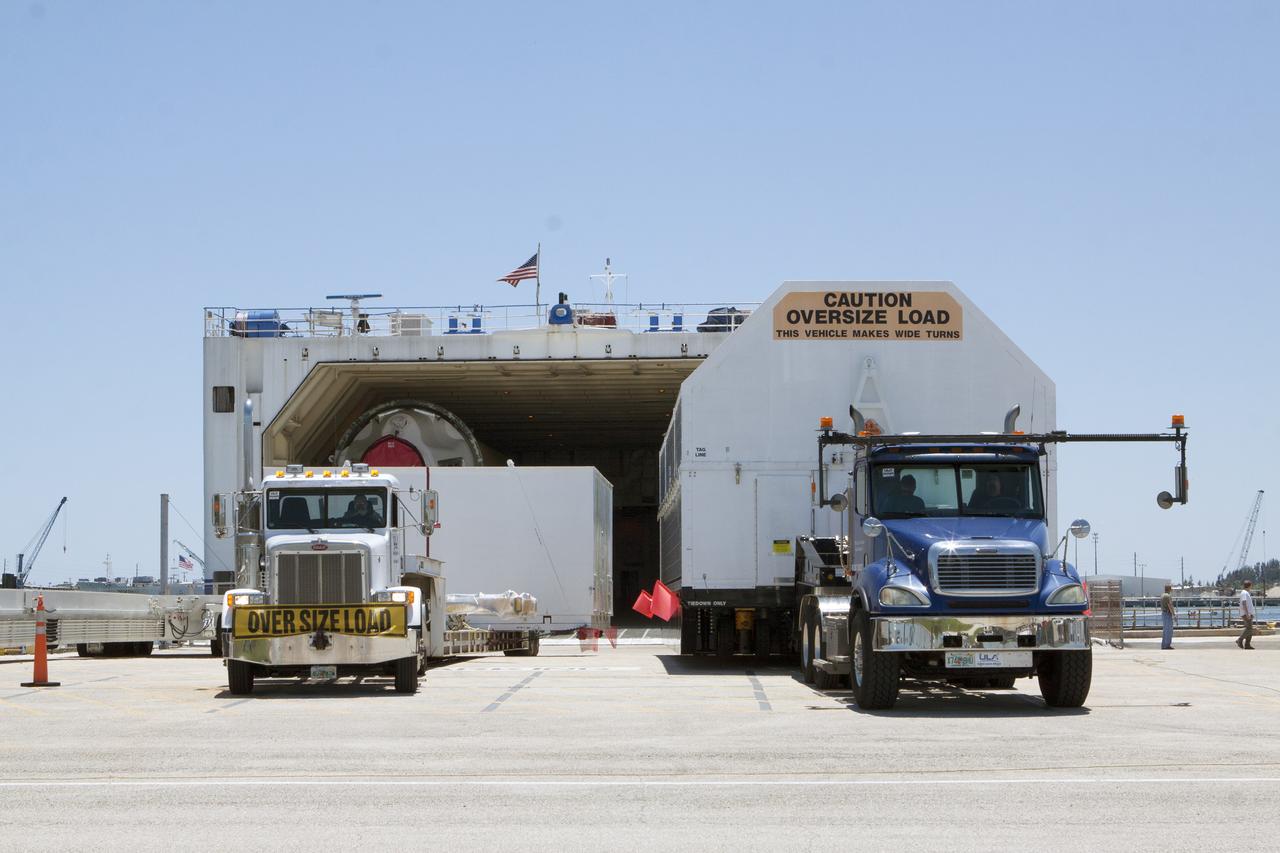
CAPE CANAVERAL, Fla. -- A barge has arrived at the U.S. Army Outpost wharf at Port Canaveral in Florida, carrying the second stage, port booster and spacecraft adapter, the remaining stages for the United Launch Alliance Delta IV Heavy boosters for NASA’s upcoming Exploration Flight Test-1, or EFT-1, mission with the Orion spacecraft. The segments are being offloaded in their containers for transport to the Horizontal Integration Facility, or HIF, at Space Launch Complex 37 on Cape Canaveral Air Force Station. At the HIF, all three booster stages will be processed and checked out before being moved to the nearby launch pad and hoisted into position. The spacecraft adapter will connect Orion to the ULA Delta IV, and also will connect Orion to NASA's new rocket, the Space Launch System, on its first mission in 2017. During the EFT-1 mission, Orion will travel farther into space than any human spacecraft has gone in more than 40 years. The data gathered during the flight will influence design decisions, validate existing computer models and innovative new approaches to space systems development, as well as reduce overall mission risks and costs for later Orion flights. Liftoff of Orion on EFT-1 is planned for fall 2014. Photo credit: NASA/Kim Shiflett
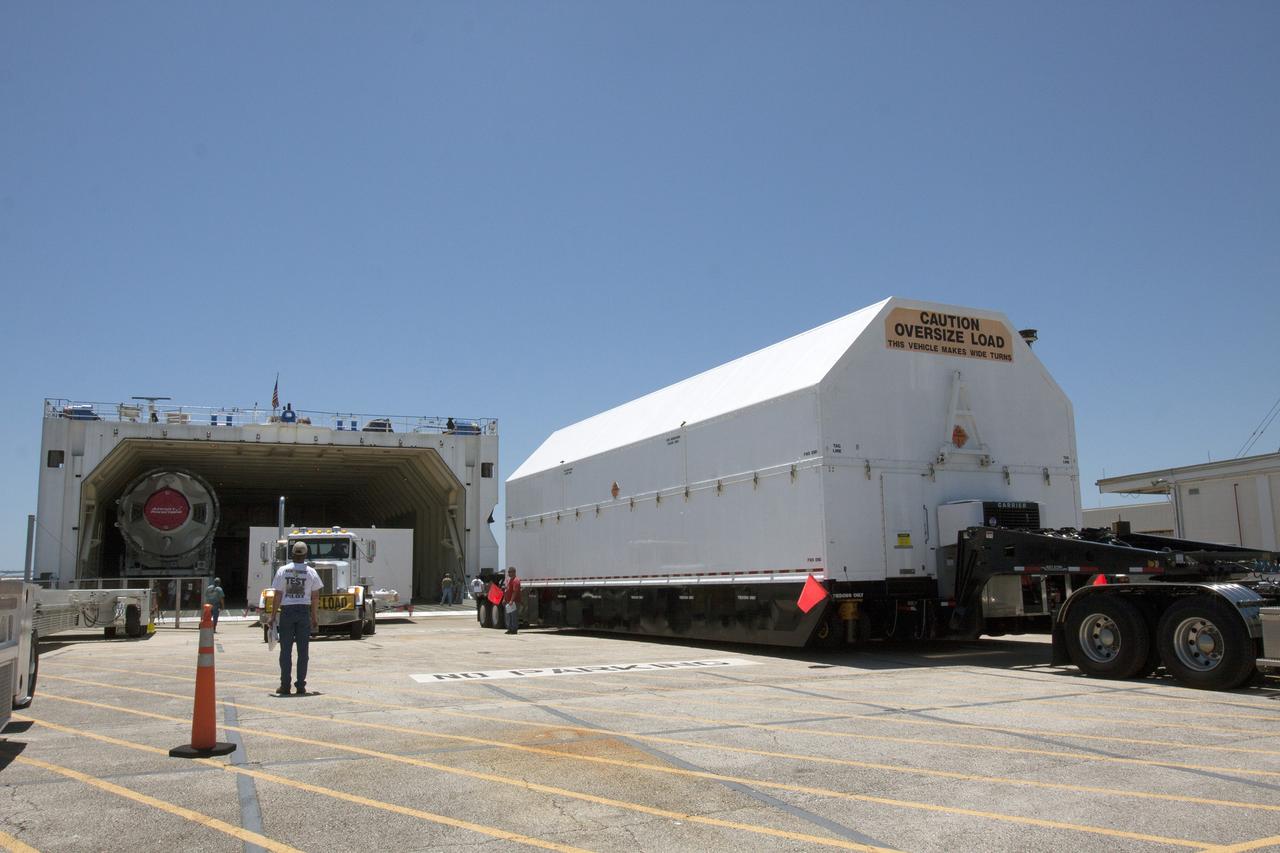
CAPE CANAVERAL, Fla. -- A barge has arrived at the U.S. Army Outpost wharf at Port Canaveral in Florida, carrying the second stage, port booster and spacecraft adapter, the remaining stages for the United Launch Alliance Delta IV Heavy boosters for NASA’s upcoming Exploration Flight Test-1, or EFT-1, mission with the Orion spacecraft. The segments are being offloaded in their containers for transport to the Horizontal Integration Facility, or HIF, at Space Launch Complex 37 on Cape Canaveral Air Force Station. At the HIF, all three booster stages will be processed and checked out before being moved to the nearby launch pad and hoisted into position. The spacecraft adapter will connect Orion to the ULA Delta IV, and also will connect Orion to NASA's new rocket, the Space Launch System, on its first mission in 2017. During the EFT-1 mission, Orion will travel farther into space than any human spacecraft has gone in more than 40 years. The data gathered during the flight will influence design decisions, validate existing computer models and innovative new approaches to space systems development, as well as reduce overall mission risks and costs for later Orion flights. Liftoff of Orion on EFT-1 is planned for fall 2014. Photo credit: NASA/Kim Shiflett
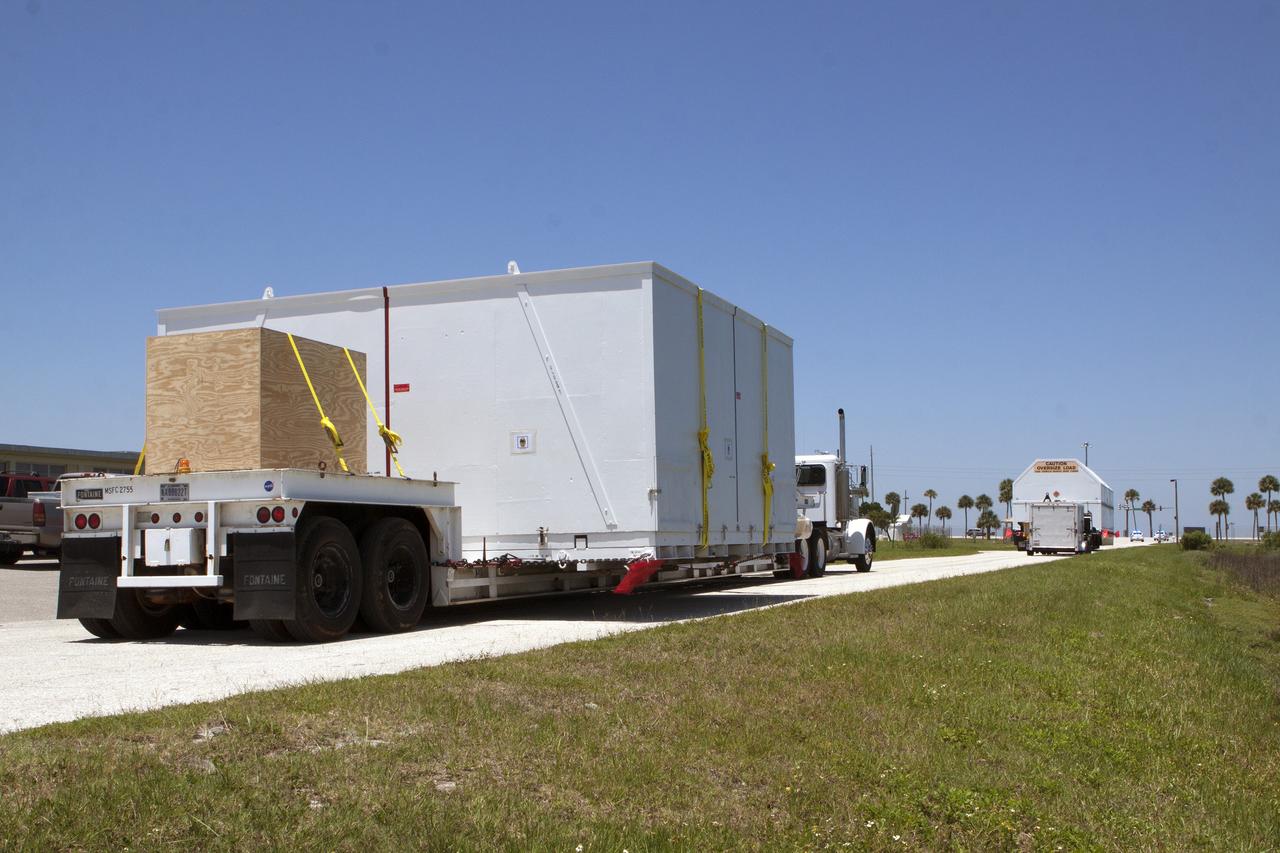
CAPE CANAVERAL, Fla. -- After arriving by barge at the U.S. Army Outpost wharf at Port Canaveral in Florida, the second stage, port booster and spacecraft adapter, the remaining stages for the United Launch Alliance Delta IV Heavy boosters for NASA’s upcoming Exploration Flight Test-1, or EFT-1, mission with the Orion spacecraft, were offloaded in their containers. They are being transported to the Horizontal Integration Facility, or HIF, at Space Launch Complex 37 on Cape Canaveral Air Force Station. At the HIF, all three booster stages will be processed and checked out before being moved to the nearby launch pad and hoisted into position. The spacecraft adapter will connect Orion to the ULA Delta IV, and also will connect Orion to NASA's new rocket, the Space Launch System, on its first mission in 2017. During the EFT-1 mission, Orion will travel farther into space than any human spacecraft has gone in more than 40 years. The data gathered during the flight will influence design decisions, validate existing computer models and innovative new approaches to space systems development, as well as reduce overall mission risks and costs for later Orion flights. Liftoff of Orion on EFT-1 is planned for fall 2014. Photo credit: NASA/Kim Shiflett
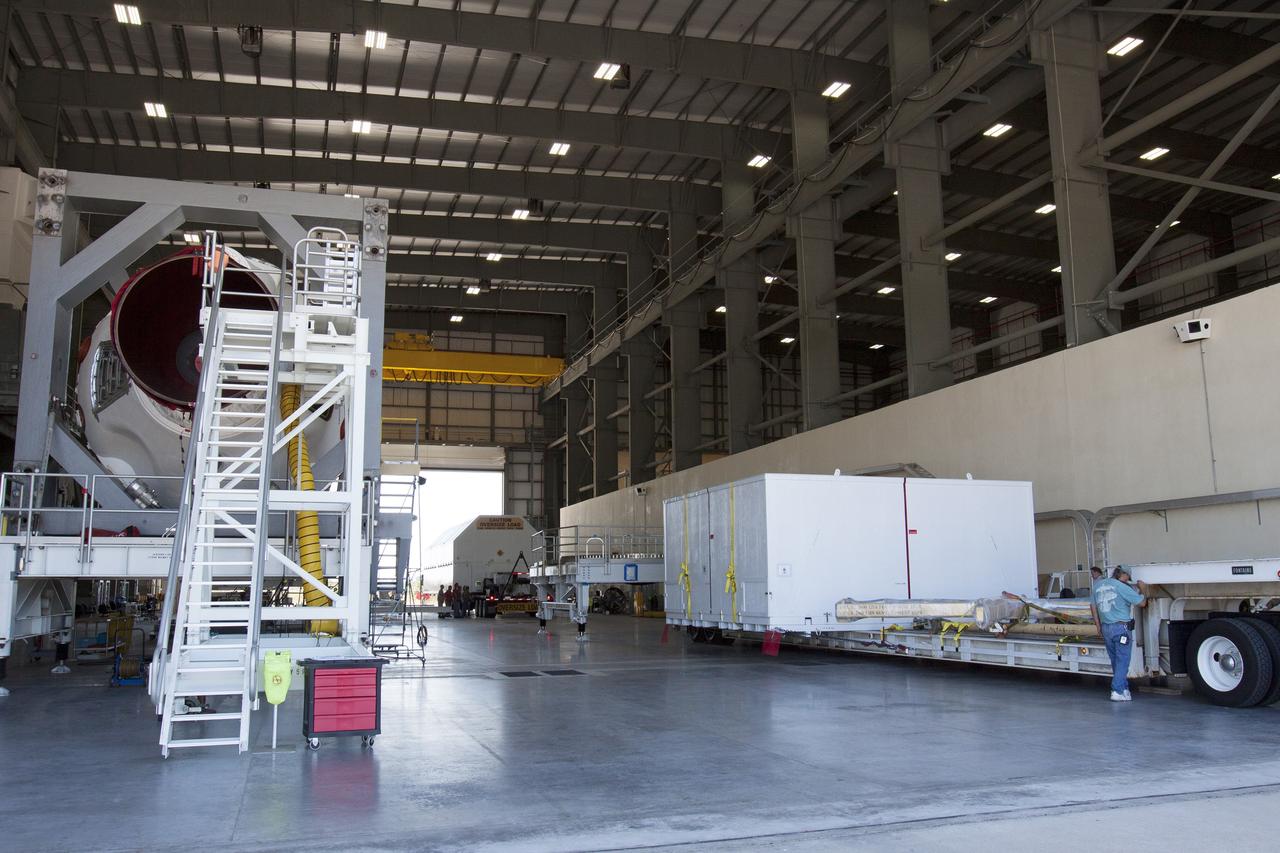
CAPE CANAVERAL, Fla. -- The second stage, port booster and spacecraft adapter, the remaining stages for the United Launch Alliance Delta IV Heavy boosters for NASA’s upcoming Exploration Flight Test-1, or EFT-1, mission with the Orion spacecraft, have been transported in their containers to the Horizontal Integration Facility, or HIF, at Space Launch Complex 37 on Cape Canaveral Air Force Station in Florida for uncrating. The segments arrived by barge at the U.S. Army Outpost wharf at Port Canaveral. At the HIF, all three booster stages will be processed and checked out before being moved to the nearby launch pad and hoisted into position. The spacecraft adapter will connect Orion to the ULA Delta IV, and also will connect Orion to NASA's new rocket, the Space Launch System, on its first mission in 2017. During the EFT-1 mission, Orion will travel farther into space than any human spacecraft has gone in more than 40 years. The data gathered during the flight will influence design decisions, validate existing computer models and innovative new approaches to space systems development, as well as reduce overall mission risks and costs for later Orion flights. Liftoff of Orion on EFT-1 is planned for fall 2014. Photo credit: NASA/Kim Shiflett
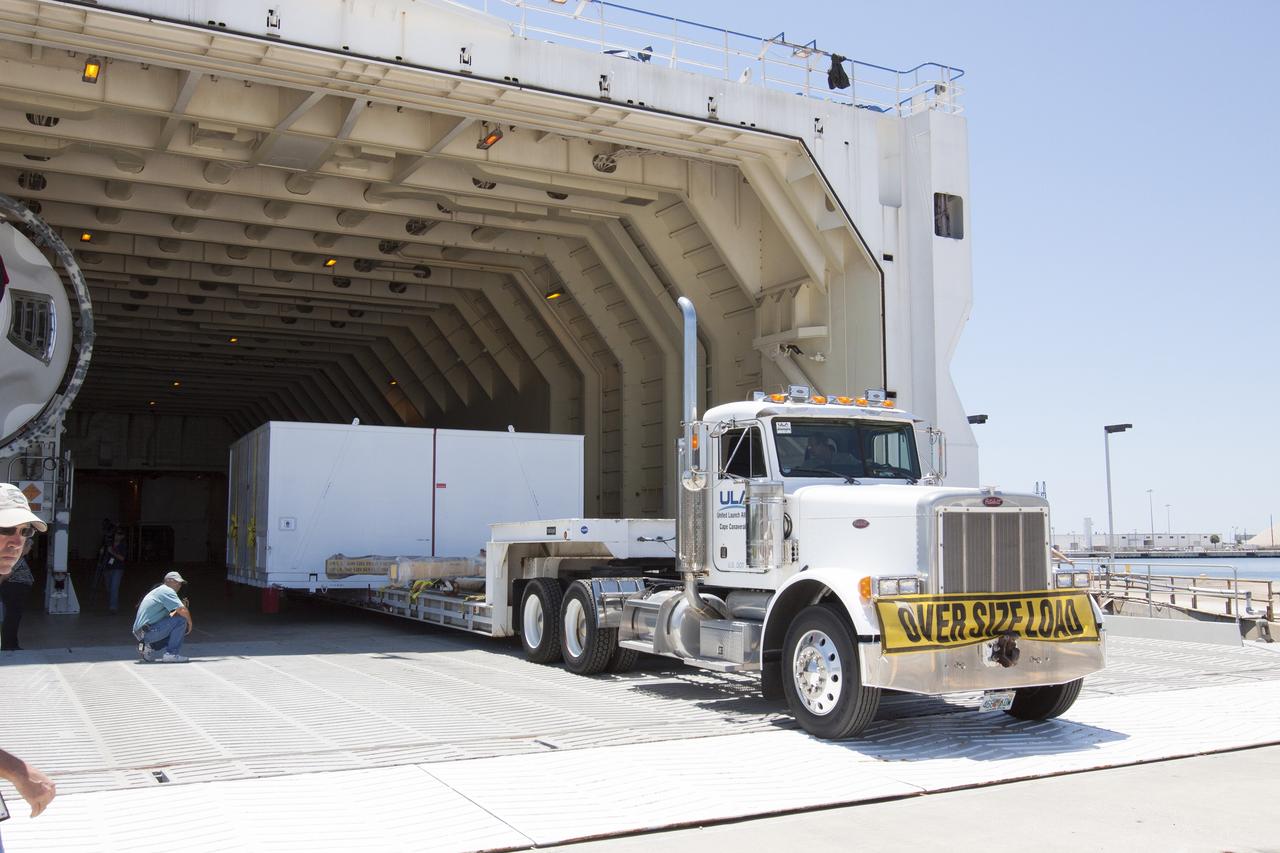
CAPE CANAVERAL, Fla. -- A barge has arrived at the U.S. Army Outpost wharf at Port Canaveral in Florida, carrying the second stage, port booster and spacecraft adapter, the remaining stages for the United Launch Alliance Delta IV Heavy boosters for NASA’s upcoming Exploration Flight Test-1, or EFT-1, mission with the Orion spacecraft. They are being offloaded in their containers for transport to the Horizontal Integration Facility, or HIF, at Space Launch Complex 37 on Cape Canaveral Air Force Station. At the HIF, all three booster stages will be processed and checked out before being moved to the nearby launch pad and hoisted into position. The spacecraft adapter will connect Orion to the ULA Delta IV, and also will connect Orion to NASA's new rocket, the Space Launch System, on its first mission in 2017. During the EFT-1 mission, Orion will travel farther into space than any human spacecraft has gone in more than 40 years. The data gathered during the flight will influence design decisions, validate existing computer models and innovative new approaches to space systems development, as well as reduce overall mission risks and costs for later Orion flights. Liftoff of Orion on EFT-1 is planned for fall 2014. Photo credit: NASA/Kim Shiflett
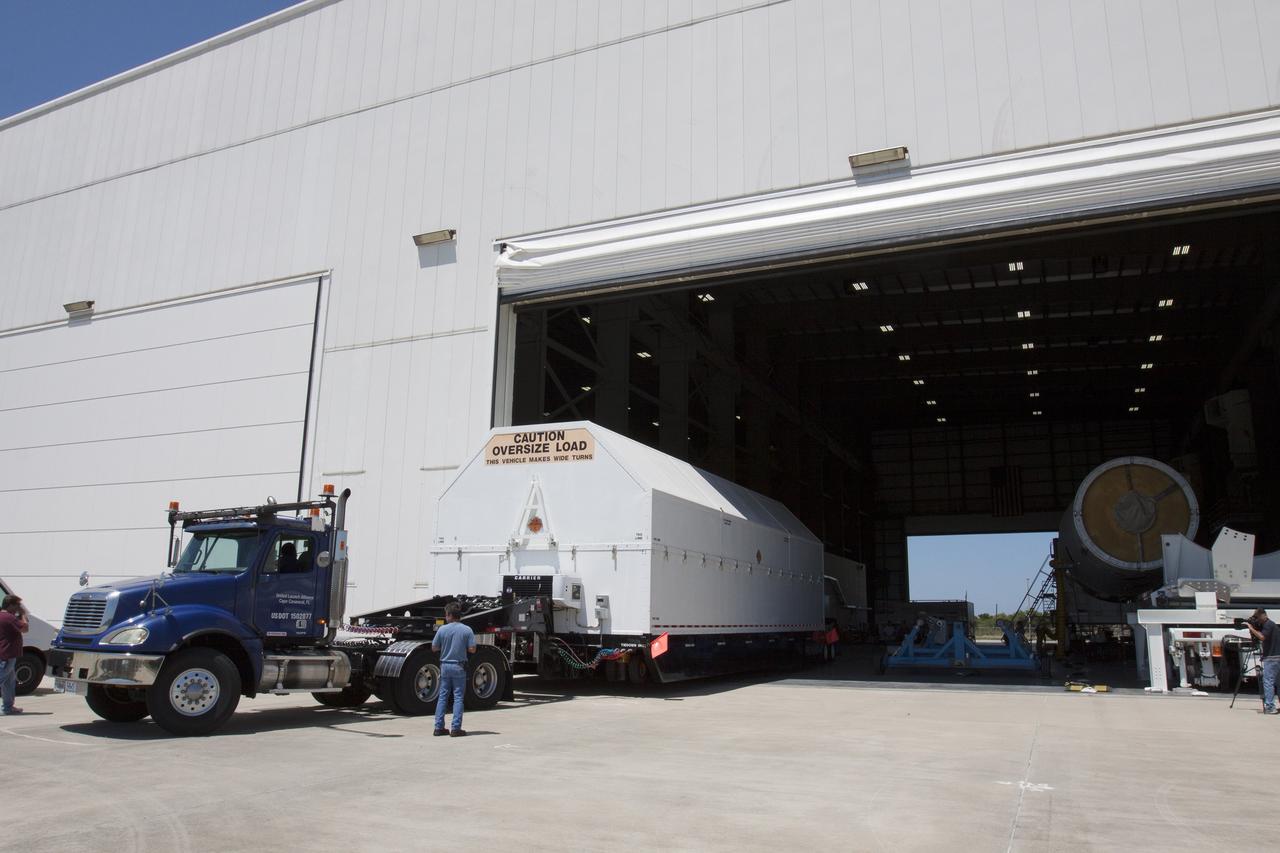
CAPE CANAVERAL, Fla. -- The second stage, port booster and spacecraft adapter, the remaining stages for the United Launch Alliance Delta IV Heavy boosters for NASA’s upcoming Exploration Flight Test-1, or EFT-1, mission with the Orion spacecraft, have been transported in their containers to the Horizontal Integration Facility, or HIF, at Space Launch Complex 37 on Cape Canaveral Air Force Station in Florida. The segments arrived by barge at the U.S. Army Outpost wharf at Port Canaveral. At the HIF, all three booster stages will be processed and checked out before being moved to the nearby launch pad and hoisted into position. The spacecraft adapter will connect Orion to the ULA Delta IV, and also will connect Orion to NASA's new rocket, the Space Launch System, on its first mission in 2017. During the EFT-1 mission, Orion will travel farther into space than any human spacecraft has gone in more than 40 years. The data gathered during the flight will influence design decisions, validate existing computer models and innovative new approaches to space systems development, as well as reduce overall mission risks and costs for later Orion flights. Liftoff of Orion on EFT-1 is planned for fall 2014. Photo credit: NASA/Kim Shiflett
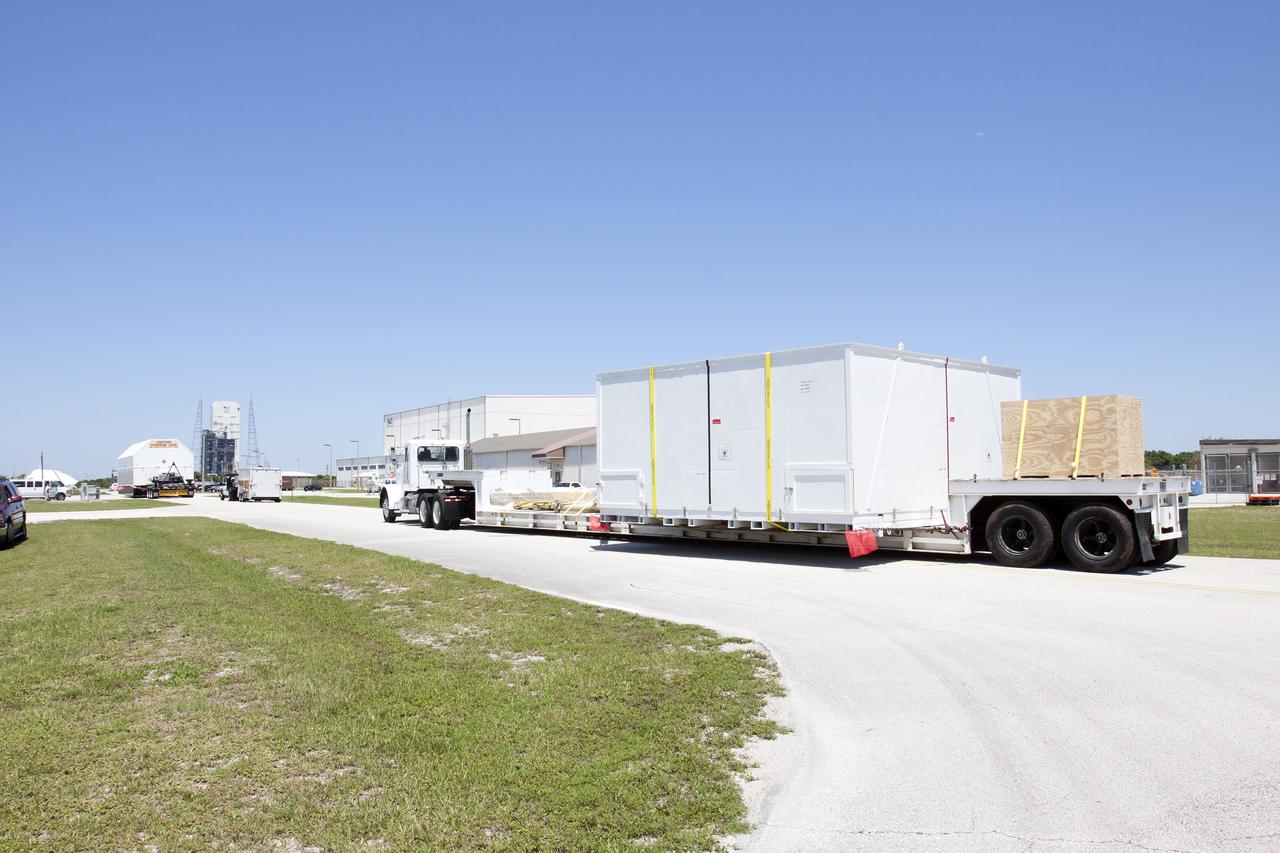
CAPE CANAVERAL, Fla. -- After arriving by barge at the U.S. Army Outpost wharf at Port Canaveral in Florida, the second stage, port booster and spacecraft adapter, the remaining stages for the United Launch Alliance Delta IV Heavy boosters for NASA’s upcoming Exploration Flight Test-1, or EFT-1, mission with the Orion spacecraft, were offloaded in their containers. They are being transported to the Horizontal Integration Facility, or HIF, at Space Launch Complex 37 on Cape Canaveral Air Force Station. At the HIF, all three booster stages will be processed and checked out before being moved to the nearby launch pad and hoisted into position. The spacecraft adapter will connect Orion to the ULA Delta IV, and also will connect Orion to NASA's new rocket, the Space Launch System, on its first mission in 2017. During the EFT-1 mission, Orion will travel farther into space than any human spacecraft has gone in more than 40 years. The data gathered during the flight will influence design decisions, validate existing computer models and innovative new approaches to space systems development, as well as reduce overall mission risks and costs for later Orion flights. Liftoff of Orion on EFT-1 is planned for fall 2014. Photo credit: NASA/Kim Shiflett

CAPE CANAVERAL, Fla. -- A barge has arrived at the U.S. Army Outpost wharf at Port Canaveral in Florida, carrying the second stage, port booster and spacecraft adapter, the remaining stages for the United Launch Alliance Delta IV Heavy boosters for NASA’s upcoming Exploration Flight Test-1, or EFT-1, mission with the Orion spacecraft. They are being offloaded in their containers for transport to the Horizontal Integration Facility, or HIF, at Space Launch Complex 37 on Cape Canaveral Air Force Station. At the HIF, all three booster stages will be processed and checked out before being moved to the nearby launch pad and hoisted into position. The spacecraft adapter will connect Orion to the ULA Delta IV, and also will connect Orion to NASA's new rocket, the Space Launch System, on its first mission in 2017. During the EFT-1 mission, Orion will travel farther into space than any human spacecraft has gone in more than 40 years. The data gathered during the flight will influence design decisions, validate existing computer models and innovative new approaches to space systems development, as well as reduce overall mission risks and costs for later Orion flights. Liftoff of Orion on EFT-1 is planned for fall 2014. Photo credit: NASA/Kim Shiflett
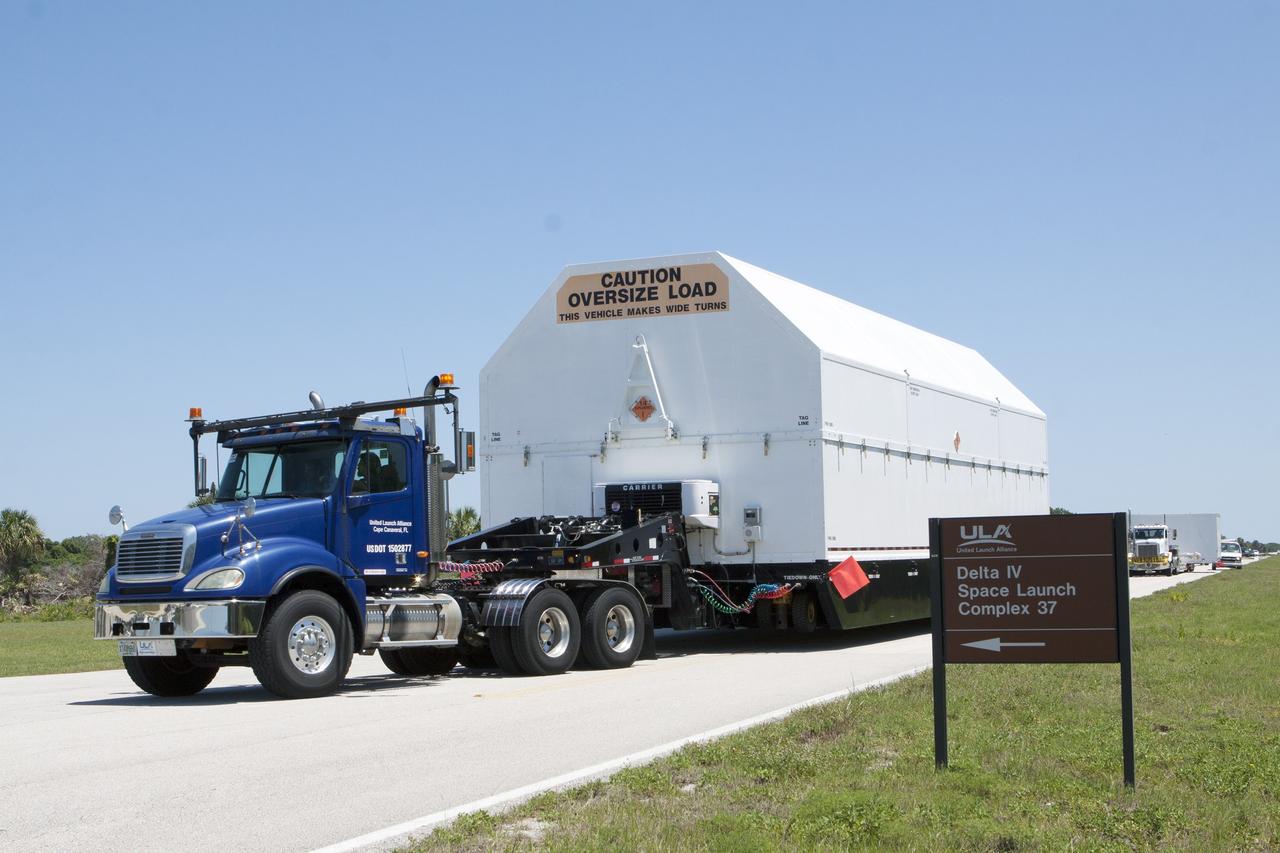
CAPE CANAVERAL, Fla. -- After arriving by barge at the U.S. Army Outpost wharf at Port Canaveral in Florida, the second stage, port booster and spacecraft adapter, the remaining stages for the United Launch Alliance Delta IV Heavy boosters for NASA’s upcoming Exploration Flight Test-1, or EFT-1, mission with the Orion spacecraft, were offloaded in their containers. They are being transported to the Horizontal Integration Facility, or HIF, at Space Launch Complex 37 on Cape Canaveral Air Force Station. At the HIF, all three booster stages will be processed and checked out before being moved to the nearby launch pad and hoisted into position. The spacecraft adapter will connect Orion to the ULA Delta IV, and also will connect Orion to NASA's new rocket, the Space Launch System, on its first mission in 2017. During the EFT-1 mission, Orion will travel farther into space than any human spacecraft has gone in more than 40 years. The data gathered during the flight will influence design decisions, validate existing computer models and innovative new approaches to space systems development, as well as reduce overall mission risks and costs for later Orion flights. Liftoff of Orion on EFT-1 is planned for fall 2014. Photo credit: NASA/Kim Shiflett

CAPE CANAVERAL, Fla. -- The second stage, port booster and spacecraft adapter, the remaining stages for the United Launch Alliance Delta IV Heavy boosters for NASA’s upcoming Exploration Flight Test-1, or EFT-1, mission with the Orion spacecraft, have been transported in their containers to the Horizontal Integration Facility, or HIF, at Space Launch Complex 37 on Cape Canaveral Air Force Station in Florida. Inside the facility, technicians uncrate the port booster. The segments arrived by barge at the U.S. Army Outpost wharf at Port Canaveral. At the HIF, all three booster stages will be processed and checked out before being moved to the nearby launch pad and hoisted into position. The spacecraft adapter will connect Orion to the ULA Delta IV, and also will connect Orion to NASA's new rocket, the Space Launch System, on its first mission in 2017. During the EFT-1 mission, Orion will travel farther into space than any human spacecraft has gone in more than 40 years. The data gathered during the flight will influence design decisions, validate existing computer models and innovative new approaches to space systems development, as well as reduce overall mission risks and costs for later Orion flights. Liftoff of Orion on EFT-1 is planned for fall 2014. Photo credit: NASA/Kim Shiflett
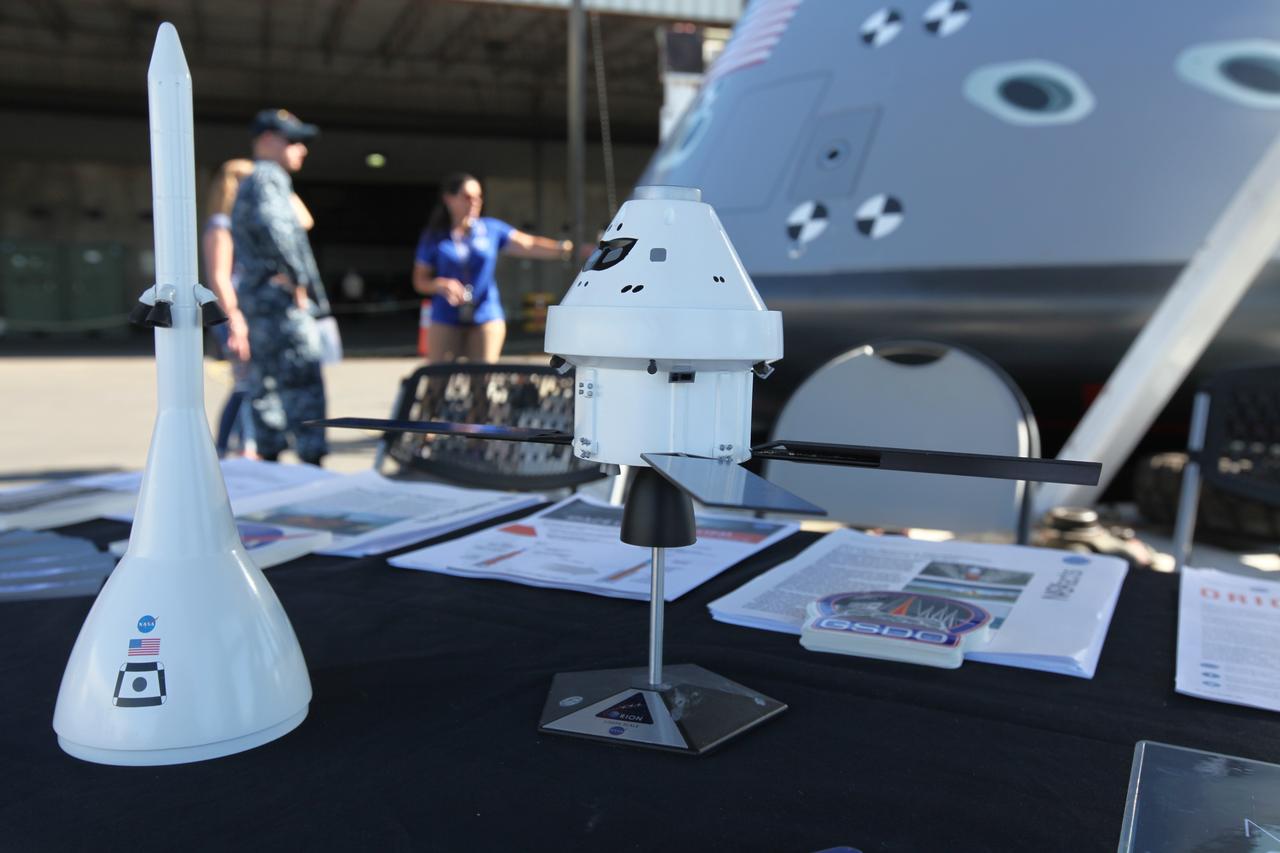
Models of the Orion spacecraft and Launch Abort System are on display for viewing at Naval Base San Diego in California. Service members, base employees and their families had the opportunity to view a test version of the Orion crew module (in view in the background) before Underway Recovery Test 5 (URT-5). NASA, Orion manufacturer Lockheed Martin and the U.S. Navy will head out to sea with the Orion test vehicle aboard the USS San Diego to demonstrate and evaluate the recovery processes, procedures, hardware and personnel necessary for recovery of Orion on its return from a deep space mission. Orion is the exploration spacecraft designed to carry astronauts to destinations not yet explored by humans, including an asteroid and NASA Journey to Mars. It will have emergency abort capability, sustain the crew during space travel and provide safe re-entry from deep space return velocities. Orion is scheduled to launch atop NASA’s Space Launch System rocket in 2018. For more information, visit http://www.nasa.gov/orion.
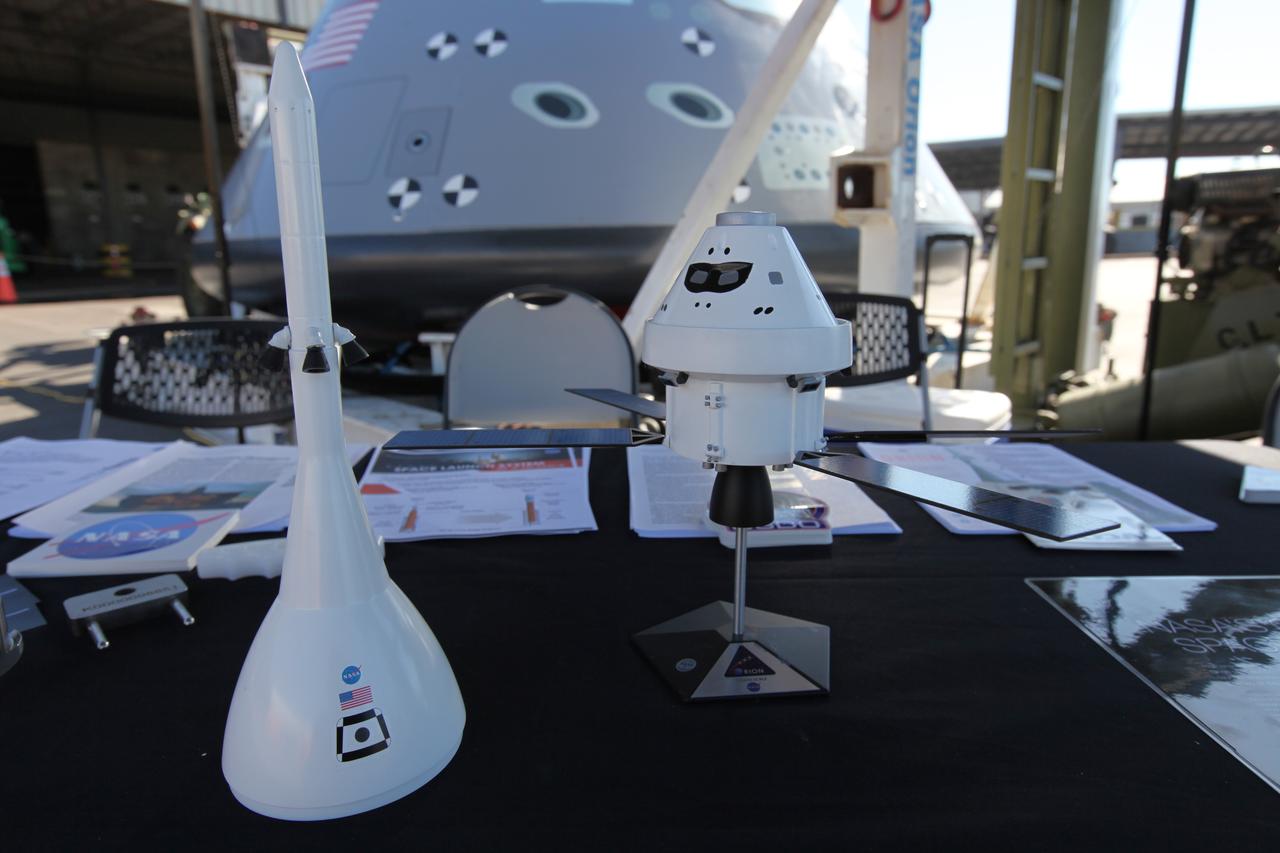
Models of the Orion spacecraft and Launch Abort System are on display for viewing at Naval Base San Diego in California. Service members, base employees and their families will had the opportunity to view a test version of the Orion crew module (in view in the background) before Underway Recovery Test 5 (URT-5). NASA, Orion manufacturer Lockheed Martin and the U.S. Navy will head out to sea with the Orion test vehicle aboard the USS San Diego to demonstrate and evaluate the recovery processes, procedures, hardware and personnel necessary for recovery of Orion on its return from a deep space mission. Orion is the exploration spacecraft designed to carry astronauts to destinations not yet explored by humans, including an asteroid and NASA Journey to Mars. It will have emergency abort capability, sustain the crew during space travel and provide safe re-entry from deep space return velocities. Orion is scheduled to launch atop NASA’s Space Launch System rocket in 2018. For more information, visit http://www.nasa.gov/orion.
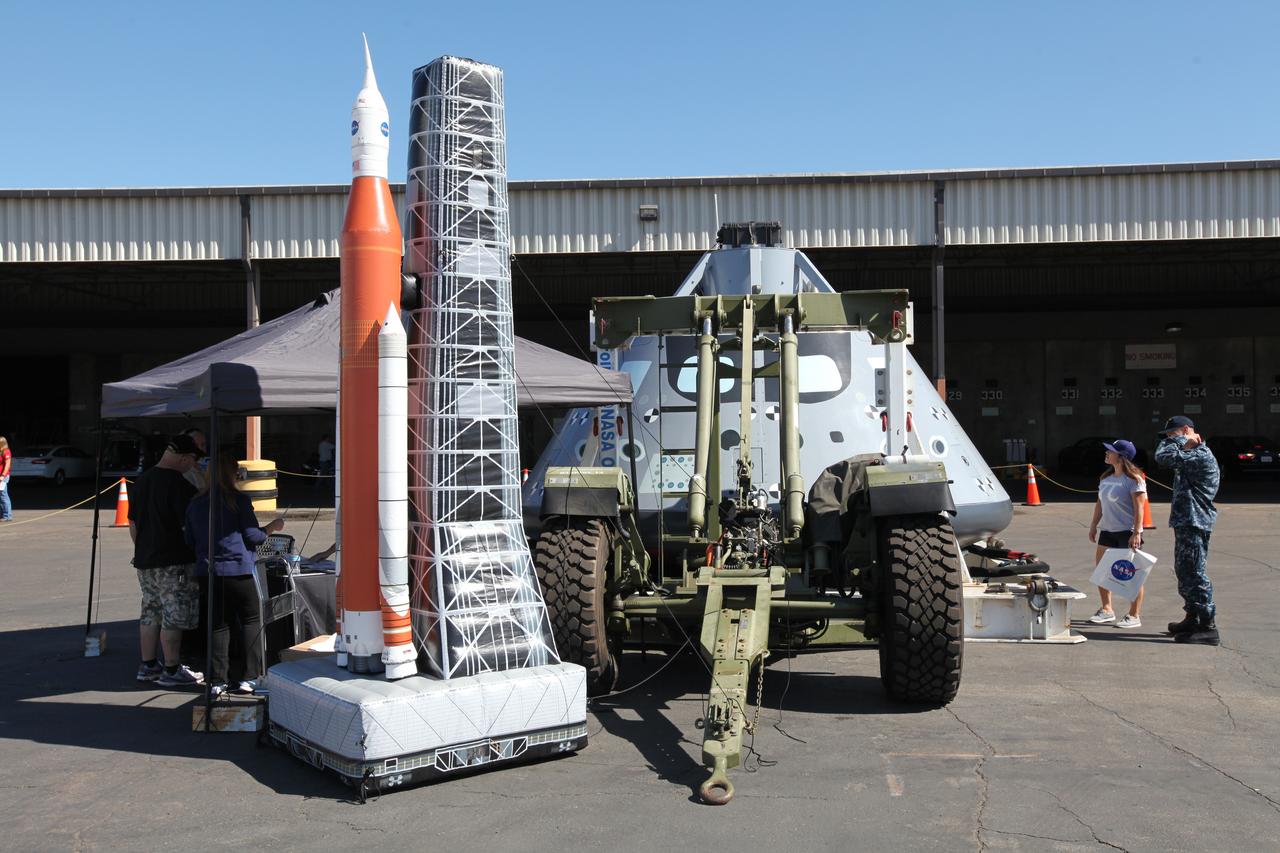
A test version of the Orion crew module and an inflatable model of NASA’s Space Launch System rocket, Orion spacecraft and mobile launcher are on display at Naval Base San Diego in California, for viewing by service members, base employees and their families before Underway Recovery Test 5 (URT-5). NASA, Orion manufacturer Lockheed Martin and the U.S. Navy will head out to sea with the Orion test vehicle aboard the USS San Diego to demonstrate and evaluate the recovery processes, procedures, hardware and personnel necessary for recovery of Orion on its return from a deep space mission. Orion is the exploration spacecraft designed to carry astronauts to destinations not yet explored by humans, including an asteroid and NASA Journey to Mars. It will have emergency abort capability, sustain the crew during space travel and provide safe re-entry from deep space return velocities. Orion is scheduled to launch atop NASA’s Space Launch System rocket in 2018. For more information, visit http://www.nasa.gov/orion.
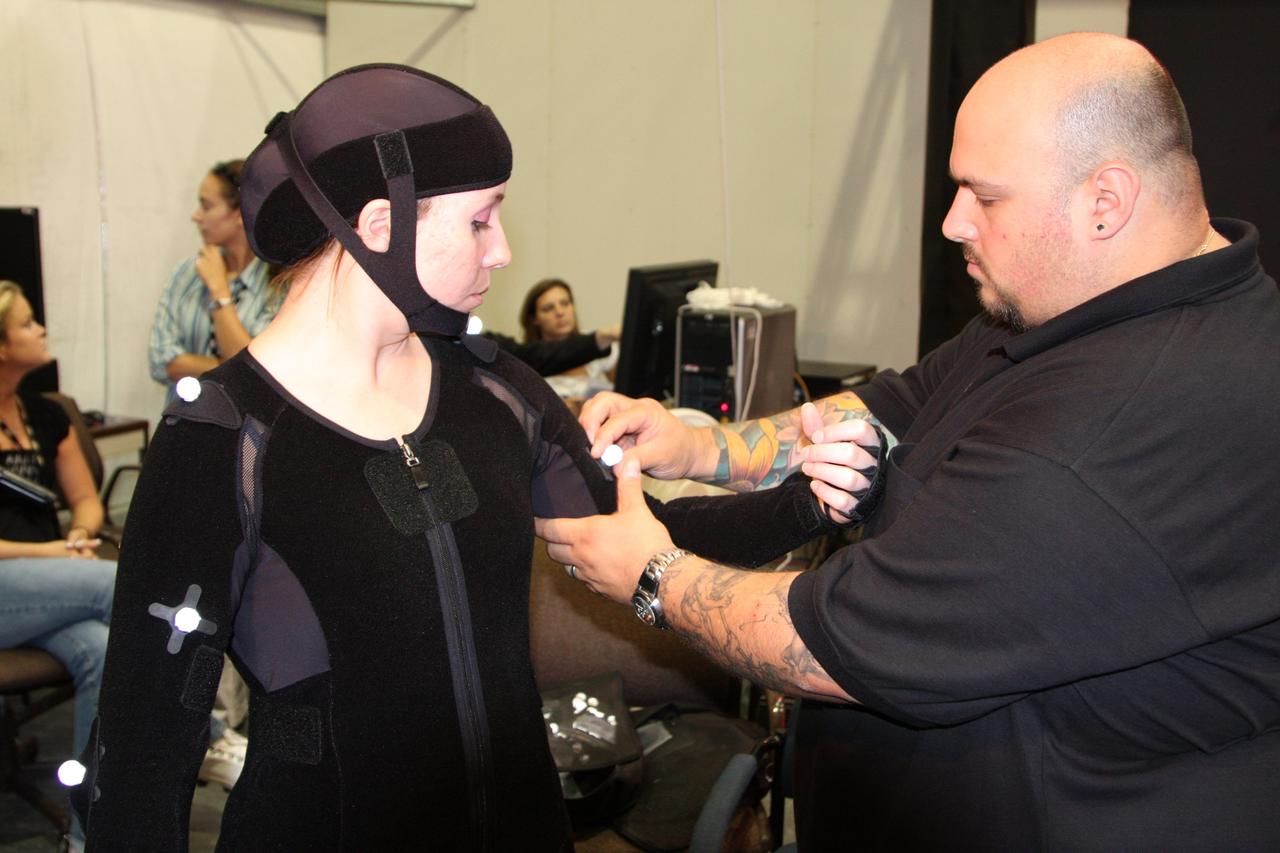
CAPE CANAVERAL, Fla. – NYIT MOCAP (Motion Capture) team Project Manager Jon Squitieri attaches a retro reflective marker to a motion capture suit worn by a technician who will be assembling the Orion Crew Module mockup. The motion tracking aims to improve efficiency of assembly processes and identify potential ergonomic risks for technicians assembling the mockup. The work is being performed in United Space Alliance's Human Engineering Modeling and Performance Lab in the RLV Hangar at NASA's Kennedy Space Center. Part of NASA's Constellation Program, the Orion spacecraft will return humans to the moon and prepare for future voyages to Mars and other destinations in our solar system.
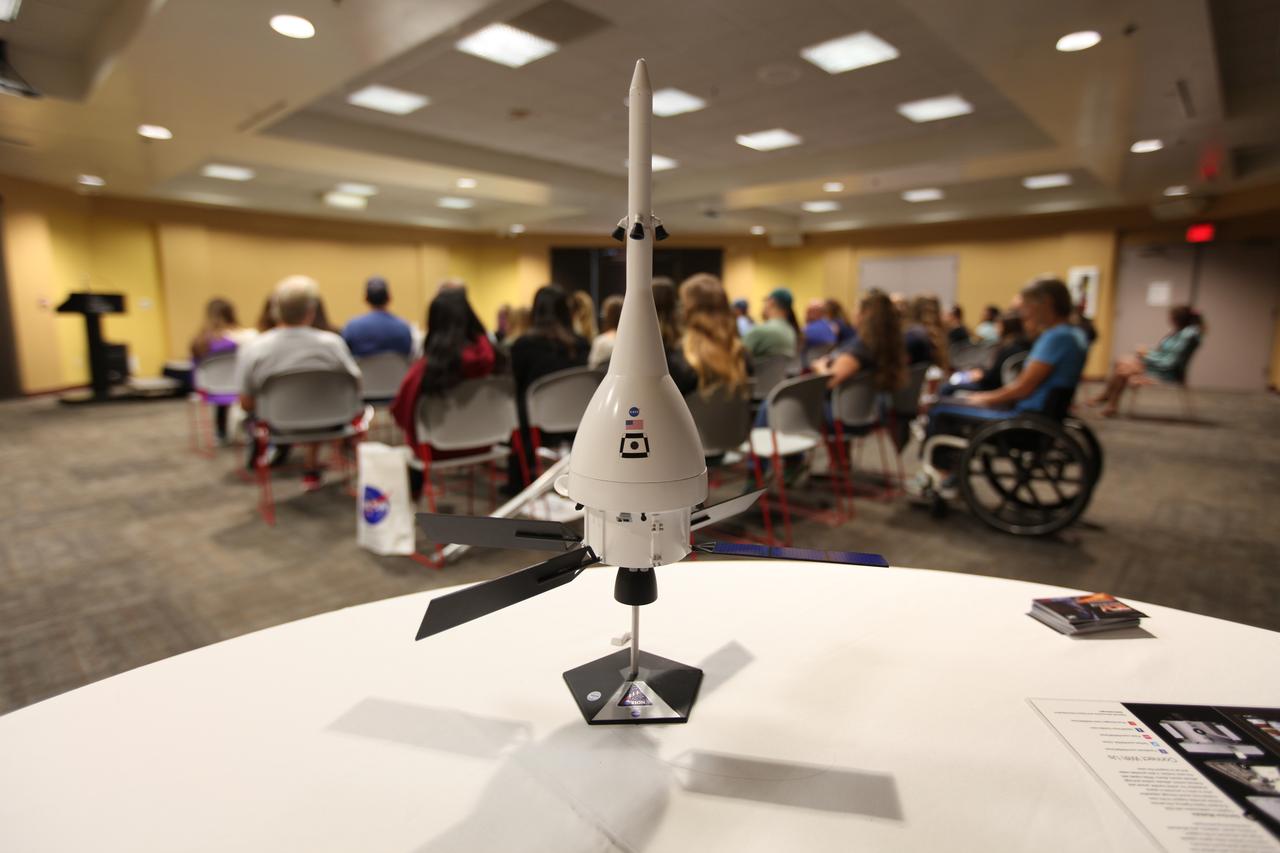
A model of NASA’s Orion spacecraft with the Launch Abort System is on display at the Reuben H. Fleet Science Center in San Diego, California. The agency’s Ground Systems Development and Operations Program is participating in a “Be Wise” program at the science center. GSDO is preparing for Orion Underway Recovery Test 5 (URT-5) using a test version of the Orion crew module in the Pacific Ocean. URT-5 will allow NASA and the U.S. Navy to demonstrate and evaluate the recovery processes, procedures, hardware and personnel necessary for recovery of the Orion crew module on its return from a deep space mission. Orion is the exploration spacecraft designed to carry astronauts to destinations not yet explored by humans, including an asteroid and NASA’s Journey to Mars. It will have emergency abort capability, sustain the crew during space travel and provide safe re-entry from deep space return velocities. Orion is scheduled to launch atop NASA’s Space Launch System rocket in 2018. For more information, visit http://www.nasa.gov/orion.
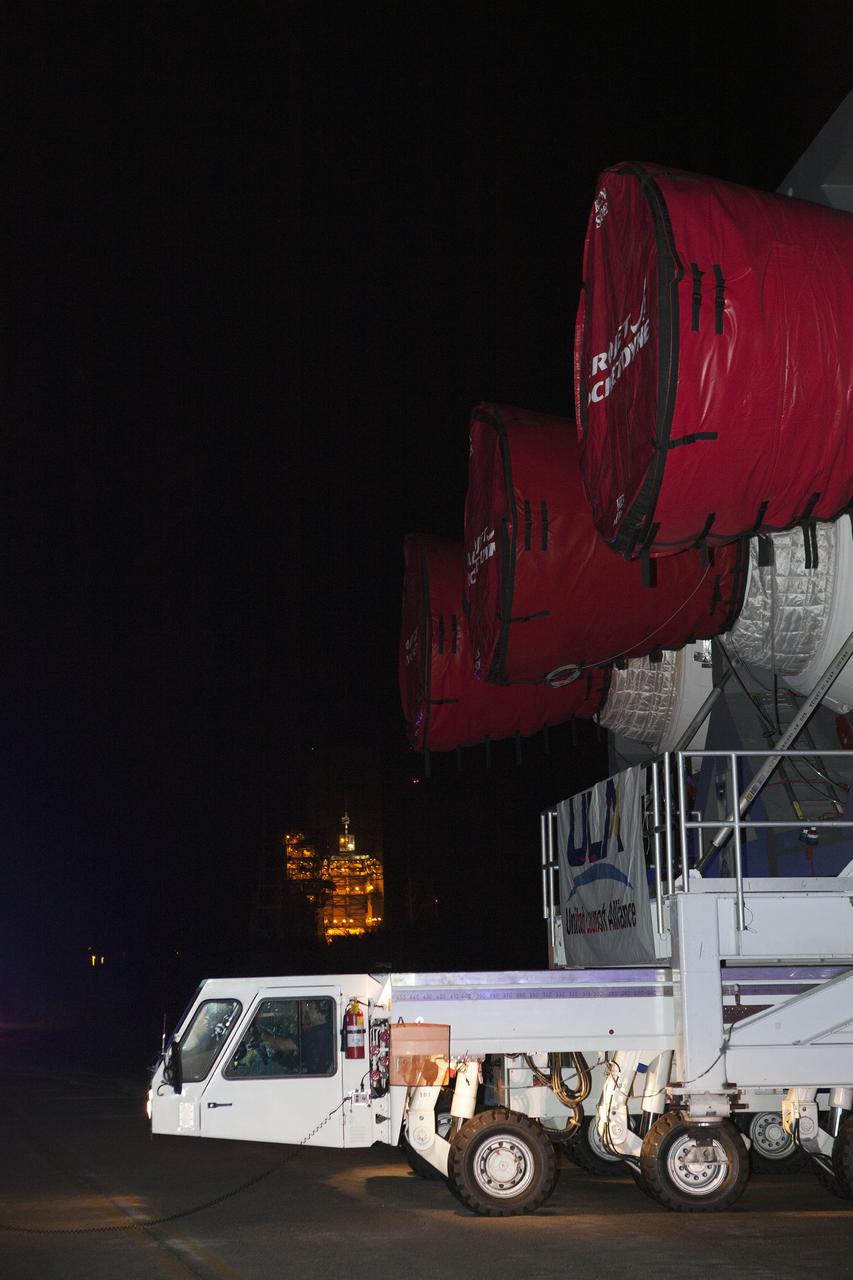
CAPE CANAVERAL, Fla. – A United Launch Alliance technicians drives the transporter that carries the Delta IV Heavy rocket to the pad at Space Launch Complex 37 at Cape Canaveral Air Force Station in Florida. The rocket is secured on the Elevated Platform Transporter. The Delta IV Heavy will launch Orion on Exploration Flight Test-1. During its first flight test, Orion will travel farther into space than any human spacecraft has gone in more than 40 years. The data gathered during the flight will influence design decisions, validate existing computer models and innovative new approaches to space systems development, as well as reduce overall mission risks and costs for later Orion flights. Liftoff of Orion on the first flight test is planned for December 2014. Photo credit: NASA/Dimitri Gerondidakis
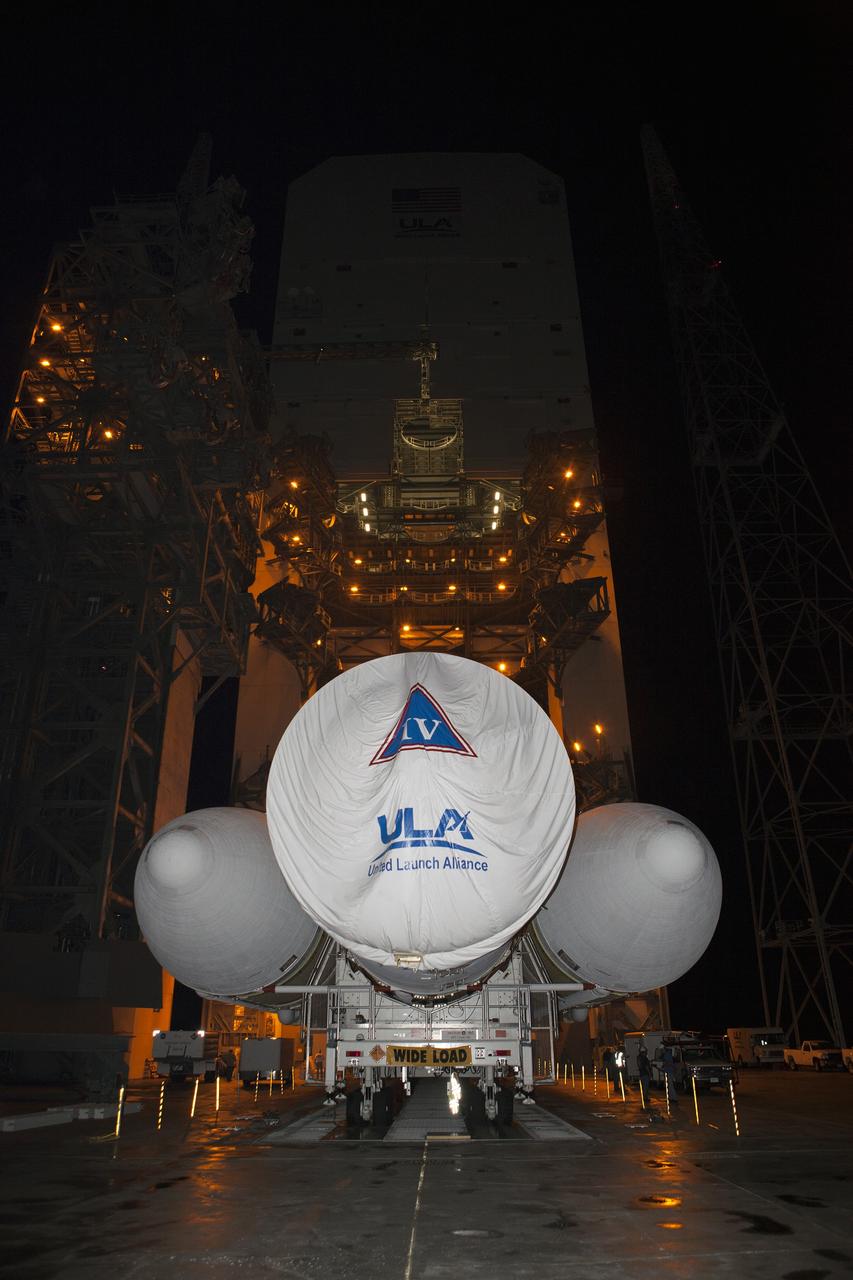
CAPE CANAVERAL, Fla. – Launch pad lights give off a golden glow at Space Launch Complex 37 at Cape Canaveral Air Force Station in Florida, as the United Launch Alliance Delta IV Heavy rocket for Exploration Flight Test-1 arrives. The rocket is secured on the Elevated Platform Transporter. The Delta IV Heavy will launch Orion on its first flight test. During its first flight test, Orion will travel farther into space than any human spacecraft has gone in more than 40 years. The data gathered during the flight will influence design decisions, validate existing computer models and innovative new approaches to space systems development, as well as reduce overall mission risks and costs for later Orion flights. Liftoff of Orion on the first flight test is planned for December 2014. Photo credit: NASA/Dimitri Gerondidakis
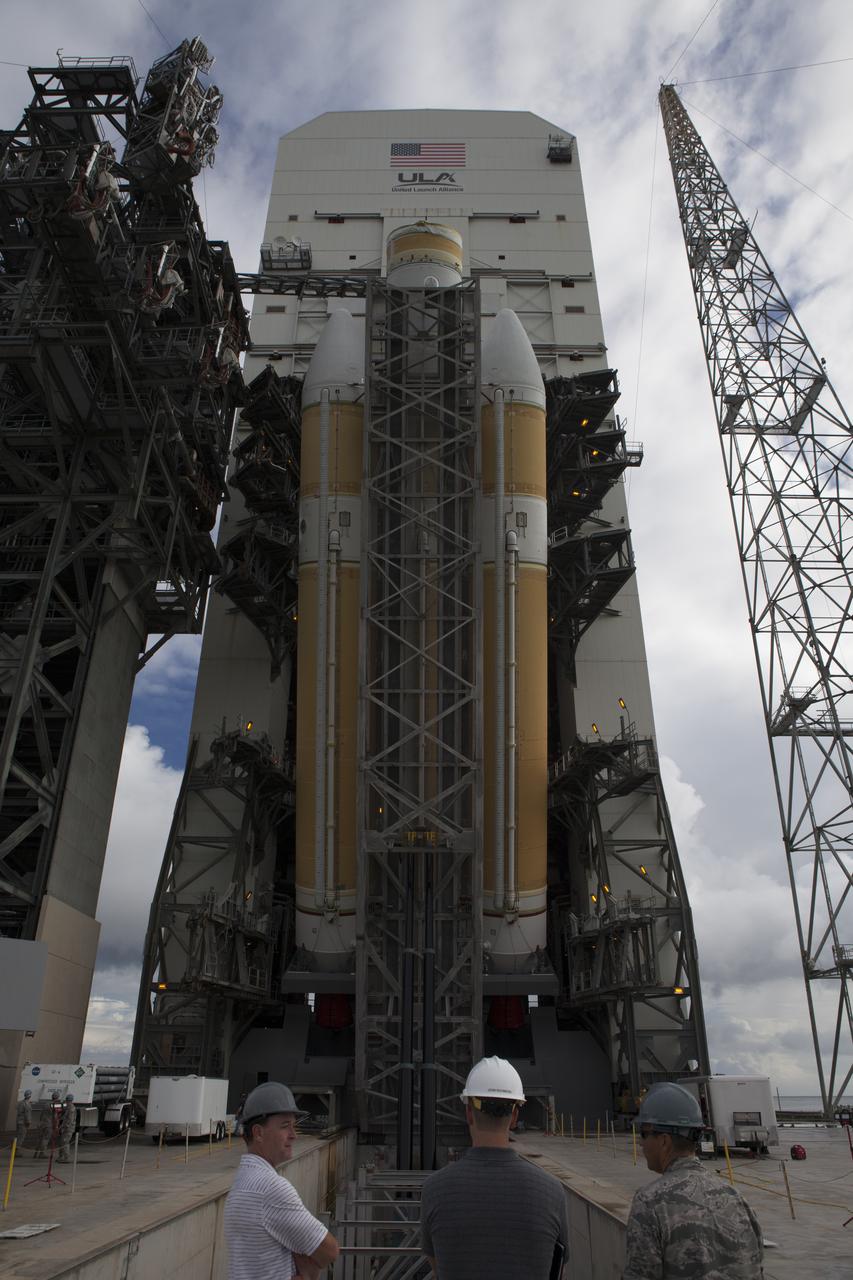
United Launch Alliance, or ULA, workers monitor the progress as the ULA Delta IV Heavy rocket for Exploration Flight Test-1 is lifted to the vertical position in the mobile service tower on the pad at Space Launch Complex 37 at Cape Canaveral Air Force Station in Florida. The Delta IV Heavy is being readied to launch Orion on its first flight test. During its first flight test, Orion will travel farther into space than any human spacecraft has gone in more than 40 years. The data gathered during the flight will influence design decisions, validate existing computer models and innovative new approaches to space systems development, as well as reduce overall mission risks and costs for later Orion flights. Liftoff of Orion on the first flight test is planned for December 2014.
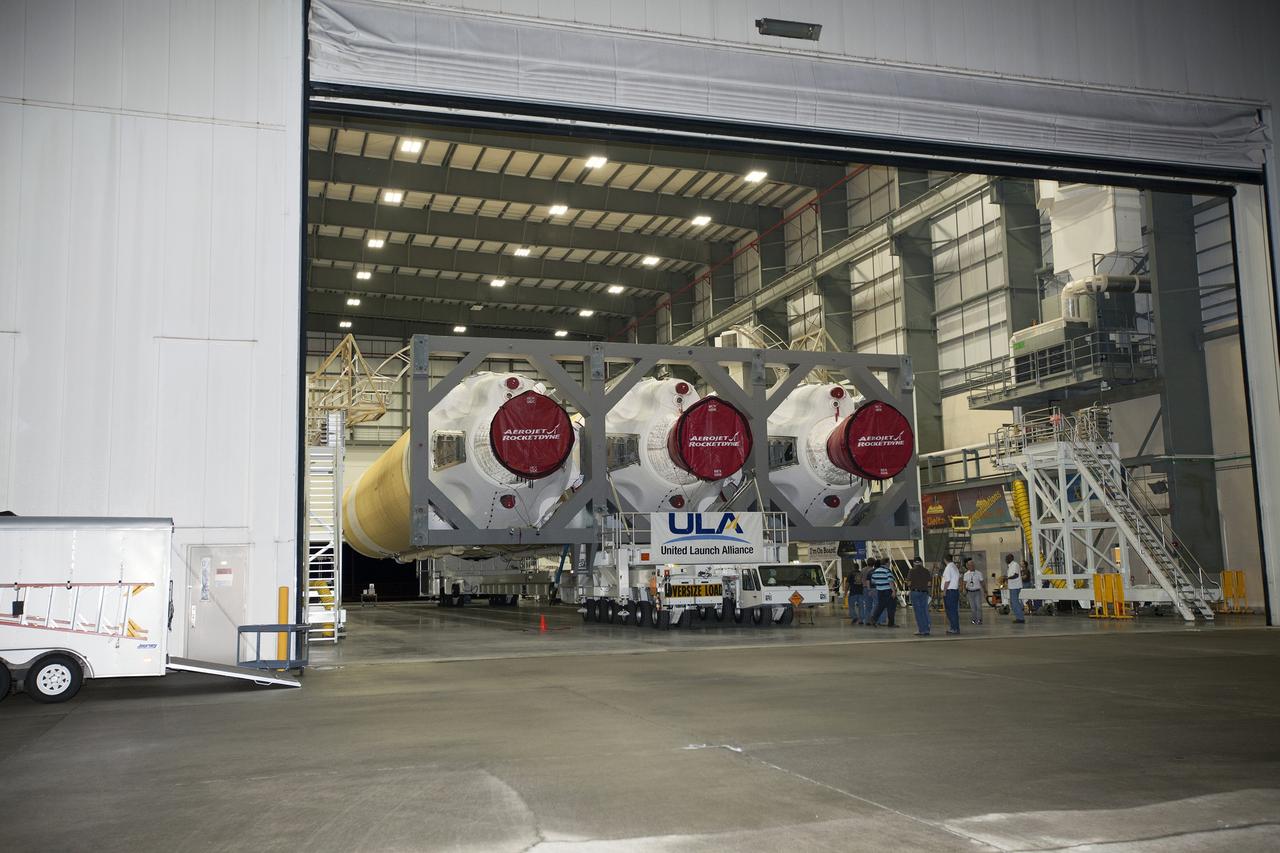
CAPE CANAVERAL, Fla. – Inside the Horizontal Integration Facility at Space Launch Complex 37 at Cape Canaveral Air Force Station in Florida, United Launch Alliance technicians and engineers prepare the Delta IV Heavy rocket for rollout to the pad. The rocket is secured on the Elevated Platform Transporter for the trip to the pad. The Delta IV Heavy will launch Orion on Exploration Flight Test-1. During its first flight test, Orion will travel farther into space than any human spacecraft has gone in more than 40 years. The data gathered during the flight will influence design decisions, validate existing computer models and innovative new approaches to space systems development, as well as reduce overall mission risks and costs for later Orion flights. Liftoff of Orion on the first flight test is planned for December 2014. Photo credit: NASA/Dimitri Gerondidakis
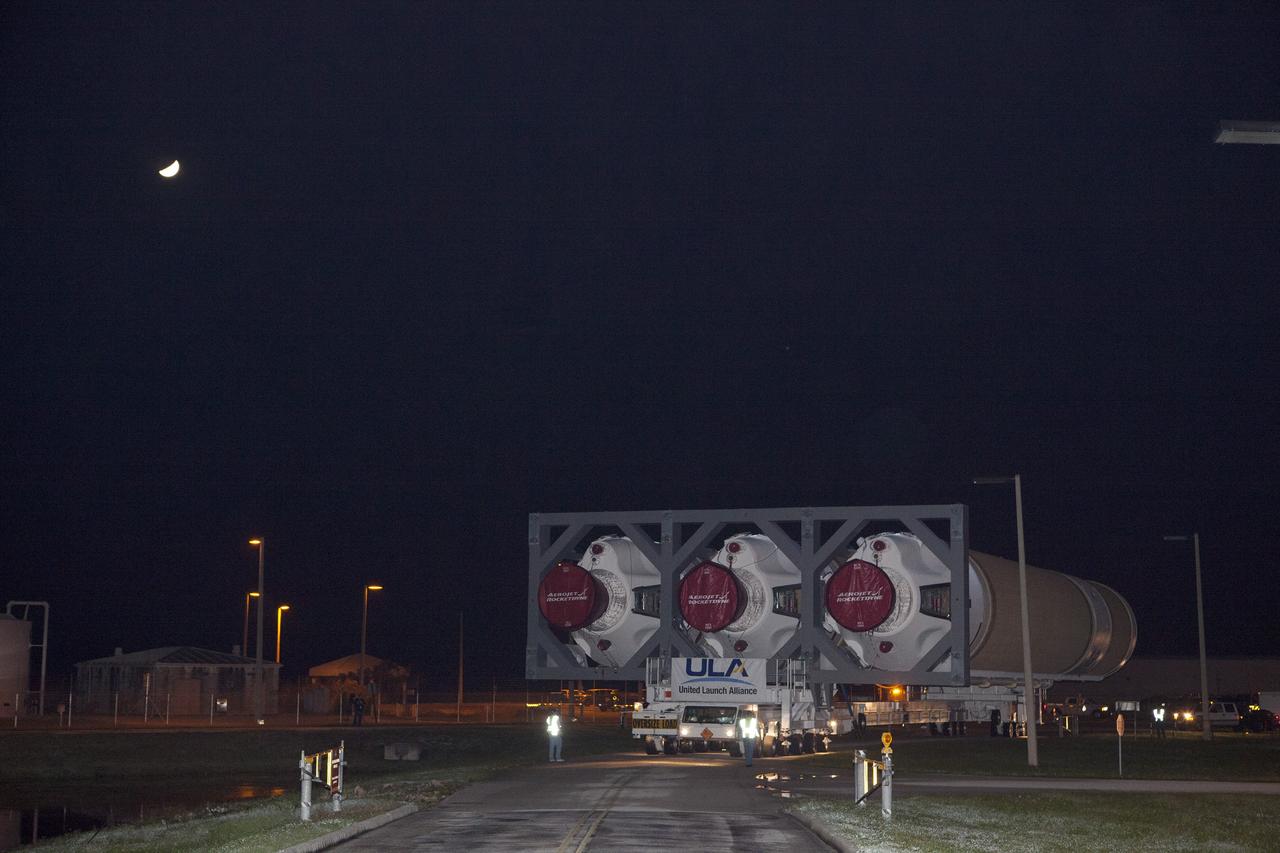
CAPE CANAVERAL, Fla. – A United Launch Alliance technicians drives the transporter that carries the Delta IV Heavy rocket to the pad at Space Launch Complex 37 at Cape Canaveral Air Force Station in Florida. The rocket is secured on the Elevated Platform Transporter. The Delta IV Heavy will launch Orion on Exploration Flight Test-1. During its first flight test, Orion will travel farther into space than any human spacecraft has gone in more than 40 years. The data gathered during the flight will influence design decisions, validate existing computer models and innovative new approaches to space systems development, as well as reduce overall mission risks and costs for later Orion flights. Liftoff of Orion on the first flight test is planned for December 2014. Photo credit: NASA/Dimitri Gerondidakis
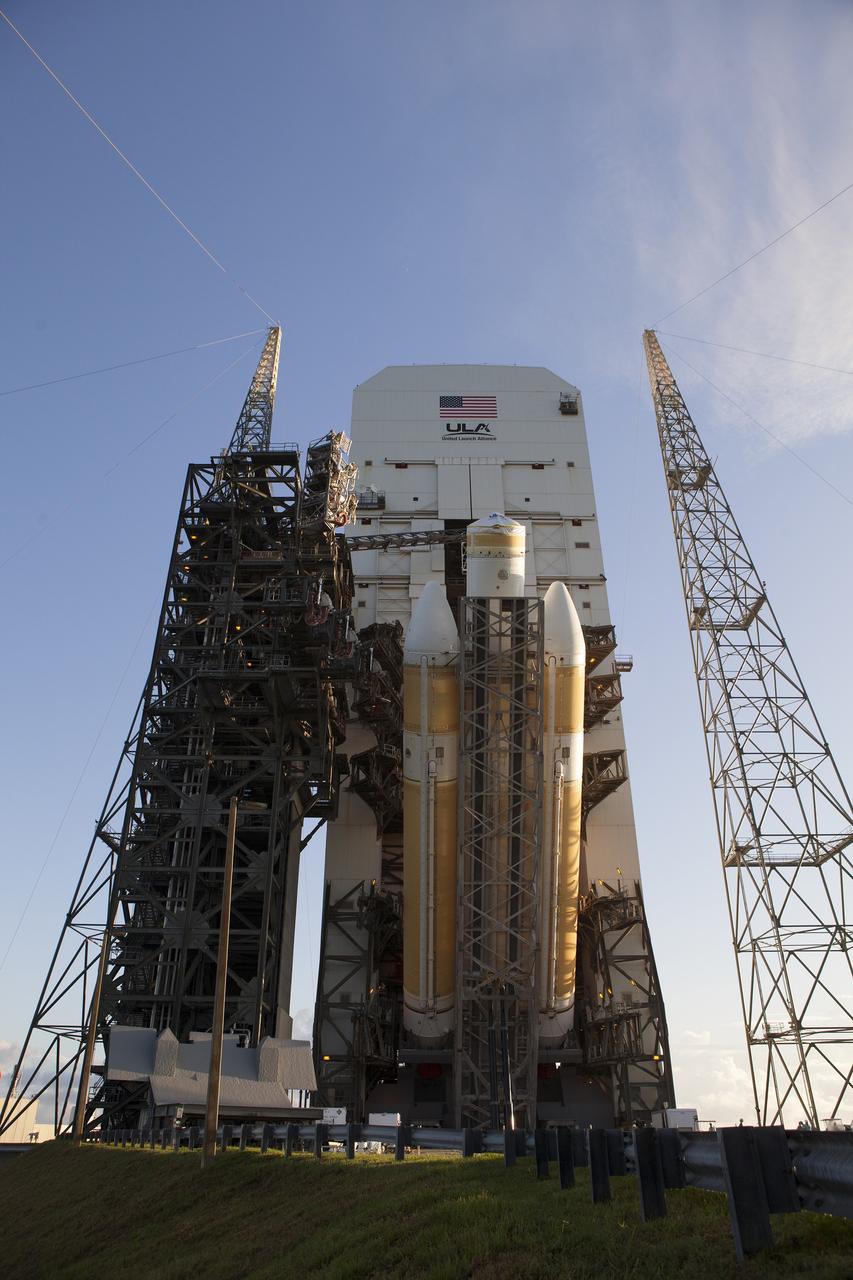
CAPE CANAVERAL, Fla. – The United Launch Alliance Delta IV Heavy rocket for Exploration Flight Test-1 is being lifted to the vertical position in the mobile service tower on the pad at the pad at Space Launch Complex 37 at Cape Canaveral Air Force Station in Florida. The Delta IV Heavy is being readied to launch Orion on its first flight test. During its first flight test, Orion will travel farther into space than any human spacecraft has gone in more than 40 years. The data gathered during the flight will influence design decisions, validate existing computer models and innovative new approaches to space systems development, as well as reduce overall mission risks and costs for later Orion flights. Liftoff of Orion on the first flight test is planned for December 2014. Photo credit: NASA/Daniel Casper
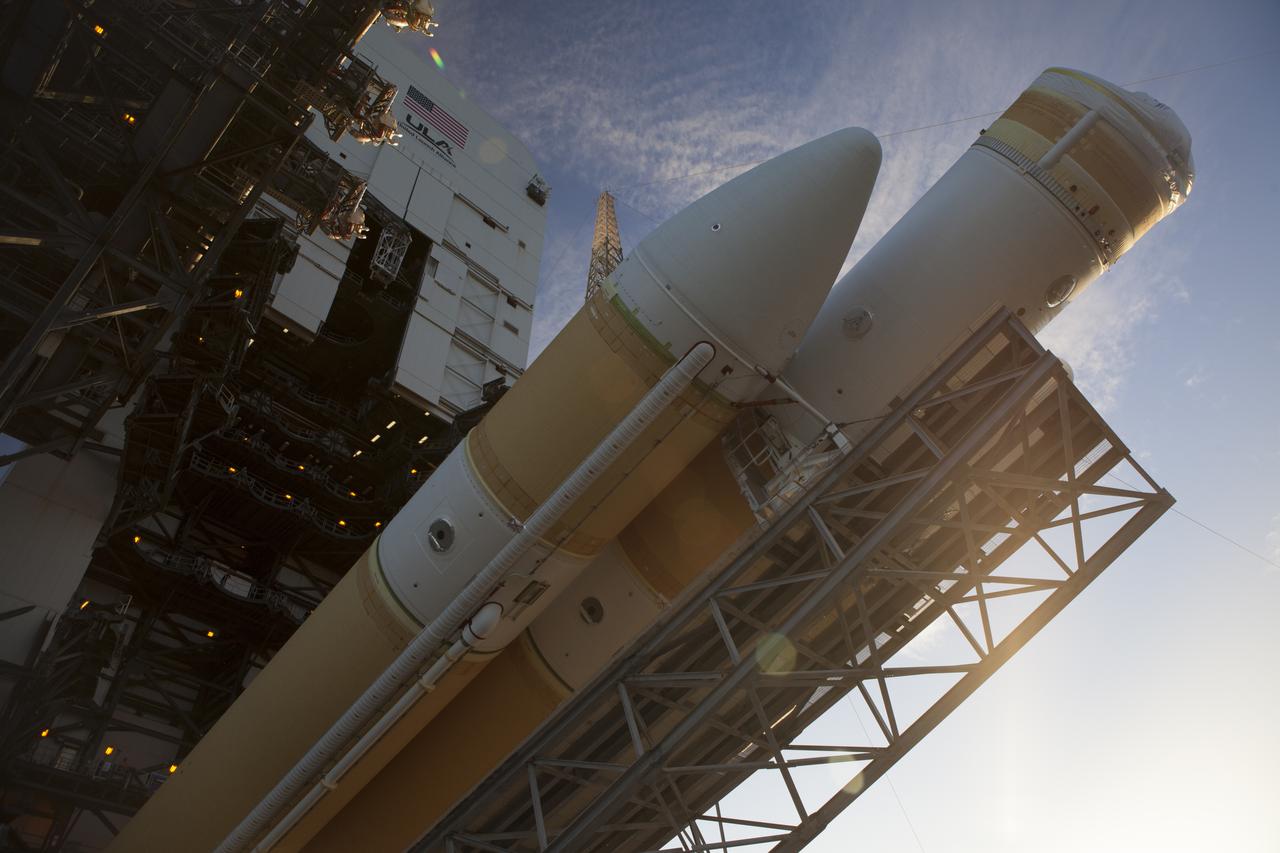
This close-up view shows the United Launch Alliance Delta IV Heavy rocket for Exploration Flight Test-1 being raised into the vertical position at the pad at Space Launch Complex 37 at Cape Canaveral Air Force Station in Florida. The Delta IV Heavy is being readied to launch Orion on its first flight test. During its first flight test, Orion will travel farther into space than any human spacecraft has gone in more than 40 years. The data gathered during the flight will influence design decisions, validate existing computer models and innovative new approaches to space systems development, as well as reduce overall mission risks and costs for later Orion flights. Liftoff of Orion on the first flight test is planned for December 2014.
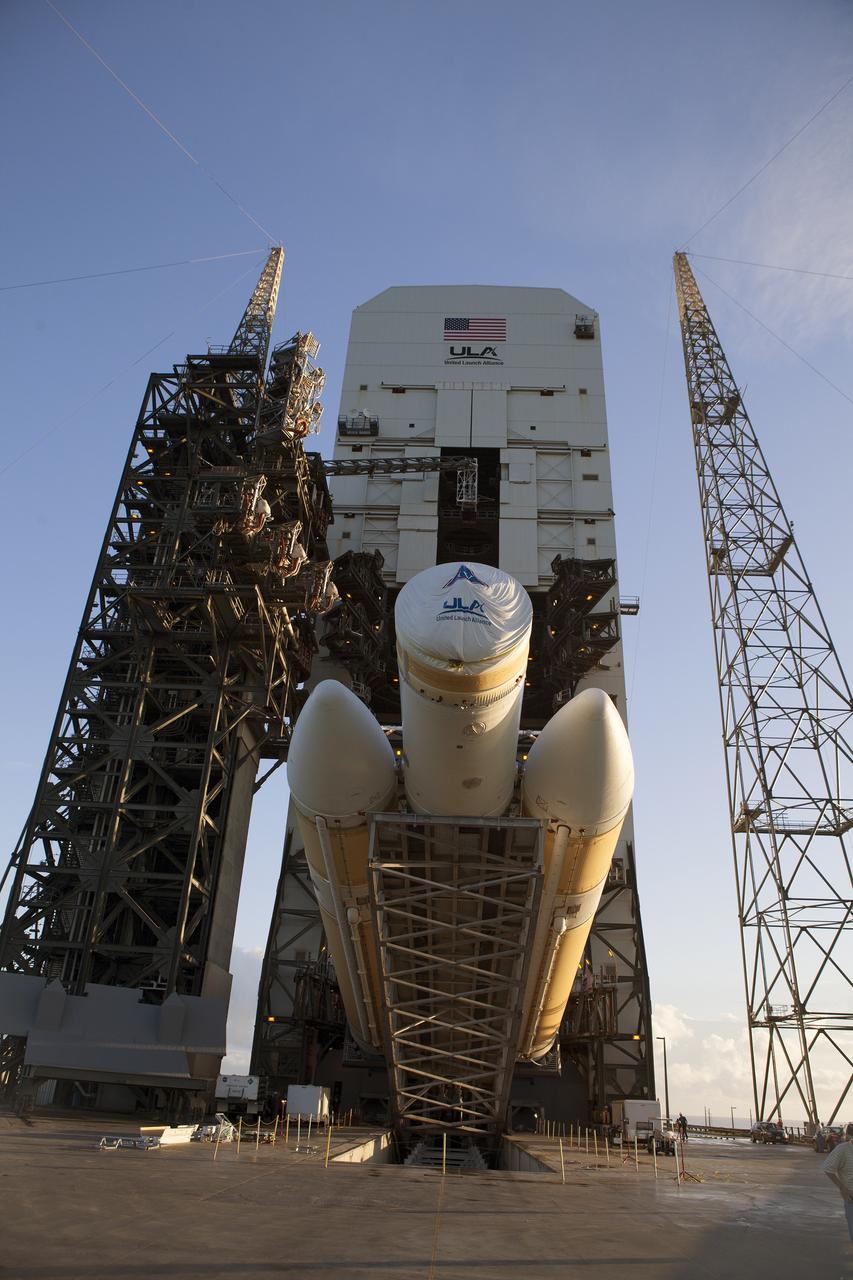
CAPE CANAVERAL, Fla. – The United Launch Alliance Delta IV Heavy rocket for Exploration Flight Test-1 is being lifted to the vertical position at the pad at Space Launch Complex 37 at Cape Canaveral Air Force Station in Florida. The Delta IV Heavy is being readied to launch Orion on its first flight test. During its first flight test, Orion will travel farther into space than any human spacecraft has gone in more than 40 years. The data gathered during the flight will influence design decisions, validate existing computer models and innovative new approaches to space systems development, as well as reduce overall mission risks and costs for later Orion flights. Liftoff of Orion on the first flight test is planned for December 2014. Photo credit: NASA/Daniel Casper

CAPE CANAVERAL, Fla. – United Launch Alliance, or ULA, workers monitor the progress as the ULA Delta IV Heavy rocket for Exploration Flight Test-1 is lifted to the vertical position in the mobile service tower on the pad at Space Launch Complex 37 at Cape Canaveral Air Force Station in Florida. The Delta IV Heavy is being readied to launch Orion on its first flight test. During its first flight test, Orion will travel farther into space than any human spacecraft has gone in more than 40 years. The data gathered during the flight will influence design decisions, validate existing computer models and innovative new approaches to space systems development, as well as reduce overall mission risks and costs for later Orion flights. Liftoff of Orion on the first flight test is planned for December 2014. Photo credit: NASA/Daniel Casper

CAPE CANAVERAL, Fla. – The United Launch Alliance Delta IV Heavy rocket for Exploration Flight Test-1 is being lifted to the vertical position at the pad at Space Launch Complex 37 at Cape Canaveral Air Force Station in Florida. The Delta IV Heavy is being readied to launch Orion on its first flight test. During its first flight test, Orion will travel farther into space than any human spacecraft has gone in more than 40 years. The data gathered during the flight will influence design decisions, validate existing computer models and innovative new approaches to space systems development, as well as reduce overall mission risks and costs for later Orion flights. Liftoff of Orion on the first flight test is planned for December 2014. Photo credit: NASA/Daniel Casper
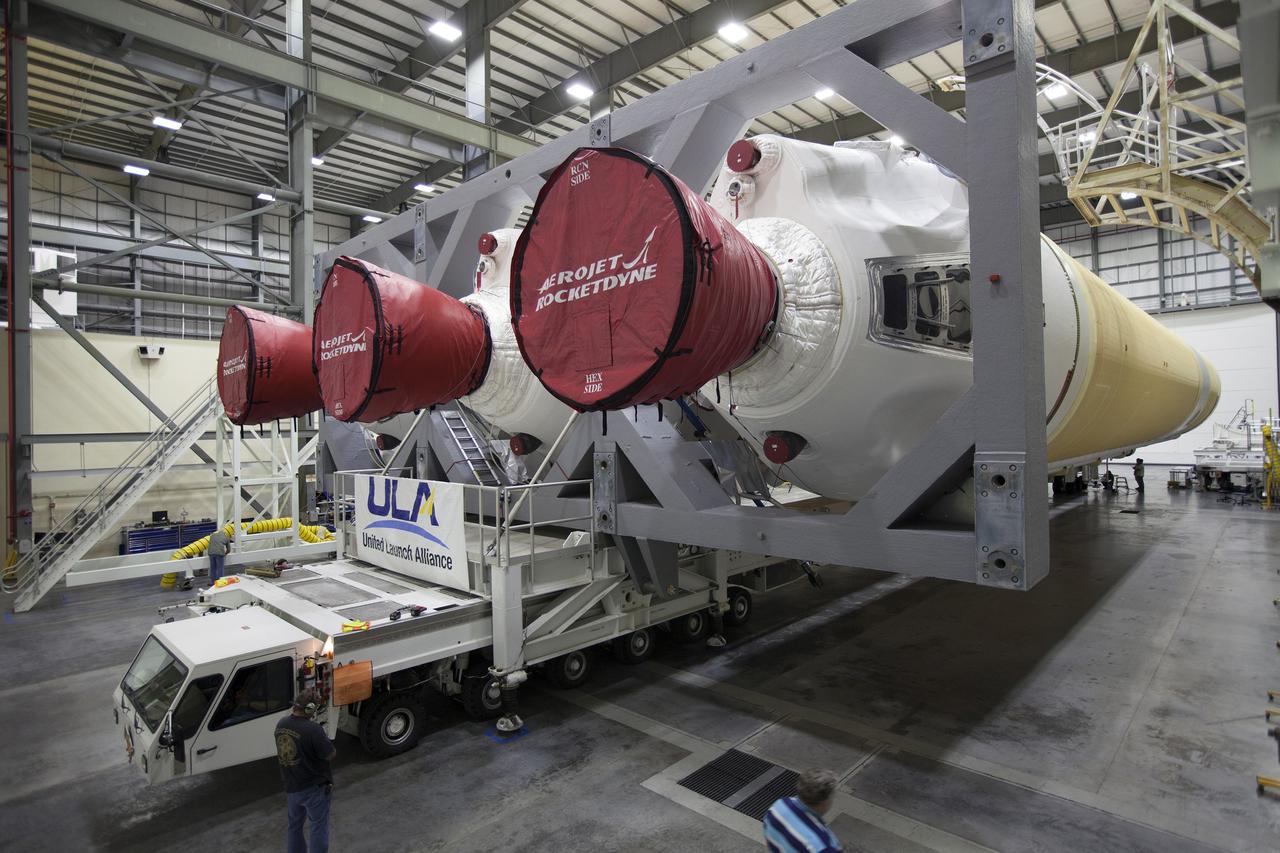
CAPE CANAVERAL, Fla. – Inside the Horizontal Integration Facility at Space Launch Complex 37 at Cape Canaveral Air Force Station in Florida, United Launch Alliance technicians prepare the Delta IV Heavy rocket for rollout to the pad. The rocket is secured on the Elevated Platform Transporter for the trip to the pad. The Delta IV Heavy will launch Orion on Exploration Flight Test-1. During its first flight test, Orion will travel farther into space than any human spacecraft has gone in more than 40 years. The data gathered during the flight will influence design decisions, validate existing computer models and innovative new approaches to space systems development, as well as reduce overall mission risks and costs for later Orion flights. Liftoff of Orion on the first flight test is planned for December 2014. Photo credit: NASA/Dimitri Gerondidakis
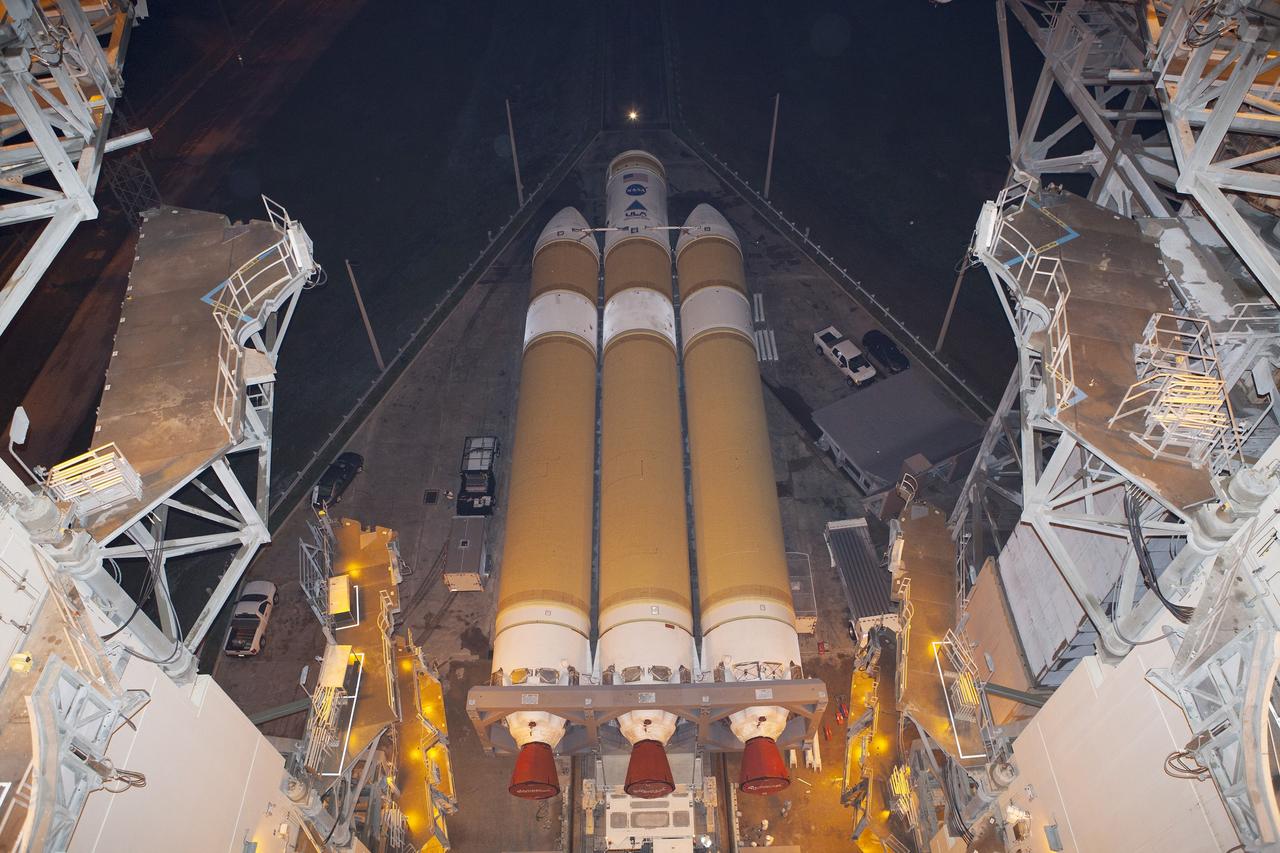
CAPE CANAVERAL, Fla. – The United Launch Alliance Delta IV Heavy rocket for Exploration Flight Test-1 has arrived at the pad at Space Launch Complex 37 at Cape Canaveral Air Force Station in Florida. The rocket is secured on the Elevated Platform Transporter. The Delta IV Heavy will launch Orion on its first flight test. During its first flight test, Orion will travel farther into space than any human spacecraft has gone in more than 40 years. The data gathered during the flight will influence design decisions, validate existing computer models and innovative new approaches to space systems development, as well as reduce overall mission risks and costs for later Orion flights. Liftoff of Orion on the first flight test is planned for December 2014. Photo credit: NASA/Dimitri Gerondidakis
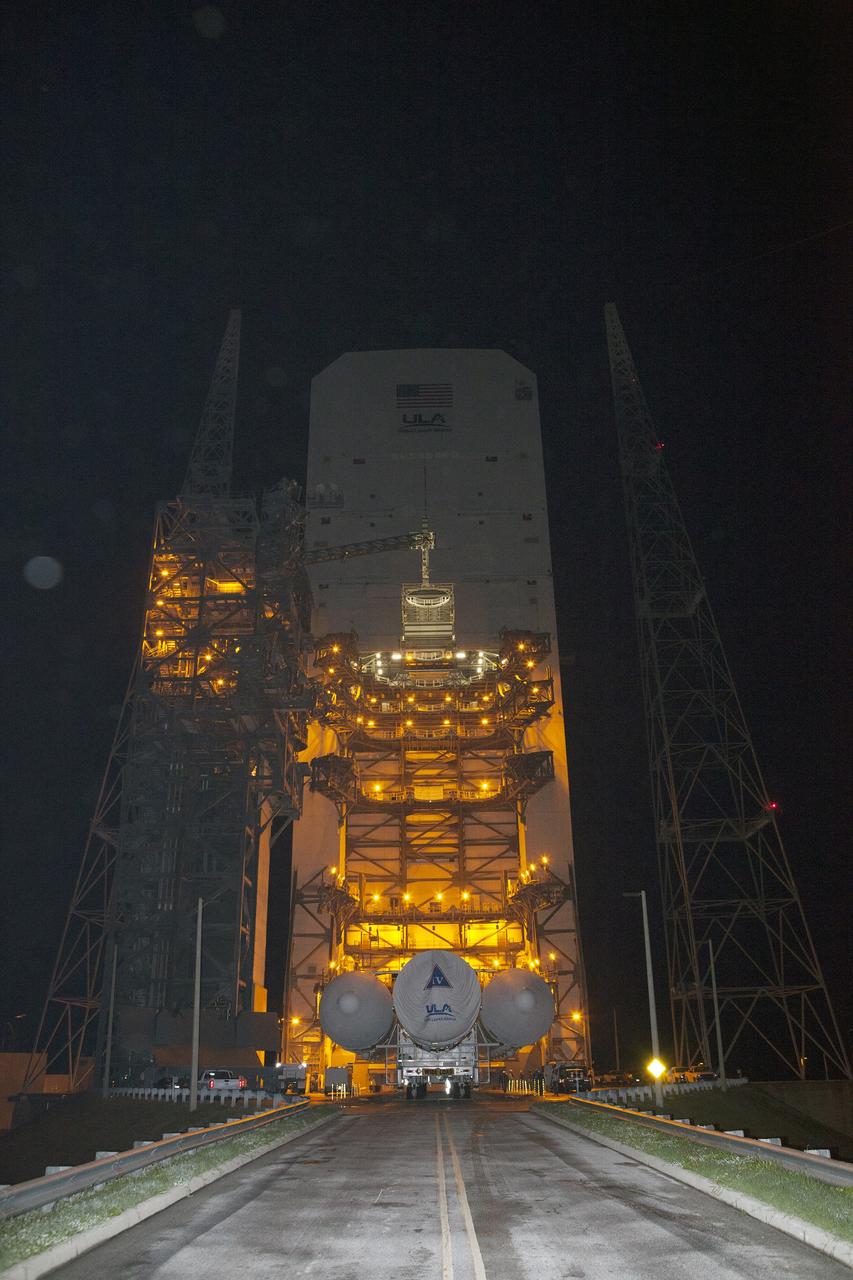
CAPE CANAVERAL, Fla. – Launch pad lights give off a golden glow at Space Launch Complex 37 at Cape Canaveral Air Force Station in Florida, as the United Launch Alliance Delta IV Heavy rocket for Exploration Flight Test-1 arrives. The rocket is secured on the Elevated Platform Transporter. The Delta IV Heavy will launch Orion on its first flight test. During its first flight test, Orion will travel farther into space than any human spacecraft has gone in more than 40 years. The data gathered during the flight will influence design decisions, validate existing computer models and innovative new approaches to space systems development, as well as reduce overall mission risks and costs for later Orion flights. Liftoff of Orion on the first flight test is planned for December 2014. Photo credit: NASA/Dimitri Gerondidakis
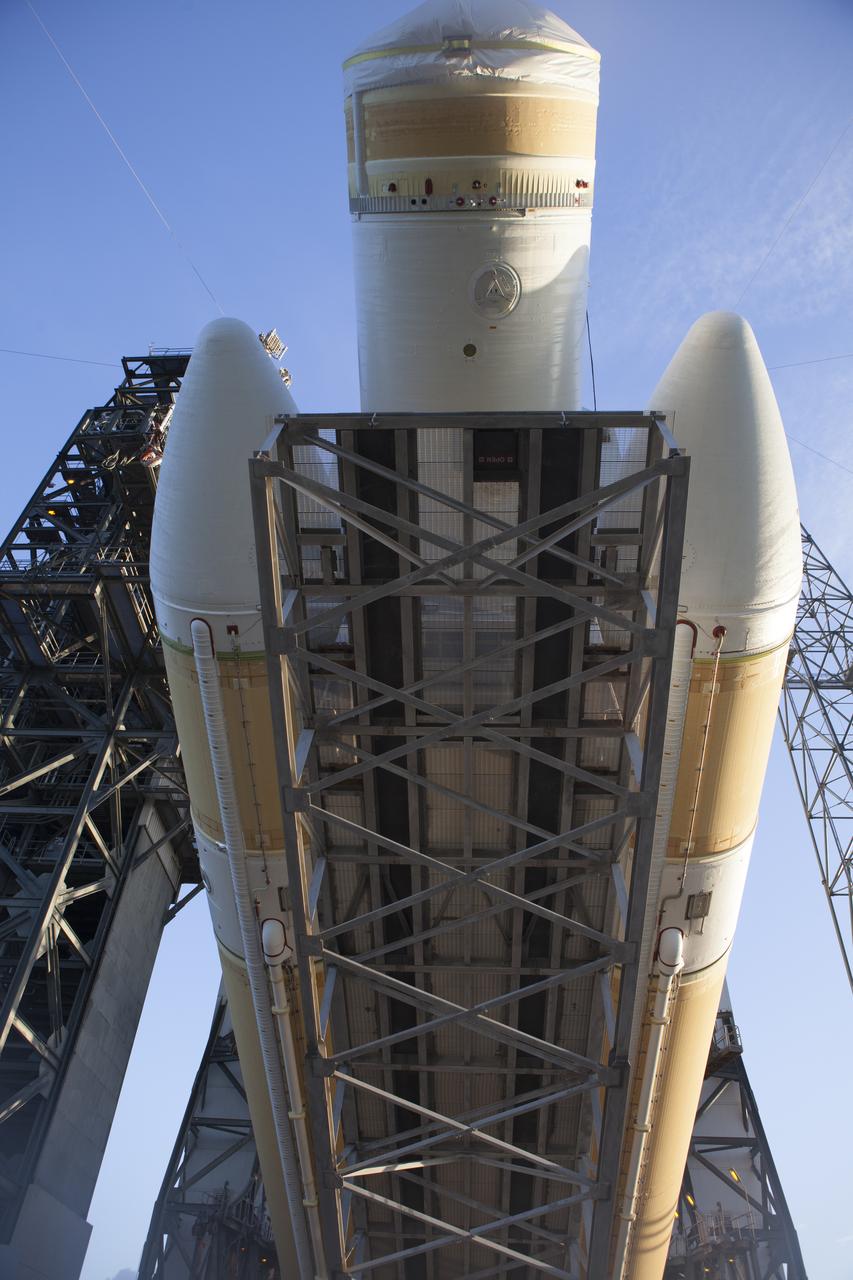
This close-up view shows the United Launch Alliance Delta IV Heavy rocket for Exploration Flight Test-1 being raised into the vertical position at the pad at Space Launch Complex 37 at Cape Canaveral Air Force Station in Florida. The Delta IV Heavy is being readied to launch Orion on its first flight test. During its first flight test, Orion will travel farther into space than any human spacecraft has gone in more than 40 years. The data gathered during the flight will influence design decisions, validate existing computer models and innovative new approaches to space systems development, as well as reduce overall mission risks and costs for later Orion flights. Liftoff of Orion on the first flight test is planned for December 2014.
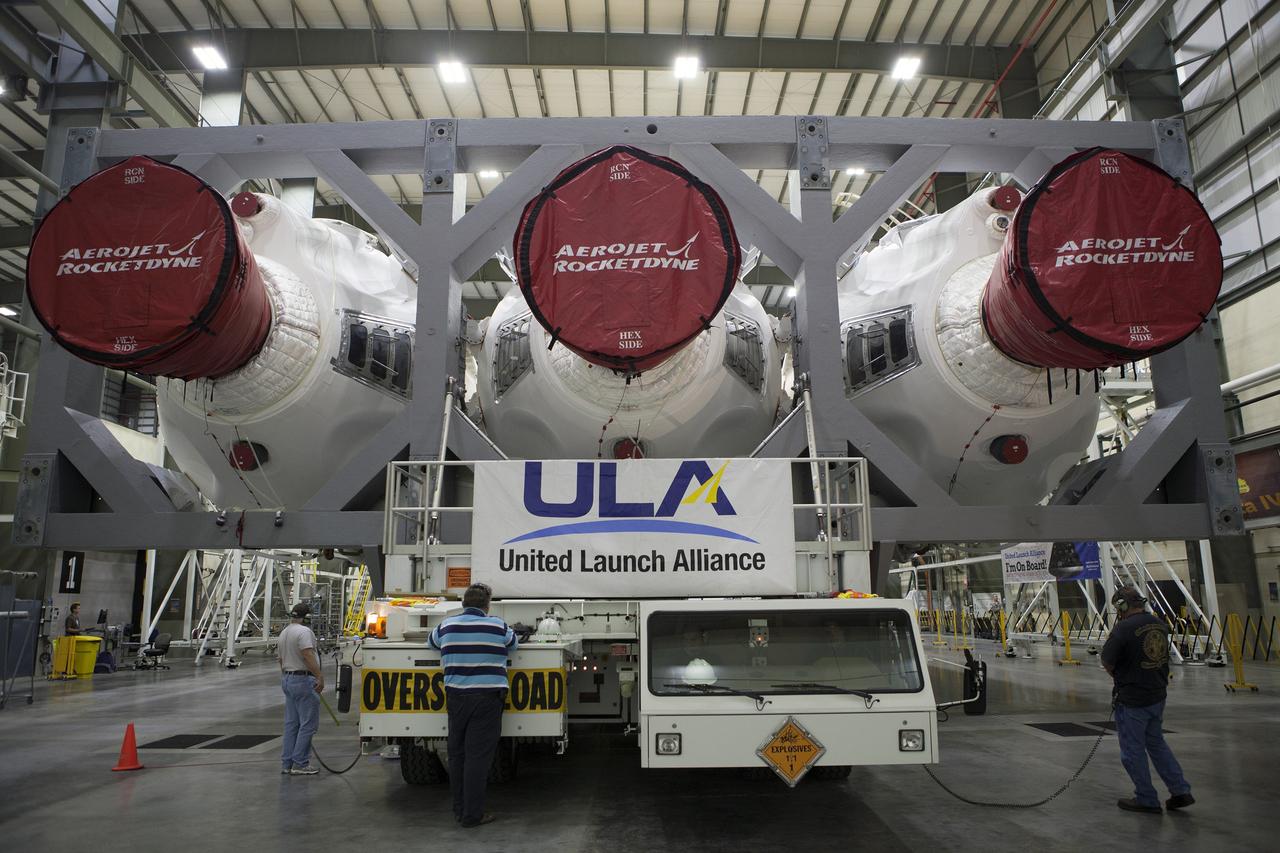
CAPE CANAVERAL, Fla. – Inside the Horizontal Integration Facility at Space Launch Complex 37 at Cape Canaveral Air Force Station in Florida, United Launch Alliance technicians prepare the Delta IV Heavy rocket for rollout to the pad. The rocket is secured on the Elevated Platform Transporter for the trip to the pad. The Delta IV Heavy will launch Orion on Exploration Flight Test-1. During its first flight test, Orion will travel farther into space than any human spacecraft has gone in more than 40 years. The data gathered during the flight will influence design decisions, validate existing computer models and innovative new approaches to space systems development, as well as reduce overall mission risks and costs for later Orion flights. Liftoff of Orion on the first flight test is planned for December 2014. Photo credit: NASA/Dimitri Gerondidakis
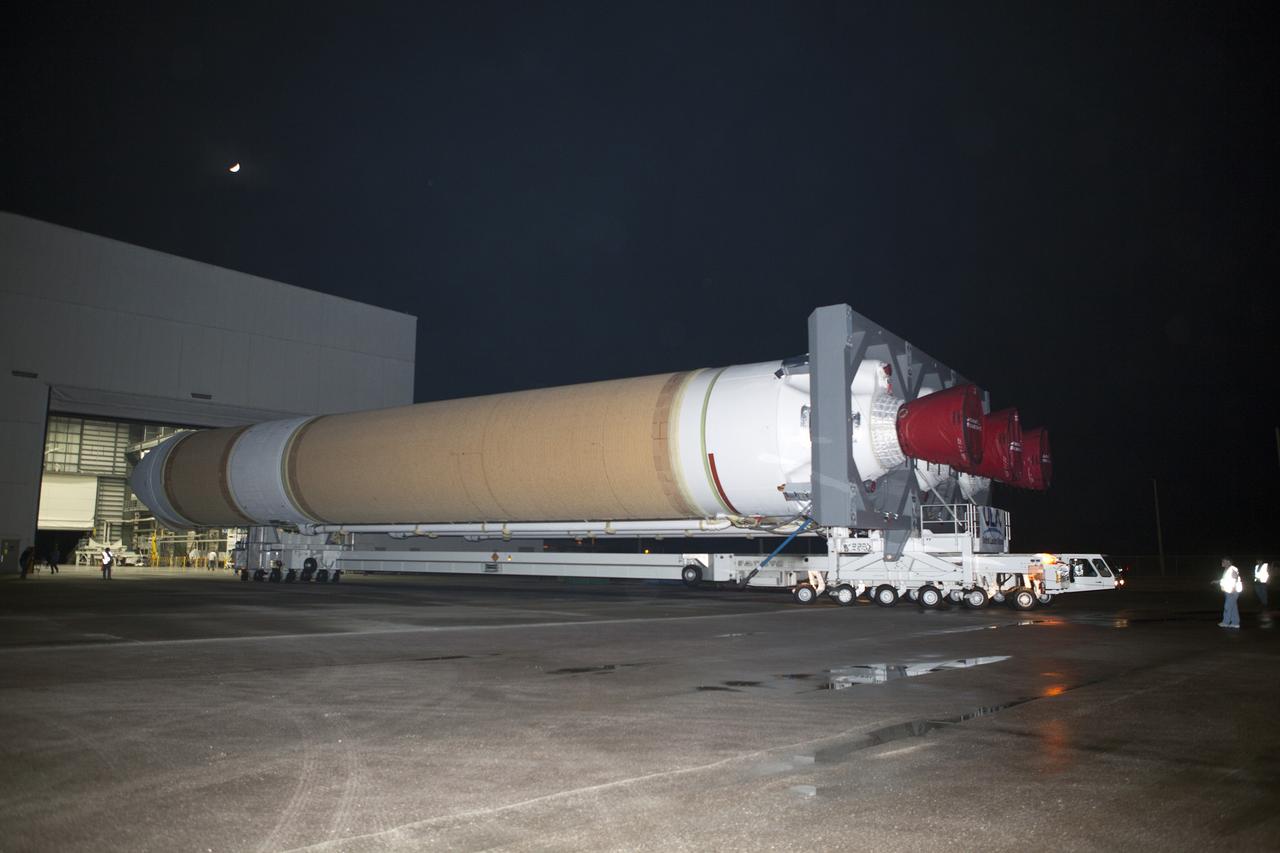
CAPE CANAVERAL, Fla. – The United Launch Alliance Delta IV Heavy rocket exits the Horizontal Integration Facility at Space Launch Complex 37 at Cape Canaveral Air Force Station in Florida. The rocket is secured on the Elevated Platform Transporter for the trip to the pad. The Delta IV Heavy will launch Orion on Exploration Flight Test-1. During its first flight test, Orion will travel farther into space than any human spacecraft has gone in more than 40 years. The data gathered during the flight will influence design decisions, validate existing computer models and innovative new approaches to space systems development, as well as reduce overall mission risks and costs for later Orion flights. Liftoff of Orion on the first flight test is planned for December 2014. Photo credit: NASA/Dimitri Gerondidakis
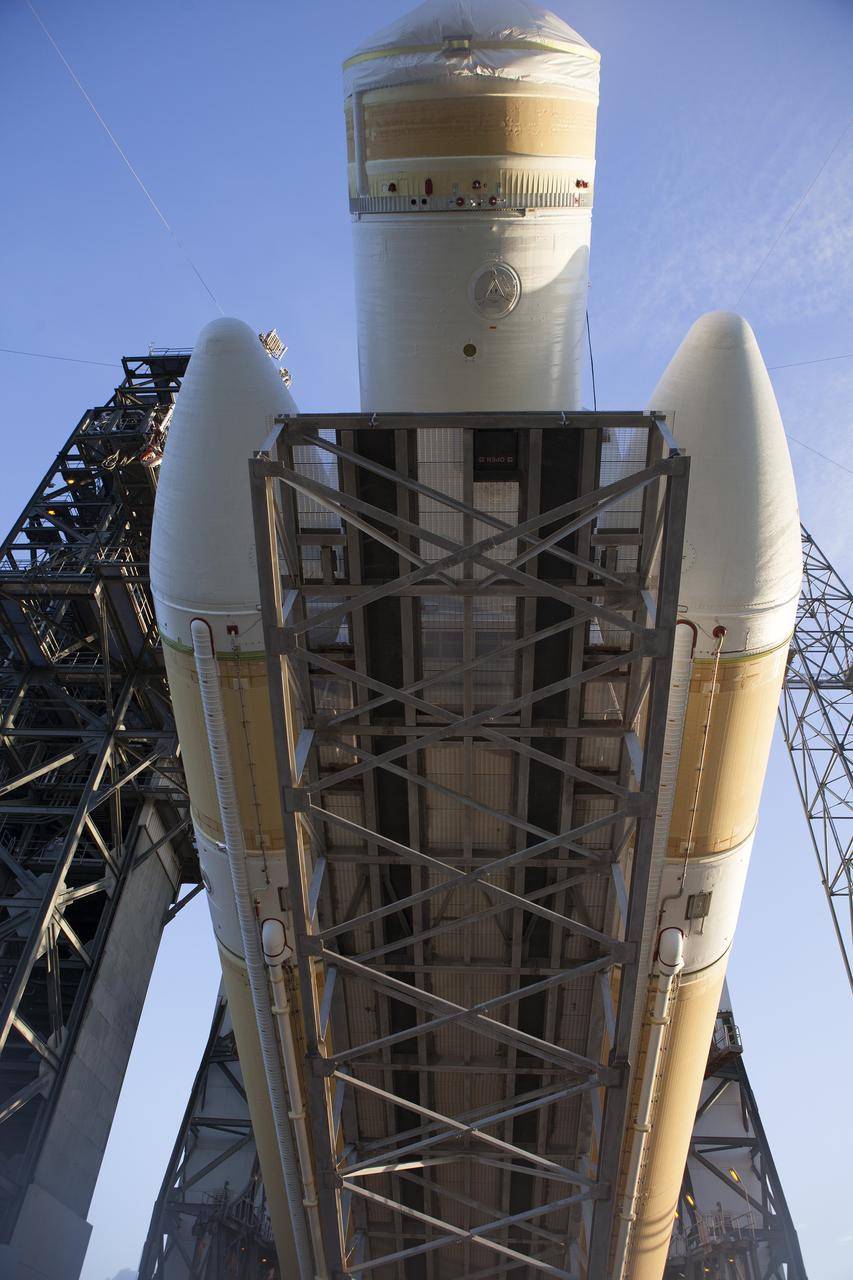
CAPE CANAVERAL, Fla. – This close-up view shows the United Launch Alliance Delta IV Heavy rocket for Exploration Flight Test-1 being raised into the vertical position at the pad at Space Launch Complex 37 at Cape Canaveral Air Force Station in Florida. The Delta IV Heavy is being readied to launch Orion on its first flight test. During its first flight test, Orion will travel farther into space than any human spacecraft has gone in more than 40 years. The data gathered during the flight will influence design decisions, validate existing computer models and innovative new approaches to space systems development, as well as reduce overall mission risks and costs for later Orion flights. Liftoff of Orion on the first flight test is planned for December 2014. Photo credit: NASA/Daniel Casper
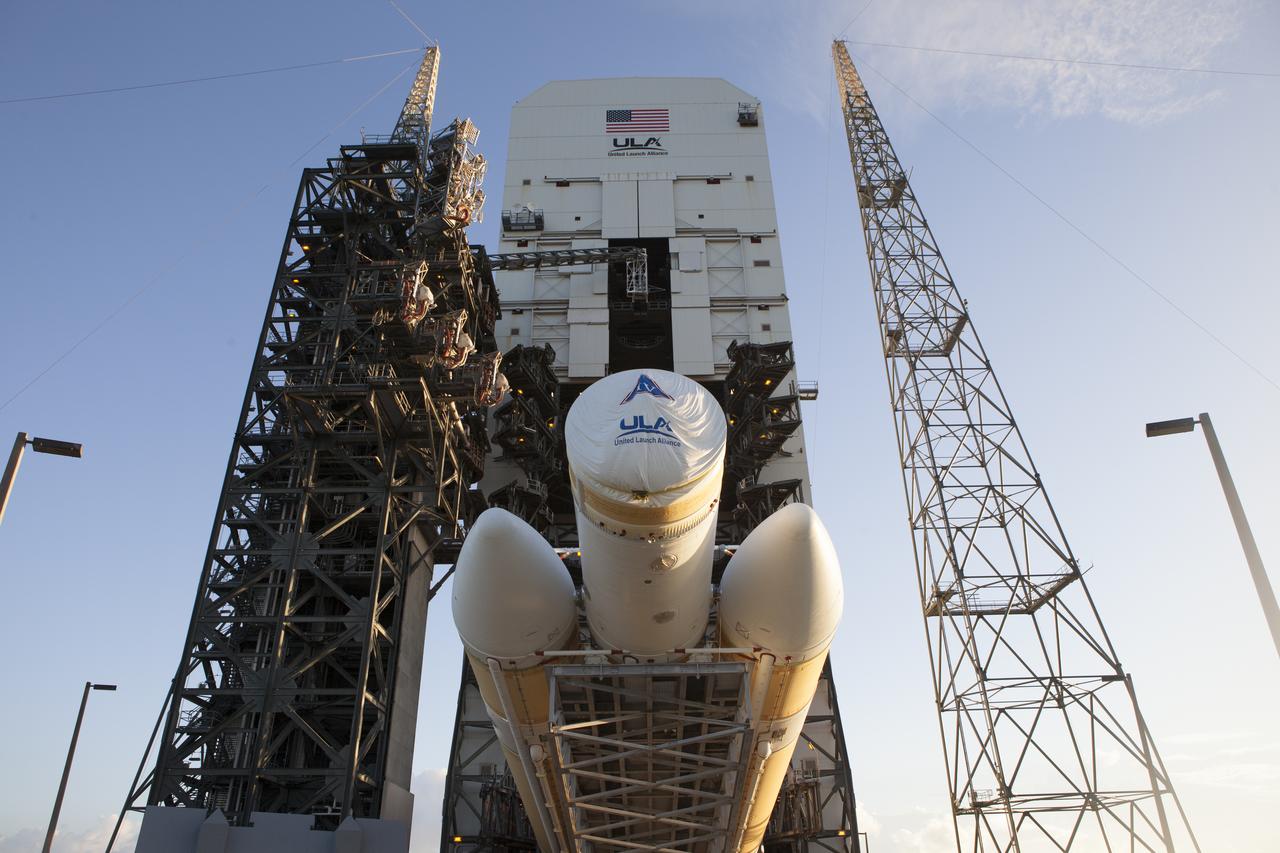
The United Launch Alliance Delta IV Heavy rocket for Exploration Flight Test-1 is being lifted to the vertical position at the pad at Space Launch Complex 37 at Cape Canaveral Air Force Station in Florida. The Delta IV Heavy is being readied to launch Orion on its first flight test. During its first flight test, Orion will travel farther into space than any human spacecraft has gone in more than 40 years. The data gathered during the flight will influence design decisions, validate existing computer models and innovative new approaches to space systems development, as well as reduce overall mission risks and costs for later Orion flights. Liftoff of Orion on the first flight test is planned for December 2014.
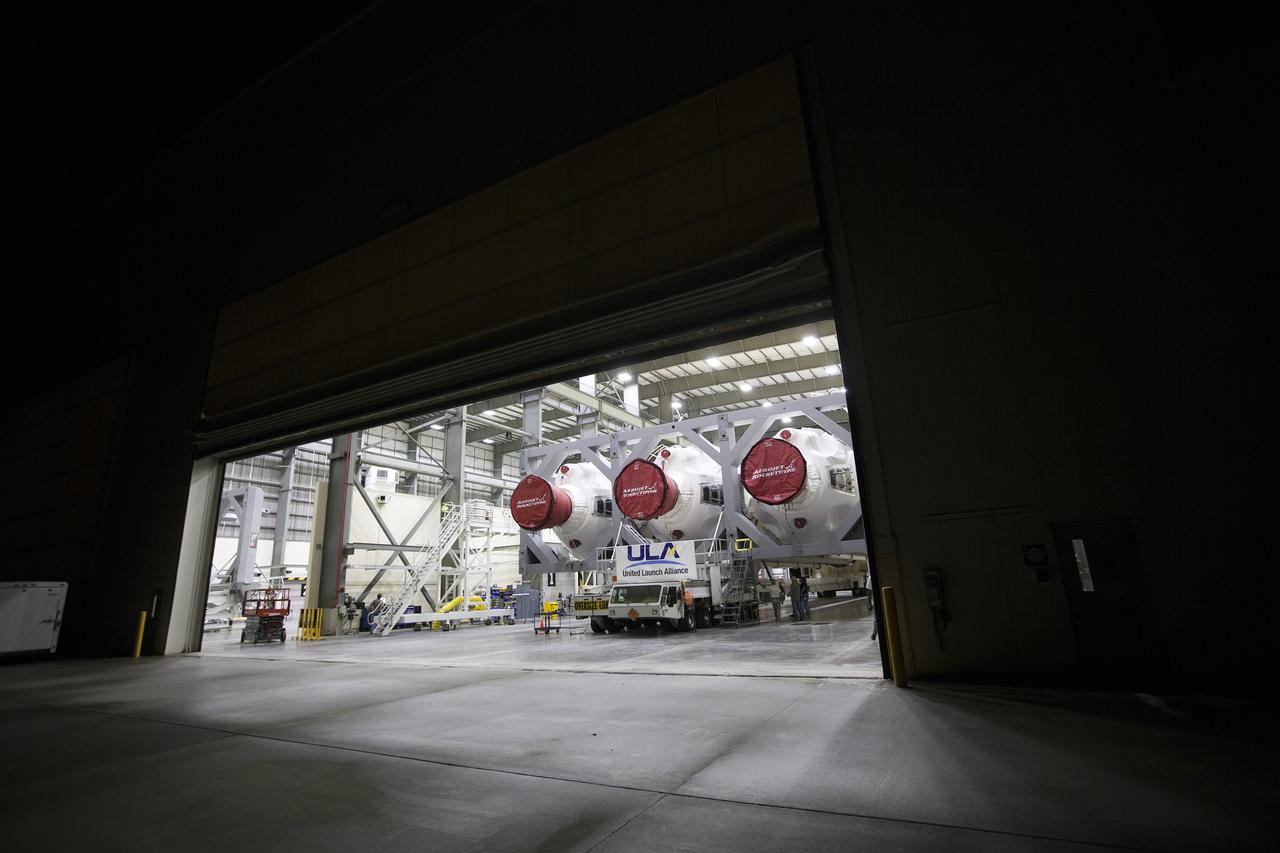
CAPE CANAVERAL, Fla. – Inside the Horizontal Integration Facility at Space Launch Complex 37 at Cape Canaveral Air Force Station in Florida, the Delta IV Heavy rocket is ready for rollout to the pad. The rocket is secured on the Elevated Platform Transporter for the trip to the pad. The Delta IV Heavy will launch Orion on Exploration Flight Test-1. During its first flight test, Orion will travel farther into space than any human spacecraft has gone in more than 40 years. The data gathered during the flight will influence design decisions, validate existing computer models and innovative new approaches to space systems development, as well as reduce overall mission risks and costs for later Orion flights. Liftoff of Orion on the first flight test is planned for December 2014. Photo credit: NASA/Dimitri Gerondidakis
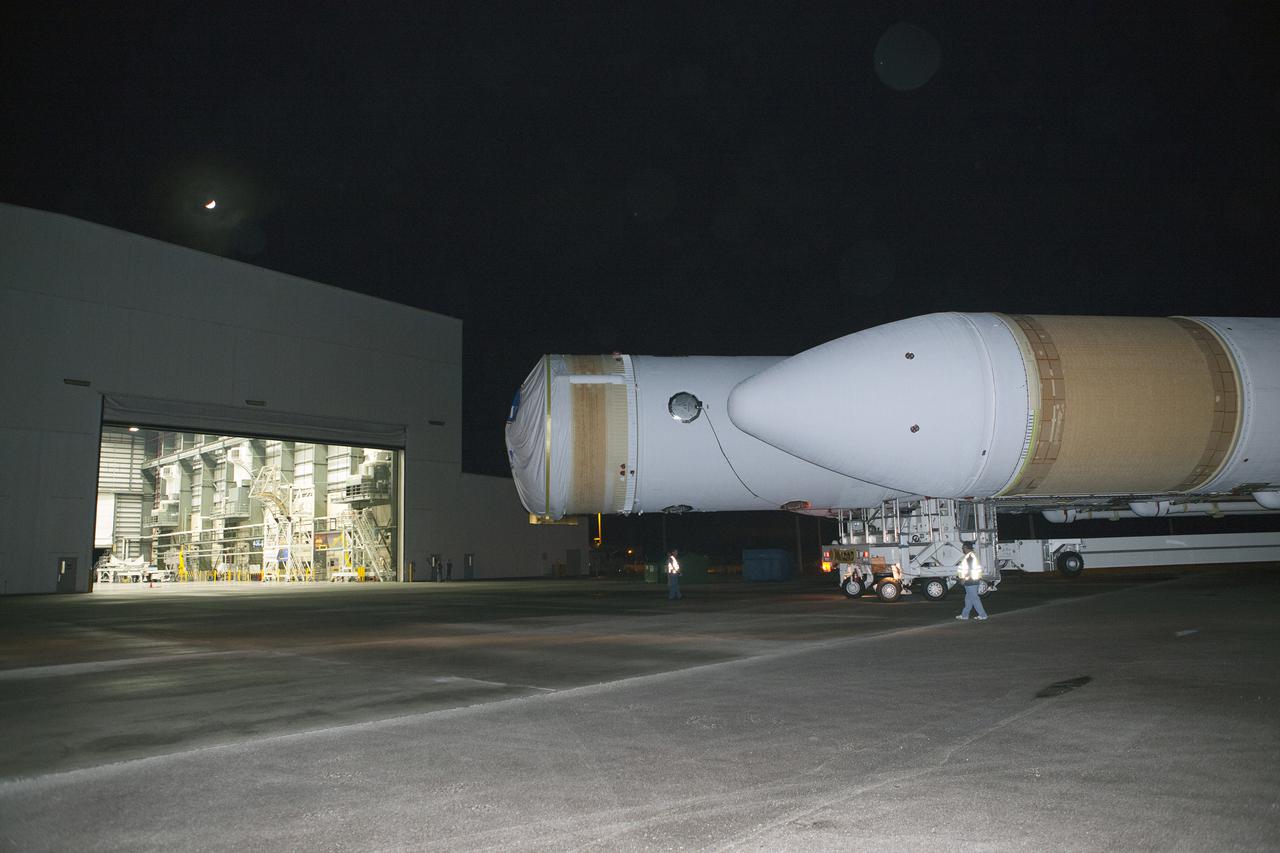
CAPE CANAVERAL, Fla. – The United Launch Alliance Delta IV Heavy rocket exits the Horizontal Integration Facility at Space Launch Complex 37 at Cape Canaveral Air Force Station in Florida. The rocket is secured on the Elevated Platform Transporter for the trip to the pad. The Delta IV Heavy will launch Orion on Exploration Flight Test-1. During its first flight test, Orion will travel farther into space than any human spacecraft has gone in more than 40 years. The data gathered during the flight will influence design decisions, validate existing computer models and innovative new approaches to space systems development, as well as reduce overall mission risks and costs for later Orion flights. Liftoff of Orion on the first flight test is planned for December 2014. Photo credit: NASA_Dimitri Gerondidakis
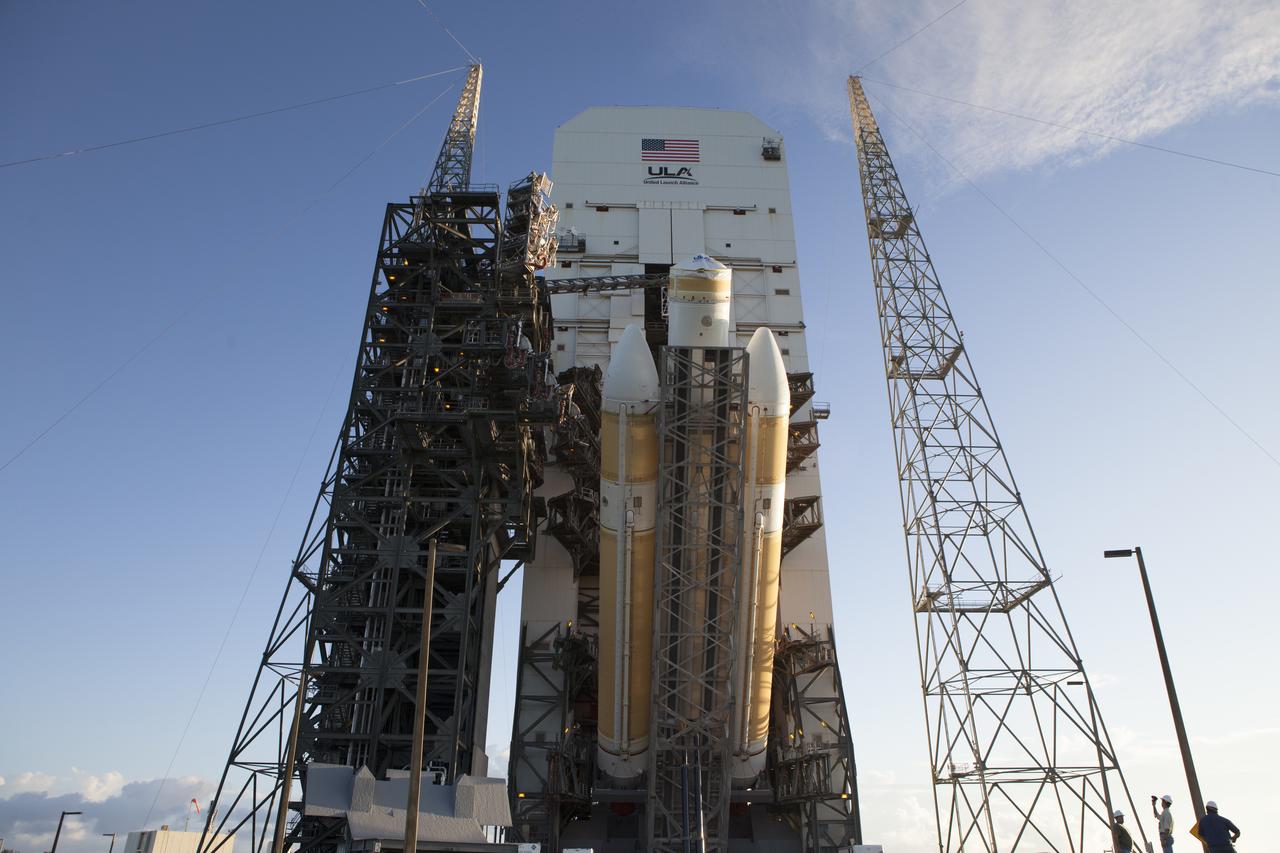
The United Launch Alliance Delta IV Heavy rocket for Exploration Flight Test-1 is lifted to the vertical position in the mobile service tower on the pad at Space Launch Complex 37 at Cape Canaveral Air Force Station in Florida. The Delta IV Heavy is being readied to launch Orion on its first flight test. During its first flight test, Orion will travel farther into space than any human spacecraft has gone in more than 40 years. The data gathered during the flight will influence design decisions, validate existing computer models and innovative new approaches to space systems development, as well as reduce overall mission risks and costs for later Orion flights. Liftoff of Orion on the first flight test is planned for December 2014.
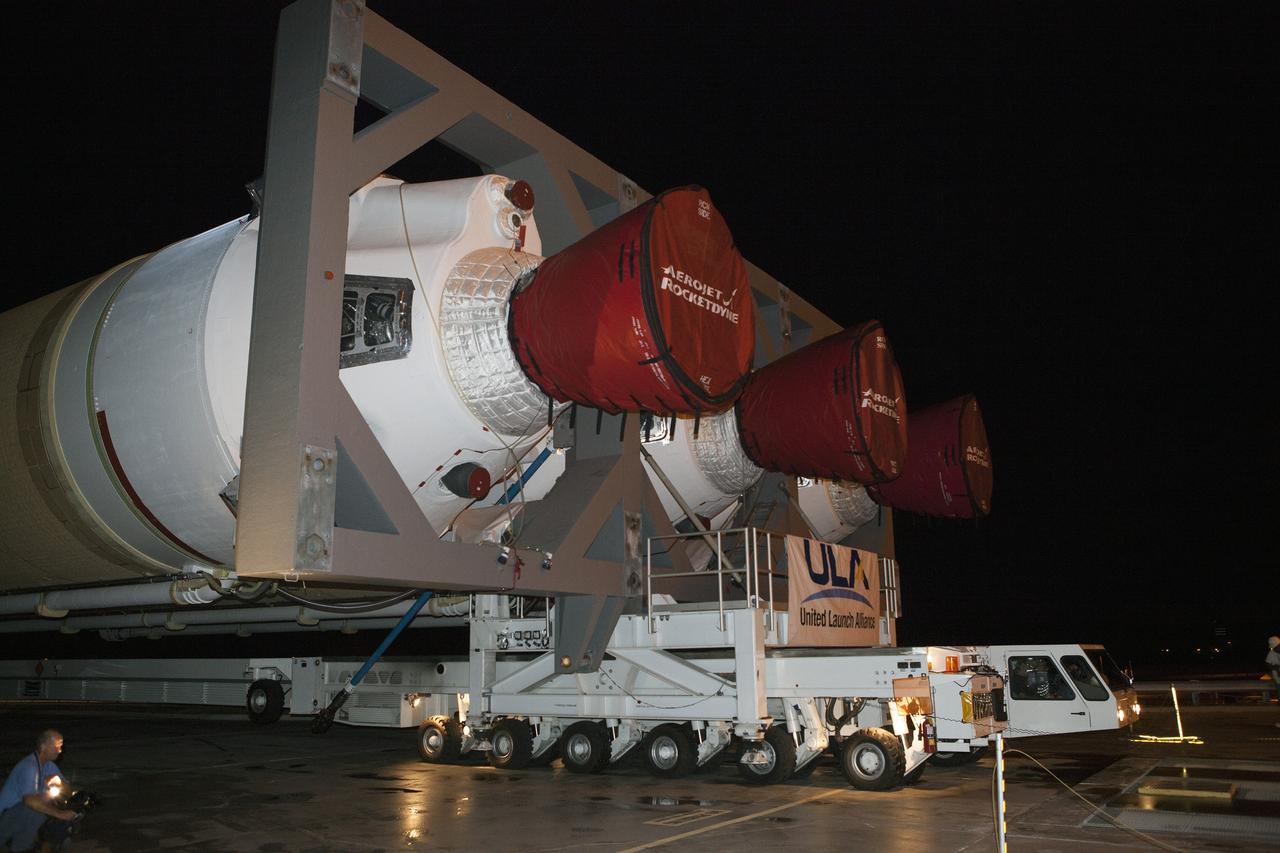
CAPE CANAVERAL, Fla. – A United Launch Alliance technicians drives the transporter that carries the Delta IV Heavy rocket to the pad at Space Launch Complex 37 at Cape Canaveral Air Force Station in Florida. The rocket is secured on the Elevated Platform Transporter. The Delta IV Heavy will launch Orion on Exploration Flight Test-1. During its first flight test, Orion will travel farther into space than any human spacecraft has gone in more than 40 years. The data gathered during the flight will influence design decisions, validate existing computer models and innovative new approaches to space systems development, as well as reduce overall mission risks and costs for later Orion flights. Liftoff of Orion on the first flight test is planned for December 2014. Photo credit: NASA/Dimitri Gerondidakis
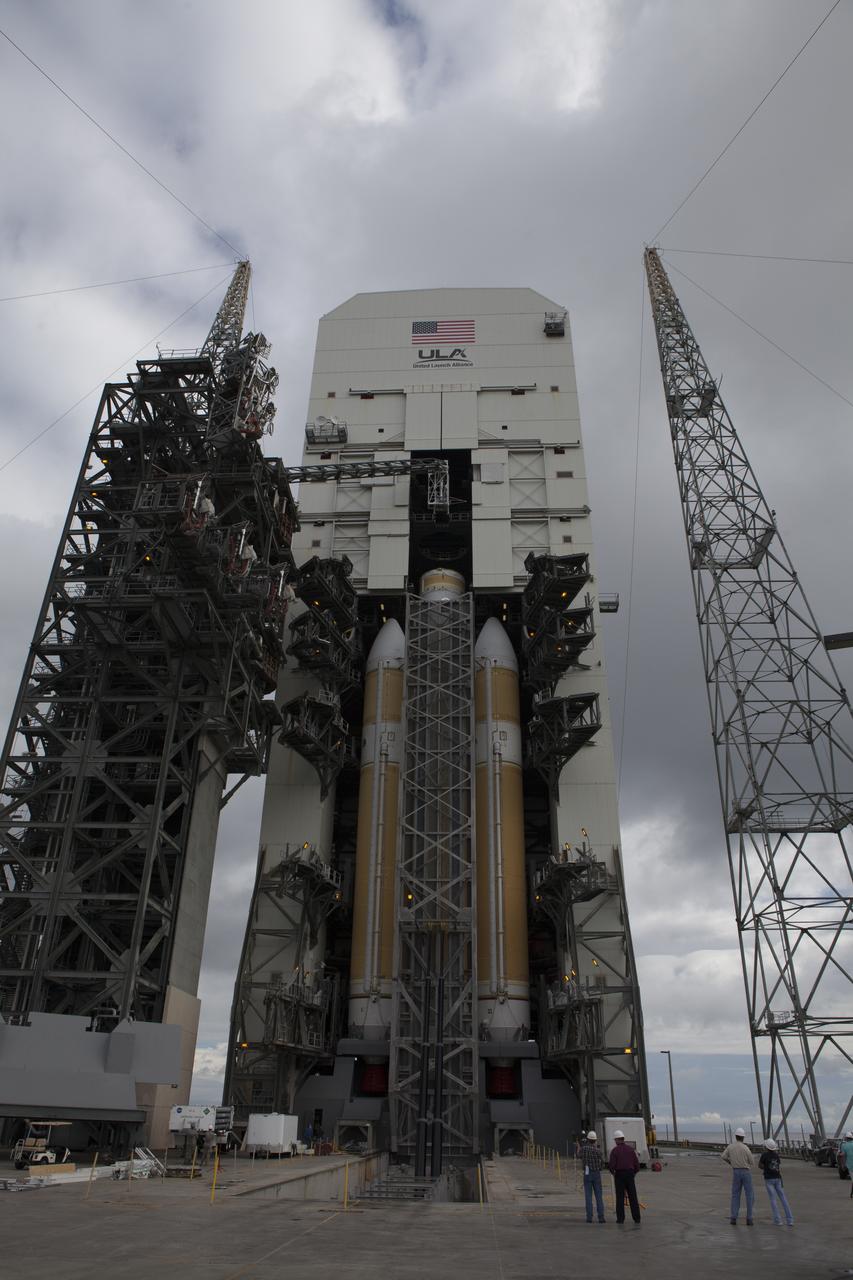
The United Launch Alliance Delta IV Heavy rocket for Exploration Flight Test-1 is lifted to the vertical position in the mobile service tower on the pad at Space Launch Complex 37 at Cape Canaveral Air Force Station in Florida. The Delta IV Heavy is being readied to launch Orion on its first flight test. During its first flight test, Orion will travel farther into space than any human spacecraft has gone in more than 40 years. The data gathered during the flight will influence design decisions, validate existing computer models and innovative new approaches to space systems development, as well as reduce overall mission risks and costs for later Orion flights. Liftoff of Orion on the first flight test is planned for December 2014.
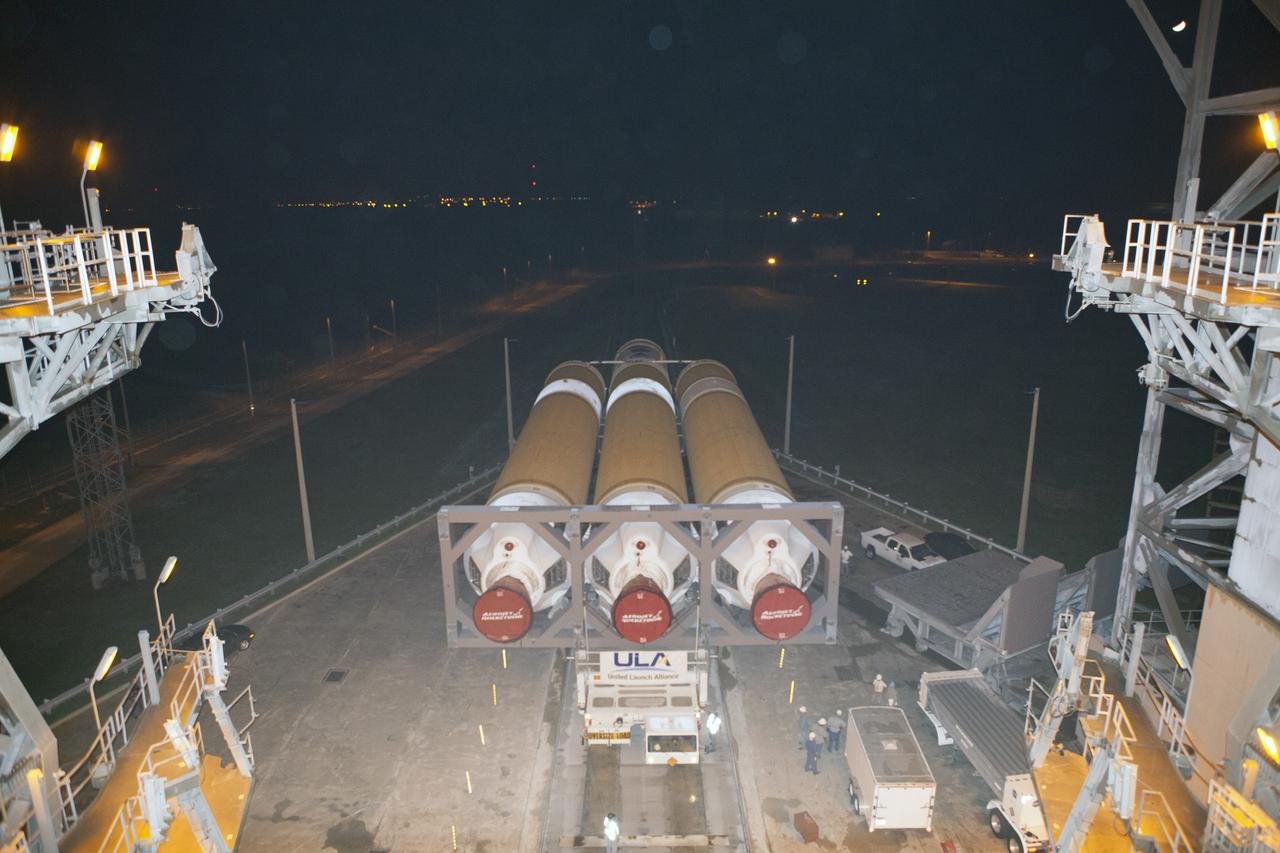
CAPE CANAVERAL, Fla. – The United Launch Alliance Delta IV Heavy rocket for Exploration Flight Test-1 arrives at the pad at Space Launch Complex 37 at Cape Canaveral Air Force Station in Florida. The rocket is secured on the Elevated Platform Transporter. The Delta IV Heavy will launch Orion on its first flight test. During its first flight test, Orion will travel farther into space than any human spacecraft has gone in more than 40 years. The data gathered during the flight will influence design decisions, validate existing computer models and innovative new approaches to space systems development, as well as reduce overall mission risks and costs for later Orion flights. Liftoff of Orion on the first flight test is planned for December 2014. Photo credit: NASA/Dimitri Gerondidakis
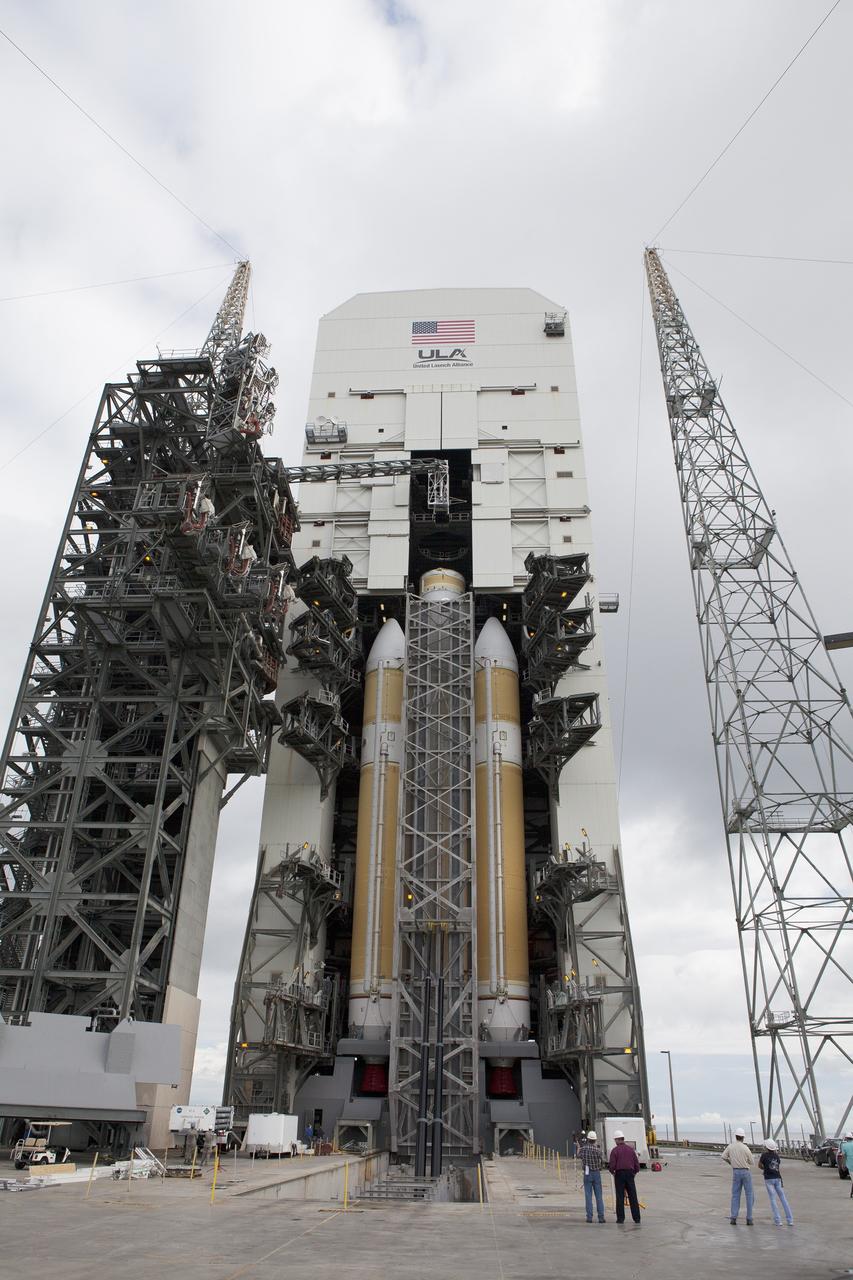
CAPE CANAVERAL, Fla. – The United Launch Alliance Delta IV Heavy rocket for Exploration Flight Test-1 is lifted to the vertical position in the mobile service tower on the pad at Space Launch Complex 37 at Cape Canaveral Air Force Station in Florida. The Delta IV Heavy is being readied to launch Orion on its first flight test. During its first flight test, Orion will travel farther into space than any human spacecraft has gone in more than 40 years. The data gathered during the flight will influence design decisions, validate existing computer models and innovative new approaches to space systems development, as well as reduce overall mission risks and costs for later Orion flights. Liftoff of Orion on the first flight test is planned for December 2014. Photo credit: NASA/Daniel Casper
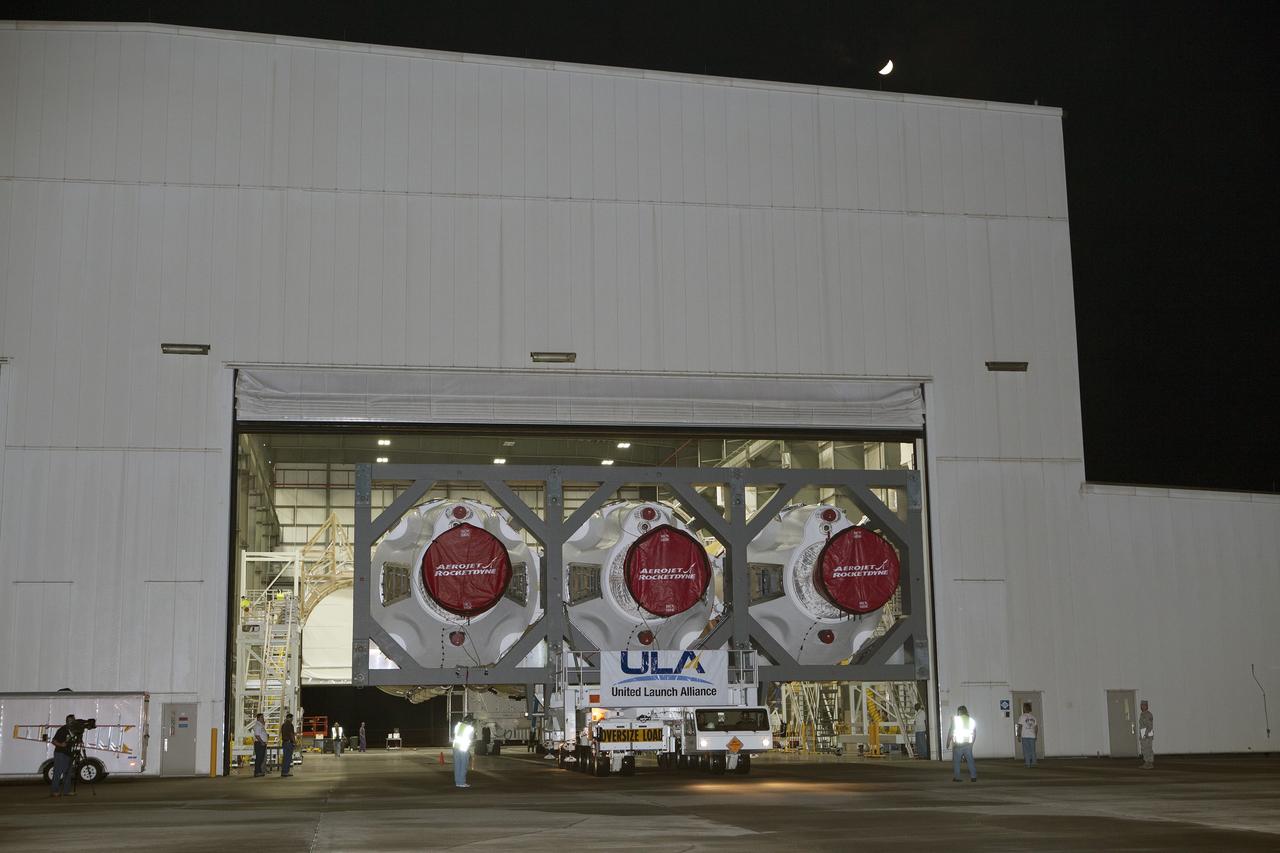
CAPE CANAVERAL, Fla. – The United Launch Alliance Delta IV Heavy rocket begins to rollout from the Horizontal Integration Facility at Space Launch Complex 37 at Cape Canaveral Air Force Station in Florida. The rocket is secured on the Elevated Platform Transporter for the trip to the pad. The Delta IV Heavy will launch Orion on Exploration Flight Test-1. During its first flight test, Orion will travel farther into space than any human spacecraft has gone in more than 40 years. The data gathered during the flight will influence design decisions, validate existing computer models and innovative new approaches to space systems development, as well as reduce overall mission risks and costs for later Orion flights. Liftoff of Orion on the first flight test is planned for December 2014. Photo credit: NASA/Dimitri Gerondidakis

United Launch Alliance, or ULA, workers monitor the progress as the ULA Delta IV Heavy rocket for Exploration Flight Test-1 is lifted to the vertical position in the mobile service tower on the pad at Space Launch Complex 37 at Cape Canaveral Air Force Station in Florida. The Delta IV Heavy is being readied to launch Orion on its first flight test. During its first flight test, Orion will travel farther into space than any human spacecraft has gone in more than 40 years. The data gathered during the flight will influence design decisions, validate existing computer models and innovative new approaches to space systems development, as well as reduce overall mission risks and costs for later Orion flights. Liftoff of Orion on the first flight test is planned for December 2014.
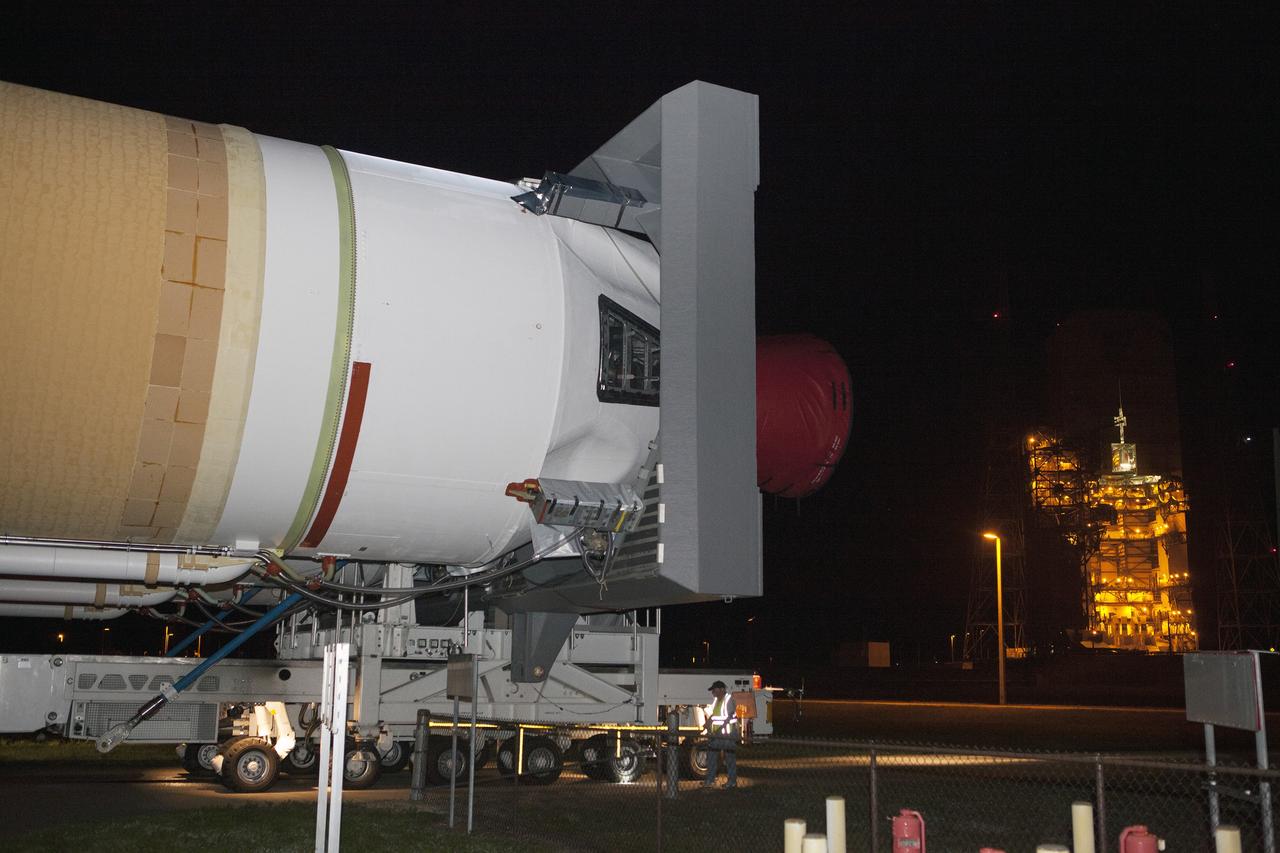
CAPE CANAVERAL, Fla. – The United Launch Alliance, or ULA, Delta IV Heavy rocket for Exploration Flight Test-1 continues its trek to the pad at Space Launch Complex 37 at Cape Canaveral Air Force Station in Florida. ULA technicians help guide the transporter to the pad. The rocket is secured on the Elevated Platform Transporter. The Delta IV Heavy will launch Orion on its first flight test. During its first flight test, Orion will travel farther into space than any human spacecraft has gone in more than 40 years. The data gathered during the flight will influence design decisions, validate existing computer models and innovative new approaches to space systems development, as well as reduce overall mission risks and costs for later Orion flights. Liftoff of Orion on the first flight test is planned for December 2014. Photo credit: NASA/Dimitri Gerondidakis
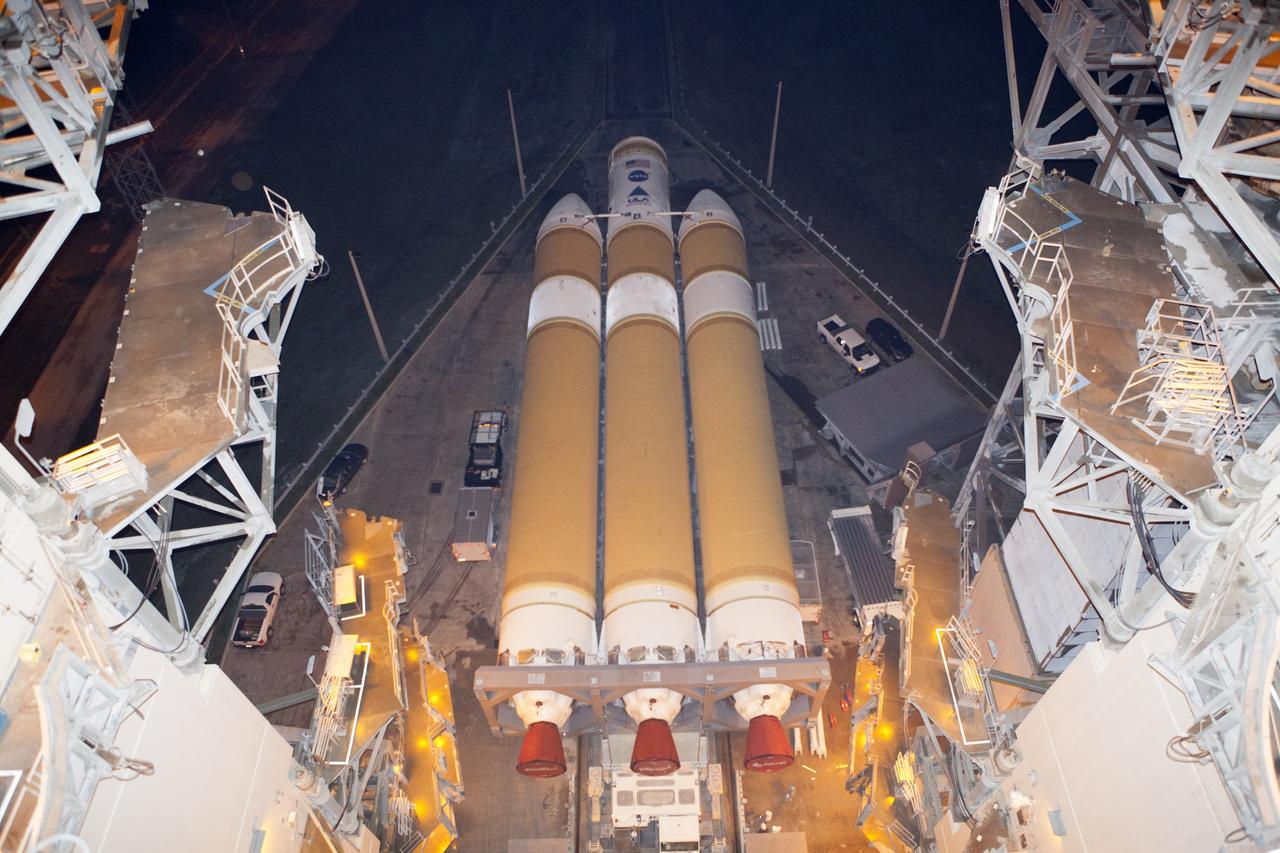
CAPE CANAVERAL, Fla. – The United Launch Alliance Delta IV Heavy rocket for Exploration Flight Test-1 arrives at the pad at Space Launch Complex 37 at Cape Canaveral Air Force Station in Florida. The rocket is secured on the Elevated Platform Transporter. The Delta IV Heavy will launch Orion on its first flight test. During its first flight test, Orion will travel farther into space than any human spacecraft has gone in more than 40 years. The data gathered during the flight will influence design decisions, validate existing computer models and innovative new approaches to space systems development, as well as reduce overall mission risks and costs for later Orion flights. Liftoff of Orion on the first flight test is planned for December 2014. Photo credit: NASA/Dimitri Gerondidakis
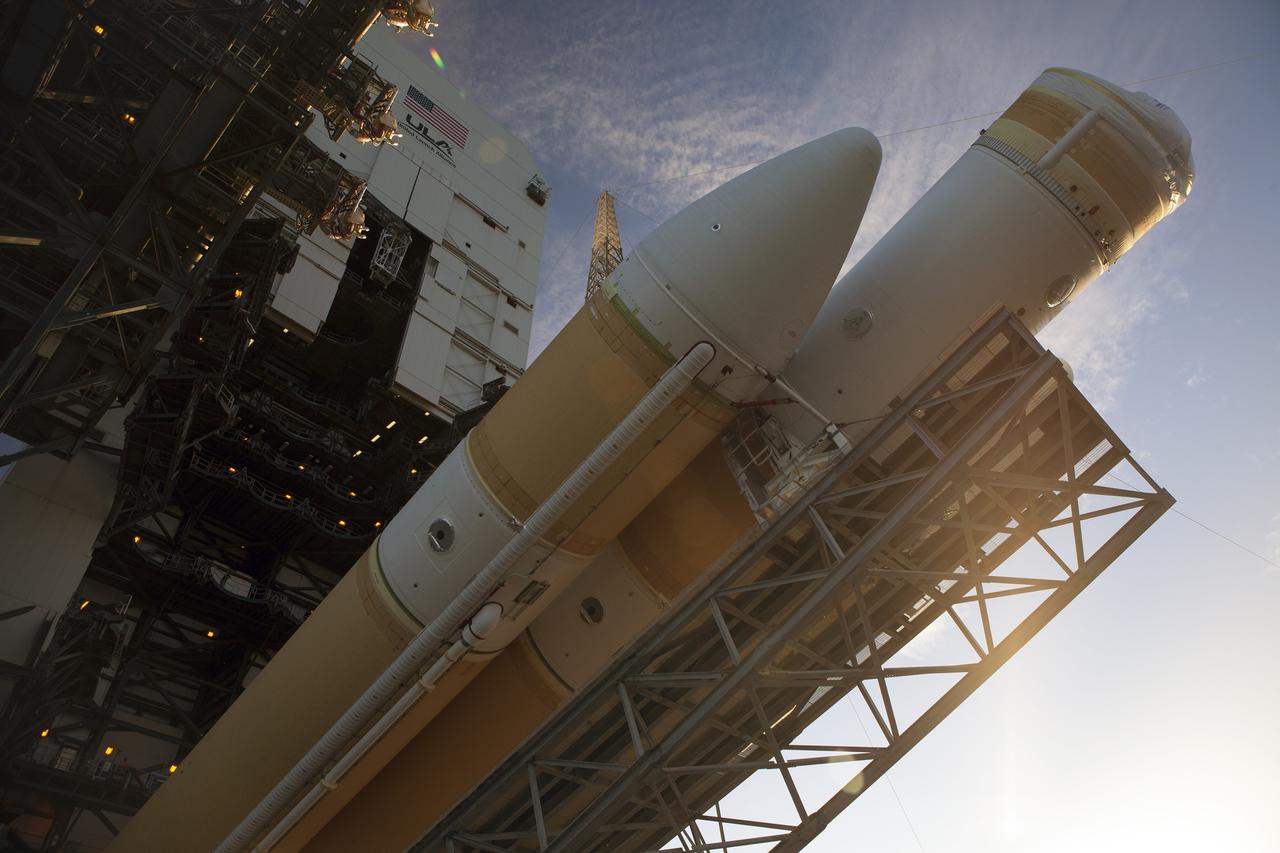
CAPE CANAVERAL, Fla. – This close-up view shows the United Launch Alliance Delta IV Heavy rocket for Exploration Flight Test-1 being raised into the vertical position at the pad at Space Launch Complex 37 at Cape Canaveral Air Force Station in Florida. The Delta IV Heavy is being readied to launch Orion on its first flight test. During its first flight test, Orion will travel farther into space than any human spacecraft has gone in more than 40 years. The data gathered during the flight will influence design decisions, validate existing computer models and innovative new approaches to space systems development, as well as reduce overall mission risks and costs for later Orion flights. Liftoff of Orion on the first flight test is planned for December 2014. Photo credit: NASA/Daniel Casper