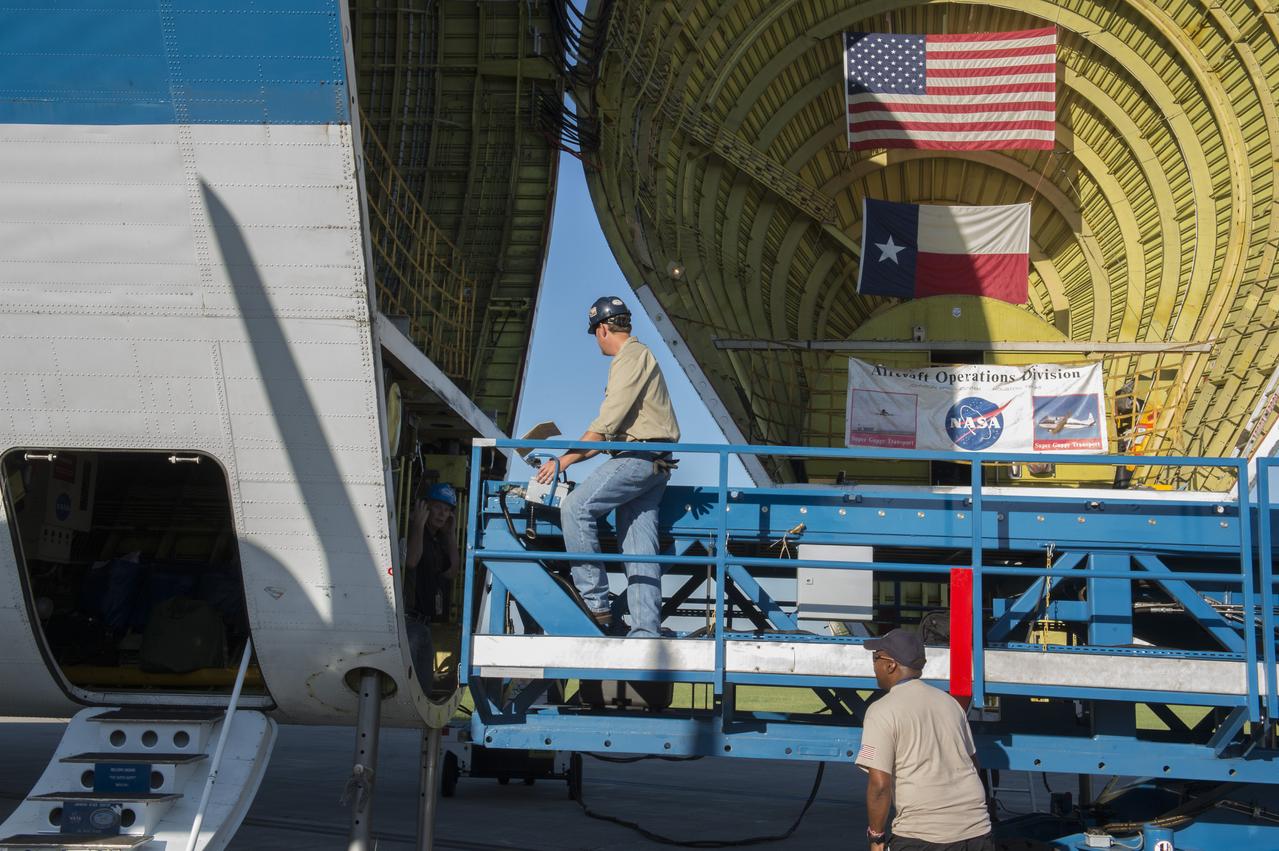
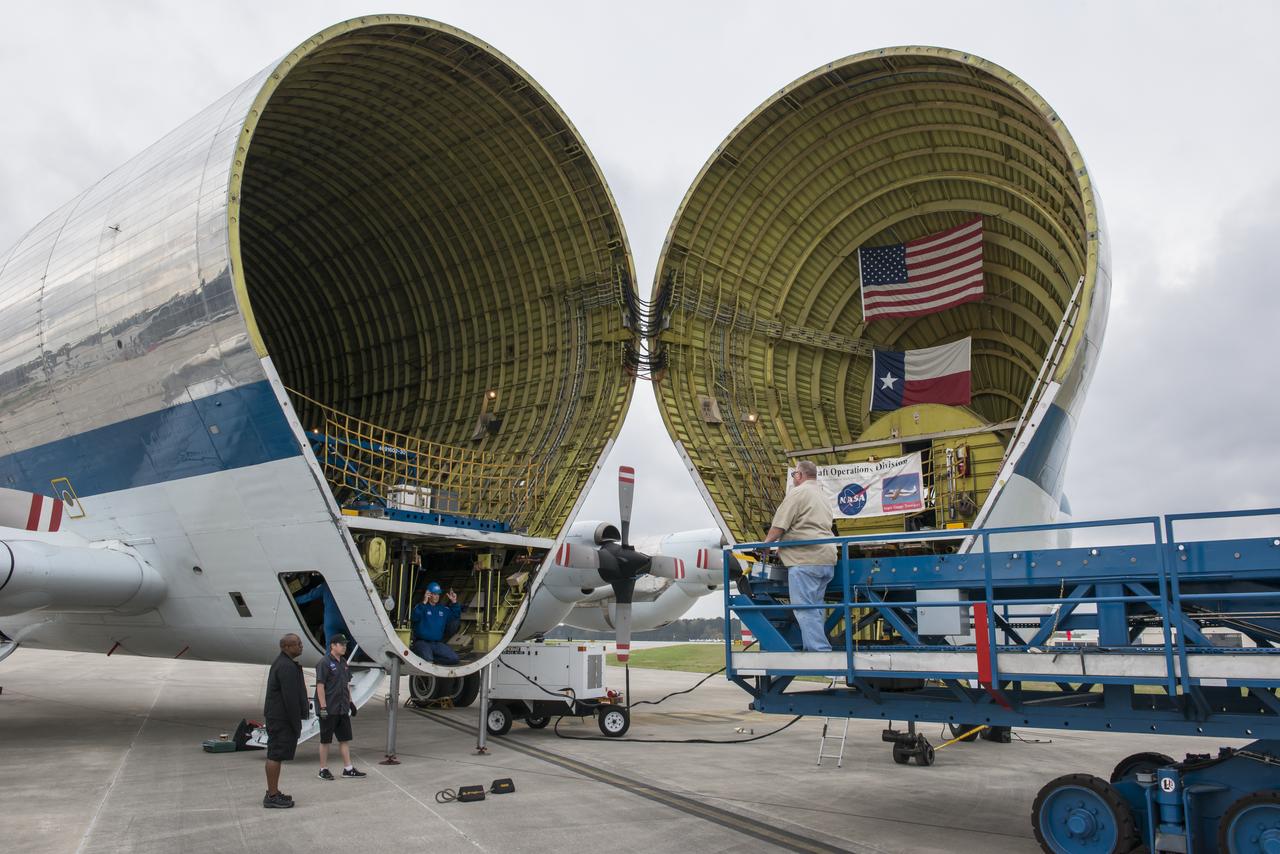
The platform which will be used to load the Orion stage adapter is being positioned in front of the cargo bay of NASA's Super Guppie aircraft. The adapter is being flown to Denver, Colorado for further testing.
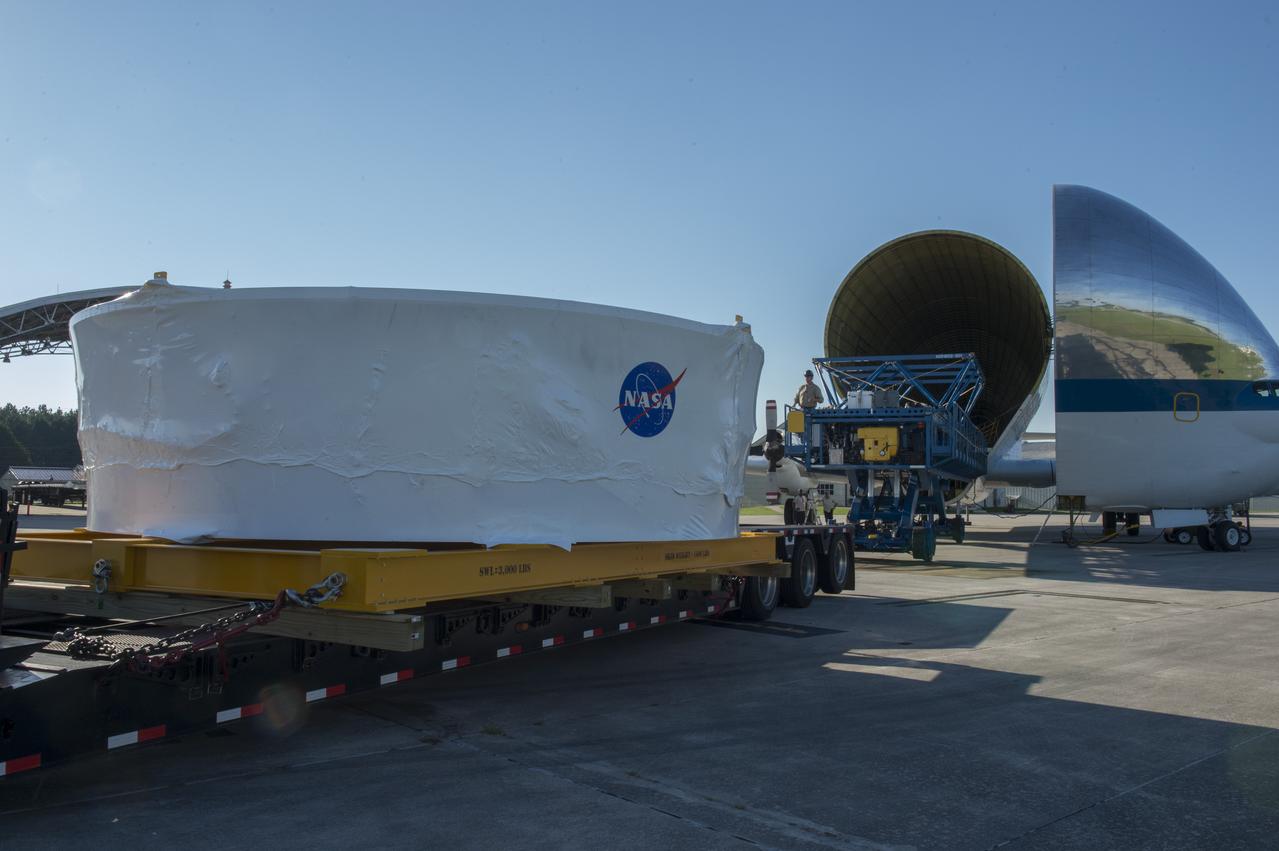
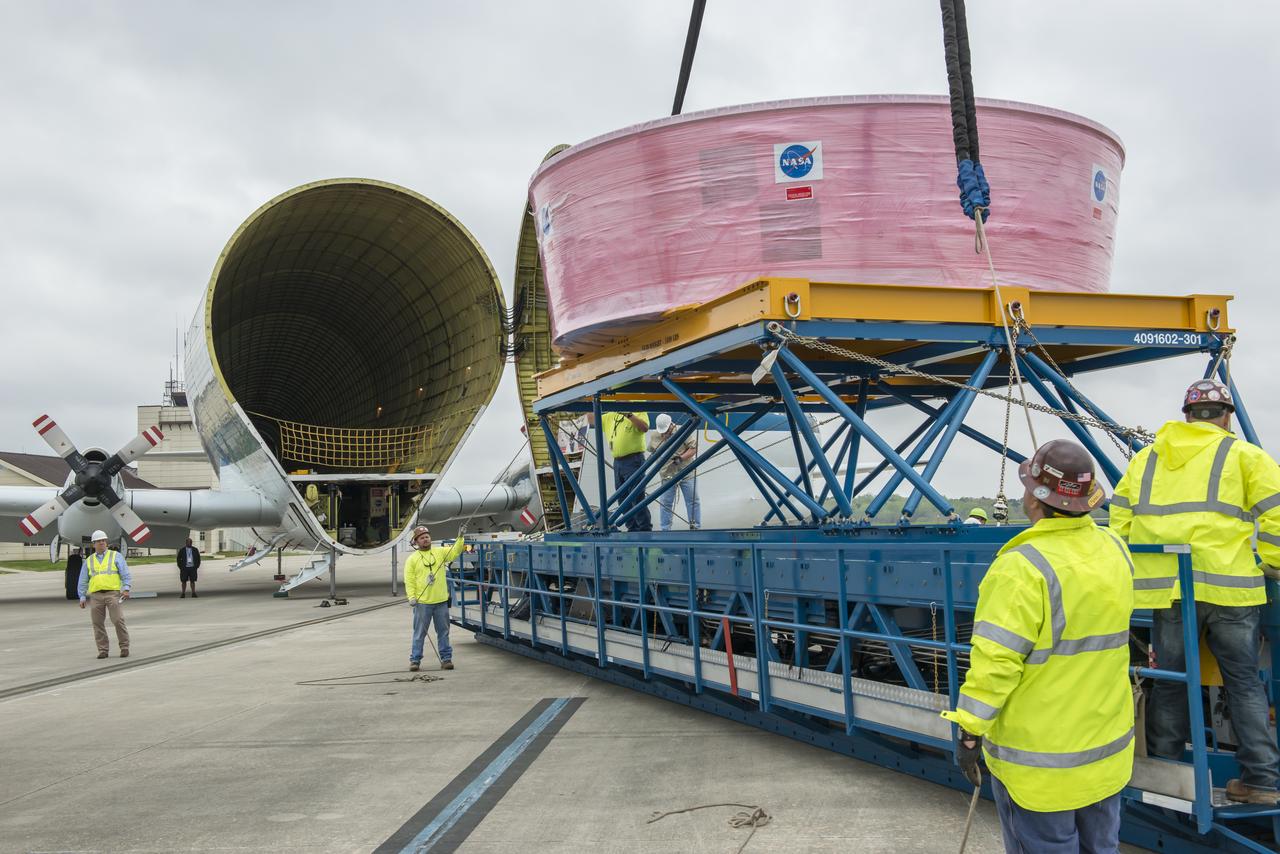
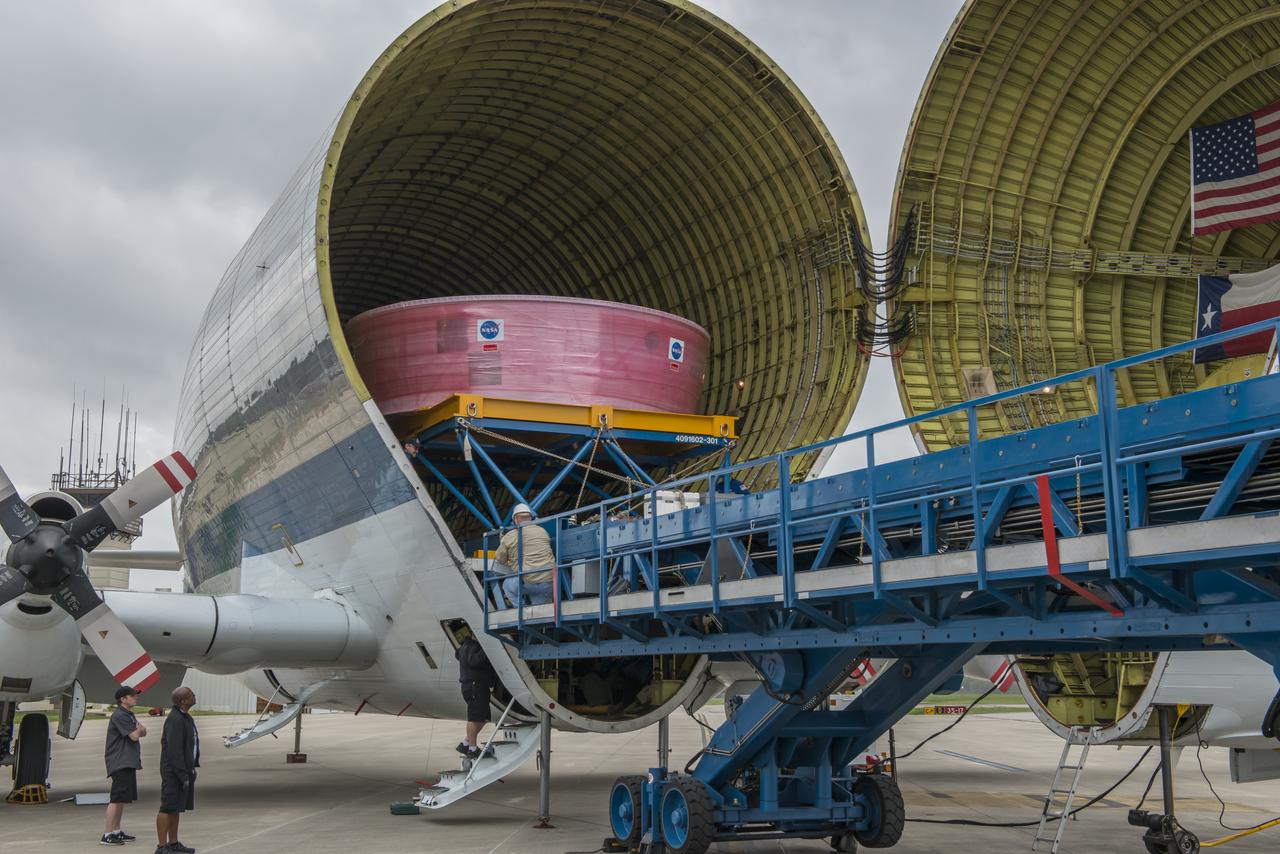
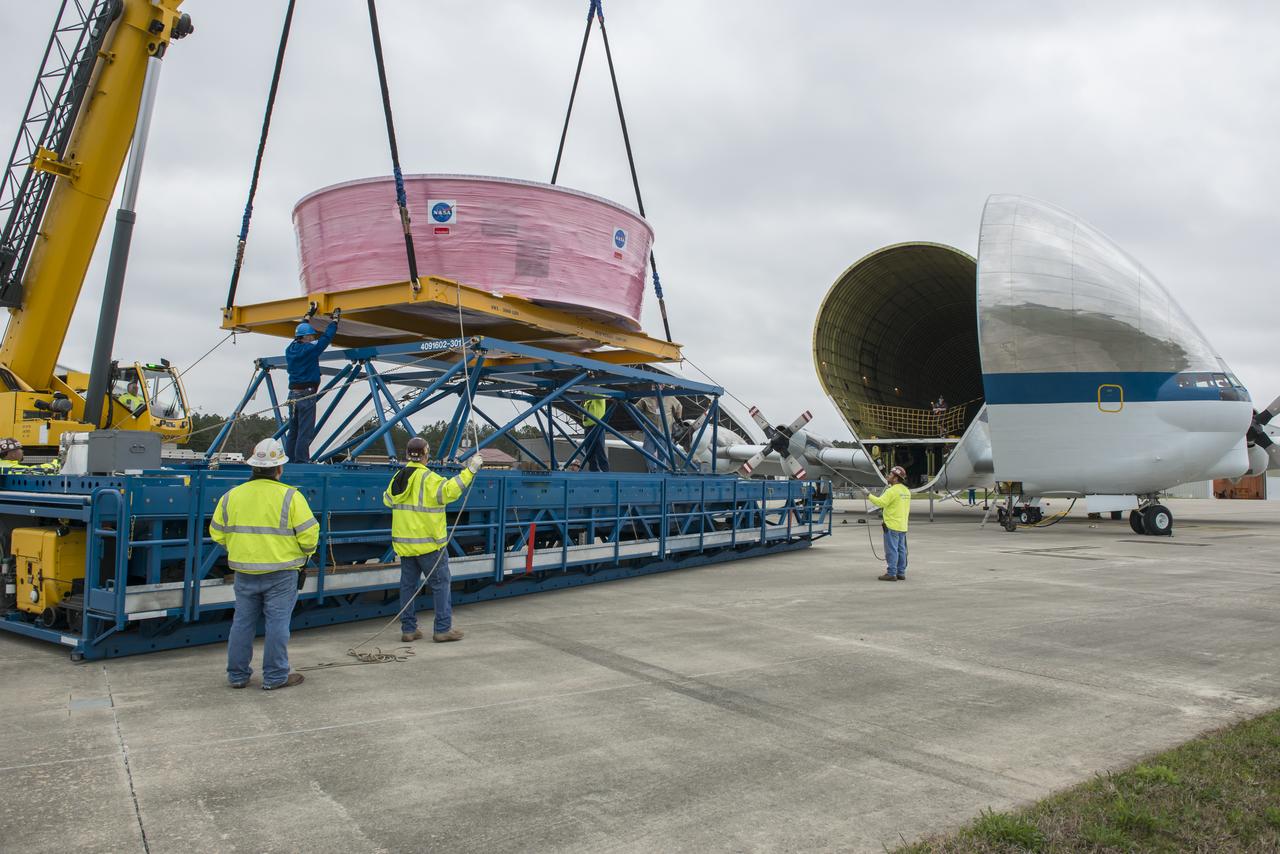
The Orion stage adapter is being positioned for lifting onto the loading platform before being loaded into NASA's Super Guppie aircraft. The adapter will be flown to Denver, Colorado for further testing.
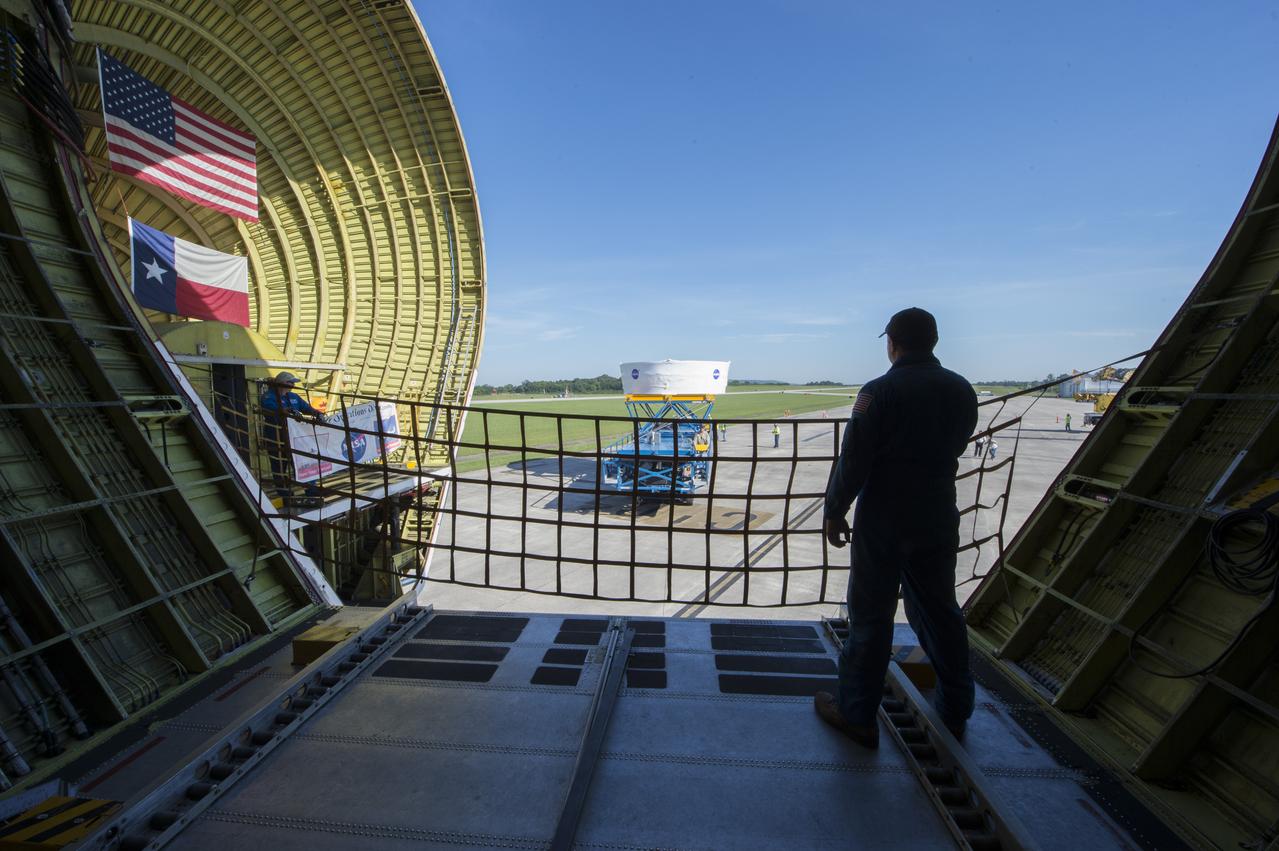
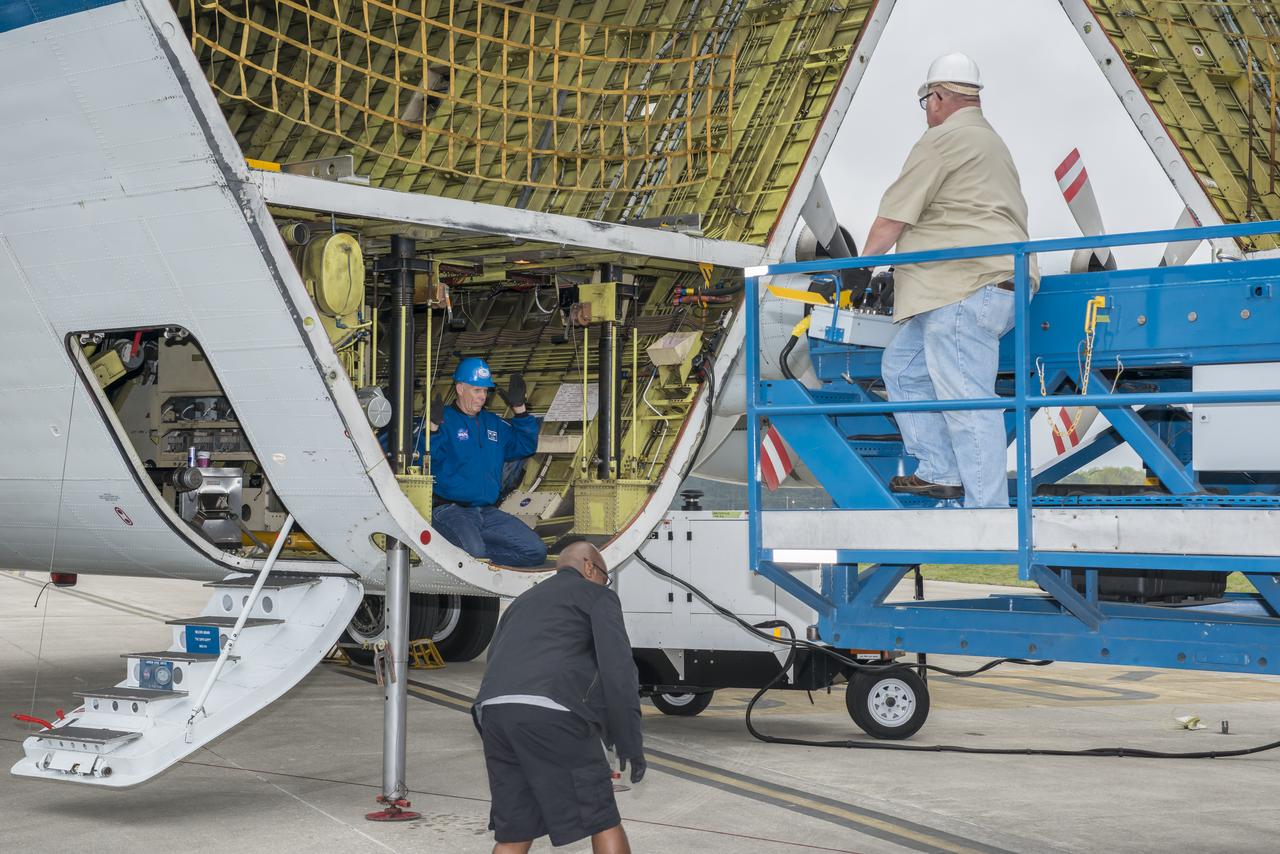
The Orion stage adapter is shown in the background from inside the cargo bay of NASA's Super Guppie. The stage adapter is being flown to Denver, Colorado where it will undergo further testing.
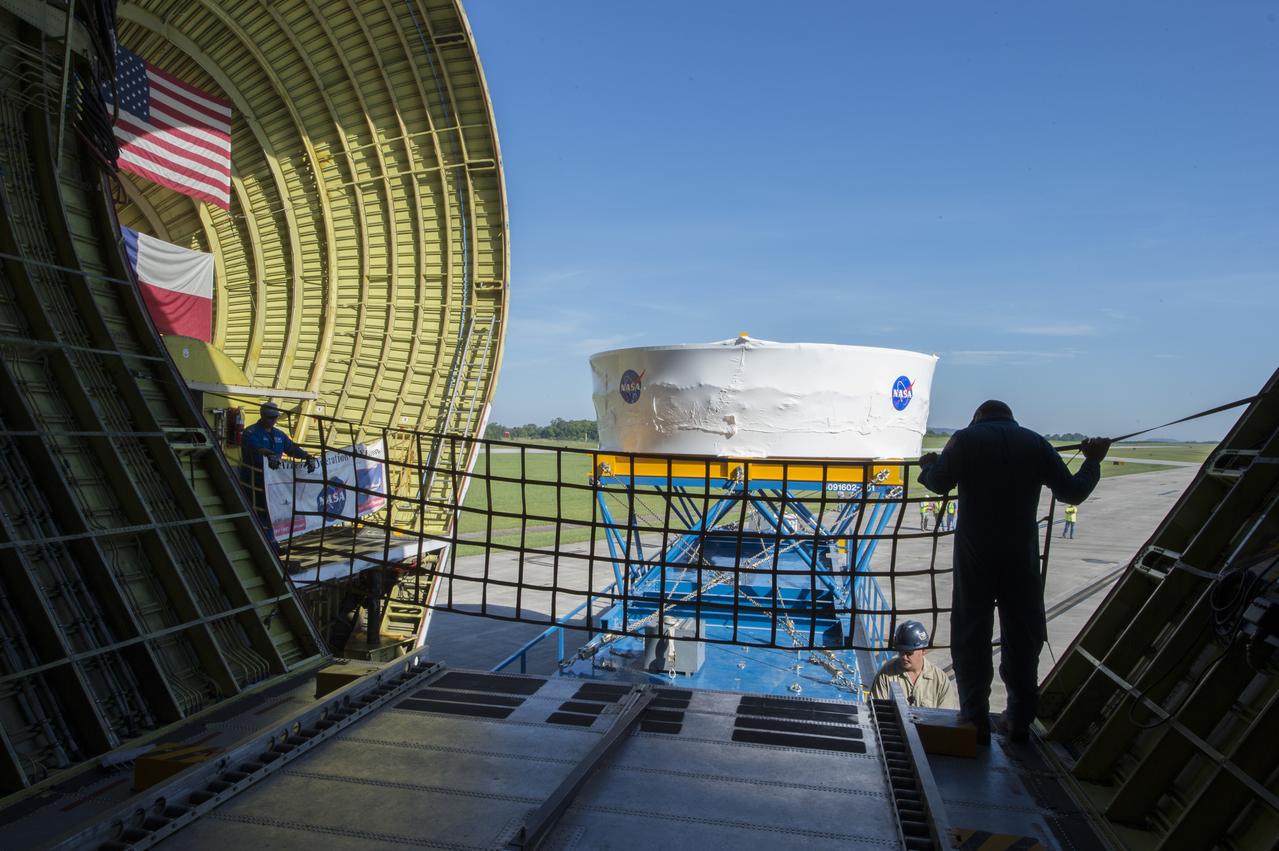
The Orion stage adapter is shown in the background from inside the cargo bay of NASA's Super Guppie. The stage adapter is being flown to Denver, Colorado where it will undergo further testing.
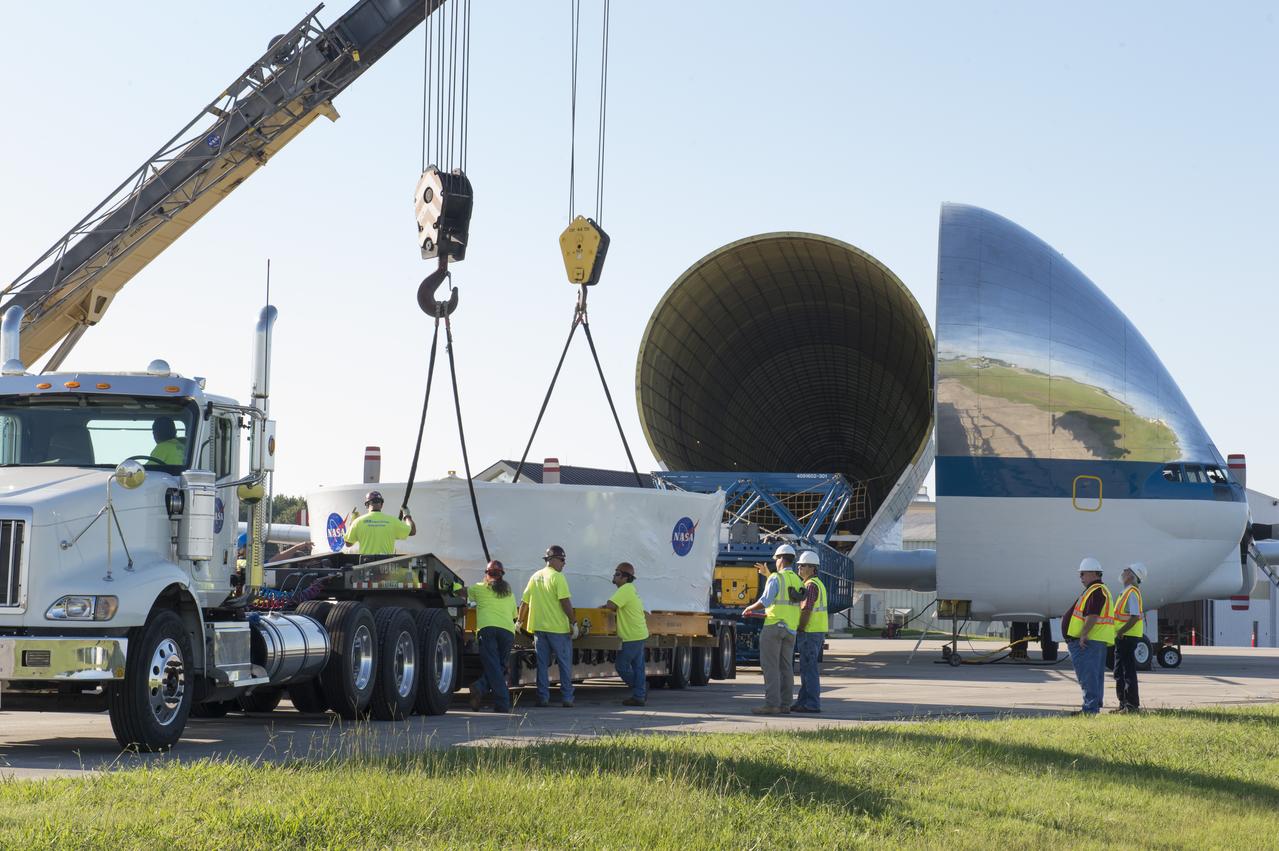
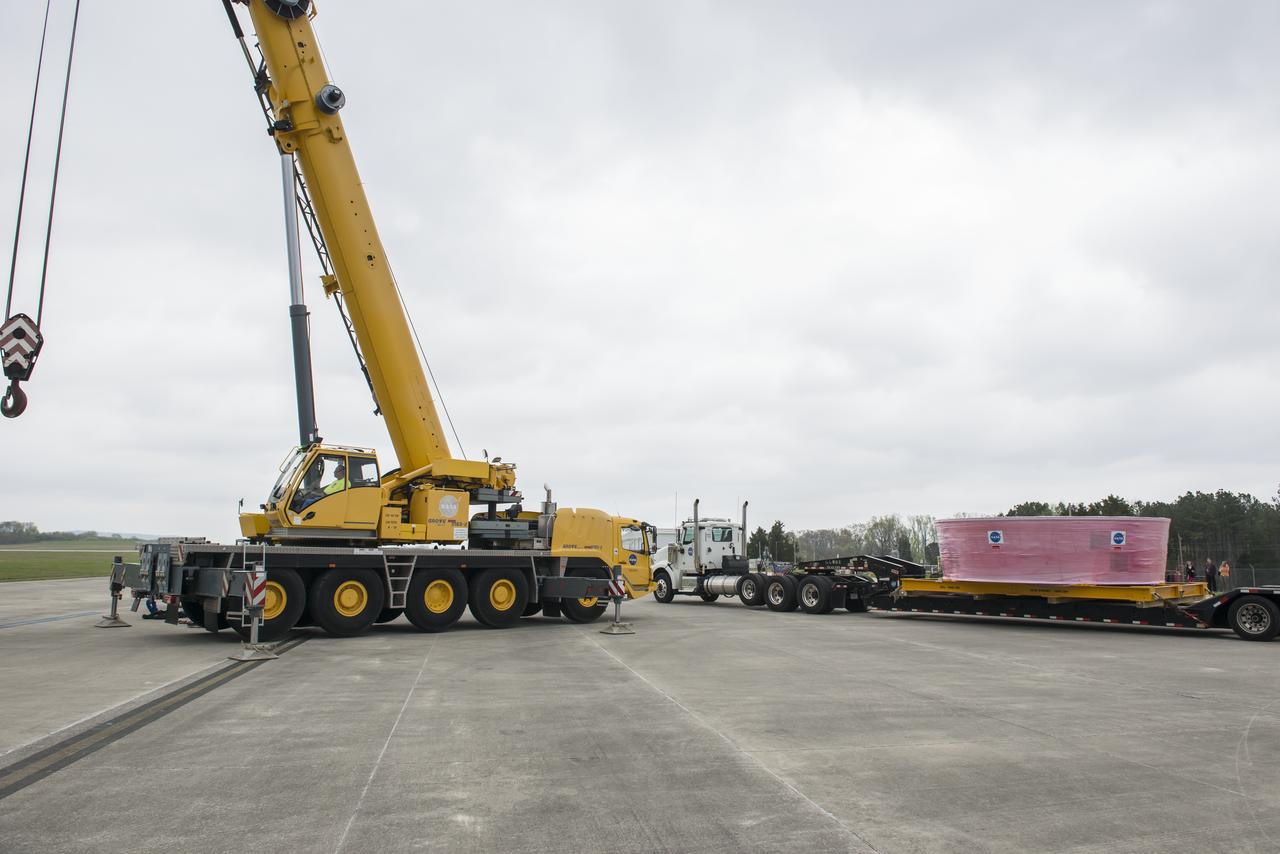
The Orion stage adapter is being positioned for lifting onto the loading platform before being loaded into NASA's Super Guppie aircraft. The adapter will be flown to Denver, Colorado for further testing.
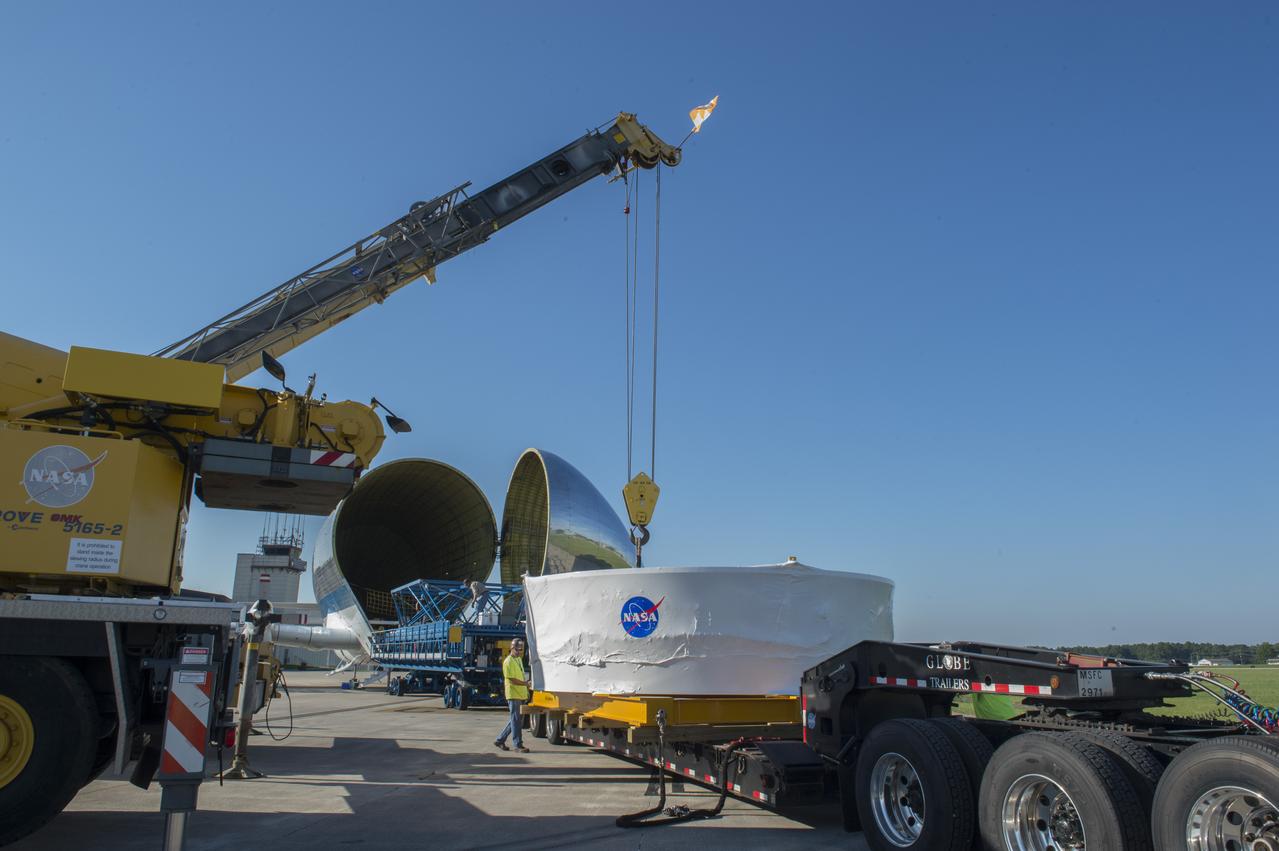
The Orion stage adapter is being positioned for lifting onto the loading platform before being loaded into NASA's Super Guppie aircraft. The adapter will be flown to Denver, Colorado for further testing.
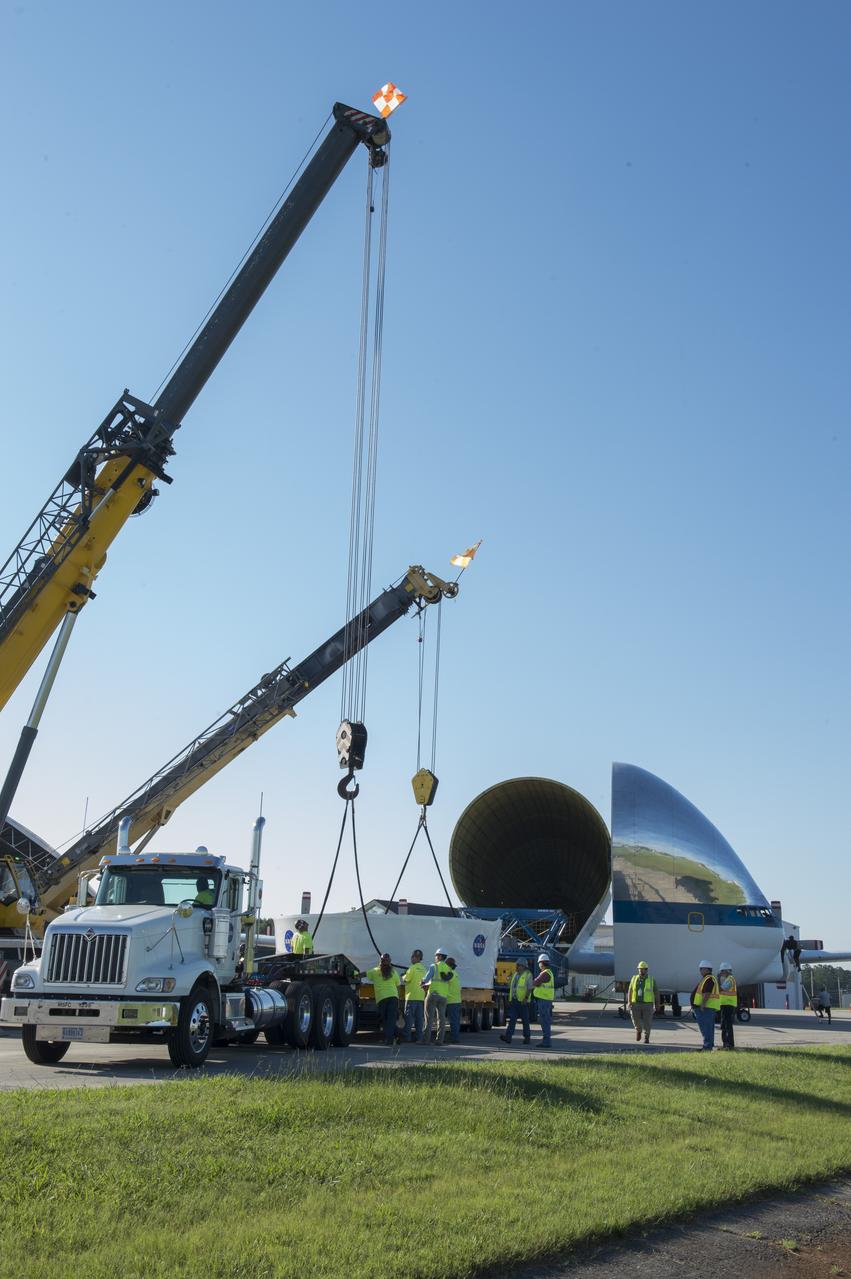
The Orion stage adapter is being positioned for lifting onto the loading platform before being loaded into NASA's Super Guppie aircraft. The adapter will be flown to Denver, Colorado for further testing.
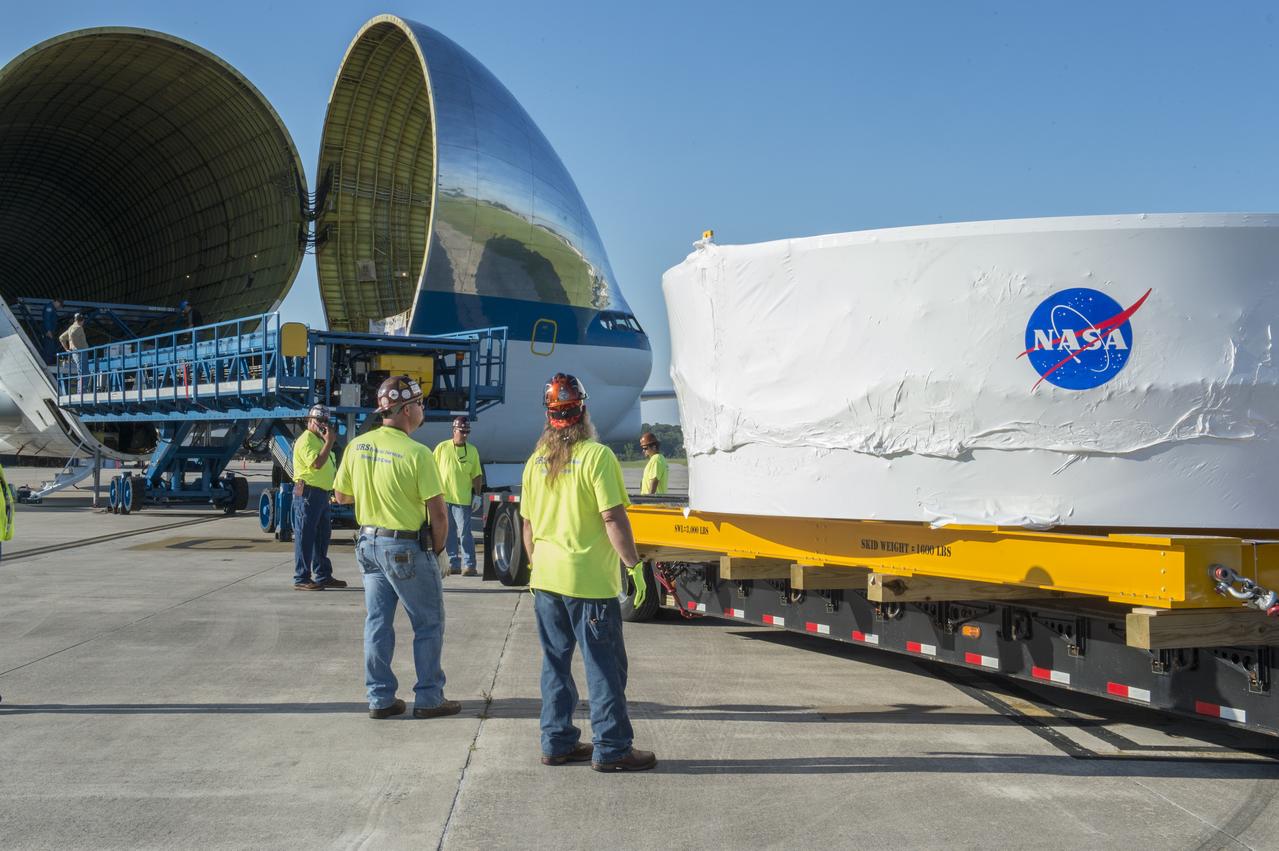
The Orion stage adapter is being positioned for lifting onto the loading platform before being loaded into NASA's Super Guppie aircraft. The adapter will be flown to Denver, Colorado for further testing.
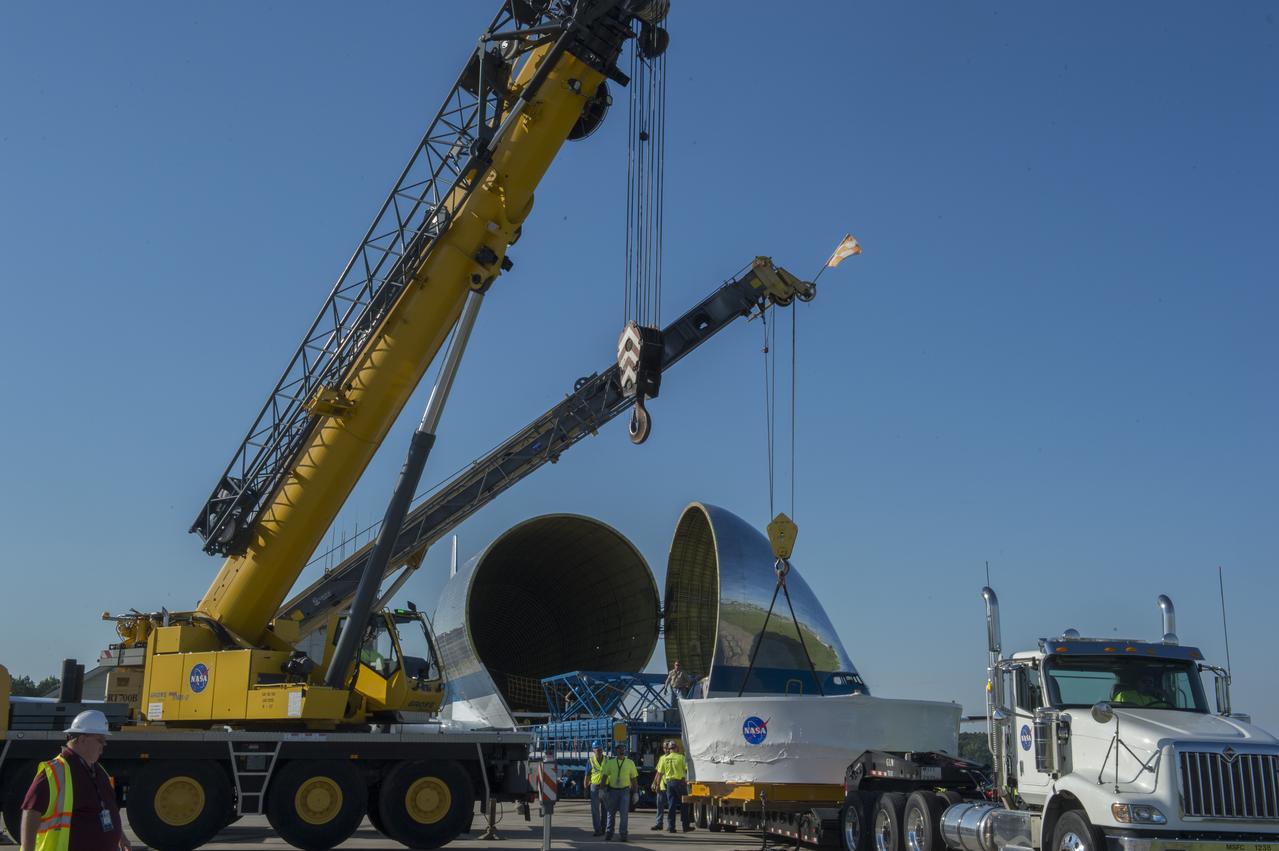
The Orion stage adapter is being positioned for lifting onto the loading platform before being loaded into NASA's Super Guppie aircraft. The adapter will be flown to Denver, Colorado for further testing.
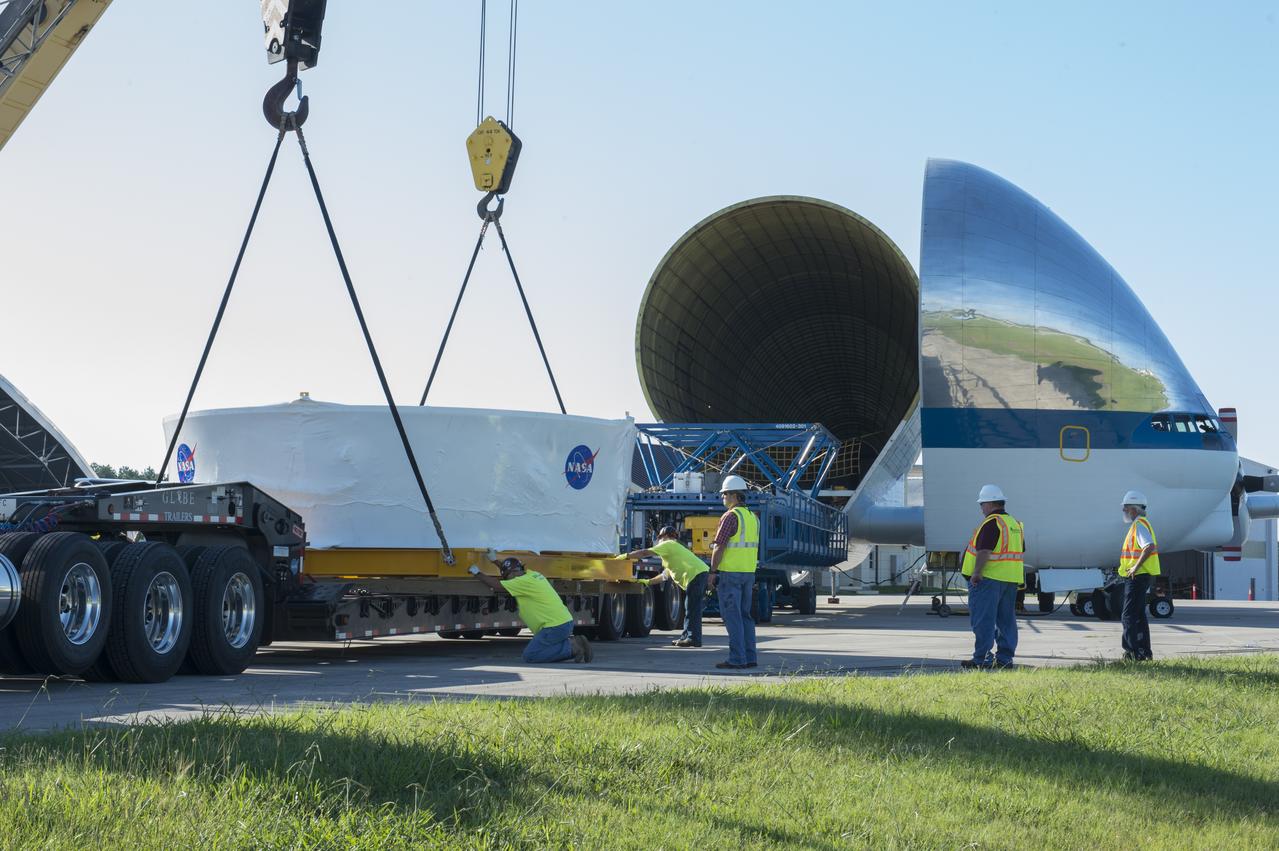
The Orion stage adapter is being positioned for lifting onto the loading platform before being loaded into NASA's Super Guppie aircraft. The adapter will be flown to Denver, Colorado for further testing.
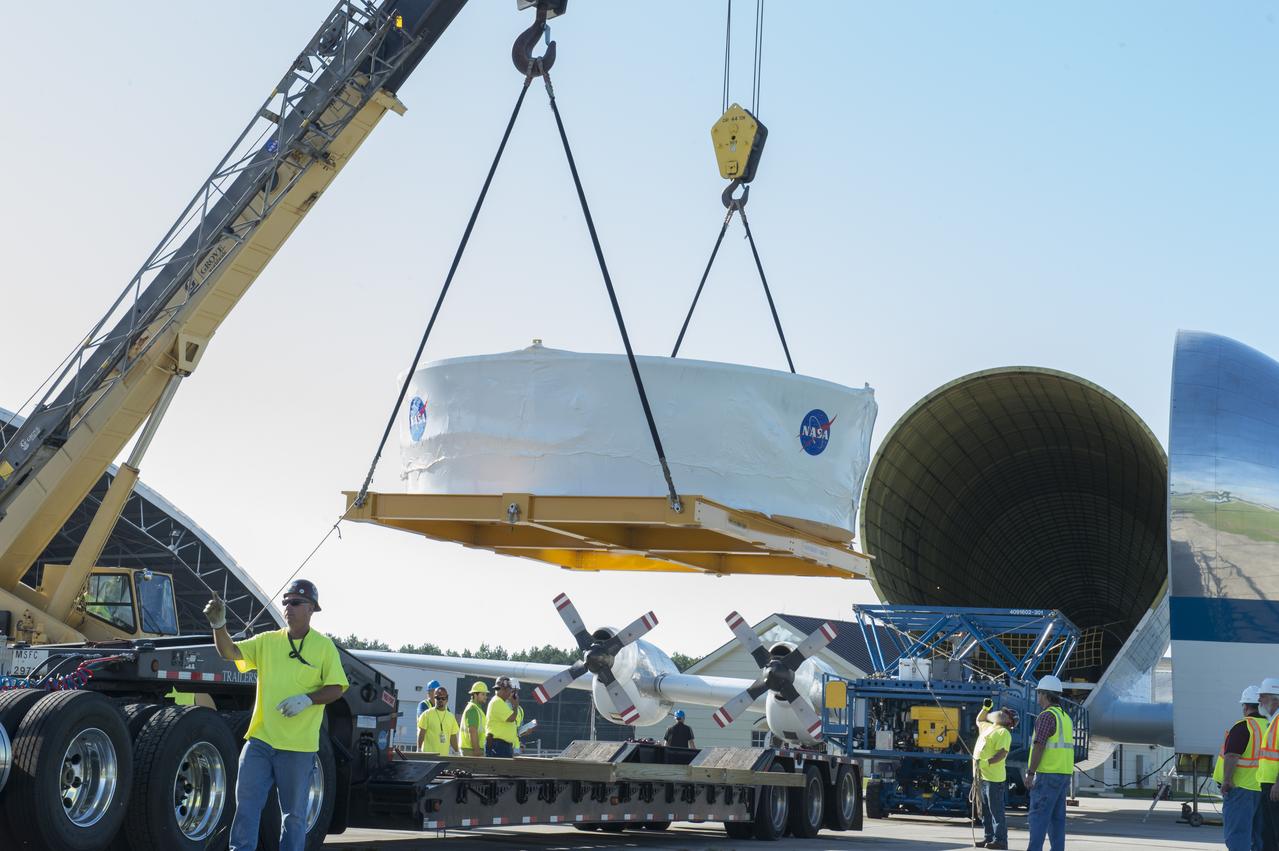
The Orion stage adapter is being lifted for placement onto the loading platform for NASA's Super Guppie aircraft before being flown to Denver, Colorado for further testing.
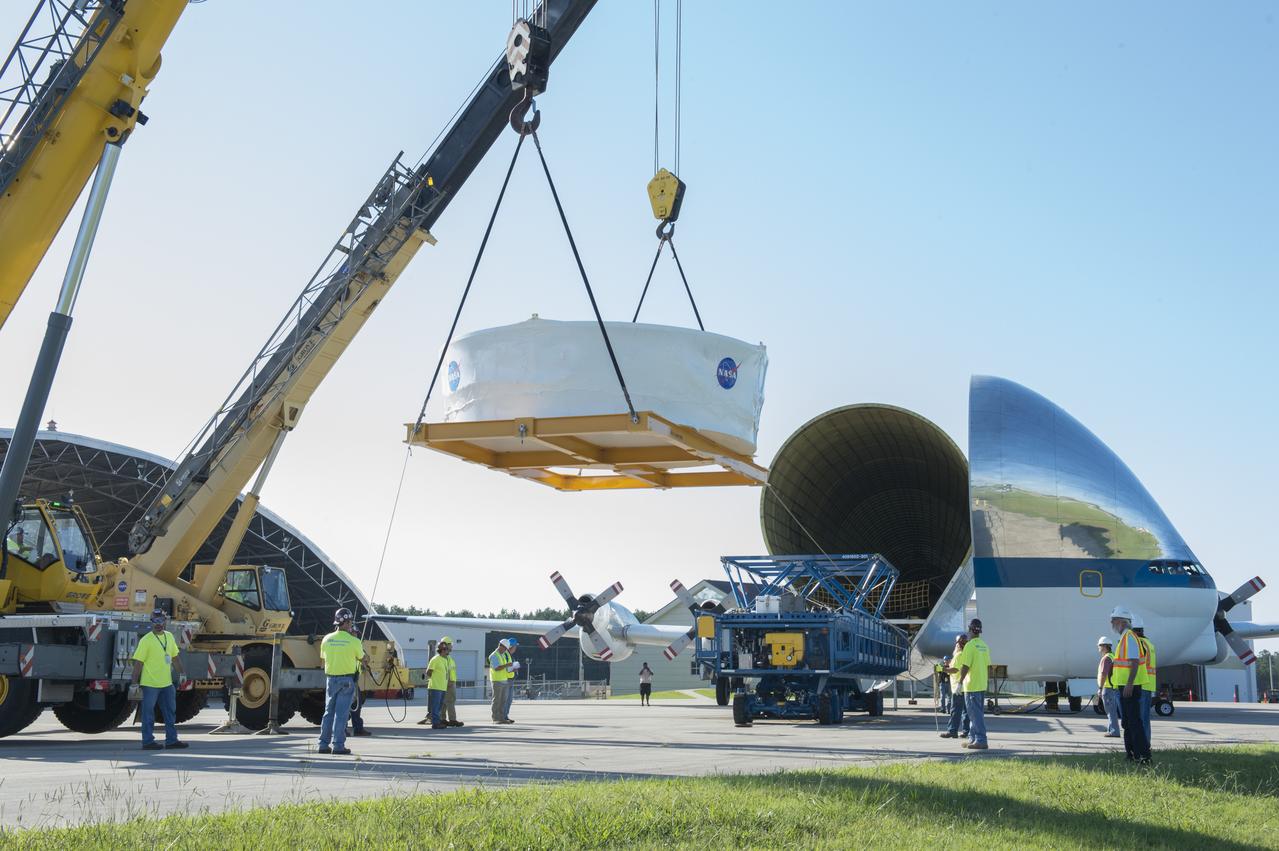
The Orion stage adapter is being lifted for placement onto the loading platform for NASA's Super Guppie aircraft before being flown to Denver, Colorado for further testing.
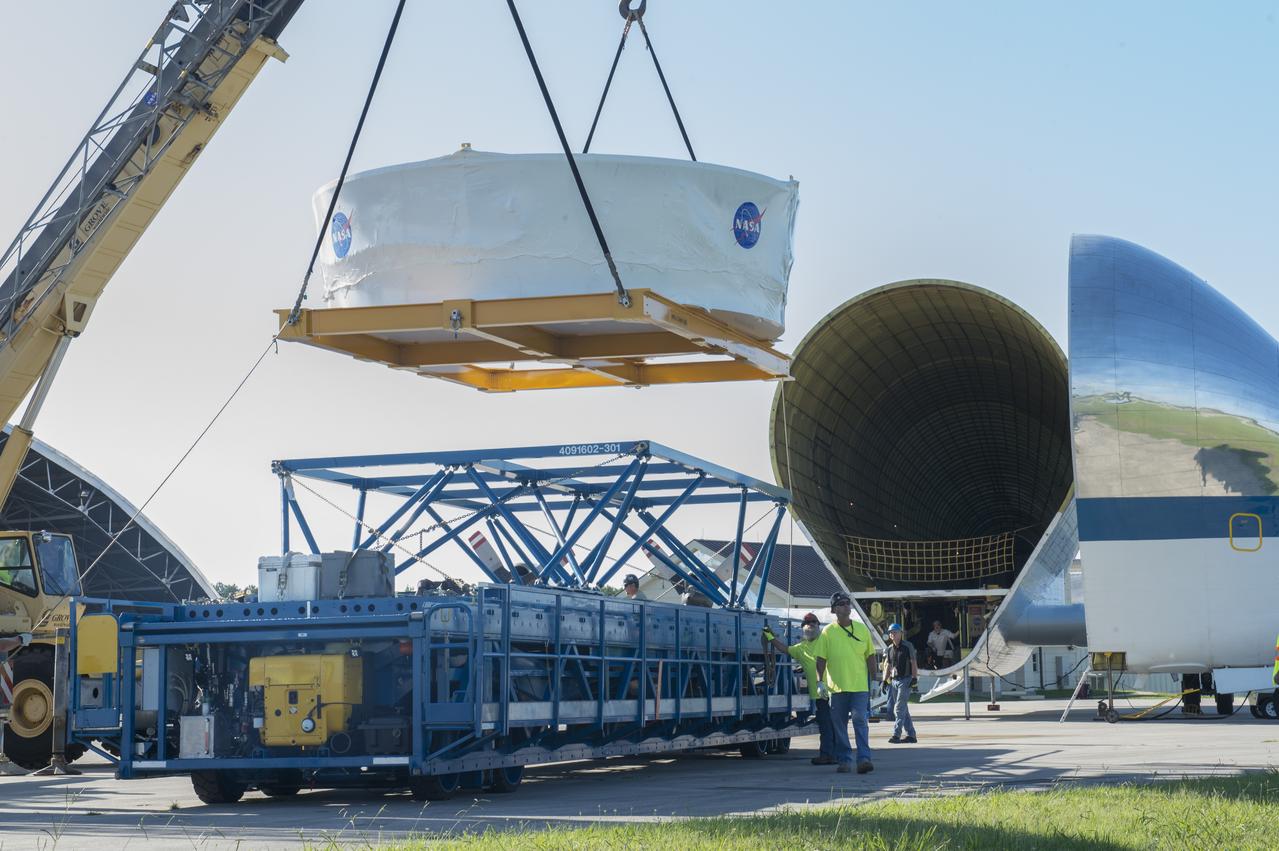
The Orion stage adapter is being lifted for placement onto the loading platform for NASA's Super Guppie aircraft before being flown to Denver, Colorado for further testing.
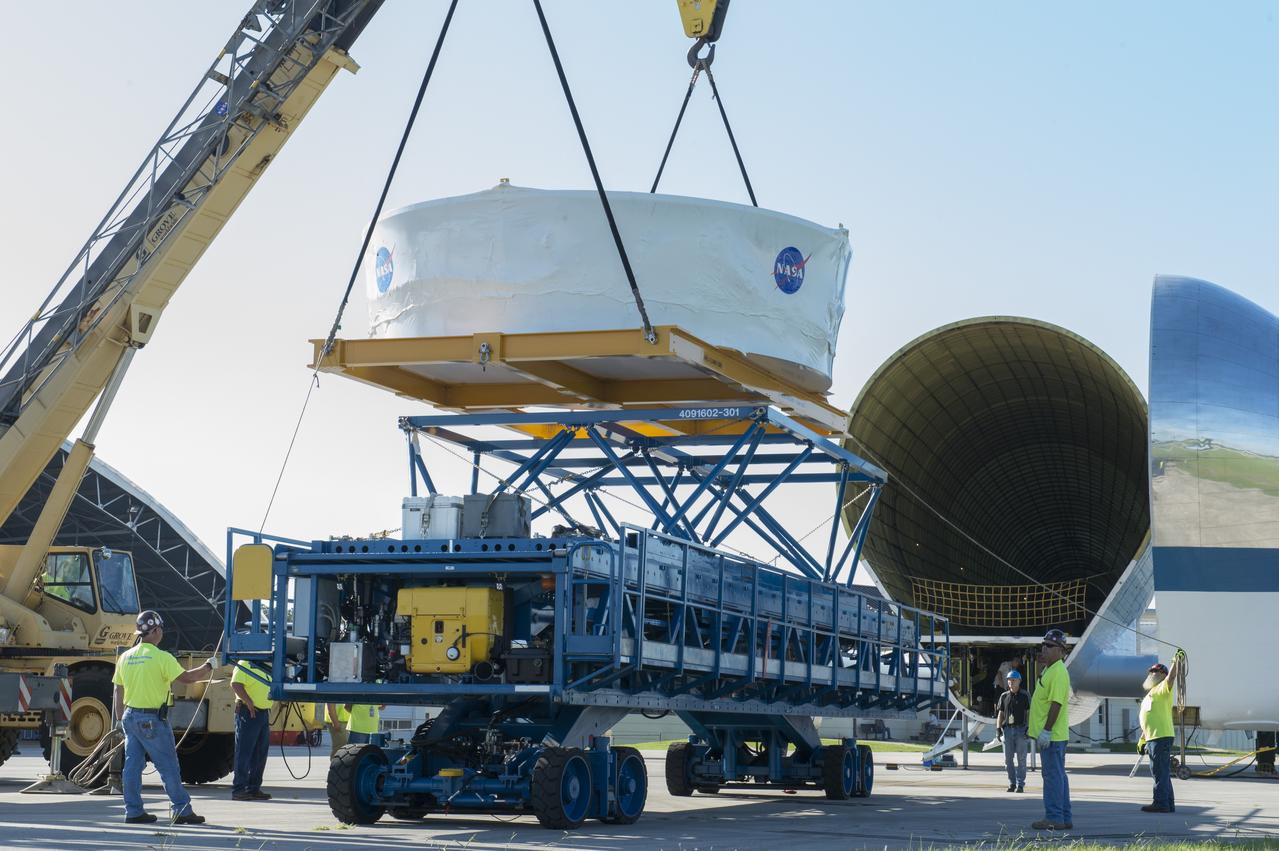
The Orion stage adapter is being lifted for placement onto the loading platform for NASA's Super Guppie aircraft before being flown to Denver, Colorado for further testing.
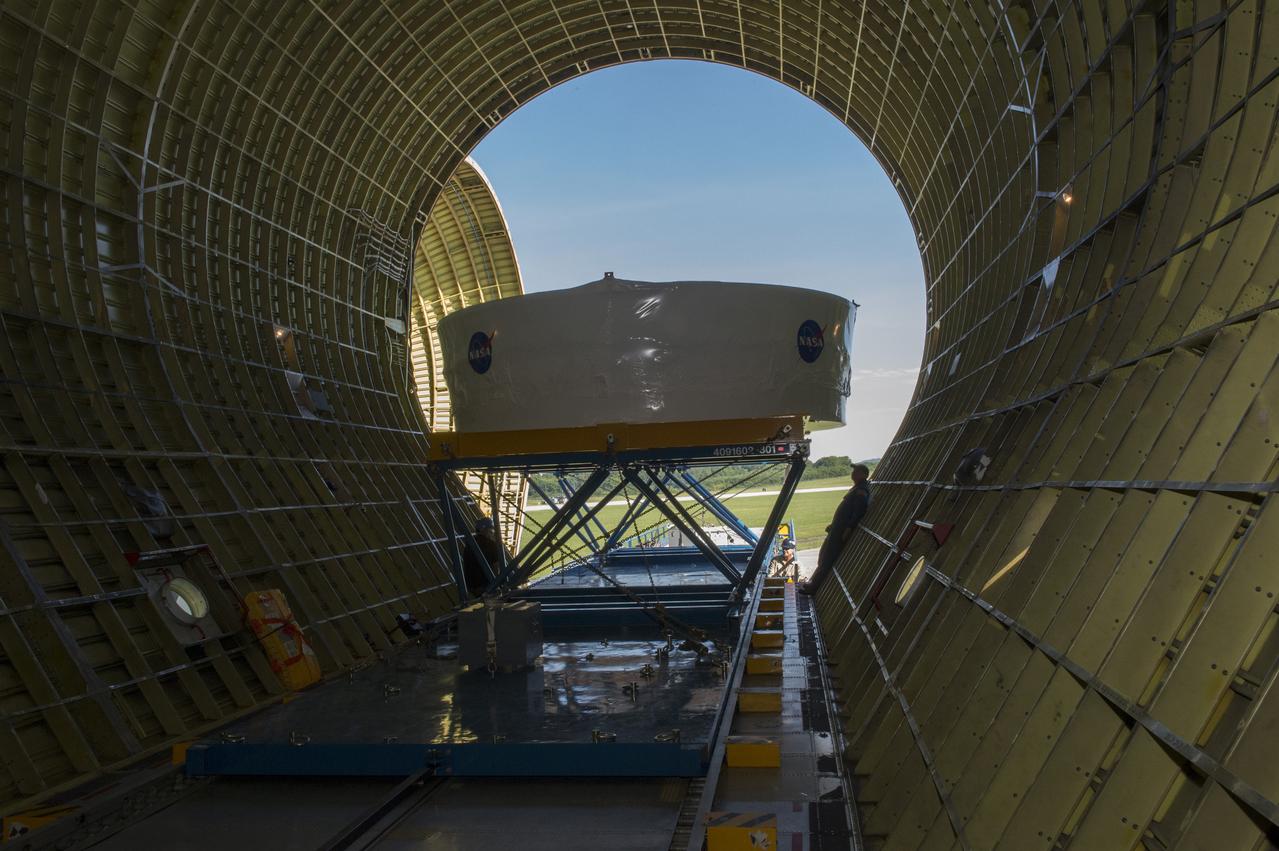
The Orion stage adapter is being placed inside the cargo bay of NASA's Super Guppie aircraft before being flown to Denver, Colorado for further testing.
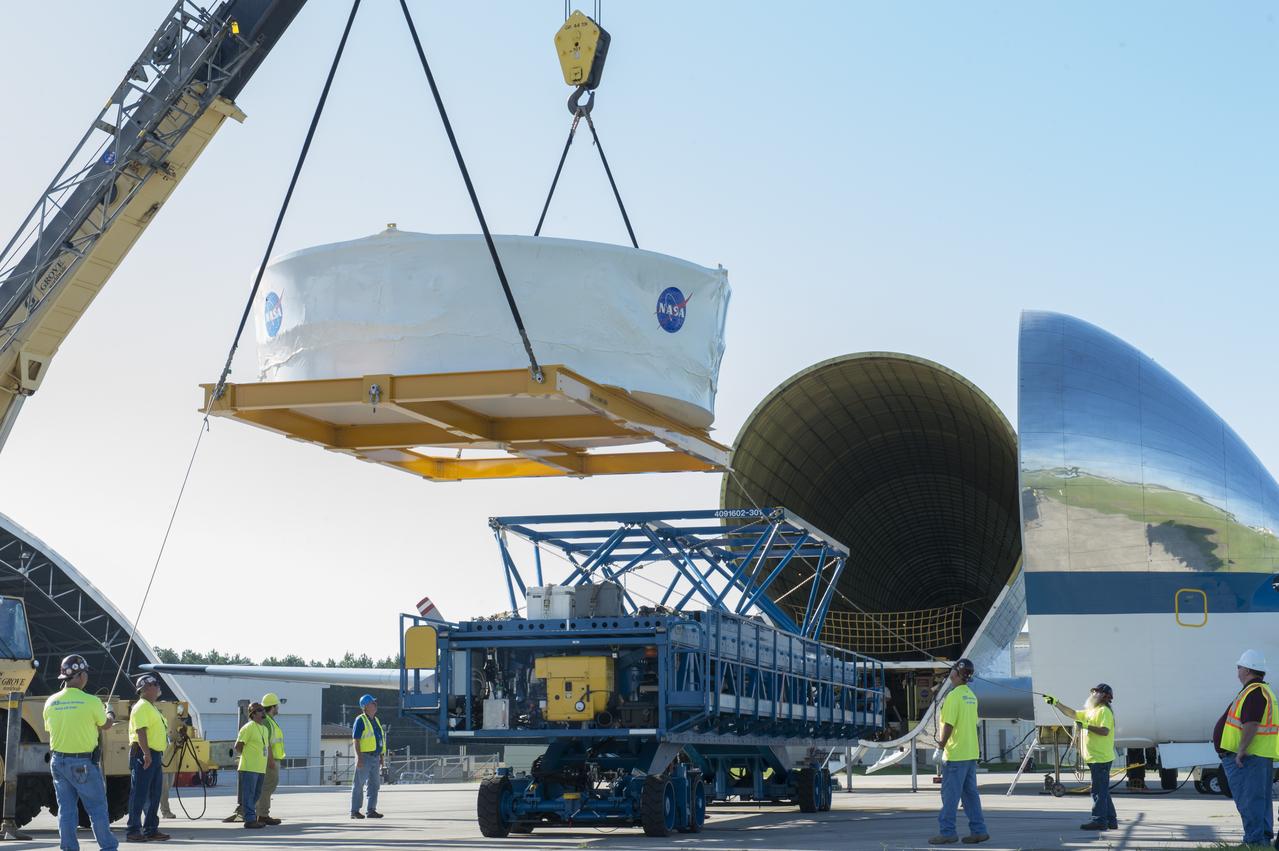
The Orion stage adapter is being lifted for placement onto the loading platform for NASA's Super Guppie aircraft before being flown to Denver, Colorado for further testing.
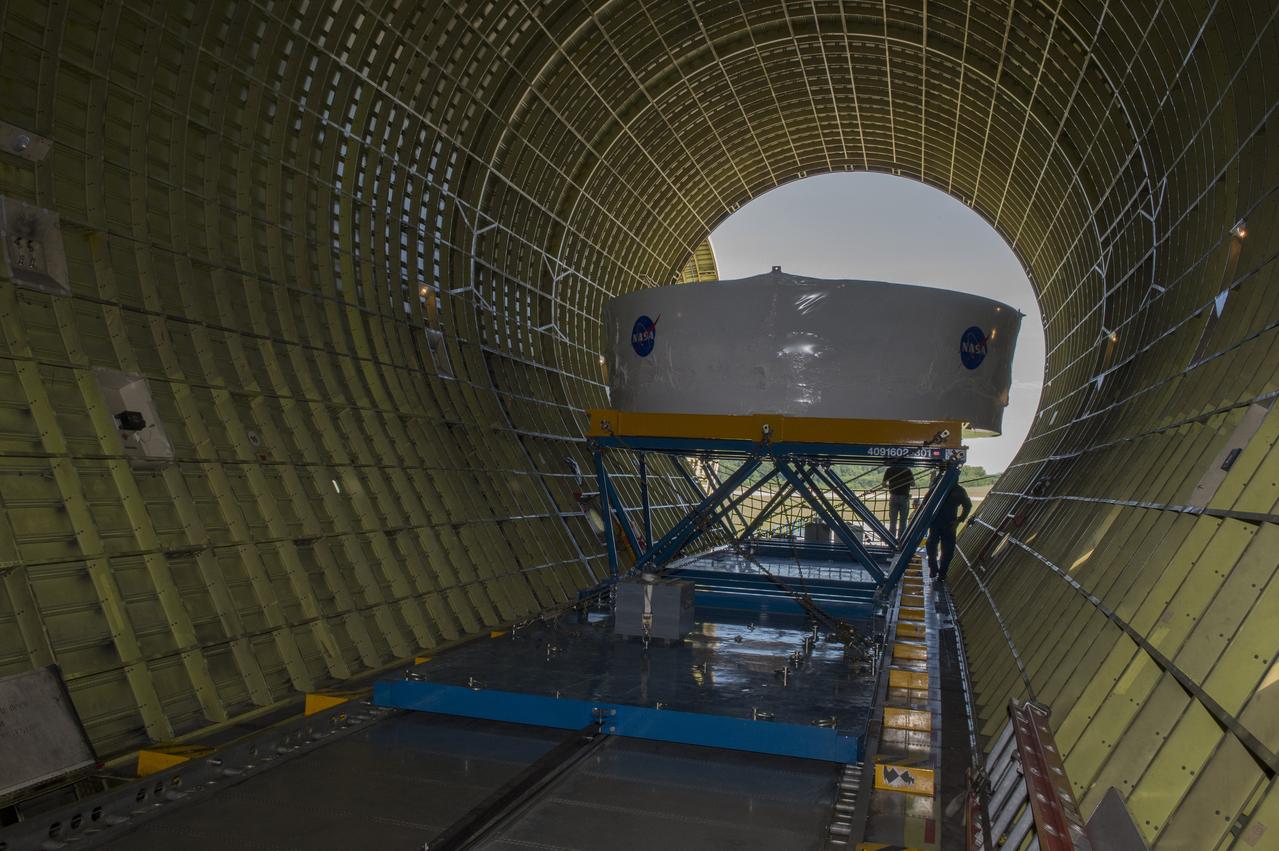
The Orion stage adapter is being placed inside the cargo bay of NASA's Super Guppie aircraft before being flown to Denver, Colorado for further testing.
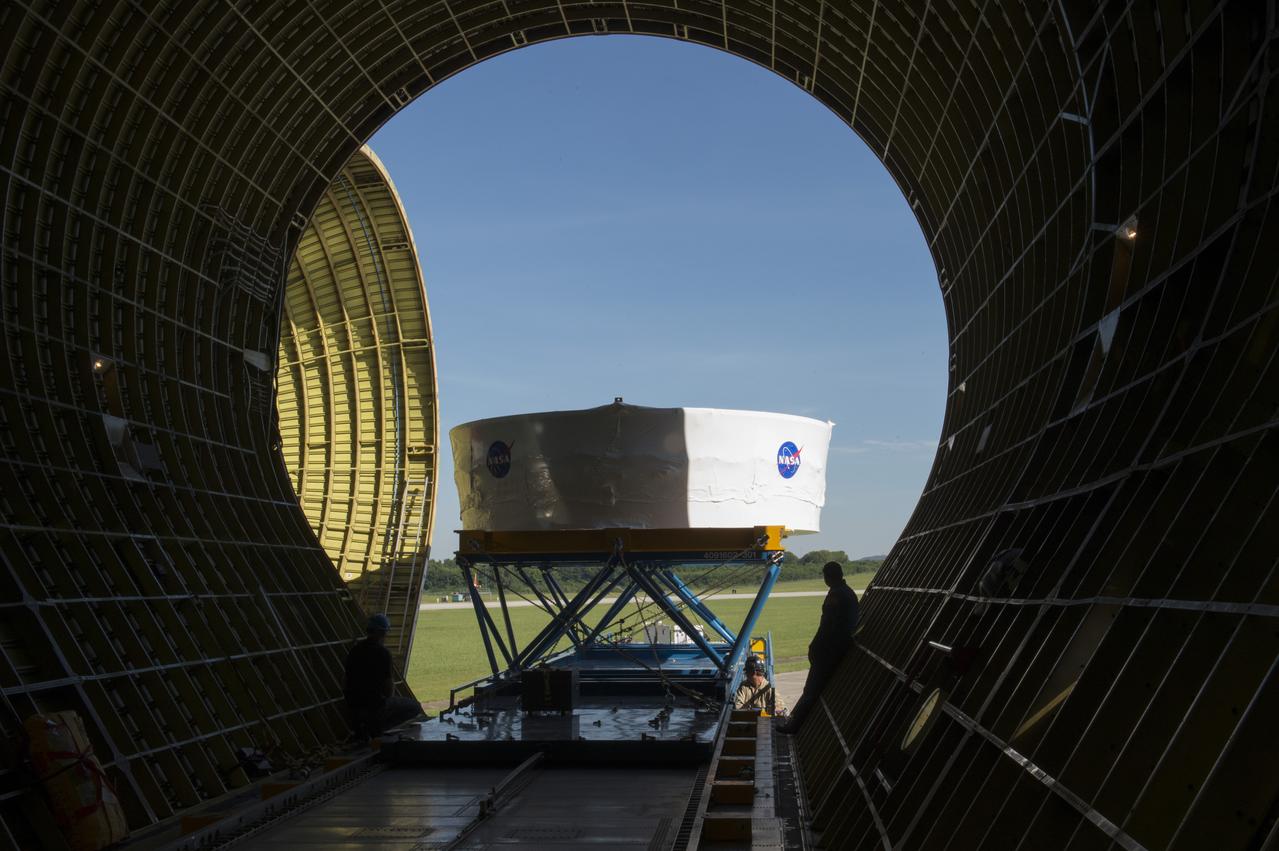
The Orion stage adapter is being placed inside the cargo bay of NASA's Super Guppie aircraft before being flown to Denver, Colorado for further testing.
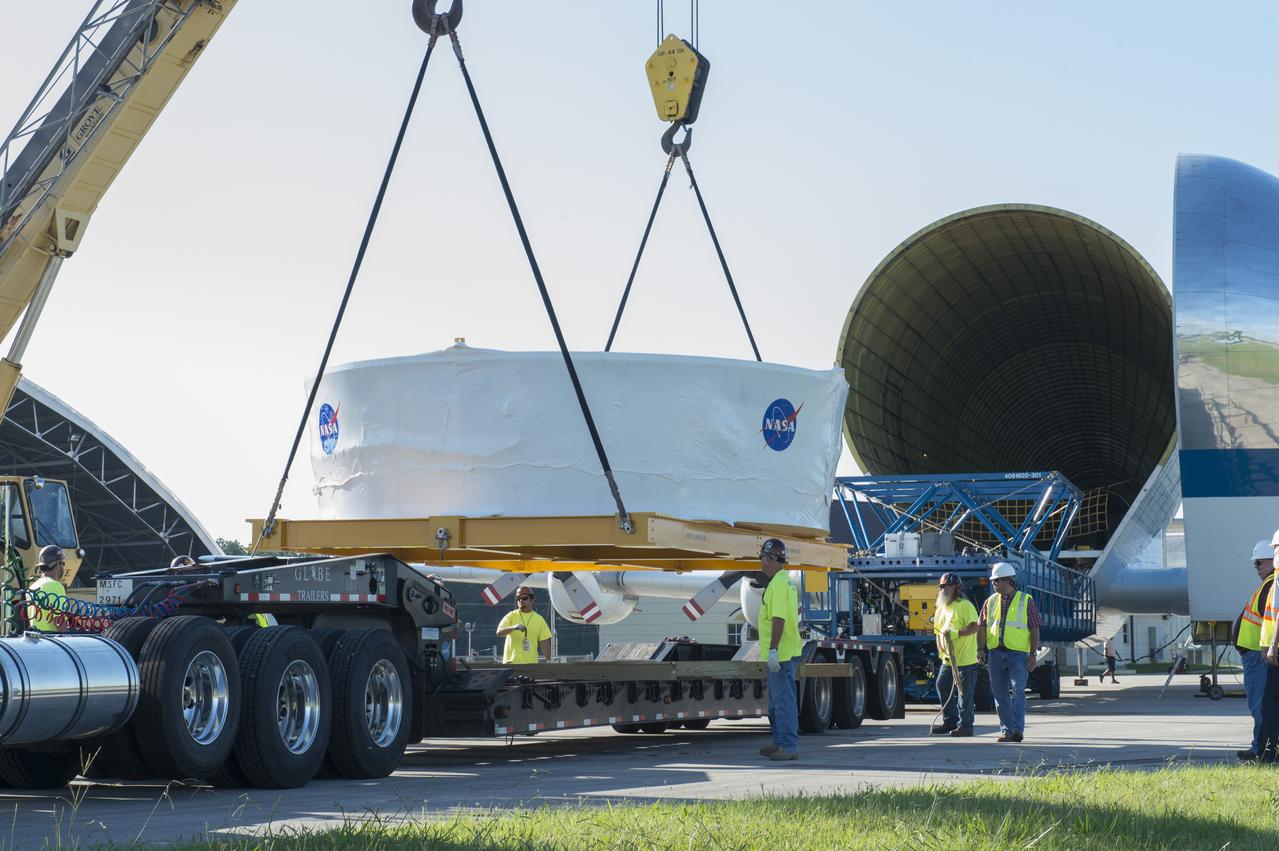
The Orion stage adapter is being lifted for placement onto the loading platform for NASA's Super Guppie aircraft before being flown to Denver, Colorado for further testing.
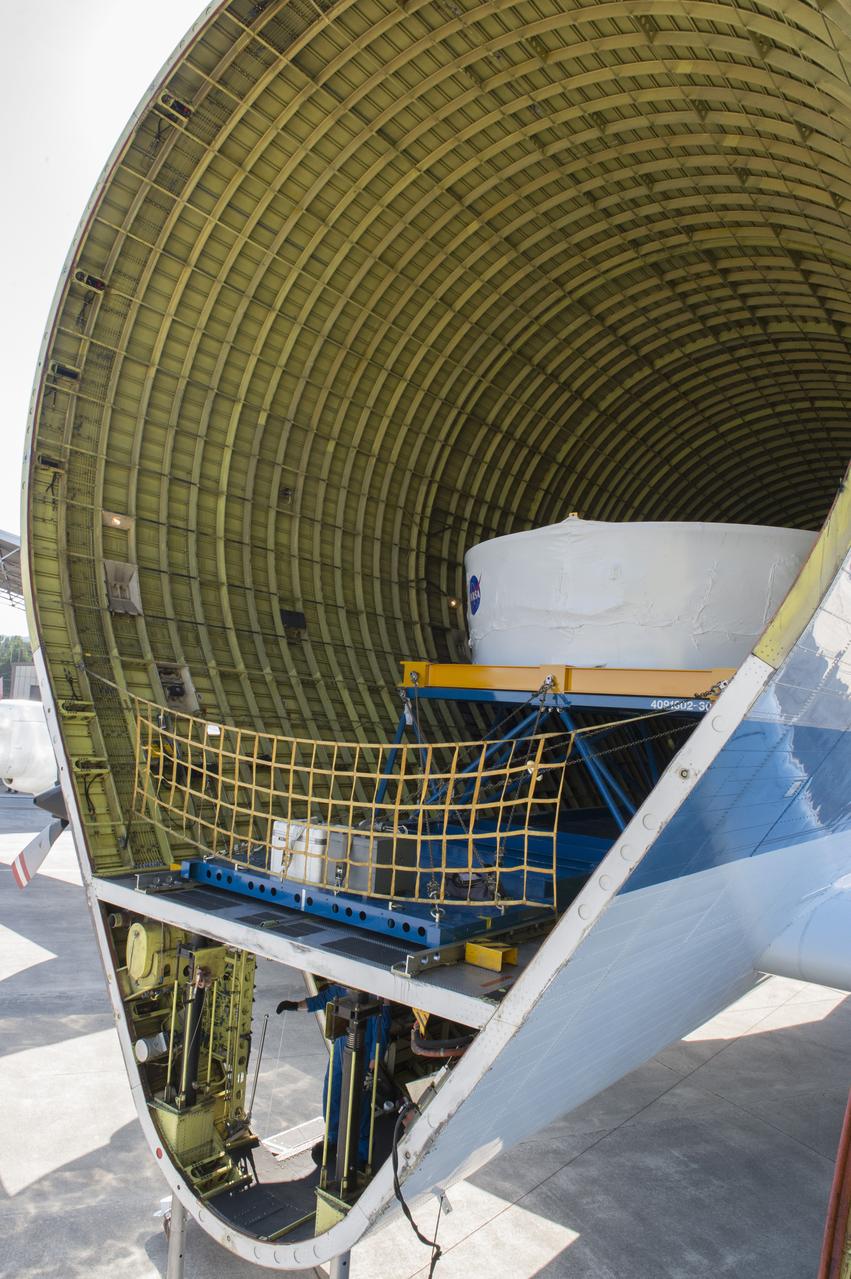
The Orion stage adapter shown inside the cargo bay of NASA's Super Guppie aircraft prior to being flown to Denver, Colorado for further testing.
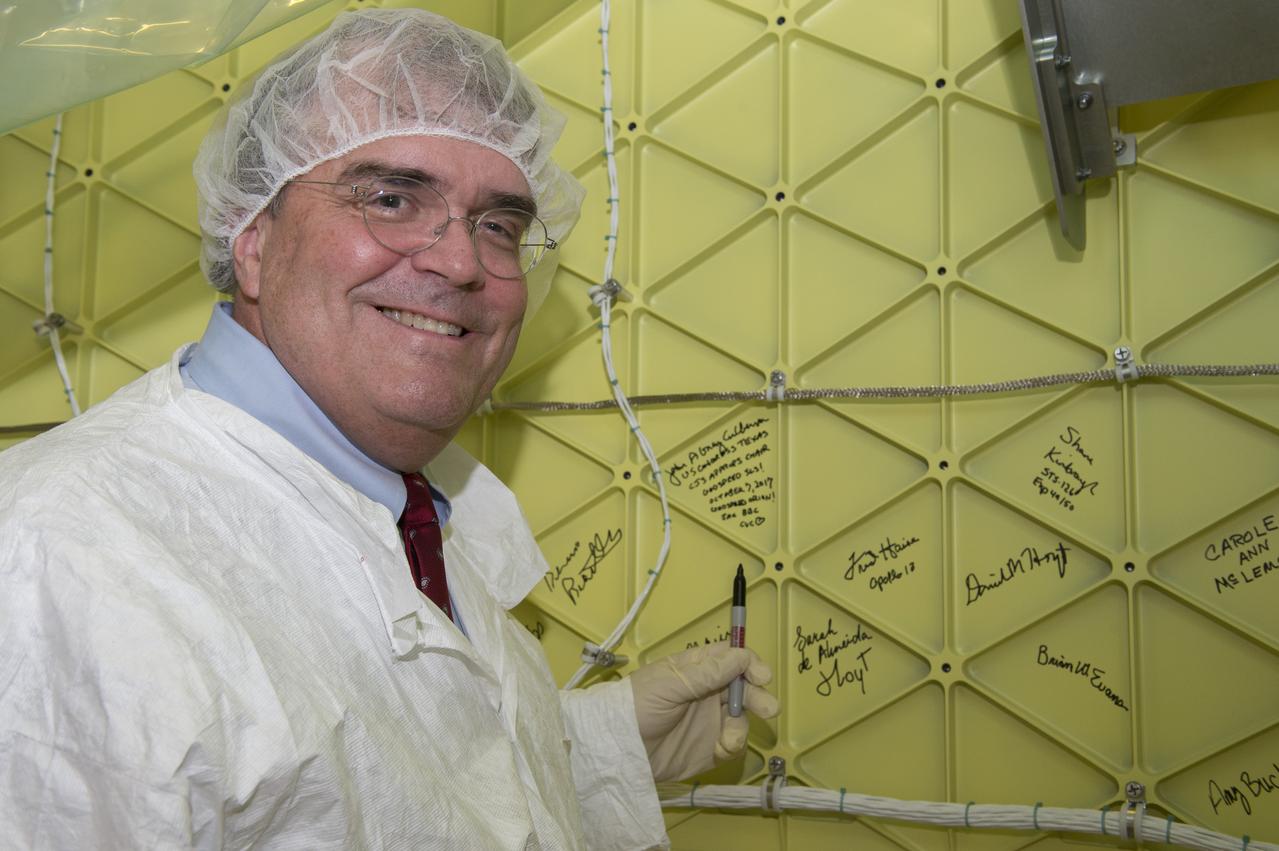
John Culberson, U.S. Congressman, 7th District Texas & Chairman, House Appropriations CJS Committee signs his name on the Orion Stage Adapter while touring MSFC on October 6, 2017.
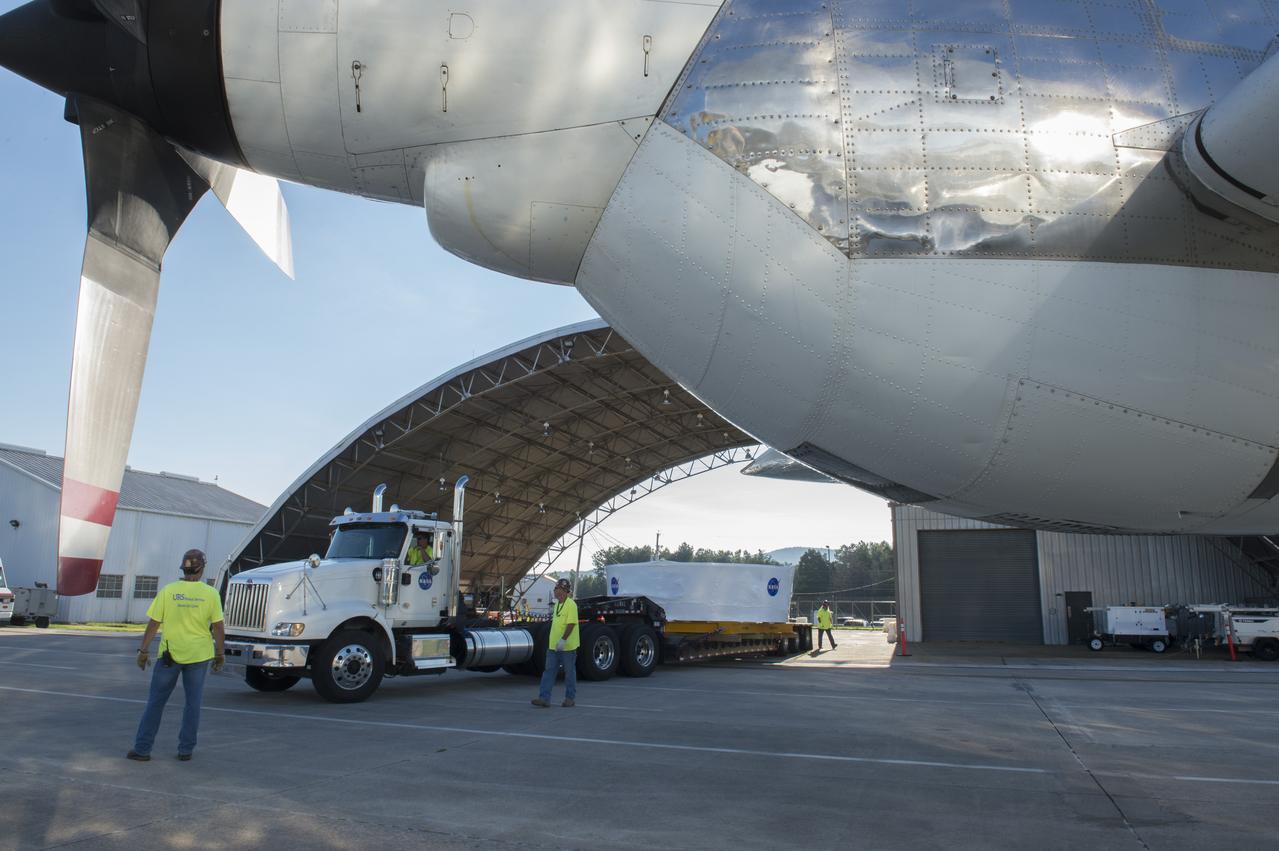
The Orion stage adapter arrives at Redstone Airfield where it will be loaded into NASA's Super Guppie aircraft for transportation to Denver, Colorado where it will undergo further testing.
NASA's Super Guppy aircraft arrives to the U.S. Army’s Redstone Airfield in Huntsville, Alabama, April 2, to pick up flight hardware for NASA’s Space Launch System – its new, deep-space rocket that will enable astronauts to begin their journey to explore destinations far into the solar system. The Guppy will depart on Tuesday, April 3 to deliver the Orion stage adapter to NASA’s Kennedy Space Center in Florida for flight preparations. On Exploration Mission-1, the first integrated flight of the SLS and the Orion spacecraft, the adapter will connect Orion to the rocket and carry 13 CubeSats as secondary payloads.
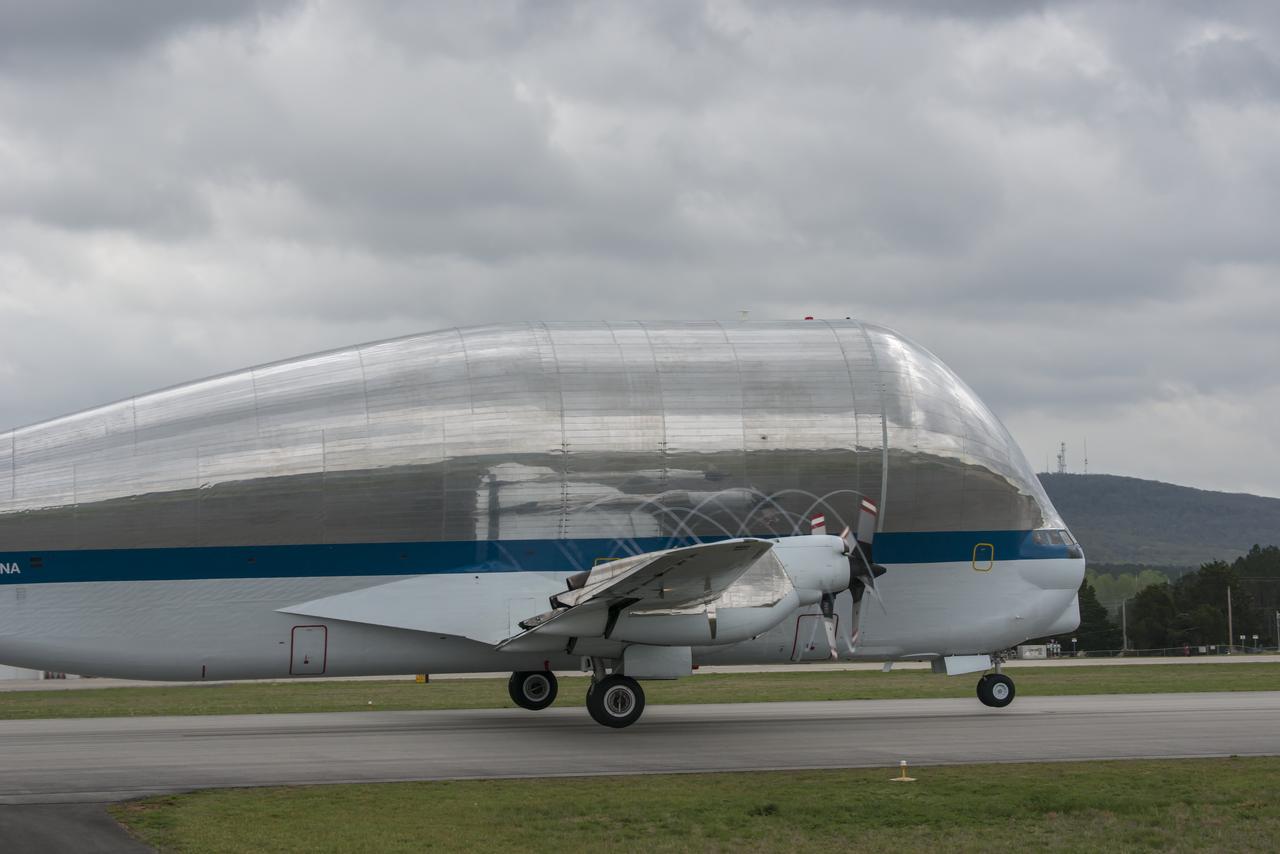
NASA's Super Guppy aircraft arrives to the U.S. Army’s Redstone Airfield in Huntsville, Alabama, April 2, to pick up flight hardware for NASA’s Space Launch System – its new, deep-space rocket that will enable astronauts to begin their journey to explore destinations far into the solar system. The Guppy will depart on Tuesday, April 3 to deliver the Orion stage adapter to NASA’s Kennedy Space Center in Florida for flight preparations. On Exploration Mission-1, the first integrated flight of the SLS and the Orion spacecraft, the adapter will connect Orion to the rocket and carry 13 CubeSats as secondary payloads.
NASA's Super Guppy aircraft arrives to the U.S. Army’s Redstone Airfield in Huntsville, Alabama, April 2, to pick up flight hardware for NASA’s Space Launch System – its new, deep-space rocket that will enable astronauts to begin their journey to explore destinations far into the solar system. The Guppy will depart on Tuesday, April 3 to deliver the Orion stage adapter to NASA’s Kennedy Space Center in Florida for flight preparations. On Exploration Mission-1, the first integrated flight of the SLS and the Orion spacecraft, the adapter will connect Orion to the rocket and carry 13 CubeSats as secondary payloads.
NASA's Super Guppy aircraft arrives to the U.S. Army’s Redstone Airfield in Huntsville, Alabama, April 2, to pick up flight hardware for NASA’s Space Launch System – its new, deep-space rocket that will enable astronauts to begin their journey to explore destinations far into the solar system. The Guppy will depart on Tuesday, April 3 to deliver the Orion stage adapter to NASA’s Kennedy Space Center in Florida for flight preparations. On Exploration Mission-1, the first integrated flight of the SLS and the Orion spacecraft, the adapter will connect Orion to the rocket and carry 13 CubeSats as secondary payloads.
Caption: NASA's Super Guppy aircraft arrives to the U.S. Army’s Redstone Airfield in Huntsville, Alabama, April 2, to pick up flight hardware for NASA’s Space Launch System – its new, deep-space rocket that will enable astronauts to begin their journey to explore destinations far into the solar system. The Guppy will depart on Tuesday, April 3 to deliver the Orion stage adapter to NASA’s Kennedy Space Center in Florida for flight preparations. On Exploration Mission-1, the first integrated flight of the SLS and the Orion spacecraft, the adapter will connect Orion to the rocket and carry 13 CubeSats as secondary payloads.
NASA's Super Guppy aircraft arrives to the U.S. Army’s Redstone Airfield in Huntsville, Alabama, April 2, to pick up flight hardware for NASA’s Space Launch System – its new, deep-space rocket that will enable astronauts to begin their journey to explore destinations far into the solar system. The Guppy will depart on Tuesday, April 3 to deliver the Orion stage adapter to NASA’s Kennedy Space Center in Florida for flight preparations. On Exploration Mission-1, the first integrated flight of the SLS and the Orion spacecraft, the adapter will connect Orion to the rocket and carry 13 CubeSats as secondary payloads.

NASA's Super Guppy aircraft arrives to the U.S. Army’s Redstone Airfield in Huntsville, Alabama, April 2, to pick up flight hardware for NASA’s Space Launch System – its new, deep-space rocket that will enable astronauts to begin their journey to explore destinations far into the solar system. The Guppy will depart on Tuesday, April 3 to deliver the Orion stage adapter to NASA’s Kennedy Space Center in Florida for flight preparations. On Exploration Mission-1, the first integrated flight of the SLS and the Orion spacecraft, the adapter will connect Orion to the rocket and carry 13 CubeSats as secondary payloads.
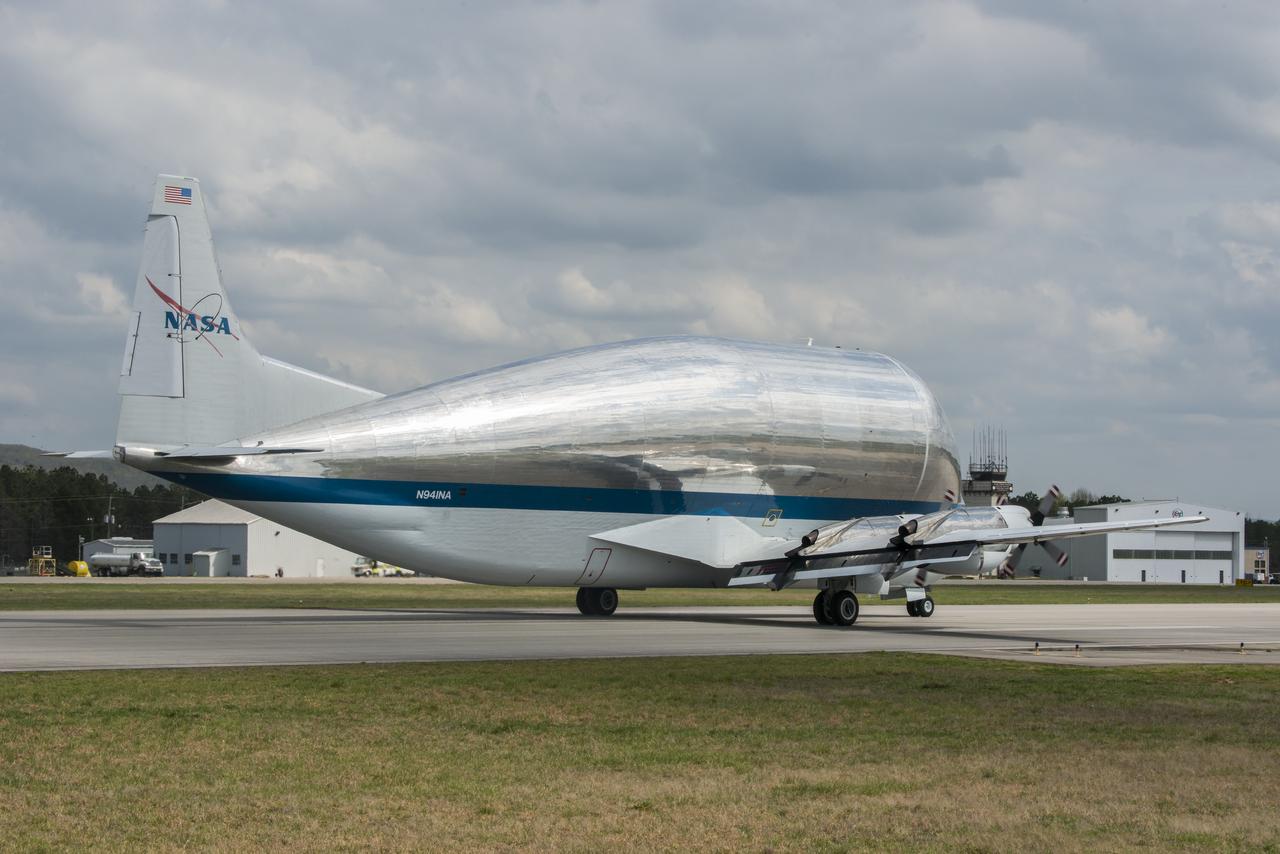
Caption: NASA's Super Guppy aircraft arrives to the U.S. Army’s Redstone Airfield in Huntsville, Alabama, April 2, to pick up flight hardware for NASA’s Space Launch System – its new, deep-space rocket that will enable astronauts to begin their journey to explore destinations far into the solar system. The Guppy will depart on Tuesday, April 3 to deliver the Orion stage adapter to NASA’s Kennedy Space Center in Florida for flight preparations. On Exploration Mission-1, the first integrated flight of the SLS and the Orion spacecraft, the adapter will connect Orion to the rocket and carry 13 CubeSats as secondary payloads.
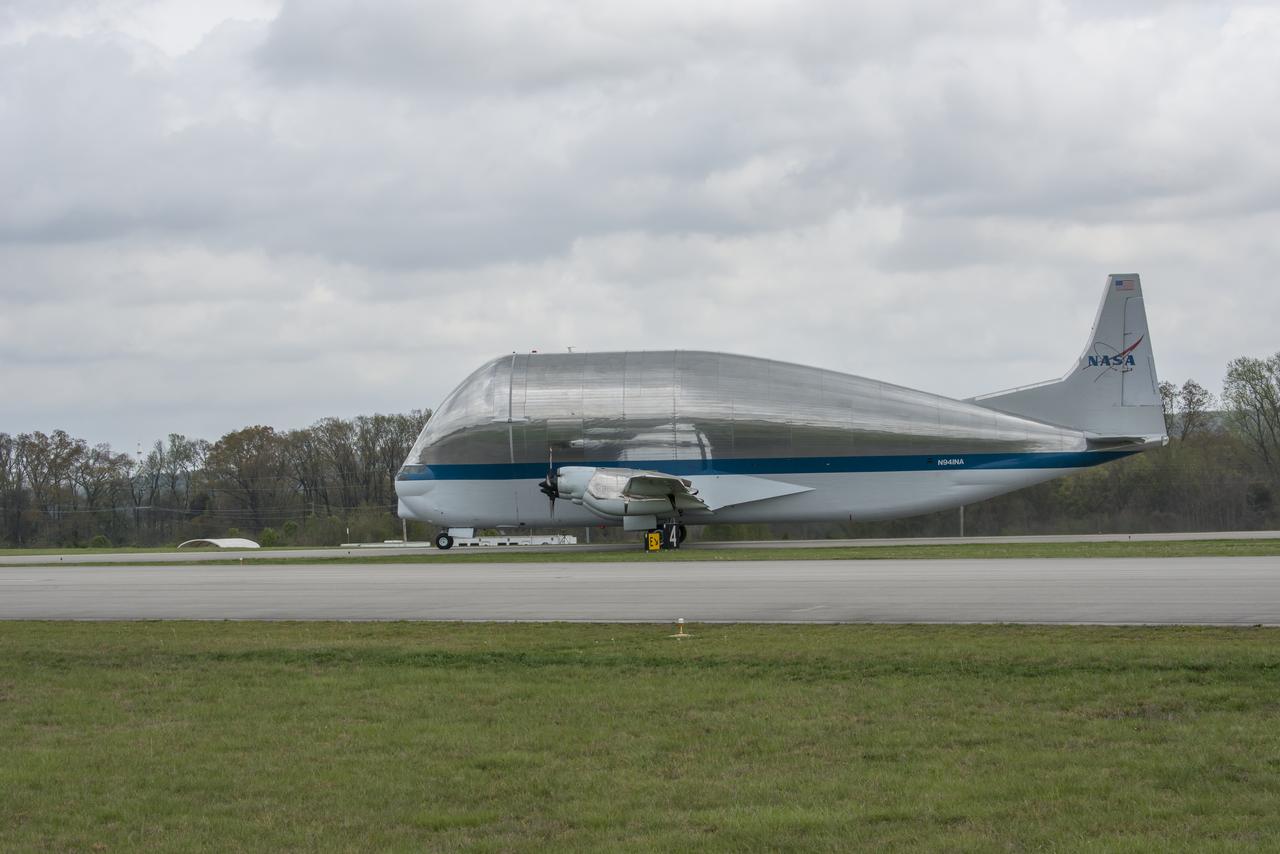
NASA's Super Guppy aircraft arrives to the U.S. Army’s Redstone Airfield in Huntsville, Alabama, April 2, to pick up flight hardware for NASA’s Space Launch System – its new, deep-space rocket that will enable astronauts to begin their journey to explore destinations far into the solar system. The Guppy will depart on Tuesday, April 3 to deliver the Orion stage adapter to NASA’s Kennedy Space Center in Florida for flight preparations. On Exploration Mission-1, the first integrated flight of the SLS and the Orion spacecraft, the adapter will connect Orion to the rocket and carry 13 CubeSats as secondary payloads.
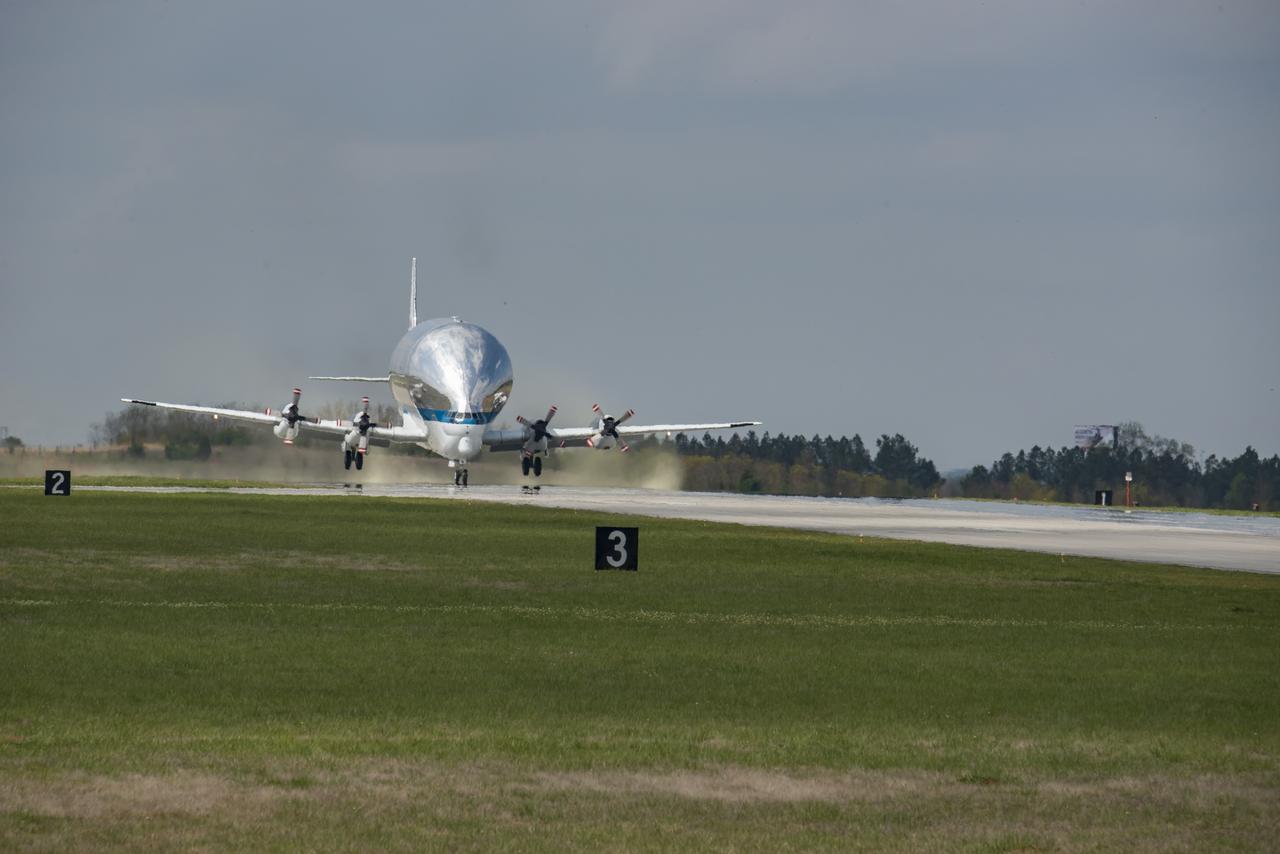
Caption: NASA's Super Guppy aircraft arrives to the U.S. Army’s Redstone Airfield in Huntsville, Alabama, April 2, to pick up flight hardware for NASA’s Space Launch System – its new, deep-space rocket that will enable astronauts to begin their journey to explore destinations far into the solar system. The Guppy will depart on Tuesday, April 3 to deliver the Orion stage adapter to NASA’s Kennedy Space Center in Florida for flight preparations. On Exploration Mission-1, the first integrated flight of the SLS and the Orion spacecraft, the adapter will connect Orion to the rocket and carry 13 CubeSats as secondary payloads.
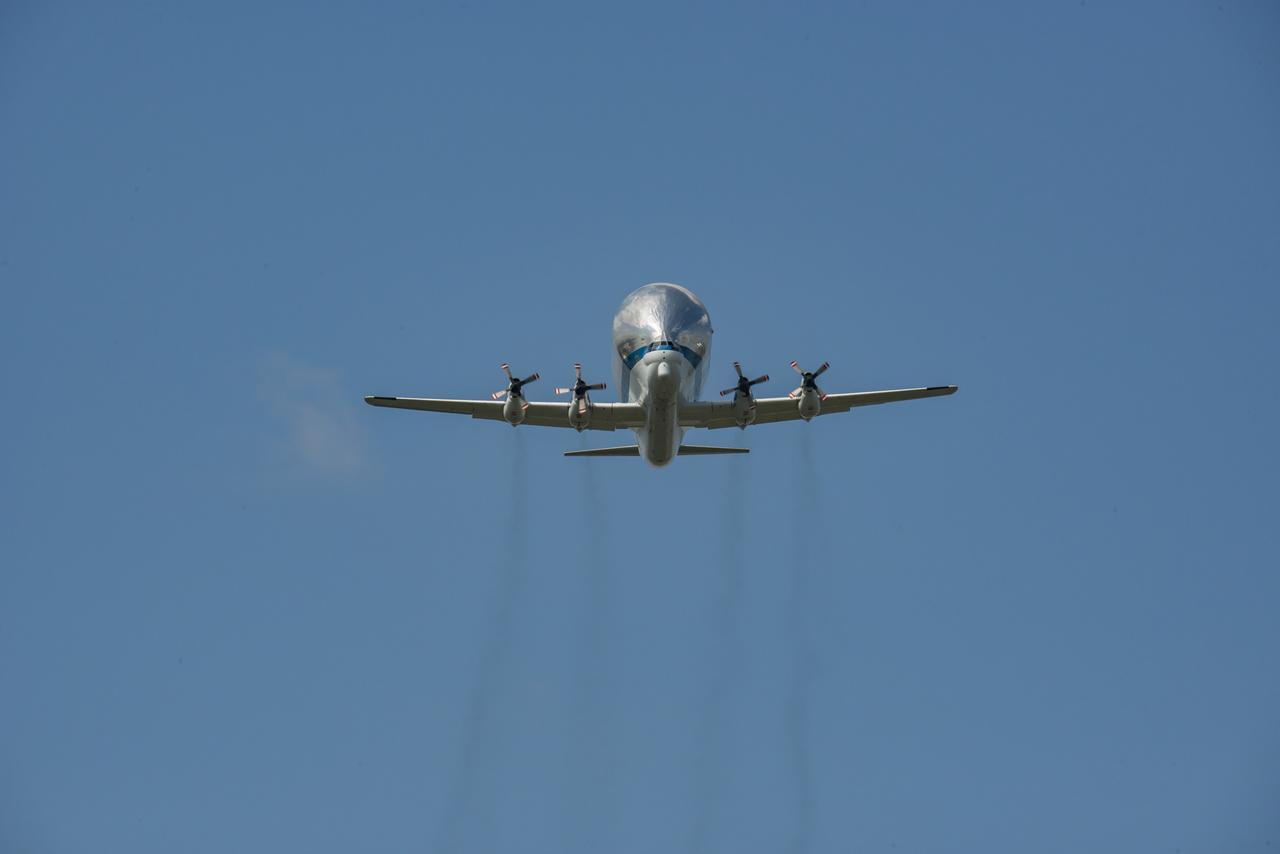
Caption: NASA's Super Guppy aircraft arrives to the U.S. Army’s Redstone Airfield in Huntsville, Alabama, April 2, to pick up flight hardware for NASA’s Space Launch System – its new, deep-space rocket that will enable astronauts to begin their journey to explore destinations far into the solar system. The Guppy will depart on Tuesday, April 3 to deliver the Orion stage adapter to NASA’s Kennedy Space Center in Florida for flight preparations. On Exploration Mission-1, the first integrated flight of the SLS and the Orion spacecraft, the adapter will connect Orion to the rocket and carry 13 CubeSats as secondary payloads.
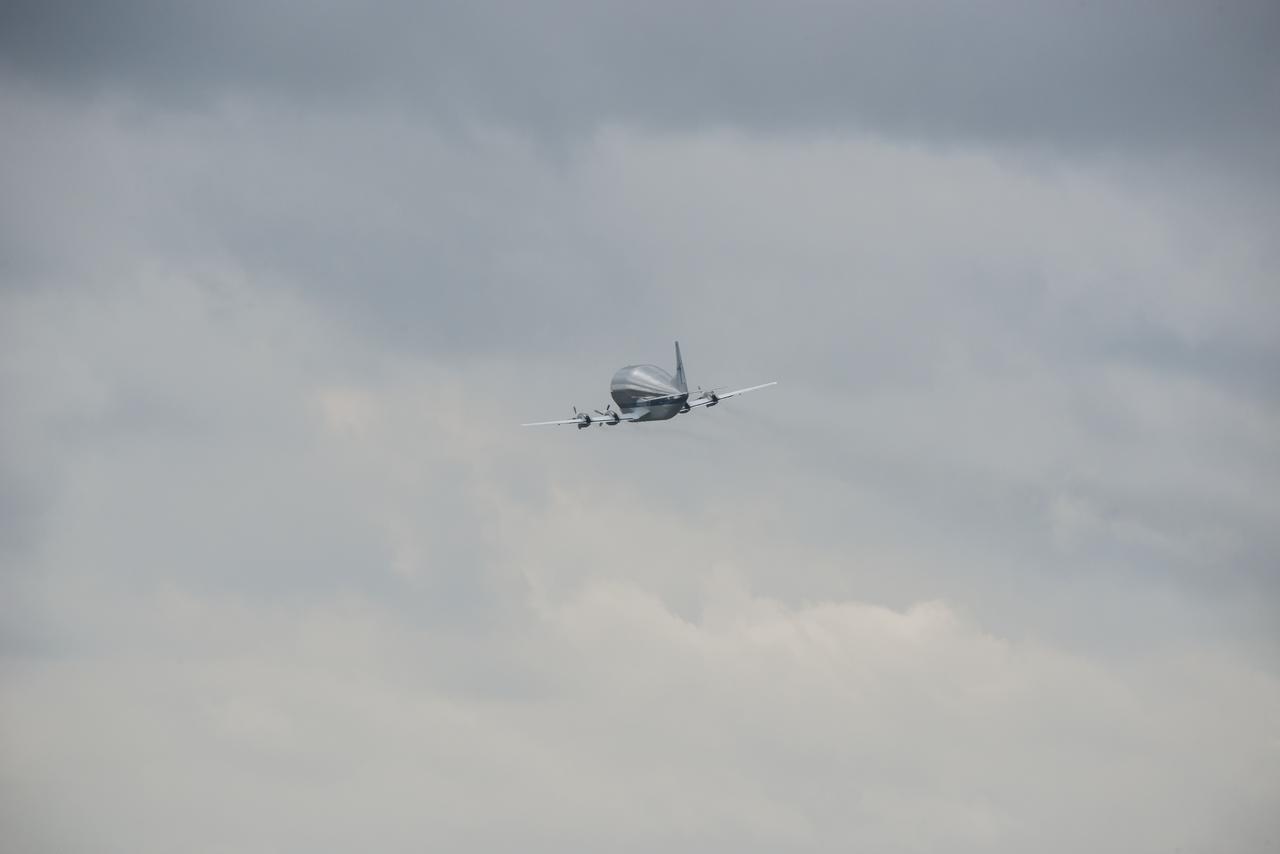
NASA's Super Guppy aircraft arrives to the U.S. Army’s Redstone Airfield in Huntsville, Alabama, April 2, to pick up flight hardware for NASA’s Space Launch System – its new, deep-space rocket that will enable astronauts to begin their journey to explore destinations far into the solar system. The Guppy will depart on Tuesday, April 3 to deliver the Orion stage adapter to NASA’s Kennedy Space Center in Florida for flight preparations. On Exploration Mission-1, the first integrated flight of the SLS and the Orion spacecraft, the adapter will connect Orion to the rocket and carry 13 CubeSats as secondary payloads.
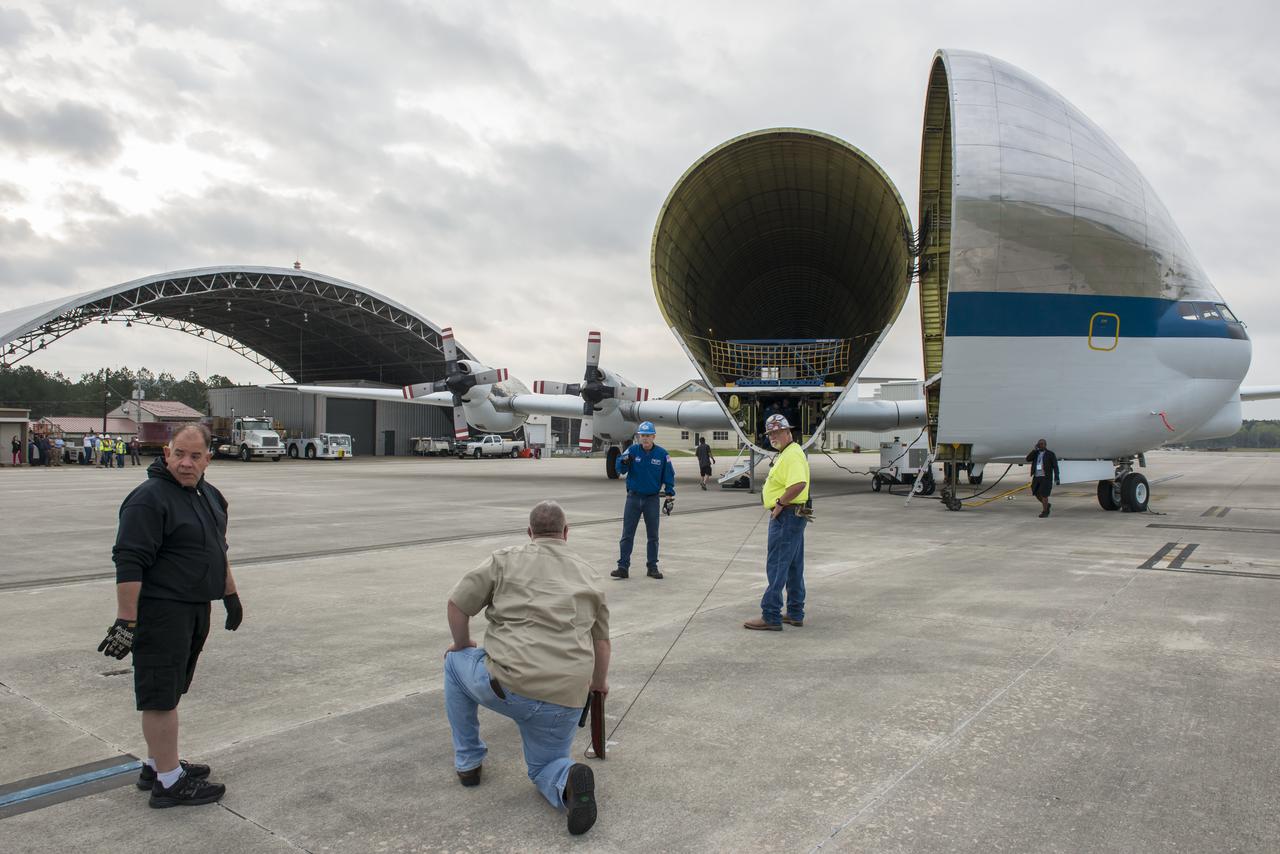
NASA's Super Guppy aircraft arrives to the U.S. Army’s Redstone Airfield in Huntsville, Alabama, April 2, to pick up flight hardware for NASA’s Space Launch System – its new, deep-space rocket that will enable astronauts to begin their journey to explore destinations far into the solar system. The Guppy will depart on Tuesday, April 3 to deliver the Orion stage adapter to NASA’s Kennedy Space Center in Florida for flight preparations. On Exploration Mission-1, the first integrated flight of the SLS and the Orion spacecraft, the adapter will connect Orion to the rocket and carry 13 CubeSats as secondary payloads.
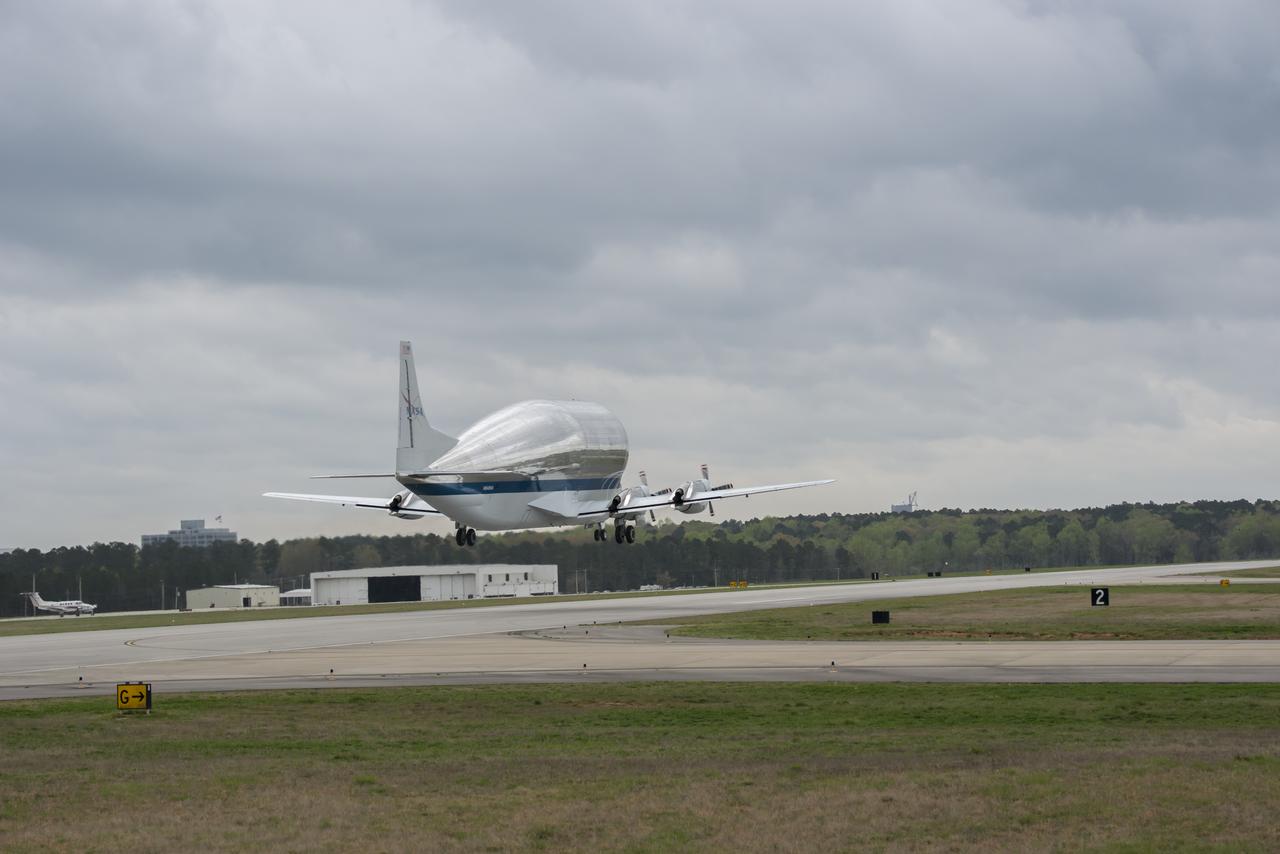
NASA's Super Guppy aircraft arrives to the U.S. Army’s Redstone Airfield in Huntsville, Alabama, April 2, to pick up flight hardware for NASA’s Space Launch System – its new, deep-space rocket that will enable astronauts to begin their journey to explore destinations far into the solar system. The Guppy will depart on Tuesday, April 3 to deliver the Orion stage adapter to NASA’s Kennedy Space Center in Florida for flight preparations. On Exploration Mission-1, the first integrated flight of the SLS and the Orion spacecraft, the adapter will connect Orion to the rocket and carry 13 CubeSats as secondary payloads.
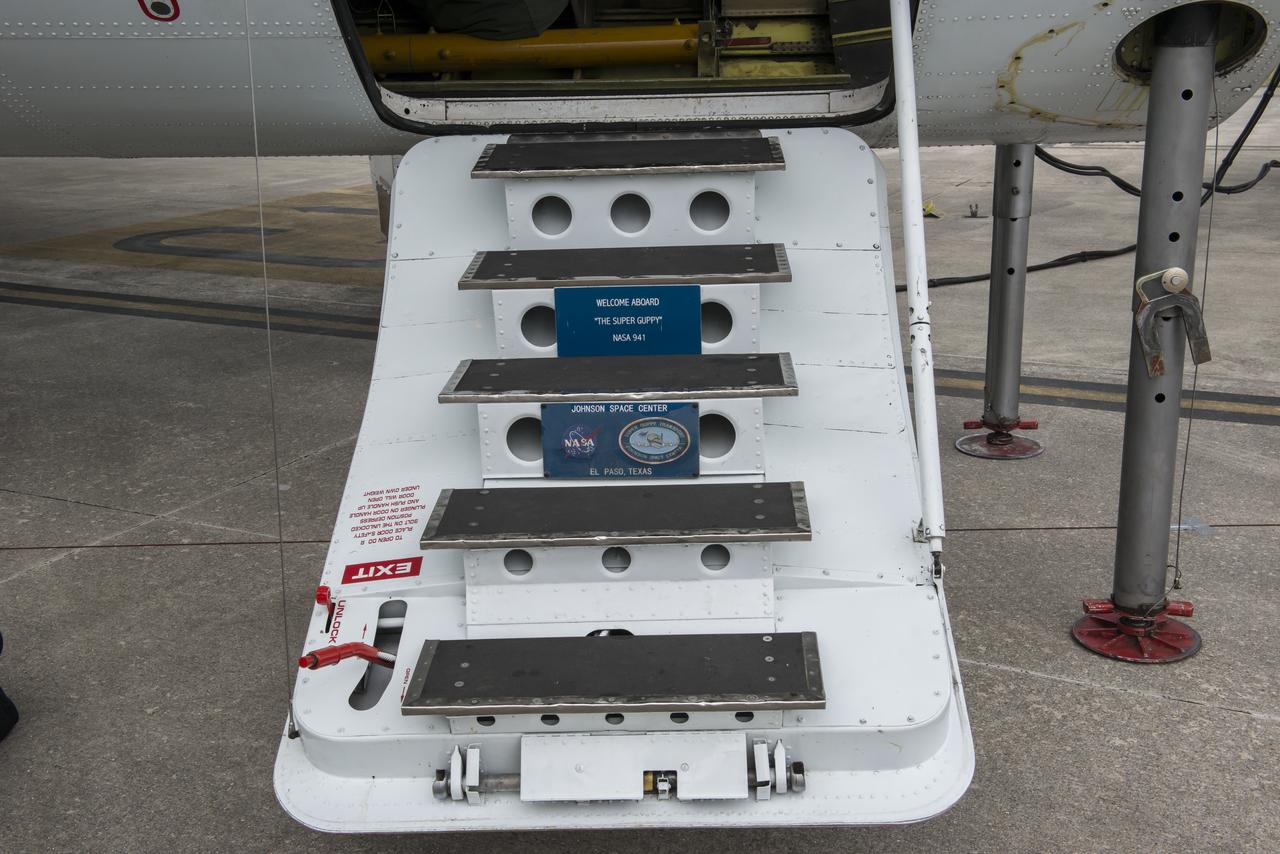
NASA's Super Guppy aircraft arrives to the U.S. Army’s Redstone Airfield in Huntsville, Alabama, April 2, to pick up flight hardware for NASA’s Space Launch System – its new, deep-space rocket that will enable astronauts to begin their journey to explore destinations far into the solar system. The Guppy will depart on Tuesday, April 3 to deliver the Orion stage adapter to NASA’s Kennedy Space Center in Florida for flight preparations. On Exploration Mission-1, the first integrated flight of the SLS and the Orion spacecraft, the adapter will connect Orion to the rocket and carry 13 CubeSats as secondary payloads.
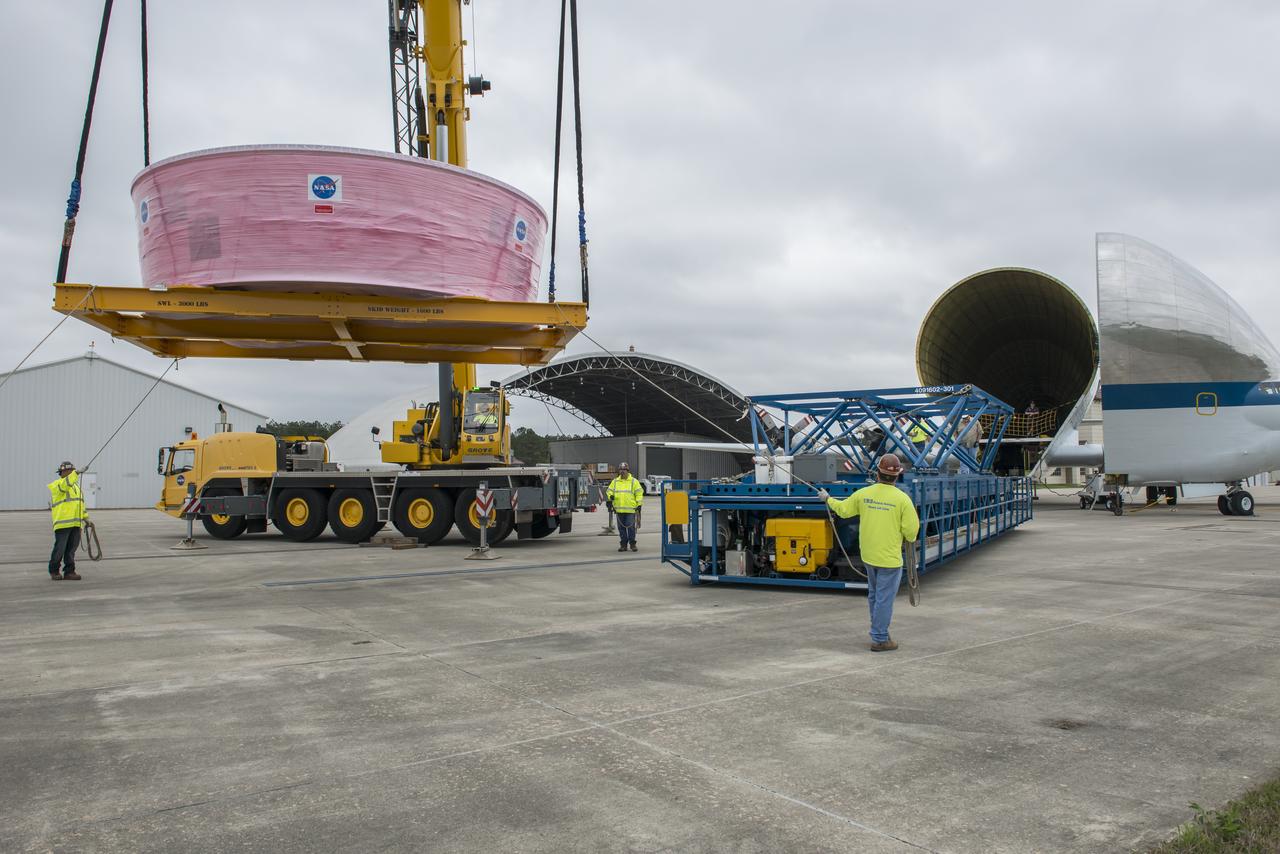
NASA's Super Guppy aircraft arrives to the U.S. Army’s Redstone Airfield in Huntsville, Alabama, April 2, to pick up flight hardware for NASA’s Space Launch System – its new, deep-space rocket that will enable astronauts to begin their journey to explore destinations far into the solar system. The Guppy will depart on Tuesday, April 3 to deliver the Orion stage adapter to NASA’s Kennedy Space Center in Florida for flight preparations. On Exploration Mission-1, the first integrated flight of the SLS and the Orion spacecraft, the adapter will connect Orion to the rocket and carry 13 CubeSats as secondary payloads.
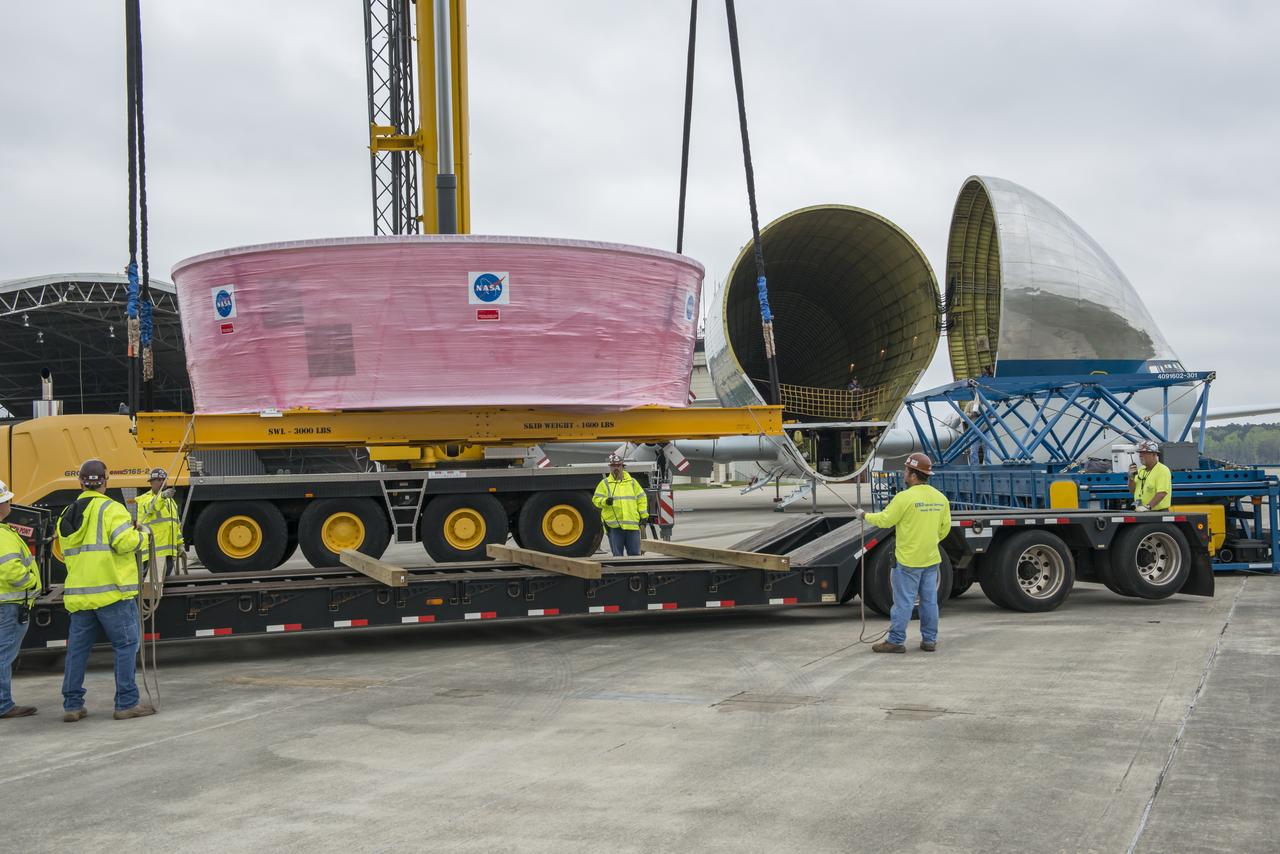
NASA's Super Guppy aircraft arrives to the U.S. Army’s Redstone Airfield in Huntsville, Alabama, April 2, to pick up flight hardware for NASA’s Space Launch System – its new, deep-space rocket that will enable astronauts to begin their journey to explore destinations far into the solar system. The Guppy will depart on Tuesday, April 3 to deliver the Orion stage adapter to NASA’s Kennedy Space Center in Florida for flight preparations. On Exploration Mission-1, the first integrated flight of the SLS and the Orion spacecraft, the adapter will connect Orion to the rocket and carry 13 CubeSats as secondary payloads.
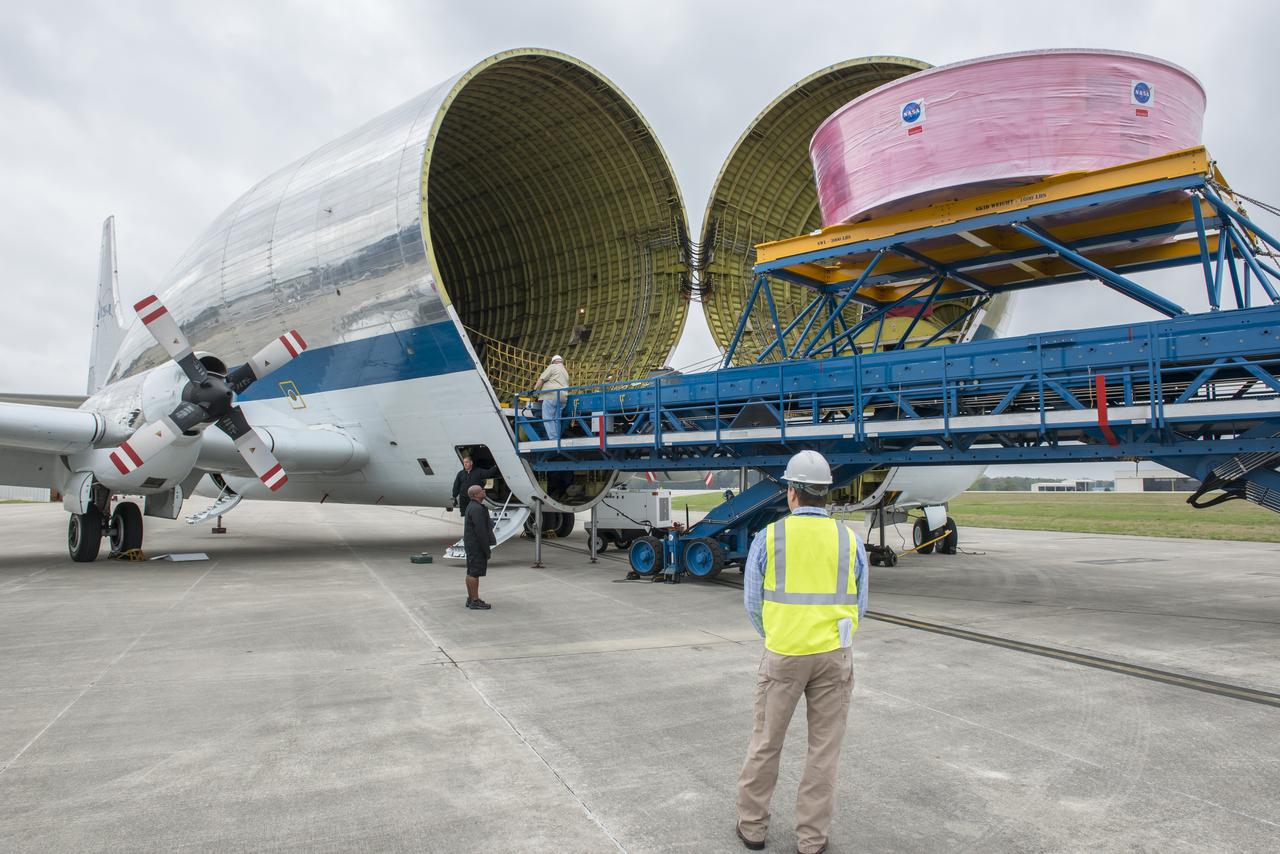
NASA's Super Guppy aircraft arrives to the U.S. Army’s Redstone Airfield in Huntsville, Alabama, April 2, to pick up flight hardware for NASA’s Space Launch System – its new, deep-space rocket that will enable astronauts to begin their journey to explore destinations far into the solar system. The Guppy will depart on Tuesday, April 3 to deliver the Orion stage adapter to NASA’s Kennedy Space Center in Florida for flight preparations. On Exploration Mission-1, the first integrated flight of the SLS and the Orion spacecraft, the adapter will connect Orion to the rocket and carry 13 CubeSats as secondary payloads.
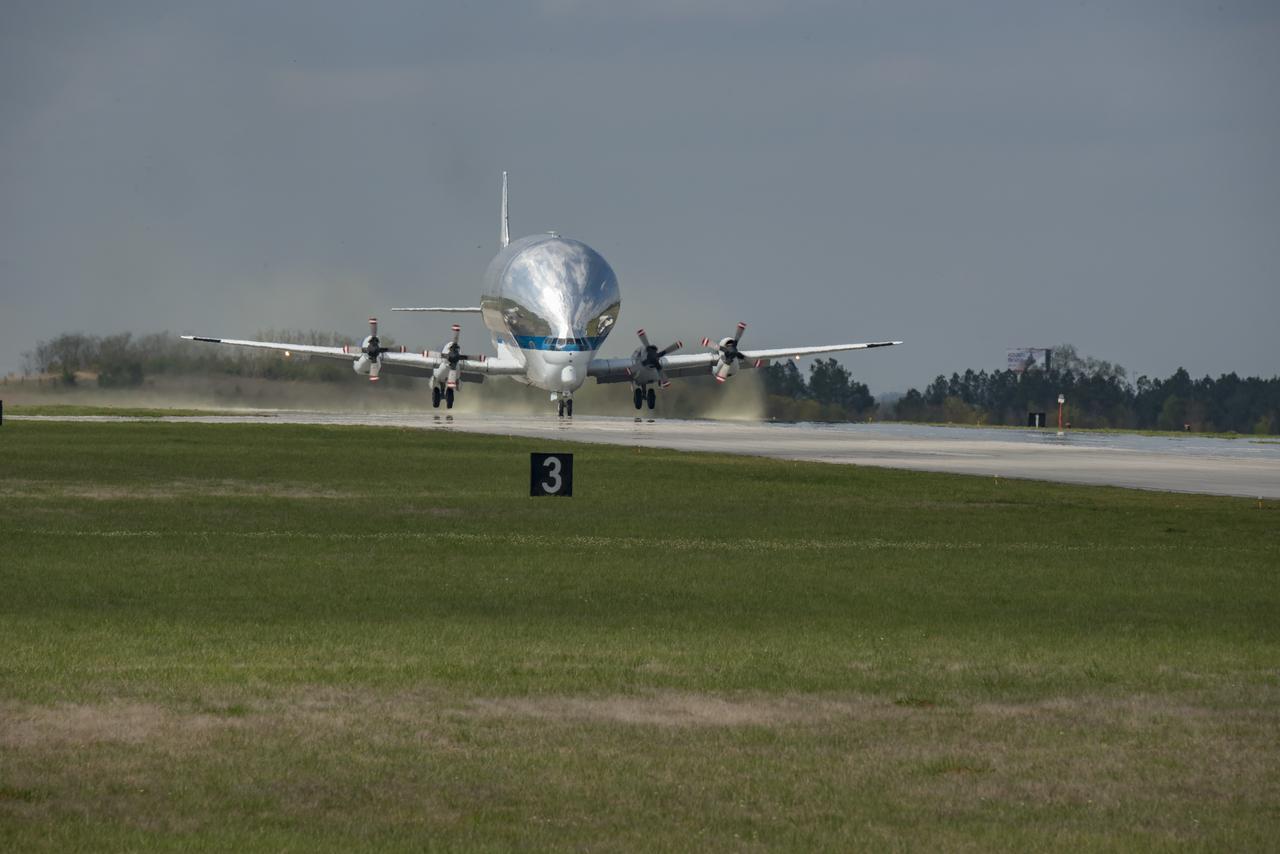
Caption: NASA's Super Guppy aircraft arrives to the U.S. Army’s Redstone Airfield in Huntsville, Alabama, April 2, to pick up flight hardware for NASA’s Space Launch System – its new, deep-space rocket that will enable astronauts to begin their journey to explore destinations far into the solar system. The Guppy will depart on Tuesday, April 3 to deliver the Orion stage adapter to NASA’s Kennedy Space Center in Florida for flight preparations. On Exploration Mission-1, the first integrated flight of the SLS and the Orion spacecraft, the adapter will connect Orion to the rocket and carry 13 CubeSats as secondary payloads.
NASA's Super Guppy aircraft arrives to the U.S. Army’s Redstone Airfield in Huntsville, Alabama, April 2, to pick up flight hardware for NASA’s Space Launch System – its new, deep-space rocket that will enable astronauts to begin their journey to explore destinations far into the solar system. The Guppy will depart on Tuesday, April 3 to deliver the Orion stage adapter to NASA’s Kennedy Space Center in Florida for flight preparations. On Exploration Mission-1, the first integrated flight of the SLS and the Orion spacecraft, the adapter will connect Orion to the rocket and carry 13 CubeSats as secondary payloads.
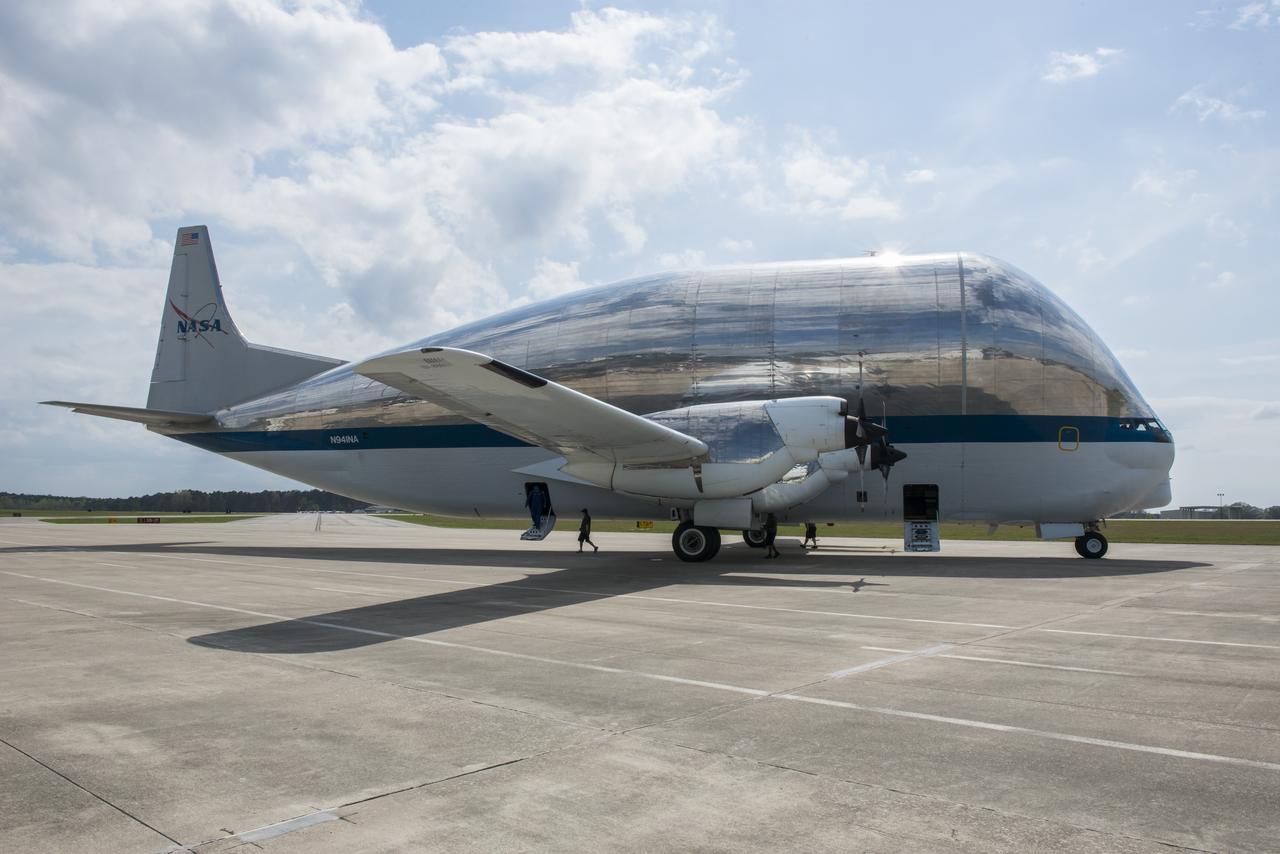
Caption: NASA's Super Guppy aircraft arrives to the U.S. Army’s Redstone Airfield in Huntsville, Alabama, April 2, to pick up flight hardware for NASA’s Space Launch System – its new, deep-space rocket that will enable astronauts to begin their journey to explore destinations far into the solar system. The Guppy will depart on Tuesday, April 3 to deliver the Orion stage adapter to NASA’s Kennedy Space Center in Florida for flight preparations. On Exploration Mission-1, the first integrated flight of the SLS and the Orion spacecraft, the adapter will connect Orion to the rocket and carry 13 CubeSats as secondary payloads.
NASA's Super Guppy aircraft arrives to the U.S. Army’s Redstone Airfield in Huntsville, Alabama, April 2, to pick up flight hardware for NASA’s Space Launch System – its new, deep-space rocket that will enable astronauts to begin their journey to explore destinations far into the solar system. The Guppy will depart on Tuesday, April 3 to deliver the Orion stage adapter to NASA’s Kennedy Space Center in Florida for flight preparations. On Exploration Mission-1, the first integrated flight of the SLS and the Orion spacecraft, the adapter will connect Orion to the rocket and carry 13 CubeSats as secondary payloads.
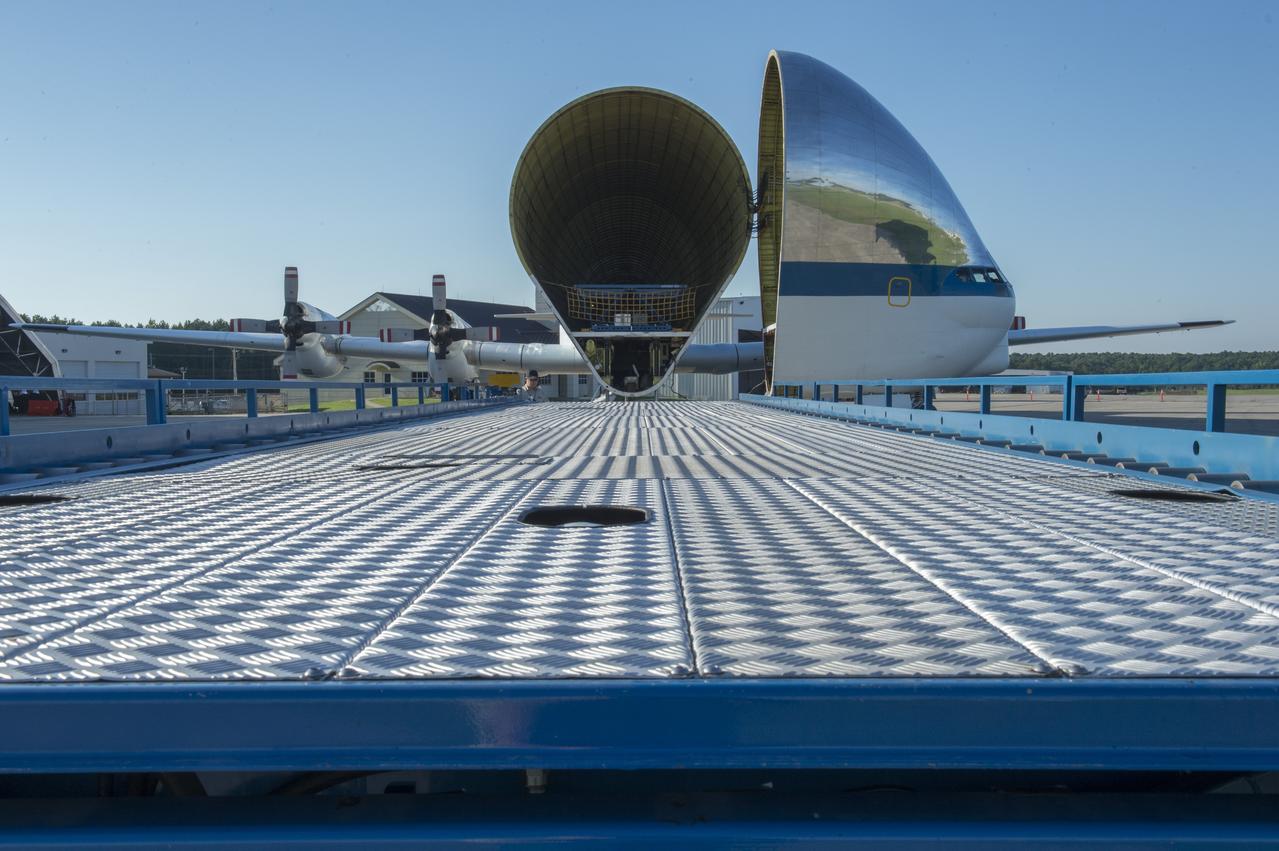
The platform which will be used to load the Orion stage adapter into NASA's Super Guppie aircraft is shown in the foreground with the Guppie aircraft in the background
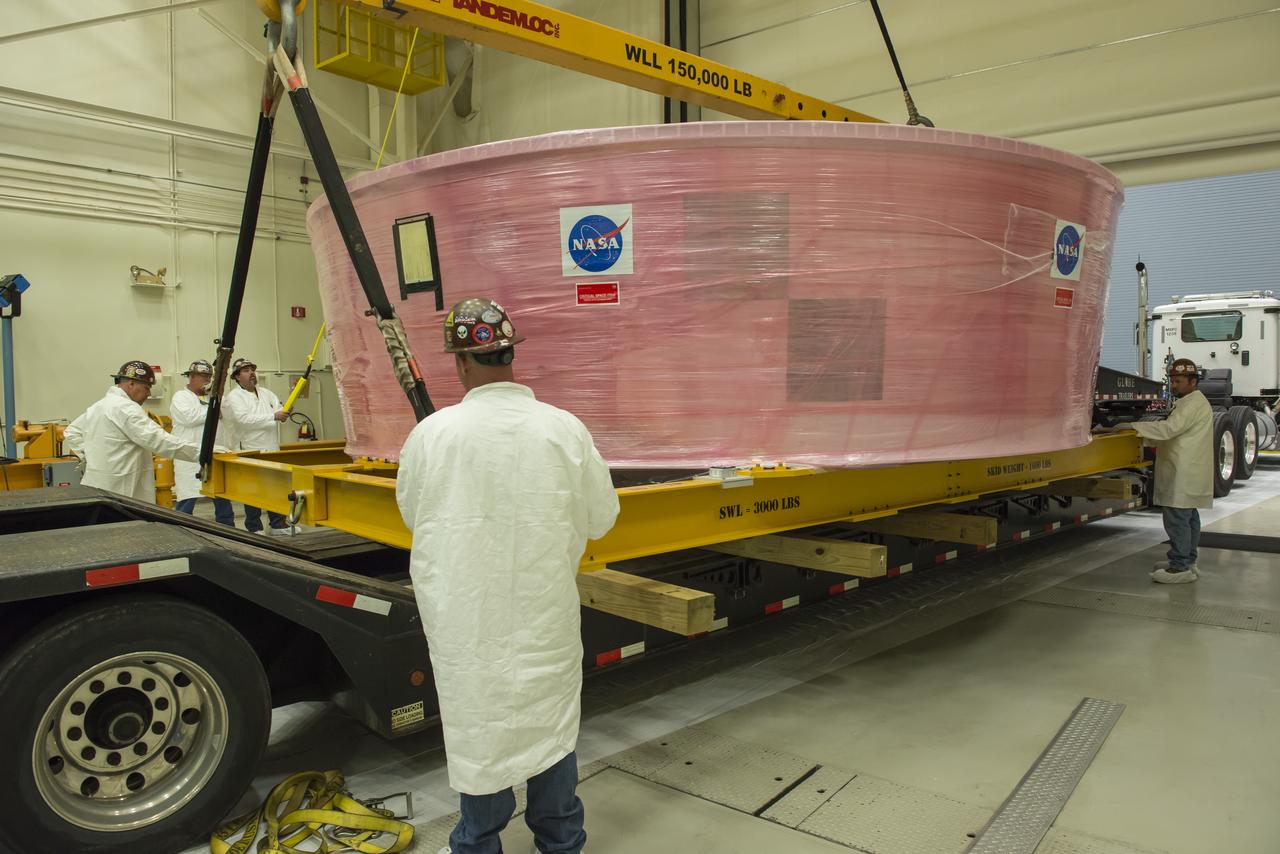
The Orion Stage Adapter flight hardware is prepared for the move to Redstone Airfield where the NASA Guppy aircraft will pick up the hardware and take the unit to Kennedy Space Center (KSC)
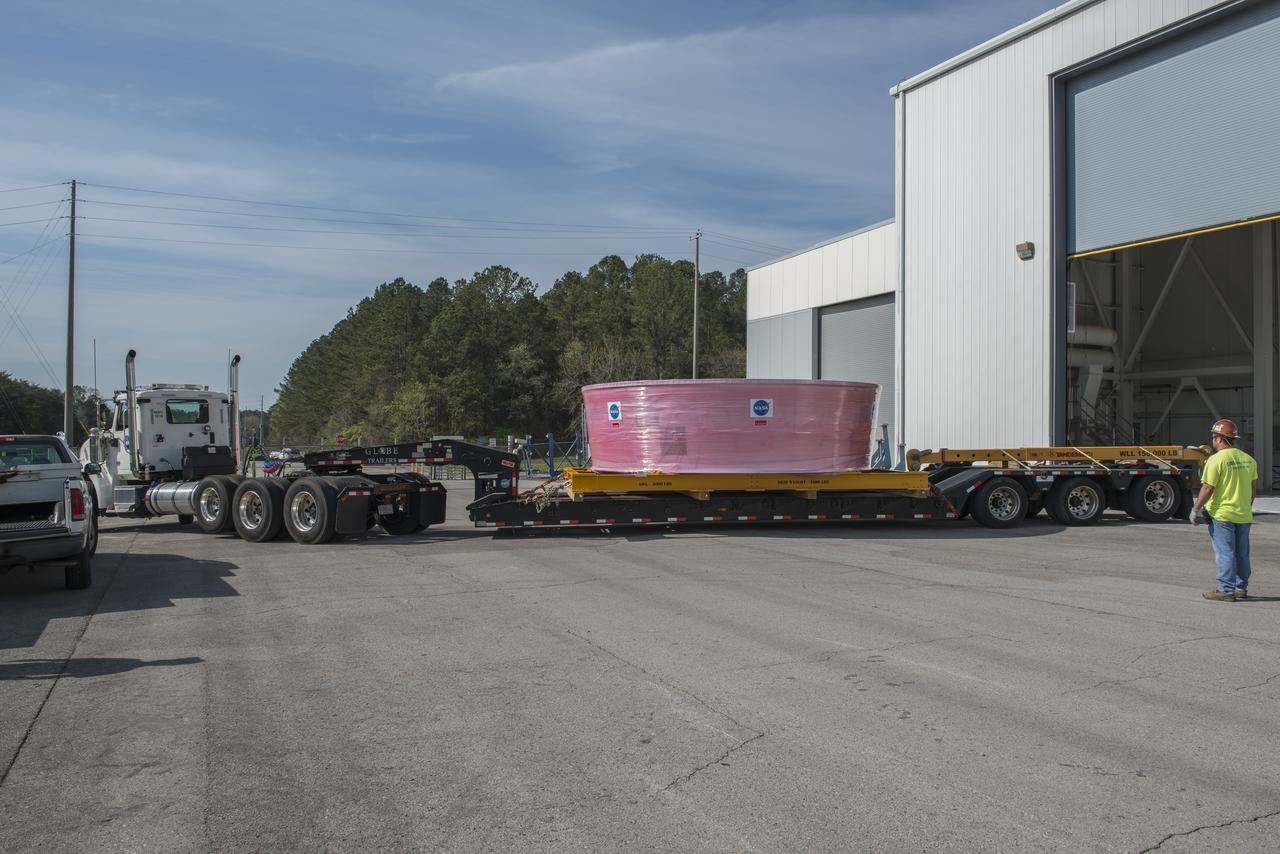
The Orion Stage Adapter flight hardware is prepared for the move to Redstone Airfield where the NASA Guppy aircraft will pick up the hardware and take the unit to Kennedy Space Center (KSC)

The Orion Stage Adapter flight hardware is prepared for the move to Redstone Airfield where the NASA Guppy aircraft will pick up the hardware and take the unit to Kennedy Space Center (KSC)
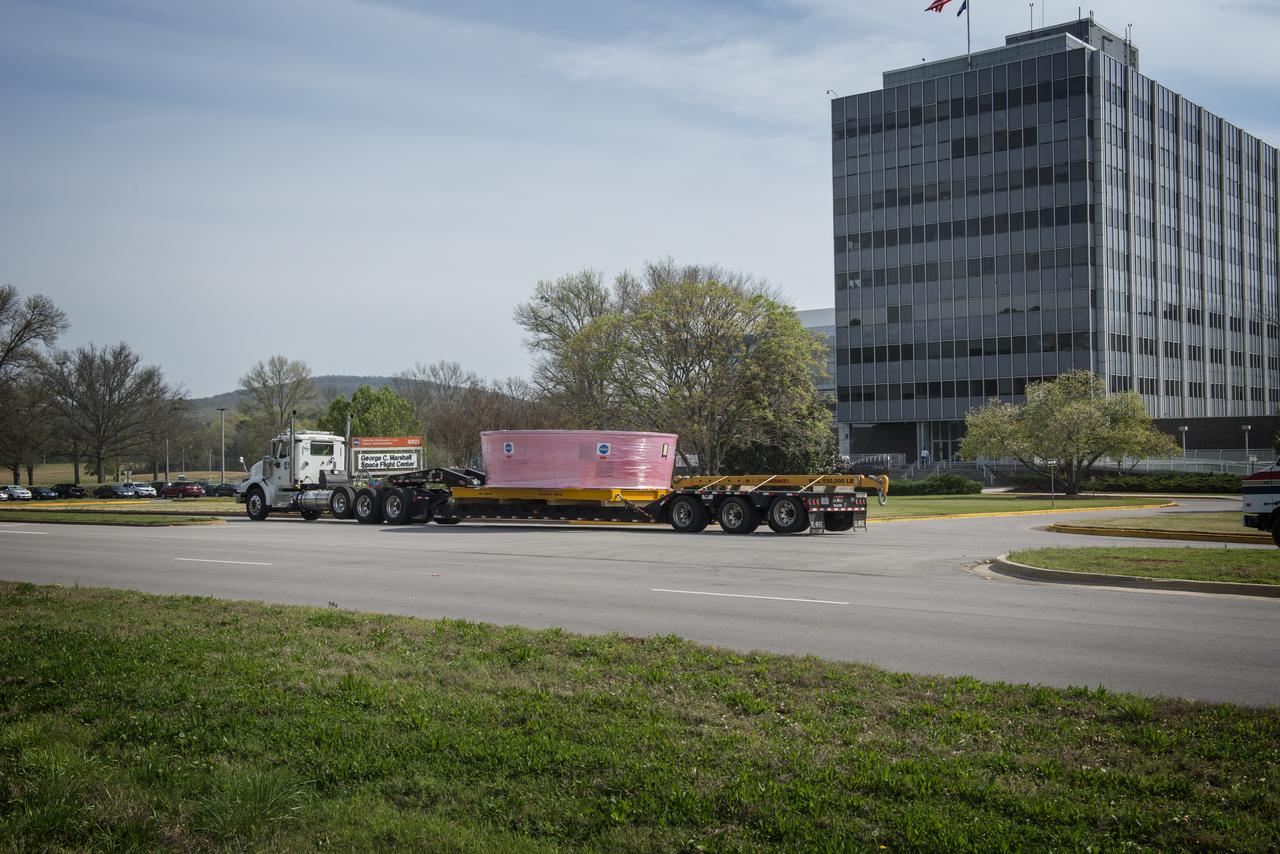
The Orion Stage Adapter flight hardware is prepared for the move to Redstone Airfield where the NASA Guppy aircraft will pick up the hardware and take the unit to Kennedy Space Center (KSC)
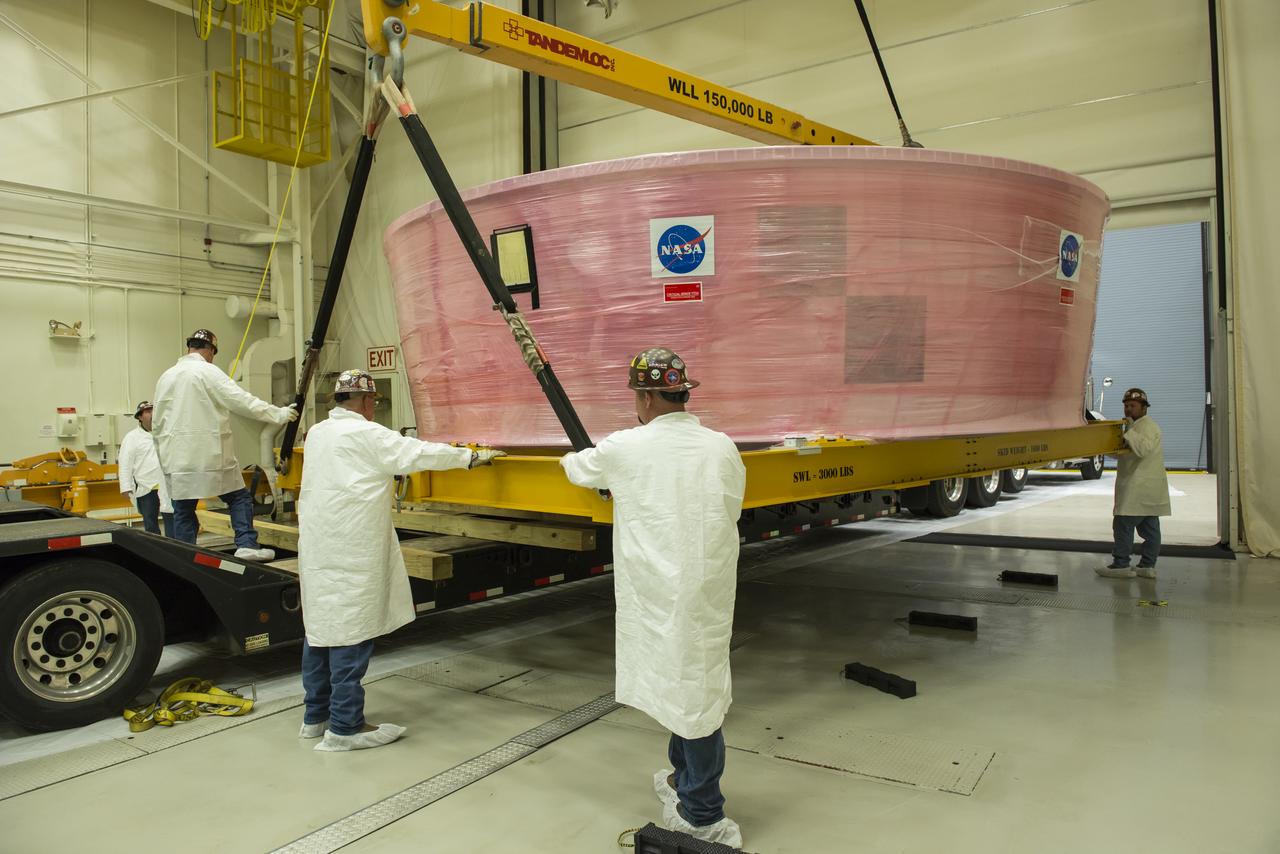
The Orion Stage Adapter flight hardware is prepared for the move to Redstone Airfield where the NASA Guppy aircraft will pick up the hardware and take the unit to Kennedy Space Center (KSC)
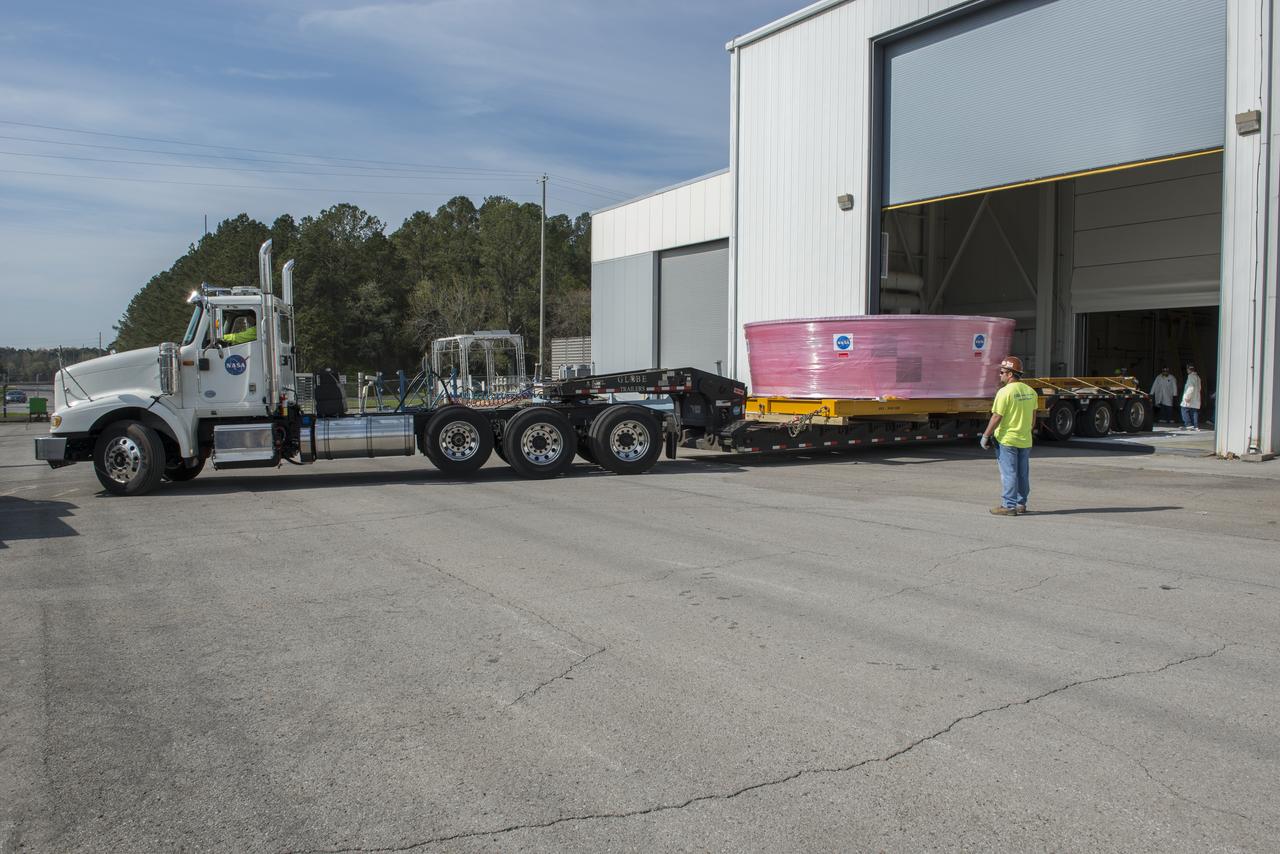
The Orion Stage Adapter flight hardware is prepared for the move to Redstone Airfield where the NASA Guppy aircraft will pick up the hardware and take the unit to Kennedy Space Center (KSC)
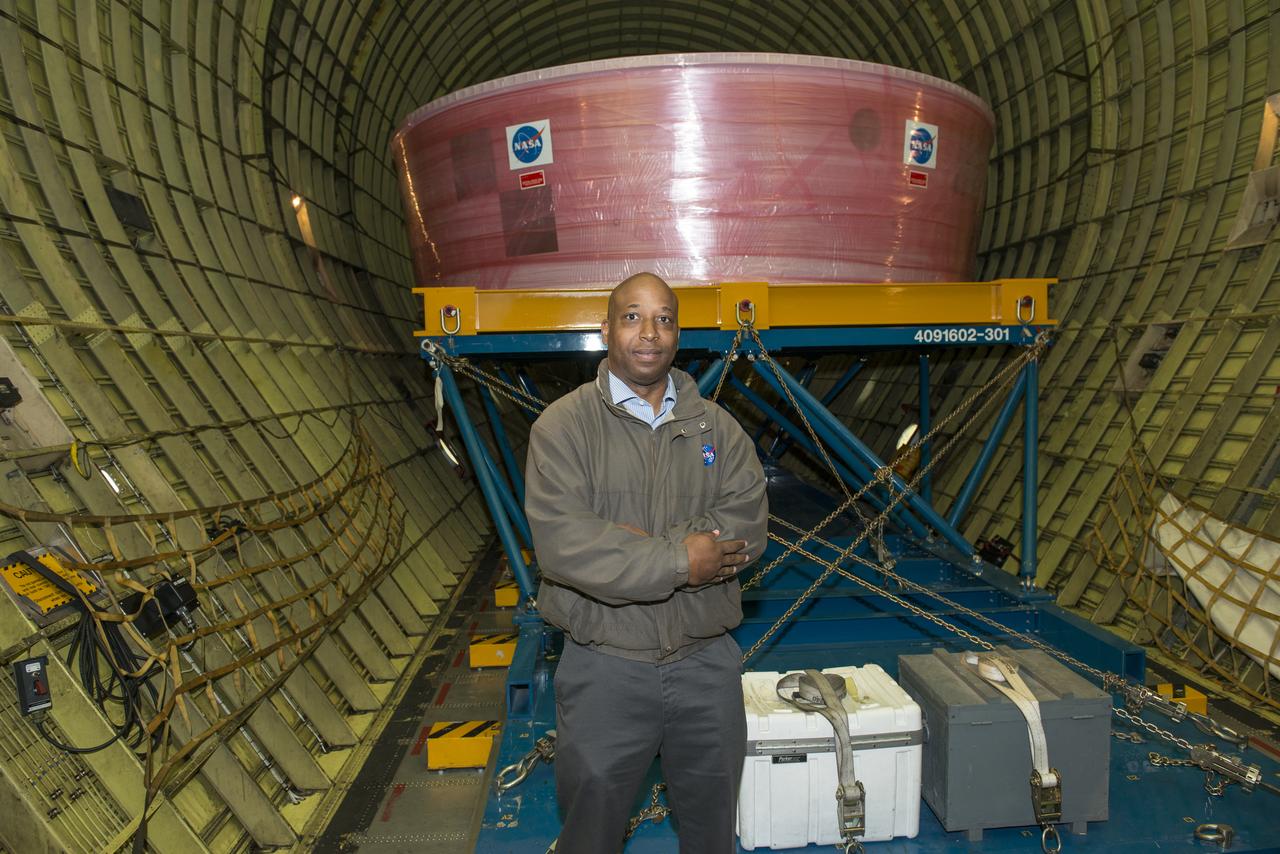
NASA's Super Guppy aircraft arrives to the U.S. Army’s Redstone Airfield in Huntsville, Alabama, April 2, to pick up flight hardware for NASA’s Space Launch System – its new, deep-space rocket that will enable astronauts to begin their journey to explore destinations far into the solar system. The Guppy will depart on Tuesday, April 3 to deliver the Orion stage adapter to NASA’s Kennedy Space Center in Florida for flight preparations. On Exploration Mission-1, the first integrated flight of the SLS and the Orion spacecraft, the adapter will connect Orion to the rocket and carry 13 CubeSats as secondary payloads. Rumaasha Maasha stands in front of the Orion stage adapter in the cargo hold of NASA's Super Guppy aircraft. The Orion stage adapter, the top of the rocket that connects the Space Lauch System to Orion, will carry 13 CubeSats as secondary payloads on Exploration Mission-1, the first integrated flight of SLS and the Orion spacecraft. Guppy transported the adapter to Kennedy Space Center April 3.
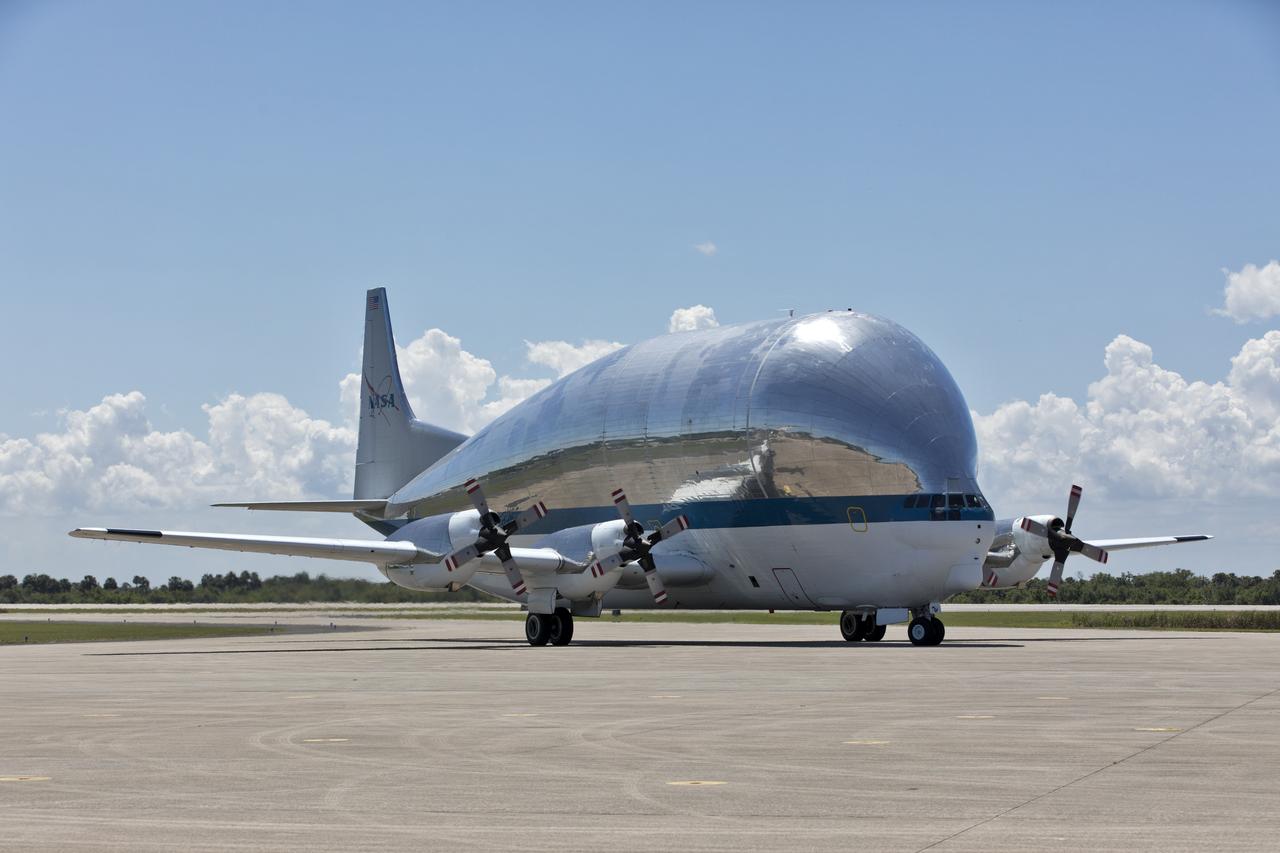
NASA's Super Guppy aircraft taxies onto the tarmac after touching down at the Shuttle Landing Facility at the agency's Kennedy Space Center in Florida. The Super Guppy is carrying the Orion Stage Adapter (OSA), the second flight-hardware section of NASA's Space Launch System (SLS) rocket that has arrived at Kennedy. The OSA will connect the Orion spacecraft to the upper part of the SLS rocket, the interim cryogenic propulsion stage (ICPS). Both the OSA and ICPS are being stored for processing in the center's Space Station Processing Facility in preparation for Exploration Mission-1, the first uncrewed, integrated launch of the SLS rocket and Orion spacecraft.

NASA's Super Guppy aircraft touches down at the Shuttle Landing Facility at the agency's Kennedy Space Center in Florida. The Super Guppy is carrying the Orion Stage Adapter (OSA), the second flight-hardware section of NASA's Space Launch System (SLS) rocket that has arrived at Kennedy. The OSA will connect the Orion spacecraft to the upper part of the SLS rocket, the interim cryogenic propulsion stage (ICPS). Both the OSA and ICPS are being stored for processing in the center's Space Station Processing Facility in preparation for Exploration Mission-1, the first uncrewed, integrated launch of the SLS rocket and Orion spacecraft.
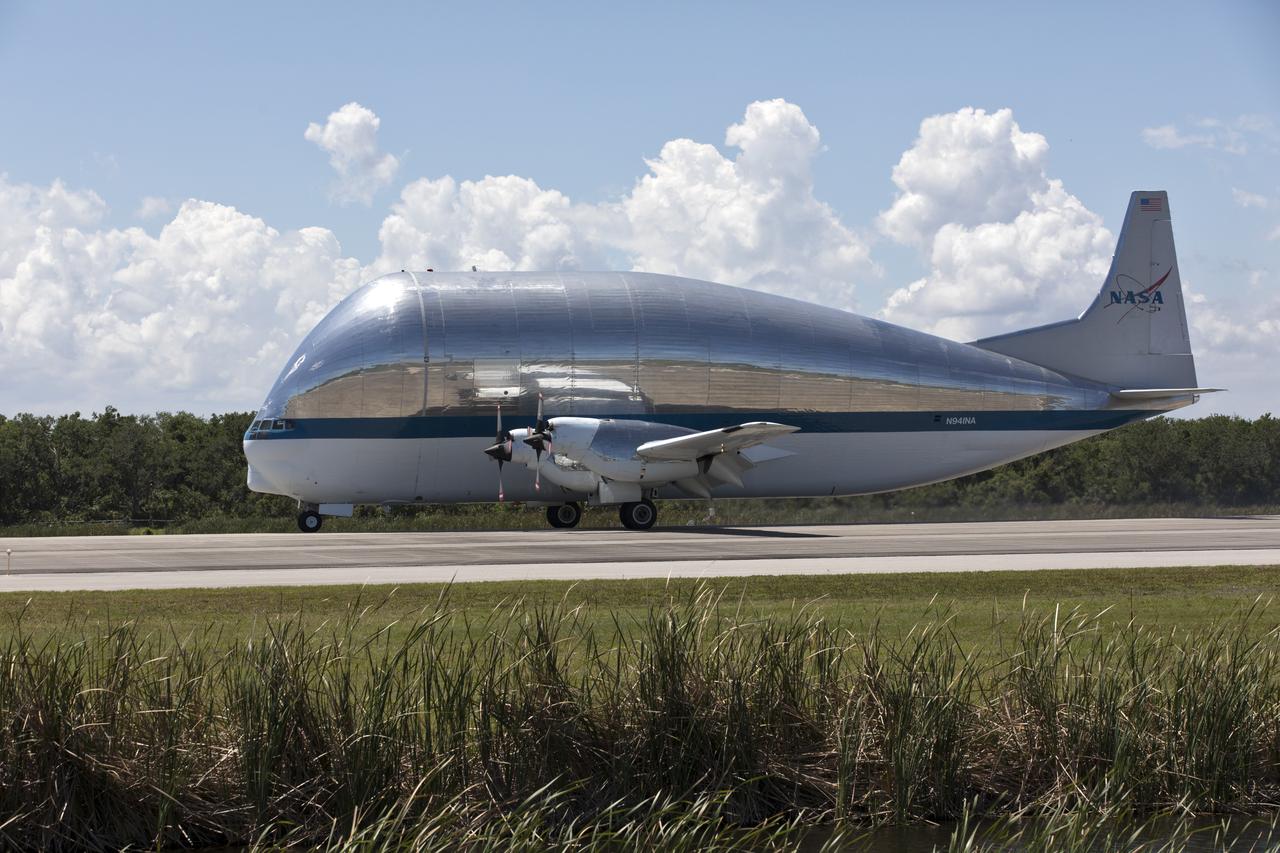
NASA's Super Guppy aircraft glides to a stop at the Shuttle Landing Facility at the agency's Kennedy Space Center in Florida. The Super Guppy is carrying the Orion Stage Adapter (OSA), the second flight-hardware section of NASA's Space Launch System (SLS) rocket that has arrived at Kennedy. The OSA will connect the Orion spacecraft to the upper part of the SLS rocket, the interim cryogenic propulsion stage (ICPS). Both the OSA and ICPS are being stored for processing in the center's Space Station Processing Facility in preparation for Exploration Mission-1, the first uncrewed, integrated launch of the SLS rocket and Orion spacecraft.
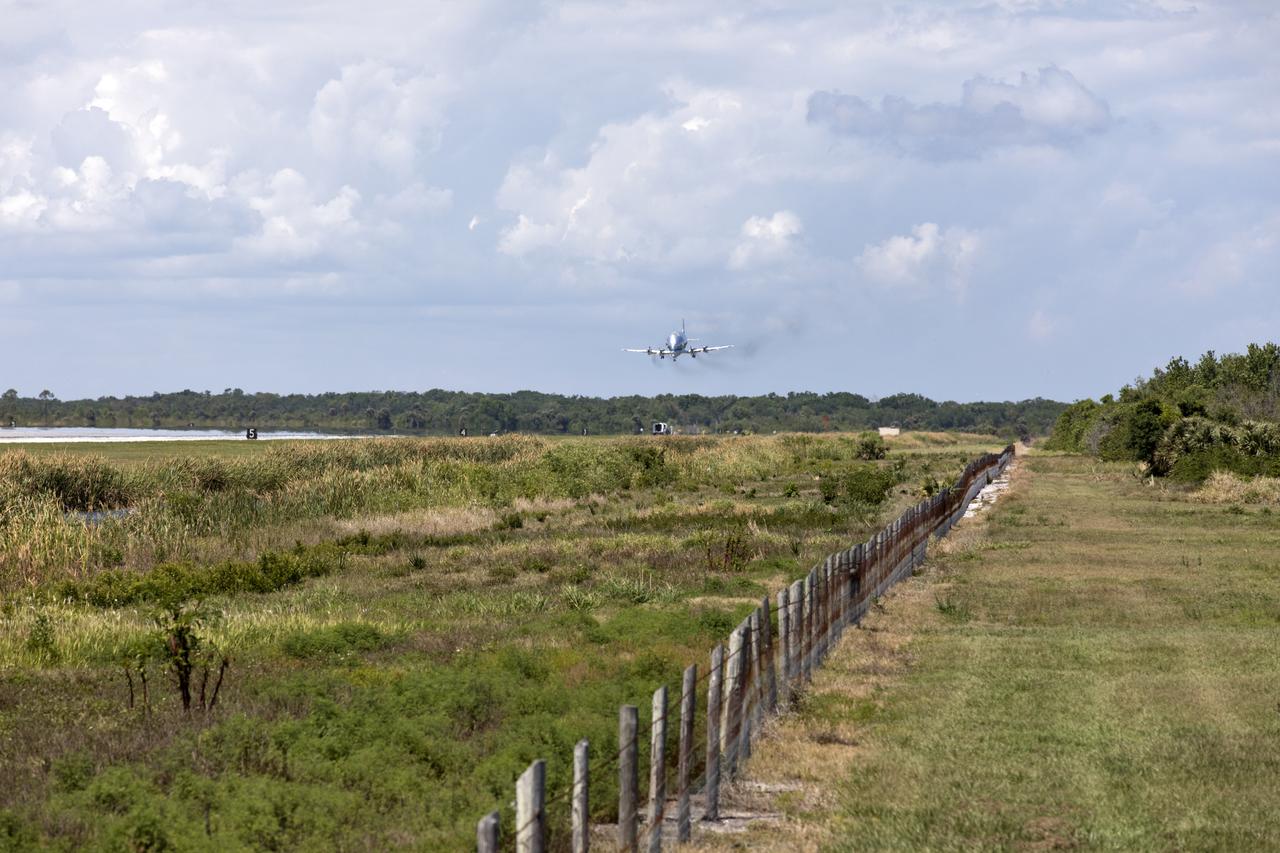
NASA's Super Guppy aircraft prepares to touch down at the Shuttle Landing Facility at the agency's Kennedy Space Center in Florida. The Super Guppy is carrying the Orion Stage Adapter (OSA), the second flight-hardware section of NASA's Space Launch System (SLS) rocket that has arrived at Kennedy. The OSA will connect the Orion spacecraft to the upper part of the SLS rocket, the interim cryogenic propulsion stage (ICPS). Both the OSA and ICPS are being stored for processing in the center's Space Station Processing Facility in preparation for Exploration Mission-1, the first uncrewed, integrated launch of the SLS rocket and Orion spacecraft.
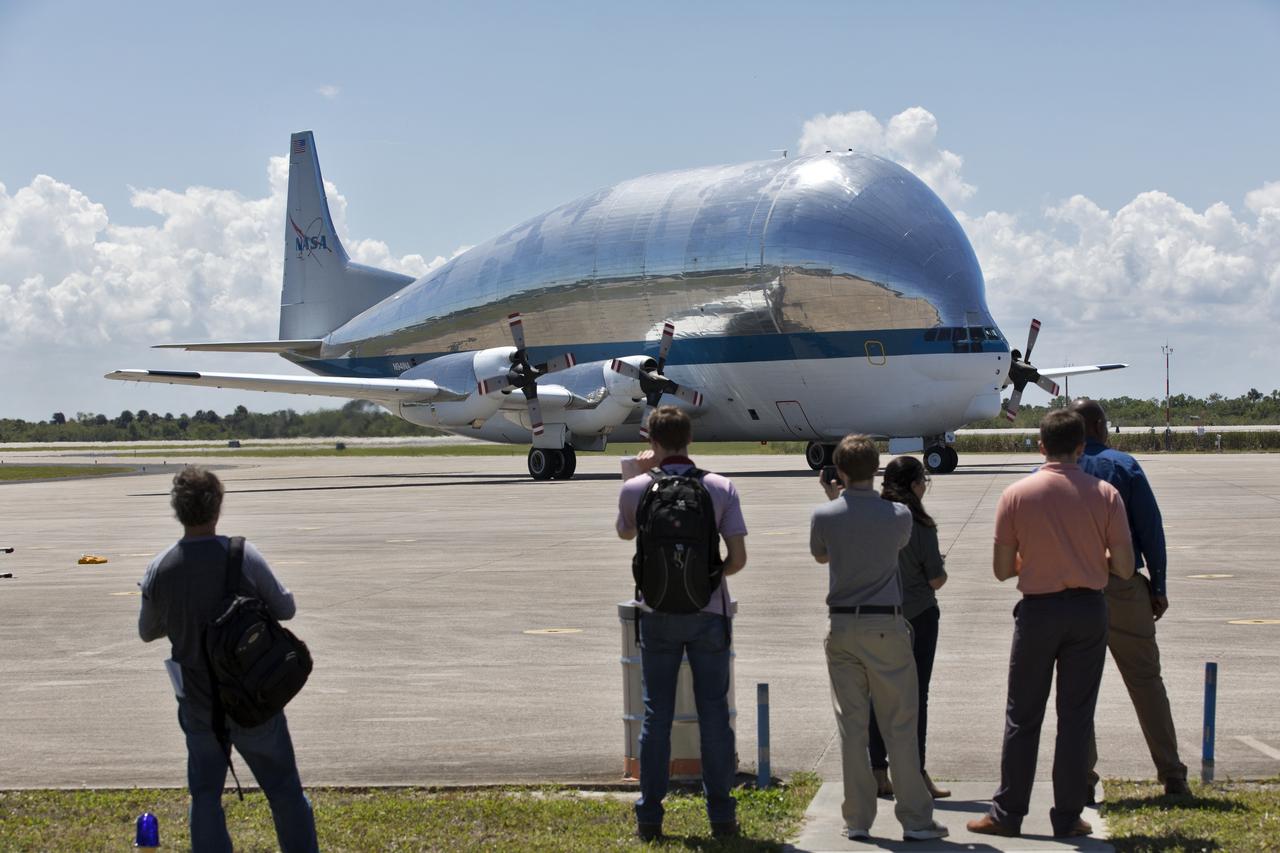
NASA's Super Guppy aircraft taxies onto the tarmac after touching down at the Shuttle Landing Facility at the agency's Kennedy Space Center in Florida. The Super Guppy is carrying the Orion Stage Adapter (OSA), the second flight-hardware section of NASA's Space Launch System (SLS) rocket that has arrived at Kennedy. The OSA will connect the Orion spacecraft to the upper part of the SLS rocket, the interim cryogenic propulsion stage (ICPS). Both the OSA and ICPS are being stored for processing in the center's Space Station Processing Facility in preparation for Exploration Mission-1, the first uncrewed, integrated launch of the SLS rocket and Orion spacecraft.
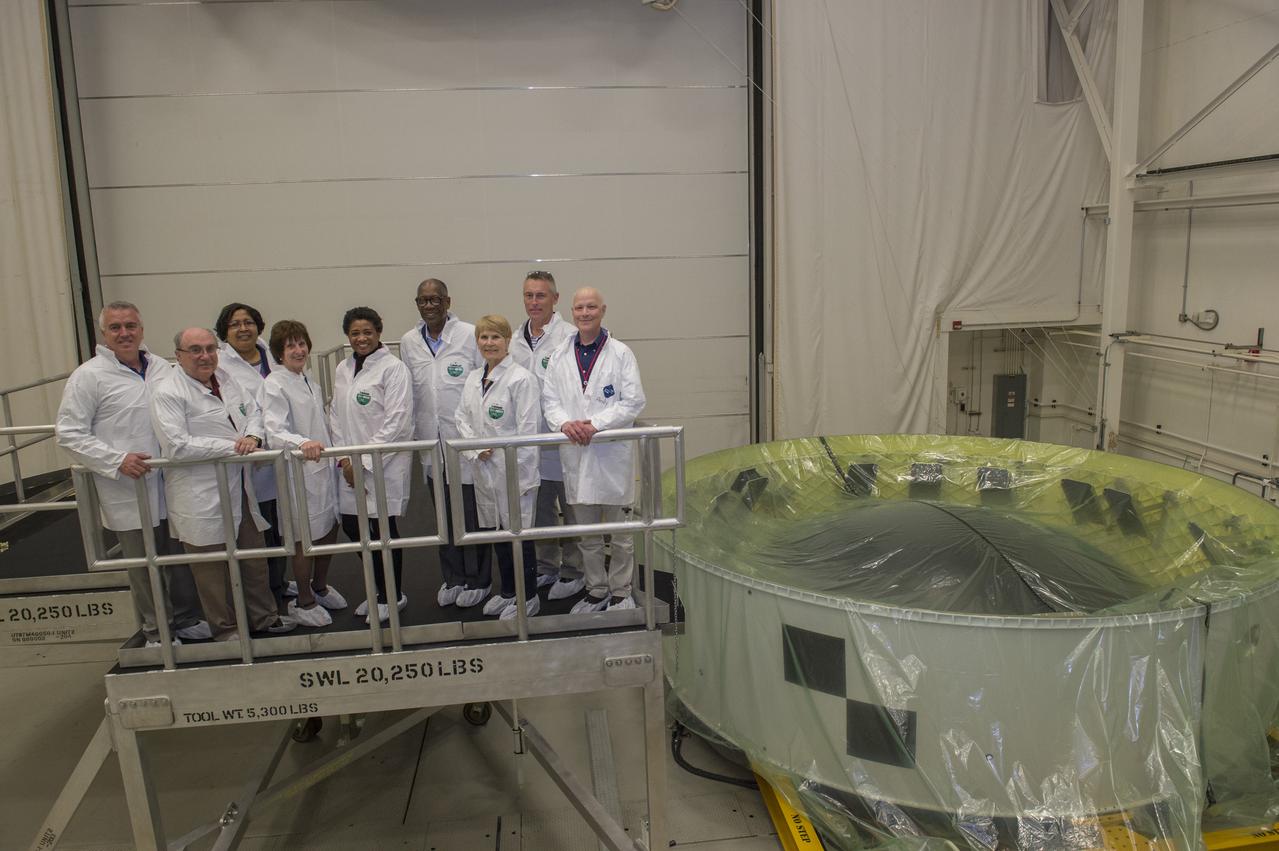
ASAP, (Aerospace Safety Advisory Panel), members, Dr. Sandra Magnus, Dr. Donald P. McErlean, Dr. George Nield, Captain Christopher Saindon, Mr. David West, Dr. Patricia Sanders, Ms. Carol Hamilton, Ms. Evette Whatley, Ms. Paula Frankel, view LVSA, (Launch Vehicle Stage Adapter), and Orion Stage Adapter. Members were escorted to buildings 4707 and 4708 by Andrew Schorr, Deputy Manager for Spacecraft/Payload Integration & Evolution Office (SPIE)
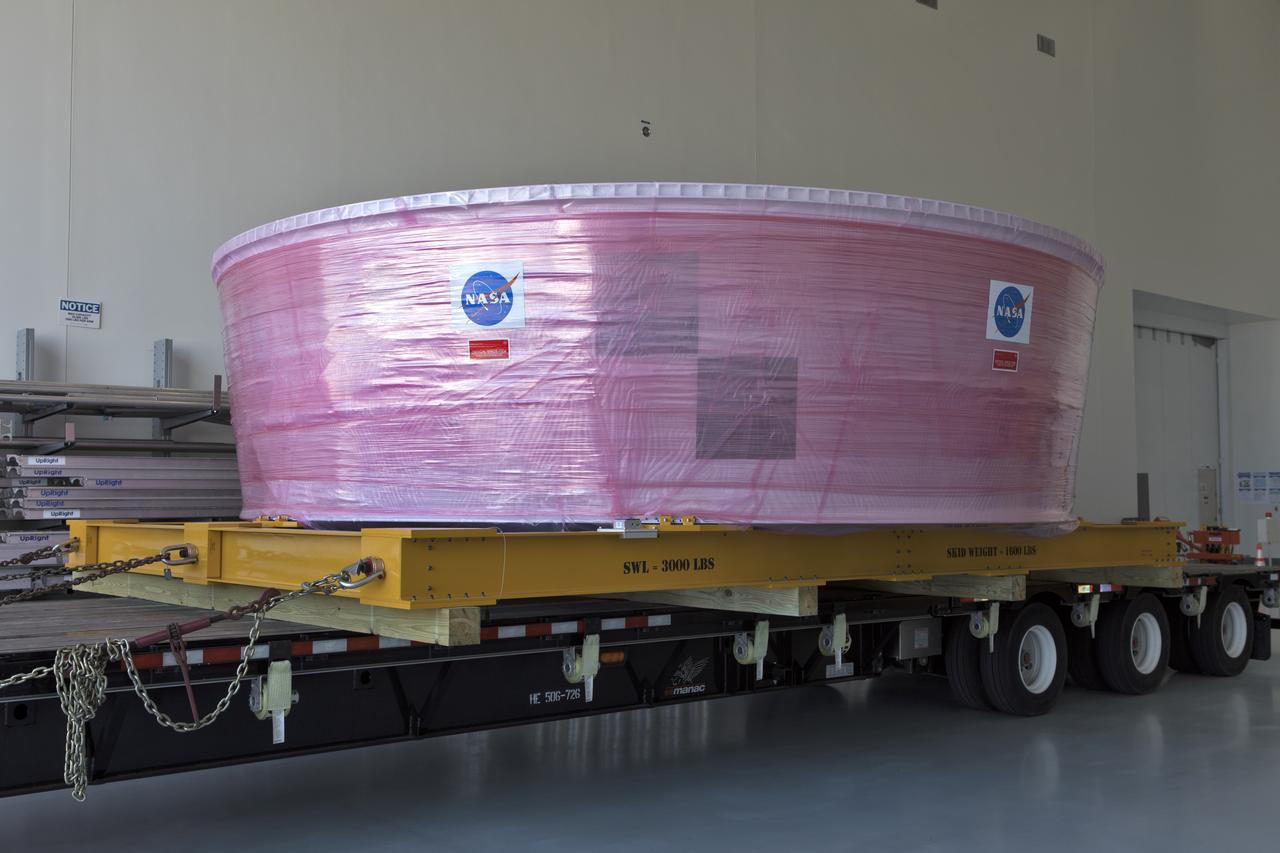
The Orion Stage Adapter (OSA), secured on flatbed transporter, is inside the low bay at the Space Station Processing Facility (SSPF) at NASA's Kennedy Space Center in Florida. The OSA is the second flight-hardware section of the agency's Space Launch System (SLS) rocket to arrive at Kennedy. The OSA will connect the Orion spacecraft to the upper part of the SLS, the interim cryogenic propulsion stage (ICPS). Both the OSA and ICPS are being stored for processing in the SSPF in preparation for Exploration Mission-1, the first uncrewed, integrated launch of the SLS rocket and Orion spacecraft.
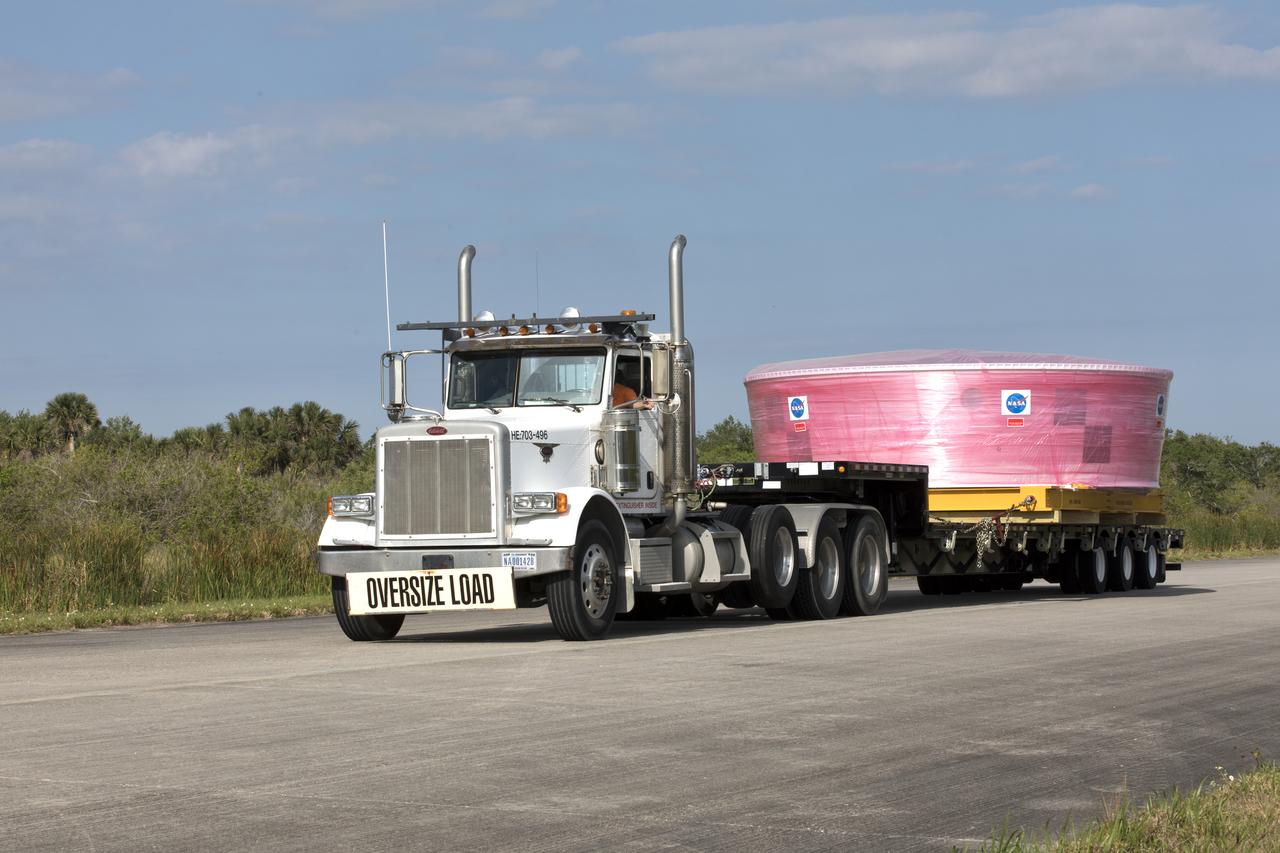
The Orion Stage Adapter (OSA) is secured on a flatbed transporter for the move to the Space Station Processing Facility (SSPF) at NASA's Kennedy Space Center in Florida. The OSA is the second flight-hardware section of the agency's Space Launch System (SLS) rocket to arrive at Kennedy. The OSA will connect the Orion spacecraft to the upper part of the SLS, the interim cryogenic propulsion stage (ICPS). Both the OSA and ICPS are being stored for processing in the SSPF in preparation for Exploration Mission-1, the first uncrewed, integrated launch of the SLS rocket and Orion spacecraft.
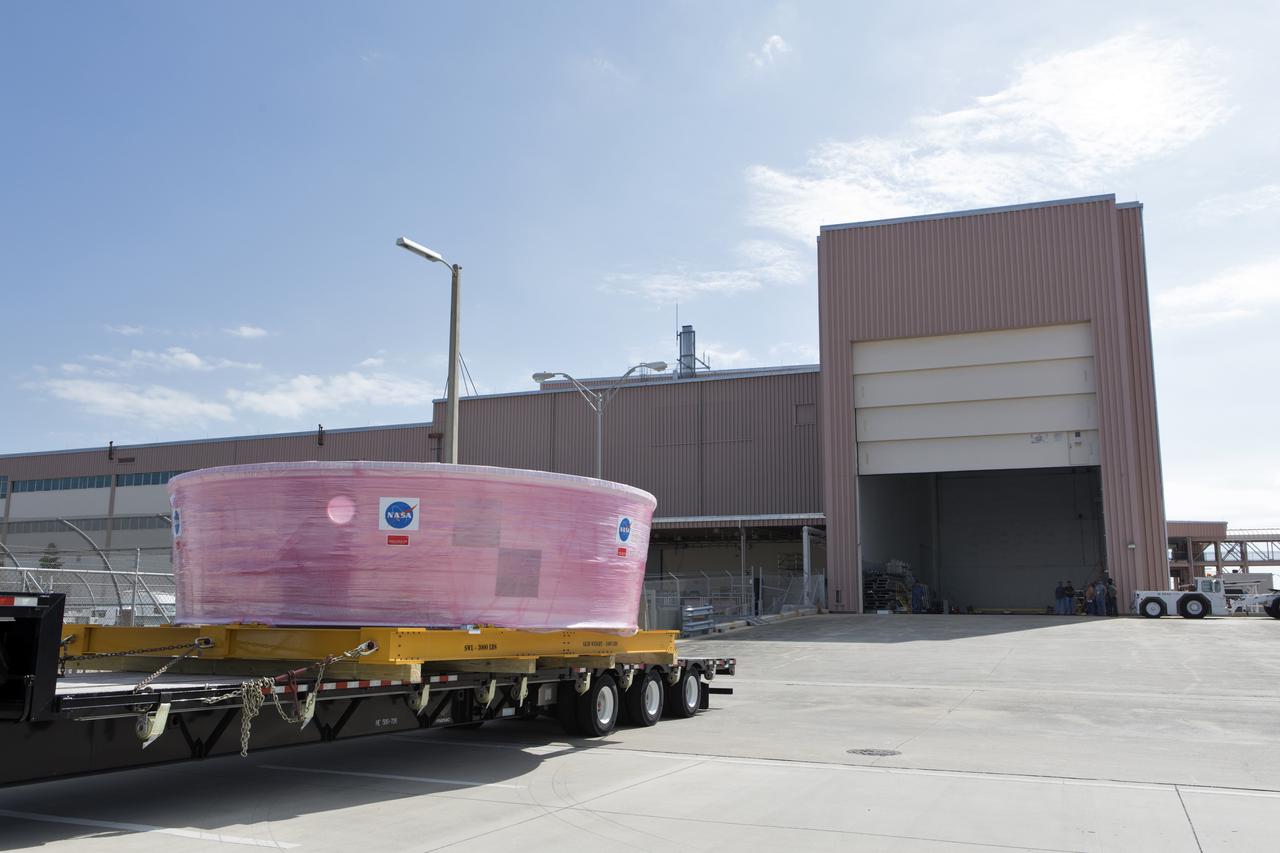
The Orion Stage Adapter (OSA), secured on flatbed transporter, arrives at the entrance to the airlock at the Space Station Processing Facility (SSPF) at NASA's Kennedy Space Center in Florida. The OSA is the second flight-hardware section of the agency's Space Launch System (SLS) rocket to arrive at Kennedy. The OSA will connect the Orion spacecraft to the upper part of the SLS, the interim cryogenic propulsion stage (ICPS). Both the OSA and ICPS are being stored for processing in the SSPF in preparation for Exploration Mission-1, the first uncrewed, integrated launch of the SLS rocket and Orion spacecraft.
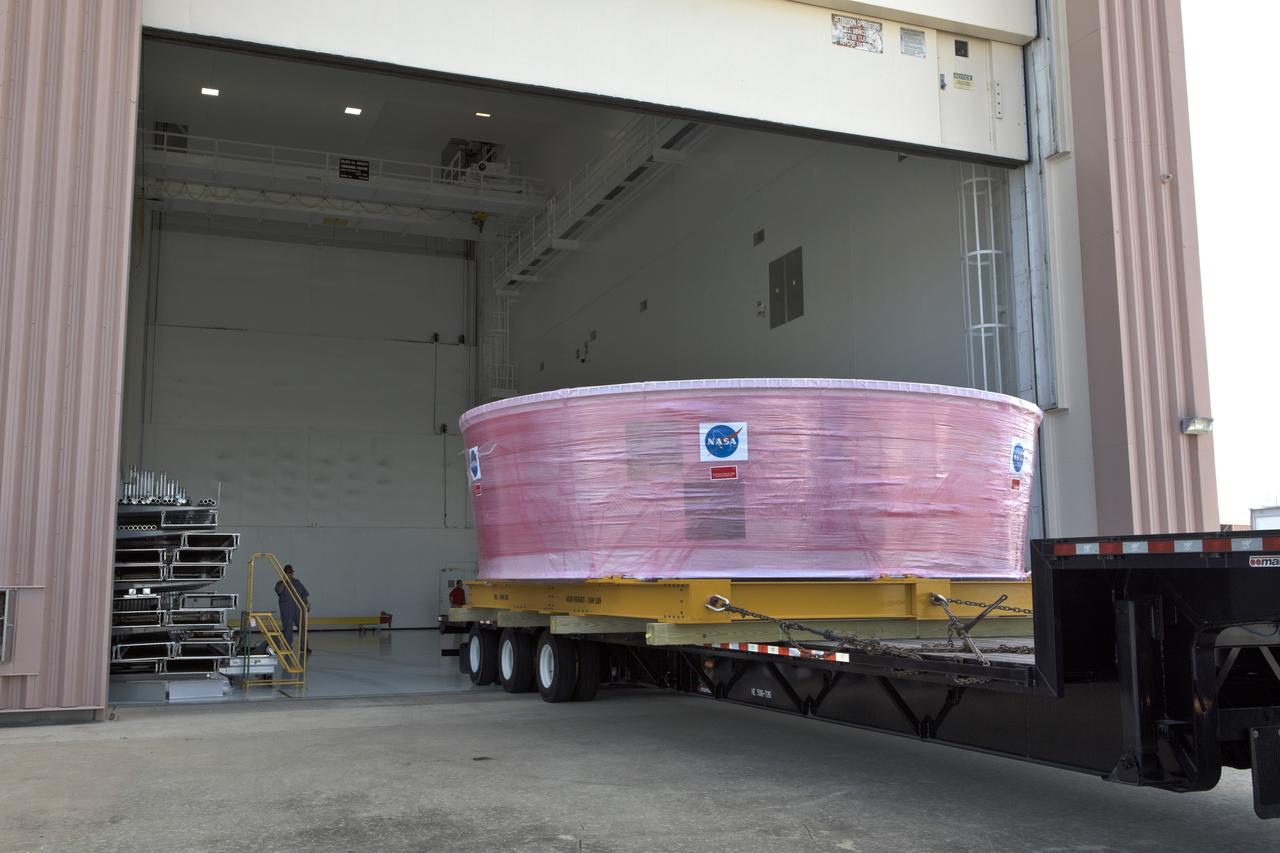
The Orion Stage Adapter (OSA), secured on flatbed transporter, is moved into the airlock at the Space Station Processing Facility (SSPF) at NASA's Kennedy Space Center in Florida. The OSA is the second flight-hardware section of the agency's Space Launch System (SLS) rocket to arrive at Kennedy. The OSA will connect the Orion spacecraft to the upper part of the SLS, the interim cryogenic propulsion stage (ICPS). Both the OSA and ICPS are being stored for processing in the SSPF in preparation for Exploration Mission-1, the first uncrewed, integrated launch of the SLS rocket and Orion spacecraft.
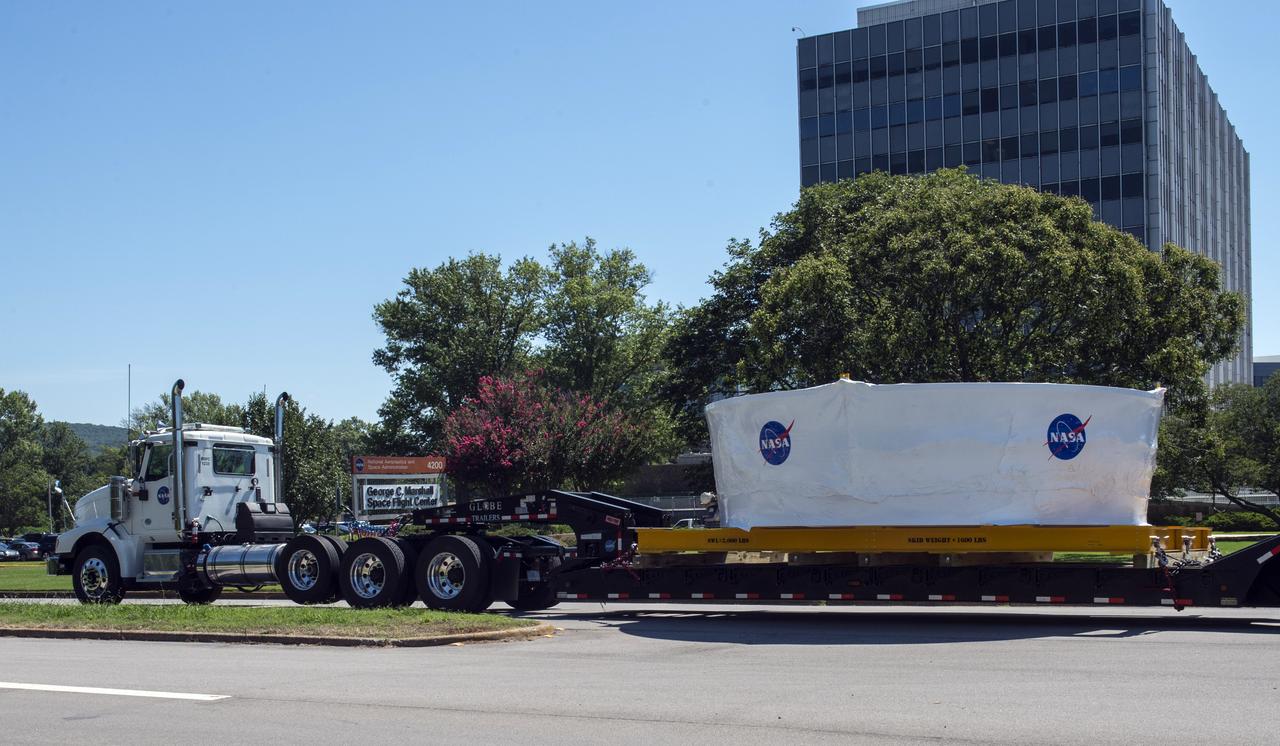
The Orion stage adapter being transported from Marshall Space Flight Center to Redstone Arsenal's airfield for transportation on NASA's Guppie aircraft to Denver, Colorado for further testing.
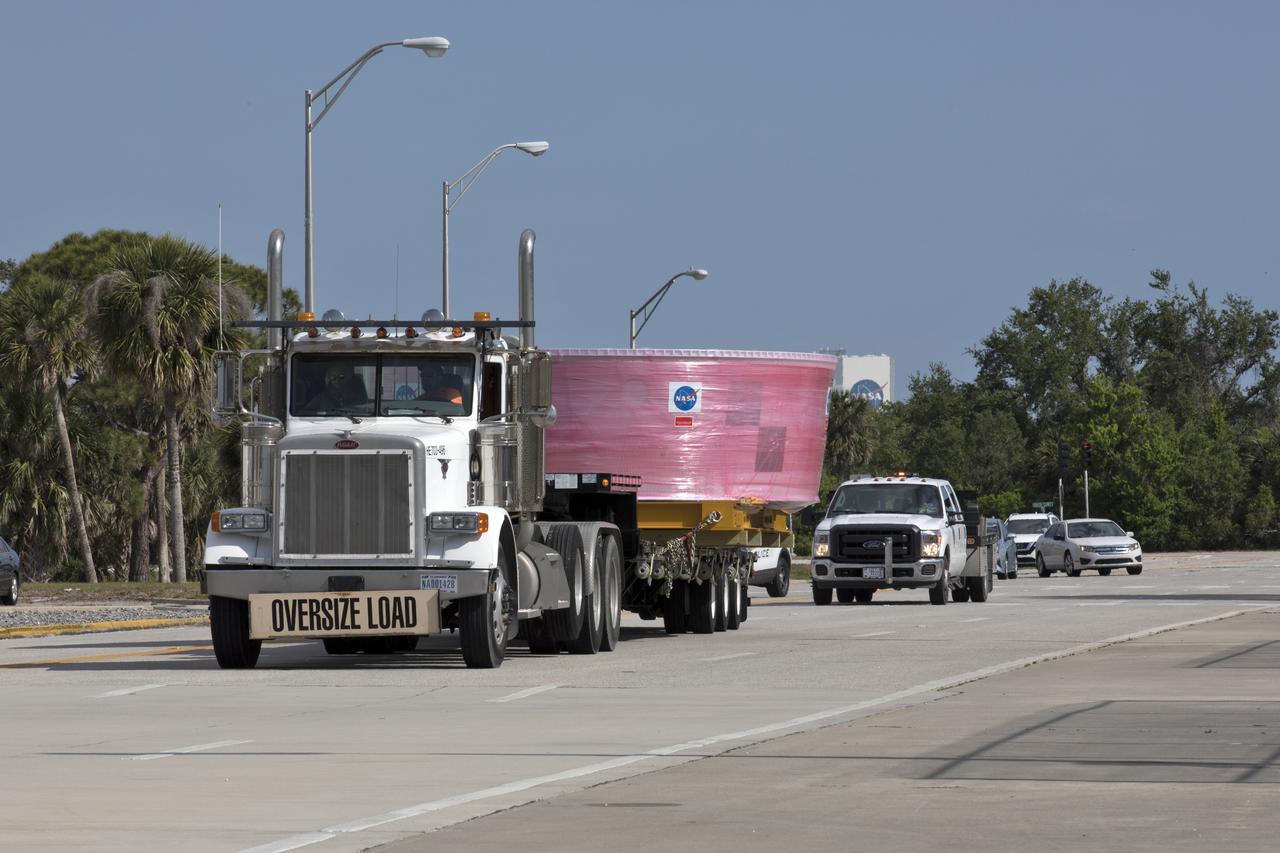
The Orion Stage Adapter (OSA), secured on flatbed transporter, is moved along State Road 3 to the Space Station Processing Facility (SSPF) at NASA's Kennedy Space Center in Florida. The OSA is the second flight-hardware section of the agency's Space Launch System (SLS) rocket to arrive at Kennedy. The OSA will connect the Orion spacecraft to the upper part of the SLS, the interim cryogenic propulsion stage (ICPS). Both the OSA and ICPS are being stored for processing in the SSPF in preparation for Exploration Mission-1, the first uncrewed, integrated launch of the SLS rocket and Orion spacecraft.
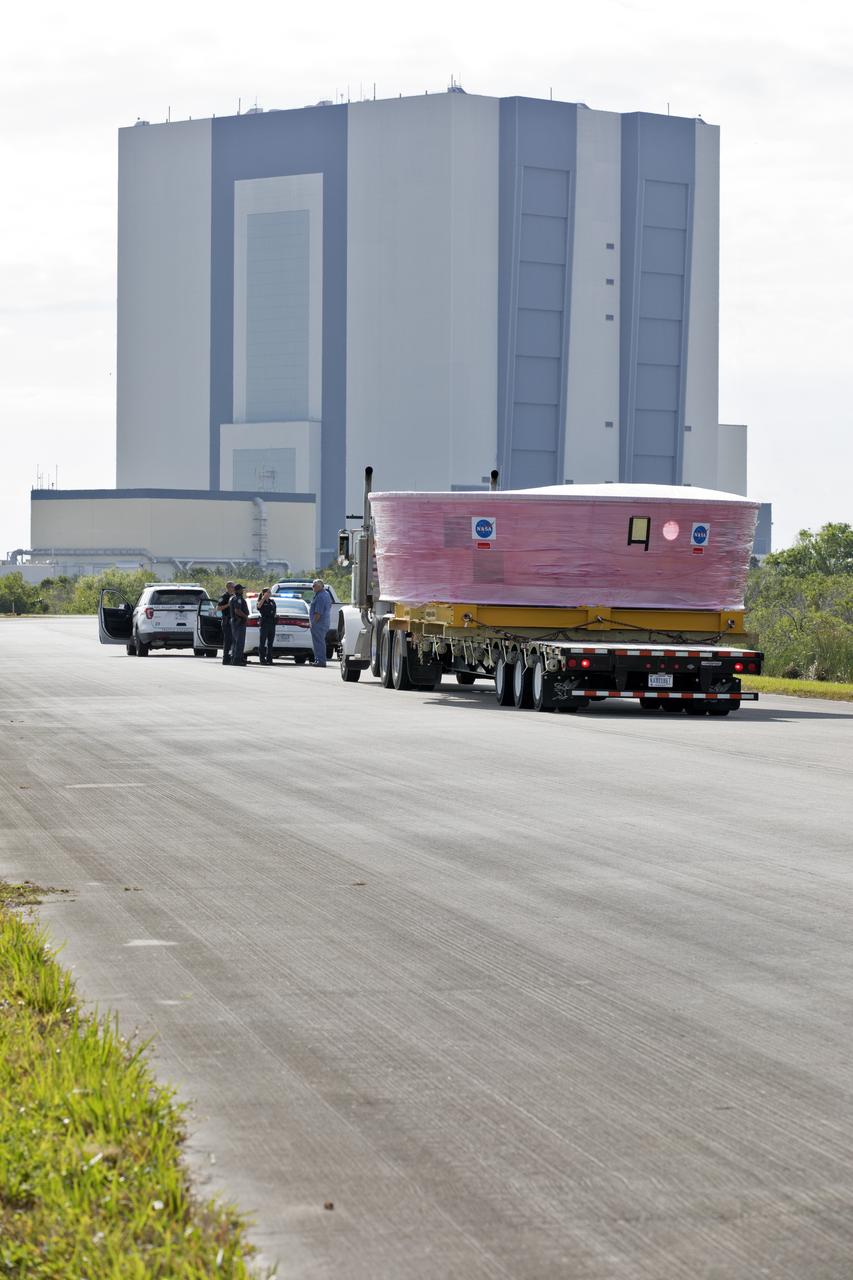
NASA Kennedy Space Center security officers prepare to escort the Orion Stage Adapter (OSA), secured on a flatbed transporter, along State Road 3 to the Space Station Processing Facility (SSPF) at NASA's Kennedy Space Center in Florida. The OSA is the second flight-hardware section of the agency's Space Launch System (SLS) rocket to arrive at Kennedy. The OSA will connect the Orion spacecraft to the upper part of the SLS, the interim cryogenic propulsion stage (ICPS). Both the OSA and ICPS are being stored for processing in the SSPF in preparation for Exploration Mission-1, the first uncrewed, integrated launch of the SLS rocket and Orion spacecraft.
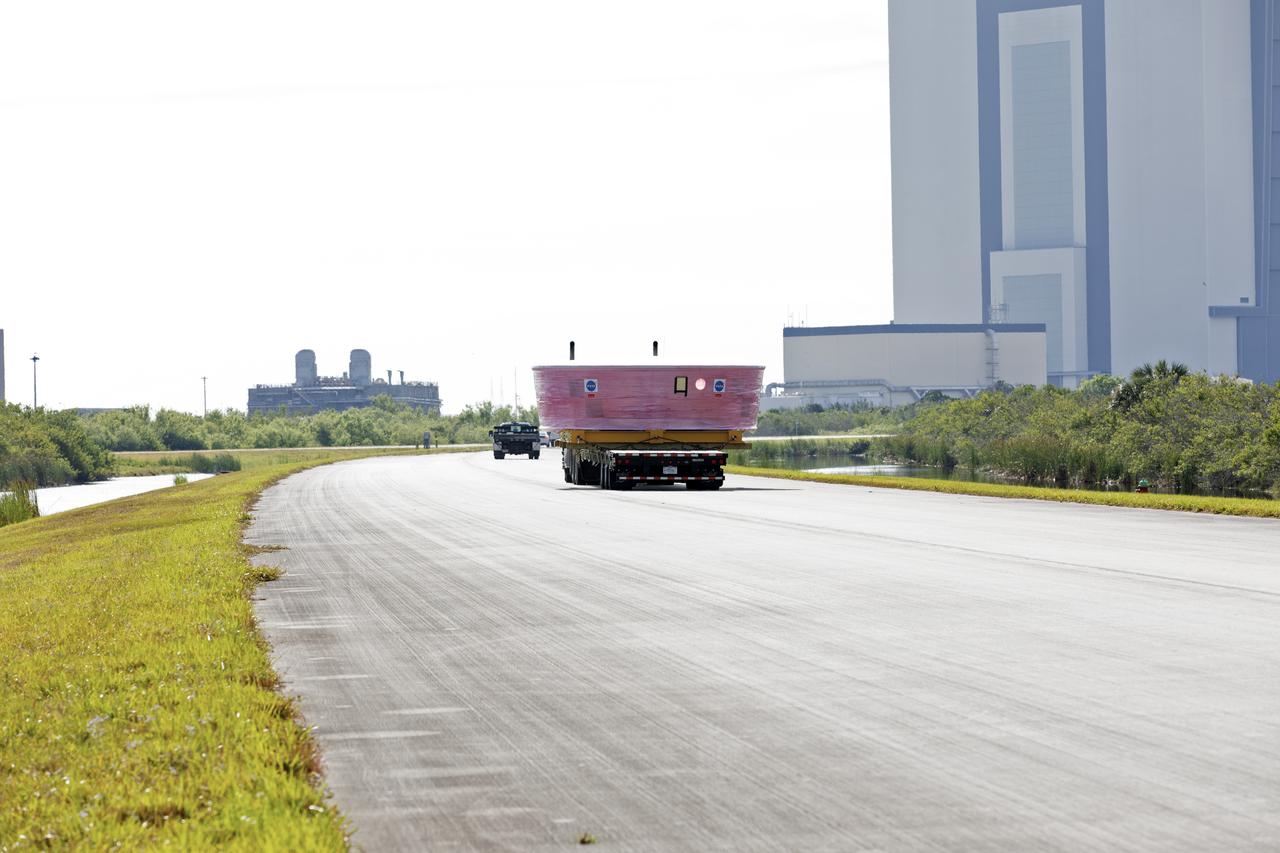
The Orion Stage Adapter (OSA), secured on a flatbed transporter, is moved along State Road 3 to the Space Station Processing Facility (SSPF) at NASA's Kennedy Space Center in Florida. The OSA is the second flight-hardware section of the agency's Space Launch System (SLS) rocket to arrive at Kennedy. The OSA will connect the Orion spacecraft to the upper part of the SLS, the interim cryogenic propulsion stage (ICPS). Both the OSA and ICPS are being stored for processing in the SSPF in preparation for Exploration Mission-1, the first uncrewed, integrated launch of the SLS rocket and Orion spacecraft.
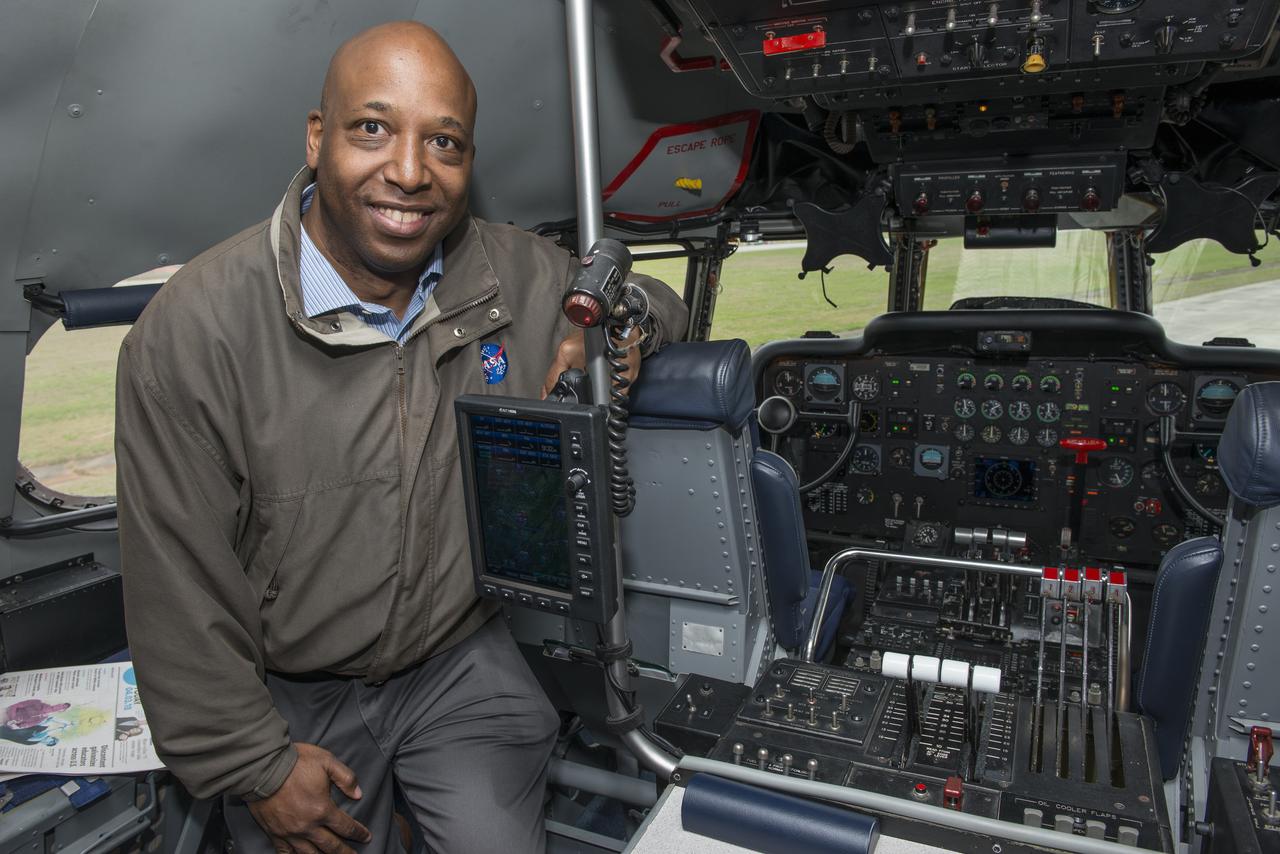
NASA's Super Guppy aircraft arrives to the U.S. Army’s Redstone Airfield in Huntsville, Alabama, April 2, to pick up flight hardware for NASA’s Space Launch System – its new, deep-space rocket that will enable astronauts to begin their journey to explore destinations far into the solar system. The Guppy will depart on Tuesday, April 3 to deliver the Orion stage adapter to NASA’s Kennedy Space Center in Florida for flight preparations. On Exploration Mission-1, the first integrated flight of the SLS and the Orion spacecraft, the adapter will connect Orion to the rocket and carry 13 CubeSats as secondary payloads. Rumaasha Maasha, an aerospace engineer in Marshall's Spacecraft & Vehicle Systems Department, tours the cockpit of NASA's Super Guppy aircraft April 3 when it landed at Marshall to pick up the Orion stage adapter for transportation to NASA's Kennedy Space Center. Maasha holds a master's degree in aerospace engineering, is a certified aviation maintenance tech and pilot and previously worked as a 747 loadmaster and airline refueler.
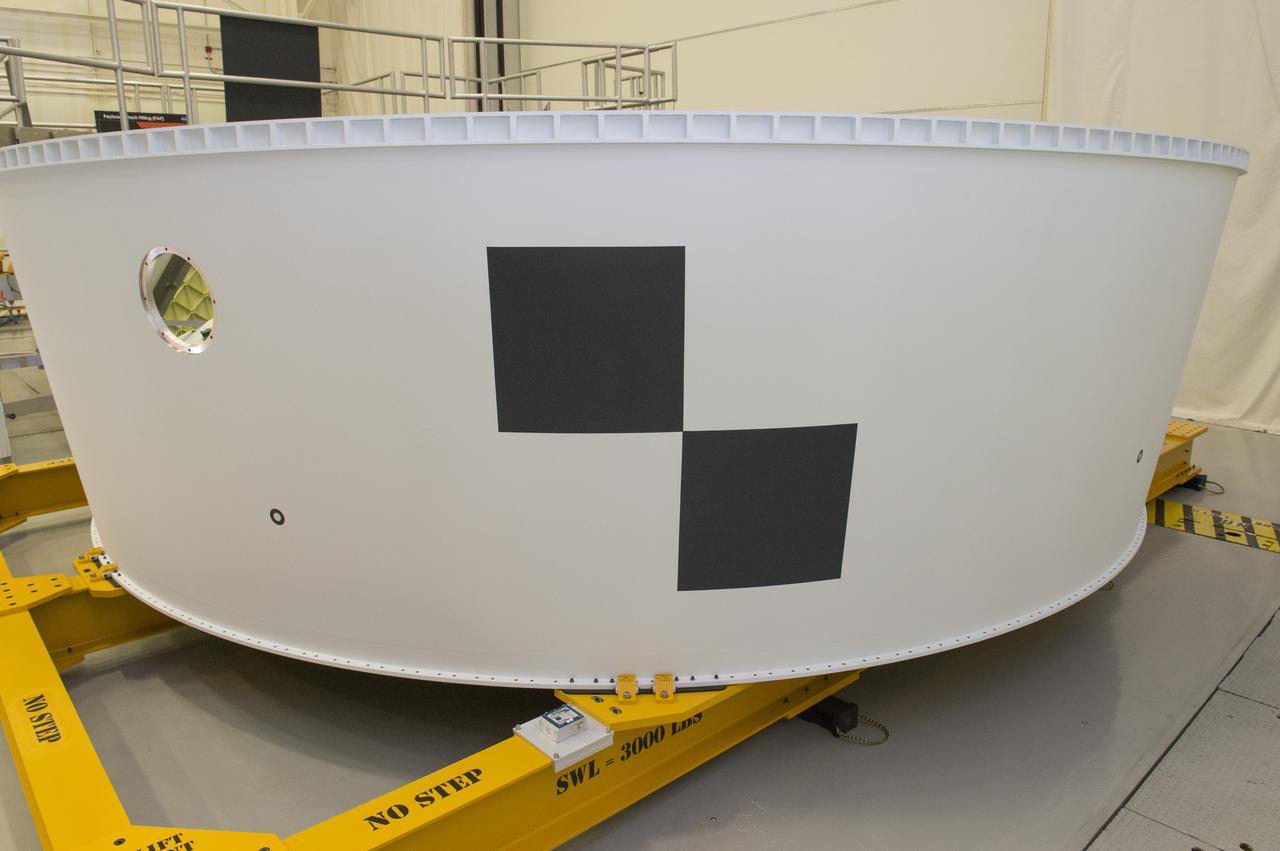
General overview and detail, Close-Out, photos of the SLS Orion Stage Adapter EM-1...exterior overall views (5)
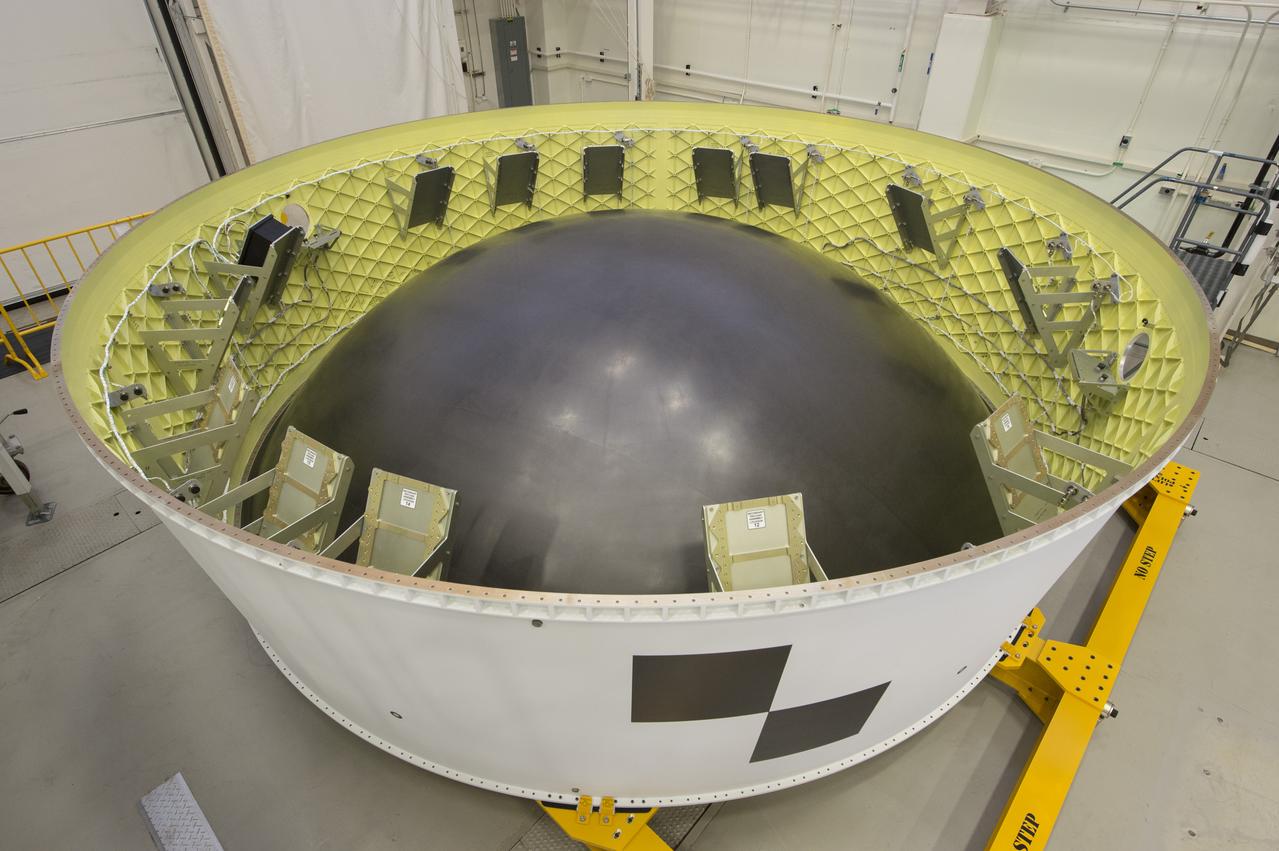
General overview and detail, Close-Out, photos of the SLS Orion Stage Adapter EM-1...exterior overall views (5)
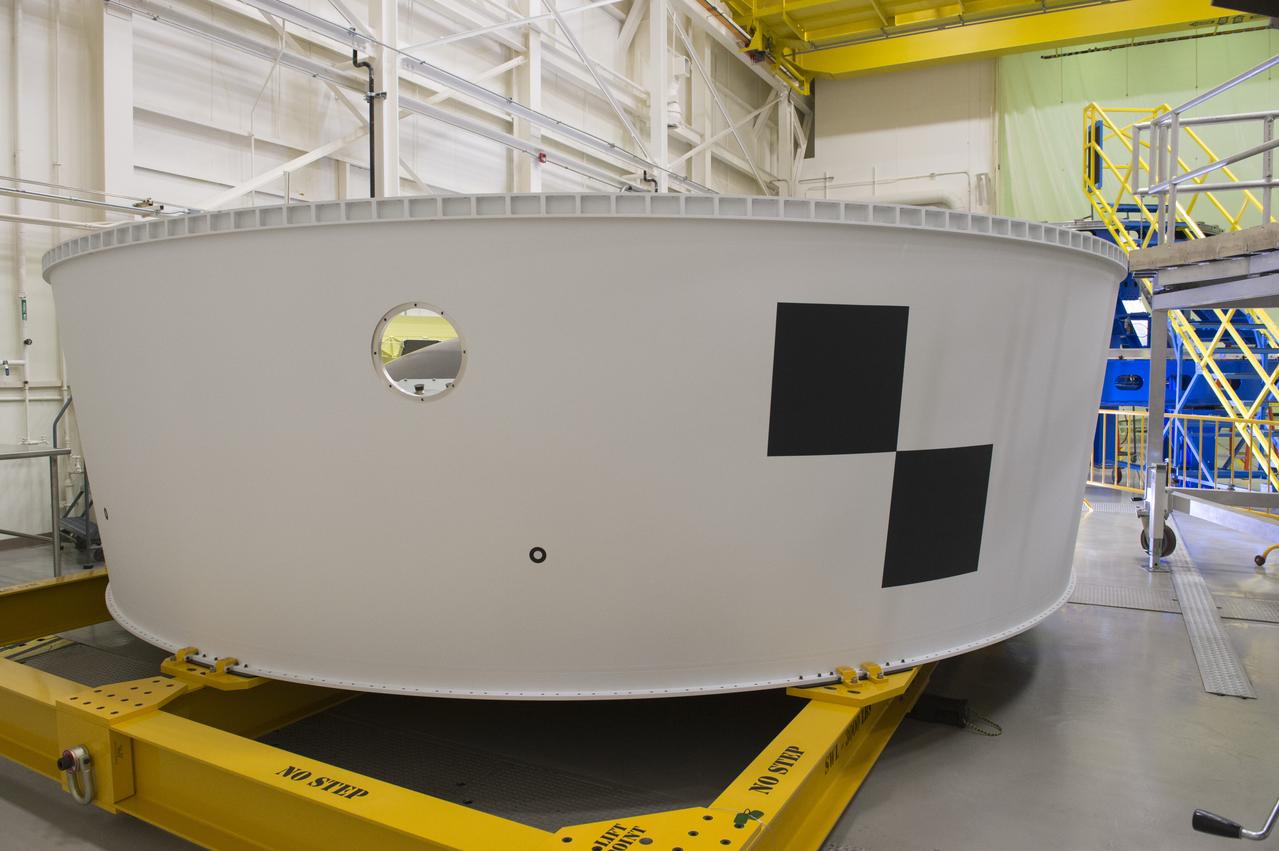
General overview and detail, Close-Out, photos of the SLS Orion Stage Adapter EM-1...exterior overall views (5)
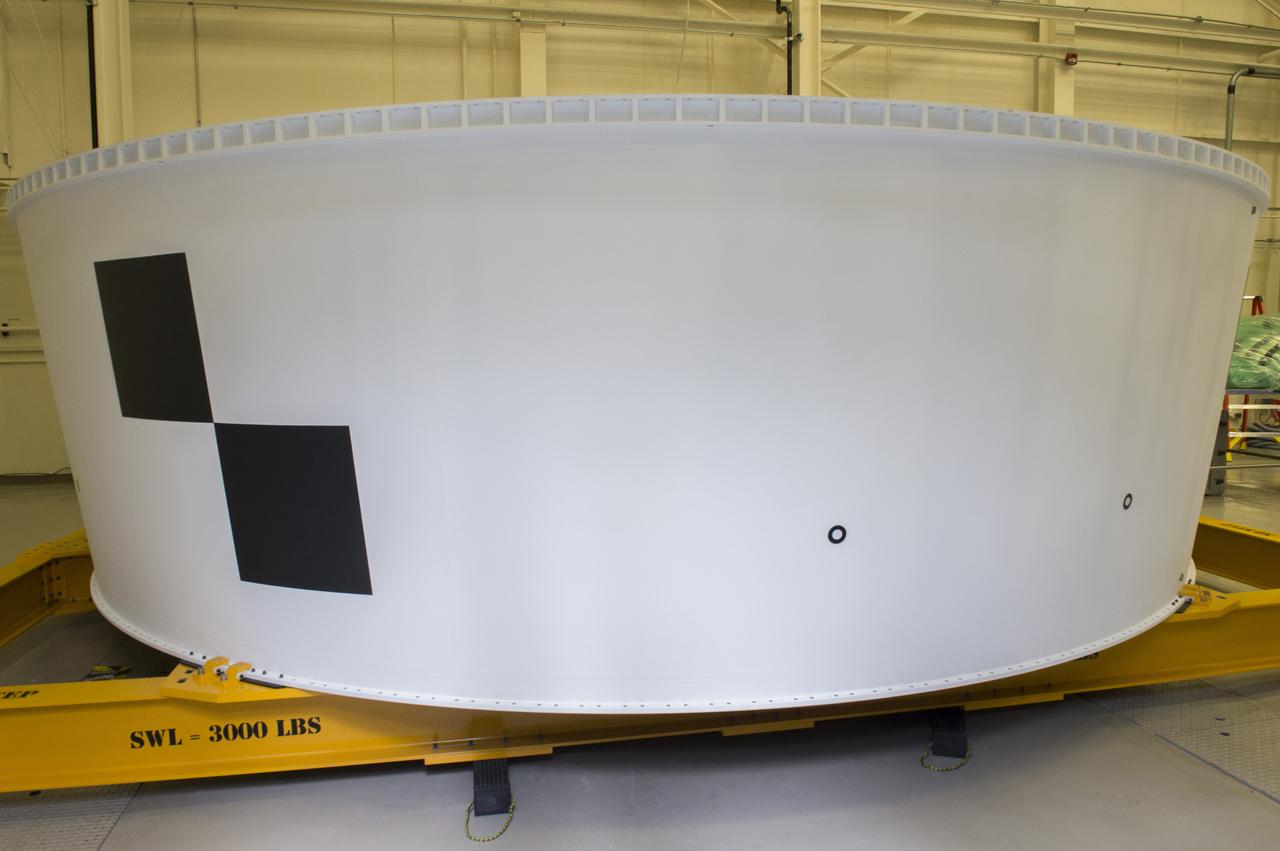
General overview and detail, Close-Out, photos of the SLS Orion Stage Adapter EM-1...exterior overall views (5)
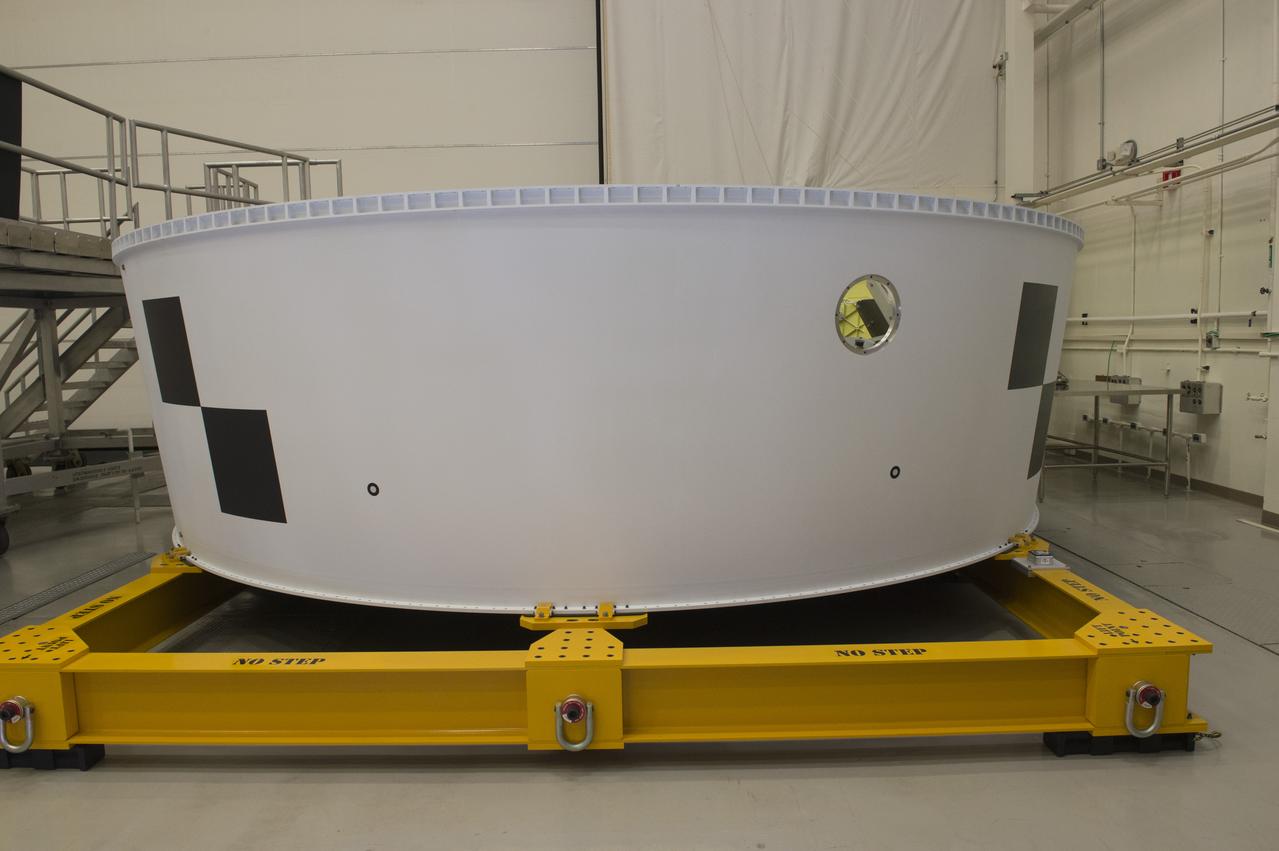
General overview and detail, Close-Out, photos of the SLS Orion Stage Adapter EM-1...exterior overall views (5)
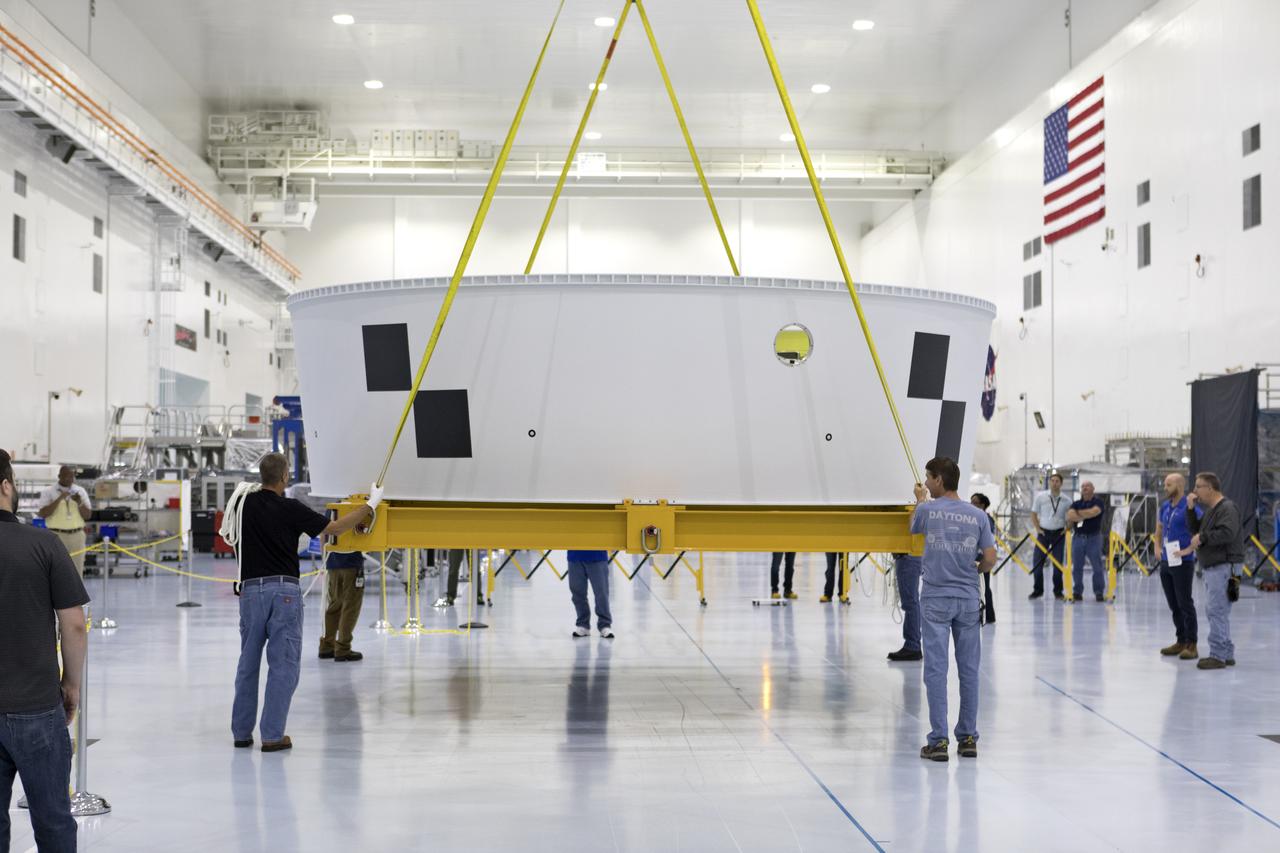
Inside the Space Station Processing Facility (SSPF) high bay at NASA's Kennedy Space Center in Florida, workers assist as a crane moves the Orion Stage Adapter (OSA) to a work area. The OSA is the second flight-hardware section of the agency's Space Launch System (SLS) rocket to arrive at Kennedy. The OSA will connect the Orion spacecraft to the upper part of the SLS, the interim cryogenic propulsion stage (ICPS). Both the OSA and ICPS are being stored for processing in the center's SSSPF in preparation for Exploration Mission-1, the first uncrewed, integrated launch of the SLS rocket and Orion spacecraft.
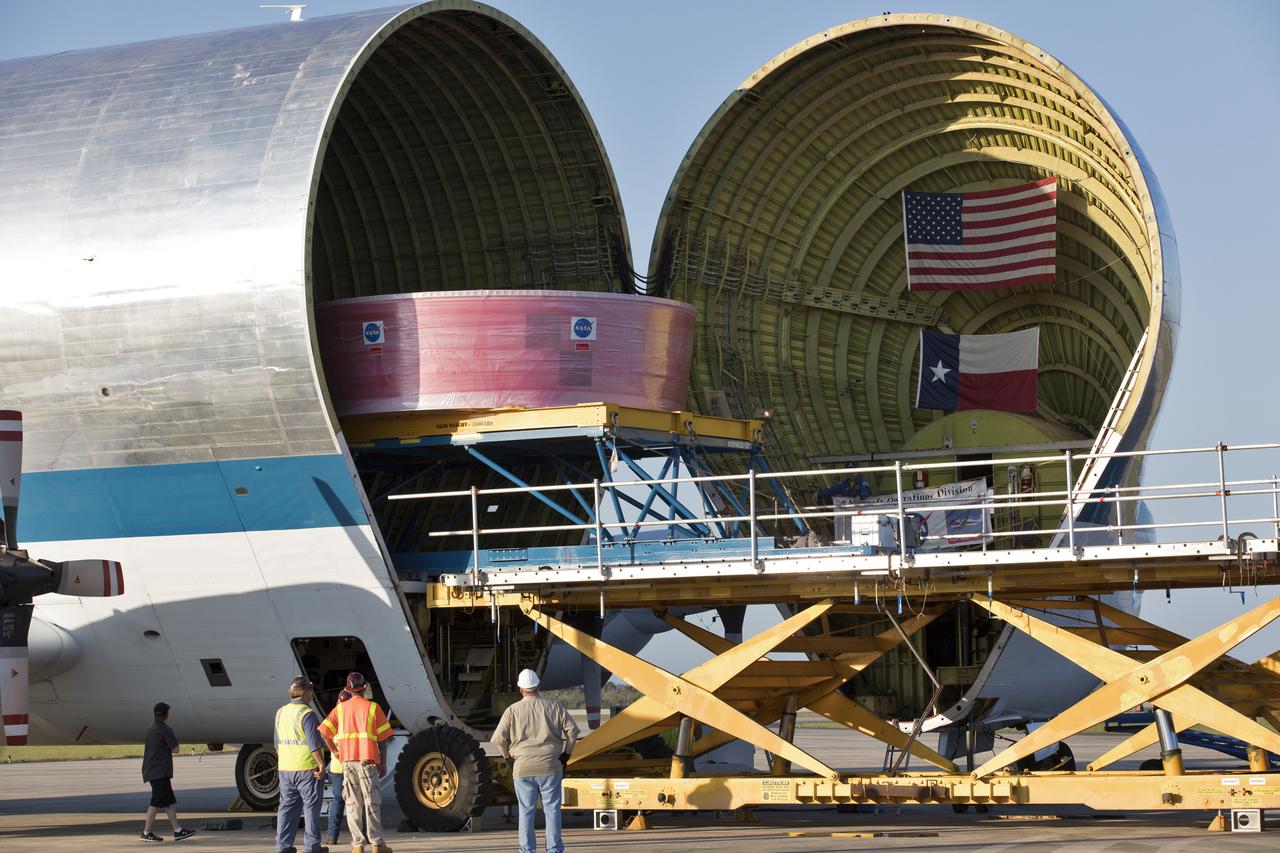
The Orion Stage Adapter (OSA) is moved out of NASA's Super Guppy aircraft onto a special payload handler at the Shuttle Landing Facility at Kennedy Space Center in Florida. The OSA is the second flight-hardware section of NASA's Space Launch System (SLS) rocket to arrive at Kennedy. The OSA will connect the Orion spacecraft to the upper part of the SLS, the interim cryogenic propulsion stage (ICPS). Both the OSA and ICPS are being stored for processing in the center's Space Station Processing Facility in preparation for Exploration Mission-1, the first uncrewed, integrated launch of the SLS rocket and Orion spacecraft.

Inside the Space Station Processing Facility (SSPF) high bay at NASA's Kennedy Space Center in Florida, workers assist as a crane lifts the Orion Stage Adapter (OSA) away from the flatbed of a transport truck. The OSA is the second flight-hardware section of the agency's Space Launch System (SLS) rocket to arrive at Kennedy. The OSA will connect the Orion spacecraft to the upper part of the SLS, the interim cryogenic propulsion stage (ICPS). Both the OSA and ICPS are being stored for processing in the center's SSPF in preparation for Exploration Mission-1, the first uncrewed, integrated launch of the SLS rocket and Orion spacecraft.

Inside the Space Station Processing Facility (SSPF) high bay at NASA's Kennedy Space Center in Florida, workers assist as a crane moves the Orion Stage Adapter (OSA) to a work area. The OSA is the second flight-hardware section of the agency's Space Launch System (SLS) rocket to arrive at Kennedy. The OSA will connect the Orion spacecraft to the upper part of the SLS, the interim cryogenic propulsion stage (ICPS). Both the OSA and ICPS, in view behind the OSA, are being stored for processing in the center's SSPF in preparation for Exploration Mission-1, the first uncrewed, integrated launch of the SLS rocket and Orion spacecraft.
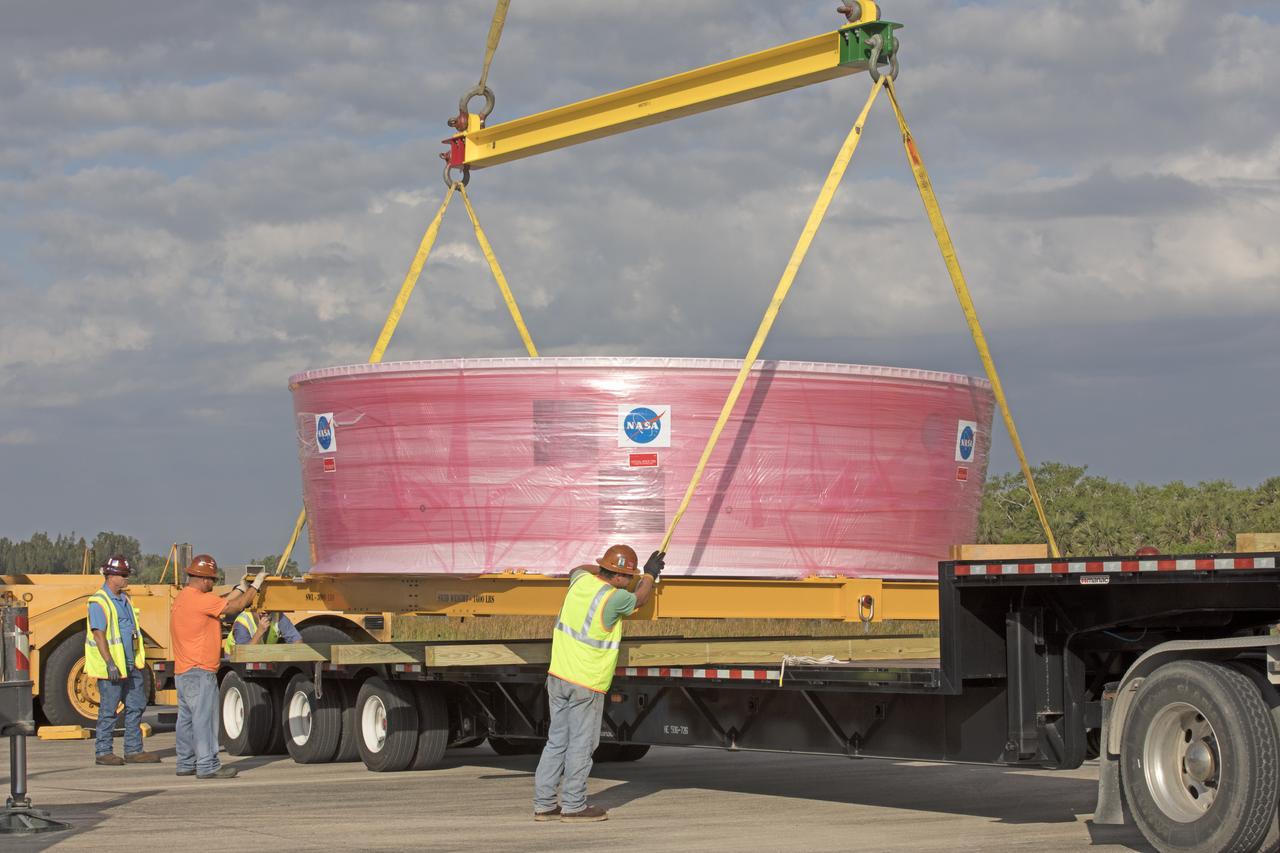
The Orion Stage Adapter (OSA) is lowered by crane onto a flatbed transporter at the Shuttle Landing Facility at NASA's Kennedy Space Center in Florida, for the move to the center's Space Station Processing Facility (SSPF). The OSA is the second flight-hardware section of the agency's Space Launch System (SLS) rocket to arrive at Kennedy. The OSA will connect the Orion spacecraft to the upper part of the SLS, the interim cryogenic propulsion stage (ICPS). Both the OSA and ICPS are being stored for processing in the SSPF in preparation for Exploration Mission-1, the first uncrewed, integrated launch of the SLS rocket and Orion spacecraft.

After arriving at the Shuttle Landing Facility at NASA's Kennedy Space Center in Florida, the agency's Super Guppy aircraft was opened to begin offloading the Orion Stage Adapter (OSA), the second flight-hardware section of NASA's Space Launch System (SLS) rocket to arrive at Kennedy. The OSA will be moved out of the Super Guppy and lowered onto a flatbed transporter. The OSA will connect the Orion spacecraft to the upper part of the SLS, the interim cryogenic propulsion stage (ICPS). Both the OSA and ICPS are being stored for processing in the center's Space Station Processing Facility in preparation for Exploration Mission-1, the first uncrewed, integrated launch of the SLS rocket and Orion spacecraft.

The Orion Stage Adapter (OSA) is moved out of NASA's Super Guppy aircraft onto a flatbed transporter at the Shuttle Landing Facility at Kennedy Space Center in Florida. The OSA is the second flight-hardware section of NASA's Space Launch System (SLS) rocket to arrive at Kennedy. The OSA will connect the Orion spacecraft to the upper part of the SLS, the interim cryogenic propulsion stage (ICPS). Both the OSA and ICPS are being stored for processing in the center's Space Station Processing Facility in preparation for Exploration Mission-1, the first uncrewed, integrated launch of the SLS rocket and Orion spacecraft.
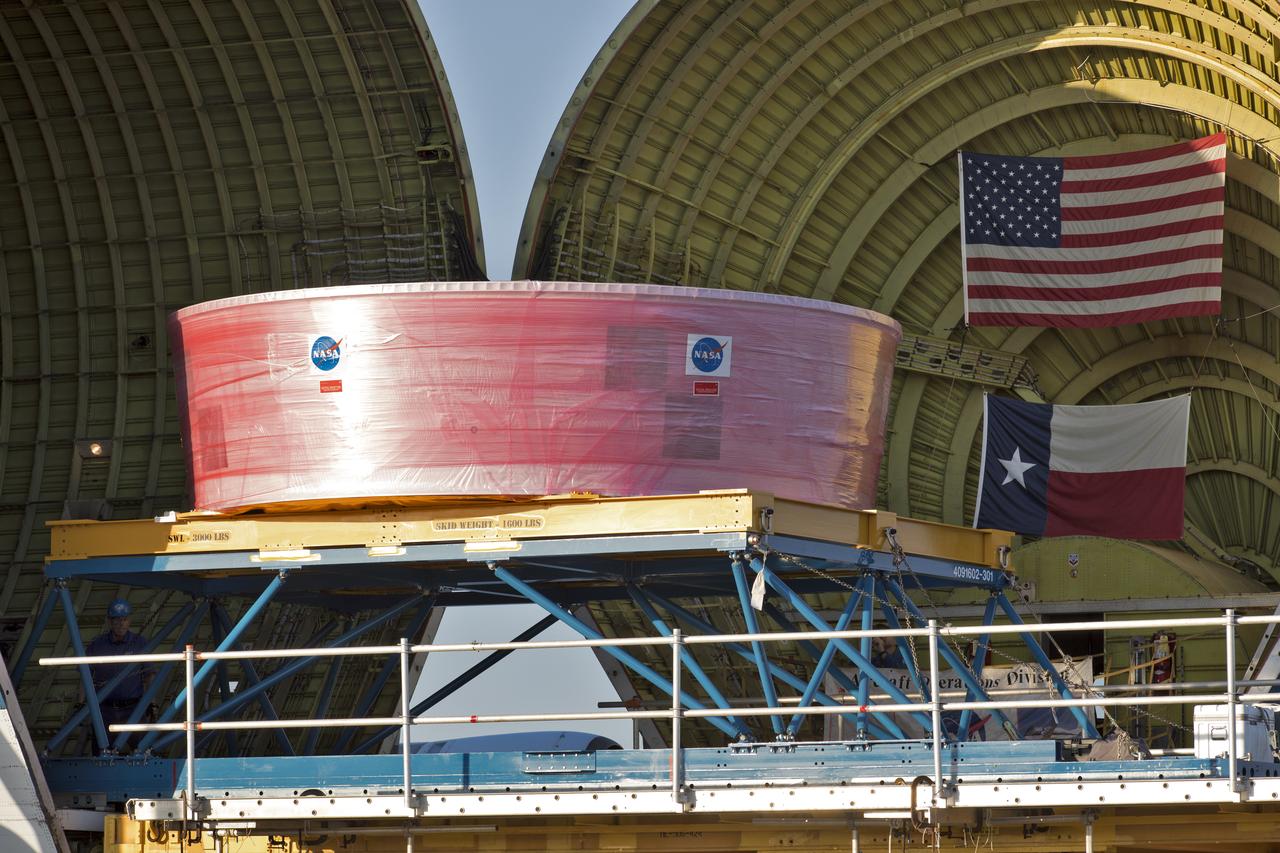
The Orion Stage Adapter (OSA) is moved out of NASA's Super Guppy aircraft onto a special payload handler at the Shuttle Landing Facility at Kennedy Space Center in Florida. The OSA is the second flight-hardware section of NASA's Space Launch System (SLS) rocket to arrive at Kennedy. The OSA will connect the Orion spacecraft to the upper part of the SLS, the interim cryogenic propulsion stage (ICPS). Both the OSA and ICPS are being stored for processing in the center's Space Station Processing Facility in preparation for Exploration Mission-1, the first uncrewed, integrated launch of the SLS rocket and Orion spacecraft.
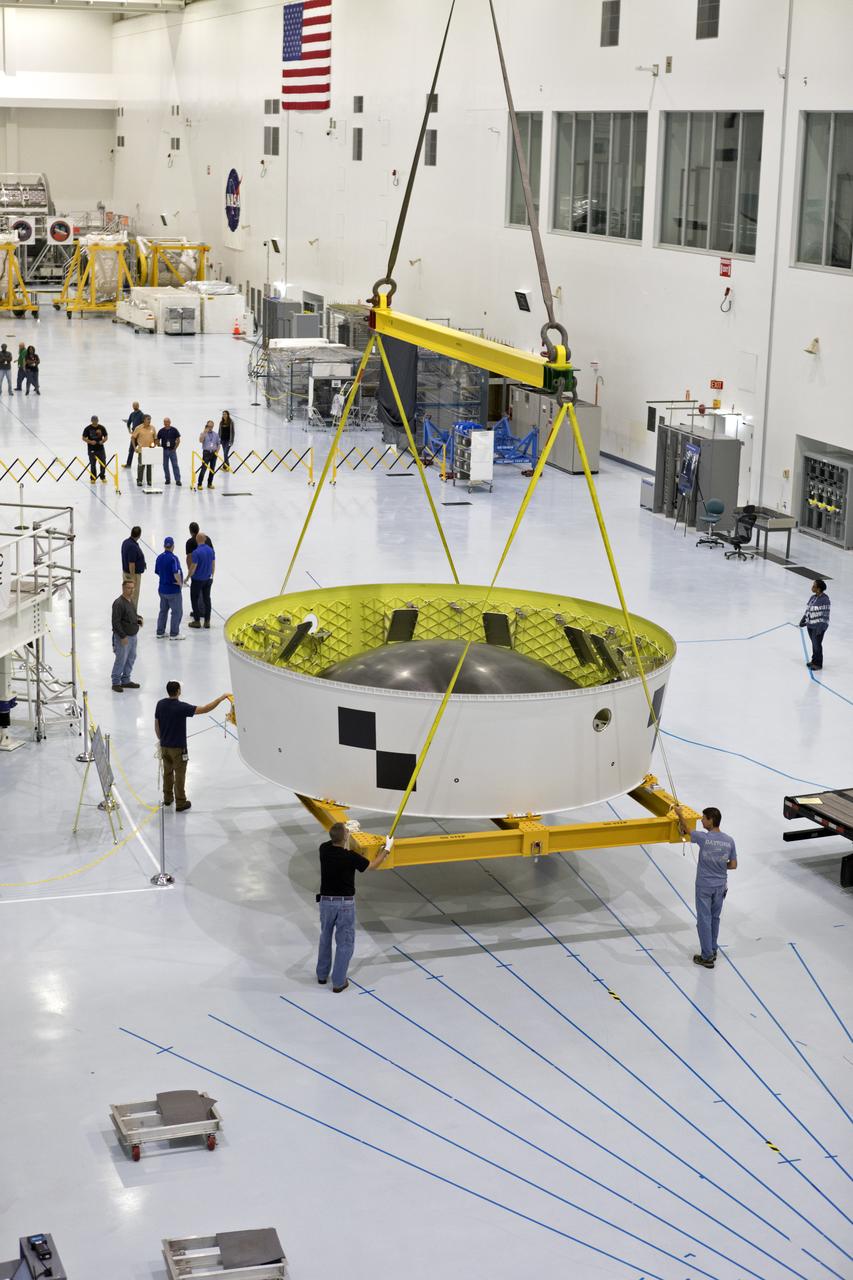
Inside the Space Station Processing Facility (SSPF) high bay at NASA's Kennedy Space Center in Florida, workers assist as a crane moves the Orion Stage Adapter (OSA) to a work area. The OSA is the second flight-hardware section of the agency's Space Launch System (SLS) rocket to arrive at Kennedy. The OSA will connect the Orion spacecraft to the upper part of the SLS, the interim cryogenic propulsion stage (ICPS). Both the OSA and ICPS are being stored for processing in the center's SSPF in preparation for Exploration Mission-1, the first uncrewed, integrated launch of the SLS rocket and Orion spacecraft.
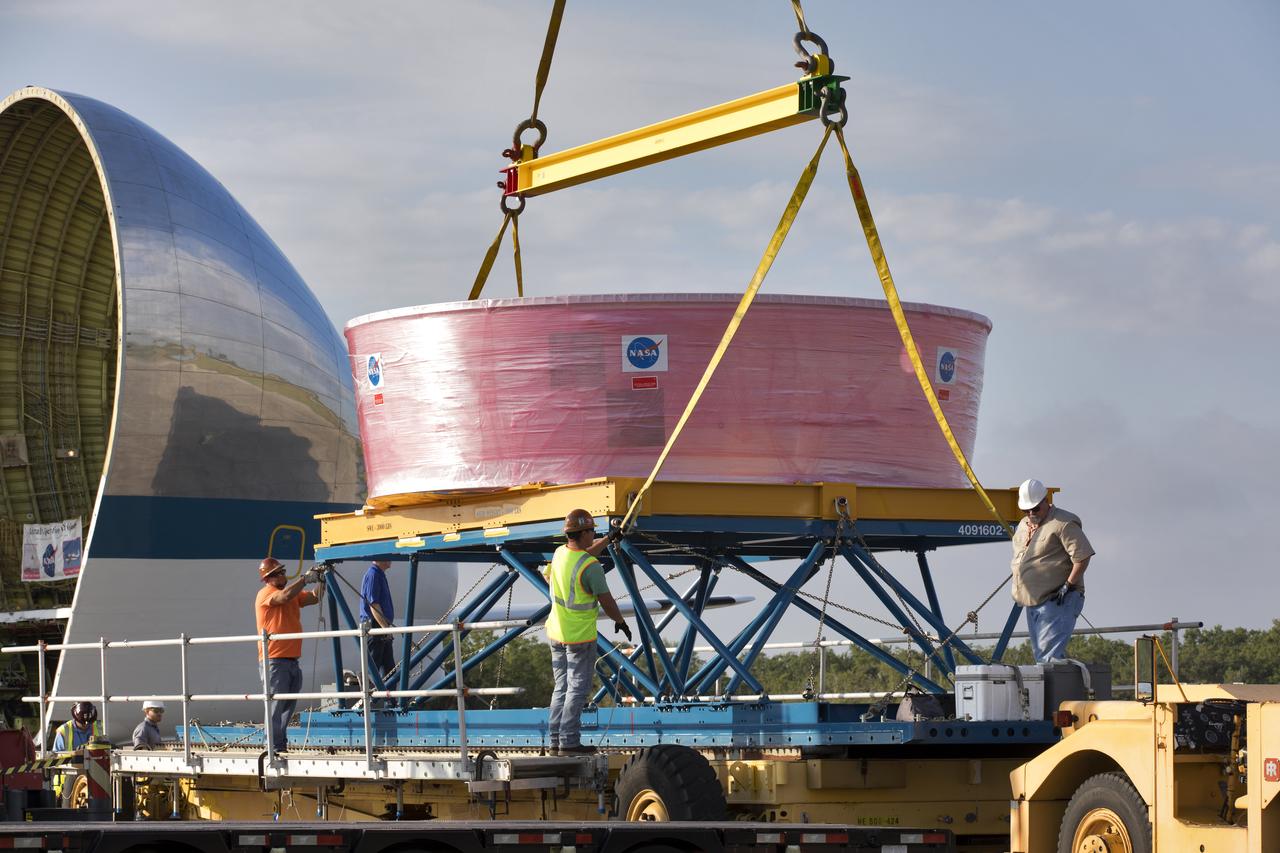
The Orion Stage Adapter (OSA) was moved out of NASA's Super Guppy aircraft onto a special payload handler at the Shuttle Landing Facility at Kennedy Space Center in Florida. The OSA is the second flight-hardware section of NASA's Space Launch System (SLS) rocket to arrive at Kennedy. The OSA will connect the Orion spacecraft to the upper part of the SLS, the interim cryogenic propulsion stage (ICPS). Both the OSA and ICPS are being stored for processing in the center's Space Station Processing Facility in preparation for Exploration Mission-1, the first uncrewed, integrated launch of the SLS rocket and Orion spacecraft.
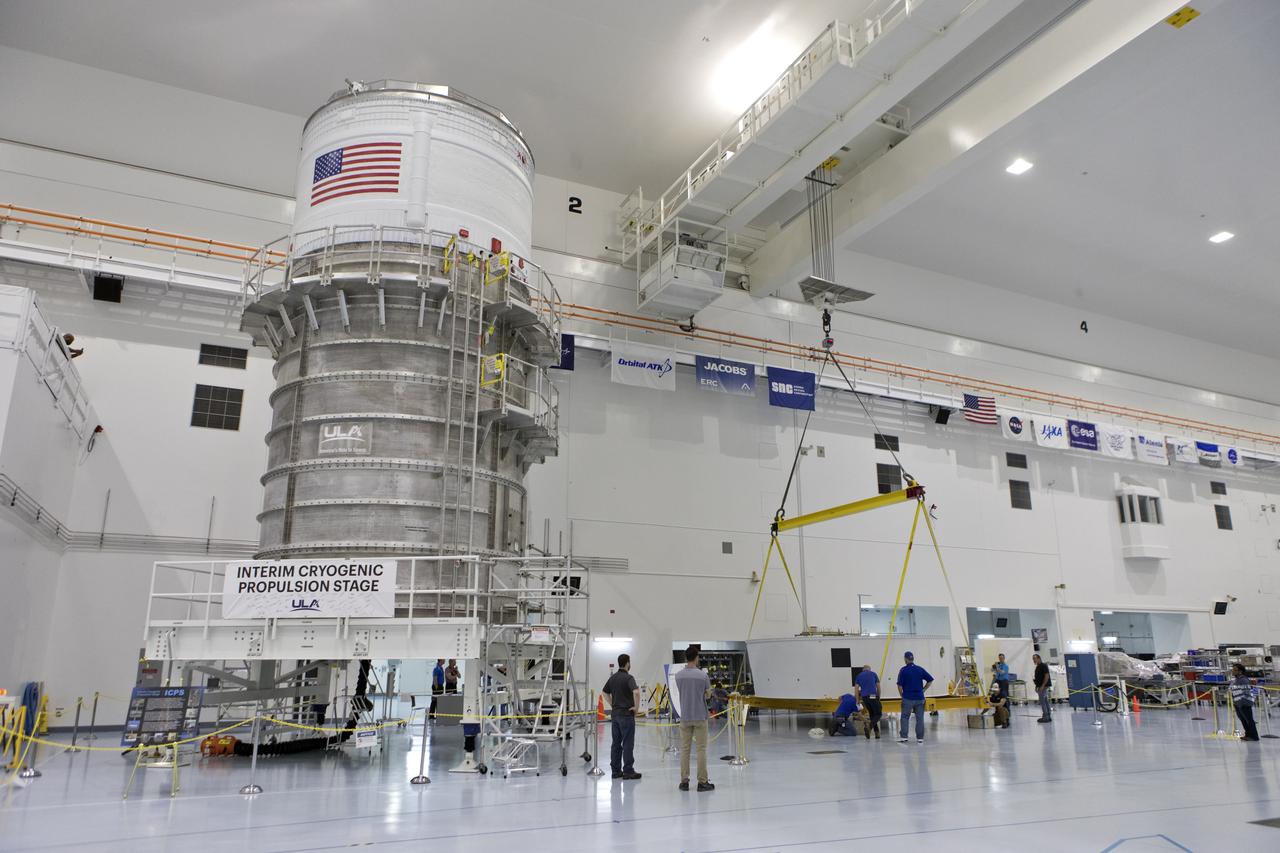
The Orion Stage Adapter (OSA) is lowered by crane into a work area in the high bay of the Space Station Processing Facility (SSPF) at NASA's Kennedy Space Center in Florida. The OSA is the second flight-hardware section of the agency's Space Launch System (SLS) rocket to arrive at Kennedy. The OSA will connect the Orion spacecraft to the upper part of the SLS, the interim cryogenic propulsion stage (ICPS). Both the OSA and ICPS, at left, are being stored for processing in the SSPF in preparation for Exploration Mission-1, the first uncrewed, integrated launch of the SLS rocket and Orion spacecraft.
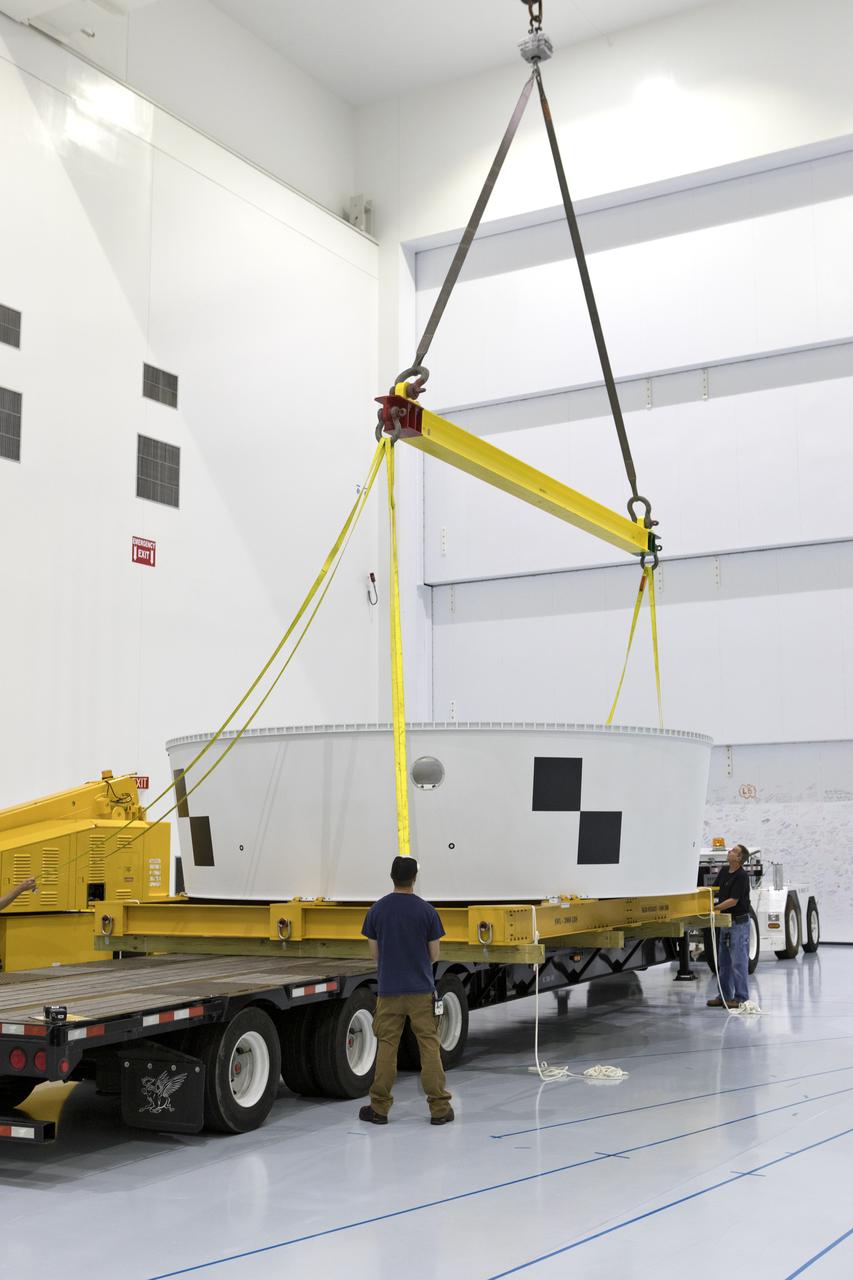
Inside the Space Station Processing Facility (SSPF) high bay at NASA's Kennedy Space Center in Florida, workers assist as a crane lifts the Orion Stage Adapter (OSA) up from the flatbed of a transport truck. The OSA is the second flight-hardware section of the agency's Space Launch System (SLS) rocket to arrive at Kennedy. The OSA will connect the Orion spacecraft to the upper part of the SLS, the interim cryogenic propulsion stage (ICPS). Both the OSA and ICPS are being stored for processing in the center's SSPF in preparation for Exploration Mission-1, the first uncrewed, integrated launch of the SLS rocket and Orion spacecraft.
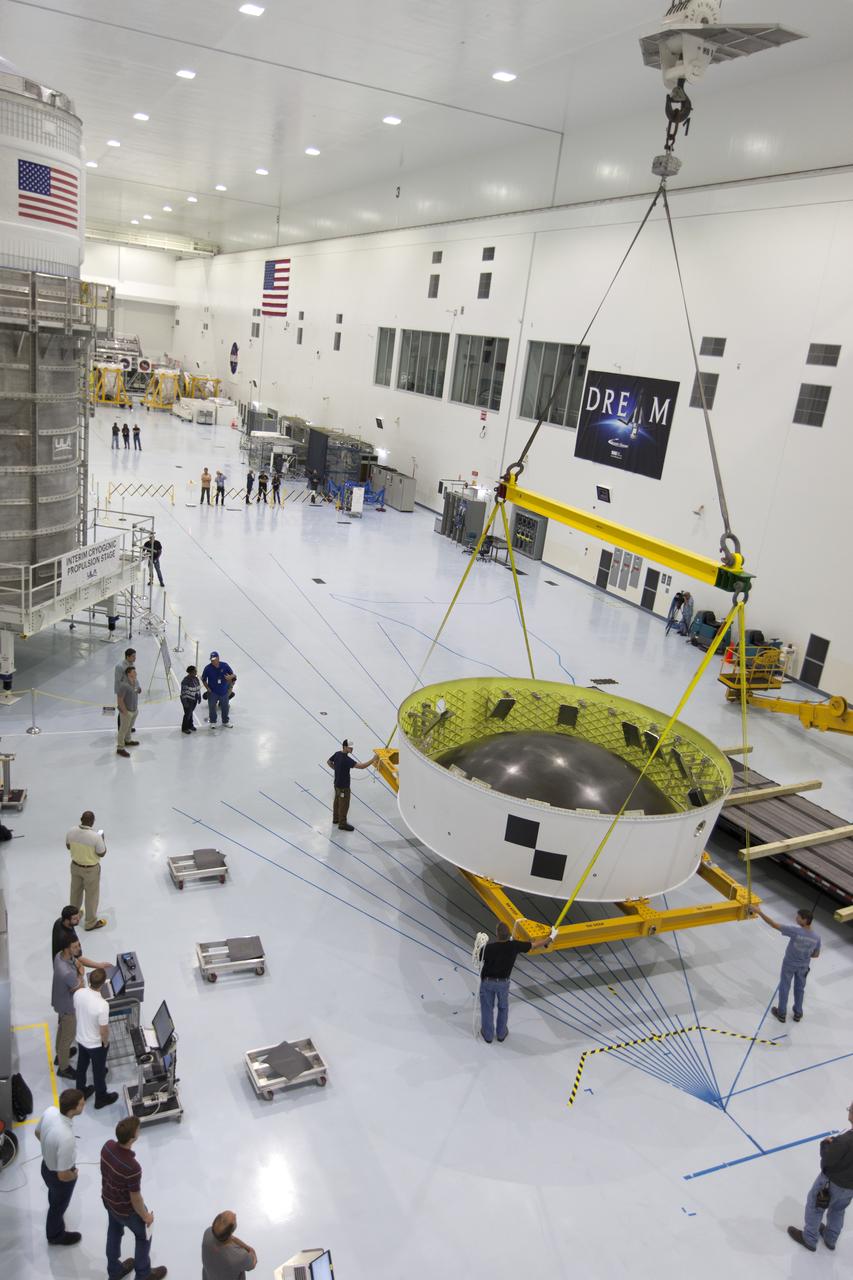
In this view from above in the Space Station Processing Facility (SSPF) high bay at NASA's Kennedy Space Center in Florida, technicians assist as a crane moves the Orion Stage Adapter (OSA) to a work area. The OSA is the second flight-hardware section of NASA's Space Launch System (SLS) rocket to arrive at Kennedy. The OSA will connect the Orion spacecraft to the upper part of the SLS, the interim cryogenic propulsion stage (ICPS). Both the OSA and ICPS, at left, are being stored for processing in the center's SSPF in preparation for Exploration Mission-1, the first uncrewed, integrated launch of the SLS rocket and Orion spacecraft.
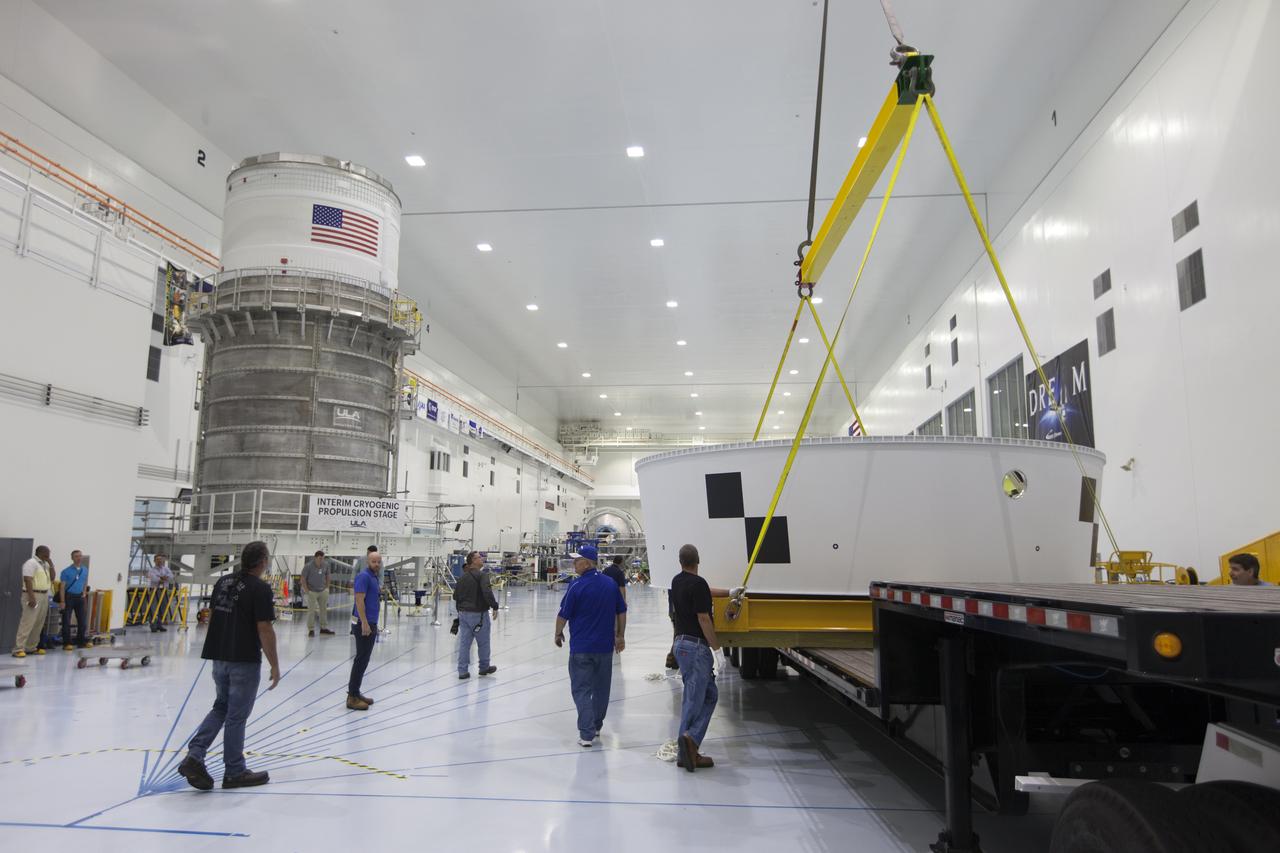
Inside the Space Station Processing Facility (SSPF) high bay at NASA's Kennedy Space Center in Florida, workers assist as a crane lifts the Orion Stage Adapter (OSA) up from the flatbed of a transport truck. The OSA is the second flight-hardware section of the agency's Space Launch System (SLS) rocket to arrive at Kennedy. The OSA will connect the Orion spacecraft to the upper part of the SLS, the interim cryogenic propulsion stage (ICPS). Both the OSA and ICPS, at left, are being stored for processing in the center's SSPF in preparation for Exploration Mission-1, the first uncrewed, integrated launch of the SLS rocket and Orion spacecraft.
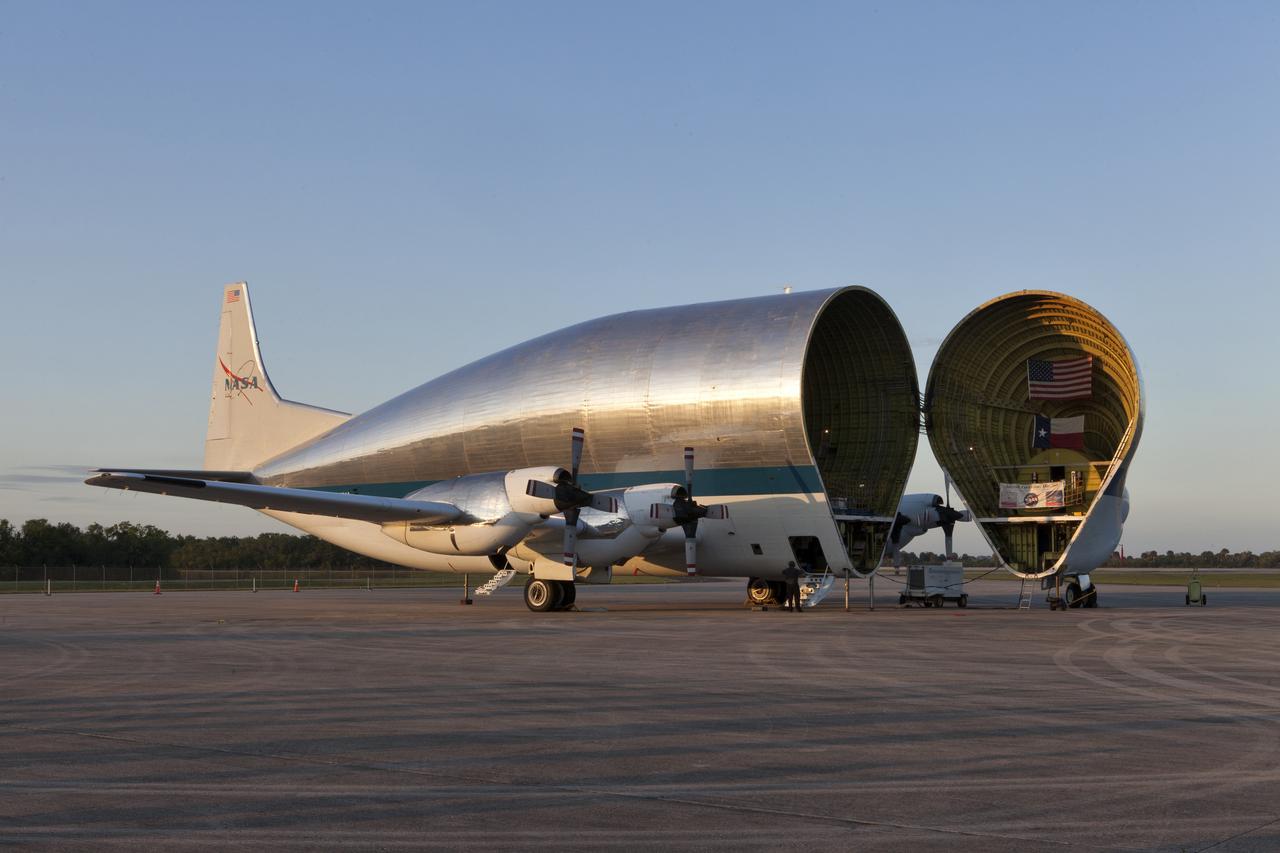
After arriving at the Shuttle Landing Facility at NASA's Kennedy Space Center in Florida, the agency's Super Guppy aircraft has been opened to begin offloading the Orion Stage Adapter (OSA), the second flight-hardware section of NASA's Space Launch System (SLS) rocket to arrive at Kennedy. The OSA will connect the Orion spacecraft to the upper part of the SLS, the interim cryogenic propulsion stage (ICPS). Both the OSA and ICPS are being stored for processing in the center's Space Station Processing Facility in preparation for Exploration Mission-1, the first uncrewed, integrated launch of the SLS rocket and Orion spacecraft.
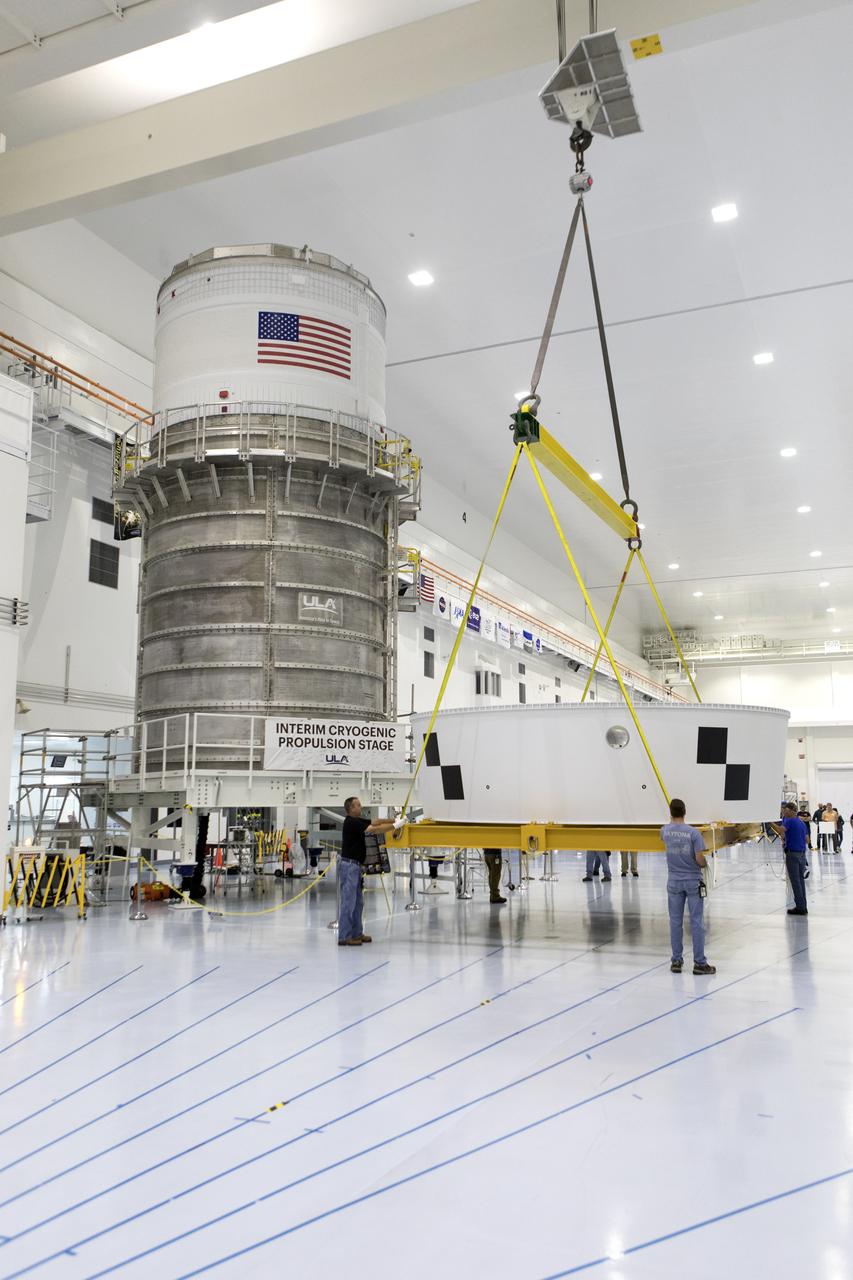
Inside the Space Station Processing Facility (SSPF) high bay at NASA's Kennedy Space Center in Florida, workers assist as a crane moves the Orion Stage Adapter (OSA) to a work area. The OSA is the second flight-hardware section of the agency's Space Launch System (SLS) rocket to arrive at Kennedy. The OSA will connect the Orion spacecraft to the upper part of the SLS, the interim cryogenic propulsion stage (ICPS). Both the OSA and ICPS, at left, are being stored for processing in the center's SSPF in preparation for Exploration Mission-1, the first uncrewed, integrated launch of the SLS rocket and Orion spacecraft.
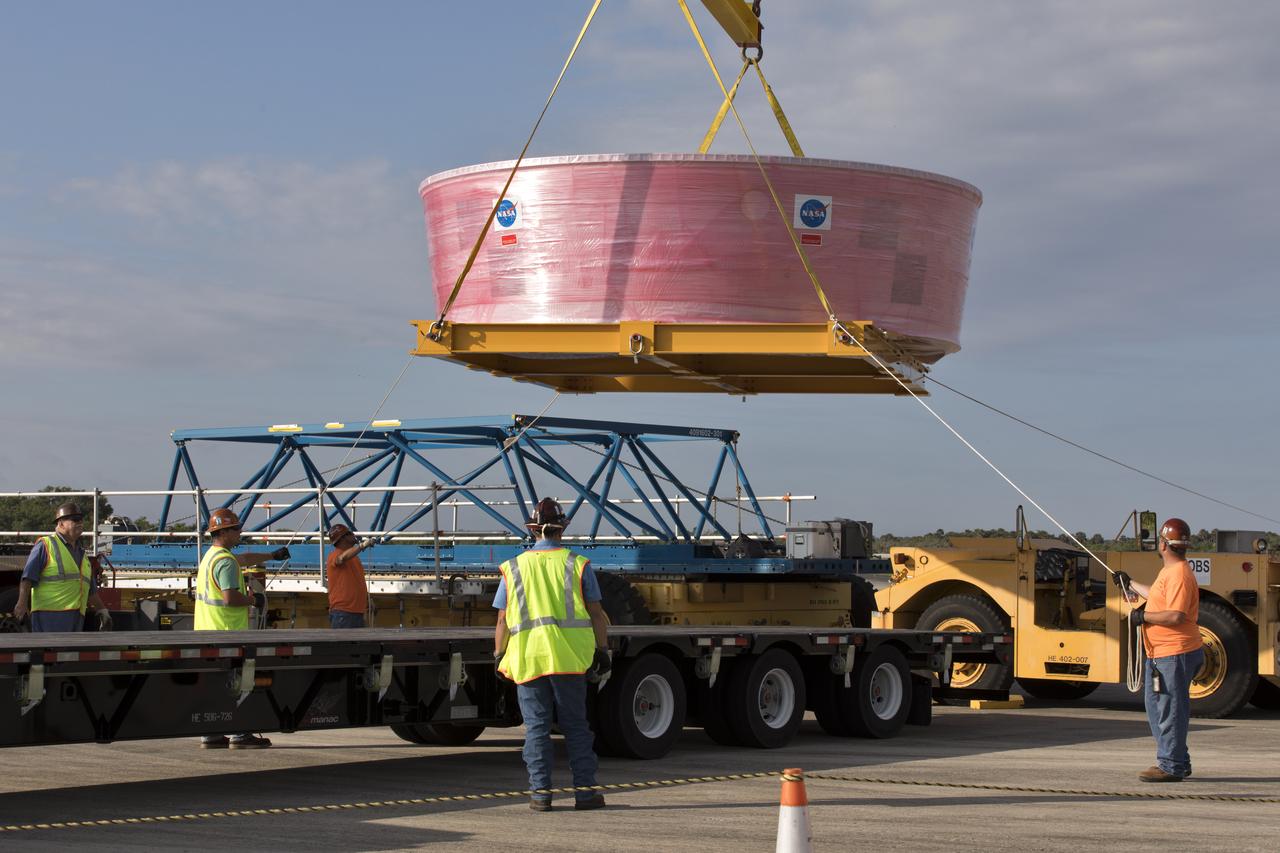
The Orion Stage Adapter (OSA) is lifted by crane up from its transport platform at the Shuttle Landing Facility at NASA's Kennedy Space Center in Florida. The OSA is the second flight-hardware section of the agency's Space Launch System (SLS) rocket to arrive at Kennedy. The OSA will connect the Orion spacecraft to the upper part of the SLS, the interim cryogenic propulsion stage (ICPS). Both the OSA and ICPS are being stored for processing in the center's Space Station Processing Facility in preparation for Exploration Mission-1, the first uncrewed, integrated launch of the SLS rocket and Orion spacecraft.
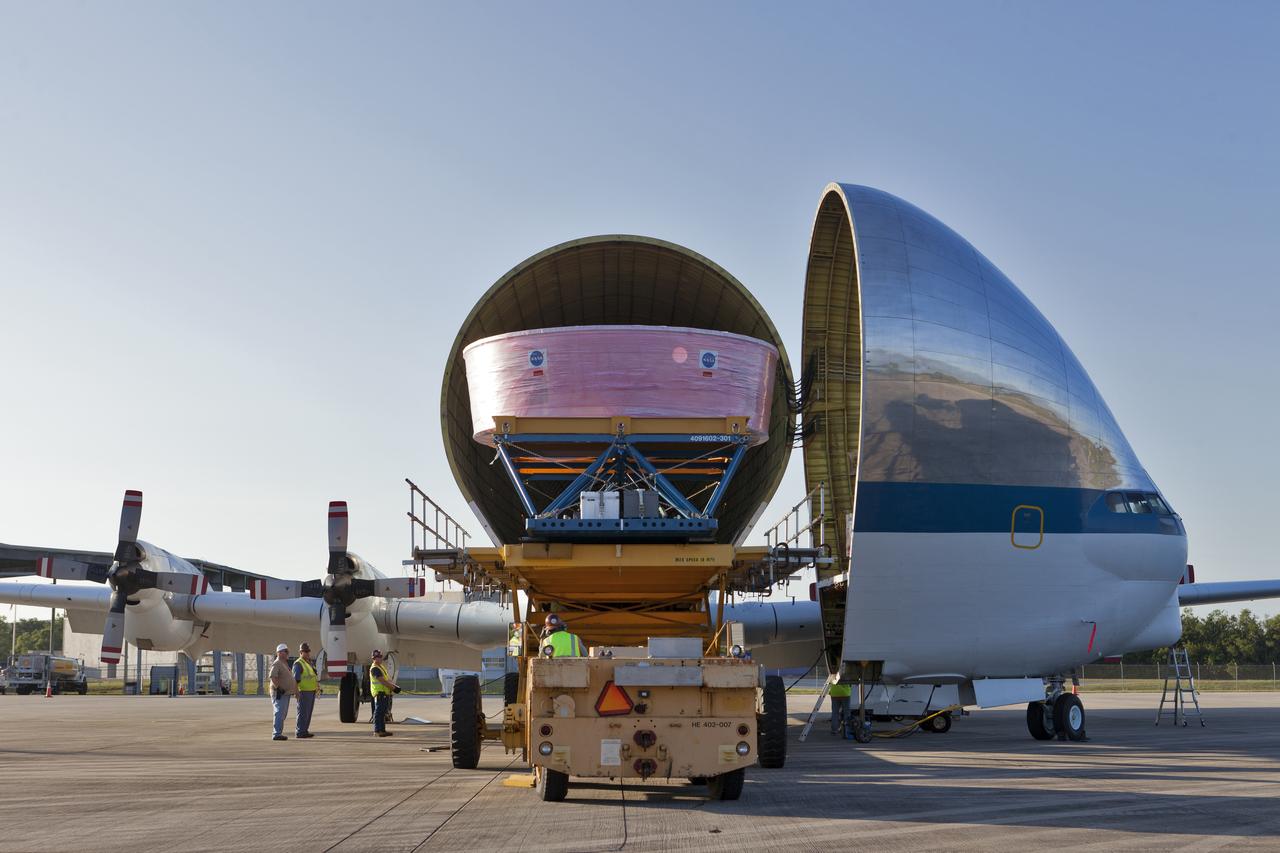
The Orion Stage Adapter (OSA) is moved out of NASA's Super Guppy aircraft onto a special payload handler at the Shuttle Landing Facility at Kennedy Space Center in Florida. The OSA is the second flight-hardware section of NASA's Space Launch System (SLS) rocket to arrive at Kennedy. The OSA will connect the Orion spacecraft to the upper part of the SLS, the interim cryogenic propulsion stage (ICPS). Both the OSA and ICPS are being stored for processing in the center's Space Station Processing Facility in preparation for Exploration Mission-1, the first uncrewed, integrated launch of the SLS rocket and Orion spacecraft.
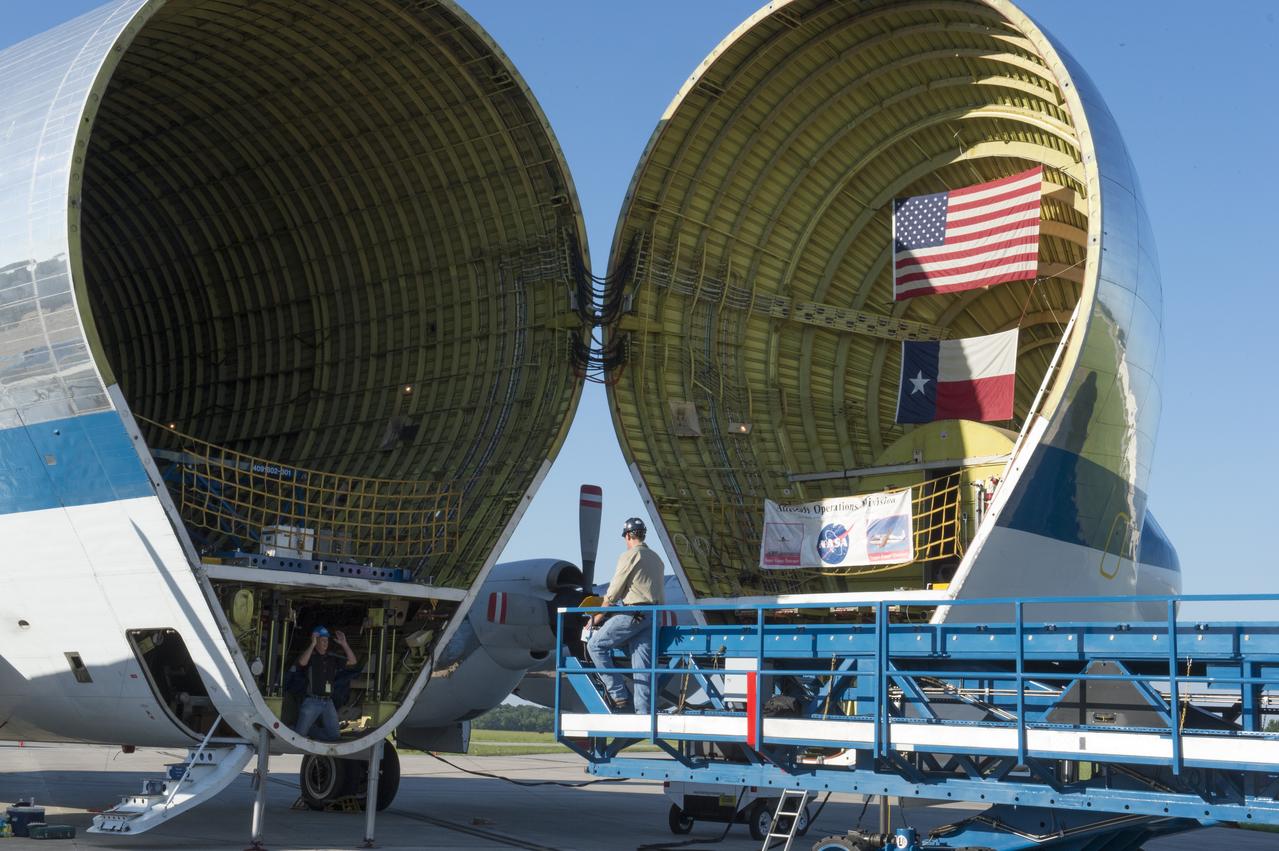
The platform which will be used to load the Orion stage adapter is shown being positioned in front of NASA's Super Guppie. After being tested at Marshall Space Flight Center the stage adapter will be flown to Denver, Colorado for further testing.
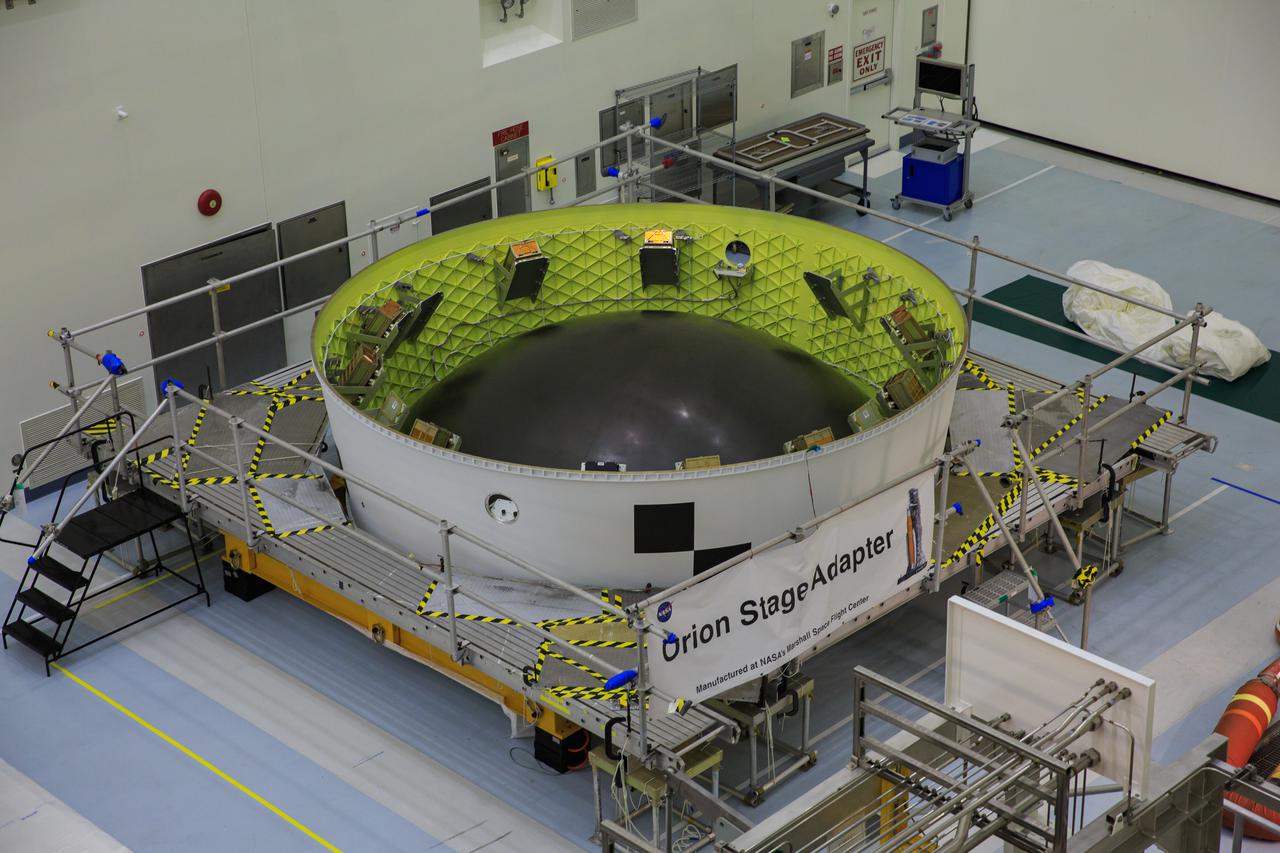
Small satellites, called CubeSats, are shown secured inside NASA’s Orion stage adapter at NASA’s Kennedy Space Center in Florida on Aug. 5, 2021. Technicians from Exploration Ground Systems and Jacobs teams are working with developers of the shoebox-sized secondary payloads as they undergo final processing. The ring-shaped stage adapter will be connected to the Space Launch System’s Interim Cryogenic Propulsion Stage, and the Orion spacecraft will be secured on top. The CubeSats will conduct a variety of science experiments and technology demonstrations that will expand our knowledge of the lunar surface during the Artemis I mission.

Small satellites, called CubeSats, are shown secured inside NASA’s Orion stage adapter at NASA’s Kennedy Space Center in Florida on Aug. 5, 2021. Technicians from Exploration Ground Systems and Jacobs teams are working with developers of the shoebox-sized secondary payloads as they undergo final processing. The ring-shaped stage adapter will be connected to the Space Launch System’s Interim Cryogenic Propulsion Stage, and the Orion spacecraft will be secured on top. The CubeSats will conduct a variety of science experiments and technology demonstrations that will expand our knowledge of the lunar surface during the Artemis I mission.
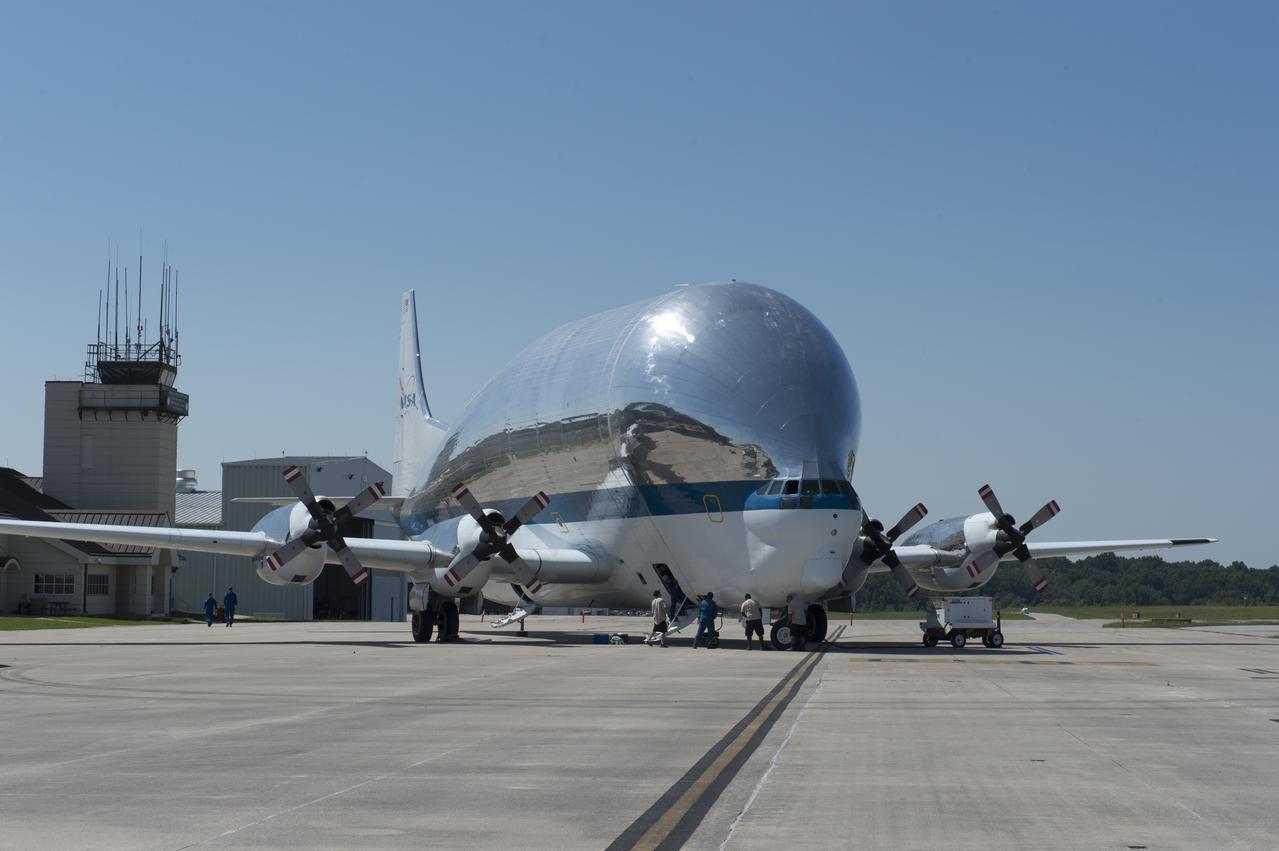
NASA's Super Guppie aircraft on to tarmac of Redstone Arsenal airfield prior to liftoff with the Orion stage adapter which will be transported to Denver, Colorado for further testing.
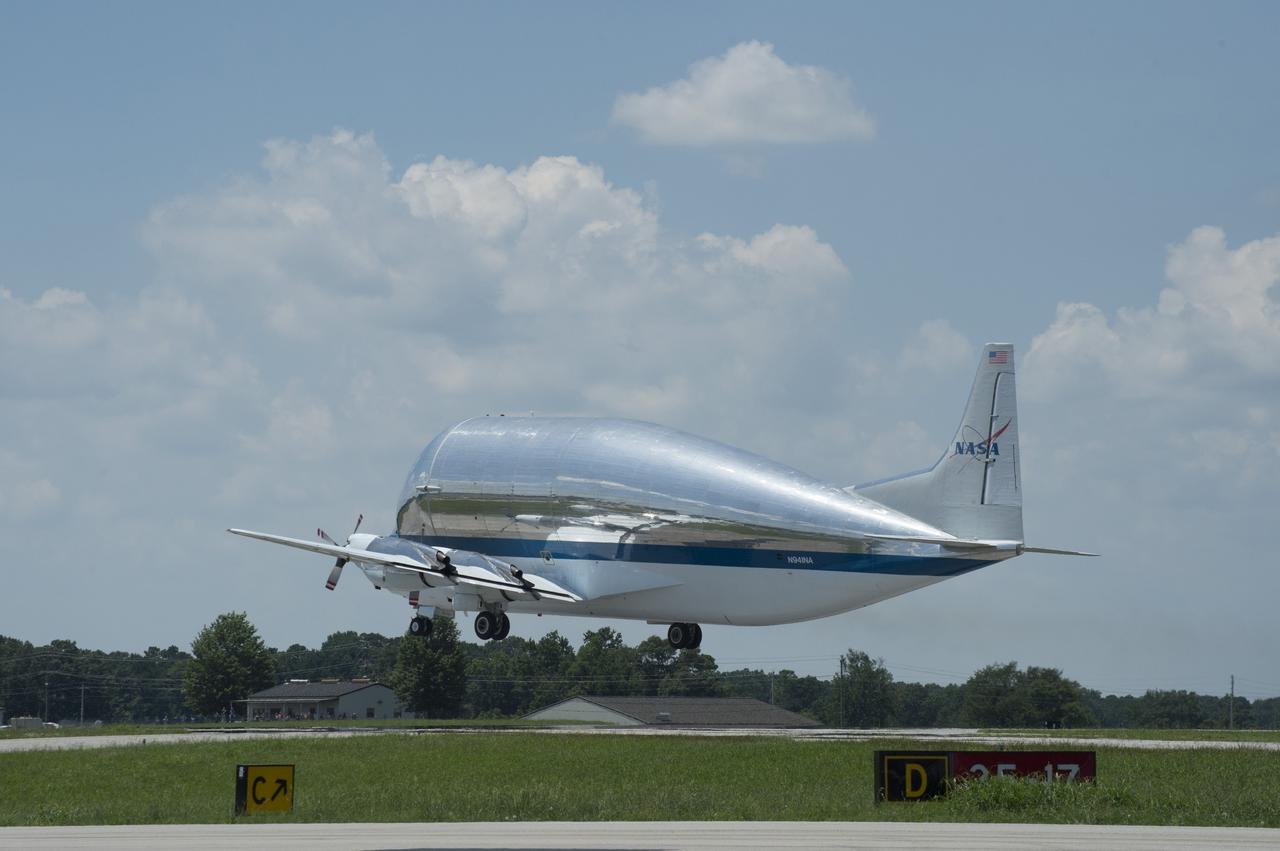
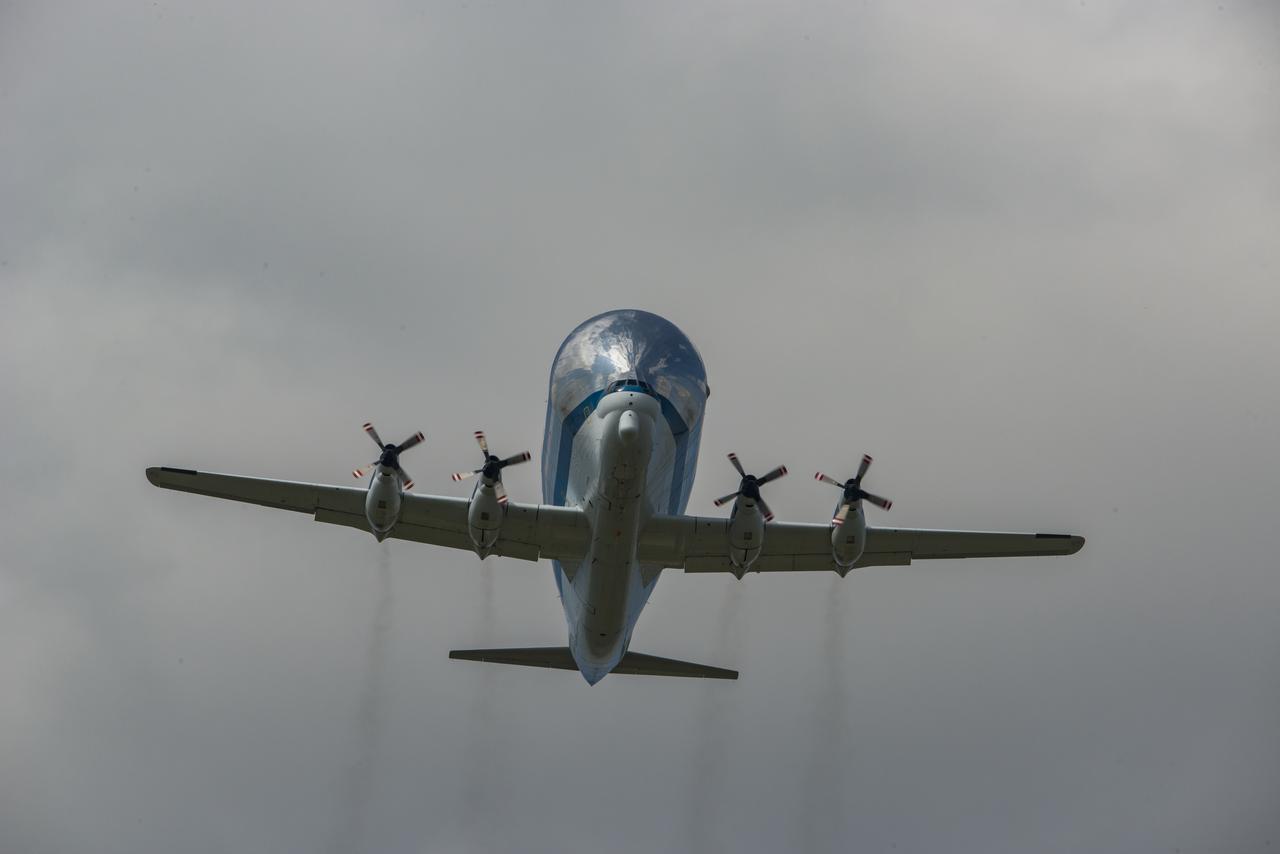
NASA's Super Guppie aircraft lifts off from Redstone Arsenal's airfield with the Orion stage adapter which will be transported to Denver, Colorado for further testing.
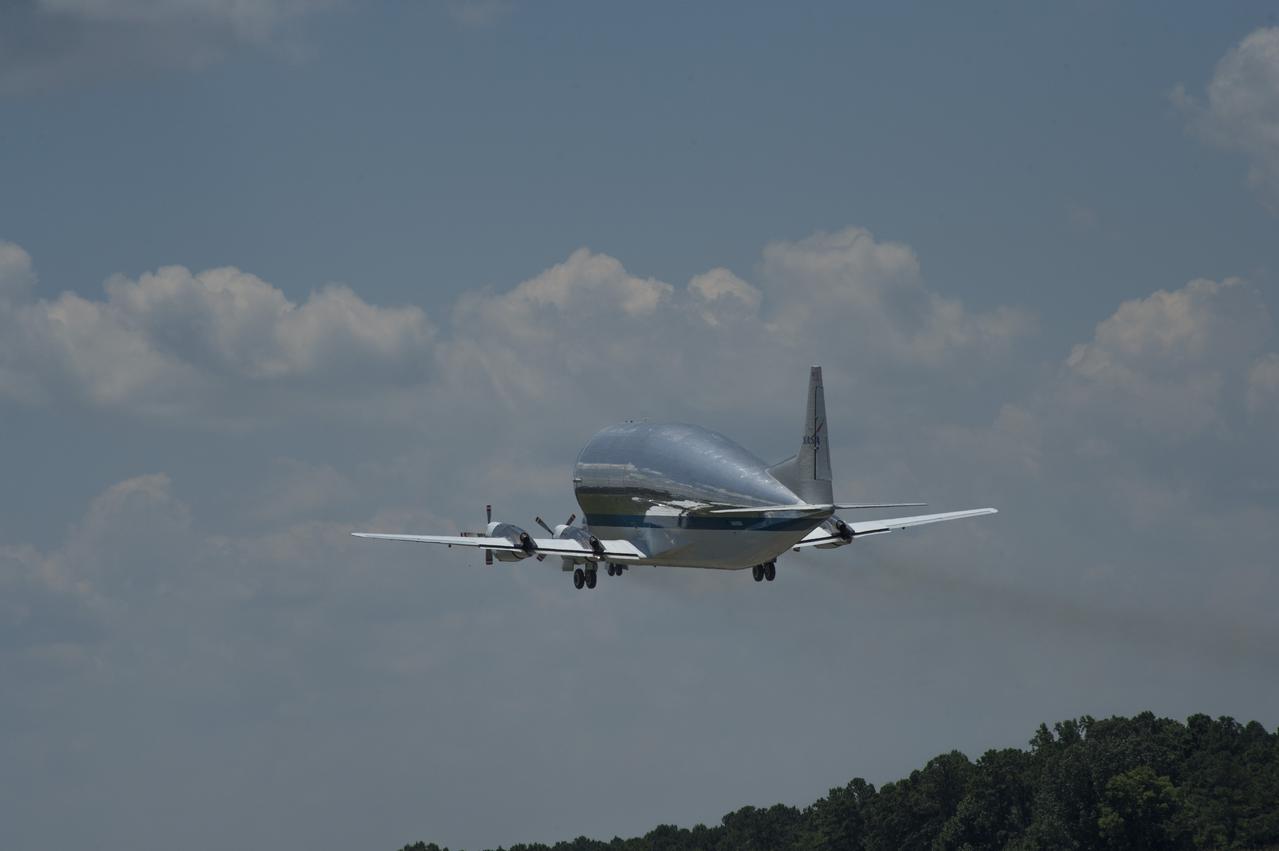
NASA's Super Guppie aircraft lifts off from Redstone Arsenal's airfield with the Orion stage adapter which will be transported to Denver, Colorado for further testing.
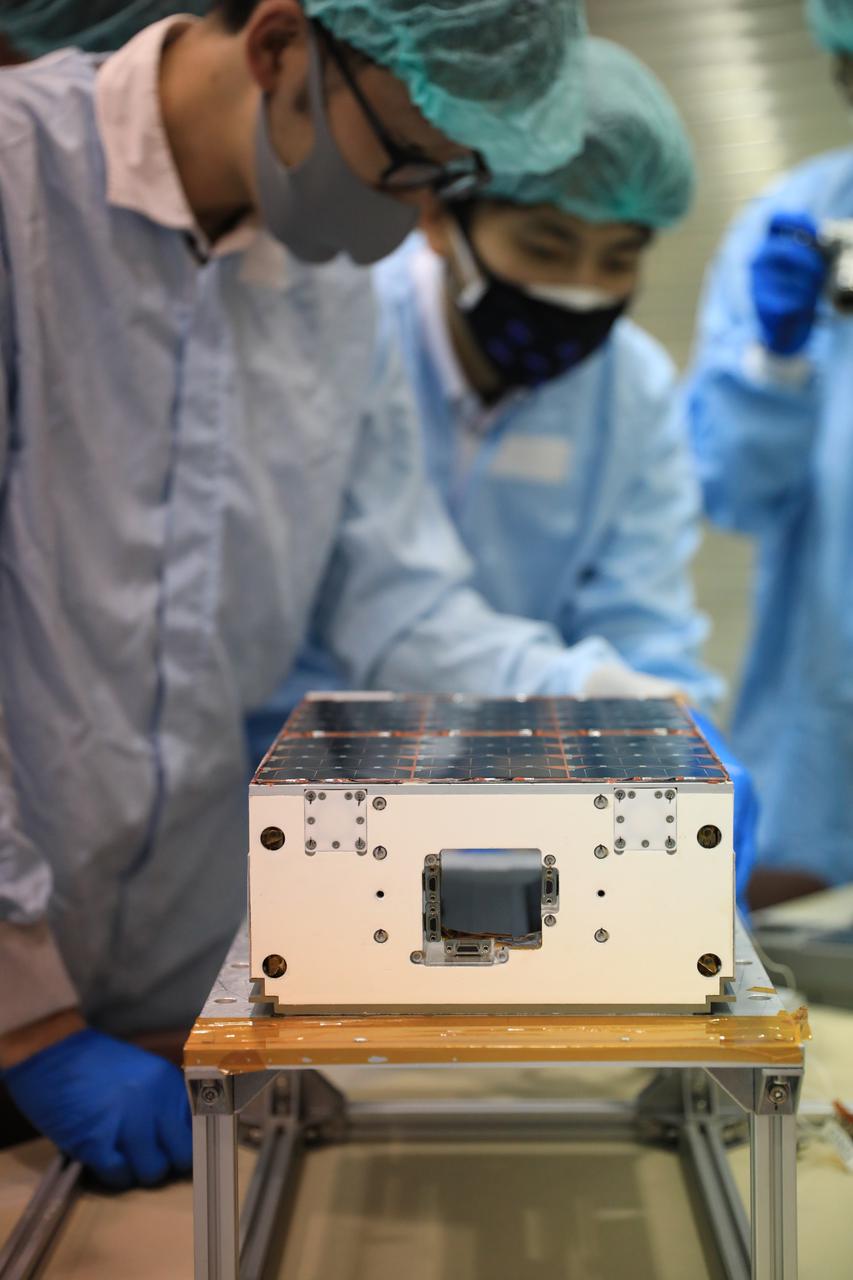
Teams worked on the final processing of their payloads that will fly aboard Artemis I. Housed within the Orion stage adapter, the satellites – called CubeSats – are roughly the size of a large shoe box and weigh no more than 30 pounds. Despite their small size, they enable science and technology experiments that may enhance our understanding of the deep space environment, expand our knowledge of the Moon, and demonstrate new technologies that could be used on future missions.
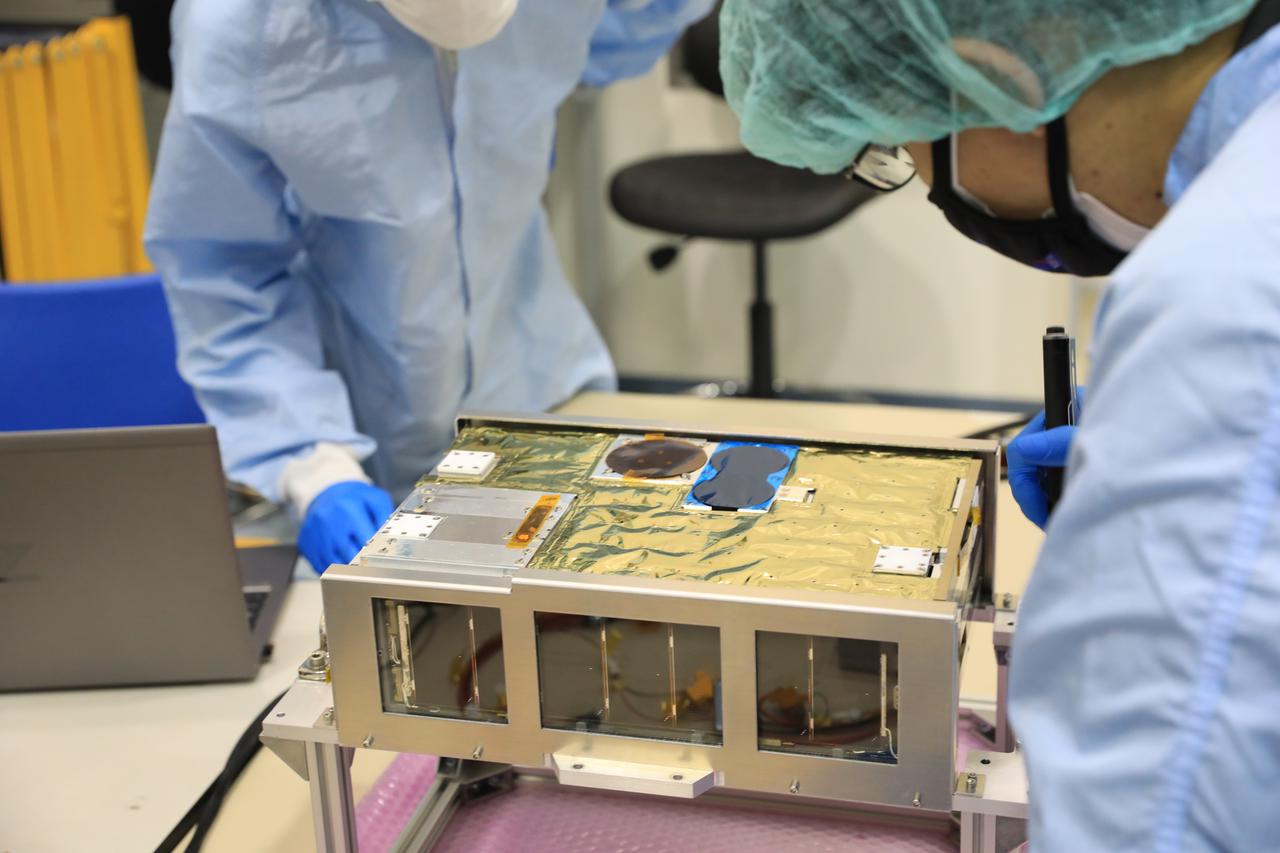
Teams worked on the final processing of their payloads that will fly aboard Artemis I. Housed within the Orion stage adapter, the satellites – called CubeSats – are roughly the size of a large shoe box and weigh no more than 30 pounds. Despite their small size, they enable science and technology experiments that may enhance our understanding of the deep space environment, expand our knowledge of the Moon, and demonstrate new technologies that could be used on future missions.
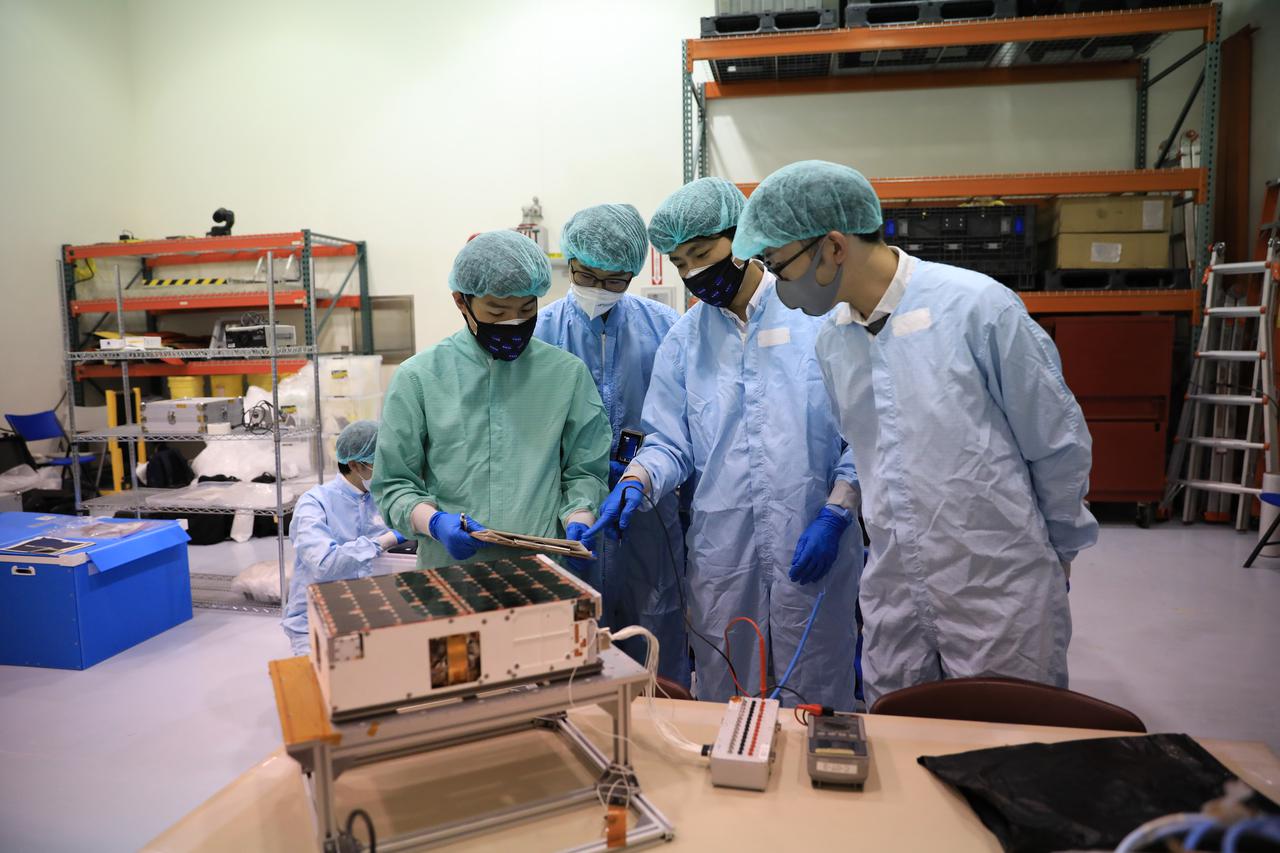
Teams worked on the final processing of their payloads that will fly aboard Artemis I. Housed within the Orion stage adapter, the satellites – called CubeSats – are roughly the size of a large shoe box and weigh no more than 30 pounds. Despite their small size, they enable science and technology experiments that may enhance our understanding of the deep space environment, expand our knowledge of the Moon, and demonstrate new technologies that could be used on future missions.
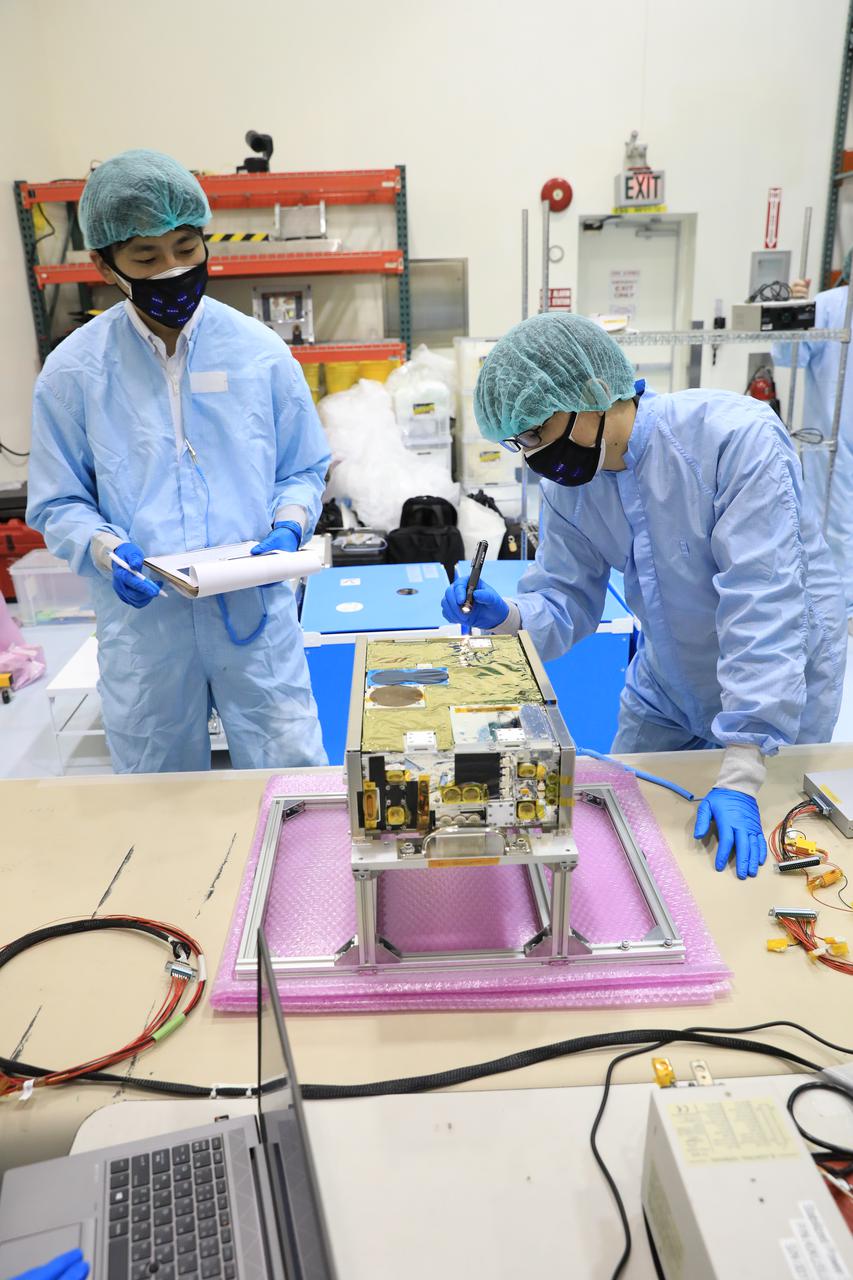
Teams worked on the final processing of their payloads that will fly aboard Artemis I. Housed within the Orion stage adapter, the satellites – called CubeSats – are roughly the size of a large shoe box and weigh no more than 30 pounds. Despite their small size, they enable science and technology experiments that may enhance our understanding of the deep space environment, expand our knowledge of the Moon, and demonstrate new technologies that could be used on future missions.