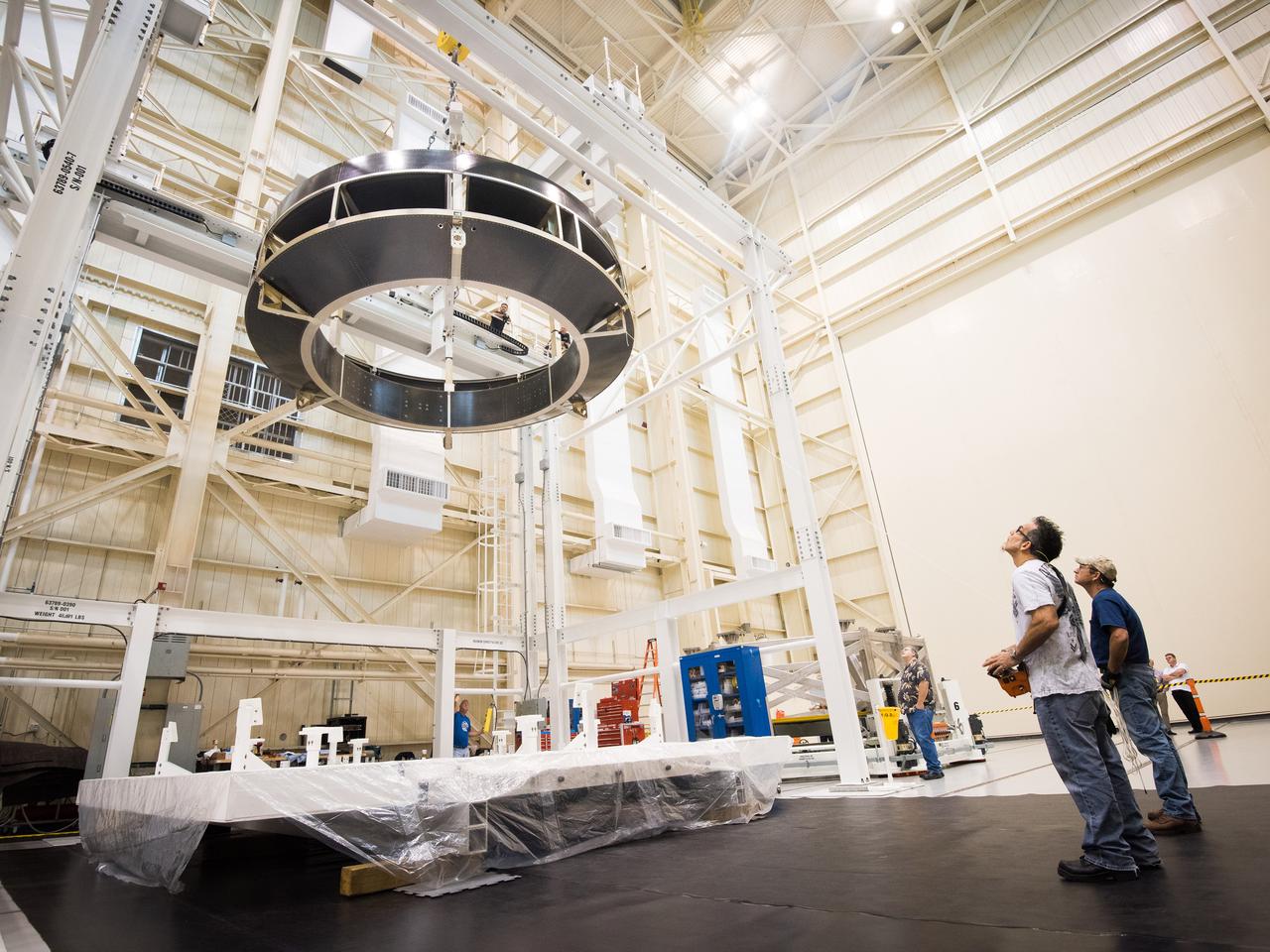
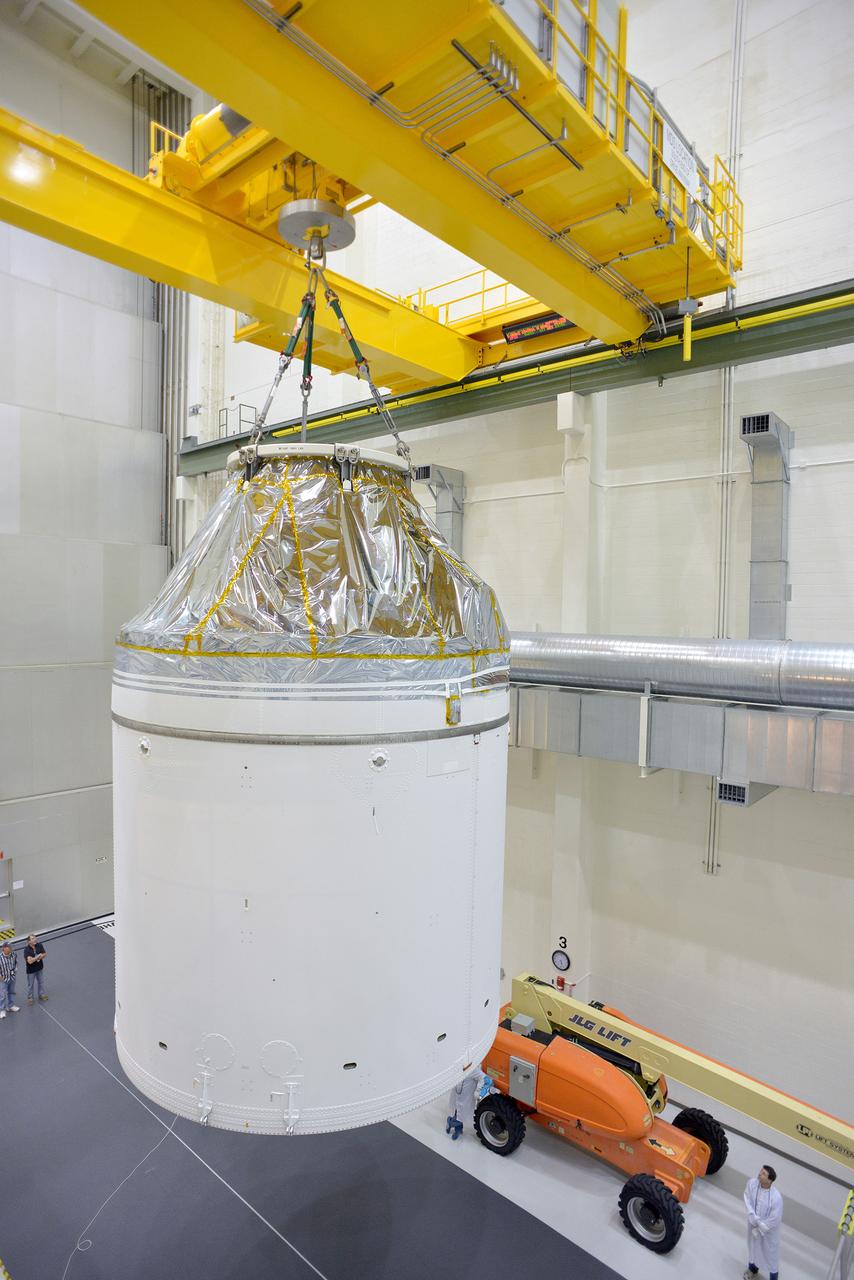
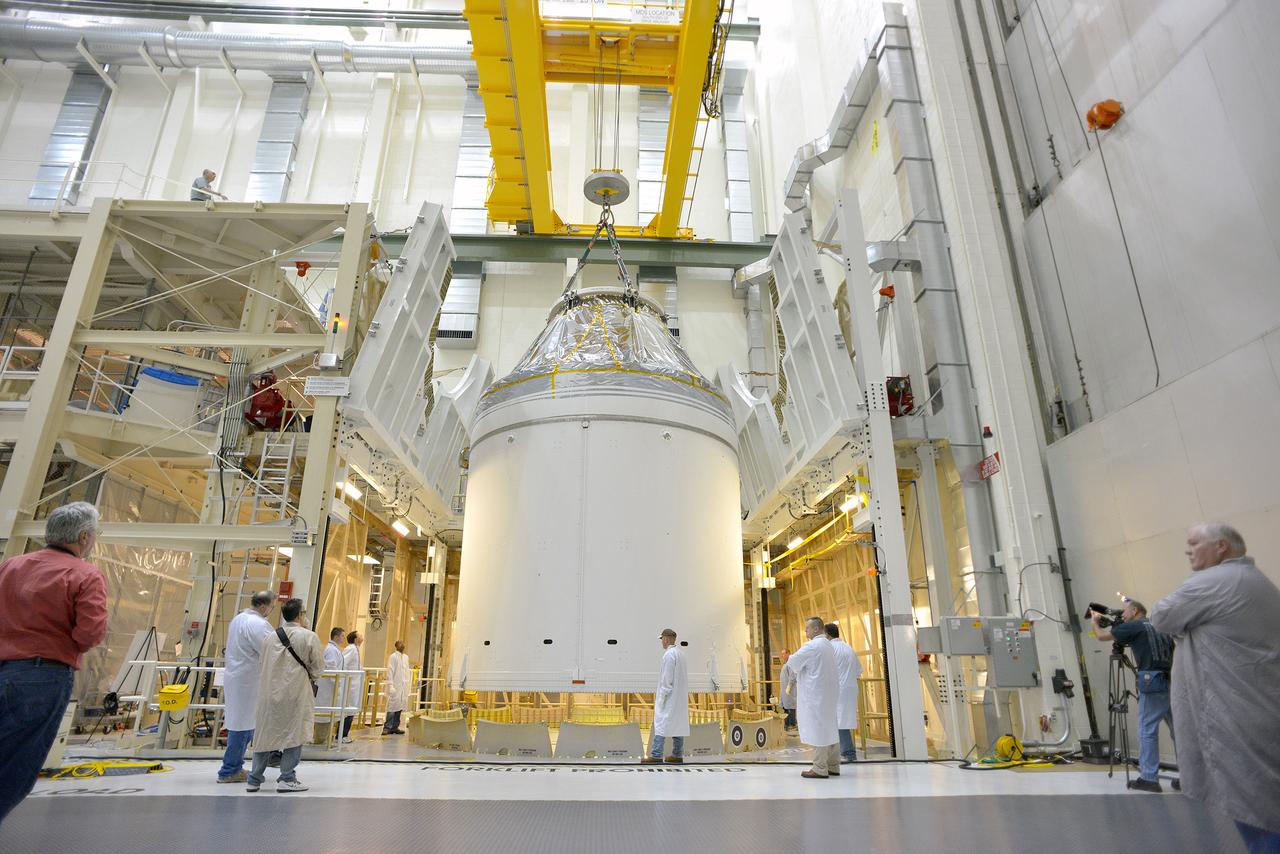
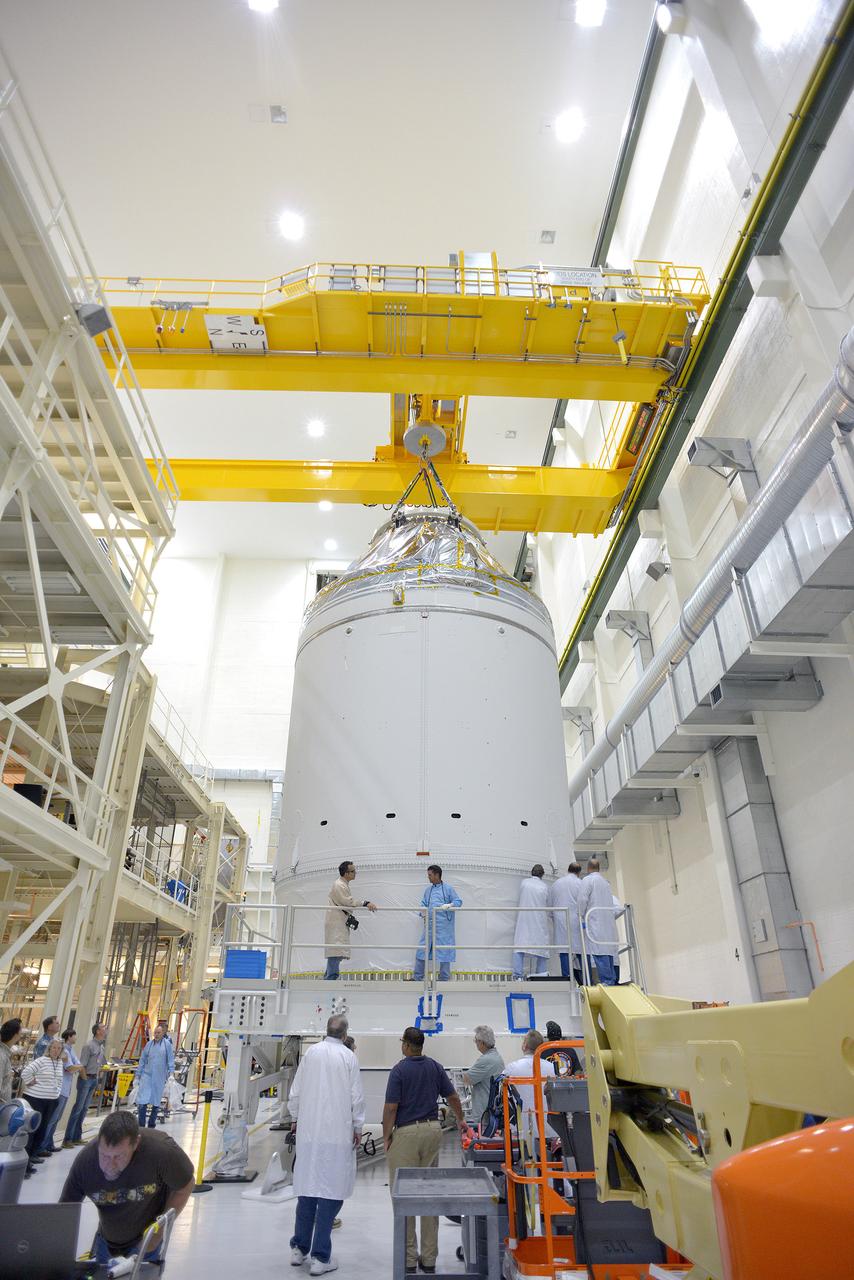
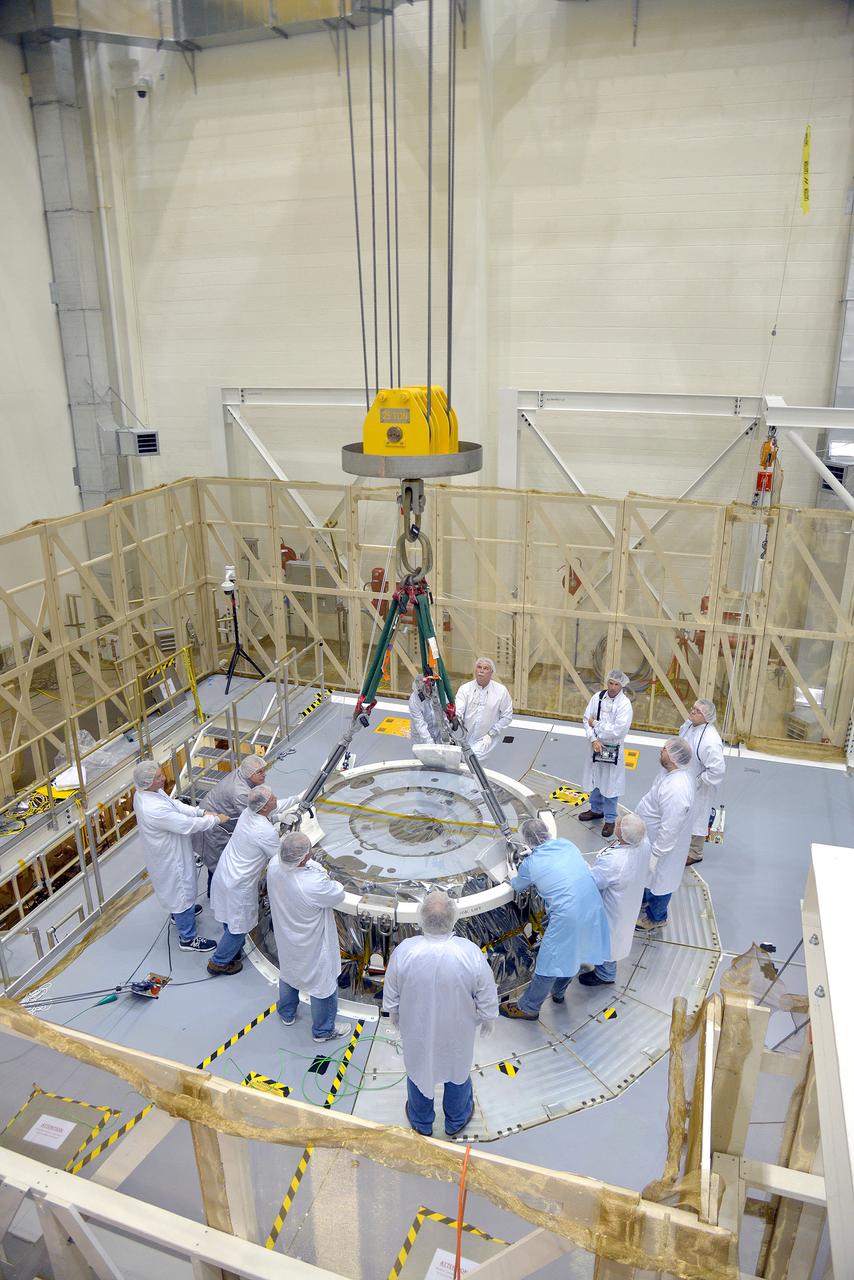
Offloading of the Orion Crew Module Adapter, CMA, at Plum Brook Station. The adapter will connect Orion’s crew module to a service module provided by ESA (European Space Agency). NASA is preparing for a series of tests that will check out the Orion European Service Module, a critical part of the spacecraft that will be launched on future missions to an asteroid and on toward Mars.
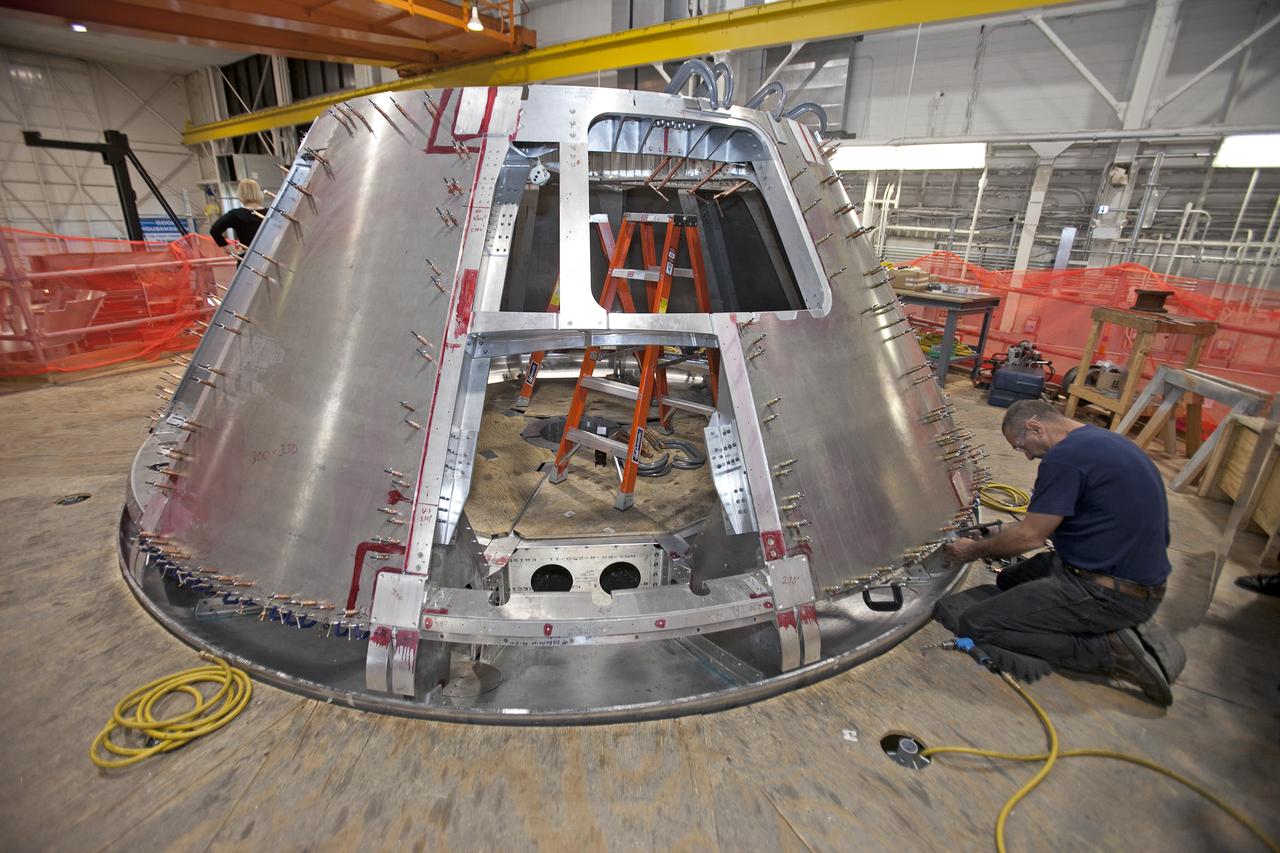
Orion Crew Module KSC Ground Ops Pathfinder Work continues on the fabrication of the Orion Crew Module KSC Ground Operations pathfinder in building 1232A at NASA Langley.

Technicians work on the Artemis III Orion crew module inside the Operations and Checkout Building at NASA's Kennedy Space Center in Florida on March 5, 2025.
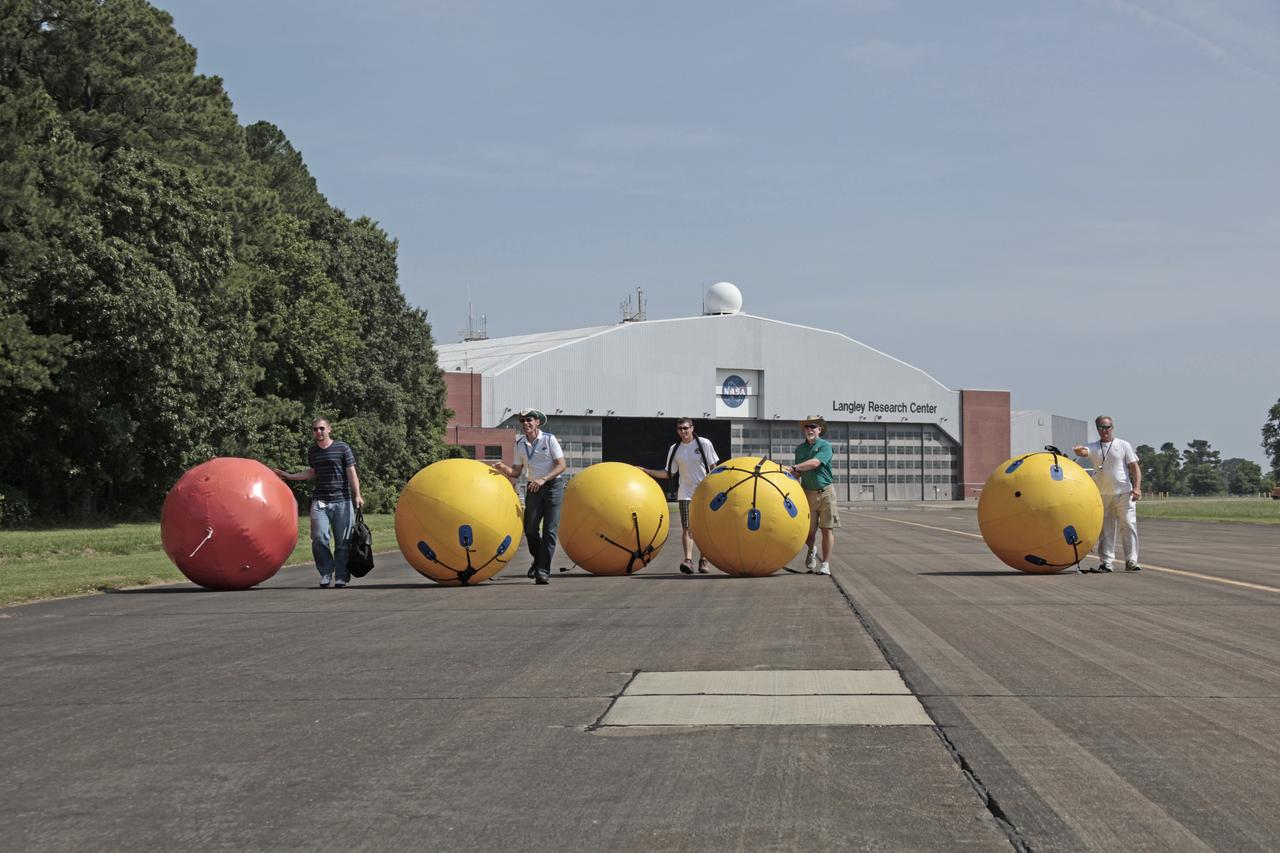
Engineers and technicians from NASA Langley Research Center in Virginia, Kennedy Space Center in Florida and Lockheed Martin in Colorado conduct a fit check on the Orion Crew Module at NASA Langley
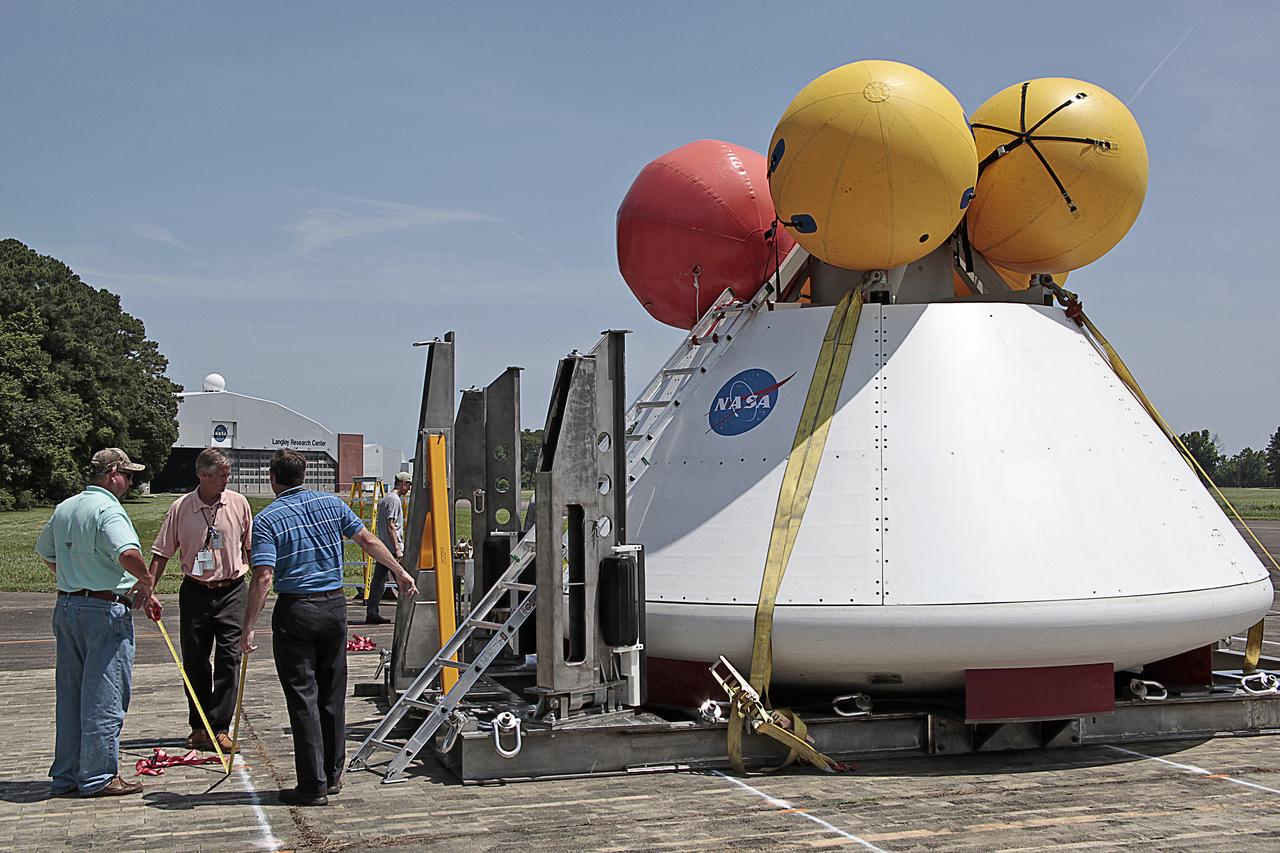
Engineers and technicians from NASA Langley Research Center in Virginia, Kennedy Space Center in Florida and Lockheed Martin in Colorado conduct a fit check on the Orion Crew Module at NASA Langley
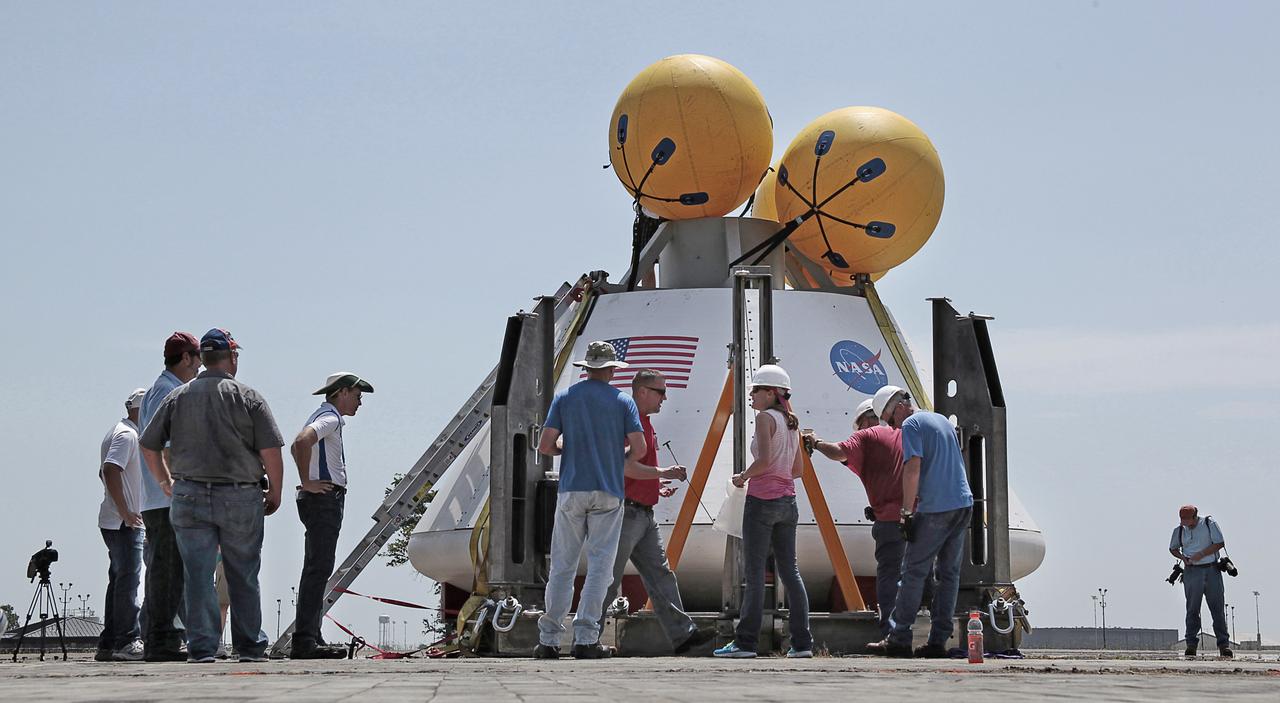
Engineers and technicians from NASA Langley Research Center in Virginia, Kennedy Space Center in Florida and Lockheed Martin in Colorado conduct a fit check on the Orion Crew Module at NASA Langley
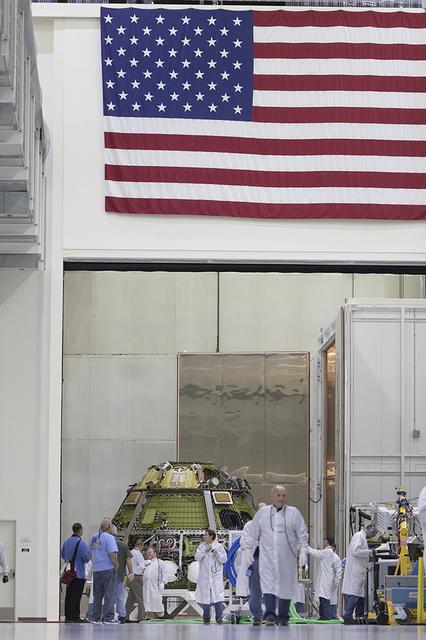
The Orion crew module for Exploration Mission-1 was moved into the thermal chamber in the Neil Armstrong Operations and Checkout Building high bay at NASA's Kennedy Space Center in Florida. The crew module will undergo a thermal cycle test to assess the workmanship of critical hardware and structural locations. The test also demonstrates crew module subsystem operations in a thermally stressing environment to confirm no damage or anomalous hardware conditions as a result of the test. The Orion spacecraft will launch atop NASA's Space Launch System rocket on its first uncrewed integrated flight.

Technicians in clean-room suits attach a crane to the Orion crew module for Exploration Mission-1 for its move to the thermal chamber in the Neil Armstrong Operations and Checkout Building high bay at NASA's Kennedy Space Center in Florida. Orion will be lifted out of a test stand and lowered onto another stand to for the move. The crew module will undergo a thermal cycle test to assess the workmanship of critical hardware and structural locations. The test also demonstrates crew module subsystem operations in a thermally stressing environment to confirm no damage or anomalous hardware conditions as a result of the test. The Orion spacecraft will launch atop NASA's Space Launch System rocket on its first uncrewed integrated flight.
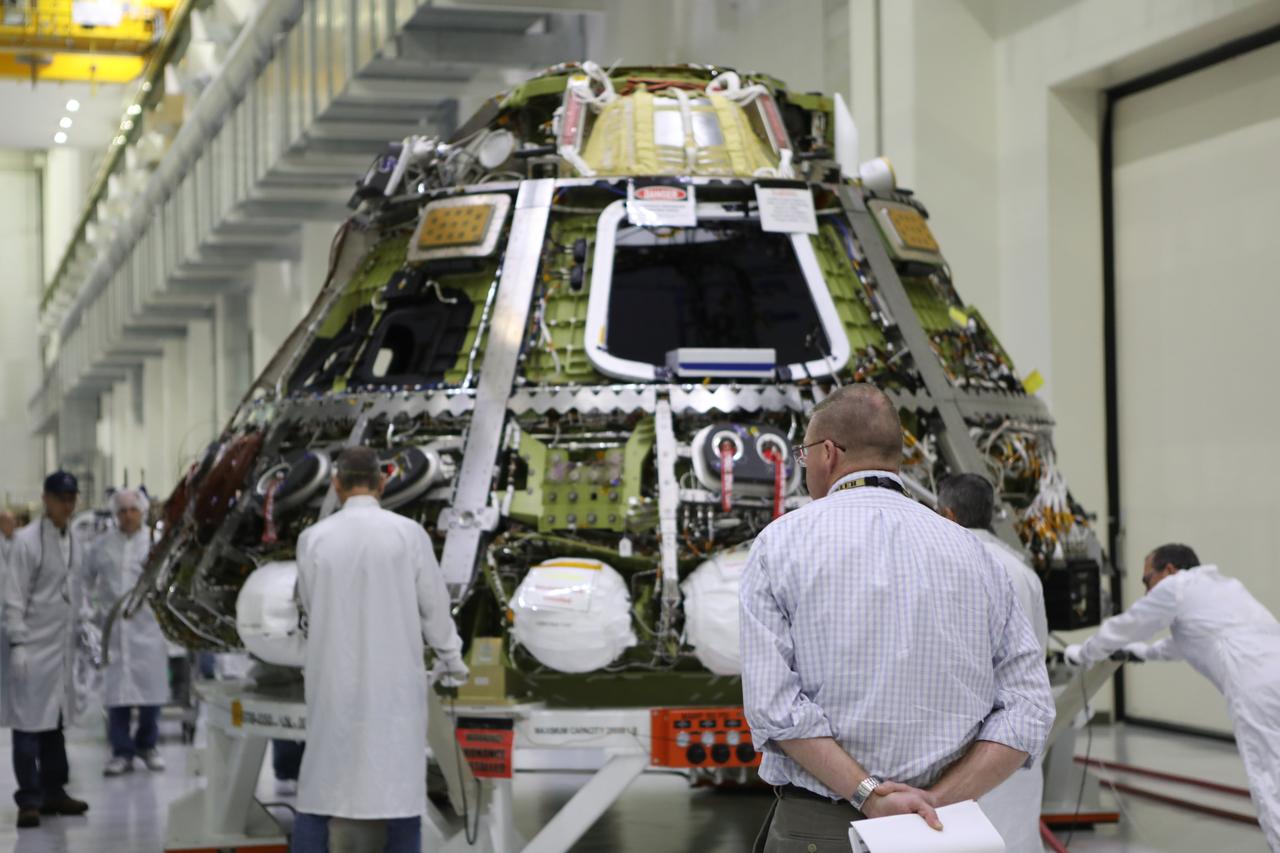
Technicians assist as the Orion crew module for Artemis I is moved toward the thermal chamber in the Neil Armstrong Operations and Checkout Building high bay at NASA's Kennedy Space Center in Florida on Nov. 17, 2017. The crew module will undergo a thermal cycle test to assess the workmanship of critical hardware and structural locations. The test also demonstrates crew module subsystem operations in a thermally stressing environment to confirm no damage or anomalous hardware conditions as a result of the test. The Orion spacecraft will launch atop NASA's Space Launch System rocket on its first uncrewed integrated flight.
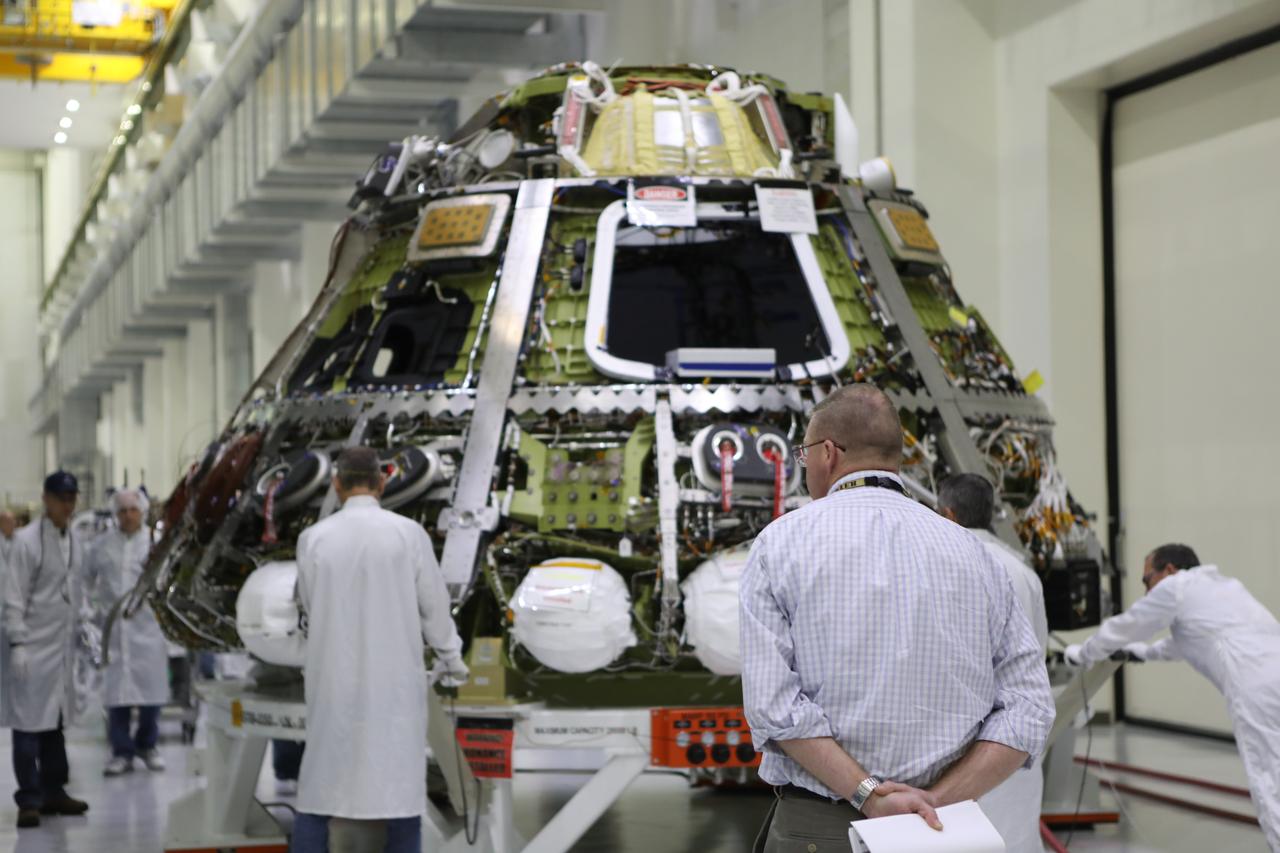
Technicians assist as the Orion crew module for Exploration Mission-1 is moved toward the thermal chamber in the Neil Armstrong Operations and Checkout Building high bay at NASA's Kennedy Space Center in Florida. The crew module will undergo a thermal cycle test to assess the workmanship of critical hardware and structural locations. The test also demonstrates crew module subsystem operations in a thermally stressing environment to confirm no damage or anomalous hardware conditions as a result of the test. The Orion spacecraft will launch atop NASA's Space Launch System rocket on its first uncrewed integrated flight.
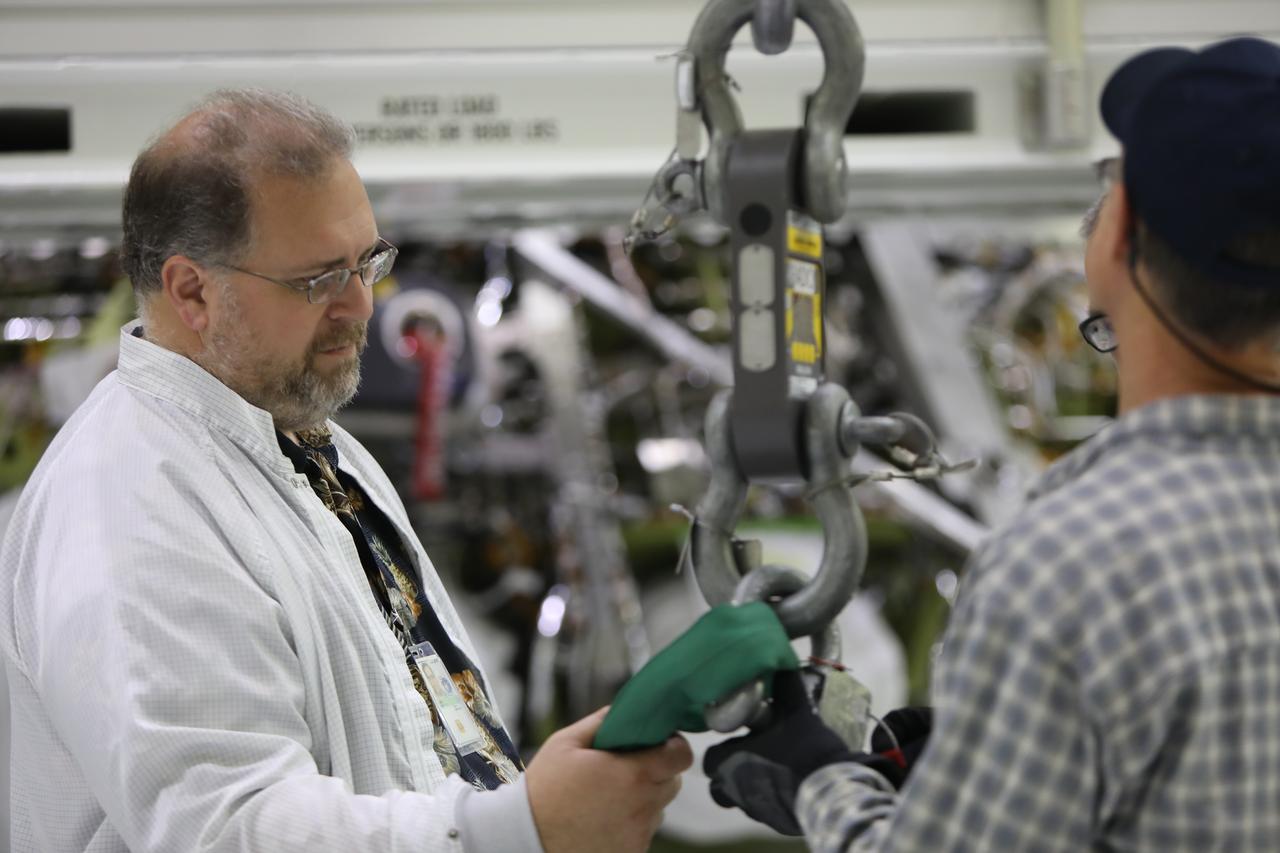
Technicians check a crane that will be used during move operations of the Orion crew module for Exploration Mission-1 to the thermal chamber in the Neil Armstrong Operations and Checkout Building high bay at NASA's Kennedy Space Center in Florida. The crew module will undergo a thermal cycle test to assess the workmanship of critical hardware and structural locations. The test also demonstrates crew module subsystem operations in a thermally stressing environment to confirm no damage or anomalous hardware conditions as a result of the test. The Orion spacecraft will launch atop NASA's Space Launch System rocket on its first uncrewed integrated flight.
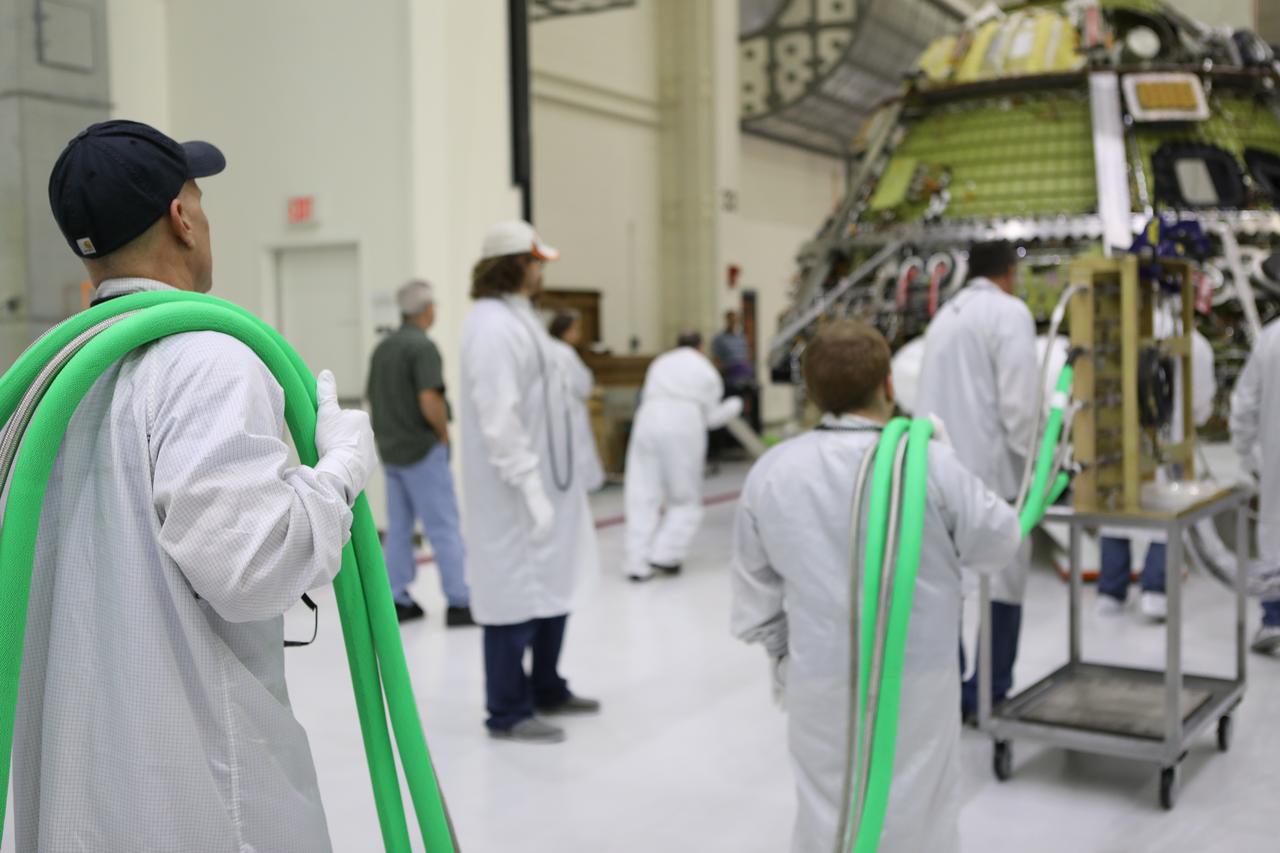
Technicians assist as the Orion crew module for Exploration Mission-1 is moved toward the thermal chamber in the Neil Armstrong Operations and Checkout Building high bay at NASA's Kennedy Space Center in Florida. The crew module will undergo a thermal cycle test to assess the workmanship of critical hardware and structural locations. The test also demonstrates crew module subsystem operations in a thermally stressing environment to confirm no damage or anomalous hardware conditions as a result of the test. The Orion spacecraft will launch atop NASA's Space Launch System rocket on its first uncrewed integrated flight.
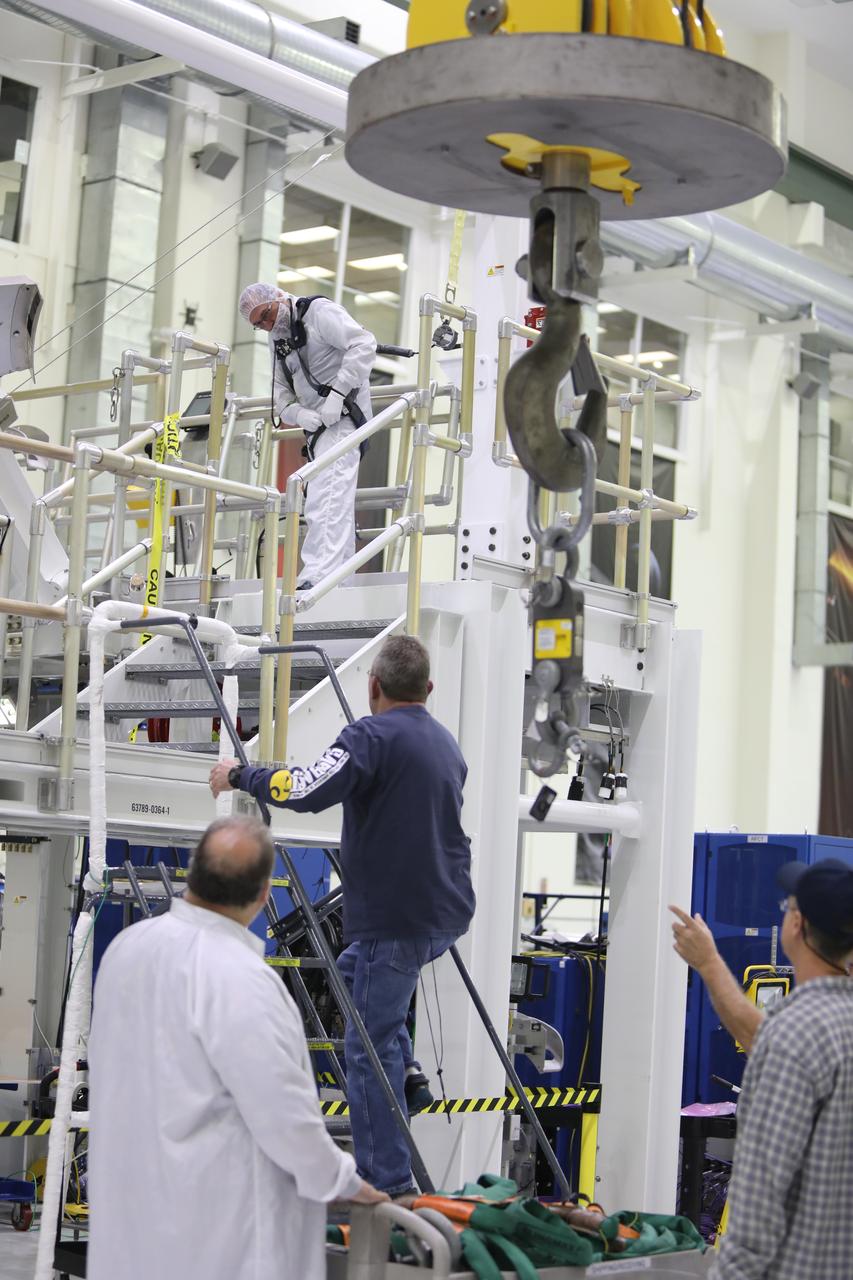
Technicians prepare a crane for use during move operations of the Orion crew module for Exploration Mission-1 to the thermal chamber in the Neil Armstrong Operations and Checkout Building high bay at NASA's Kennedy Space Center in Florida. The crew module will undergo a thermal cycle test to assess the workmanship of critical hardware and structural locations. The test also demonstrates crew module subsystem operations in a thermally stressing environment to confirm no damage or anomalous hardware conditions as a result of the test. The Orion spacecraft will launch atop NASA's Space Launch System rocket on its first uncrewed integrated flight.

Technicians work on the Artemis III Orion crew module inside the Operations and Checkout Building at NASA's Kennedy Space Center in Florida on March 5, 2025.
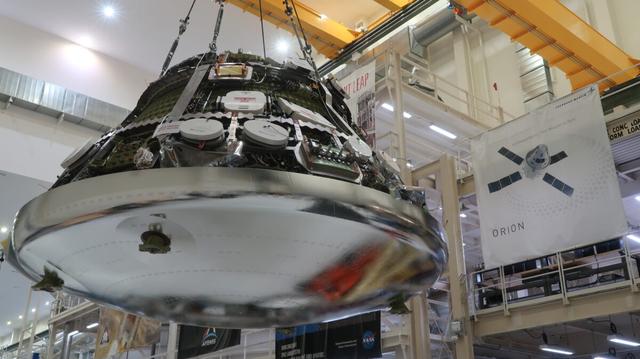
Engineers connect the Orion crew and service modules for the Artemis II mission on Oct. 19, 2023, inside the Neil Armstrong Operations and Checkout Building at NASA’s Kennedy Space Center in Florida. With the crew and service modules integrated, the team will power up the combined crew and service module for the first time. After power on tests are complete, Orion will begin altitude chamber testing, which will put the spacecraft through conditions as close as possible to the environment it will experience in the vacuum of deep space. The crew and service modules are the two major components of Orion that will fly NASA astronauts Reid Wiseman, Victor Glover, and Christina Koch, along with CSA (Canadian Space Agency) astronaut Jeremy Hansen on a mission around the Moon and bring them home safely.
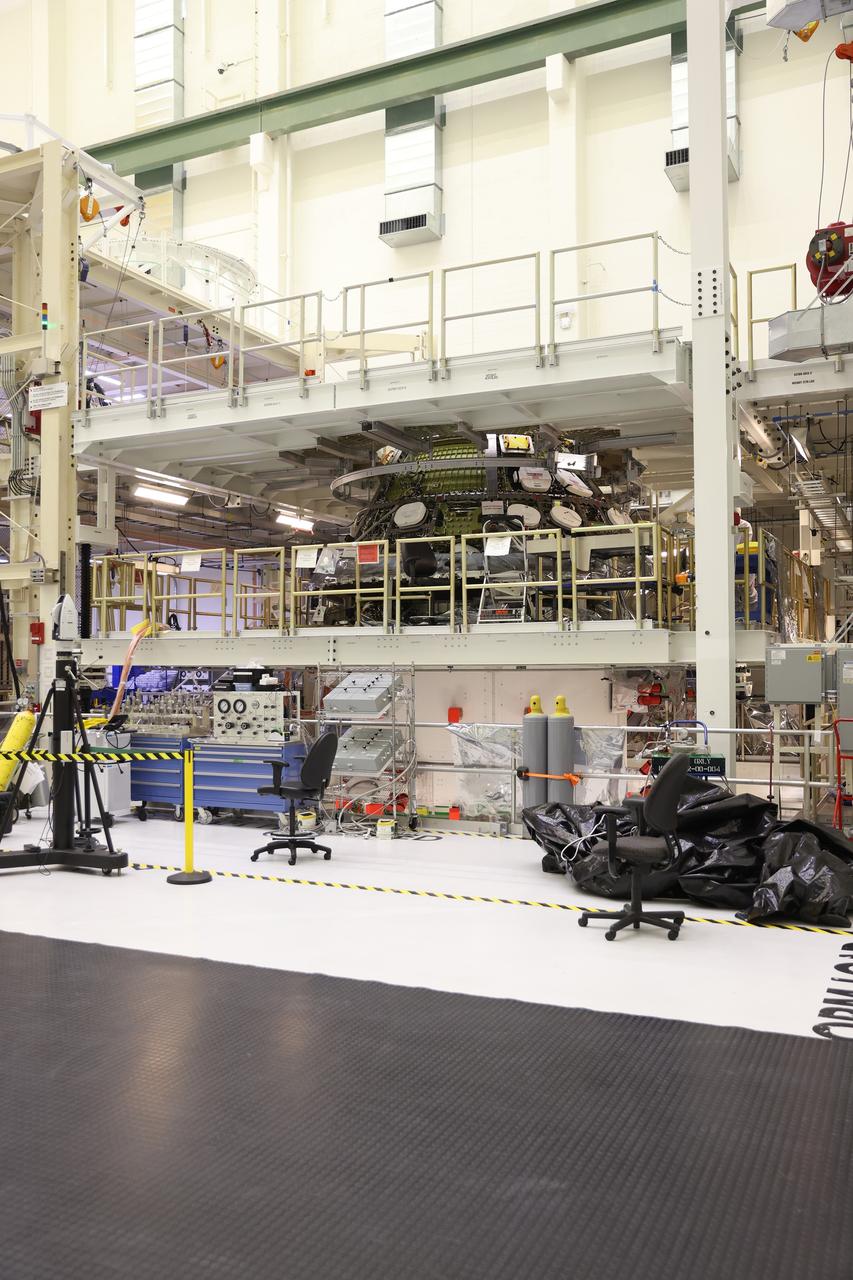
Engineers connect the Orion crew and service modules for the Artemis II mission on Oct. 19, 2023, inside the Neil Armstrong Operations and Checkout Building at NASA’s Kennedy Space Center in Florida. With the crew and service modules integrated, the team will power up the combined crew and service module for the first time. After power on tests are complete, Orion will begin altitude chamber testing, which will put the spacecraft through conditions as close as possible to the environment it will experience in the vacuum of deep space. The crew and service modules are the two major components of Orion that will fly NASA astronauts Reid Wiseman, Victor Glover, and Christina Koch, along with CSA (Canadian Space Agency) astronaut Jeremy Hansen on a mission around the Moon and bring them home safely.
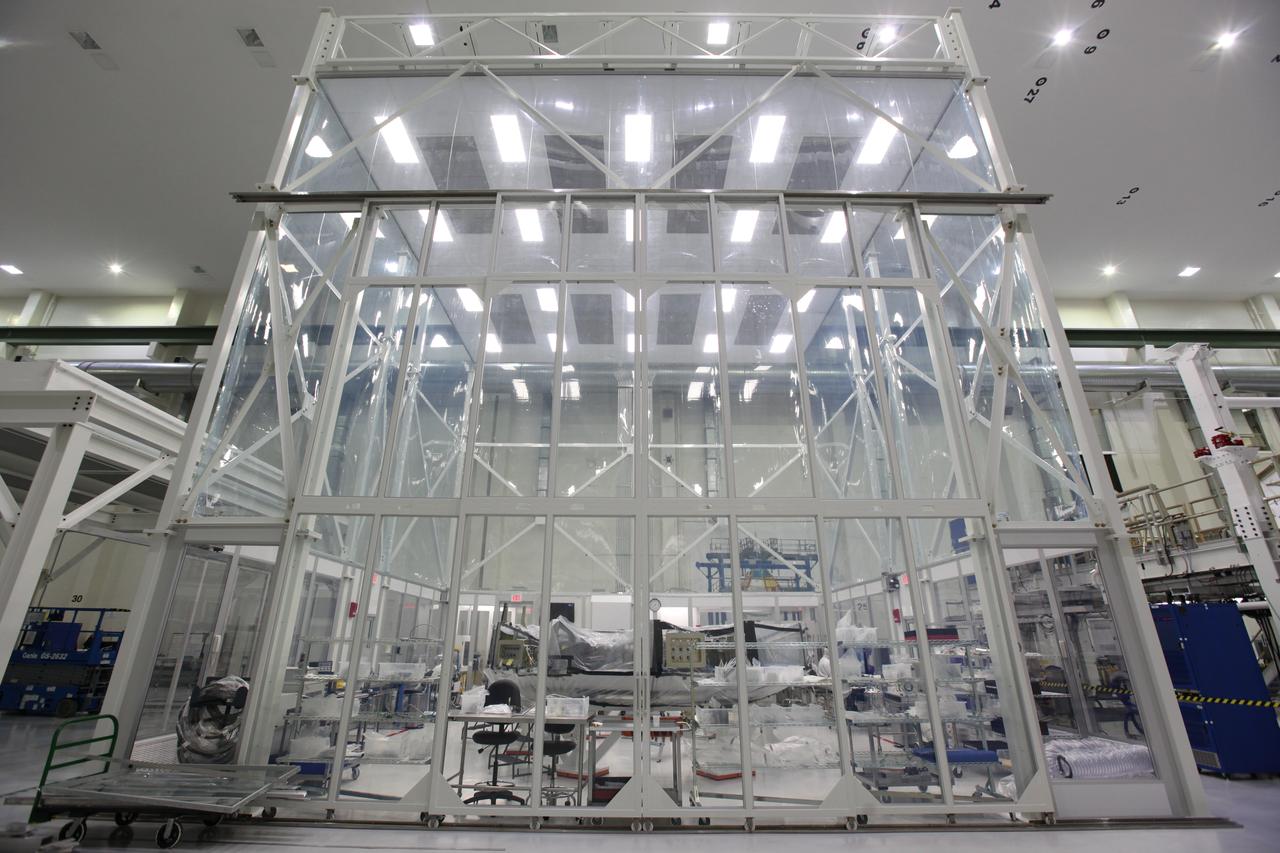
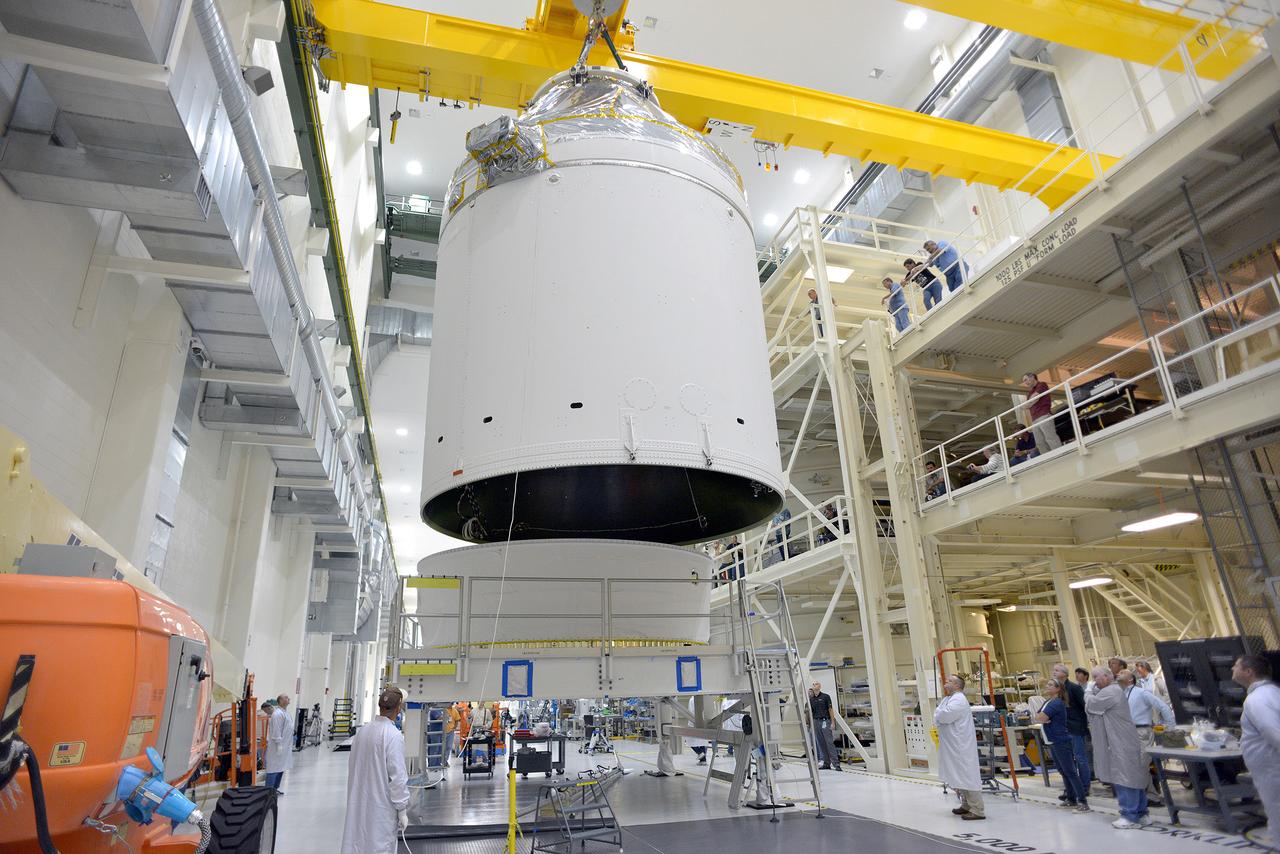
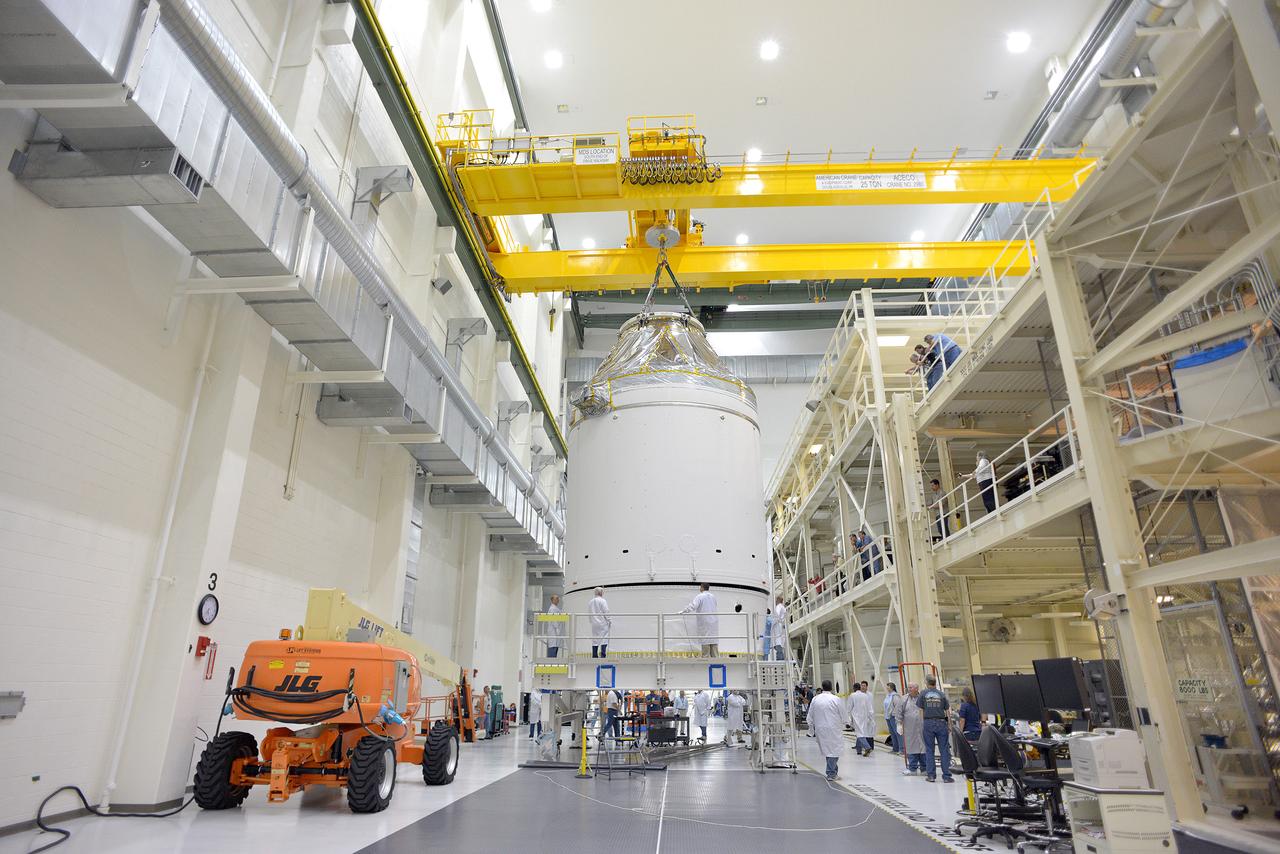
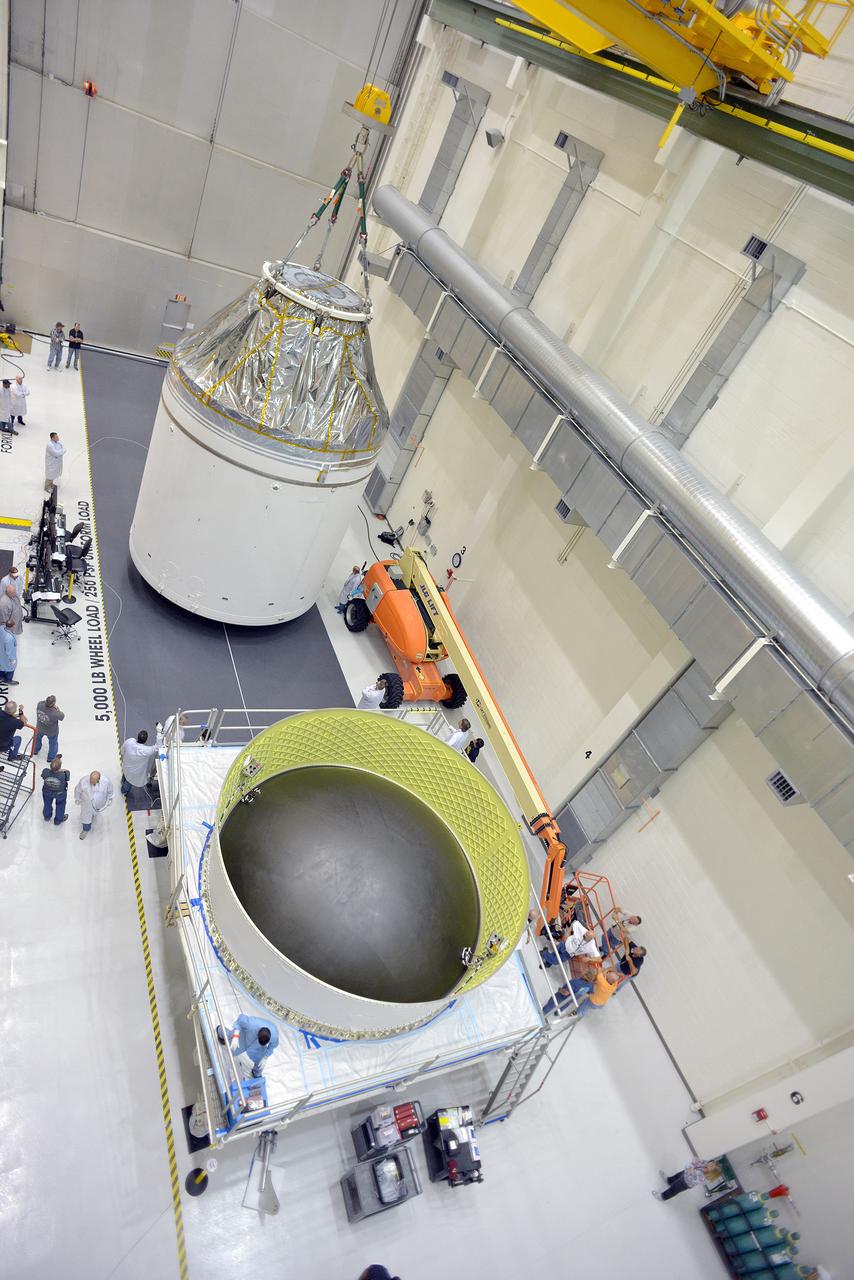
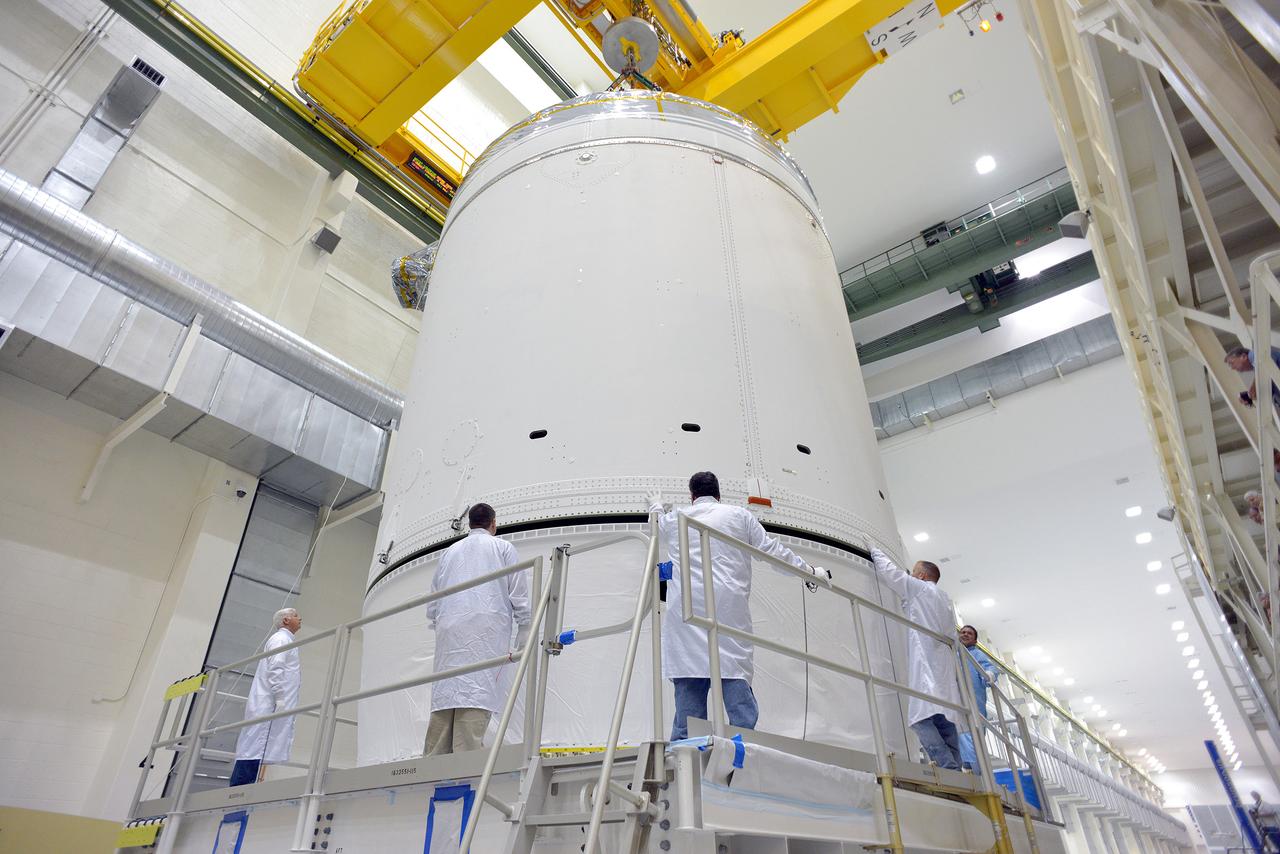
Inside the Neil Armstrong Operations and Checkout Building high bay at NASA's Kennedy Space Center in Florida, the Orion crew module adapter (CMA) for Exploration Mission 1 has been moved to a test stand inside a clean room. The adapter connects the crew module to the service module. NASA is preparing the CMA for further testing to prepare it for installation on the European Space Agency-provided service module for Orion.

The Artemis IV Orion crew module in work inside the Operations and Checkout Building at NASA's Kennedy Space Center in Florida on March 5, 2025.
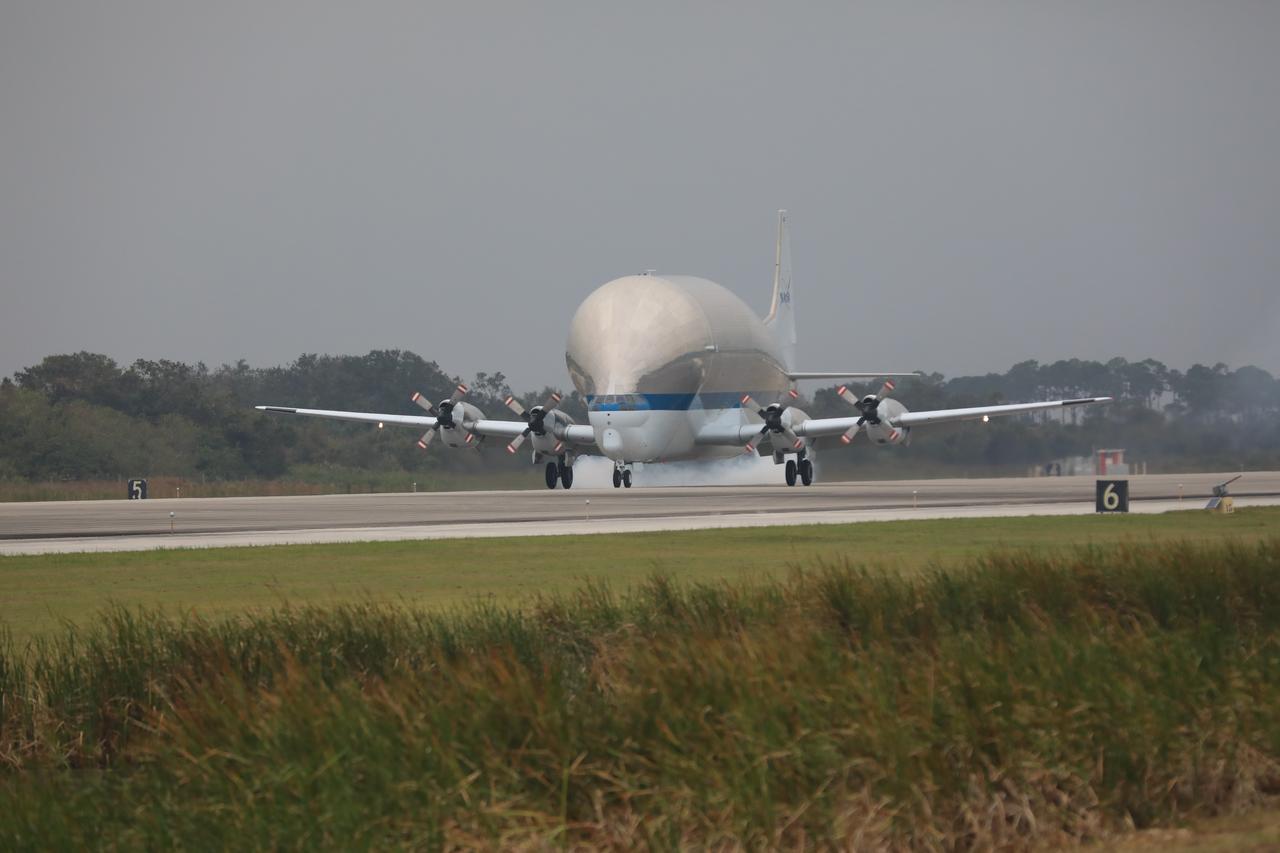
NASA’s Super Guppy aircraft touches down at the Shuttle Landing Facility at the agency’s Kennedy Space Center in Florida, carrying the Orion crew module structural test article (STA). The STA will be offloaded and transported to the Neil Armstrong Operations and Checkout Building high bay for further testing. Photo credit: NASA/Kim Shiflett
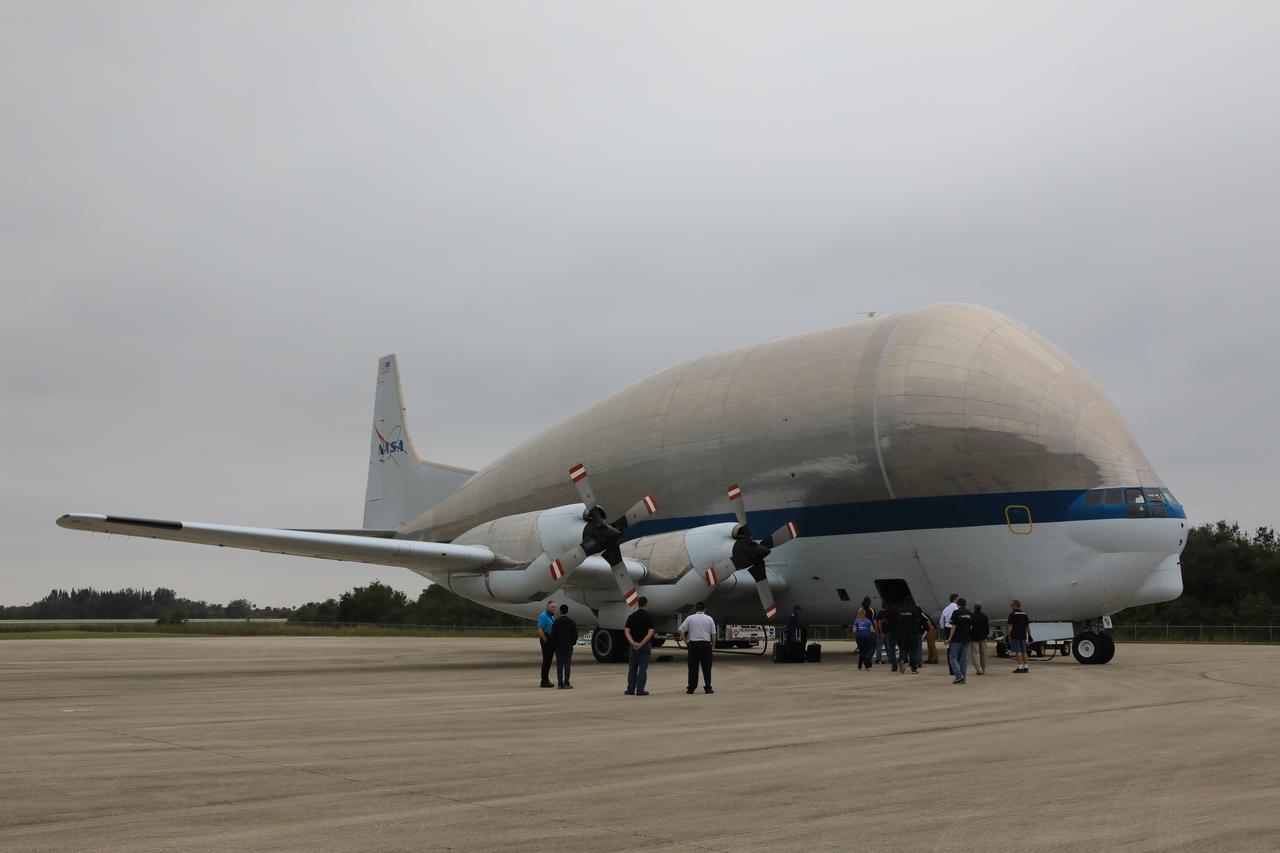
NASA’s Super Guppy aircraft arrives on the tarmac after touching down at the Shuttle Landing Facility at the agency’s Kennedy Space Center in Florida. The guppy is carrying the Orion crew module structural test article (STA). The STA will be offloaded and transported to the Neil Armstrong Operations and Checkout Building high bay for further testing. Photo credit: NASA/Kim Shiflett
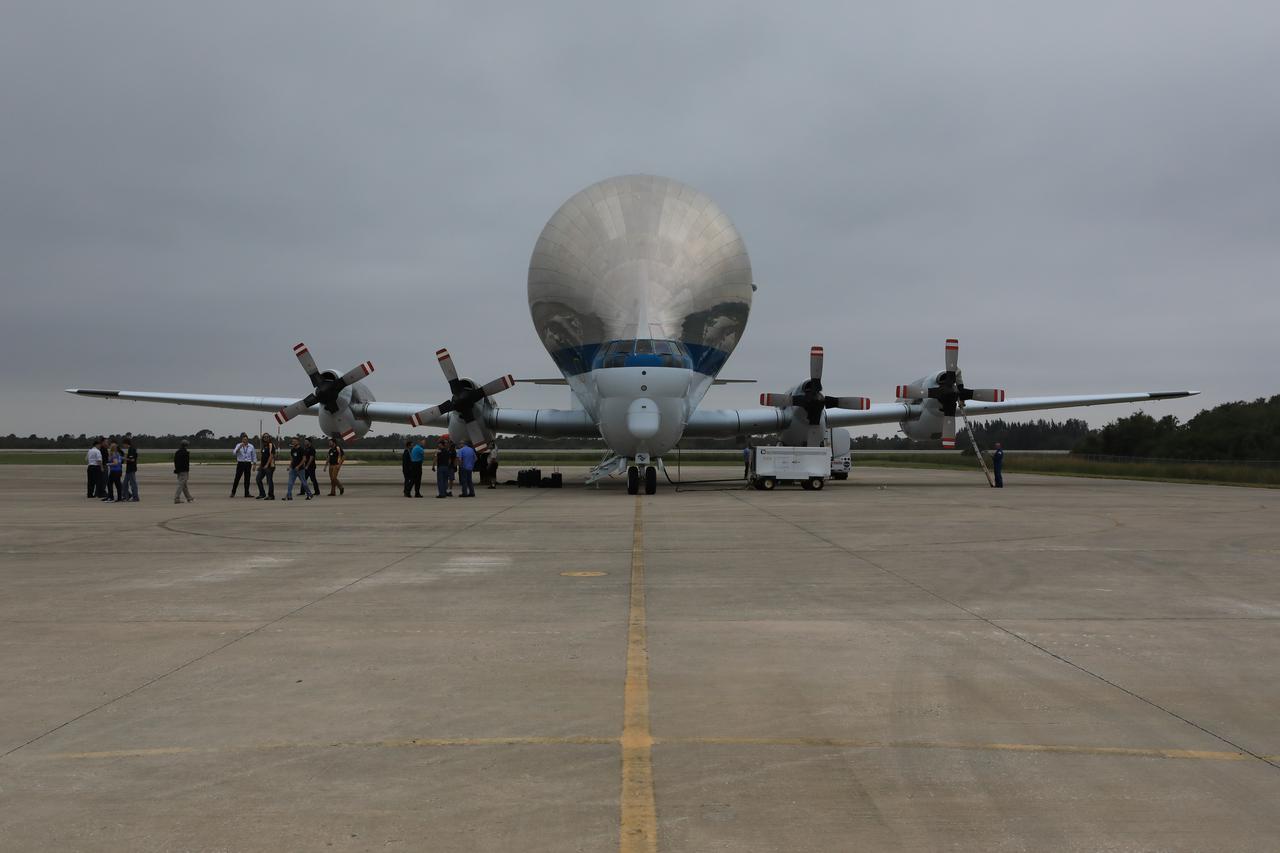
NASA’s Super Guppy aircraft arrives on the tarmac after touching down at the Shuttle Landing Facility at the agency’s Kennedy Space Center in Florida. The guppy is carrying the Orion crew module structural test article (STA). The STA will be offloaded and transported to the Neil Armstrong Operations and Checkout Building high bay for further testing. Photo credit: NASA/Kim Shiflett
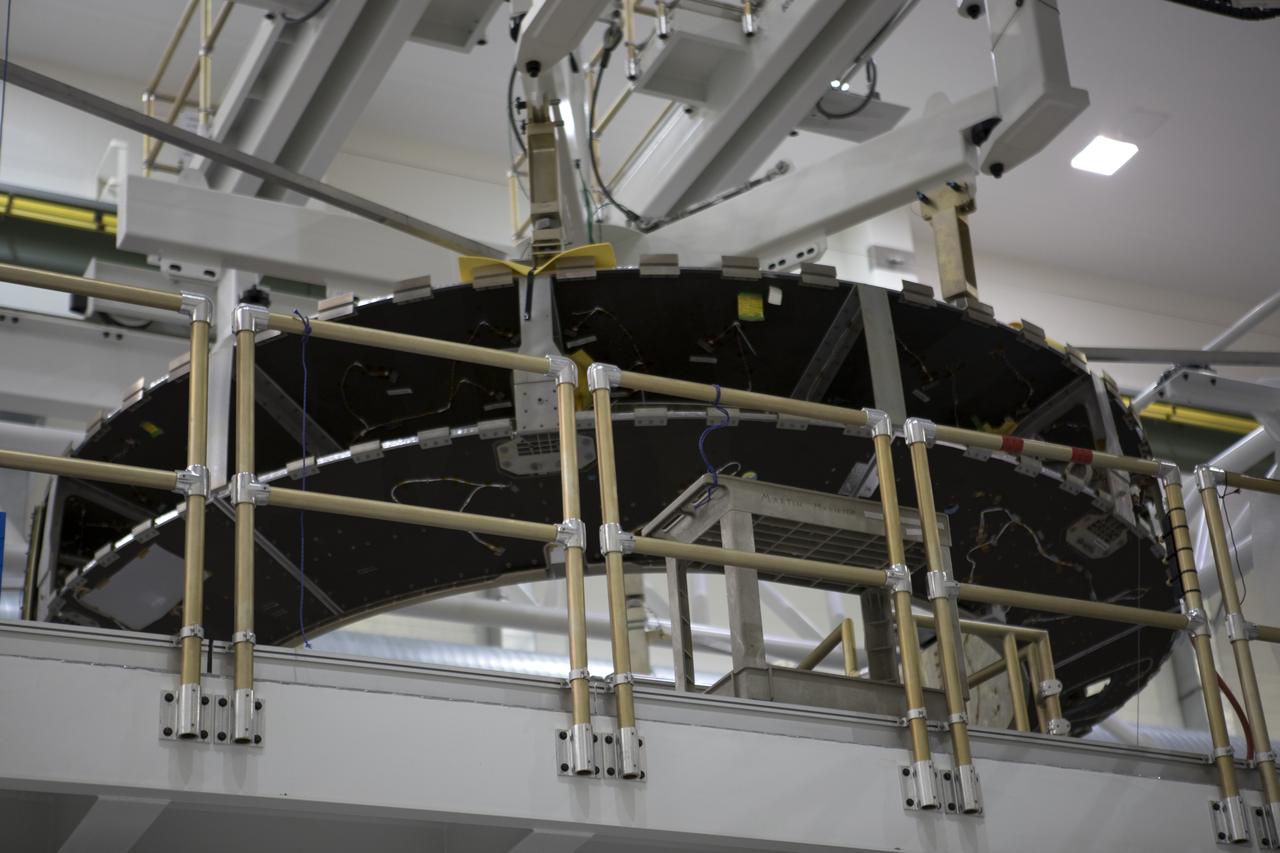
Inside the Neil Armstrong Operations and Checkout Building high bay at NASA's Kennedy Space Center in Florida, operations are underway to lower the Orion crew module adapter structural test article onto the European Space Agency's service module structural test article. After the hardware is attached, the structure will be packed and shipped to Lockheed Martin's Denver facility to undergo testing. The Orion spacecraft will launch atop the agency's Space Launch System rocket on Exploration Mission-1 in 2019.
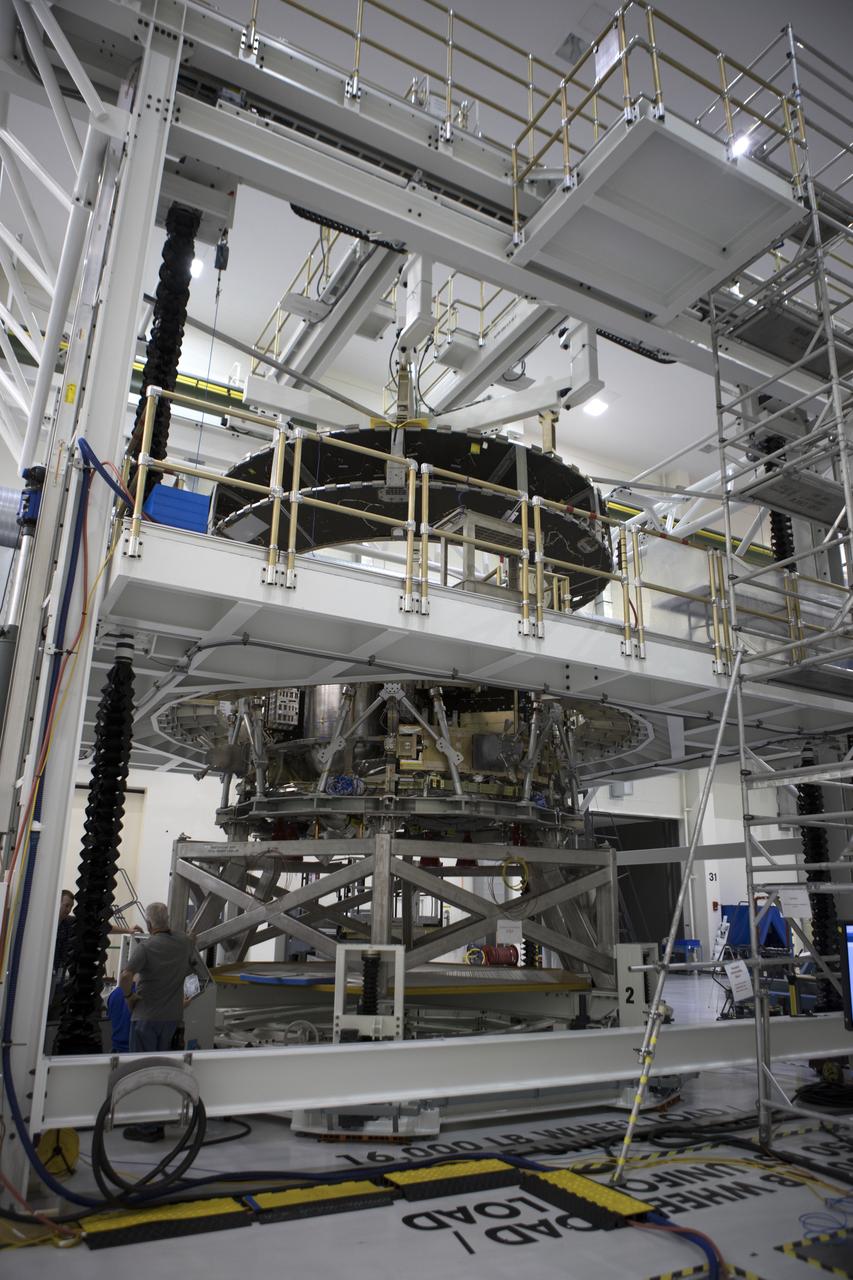
Inside the Neil Armstrong Operations and Checkout Building high bay at NASA's Kennedy Space Center in Florida, operations are underway to lower the Orion crew module adapter structural test article onto the European Space Agency's service module structural test article. After the hardware is attached, the structure will be packed and shipped to Lockheed Martin's Denver facility to undergo testing. The Orion spacecraft will launch atop the agency's Space Launch System rocket on Exploration Mission-1 in 2019.
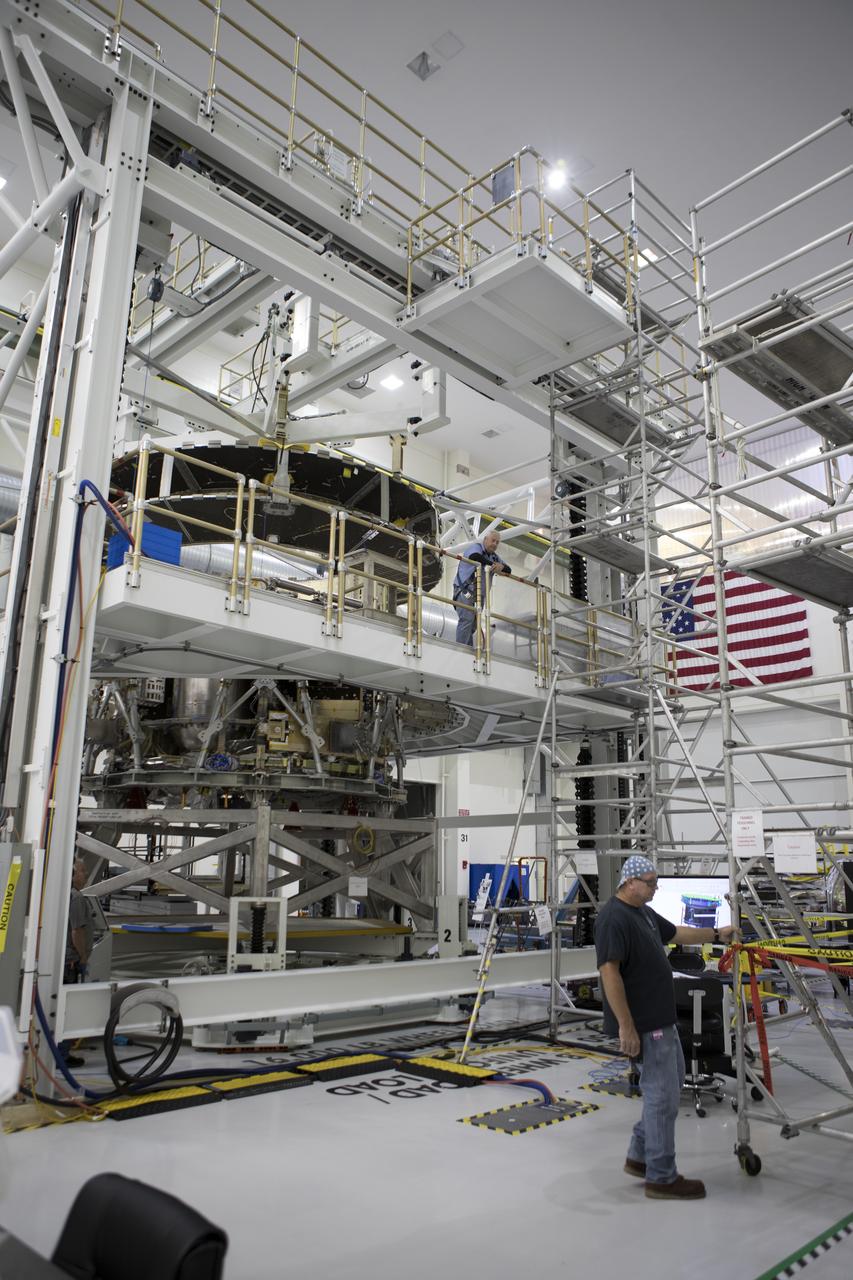
Inside the Neil Armstrong Operations and Checkout Building high bay at NASA's Kennedy Space Center in Florida, operations are underway to lower the Orion crew module adapter structural test article onto the European Space Agency's service module structural test article. After the hardware is attached, the structure will be packed and shipped to Lockheed Martin's Denver facility to undergo testing. The Orion spacecraft will launch atop the agency's Space Launch System rocket on Exploration Mission-1 in 2019.
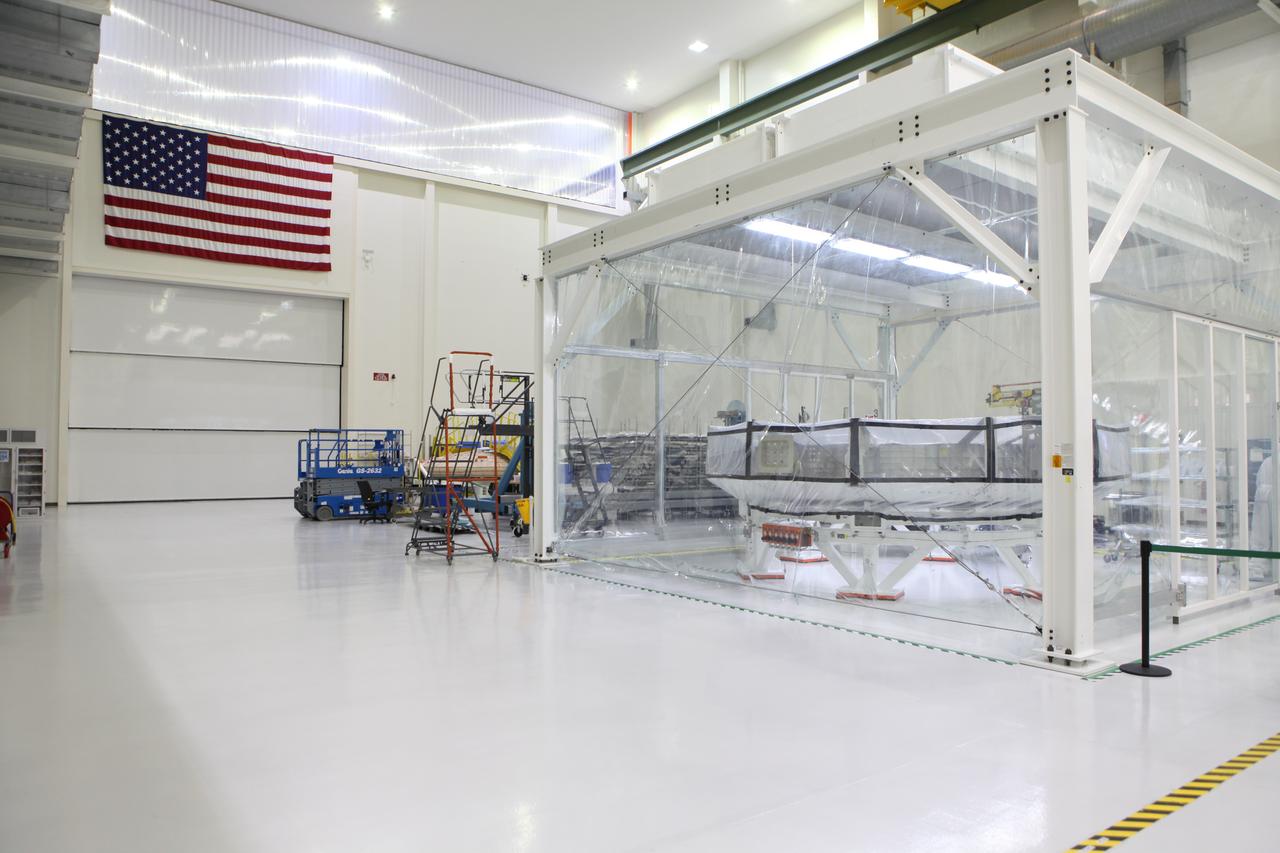
Inside the Neil Armstrong Operations and Checkout Building high bay at NASA’s Kennedy Space Center in Florida, the Orion crew module adapter (CMA) for Exploration Mission 1 (EM-1) is in a clean room with protective walls secured around it. The adapter will undergo propellant and environmental control and life support system tube installation and welding. The adapter will connect the Orion crew module to the European Space Agency-provided service module. The Orion spacecraft will launch atop NASA’s Space Launch System rocket on EM-1, its first deep space mission, in late 2018.
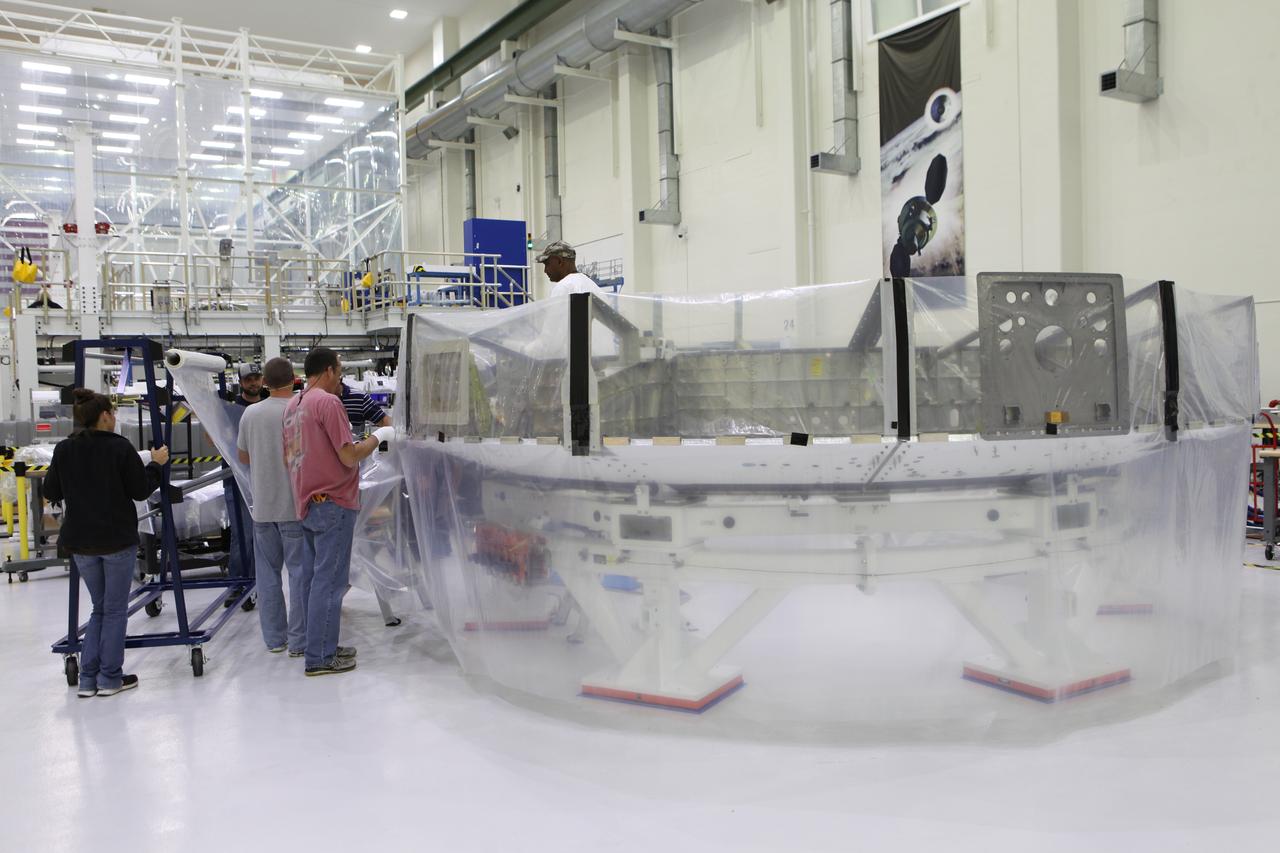
Inside the Neil Armstrong Operations and Checkout Building high bay at NASA’s Kennedy Space Center in Florida, Lockheed Martin technicians secure a protective cover around the Orion crew module adapter (CMA) for Exploration Mission 1 (EM-1) for its move to a clean room. The CMA will undergo propellant and environmental control and life support system tube installation and welding. The adapter will connect the Orion crew module to the European Space Agency-provided service module. The Orion spacecraft will launch atop NASA’s Space Launch System rocket on EM-1, its first deep space mission, in late 2018.
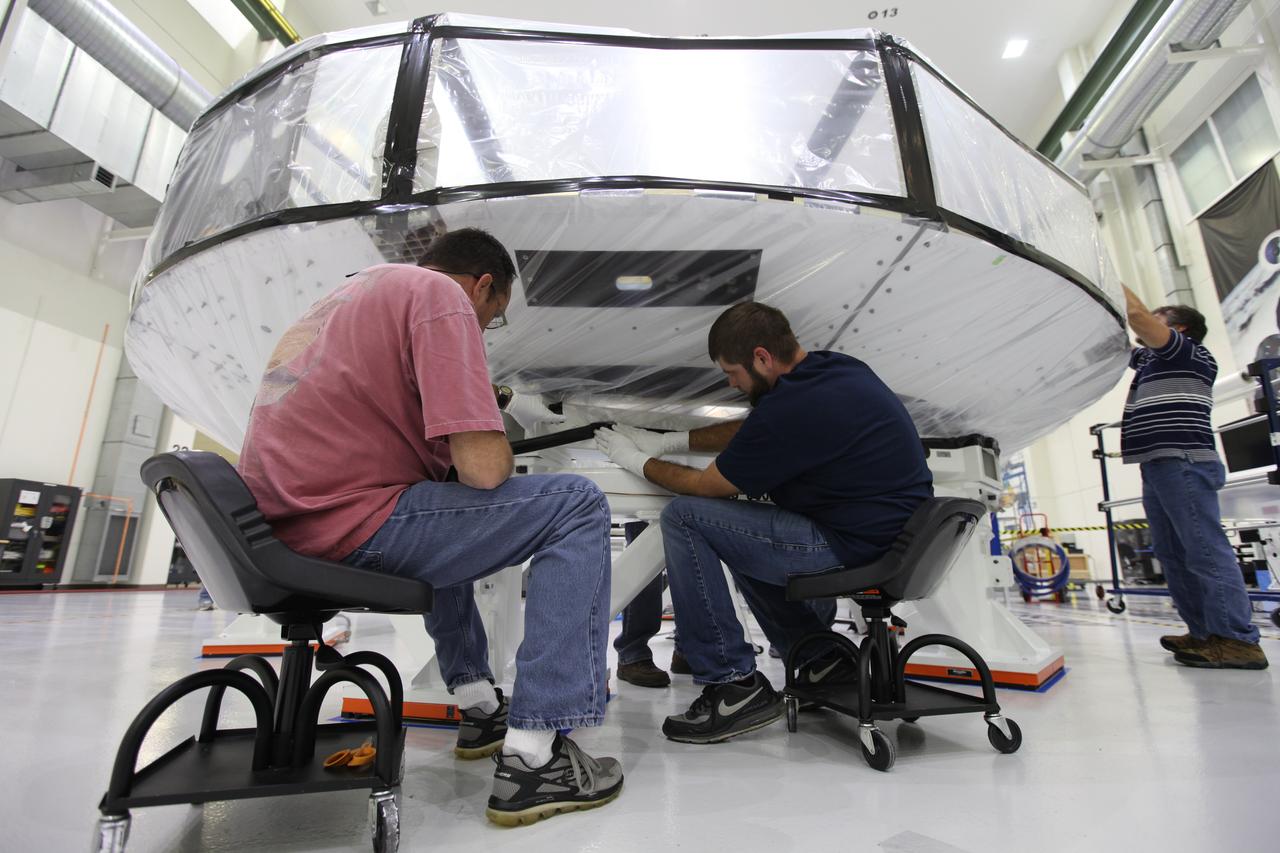
Inside the Neil Armstrong Operations and Checkout Building high bay at NASA's Kennedy Space Center in Florida, Lockheed Martin technicians secure a protective cover around the Orion crew module adapter (CMA) for Exploration Mission 1 (EM-1) for its move to a clean room. The CMA will undergo propellant and environmental control and life support system tube installation and welding. The adapter will connect the Orion crew module to the European Space Agency-provided service module. The Orion spacecraft will launch atop NASA’s Space Launch System rocket on EM-1, its first deep space mission, in late 2018.
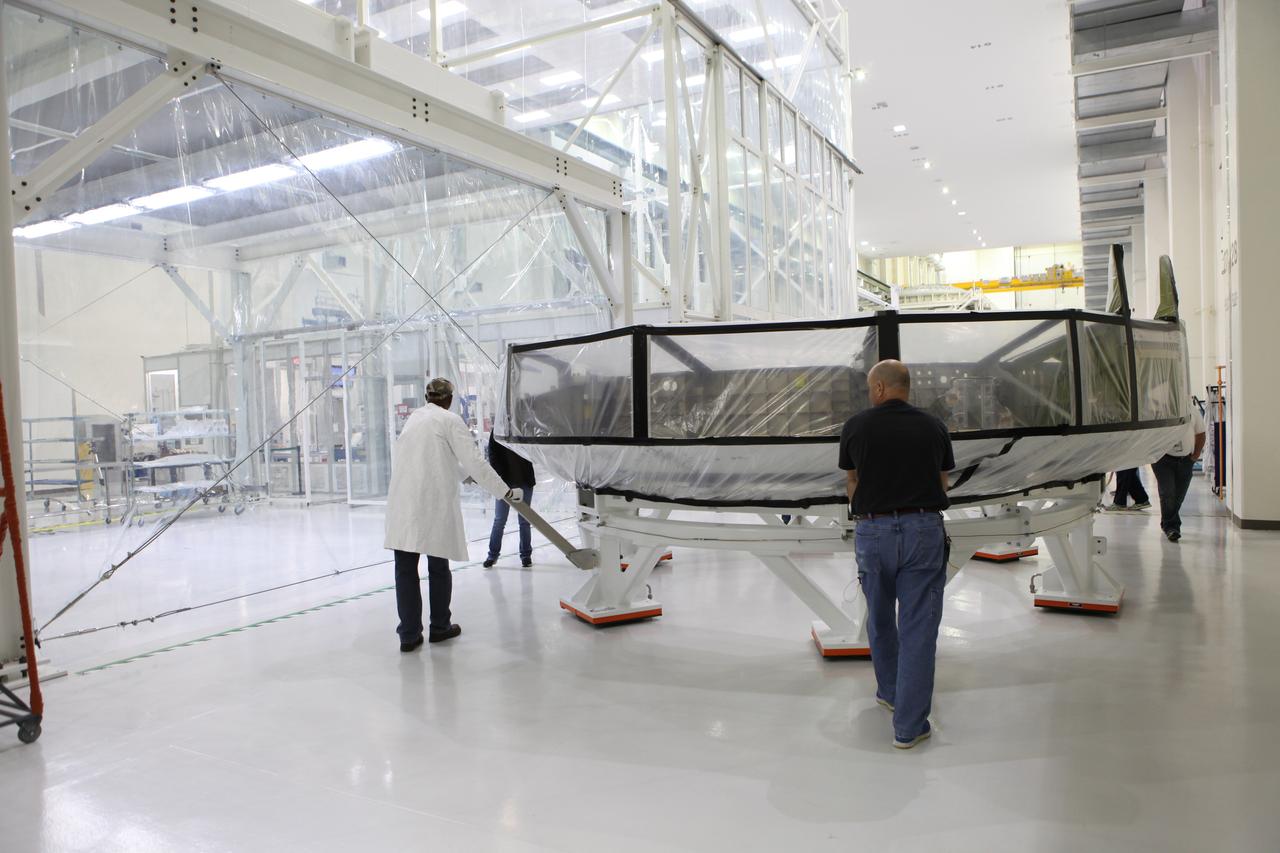
Inside the Neil Armstrong Operations and Checkout Building high bay at NASA’s Kennedy Space Center in Florida, Lockheed Martin technicians move the Orion crew module adapter (CMA) for Exploration Mission 1 (EM-1) toward a clean room. The CMA will undergo propellant and environmental control and life support system tube installation and welding. The adapter will connect the Orion crew module to the European Space Agency-provided service module. The Orion spacecraft will launch atop NASA’s Space Launch System rocket on EM-1, its first deep space mission, in late 2018.
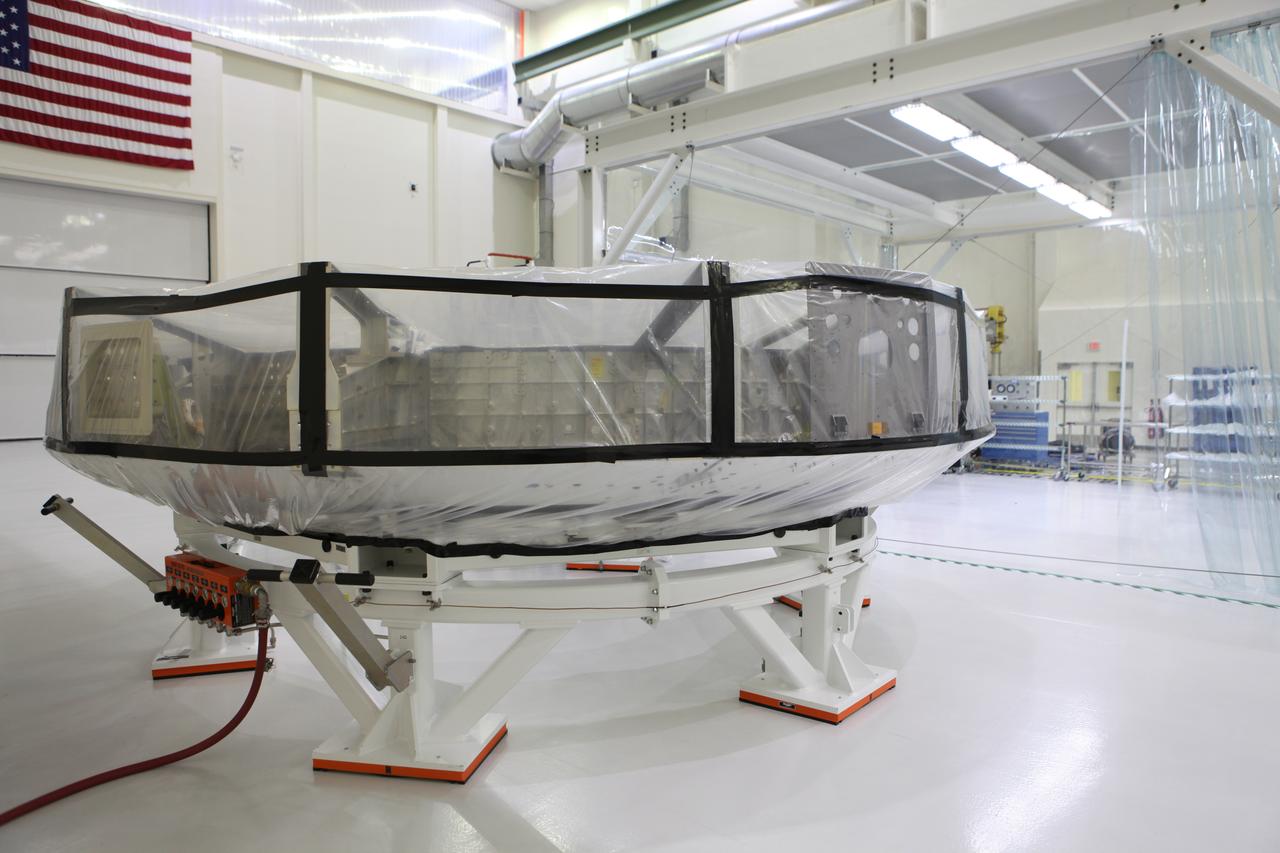
Inside the Neil Armstrong Operations and Checkout Building high bay at NASA’s Kennedy Space Center in Florida, the Orion crew module adapter (CMA) for Exploration Mission 1 (EM-1) is being moved to a clean room. The CMA will undergo propellant and environmental control and life support system tube installation and welding. The adapter will connect the Orion crew module to the European Space Agency-provided service module. The Orion spacecraft will launch atop NASA’s Space Launch System rocket on EM-1, its first deep space mission, in late 2018.
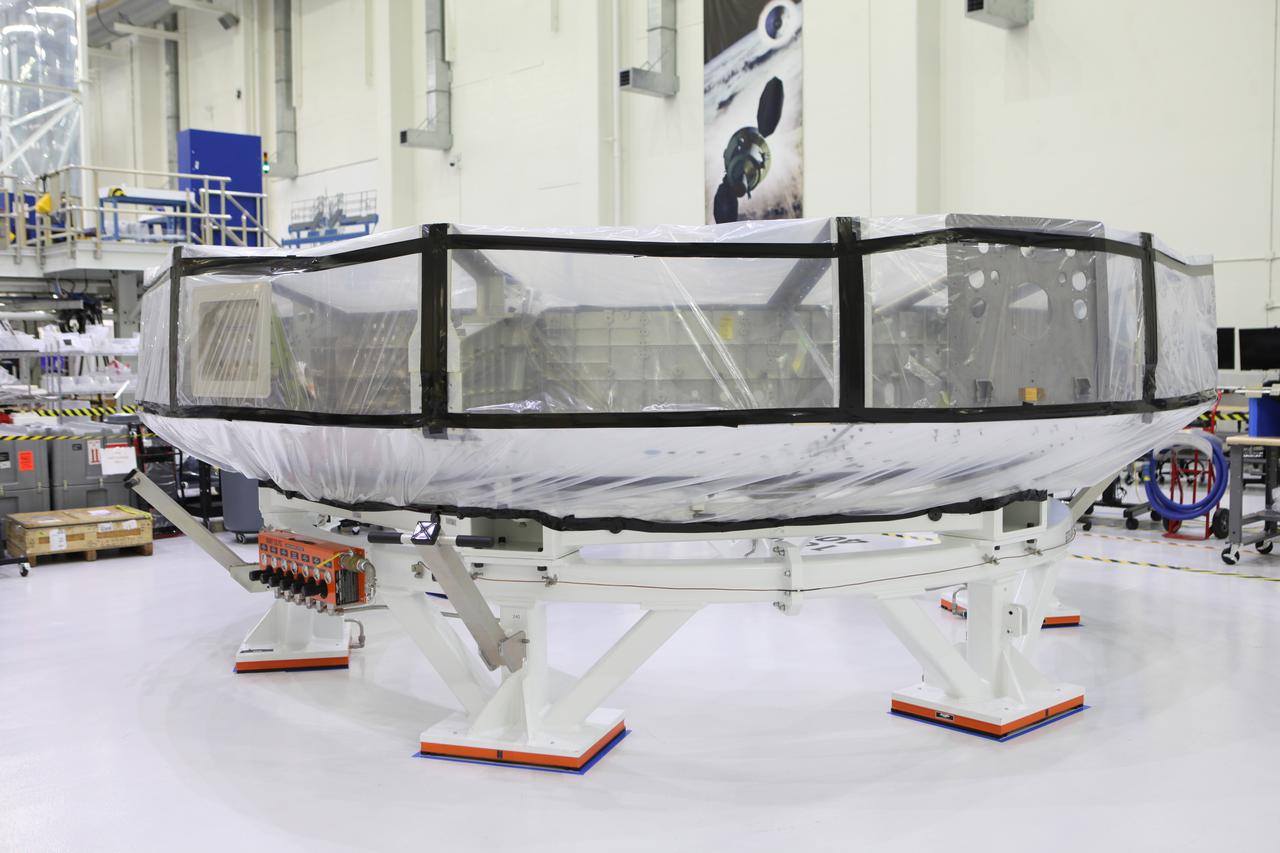
Inside the Neil Armstrong Operations and Checkout Building high bay at NASA’s Kennedy Space Center in Florida, a protective cover is installed around the Orion crew module adapter (CMA) for Exploration Mission 1 (EM-1) for its move to a clean room. The CMA will undergo propellant and environmental control and life support system tube installation and welding. The adapter will connect the Orion crew module to the European Space Agency-provided service module. The Orion spacecraft will launch atop NASA’s Space Launch System rocket on EM-1, its first deep space mission, in late 2018.
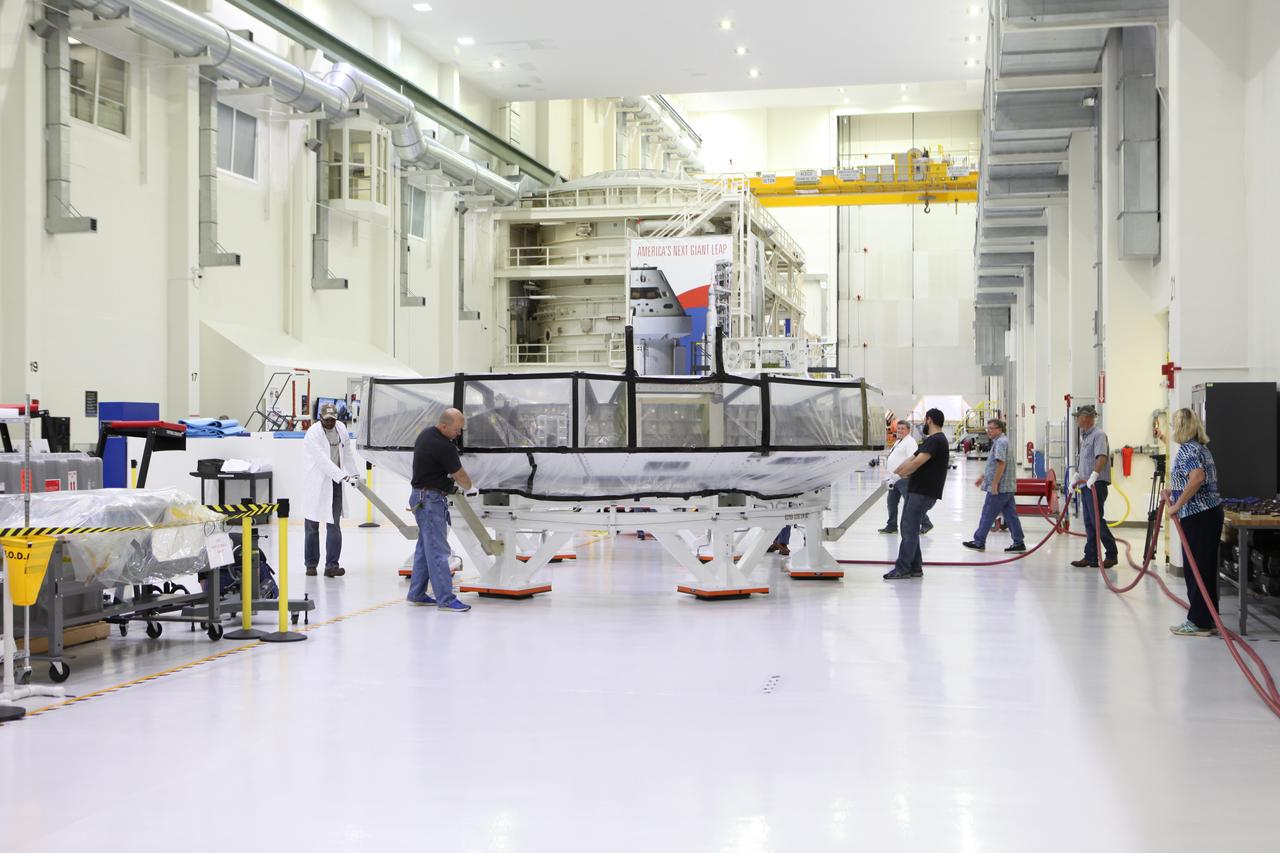
Inside the Neil Armstrong Operations and Checkout Building high bay at NASA’s Kennedy Space Center in Florida, Lockheed Martin technicians begin to move the Orion crew module adapter (CMA) for Exploration Mission 1 (EM-1) to a clean room. The CMA will undergo propellant and environmental control and life support system tube installation and welding. The adapter will connect the Orion crew module to the European Space Agency-provided service module. The Orion spacecraft will launch atop NASA’s Space Launch System rocket on EM-1, its first deep space mission, in late 2018.
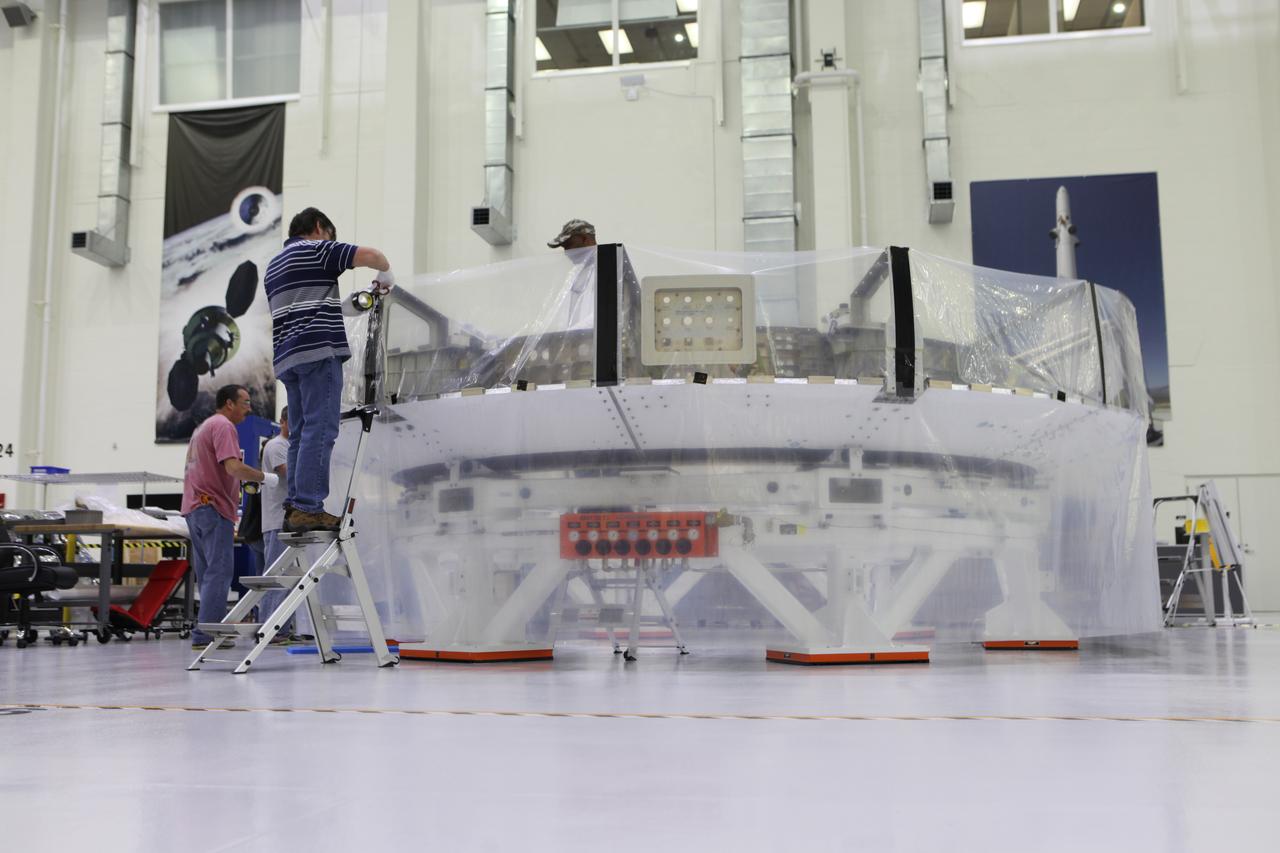
Inside the Neil Armstrong Operations and Checkout Building high bay at NASA's Kennedy Space Center in Florida, Lockheed Martin technicians secure a protective cover around the Orion crew module adapter (CMA) for Exploration Mission 1 (EM-1) for its move to a clean. The CMA will undergo propellant and environmental control and life support system tube installation and welding. The adapter will connect the Orion crew module to the European Space Agency-provided service module. The Orion spacecraft will launch atop NASA’s Space Launch System rocket on EM-1, its first deep space mission, in late 2018.

Inside the Neil Armstrong Operations and Checkout Building high bay at NASA’s Kennedy Space Center in Florida, a Lockheed Martin technician secures a protective cover around the Orion crew module adapter (CMA) for Exploration Mission 1 (EM-1) for its move to a clean room The CMA will undergo propellant and environmental control and life support system tube installation and welding. The adapter will connect the Orion crew module to the European Space Agency-provided service module. The Orion spacecraft will launch atop NASA’s Space Launch System rocket on EM-1, its first deep space mission, in late 2018.
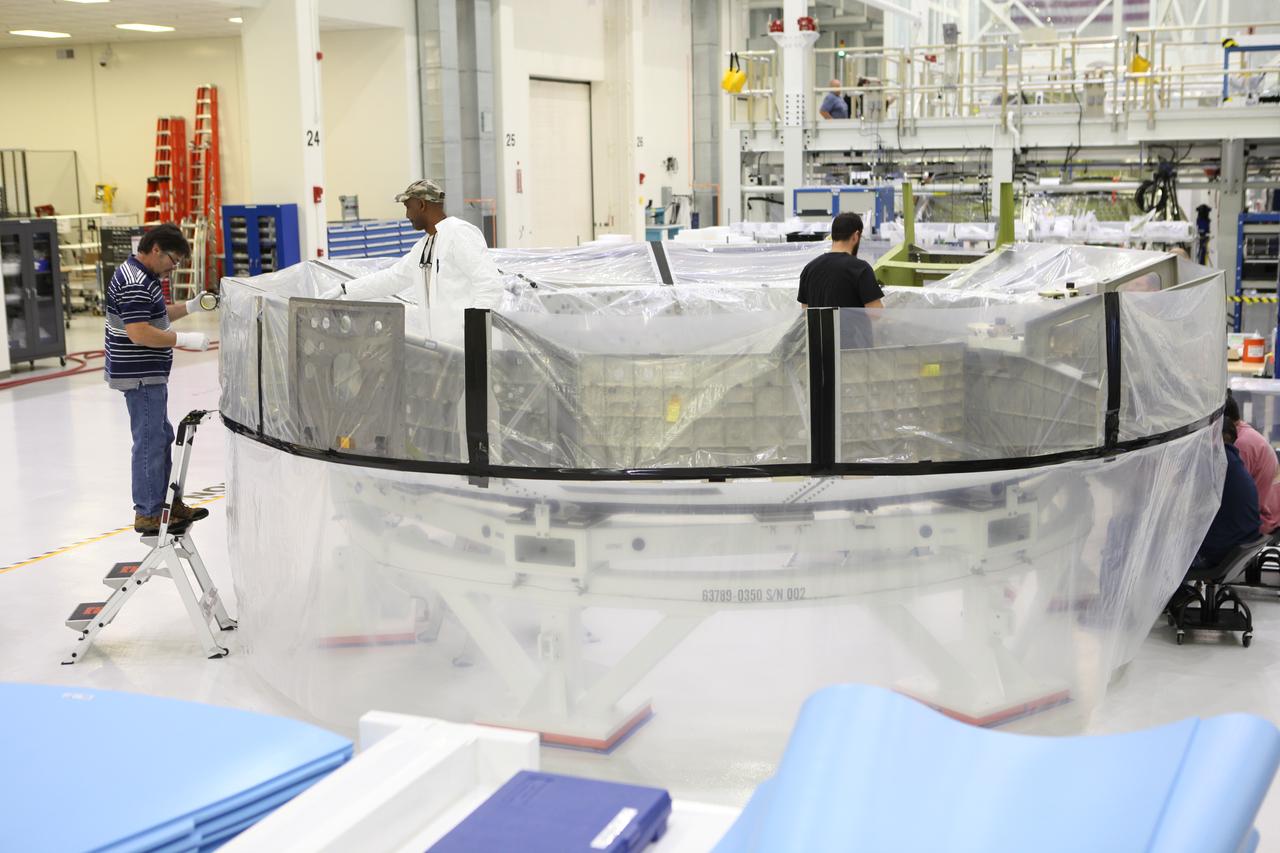
Inside the Neil Armstrong Operations and Checkout Building high bay at NASA's Kennedy Space Center in Florida, Lockheed Martin technicians secure a protective cover around the Orion crew module adapter (CMA) for Exploration Mission 1 (EM-1) for its move to a clean room. The CMA will undergo propellant and environmental control and life support system tube installation and welding. The adapter will connect the Orion crew module to the European Space Agency-provided service module. The Orion spacecraft will launch atop NASA’s Space Launch System rocket on EM-1, its first deep space mission, in late 2018.
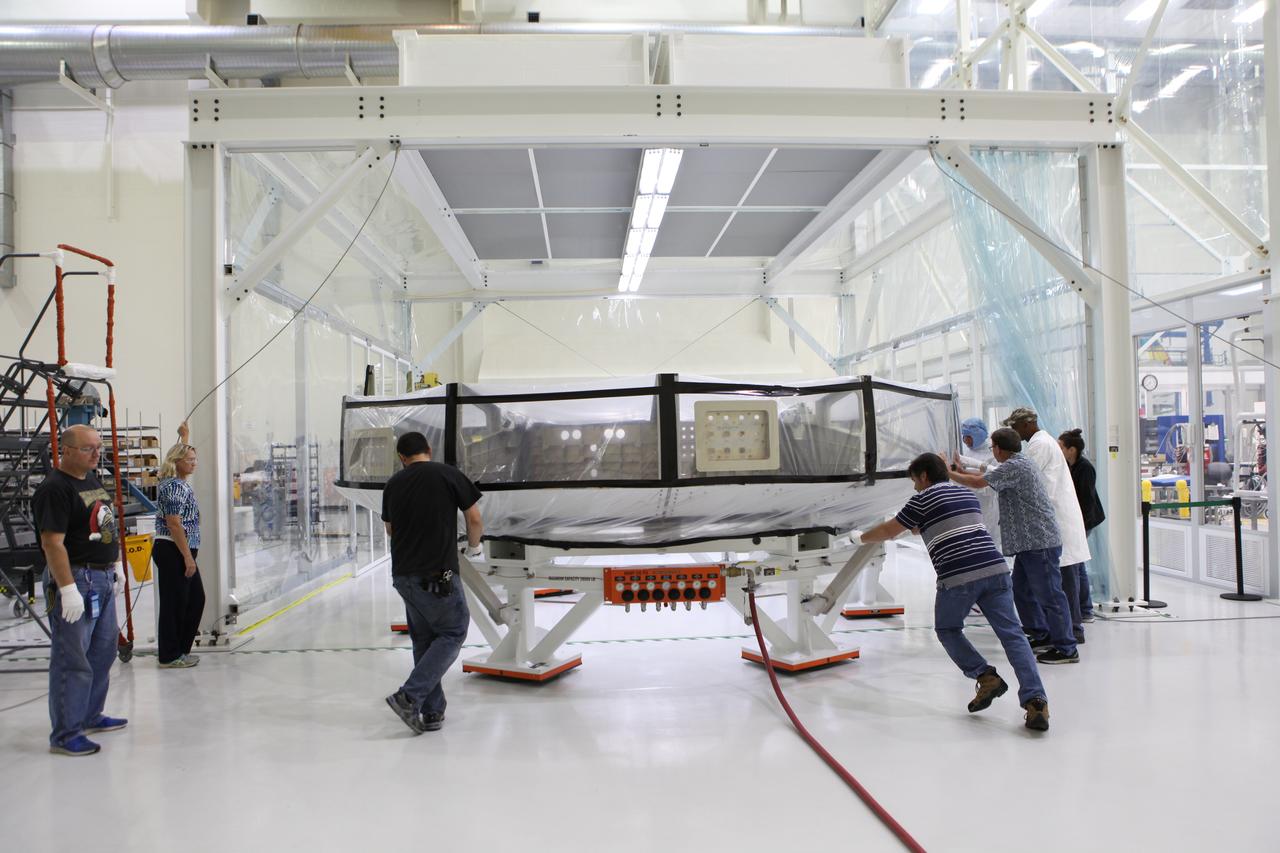
Inside the Neil Armstrong Operations and Checkout Building high bay at NASA’s Kennedy Space Center in Florida, Lockheed Martin technicians move the Orion crew module adapter (CMA) for Exploration Mission 1 (EM-1) into a clean room. The CMA will undergo propellant and environmental control and life support system tube installation and welding. The adapter will connect the Orion crew module to the European Space Agency-provided service module. The Orion spacecraft will launch atop NASA’s Space Launch System rocket on EM-1, its first deep space mission, in late 2018.
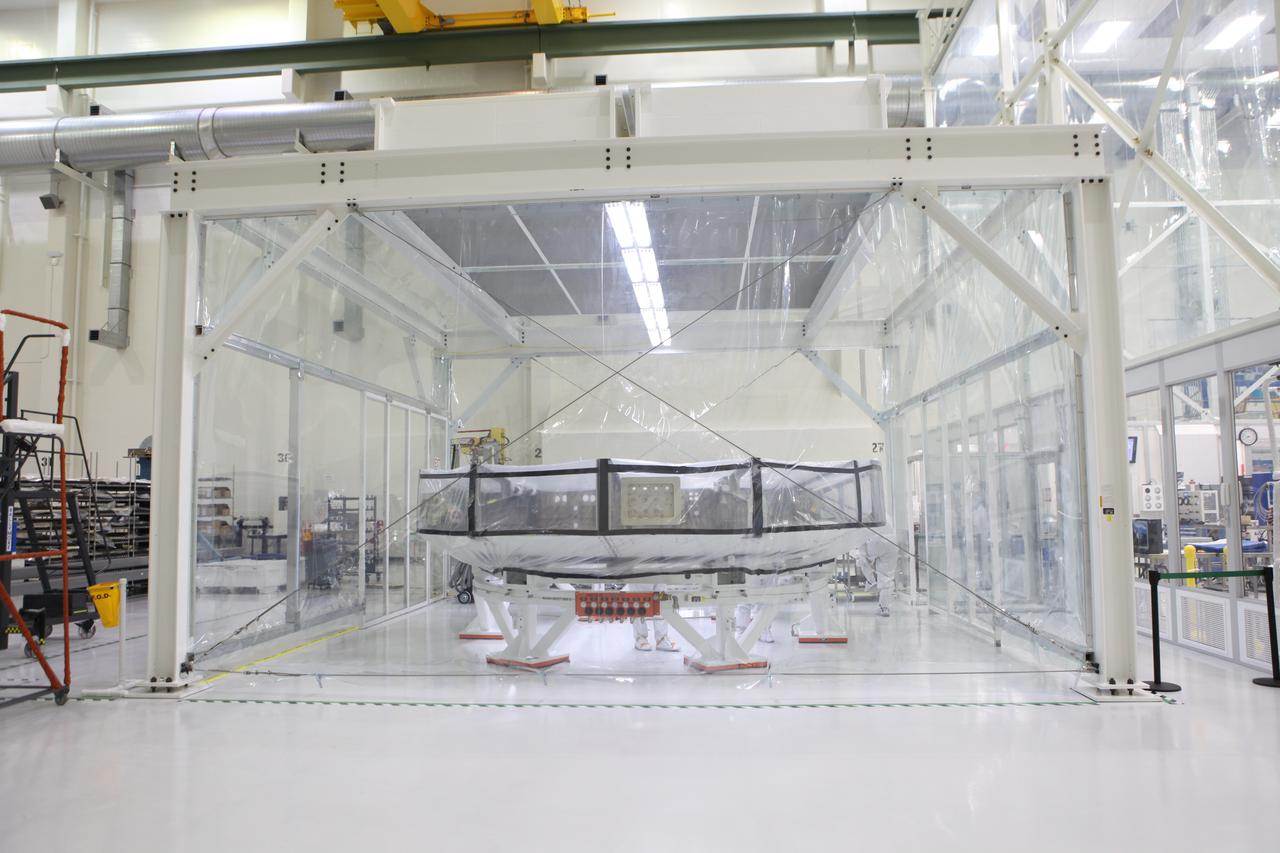
Inside the Neil Armstrong Operations and Checkout Building high bay at NASA’s Kennedy Space Center in Florida, the Orion crew module adapter (CMA) for Exploration Mission 1 (EM-1) is in a clean room with protective walls secured around it. The adapter will undergo propellant and environmental control and life support system tube installation and welding. The adapter will connect the Orion crew module to the European Space Agency-provided service module. The Orion spacecraft will launch atop NASA’s Space Launch System rocket on EM-1, its first deep space mission, in late 2018.
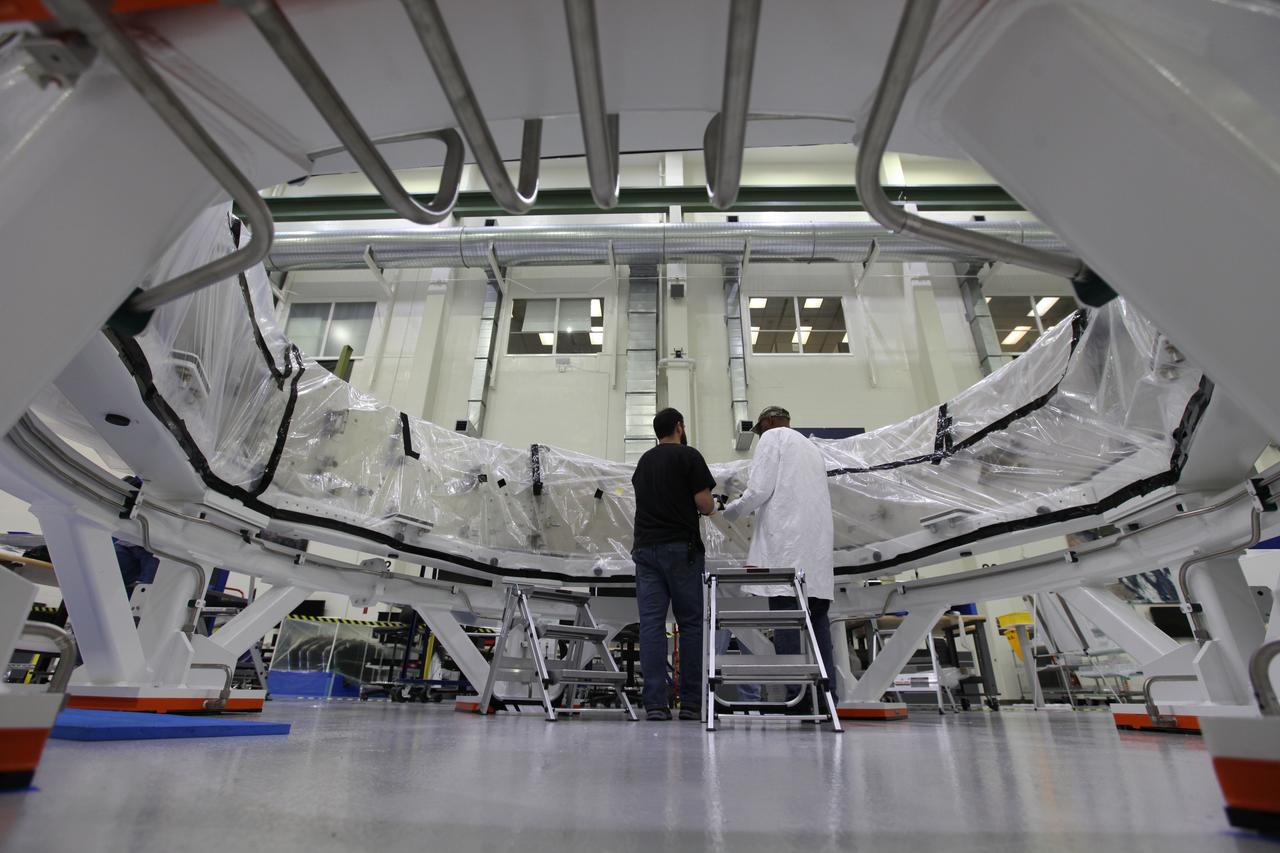
Inside the Neil Armstrong Operations and Checkout Building high bay at NASA's Kennedy Space Center in Florida, Lockheed Martin technicians secure a protective cover around the Orion crew module adapter (CMA) for Exploration Mission 1 (EM-1) for its move to a clean room. The CMA will undergo propellant and environmental control and life support system tube installation and welding. The adapter will connect the Orion crew module to the European Space Agency-provided service module. The Orion spacecraft will launch atop NASA’s Space Launch System rocket on EM-1, its first deep space mission, in late 2018.
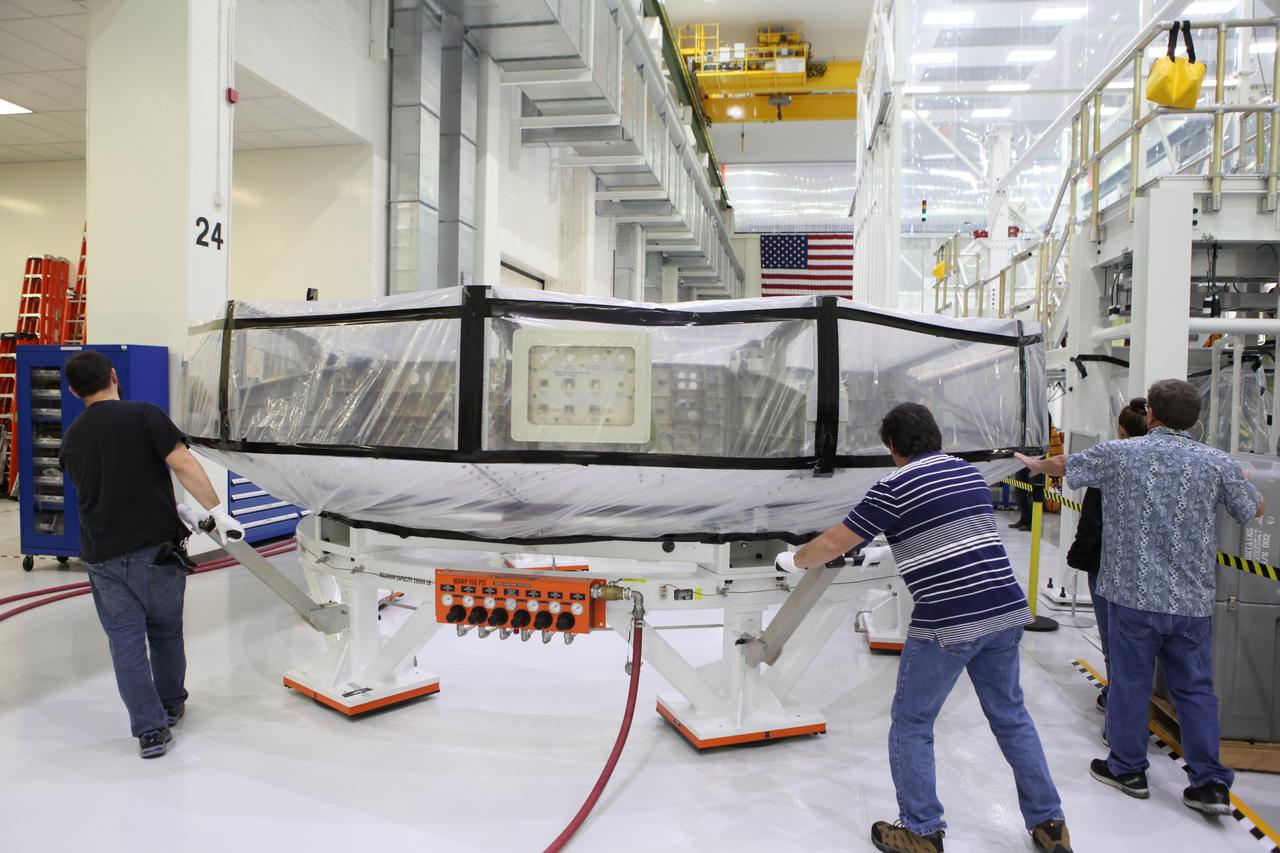
Inside the Neil Armstrong Operations and Checkout Building high bay at NASA’s Kennedy Space Center in Florida, Lockheed Martin technicians move the Orion crew module adapter (CMA) for Exploration Mission 1 (EM-1) toward a clean room. The CMA will undergo propellant and environmental control and life support system tube installation and welding. The adapter will connect the Orion crew module to the European Space Agency-provided service module. The Orion spacecraft will launch atop NASA’s Space Launch System rocket on EM-1, its first deep space mission, in late 2018.
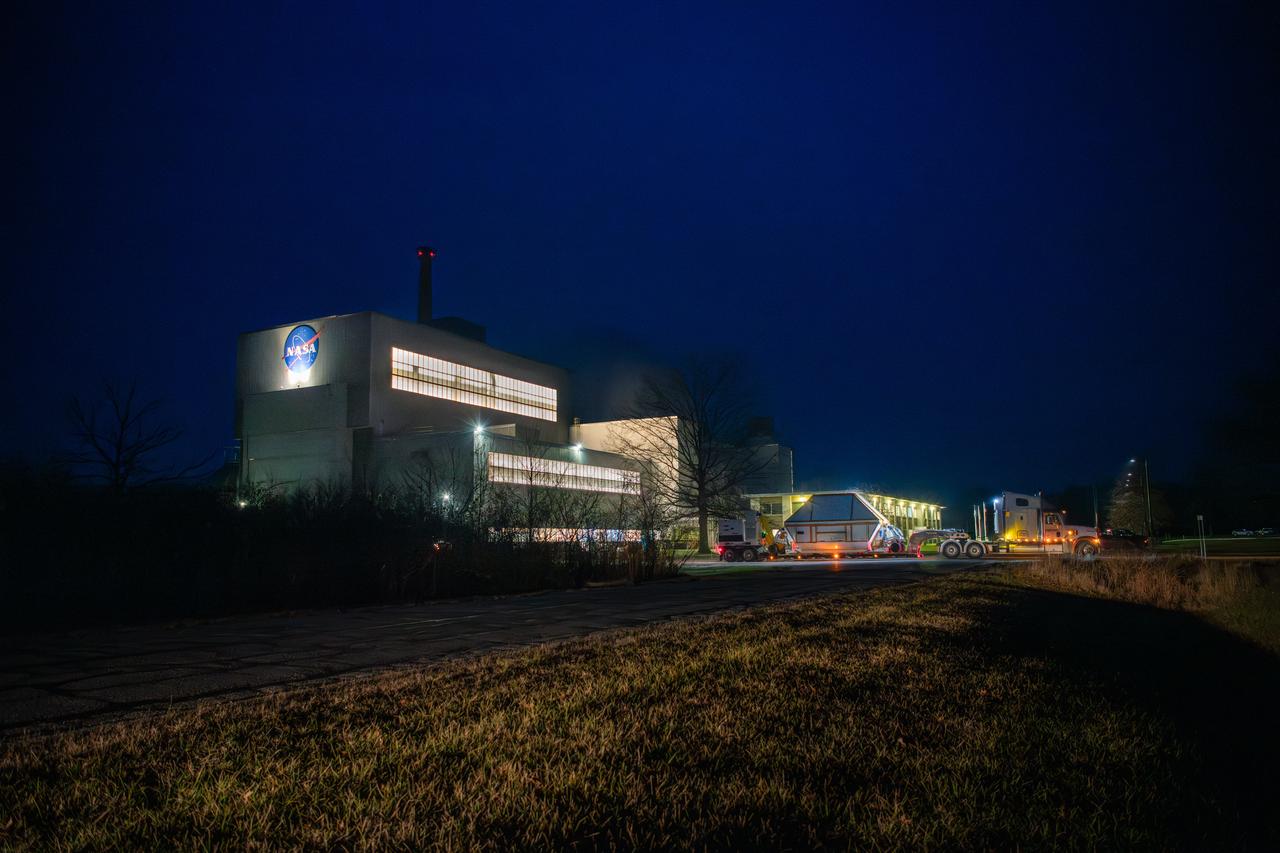
Orion ETA Hardware, Launch Abort System and Crew Module Documentation Photographs - Crew Module Arrival
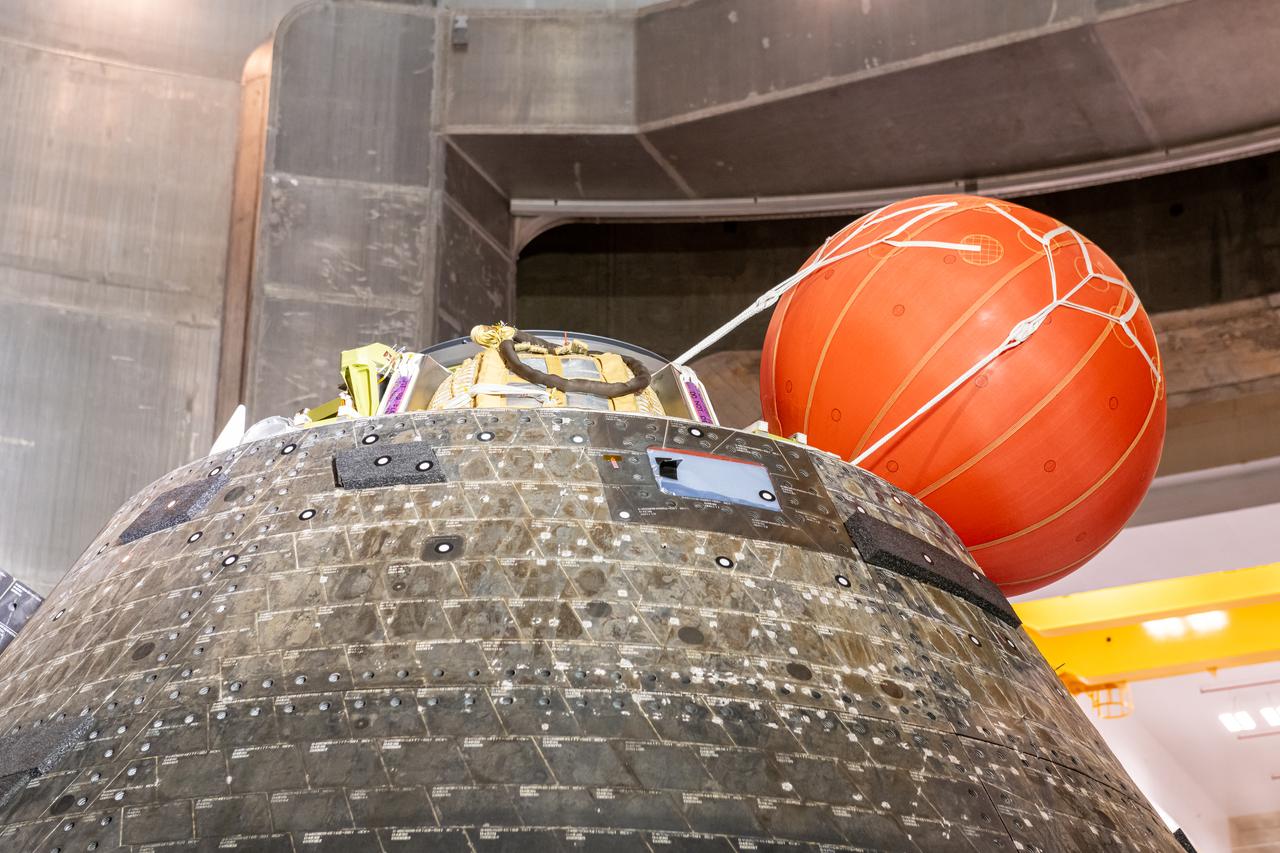
The Orion Crew Module, also known as the Orion Environmental Test Article (ETA), returned to NASA’s Neil Armstrong Test Facility in Sandusky, Ohio, in January 2024 and completed an 11-month test campaign necessary for the safety and success of Artemis II. In November 2024, experts completed the Crew Module Uprighting System Test, which is the system of five airbags on top of the capsule that inflate upon splashdown. Photo Credit: (NASA/Jordan Salkin)
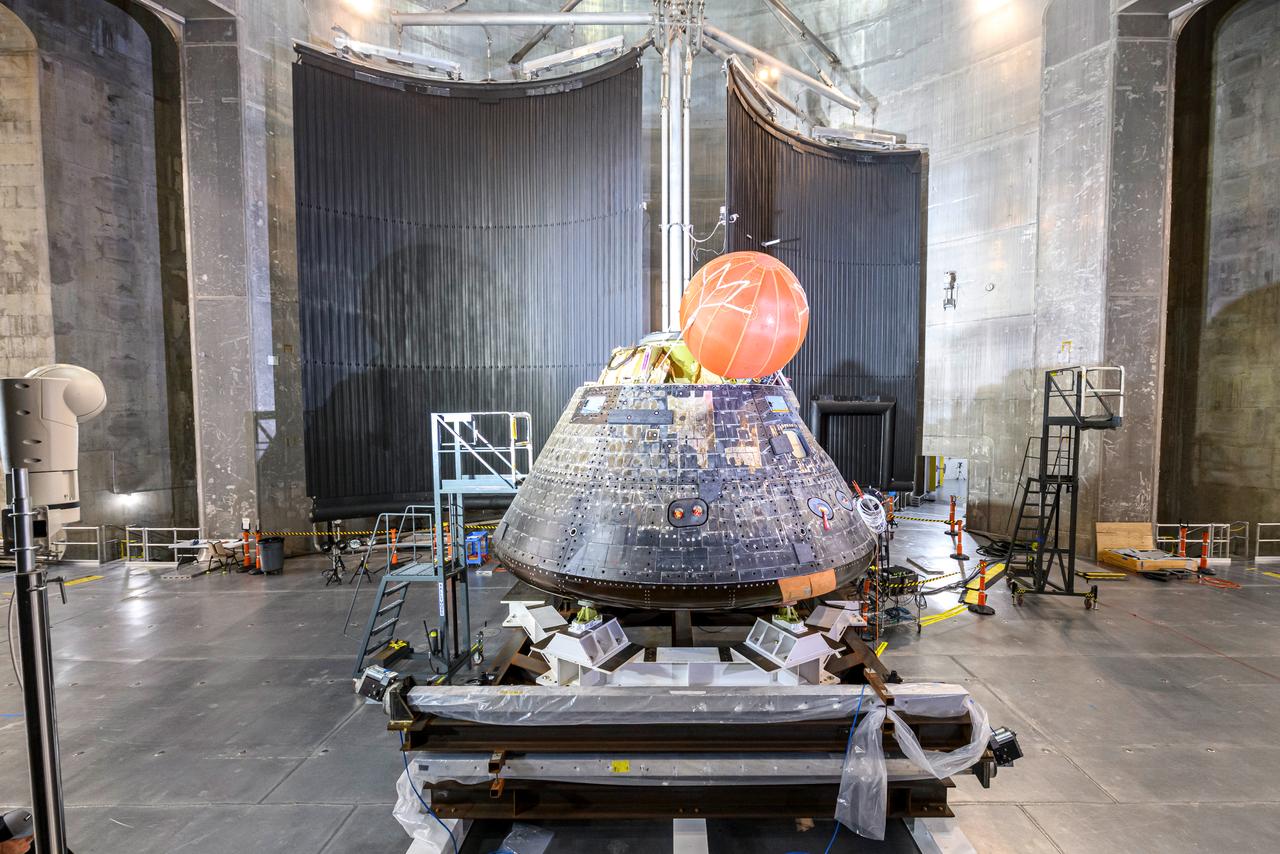
The Orion Crew Module, also known as the Orion Environmental Test Article (ETA), returned to NASA’s Neil Armstrong Test Facility in Sandusky, Ohio, in January 2024 and completed an 11-month test campaign necessary for the safety and success of Artemis II. In November 2024, experts completed the Crew Module Uprighting System Test, which is the system of five airbags on top of the capsule that inflate upon splashdown. Photo Credit: (NASA/Jordan Salkin and Quentin Schwinn)
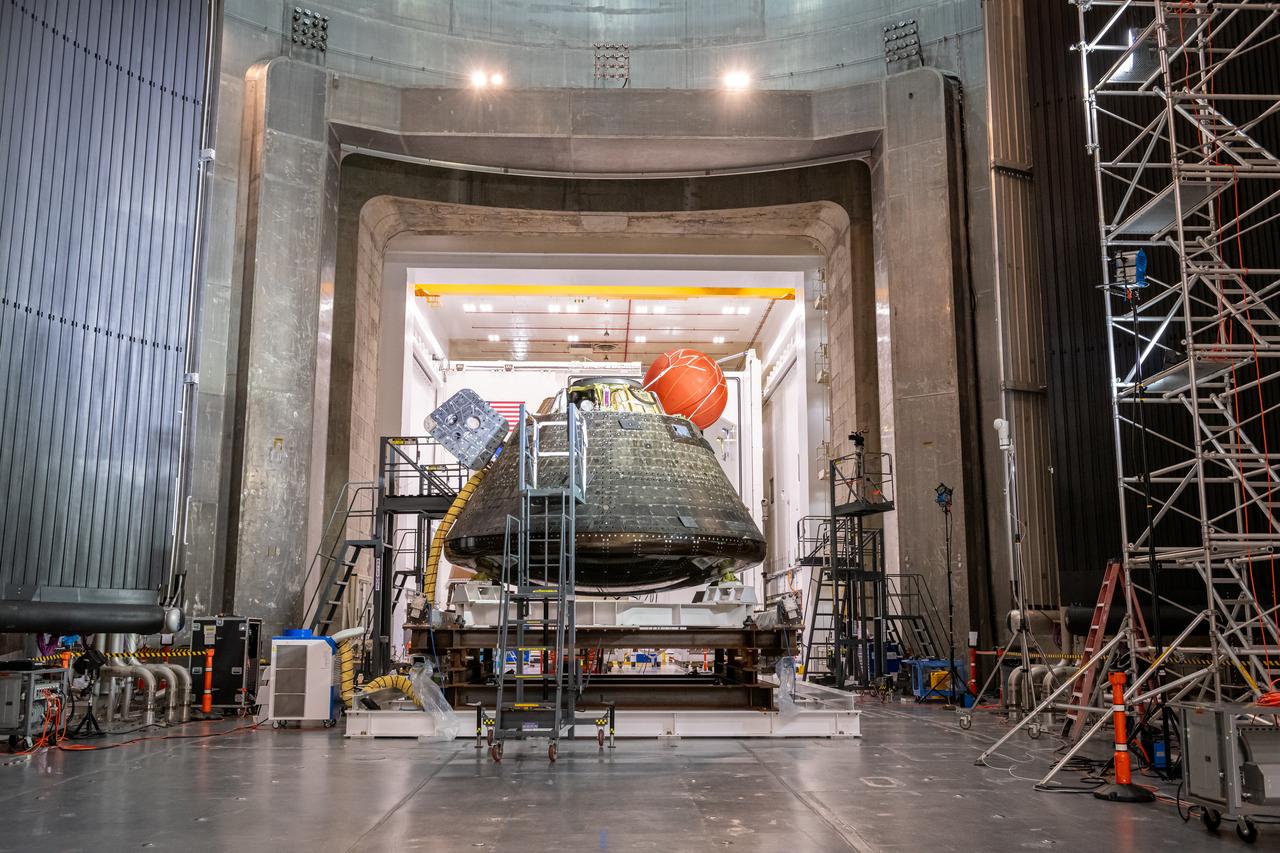
The Orion Crew Module, also known as the Orion Environmental Test Article (ETA), returned to NASA’s Neil Armstrong Test Facility in Sandusky, Ohio, in January 2024 and completed an 11-month test campaign necessary for the safety and success of Artemis II. In November 2024, experts completed the Crew Module Uprighting System Test, which is the system of five airbags on top of the capsule that inflate upon splashdown. Photo Credit: (NASA/Jordan Salkin)
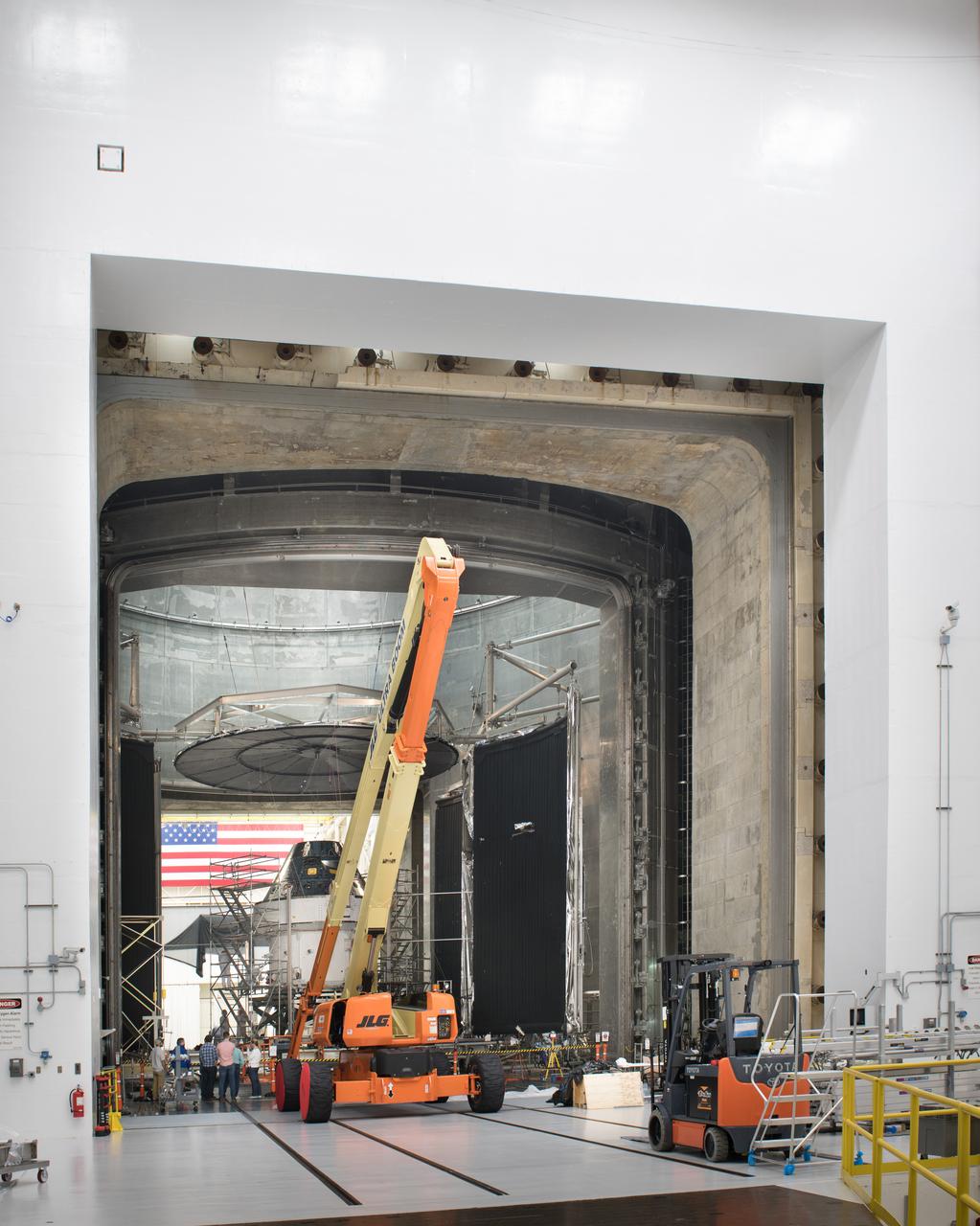
The Orion Spacecraft Crew and Service Module is being prepared for Electromagnetic Interference. EMI testing as part of testing to be certified for launch for the first Artemis mission
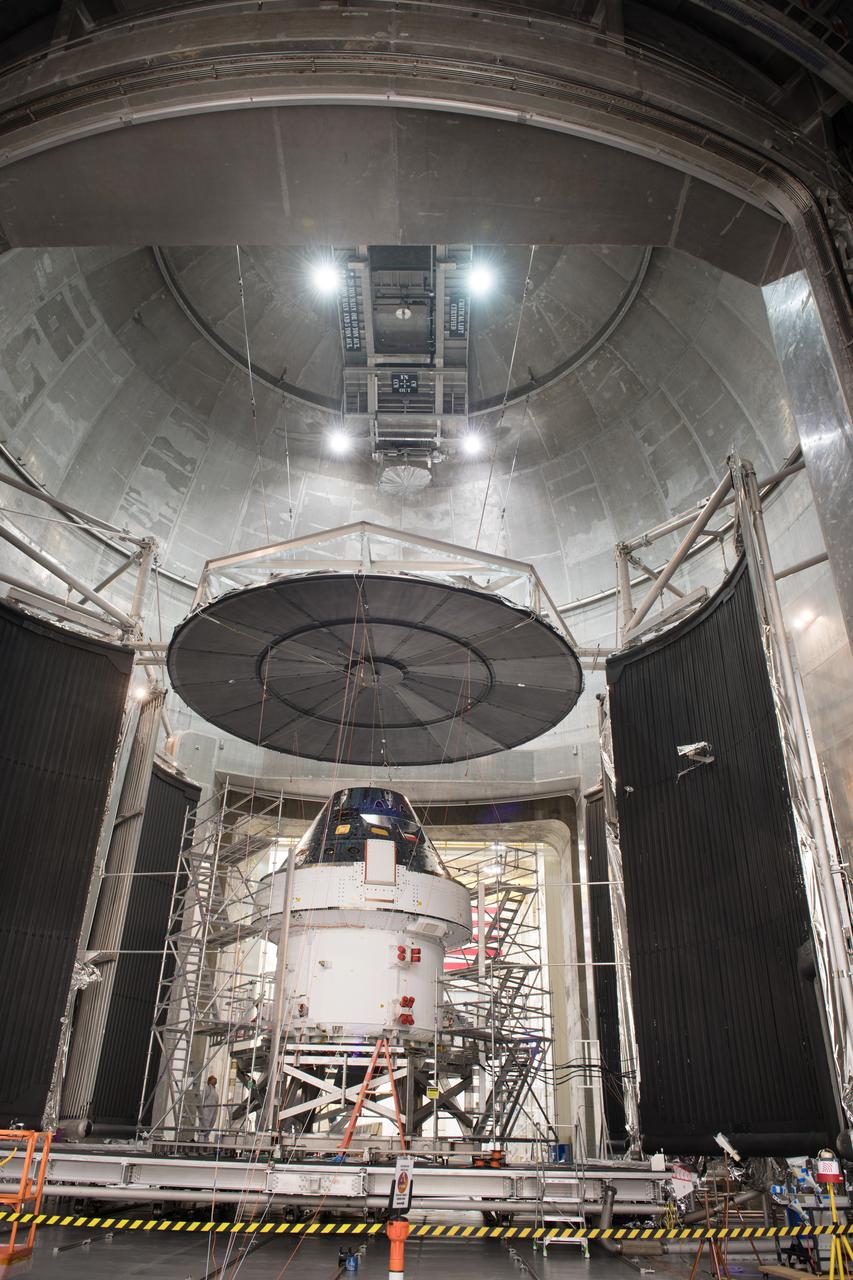
The Orion Spacecraft Crew and Service Module is being prepared for Electromagnetic Interference. EMI testing as part of testing to be certified for launch for the first Artemis mission
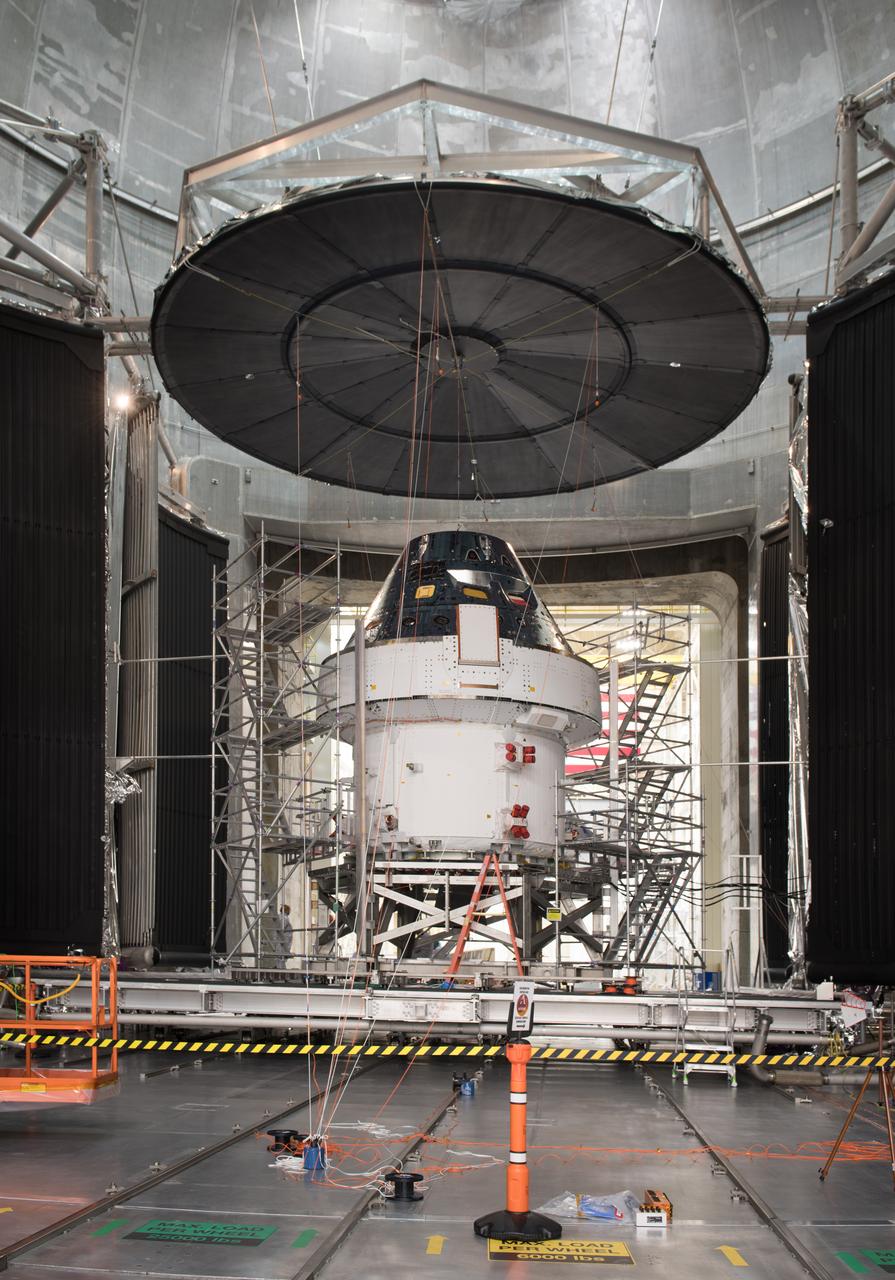
The Orion Spacecraft Crew and Service Module is being prepared for Electromagnetic Interference. EMI testing as part of testing to be certified for launch for the first Artemis mission
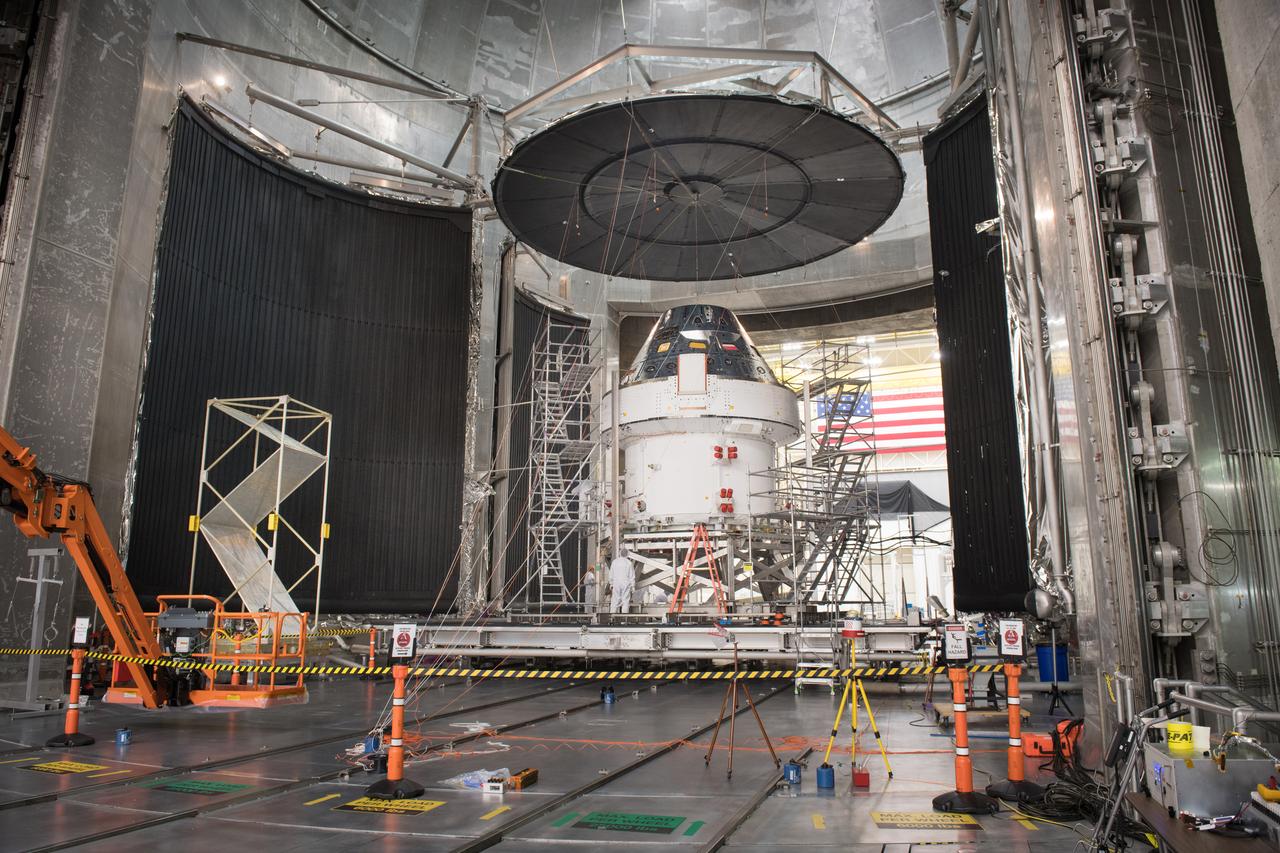
The Orion Spacecraft Crew and Service Module is being prepared for Electromagnetic Interference. EMI testing as part of testing to be certified for launch for the first Artemis mission
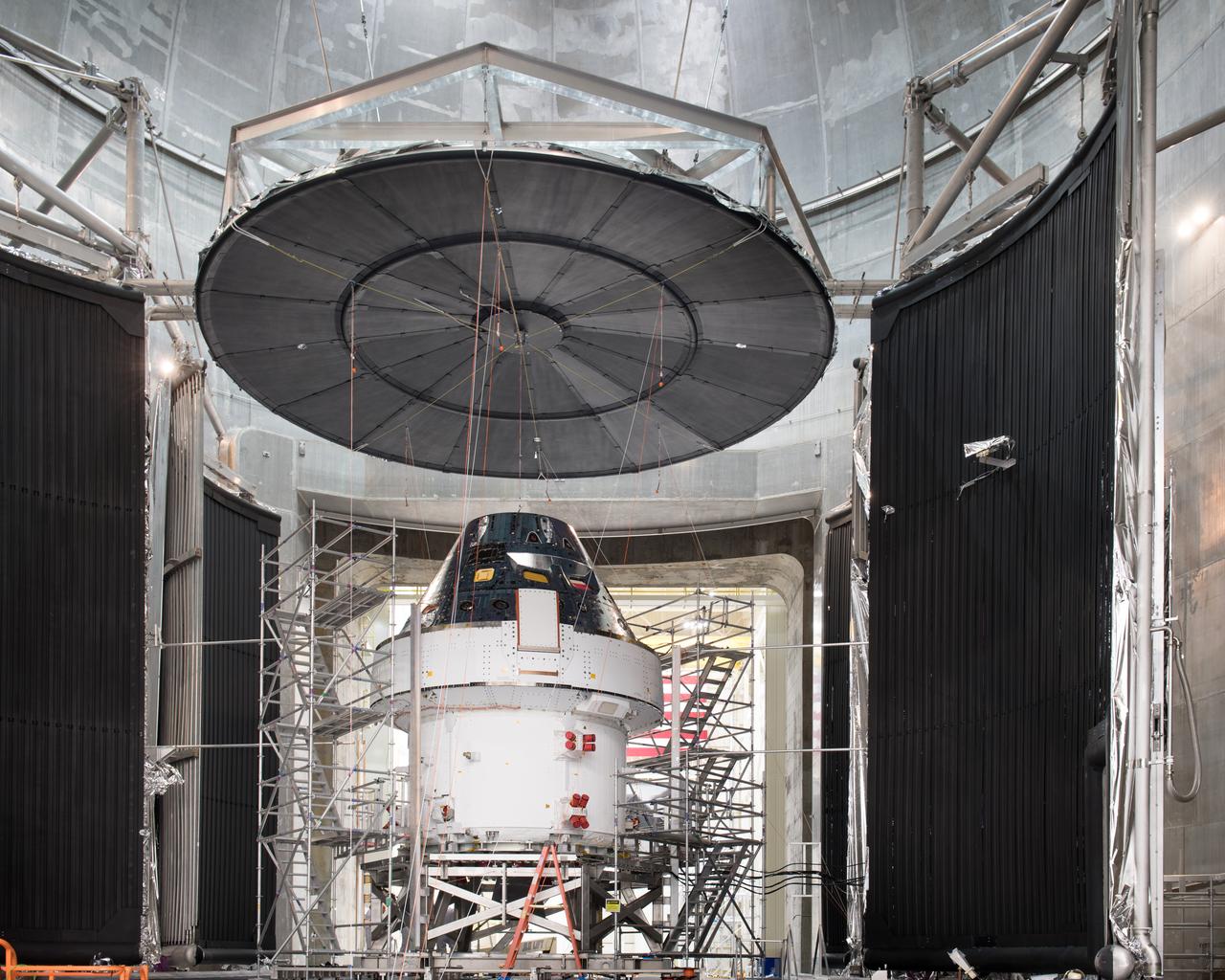
The Orion Spacecraft Crew and Service Module is being prepared for Electromagnetic Interference. EMI testing as part of testing to be certified for launch for the first Artemis mission
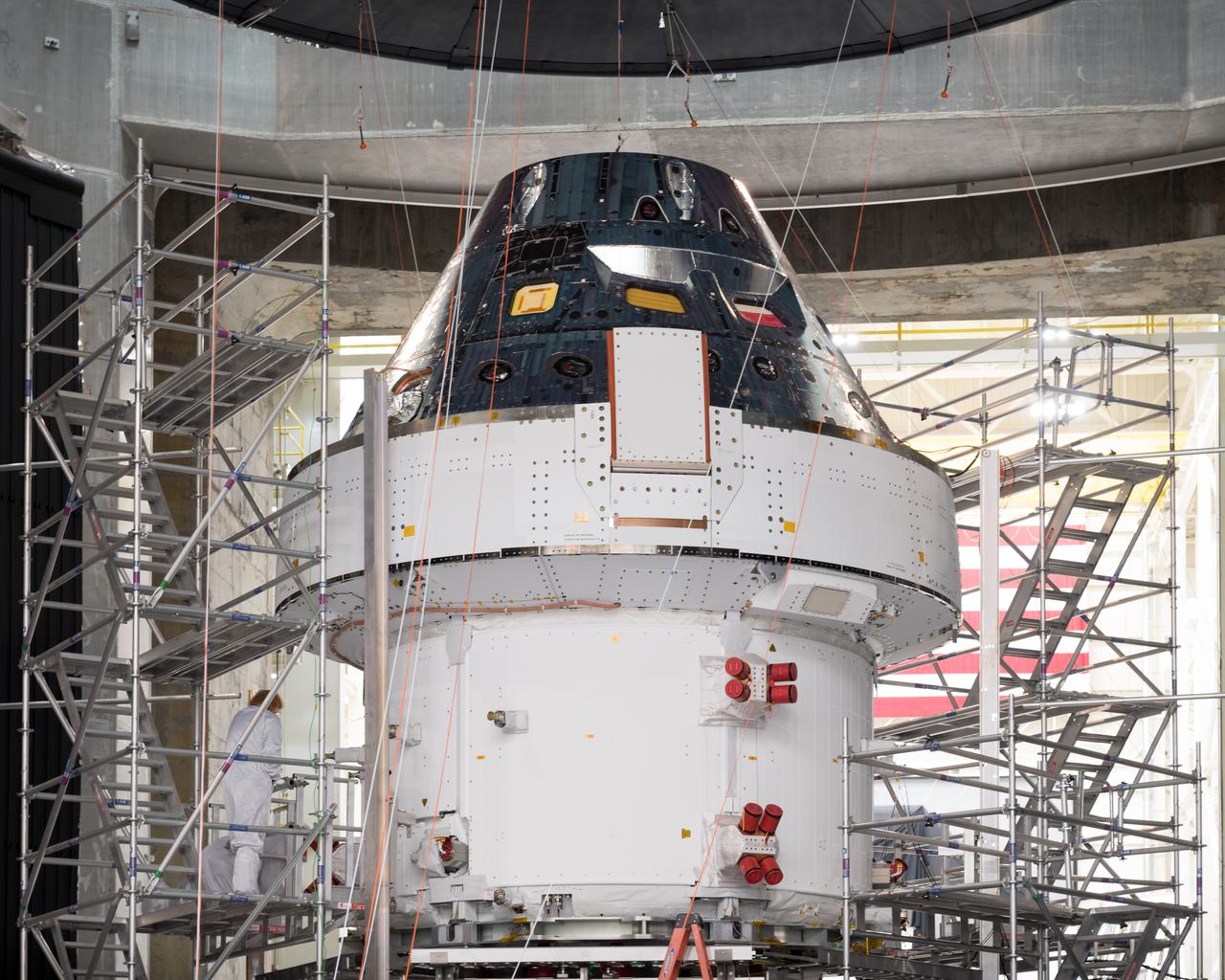
The Orion Spacecraft Crew and Service Module is being prepared for Electromagnetic Interference. EMI testing as part of testing to be certified for launch for the first Artemis mission
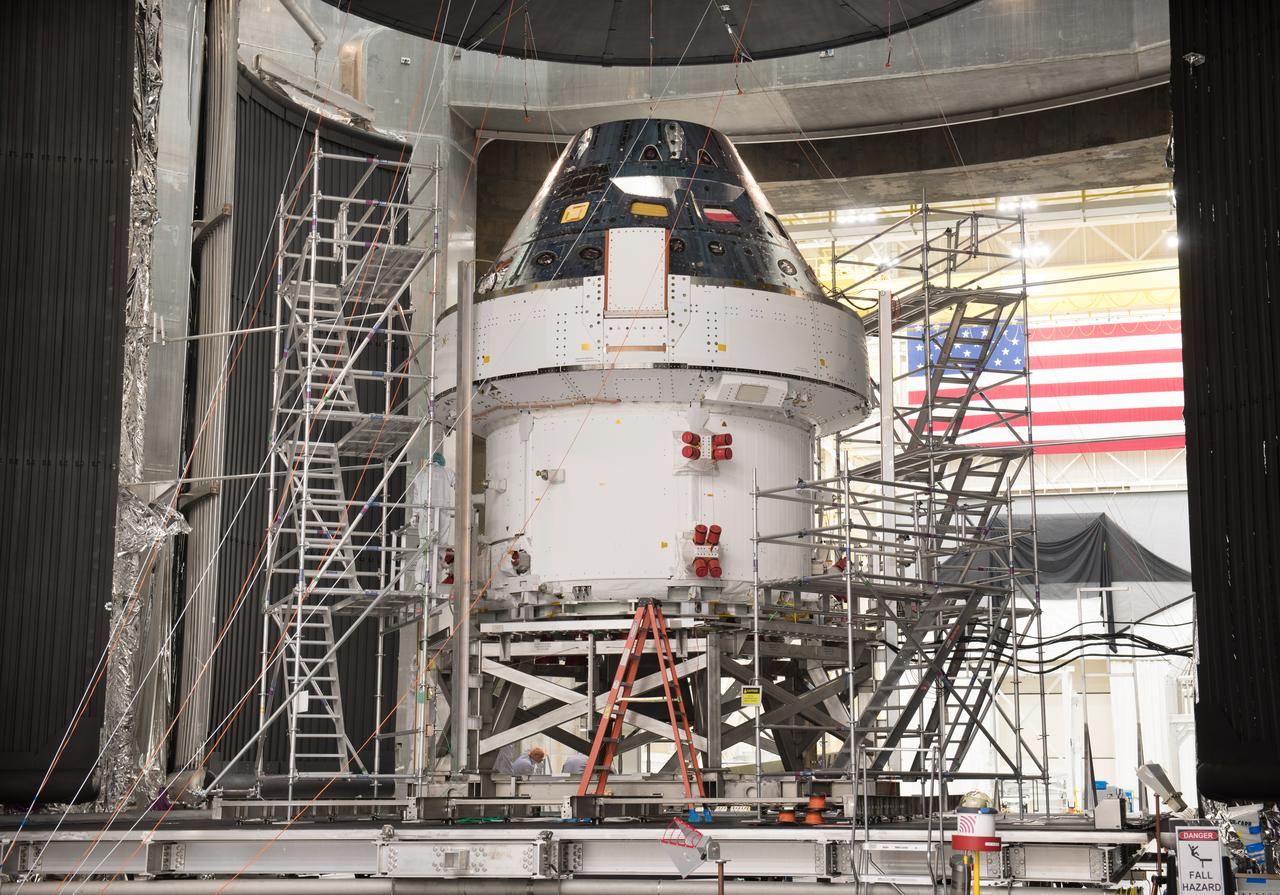
The Orion Spacecraft Crew and Service Module is being prepared for Electromagnetic Interference. EMI testing as part of testing to be certified for launch for the first Artemis mission
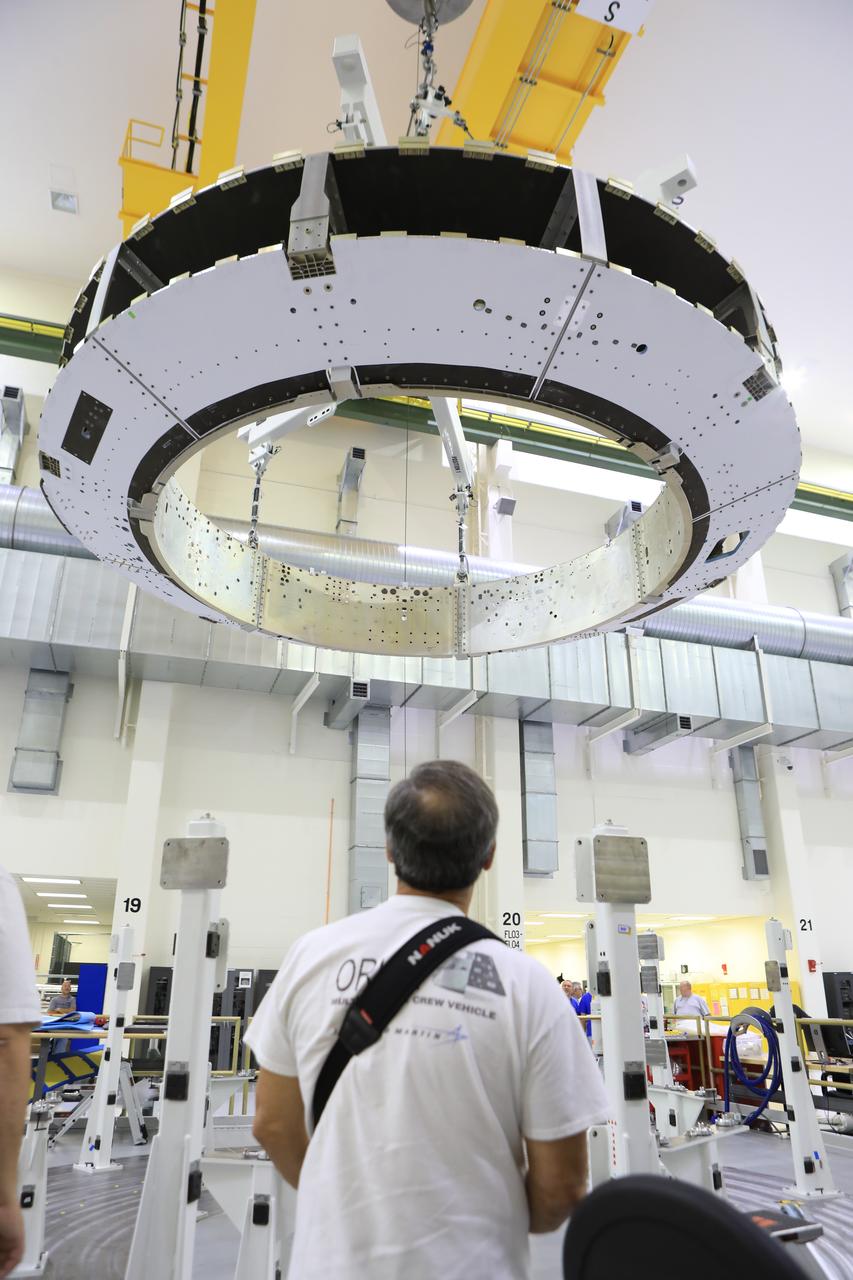
The Orion crew module adapter (CMA) for Exploration Mission 1 was lifted for the first and only time, Nov. 11, during its processing flow inside the Neil Armstrong Operations and Checkout (O&C) Building high bay at the agency's Kennedy Space Center in Florida. The CMA is now undergoing secondary structure outfitting.
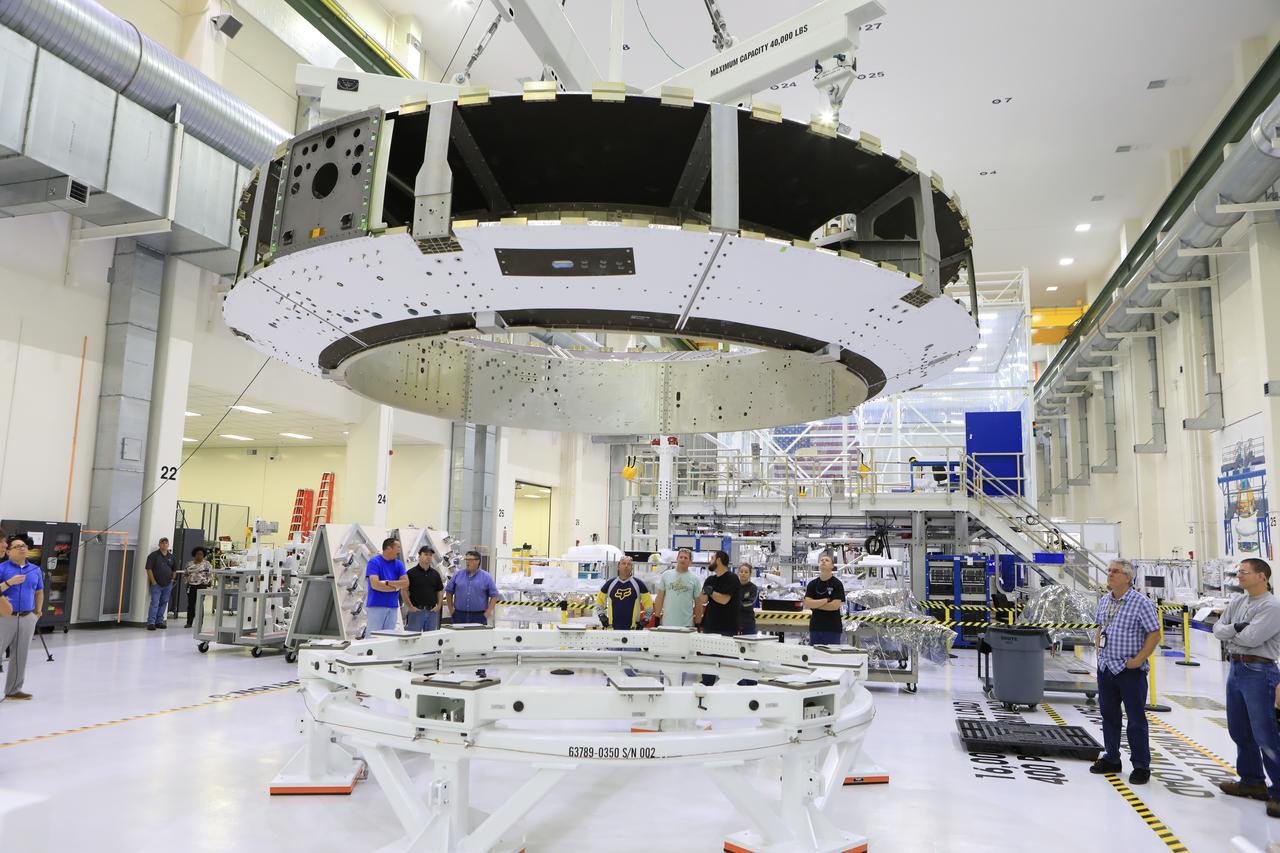
The Orion crew module adapter (CMA) for Exploration Mission 1 was lifted for the first and only time, Nov. 11, during its processing flow inside the Neil Armstrong Operations and Checkout (O&C) Building high bay at the agency's Kennedy Space Center in Florida. The CMA is now undergoing secondary structure outfitting.
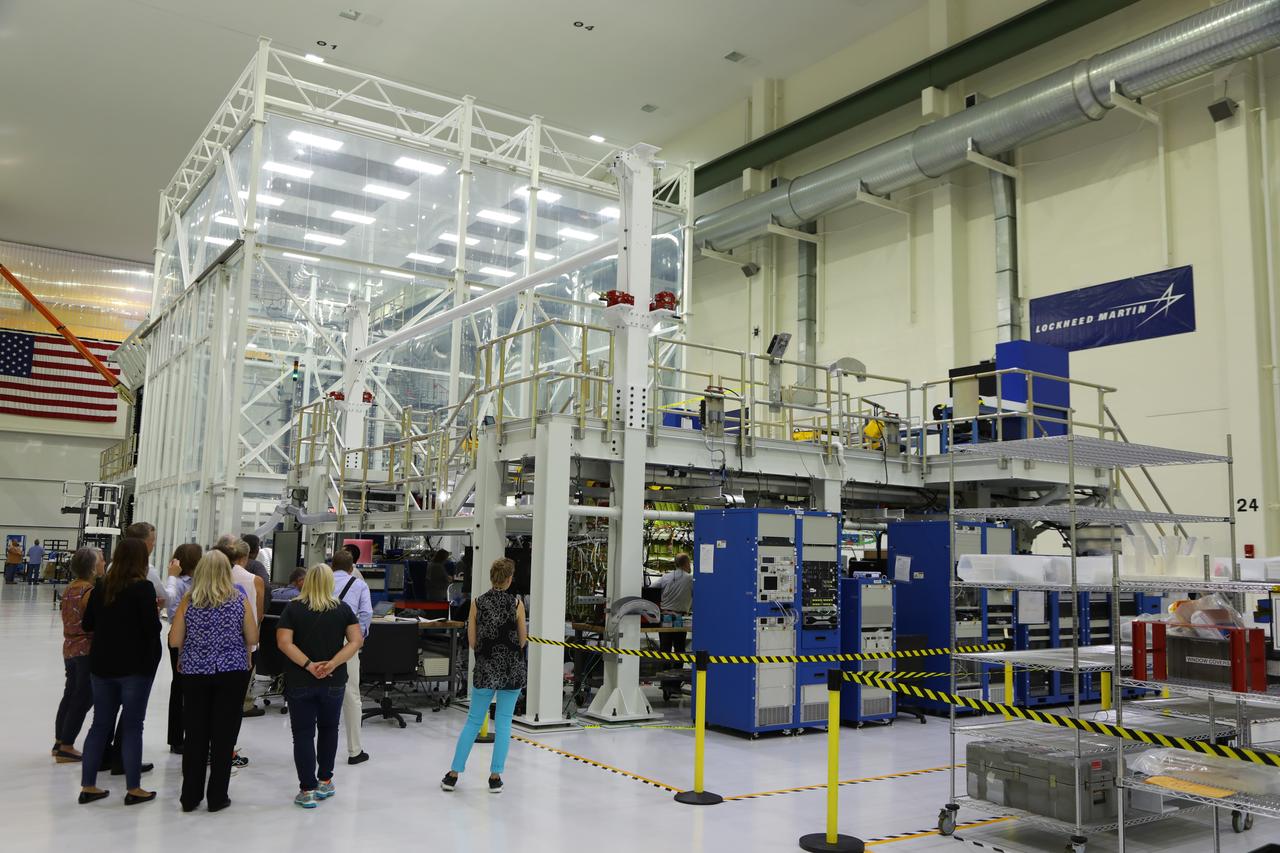
Representatives from the European Space Agency, or ESA, and members of NASA's Communication team, toured the Neil Armstrong Operations and Checkout Building high bay and viewed the Orion crew module for Exploration Mission-1 at NASA’s Kennedy Space Center in Florida.
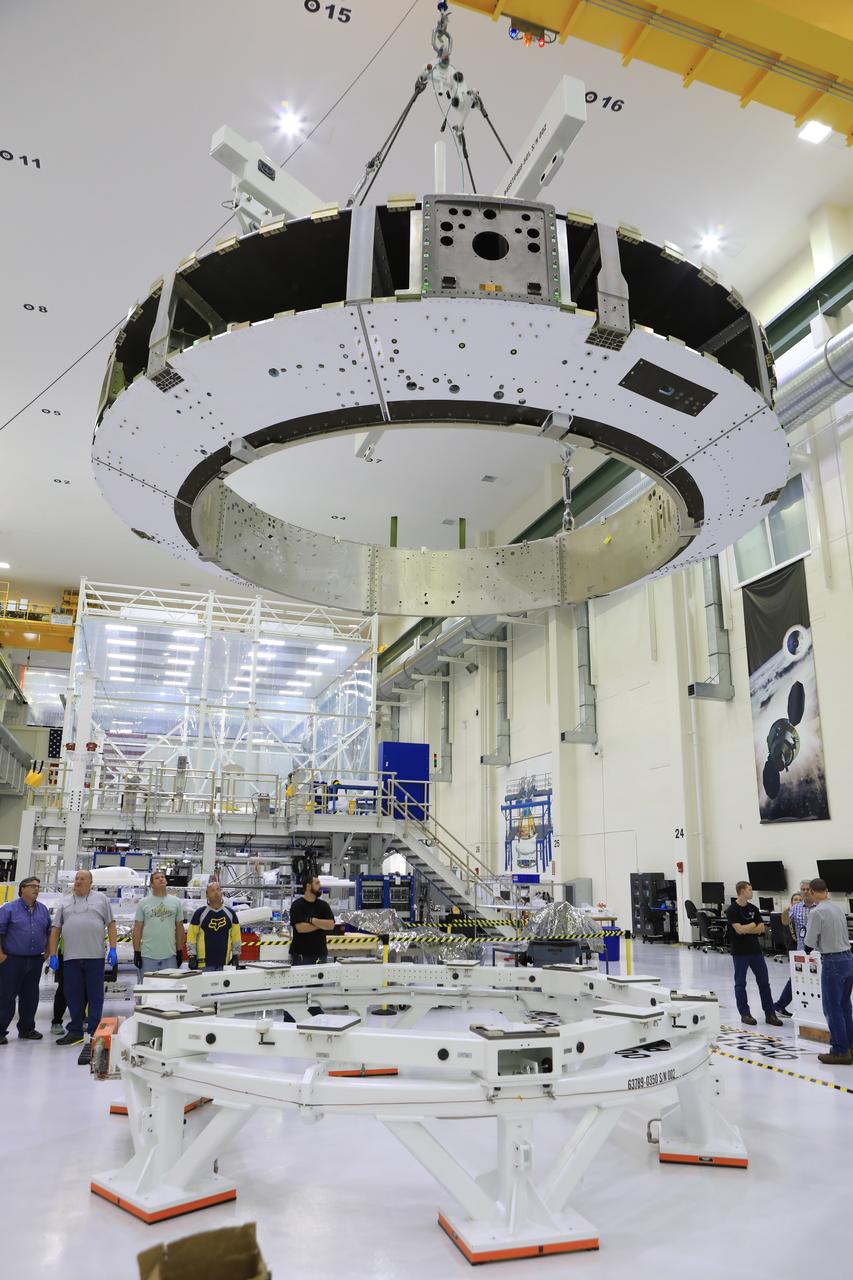
The Orion crew module adapter (CMA) for Exploration Mission 1 was lifted for the first and only time, Nov. 11, during its processing flow inside the Neil Armstrong Operations and Checkout (O&C) Building high bay at the agency's Kennedy Space Center in Florida. The CMA is now undergoing secondary structure outfitting.
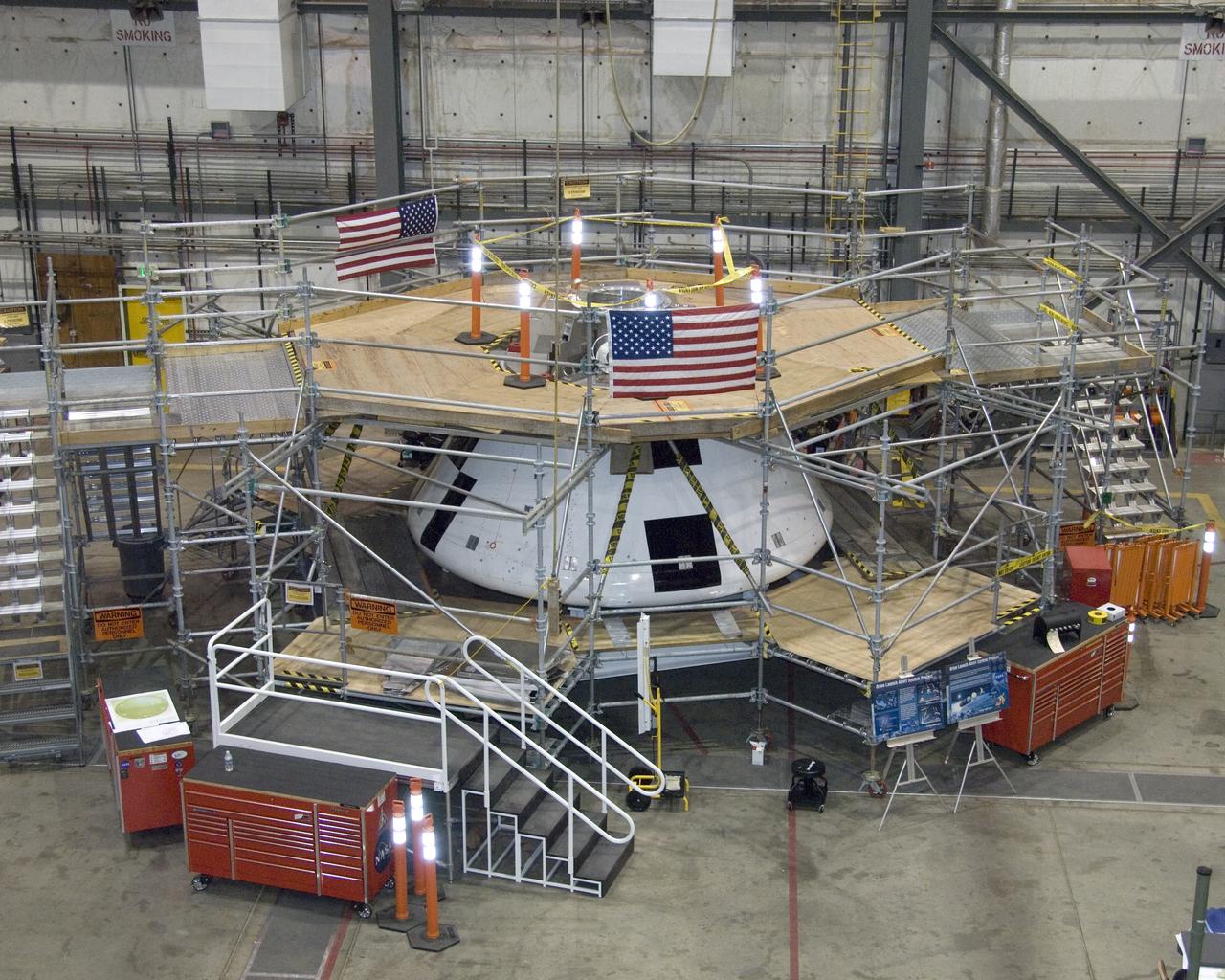
Surrounded by work platforms, NASA's first full-scale Orion abort flight test (AFT) crew module (center) is undergoing preparations at the NASA Dryden Flight Research Center in California for the first flight test of Orion's launch abort system.
Surrounded by work platforms, NASA's first full-scale Orion abort flight test (AFT) crew module (center) is undergoing preparations at the NASA Dryden Flight Research Center in California for the first flight test of Orion's launch abort system. To the left is a space shuttle orbiter purge vehicle sharing the hangar.
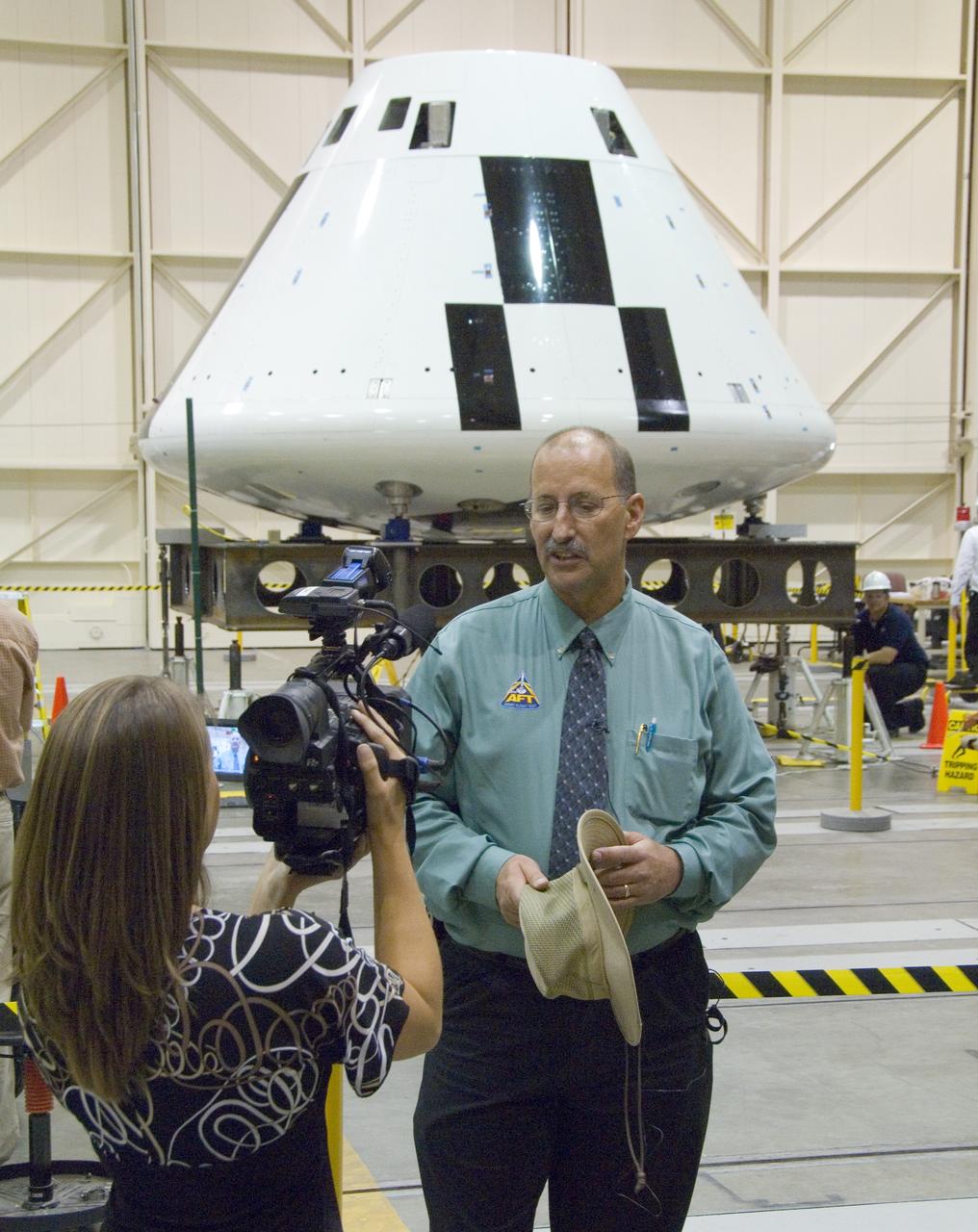
Reporter Julie Flannery of KERO-TV, Bakersfield, interviews NASA Dryden's Orion Abort Flight Test project manager Gary Martin in front of the Orion PA-1 crew module.
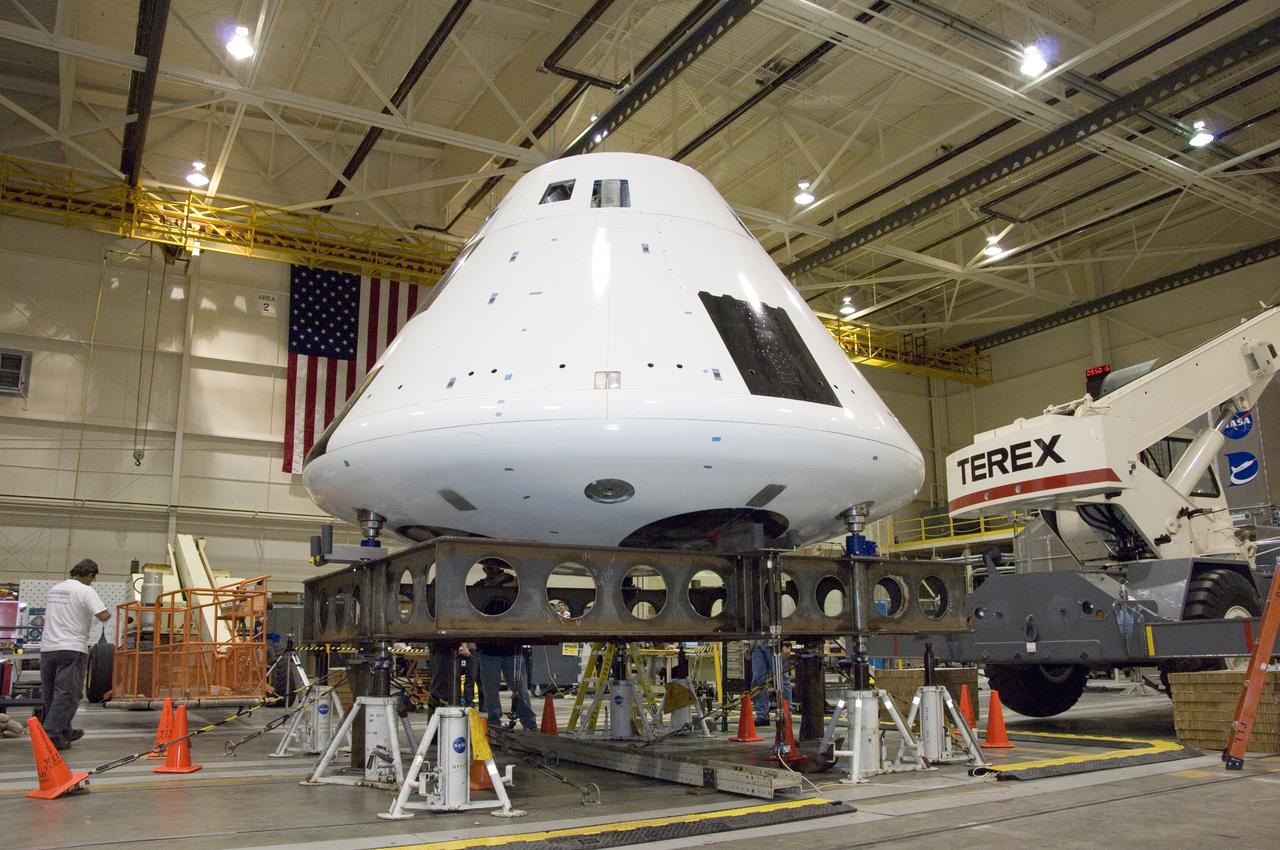
The boilerplate Orion crew module for the Orion Launch Abort System Pad Abort-1 flight test undergoes moment-of-inertia testing at NASA Dryden's Flight Loads Lab.
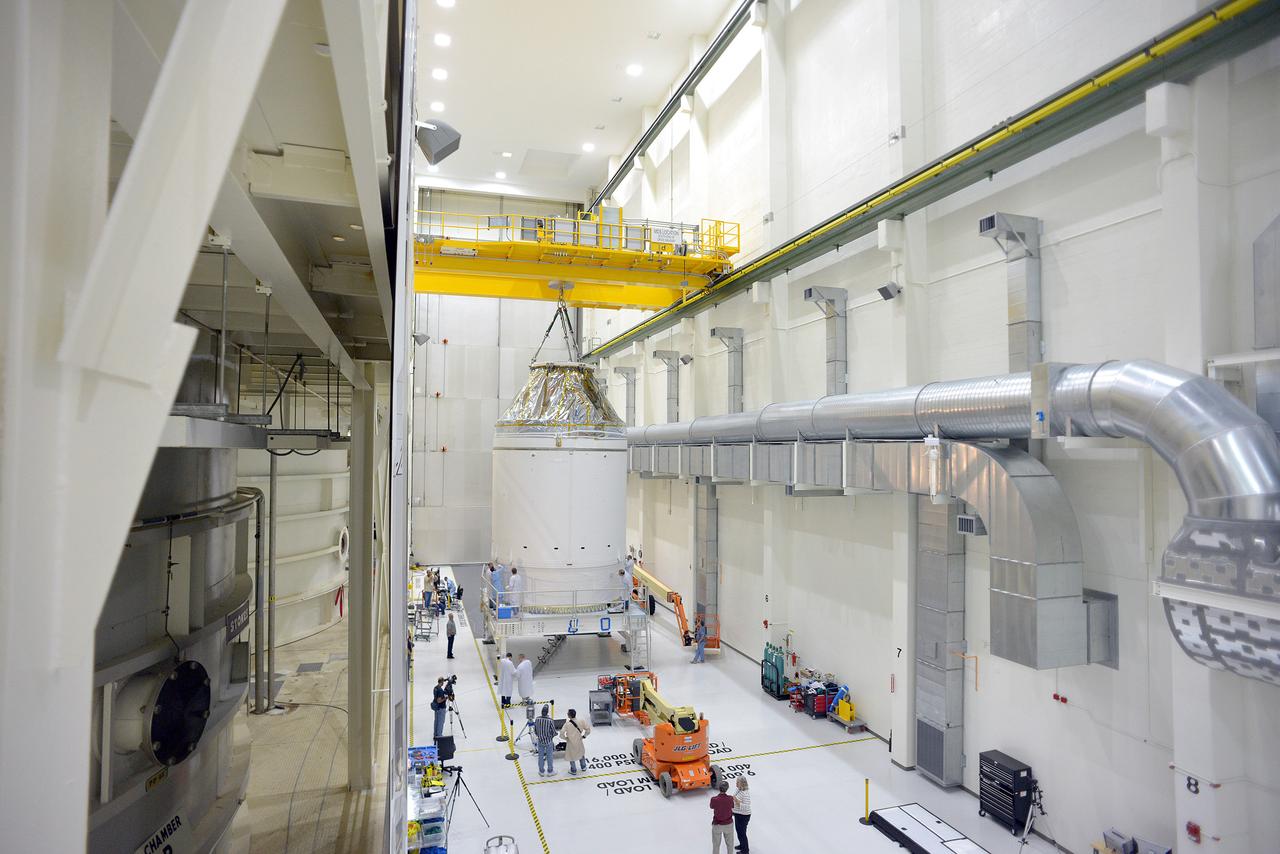
Technicians and engineers put finishing touches on the Orion Exploration Flight Test-1 (EFT-1) crew module and service module stack in the Operations and Checkout (O&C) Building at Kennedy Space Center on Sept. 7, 2014. The crew module is covered by protective foil as it and the service module are lifted for the installation of the Orion-to-stage adapter ring. Part of Batch image transfer from Flickr.
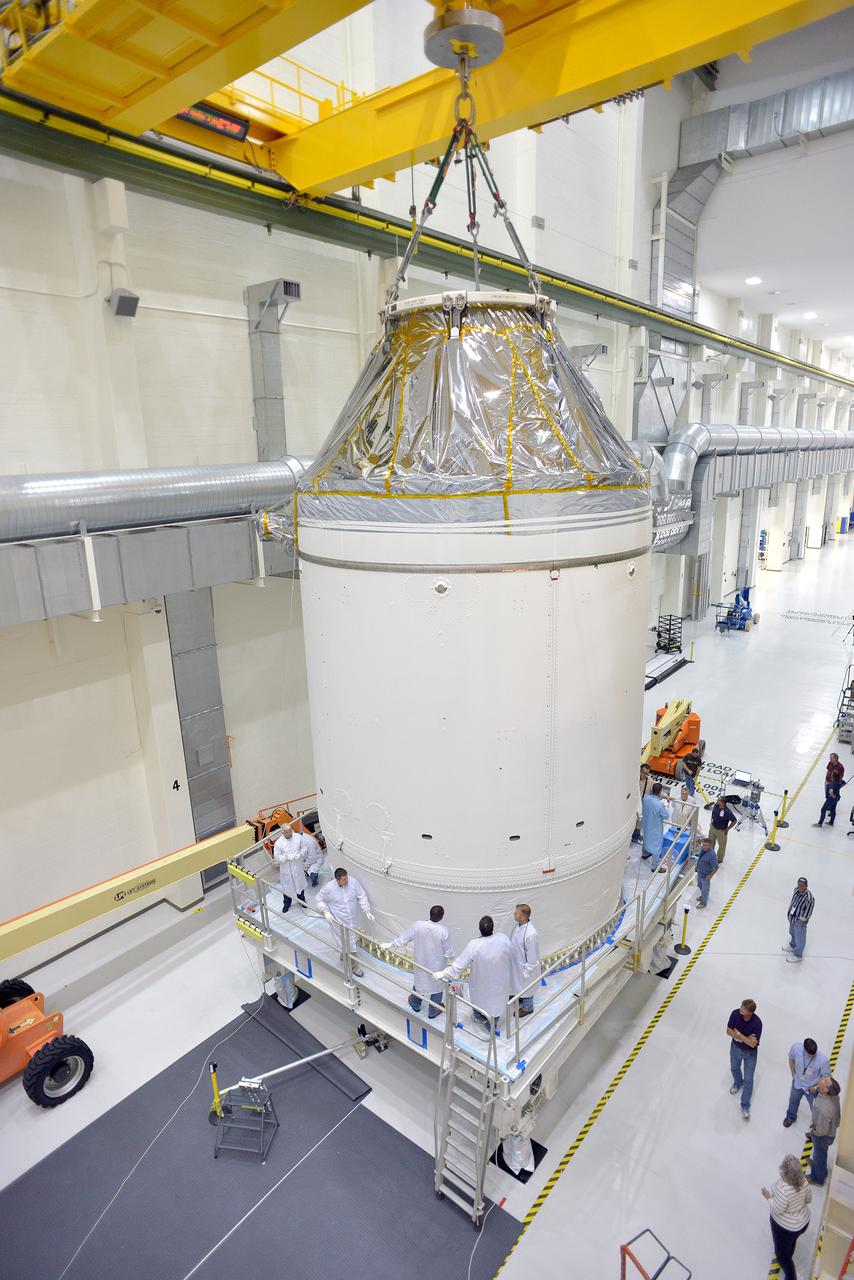
Technicians and engineers put finishing touches on the Orion Exploration Flight Test-1 (EFT-1) crew module and service module stack in the Operations and Checkout (O&C) Building at Kennedy Space Center on Sept. 7, 2014. The crew module is covered by protective foil as it and the service module are lifted for the installation of the Orion-to-stage adapter ring. Part of Batch image transfer from Flickr.
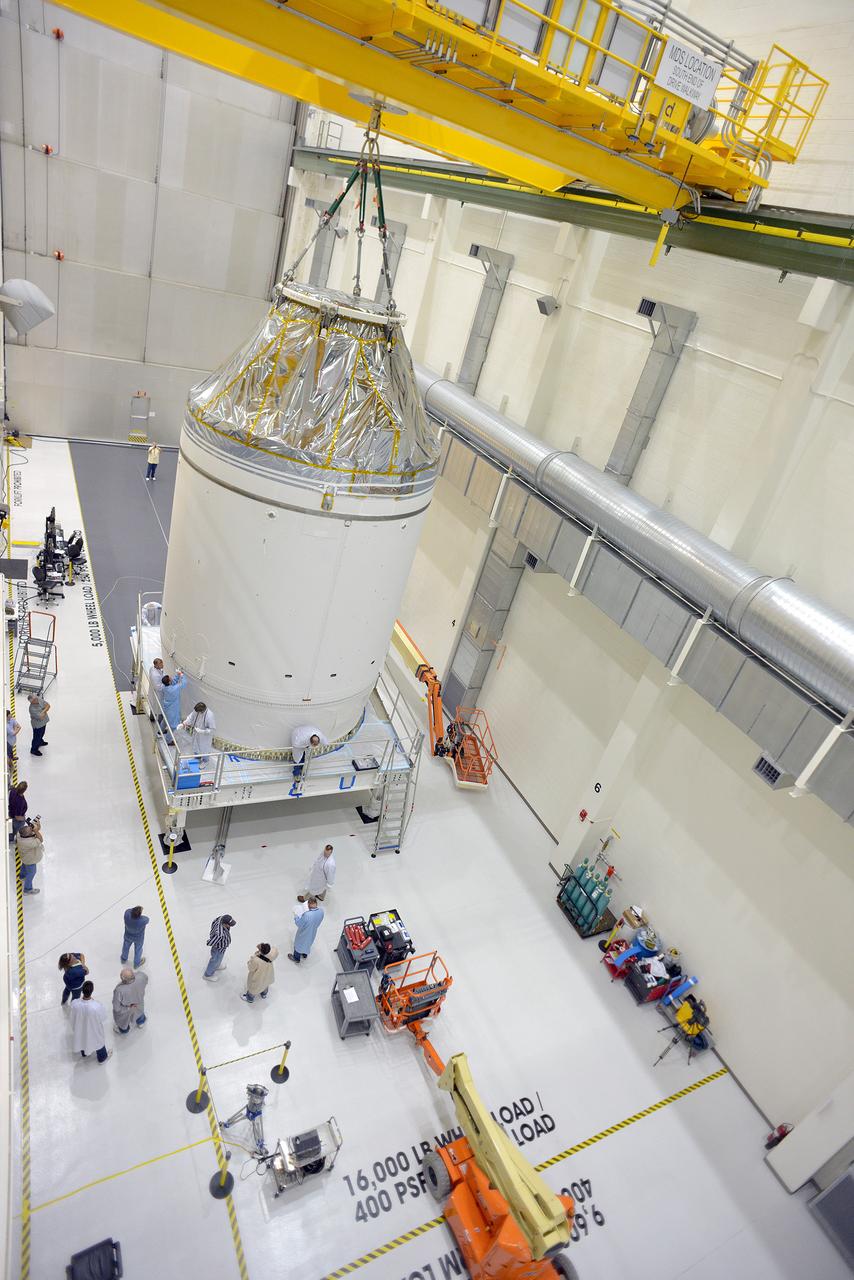
Technicians and engineers put finishing touches on the Orion Exploration Flight Test-1 (EFT-1) crew module and service module stack in the Operations and Checkout (O&C) Building at Kennedy Space Center on Sept. 7, 2014. The crew module is covered by protective foil as it and the service module are lifted for the installation of the Orion-to-stage adapter ring. Part of Batch image transfer from Flickr.
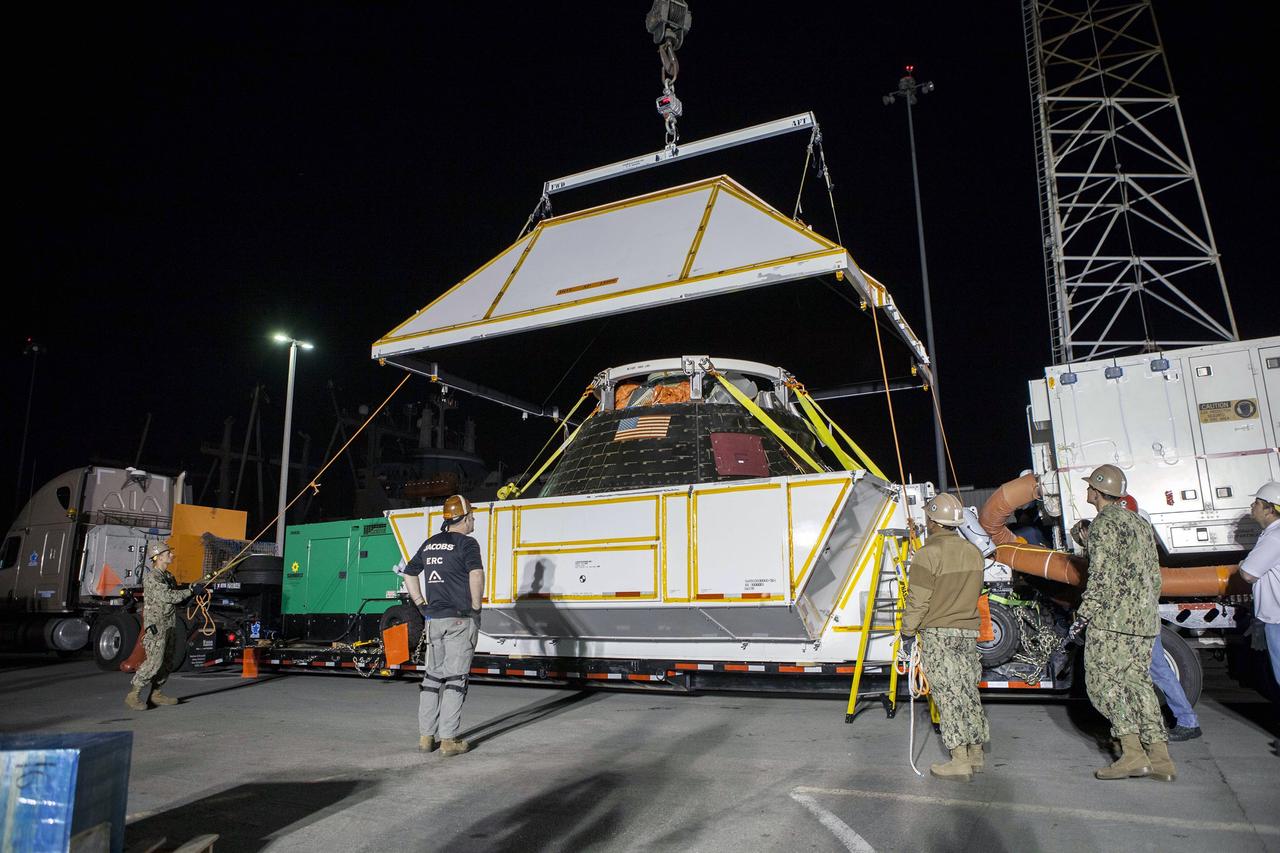
SAN DIEGO, Calif. -- The Orion crew module has been lowered and secured in the crew module transportation fixture at the Mole Pier at Naval Base San Diego in California. The fixture has been secured on the back of a flatbed truck and the cover is being lowered over the spacecraft. Orion is being prepared for the overland trip back to NASA's Kennedy Space Center in Florida. Orion was recovered from the Pacific Ocean after completing a two-orbit, four-and-a-half hour mission Dec. 5 to test systems critical to crew safety, including the launch abort system, the heat shield and the parachute system. NASA, the U.S. Navy and Lockheed Martin coordinated efforts to recover Orion. The Ground Systems Development and Operations Program led the recovery, offload and pre-transportation efforts. For more information, visit www.nasa.gov/orion Photo credit: NASA/Cory Huston
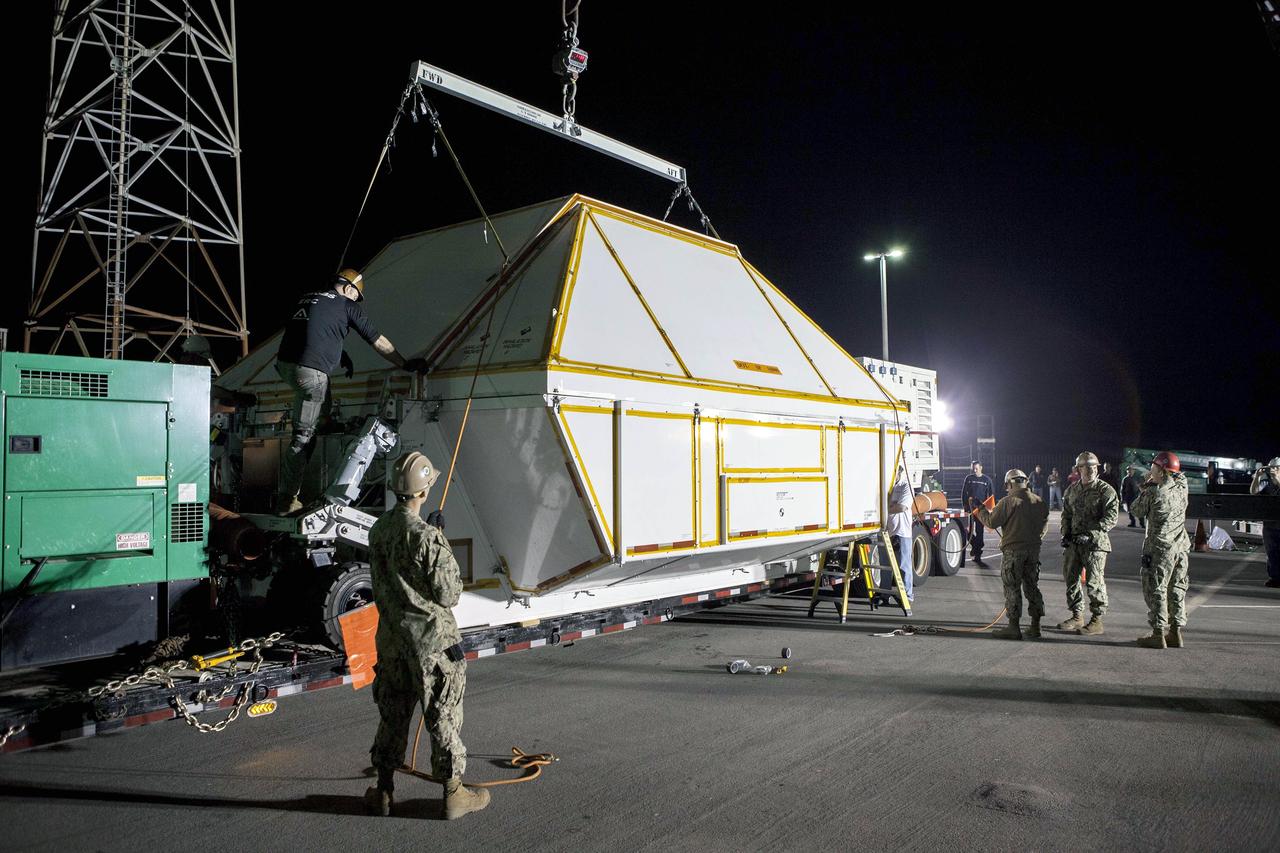
SAN DIEGO, Calif. -- The Orion crew module has been secured in the crew module transportation fixture at the Mole Pier at Naval Base San Diego in California. The fixture has been secured on the back of a flatbed truck and the cover has been lowered over the spacecraft. Orion is being prepared for the overland trip back to NASA's Kennedy Space Center in Florida. Orion was recovered from the Pacific Ocean after completing a two-orbit, four-and-a-half hour mission Dec. 5 to test systems critical to crew safety, including the launch abort system, the heat shield and the parachute system. NASA, the U.S. Navy and Lockheed Martin coordinated efforts to recover Orion. The Ground Systems Development and Operations Program led the recovery, offload and pre-transportation efforts. For more information, visit www.nasa.gov/orion Photo credit: NASA/Cory Huston
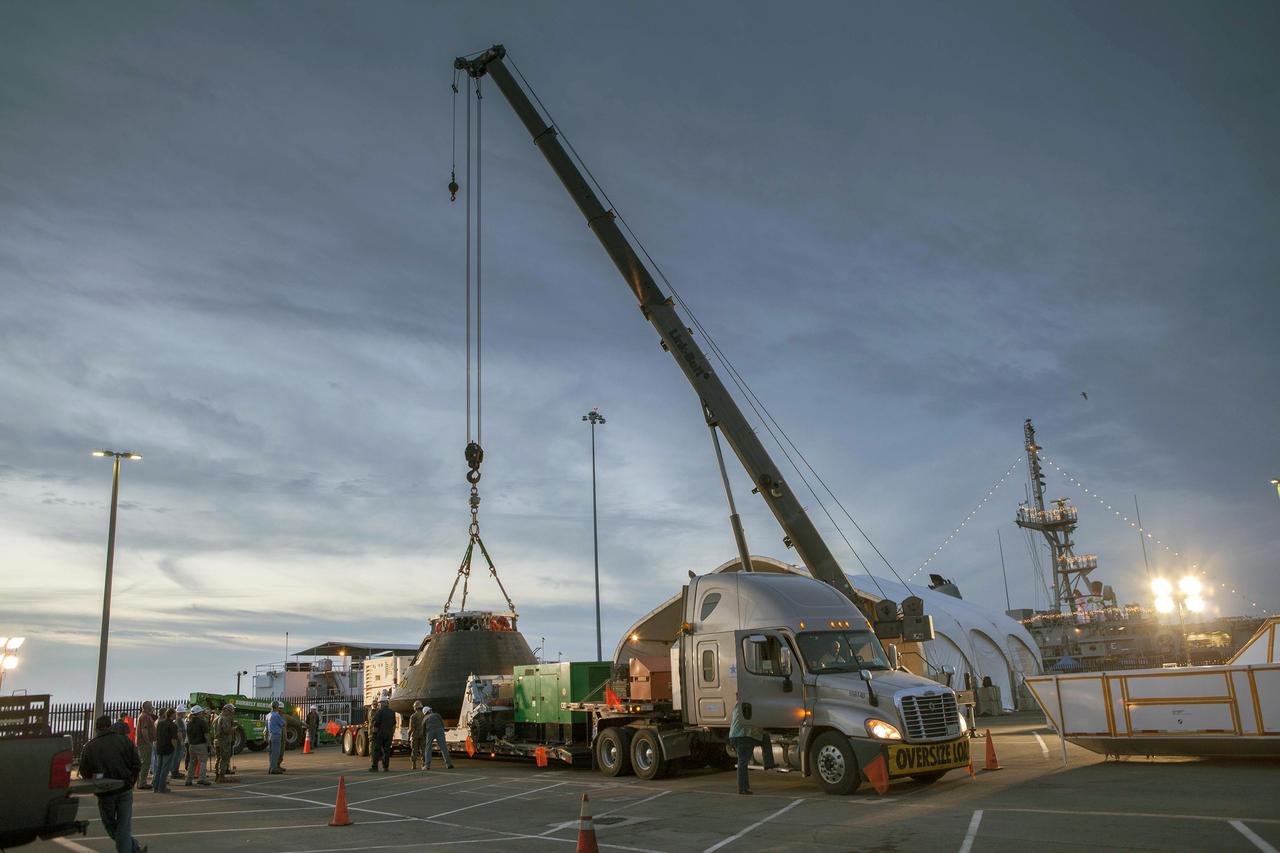
SAN DIEGO, Calif. -- The Orion crew module is being lowered onto the crew module transportation fixture at the Mole Pier at Naval Base San Diego in California. The fixture has been secured on the back of a flatbed truck. Orion is being prepared for the overland trip back to NASA's Kennedy Space Center in Florida. Orion was recovered from the Pacific Ocean after completing a two-orbit, four-and-a-half hour mission Dec. 5 to test systems critical to crew safety, including the launch abort system, the heat shield and the parachute system. NASA, the U.S. Navy and Lockheed Martin coordinated efforts to recover Orion. The Ground Systems Development and Operations Program led the recovery, offload and pre-transportation efforts. For more information, visit www.nasa.gov/orion Photo credit: NASA/Cory Huston
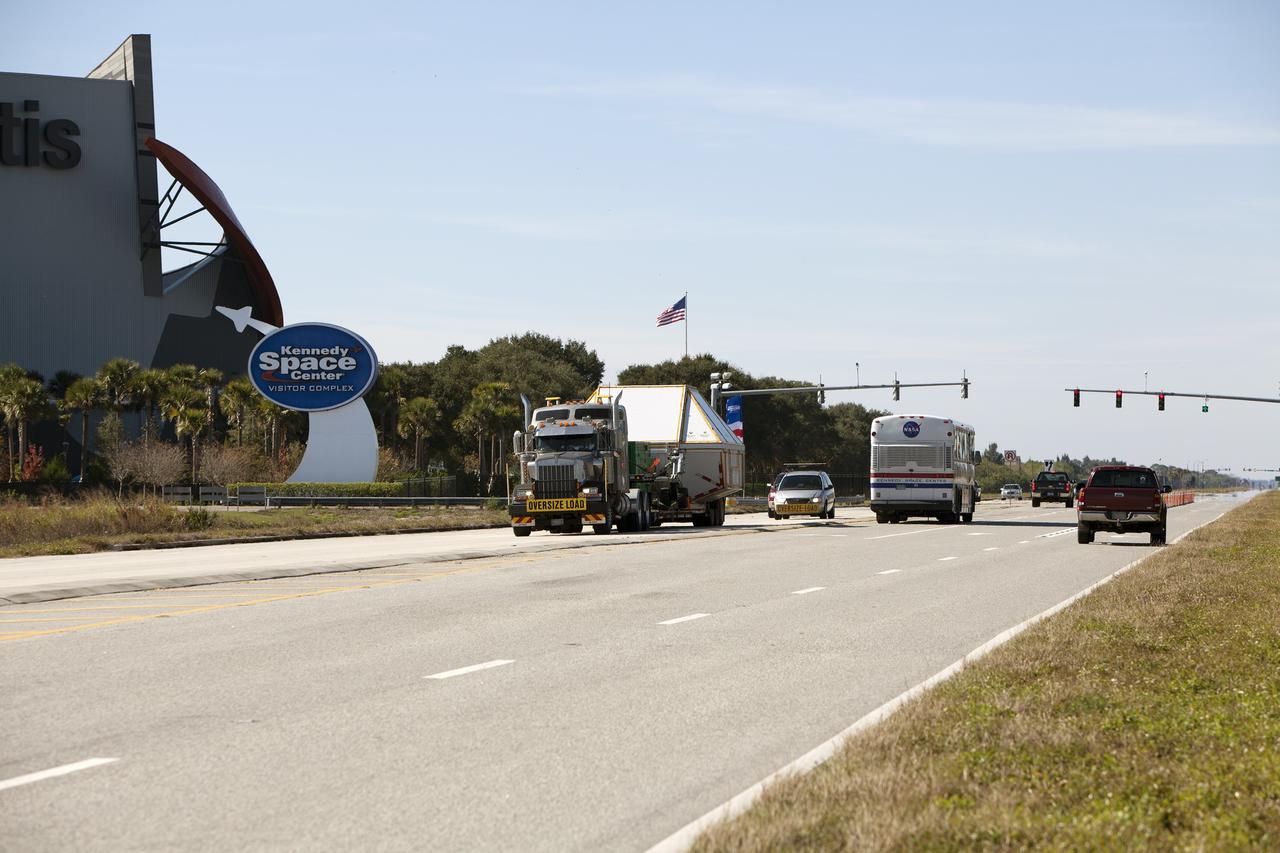
CAPE CANAVERAL, Fla. -- NASA's Orion crew module, enclosed in its crew module transportation fixture and secured on a flatbed truck passes by the Space Shuttle Atlantis building at the Kennedy Space Center Visitor Complex on its way to the entrance gate to Kennedy Space Center in Florida. Orion made the 2,700 mile overland trip from Naval Base San Diego in California. Orion was recovered from the Pacific Ocean after completing a two-orbit, four-and-a-half hour mission Dec. 5 to test systems critical to crew safety, including the launch abort system, the heat shield and the parachute system. The Ground Systems Development and Operations Program led the recovery, offload and transportation efforts. For more information, visit www.nasa.gov/orion. Photo credit: NASA/Dimitri Gerondidakis
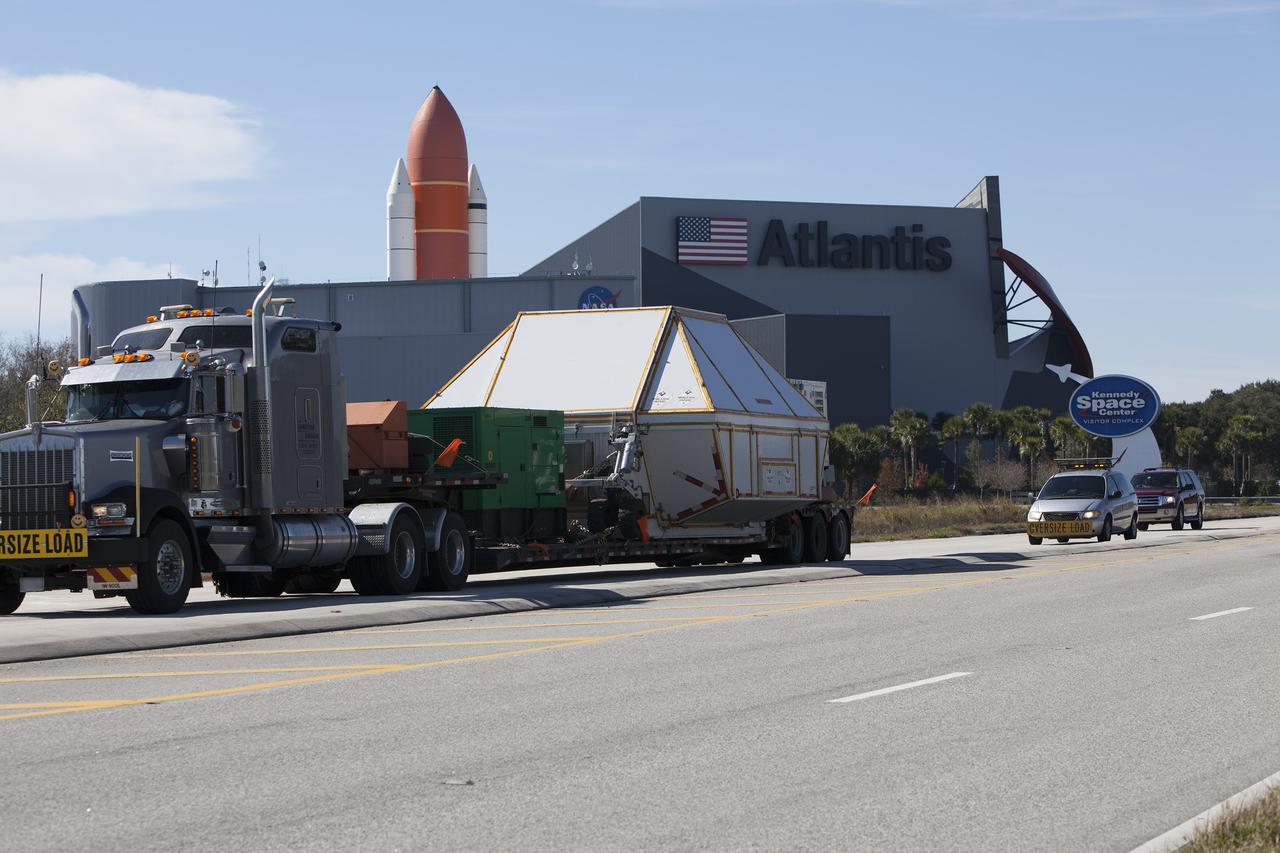
CAPE CANAVERAL, Fla. -- NASA's Orion crew module, enclosed in its crew module transportation fixture and secured on a flatbed truck passes by the Space Shuttle Atlantis building at the Kennedy Space Center Visitor Complex on its way to the entrance gate to Kennedy Space Center in Florida. Orion made the 2,700 mile overland trip from Naval Base San Diego in California. Orion was recovered from the Pacific Ocean after completing a two-orbit, four-and-a-half hour mission Dec. 5 to test systems critical to crew safety, including the launch abort system, the heat shield and the parachute system. The Ground Systems Development and Operations Program led the recovery, offload and transportation efforts. For more information, visit www.nasa.gov/orion. Photo credit: NASA/Dimitri Gerondidakis
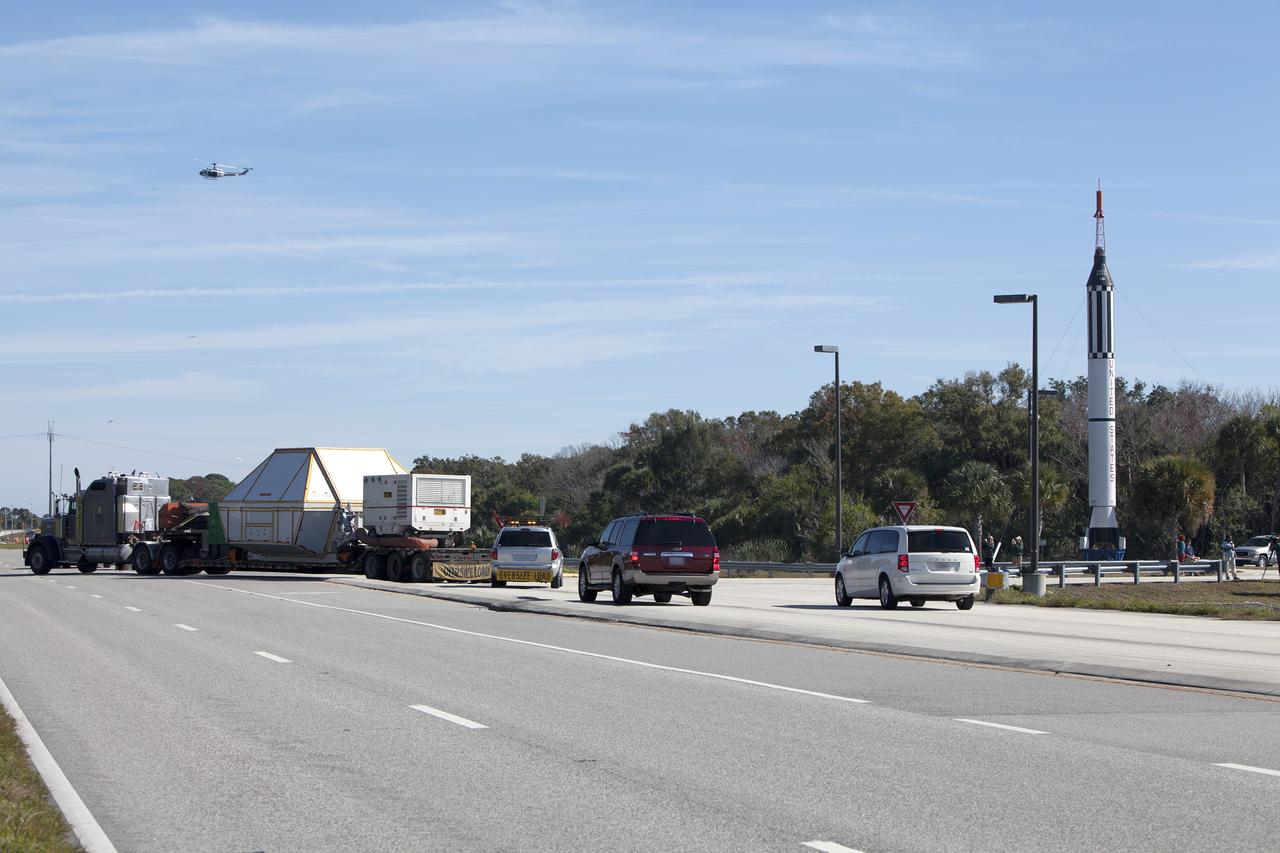
CAPE CANAVERAL, Fla. -- NASA's Orion crew module, enclosed in its crew module transportation fixture and secured on a flatbed truck nears the entrance gate to Kennedy Space Center in Florida. In the background is a full-scale mockup of the Mercury Redstone rocket that boosted NASA astronauts Alan Shepard and Virgil "Gus" Grissom on their 1961 sub-orbital missions that began America's human spaceflight program. Orion made the overland trip from Naval Base San Diego in California. Orion was recovered from the Pacific Ocean after completing a two-orbit, four-and-a-half hour mission Dec. 5 to test systems critical to crew safety, including the launch abort system, the heat shield and the parachute system. The Ground Systems Development and Operations Program led the recovery, offload and transportation efforts. For more information, visit www.nasa.gov/orion. Photo credit: NASA/Dimitri Gerondidakis
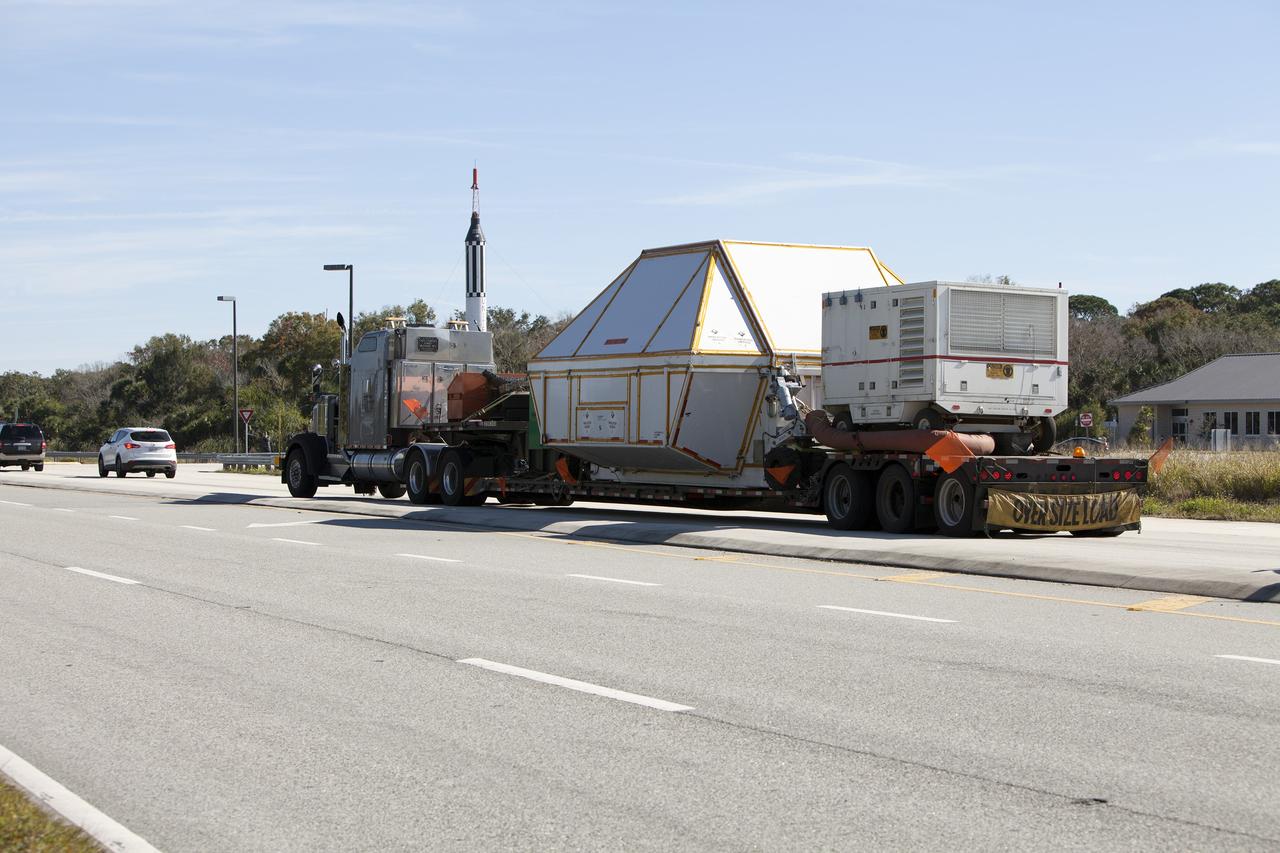
CAPE CANAVERAL, Fla. -- NASA's Orion crew module, enclosed in its crew module transportation fixture and secured on a flatbed truck nears the entrance gate to Kennedy Space Center in Florida. In the background is a full-scale mockup of the Mercury Redstone rocket that boosted NASA astronauts Alan Shepard and Virgil "Gus" Grissom on their 1961 sub-orbital missions that began America's human spaceflight program. Orion made the overland trip from Naval Base San Diego in California. Orion was recovered from the Pacific Ocean after completing a two-orbit, four-and-a-half hour mission Dec. 5 to test systems critical to crew safety, including the launch abort system, the heat shield and the parachute system. The Ground Systems Development and Operations Program led the recovery, offload and transportation efforts. For more information, visit www.nasa.gov/orion. Photo credit: NASA/Dimitri Gerondidakis
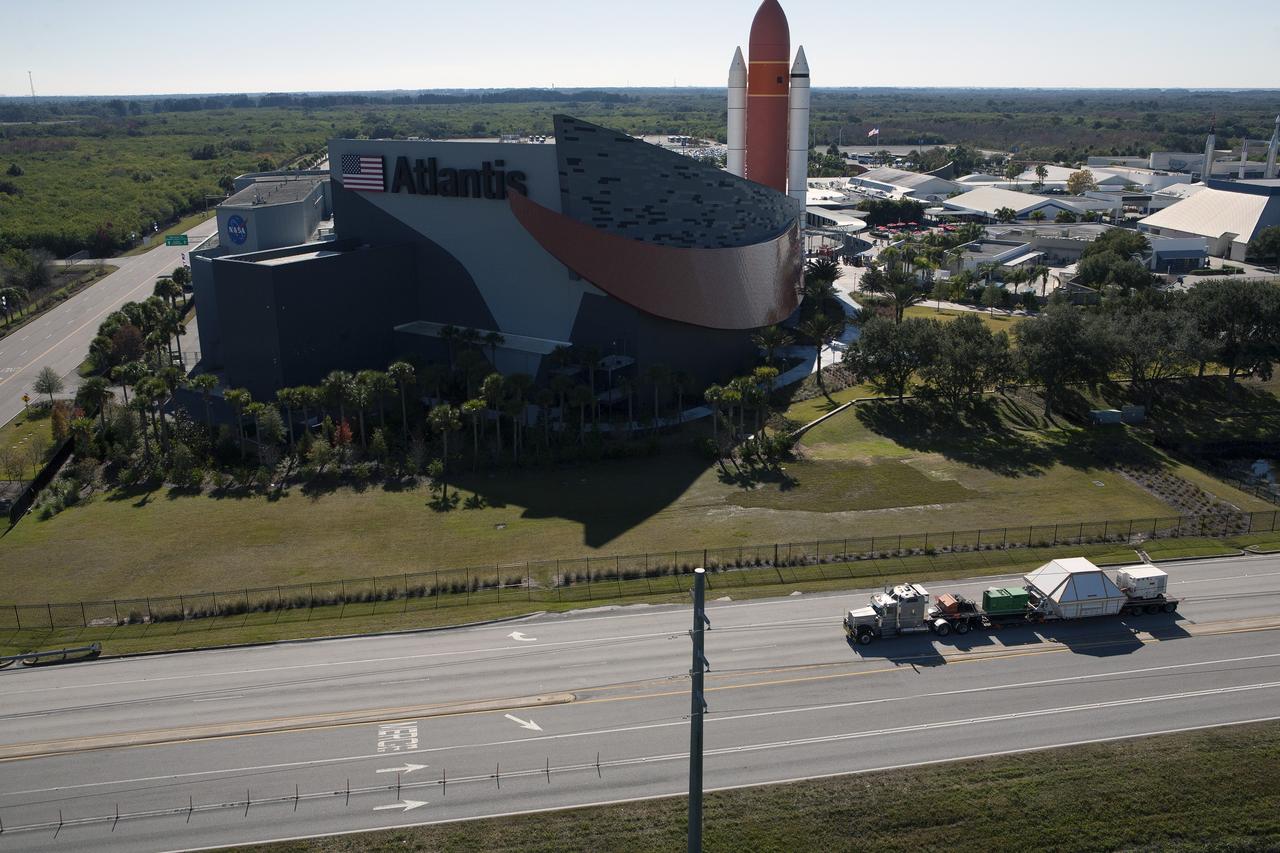
CAPE CANAVERAL, Fla. -- In this aerial view, NASA's Orion crew module, enclosed in its crew module transportation fixture and secured on a flatbed truck is passing the Kennedy Space Center Visitor Complex on its way to the entrance gate to Kennedy Space Center in Florida. In view is the Space Shuttle Atlantis facility. Orion made the 2,700 mile overland trip from Naval Base San Diego in California. Orion was recovered from the Pacific Ocean after completing a two-orbit, four-and-a-half hour mission Dec. 5 to test systems critical to crew safety, including the launch abort system, the heat shield and the parachute system. The Ground Systems Development and Operations Program led the recovery, offload and transportation efforts. For more information, visit www.nasa.gov/orion. Photo credit: NASA/Kim Shiflett
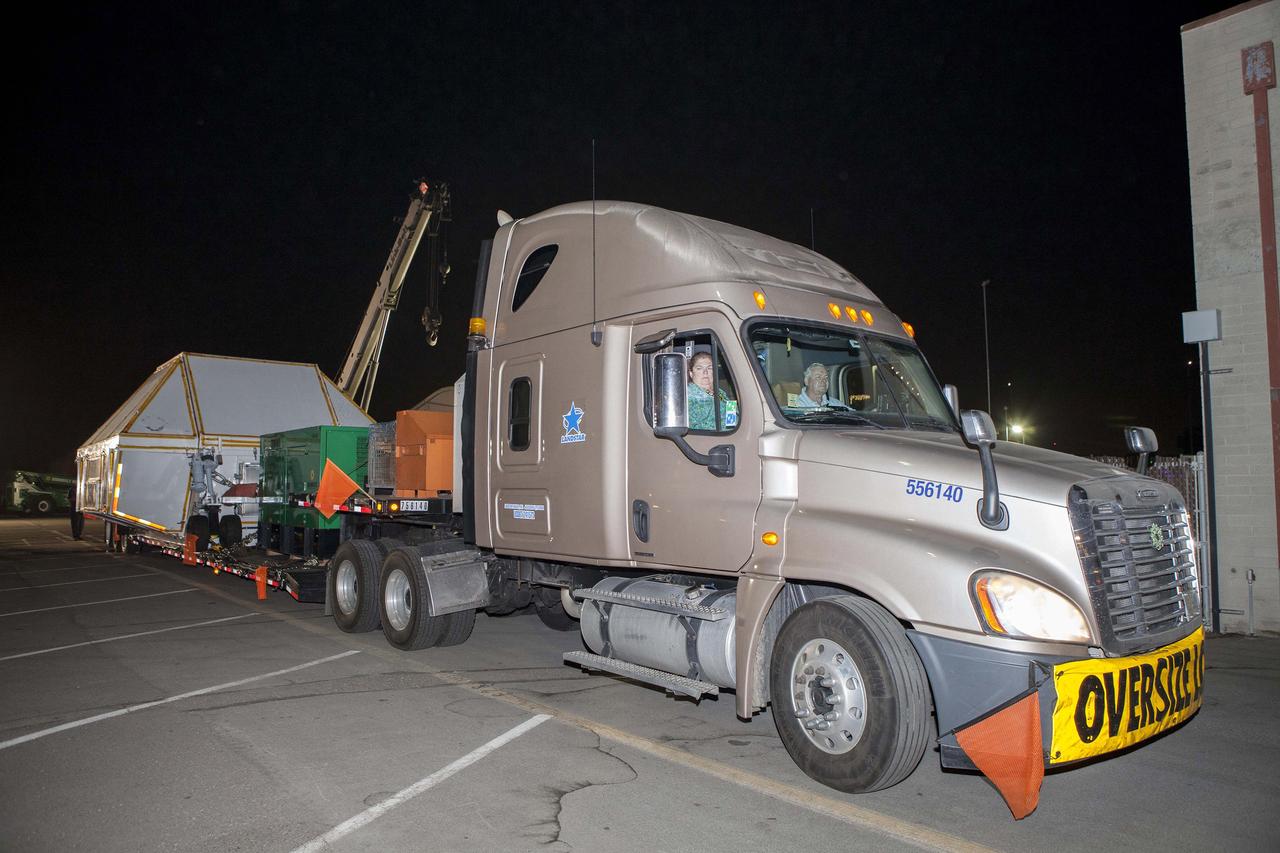
SAN DIEGO, Calif. -- Drivers in a flatbed truck begin the overland trek back to NASA's Kennedy Space Center in Florida, carrying the Orion crew module secured inside the crew module transportation fixture. The truck is leaving the Mole Pier at Naval Base San Diego in California. Orion was recovered from the Pacific Ocean after completing a two-orbit, four-and-a-half hour mission Dec. 5 to test systems critical to crew safety, including the launch abort system, the heat shield and the parachute system. NASA, the U.S. Navy and Lockheed Martin coordinated efforts to recover Orion. The Ground Systems Development and Operations Program led the recovery, offload and pre-transportation efforts. For more information, visit www.nasa.gov/orion Photo credit: NASA/Cory Huston
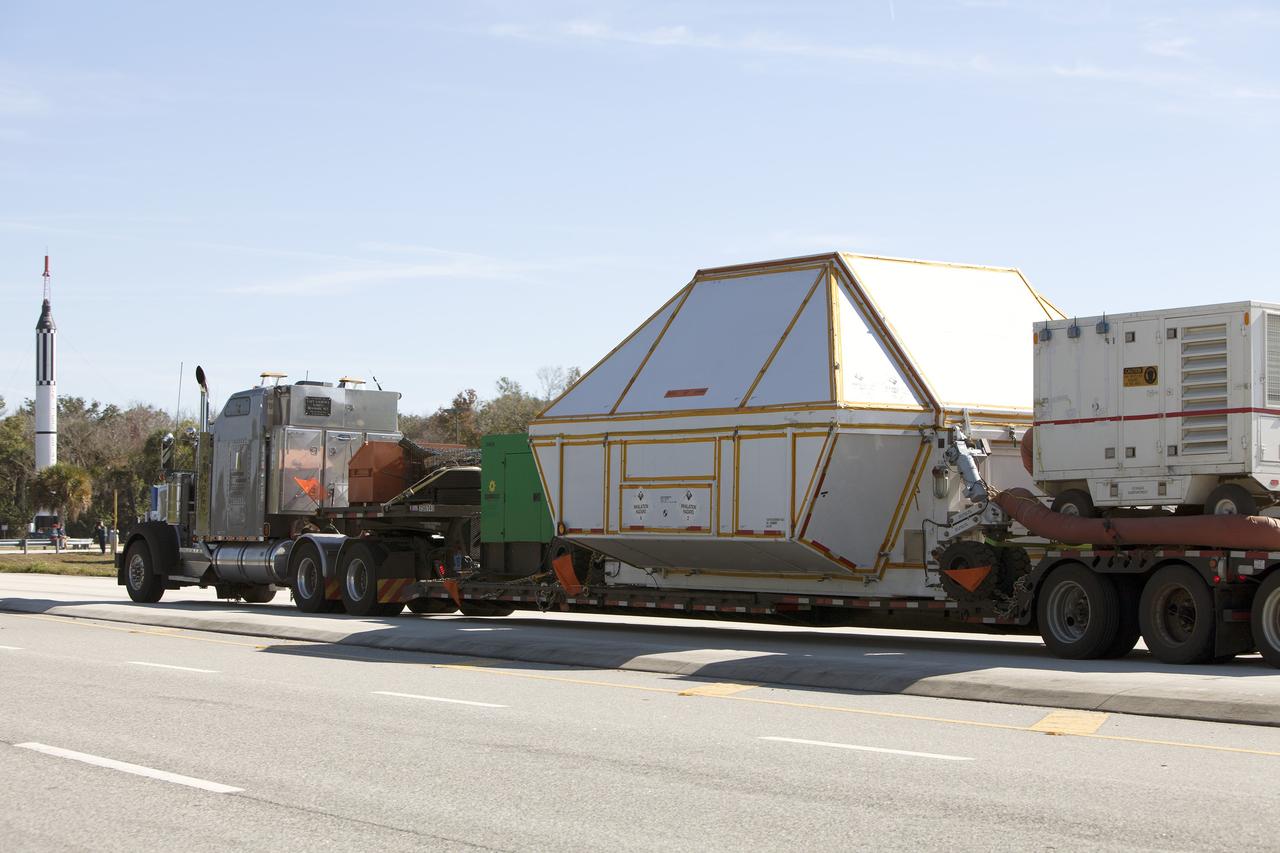
CAPE CANAVERAL, Fla. -- NASA's Orion crew module, enclosed in its crew module transportation fixture and secured on a flatbed truck nears the entrance gate to Kennedy Space Center in Florida. In the background is a full-scale mockup of the Mercury Redstone rocket that boosted NASA astronauts Alan Shepard and Virgil "Gus" Grissom on their 1961 sub-orbital missions that began America's human spaceflight program. Orion made the overland trip from Naval Base San Diego in California. Orion was recovered from the Pacific Ocean after completing a two-orbit, four-and-a-half hour mission Dec. 5 to test systems critical to crew safety, including the launch abort system, the heat shield and the parachute system. The Ground Systems Development and Operations Program led the recovery, offload and transportation efforts. For more information, visit www.nasa.gov/orion. Photo credit: NASA/Dimitri Gerondidakis
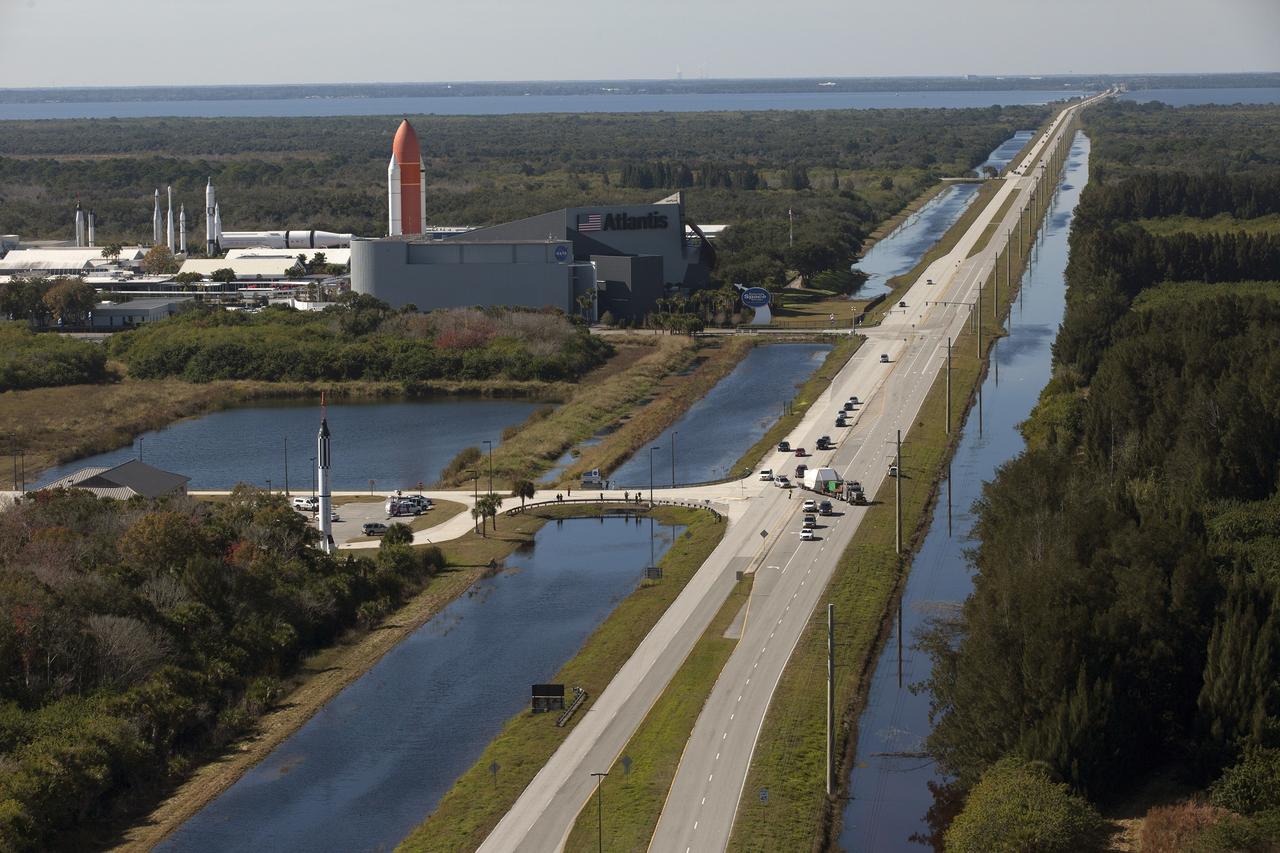
CAPE CANAVERAL, Fla. -- In this aerial view, NASA's Orion crew module, enclosed in its crew module transportation fixture and secured on a flatbed truck is passing the Kennedy Space Center Visitor Complex on its way to the entrance gate to Kennedy Space Center in Florida. In view is the Space Shuttle Atlantis facility. Orion made the 2,700 mile overland trip from Naval Base San Diego in California. Orion was recovered from the Pacific Ocean after completing a two-orbit, four-and-a-half hour mission Dec. 5 to test systems critical to crew safety, including the launch abort system, the heat shield and the parachute system. The Ground Systems Development and Operations Program led the recovery, offload and transportation efforts. For more information, visit www.nasa.gov/orion. Photo credit: NASA/Kim Shiflett
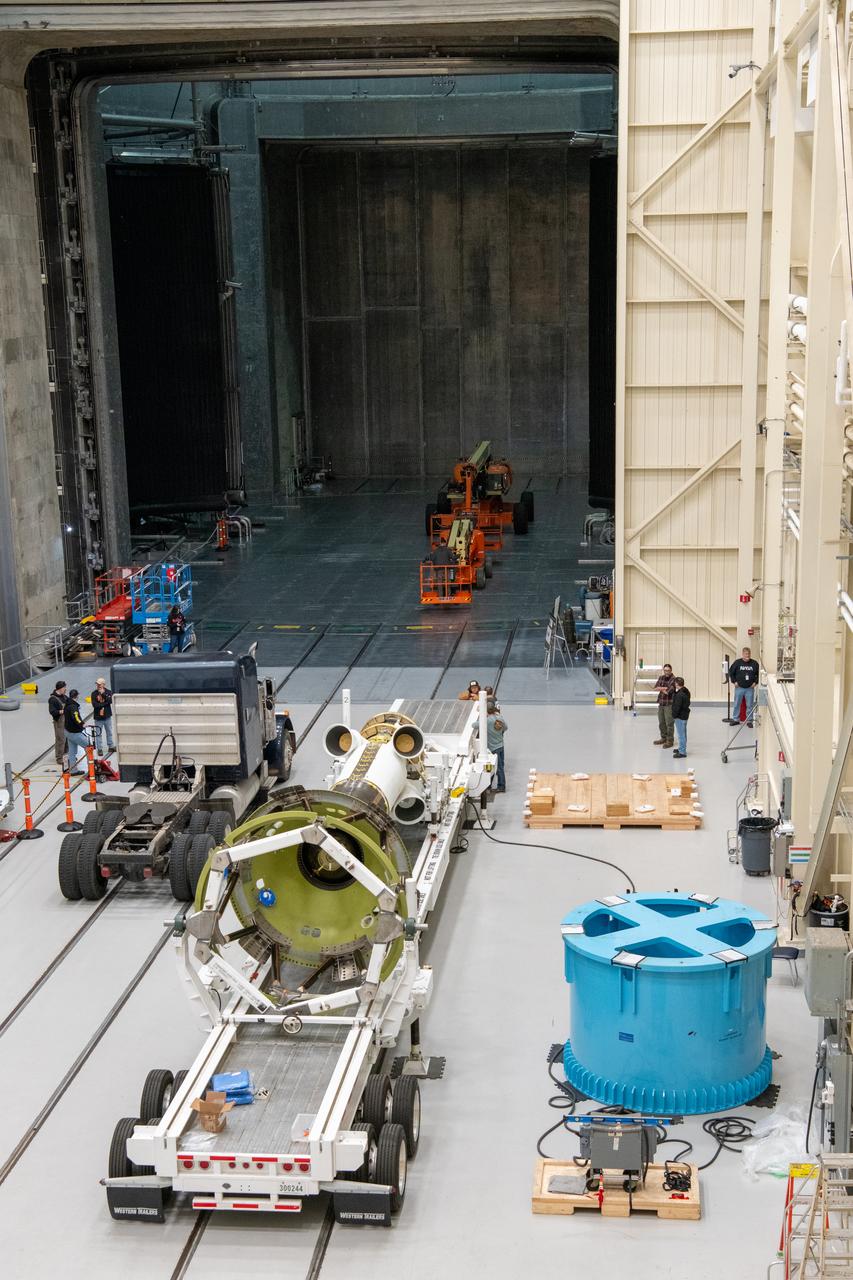
Test hardware for Orion crew capsule from the Artemis 1 flight arrives in the SEC (Space Experiments Complex) at ATF (Armstrong Test Facility), The LAS (Launch Abort System) arrived in four separate shipments from locations in Florida and Colorado. It is now being integrated with the Orion CM (crew module) for critical testing before the flight of Artemis II.
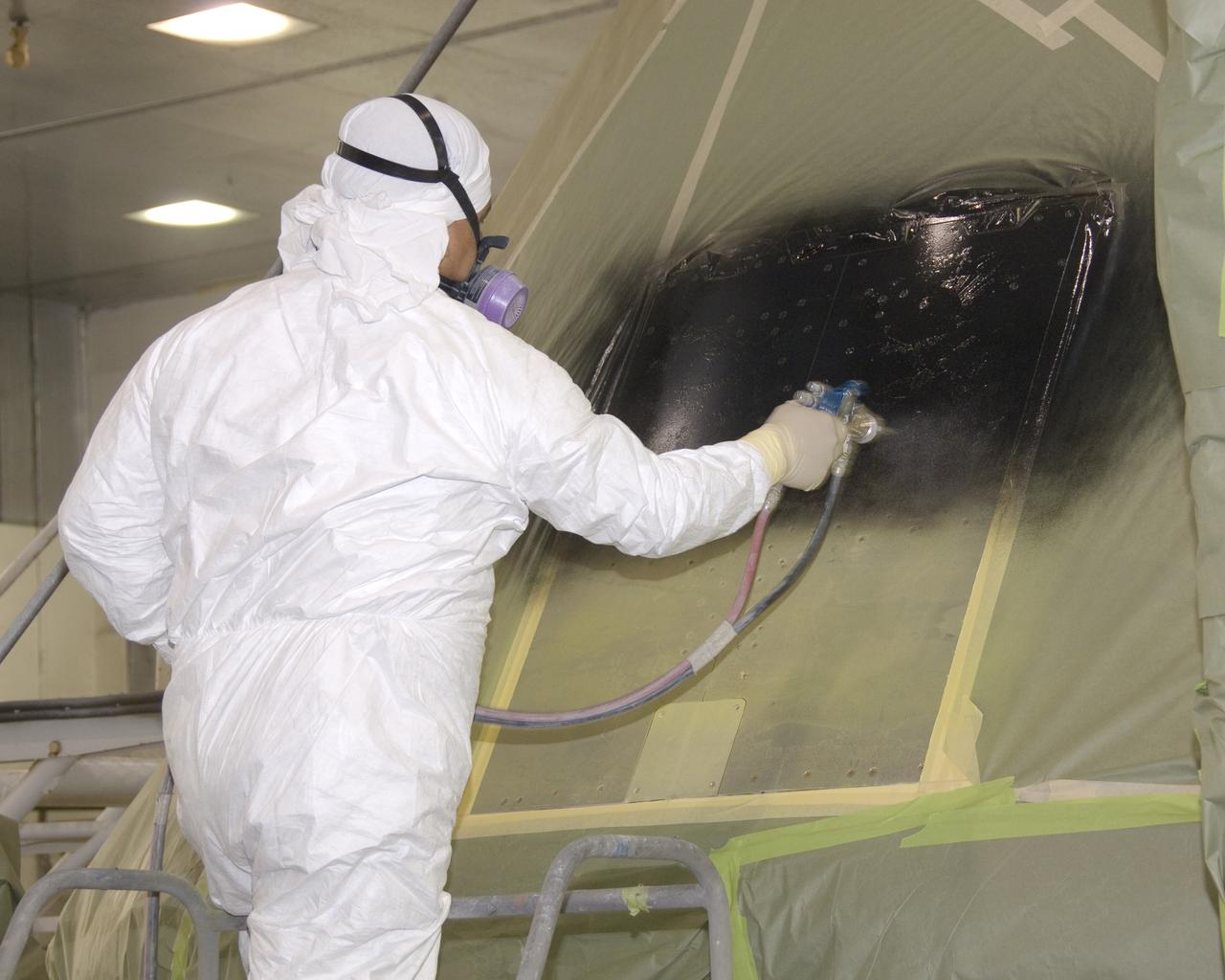
A full-scale flight-test mockup of the Constellation program's Orion crew vehicle arrived at NASA's Dryden Flight Research Center in late March 2008 to undergo preparations for the first short-range flight test of the spacecraft's astronaut escape system later that year. Engineers and technicians at NASA's Langley Research Center fabricated the structure, which precisely represents the size, outer shape and mass characteristics of the Orion space capsule. The Orion crew module mockup was ferried to NASA Dryden on an Air Force C-17. After painting in the Edwards Air Force Base paint hangar, the conical capsule was taken to Dryden for installation of flight computers, instrumentation and other electronics prior to being sent to the U.S. Army's White Sands Missile Range in New Mexico for integration with the escape system and the first abort flight test in late 2008. The tests were designed to ensure a safe, reliable method of escape for astronauts in case of an emergency.
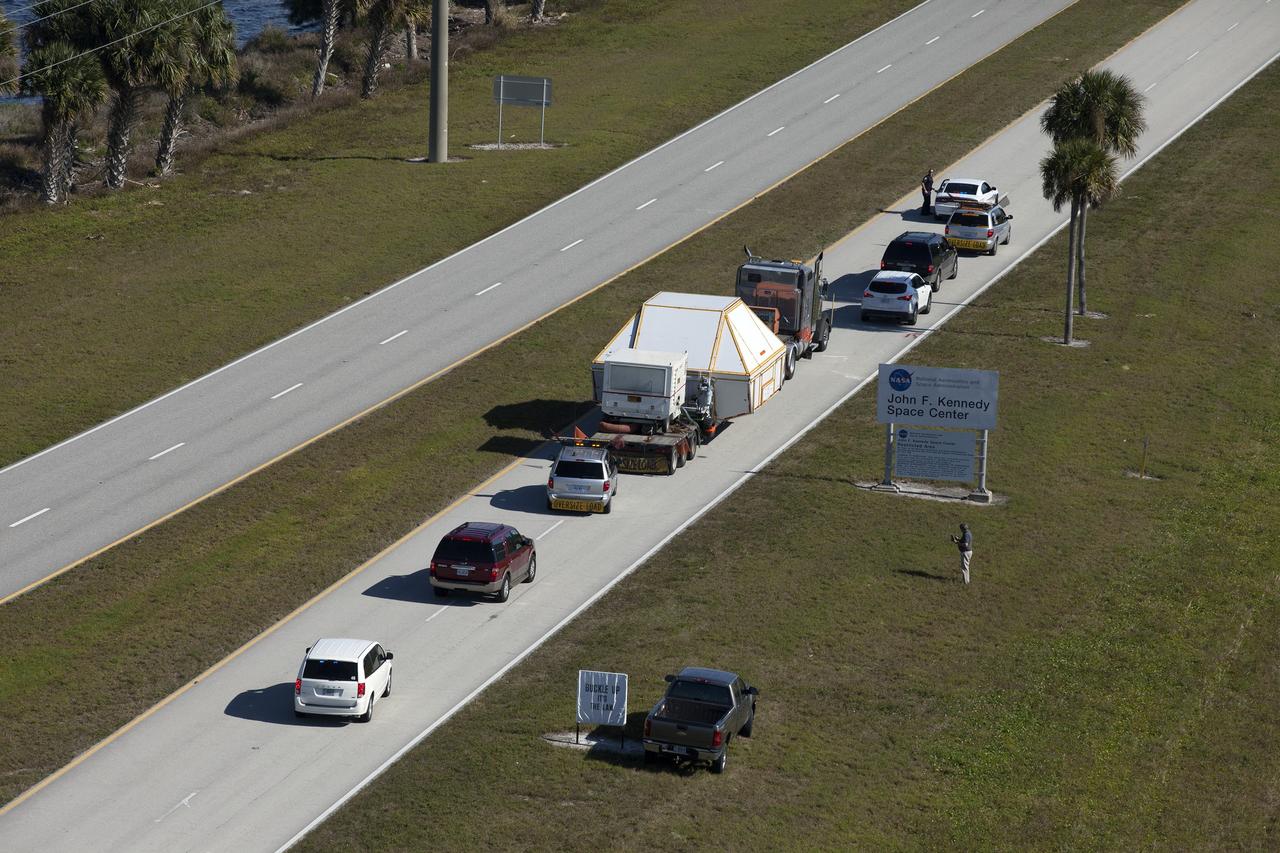
CAPE CANAVERAL, Fla. -- An aerial view near NASA's Kennedy Space Center Visitor Complex reveals the Orion crew module, enclosed in its crew module transportation fixture and secured on a flatbed truck that is proceeding onto the NASA Causeway that leads to the entrance gate to Kennedy Space Center in Florida. Orion made the 2,700 mile overland trip from Naval Base San Diego in California. The spacecraft was recovered from the Pacific Ocean after completing a two-orbit, four-and-a-half hour mission Dec. 5 to test systems critical to crew safety, including the launch abort system, the heat shield and the parachute system. The Ground Systems Development and Operations Program led the recovery, offload and transportation efforts. For more information, visit www.nasa.gov/orion. Photo credit: NASA/Kim Shiflett
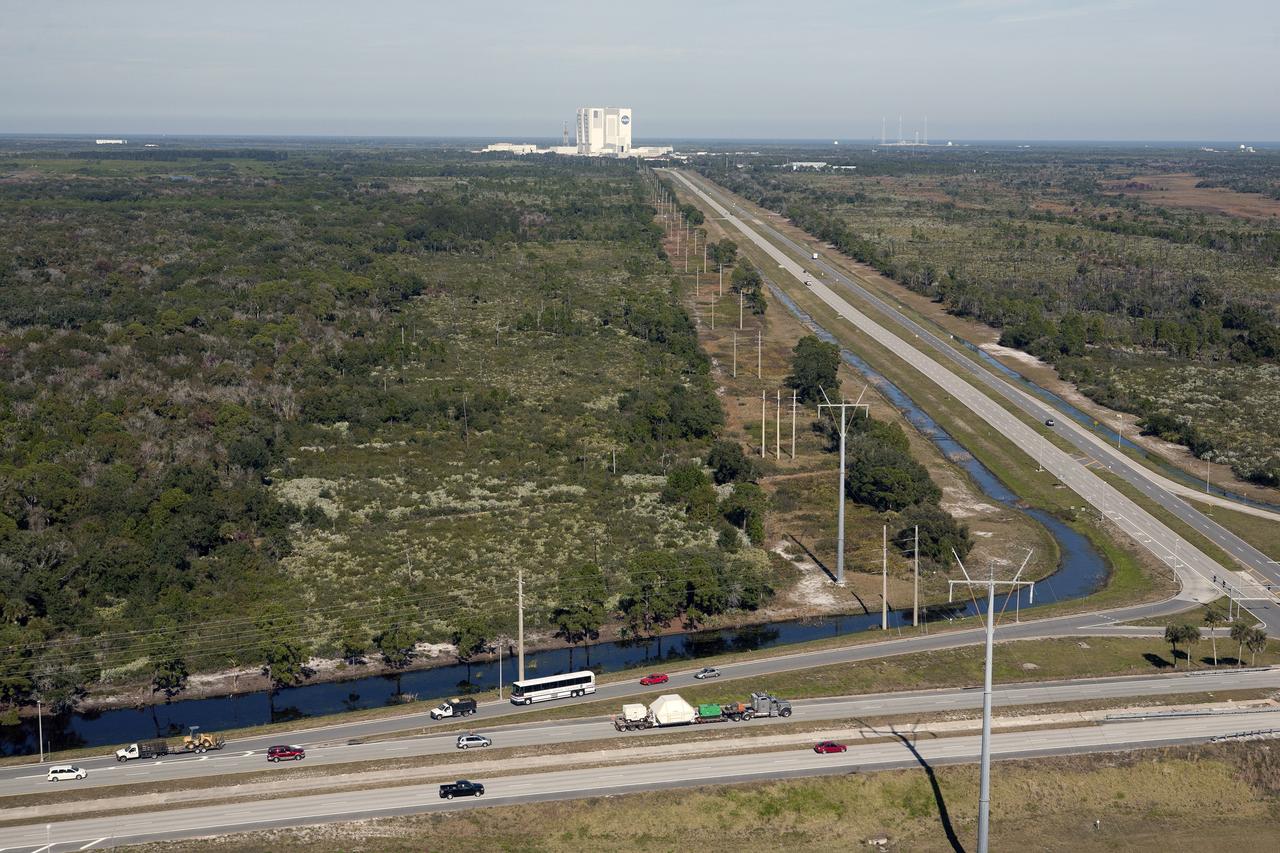
CAPE CANAVERAL, Fla. -- An aerial view reveals the Orion crew module, enclosed in its crew module transportation fixture and secured on a flatbed truck that is proceeding along the NASA Causeway at Kennedy Space Center in Florida. In the background is the iconic Vehicle Assembly Building. Orion made the 2,700 mile overland trip from Naval Base San Diego in California. The spacecraft was recovered from the Pacific Ocean after completing a two-orbit, four-and-a-half hour mission Dec. 5 to test systems critical to crew safety, including the launch abort system, the heat shield and the parachute system. The Ground Systems Development and Operations Program led the recovery, offload and transportation efforts. For more information, visit www.nasa.gov/orion. Photo credit: NASA/Kim Shiflett
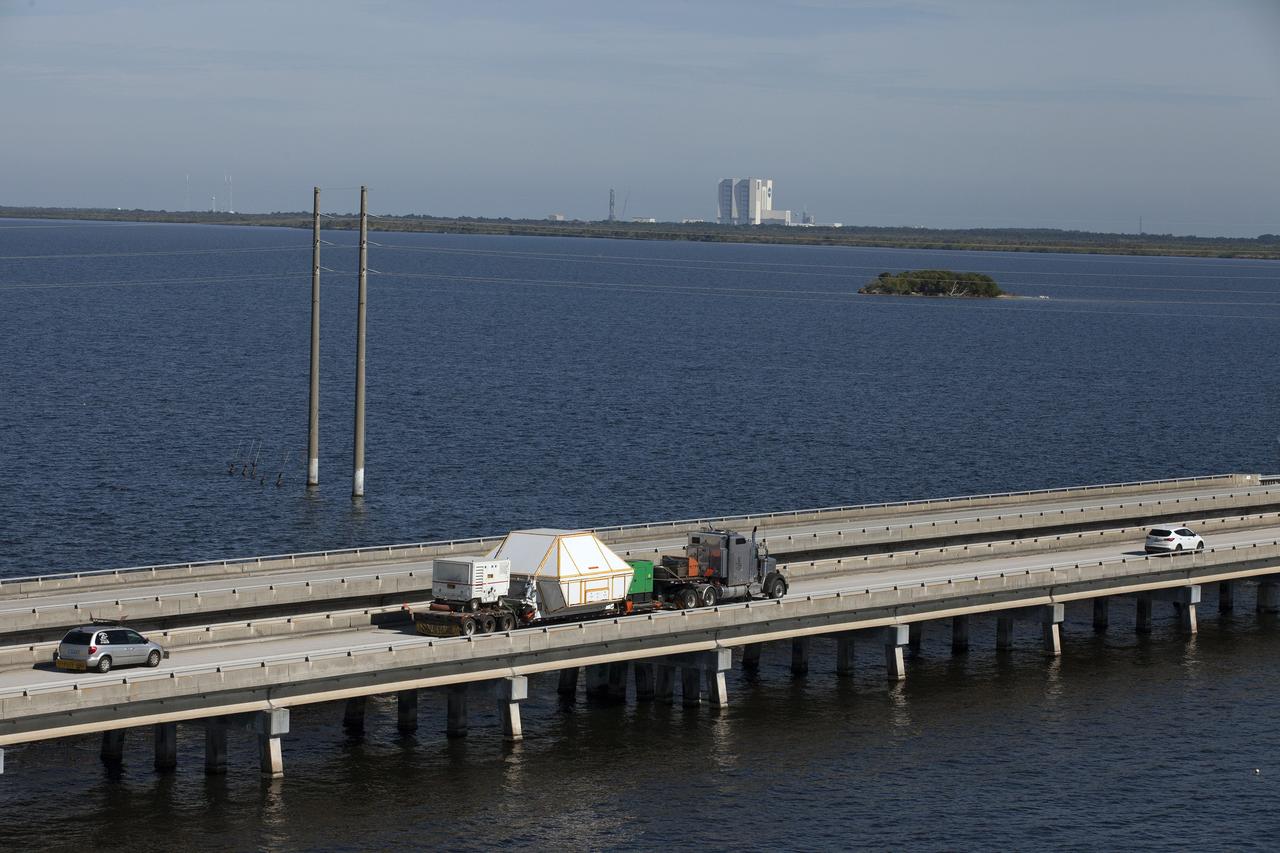
CAPE CANAVERAL, Fla. -- An aerial view near NASA's Kennedy Space Center Visitor Complex reveals the Orion crew module, enclosed in its crew module transportation fixture and secured on a flatbed truck that is proceeding along the NASA Causeway to the entrance gate to Kennedy Space Center in Florida. Across the inland waterway is the iconic Vehicle Assembly Building. Orion made the 2,700 mile overland trip from Naval Base San Diego in California. The spacecraft was recovered from the Pacific Ocean after completing a two-orbit, four-and-a-half hour mission Dec. 5 to test systems critical to crew safety, including the launch abort system, the heat shield and the parachute system. The Ground Systems Development and Operations Program led the recovery, offload and transportation efforts. For more information, visit www.nasa.gov/orion. Photo credit: NASA/Kim Shiflett
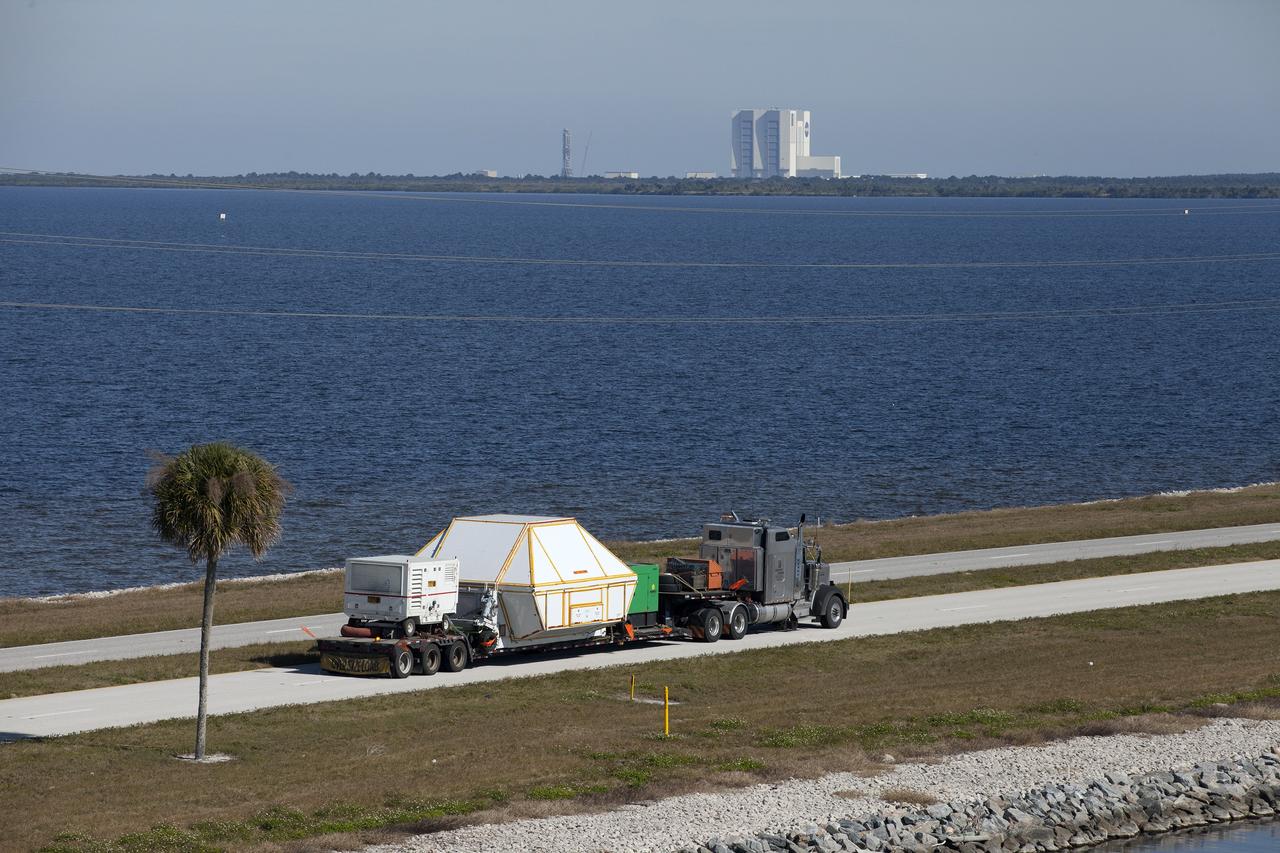
CAPE CANAVERAL, Fla. -- An aerial view near NASA's Kennedy Space Center Visitor Complex reveals the Orion crew module, enclosed in its crew module transportation fixture and secured on a flatbed truck that is proceeding along the NASA Causeway to the entrance gate to Kennedy Space Center in Florida. Across the inland waterway is the iconic Vehicle Assembly Building. Orion made the 2,700 mile overland trip from Naval Base San Diego in California. The spacecraft was recovered from the Pacific Ocean after completing a two-orbit, four-and-a-half hour mission Dec. 5 to test systems critical to crew safety, including the launch abort system, the heat shield and the parachute system. The Ground Systems Development and Operations Program led the recovery, offload and transportation efforts. For more information, visit www.nasa.gov/orion. Photo credit: NASA/Kim Shiflett
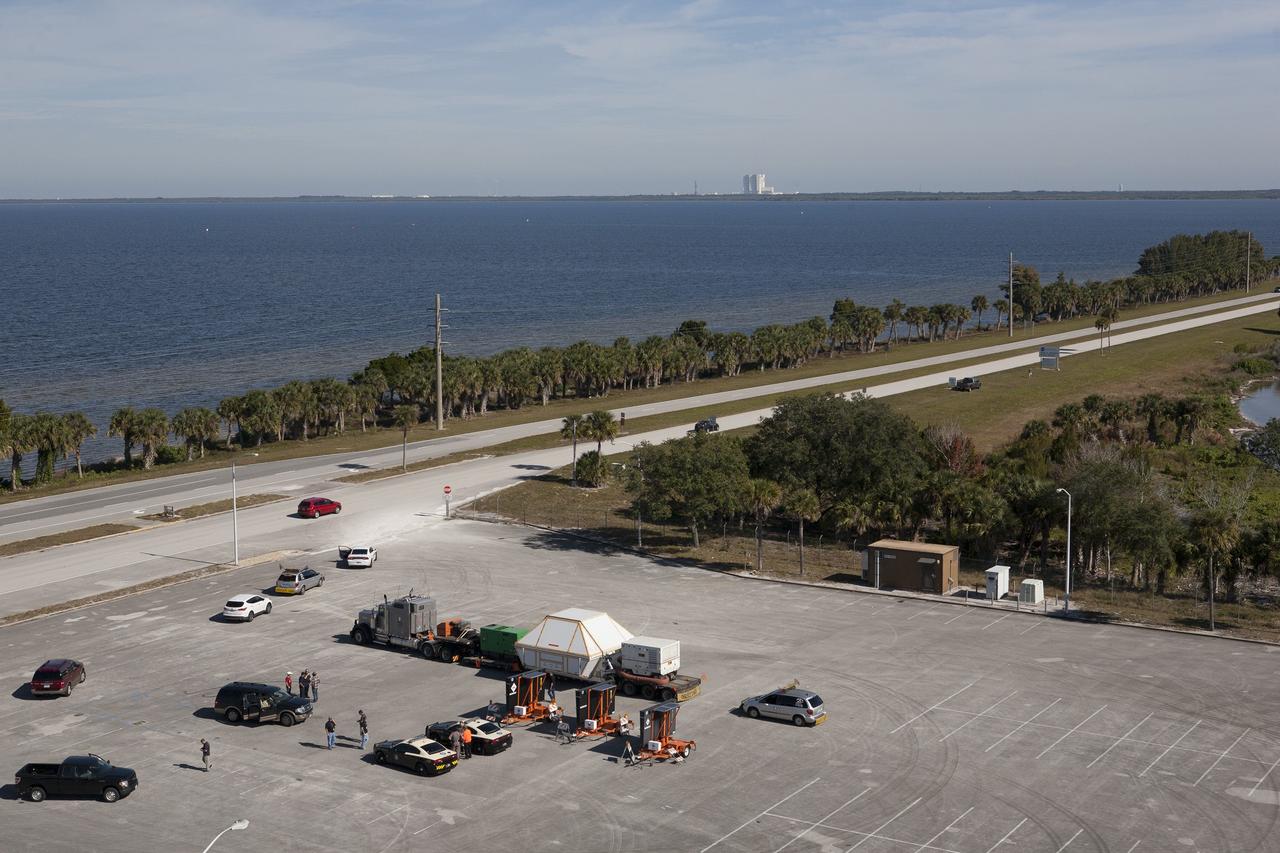
CAPE CANAVERAL, Fla. -- An aerial view near NASA's Kennedy Space Center Visitor Complex reveals the Orion crew module, enclosed in its crew module transportation fixture and secured on a flatbed truck that is preparing to pull onto the NASA Causeway that leads to the entrance gate to Kennedy Space Center in Florida. Orion made the 2,700 mile overland trip from Naval Base San Diego in California. The spacecraft was recovered from the Pacific Ocean after completing a two-orbit, four-and-a-half hour mission Dec. 5 to test systems critical to crew safety, including the launch abort system, the heat shield and the parachute system. The Ground Systems Development and Operations Program led the recovery, offload and transportation efforts. For more information, visit www.nasa.gov/orion. Photo credit: NASA/Kim Shiflett
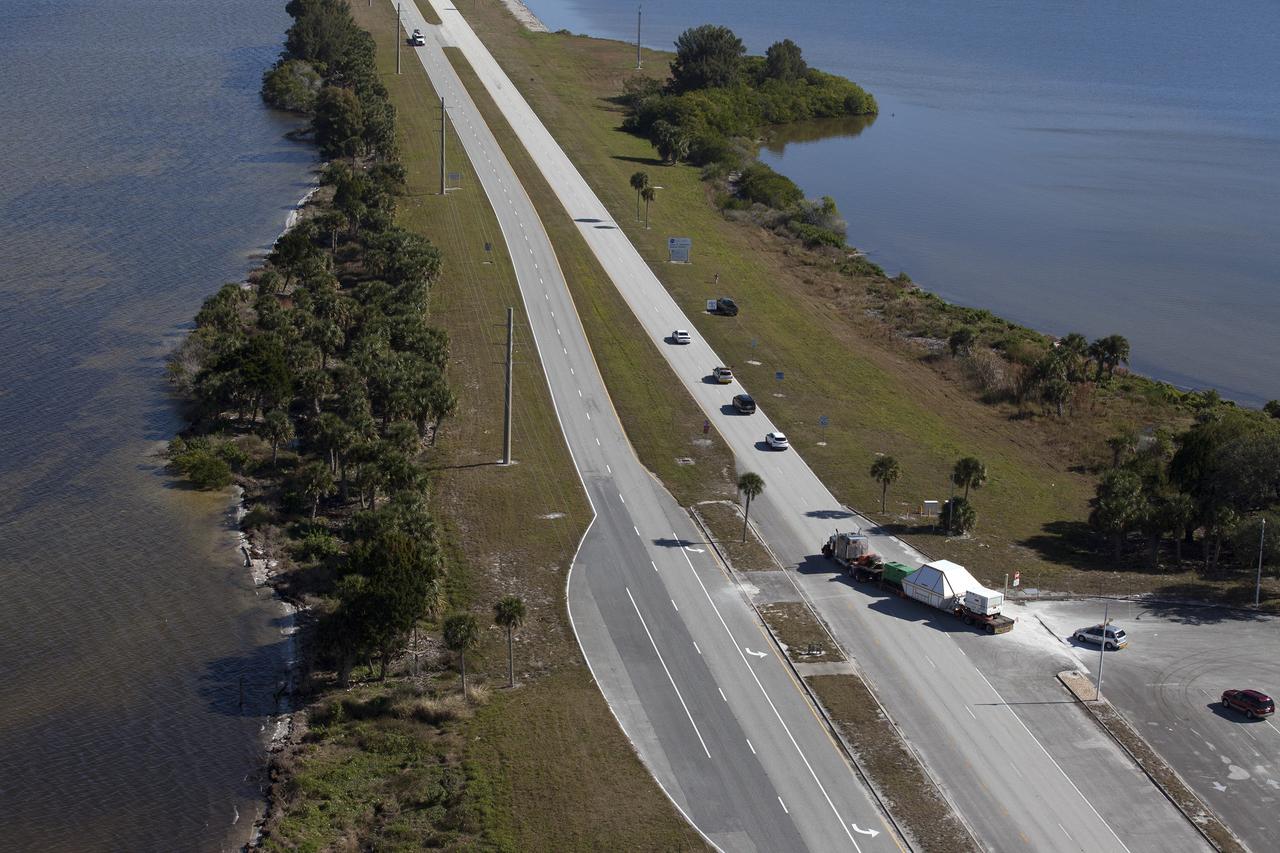
CAPE CANAVERAL, Fla. -- An aerial view near NASA's Kennedy Space Center Visitor Complex reveals the Orion crew module, enclosed in its crew module transportation fixture and secured on a flatbed truck that is proceeding onto the NASA Causeway that leads to the entrance gate to Kennedy Space Center in Florida. Orion made the 2,700 mile overland trip from Naval Base San Diego in California. The spacecraft was recovered from the Pacific Ocean after completing a two-orbit, four-and-a-half hour mission Dec. 5 to test systems critical to crew safety, including the launch abort system, the heat shield and the parachute system. The Ground Systems Development and Operations Program led the recovery, offload and transportation efforts. For more information, visit www.nasa.gov/orion. Photo credit: NASA/Kim Shiflett
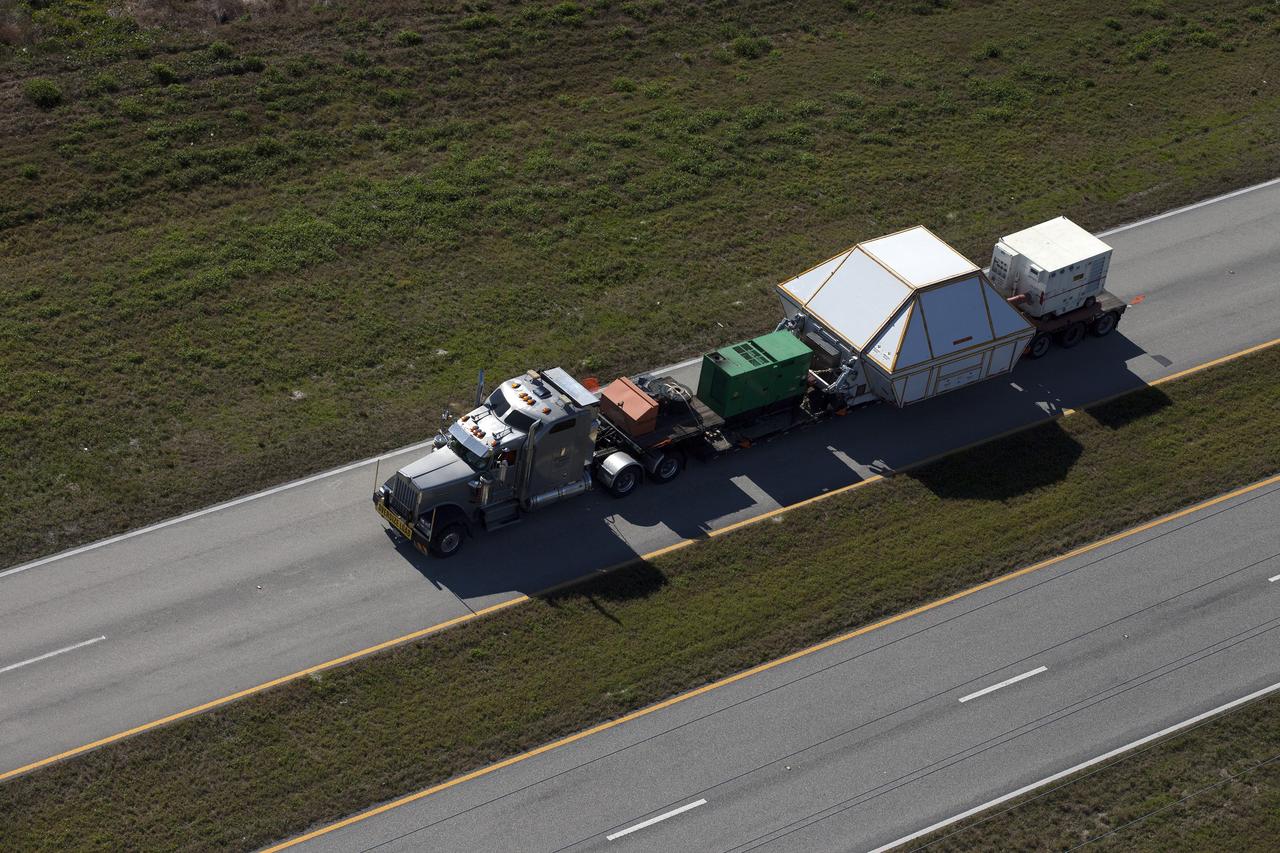
CAPE CANAVERAL, Fla. -- An aerial view near NASA's Kennedy Space Center Visitor Complex reveals the Orion crew module, enclosed in its crew module transportation fixture and secured on a flatbed truck that is proceeding along the NASA Causeway to the entrance gate to Kennedy Space Center in Florida. Orion made the 2,700 mile overland trip from Naval Base San Diego in California. The spacecraft was recovered from the Pacific Ocean after completing a two-orbit, four-and-a-half hour mission Dec. 5 to test systems critical to crew safety, including the launch abort system, the heat shield and the parachute system. The Ground Systems Development and Operations Program led the recovery, offload and transportation efforts. For more information, visit www.nasa.gov/orion. Photo credit: NASA/Kim Shiflett

CAPE CANAVERAL, Fla. – In the Operations and Checkout Building's high bay, a large poster displays an image of the completed Orion crew module. Part of NASA's Constellation Program, the Orion spacecraft will return humans to the moon and prepare for future voyages to Mars and other destinations in our solar system. Orion is targeted to begin carrying humans to the International Space Station in 2015 and to the moon by 2020. Photo credit: NASA/Kim Shiflett

CAPE CANAVERAL, Fla. – In the Operations and Checkout Building's high bay, technicians are preparing to start testing how to put the "skins" on the outer mold of the simulator Orion crew module. Part of NASA's Constellation Program, the Orion spacecraft will return humans to the moon and prepare for future voyages to Mars and other destinations in our solar system. Orion is targeted to begin carrying humans to the International Space Station in 2015 and to the moon by 2020. Photo credit: NASA/Kim Shiflett
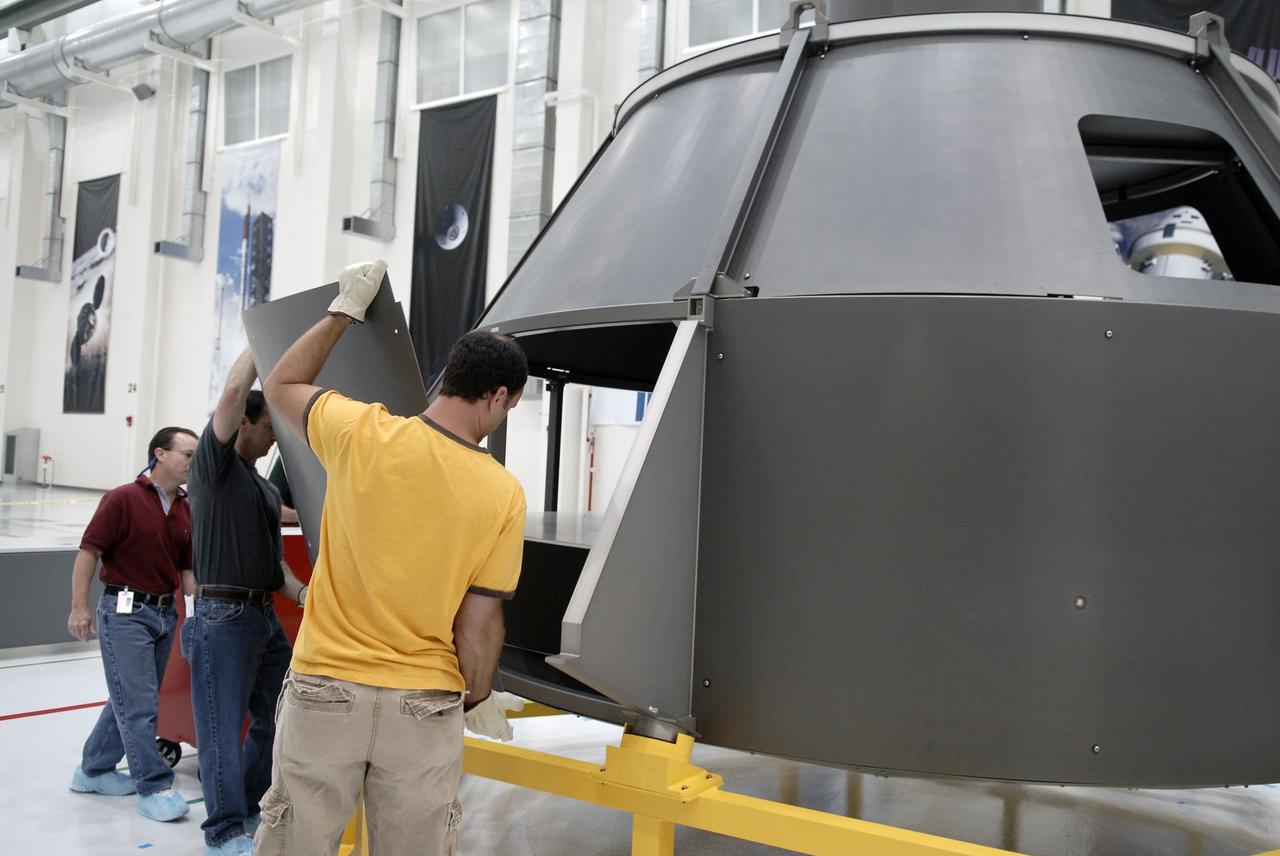
CAPE CANAVERAL, Fla. – In the Operations and Checkout Building's high bay, technicians test how to put the "skins" on the outer mold of the simulator Orion crew module. Part of NASA's Constellation Program, the Orion spacecraft will return humans to the moon and prepare for future voyages to Mars and other destinations in our solar system. Orion is targeted to begin carrying humans to the International Space Station in 2015 and to the moon by 2020. Photo credit: NASA/Kim Shiflett
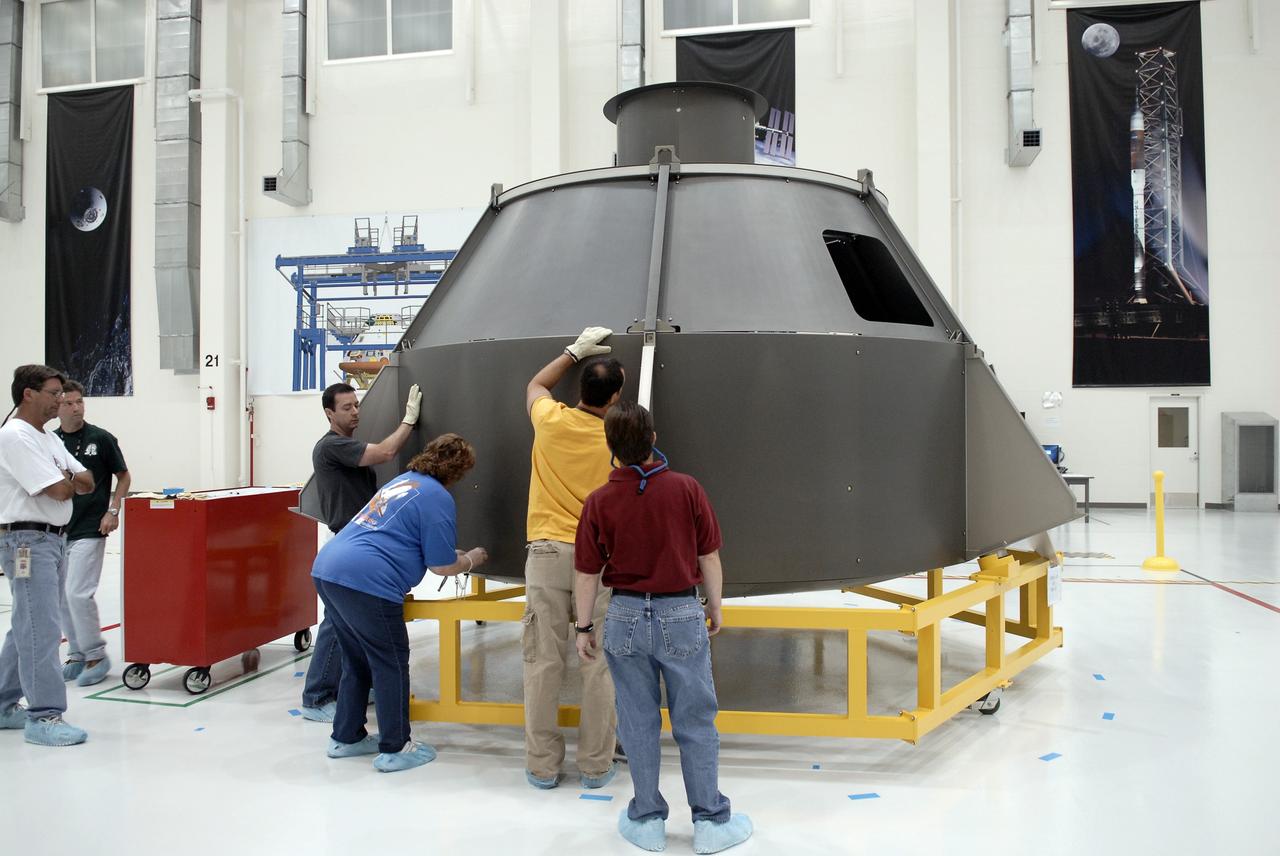
CAPE CANAVERAL, Fla. – In the Operations and Checkout Building's high bay, technicians test how to put the "skins" on the outer mold of the simulator Orion crew module. Part of NASA's Constellation Program, the Orion spacecraft will return humans to the moon and prepare for future voyages to Mars and other destinations in our solar system. Orion is targeted to begin carrying humans to the International Space Station in 2015 and to the moon by 2020. Photo credit: NASA/Kim Shiflett

CAPE CANAVERAL, Fla. – In the Operations and Checkout Building's high bay, "skins" are being applied to the outer mold of the simulator Orion crew module. Part of NASA's Constellation Program, the Orion spacecraft will return humans to the moon and prepare for future voyages to Mars and other destinations in our solar system. Orion is targeted to begin carrying humans to the International Space Station in 2015 and to the moon by 2020. Photo credit: NASA/Kim Shiflett

CAPE CANAVERAL, Fla. – In the Operations and Checkout Building's high bay, technicians pick up one of the "skins" to apply to the outer mold of the simulator Orion crew module. Part of NASA's Constellation Program, the Orion spacecraft will return humans to the moon and prepare for future voyages to Mars and other destinations in our solar system. Orion is targeted to begin carrying humans to the International Space Station in 2015 and to the moon by 2020. Photo credit: NASA/Kim Shiflett
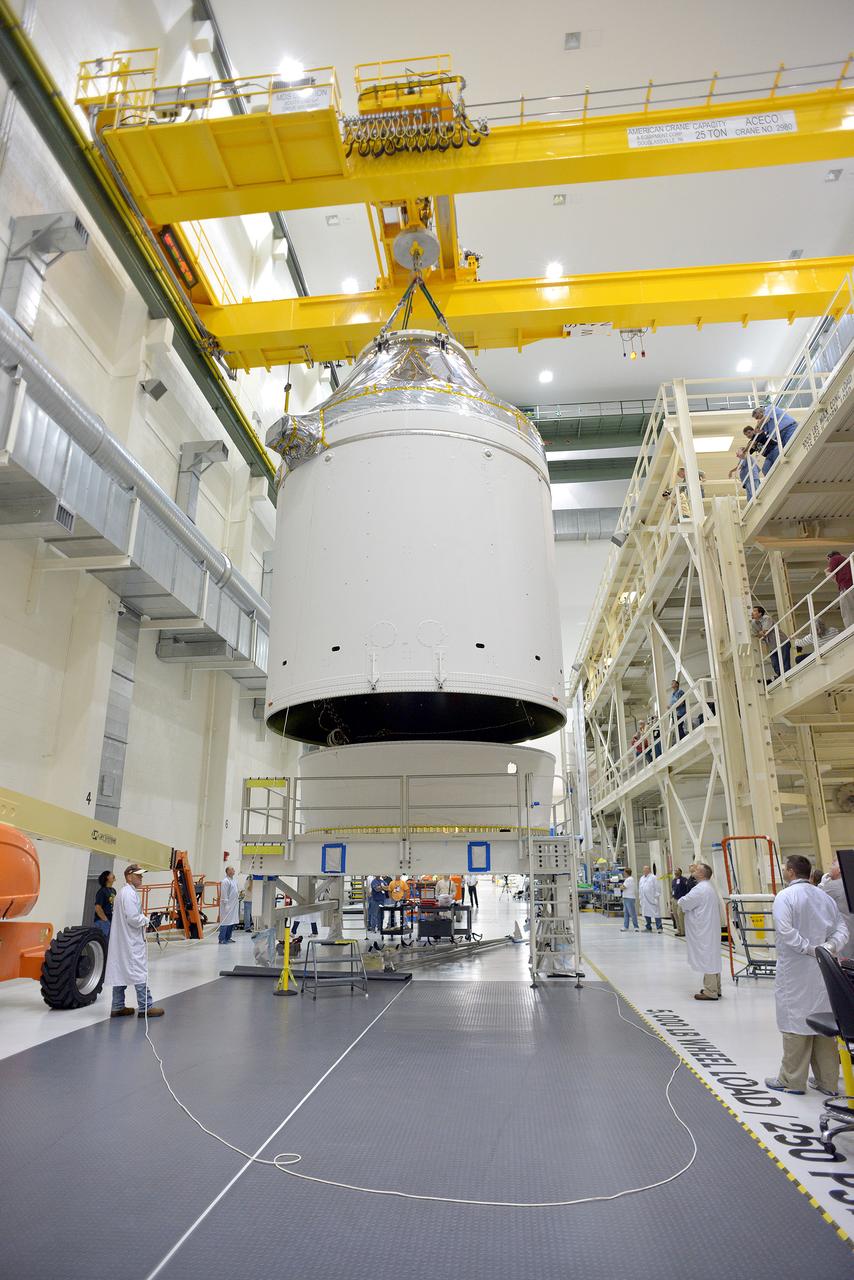
Technicians and engineers put finishing touches on the Orion Exploration Flight Test-1 (EFT-1) crew module and service module stack in the Operations and Checkout (O&C) Building at Kennedy Space Center on Sept. 7, 2014. Part of Batch image transfer from Flickr.
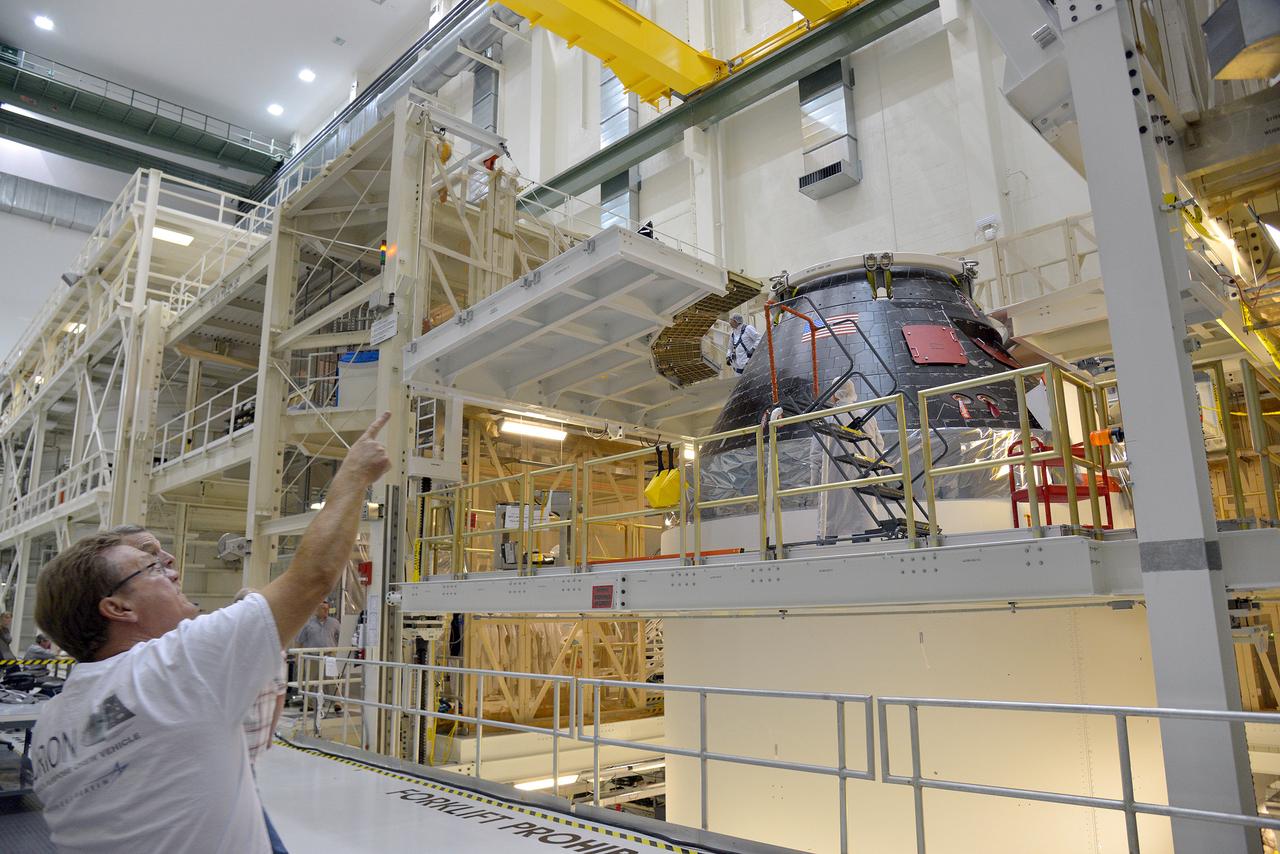
Technicians and engineers put finishing touches on the Orion Exploration Flight Test-1 (EFT-1) crew module and service module stack in the Operations and Checkout (O&C) Building at Kennedy Space Center on Sept. 7, 2014. Part of Batch image transfer from Flickr.
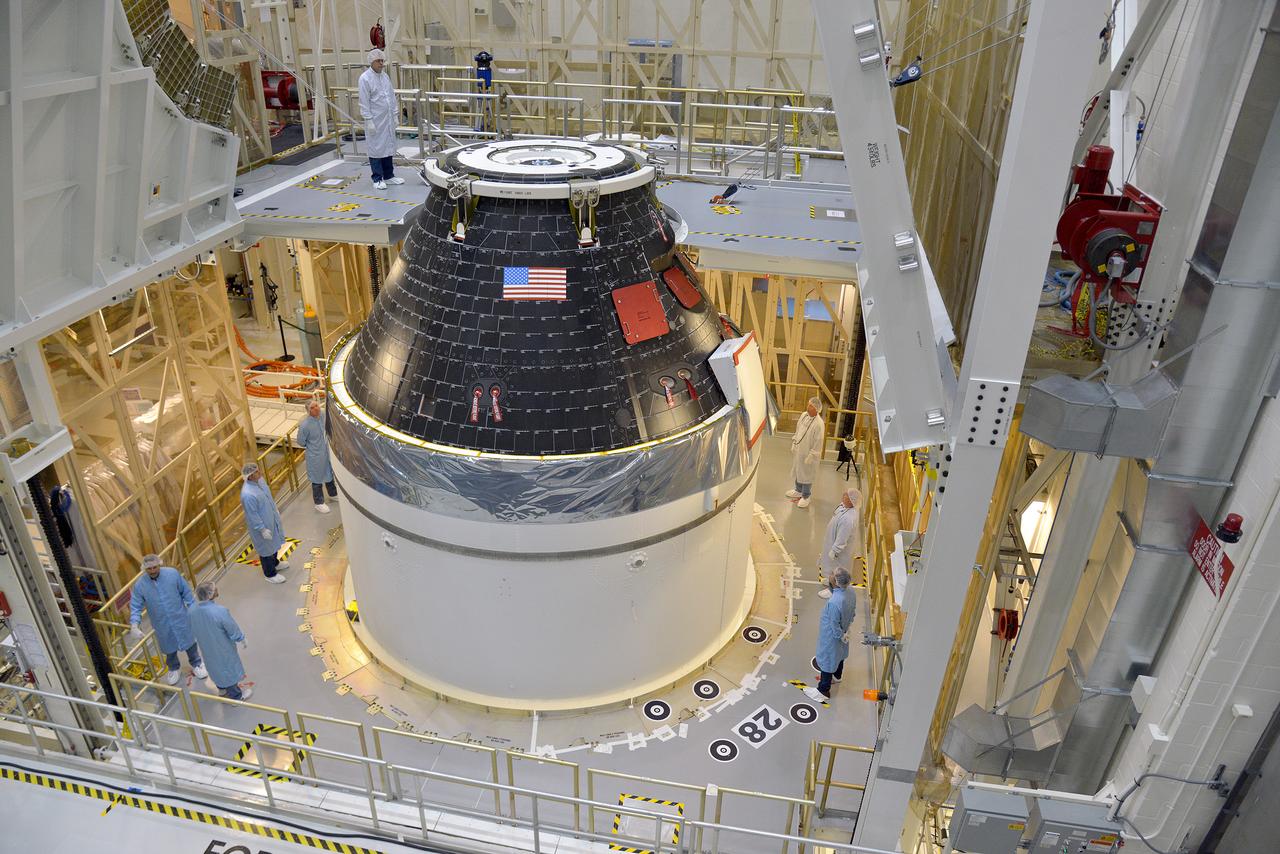
Technicians and engineers put finishing touches on the Orion Exploration Flight Test-1 (EFT-1) crew module and service module stack in the Operations and Checkout (O&C) Building at Kennedy Space Center on Sept. 7, 2014. Part of Batch image transfer from Flickr.

Technicians and engineers put finishing touches on the Orion Exploration Flight Test-1 (EFT-1) crew module and service module stack in the Operations and Checkout (O&C) Building at Kennedy Space Center on Sept. 7, 2014. Part of Batch image transfer from Flickr.
Technicians and engineers put finishing touches on the Orion Exploration Flight Test-1 (EFT-1) crew module and service module stack in the Operations and Checkout (O&C) Building at Kennedy Space Center on Sept. 7, 2014. Part of Batch image transfer from Flickr.
Technicians and engineers put finishing touches on the Orion Exploration Flight Test-1 (EFT-1) crew module and service module stack in the Operations and Checkout (O&C) Building at Kennedy Space Center on Sept. 7, 2014. Part of Batch image transfer from Flickr.

Technicians and engineers put finishing touches on the Orion Exploration Flight Test-1 (EFT-1) crew module and service module stack in the Operations and Checkout (O&C) Building at Kennedy Space Center on Sept. 7, 2014. Part of Batch image transfer from Flickr.
Technicians and engineers put finishing touches on the Orion Exploration Flight Test-1 (EFT-1) crew module and service module stack in the Operations and Checkout (O&C) Building at Kennedy Space Center on Sept. 7, 2014. Part of Batch image transfer from Flickr.
Technicians and engineers put finishing touches on the Orion Exploration Flight Test-1 (EFT-1) crew module and service module stack in the Operations and Checkout (O&C) Building at Kennedy Space Center on Sept. 7, 2014. Part of Batch image transfer from Flickr.
Technicians and engineers put finishing touches on the Orion Exploration Flight Test-1 (EFT-1) crew module and service module stack in the Operations and Checkout (O&C) Building at Kennedy Space Center on Sept. 7, 2014. Part of Batch image transfer from Flickr.

Technicians and engineers put finishing touches on the Orion Exploration Flight Test-1 (EFT-1) crew module and service module stack in the Operations and Checkout (O&C) Building at Kennedy Space Center on Sept. 7, 2014. Part of Batch image transfer from Flickr.
Technicians and engineers put finishing touches on the Orion Exploration Flight Test-1 (EFT-1) crew module and service module stack in the Operations and Checkout (O&C) Building at Kennedy Space Center on Sept. 7, 2014. Part of Batch image transfer from Flickr.
Technicians and engineers put finishing touches on the Orion Exploration Flight Test-1 (EFT-1) crew module and service module stack in the Operations and Checkout (O&C) Building at Kennedy Space Center on Sept. 7, 2014. Part of Batch image transfer from Flickr.
Technicians and engineers put finishing touches on the Orion Exploration Flight Test-1 (EFT-1) crew module and service module stack in the Operations and Checkout (O&C) Building at Kennedy Space Center on Sept. 7, 2014. Part of Batch image transfer from Flickr.