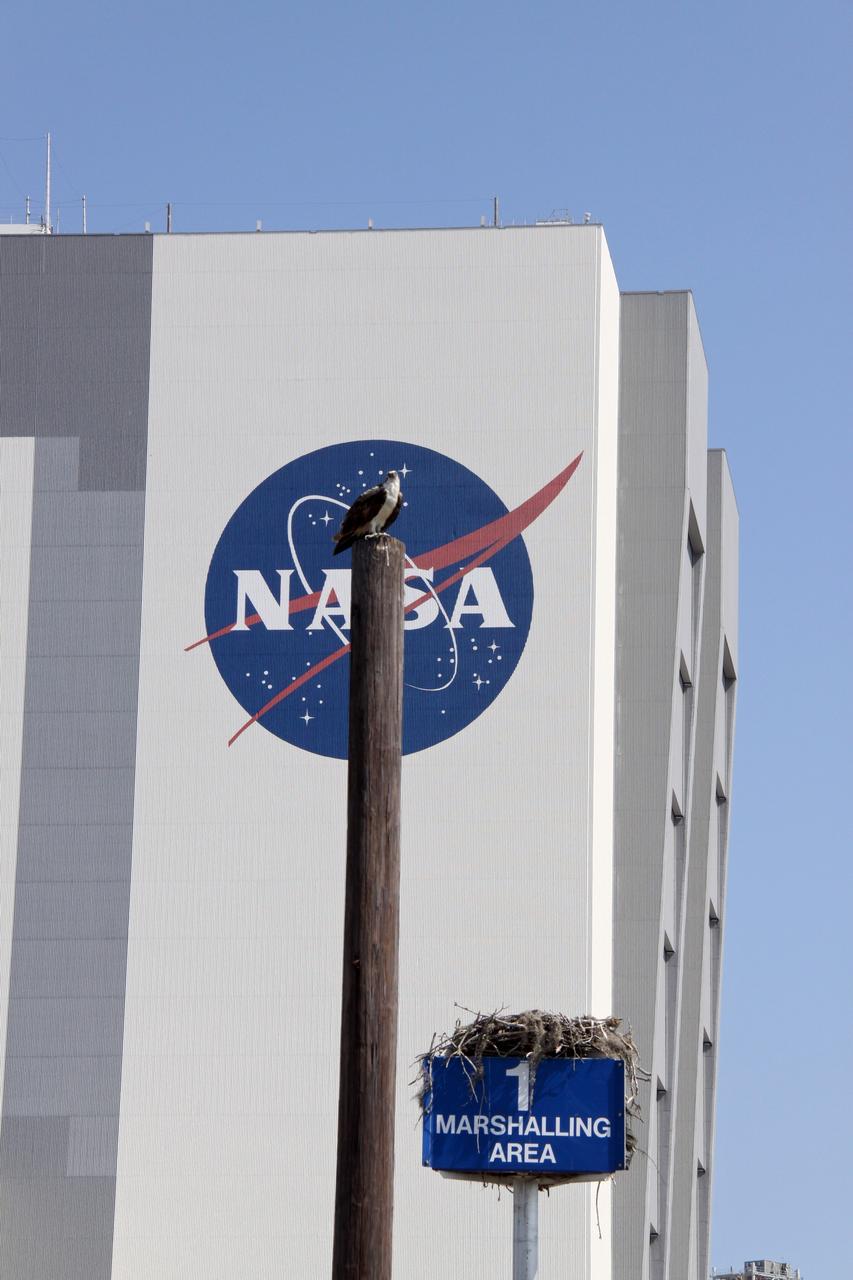
CAPE CANAVERAL, Fla. -- At NASA's Kennedy Space Center in Florida, an adult osprey guards its young in a nest built on a platform in the Press Site parking lot. In the background is the 12,300-square-foot NASA logo painted on the side of the Vehicle Assembly Building (VAB). The VAB and Press Site are located at the Turn Basin in Launch Complex 39, making it an ideal osprey nesting place. The Merritt Island National Wildlife Refuge overlaps with Kennedy Space Center property and provides a habitat for many types of wildlife, including the osprey, and 330 species of birds. For information on the refuge, visit http://www.fws.gov/merrittisland/Index.html. Photo credit: NASA/Jack Pfaller
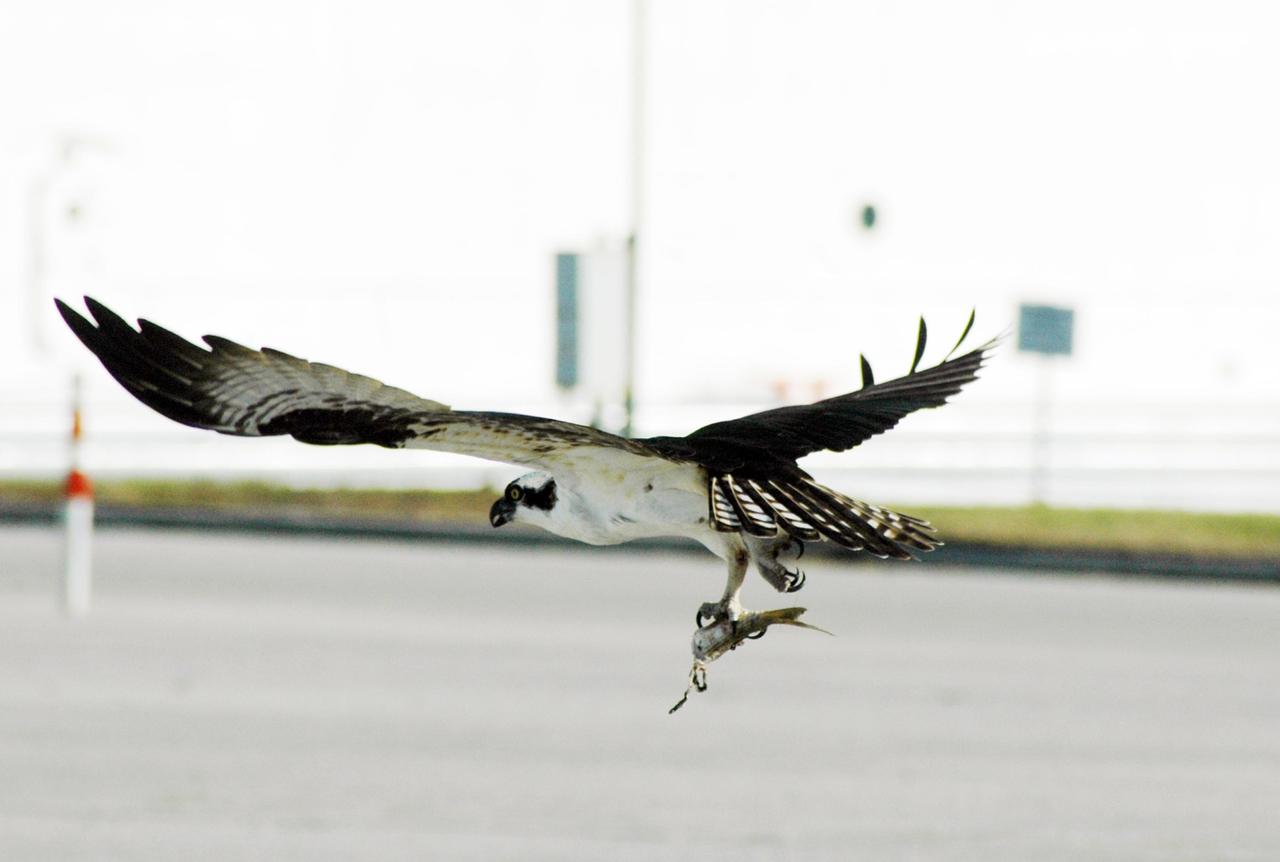
KENNEDY SPACE CENTER, FLA. -- Near the Kennedy Space Center News Center, in the Launch Complex 39 area, a male Osprey takes flight with part of a fish clutched in its talons. The bird is one of more than 500 species of birds that co-exist at the Center and the Merritt Island National Wildlife Refuge. Photo credit: NASA/Ken Thornsley
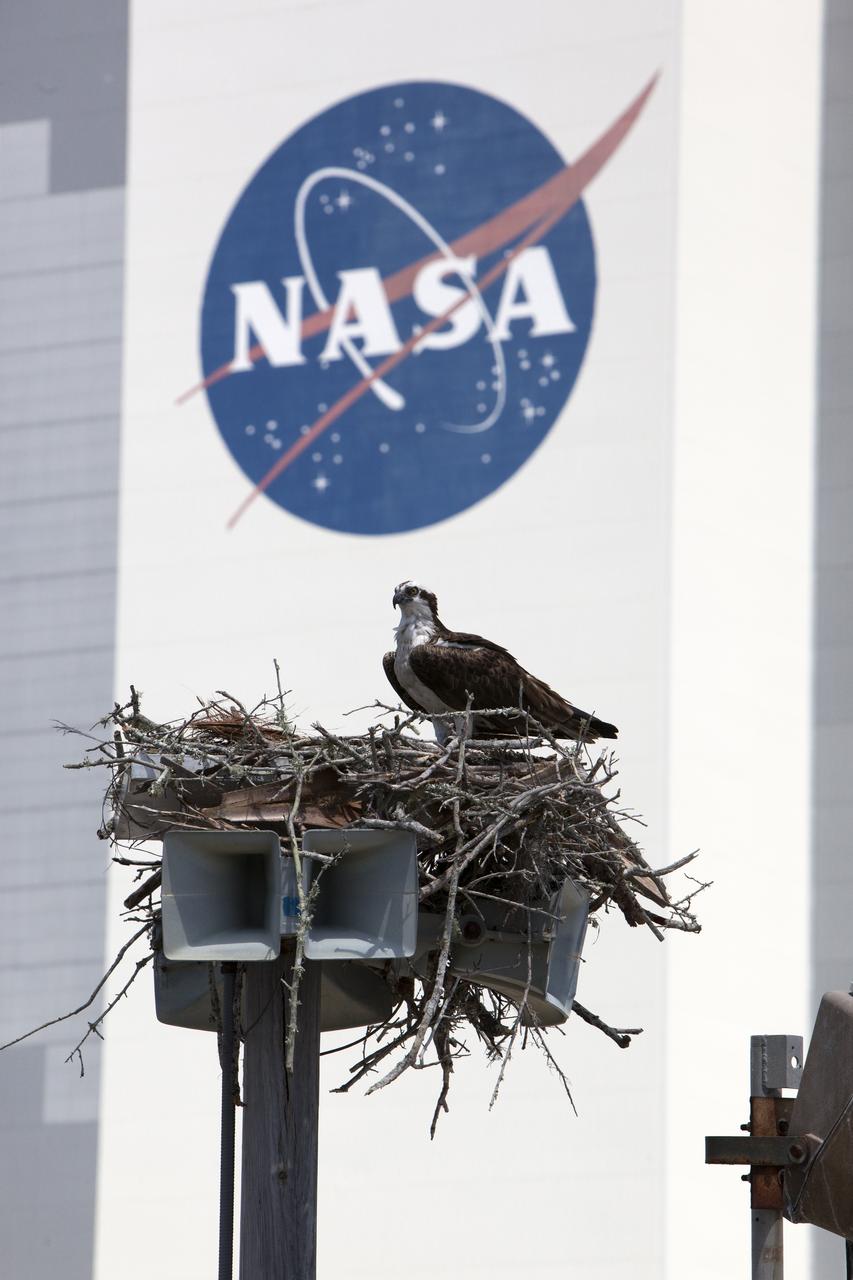
An osprey sits in its nest atop a wooden speaker pole at NASA's Kennedy Space Center in Florida. In the background is the NASA insignia on the exterior of the iconic Vehicle Assemble Building. The center shares a border with the Merritt Island National Wildlife Refuge. More than 330 native and migratory bird species, 25 mammals, 117 fishes and 65 amphibians and reptiles call Kennedy and the wildlife refuge home.
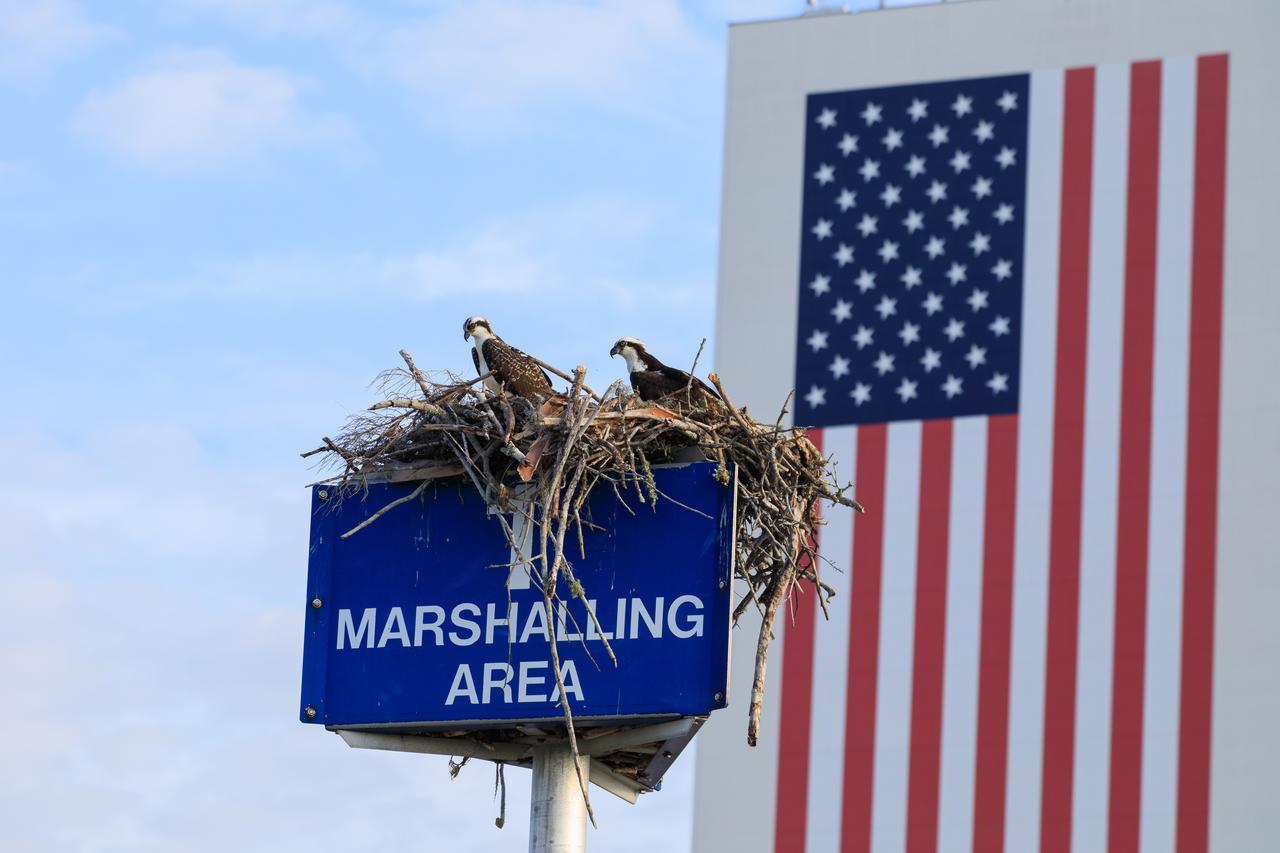
The American flag on the Vehicle Assembly Building at NASA’s Kennedy Space Center in Florida serves as a backdrop for two osprey perched in their nest atop a marshalling area sign on June 7, 2023. The center shares a border with the Merritt Island National Wildlife Refuge. More than 330 native and migratory bird species, along with 65 amphibian and reptile species, call Kennedy and the wildlife refuge home.
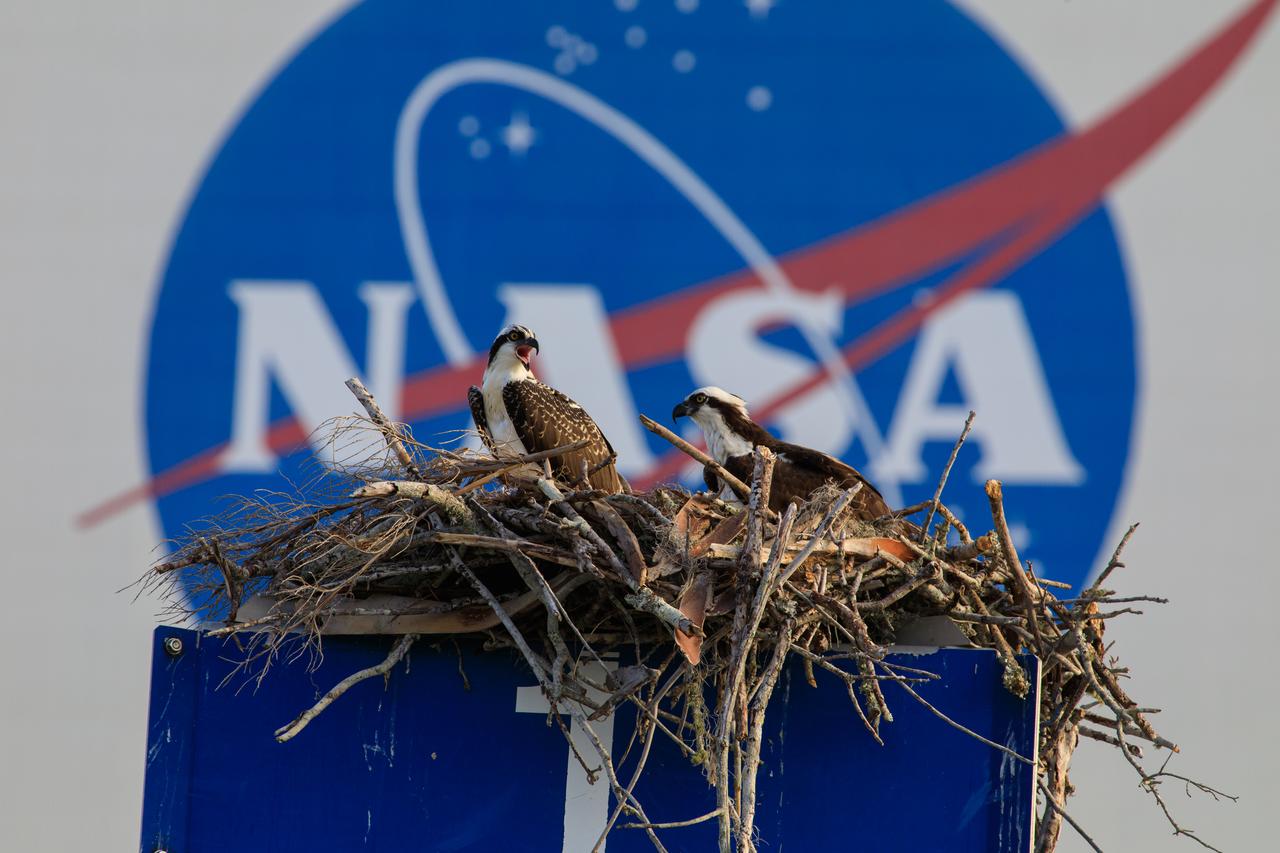
Two osprey are perched in their nest atop a marshalling area sign in front of the Vehicle Assembly Building at NASA’s Kennedy Space Center in Florida on June 7, 2023. In the background is the NASA meatball. The center shares a border with the Merritt Island National Wildlife Refuge. More than 330 native and migratory bird species, along with 65 amphibian and reptile species, call Kennedy and the wildlife refuge home.
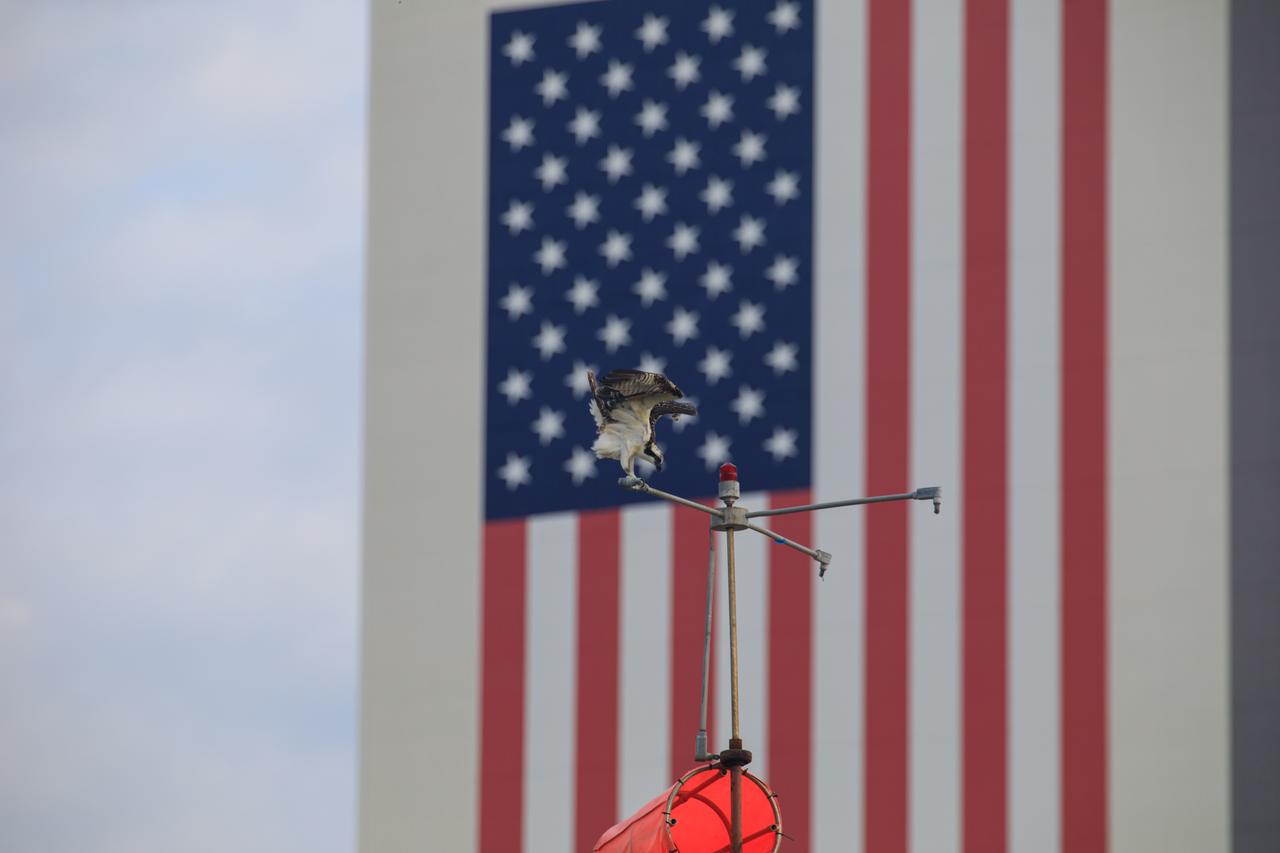
The American flag on the Vehicle Assembly Building at NASA’s Kennedy Space Center in Florida serves as a backdrop for an osprey as it flies near a wind direction pole on Jun 7, 2023. The center shares a border with the Merritt Island National Wildlife Refuge. More than 330 native and migratory bird species, along with 65 amphibian and reptile species, call Kennedy and the wildlife refuge home.

The American flag is in view on the Vehicle Assembly Building (VAB) at NASA’s Kennedy Space Center in Florida on June 7, 2023. Two osprey are perched in their nest atop a marshalling area sign in front of the VAB. The center shares a border with the Merritt Island National Wildlife Refuge. More than 330 native and migratory bird species, along with 65 amphibian and reptile species, call Kennedy and the wildlife refuge home.
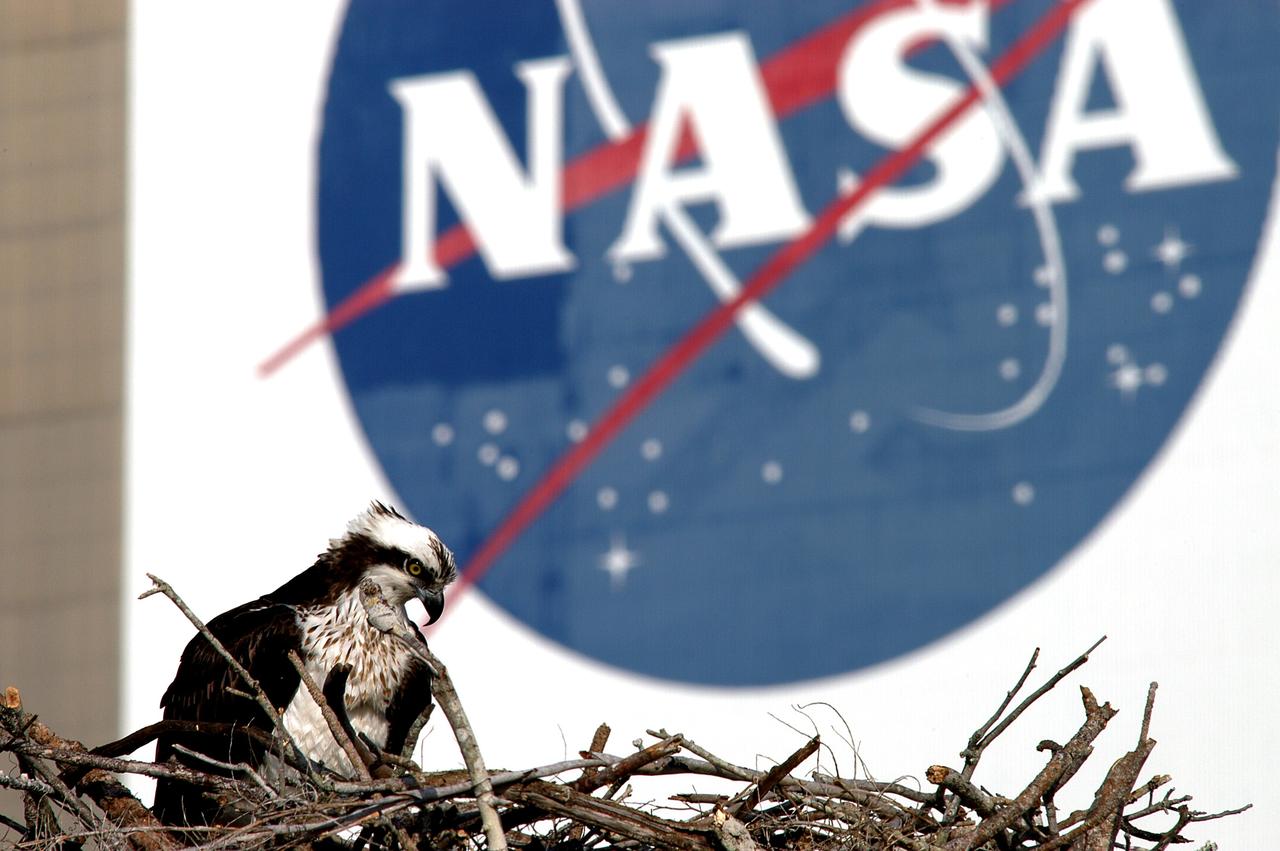
KENNEDY SPACE CENTER, FLA. -- A breeding osprey occupies a nest constructed on a speaker pole in the lower parking lot of the KSC Press Site. Eggs have been sighted in the nest. The NASA logo in the background is painted on an outer wall of the 525-foot-tall Vehicle Assembly Building nearby. Known as a fish hawk, the osprey selects sites of opportunity in which to nest -- from trees and telephone poles to rocks or even flat ground. In North America, it is found from Alaska and Newfoundland to Florida and the Gulf Coast. Osprey nests are found throughout the Kennedy Space Center and surrounding Merritt Island National Wildlife Refuge.

KENNEDY SPACE CENTER, FLA. -- A pair of breeding ospreys share a nest constructed on a speaker pole in the lower parking lot of the KSC Press Site. Eggs have been sighted in the nest. The NASA logo in the background is painted on an outer wall of the 525-foot-tall Vehicle Assembly Building nearby. Known as a fish hawk, the osprey selects sites of opportunity in which to nest -- from trees and telephone poles to rocks or even flat ground. In North America, it is found from Alaska and Newfoundland to Florida and the Gulf Coast. Osprey nests are found throughout the Kennedy Space Center and surrounding Merritt Island National Wildlife Refuge.
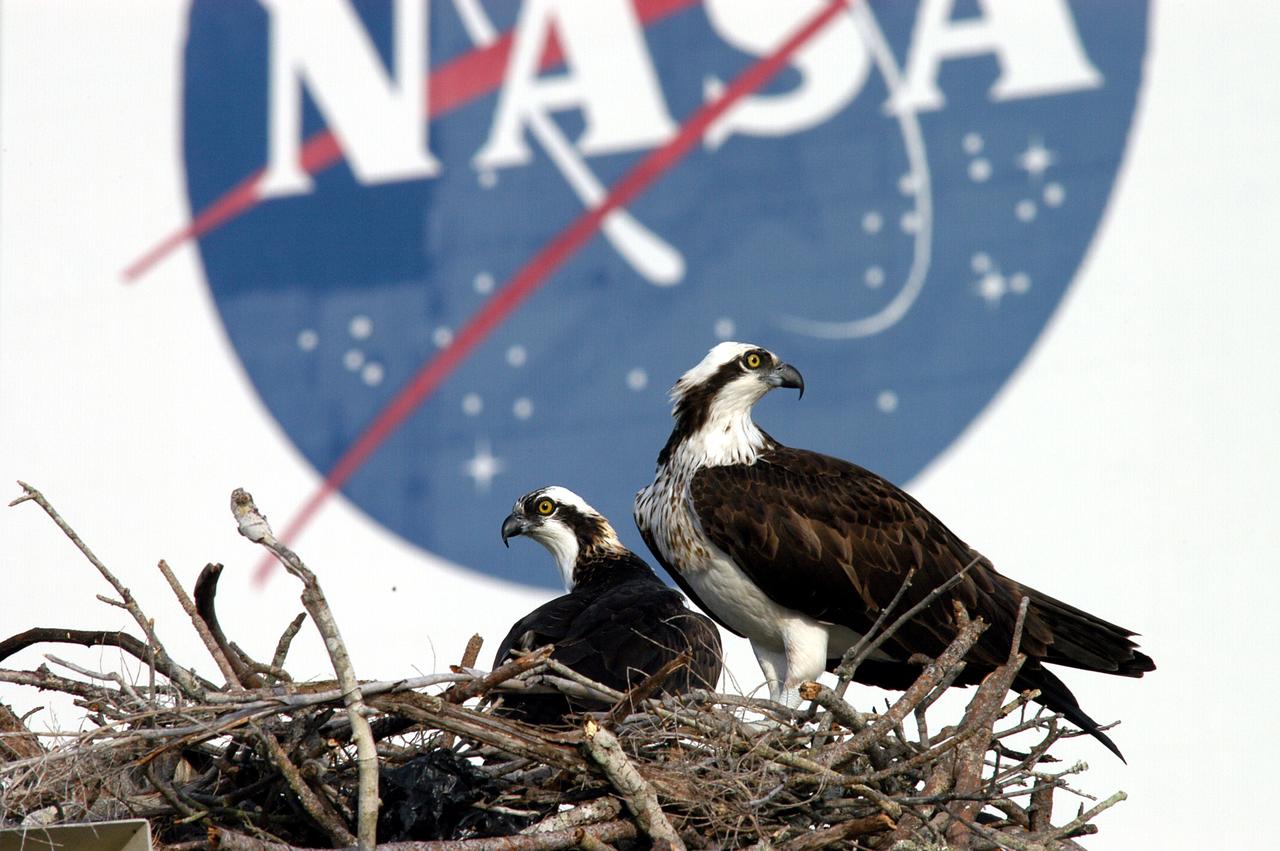
KENNEDY SPACE CENTER, FLA. -- A pair of breeding ospreys have taken up residence in a nest constructed on a speaker pole in the lower parking lot of the KSC Press Site. Eggs have been sighted in the nest. The NASA logo in the background is painted on an outer wall of the 525-foot-tall Vehicle Assembly Building nearby. Known as a fish hawk, the osprey selects sites of opportunity in which to nest -- from trees and telephone poles to rocks or even flat ground. In North America, it is found from Alaska and Newfoundland to Florida and the Gulf Coast. Osprey nests are found throughout the Kennedy Space Center and surrounding Merritt Island National Wildlife Refuge.
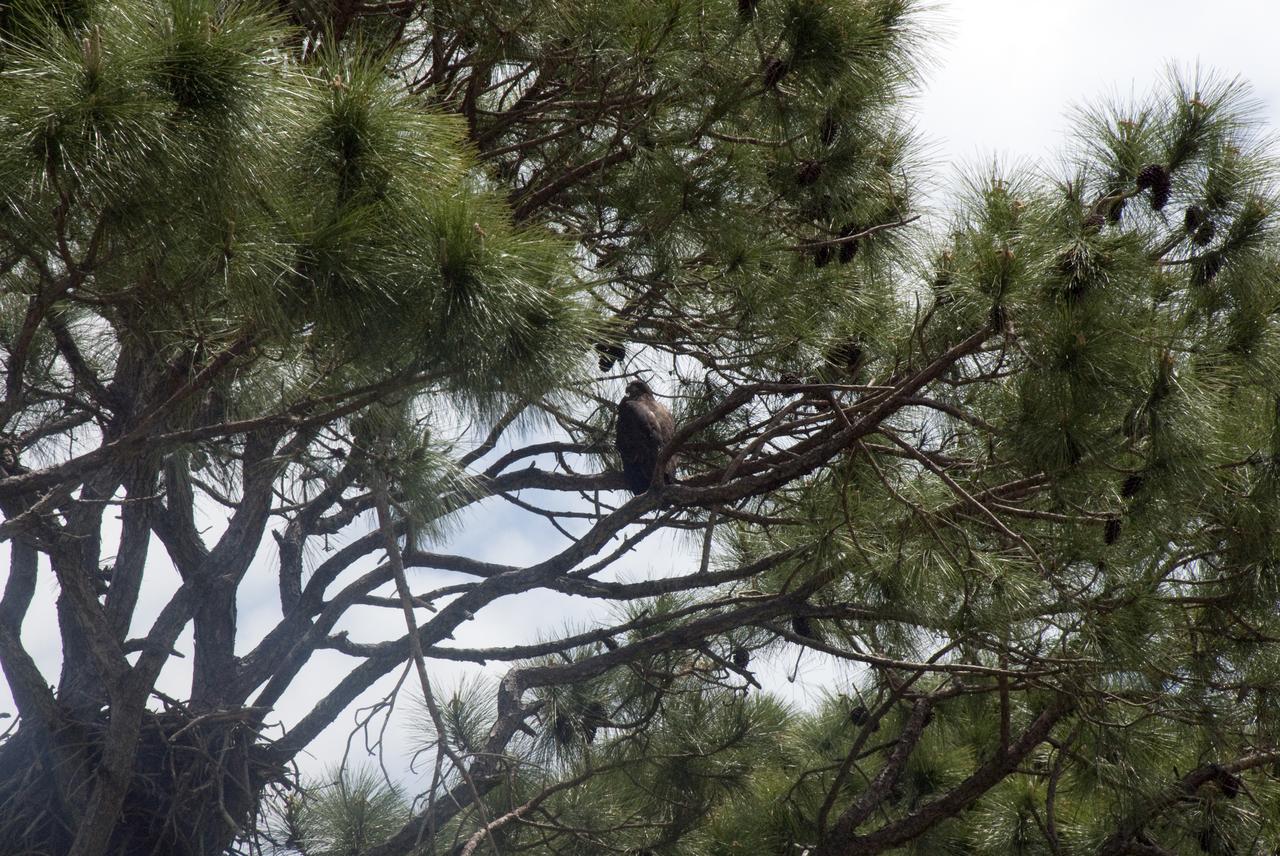
KSC WILDLIFE - BABY EAGLE AT REST ON SR3 - BABY OSPREYS AT PRESS SITE
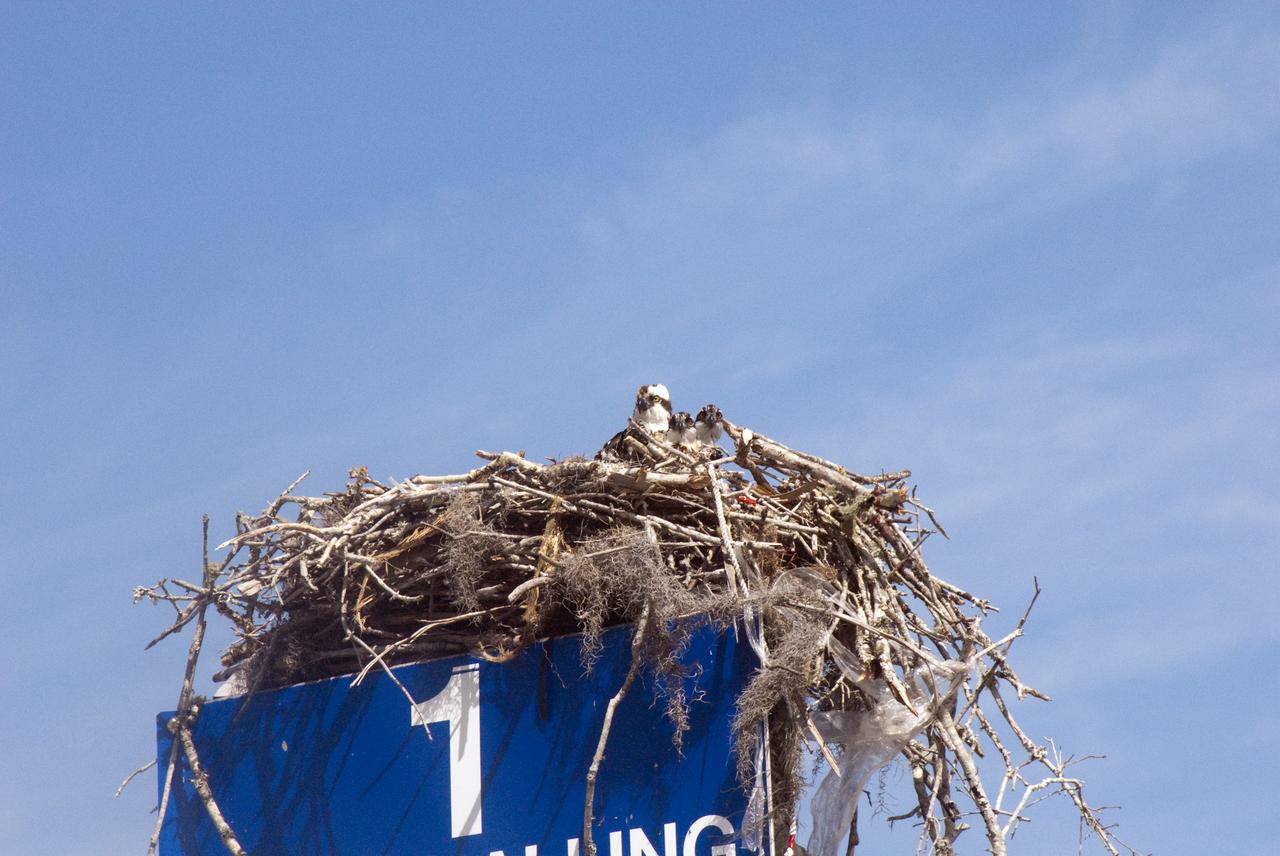
KSC WILDLIFE - BABY EAGLE AT REST ON SR3 - BABY OSPREYS AT PRESS SITE
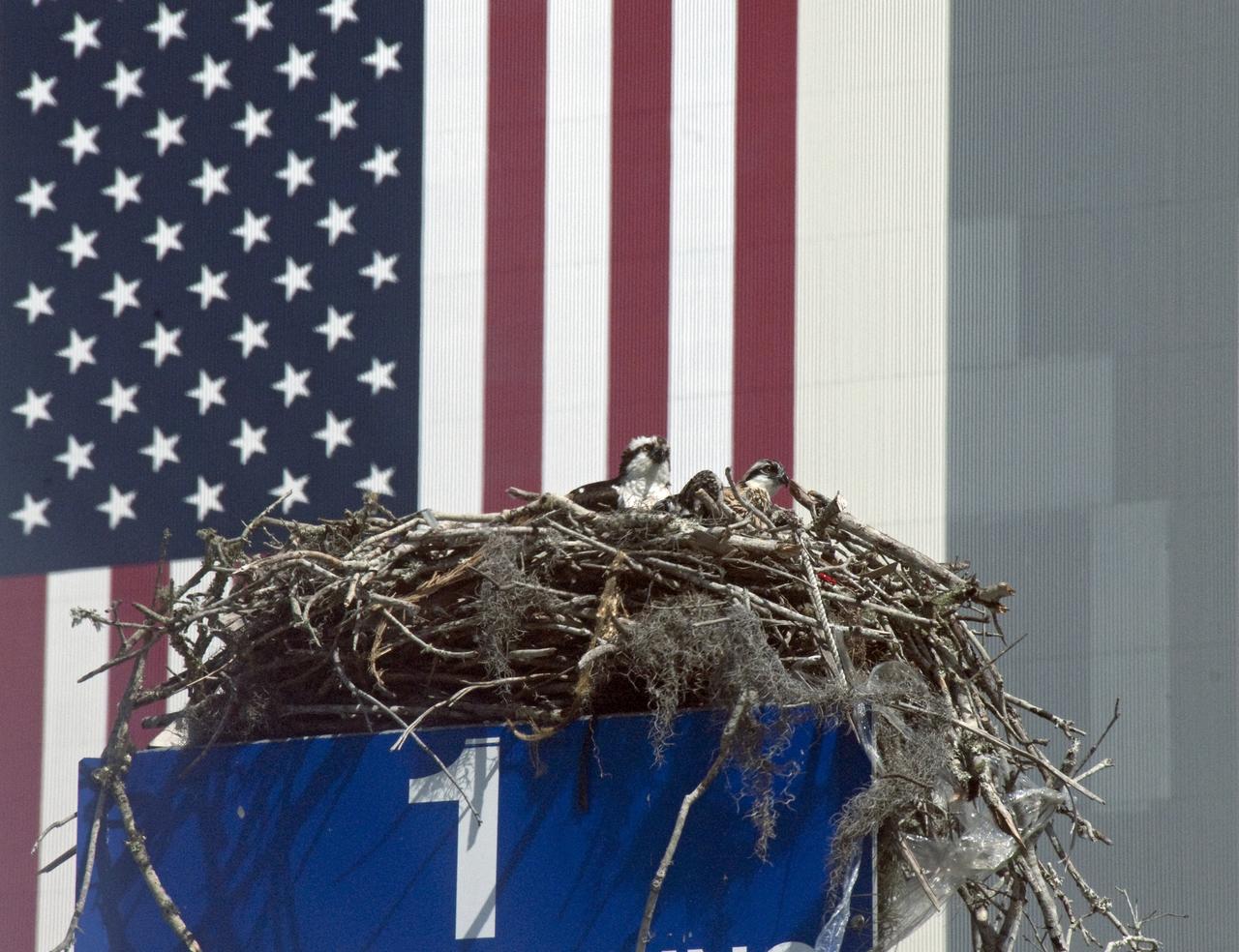
KSC WILDLIFE - BABY EAGLE AT REST ON SR3 - BABY OSPREYS AT PRESS SITE
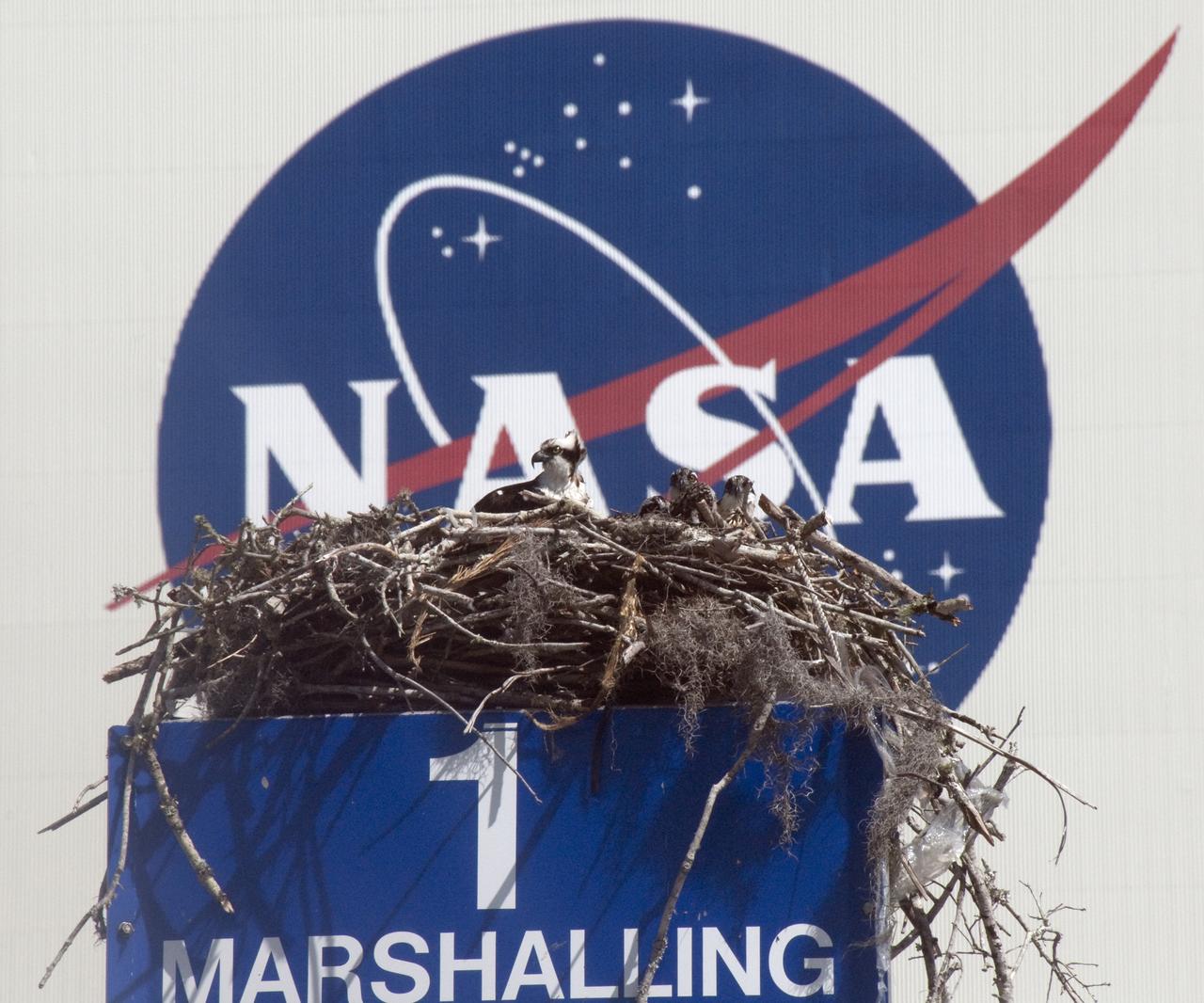
KSC WILDLIFE - BABY EAGLE AT REST ON SR3 - BABY OSPREYS AT PRESS SITE
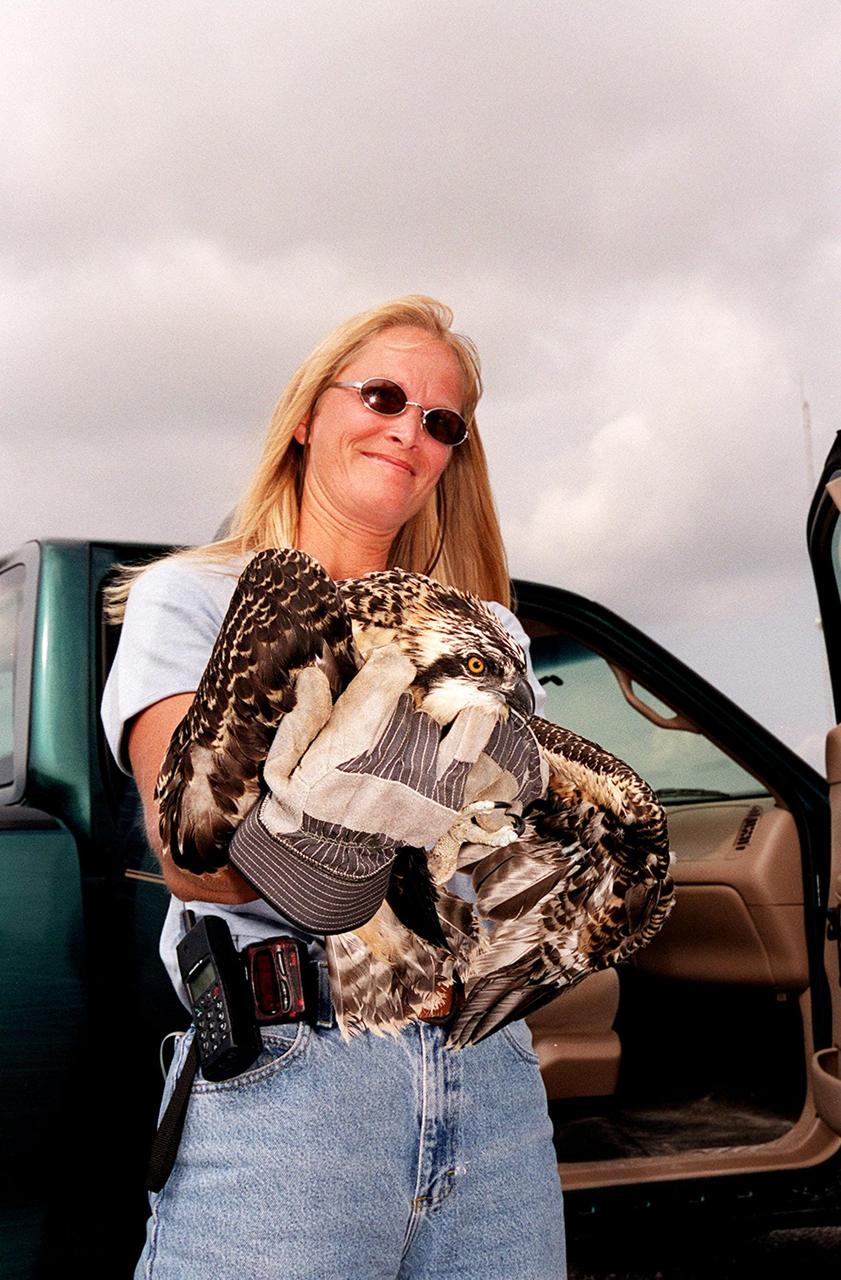
Angy Chambers, senior wildlife biologist for Environmental Support Contract/Dynamac, holds a juvenile osprey before releasing it at Cape Canaveral Air Force Station. As a nestling, the osprey fell twice from its nest, located on a light pole in the ITL area of CCAFS. Chambers determined the bird might have a broken leg and gave it to the Florida Wildlife Hospital for treatment. The osprey was released the same day as the two great horned owls
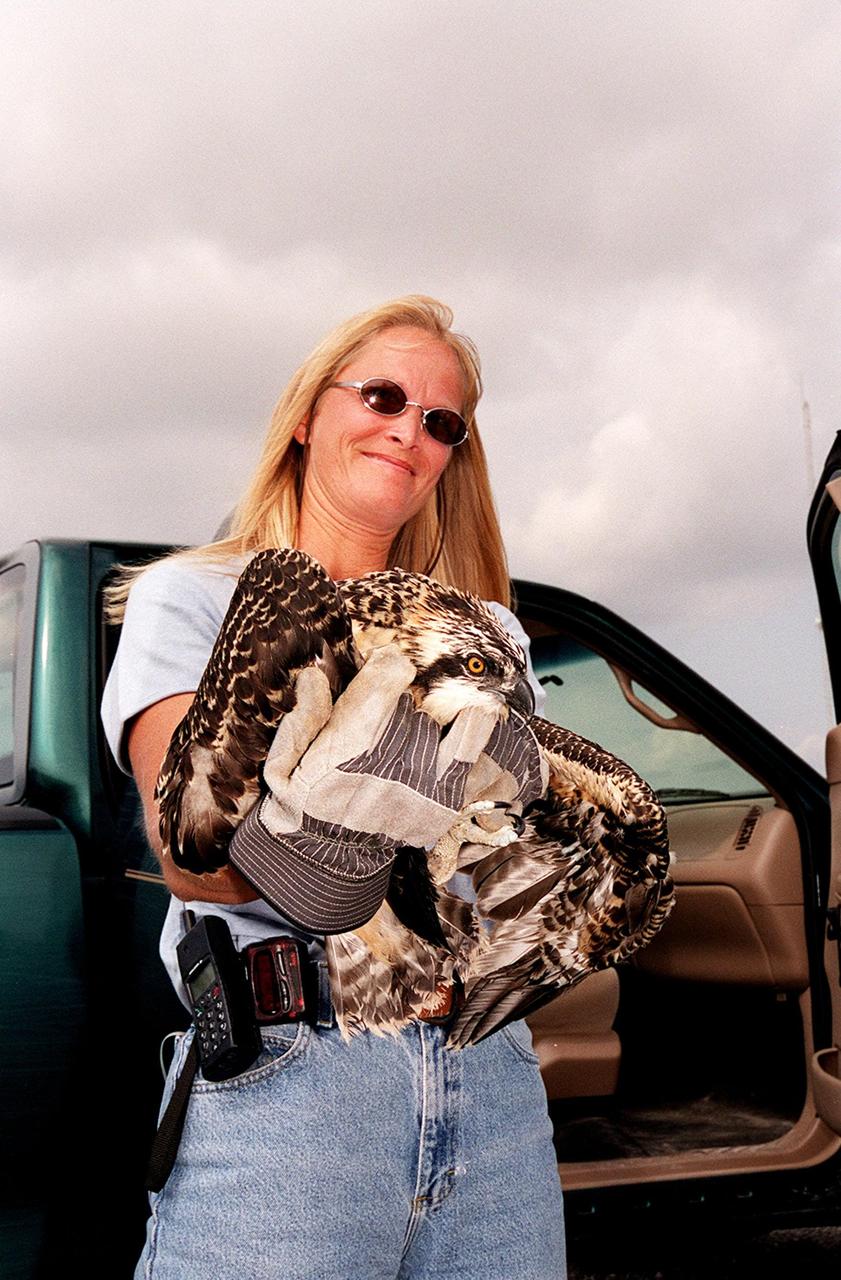
Angy Chambers, senior wildlife biologist for Environmental Support Contract/Dynamac, holds a juvenile osprey before releasing it at Cape Canaveral Air Force Station. As a nestling, the osprey fell twice from its nest, located on a light pole in the ITL area of CCAFS. Chambers determined the bird might have a broken leg and gave it to the Florida Wildlife Hospital for treatment. The osprey was released the same day as the two great horned owls
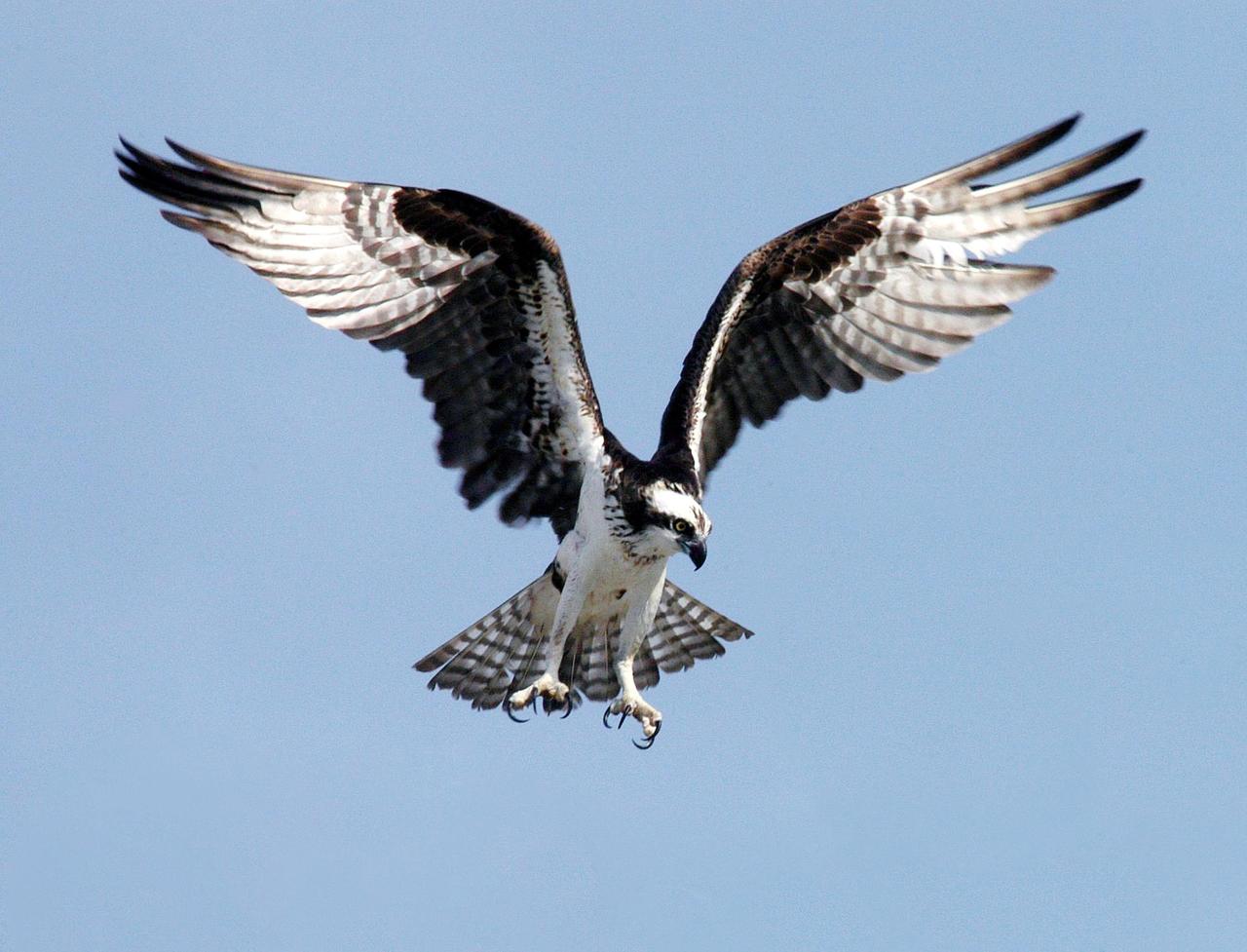
KENNEDY SPACE CENTER, FLA. - An osprey stares intently at prey as it extends its talons. Known as a fish hawk, ospreys often can be seen flying overhead with a fish in their talons. Fish are their sole source of food. Ospreys select nesting sites of opportunity, from trees and telephone poles to rocks or even flat ground, often near water. Osprey nests are found throughout the Kennedy Space Center and nearby Merritt Island National Wildlife Refuge.
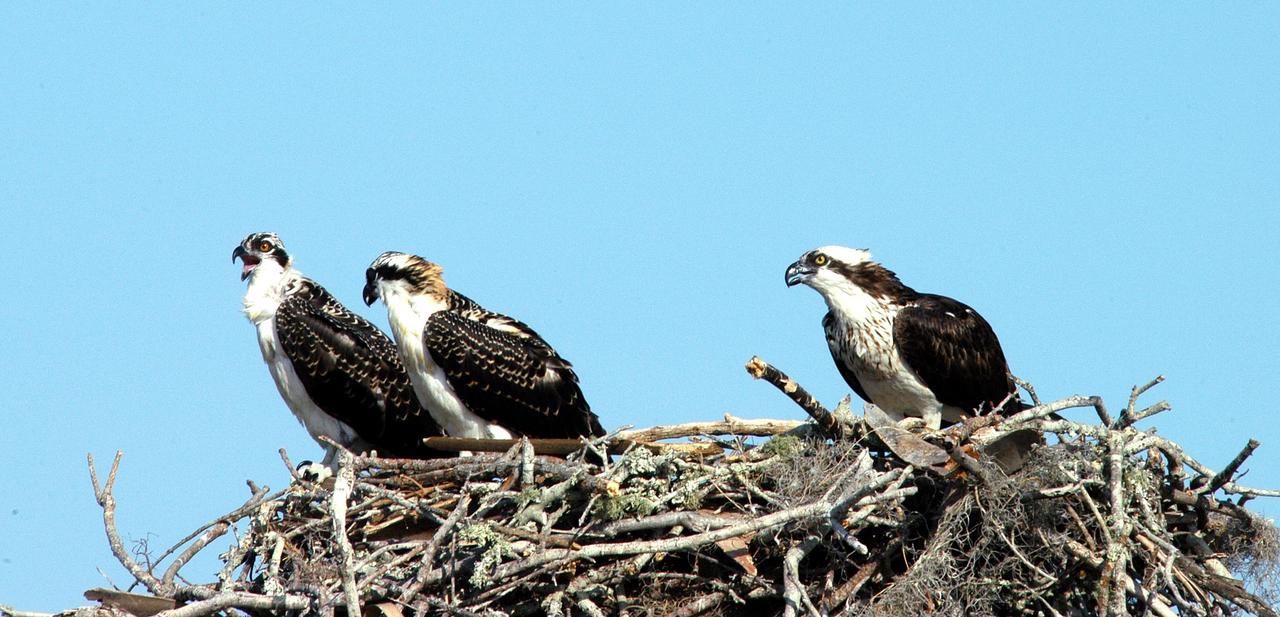
KENNEDY SPACE CENTER, FLA. -- - Three osprey fledglings are ready to test their wings from the nest at the NASA News Center parking lot. Ospreys select nesting sites of opportunity, from trees and telephone poles to rocks or even flat ground. In the United States they are found from Alaska to Florida and the Gulf Coast. Osprey nests are found throughout the Kennedy Space Center and nearby Merritt Island National Wildlife Refuge. Known as a fish hawk, ospreys often can be seen flying overhead with a fish in their talons.
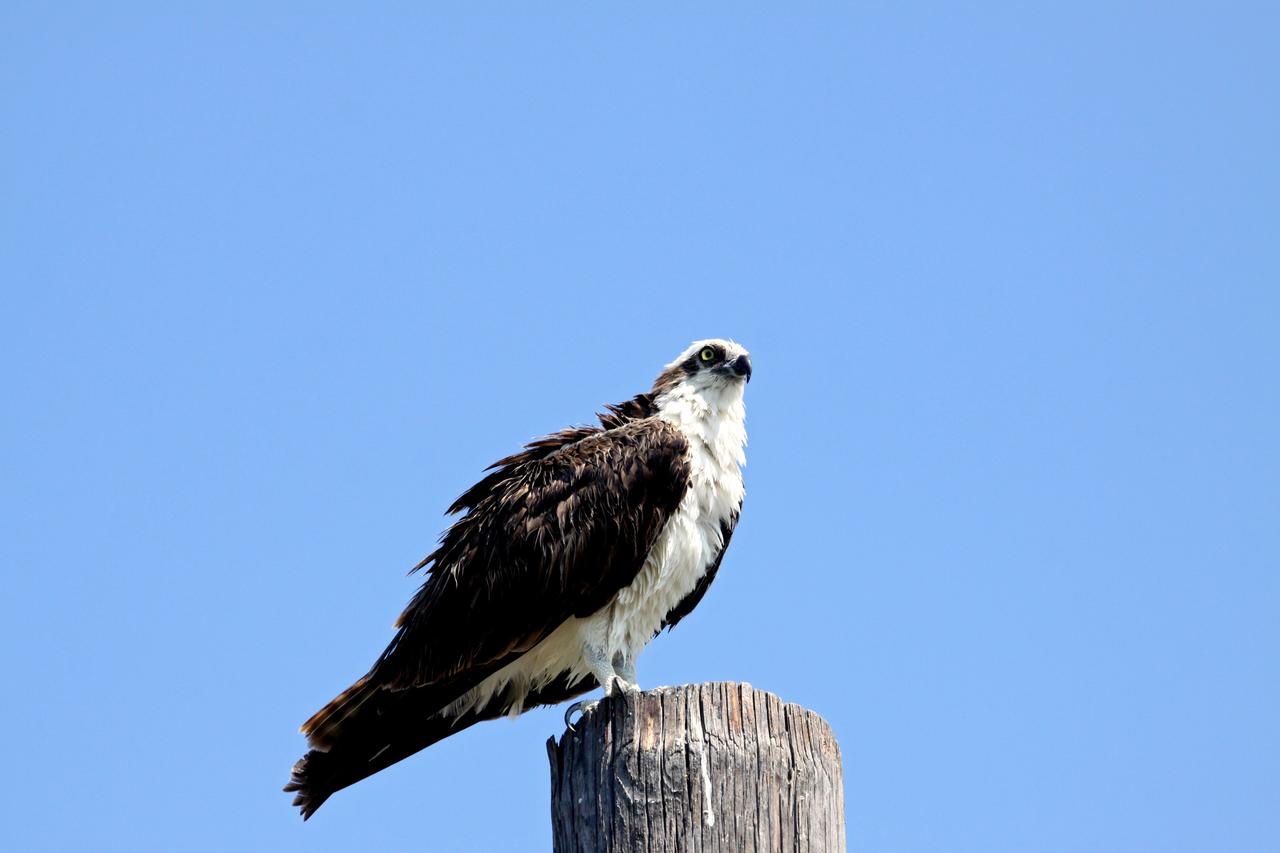
CAPE CANAVERAL, Fla. -- At NASA's Kennedy Space Center in Florida, an adult osprey keeps an eye on its young from a pole near the Press Site parking lot. The VAB and Press Site are located at the Turn Basin in Launch Complex 39, making it an ideal osprey nesting place. The Merritt Island National Wildlife Refuge overlaps with Kennedy Space Center property and provides a habitat for many types of wildlife, including the osprey, and 330 species of birds. For information on the refuge, visit http://www.fws.gov/merrittisland/Index.html. Photo credit: NASA/Jack Pfaller
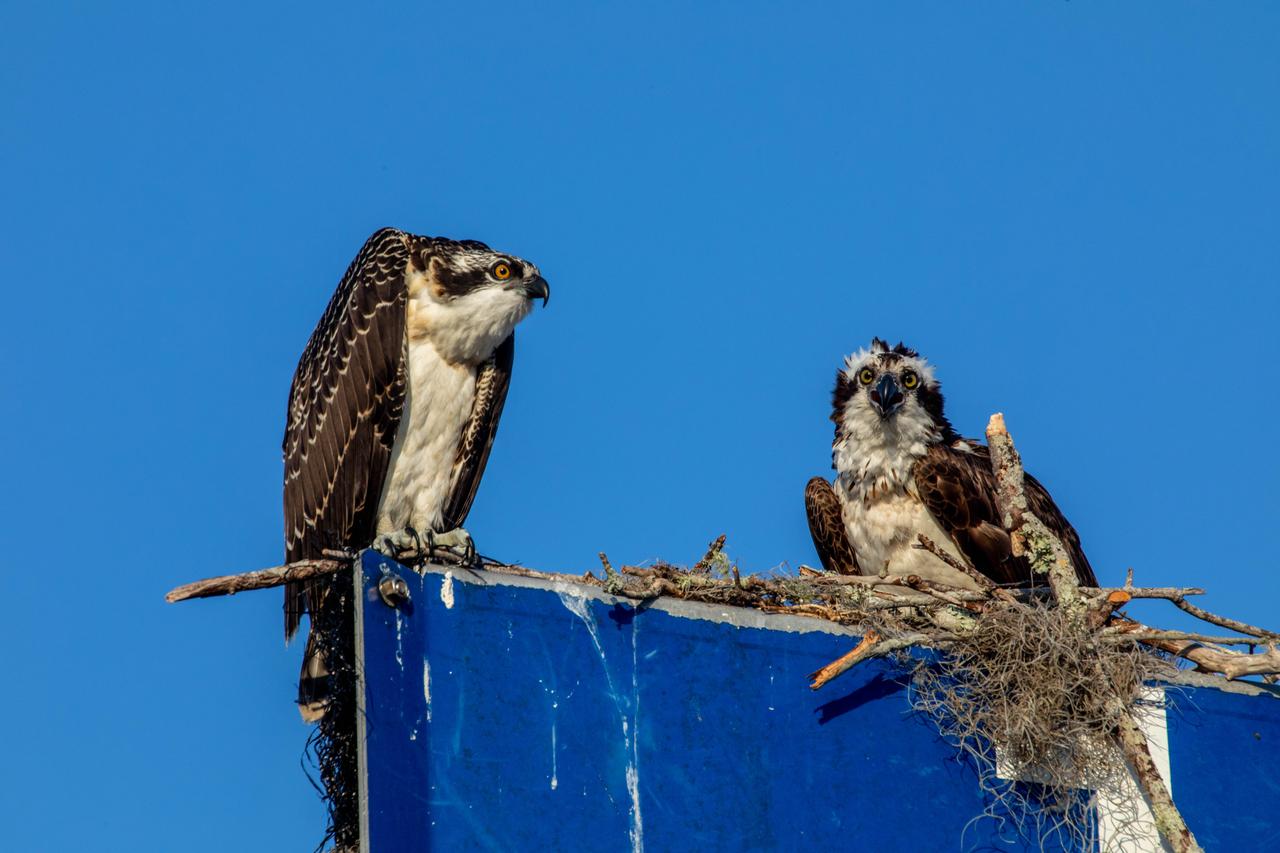
Two osprey perch atop a nest built on a structure at NASA’s Kennedy Space Center in Florida on May 16, 2022. The osprey is one of the bird species native to North America. The center shares a border with the Merritt Island National Wildlife Refuge. More than 330 native and migratory bird species call Kennedy and the wildlife refuge home.
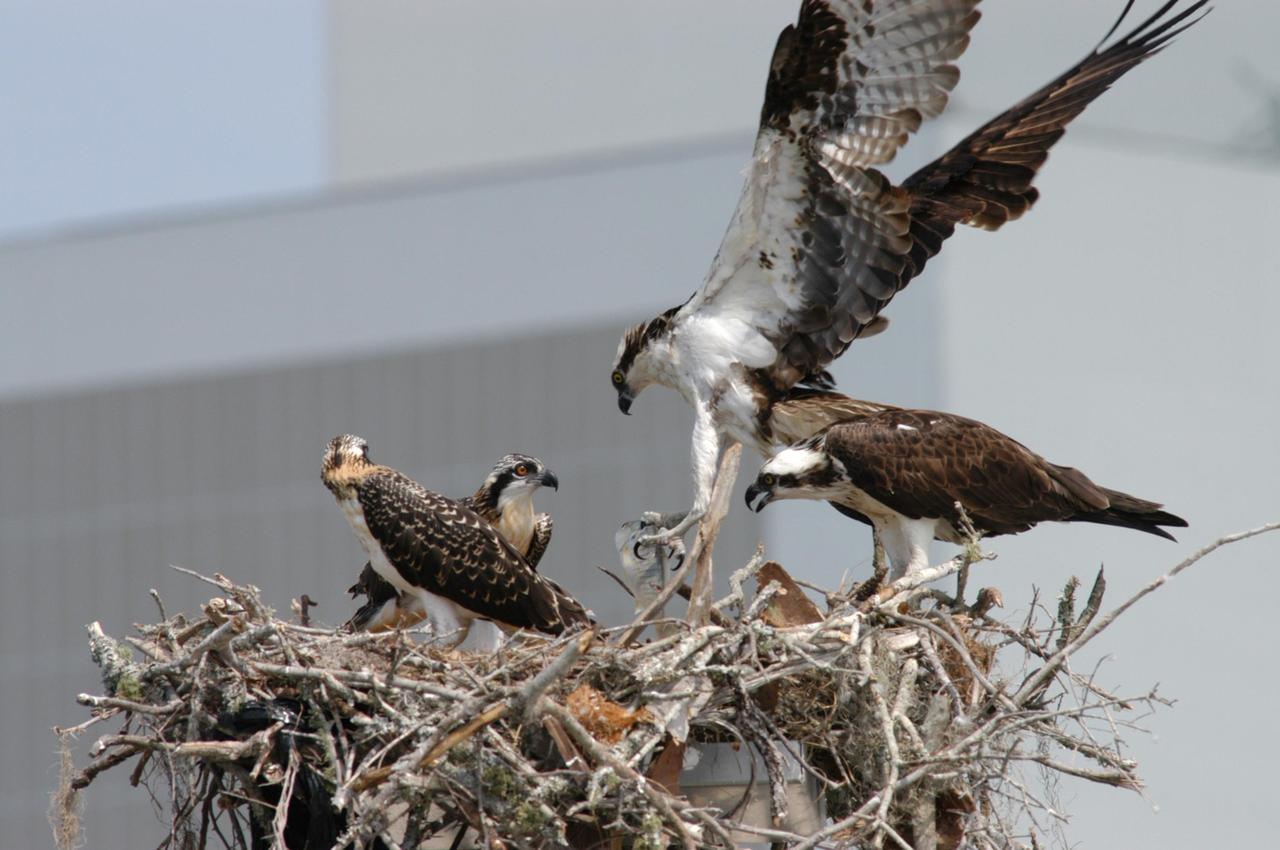
KENNEDY SPACE CENTER, FLA. -- These osprey chicks wait for lunch from one of their parents (look for the fish in the claws of the upper osprey). The nest is located on a pole in the parking lot of the NASA News Center. This is the third year the ospreys have raised a family at the site. Known as a fish hawk, ospreys select sites of opportunity, from trees and telephone poles to rocks or even flat ground. In the United States they are found from Alaska and Newfoundland to Florida and the Gulf Coast. Osprey nests are found throughout the Kennedy Space Center and nearby Merritt Island National Wildlife Refuge, which shares a boundary with the Center. Photo credit: NASA/George Shelton

KENNEDY SPACE CENTER, FLA. - An osprey likes the view atop this American flag, which flies near the NASA KSC News Center. It’s nest is located atop a speaker in the parking lot. Known as a fish hawk, ospreys select sites of opportunity, from trees and telephone poles to rocks or even flat ground. In the United States they are found from Alaska to Florida and the Gulf Coast. Osprey nests are found throughout the Kennedy Space Center and nearby Merritt Island National Wildlife Refuge.
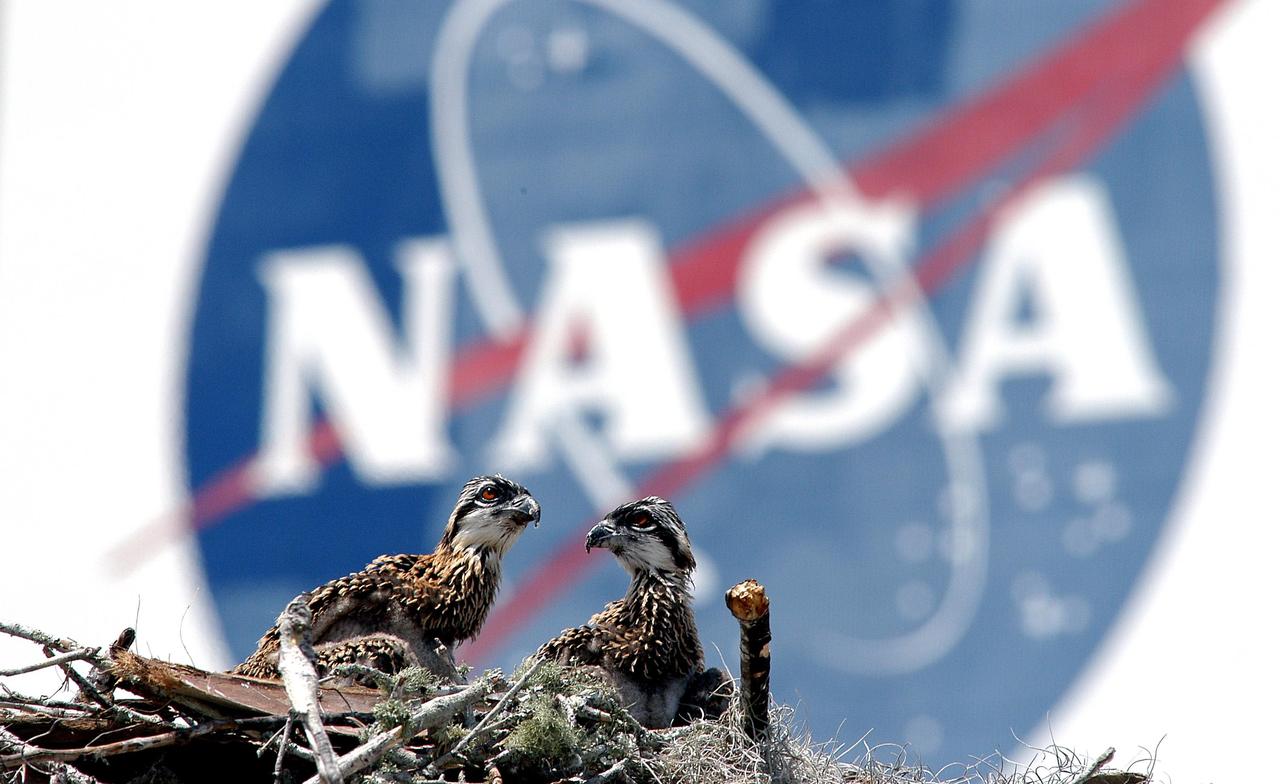
KENNEDY SPACE CENTER, FLA. - Two fledgling ospreys occupy a nest near the NASA-KSC News Center, across from the Vehicle Assembly Building. Known as a fish hawk, ospreys select sites of opportunity, from trees and telephone poles to rocks or even flat ground. In the United States they are found from Alaska to Florida and the Gulf Coast. Osprey nests are found throughout the Kennedy Space Center and nearby Merritt Island National Wildlife Refuge.

KENNEDY SPACE CENTER, FLA. - Framed by the NASA insignia, on the outside of the Vehicle Assembly Building, this osprey stares out from the nest it has built on top of speakers in a nearby parking lot. Known as a fish hawk, the osprey selects sites of opportunity, from trees and telephone poles to rocks or even flat ground. In the United States it is found from Alaska and Newfoundland to Florida and the Gulf Coast. Osprey nests are found throughout the Kennedy Space Center and nearby Merritt Island National Wildlife Refuge.
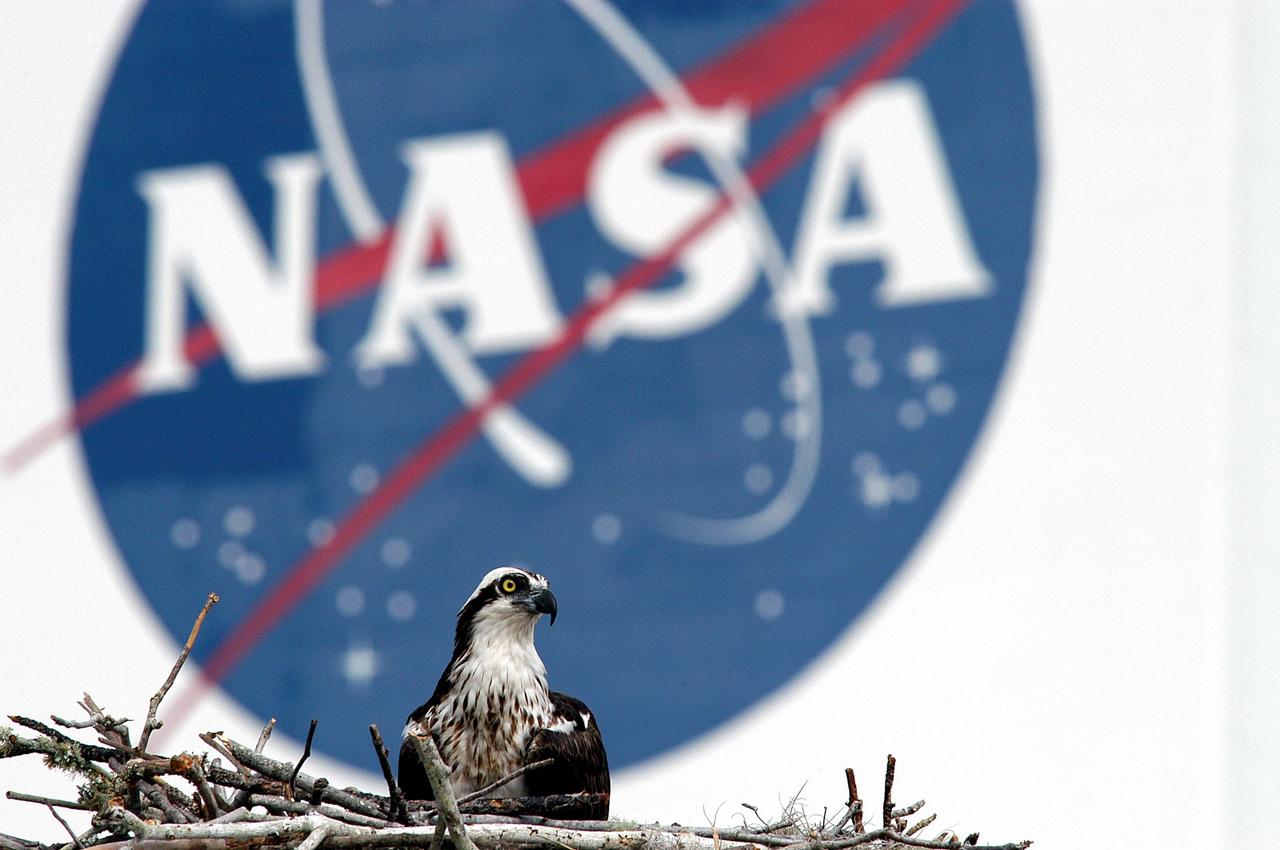
KENNEDY SPACE CENTER, Fla. - Framed by the NASA insignia, on the outside of the Vehicle Assembly Building, this osprey stares out from the nest it has built on top of speakers in a nearby parking lot. Known as a fish hawk, the osprey selects sites of opportunity, from trees and telephone poles to rocks or even flat ground. In the United States it is found from Alaska and Newfoundland to Florida and the Gulf Coast. Osprey nests are found throughout the Kennedy Space Center and nearby Merritt Island National Wildlife Refuge.
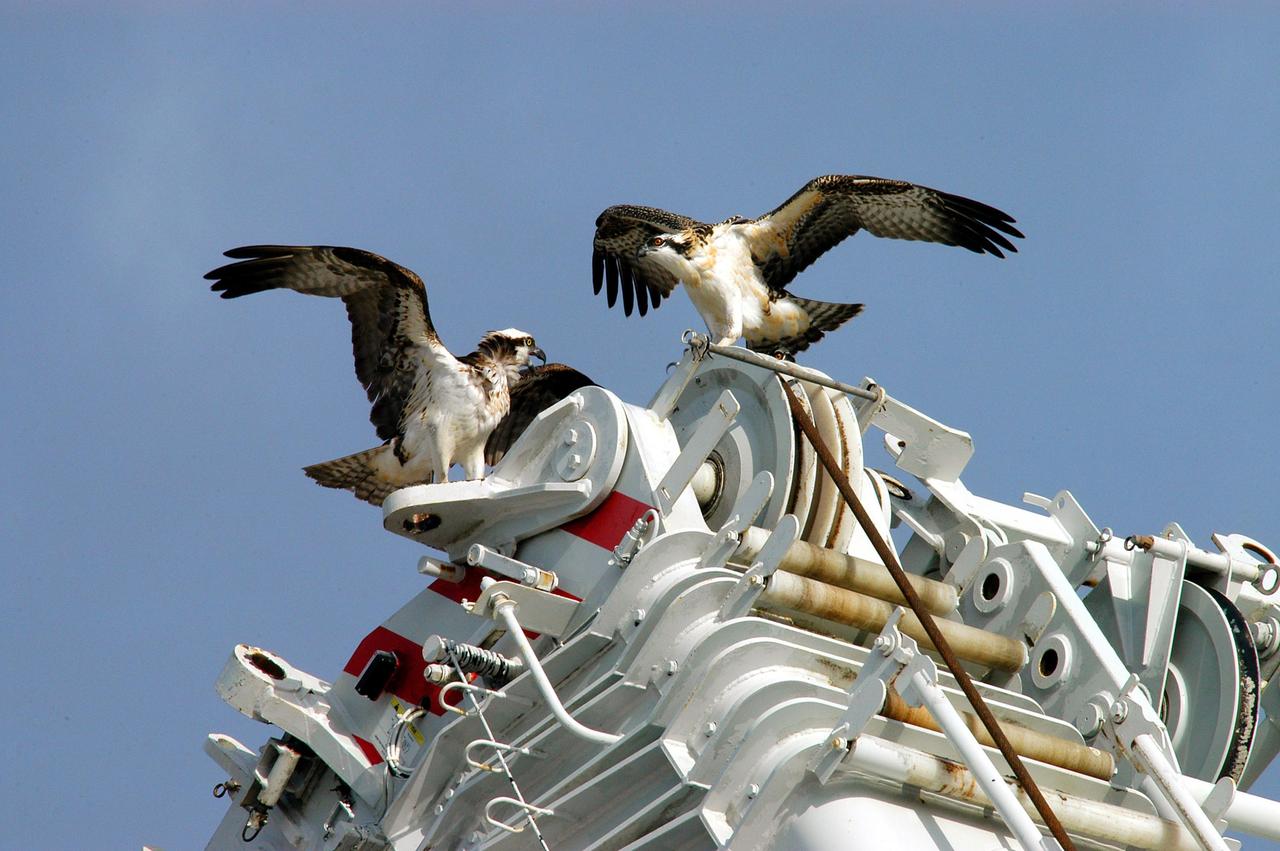
KENNEDY SPACE CENTER, FLA. -- - Two young ospreys flex their wings for flight. Their nest is located in the NASA KSC News Center parking lot. Ospreys select nesting sites of opportunity, from trees and telephone poles to rocks or even flat ground. In the United States they are found from Alaska to Florida and the Gulf Coast. Osprey nests are found throughout the Kennedy Space Center and nearby Merritt Island National Wildlife Refuge. Known as a fish hawk, ospreys often can be seen flying overhead with a fish in their talons. Fish are their sole source of food.
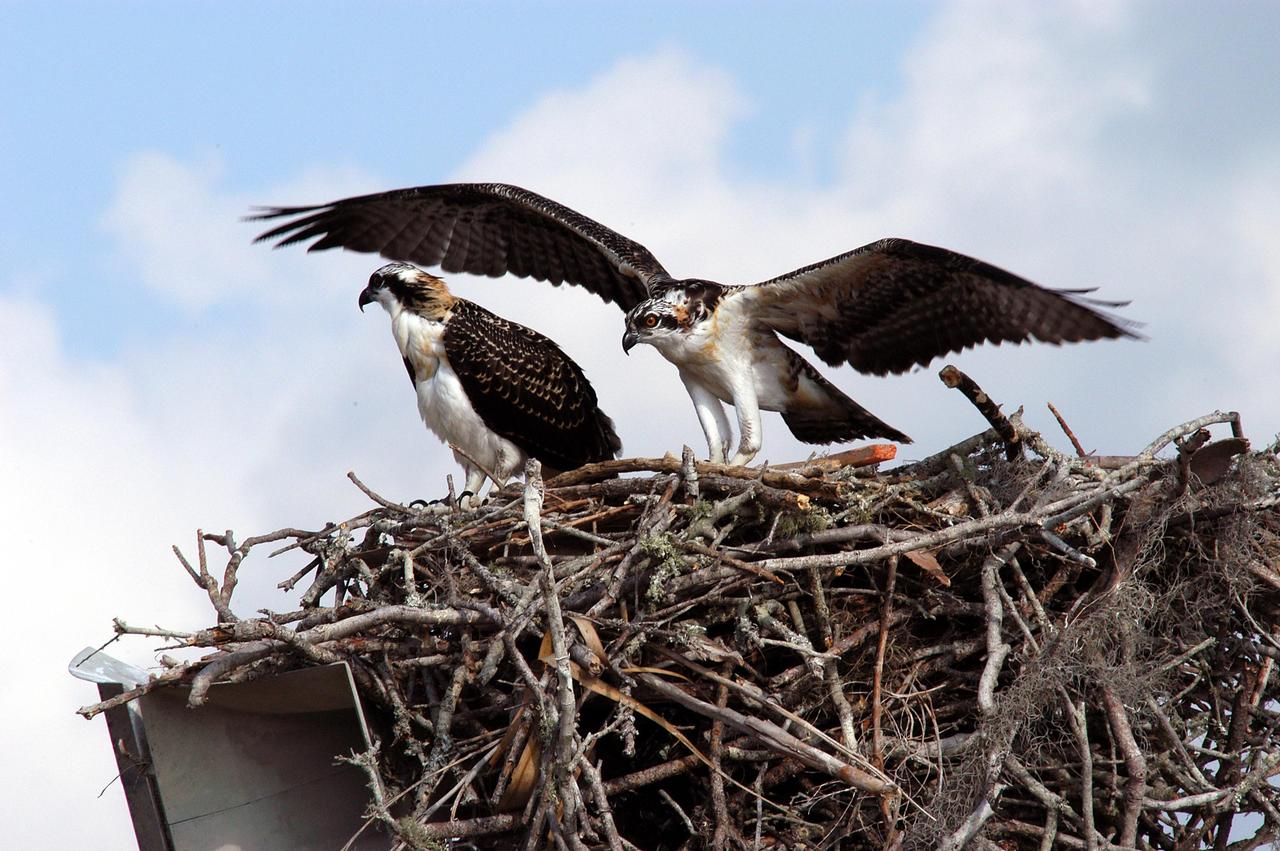
KENNEDY SPACE CENTER, FLA. -- One of two fledgling ospreys still in the nest stretches its wings to fly away. The stick-built nest is located in the NASA KSC News Center parking lot. Ospreys select nesting sites of opportunity, from trees and telephone poles to rocks or even flat ground. In the United States they are found from Alaska to Florida and the Gulf Coast. Osprey nests are found throughout the Kennedy Space Center and nearby Merritt Island National Wildlife Refuge. Known as a fish hawk, ospreys often can be seen flying overhead with a fish in their talons. Fish are their sole source of food.
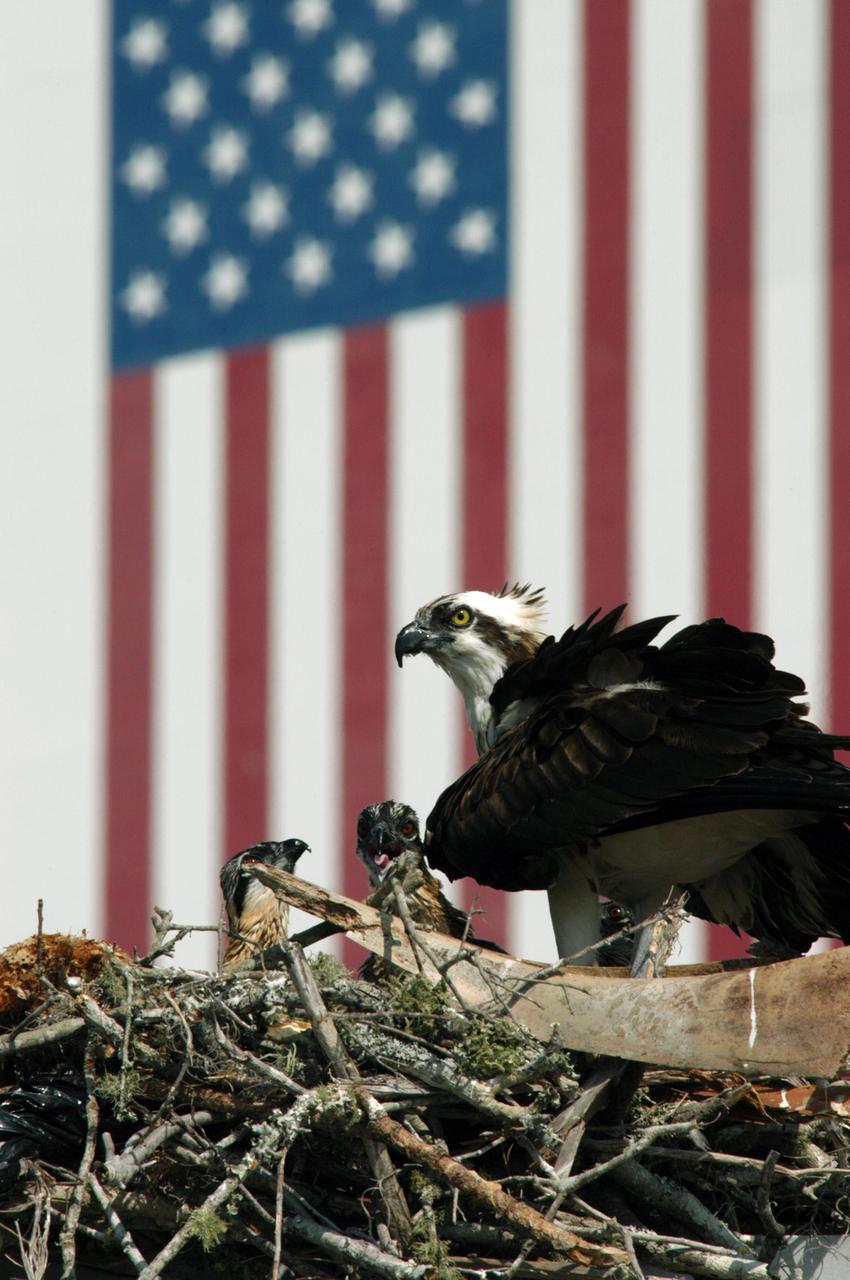
KENNEDY SPACE CENTER, FLA. -- A mother osprey watches over her chicks in a nest near the NASA News Center at Kennedy Space Center. This is the third year the ospreys have raised a family at the site. Known as a fish hawk, ospreys select sites of opportunity, from trees and telephone poles to rocks or even flat ground. In the United States they are found from Alaska and Newfoundland to Florida and the Gulf Coast. Osprey nests are found throughout the Kennedy Space Center and nearby Merritt Island National Wildlife Refuge, which shares a boundary with the Center. Photo credit: NASA/George Shelton
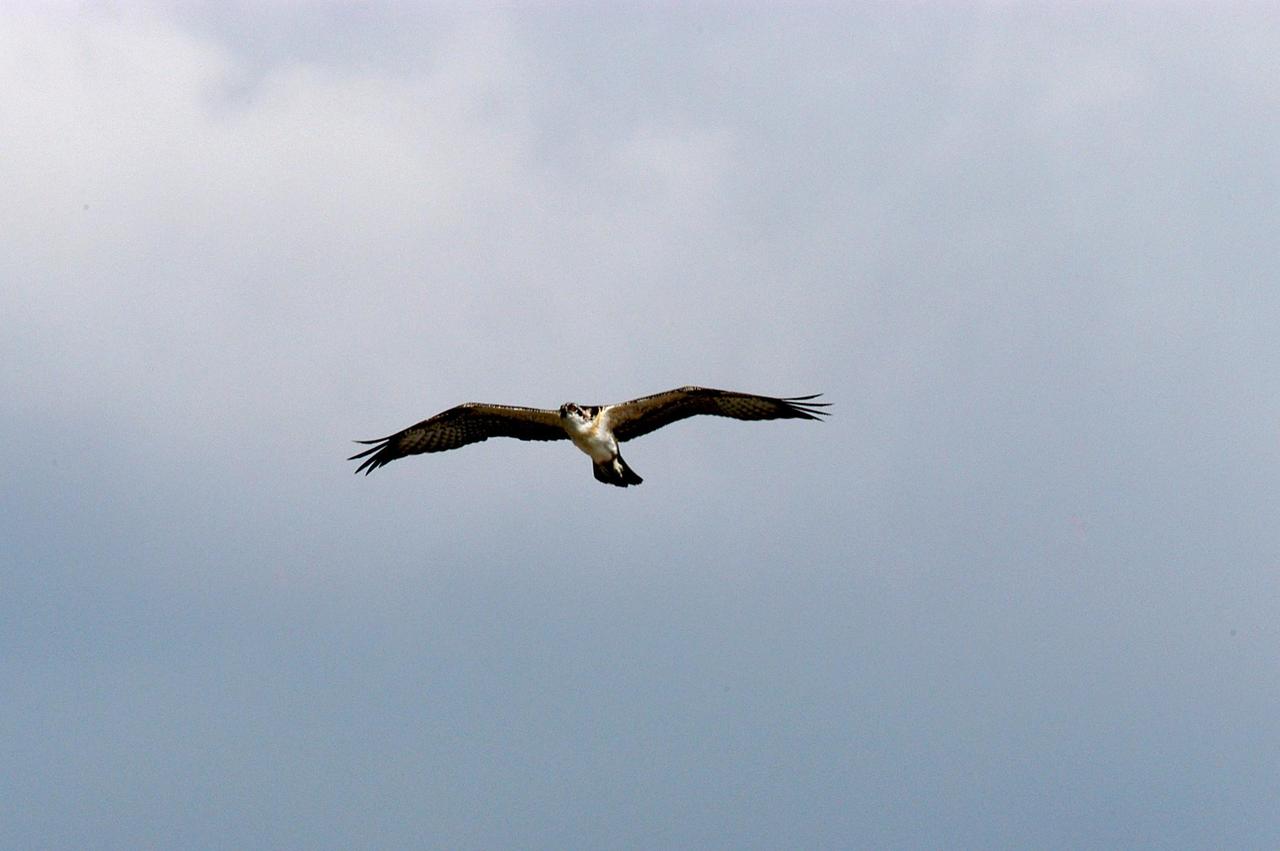
KENNEDY SPACE CENTER, FLA. -- A fledgling osprey soars above its nest, located in the NASA KSC News Center parking lot. Ospreys select nesting sites of opportunity, from trees and telephone poles to rocks or even flat ground. In the United States they are found from Alaska to Florida and the Gulf Coast. Osprey nests are found throughout the Kennedy Space Center and nearby Merritt Island National Wildlife Refuge. Known as a fish hawk, ospreys often can be seen flying overhead with a fish in their talons. Fish are their sole source of food.
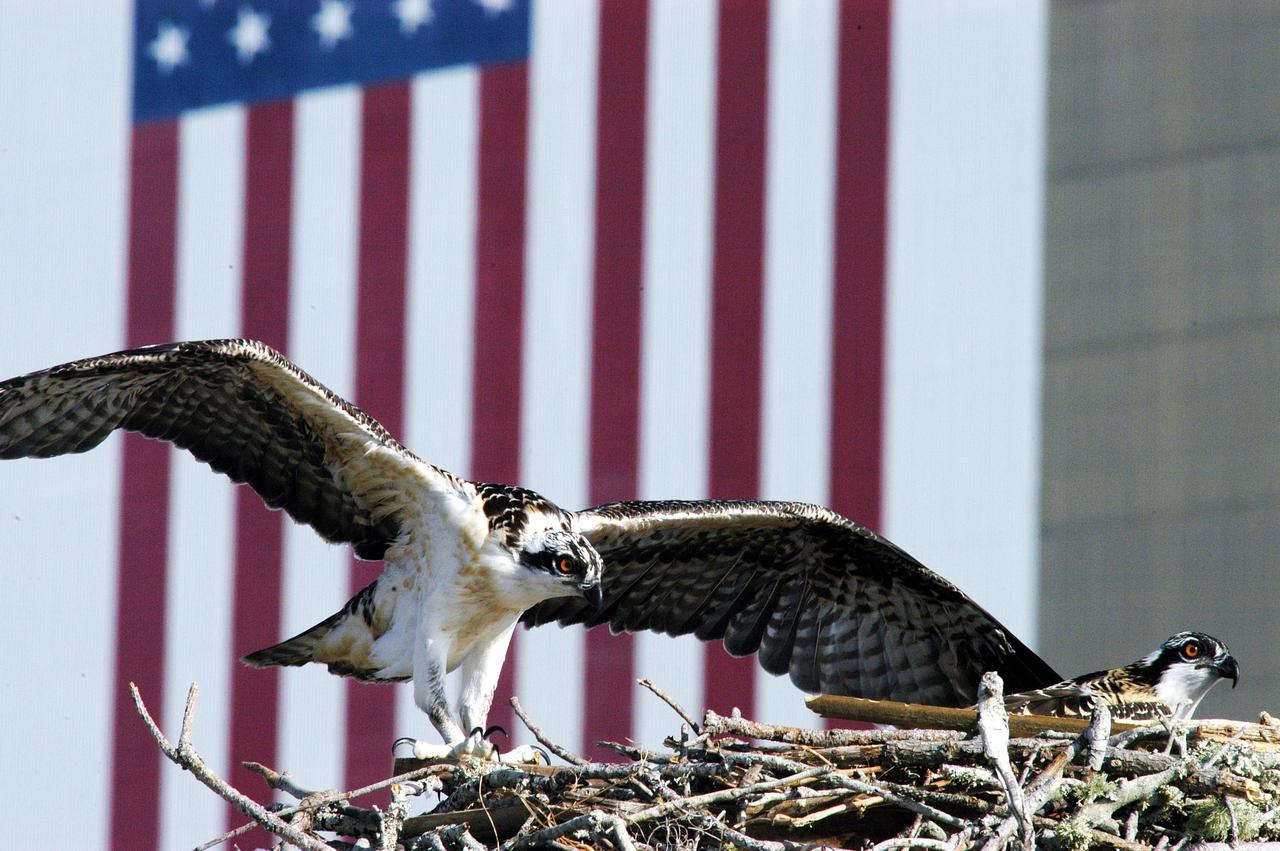
KENNEDY SPACE CENTER, FLA. -- One of three osprey fledglings spreads its wings, anticipating flight. The nest is in the NASA News Center parking lot, across from the Vehicle Assembly Building, with its 209-foot-high American flag painted on the south side. Ospreys select nesting sites of opportunity, from trees and telephone poles to rocks or even flat ground. In the United States they are found from Alaska to Florida and the Gulf Coast. Osprey nests are found throughout the Kennedy Space Center and nearby Merritt Island National Wildlife Refuge. Known as a fish hawk, ospreys often can be seen flying overhead with a fish in their talons.
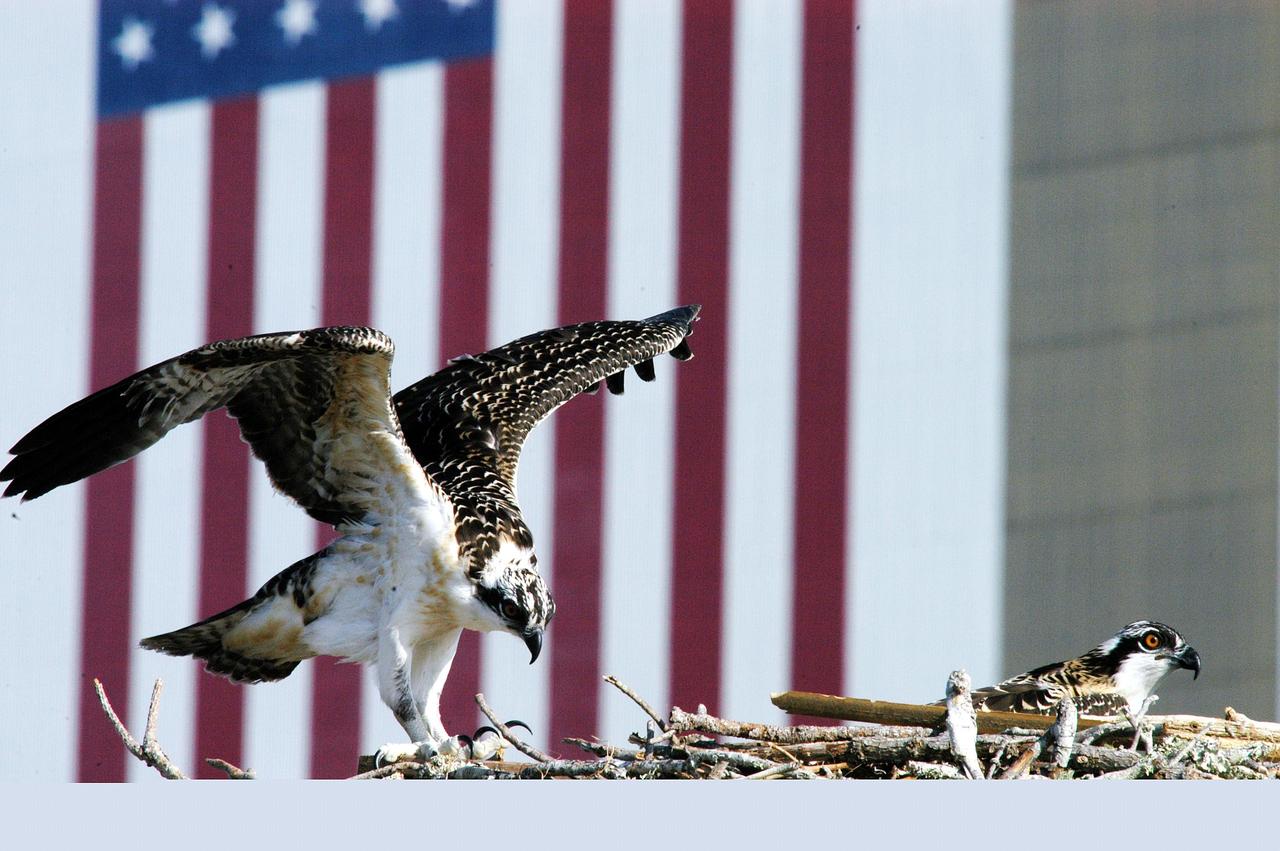
KENNEDY SPACE CENTER, FLA. -- One of three osprey fledglings exercises its wings, anticipating flight. The nest is in the NASA News Center parking lot, across from the Vehicle Assembly Building, with its 209-foot-high American flag painted on the south side. Ospreys select nesting sites of opportunity, from trees and telephone poles to rocks or even flat ground. In the United States they are found from Alaska to Florida and the Gulf Coast. Osprey nests are found throughout the Kennedy Space Center and nearby Merritt Island National Wildlife Refuge. Known as a fish hawk, ospreys often can be seen flying overhead with a fish in their talons.
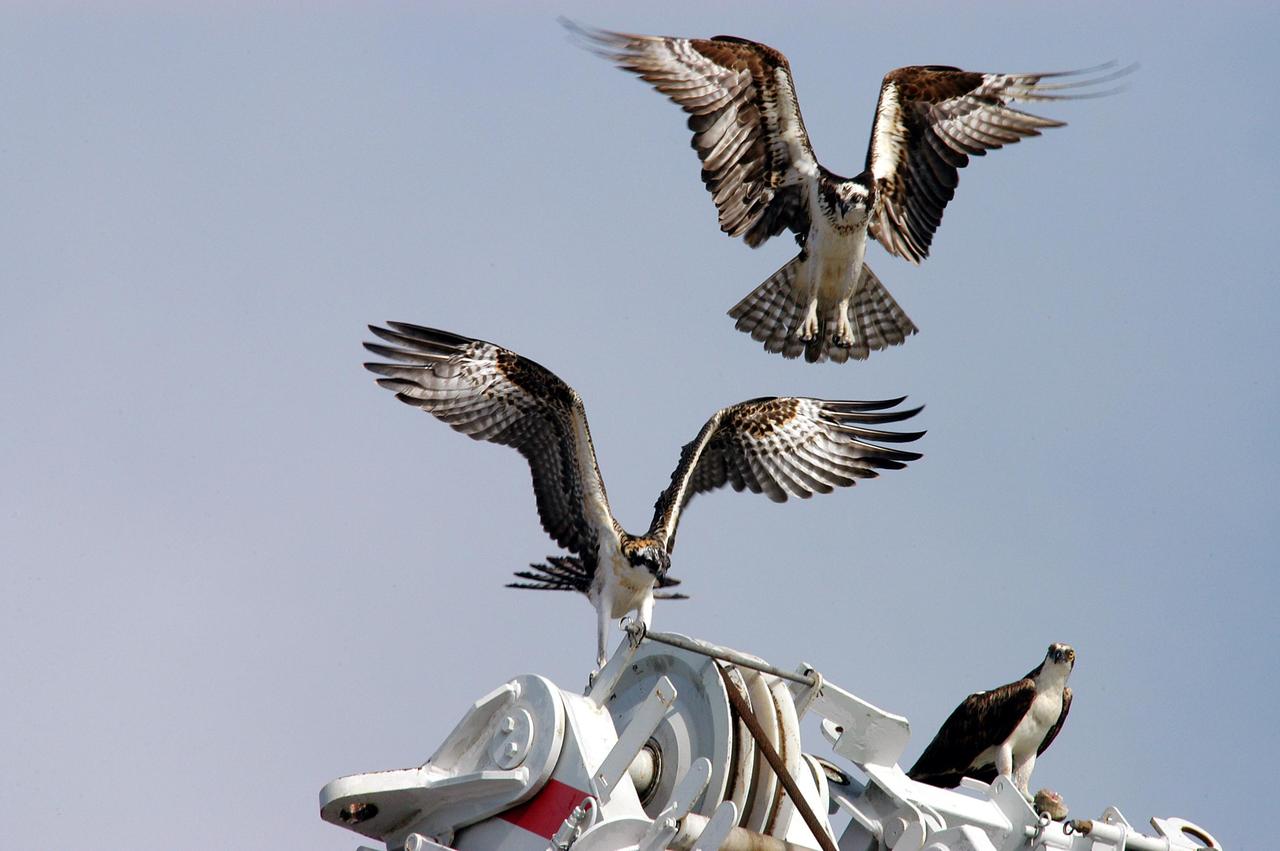
KENNEDY SPACE CENTER, FLA. -- Two fledgling ospreys begin flight lessons with their parent nearby (right). Their nest is located in the NASA KSC News Center parking lot. Ospreys select nesting sites of opportunity, from trees and telephone poles to rocks or even flat ground. In the United States they are found from Alaska to Florida and the Gulf Coast. Osprey nests are found throughout the Kennedy Space Center and nearby Merritt Island National Wildlife Refuge. Known as a fish hawk, ospreys often can be seen flying overhead with a fish in their talons. Fish are their sole source of food.
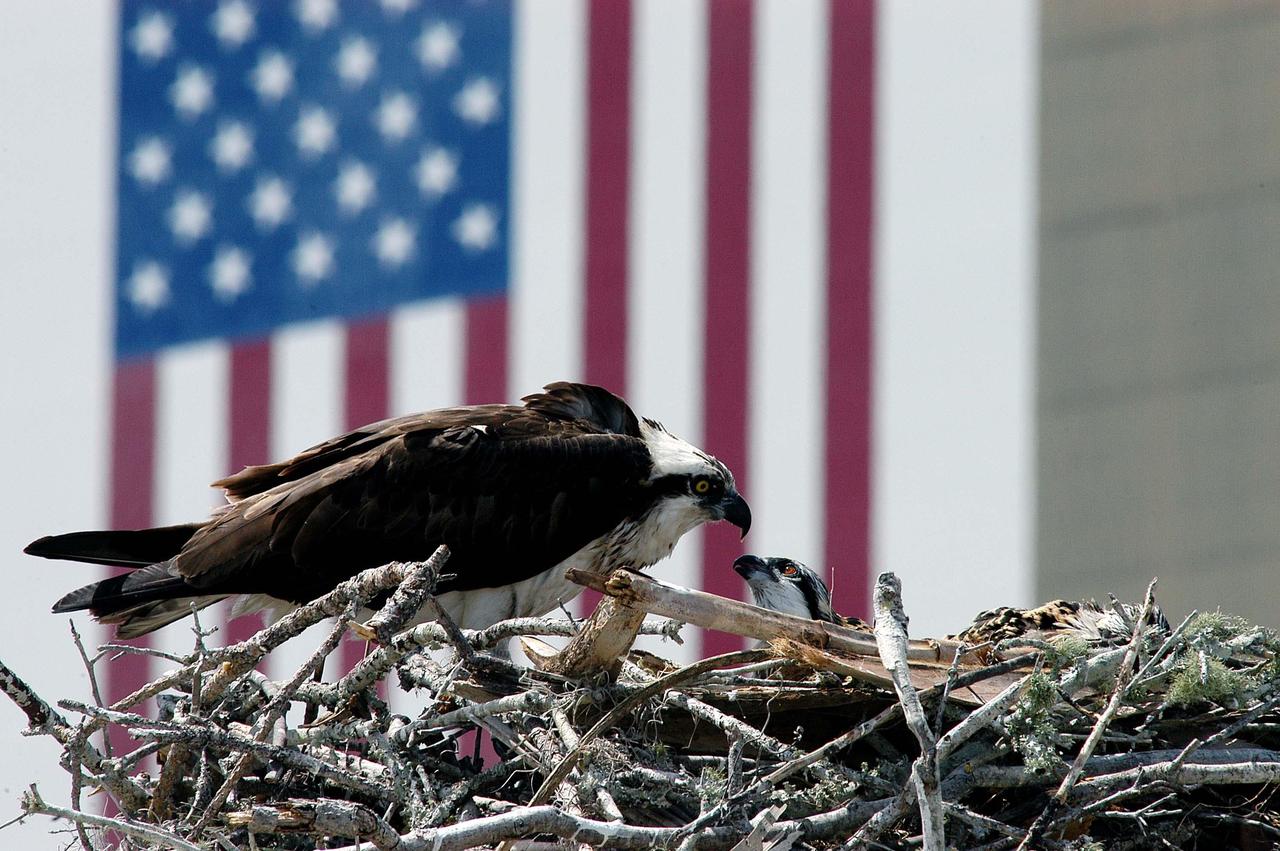
KENNEDY SPACE CENTER, FLA. - Against the backdrop of the American flag, painted on the side of the Vehicle Assembly Building, an osprey checks its fledglings in the nest. The young bird seen is one of three hatched this season. The osprey nest sits atop a speaker in the parking lot of the NASA KSC News Center. Known as a fish hawk, ospreys select sites of opportunity, from trees and telephone poles to rocks or even flat ground. In the United States they are found from Alaska to Florida and the Gulf Coast. Osprey nests are found throughout the Kennedy Space Center and nearby Merritt Island National Wildlife Refuge.
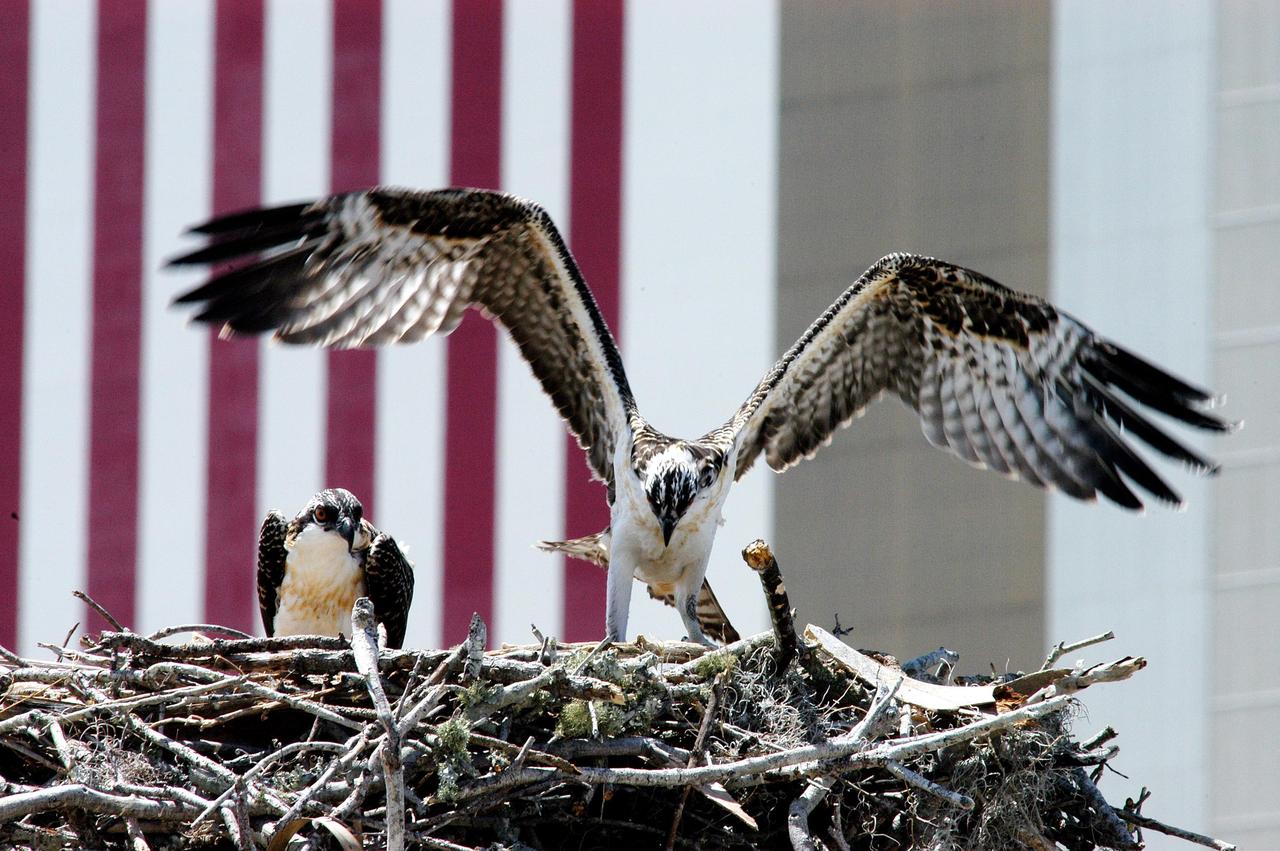
KENNEDY SPACE CENTER, FLA. -- One of three osprey fledglings exercises its wings, anticipating flight. The nest is in the NASA News Center parking lot, across from the Vehicle Assembly Building, with its 209-foot-high American flag painted on the south side. Ospreys select nesting sites of opportunity, from trees and telephone poles to rocks or even flat ground. In the United States they are found from Alaska to Florida and the Gulf Coast. Osprey nests are found throughout the Kennedy Space Center and nearby Merritt Island National Wildlife Refuge. Known as a fish hawk, ospreys often can be seen flying overhead with a fish in their talons.
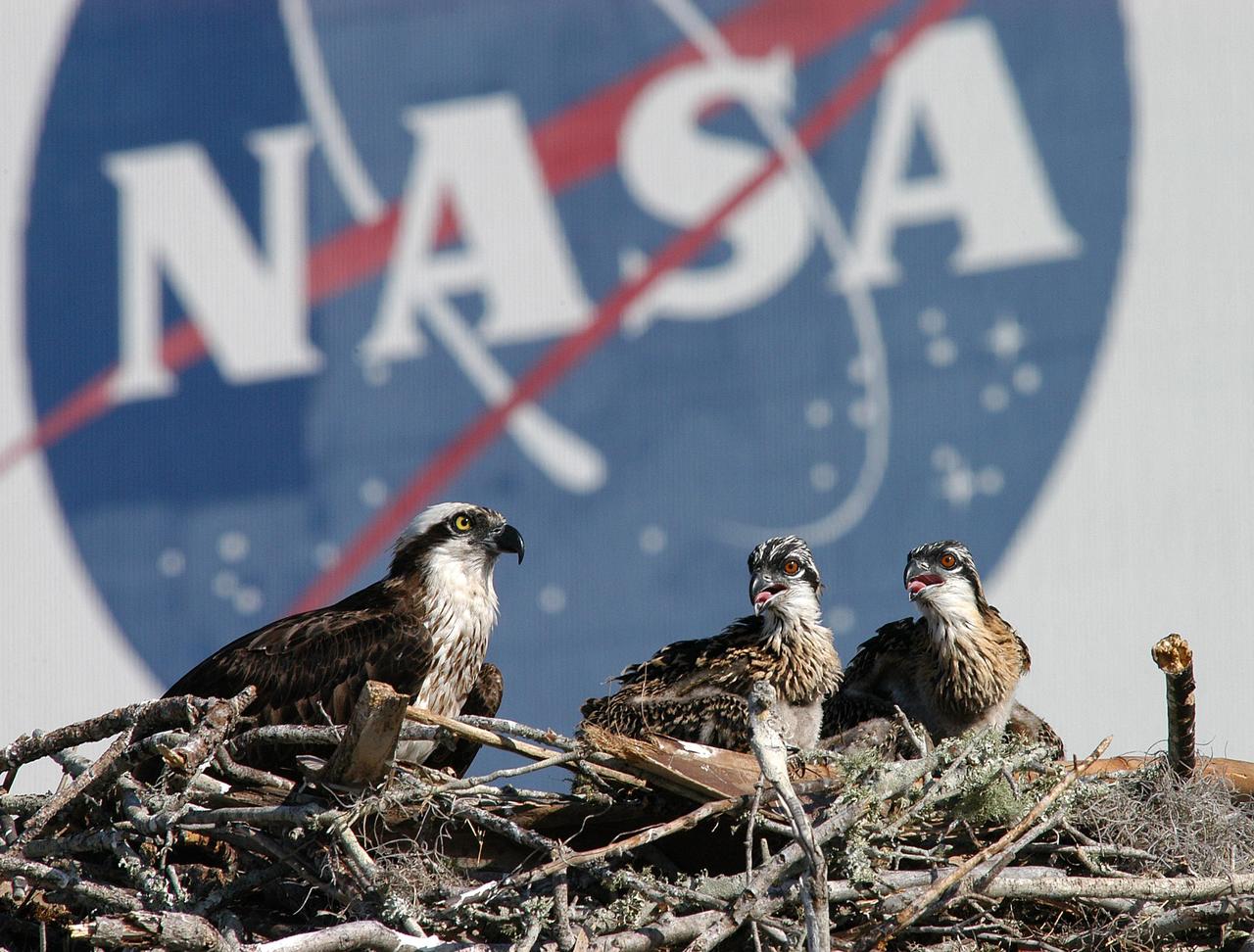
KENNEDY SPACE CENTER, FLA. - Against the background of the NASA logo on the Vehicle Assembly Building, the osprey nest in the nearby parking lot reveals two fledglings and one of the adult ospreys. Known as a fish hawk, they often can be seen flying overhead with a fish in their talons. Ospreys select nesting sites of opportunity, from trees and telephone poles to rocks or even flat ground. In the United States they are found from Alaska to Florida and the Gulf Coast. Osprey nests are found throughout the Kennedy Space Center and nearby Merritt Island National Wildlife Refuge.
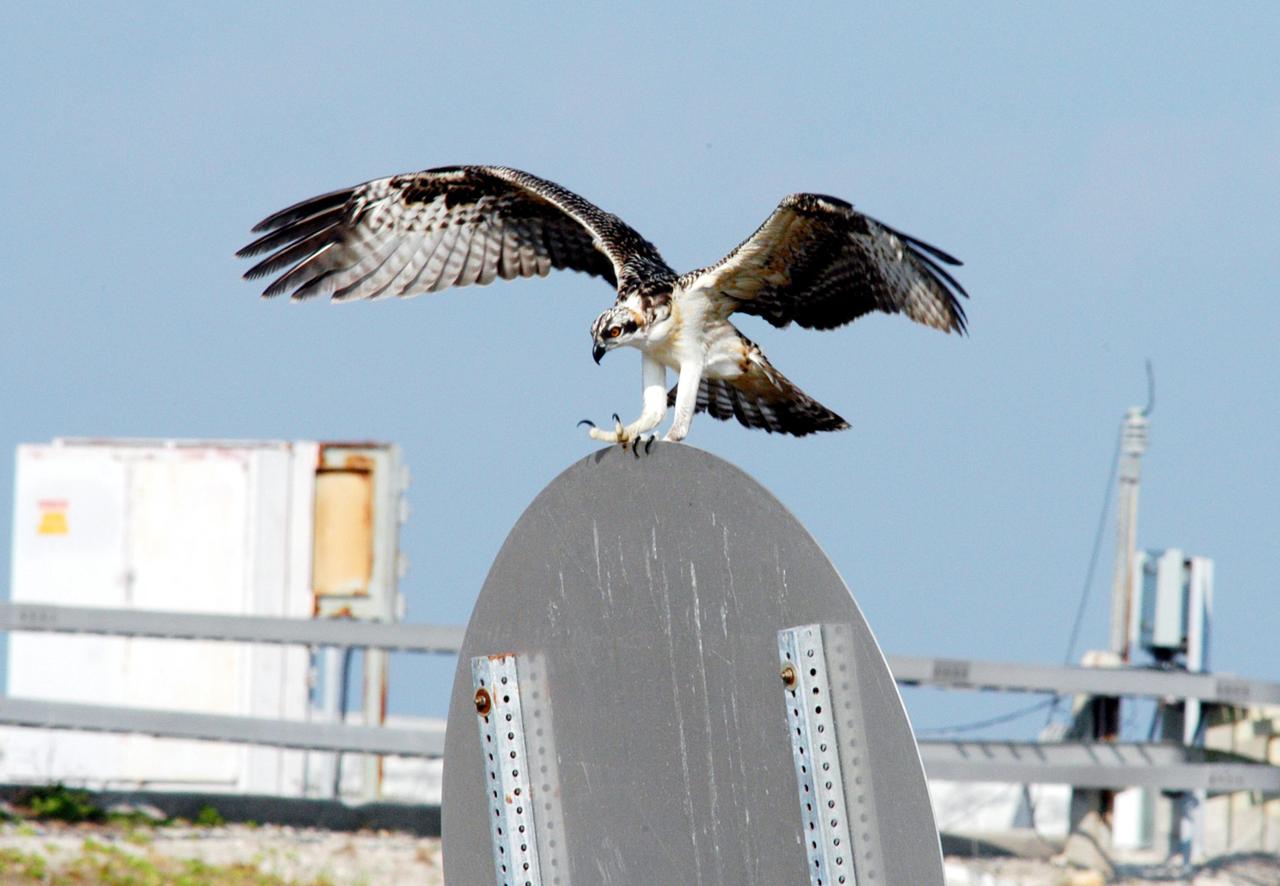
KENNEDY SPACE CENTER, FLA. -- One of the fledgling ospreys from the nest in the NASA KSC News Center parking lot lands on a sign after testing its wings. Ospreys select nesting sites of opportunity, from trees and telephone poles to rocks or even flat ground. In the United States they are found from Alaska to Florida and the Gulf Coast. Osprey nests are found throughout the Kennedy Space Center and nearby Merritt Island National Wildlife Refuge. Known as a fish hawk, ospreys often can be seen flying overhead with a fish in their talons. Fish are their sole source of food.
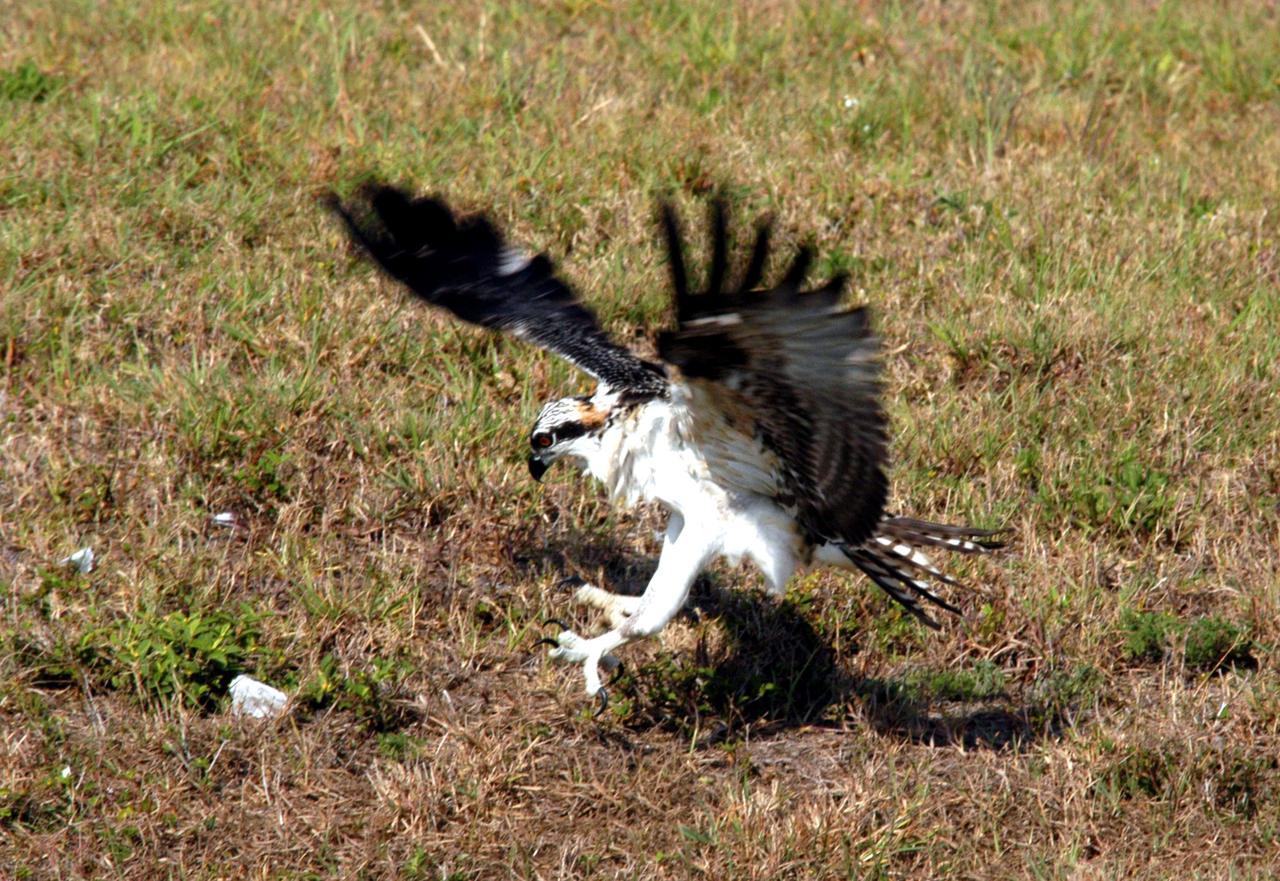
KENNEDY SPACE CENTER, FLA. -- One of the fledgling ospreys from the nest in the NASA KSC News Center parking lot comes down for a rough landing in the nearby grass. Ospreys select nesting sites of opportunity, from trees and telephone poles to rocks or even flat ground. In the United States they are found from Alaska and Newfoundland to Florida and the Gulf Coast. Osprey nests are found throughout the Kennedy Space Center and nearby Merritt Island National Wildlife Refuge. Known as a fish hawk, ospreys often can be seen flying overhead with a fish in their talons. Fish are their sole source of food.
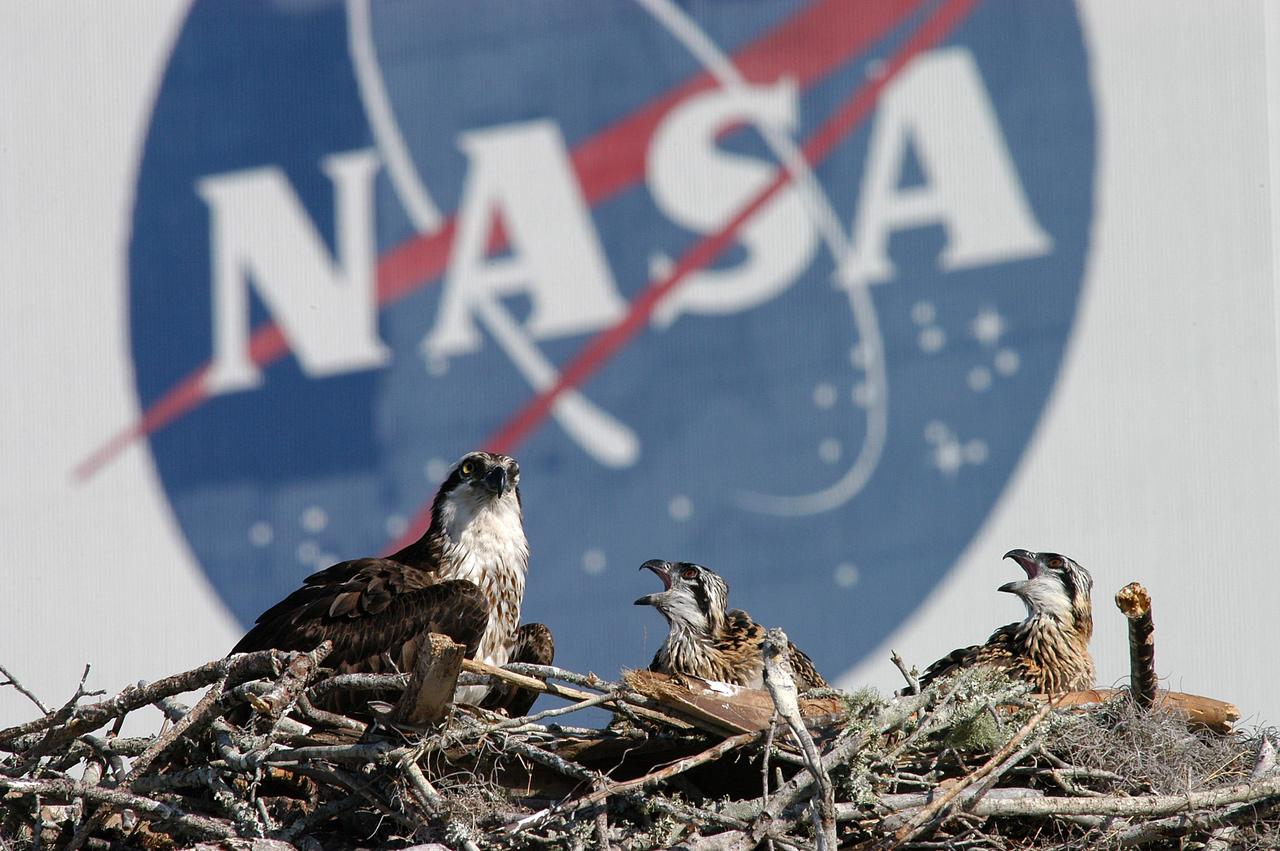
KENNEDY SPACE CENTER, FLA. - Against the background of the NASA logo on the Vehicle Assembly Building, the osprey nest in the nearby parking lot reveals two fledglings and one of the adult ospreys. Known as a fish hawk, they often can be seen flying overhead with a fish in their talons. Ospreys select nesting sites of opportunity, from trees and telephone poles to rocks or even flat ground. In the United States they are found from Alaska to Florida and the Gulf Coast. Osprey nests are found throughout the Kennedy Space Center and nearby Merritt Island National Wildlife Refuge.
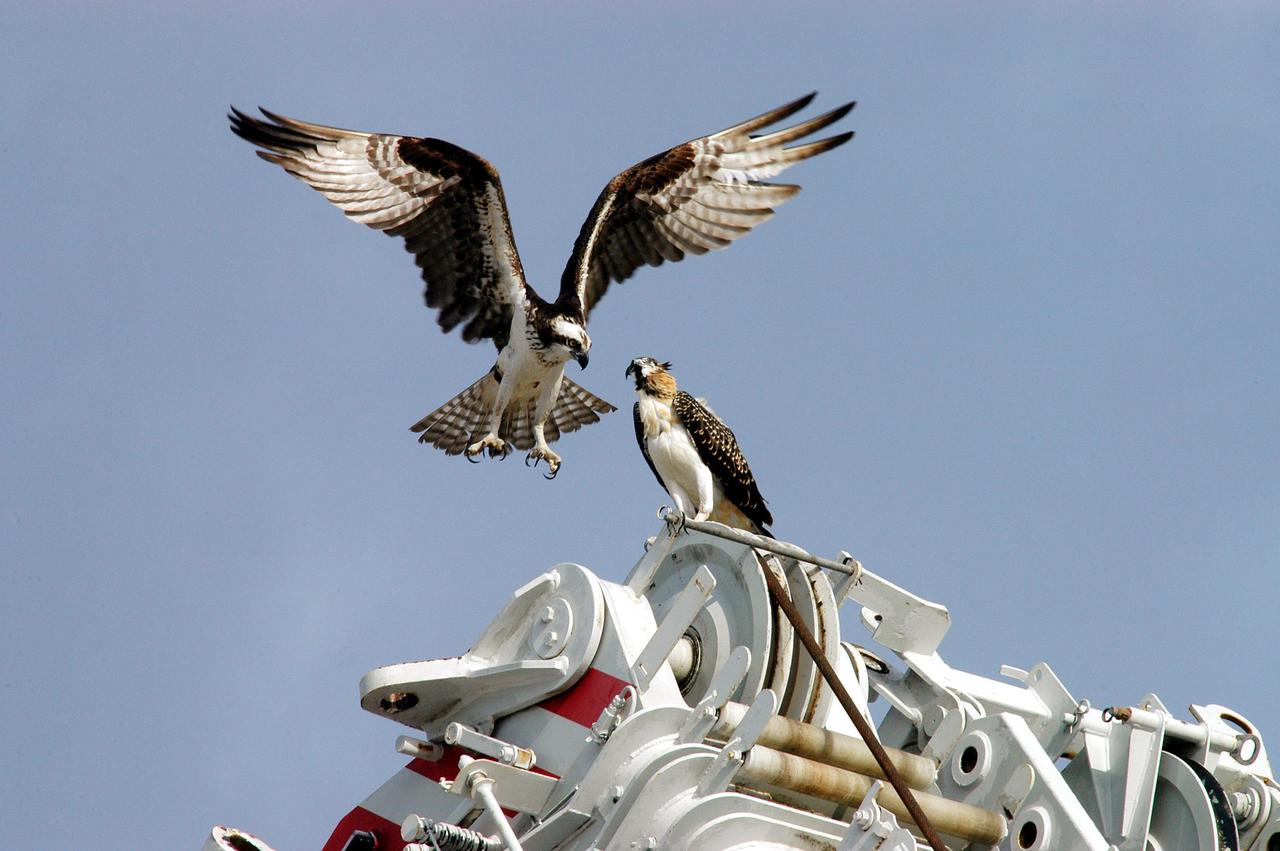
KENNEDY SPACE CENTER, FLA. -- One young osprey tests its wings while another waits nearby. Their nest is located in the NASA KSC News Center parking lot. Ospreys select nesting sites of opportunity, from trees and telephone poles to rocks or even flat ground. In the United States they are found from Alaska to Florida and the Gulf Coast. Osprey nests are found throughout the Kennedy Space Center and nearby Merritt Island National Wildlife Refuge. Known as a fish hawk, ospreys often can be seen flying overhead with a fish in their talons. Fish are their sole source of food.
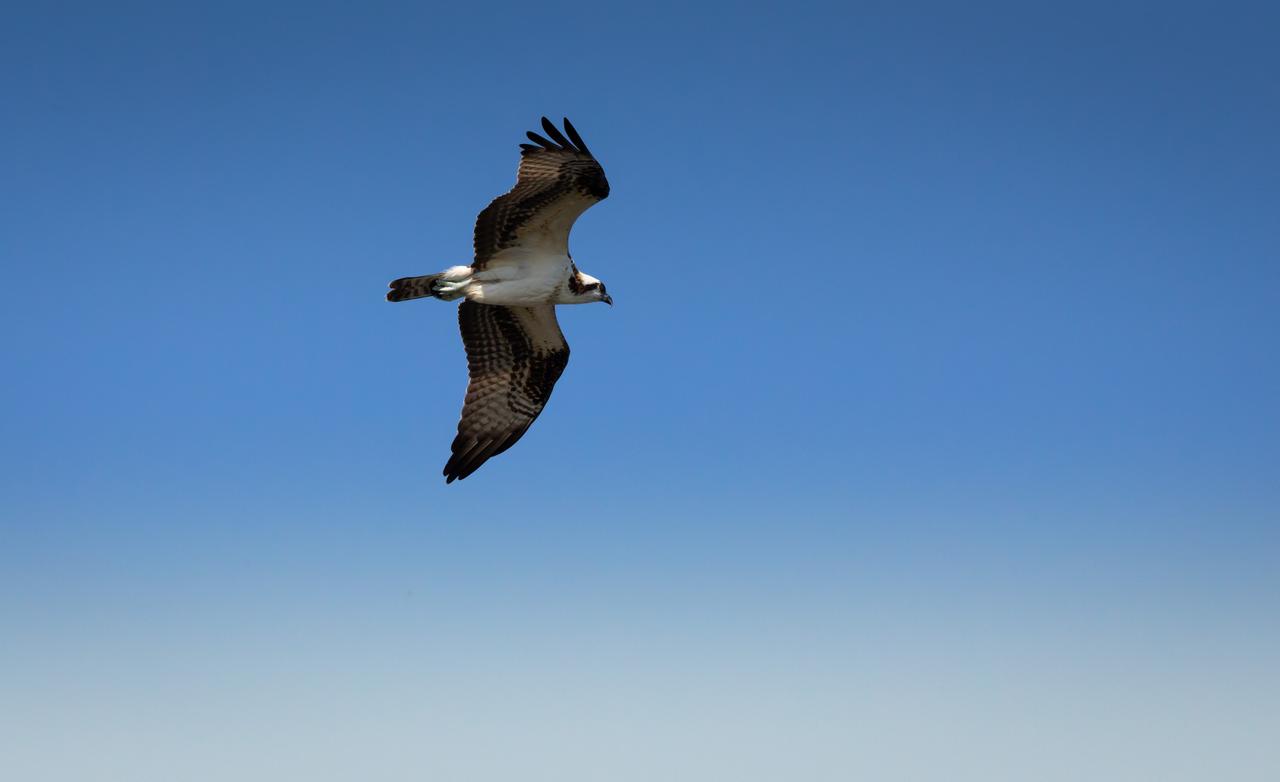
An osprey soars above NASA's Kennedy Space Center in Florida. The center shares a border with the Merritt Island National Wildlife Refuge. More than 330 native and migratory bird species, 25 mammal, 117 fish and 65 amphibian and reptile species call Kennedy and the wildlife refuge home.
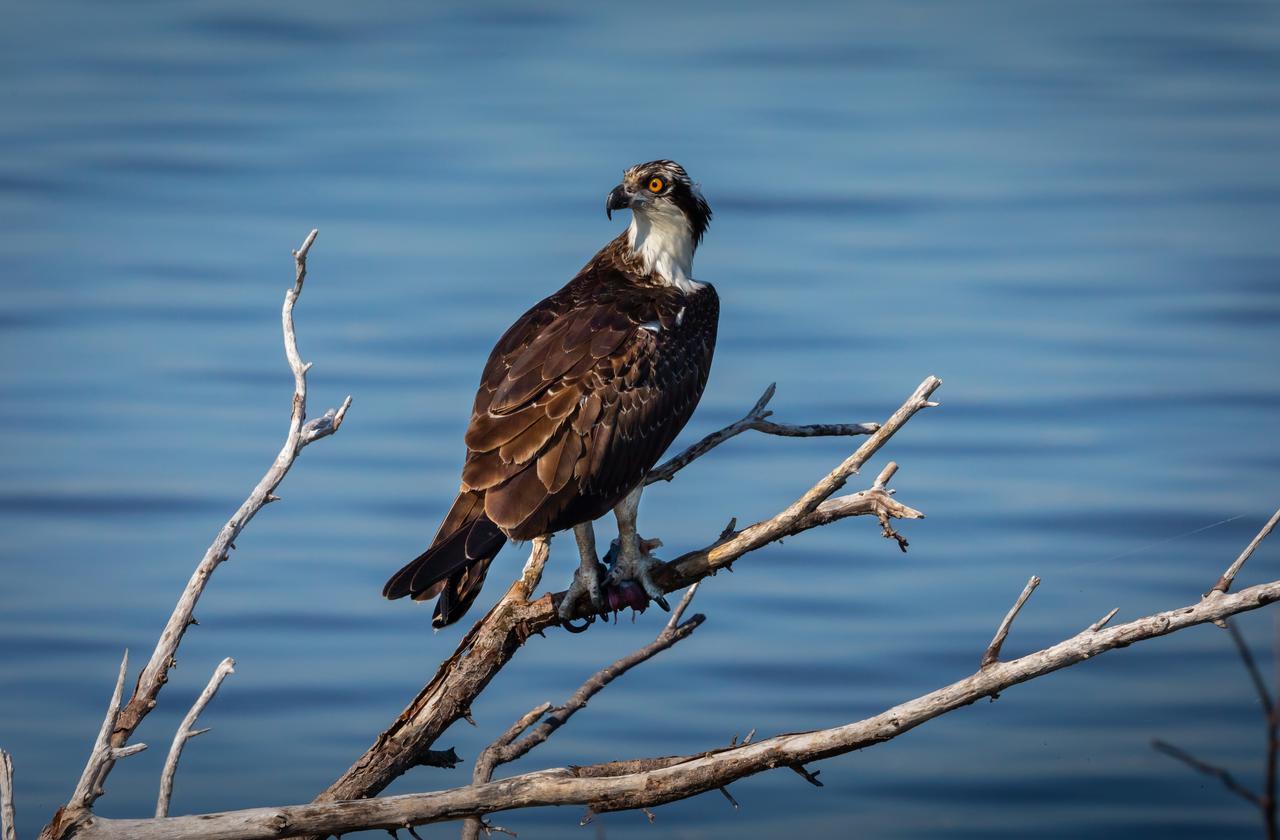
An osprey sits on a branch near a waterway at NASA's Kennedy Space Center in Florida. The center shares a border with the Merritt Island National Wildlife Refuge. More than 330 native and migratory bird species, 25 mammal, 117 fish and 65 amphibian and reptile species call Kennedy and the wildlife refuge home.
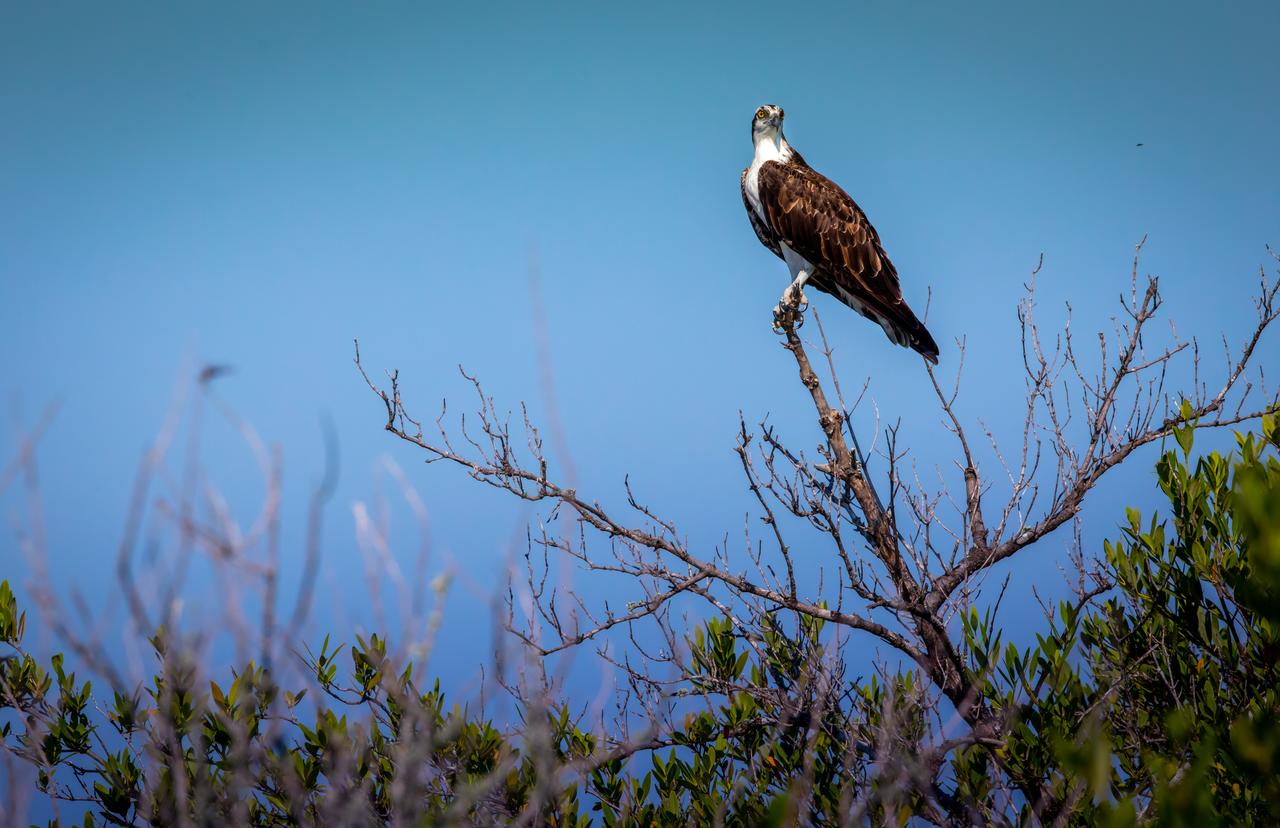
An osprey sits on a branch near a waterway at NASA's Kennedy Space Center in Florida. The center shares a border with the Merritt Island National Wildlife Refuge. More than 330 native and migratory bird species, 25 mammal, 117 fish and 65 amphibian and reptile species call Kennedy and the wildlife refuge home.
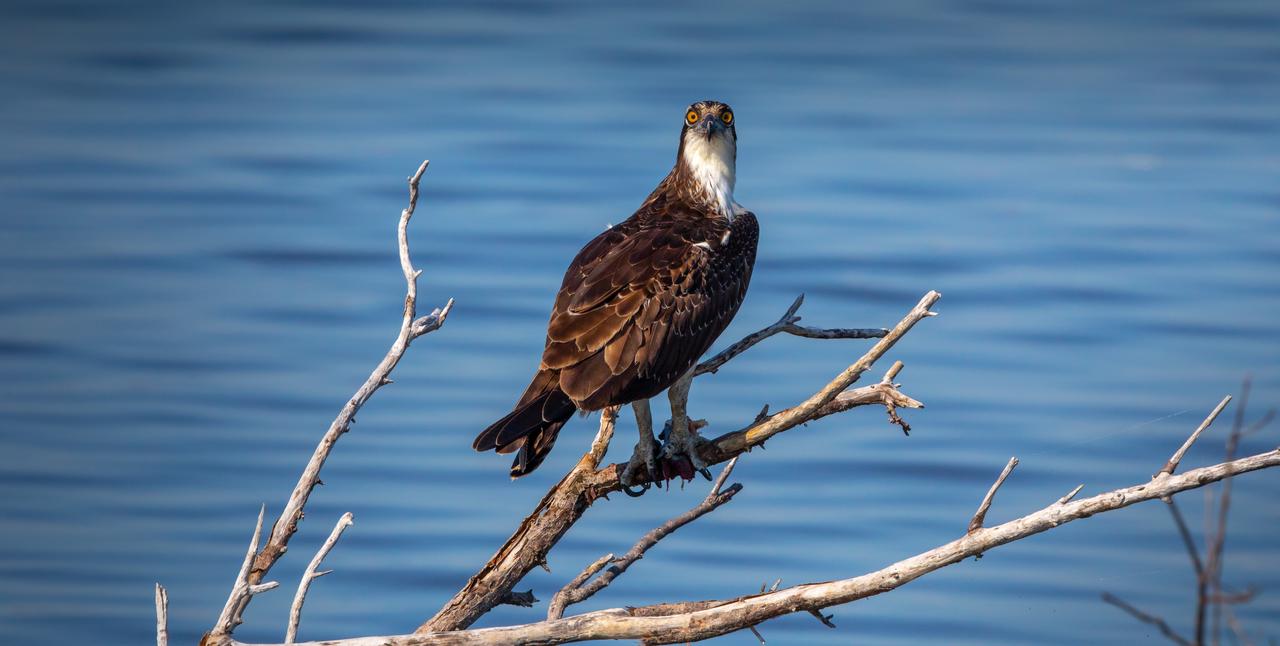
An osprey sits on a branch near a waterway at NASA's Kennedy Space Center in Florida. The center shares a border with the Merritt Island National Wildlife Refuge. More than 330 native and migratory bird species, 25 mammal, 117 fish and 65 amphibian and reptile species call Kennedy and the wildlife refuge home.
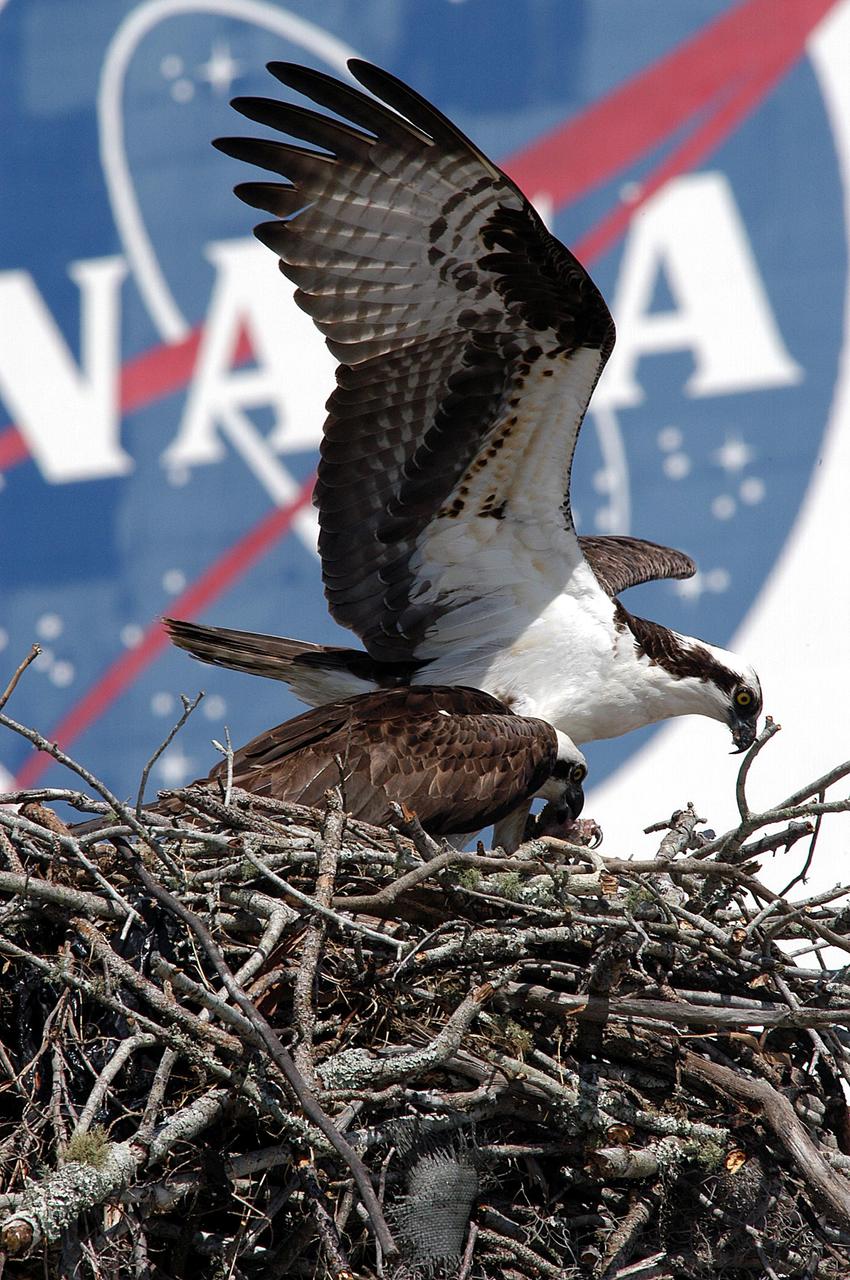
KENNEDY SPACE CENTER, FLA. -- While the female osprey eats fish brought by her mate, the male guards the nest, recently constructed on a speaker in the lower parking lot of the Press Site. Eggs have been sighted in the nest. The NASA logo seen in the background is on the nearby Vehicle Assembly Building. Known as a fish hawk, the osprey selects sites of opportunity, from trees and telephone poles to rocks or even flat ground. In the United States it is found from Alaska and Newfoundland to Florida and the Gulf Coast. Osprey nests are found throughout the Kennedy Space Center and surrounding Merritt Island National Wildlife Refuge.
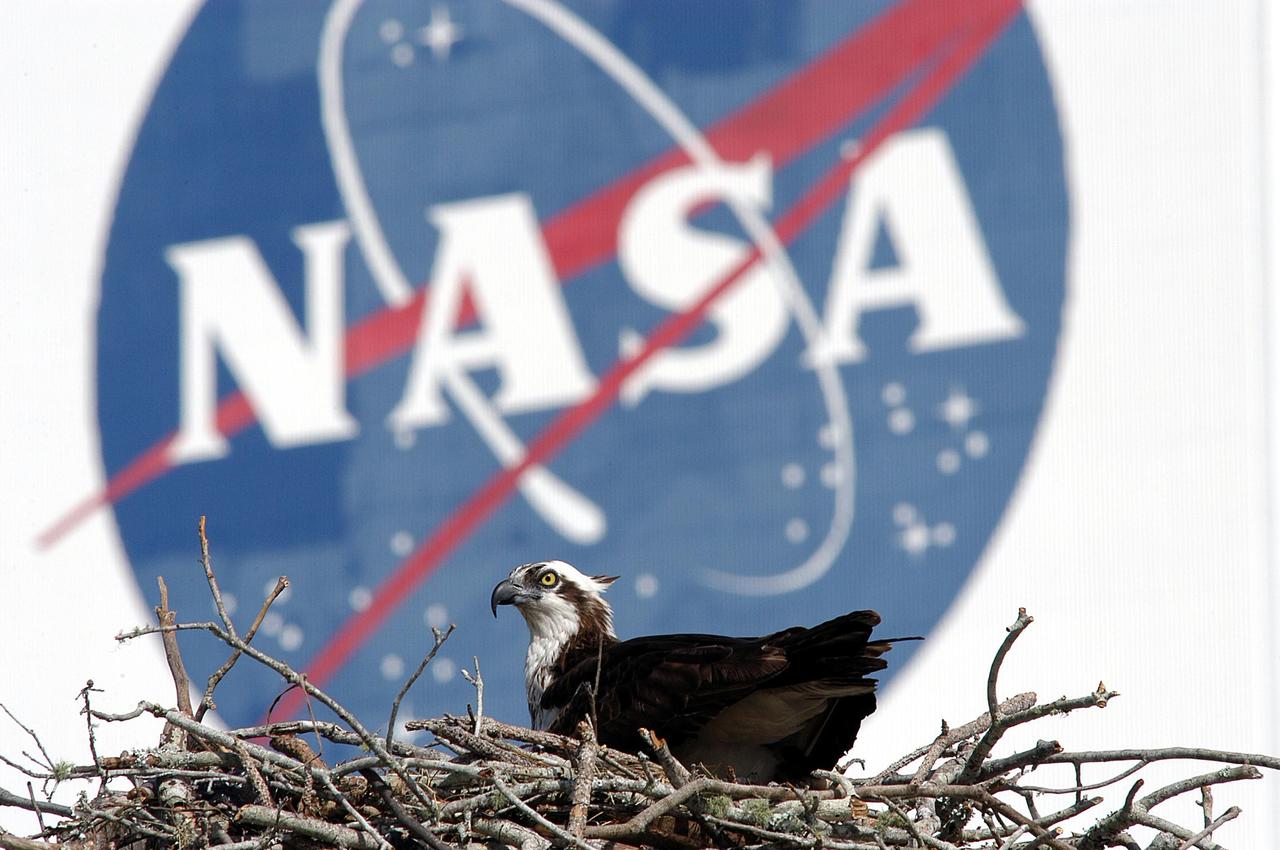
KENNEDY SPACE CENTER, FLA. - A female osprey occupies a nest recently constructed on a speaker in the lower parking lot of the Press Site. Eggs have been sighted in the nest. The NASA logo seen in the background is on the nearby Vehicle Assembly Building. Known as a fish hawk, the osprey selects sites of opportunity, from trees and telephone poles to rocks or even flat ground. In the United States it is found from Alaska to Florida and the Gulf Coast. Osprey nests are found throughout the Kennedy Space Center and surrounding Merritt Island National Wildlife Refuge.
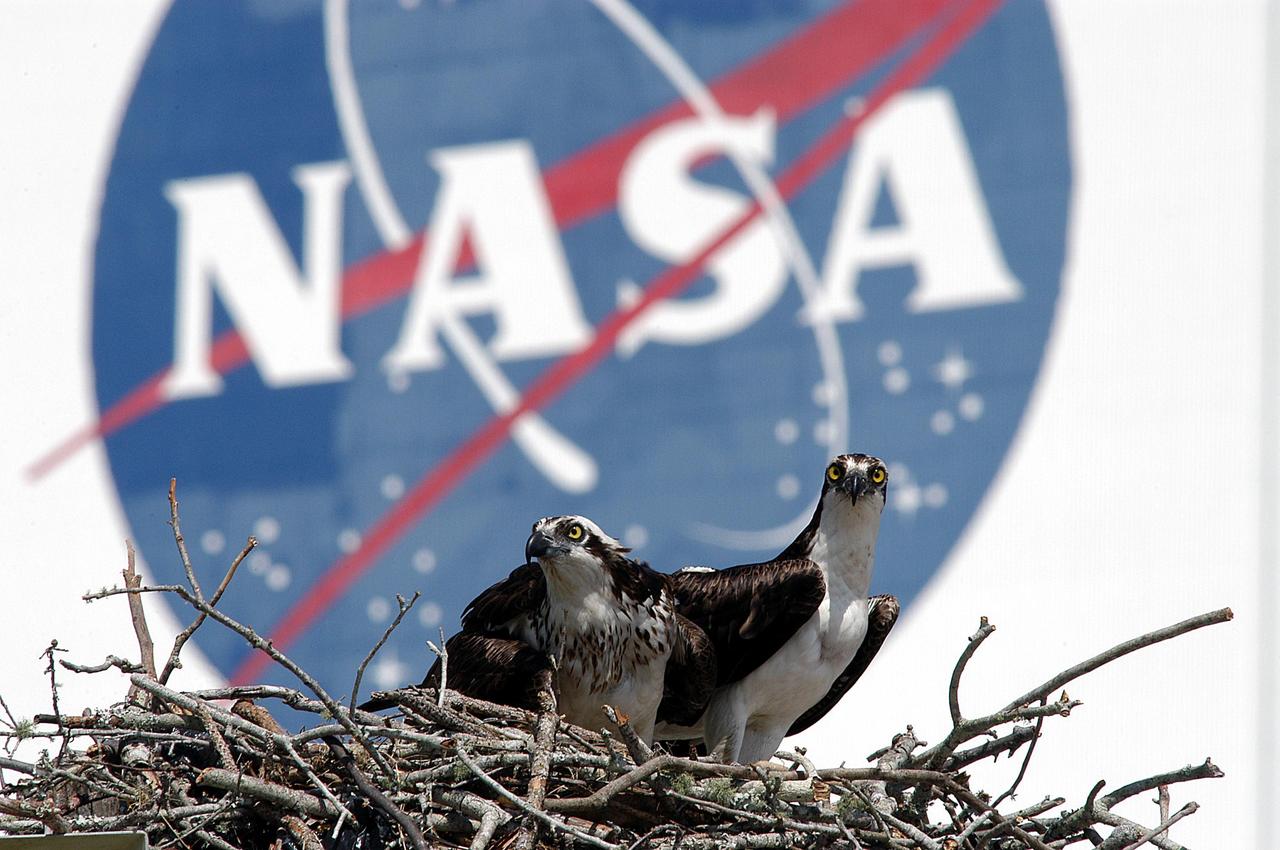
KENNEDY SPACE CENTER, FLA. -- A pair of nesting ospreys now occupy a nest recently constructed on a speaker in the lower parking lot of the Press Site. Eggs have been sighted in the nest. The NASA logo seen in the background is on the nearby Vehicle Assembly Building. Known as a fish hawk, the osprey selects sites of opportunity, from trees and telephone poles to rocks or even flat ground. In the United States it is found from Alaska to Florida and the Gulf Coast. Osprey nests are found throughout the Kennedy Space Center and surrounding Merritt Island National Wildlife Refuge.

KENNEDY SPACE CENTER, FLA. -- A pair of nesting ospreys now occupy a nest recently constructed on a speaker in the lower parking lot of the Press Site. Eggs have been sighted in the nest. The NASA logo seen in the background is on the nearby Vehicle Assembly Building. Known as a fish hawk, the osprey selects sites of opportunity, from trees and telephone poles to rocks or even flat ground. In the United States it is found from Alaska to Florida and the Gulf Coast. Osprey nests are found throughout the Kennedy Space Center and surrounding Merritt Island National Wildlife Refuge.
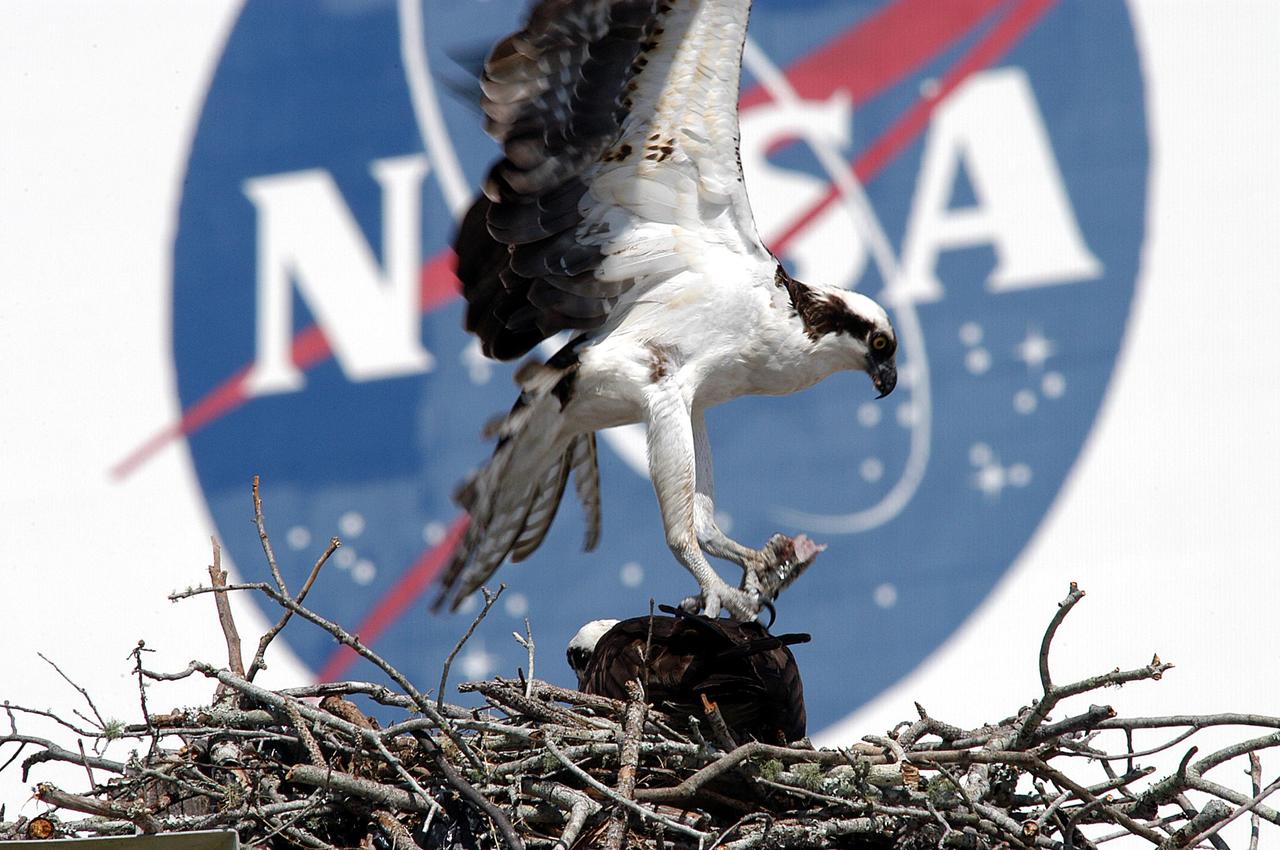
KENNEDY SPACE CENTER, FLA. -- A male osprey returns to its nest with a piece of fish in its talons for its mate. The nest was recently constructed on a speaker in the lower parking lot of the Press Site. Eggs have been sighted in the nest. The NASA logo seen in the background is on the nearby Vehicle Assembly Building. Known as a fish hawk, the osprey selects sites of opportunity, from trees and telephone poles to rocks or even flat ground. In the United States it is found from Alaska and Newfoundland to Florida and the Gulf Coast. Osprey nests are found throughout the Kennedy Space Center and surrounding Merritt Island National Wildlife Refuge.
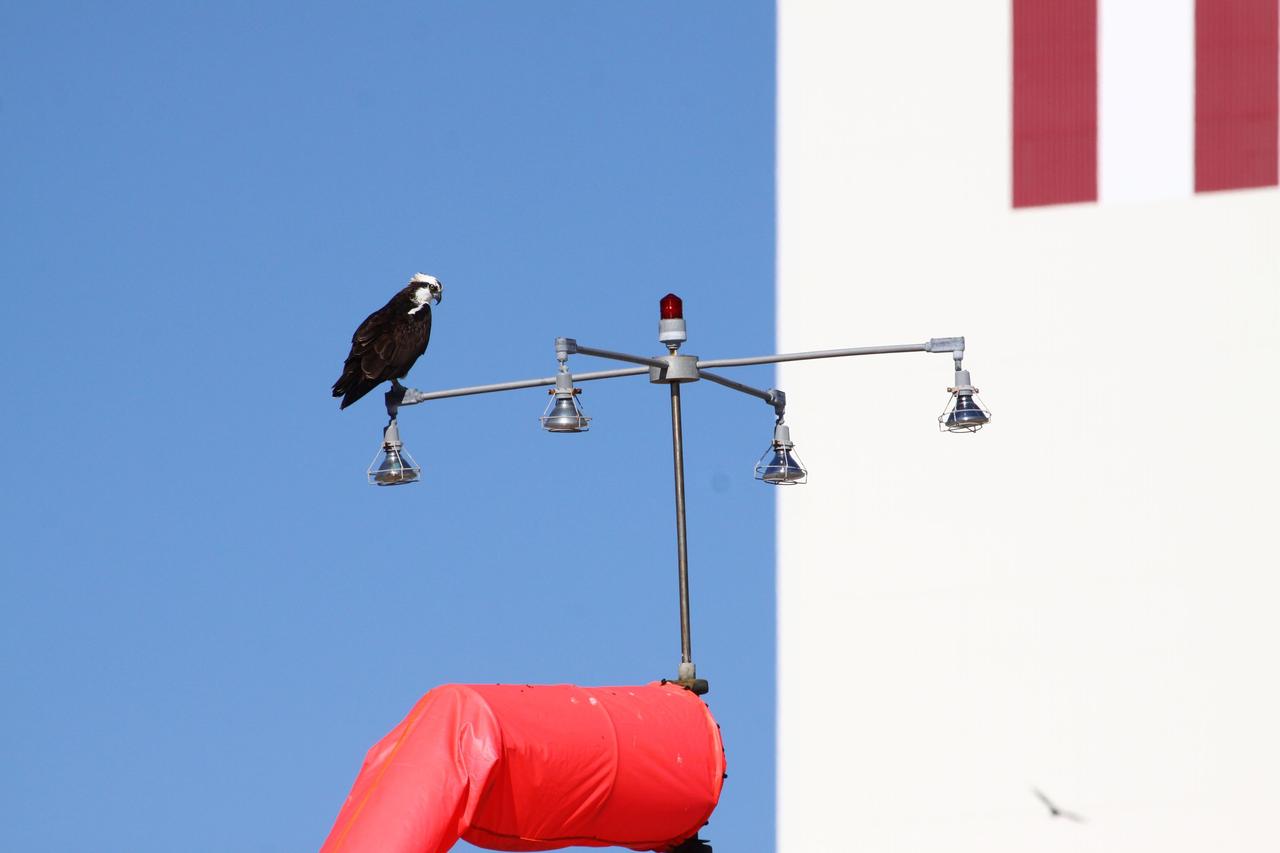
CAPE CANAVERAL, Fla. -- At NASA's Kennedy Space Center in Florida, an osprey is perched on a weather pole at a helicopter landing site near the Vehicle Assembly Building. Ospreys are a familiar sight at Kennedy because of its close proximity to ponds, lakes and coastal waters, which feed their appetite for fish. Kennedy coexists with the Merritt Island National Wildlife Refuge, habitat to more than 310 species of birds, 25 mammals, 117 fish and 65 amphibians and reptiles. Photo credit: NASA/Jack Pfaller
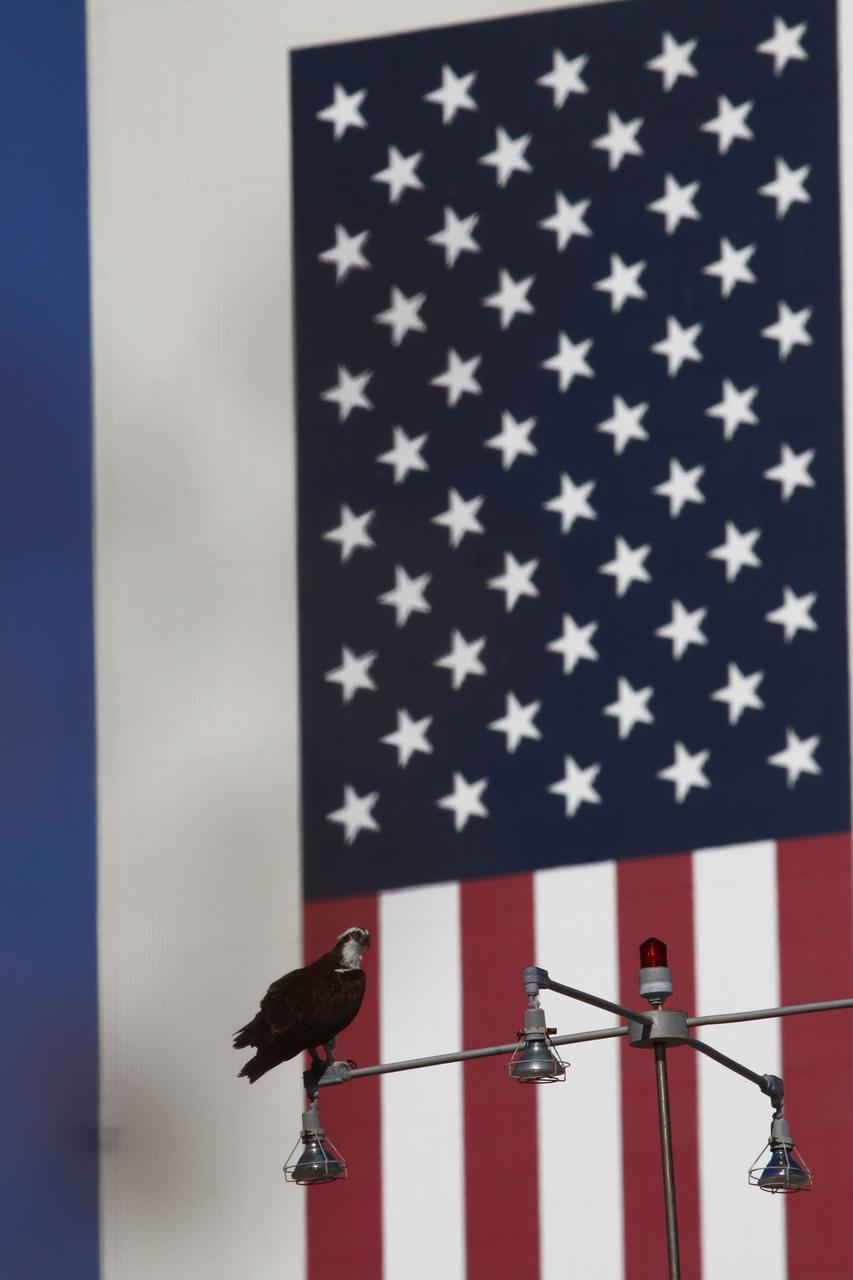
CAPE CANAVERAL, Fla. -- At NASA's Kennedy Space Center in Florida, an osprey is perched on a weather pole at a helicopter landing site near the Vehicle Assembly Building. Ospreys are a familiar sight at Kennedy because of its close proximity to ponds, lakes and coastal waters, which feed their appetite for fish. Kennedy coexists with the Merritt Island National Wildlife Refuge, habitat to more than 310 species of birds, 25 mammals, 117 fish and 65 amphibians and reptiles. Photo credit: NASA/Jack Pfaller
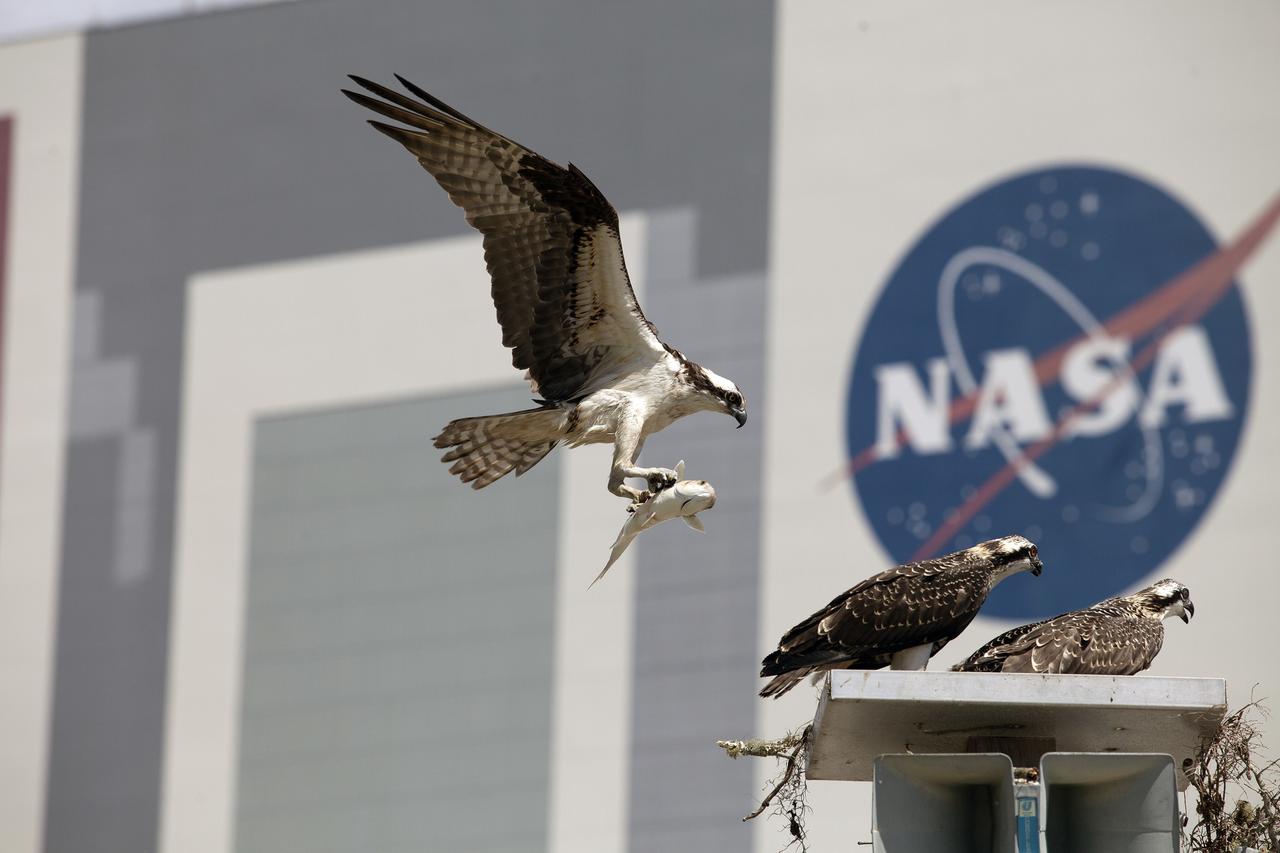
CAPE CANAVERAL, Fla. -- An adult osprey returns home to its nest atop a speaker platform in the Press Site parking lot at NASA's Kennedy Space Center in Florida, carrying a fish in its talons. In the background is a 12,300-square-foot NASA logo painted on the side of the 525-foot-tall Vehicle Assembly Building VAB. The parking lot borders the water of the Launch Complex 39 turn basin, making it an ideal source of food for the osprey. The undeveloped property on Kennedy Space Center is managed by the U.S. Fish and Wildlife Service through the Merritt Island National Wildlife Refuge. The refuge provides a habitat for a plethora of wildlife, including 330 species of birds. For information on the refuge, visit http://www.fws.gov/merrittisland/Index.html. Photo credit: NASA/Daniel Casper
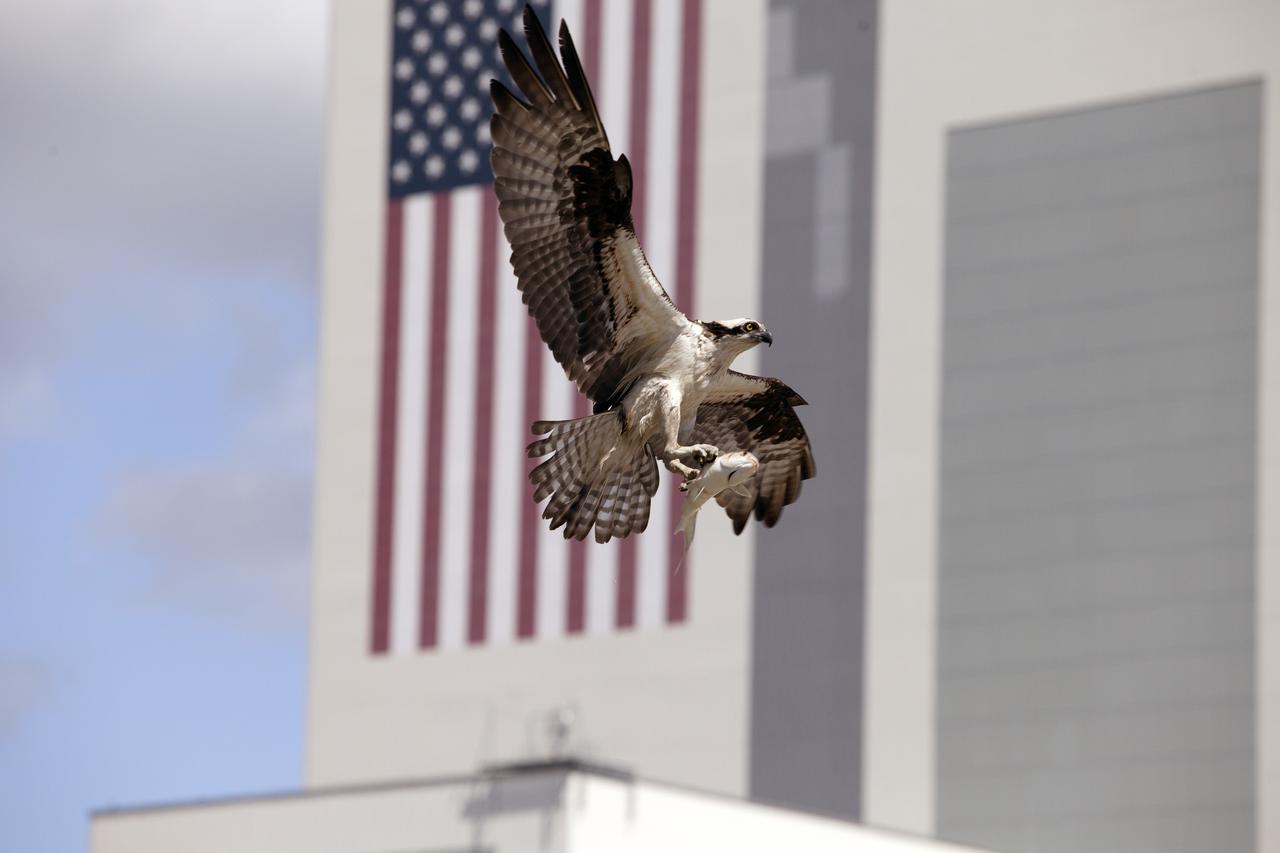
CAPE CANAVERAL, Fla. -- An adult osprey prepares to land in its nest atop a speaker platform in the Press Site parking lot at NASA's Kennedy Space Center in Florida, carrying a fish in its talons. In the background is the 209-foot-tall U.S. flag painted on the side of the 52-story Vehicle Assembly Building VAB. The parking lot borders the water of the Launch Complex 39 turn basin, making it an ideal source of food for the osprey. The undeveloped property on Kennedy Space Center is managed by the U.S. Fish and Wildlife Service through the Merritt Island National Wildlife Refuge. The refuge provides a habitat for a plethora of wildlife, including 330 species of birds. For information on the refuge, visit http://www.fws.gov/merrittisland/Index.html. Photo credit: NASA/Daniel Casper
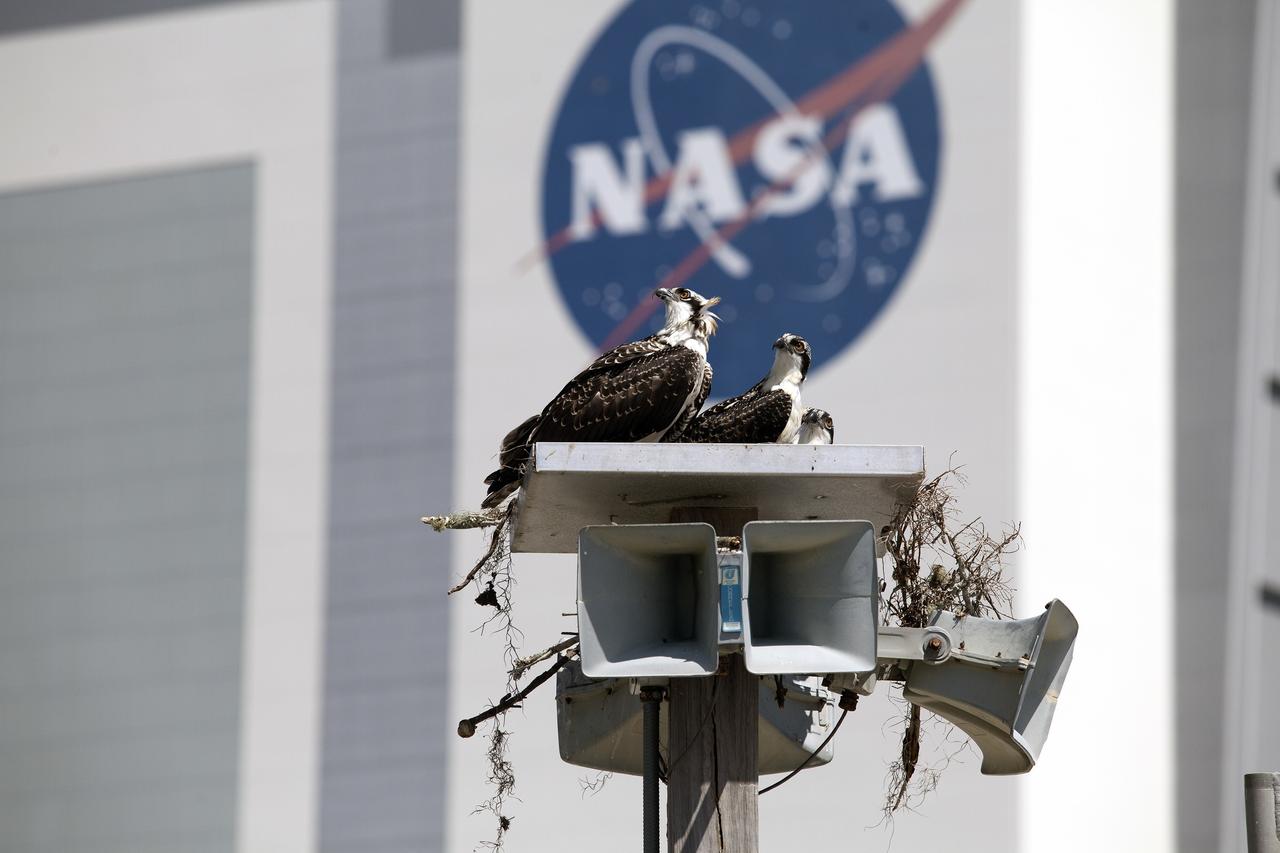
CAPE CANAVERAL, Fla. -- A family of ospreys is at home atop a speaker platform in the Press Site parking lot at NASA's Kennedy Space Center in Florida. In the background is a 12,300-square-foot NASA logo painted on the side of the 525-foot-tall Vehicle Assembly Building VAB. The parking lot borders the water of the Launch Complex 39 turn basin, making it an ideal source of food for the osprey. The undeveloped property on Kennedy Space Center is managed by the U.S. Fish and Wildlife Service through the Merritt Island National Wildlife Refuge. The refuge provides a habitat for a plethora of wildlife, including 330 species of birds. For information on the refuge, visit http://www.fws.gov/merrittisland/Index.html. Photo credit: NASA/Daniel Casper

CAPE CANAVERAL, Fla. -- A family of ospreys almost has outgrown its nest, built on a speaker platform in the Press Site parking lot at NASA's Kennedy Space Center in Florida. In the background is a 12,300-square-foot NASA logo painted on the side of the 525-foot-tall Vehicle Assembly Building VAB. The parking lot borders the water of the Launch Complex 39 turn basin, making it an ideal source of food for the osprey. The undeveloped property on Kennedy Space Center is managed by the U.S. Fish and Wildlife Service through the Merritt Island National Wildlife Refuge. The refuge provides a habitat for a plethora of wildlife, including 330 species of birds. For information on the refuge, visit http://www.fws.gov/merrittisland/Index.html. Photo credit: NASA/Daniel Casper
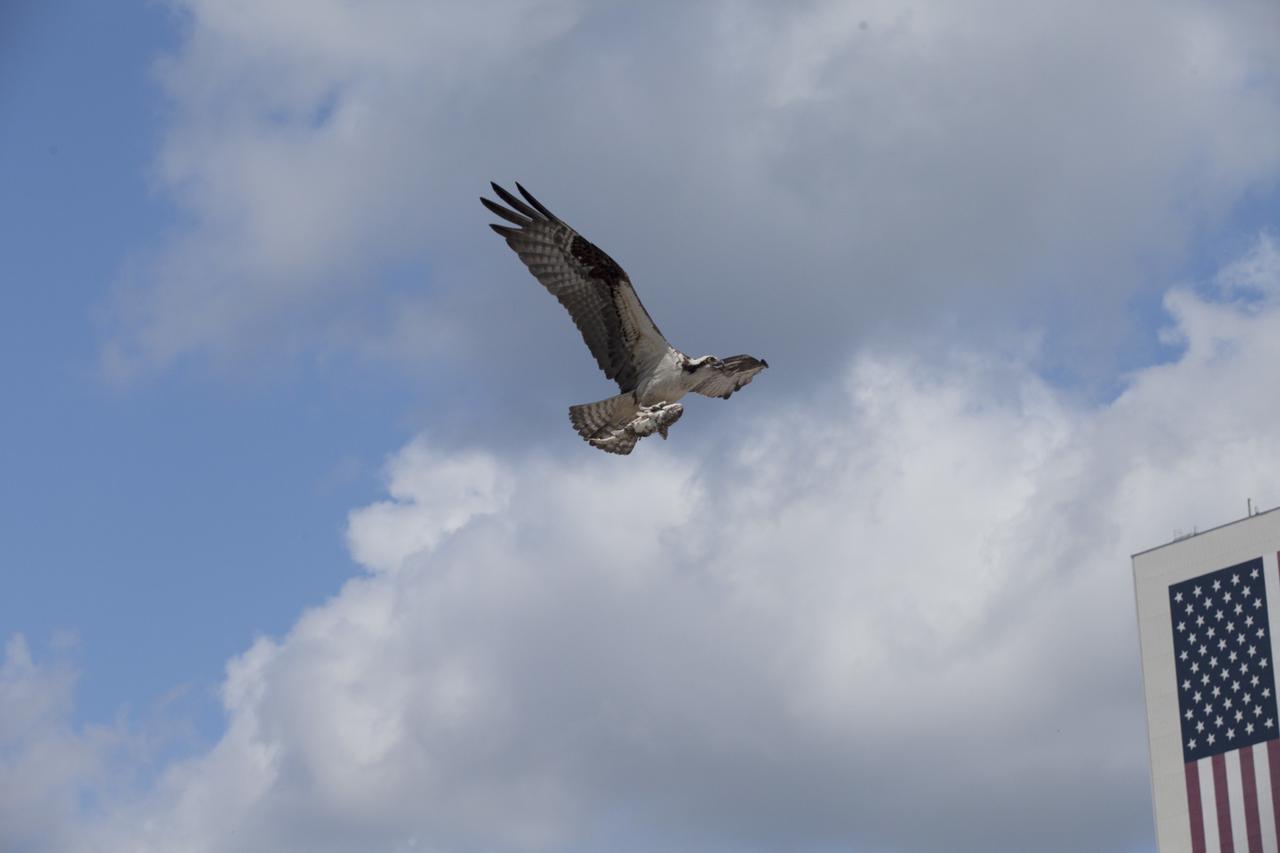
CAPE CANAVERAL, Fla. -- An adult osprey delivers a fish dinner to its family, nesting atop a speaker platform in the Press Site parking lot at NASA's Kennedy Space Center in Florida. In the background is the 209-foot-tall U.S. flag painted on the side of the 52-story Vehicle Assembly Building VAB. The parking lot borders the water of the Launch Complex 39 turn basin, making it an ideal source of food for the osprey. The undeveloped property on Kennedy Space Center is managed by the U.S. Fish and Wildlife Service through the Merritt Island National Wildlife Refuge. The refuge provides a habitat for a plethora of wildlife, including 330 species of birds. For information on the refuge, visit http://www.fws.gov/merrittisland/Index.html. Photo credit: NASA/Daniel Casper
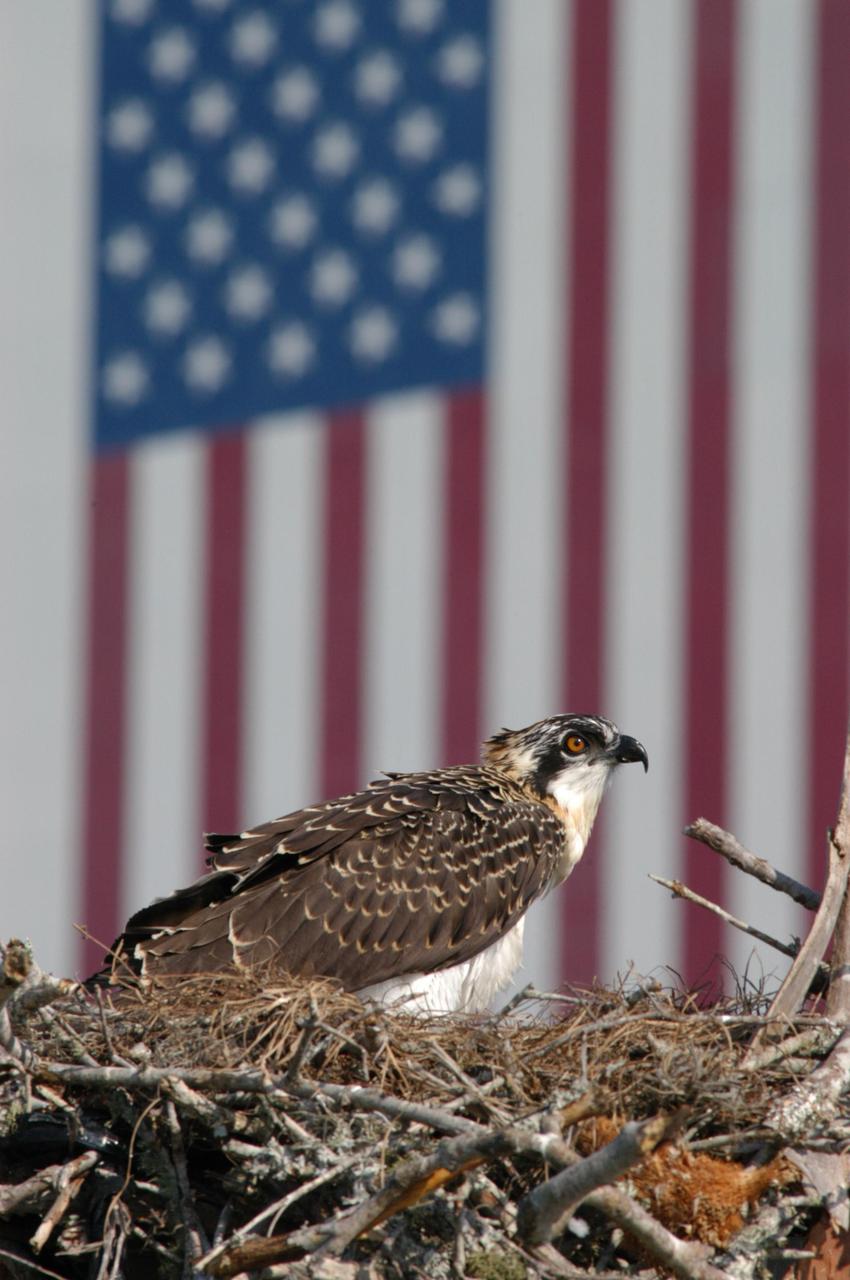
KENNEDY SPACE CENTER, FLA. -- A baby osprey sits on its nest situated at the top of a pole in the parking lot at the NASA News Center at Kennedy Space Center. Behind the nest can be seen the immense flag painted on the side of the Vehicle Assembly Building. This is the third year the ospreys have raised a family at the News Center. Known as a fish hawk, ospreys select sites of opportunity, from trees and telephone poles to rocks or even flat ground. In the United States they are found from Alaska and Newfoundland to Florida and the Gulf Coast. Osprey nests are found throughout the Kennedy Space Center and nearby Merritt Island National Wildlife Refuge, which shares a boundary with the Center. Photo credit: NASA/George Shelton
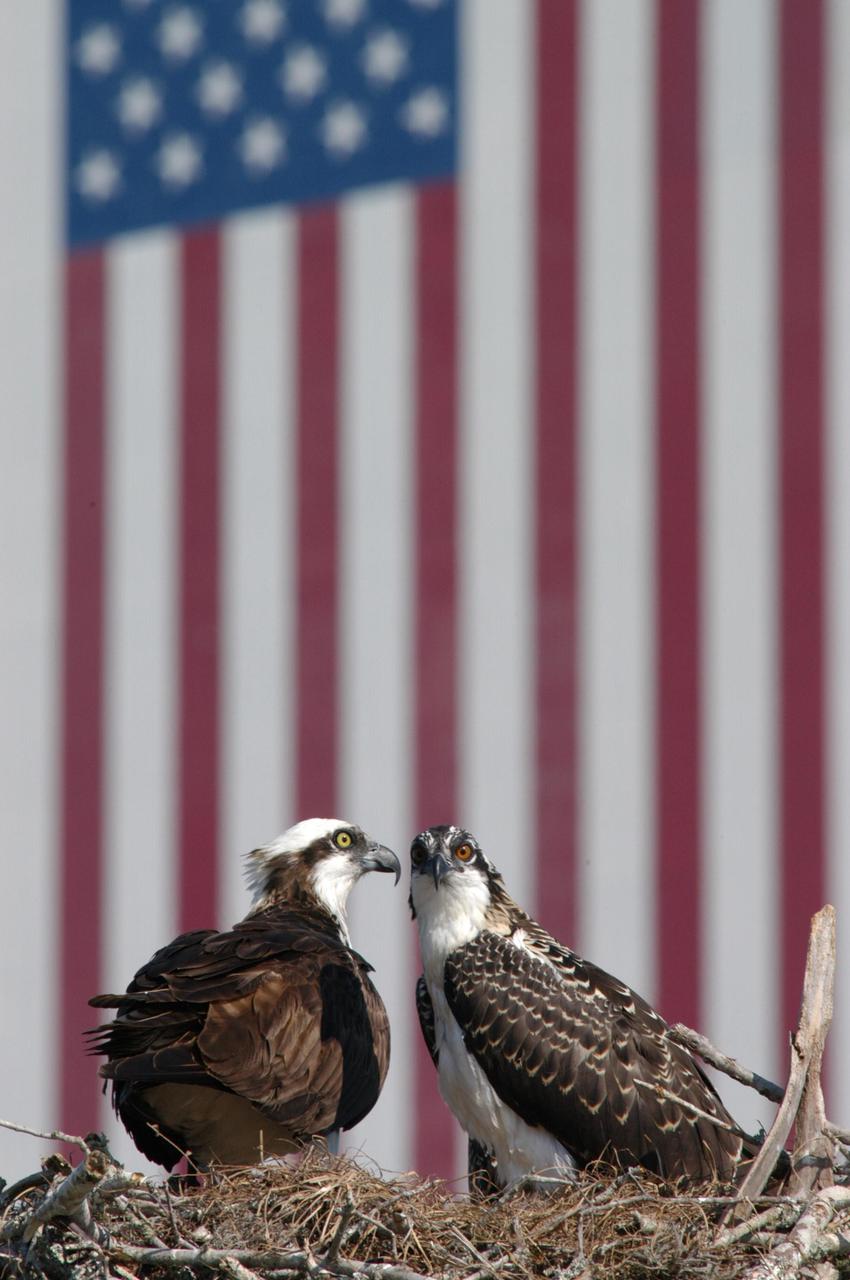
KENNEDY SPACE CENTER, FLA. -- A mother osprey (left) sits protectively next to one of her chicks in the nest situated at the top of a pole in the parking lot at the NASA News Center at Kennedy Space Center. Behind the nest can be seen the immense flag painted on the side of the Vehicle Assembly Building. This is the third year the ospreys have raised a family at the News Center. Known as a fish hawk, ospreys select sites of opportunity, from trees and telephone poles to rocks or even flat ground. In the United States they are found from Alaska and Newfoundland to Florida and the Gulf Coast. Osprey nests are found throughout the Kennedy Space Center and nearby Merritt Island National Wildlife Refuge, which shares a boundary with the Center. Photo credit: NASA/George Shelton
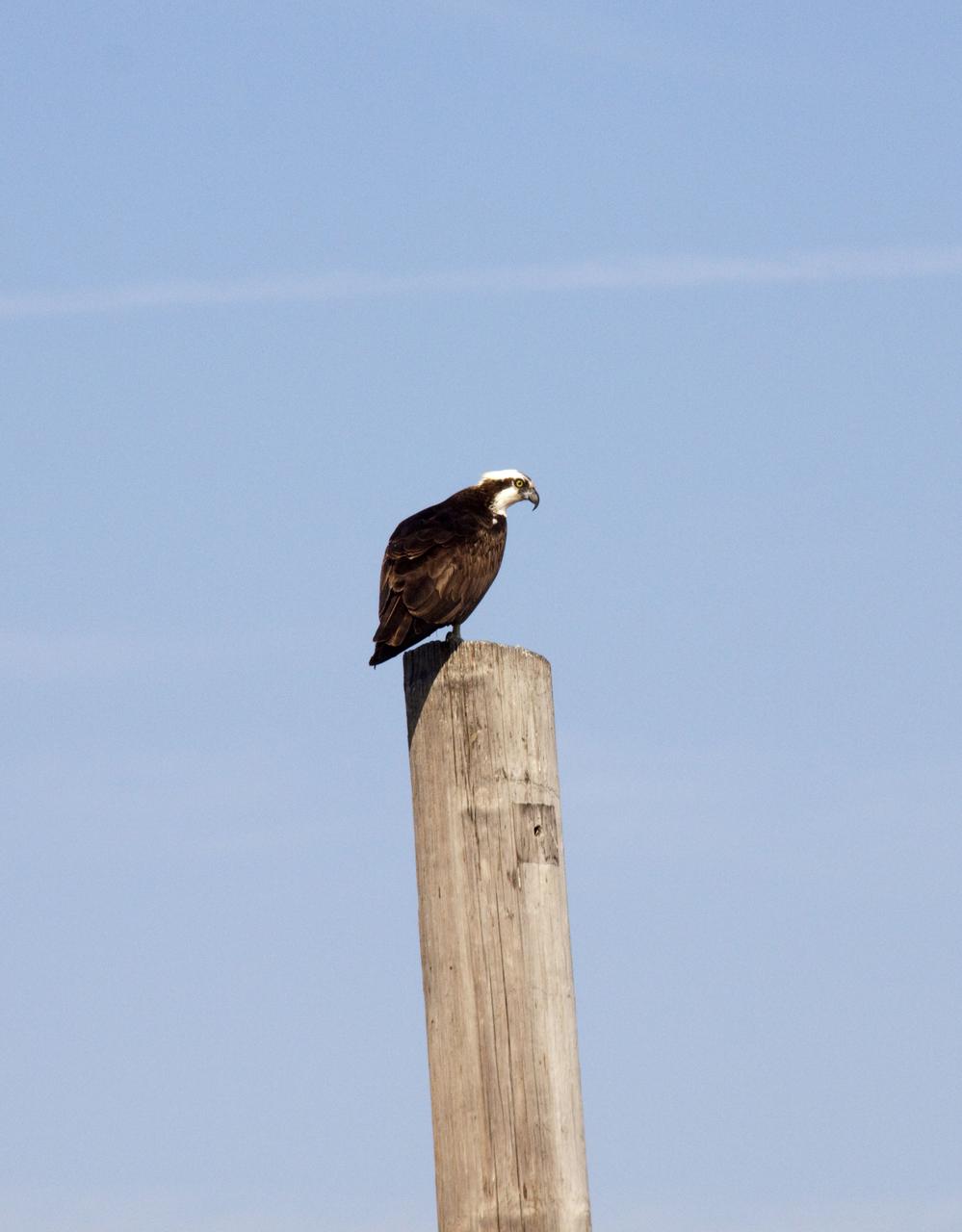
CAPE CANAVERAL, Fla. - At NASA's Kennedy Space Center in Florida, an adult osprey keeps an eye on its young from a pole near its nest, built on a platform in the Press Site parking lot. The adults feed their young until they are fully fledged and defend their brood with great perseverance until they are independent. The osprey, also known as a fish hawk, is well adapted for capturing fish, which make up its entire diet. The soles of its feet are equipped with sharp, spiny projections that give the bird a firm grip on its slippery prey. Kennedy's Press Site is located at the turn basin in Launch Complex 39, making it an ideal osprey nesting place. The Merritt Island National Wildlife Refuge overlaps with Kennedy Space Center property and provides a habitat for 330 species of birds, including the osprey. A variety of other wildlife - 117 kinds of fish, 65 types of amphibians and reptiles, 31 different mammals, and 1,045 species of plants - also inhabit the refuge. For information on the refuge, visit http:__www.fws.gov_merrittisland_Index.html. For information on Kennedy Space Center, visit http:__www.nasa.gov_kennedy. Photo credit: NASA_Jack Pfaller
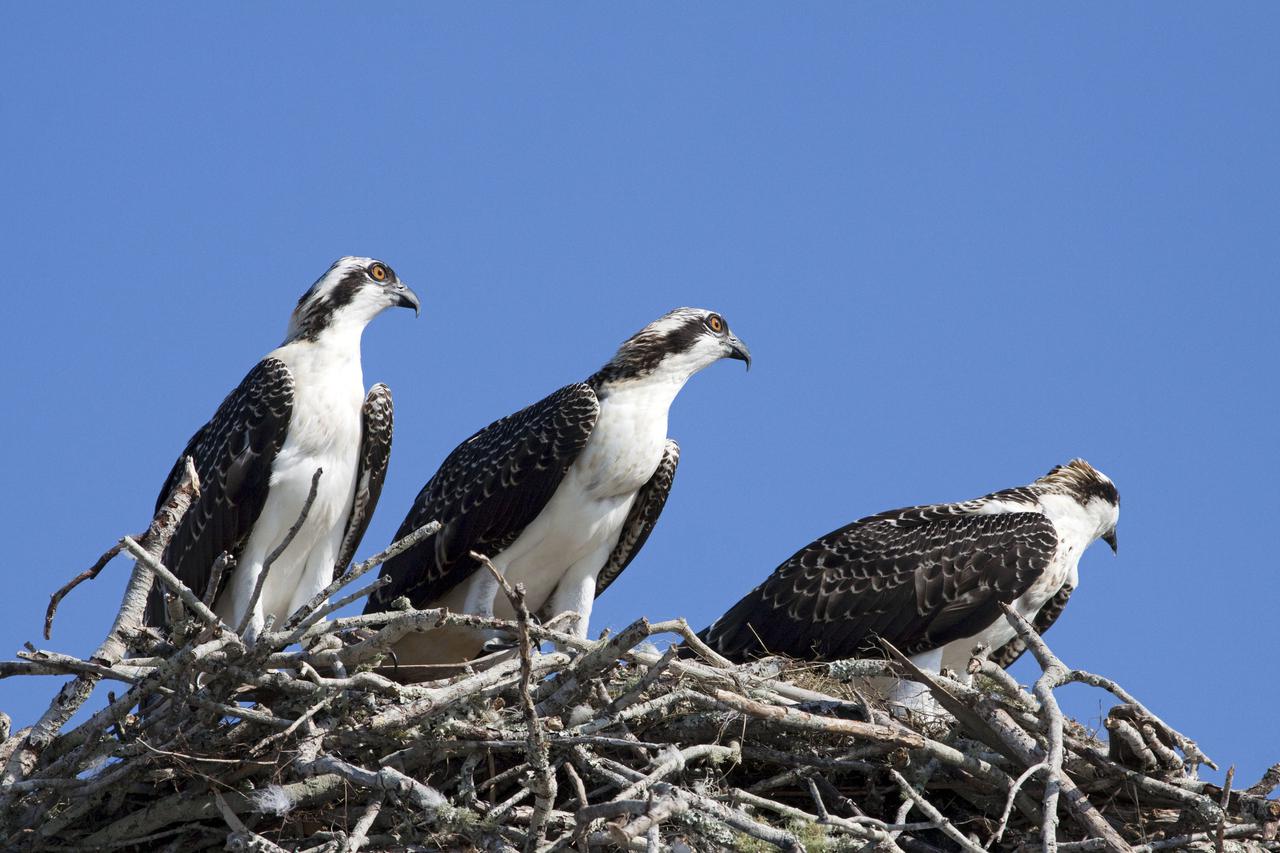
CAPE CANAVERAL, Fla. - At NASA's Kennedy Space Center in Florida, young sibling osprey peer out of their nest atop a platform in the Press Site parking lot. The adults feed their young until they are fully fledged and defend their brood with great perseverance until they are independent. The osprey, also known as a fish hawk, is well adapted for capturing fish, which make up its entire diet. The soles of its feet are equipped with sharp, spiny projections that give the bird a firm grip on its slippery prey. Kennedy's Press Site is located at the turn basin in Launch Complex 39, making it an ideal osprey nesting place. The Merritt Island National Wildlife Refuge overlaps with Kennedy Space Center property and provides a habitat for 330 species of birds, including the osprey. A variety of other wildlife - 117 kinds of fish, 65 types of amphibians and reptiles, 31 different mammals, and 1,045 species of plants - also inhabit the refuge. For information on the refuge, visit http:__www.fws.gov_merrittisland_Index.html. For information on Kennedy Space Center, visit http:__www.nasa.gov_kennedy. Photo credit: NASA_Jack Pfaller
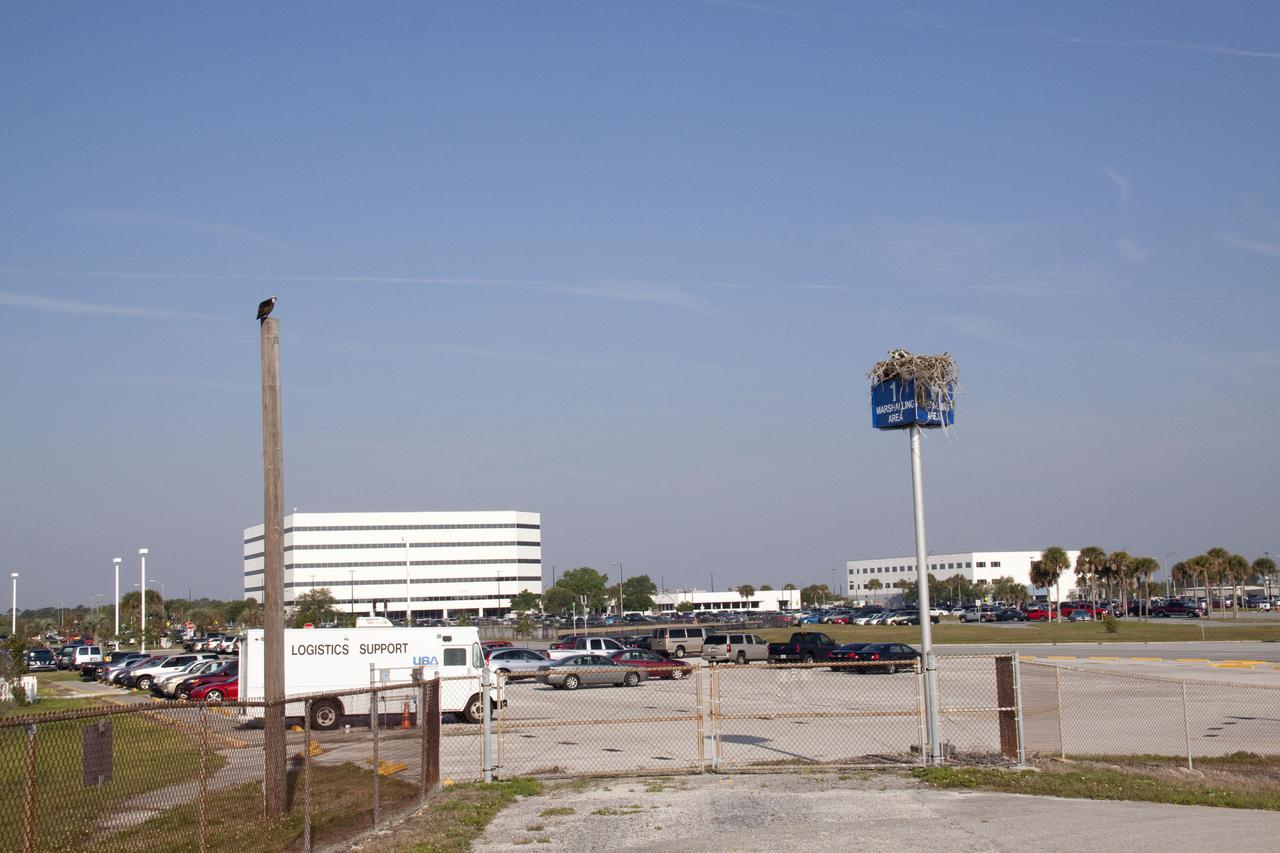
CAPE CANAVERAL, Fla. - At NASA's Kennedy Space Center in Florida, an adult osprey keeps an eye on its young from a pole near its nest, built on a platform in the Press Site parking lot. The adults feed their young until they are fully fledged and defend their brood with great perseverance until they are independent. The osprey, also known as a fish hawk, is well adapted for capturing fish, which make up its entire diet. The soles of its feet are equipped with sharp, spiny projections that give the bird a firm grip on its slippery prey. Kennedy's Press Site is located at the turn basin in Launch Complex 39, making it an ideal osprey nesting place. The Merritt Island National Wildlife Refuge overlaps with Kennedy Space Center property and provides a habitat for 330 species of birds, including the osprey. A variety of other wildlife - 117 kinds of fish, 65 types of amphibians and reptiles, 31 different mammals, and 1,045 species of plants - also inhabit the refuge. For information on the refuge, visit http:__www.fws.gov_merrittisland_Index.html. For information on Kennedy Space Center, visit http:__www.nasa.gov_kennedy. Photo credit: NASA_Jack Pfaller
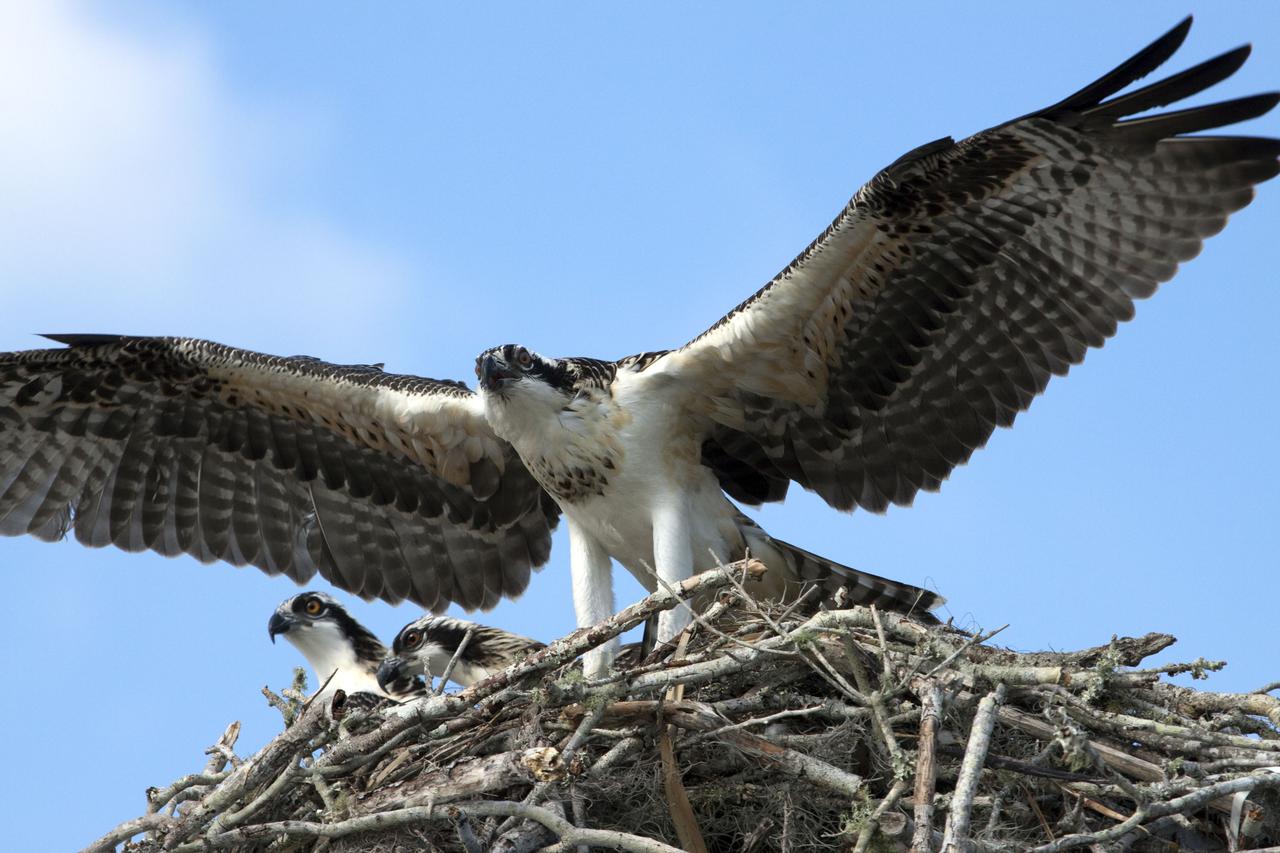
CAPE CANAVERAL, Fla. - At NASA's Kennedy Space Center in Florida, a female osprey returns to its nest atop a platform in the Press Site parking lot, ever protective of her growing triplets. The adults feed their young until they are fully fledged and defend their brood with great perseverance until they are independent. The osprey, also known as a fish hawk, is well adapted for capturing fish, which make up its entire diet. The soles of its feet are equipped with sharp, spiny projections that give the bird a firm grip on its slippery prey. Kennedy's Press Site is located at the turn basin in Launch Complex 39, making it an ideal osprey nesting place. The Merritt Island National Wildlife Refuge overlaps with Kennedy Space Center property and provides a habitat for 330 species of birds, including the osprey. A variety of other wildlife - 117 kinds of fish, 65 types of amphibians and reptiles, 31 different mammals, and 1,045 species of plants - also inhabit the refuge. For information on the refuge, visit http:__www.fws.gov_merrittisland_Index.html. For information on Kennedy Space Center, visit http:__www.nasa.gov_kennedy. Photo credit: NASA_Jack Pfaller
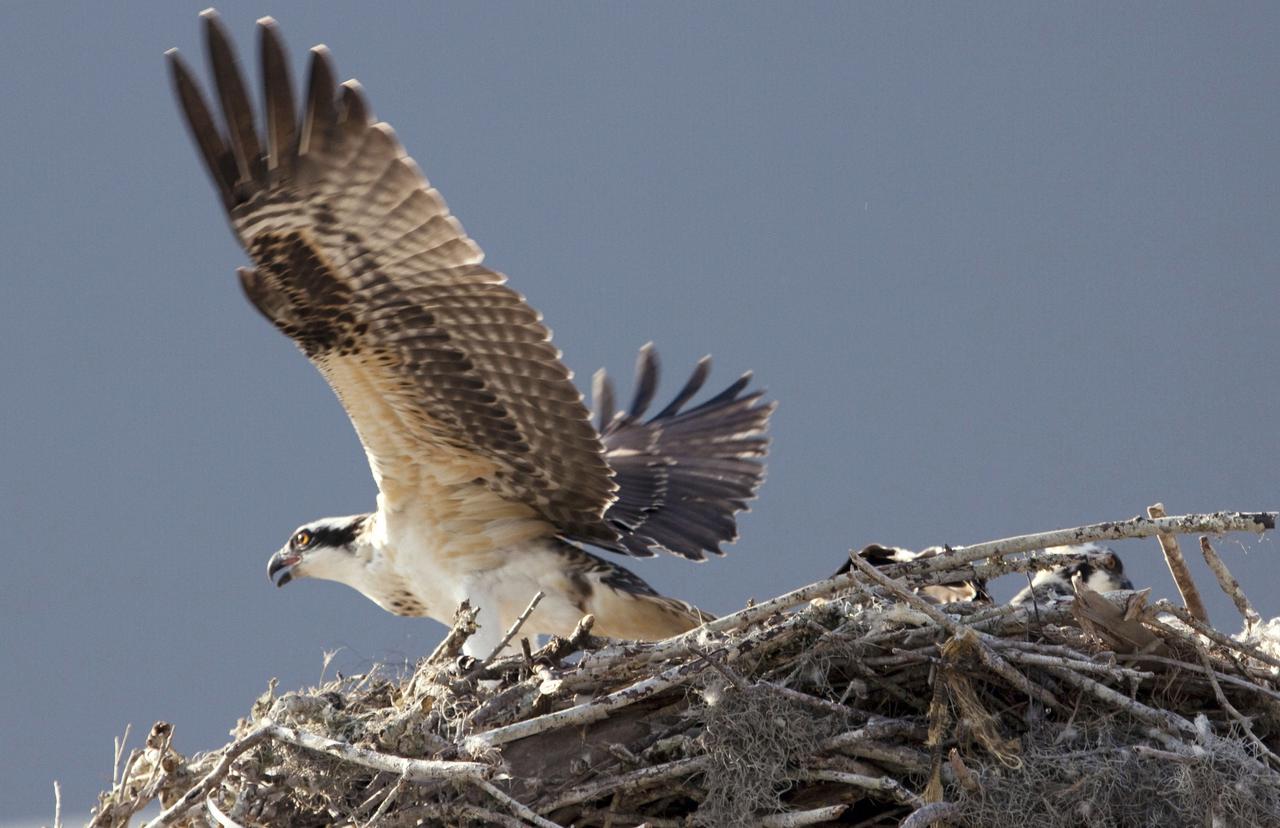
CAPE CANAVERAL, Fla. - At NASA's Kennedy Space Center in Florida, a female osprey lands in its nest atop a platform in the Press Site parking lot. The adults feed their young until they are fully fledged and defend their brood with great perseverance until they are independent. The osprey, also known as a fish hawk, is well adapted for capturing fish, which make up its entire diet. The soles of its feet are equipped with sharp, spiny projections that give the bird a firm grip on its slippery prey. Kennedy's Press Site is located at the turn basin in Launch Complex 39, making it an ideal osprey nesting place. The Merritt Island National Wildlife Refuge overlaps with Kennedy Space Center property and provides a habitat for 330 species of birds, including the osprey. A variety of other wildlife - 117 kinds of fish, 65 types of amphibians and reptiles, 31 different mammals, and 1,045 species of plants - also inhabit the refuge. For information on the refuge, visit http:__www.fws.gov_merrittisland_Index.html. For information on Kennedy Space Center, visit http:__www.nasa.gov_kennedy. Photo credit: NASA_Jack Pfaller
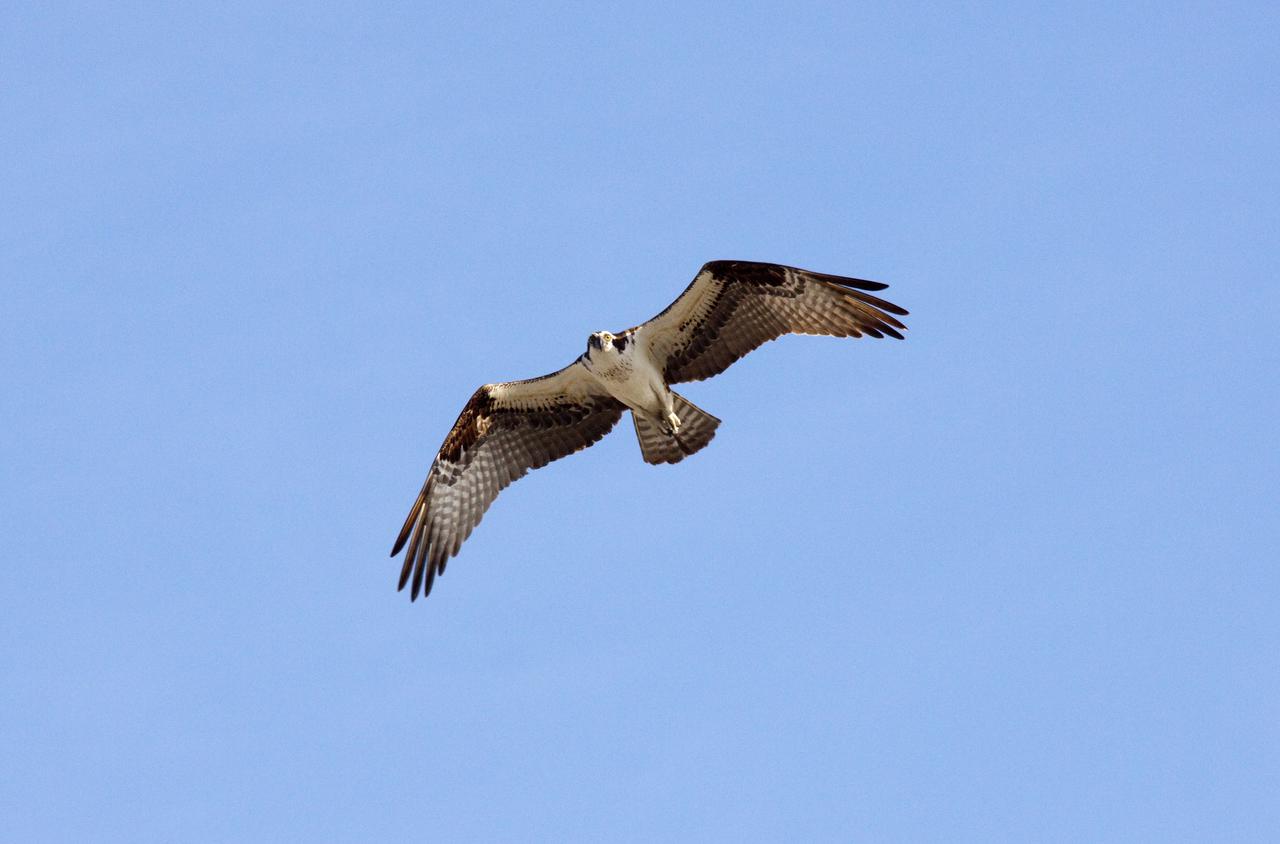
CAPE CANAVERAL, Fla. - At NASA's Kennedy Space Center in Florida, a female osprey returns to its nest atop a platform in the Press Site parking lot. The adults feed their young until they are fully fledged and defend their brood with great perseverance until they are independent. The osprey, also known as a fish hawk, is well adapted for capturing fish, which make up its entire diet. The soles of its feet are equipped with sharp, spiny projections that give the bird a firm grip on its slippery prey. Kennedy's Press Site is located at the turn basin in Launch Complex 39, making it an ideal osprey nesting place. The Merritt Island National Wildlife Refuge overlaps with Kennedy Space Center property and provides a habitat for 330 species of birds, including the osprey. A variety of other wildlife - 117 kinds of fish, 65 types of amphibians and reptiles, 31 different mammals, and 1,045 species of plants - also inhabit the refuge. For information on the refuge, visit http:__www.fws.gov_merrittisland_Index.html. For information on Kennedy Space Center, visit http:__www.nasa.gov_kennedy. Photo credit: NASA_Jack Pfaller
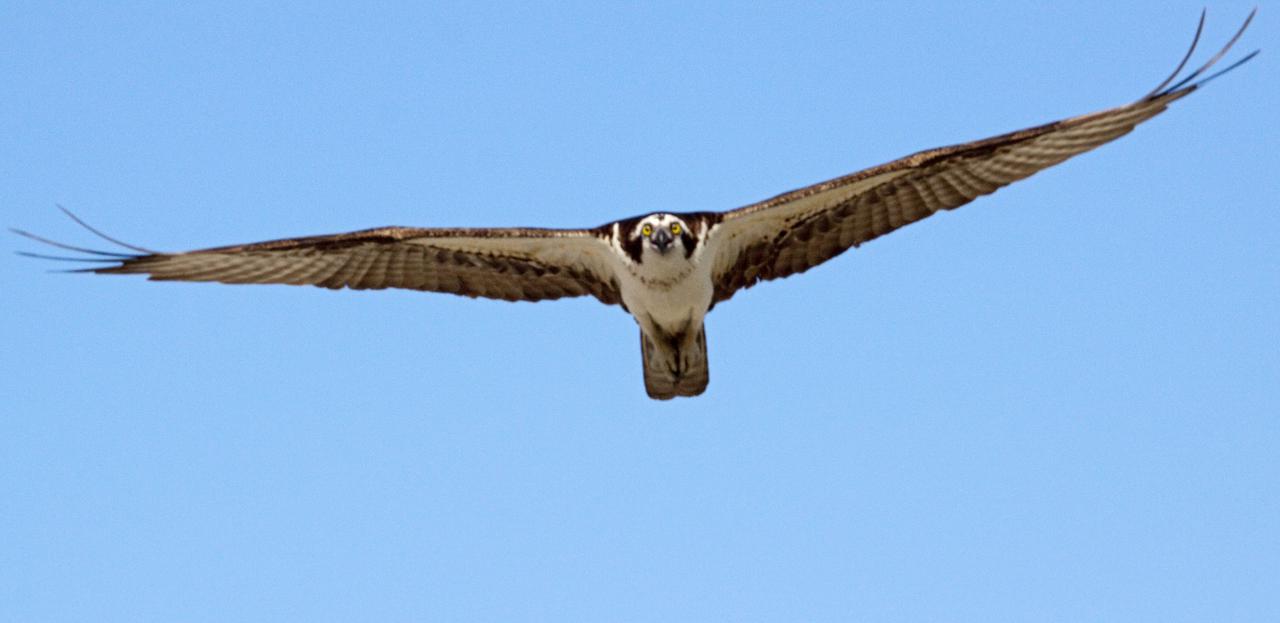
CAPE CANAVERAL, Fla. - At NASA's Kennedy Space Center in Florida, an adult osprey soars above its nest, built on a platform in the Press Site parking lot. The adults feed their young until they are fully fledged and defend their brood with great perseverance until they are independent. The osprey, also known as a fish hawk, is well adapted for capturing fish, which make up its entire diet. The soles of its feet are equipped with sharp, spiny projections that give the bird a firm grip on its slippery prey. Kennedy's Press Site is located at the turn basin in Launch Complex 39, making it an ideal osprey nesting place. The Merritt Island National Wildlife Refuge overlaps with Kennedy Space Center property and provides a habitat for 330 species of birds, including the osprey. A variety of other wildlife - 117 kinds of fish, 65 types of amphibians and reptiles, 31 different mammals, and 1,045 species of plants - also inhabit the refuge. For information on the refuge, visit http:__www.fws.gov_merrittisland_Index.html. For information on Kennedy Space Center, visit http:__www.nasa.gov_kennedy. Photo credit: NASA_Jack Pfaller
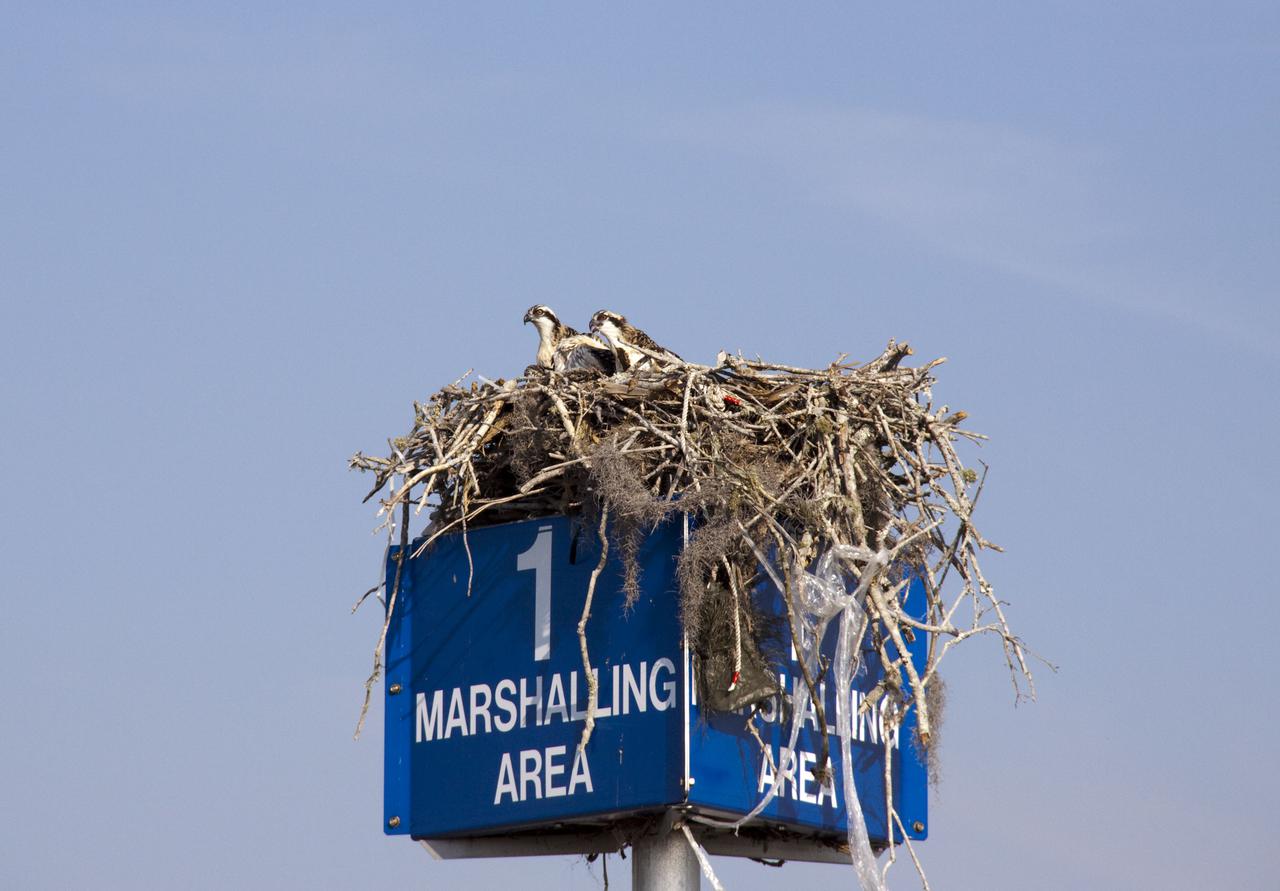
CAPE CANAVERAL, Fla. - At NASA's Kennedy Space Center in Florida, young osprey peer out of their nest, built on a platform in the Press Site parking lot. The adults feed their young until they are fully fledged and defend their brood with great perseverance until they are independent. The osprey, also known as a fish hawk, is well adapted for capturing fish, which make up its entire diet. The soles of its feet are equipped with sharp, spiny projections that give the bird a firm grip on its slippery prey. Kennedy's Press Site is located at the turn basin in Launch Complex 39, making it an ideal osprey nesting place. The Merritt Island National Wildlife Refuge overlaps with Kennedy Space Center property and provides a habitat for 330 species of birds, including the osprey. A variety of other wildlife - 117 kinds of fish, 65 types of amphibians and reptiles, 31 different mammals, and 1,045 species of plants - also inhabit the refuge. For information on the refuge, visit http:__www.fws.gov_merrittisland_Index.html. For information on Kennedy Space Center, visit http:__www.nasa.gov_kennedy. Photo credit: NASA_Jack Pfaller
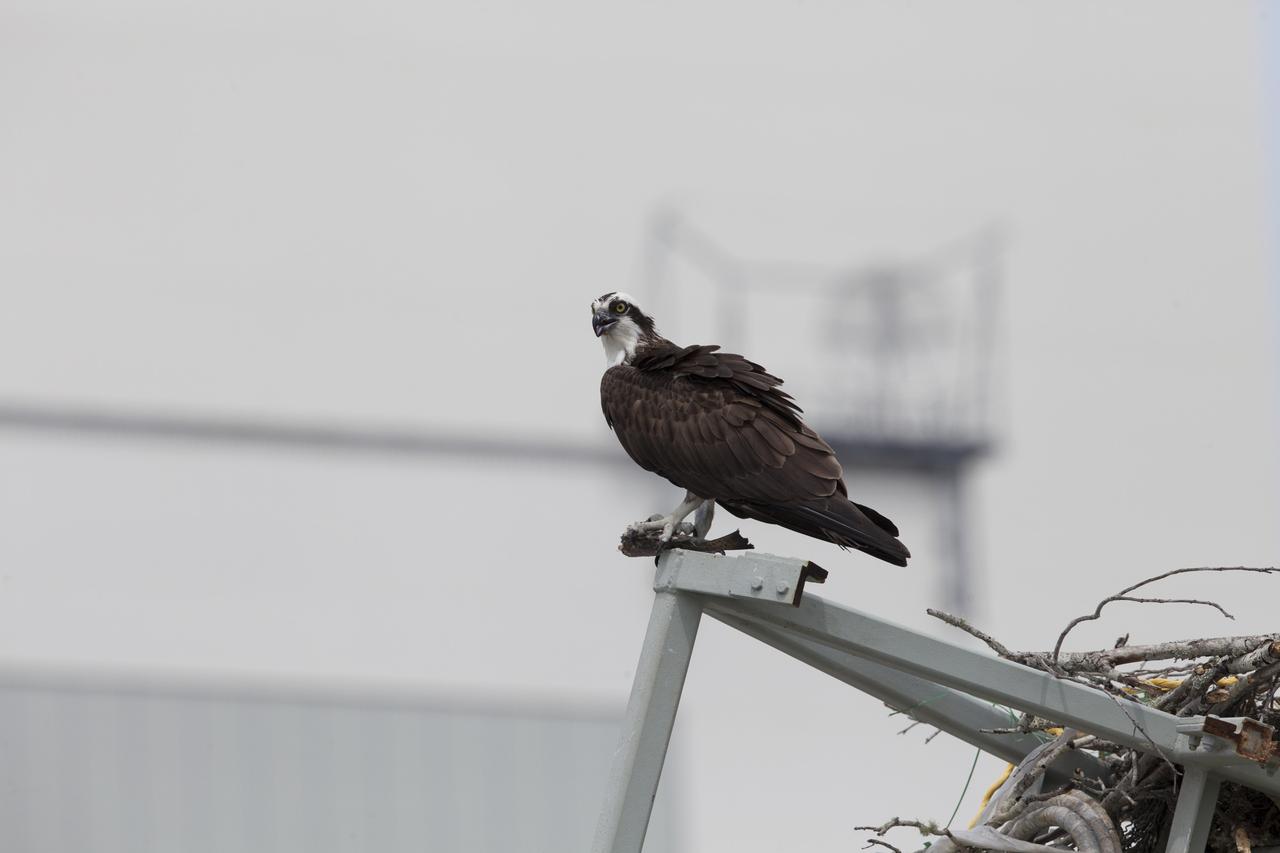
An osprey, clutching a fish, pauses for a meal atop a metal structure at NASA’s Kennedy Space Center in Florida. The spaceport shares boundaries with the Merritt Island National Wildlife Refuge, which is home to more than 330 native and migratory bird species, along with 25 mammal, 117 fish, and 65 amphibian and reptile species.
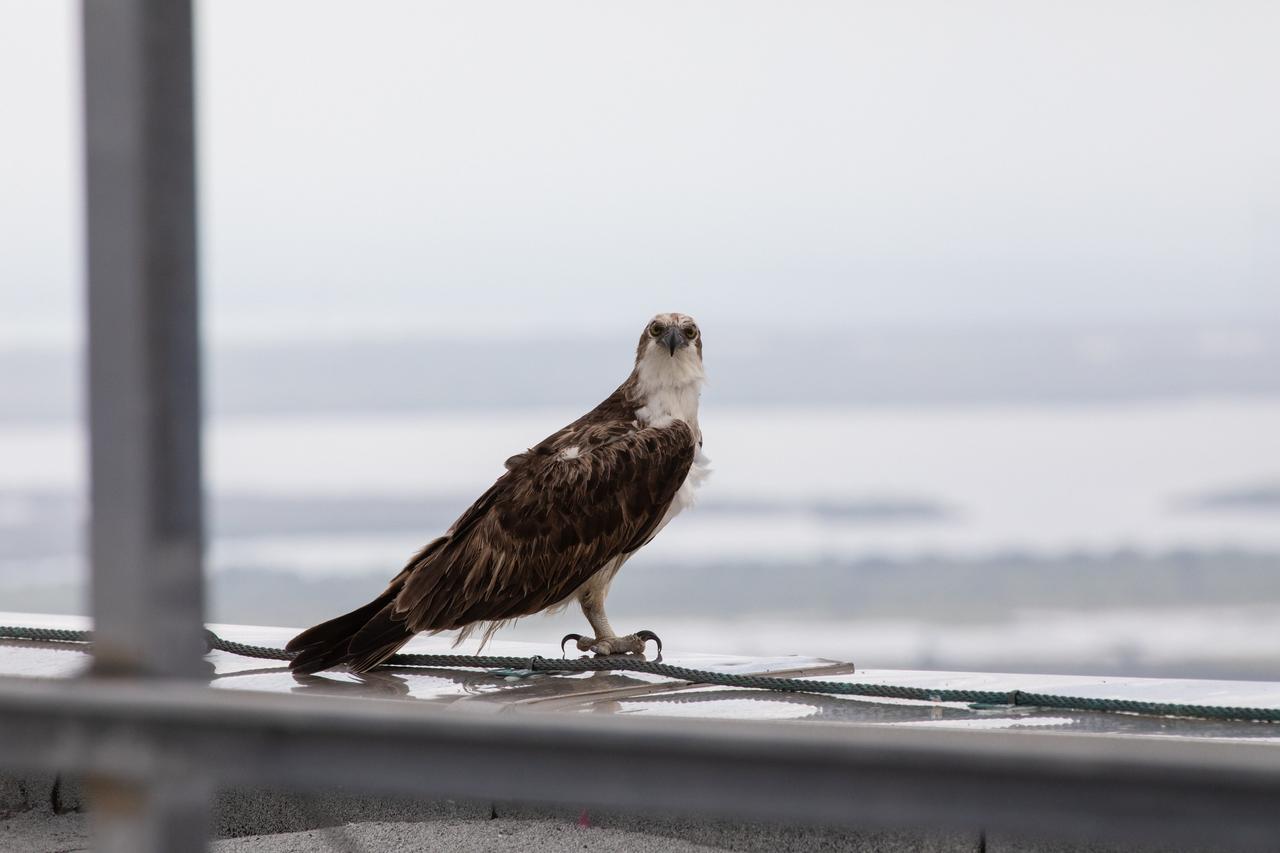
An osprey perches atop a building at NASA’s Kennedy Space Center in Florida on May 27, 2020. The center shares a border with the Merritt Island National Wildlife Refuge, where more than 330 native and migratory bird species, 25 mammals, 117 fishes, and 65 amphibians and reptiles reside.
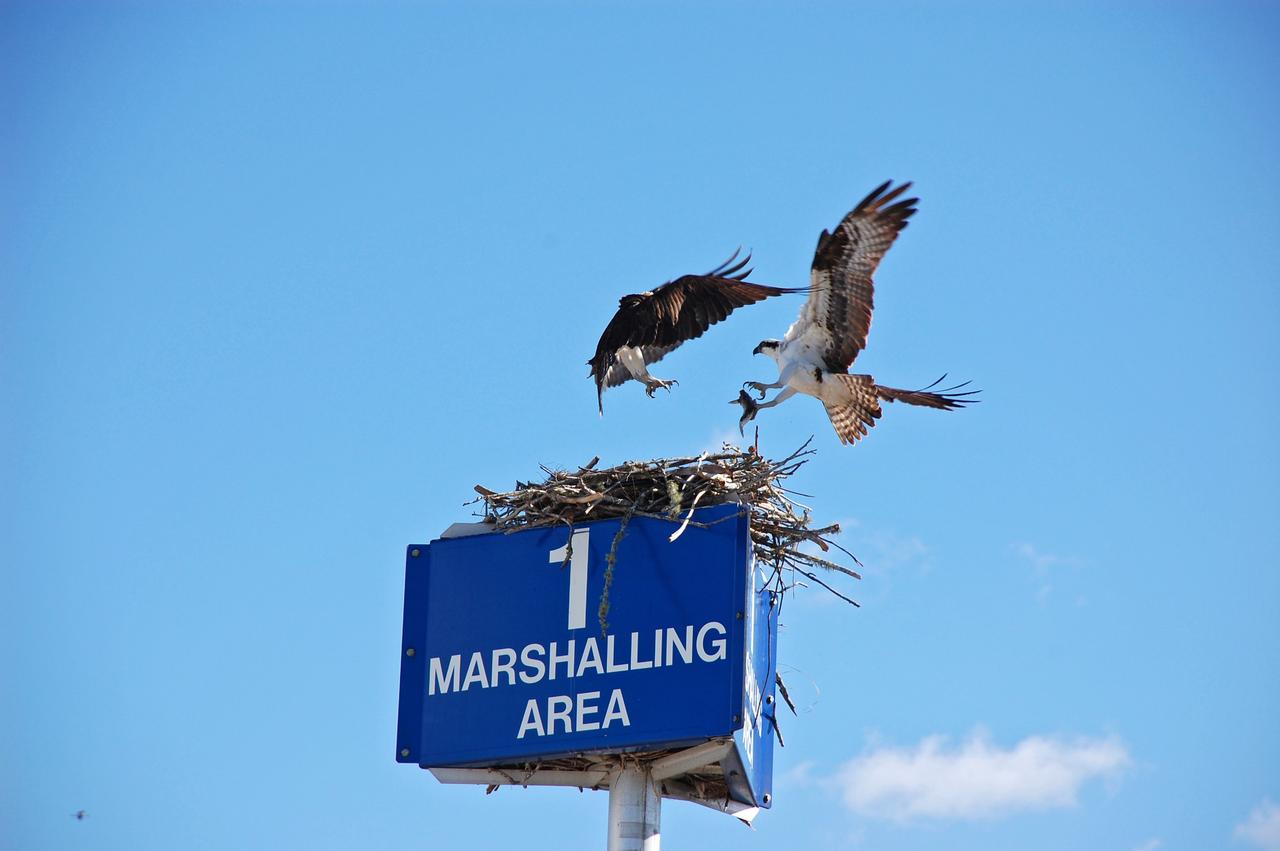
CAPE CANAVERAL, Fla. – A pair of ospreys perform an aerial dance around their nest near the NASA News Center at NASA's Kennedy Space Center in Florida. The bird at right is carrying a fish in its talons, the sole source of its diet. The osprey, also called fish hawk, is well adapted for capturing fish, which make up its entire diet. The soles of the birds' feet are equipped with sharp, spiny projections that give the bird a firm grip on its slippery prey. Nests of ospreys are bulky masses of sticks and debris placed in a tree, on rocks, flat ground or telephone poles. Many nests exist around the Launch Complex 39 Area at the center. The bird is one of more than 500 species of birds that co-exist at the center and the surrounding Merritt Island National Wildlife Refuge. Photo credit: NASA/Ben Smelgelsky
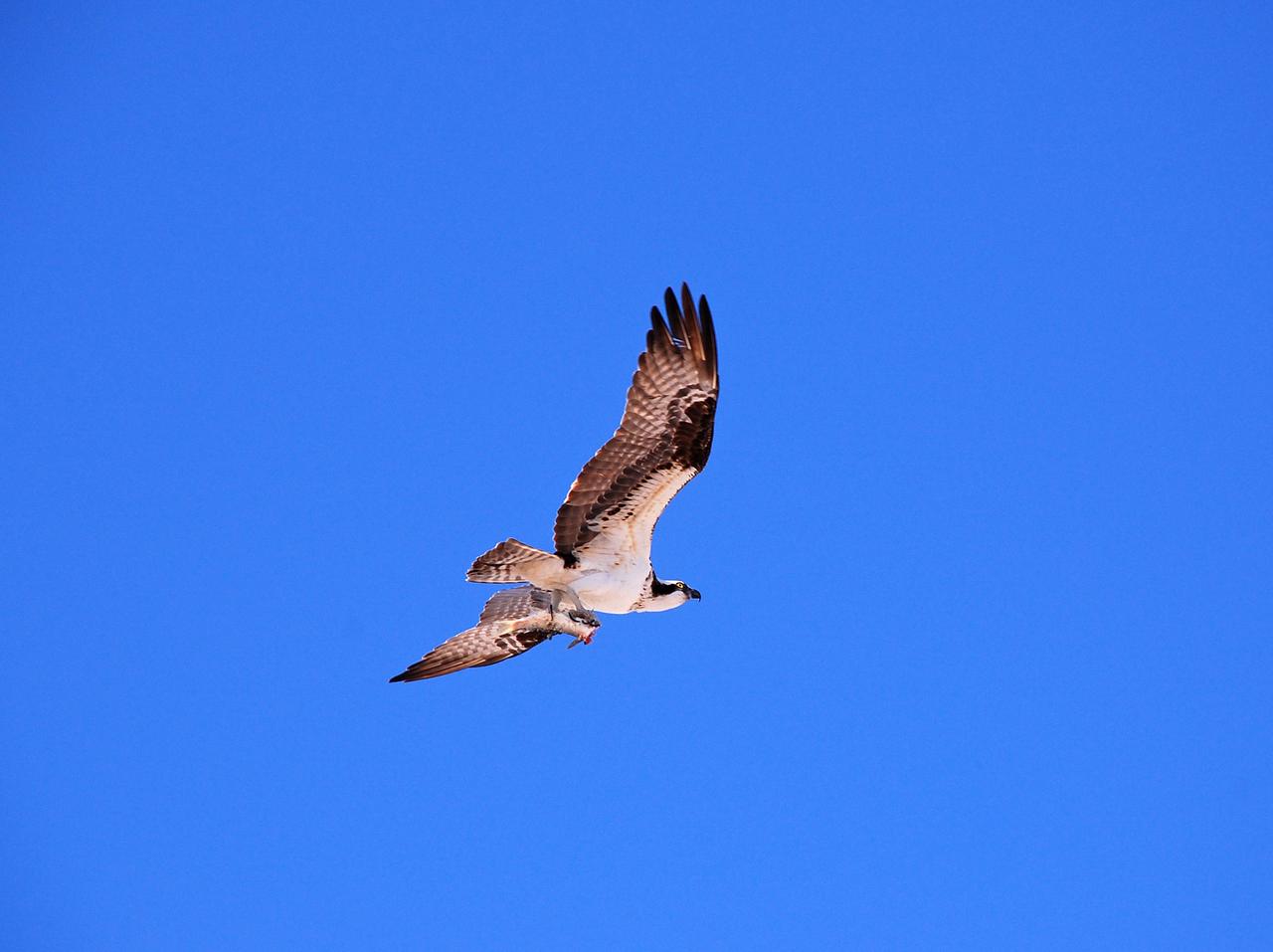
CAPE CANAVERAL, Fla. – An osprey carries its food in its talons as it flies to its nest near the NASA News Center at NASA's Kennedy Space Center in Florida. The osprey, also called fish hawk, is well adapted for capturing fish, which make up its entire diet. The soles of the birds' feet are equipped with sharp, spiny projections that give the bird a firm grip on its slippery prey. Nests of ospreys are bulky masses of sticks and debris placed in a tree, on rocks, flat ground or telephone poles. Many nests exist around the Launch Complex 39 Area at the center. The bird is one of more than 500 species of birds that co-exist at the center and the surrounding Merritt Island National Wildlife Refuge. Photo credit: NASA/Ben Smelgelsky
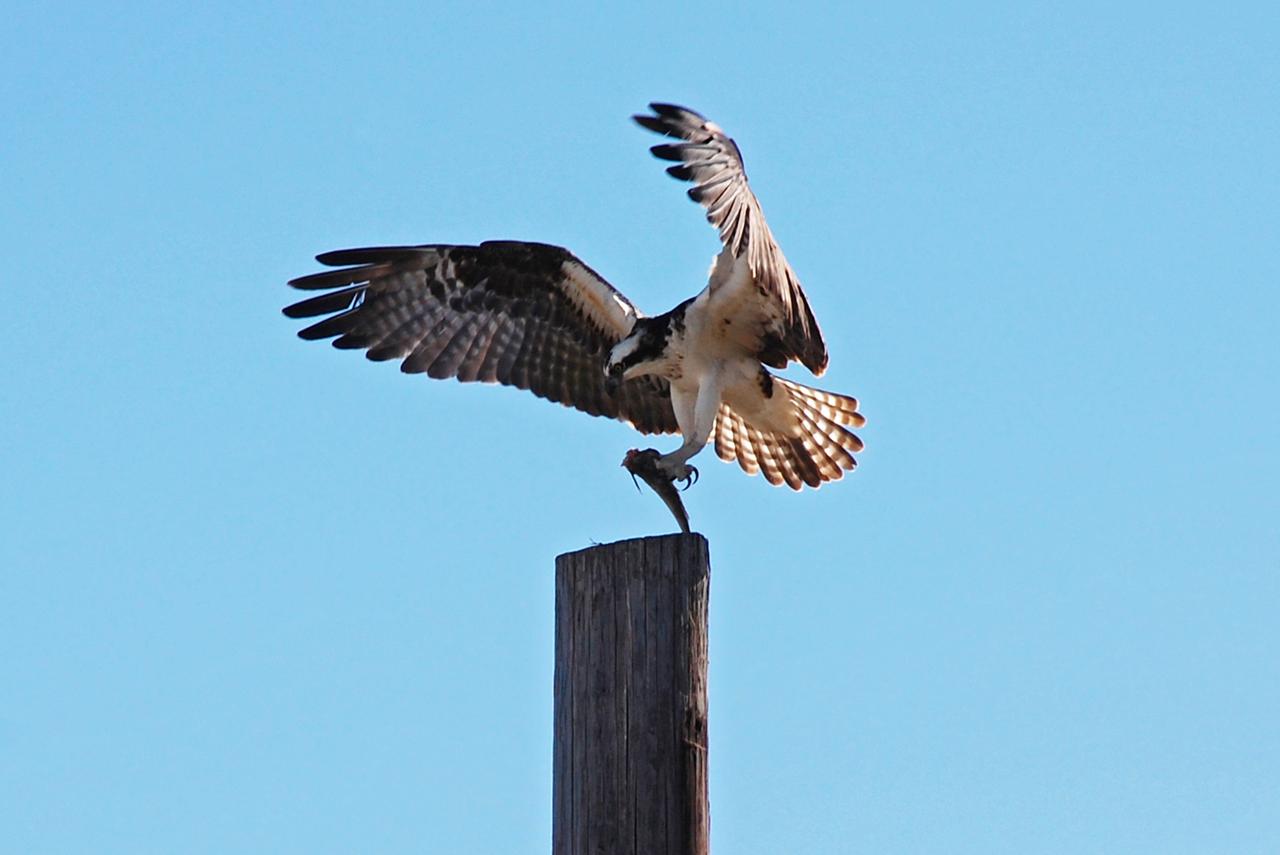
CAPE CANAVERAL, Fla. – Near the NASA News Center at NASA's Kennedy Space Center in Florida, the osprey prepares to land on a pole with its meal in its talons. The osprey, also called fish hawk, is well adapted for capturing fish, which make up its entire diet. The soles of the birds' feet are equipped with sharp, spiny projections that give the bird a firm grip on its slippery prey. Nests of ospreys are bulky masses of sticks and debris placed in a tree, on rocks, flat ground or telephone poles. Many nests exist around the Launch Complex 39 Area at the center. The bird is one of more than 500 species of birds that co-exist at the center and the surrounding Merritt Island National Wildlife Refuge. Photo credit: NASA/Ben Smelgelsky
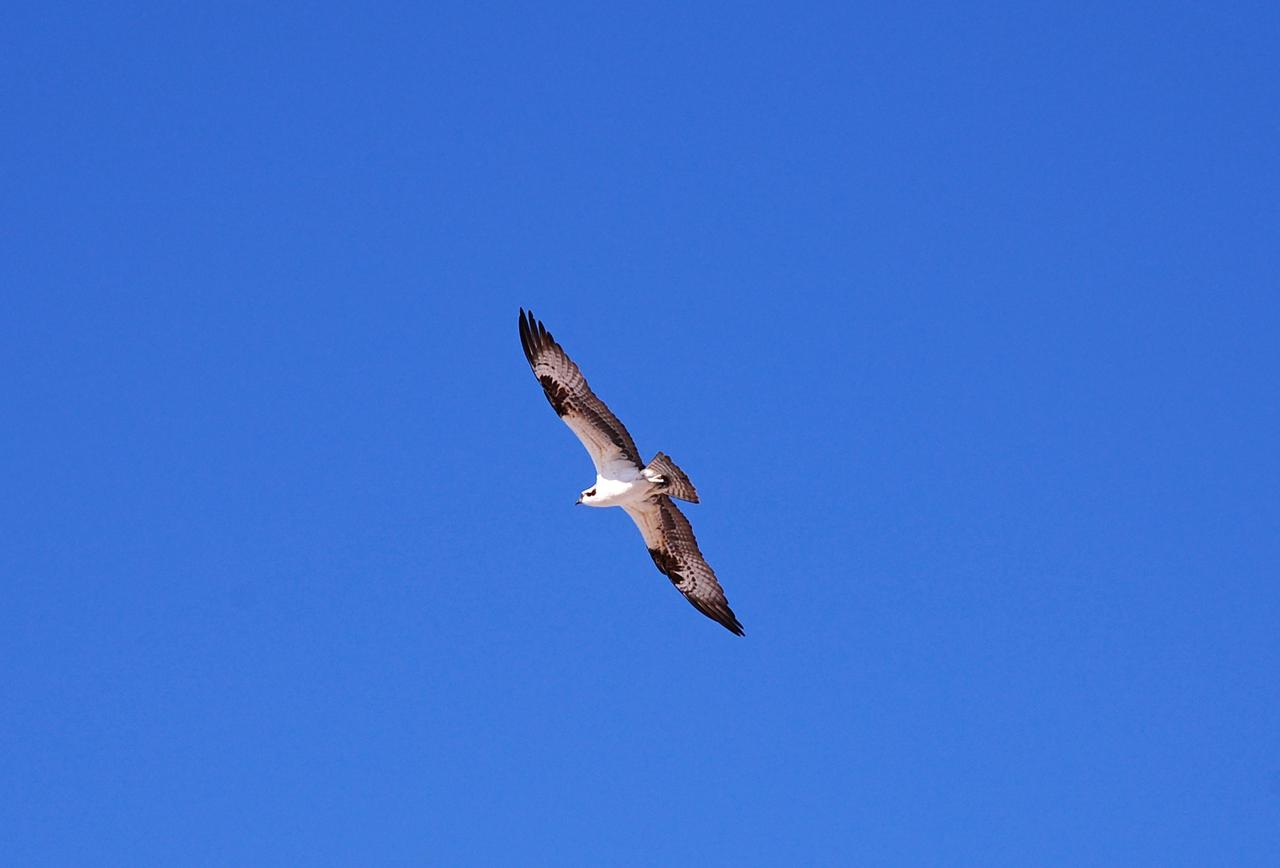
CAPE CANAVERAL, Fla. – An osprey flies high near the NASA News Center at NASA's Kennedy Space Center in Florida returning to its nest nearby. The osprey, also called fish hawk, is well adapted for capturing fish, which make up its entire diet. The soles of the birds' feet are equipped with sharp, spiny projections that give the bird a firm grip on its slippery prey. Nests of ospreys are bulky masses of sticks and debris placed in a tree, on rocks, flat ground or telephone poles. Many nests exist around the Launch Complex 39 Area at the center. The bird is one of more than 500 species of birds that co-exist at the center and the surrounding Merritt Island National Wildlife Refuge. Photo credit: NASA/Ben Smelgelsky
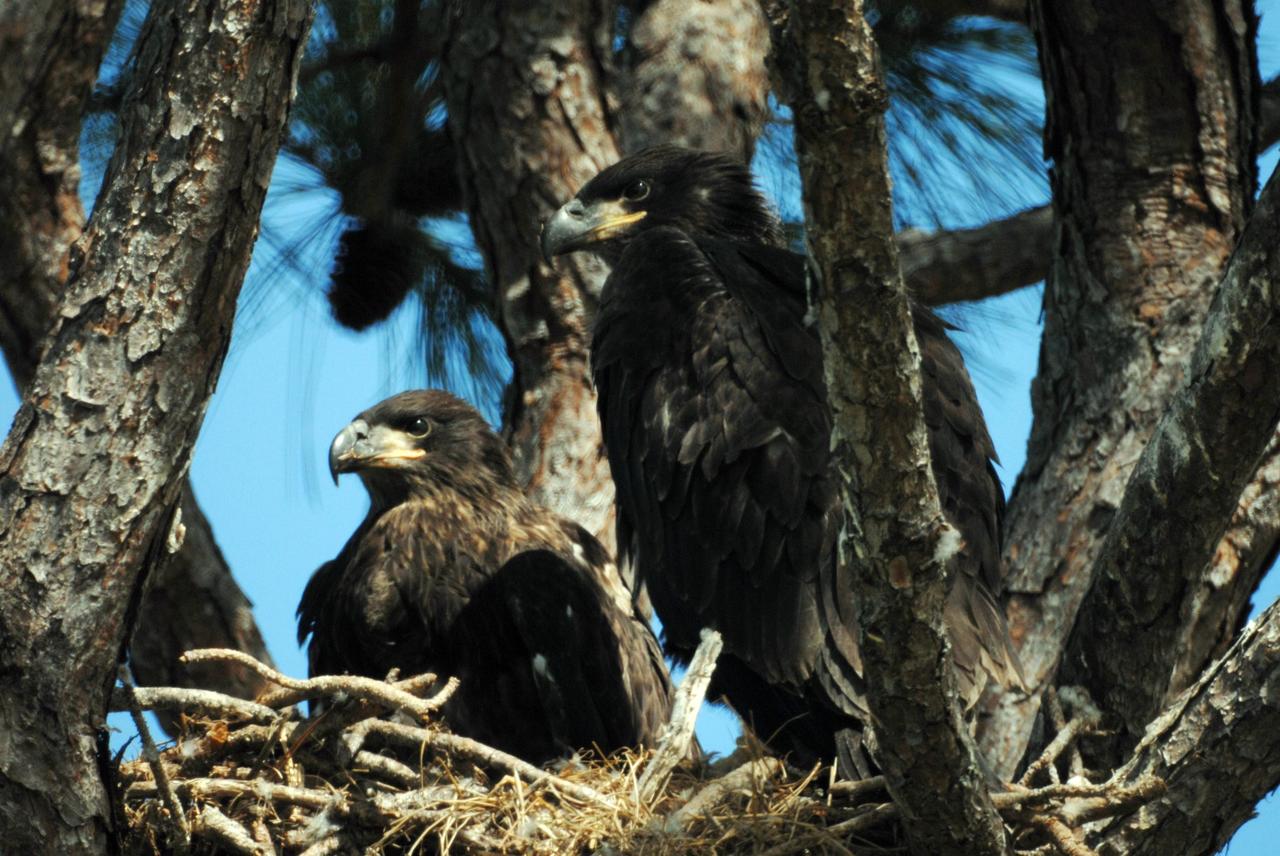
KENNEDY SPACE CENTER, FLA. -- Two fledgling eagles bear the regal look of their parents as they rest in their nest at the north end of S.R. 3 near Kennedy Space Center. This year-old nest is one of a dozen eagle nests both in KSC and in the Merritt Island National Wildlife Refuge, which surrounds KSC. The refuge includes several wading bird rookeries, many osprey nests, up to 400 manatees during the spring, and approximately 2,500 Florida scrub jays. It also is a major wintering area for migratory birds. More than 500 species of wildlife inhabit the refuge, with 15 considered federally threatened or endangered. Photo credit: NASA/Ken Thornsley
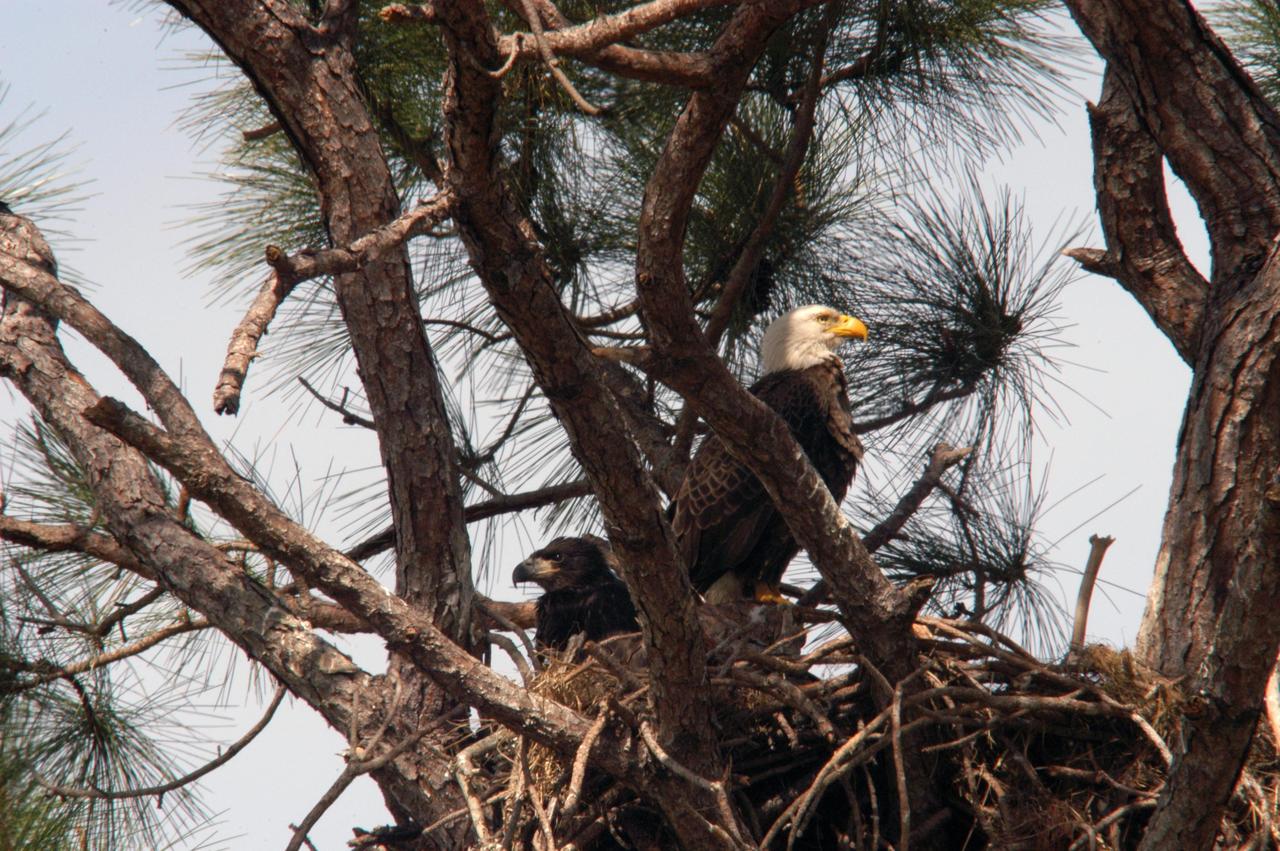
KENNEDY SPACE CENTER, FLA. -- High in a pine tree at NASA's Kennedy Space Center, an adult bald eagle (right) and a fledgling keep watch from their nest. There are approximately a dozen active bald eagle nests both in KSC and in the Merritt Island National Wildlife Refuge, which surrounds KSC. The refuge includes several wading bird rookeries, many osprey nests, up to 400 manatees during the spring, and approximately 2,500 Florida scrub jays. It also is a major wintering area for migratory birds. More than 500 species of wildlife inhabit the refuge, with 15 considered federally threatened or endangered. Photo credit: NASA/George Shelton

KENNEDY SPACE CENTER, FLA. -- Two fledgling eagles bear the regal look of their parents as they rest in their nest at the north end of S.R. 3 near Kennedy Space Center. This year-old nest is one of a dozen eagle nests both in KSC and in the Merritt Island National Wildlife Refuge, which surrounds KSC. The refuge includes several wading bird rookeries, many osprey nests, up to 400 manatees during the spring, and approximately 2,500 Florida scrub jays. It also is a major wintering area for migratory birds. More than 500 species of wildlife inhabit the refuge, with 15 considered federally threatened or endangered. Photo credit: NASA/Ken Thornsley
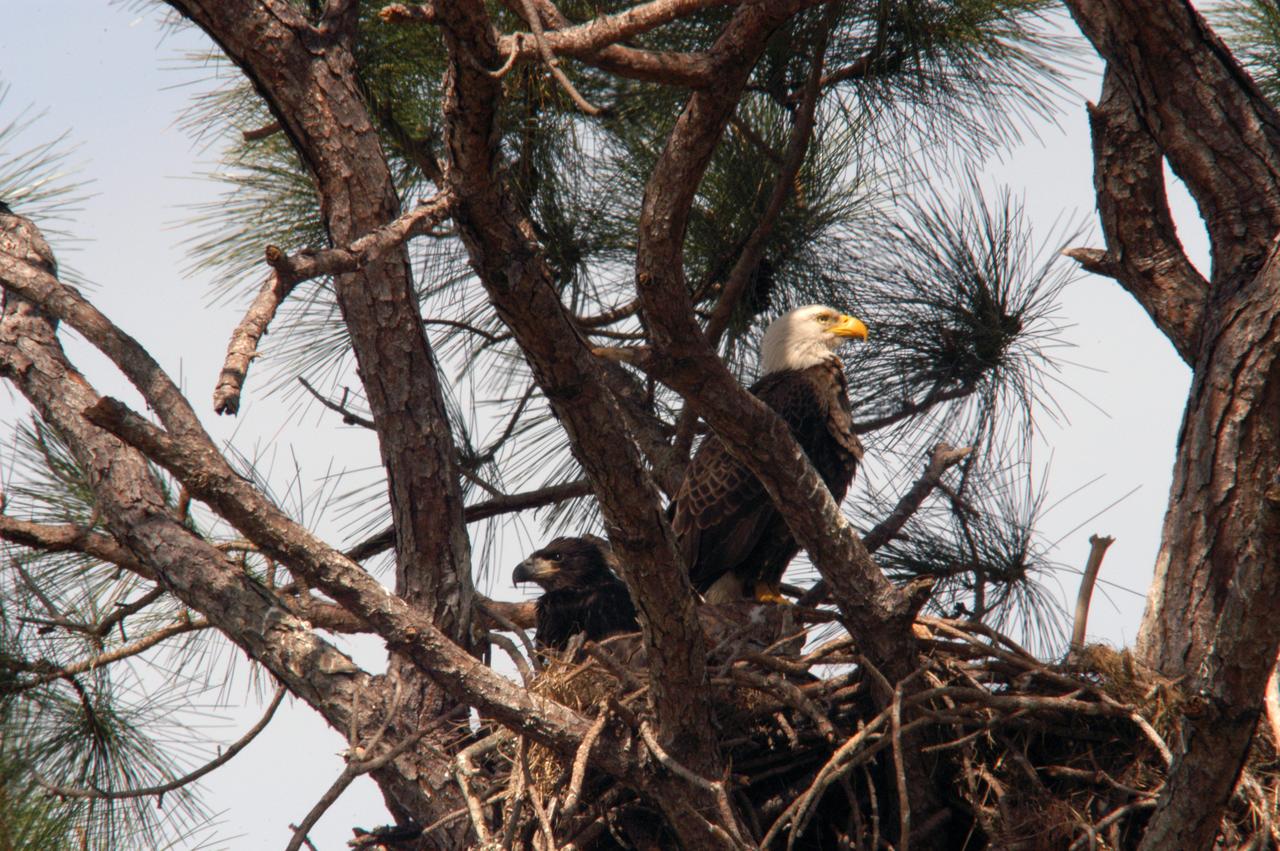
High in a pine tree at NASA's Kennedy Space Center, an adult bald eagle (right) and a fledgling keep watch from their nest. There are approximately a dozen active bald eagle nests both in KSC and in the Merritt Island National Wildlife Refuge, which surrounds KSC. The refuge includes several wading bird rookeries, many osprey nests, up to 400 manatees during the spring, and approximately 2,500 Florida scrub jays. It also is a major wintering area for migratory birds. More than 500 species of wildlife inhabit the refuge, with 15 considered federally threatened or endangered.
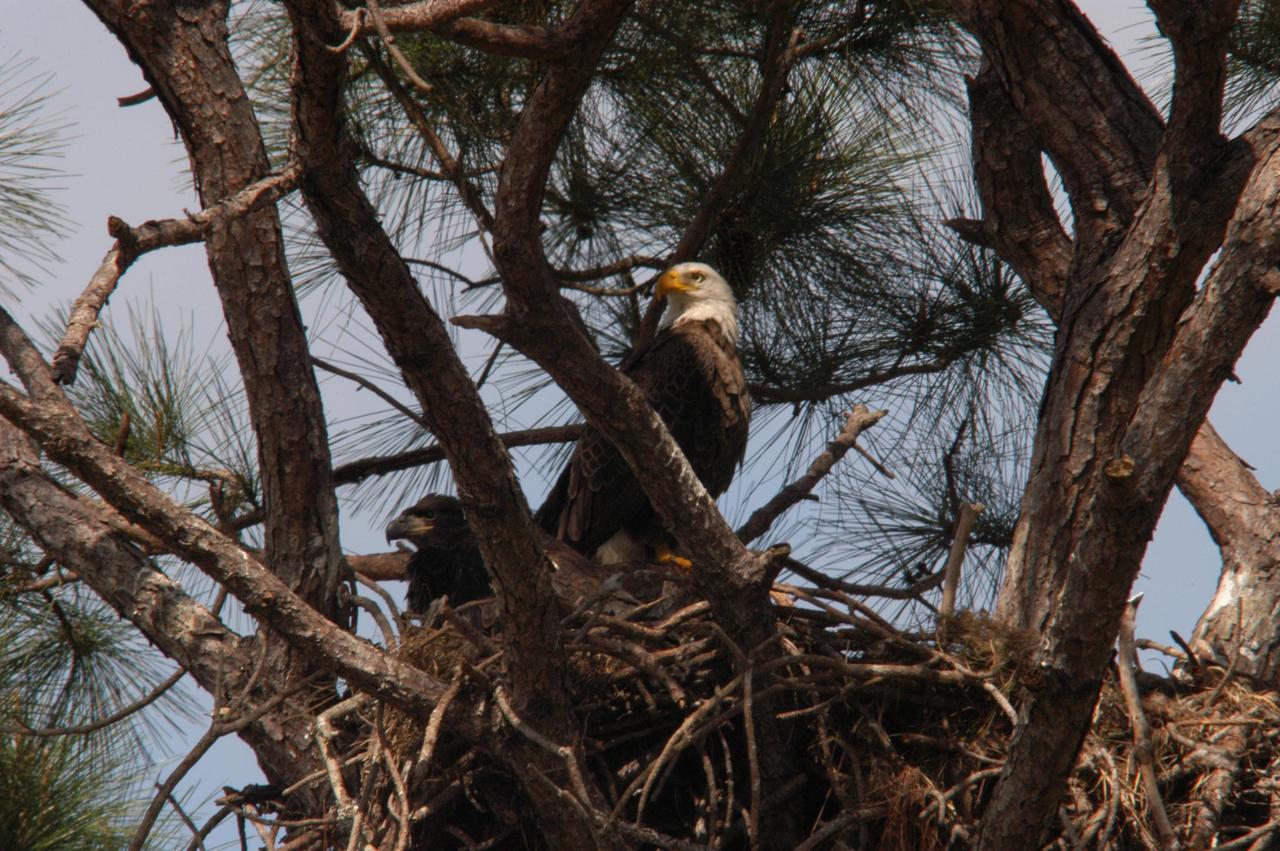
KENNEDY SPACE CENTER, FLA. -- High in a pine tree at NASA's Kennedy Space Center, an adult bald eagle (right) and a fledgling keep watch from their nest. There are approximately a dozen active bald eagle nests both in KSC and in the Merritt Island National Wildlife Refuge, which surrounds KSC. The refuge includes several wading bird rookeries, many osprey nests, up to 400 manatees during the spring, and approximately 2,500 Florida scrub jays. It also is a major wintering area for migratory birds. More than 500 species of wildlife inhabit the refuge, with 15 considered federally threatened or endangered. Photo credit: NASA/George Shelton
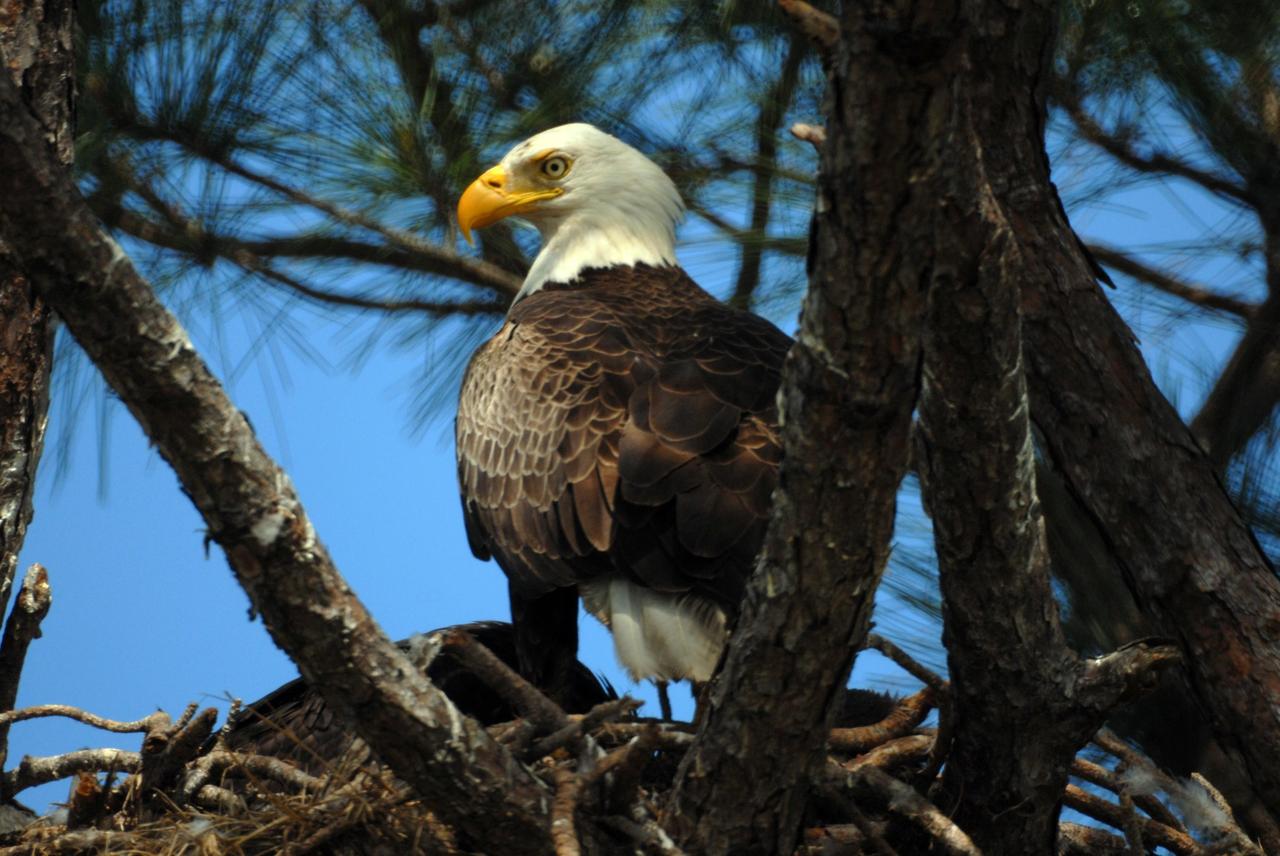
KENNEDY SPACE CENTER, FLA. -- This mother eagle appears wary as she stands in her nest at the north end of S.R. 3 near Kennedy Space Center. The resident eagle parents are raising two offspring. It is one of a dozen eagle nests both in KSC and in the Merritt Island National Wildlife Refuge, which surrounds KSC. The refuge includes several wading bird rookeries, many osprey nests, up to 400 manatees during the spring, and approximately 2,500 Florida scrub jays. It also is a major wintering area for migratory birds. More than 500 species of wildlife inhabit the refuge, with 15 considered federally threatened or endangered. Photo credit: NASA/Ken Thornsley
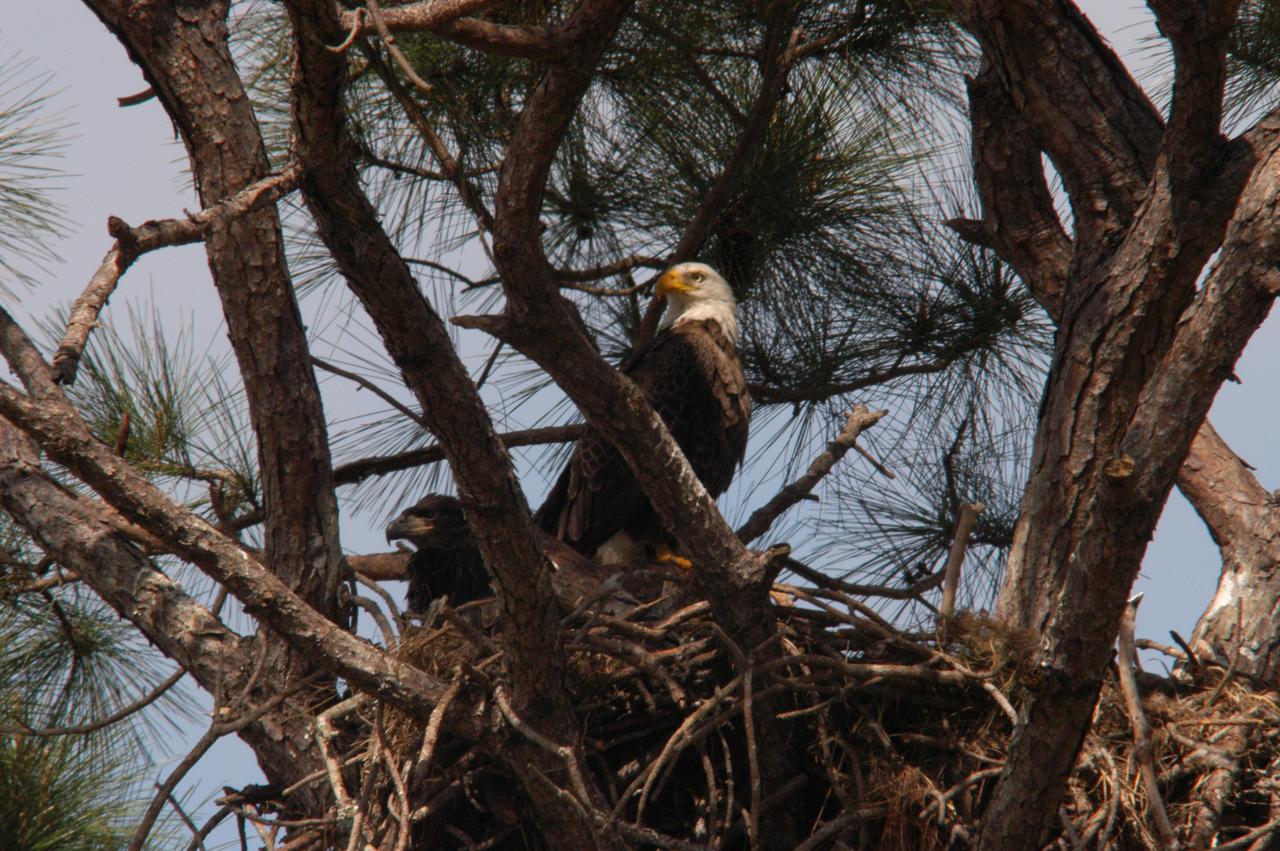
High in a pine tree at NASA's Kennedy Space Center, an adult bald eagle (right) and a fledgling keep watch from their nest. There are approximately a dozen active bald eagle nests both in KSC and in the Merritt Island National Wildlife Refuge, which surrounds KSC. The refuge includes several wading bird rookeries, many osprey nests, up to 400 manatees during the spring, and approximately 2,500 Florida scrub jays. It also is a major wintering area for migratory birds. More than 500 species of wildlife inhabit the refuge, with 15 considered federally threatened or endangered.
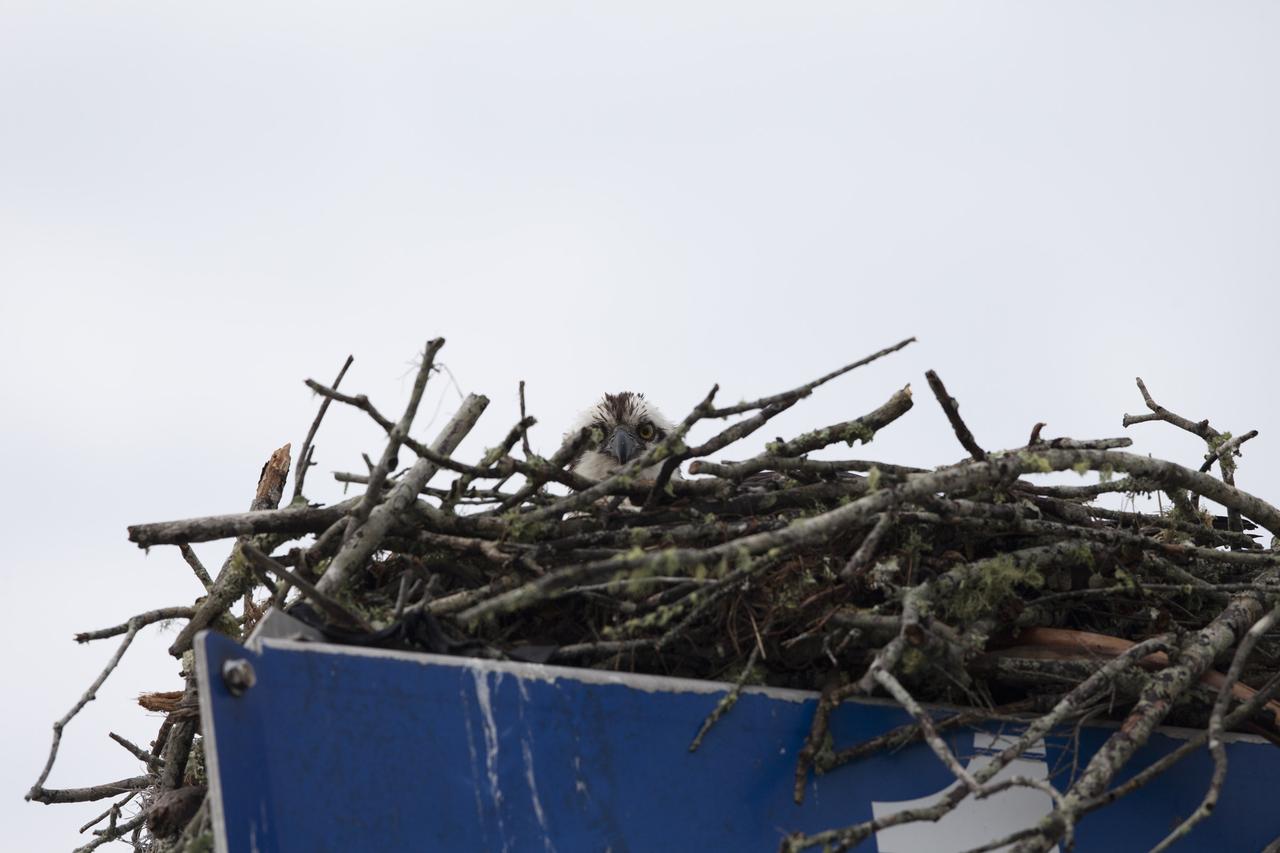
A juvenile osprey peers over the edge of its nest, which its parents have built atop a sign at NASA’s Kennedy Space Center in Florida. The spaceport shares borders with the Merritt Island National Wildlife Refuge, which is home to more than 330 native and migratory bird species, along with 25 mammal, 117 fish, and 65 amphibian and reptile species.
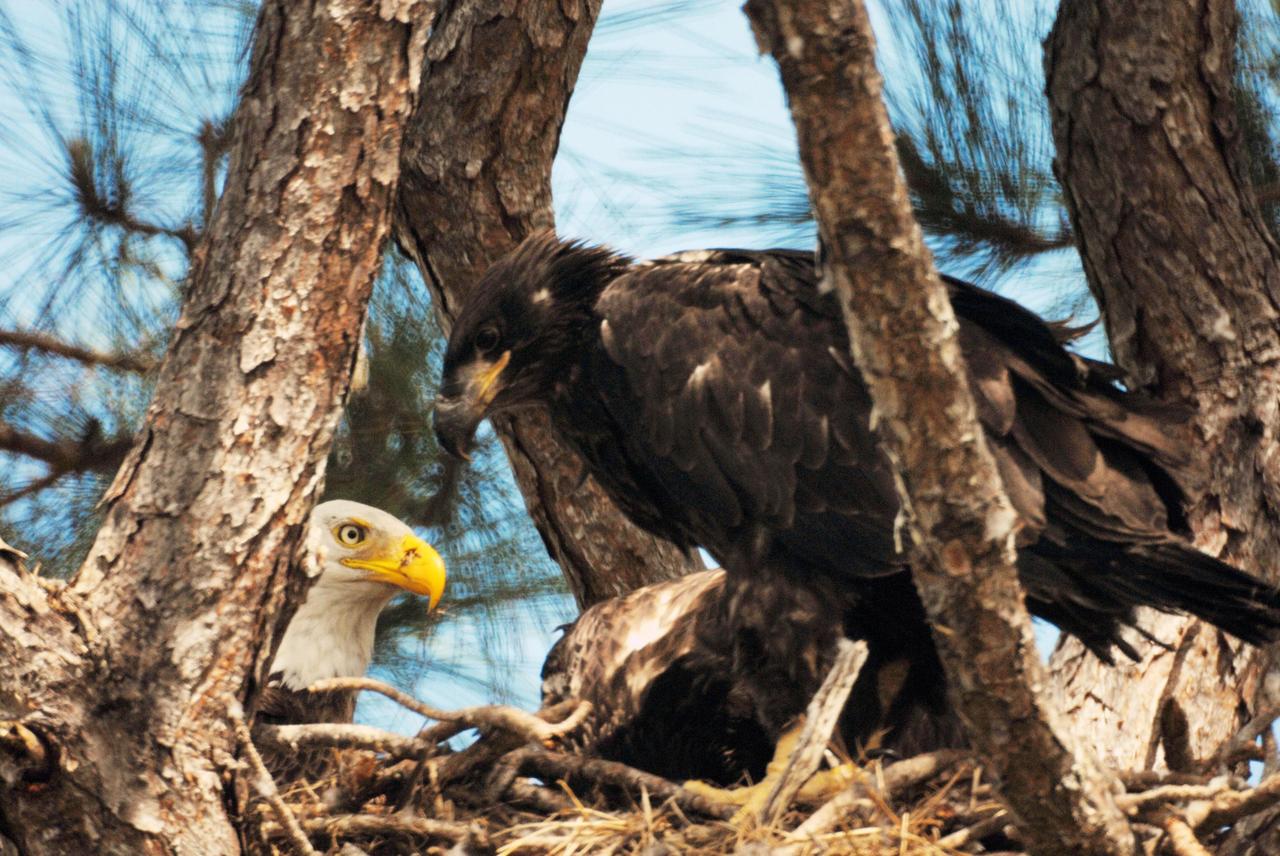
KENNEDY SPACE CENTER, FLA. -- This fledgling eagle, at right, stares at his mother, at left, in their nest at the north end of S.R. 3 near Kennedy Space Center. The resident eagle parents are raising two offspring. This year-old nest is one of a dozen eagle nests both in KSC and in the Merritt Island National Wildlife Refuge, which surrounds KSC. The refuge includes several wading bird rookeries, many osprey nests, up to 400 manatees during the spring, and approximately 2,500 Florida scrub jays. It also is a major wintering area for migratory birds. More than 500 species of wildlife inhabit the refuge, with 15 considered federally threatened or endangered. Photo credit: NASA/Ken Thornsley
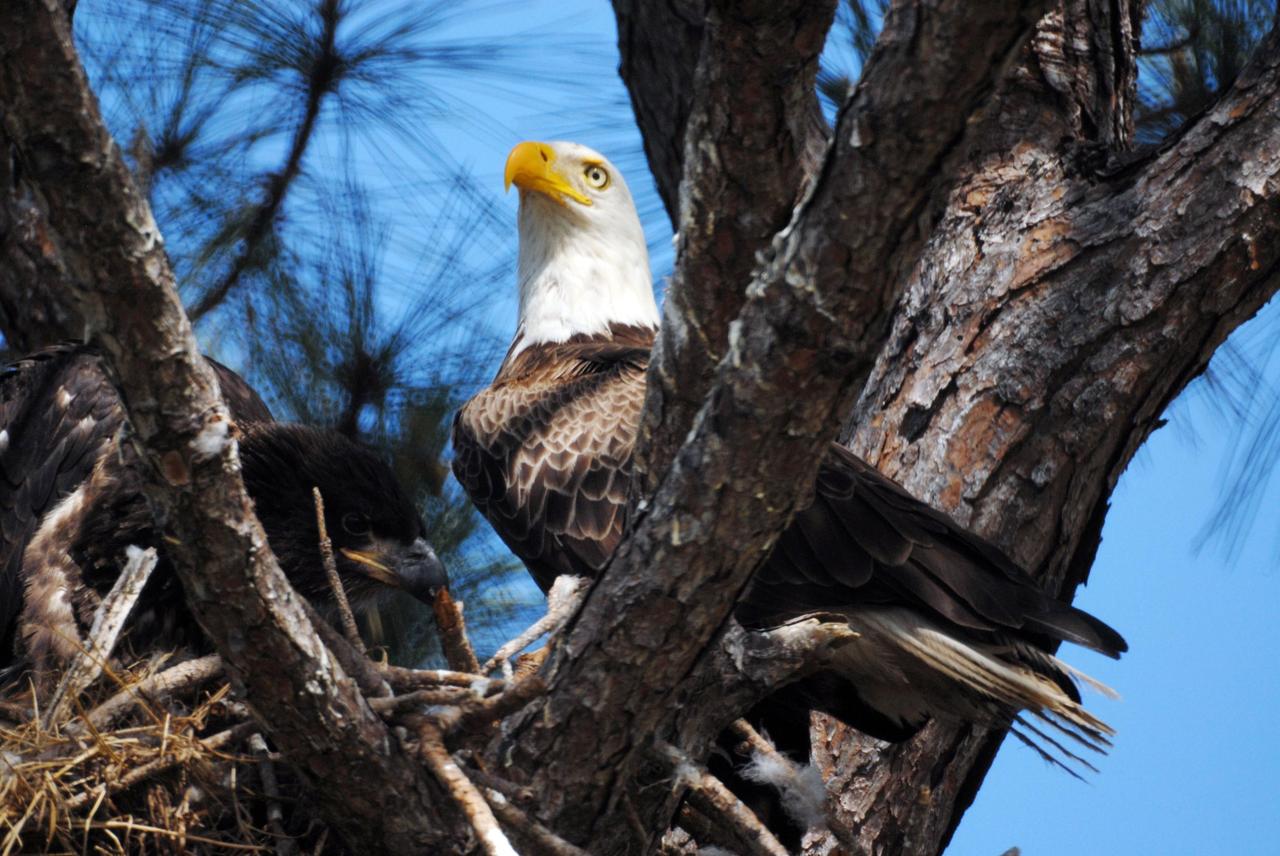
KENNEDY SPACE CENTER, FLA. -- This mother eagle turns away from one of her offspring, at left, in their nest at the north end of S.R. 3 near Kennedy Space Center. The resident eagle parents are raising two offspring. This year-old nest is one of a dozen eagle nests both in KSC and in the Merritt Island National Wildlife Refuge, which surrounds KSC. The refuge includes several wading bird rookeries, many osprey nests, up to 400 manatees during the spring, and approximately 2,500 Florida scrub jays. It also is a major wintering area for migratory birds. More than 500 species of wildlife inhabit the refuge, with 15 considered federally threatened or endangered. Photo credit: NASA/Ken Thornsley
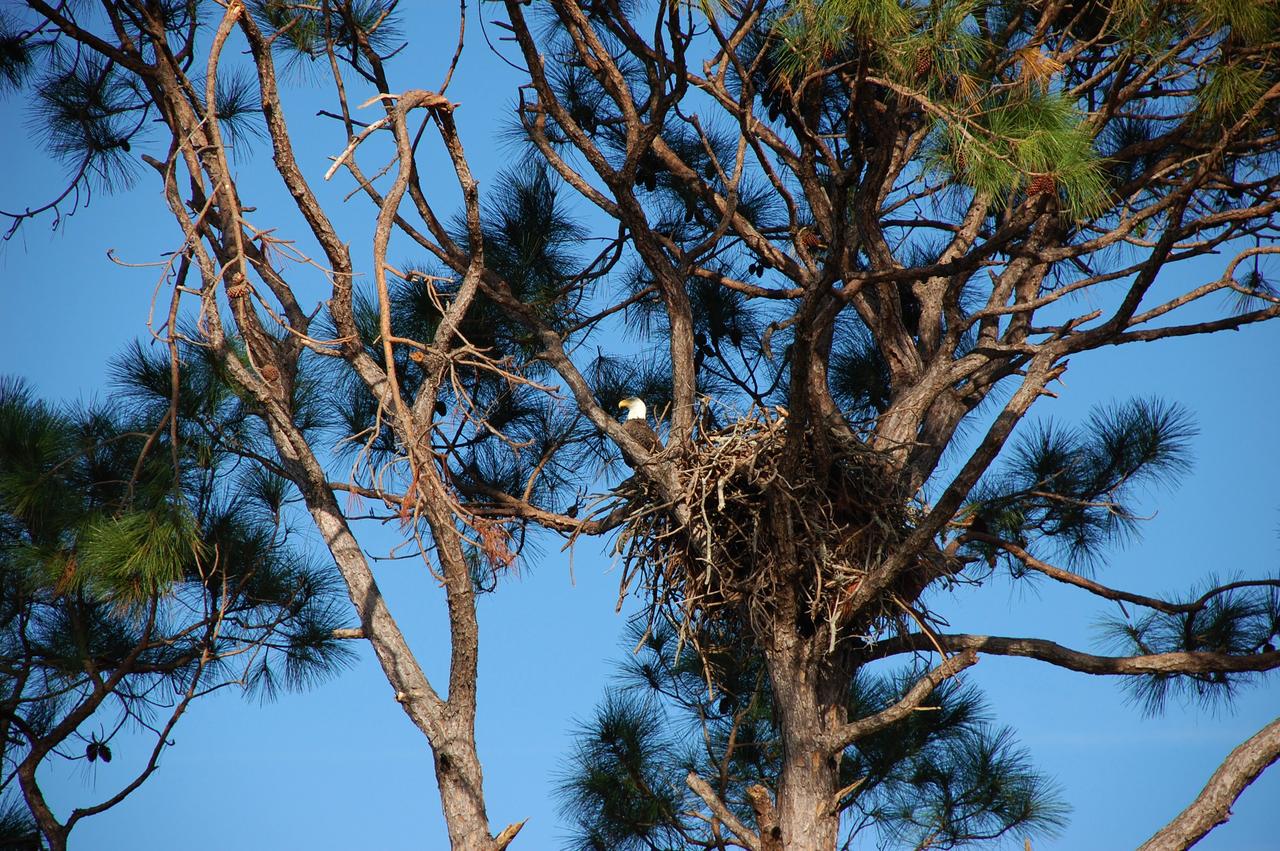
CAPE CANAVERAL, Fla. – A bald eagle appears to keep watch in its nest near the top of a pine tree near the Shuttle Landing Facility at NASA's Kennedy Space Center in Florida. There are a dozen eagle nests within Kennedy and in the surrounding Merritt Island National Wildlife Refuge. Bald eagles use a specific territory for nesting (they mate for life), winter feeding or a year-round residence. Its natural domain is from Alaska to Baja, California, and from Maine to Florida. The Merritt Island Refuge also includes several wading bird rookeries, many osprey nests, up to 400 manatees during the spring, and approximately 2,500 Florida scrub jays. It also is a major wintering area for migratory birds. More than 500 species of wildlife inhabit the refuge, with 15 considered federally threatened or endangered. Photo credit: NASA/Ben Smegelsky
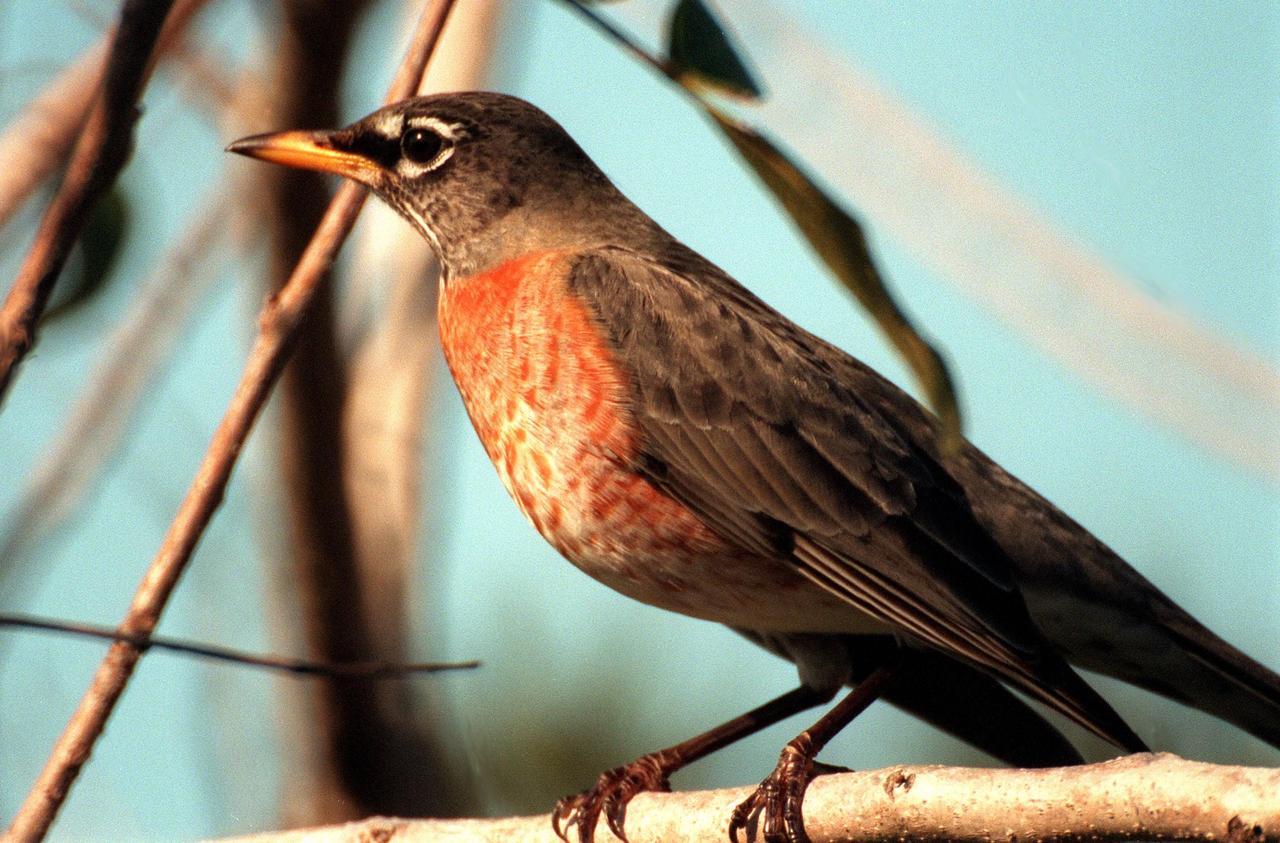
KENNEDY SPACE CENTER, FLA. -- A robin perches on a branch in the Merritt Island National <a href="http://www-pao.ksc.nasa.gov/kscpao/captions/subjects/wildlife.htm">Wildlife </a>Refuge, which shares a boundary with the space center. Robins range throughout North America, from Alaska to Florida. Although considered a harbinger of spring, they do winter in northern states, frequenting cedar bogs and swamps. They also winter in Florida, where they often can be seen in flocks of hundreds near KSC and the wildlife refuge, which comprises 92,000 acres, ranging from hardwood hammocks and pine flatwoods to fresh-water impoundments, salt-water estuaries and brackish marshes. The diverse landscape provides habitat for more than 310 species of birds, 25 mammals, 117 fishes, and 65 amphibians and reptiles, including such endangered species as Southern bald eagles, wood storks, Florida scrub jays, Atlantic loggerhead and leatherback turtles, osprey, and nearly 5,000 alligators
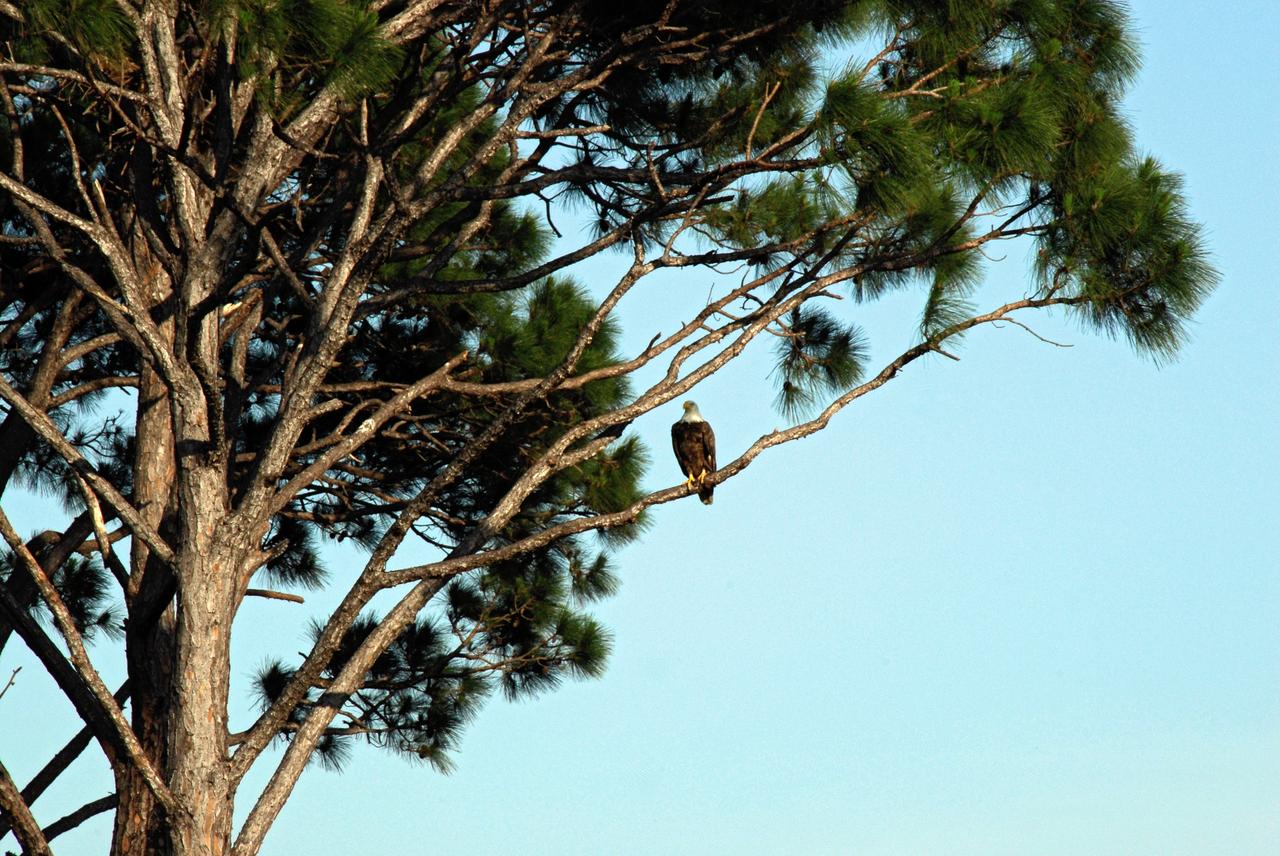
CAPE CANAVERAL, Fla. -- Near NASA Kennedy Space Center's Shuttle Landing Facility, this bald eagle is spotted sitting in a tall pine tree. There are a dozen eagle nests within Kennedy and in the surrounding Merritt Island National Wildlife Refuge. Bald eagles use a specific territory for nesting (they mate for life), winter feeding or a year-round residence. Its natural domain is from Alaska to Baja, California, and from Maine to Florida. The Merritt Island refuge also includes several wading bird rookeries, many osprey nests, up to 400 manatees during the spring, and approximately 2,500 Florida scrub jays. It also is a major wintering area for migratory birds. More than 500 species of wildlife inhabit the refuge, with 15 considered federally threatened or endangered. Photo credit: NASA/Kim Shiflett
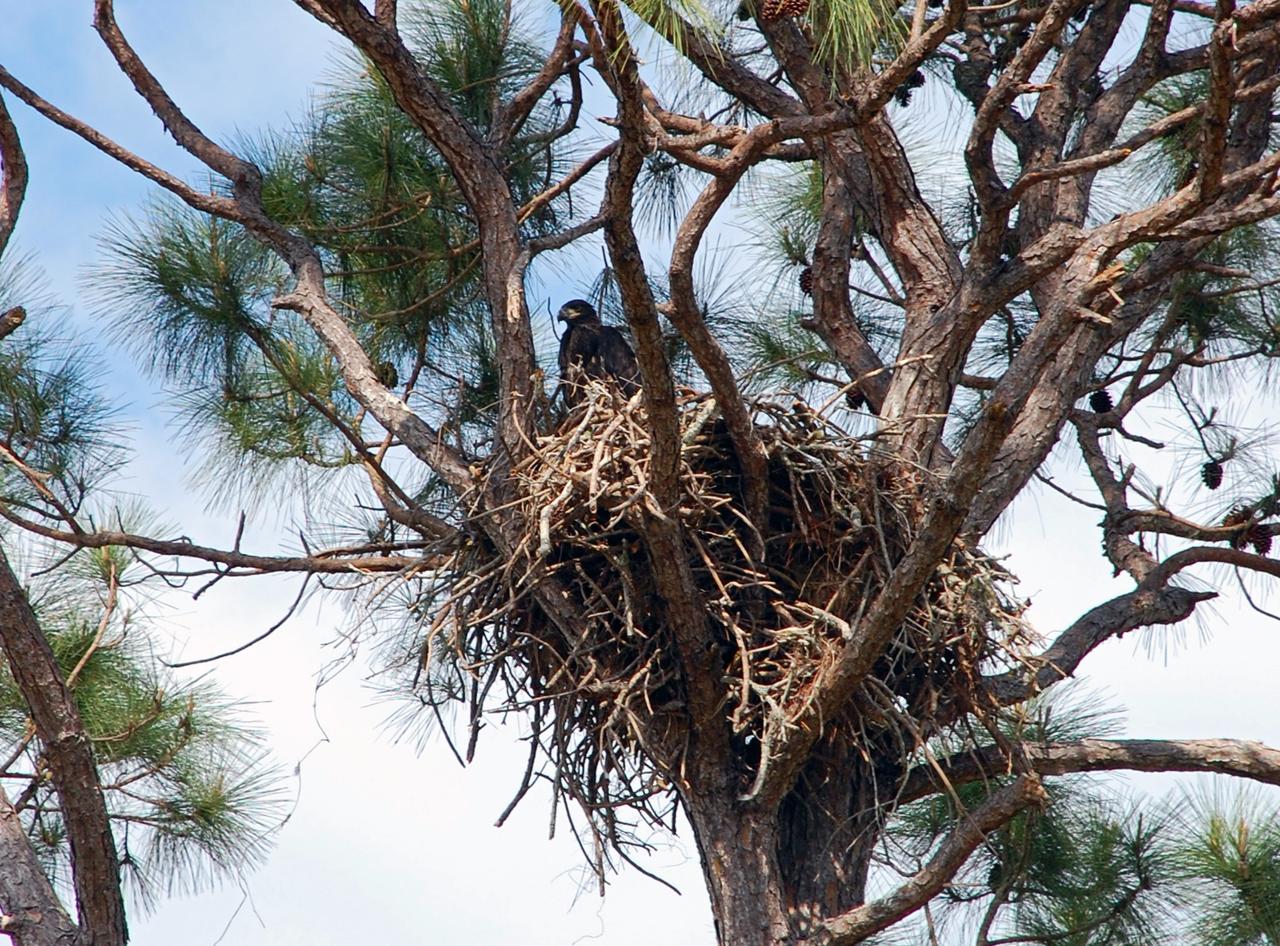
CAPE CANAVERAL, Fla. – At NASA's Kennedy Space Center in Florida, a young eagle shows itself in its nest in a pine tree on S.R. 3. There are a dozen eagle nests within Kennedy and in the surrounding Merritt Island National Wildlife Refuge. Bald eagles use a specific territory for nesting (they mate for life), winter feeding or a year-round residence. Its natural domain is from Alaska to Baja, California, and from Maine to Florida. The Merritt Island refuge also includes several wading bird rookeries, many osprey nests, up to 400 manatees during the spring, and approximately 2,500 Florida scrub jays. It also is a major wintering area for migratory birds. More than 500 species of wildlife inhabit the refuge, with 15 considered federally threatened or endangered. Photo credit: NASA/Ben Smegelsky
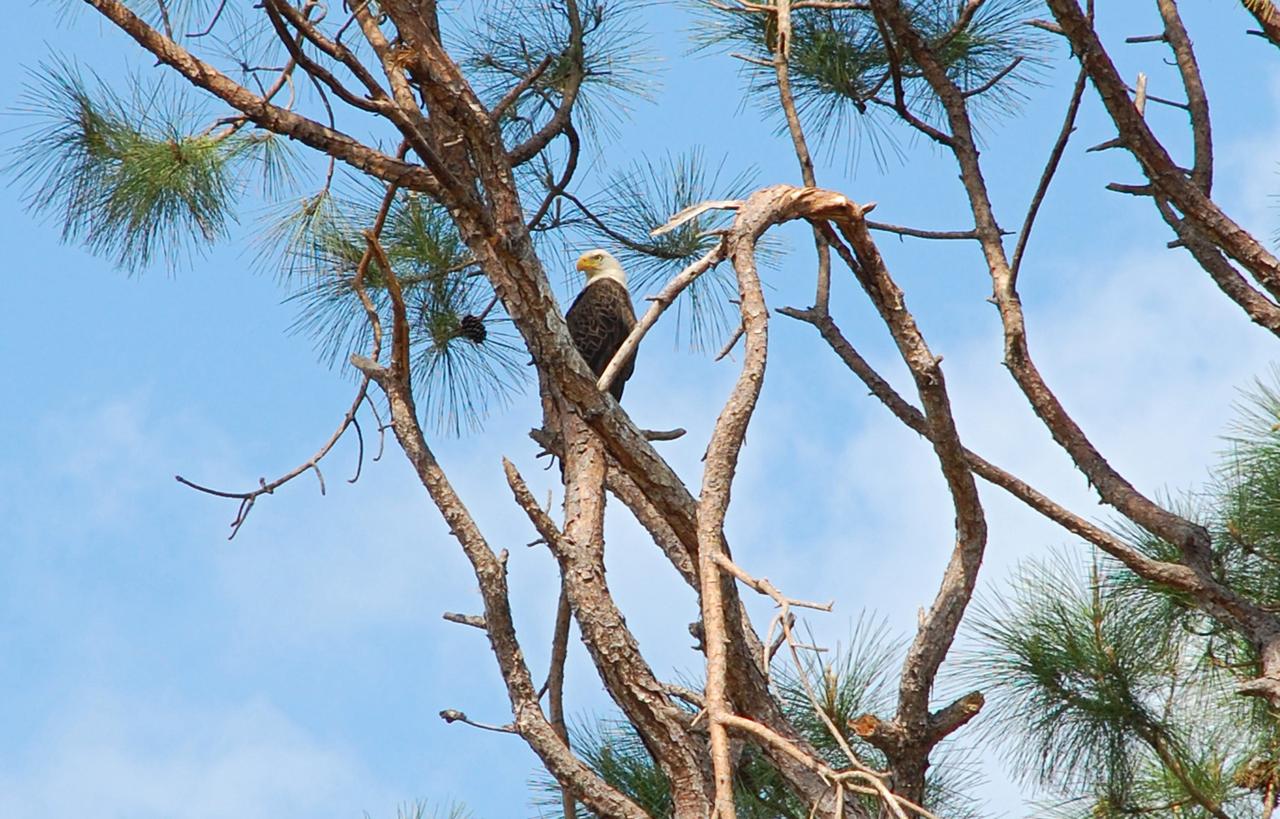
CAPE CANAVERAL, Fla. – A mature eagle stands watch near its nest, out of sight, which holds a young eagle. The nest is in a pine tree on S.R. 3 that runs through NASA's Kennedy Space Center in Florida. There are a dozen eagle nests within Kennedy and in the surrounding Merritt Island National Wildlife Refuge. Bald eagles use a specific territory for nesting (they mate for life), winter feeding or a year-round residence. Its natural domain is from Alaska to Baja, California, and from Maine to Florida. The Merritt Island refuge also includes several wading bird rookeries, many osprey nests, up to 400 manatees during the spring, and approximately 2,500 Florida scrub jays. It also is a major wintering area for migratory birds. More than 500 species of wildlife inhabit the refuge, with 15 considered federally threatened or endangered. Photo credit: NASA/Ben Smegelsky
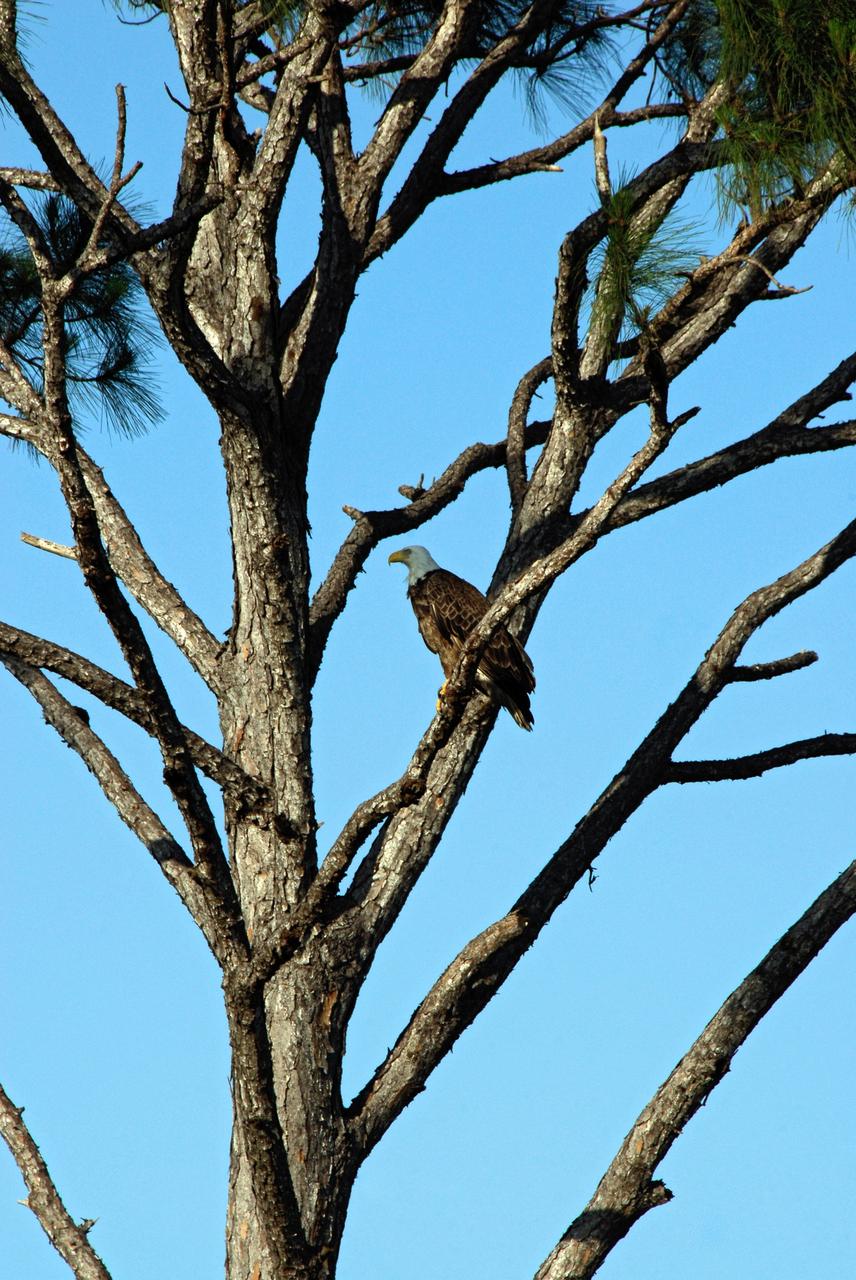
CAPE CANAVERAL, Fla. -- Near NASA Kennedy Space Center's Shuttle Landing Facility, this bald eagle is spotted sitting in a tall pine tree. There are a dozen eagle nests within Kennedy and in the surrounding Merritt Island National Wildlife Refuge. Bald eagles use a specific territory for nesting (they mate for life), winter feeding or a year-round residence. Its natural domain is from Alaska to Baja, California, and from Maine to Florida. The Merritt Island refuge also includes several wading bird rookeries, many osprey nests, up to 400 manatees during the spring, and approximately 2,500 Florida scrub jays. It also is a major wintering area for migratory birds. More than 500 species of wildlife inhabit the refuge, with 15 considered federally threatened or endangered. Photo credit: NASA/Kim Shiflett
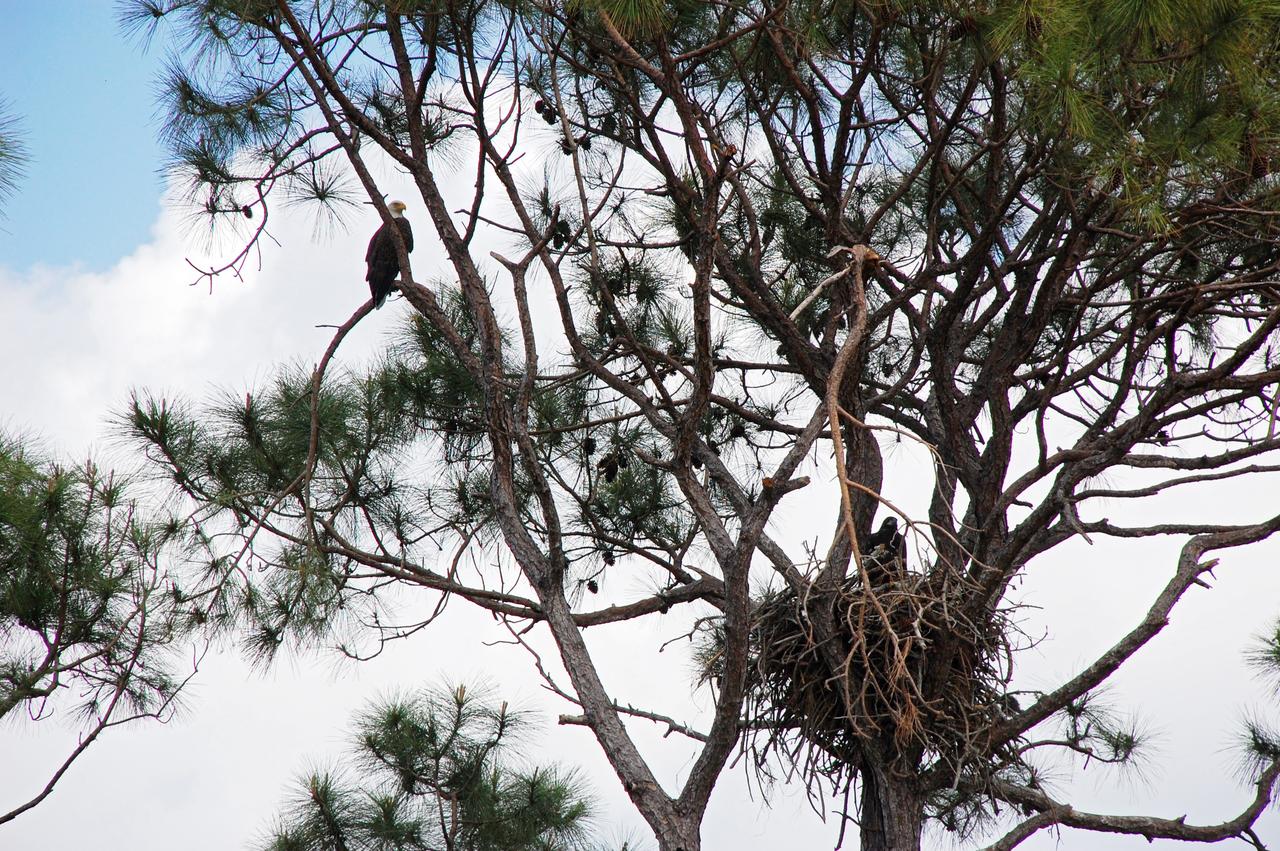
CAPE CANAVERAL, Fla. – On a road through NASA's Kennedy Space Center in Florida, an eagle's nest in a pine tree holds a young eagle while its parent watches on a nearby branch. There are a dozen eagle nests within Kennedy and in the surrounding Merritt Island National Wildlife Refuge. Bald eagles use a specific territory for nesting (they mate for life), winter feeding or a year-round residence. Its natural domain is from Alaska to Baja, California, and from Maine to Florida. The Merritt Island refuge also includes several wading bird rookeries, many osprey nests, up to 400 manatees during the spring, and approximately 2,500 Florida scrub jays. It also is a major wintering area for migratory birds. More than 500 species of wildlife inhabit the refuge, with 15 considered federally threatened or endangered. Photo credit: NASA/Ben Smegelsky
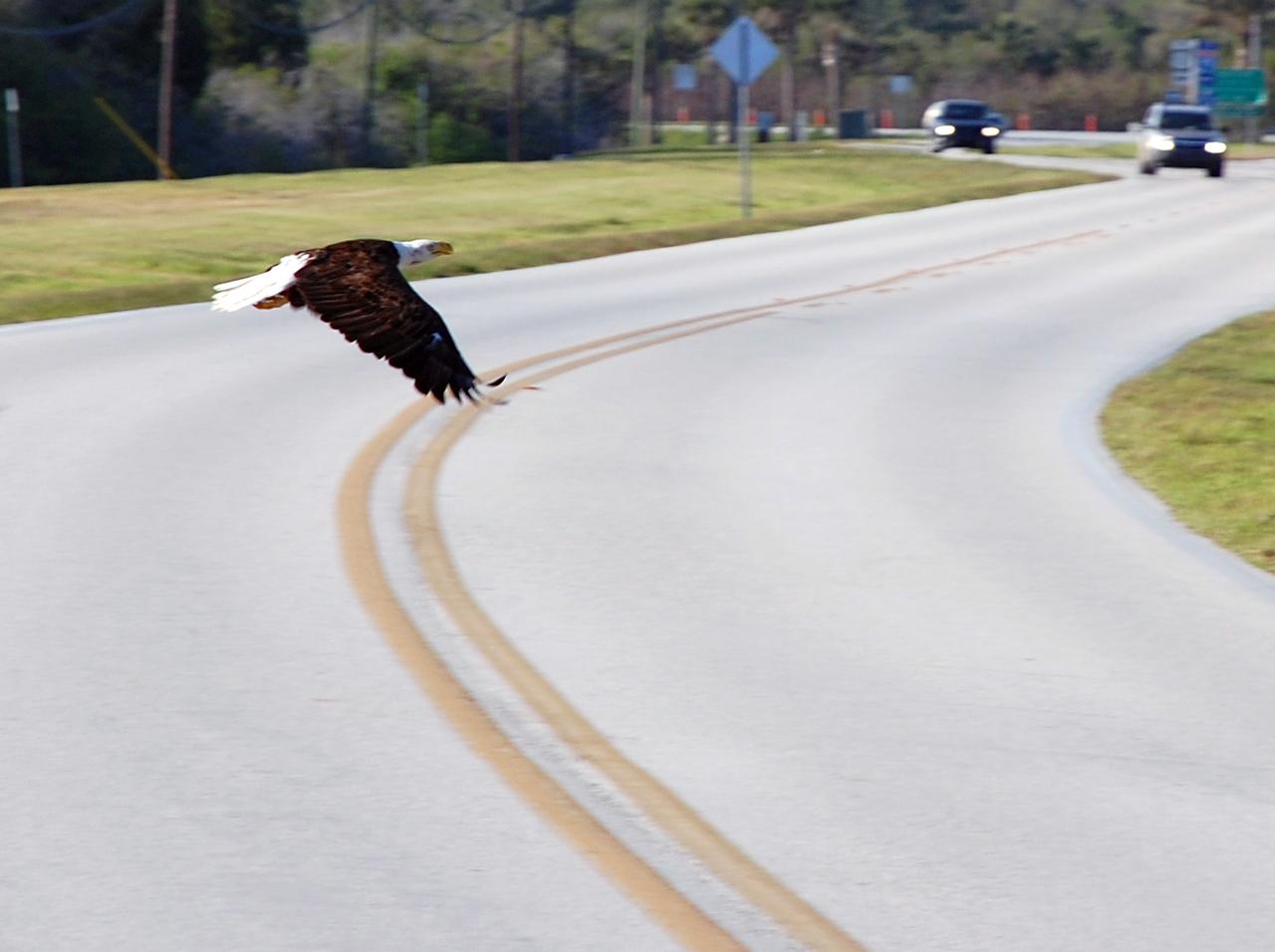
CAPE CANAVERAL, Fla. – At NASA's Kennedy Space Center in Florida, a bald eagle flies across the road in front of vehicles on the road. There are a dozen eagle nests within Kennedy and in the surrounding Merritt Island National Wildlife Refuge, some of them close to roads through the center. Bald eagles use a specific territory for nesting (they mate for life), winter feeding or a year-round residence. Eagles' natural domain is from Alaska to Baja, California, and from Maine to Florida. The Merritt Island refuge also includes several wading bird rookeries, many osprey nests, up to 400 manatees during the spring, and approximately 2,500 Florida scrub jays. It also is a major wintering area for migratory birds. More than 500 species of wildlife inhabit the refuge, with 15 considered federally threatened or endangered. Photo credit: NASA/Ben Smegelsky
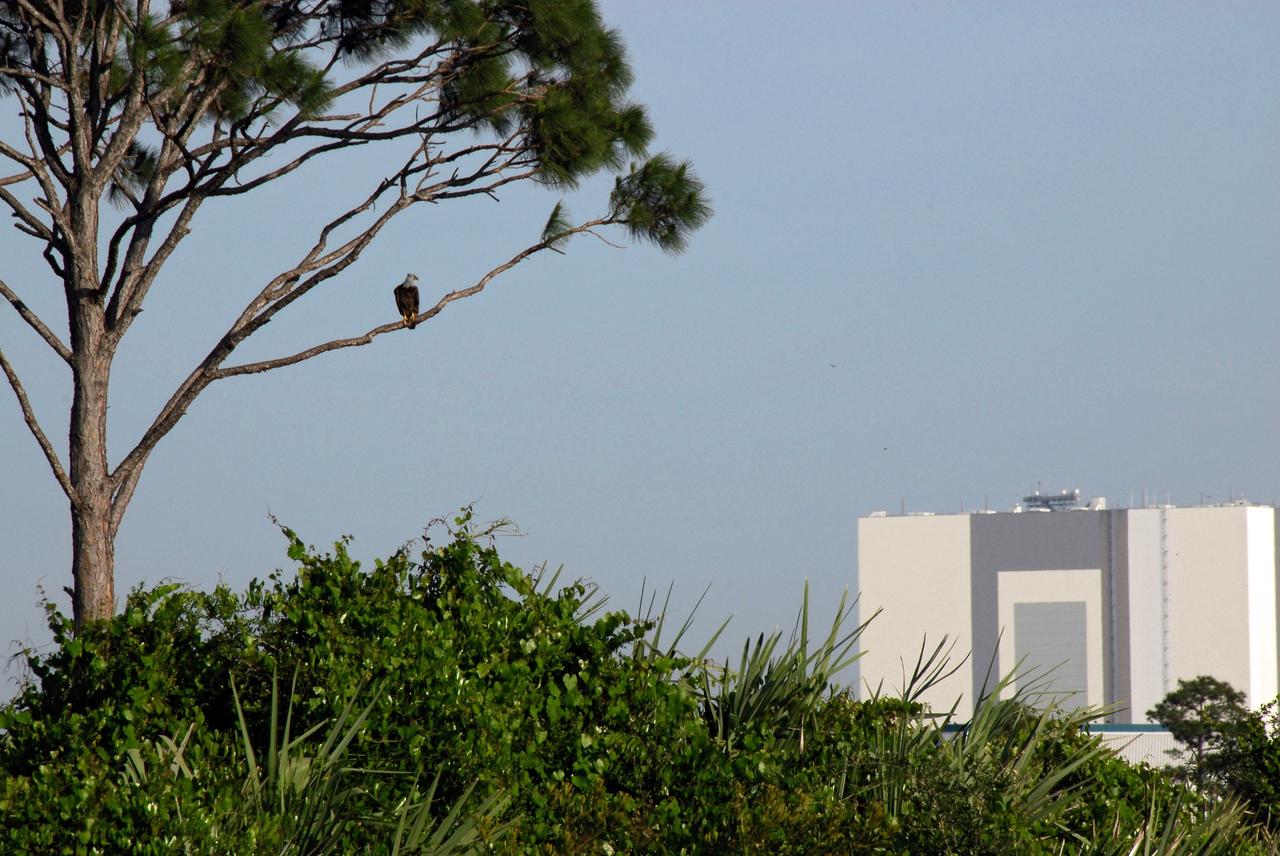
CAPE CANAVERAL, Fla. -- Near NASA Kennedy Space Center's Shuttle Landing Facility, this bald eagle is spotted in a tall pine tree. At right is the Vehicle Assembly Building. There are a dozen eagle nests within Kennedy and in the surrounding Merritt Island National Wildlife Refuge. Bald eagles use a specific territory for nesting (they mate for life), winter feeding or a year-round residence. Its natural domain is from Alaska to Baja, California, and from Maine to Florida. The Merritt Island refuge also includes several wading bird rookeries, many osprey nests, up to 400 manatees during the spring, and approximately 2,500 Florida scrub jays. It also is a major wintering area for migratory birds. More than 500 species of wildlife inhabit the refuge, with 15 considered federally threatened or endangered. Photo credit: NASA/Kim Shiflett
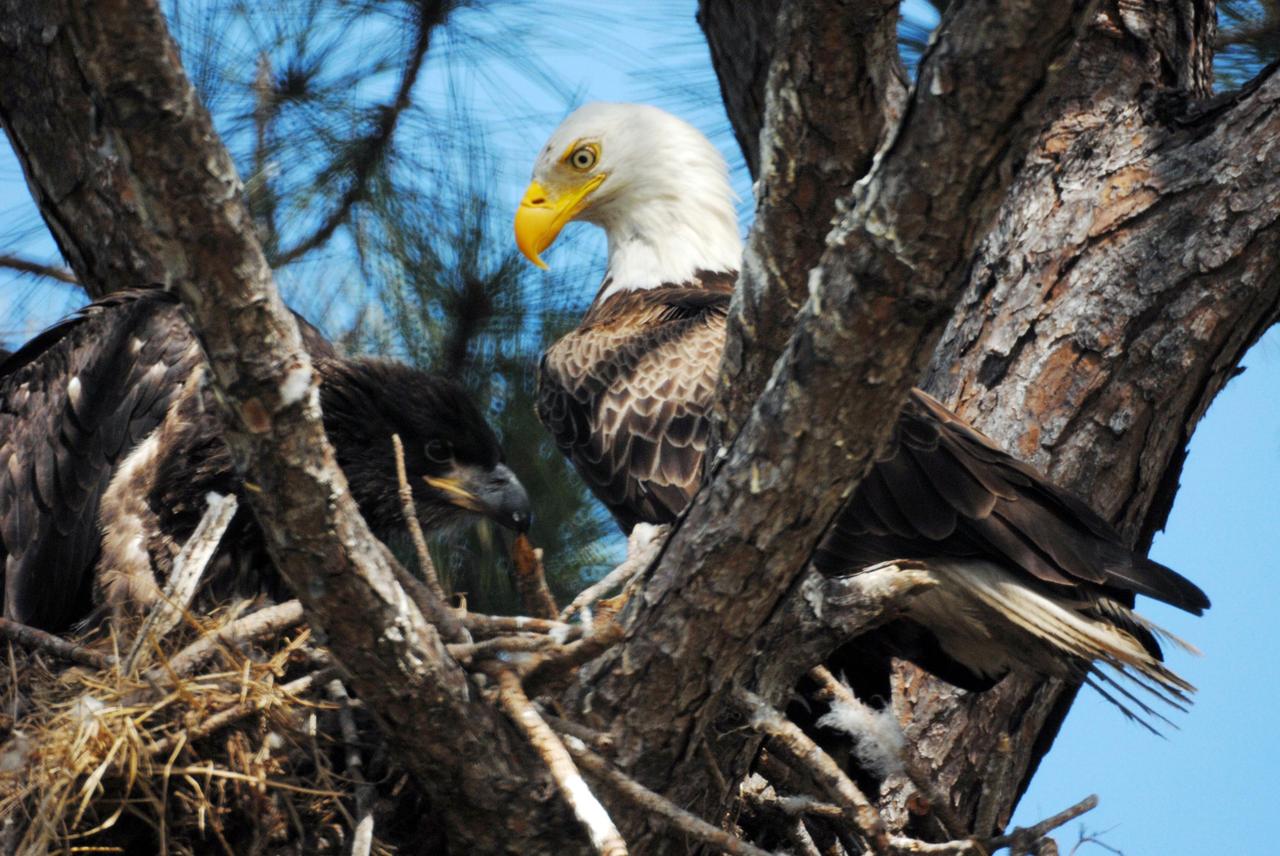
KENNEDY SPACE CENTER, FLA. -- This mother eagle looks at one of her offspring, at left, in their nest at the north end of S.R. 3 near Kennedy Space Center. The resident eagle parents are raising two offspring. This year-old nest is one of a dozen eagle nests both in KSC and in the Merritt Island National Wildlife Refuge, which surrounds KSC. The refuge includes several wading bird rookeries, many osprey nests, up to 400 manatees during the spring, and approximately 2,500 Florida scrub jays. It also is a major wintering area for migratory birds. More than 500 species of wildlife inhabit the refuge, with 15 considered federally threatened or endangered. Photo credit: NASA/Ken Thornsley
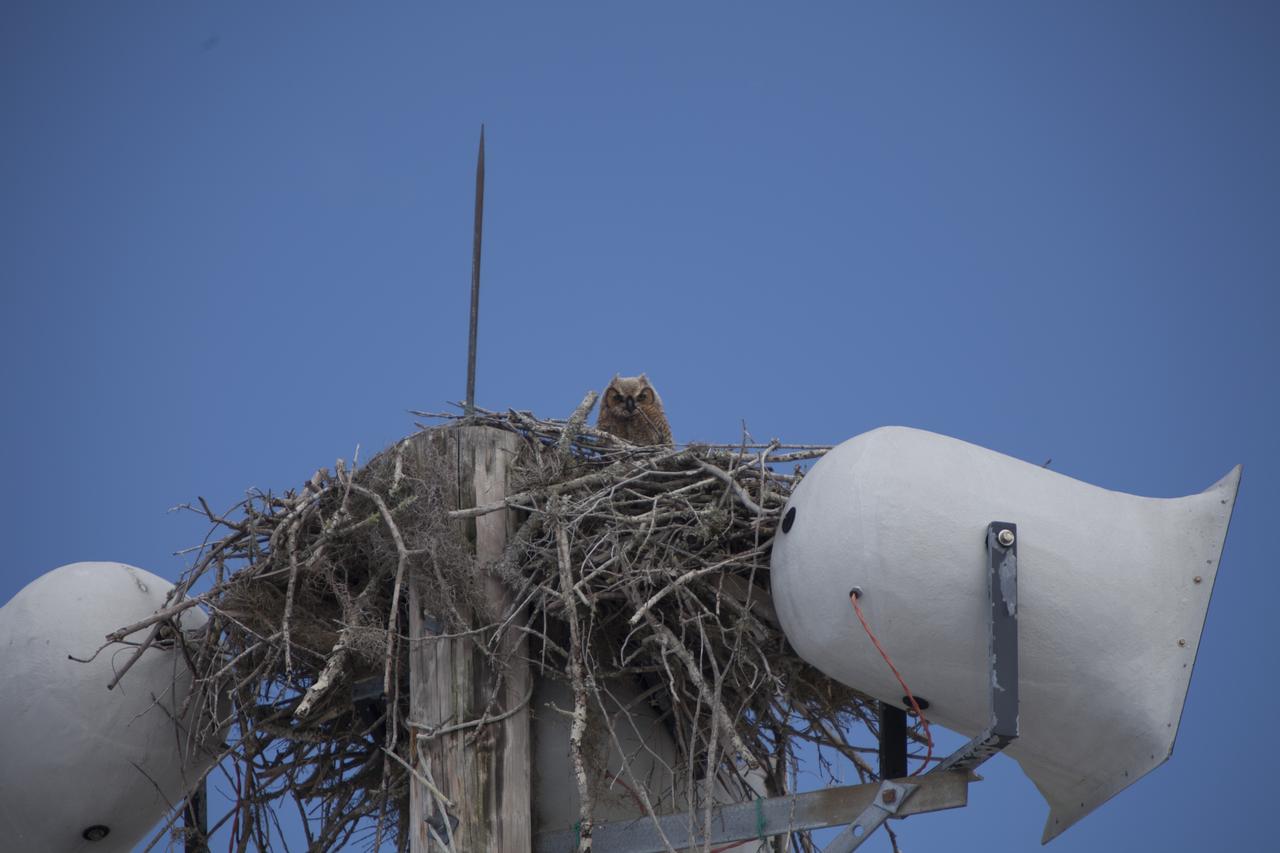
CAPE CANAVERAL, Fla. – At NASA's Kennedy Space Center in Florida, an Owl occupies a nest originally build by an Osprey atop a loudspeaker utility pole. Kennedy Space Center shares a boundary with the Merritt Island National Wildlife Refuge. The Refuge encompasses 140,000 acres that are a habitat for more than 331 species of birds, 31 mammals, 117 fishes, and 65 amphibians and reptiles. The marshes and open water of the refuge provide wintering areas for 23 species of migratory waterfowl, as well as a year-round home for great blue herons, great egrets, wood storks, cormorants, brown pelicans and other species of marsh and shore birds, as well as a variety of insects. For more information, visit: http://www.nasa.gov/centers/kennedy/shuttleoperations/alligators/kscovr.html Photo credit: NASA/Dimitri Gerondidakis
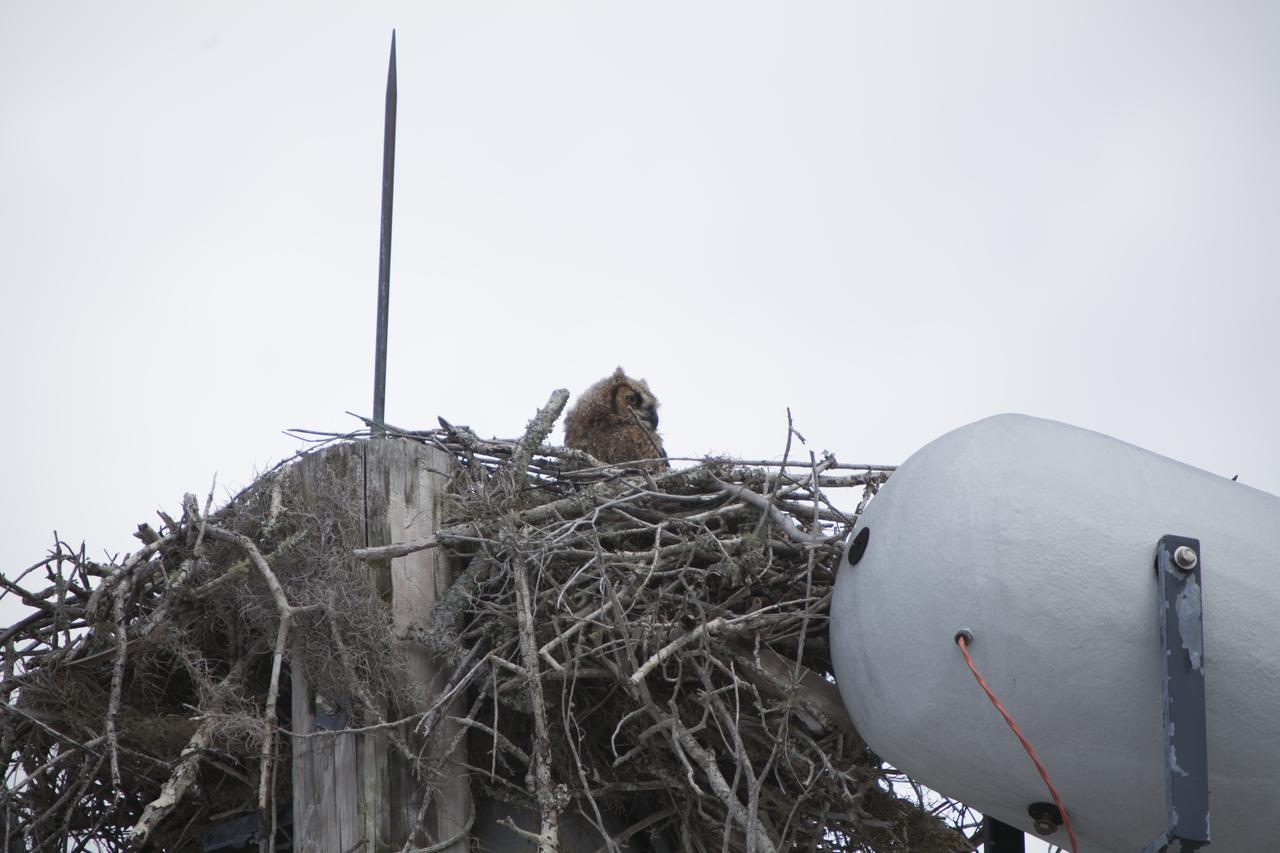
CAPE CANAVERAL, Fla. – At NASA's Kennedy Space Center in Florida, an Owl occupies a nest originally build by an Osprey atop a loudspeaker utility pole. Kennedy Space Center shares a boundary with the Merritt Island National Wildlife Refuge. The Refuge encompasses 140,000 acres that are a habitat for more than 331 species of birds, 31 mammals, 117 fishes, and 65 amphibians and reptiles. The marshes and open water of the refuge provide wintering areas for 23 species of migratory waterfowl, as well as a year-round home for great blue herons, great egrets, wood storks, cormorants, brown pelicans and other species of marsh and shore birds, as well as a variety of insects. For more information, visit: http://www.nasa.gov/centers/kennedy/shuttleoperations/alligators/kscovr.html Photo credit: NASA/Dimitri Gerondidakis
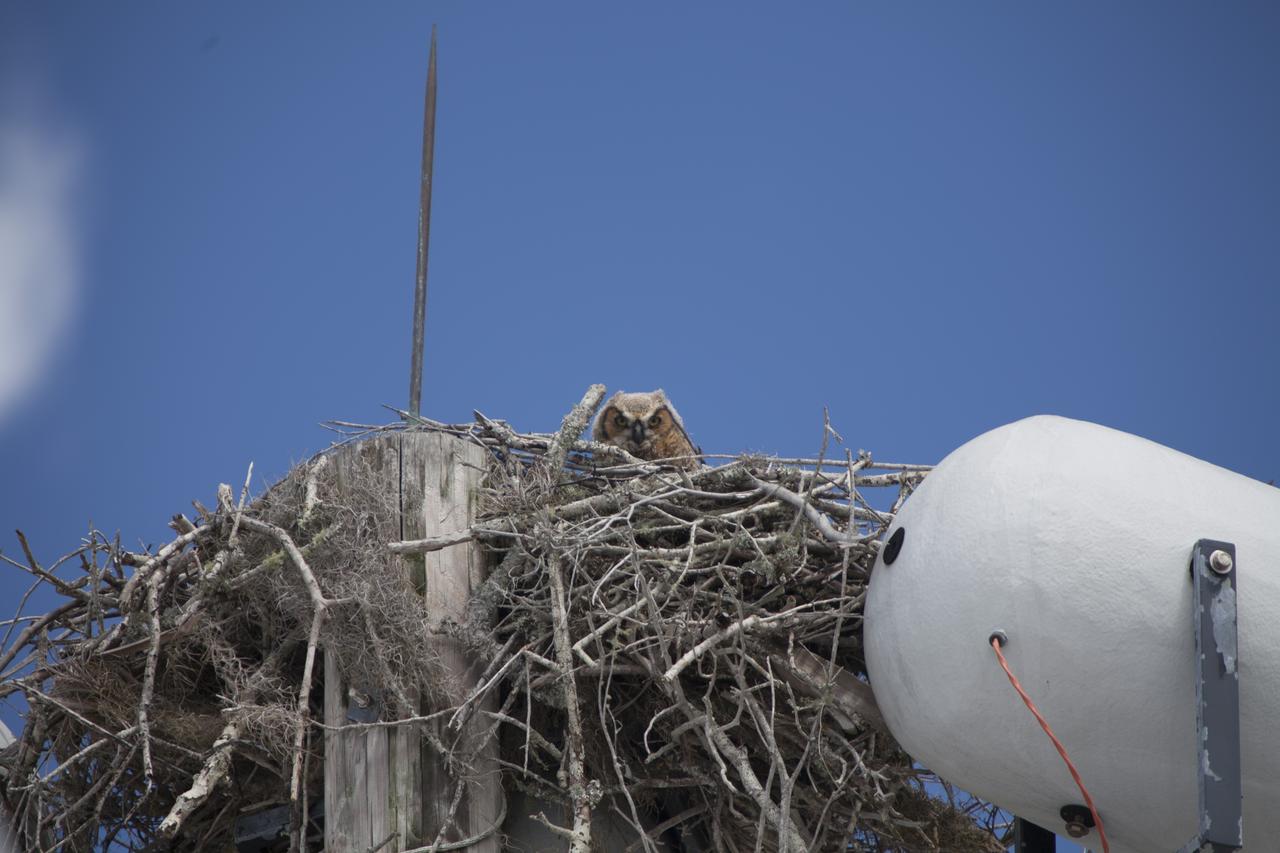
CAPE CANAVERAL, Fla. – At NASA's Kennedy Space Center in Florida, an Owl occupies a nest originally build by an Osprey atop a loudspeaker utility pole. Kennedy Space Center shares a boundary with the Merritt Island National Wildlife Refuge. The Refuge encompasses 140,000 acres that are a habitat for more than 331 species of birds, 31 mammals, 117 fishes, and 65 amphibians and reptiles. The marshes and open water of the refuge provide wintering areas for 23 species of migratory waterfowl, as well as a year-round home for great blue herons, great egrets, wood storks, cormorants, brown pelicans and other species of marsh and shore birds, as well as a variety of insects. For more information, visit: http://www.nasa.gov/centers/kennedy/shuttleoperations/alligators/kscovr.html Photo credit: NASA/Dimitri Gerondidakis
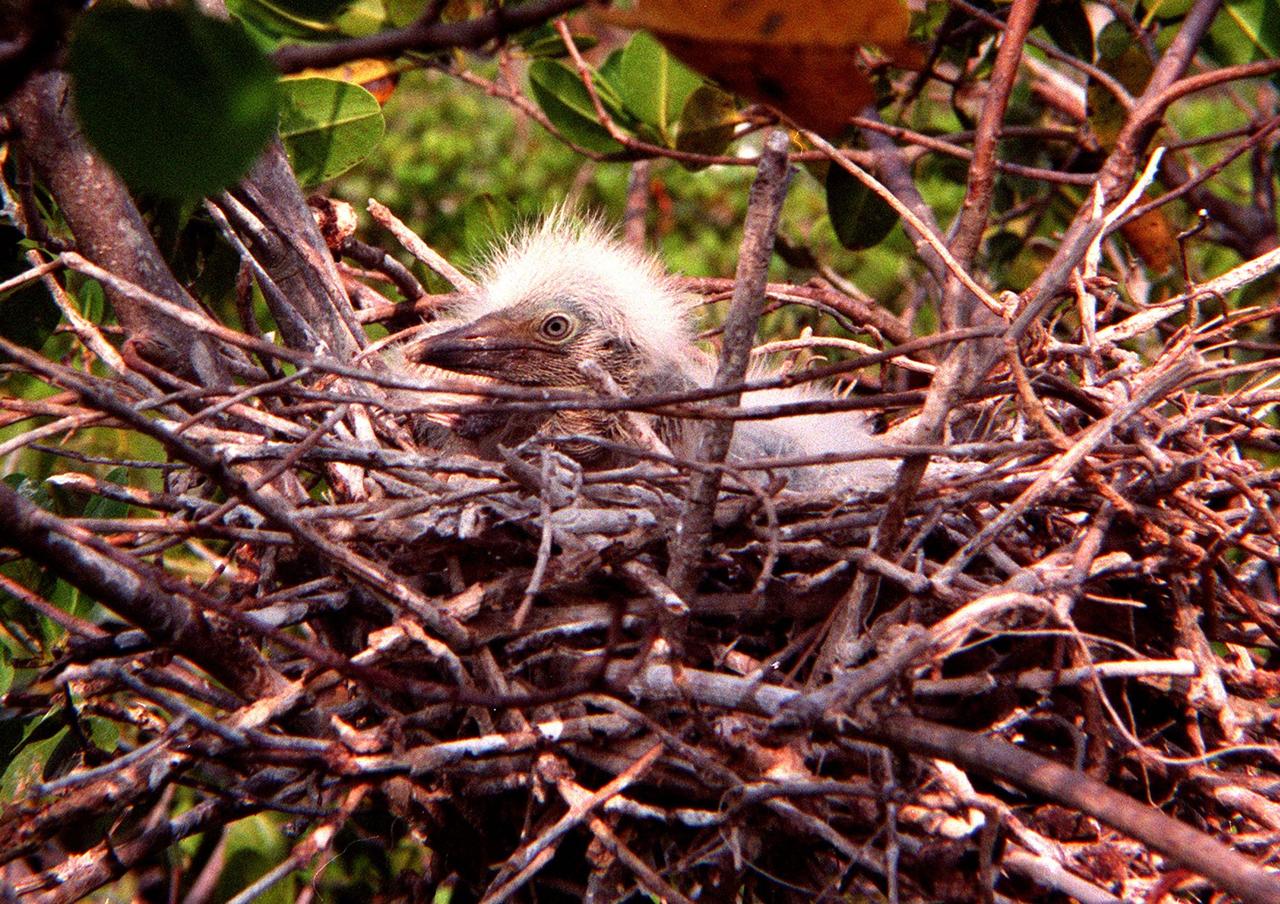
KENNEDY SPACE CENTER, FLA. -- Its newly grown, wispy feathers reflecting light like a halo, an unidentified baby bird waits, probably for its next meal, in its stick-assembled nest. The nest is in the Merritt Island National Wildlife Refuge, which shares a boundary with KSC. Hardwood hammocks and pine flatwoods share the 92,000-acre refuge with fresh-water impoundments, salt-water estuaries and brackish marshes. The diverse landscape provides habitat for more than 310 species of birds, 25 mammals, 117 fishes, and 65 amphibians and reptiles, including such endangered species as Southern bald eagles, wood storks, Florida scrub jays, Atlantic loggerhead and leatherback turtles, osprey, and nearly 5,000 alligators
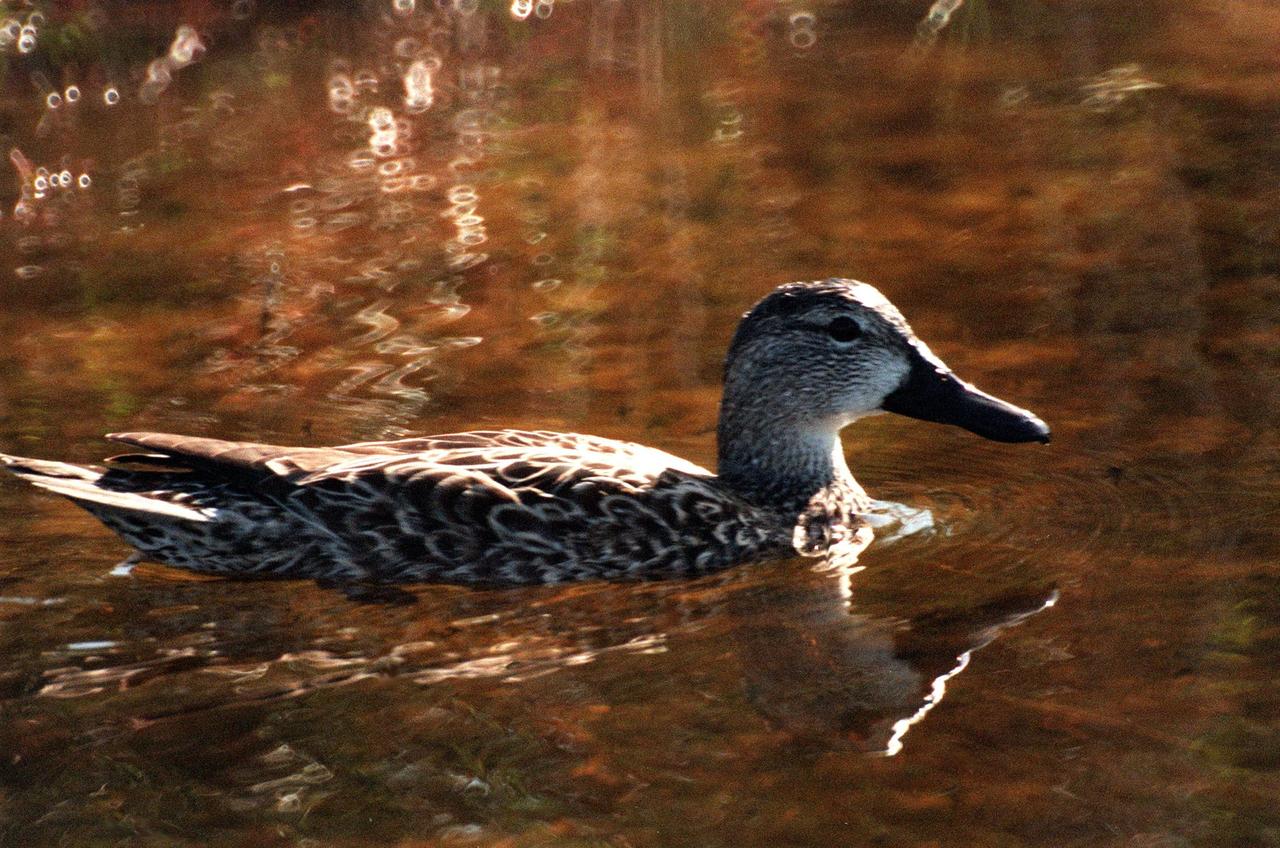
KENNEDY SPACE CENTER, FLA. -- A pintail duck swims calmly in the waters of the Merritt Island National <a href="http://www-pao.ksc.nasa.gov/kscpao/captions/subjects/wildlife.htm">Wildlife </a>Refuge, which shares a boundary with the space center. The pintail can be found in marshes, prairie ponds and tundra, and salt marshes in winter. They range from Alaska and Greenland south to Central America and the West Indies. The open waters of the Wildlife Refuge provide wintering areas for 23 species of migratory waterfowl as well as a year-round home for great blue herons, great egrets, wood storks, cormorants, brown pelicans and other species of marsh and shore birds. The refuge comprises 92,000 acres, ranging from fresh-water impoundments, salt-water estuaries and brackish marshes to hardwood hammocks and pine flatwoods. The diverse landscape provides habitat for more than 310 species of birds, 25 mammals, 117 fishes, and 65 amphibians and reptiles, including such endangered species as Southern bald eagles, wood storks, Florida scrub jays, Atlantic loggerhead and leatherback turtles, osprey, and nearly 5,000 alligators

KENNEDY SPACE CENTER, FLA. -- A sandpiper wades the water in the Merritt Island National <a href="http://www-pao.ksc.nasa.gov/kscpao/captions/subjects/wildlife.htm">Wildlife </a> Refuge, which shares a boundary with the space center. Sandpipers are usually seen foraging on the beach or margins of lakes, ponds, marshes or streams. The open waters of the Wildlife Refuge provide wintering areas for 23 species of migratory waterfowl as well as a year-round home for great blue herons, great egrets, wood storks, cormorants, brown pelicans and other species of marsh and shore birds. The refuge comprises 92,000 acres, ranging from fresh-water impoundments, salt-water estuaries and brackish marshes to hardwood hammocks and pine flatwoods. The diverse landscape provides habitat for more than 310 species of birds, 25 mammals, 117 fishes, and 65 amphibians and reptiles, including such endangered species as Southern bald eagles, wood storks, Florida scrub jays, Atlantic loggerhead and leatherback turtles, osprey, and nearly 5,000 alligators
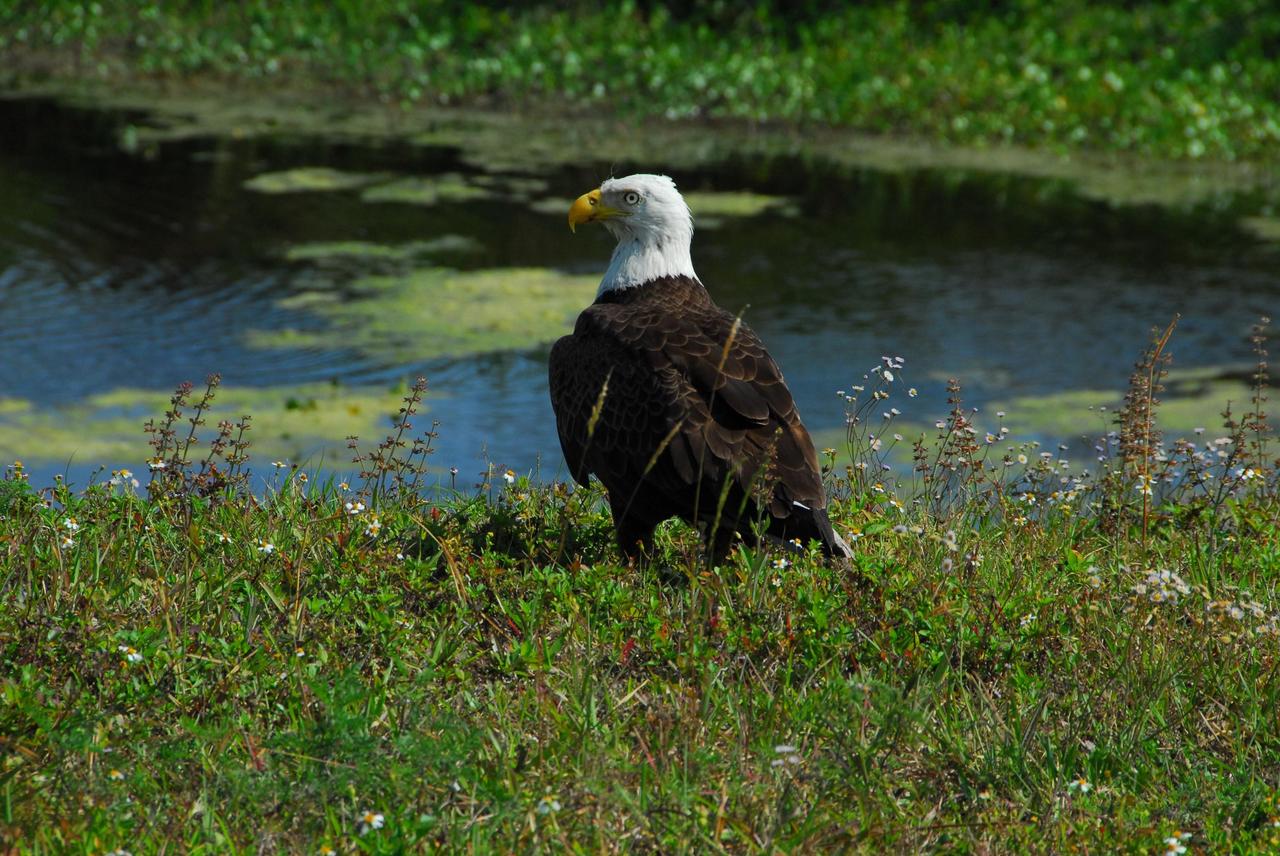
KENNEDY SPACE CENTER, FLA. -- This adult bald eagle rests on the ground near a pond close to S.R. 3 in NASA's Kennedy Space Center. Bald eagles live near large bodies of open water such as lakes, marshes, seacoasts and rivers, where there are plenty of fish to eat and tall trees for nesting and roosting. Bald eagles feed primarily on fish, but also eat small animals (ducks, coots, muskrats, turtles, rabbits, snakes, etc.) and occasional carrion (dead animals). They are sometimes seen among a gathering of vultures at the site of a fresh meal. Bald eagles have a presence in every U. S. state except Hawaii. Bald eagles use a specific territory for nesting (they mate for life), winter feeding or a year-round residence. Its natural domain is from Alaska to Baja, California, and from Maine to Florida. There are a dozen eagle nests both in KSC and in the Merritt Island National Wildlife Refuge, which surrounds KSC. The refuge includes several wading bird rookeries, many osprey nests, up to 400 manatees during the spring, and approximately 2,500 Florida scrub jays. It also is a major wintering area for migratory birds. More than 500 species of wildlife inhabit the refuge, with 15 considered federally threatened or endangered. Photo credit: NASA/George Shelton
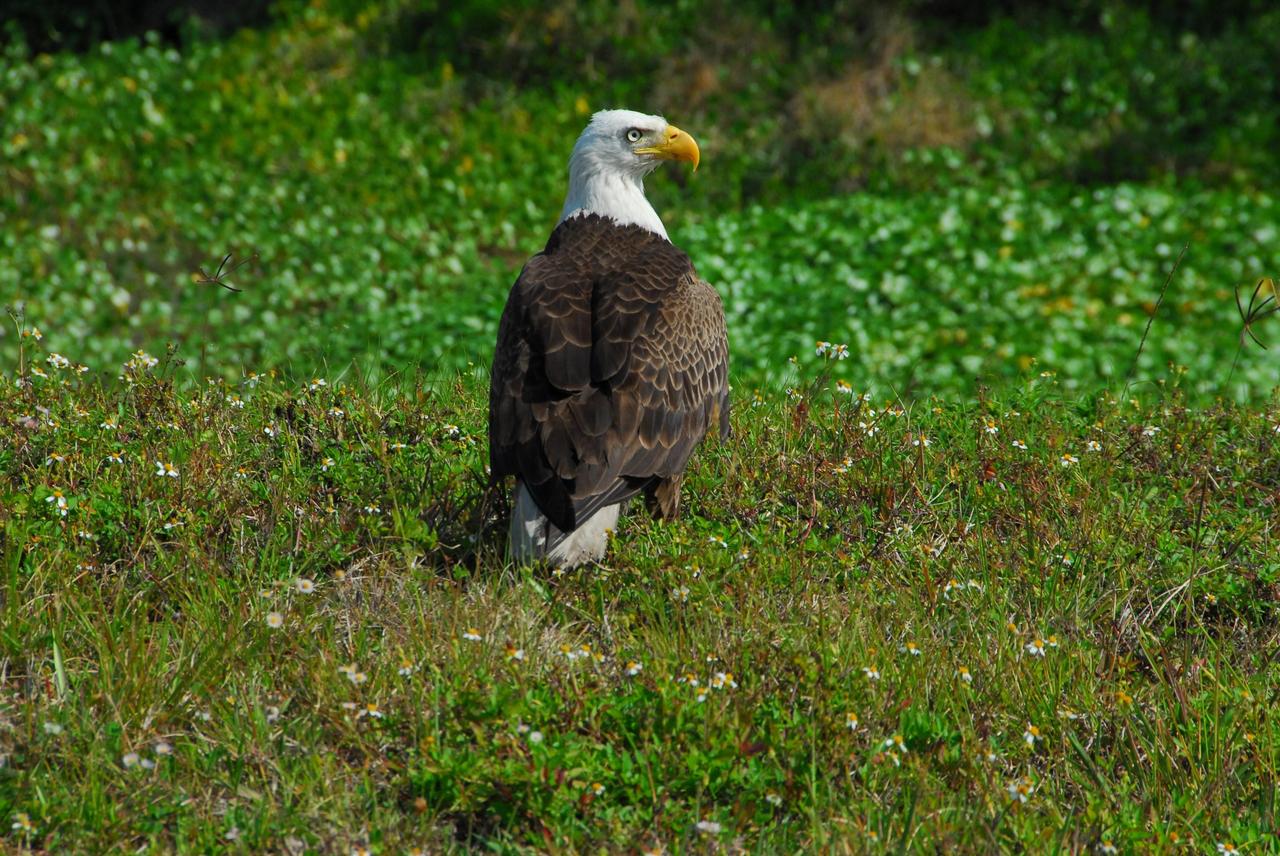
KENNEDY SPACE CENTER, FLA. -- This adult bald eagle rests on the ground near a pond close to S.R. 3 in NASA's Kennedy Space Center. Bald eagles live near large bodies of open water such as lakes, marshes, seacoasts and rivers, where there are plenty of fish to eat and tall trees for nesting and roosting. Bald eagles feed primarily on fish, but also eat small animals (ducks, coots, muskrats, turtles, rabbits, snakes, etc.) and occasional carrion (dead animals). They are sometimes seen among a gathering of vultures at the site of a fresh meal. Bald eagles have a presence in every U. S. state except Hawaii. Bald eagles use a specific territory for nesting (they mate for life), winter feeding or a year-round residence. Its natural domain is from Alaska to Baja, California, and from Maine to Florida. There are a dozen eagle nests both in KSC and in the Merritt Island National Wildlife Refuge, which surrounds KSC. The refuge includes several wading bird rookeries, many osprey nests, up to 400 manatees during the spring, and approximately 2,500 Florida scrub jays. It also is a major wintering area for migratory birds. More than 500 species of wildlife inhabit the refuge, with 15 considered federally threatened or endangered. Photo credit: NASA/George Shelton