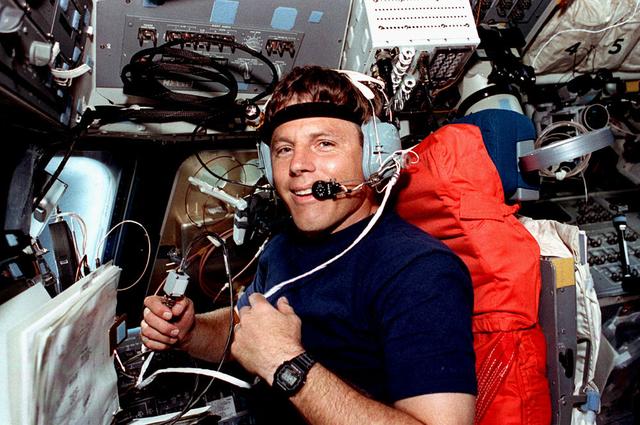
Space Shuttle Discovery (STS-56) onboard photo of Pilot Stephen S. Oswald (wearing a headset) uses the Shuttle Amateur Radio Experiment II (SAREX-II) while sitting at the pilot's station on the forward flight deck. Oswald smiled from behind the microphone as he talks to amateur radio operators on Earth via the SAREX equipment. SAREX cables and the interface module freefloat in front of Oswald. The anterna located in the forward flight deck window is visible in the background. SAREX was established by NASA, the American Radio League/Amateur Radio Satellite Corporation and the Johnson Space Center (JSC) Amateur Radio Club to encourage public participation in the space program through a program to demonstrate the effectiveness of conducting short-wave radio transmissions between the Shuttle and ground-based radio operators at low-cost ground stations with amateur and digital techniques.
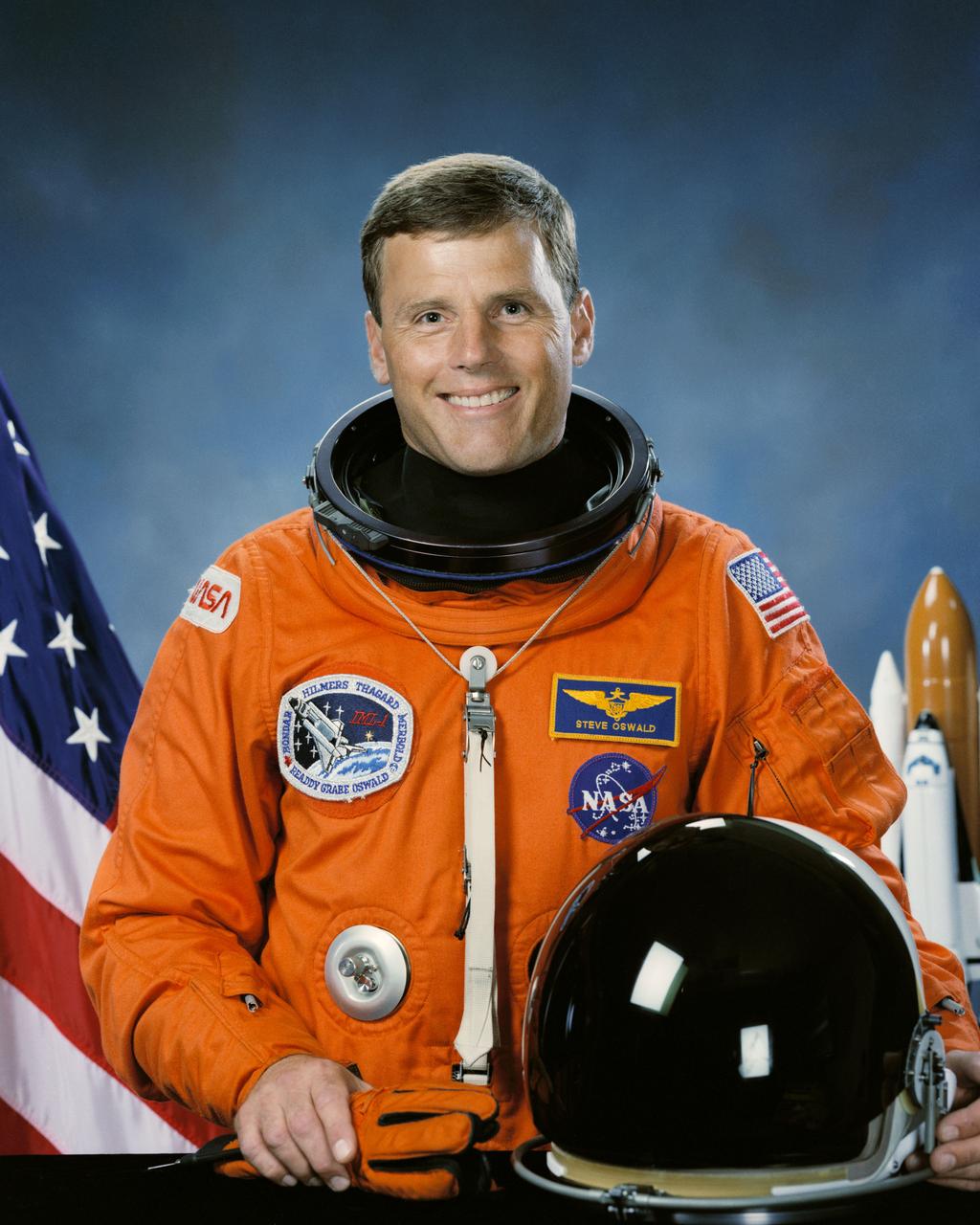
S92-31007 (March 1992) --- Astronaut Stephen S. Oswald.
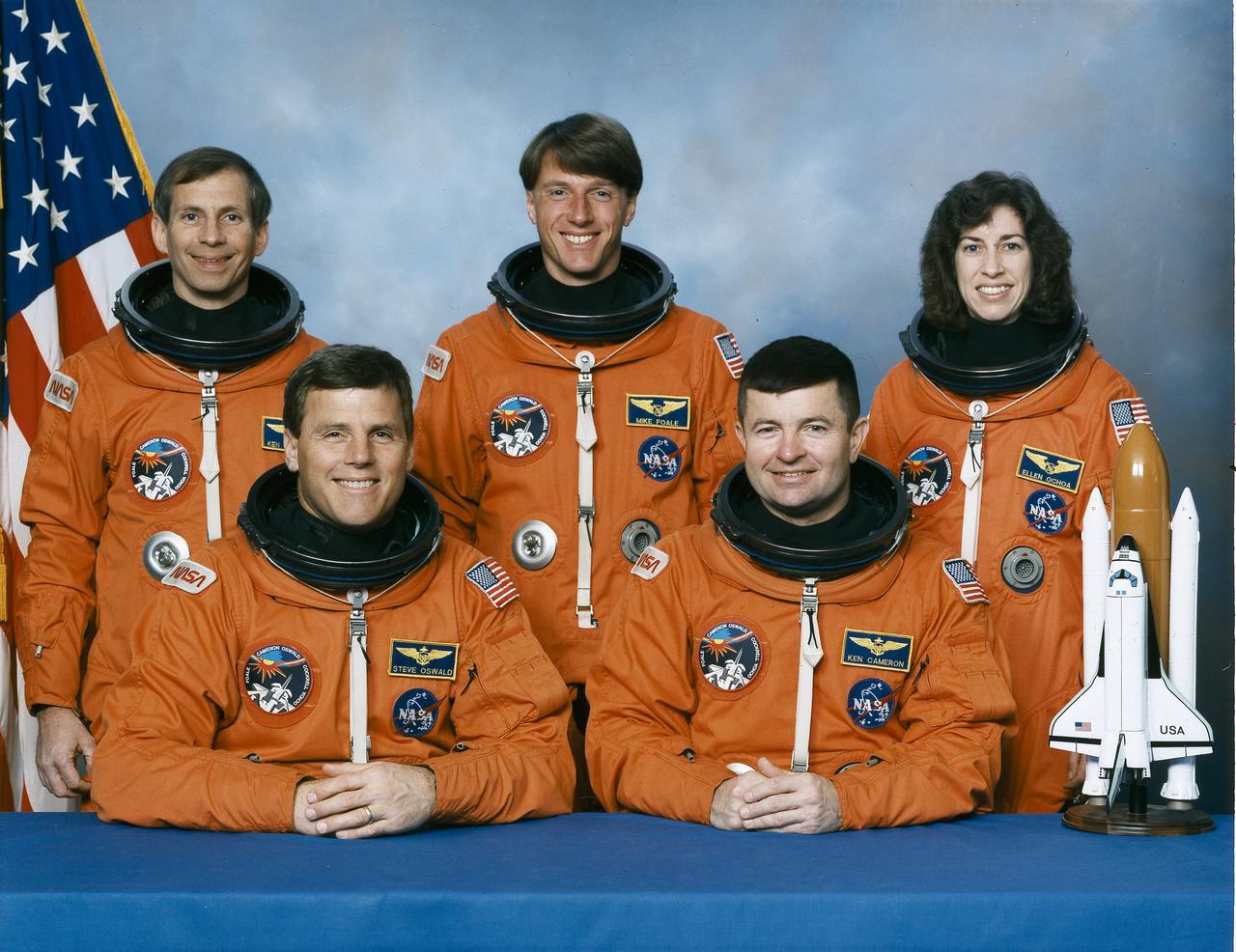
The STS-56 crew portrait includes five astronauts. Seated from the left are Stephen S. Oswald, pilot; and Kenneth D. Cameron, commander. Standing, from the left, are mission specialists Kenneth D. Cockrell, C. Michael Foal, and Ellen Ochoa. The crew launched aboard the Space Shuttle Discovery on April 8, 1993 at 1:29:00 am (EDT) with the Atmospheric Laboratory for Applications and Science-2 (ATLAS-2) as the primary payload.
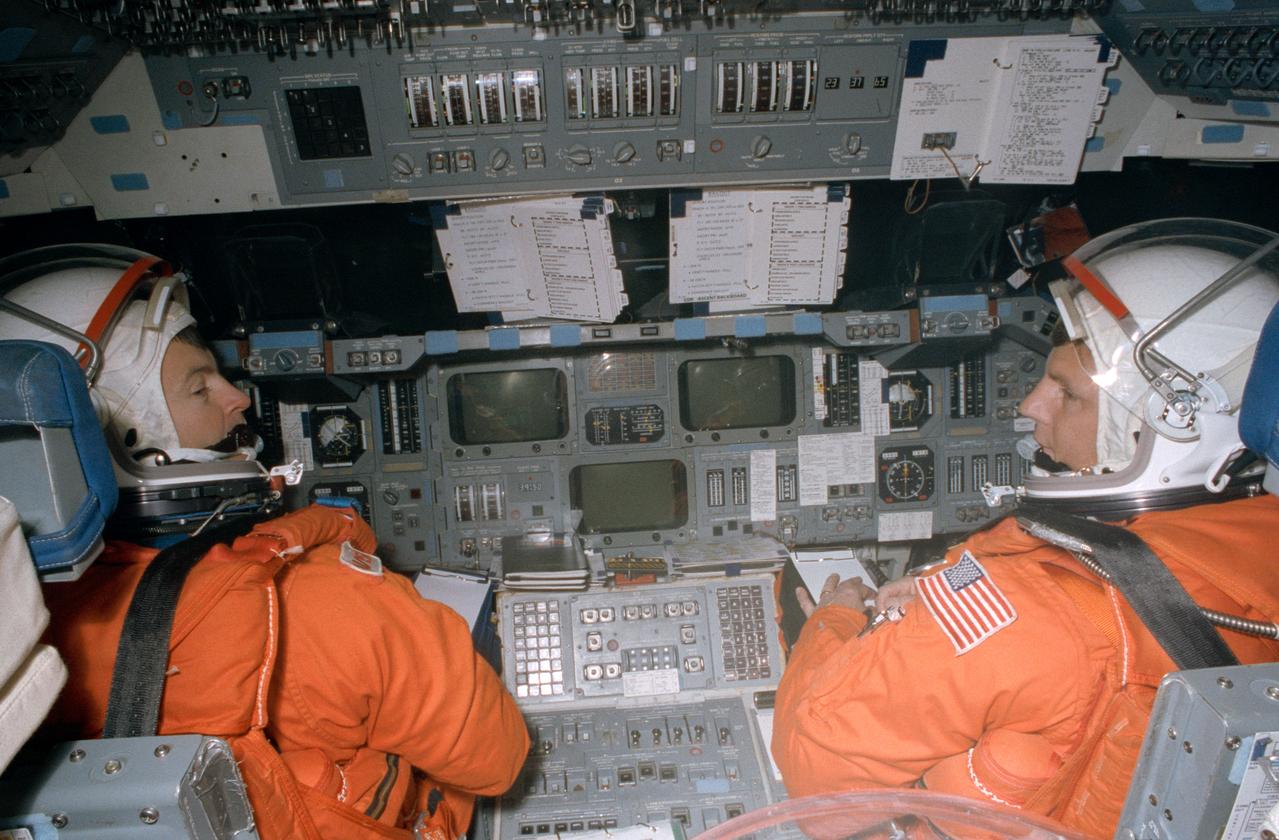
STS-56 Discovery, Orbiter Vehicle (OV) 103, Commander Kenneth Cameron, (left) and Pilot Stephen S. Oswald, wearing launch and entry suits (LESs) and launch and entry helmets (LEHs), are seated on the forward flight deck of the crew compartment trainer (CCT), a shuttle mockup. Cameron mans the commander station controls and Oswald the pilots station controls during an emergency egress (bailout) simulation. The view was taken from the aft flight deck looking forward and includes Cameron's and Oswald's profiles and the forward flight deck controls and checklists. The CCT is located in JSC's Mockup and Integration Laboratory (MAIL) Bldg 9NE.
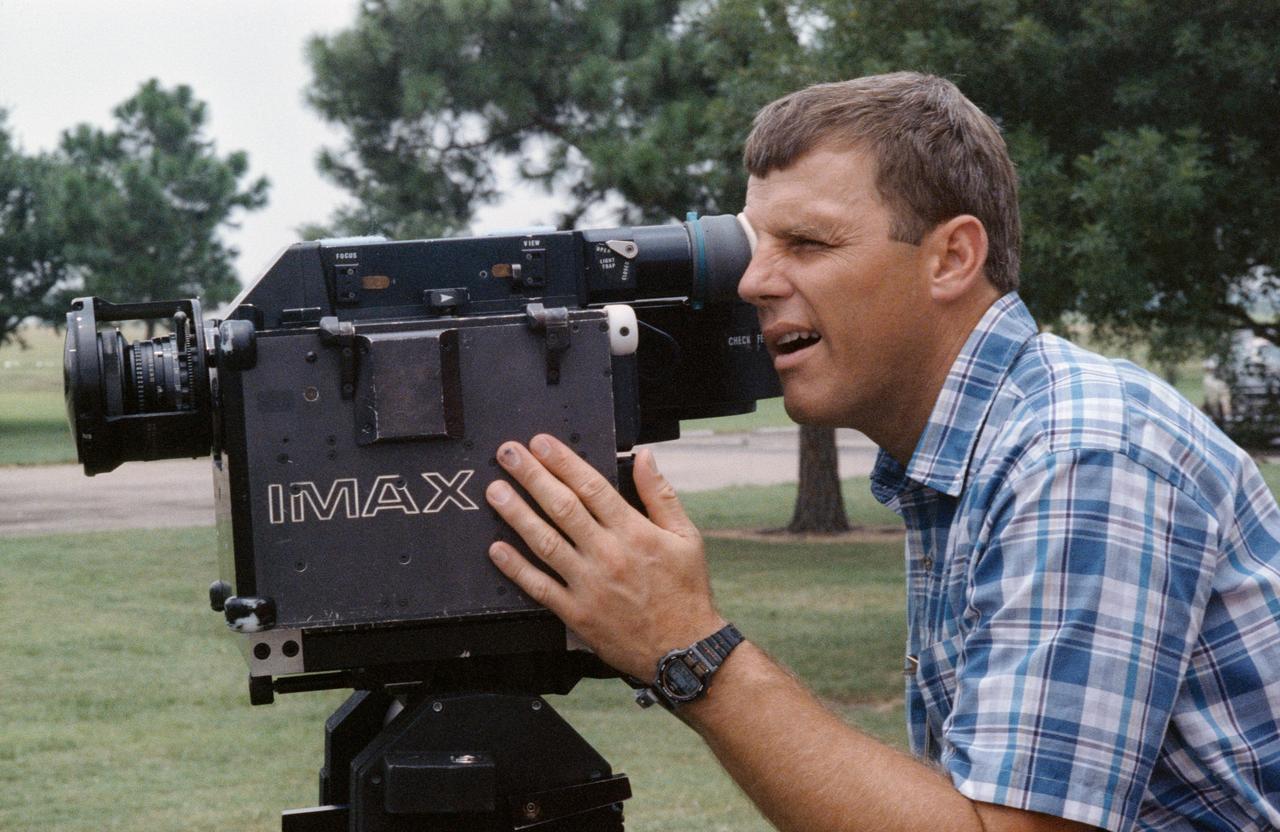
S91-42999 (20 July 1991) --- Astronaut Stephen S. Oswald, STS-42 pilot, uses the IMAX camera system (ICS) during training session held at Johnson Space Center?s (JSC) Manned Space Flight Exhibit Complex Bldg 90 (Rocket Park). Oswald squints as he looks through the ICS eyepiece.
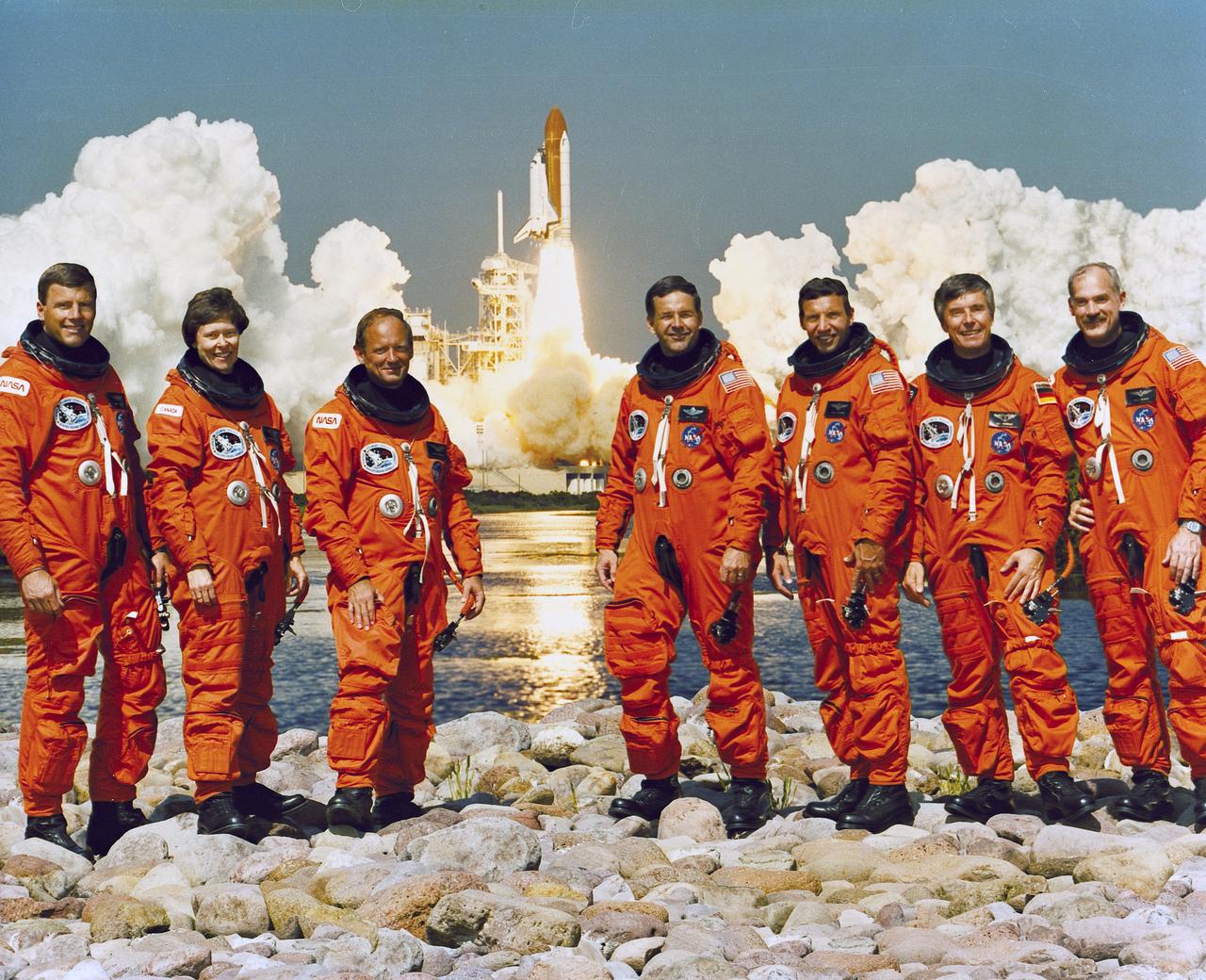
The STS-42 crew portrait includes from left to right: Stephen S. Oswald, pilot; Roberta L. Bondar, payload specialist 1; Norman E. Thagard, mission specialist 1; Ronald J. Grabe, commander; David C. Hilmers, mission specialist 2; Ulf D. Merbold, payload specialist 2; and William F. Readdy, mission specialist 3. Launched aboard the Space Shuttle Discovery on January 22, 1992 at 9:52:33 am (EST), the STS-42 served as the International Microgravity Laboratory-1 (ML-1 ) mission.
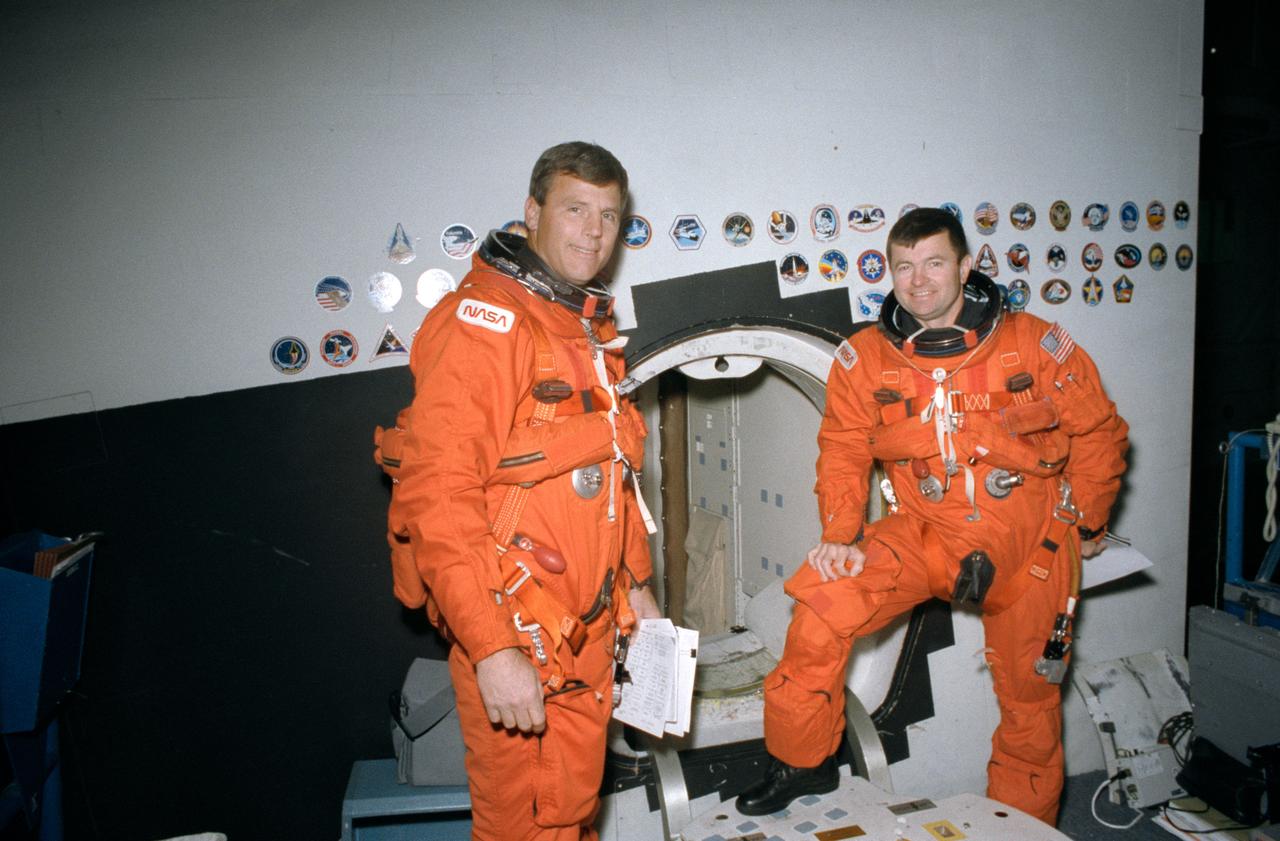
STS-56 Discovery, Orbiter Vehicle (OV) 103, Commander Kenneth Cameron (right) and Pilot Stephen S. Oswald, wearing launch and entry suits (LESs), stand at the side hatch of the crew compartment trainer (CCT), a shuttle mockup, prior to entering the mockup. Once inside the CCT, they will don their launch and entry helmets (LEHs) and participate in emergency egress (bailout) procedures. The CCT is located in JSC's Mockup and Integration Laboratory (MAIL) Bldg 9NE.
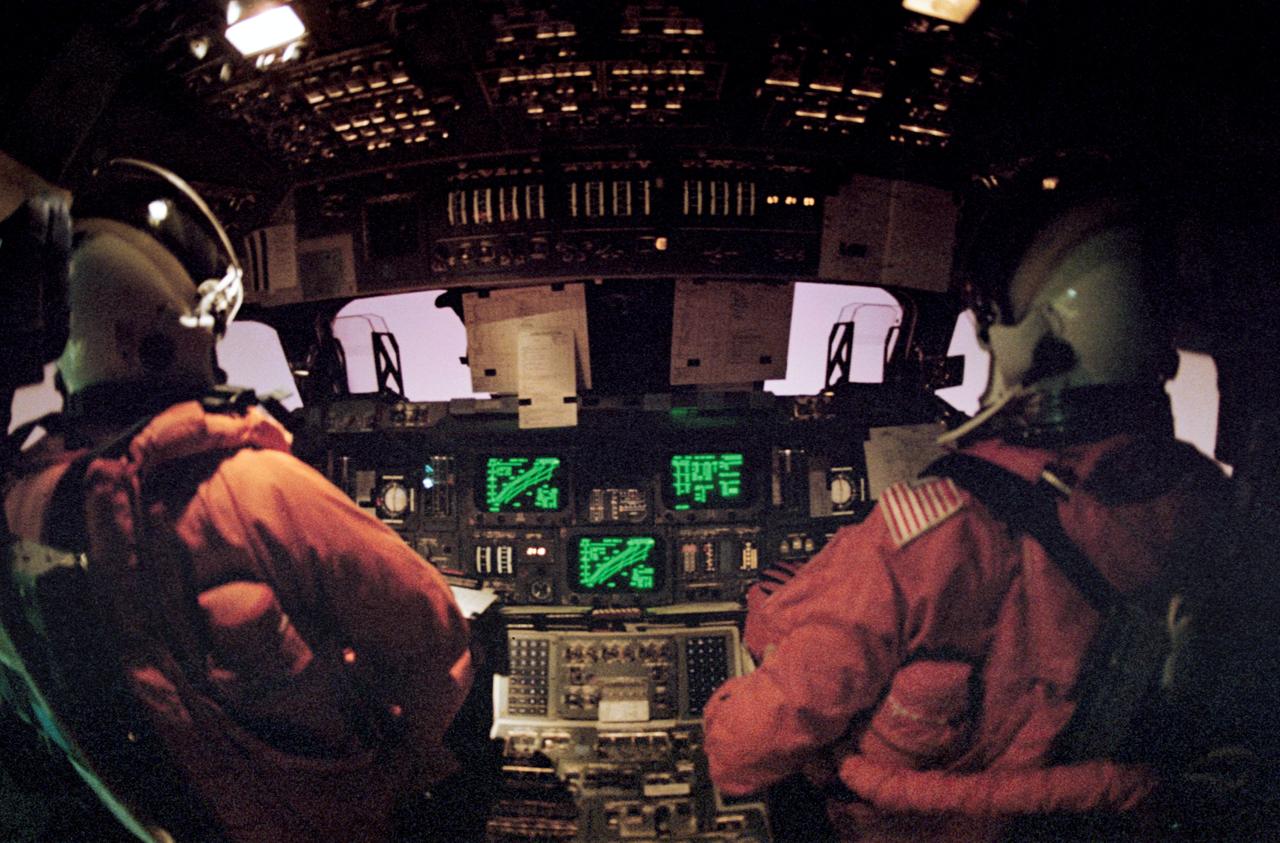
STS042-45-033 (30 Jan. 1992) --- Astronauts Ronald J. Grabe (left) and Stephen S. Oswald man the commander and pilot stations, respectively, during the entry phase of the STS-42 mission. The pink glow through the front windows telltale of friction caused heat encountered upon passing through Earth's atmosphere on the return trip home.
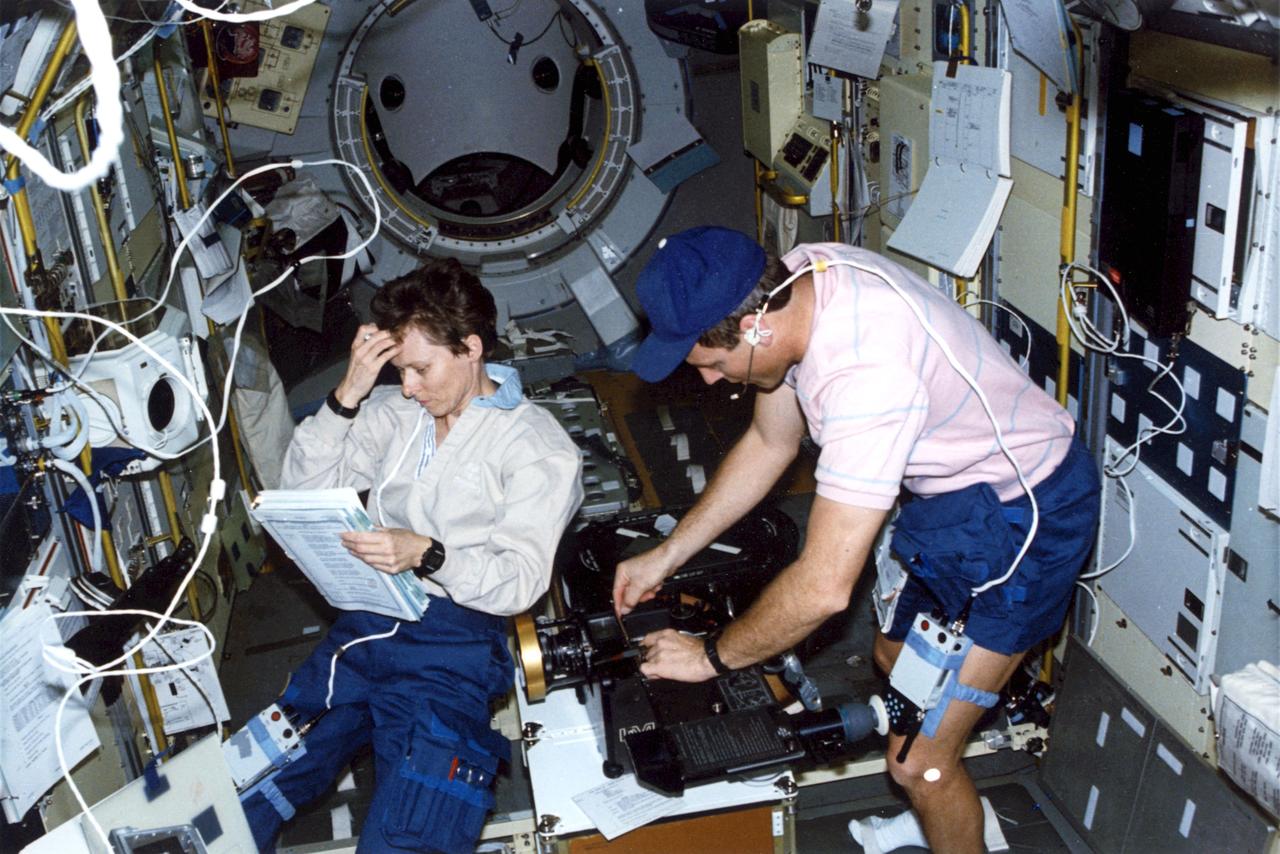
STS-42, Astronauts Steve Oswald and Canadian Roberta Bondar working in IML-1 (International Microgravity Laboratory).
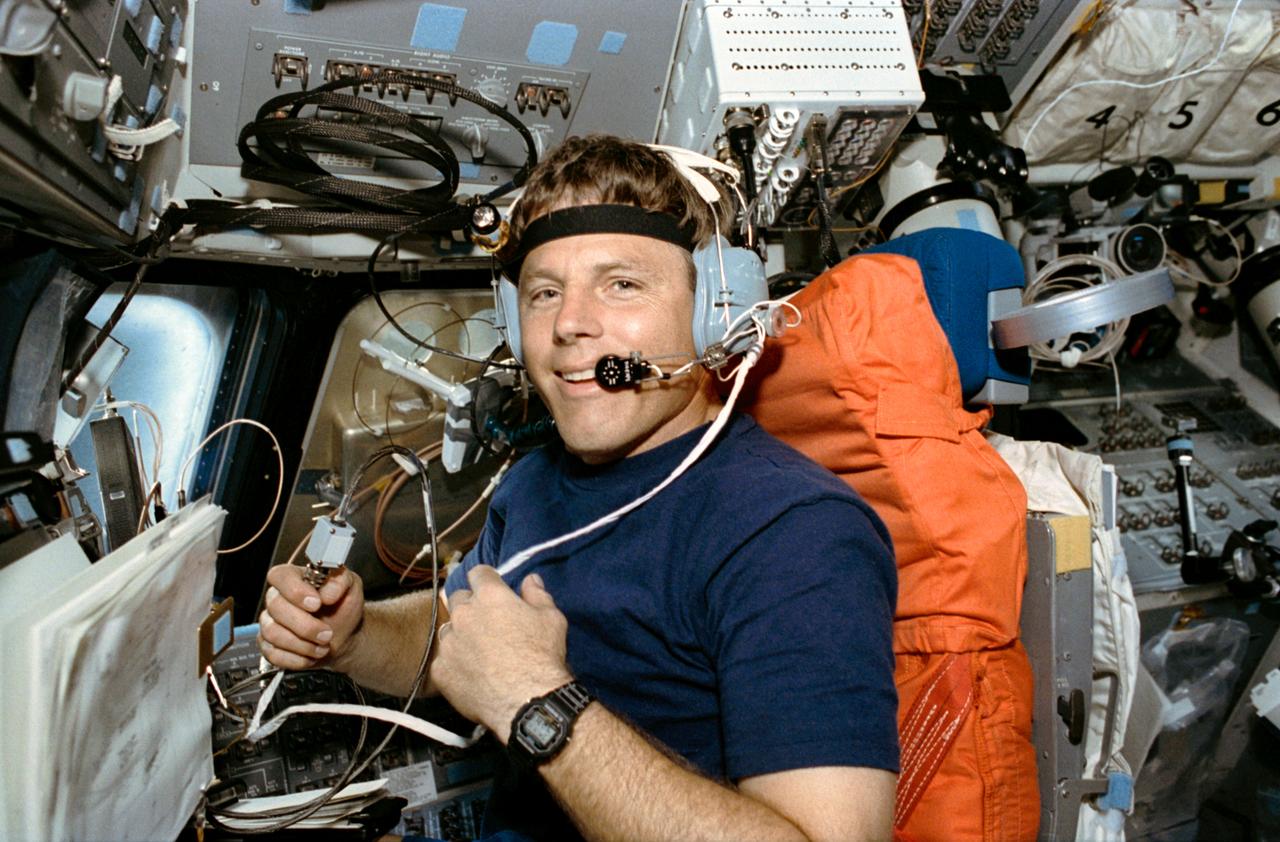
STS056-04-004 (8-17 April 1993) --- Aboard Discovery, Astronaut Stephen S. Oswald, Pilot, talks to amateur radio operators on Earth via the Shuttle Amateur Radio Experiment (SAREX). SAREX was established by NASA, the American Radio League/Amateur Radio Satellite Corporation and the Johnson Space Center Amateur Radio Club to encourage public participation in the space program through a program to demonstrate the effectiveness of conducting short-wave radio transmissions between the Shuttle and ground-based radio operators at low-cost ground stations with amateur and digital techniques. As on several previous missions, SAREX was used on this flight as an educational opportunity for students around the world to learn about space firsthand by speaking directly to astronauts aboard the Shuttle.
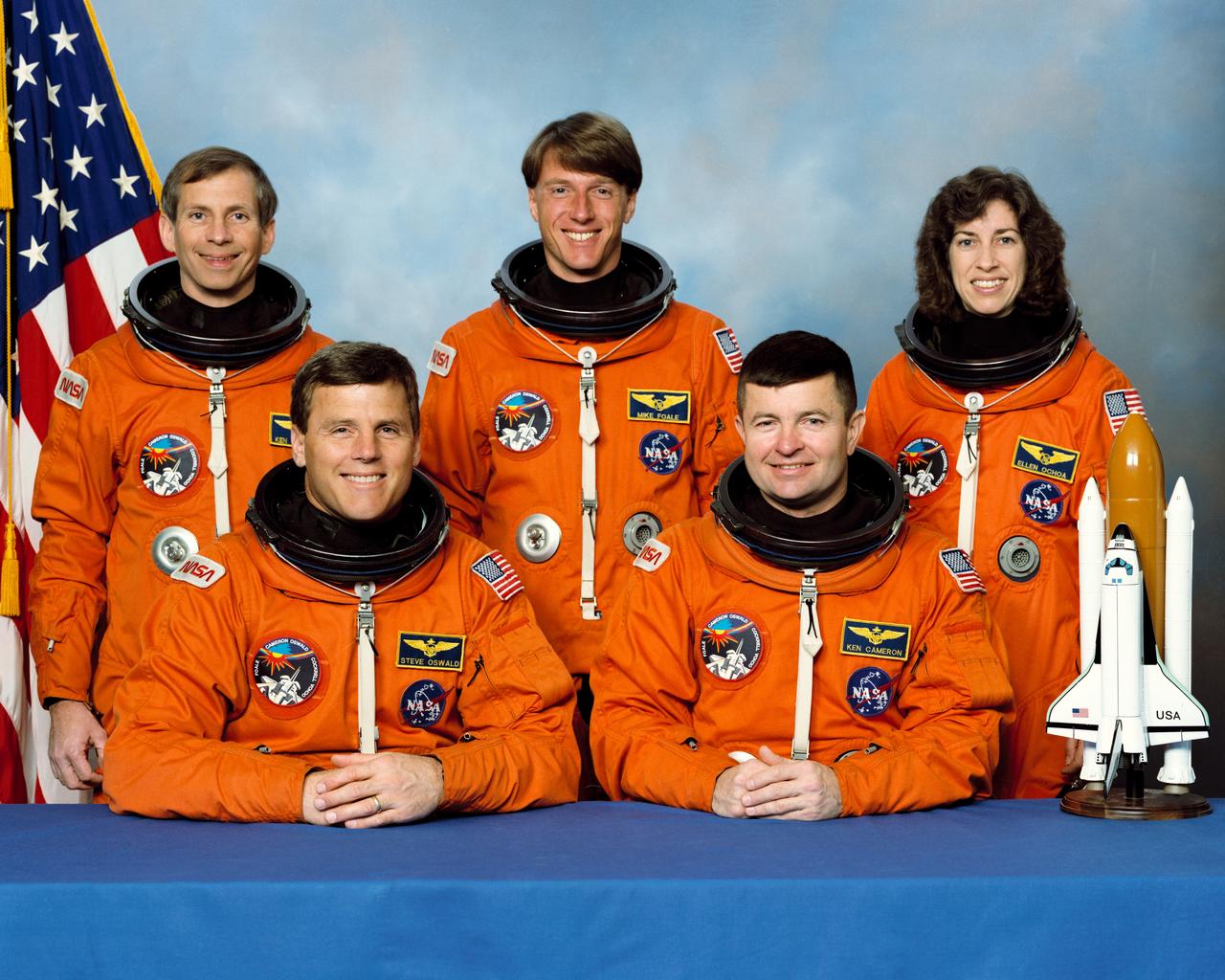
STS056-S-002 (January 1993) --- The five NASA astronauts assigned to fly aboard the Space Shuttle Discovery for the STS-56\Atlas-2 mission are pictured in training versions of their partial-pressure launch and entry garments. Left to right are astronauts Kenneth D. Cockrell, Steven S. Oswald, C. Michael Foale, Kenneth D. Cameron and Ellen Ochoa. Cameron is mission commander; Oswald, pilot; while the other three will serve as mission specialists.
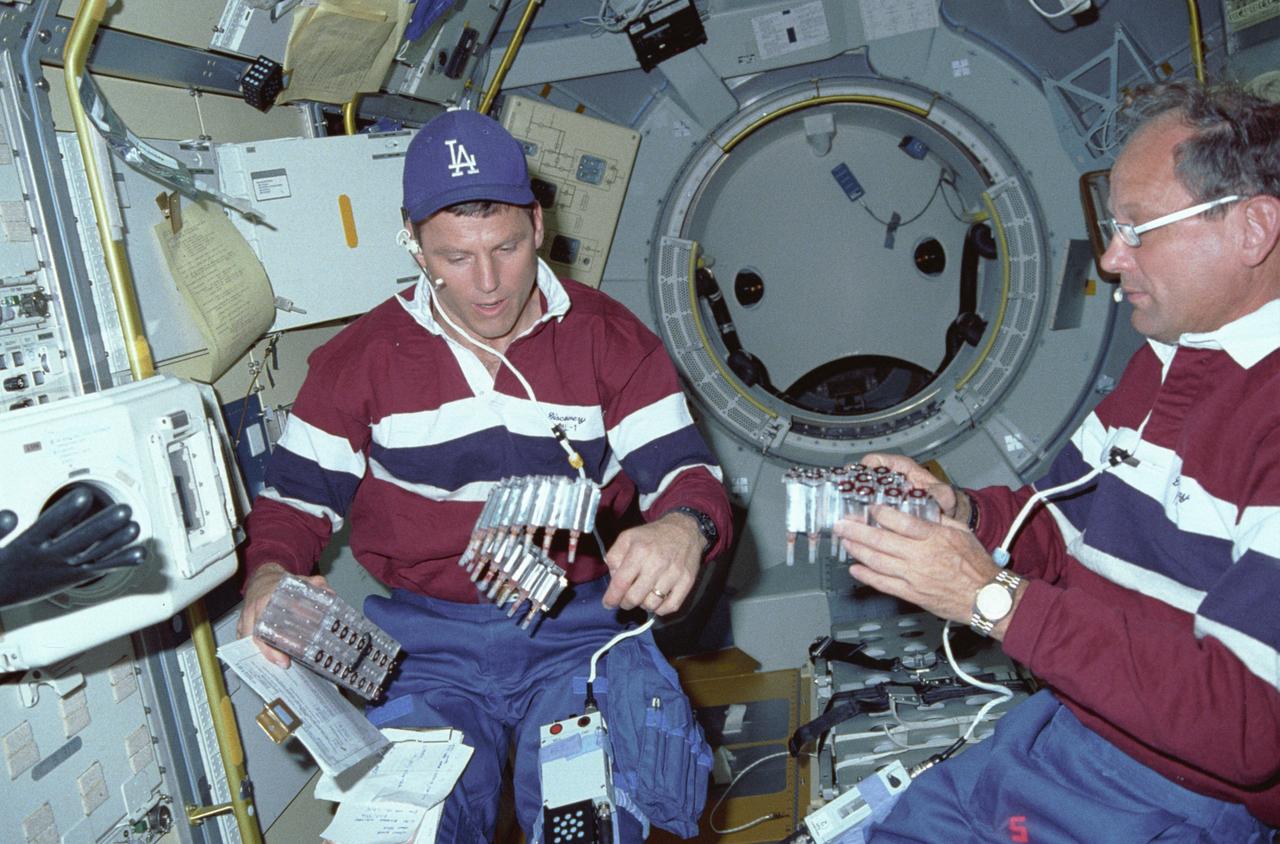
International Microgravity Laboratory-1 (IML-1) was the first in a series of Shuttle flights dedicated to fundamental materials and life sciences research with the international partners. The participating space agencies included: NASA, the 14-nation European Space Agency (ESA), the Canadian Space Agency (CSA), the French National Center of Space Studies (CNES), the German Space Agency and the German Aerospace Research Establishment (DAR/DLR), and the National Space Development Agency of Japan (NASDA). Dedicated to the study of life and materials sciences in microgravity, the IML missions explored how life forms adapt to weightlessness and investigated how materials behave when processed in space. Both life and materials sciences benefited from the extended periods of microgravity available inside the Spacelab science module in the cargo bay of the Space Shuttle Orbiter. In this photograph, Astronauts Stephen S. Oswald and Norman E. Thagard handle ampoules used in the Mercuric Iodide Crystal Growth (MICG) experiment. Mercury Iodide crystals have practical uses as sensitive x-ray and gamma-ray detectors. In addition to their exceptional electronic properties, these crystals can operate at room temperature rather than at the extremely low temperatures usually required by other materials. Because a bulky cooling system is urnecessary, these crystals could be useful in portable detector devices for nuclear power plant monitoring, natural resource prospecting, biomedical applications in diagnosis and therapy, and astronomical observation. Managed by the Marshall Space Flight Center, IML-1 was launched on January 22, 1992 aboard the Space Shuttle Orbiter Discovery (STS-42 mission).
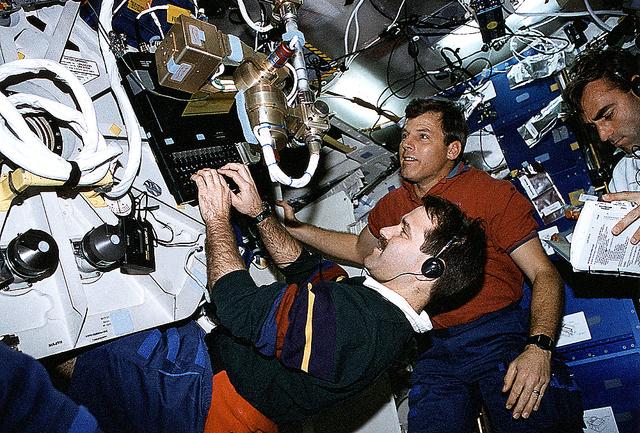
Onboard Space Shuttle Endeavour (STS-67) astronaut John Grunsfeld works at a laptop computer while wearing a headset. Commander Stephen Oswald watches Grunsfeld and Pilot Bill Gregory reads a checklist on the shuttle mid-deck.
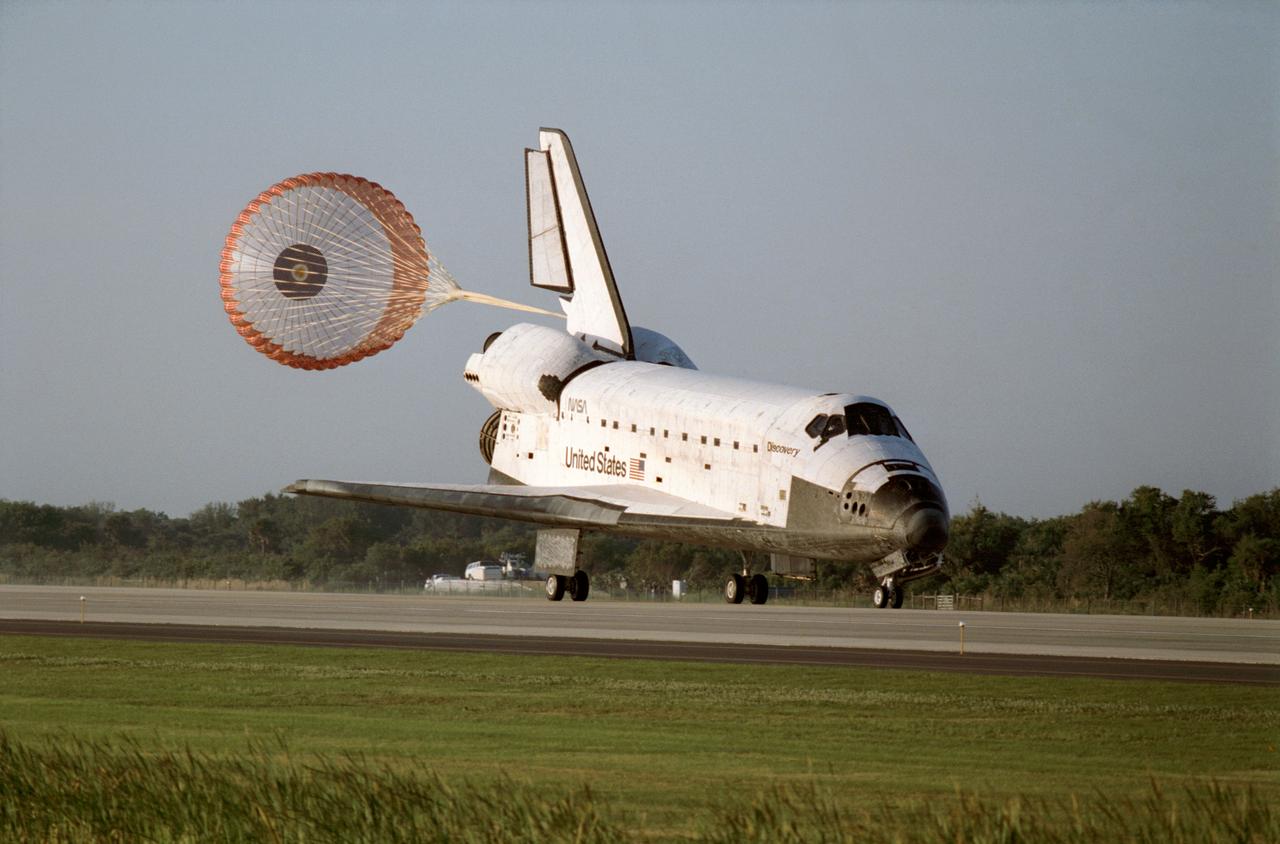
STS056-S-098 (17 April 1993) --- The drag chute is deployed following landing of the Space Shuttle Discovery on the Shuttle landing facility at the Kennedy Space Center to complete the STS-56\Atlas 2 mission. Touchdown occurred at 7:37 a.m. (EDT). Onboard the spacecraft were astronauts Kenneth D. Cameron, commander; Stephen S. Oswald, pilot; and C. Michael Foale, Ellen Ochoa and Kenneth D. Cockrell, mission specialists.
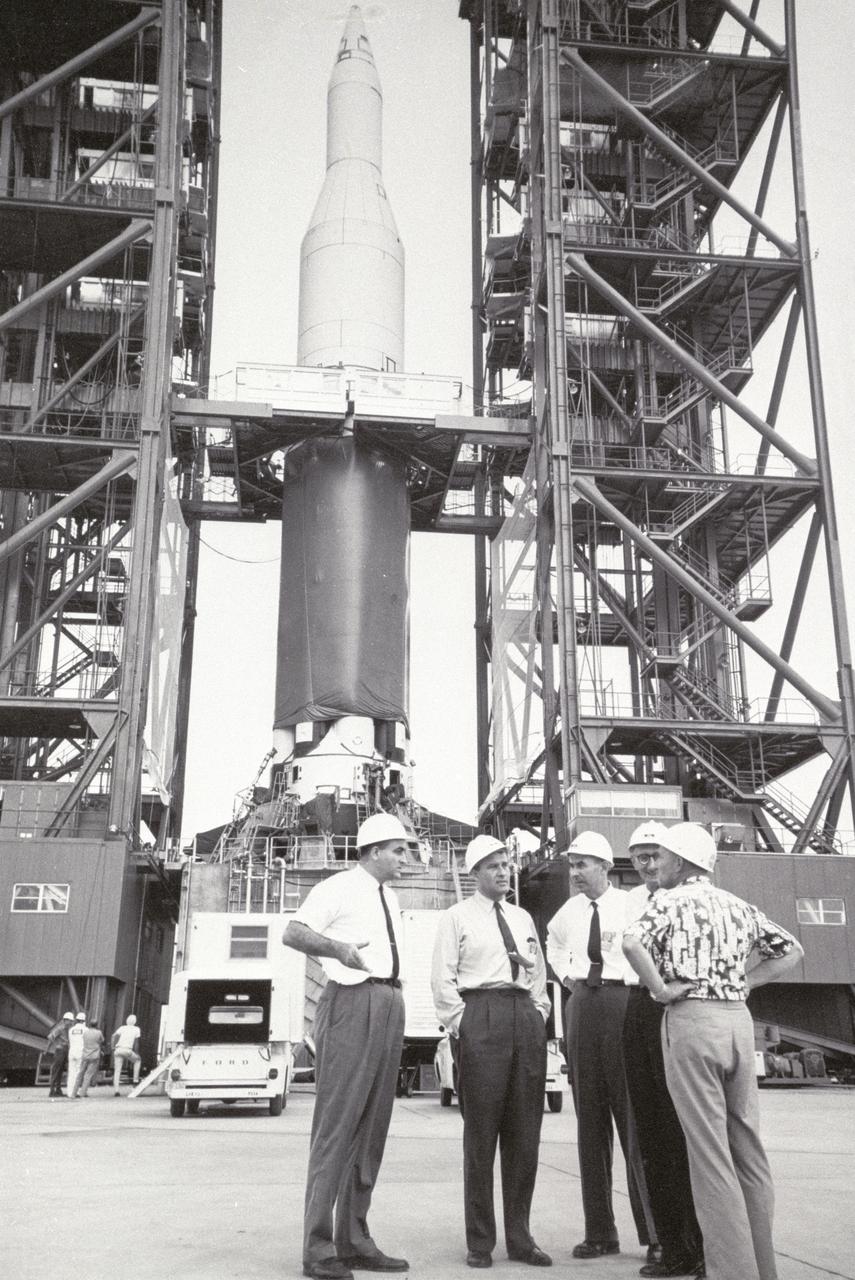
Pictured in front of the Saturn 1 launch vehicle are (L to R): Dr. Rocco Petrone, Director of Launch Operations at Kennedy Space Center; Dr. Werher von Braun, Director of Marshall Space Flight Center; Dr. Oswald Lange, Director of the Saturn Systems Office; Mr. Hans. H. Maus, Director of Fabrication and Assembly Engineering Division; and Dr. Hans Gruene, Deputy Director of Launch Operations Directorate. Maus and Gruene were original members of von Braun's rocket team.
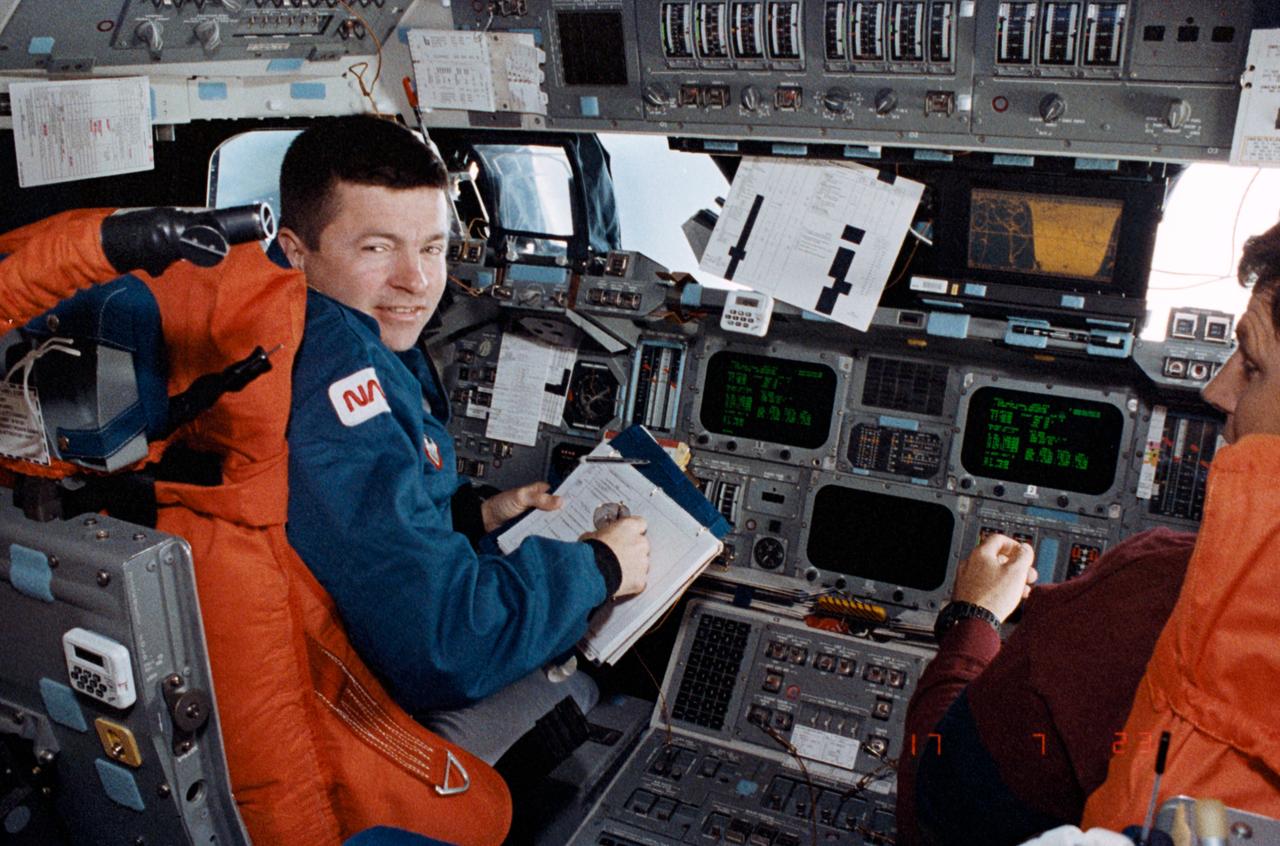
STS056-39-010 (8-17 April 1993) --- Astronaut Kenneth D. Cameron mans the mission commander's station during an orbiter maneuver aboard the Earth-orbiting Space Shuttle Discovery. Astronaut Stephen S. Oswald, pilot, is partially visible at right edge of the frame. The two were joined by three other NASA astronauts for nine days of science in support of the Atlas 2 mission in Earth orbit.
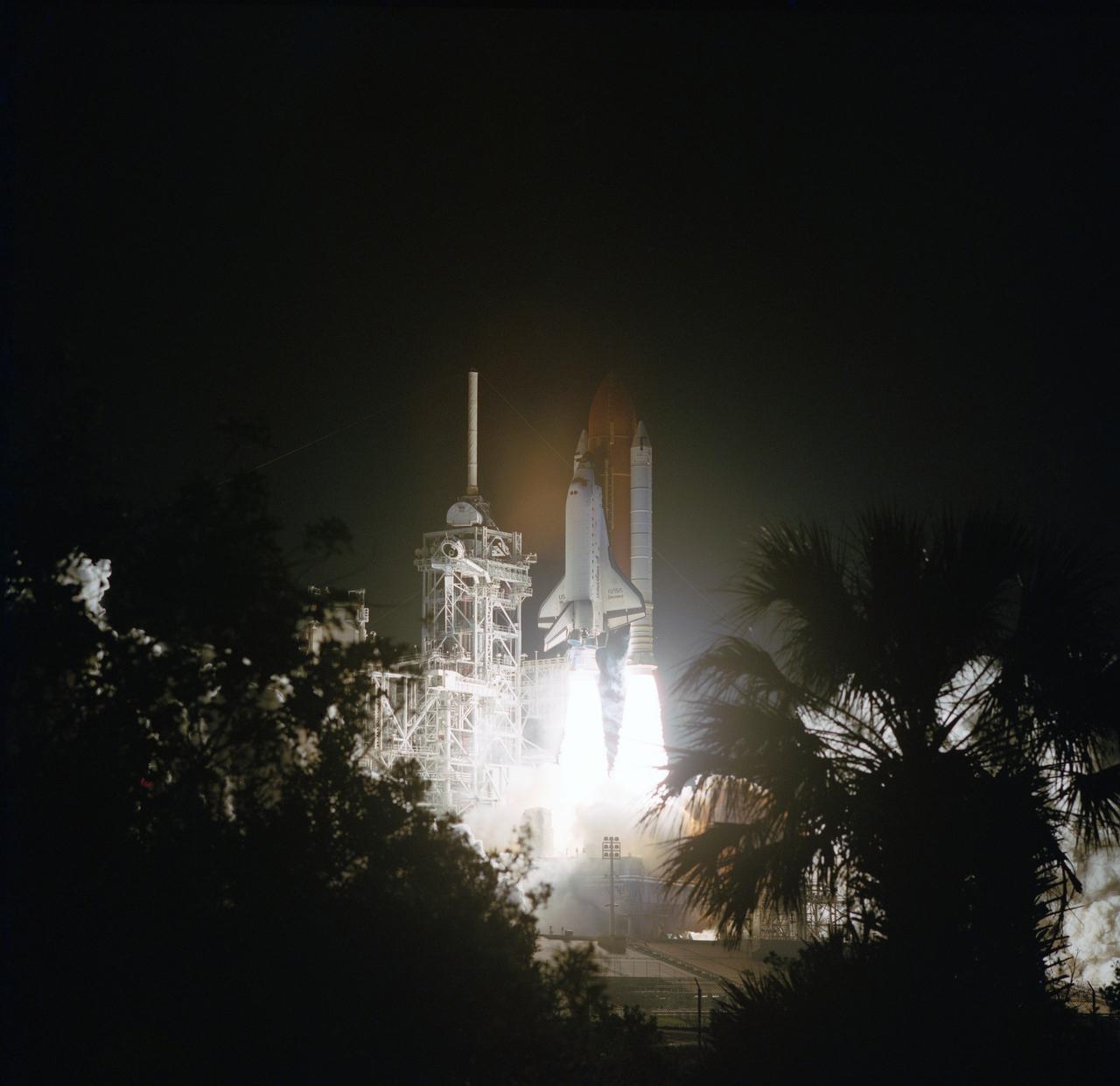
STS056-S-052 (8 April 1993) --- A nocturnal scene shows the Space Shuttle Discovery leaving the Launch Pad to begin the Atlas-2 mission in Earth-orbit. Launch occurred at 1:29 a.m. (EDT), April 8. Onboard were astronauts Kenneth D. Cameron, Stephen S. Oswald, C. Michael Foale, Kenneth D. Cockrell and Ellen Ochoa.
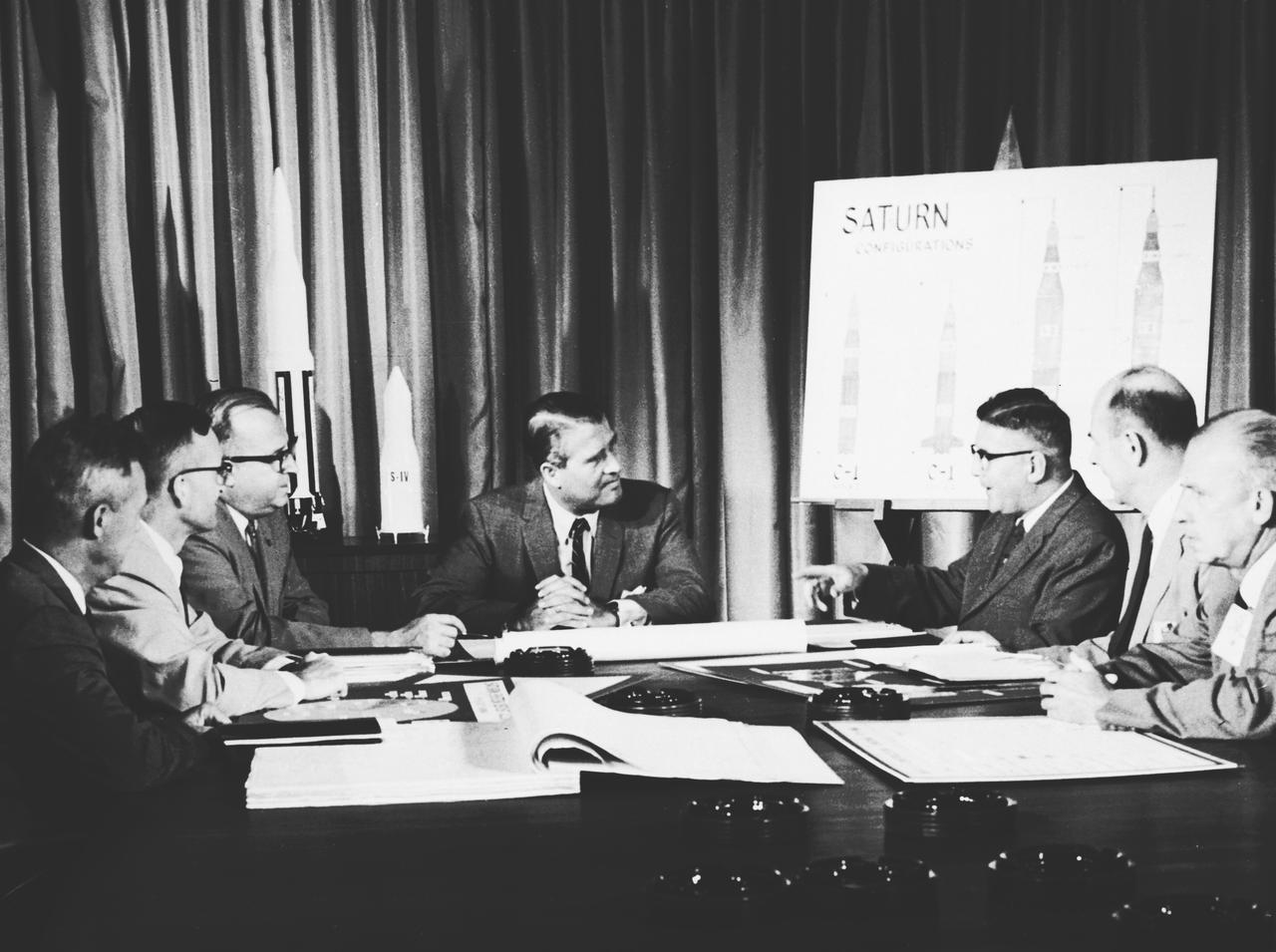
Dr. von Braun is shown in this photograph, which was probably taken in the early 1960s, with members of his management team. Pictured from left to right are, Werner Kuers, Director of the Manufacturing Engineering Division; Dr. Walter Haeussermarn, Director of the Astrionics Division; Dr. William Mrazek, Propulsion and Vehicle Engineering Division; Dr. von Braun; Dieter Grau, Director of the Quality Assurance Division; Dr. Oswald Lange, Director of the Saturn Systems Office; and Erich Neubert , Associate Deputy Director for Research and Development.
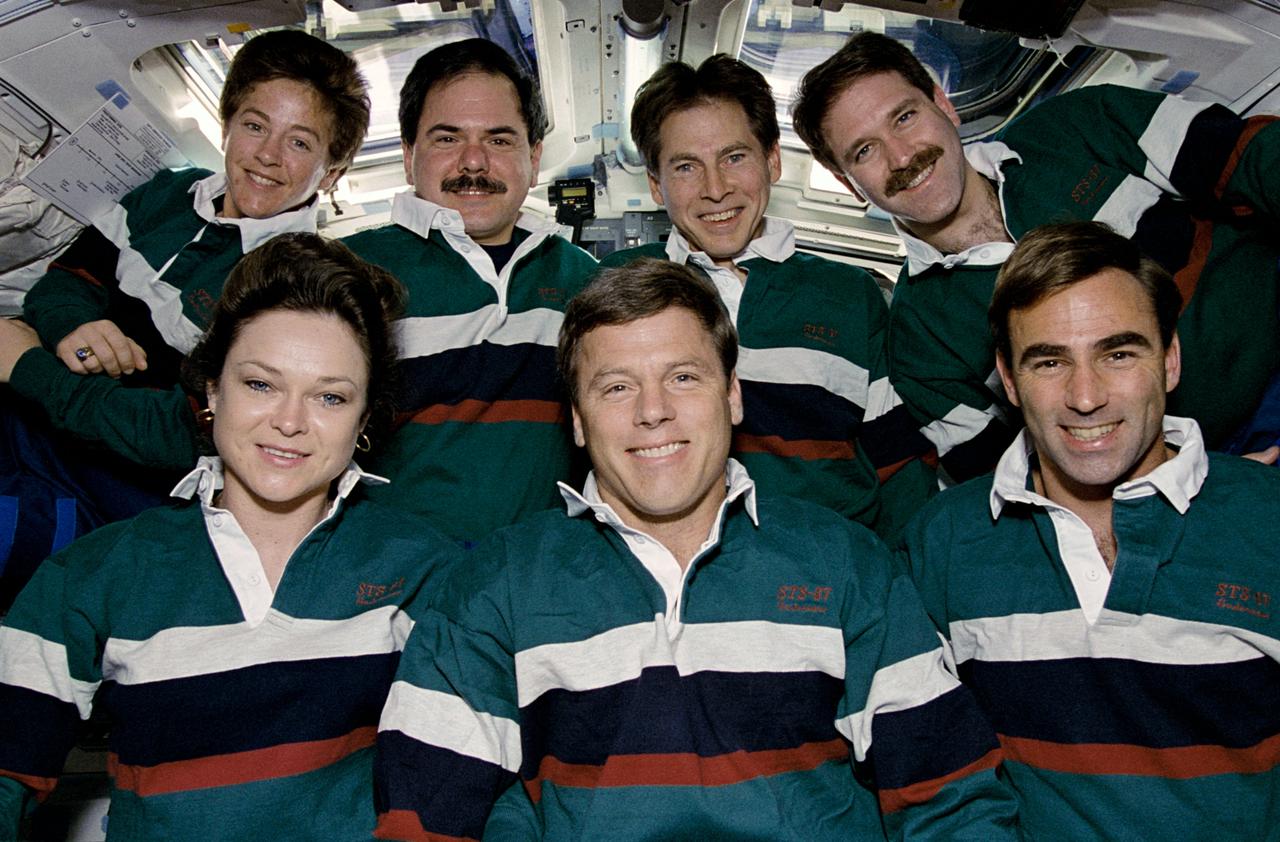
The STS-67/ASTRO-2 crew members pose for their traditional inflight portrait on the aft flight deck of the Earth orbiting Space Shuttle Endeavour. Left to right in the front are astronauts Tamara E. Jernigan, payload commander; Steven S. Oswald, mission commander; and William G. Gregory, pilot. Left to right on the back row are astronaut Wendy B. Lawrence, flight engineer; payload specialists Ronald A. Parise and Samuel T. Durrance; and John M. Grunsfeld, mission specialist.
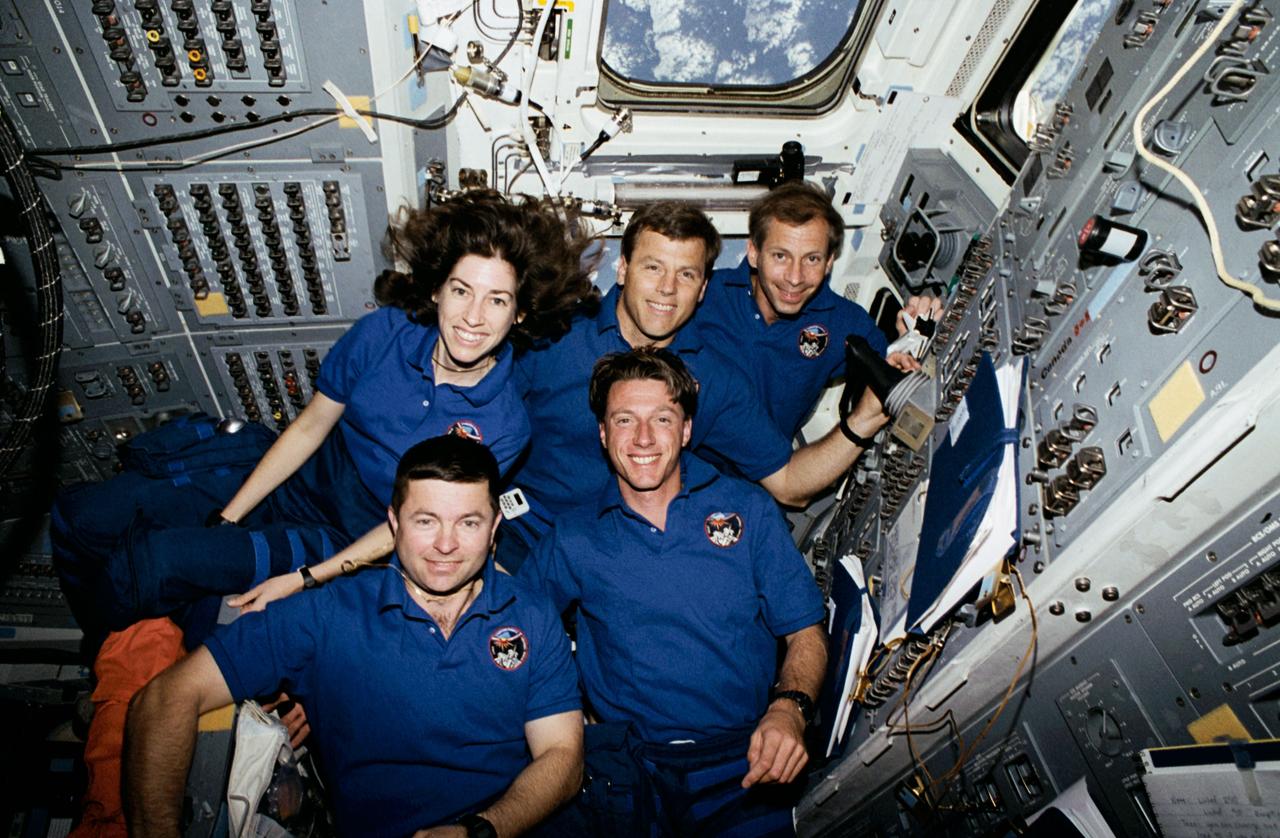
STS056-31-020 (8-17 April 1993) --- The five astronaut crew members assemble on the Space Shuttle Discovery's aft flight deck for the traditional inflight crew portrait. In front are astronauts Kenneth D. Cameron, mission commander; and C. Michael Foale, mission specialist. In back are (left to right) astronauts Ellen Ochoa, mission specialist; Stephen S. Oswald, pilot; and Kenneth D. Cockrell, mission specialist. The five went on to spend nine days in Earth-orbit in support of the Atlas-2 mission. A 35mm camera with a 20mm lens was used to expose this frame.
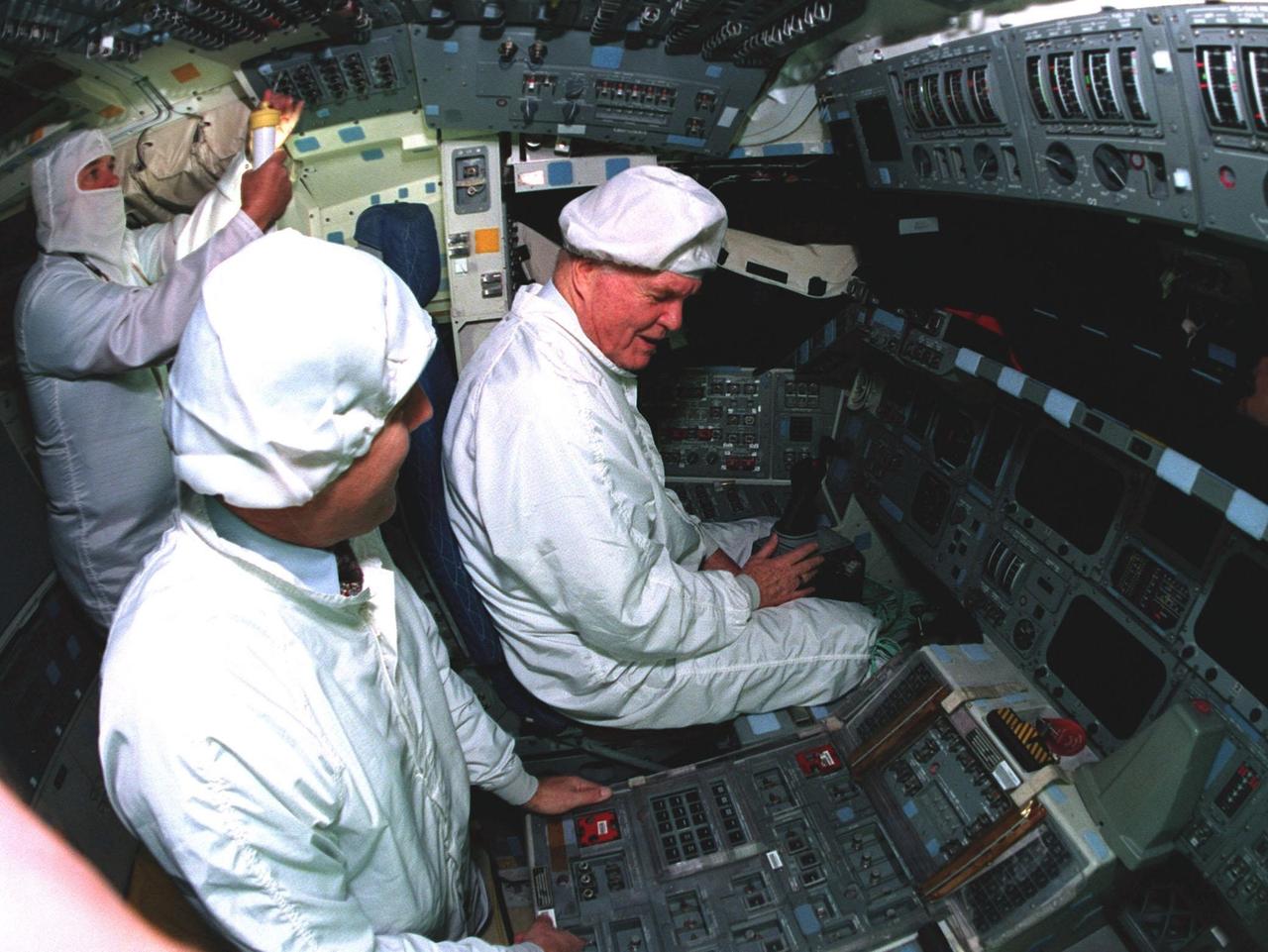
Ohio Senator John Glenn, at right, sits in the flight deck of the orbiter Columbia as astronaut Stephen Oswald listens to his questions regarding some of the flight equipment at the Orbiter Processing Facility 3 at Kennedy Space Center. Senator Glenn arrived at KSC on Jan. 20 to tour KSC operational areas and to view the launch of STS-89 later this week. Glenn, who made history in 1962 as the first American to orbit the Earth, completing three orbits in a five-hour flight aboard Friendship 7, will fly his second space mission aboard Space Shuttle Discovery this October. Glenn is retiring from the Senate at the end of this year and will be a payload specialist aboard STS-95
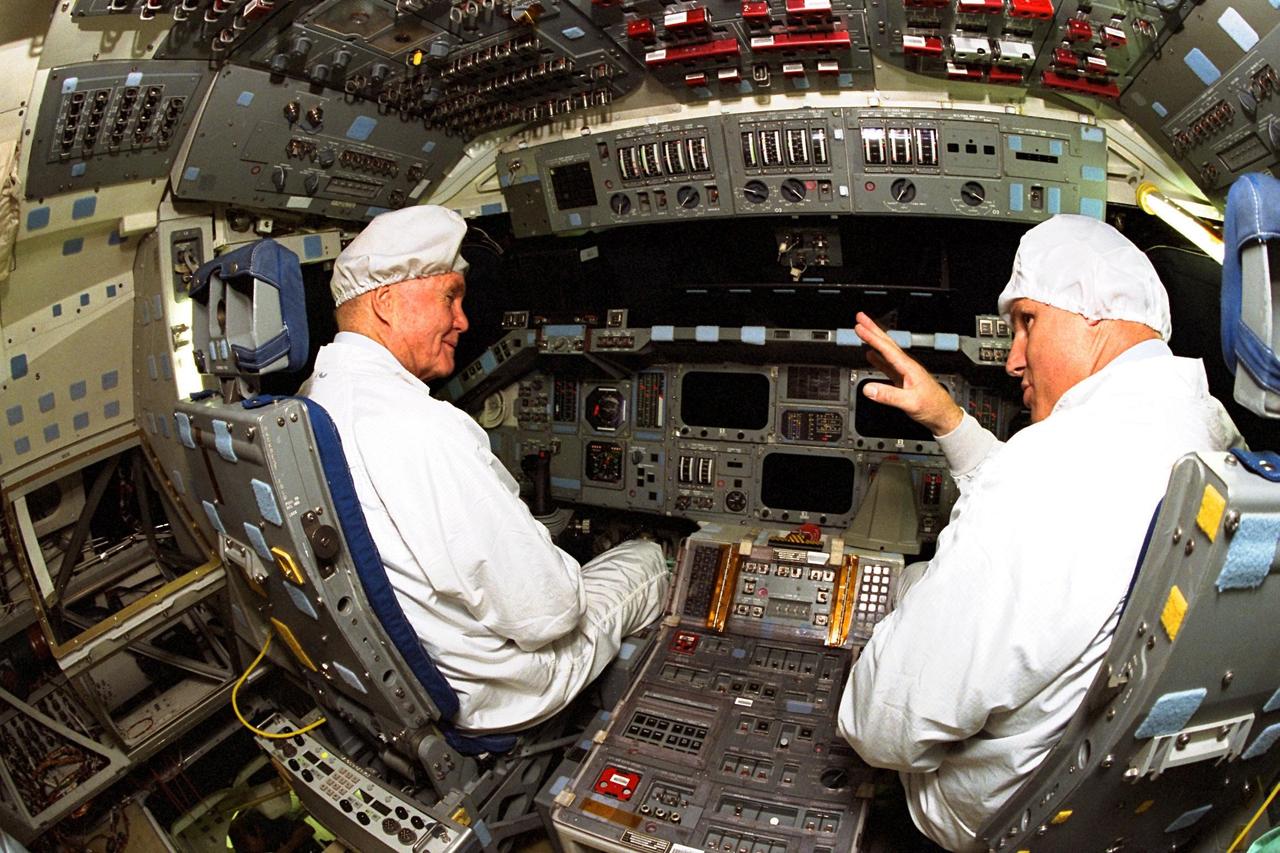
Ohio Senator John Glenn, at left, sits in the flight deck of the orbiter Columbia as astronaut Stephen Oswald explains some of the flight equipment to the senator at the Orbiter Processing Facility 3 at Kennedy Space Center. Senator Glenn arrived at KSC on Jan. 20 to tour KSC operational areas and to view the launch of STS-89 later this week. Glenn, who made history in 1962 as the first American to orbit the Earth, completing three orbits in a five-hour flight aboard Friendship 7, will fly his second space mission aboard Space Shuttle Discovery this October. Glenn is retiring from the Senate at the end of this year and will be a payload specialist aboard STS-95
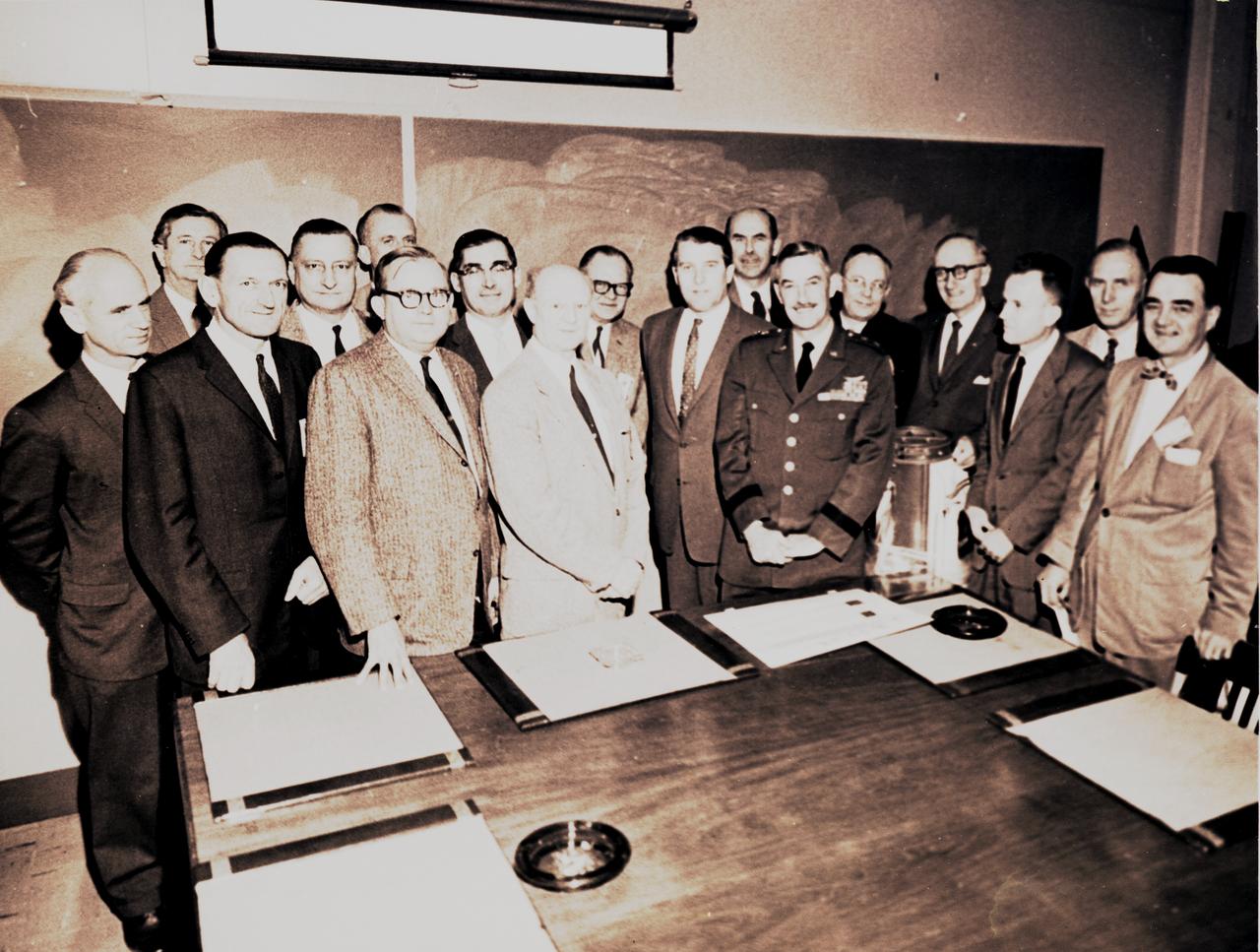
This photograph of Dr. von Braun, shown here to the left of General Bruce Medaris, was taken in the fall of 1959, immediately prior to Medaris' retirement from the Army. At the time, von Braun and his associates worked for the Army Ballistics Missile Agency in Huntsville, Alabama. Those in the photograph have been identified as Ernst Stuhlinger, Frederick von Saurma, Fritz Mueller, Hermarn Weidner, E.W. Neubert (partially hidden), W.A. Mrazek, Karl Heimburg, Arthur Rudolph, Otto Hoberg, von Braun, Oswald Lange, Medaris, Helmut Hoelzer, Hans Maus, E.D. Geissler, Hans Heuter, and George Constan.
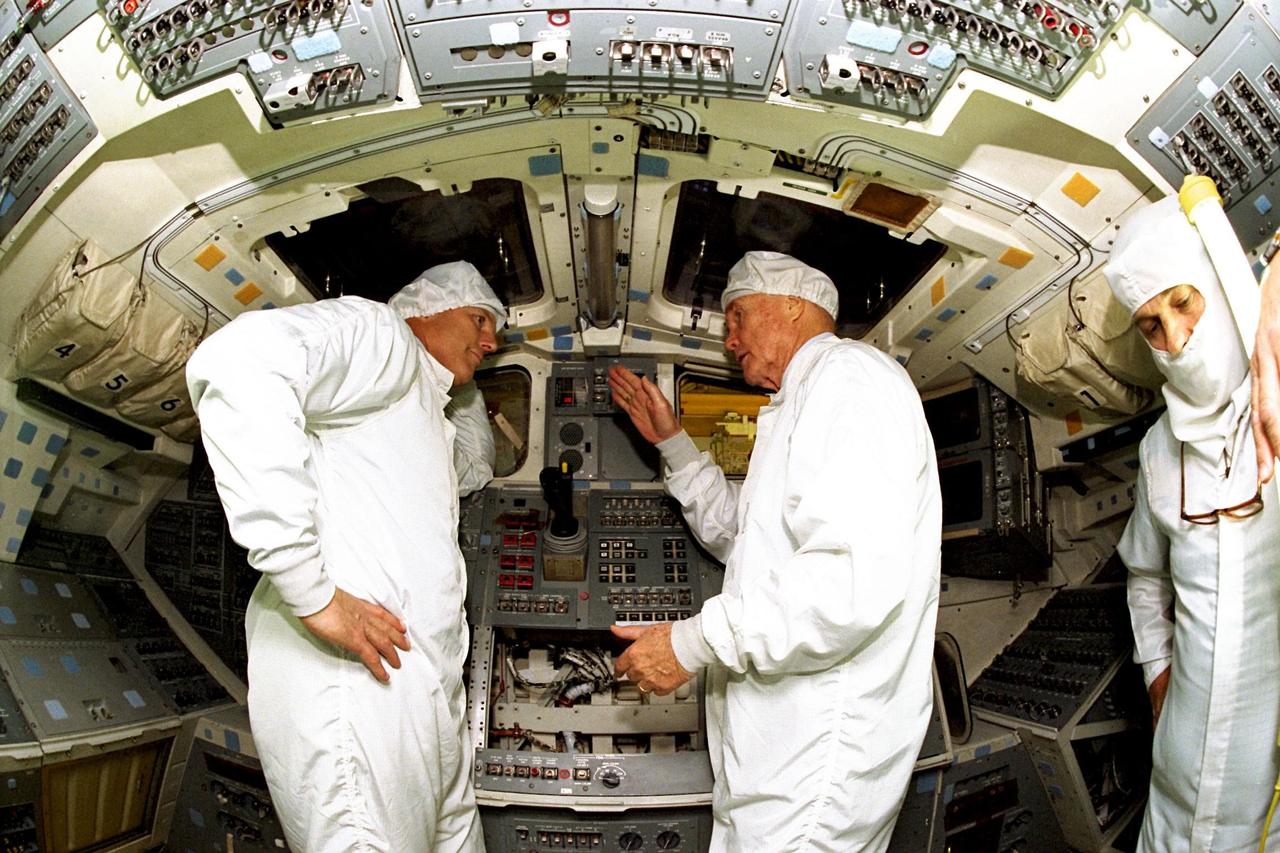
Astronaut Stephen Oswald, at left, listens to Ohio Senator John Glenn on the orbiter Columbia's middeck as the senator asks questions regarding Shuttle operations at the Orbiter Processing Facility 3 at Kennedy Space Center. Senator Glenn arrived at KSC on Jan. 20 to tour KSC operational areas and to view the launch of STS-89 later this week. Glenn, who made history in 1962 as the first American to orbit the Earth, completing three orbits in a five-hour flight aboard Friendship 7, will fly his second space mission aboard Space Shuttle Discovery this October. Glenn is retiring from the Senate at the end of this year and will be a payload specialist aboard STS-95
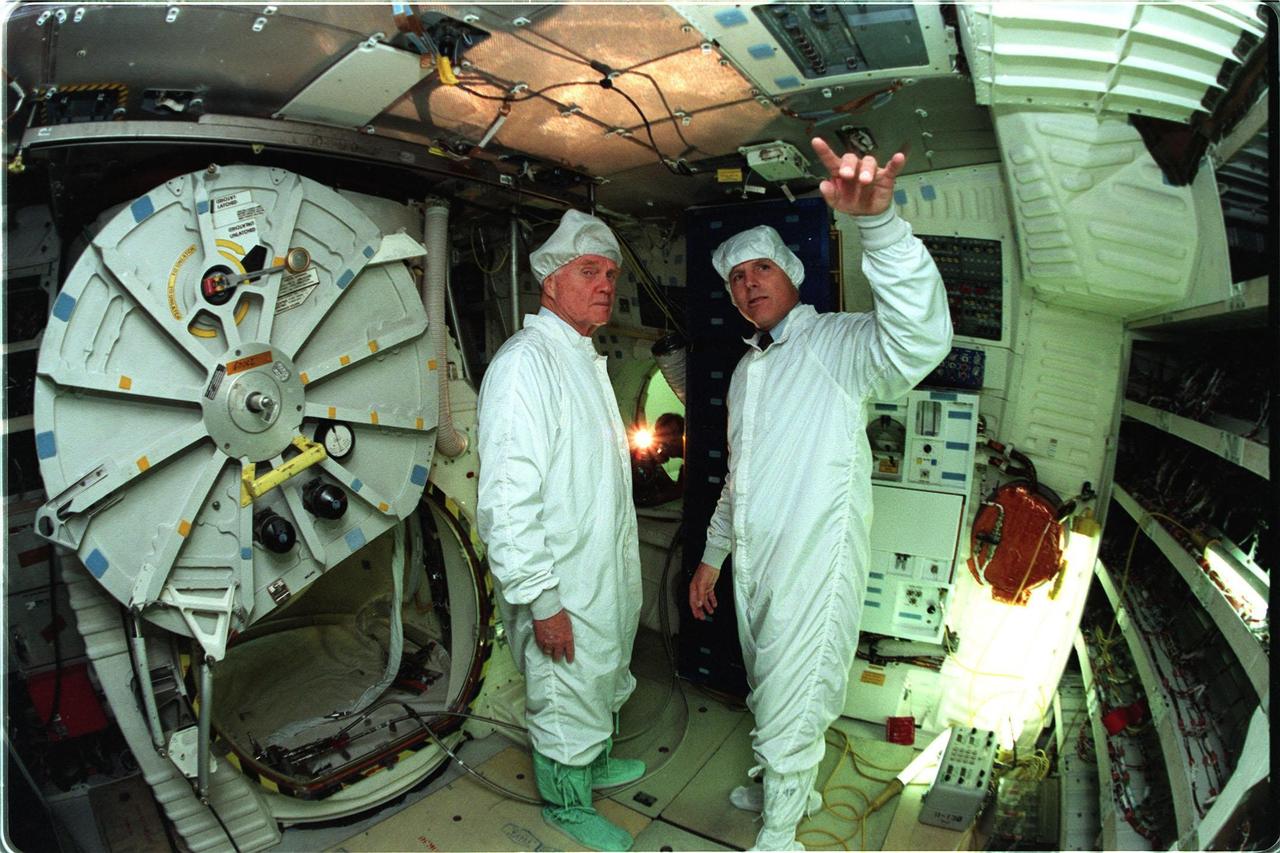
Astronaut Stephen Oswald, at right, explains Shuttle operations to Ohio Senator John Glenn on the orbiter Columbia's middeck at the Orbiter Processing Facility 3 at Kennedy Space Center. Senator Glenn arrived at KSC on Jan. 20 to tour KSC operational areas and to view the launch of STS-89 later this week. Glenn, who made history in 1962 as the first American to orbit the Earth, completing three orbits in a five-hour flight aboard Friendship 7, will fly his second space mission aboard Space Shuttle Discovery this October. Glenn is retiring from the Senate at the end of this year and will be a payload specialist aboard STS-95
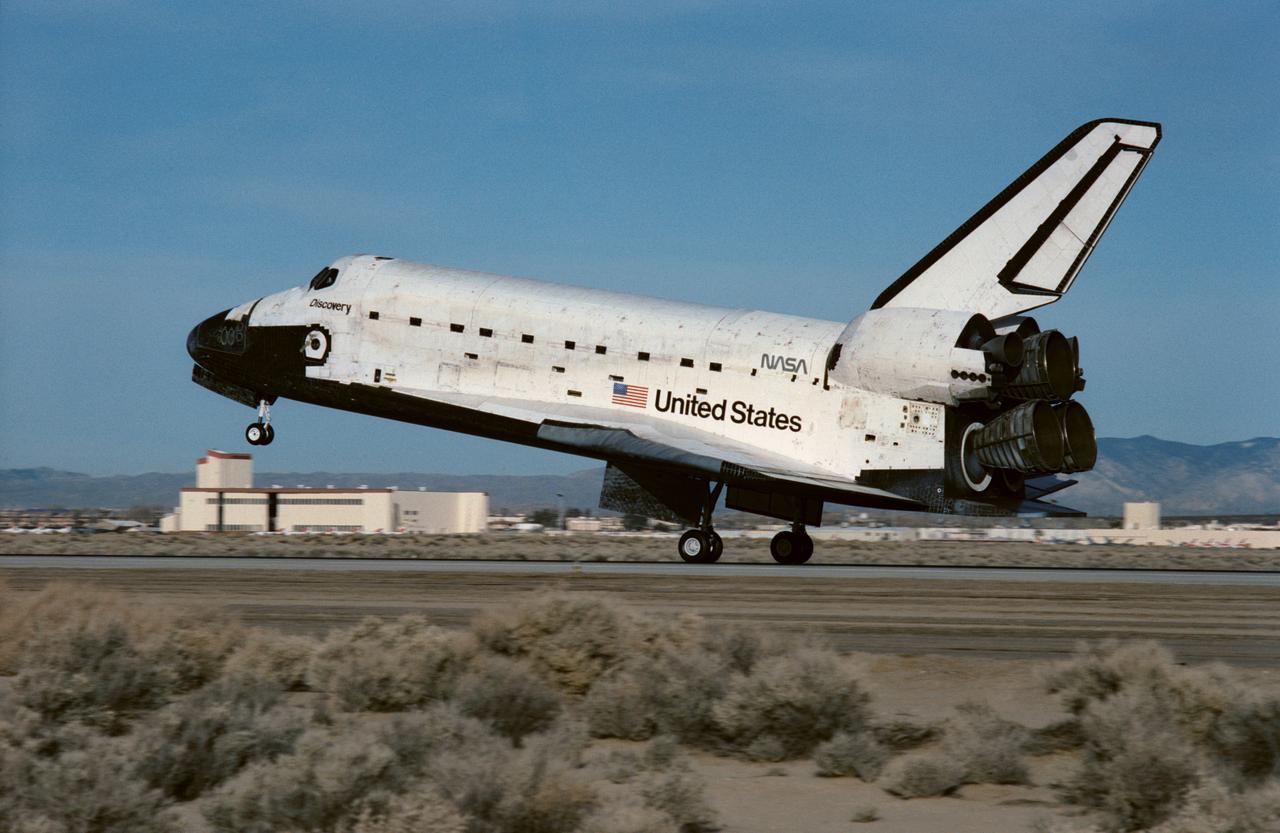
STS042-S-094 (30 Jan 1992) --- Space Shuttle Discovery lands on Runway 22 at Edwards Air Force Base in southern California to complete an eight-day mission. Main gear touchdown occurred at 8:07:18 a.m. (PST), Jan. 30, 1992. The crewmembers aboard Discovery for the first International Microgravity Laboratory (IML-1) mission were astronauts Ronald J. Grabe, mission commander; Stephen S. Oswald, pilot; Norman E. Thagard, payload commander; and David C. Hilmers and William F. Readdy, both mission specialists; and payload specialists Roberta L. Bondar of Canada and Ulf Merbold, representing the European Space Agency (ESA).
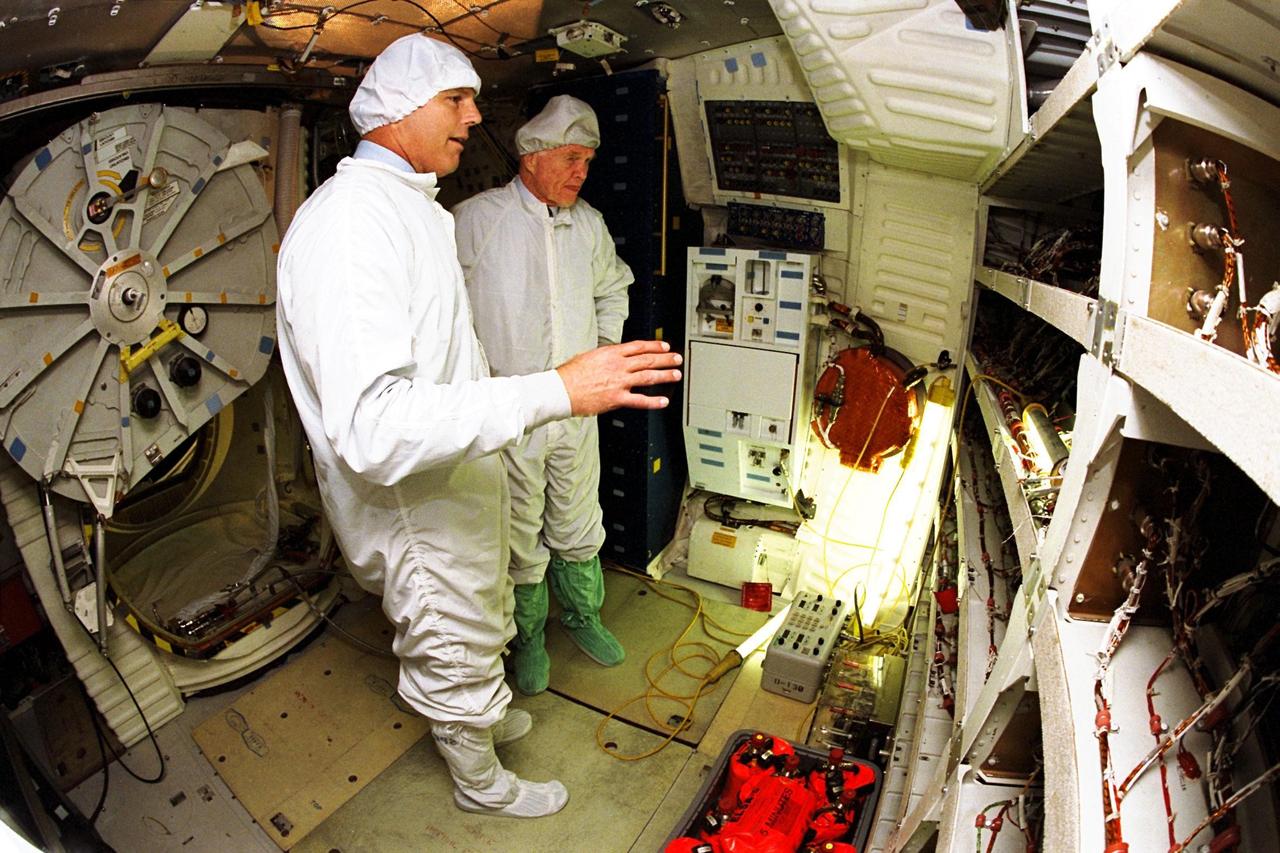
Astronaut Stephen Oswald, at left, explains Shuttle operations to Ohio Senator John Glenn on the orbiter Columbia's middeck at the Orbiter Processing Facility 3 at Kennedy Space Center. Senator Glenn arrived at KSC on Jan. 20 to tour KSC operational areas and to view the launch of STS-89 later this week. Glenn, who made history in 1962 as the first American to orbit the Earth, completing three orbits in a five-hour flight aboard Friendship 7, will fly his second space mission aboard Space Shuttle Discovery this October. Glenn is retiring from the Senate at the end of this year and will be a payload specialist aboard STS-95
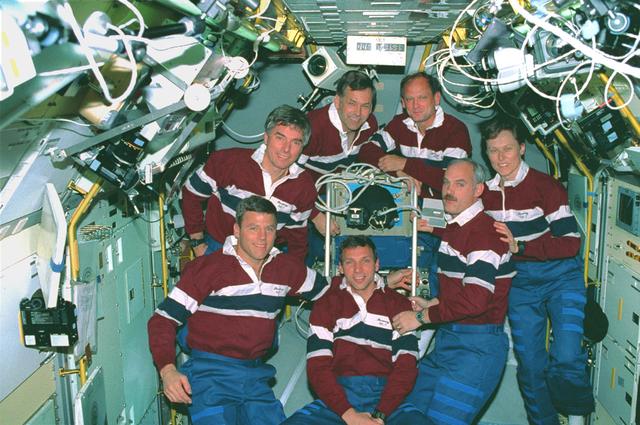
Onboard Space Shuttle Discovery (STS-42) the seven crewmembers pose for a traditional in-space portrait in the shirt-sleeve environment of the International Microgravity Laboratory (IML-1) science module in the Shuttle's cargo bay. Pictured are (clockwise from top),Commander Ronald J. Grabe, payload commander Norman E. Thagard, payload specialist Roberta L. Bondar; mission specialists William F. Readdy and David C. Hilmers; pilot Stephen S. Oswald and payload specialist Ulf Merbold. The rotating chair, used often in biomedical tests on the eight-day flight, is in center frame.
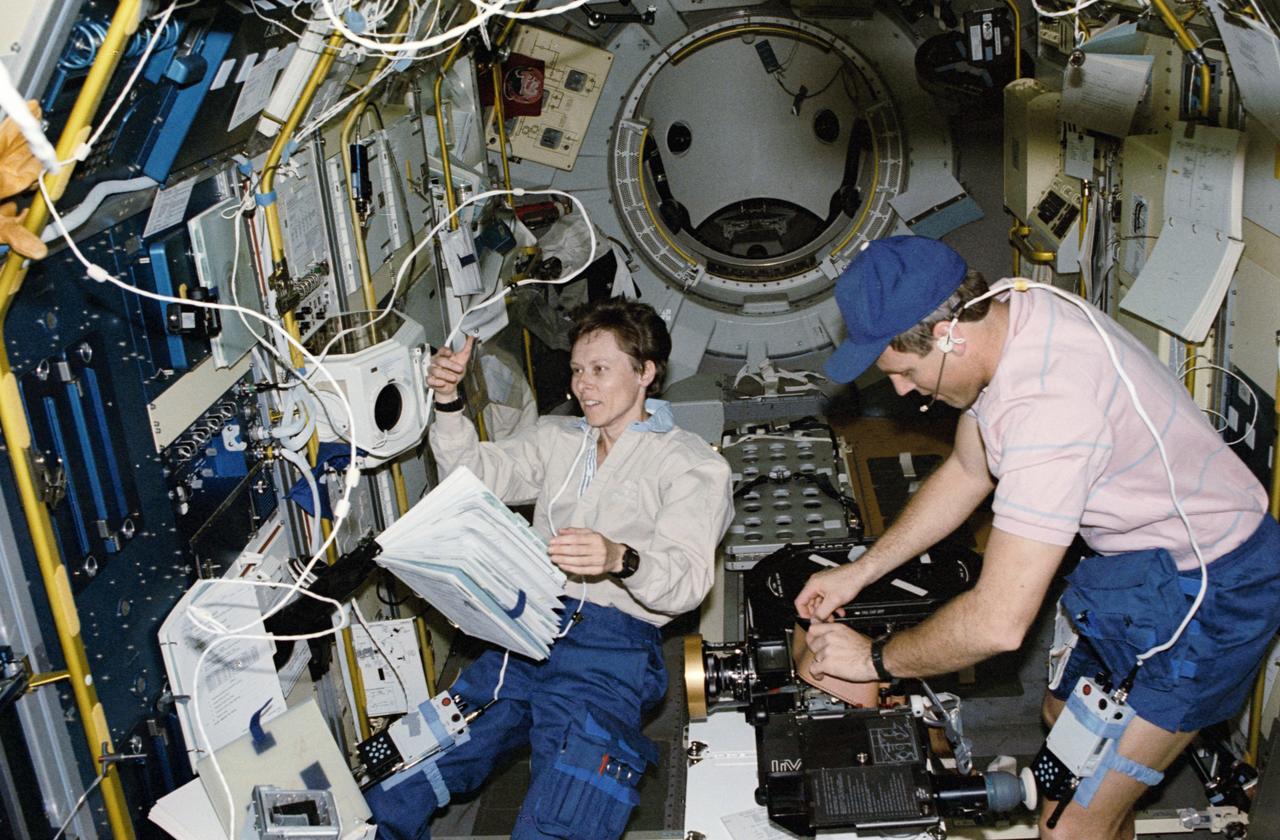
STS042-201-009 (22-30 Jan 1992) --- Canadian Roberta L. Bondar, payload specialist representing the Canadian Space Agency (CSA), works at the International Microgravity Laboratory's (IML-1) biorack while astronaut Stephen S. Oswald, pilot, changes a film magazine on the IMAX camera. The two were joined by five fellow crew members for eight-days of scientific research aboard the Space Shuttle Discovery in Earth-orbit. Most of their on-duty time was spent in this IML-1 Science Module, positioned in the cargo bay and attached via a tunnel to Discovery's airlock.
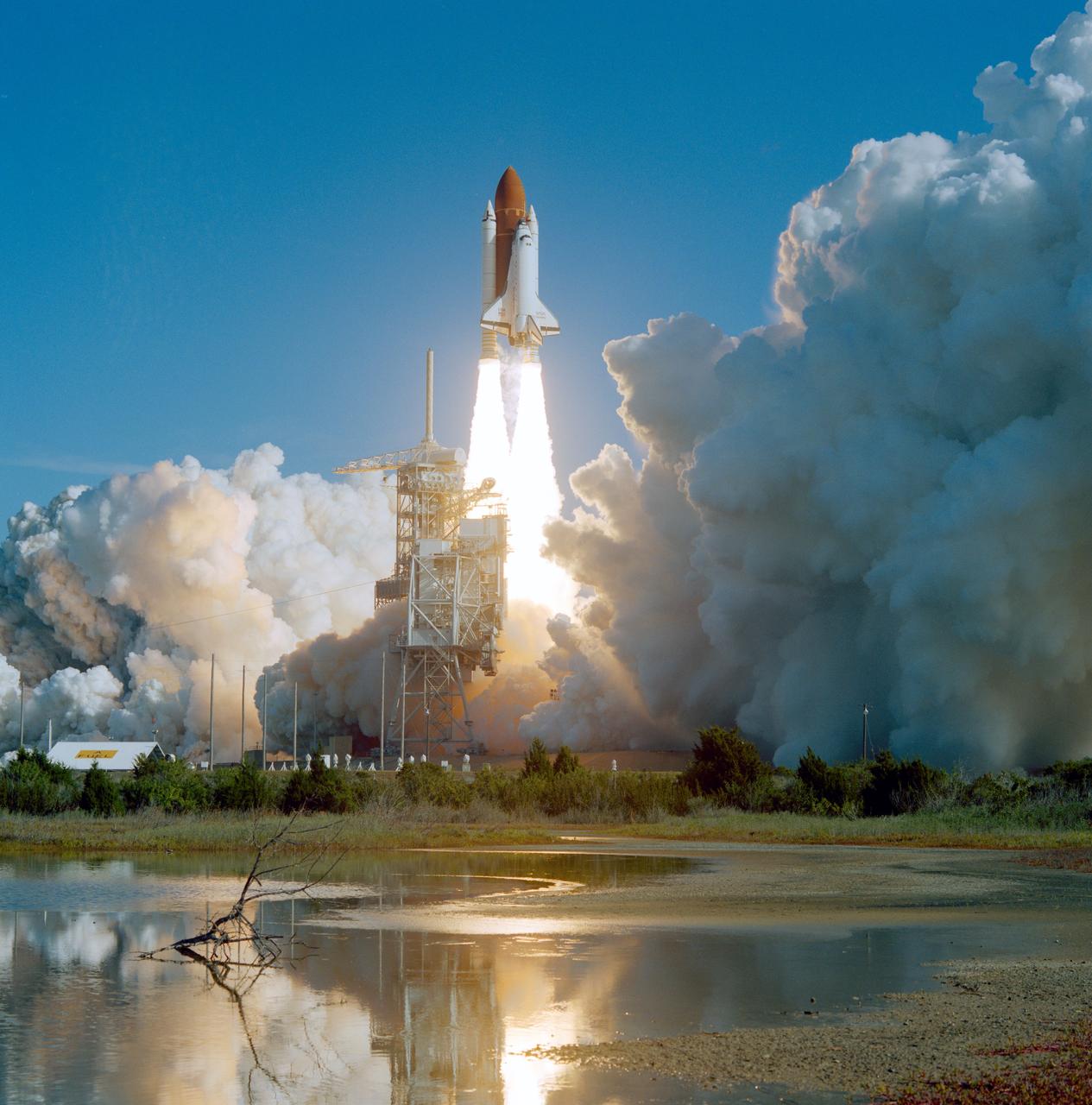
STS042-S-064 (22 Jan 1992) --- A horizontal image of liftoff of STS-42, with a crew of seven and the International Microgravity Laboratory (IML-1) onboard. Crewmembers are astronauts Ronald J. Grabe, mission commander; Stephen S. Oswald, pilot; Norman E. Thagard, payload commander; David C. Hilmers and William F. Readdy, both mission specialists; and payload specialists Roberta L. Bondar of Canada and Ulf Merbold, representing the European Space Agency (ESA). Liftoff occurred at 9:52:33 a.m. (EST), Jan. 22, 1992.
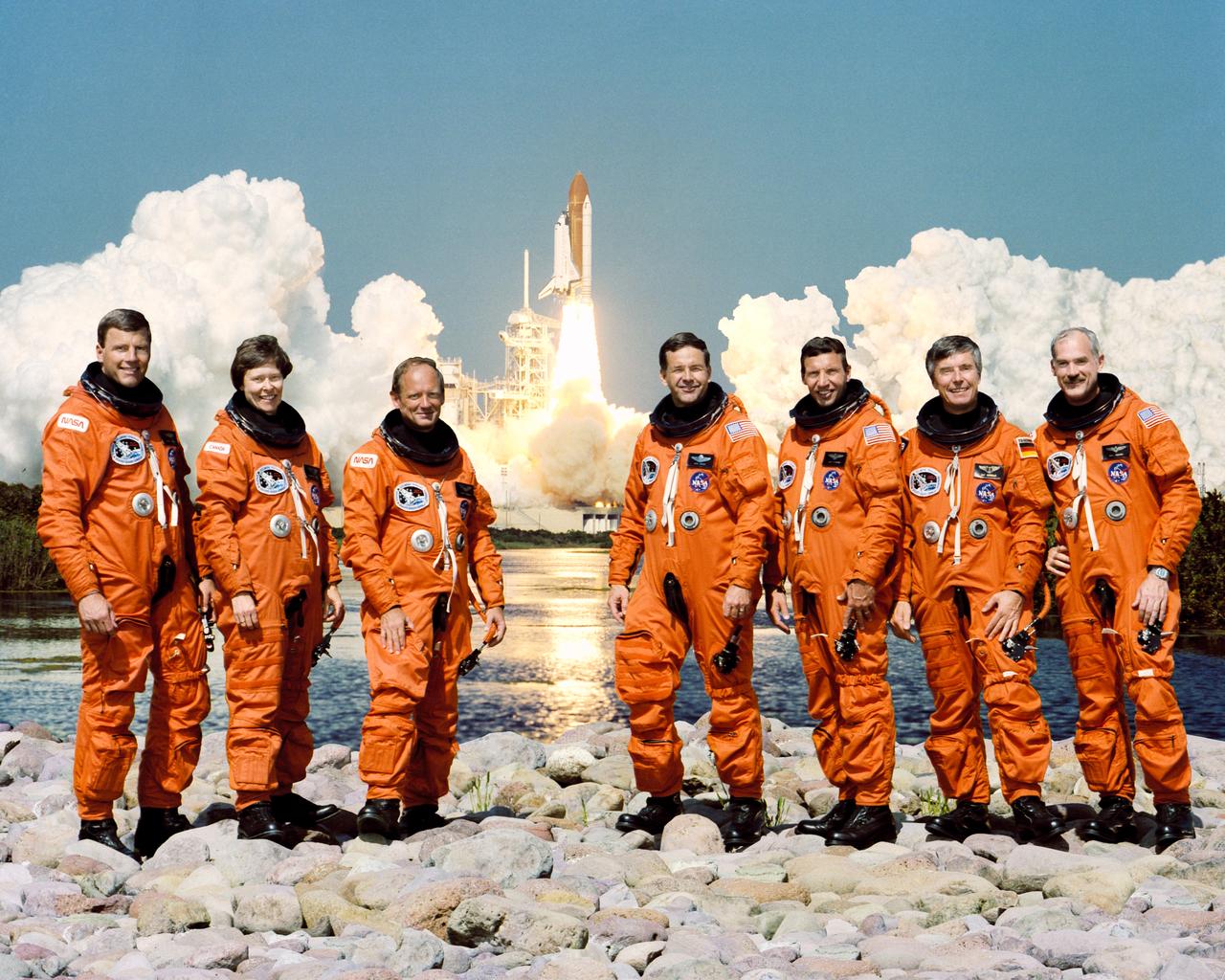
STS042-S-002 (November 1991) --- Payload specialists representing Canada and the European Space Agency (CSA - ESA) join five NASA astronauts for the January 1992 scheduled STS-42 mission. Left to right are astronauts Stephen S. Oswald, pilot; Roberta L. Bondar, payload specialist; Norman E. Thagard, payload commander; Ronald J. Grabe, mission commander; David C. Hilmers, mission specialist; Ulf Merbold, payload specialist; and William F. Readdy, mission specialist. The STS-42 mission will utilize the Space Shuttle Discovery to carry out experiments for the International Microgravity Laboratory (IML-1).
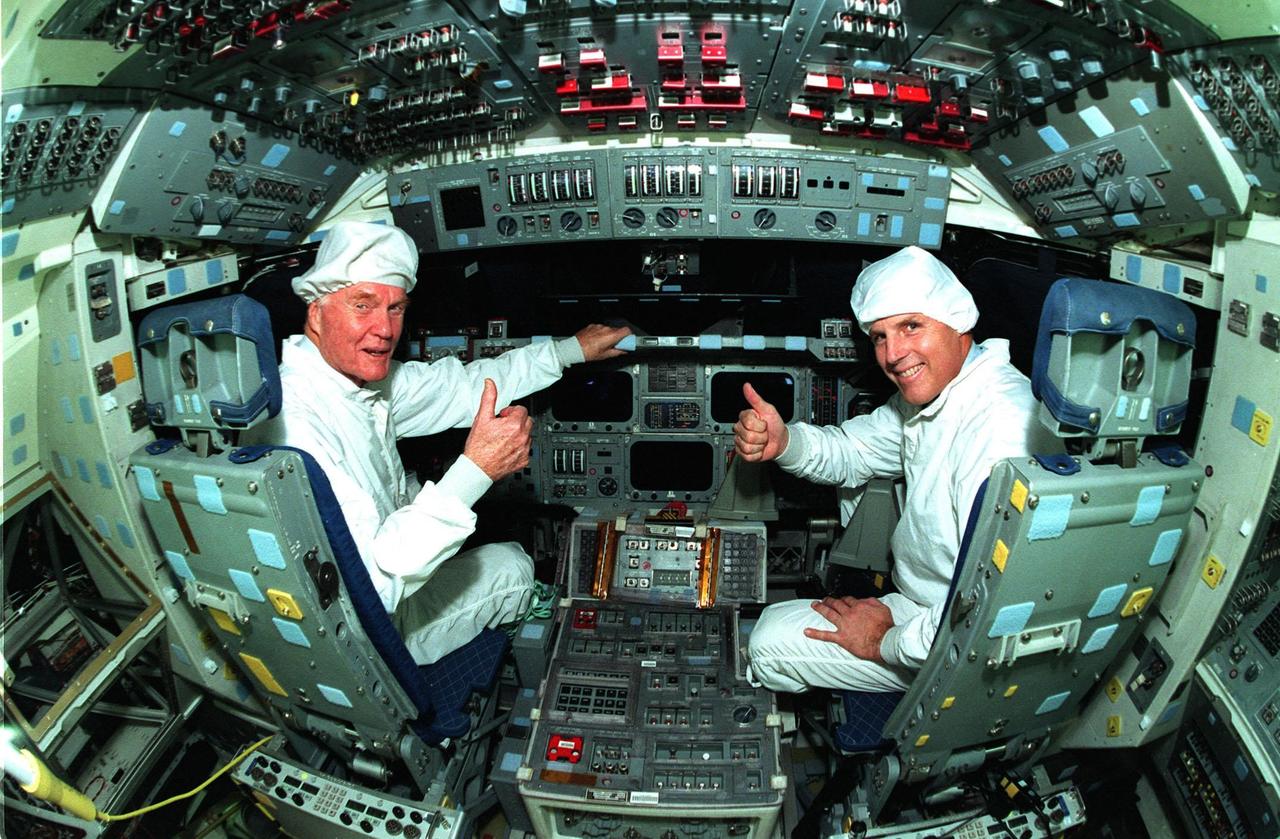
Ohio Senator John Glenn, at left, enjoys a tour of the flight deck in the orbiter Columbia with Astronaut Stephen Oswald at the Orbiter Processing Facility 3 at Kennedy Space Center. Senator Glenn arrived at KSC on Jan. 20 to tour KSC operational areas and to view the launch of STS-89 later this week. Glenn, who made history in 1962 as the first American to orbit the Earth, completing three orbits in a five-hour flight aboard Friendship 7, will fly his second space mission aboard Space Shuttle Discovery this October. Glenn is retiring from the Senate at the end of this year and will be a payload specialist aboard STS-95
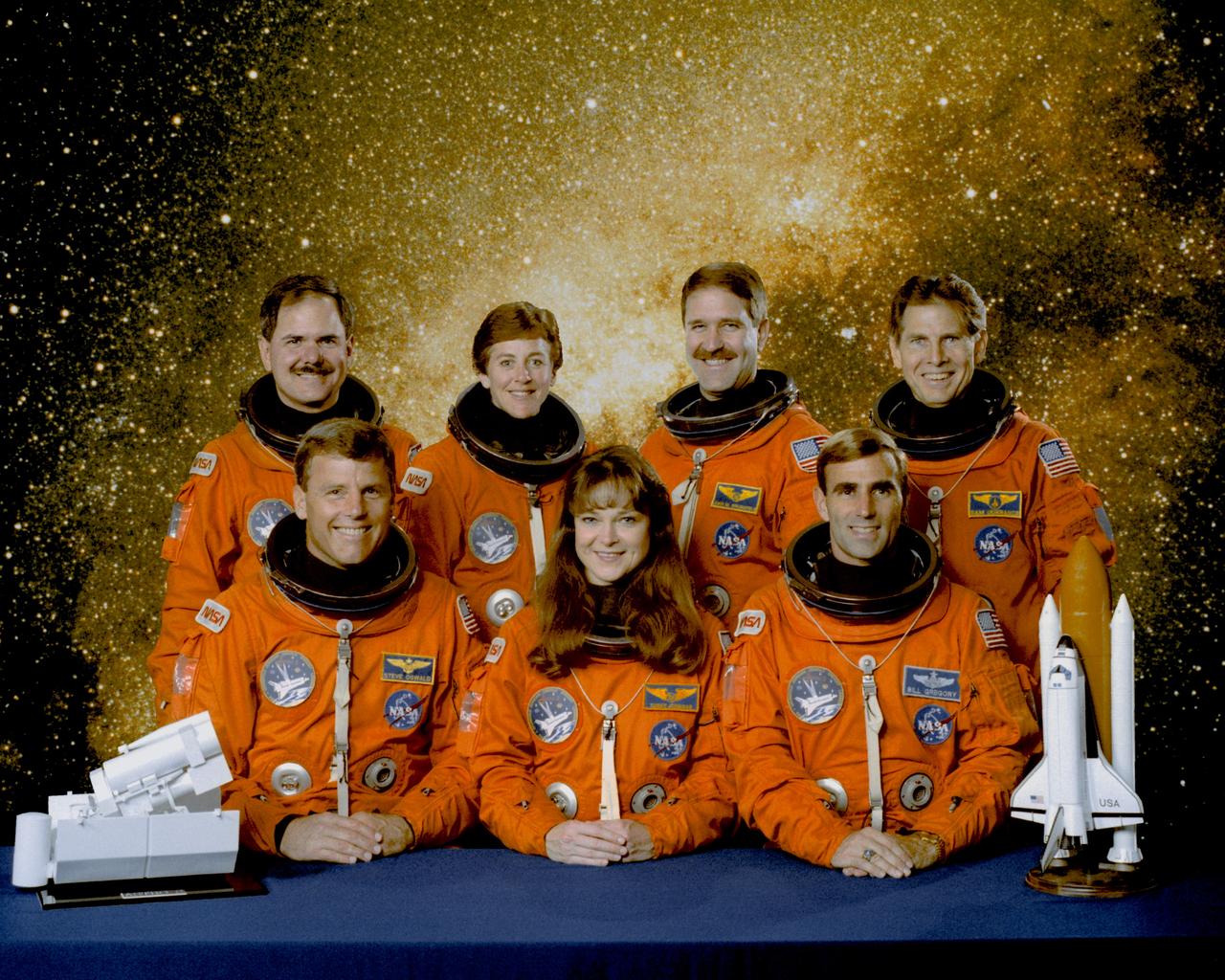
STS067-S-002 (December 1994) --- Five NASA astronauts and two payload specialists from the private sector have been named to fly aboard the Space Shuttle Endeavour for the STS-67/ASTRO-2 mission, scheduled for March 1995. In front are astronauts (left to right) Stephen S. Oswald, mission commander; Tamara E. Jernigan, payload commander; and William G. Gregory, pilot. In the back are (left to right) Ronald A. Parise, payload specialist; astronauts Wendy B. Lawrence, and John M. Grunsfeld, both mission specialists; and Samuel T. Durrance, payload specialist. Dr. Durrance is a research scientist in the Department of Physics and Astronomy at Johns Hopkins University, Baltimore, Maryland. Dr. Parise is a senior scientist in the Space Observatories Department, Computer Sciences Corporation, Silver Spring, Maryland. Both payload specialist's flew aboard the Space Shuttle Columbia for the STS-35/ASTRO-1 mission in December 1990.
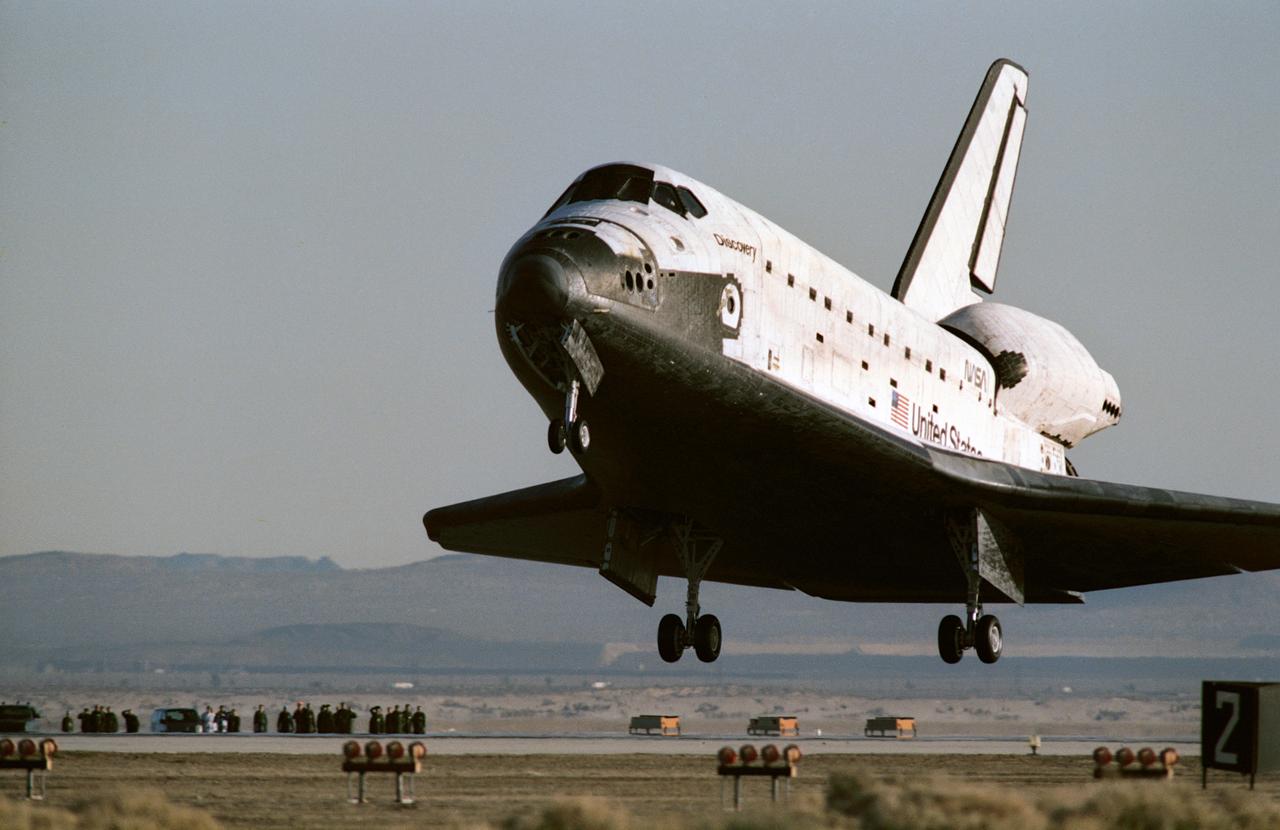
STS042-S-093 (30 Jan 1992) --- Space Shuttle Discovery is just about to ease down its main gear on Runway 22 at Edwards Air Force Base in southern California. Main gear touchdown occurred at 8:07:18 a.m. (PST), Jan. 30, 1992. The successful landing completed an eight-day mission for five NASA astronauts and two payload specialists supporting the first International Microgravity Laboratory (IML-1) mission. Onboard were astronauts Ronald J. Grabe, mission commander; Stephen S. Oswald, pilot; Norman E. Thagard, payload commander; David C. Hilmers and William F. Readdy, both mission specialists; and payload specialists Roberta L. Bondar of Canada and Ulf Merbold, representing the European Space Agency (ESA).
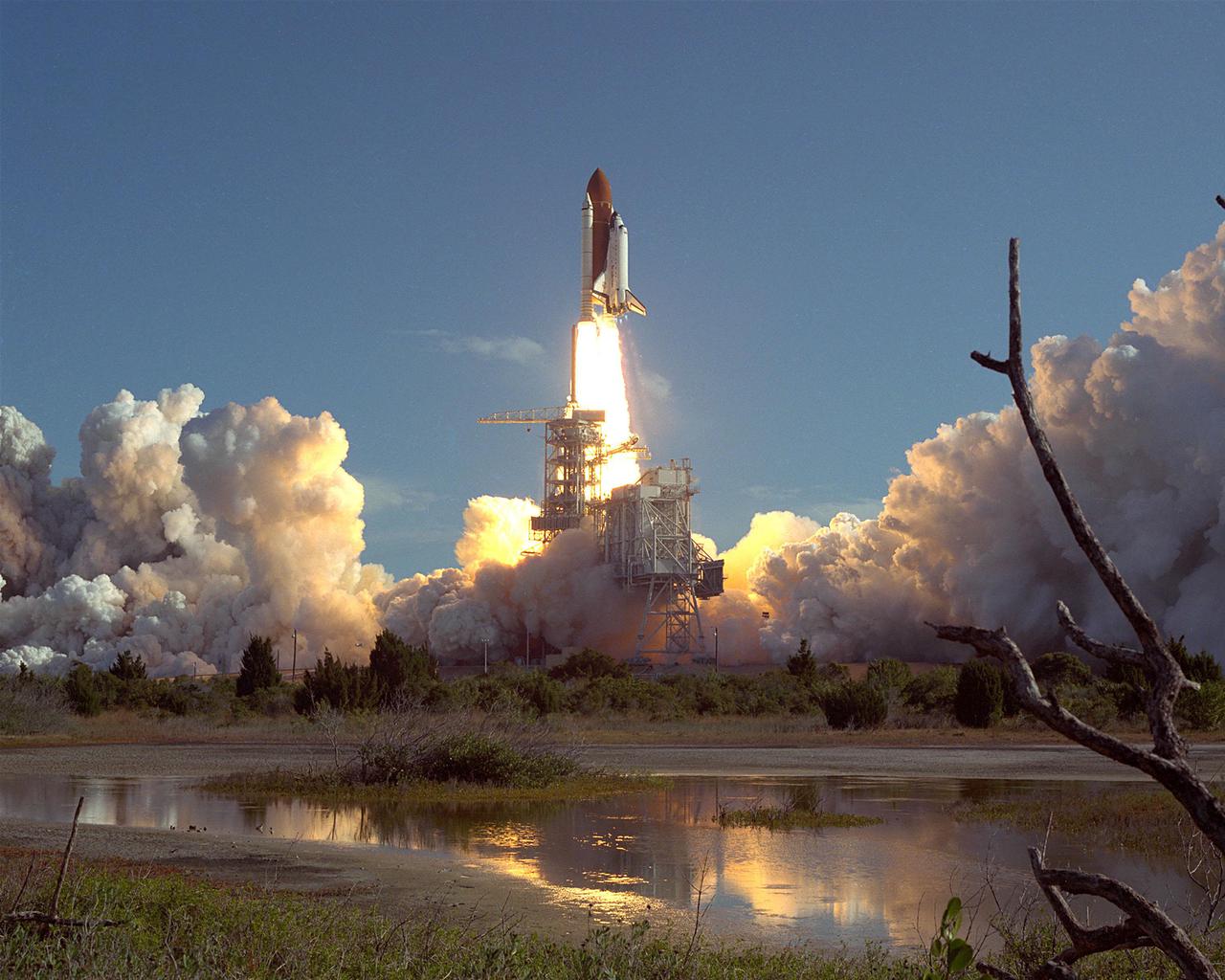
KENNEDY SPACE CENTER, FLA. -- The mid-morning liftoff of the Space Shuttle Discovery on mission STS-42 was even prettier than a picture at the start of the first Shuttle mission of 1992. The seven-member crew is scheduled to spend seven days in space, mostly to conduct a variety of experiments in the International Microgravity Laboratory-1. The experiments will explore the effects of weightlessness on living organisms and materials processing. Liftoff was at 9:52 a.m. EST. The seven crew members are Commander Ronald J. Grabe, Pilot Stephen S. Oswald, Payload Commander and Mission Specialist Dr. Norman E. Thagard, Mission Specialists David C. Hilmers and William F. Readdy, and Payload Specialists Dr. Roberta L. Bondar of the Canadian Space Agency and Ulf D. Merbold of the European Space Agency
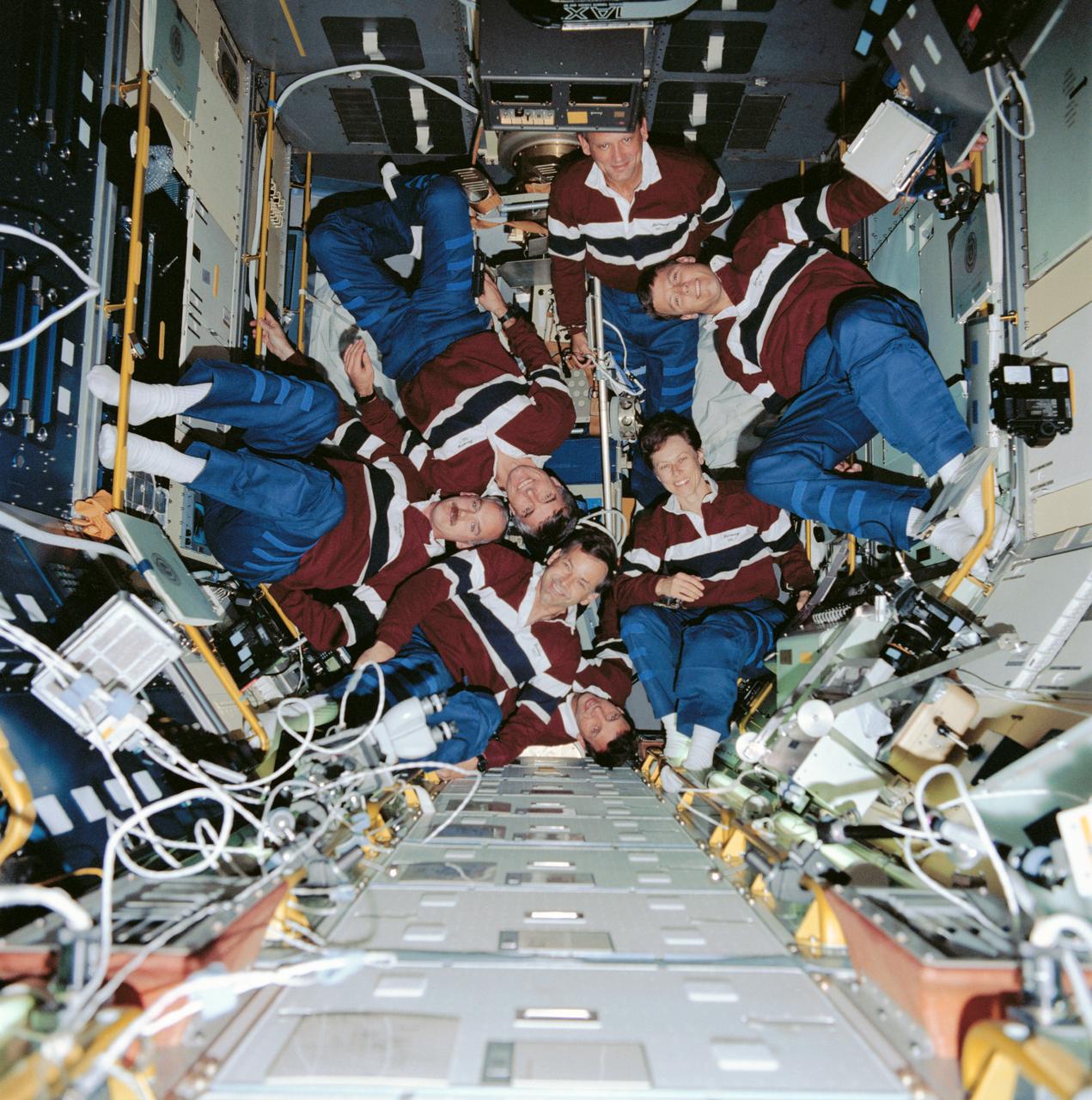
STS042-78-061 (22-30 Jan. 1992) --- The seven STS-42 crewmembers pose for a traditional in-space portrait in the shirt-sleeve environment of the International Microgravity Laboratory (IML-1) science module in the shuttle's cargo bay. (Hold picture with index numbers at top.) David C. Hilmers, mission specialist, is at top center of the 70mm image. Others pictured are (clockwise) Ronald J. Grabe, mission commander; William F. Readdy; mission specialist; Ulf Merbold, European Space Agency (ESA) payload specialist; Norman E. Thagard, payload commander; Stephen S. Oswald, pilot; and Roberta L. Bondar, Canadian payload specialist. The rotating chair, used often in biomedical tests on the eight-day flight, is (partially obscured) in center frame.
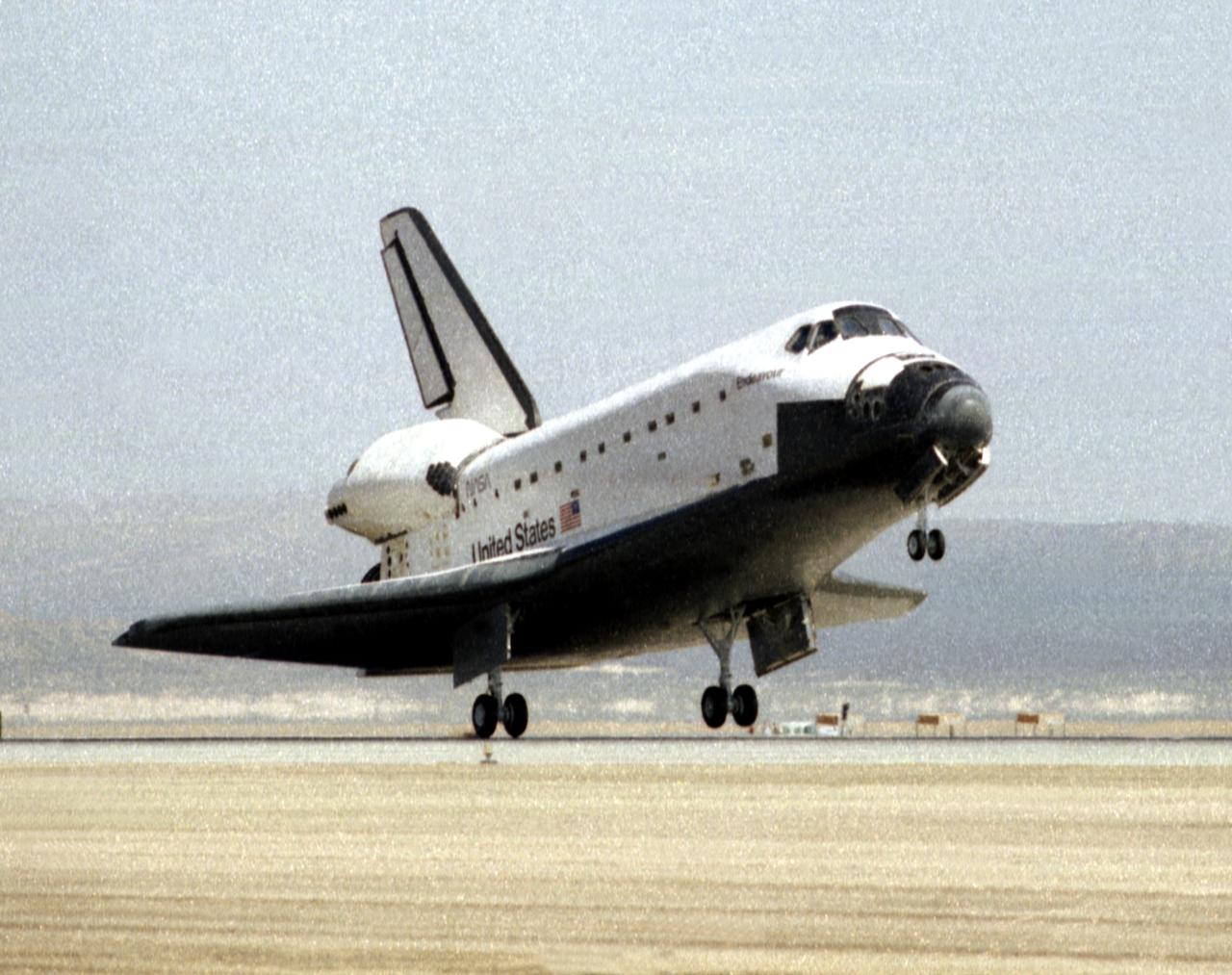
The space shuttle Endeavour slips to a smooth landing on runway 22 at Edwards, California, to complete the highly successful record-setting STS-67 mission. The landing was at 1:46 p.m. (PST) 18 March 1995, after waiving off from the Kennedy Space Center, Florida, earlier that morning due to adverse weather. Launched into space at 10:38 a.m. (PST) 1 March 1995, the Endeavour crew conducted NASA's longest shuttle flight to date and carried unique ultraviolet telescopes (ASTRO-2) which captured views of the universe impossible to obtain from the ground. Mission Commander was Steve Oswald making his third flight and the Pilot was Bill Gregory on his first mission. Mission Specialist 1 was John Grunsfeld making his first flight and Specialist 2 was Wendy Lawrence on her first flight. Tamara Jernigan served as Specialist 3 on her third flight and the two payload specialists were Samuel Durrance and Ronald Parise, both on their second flight.