Outsider Moon
Outsider Moon
Round the Outside
Round the Outside
Epimetheus on the Outside
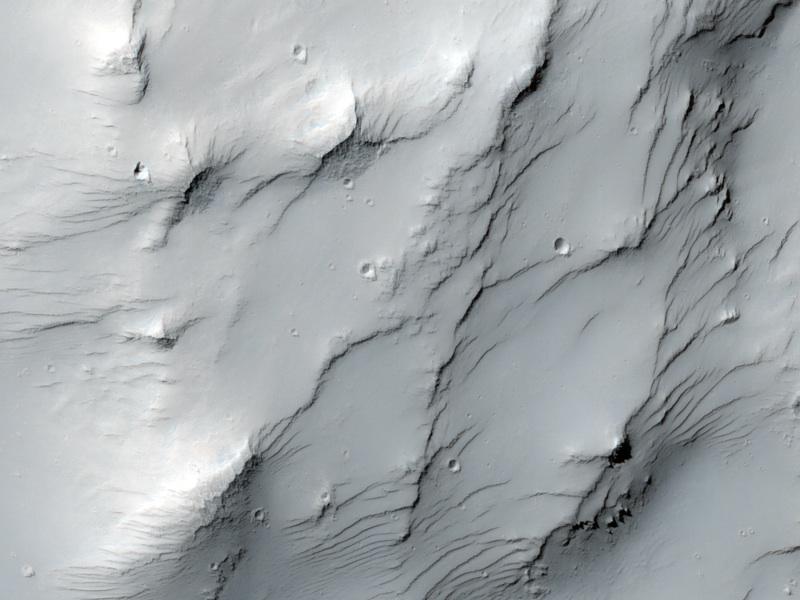
A Rugged Landscape Outside of Caloris
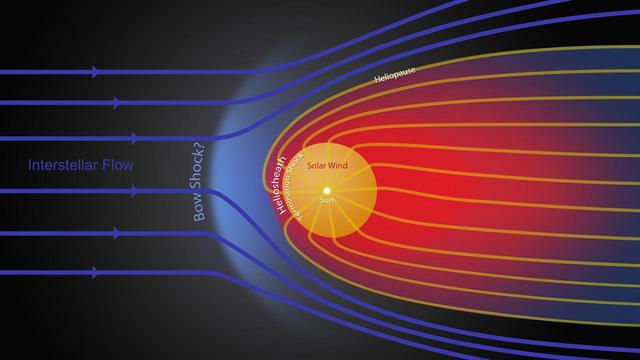
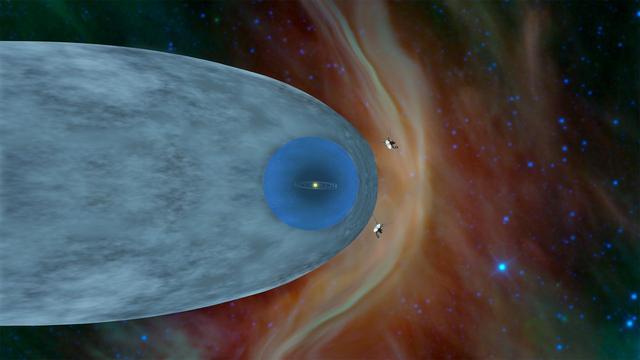
This graphic, based on data from NASA Voyager spacecraft, shows a model of what our solar system looks like to an observer outside in interstellar space, watching our solar system fly towards the observer.
Our Solar System, from the Outside
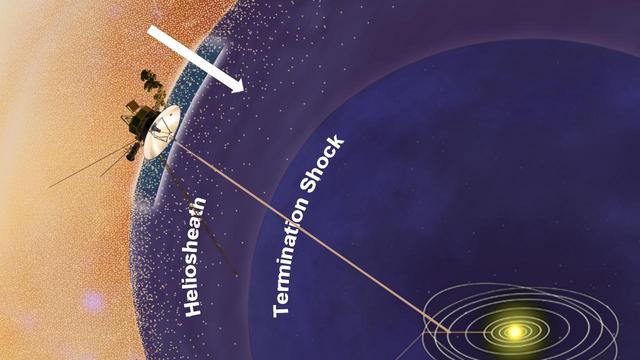
This artist concept shows NASA Voyager 1 spacecraft in a new region at the edge of our solar system where the amount of high-energy particles diffusing into our solar system from outside has increased.
Energetic Particles from Outside our Solar System Increase Artist Concept
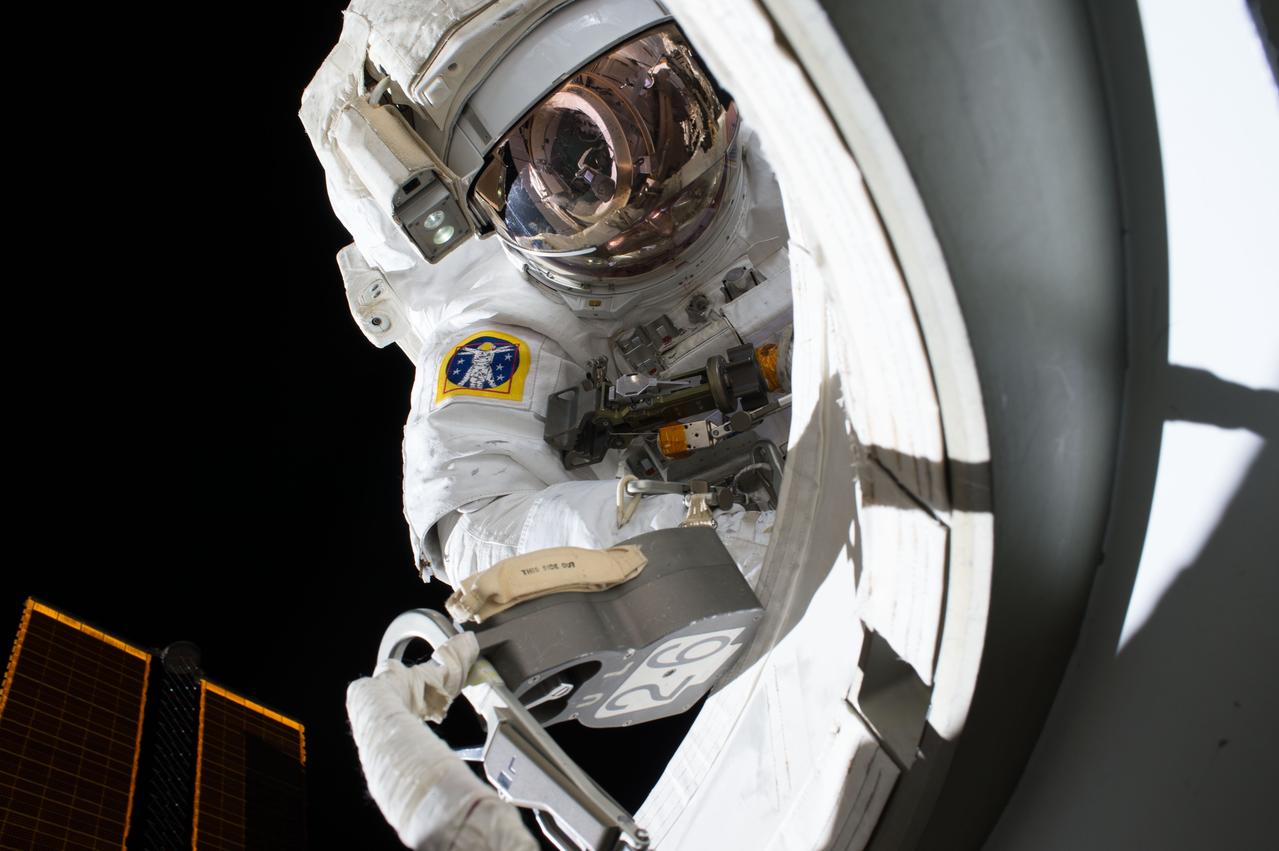
ISS045E082968 (10/28/2015) --- NASA astronaut Scott Kelly is photographed just outside the airlock during his first ever spacewalk on Oct 28, 2015. Kelly and NASA astronaut Kjell Lindgren worked outside for seven hours and 16 minutes on a series of tasks to service and upgrade the International Space Station. They wrapped a dark matter detection experiment in a thermal blanket, lubricated the tip of the Canadarm2 robotic arm and then routed power and data cables for a future docking port.
View of Kelly outside the A/L during EVA 32
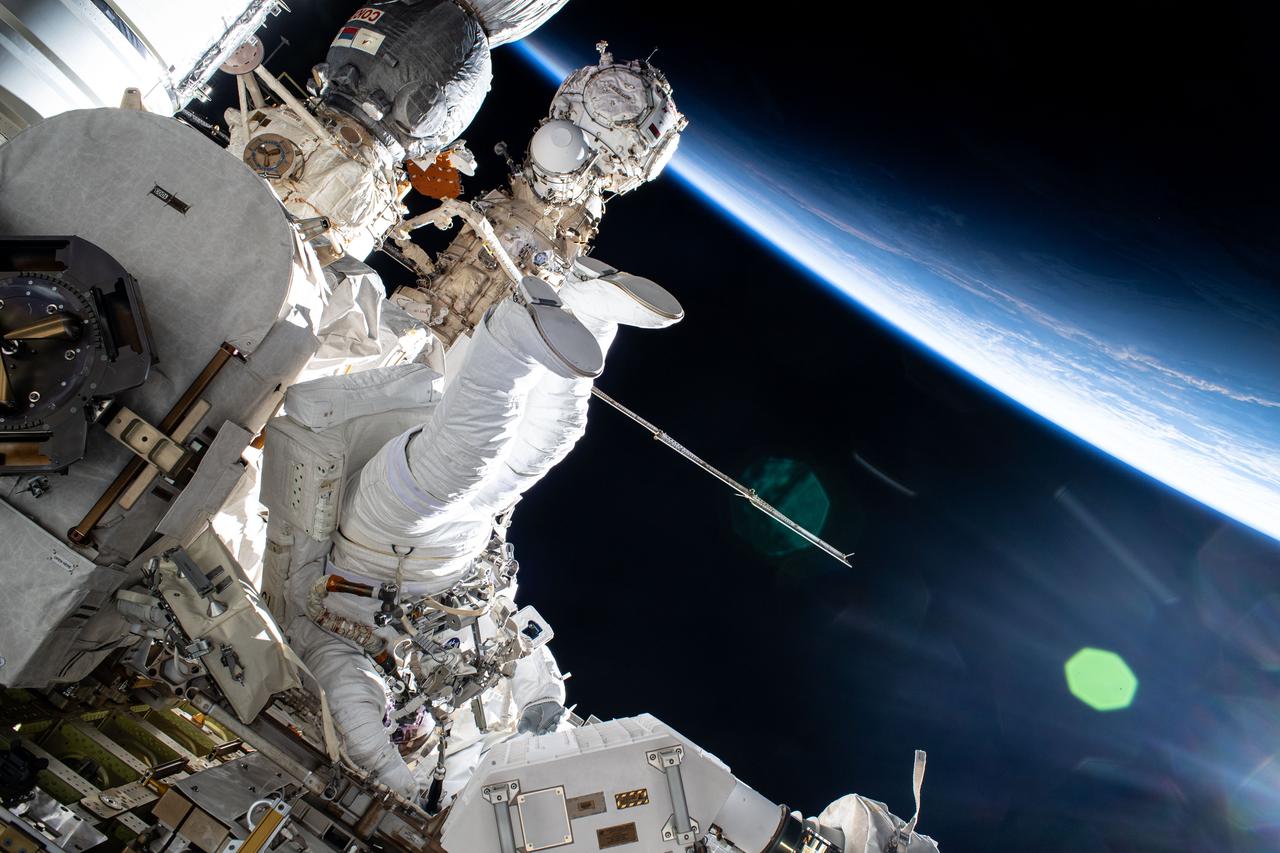
iss072e487421 (Jan. 16, 2025) --- NASA astronaut and Expedition 72 Commander Suni Williams is pictured during a spacewalk outside the International Space Station where she replaced a rate gyro assembly that helps maintain the orientation of the orbital outpost.
Astronaut Suni Williams during a spacewalk outside the International Space Station
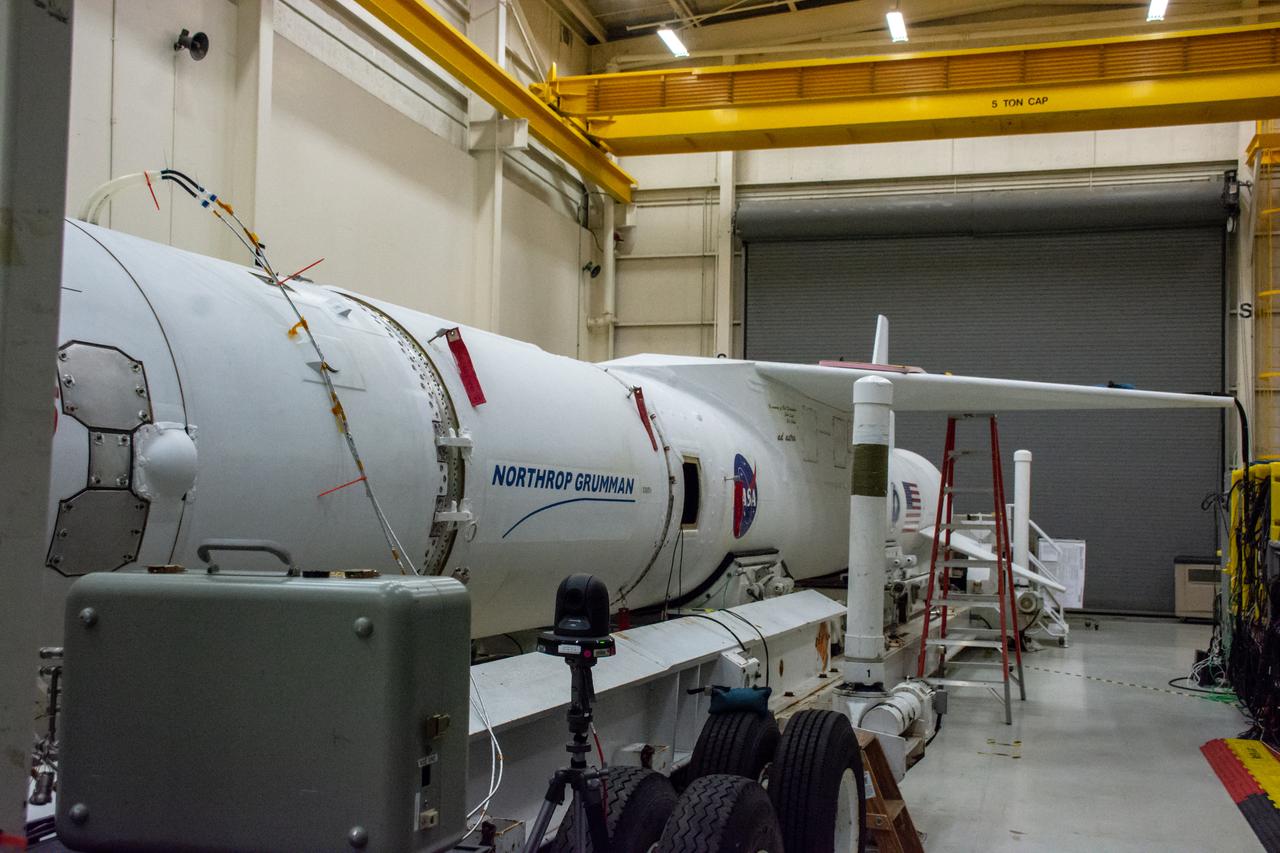
The Northrop Grumman Pegasus XL rocket containing NASA's Ionospheric Connection Explorer (ICON) is seen outside the cleanroom after assembly at Vandenberg Air Force Base in California on Sept 19, 2019. ICON launched on the Pegasus XL rocket, attached beneath the company's L-1011 Stargazer aircraft, on Oct. 10, 2019, after takeoff from the Skid Strip at Cape Canaveral Air Force Station in Florida. ICON will study the frontier of space - the dynamic zone high in Earth's atmosphere where terrestrial weather from below meets space weather above. The explorer will help determine the physics of Earth's space environment and pave the way for mitigating its effects on our technology, communications systems and society.
Pegasus ICON Outside of Cleanroom
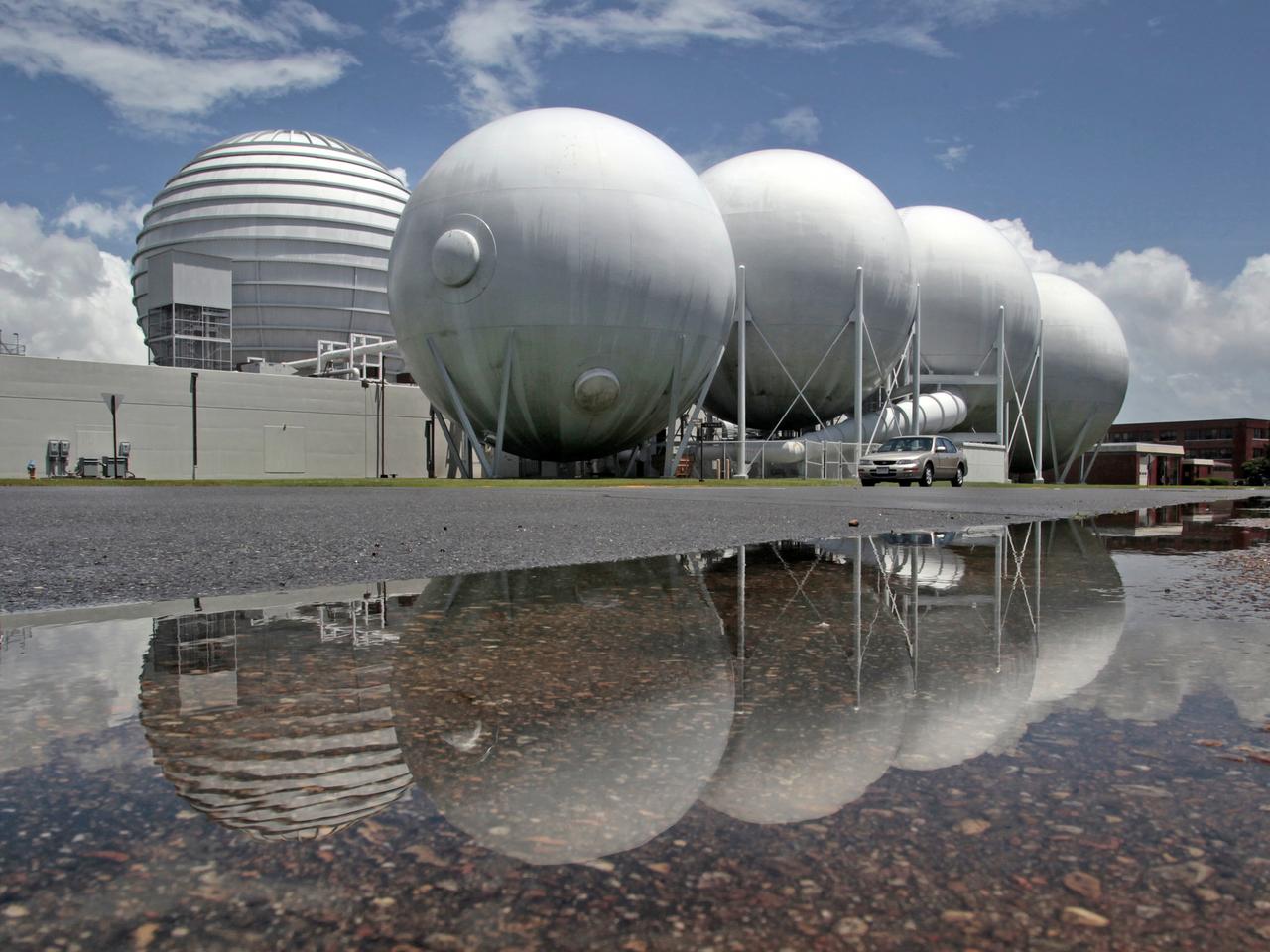
The vacuum spheres outside of building 1247 are reflected in a pool of rain water after an unusual break in weather on Friday, which gave a brief moment of sunshine, blue skies and standing water as Tropical Storm Andrea approaches from the south.
Vacuum Spheres Outside of Building 1247 NASA LaRC
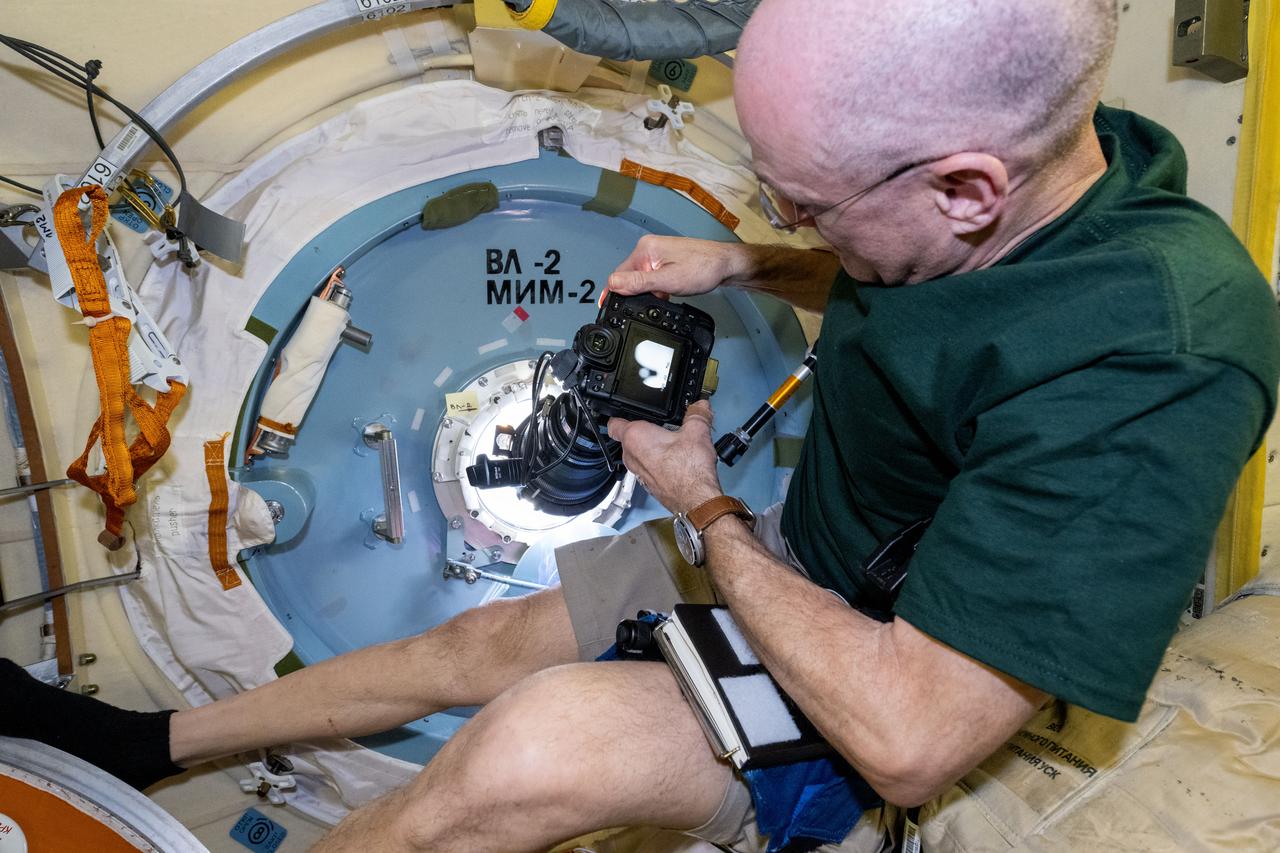
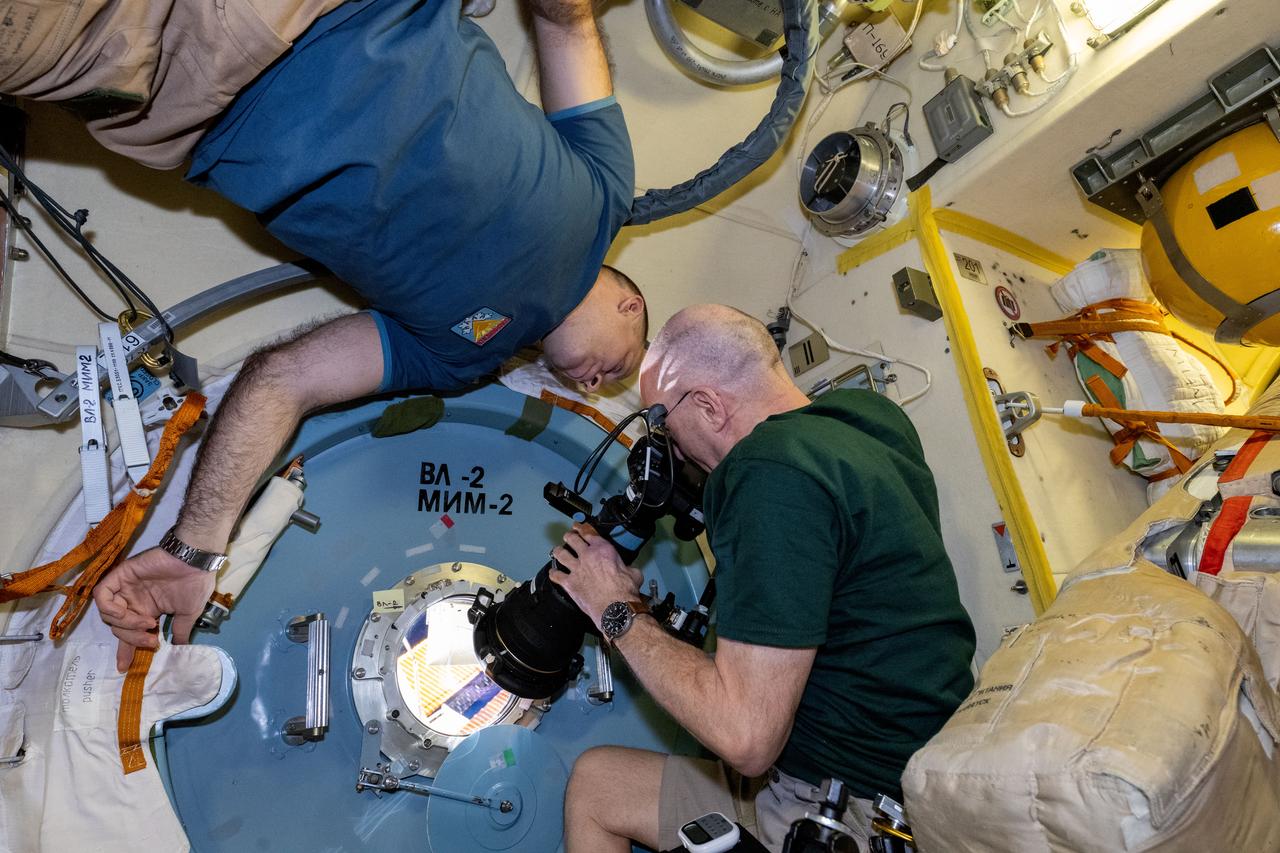
iss072e350835 (Dec. 7, 2024) --- NASA astronaut and Expedition 72 Flight Engineer Don Pettit points a camera outside a window on the International Space Station's Poisk module for a sun photography session.
Astronaut Don Pettit points a camera outside a window for a sun photography session
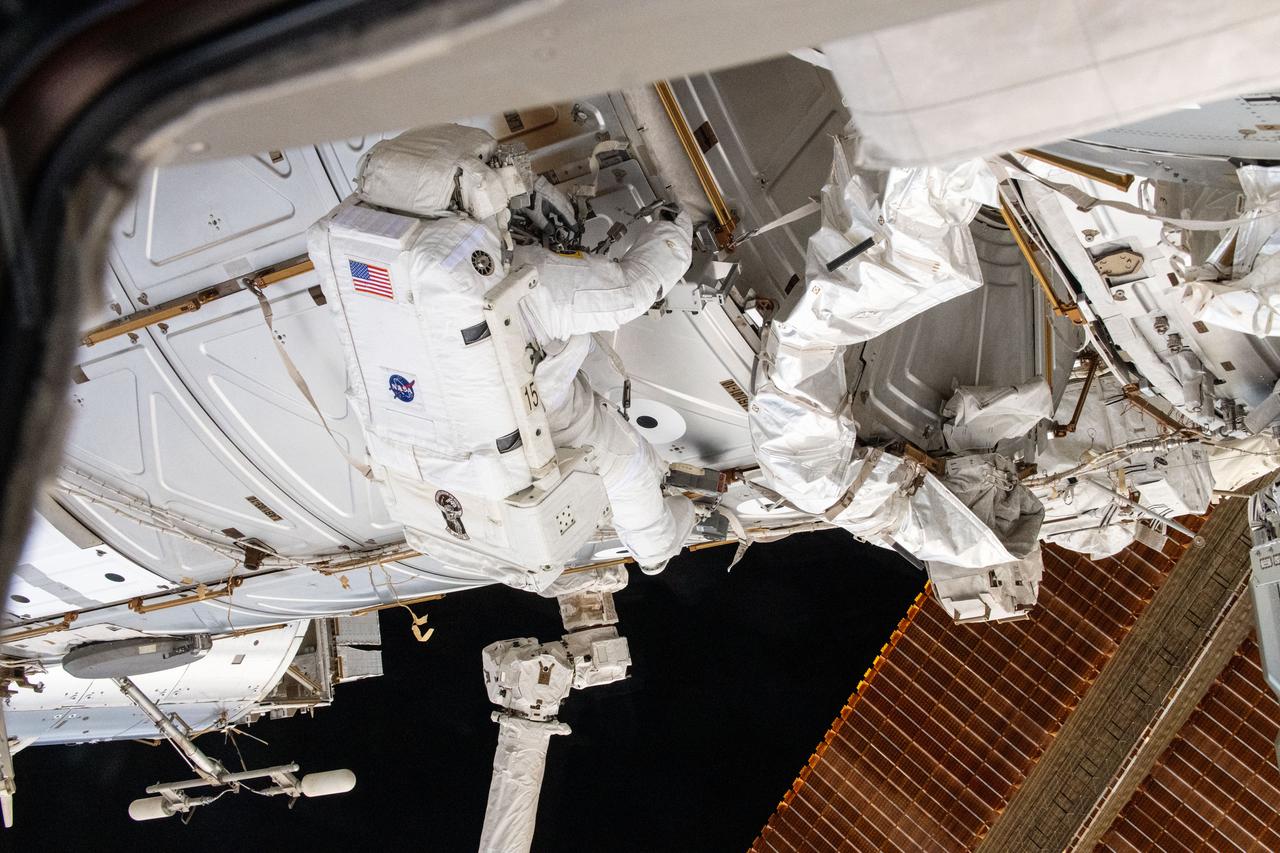
iss072e574856 (Jan. 30, 2025) --- NASA astronaut and Expedition 72 Commander Suni Williams works outside the International Space Station during a five-hour and 26-minute spacewalk to remove and stow a radio frequency group antenna assembly. The orbital outpost was soaring 260 miles above Kazakhstan at the time of this photograph.
Astronaut Suni Williams works outside the International Space Station
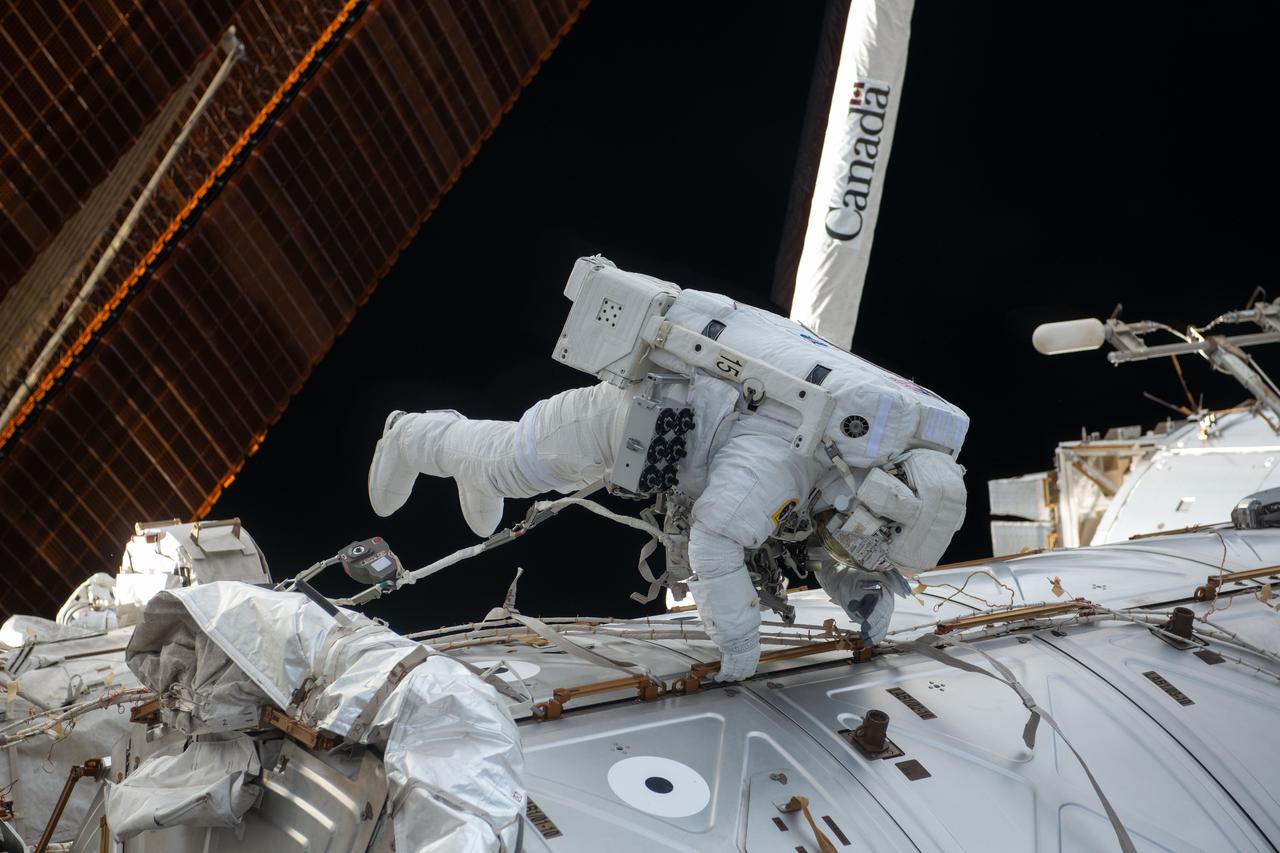
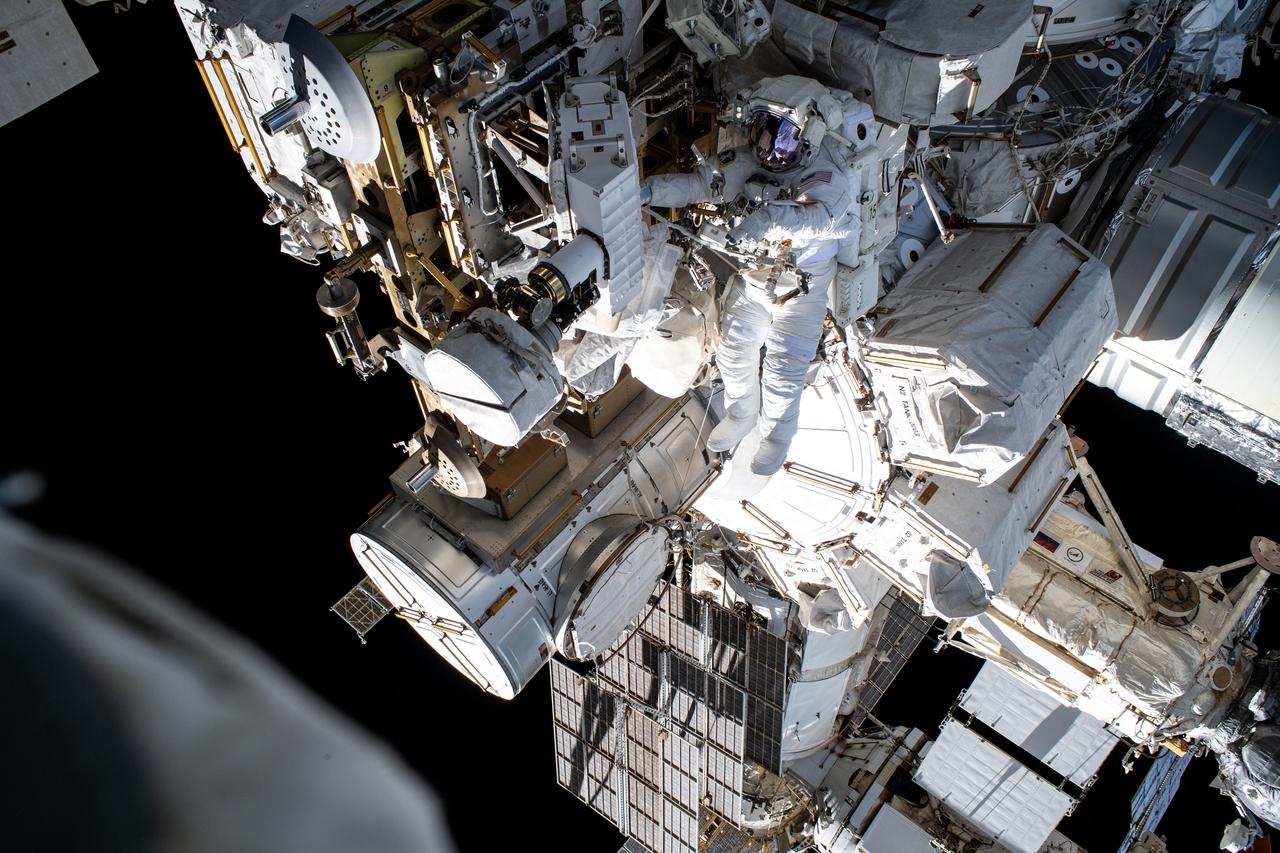
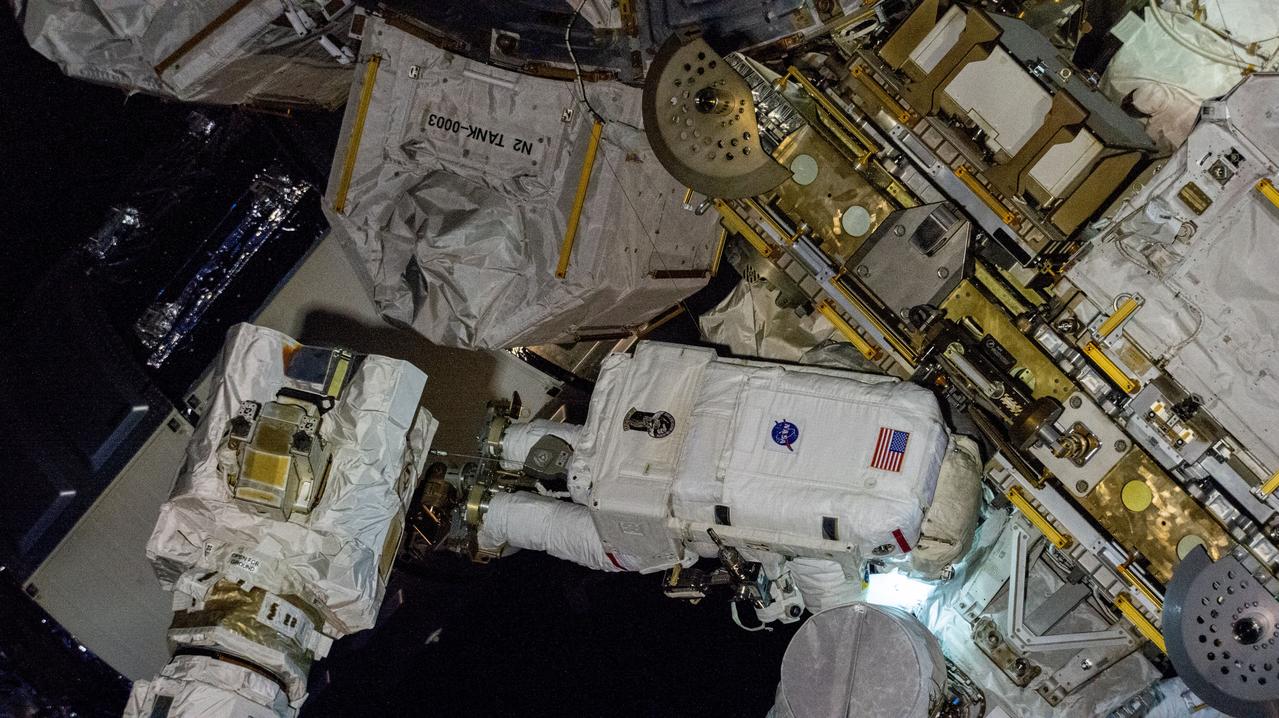
iss072e595522 (Jan. 30, 2025) --- NASA astronaut and Expedition 72 Flight Engineer Butch Wilmore works outside the International Space Station during a five-hour and 26-minute spacewalk. Wilmore swabbed external surfaces searching for microorganisms that may survive and reproduce near vents on the exterior of the orbital outpost.
Astronaut Butch Wilmore works outside the International Space Station
iss072e576465 (Jan. 30, 2025) --- NASA astronaut and Expedition 72 Flight Engineer Butch Wilmore works outside the International Space Station during a five-hour and 26-minute spacewalk. Wilmore swabbed external surfaces searching for microorganisms that may survive and reproduce near vents on the exterior of the orbital outpost.
Astronaut Butch Wilmore works outside the International Space Station
iss072e575553 (Jan. 30, 2025) --- NASA astronaut and Expedition 72 Flight Engineer Butch Wilmore works outside the International Space Station during a five-hour and 26-minute spacewalk. Wilmore swabbed external surfaces searching for microorganisms that may survive and reproduce near vents on the exterior of the orbital outpost.
Astronaut Butch Wilmore works outside the International Space Station
iss072e350819 (Dec. 7, 2024) --- NASA astronaut and Expedition 72 Flight Engineer Don Pettit points a camera outside a window on the International Space Station's Poisk module for a sun photography session with assistance from Roscosmos cosmonaut and Expedition 72 Flight Engineer Ivan Vagner.
Astronaut Don Pettit points a camera outside a window for a sun photography session
iss072e575045 (Jan. 30, 2025) --- NASA astronaut and Expedition 72 Flight Engineer Butch Wilmore works outside the International Space Station during a five-hour and 26-minute spacewalk. Wilmore swabbed external surfaces searching for microorganisms that may survive and reproduce near vents on the exterior of the orbital outpost.
Astronaut Butch Wilmore works outside the International Space Station
iss072e575100 (Jan. 30, 2025) --- NASA astronaut and Expedition 72 Flight Engineer Butch Wilmore works outside the International Space Station during a five-hour and 26-minute spacewalk. Wilmore swabbed external surfaces searching for microorganisms that may survive and reproduce near vents on the exterior of the orbital outpost. The space station was orbiting 260 miles above Eastern Europe at the time of this photograph.
Astronaut Butch Wilmore works outside the International Space Station
iss072e575090 (Jan. 30, 2025) --- NASA astronaut and Expedition 72 Flight Engineer Butch Wilmore works outside the International Space Station during a five-hour and 26-minute spacewalk. Wilmore swabbed external surfaces searching for microorganisms that may survive and reproduce near vents on the exterior of the orbital outpost. The space station was orbiting 261 miles above Eastern Europe at the time of this photograph.
Astronaut Butch Wilmore works outside the International Space Station
iss072e575158 (Jan. 30, 2025) --- NASA astronaut and Expedition 72 Flight Engineer Butch Wilmore works outside the International Space Station during a five-hour and 26-minute spacewalk. Wilmore swabbed external surfaces searching for microorganisms that may survive and reproduce near vents on the exterior of the orbital outpost. The space station was orbiting into a sunset 259 miles above Eastern Europe at the time of this photograph.
Astronaut Butch Wilmore works outside the International Space Station
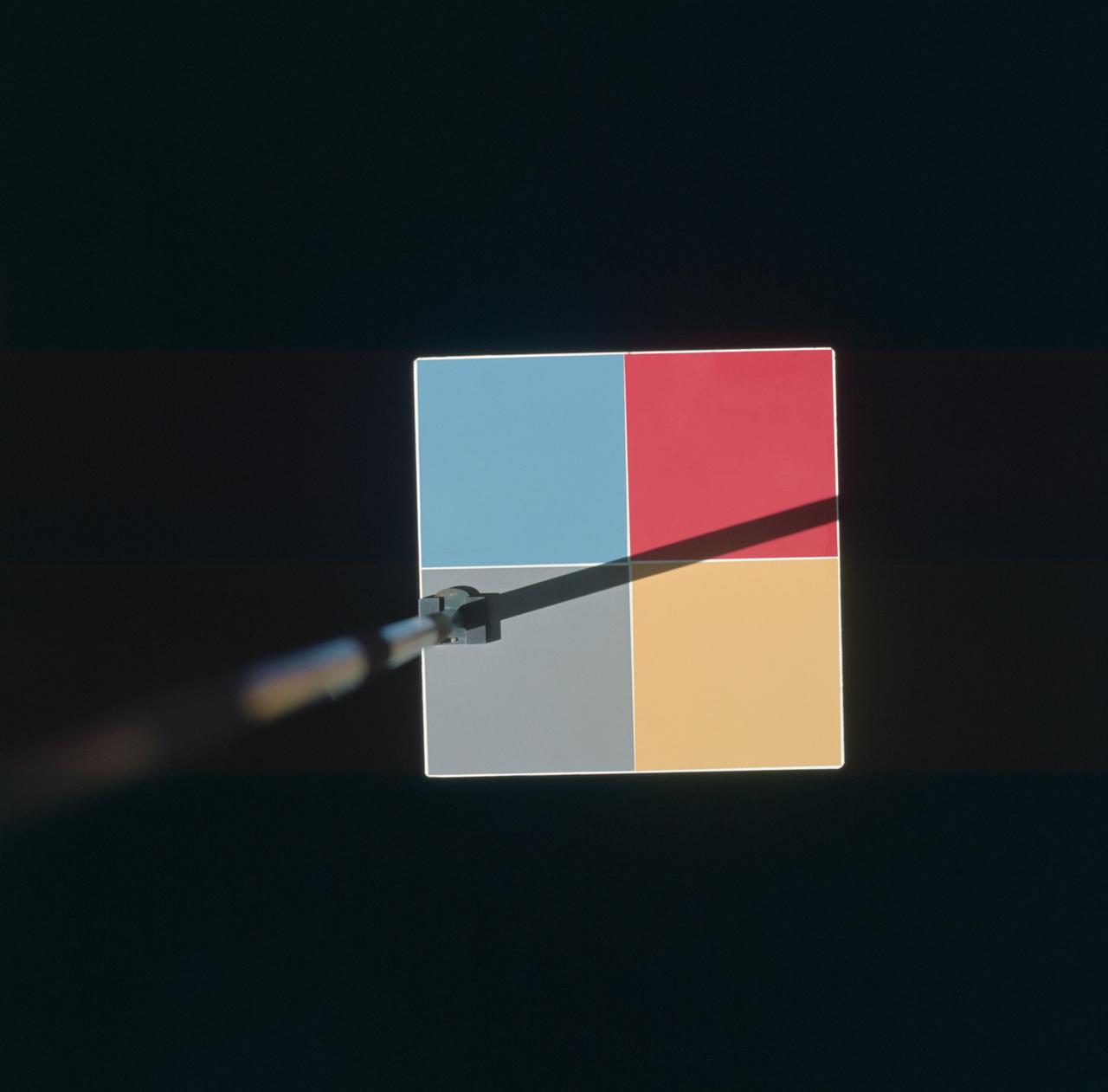
S66-46025 (18 July 1966) --- Astronaut Michael Collins, Gemini-10 pilot, photographed this MSC-8 color patch outside the spacecraft during the Gemini-10/Agena docking mission. The experiment was for the purpose of showing what effect the environment of space will have upon the color photography taken in cislunar space and on the lunar surface during an Apollo mission. Photo credit: NASA
Photograph of MSC-8 color patch outside spacecraft during docking
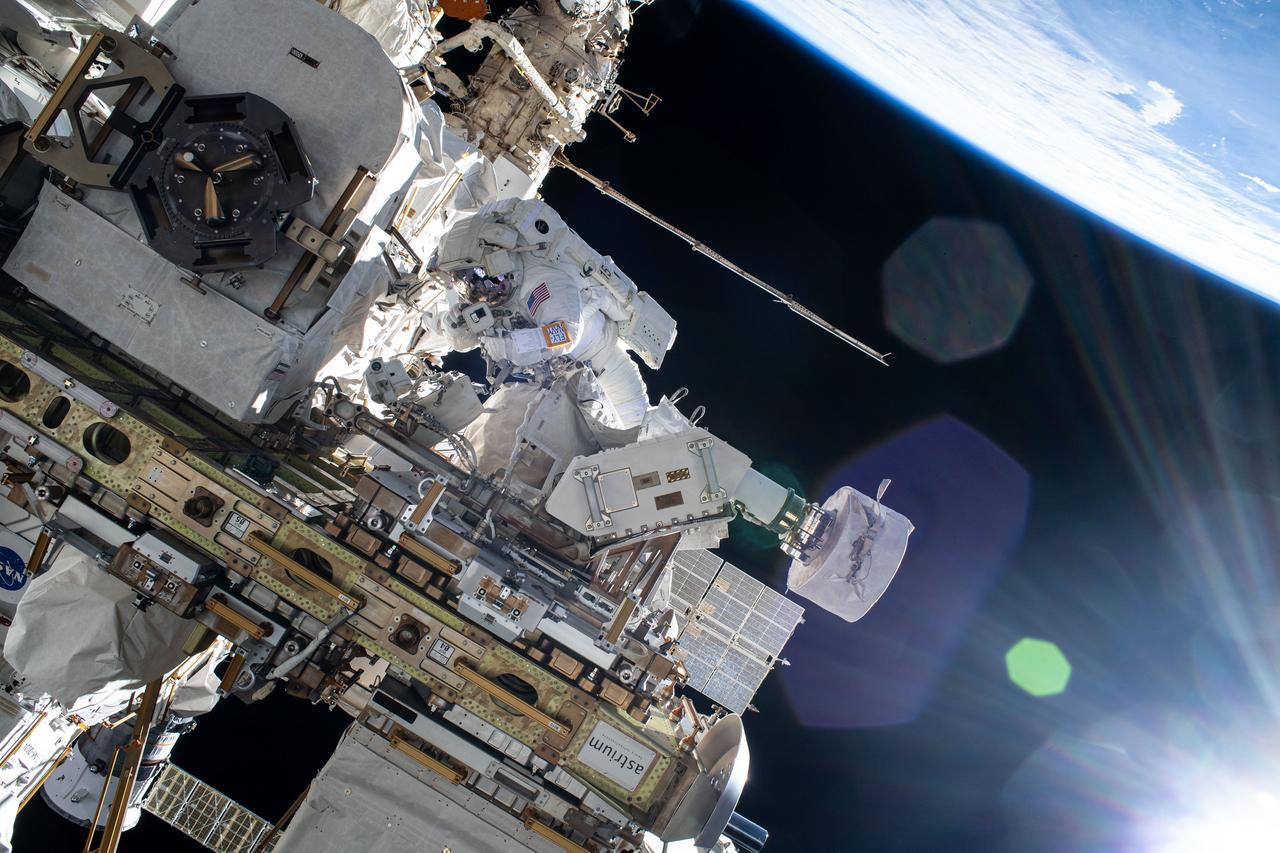
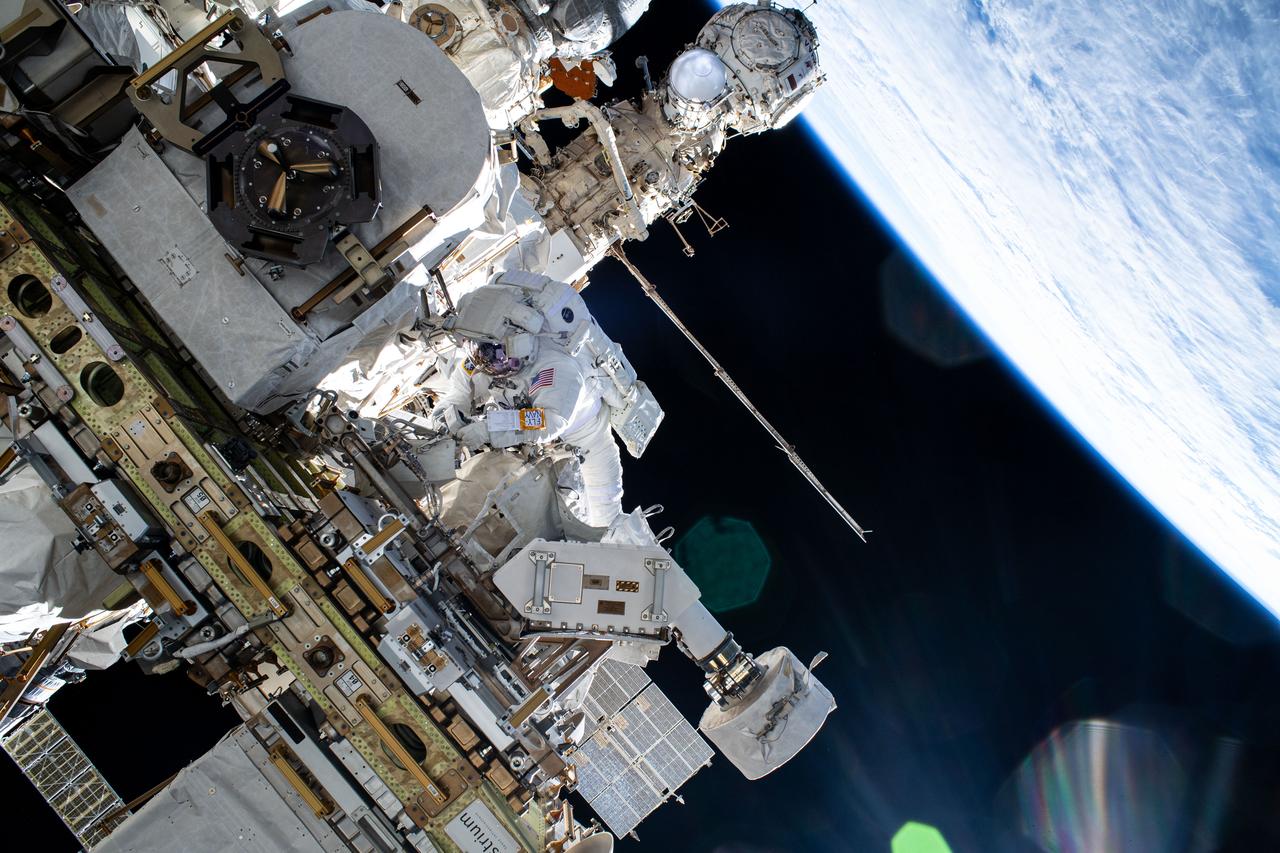
iss072e574847 (Jan. 30, 2025) --- NASA astronaut and Expedition 72 Commander Suni Williams works outside the International Space Station during a five-hour and 26-minute spacewalk to remove and stow a radio frequency group antenna assembly. In the left foreground, is the latching end effector of the Canadarm2 robotic arm. The orbital outpost was soaring 267 miles above New Zealand at the time of this photograph.
Astronaut Suni Williams works outside the International Space Station
iss072e574914 (Jan. 30, 2025) --- NASA astronaut and Expedition 72 Commander Suni Williams works outside the International Space Station during a five-hour and 26-minute spacewalk to remove and stow a radio frequency group antenna assembly. In the left foreground, is the latching end effector of the Canadarm2 robotic arm. The orbital outpost was soaring 258 miles above the Pacific Ocean near the coast of Mexico at the time of this photograph.
Astronaut Suni Williams works outside the International Space Station
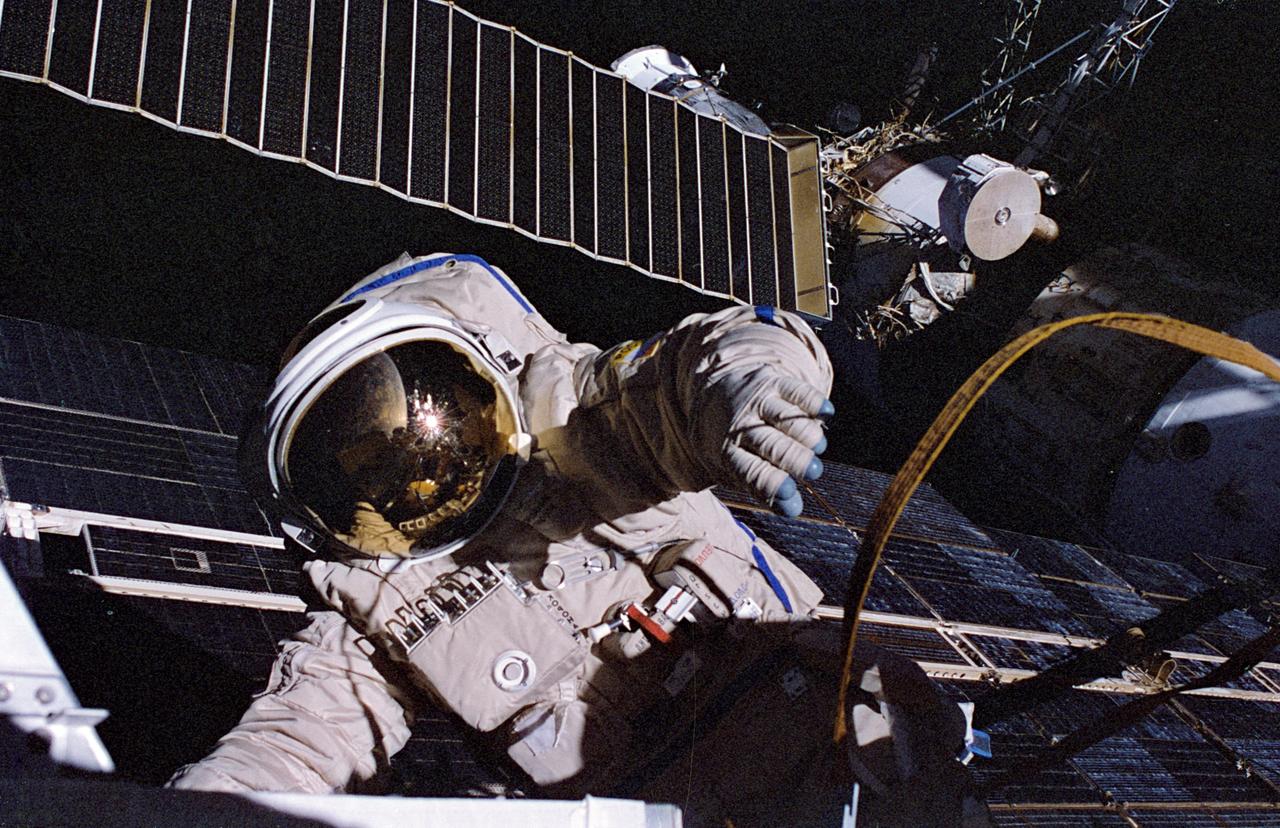
NM23-48-009 (29 April 1997) --- United States astronaut Jerry M. Linenger, cosmonaut guest researcher, works outside the Russian Mir Space Station during a joint United States-Russian space walk on April 29, 1997.  He was joined by Mir-23 commander Vasili V. Tsibliyev (out of frame) for the five-hour Extravehicular Activity (EVA) designed to deploy scientific instruments and retrieve other science hardware.  At the top of the frame is a Russian Progress re-supply capsule docked to the Mir’s Kvant-1 module.
Lineger and Tsibliev during EVA outside Mir Space Station
NM23-48-009 (29 April 1997) --- United States astronaut Jerry M. Linenger, cosmonaut guest researcher, works outside the Russian Mir Space Station during a joint United States-Russian space walk on April 29, 1997. He was joined by Mir-23 commander Vasili V. Tsibliyev (out of frame) for the five-hour Extravehicular Activity (EVA) designed to deploy scientific instruments and retrieve other science hardware. At the top of the frame is a Russian Progress re-supply capsule docked to the Mir’s Kvant-1 module.
Lineger and Tsibliev during EVA outside Mir Space Station
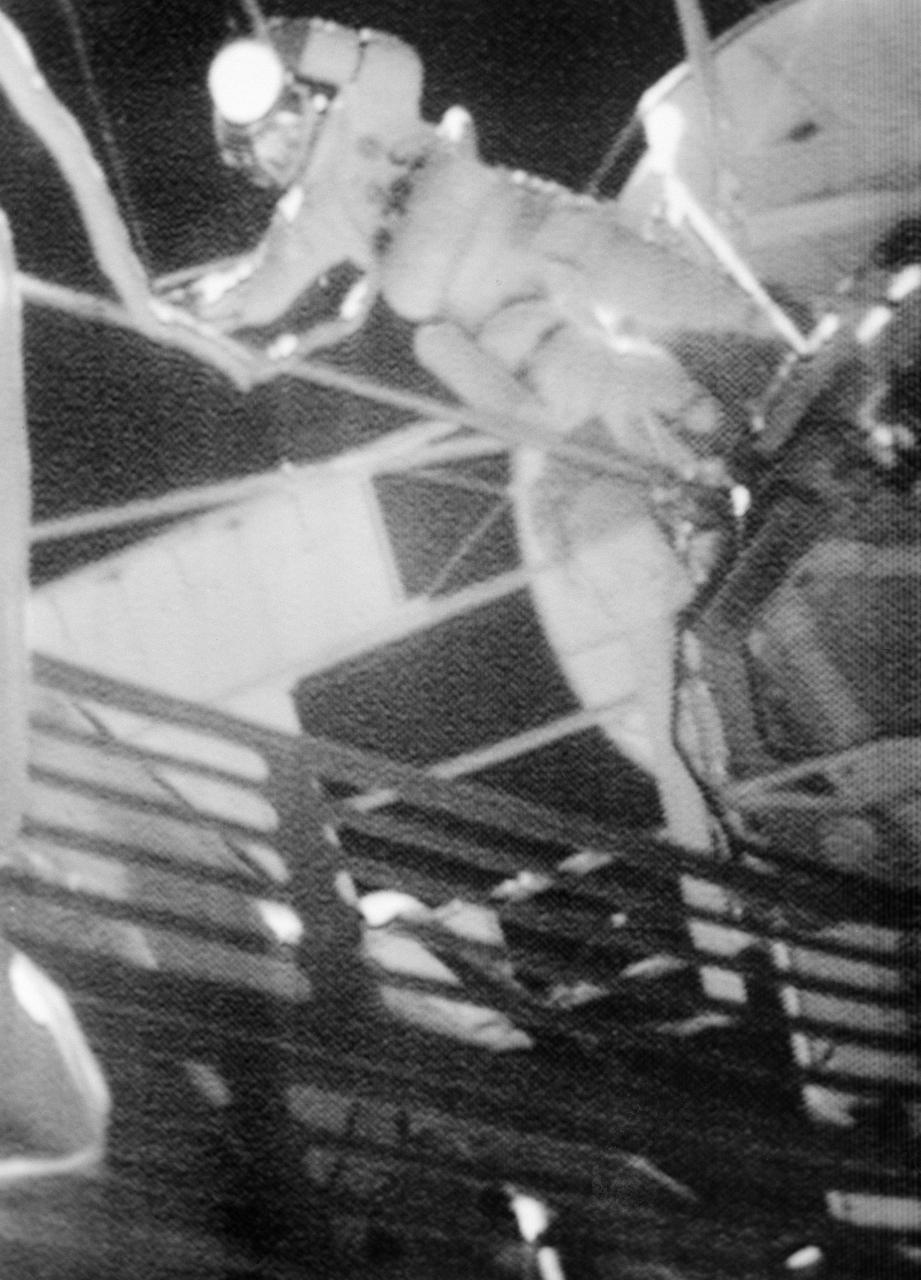
S73-31976 (5 Aug. 1973) --- Astronaut Jack R. Lousma, Skylab 3 pilot, is seen outside the Skylab space station in Earth orbit during the Aug. 5, 1973 Skylab 3 extravehicular activity (EVA) in this photographic reproduction taken from a television transmission made by a color TV camera aboard the space station. Scientist-astronaut Owen K. Garriott, Skylab 3 science pilot, participated in the EVA with Lousma. During the EVA the two crewmen deployed the twin pole solar shield to help shade the Orbital Workshop. Photo credit: NASA
Astronaut Jack Lousma seen outside Skylab space station during EVA
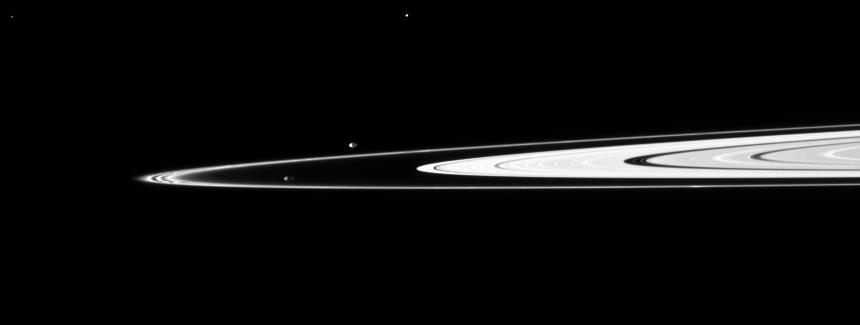
This image taken by NASA Cassini spacecraft shows Epimetheus, which orbits Saturn well outside of the F ring orbit.
Going Rogue?
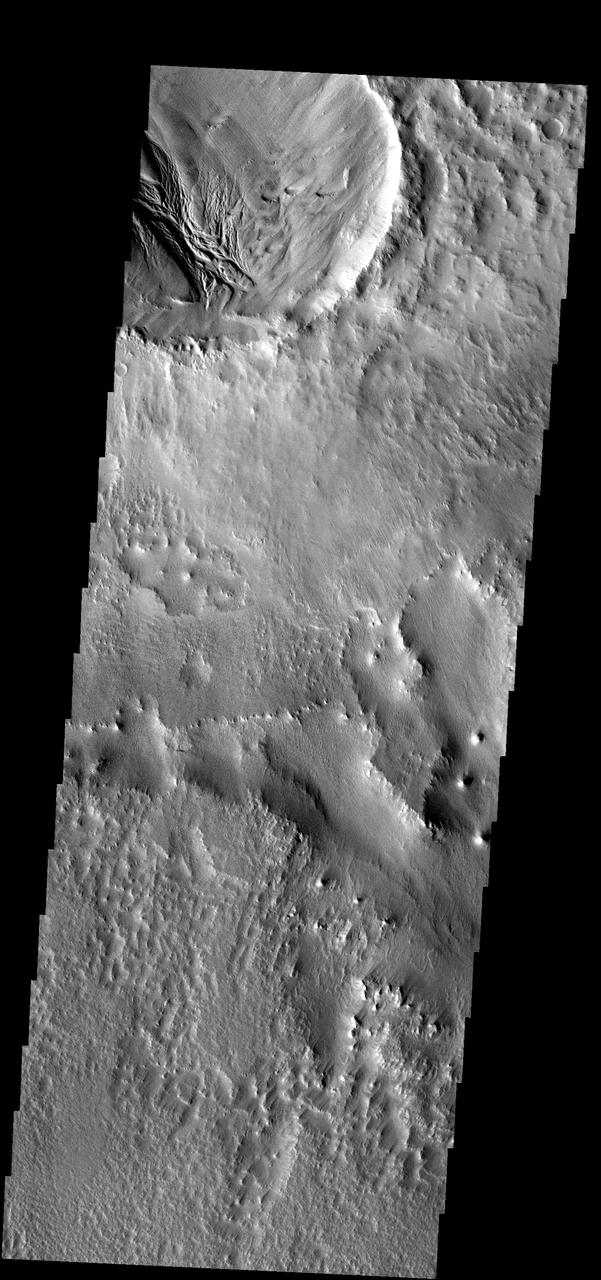
The deposits within this crater show evidence of erosion by both wind and  water. The region outside the crater is dominated by wind erosion
Wind and Water?
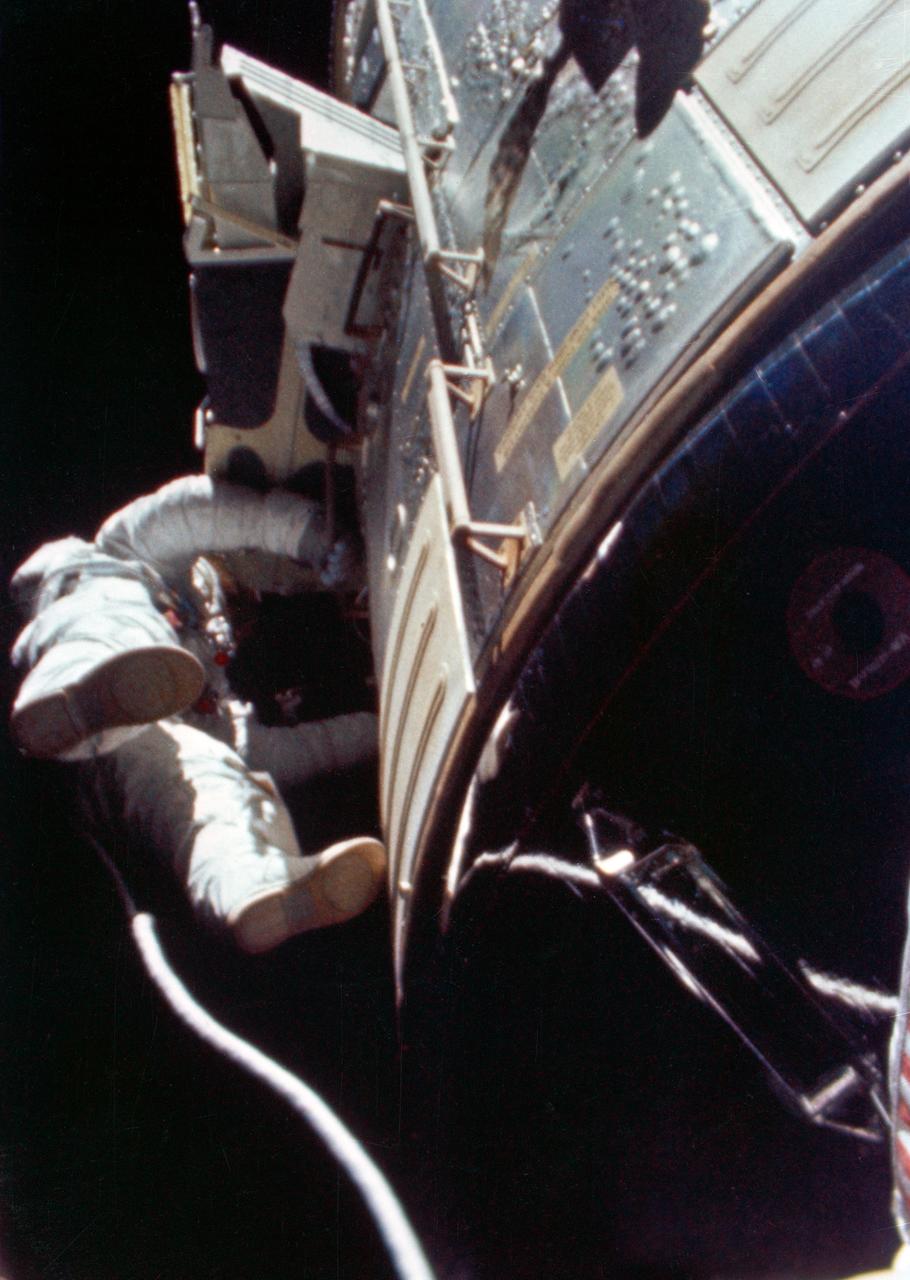
S71-43202 (5 Aug. 1971) --- Astronaut Alfred M. Worden, command module pilot of the Apollo 15 lunar landing mission, floats in space outside the spacecraft during his trans-Earth extravehicular activity (EVA). This photograph was taken from a frame of motion picture film exposed by the 16mm Maurer camera mounted in the hatch of the Command Module (CM). During his EVA, Worden made an inspection of the Service Module's (SM) Scientific Instrument Module (SIM) bay and retrieved the film cassettes from the Panoramic Camera and the Mapping Camera. The SIM bay holds eight orbital science experiments. The EVA occurred when the spacecraft was homeward bound approximately 171,000 nautical miles from Earth.
Astronaut Alfred Worden floats in space outside spacecraft during EVA
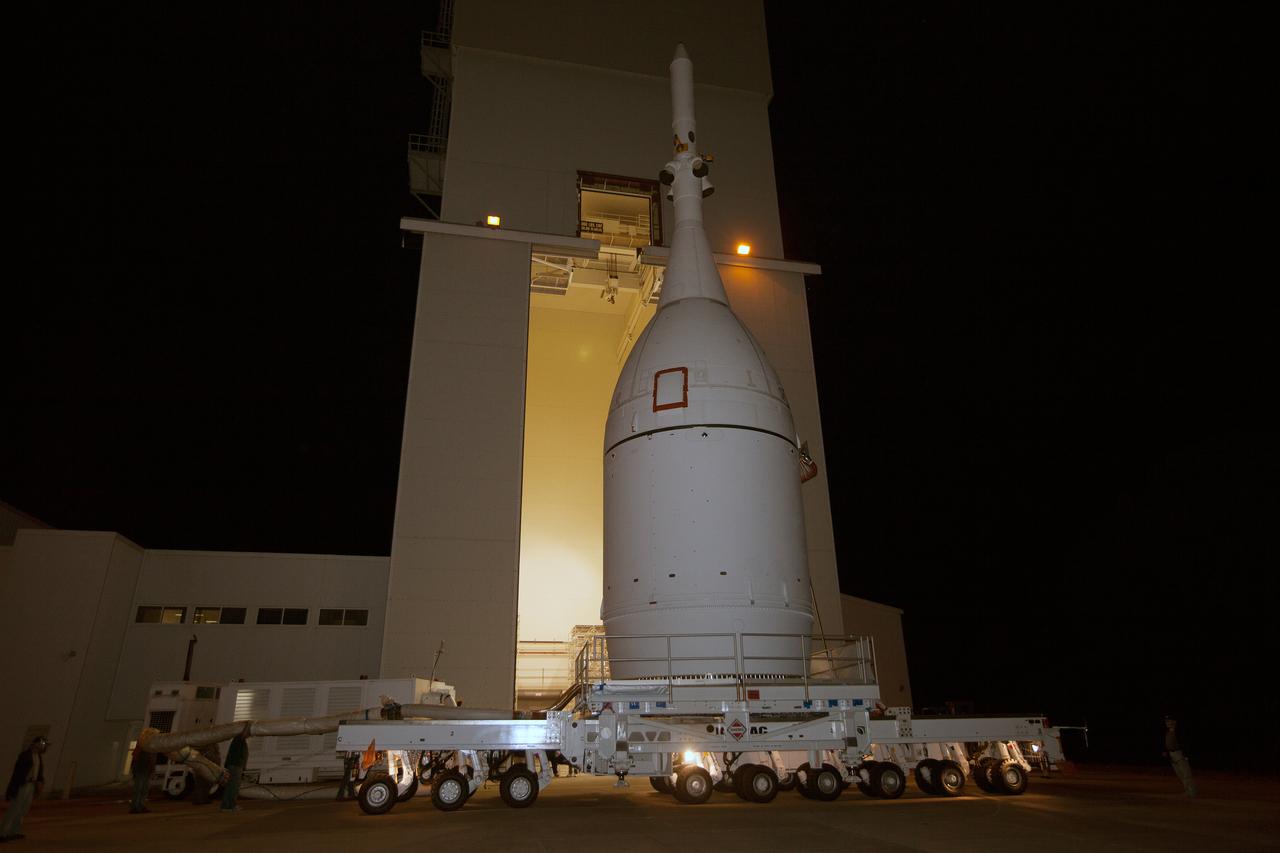
At NASA's Kennedy Space Center in Florida, the agency's Orion spacecraft pauses in front of the spaceport's iconic Vehicle Assembly Building as it is transported to Launch Complex 37 at Cape Canaveral Air Force Station on Nov. 11, 2014. After arrival at the launch pad, United Launch Alliance engineers and technicians lifted Orion and mounted it atop its Delta IV Heavy rocket. Part of Batch image transfer from Flickr.
Orion Outside LASF
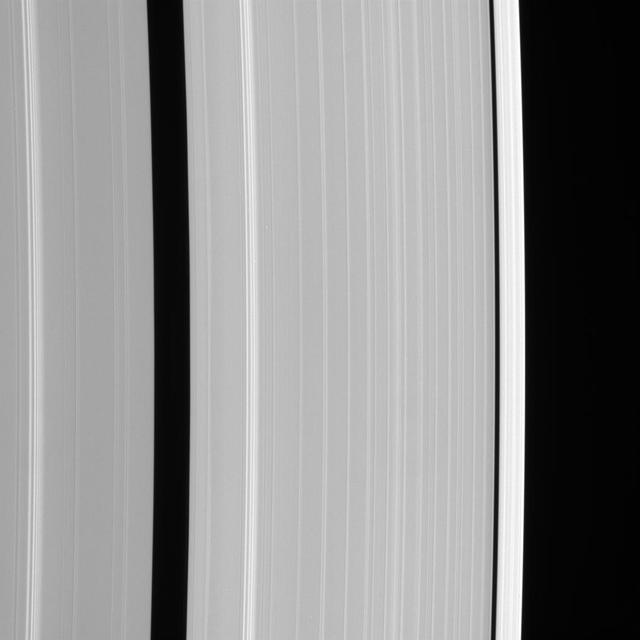
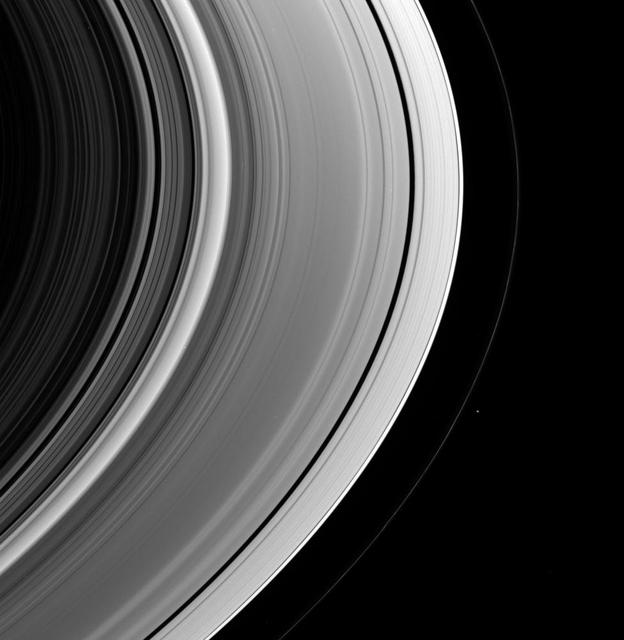
This Cassini spacecraft view shows details of Saturn outer A ring, including the Encke and Keeler gaps. The A ring brightens substantially outside the Keeler Gap
A Ring Waves
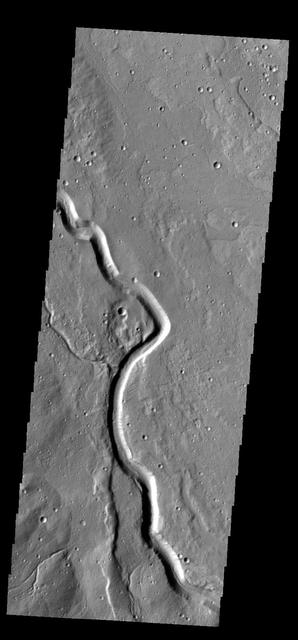
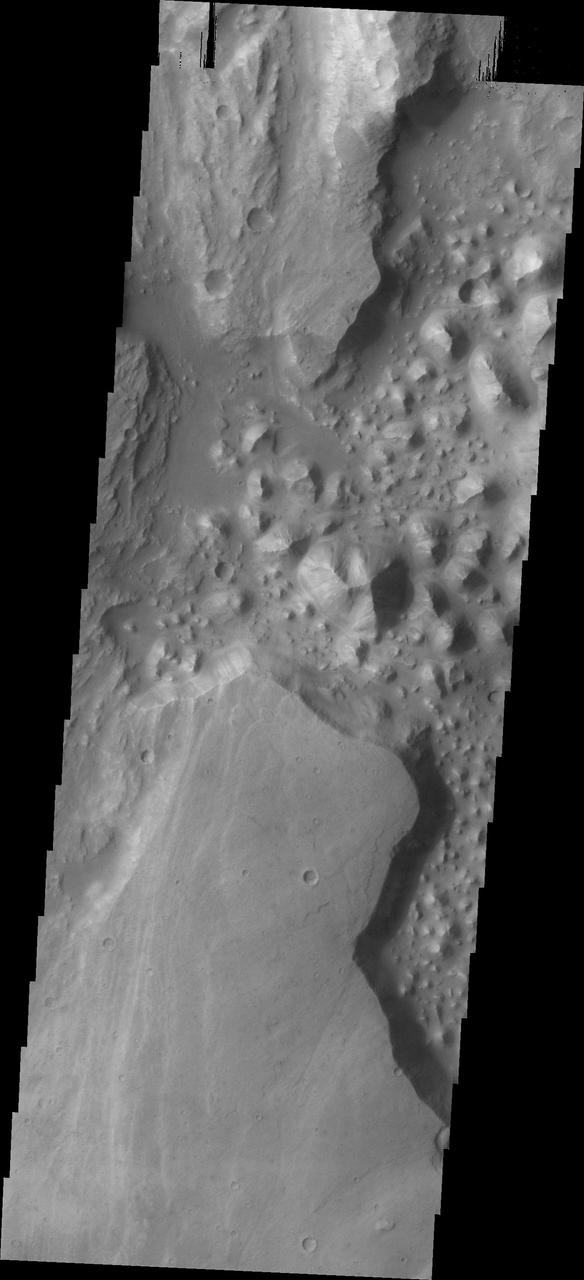
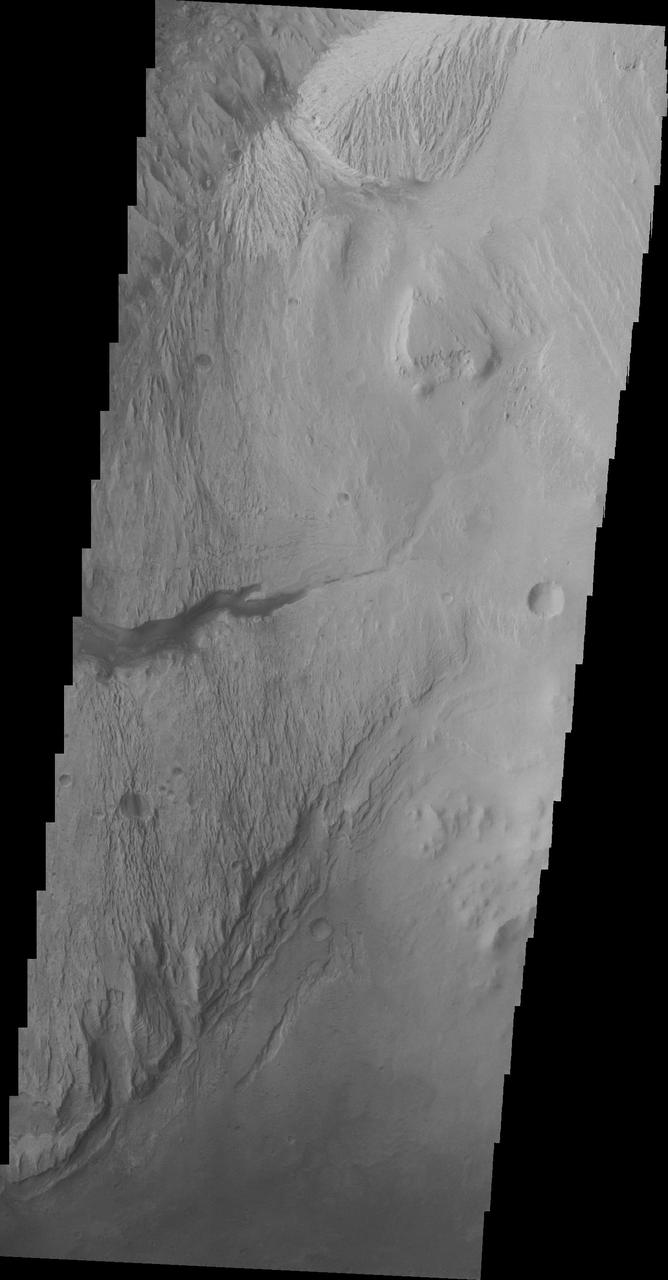
This image captured by NASA 2001 Mars Odyssey spacecraft shows part of Buvinda Vallis, located just outside the northeastern flank of Hecates Tholus.
Buvinda Vallis
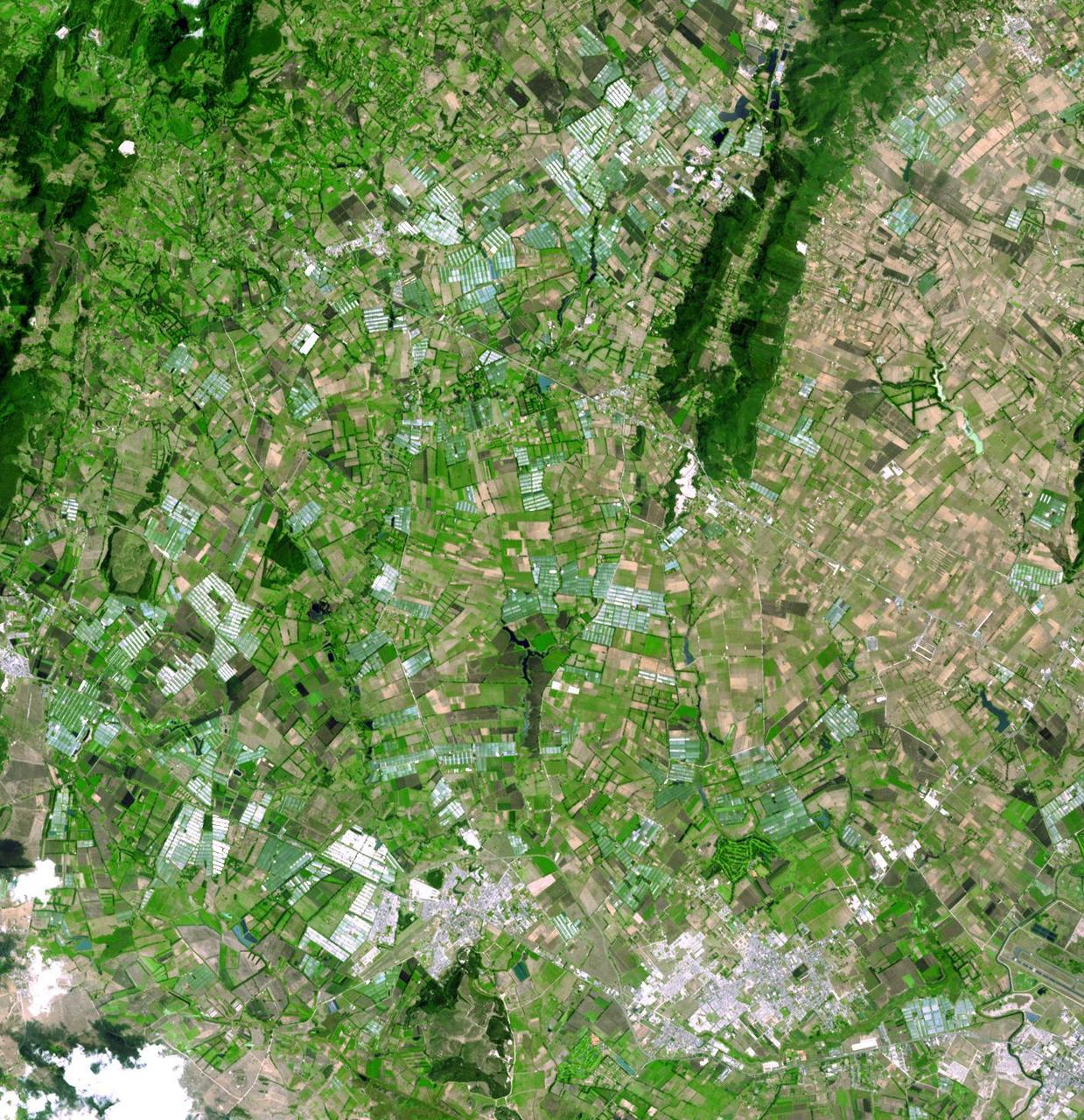
This image from NASA Terra spacecraft shows an area outside of Bogota, Colombia, one of the country two major flower growing areas.
Bogota, Colombia
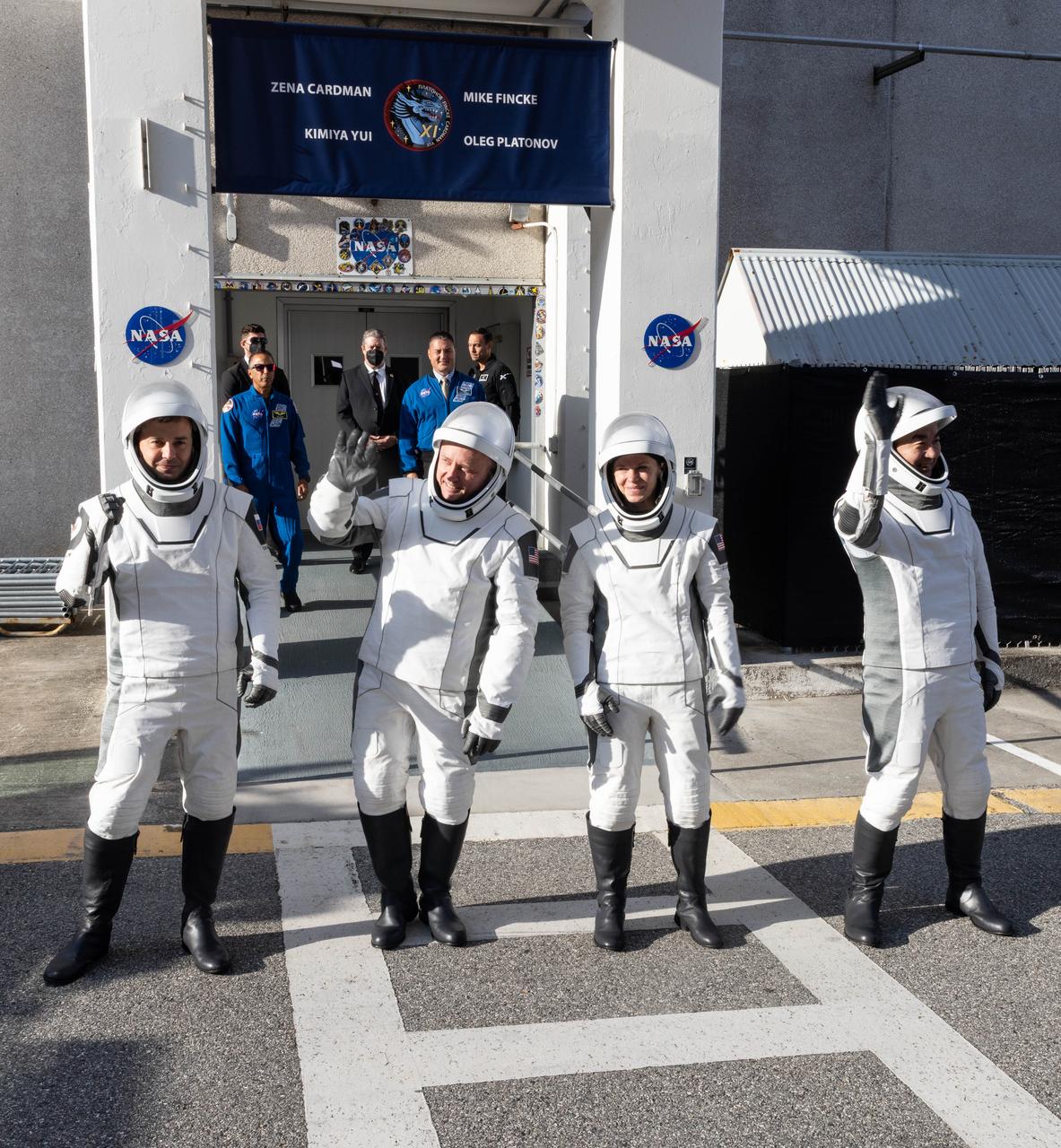
SpaceX Crew-11 Walkout of the O&C
From right to left, JAXA (Japan Aerospace Exploration Agency) astronaut Kimiya Yui, NASA astronauts Zena Cardman and Mike Fincke, along with and Roscosmos cosmonaut Oleg Platonov wave to family and friends as they walk out of the Neil A. Armstrong Operations and Checkout Building at the agency’s Kennedy Space Center in Florida during the second launch attempt of NASA’s SpaceX Crew-11 mission to the International Space Station on Friday, Aug. 1, 2025. Crew-11 is scheduled to lift off aboard SpaceX’s Dragon spacecraft and Falcon 9 rocket at 11:43 a.m. EDT, from Launch Complex 39A at NASA Kennedy.
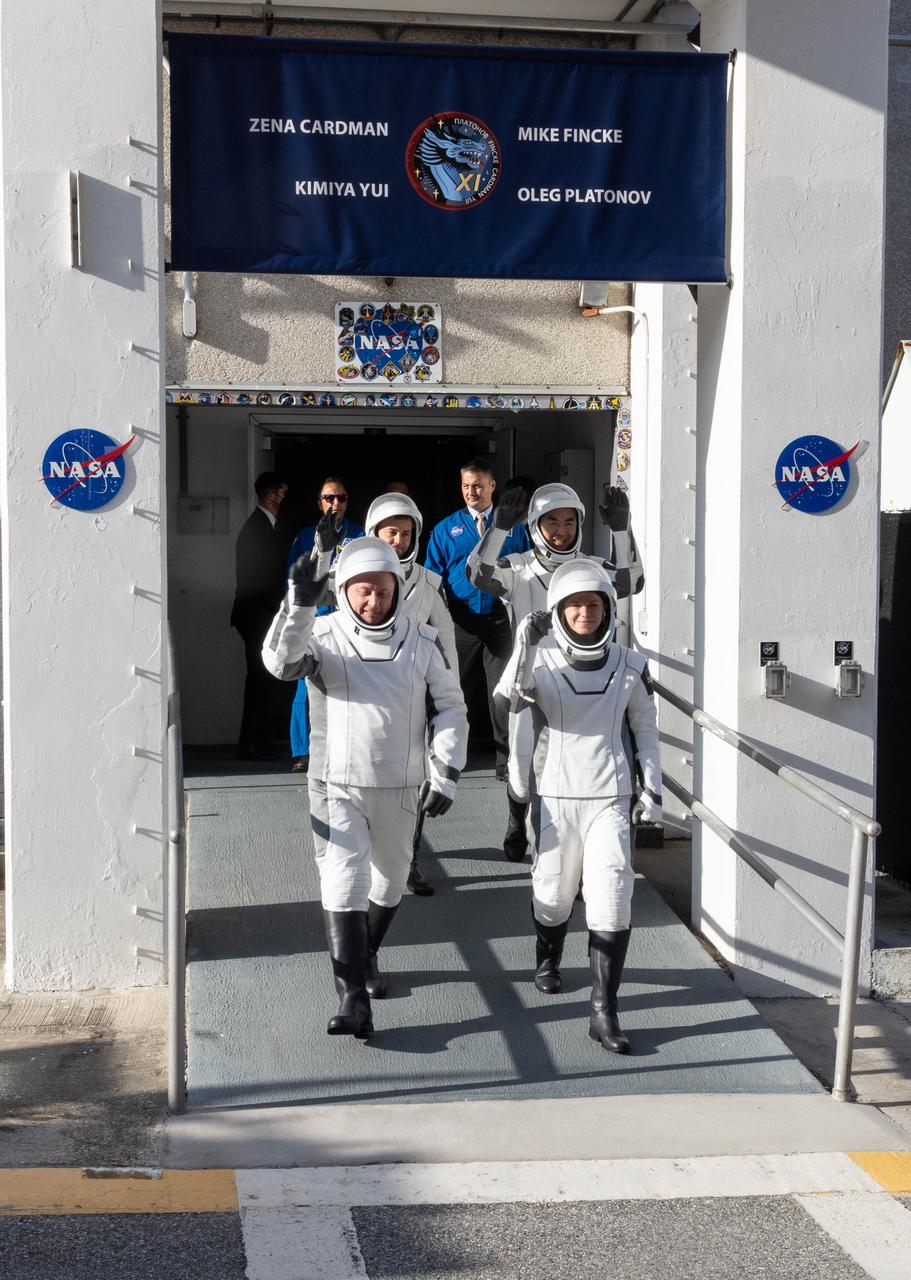
SpaceX Crew-11 Walkout
From top left NASA astronauts Mike Fincke and Zena Cardman, along with JAXA (Japan Aerospace Exploration Agency) astronaut Kimiya Yui and Roscosmos cosmonaut Oleg Platonov wave to family and friends as they walk out of the Neil A. Armstrong Operations and Checkout Building at the agency’s Kennedy Space Center in Florida during the second launch attempt of NASA’s SpaceX Crew-11 mission to the International Space Station on Friday, Aug. 1, 2025. Crew-11 is scheduled to lift off aboard SpaceX’s Dragon spacecraft and Falcon 9 rocket at 11:43 a.m. EDT, from Launch Complex 39A at NASA Kennedy.
SpaceX Crew-11 Walkout
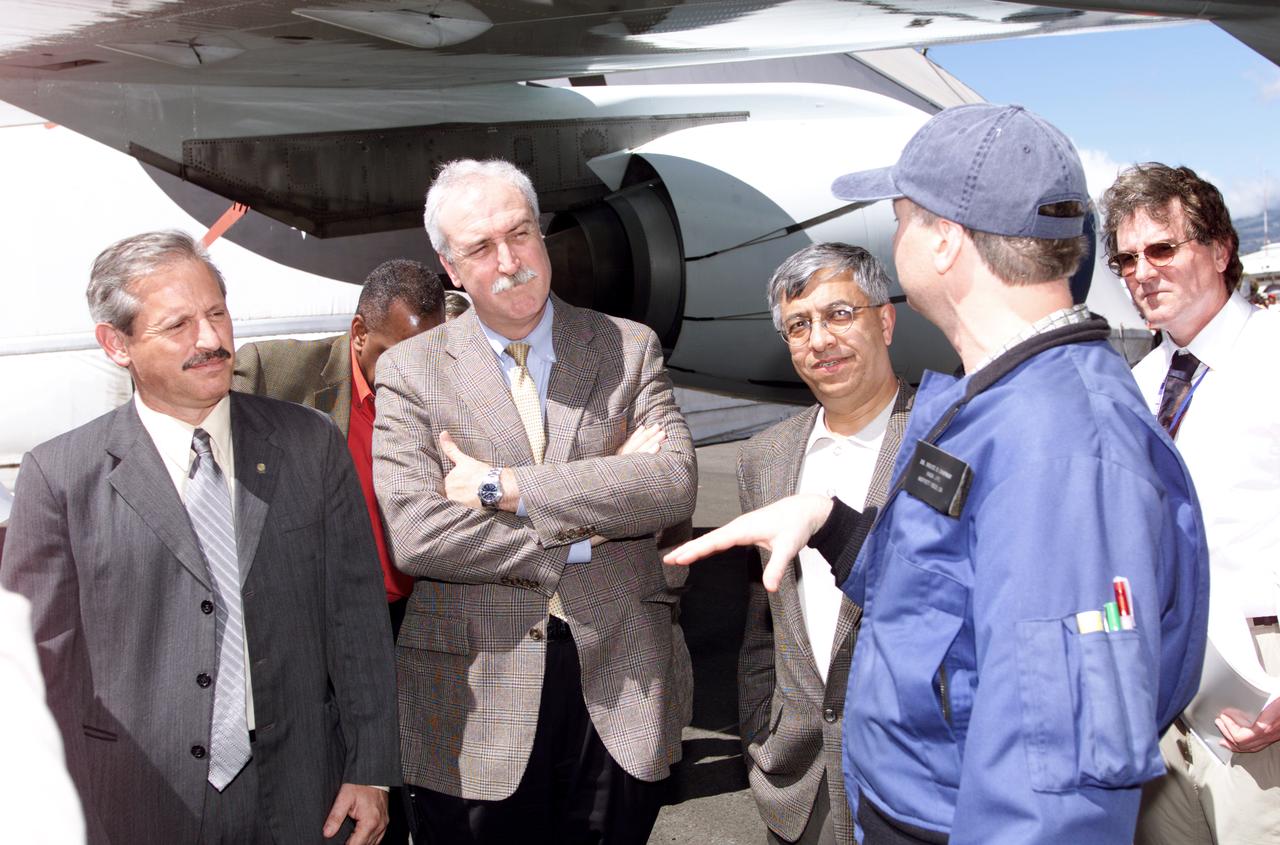
Personnel viewing AirSAR hardware while touring the outside of NASA's DC-8 during a stop-off on the AirSAR 2004 Mesoamerica campaign, L-R: Fernando Gutierrez, Costa Rican Minister of Science and Technology(MICIT); NASA Administrator Sean O'Keefe; Dr. Gahssem Asrar, NASA Associate Administrator for Earth Science Enterprises; JPL scientist Bruce Chapman; and Craig Dobson, NASA Program Manager for AirSAR. AirSAR 2004 Mesoamerica is a three-week expedition by an international team of scientists that will use an all-weather imaging tool, called the Airborne Synthetic Aperture Radar (AirSAR), in a mission ranging from the tropical rain forests of Central America to frigid Antarctica.
Personnel viewing AirSAR hardware while touring the outside of NASA's DC-8 during a stop-off on the AirSAR 2004 Mesoamerica campaign
NASA Mars Reconnaissance Orbiter shows the surface outside this large crater is relatively dark, while the interior wall of the crater exposes lighter, layered bedrock of diverse colors.
Layers Exposed in Crater Near Mawrth Vallis
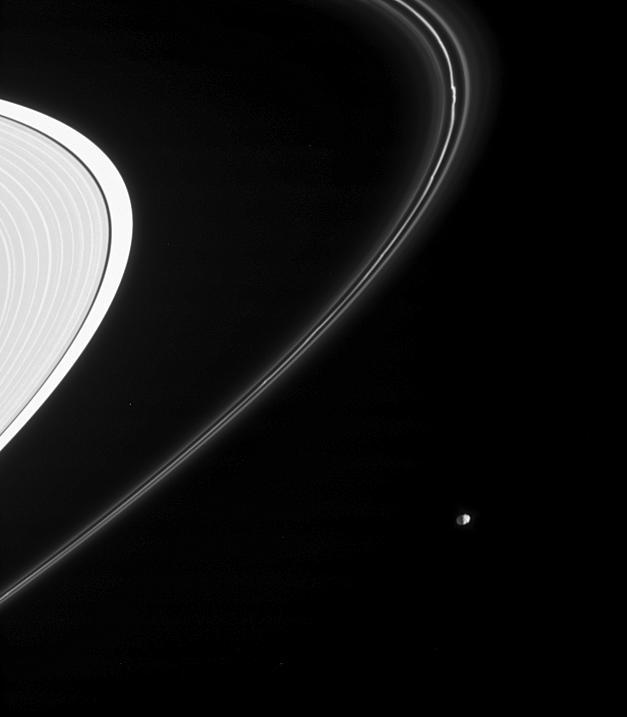
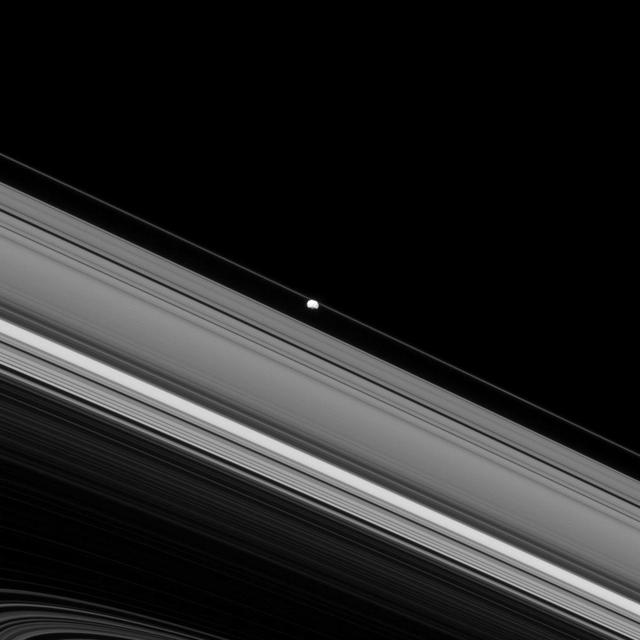
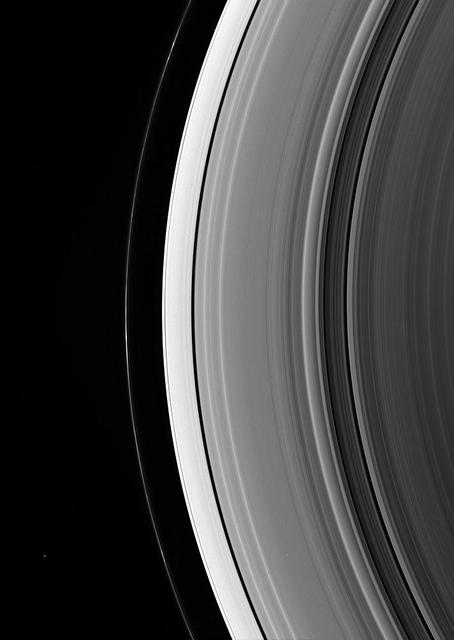
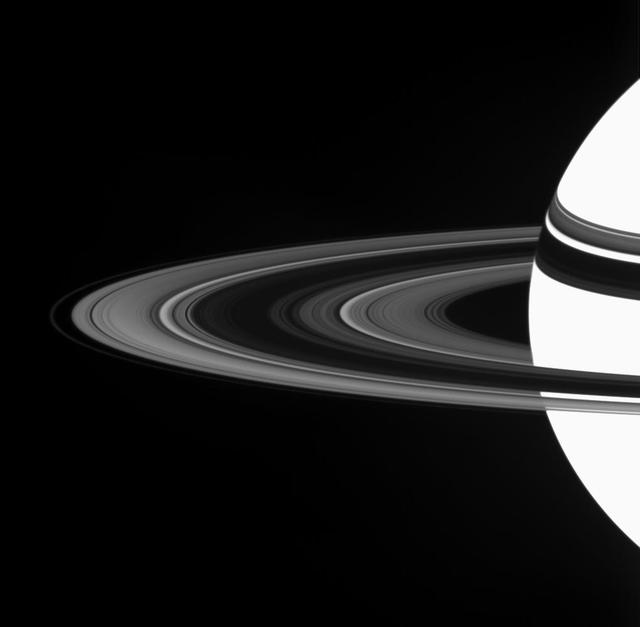
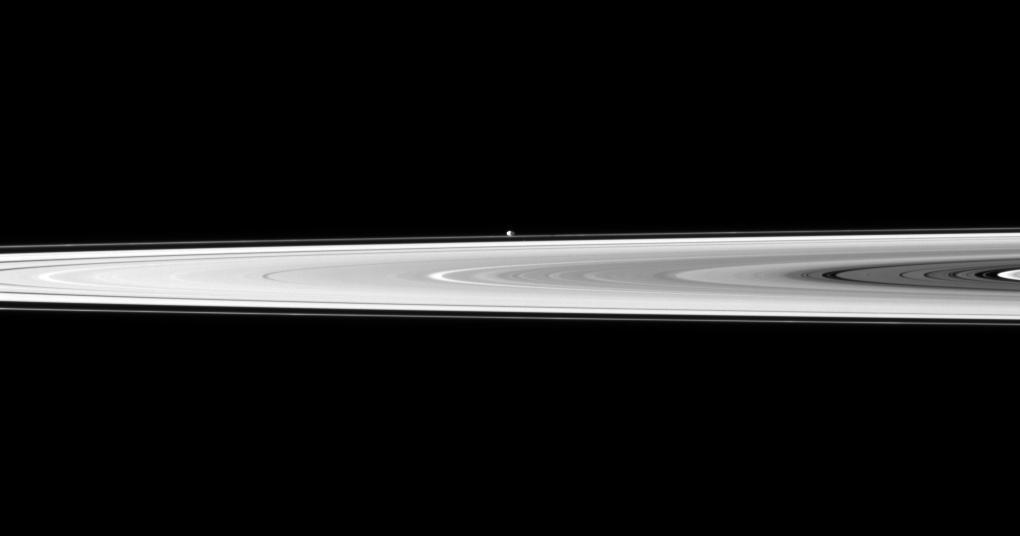
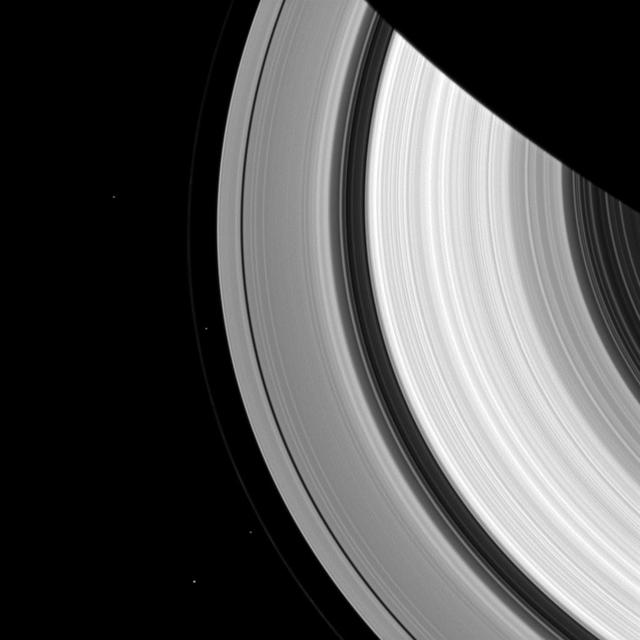
Epimetheus is a lonely dot beyond Saturn rings. The little moon appears at lower left, outside the narrow F ring. Several very faint spokes lurk in the B ring, at right
Epimetheus and the Dark Side
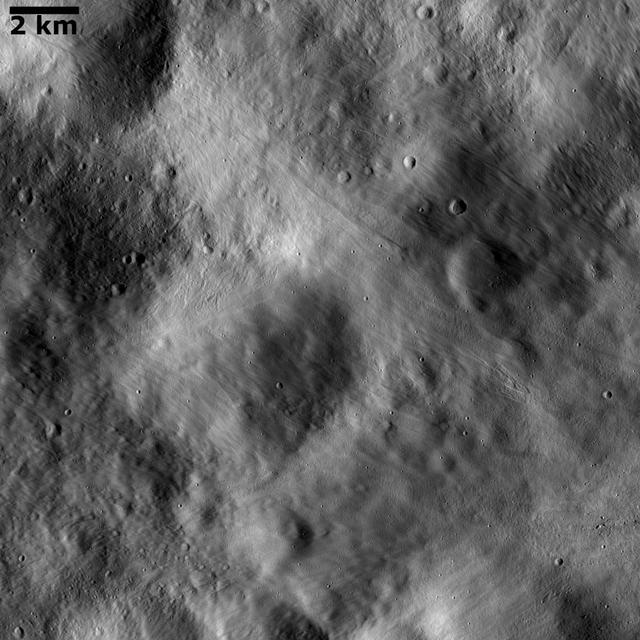
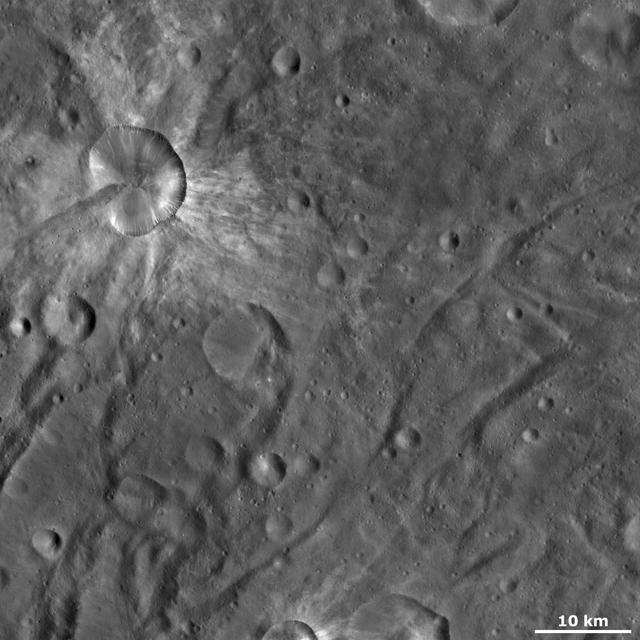
This image from NASA Dawn spacecraft shows impact ejecta deposits dominating asteroid Vesta landscape. This impact ejecta material was ejected from an impact crater located outside the imaged area.
Impact Ejecta Deposits Covering Underlying Topography
This graphic shows the different streams of charged particles inside the bubble around our sun and outside, in the unexplored territory of interstellar space. The heliosheath, where NASA two Voyager spacecraft are now traveling, is shown in red.
Streams of Charged Particles
This image captured by NASA Mars Reconnaissance Orbiter covers some high-standing topography just outside the rim of an impact crater about 30 kilometers 19 miles in diameter near a Martian hill named Zephyria Tholus.
Dust-Mantled Topography near Zephyria Tholus
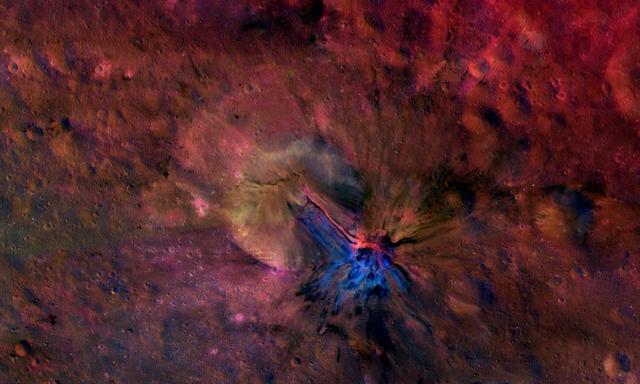
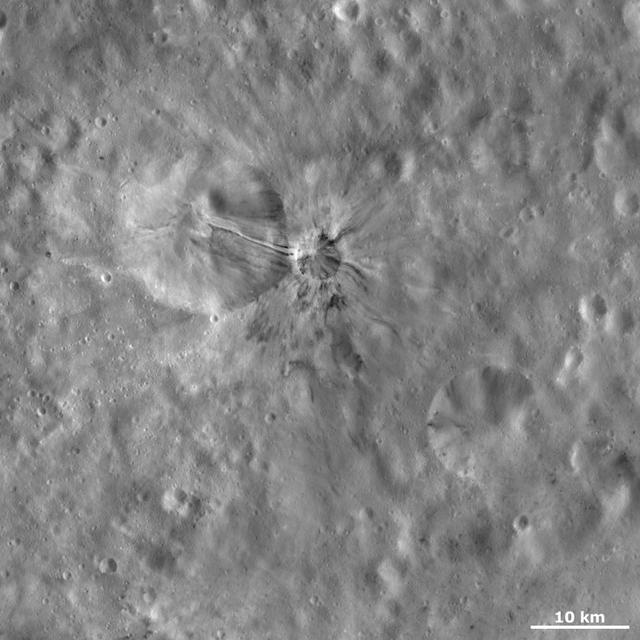
This colorful composite image from NASA Dawn mission shows the flow of material inside and outside a crater called Aelia on the giant asteroid Vesta. To the naked eye, these structures would not be seen. But here, they stand out in blue and red.
Flowing in, Flowing out of Aelia
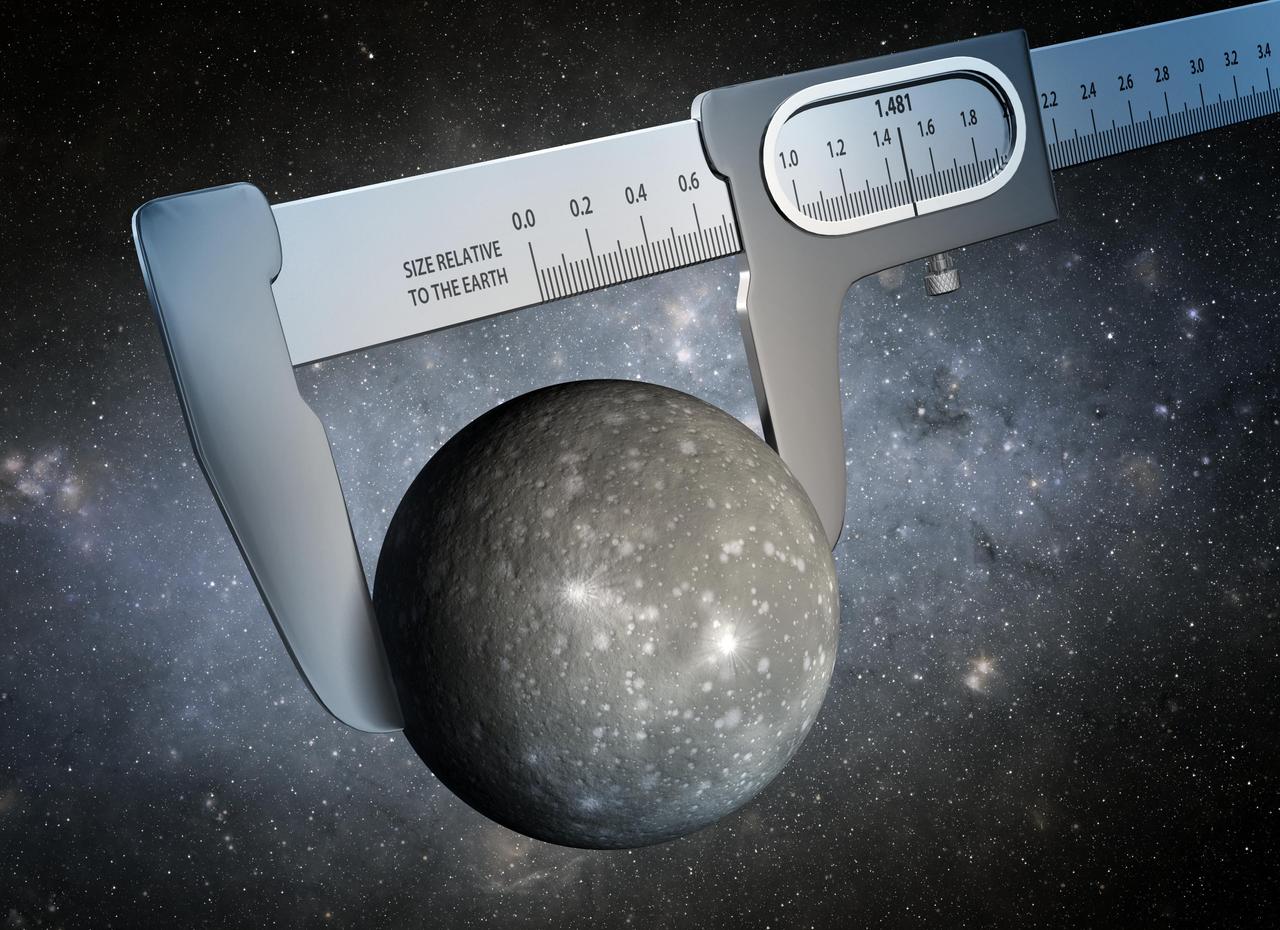
Using data from NASA Kepler and Spitzer Space Telescopes, scientists have made the most precise measurement ever of the size of a world outside our solar system, as illustrated in this artist conception.
Gauging an Alien World Size Artist Concept
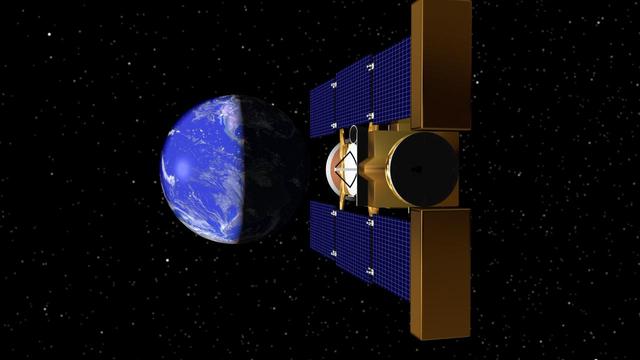
Artist rendering of NASA’s Stardust returning to Earth. Stardust is the first U.S. space mission dedicated to the exploration of a comet, and the first robotic mission designed to return extraterrestrial material from outside the orbit of the Moon.
Stardust Returns to Earth Artist Concept
Saturn A ring displays a marked asymmetry in brightness between the region nearer to the Cassini spacecraft and the region farther from it. The A ring is the broad, bright section of the rings outside of the dark B  ring
Difference on the Dark Side
The hills chaos in this image from NASA 2001 Mars Odyssey spacecraft are located between Stege Crater, just outside of the image to the northeast, and Maja Valles left side of image.
Chaos
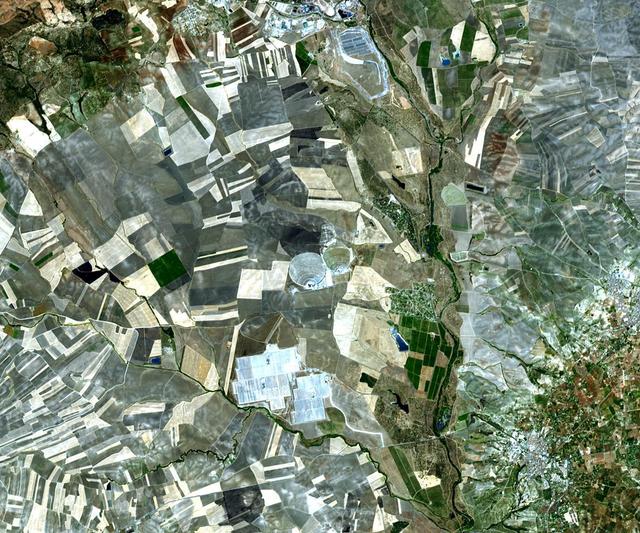
The world largest solar power tower recently began operating outside Seville, Spain -- and it marks a historic moment in the saga of renewable energy. This image was acquired by NASA Terra spacecraft.
Solar Power, Seville, Spain
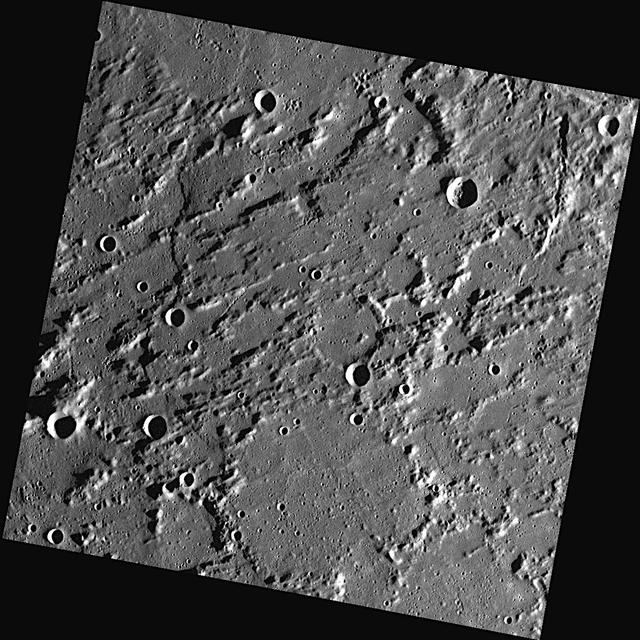
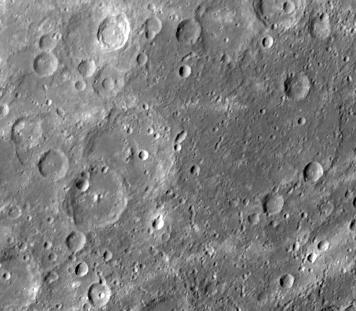
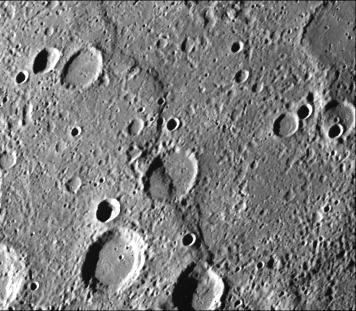
This image, from NASA Mariner 10 spacecraft which launched in 1974, shows intercrater plains and heavily cratered terrain typical of much of Mercury outside the area affected by the formation of the Caloris basin.
Intercrater Plains and Heavily Cratered Terrain
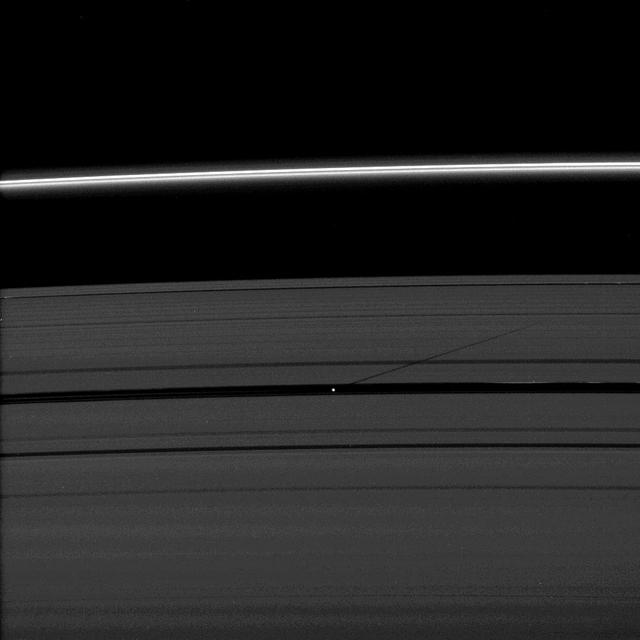
The tiny moon Pandora appears beyond the bright disk of Saturn rings in this image taken by NASA Cassini spacecraft. Pandora orbits outside the F ring and, in this image, is farther from Cassini than the rings are.
Beyond Bright Rings
Researchers have detected the first exomoon candidate -- a moon orbiting a planet that lies outside our solar system. Using a technique called microlensing, they observed what could be either a moon and a planet -- or a planet and a star.
Moon or Planet? The Exomoon Hunt Continues Artist Concept
Pandora and Prometheus, the shepherding moons of the F ring, orbit inside and outside the thin ring. The elongated, potato-like shapes of the two moons are both visible in this image taken by NASA Cassini spacecraft.
Potato Pair
This view of the unlit side of Saturn rings captures the small shepherd moon Pandora as it swings around the outside of the F ring. The F ring displays a few discrete bright clumps here
One Shepherd Moon
The highest elevations of Mt. Sharp are just outside this image to the east. In the center of this image from NASA Mars Odyssey spacecraft is a channel, indicating that fluids played a part in eroding Mt. Sharp.
Images of Gale #15
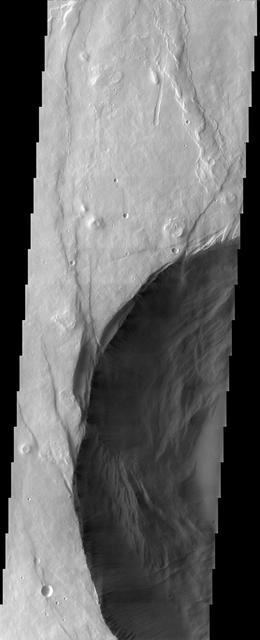
Pavonis Mons is the middle of the three large volcanoes on the Tharsis bulge. This image from NASA Mars Odyssey spacecraft covers the edge of the volcano caldera. Outside of the caldera, numerous lava flows and impact craters can be seen.
Pavonis Mons Caldera
Intercrater plains and heavily cratered terrain typical of much of Mercury outside the area affected by the formation of the Caloris basin are shown in this image taken during the NASA Mariner 10 first encounter with Mercury in 1974.
Intercrater Plains and Heavily Cratered Terrain - First Encounter
This is a 3-D version of the first 360-degree view from NASA Mars Exploration Rover Opportunity position outside Eagle Crater. 3D glasses are necessary to view this image.
Looking Back at Eagle Crater3-D
These artist concepts show some of the best known objects found outside Neptune orbit. Included are Pluto and fellow plutinos, Kuiper Belt Objects, and an Oort Cloud object.
Transneptunian Object Sizes Artist Concept
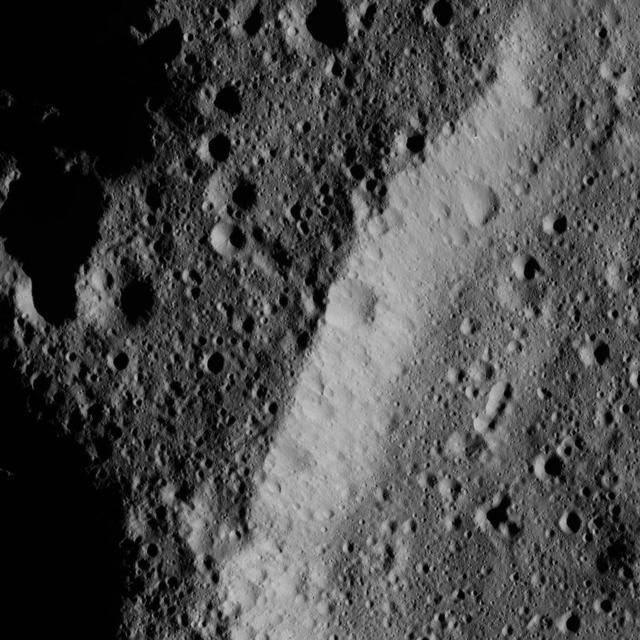
This image, taken by NASA Dawn spacecraft, shows the heavily cratered rim of an older, unnamed impact feature on Ceres. The crater density is almost the same inside and outside, and its wall is also quite battered by impacts.
Dawn LAMO Image 24
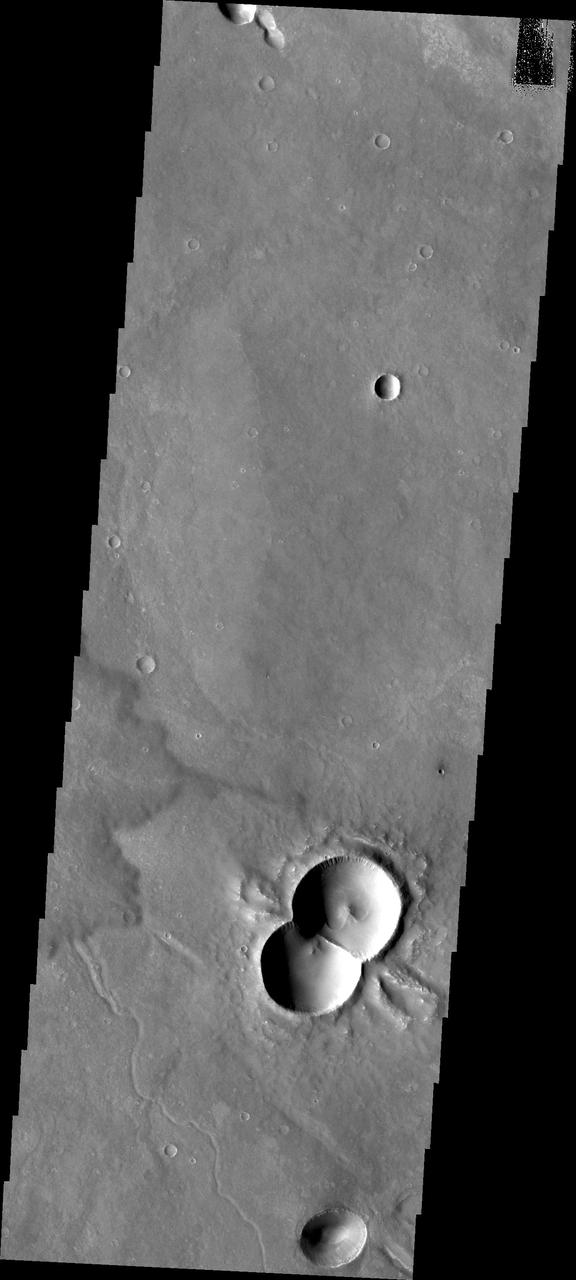
This doublet crater was formed when two meteorites impacted at the same time. The shock waves interact to form the straight central rim and the wings of ejecta on the outside of the rims. This image is from NASA Mars Odyssey.
Doublet Crater
This image from NASA Dawn spacecraft of asteroid Vesta shows Canuleia crater, a large, irregularly shaped crater. Other interesting features of Canuleia include the diffuse bright material that is both inside and outside of its rim.
Canuleia Crater
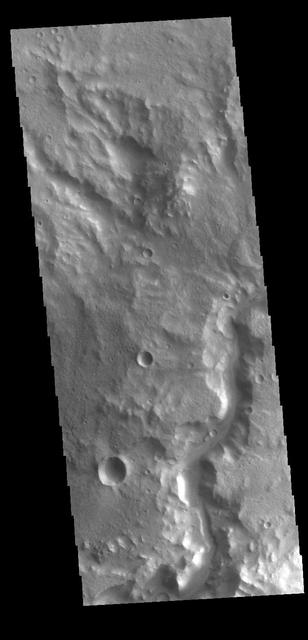
This VIS image shows an unnamed channel in Terra Cimmeria. The channel is located immediately outside of the rim of Knobel Crater.  Orbit Number: 77674 Latitude: -5.54225 Longitude: 132.393 Instrument: VIS Captured: 2019-06-18 23:37  https://photojournal.jpl.nasa.gov/catalog/PIA23365
Terra Cimmeria Channel
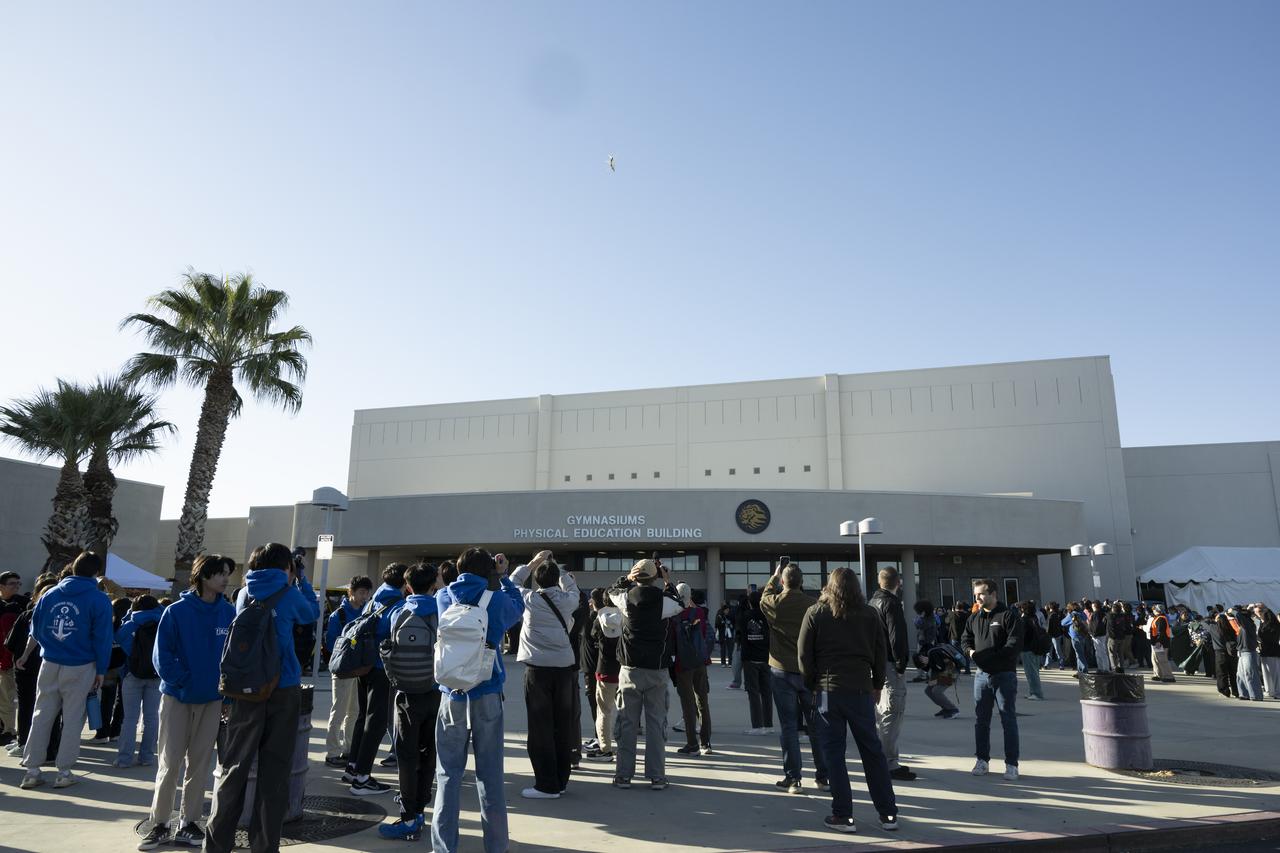
A group of attendees to the 2025 Aerospace Valley FIRST Robotics Competition gather outside Eastside High School’s gymnasium in Lancaster, California, to watch an F/A-18 from NASA’s Armstrong Flight Research Center, in Edwards, California, fly over the school to kick off the competition, on April 3, 2025.
NASA Supports Next Generation of Innovators at Robotics Competition
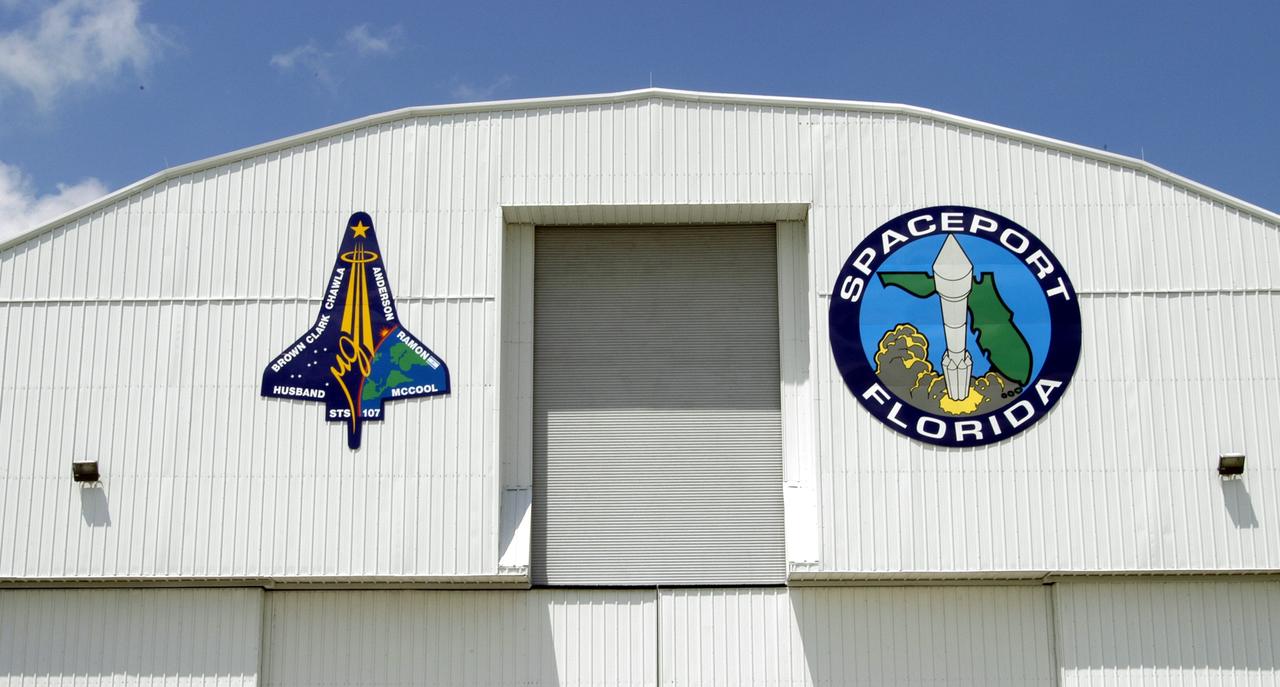
KENNEDY SPACE CENTER, FLA. - The mission patch for STS-107 is displayed, left, on the outside of the RLV Hangar at KSC. The hangar is the site of the Columbia Reconstruction Project, where pieces of debris from Columbia are being collected and identified as part of the mishap investigation.
KENNEDY SPACE CENTER, FLA.  -  A replica of a Space Shuttle orbiter is on exhibit outside the Astronaut Hall of Fame, which features the world’s largest collection of personal astronaut mementos plus historic spacecrafts and training simulators.  The Hall of Fame is part of the KSC Visitor Complex.
KENNEDY SPACE CENTER, FLA. - A replica of a Space Shuttle orbiter is on exhibit outside the Astronaut Hall of Fame, which features the world’s largest collection of personal astronaut mementos plus historic spacecrafts and training simulators. The Hall of Fame is part of the KSC Visitor Complex.
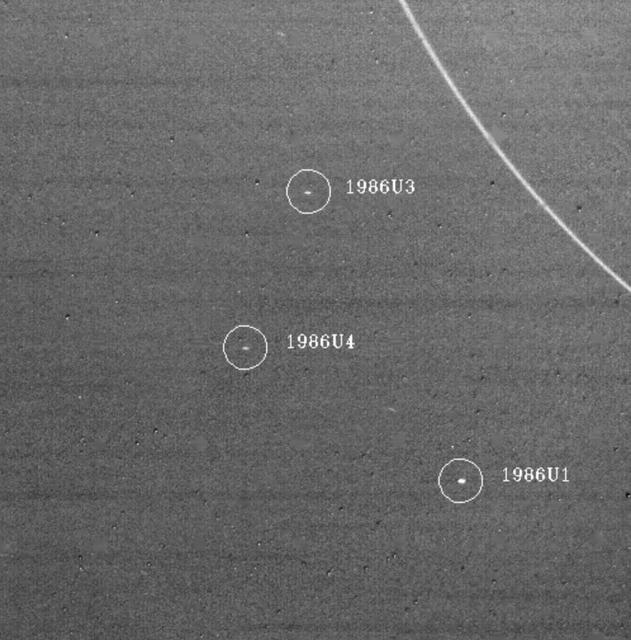
On Jan. 18, 1986, NASA Voyager 2 discoverd three Uranus satellites. All three lie outside the orbits of Uranus nine known rings, the outermost of which, the epsilon ring, is seen at upper right.   http://photojournal.jpl.nasa.gov/catalog/PIA00368
Uranus Satellites
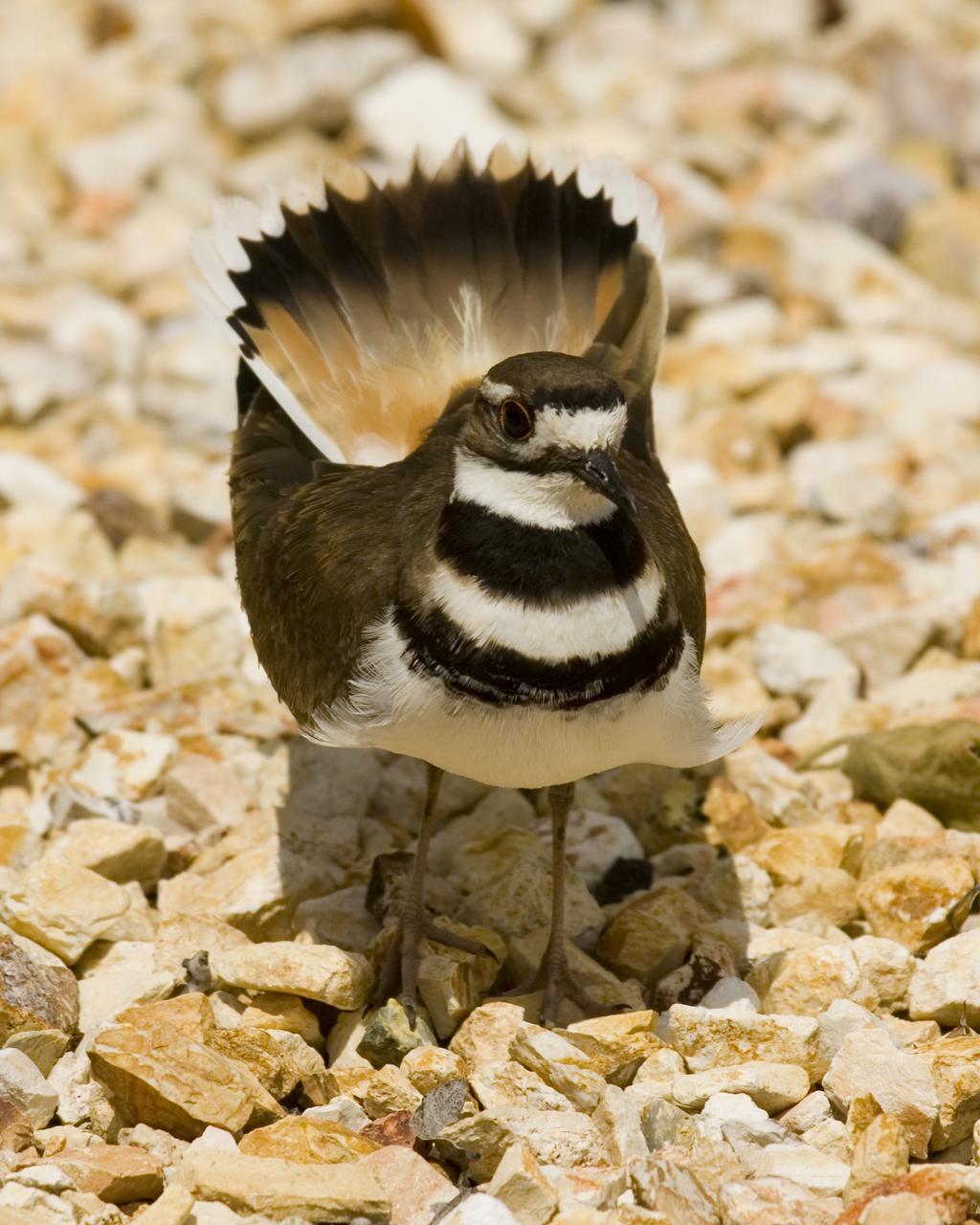
Nesting Killdeer and their chicks outside N-201 (near walkway)
ARC-2007-ACD07-0080-002
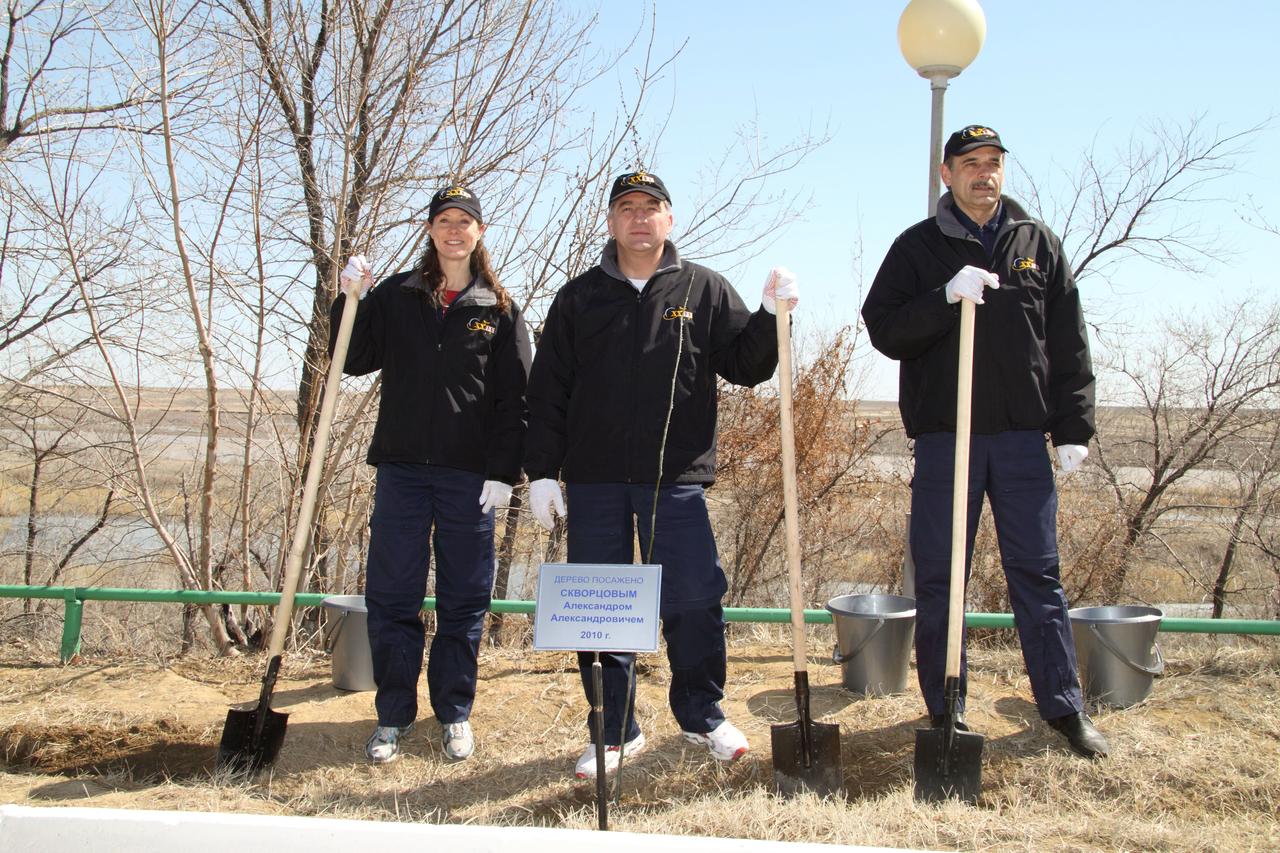
crew paticipating in traditional tree planting outside Cosmonaut hotel
Expedition 23
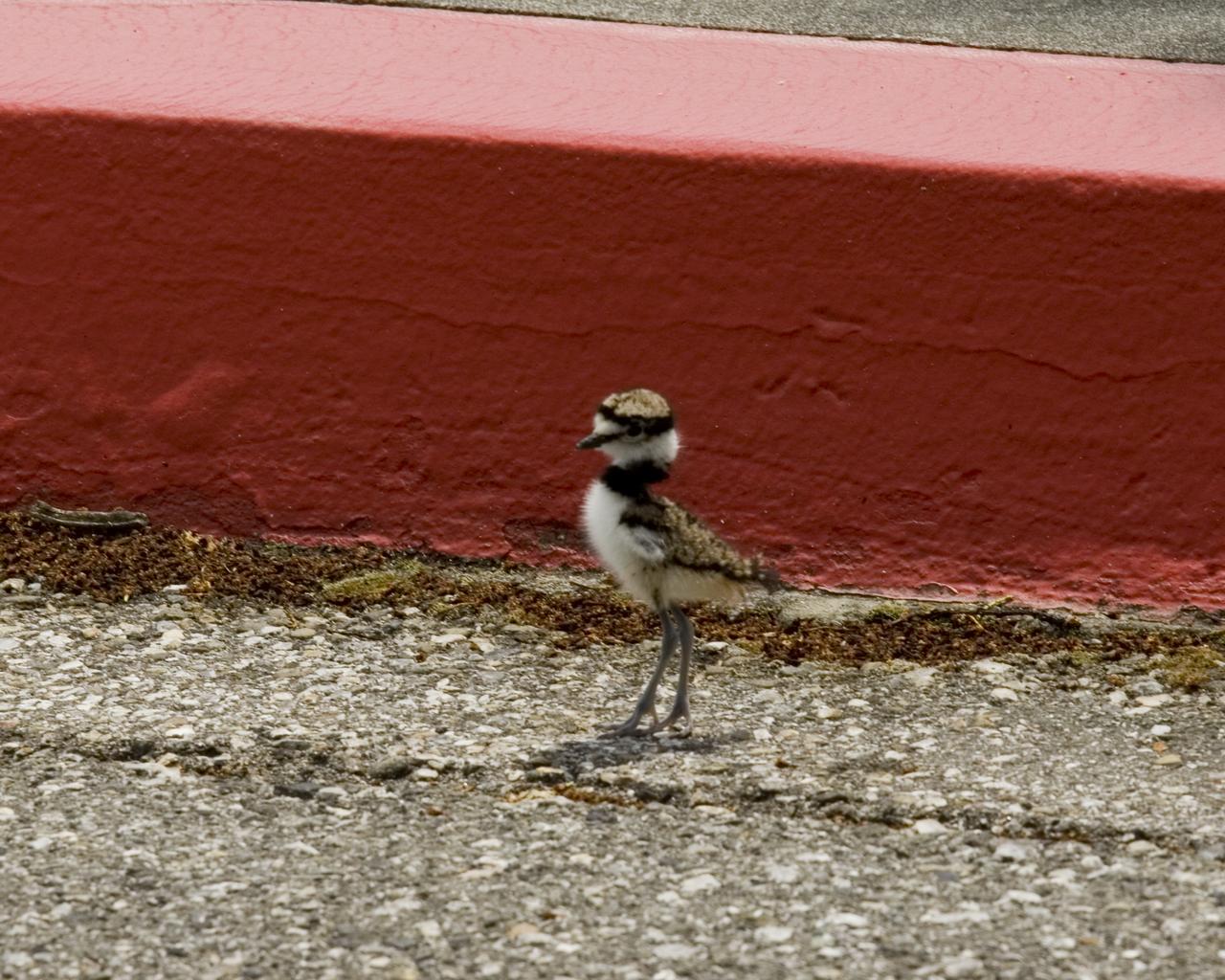
Nesting Killdeer and their chicks outside N-201 (near walkway)
ARC-2007-ACD07-0080-005
IOP/SS Prototype Testing outside the VAB for Artemis II.
Artemis II Rainbird Testing
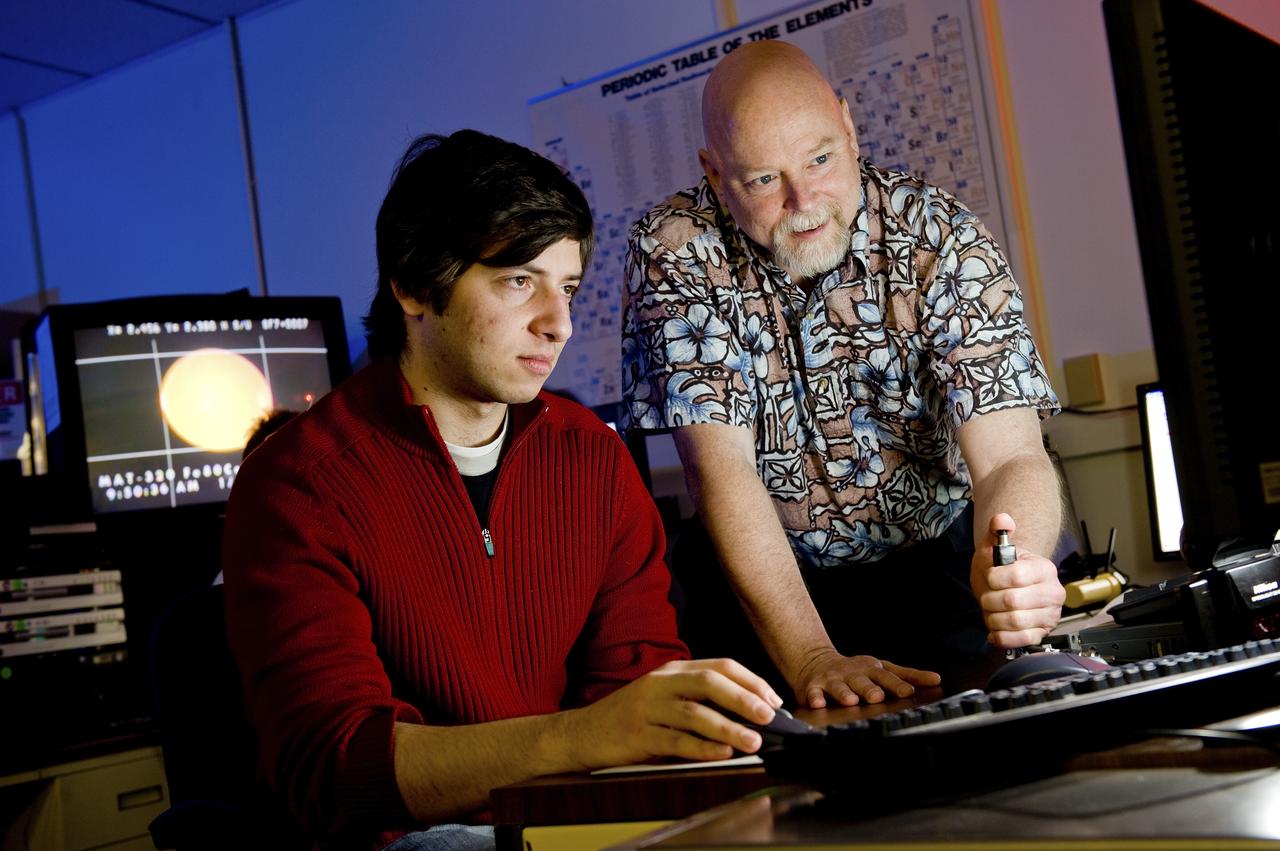
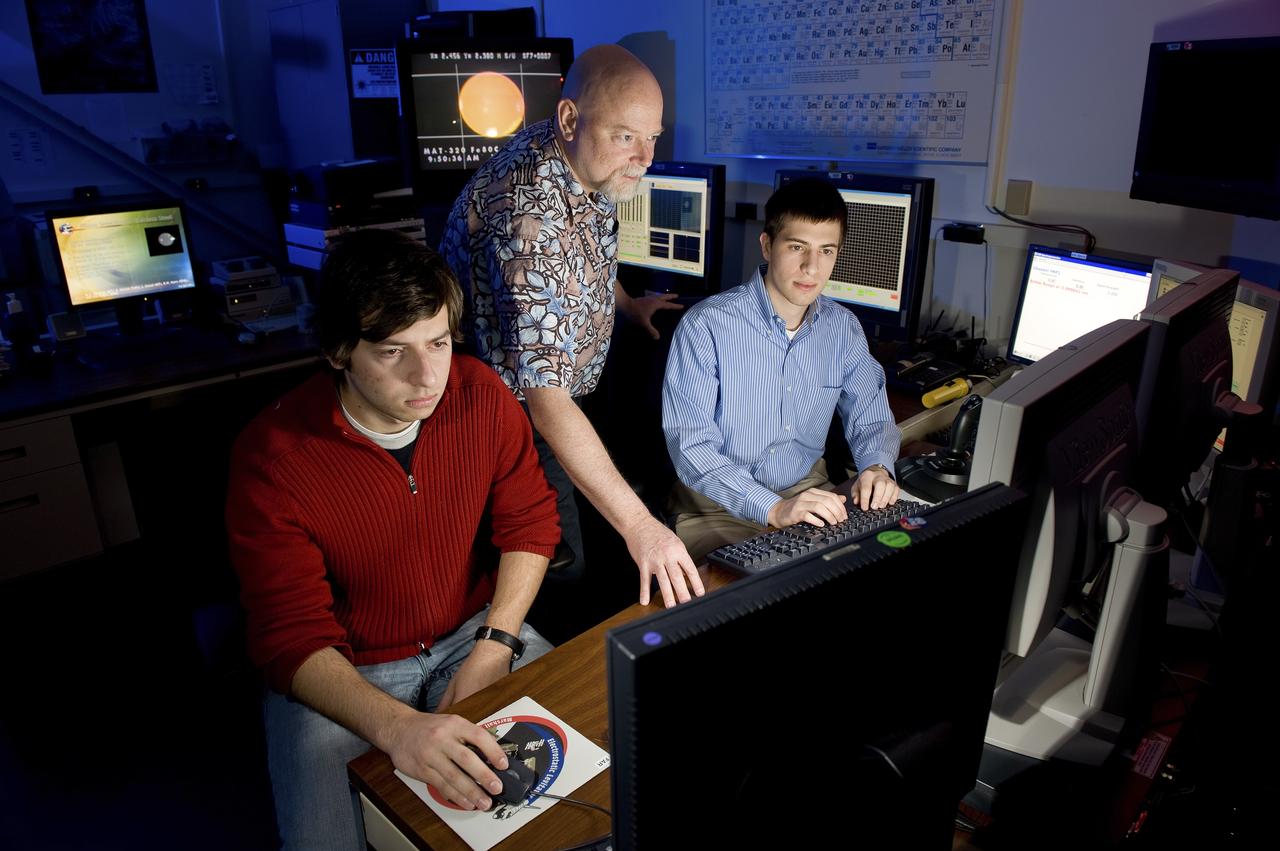
PAUL CHOUFANI AND PROFESSOR DOUGLAS MATSON AT THE CONTROLS OUTSIDE OF THE ELECTROSTATIC LEVITATOR
1000038
This illustration shows the position of NASA's Voyager 1 and Voyager 2 probes, outside of the heliosphere, a protective bubble created by the Sun that extends well past the orbit of Pluto. Voyager 1 crossed the heliopause, or the edge of the heliosphere, in August 2012. Heading in a different direction, Voyager 2 crossed another part of the heliopause in November 2018.  https://photojournal.jpl.nasa.gov/catalog/PIA22835
Two Interstellar Travelers
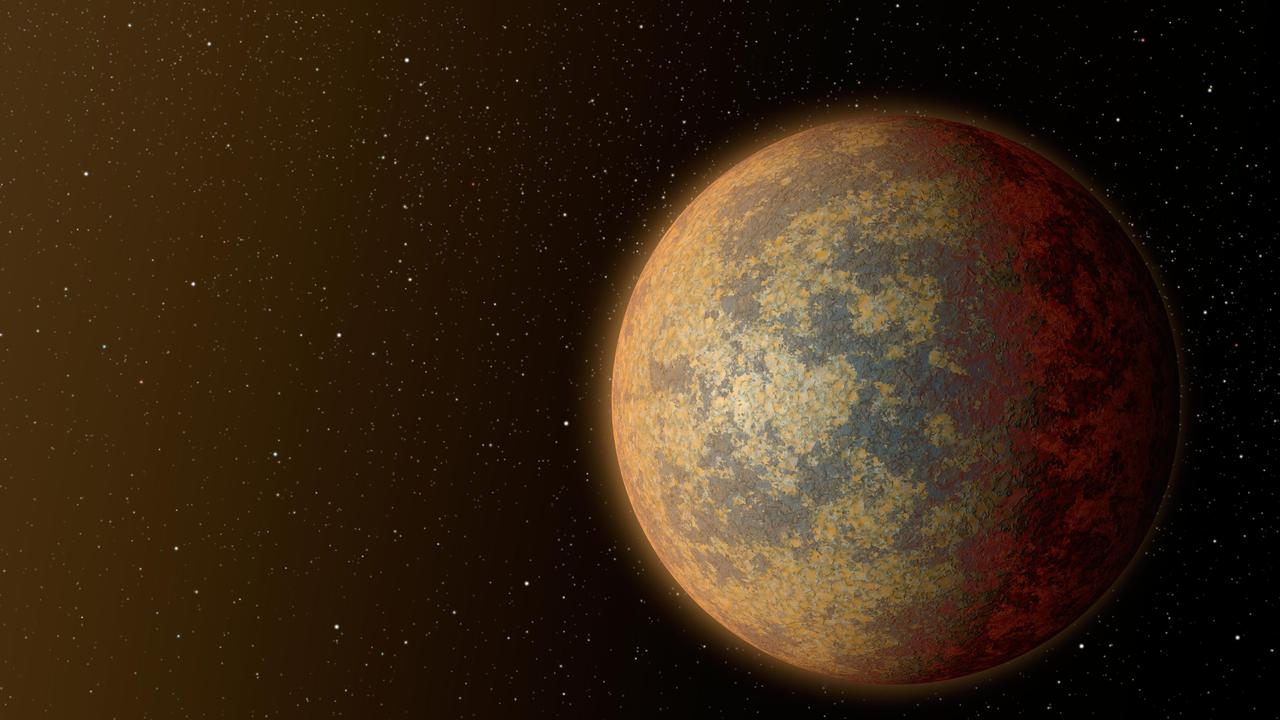
This artist's rendition shows one possible appearance for the planet HD 219134b, the nearest confirmed rocky exoplanet found to date outside our solar system. The planet is 1.6 times the size of Earth, and whips around its star in just three days. Scientists predict that the scorching-hot planet -- known to be rocky through measurements of its mass and size -- would have a rocky, partially molten surface with geological activity, including possibly volcanoes.  http://photojournal.jpl.nasa.gov/catalog/PIA19833
Hot, Rocky World Artist Concept
This image from NASA Dawn spacecraft of asteroid Vesta shows Aelia crater with a larger, more degraded crater to the left. Dark and bright material crops out from Aelia rim and slumps towards its center extending in rays outside the crater rim.
Aelia Crater
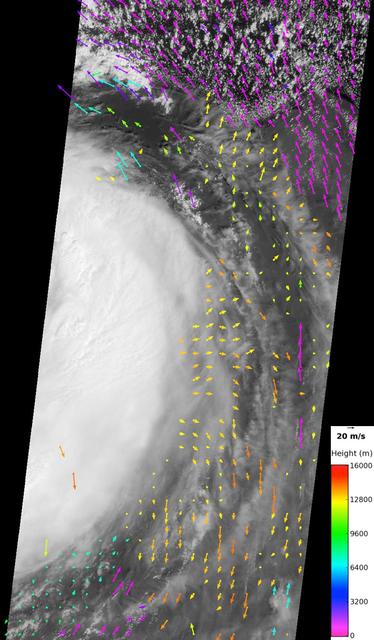
NASA Terra spacecraft recorded low-level wind speeds of up to 75 miles per hour 65 knots from cloud motion observed outside Tropical Storm Isaac eye. The spacecraft flew over Isaac a few hours before Isaac was upgraded to a Category 1 hurricane.
NASA Spacecraft Image Shows Isaac Inflow and Outflow
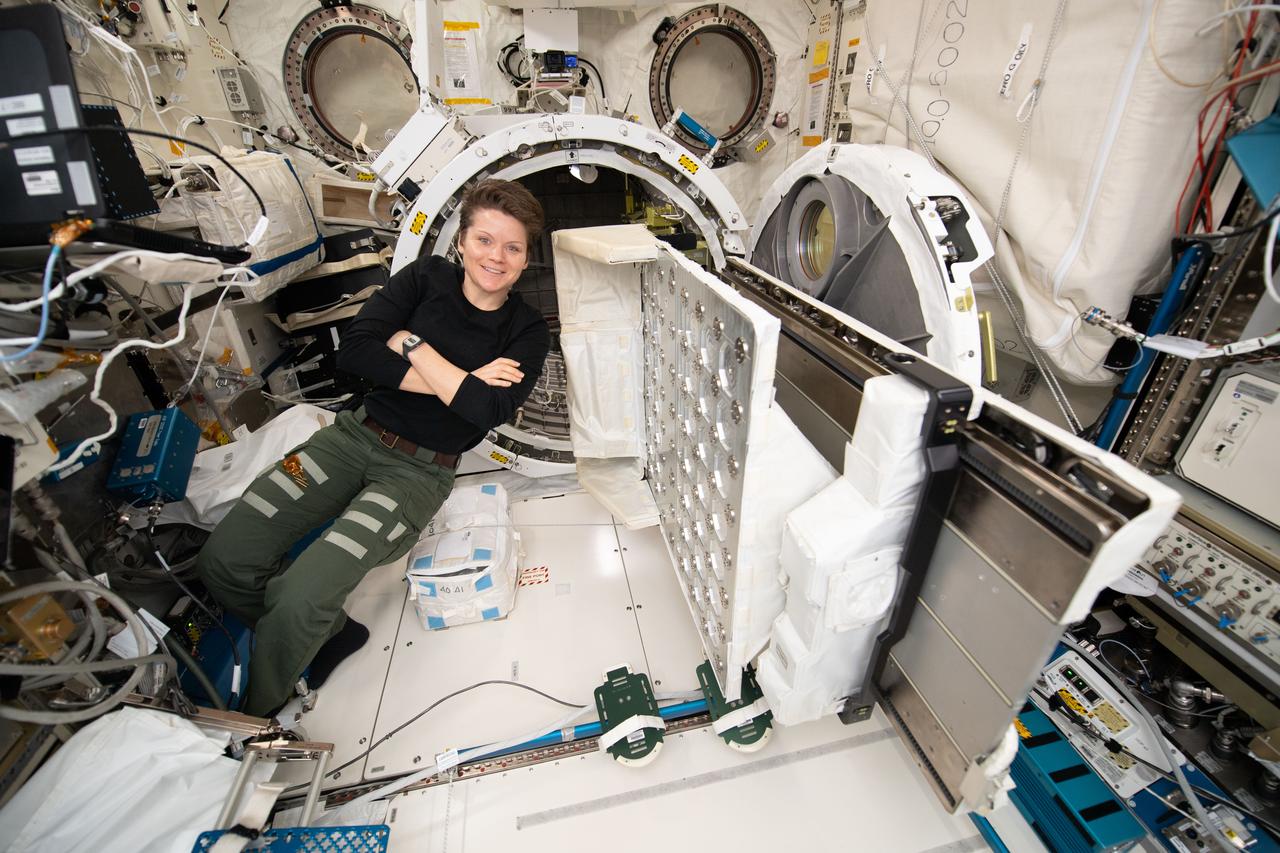
iss058e007370 (Jan. 29, 2019) --- NASA astronaut and Expedition 58 Flight Engineer Anne McClain works inside Japan's Kibo laboratory module. She was setting up and installing small satellite deployment hardware inside Kibo's airlock to eject a set of CubeSats outside the Japanese module.
NASA Astronaut Anne McClain Conducts Space Science and Station Maintenance
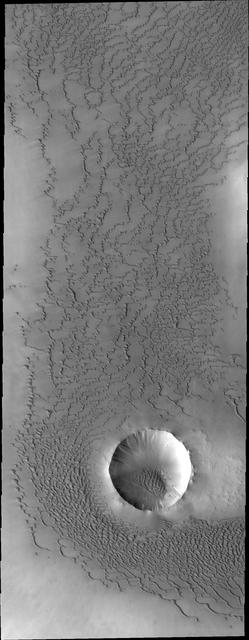
This image from NASA 2001 Mars Odyssey captures an unnamed crater with the interior sand sheet and the dunes outside of it are part of the southern margin of Abalos Undae, a dune field near the north polar cap. Small gullies are located on the interior
Abalos Undae
Two pairs of moons make a rare joint appearance. The F ring shepherd moons, Prometheus and Pandora, appear just inside and outside of the F ring the thin faint ring furthest from Saturn as seen by NASA Cassini spacecraft.
Four Moons
A CREW INSTALLS A NEW EARTH SCIENCE RECEIVING SATELLITE ANTENNA OUTSIDE MARSHALL SPACE FLIGHT CENTER'S ACTIVITIES BUILDING 4316
SETTING A NEW SATELLITE RECEIVING ANTENNA
A CREW INSTALLS A NEW EARTH SCIENCE RECEIVING SATELLITE ANTENNA OUTSIDE MARSHALL SPACE FLIGHT CENTER'S ACTIVITIES BUILDING 4316
SETTING A NEW SATELLITE RECEIVING ANTENNA
PHIL SUMRALL POSES FOR A PORTRAIT OUTSIDE OF BUILDING 4203 BESIDE OF THE VON BRAUN BUST
1100312
F/A-18 (F-18) outside the 80x120ft w.t. inlet (it will be loaded in the tunnel for testing)
ARC-1989-AC90-0001-8
A CREW INSTALLS A NEW EARTH SCIENCE RECEIVING SATELLITE ANTENNA OUTSIDE MARSHALL SPACE FLIGHT CENTER'S ACTIVITIES BUILDING 4316
SETTING A NEW SATELLITE RECEIVING ANTENNA
PAUL CHOUFANI, PROFESSOR DOUGLAS MATSON, AND MATTHEW SHERMAN AT THE CONTROLS OUTSIDE OF THE ELECTROSTATIC LEVITATOR.
1000039
A CREW INSTALLS A NEW EARTH SCIENCE RECEIVING SATELLITE ANTENNA OUTSIDE MARSHALL SPACE FLIGHT CENTER'S ACTIVITIES BUILDING 4316
SETTING A NEW SATELLITE RECEIVING ANTENNA
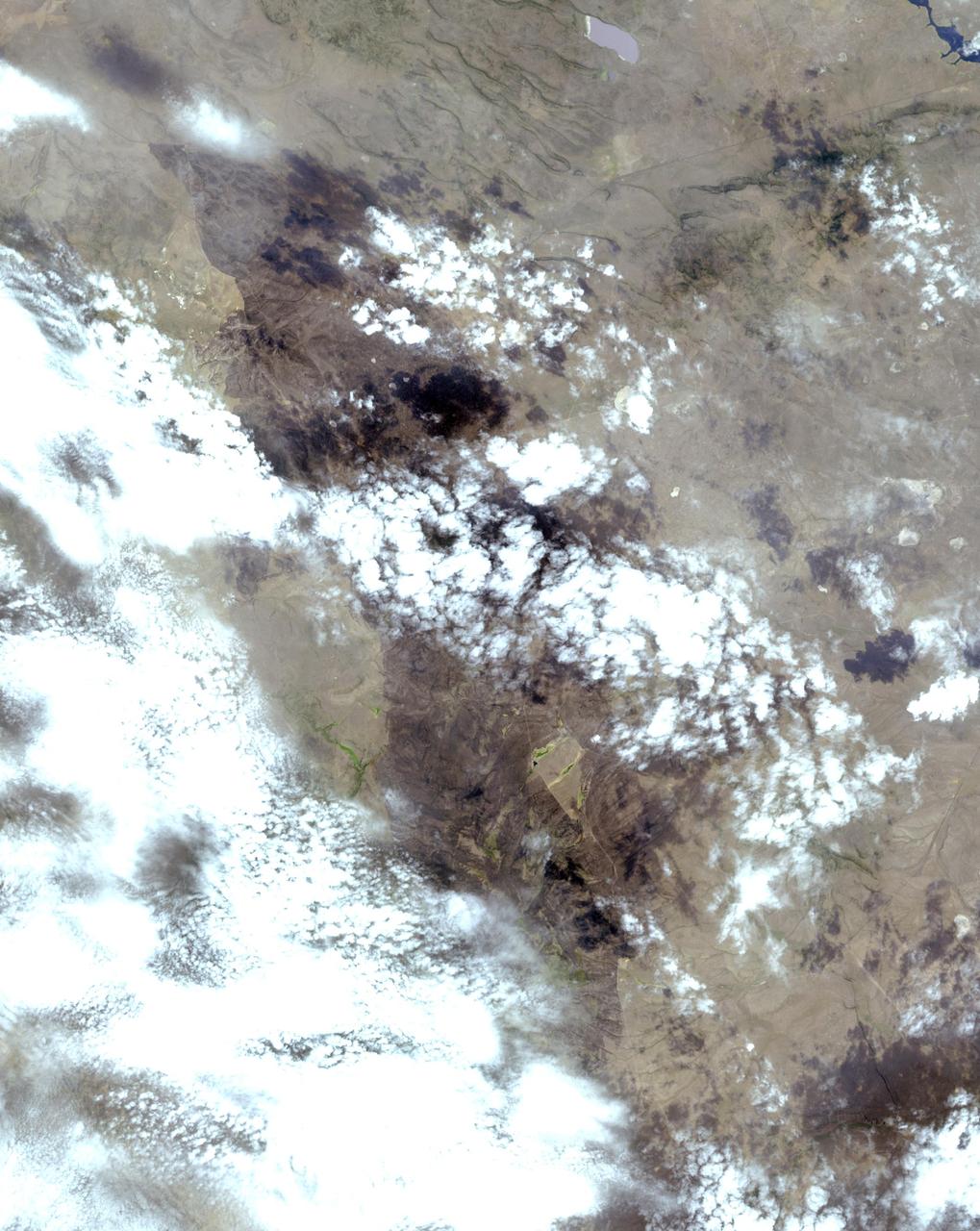
In early August 2017, the Cinder Butte fire burned 9 miles (15 kilometers) outside of the town of Riley, Oregon, and consumed more than 82 square miles (53,000 acres) of forest and brushland. The fire threatened tribal archaeological sites with strong significance to the Burns Paiute and Klamath tribes. Firefighters were able to contain the fire before it could damage the historic sites. On the image, the burned area is gray-brown, and cloud shadows are dark gray-to-black. The image was acquired Aug. 23, 2017, covers an area of 20 by 25 miles (31.5 by 39.9 kilometers), and is located at 43.5 degrees north, 119.9 degrees west.  https://photojournal.jpl.nasa.gov/catalog/PIA21879
Oregon Wildfire Captured in NASA Satellite Image
Although large gullies (ravines) are concentrated at higher latitudes, there are gullies on steep slopes in equatorial regions, as seen in this image captured by NASA's Mars Reconnaissance Orbiter (MRO).  The colors of the gully deposits match the colors of the eroded source materials. Krupac is a relatively young impact crater, but exposes ancient bedrock. Krupac Crater also hosts some of the most impressive recurring slope lineae (RSL) on equatorial Mars outside of Valles Marineris.  https://photojournal.jpl.nasa.gov/catalog/PIA21605
Colorful Equatorial Gullies in Krupac Crater
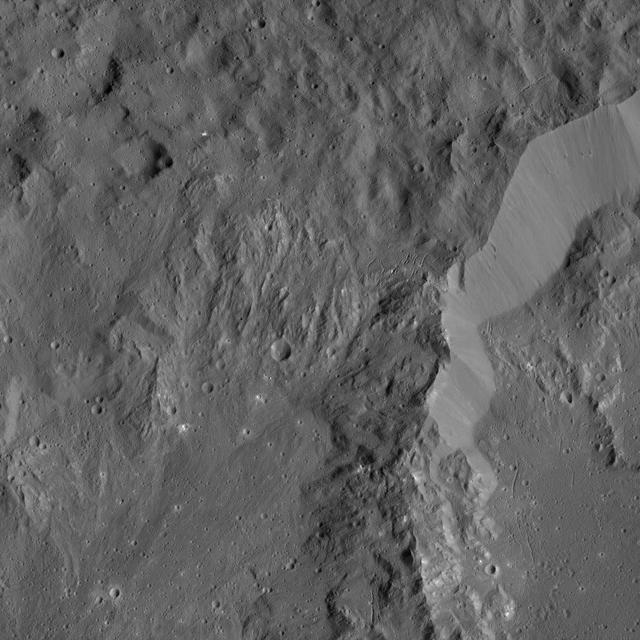
This image shows the rim of Ikapati Crater on Ceres, which lies in the dwarf planet northern hemisphere. Groupings of roughly parallel, narrow, linear fractures can be seen inside and outside the crater.  NASA's Dawn spacecraft took this image on April 18, 2016, from its low-altitude mapping orbit, at a distance of about 240 miles (385 kilometers) above the surface. The image resolution is 120 feet (35 meters) per pixel.   http://photojournal.jpl.nasa.gov/catalog/PIA20819
Dawn LAMO Image 119
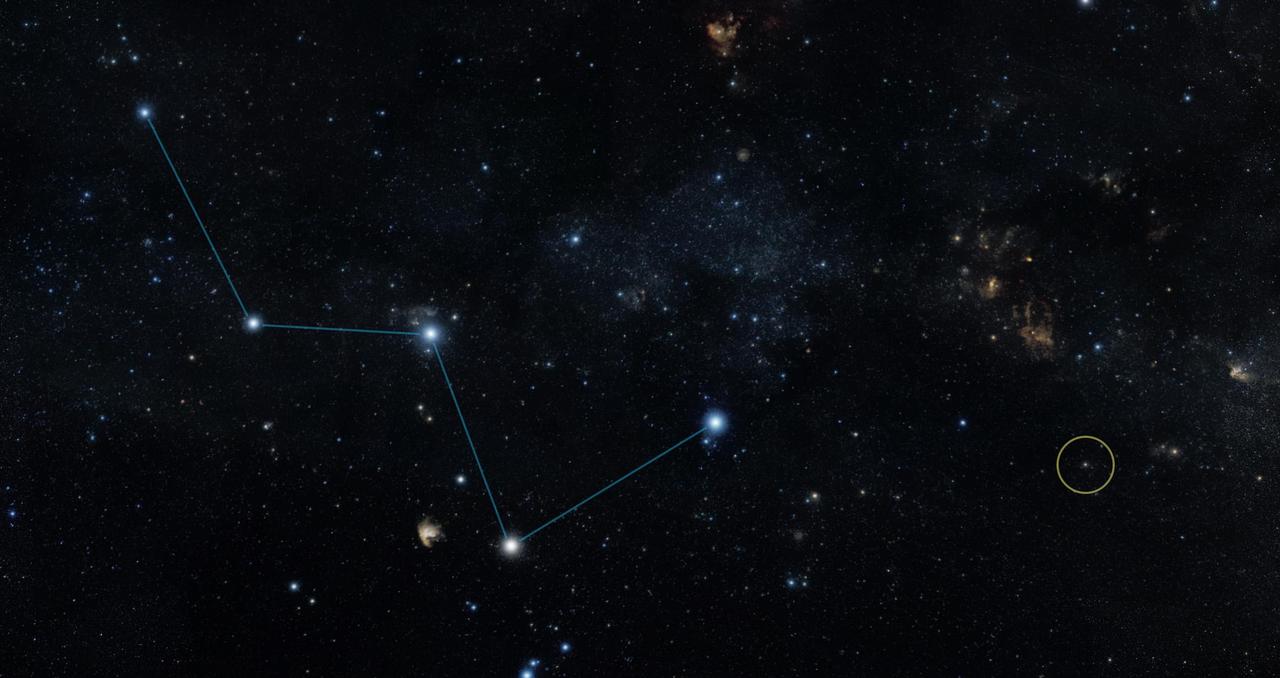
This sky map shows the location of the star HD 219134 (circle), host to the nearest confirmed rocky planet found to date outside of our solar system. The star lies just off the "W" shape of the constellation Cassiopeia and can be seen with the naked eye in dark skies. It actually has multiple planets, none of which are habitable.  http://photojournal.jpl.nasa.gov/catalog/PIA19832
Location of Nearest Rocky Exoplanet Known
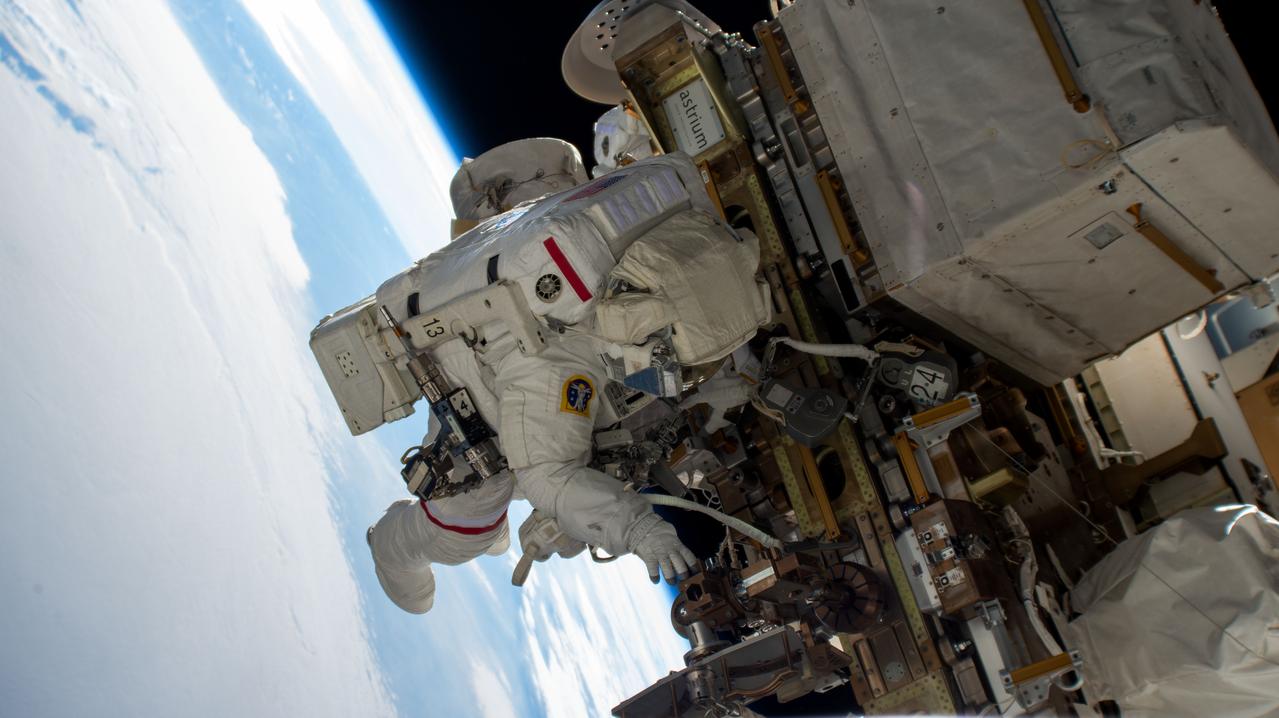
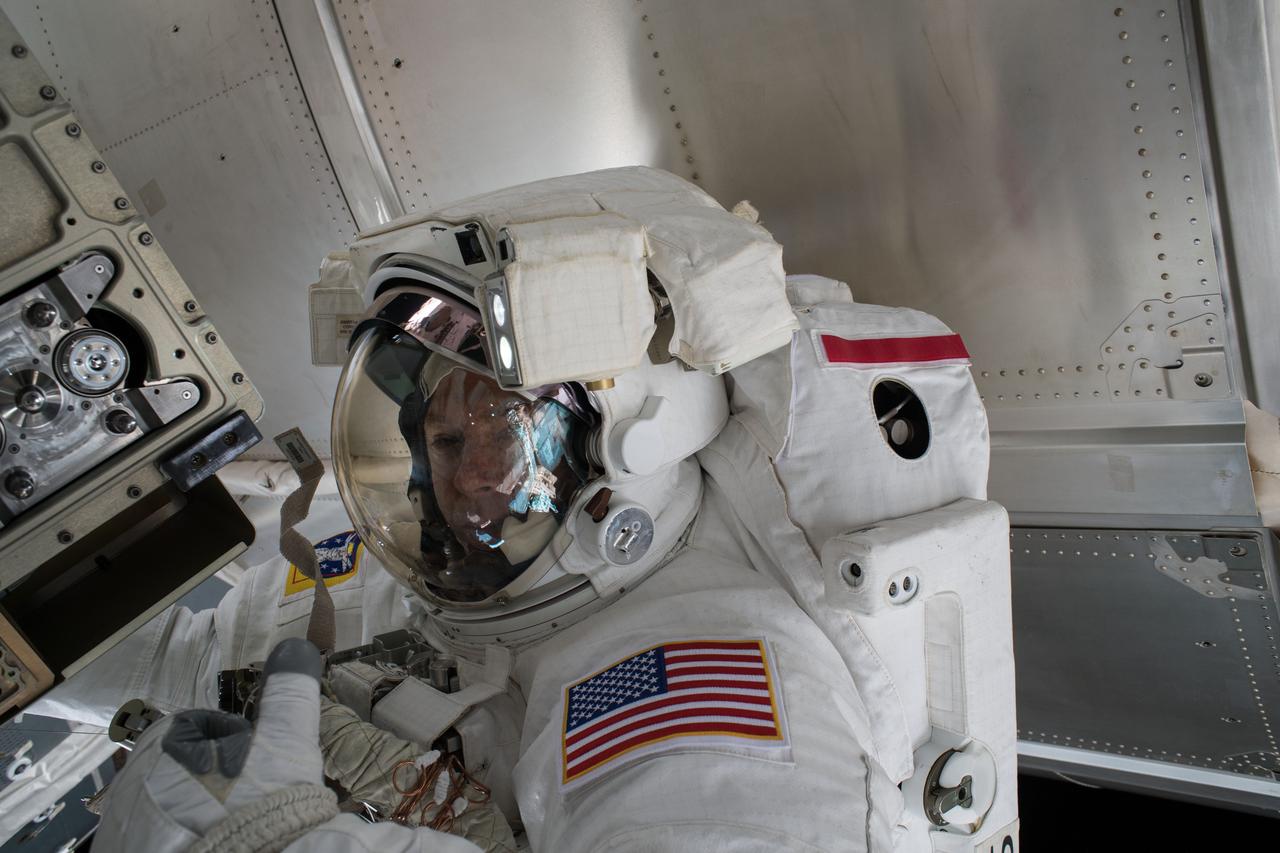
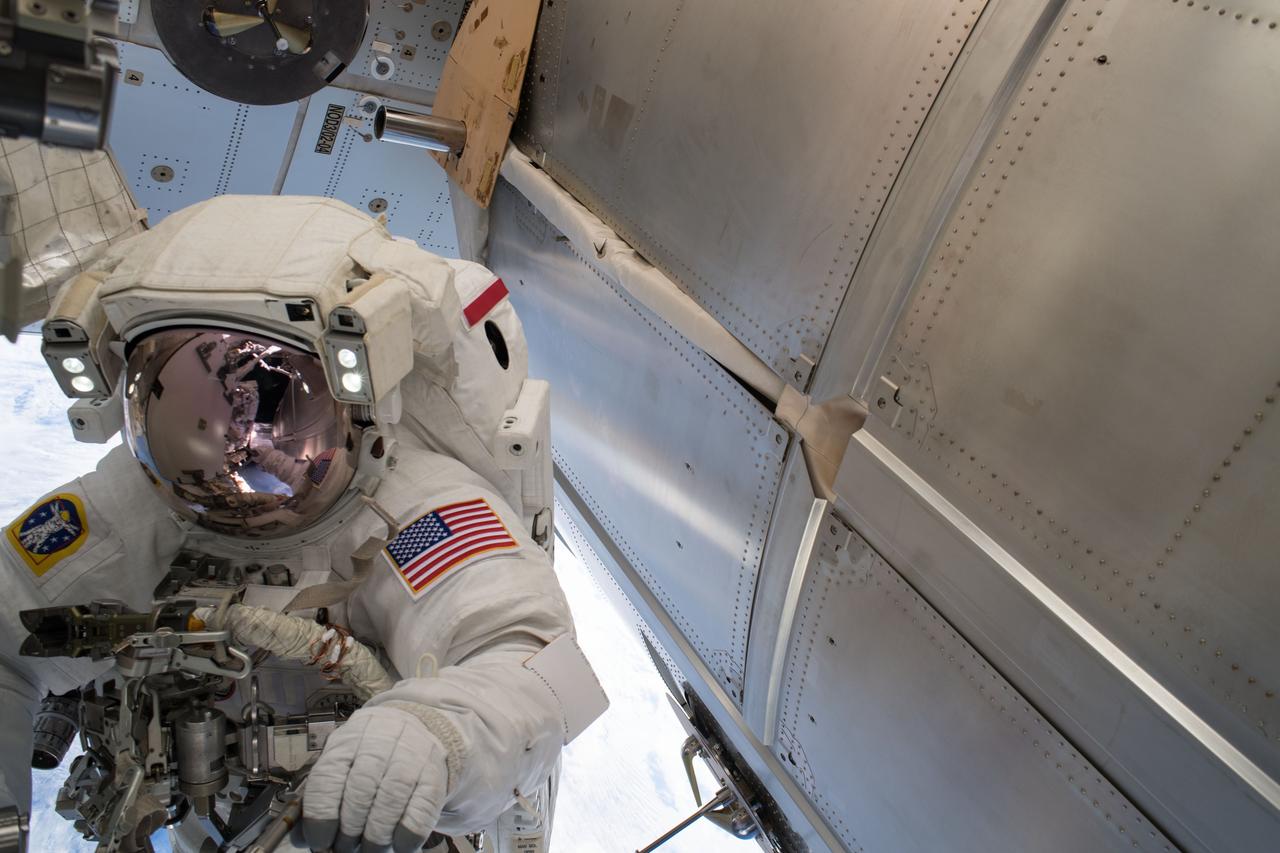
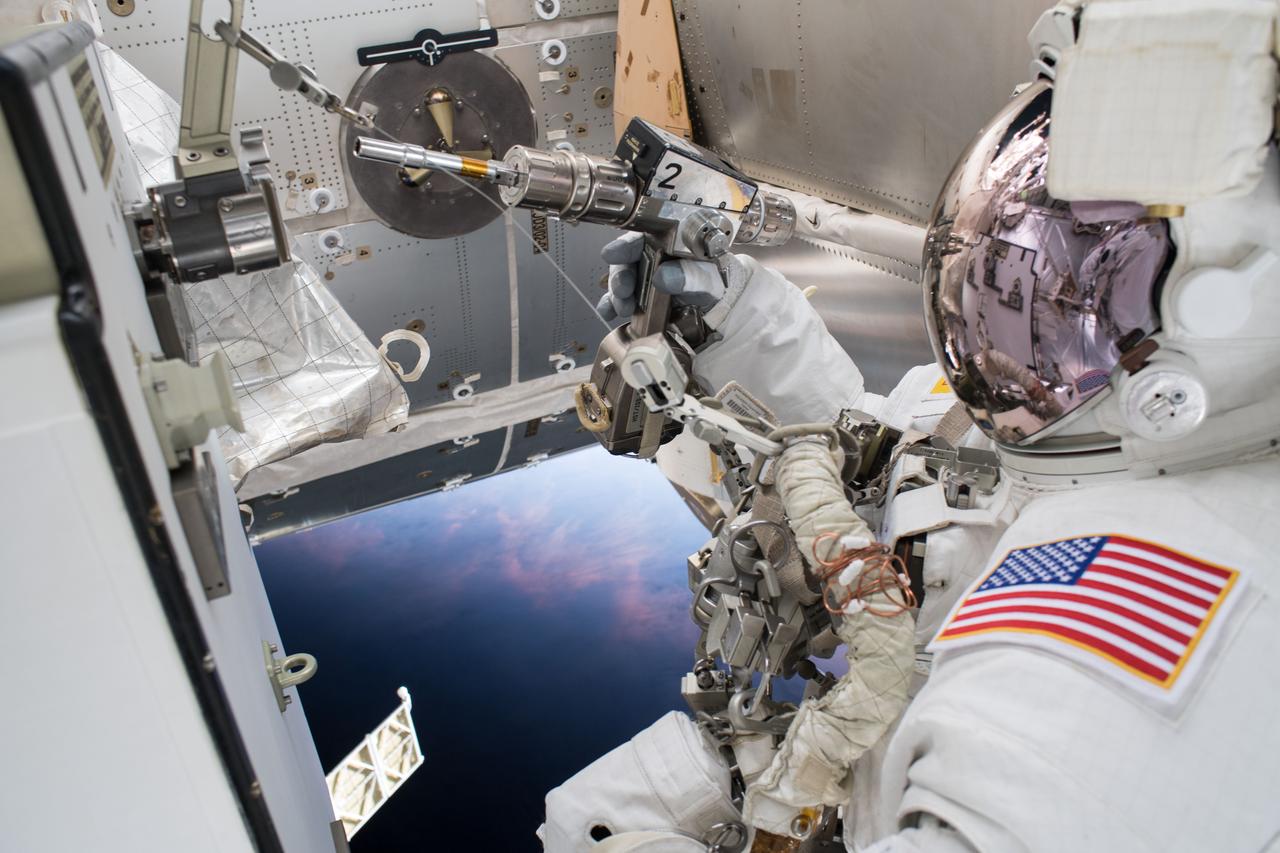
iss055e071501 (May 16, 2018) --- Astronaut Drew Feustel is pictured outside of the International Space Station during a spacewalk on May 16 to swap thermal control gear.
iss055e071501
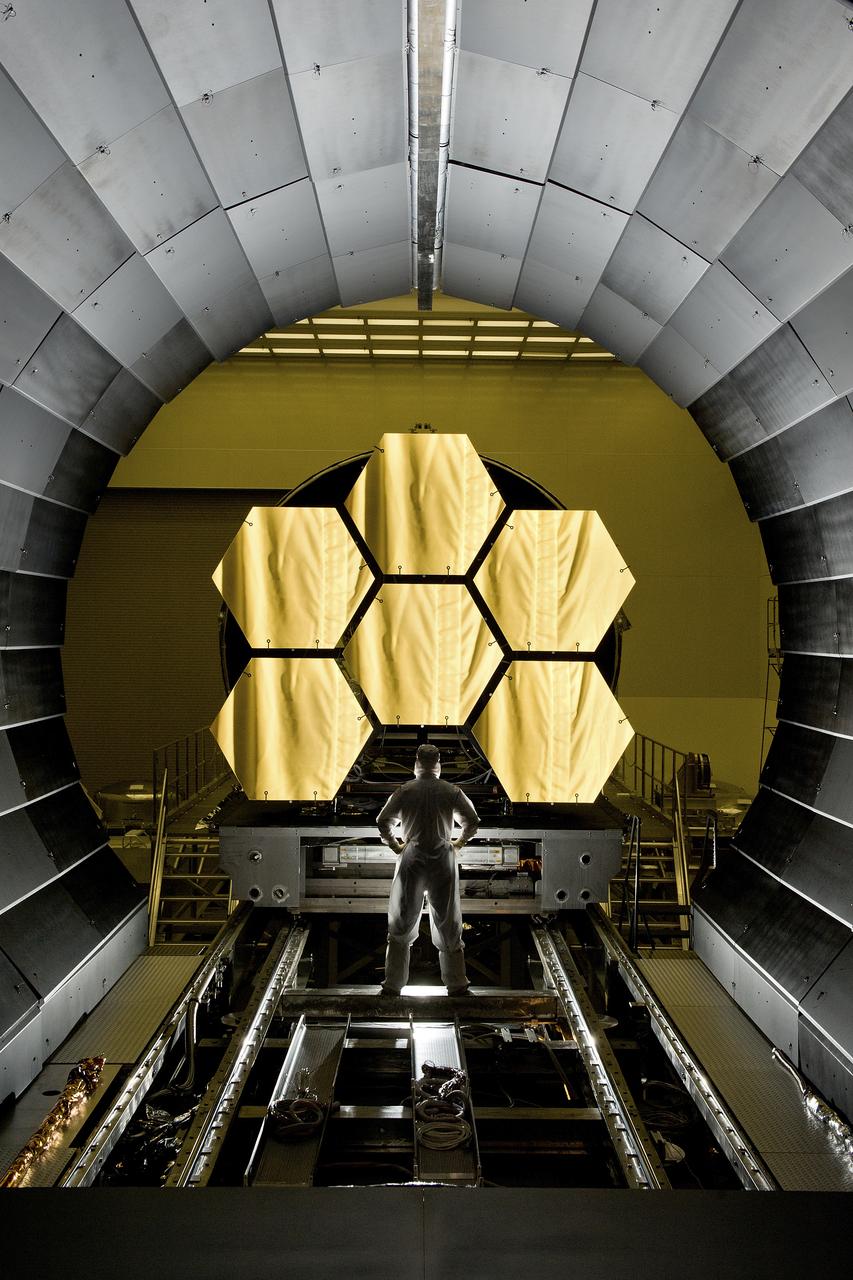
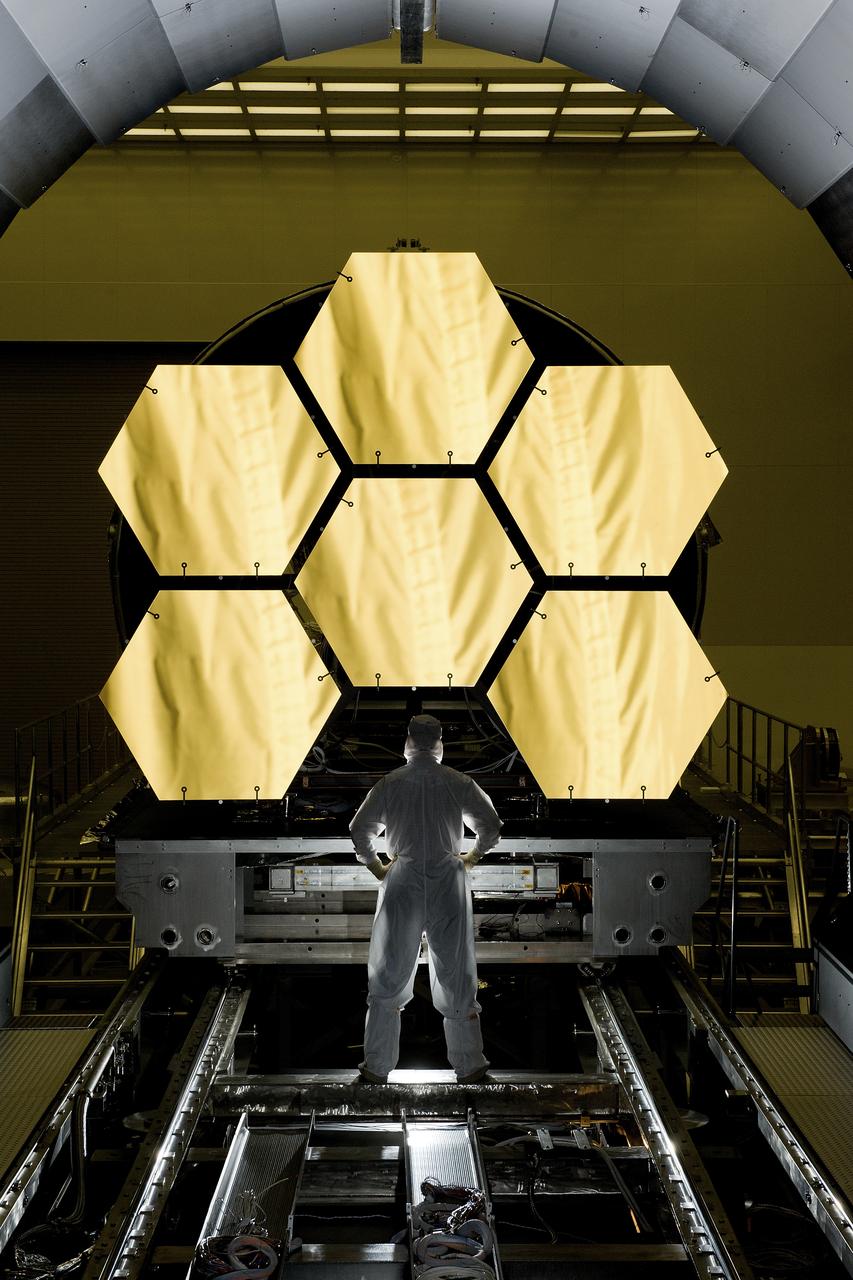
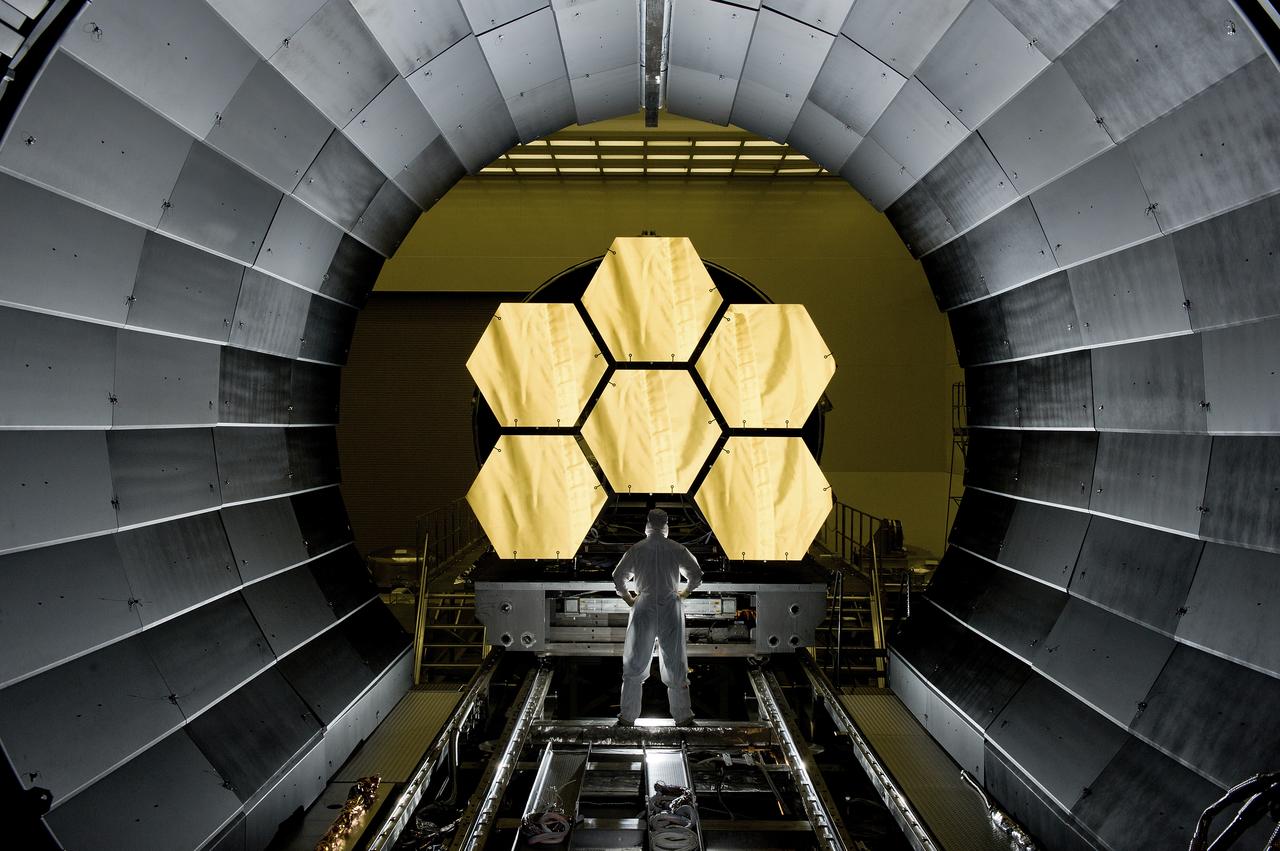
ERNIE WRIGHT STANDS NEAR THE JAMES WEBB SPACE TELESCOPE MIRRORS AS THEY SIT JUST OUTSIDE THE TESTING CHAMBER IN THE XRAY CALIBRATION FACILITY AT MSFC
1100655
ERNIE WRIGHT STANDS NEAR THE JAMES WEBB SPACE TELESCOPE MIRRORS AS THEY SIT JUST OUTSIDE THE TESTING CHAMBER IN THE XRAY CALIBRATION FACILITY AT MSFC
1100654
iss055e071438 (May 16, 2018) --- Astronaut Drew Feustel is pictured outside of the Tranquility module during a spacewalk on May 16 to swap thermal control gear.
iss055e071438
Chris Kemp, NASA Ames CIO in the security Operations Center (inside and outside of N-254 SOC and on Segway in front of the N-254 building sign
ARC-2009-ACD09-0182-003
ERNIE WRIGHT STANDS NEAR THE JAMES WEBB SPACE TELESCOPE MIRRORS AS THEY SIT JUST OUTSIDE THE TESTING CHAMBER IN THE XRAY CALIBRATION FACILITY AT MSFC
1100653
iss055e071458 (May 16, 2018) --- Astronaut Drew Feustel is pictured outside of the International Space Station during a spacewalk on May 16 to swap thermal control gear.
iss055e071458
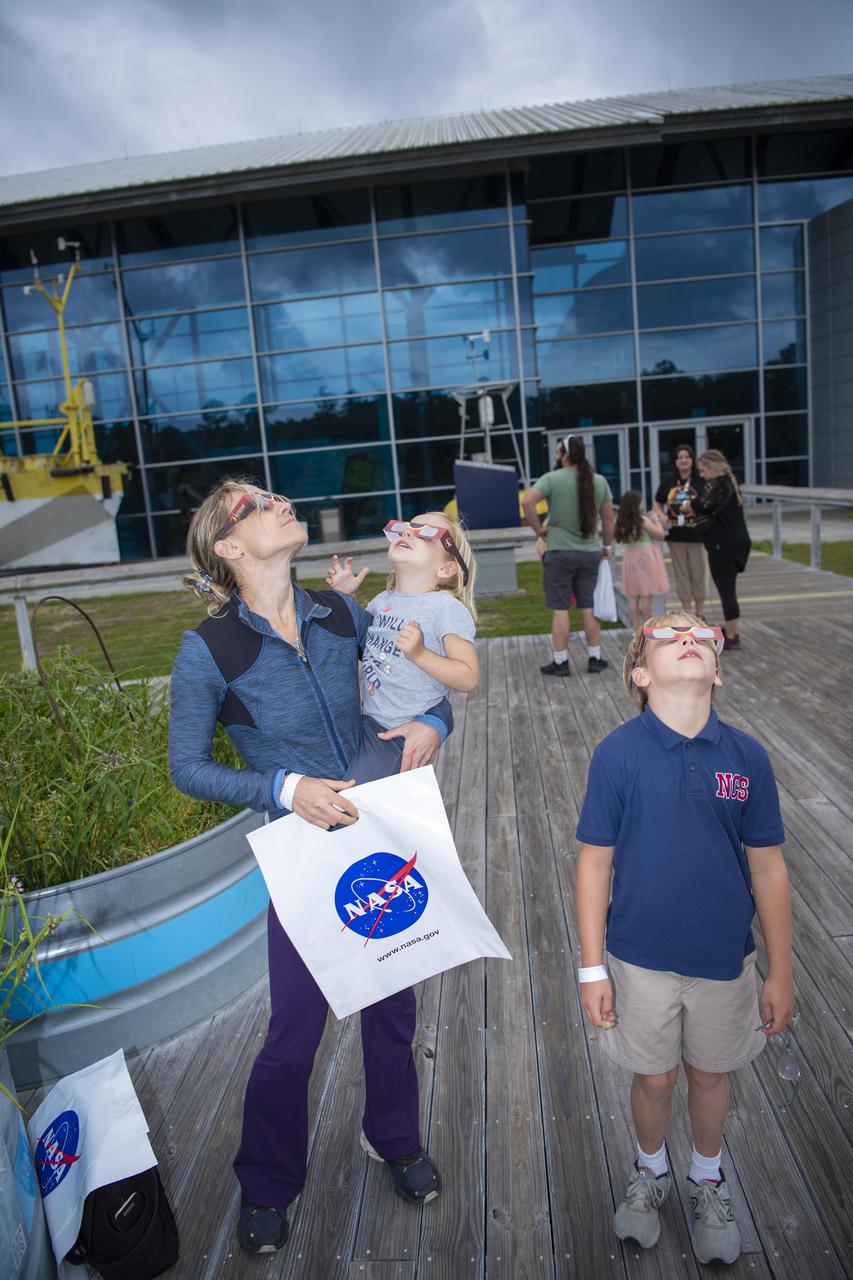
A family looks to the skies for the eclipse outside of INFINITY Science Center, the official visitor center of NASA’s Stennis Space Center, on April 8.
NASA Stennis Participates in NASA Eclipse Events
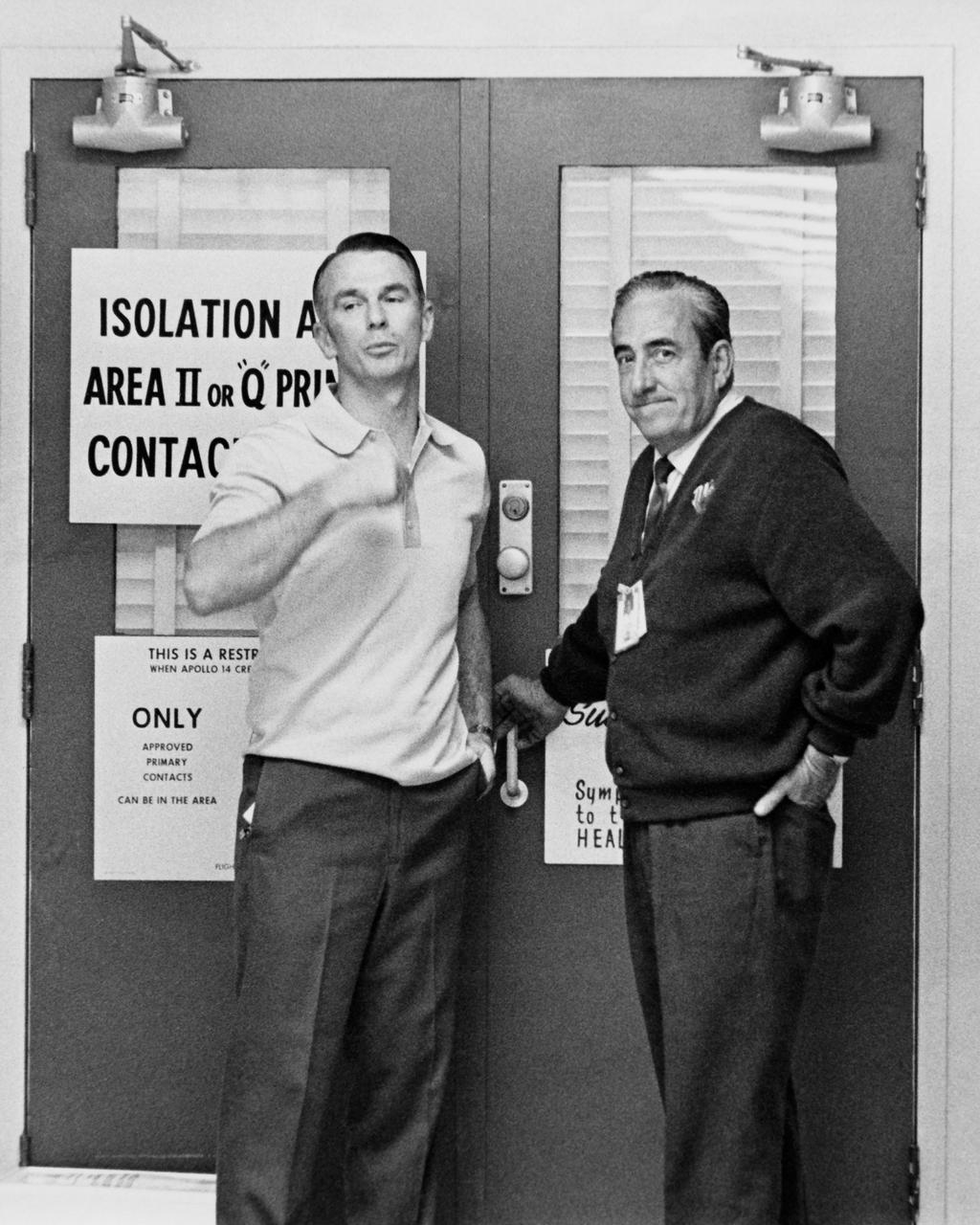
CAPE CANAVERAL, Fla. – Astronaut Gene Cernan, left, stands outside the Astronaut Crew Quarters on Jan. 26, 1971.  Photo credit: NASA
KSC-71P-44
To support NASA's 50th Anniversary, NASA government and contractor employees gathered to form a giant "D" outside the Dryden Aircraft Operations Facility
Dryden People