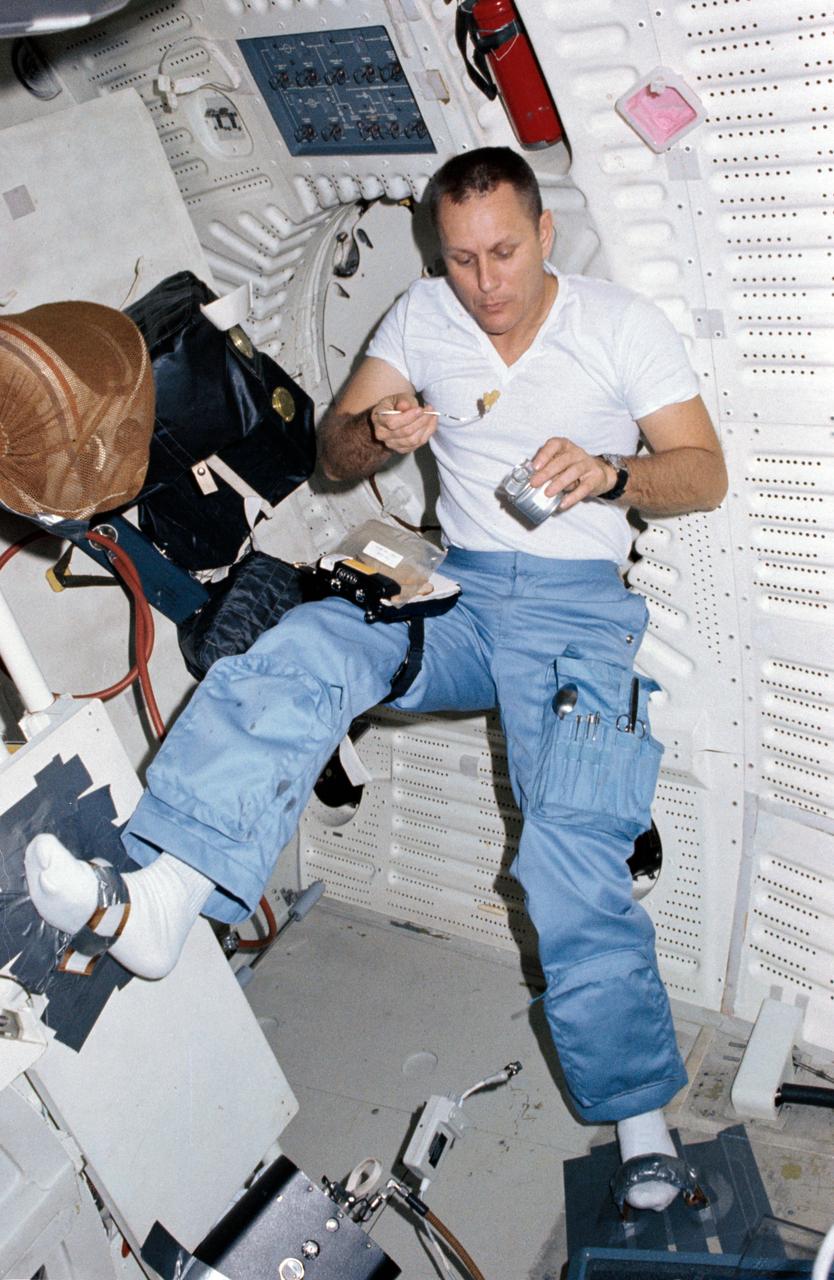
STS005-15-588 (13 Nov. 1982) --- Astronaut Robert F. Overmyer, STS-5 pilot, enjoys a meal from a jury-rigged set-up in the middeck area of the Earth-orbiting space shuttle Columbia. He wears a T-shirt and the trouser portion of a multi-piece constant wear garment. His feet are positioned in recently-rigged foot restraints to avoid involuntary movement in the micro-gravity environment of space. Behind Overmyer are components of the suit, including helmet, worn during landing and takeoff for shuttle flights. The trousers he is presently wearing are part of that attire. Photo credit: NASA
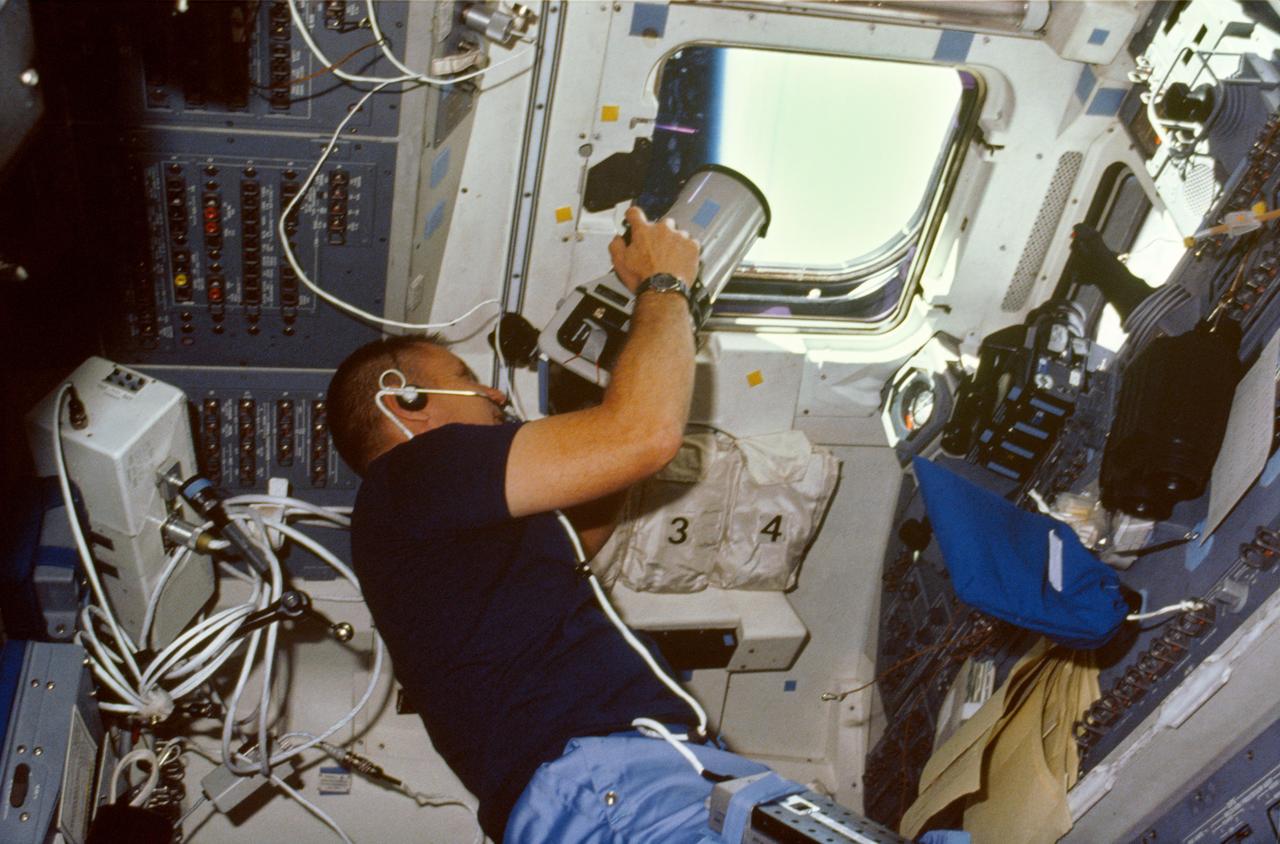
51B-05-028 (29 April-6 May 1985) --- Astronaut Robert Overmyer, 51-B mission commander, aims a Linhof camera through flight deck windows aboard the Space Shuttle Challenger.
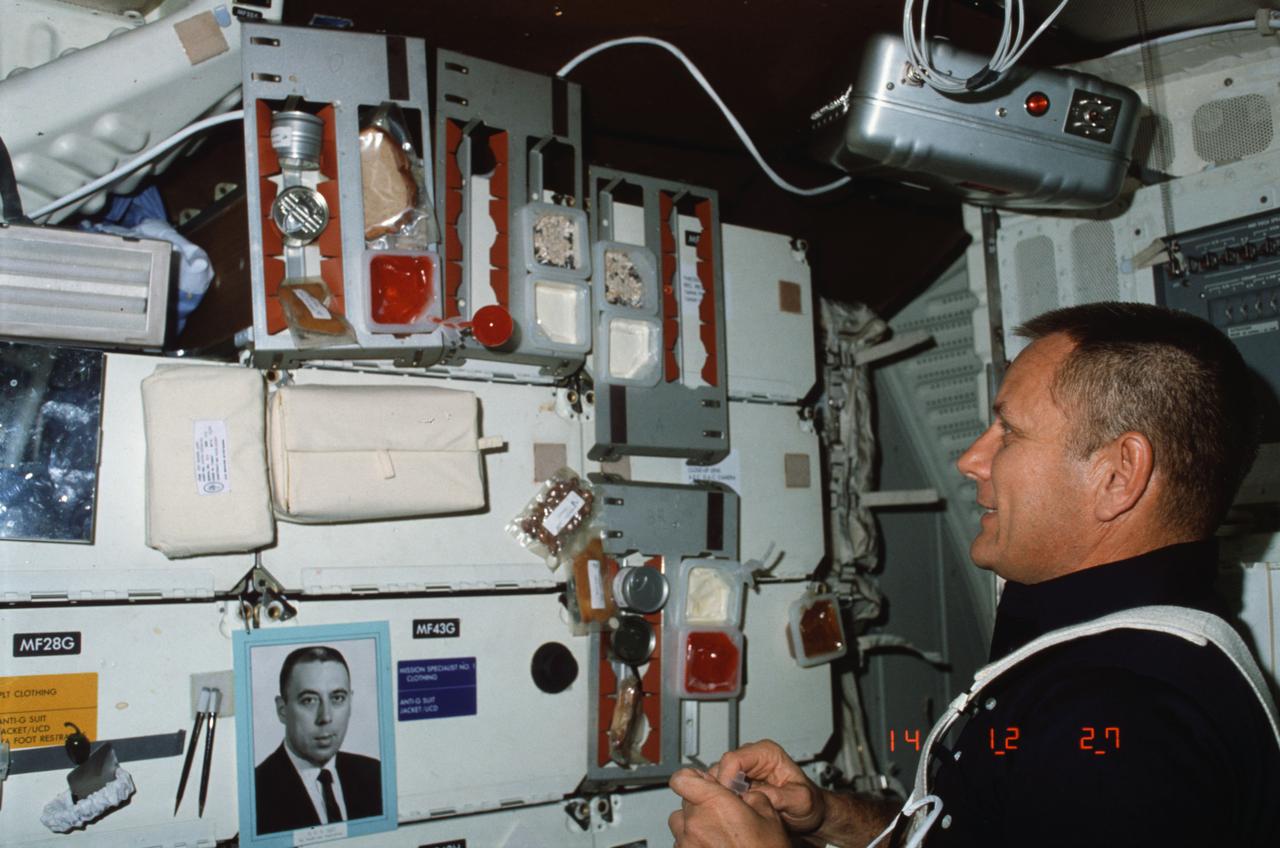
STS005-07-255 (19 Nov. 1982) --- Astronaut Robert F. Overmyer, STS-5 pilot, using beverage container and drinking straw secured in meal tray assembly (ASSY), experiments with microgravity characteristics of liquid on middeck in front of forward lockers. Overmyer also looks over packages of food attached to middeck lockers in meal tray assemblies. Carry-on food warmer appears overhead and other meal tray assemblies, personal hygiene mirror assembly, personal hygiene kit, and portrait of G.W.S. Abbey, Johnson Space Center's (JSC) Director of Flight Operations, appear on lockers. Photo credit: NASA
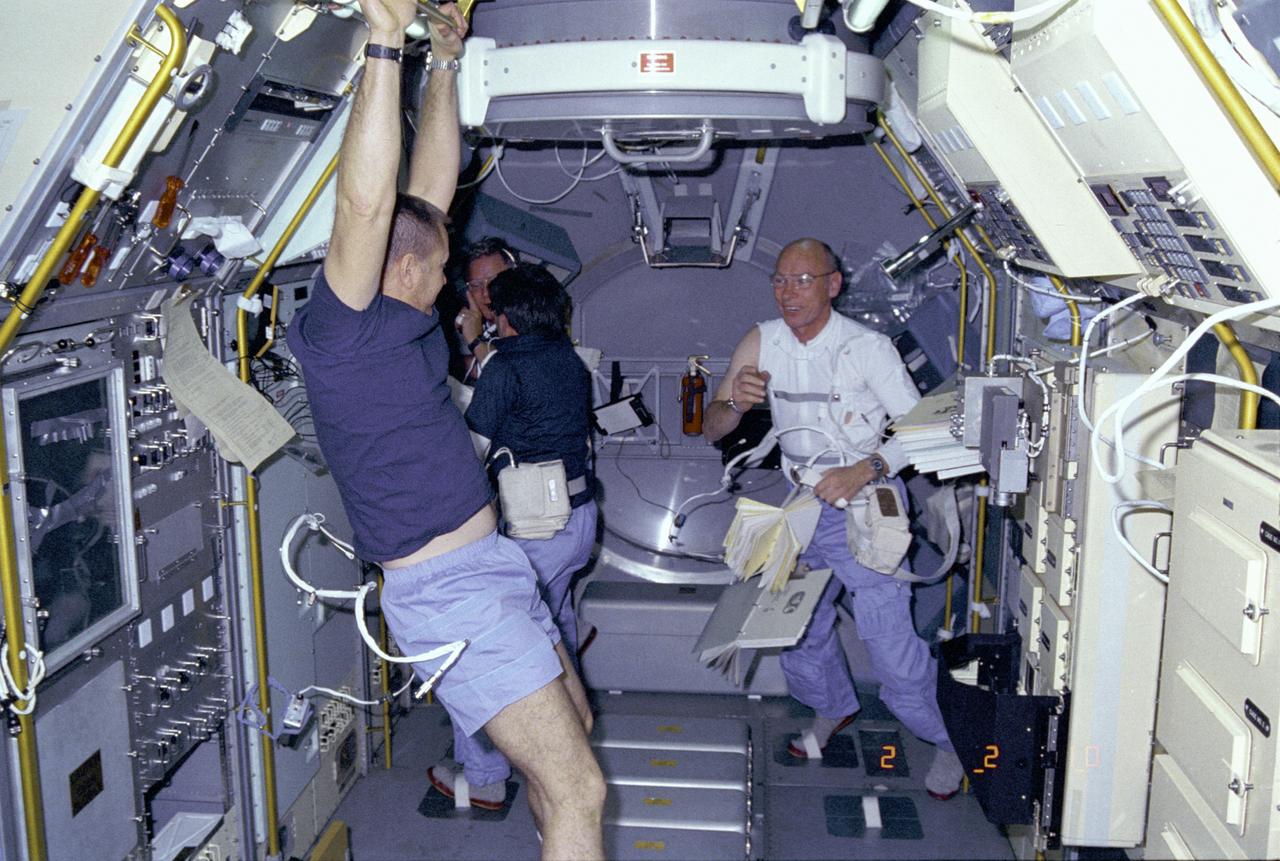
Activities inside the laboratory module during the Spacelab-3 mission are shown in this photograph. Left to right are astronauts Robert Overmyer, Commander of the mission; Don Lind, Mission Specialist; Lodewijk van den Berg, Payload Specialist; and William Thornton, Mission Specialist. The primary purpose of the Spacelab-3 mission was to conduct materials science experiments in a stable low-gravity environment. In addition, the crew did research in life sciences, fluid mechanics, atmospheric science, and astronomy. Spacelab-3 was equipped with several new minilabs, special facilities that would be used repeatedly on future flights. Two elaborate crystal growth furnaces, a life support and housing facility for small animals, and two types of apparatus for the study of fluids were evaluated on their inaugural flight. Spacelab-3 (STS-51B) was launched aboard the Space Shuttle Challenger on April 29, 1985. The Marshall Space Flight Center had managing responsibilities of the mission.
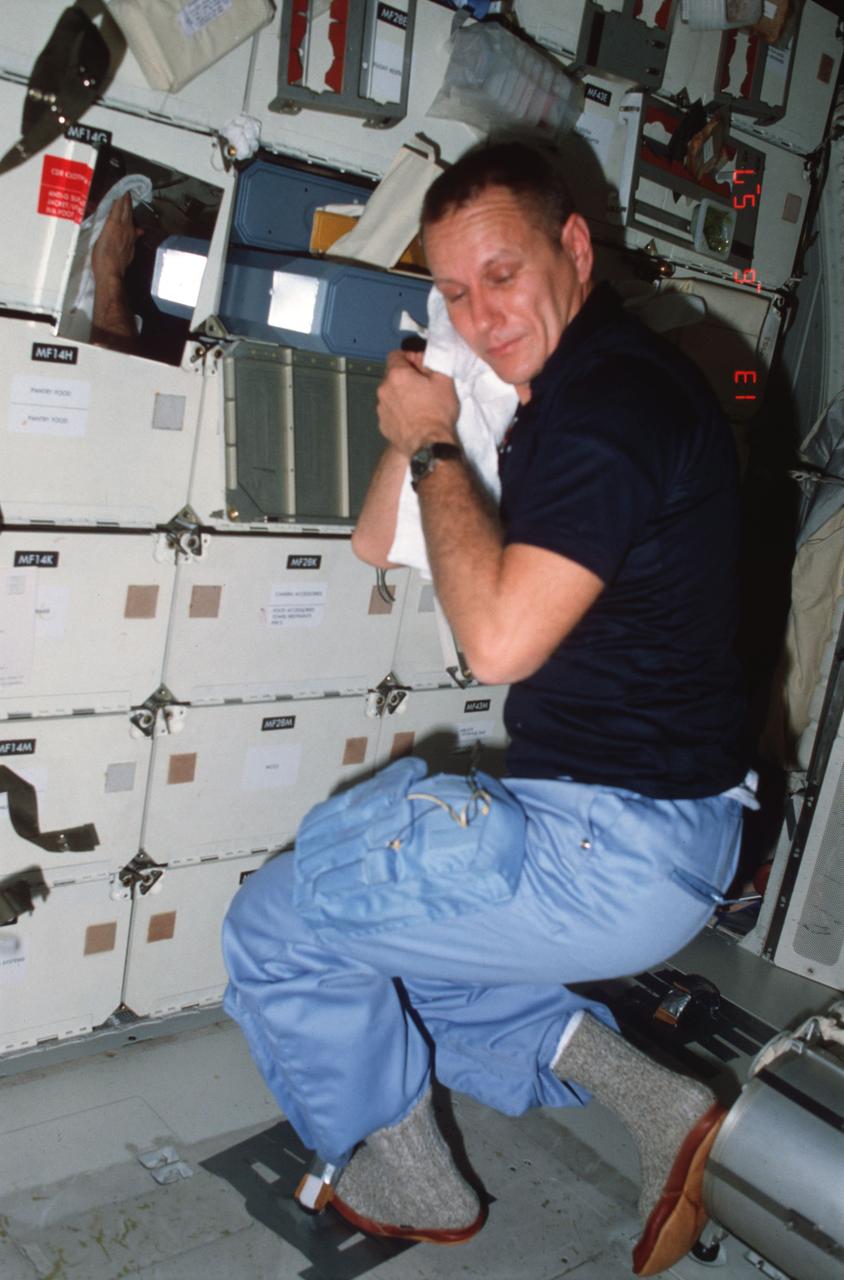
STS005-06-230 (11-16 Nov. 1982) --- On middeck, astronaut Robert F. Overmyer, STS-5 pilot, drying his face with a towel from forward single tray personal item stowage locker, completes personal hygiene activities (shaving) and demonstrates use of intravehicular activity (IVA) foot restraint on floor. Photo credit: NASA
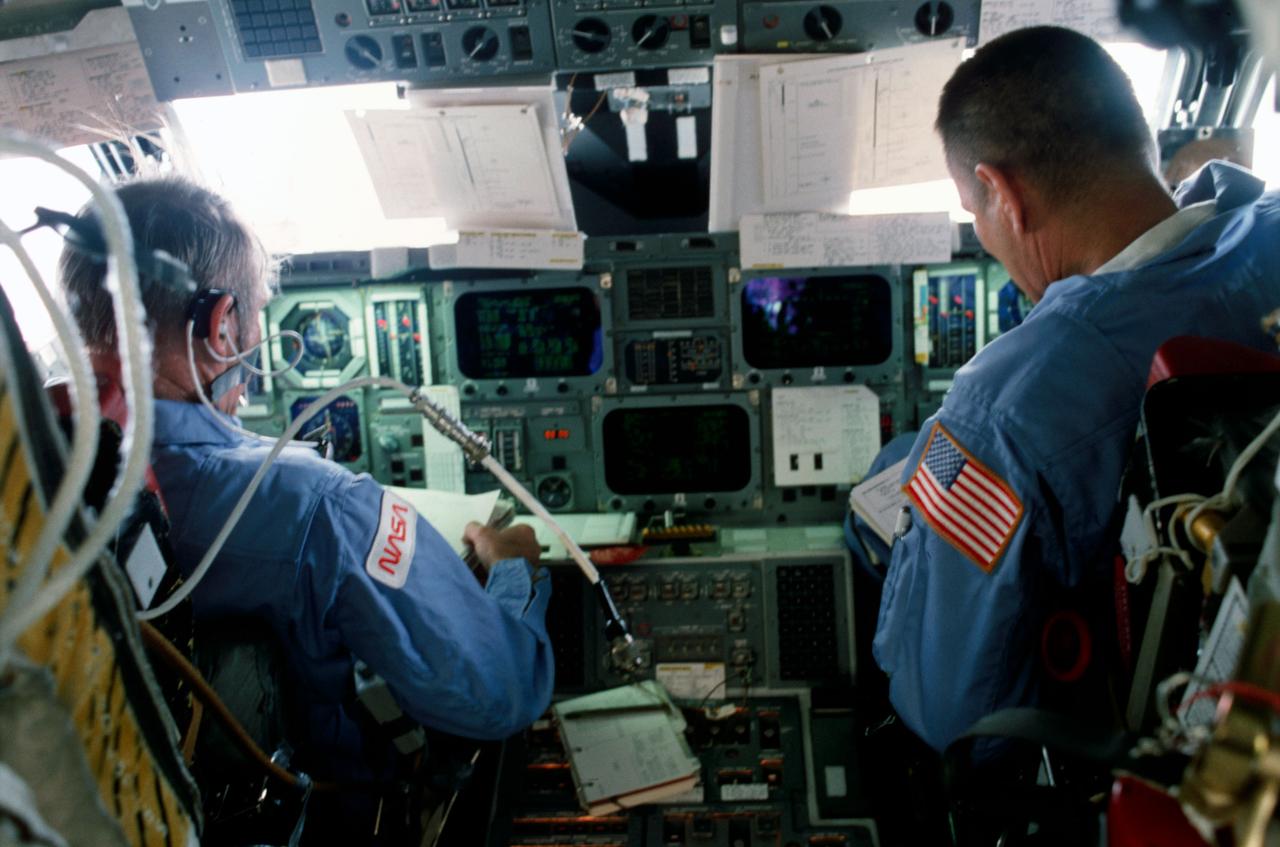
STS005-10-381 (16 Nov. 1982) --- Half of the four-member astronaut crew for the Earth-orbiting space shuttle Columbia’s STS-5 mission is pictured on the flight deck of the reusable vehicle. Astronaut Vance D. Brand, commander, holds down the commander’s station at left, while astronaut Robert F. Overmyer, pilot, points to data on one of three cathode ray tubes (CRT) on the forward flight deck. The photograph was made by astronaut Joseph P. Allen IV, one of two mission specialists on the flight. Not pictured are Dr. Allen and astronaut William B. Lenoir, the other mission specialist for this flight. Photo credit: NASA
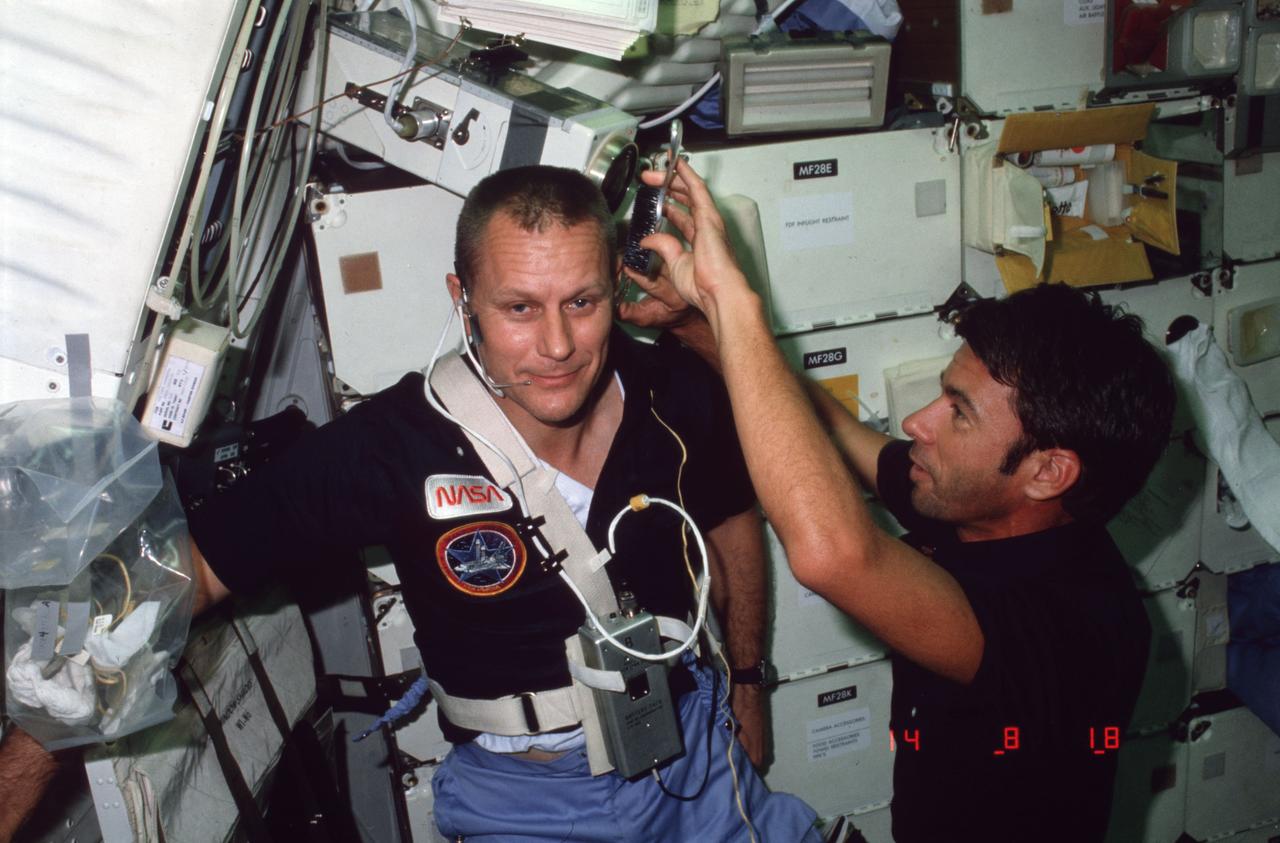
STS005-07-235 (11-16 Nov. 1982) --- Astronaut William B. Lenoir, mission specialist for STS-5, uses scissors and a brush to trim the sideburns of astronaut Robert F. Overmyer, pilot, in the middeck area of the Earth-orbiting space shuttle Columbia. An opened kit with hygiene supplies inside can be seen attached to one of the stowage locker doors at upper right. Other crew member are astronauts Vance D. Brand, commander, and Joseph P. Allen IV, the flight?s other mission specialist. Photo credit: NASA
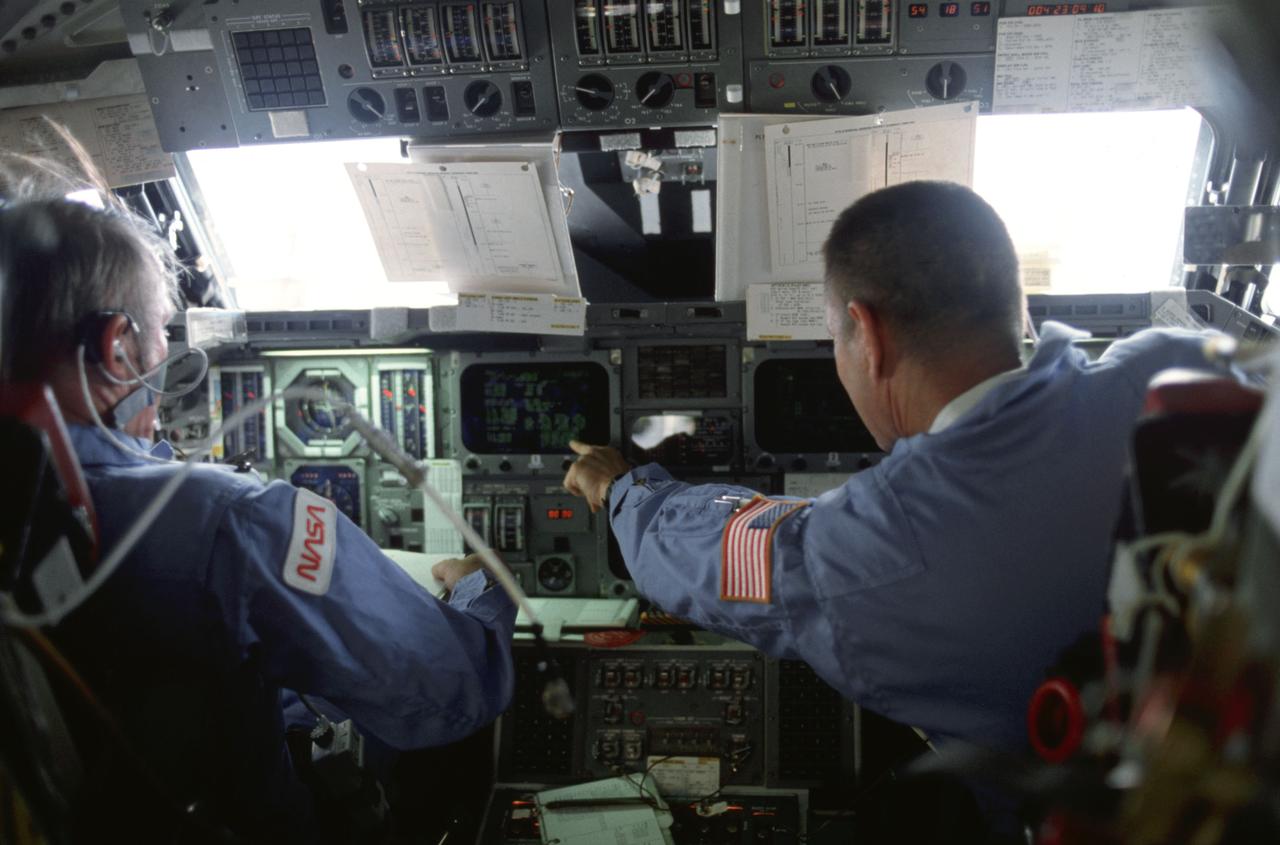
STS005-10-376 (11-16 Nov. 1982) --- Half of the four-member astronaut crew for the Earth-orbiting space shuttle Columbia?s STS-5 mission is pictured on the flight deck of the reusable vehicle. Astronaut Vance D. Brand, commander, holds down the commander?s station at left, while astronaut Robert F. Overmyer, pilot, points to data on one of three cathode ray tubes (CRT) on the forward flight deck. The photograph was made by astronaut Joseph P. Allen IV, one of two mission specialists on the flight. Not pictured are Dr. Allen and astronaut William B. Lenoir, the other mission specialist for this flight. Photo credit: NASA
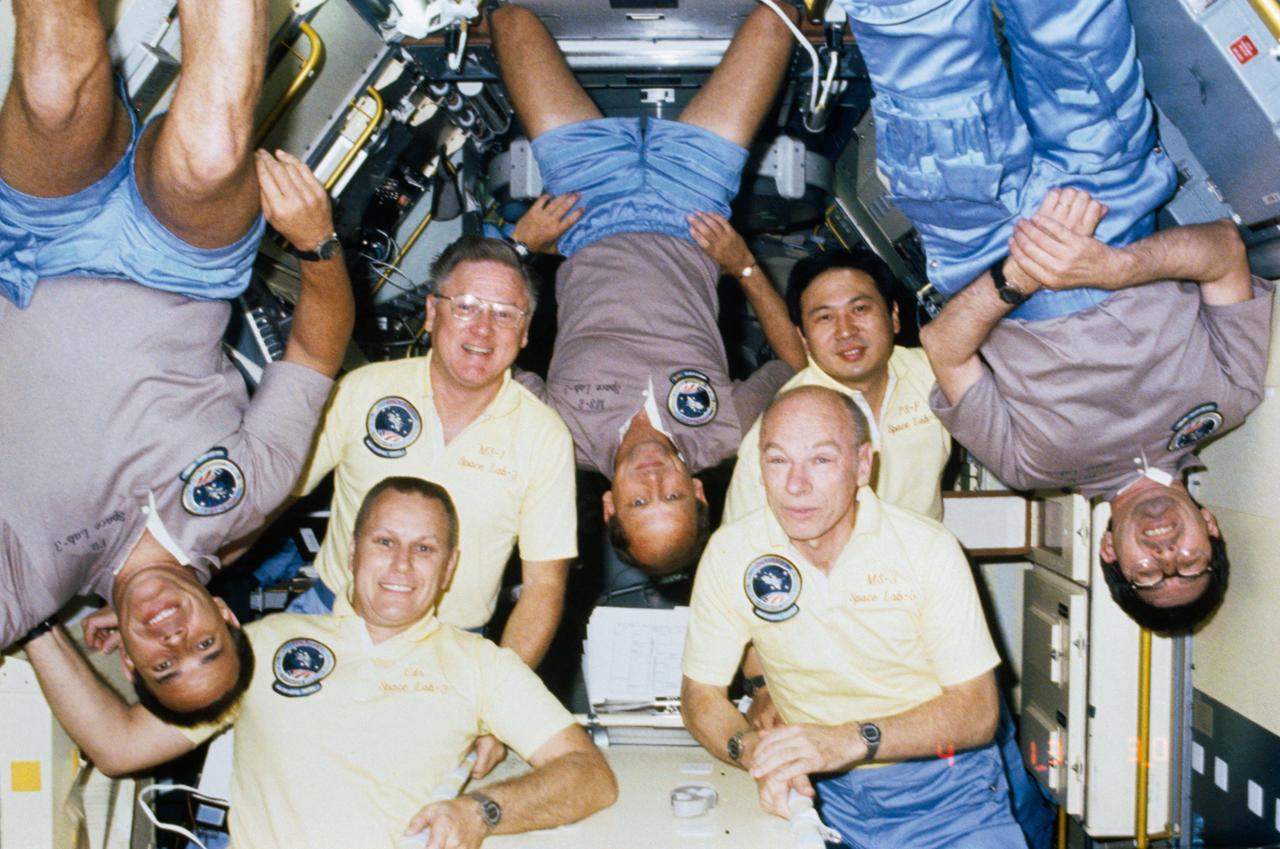
51B-101-025 (29 April-6 May 1985) --- A new twist to the traditional on-orbit group portrait was added by the 51-B/Spacelab 3 crewmembers. Note the Gold T-shirts of ?Gold? team members Robert F. Overmyer (bottom left), Don L. Lind (behind Overmyer), William E. Thornton (bottom right) and Taylor G. Wang (behind Thornton). Posting ?upside down? are ?silver? team members (L-R) Frederick D. Gregory, Norman E. Thagard and Lodewijk van den Berg. The seven are in the Long Science Module for Spacelab 3 in the cargo bay of the earth-orbiting Space Shuttle Challenger.
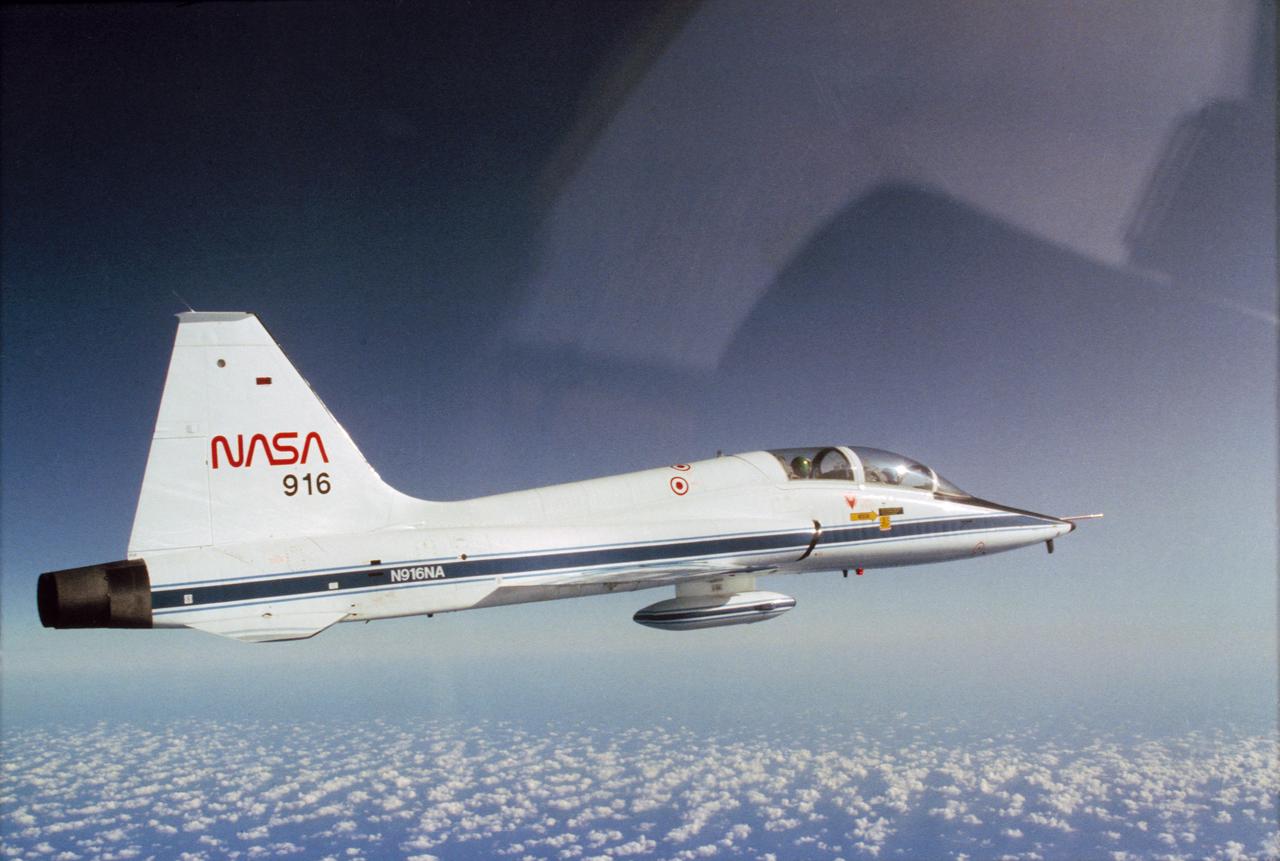
NASA 916, a T-38 jet aircraft, carrying astronauts Vance D. Brand (front station) and Robert F. Overmyer, heads for Kennedy Space Center in Florida. 1. STS-5 - PREFLIGHT KSC, FL Also available in 4x5 CN
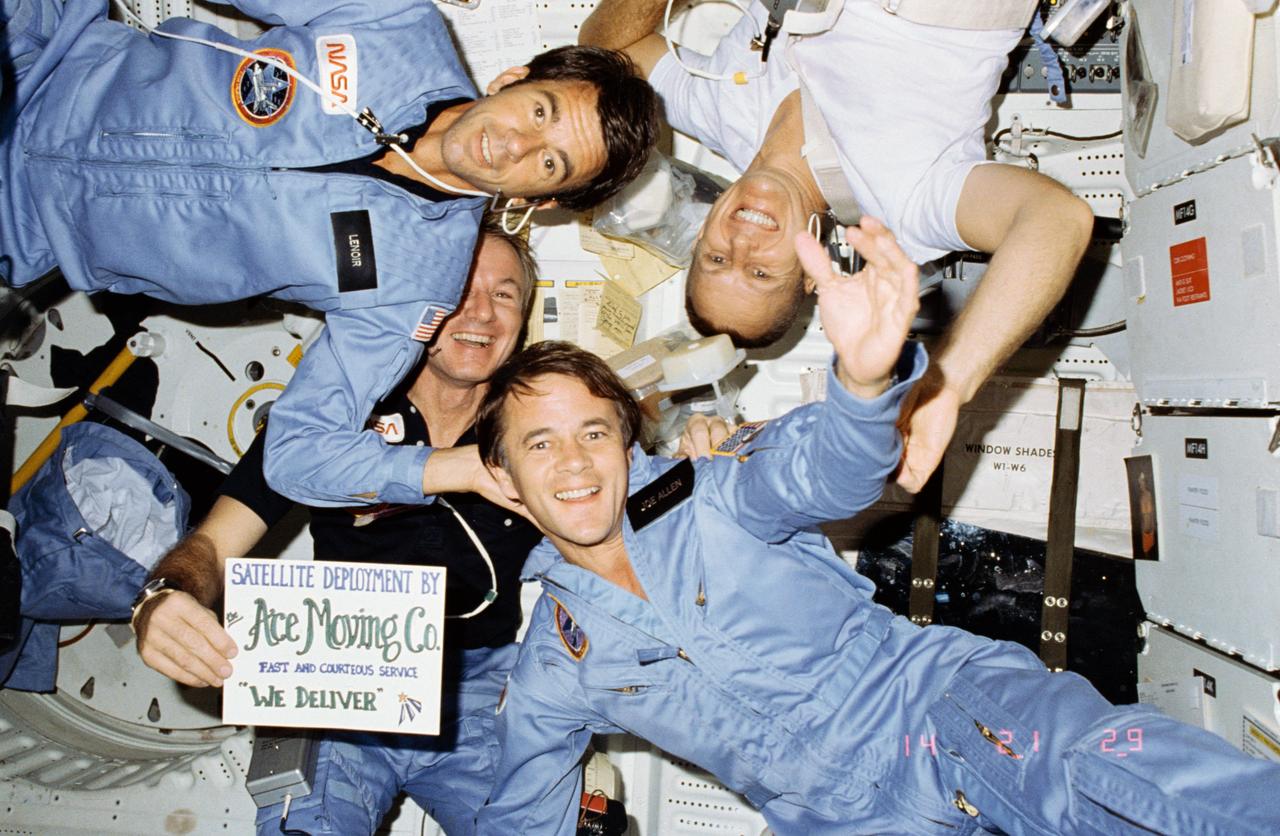
Crew onboard portrait taken on port side middeck shows Commander Brand holding Ace Moving Co sign (partially obscured, near center) and surrounded by Pilot Overmyer (in light t-shirt), Mission Specialist (MS) Allen (center bottom) and MS Lenoir (center top). The sign refers to the successful deployment of two commercial communications satellites on the flight's first two days.
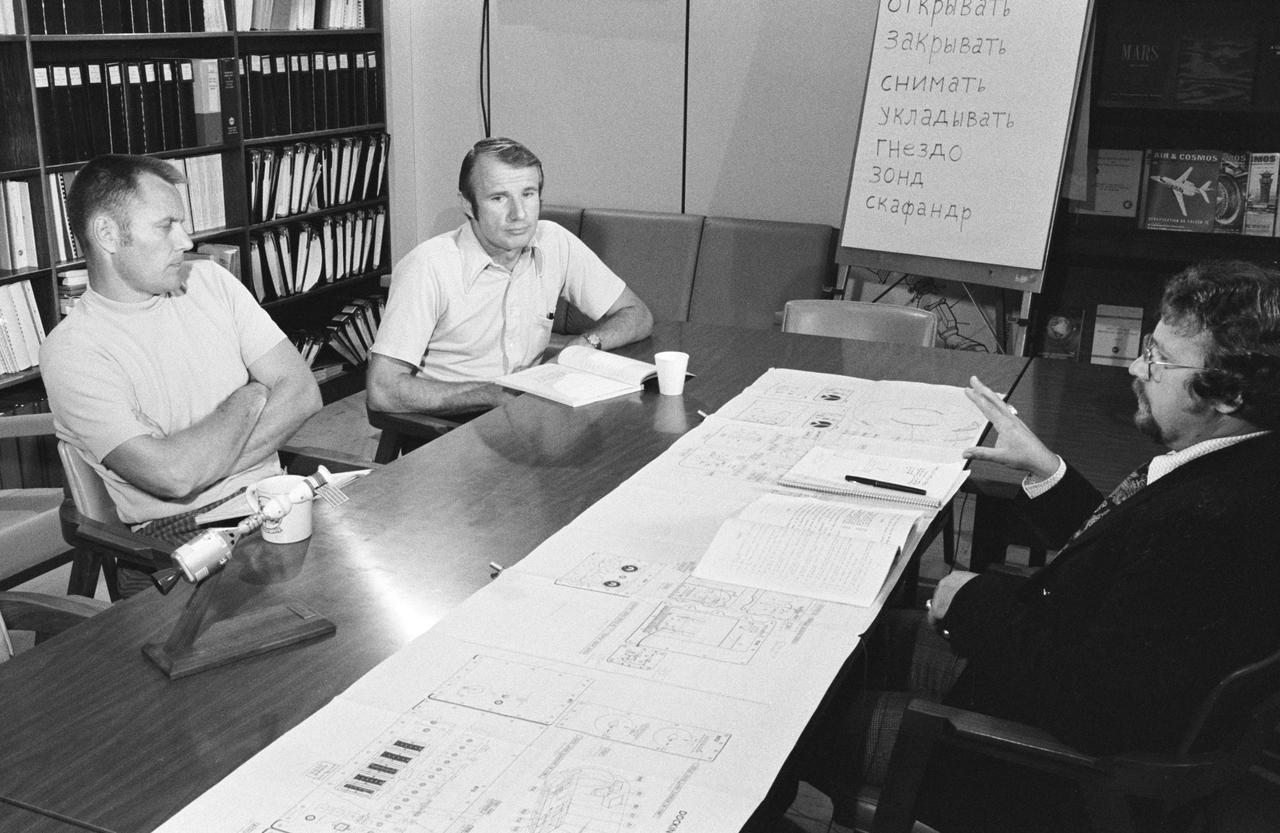
S74-23117 (6 June 1974) --- Two astronauts associated with the joint U.S.-USSR Apollo-Soyuz Test Project receive instructions in the Russian language during ASTP activity at the Johnson Space Center. They are Robert F. Overmyer, a member of the support team of the American ASTP crew, who is seated at left; and Vance D. Brand (center), the command module pilot of the American ASTP prime crew. The instructor is Anatoli Forestanko.
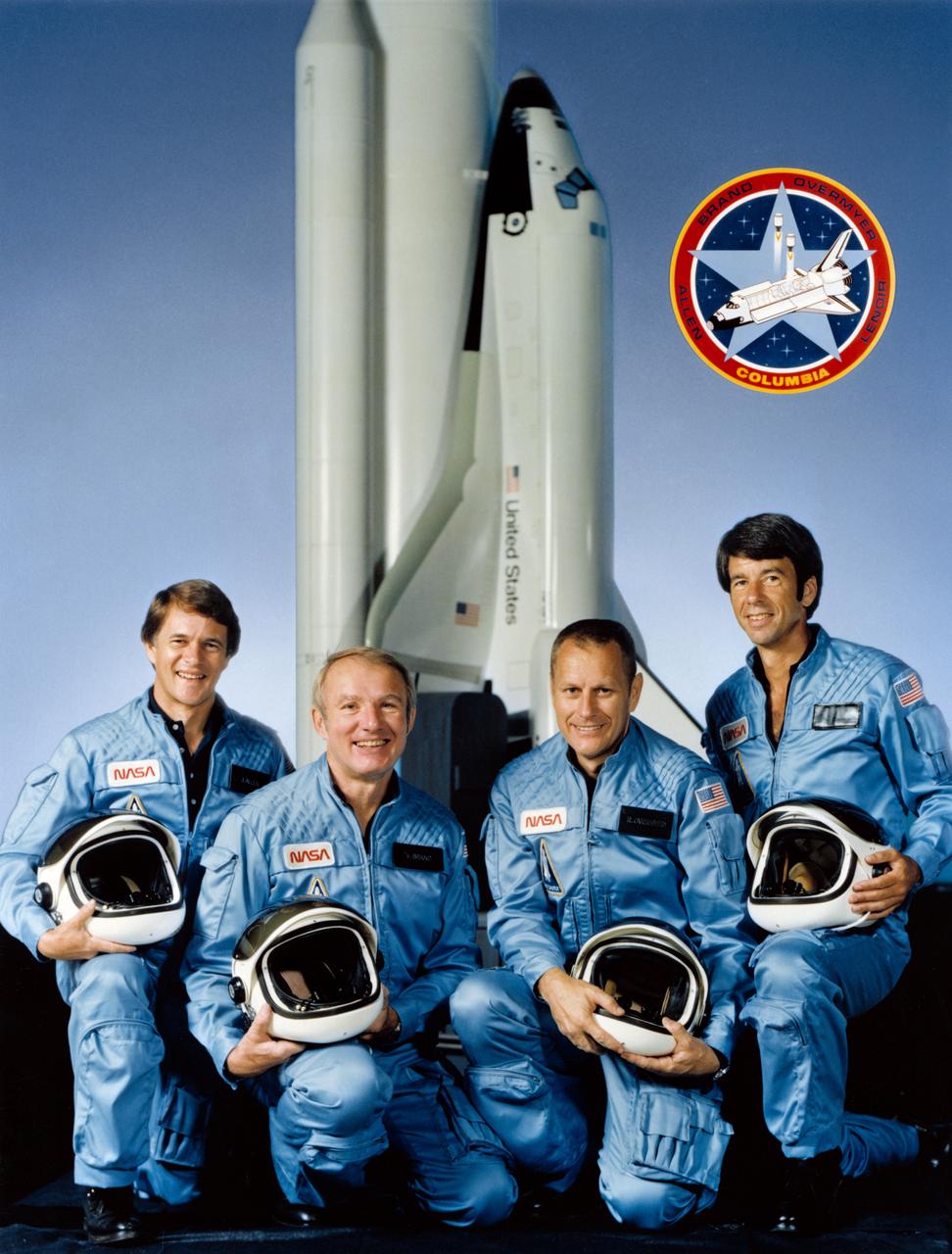
S82-36286 (15 Aug. 1982) --- These four men will be aboard the space shuttle Columbia for NASA's first operational Space Transportation System (STS) mission. They are astronauts Vance D. Brand (second left), STS-5 commander; Robert F. Overmyer (second right), pilot; and Joseph P. Allen (left) and William B. Lenoir, both mission specialists. They pose with a space shuttle model and the official insignia for STS-5. Their flight is scheduled for November of this year. Photo credit: NASA
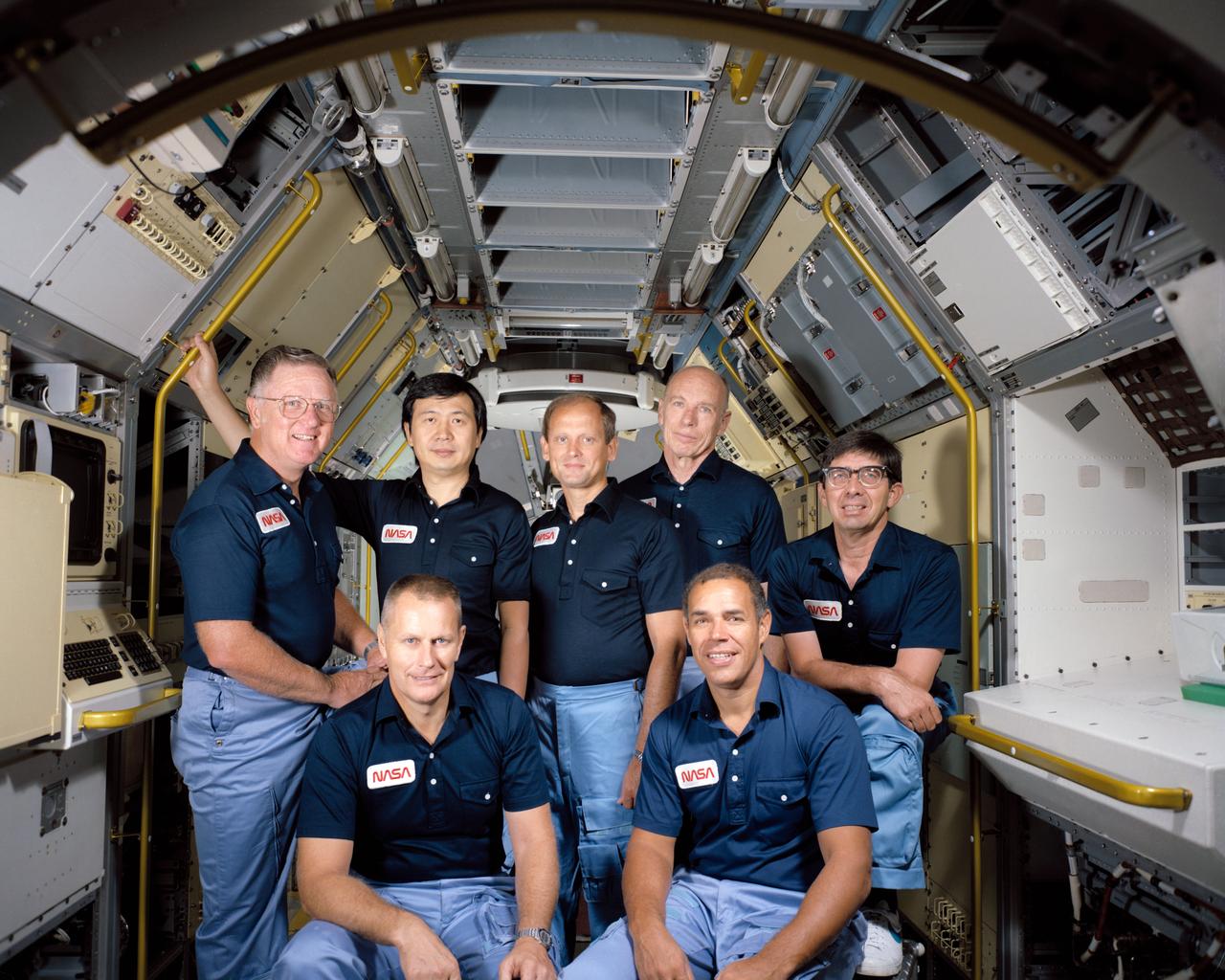
S84-43852 (November 1984) --- These seven men have been training for NASA’s Spacelab 3/STS-51B mission scheduled for launch in late April 1985. On the front row are astronauts Robert F. Overmyer (left), commander; and Frederick D. Gregory, pilot. On the back row, left to right, are Don L. Lind, mission specialist; Taylor G. Wang, payload specialist; Norman E. Thagard and William E. Thornton, both mission specialists; and Lodewijk van den Berg, payload specialist.
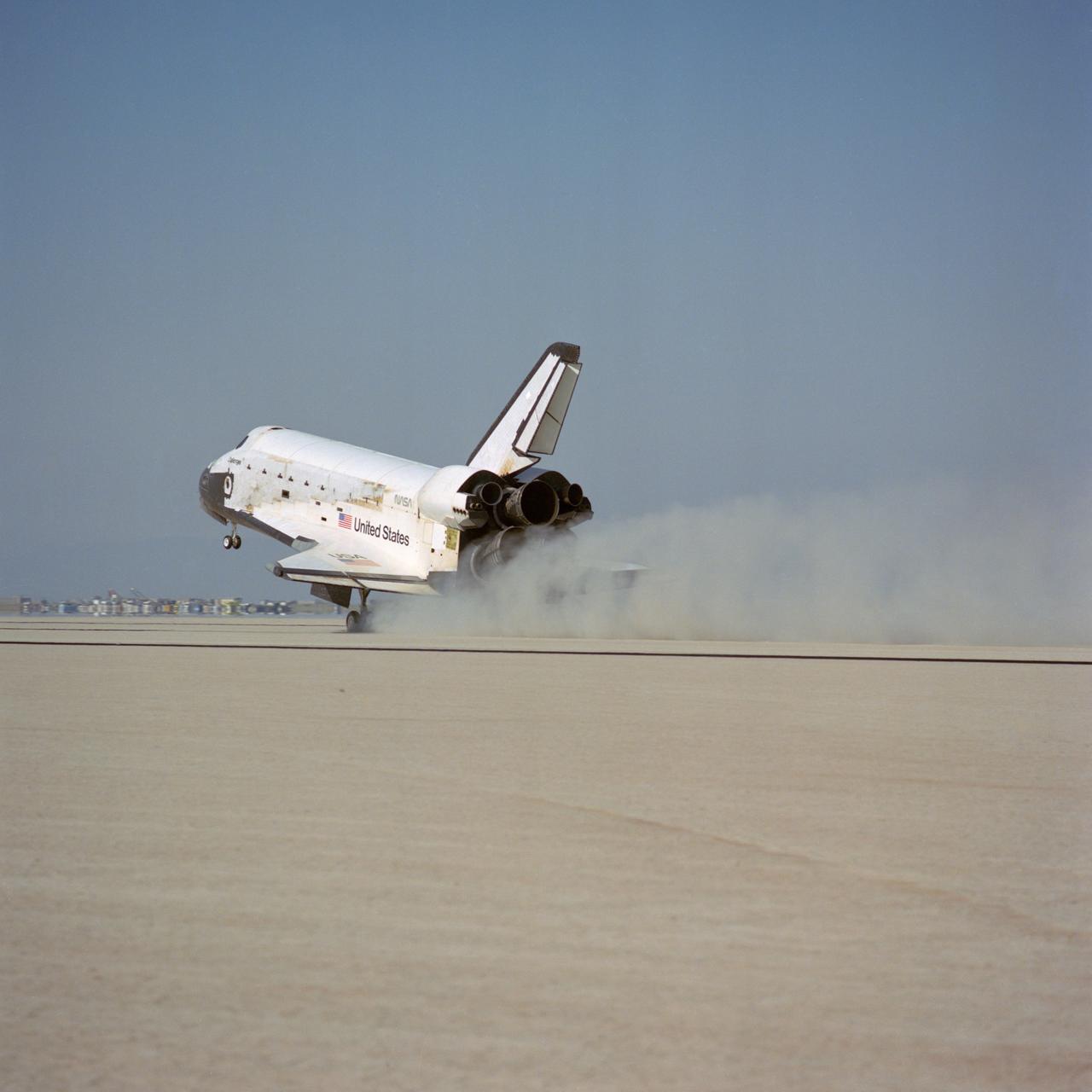
51B-S-071 (6 May 1985) --- The Space Shuttle Challenger lands on Runway 17 at Edwards Air Force Base to complete a week in space for its seven-member crew and a variety of payload. The vehicle stopped at 9:12:05 a.m. (PDT), May 6, 1985. Onboard were astronauts Robert F. Overmyer, Frederick D. Gregory, Don L. Lind, Norman E. Thagard and William E. Thornton of National Aeronautics and Space Administration (NASA); and payload specialists Lodewijk van den Berg and Taylor G. Wang.
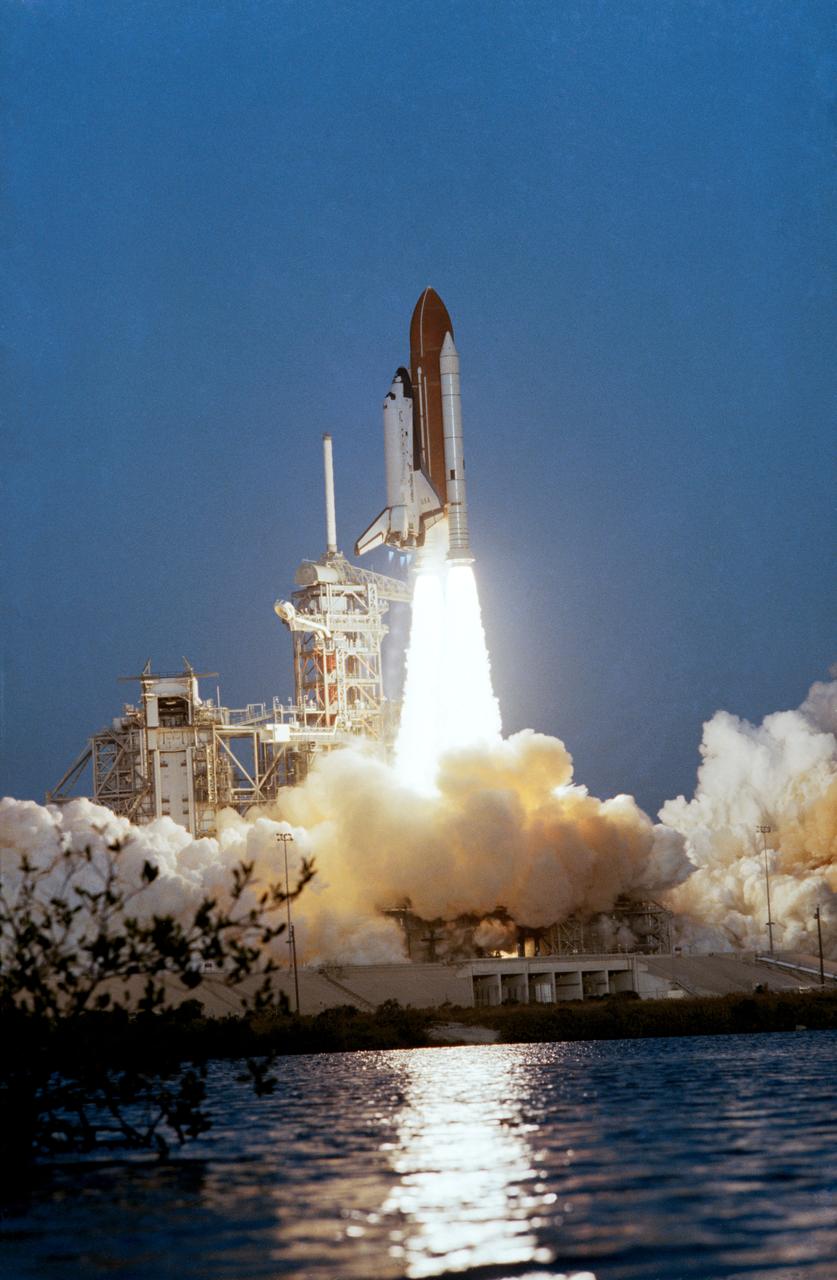
S82-39532 (11 Nov. 1982) --- Having completed its four-mission test program, the space shuttle Columbia begins a new era of operational flights as it clears the launch tower and heads for Earth orbit. Launch occurred at 7:19 a.m. (EST), November 11, 1982. Aboard the orbiter, mated here to its two solid rocket boosters and external fuel tank, were astronauts Vance D. Brand, STS-5 commander; Robert F. Overmyer, pilot; William B. Lenoir, mission specialist; and Joseph P. Allen, mission specialist. Photo credit: NASA
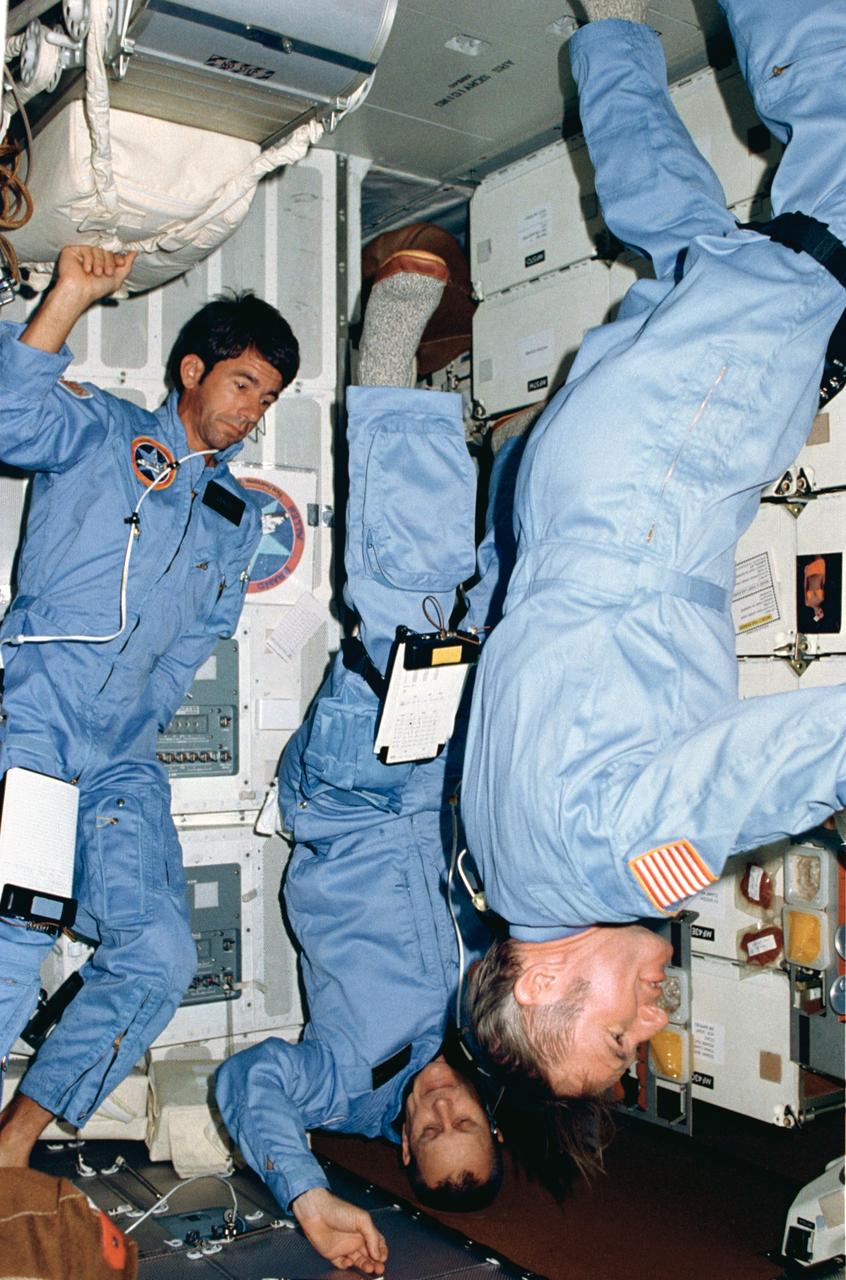
STS005-04-124 (14 Nov. 1982) --- Three members of the four-man STS-5 crew demonstrate the zero-gravity environment aboard the Earth-orbiting space shuttle Columbia. Astronaut Vance D. Brand, mission commander, holds a fairly typical Earth-bound pose, but crewmates, astronauts Robert F. Overmyer (center), pilot, and Dr. William B. Lenoir, mission specialist, perform body movements that could only be accomplished in zero-gravity. Dr. Joseph P. Allen IV, the flight’s other mission specialist, exposed this frame with a 35mm handheld camera. The four astronauts were in the middeck area of their reusable spacecraft when this photograph was made. Photo credit: NASA
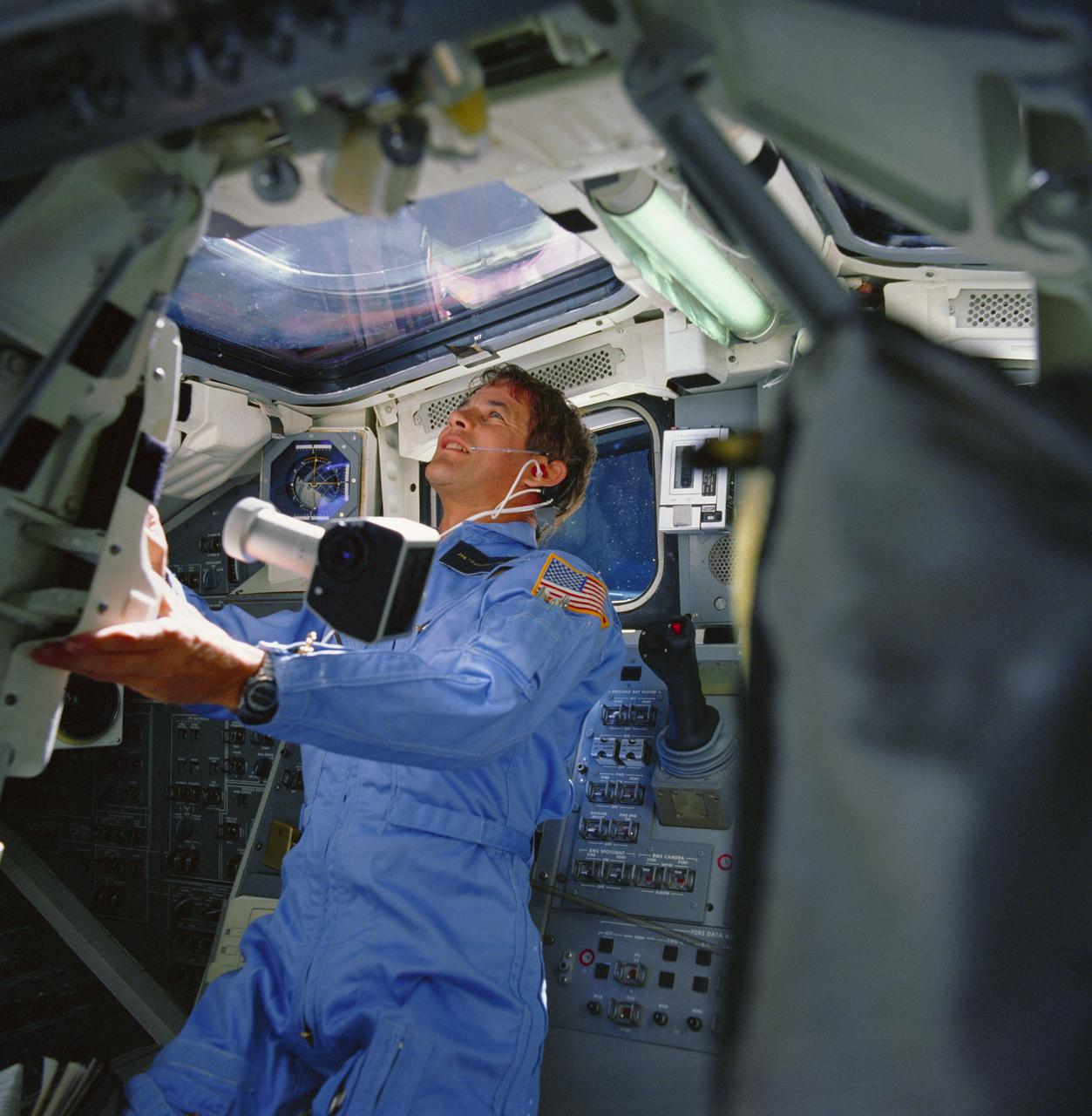
S82-39790 (11-15 Nov. 1982) --- Astronaut Joseph P. Allen IV, STS-5 mission specialist, lets a spot-meter float freely for a moment during a period devoted to out-the-window photographs of Earth from orbiting space shuttle Columbia. Dr. Allen is on the flight deck of the reusable space vehicle and positioned behind the pilot?s station. Also onboard for NASA?s first operational Space Transportation System (STS) flight are astronauts Vance D. Brand, commander; Robert F. Overmyer, pilot; and William B. Lenoir, mission specialist. Photo credit: NASA
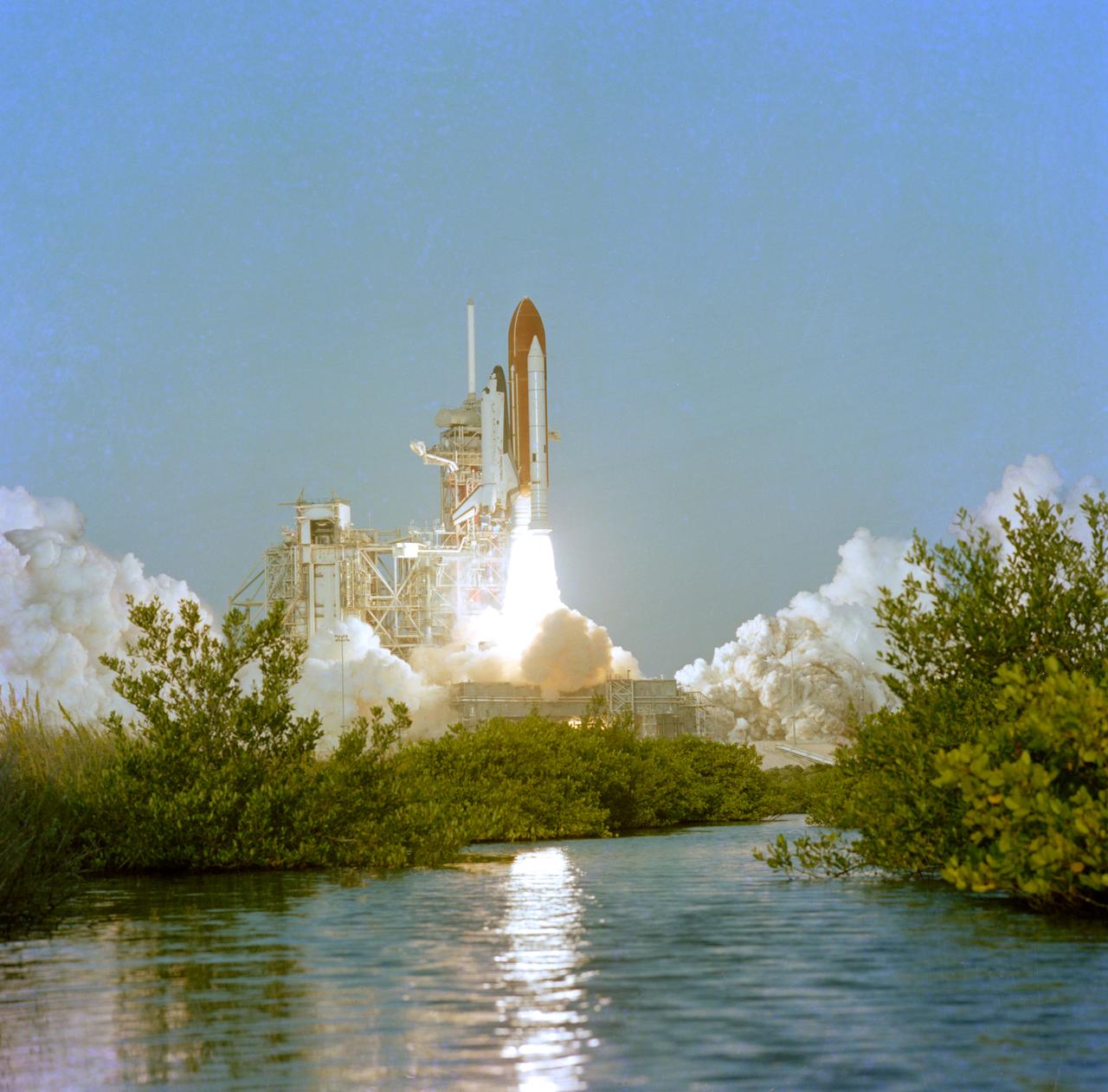
S82-39532 (11 Nov. 1982) --- Having completed its four-mission test program, the space shuttle Columbia begins a new era of operational flights as it clears the launch tower and heads for Earth orbit. Launch occurred at 7:19 a.m. (EST), November 11, 1982. Aboard the orbiter, mated here to its two solid rocket boosters and external fuel tank, were astronauts Vance D. Brand, STS-5 commander; Robert F. Overmyer, pilot; William B. Lenoir, mission specialist; and Joseph P. Allen, mission specialist. Photo credit: NASA
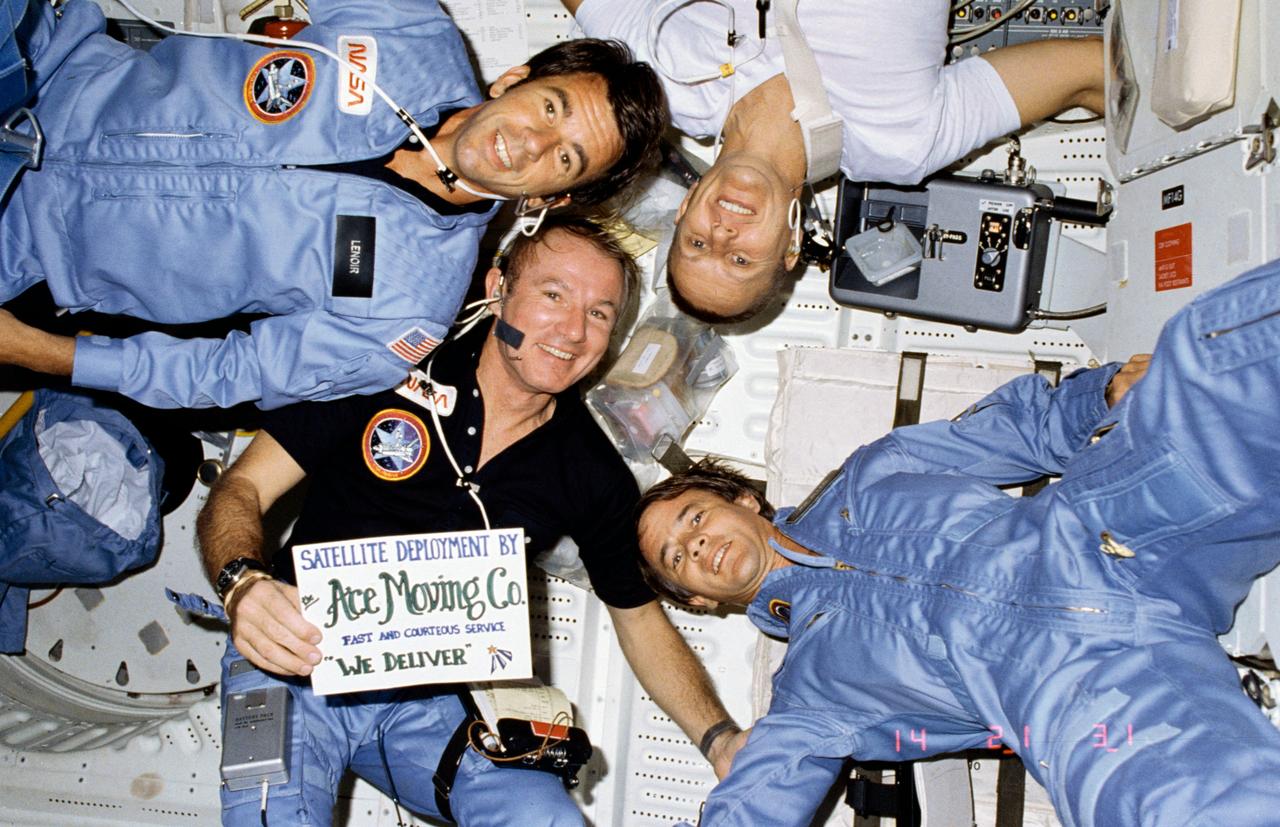
STS005-07-267 (12 Nov. 1982) --- A pre-set 35mm camera?s exposure of all four STS-5 astronaut crew members reveals a bit of their humorous side. The sign held by astronaut Vance D. Brand, crew commander, refers to the successful deployment of two commercial communications satellites on the flight's first two days. Brand is surrounded by, clockwise, left to right, astronauts William B. Lenoir, mission specialist, Robert F. Overmyer, pilot, and Joseph O. Allen IV, mission specialist, in the middeck area of the Earth-orbiting space shuttle Columbia. Photo credit: NASA
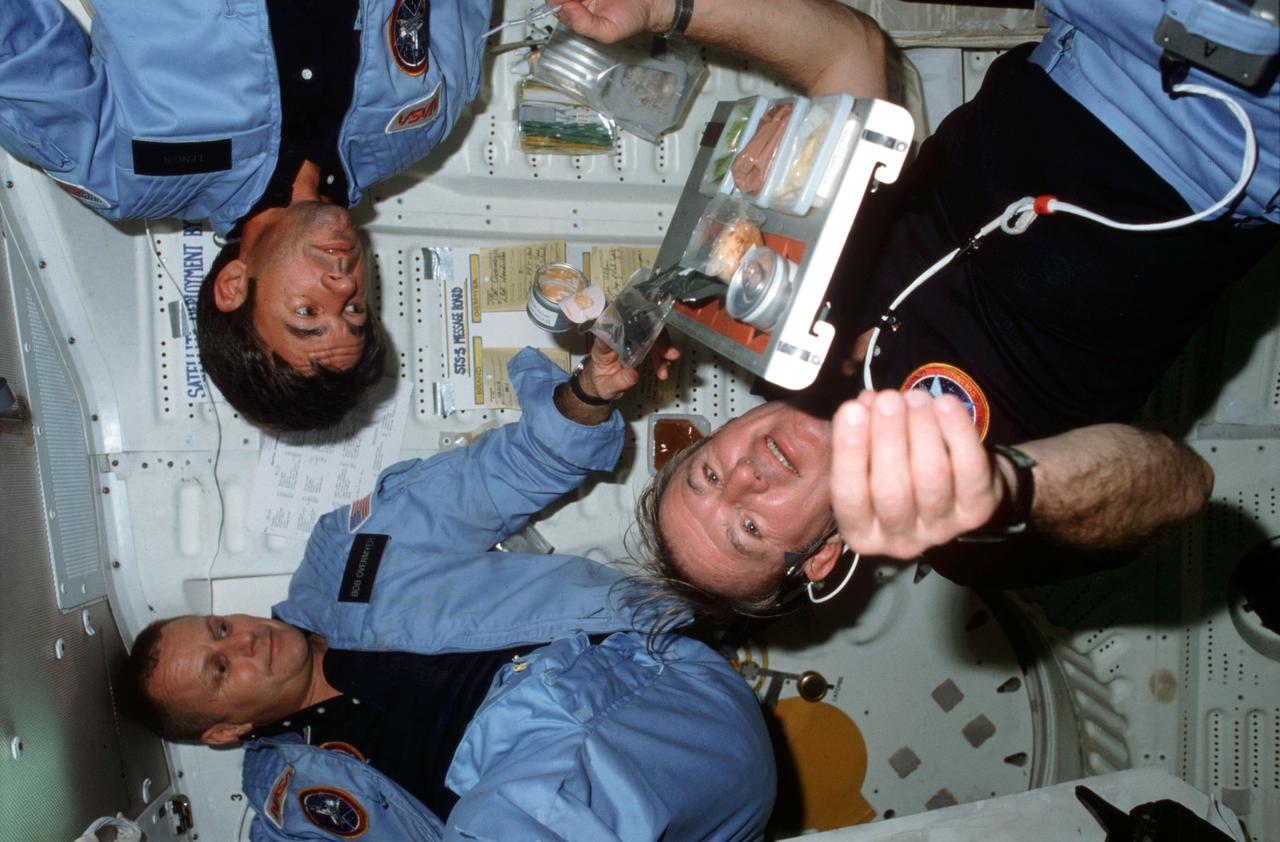
STS005-06-210 (16 Nov. 1982) --- Astronaut Vance D. Brand (in dark blue shirt), STS-5 commander; Robert F. Overmyer (left), pilot; and William B. Lenoir, mission specialist, conduct microgravity experiments with food containers and meal tray assemblies in front of middeck port side wall and side hatch. Brand prepares to eat as meal tray assembly floats above his chest and Overmeyer and Lenoir look on. Sign on port side wall is labeled STS-5 message board. Photo credit: NASA
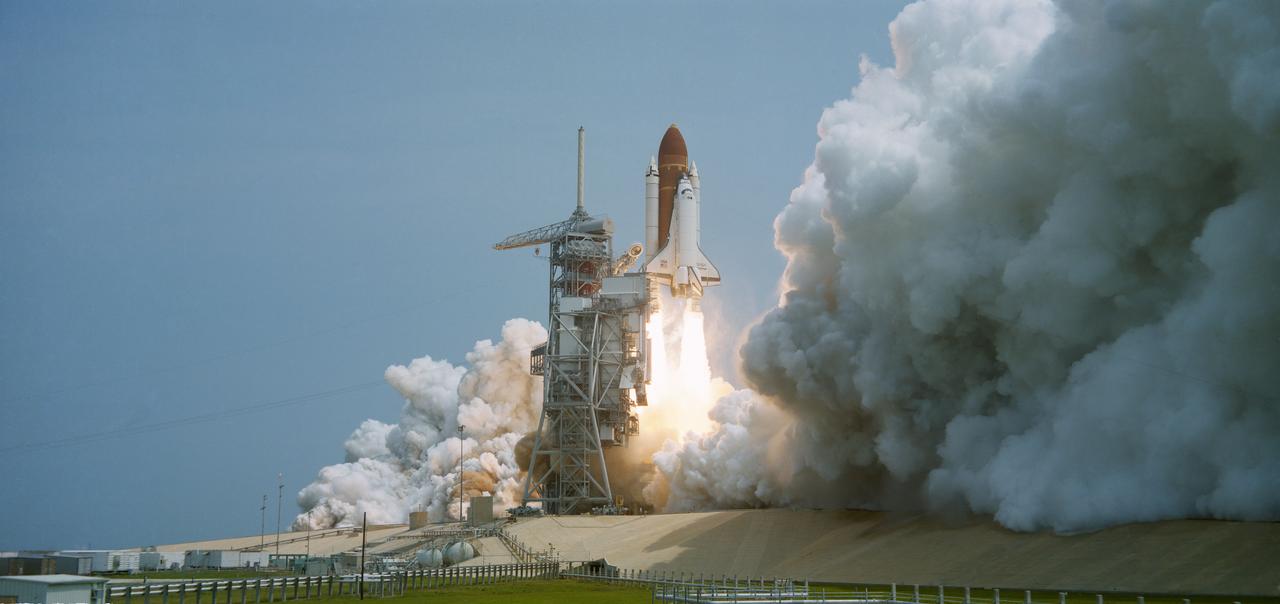
51B-S-052 (20 April 1985) --- The STS 51-B Spacelab 3 mission begins with the liftoff of the Challenger from Pad 39A at 12:02 p.m. (EDT). The Spacelab-3 configuration consists of a long module and a Mission Experiment Support Structure (MPESS). The object of the mission is to conduct applications, science and technology-oriented experimentation requiring the low-gravity of Earth orbit and extended duration stable vehicle attitude. Mission emphasis will be on materials processing. The seven-member crew consists of astronauts Robert F Overmyer, commander; Frederick D. Gregory, pilot; Don L. Lind, Norman E. Thagard and William E. Thornton; all mission specialists and payload specialists Taylor G. Wang and Lodewijk van den Berg. The mission is planned for 7 days with a landing at Dryden Flight Research Facility, Edwards California scheduled for May 6.
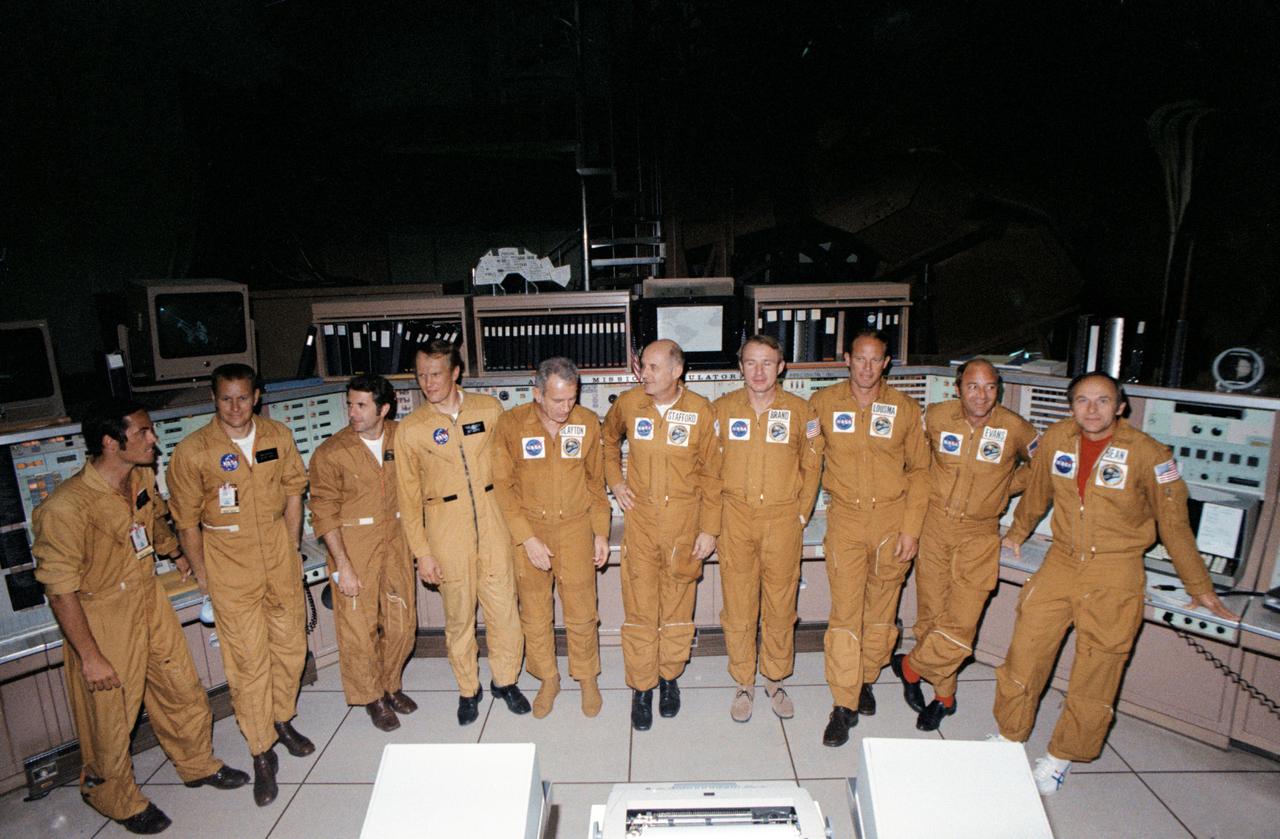
S75-28361 (9 July 1975) --- These ten American astronauts compose the U.S. prime crew, the backup crew and the crew support team for the joint U.S.-USSR Apollo-Soyuz Test Project docking mission in Earth orbit. They are, left to right, Robert L. Crippen, support team; Robert F. Overmyer, support team; Richard H. Truly, support team; Karol J. Bobko, support team; Donald K. Slayton, prime crew docking module pilot; Thomas P. Stafford, prime crew commander; Vance D. Brand, prime crew command module pilot; Jack R. Lousma, backup crew docking module pilot; Ronald E. Evans, backup crew command module pilot; and Alan L. Bean, backup crew commander. They are photographed by the Apollo Mission Simulator console in Building 5 at NASA's Johnson Space Center.
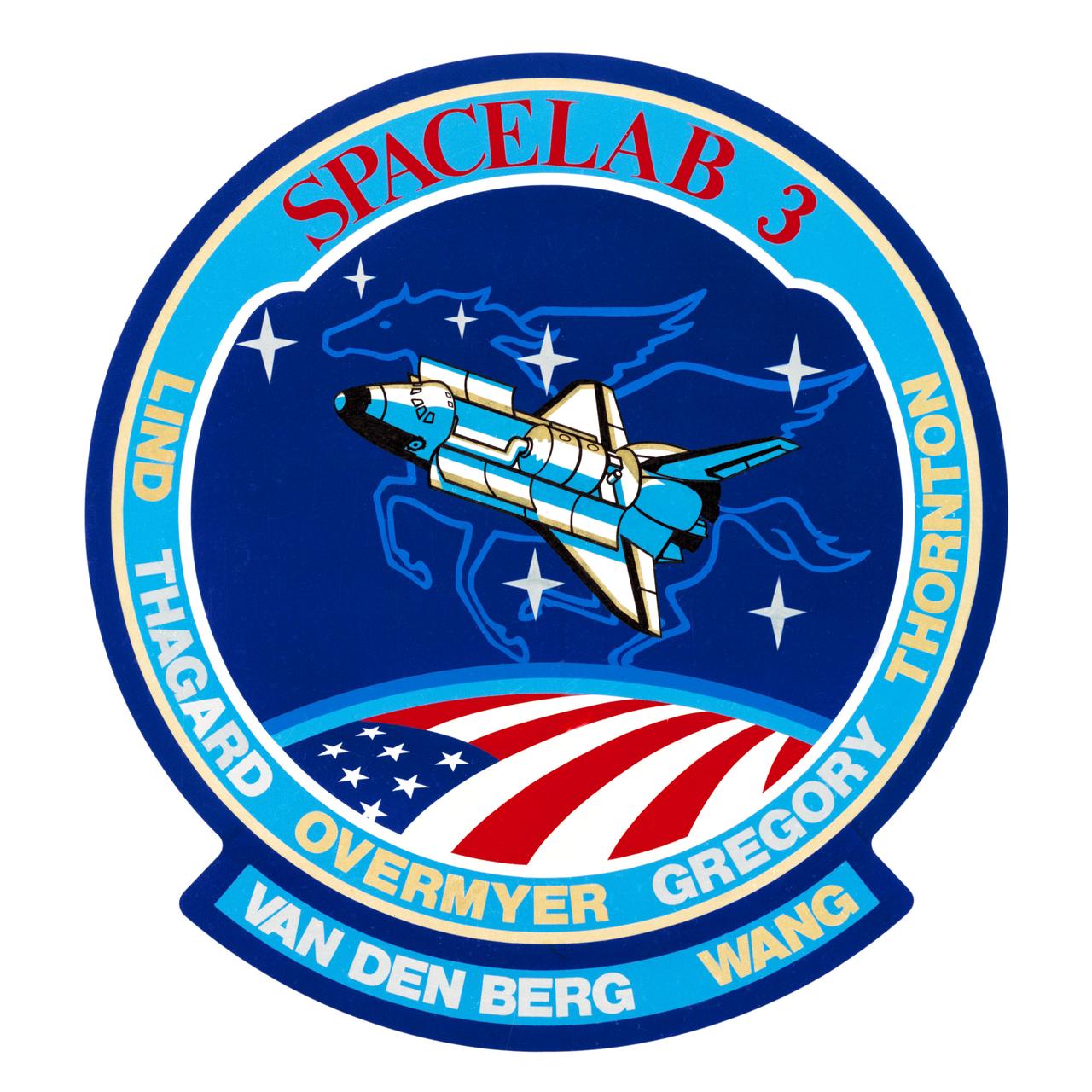
S84-44372 (December 1984) --- The space shuttle Discovery and its science module payload are featured in the insignia for the STS-51B/Spacelab 3 mission. The seven stars of the constellation Pegasus surround the orbiting spaceship above the flag draped Earth. Surnames of the seven crew members encircle the scene. Crew members are astronauts Robert F. Overmyer, Frederick D. Gregory, Don L. Lind, Norman E. Thagard and William E. Thornton; and payload specialists Lodewijk van den Berg and Taylor G. Wang. The artwork was done by Carol Ann Lind. The NASA insignia design for space shuttle flights is reserved for use by the astronauts and for other official use as the NASA Administrator may authorize. Public availability has been approved only in the forms of illustrations by the various news media. When and if there is any change in this policy, which is not anticipated, the change will be publicly announced. Photo credit: NASA

51B-116-005 (29 April - 6 May 1985) --- Astronaut Don L. Lind, mission specialist, termed this scene of an aurora in the Southern Hemisphere as "spectacular," during a TV down link featuring discussion of the auroral observations on the seven-day flight. This scene was captured by astronaut Robert F. Overmyer, crew commander, using a 35mm camera. Dr. Lind, monitoring activity in the magnetosphere at various points throughout the flight, pinpointed the spacecraft's location as being over a point halfway between Australia and the Antarctic continent. There are moonlit clouds on Earth. The blue-green band and the tall red rays are aurora. The brownish band parallel to the Earth's horizon is a luminescence of the atmosphere itself and is referred to as airglow. Dr. T. Hallinan of the Geophysical Institute of Fairbanks serves as principal investigator for the auroral observations experiment and spent a great deal of time with Dr. Lind in preparation for the flight. Photo credit: NASA
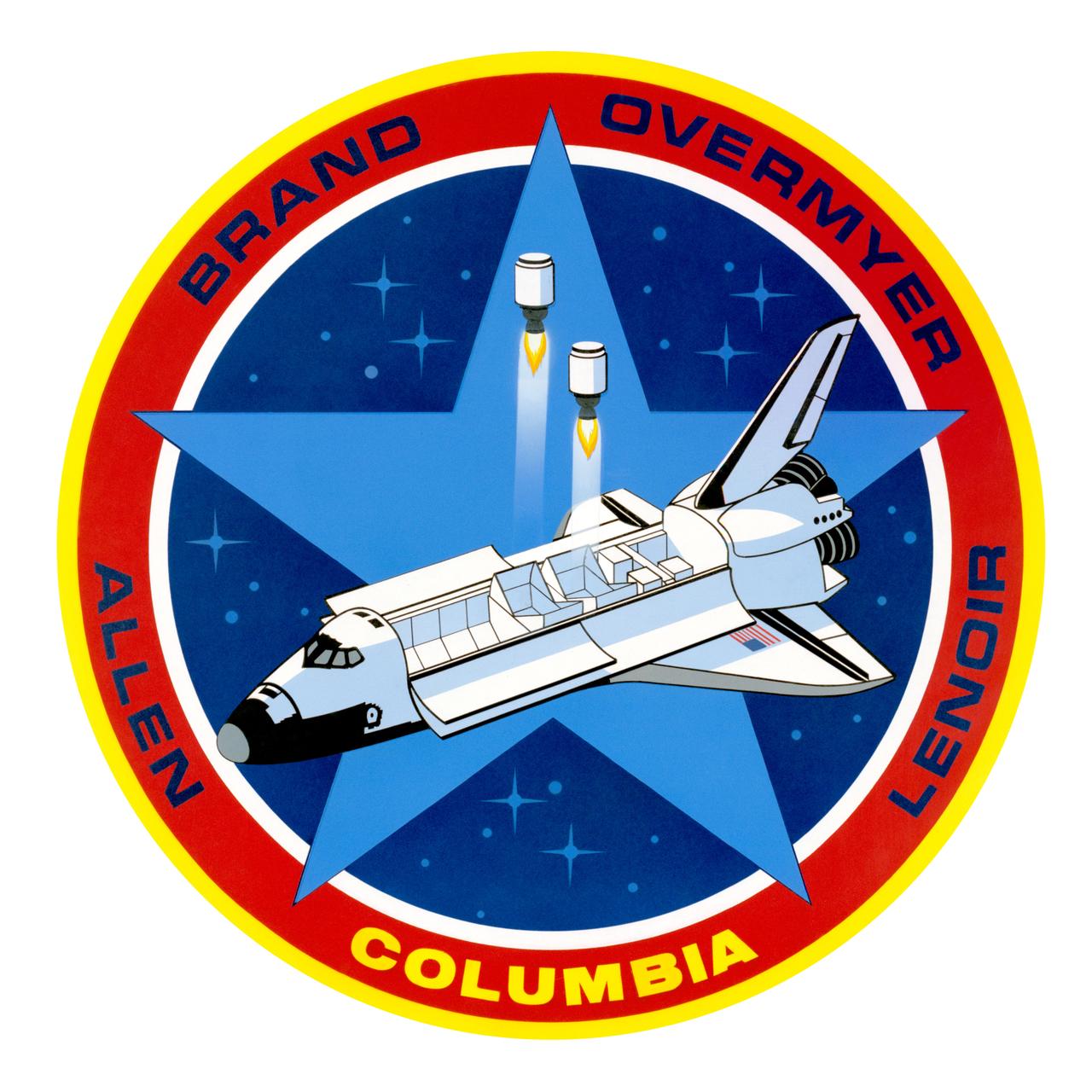
S82-35627 (20 Aug. 1982) --- This is the official crew patch for the fifth (note five points of the star) NASA Space Transportation System (STS-5) flight, scheduled for November of this year. The STS-5 flight following four successful test flights. It will call for the Columbia to be manned by four astronauts ? a space agency first. Crew members for the flights are Vance D. Brand, commander; Robert F. Overmyer, pilot; and William B. Lenoir and Joseph P. Allen, mission specialists. The NASA insignia design for space shuttle flights is reserved for use by the astronauts and for other official use as the NASA Administrator may authorize. Public availability has been approved only in the forms of illustrations by the various news media. When and if there is any change in this policy, which is not anticipated, the change will be publicly announced. Photo credit: NASA