
Lockheed P-38 model. Underslung elongated fuselage with tail.
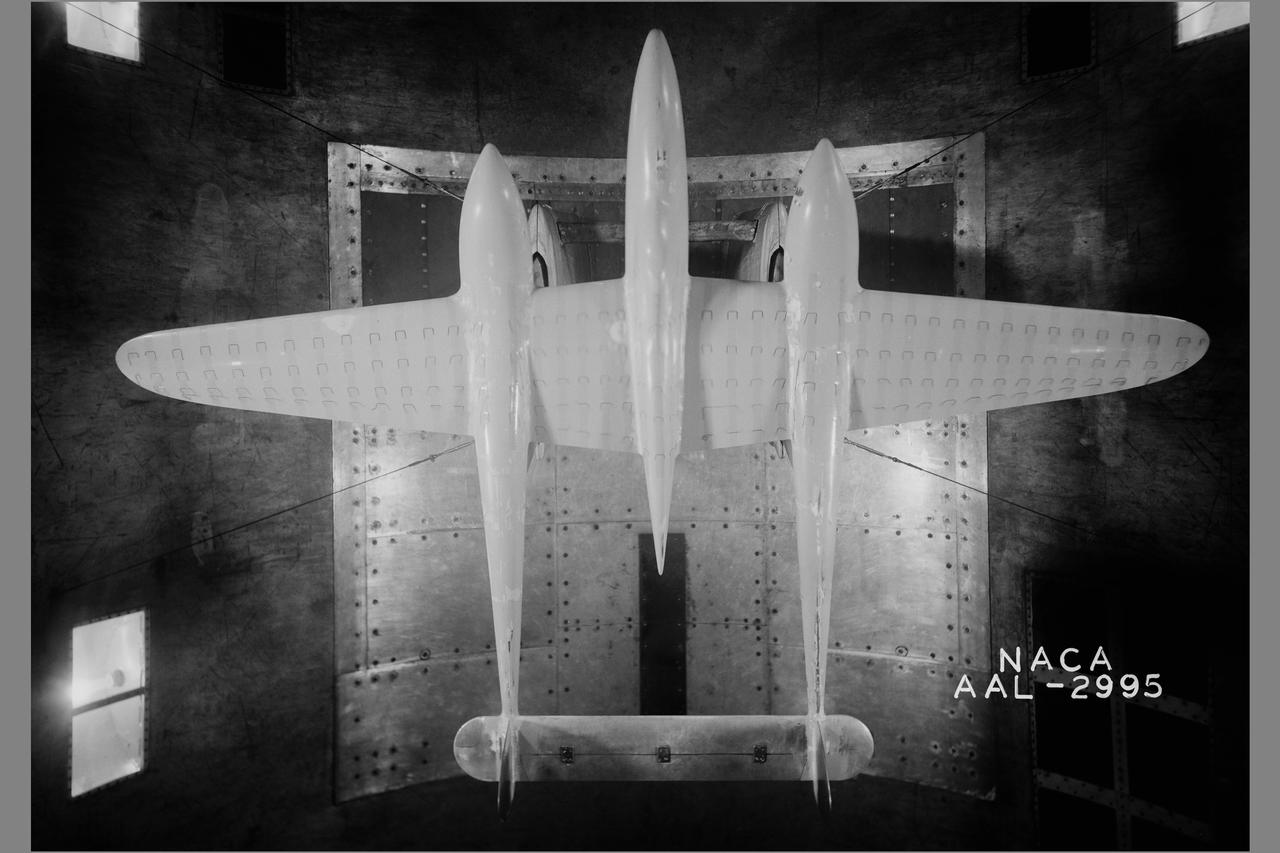
Lockheed P-38 model in 40x80ft w.t. with revised twisted wing at 10 deg. (tuft studies)
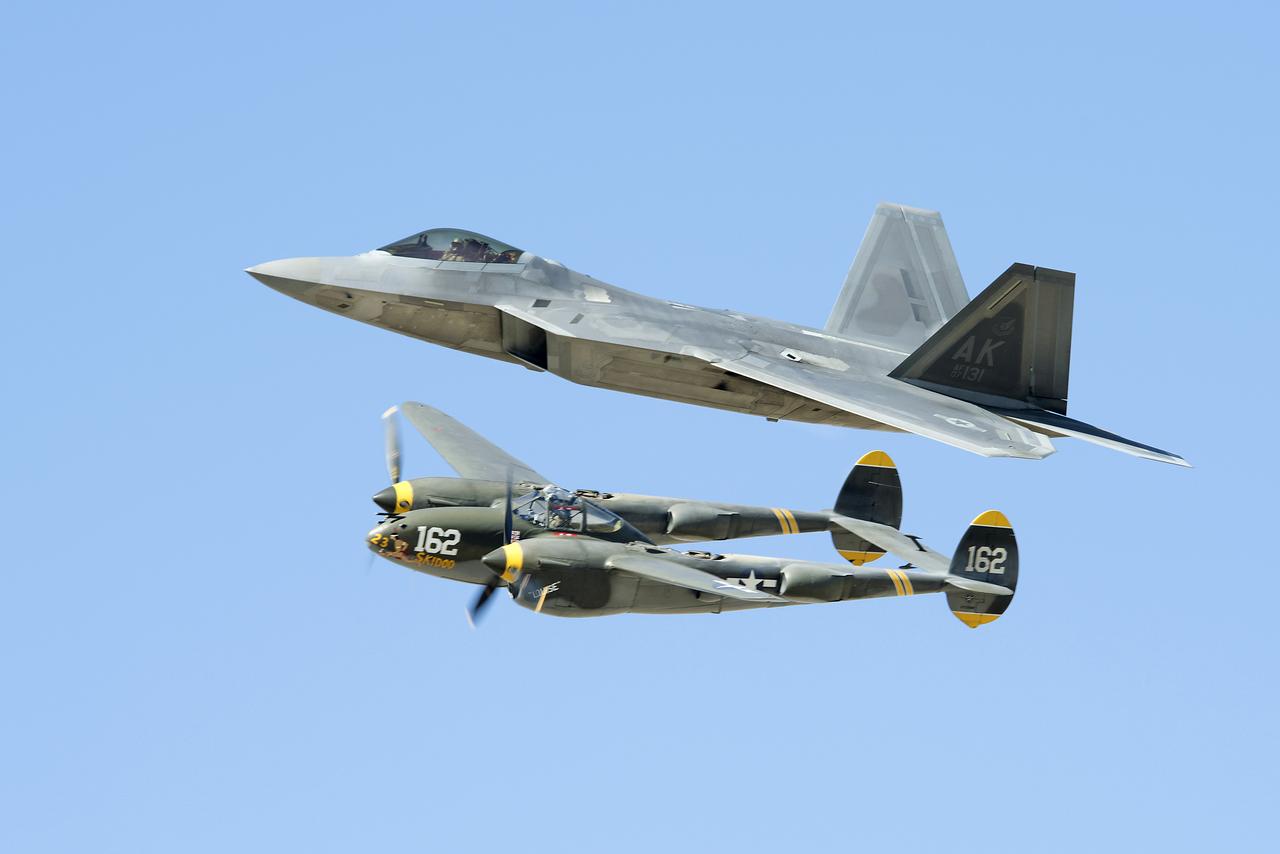
The F-22 and the classic P-38 shares the sky at the Los Angeles County Air Show in Lancaster, California.
The National Advisory Committee for Aeronautics (NACA) Aircraft Engine Research Laboratory acquired two Lockheed P–38J Lightning in October 1944 to augment their burgeoning icing research program. The P–38 was a high-altitude interceptor with a unique twin fuselage configuration. Lockheed designed the aircraft in 1938 and 1939. Its two Allison V–1710 engines carried the aircraft to altitudes up to 40,000 feet. The P–38 was used extensively during World War II in a variety of roles. In August 1943, Lockheed began producing an improved version, the P–38J that included better cockpit heating, engine cooling, and dive flaps. The military loaned the NACA two P–38Js to determine the amount of ice formation on the induction system of the turbosupercharger-equipped engines. In 1944 and 1945 one of the aircraft was subjected to ground tests using an engine blower on the hangar apron. The V–1710 was run over a full range of speeds as different levels of water were injected into the blower and sprayed onto the engine. The other P–38J was flown at 10,000 feet altitude with water sprayed into the engine to simulate rain. The tests confirmed that closing the intercooler flap added protection against the ice by blocking water ingestion and increasing engine heat. NACA pilot Joseph Walker joined the Cleveland laboratory in early 1945 as a physicist. Walker had flown P–38s during World, and later claimed that seeing the NACA’s two P–38Js inspired him to return to his earlier calling as a pilot, this time with the NACA. Walker was particularly active in the icing flight program during his five years of flying in Cleveland.
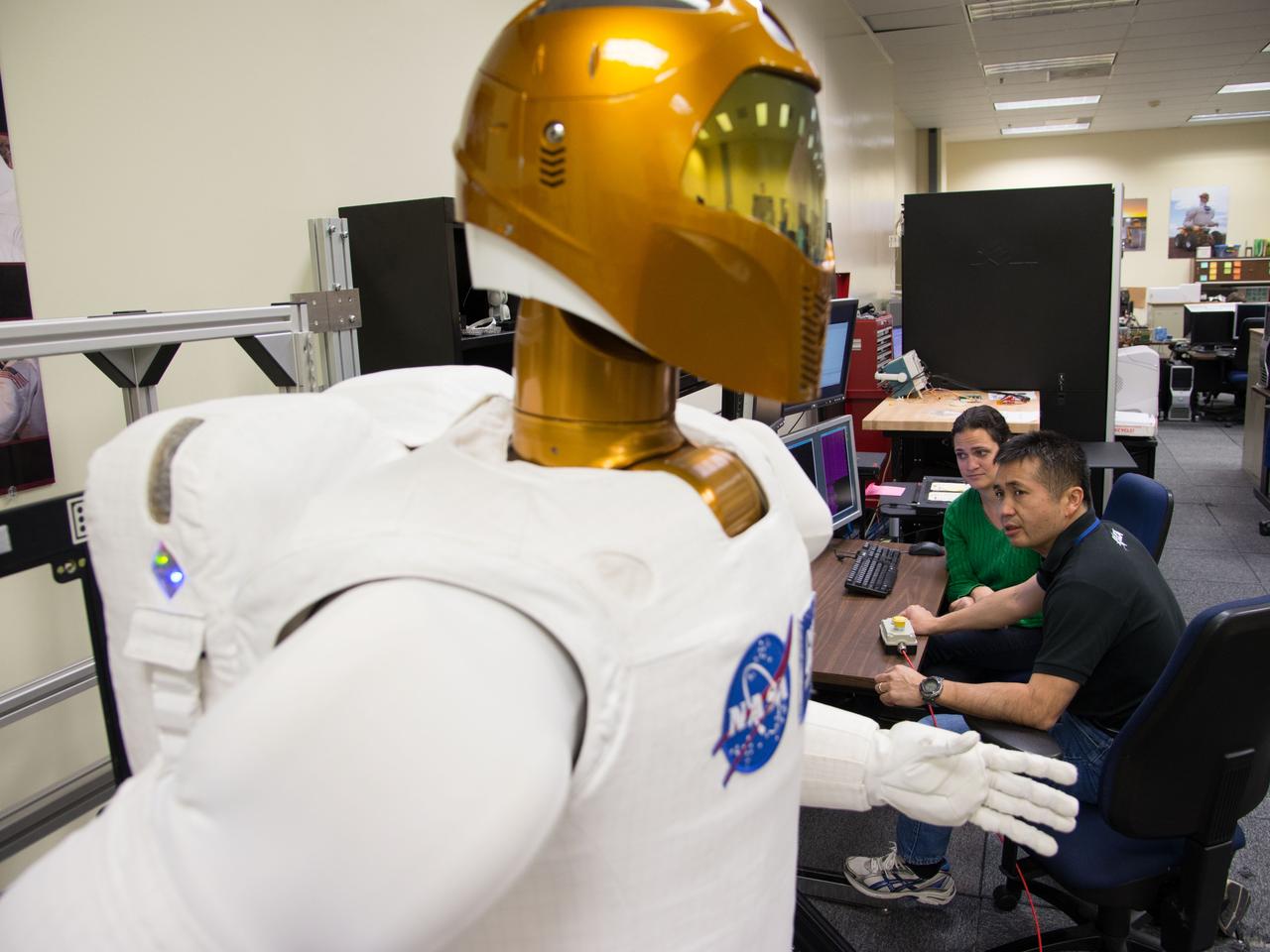
Date: 03-06-13 Location: Bldg 9, Rm 1113 Subjet: Expedition 38/39 JAXA astronaut Koichi Wakata during P Robonaut Taskboard training with Leah Pike and Michael Bentson Photographer: James Blair/NASA
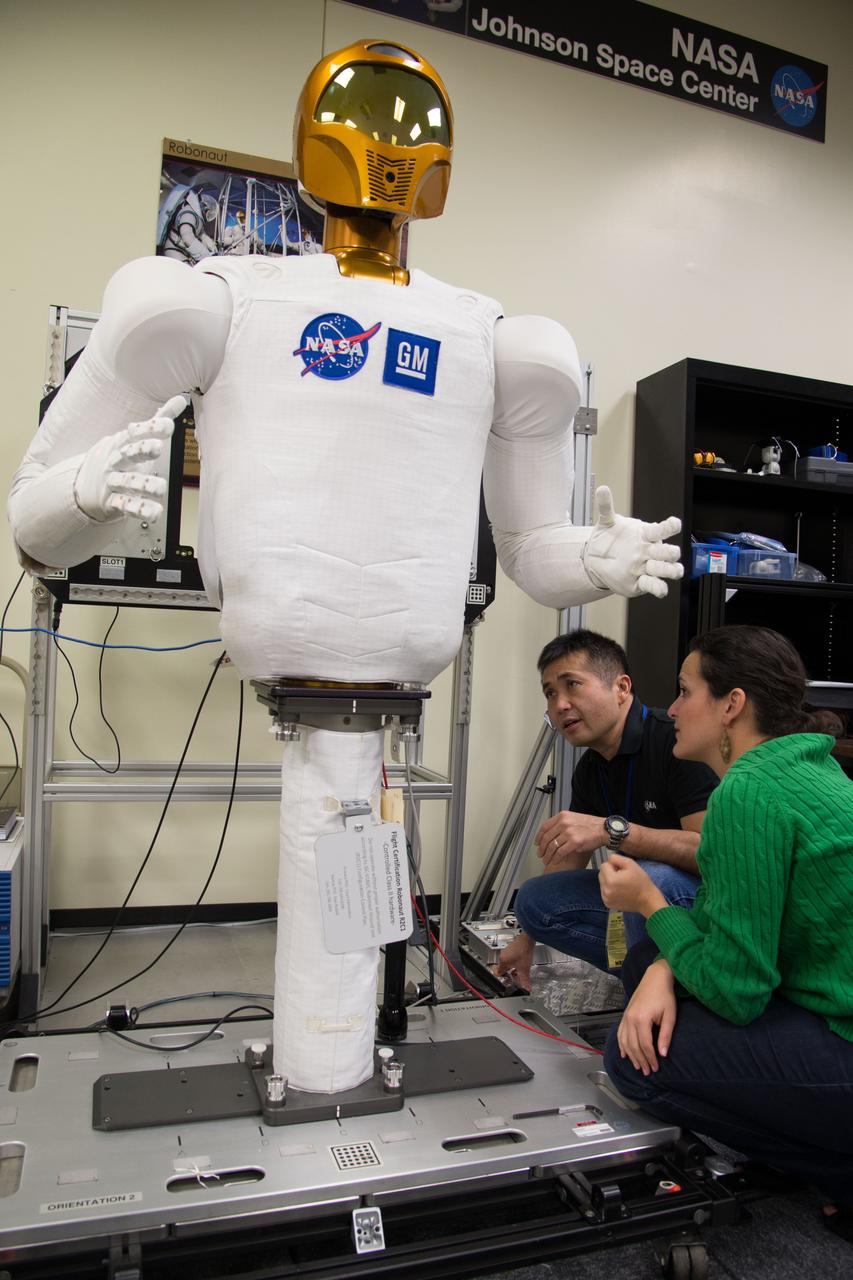
Date: 03-06-13 Location: Bldg 9, Rm 1113 Subjet: Expedition 38/39 JAXA astronaut Koichi Wakata during P Robonaut Taskboard training with Leah Pike and Michael Bentson Photographer: James Blair/NASA
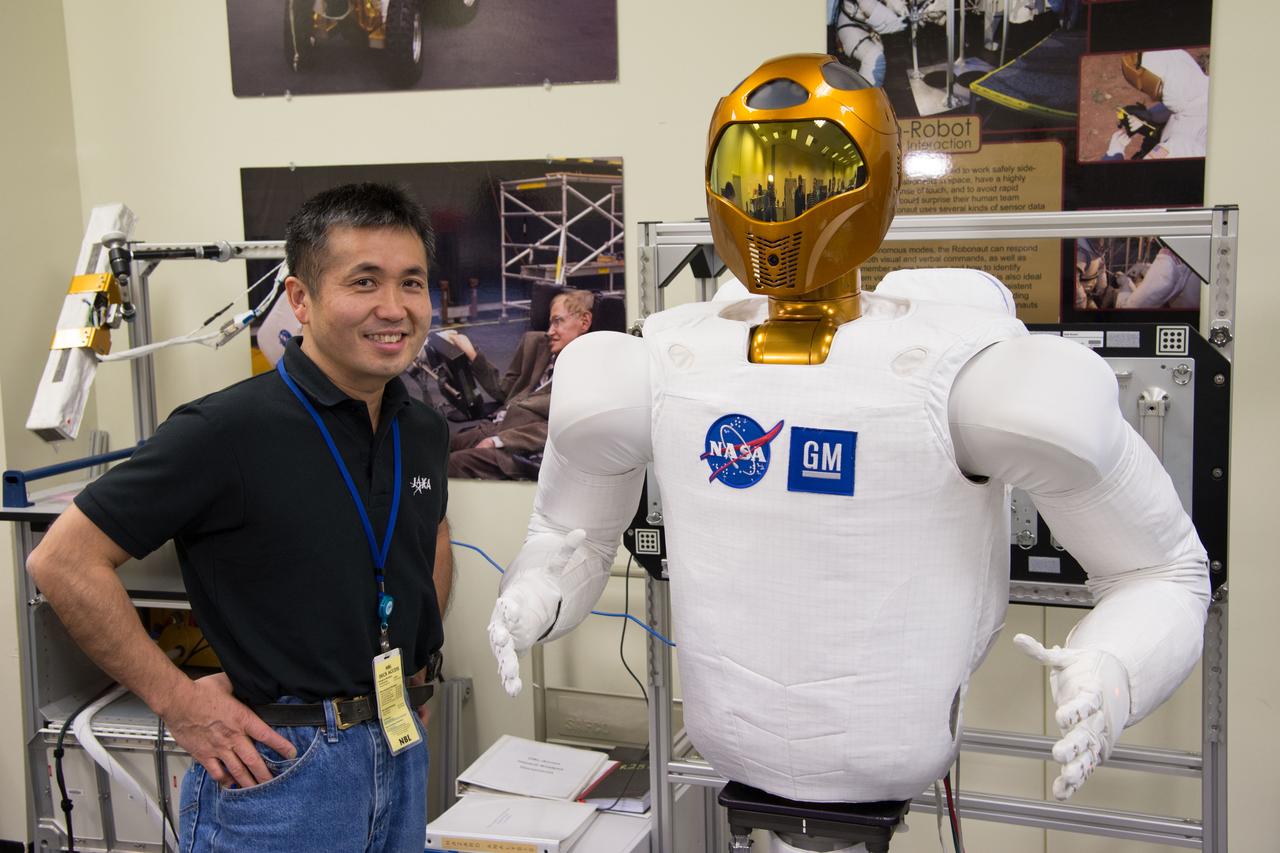
Date: 03-06-13 Location: Bldg 9, Rm 1113 Subjet: Expedition 38/39 JAXA astronaut Koichi Wakata during P Robonaut Taskboard training with Leah Pike and Michael Bentson Photographer: James Blair/NASA
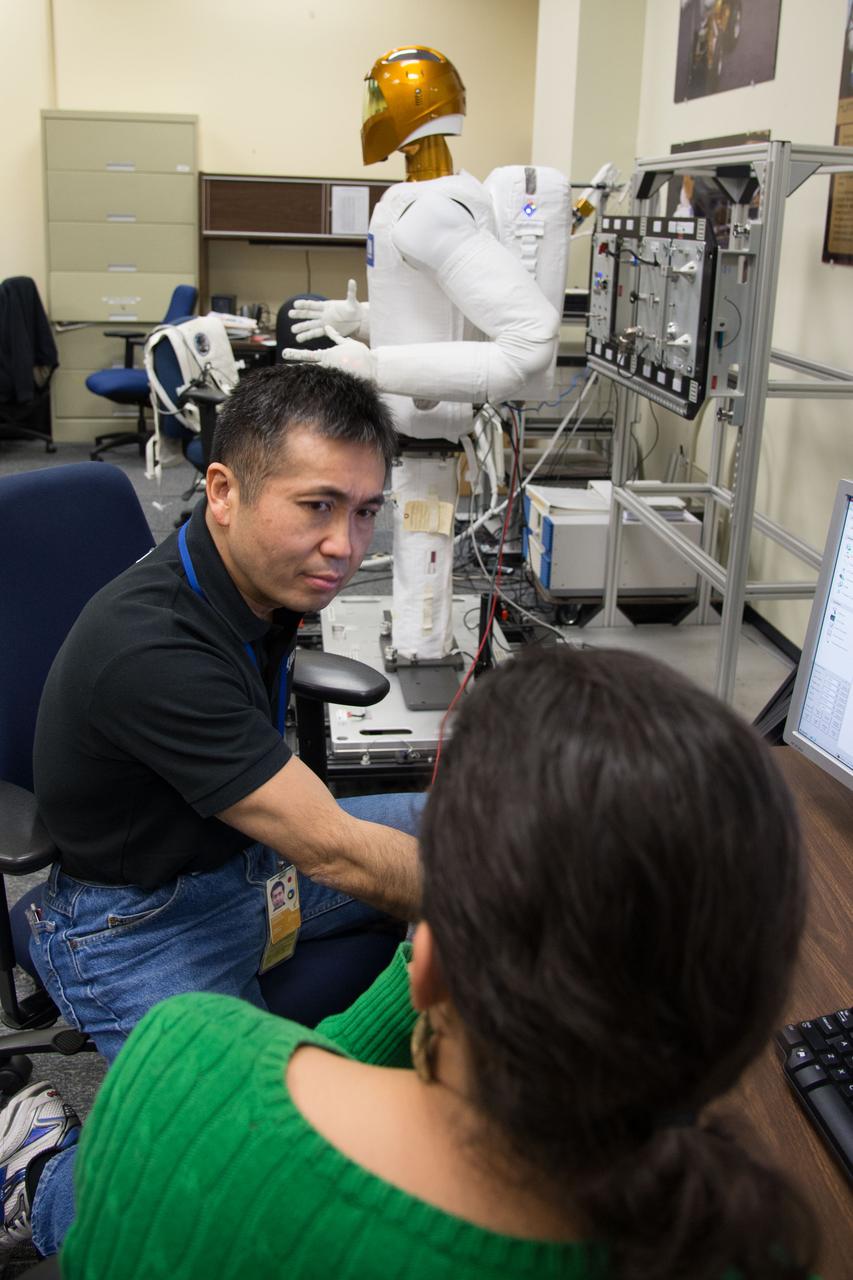
Date: 03-06-13 Location: Bldg 9, Rm 1113 Subjet: Expedition 38/39 JAXA astronaut Koichi Wakata during P Robonaut Taskboard training with Leah Pike and Michael Bentson Photographer: James Blair/NASA
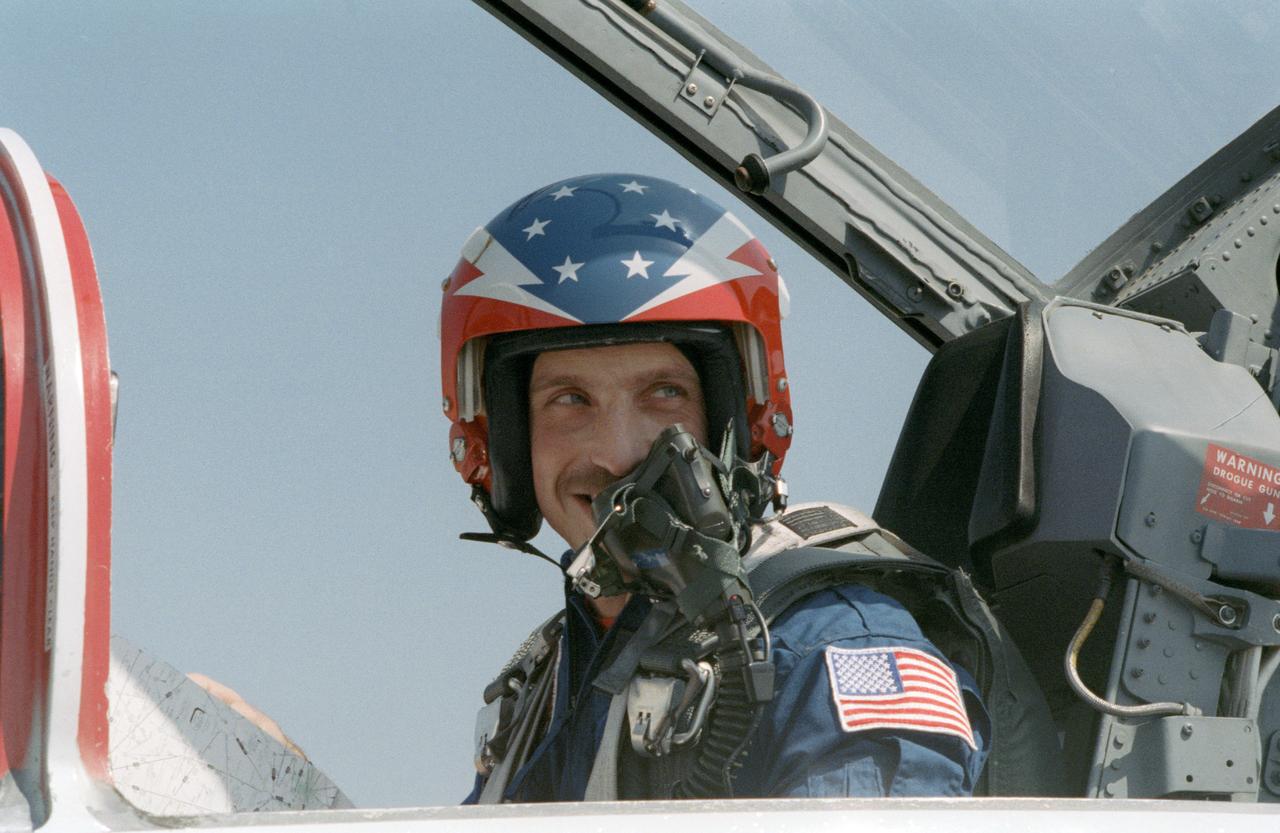
STS029-S-003 (10 March 1989) --- Astronaut James P. Bagian, STS-29 mission specialist, prepares to take a rear-seat ride in a NASA T-38 jet aircraft from Houston's Johnson Space Center to Florida's Kennedy Space Center. In three days, he and four fellow STS-29 crewmembers are scheduled to lift off aboard the Space Shuttle Discovery from Launch Pad 39B.
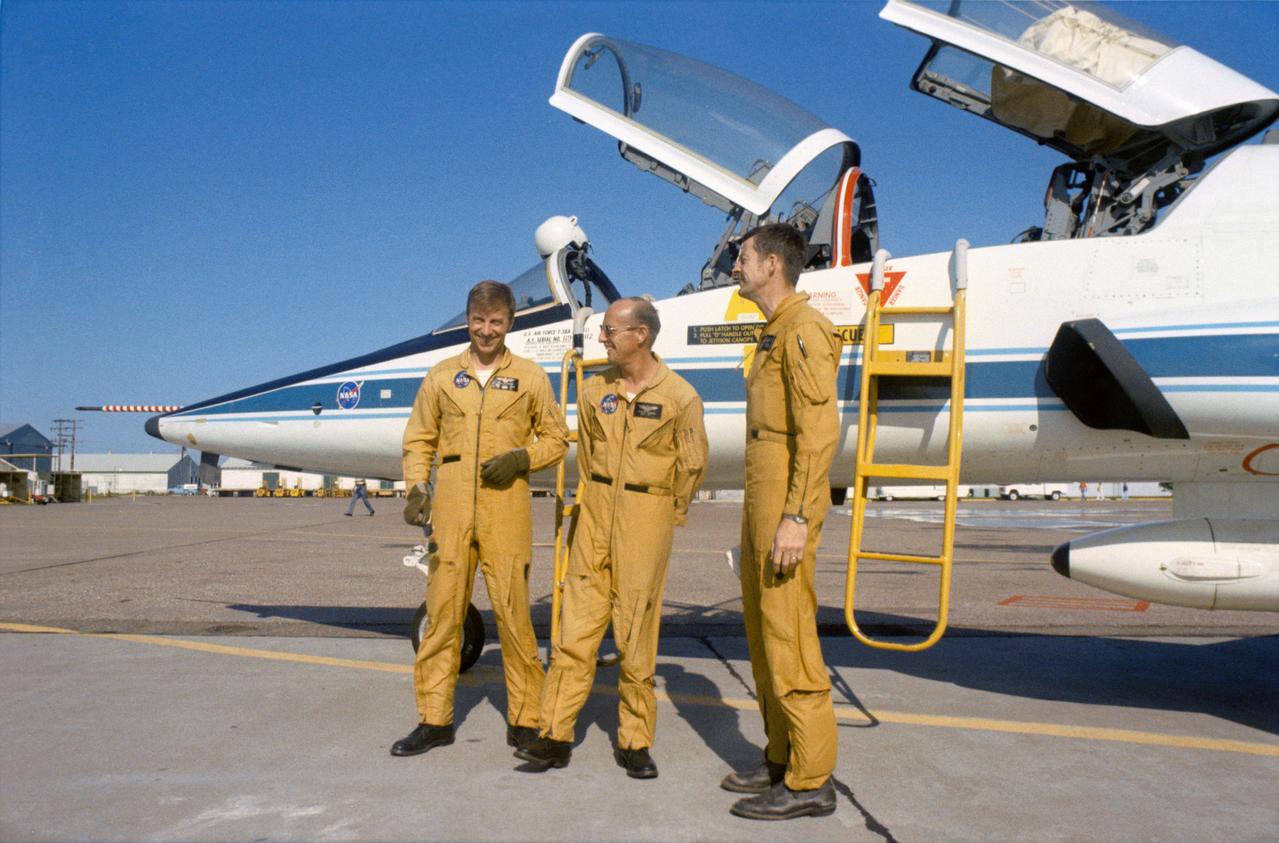
S73-25714 (13 May 1973) --- Members of the prime crew of the first manned Skylab Mission (Skylab 2) stand beside a NASA T-38 jet aircraft trainer at nearby Ellington Air Force Base prior to take off for the Kennedy Space Center, Florida. They are (left to right) astronauts Paul J. Weitz, mission pilot; Charles Conrad Jr., commander; and scientist Joseph P. Kerwin, science pilot. The three crewmen have completed their prelaunch training at JSC. Photo credit: NASA
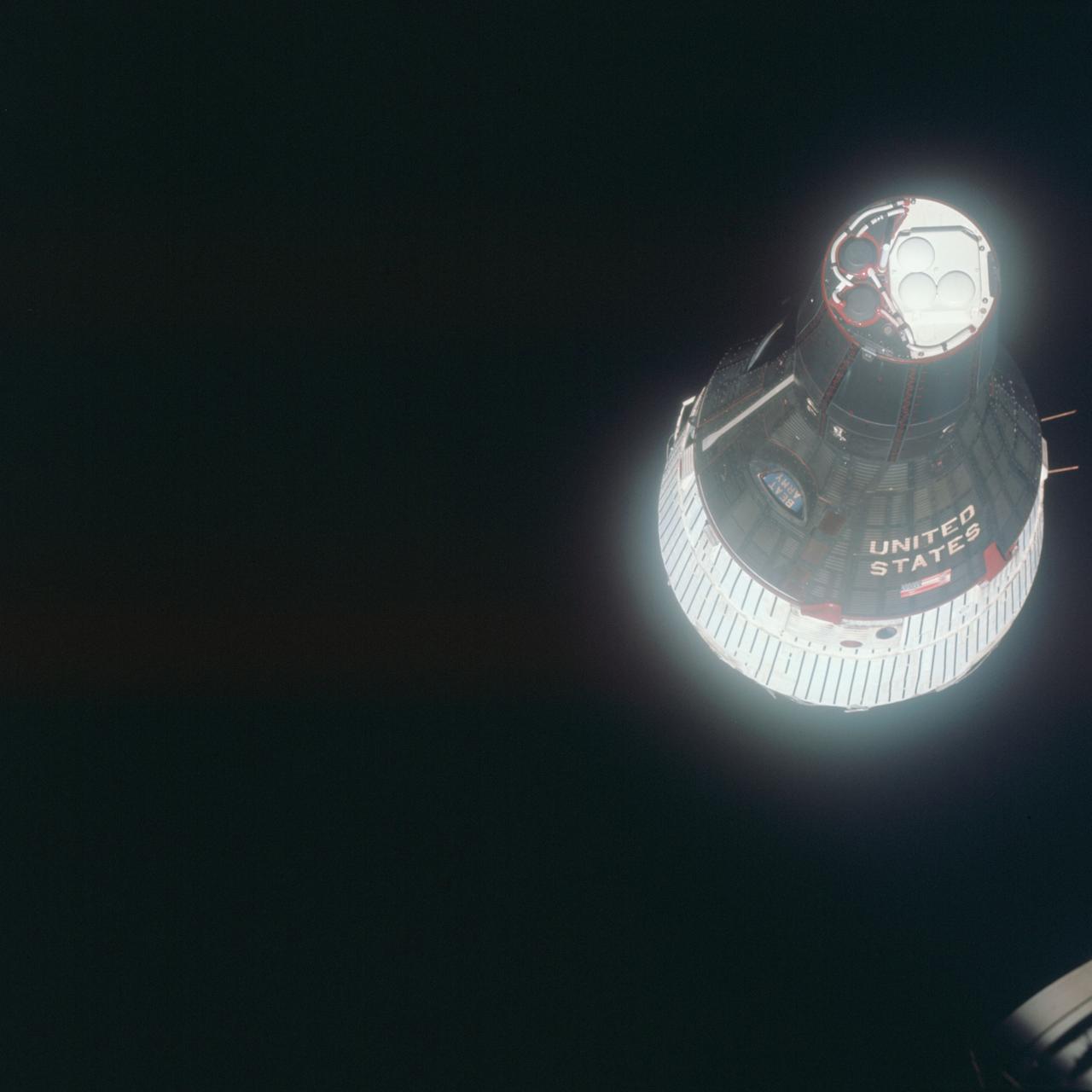
S65-64040 (15 Dec. 1965) --- Nose-on view of the Gemini-6 spacecraft against the blackness of space as seen from Gemini-7 spacecraft. The two spacecraft were approximately 38 feet apart. Astronauts Walter M. Schirra and Thomas P. Stafford were onboard the Gemini-6 spacecraft. Astronauts Frank Borman and James A. Lovell Jr. were aboard the Gemini-7 spacecraft. A "Beat Army" sign can be seen in the Gemini-6 window. Photo credit: NASA
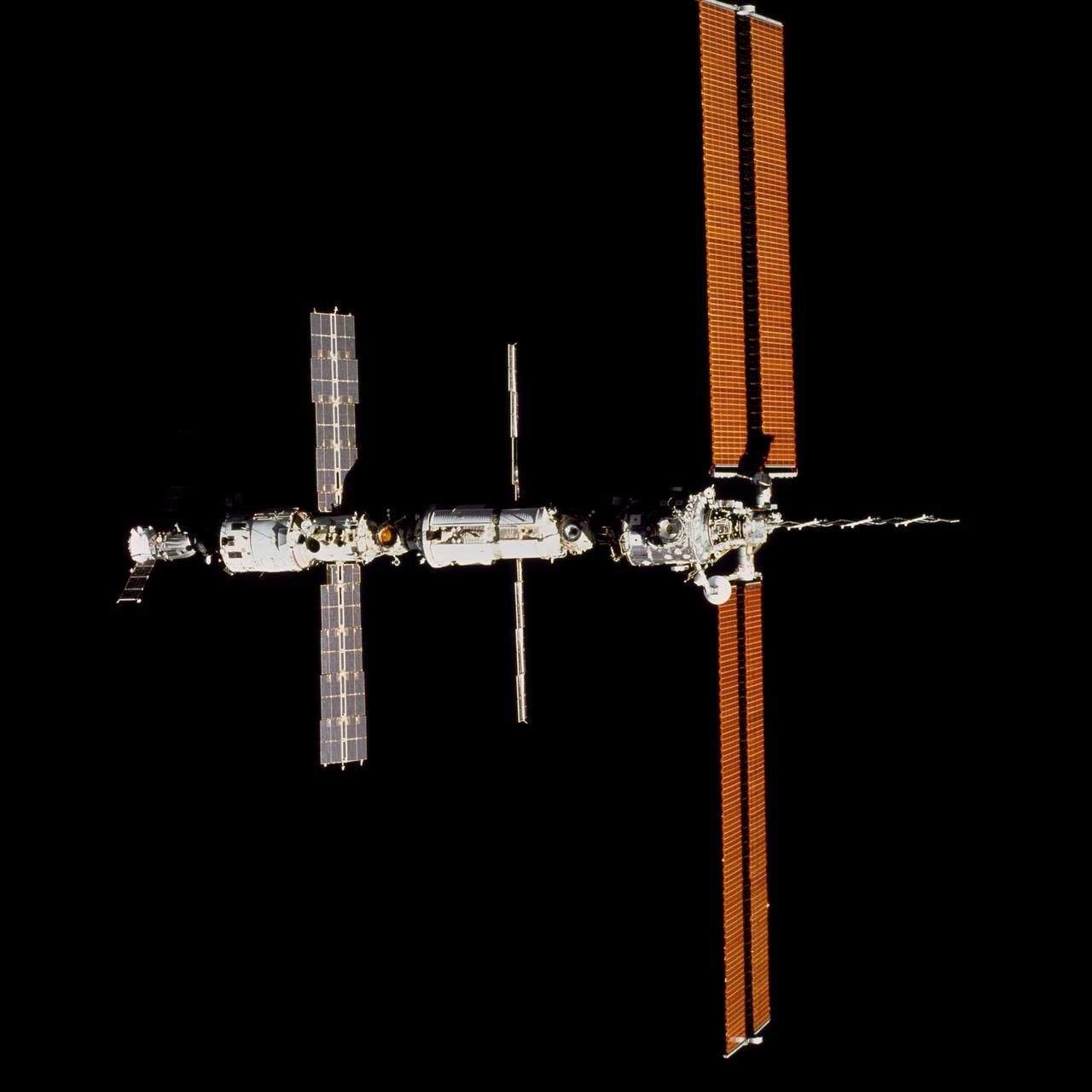
STS097-703-030 (30 Nov.-11 Dec. 2000) --- The International Space Station (ISS) is photographed during a fly-around by the Space Shuttle Endeavour. The 240-foot-long, 38-foot-wide solar array (top) is the newest part and one of the most prominent components of the station. Onboard ISS for about 40 days at the time of this photo were astronaut William M. Shepherd and cosmonauts Yuri P. Gidzenko and Sergei K. Krikalev. Onboard the shuttle were STS-97 astronauts – commander Brent W. Jett, Jr., pilot Mike Bloomfield and mission specialists Marc Garneau of the Canadian Space Agency (CSA), Carlos I. Noriega and Joseph R. Tanner.
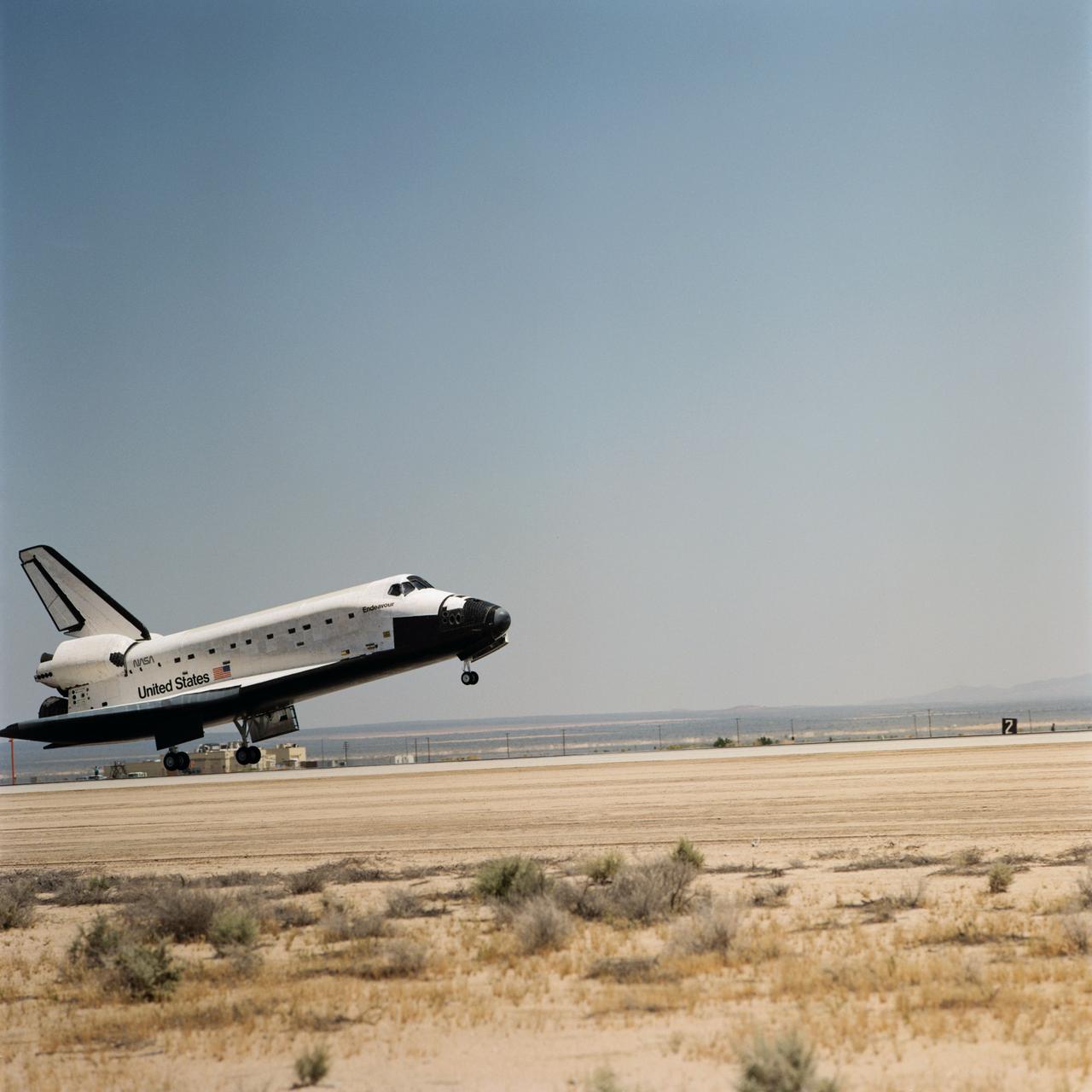
STS049-S-325 (16 May 1992) --- The main landing gear of Endeavour is just about to touch down at Edwards Air Force Base to draw to an end NASA's nine-day STS-49 mission. Crewmembers onboard were astronauts Daniel C. Brandenstein, mission commander; Kevin P. Chilton, pilot; and Thomas D. Akers, Richard J. Hieb, Bruce E. Melnick, Kathryn C. Thornton and Pierre J. Thout, all mission specialists. Landing occurred at 1:36:38 p.m. (PDT), May 16, 1992.
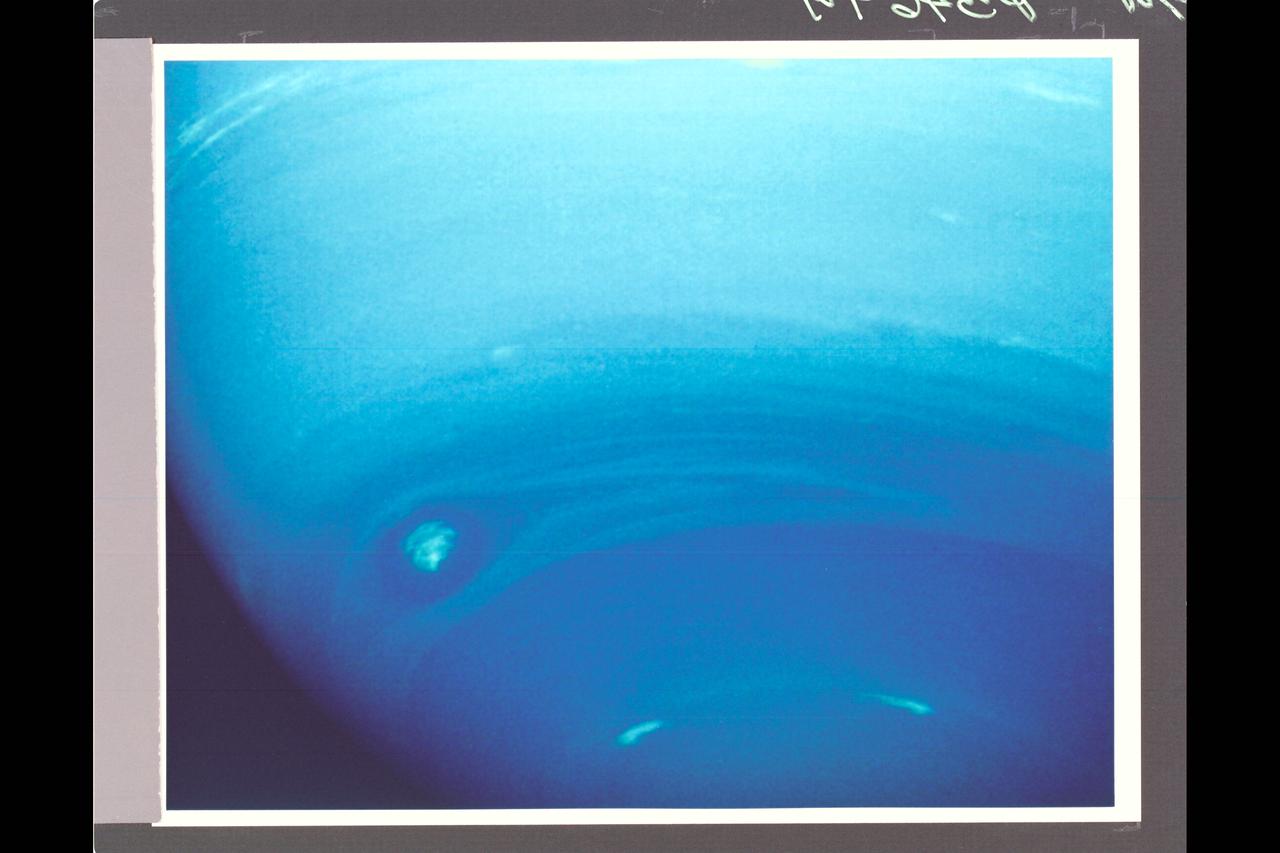
Range : 4.2 million km. ( 2.6 million miles ) P-34649 This photograph of Neptune's southern hemisphere taken by Voyager 2's narrow angle camera, through the green and clear filters. The smallest feature that can be seen are 38 km ( 24 miles ) across. the almond shaped structure at the left is a large cloud system that has been seen for several weeks. Internal details in the feature have become increasingly apparent as Voyager 2 has approached. Systems with similiar shapes in Jupiter's atmosphere rotate about their centers, rolling in the local winds that increase toward the south. However, the wispy nature of the white central clouds in this Neptunian feature make confirmation of the syste.m's rotation difficult
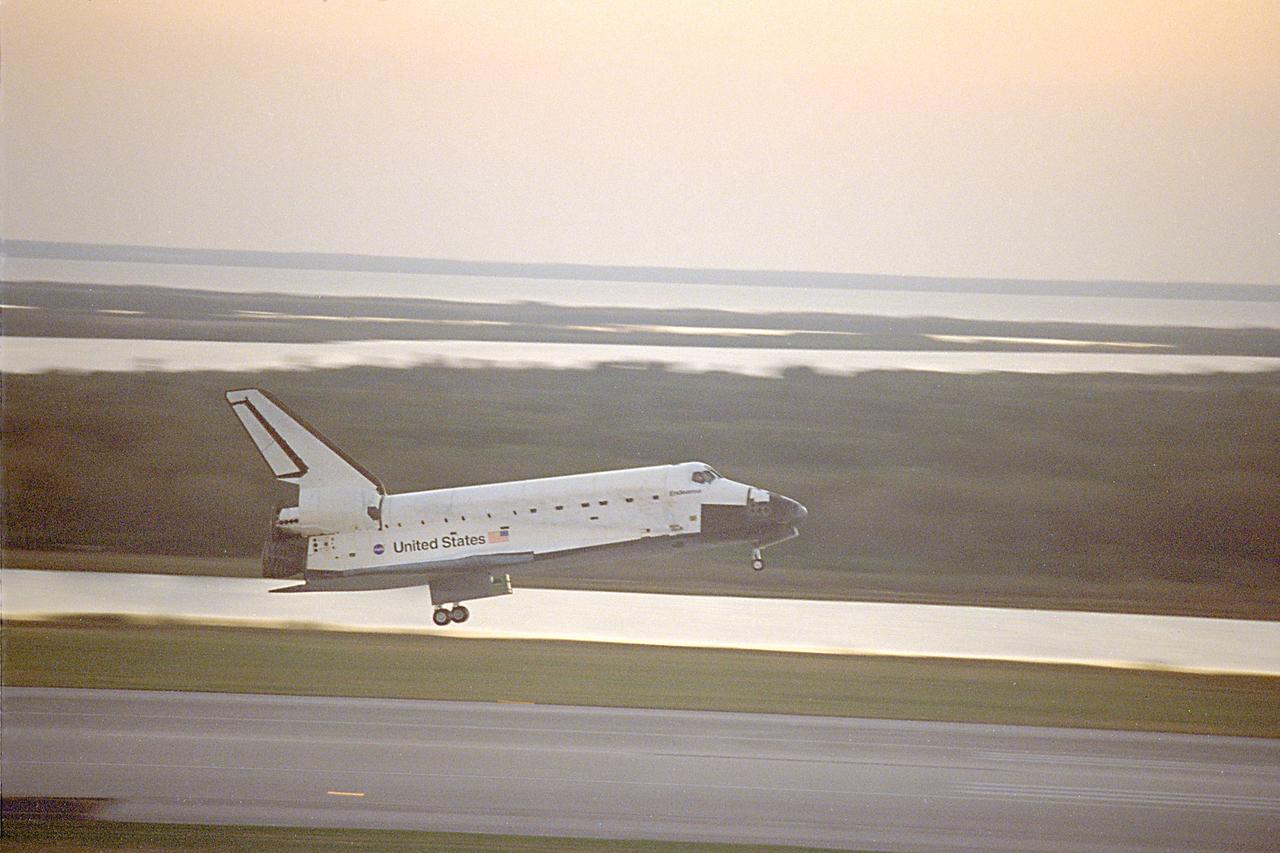
STS099-S-023 (22 February 2000) --- The Space Shuttle Endeavour prepares to land on Kennedy Space Center’s (KSC's) Shuttle Landing Facility Runway 33 to complete the 11-day, 5-hour, 38-minute-long STS-99 mission. Main gear touchdown was at 6:22:23 p.m. (EST) on February 22, 2000. The landing occurred following the completion of orbit 181. Nose gear touchdown was at 6:22:35 p.m., with wheel stop at 6:23:25 p.m. At the controls were Kevin R. Kregel, mission commander; and Dominic L. Gorie, pilot. The mission specialists onboard were Janet L. Kavandi and Janice Voss along with Japan's Mamoru Mohri and European Space Agency’s (ESA's) Gerhard P. J. Thiele.
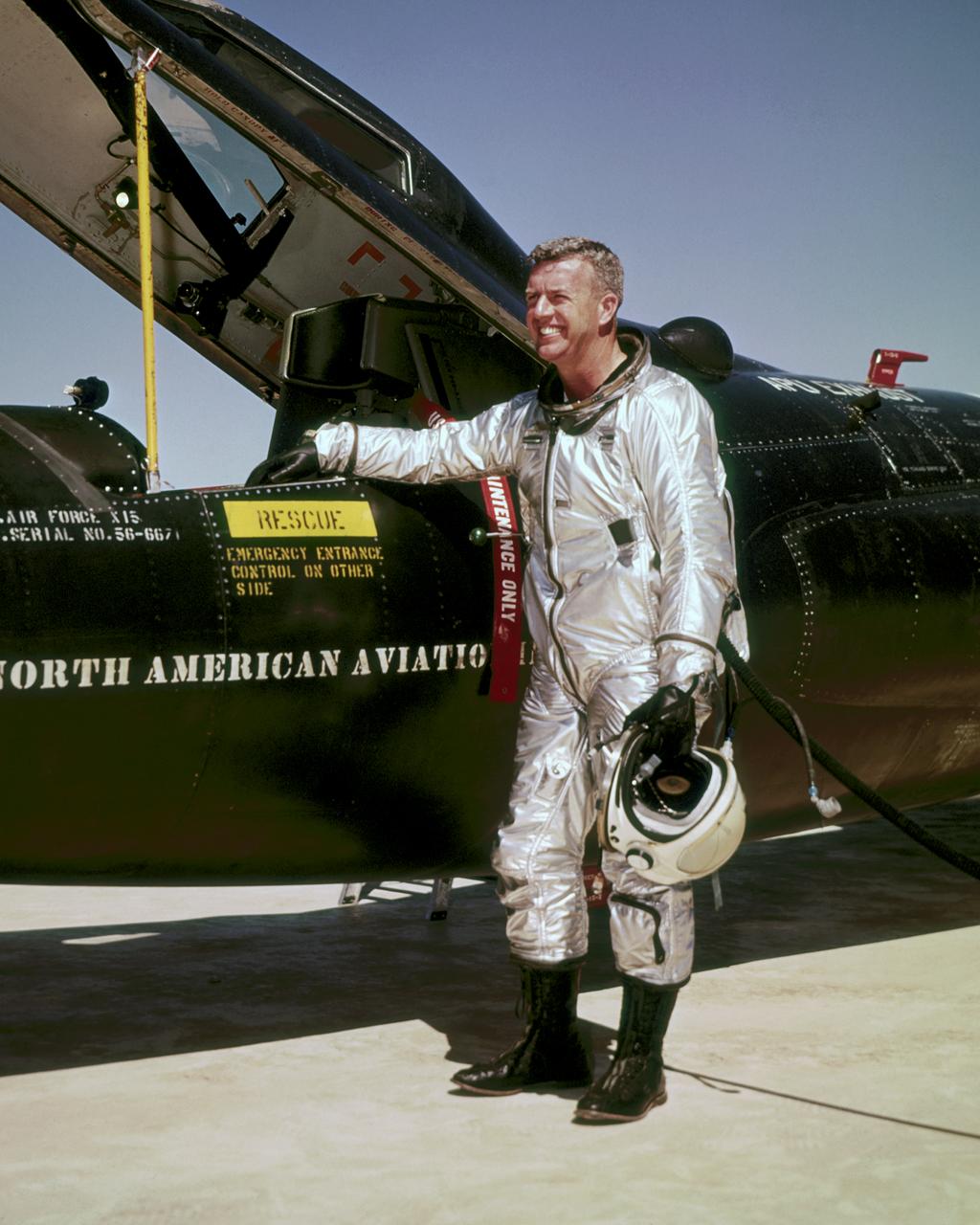
Joseph A. Walker was a Chief Research Pilot at the NASA Dryden Flight Research Center during the mid-1960s. He joined the NACA in March 1945, and served as project pilot at the Edwards flight research facility on such pioneering research projects as the D-558-1, D-558-2, X-1, X-3, X-4, X-5, and the X-15. He also flew programs involving the F-100, F-101, F-102, F-104, and the B-47. Walker made the first NASA X-15 flight on March 25, 1960. He flew the research aircraft 24 times and achieved its fastest speed and highest altitude. He attained a speed of 4,104 mph (Mach 5.92) during a flight on June 27, 1962, and reached an altitude of 354,300 feet on August 22, 1963 (his last X-15 flight). He was the first man to pilot the Lunar Landing Research Vehicle (LLRV) that was used to develop piloting and operational techniques for lunar landings. Walker was born February 20, 1921, in Washington, Pa. He lived there until graduating from Washington and Jefferson College in 1942, with a B.A. degree in Physics. During World War II he flew P-38 fighters for the Air Force, earning the Distinguished Flying Cross and the Air Medal with Seven Oak Clusters. Walker was the recipient of many awards during his 21 years as a research pilot. These include the 1961 Robert J. Collier Trophy, 1961 Harmon International Trophy for Aviators, the 1961 Kincheloe Award and 1961 Octave Chanute Award. He received an honorary Doctor of Aeronautical Sciences degree from his alma mater in June of 1962. Walker was named Pilot of the Year in 1963 by the National Pilots Association. He was a charter member of the Society of Experimental Test Pilots, and one of the first to be designated a Fellow. He was fatally injured on June 8, 1966, in a mid-air collision between an F-104 he was piloting and the XB-70.
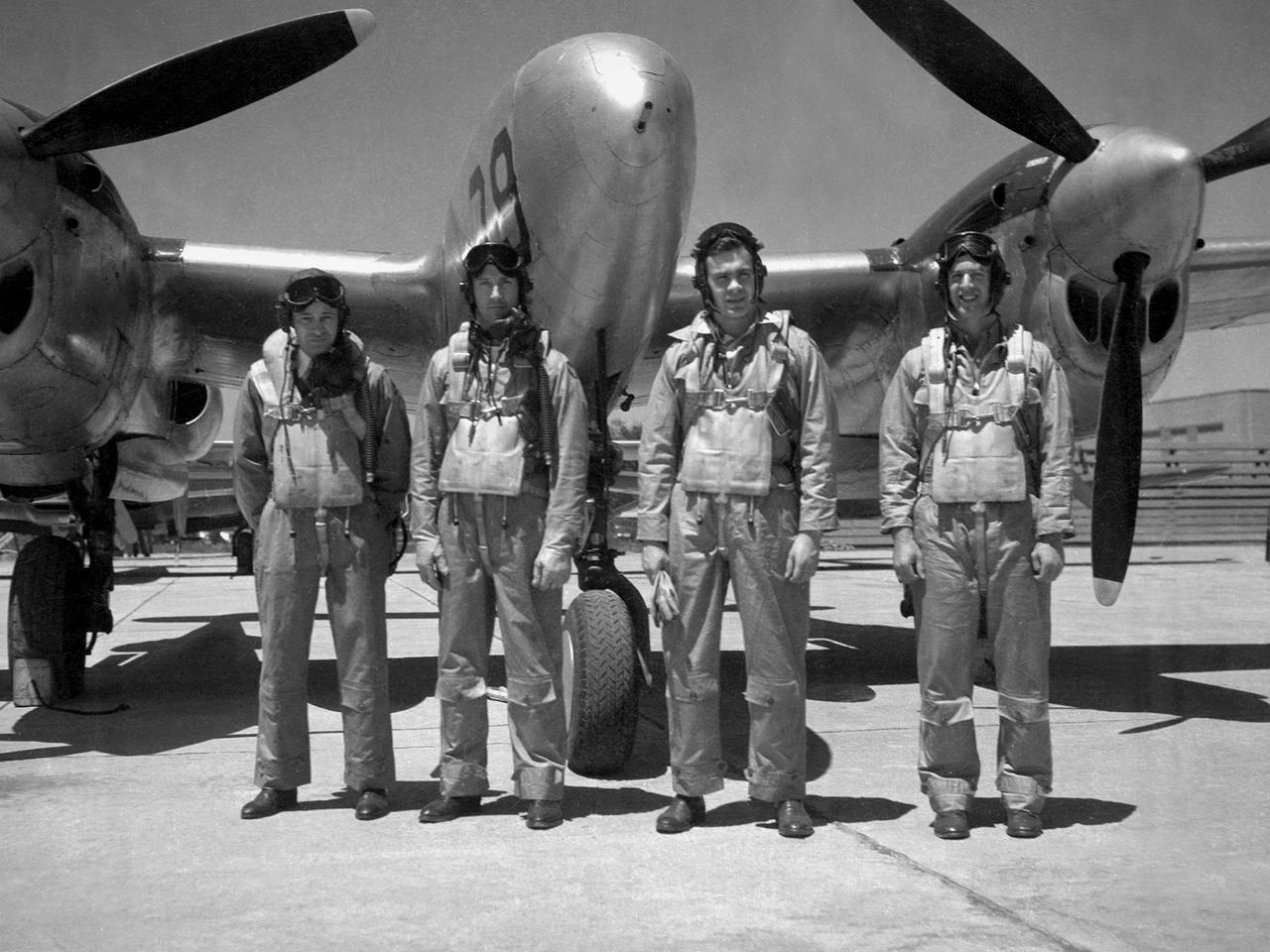
The Aircraft Engine Research Laboratory’s pilot corps during the final days of World War II: from left to right, Joseph Vensel, Howard Lilly, William Swann, and Joseph Walker. William “Eb” Gough joined the group months after this photograph. These men were responsible for flying the various National Advisory Committee for Aeronautics (NACA) aircraft to test new engine modifications, study ice buildup, and determine fuel performance. Vensel, a veteran pilot from Langley, was the Chief of Flight Operations and a voice of reason at the laboratory. In April 1947 Vensel was transferred to lead the new Muroc Flight Tests Unit in California until 1966. Lilly was a young pilot with recent Navy experience. Lilly also flew in the 1946 National Air Races. He followed Vensel to Muroc in July 1947 where he became the first NACA pilot to penetrate the sound barrier. On May 3, 1948, Lilly became the first NACA pilot to die in the line of duty. Swann was a young civilian pilot when he joined the NACA. He spent his entire career at the Cleveland laboratory, and led the flight operations group from the early 1960s until 1979. Two World War II veterans joined the crew after the war. Walker was a 24-year-old P–38 reconnaissance pilot. He joined the NACA as a physicist in early 1945 but soon worked his way into the cadre of pilots. Walker later gained fame as an X-plane pilot at Muroc and was killed in a June 1966 fatal crash. Gough survived being shot down twice during the war and was decorated for flying rescue missions in occupied areas.