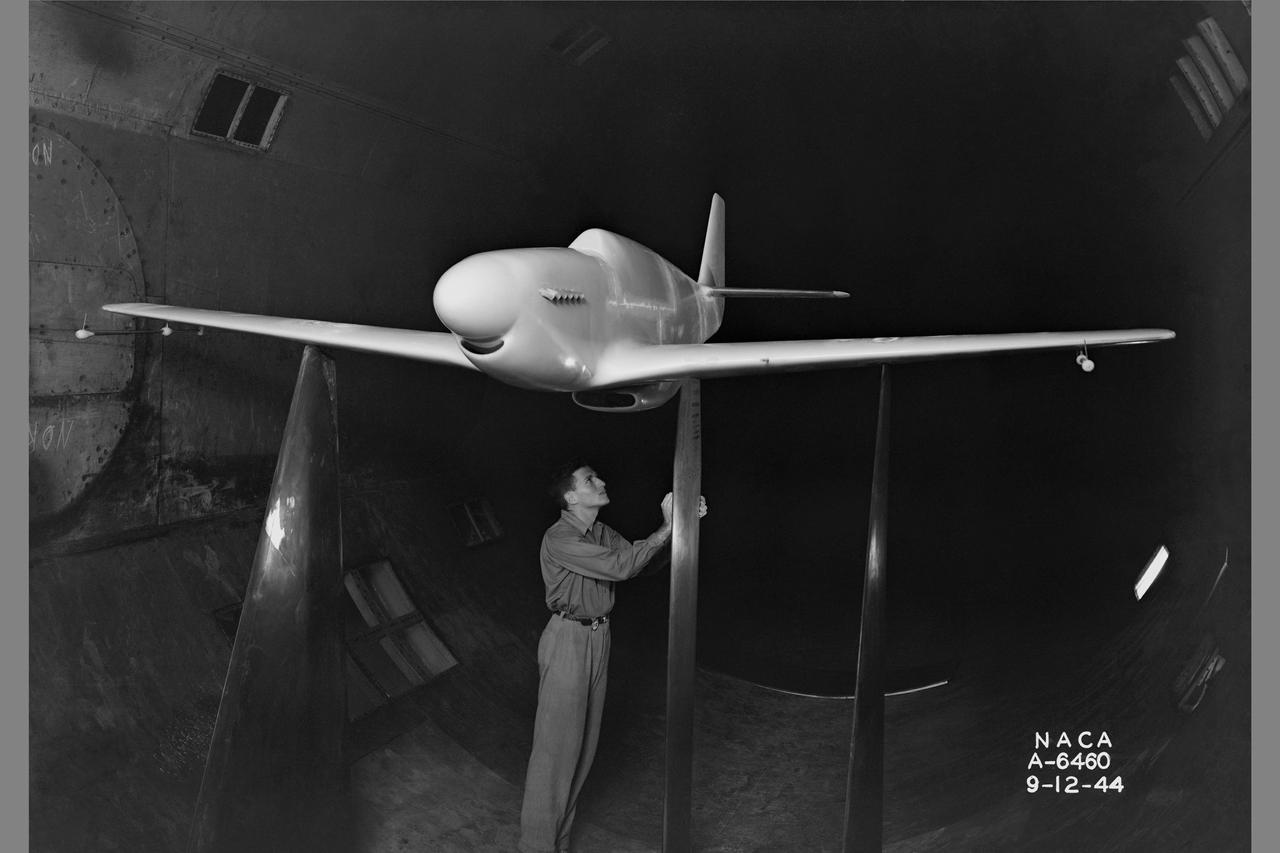
North American P-51B 1/3 scale model with dummy airspeed booms & mounted on thin struts in 16ft w.t.
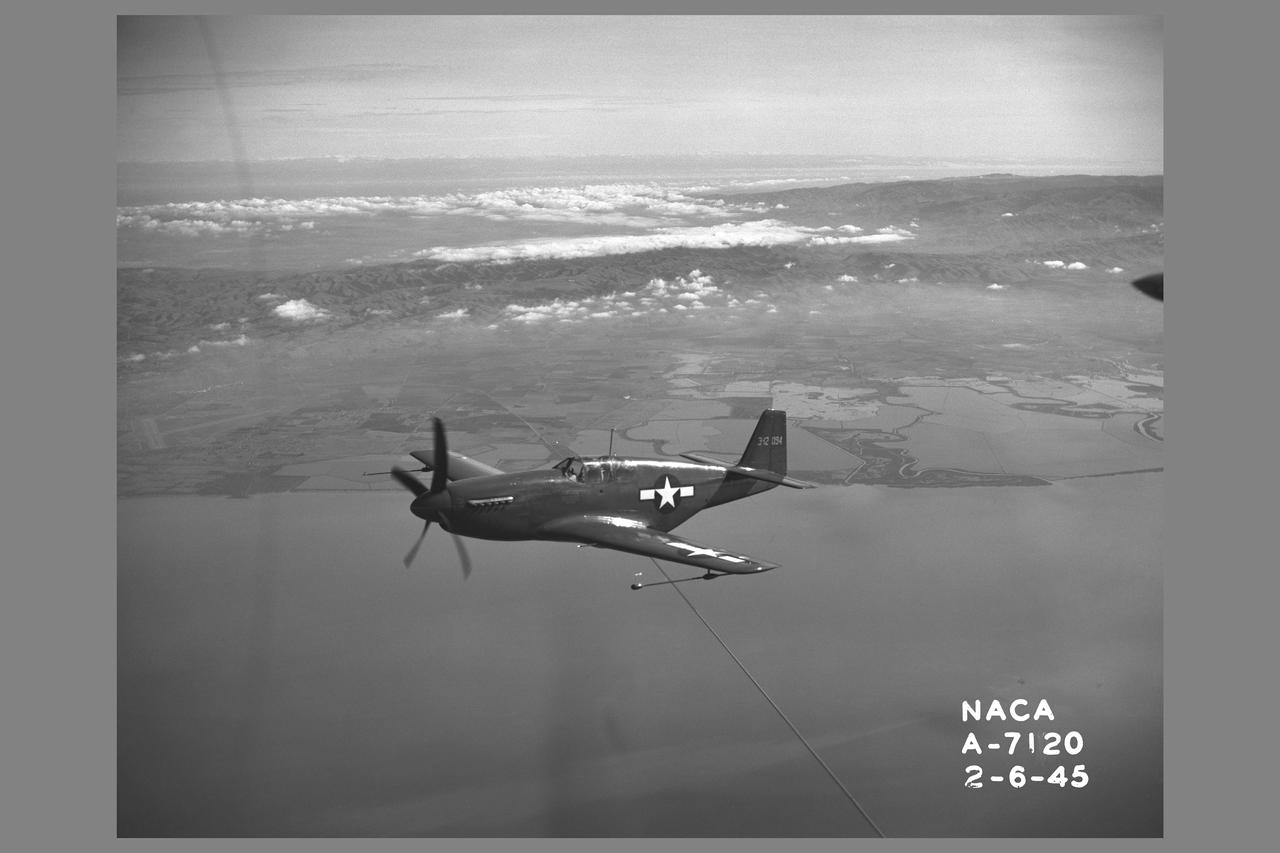
North American P-51B 'Mustang' fighter in flight over bay area. The P-51 with its new laminar-flow wing sections developed by NACA was the first airplane selected for testing of airplane drag in flight and wind tunnel comparison
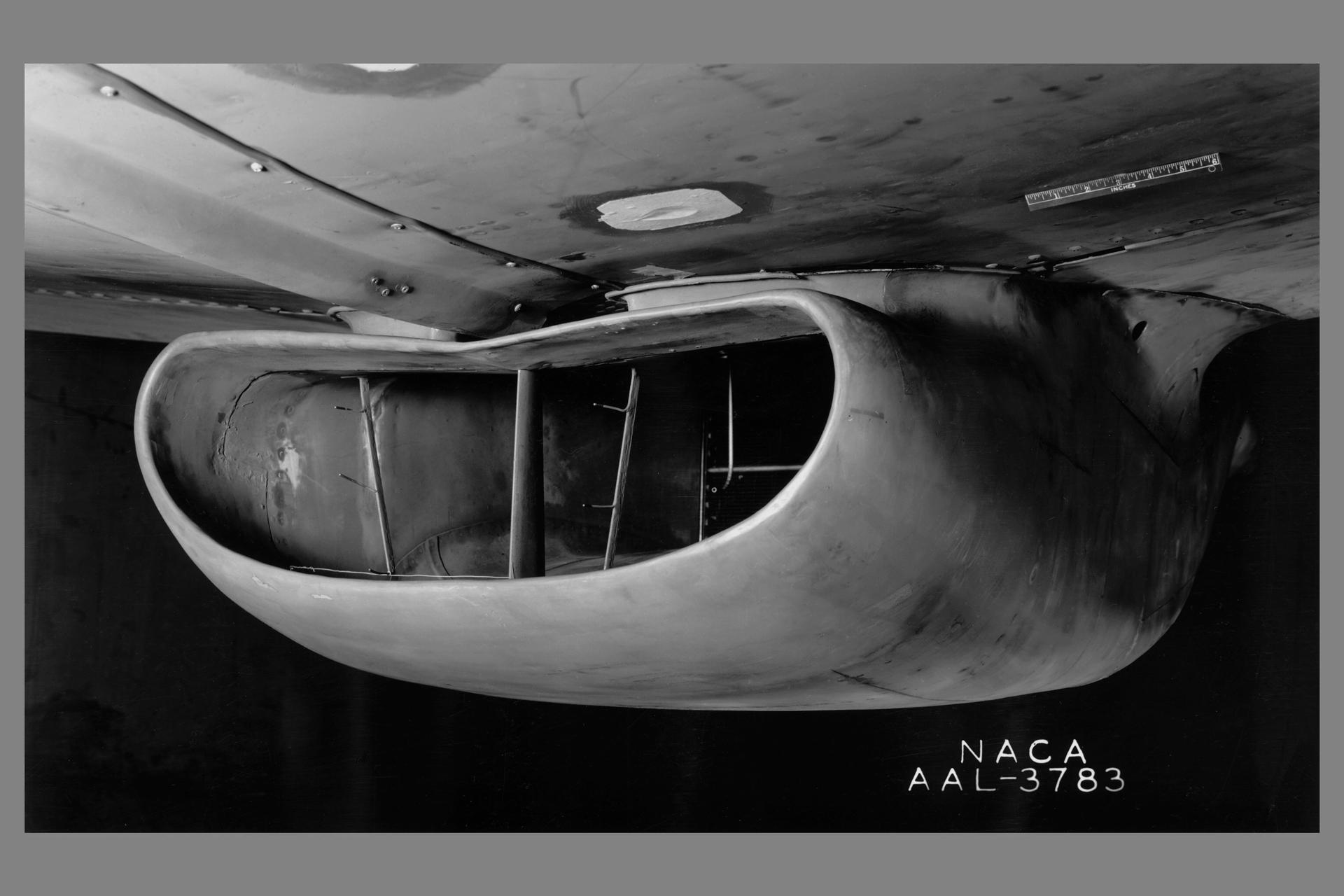
A portion of the North American P-51B airplane was tested in the 16-foot wind tunnel to devise a means of eliminating a rumble which occurred in the radiator duct system. The actual fuselage and center portion of the airplane was installed in the tunnel for this purpose as is shown. A change in the form of the duct was made and tested, which eliminated the rumble. The entrance to the original radiator duct is indicated in this photograph, and the revised form of the duct entrance in photographer AAL-3926.
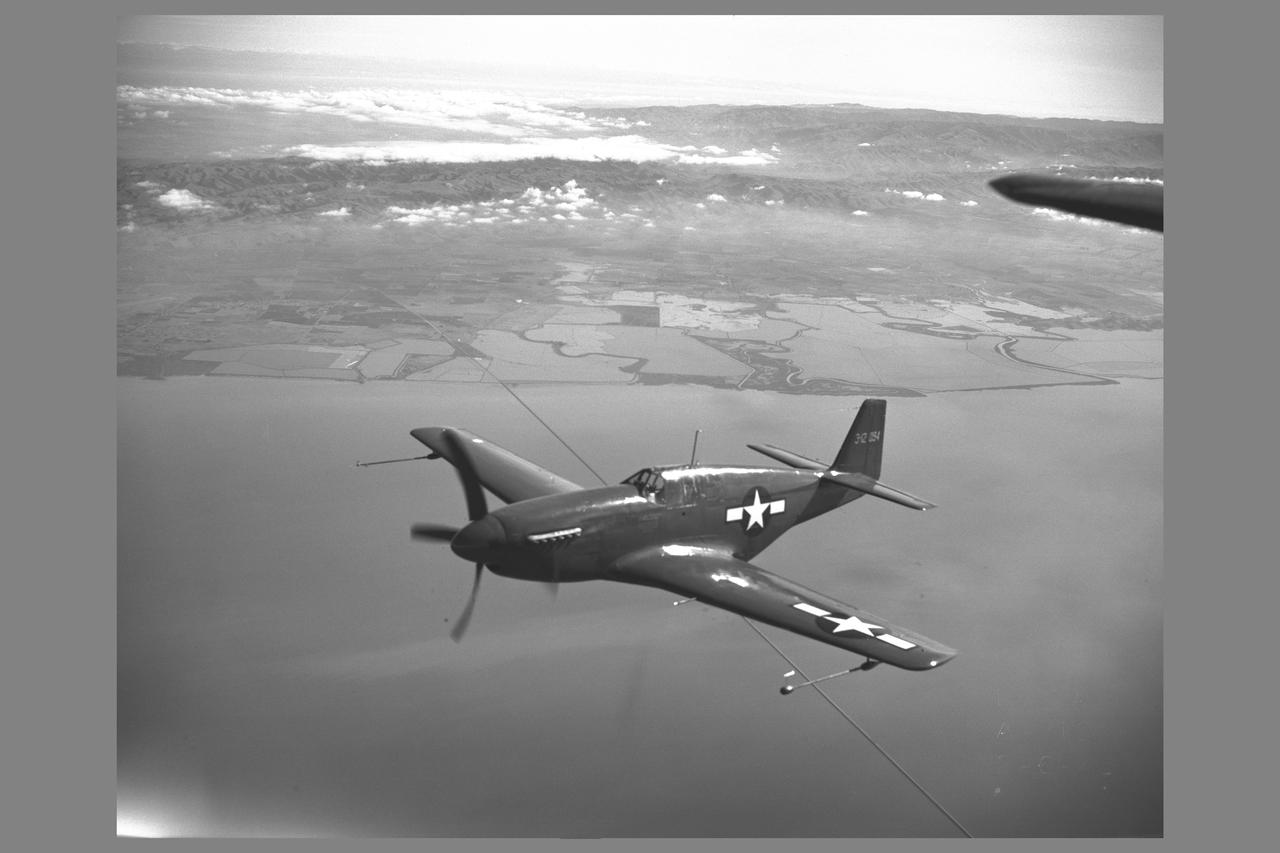
North American P-51B 'Mustang' fighter in flight over bay area. The P-51 with its new laminar-flow wing sections developed by NACA was the first airplane selected for testing of airplane drag in flight and wind tunnel comparison NOTE: used in NASA Publication; Flight Research at Ames: 57 Years of Development and Validation of Aeronautical Technology' Transonic Model Testing fig. 9 NASA SP-1998-3300
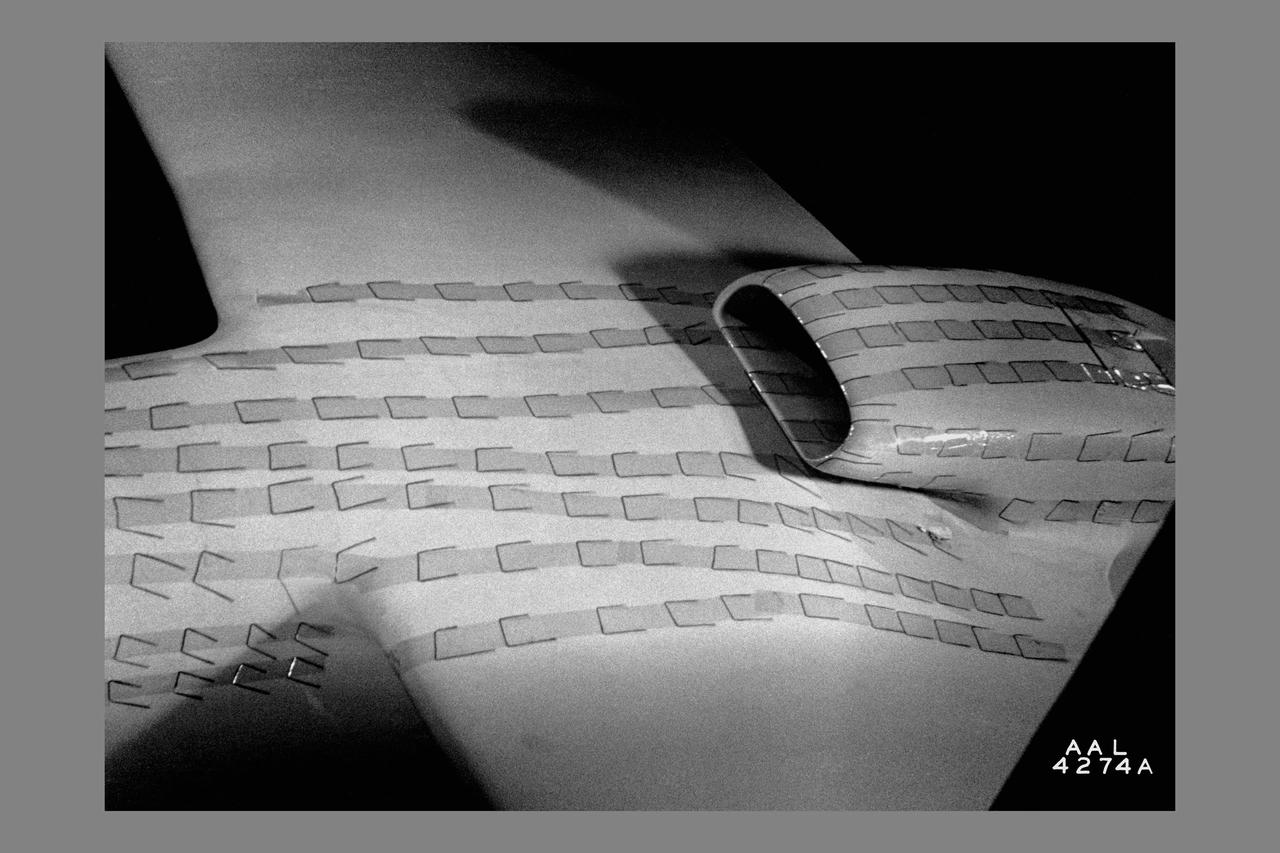
North American P-51B tuft studies done in the NACA Ames Research center 16ft Transonic Wind Tunnel Radiator air scoop with oil and prestone cooler exit flaps in flush position.
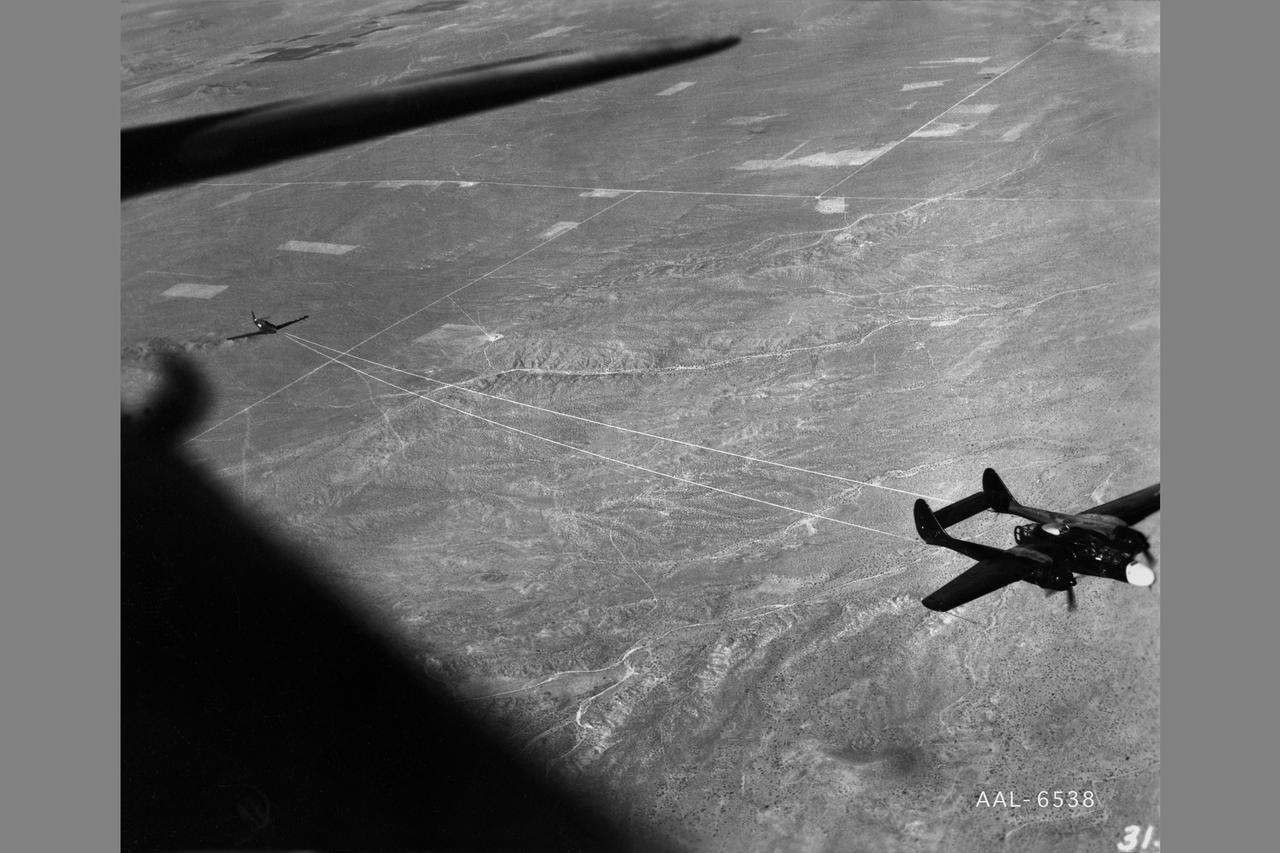
NACA photographer Northrop P-61A Black Widow towing P-51B to release altitude of 28,000 ft over Muroc Dry Lake, California for in flight validating of wind tunnel measurements of drag. After the pilot released the tow cable, drag measurementrs were obtained at various airspeeds in a 20-minute unpowered flight. Note: Used in publication in Flight Research at Ames; 57 Years of Development and Validation of Aeronautical Technology NASA SP-1998-3300 Fig. 17