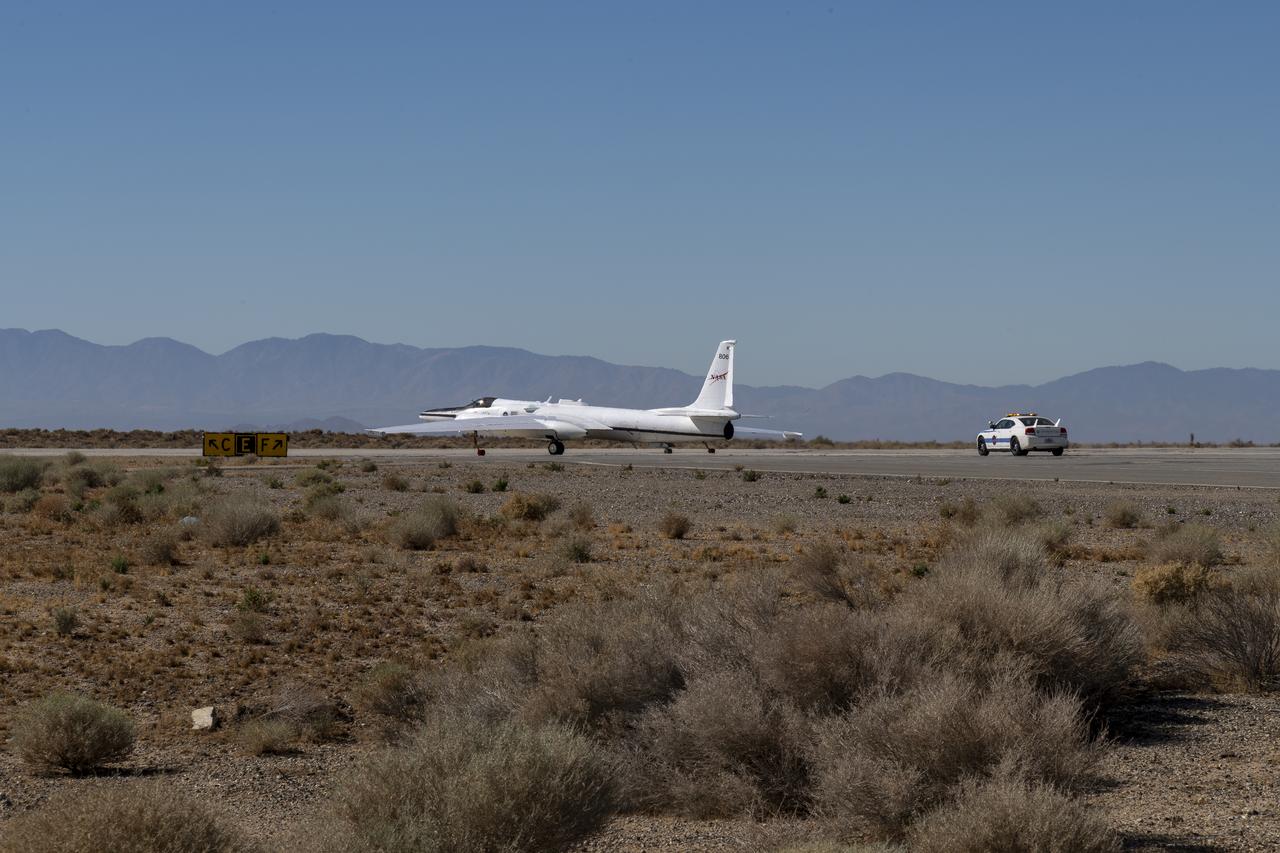
The ER-2 conducted over 80 flight hours in service of the Plankton, Aerosol, Cloud, ocean Ecosystem Postlaunch Airborne eXperiment (PACE-PAX) mission. The ER-2 is uniquely qualified to conduct the high-altitude scientific flights that this project required, and is based at NASA’s Armstrong Flight Research Center in Edwards, California.
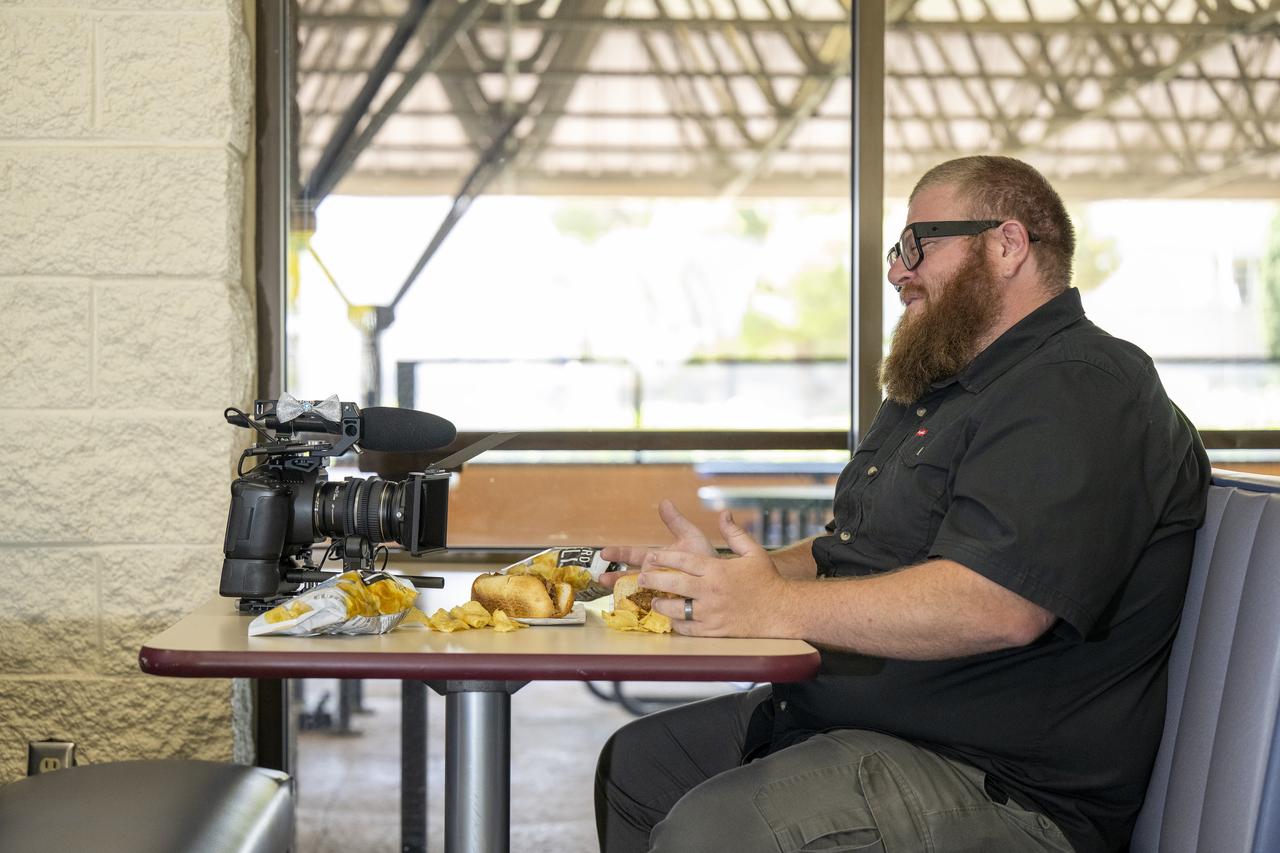
NASA videographer Jacob Shaw shares a moment with his constant companion during a break in the cafeteria at NASA’s Armstrong Flight Research Center in Edwards, California, on May 21, 2025. Shaw recently earned first place in NASA’s 2024 Videographer of the Year Awards – documentation category – for his film, “Reflections,” which chronicles the 2024 Airborne Science mission PACE-PAX – short for Plankton, Aerosol, Cloud, ocean Ecosystem Postlaunch Airborne eXperiment.
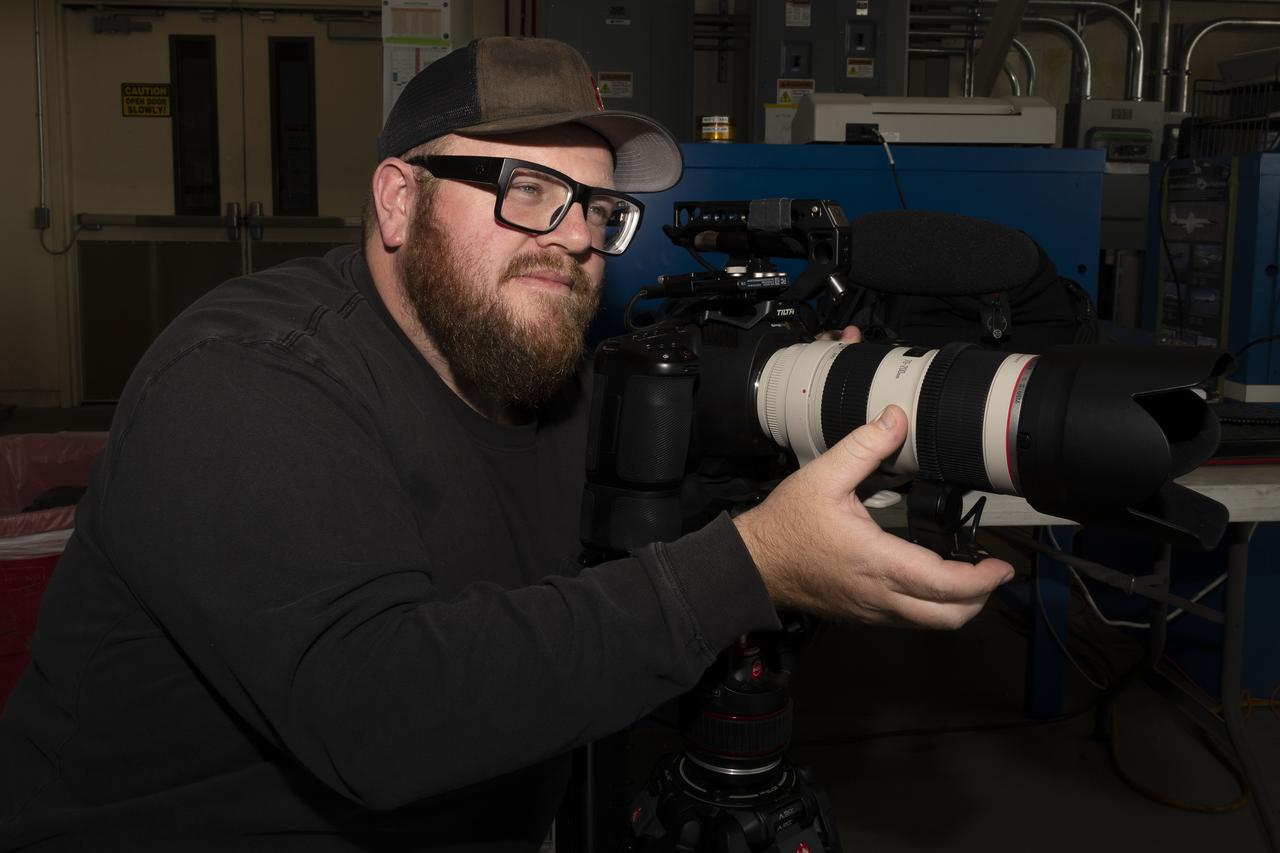
NASA videographer Jacob Shaw captures footage of the ER-2 aircraft inside a hangar at NASA’s Armstrong Flight Research Center in Edwards, California, in December 2024. Shaw recently earned first place in NASA’s 2024 Videographer of the Year Awards – documentation category – for his film, “Reflections,” which chronicles the 2024 Airborne Science mission PACE-PAX – short for Plankton, Aerosol, Cloud, ocean Ecosystem Postlaunch Airborne eXperiment.
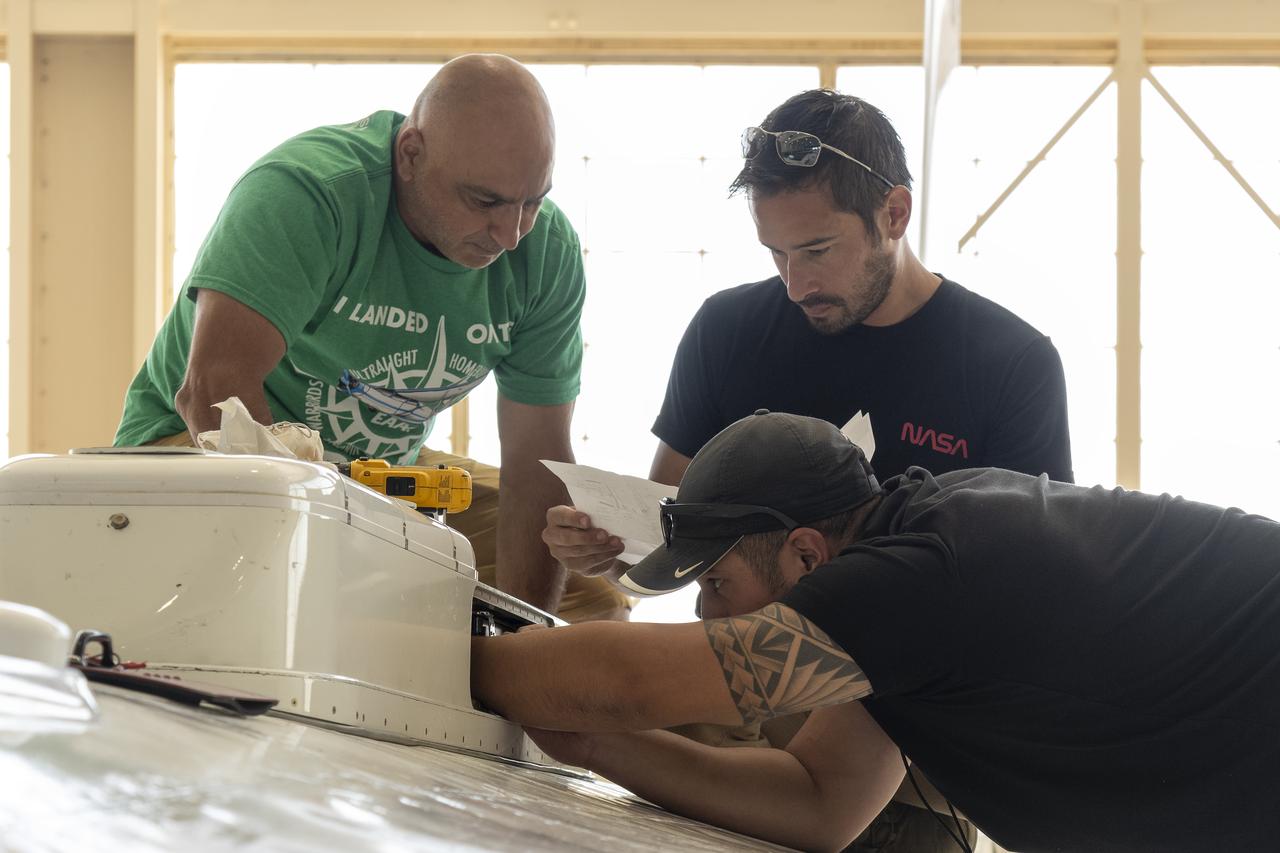
Sam Habbal (quality inspector), Darick Alvarez (aircraft mechanic), and Juan Alvarez (crew chief) work on the network “canoe” on top of the ER-2 aircraft, which provides network communication with the pilot onboard. Experts like these sustain a high standard of safety while outfitting instruments onboard science aircraft like the ER-2 and science missions like the Plankton, Aerosol, Cloud, ocean Ecosystem Postlaunch Airborne eXperiment (PACE-PAX) mission. The ER-2 is based out of NASA’s Armstrong Flight Research Center in Edwards, California.