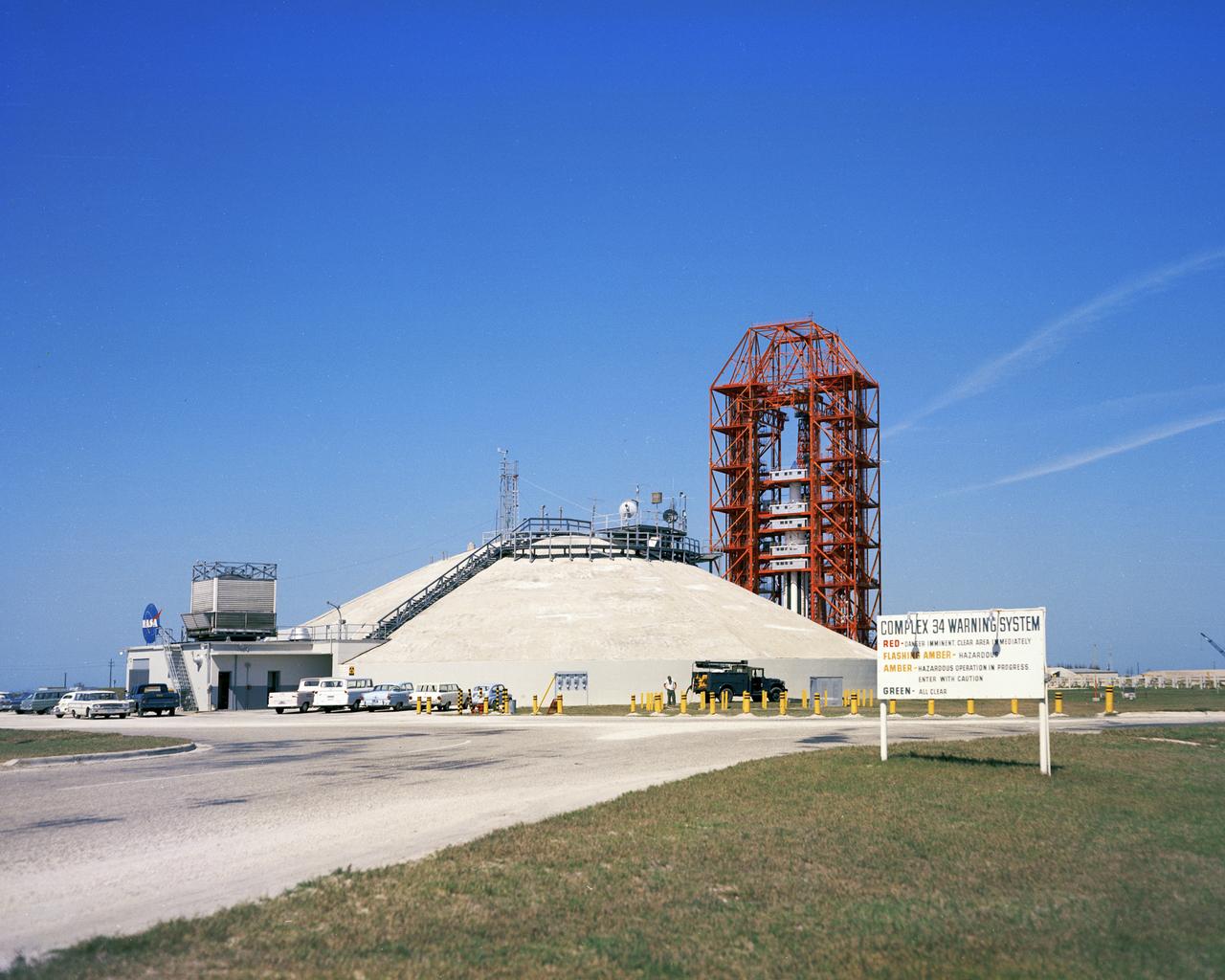
PAD 34 BLOCKHOUSE AND GANTRY
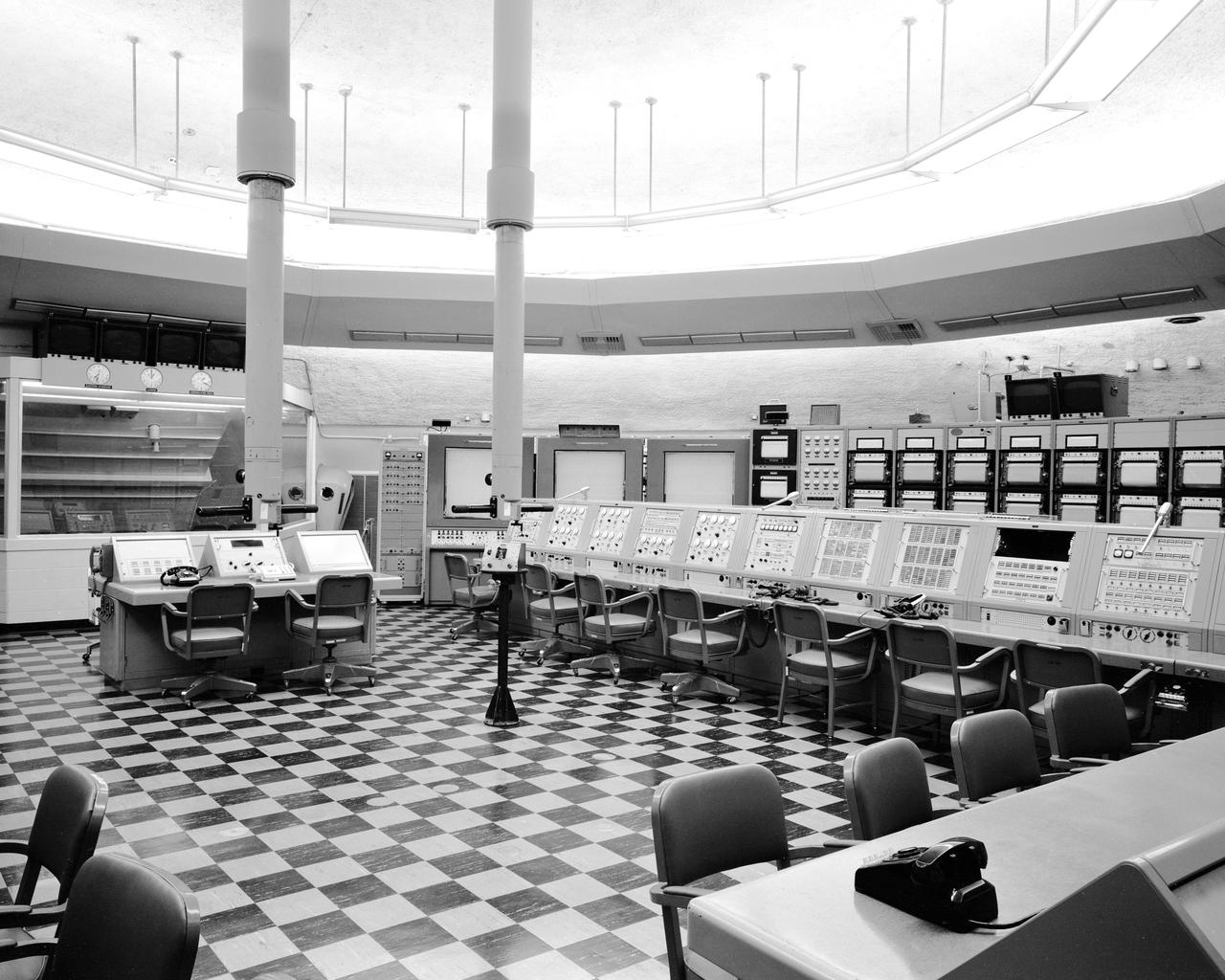
INTERIORS, PAD 34 BLOCKHOUSE, NASA/SATURN
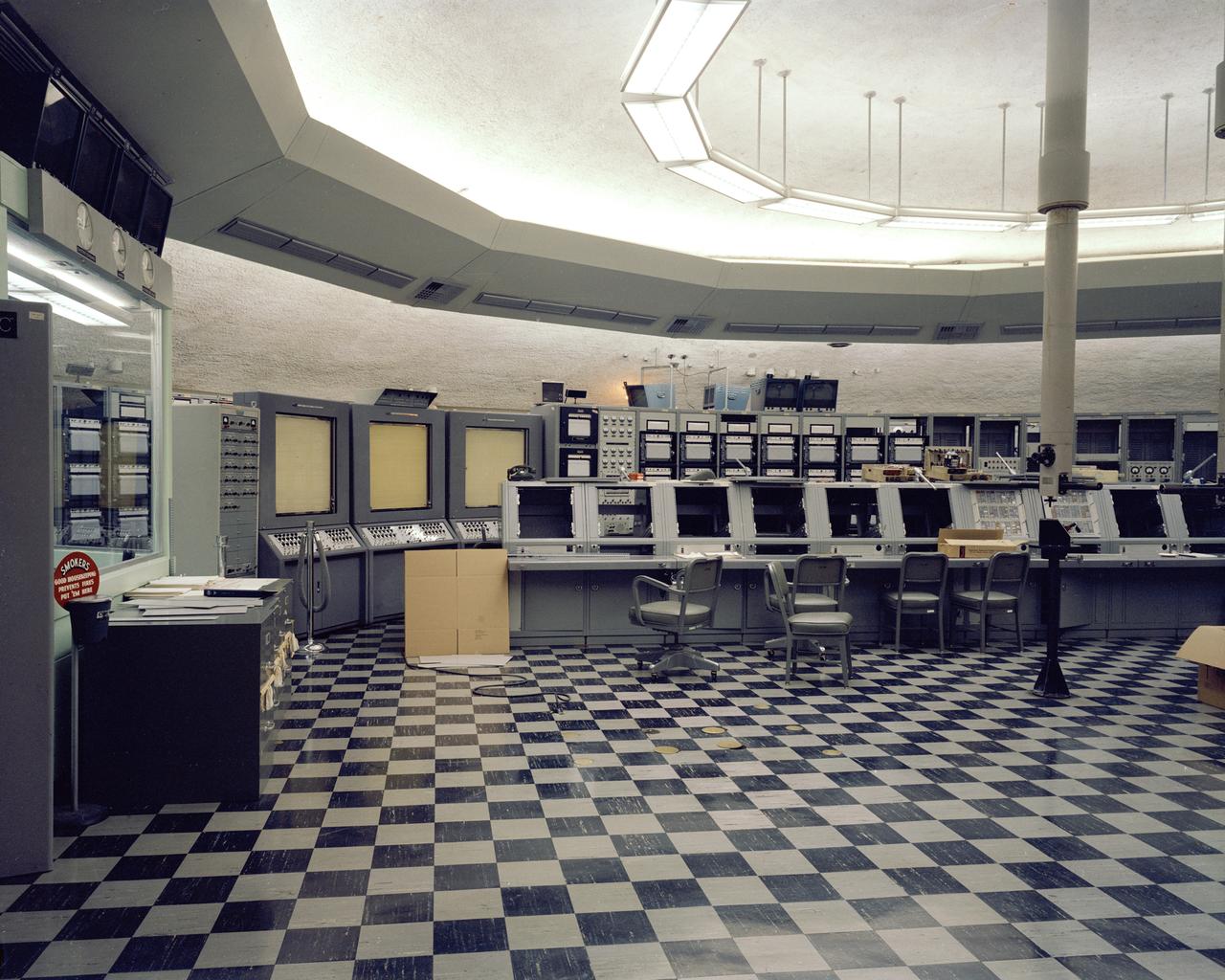
INTERIORS, PAD 34 BLOCKHOUSE, NORTH SECTION
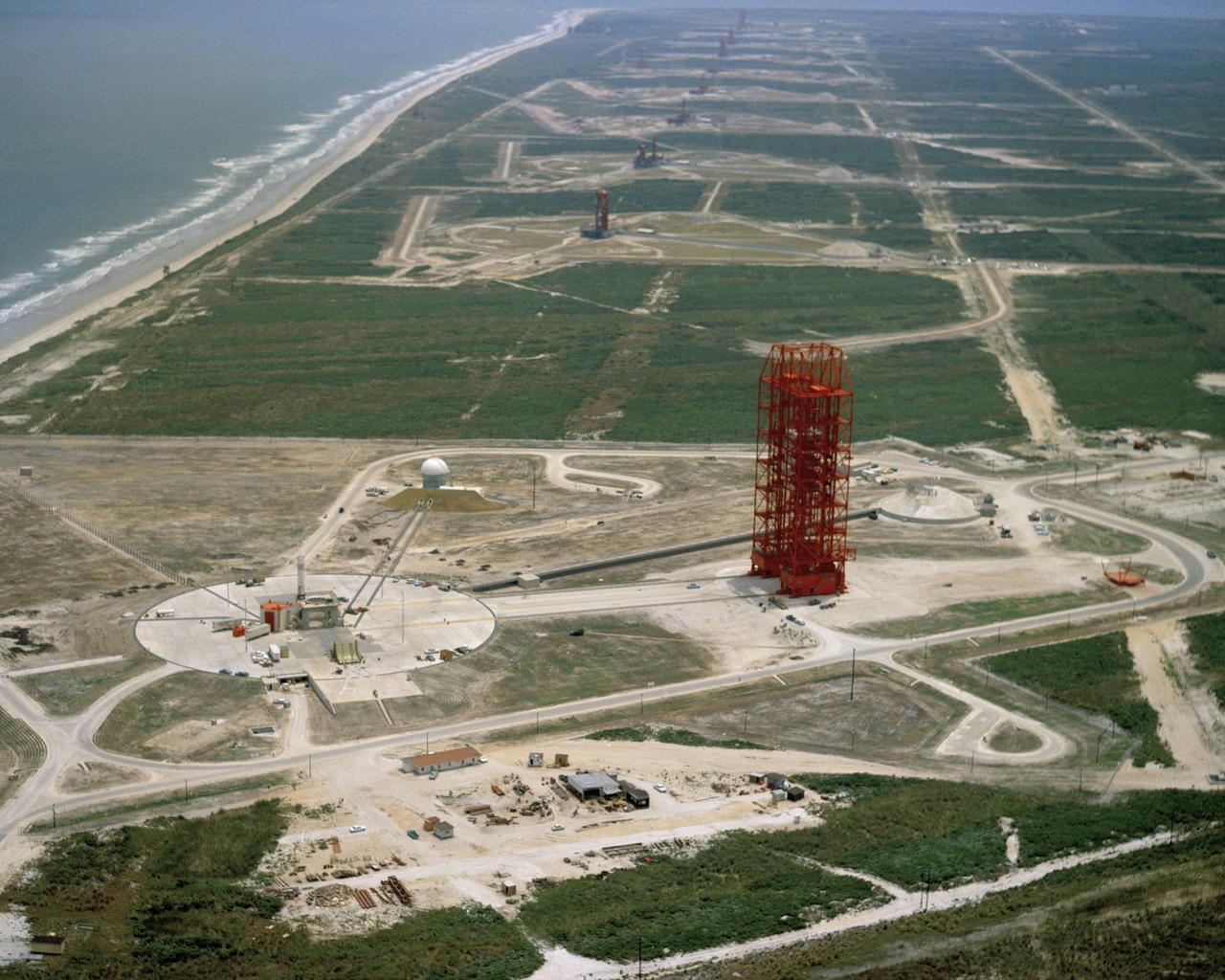
AERIAL PHOTO SHOWING COMPLEX 34 AND OTHER LAUNCH PADS IN BACKGROUND CCMTA NASA-LOD
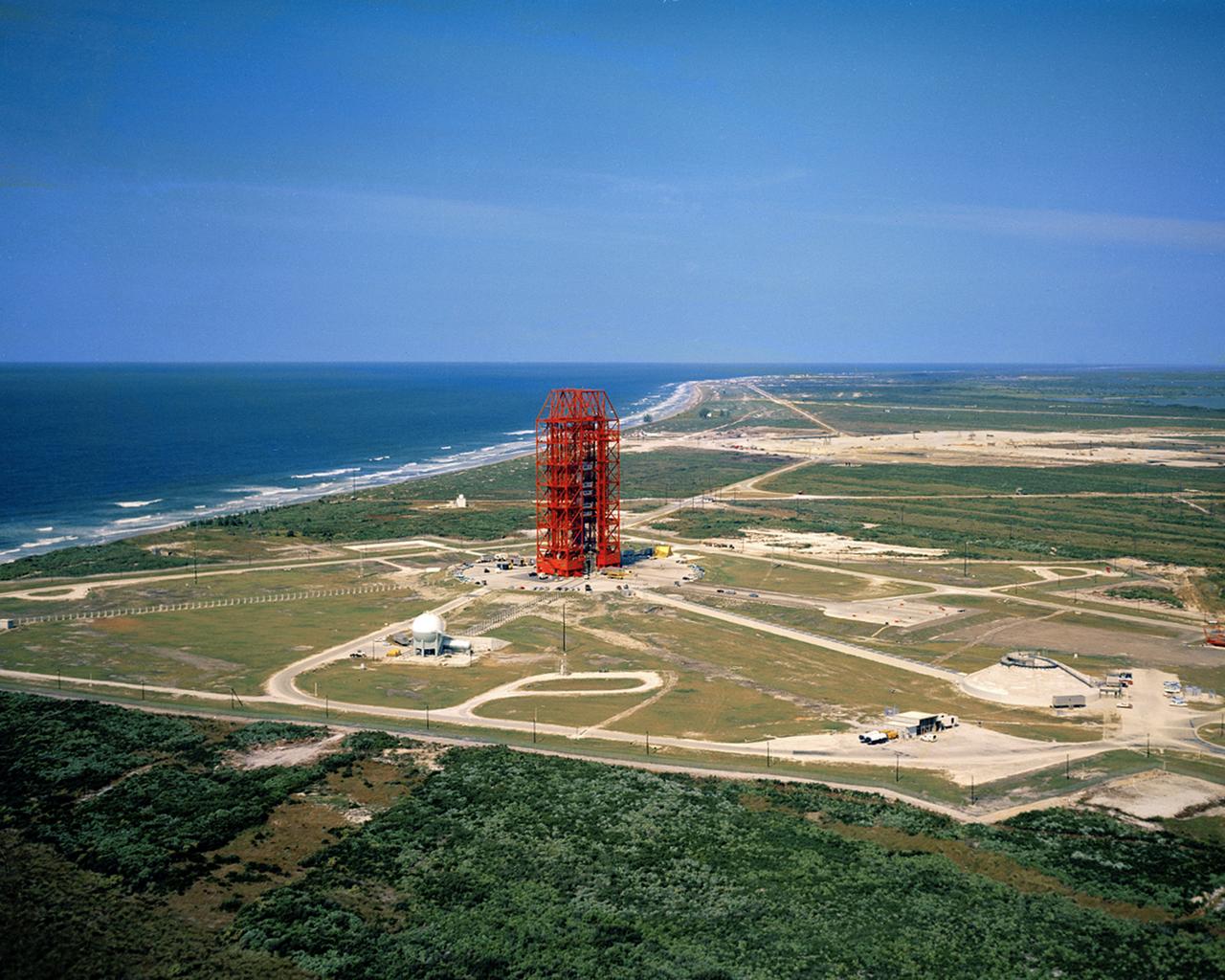
PAD 34 AERIAL PHOTO (OVERALL) LOW LEVEL FROM SOUTH, NASA-LOD
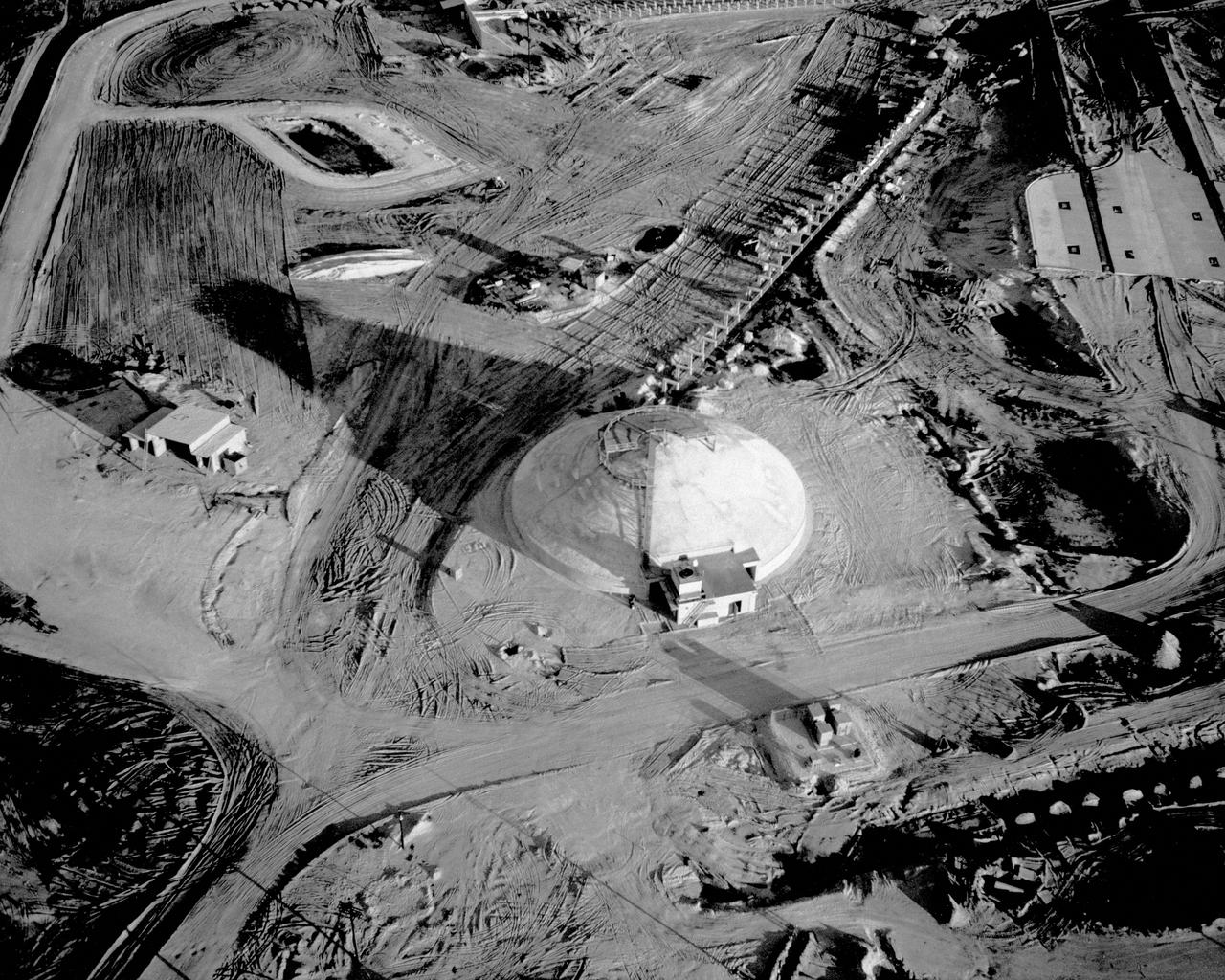
AERIAL VIEW PAD 34 BLOCKHOUSE CONSTRUCTION PROGRESS
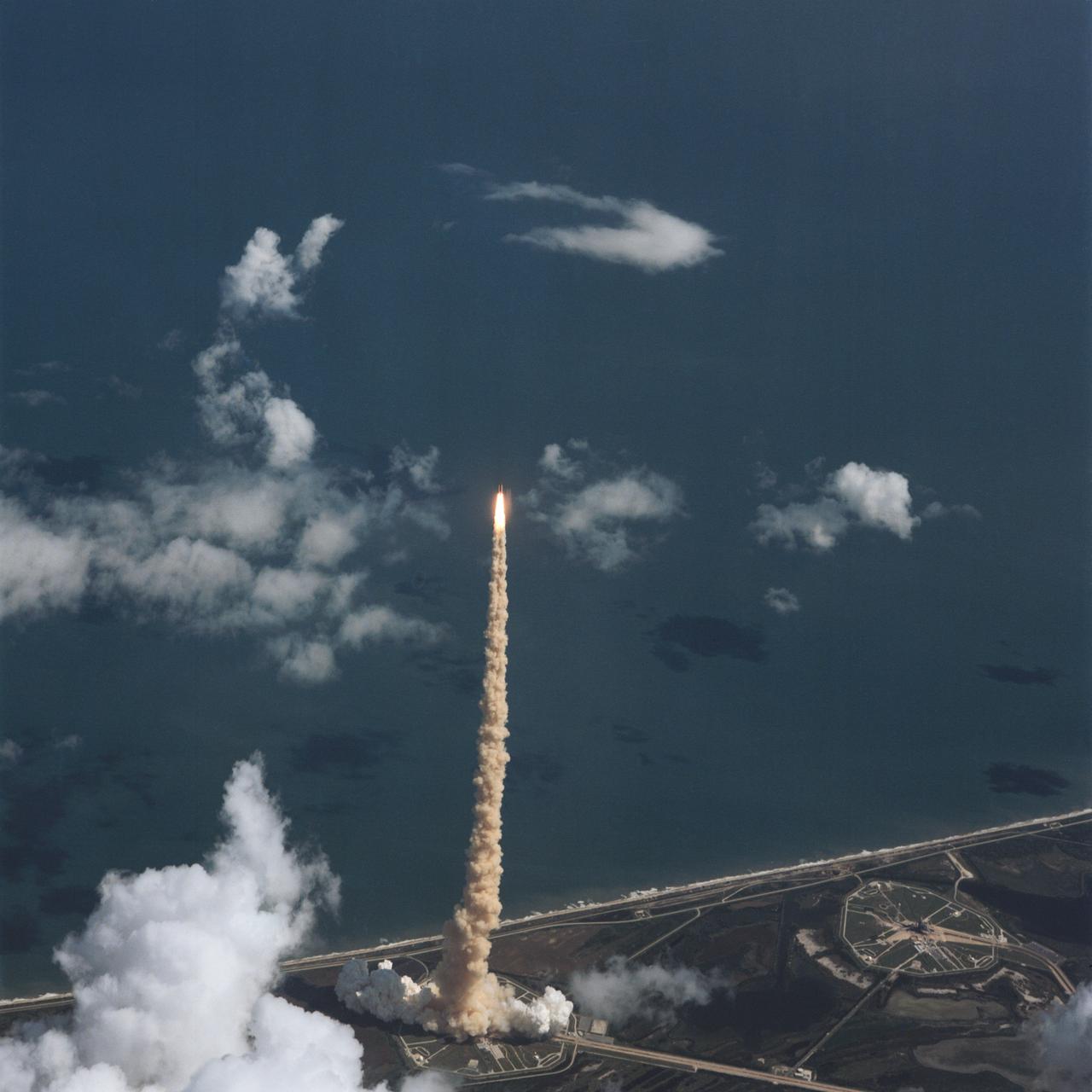
STS-34 Atlantis, Orbiter Vehicle (OV) 104, lifts off from Kennedy Space Center (KSC) Launch Complex (LC) Pad 39B at 12:53:39:983 pm Eastern Daylight Time (EDT). This aerial view shows OV-104, its external tank (ET), and two solid rocket boosters (SRBs) rising high above LC Pad 39B atop a plume of exhaust smoke. Atlantic Ocean is visible in the background. The liftoff marks the beginning of a five-day mission in space.
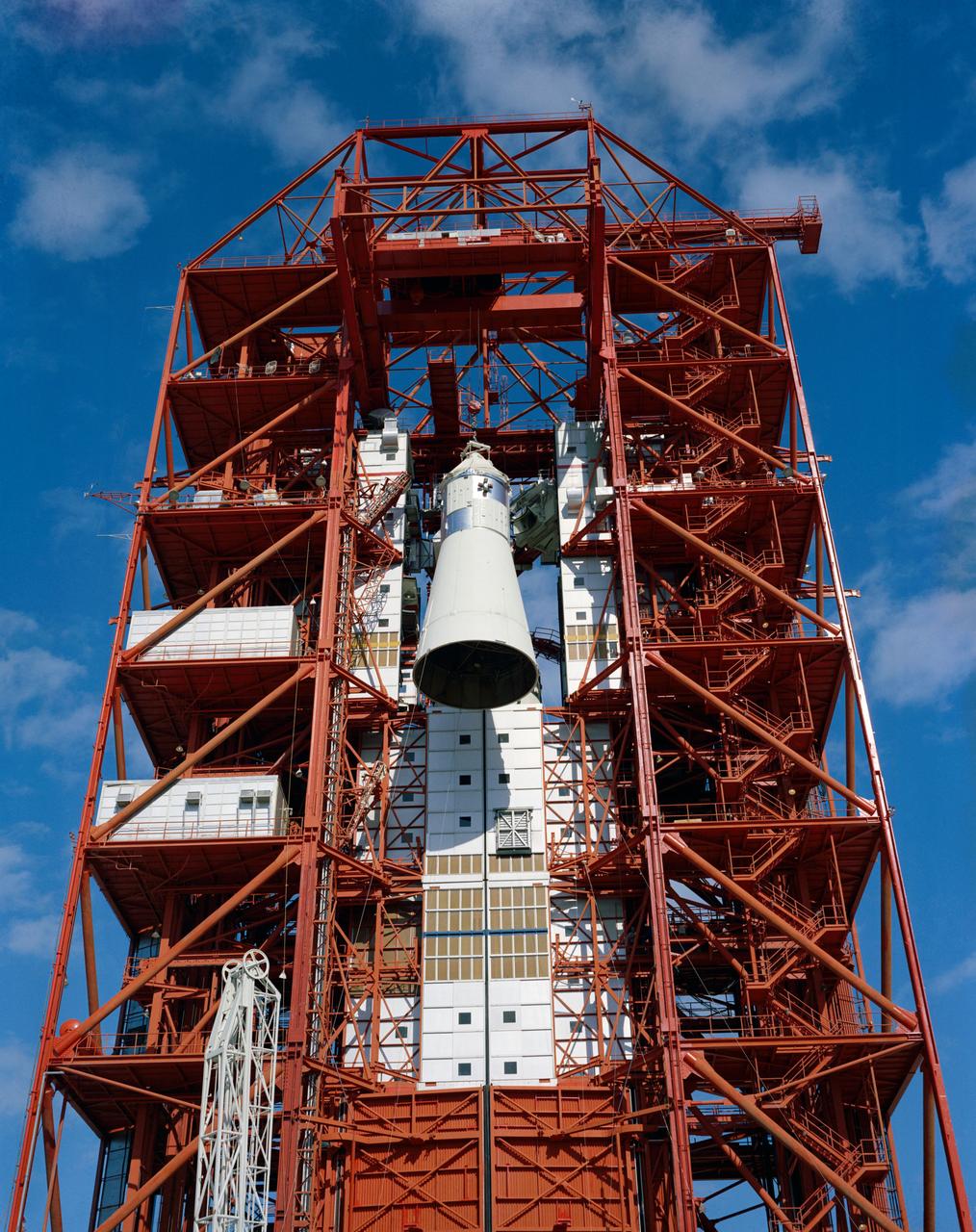
S67-15885 (1967) --- Apollo Spacecraft 012 is hoisted to the top of the gantry at Pad 34 during the Apollo/Saturn Mission 204 erection.
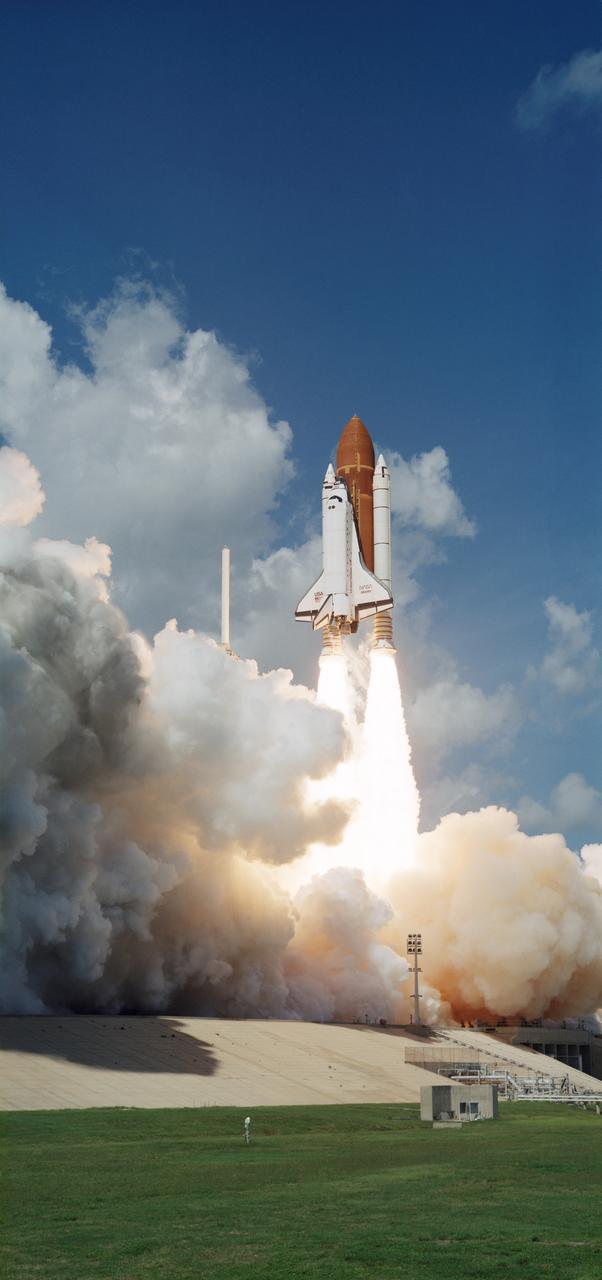
STS034-S-023 (18 Oct. 1989) --- The STS-34 Space Shuttle Atlantis lifts off from Kennedy Space Center’s launch pad 39-B at l2:53:39 p.m. (EDT) on Oct. 18, 1989, marking the beginning of a five-day mission in space. Atlantis carries a crew of five and the spacecraft Galileo. The Jupiter-bound probe will be deployed from Atlantis some six hours after launch. The journey to the giant planet is expected to take over six years. Crewmembers for the mission are astronauts Donald E. Williams, Michael J. McCulley, Shannon W. Lucid, Franklin R. Chang-Diaz and Ellen S. Baker. The scene was recorded with a 70mm camera.
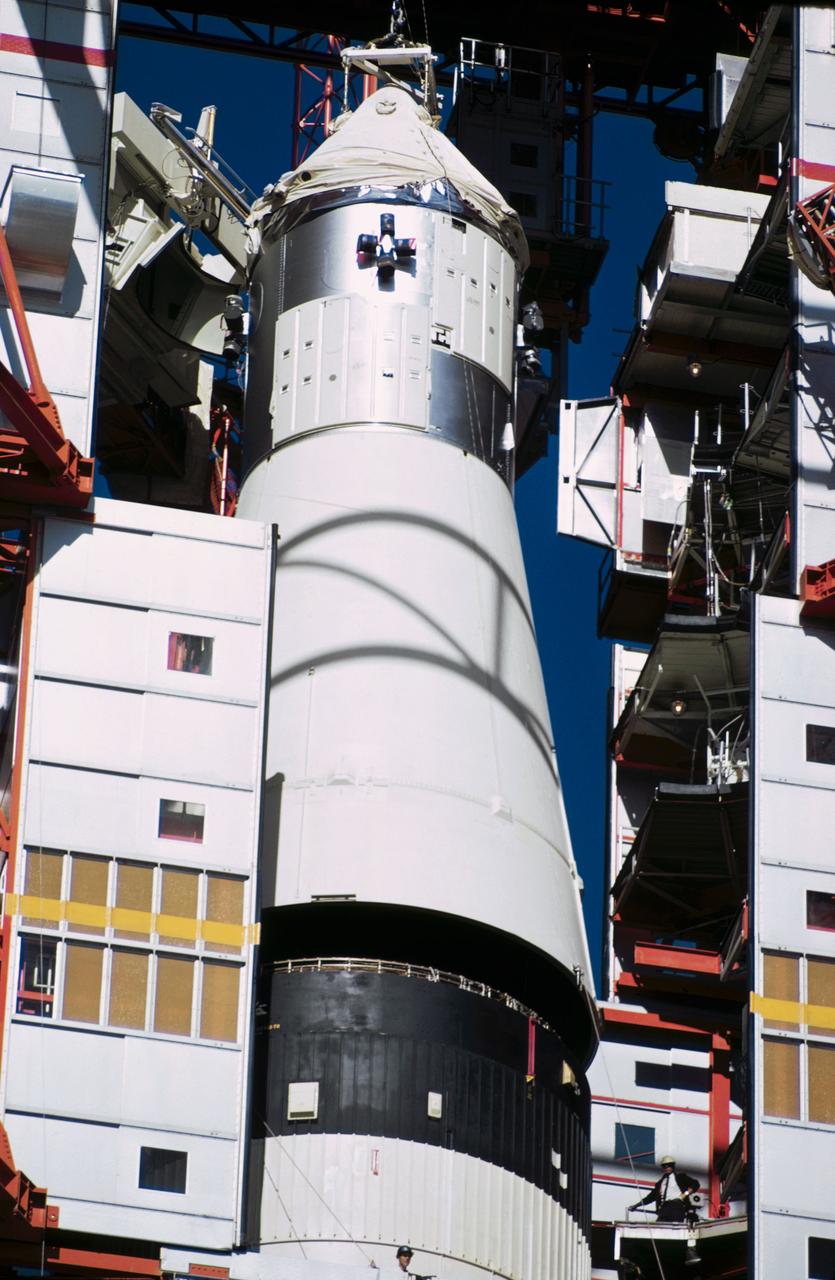
S67-17042 (1967) --- Apollo Spacecraft 012 is hoisted to the top of the gantry at Pad 34 during the Apollo/Saturn Mission 204 erection. S/C 012 will be mated with the uprated Saturn I launch vehicle.
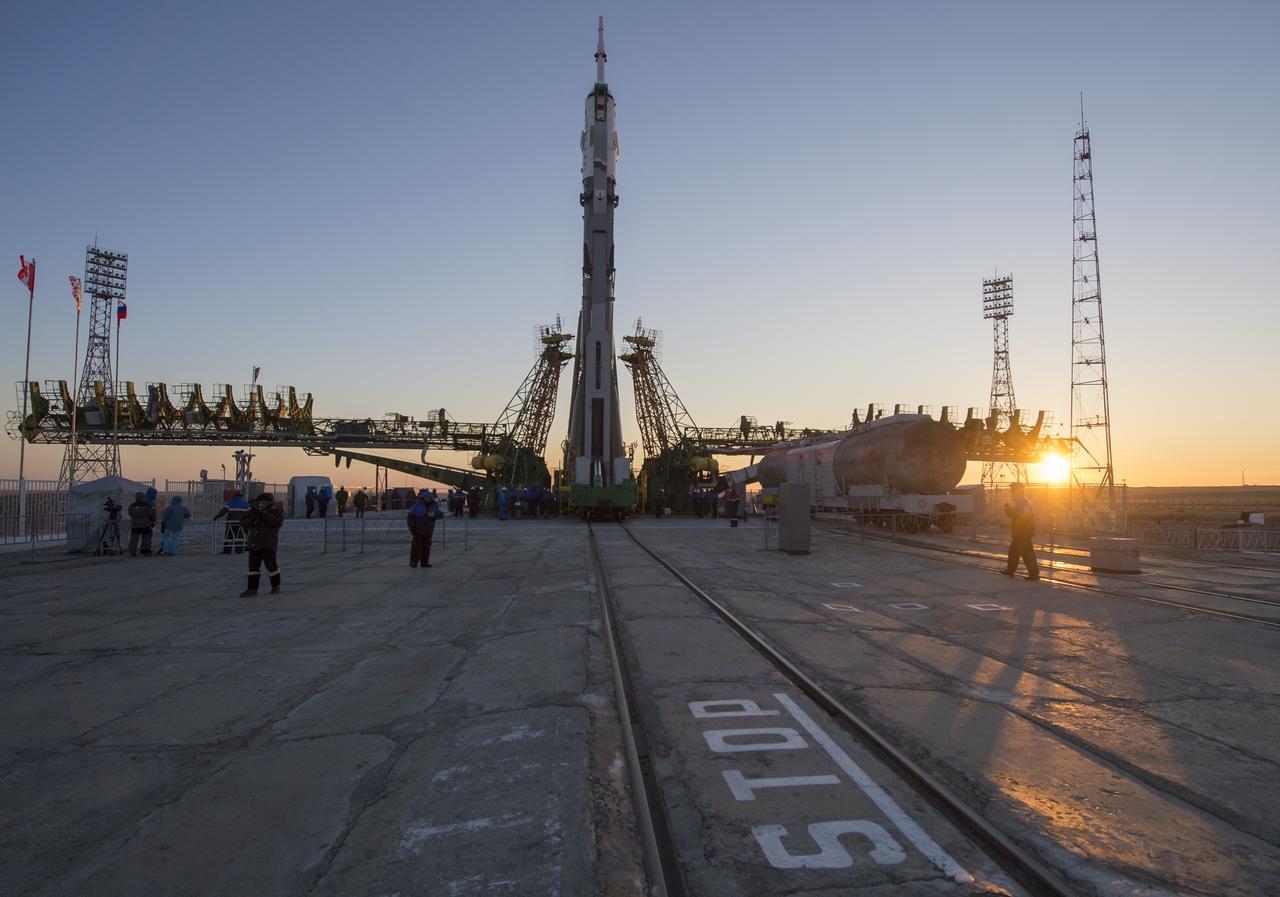
The Soyuz rocket is erected into position after being rolled out to the launch pad by train on Monday, December 17, 2012, at the Baikonur Cosmodrome in Kazakhstan. Launch of the Soyuz rocket is scheduled for December 19 and will send Expedition 34/35 Flight Engineer Tom Marshburn of NASA, Soyuz Commander Roman Romanenko and Expedition 35 Commander Chris Hadfield of the Canadian Space Agency (CSA) on a five-month mission aboard the International Space Station. Photo Credit: (NASA/Carla Cioffi). Photo Credit: (NASA/Carla Cioffi)
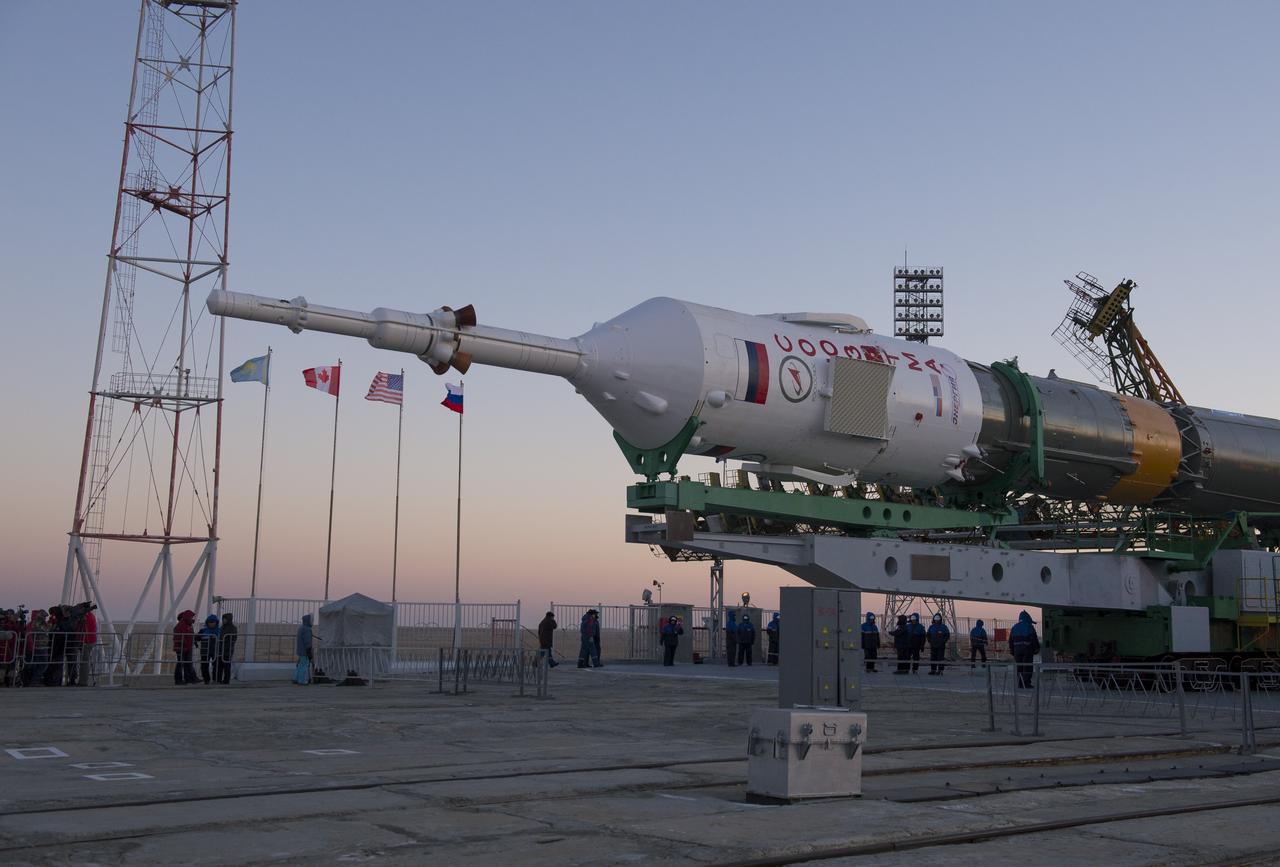
The Soyuz rocket is erected into position after being rolled out to the launch pad by train on Monday, December 17, 2012, at the Baikonur Cosmodrome in Kazakhstan. Launch of the Soyuz rocket is scheduled for December 19 and will send Expedition 34/35 Flight Engineer Tom Marshburn of NASA, Soyuz Commander Roman Romanenko and Expedition 35 Commander Chris Hadfield of the Canadian Space Agency (CSA) on a five-month mission aboard the International Space Station. Photo Credit: (NASA/Carla Cioffi). Photo Credit: (NASA/Carla Cioffi)
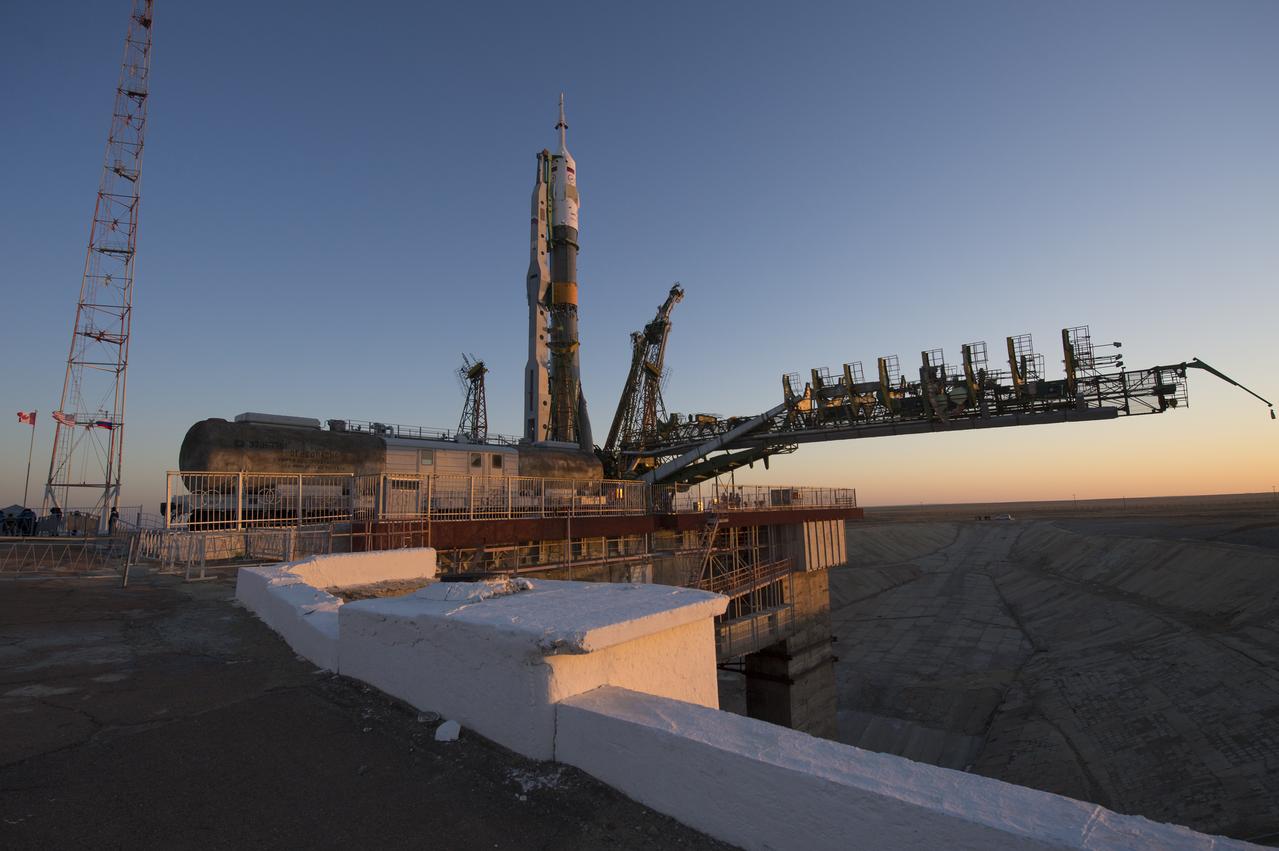
The Soyuz rocket is erected into position after being rolled out to the launch pad by train on Monday, December 17, 2012, at the Baikonur Cosmodrome in Kazakhstan. Launch of the Soyuz rocket is scheduled for December 19 and will send Expedition 34/35 Flight Engineer Tom Marshburn of NASA, Soyuz Commander Roman Romanenko and Expedition 35 Commander Chris Hadfield of the Canadian Space Agency (CSA) on a five-month mission aboard the International Space Station. Photo Credit: (NASA/Carla Cioffi). Photo Credit: (NASA/Carla Cioffi)
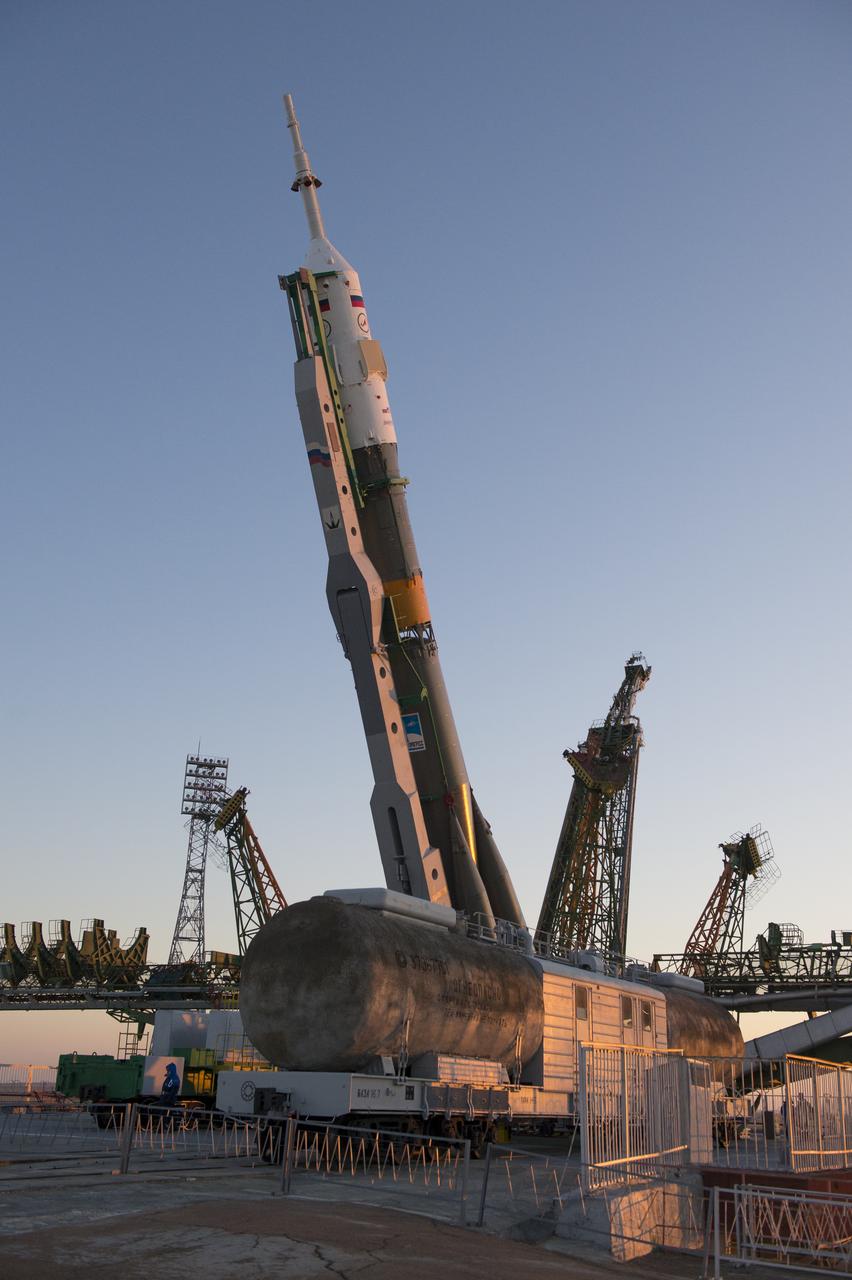
The Soyuz rocket is erected into position after being rolled out to the launch pad by train on Monday, December 17, 2012, at the Baikonur Cosmodrome in Kazakhstan. Launch of the Soyuz rocket is scheduled for December 19 and will send Expedition 34/35 Flight Engineer Tom Marshburn of NASA, Soyuz Commander Roman Romanenko and Expedition 35 Commander Chris Hadfield of the Canadian Space Agency (CSA) on a five-month mission aboard the International Space Station. Photo Credit: (NASA/Carla Cioffi). Photo Credit: (NASA/Carla Cioffi)
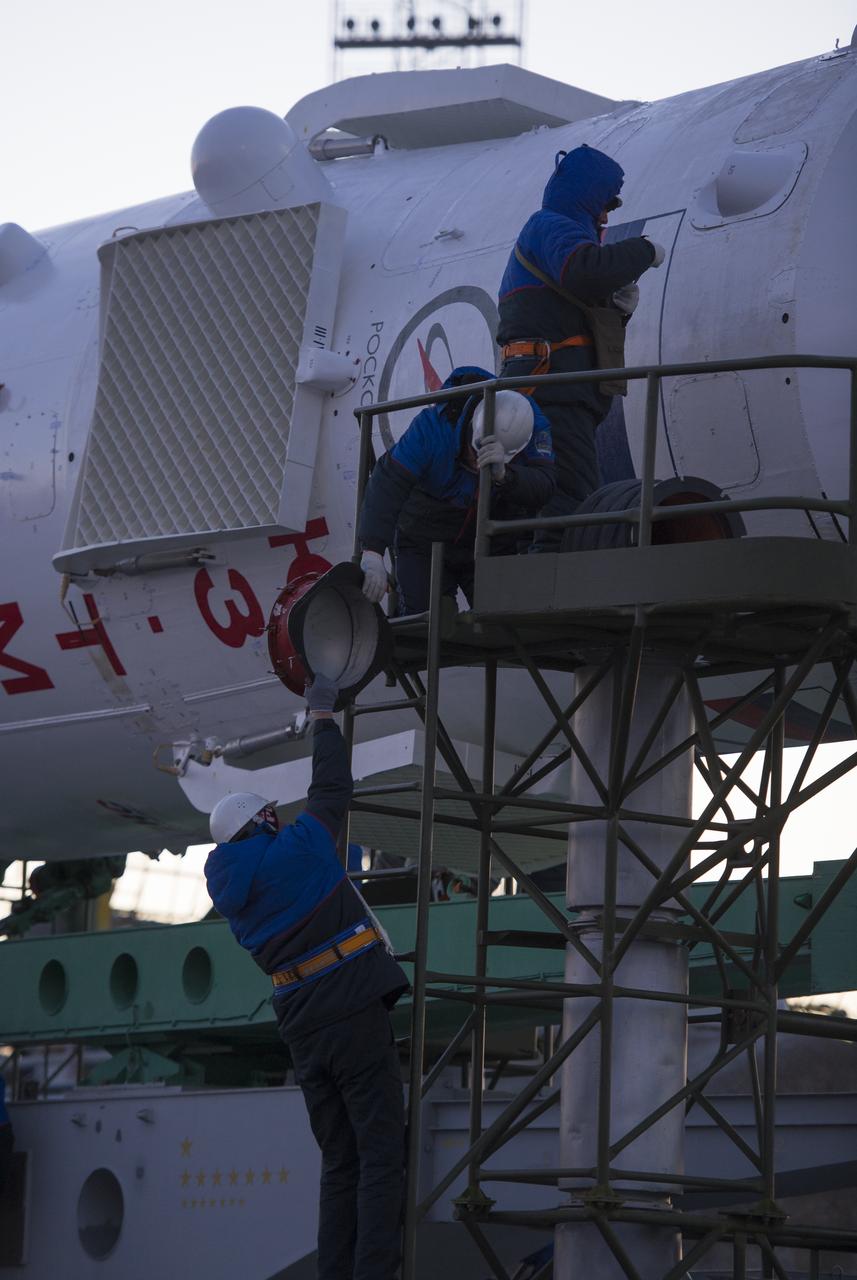
Technicians prepare the Soyuz rocket to be erected at the launch pad shortly after it arrived by train on Monday, December 17, 2012, at the Baikonur Cosmodrome in Kazakhstan. Launch of the Soyuz rocket is scheduled for December 19 and will send Expedition 34/35 Flight Engineer Tom Marshburn of NASA, Soyuz Commander Roman Romanenko and Expedition 35 Commander Chris Hadfield of the Canadian Space Agency (CSA) on a five-month mission aboard the International Space Station. Photo Credit: (NASA/Carla Cioffi)
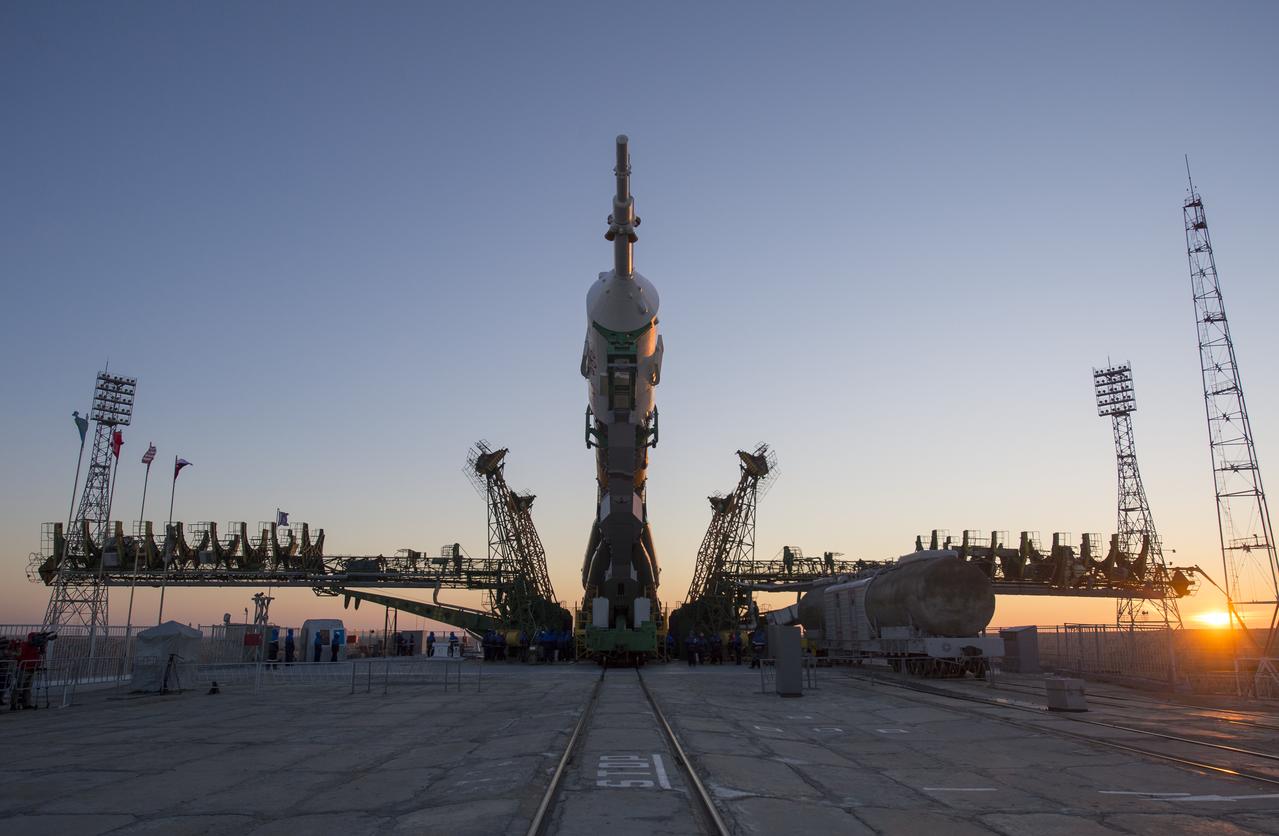
The Soyuz rocket is erected into position after being rolled out to the launch pad by train on Monday, December 17, 2012, at the Baikonur Cosmodrome in Kazakhstan. Launch of the Soyuz rocket is scheduled for December 19 and will send Expedition 34/35 Flight Engineer Tom Marshburn of NASA, Soyuz Commander Roman Romanenko and Expedition 35 Commander Chris Hadfield of the Canadian Space Agency (CSA) on a five-month mission aboard the International Space Station. Photo Credit: (NASA/Carla Cioffi). Photo Credit: (NASA/Carla Cioffi)
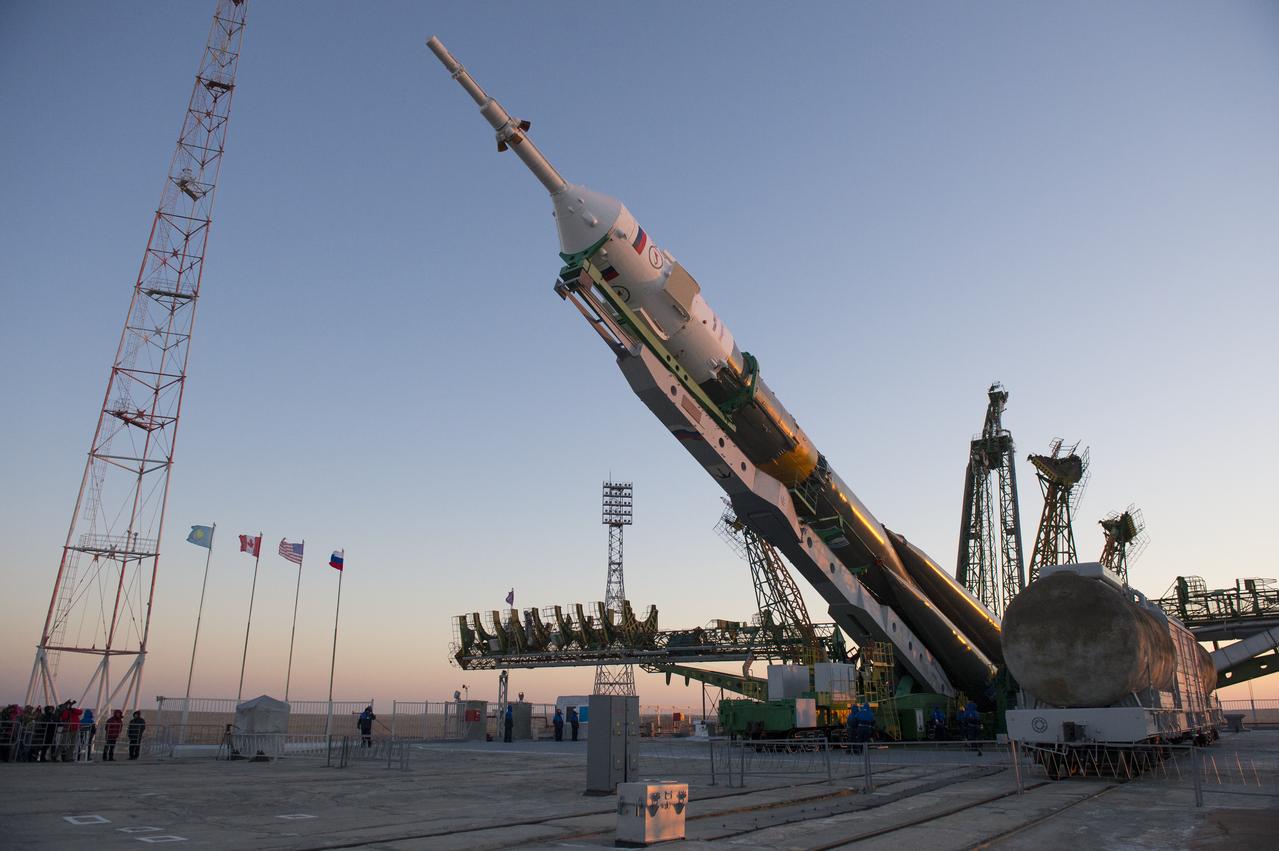
The Soyuz rocket is erected into position after being rolled out to the launch pad by train on Monday, December 17, 2012, at the Baikonur Cosmodrome in Kazakhstan. Launch of the Soyuz rocket is scheduled for December 19 and will send Expedition 34/35 Flight Engineer Tom Marshburn of NASA, Soyuz Commander Roman Romanenko and Expedition 35 Commander Chris Hadfield of the Canadian Space Agency (CSA) on a five-month mission aboard the International Space Station. Photo Credit: (NASA/Carla Cioffi). Photo Credit: (NASA/Carla Cioffi)
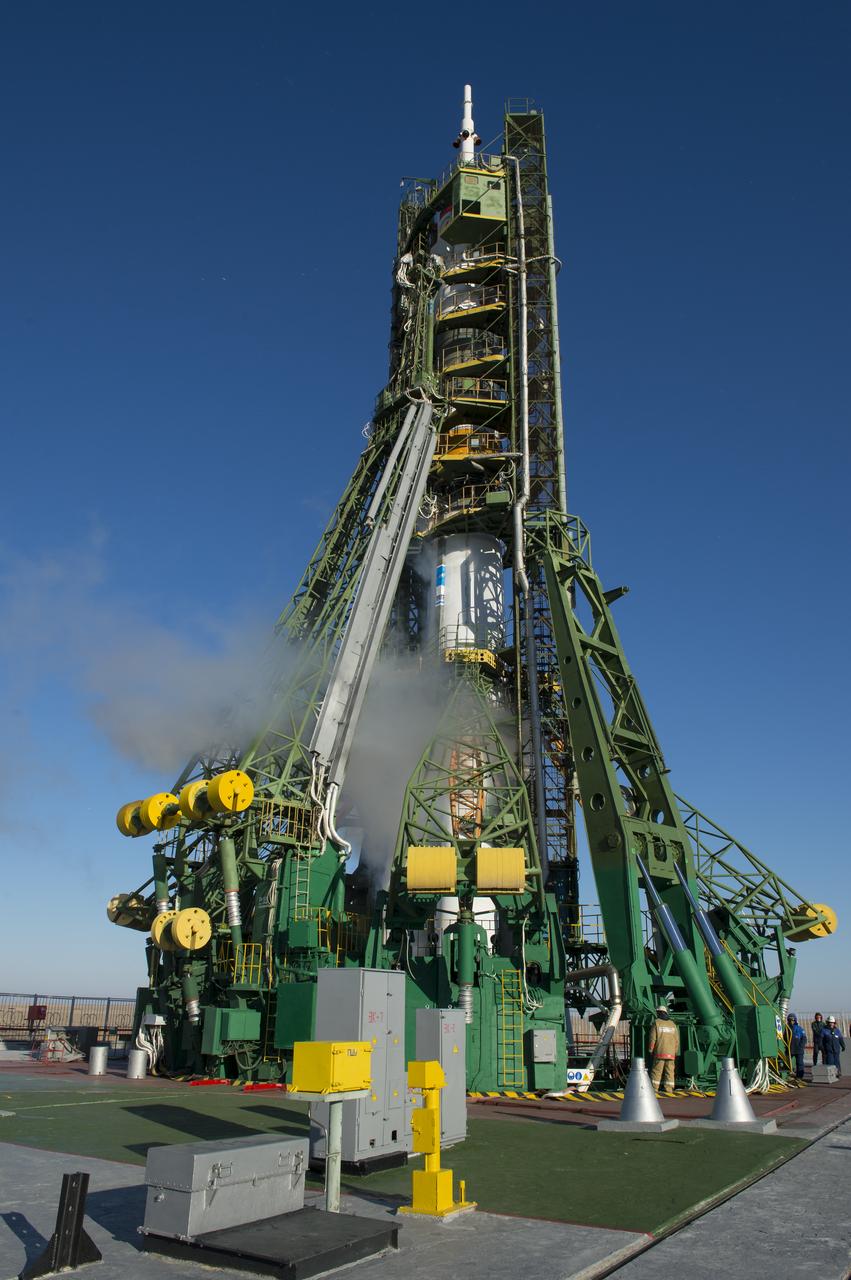
The Soyuz TMA-07M spacecraft is on the launch pad at the Baikonur Cosmodrome in Kazakhstan, Wednesday, Dec. 19, 2012 just hours before its launch to send the crew of Expedition 34 NASA Flight Engineer Tom Marshburn, Soyuz Commander Roman Romanenko and Canadian Space Agency Flight Engineer Chris Hadfield to the International Space Station. Photo Credit: (NASA/Carla Cioffi)

The Soyuz rocket is erected into position after being rolled out to the launch pad by train on Monday, December 17, 2012, at the Baikonur Cosmodrome in Kazakhstan. Launch of the Soyuz rocket is scheduled for December 19 and will send Expedition 34/35 Flight Engineer Tom Marshburn of NASA, Soyuz Commander Roman Romanenko and Expedition 35 Commander Chris Hadfield of the Canadian Space Agency (CSA) on a five-month mission aboard the International Space Station. Photo Credit: (NASA/Carla Cioffi). Photo Credit: (NASA/Carla Cioffi)
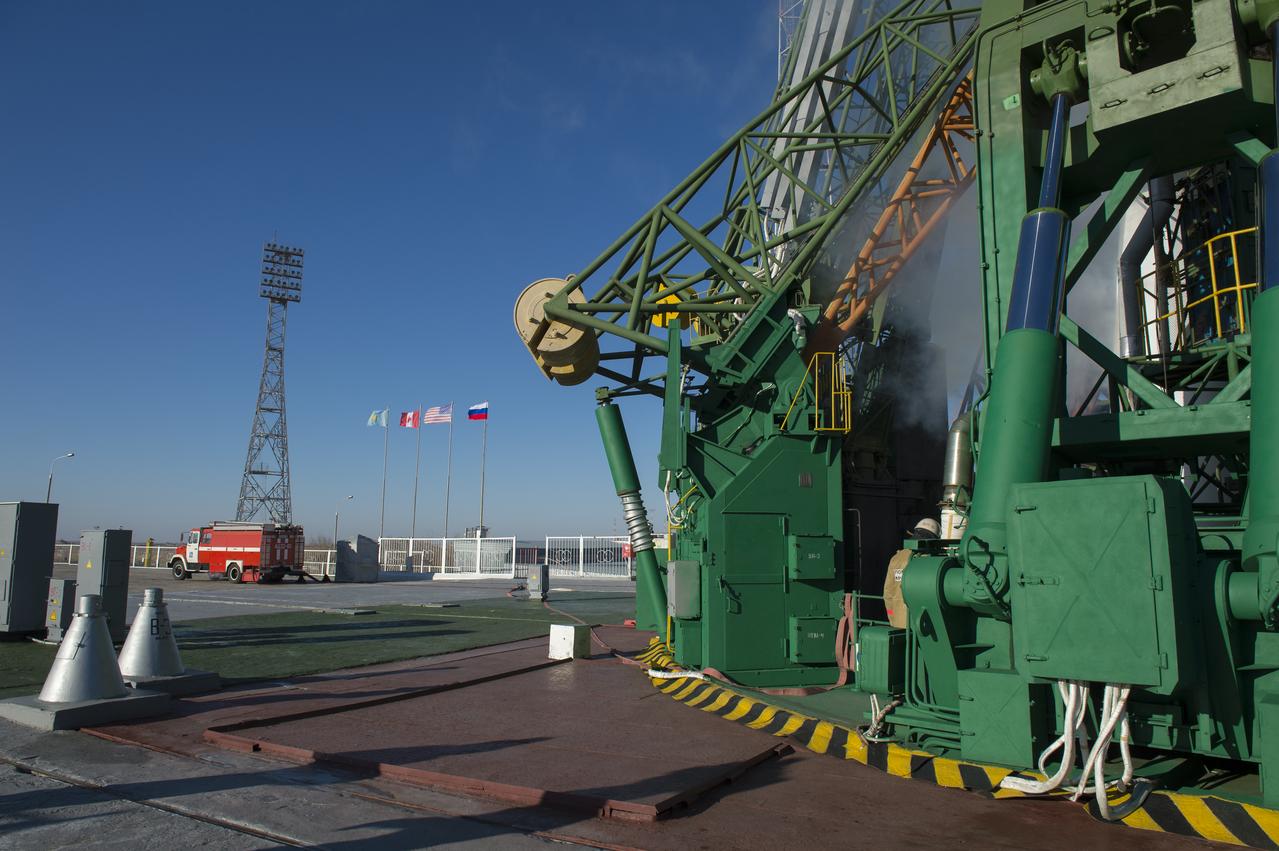
The flags representing Kazakhstan and the nations of the three crewmembers who will launch in the Soyuz TMA-07M spacecraft are shown in the distance at the launch pad at the Baikonur Cosmodrome in Kazakhstan on Wednesday, Dec. 19, 2012. From left to right are the flags of Kazakhstan, Canada, the United States and Russia. Scheduled to launch a few hours later are Expedition 34/35 Flight Engineer Tom Marshburn of NASA, Soyuz Commander Roman Romanenko and Expedition 35 Commander Chris Hadfield of the Canadian Space Agency (CSA) on a five-month mission aboard the International Space Station. Photo Credit: (NASA/Carla Cioffi)
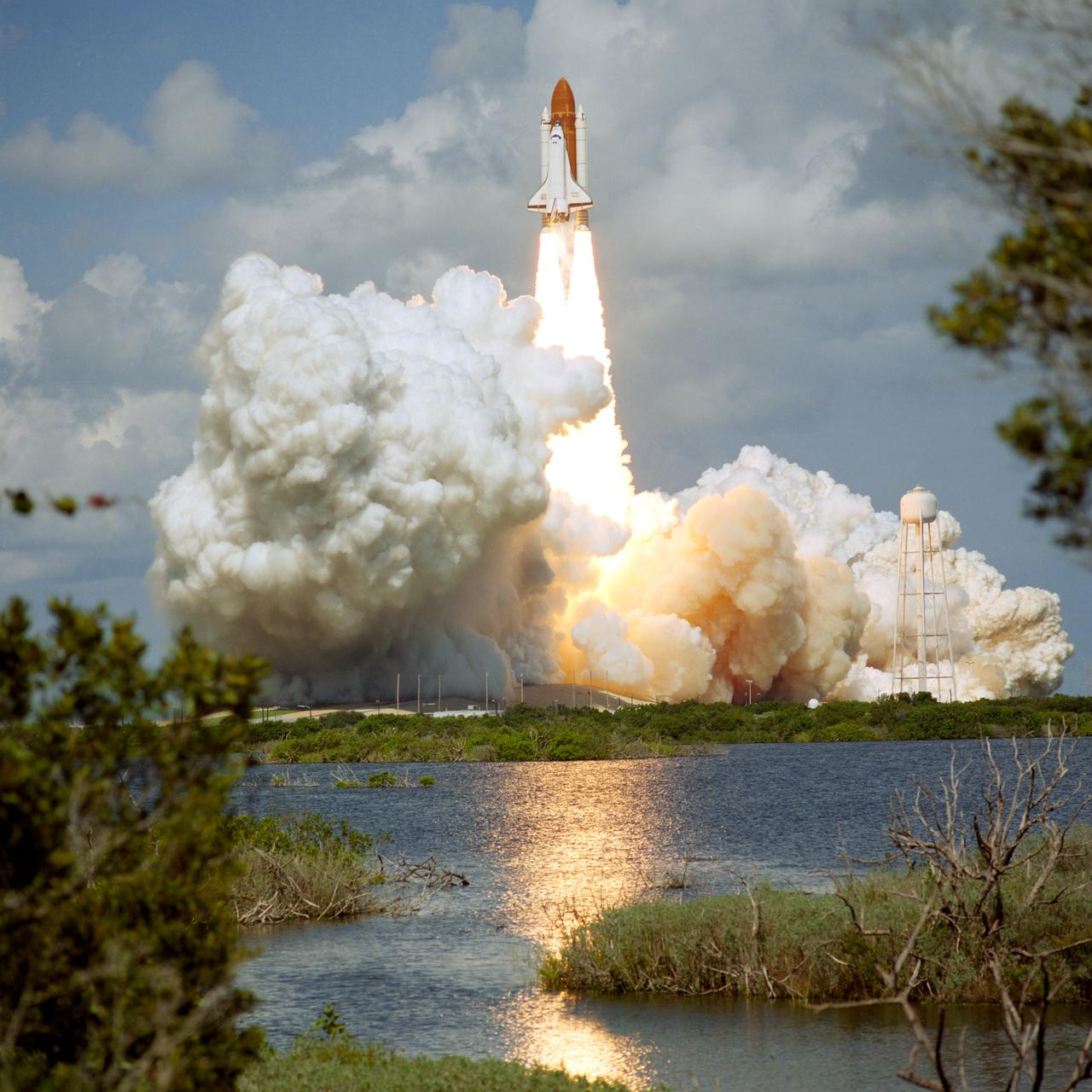
STS034-S-025 (18 Oct 1989) --- The STS-34 Space Shuttle Atlantis lifts off from Launch Pad 39-B at 2:53:39:983 p.m. (EDT), marking the beginning of a five-day mission in space. Atlantis carries a crew of five and the spacecraft Galileo, along with a number of other scientific experiments. The Jupiter-bound probe will be deployed from Atlantis some six hours after launch. The journey to the giant planet is expected to take over six years. Crewmembers for the mission are astronauts Donald E. Williams, Michael J. McCulley, Shannon W. Lucid, Franklin R. Chang-Diaz and Ellen S. Baker. The scene was recorded with a 70mm camera.
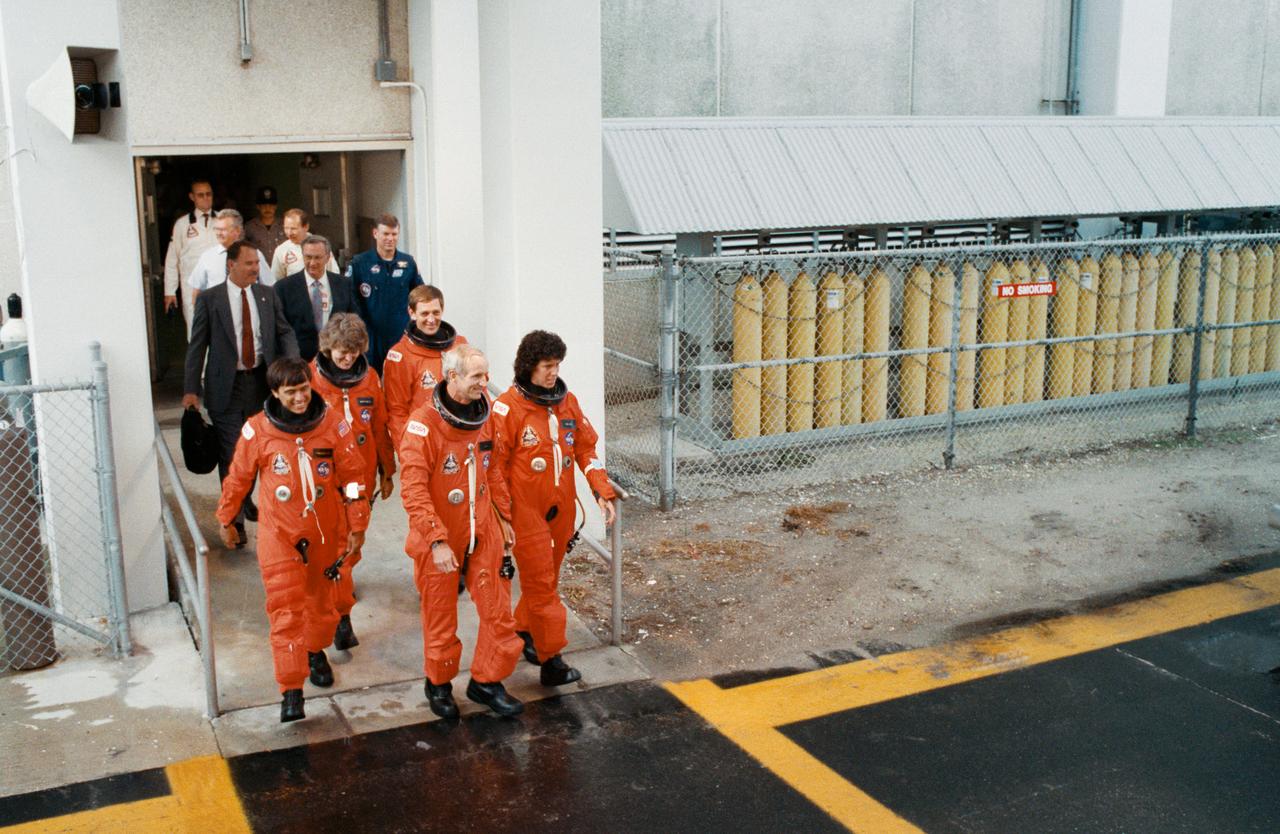
STS-34 crewmembers leave the Kennedy Space Center (KSC) Operations and Checkout (O&C) Building. Crewmembers will then board a vehicle which will carry them to Launch Complex (LC) Pad 39B. Crewmembers, wearing orange launch and entry suits (LESs), are (left to right) Mission Specialist (MS) Franklin R. Chang-Diaz, MS Shannon W. Lucid, Pilot Michael J. McCulley, Commander Donald E. Williams, and MS Ellen S. Baker. Following the crewmembers are (dark clothing, left to right) Donald R. Puddy, Olan J. Bertrand, and astronaut Michael L. Coats of JSC.
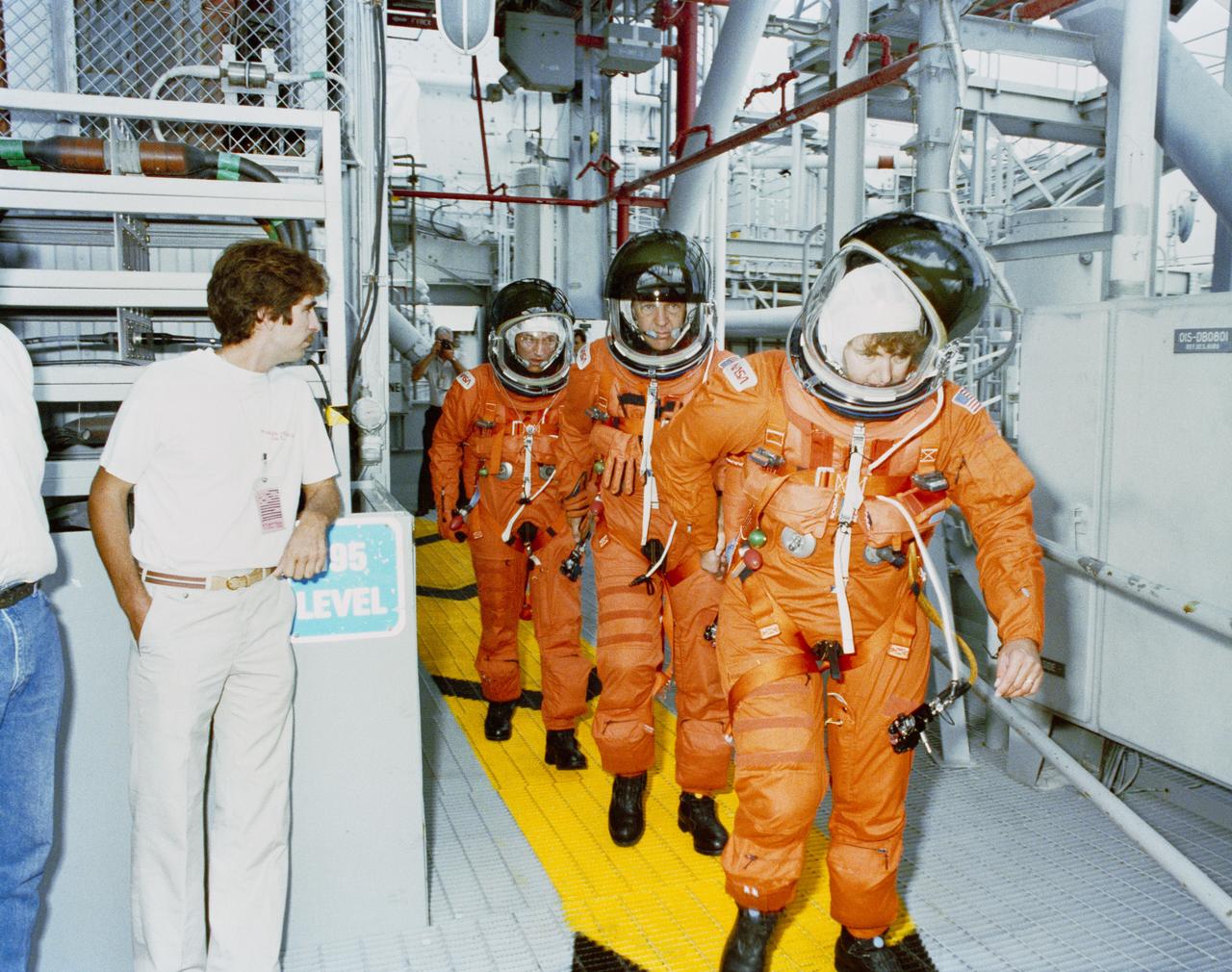
S89-46513 (15 Sept 1989) --- Three members of the STS-34 crew rehearse for their pre-launch procedures at Launch Pad 39B during Terminal Countdown Demonstration Test (TCDT) activities at Kennedy Space Center (KSC). From the foreground, Astronauts Shannon W. Lucid, Michael J. McCulley and Donald E. Williams are at the 195-ft. level of at Pad B. The crew entered Atlantis for the mock countdown. The five astronauts are expected to spend more than five days in Earth orbit next month, with their primary objective being to release the Galileo spacecraft and send it on its way to Jupiter. Not in the frame are Astronauts Franklin R. Chang-Diaz and Ellen S. Baker. (KSC-89PC-898)
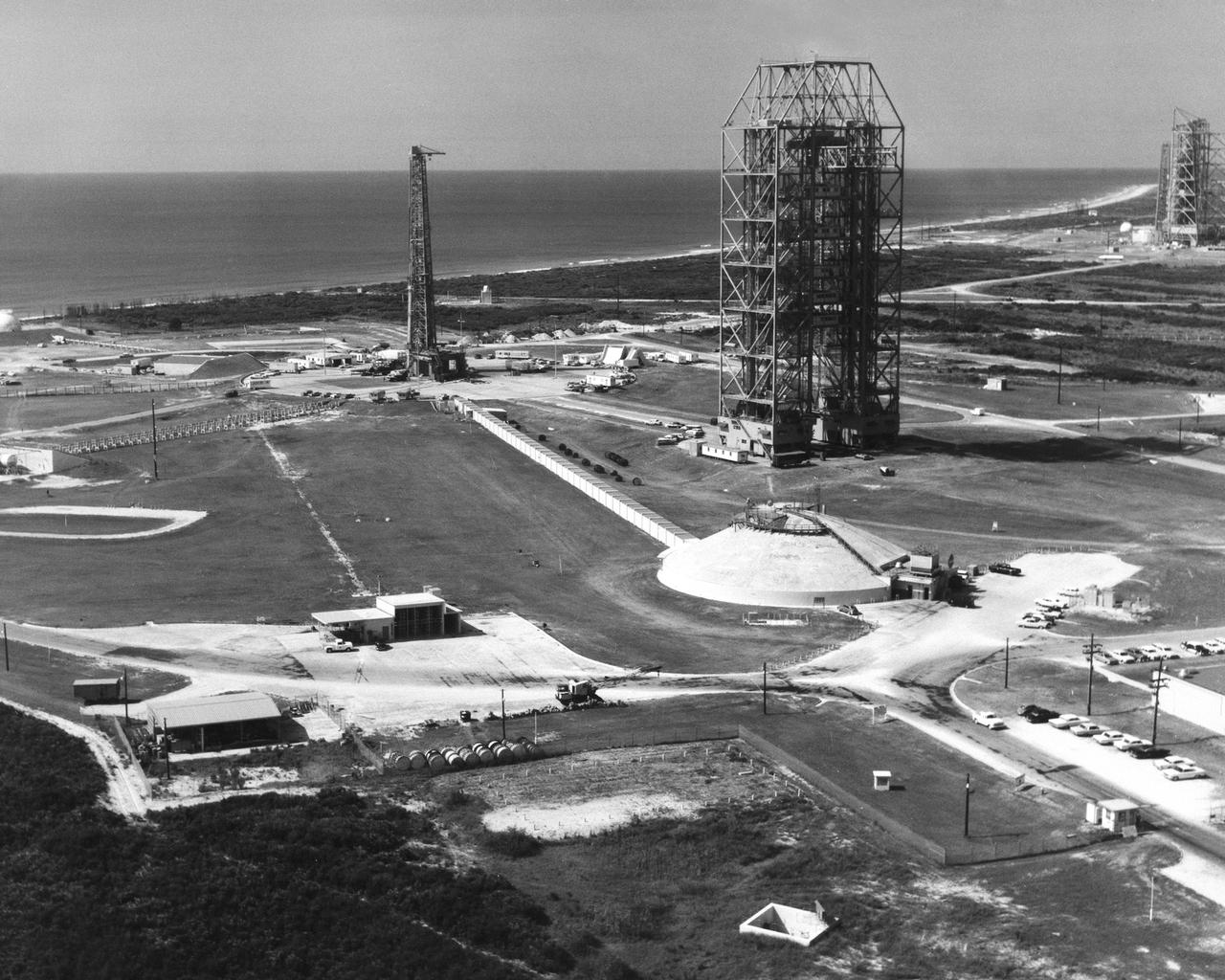
AERIAL OF COMPLEX 34
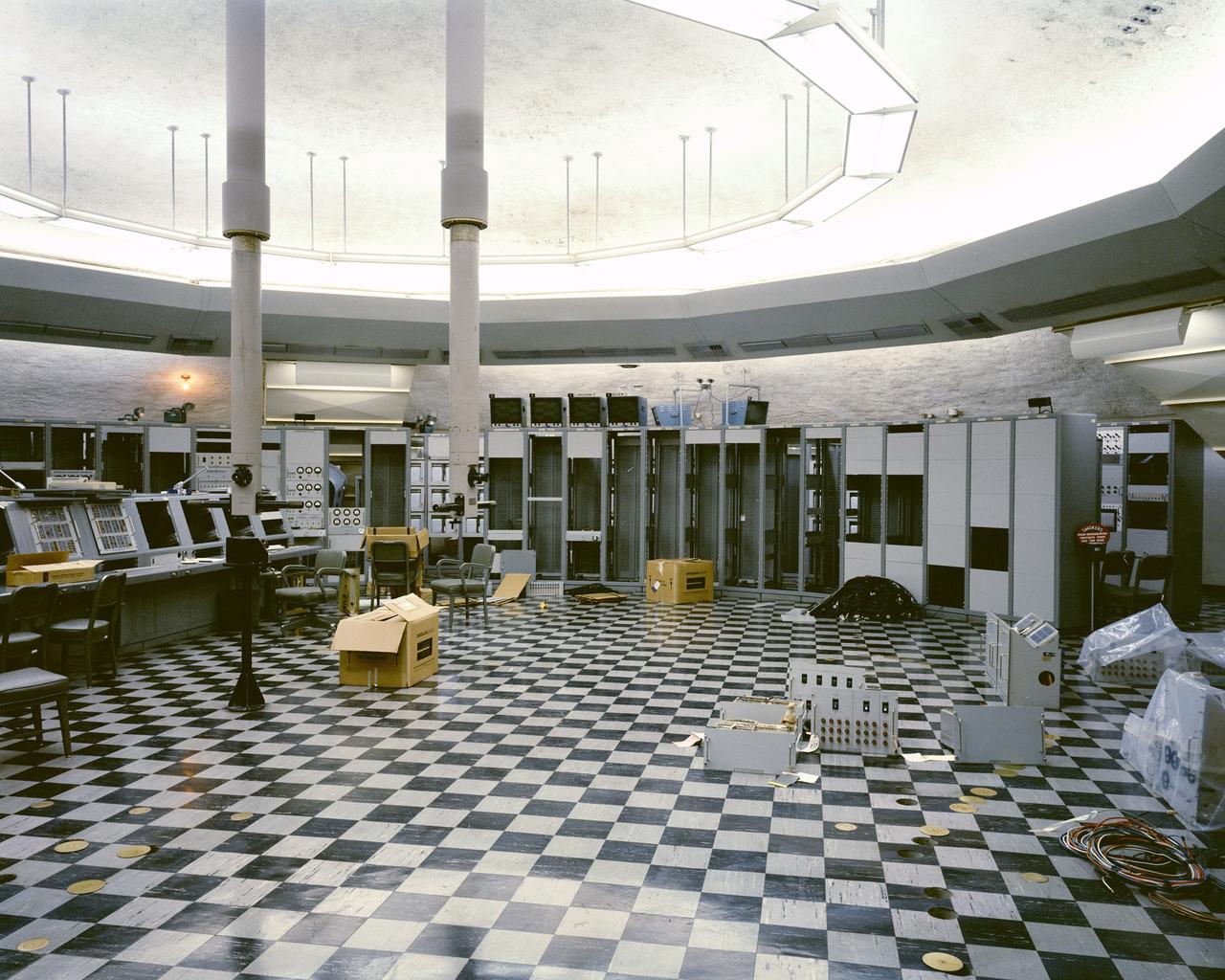
CAPE CANAVERAL, Fla. – CCMTA, NASA:Saturn, Pad 34, blockhouse interiors, Blockhouse 34, south section. Photo credit: NASA
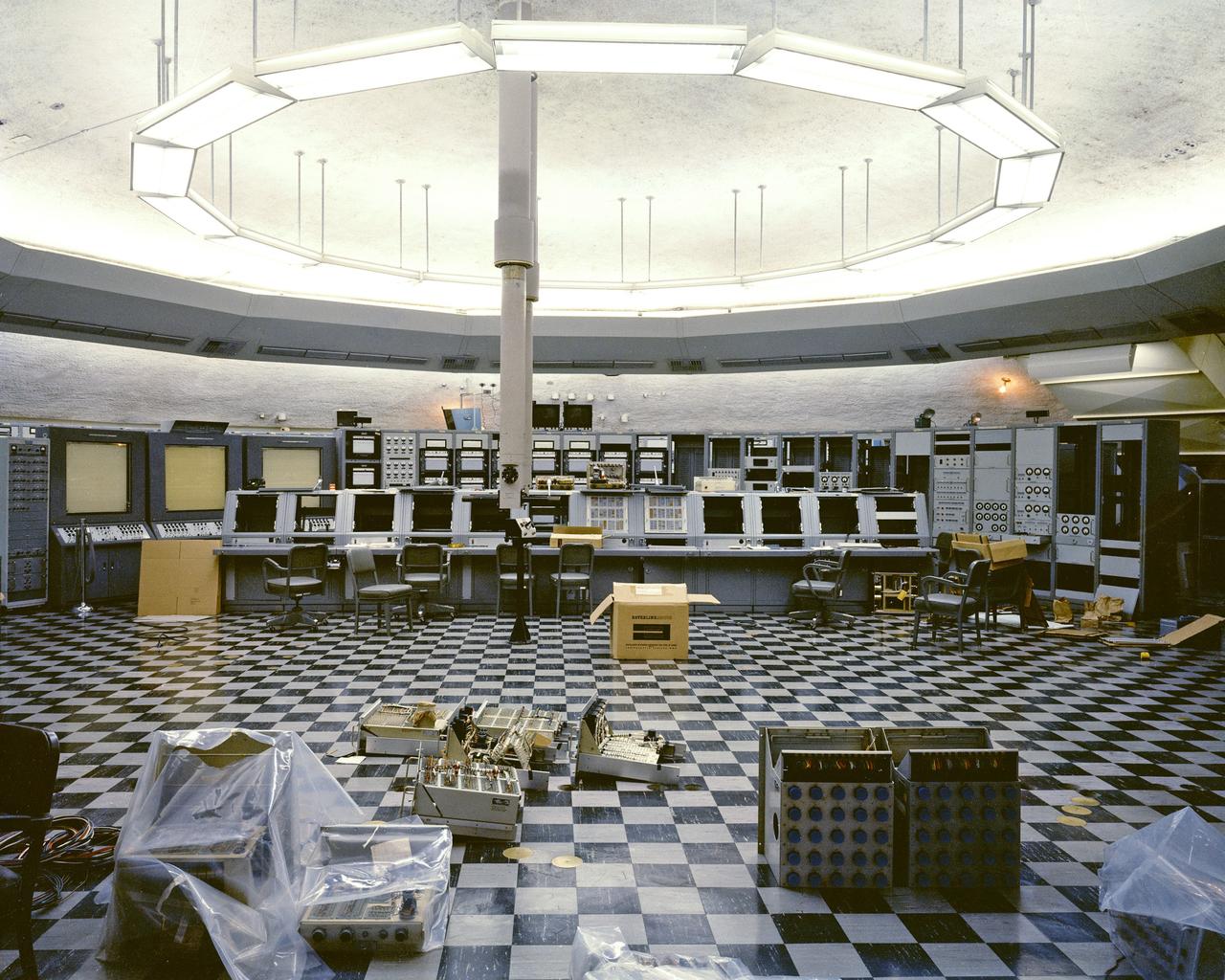
CAPE CANAVERAL, Fla. – CCMTA, NASA:Saturn, Pad 34, blockhouse interiors, Blockhouse 34, central section. Photo credit: NASA
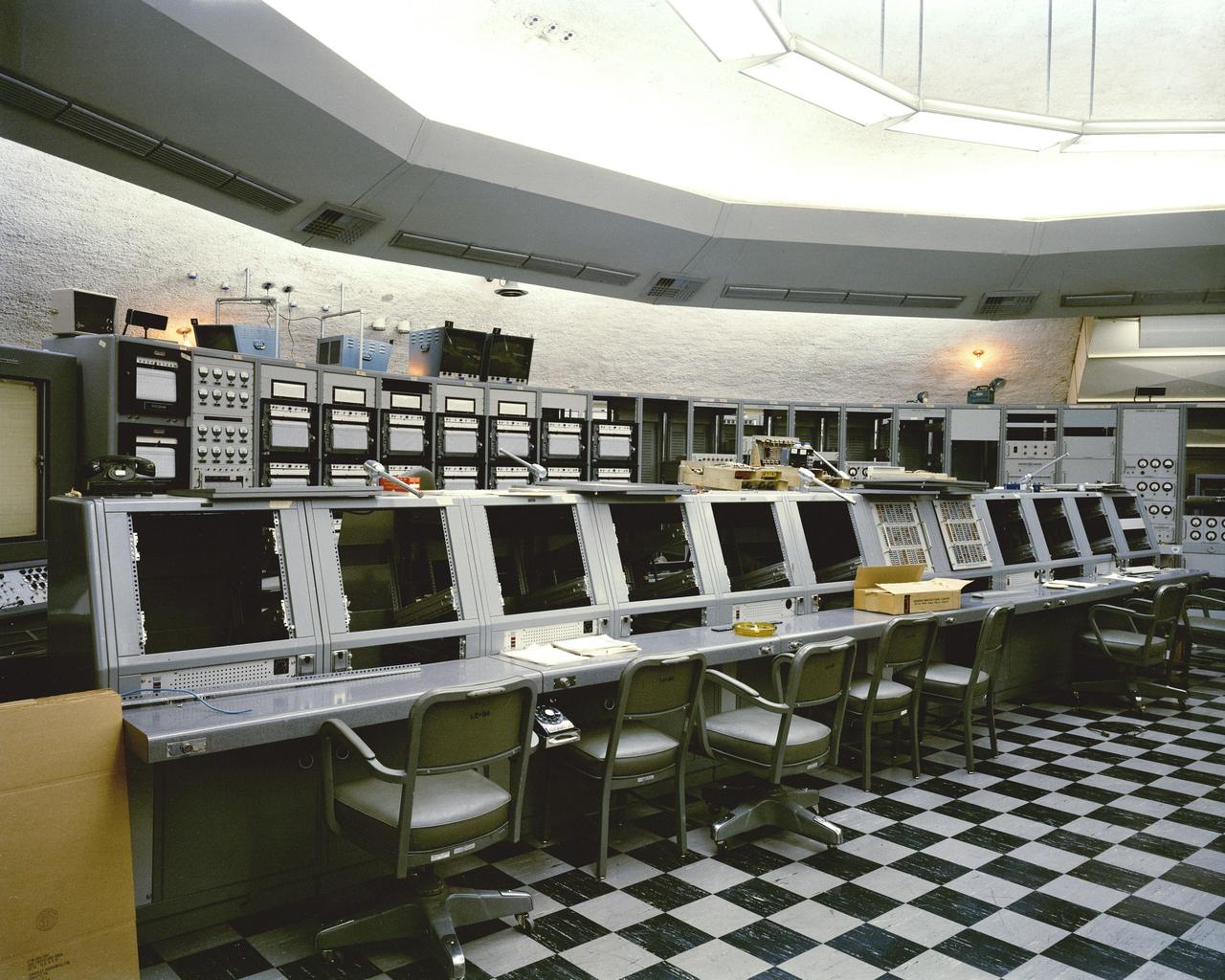
CAPE CANAVERAL, Fla. – CCMTA, NASA:Saturn, Pad 34, blockhouse interiors, Blockhouse 34, consoles. Photo credit: NASA
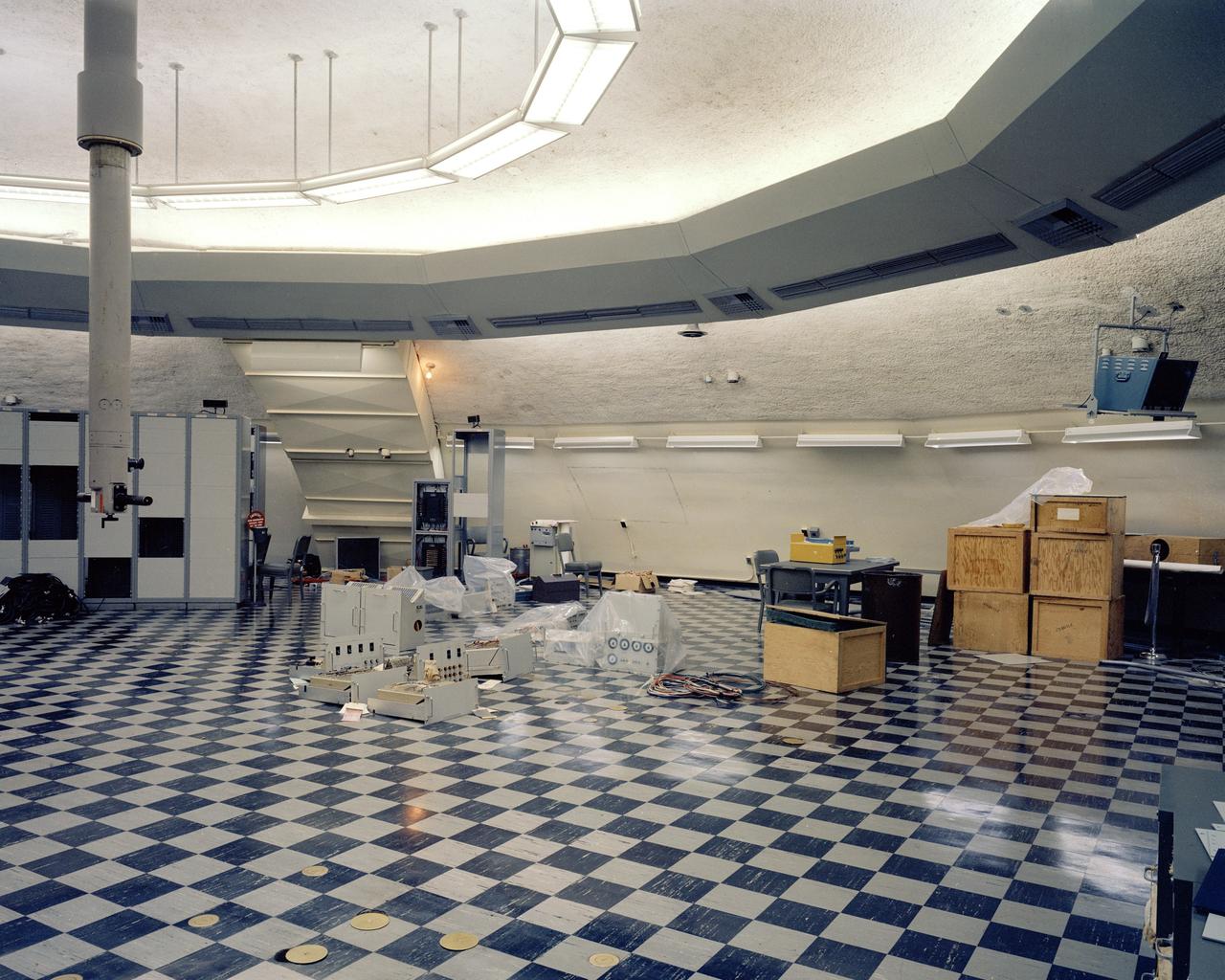
CAPE CANAVERAL, Fla. – CCMTA, NASA:Saturn, Pad 34, blockhouse interiors, Blockhouse 34, general area. Photo credit: NASA
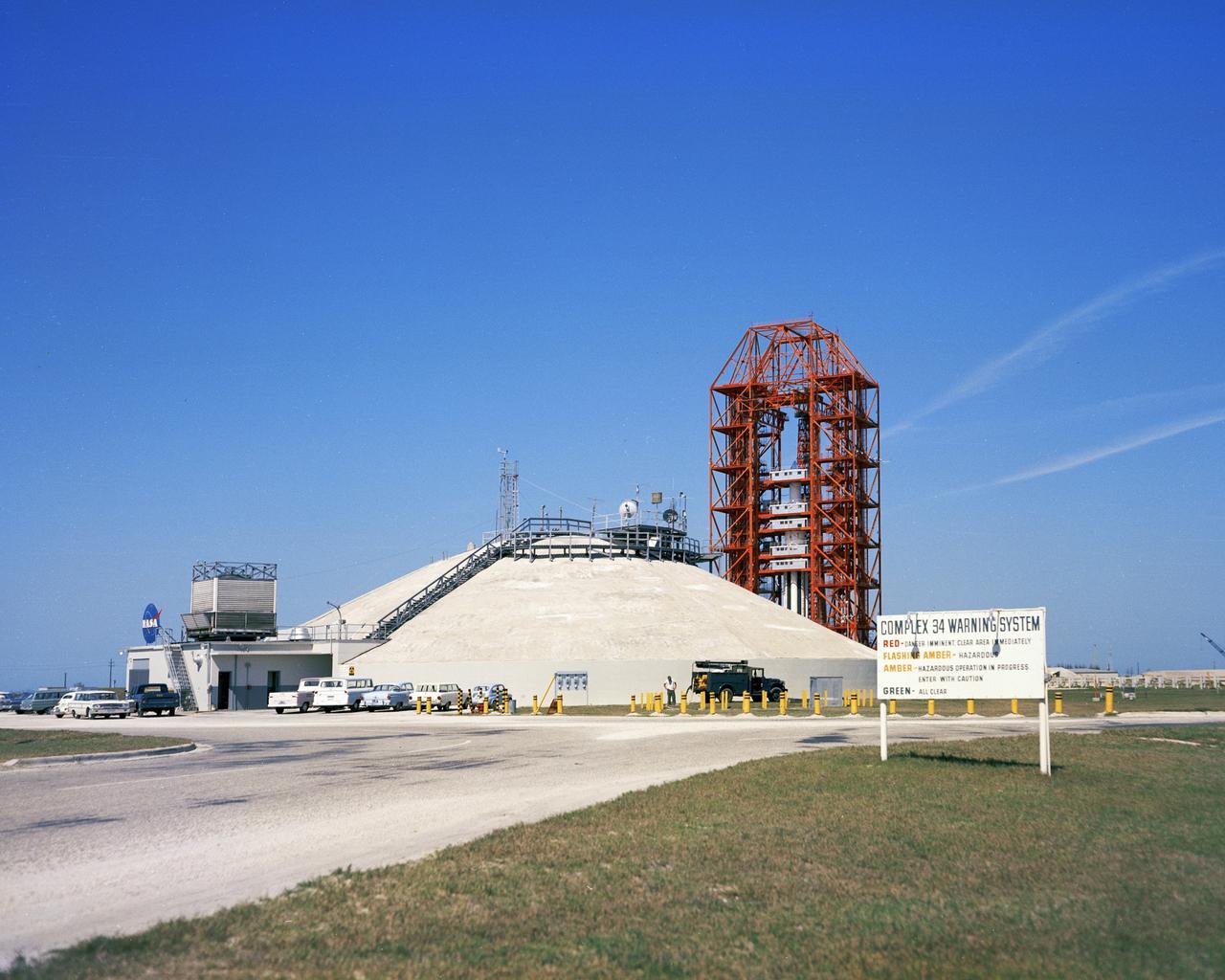
CAPE CANAVERAL, Fla. – Launch Pad 34 exterior, blockhouse and gantry. Photo credit: NASA
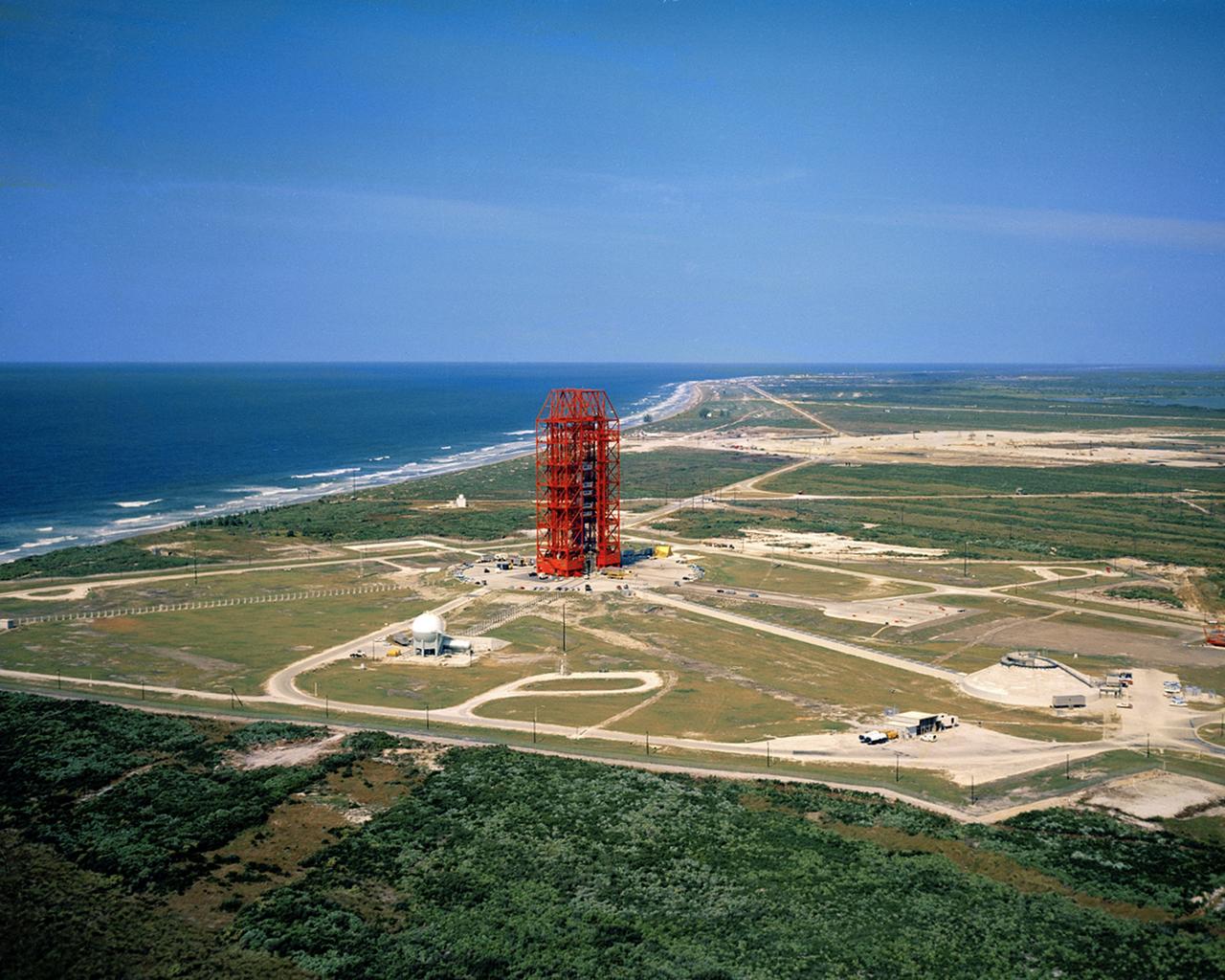
CAPE CANAVERAL, Fla. – Aerial photo, Pad 34 overall, low-level from south. CCMTA, NASA-LOD. Photo credit: NASA
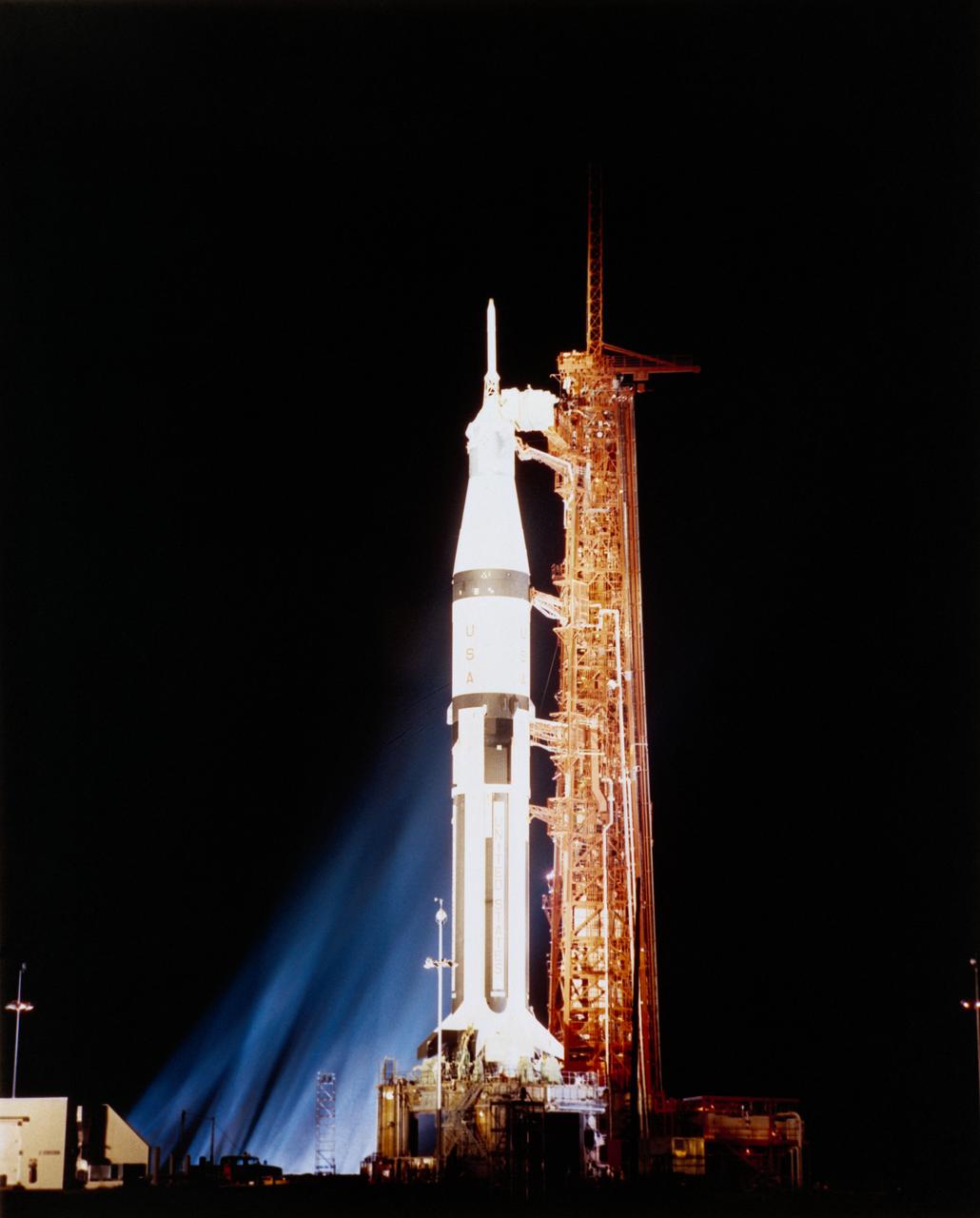
S68-50712 (16 Sept. 1968) --- Nighttime view of Launch Complex 34, Kennedy Space Center, showing the Apollo 7 (Spacecraft 101/Saturn 205) stack on pad.
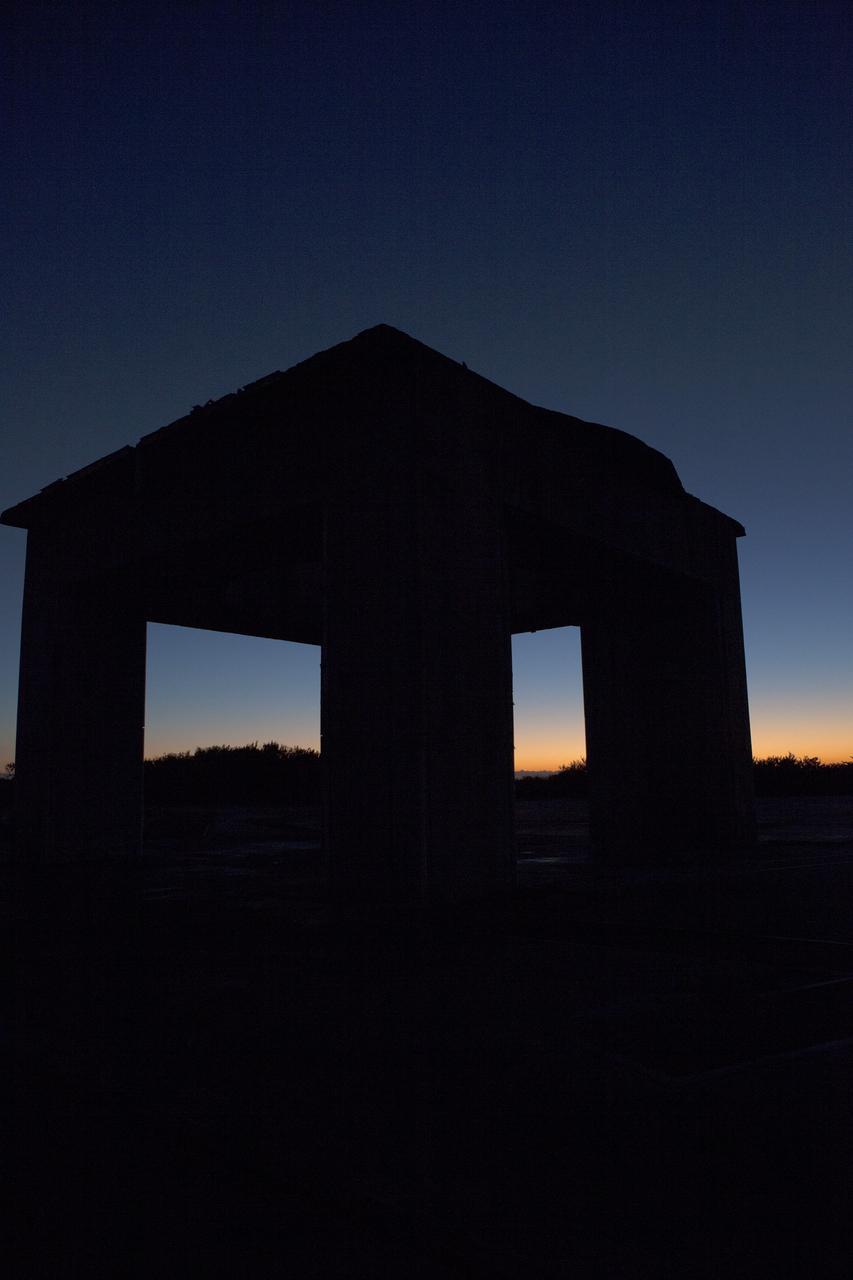
CAPE CANAVERAL, Fla. – Sunrise at Launch Pad 34 on Cape Canaveral Air Force Station in Florida illuminates what remains of the pad's historic gantry. On this day in 1967, a fire erupted on the pad during a preflight test, taking the lives of the Apollo 1 crew, NASA astronauts Virgil Grissom, Edward White and Roger Chaffee. To learn more about Apollo 1 and the crew, visit http://www.nasa.gov/mission_pages/apollo/missions/apollo1.html. Photo credit: NASA/Ben Smegelsky
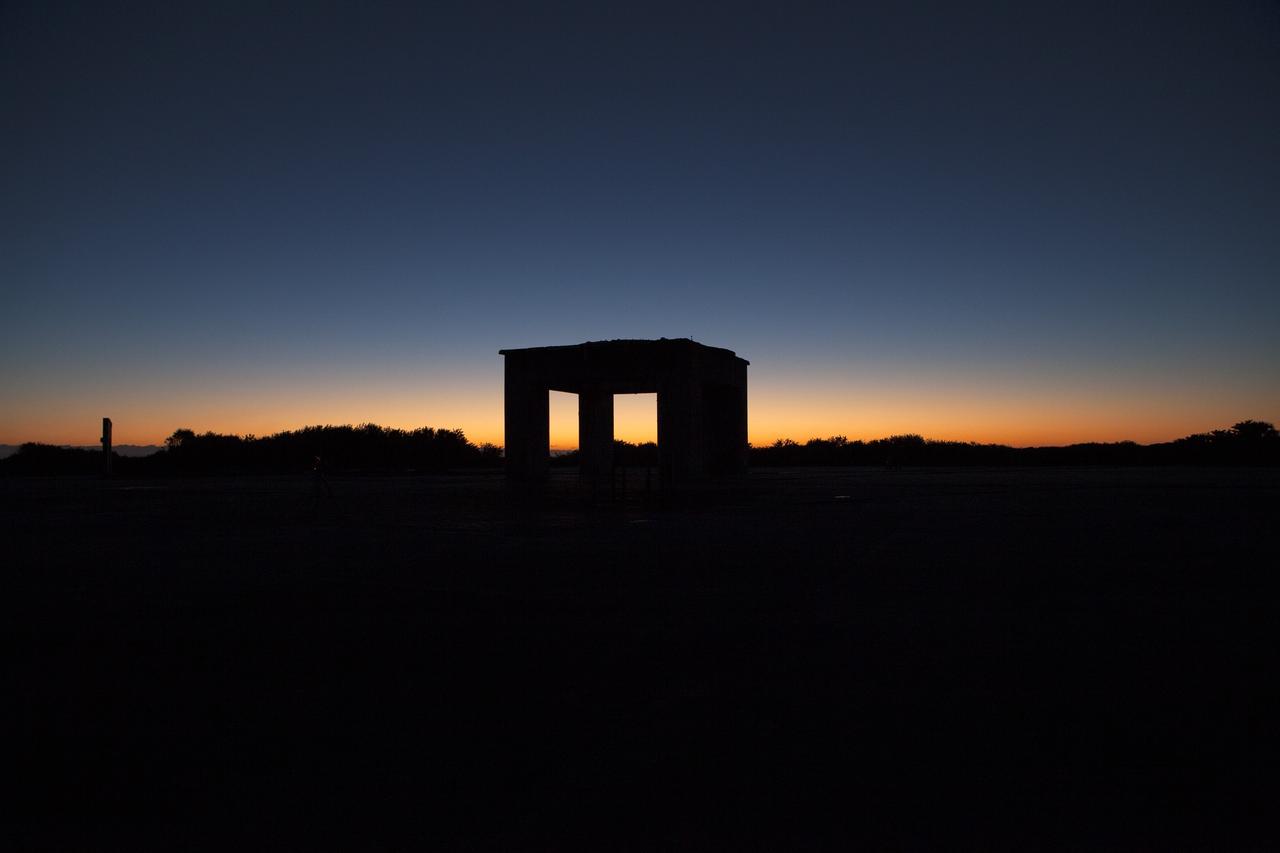
CAPE CANAVERAL, Fla. – Sunrise at Launch Pad 34 on Cape Canaveral Air Force Station in Florida silhouettes what remains of the pad's historic gantry. On this day in 1967, a fire erupted on the pad during a preflight test, taking the lives of the Apollo 1 crew, NASA astronauts Virgil Grissom, Edward White and Roger Chaffee. To learn more about Apollo 1 and the crew, visit http://www.nasa.gov/mission_pages/apollo/missions/apollo1.html. Photo credit: NASA/Ben Smegelsky
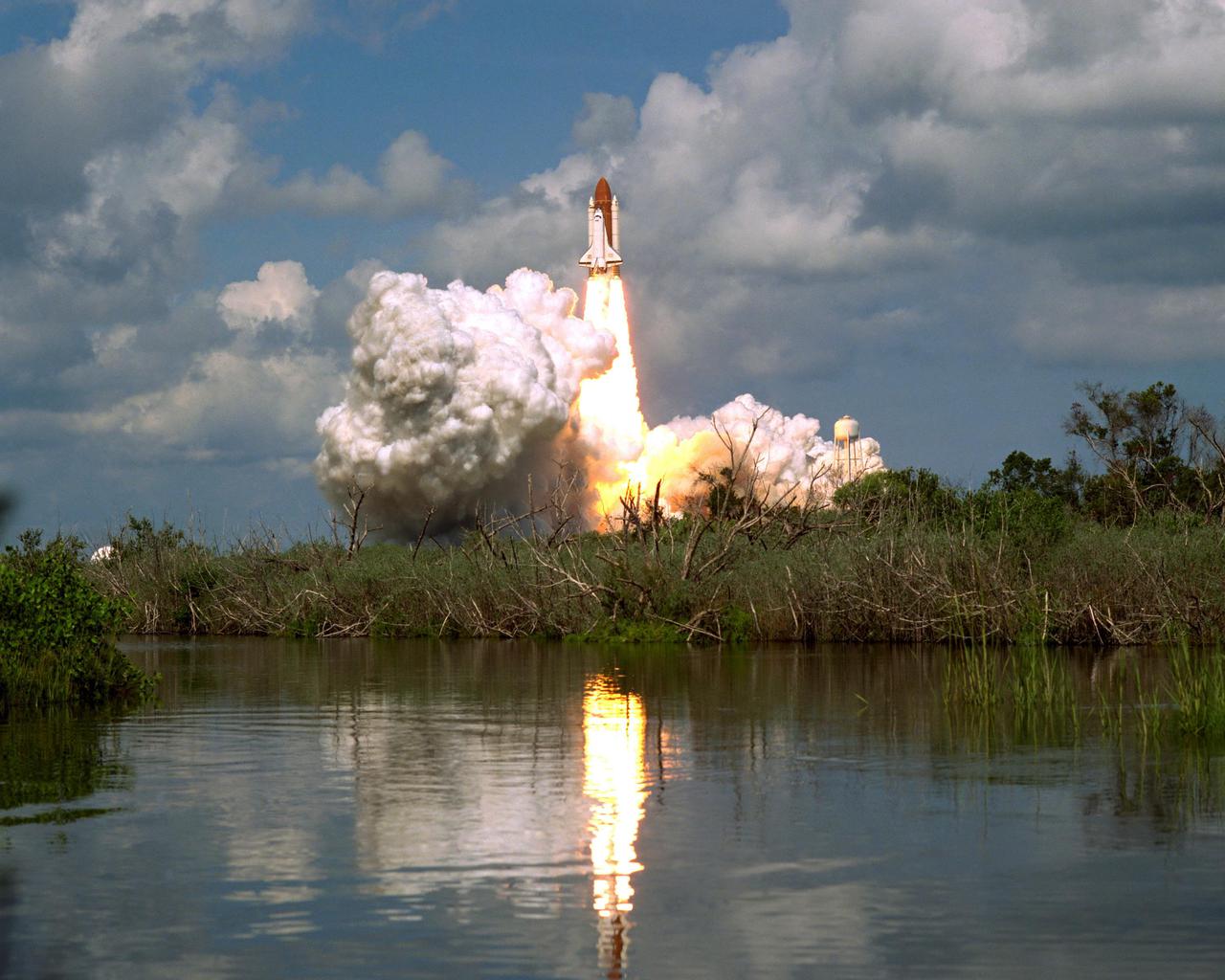
KENNEDY SPACE CENTER, FLA. -- The STS-34 Space Shuttle Atlantis lifts off from pad 39-B at 12:53 p.m. EDT, marking the beginning of a five-day mission in space. Atlantis is carrying a crew of five and the spacecraft Galileo, wich will be making a six-year trip to Jupiter..
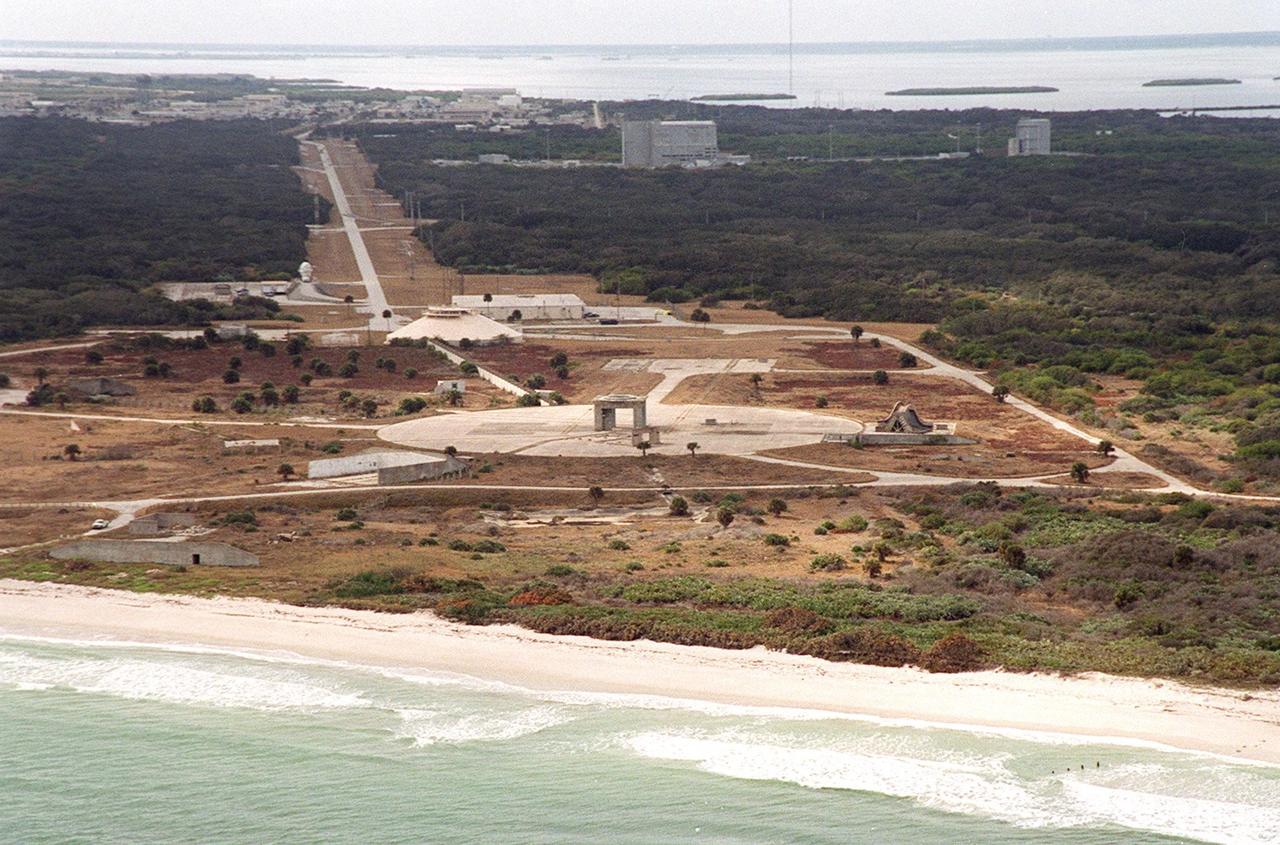
This aerial view of the dismantled Launch Pad 34 at Cape Canaveral Air Force Station stretches from the Atlantic Ocean in the foreground to the Banana River at the top. The round blockhouse is in the middle, and Phillips Parkway, which runs southwest to northeast, runs toward the river
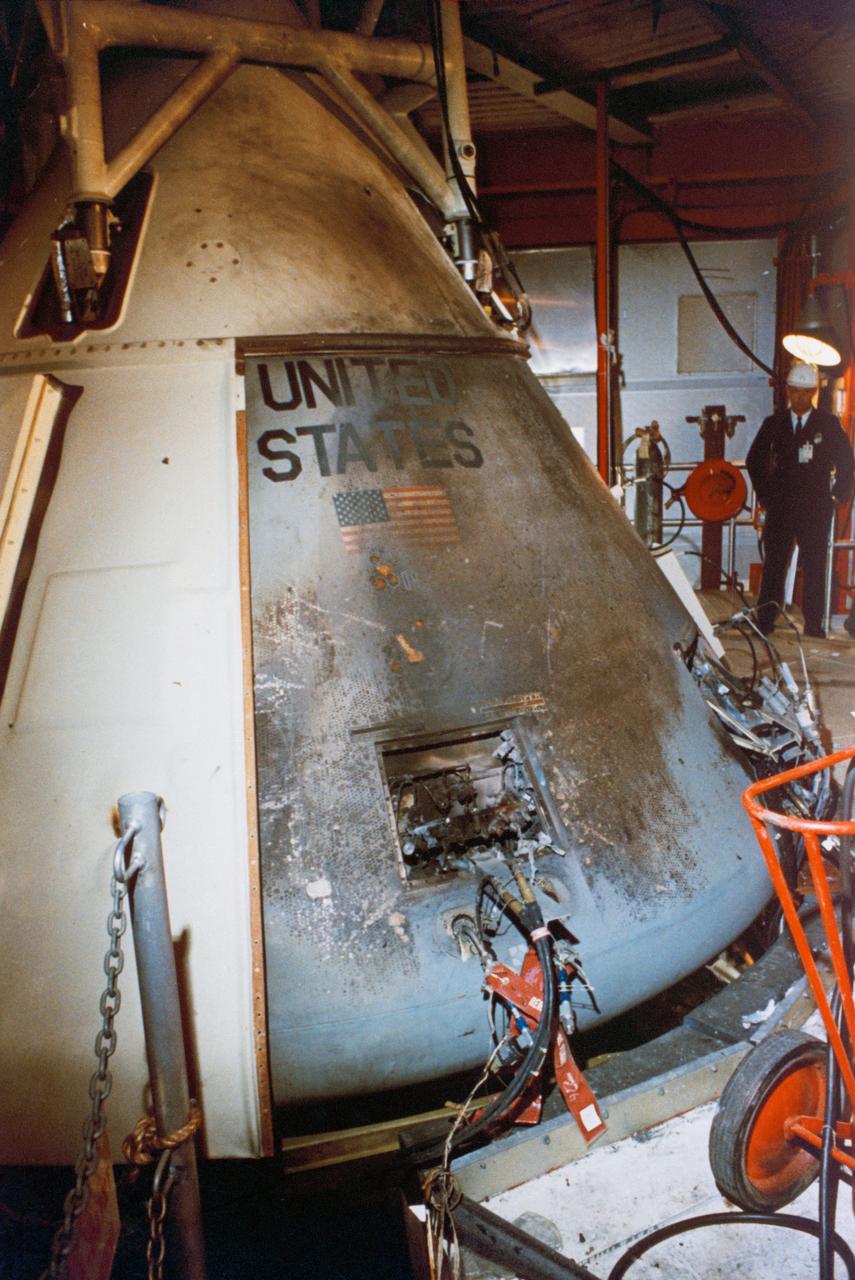
Closeup view of the interior of Apollo S/C 012 C/M, Pad 34, showing the effects of the intense heat of the flash fire which killed the Prime Crew of the A/S 204 Mission. CAPE KENNEDY, FL CAPE KENNEDY, FL
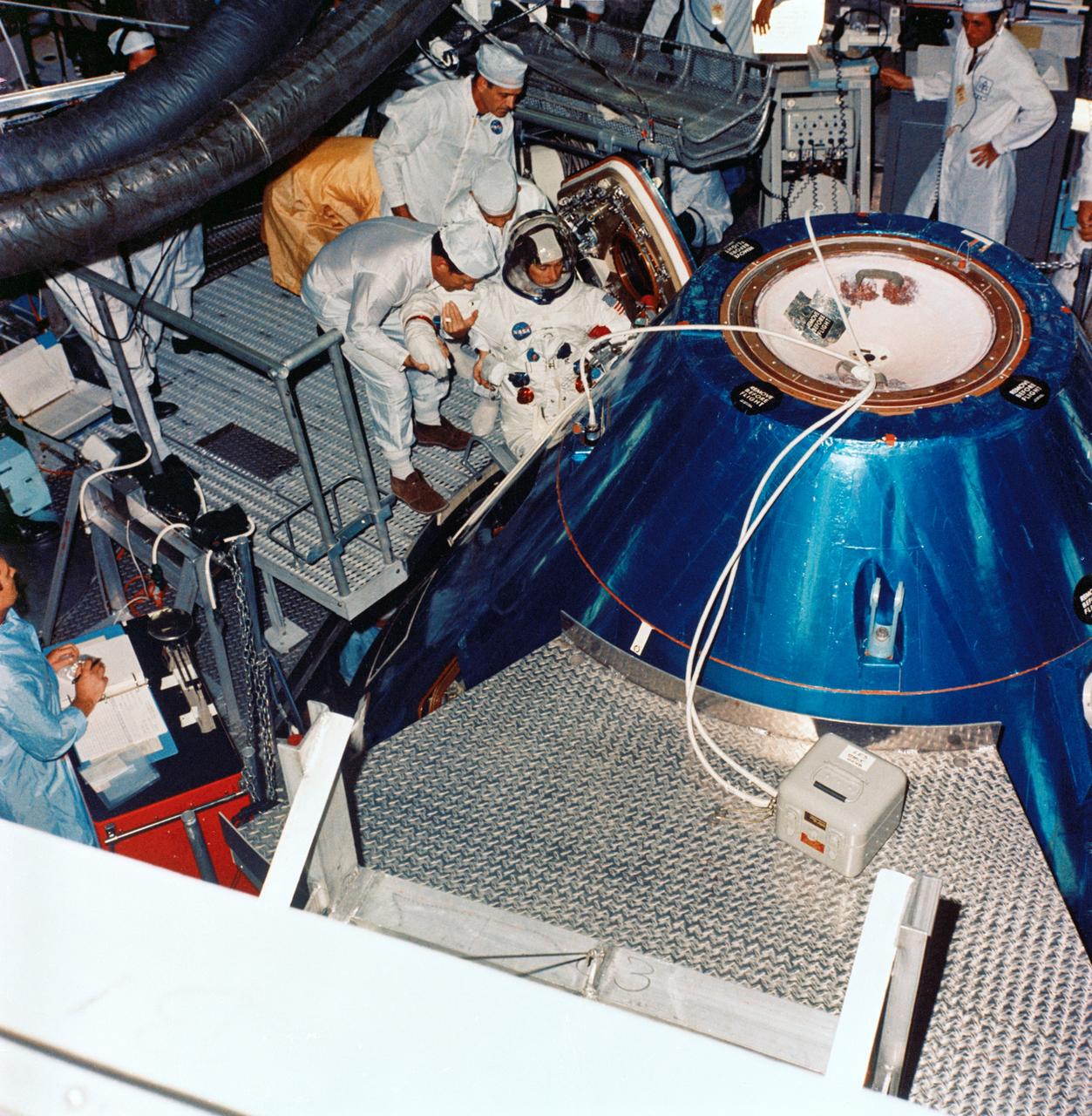
S68-40875 (5 July 1968) --- Astronaut John W. Young, Apollo 7 backup command module pilot, ingresses Apollo Spacecraft 101 Command Module during simulated altitude runs at the Kennedy Space Center's Pad 34.
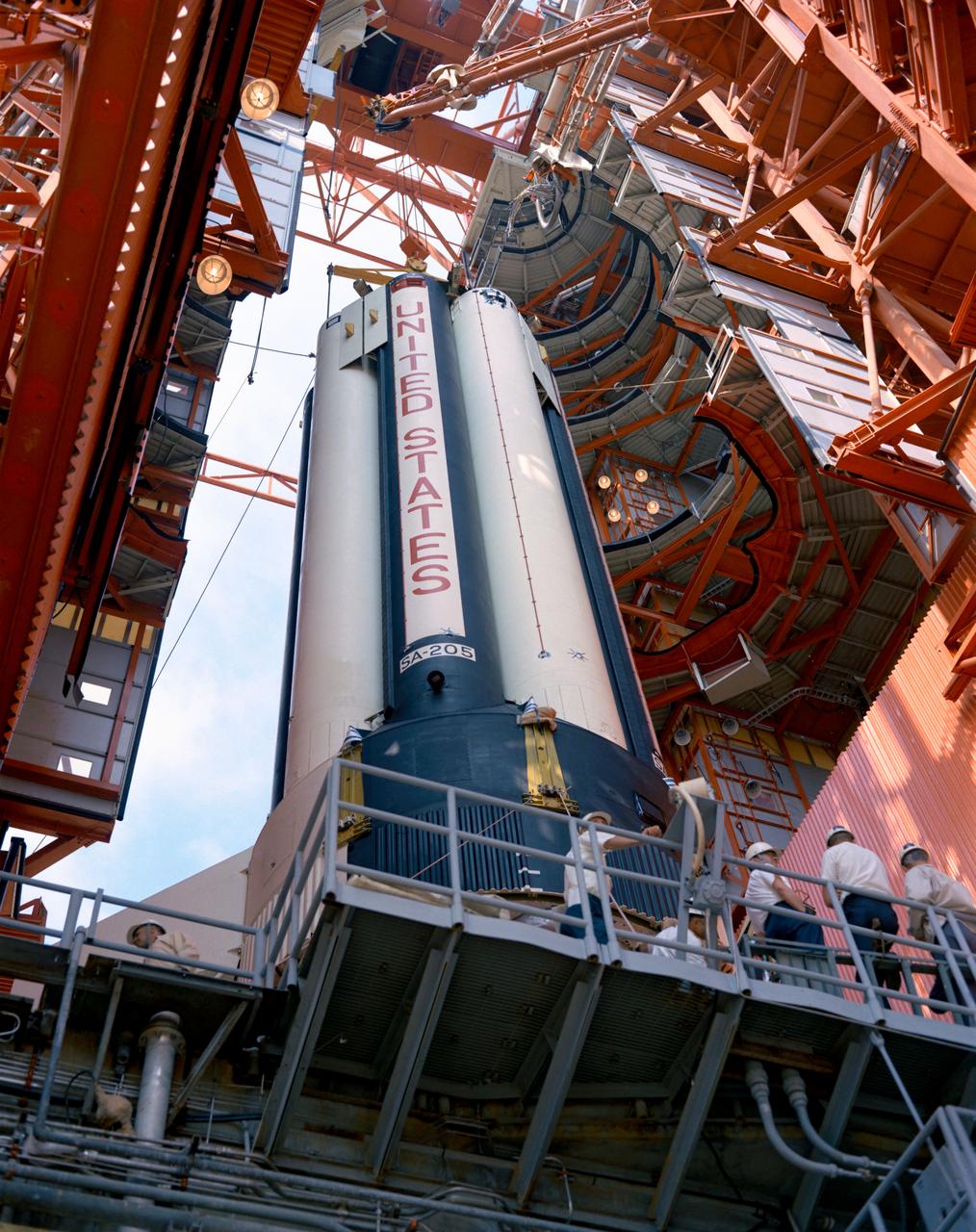
S68-29781 (22 April 1968) --- Low angle view at the Kennedy Space Center's Pad 34 showing the erection of the first stage of the Saturn 205 launch vehicle. The two-stage Saturn IB will be the launch vehicle for the first unmanned Apollo space mission, Apollo 7 (Spacecraft 101/Saturn 205).
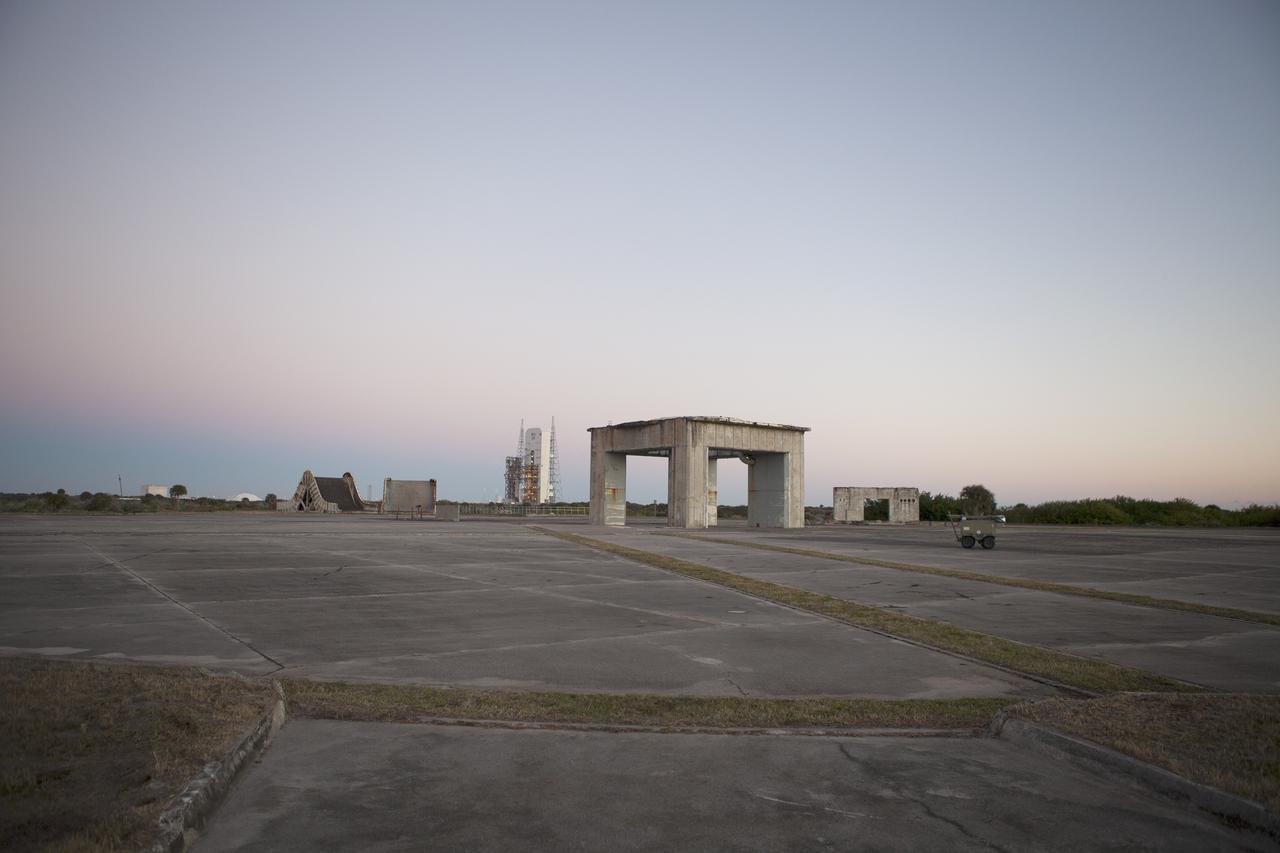
CAPE CANAVERAL, Fla. – The past intersects with the future on Cape Canaveral Air Force Station in Florida. In the foreground is what remains of historic Launch Pad 34 in the distance behind it is Space Launch Complex 37 whence NASA's Orion spacecraft made its first flight test. On this day in 1967, a fire erupted on the Pad 34 during a preflight test, taking the lives of the Apollo 1 crew, NASA astronauts Virgil Grissom, Edward White and Roger Chaffee. To learn more about Apollo 1 and the crew, visit http://www.nasa.gov/mission_pages/apollo/missions/apollo1.html. To learn more about Orion, visit http://www.nasa.gov/exploration/systems/orion/. Photo credit: NASA/Ben Smegelsky
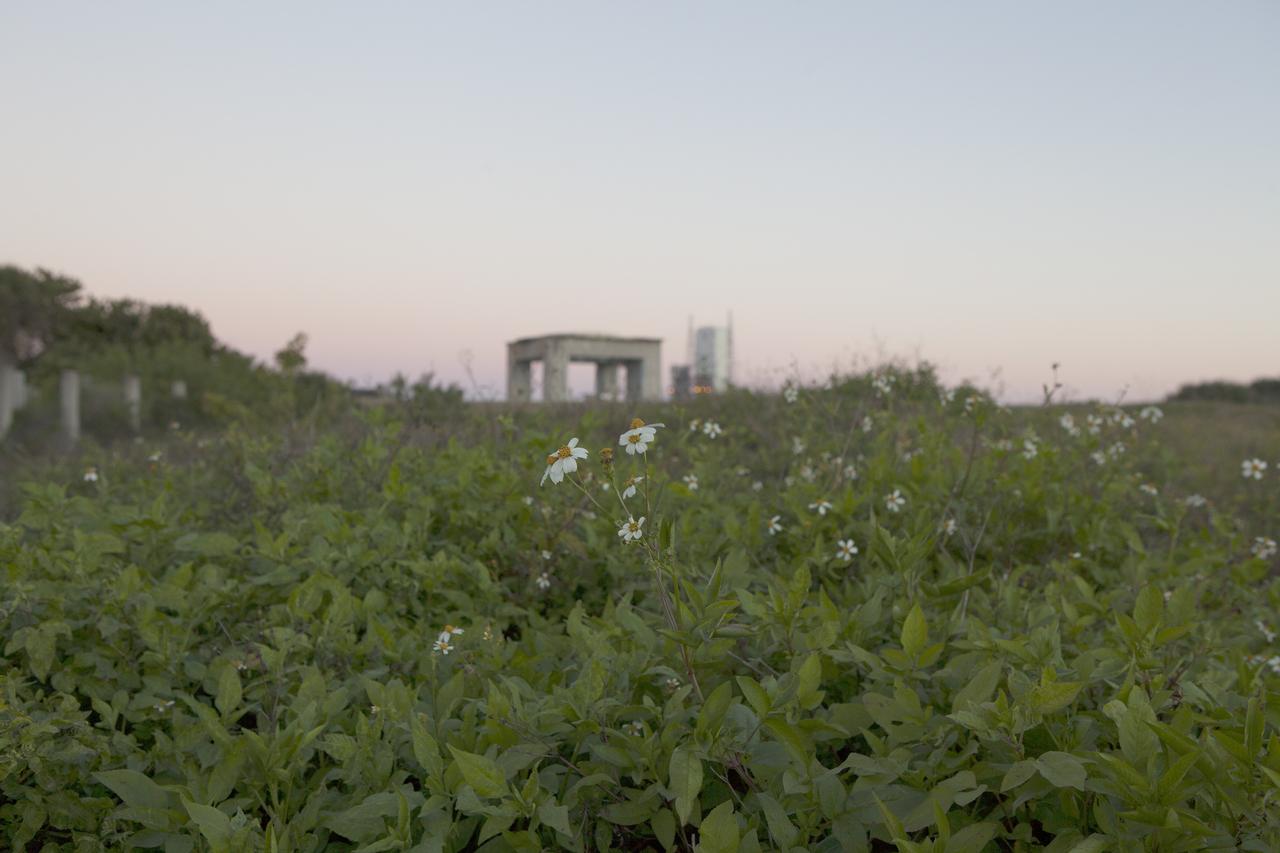
CAPE CANAVERAL, Fla. – The past intersects with the future on Cape Canaveral Air Force Station in Florida. In the foreground is what remains of historic Launch Pad 34 in the distance behind it is Space Launch Complex 37 whence NASA's Orion spacecraft made its first flight test. On this day in 1967, a fire erupted on the Pad 34 during a preflight test, taking the lives of the Apollo 1 crew, NASA astronauts Virgil Grissom, Edward White and Roger Chaffee. To learn more about Apollo 1 and the crew, visit http://www.nasa.gov/mission_pages/apollo/missions/apollo1.html. To learn more about Orion, visit http://www.nasa.gov/exploration/systems/orion/. Photo credit: NASA/Ben Smegelsky
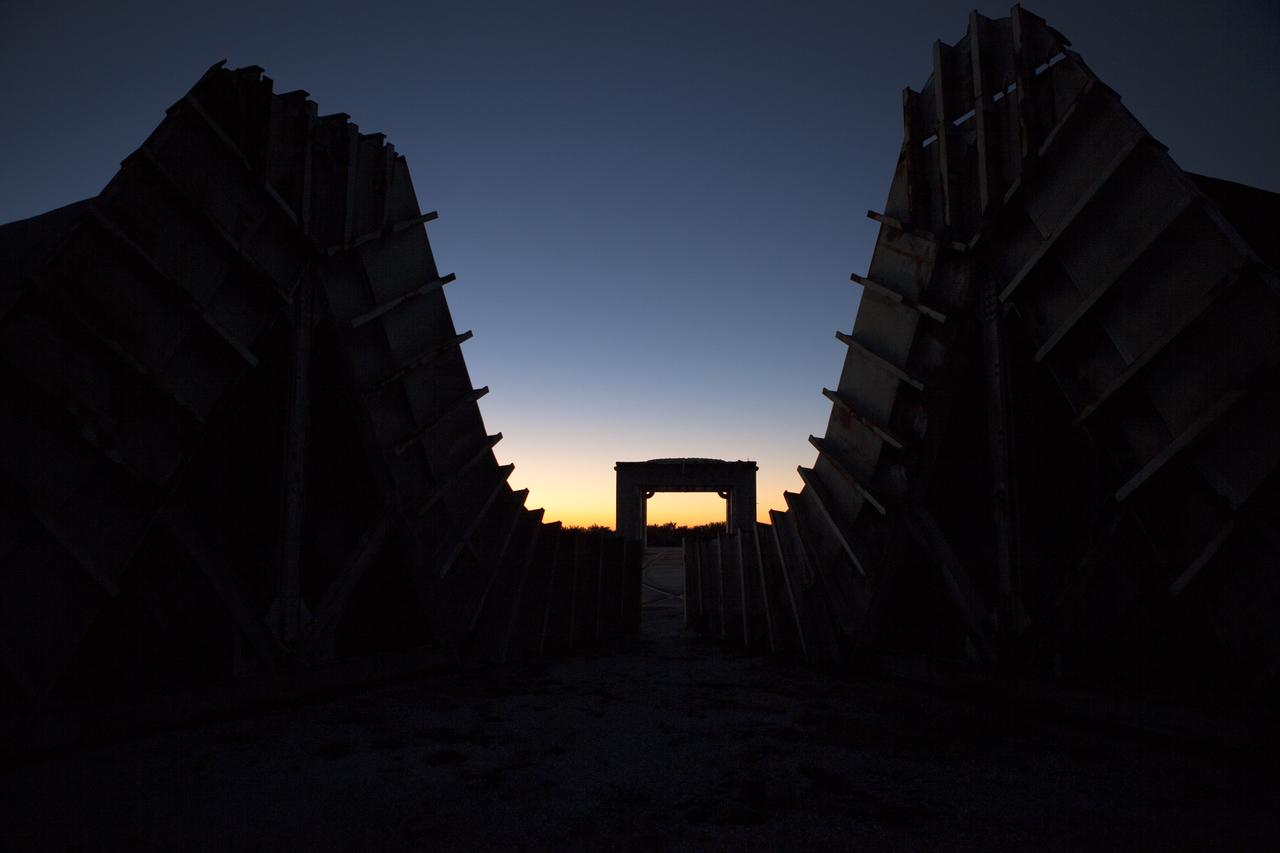
CAPE CANAVERAL, Fla. – Flame deflectors frame what remains of the historic gantry on Launch Pad 34 on Cape Canaveral Air Force Station in Florida. On this day in 1967, a fire erupted on the pad during a preflight test, taking the lives of the Apollo 1 crew, NASA astronauts Virgil Grissom, Edward White and Roger Chaffee. To learn more about Apollo 1 and the crew, visit http://www.nasa.gov/mission_pages/apollo/missions/apollo1.html. Photo credit: NASA/Ben Smegelsky
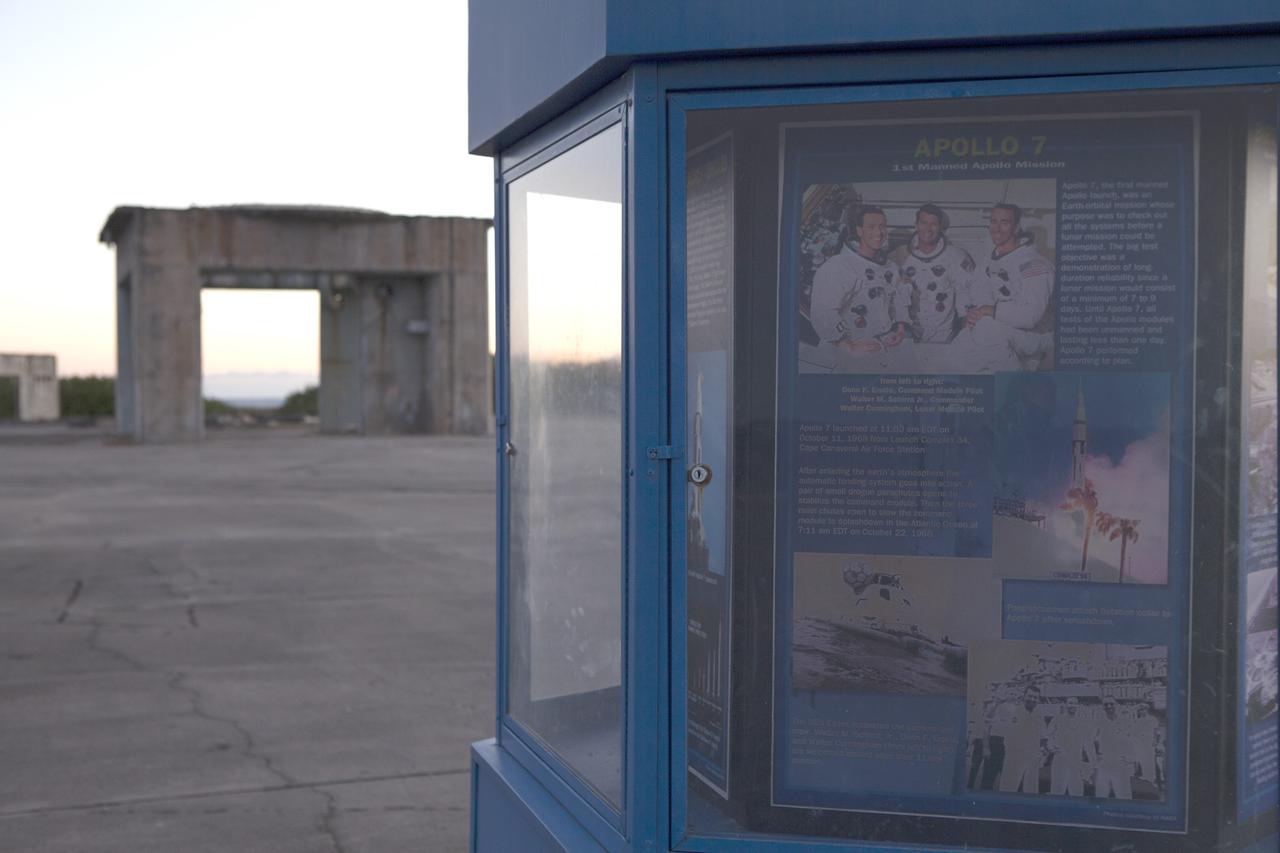
CAPE CANAVERAL, Fla. – A kiosk near what remains of the once majestic gantry on Launch Pad 34 on Cape Canaveral Air Force Station in Florida describes the historic events that took place there. On this day in 1967, a fire erupted on the pad during a preflight test, taking the lives of the Apollo 1 crew, NASA astronauts Virgil Grissom, Edward White and Roger Chaffee. To learn more about Apollo 1 and the crew, visit http://www.nasa.gov/mission_pages/apollo/missions/apollo1.html. Photo credit: NASA/Ben Smegelsky
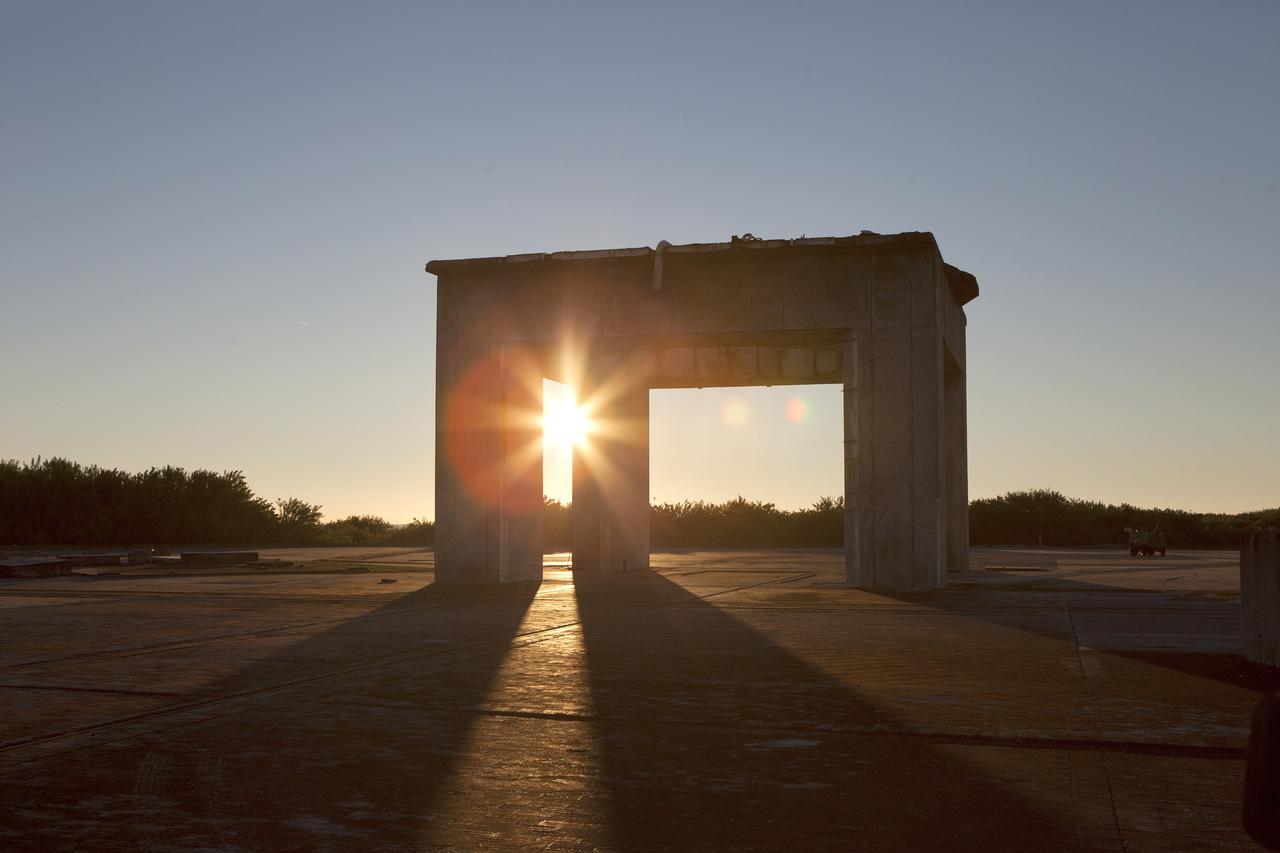
CAPE CANAVERAL, Fla. – The sun beams through what remains of the gantry on Launch Pad 34 on Cape Canaveral Air Force Station in Florida. On this day in 1967, a fire erupted on the pad during a preflight test, taking the lives of the Apollo 1 crew, NASA astronauts Virgil Grissom, Edward White and Roger Chaffee. To learn more about Apollo 1 and the crew, visit http://www.nasa.gov/mission_pages/apollo/missions/apollo1.html. Photo credit: NASA/Ben Smegelsky
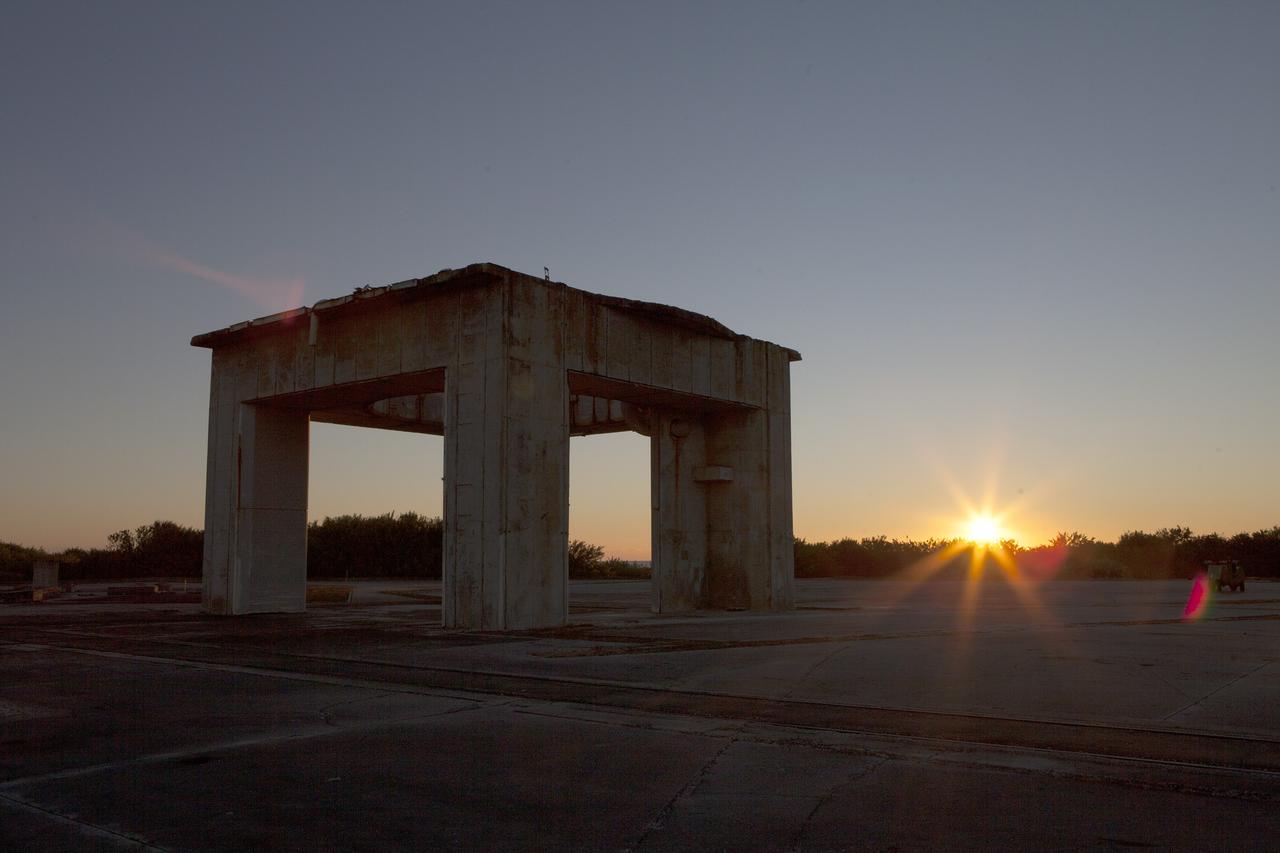
CAPE CANAVERAL, Fla. – The sun comes up behind what remains of the gantry on Launch Pad 34 on Cape Canaveral Air Force Station in Florida. On this day in 1967, a fire erupted on the pad during a preflight test, taking the lives of the Apollo 1 crew, NASA astronauts Virgil Grissom, Edward White and Roger Chaffee. To learn more about Apollo 1 and the crew, visit http://www.nasa.gov/mission_pages/apollo/missions/apollo1.html. Photo credit: NASA/Ben Smegelsky
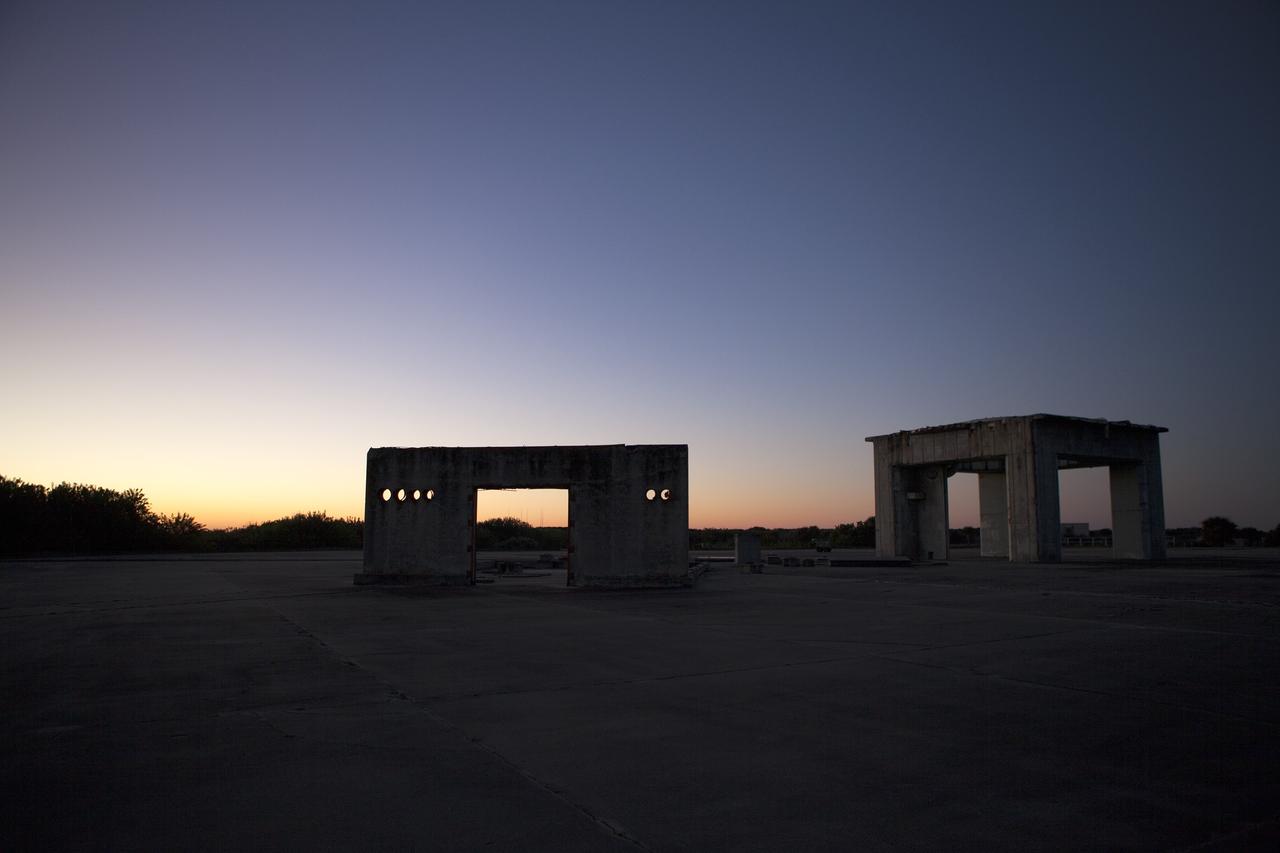
CAPE CANAVERAL, Fla. – The sun rises over what remains of the historic gantry and support structures on Launch Pad 34 on Cape Canaveral Air Force Station in Florida. On this day in 1967, a fire erupted on the pad during a preflight test, taking the lives of the Apollo 1 crew, NASA astronauts Virgil Grissom, Edward White and Roger Chaffee. To learn more about Apollo 1 and the crew, visit http://www.nasa.gov/mission_pages/apollo/missions/apollo1.html. Photo credit: NASA/Ben Smegelsky
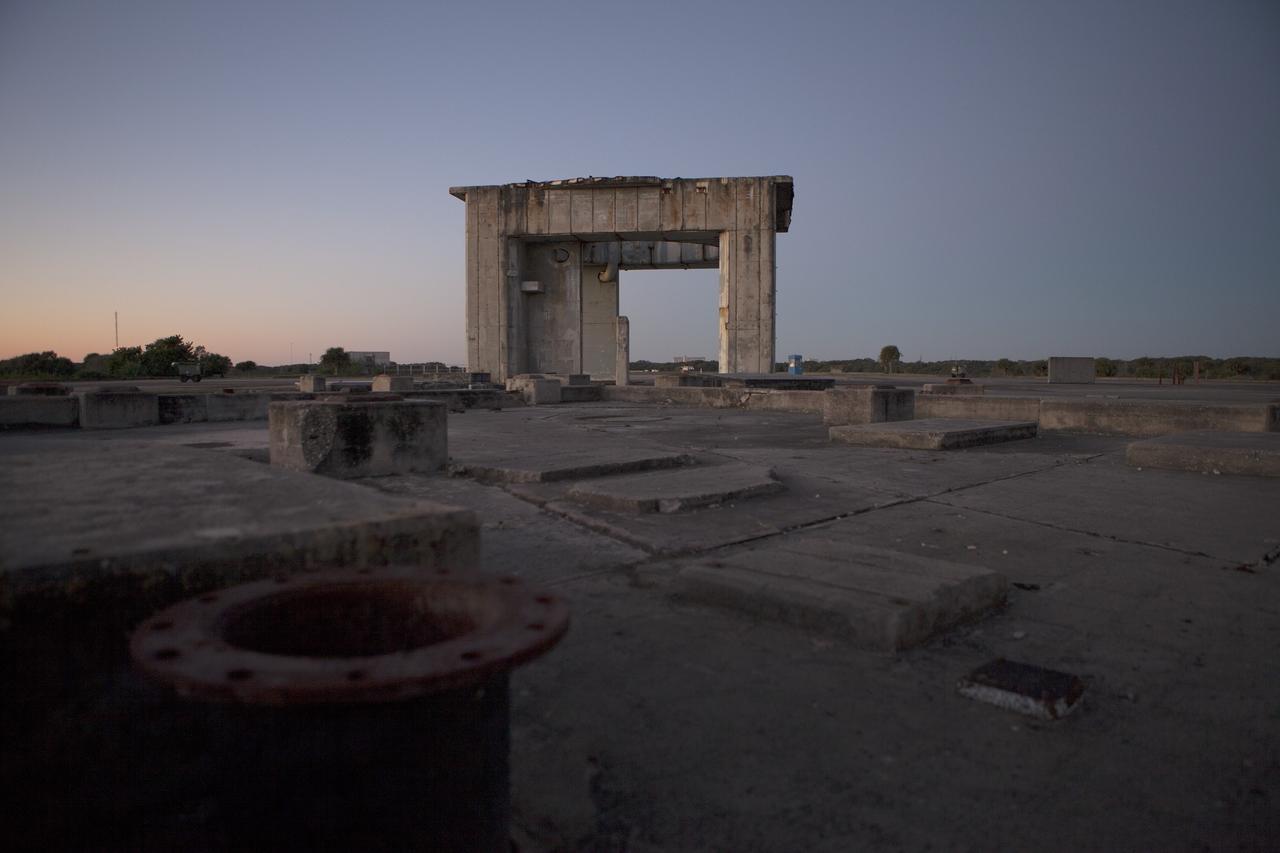
CAPE CANAVERAL, Fla. – Sunrise over Launch Pad 34 on Cape Canaveral Air Force Station in Florida reveals only remnants of the concrete and steel of the once majestic launch gantry. On this day in 1967, a fire erupted on the pad during a preflight test, taking the lives of the Apollo 1 crew, NASA astronauts Virgil Grissom, Edward White and Roger Chaffee. To learn more about Apollo 1 and the crew, visit http://www.nasa.gov/mission_pages/apollo/missions/apollo1.html. Photo credit: NASA/Ben Smegelsky
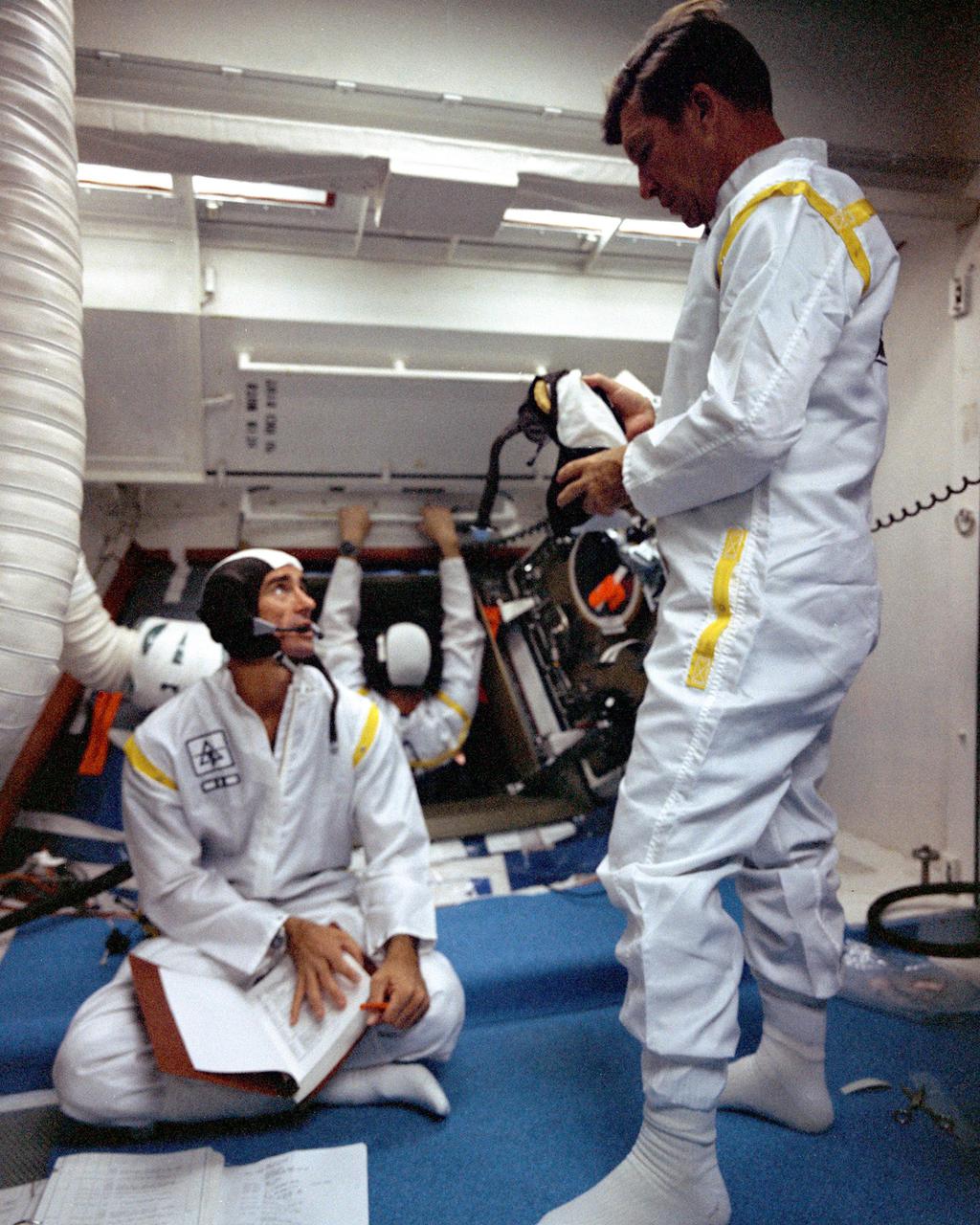
KENNEDY SPACE CENTER, FLA. - Apollo 7 Command Module Pilot Donn F. Eisele enters the spacecraft at Pad 34 while fellow crew members, Commander Walter M. Schirra Jr., left, and Lunar Module Pilot Walter Cunningham hold a brief discussion before they repeat that portion of the Plugs-Out test at the pad. The tests are being conducted in preparation for the scheduled launch of Apollo 7, the first manned lunar orbital mission.
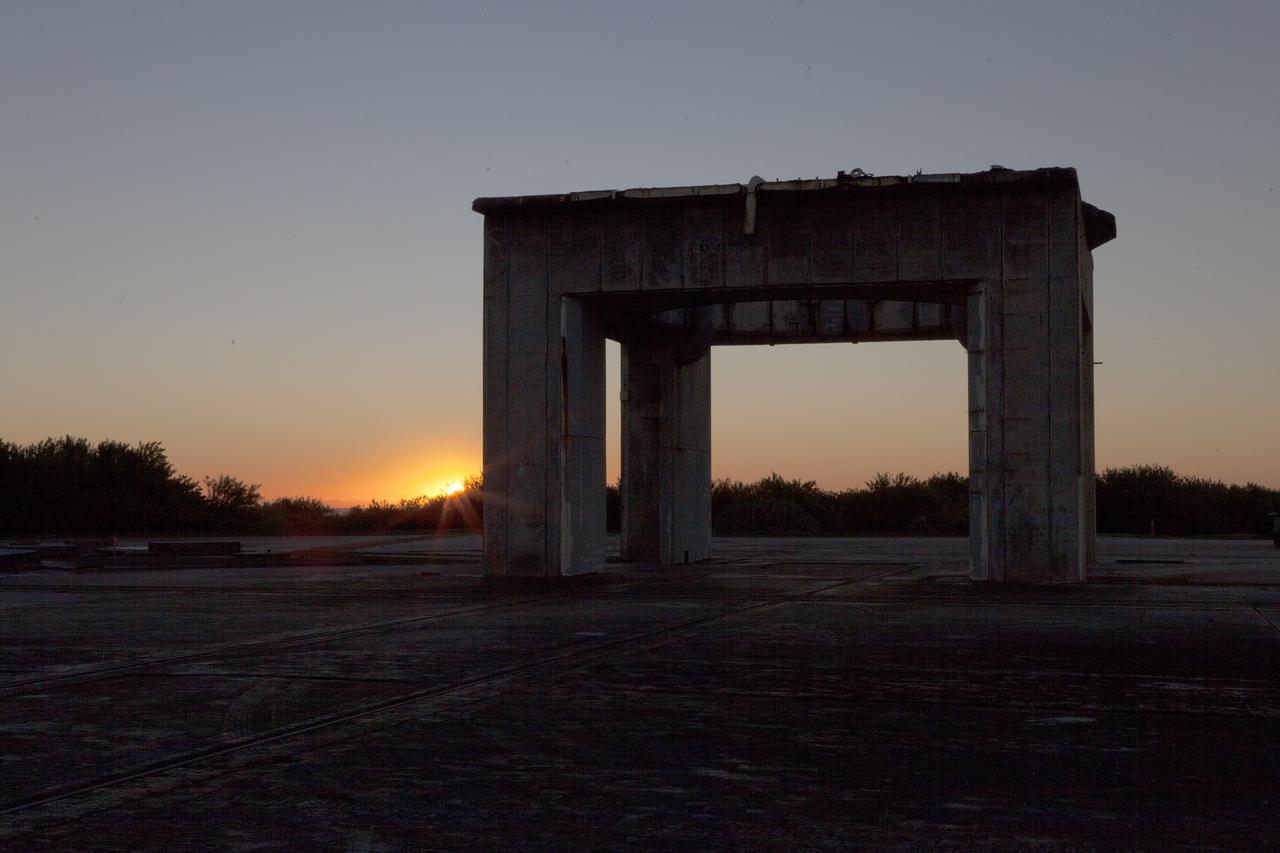
CAPE CANAVERAL, Fla. – The sun comes up behind what remains of the gantry on Launch Pad 34 on Cape Canaveral Air Force Station in Florida. On this day in 1967, a fire erupted on the pad during a preflight test, taking the lives of the Apollo 1 crew, NASA astronauts Virgil Grissom, Edward White and Roger Chaffee. To learn more about Apollo 1 and the crew, visit http://www.nasa.gov/mission_pages/apollo/missions/apollo1.html. Photo credit: NASA/Ben Smegelsky
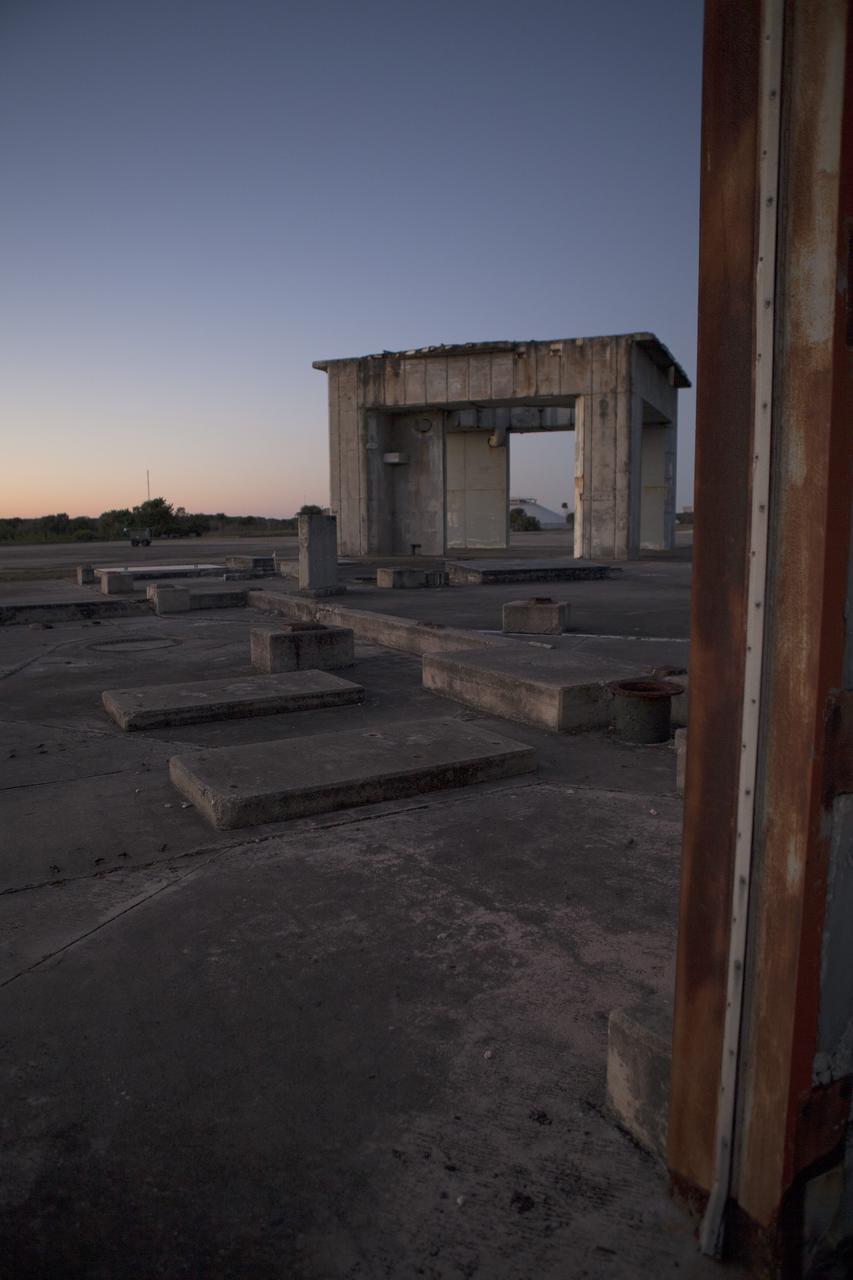
CAPE CANAVERAL, Fla. – Sunrise over Launch Pad 34 on Cape Canaveral Air Force Station in Florida finds only concrete and steel remain of the historic site, long since demolished. On this day in 1967, a fire erupted on the pad during a preflight test, taking the lives of the Apollo 1 crew, NASA astronauts Virgil Grissom, Edward White and Roger Chaffee. To learn more about Apollo 1 and the crew, visit http://www.nasa.gov/mission_pages/apollo/missions/apollo1.html. Photo credit: NASA/Ben Smegelsky
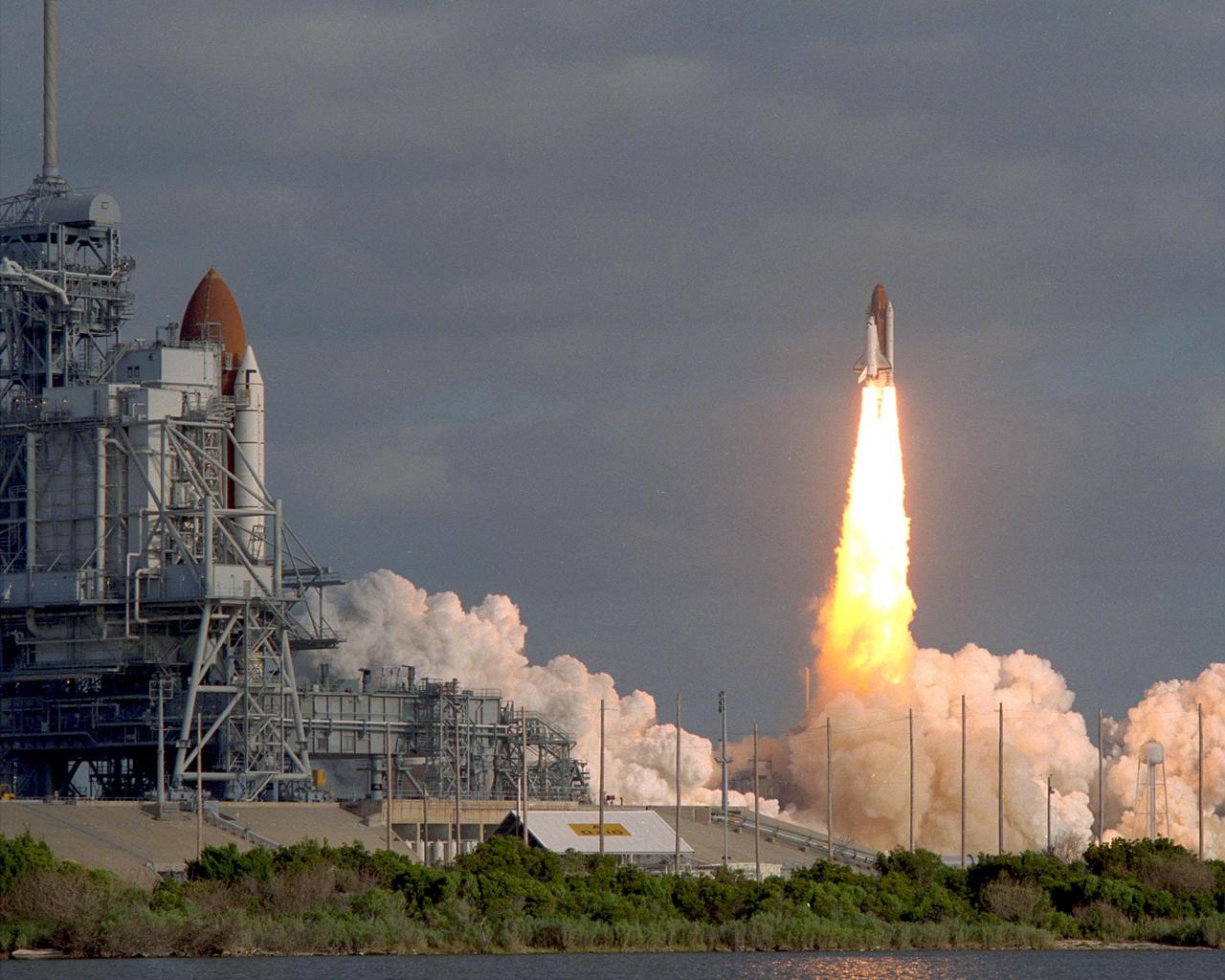
KENNEDY SPACE CENTER, FLA. -- The Space Shuttle Columbia on Pad 39A 'watches' the picture-perfect ascent of sister ship Discovery after liftoff of STS-31. This was the first time since January 1986 that there was a Shuttle on each pad, which are separated by 1.6 miles. Discovery, carrying a five-member crew and the Hubble SpaceTelescope, lifted off at 8:34 EDT, April 24. Columbia, with its Astro-1 observatory, is scheduled for launch in May.
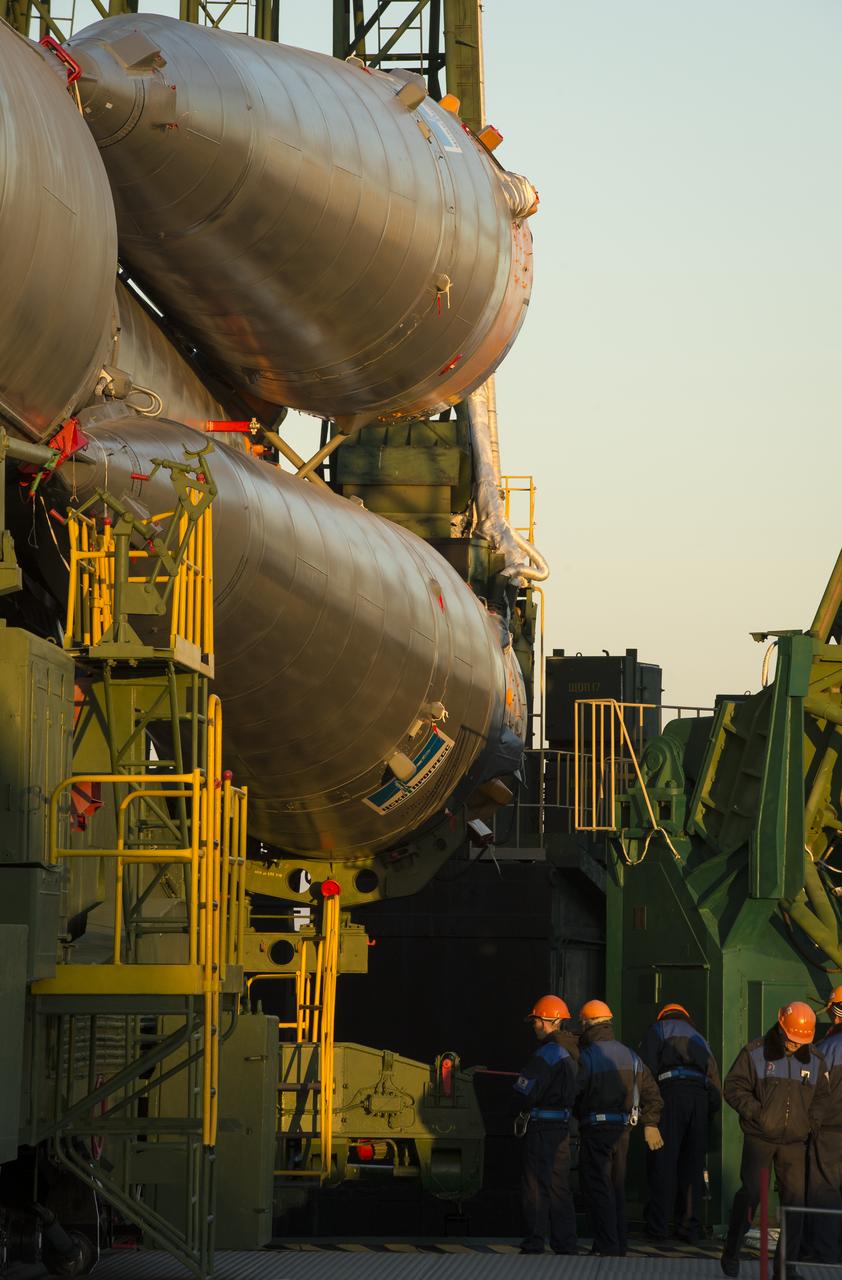
Technicians prepare the Soyuz rocket to be erected at the launch pad shortly after it arrived at the pad by train, on Sunday, October 21, 2012, at the Baikonur Cosmodrome in Kazakhstan. Launch of the Soyuz rocket is scheduled for October 23 and will send Expedition 33/34 Flight Engineer Kevin Ford of NASA, Soyuz Commander Oleg Novitskiy and Flight Engineer Evgeny Tarelkin of ROSCOSMOS on a five-month mission aboard the International Space Station. Photo Credit: (NASA/Bill Ingalls)
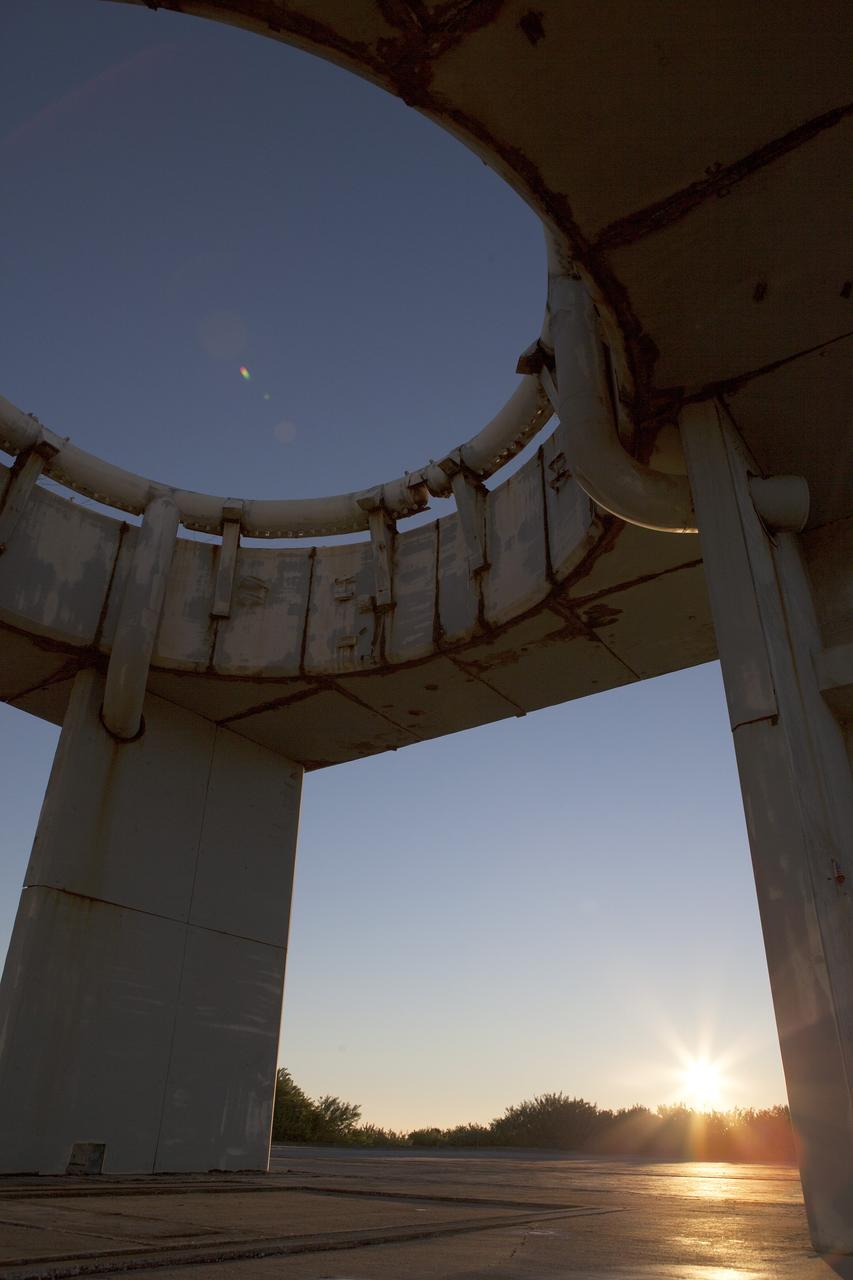
CAPE CANAVERAL, Fla. – The sun comes up behind what remains of the gantry on Launch Pad 34 on Cape Canaveral Air Force Station in Florida. On this day in 1967, a fire erupted on the pad during a preflight test, taking the lives of the Apollo 1 crew, NASA astronauts Virgil Grissom, Edward White and Roger Chaffee. To learn more about Apollo 1 and the crew, visit http://www.nasa.gov/mission_pages/apollo/missions/apollo1.html. Photo credit: NASA/Ben Smegelsky
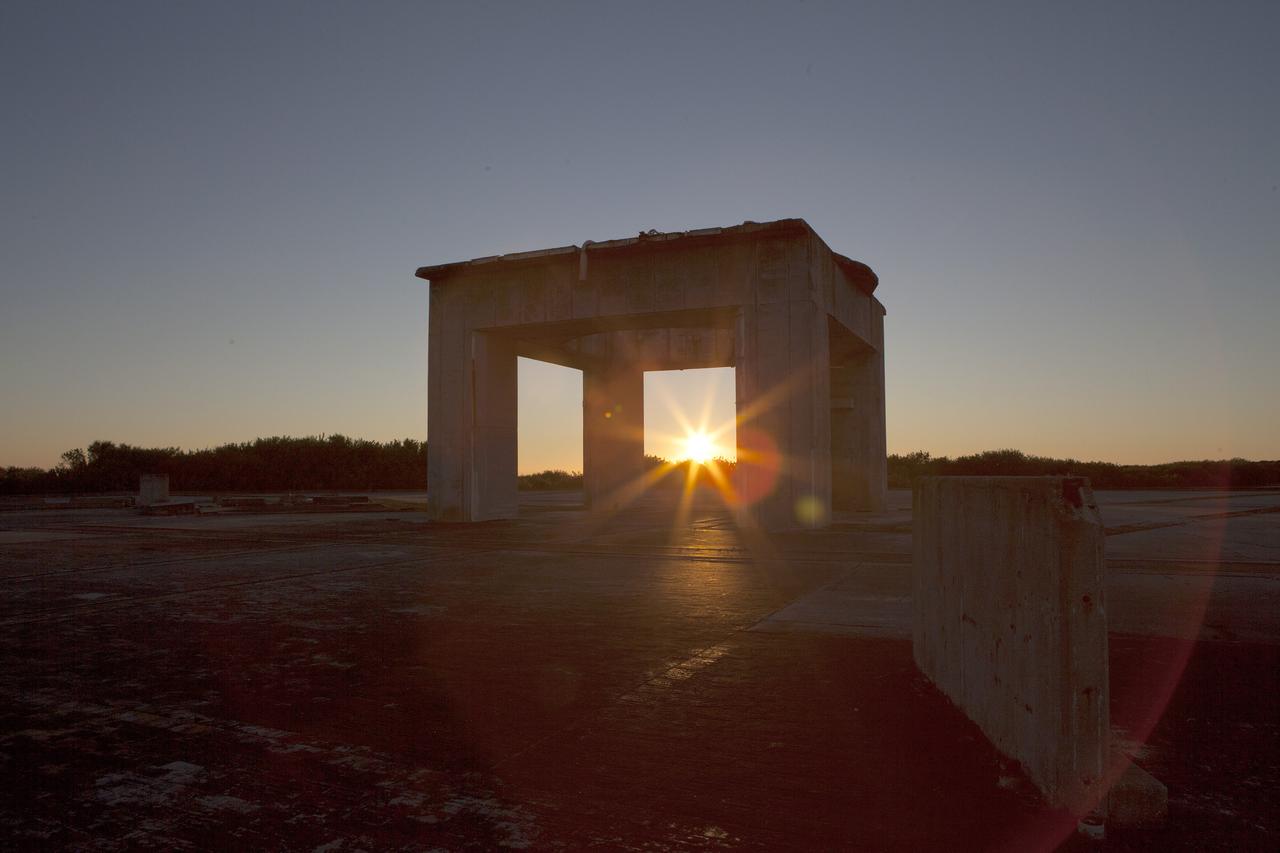
CAPE CANAVERAL, Fla. – The sun peeks through what remains of the gantry on Launch Pad 34 on Cape Canaveral Air Force Station in Florida. On this day in 1967, a fire erupted on the pad during a preflight test, taking the lives of the Apollo 1 crew, NASA astronauts Virgil Grissom, Edward White and Roger Chaffee. To learn more about Apollo 1 and the crew, visit http://www.nasa.gov/mission_pages/apollo/missions/apollo1.html. Photo credit: NASA/Ben Smegelsky
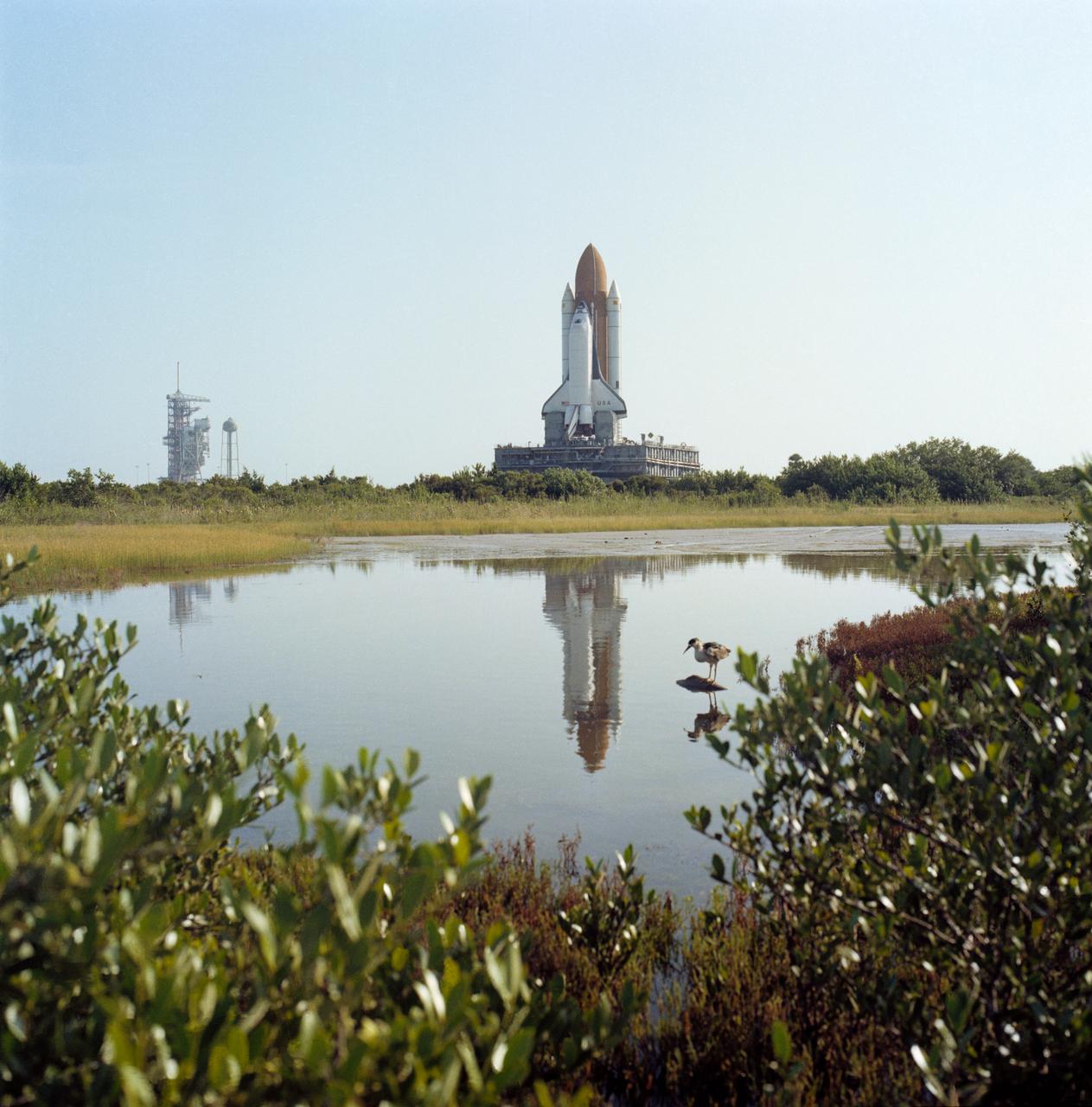
S82-37810 (21 Sept. 1982) --- The space shuttle Columbia makes its slow 3 ? mile trip on a crawler transporter from the Vehicle Assembly Building to Launch Pad 39A at the Kennedy Space Center (KSC). The trip began at 5:34 a.m. (EDT) today and ended at the pad seven hours later. The Columbia, its two solid rocket boosters (SRB) and external tank (ET) will be launched, with four astronaut crew members onboard, on Nov. 11, 1982. Photo credit: NASA
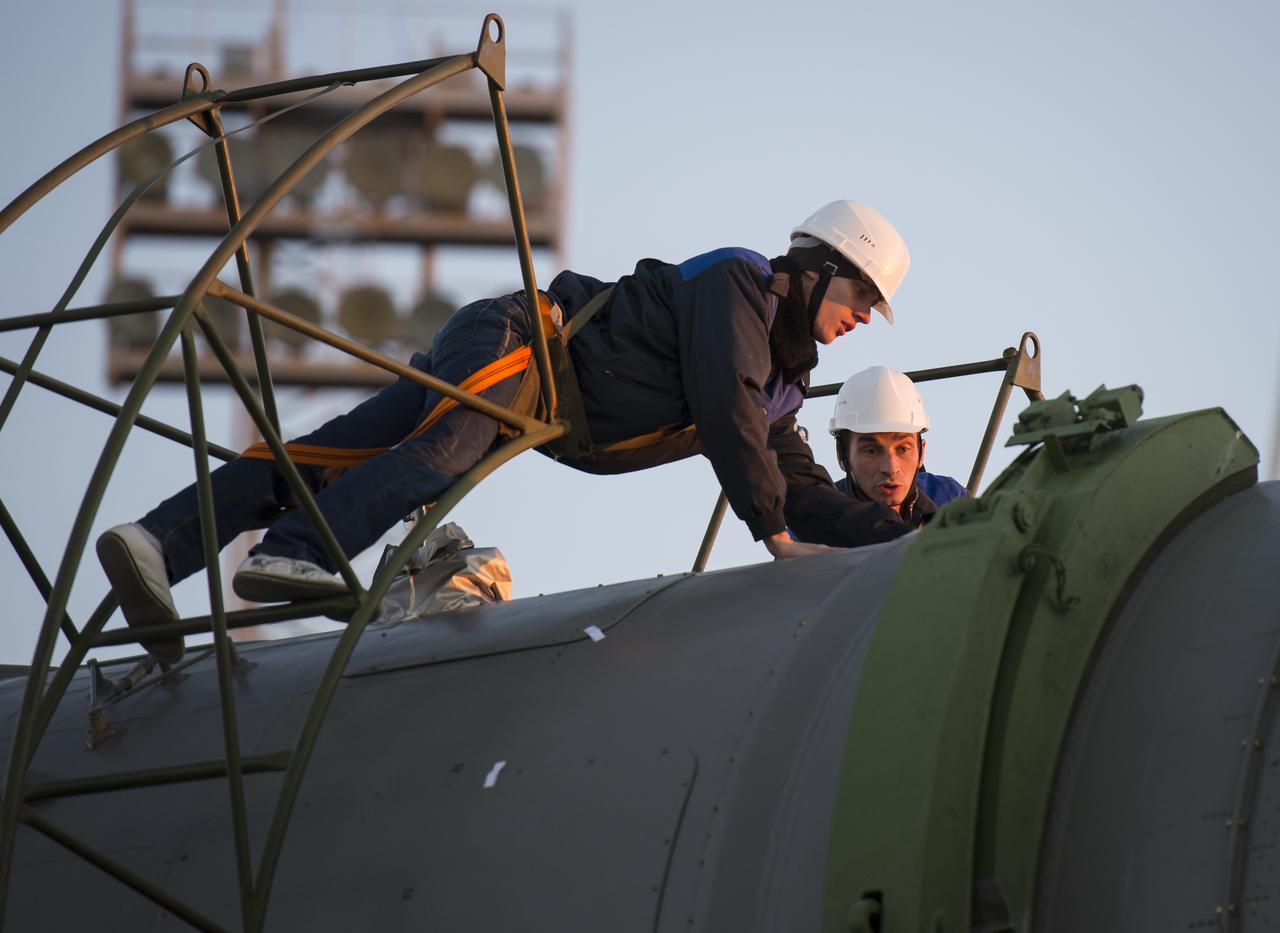
Technicians prepare the Soyuz rocket to be erected at the launch pad shortly after it arrived at the pad by train, on Sunday, October 21, 2012, at the Baikonur Cosmodrome in Kazakhstan. Launch of the Soyuz rocket is scheduled for October 23 and will send Expedition 33/34 Flight Engineer Kevin Ford of NASA, Soyuz Commander Oleg Novitskiy and Flight Engineer Evgeny Tarelkin of ROSCOSMOS on a five-month mission aboard the International Space Station. Photo Credit: (NASA/Bill Ingalls)
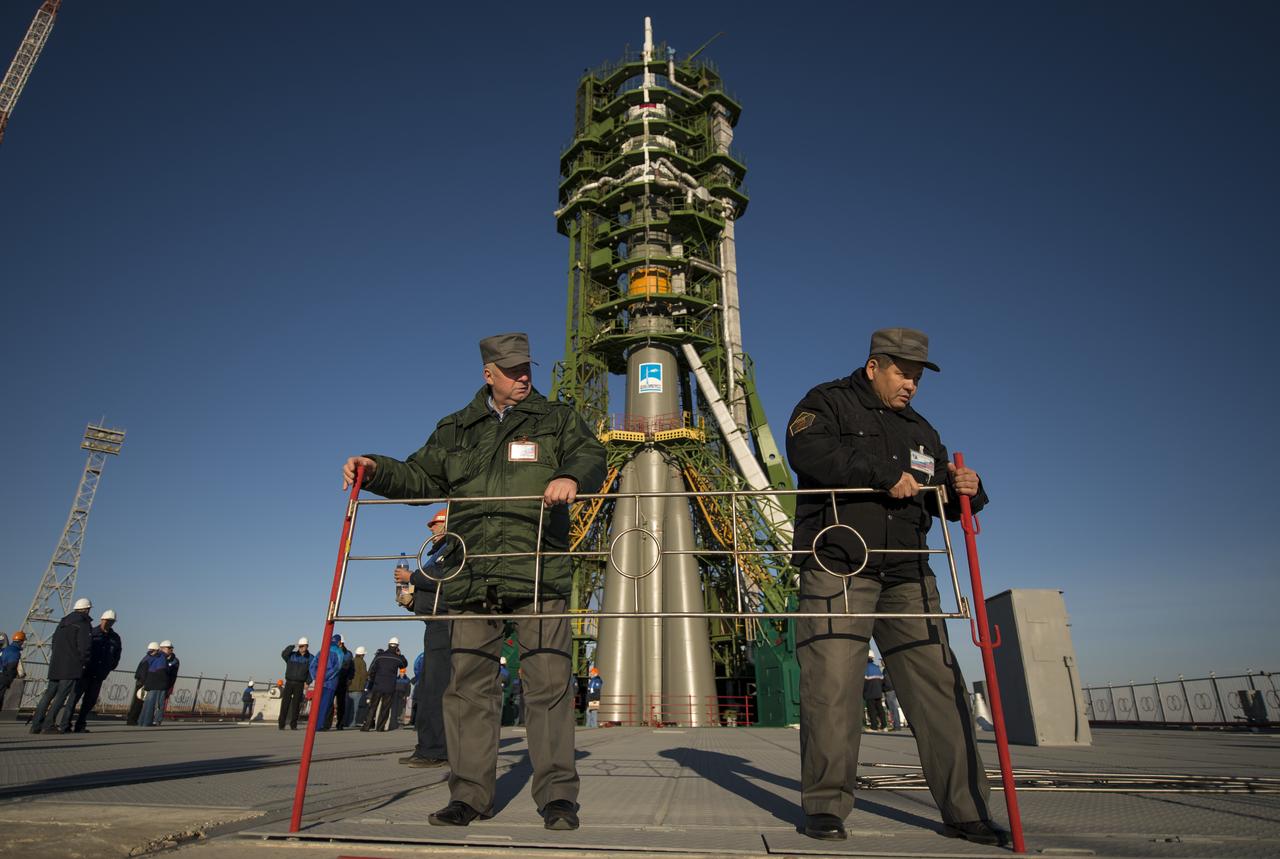
Pad workers install a safety railing at the launch pad shortly after the Soyuz rocket is erected into position, on Sunday, October 21, 2012, at the Baikonur Cosmodrome in Kazakhstan. Launch of the Soyuz rocket is scheduled for October 23 and will send Expedition 33/34 Flight Engineer Kevin Ford of NASA, Soyuz Commander Oleg Novitskiy and Flight Engineer Evgeny Tarelkin of ROSCOSMOS on a five-month mission aboard the International Space Station. Photo Credit: (NASA/Bill Ingalls)
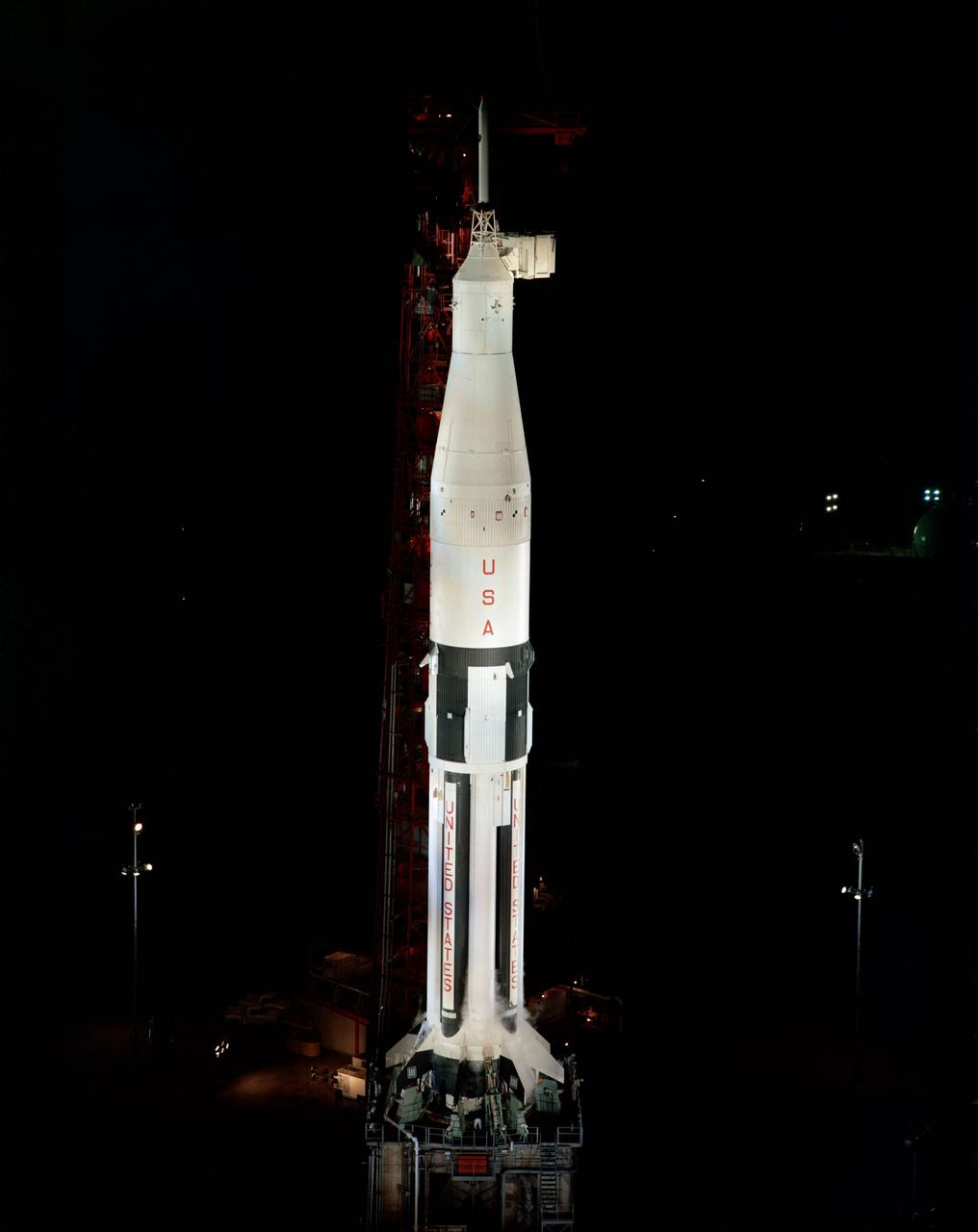
Apollo Spacecraft 009 atop the Saturn 1B launch vehicle is seen at Launch Complex 34 during the Saturn 1B countdown demonstration. Preparations are continuing for the Apollo Saturn 201 Test Flight. CAPE KENNEDY, FL CN
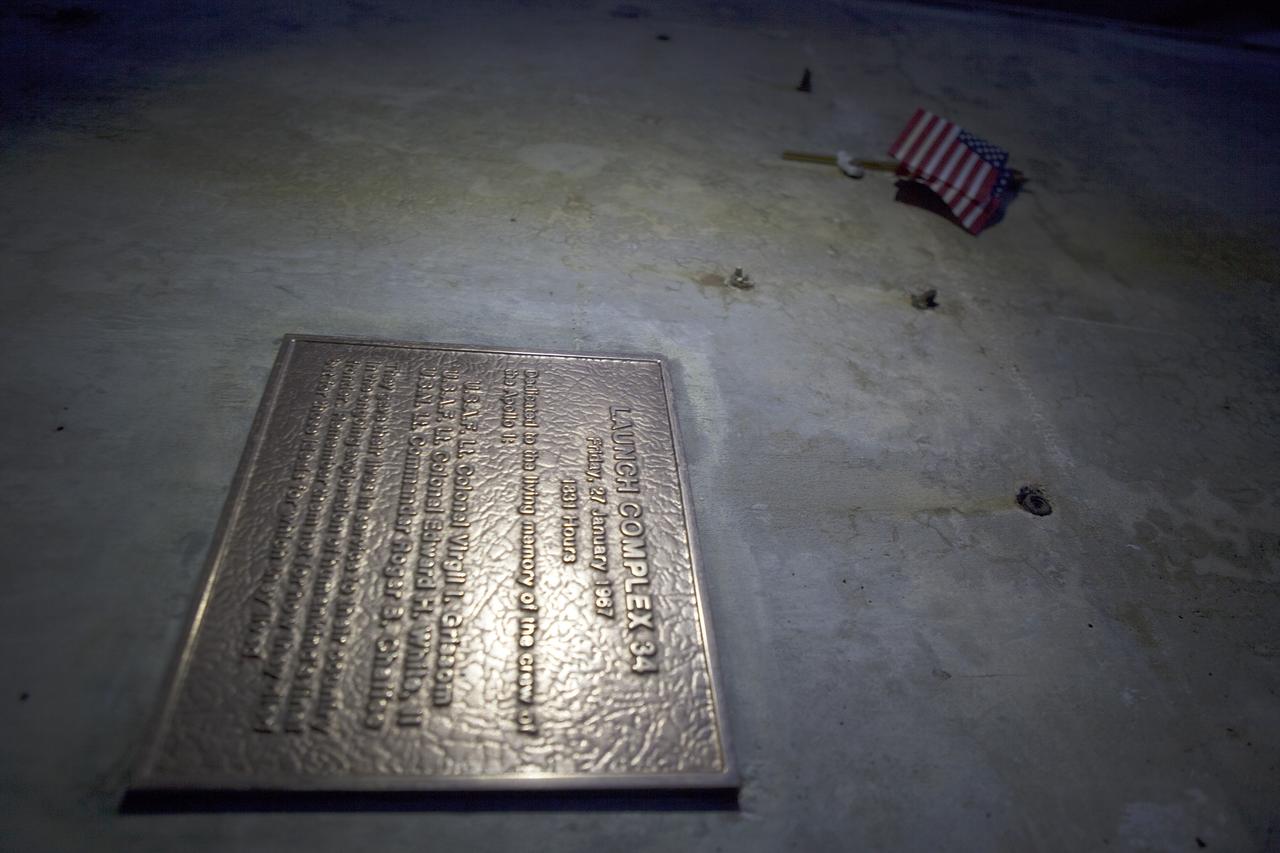
CAPE CANAVERAL, Fla. – A plaque affixed to what remains of the historic gantry on Launch Pad 34 on Cape Canaveral Air Force Station in Florida pays tribute to those who died there in the pursuit of exploration and discovery. On this day in 1967, a fire erupted on the pad during a preflight test, taking the lives of the Apollo 1 crew, NASA astronauts Virgil Grissom, Edward White and Roger Chaffee. To learn more about Apollo 1 and the crew, visit http://www.nasa.gov/mission_pages/apollo/missions/apollo1.html. Photo credit: NASA/Ben Smegelsky
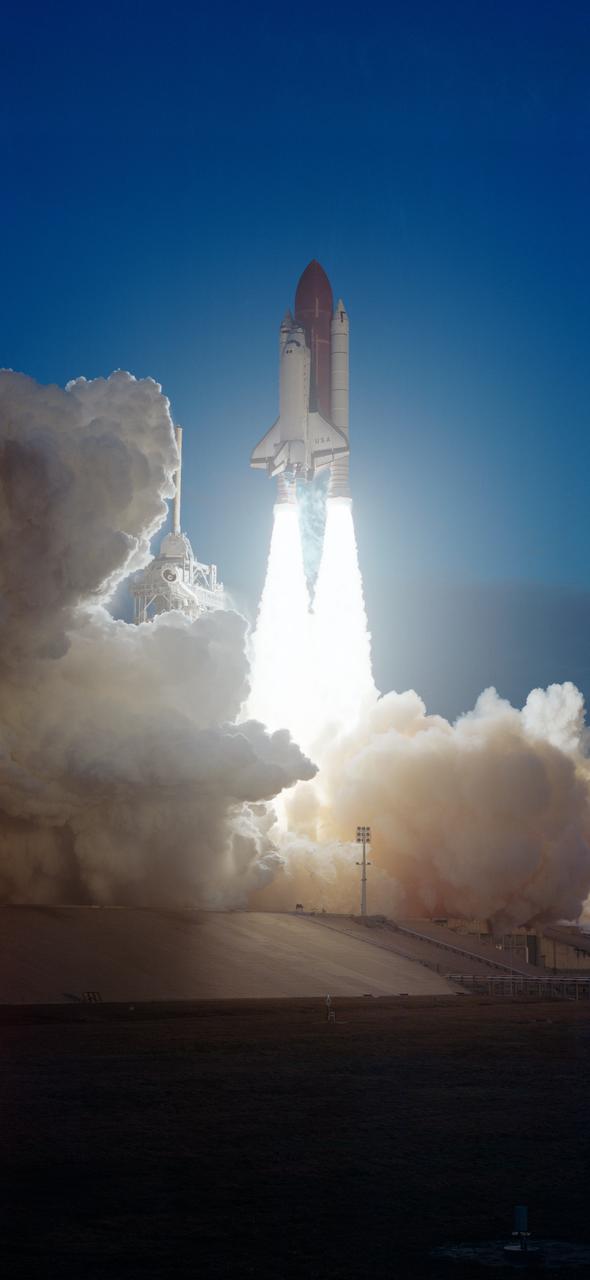
STS-32 Columbia, Orbiter Vehicle (OV) 102, atop the external tank (ET) and flanked by two solid rocket boosters (SRBs) rises above the mobile launcher platform and is nearly clear of the fixed service structure (FSS) tower at Kennedy Space Center (KSC) Launch Complex (LC) Pad 39A. Plumes of smoke billow from the SRBs and cover the launch pad in a cloud. Liftoff occurred at 7:34:59:98 am Eastern Standard Time (EST) some 24 hours after dubious weather at the return-to-landing site (RTLS) had cancelled a scheduled launch. OV-102's launch is highlighted against the early morning darkness.
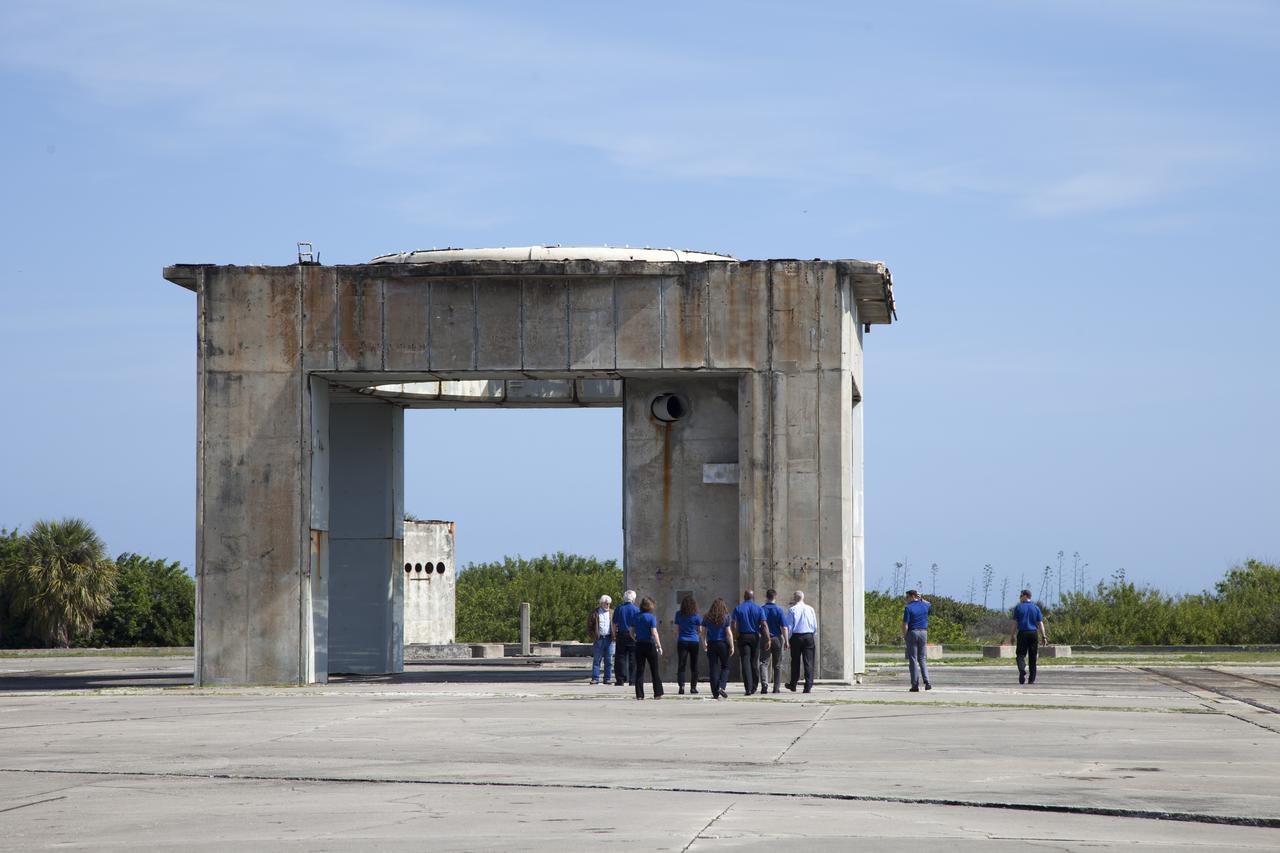
CAPE CANAVERAL, Fla. – NASA astronaut candidates survey Launch Complex 34 at Cape Canaveral Air Force Station in Florida, adjacent to NASA's Kennedy Space Center. Complex 34 was the sight of NASA's first astronaut fatalities when the crew of Apollo 1, Gus Grissom, Ed White and Roger Chaffee, died in a fire inside their Apollo capsule during testing at the pad. The astronaut class of 2013 was selected by NASA after an extensive year-and-a-half search. The new group will help the agency push the boundaries of exploration and travel to new destinations in the solar system. To learn more about the astronaut class of 2013, visit: http://www.nasa.gov/astronauts/2013astroclass.html Photo credit: NASA/Frankie Martin
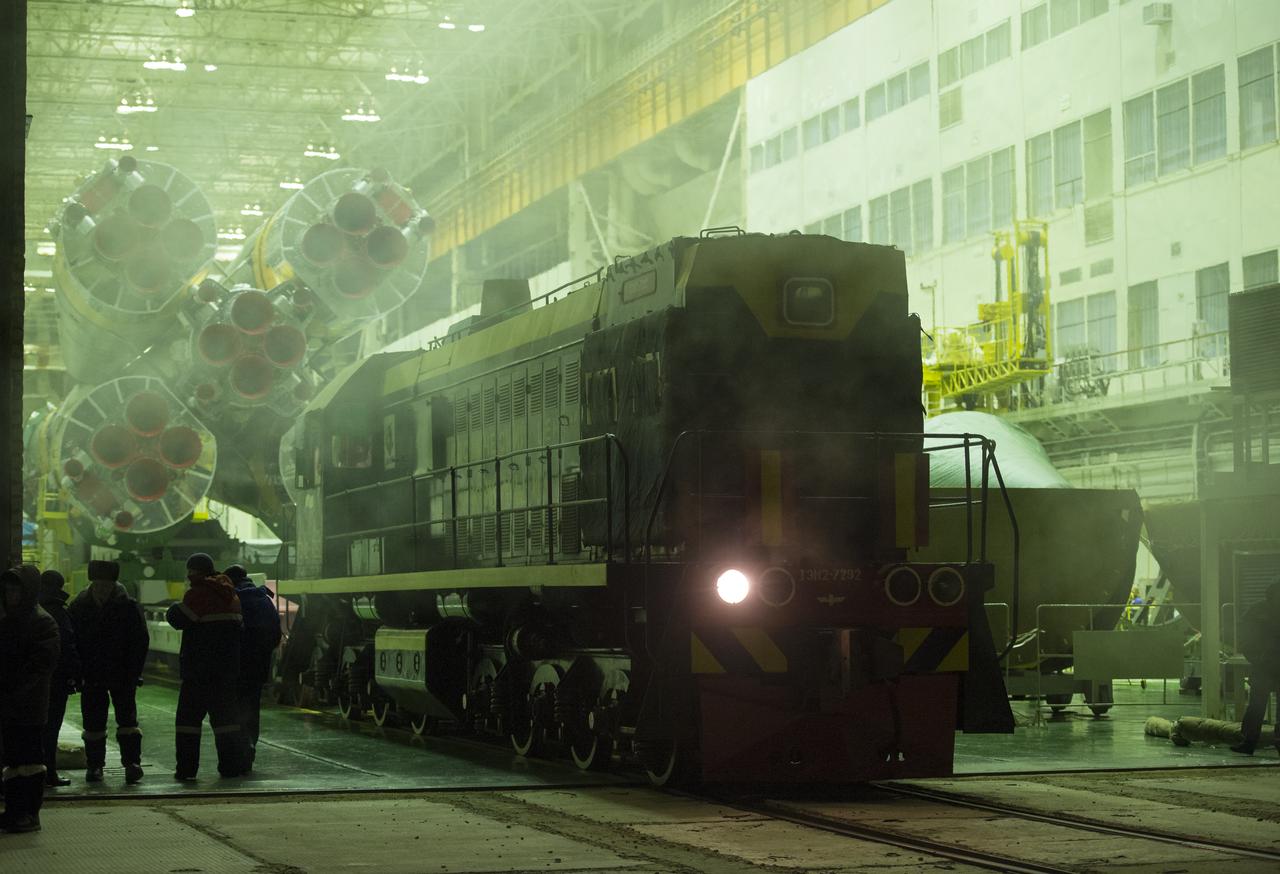
The Soyuz rocket is rolled out to the launch pad by train on Monday, December 17, 2012, at the Baikonur Cosmodrome in Kazakhstan. Launch of the Soyuz rocket is scheduled for December 19 and will send Expedition 34/35 Flight Engineer Tom Marshburn of NASA, Soyuz Commander Roman Romanenko and Expedition 35 Commander Chris Hadfield of the Canadian Space Agency (CSA) on a five-month mission aboard the International Space Station. Photo Credit: (NASA/Carla Cioffi)
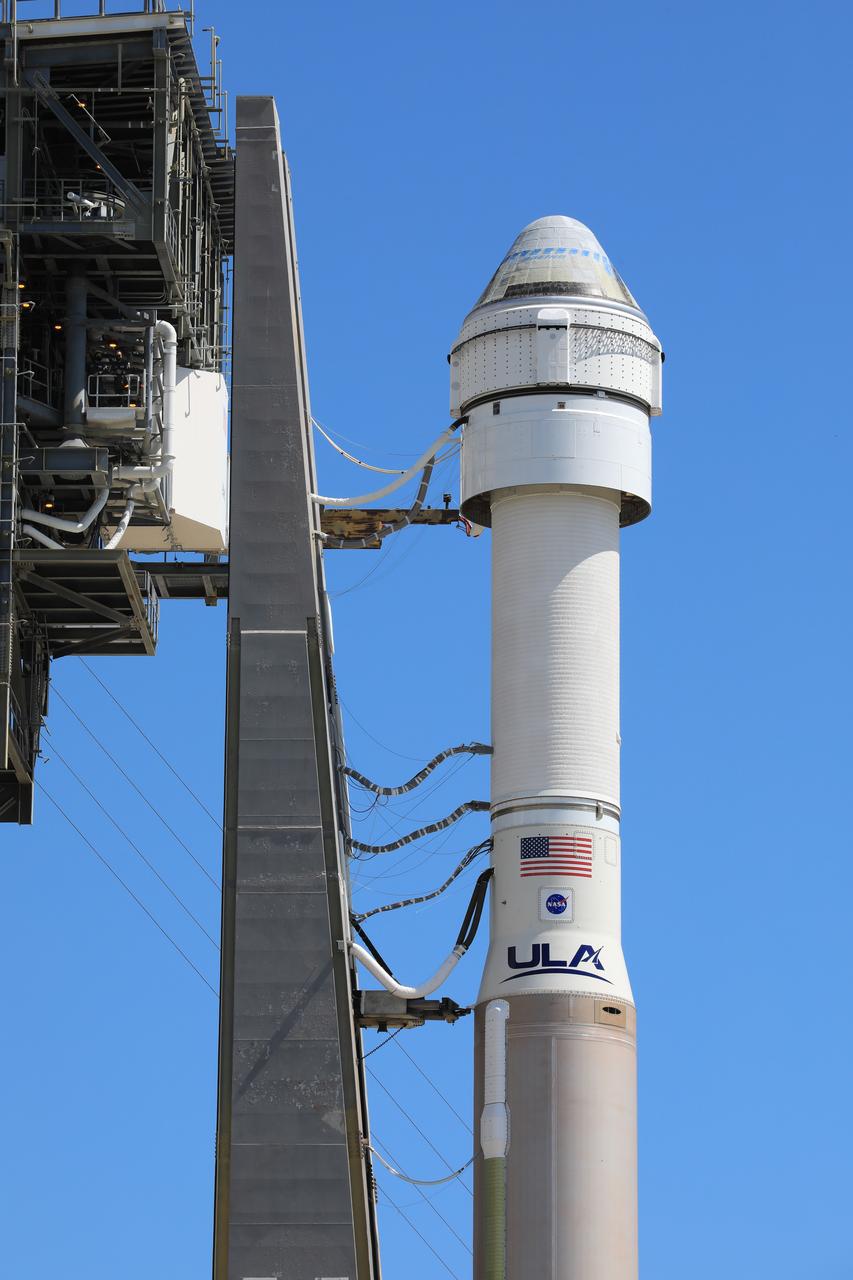
Boeing’s Starliner spacecraft atop the United Launch Alliance Atlas V rocket is seen on the launch pad of Space Launch Complex-41 at Cape Canaveral Space Force Station in Florida on Saturday, May 4, 2024, ahead of NASA’s Boeing Crew Flight Test. As part of the agency’s Commercial Crew Program, NASA astronauts Butch Wilmore and Suni Williams are the first to launch to the International Space Station aboard Boeing’s Starliner spacecraft. Liftoff is scheduled for 10:34 p.m. ET Monday, May 6.
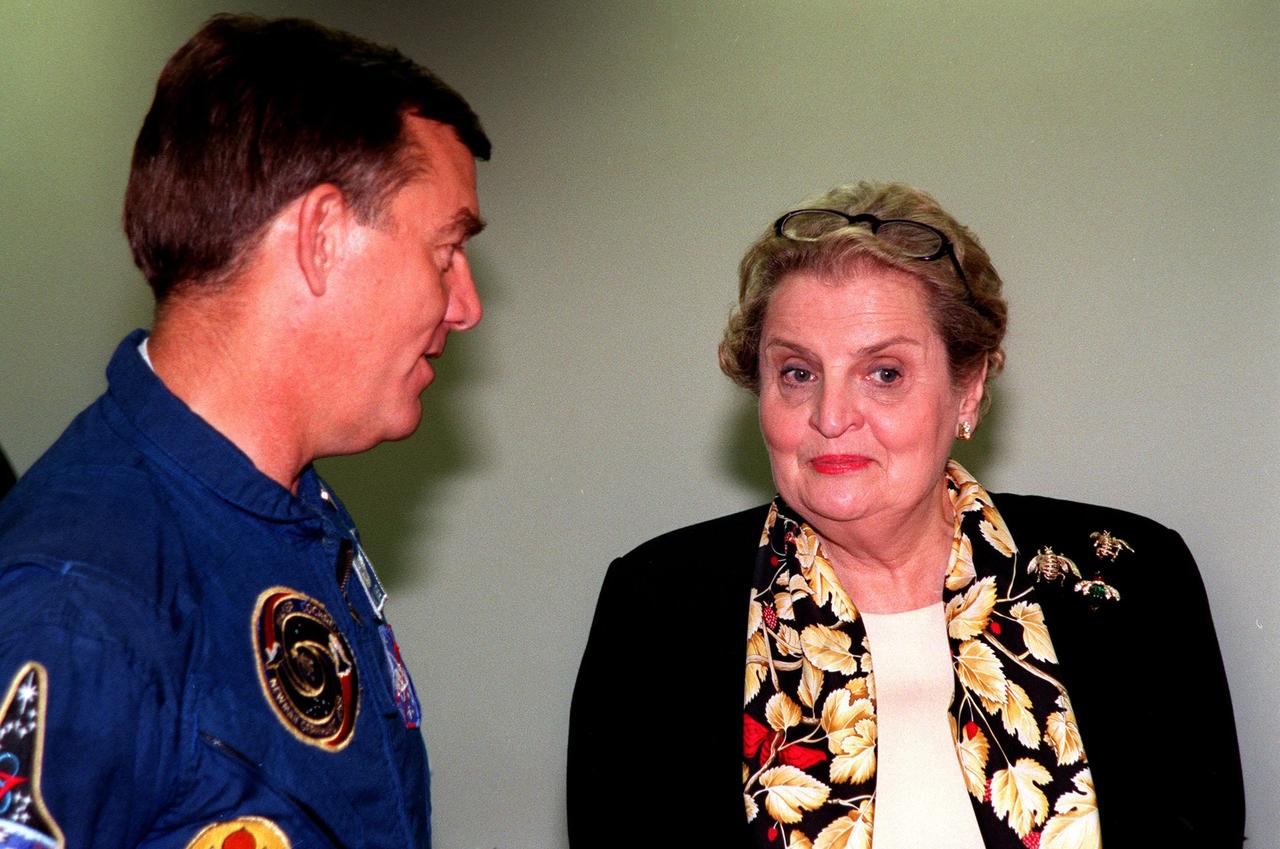
U.S. Secretary of State Madeleine Albright (right) talks with astronaut Jim Voss following the successful launch of Endeavour on Mission STS-88 from Launch Pad 39A at 3:35:34 a.m. EST. STS-88 is the first U.S. mission dedicated to the assembly of the International Space Station (ISS). Voss is a member of the STS-100 crew, the eighth ISS assembly team
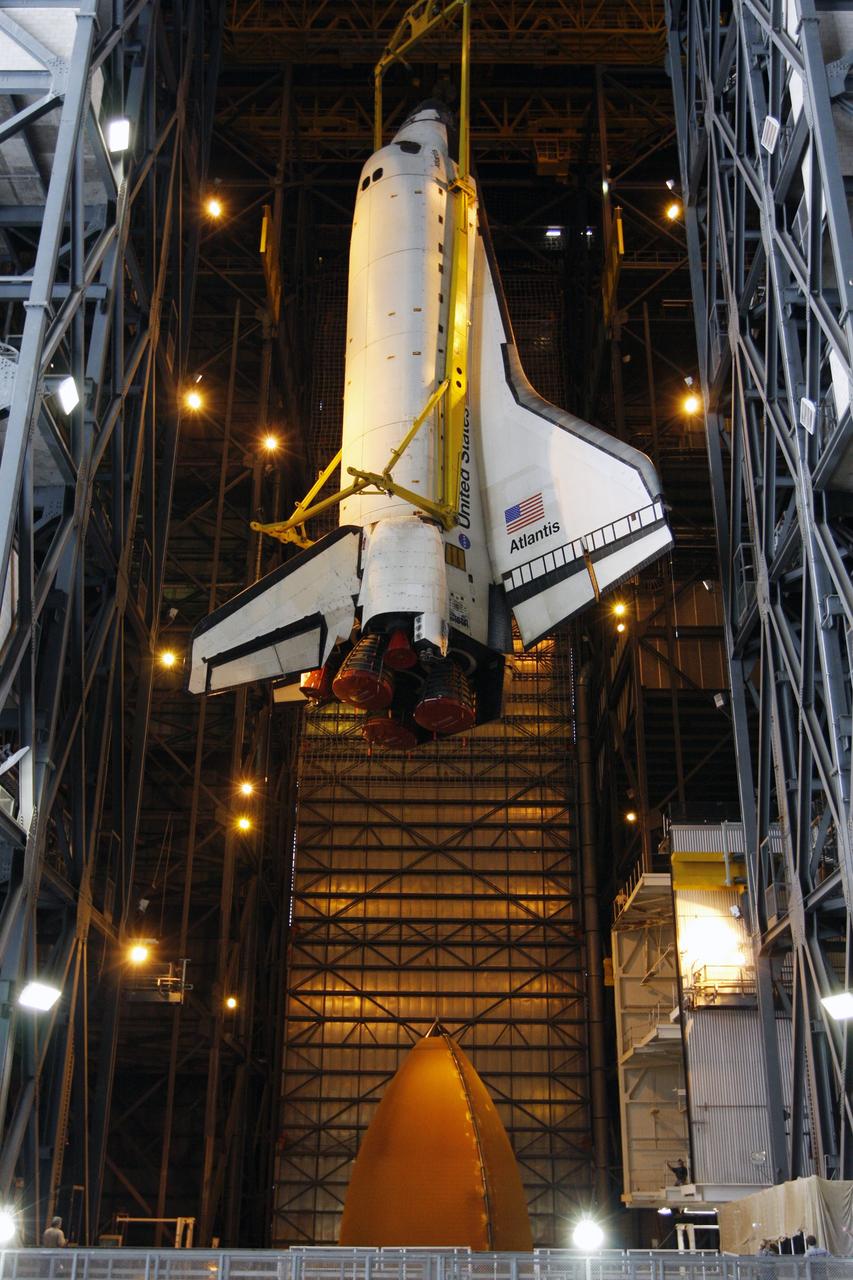
CAPE CANAVERAL, Fla. – In the Vehicle Assembly Building at NASA's Kennedy Space Center, space shuttle Atlantis is lowered toward the external fuel tank in high bay 3. Atlantis will be mated to the tank and twin solid rocket boosters stacked on the mobile launcher platform. After additional preparations are made, the shuttle will be rolled out to Launch Pad 39A to prepare for launch on the STS-125 mission targeted for 1:34 a.m. EDT Oct. 8. Photo credit: NASA/Dimitri Gerondidakis
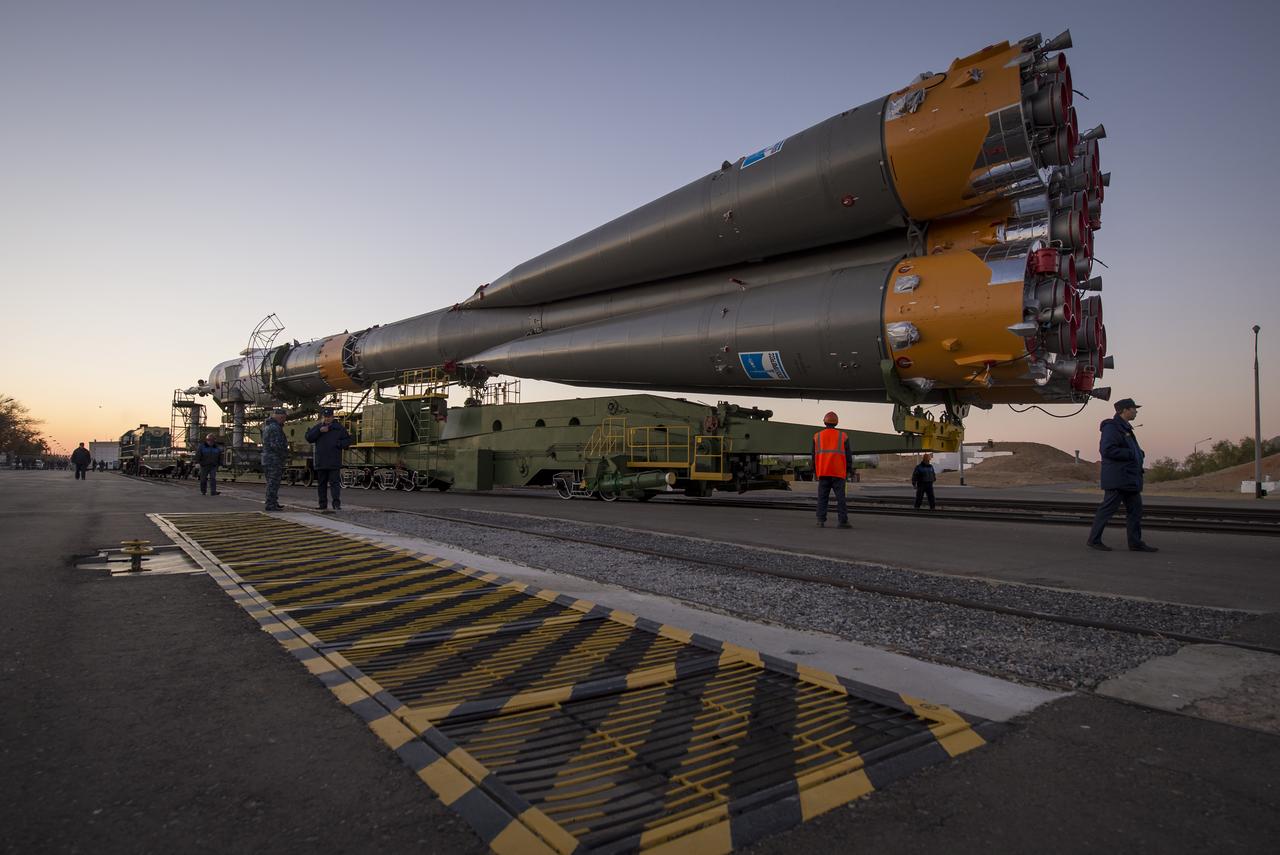
The Soyuz rocket is rolled out to the launch pad by train, on Sunday, October 21, 2012, at the Baikonur Cosmodrome in Kazakhstan. Launch of the Soyuz rocket is scheduled for October 23 and will send Expedition 33/34 Flight Engineer Kevin Ford of NASA, Soyuz Commander Oleg Novitskiy and Flight Engineer Evgeny Tarelkin of ROSCOSMOS on a five-month mission aboard the International Space Station. Photo Credit: (NASA/Bill Ingalls)
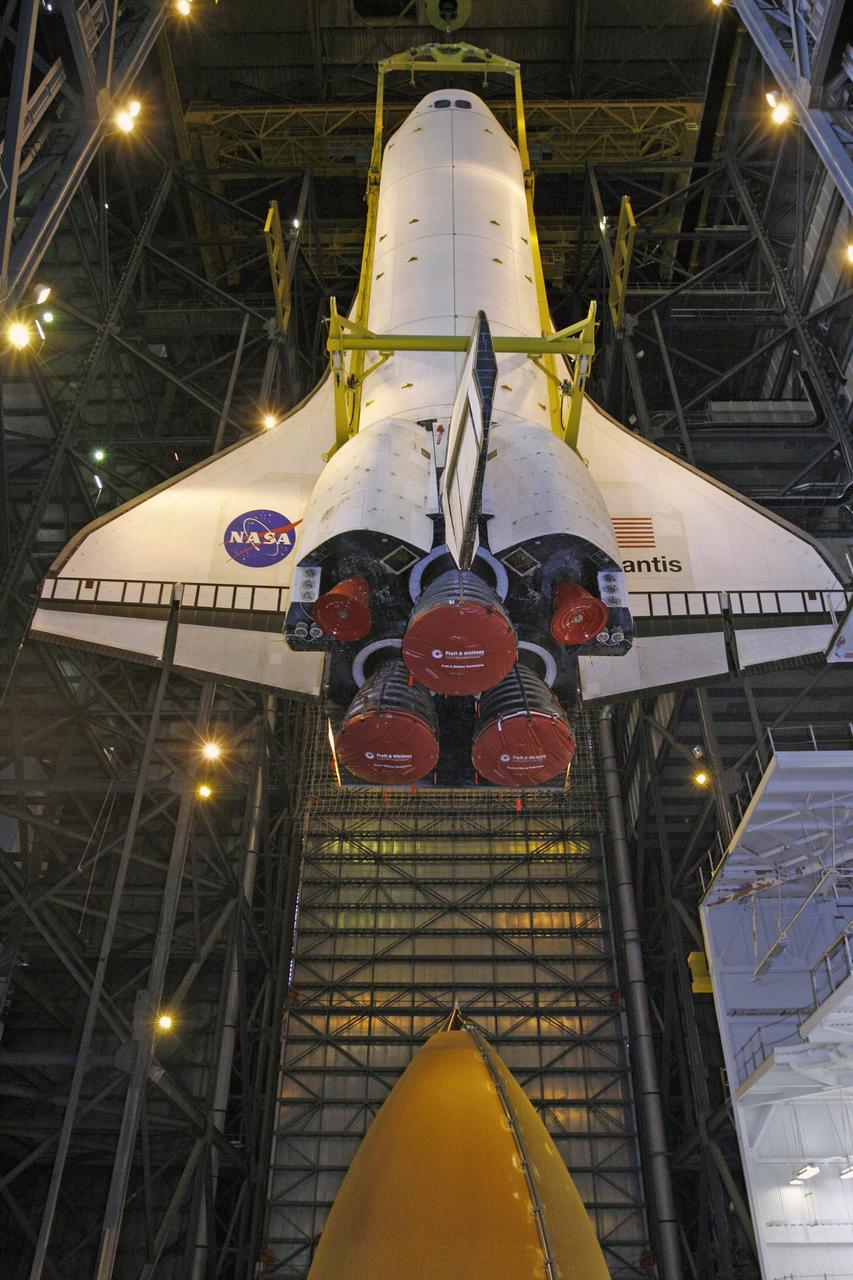
CAPE CANAVERAL, Fla. – In the Vehicle Assembly Building at NASA's Kennedy Space Center, space shuttle Atlantis is lowered toward the external fuel tank in high bay 3. Atlantis will be mated to the tank and twin solid rocket boosters stacked on the mobile launcher platform. After additional preparations are made, the shuttle will be rolled out to Launch Pad 39A to prepare for launch on the STS-125 mission targeted for 1:34 a.m. EDT Oct. 8. Photo credit: NASA/Dimitri Gerondidakis
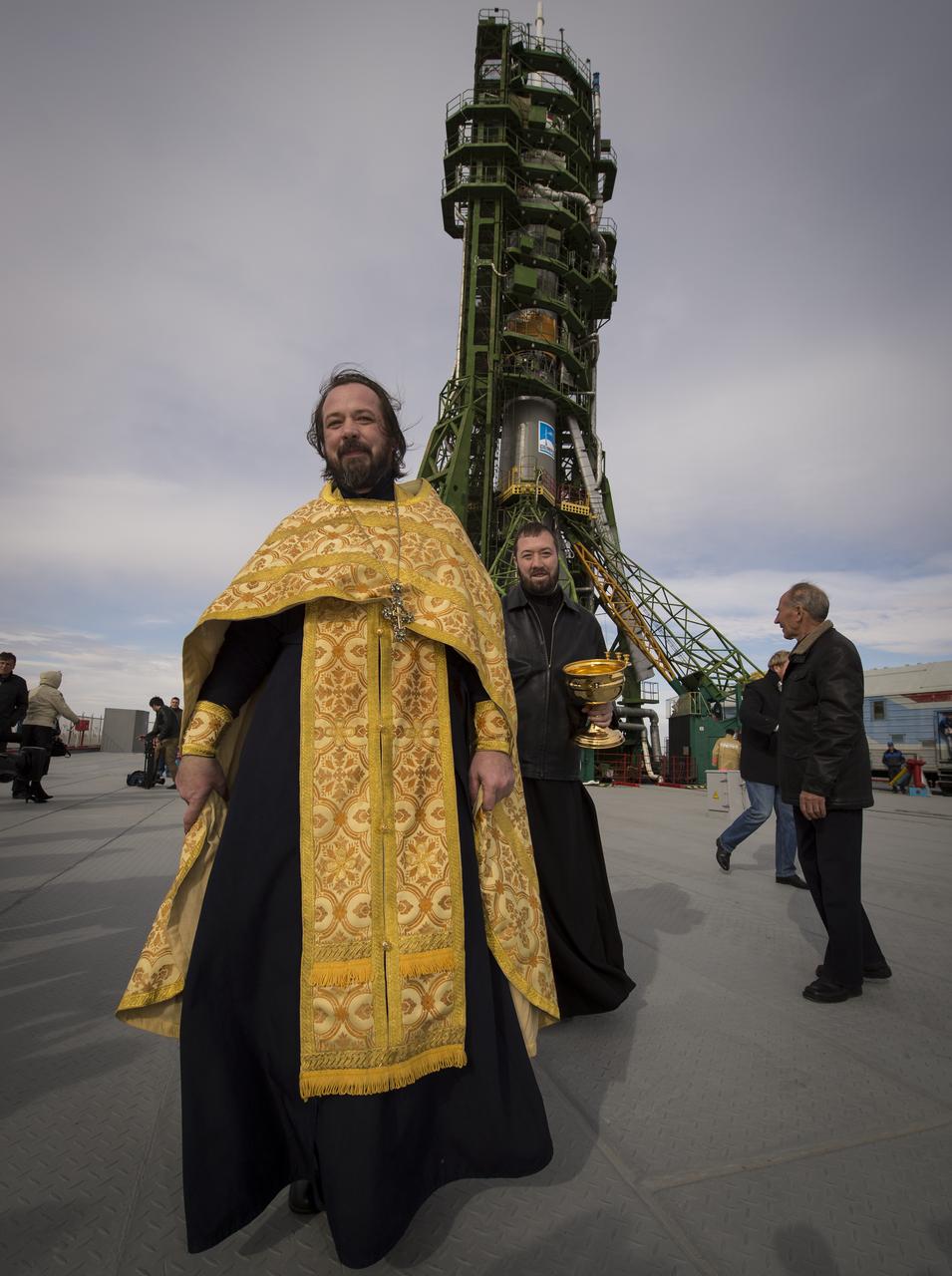
An Orthodox priest is seen after he blessed the Soyuz rocket at the Baikonur Cosmodrome Launch pad on Monday, Oct. 22, 2012 in Baikonur, Kazakhstan. Launch of the Soyuz rocket is scheduled for October 23 and will send Expedition 33/34 Flight Engineer Kevin Ford of NASA, Soyuz Commander Oleg Novitskiy and Flight Engineer Evgeny Tarelkin of ROSCOSMOS on a five-month mission aboard the International Space Station. Photo Credit: (NASA/Bill Ingalls)
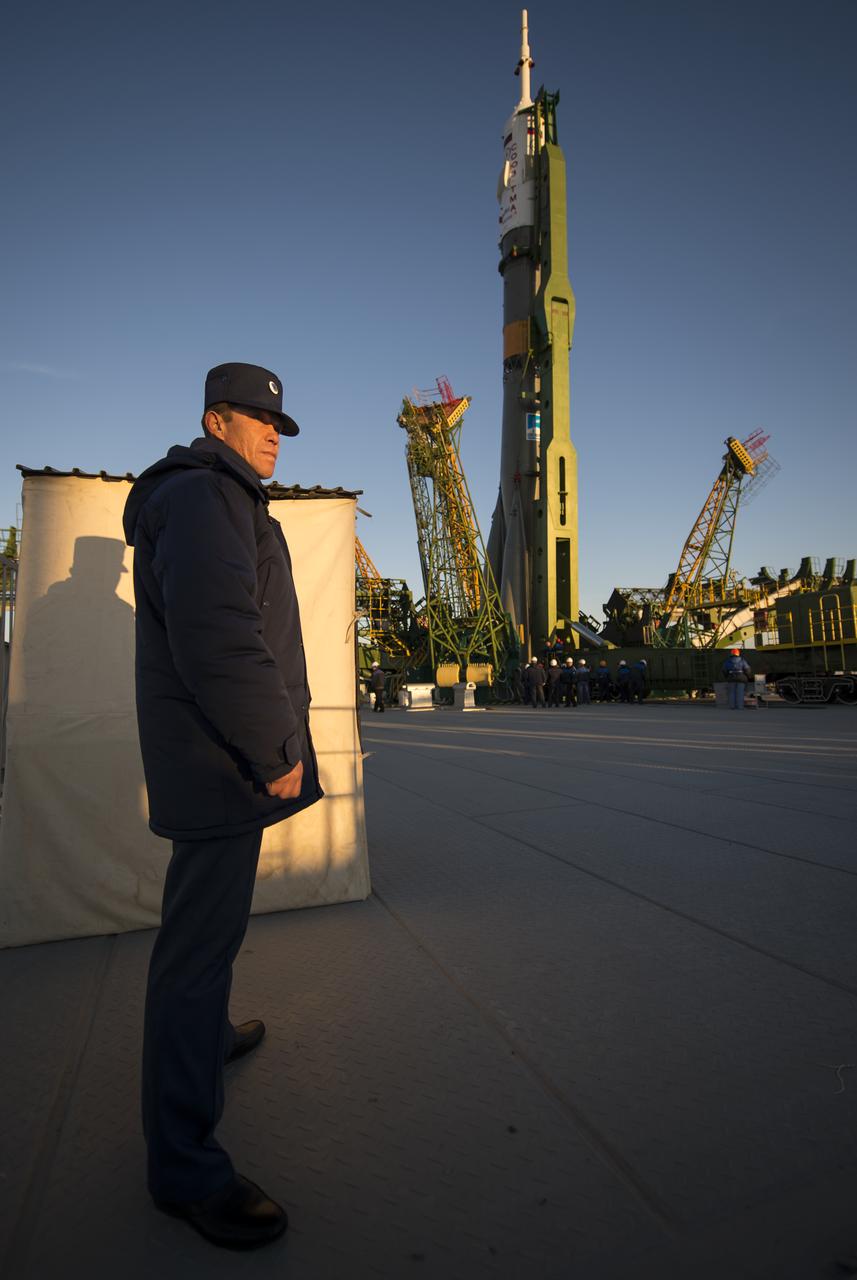
A secuirty gaurd keeps watch as the Soyuz rocket is erected into position after being rolled out to the launch pad by train, on Sunday, October 21, 2012, at the Baikonur Cosmodrome in Kazakhstan. Launch of the Soyuz rocket is scheduled for October 23 and will send Expedition 33/34 Flight Engineer Kevin Ford of NASA, Soyuz Commander Oleg Novitskiy and Flight Engineer Evgeny Tarelkin of ROSCOSMOS on a five-month mission aboard the International Space Station. Photo Credit: (NASA/Bill Ingalls)
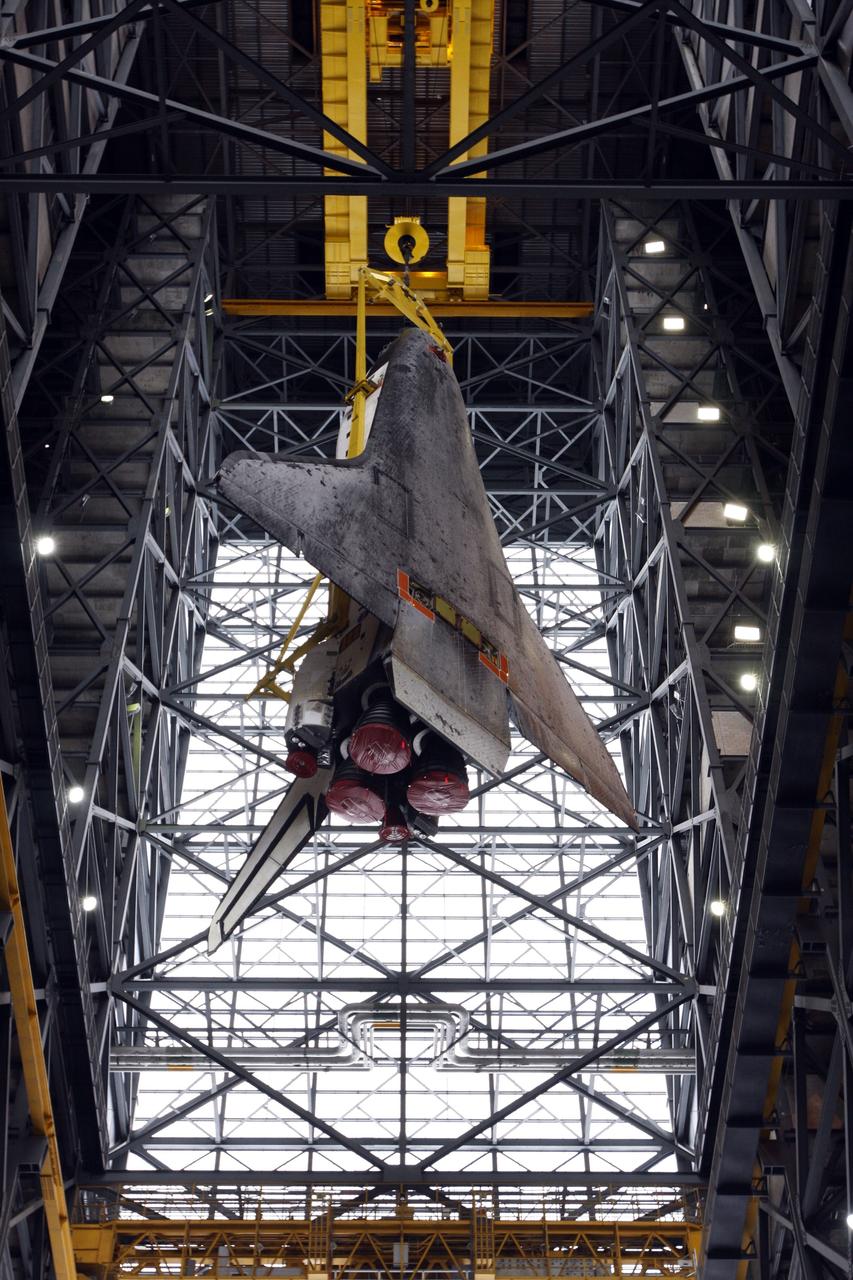
CAPE CANAVERAL, Fla. – A crane lifts space shuttle Atlantis higher into the upper levels of the Vehicle Assembly Building at NASA's Kennedy Space Center. The shuttle will be moved into high bay 3 and lowered for stacking with its external fuel tank and twin solid rocket boosters. After additional preparations are made, the shuttle will be rolled out to Launch Pad 39A to prepare for launch on the STS-125 mission targeted for 1:34 a.m. EDT Oct. 8. Photo credit: NASA/Dimitri Gerondidakis
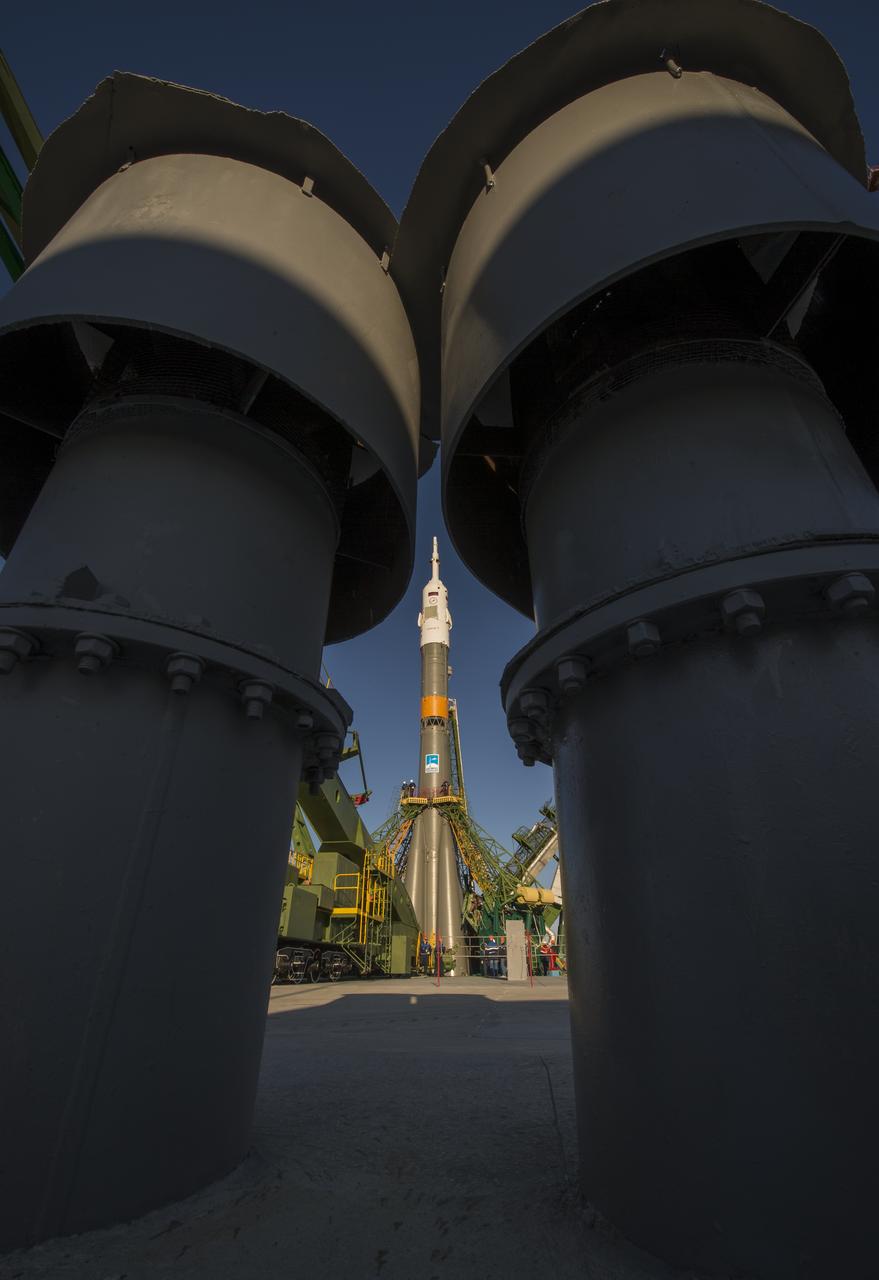
The Soyuz rocket is erected into position after being rolled out to the launch pad by train, on Sunday, October 21, 2012, at the Baikonur Cosmodrome in Kazakhstan. Launch of the Soyuz rocket is scheduled for October 23 and will send Expedition 33/34 Flight Engineer Kevin Ford of NASA, Soyuz Commander Oleg Novitskiy and Flight Engineer Evgeny Tarelkin of ROSCOSMOS on a five-month mission aboard the International Space Station. Photo Credit: (NASA/Bill Ingalls)
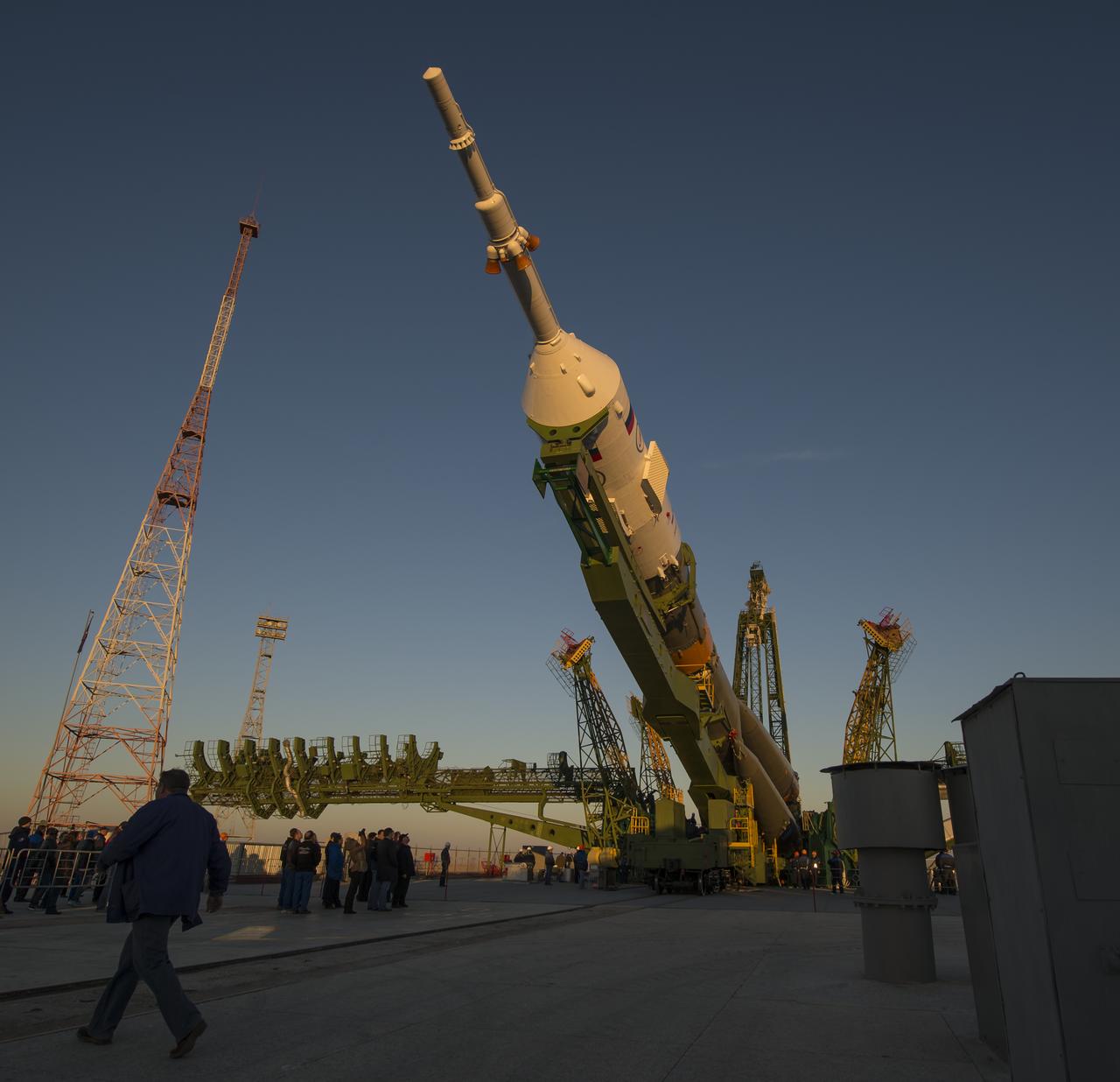
The Soyuz rocket is erected into position after being rolled out to the launch pad by train, on Sunday, October 21, 2012, at the Baikonur Cosmodrome in Kazakhstan. Launch of the Soyuz rocket is scheduled for October 23 and will send Expedition 33/34 Flight Engineer Kevin Ford of NASA, Soyuz Commander Oleg Novitskiy and Flight Engineer Evgeny Tarelkin of ROSCOSMOS on a five-month mission aboard the International Space Station. Photo Credit: (NASA/Bill Ingalls)
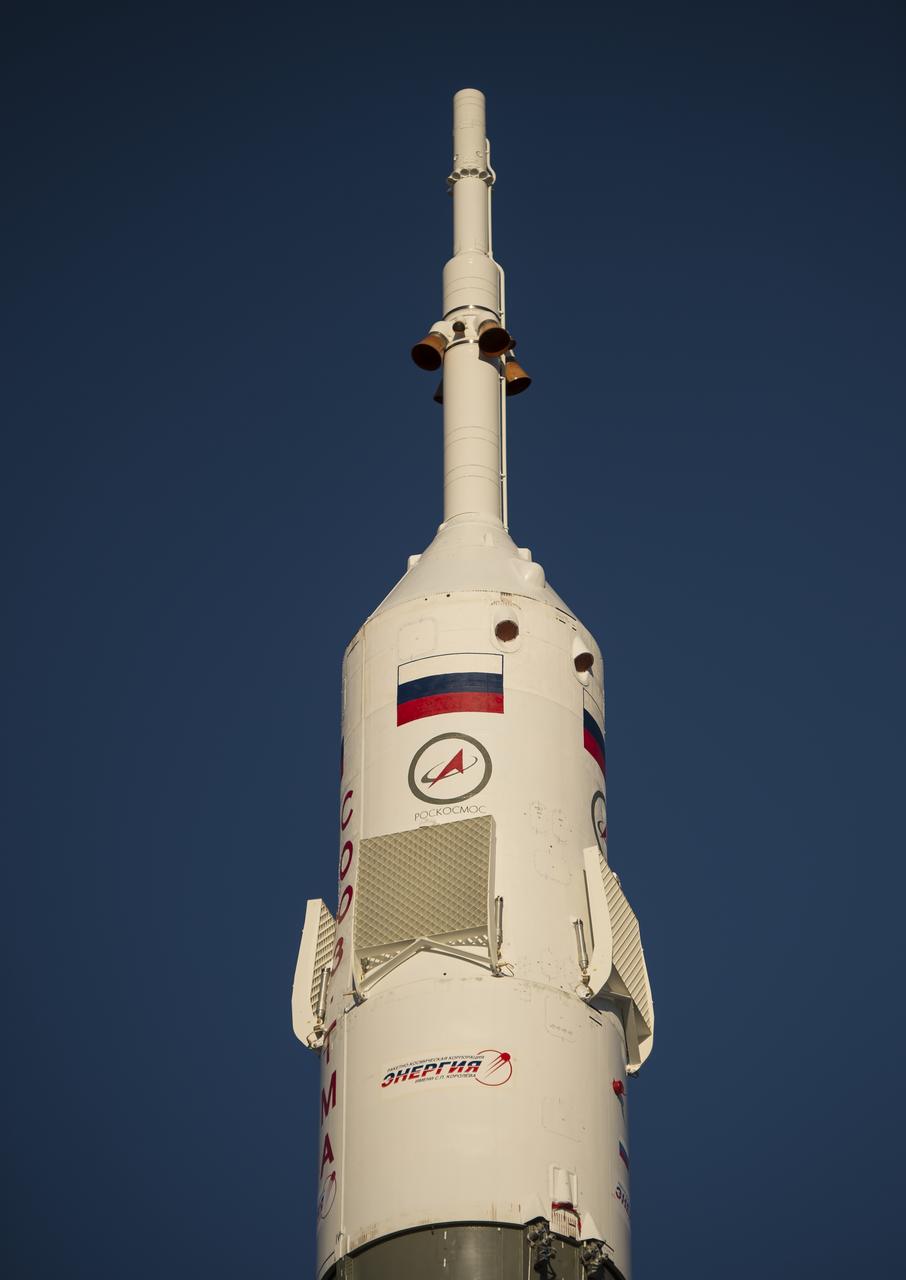
The Soyuz rocket is erected into position after being rolled out to the launch pad by train, on Sunday, October 21, 2012, at the Baikonur Cosmodrome in Kazakhstan. Launch of the Soyuz rocket is scheduled for October 23 and will send Expedition 33/34 Flight Engineer Kevin Ford of NASA, Soyuz Commander Oleg Novitskiy and Flight Engineer Evgeny Tarelkin of ROSCOSMOS on a five-month mission aboard the International Space Station. Photo Credit: (NASA/Bill Ingalls)
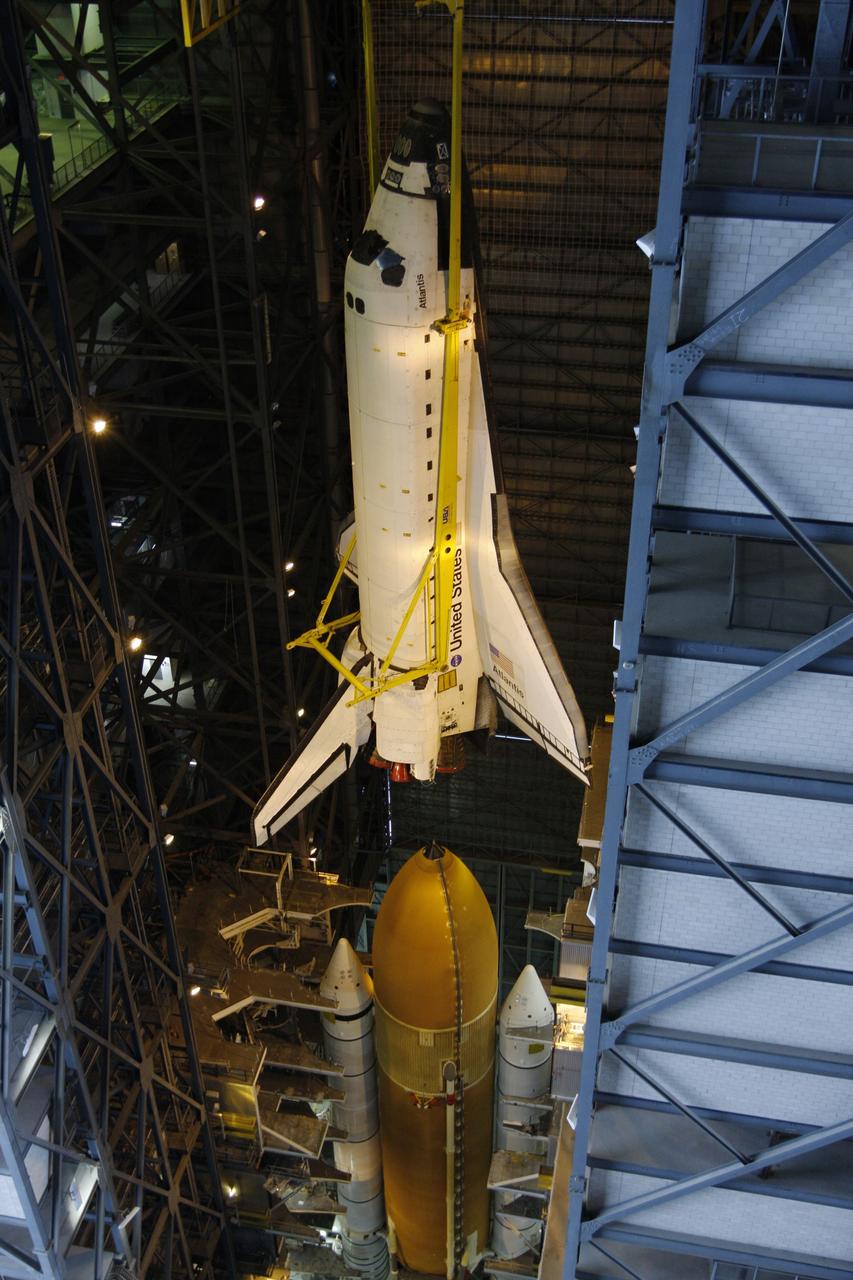
CAPE CANAVERAL, Fla. – In the Vehicle Assembly Building at NASA's Kennedy Space Center, space shuttle Atlantis is lowered toward the external fuel tank and twin solid rocket boosters in high bay 3. Atlantis will be mated to the tank and boosters stacked on the mobile launcher platform. After additional preparations are made, the shuttle will be rolled out to Launch Pad 39A to prepare for launch on the STS-125 mission targeted for 1:34 a.m. EDT Oct. 8. Photo credit: NASA/Dimitri Gerondidakis
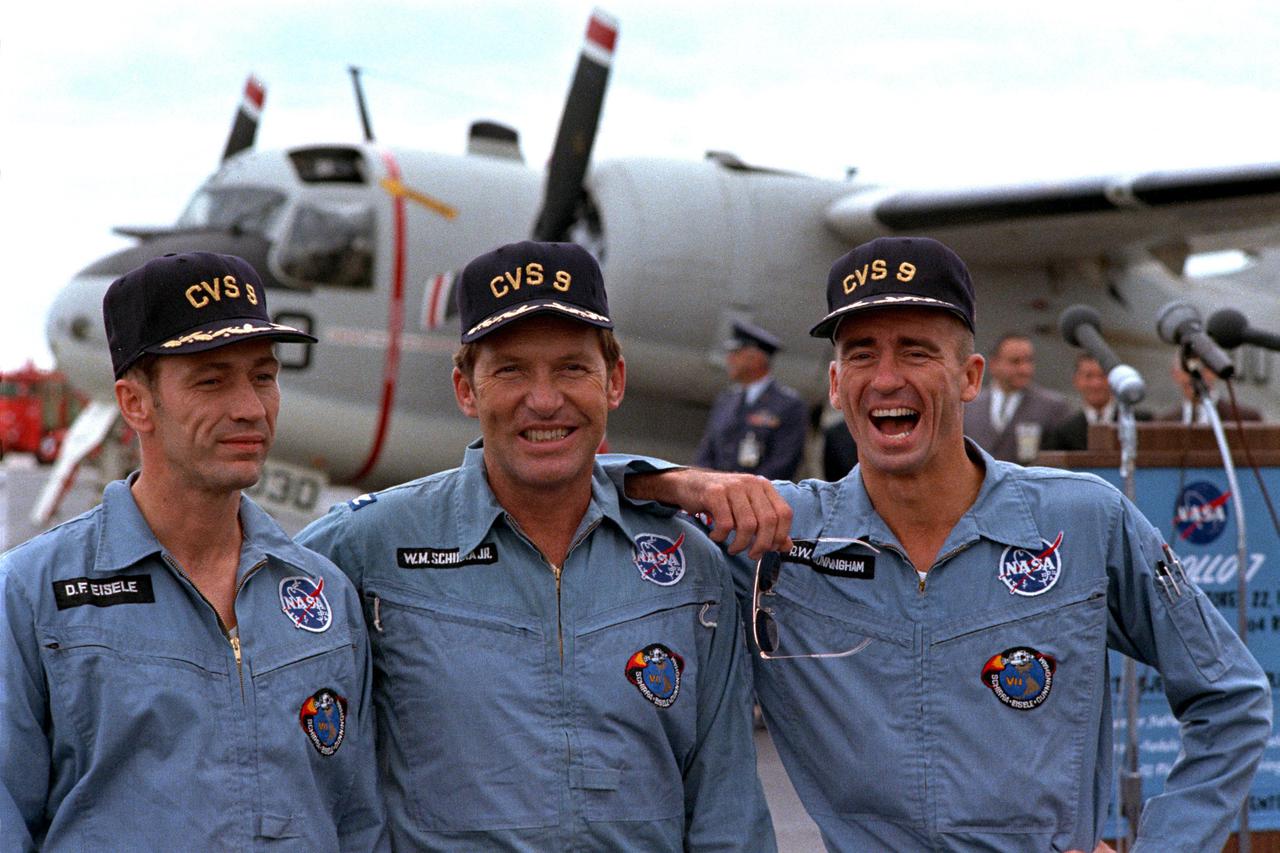
KENNEDY SPACE CENTER, FLA. - The Apollo 7 astronauts, left to right, Donn F. Eisele, Walter M. Schirra Jr., and Walter Cunningham, after 12days and 4.5 million miles later, return to meet with the employees and management at Cape Kennedy. On October 11, the three astronauts were launched aboard a Saturn 1B space vehicle from Launch Pad 34 for the first manned lunar orbital mission.
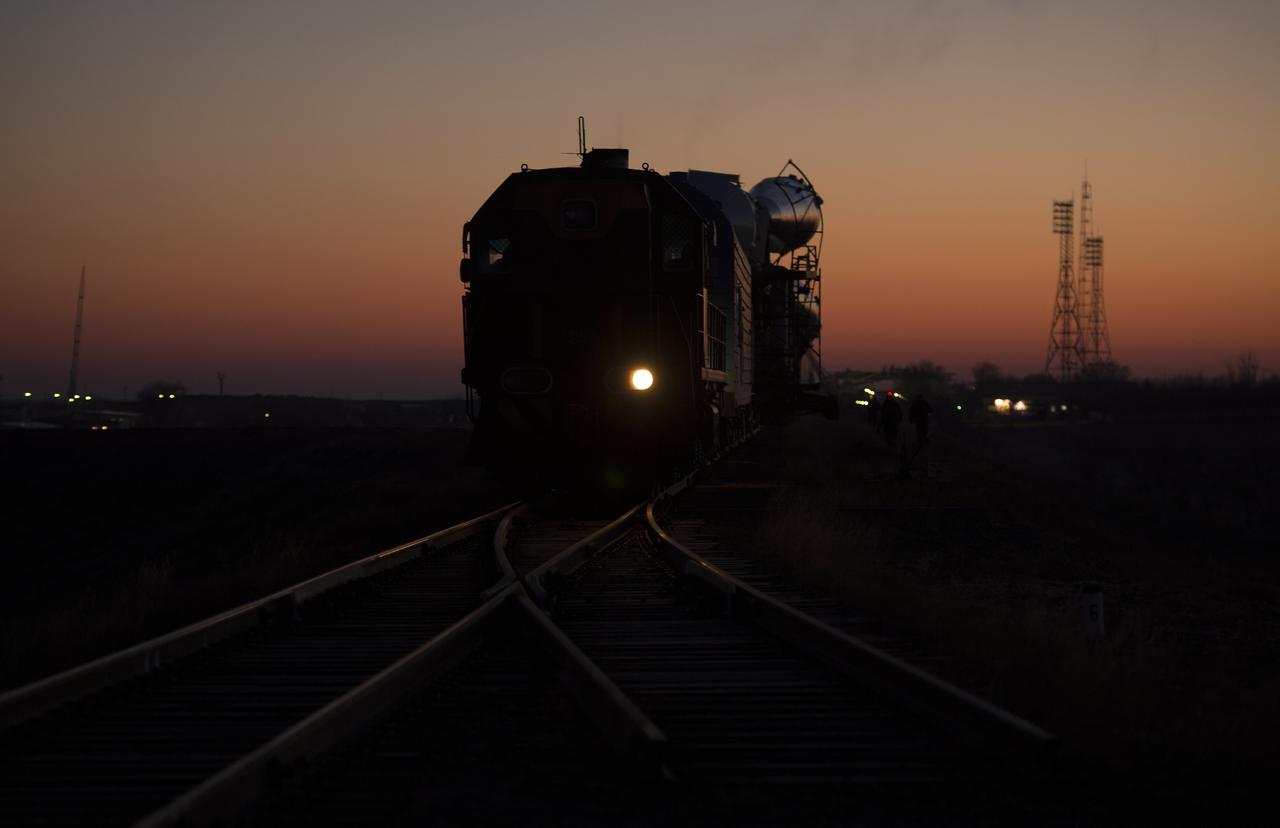
The Soyuz rocket is rolled out to the launch pad by train on Monday, December 17, 2012, at the Baikonur Cosmodrome in Kazakhstan. Launch of the Soyuz rocket is scheduled for December 19 and will send Expedition 34/35 Flight Engineer Tom Marshburn of NASA, Soyuz Commander Roman Romanenko and Expedition 35 Commander Chris Hadfield of the Canadian Space Agency (CSA) on a five-month mission aboard the International Space Station. Photo Credit: (NASA/Carla Cioffi)
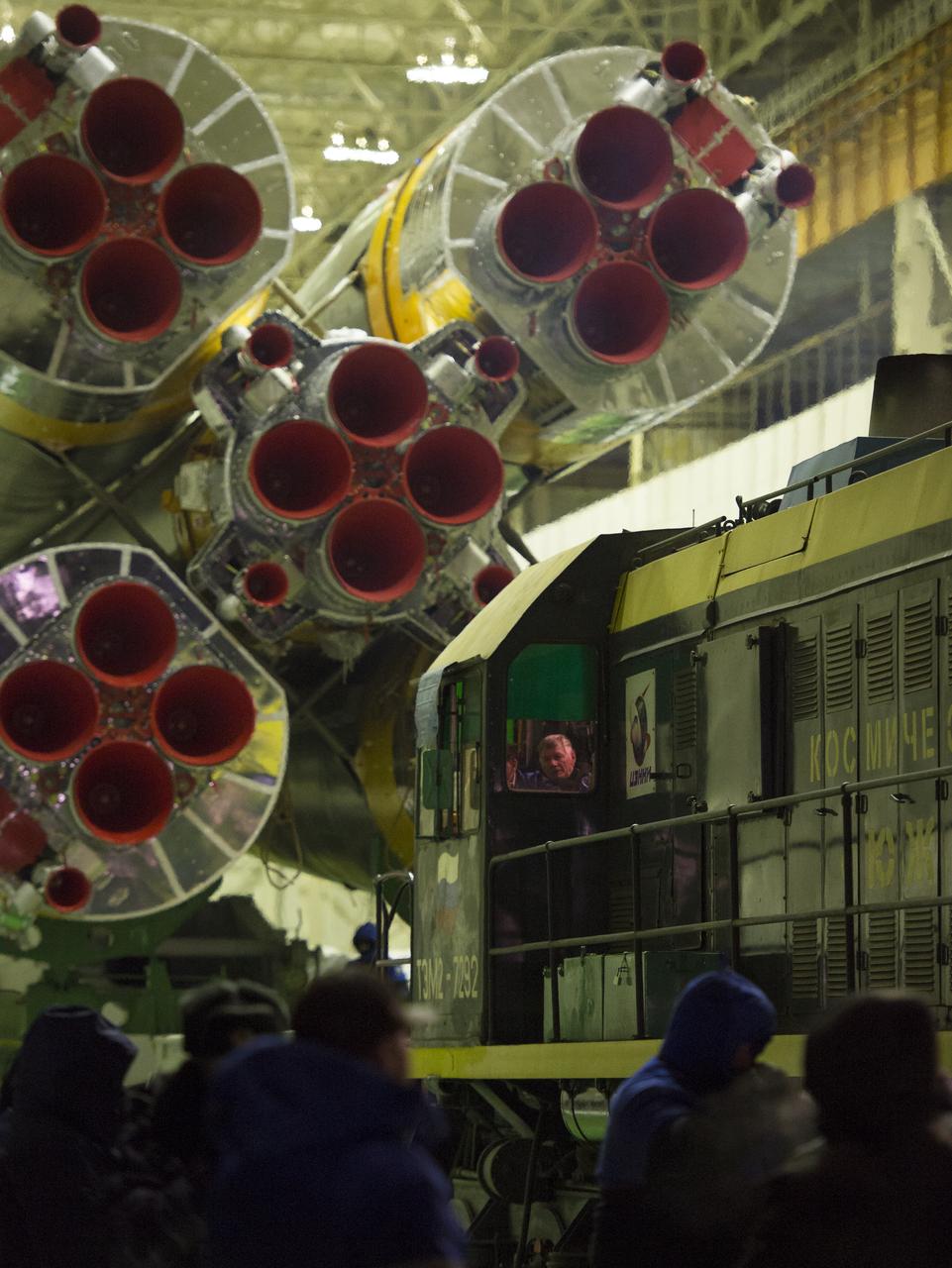
The Soyuz rocket is rolled out to the launch pad by train on Monday, December 17, 2012, at the Baikonur Cosmodrome in Kazakhstan. Launch of the Soyuz rocket is scheduled for December 19 and will send Expedition 34/35 Flight Engineer Tom Marshburn of NASA, Soyuz Commander Roman Romanenko and Expedition 35 Commander Chris Hadfield of the Canadian Space Agency (CSA) on a five-month mission aboard the International Space Station. Photo Credit: (NASA/Carla Cioffi)
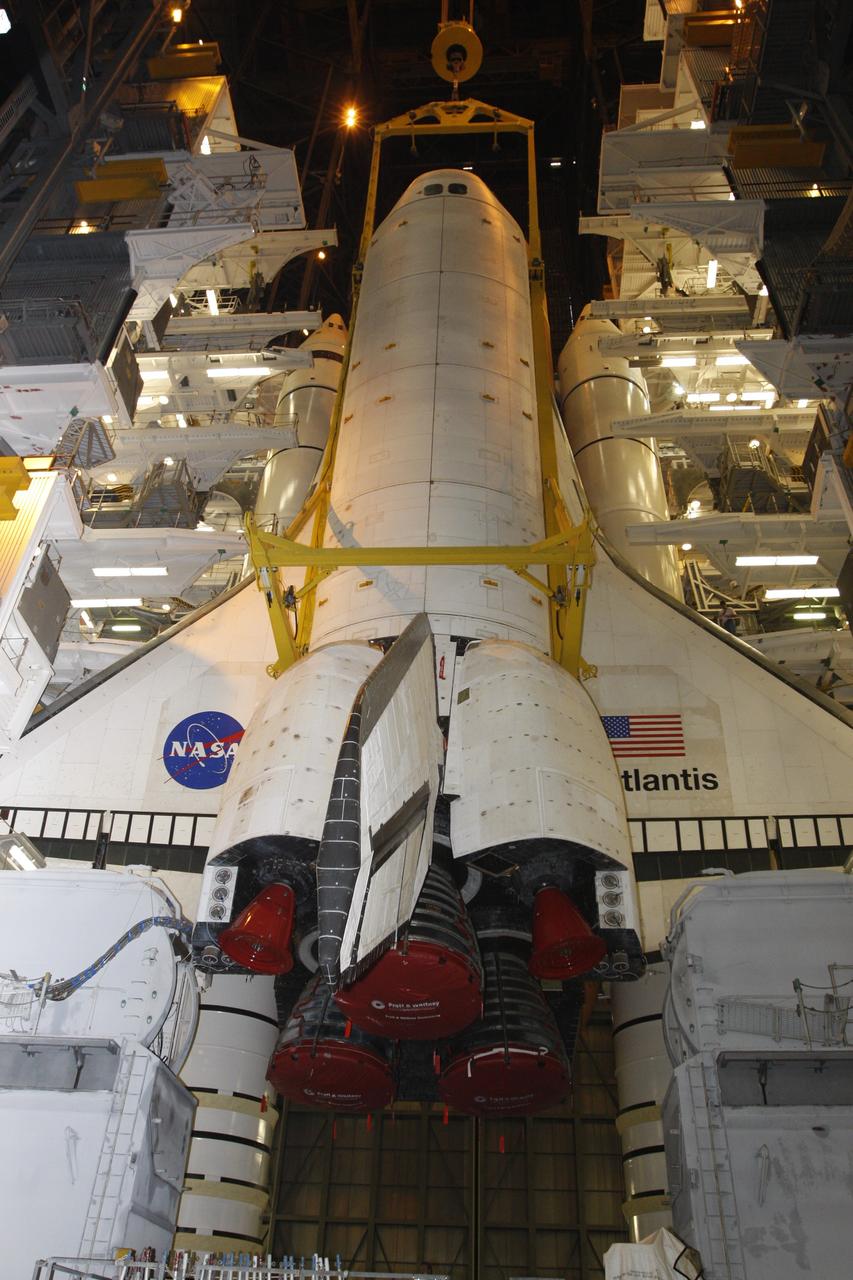
CAPE CANAVERAL, Fla. – In the Vehicle Assembly Building at NASA's Kennedy Space Center, space shuttle Atlantis approaches the floor of the mobile launcher platform in high bay 3. Behind the shuttle are the external fuel tank and twin solid rocket boosters already stacked there. Atlantis will be mated to the tank and boosters. After additional preparations are made, the shuttle will be rolled out to Launch Pad 39A to prepare for launch on the STS-125 mission targeted for 1:34 a.m. EDT Oct. 8. Photo credit: NASA/Dimitri Gerondidakis
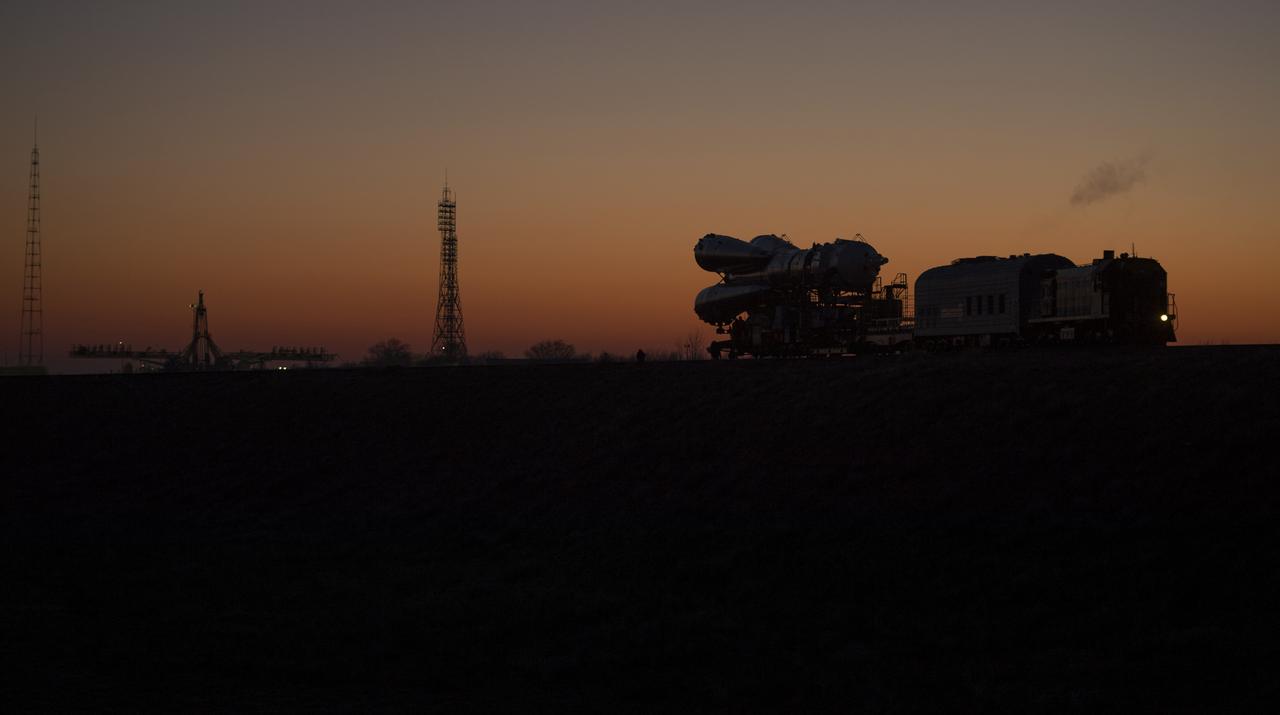
The Soyuz rocket is rolled out to the launch pad by train on Monday, December 17, 2012, at the Baikonur Cosmodrome in Kazakhstan. Launch of the Soyuz rocket is scheduled for December 19 and will send Expedition 34/35 Flight Engineer Tom Marshburn of NASA, Soyuz Commander Roman Romanenko and Expedition 35 Commander Chris Hadfield of the Canadian Space Agency (CSA) on a five-month mission aboard the International Space Station. Photo Credit: (NASA/Carla Cioffi)
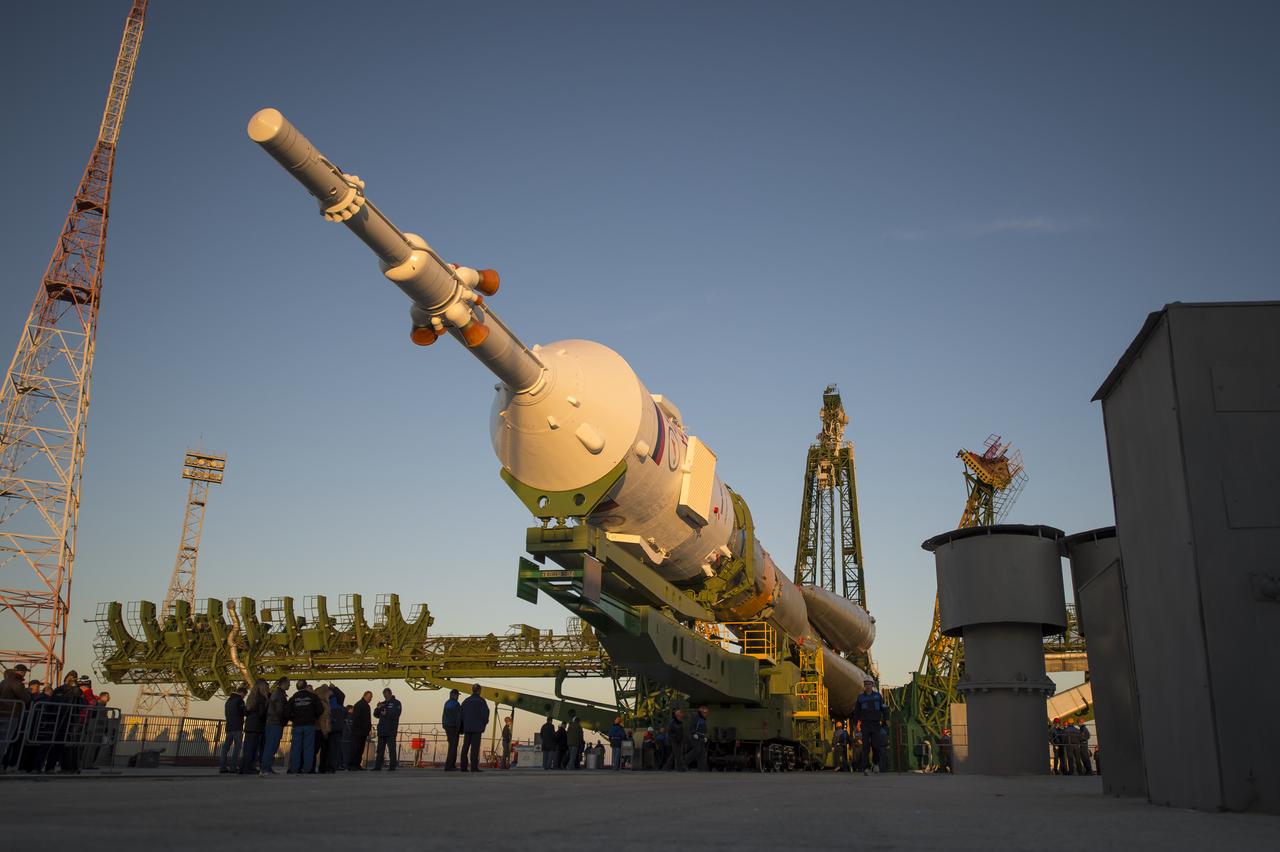
The Soyuz rocket is ready to be erected into position after being rolled out to the launch pad by train, on Sunday, October 21, 2012, at the Baikonur Cosmodrome in Kazakhstan. Launch of the Soyuz rocket is scheduled for October 23 and will send Expedition 33/34 Flight Engineer Kevin Ford of NASA, Soyuz Commander Oleg Novitskiy and Flight Engineer Evgeny Tarelkin of ROSCOSMOS on a five-month mission aboard the International Space Station. Photo Credit: (NASA/Bill Ingalls)
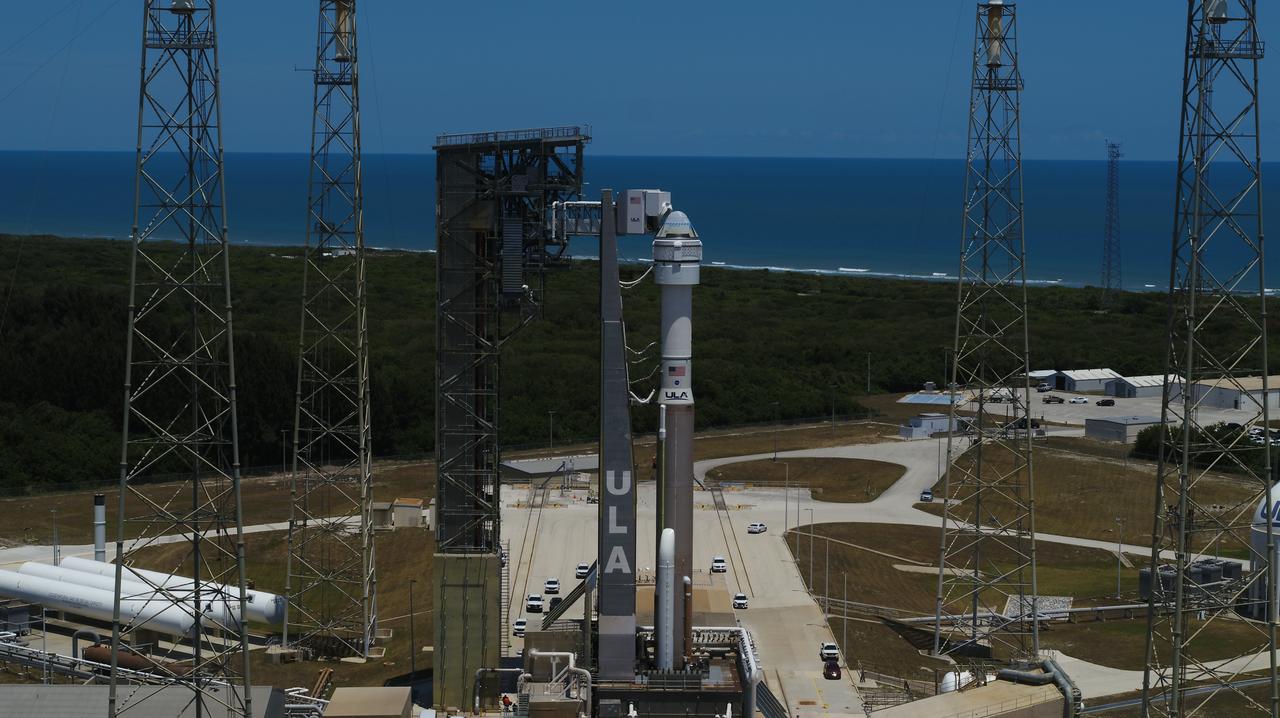
Boeing’s Starliner spacecraft atop the United Launch Alliance Atlas V rocket is seen on the launch pad of Space Launch Complex-41 at Cape Canaveral Space Force Station in Florida on Saturday, May 4, 2024, ahead of NASA’s Boeing Crew Flight Test. As part of the agency’s Commercial Crew Program, NASA astronauts Butch Wilmore and Suni Williams are the first to launch to the International Space Station aboard Boeing’s Starliner spacecraft. Liftoff is scheduled for 10:34 p.m. ET Monday, May 6.
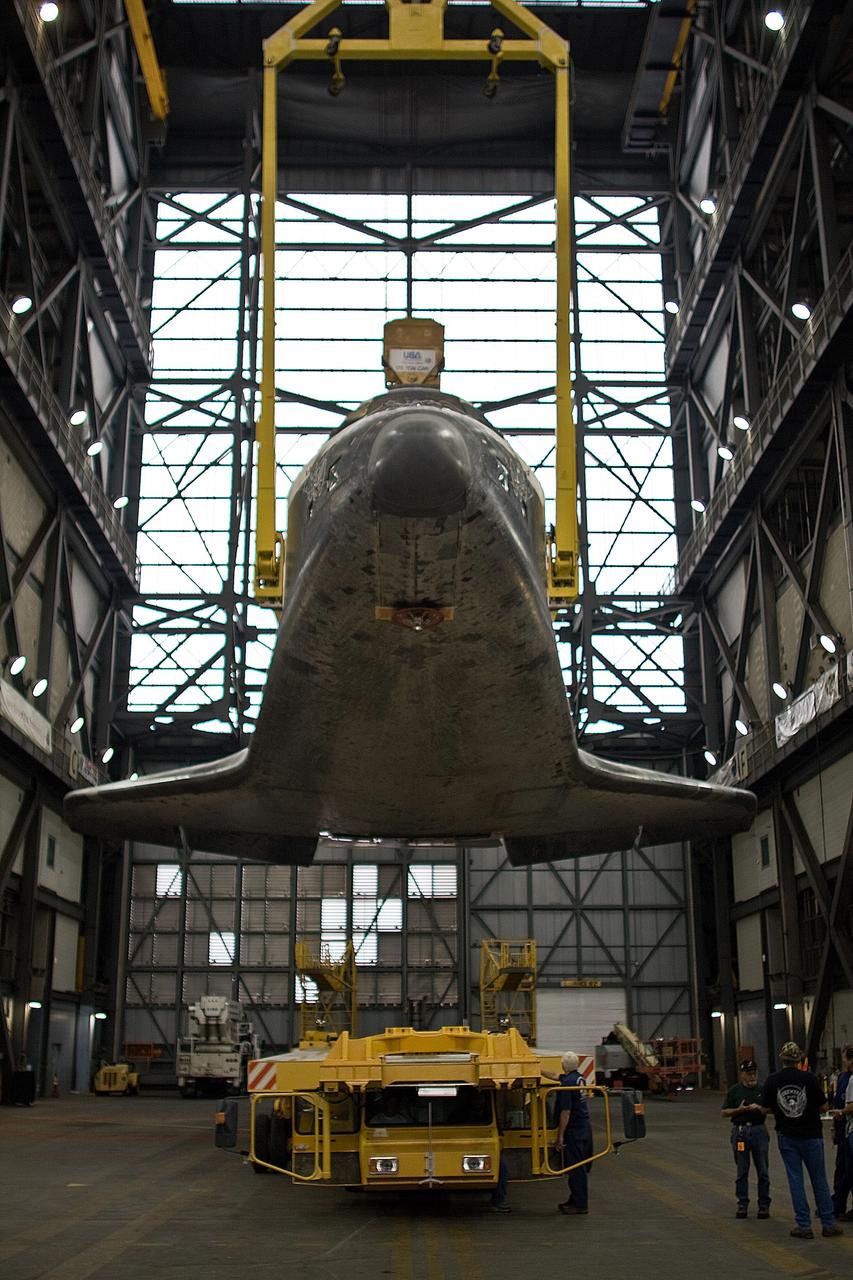
CAPE CANAVERAL, Fla. – In the Vehicle Assembly Building transfer aisle at NASA's Kennedy Space Center, the overhead crane lifts space shuttle Atlantis from its transporter. Atlantis will be raised to vertical for transfer to high bay 3. There it will be stacked with its external fuel tank and twin solid rocket boosters. After additional preparations are made, the shuttle will be rolled out to Launch Pad 39A to prepare for launch on the STS-125 mission targeted for 1:34 a.m. EDT Oct. 8. Photo credit: NASA/Dimitri Gerondidakis
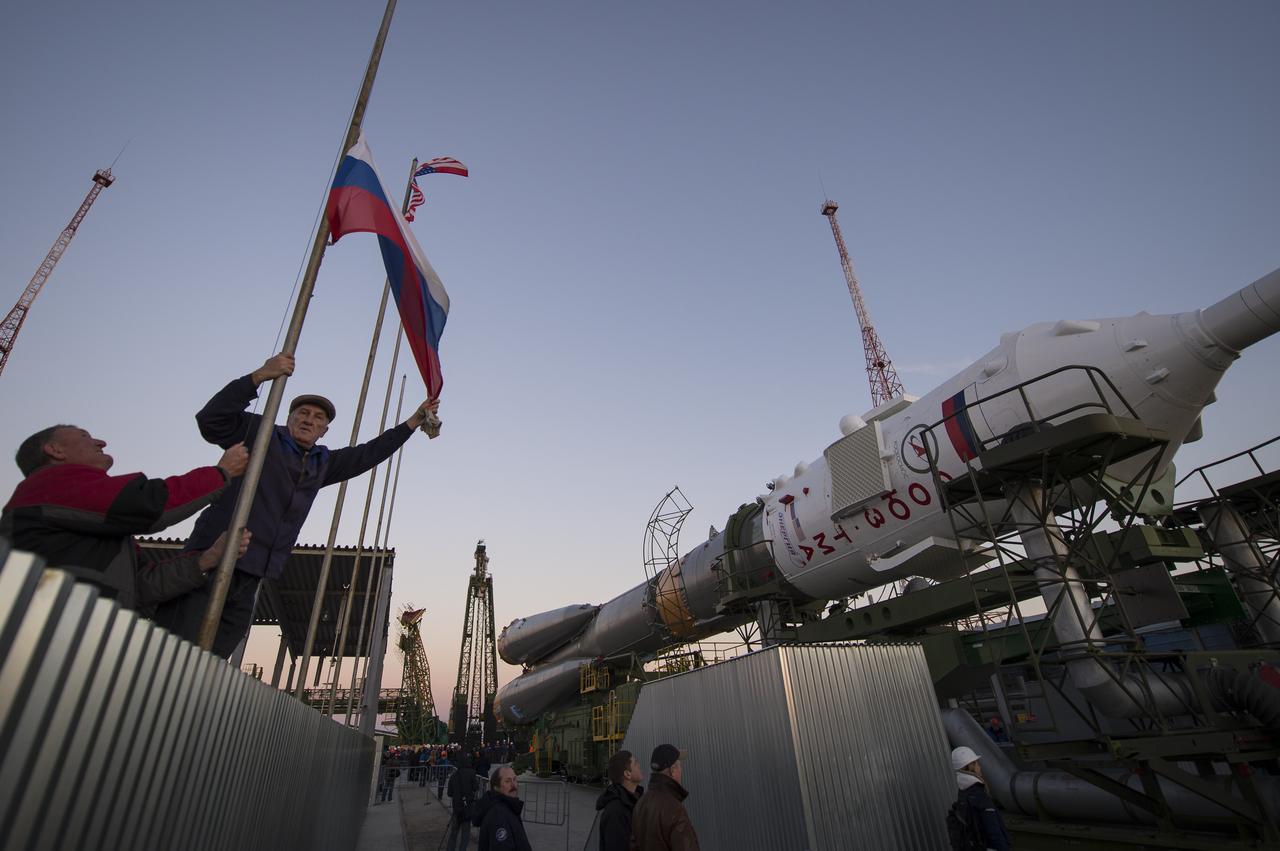
Workers raise a Russian flag as the Soyuz rocket arrives at the launch pad by train, on Sunday, October 21, 2012, at the Baikonur Cosmodrome in Kazakhstan. Launch of the Soyuz rocket is scheduled for October 23 and will send Expedition 33/34 Flight Engineer Kevin Ford of NASA, Soyuz Commander Oleg Novitskiy and Flight Engineer Evgeny Tarelkin of ROSCOSMOS on a five-month mission aboard the International Space Station. Photo Credit: (NASA/Bill Ingalls)
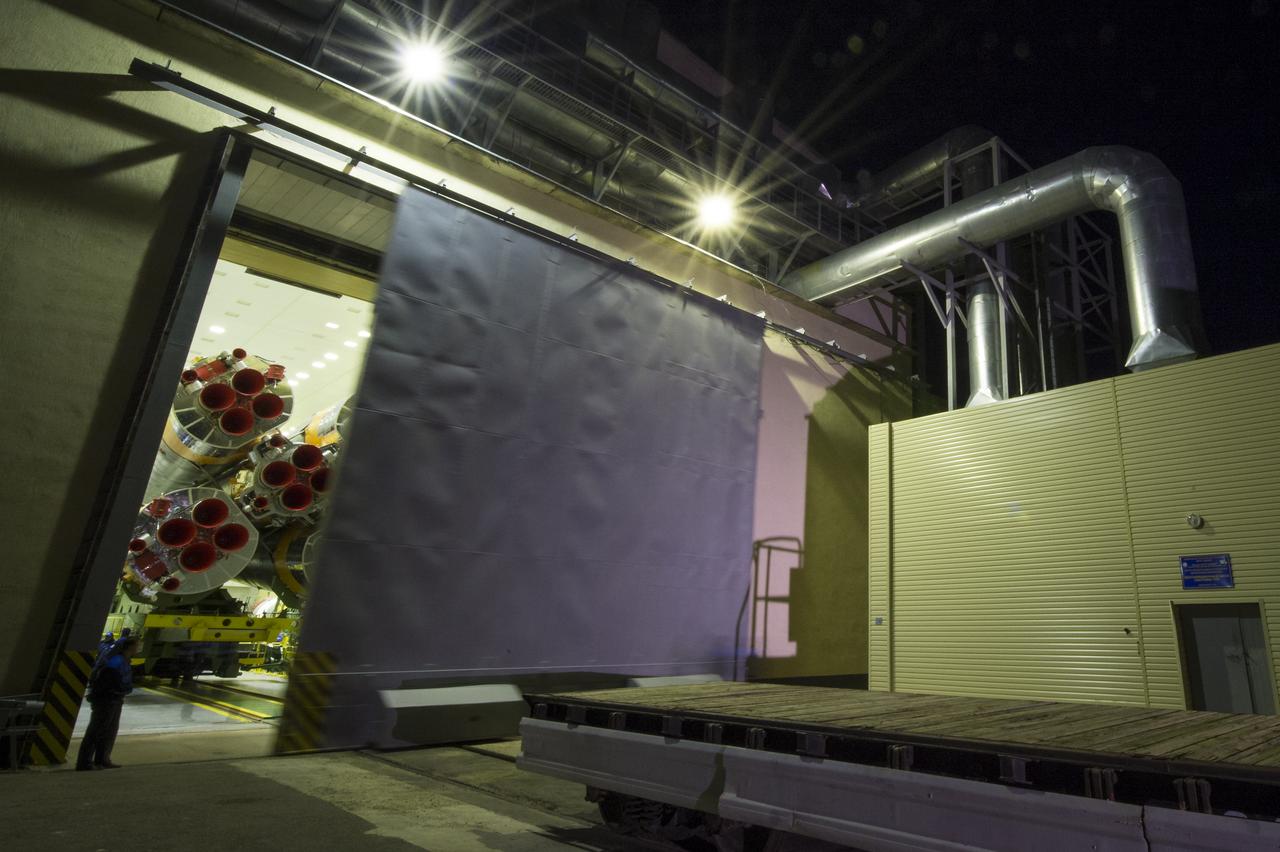
The door of the Soyuz rocket assembly building is opened so that the Soyuz rocket may be rolled out to the launch pad by train, on Sunday, October 21, 2012, at the Baikonur Cosmodrome in Kazakhstan. Launch of the Soyuz rocket is scheduled for October 23 and will send Expedition 33/34 Flight Engineer Kevin Ford of NASA, Soyuz Commander Oleg Novitskiy and Flight Engineer Evgeny Tarelkin of ROSCOSMOS on a five-month mission aboard the International Space Station. Photo Credit: (NASA/Bill Ingalls)
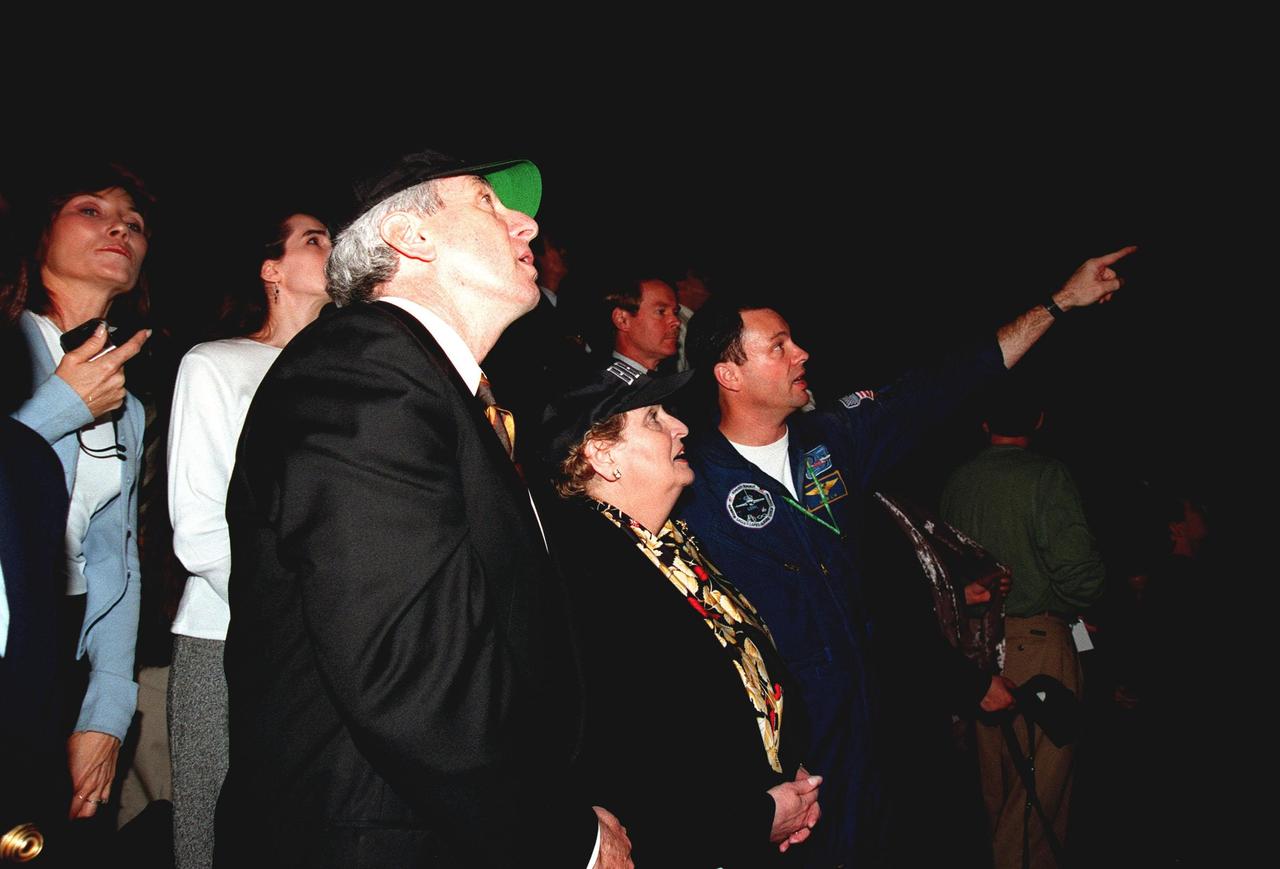
At the Banana Creek Viewing Site, NASA Administrator Daniel Goldin (left), U.S. Secretary of State Madeleine Albright (center) and astronaut Michael Lopez-Alegria watch the launch of STS-88 from Launch Pad 39A at 3:35:34 a.m. EST. STS-88 is the first U.S. mission dedicated to the assembly of the International Space Station (ISS). Lopez-Alegria is part of the STS-92 crew that is assigned to the fourth ISS assembly flight scheduled for launch on Oct. 28, 1999, aboard Discovery
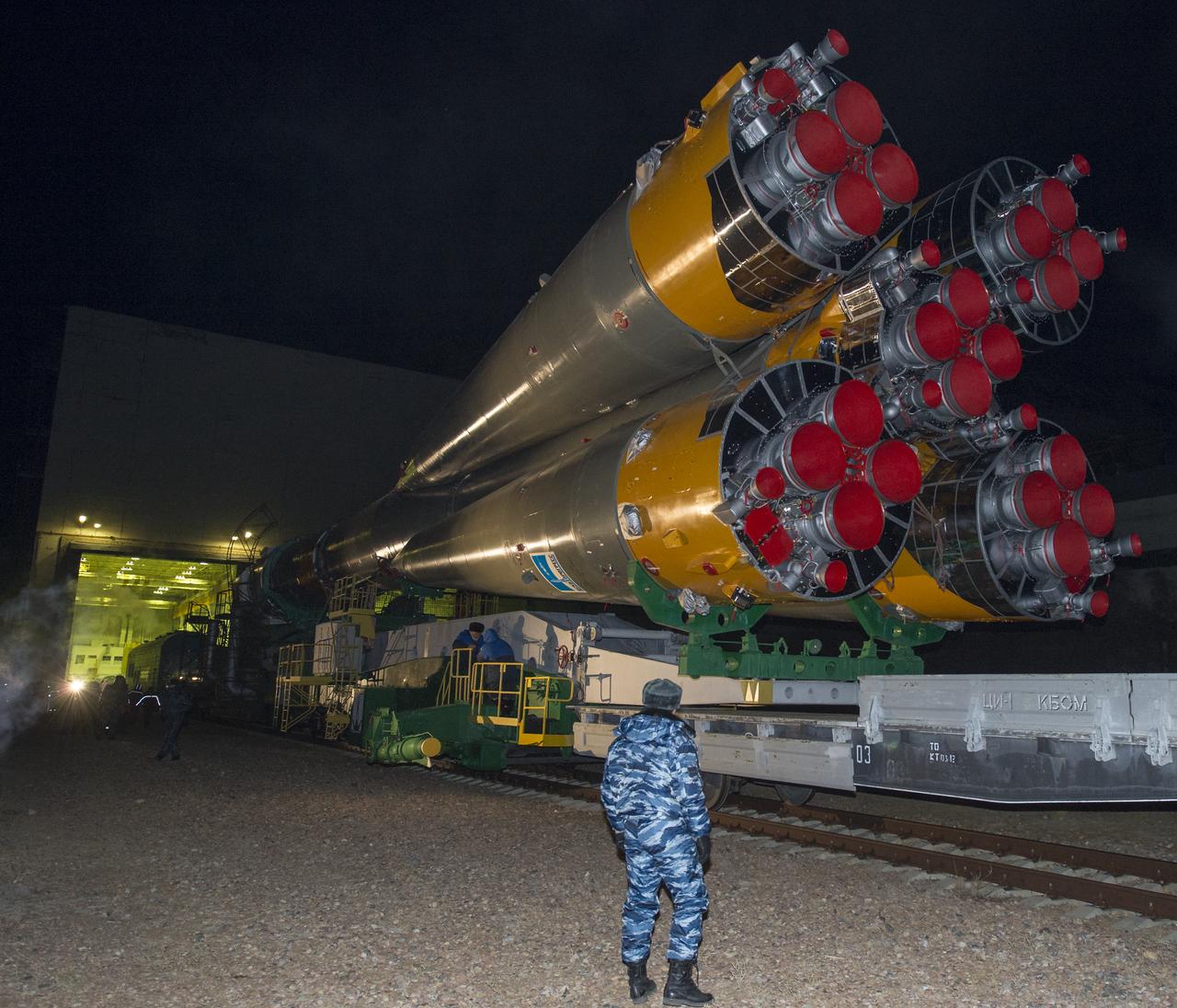
The Soyuz rocket is rolled out to the launch pad by train on Monday, December 17, 2012, at the Baikonur Cosmodrome in Kazakhstan. Launch of the Soyuz rocket is scheduled for December 19 and will send Expedition 34/35 Flight Engineer Tom Marshburn of NASA, Soyuz Commander Roman Romanenko and Expedition 35 Commander Chris Hadfield of the Canadian Space Agency (CSA) on a five-month mission aboard the International Space Station. Photo Credit: (NASA/Carla Cioffi)
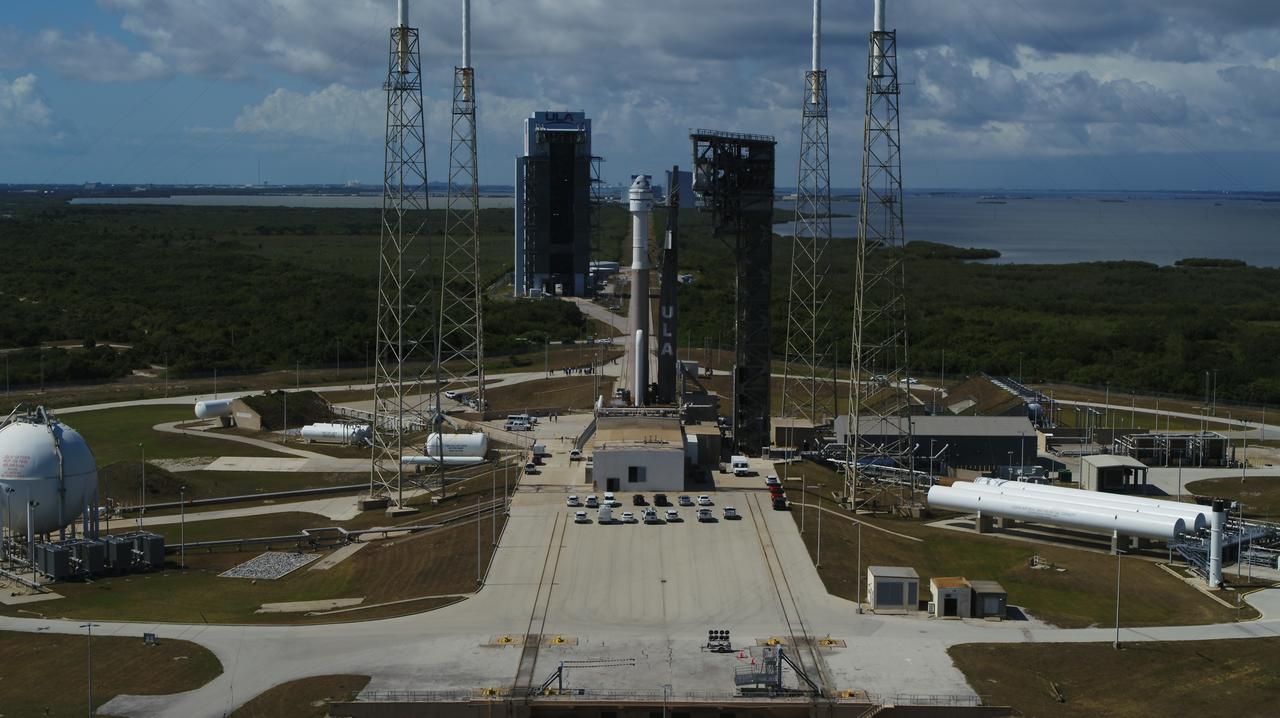
Boeing’s Starliner spacecraft atop the United Launch Alliance Atlas V rocket is seen on the launch pad of Space Launch Complex-41 at Cape Canaveral Space Force Station in Florida on Saturday, May 4, 2024, ahead of NASA’s Boeing Crew Flight Test. As part of the agency’s Commercial Crew Program, NASA astronauts Butch Wilmore and Suni Williams are the first to launch to the International Space Station aboard Boeing’s Starliner spacecraft. Liftoff is scheduled for 10:34 p.m. ET Monday, May 6.
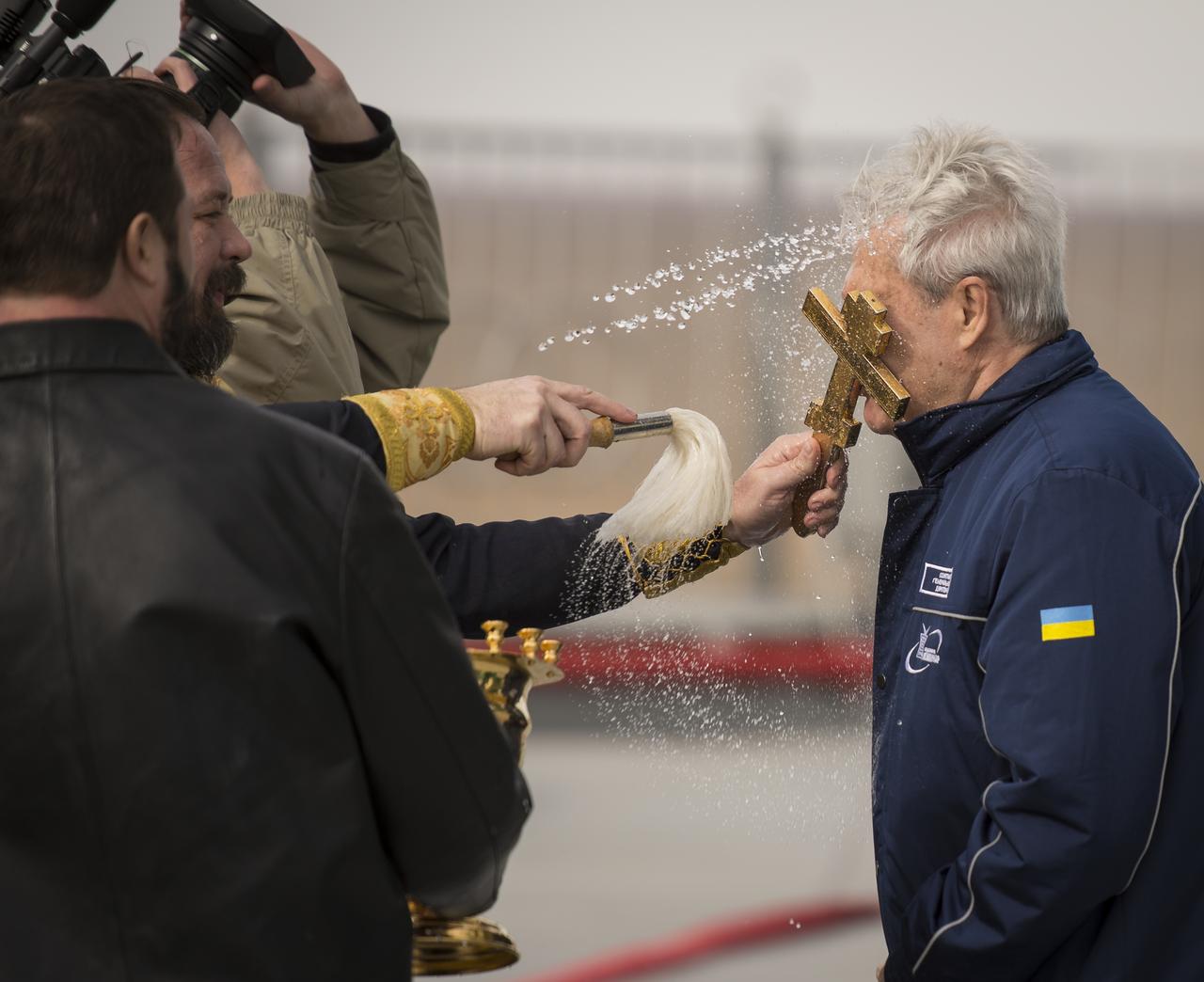
An Orthodox priest blesses a worker near the Soyuz rocket at the Baikonur Cosmodrome Launch pad on Monday, Oct. 22, 2012 in Baikonur, Kazakhstan. Launch of the Soyuz rocket is scheduled for October 23 and will send Expedition 33/34 Flight Engineer Kevin Ford of NASA, Soyuz Commander Oleg Novitskiy and Flight Engineer Evgeny Tarelkin of ROSCOSMOS on a five-month mission aboard the International Space Station. Photo Credit: (NASA/Bill Ingalls)
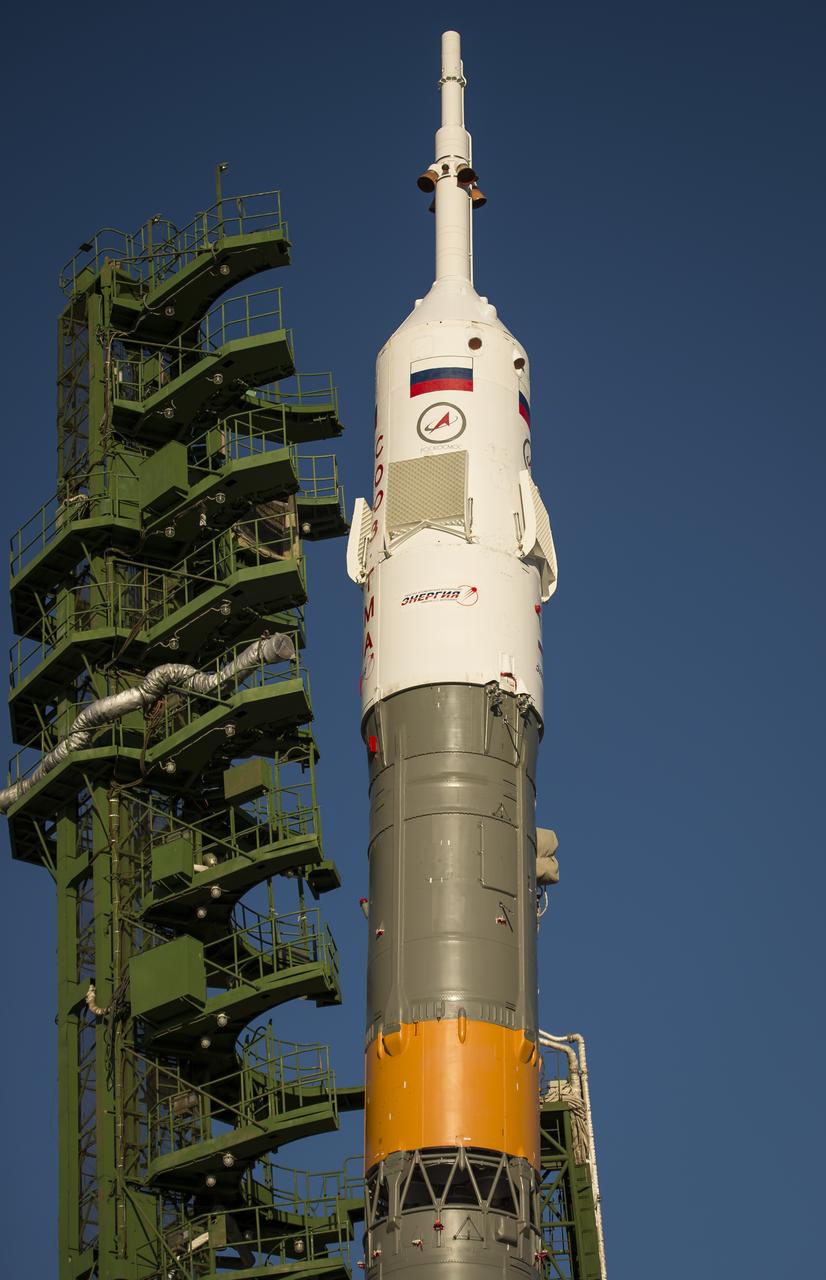
The Soyuz rocket is erected into position after being rolled out to the launch pad by train, on Sunday, October 21, 2012, at the Baikonur Cosmodrome in Kazakhstan. Launch of the Soyuz rocket is scheduled for October 23 and will send Expedition 33/34 Flight Engineer Kevin Ford of NASA, Soyuz Commander Oleg Novitskiy and Flight Engineer Evgeny Tarelkin of ROSCOSMOS on a five-month mission aboard the International Space Station. Photo Credit: (NASA/Bill Ingalls)
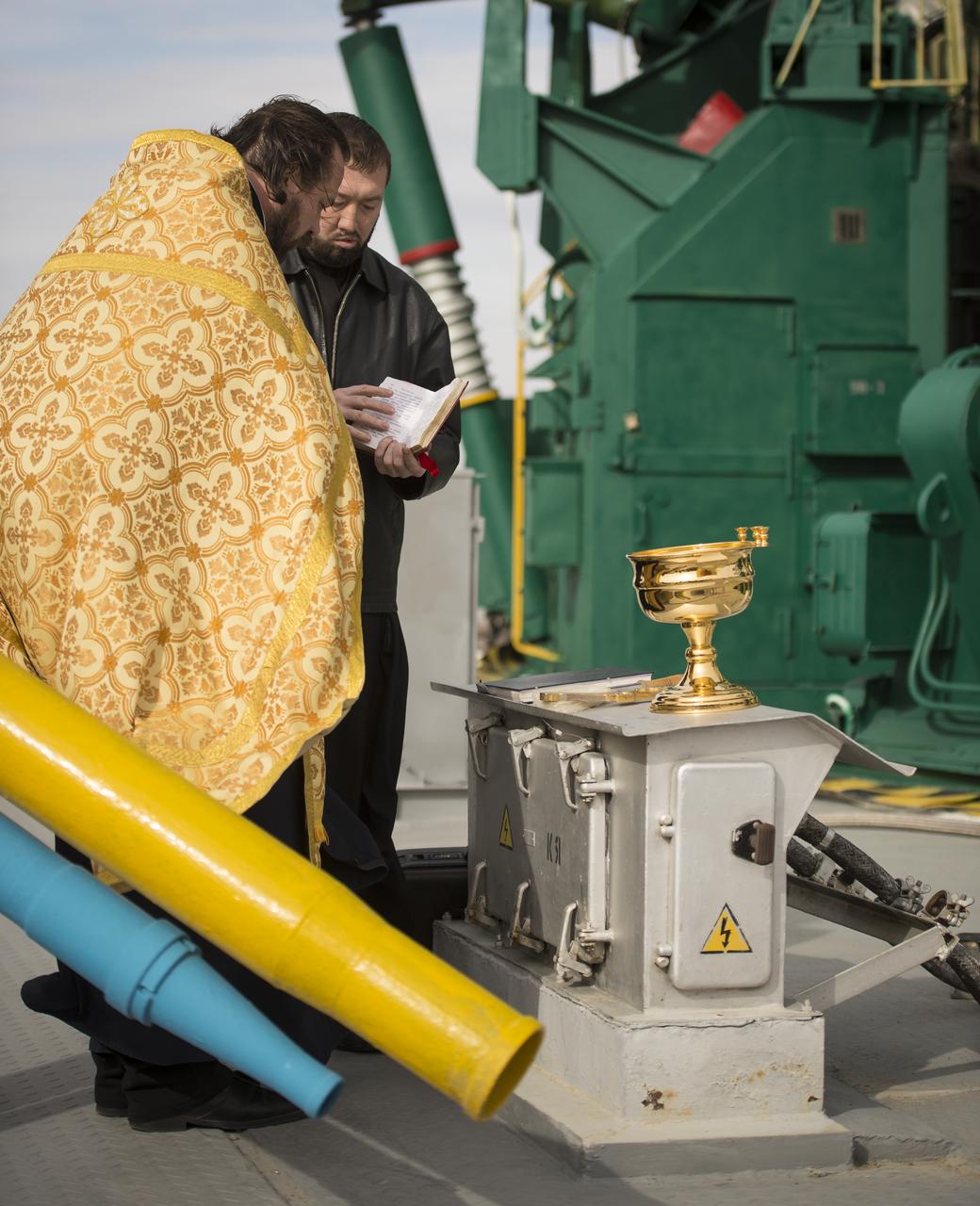
An Orthodox priest blesses the Soyuz rocket at the Baikonur Cosmodrome Launch pad on Monday, Oct. 22, 2012 in Baikonur, Kazakhstan. Launch of the Soyuz rocket is scheduled for October 23 and will send Expedition 33/34 Flight Engineer Kevin Ford of NASA, Soyuz Commander Oleg Novitskiy and Flight Engineer Evgeny Tarelkin of ROSCOSMOS on a five-month mission aboard the International Space Station. Photo Credit: (NASA/Bill Ingalls)
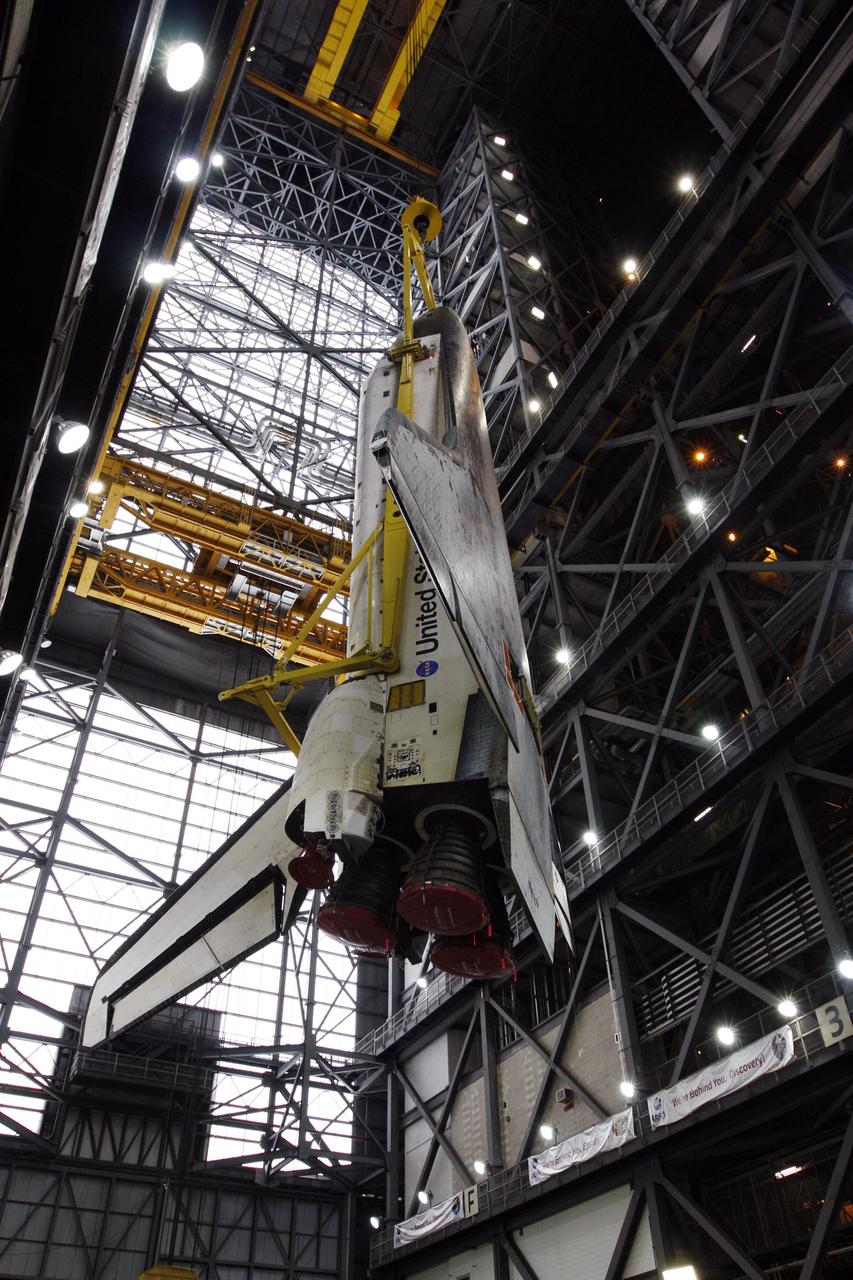
CAPE CANAVERAL, Fla. – A crane lifts space shuttle Atlantis into the upper levels of the Vehicle Assembly Building at NASA's Kennedy Space Center. The shuttle will be moved into high bay 3 and lowered for stacking with its external fuel tank and twin solid rocket boosters. After additional preparations are made, the shuttle will be rolled out to Launch Pad 39A to prepare for launch on the STS-125 mission targeted for 1:34 a.m. EDT Oct. 8. Photo credit: NASA/Dimitri Gerondidakis
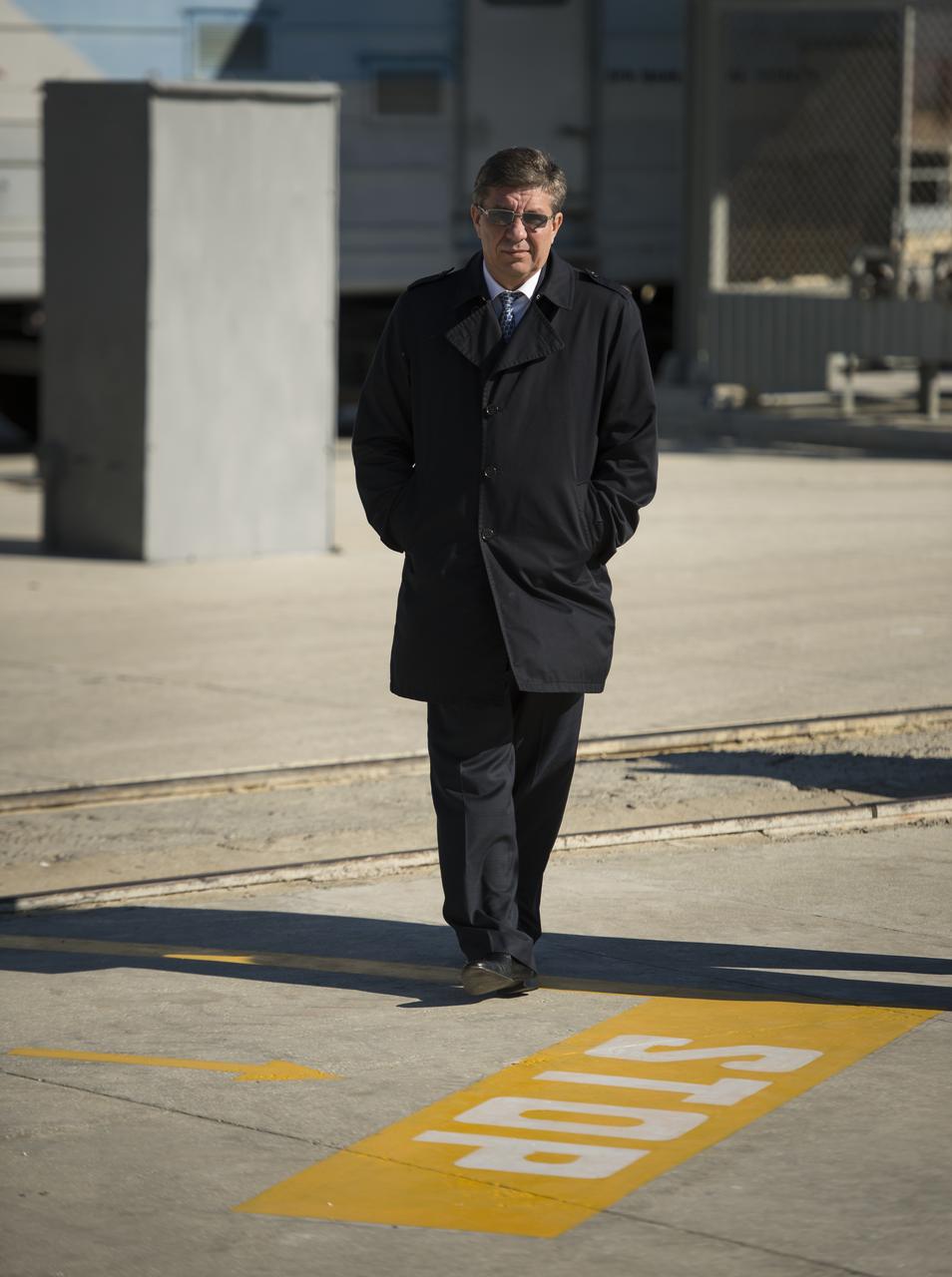
General Director of the Russian Federal Space Agency, ROSCOSMOS, Vladimir Popovkin, waits at the Soyuz launch pad 31 to say farewell to Expedition 33/34 crew members, Soyuz Commander Oleg Novitskiy, Flight Engineer Kevin Ford, and Flight Engineer Evgeny Tarelkin ahead of their boarding the spacecraft for launch to the International Space Station on Tuesday, October 23, 2012, in Baikonur, Kazakhstan. Ford, Novitskiy and Tarelkin will be on a five-month mission aboard the International Space Station. Photo Credit: (NASA/Bill Ingalls)
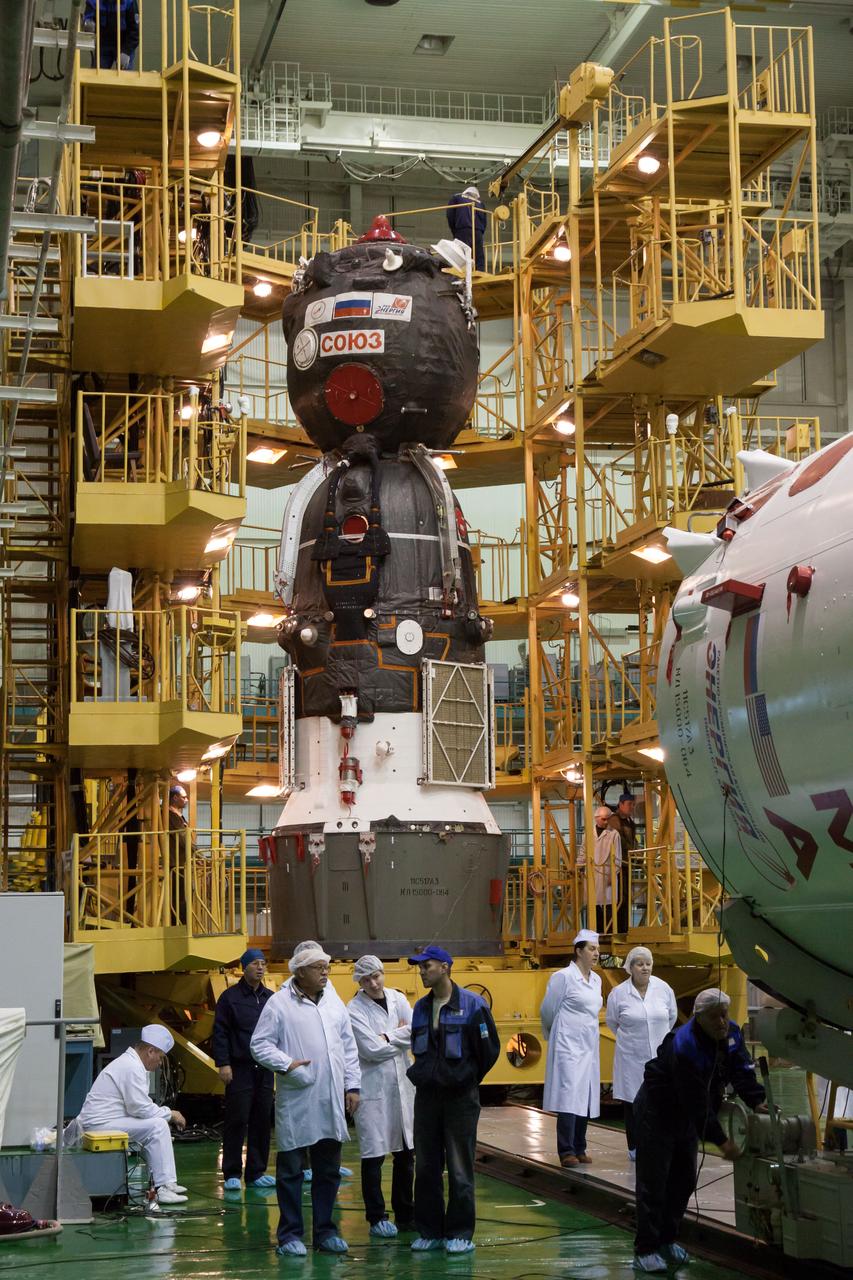
In the Integration Facility at the Baikonur Cosmodrome in Kazakhstan, the Soyuz TMA-07M spacecraft is prepared for its encapsulation into the upper stage of the Soyuz booster Dec. 12, 2012 as preparations continue for the launch of the Expedition 34/35 crew. The vehicle will be rolled to the launch pad at Baikonur Dec. 17 in advance of the Dec. 19 launch of NASA Flight Engineer Tom Marshburn, Soyuz Commander Roman Romanenko and Flight Engineer Chris Hadfield of the Canadian Space Agency for a five-month mission on the International Space Station. Photo Credit: NASA/Victor Zelentsov
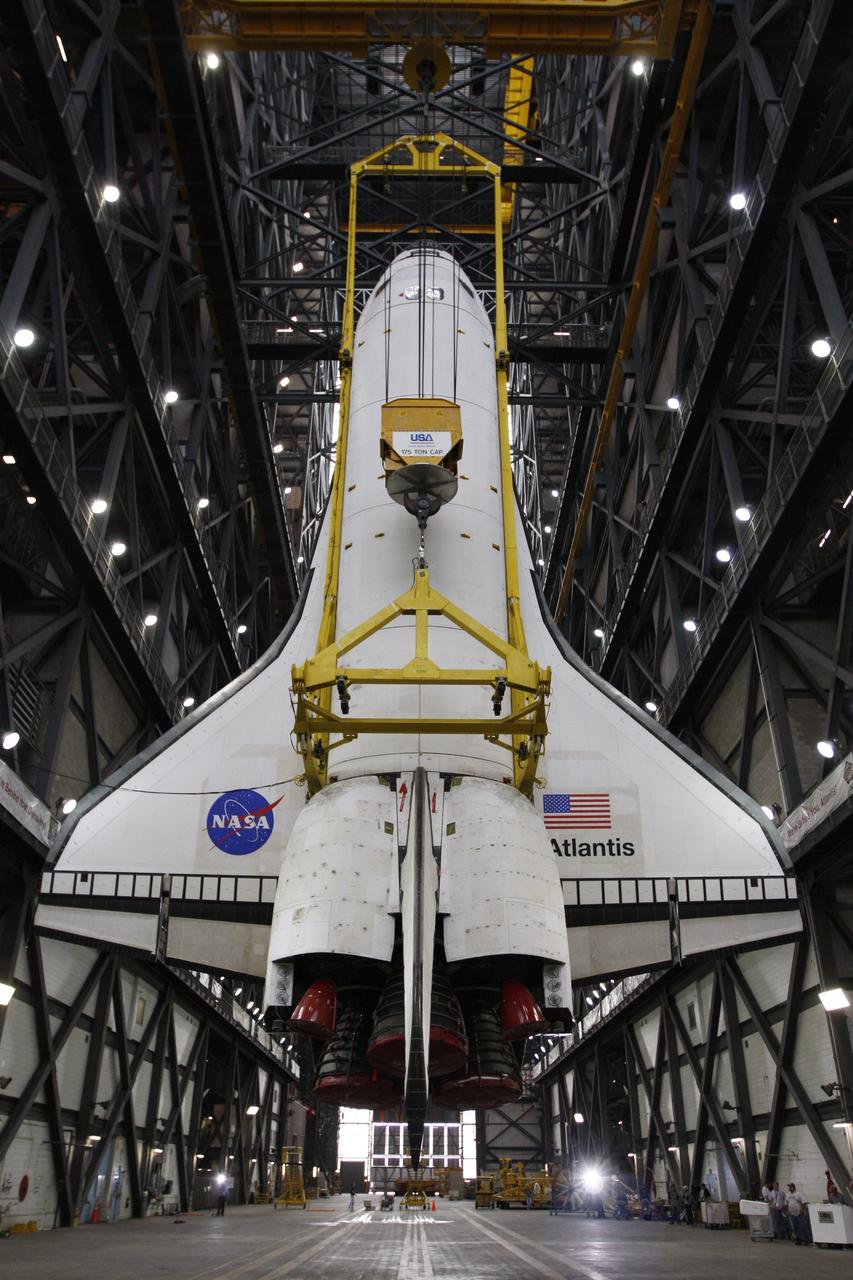
CAPE CANAVERAL, Fla. – Suspended above the transfer aisle in the Vehicle Assembly Building at NASA's Kennedy Space Center, space shuttle Atlantis is ready to be lifted into high bay 3 and stacked with its external fuel tank and twin solid rocket boosters. After additional preparations are made, the shuttle will be rolled out to Launch Pad 39A to prepare for launch on the STS-125 mission targeted for 1:34 a.m. EDT Oct. 8. Photo credit: NASA/Dimitri Gerondidakis
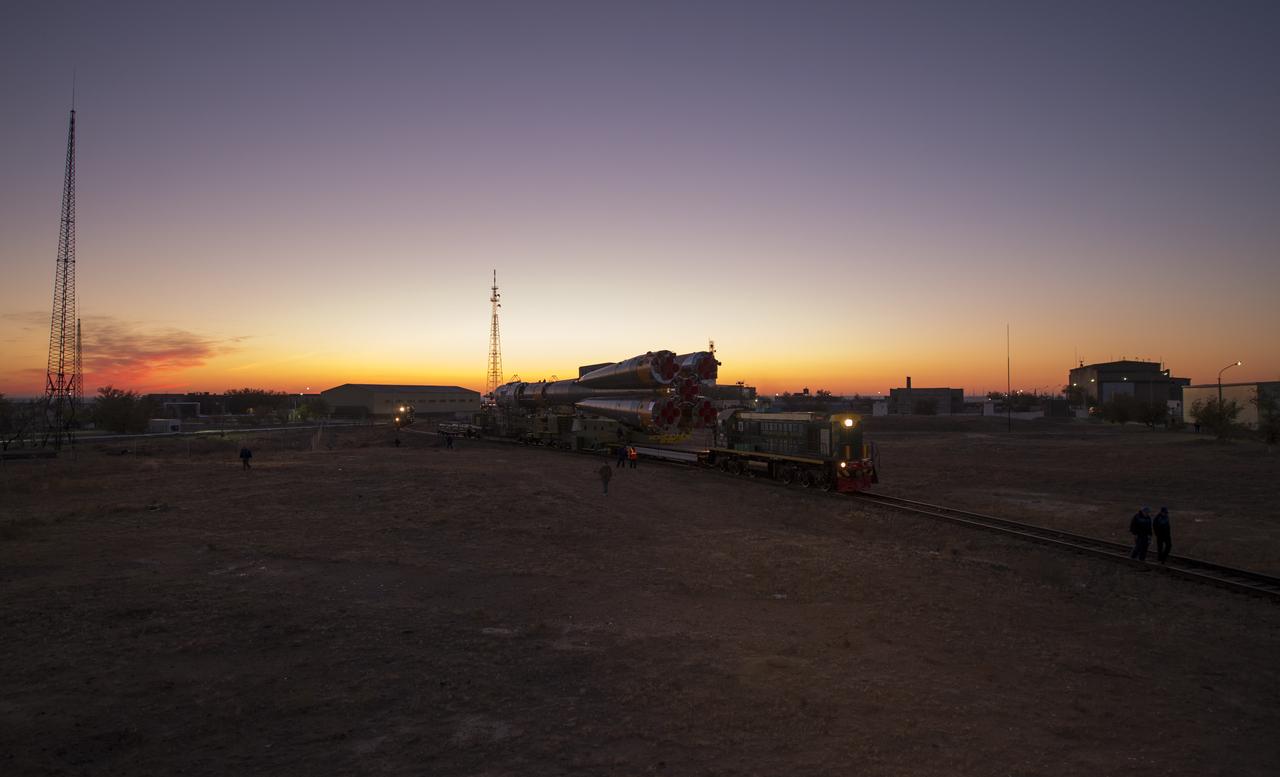
The Soyuz rocket is rolled out to the launch pad by train, on Sunday, October 21, 2012, at the Baikonur Cosmodrome in Kazakhstan. Launch of the Soyuz rocket is scheduled for October 23 and will send Expedition 33/34 Flight Engineer Kevin Ford of NASA, Soyuz Commander Oleg Novitskiy and Flight Engineer Evgeny Tarelkin of ROSCOSMOS on a five-month mission aboard the International Space Station. Photo Credit: (NASA/Bill Ingalls)
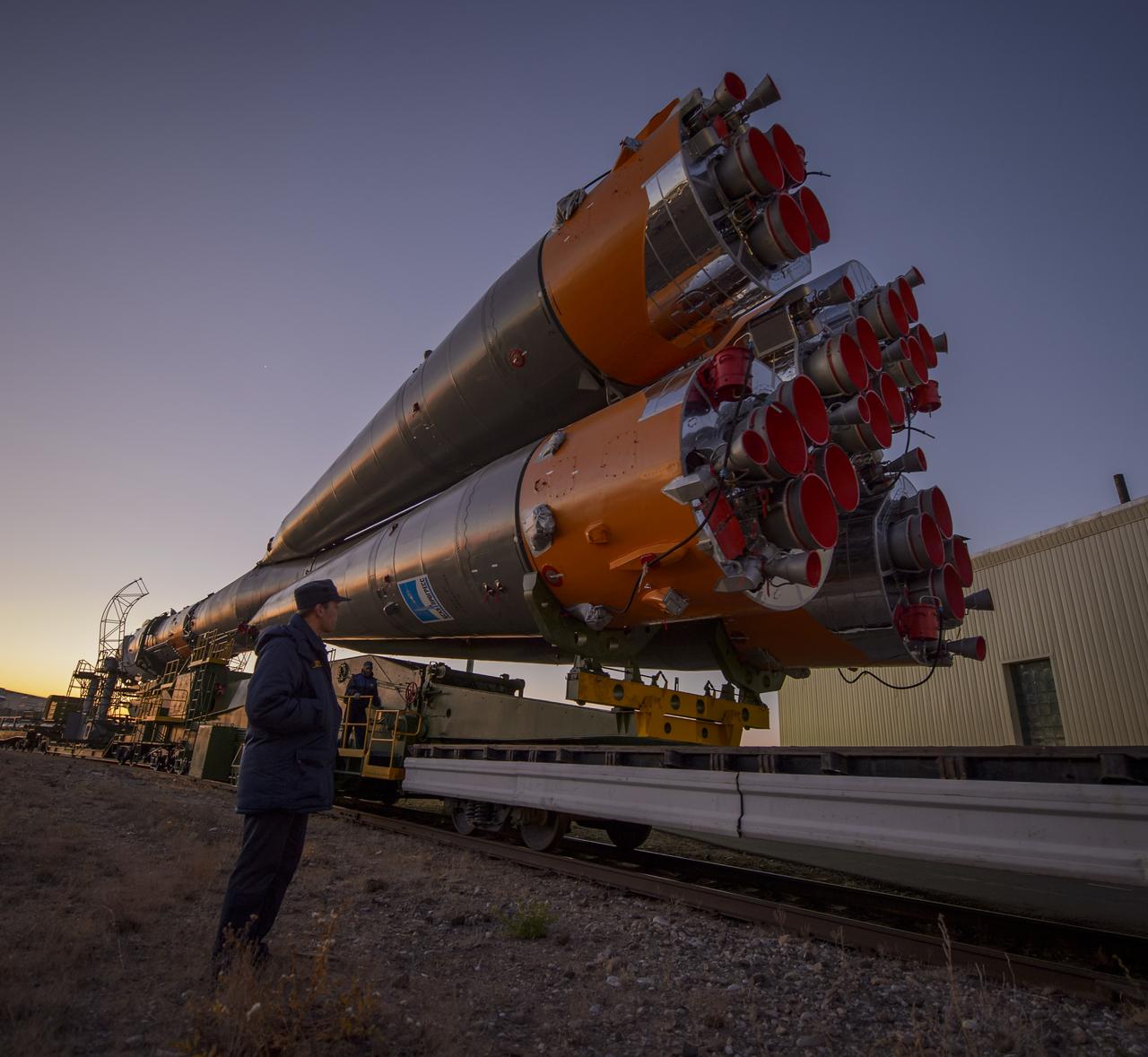
The Soyuz rocket is rolled out to the launch pad by train, on Sunday, October 21, 2012, at the Baikonur Cosmodrome in Kazakhstan. Launch of the Soyuz rocket is scheduled for October 23 and will send Expedition 33/34 Flight Engineer Kevin Ford of NASA, Soyuz Commander Oleg Novitskiy and Flight Engineer Evgeny Tarelkin of ROSCOSMOS on a five-month mission aboard the International Space Station. Photo Credit: (NASA/Bill Ingalls)

CAPE CANAVERAL, Fla. – In the Vehicle Assembly Building at NASA's Kennedy Space Center, a technician closely watches the progress of space shuttle Atlantis as it is lowered alongside the external fuel tank in high bay 3. Atlantis will be mated to the tank and twin solid rocket boosters stacked on the mobile launcher platform. After additional preparations are made, the shuttle will be rolled out to Launch Pad 39A to prepare for launch on the STS-125 mission targeted for 1:34 a.m. EDT Oct. 8. Photo credit: NASA/Dimitri Gerondidakis
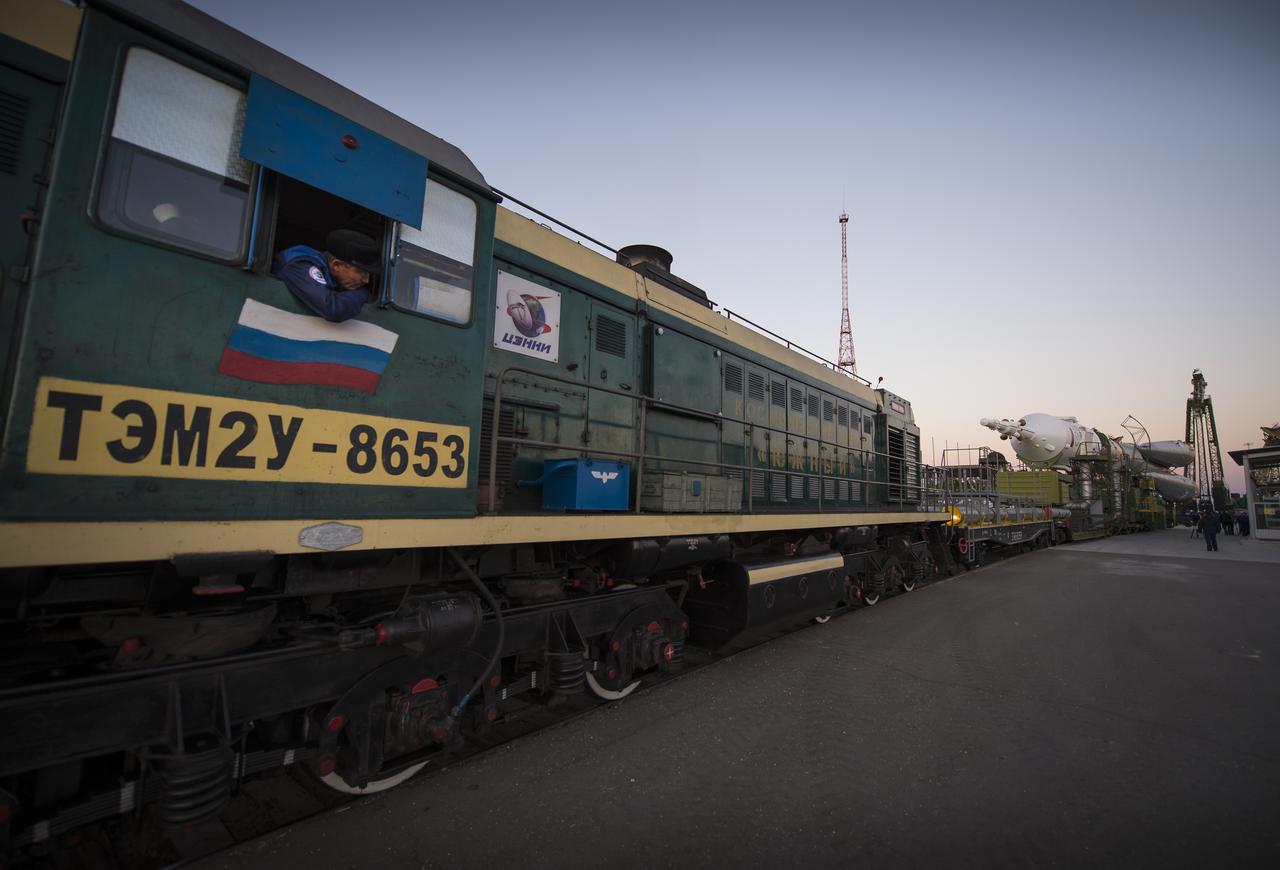
The Soyuz rocket is rolled out to the launch pad by train, on Sunday, October 21, 2012, at the Baikonur Cosmodrome in Kazakhstan. Launch of the Soyuz rocket is scheduled for October 23 and will send Expedition 33/34 Flight Engineer Kevin Ford of NASA, Soyuz Commander Oleg Novitskiy and Flight Engineer Evgeny Tarelkin of ROSCOSMOS on a five-month mission aboard the International Space Station. Photo Credit: (NASA/Bill Ingalls)
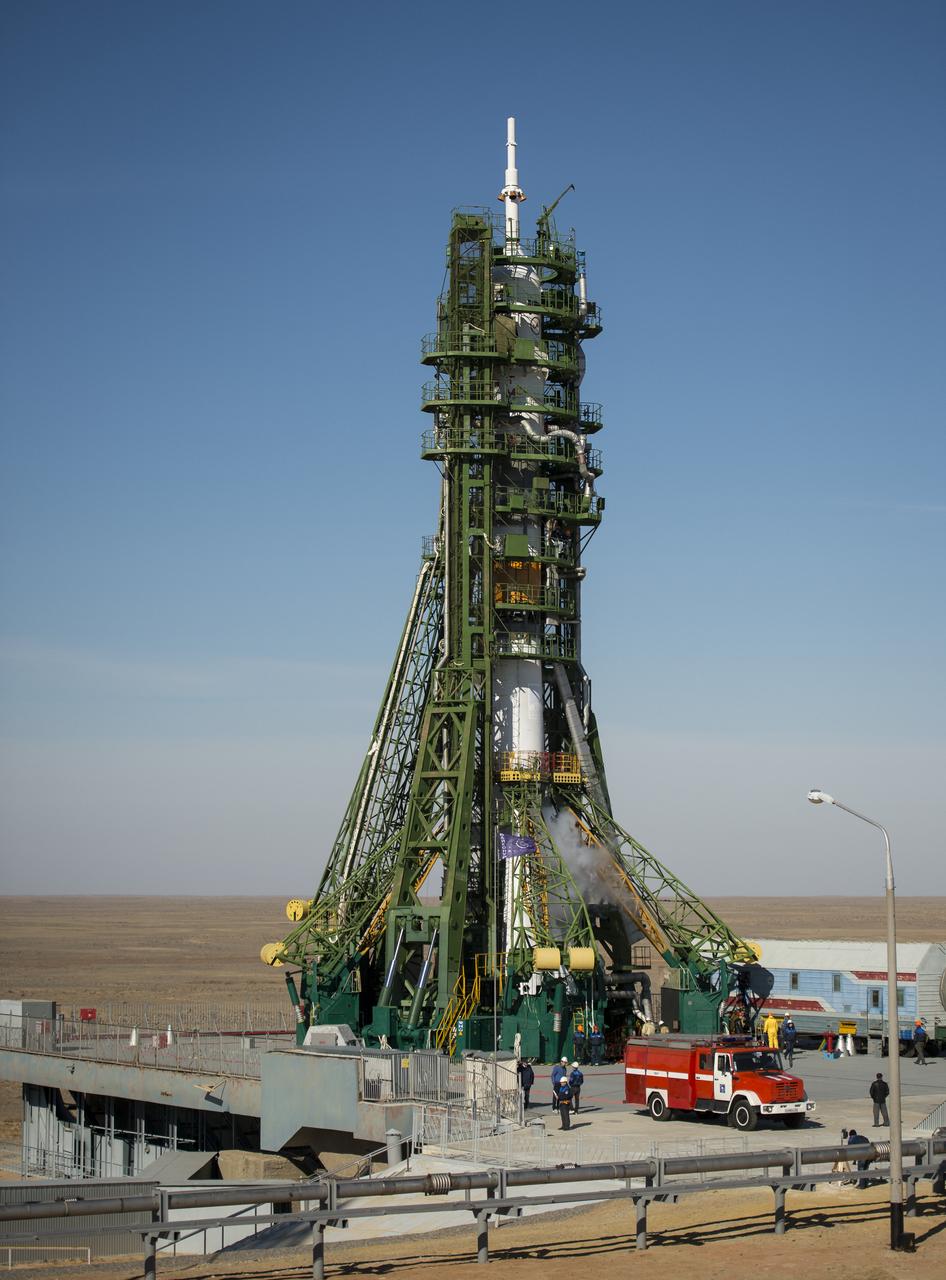
The Soyuz rocket is seen moments before Expedition 33/34 crew members, Soyuz Commander Oleg Novitskiy, Flight Engineer Kevin Ford, and Flight Engineer Evgeny Tarelkin arrive at the launch pad for their launch to the International Space Station on Tuesday, October 23, 2012, in Baikonur, Kazakhstan. Ford, Novitskiy and Tarelkin will be on a five-month mission aboard the International Space Station. Photo Credit: (NASA/Bill Ingalls)
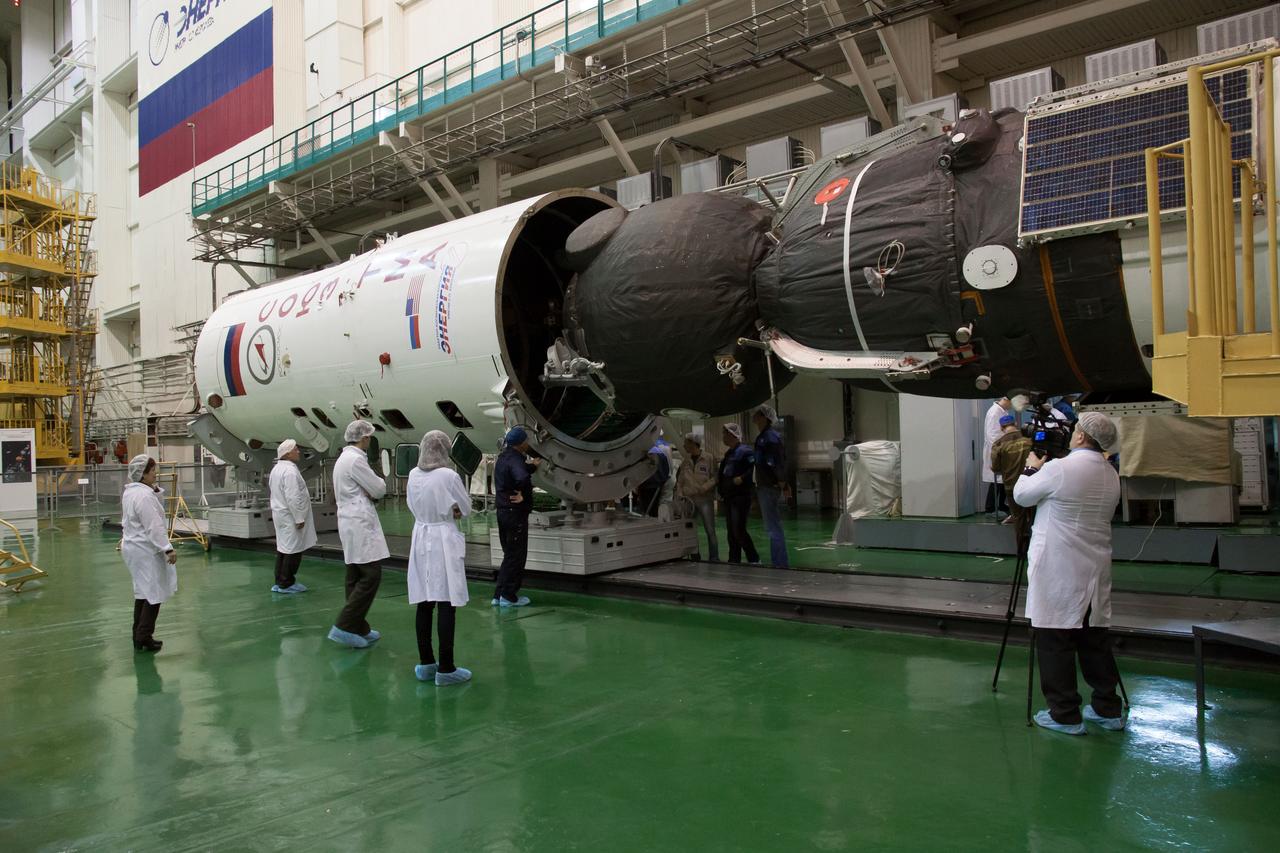
In the Integration Facility at the Baikonur Cosmodrome in Kazakhstan, the Soyuz TMA-07M spacecraft is encapsulated into the upper stage of the Soyuz booster Dec. 12, 2012 as preparations continue for the launch of the Expedition 34/35 crew. The vehicle will be rolled to the launch pad at Baikonur Dec. 17 in advance of the Dec. 19 launch of NASA Flight Engineer Tom Marshburn, Soyuz Commander Roman Romanenko and Flight Engineer Chris Hadfield of the Canadian Space Agency for a five-month mission on the International Space Station. Photo Credit: NASA/Victor Zelentsov
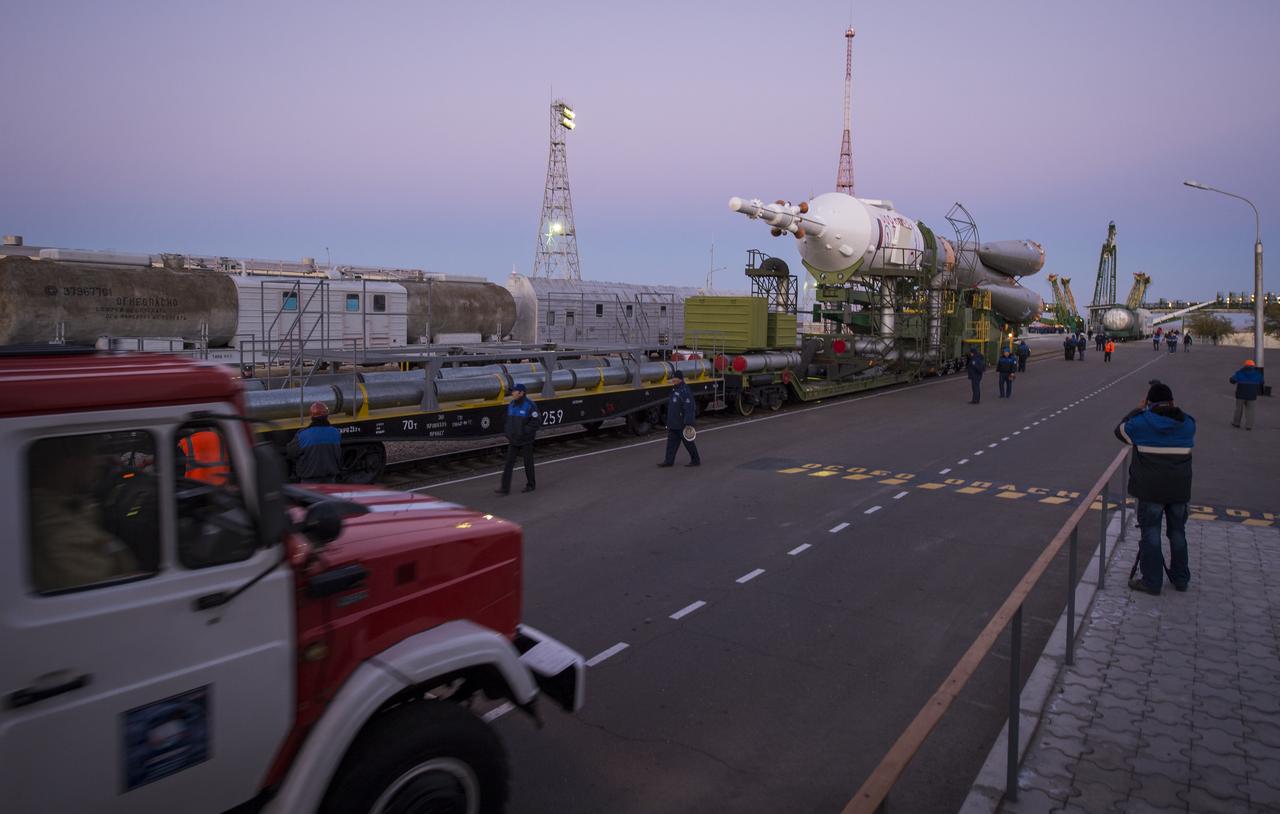
The Soyuz rocket is rolled out to the launch pad by train, on Sunday, October 21, 2012, at the Baikonur Cosmodrome in Kazakhstan. Launch of the Soyuz rocket is scheduled for October 23 and will send Expedition 33/34 Flight Engineer Kevin Ford of NASA, Soyuz Commander Oleg Novitskiy and Flight Engineer Evgeny Tarelkin of ROSCOSMOS on a five-month mission aboard the International Space Station. Photo Credit: (NASA/Bill Ingalls)