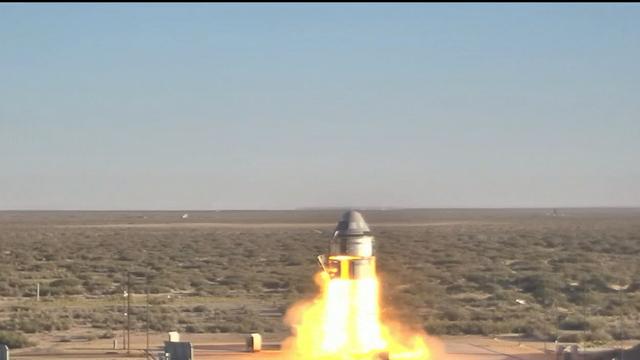
Boeing’s CST-100 Starliner’s four launch abort engines and several orbital maneuvering and attitude control thrusters ignite in the company’s Pad Abort Test, pushing the spacecraft away from the test stand with a combined 160,000 pounds of thrust, from Launch Complex 32 on White Sands Missile Range in New Mexico. The test, conducted Nov. 4, 2019, was designed to verify that each of Starliner’s systems will function not only separately, but in concert, to protect astronauts by carrying them safely away from the launch pad in the unlikely event of an emergency prior to liftoff. The Pad Abort Test is Boeing’s first test flight for NASA’s Commercial Crew Program, which is working to launch astronauts on American rockets and spacecraft from American soil for the first time since 2011.
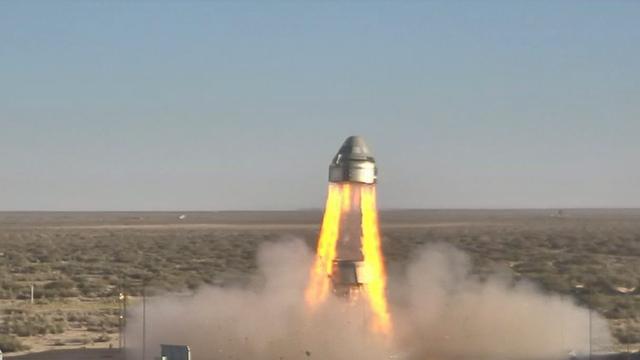
Boeing’s CST-100 Starliner’s four launch abort engines and several orbital maneuvering and attitude control thrusters ignite in the company’s Pad Abort Test, pushing the spacecraft away from the test stand with a combined 160,000 pounds of thrust, from Launch Complex 32 on White Sands Missile Range in New Mexico. The test, conducted Nov. 4, 2019, was designed to verify that each of Starliner’s systems will function not only separately, but in concert, to protect astronauts by carrying them safely away from the launch pad in the unlikely event of an emergency prior to liftoff. The Pad Abort Test is Boeing’s first test flight for NASA’s Commercial Crew Program, which is working to launch astronauts on American rockets and spacecraft from American soil for the first time since 2011.
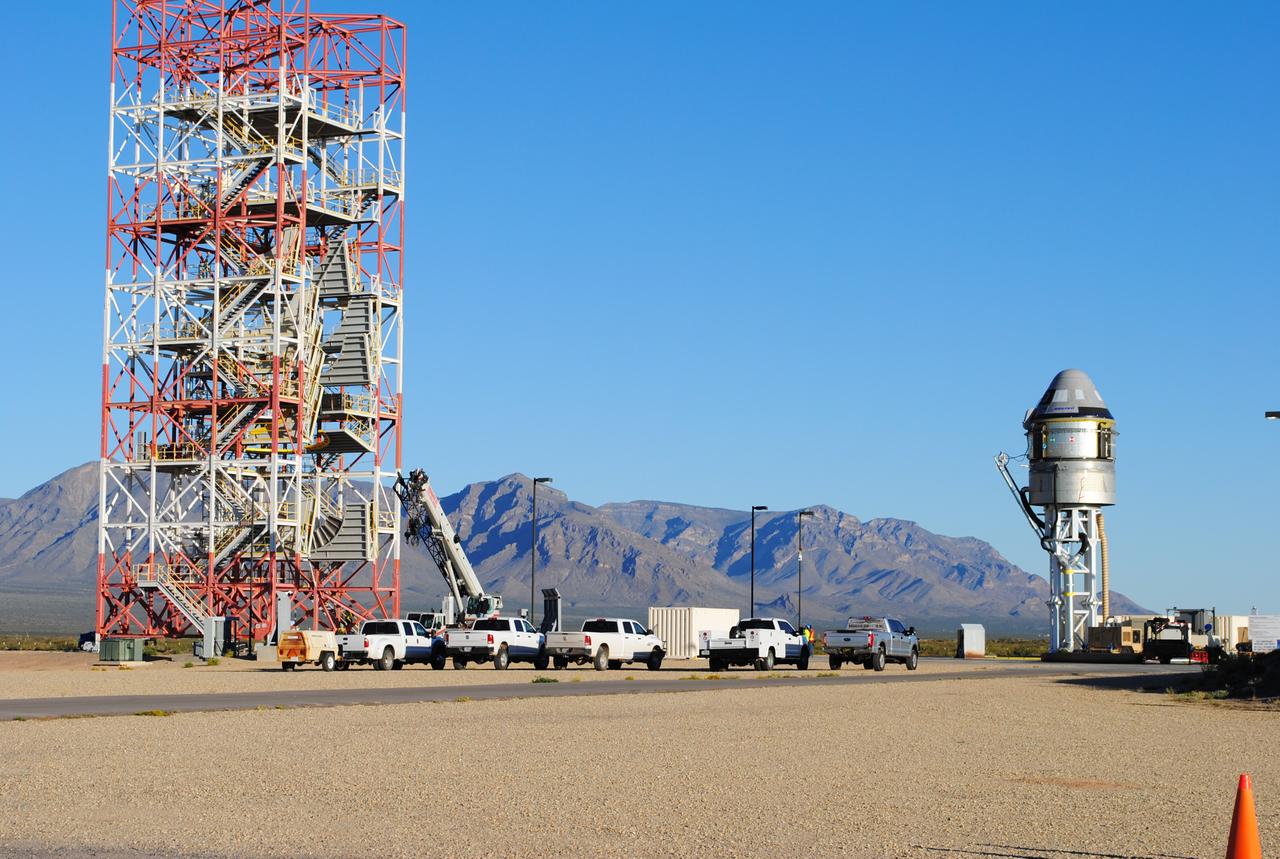
Boeing’s CST-100 Starliner spacecraft and its service module stand atop the test stand at Launch Complex 32, White Sands Missile Range, New Mexico, in preparation for the Pad Abort Test. Boeing’s Pad Abort Test is designed to verify that each of Starliner’s systems will function not only separately, but in concert, to protect astronauts by carrying them safely away from the launch pad in the unlikely event of an emergency prior to liftoff. This will be Boeing’s first flight test as part of NASA’s Commercial Crew Program. The Pad Abort Test is scheduled for Nov. 4, 2019.
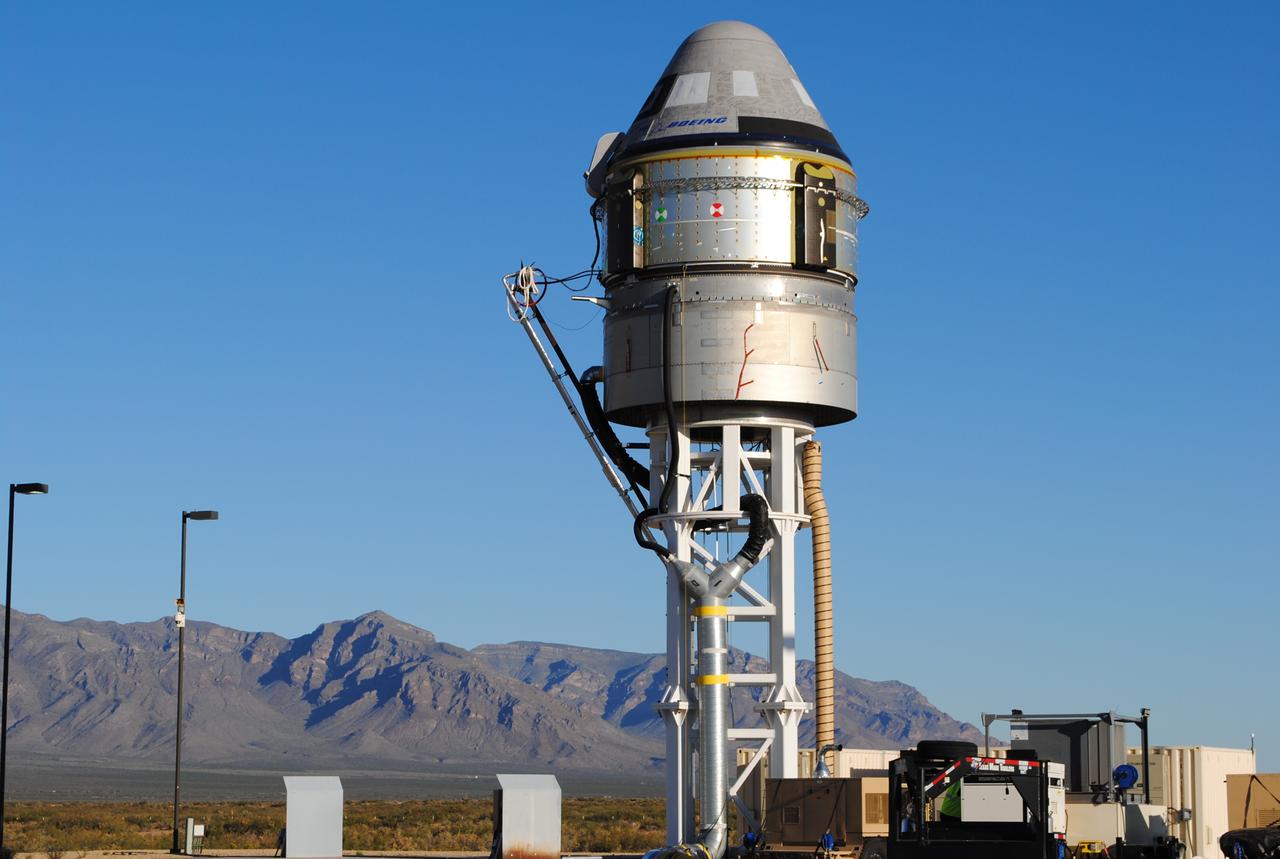
Boeing’s CST-100 Starliner spacecraft and its service module stand atop the test stand at Launch Complex 32, White Sands Missile Range, New Mexico, in preparation for the Pad Abort Test. Boeing’s Pad Abort Test is designed to verify that each of Starliner’s systems will function not only separately, but in concert, to protect astronauts by carrying them safely away from the launch pad in the unlikely event of an emergency prior to liftoff. This will be Boeing’s first flight test as part of NASA’s Commercial Crew Program. The Pad Abort Test is scheduled for Nov. 4, 2019.
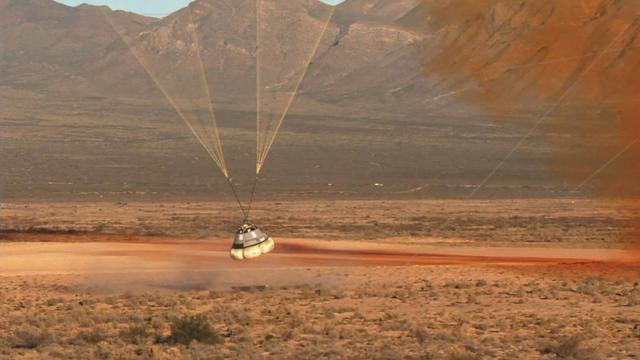
Boeing’s CST-100 Starliner’s airbags inflate in preparation for landing in the New Mexico desert in the company’s Pad Abort Test for NASA’s Commercial Crew Program. The test, conducted Nov. 4 at the White Sands Missile Range, was designed to verify that each of Starliner’s systems will function not only separately, but in concert, to protect astronauts by carrying them safely away from the launch pad in the unlikely event of an emergency prior to liftoff. This is Boeing’s first test flight for NASA’s Commercial Crew Program, which is working to launch astronauts on American rockets and spacecraft from American soil for the first time since 2011.
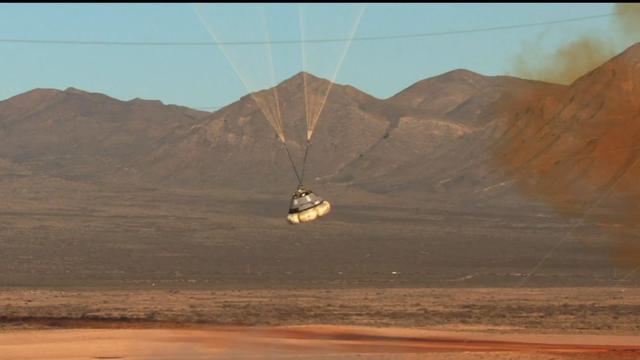
Boeing’s CST-100 Starliner’s airbags inflate in preparation for landing in the New Mexico desert in the company’s Pad Abort Test for NASA’s Commercial Crew Program. The test, conducted Nov. 4 at the White Sands Missile Range, was designed to verify that each of Starliner’s systems will function not only separately, but in concert, to protect astronauts by carrying them safely away from the launch pad in the unlikely event of an emergency prior to liftoff. This is Boeing’s first test flight for NASA’s Commercial Crew Program, which is working to launch astronauts on American rockets and spacecraft from American soil for the first time since 2011.
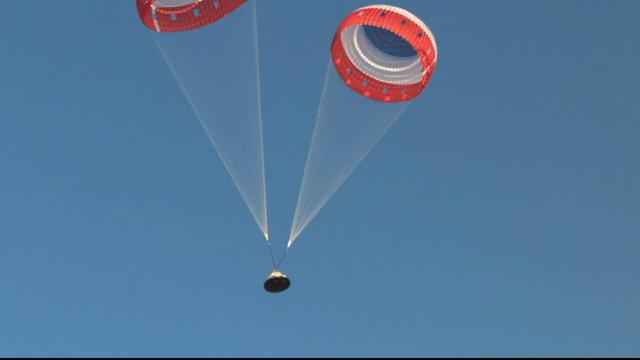
Parachutes deploy in in Boeing’s Pad Abort Test of its CST-100 Starliner spacecraft over the White Sands Missile Range in New Mexico, slowing the descent of the vehicle. The test, conducted Nov. 4, 2019, was designed to verify that each of Starliner’s systems will function not only separately, but in concert, to protect astronauts by carrying them safely away from the launch pad in the unlikely event of an emergency prior to liftoff. This is Boeing’s first test flight for NASA’s Commercial Crew Program, which is working to launch astronauts on American rockets and spacecraft from American soil for the first time since 2011.
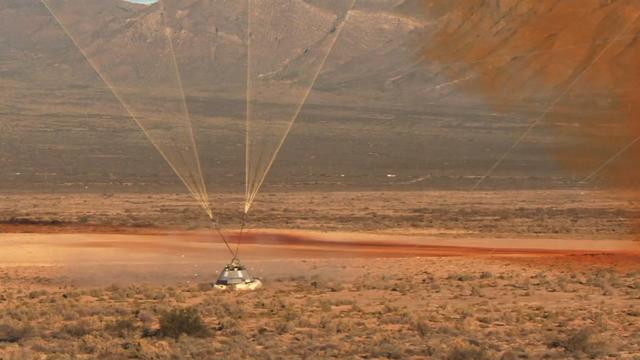
Boeing’s CST-100 Starliner lands in the New Mexico desert in the company’s Pad Abort Test for NASA’s Commercial Crew Program. The test, conducted Nov. 4 at the White Sands Missile Range, was designed to verify that each of Starliner’s systems will function not only separately, but in concert, to protect astronauts by carrying them safely away from the launch pad in the unlikely event of an emergency prior to liftoff. Starliner touched down on land approximately 90 seconds after the test began, about one mile from the test stand at Launch Complex 32. This is Boeing’s first test flight for NASA’s Commercial Crew Program, which is working to launch astronauts on American rockets and spacecraft from American soil for the first time since 2011.
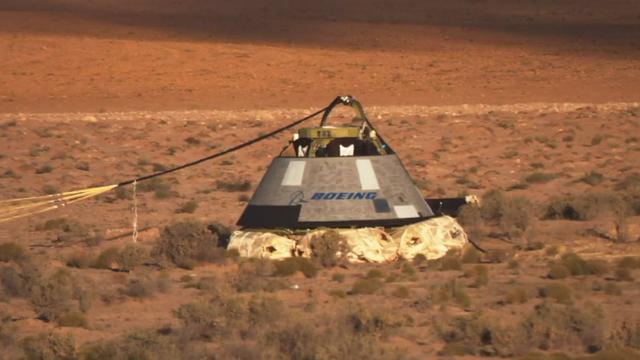
Boeing’s CST-100 Starliner lands in the New Mexico desert in the company’s Pad Abort Test for NASA’s Commercial Crew Program. The test, conducted Nov. 4 at the White Sands Missile Range, was designed to verify that each of Starliner’s systems will function not only separately, but in concert, to protect astronauts by carrying them safely away from the launch pad in the unlikely event of an emergency prior to liftoff. Starliner touched down on land approximately 90 seconds after the test began, about one mile from the test stand at Launch Complex 32. This is Boeing’s first test flight for NASA’s Commercial Crew Program, which is working to launch astronauts on American rockets and spacecraft from American soil for the first time since 2011.
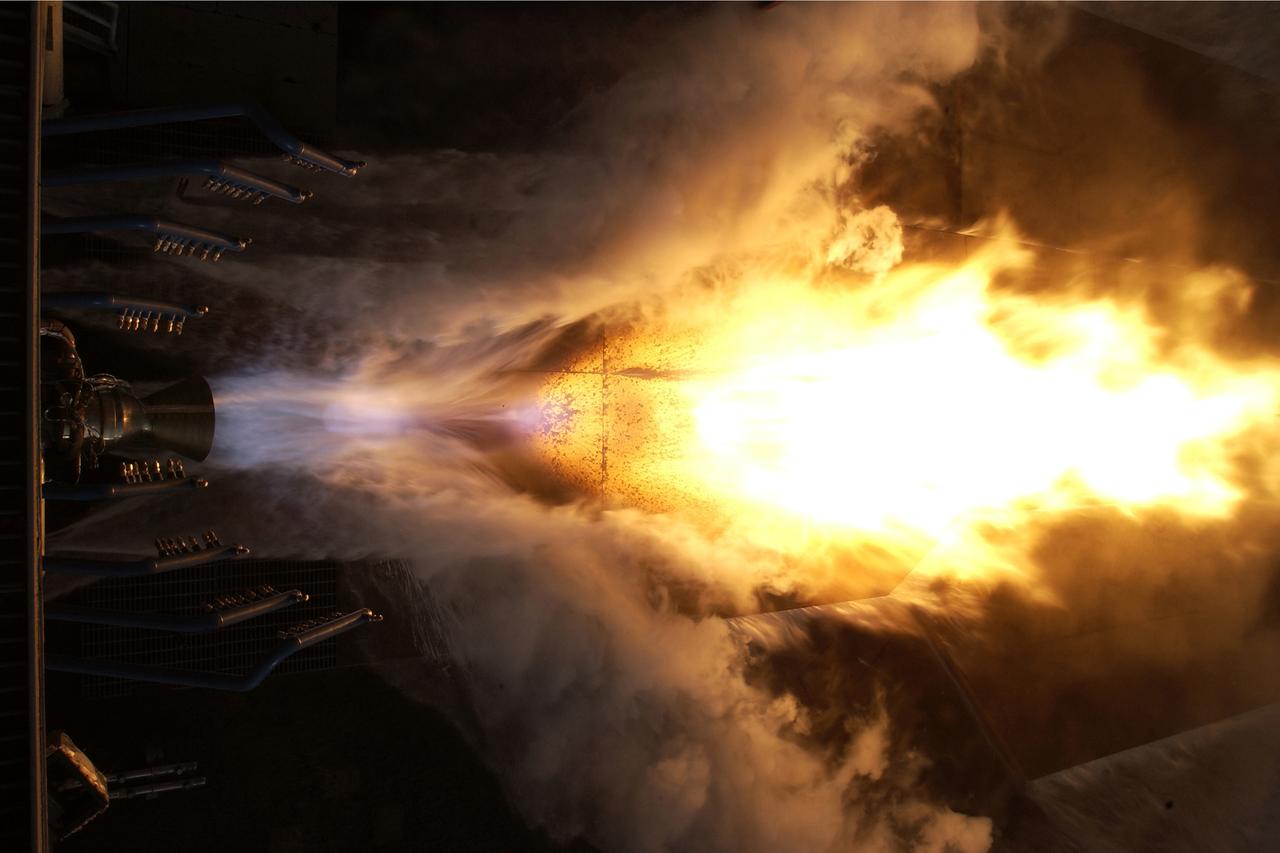
This photo gives an overhead look at an RS-88 development rocket engine being test fired at NASA's Marshall Space Flight Center in Huntsville, Alabama, in support of the Pad Abort Demonstration (PAD) test flights for NASA's Orbital Space Plane (OSP). The tests could be instrumental in developing the first crew launch escape system in almost 30 years. Paving the way for a series of integrated PAD test flights, the engine tests support development of a system that could pull a crew safely away from danger during liftoff. A series of 16 hot fire tests of a 50,000-pound thrust RS-88 rocket engine were conducted, resulting in a total of 55 seconds of successful engine operation. The engine is being developed by the Rocketdyne Propulsion and Power unit of the Boeing Company. Integrated launch abort demonstration tests in 2005 will use four RS-88 engines to separate a test vehicle from a test platform, simulating pulling a crewed vehicle away from an aborted launch. Four 156-foot parachutes will deploy and carry the vehicle to landing. Lockheed Martin is building the vehicles for the PAD tests. Seven integrated tests are plarned for 2005 and 2006.
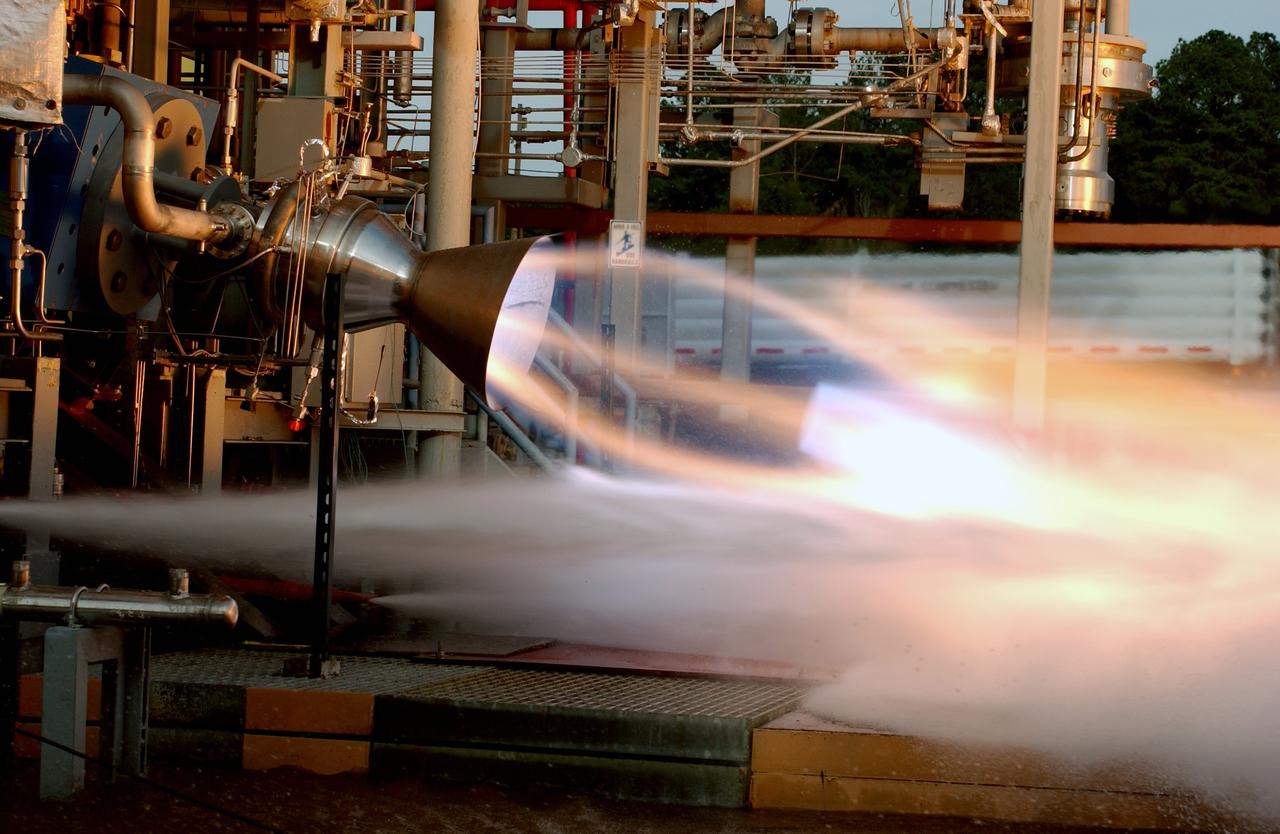
In this photo, an RS-88 development rocket engine is being test fired at NASA's Marshall Space Flight Center in Huntsville, Alabama, in support of the Pad Abort Demonstration (PAD) test flights for NASA's Orbital Space Plane (OSP). The tests could be instrumental in developing the first crew launch escape system in almost 30 years. Paving the way for a series of integrated PAD test flights, the engine tests support development of a system that could pull a crew safely away from danger during liftoff. A series of 16 hot fire tests of a 50,000-pound thrust RS-88 rocket engine were conducted, resulting in a total of 55 seconds of successful engine operation. The engine is being developed by the Rocketdyne Propulsion and Power unit of the Boeing Company. Integrated launch abort demonstration tests in 2005 will use four RS-88 engines to separate a test vehicle from a test platform, simulating pulling a crewed vehicle away from an aborted launch. Four 156-foot parachutes will deploy and carry the vehicle to landing. Lockheed Martin is building the vehicles for the PAD tests. Seven integrated tests are plarned for 2005 and 2006.
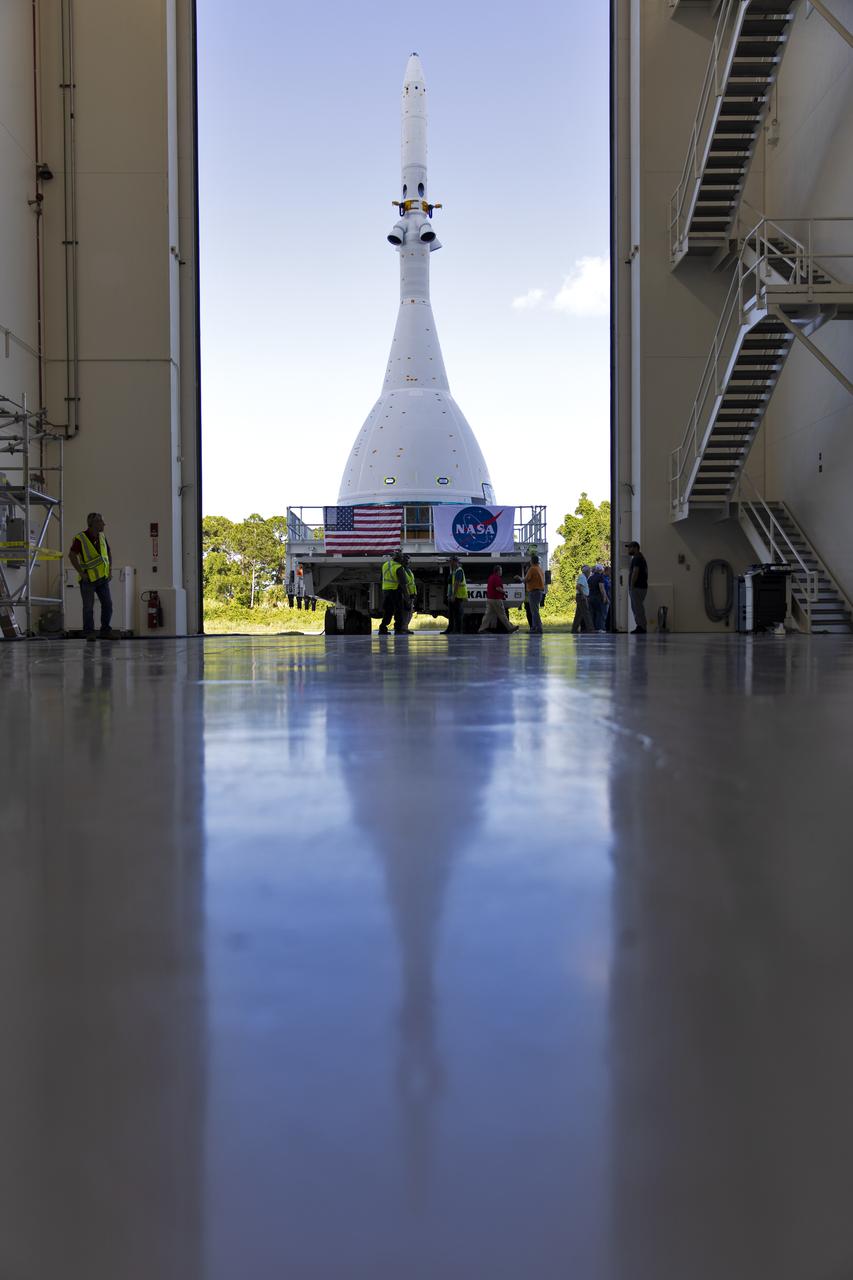
The test version of Orion attached to the Launch Abort System for the Ascent Abort-2 (AA-2) flight test exits the Launch Abort System Facility at NASA’s Kennedy Space Center in Florida on May 22, 2019. The flight test article will make the 21.5 mile trek to Space Launch Complex 46 at Cape Canaveral Air Force Station in preparation for its launch this summer. During AA-2, a test version of Orion will launch on a booster to more than six miles in altitude, where Orion’s launch abort system will pull the capsule and its crew away to safety if an emergency occurs during ascent on the Space Launch System rocket. The AA-2 elements will be stacked together at the launch pad over the next several weeks. The launch is planned for July 2 and is a critical safety test that helps pave the way for Artemis missions near the Moon, and will enable astronauts to set foot on the lunar surface by 2024.
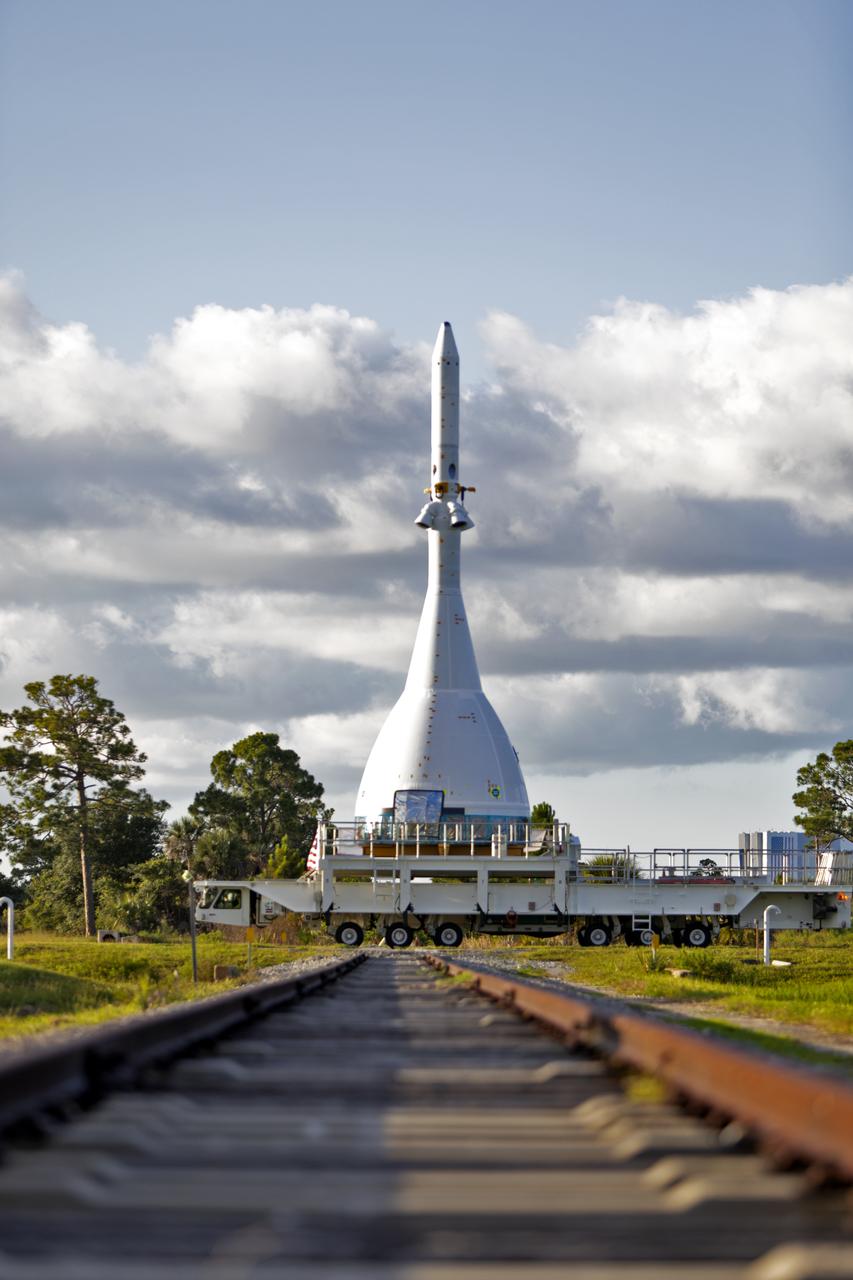
After exiting the Launch Abort System Facility at NASA’s Kennedy Space Center in Florida on May 22, 2019, the test version of Orion attached to the Launch Abort System for the Ascent Abort-2 (AA-2) flight test is moved on a transport along the 21.5 mile trek to Space Launch Complex 46 at Cape Canaveral Air Force Station in preparation for its launch this summer. During AA-2, a test version of Orion will launch on a booster to more than six miles in altitude, where Orion’s launch abort system will pull the capsule and its crew away to safety if an emergency occurs during ascent on the Space Launch System rocket. The AA-2 elements will be stacked together at the launch pad over the next several weeks. The launch is planned for July 2 and is a critical safety test that helps pave the way for Artemis missions near the Moon, and will enable astronauts to set foot on the lunar surface by 2024.
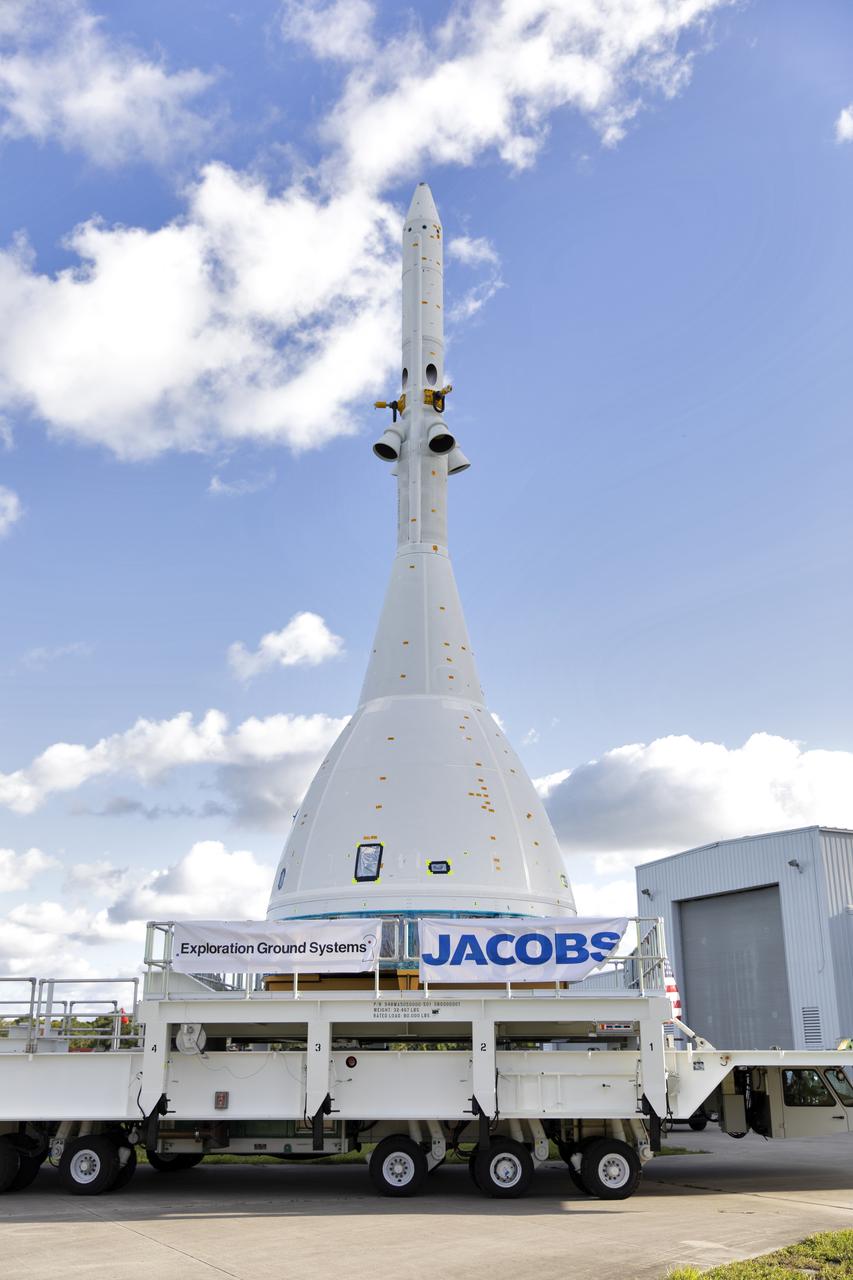
The test version of Orion attached to the Launch Abort System for the Ascent Abort-2 (AA-2) flight test exited the Launch Abort System Facility at NASA’s Kennedy Space Center in Florida on May 22, 2019. The flight test article will make the 21.5 mile trek to Space Launch Complex 46 at Cape Canaveral Air Force Station in preparation for its launch this summer. During AA-2, a test version of Orion will launch on a booster to more than six miles in altitude, where Orion’s launch abort system will pull the capsule and its crew away to safety if an emergency occurs during ascent on the Space Launch System rocket. The AA-2 elements will be stacked together at the launch pad over the next several weeks. The launch is planned for July 2 and is a critical safety test that helps pave the way for Artemis missions near the Moon, and will enable astronauts to set foot on the lunar surface by 2024.
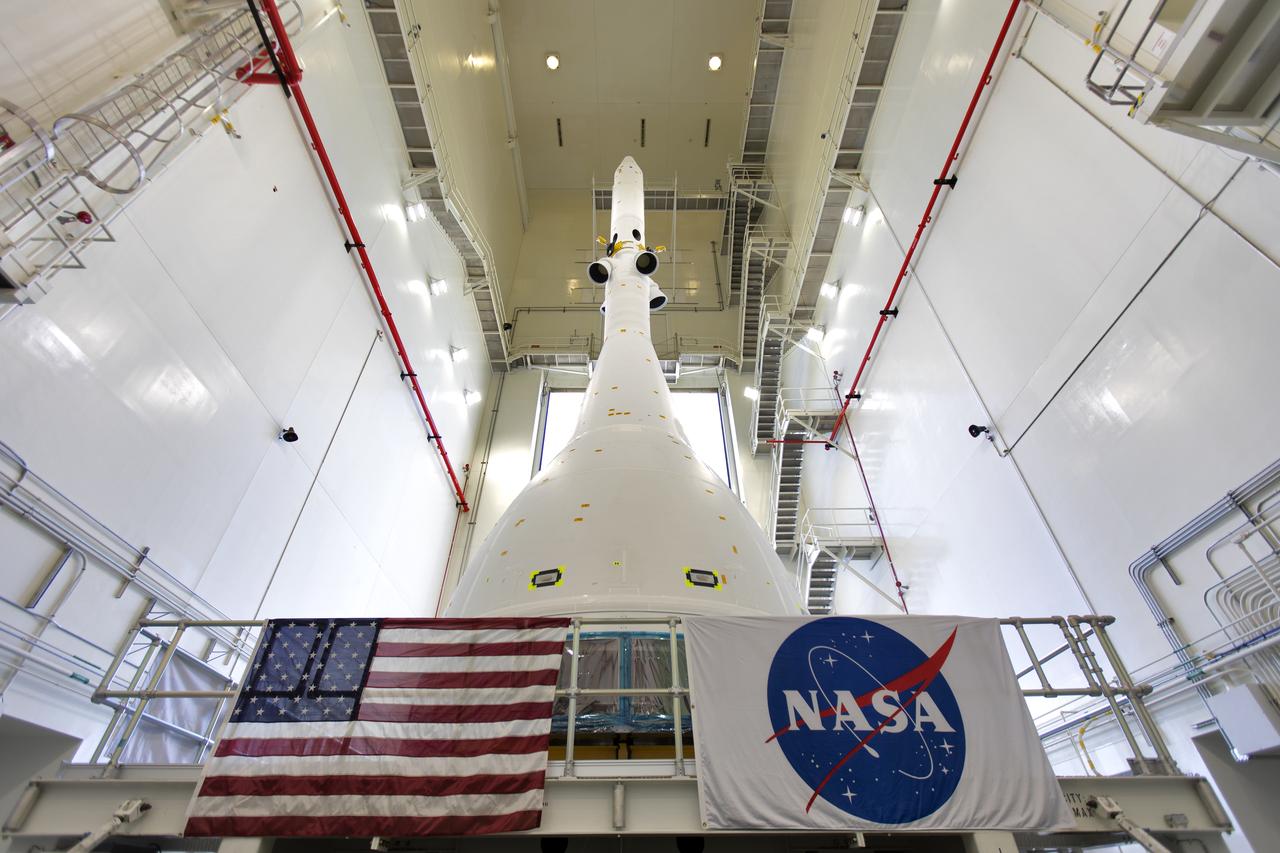
The test version of Orion attached to the Launch Abort System for the Ascent Abort-2 (AA-2) flight test exits the Launch Abort System Facility at NASA’s Kennedy Space Center in Florida on May 22, 2019. The flight test article will make the 21.5 mile trek to Space Launch Complex 46 at Cape Canaveral Air Force Station in preparation for its launch this summer. During AA-2, a test version of Orion will launch on a booster to more than six miles in altitude, where Orion’s launch abort system will pull the capsule and its crew away to safety if an emergency occurs during ascent on the Space Launch System rocket. The AA-2 elements will be stacked together at the launch pad over the next several weeks. The launch is planned for July 2 and is a critical safety test that helps pave the way for Artemis missions near the Moon, and will enable astronauts to set foot on the lunar surface by 2024.
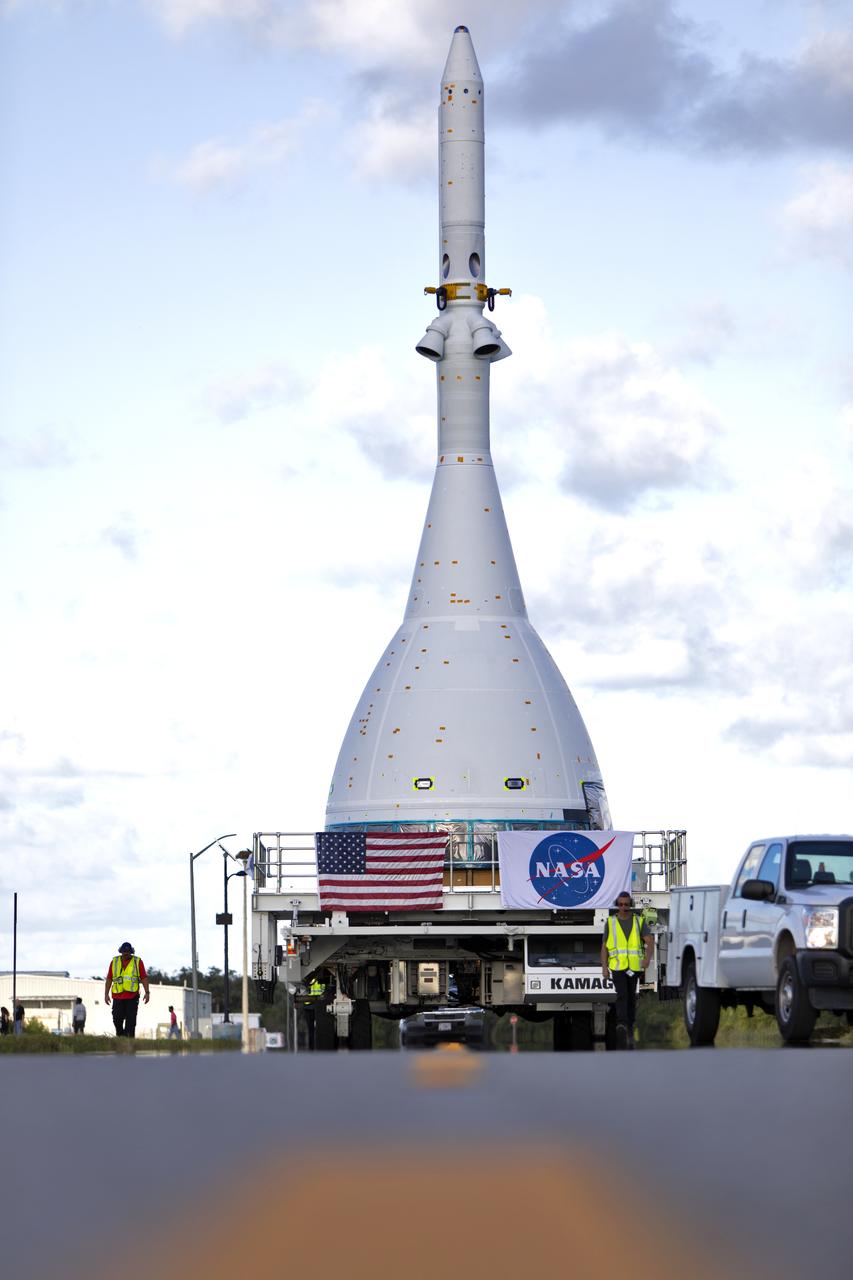
The test version of Orion attached to the Launch Abort System for the Ascent Abort-2 (AA-2) flight test exited the Launch Abort System Facility at NASA’s Kennedy Space Center in Florida on May 22, 2019. The flight test article will make the 21.5 mile trek to Space Launch Complex 46 at Cape Canaveral Air Force Station in preparation for its launch this summer. During AA-2, a test version of Orion will launch on a booster to more than six miles in altitude, where Orion’s launch abort system will pull the capsule and its crew away to safety if an emergency occurs during ascent on the Space Launch System rocket. The AA-2 elements will be stacked together at the launch pad over the next several weeks. The launch is planned for July 2 and is a critical safety test that helps pave the way for Artemis missions near the Moon, and will enable astronauts to set foot on the lunar surface by 2024.
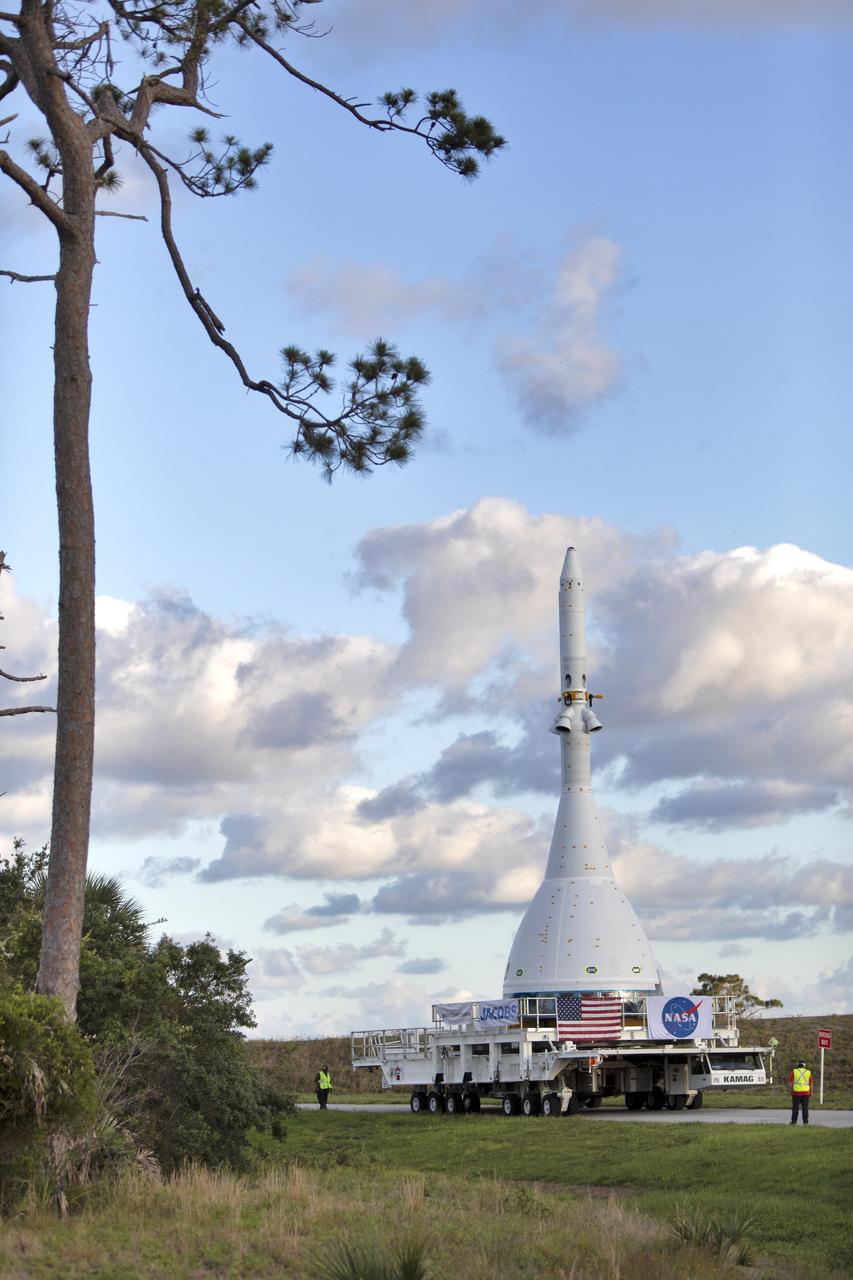
After exiting the Launch Abort System Facility at NASA’s Kennedy Space Center in Florida on May 22, 2019, the test version of Orion attached to the Launch Abort System for the Ascent Abort-2 (AA-2) flight test is moved on a transport along the 21.5 mile trek to Space Launch Complex 46 at Cape Canaveral Air Force Station in preparation for its launch this summer. During AA-2, a test version of Orion will launch on a booster to more than six miles in altitude, where Orion’s launch abort system will pull the capsule and its crew away to safety if an emergency occurs during ascent on the Space Launch System rocket. The AA-2 elements will be stacked together at the launch pad over the next several weeks. The launch is planned for July 2 and is a critical safety test that helps pave the way for Artemis missions near the Moon, and will enable astronauts to set foot on the lunar surface by 2024.
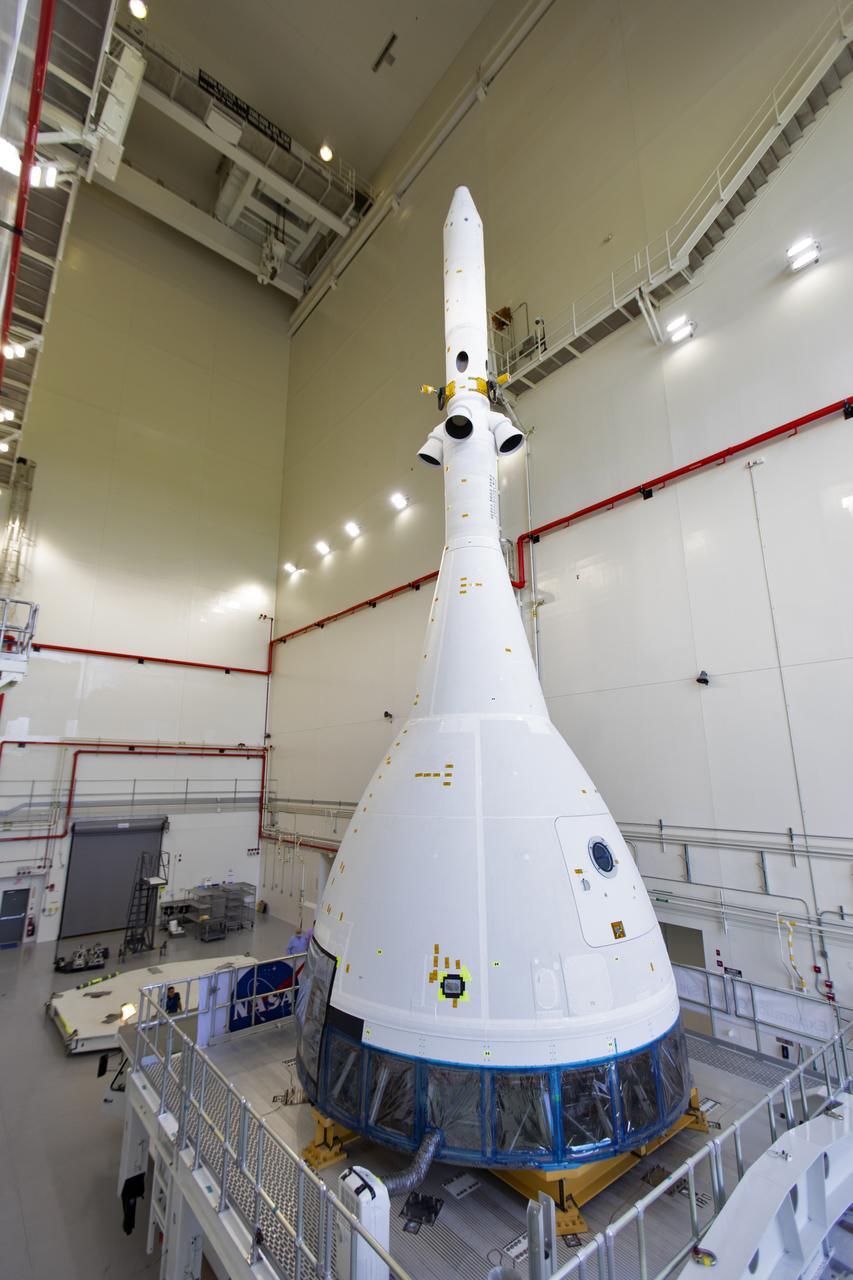
The test version of Orion attached to the Launch Abort System for the Ascent Abort-2 (AA-2) flight test is ready to exit the Launch Abort System Facility at NASA’s Kennedy Space Center in Florida on May 22, 2019. The flight test article will make the 21.5 mile trek to Space Launch Complex 46 at Cape Canaveral Air Force Station in preparation for its launch this summer. During AA-2, a test version of Orion will launch on a booster to more than six miles in altitude, where Orion’s launch abort system will pull the capsule and its crew away to safety if an emergency occurs during ascent on the Space Launch System rocket. The AA-2 elements will be stacked together at the launch pad over the next several weeks. The launch is planned for July 2 and is a critical safety test that helps pave the way for Artemis missions near the Moon, and will enable astronauts to set foot on the lunar surface by 2024.
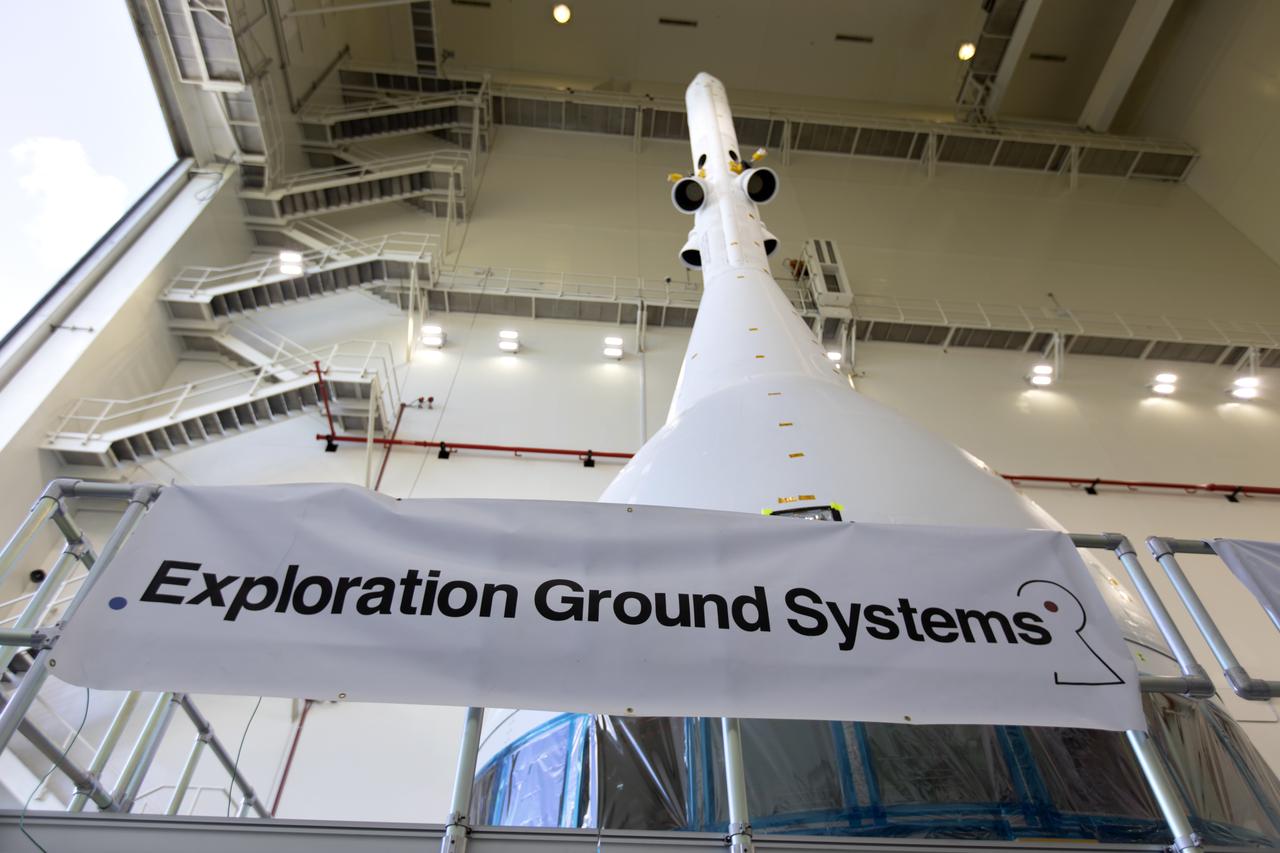
The test version of Orion attached to the Launch Abort System for the Ascent Abort-2 (AA-2) flight test exits the Launch Abort System Facility at NASA’s Kennedy Space Center in Florida on May 22, 2019. The flight test article will make the 21.5 mile trek to Space Launch Complex 46 at Cape Canaveral Air Force Station in preparation for its launch this summer. During AA-2, a test version of Orion will launch on a booster to more than six miles in altitude, where Orion’s launch abort system will pull the capsule and its crew away to safety if an emergency occurs during ascent on the Space Launch System rocket. The AA-2 elements will be stacked together at the launch pad over the next several weeks. The launch is planned for July 2 and is a critical safety test that helps pave the way for Artemis missions near the Moon, and will enable astronauts to set foot on the lunar surface by 2024.

The test version of Orion attached to the Launch Abort System for the Ascent Abort-2 (AA-2) flight test exits the Launch Abort System Facility at NASA’s Kennedy Space Center in Florida on May 22, 2019. The flight test article will make the 21.5 mile trek to Space Launch Complex 46 at Cape Canaveral Air Force Station in preparation for its launch this summer. During AA-2, a test version of Orion will launch on a booster to more than six miles in altitude, where Orion’s launch abort system will pull the capsule and its crew away to safety if an emergency occurs during ascent on the Space Launch System rocket. The AA-2 elements will be stacked together at the launch pad over the next several weeks. The launch is planned for July 2 and is a critical safety test that helps pave the way for Artemis missions near the Moon, and will enable astronauts to set foot on the lunar surface by 2024.
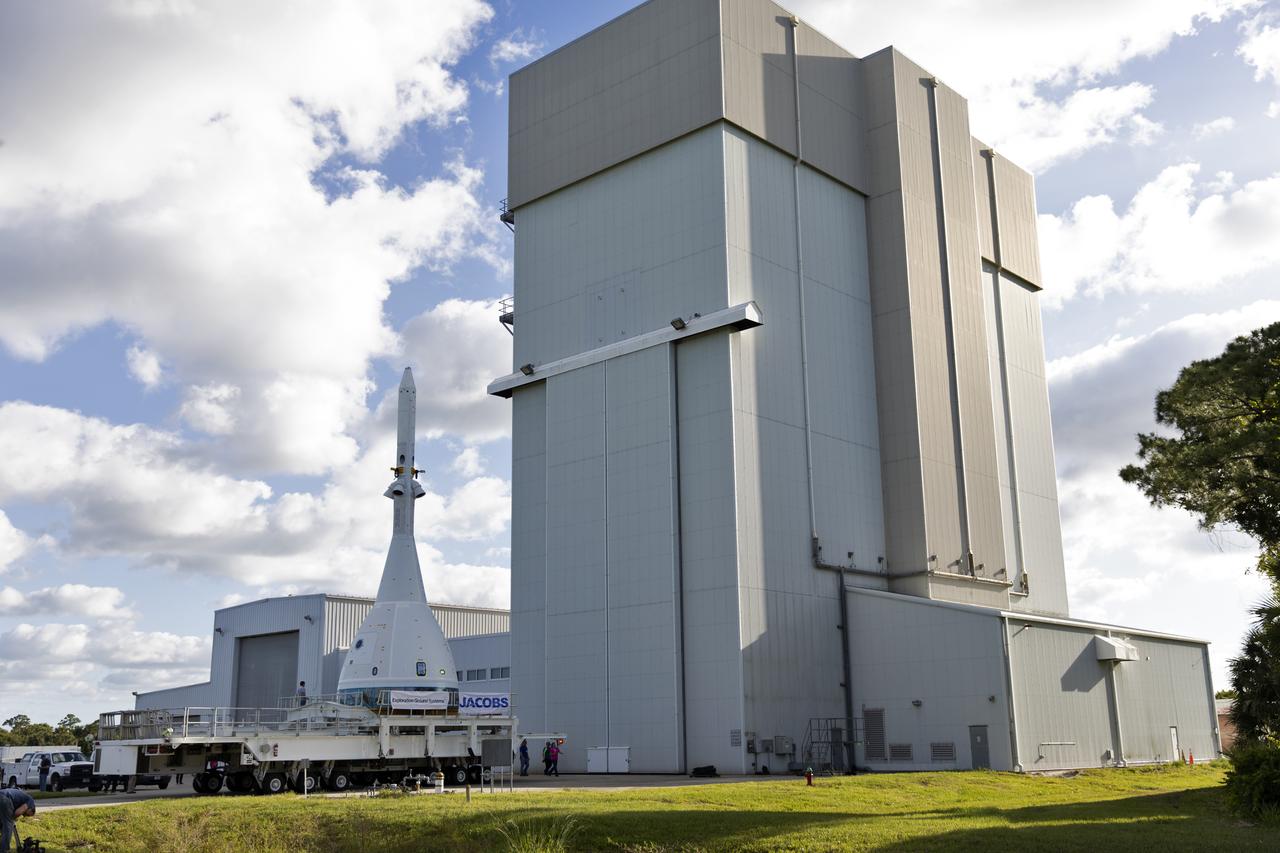
The vehicle for Orion’s Ascent Abort-2 (AA-2) flight test exits the Launch Abort System Facility at NASA’s Kennedy Space Center in Florida on May 22, 2019. The flight test article will make the 21.5 mile trek to Space Launch Complex 46 at Cape Canaveral Air Force Station in preparation for its launch this summer. During AA-2, a test version of Orion will launch on a booster to more than six miles in altitude, where Orion’s launch abort system will pull the capsule away to demonstrate it can keep a future crew inside safe if an emergency occurs during ascent on the Space Launch System rocket. The AA-2 elements will be stacked together at the launch pad over the next several weeks. The launch is planned for July 2 and is a critical safety test that helps pave the way for Artemis missions near the Moon, and will enable astronauts to set foot on the lunar surface by 2024.
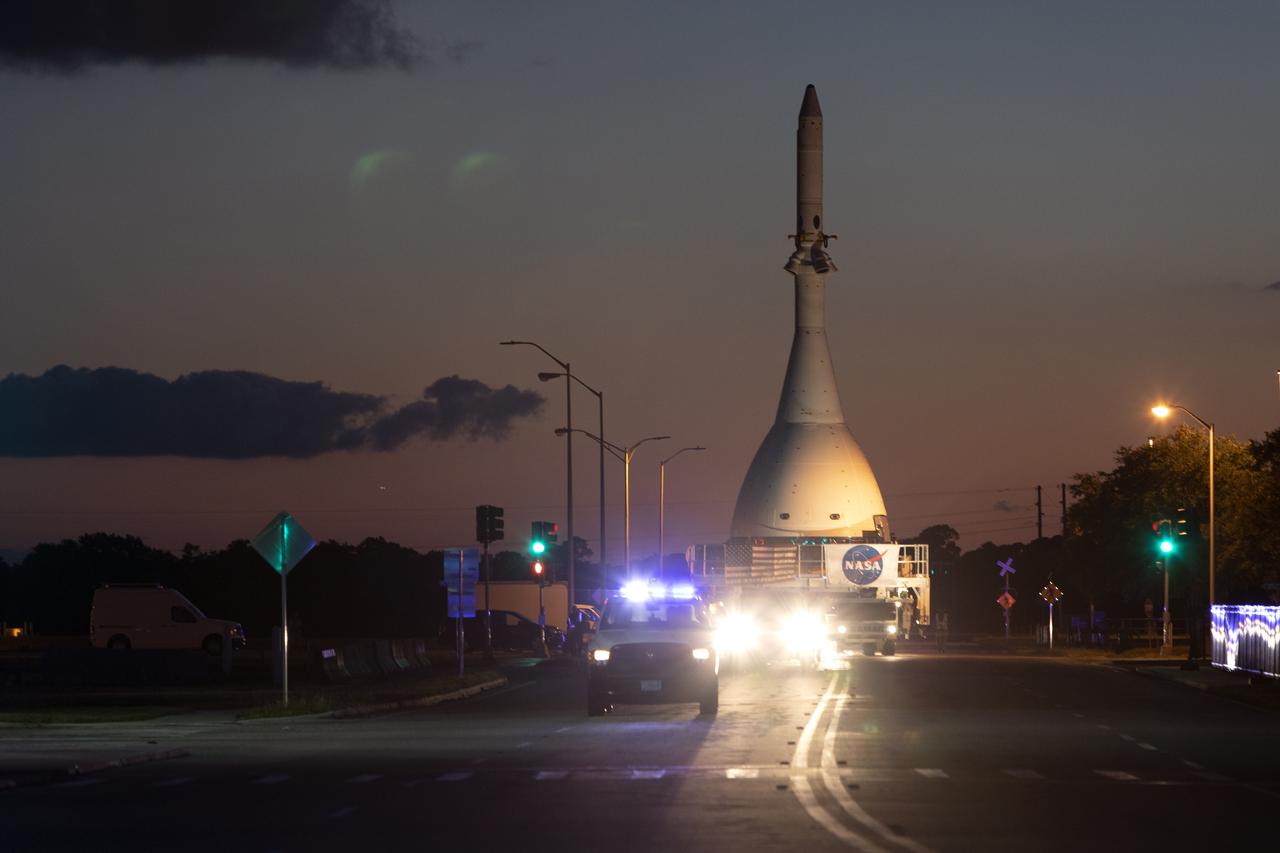
The test version of Orion attached to the Launch Abort System for the Ascent Abort-2 (AA-2) flight test is moved on a transport at NASA’s Kennedy Space Center in Florida on May 22, 2019, along the 21.5 mile trek to Space Launch Complex 46 at Cape Canaveral Air Force Station in preparation for its launch this summer. In the background is the iconic Vehicle Assembly Building. During AA-2, a test version of Orion will launch on a booster to more than six miles in altitude, where Orion’s launch abort system will pull the capsule and its crew away to safety if an emergency occurs during ascent on the Space Launch System rocket. The AA-2 elements will be stacked together at the launch pad over the next several weeks. The launch is planned for July 2 and is a critical safety test that helps pave the way for Artemis missions near the Moon, and will enable astronauts to set foot on the lunar surface by 2024.
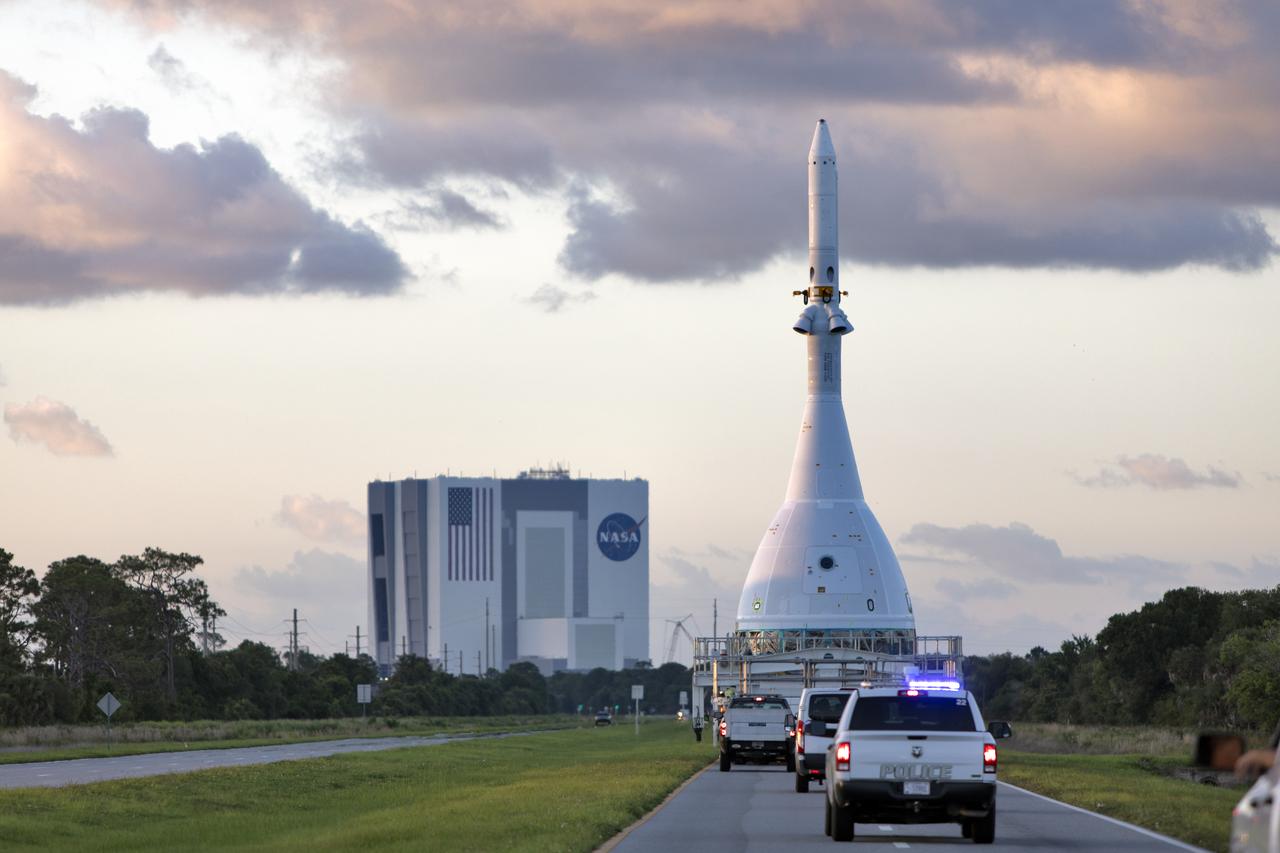
The test version of Orion attached to the Launch Abort System for the Ascent Abort-2 (AA-2) flight test is moved on a transport at NASA’s Kennedy Space Center in Florida on May 22, 2019, along the 21.5 mile trek to Space Launch Complex 46 at Cape Canaveral Air Force Station in preparation for its launch this summer. In the background is the iconic Vehicle Assembly Building. During AA-2, a test version of Orion will launch on a booster to more than six miles in altitude, where Orion’s launch abort system will pull the capsule and its crew away to safety if an emergency occurs during ascent on the Space Launch System rocket. The AA-2 elements will be stacked together at the launch pad over the next several weeks. The launch is planned for July 2 and is a critical safety test that helps pave the way for Artemis missions near the Moon, and will enable astronauts to set foot on the lunar surface by 2024.
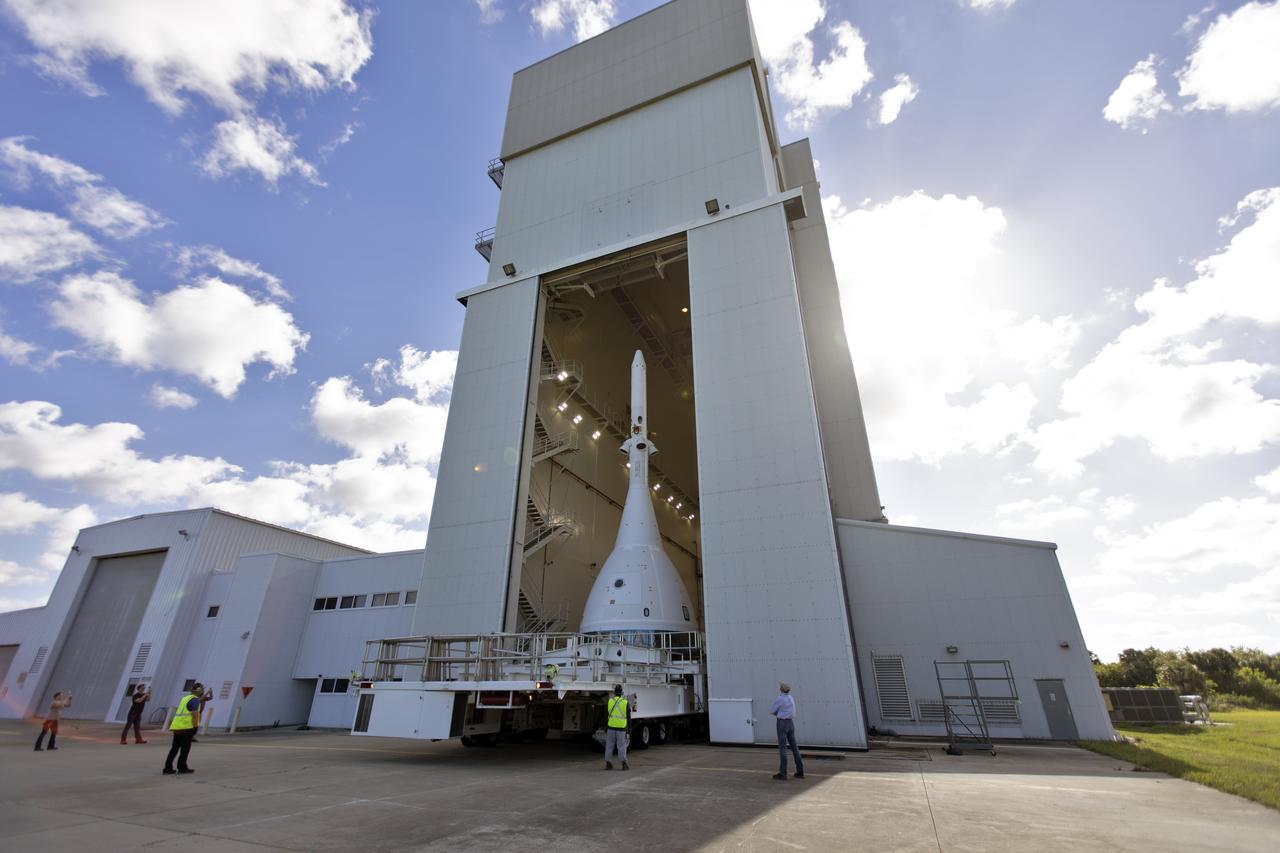
The vehicle for Orion’s Ascent Abort-2 (AA-2) flight test exits the Launch Abort System Facility at NASA’s Kennedy Space Center in Florida on May 22, 2019. The flight test article will make the 21.5 mile trek to Space Launch Complex 46 at Cape Canaveral Air Force Station in preparation for its launch this summer. During AA-2, a test version of Orion will launch on a booster to more than six miles in altitude, where Orion’s launch abort system will pull the capsule away to demonstrate it can keep a future crew inside safe if an emergency occurs during ascent on the Space Launch System rocket. The AA-2 elements will be stacked together at the launch pad over the next several weeks. The launch is planned for July 2 and is a critical safety test that helps pave the way for Artemis missions near the Moon, and will enable astronauts to set foot on the lunar surface by 2024.

MARVIN BARNES, NASA MSFC ER52 SOLID PROPULSION, SEPARATION AND MANEUVERING SYSTEMS BRANCH, INSPECTS POST-FLIGHT ORION LAUNCH ABORT SYSTEM (LAS) PAD ABORT 1 (PA-1) HARDWARE
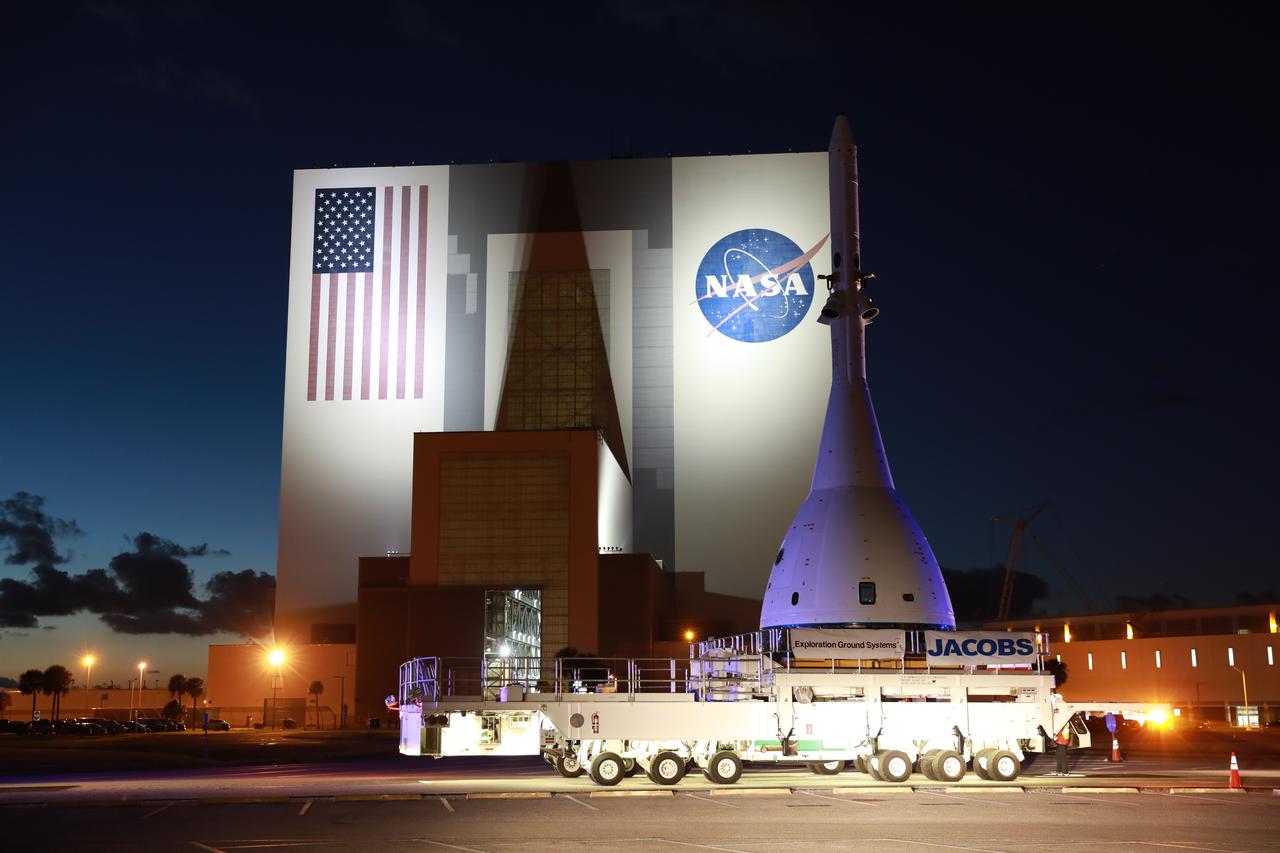
The vehicle for Orion’s Ascent Abort-2 (AA-2) fight test passes by the Vehicle Assembly Building at NASA’s Kennedy Space Center in Florida on its 21.5-mile-trek to Space Launch Complex 46 at Cape Canaveral Air Force Station on May 22, 2019. During AA-2, a test version of Orion will launch on a booster to more than six miles in altitude, where Orion’s launch abort system will pull the capsule away to demonstrate it can keep a future crew inside safe if an emergency occurs during ascent on the Space Launch System rocket. The AA-2 elements will be stacked together at the launch pad over the next several weeks. The launch is planned for July 2 and is a critical safety test that helps pave the way for Artemis missions near the Moon, and will enable astronauts to set foot on the lunar surface by 2024.
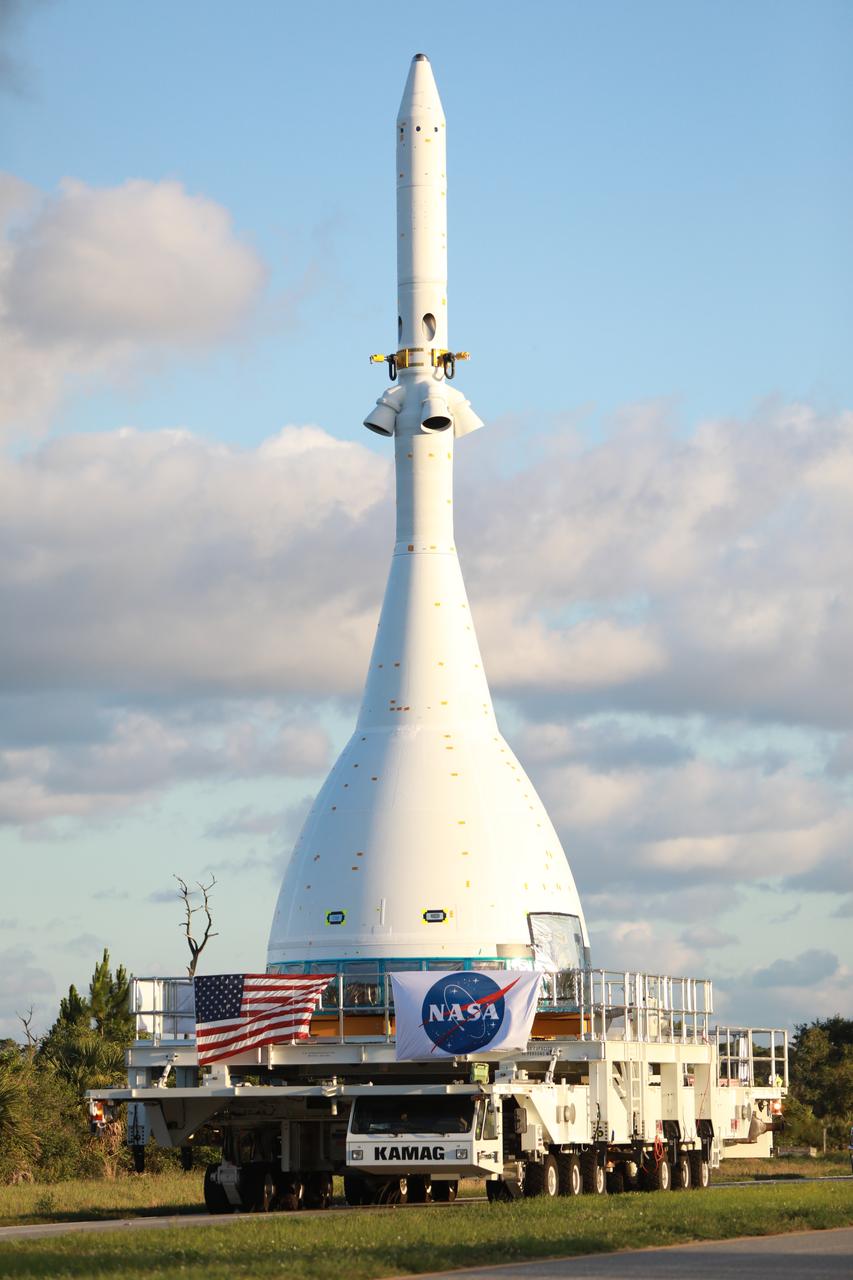
The vehicle for Orion’s Ascent Abort-2 (AA-2) flight test is moved along a route from NASA’s Kennedy Space Center in Florida, to Space Launch Complex 46 at Cape Canaveral Air Force Station on May 22, 2019, in preparation for its launch this summer. During AA-2, a test version of Orion will launch on a booster to more than six miles in altitude, where Orion’s launch abort system will pull the capsule away to demonstrate it can keep a future crew inside safe if an emergency occurs during ascent on the Space Launch System rocket. The AA-2 elements will be stacked together at the launch pad over the next several weeks. The launch is planned for July 2 and is a critical safety test that helps pave the way for Artemis missions near the Moon, and will enable astronauts to set foot on the lunar surface by 2024.
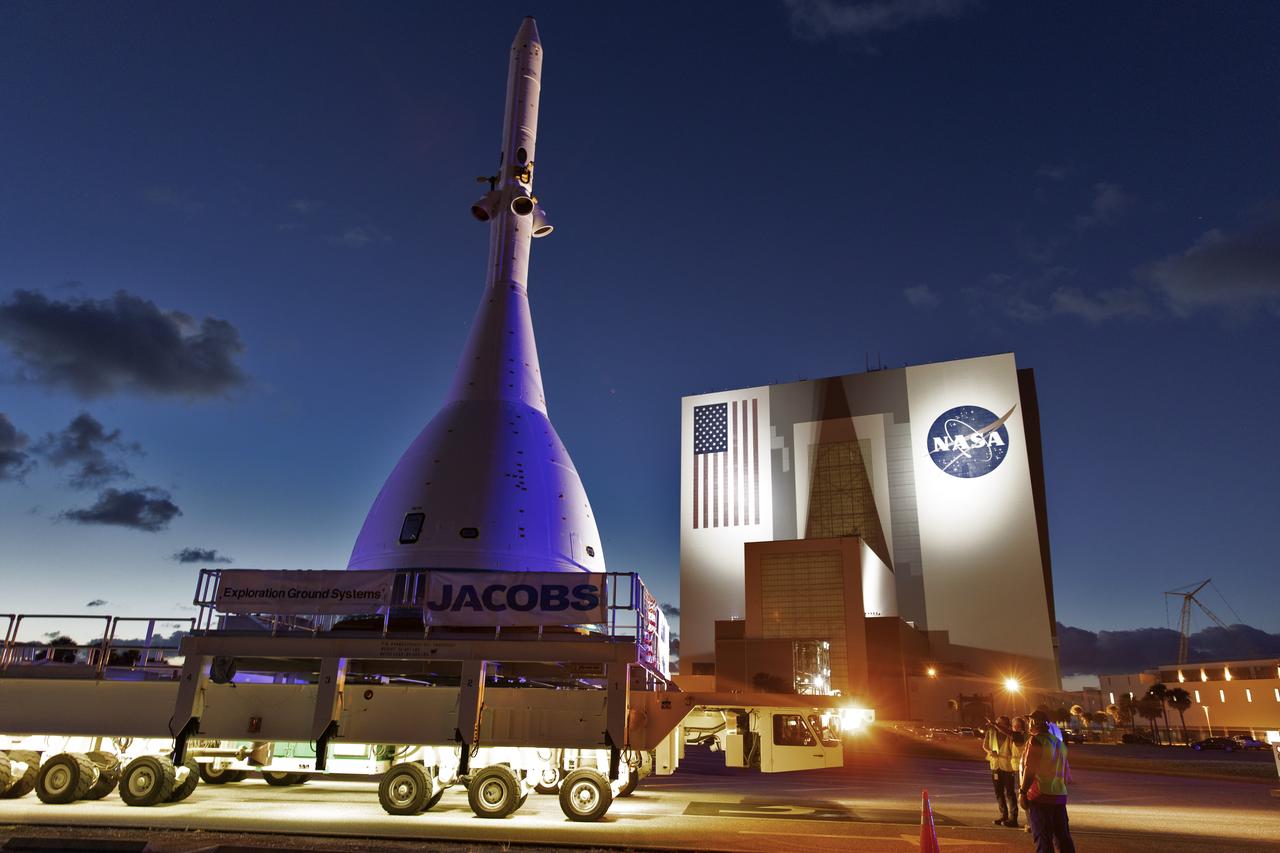
The test version of Orion attached to the Launch Abort System for the Ascent Abort-2 (AA-2) flight test passes by the iconic Vehicle Assembly Building at NASA’s Kennedy Space Center in Florida on May 22, 2019, during its 21.5 mile trek to Space Launch Complex 46 at Cape Canaveral Air Force Station in preparation for its launch this summer. In the background is the iconic Vehicle Assembly Building. During AA-2, a test version of Orion will launch on a booster to more than six miles in altitude, where Orion’s launch abort system will pull the capsule and its crew away to safety if an emergency occurs during ascent on the Space Launch System rocket. The AA-2 elements will be stacked together at the launch pad over the next several weeks. The launch is planned for July 2 and is a critical safety test that helps pave the way for Artemis missions near the Moon, and will enable astronauts to set foot on the lunar surface by 2024.
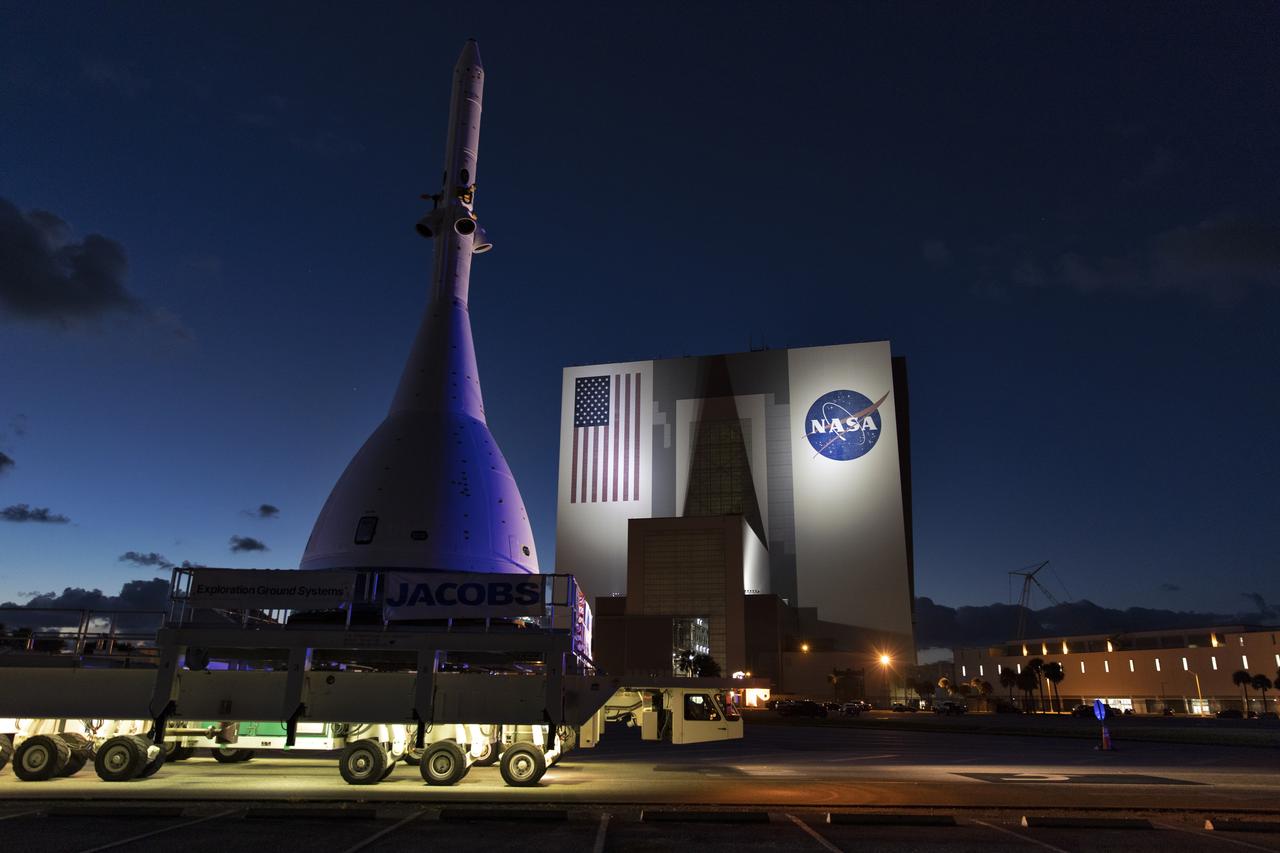
The test version of Orion attached to the Launch Abort System for the Ascent Abort-2 (AA-2) flight test passes by the iconic Vehicle Assembly Building at NASA’s Kennedy Space Center in Florida on May 22, 2019, during its 21.5 mile trek to Space Launch Complex 46 at Cape Canaveral Air Force Station in preparation for its launch this summer. In the background is the iconic Vehicle Assembly Building. During AA-2, a test version of Orion will launch on a booster to more than six miles in altitude, where Orion’s launch abort system will pull the capsule and its crew away to safety if an emergency occurs during ascent on the Space Launch System rocket. The AA-2 elements will be stacked together at the launch pad over the next several weeks. The launch is planned for July 2 and is a critical safety test that helps pave the way for Artemis missions near the Moon, and will enable astronauts to set foot on the lunar surface by 2024.
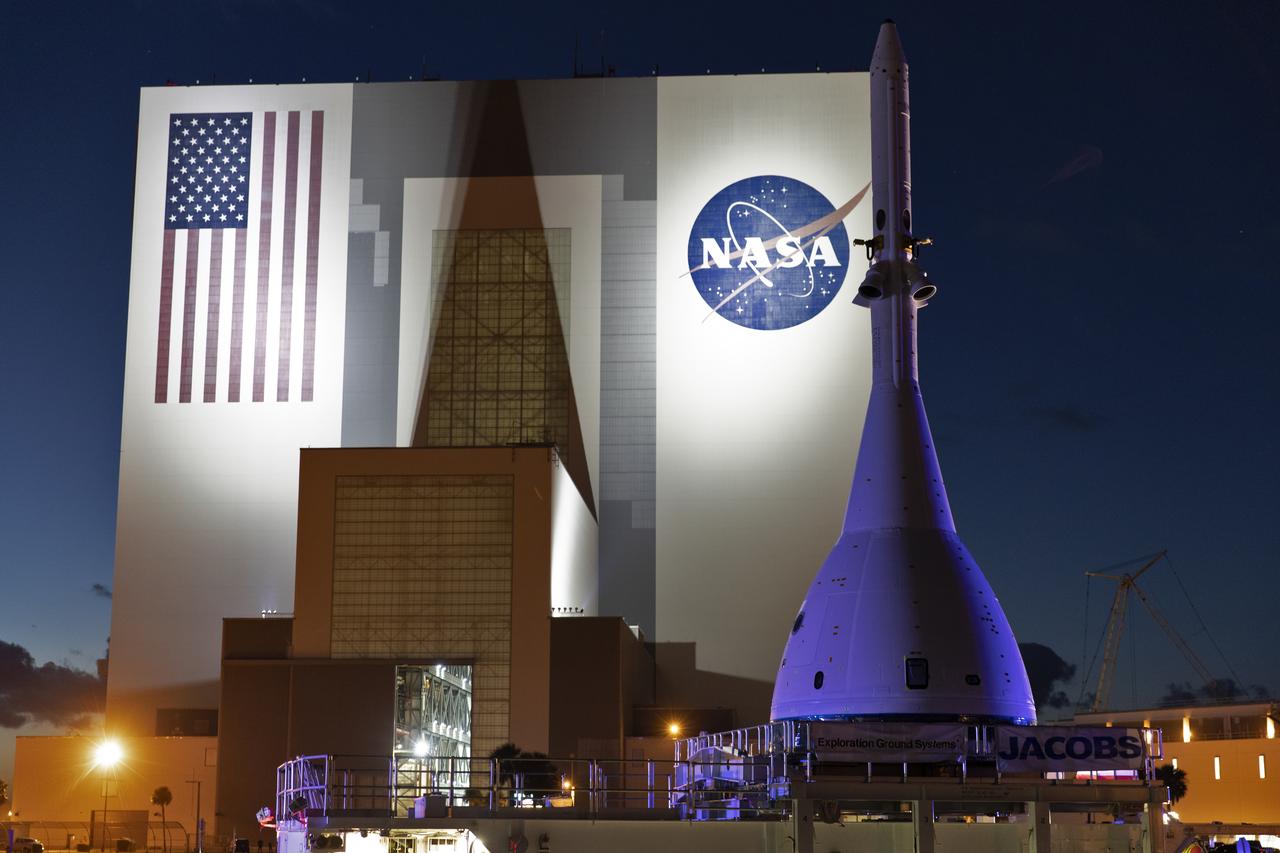
The test version of Orion attached to the Launch Abort System for the Ascent Abort-2 (AA-2) flight test passes by the iconic Vehicle Assembly Building at NASA’s Kennedy Space Center in Florida on May 22, 2019, during its 21.5 mile trek to Space Launch Complex 46 at Cape Canaveral Air Force Station in preparation for its launch this summer. In the background is the iconic Vehicle Assembly Building. During AA-2, a test version of Orion will launch on a booster to more than six miles in altitude, where Orion’s launch abort system will pull the capsule and its crew away to safety if an emergency occurs during ascent on the Space Launch System rocket. The AA-2 elements will be stacked together at the launch pad over the next several weeks. The launch is planned for July 2 and is a critical safety test that helps pave the way for Artemis missions near the Moon, and will enable astronauts to set foot on the lunar surface by 2024.
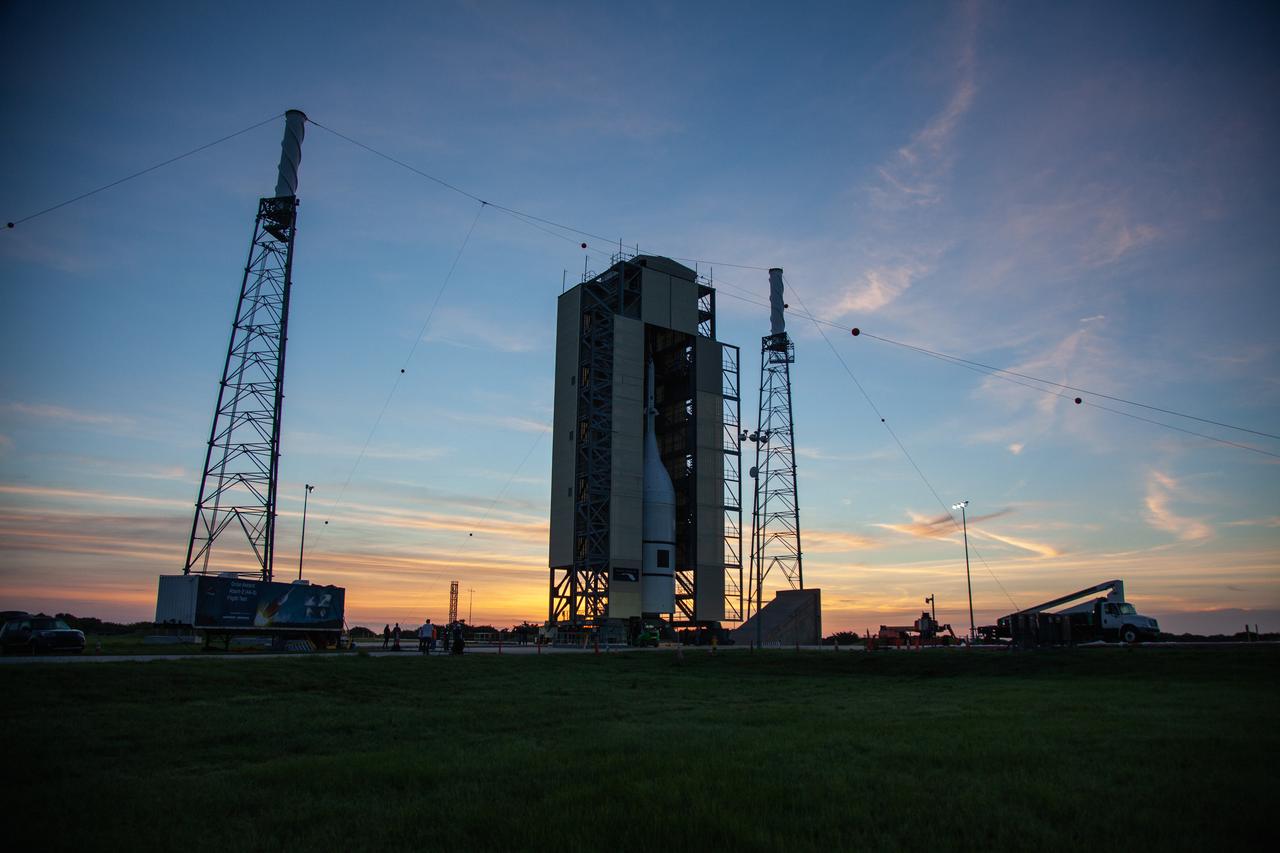
In the early morning on July 1, 2019, the vertical integration facility surrounding the Ascent Abort-2 (AA-2) test vehicle begins to rollback at Launch Pad 46 at Cape Canaveral Air Force Station in Florida. A fully functional Launch Abort System (LAS) mated to a test version of the Orion spacecraft are on a Northrop Grumman provided booster on the pad for launch on NASA’s AA-2 flight test on July 2, 2019. During AA-2, the booster will send the LAS and Orion to an altitude of 31,000 feet, traveling at more than 1,000 mph. The LAS’ three motors will work together to pull the crew module away from the booster and prepare it for splashdown in the Atlantic Ocean. The flight test will prove that the abort system can pull crew to safety in the unlikely event of an emergency during ascent.
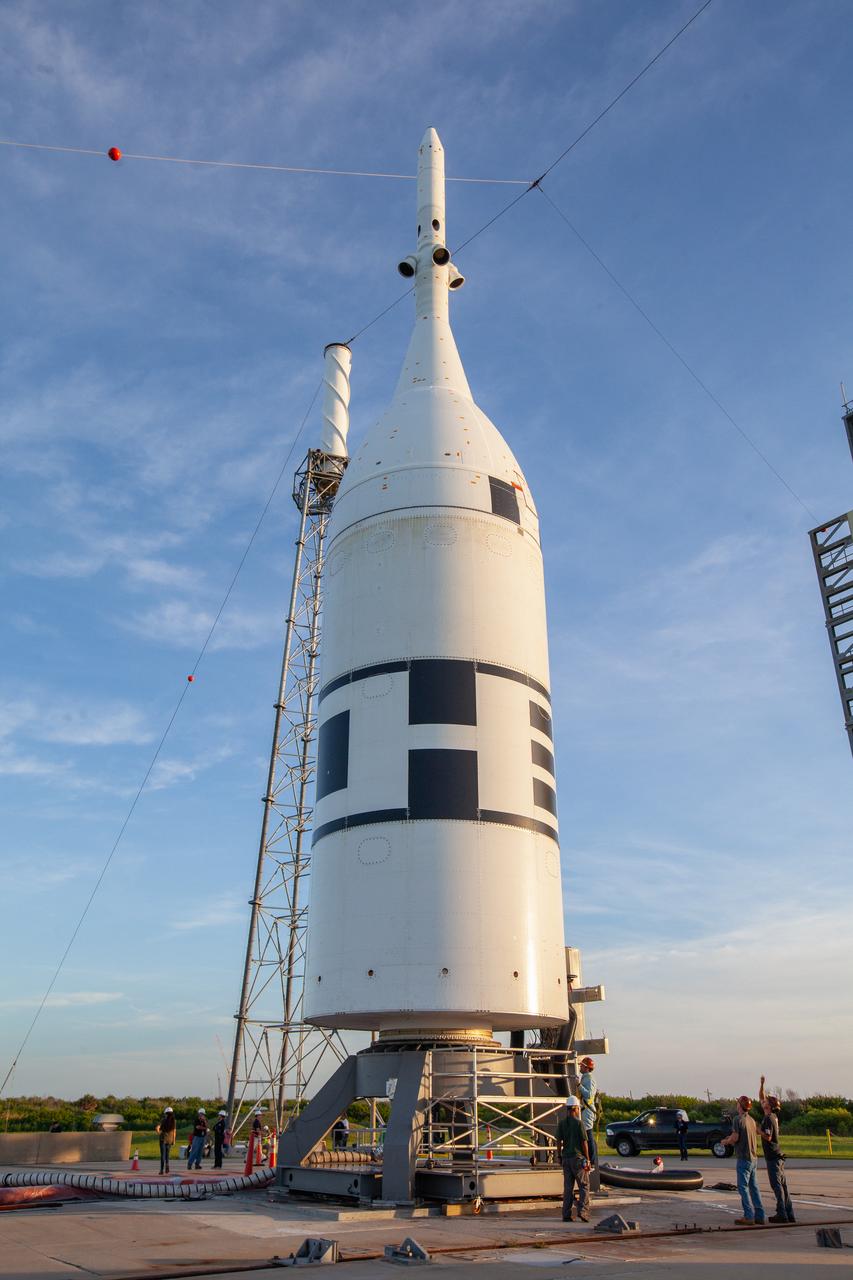
The Ascent Abort-2 test vehicle is secured on the pad at Launch Complex 46 at Cape Canaveral Air Force Station in Florida after rollback of the vertical integration facility on July 1, 2019. A fully functional Launch Abort System (LAS) mated to a test version of the Orion spacecraft are on a Northrop Grumman provided booster on the pad for launch on NASA’s AA-2 flight test on July 2, 2019. During AA-2, the booster will send the LAS and Orion to an altitude of 31,000 feet, traveling at more than 1,000 mph. The LAS’ three motors will work together to pull the crew module away from the booster and prepare it for splashdown in the Atlantic Ocean. The flight test will prove that the abort system can pull crew to safety in the unlikely event of an emergency during ascent.
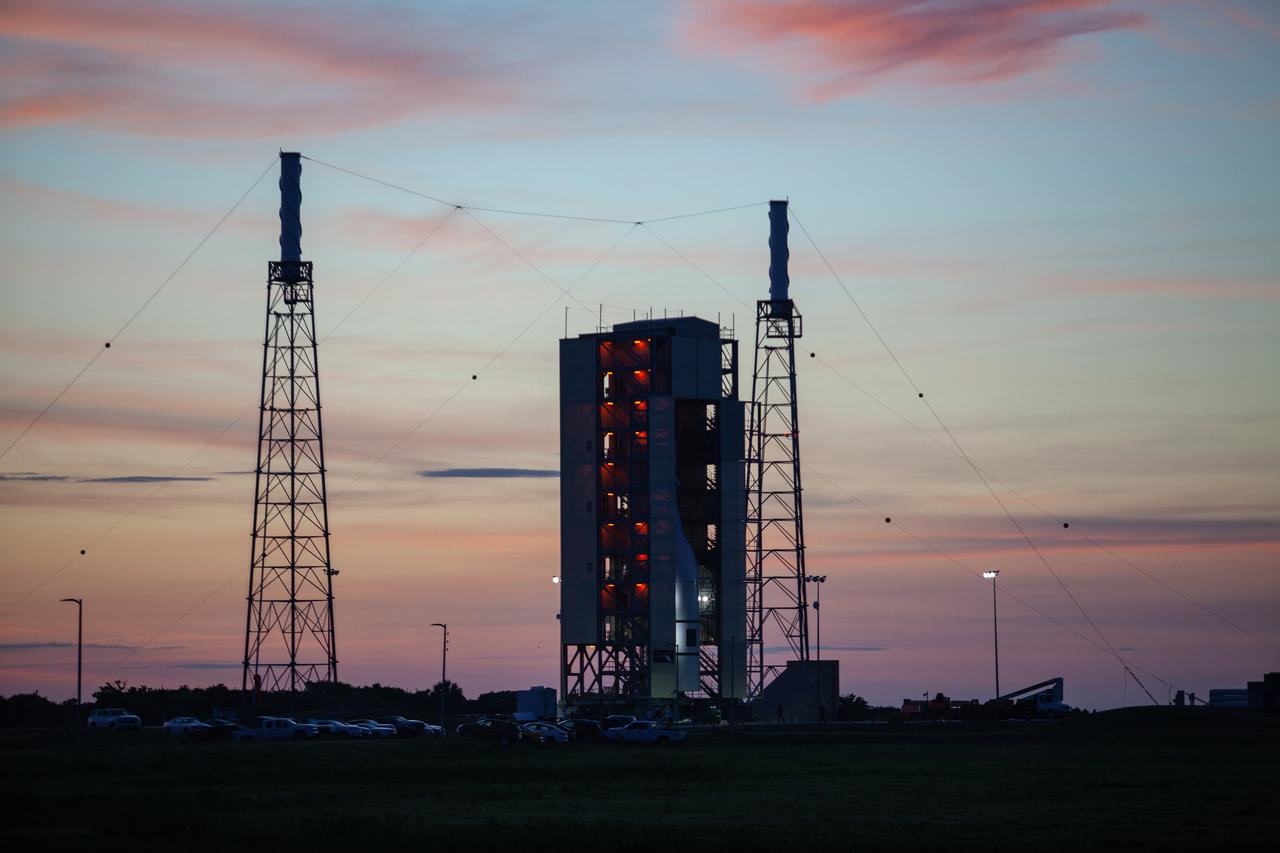
A sunrise view of Launch Complex 46 at Cape Canaveral Air Force Station in Florida on July 1, 2019. A fully functional Launch Abort System (LAS) mated to a test version of the Orion spacecraft are on a Northrop Grumman provided booster on the pad for launch on NASA’s Ascent Abort-2 (AA-2) flight test on July 2, 2019. The vertical integration facility surrounding the test vehicle begins to roll back from the pad. During AA-2, the booster will send the LAS and Orion to an altitude of 31,000 feet, traveling at more than 1,000 mph. The LAS’ three motors will work together to pull the crew module away from the booster and prepare it for splashdown in the Atlantic Ocean. The flight test will prove that the abort system can pull crew to safety in the unlikely event of an emergency during ascent.
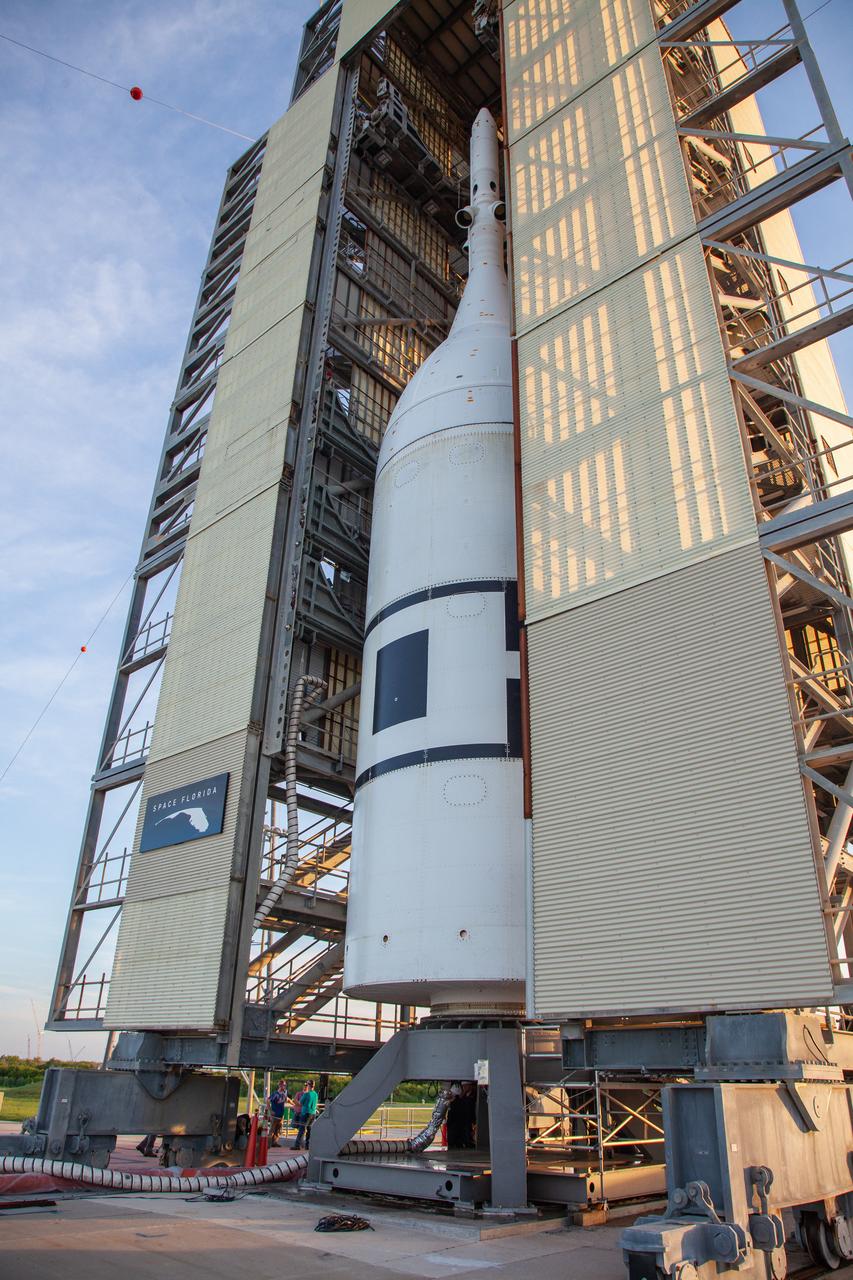
In the early morning on July 1, 2019, the vertical integration facility surrounding the Ascent Abort-2 (AA-2) test vehicle begins to rollback at Launch Pad 46 at Cape Canaveral Air Force Station in Florida. A fully functional Launch Abort System (LAS) mated to a test version of the Orion spacecraft are on a Northrop Grumman provided booster on the pad for launch on NASA’s AA-2 flight test on July 2, 2019. During AA-2, the booster will send the LAS and Orion to an altitude of 31,000 feet, traveling at more than 1,000 mph. The LAS’ three motors will work together to pull the crew module away from the booster and prepare it for splashdown in the Atlantic Ocean. The flight test will prove that the abort system can pull crew to safety in the unlikely event of an emergency during ascent.
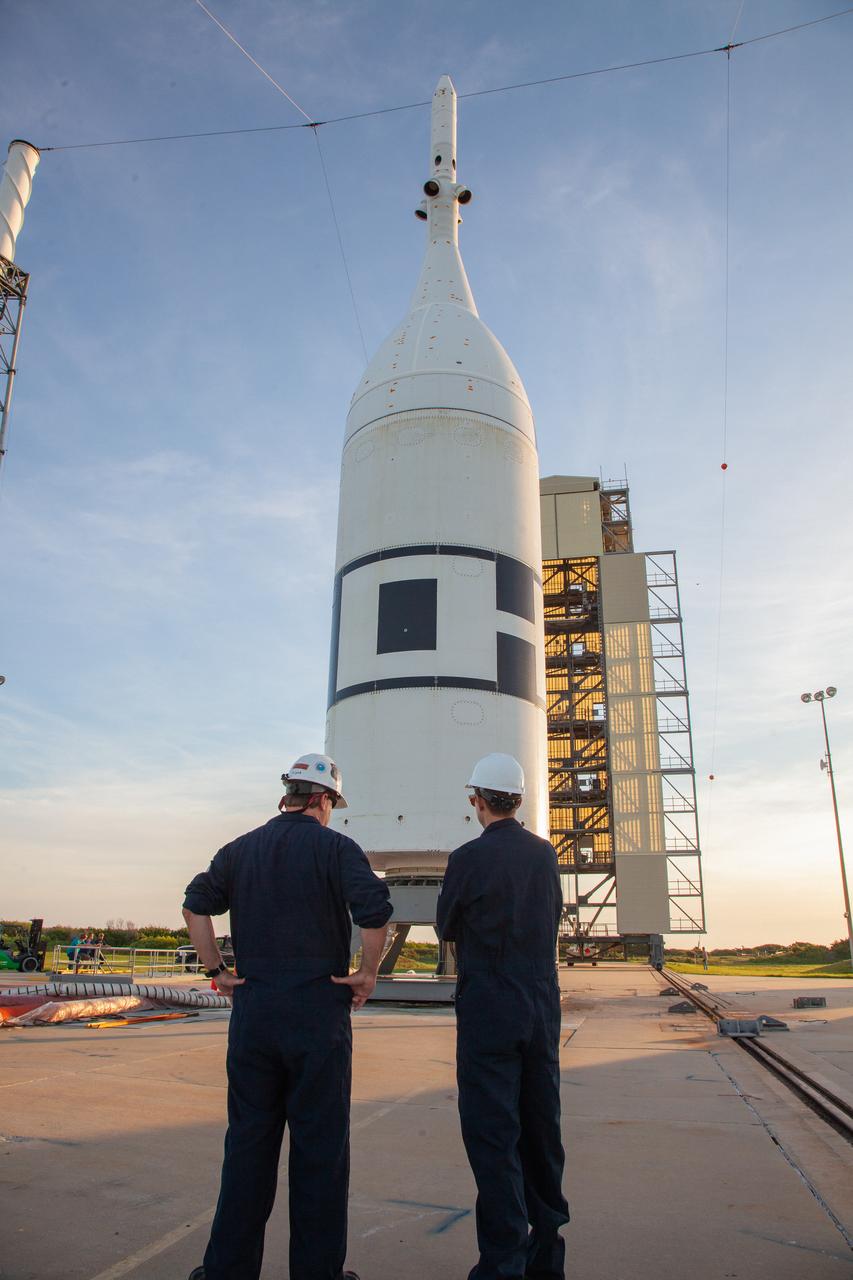
The Ascent Abort-2 test vehicle is secured on the pad at Launch Complex 46 at Cape Canaveral Air Force Station in Florida after rollback of the vertical integration facility on July 1, 2019. A fully functional Launch Abort System (LAS) mated to a test version of the Orion spacecraft are on a Northrop Grumman provided booster on the pad for launch on NASA’s AA-2 flight test on July 2, 2019. During AA-2, the booster will send the LAS and Orion to an altitude of 31,000 feet, traveling at more than 1,000 mph. The LAS’ three motors will work together to pull the crew module away from the booster and prepare it for splashdown in the Atlantic Ocean. The flight test will prove that the abort system can pull crew to safety in the unlikely event of an emergency during ascent.
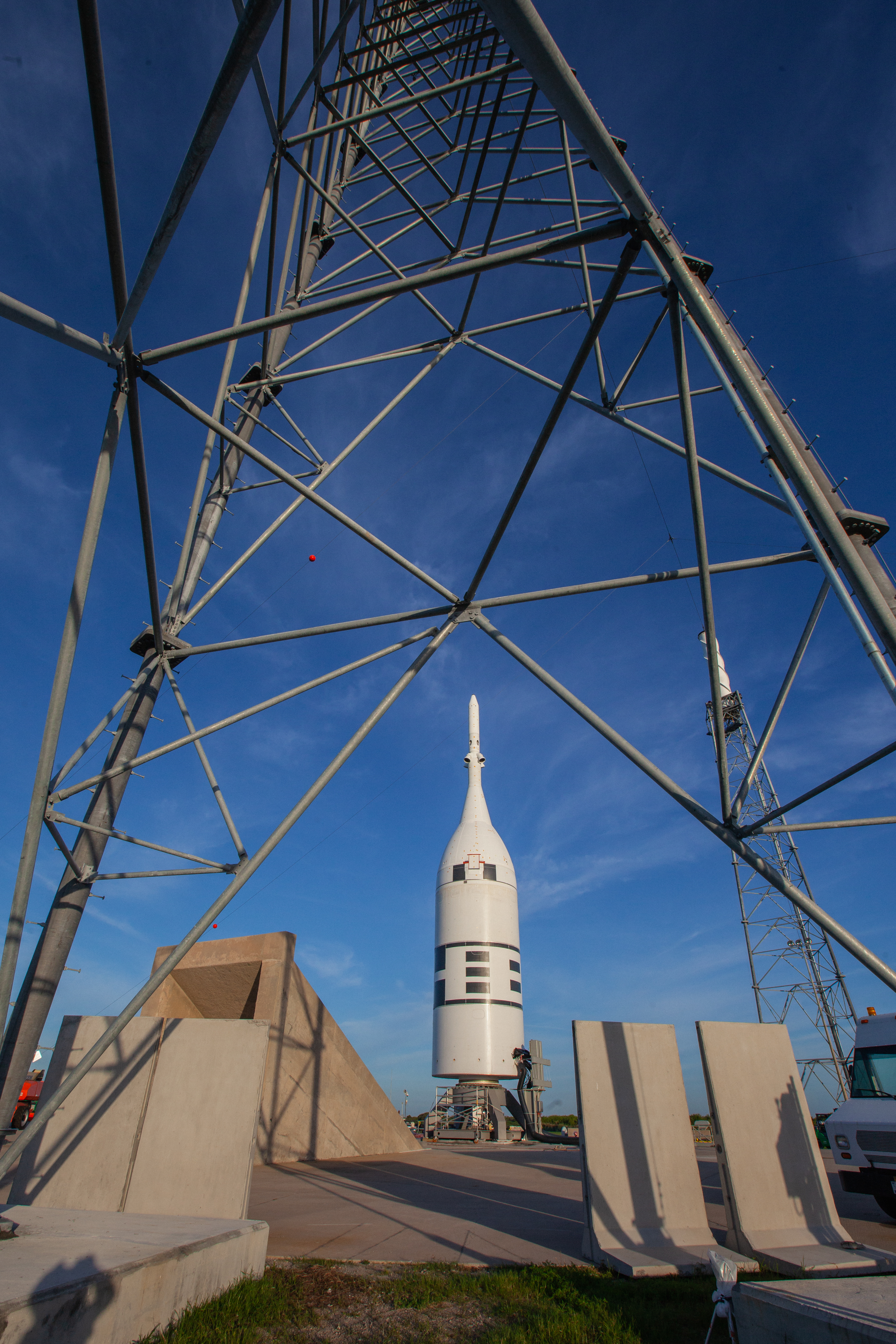
With a view of a lightning tower in the foreground, the Ascent Abort-2 test vehicle is in view on the pad at Launch Complex 46 at Cape Canaveral Air Force Station in Florida after rollback of the vertical integration facility on July 1, 2019. A fully functional Launch Abort System (LAS) mated to a test version of the Orion spacecraft are on a Northrop Grumman provided booster on the pad for launch on NASA’s AA-2 flight test on July 2, 2019. During AA-2, the booster will send the LAS and Orion to an altitude of 31,000 feet, traveling at more than 1,000 mph. The LAS’ three motors will work together to pull the crew module away from the booster and prepare it for splashdown in the Atlantic Ocean. The flight test will prove that the abort system can pull crew to safety in the unlikely event of an emergency during ascent.
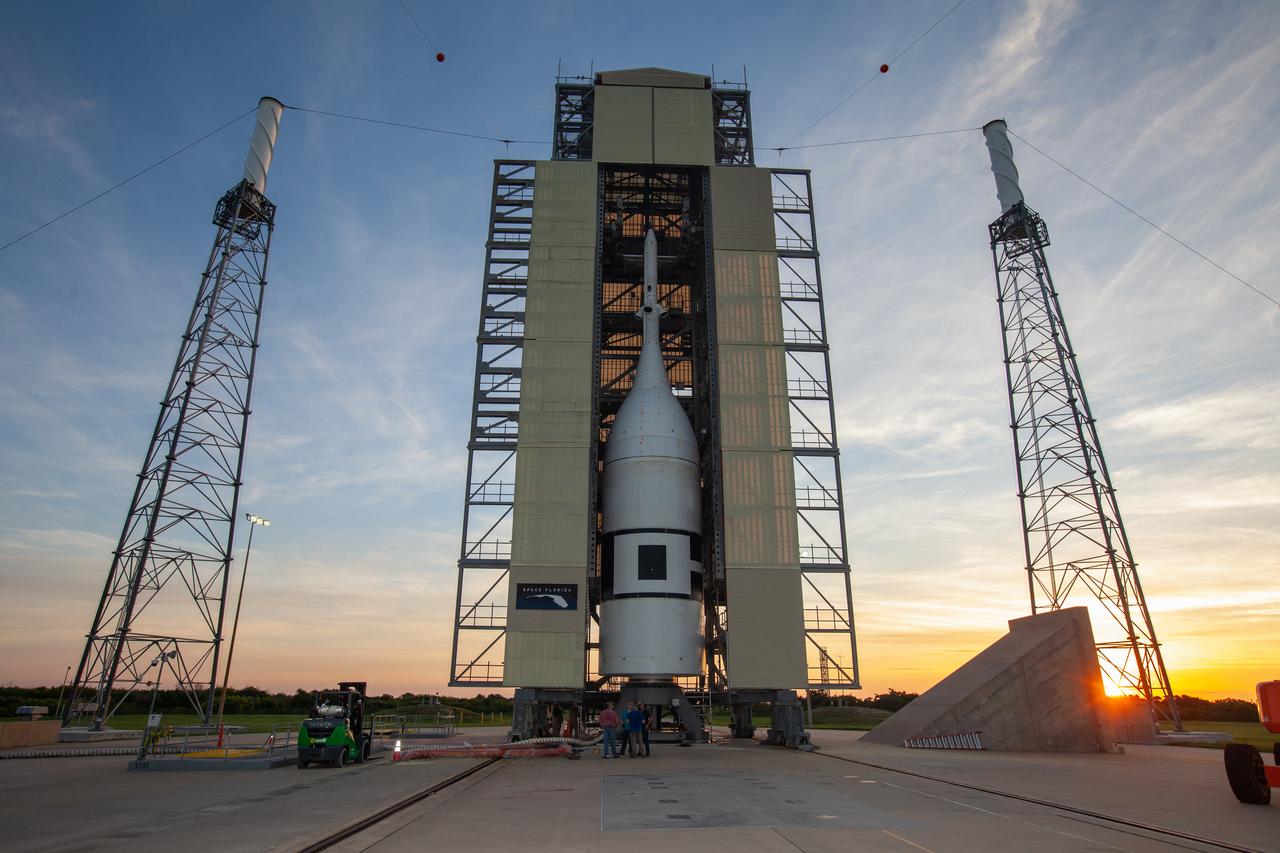
In the early morning on July 1, 2019, the vertical integration facility surrounding the Ascent Abort-2 (AA-2) test vehicle begins to rollback at Launch Pad 46 at Cape Canaveral Air Force Station in Florida. A fully functional Launch Abort System (LAS) mated to a test version of the Orion spacecraft are on a Northrop Grumman provided booster on the pad for launch on NASA’s AA-2 flight test on July 2, 2019. During AA-2, the booster will send the LAS and Orion to an altitude of 31,000 feet, traveling at more than 1,000 mph. The LAS’ three motors will work together to pull the crew module away from the booster and prepare it for splashdown in the Atlantic Ocean. The flight test will prove that the abort system can pull crew to safety in the unlikely event of an emergency during ascent.
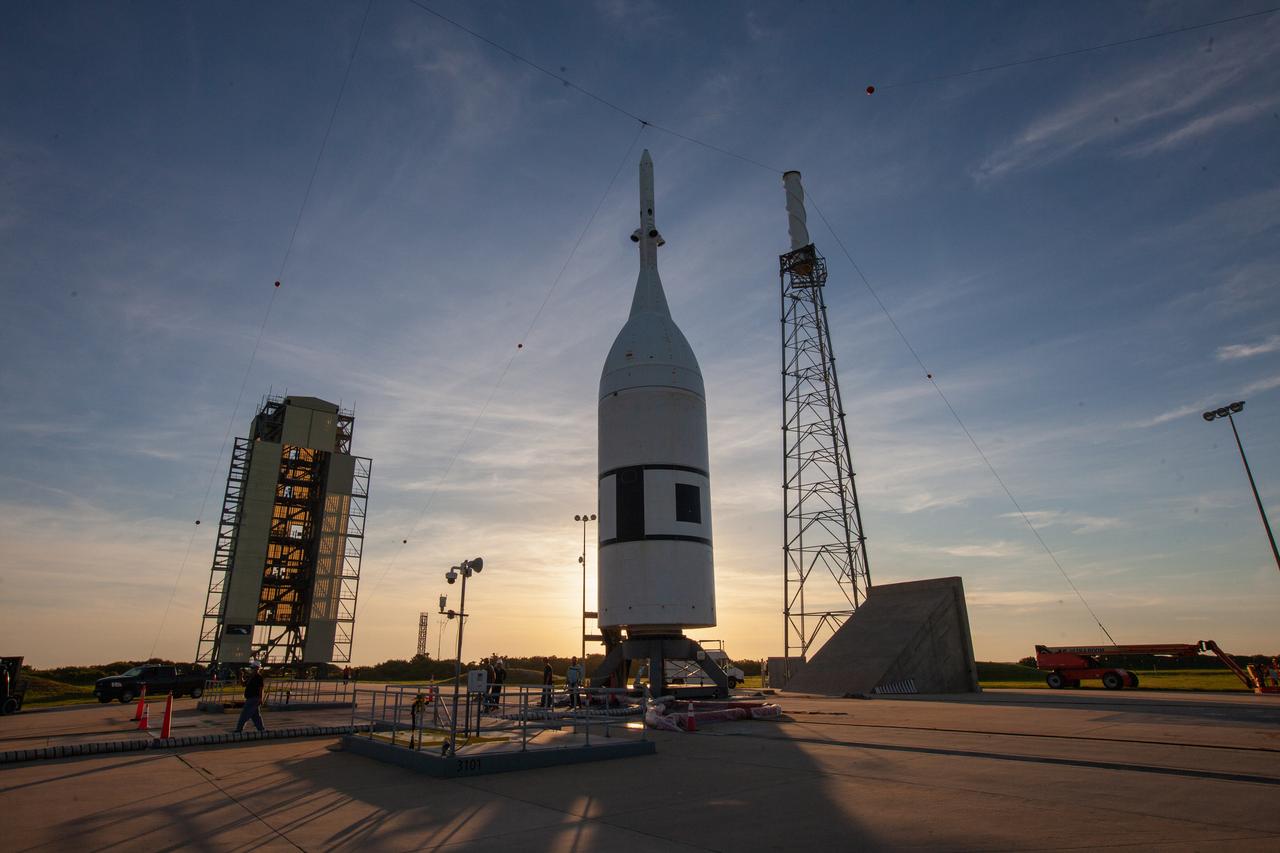
The Ascent Abort-2 test vehicle is secured on the pad at Launch Complex 46 at Cape Canaveral Air Force Station in Florida after rollback of the vertical integration facility on July 1, 2019. A fully functional Launch Abort System (LAS) mated to a test version of the Orion spacecraft are on a Northrop Grumman provided booster on the pad for launch on NASA’s AA-2 flight test on July 2, 2019. During AA-2, the booster will send the LAS and Orion to an altitude of 31,000 feet, traveling at more than 1,000 mph. The LAS’ three motors will work together to pull the crew module away from the booster and prepare it for splashdown in the Atlantic Ocean. The flight test will prove that the abort system can pull crew to safety in the unlikely event of an emergency during ascent.
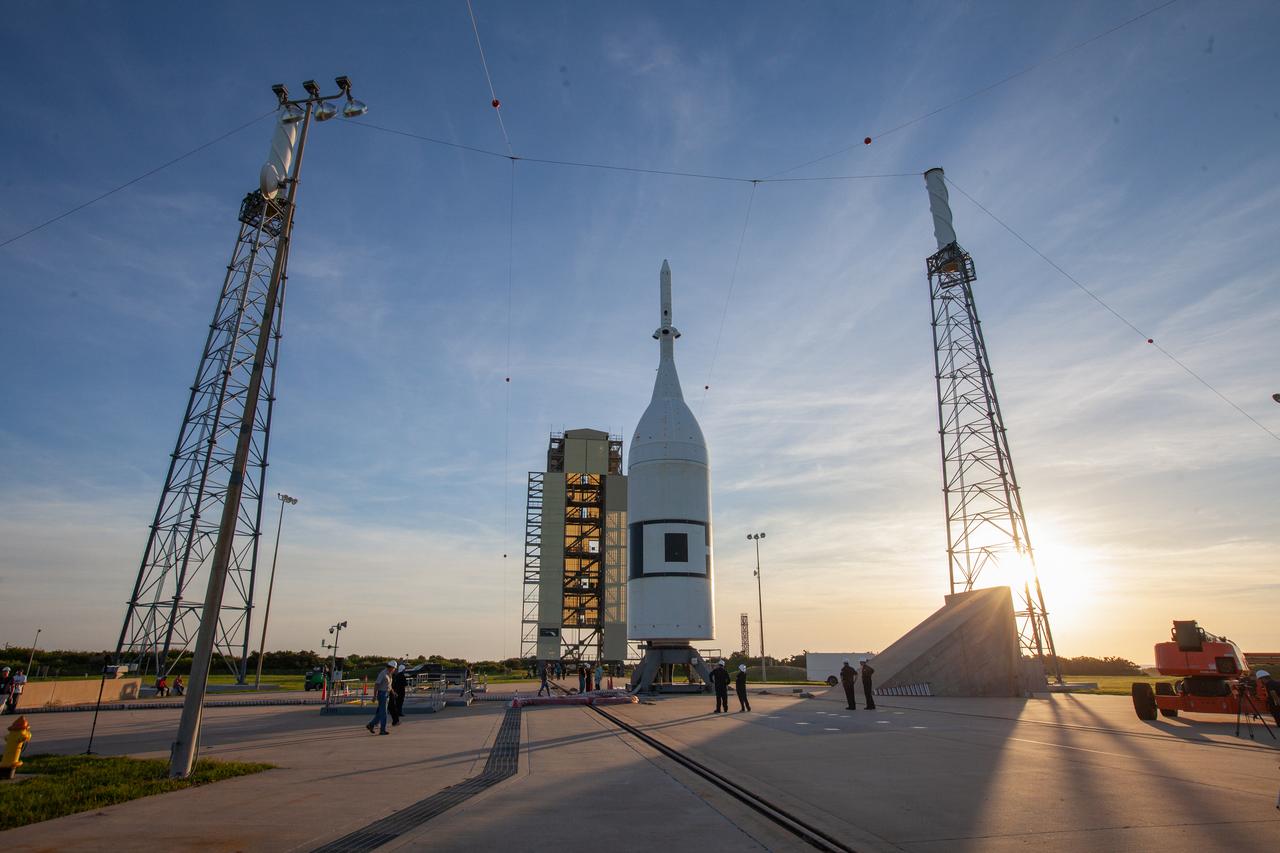
The Ascent Abort-2 test vehicle is secured on the pad at Launch Complex 46 at Cape Canaveral Air Force Station in Florida after rollback of the vertical integration facility on July 1, 2019. A fully functional Launch Abort System (LAS) mated to a test version of the Orion spacecraft are on a Northrop Grumman provided booster on the pad for launch on NASA’s AA-2 flight test on July 2, 2019. During AA-2, the booster will send the LAS and Orion to an altitude of 31,000 feet, traveling at more than 1,000 mph. The LAS’ three motors will work together to pull the crew module away from the booster and prepare it for splashdown in the Atlantic Ocean. The flight test will prove that the abort system can pull crew to safety in the unlikely event of an emergency during ascent.
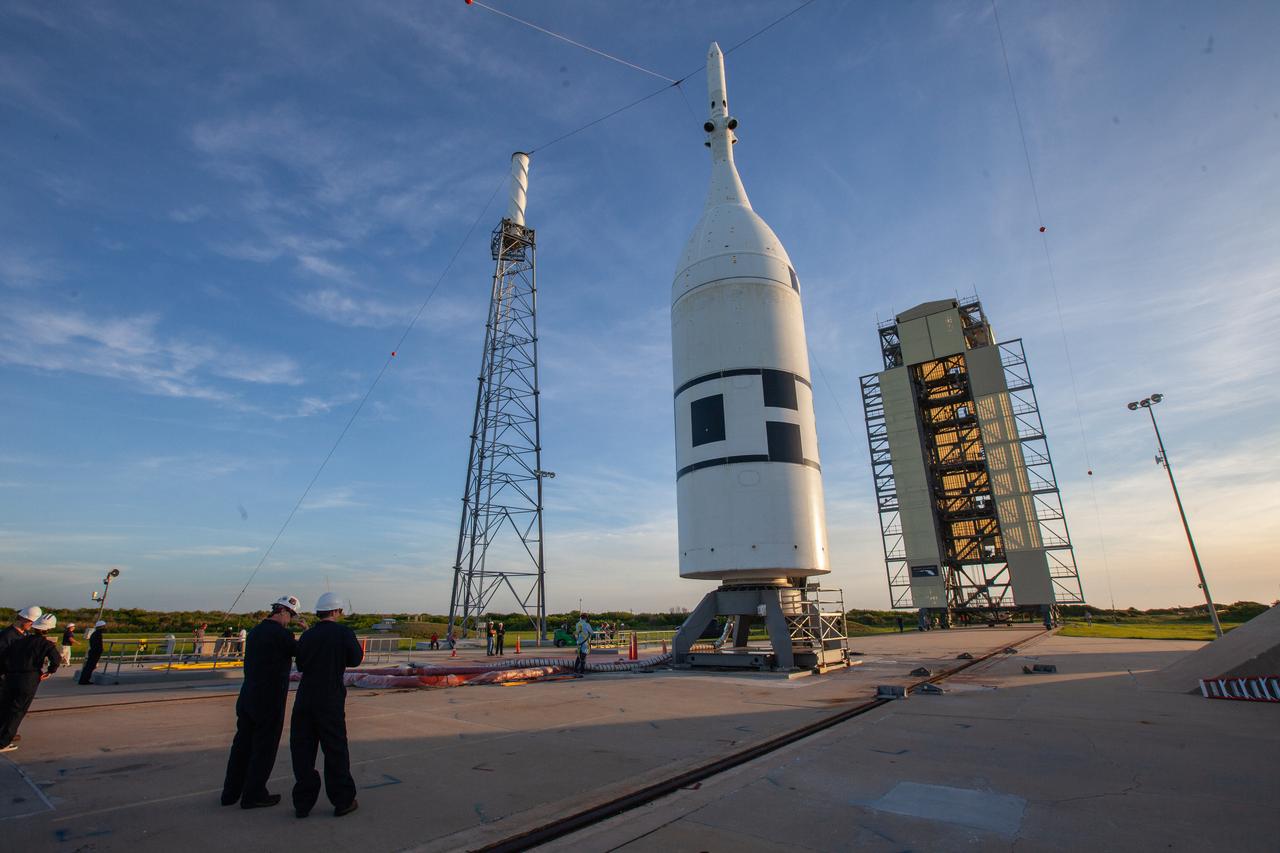
The Ascent Abort-2 test vehicle is secured on the pad at Launch Complex 46 at Cape Canaveral Air Force Station in Florida after rollback of the vertical integration facility on July 1, 2019. A fully functional Launch Abort System (LAS) mated to a test version of the Orion spacecraft are on a Northrop Grumman provided booster on the pad for launch on NASA’s AA-2 flight test on July 2, 2019. During AA-2, the booster will send the LAS and Orion to an altitude of 31,000 feet, traveling at more than 1,000 mph. The LAS’ three motors will work together to pull the crew module away from the booster and prepare it for splashdown in the Atlantic Ocean. The flight test will prove that the abort system can pull crew to safety in the unlikely event of an emergency during ascent.
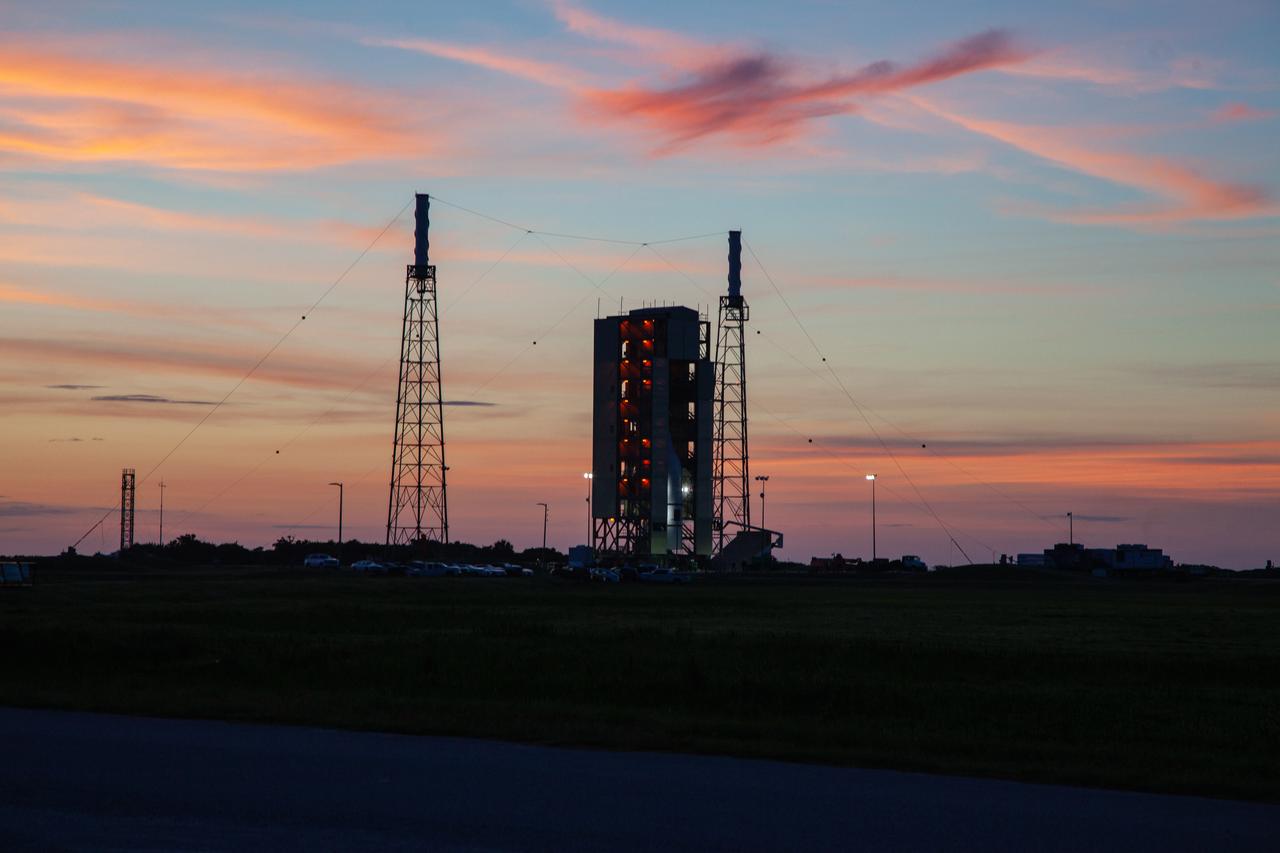
A sunrise view of Launch Complex 46 at Cape Canaveral Air Force Station in Florida on July 1, 2019. A fully functional Launch Abort System (LAS) mated to a test version of the Orion spacecraft are on a Northrop Grumman provided booster on the pad for launch on NASA’s Ascent Abort-2 (AA-2) flight test on July 2, 2019. The vertical integration facility surrounding the test vehicle will begin to roll back from the pad. During AA-2, the booster will send the LAS and Orion to an altitude of 31,000 feet, traveling at more than 1,000 mph. The LAS’ three motors will work together to pull the crew module away from the booster and prepare it for splashdown in the Atlantic Ocean. The flight test will prove that the abort system can pull crew to safety in the unlikely event of an emergency during ascent.
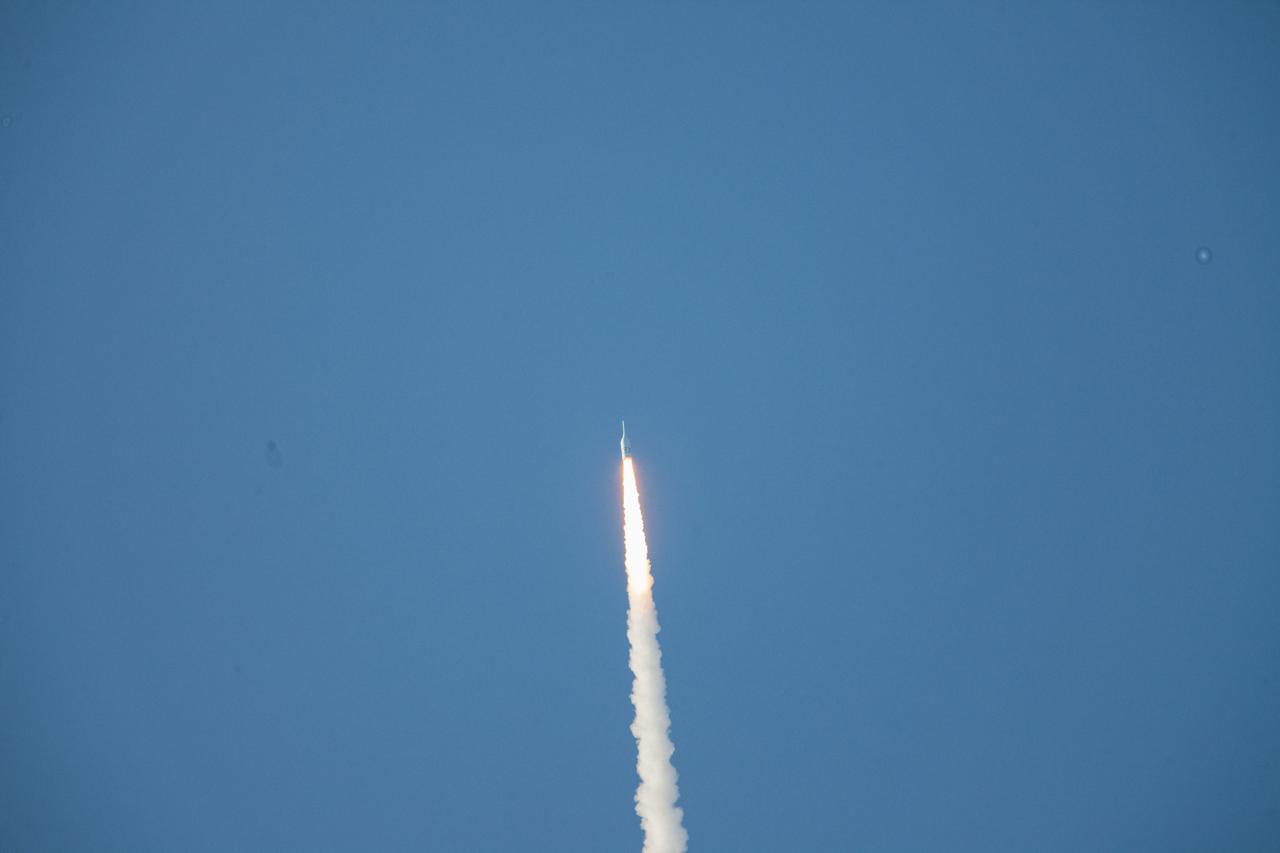
A fully functional Launch Abort System (LAS) with a test version of Orion attached, soars upward on NASA’s Ascent Abort-2 (AA-2) flight test atop a Northrop Grumman provided booster on July 2, 2019, after launching at 7 a.m. EDT, from Launch Pad 46 at Cape Canaveral Air Force Station in Florida. During AA-2, the booster will send the LAS and Orion to an altitude of 31,000 feet, traveling at Mach 1.15 (more than 1,000 mph). The LAS’ three motors will work together to pull the crew module away from the booster and prepare it for splashdown in the Atlantic Ocean. The flight test will prove that the abort system can pull crew to safety in the unlikely event of an emergency during ascent.

Crowds of spectators watch from Jetty Park in Cape Canaveral, Florida, on July 2, 2019, as a Northrop Grumman provided booster launches from Launch Pad 46 carrying, a fully functional Launch Abort System with a test version of Orion attached for NASA’s Ascent Abort-2 (AA-2). Launch time was 7 a.m. EDT. During AA-2, the booster will send the LAS and Orion to an altitude of 31,000 feet, traveling at Mach 1.15 (more than 1,000 mph). The LAS’ three motors will work together to pull the crew module away from the booster and prepare it for splashdown in the Atlantic Ocean. The flight test will prove that the abort system can pull crew to safety in the unlikely event of an emergency during ascent.
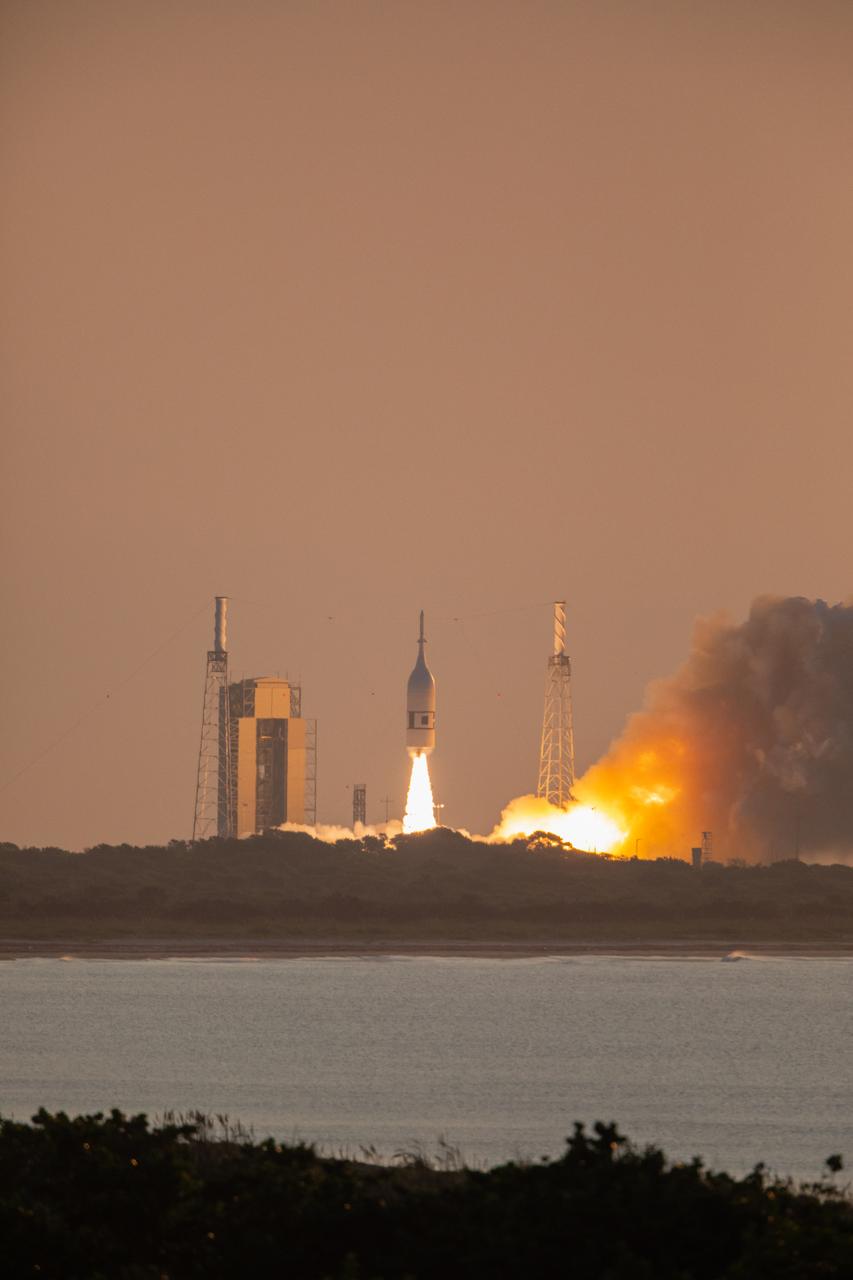
A fully functional Launch Abort System (LAS) with a test version of Orion attached, launches on NASA’s Ascent Abort-2 (AA-2) atop a Northrop Grumman provided booster on July 2, 2019, at 7 a.m. EDT, from Launch Pad 46 at Cape Canaveral Air Force Station in Florida. During AA-2, the booster will send the LAS and Orion to an altitude of 31,000 feet, traveling at Mach 1.15 (more than 1,000 mph). The LAS’ three motors will work together to pull the crew module away from the booster and prepare it for splashdown in the Atlantic Ocean. The flight test will prove that the abort system can pull crew to safety in the unlikely event of an emergency during ascent.
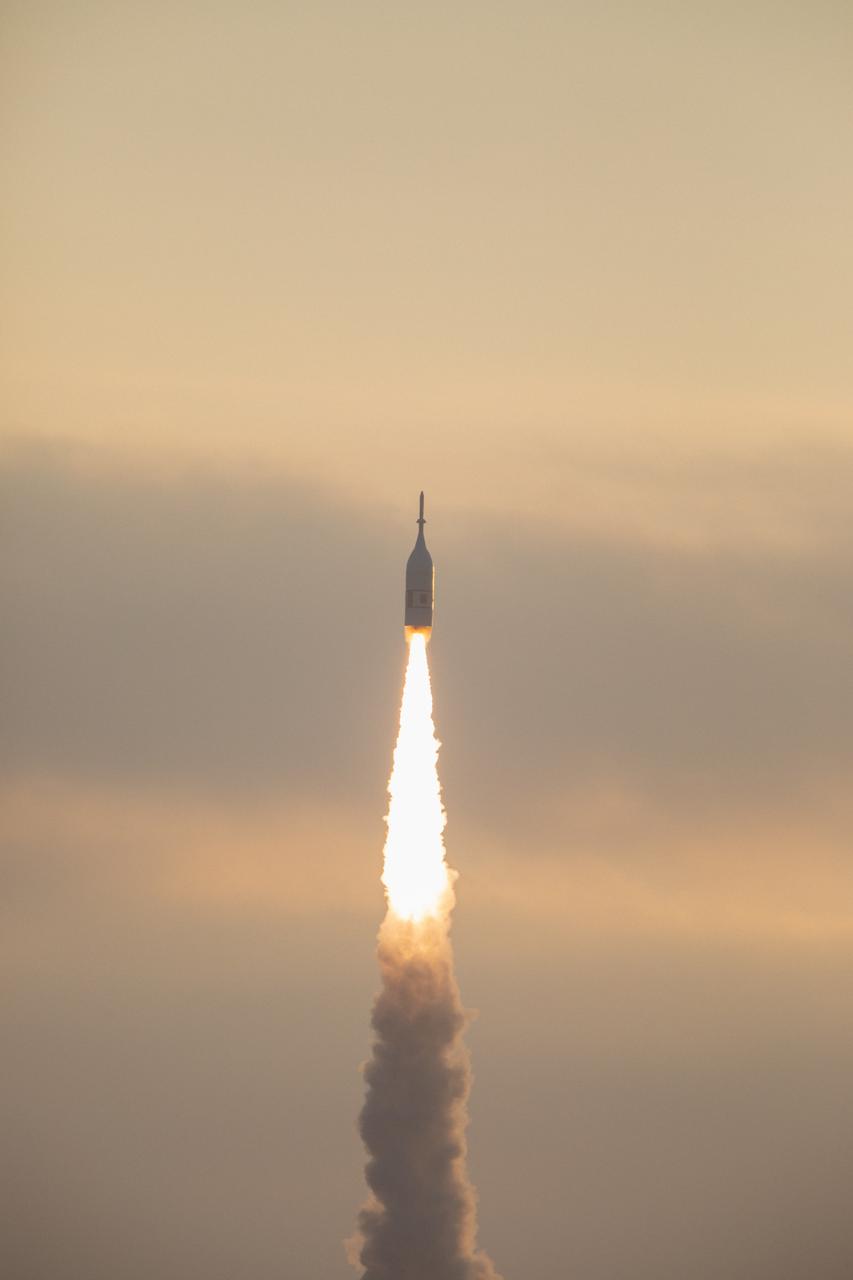
A fully functional Launch Abort System (LAS) with a test version of Orion attached, launches on NASA’s Ascent Abort-2 (AA-2) atop a Northrop Grumman provided booster on July 2, 2019, at 7 a.m. EDT, from Launch Pad 46 at Cape Canaveral Air Force Station in Florida. During AA-2, the booster will send the LAS and Orion to an altitude of 31,000 feet, traveling at Mach 1.15 (more than 1,000 mph). The LAS’ three motors will work together to pull the crew module away from the booster and prepare it for splashdown in the Atlantic Ocean. The flight test will prove that the abort system can pull crew to safety in the unlikely event of an emergency during ascent.
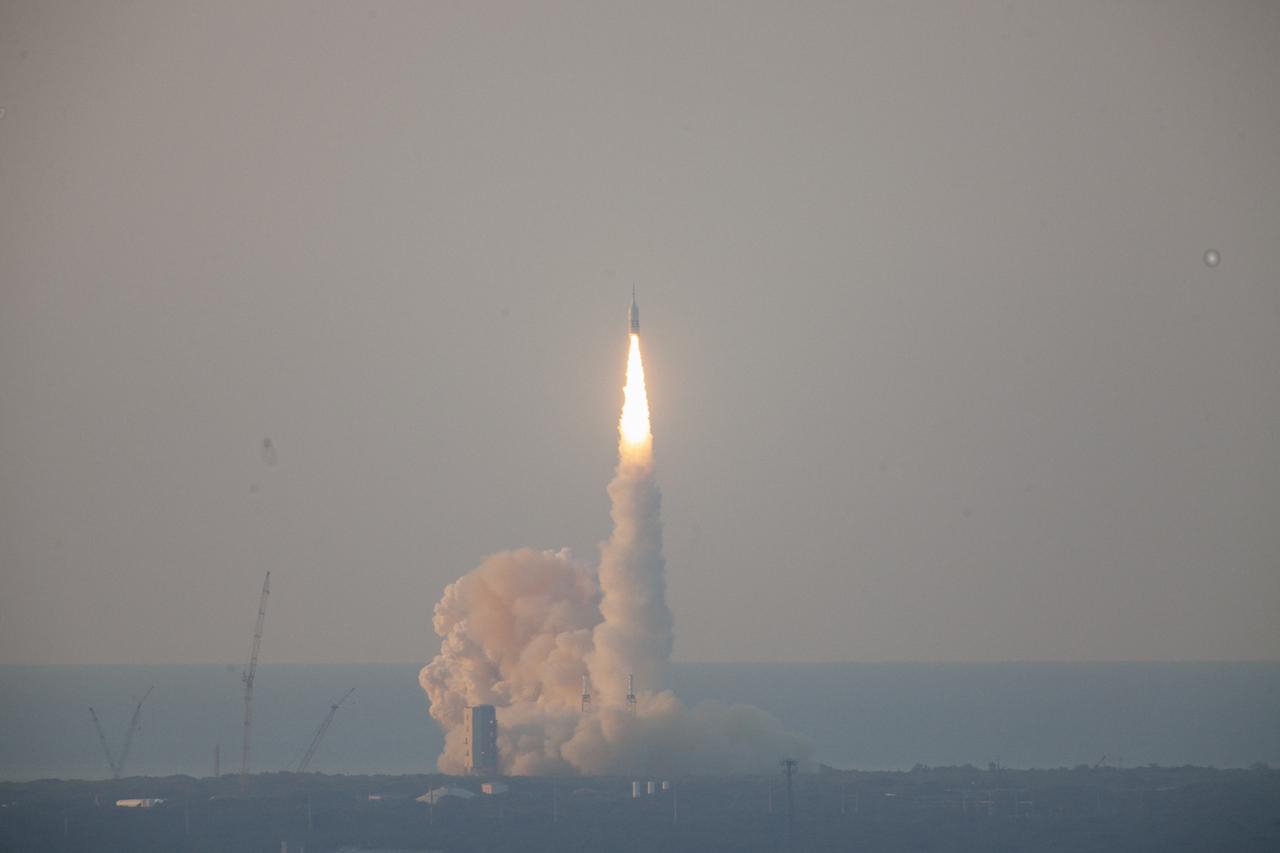
A fully functional Launch Abort System (LAS) with a test version of Orion attached, launches on NASA’s Ascent Abort-2 (AA-2) atop a Northrop Grumman provided booster on July 2, 2019, at 7 a.m. EDT, from Launch Pad 46 at Cape Canaveral Air Force Station in Florida. During AA-2, the booster will send the LAS and Orion to an altitude of 31,000 feet, traveling at Mach 1.15 (more than 1,000 mph). The LAS’ three motors will work together to pull the crew module away from the booster and prepare it for splashdown in the Atlantic Ocean. The flight test will prove that the abort system can pull crew to safety in the unlikely event of an emergency during ascent.

A brilliant sunrise fills the sky before a fully functional Launch Abort System (LAS) with a test version of Orion attached, launches on NASA’s Ascent Abort-2 (AA-2) atop a Northrop Grumman provided booster on July 2, 2019, at 7 a.m. EDT, from Launch Pad 46 at Cape Canaveral Air Force Station in Florida. During AA-2, the booster will send the LAS and Orion to an altitude of 31,000 feet, traveling at Mach 1.15 (more than 1,000 mph). The LAS’ three motors will work together to pull the crew module away from the booster and prepare it for splashdown in the Atlantic Ocean. The flight test will prove that the abort system can pull crew to safety in the unlikely event of an emergency during ascent.
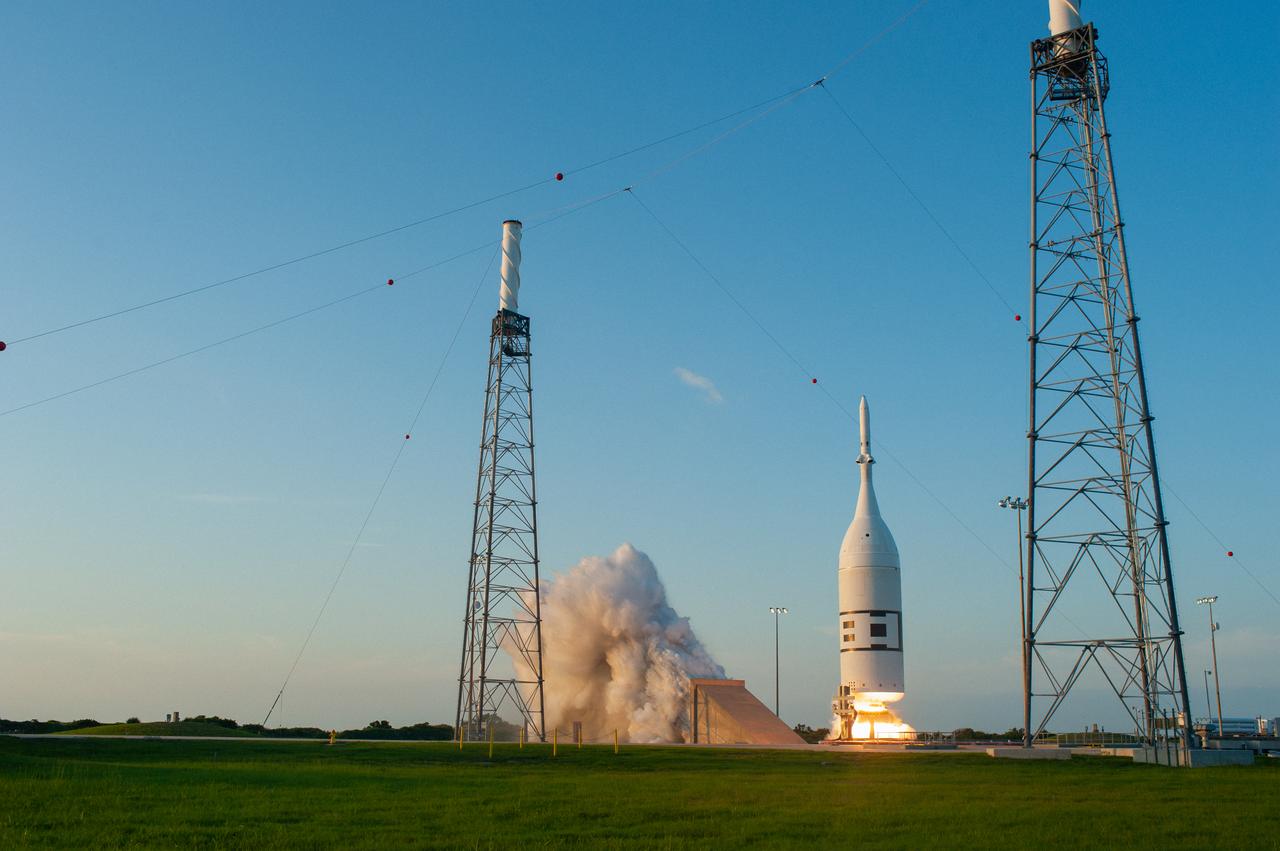
A fully functional Launch Abort System (LAS) with a test version of Orion attached, launches on NASA’s Ascent Abort-2 (AA-2) atop a Northrop Grumman provided booster on July 2, 2019, at 7 a.m. EDT, from Launch Pad 46 at Cape Canaveral Air Force Station in Florida. During AA-2, the booster will send the LAS and Orion to an altitude of 31,000 feet, traveling at Mach 1.15 (more than 1,000 mph). The LAS’ three motors will work together to pull the crew module away from the booster and prepare it for splashdown in the Atlantic Ocean. The flight test will prove that the abort system can pull crew to safety in the unlikely event of an emergency during ascent.

Mark Kirasich, Orion Program manager, participates in a prelaunch news conference for NASA’s Ascent Abort-2 (AA-2) flight test at the agency’s Kennedy Space Center in Florida on July 1, 2019. For AA-2, a test version of the Orion spacecraft attached to a fully functional Launch Abort System (LAS) will launch atop a Northrop Grumman provided booster on July 2, 2019, from Launch Pad 46 at Cape Canaveral Air Force Station in Florida. During AA-2, the booster will send the LAS and Orion to an altitude of 31,000 feet, traveling at more than 1,000 mph. The LAS’ three motors will work together to pull the crew module away from the booster and prepare it for splashdown in the Atlantic Ocean. The flight test will prove that the abort system can pull crew to safety in the unlikely event of an emergency during ascent.
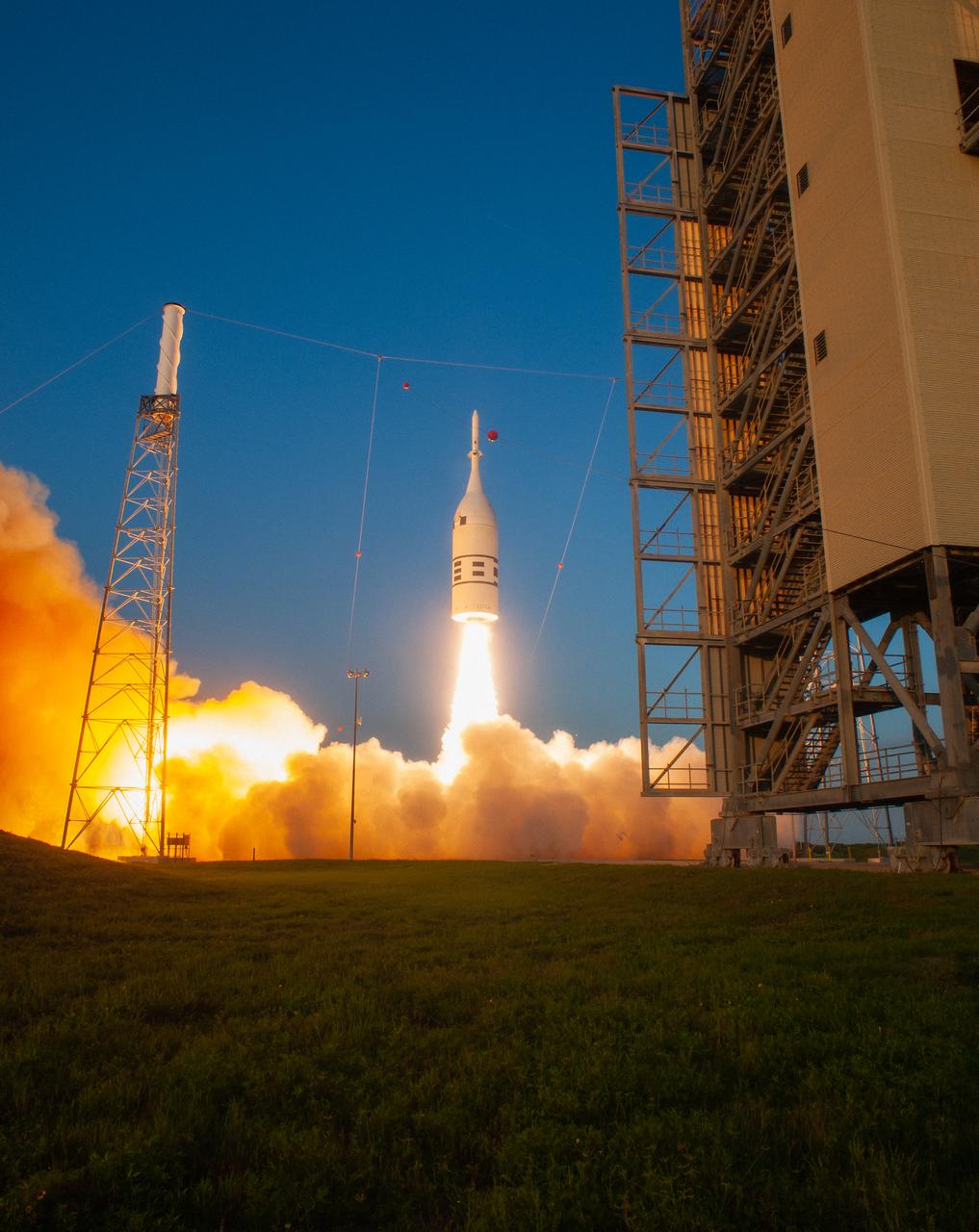
A fully functional Launch Abort System (LAS) with a test version of Orion attached, launches on NASA’s Ascent Abort-2 (AA-2) atop a Northrop Grumman provided booster on July 2, 2019, at 7 a.m. EDT, from Launch Pad 46 at Cape Canaveral Air Force Station in Florida. During AA-2, the booster will send the LAS and Orion to an altitude of 31,000 feet, traveling at Mach 1.15 (more than 1,000 mph). The LAS’ three motors will work together to pull the crew module away from the booster and prepare it for splashdown in the Atlantic Ocean. The flight test will prove that the abort system can pull crew to safety in the unlikely event of an emergency during ascent.
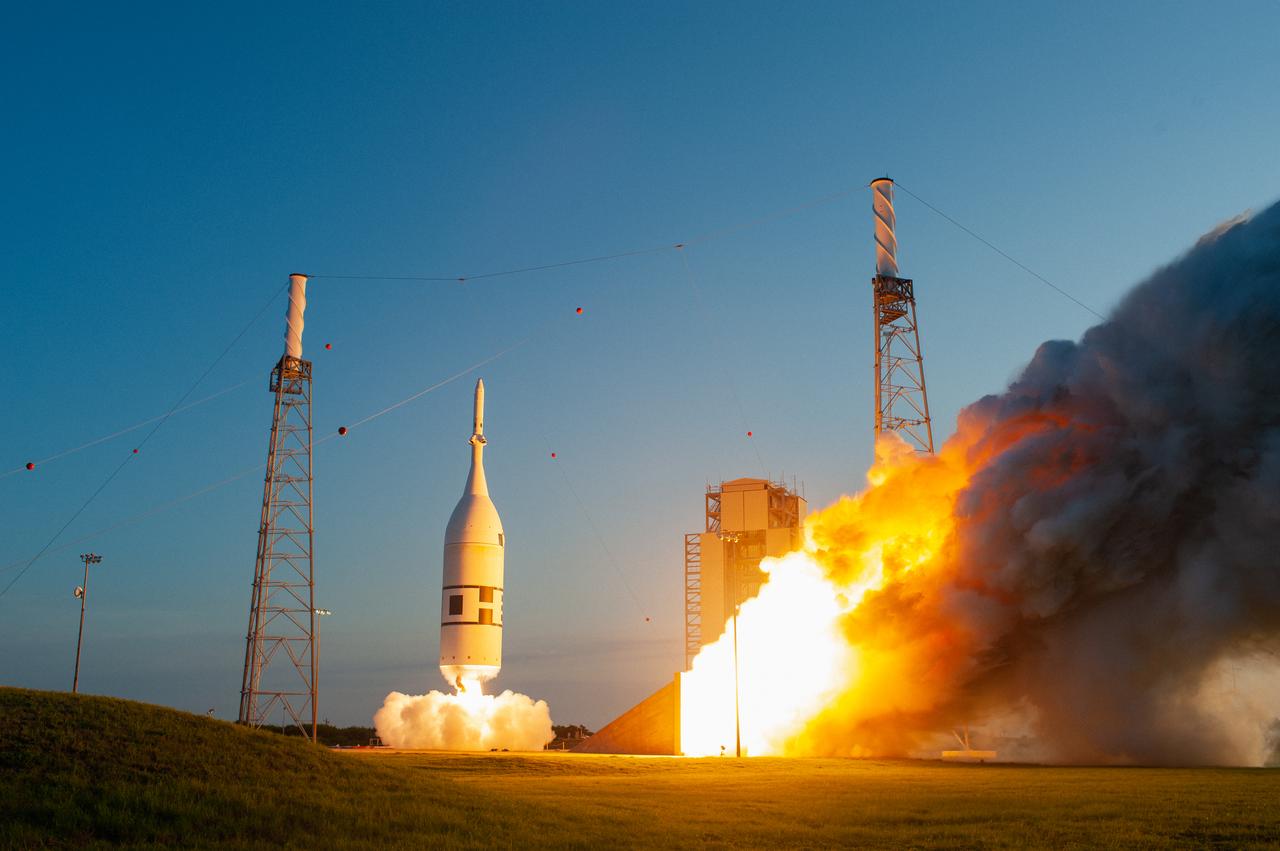
A fully functional Launch Abort System (LAS) with a test version of Orion attached, launches on NASA’s Ascent Abort-2 (AA-2) atop a Northrop Grumman provided booster on July 2, 2019, at 7 a.m. EDT, from Launch Pad 46 at Cape Canaveral Air Force Station in Florida. During AA-2, the booster will send the LAS and Orion to an altitude of 31,000 feet, traveling at Mach 1.15 (more than 1,000 mph). The LAS’ three motors will work together to pull the crew module away from the booster and prepare it for splashdown in the Atlantic Ocean. The flight test will prove that the abort system can pull crew to safety in the unlikely event of an emergency during ascent.
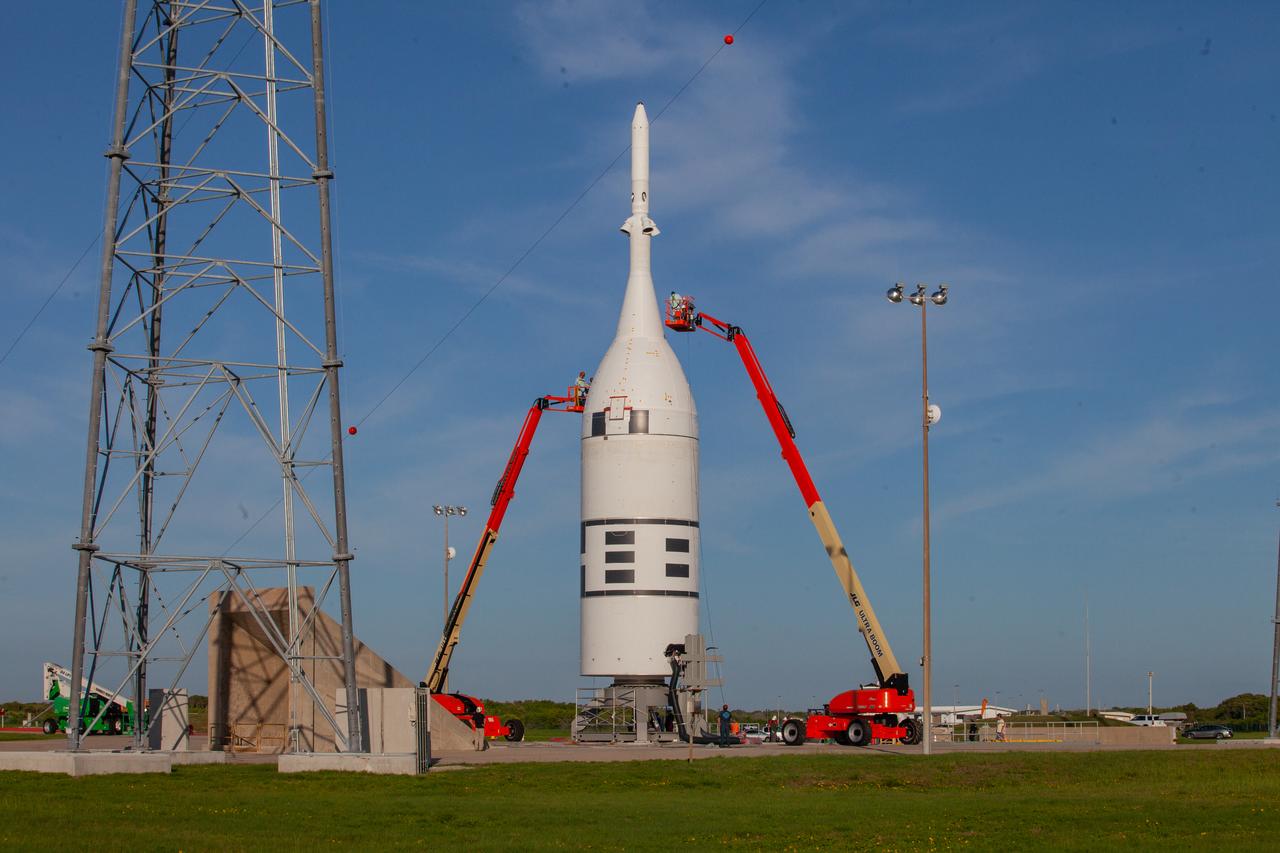
On July 1, 2019, workers prepare the Ascent Abort-2 (AA-2) test vehicle for launch at Launch Complex 46 at Cape Canaveral Air Force Station in Florida after rollback of the integration facility. A fully functional Launch Abort System (LAS) mated to a test version of the Orion spacecraft are on a Northrop Grumman provided booster on the pad for launch on NASA’s AA-2 flight test on July 2, 2019. During AA-2, the booster will send the LAS and Orion to an altitude of 31,000 feet, traveling at more than 1,000 mph. The LAS’ three motors will work together to pull the crew module away from the booster and prepare it for splashdown in the Atlantic Ocean. The flight test will prove that the abort system can pull crew to safety in the unlikely event of an emergency during ascent.
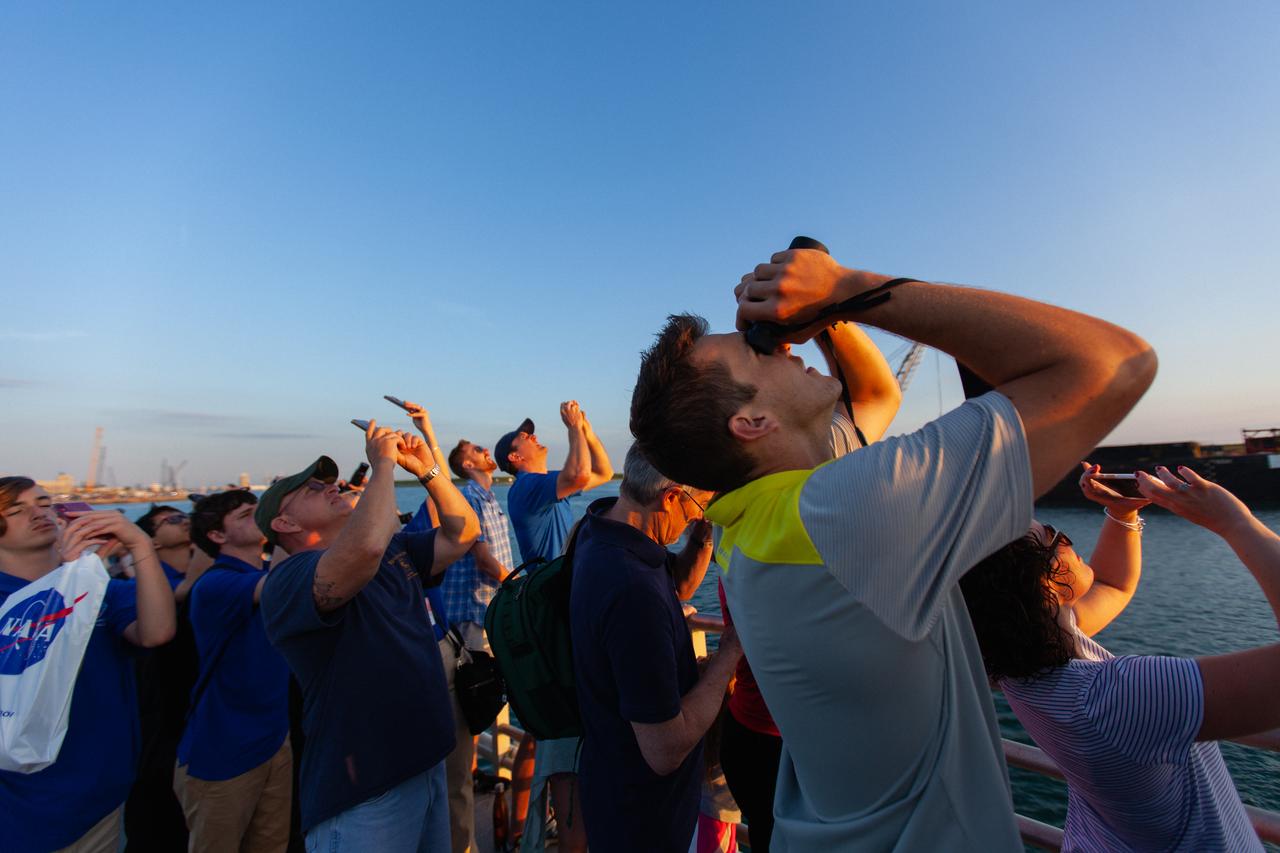
Crowds of spectators watch from Jetty Park in Cape Canaveral, Florida, on July 2, 2019, as a Northrop Grumman provided booster launches from Launch Pad 46 carrying, a fully functional Launch Abort System with a test version of Orion attached for NASA’s Ascent Abort-2 (AA-2). Launch time was 7 a.m. EDT. During AA-2, the booster will send the LAS and Orion to an altitude of 31,000 feet, traveling at Mach 1.15 (more than 1,000 mph). The LAS’ three motors will work together to pull the crew module away from the booster and prepare it for splashdown in the Atlantic Ocean. The flight test will prove that the abort system can pull crew to safety in the unlikely event of an emergency during ascent.

A view of the sunrise at Jetty Park in Cape Canaveral, Florida, on July 2, 2019, as crowds gather to watch a Northrop Grumman provided booster launch from Launch Pad 46 carrying, a fully functional Launch Abort System with a test version of Orion attached for NASA’s Ascent Abort-2 (AA-2). Launch time was 7 a.m. EDT. During AA-2, the booster will send the LAS and Orion to an altitude of 31,000 feet, traveling at Mach 1.15 (more than 1,000 mph). The LAS’ three motors will work together to pull the crew module away from the booster and prepare it for splashdown in the Atlantic Ocean. The flight test will prove that the abort system can pull crew to safety in the unlikely event of an emergency during ascent.

Crowds of spectators watch from Jetty Park in Cape Canaveral, Florida, on July 2, 2019, as a Northrop Grumman provided booster launches from Launch Pad 46 carrying, a fully functional Launch Abort System with a test version of Orion attached for NASA’s Ascent Abort-2 (AA-2). Launch time was 7 a.m. EDT. During AA-2, the booster will send the LAS and Orion to an altitude of 31,000 feet, traveling at Mach 1.15 (more than 1,000 mph). The LAS’ three motors will work together to pull the crew module away from the booster and prepare it for splashdown in the Atlantic Ocean. The flight test will prove that the abort system can pull crew to safety in the unlikely event of an emergency during ascent.

A fully functional Launch Abort System (LAS) with a test version of Orion attached, launches on NASA’s Ascent Abort-2 (AA-2) atop a Northrop Grumman provided booster on July 2, 2019, at 7 a.m. EDT, from Launch Pad 46 at Cape Canaveral Air Force Station in Florida. During AA-2, the booster will send the LAS and Orion to an altitude of 31,000 feet, traveling at Mach 1.15 (more than 1,000 mph). The LAS’ three motors will work together to pull the crew module away from the booster and prepare it for splashdown in the Atlantic Ocean. The flight test will prove that the abort system can pull crew to safety in the unlikely event of an emergency during ascent.
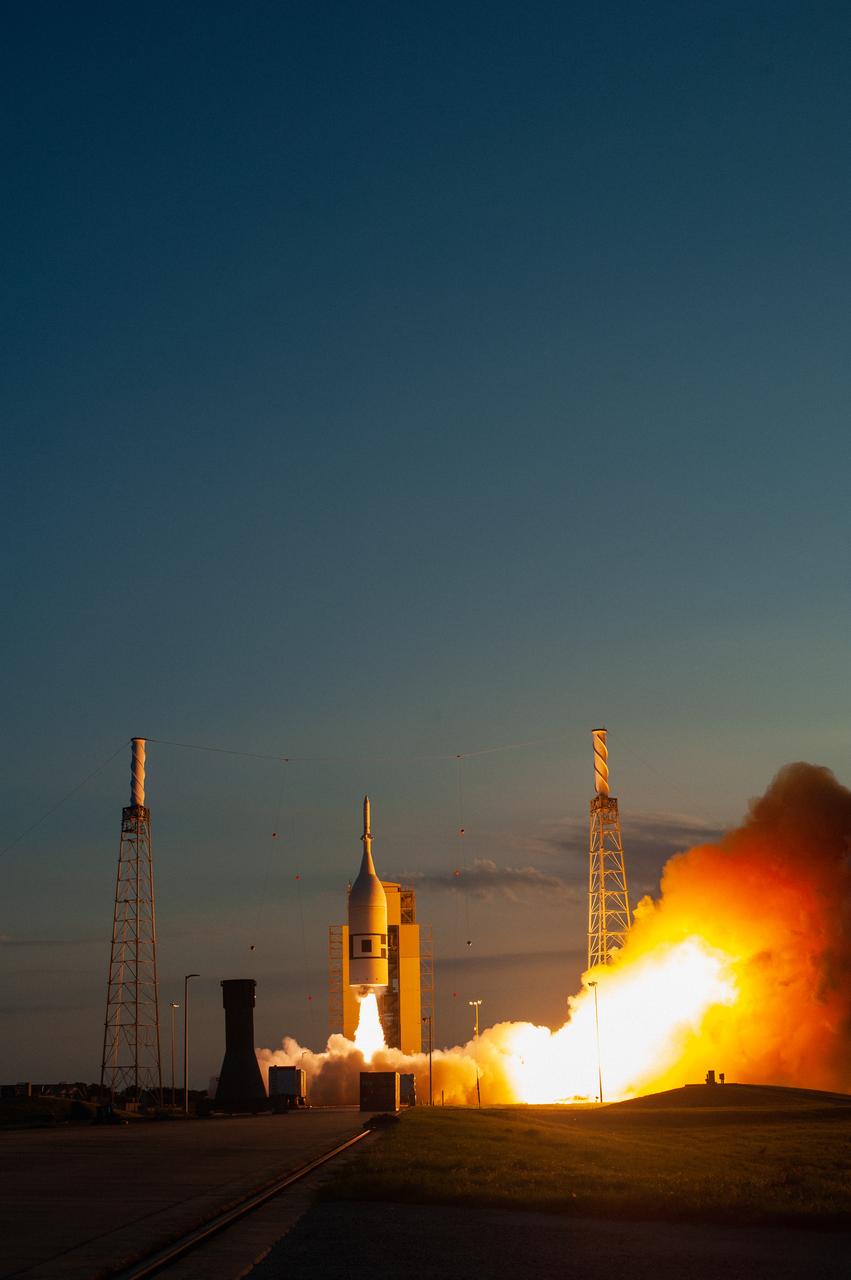
A fully functional Launch Abort System (LAS) with a test version of Orion attached, launches on NASA’s Ascent Abort-2 (AA-2) atop a Northrop Grumman provided booster on July 2, 2019, at 7 a.m. EDT, from Launch Pad 46 at Cape Canaveral Air Force Station in Florida. During AA-2, the booster will send the LAS and Orion to an altitude of 31,000 feet, traveling at Mach 1.15 (more than 1,000 mph). The LAS’ three motors will work together to pull the crew module away from the booster and prepare it for splashdown in the Atlantic Ocean. The flight test will prove that the abort system can pull crew to safety in the unlikely event of an emergency during ascent.
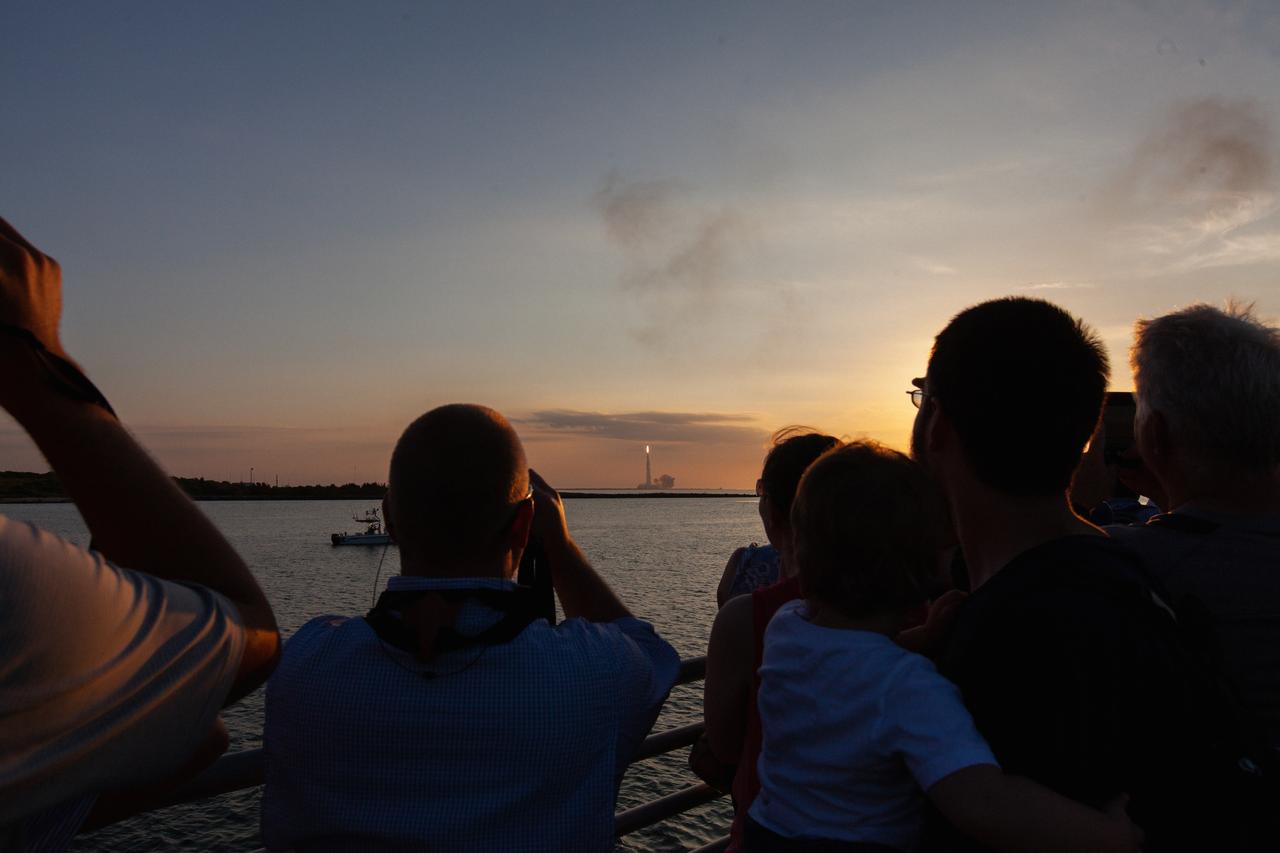
Crowds of spectators watch from Jetty Park in Cape Canaveral, Florida, on July 2, 2019, as a Northrop Grumman provided booster launches from Launch Pad 46 carrying, a fully functional Launch Abort System with a test version of Orion attached for NASA’s Ascent Abort-2 (AA-2). Launch time was 7 a.m. EDT. During AA-2, the booster will send the LAS and Orion to an altitude of 31,000 feet, traveling at Mach 1.15 (more than 1,000 mph). The LAS’ three motors will work together to pull the crew module away from the booster and prepare it for splashdown in the Atlantic Ocean. The flight test will prove that the abort system can pull crew to safety in the unlikely event of an emergency during ascent.
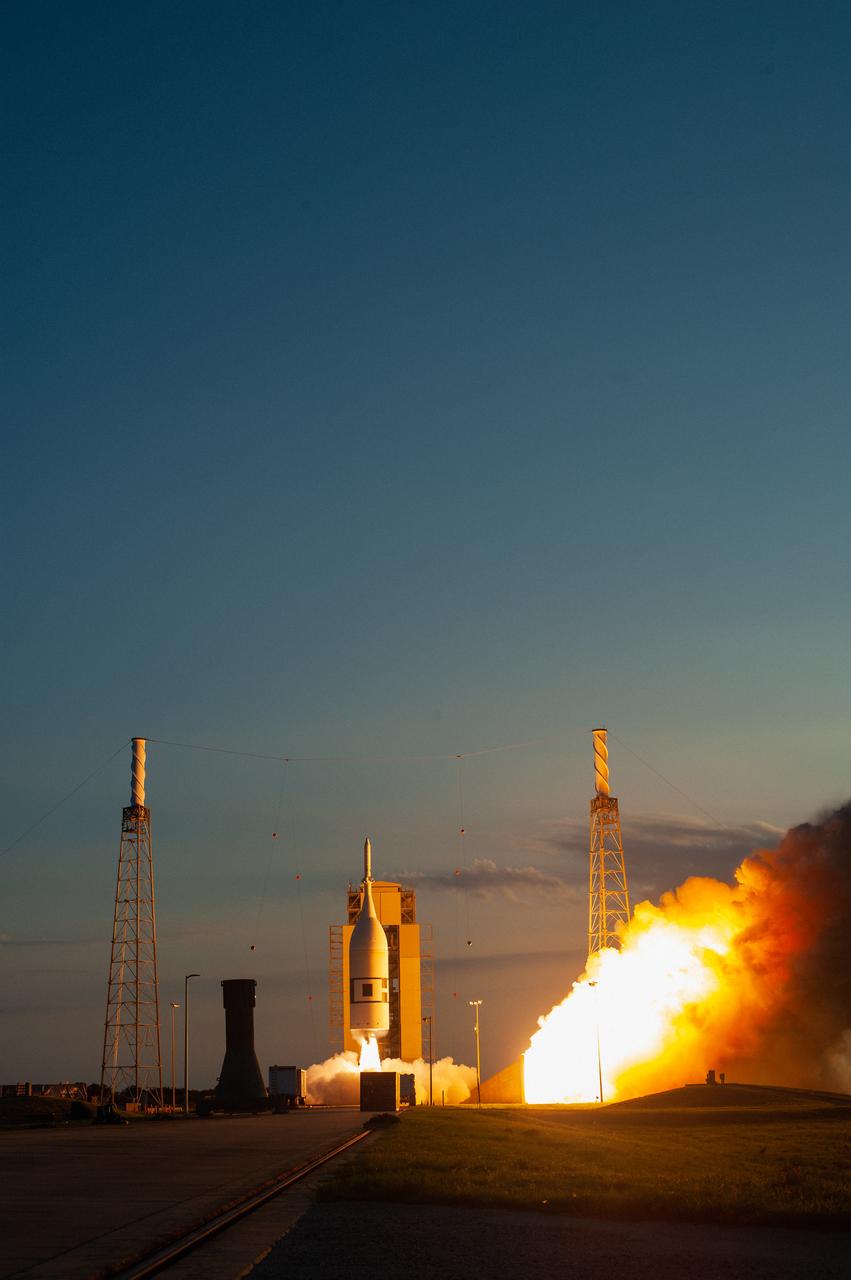
A fully functional Launch Abort System (LAS) with a test version of Orion attached, launches on NASA’s Ascent Abort-2 (AA-2) atop a Northrop Grumman provided booster on July 2, 2019, at 7 a.m. EDT, from Launch Pad 46 at Cape Canaveral Air Force Station in Florida. During AA-2, the booster will send the LAS and Orion to an altitude of 31,000 feet, traveling at Mach 1.15 (more than 1,000 mph). The LAS’ three motors will work together to pull the crew module away from the booster and prepare it for splashdown in the Atlantic Ocean. The flight test will prove that the abort system can pull crew to safety in the unlikely event of an emergency during ascent.
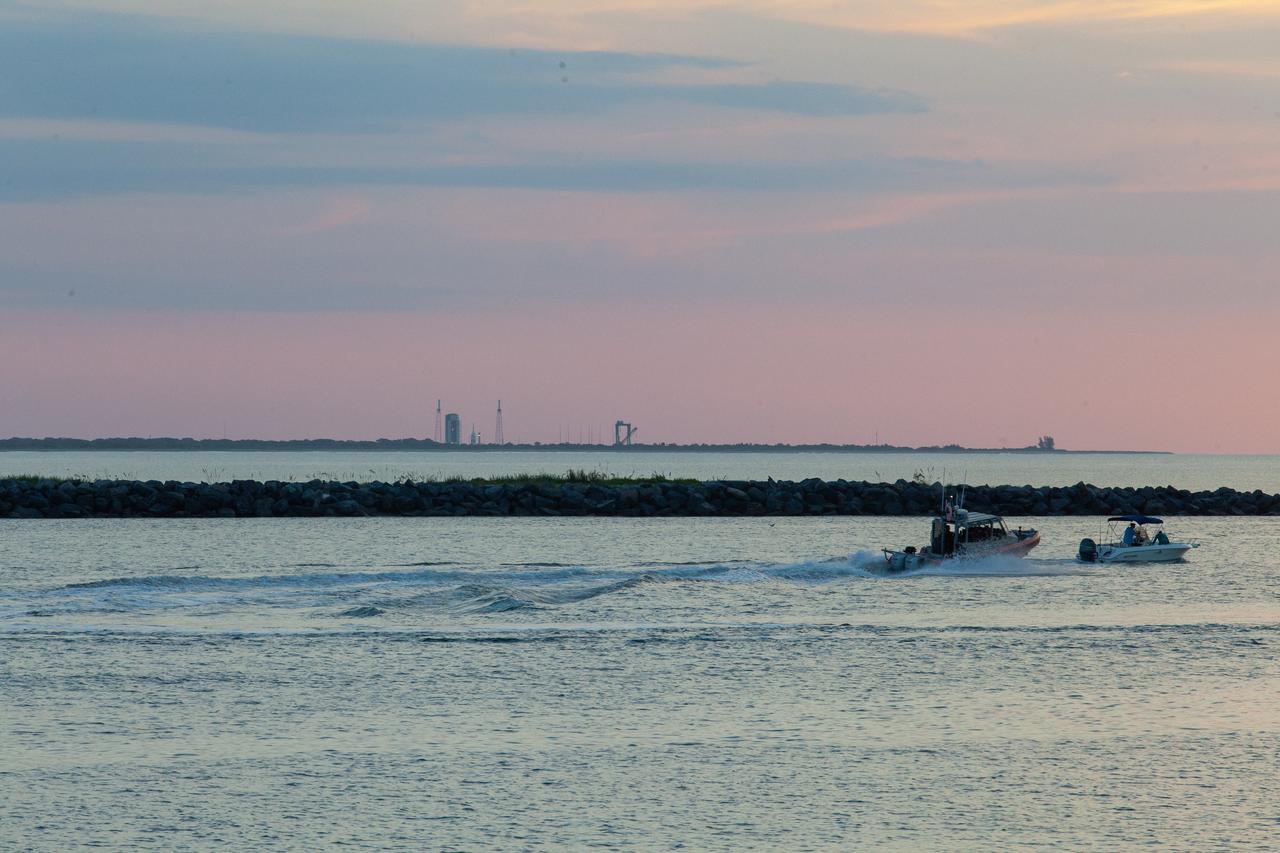
A view of Jetty Park in Cape Canaveral, Florida, during sunrise on July 2, 2019. Crowds will soon gather to watch as a Northrop Grumman provided booster launches from Launch Pad 46, carrying a fully functional Launch Abort System with a test version of Orion attached for NASA’s Ascent Abort-2 (AA-2). Launch time was 7 a.m. EDT. During AA-2, the booster will send the LAS and Orion to an altitude of 31,000 feet, traveling at Mach 1.15 (more than 1,000 mph). The LAS’ three motors will work together to pull the crew module away from the booster and prepare it for splashdown in the Atlantic Ocean. The flight test will prove that the abort system can pull crew to safety in the unlikely event of an emergency during ascent.

Crowds of spectators watch from Jetty Park in Cape Canaveral, Florida, on July 2, 2019, as a Northrop Grumman provided booster launches from Launch Pad 46 carrying, a fully functional Launch Abort System with a test version of Orion attached for NASA’s Ascent Abort-2 (AA-2). Launch time was 7 a.m. EDT. During AA-2, the booster will send the LAS and Orion to an altitude of 31,000 feet, traveling at Mach 1.15 (more than 1,000 mph). The LAS’ three motors will work together to pull the crew module away from the booster and prepare it for splashdown in the Atlantic Ocean. The flight test will prove that the abort system can pull crew to safety in the unlikely event of an emergency during ascent.
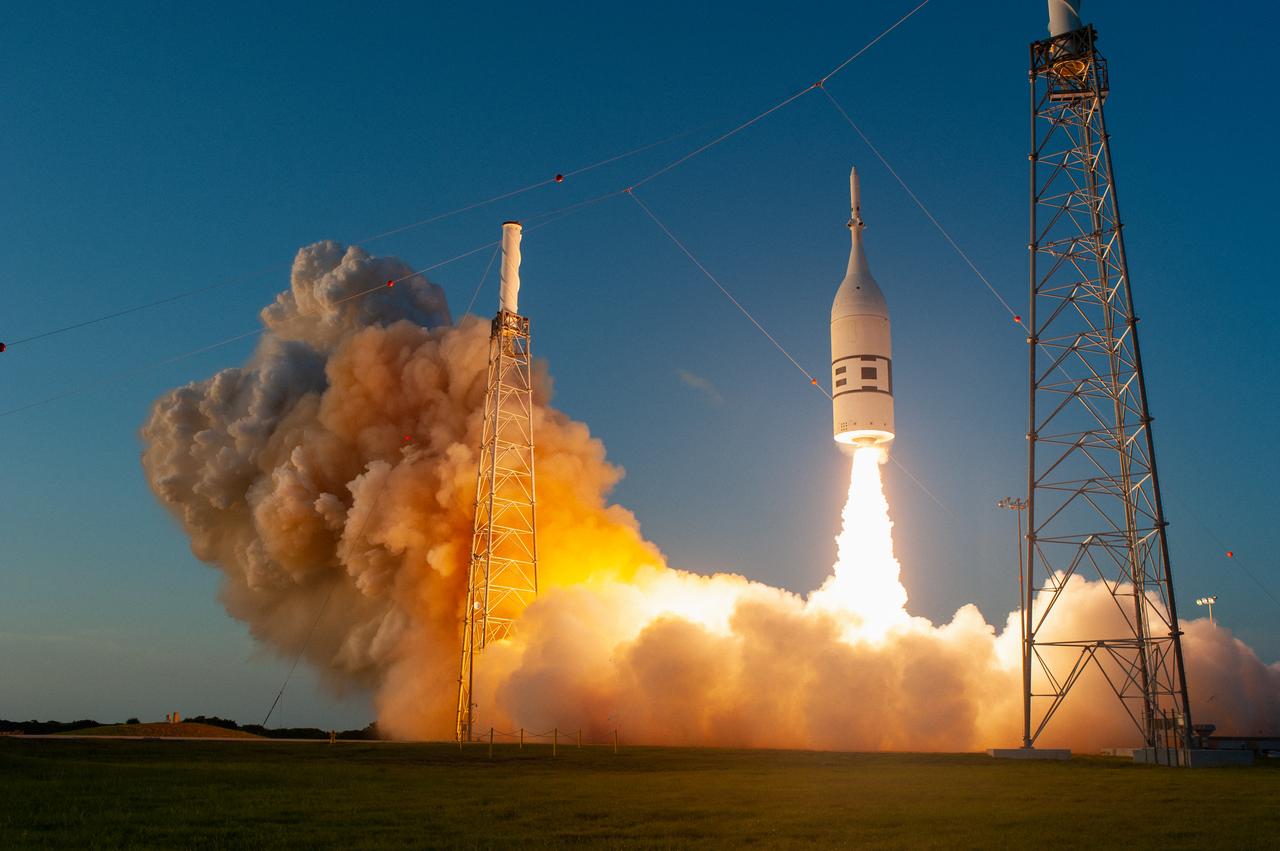
A fully functional Launch Abort System (LAS) with a test version of Orion attached, launches on NASA’s Ascent Abort-2 (AA-2) atop a Northrop Grumman provided booster on July 2, 2019, at 7 a.m. EDT, from Launch Pad 46 at Cape Canaveral Air Force Station in Florida. During AA-2, the booster will send the LAS and Orion to an altitude of 31,000 feet, traveling at Mach 1.15 (more than 1,000 mph). The LAS’ three motors will work together to pull the crew module away from the booster and prepare it for splashdown in the Atlantic Ocean. The flight test will prove that the abort system can pull crew to safety in the unlikely event of an emergency during ascent.
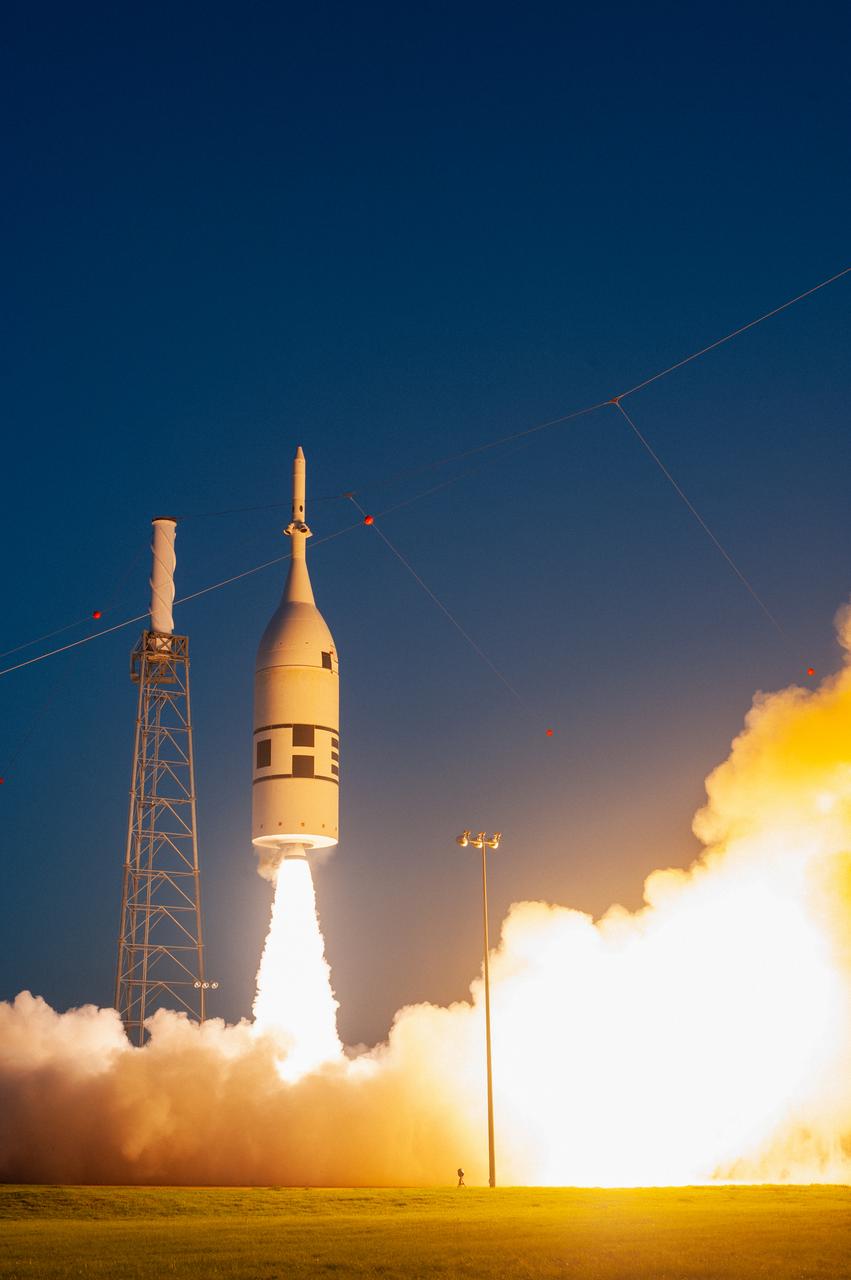
A fully functional Launch Abort System (LAS) with a test version of Orion attached, launches on NASA’s Ascent Abort-2 (AA-2) atop a Northrop Grumman provided booster on July 2, 2019, at 7 a.m. EDT, from Launch Pad 46 at Cape Canaveral Air Force Station in Florida. During AA-2, the booster will send the LAS and Orion to an altitude of 31,000 feet, traveling at Mach 1.15 (more than 1,000 mph). The LAS’ three motors will work together to pull the crew module away from the booster and prepare it for splashdown in the Atlantic Ocean. The flight test will prove that the abort system can pull crew to safety in the unlikely event of an emergency during ascent.
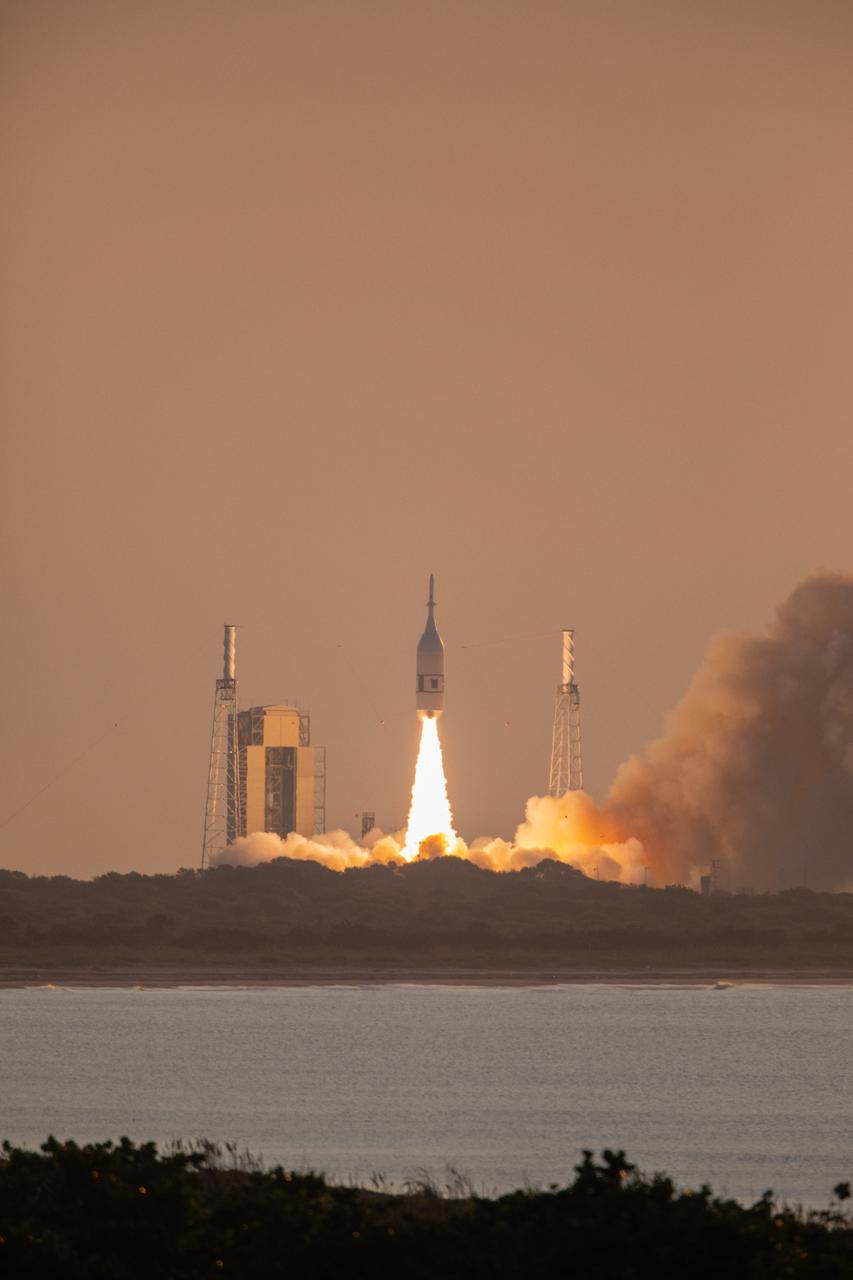
A fully functional Launch Abort System (LAS) with a test version of Orion attached, launches on NASA’s Ascent Abort-2 (AA-2) atop a Northrop Grumman provided booster on July 2, 2019, at 7 a.m. EDT, from Launch Pad 46 at Cape Canaveral Air Force Station in Florida. During AA-2, the booster will send the LAS and Orion to an altitude of 31,000 feet, traveling at Mach 1.15 (more than 1,000 mph). The LAS’ three motors will work together to pull the crew module away from the booster and prepare it for splashdown in the Atlantic Ocean. The flight test will prove that the abort system can pull crew to safety in the unlikely event of an emergency during ascent.

A brilliant sunrise fills the sky before a fully functional Launch Abort System (LAS) with a test version of Orion attached, launches on NASA’s Ascent Abort-2 (AA-2) atop a Northrop Grumman provided booster on July 2, 2019, at 7 a.m. EDT, from Launch Pad 46 at Cape Canaveral Air Force Station in Florida. During AA-2, the booster will send the LAS and Orion to an altitude of 31,000 feet, traveling at Mach 1.15 (more than 1,000 mph). The LAS’ three motors will work together to pull the crew module away from the booster and prepare it for splashdown in the Atlantic Ocean. The flight test will prove that the abort system can pull crew to safety in the unlikely event of an emergency during ascent.
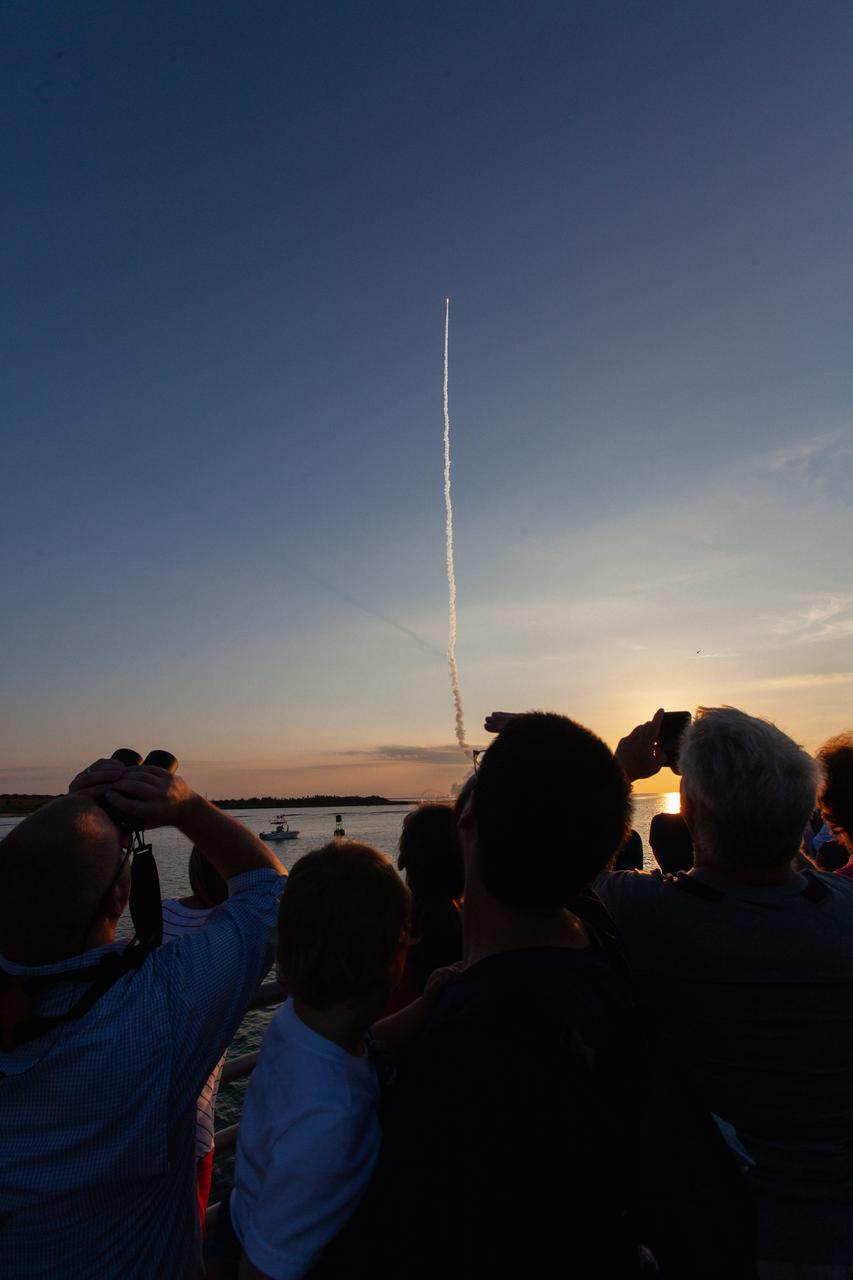
Crowds of spectators watch from Jetty Park in Cape Canaveral, Florida, on July 2, 2019, as a Northrop Grumman provided booster launches from Launch Pad 46 carrying, a fully functional Launch Abort System with a test version of Orion attached for NASA’s Ascent Abort-2 (AA-2). Launch time was 7 a.m. EDT. During AA-2, the booster will send the LAS and Orion to an altitude of 31,000 feet, traveling at Mach 1.15 (more than 1,000 mph). The LAS’ three motors will work together to pull the crew module away from the booster and prepare it for splashdown in the Atlantic Ocean. The flight test will prove that the abort system can pull crew to safety in the unlikely event of an emergency during ascent.

A brilliant sunrise fills the sky before a fully functional Launch Abort System (LAS) with a test version of Orion attached, launches on NASA’s Ascent Abort-2 (AA-2) atop a Northrop Grumman provided booster on July 2, 2019, at 7 a.m. EDT, from Launch Pad 46 at Cape Canaveral Air Force Station in Florida. During AA-2, the booster will send the LAS and Orion to an altitude of 31,000 feet, traveling at Mach 1.15 (more than 1,000 mph). The LAS’ three motors will work together to pull the crew module away from the booster and prepare it for splashdown in the Atlantic Ocean. The flight test will prove that the abort system can pull crew to safety in the unlikely event of an emergency during ascent.
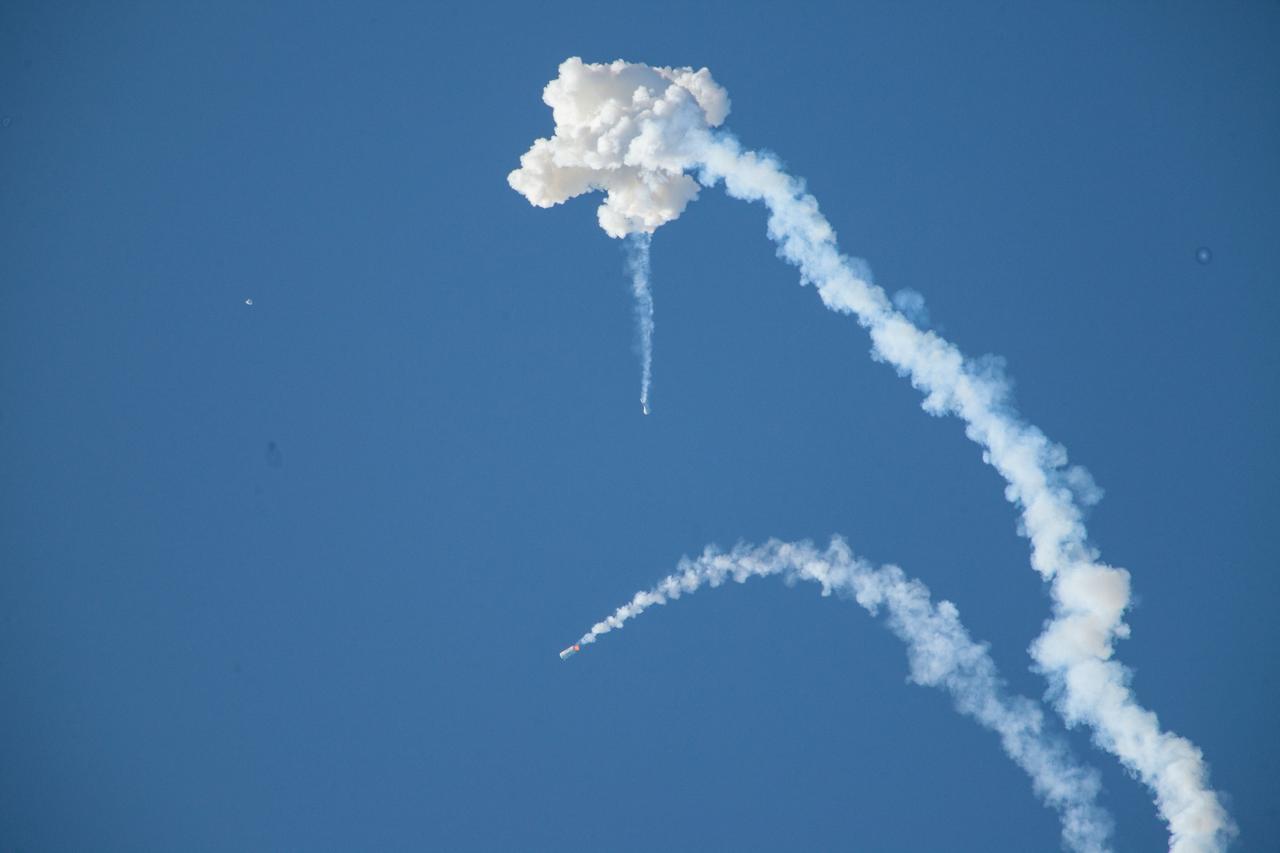
A fully functional Launch Abort System (LAS) with a test version of Orion attached, soars upward on NASA’s Ascent Abort-2 (AA-2) flight test atop a Northrop Grumman provided booster on July 2, 2019, after launching at 7 a.m. EDT, from Launch Pad 46 at Cape Canaveral Air Force Station in Florida. During AA-2, the booster will send the LAS and Orion to an altitude of 31,000 feet, traveling at Mach 1.15 (more than 1,000 mph). The LAS’ three motors will work together to pull the crew module away from the booster and prepare it for splashdown in the Atlantic Ocean. The flight test will prove that the abort system can pull crew to safety in the unlikely event of an emergency during ascent.
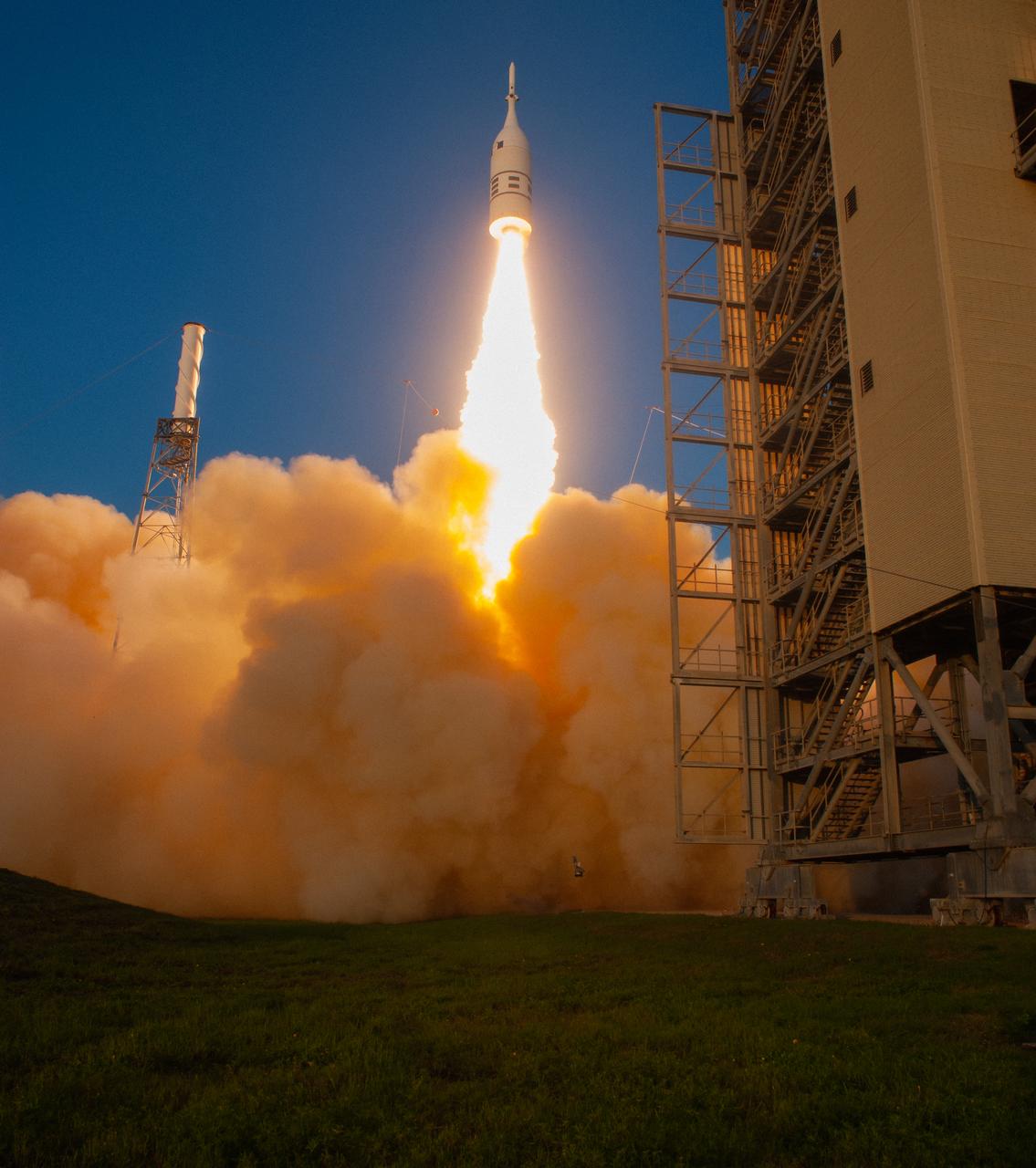
A fully functional Launch Abort System (LAS) with a test version of Orion attached, launches on NASA’s Ascent Abort-2 (AA-2) atop a Northrop Grumman provided booster on July 2, 2019, at 7 a.m. EDT, from Launch Pad 46 at Cape Canaveral Air Force Station in Florida. During AA-2, the booster will send the LAS and Orion to an altitude of 31,000 feet, traveling at Mach 1.15 (more than 1,000 mph). The LAS’ three motors will work together to pull the crew module away from the booster and prepare it for splashdown in the Atlantic Ocean. The flight test will prove that the abort system can pull crew to safety in the unlikely event of an emergency during ascent.
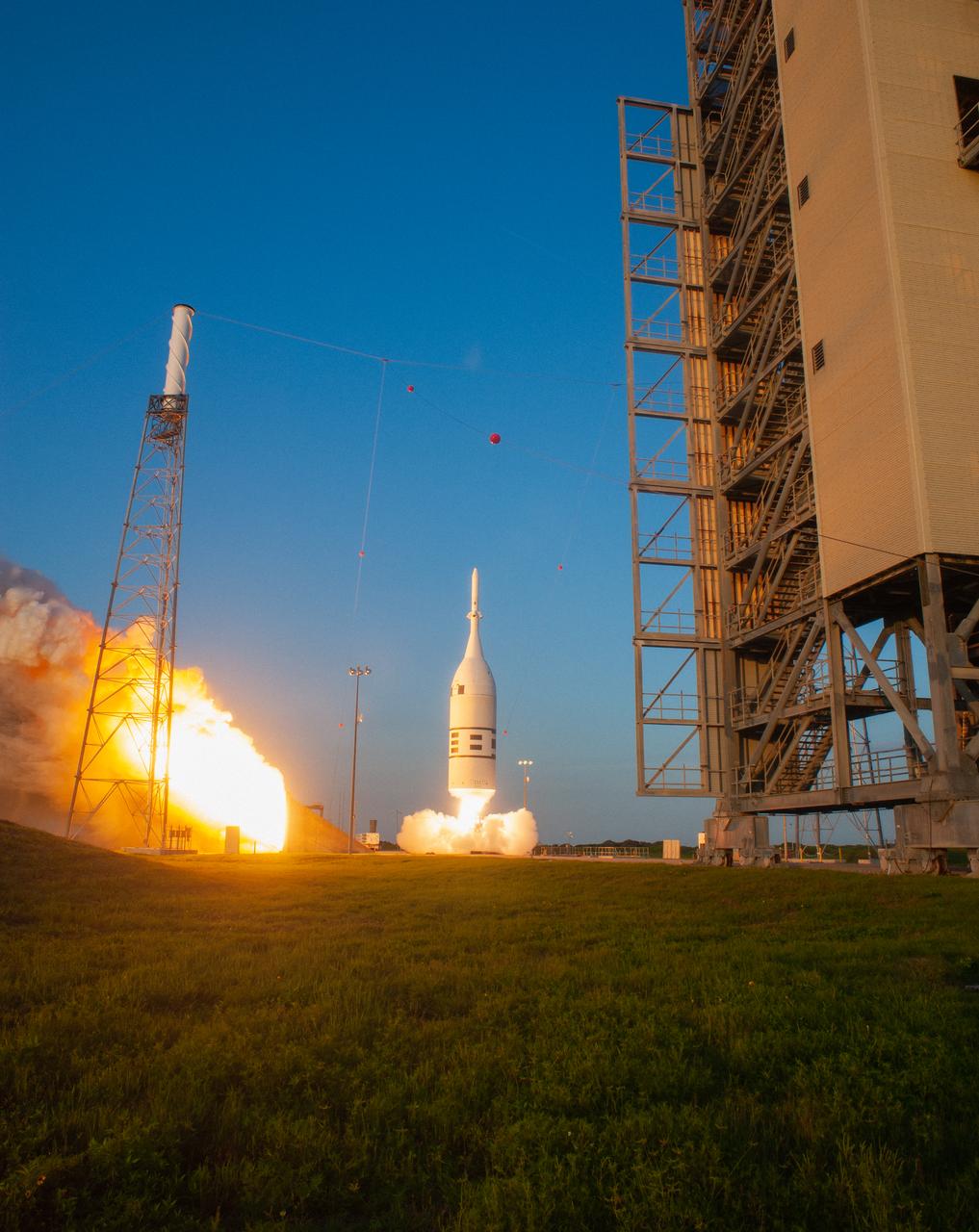
A fully functional Launch Abort System (LAS) with a test version of Orion attached, launches on NASA’s Ascent Abort-2 (AA-2) atop a Northrop Grumman provided booster on July 2, 2019, at 7 a.m. EDT, from Launch Pad 46 at Cape Canaveral Air Force Station in Florida. During AA-2, the booster will send the LAS and Orion to an altitude of 31,000 feet, traveling at Mach 1.15 (more than 1,000 mph). The LAS’ three motors will work together to pull the crew module away from the booster and prepare it for splashdown in the Atlantic Ocean. The flight test will prove that the abort system can pull crew to safety in the unlikely event of an emergency during ascent.

Randy Bresnik, NASA astronaut, answers a question from a member of the news media during a prelaunch news conference for NASA’s Ascent Abort-2 (AA-2) flight test at the agency’s Kennedy Space Center in Florida on July 1, 2019. For AA-2, a test version of the Orion spacecraft attached to a fully functional Launch Abort System (LAS) will launch atop a Northrop Grumman provided booster on July 2, 2019, from Launch Pad 46 at Cape Canaveral Air Force Station in Florida. During AA-2, the booster will send the LAS and Orion to an altitude of 31,000 feet, traveling at more than 1,000 mph. The LAS’ three motors will work together to pull the crew module away from the booster and prepare it for splashdown in the Atlantic Ocean. The flight test will prove that the abort system can pull crew to safety in the unlikely event of an emergency during ascent.
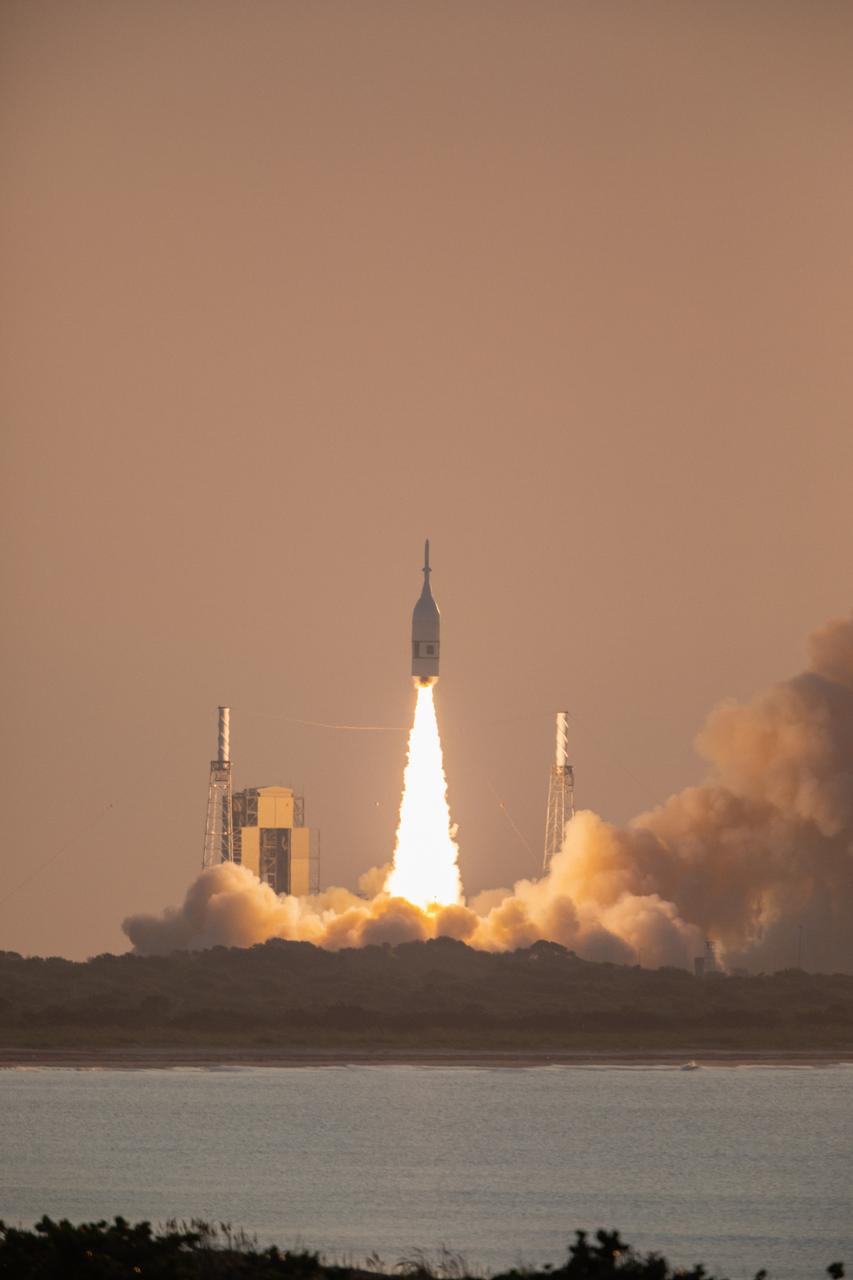
A fully functional Launch Abort System (LAS) with a test version of Orion attached, launches on NASA’s Ascent Abort-2 (AA-2) atop a Northrop Grumman provided booster on July 2, 2019, at 7 a.m. EDT, from Launch Pad 46 at Cape Canaveral Air Force Station in Florida. During AA-2, the booster will send the LAS and Orion to an altitude of 31,000 feet, traveling at Mach 1.15 (more than 1,000 mph). The LAS’ three motors will work together to pull the crew module away from the booster and prepare it for splashdown in the Atlantic Ocean. The flight test will prove that the abort system can pull crew to safety in the unlikely event of an emergency during ascent.
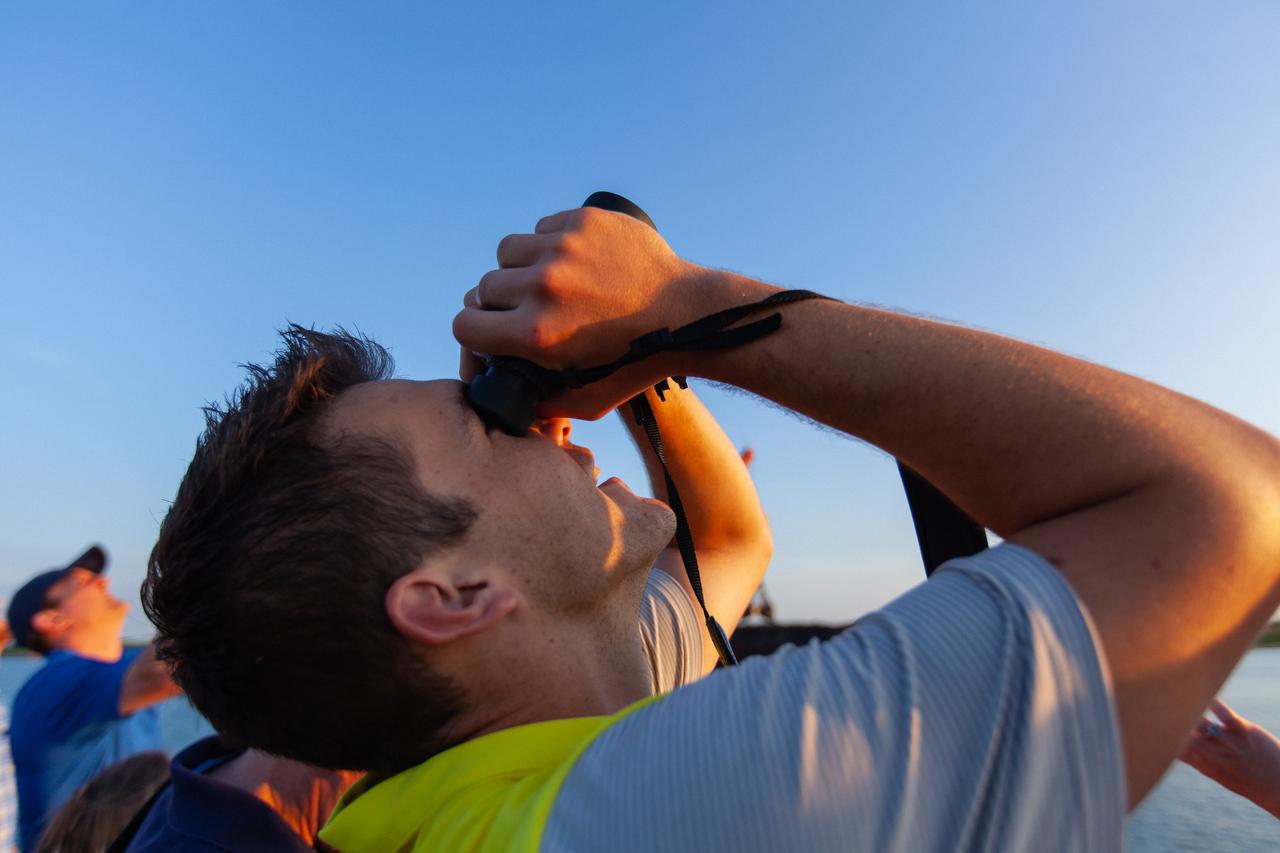
Crowds of spectators watch from Jetty Park in Cape Canaveral, Florida, on July 2, 2019, as a Northrop Grumman provided booster launches from Launch Pad 46 carrying, a fully functional Launch Abort System with a test version of Orion attached for NASA’s Ascent Abort-2 (AA-2). Launch time was 7 a.m. EDT. During AA-2, the booster will send the LAS and Orion to an altitude of 31,000 feet, traveling at Mach 1.15 (more than 1,000 mph). The LAS’ three motors will work together to pull the crew module away from the booster and prepare it for splashdown in the Atlantic Ocean. The flight test will prove that the abort system can pull crew to safety in the unlikely event of an emergency during ascent.

Jenny Devolites, AA-2 Crew Module manager, participates in a prelaunch news conference for NASA’s Ascent Abort-2 (AA-2) flight test at the agency’s Kennedy Space Center in Florida on July 1, 2019. For AA-2, a test version of the Orion spacecraft attached to a fully functional Launch Abort System (LAS) will launch atop a Northrop Grumman provided booster on July 2, 2019, from Launch Pad 46 at Cape Canaveral Air Force Station in Florida. During AA-2, the booster will send the LAS and Orion to an altitude of 31,000 feet, traveling at more than 1,000 mph. The LAS’ three motors will work together to pull the crew module away from the booster and prepare it for splashdown in the Atlantic Ocean. The flight test will prove that the abort system can pull crew to safety in the unlikely event of an emergency during ascent.
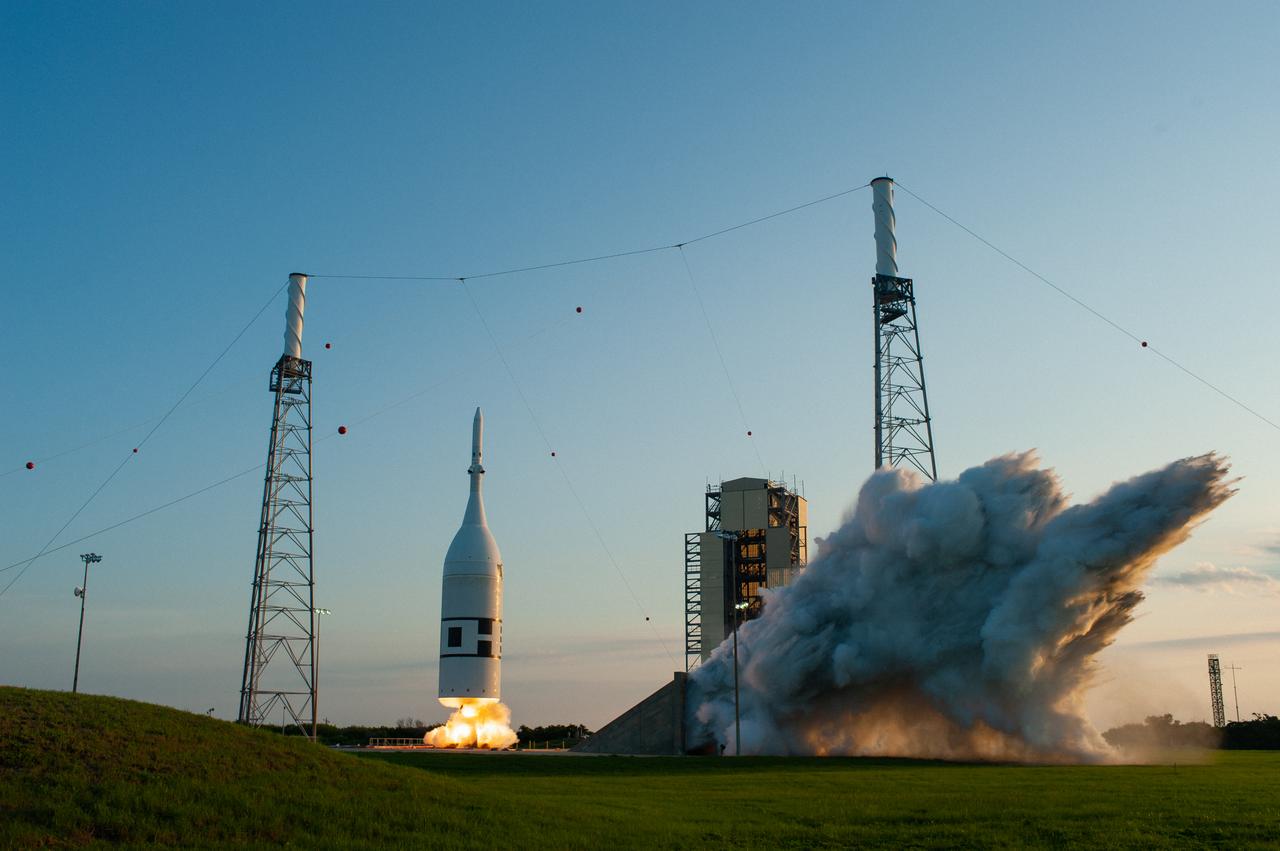
A fully functional Launch Abort System (LAS) with a test version of Orion attached, launches on NASA’s Ascent Abort-2 (AA-2) atop a Northrop Grumman provided booster on July 2, 2019, at 7 a.m. EDT, from Launch Pad 46 at Cape Canaveral Air Force Station in Florida. During AA-2, the booster will send the LAS and Orion to an altitude of 31,000 feet, traveling at Mach 1.15 (more than 1,000 mph). The LAS’ three motors will work together to pull the crew module away from the booster and prepare it for splashdown in the Atlantic Ocean. The flight test will prove that the abort system can pull crew to safety in the unlikely event of an emergency during ascent.
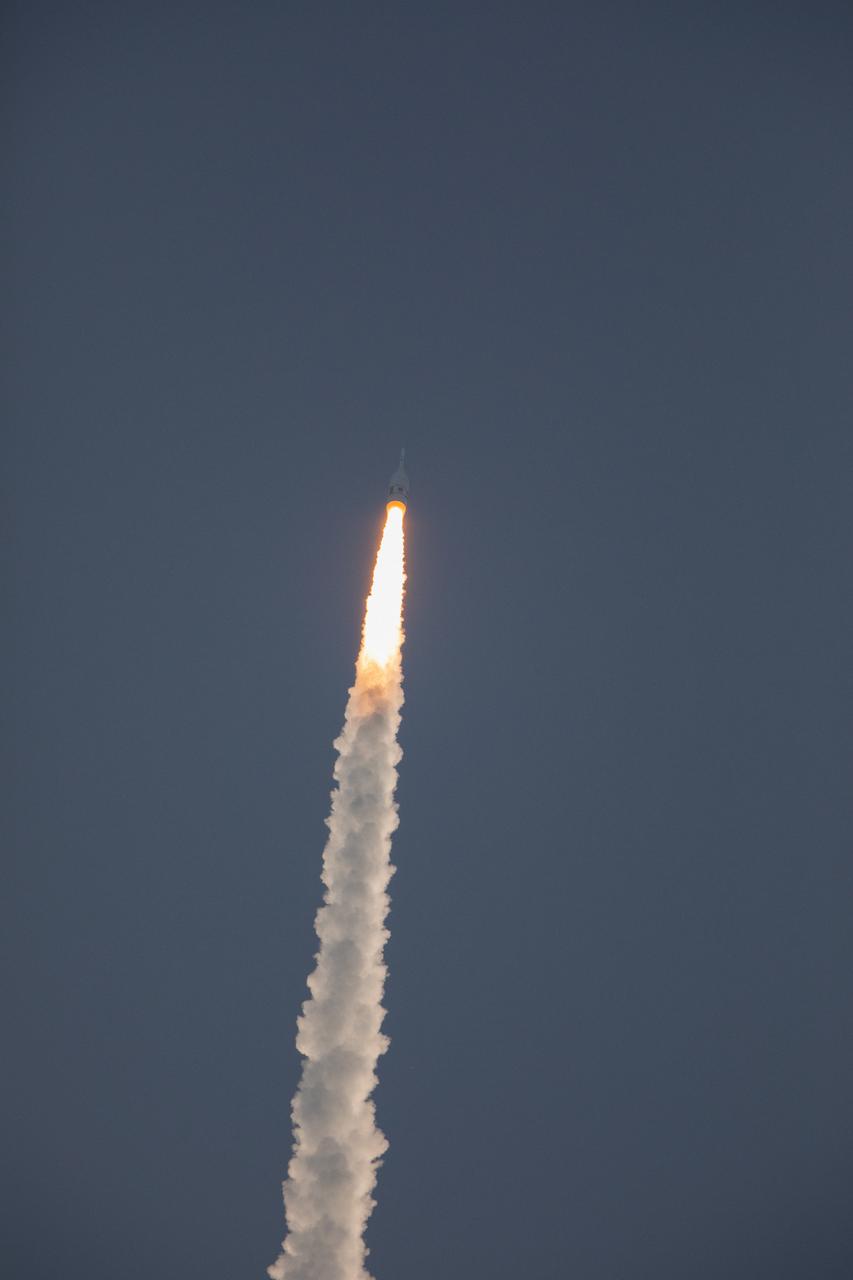
A fully functional Launch Abort System (LAS) with a test version of Orion attached, soars upward on NASA’s Ascent Abort-2 (AA-2) flight test atop a Northrop Grumman provided booster on July 2, 2019, after launching at 7 a.m. EDT, from Launch Pad 46 at Cape Canaveral Air Force Station in Florida. During AA-2, the booster will send the LAS and Orion to an altitude of 31,000 feet, traveling at Mach 1.15 (more than 1,000 mph). The LAS’ three motors will work together to pull the crew module away from the booster and prepare it for splashdown in the Atlantic Ocean. The flight test will prove that the abort system can pull crew to safety in the unlikely event of an emergency during ascent.

Crowds of spectators watch from Jetty Park in Cape Canaveral, Florida, on July 2, 2019, as a Northrop Grumman provided booster launches from Launch Pad 46 carrying, a fully functional Launch Abort System with a test version of Orion attached for NASA’s Ascent Abort-2 (AA-2). Launch time was 7 a.m. EDT. During AA-2, the booster will send the LAS and Orion to an altitude of 31,000 feet, traveling at Mach 1.15 (more than 1,000 mph). The LAS’ three motors will work together to pull the crew module away from the booster and prepare it for splashdown in the Atlantic Ocean. The flight test will prove that the abort system can pull crew to safety in the unlikely event of an emergency during ascent.
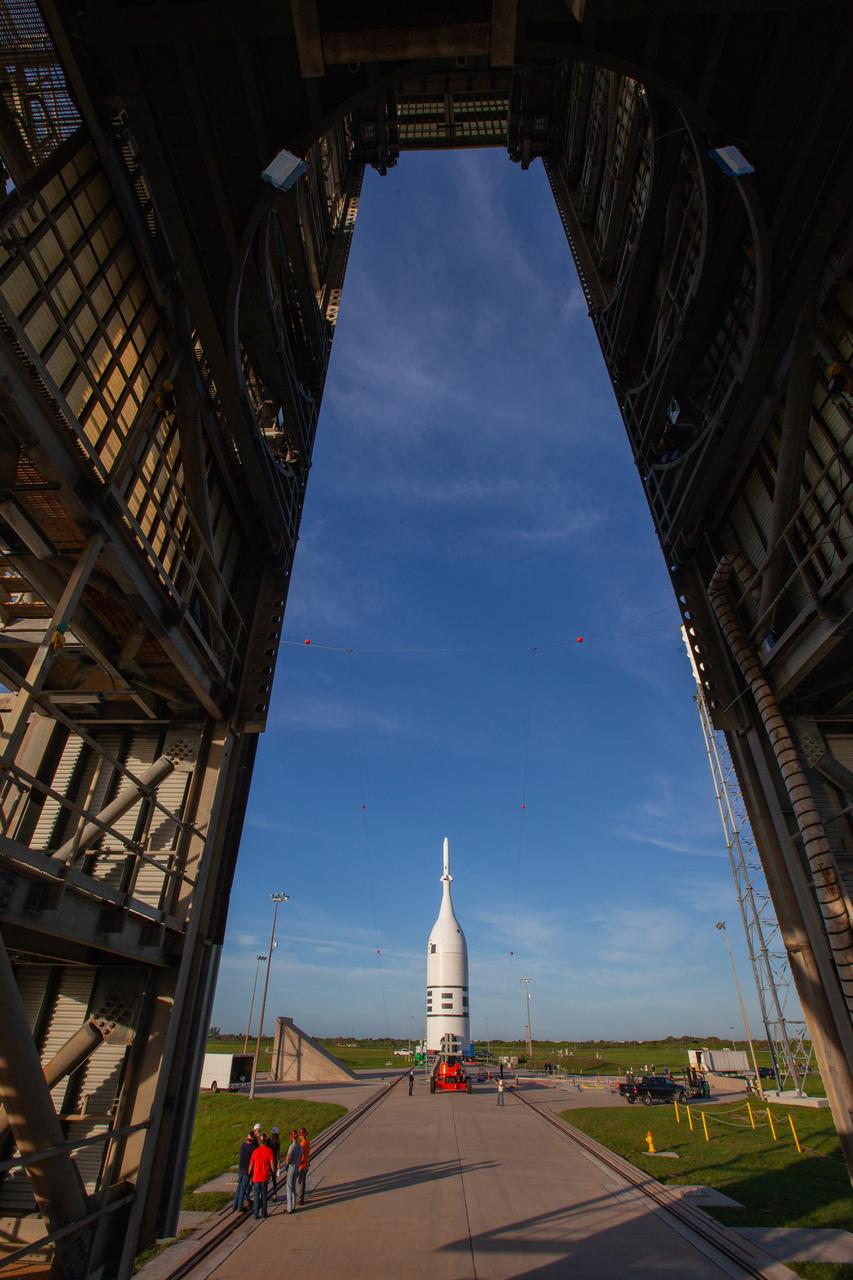
A view of the Ascent Abort-2 (AA-2) test vehicle from inside the vertical integration facility at Launch Complex 46 at Cape Canaveral Air Force Station in Florida after rollback of the integration facility on July 1, 2019. A fully functional Launch Abort System (LAS) mated to a test version of the Orion spacecraft are on a Northrop Grumman provided booster on the pad for launch on NASA’s AA-2 flight test on July 2, 2019. During AA-2, the booster will send the LAS and Orion to an altitude of 31,000 feet, traveling at more than 1,000 mph. The LAS’ three motors will work together to pull the crew module away from the booster and prepare it for splashdown in the Atlantic Ocean. The flight test will prove that the abort system can pull crew to safety in the unlikely event of an emergency during ascent.
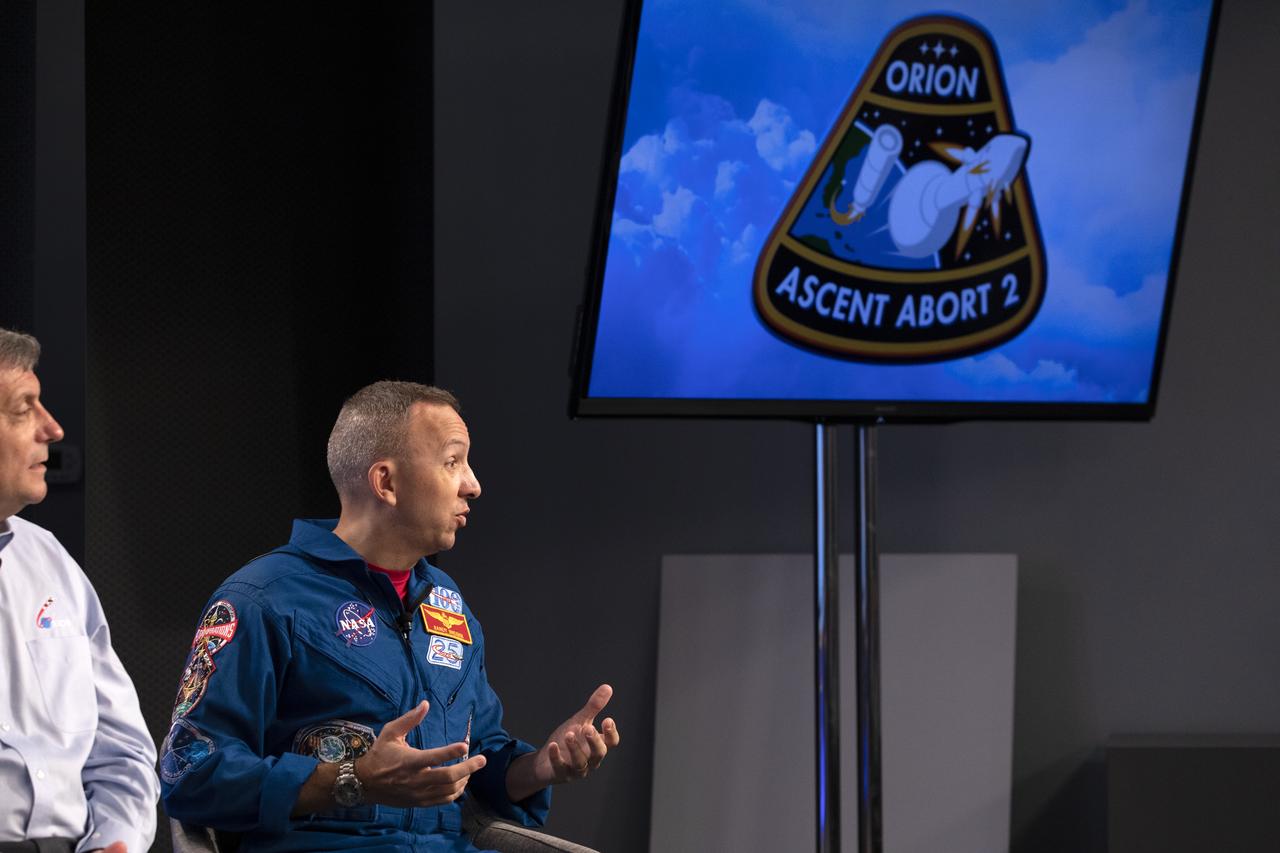
From left, Mark Kirasich, Orion Program manager; and Randy Bresnik, NASA astronaut, participate in a prelaunch news conference for NASA’s Ascent Abort-2 (AA-2) flight test at the agency’s Kennedy Space Center in Florida on July 1, 2019. For AA-2, a test version of the Orion spacecraft attached to a fully functional Launch Abort System (LAS) will launch atop a Northrop Grumman provided booster on July 2, 2019, from Launch Pad 46 at Cape Canaveral Air Force Station in Florida. During AA-2, the booster will send the LAS and Orion to an altitude of 31,000 feet, traveling at more than 1,000 mph. The LAS’ three motors will work together to pull the crew module away from the booster and prepare it for splashdown in the Atlantic Ocean. The flight test will prove that the abort system can pull crew to safety in the unlikely event of an emergency during ascent.
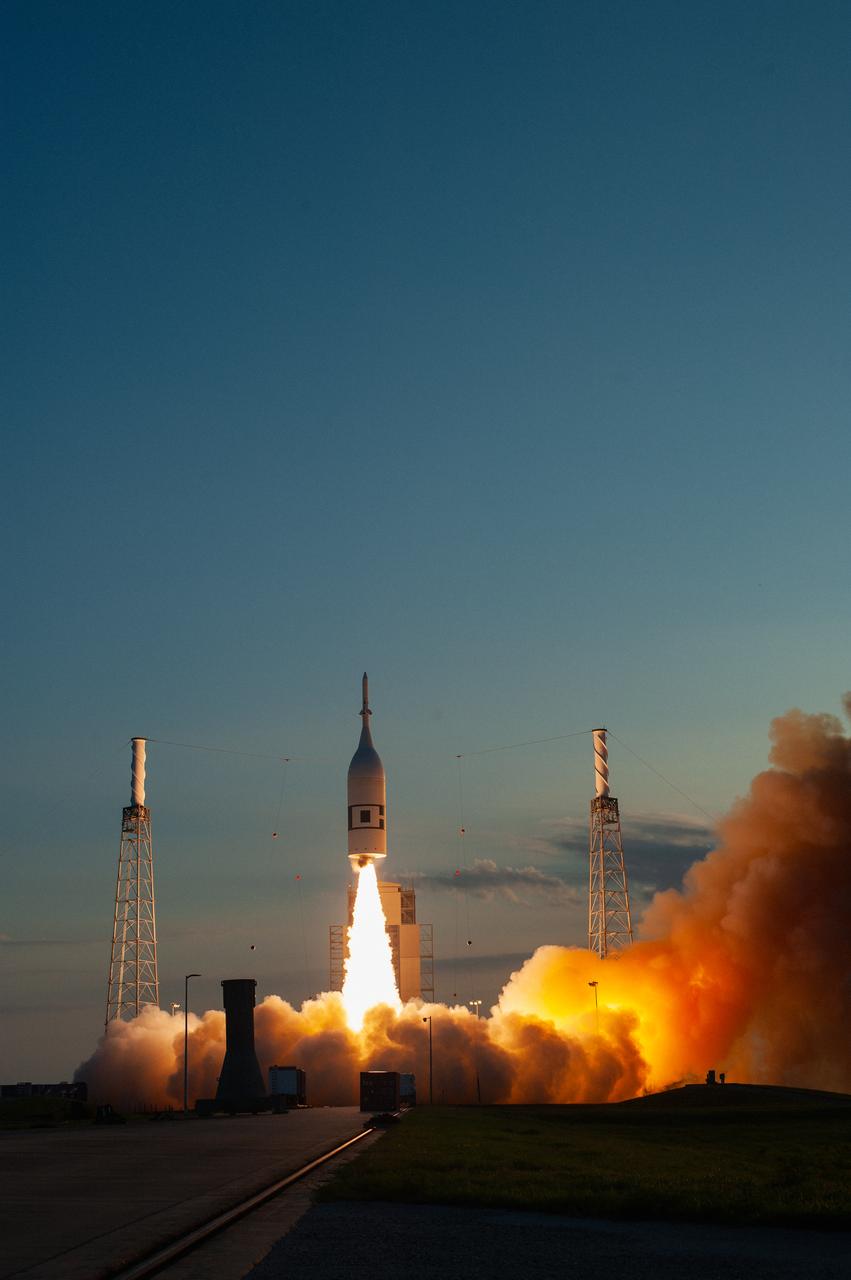
A fully functional Launch Abort System (LAS) with a test version of Orion attached, launches on NASA’s Ascent Abort-2 (AA-2) atop a Northrop Grumman provided booster on July 2, 2019, at 7 a.m. EDT, from Launch Pad 46 at Cape Canaveral Air Force Station in Florida. During AA-2, the booster will send the LAS and Orion to an altitude of 31,000 feet, traveling at Mach 1.15 (more than 1,000 mph). The LAS’ three motors will work together to pull the crew module away from the booster and prepare it for splashdown in the Atlantic Ocean. The flight test will prove that the abort system can pull crew to safety in the unlikely event of an emergency during ascent.
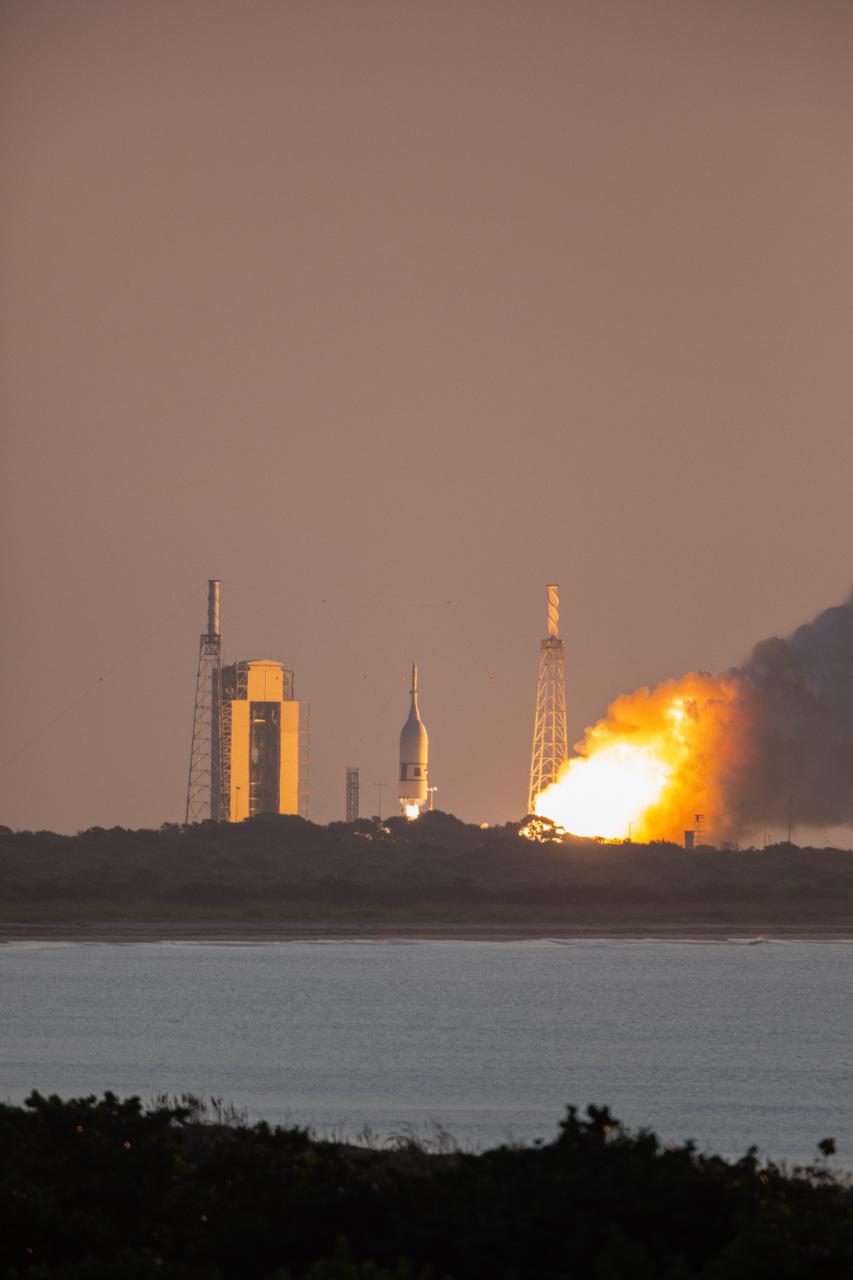
A fully functional Launch Abort System (LAS) with a test version of Orion attached, launches on NASA’s Ascent Abort-2 (AA-2) atop a Northrop Grumman provided booster on July 2, 2019, at 7 a.m. EDT, from Launch Pad 46 at Cape Canaveral Air Force Station in Florida. During AA-2, the booster will send the LAS and Orion to an altitude of 31,000 feet, traveling at Mach 1.15 (more than 1,000 mph). The LAS’ three motors will work together to pull the crew module away from the booster and prepare it for splashdown in the Atlantic Ocean. The flight test will prove that the abort system can pull crew to safety in the unlikely event of an emergency during ascent.
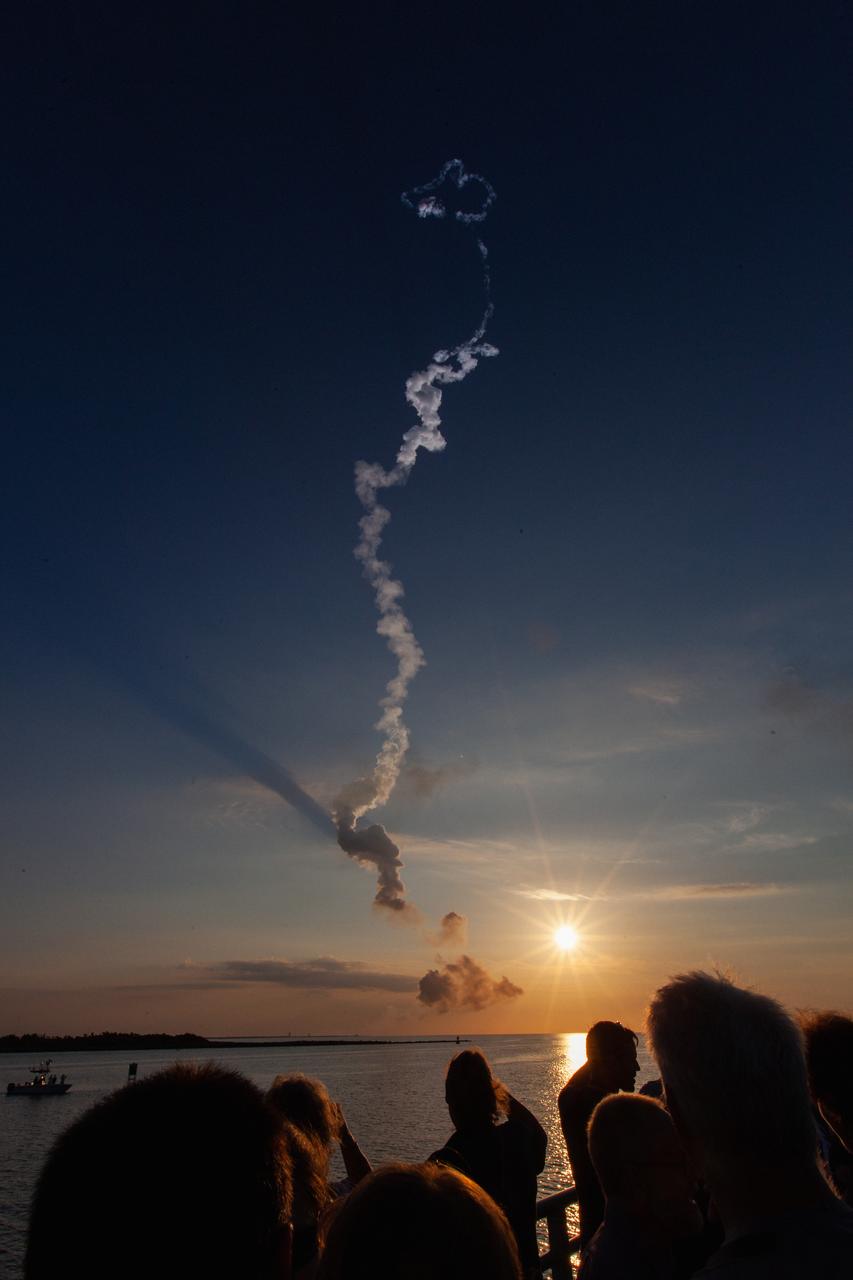
Crowds of spectators watch from Jetty Park in Cape Canaveral, Florida, on July 2, 2019, as a Northrop Grumman provided booster launches from Launch Pad 46 carrying, a fully functional Launch Abort System with a test version of Orion attached for NASA’s Ascent Abort-2 (AA-2). Launch time was 7 a.m. EDT. During AA-2, the booster will send the LAS and Orion to an altitude of 31,000 feet, traveling at Mach 1.15 (more than 1,000 mph). The LAS’ three motors will work together to pull the crew module away from the booster and prepare it for splashdown in the Atlantic Ocean. The flight test will prove that the abort system can pull crew to safety in the unlikely event of an emergency during ascent.
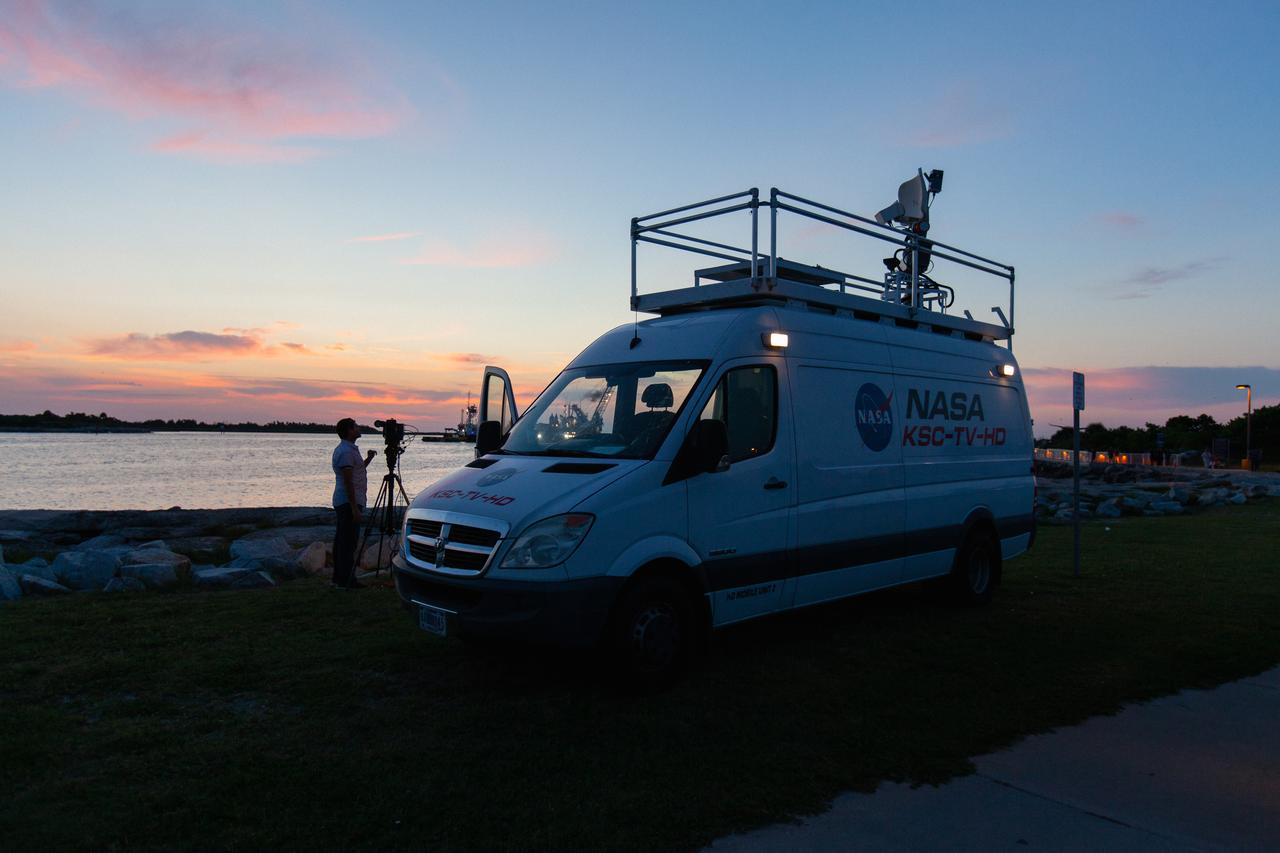
Crowds of spectators watch from Jetty Park in Cape Canaveral, Florida, on July 2, 2019, as a Northrop Grumman provided booster launches from Launch Pad 46 carrying, a fully functional Launch Abort System with a test version of Orion attached for NASA’s Ascent Abort-2 (AA-2). Launch time was 7 a.m. EDT. During AA-2, the booster will send the LAS and Orion to an altitude of 31,000 feet, traveling at Mach 1.15 (more than 1,000 mph). The LAS’ three motors will work together to pull the crew module away from the booster and prepare it for splashdown in the Atlantic Ocean. The flight test will prove that the abort system can pull crew to safety in the unlikely event of an emergency during ascent.
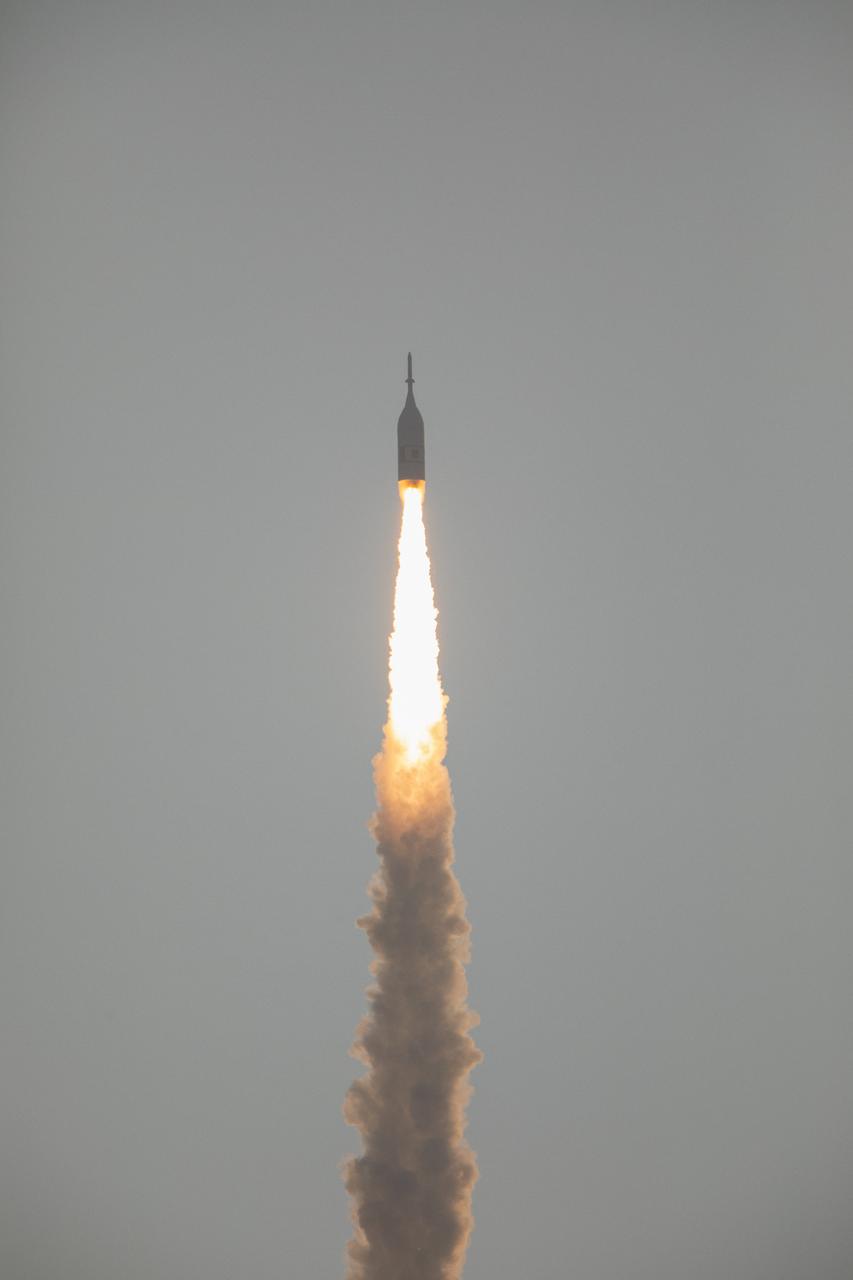
A fully functional Launch Abort System (LAS) with a test version of Orion attached, launches on NASA’s Ascent Abort-2 (AA-2) atop a Northrop Grumman provided booster on July 2, 2019, at 7 a.m. EDT, from Launch Pad 46 at Cape Canaveral Air Force Station in Florida. During AA-2, the booster will send the LAS and Orion to an altitude of 31,000 feet, traveling at Mach 1.15 (more than 1,000 mph). The LAS’ three motors will work together to pull the crew module away from the booster and prepare it for splashdown in the Atlantic Ocean. The flight test will prove that the abort system can pull crew to safety in the unlikely event of an emergency during ascent.

Crowds of spectators watch from Jetty Park in Cape Canaveral, Florida, on July 2, 2019, as a Northrop Grumman provided booster launches from Launch Pad 46 carrying, a fully functional Launch Abort System with a test version of Orion attached for NASA’s Ascent Abort-2 (AA-2). Launch time was 7 a.m. EDT. During AA-2, the booster will send the LAS and Orion to an altitude of 31,000 feet, traveling at Mach 1.15 (more than 1,000 mph). The LAS’ three motors will work together to pull the crew module away from the booster and prepare it for splashdown in the Atlantic Ocean. The flight test will prove that the abort system can pull crew to safety in the unlikely event of an emergency during ascent.
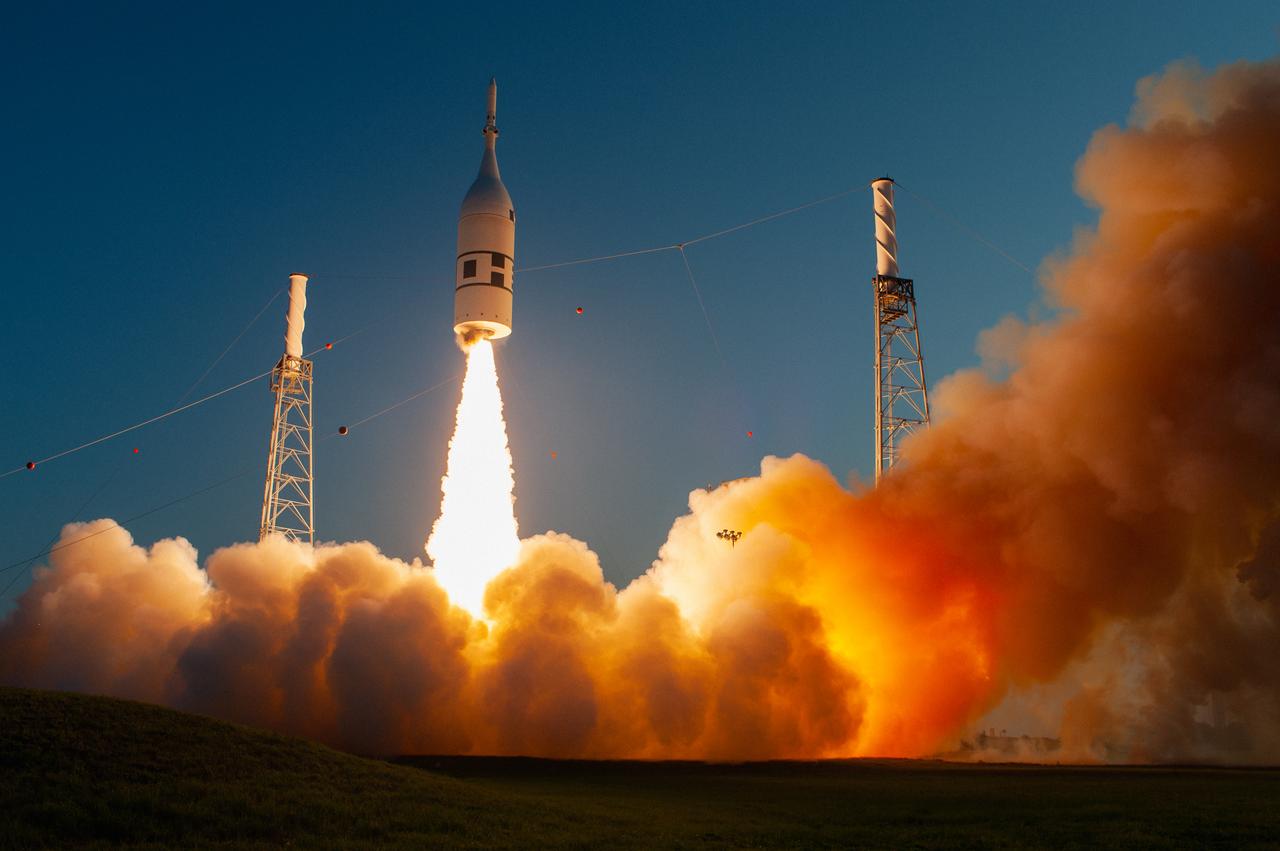
A fully functional Launch Abort System (LAS) with a test version of Orion attached, soars upward on NASA’s Ascent Abort-2 (AA-2) flight test atop a Northrop Grumman provided booster on July 2, 2019, after launching at 7 a.m. EDT, from Launch Pad 46 at Cape Canaveral Air Force Station in Florida. During AA-2, the booster will send the LAS and Orion to an altitude of 31,000 feet, traveling at Mach 1.15 (more than 1,000 mph). The LAS’ three motors will work together to pull the crew module away from the booster and prepare it for splashdown in the Atlantic Ocean. The flight test will prove that the abort system can pull crew to safety in the unlikely event of an emergency during ascent.

Crowds of spectators watch from Jetty Park in Cape Canaveral, Florida, on July 2, 2019, as a Northrop Grumman provided booster launches from Launch Pad 46 carrying, a fully functional Launch Abort System with a test version of Orion attached for NASA’s Ascent Abort-2 (AA-2). Launch time was 7 a.m. EDT. During AA-2, the booster will send the LAS and Orion to an altitude of 31,000 feet, traveling at Mach 1.15 (more than 1,000 mph). The LAS’ three motors will work together to pull the crew module away from the booster and prepare it for splashdown in the Atlantic Ocean. The flight test will prove that the abort system can pull crew to safety in the unlikely event of an emergency during ascent.

A fully functional Launch Abort System (LAS) with a test version of Orion attached, soars upward on NASA’s Ascent Abort-2 (AA-2) flight test atop a Northrop Grumman provided booster on July 2, 2019, after launching at 7 a.m. EDT, from Launch Pad 46 at Cape Canaveral Air Force Station in Florida. During AA-2, the booster will send the LAS and Orion to an altitude of 31,000 feet, traveling at Mach 1.15 (more than 1,000 mph). The LAS’ three motors will work together to pull the crew module away from the booster and prepare it for splashdown in the Atlantic Ocean. The flight test will prove that the abort system can pull crew to safety in the unlikely event of an emergency during ascent.
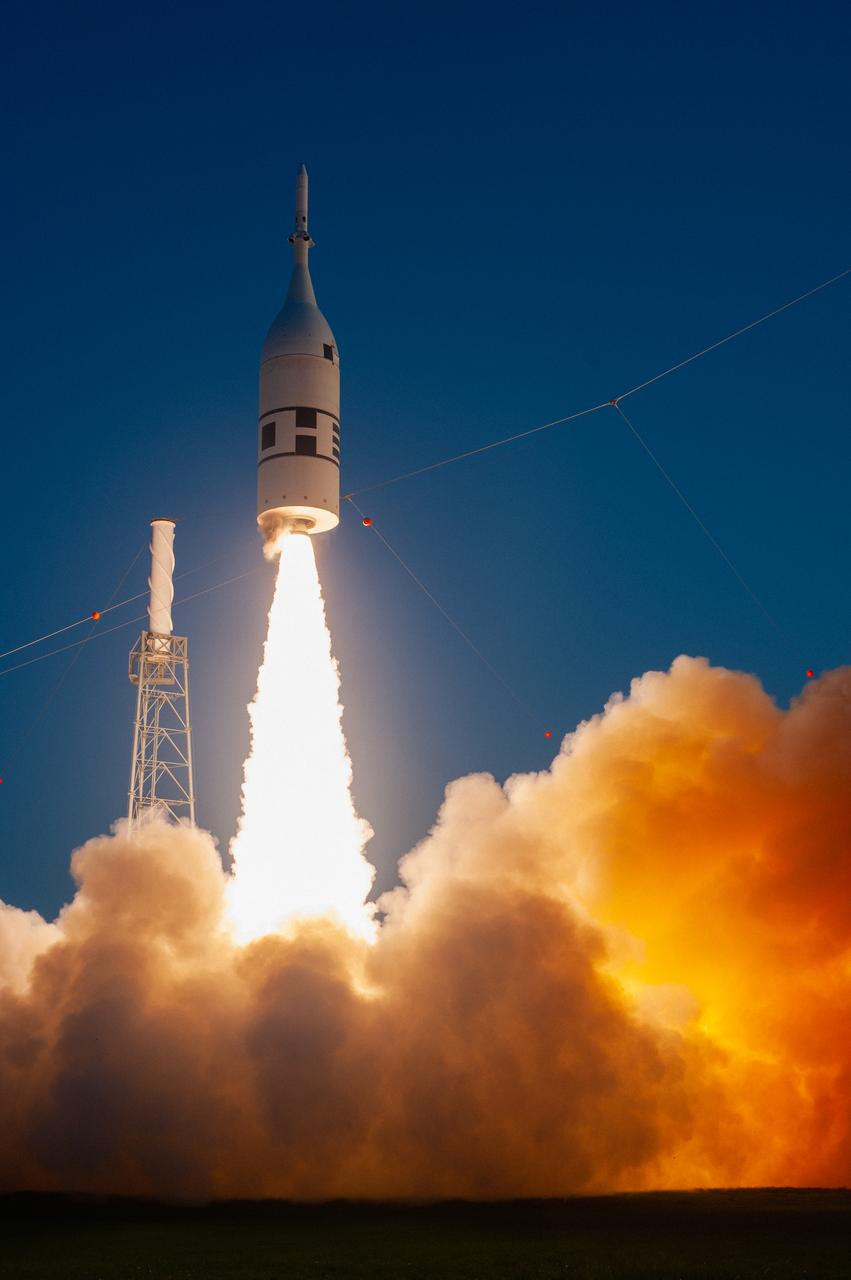
A fully functional Launch Abort System (LAS) with a test version of Orion attached, launches on NASA’s Ascent Abort-2 (AA-2) atop a Northrop Grumman provided booster on July 2, 2019, at 7 a.m. EDT, from Launch Pad 46 at Cape Canaveral Air Force Station in Florida. During AA-2, the booster will send the LAS and Orion to an altitude of 31,000 feet, traveling at Mach 1.15 (more than 1,000 mph). The LAS’ three motors will work together to pull the crew module away from the booster and prepare it for splashdown in the Atlantic Ocean. The flight test will prove that the abort system can pull crew to safety in the unlikely event of an emergency during ascent.
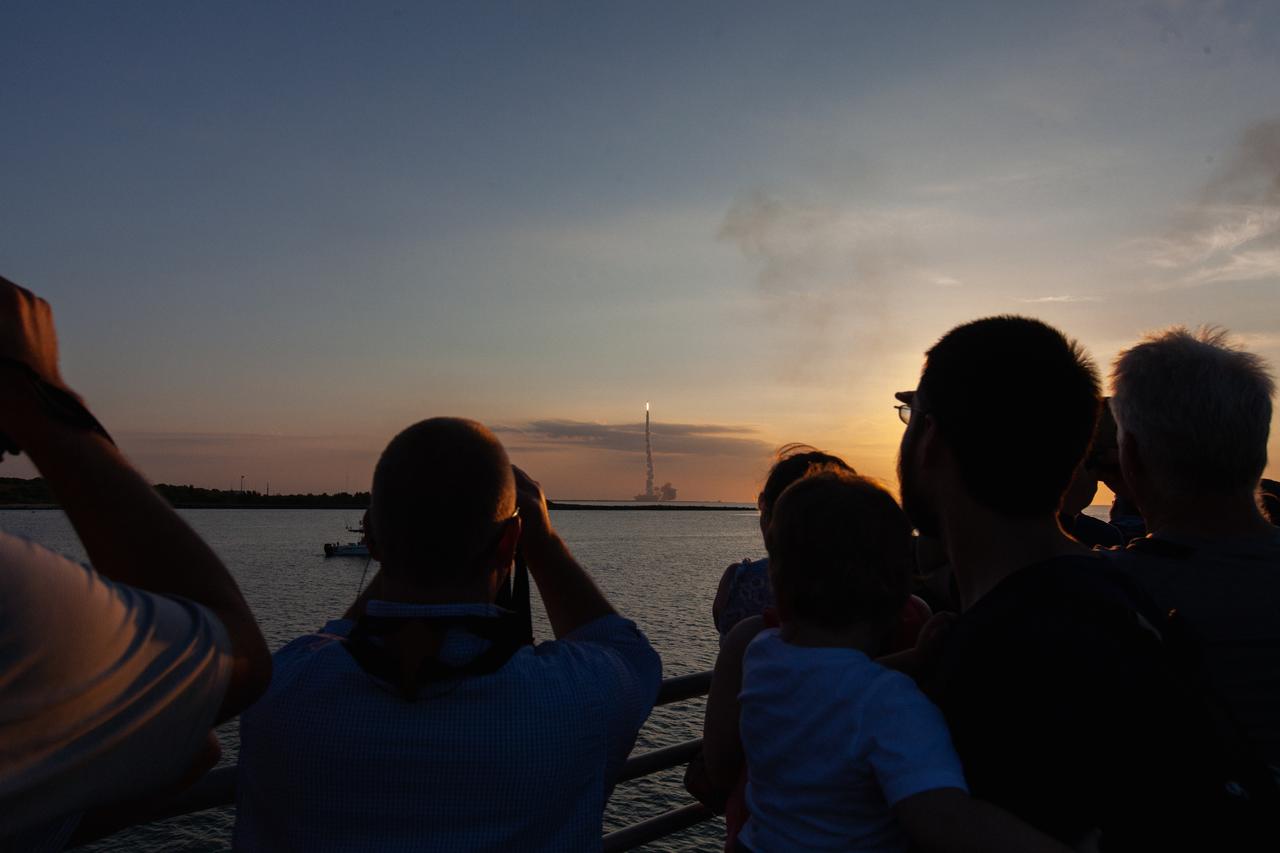
Crowds of spectators watch from Jetty Park in Cape Canaveral, Florida, on July 2, 2019, as a Northrop Grumman provided booster launches from Launch Pad 46 carrying, a fully functional Launch Abort System with a test version of Orion attached for NASA’s Ascent Abort-2 (AA-2). Launch time was 7 a.m. EDT. During AA-2, the booster will send the LAS and Orion to an altitude of 31,000 feet, traveling at Mach 1.15 (more than 1,000 mph). The LAS’ three motors will work together to pull the crew module away from the booster and prepare it for splashdown in the Atlantic Ocean. The flight test will prove that the abort system can pull crew to safety in the unlikely event of an emergency during ascent.
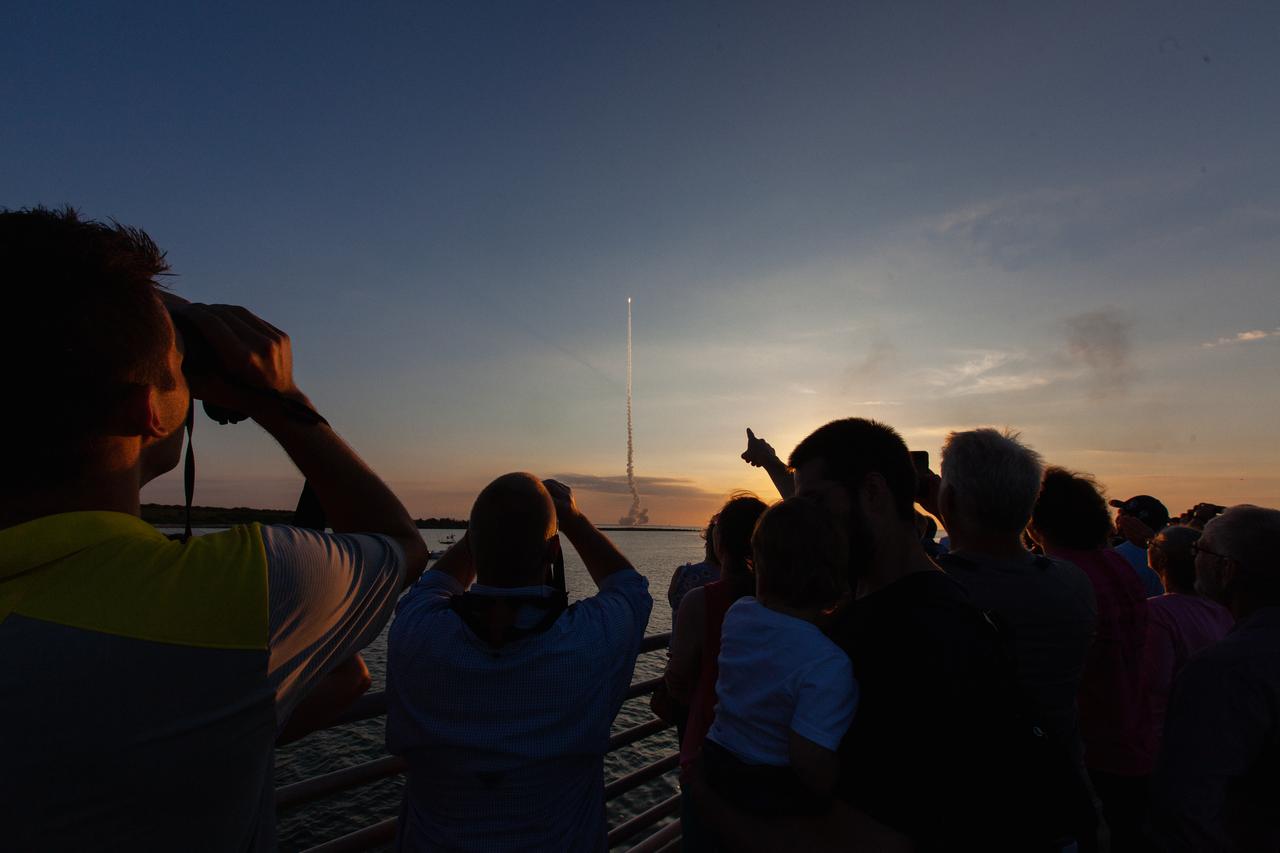
Crowds of spectators watch from Jetty Park in Cape Canaveral, Florida, on July 2, 2019, as a Northrop Grumman provided booster launches from Launch Pad 46 carrying, a fully functional Launch Abort System with a test version of Orion attached for NASA’s Ascent Abort-2 (AA-2). Launch time was 7 a.m. EDT. During AA-2, the booster will send the LAS and Orion to an altitude of 31,000 feet, traveling at Mach 1.15 (more than 1,000 mph). The LAS’ three motors will work together to pull the crew module away from the booster and prepare it for splashdown in the Atlantic Ocean. The flight test will prove that the abort system can pull crew to safety in the unlikely event of an emergency during ascent.

A brilliant sunrise fills the sky before a fully functional Launch Abort System (LAS) with a test version of Orion attached, launches on NASA’s Ascent Abort-2 (AA-2) atop a Northrop Grumman provided booster on July 2, 2019, at 7 a.m. EDT, from Launch Pad 46 at Cape Canaveral Air Force Station in Florida. During AA-2, the booster will send the LAS and Orion to an altitude of 31,000 feet, traveling at Mach 1.15 (more than 1,000 mph). The LAS’ three motors will work together to pull the crew module away from the booster and prepare it for splashdown in the Atlantic Ocean. The flight test will prove that the abort system can pull crew to safety in the unlikely event of an emergency during ascent.
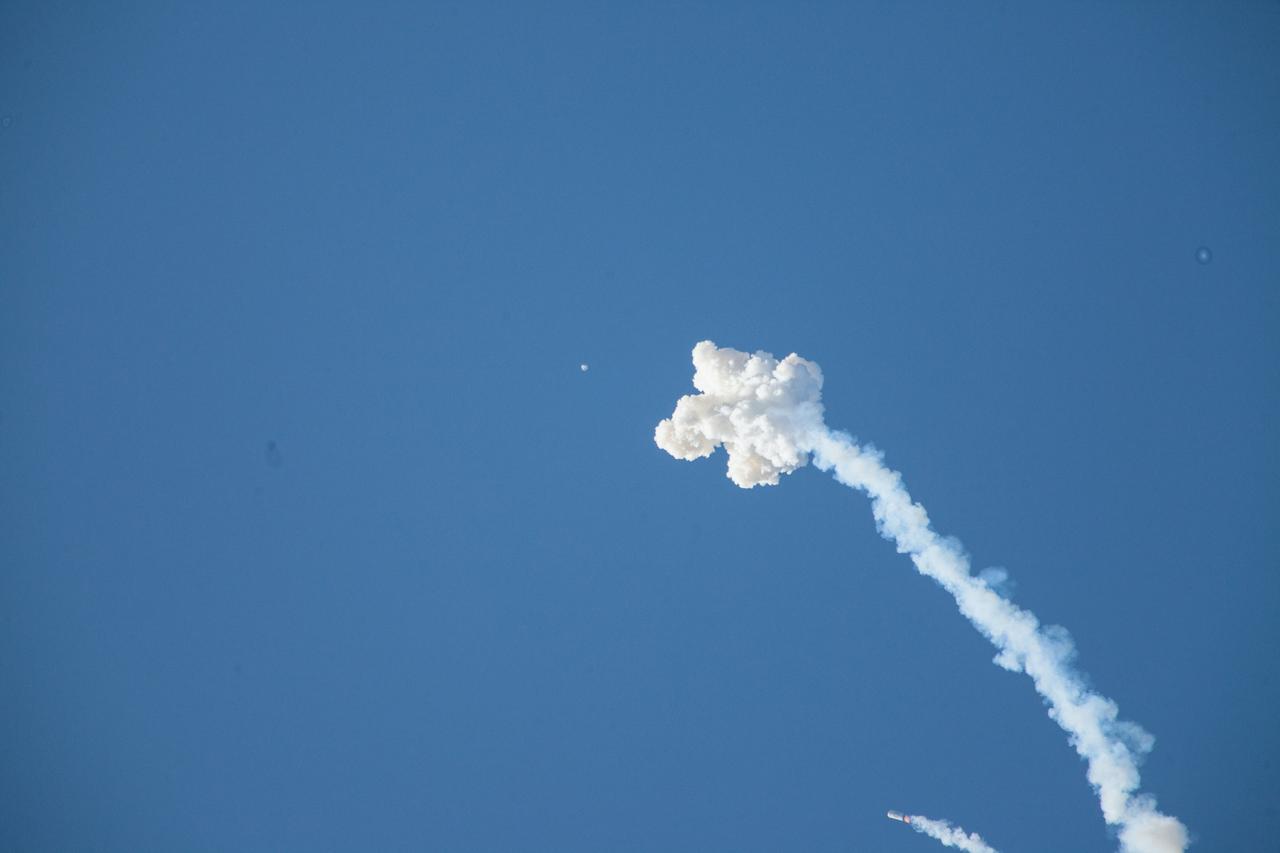
A fully functional Launch Abort System (LAS) with a test version of Orion attached, soars upward on NASA’s Ascent Abort-2 (AA-2) flight test atop a Northrop Grumman provided booster on July 2, 2019, after launching at 7 a.m. EDT, from Launch Pad 46 at Cape Canaveral Air Force Station in Florida. During AA-2, the booster will send the LAS and Orion to an altitude of 31,000 feet, traveling at Mach 1.15 (more than 1,000 mph). The LAS’ three motors will work together to pull the crew module away from the booster and prepare it for splashdown in the Atlantic Ocean. The flight test will prove that the abort system can pull crew to safety in the unlikely event of an emergency during ascent.

Randy Bresnik, NASA astronaut, participates in a prelaunch news conference for NASA’s Ascent Abort-2 (AA-2) flight test at the agency’s Kennedy Space Center in Florida on July 1, 2019. For AA-2, a test version of the Orion spacecraft attached to a fully functional Launch Abort System (LAS) will launch atop a Northrop Grumman provided booster on July 2, 2019, from Launch Pad 46 at Cape Canaveral Air Force Station in Florida. During AA-2, the booster will send the LAS and Orion to an altitude of 31,000 feet, traveling at more than 1,000 mph. The LAS’ three motors will work together to pull the crew module away from the booster and prepare it for splashdown in the Atlantic Ocean. The flight test will prove that the abort system can pull crew to safety in the unlikely event of an emergency during ascent.

A fully functional Launch Abort System (LAS) with a test version of Orion attached, soars upward on NASA’s Ascent Abort-2 (AA-2) flight test atop a Northrop Grumman provided booster on July 2, 2019, after launching at 7 a.m. EDT, from Launch Pad 46 at Cape Canaveral Air Force Station in Florida. During AA-2, the booster will send the LAS and Orion to an altitude of 31,000 feet, traveling at Mach 1.15 (more than 1,000 mph). The LAS’ three motors will work together to pull the crew module away from the booster and prepare it for splashdown in the Atlantic Ocean. The flight test will prove that the abort system can pull crew to safety in the unlikely event of an emergency during ascent.
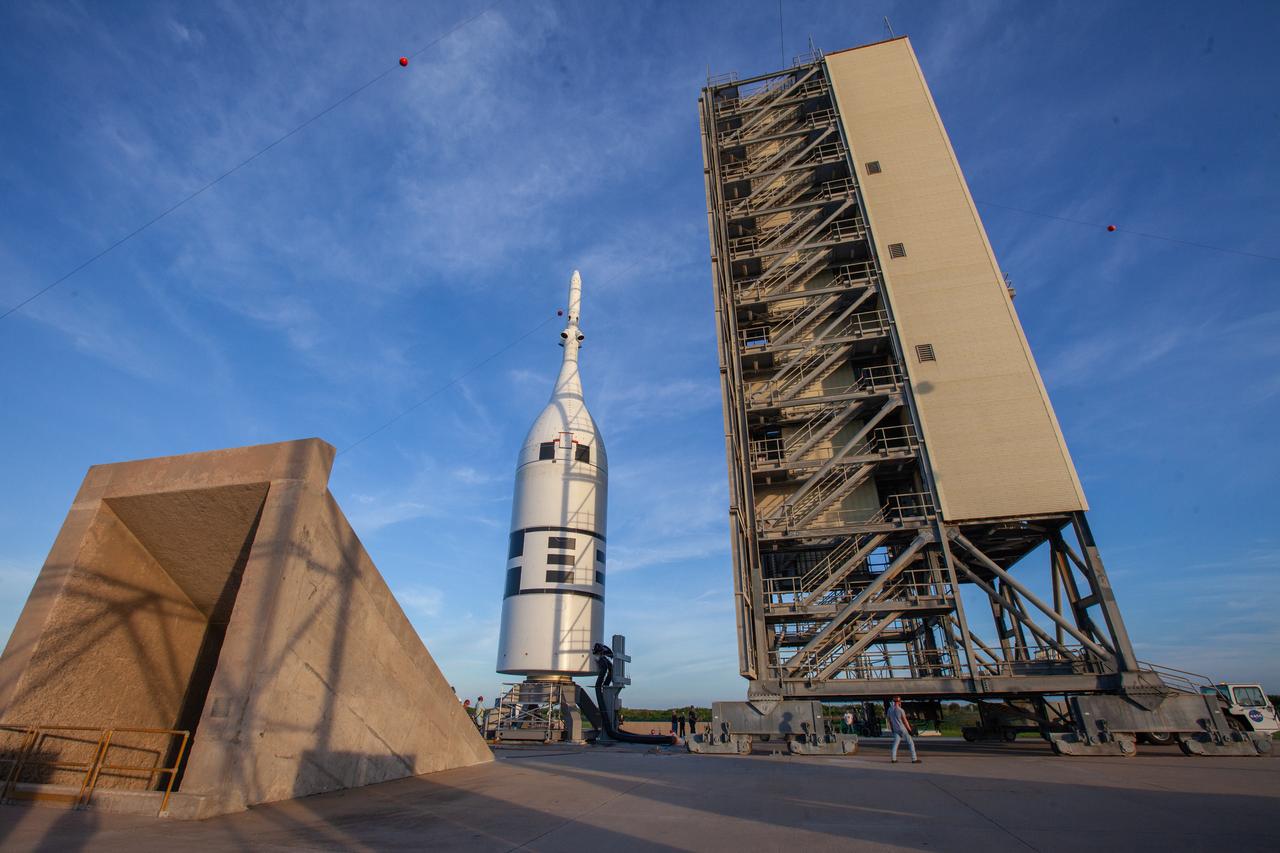
At Launch Complex 46 at Cape Canaveral Air Force Station in Florida, the vertical integration facility rolls back from the Ascent Abort-2 test vehicle on July 1, 2019. A fully functional Launch Abort System (LAS) mated to a test version of the Orion spacecraft are on a Northrop Grumman provided booster on the pad for launch on NASA’s AA-2 flight test on July 2, 2019. During AA-2, the booster will send the LAS and Orion to an altitude of 31,000 feet, traveling at more than 1,000 mph. The LAS’ three motors will work together to pull the crew module away from the booster and prepare it for splashdown in the Atlantic Ocean. The flight test will prove that the abort system can pull crew to safety in the unlikely event of an emergency during ascent.

A view of Jetty Park in Cape Canaveral, Florida, on July 2, 2019, as crowds gather to watch a Northrop Grumman provided booster launch from Launch Pad 46 carrying a fully functional Launch Abort System with a test version of Orion attached for NASA’s Ascent Abort-2 (AA-2). Launch time was 7 a.m. EDT. During AA-2, the booster will send the LAS and Orion to an altitude of 31,000 feet, traveling at Mach 1.15 (more than 1,000 mph). The LAS’ three motors will work together to pull the crew module away from the booster and prepare it for splashdown in the Atlantic Ocean. The flight test will prove that the abort system can pull crew to safety in the unlikely event of an emergency during ascent.
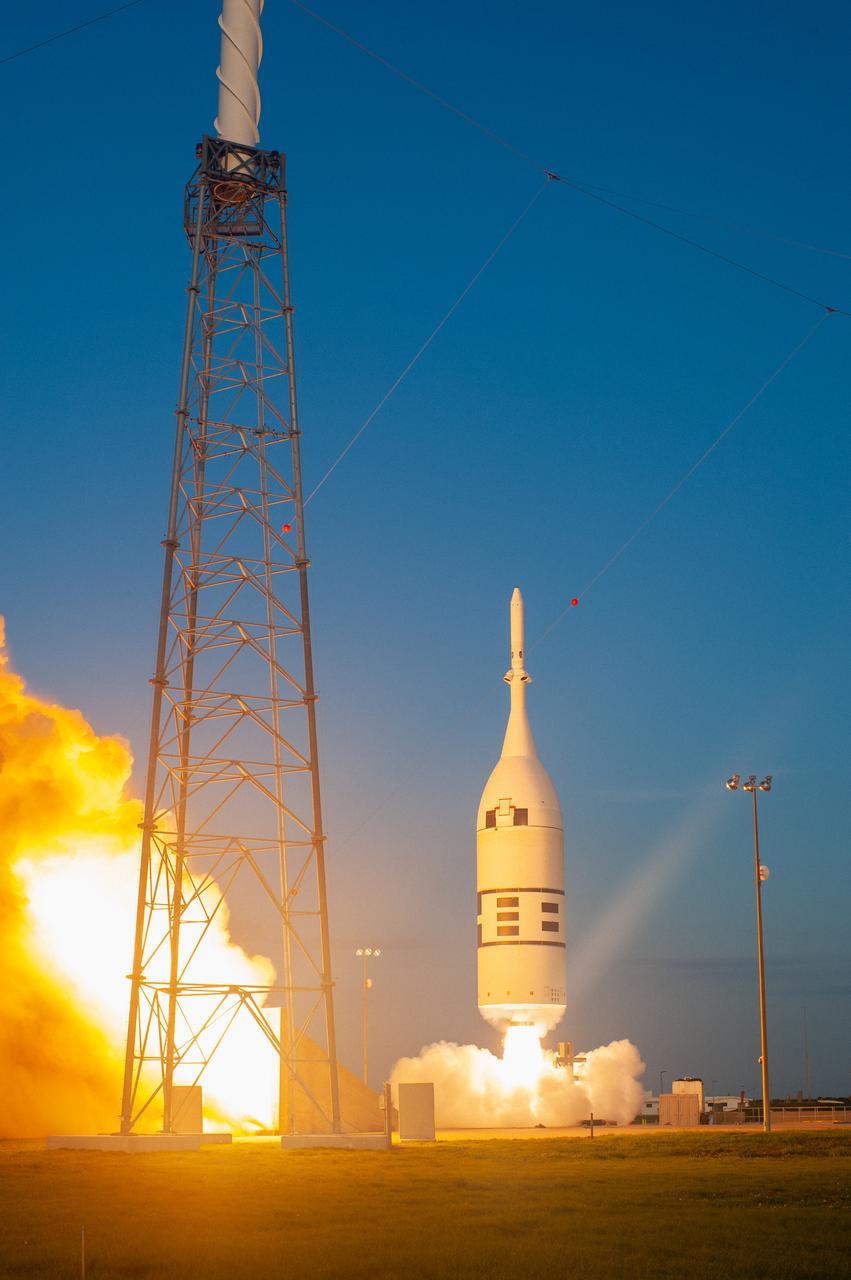
A fully functional Launch Abort System (LAS) with a test version of Orion attached, launches on NASA’s Ascent Abort-2 (AA-2) atop a Northrop Grumman provided booster on July 2, 2019, at 7 a.m. EDT, from Launch Pad 46 at Cape Canaveral Air Force Station in Florida. During AA-2, the booster will send the LAS and Orion to an altitude of 31,000 feet, traveling at Mach 1.15 (more than 1,000 mph). The LAS’ three motors will work together to pull the crew module away from the booster and prepare it for splashdown in the Atlantic Ocean. The flight test will prove that the abort system can pull crew to safety in the unlikely event of an emergency during ascent.
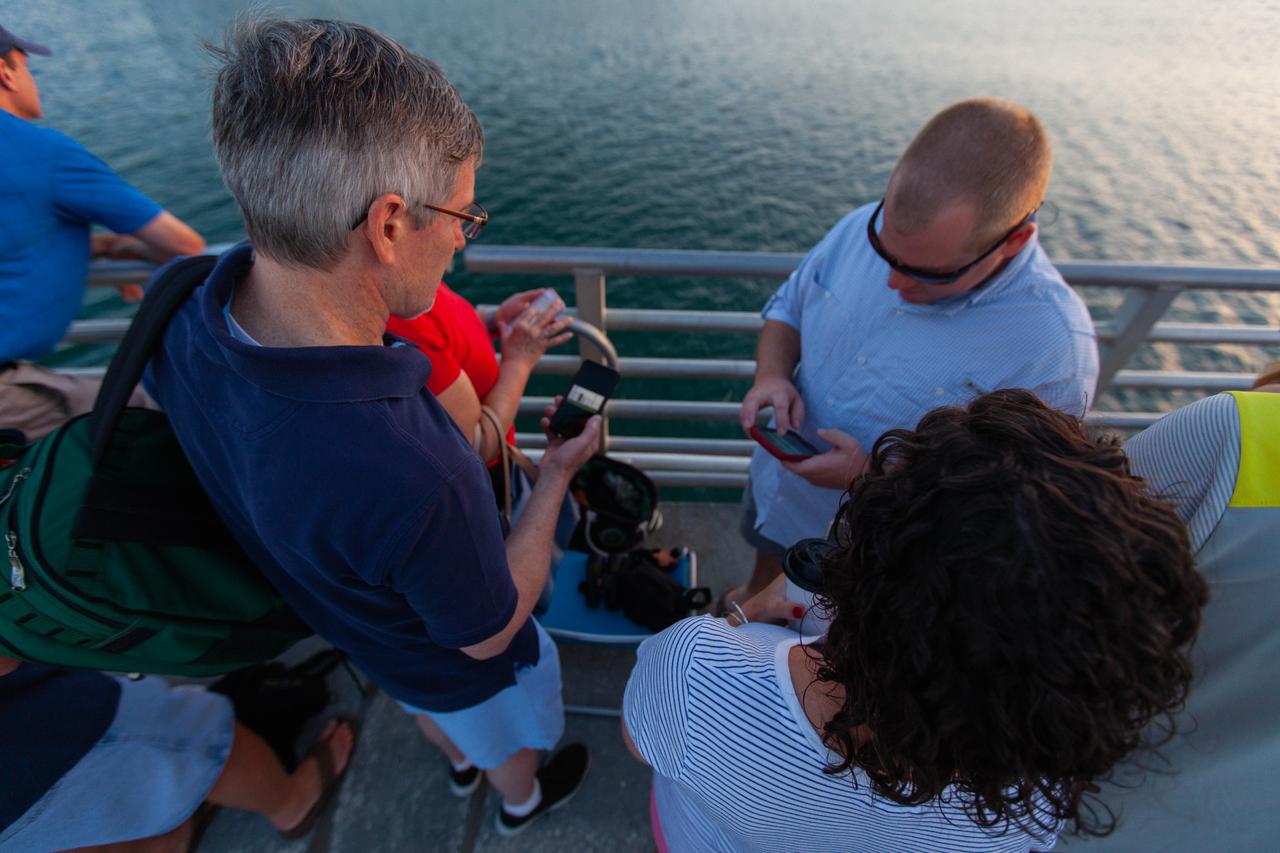
Crowds of spectators watch from Jetty Park in Cape Canaveral, Florida, on July 2, 2019, as a Northrop Grumman provided booster launches from Launch Pad 46 carrying, a fully functional Launch Abort System with a test version of Orion attached for NASA’s Ascent Abort-2 (AA-2). Launch time was 7 a.m. EDT. During AA-2, the booster will send the LAS and Orion to an altitude of 31,000 feet, traveling at Mach 1.15 (more than 1,000 mph). The LAS’ three motors will work together to pull the crew module away from the booster and prepare it for splashdown in the Atlantic Ocean. The flight test will prove that the abort system can pull crew to safety in the unlikely event of an emergency during ascent.
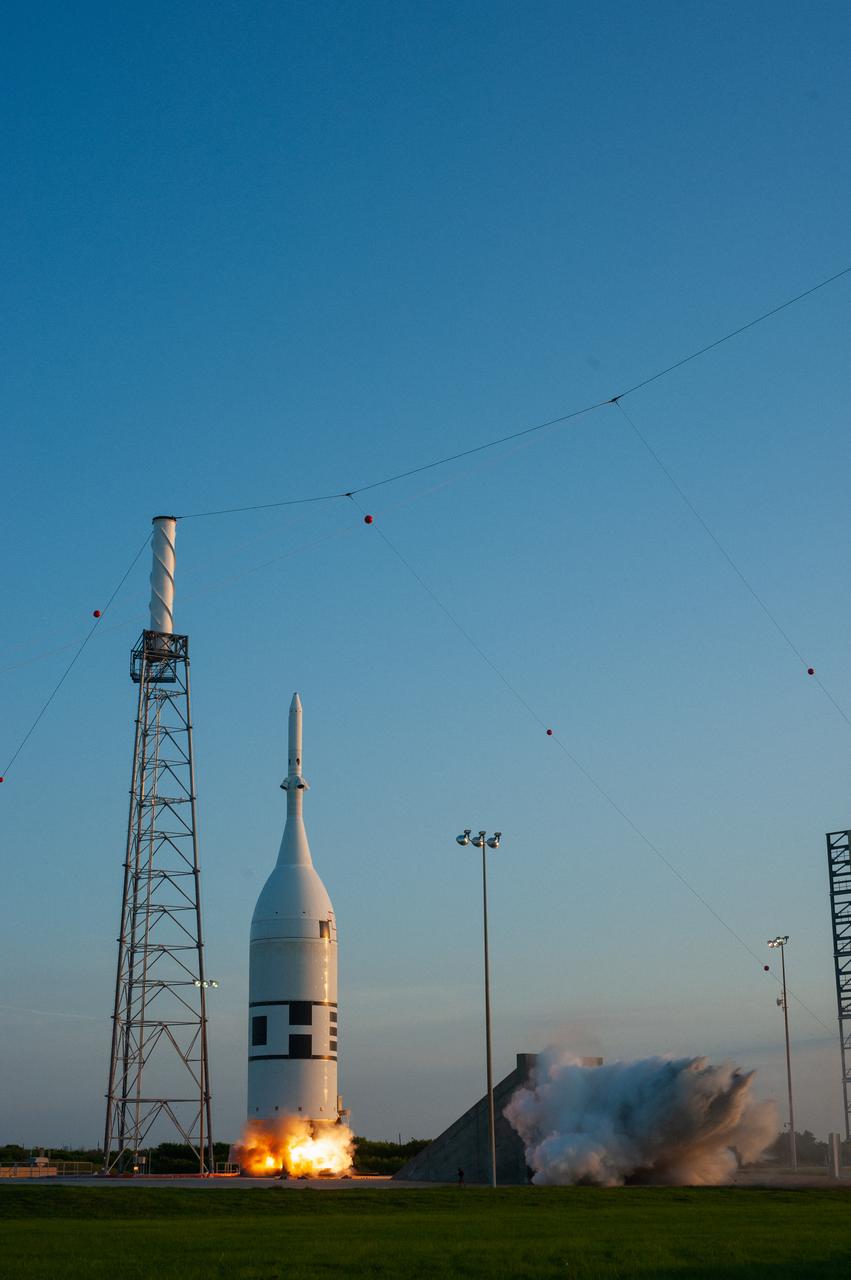
A fully functional Launch Abort System (LAS) with a test version of Orion attached, launches on NASA’s Ascent Abort-2 (AA-2) atop a Northrop Grumman provided booster on July 2, 2019, at 7 a.m. EDT, from Launch Pad 46 at Cape Canaveral Air Force Station in Florida. During AA-2, the booster will send the LAS and Orion to an altitude of 31,000 feet, traveling at Mach 1.15 (more than 1,000 mph). The LAS’ three motors will work together to pull the crew module away from the booster and prepare it for splashdown in the Atlantic Ocean. The flight test will prove that the abort system can pull crew to safety in the unlikely event of an emergency during ascent.