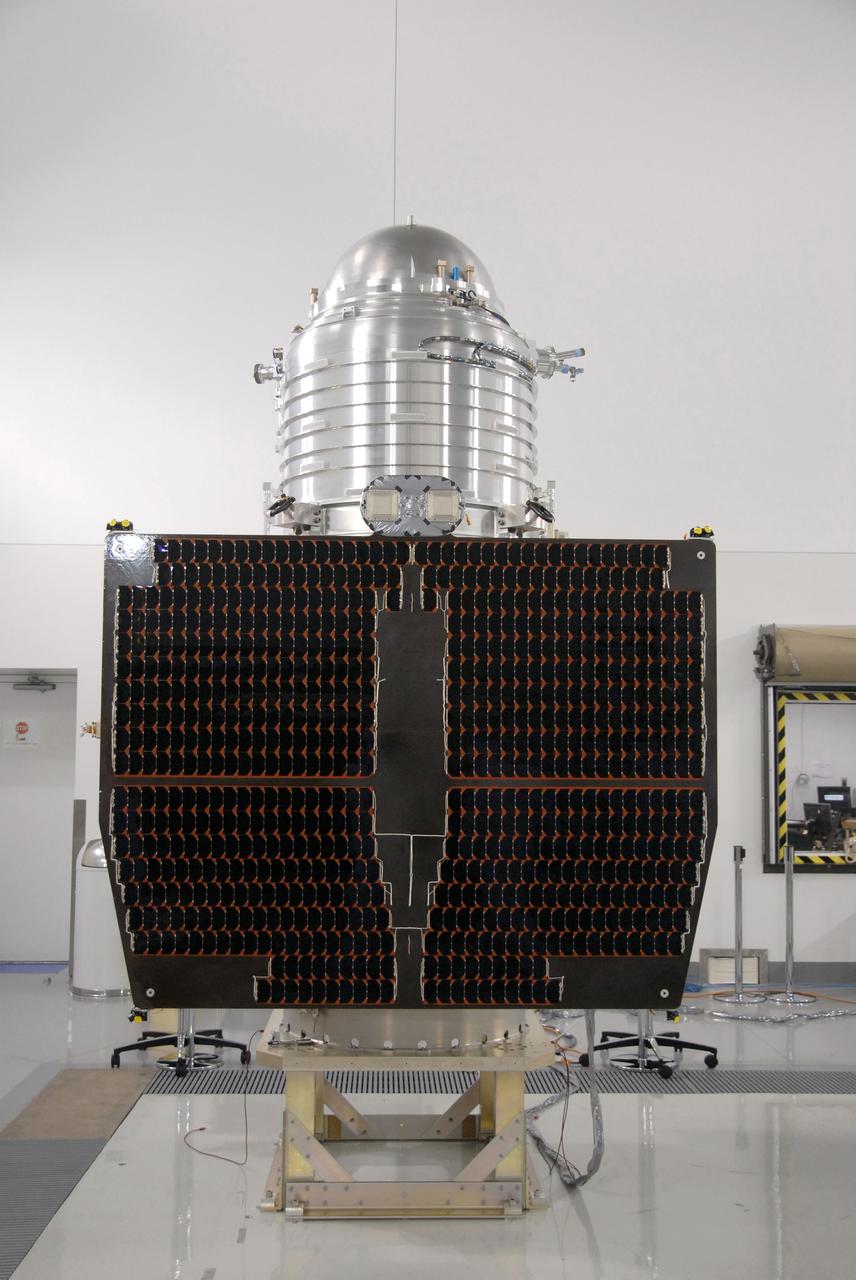
VANDENBERG AIR FORCE BASE, Calif. -- At the Astrotech processing facility on Vandenberg Air Force Base in California, NASA's Wide-field Infrared Survey Explorer, or WISE, is prepared for its move from the test stand for mating to its Payload Attach Fitting. The satellite will survey the entire sky at infrared wavelengths, creating a cosmic clearinghouse of hundreds of millions of objects which will be catalogued and provide a vast storehouse of knowledge about the solar system, the Milky Way, and the universe. Launch is scheduled for Dec. 7. Photo credit: NASA/Doug Kolkow
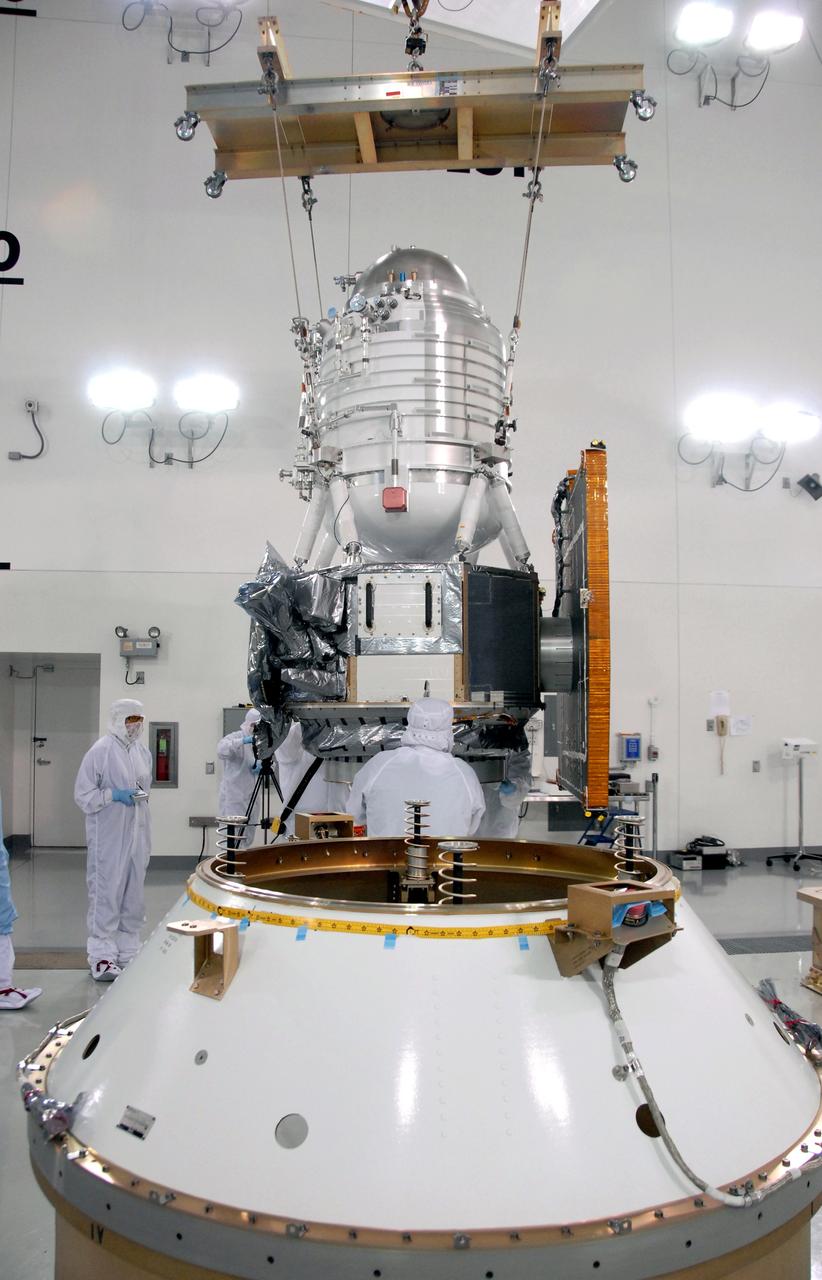
VANDENBERG AIR FORCE BASE, Calif. -- At the Astrotech processing facility on Vandenberg Air Force Base in California, workers guide NASA's Wide-field Infrared Survey Explorer, or WISE, being lifted by crane from its test stand for mating to its Payload Attach Fitting in the foreground. The satellite will survey the entire sky at infrared wavelengths, creating a cosmic clearinghouse of hundreds of millions of objects which will be catalogued and provide a vast storehouse of knowledge about the solar system, the Milky Way, and the universe. Launch is scheduled for Dec. 7. Photo credit: NASA/Doug Kolkow

KENNEDY SPACE CENTER, FLA. -- Technicians prepare to move NASA's CloudSat spacecraft for mating to a Delta payload attach fitting in a clean room at Vandenberg Air Force Base, Calif. CALIPSO stands for Cloud-Aerosol Lidar and Infrared Pathfinder Satellite Observation. CALIPSO and CloudSat are highly complementary satellites and will be launched together. They will provide never-before-seen 3-D perspectives of how clouds and aerosols form, evolve, and affect weather and climate. CALIPSO and CloudSat will fly in formation with three other satellites in the A-train constellation to enhance understanding of our climate system. Launch of CALIPSO_CloudSat aboard a Boeing Delta II rocket is scheduled for 3:01 a.m. PDT Sept. 29.
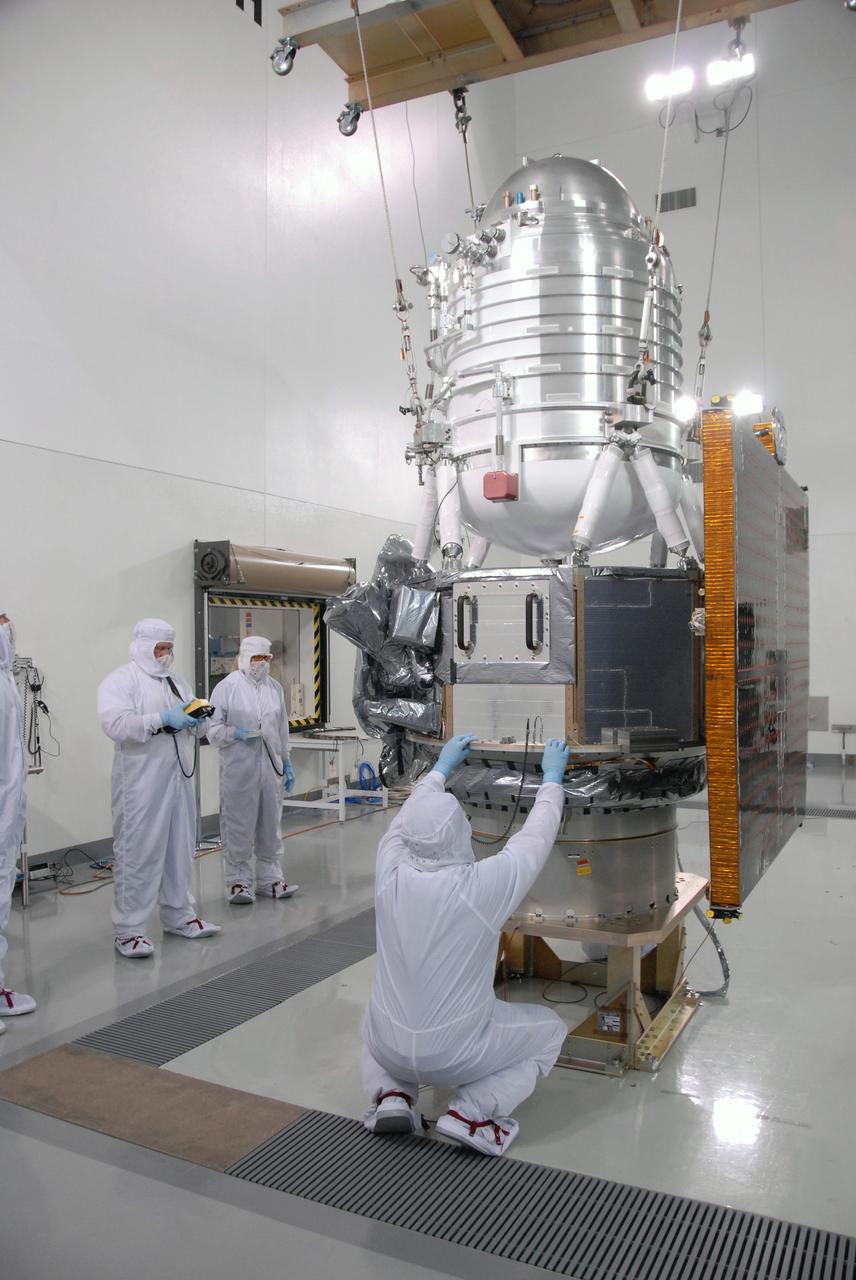
VANDENBERG AIR FORCE BASE, Calif. -- At the Astrotech processing facility on Vandenberg Air Force Base in California, workers inspect NASA's Wide-field Infrared Survey Explorer, or WISE, for its readiness to be lifted by crane from its test stand for mating to its Payload Attach Fitting. The satellite will survey the entire sky at infrared wavelengths, creating a cosmic clearinghouse of hundreds of millions of objects which will be catalogued and provide a vast storehouse of knowledge about the solar system, the Milky Way, and the universe. Launch is scheduled for Dec. 7. Photo credit: NASA/Doug Kolkow

VANDENBERG AIR FORCE BASE, Calif. -- At the Astrotech processing facility on Vandenberg Air Force Base in California, NASA's Wide-field Infrared Survey Explorer, or WISE, is prepared for its move from the test stand for mating to its Payload Attach Fitting. The satellite will survey the entire sky at infrared wavelengths, creating a cosmic clearinghouse of hundreds of millions of objects which will be catalogued and provide a vast storehouse of knowledge about the solar system, the Milky Way, and the universe. Launch is scheduled for Dec. 7. Photo credit: NASA/Doug Kolkow
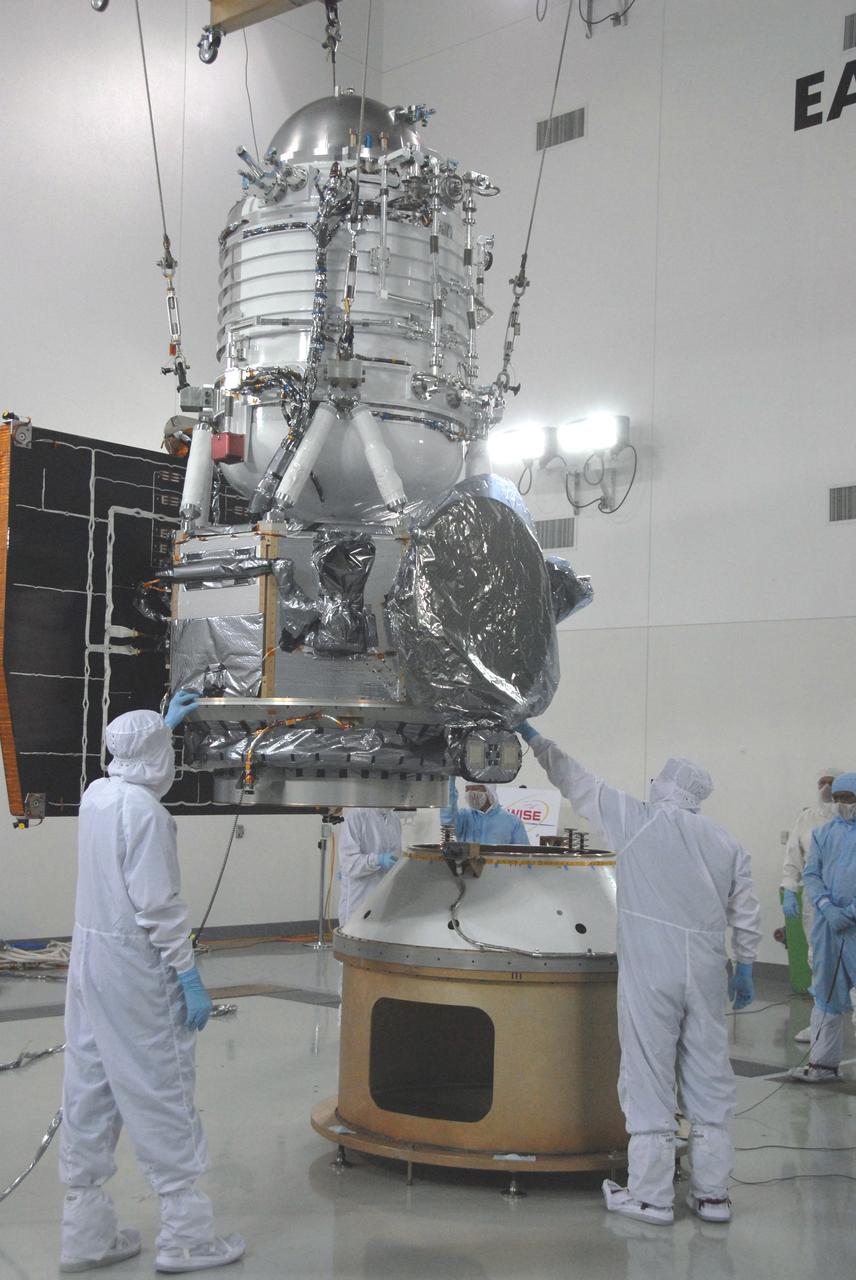
VANDENBERG AIR FORCE BASE, Calif. -- At the Astrotech processing facility on Vandenberg Air Force Base in California, workers guide NASA's Wide-field Infrared Survey Explorer, or WISE, as it is lowered by crane toward its Payload Attach Fitting for mating. The satellite will survey the entire sky at infrared wavelengths, creating a cosmic clearinghouse of hundreds of millions of objects which will be catalogued and provide a vast storehouse of knowledge about the solar system, the Milky Way, and the universe. Launch is scheduled for Dec. 7. Photo credit: NASA/Doug Kolkow
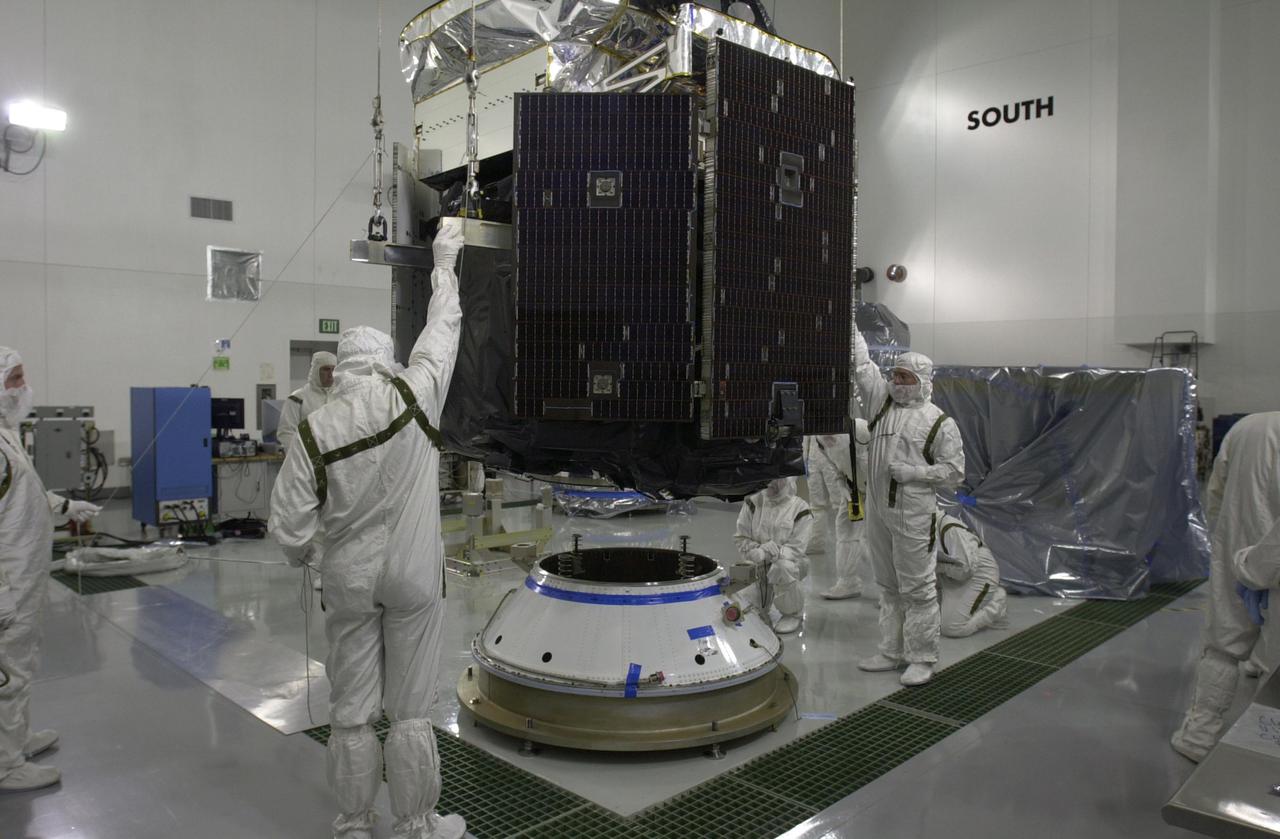
KENNEDY SPACE CENTER, FLA. -- Technicians position NASA's CloudSat spacecraft onto a Delta payload attach fitting in a clean room at Vandenberg Air Force Base, Calif. CALIPSO stands for Cloud-Aerosol Lidar and Infrared Pathfinder Satellite Observation. CALIPSO and CloudSat are highly complementary satellites and will be launched together. They will provide never-before-seen 3-D perspectives of how clouds and aerosols form, evolve, and affect weather and climate. CALIPSO and CloudSat will fly in formation with three other satellites in the A-train constellation to enhance understanding of our climate system. Launch of CALIPSO_CloudSat aboard a Boeing Delta II rocket is scheduled for 3:01 a.m. PDT Sept. 29.
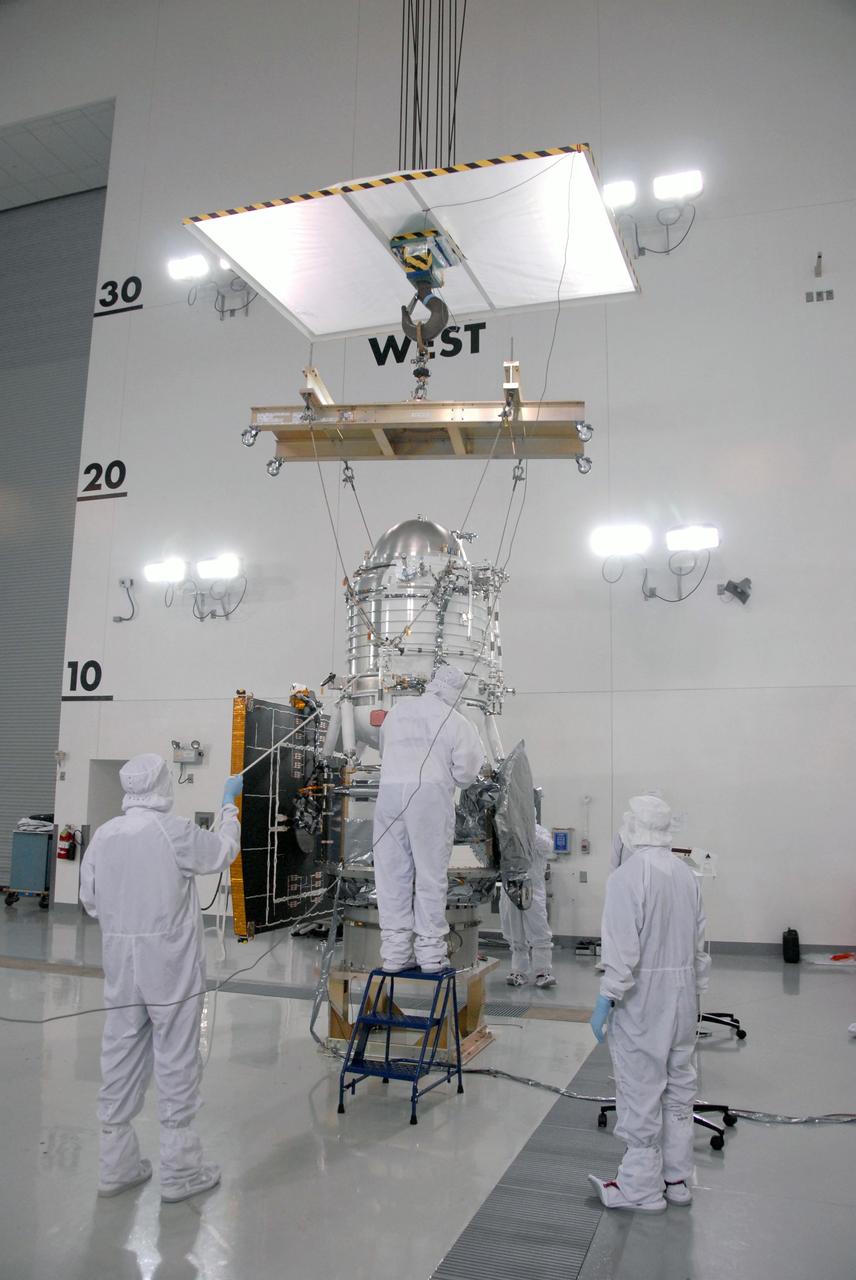
VANDENBERG AIR FORCE BASE, Calif. -- At the Astrotech processing facility on Vandenberg Air Force Base in California, workers prepare to lift NASA's Wide-field Infrared Survey Explorer, or WISE, for its move from the test stand for mating to its Payload Attach Fitting. The satellite will survey the entire sky at infrared wavelengths, creating a cosmic clearinghouse of hundreds of millions of objects which will be catalogued and provide a vast storehouse of knowledge about the solar system, the Milky Way, and the universe. Launch is scheduled for Dec. 7. Photo credit: NASA/Doug Kolkow
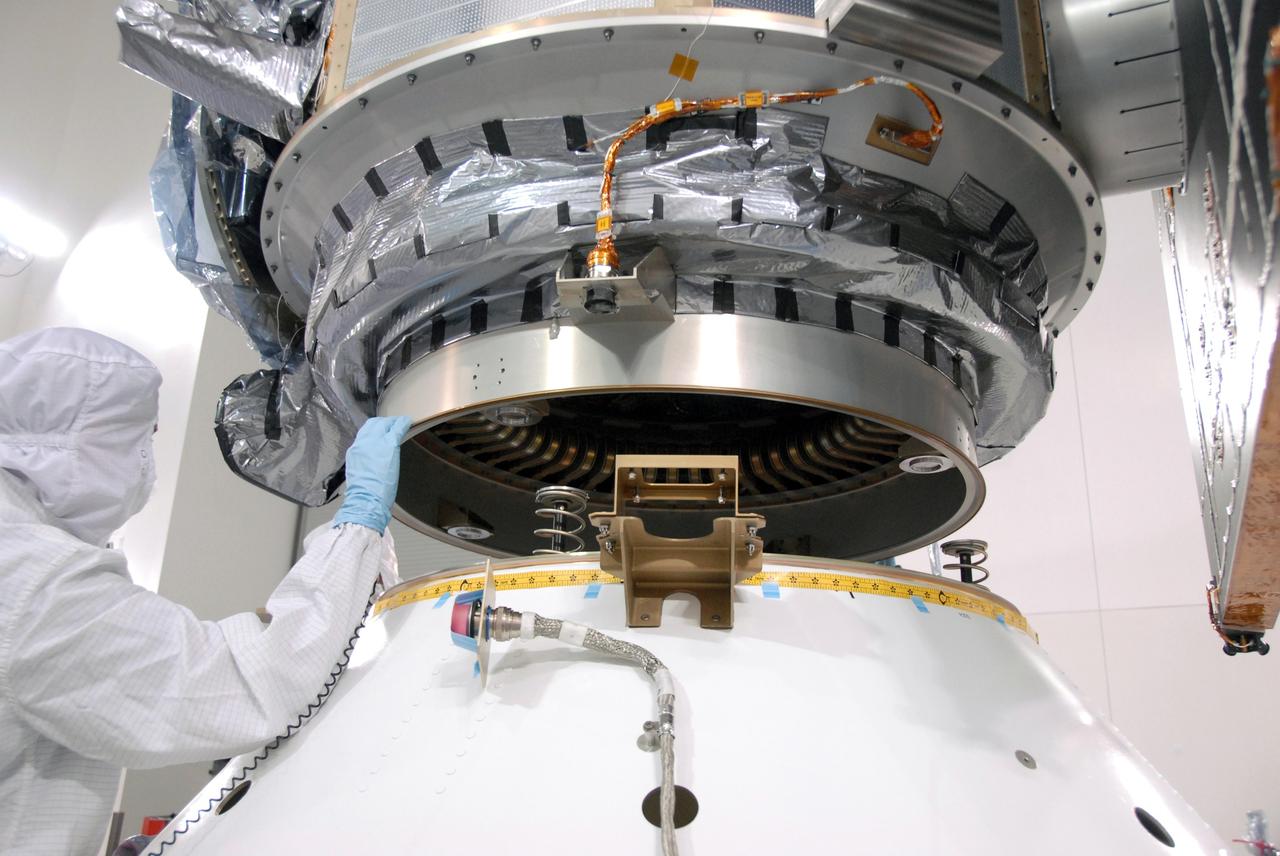
VANDENBERG AIR FORCE BASE, Calif. -- At the Astrotech processing facility on Vandenberg Air Force Base in California, workers guide NASA's Wide-field Infrared Survey Explorer, or WISE, into position for mating with its Payload Attach Fitting. The satellite will survey the entire sky at infrared wavelengths, creating a cosmic clearinghouse of hundreds of millions of objects which will be catalogued and provide a vast storehouse of knowledge about the solar system, the Milky Way, and the universe. Launch is scheduled for Dec. 7. Photo credit: NASA/Doug Kolkow
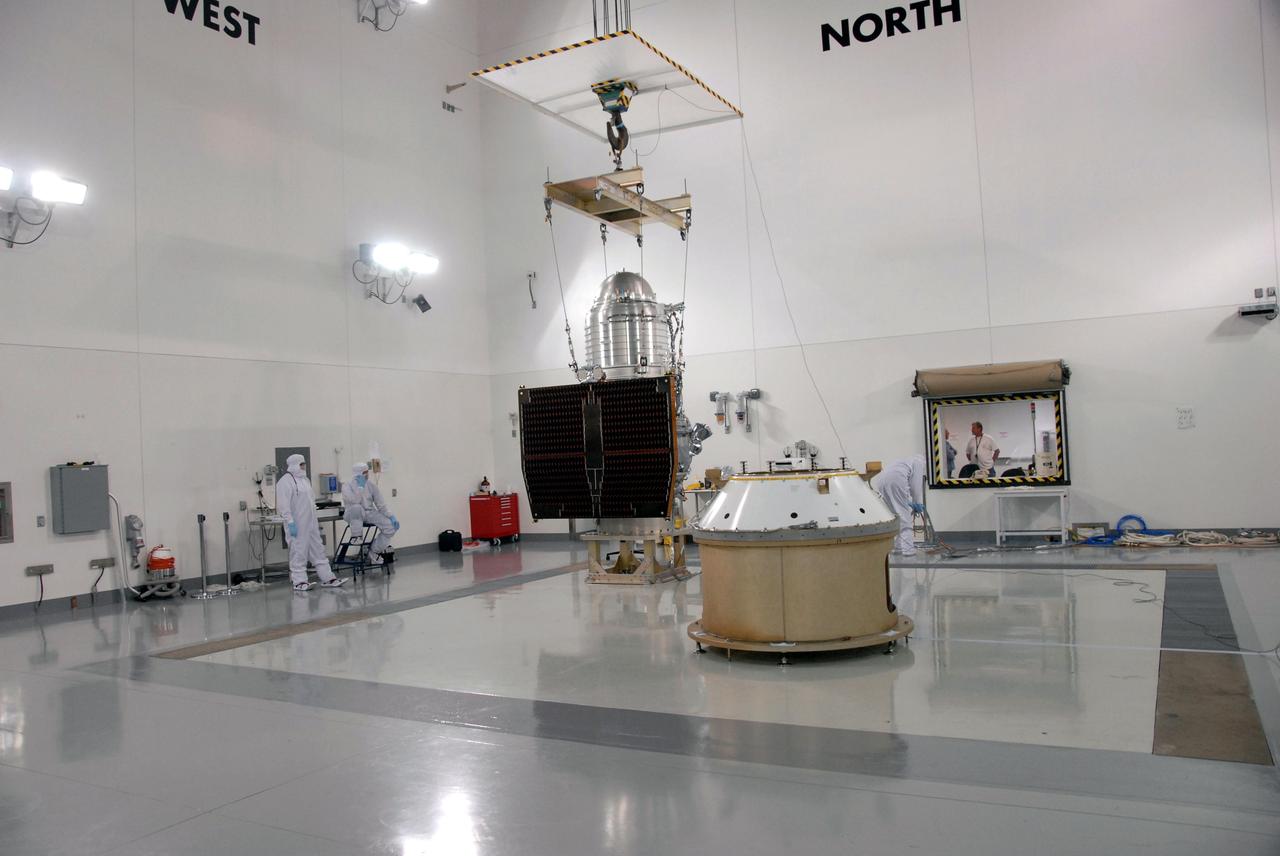
VANDENBERG AIR FORCE BASE, Calif. -- At the Astrotech processing facility on Vandenberg Air Force Base in California, NASA's Wide-field Infrared Survey Explorer, or WISE, is prepared to be lifted by crane from its test stand for mating to its Payload Attach Fitting, at right. The satellite will survey the entire sky at infrared wavelengths, creating a cosmic clearinghouse of hundreds of millions of objects which will be catalogued and provide a vast storehouse of knowledge about the solar system, the Milky Way, and the universe. Launch is scheduled for Dec. 7. Photo credit: NASA/Doug Kolkow
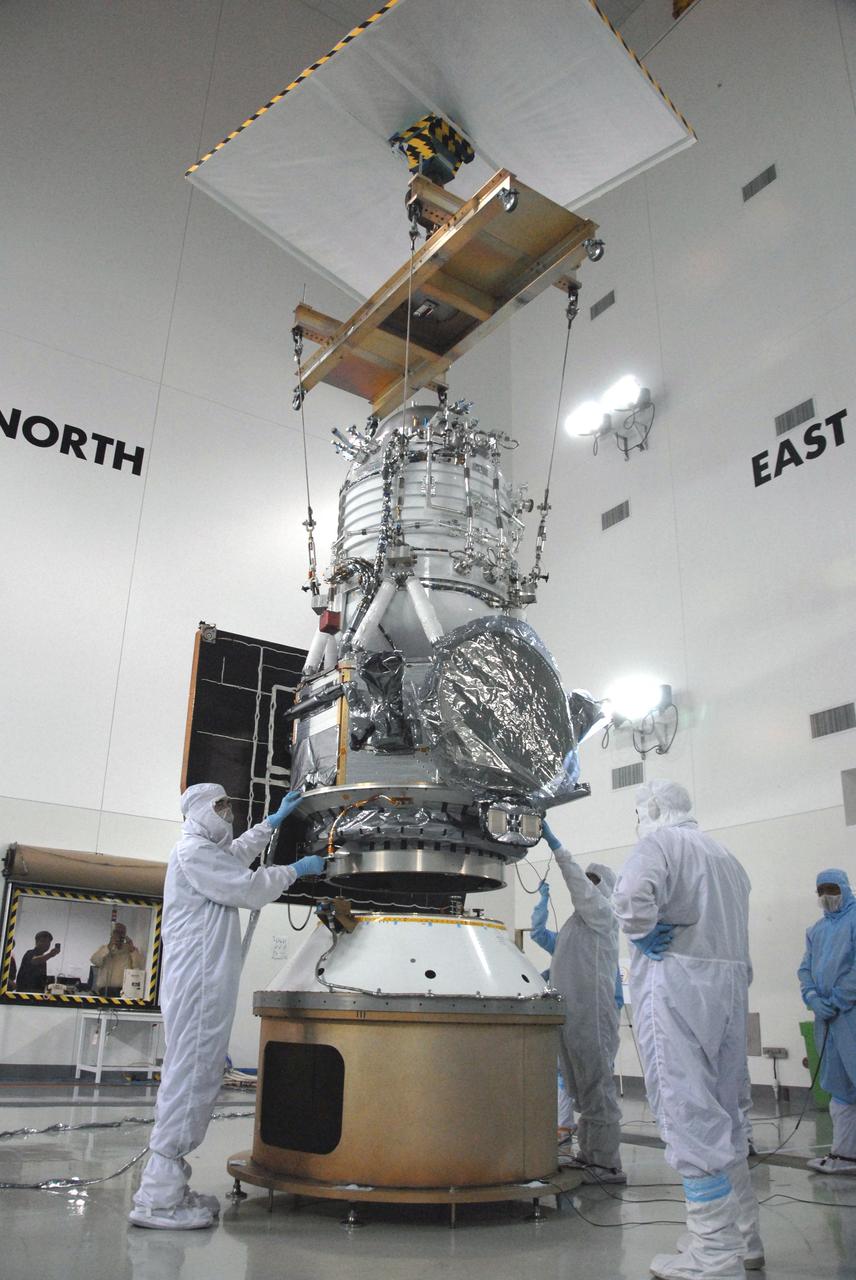
VANDENBERG AIR FORCE BASE, Calif. -- At the Astrotech processing facility on Vandenberg Air Force Base in California, workers guide NASA's Wide-field Infrared Survey Explorer, or WISE, as it is lowered by crane onto its Payload Attach Fitting for mating. The satellite will survey the entire sky at infrared wavelengths, creating a cosmic clearinghouse of hundreds of millions of objects which will be catalogued and provide a vast storehouse of knowledge about the solar system, the Milky Way, and the universe. Launch is scheduled for Dec. 7. Photo credit: NASA/Doug Kolkow
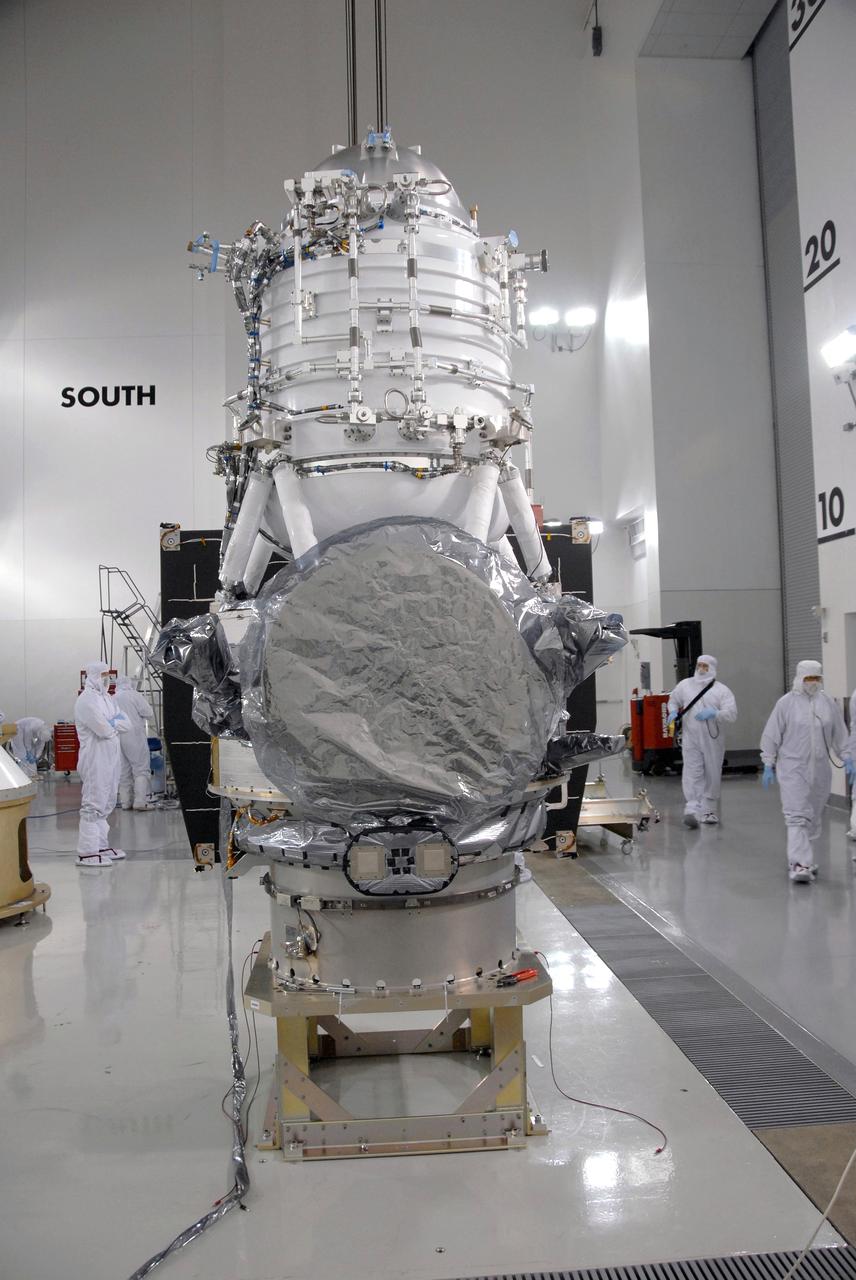
VANDENBERG AIR FORCE BASE, Calif. -- At the Astrotech processing facility on Vandenberg Air Force Base in California, workers prepare NASA's Wide-field Infrared Survey Explorer, or WISE, for its move from the test stand for mating to the Payload Attach Fitting. The satellite will survey the entire sky at infrared wavelengths, creating a cosmic clearinghouse of hundreds of millions of objects which will be catalogued and provide a vast storehouse of knowledge about the solar system, the Milky Way, and the universe. Launch is scheduled for Dec. 7. Photo credit: NASA/Doug Kolkow
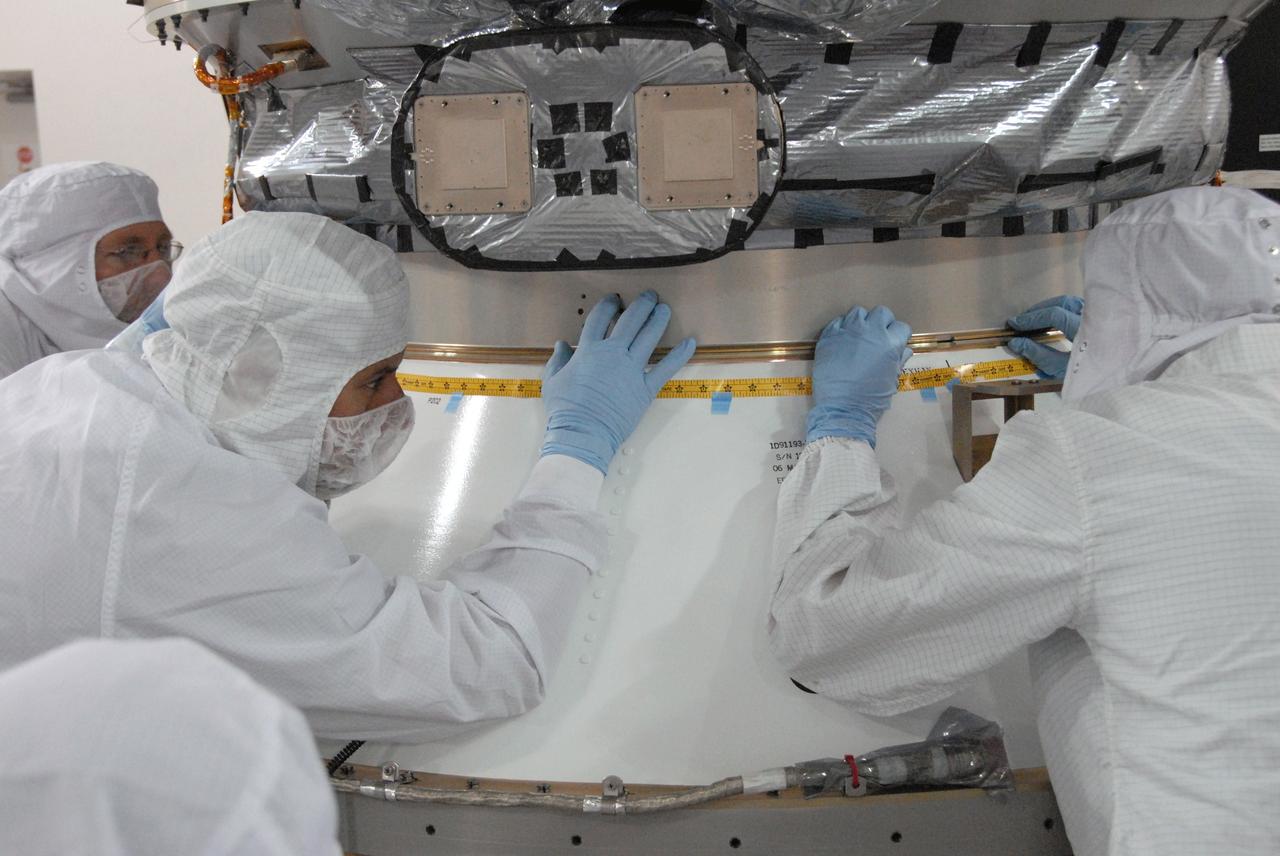
VANDENBERG AIR FORCE BASE, Calif. -- At the Astrotech processing facility on Vandenberg Air Force Base in California, workers mate NASA's Wide-field Infrared Survey Explorer, or WISE, to its Payload Attach Fitting. The satellite will survey the entire sky at infrared wavelengths, creating a cosmic clearinghouse of hundreds of millions of objects which will be catalogued and provide a vast storehouse of knowledge about the solar system, the Milky Way, and the universe. Launch is scheduled for Dec. 7. Photo credit: NASA/Doug Kolkow
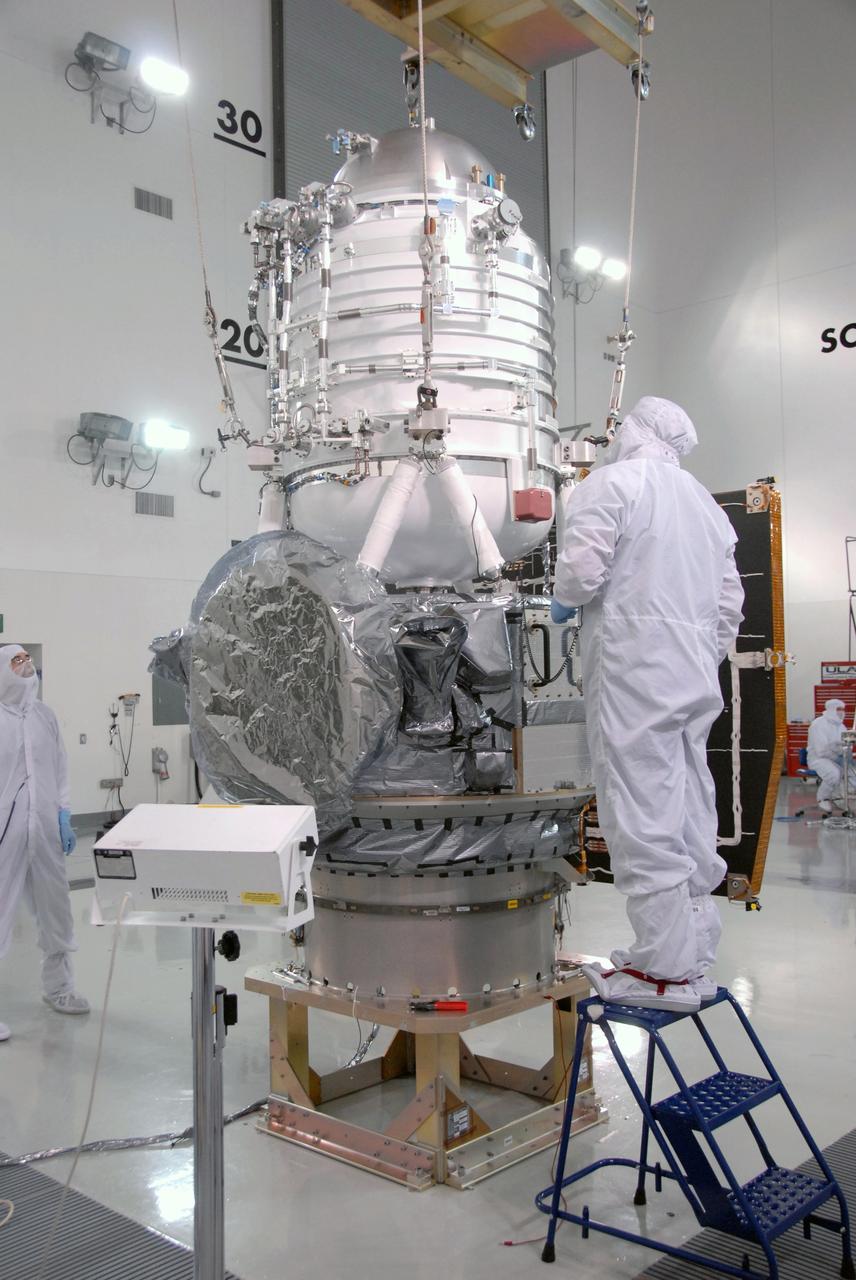
VANDENBERG AIR FORCE BASE, Calif. -- At the Astrotech processing facility on Vandenberg Air Force Base in California, workers prepare to lift NASA's Wide-field Infrared Survey Explorer, or WISE, for its move from the test stand for mating to the Payload Attach Fitting. The satellite will survey the entire sky at infrared wavelengths, creating a cosmic clearinghouse of hundreds of millions of objects which will be catalogued and provide a vast storehouse of knowledge about the solar system, the Milky Way, and the universe. Launch is scheduled for Dec. 7. Photo credit: NASA/Doug Kolkow
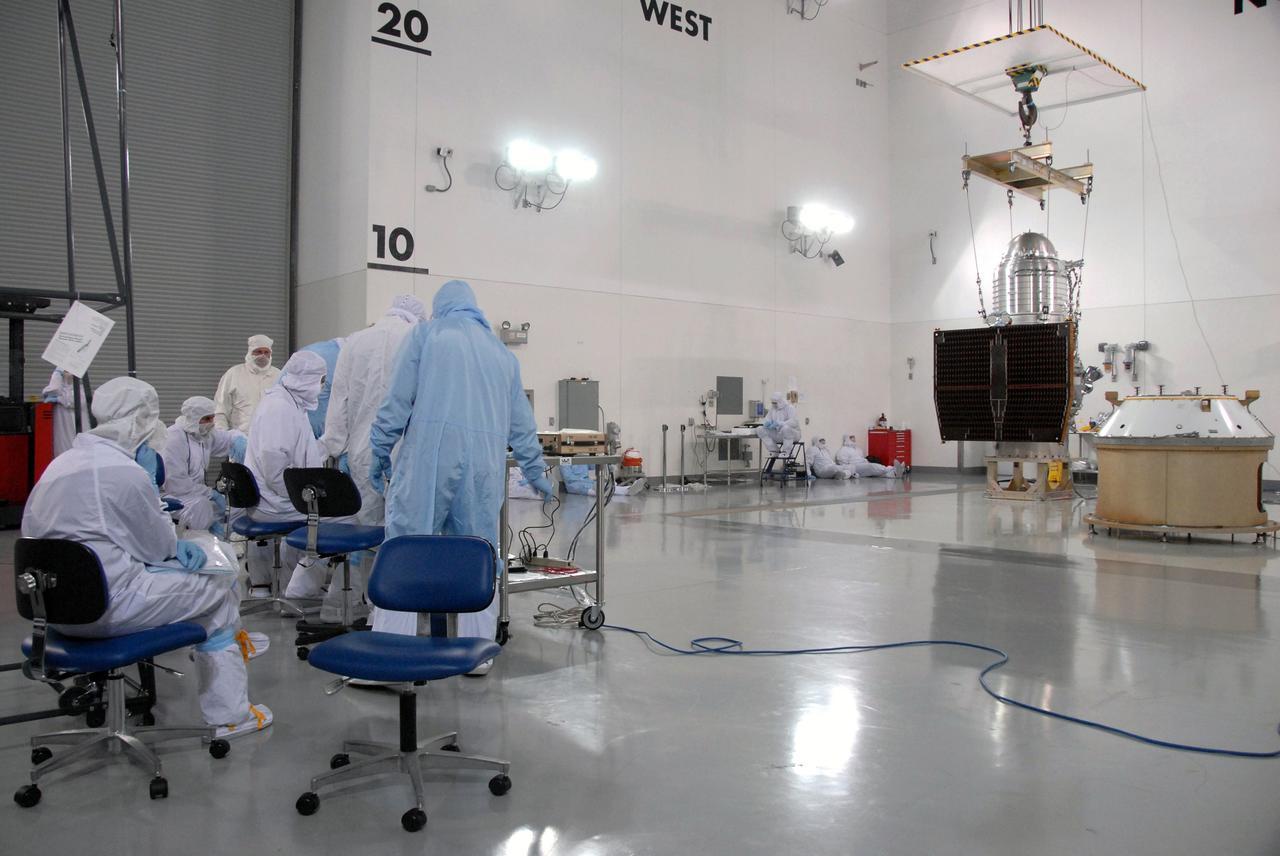
VANDENBERG AIR FORCE BASE, Calif. -- At the Astrotech processing facility on Vandenberg Air Force Base in California, workers prepare to lift NASA's Wide-field Infrared Survey Explorer, or WISE, by crane from its test stand for mating to its Payload Attach Fitting, at right. The satellite will survey the entire sky at infrared wavelengths, creating a cosmic clearinghouse of hundreds of millions of objects which will be catalogued and provide a vast storehouse of knowledge about the solar system, the Milky Way, and the universe. Launch is scheduled for Dec. 7. Photo credit: NASA/Doug Kolkow
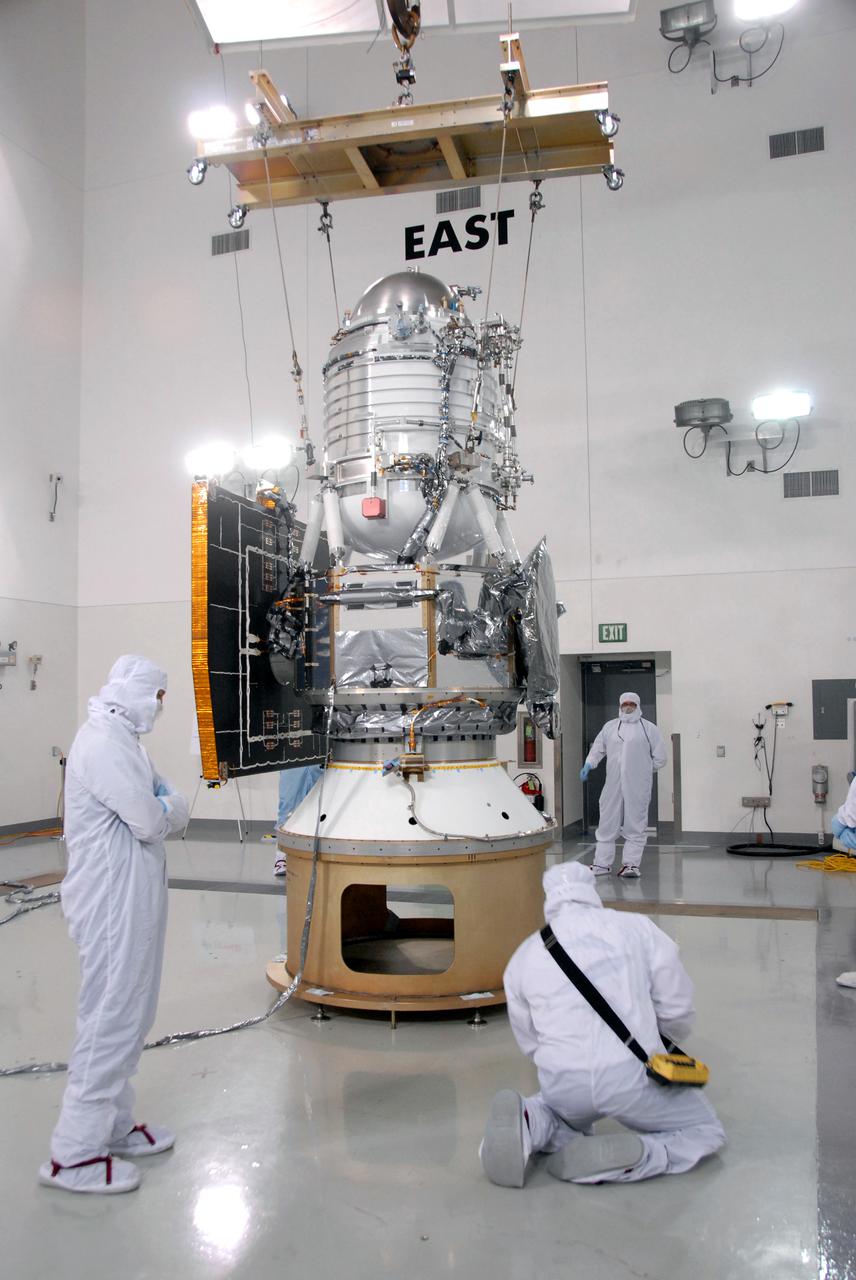
VANDENBERG AIR FORCE BASE, Calif. -- At the Astrotech processing facility on Vandenberg Air Force Base in California, NASA's Wide-field Infrared Survey Explorer, or WISE, is mated to its Payload Attach Fitting. The satellite will survey the entire sky at infrared wavelengths, creating a cosmic clearinghouse of hundreds of millions of objects which will be catalogued and provide a vast storehouse of knowledge about the solar system, the Milky Way, and the universe. Launch is scheduled for Dec. 7. Photo credit: NASA_Doug Kolkow
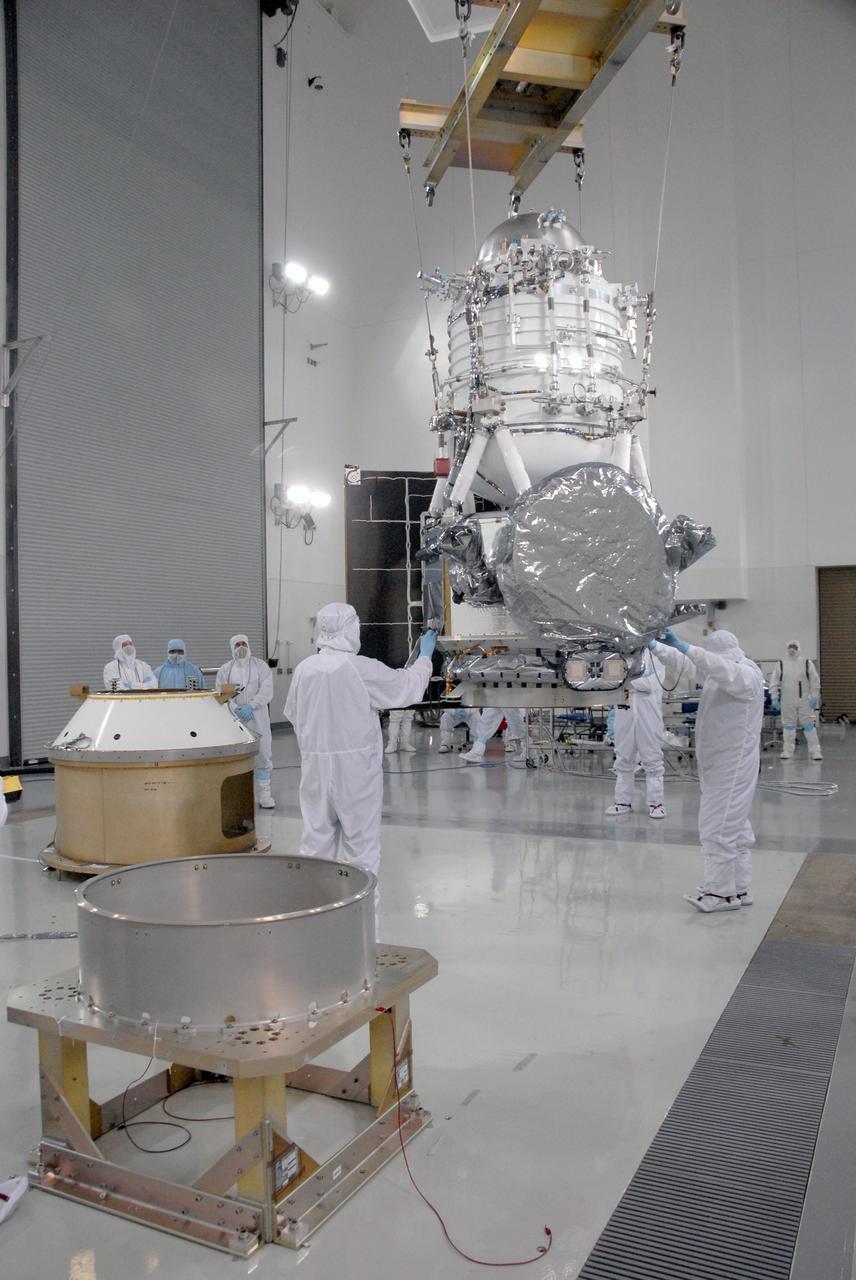
VANDENBERG AIR FORCE BASE, Calif. -- At the Astrotech processing facility on Vandenberg Air Force Base in California, workers guide NASA's Wide-field Infrared Survey Explorer, or WISE, being lifted by crane from its test stand for mating to its Payload Attach Fitting, in the background at left. The satellite will survey the entire sky at infrared wavelengths, creating a cosmic clearinghouse of hundreds of millions of objects which will be catalogued and provide a vast storehouse of knowledge about the solar system, the Milky Way, and the universe. Launch is scheduled for Dec. 7. Photo credit: NASA/Doug Kolkow
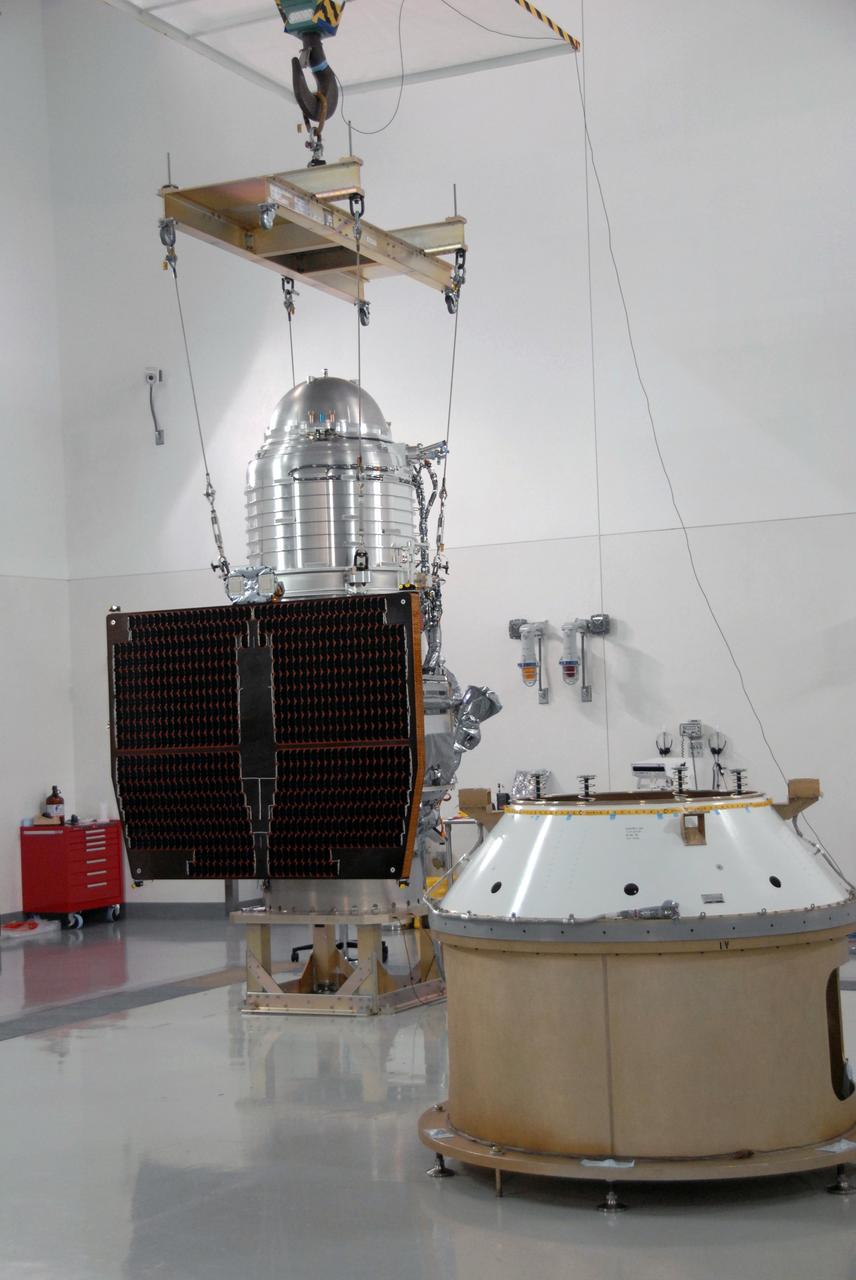
VANDENBERG AIR FORCE BASE, Calif. -- At the Astrotech processing facility on Vandenberg Air Force Base in California, NASA's Wide-field Infrared Survey Explorer, or WISE, is prepared to be lifted by crane from its test stand for mating to its Payload Attach Fitting, at right. The satellite will survey the entire sky at infrared wavelengths, creating a cosmic clearinghouse of hundreds of millions of objects which will be catalogued and provide a vast storehouse of knowledge about the solar system, the Milky Way, and the universe. Launch is scheduled for Dec. 7. Photo credit: NASA/Doug Kolkow
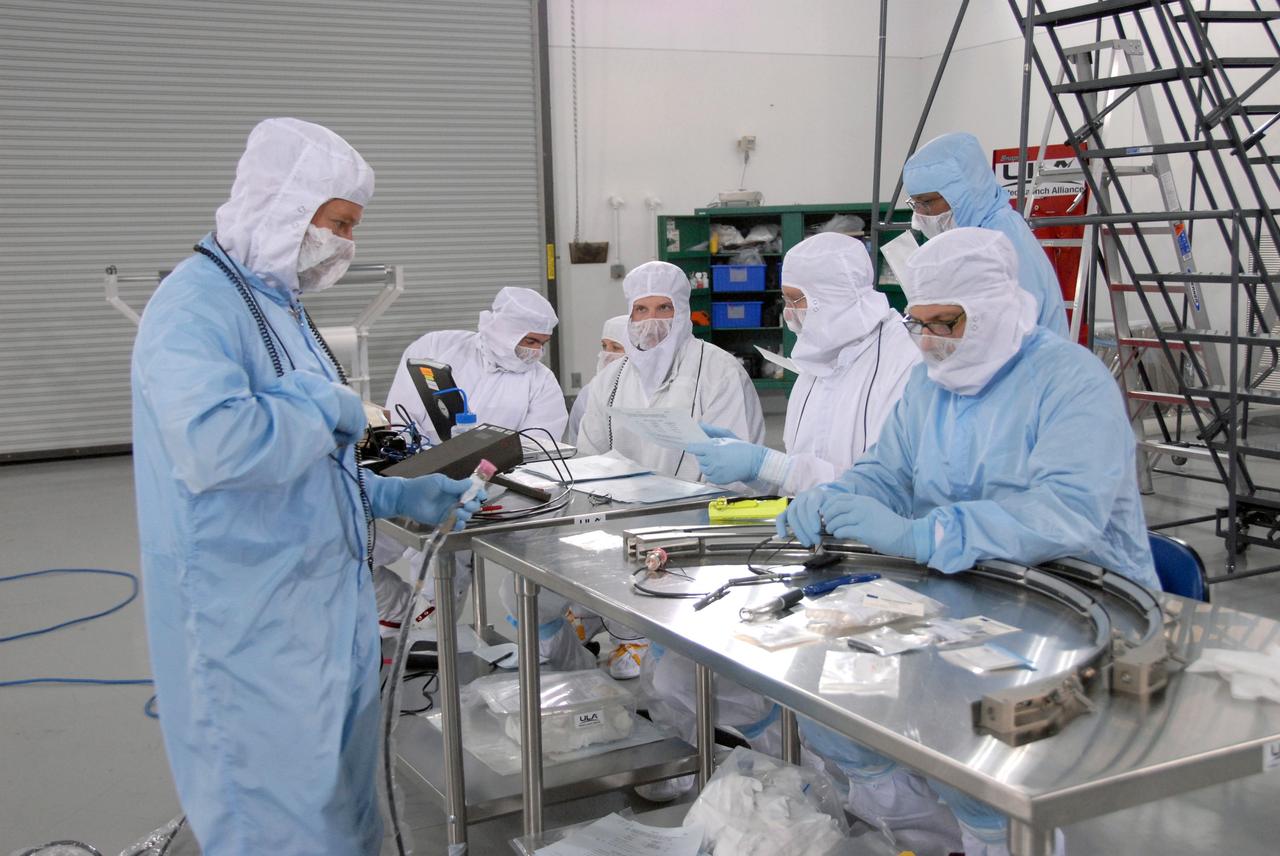
VANDENBERG AIR FORCE BASE, Calif. -- At the Astrotech processing facility on Vandenberg Air Force Base in California, workers prepare a payload adapter ring for NASA's Wide-field Infrared Survey Explorer, or WISE, in preparation for mating to its Payload Attach Fitting. The satellite will survey the entire sky at infrared wavelengths, creating a cosmic clearinghouse of hundreds of millions of objects which will be catalogued and provide a vast storehouse of knowledge about the solar system, the Milky Way, and the universe. Launch is scheduled for Dec. 7. Photo credit: NASA/Doug Kolkow
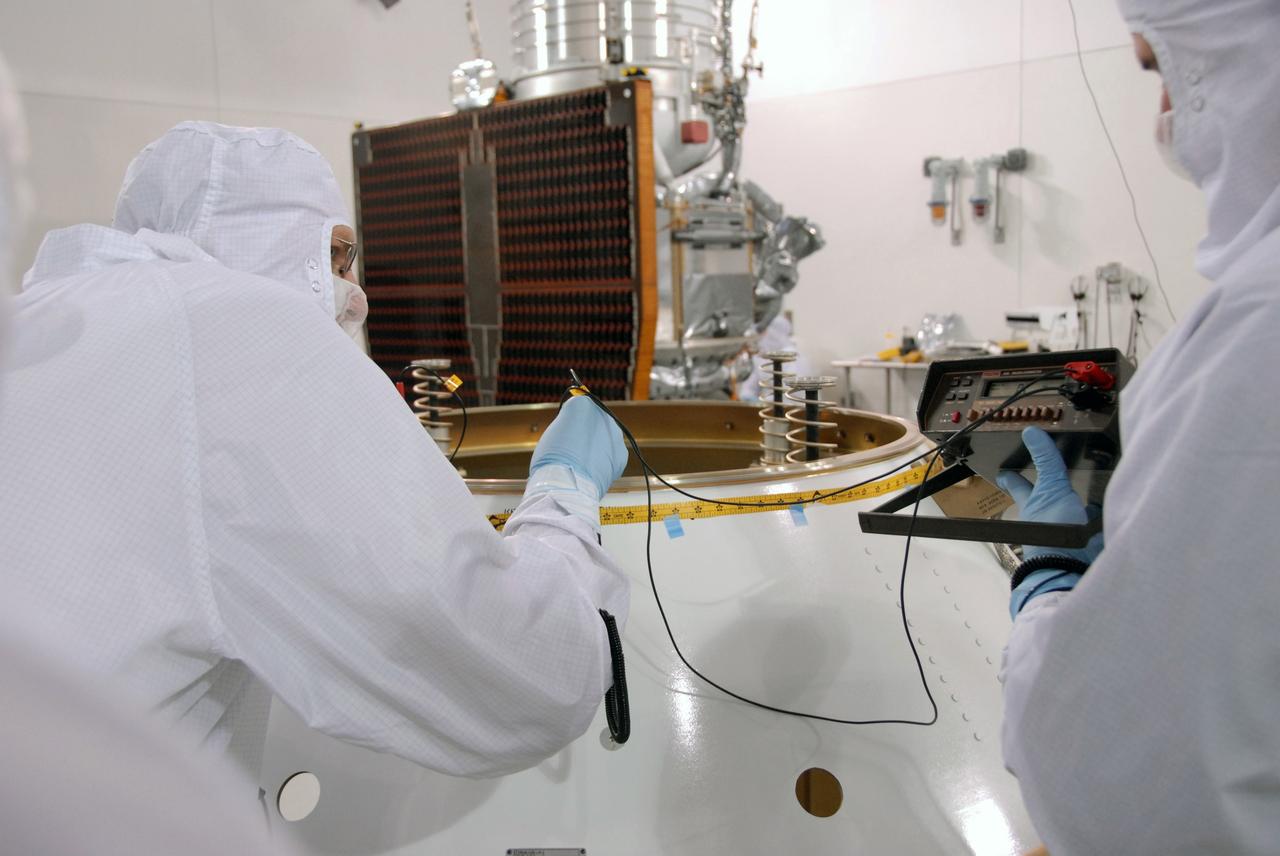
VANDENBERG AIR FORCE BASE, Calif. -- At the Astrotech processing facility on Vandenberg Air Force Base in California, workers evaluate the readiness of the Payload Attach Fitting for mating to NASA's Wide-field Infrared Survey Explorer, or WISE. The satellite will survey the entire sky at infrared wavelengths, creating a cosmic clearinghouse of hundreds of millions of objects which will be catalogued and provide a vast storehouse of knowledge about the solar system, the Milky Way, and the universe. Launch is scheduled for Dec. 7. Photo credit: NASA/Doug Kolkow
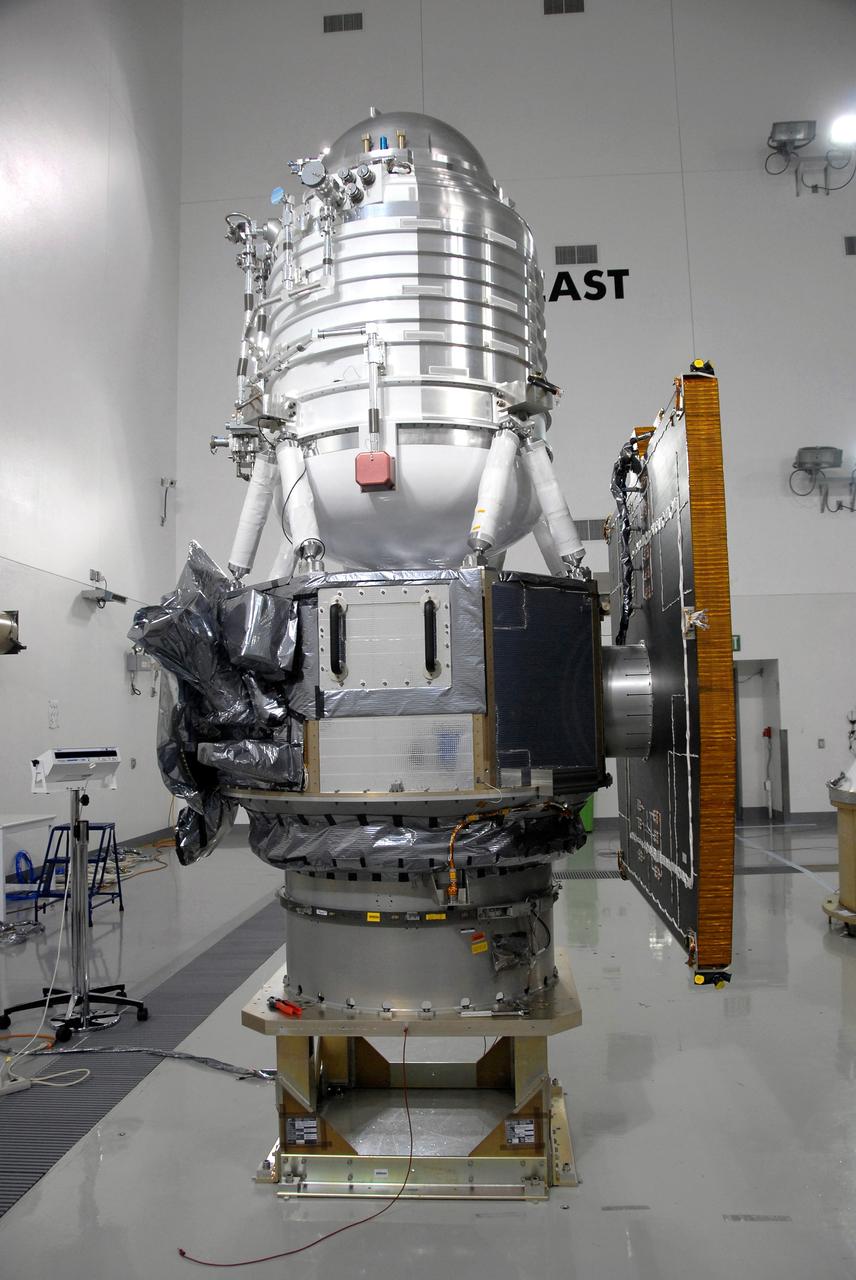
VANDENBERG AIR FORCE BASE, Calif. -- At the Astrotech processing facility on Vandenberg Air Force Base in California, NASA's Wide-field Infrared Survey Explorer, or WISE, is prepared for its move from the test stand for mating to the Payload Attach Fitting. The satellite will survey the entire sky at infrared wavelengths, creating a cosmic clearinghouse of hundreds of millions of objects which will be catalogued and provide a vast storehouse of knowledge about the solar system, the Milky Way, and the universe. Launch is scheduled for Dec. 7. Photo credit: NASA/Doug Kolkow
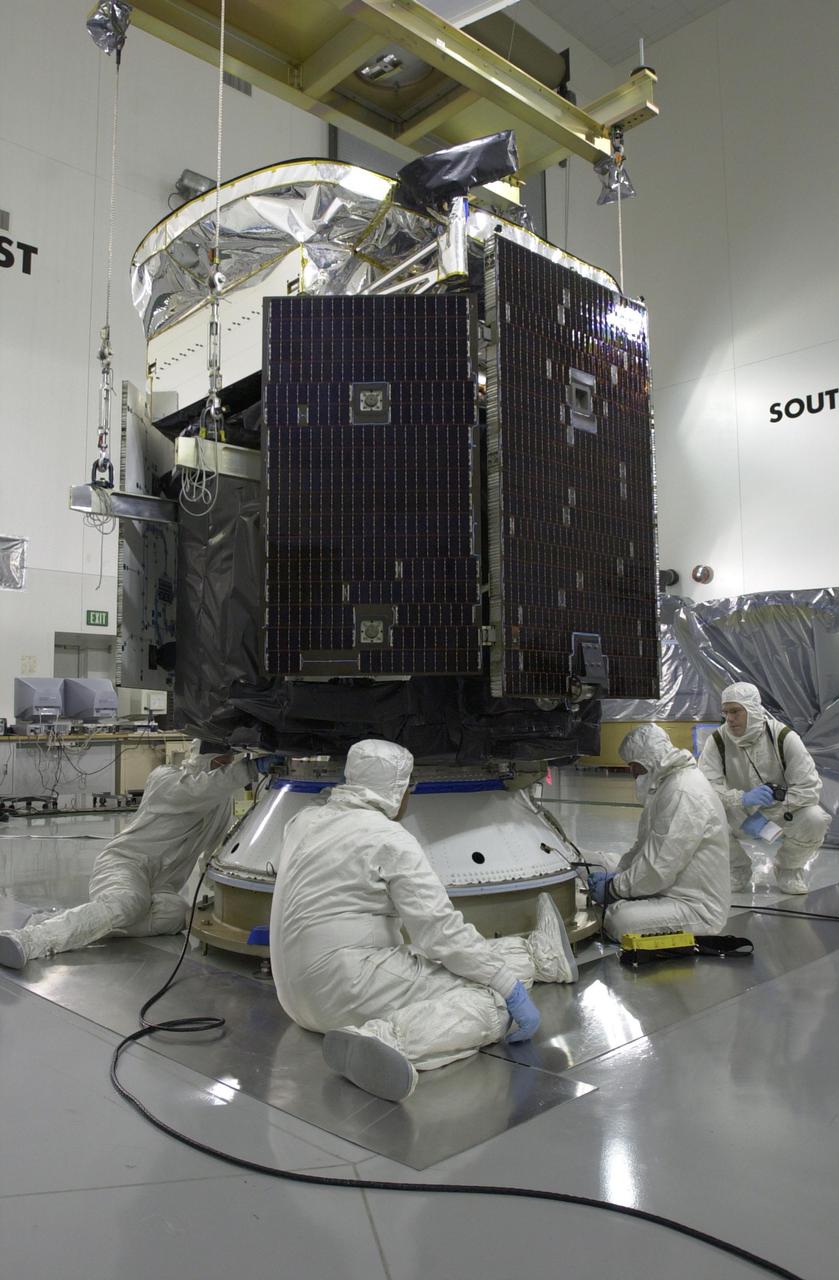
KENNEDY SPACE CENTER, FLA. -- Technicians secure NASA's CloudSat spacecraft to a Delta payload attach fitting in a clean room at Vandenberg Air Force Base, Calif. CALIPSO stands for Cloud-Aerosol Lidar and Infrared Pathfinder Satellite Observation. CALIPSO and CloudSat are highly complementary satellites and will be launched together. They will provide never-before-seen 3-D perspectives of how clouds and aerosols form, evolve, and affect weather and climate. CALIPSO and CloudSat will fly in formation with three other satellites in the A-train constellation to enhance understanding of our climate system. Launch of CALIPSO_CloudSat aboard a Boeing Delta II rocket is scheduled for 3:01 a.m. PDT Sept. 29.
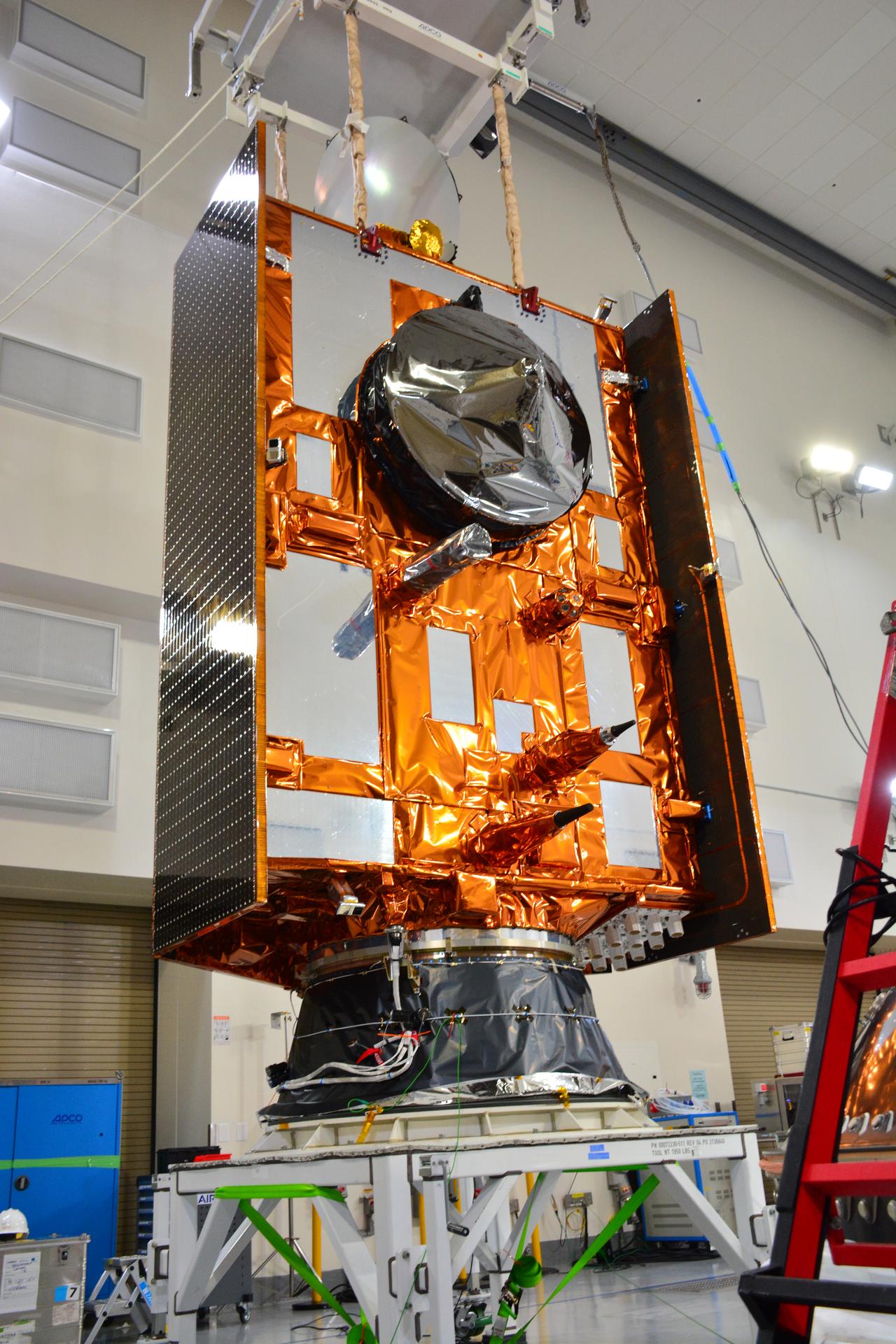
Technicians integrate the Sentinel-6B spacecraft to the payload attach fitting inside the Astrotech Space Operations payload processing facility at Vandenberg Space Force Base in California on Wednesday, Nov. 5, 2025. The payload attach fitting is part of the system that connects Sentinel-6B to the second stage of the SpaceX Falcon 9 rocket that will carry it to orbit. A collaboration between NASA, ESA (European Space Agency), EUMETSAT (European Organisation for the Exploitation of Meteorological Satellites), and the National Oceanic and Atmospheric Administration (NOAA), Sentinel-6B is designed to measure sea levels down to roughly an inch for about 90% of the world’s oceans. NASA is targeting launch no earlier than Sunday, Nov. 16, on a SpaceX Falcon 9 rocket from Space Launch Complex 4 East at Vandenberg.
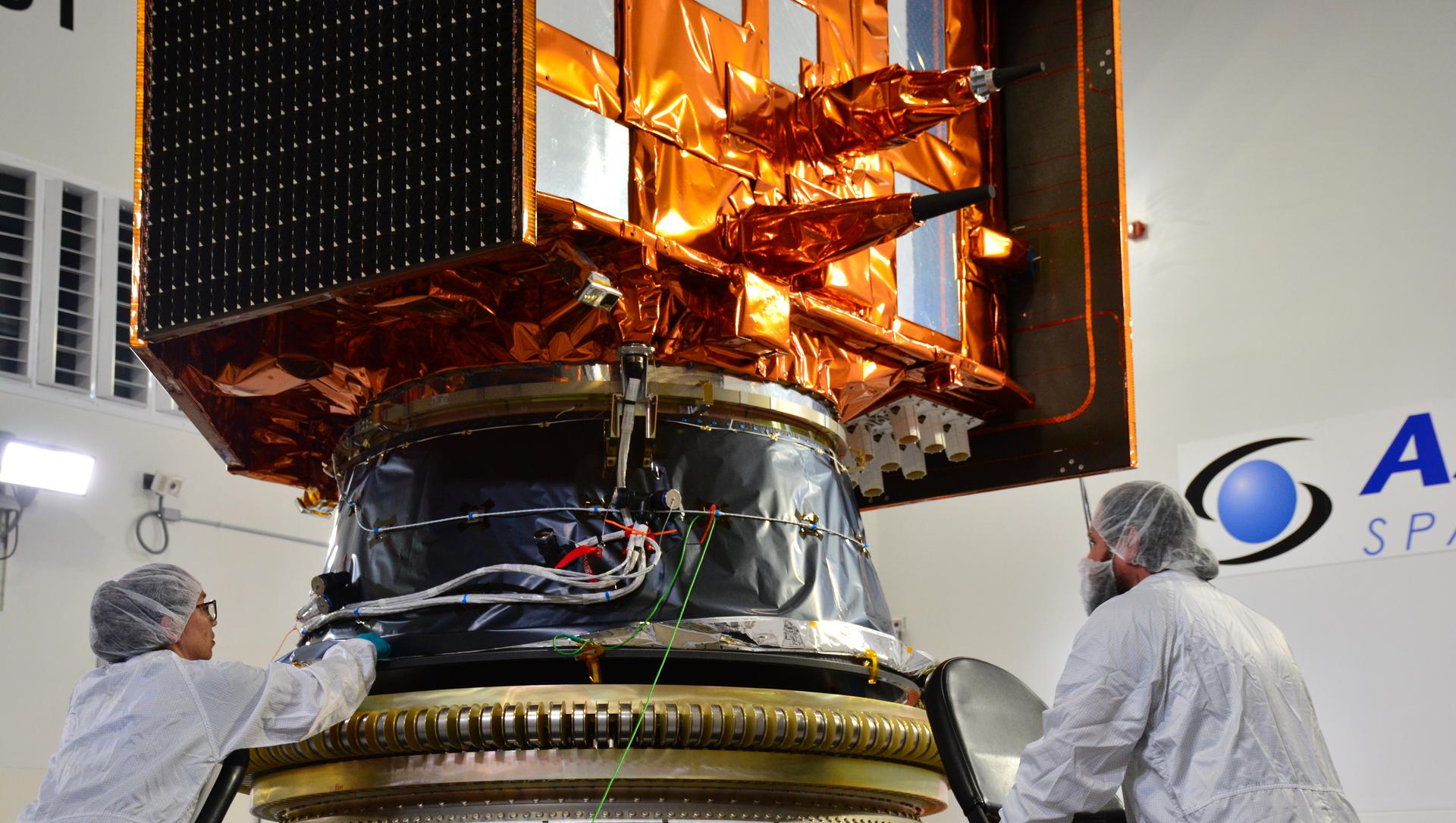
Technicians integrate the Sentinel-6B spacecraft to the payload attach fitting inside the Astrotech Space Operations payload processing facility at Vandenberg Space Force Base in California on Wednesday, Nov. 5, 2025. The payload attach fitting is part of the system that connects Sentinel-6B to the second stage of the SpaceX Falcon 9 rocket that will carry it to orbit. A collaboration between NASA, ESA (European Space Agency), EUMETSAT (European Organisation for the Exploitation of Meteorological Satellites), and the National Oceanic and Atmospheric Administration (NOAA), Sentinel-6B is designed to measure sea levels down to roughly an inch for about 90% of the world’s oceans. NASA is targeting launch no earlier than Sunday, Nov. 16, on a SpaceX Falcon 9 rocket from Space Launch Complex 4 East at Vandenberg.
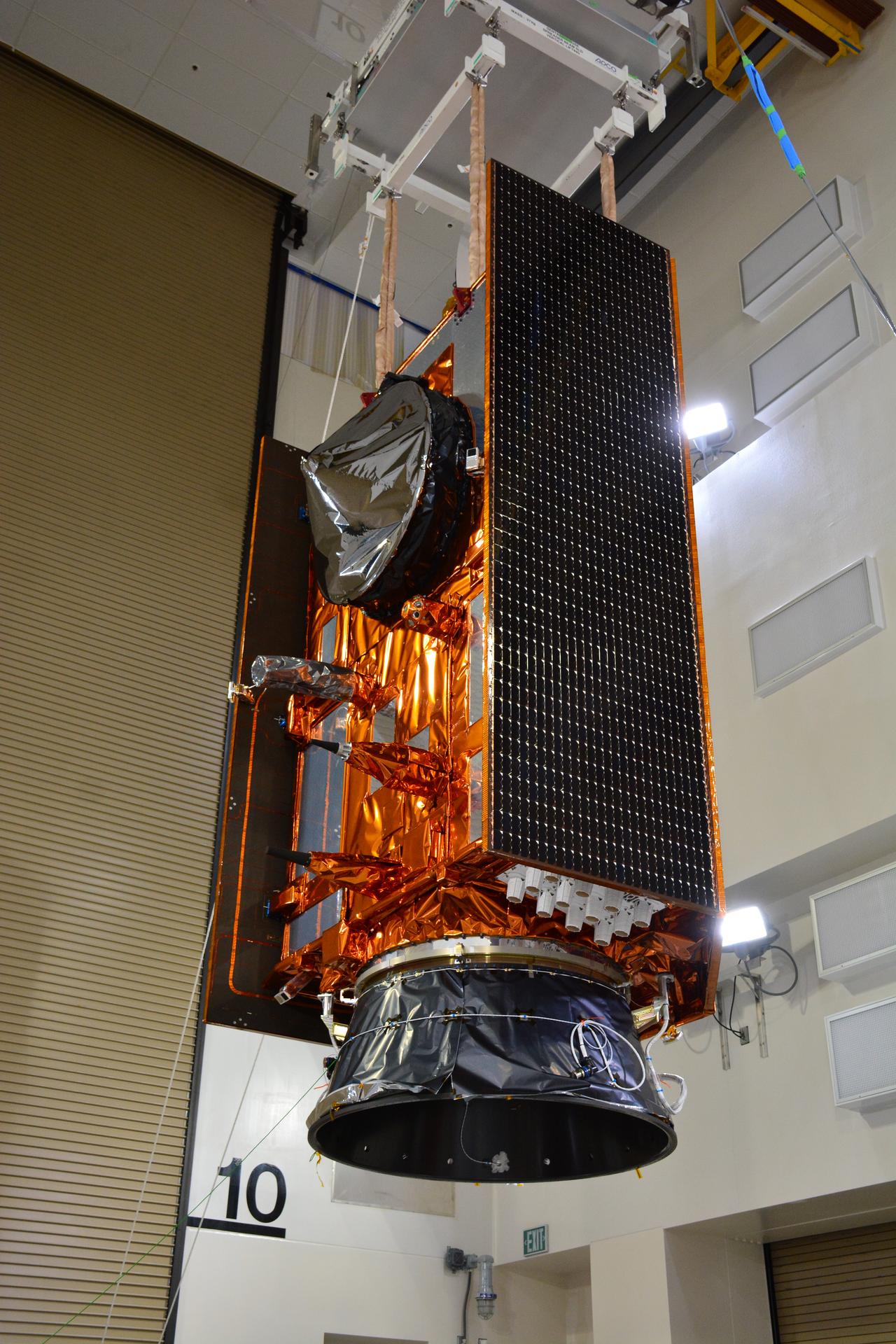
Technicians integrate the Sentinel-6B spacecraft to the payload attach fitting inside the Astrotech Space Operations payload processing facility at Vandenberg Space Force Base in California on Wednesday, Nov. 5, 2025. The payload attach fitting is part of the system that connects Sentinel-6B to the second stage of the SpaceX Falcon 9 rocket that will carry it to orbit. A collaboration between NASA, ESA (European Space Agency), EUMETSAT (European Organisation for the Exploitation of Meteorological Satellites), and the National Oceanic and Atmospheric Administration (NOAA), Sentinel-6B is designed to measure sea levels down to roughly an inch for about 90% of the world’s oceans. NASA is targeting launch no earlier than Sunday, Nov. 16, on a SpaceX Falcon 9 rocket from Space Launch Complex 4 East at Vandenberg.
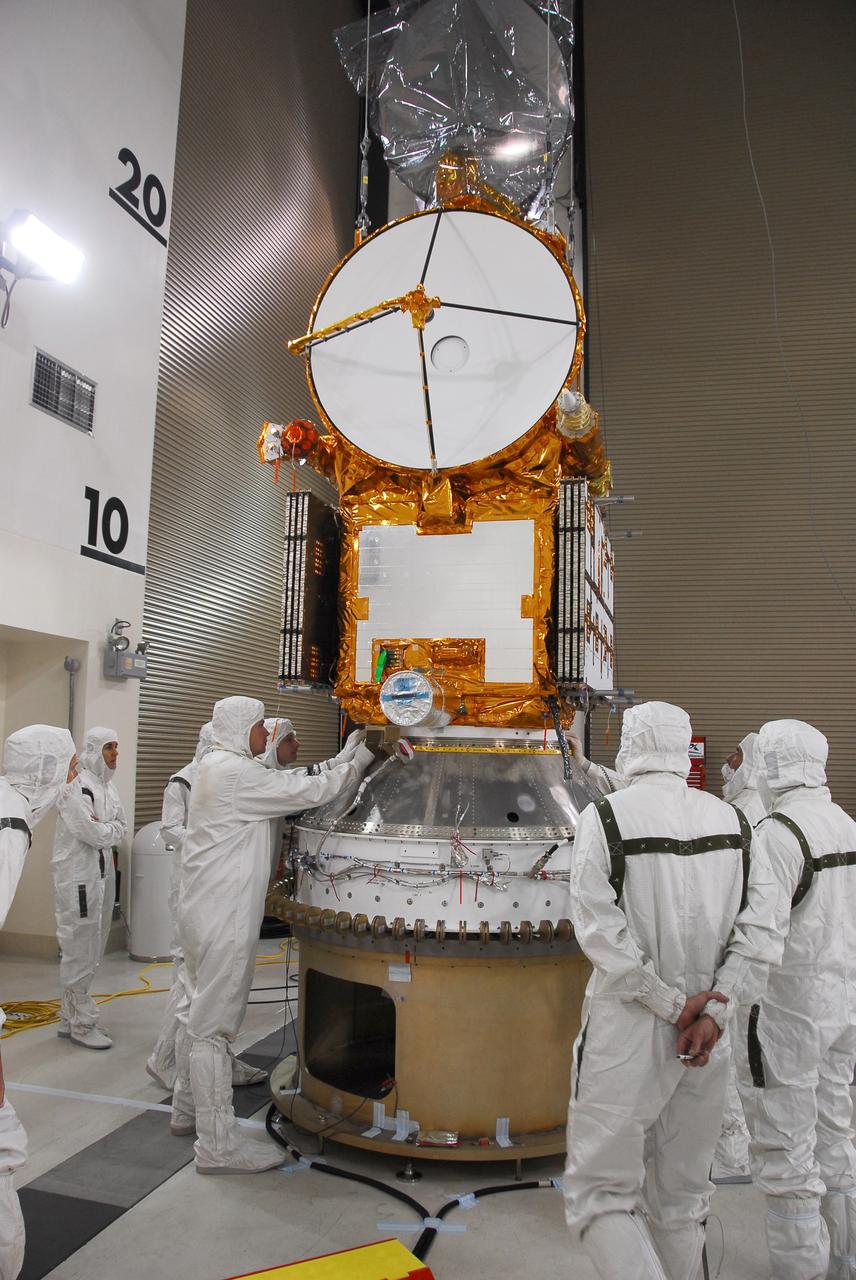
VANDENBERG AIR FORCE BASE, Calif. – Engineers check the installation of the Ocean Surface Topography Mission, or OSTM/Jason 2, spacecraft onto the payload attach fitting, or PAF. The PAF is the interface with the Delta II launch vehicle. The launch of the OSTM/Jason 2 aboard a Delta II rocket is scheduled for Friday, June 20, from Vandenberg Air Force Base in California. The launch window extends from 12:46 a.m. to 12:55 a.m. PDT. The satellite will be placed in an 830-mile-high orbit at an inclination of 66 degrees after separating from the Delta II 55 minutes after liftoff. The five primary science instruments of the Ocean Surface Topography Mission aboard the Jason 2 spacecraft are dedicated to measuring ocean surface height. These measurements will be used to evaluate and forecast climate changes and improve weather forecasting. The results also are expected to help forecasters better predict hurricane intensity. Photo credit: NASA
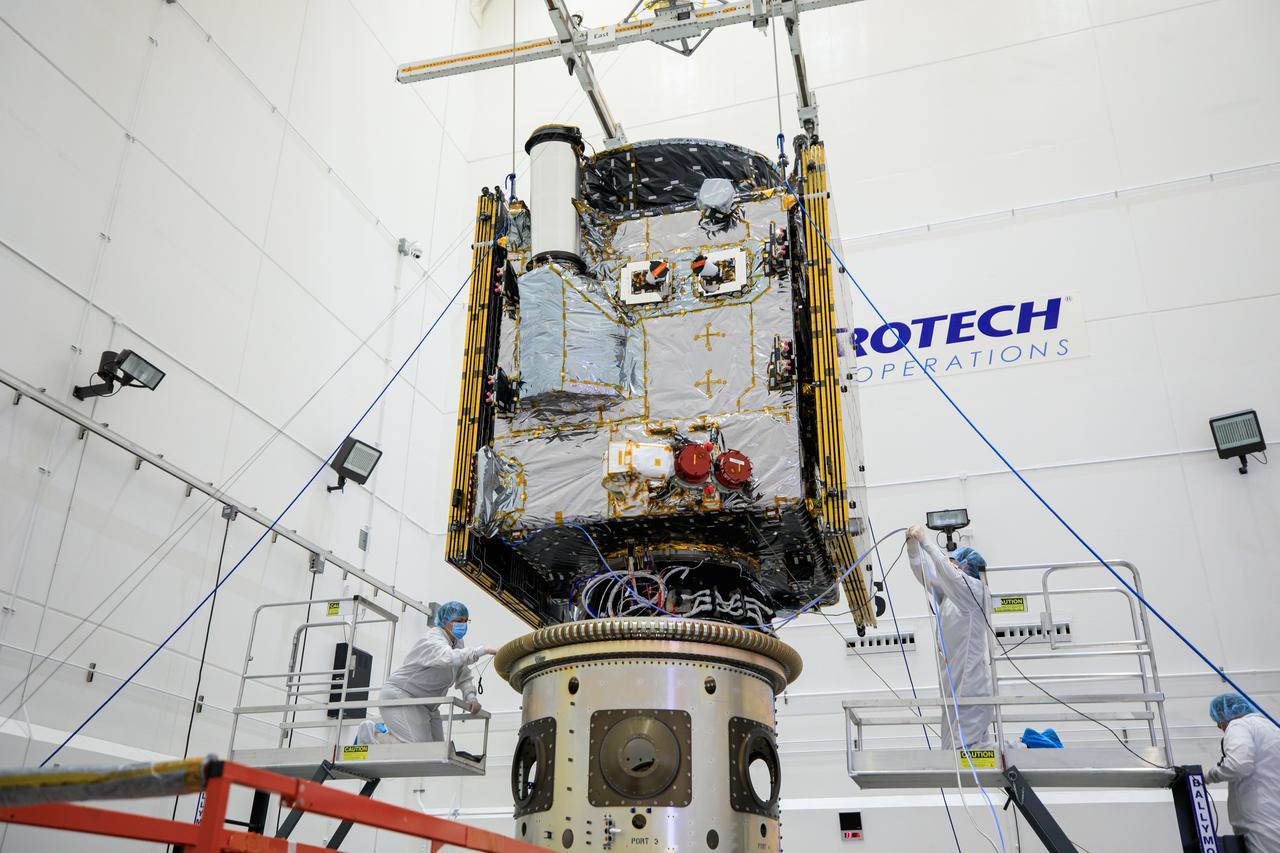
Technicians connected NASA’s Psyche spacecraft to the payload attach fitting inside the clean room at Astrotech Space Operations facility in Titusville, Florida on Wednesday, Sept. 20, 2023. This hardware allows Psyche to connect to the top of the rocket once secured inside the protective payload fairings. Psyche will lift off on a SpaceX Falcon Heavy rocket at 10:34 a.m. EDT Thursday, Oct. 5, 2023, from Launch Complex 39A at NASA’s Kennedy Space Center in Florida. The Psyche spacecraft will travel nearly six years and about 2.2 billion miles (3.6 billion kilometers) to an asteroid of the same name, which is orbiting the Sun between Mars and Jupiter. Scientists believe Psyche could be part of the core of a planetesimal, likely made of iron-nickel metal, which can be studied from orbit to give researchers a better idea of what may make up Earth’s core.
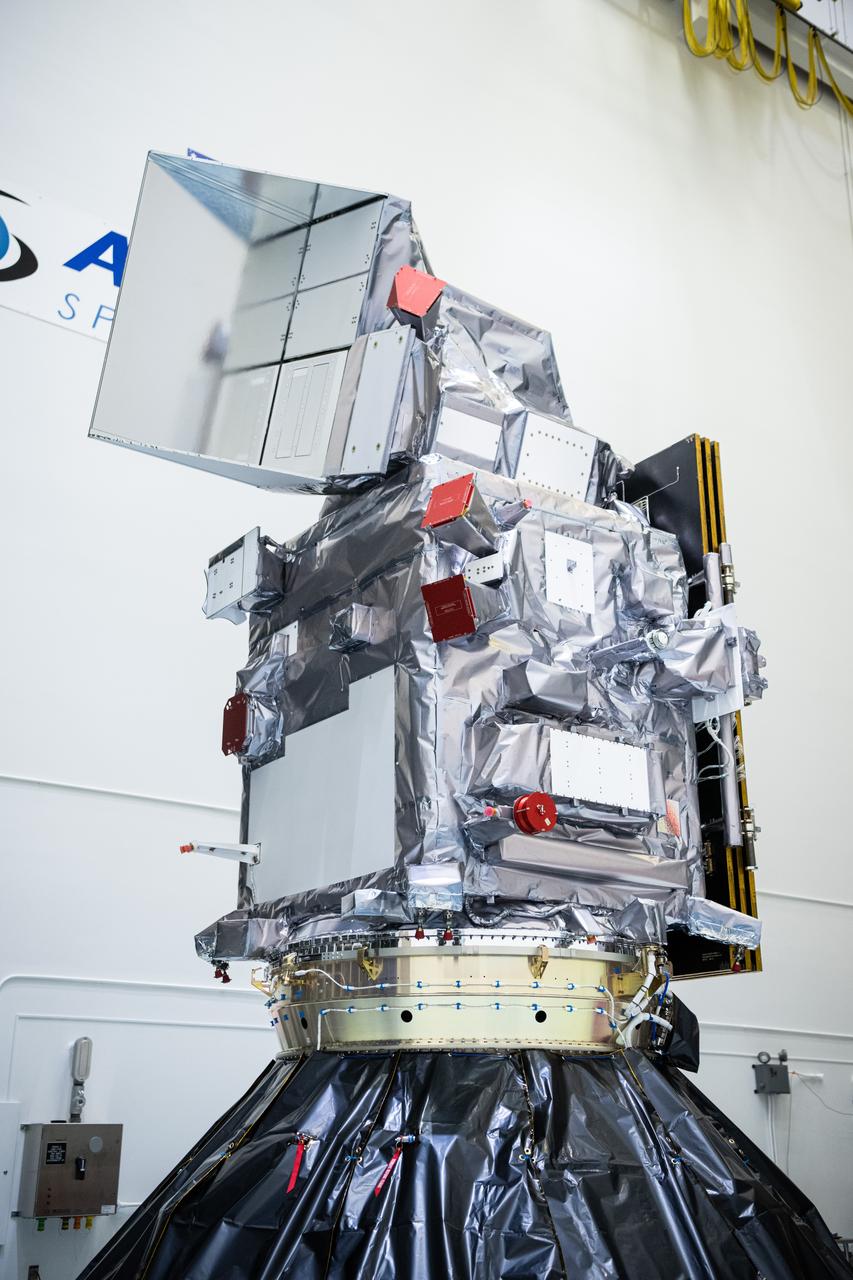
NASA and SpaceX technicians connect NASA’s PACE (Plankton, Aerosol, Cloud, ocean Ecosystem) spacecraft to the payload adapter on Friday, Jan. 26, 2024, at the Astrotech Space Operations Facility near the agency’s Kennedy Space Center in Florida. PACE is NASA’s newest earth-observing satellite that will help increase our understanding of Earth’s oceans, atmosphere, and climate by delivering hyperspectral observations of microscopic marine organisms called phytoplankton as well new data on clouds and aerosols. PACE is set to launch from Space Launch Complex 40 at Cape Canaveral Space Force Station in Florida at 1:33 a.m. EST on Tuesday, Feb. 6.
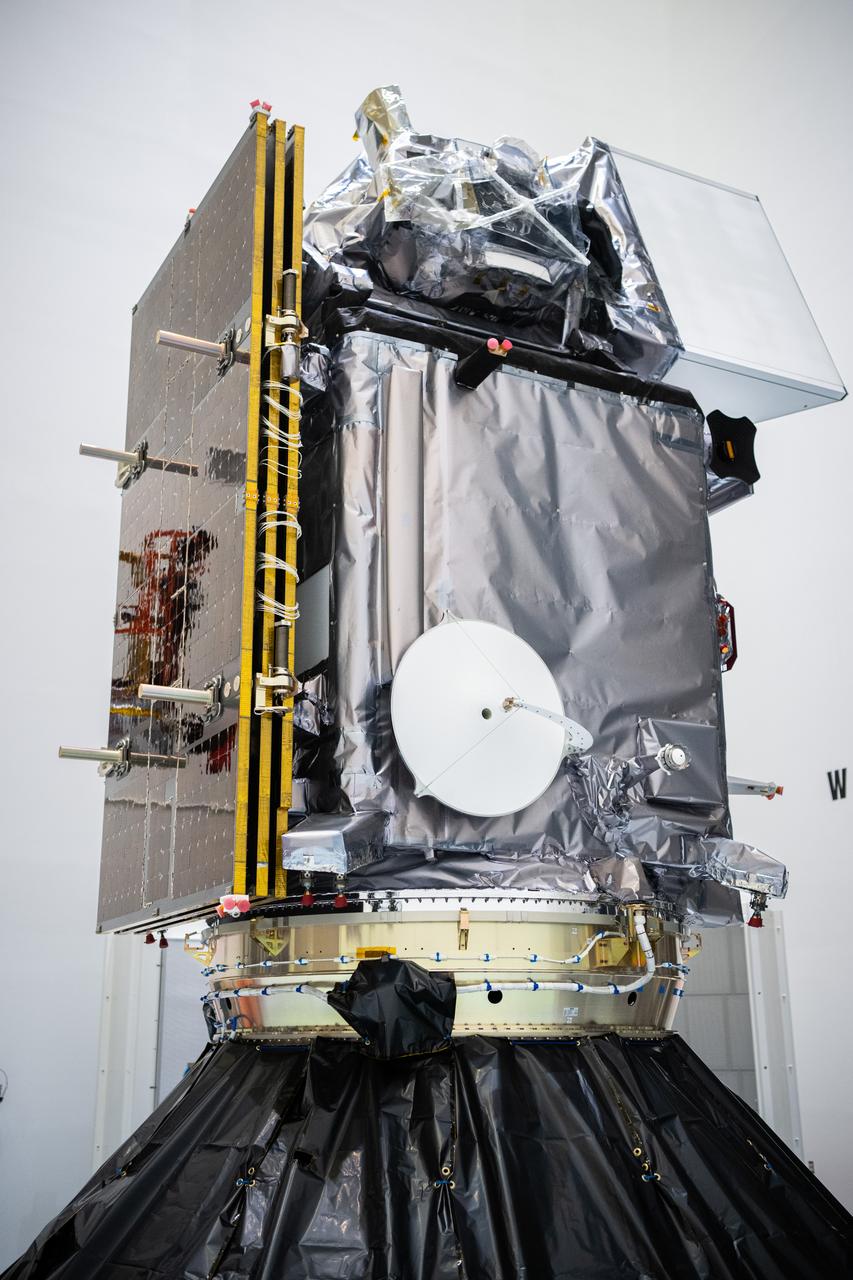
NASA and SpaceX technicians connect NASA’s PACE (Plankton, Aerosol, Cloud, ocean Ecosystem) spacecraft to the payload adapter on Friday, Jan. 26, 2024, at the Astrotech Space Operations Facility near the agency’s Kennedy Space Center in Florida. PACE is NASA’s newest earth-observing satellite that will help increase our understanding of Earth’s oceans, atmosphere, and climate by delivering hyperspectral observations of microscopic marine organisms called phytoplankton as well new data on clouds and aerosols. PACE is set to launch from Space Launch Complex 40 at Cape Canaveral Space Force Station in Florida at 1:33 a.m. EST on Tuesday, Feb. 6.
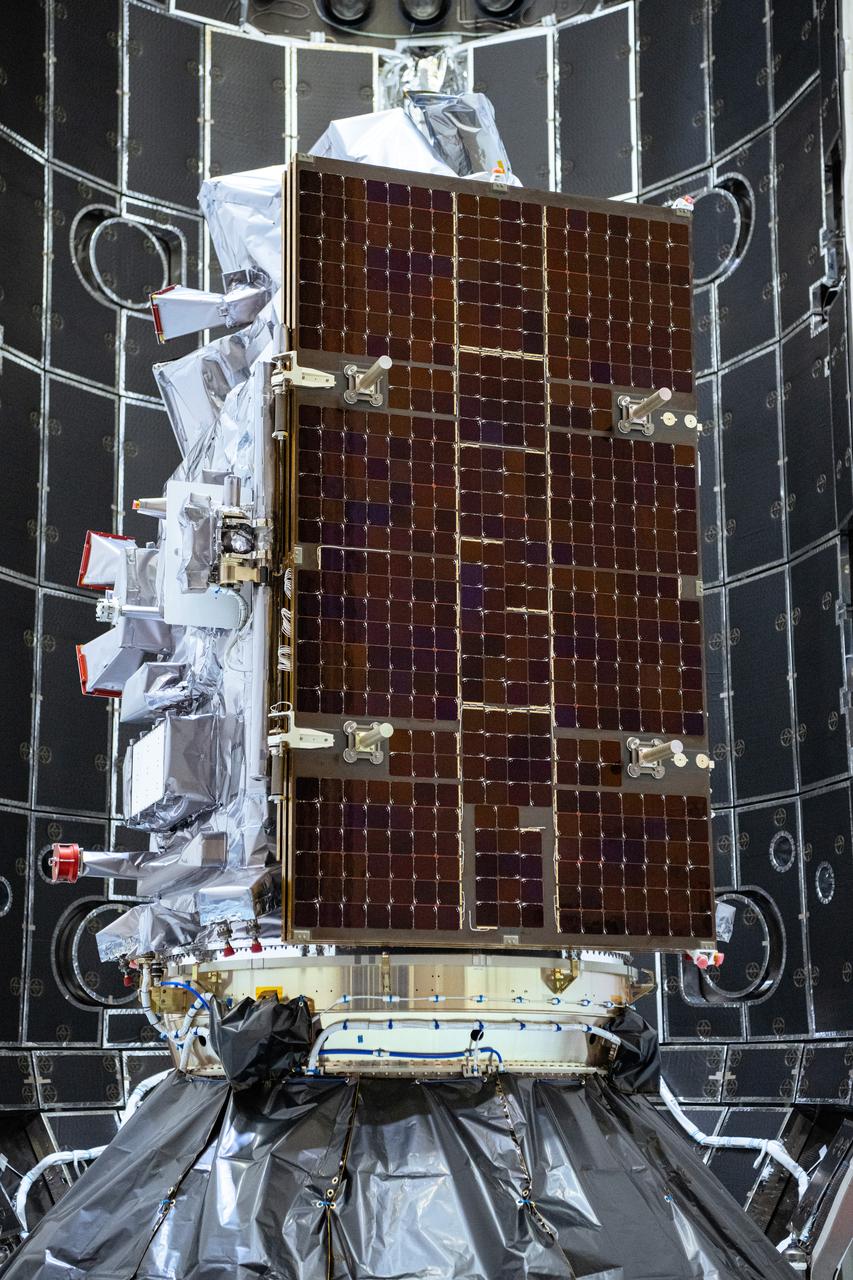
NASA and SpaceX technicians connect NASA’s PACE (Plankton, Aerosol, Cloud, ocean Ecosystem) spacecraft to the payload adapter on Friday, Jan. 26, 2024, at the Astrotech Space Operations Facility near the agency’s Kennedy Space Center in Florida. PACE is NASA’s newest earth-observing satellite that will help increase our understanding of Earth’s oceans, atmosphere, and climate by delivering hyperspectral observations of microscopic marine organisms called phytoplankton as well new data on clouds and aerosols. PACE is set to launch from Space Launch Complex 40 at Cape Canaveral Space Force Station in Florida at 1:33 a.m. EST on Tuesday, Feb. 6.
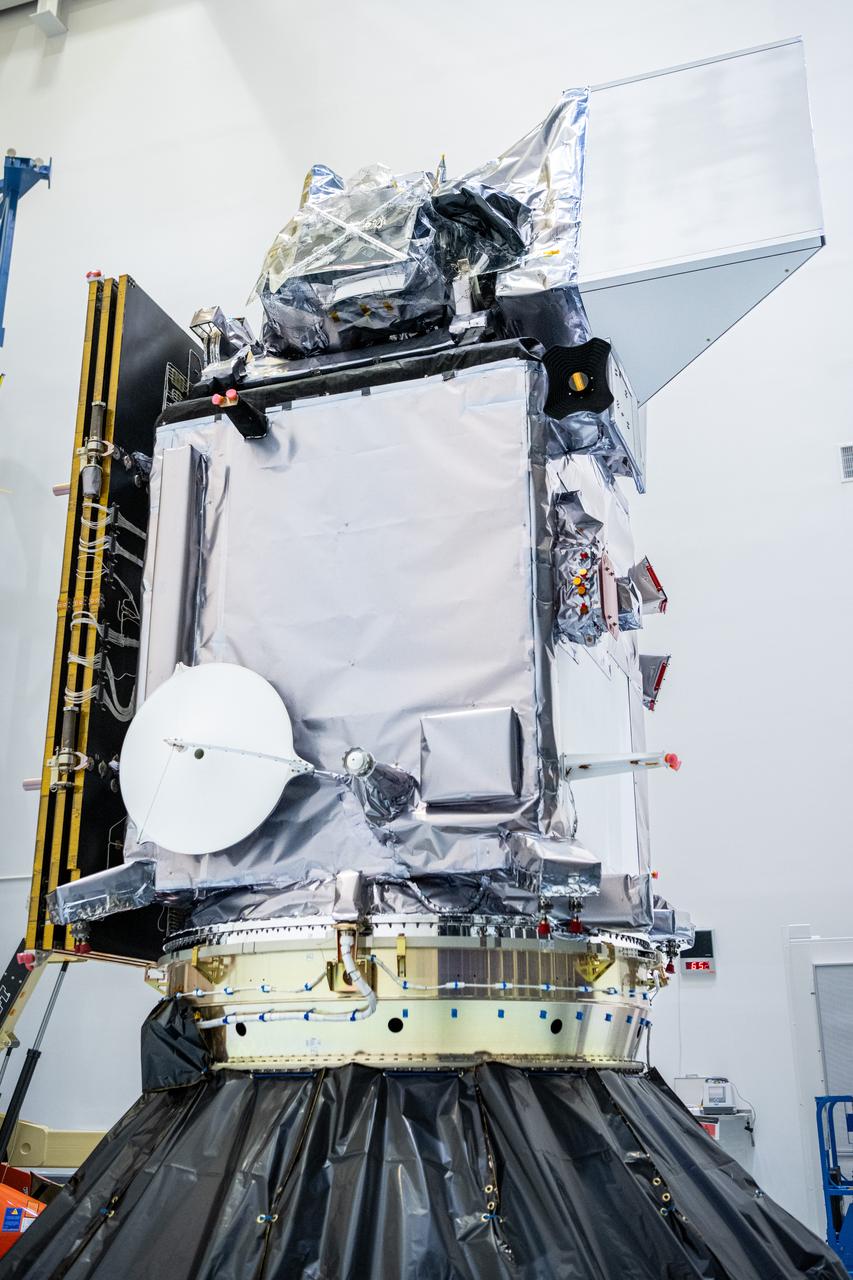
NASA and SpaceX technicians connect NASA’s PACE (Plankton, Aerosol, Cloud, ocean Ecosystem) spacecraft to the payload adapter on Friday, Jan. 26, 2024, at the Astrotech Space Operations Facility near the agency’s Kennedy Space Center in Florida. PACE is NASA’s newest earth-observing satellite that will help increase our understanding of Earth’s oceans, atmosphere, and climate by delivering hyperspectral observations of microscopic marine organisms called phytoplankton as well new data on clouds and aerosols. PACE is set to launch from Space Launch Complex 40 at Cape Canaveral Space Force Station in Florida at 1:33 a.m. EST on Tuesday, Feb. 6.
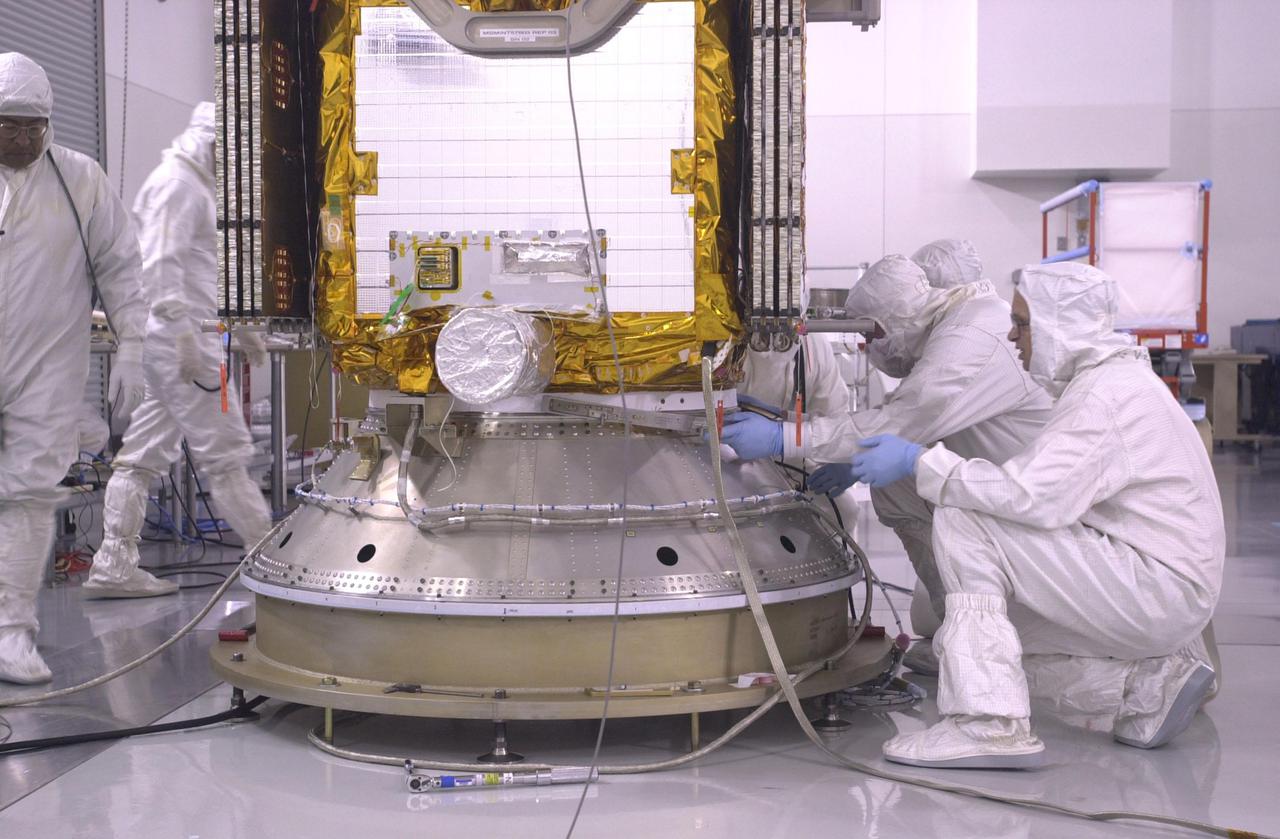
VANDENBERG AIR FORCE BASE, CALIF. — Inside the Astrotech Payload Processing Facility on Vandenberg Air Force Base in California, workers secure the CALIPSO spacecraft on the upper Delta Payload Attach Fitting (UDPAF). Later the UDPAF will be mated with the lower Delta Payload Attach Fitting, which contains the CloudSat satellite. The PAF is the interface between the spacecraft and the second stage of the rocket. CALIPSO stands for Cloud-Aerosol Lidar and Infrared Pathfinder Satellite Observation.
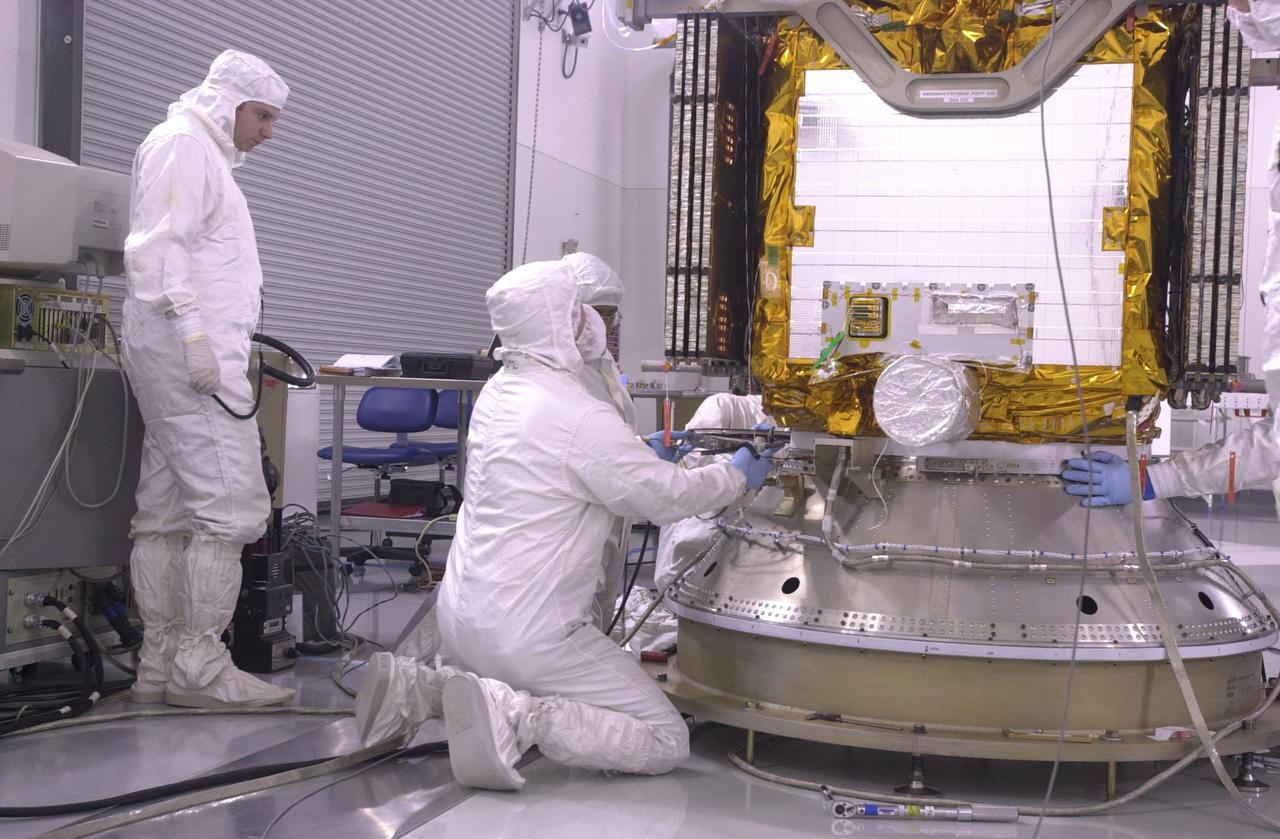
VANDENBERG AIR FORCE BASE, CALIF. — Inside the Astrotech Payload Processing Facility on Vandenberg Air Force Base in California, workers check the attachment of the CALIPSO spacecraft onto the upper Delta Payload Attach Fitting (UDPAF). Later the UDPAF will be mated with the lower Delta Payload Attach Fitting, which contains the CloudSat satellite. The PAF is the interface between the spacecraft and the second stage of the rocket. CALIPSO stands for Cloud-Aerosol Lidar and Infrared Pathfinder Satellite Observation.
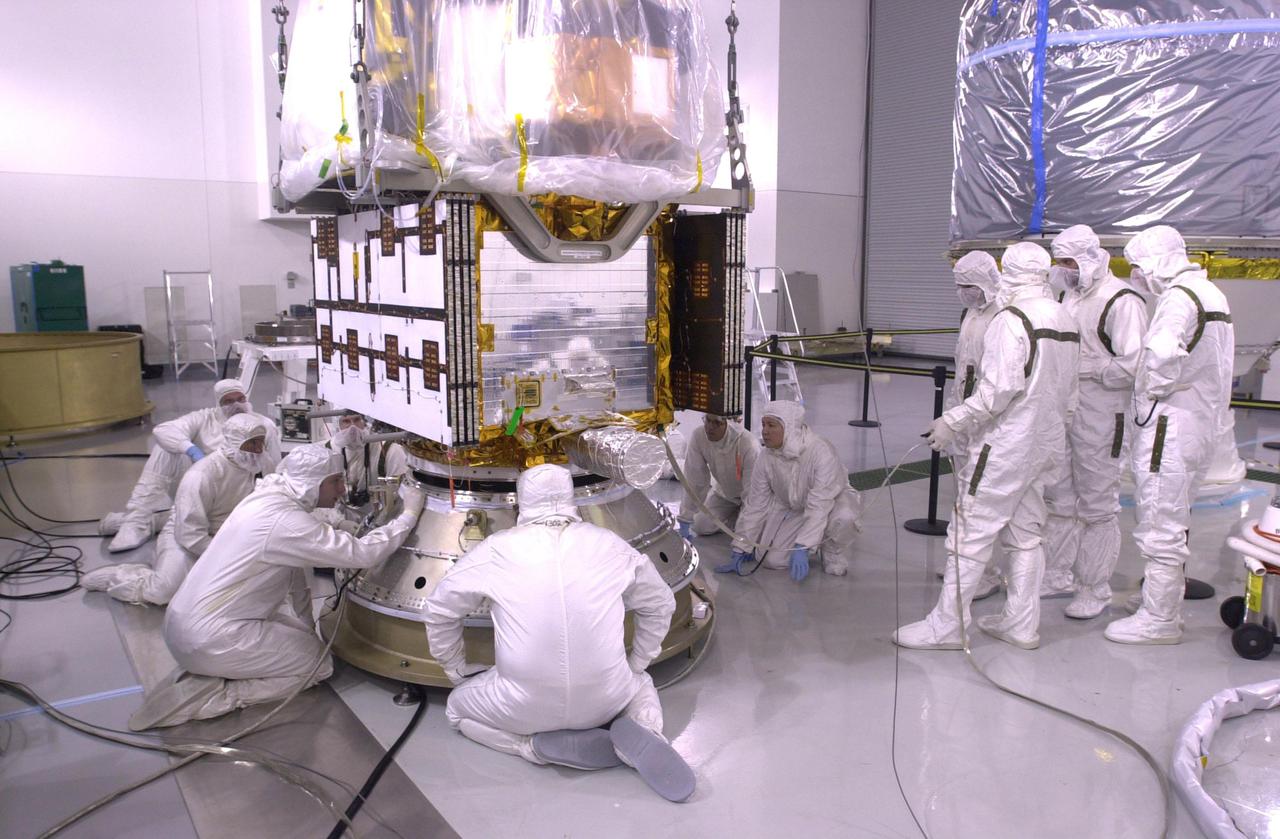
VANDENBERG AIR FORCE BASE, CALIF. — Inside the Astrotech Payload Processing Facility on Vandenberg Air Force Base in California, workers secure the CALIPSO spacecraft on the upper Delta Payload Attach Fitting (UDPAF). Later the UDPAF will be mated with the lower Delta Payload Attach Fitting, which contains the CloudSat satellite. The PAF is the interface between the spacecraft and the second stage of the rocket. CALIPSO stands for Cloud-Aerosol Lidar and Infrared Pathfinder Satellite Observation.
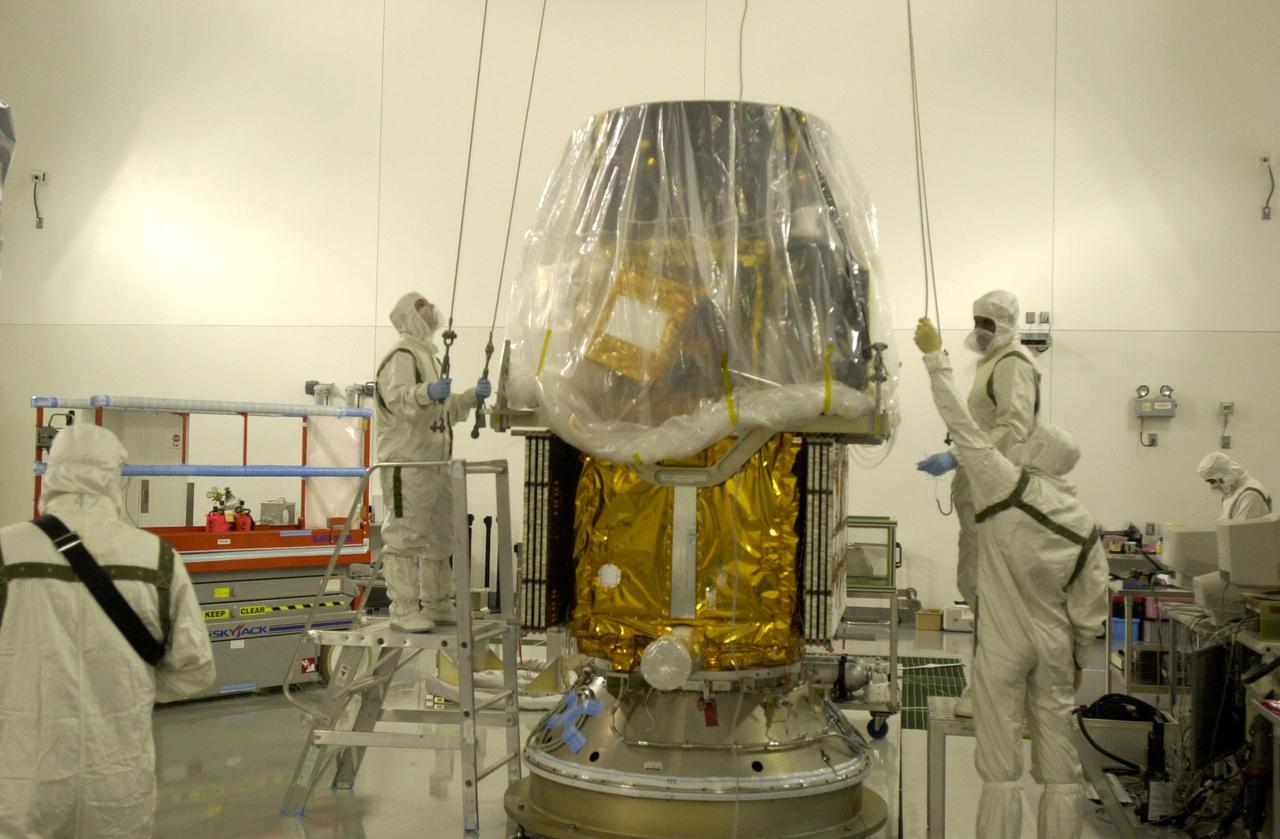
VANDENBERG AIR FORCE BASE, CALIF. — Inside the Astrotech Payload Processing Facility on Vandenberg Air Force Base in California, the CALIPSO spacecraft is back on the floor or further adjustments. CALIPSO will be mated with the Lower Delta Payload Attach Fitting (LDPAF) that contains the CloudSat satellite. Later the UDPAF will be mated with the lower Delta Payload Attach Fitting, which contains the CloudSat satellite. The PAF is the interface between the spacecraft and the second stage of the rocket. CALIPSO stands for Cloud-Aerosol Lidar and Infrared Pathfinder Satellite Observation.
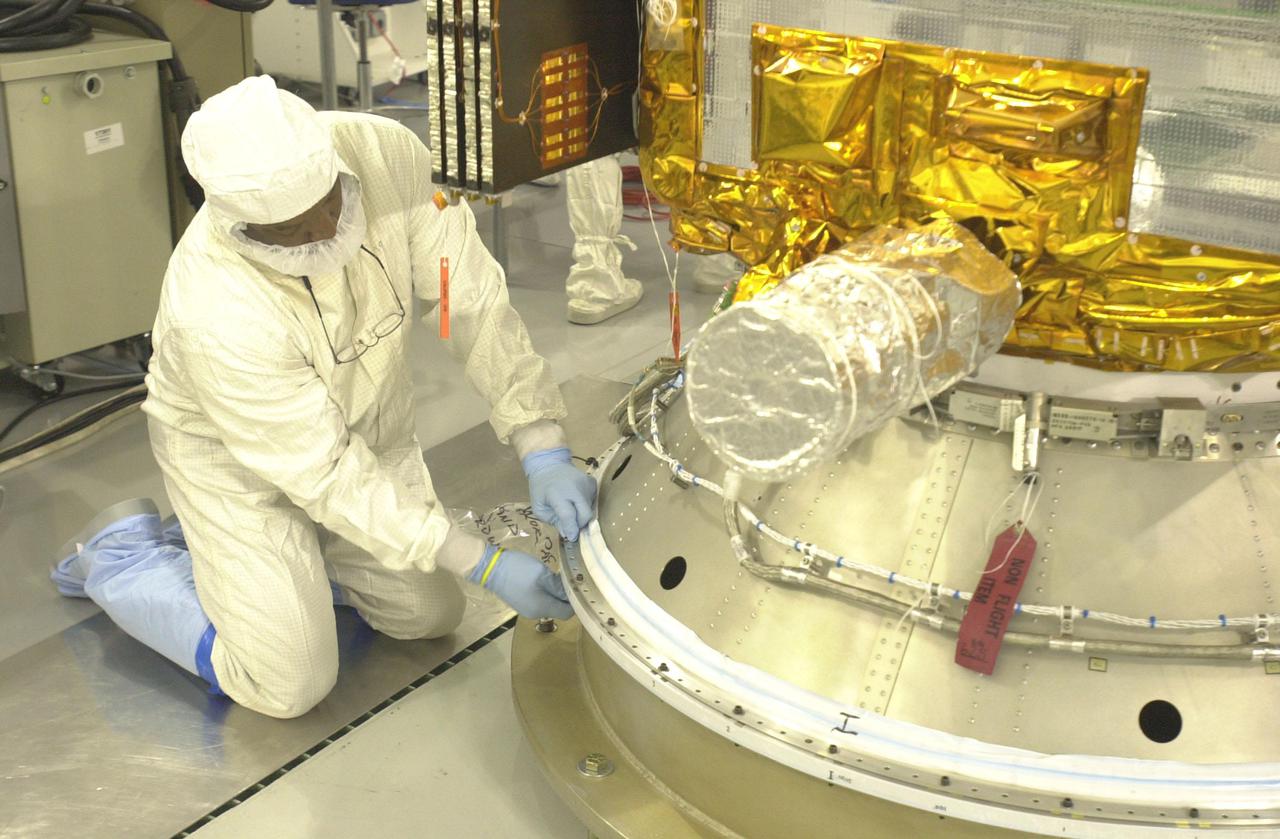
VANDENBERG AIR FORCE BASE, CALIF. — Inside the Astrotech Payload Processing Facility on Vandenberg Air Force Base in California, a worker makes an adjustment on the Upper Delta Payload Attach Fitting (UDPAF) holding the CALIPSO spacecraft. CALIPSO will be mated with the Lower Delta Payload Attach Fitting (LDPAF) that contains the CloudSat satellite. The PAF is the interface between the spacecraft and the second stage of the rocket. CALIPSO stands for Cloud-Aerosol Lidar and Infrared Pathfinder Satellite Observation.
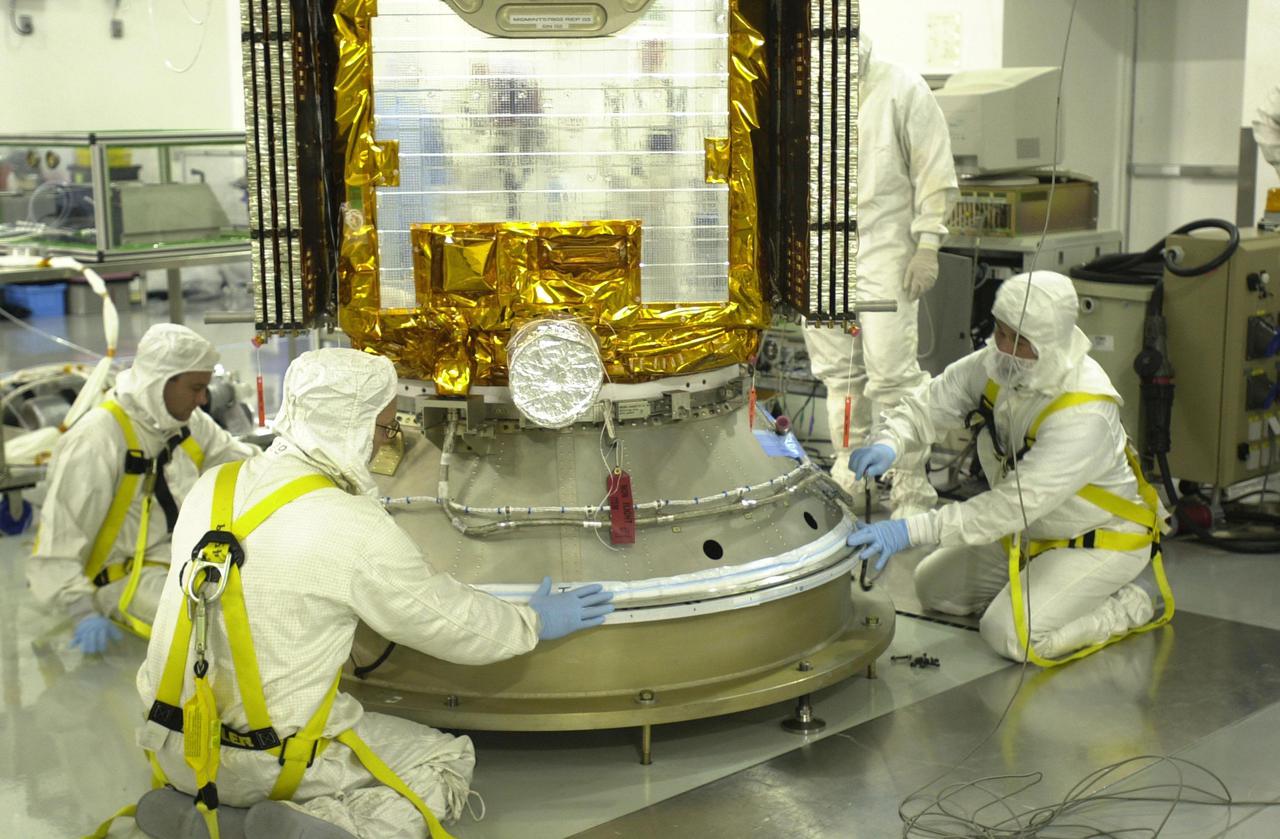
VANDENBERG AIR FORCE BASE, CALIF. — Inside the Astrotech Payload Processing Facility on Vandenberg Air Force Base in California, workers attach the CALIPSO spacecraft onto another payload attach fitting. CALIPSO will be mated with the Lower Delta Payload Attach Fitting (LDPAF) that contains the CloudSat satellite. Later the UDPAF will be mated with the lower Delta Payload Attach Fitting, which contains the CloudSat satellite. The PAF is the interface between the spacecraft and the second stage of the rocket. CALIPSO stands for Cloud-Aerosol Lidar and Infrared Pathfinder Satellite Observation.
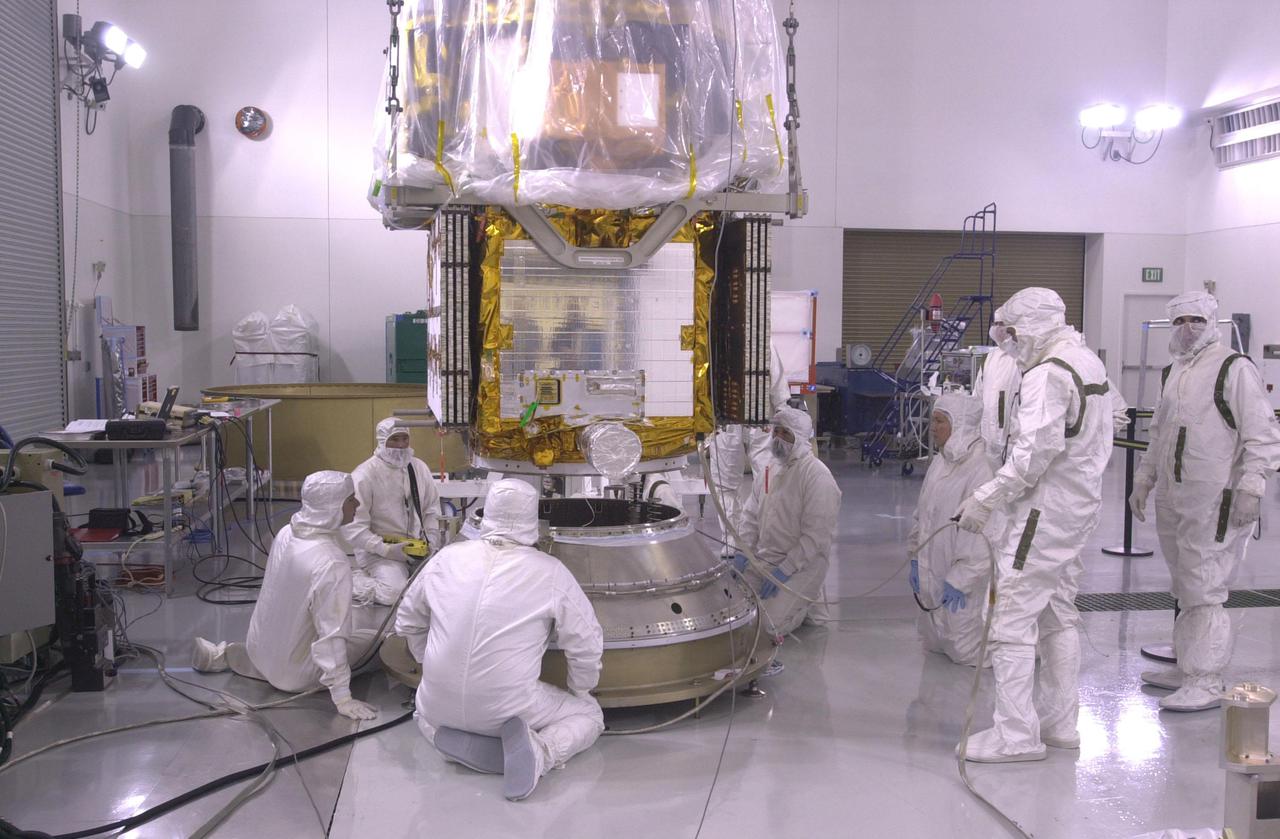
VANDENBERG AIR FORCE BASE, CALIF. — Inside the Astrotech Payload Processing Facility on Vandenberg Air Force Base in California, workers oversee the lowering of the CALIPSO spacecraft toward the upper Delta Payload Attach Fitting (UDPAF). Later the UDPAF will be mated with the lower Delta Payload Attach Fitting, which contains the CloudSat satellite. The PAF is the interface between the spacecraft and the second stage of the rocket. CALIPSO stands for Cloud-Aerosol Lidar and Infrared Pathfinder Satellite Observation.
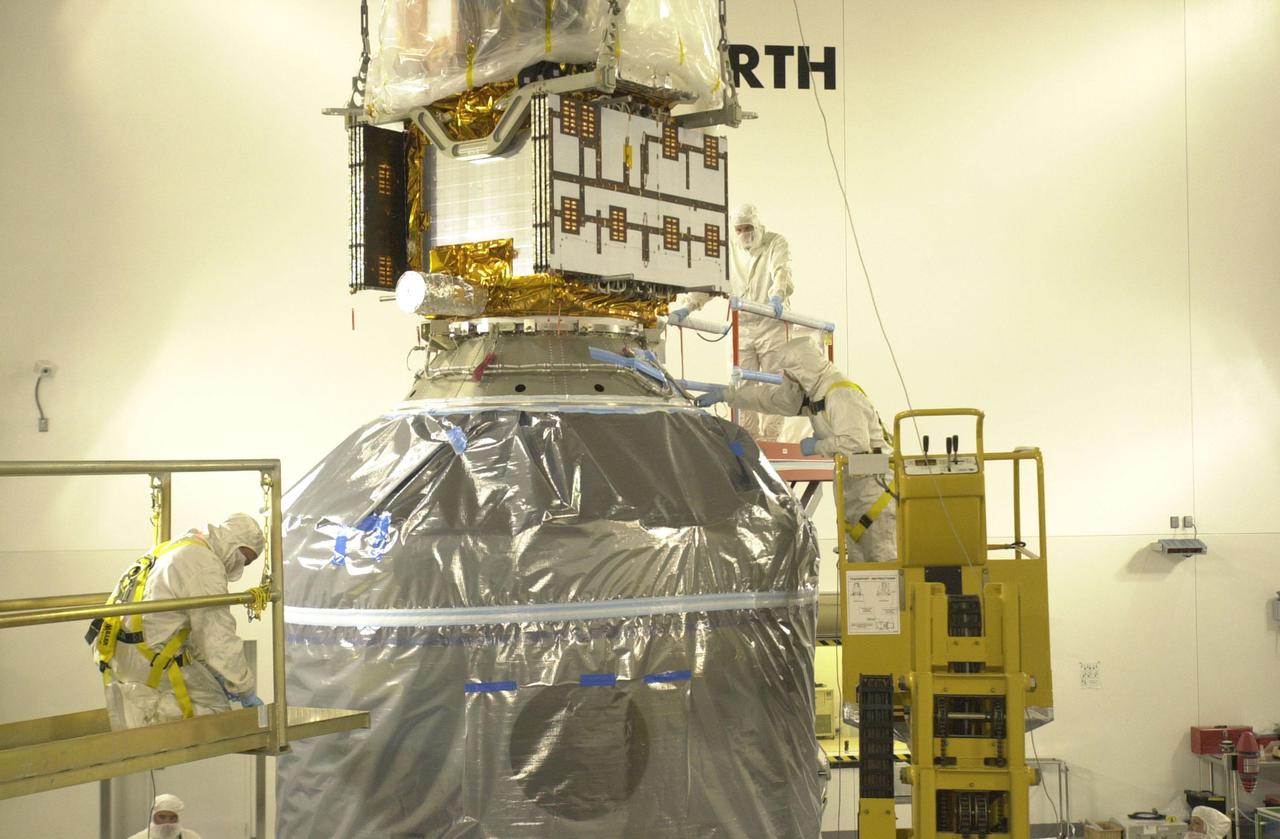
VANDENBERG AIR FORCE BASE, CALIF. — Inside the Astrotech Payload Processing Facility on Vandenberg Air Force Base in California, workers check the lowering of the CALIPSO spacecraft and Upper Delta Payload Attach Fitting (UDPAF) onto the Lower Delta Payload Attach Fitting (LDPAF) that contains the CloudSat satellite. The PAF is the interface between the spacecraft and the second stage of the rocket. CALIPSO stands for Cloud-Aerosol Lidar and Infrared Pathfinder Satellite Observation.
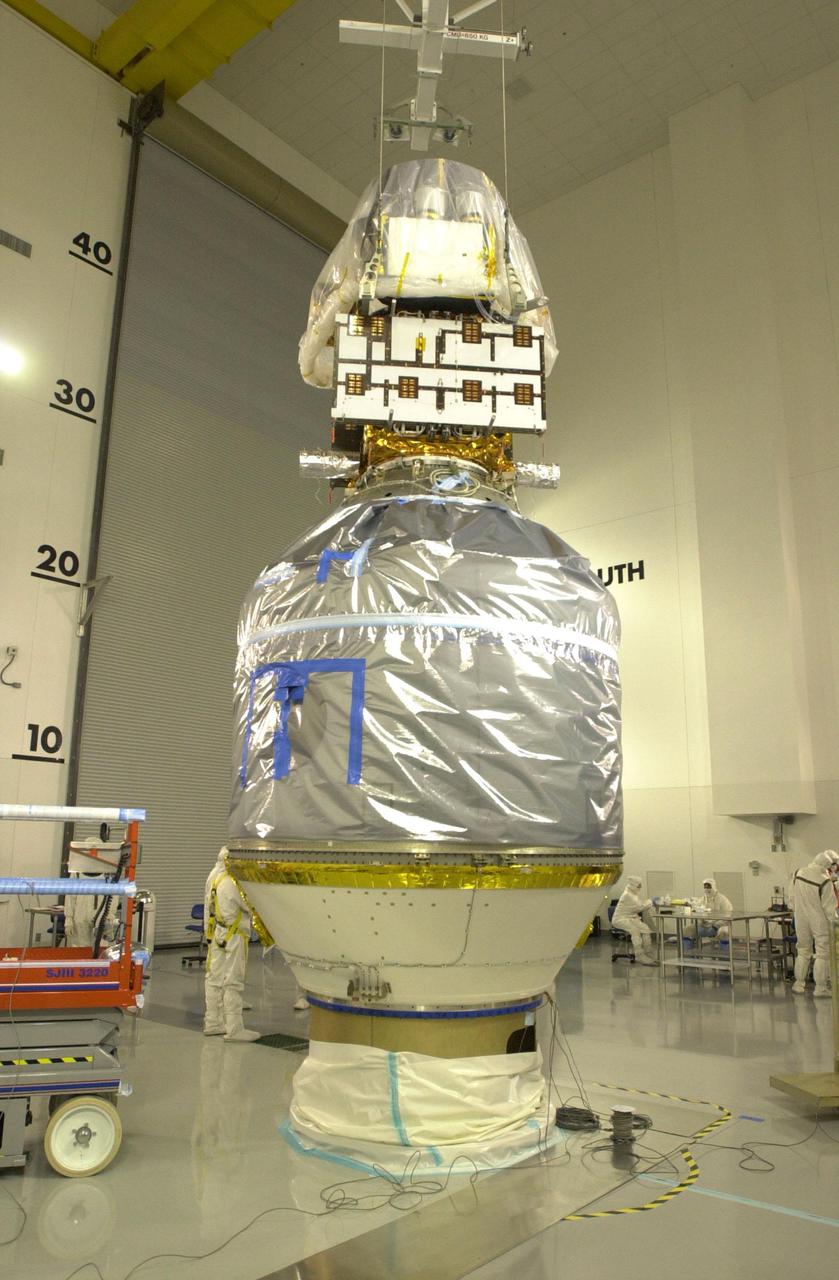
VANDENBERG AIR FORCE BASE, CALIF. — Inside the Astrotech Payload Processing Facility on Vandenberg Air Force Base in California, the Upper Delta Payload Attach Fitting (UDPAF) with the CALIPSO spacecraft has been lowered onto the Lower Delta Payload Attach Fitting (LDPAF) that contains the CloudSat satellite. The PAF is the interface between the spacecraft and the second stage of the rocket. CALIPSO stands for Cloud-Aerosol Lidar and Infrared Pathfinder Satellite Observation.
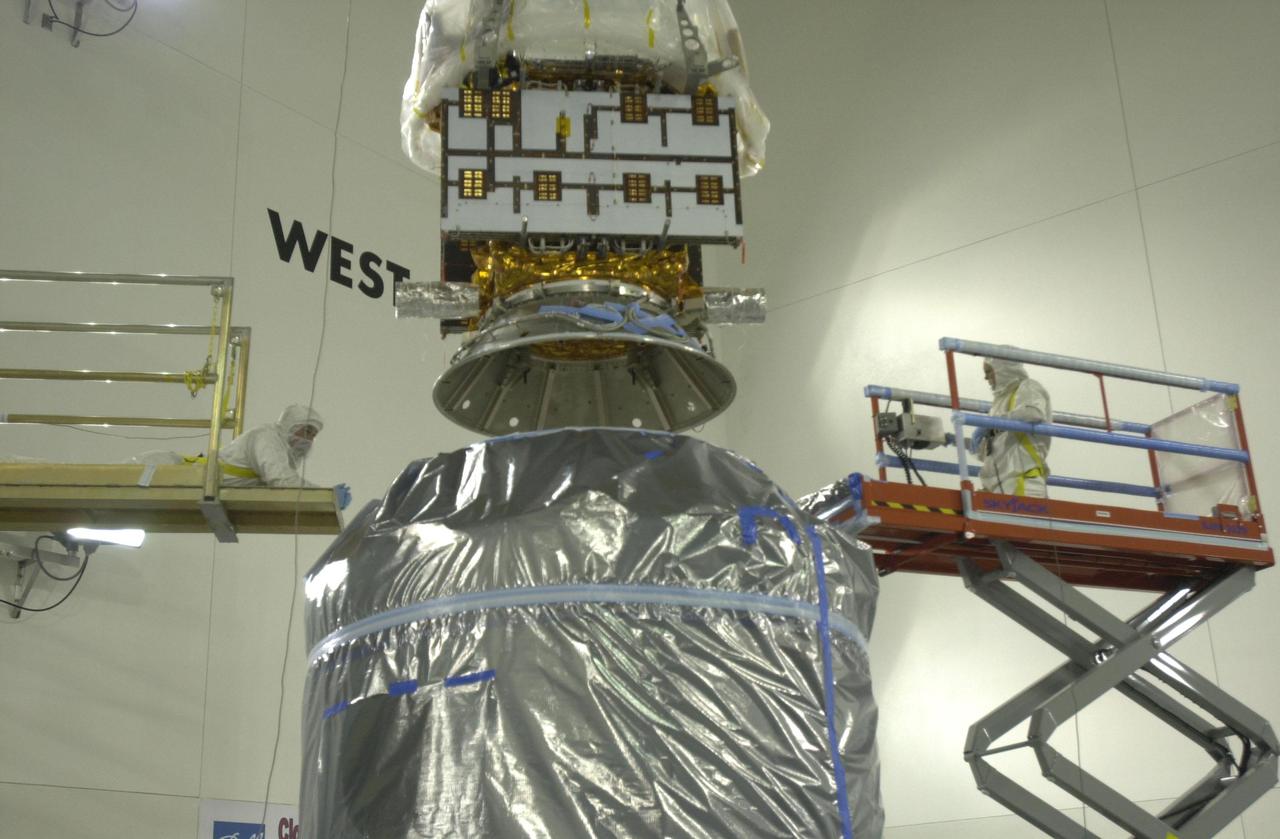
VANDENBERG AIR FORCE BASE, CALIF. — From an elevated platform, workers inside the Astrotech Payload Processing Facility on Vandenberg Air Force Base in California guide the lowering of the CALIPSO spacecraft onto the Lower Delta Payload Attach Fitting (LDPAF) that contains the CloudSat satellite.Later the UDPAF will be mated with the lower Delta Payload Attach Fitting, which contains the CloudSat satellite. The PAF is the interface between the spacecraft and the second stage of the rocket. CALIPSO stands for Cloud-Aerosol Lidar and Infrared Pathfinder Satellite Observation.
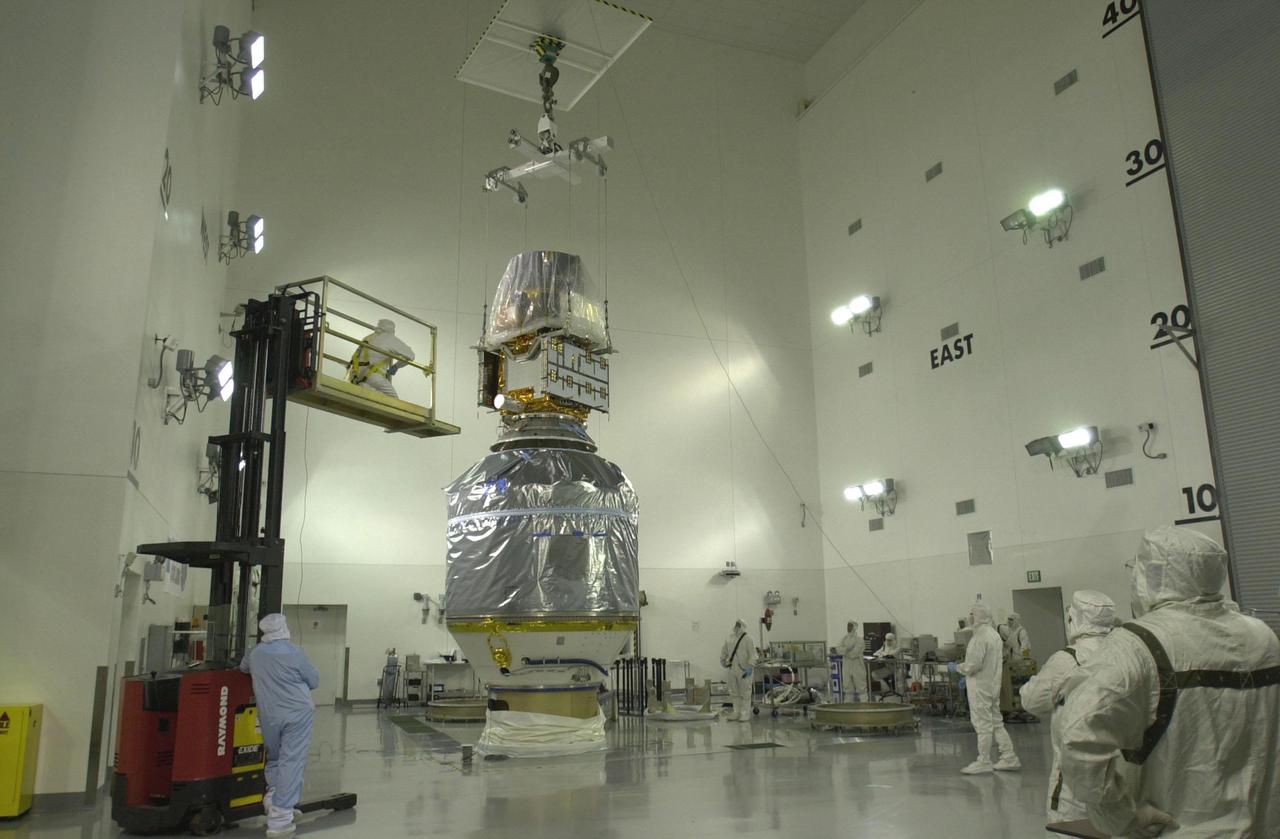
VANDENBERG AIR FORCE BASE, CALIF. — Inside the Astrotech Payload Processing Facility on Vandenberg Air Force Base in California, workers lower the CALIPSO spacecraft and Upper Delta Payload Attach Fitting (UDPAF) toward the Lower Delta Payload Attach Fitting (LDPAF) that contains the CloudSat satellite. Later the UDPAF will be mated with the lower Delta Payload Attach Fitting, which contains the CloudSat satellite. The PAF is the interface between the spacecraft and the second stage of the rocket. CALIPSO stands for Cloud-Aerosol Lidar and Infrared Pathfinder Satellite Observation.
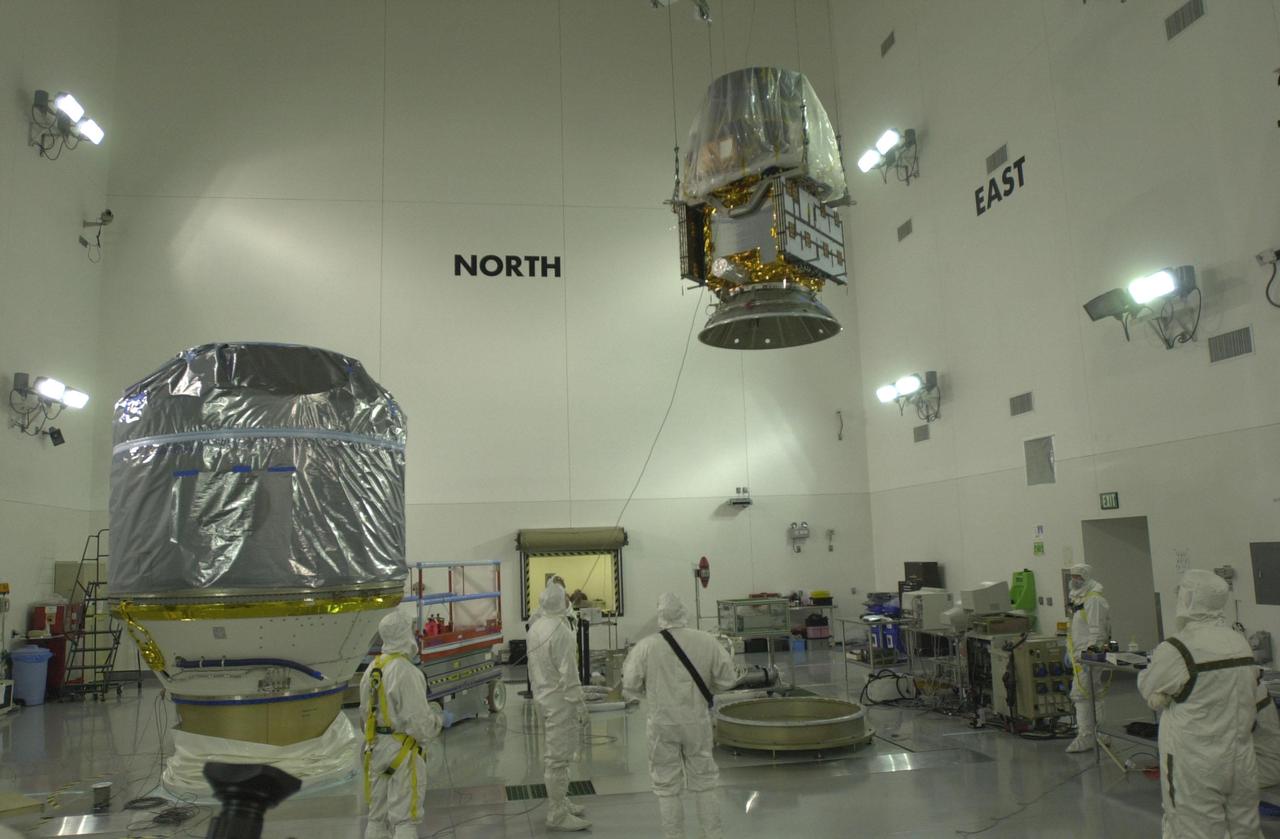
VANDENBERG AIR FORCE BASE, CALIF. — Inside the Astrotech Payload Processing Facility on Vandenberg Air Force Base in California, workers move the CALIPSO spacecraft away from the Lower Delta Payload Attach Fitting, which contains the CloudSat satellite. Later the UDPAF will be mated with the lower Delta Payload Attach Fitting, which contains the CloudSat satellite. The PAF is the interface between the spacecraft and the second stage of the rocket. CALIPSO stands for Cloud-Aerosol Lidar and Infrared Pathfinder Satellite Observation.
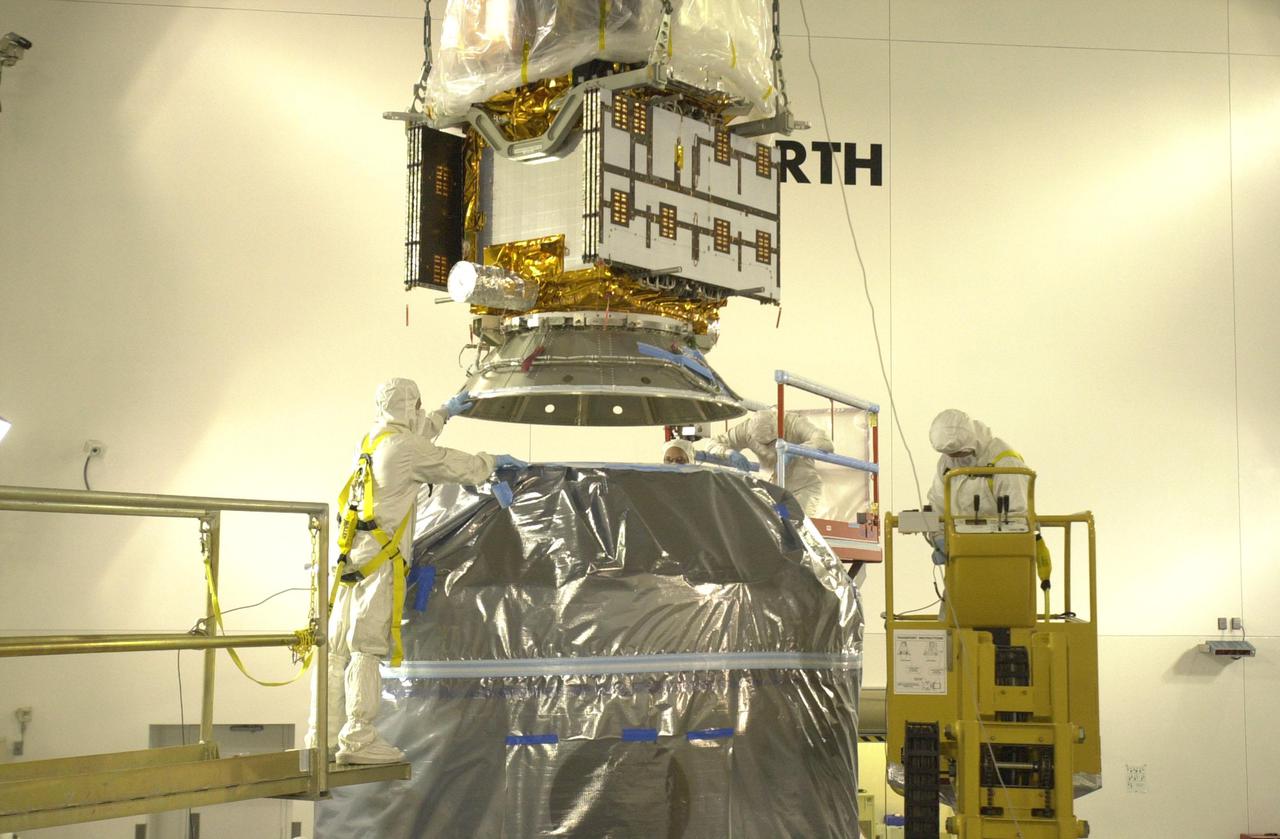
VANDENBERG AIR FORCE BASE, CALIF. — Inside the Astrotech Payload Processing Facility on Vandenberg Air Force Base in California, workers again lower the CALIPSO spacecraft and Upper Delta Payload Attach Fitting (UDPAF) toward the Lower Delta Payload Attach Fitting (LDPAF) that contains the CloudSat satellite. The PAF is the interface between the spacecraft and the second stage of the rocket. CALIPSO stands for Cloud-Aerosol Lidar and Infrared Pathfinder Satellite Observation.
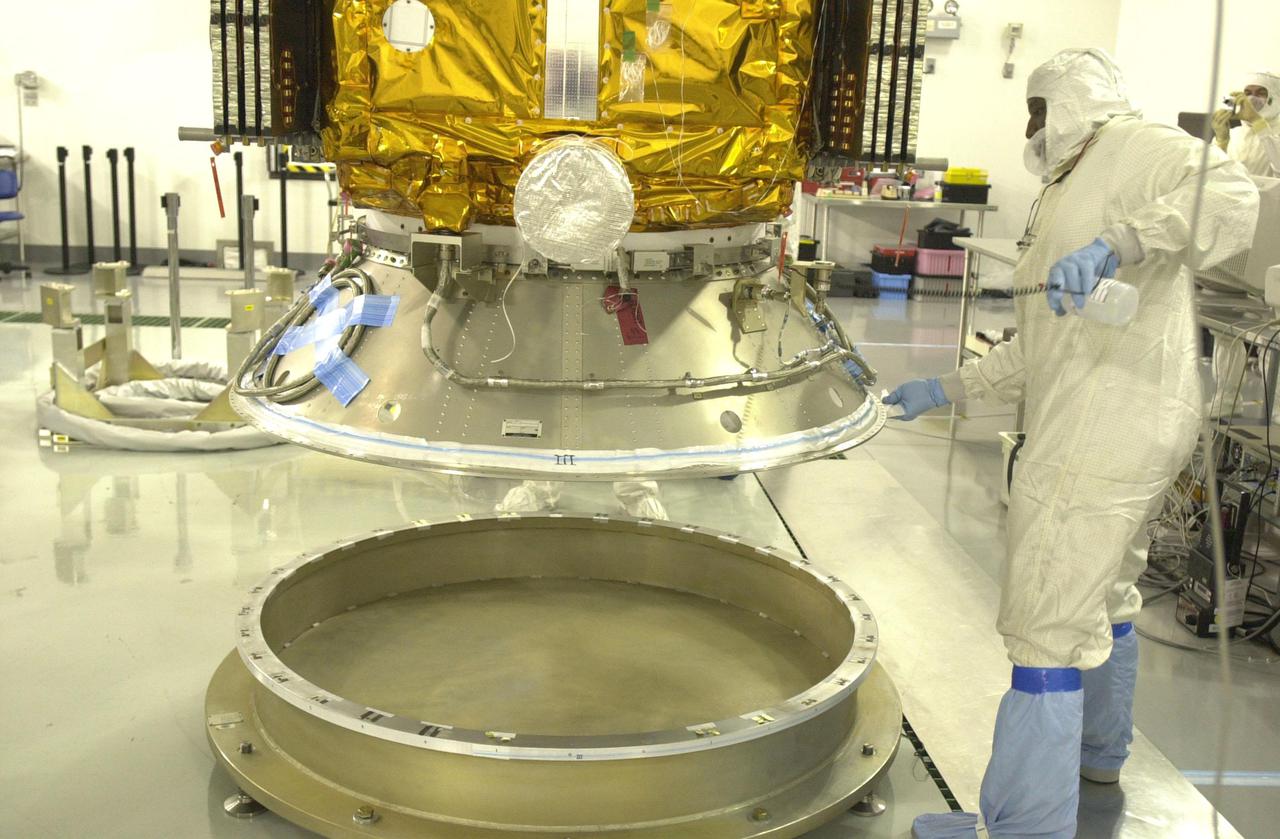
VANDENBERG AIR FORCE BASE, CALIF. — Inside the Astrotech Payload Processing Facility on Vandenberg Air Force Base in California, workers lift the CALIPSO spacecraft from the Upper Delta Payload Attach Fitting (UDPAF) to adjust the attachment. CALIPSO will be mated with the Lower Delta Payload Attach Fitting (LDPAF) that contains the CloudSat satellite. The PAF is the interface between the spacecraft and the second stage of the rocket. CALIPSO stands for Cloud-Aerosol Lidar and Infrared Pathfinder Satellite Observation.
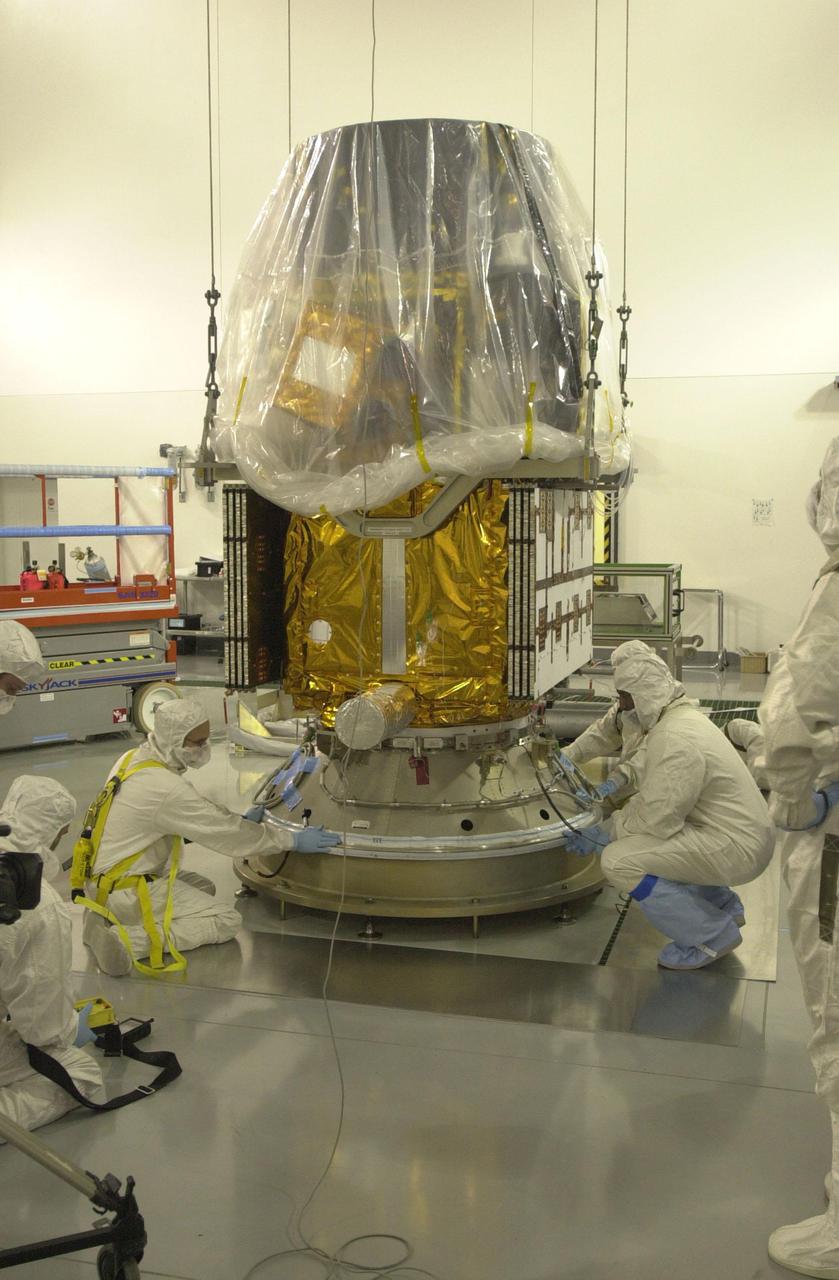
VANDENBERG AIR FORCE BASE, CALIF. — Inside the Astrotech Payload Processing Facility on Vandenberg Air Force Base in California, workers check the Upper Delta Payload Attach Fitting (UDPAF) holding the CALIPSO spacecraft. CALIPSO will be mated with the Lower Delta Payload Attach Fitting (LDPAF) that contains the CloudSat satellite. The PAF is the interface between the spacecraft and the second stage of the rocket. CALIPSO stands for Cloud-Aerosol Lidar and Infrared Pathfinder Satellite Observation.
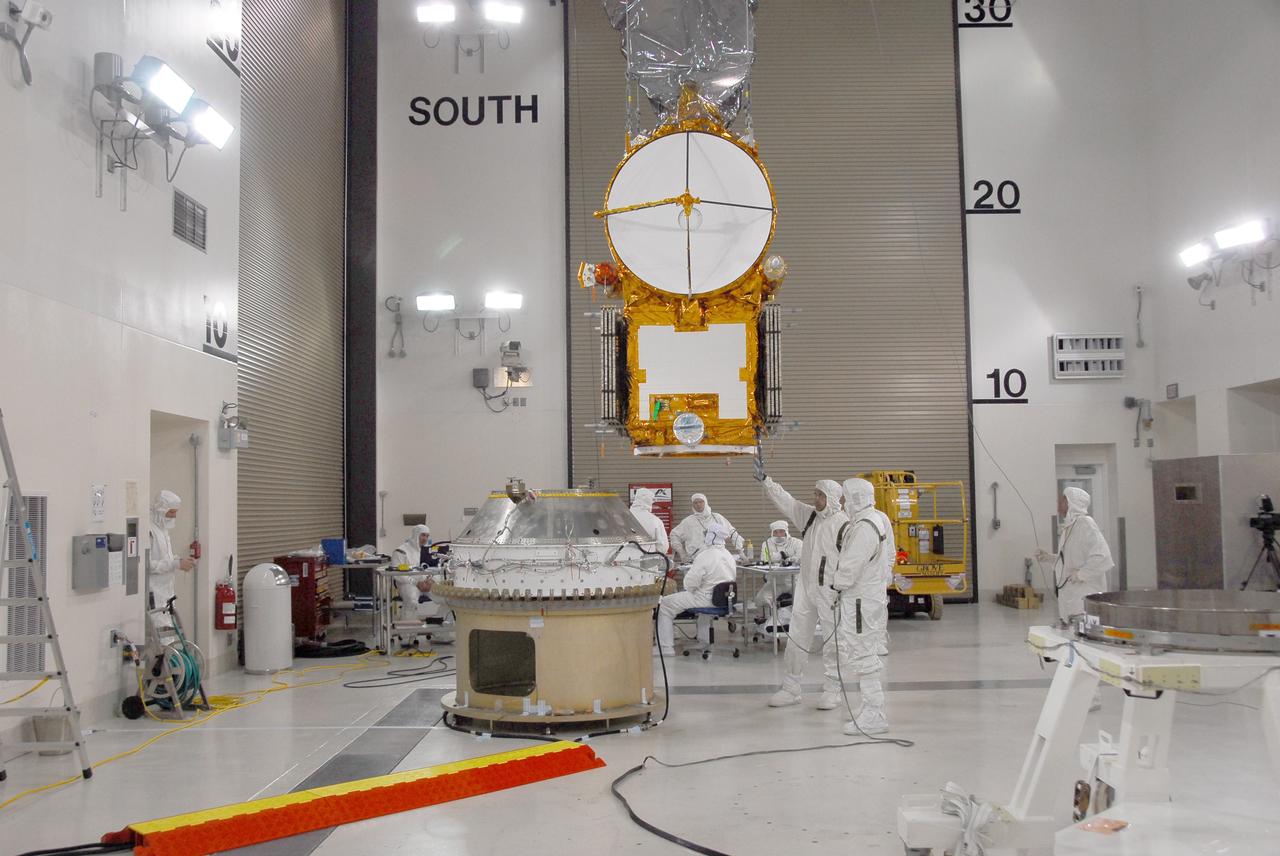
VANDENBERG AIR FORCE BASE, Calif. – Suspended by an overhead crane, the Ocean Surface Topography Mission, or OSTM/Jason 2, spacecraft is moved toward the payload attach fitting, or PAF, for installation. The PAF is the interface with the Delta II launch vehicle. The launch of the OSTM/Jason 2 aboard a Delta II rocket is scheduled for Friday, June 20, from Vandenberg Air Force Base in California. The launch window extends from 12:46 a.m. to 12:55 a.m. PDT. The satellite will be placed in an 830-mile-high orbit at an inclination of 66 degrees after separating from the Delta II 55 minutes after liftoff. The five primary science instruments of the Ocean Surface Topography Mission aboard the Jason 2 spacecraft are dedicated to measuring ocean surface height. These measurements will be used to evaluate and forecast climate changes and improve weather forecasting. The results also are expected to help forecasters better predict hurricane intensity. Photo credit: NASA
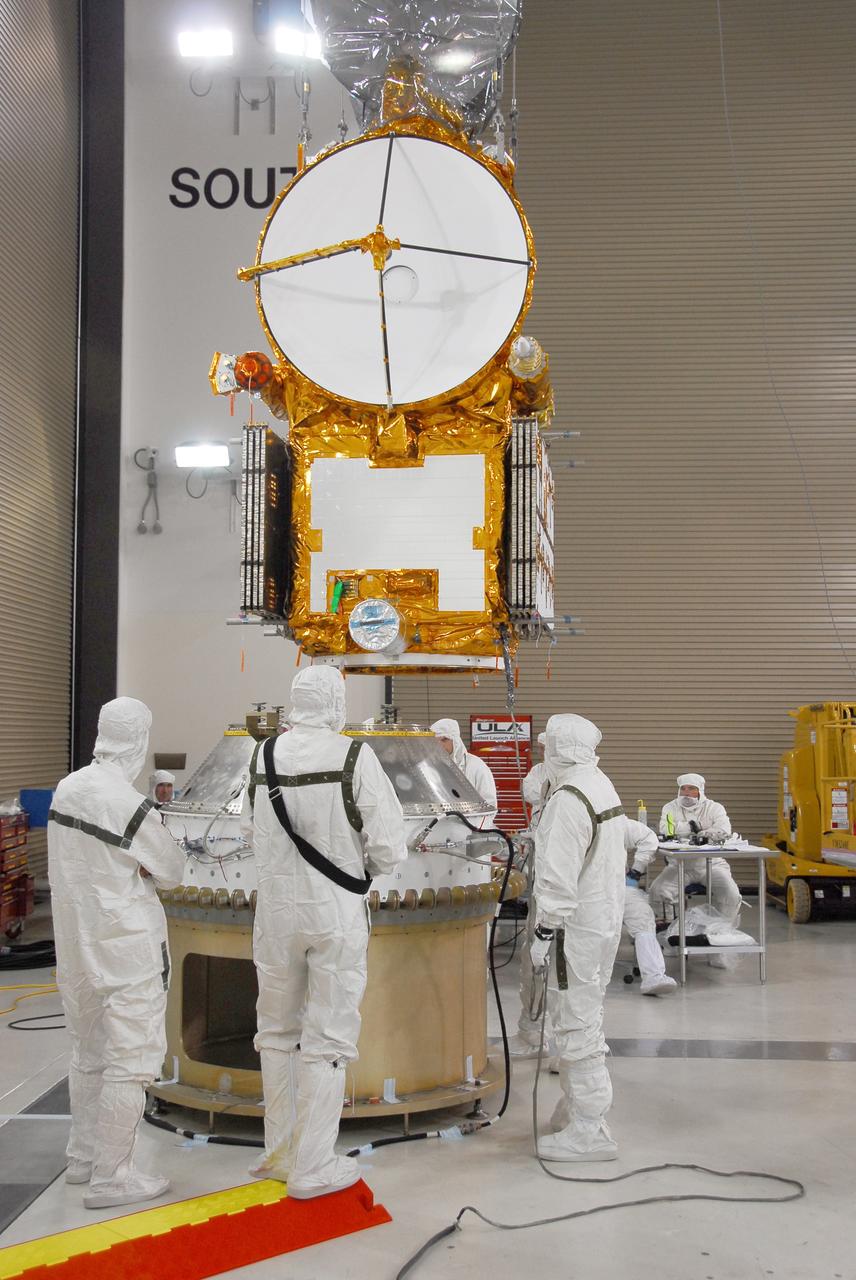
VANDENBERG AIR FORCE BASE, Calif. – Engineers check the progress of the Ocean Surface Topography Mission, or OSTM/Jason 2, spacecraft as it moves toward the payload attach fitting, or PAF, for installation. The PAF is the interface with the Delta II launch vehicle. The launch of the OSTM/Jason 2 aboard a Delta II rocket is scheduled for Friday, June 20, from Vandenberg Air Force Base in California. The launch window extends from 12:46 a.m. to 12:55 a.m. PDT. The satellite will be placed in an 830-mile-high orbit at an inclination of 66 degrees after separating from the Delta II 55 minutes after liftoff. The five primary science instruments of the Ocean Surface Topography Mission aboard the Jason 2 spacecraft are dedicated to measuring ocean surface height. These measurements will be used to evaluate and forecast climate changes and improve weather forecasting. The results also are expected to help forecasters better predict hurricane intensity. Photo credit: NASA
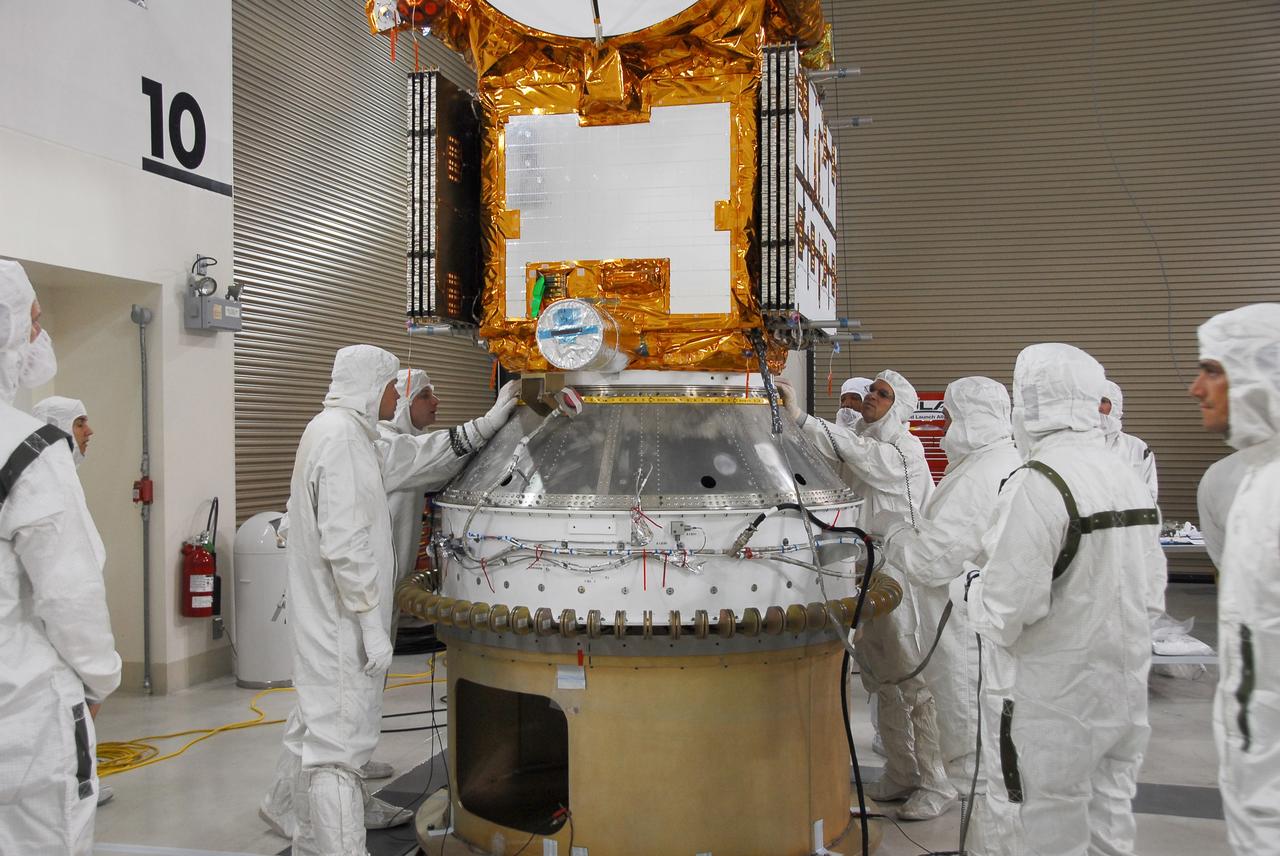
VANDENBERG AIR FORCE BASE, Calif. – Engineers check the fit of the Ocean Surface Topography Mission, or OSTM/Jason 2, spacecraft as it is lowered onto the payload attach fitting, or PAF, for installation. The PAF is the interface with the Delta II launch vehicle. The launch of the OSTM/Jason 2 aboard a Delta II rocket is scheduled for Friday, June 20, from Vandenberg Air Force Base in California. The launch window extends from 12:46 a.m. to 12:55 a.m. PDT. The satellite will be placed in an 830-mile-high orbit at an inclination of 66 degrees after separating from the Delta II 55 minutes after liftoff. The five primary science instruments of the Ocean Surface Topography Mission aboard the Jason 2 spacecraft are dedicated to measuring ocean surface height. These measurements will be used to evaluate and forecast climate changes and improve weather forecasting. The results also are expected to help forecasters better predict hurricane intensity. Photo credit: NASA
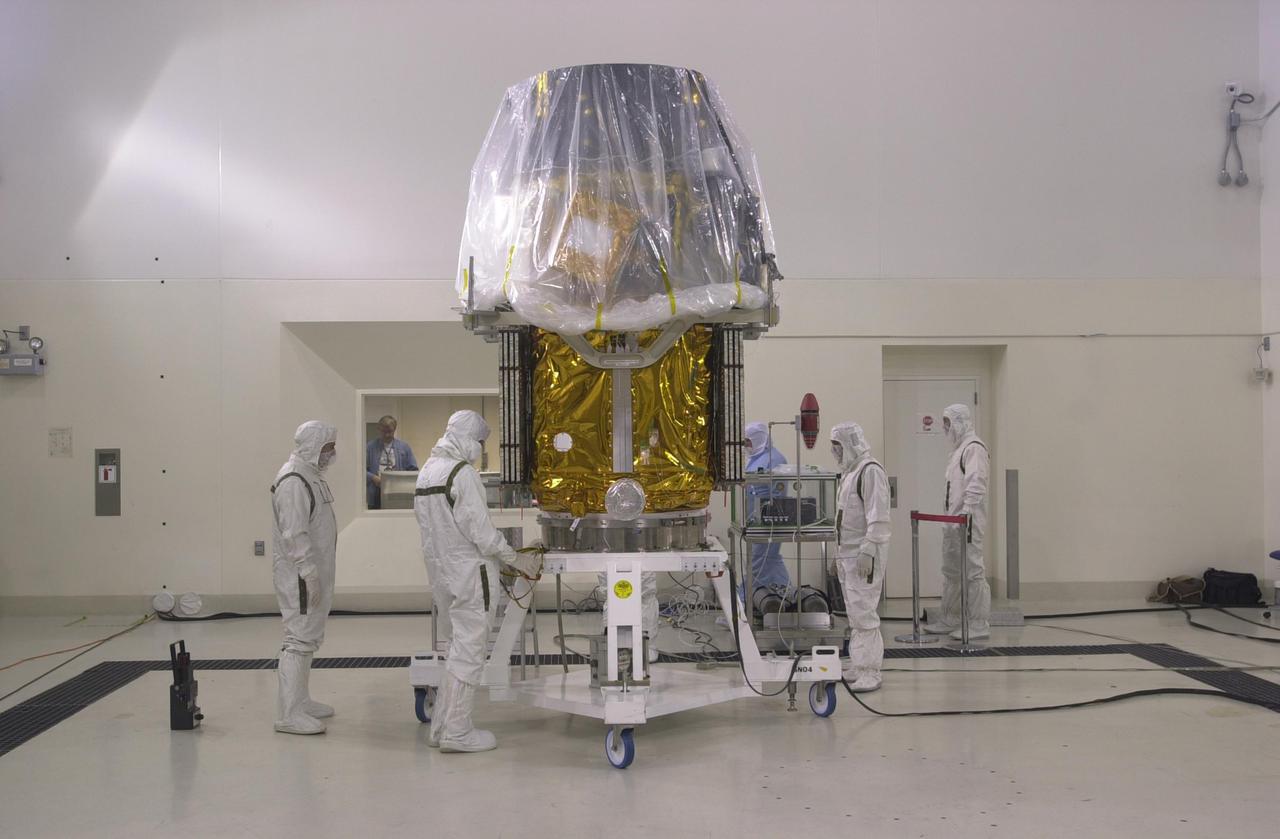
VANDENBERG AIR FORCE BASE, CALIF. — Inside the Astrotech Payload Processing Facility on Vandenberg Air Force Base in California, the CALIPSO spacecraft is being prepared for mating with the upper Delta Payload Attach Fitting (UDPAF). Later the UDPAF will be mated with the lower Delta Payload Attach Fitting, which contains the CloudSat satellite. The PAF is the interface between the spacecraft and the second stage of the rocket. CALIPSO stands for Cloud-Aerosol Lidar and Infrared Pathfinder Satellite Observation. CALIPSO and CloudSat are highly complementary satellites that will provide never-before-seen 3-D perspectives of how clouds and aerosols form, evolve, and affect weather and climate. CALIPSO and CloudSat will fly in formation with three other satellites in the A-train constellation to enhance understanding of our climate system. Launch of CALIPSO_CloudSat aboard a Boeing Delta II rocket is scheduled for 3:01 a.m. PDT Sept. 29.
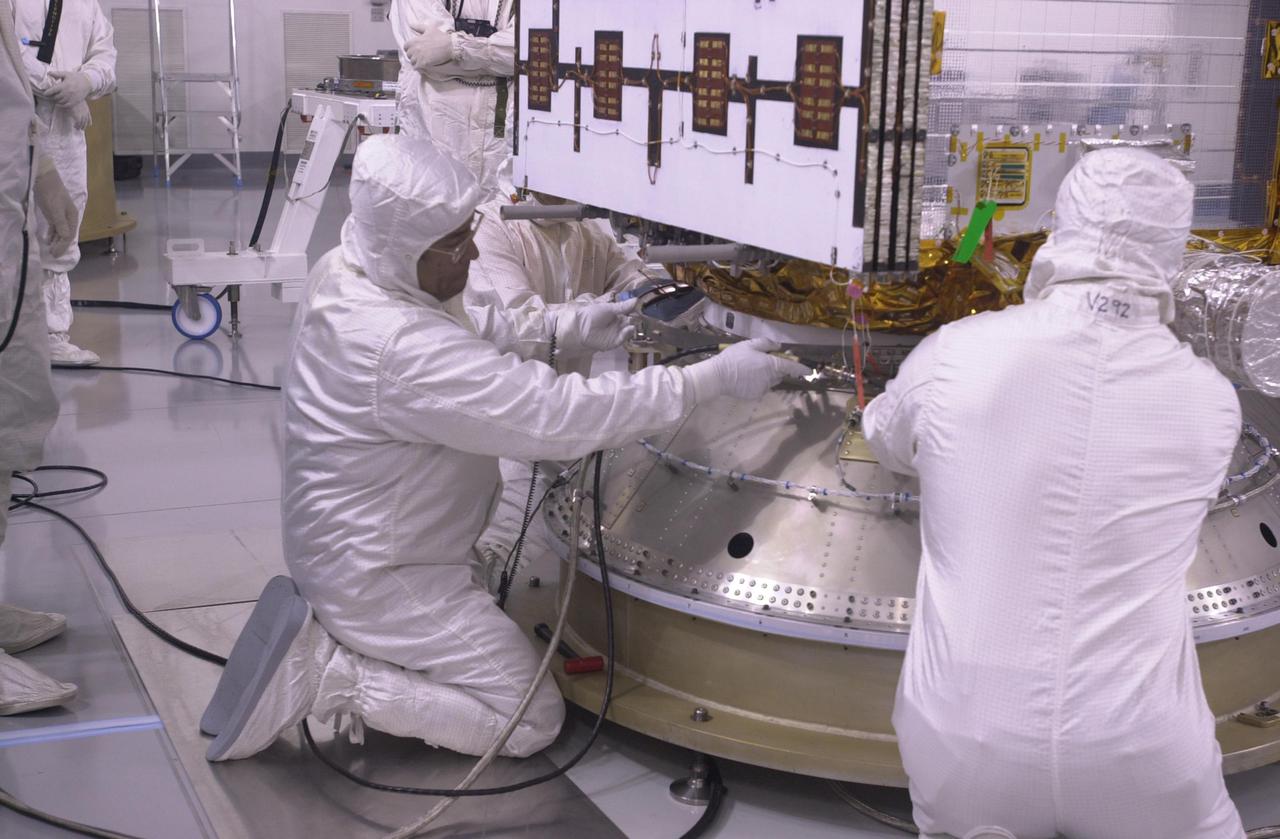
VANDENBERG AIR FORCE BASE, CALIF. — Inside the Astrotech Payload Processing Facility on Vandenberg Air Force Base in California, workers attach the CALIPSO spacecraft to the upper Delta Payload Attach Fitting (UDPAF). Later the UDPAF will be mated with the lower Delta Payload Attach Fitting, which contains the CloudSat satellite. The PAF is the interface between the spacecraft and the second stage of the rocket. CALIPSO stands for Cloud-Aerosol Lidar and Infrared Pathfinder Satellite Observation. CALIPSO and CloudSat are highly complementary satellites that will provide never-before-seen 3-D perspectives of how clouds and aerosols form, evolve, and affect weather and climate. CALIPSO and CloudSat will fly in formation with three other satellites in the A-train constellation to enhance understanding of our climate system. Launch of CALIPSO_CloudSat aboard a Boeing Delta II rocket is scheduled for 3:01 a.m. PDT Sept. 29.
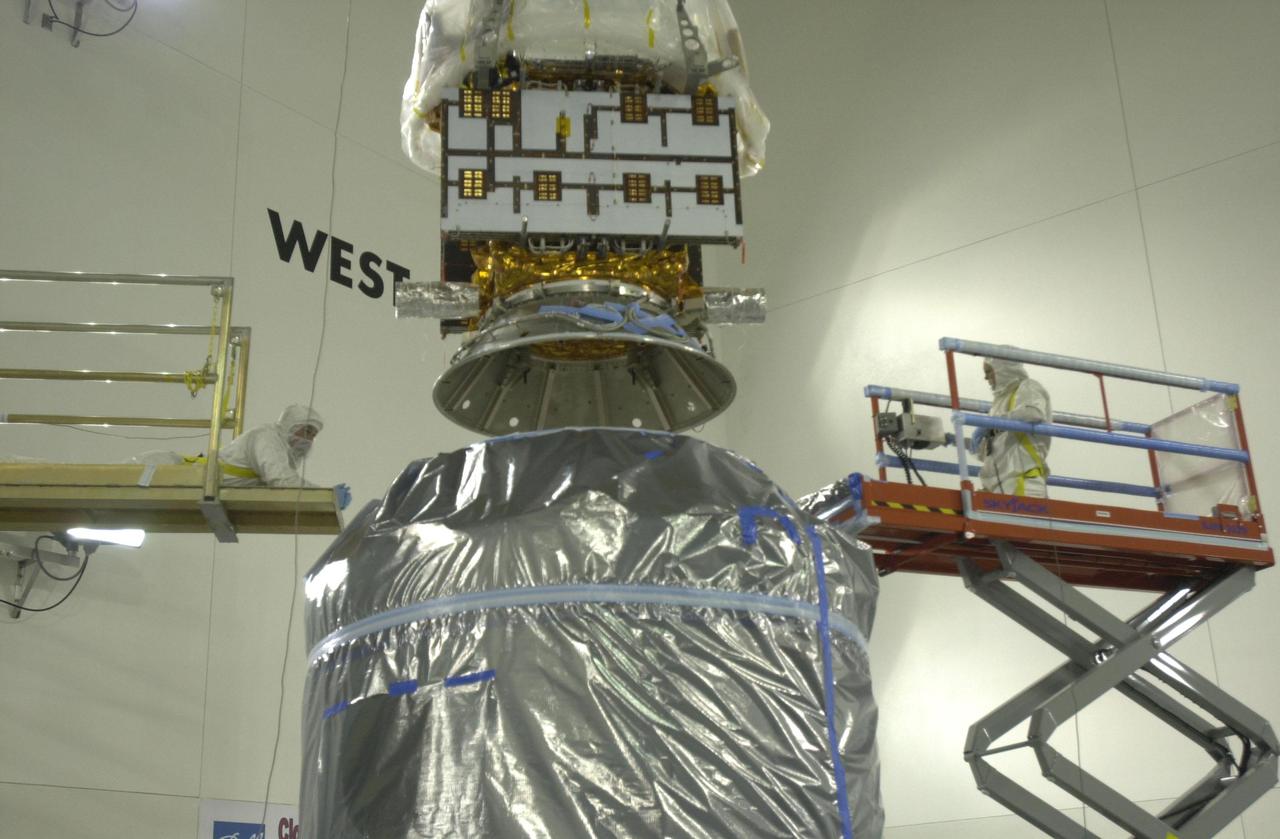
VANDENBERG AIR FORCE BASE, CALIF. - Inside the Astrotech Payload Processing Facility on Vandenberg Air Force Base in California, the CALIPSO spacecraft is lowered closer to the Lower Delta Payload Attach Fitting (LDPAF). CALIPSO will be mated with the LDPAF, which contains the CloudSat satellite. The PAF is the interface between the spacecraft and the second stage of the rocket. CALIPSO stands for Cloud-Aerosol Lidar and Infrared Pathfinder Satellite Observation. CALIPSO and CloudSat are highly complementary satellites that will provide never-before-seen 3-D perspectives of how clouds and aerosols form, evolve, and affect weather and climate. CALIPSO and CloudSat will fly in formation with three other satellites in the A-train constellation to enhance understanding of our climate system. Launch of CALIPSO_CloudSat aboard a Boeing Delta II rocket is scheduled for 3:01 a.m. PDT Sept. 29.
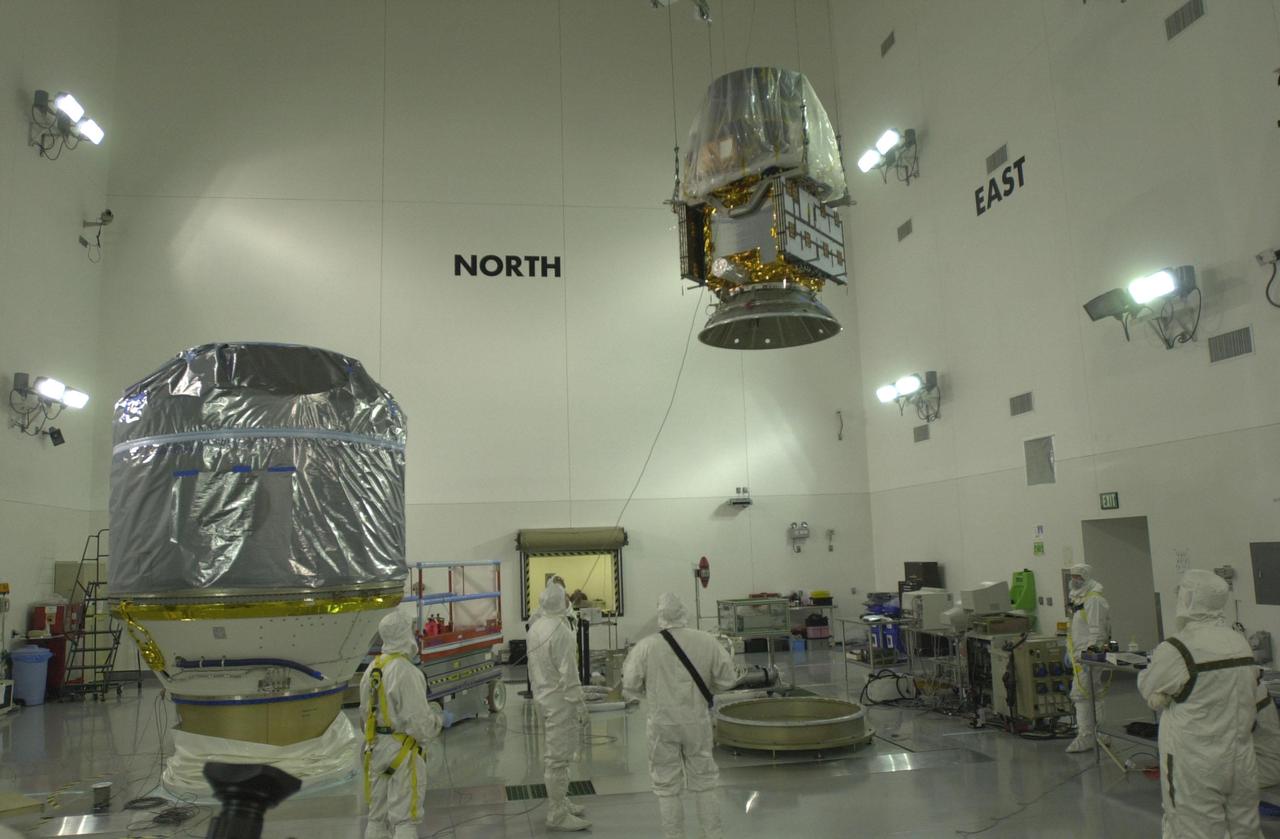
VANDENBERG AIR FORCE BASE, CALIF. - Inside the Astrotech Payload Processing Facility on Vandenberg Air Force Base in California, the CALIPSO spacecraft is destacked from the Lower Delta Payload Attach Fitting (LDPAF) and will be attached to another payload attach fitting. Then CALIPSO will be mated to the Lower Delta Payload Attach Fitting (LDPAF) that contains the CloudSat satellite. The PAF is the interface between the spacecraft and the second stage of the rocket. CALIPSO stands for Cloud-Aerosol Lidar and Infrared Pathfinder Satellite Observation. CALIPSO and CloudSat are highly complementary satellites that will provide never-before-seen 3-D perspectives of how clouds and aerosols form, evolve, and affect weather and climate. CALIPSO and CloudSat will fly in formation with three other satellites in the A-train constellation to enhance understanding of our climate system. Launch of CALIPSO_CloudSat aboard a Boeing Delta II rocket is scheduled for 3:01 a.m. PDT Sept. 29.
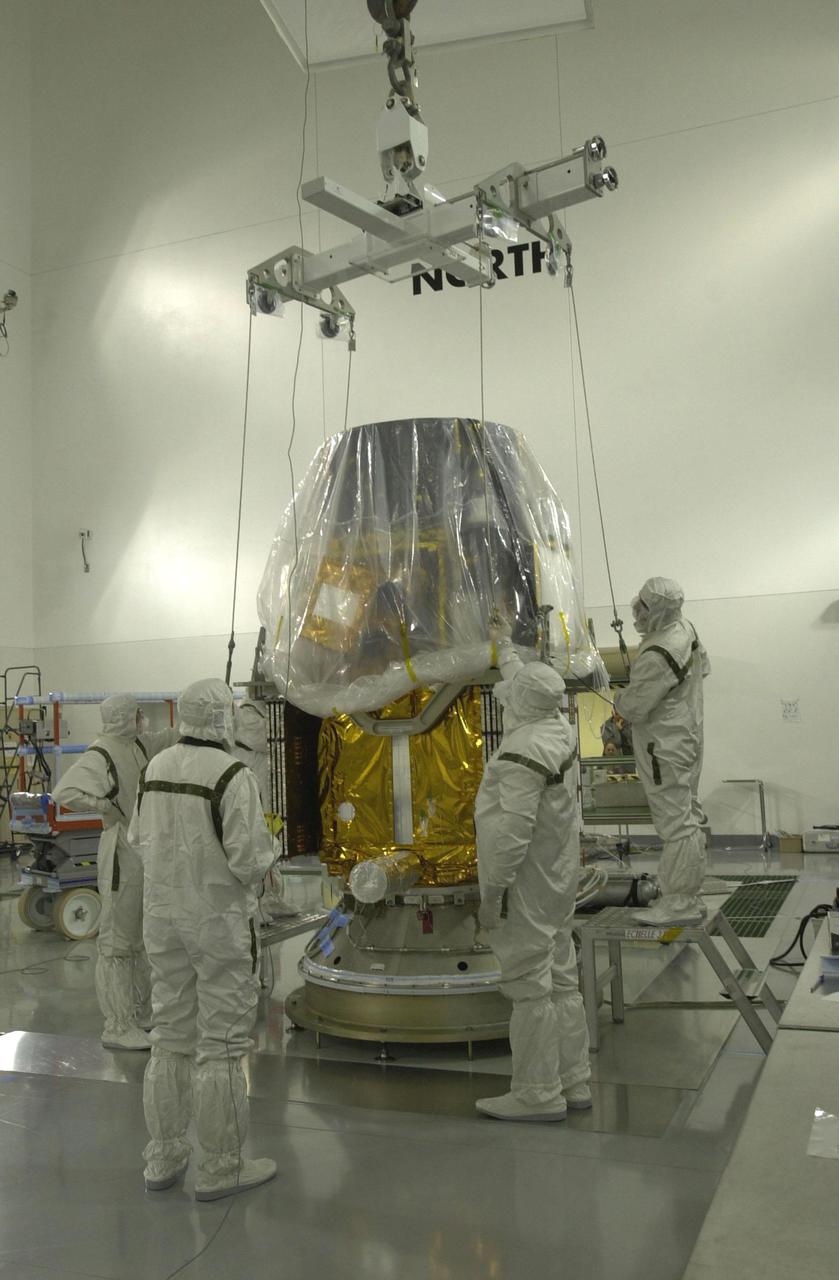
VANDENBERG AIR FORCE BASE, CALIF. - Inside the Astrotech Payload Processing Facility on Vandenberg Air Force Base in California, the CALIPSO spacecraft is being fitted with a crane to lift and move the satellite for mating with the Lower Delta Payload Attach Fitting (LDPAF), which contains the CloudSat satellite. The PAF is the interface between the spacecraft and the second stage of the rocket. CALIPSO stands for Cloud-Aerosol Lidar and Infrared Pathfinder Satellite Observation. CALIPSO and CloudSat are highly complementary satellites that will provide never-before-seen 3-D perspectives of how clouds and aerosols form, evolve, and affect weather and climate. CALIPSO and CloudSat will fly in formation with three other satellites in the A-train constellation to enhance understanding of our climate system. Launch of CALIPSO_CloudSat aboard a Boeing Delta II rocket is scheduled for 3:01 a.m. PDT Sept. 29.
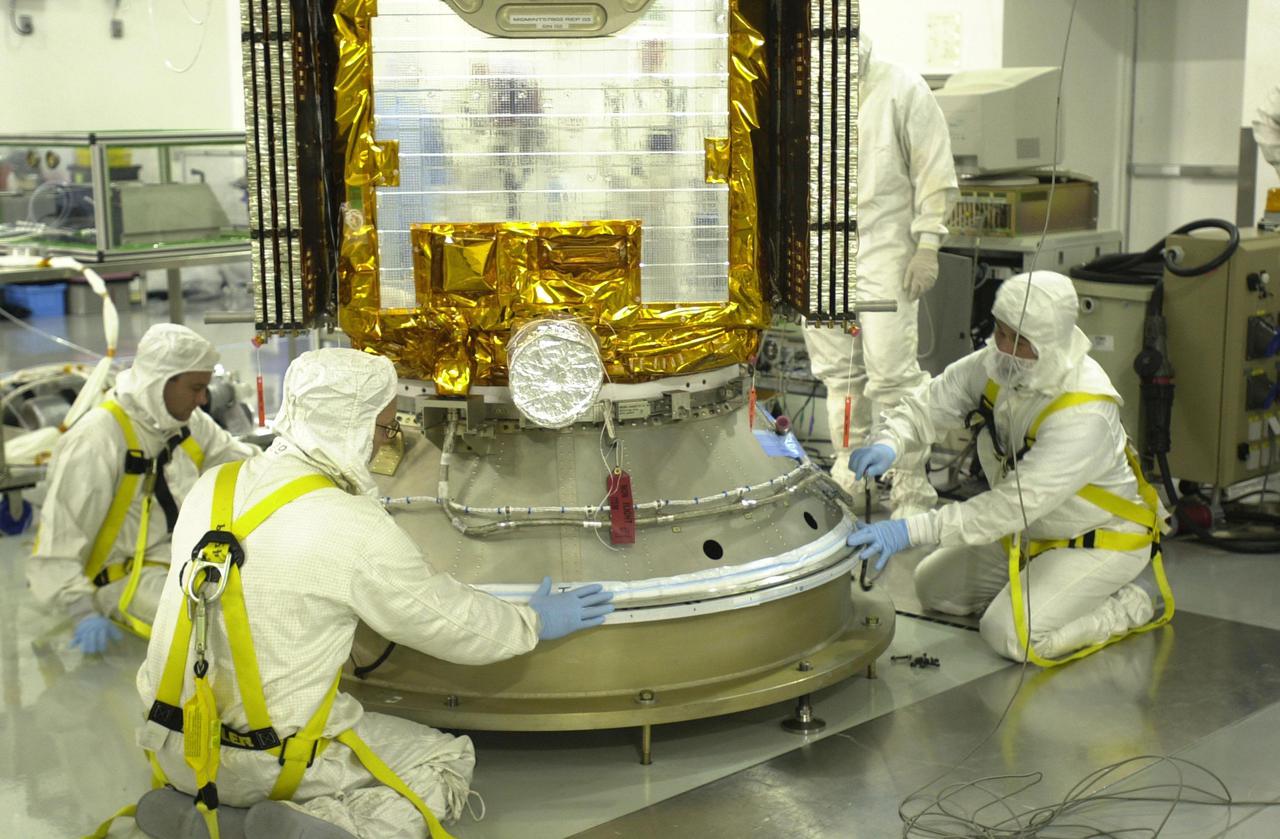
VANDENBERG AIR FORCE BASE, CALIF. - Inside the Astrotech Payload Processing Facility on Vandenberg Air Force Base in California, workers secure the CALIPSO spacecraft onto a payload attach fitting. CALIPSO will be mated to the Lower Delta Payload Attach Fitting (LDPAF) that contains the CloudSat satellite. The PAF is the interface between the spacecraft and the second stage of the rocket. CALIPSO stands for Cloud-Aerosol Lidar and Infrared Pathfinder Satellite Observation. CALIPSO and CloudSat are highly complementary satellites that will provide never-before-seen 3-D perspectives of how clouds and aerosols form, evolve, and affect weather and climate. CALIPSO and CloudSat will fly in formation with three other satellites in the A-train constellation to enhance understanding of our climate system. Launch of CALIPSO_CloudSat aboard a Boeing Delta II rocket is scheduled for 3:01 a.m. PDT Sept. 29.
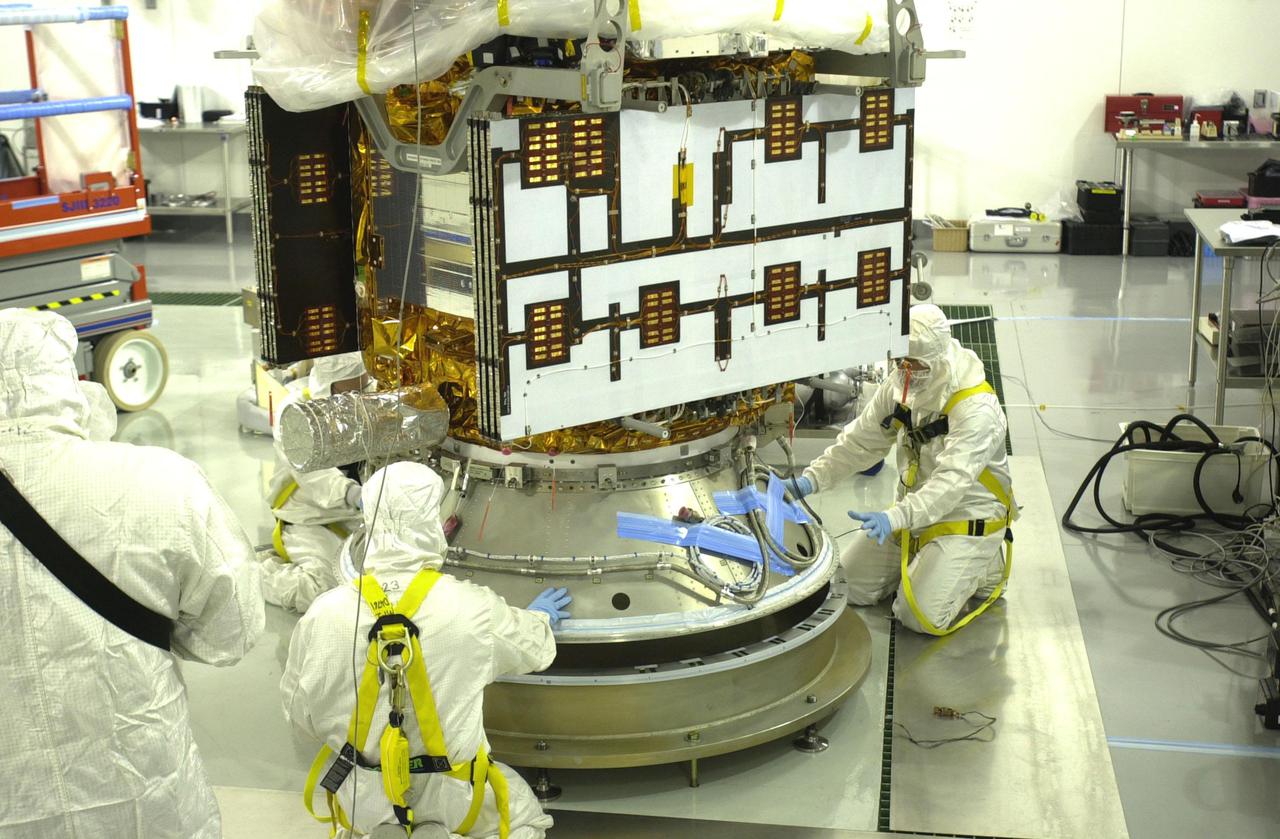
VANDENBERG AIR FORCE BASE, CALIF. - Inside the Astrotech Payload Processing Facility on Vandenberg Air Force Base in California, workers help guide the CALIPSO spacecraft as it is lowered onto a payload attach fitting. CALIPSO will be mated to the Lower Delta Payload Attach Fitting (LDPAF) that contains the CloudSat satellite. The PAF is the interface between the spacecraft and the second stage of the rocket. CALIPSO stands for Cloud-Aerosol Lidar and Infrared Pathfinder Satellite Observation. CALIPSO and CloudSat are highly complementary satellites that will provide never-before-seen 3-D perspectives of how clouds and aerosols form, evolve, and affect weather and climate. CALIPSO and CloudSat will fly in formation with three other satellites in the A-train constellation to enhance understanding of our climate system. Launch of CALIPSO_CloudSat aboard a Boeing Delta II rocket is scheduled for 3:01 a.m. PDT Sept. 29.
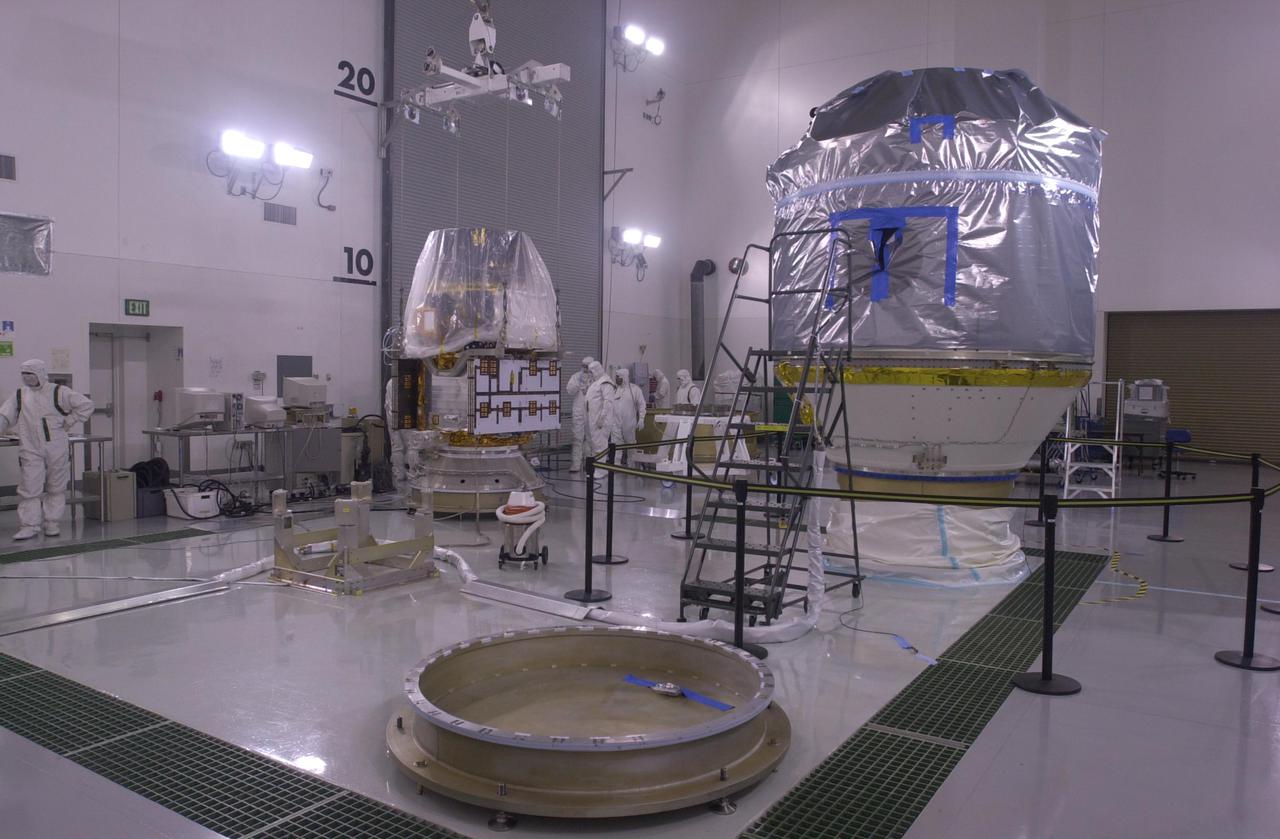
VANDENBERG AIR FORCE BASE, CALIF. — Inside the Astrotech Payload Processing Facility on Vandenberg Air Force Base in California, the CALIPSO spacecraft (background, left) is ready for mating with the upper Delta Payload Attach Fitting (UDPAF). Later the UDPAF will be mated with the lower Delta Payload Attach Fitting, which contains the CloudSat satellite. The PAF is the interface between the spacecraft and the second stage of the rocket. CALIPSO stands for Cloud-Aerosol Lidar and Infrared Pathfinder Satellite Observation. CALIPSO and CloudSat are highly complementary satellites that will provide never-before-seen 3-D perspectives of how clouds and aerosols form, evolve, and affect weather and climate. CALIPSO and CloudSat will fly in formation with three other satellites in the A-train constellation to enhance understanding of our climate system. Launch of CALIPSO_CloudSat aboard a Boeing Delta II rocket is scheduled for 3:01 a.m. PDT Sept. 29.
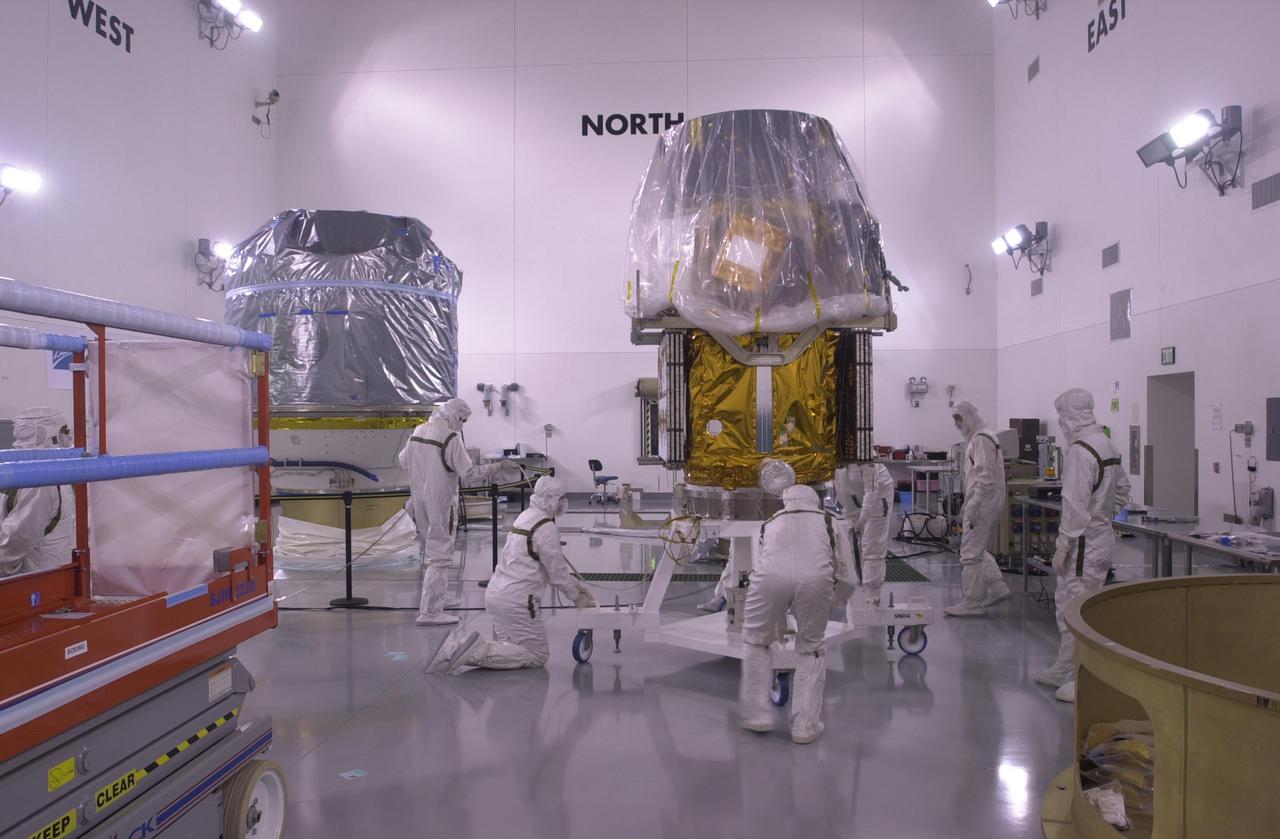
VANDENBERG AIR FORCE BASE, CALIF. — Inside the Astrotech Payload Processing Facility on Vandenberg Air Force Base in California, workers prepare the CALIPSO spacecraft for lifting. CALIPSO will be mated with the upper Delta Payload Attach Fitting (UDPAF). Later the UDPAF will be mated with the lower Delta Payload Attach Fitting, which contains the CloudSat satellite. The PAF is the interface between the spacecraft and the second stage of the rocket. CALIPSO stands for Cloud-Aerosol Lidar and Infrared Pathfinder Satellite Observation. CALIPSO and CloudSat are highly complementary satellites that will provide never-before-seen 3-D perspectives of how clouds and aerosols form, evolve, and affect weather and climate. CALIPSO and CloudSat will fly in formation with three other satellites in the A-train constellation to enhance understanding of our climate system. Launch of CALIPSO_CloudSat aboard a Boeing Delta II rocket is scheduled for 3:01 a.m. PDT Sept. 29.
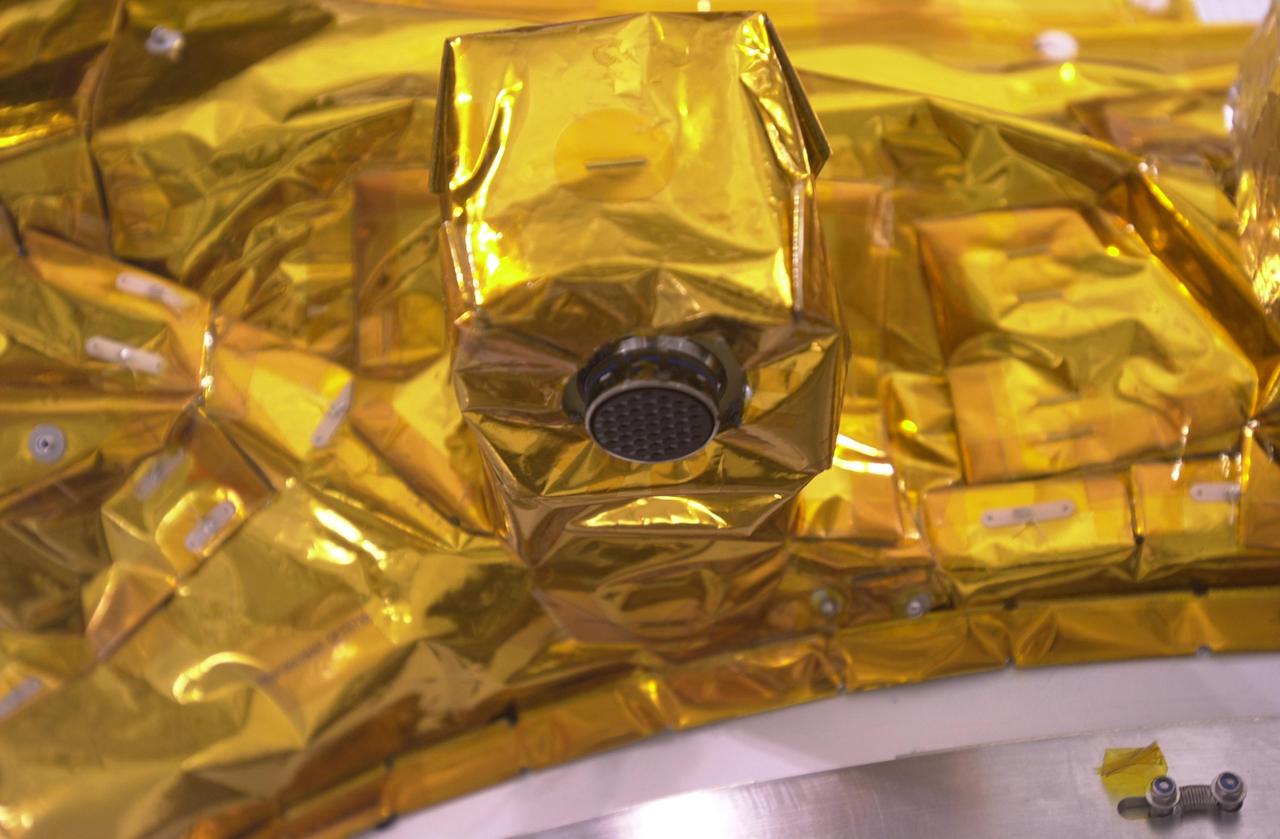
VANDENBERG AIR FORCE BASE, CALIF. — Inside the Astrotech Payload Processing Facility on Vandenberg Air Force Base in California, the CALIPSO spacecraft is being prepared for mating with the upper Delta Payload Attach Fitting (UDPAF). Later the UDPAF will be mated with the lower Delta Payload Attach Fitting, which contains the CloudSat satellite. The PAF is the interface between the spacecraft and the second stage of the rocket. CALIPSO stands for Cloud-Aerosol Lidar and Infrared Pathfinder Satellite Observation. CALIPSO and CloudSat are highly complementary satellites that will provide never-before-seen 3-D perspectives of how clouds and aerosols form, evolve, and affect weather and climate. CALIPSO and CloudSat will fly in formation with three other satellites in the A-train constellation to enhance understanding of our climate system. Launch of CALIPSO_CloudSat aboard a Boeing Delta II rocket is scheduled for 3:01 a.m. PDT Sept. 29.
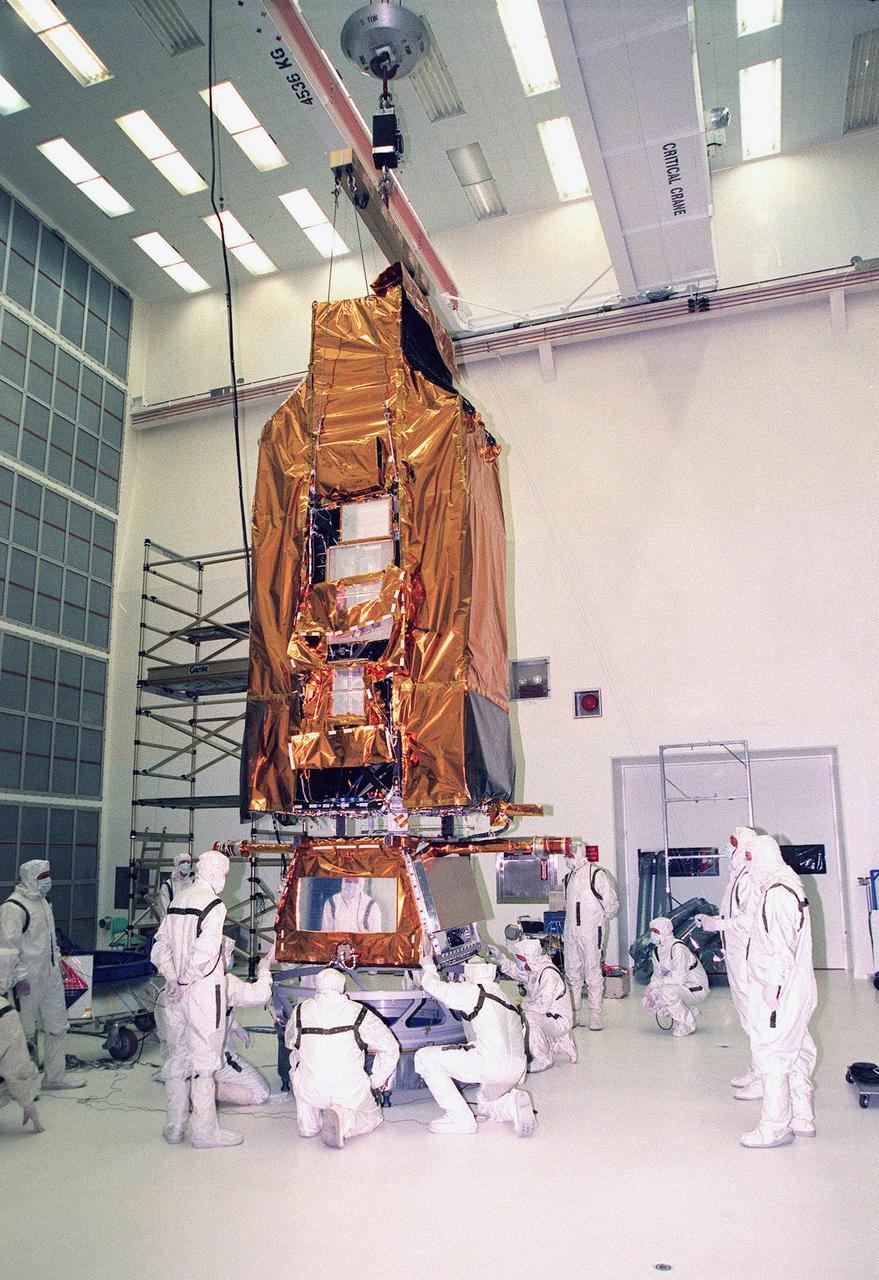
Suspended by a crane in Hangar AE, Cape Canaveral Air Station, NASA's Far Ultraviolet Spectroscopic Explorer (FUSE) satellite is lowered onto a circular Payload Attach Fitting (PAF). FUSE is undergoing a functional test of its systems, plus installation of flight batteries and solar arrays. Developed by The Johns Hopkins University under contract to Goddard Space Flight Center, Greenbelt, Md., FUSE will investigate the origin and evolution of the lightest elements in the universe hydrogen and deuterium. In addition, the FUSE satellite will examine the forces and process involved in the evolution of the galaxies, stars and planetary systems by investigating light in the far ultraviolet portion of the electromagnetic spectrum. FUSE is scheduled to be launched May 27 aboard a Boeing Delta II rocket at Launch Complex 17
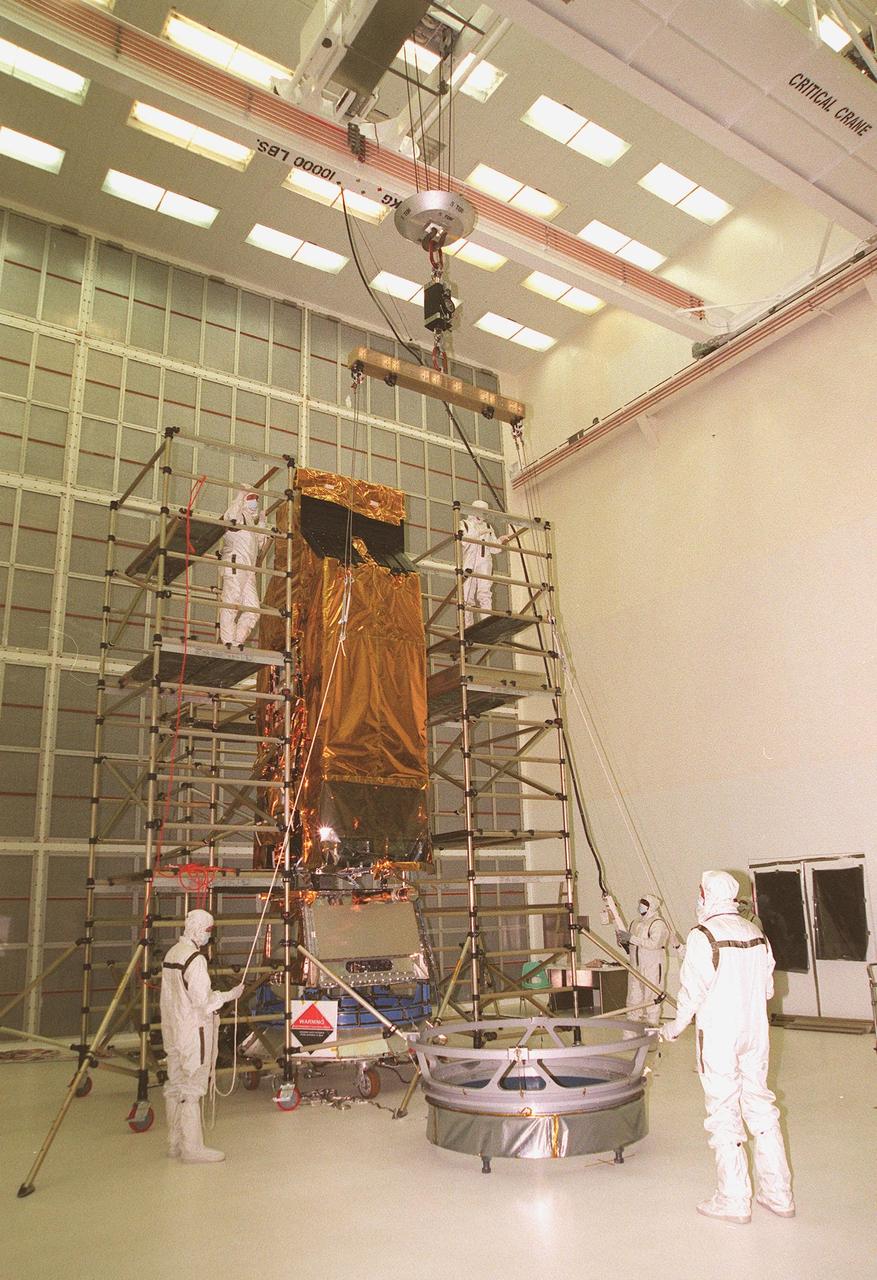
Workers at Hangar AE, Cape Canaveral Air Station, maneuver an overhead crane toward NASA's Far Ultraviolet Spectroscopic Explorer (FUSE) satellite standing between vertical workstands. The crane will lift FUSE to move it onto the Payload Attach Fitting (PAF) in front of it. FUSE is undergoing a functional test of its systems, plus installation of flight batteries and solar arrays. Developed by The Johns Hopkins University under contract to Goddard Space Flight Center, Greenbelt, Md., FUSE will investigate the origin and evolution of the lightest elements in the universe hydrogen and deuterium. In addition, the FUSE satellite will examine the forces and process involved in the evolution of the galaxies, stars and planetary systems by investigating light in the far ultraviolet portion of the electromagnetic spectrum. FUSE is scheduled to be launched May 27 aboard a Boeing Delta II rocket at Launch Complex 17
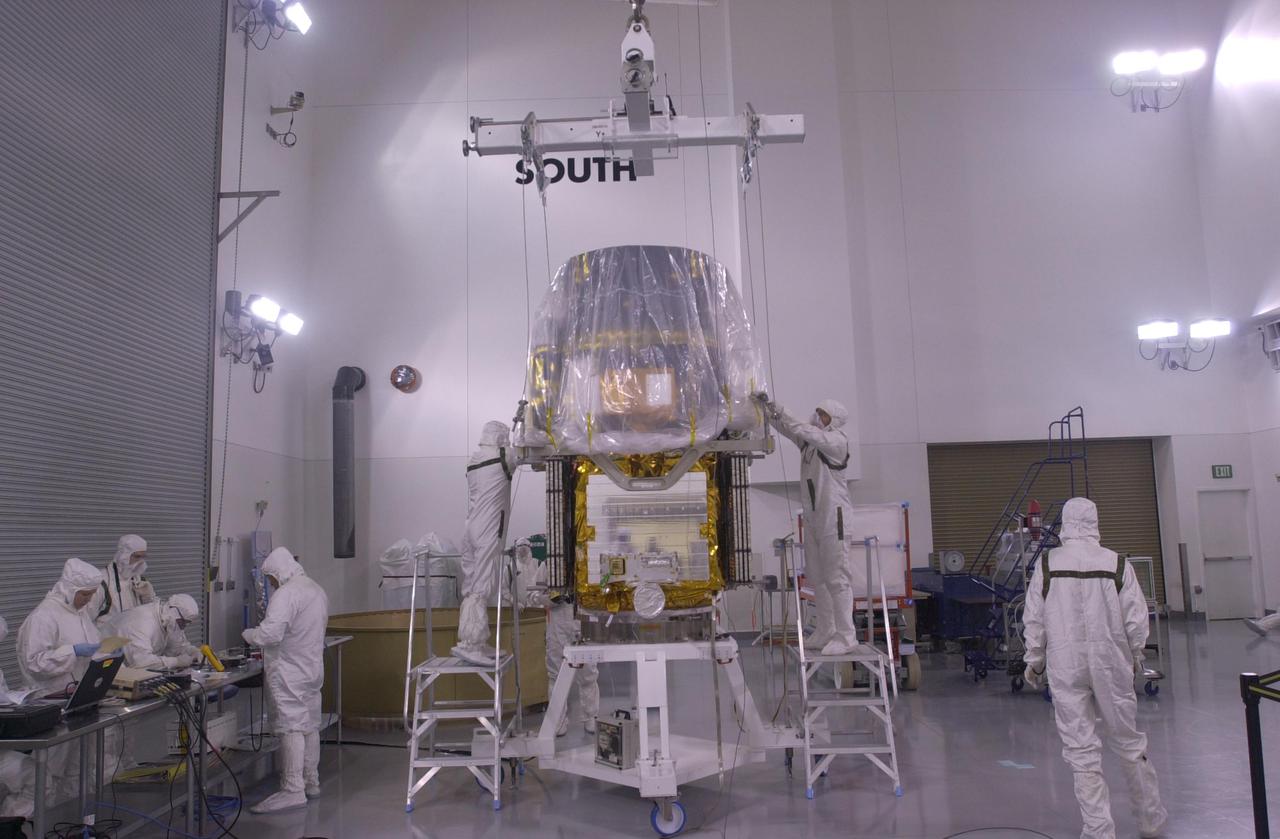
VANDENBERG AIR FORCE BASE, CALIF. — Inside the Astrotech Payload Processing Facility on Vandenberg Air Force Base in California, workers attach an overhead crane to the CALIPSO spacecraft. CALIPSO will be lifted and attached to the upper Delta Payload Attach Fitting (UDPAF). Later the UDPAF will be mated with the lower Delta Payload Attach Fitting, which contains the CloudSat satellite. The PAF is the interface between the spacecraft and the second stage of the rocket. CALIPSO stands for Cloud-Aerosol Lidar and Infrared Pathfinder Satellite Observation. CALIPSO and CloudSat are highly complementary satellites that will provide never-before-seen 3-D perspectives of how clouds and aerosols form, evolve, and affect weather and climate. CALIPSO and CloudSat will fly in formation with three other satellites in the A-train constellation to enhance understanding of our climate system. Launch of CALIPSO_CloudSat aboard a Boeing Delta II rocket is scheduled for 3:01 a.m. PDT Sept. 29.
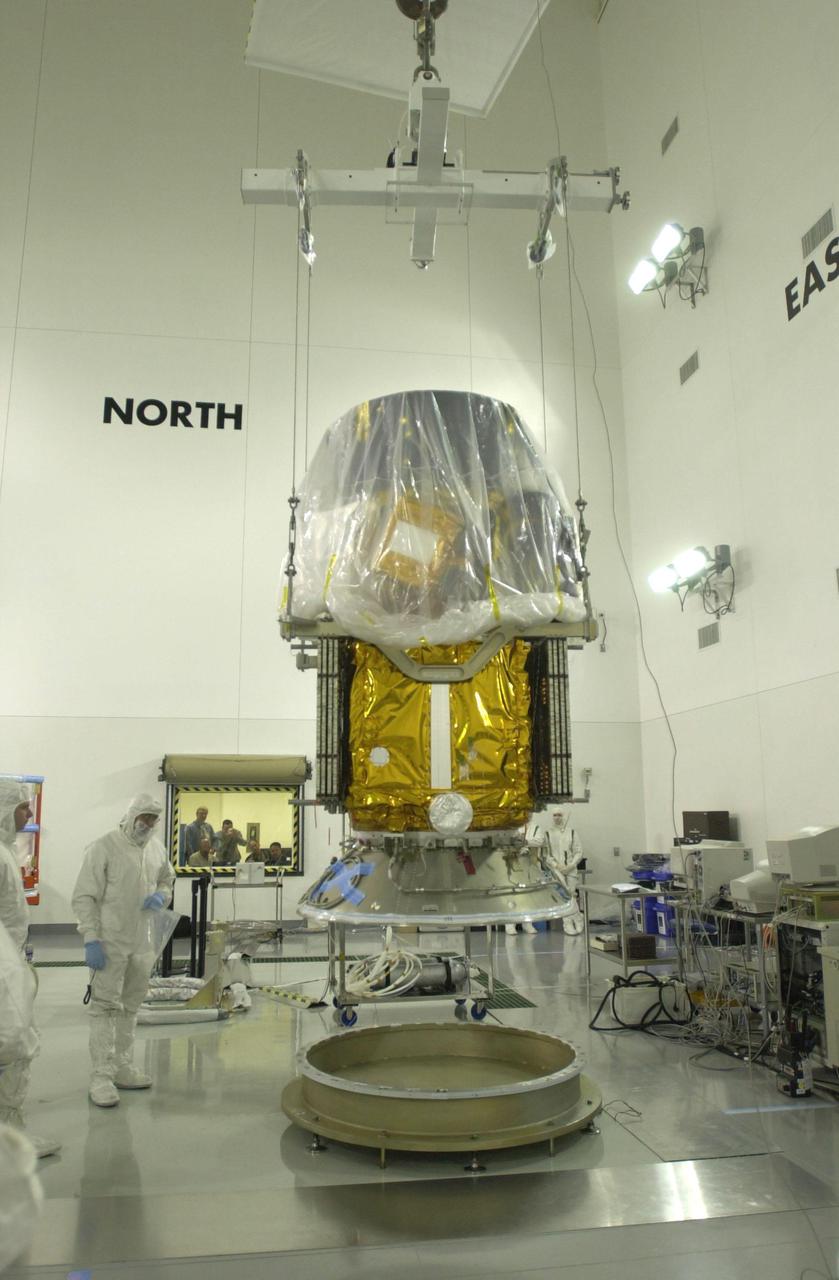
VANDENBERG AIR FORCE BASE, CALIF. - Inside the Astrotech Payload Processing Facility on Vandenberg Air Force Base in California, the CALIPSO spacecraft is lifted for its move to the Lower Delta Payload Attach Fitting (LDPAF). CALIPSO will be mated with the LDPAF, which contains the CloudSat satellite. The PAF is the interface between the spacecraft and the second stage of the rocket. CALIPSO stands for Cloud-Aerosol Lidar and Infrared Pathfinder Satellite Observation. CALIPSO and CloudSat are highly complementary satellites that will provide never-before-seen 3-D perspectives of how clouds and aerosols form, evolve, and affect weather and climate. CALIPSO and CloudSat will fly in formation with three other satellites in the A-train constellation to enhance understanding of our climate system. Launch of CALIPSO_CloudSat aboard a Boeing Delta II rocket is scheduled for 3:01 a.m. PDT Sept. 29.
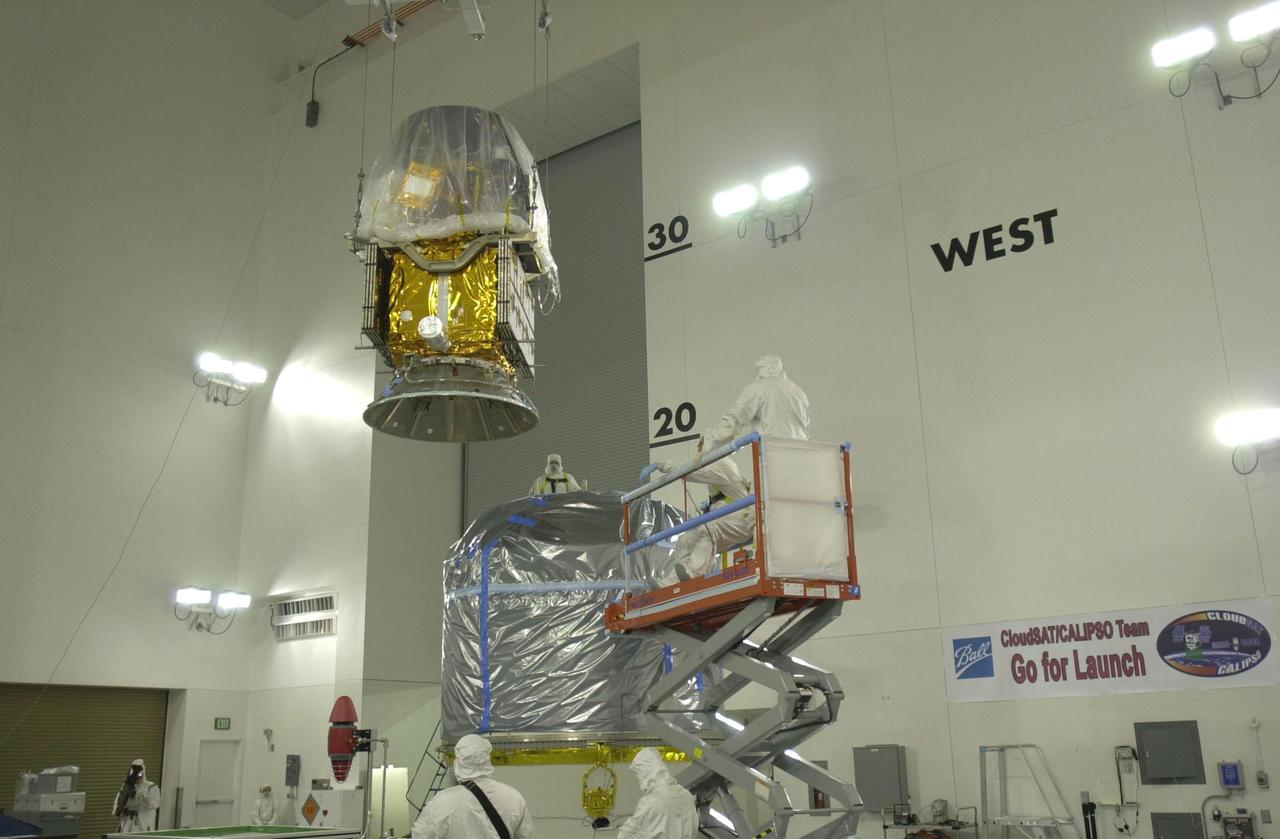
VANDENBERG AIR FORCE BASE, CALIF. - Inside the Astrotech Payload Processing Facility on Vandenberg Air Force Base in California, the CALIPSO spacecraft is moved toward the Lower Delta Payload Attach Fitting (LDPAF). CALIPSO will be mated with the LDPAF, which contains the CloudSat satellite. The PAF is the interface between the spacecraft and the second stage of the rocket. CALIPSO stands for Cloud-Aerosol Lidar and Infrared Pathfinder Satellite Observation. CALIPSO and CloudSat are highly complementary satellites that will provide never-before-seen 3-D perspectives of how clouds and aerosols form, evolve, and affect weather and climate. CALIPSO and CloudSat will fly in formation with three other satellites in the A-train constellation to enhance understanding of our climate system. Launch of CALIPSO_CloudSat aboard a Boeing Delta II rocket is scheduled for 3:01 a.m. PDT Sept. 29.
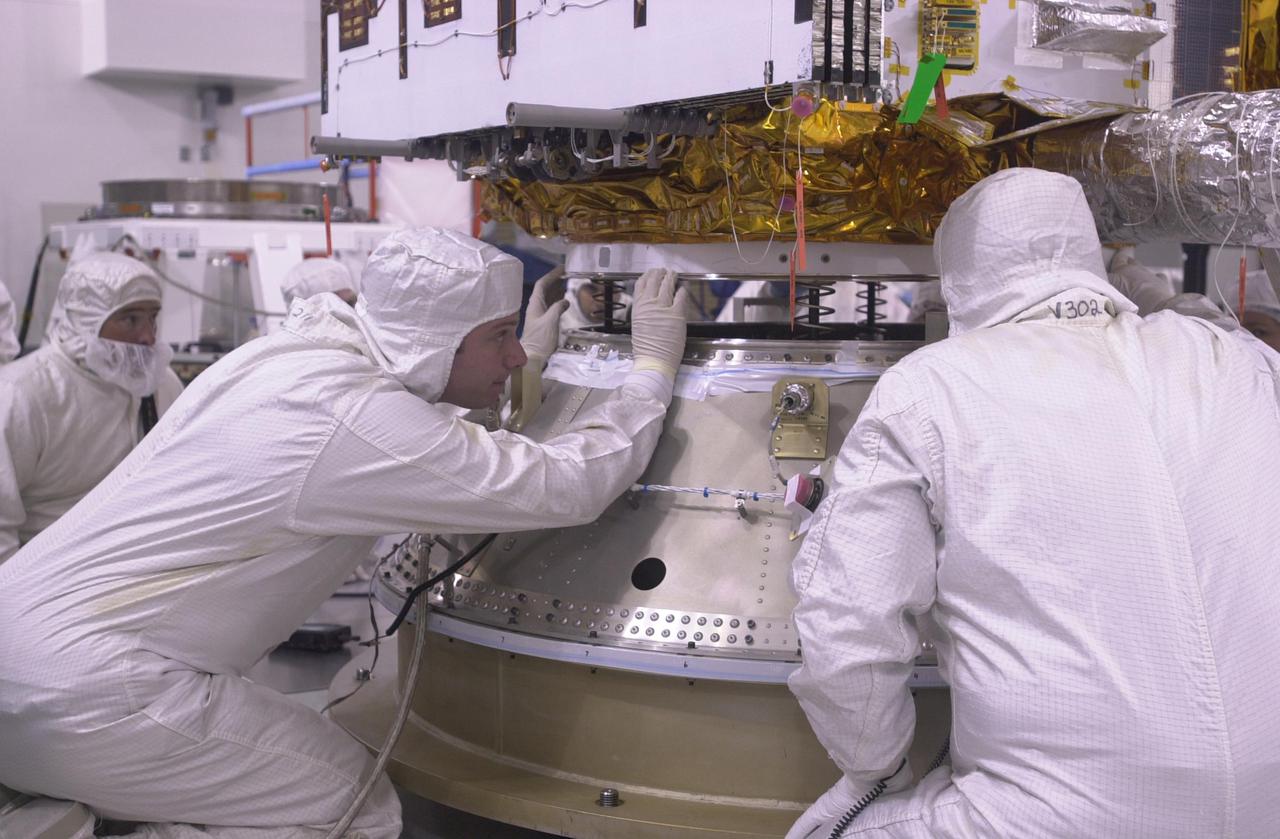
VANDENBERG AIR FORCE BASE, CALIF. — Inside the Astrotech Payload Processing Facility on Vandenberg Air Force Base in California, workers help secure the CALIPSO spacecraft to the upper Delta Payload Attach Fitting (UDPAF). Later the UDPAF will be mated with the lower Delta Payload Attach Fitting, which contains the CloudSat satellite. The PAF is the interface between the spacecraft and the second stage of the rocket. CALIPSO stands for Cloud-Aerosol Lidar and Infrared Pathfinder Satellite Observation. CALIPSO and CloudSat are highly complementary satellites that will provide never-before-seen 3-D perspectives of how clouds and aerosols form, evolve, and affect weather and climate. CALIPSO and CloudSat will fly in formation with three other satellites in the A-train constellation to enhance understanding of our climate system. Launch of CALIPSO_CloudSat aboard a Boeing Delta II rocket is scheduled for 3:01 a.m. PDT Sept. 29.
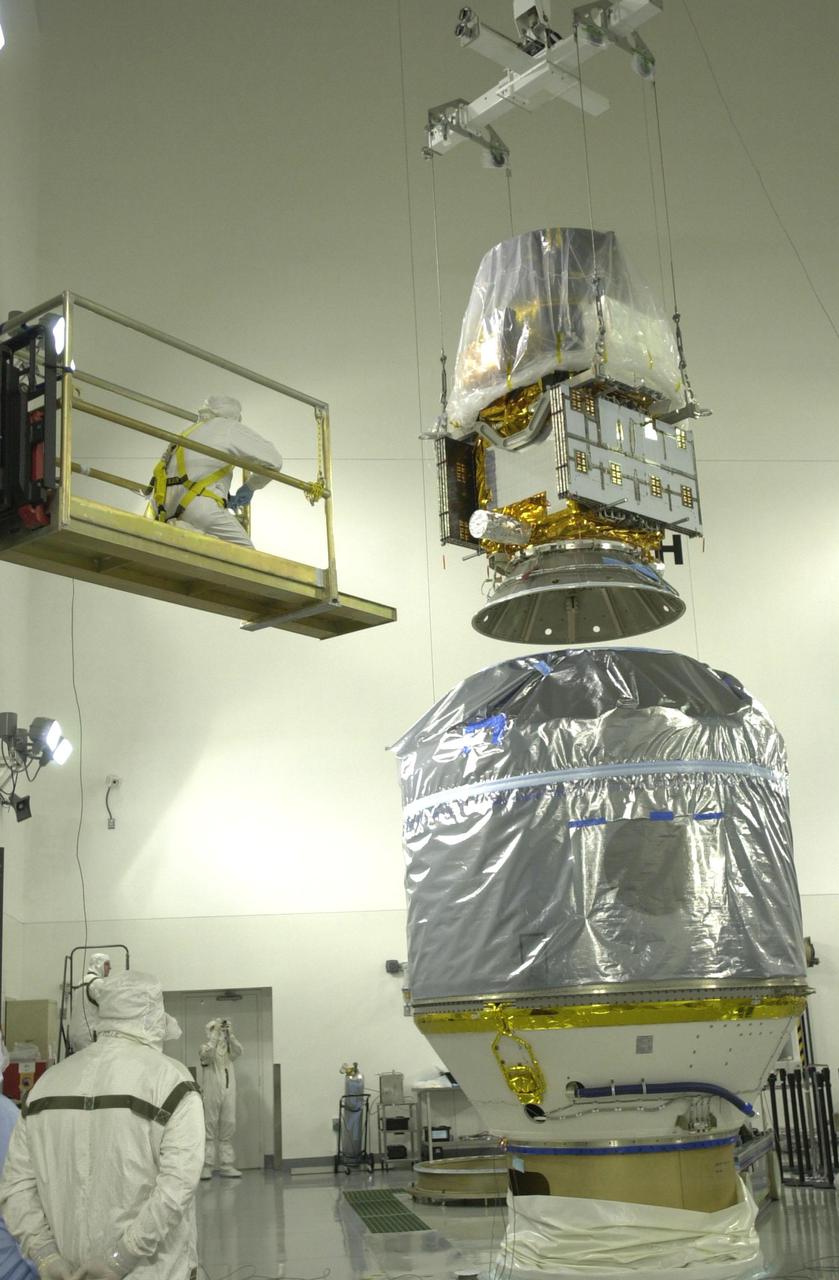
VANDENBERG AIR FORCE BASE, CALIF. - Inside the Astrotech Payload Processing Facility on Vandenberg Air Force Base in California, the CALIPSO spacecraft is lowered toward the Lower Delta Payload Attach Fitting (LDPAF). CALIPSO will be mated with the LDPAF, which contains the CloudSat satellite. The PAF is the interface between the spacecraft and the second stage of the rocket. CALIPSO stands for Cloud-Aerosol Lidar and Infrared Pathfinder Satellite Observation. CALIPSO and CloudSat are highly complementary satellites that will provide never-before-seen 3-D perspectives of how clouds and aerosols form, evolve, and affect weather and climate. CALIPSO and CloudSat will fly in formation with three other satellites in the A-train constellation to enhance understanding of our climate system. Launch of CALIPSO_CloudSat aboard a Boeing Delta II rocket is scheduled for 3:01 a.m. PDT Sept. 29.
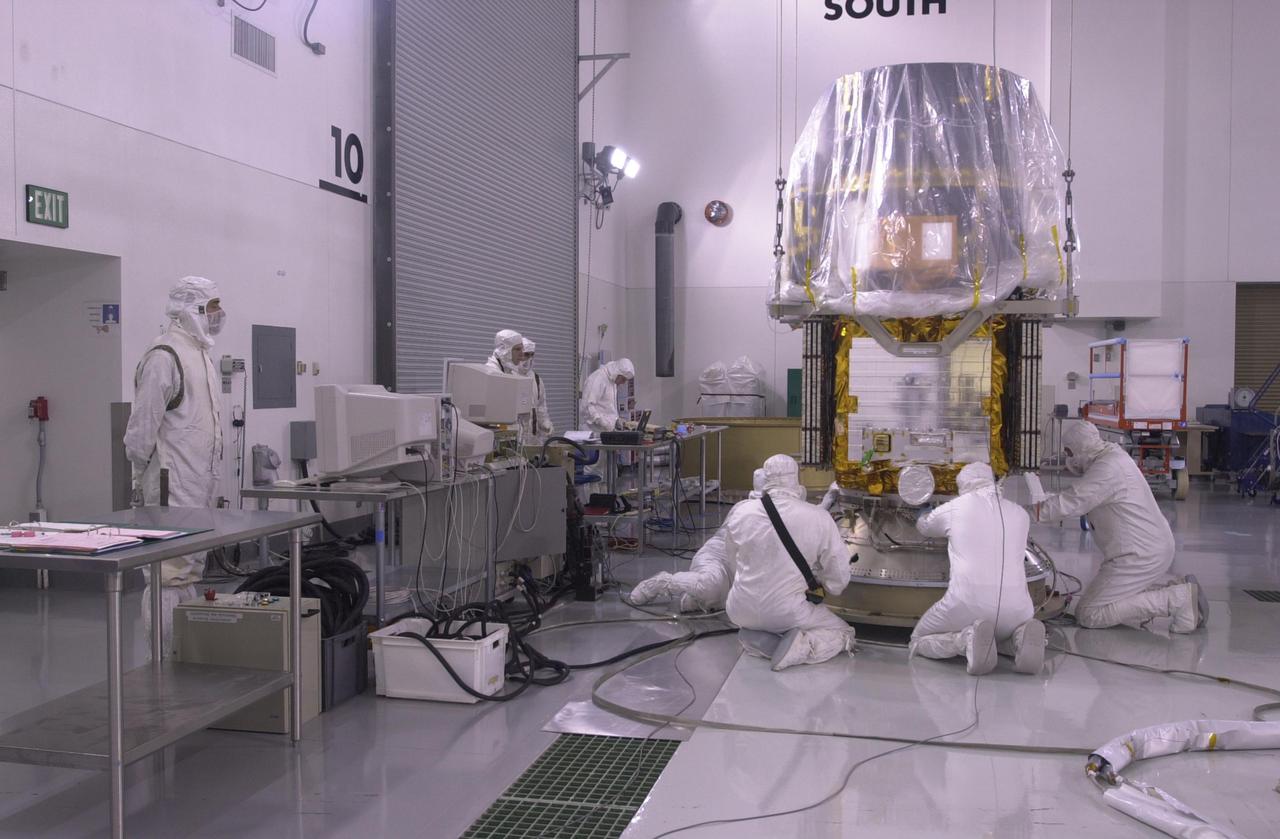
VANDENBERG AIR FORCE BASE, CALIF. — Inside the Astrotech Payload Processing Facility on Vandenberg Air Force Base in California, workers attach the CALIPSO spacecraft to the upper Delta Payload Attach Fitting (UDPAF). Later the UDPAF will be mated with the lower Delta Payload Attach Fitting, which contains the CloudSat satellite. The PAF is the interface between the spacecraft and the second stage of the rocket. CALIPSO stands for Cloud-Aerosol Lidar and Infrared Pathfinder Satellite Observation. CALIPSO and CloudSat are highly complementary satellites that will provide never-before-seen 3-D perspectives of how clouds and aerosols form, evolve, and affect weather and climate. CALIPSO and CloudSat will fly in formation with three other satellites in the A-train constellation to enhance understanding of our climate system. Launch of CALIPSO_CloudSat aboard a Boeing Delta II rocket is scheduled for 3:01 a.m. PDT Sept. 29.
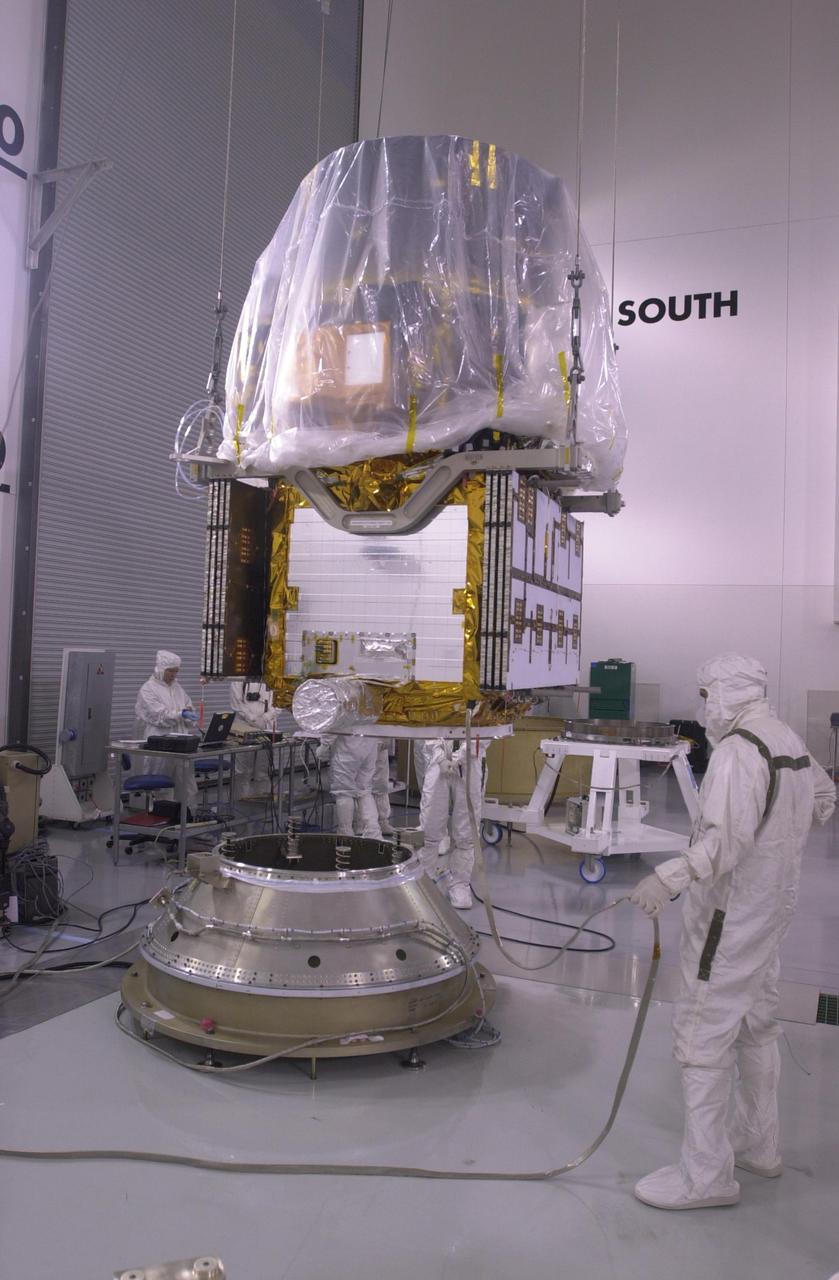
VANDENBERG AIR FORCE BASE, CALIF. — Inside the Astrotech Payload Processing Facility on Vandenberg Air Force Base in California, an overhead crane moves the CALIPSO spacecraft toward the upper Delta Payload Attach Fitting (UDPAF). Later the UDPAF will be mated with the lower Delta Payload Attach Fitting, which contains the CloudSat satellite. The PAF is the interface between the spacecraft and the second stage of the rocket. CALIPSO stands for Cloud-Aerosol Lidar and Infrared Pathfinder Satellite Observation. CALIPSO and CloudSat are highly complementary satellites that will provide never-before-seen 3-D perspectives of how clouds and aerosols form, evolve, and affect weather and climate. CALIPSO and CloudSat will fly in formation with three other satellites in the A-train constellation to enhance understanding of our climate system. Launch of CALIPSO_CloudSat aboard a Boeing Delta II rocket is scheduled for 3:01 a.m. PDT Sept. 29.
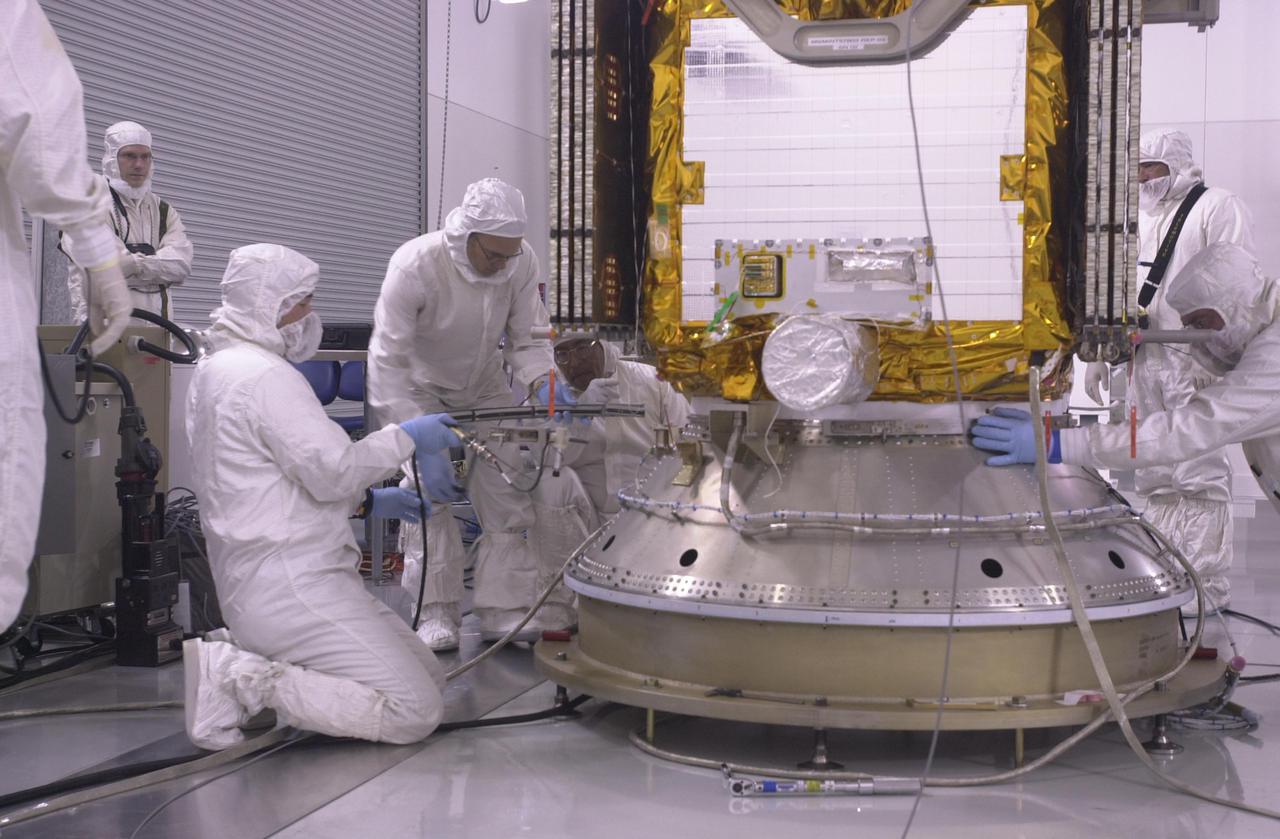
VANDENBERG AIR FORCE BASE, CALIF. — Inside the Astrotech Payload Processing Facility on Vandenberg Air Force Base in California, workers get ready to attach the CALIPSO spacecraft to the upper Delta Payload Attach Fitting (UDPAF). Later the UDPAF will be mated with the lower Delta Payload Attach Fitting, which contains the CloudSat satellite. The PAF is the interface between the spacecraft and the second stage of the rocket. CALIPSO stands for Cloud-Aerosol Lidar and Infrared Pathfinder Satellite Observation. CALIPSO and CloudSat are highly complementary satellites that will provide never-before-seen 3-D perspectives of how clouds and aerosols form, evolve, and affect weather and climate. CALIPSO and CloudSat will fly in formation with three other satellites in the A-train constellation to enhance understanding of our climate system. Launch of CALIPSO_CloudSat aboard a Boeing Delta II rocket is scheduled for 3:01 a.m. PDT Sept. 29.
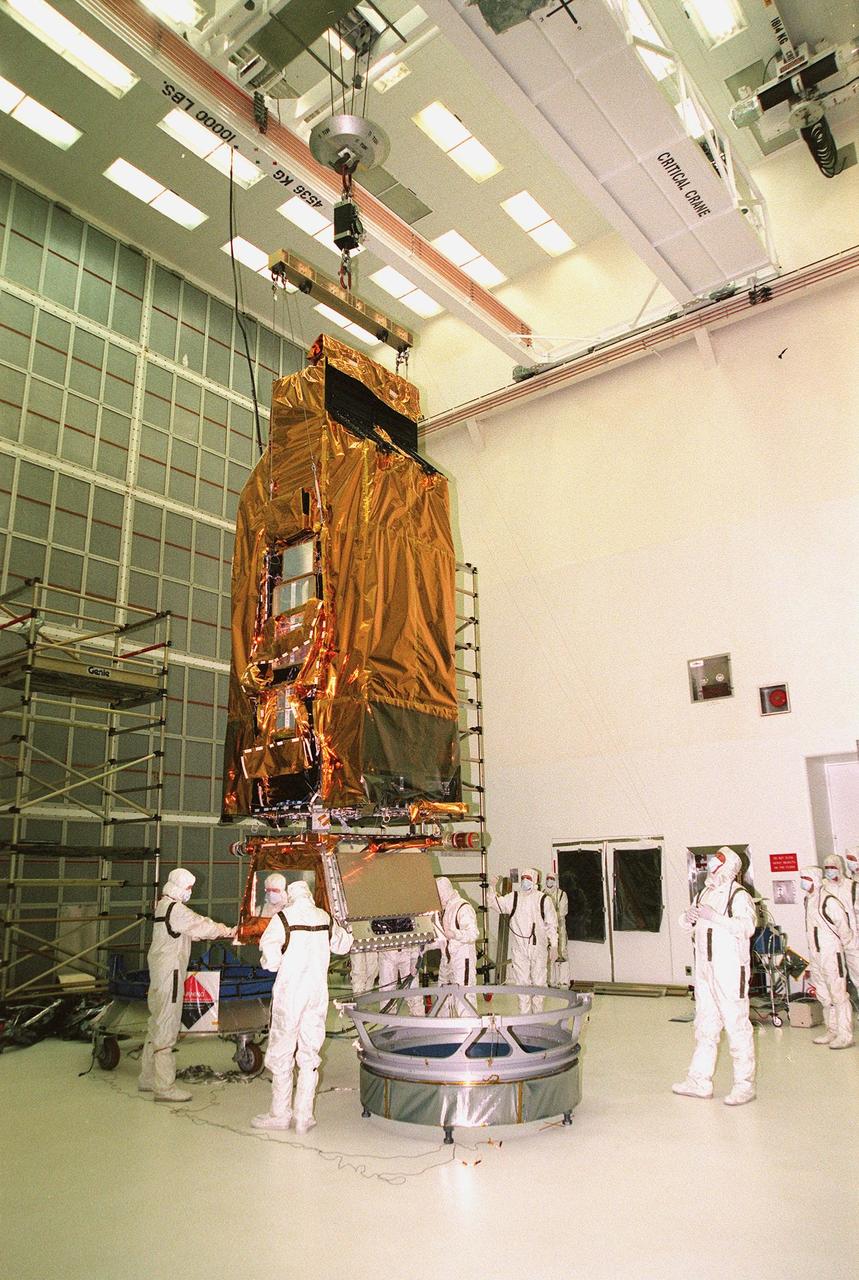
While a crane lifts NASA's Far Ultraviolet Spectroscopic Explorer (FUSE) satellite, workers at Hangar AE, Cape Canaveral Air Station, help guide it toward the circular Payload Attach Fitting (PAF) in front of it. FUSE is undergoing a functional test of its systems, plus installation of flight batteries and solar arrays. Developed by The Johns Hopkins University under contract to Goddard Space Flight Center, Greenbelt, Md., FUSE will investigate the origin and evolution of the lightest elements in the universe hydrogen and deuterium. In addition, the FUSE satellite will examine the forces and process involved in the evolution of the galaxies, stars and planetary systems by investigating light in the far ultraviolet portion of the electromagnetic spectrum. FUSE is scheduled to be launched May 27 aboard a Boeing Delta II rocket at Launch Complex 17
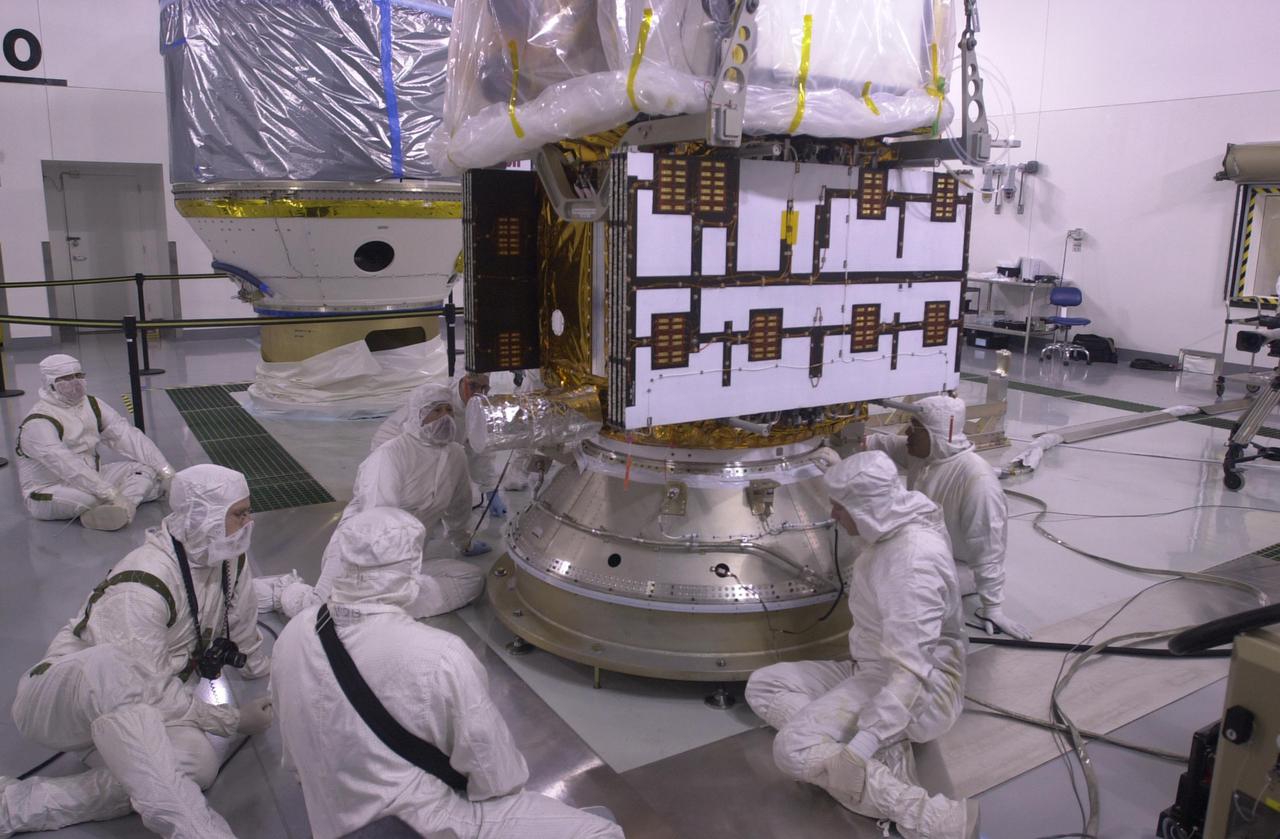
VANDENBERG AIR FORCE BASE, CALIF. — Inside the Astrotech Payload Processing Facility on Vandenberg Air Force Base in California, workers help secure the CALIPSO spacecraft to the upper Delta Payload Attach Fitting (UDPAF). Later the UDPAF will be mated with the lower Delta Payload Attach Fitting, which contains the CloudSat satellite. The PAF is the interface between the spacecraft and the second stage of the rocket. CALIPSO stands for Cloud-Aerosol Lidar and Infrared Pathfinder Satellite Observation. CALIPSO and CloudSat are highly complementary satellites that will provide never-before-seen 3-D perspectives of how clouds and aerosols form, evolve, and affect weather and climate. CALIPSO and CloudSat will fly in formation with three other satellites in the A-train constellation to enhance understanding of our climate system. Launch of CALIPSO_CloudSat aboard a Boeing Delta II rocket is scheduled for 3:01 a.m. PDT Sept. 29.
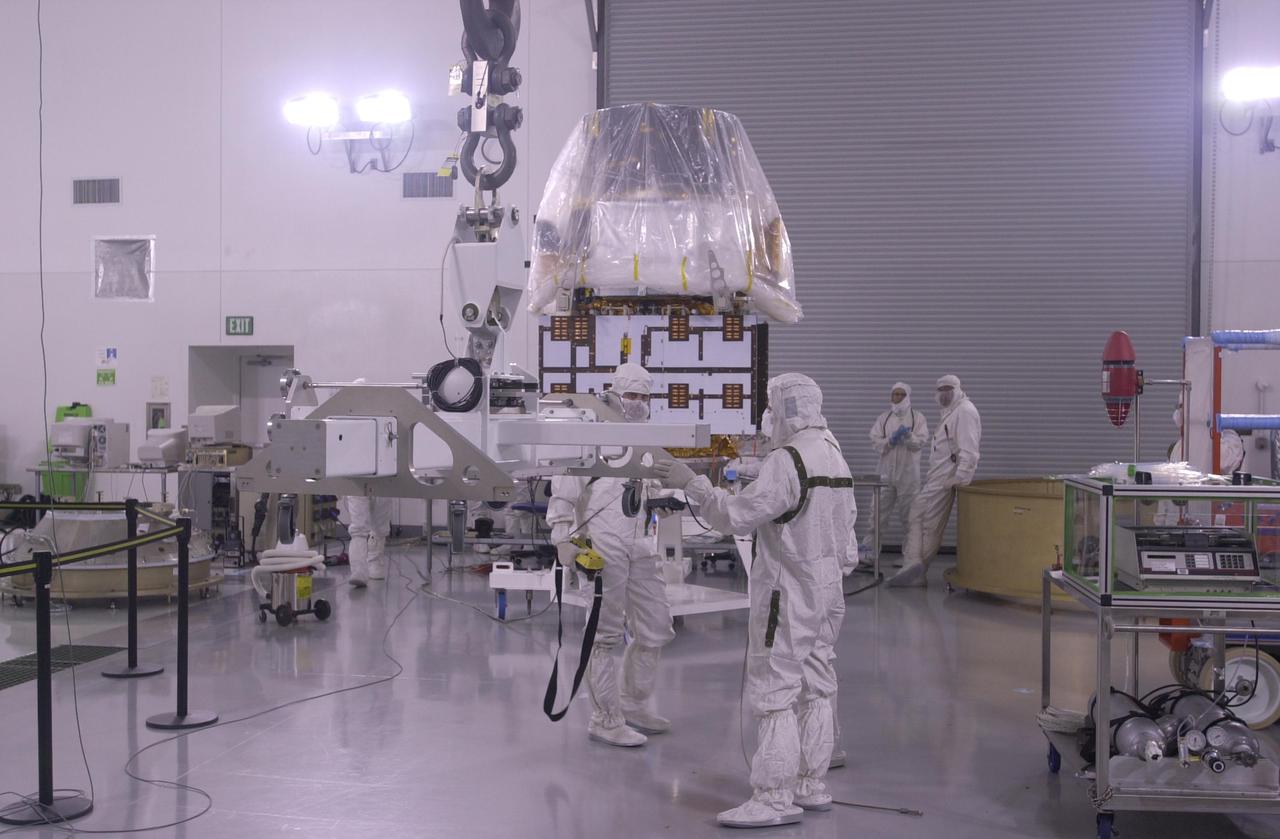
VANDENBERG AIR FORCE BASE, CALIF. — Inside the Astrotech Payload Processing Facility on Vandenberg Air Force Base in California, workers prepare the CALIPSO spacecraft for lifting. CALIPSO will be mated with the upper Delta Payload Attach Fitting (UDPAF). Later the UDPAF will be mated with the lower Delta Payload Attach Fitting, which contains the CloudSat satellite. The PAF is the interface between the spacecraft and the second stage of the rocket. CALIPSO stands for Cloud-Aerosol Lidar and Infrared Pathfinder Satellite Observation. CALIPSO and CloudSat are highly complementary satellites that will provide never-before-seen 3-D perspectives of how clouds and aerosols form, evolve, and affect weather and climate. CALIPSO and CloudSat will fly in formation with three other satellites in the A-train constellation to enhance understanding of our climate system. Launch of CALIPSO_CloudSat aboard a Boeing Delta II rocket is scheduled for 3:01 a.m. PDT Sept. 29.
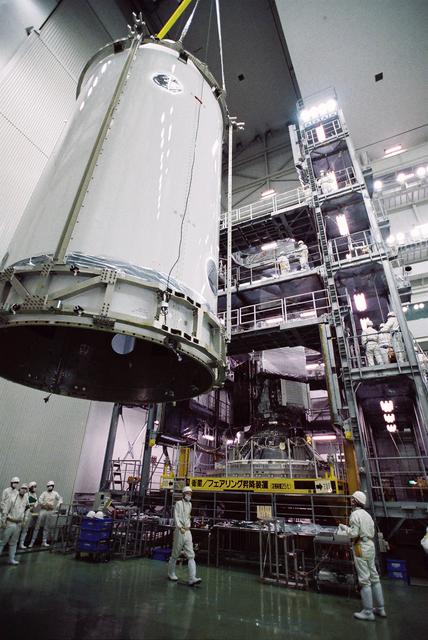
GPM is a joint mission between NASA and the Japan Aerospace Exploration Agency (JAXA). The Core Observatory will link data from a constellation of current and planned satellites to produce next-generation global measurements of rainfall and snowfall from space. On Feb. 11, the Core Observatory was moved into the spacecraft fairing assembly building and into the Encapsulation Hall. Final inspections and preparations were completed for the installation into the fairing, which began on Feb 13. The fairing is the part of the rocket that will contain the spacecraft at the top of the H-IIA rocket. The encapsulation process for the H-IIA is very different than for most U.S. rockets. For U.S. rockets, the fairing is usually in two pieces that close around the payload like a clamshell. To install the GPM Core Observatory into the fairing of the H-IIA rocket, first the Core Observatory and the Payload Attach Fitting (PAF) are set up in scaffolding in the Encapsulation Hall. Then, the fairing is lifted above and lowered onto the fitting. When only a few feet remain above the final position, stanchions support the fairing while technicians go inside to complete the electrical connections. When this is completed, they remove the stanchions and lower the fairing to its final position, where it is bolted in place. The GPM mission is the first coordinated international satellite network to provide near real-time observations of rain and snow every three hours anywhere on the globe. The GPM Core Observatory anchors this network by providing observations on all types of precipitation. The observatory's data acts as the measuring stick by which partner observations can be combined into a unified data set. The data will be used by scientists to study climate change, freshwater resources, floods and droughts, and hurricane formation and tracking. Credit: Japan Aerospace Exploration Agency <b><a href="http://www.nasa.gov/audience/formedia/features/MP_Photo_Guidelines.html" rel="nofollow">NASA image use policy.</a></b> <b><a href="http://www.nasa.gov/centers/goddard/home/index.html" rel="nofollow">NASA Goddard Space Flight Center</a></b> enables NASA’s mission through four scientific endeavors: Earth Science, Heliophysics, Solar System Exploration, and Astrophysics. Goddard plays a leading role in NASA’s accomplishments by contributing compelling scientific knowledge to advance the Agency’s mission. <b>Follow us on <a href="http://twitter.com/NASAGoddardPix" rel="nofollow">Twitter</a></b> <b>Like us on <a href="http://www.facebook.com/pages/Greenbelt-MD/NASA-Goddard/395013845897?ref=tsd" rel="nofollow">Facebook</a></b> <b>Find us on <a href="http://instagram.com/nasagoddard?vm=grid" rel="nofollow">Instagram</a></b>
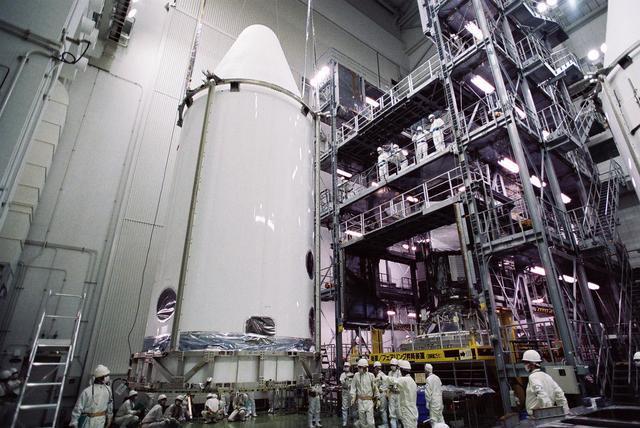
GPM is a joint mission between NASA and the Japan Aerospace Exploration Agency (JAXA). The Core Observatory will link data from a constellation of current and planned satellites to produce next-generation global measurements of rainfall and snowfall from space. On Feb. 11, the Core Observatory was moved into the spacecraft fairing assembly building and into the Encapsulation Hall. Final inspections and preparations were completed for the installation into the fairing, which began on Feb 13. The fairing is the part of the rocket that will contain the spacecraft at the top of the H-IIA rocket. The encapsulation process for the H-IIA is very different than for most U.S. rockets. For U.S. rockets, the fairing is usually in two pieces that close around the payload like a clamshell. To install the GPM Core Observatory into the fairing of the H-IIA rocket, first the Core Observatory and the Payload Attach Fitting (PAF) are set up in scaffolding in the Encapsulation Hall. Then, the fairing is lifted above and lowered onto the fitting. When only a few feet remain above the final position, stanchions support the fairing while technicians go inside to complete the electrical connections. When this is completed, they remove the stanchions and lower the fairing to its final position, where it is bolted in place. The GPM mission is the first coordinated international satellite network to provide near real-time observations of rain and snow every three hours anywhere on the globe. The GPM Core Observatory anchors this network by providing observations on all types of precipitation. The observatory's data acts as the measuring stick by which partner observations can be combined into a unified data set. The data will be used by scientists to study climate change, freshwater resources, floods and droughts, and hurricane formation and tracking. Credit: Japan Aerospace Exploration Agency <b><a href="http://www.nasa.gov/audience/formedia/features/MP_Photo_Guidelines.html" rel="nofollow">NASA image use policy.</a></b> <b><a href="http://www.nasa.gov/centers/goddard/home/index.html" rel="nofollow">NASA Goddard Space Flight Center</a></b> enables NASA’s mission through four scientific endeavors: Earth Science, Heliophysics, Solar System Exploration, and Astrophysics. Goddard plays a leading role in NASA’s accomplishments by contributing compelling scientific knowledge to advance the Agency’s mission. <b>Follow us on <a href="http://twitter.com/NASAGoddardPix" rel="nofollow">Twitter</a></b> <b>Like us on <a href="http://www.facebook.com/pages/Greenbelt-MD/NASA-Goddard/395013845897?ref=tsd" rel="nofollow">Facebook</a></b> <b>Find us on <a href="http://instagram.com/nasagoddard?vm=grid" rel="nofollow">Instagram</a></b>
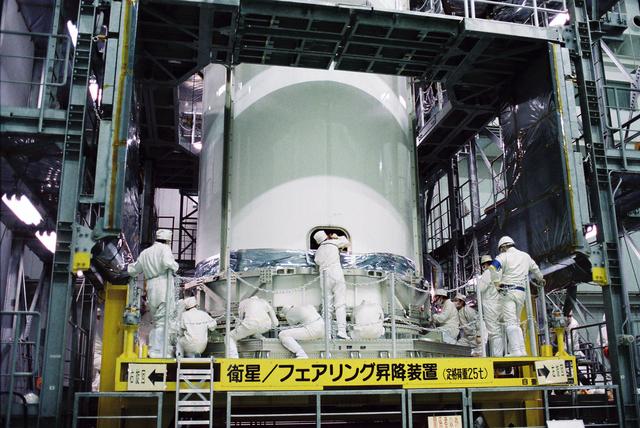
GPM is a joint mission between NASA and the Japan Aerospace Exploration Agency (JAXA). The Core Observatory will link data from a constellation of current and planned satellites to produce next-generation global measurements of rainfall and snowfall from space. On Feb. 11, the Core Observatory was moved into the spacecraft fairing assembly building and into the Encapsulation Hall. Final inspections and preparations were completed for the installation into the fairing, which began on Feb 13. The fairing is the part of the rocket that will contain the spacecraft at the top of the H-IIA rocket. The encapsulation process for the H-IIA is very different than for most U.S. rockets. For U.S. rockets, the fairing is usually in two pieces that close around the payload like a clamshell. To install the GPM Core Observatory into the fairing of the H-IIA rocket, first the Core Observatory and the Payload Attach Fitting (PAF) are set up in scaffolding in the Encapsulation Hall. Then, the fairing is lifted above and lowered onto the fitting. When only a few feet remain above the final position, stanchions support the fairing while technicians go inside to complete the electrical connections. When this is completed, they remove the stanchions and lower the fairing to its final position, where it is bolted in place. The GPM mission is the first coordinated international satellite network to provide near real-time observations of rain and snow every three hours anywhere on the globe. The GPM Core Observatory anchors this network by providing observations on all types of precipitation. The observatory's data acts as the measuring stick by which partner observations can be combined into a unified data set. The data will be used by scientists to study climate change, freshwater resources, floods and droughts, and hurricane formation and tracking. Credit: Japan Aerospace Exploration Agency <b><a href="http://www.nasa.gov/audience/formedia/features/MP_Photo_Guidelines.html" rel="nofollow">NASA image use policy.</a></b> <b><a href="http://www.nasa.gov/centers/goddard/home/index.html" rel="nofollow">NASA Goddard Space Flight Center</a></b> enables NASA’s mission through four scientific endeavors: Earth Science, Heliophysics, Solar System Exploration, and Astrophysics. Goddard plays a leading role in NASA’s accomplishments by contributing compelling scientific knowledge to advance the Agency’s mission. <b>Follow us on <a href="http://twitter.com/NASAGoddardPix" rel="nofollow">Twitter</a></b> <b>Like us on <a href="http://www.facebook.com/pages/Greenbelt-MD/NASA-Goddard/395013845897?ref=tsd" rel="nofollow">Facebook</a></b> <b>Find us on <a href="http://instagram.com/nasagoddard?vm=grid" rel="nofollow">Instagram</a></b>
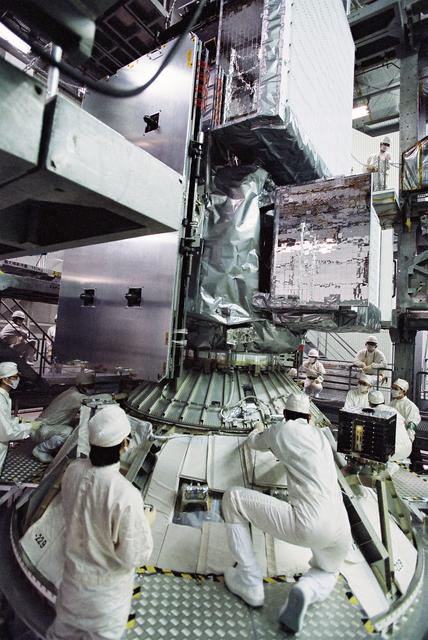
GPM is a joint mission between NASA and the Japan Aerospace Exploration Agency (JAXA). The Core Observatory will link data from a constellation of current and planned satellites to produce next-generation global measurements of rainfall and snowfall from space. On Feb. 11, the Core Observatory was moved into the spacecraft fairing assembly building and into the Encapsulation Hall. Final inspections and preparations were completed for the installation into the fairing, which began on Feb 13. The fairing is the part of the rocket that will contain the spacecraft at the top of the H-IIA rocket. The encapsulation process for the H-IIA is very different than for most U.S. rockets. For U.S. rockets, the fairing is usually in two pieces that close around the payload like a clamshell. To install the GPM Core Observatory into the fairing of the H-IIA rocket, first the Core Observatory and the Payload Attach Fitting (PAF) are set up in scaffolding in the Encapsulation Hall. Then, the fairing is lifted above and lowered onto the fitting. When only a few feet remain above the final position, stanchions support the fairing while technicians go inside to complete the electrical connections. When this is completed, they remove the stanchions and lower the fairing to its final position, where it is bolted in place. The GPM mission is the first coordinated international satellite network to provide near real-time observations of rain and snow every three hours anywhere on the globe. The GPM Core Observatory anchors this network by providing observations on all types of precipitation. The observatory's data acts as the measuring stick by which partner observations can be combined into a unified data set. The data will be used by scientists to study climate change, freshwater resources, floods and droughts, and hurricane formation and tracking. Credit: Japan Aerospace Exploration Agency <b><a href="http://www.nasa.gov/audience/formedia/features/MP_Photo_Guidelines.html" rel="nofollow">NASA image use policy.</a></b> <b><a href="http://www.nasa.gov/centers/goddard/home/index.html" rel="nofollow">NASA Goddard Space Flight Center</a></b> enables NASA’s mission through four scientific endeavors: Earth Science, Heliophysics, Solar System Exploration, and Astrophysics. Goddard plays a leading role in NASA’s accomplishments by contributing compelling scientific knowledge to advance the Agency’s mission. <b>Follow us on <a href="http://twitter.com/NASAGoddardPix" rel="nofollow">Twitter</a></b> <b>Like us on <a href="http://www.facebook.com/pages/Greenbelt-MD/NASA-Goddard/395013845897?ref=tsd" rel="nofollow">Facebook</a></b> <b>Find us on <a href="http://instagram.com/nasagoddard?vm=grid" rel="nofollow">Instagram</a></b>
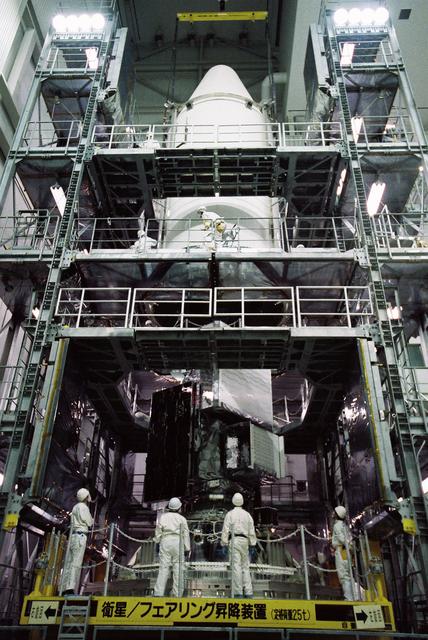
GPM is a joint mission between NASA and the Japan Aerospace Exploration Agency (JAXA). The Core Observatory will link data from a constellation of current and planned satellites to produce next-generation global measurements of rainfall and snowfall from space. On Feb. 11, the Core Observatory was moved into the spacecraft fairing assembly building and into the Encapsulation Hall. Final inspections and preparations were completed for the installation into the fairing, which began on Feb 13. The fairing is the part of the rocket that will contain the spacecraft at the top of the H-IIA rocket. The encapsulation process for the H-IIA is very different than for most U.S. rockets. For U.S. rockets, the fairing is usually in two pieces that close around the payload like a clamshell. To install the GPM Core Observatory into the fairing of the H-IIA rocket, first the Core Observatory and the Payload Attach Fitting (PAF) are set up in scaffolding in the Encapsulation Hall. Then, the fairing is lifted above and lowered onto the fitting. When only a few feet remain above the final position, stanchions support the fairing while technicians go inside to complete the electrical connections. When this is completed, they remove the stanchions and lower the fairing to its final position, where it is bolted in place. The GPM mission is the first coordinated international satellite network to provide near real-time observations of rain and snow every three hours anywhere on the globe. The GPM Core Observatory anchors this network by providing observations on all types of precipitation. The observatory's data acts as the measuring stick by which partner observations can be combined into a unified data set. The data will be used by scientists to study climate change, freshwater resources, floods and droughts, and hurricane formation and tracking. Credit: Japan Aerospace Exploration Agency <b><a href="http://www.nasa.gov/audience/formedia/features/MP_Photo_Guidelines.html" rel="nofollow">NASA image use policy.</a></b> <b><a href="http://www.nasa.gov/centers/goddard/home/index.html" rel="nofollow">NASA Goddard Space Flight Center</a></b> enables NASA’s mission through four scientific endeavors: Earth Science, Heliophysics, Solar System Exploration, and Astrophysics. Goddard plays a leading role in NASA’s accomplishments by contributing compelling scientific knowledge to advance the Agency’s mission. <b>Follow us on <a href="http://twitter.com/NASAGoddardPix" rel="nofollow">Twitter</a></b> <b>Like us on <a href="http://www.facebook.com/pages/Greenbelt-MD/NASA-Goddard/395013845897?ref=tsd" rel="nofollow">Facebook</a></b> <b>Find us on <a href="http://instagram.com/nasagoddard?vm=grid" rel="nofollow">Instagram</a></b>
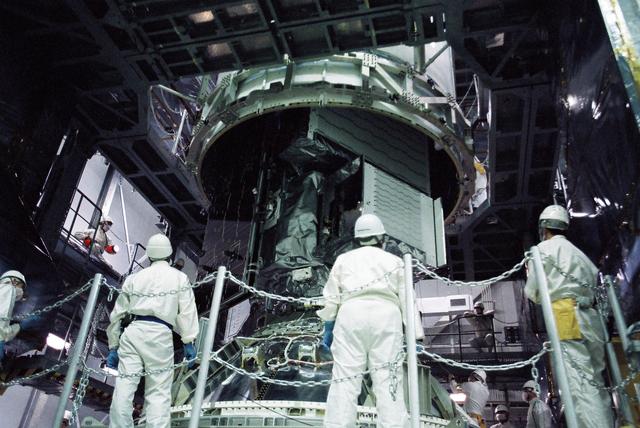
GPM is a joint mission between NASA and the Japan Aerospace Exploration Agency (JAXA). The Core Observatory will link data from a constellation of current and planned satellites to produce next-generation global measurements of rainfall and snowfall from space. On Feb. 11, the Core Observatory was moved into the spacecraft fairing assembly building and into the Encapsulation Hall. Final inspections and preparations were completed for the installation into the fairing, which began on Feb 13. The fairing is the part of the rocket that will contain the spacecraft at the top of the H-IIA rocket. The encapsulation process for the H-IIA is very different than for most U.S. rockets. For U.S. rockets, the fairing is usually in two pieces that close around the payload like a clamshell. To install the GPM Core Observatory into the fairing of the H-IIA rocket, first the Core Observatory and the Payload Attach Fitting (PAF) are set up in scaffolding in the Encapsulation Hall. Then, the fairing is lifted above and lowered onto the fitting. When only a few feet remain above the final position, stanchions support the fairing while technicians go inside to complete the electrical connections. When this is completed, they remove the stanchions and lower the fairing to its final position, where it is bolted in place. The GPM mission is the first coordinated international satellite network to provide near real-time observations of rain and snow every three hours anywhere on the globe. The GPM Core Observatory anchors this network by providing observations on all types of precipitation. The observatory's data acts as the measuring stick by which partner observations can be combined into a unified data set. The data will be used by scientists to study climate change, freshwater resources, floods and droughts, and hurricane formation and tracking. Credit: Japan Aerospace Exploration Agency <b><a href="http://www.nasa.gov/audience/formedia/features/MP_Photo_Guidelines.html" rel="nofollow">NASA image use policy.</a></b> <b><a href="http://www.nasa.gov/centers/goddard/home/index.html" rel="nofollow">NASA Goddard Space Flight Center</a></b> enables NASA’s mission through four scientific endeavors: Earth Science, Heliophysics, Solar System Exploration, and Astrophysics. Goddard plays a leading role in NASA’s accomplishments by contributing compelling scientific knowledge to advance the Agency’s mission. <b>Follow us on <a href="http://twitter.com/NASAGoddardPix" rel="nofollow">Twitter</a></b> <b>Like us on <a href="http://www.facebook.com/pages/Greenbelt-MD/NASA-Goddard/395013845897?ref=tsd" rel="nofollow">Facebook</a></b> <b>Find us on <a href="http://instagram.com/nasagoddard?vm=grid" rel="nofollow">Instagram</a></b>
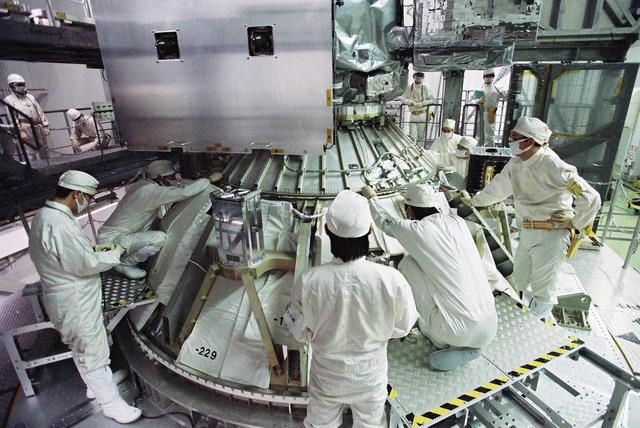
GPM is a joint mission between NASA and the Japan Aerospace Exploration Agency (JAXA). The Core Observatory will link data from a constellation of current and planned satellites to produce next-generation global measurements of rainfall and snowfall from space. On Feb. 11, the Core Observatory was moved into the spacecraft fairing assembly building and into the Encapsulation Hall. Final inspections and preparations were completed for the installation into the fairing, which began on Feb 13. The fairing is the part of the rocket that will contain the spacecraft at the top of the H-IIA rocket. The encapsulation process for the H-IIA is very different than for most U.S. rockets. For U.S. rockets, the fairing is usually in two pieces that close around the payload like a clamshell. To install the GPM Core Observatory into the fairing of the H-IIA rocket, first the Core Observatory and the Payload Attach Fitting (PAF) are set up in scaffolding in the Encapsulation Hall. Then, the fairing is lifted above and lowered onto the fitting. When only a few feet remain above the final position, stanchions support the fairing while technicians go inside to complete the electrical connections. When this is completed, they remove the stanchions and lower the fairing to its final position, where it is bolted in place. The GPM mission is the first coordinated international satellite network to provide near real-time observations of rain and snow every three hours anywhere on the globe. The GPM Core Observatory anchors this network by providing observations on all types of precipitation. The observatory's data acts as the measuring stick by which partner observations can be combined into a unified data set. The data will be used by scientists to study climate change, freshwater resources, floods and droughts, and hurricane formation and tracking. Credit: Japan Aerospace Exploration Agency <b><a href="http://www.nasa.gov/audience/formedia/features/MP_Photo_Guidelines.html" rel="nofollow">NASA image use policy.</a></b> <b><a href="http://www.nasa.gov/centers/goddard/home/index.html" rel="nofollow">NASA Goddard Space Flight Center</a></b> enables NASA’s mission through four scientific endeavors: Earth Science, Heliophysics, Solar System Exploration, and Astrophysics. Goddard plays a leading role in NASA’s accomplishments by contributing compelling scientific knowledge to advance the Agency’s mission. <b>Follow us on <a href="http://twitter.com/NASAGoddardPix" rel="nofollow">Twitter</a></b> <b>Like us on <a href="http://www.facebook.com/pages/Greenbelt-MD/NASA-Goddard/395013845897?ref=tsd" rel="nofollow">Facebook</a></b> <b>Find us on <a href="http://instagram.com/nasagoddard?vm=grid" rel="nofollow">Instagram</a></b>
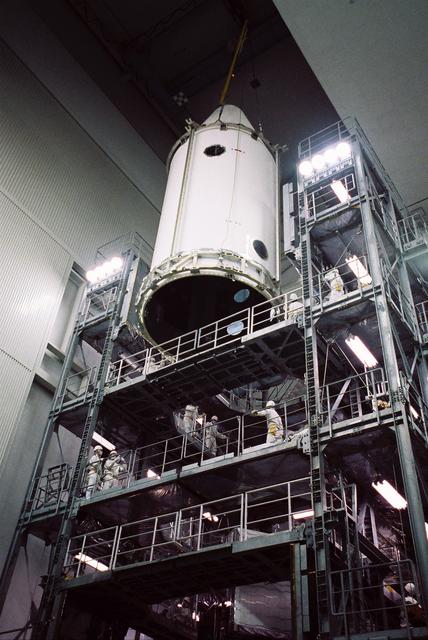
GPM is a joint mission between NASA and the Japan Aerospace Exploration Agency (JAXA). The Core Observatory will link data from a constellation of current and planned satellites to produce next-generation global measurements of rainfall and snowfall from space. On Feb. 11, the Core Observatory was moved into the spacecraft fairing assembly building and into the Encapsulation Hall. Final inspections and preparations were completed for the installation into the fairing, which began on Feb 13. The fairing is the part of the rocket that will contain the spacecraft at the top of the H-IIA rocket. The encapsulation process for the H-IIA is very different than for most U.S. rockets. For U.S. rockets, the fairing is usually in two pieces that close around the payload like a clamshell. To install the GPM Core Observatory into the fairing of the H-IIA rocket, first the Core Observatory and the Payload Attach Fitting (PAF) are set up in scaffolding in the Encapsulation Hall. Then, the fairing is lifted above and lowered onto the fitting. When only a few feet remain above the final position, stanchions support the fairing while technicians go inside to complete the electrical connections. When this is completed, they remove the stanchions and lower the fairing to its final position, where it is bolted in place. The GPM mission is the first coordinated international satellite network to provide near real-time observations of rain and snow every three hours anywhere on the globe. The GPM Core Observatory anchors this network by providing observations on all types of precipitation. The observatory's data acts as the measuring stick by which partner observations can be combined into a unified data set. The data will be used by scientists to study climate change, freshwater resources, floods and droughts, and hurricane formation and tracking. Credit: Japan Aerospace Exploration Agency <b><a href="http://www.nasa.gov/audience/formedia/features/MP_Photo_Guidelines.html" rel="nofollow">NASA image use policy.</a></b> <b><a href="http://www.nasa.gov/centers/goddard/home/index.html" rel="nofollow">NASA Goddard Space Flight Center</a></b> enables NASA’s mission through four scientific endeavors: Earth Science, Heliophysics, Solar System Exploration, and Astrophysics. Goddard plays a leading role in NASA’s accomplishments by contributing compelling scientific knowledge to advance the Agency’s mission. <b>Follow us on <a href="http://twitter.com/NASAGoddardPix" rel="nofollow">Twitter</a></b> <b>Like us on <a href="http://www.facebook.com/pages/Greenbelt-MD/NASA-Goddard/395013845897?ref=tsd" rel="nofollow">Facebook</a></b> <b>Find us on <a href="http://instagram.com/nasagoddard?vm=grid" rel="nofollow">Instagram</a></b>