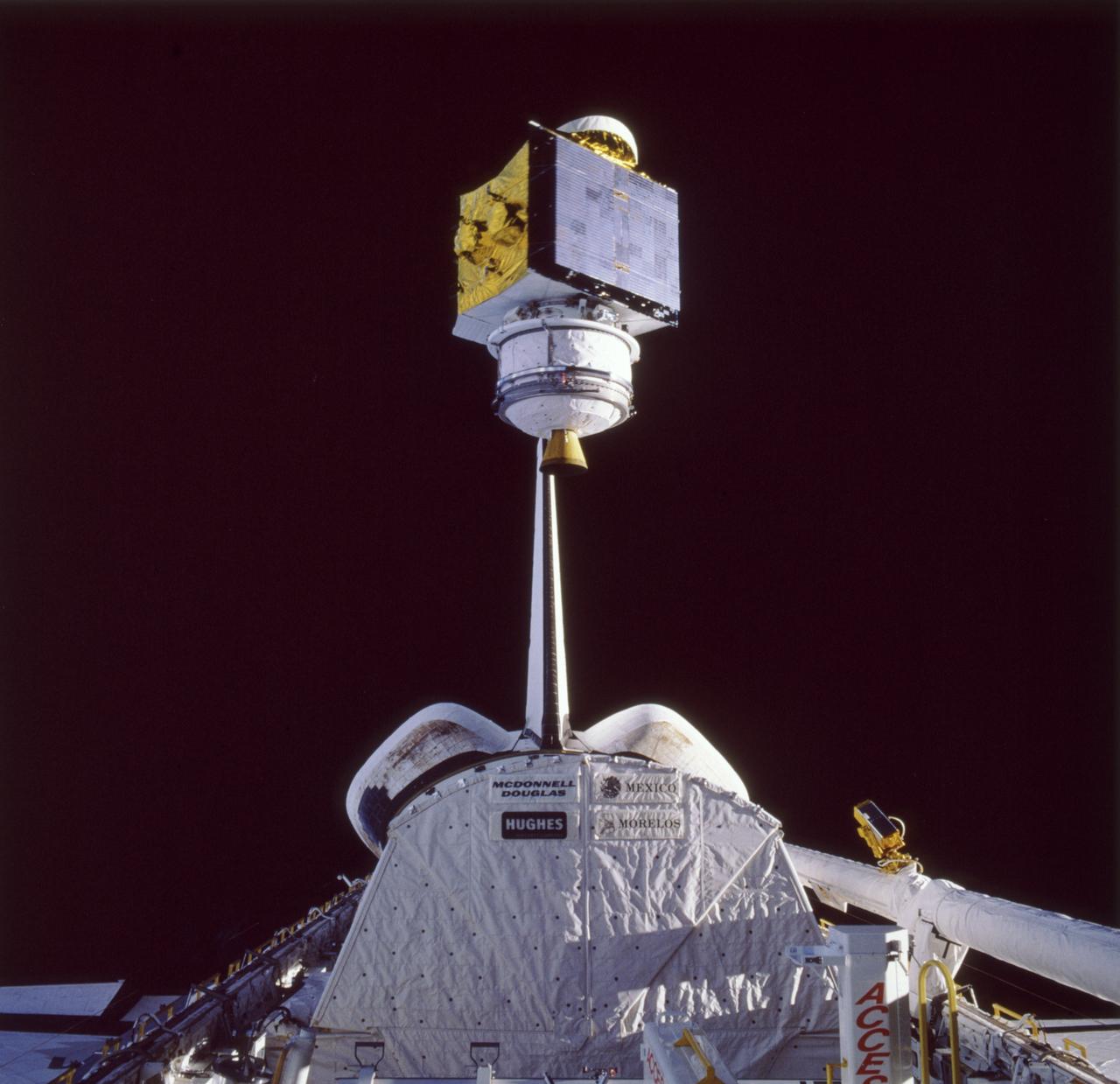
In this photograph the SATCOM KU-2 satellite attached to a Payload Assist Module-D (PAM-D) is being released from the cargo bay of the Space Shuttle Orbiter Atlantis during STS-61B, the 23rd Shuttle Mission. The PAM-D is an upper stage system used to deploy payloads to a required orbit unattainable by the spacecraft. SATCOM KU-2 is an RCA communication satellite and was launched on November 26, 1985.
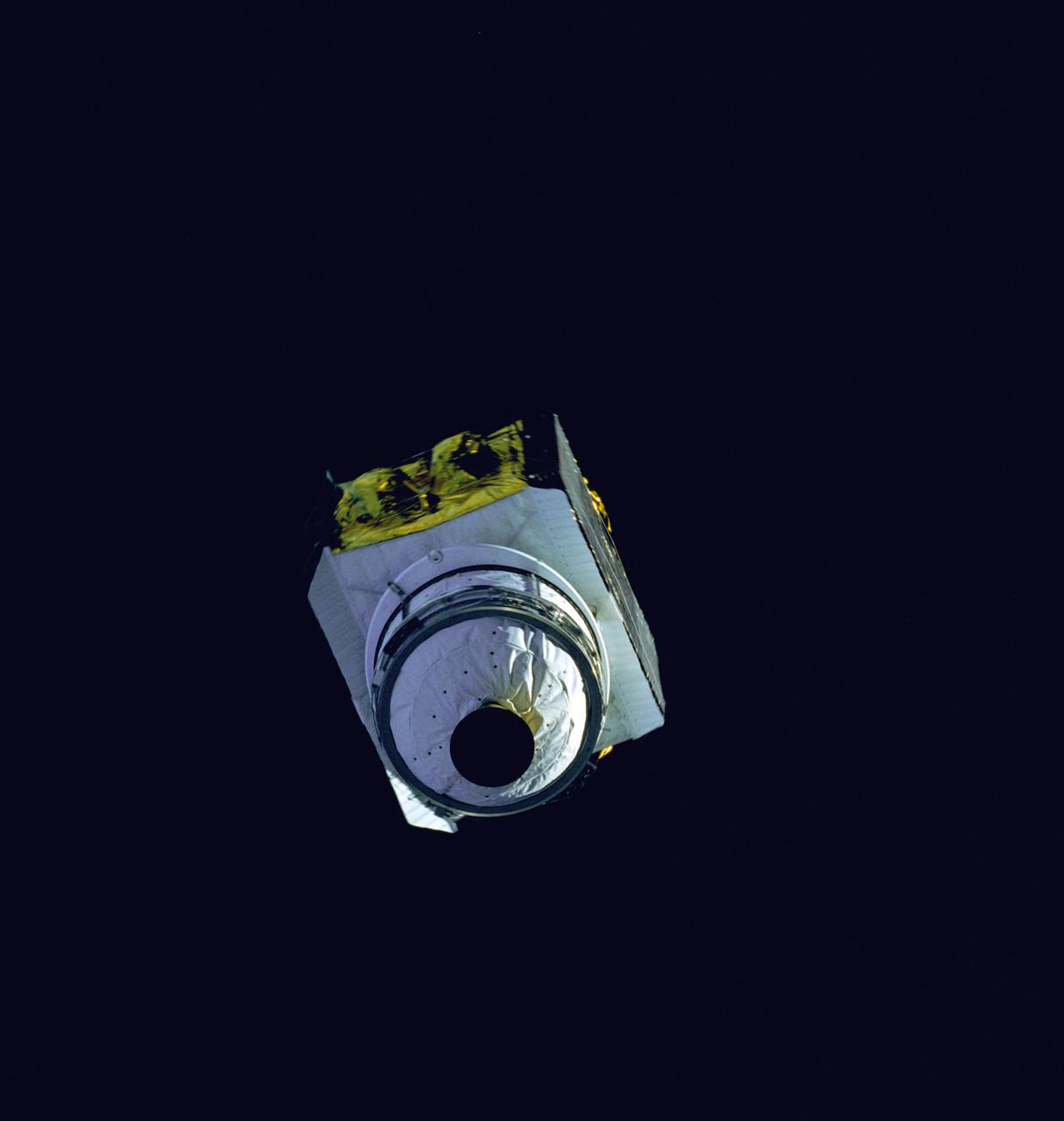
This image of the free-flying SATCOM KU-2 satellite, still attached to a Payload Assist Module-D (PAM-D), was photographed during STS-61B, the 23rd Space Shuttle mission. The SATCOM KU-2 is an RCA communication satellite and was launched on November 26, 1985, aboard the Space Shuttle Orbiter Atlantis. The PAM-D is an upper stage system used to deploy payloads to a required orbit unattainable by the launch vehicle.
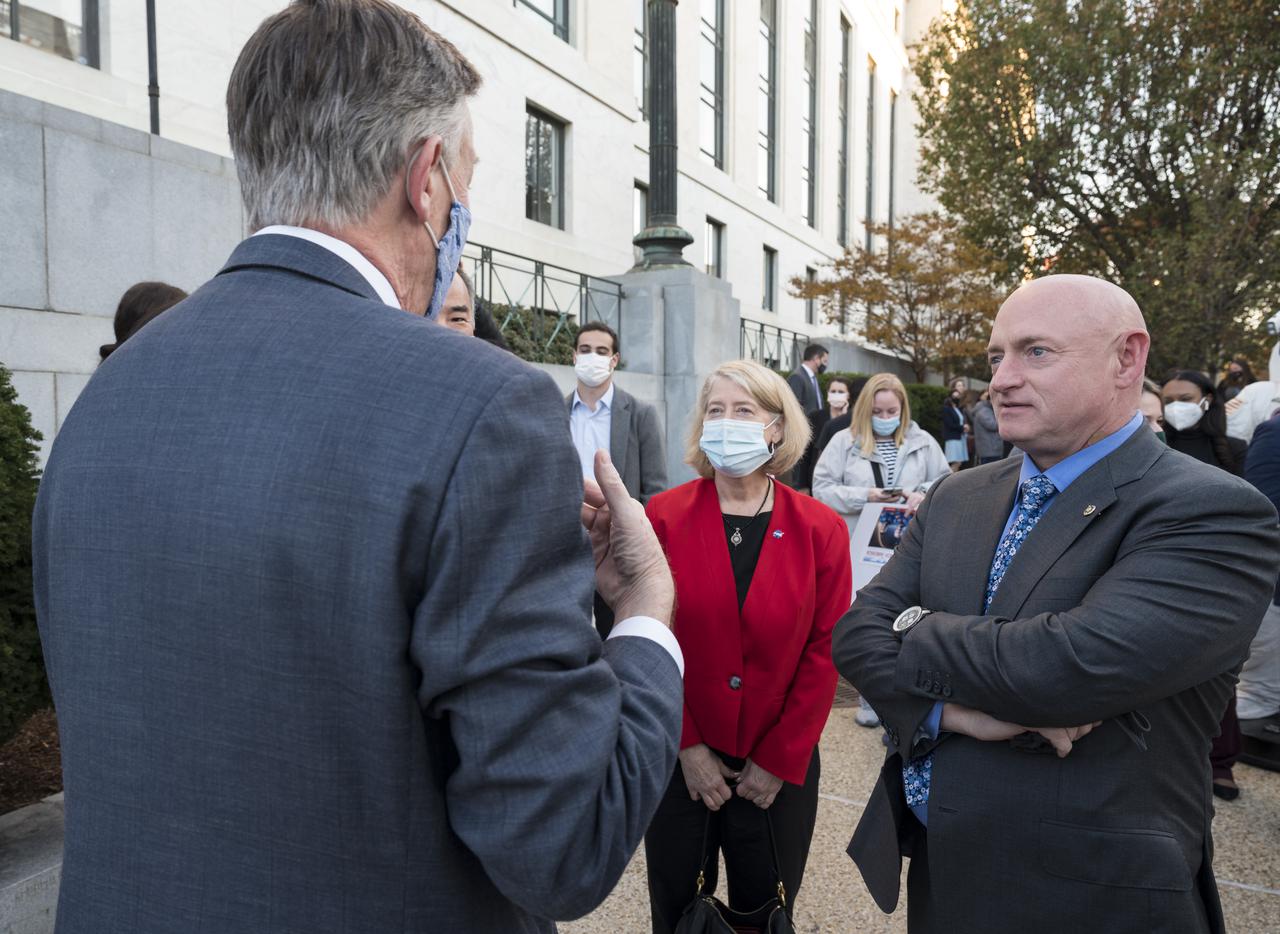
NASA Deputy Administrator Pam Melroy, center, and former astronaut and Senator Mark Kelly, D-Ariz., right, speak with Senator John Hickenlooper, D-Colo, at the Destination Station mobile exhibition on Capitol Hill, Wednesday, Nov. 17, 2021, in Washington. Photo Credit: (NASA/Aubrey Gemignani)
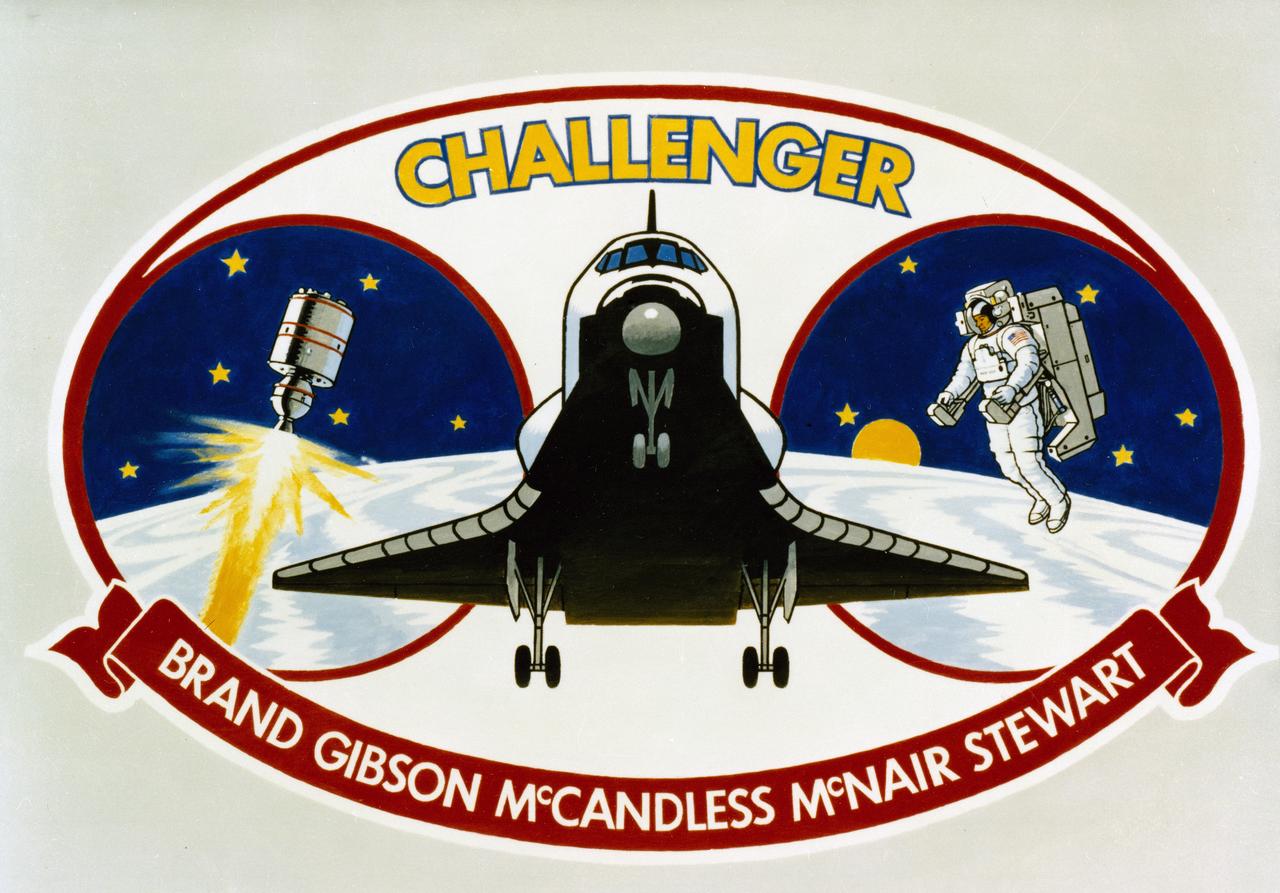
The Space Shuttle Challenger, making its fourth space flight, highlights the 41B insignia. The reusable vehicle is flanked in the oval by an illustration of a Payload Assist Module-D solid rocket motor (PAM-D) for assisted satellite deployment; an astronaut making the first non-tethered extravehicular activity (EVA); and eleven stars.
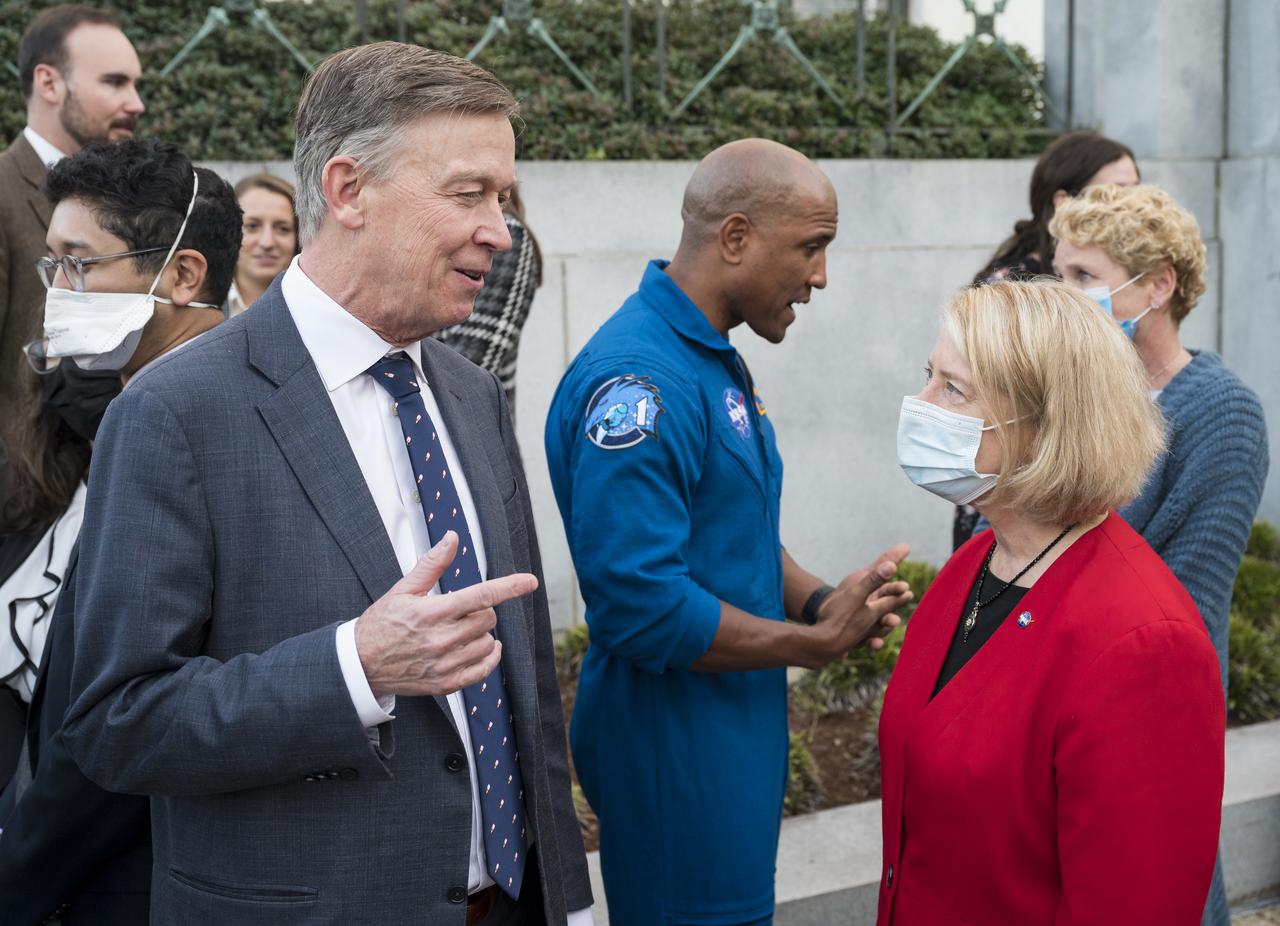
NASA Deputy Administrator Pam Melroy, right, speaks with Senator John Hickenlooper, D-Colo, at the Destination Station mobile exhibition on Capitol Hill, Wednesday, Nov. 17, 2021, in Washington. Photo Credit: (NASA/Aubrey Gemignani)
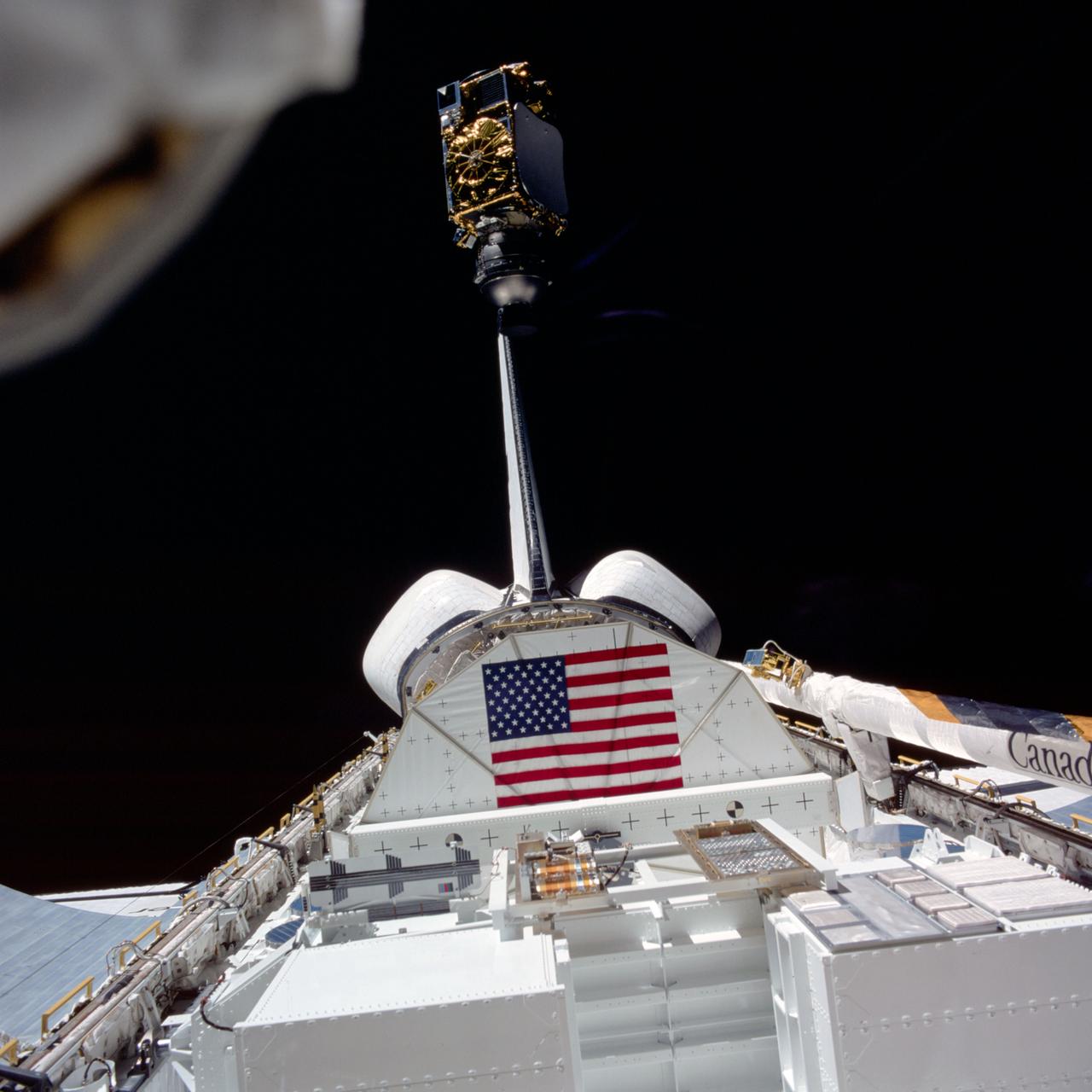
STS008-49-1724 (31 Aug 1983) --- The Indian National Satellite (INSAT) is about to clear the vertical stabilizer of the Earth-orbiting Space Shuttle Challenger and on its way to a higher orbit. The STS-8 mission's Payload Flight Test Article (PFTA) displays the U.S. flag in the middle of the cargo bay, as the Canadian built Remote Manipulator System (RMS) appears to be waiting for its busy agenda of activity with the barbell-shaped test device. This 70mm frame was exposed by a crewmember using a handheld Hasselblad inside Challenger's cabin.
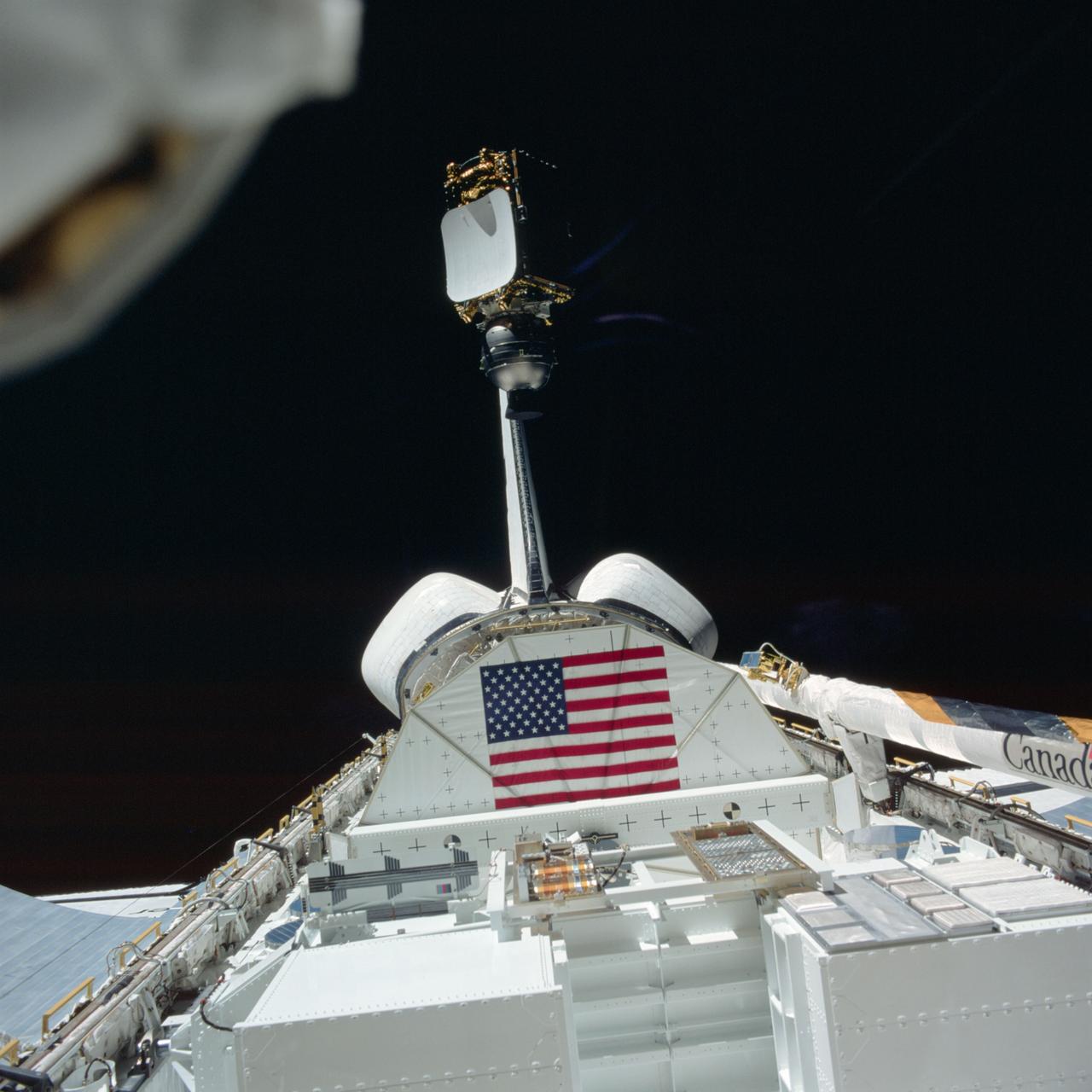
STS008-49-1722 (30 Aug-5 Sept 1983) --- The Indian National Satellite (INSAT) is about to clear the Earth-orbiting Space Shuttle Challenger this 70mm frame exposed with a handheld camera from the aft flight deck. The Payload Flight Test Article (PFTA) displays the United States flag in the middle of the cargo bay and the Canadian built Remote Manipulator System (RMS) appears to be waiting for its busy agenda of activity with the barbell-shaped test device.
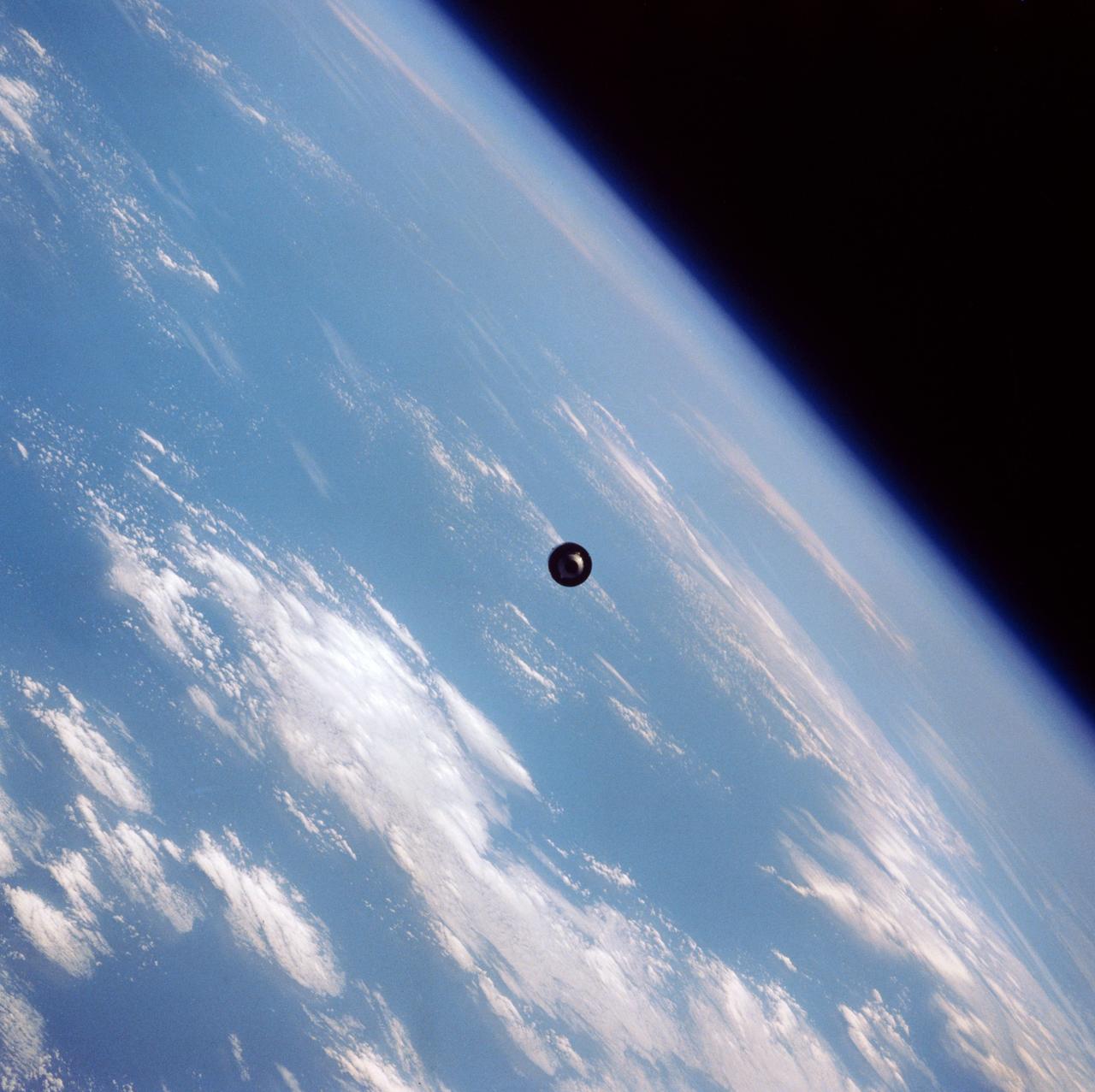
41D-39-068 (1 Sept 1984) --- Quickly moving away from the Space Shuttle Discovery is the Telstar 3 communications satellite, deployed September 1, 1984. The 41-D crew successfully completed three satellite placements, of which this was the last. Telstar was the second 41-D deployed satellite to be equipped with a payload assist module (PAM-D). The frame was exposed with a 70mm camera.
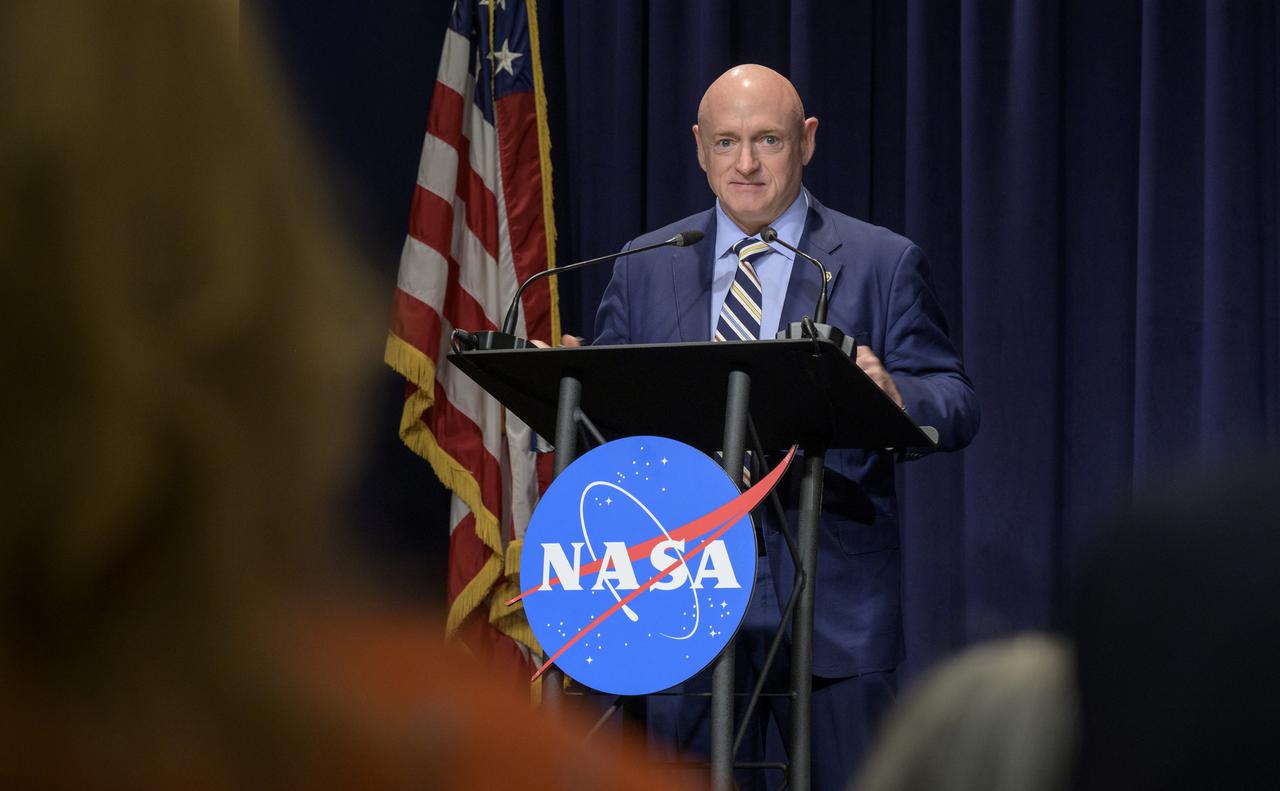
Sen. Mark Kelly, D-Ariz., gives remarks during the ceremonial swearing-in of NASA Deputy Administrator Pam Melroy, Monday, June 21, 2021, at NASA Headquarters Mary W. Jackson Building in Washington. Photo Credit: (NASA/Bill Ingalls)
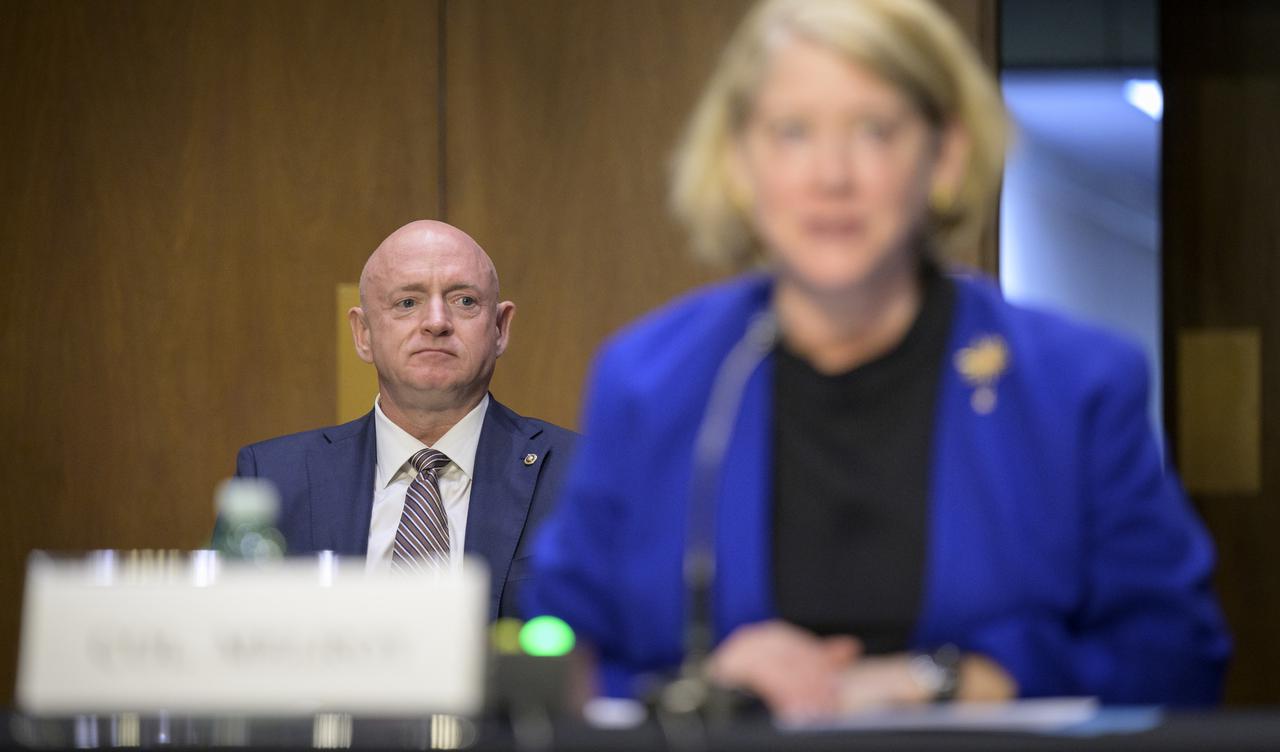
Sen. Mark Kelly, D-Ariz., listens after introducing Pam Melroy, President Biden’s nominee to be the next deputy administrator of NASA, during a Senate Committee on Commerce, Science, and Transportation confirmation hearing, Thursday, May 20, 2021, at the Hart Senate Office Building in Washington. Both Kelly and Melroy are former NASA astronauts. Photo Credit: (NASA/Bill Ingalls)
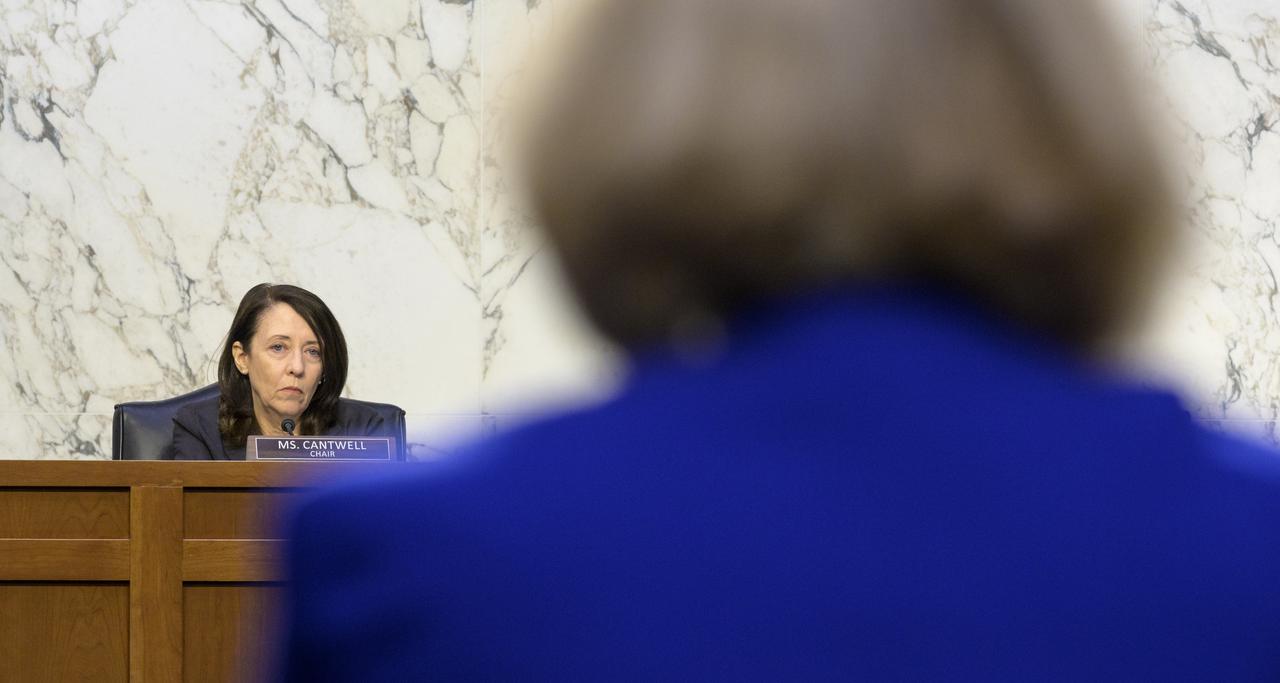
Sen. Maria Cantwell, D-Wash., the Chair of the Senate Committee on Commerce, Science, and Transportation, listens as Pam Melroy, President Biden’s nominee to be the next deputy administrator of NASA, testifies before the Senate Committee on Commerce, Science, and Transportation, Thursday, May 20, 2021, at the Hart Senate Office Building in Washington. Melroy is a former NASA astronaut. Photo Credit: (NASA/Bill Ingalls)
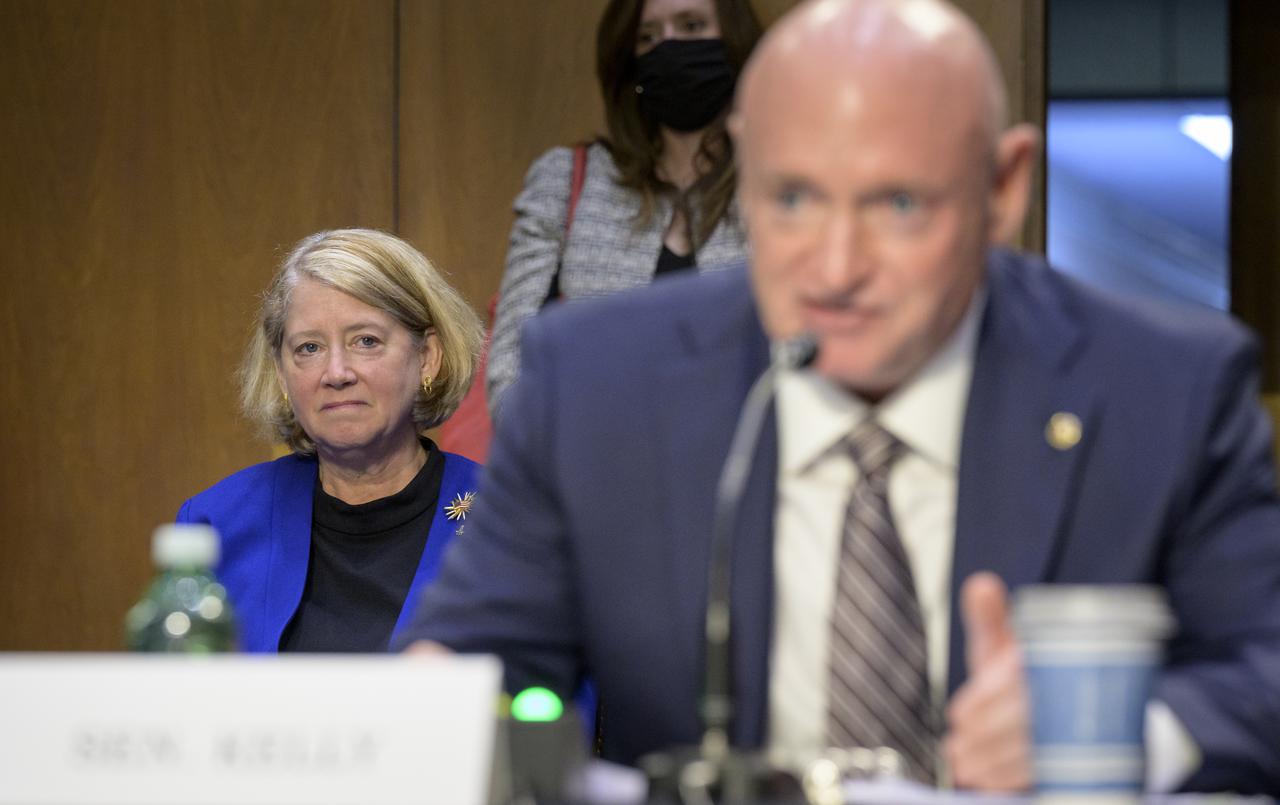
Pam Melroy, President Biden’s nominee to be the next deputy administrator of NASA, listens as Sen. Mark Kelly, D-Ariz., introduces her during a Senate Committee on Commerce, Science, and Transportation confirmation hearing, Thursday, May 20, 2021, at the Hart Senate Office Building in Washington. Both Kelly and Melroy are former NASA astronauts. Photo Credit: (NASA/Bill Ingalls)

51A-39-040 (14 Nov. 1984) --- A 70mm frame of Westar VI retrieval. Astronauts Dale A. Gardner, left, and Joseph P. Allen IV work together with Anna L. Fisher (not pictured, controlling remote manipulator system (RMS) arm from Discovery?s cabin) to bring Westar VI/PAM-D into cargo bay. Allen is on the mobile foot restraint, which is attached to the RMS end effector, while Gardner works to remove a stinger device from the now stabilized satellite. Photo credit: NASA
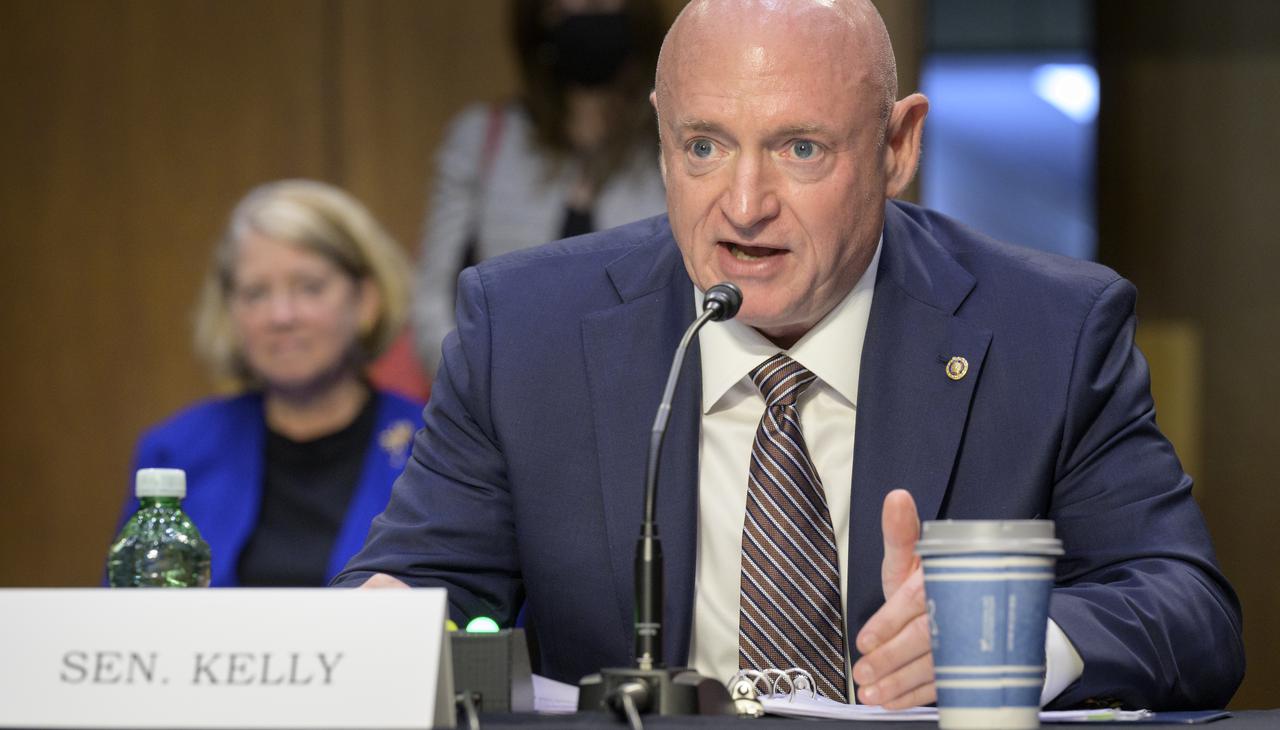
Sen. Mark Kelly, D-Ariz., introduces Pam Melroy, President Biden’s nominee to be the next deputy administrator of NASA, during a Senate Committee on Commerce, Science, and Transportation confirmation hearing, Thursday, May 20, 2021, at the Hart Senate Office Building in Washington. Both Kelly and Melroy are former NASA astronauts. Photo Credit: (NASA/Bill Ingalls)
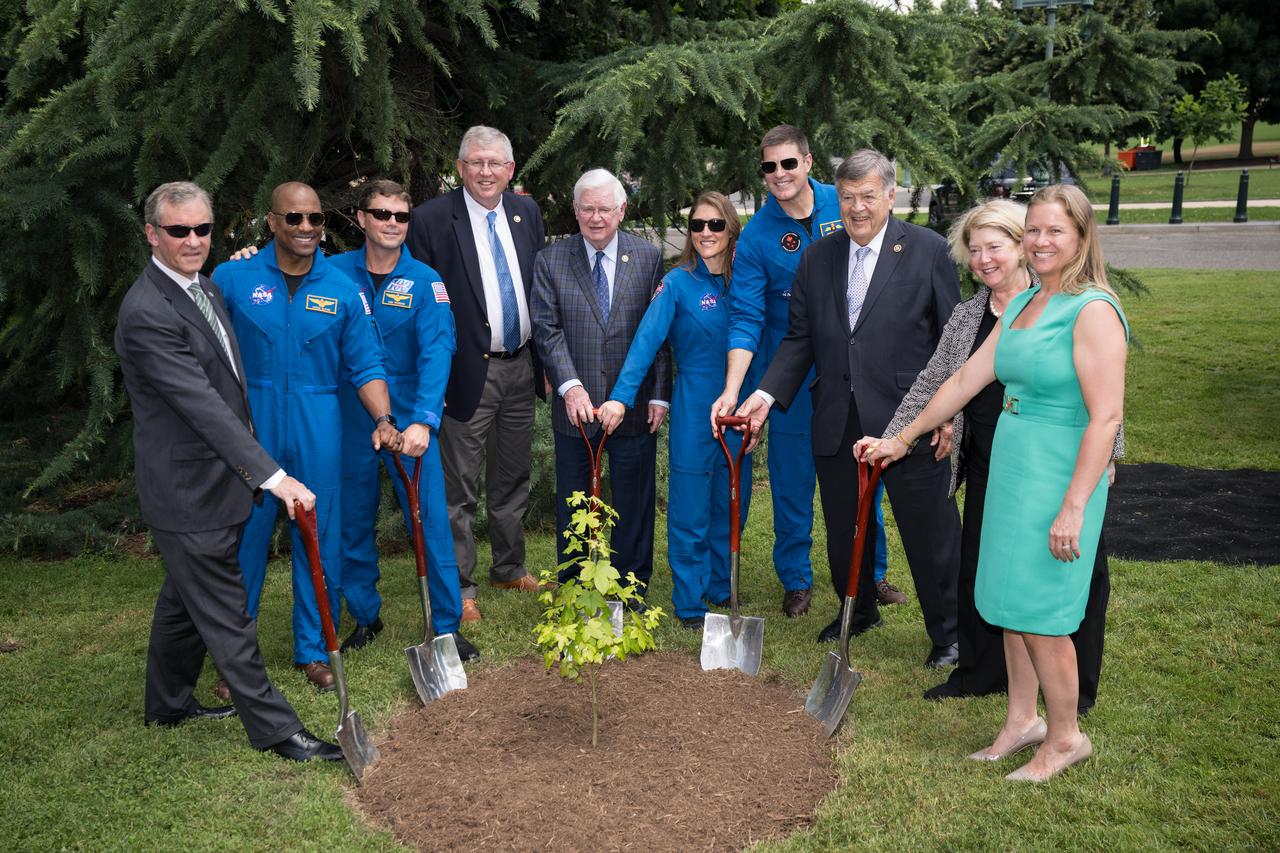
From left to right, U.S. Rep. Matt Cartwright (D-PA), Artemis II crew members, NASA astronauts Victor Glover and Reid Wiseman, U.S. Rep. Frank Lucas (R-OK), U.S. Rep. Harold “Hal” Rogers (R-KY), Artemis II crew members NASA astronaut Christina Koch and Canadian Space Agency (CSA) astronaut Jeremy Hansen, U.S. Rep. Charles Albert "Dutch" Ruppersberger III (D-MD), NASA Deputy Administrator Pam Melroy, and Minister, Congressional, Public, and Intergovernmental Affairs, Embassy of Canada, Carrie Goodge O'Brien, pose for a photo after a Moon tree dedication ceremony, Tuesday, June 4, 2024 at the United States Capitol in Washington. The American Sweetgum tree planted on the southwestern side of the Capitol, was grown from a seed that was flown around the Moon during the Artemis I mission. Photo Credit: (NASA/Aubrey Gemignani)
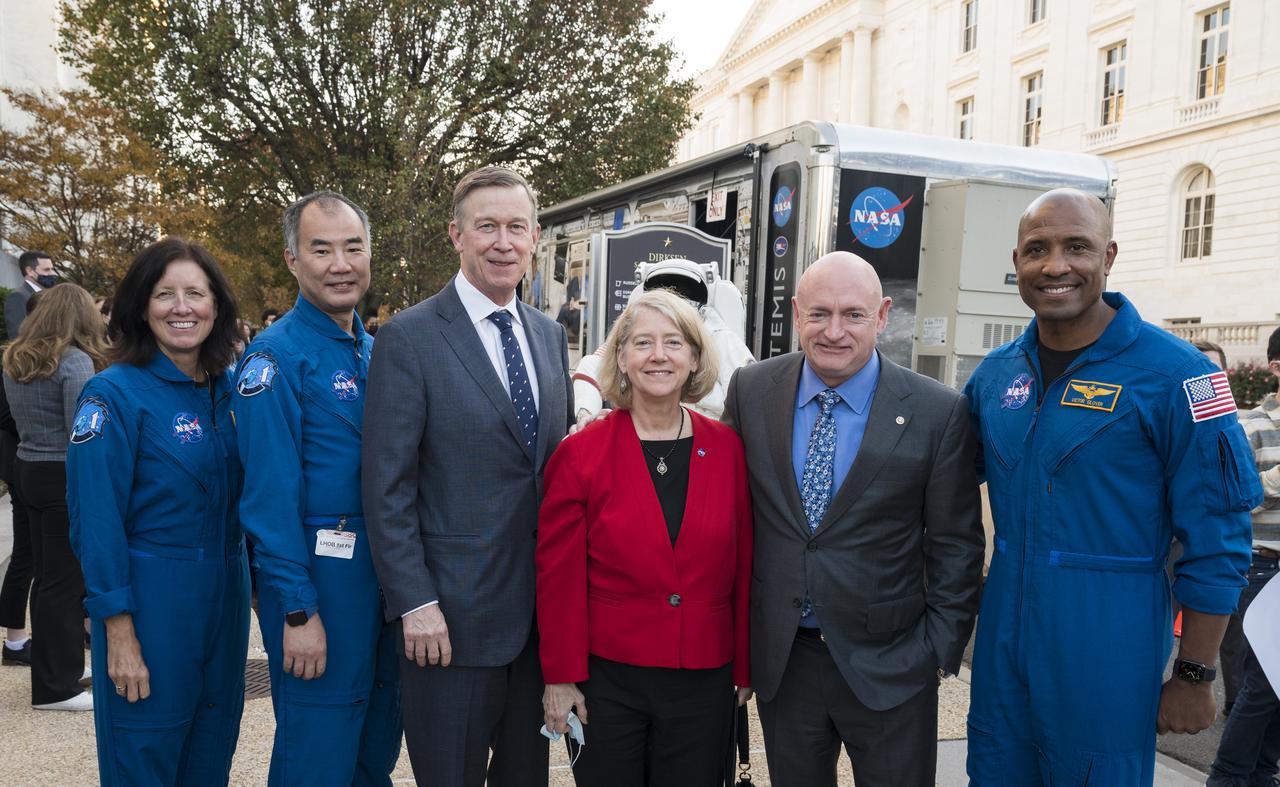
From left to right, SpaceX Crew-1 NASA astronaut Shannon Walker, Japan Aerospace Exploration Agency (JAXA) astronaut Soichi Noguchi, Senator John Hickenlooper, D-Colo, NASA Deputy Administrator Pam Melroy, Senator Mark Kelly, D-Ariz., and NASA astronaut Victor Glover, pose for a photo at the Destination Station mobile exhibition on Capitol Hill, Wednesday, Nov. 17, 2021, in Washington. Walker, Glover, Noguchi, and NASA astronaut Mike Hopkins, launched on the first crew rotation mission to the International Space Station for SpaceX’s Falcon 9 and Crew Dragon spacecraft as part of the agency’s Commercial Crew Program and spent 168 days in space across Expeditions 64 and 65. Photo Credit: (NASA/Aubrey Gemignani)
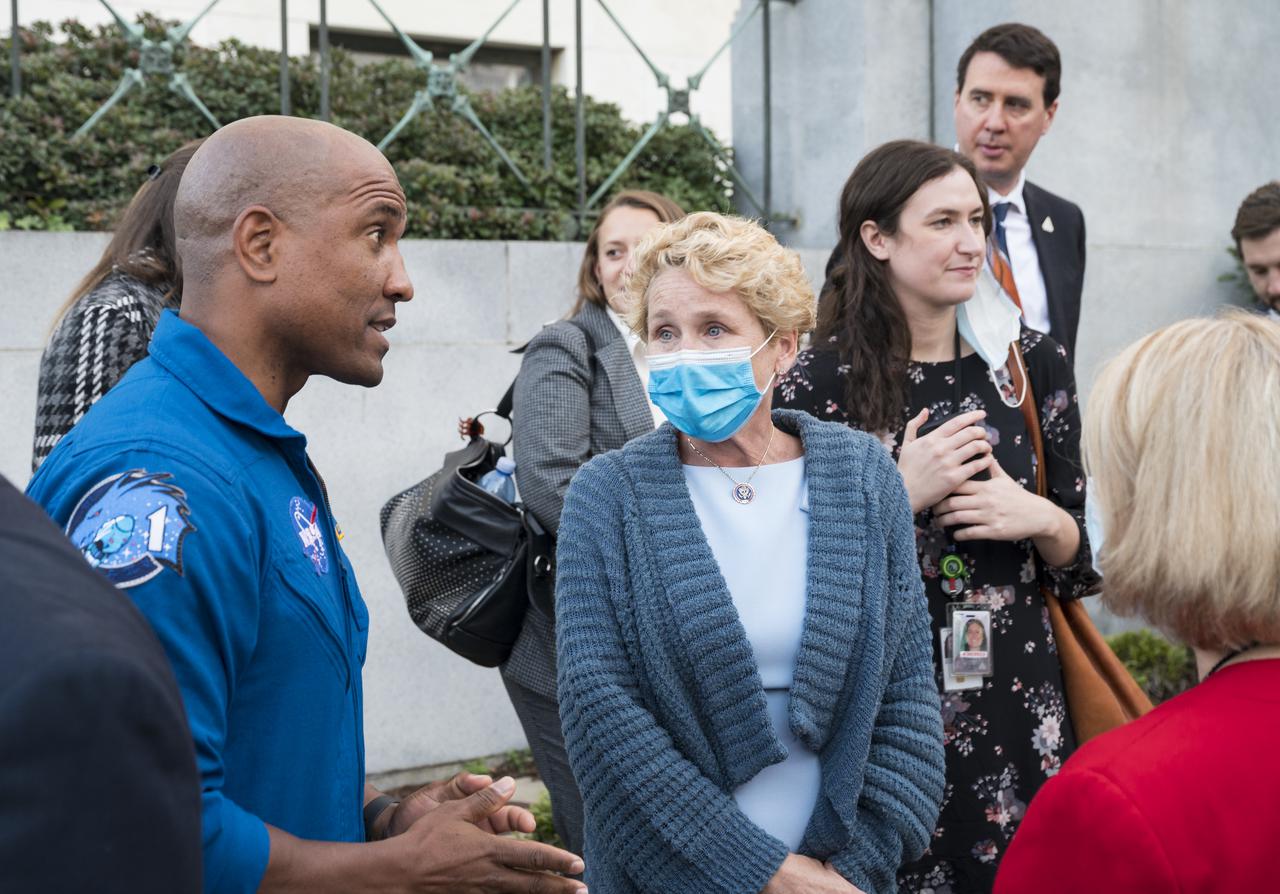
SpaceX Crew-1 NASA astronaut Victor Glover, left, speaks with Rep. Chrissy Houlahan, D-Pa., center, and NASA Deputy Administrator Pam Melroy, at the Destination Station mobile exhibition on Capitol Hill, Wednesday, Nov. 17, 2021, in Washington. Glover, and NASA astronauts Mike Hopkins, and Shannon Walker, and Japan Aerospace Exploration Agency (JAXA) astronaut Soichi Noguchi launched on the first crew rotation mission to the International Space Station for SpaceX’s Falcon 9 and Crew Dragon spacecraft as part of the agency’s Commercial Crew Program and spent 168 days in space across Expeditions 64 and 65. Photo Credit: (NASA/Aubrey Gemignani)
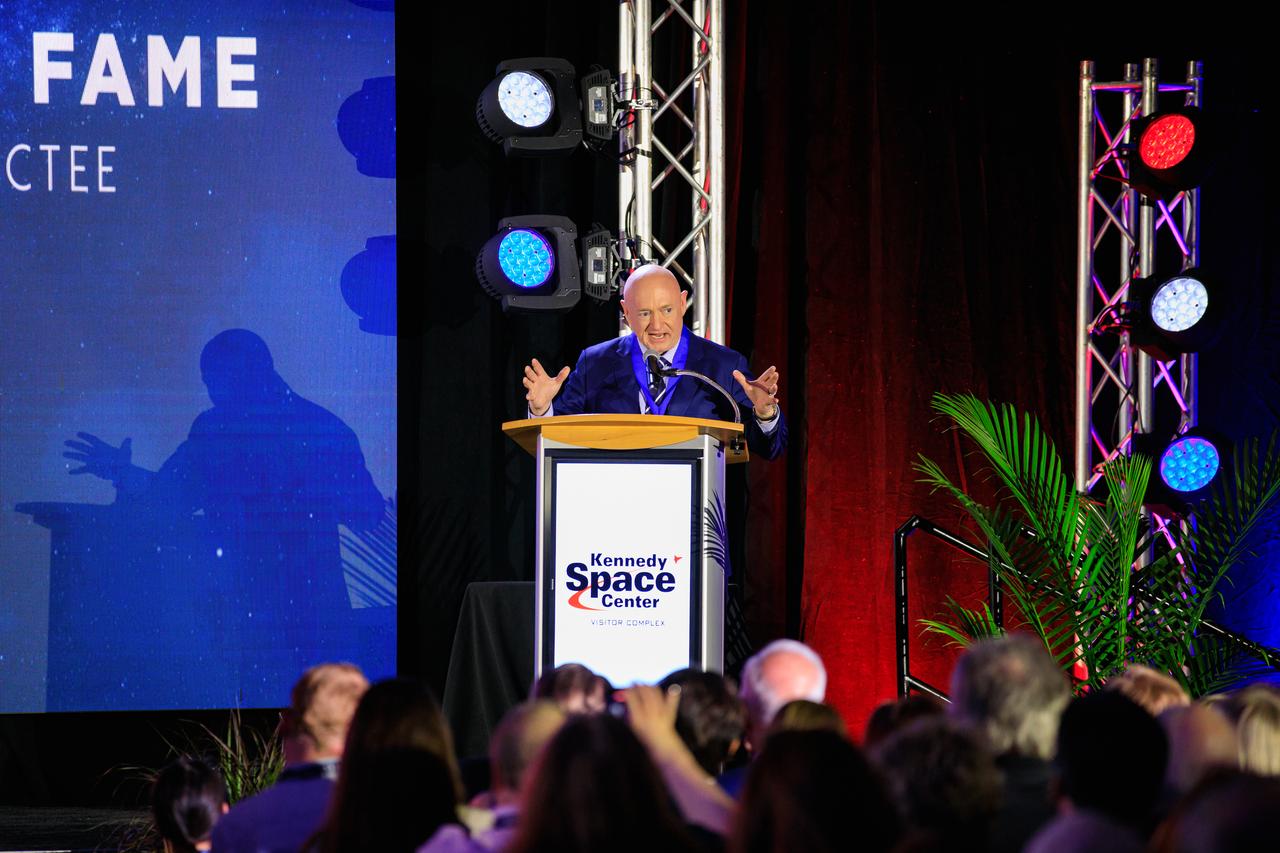
Mark Kelly, speaks to guests after his induction into the Astronaut Hall of Fame (AHOF) by NASA Deputy Administrator Pam Melroy, during a ceremony inside the Space Shuttle Atlantis attraction at NASA's Kennedy Space Center Visitor Complex in Florida on May 6, 2023. Also inducted in the AHOF Class of 2023 was retired astronaut Roy D. Bridges Jr. Inductees into the Hall of Fame are selected by a committee of Hall of Fame astronauts, former NASA officials, flight directors, historians and journalists. The process is administered by the Astronaut Scholarship Foundation. To be eligible, an astronaut must have made his or her first flight at least 17 years before the induction. Candidates must be a U.S. citizen and a NASA-trained commander, pilot, or mission specialist who has orbited the earth at least once. Including Bridges and Kelly, 107 astronauts have been inducted into the AHOF.
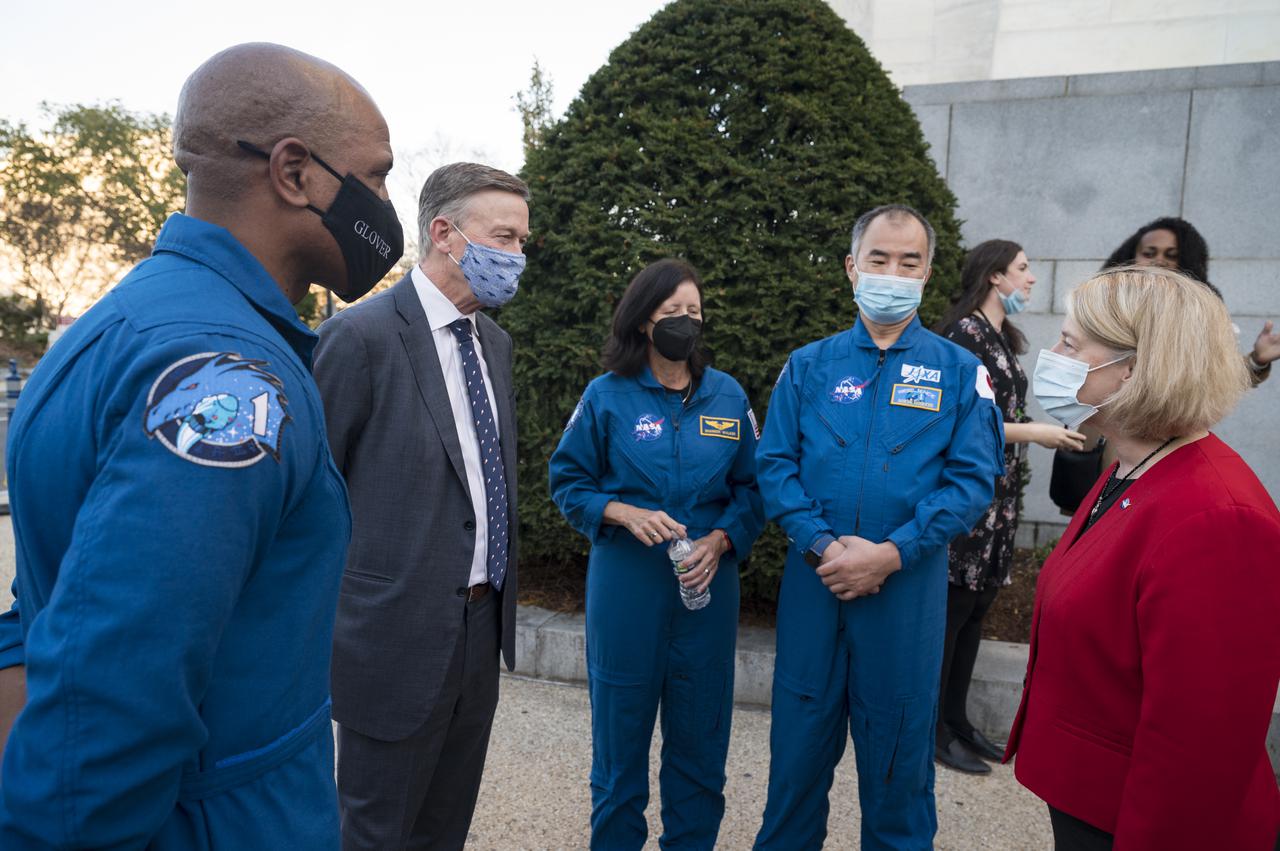
NASA Deputy Administrator Pam Melroy, right, SpaceX Crew-1 NASA astronauts Victor Glover, left, and Shannon Walker, third from right, and Japan Aerospace Exploration Agency (JAXA) astronaut Soichi Noguchi, second from right, speak with Senator John Hickenlooper, D-Colo, at the Destination Station mobile exhibition on Capitol Hill, Wednesday, Nov. 17, 2021, in Washington. Walker, Glover, Noguchi, and NASA astronaut Mike Hopkins, launched on the first crew rotation mission to the International Space Station for SpaceX’s Falcon 9 and Crew Dragon spacecraft as part of the agency’s Commercial Crew Program and spent 168 days in space across Expeditions 64 and 65. Photo Credit: (NASA/Aubrey Gemignani)
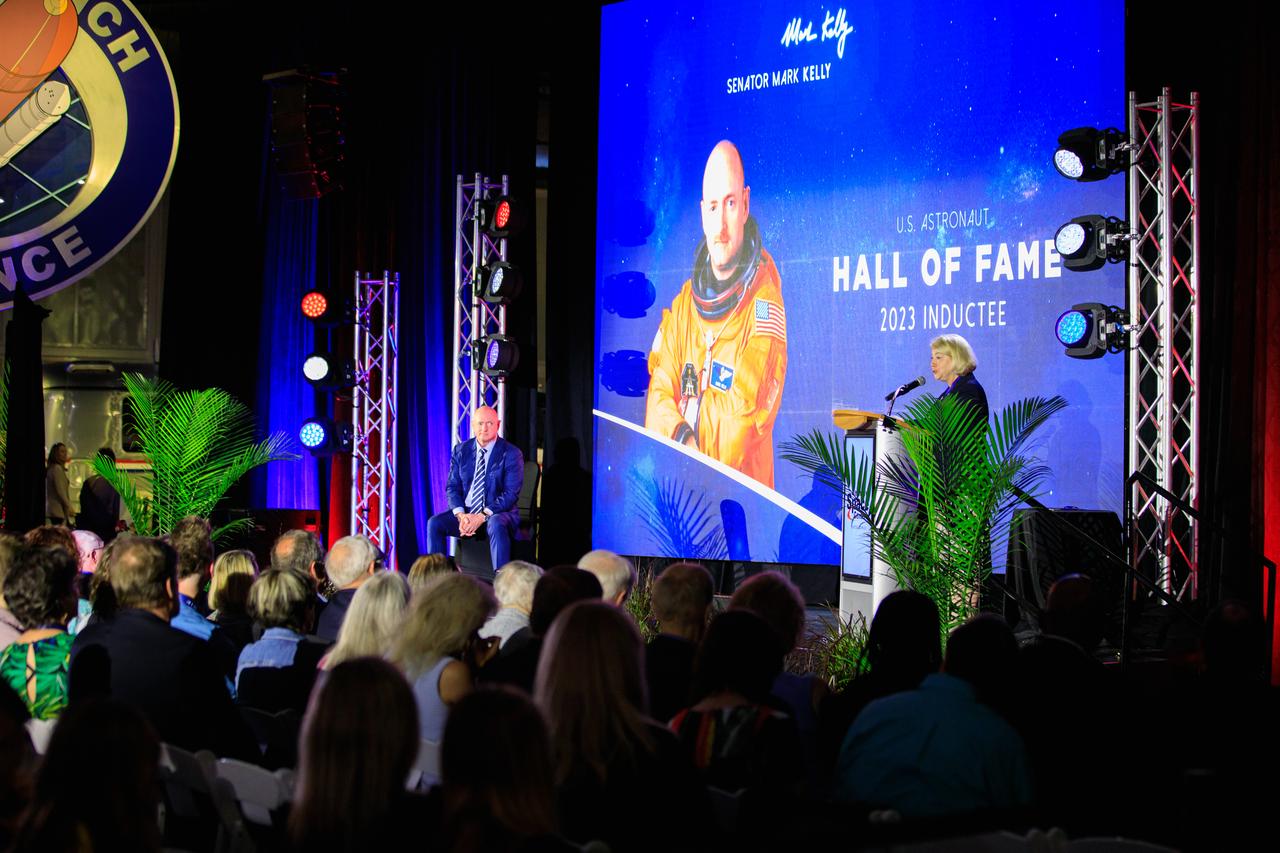
Mark Kelly, at left, is inducted into the Astronaut Hall of Fame (AHOF) by NASA Deputy Administrator Pam Melroy, at the podium, during a ceremony inside the Space Shuttle Atlantis attraction at NASA's Kennedy Space Center Visitor Complex in Florida on May 6, 2023. Also inducted in the AHOF Class of 2023 was retired astronaut Roy D. Bridges Jr. Inductees into the Hall of Fame are selected by a committee of Hall of Fame astronauts, former NASA officials, flight directors, historians and journalists. The process is administered by the Astronaut Scholarship Foundation. To be eligible, an astronaut must have made his or her first flight at least 17 years before the induction. Candidates must be a U.S. citizen and a NASA-trained commander, pilot, or mission specialist who has orbited the earth at least once. Including Bridges and Kelly, 107 astronauts have been inducted into the AHOF.
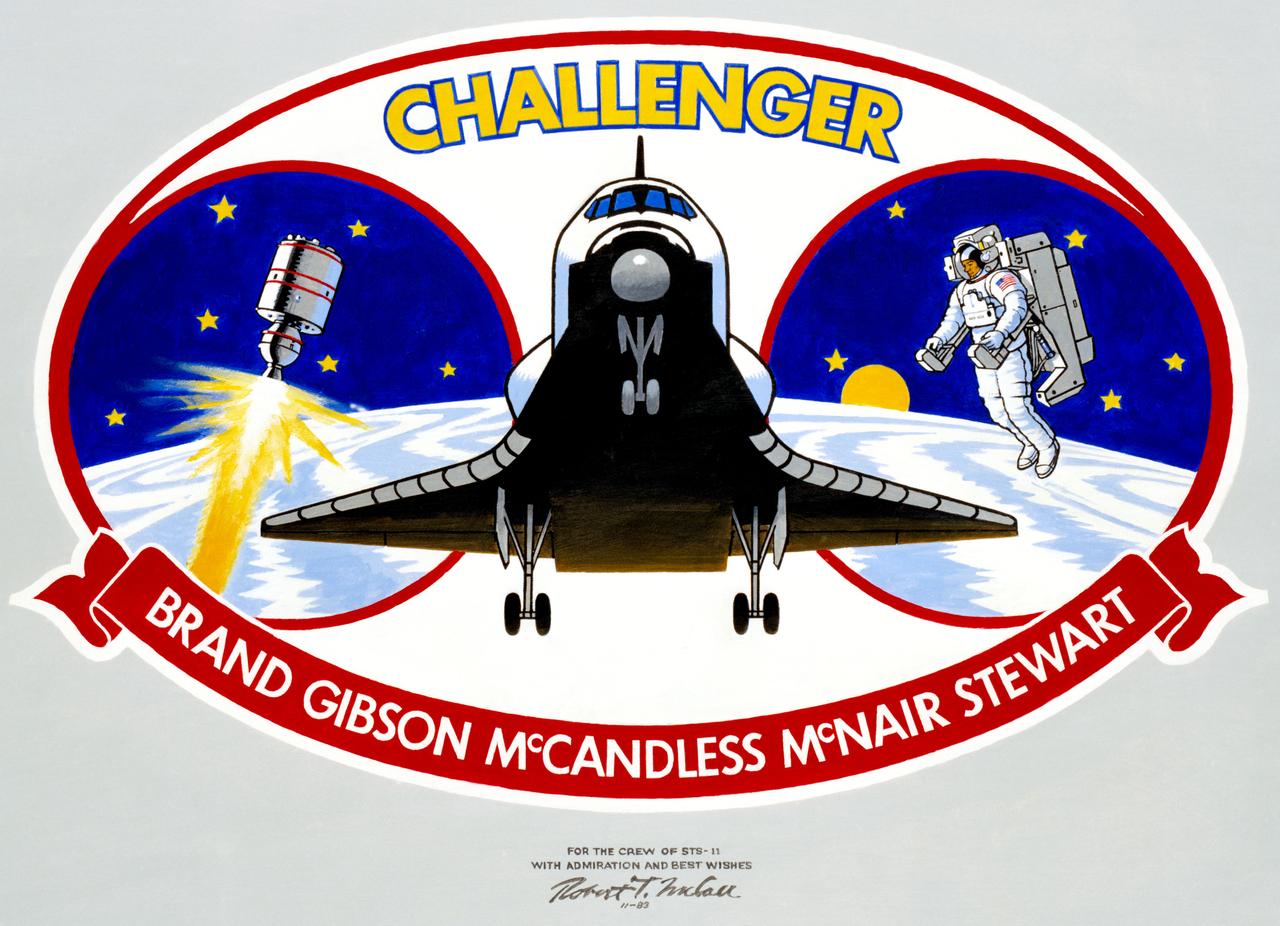
S83-45520 (December 1983) --- The space shuttle Challenger, making its fourth spaceflight, highlights the 41B insignia. The reusable vehicle is flanked in the oval by an illustration of another PAM-D assisted satellite deployment; and astronaut making the first non-tethered extravehicular activity (EVA); and eleven stars. The crew member at right is equipped with the manned maneuvering unit (MMU), a debuting backpack/motor apparatus allowing for much greater freedom of movement than that experienced by any previous space travelers performing EVA. Surnames of the five astronaut crew members balance the Robert McCall artwork. They are Vance D. Brand, Robert L. Stewart, Bruce McCandless II, Ronald E. McNair, Robert L. Gibson. The flight is scheduled for a launch in early 1984. The NASA insignia design for space shuttle flights is reserved for use by the astronauts and for other official use as the NASA Administrator may authorize. Public availability has been approved only in the forms of illustrations by the various news media. When and if there is any change in this policy, which is not anticipated, the change will be publicly announced. Photo credit: NASA