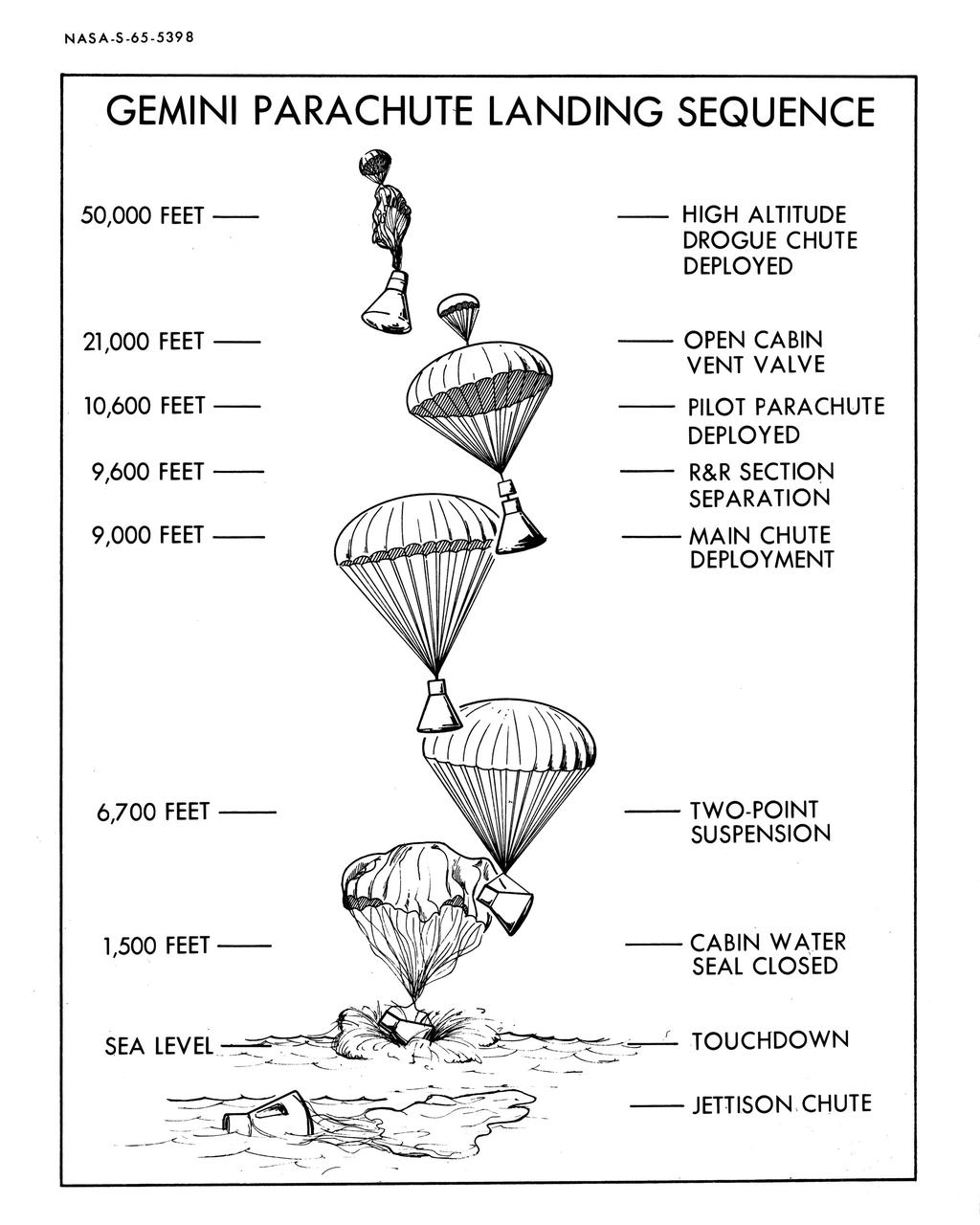
S65-05398 (1965) --- Artist concept of Gemini parachute landing sequence from high altitude drogue chute deployed to jettison of chute.
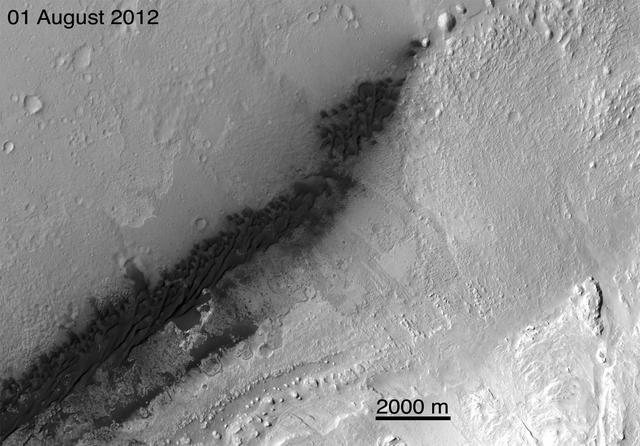
This image from an animation is from NASA Mars Reconnaissance Orbiter MRO showing the landing effects of the descent stage, the rover lander, the back shell and parachute, and the heat shield, all found on the left side of the image.
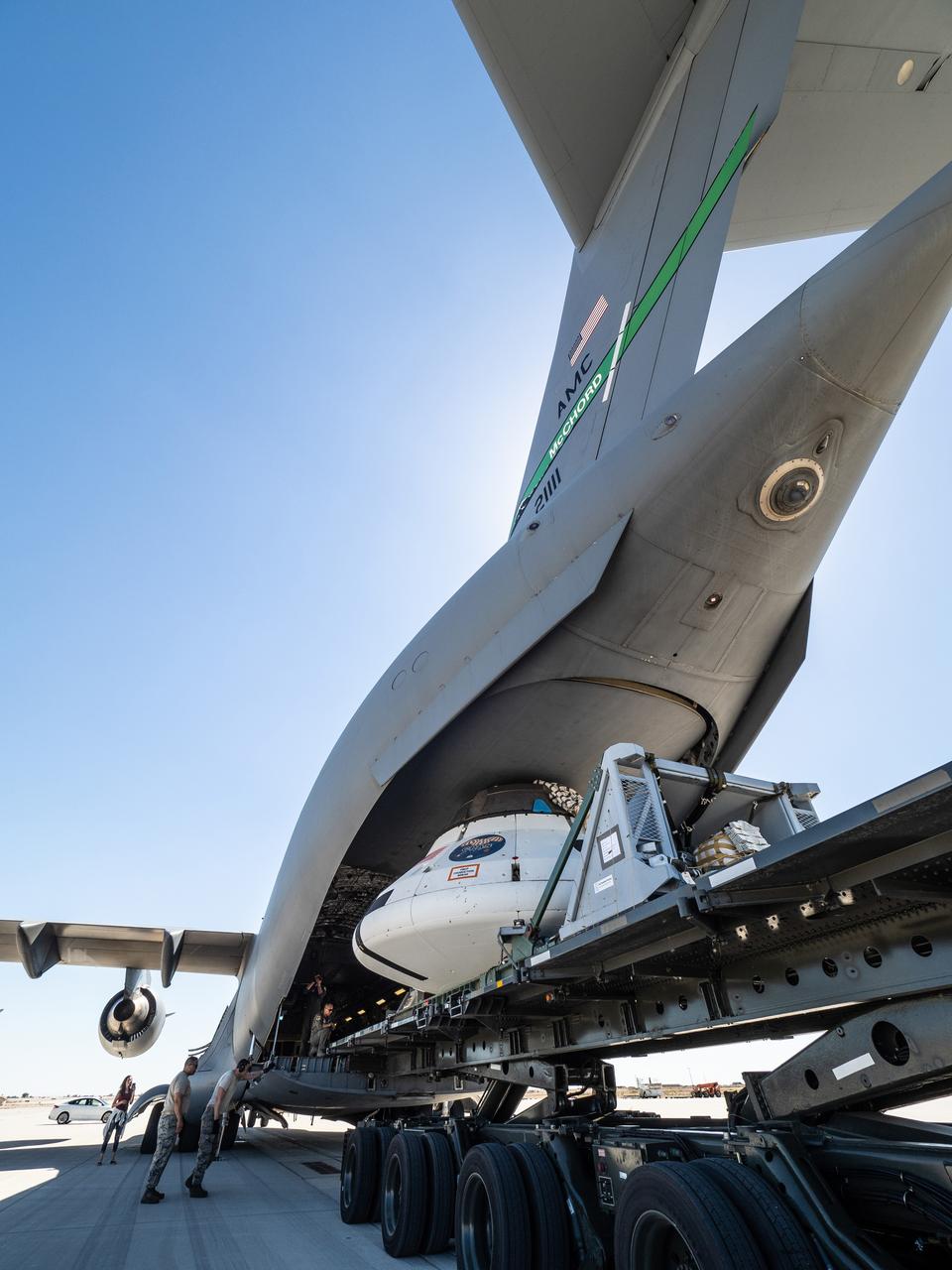
The Orion team prepares the parachute test vehicle for the final drop test which will qualify Orion's parachutes for human flight on Sept. 10, 2018...On September 12, 2018 an Orion test capsule will be dropped from a C-17 aircraft at an altitude of more than six miles to verify the spacecraft’s complex system of 11 parachutes, cannon-like mortars, and pyrotechnic devices work in sequence to slow the capsule’s descent for a safe landing on Earth.

The Orion team prepares the parachute test vehicle for the final drop test which will qualify Orion's parachutes for human flight on Sept. 10, 2018...On September 12, 2018 an Orion test capsule will be dropped from a C-17 aircraft at an altitude of more than six miles to verify the spacecraft’s complex system of 11 parachutes, cannon-like mortars, and pyrotechnic devices work in sequence to slow the capsule’s descent for a safe landing on Earth.
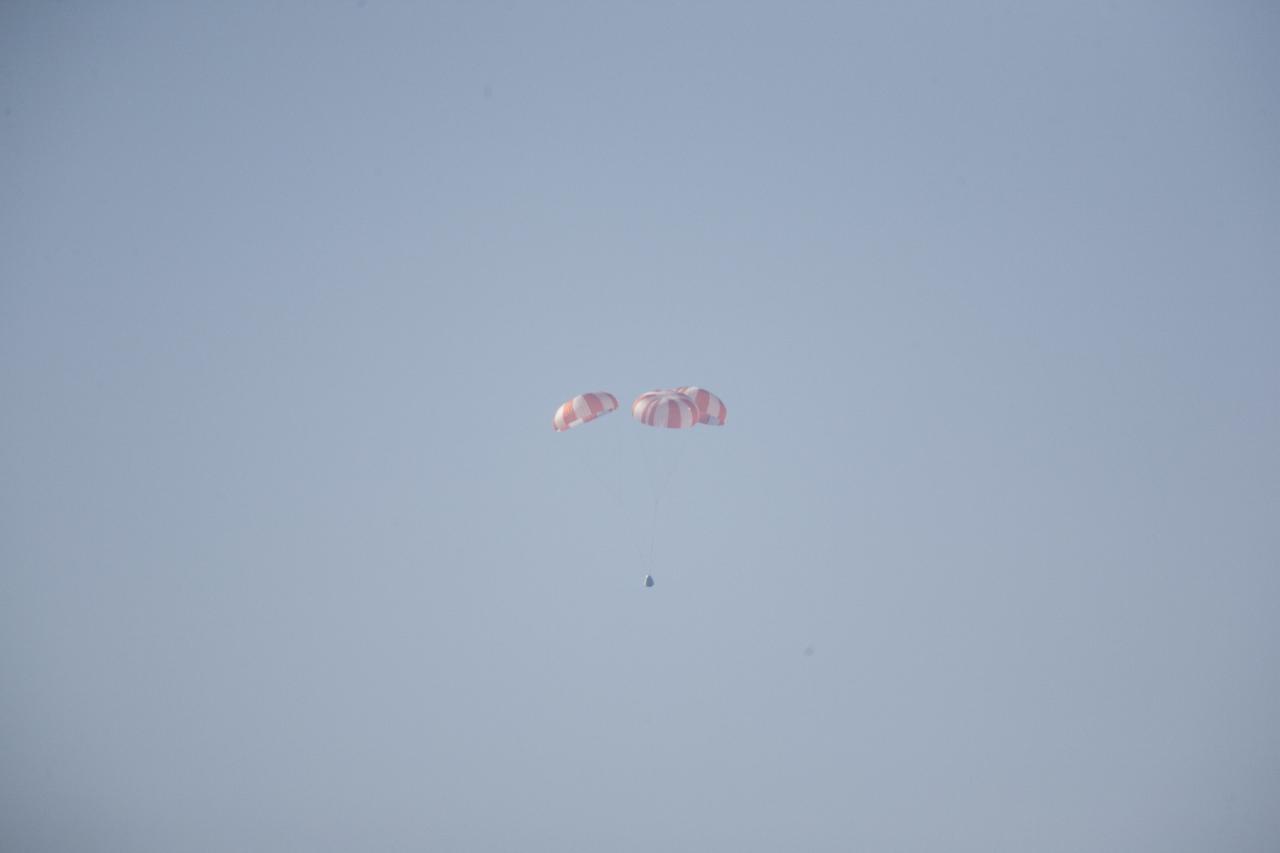
MORRO BAY, Calif. – The SpaceX main parachutes control the descent of the Dragon test article following a test over the Pacific Ocean, off the coast of Morro Bay, Calif. The test enabled SpaceX engineers to evaluate the spacecraft's parachute deployment system as part of a milestone under its Commercial Crew Integrated Capability agreement with NASA's Commercial Crew Program. The parachute test took place at Marro Bay, Calif. Photo credit: NASA/Kim Shiflett
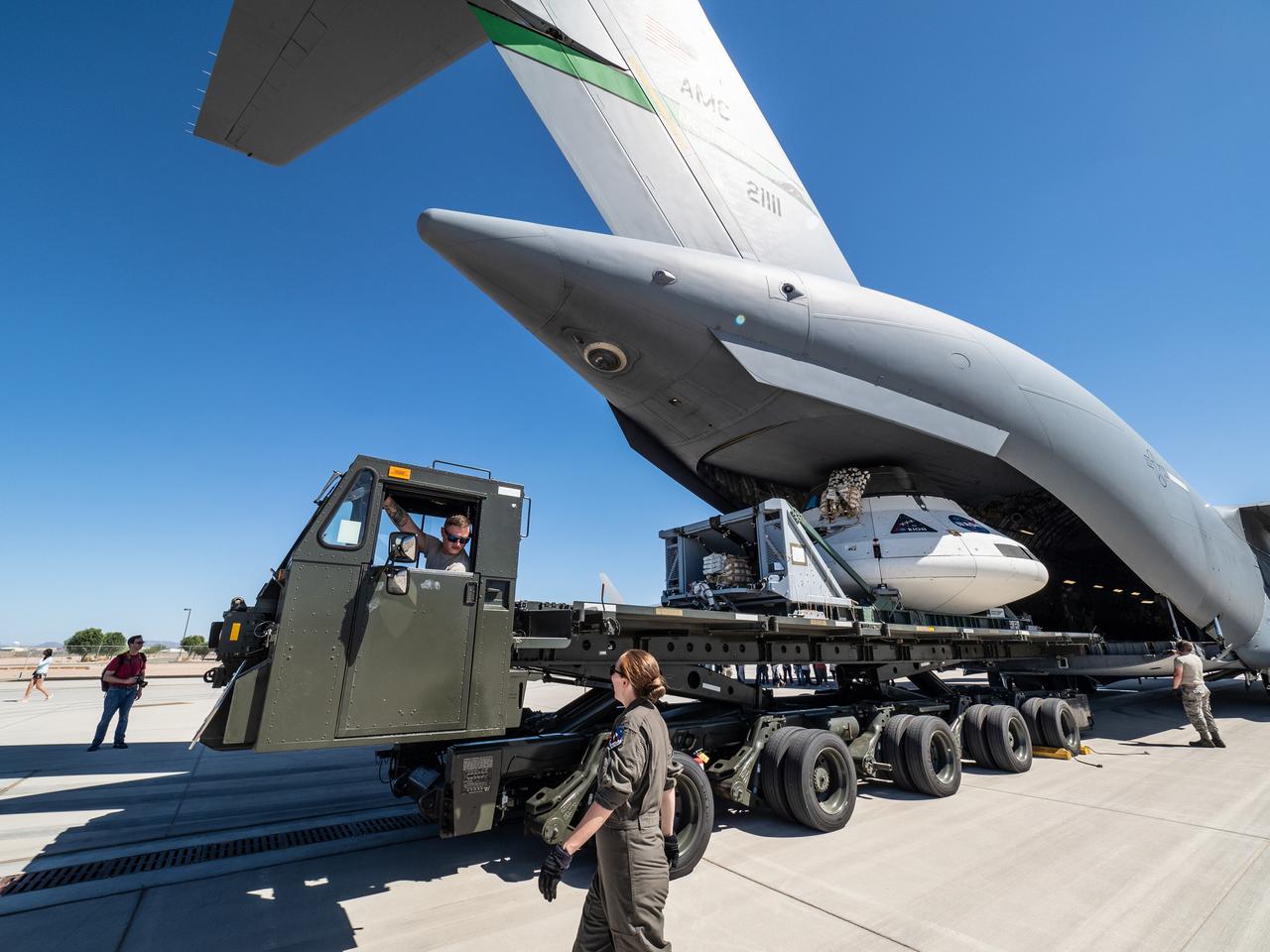
The Orion team prepares the parachute test vehicle for the final drop test which will qualify Orion's parachutes for human flight on Sept. 10, 2018...On September 12, 2018 an Orion test capsule will be dropped from a C-17 aircraft at an altitude of more than six miles to verify the spacecraft’s complex system of 11 parachutes, cannon-like mortars, and pyrotechnic devices work in sequence to slow the capsule’s descent for a safe landing on Earth.
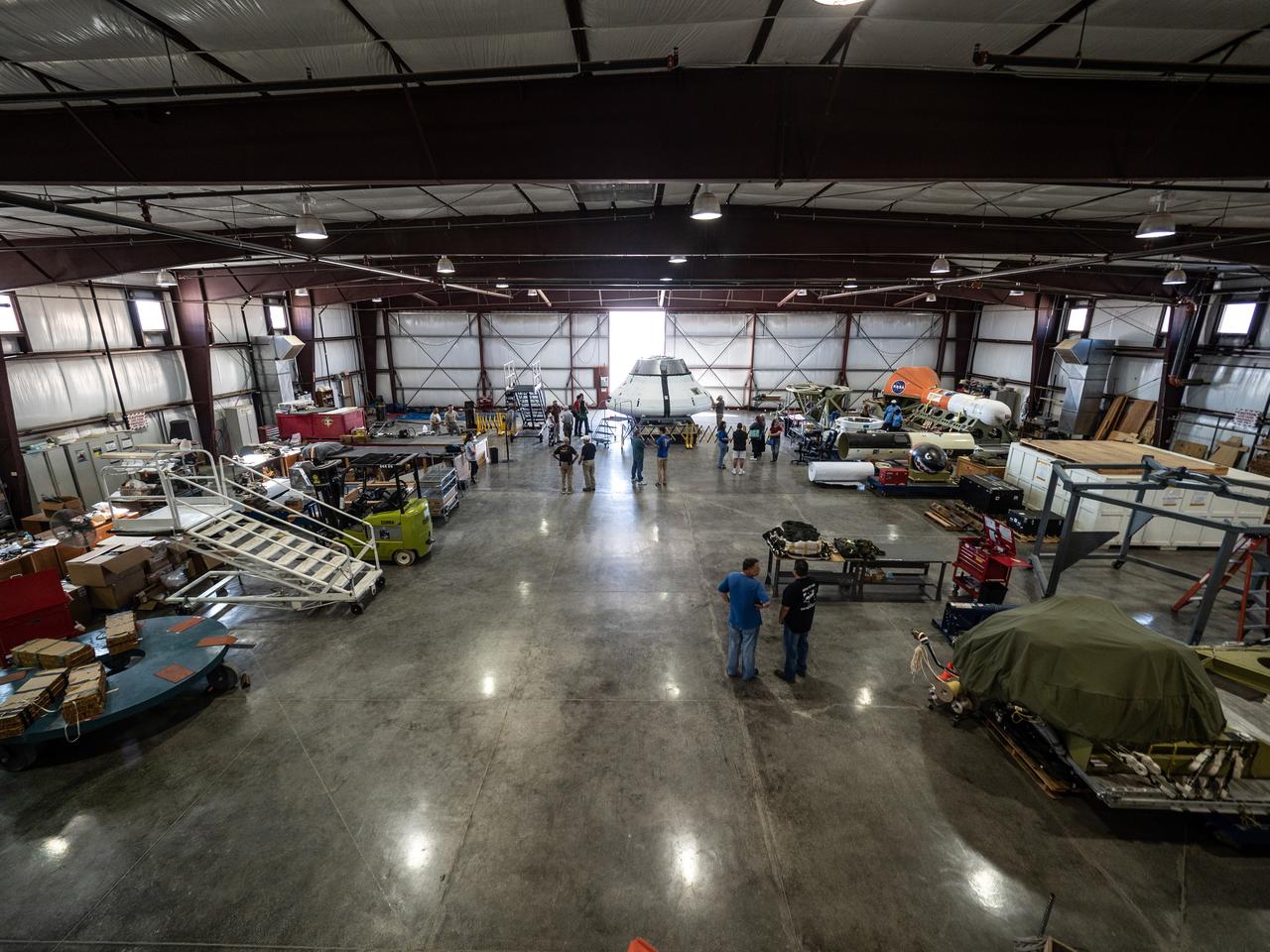
The Orion team prepares the parachute test vehicle for the final drop test which will qualify Orion's parachutes for human flight on Sept. 10, 2018...On September 12, 2018 an Orion test capsule will be dropped from a C-17 aircraft at an altitude of more than six miles to verify the spacecraft’s complex system of 11 parachutes, cannon-like mortars, and pyrotechnic devices work in sequence to slow the capsule’s descent for a safe landing on Earth.
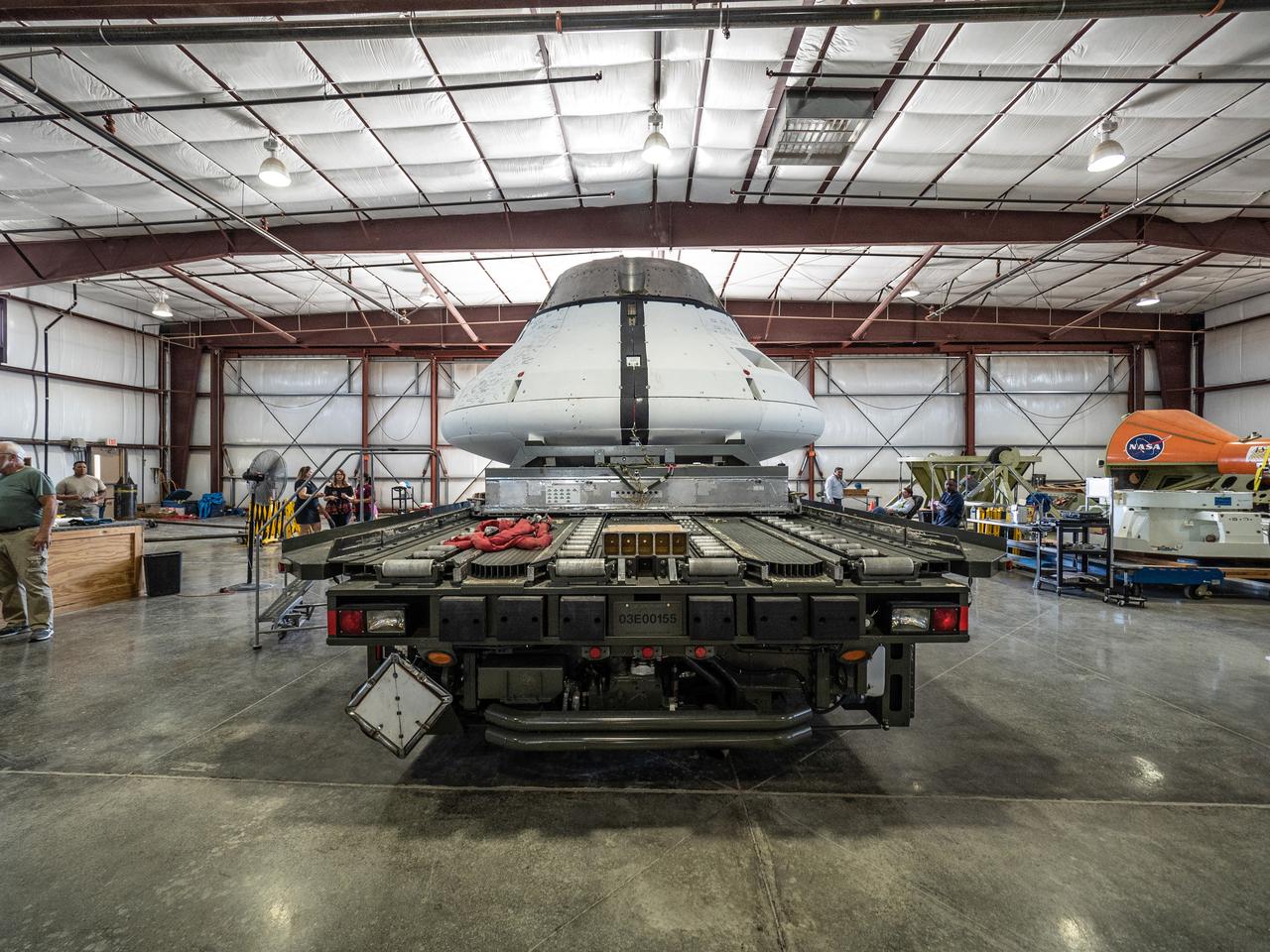
The Orion team prepares the parachute test vehicle for the final drop test which will qualify Orion's parachutes for human flight on Sept. 10, 2018...On September 12, 2018 an Orion test capsule will be dropped from a C-17 aircraft at an altitude of more than six miles to verify the spacecraft’s complex system of 11 parachutes, cannon-like mortars, and pyrotechnic devices work in sequence to slow the capsule’s descent for a safe landing on Earth.
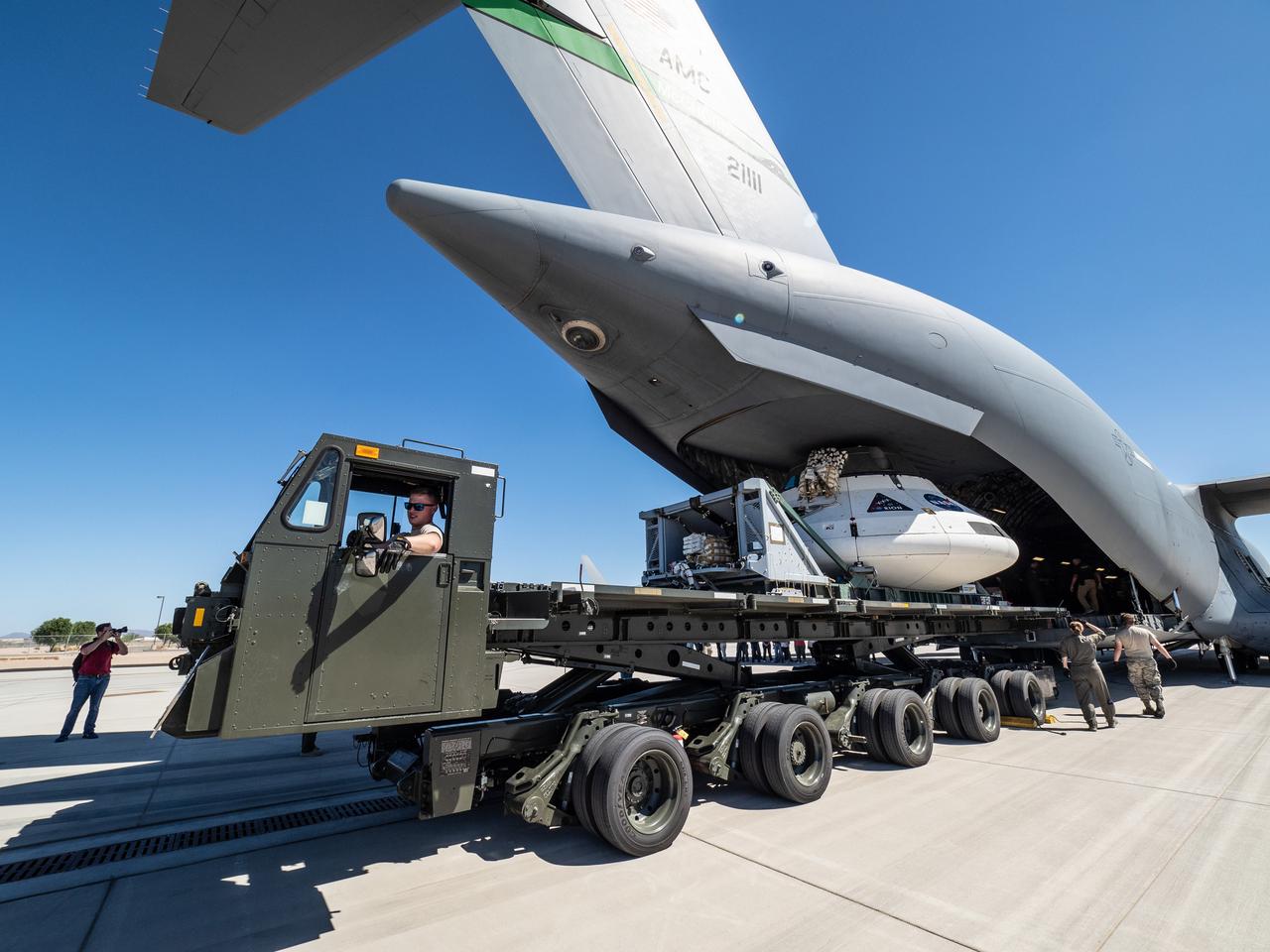
The Orion team prepares the parachute test vehicle for the final drop test which will qualify Orion's parachutes for human flight on Sept. 10, 2018...On September 12, 2018 an Orion test capsule will be dropped from a C-17 aircraft at an altitude of more than six miles to verify the spacecraft’s complex system of 11 parachutes, cannon-like mortars, and pyrotechnic devices work in sequence to slow the capsule’s descent for a safe landing on Earth.
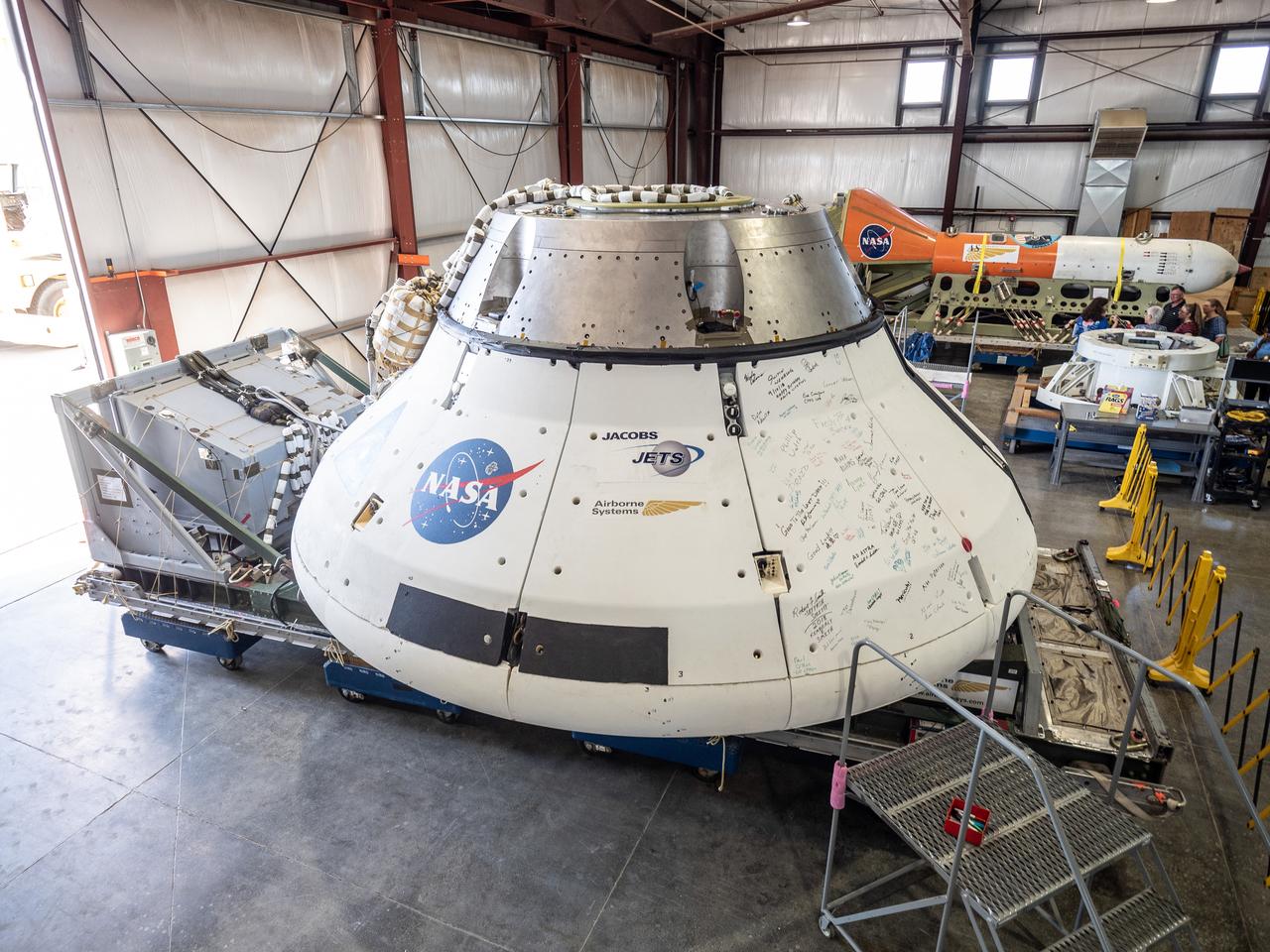
The Orion team prepares the parachute test vehicle for the final drop test which will qualify Orion's parachutes for human flight on Sept. 10, 2018...On September 12, 2018 an Orion test capsule will be dropped from a C-17 aircraft at an altitude of more than six miles to verify the spacecraft’s complex system of 11 parachutes, cannon-like mortars, and pyrotechnic devices work in sequence to slow the capsule’s descent for a safe landing on Earth.
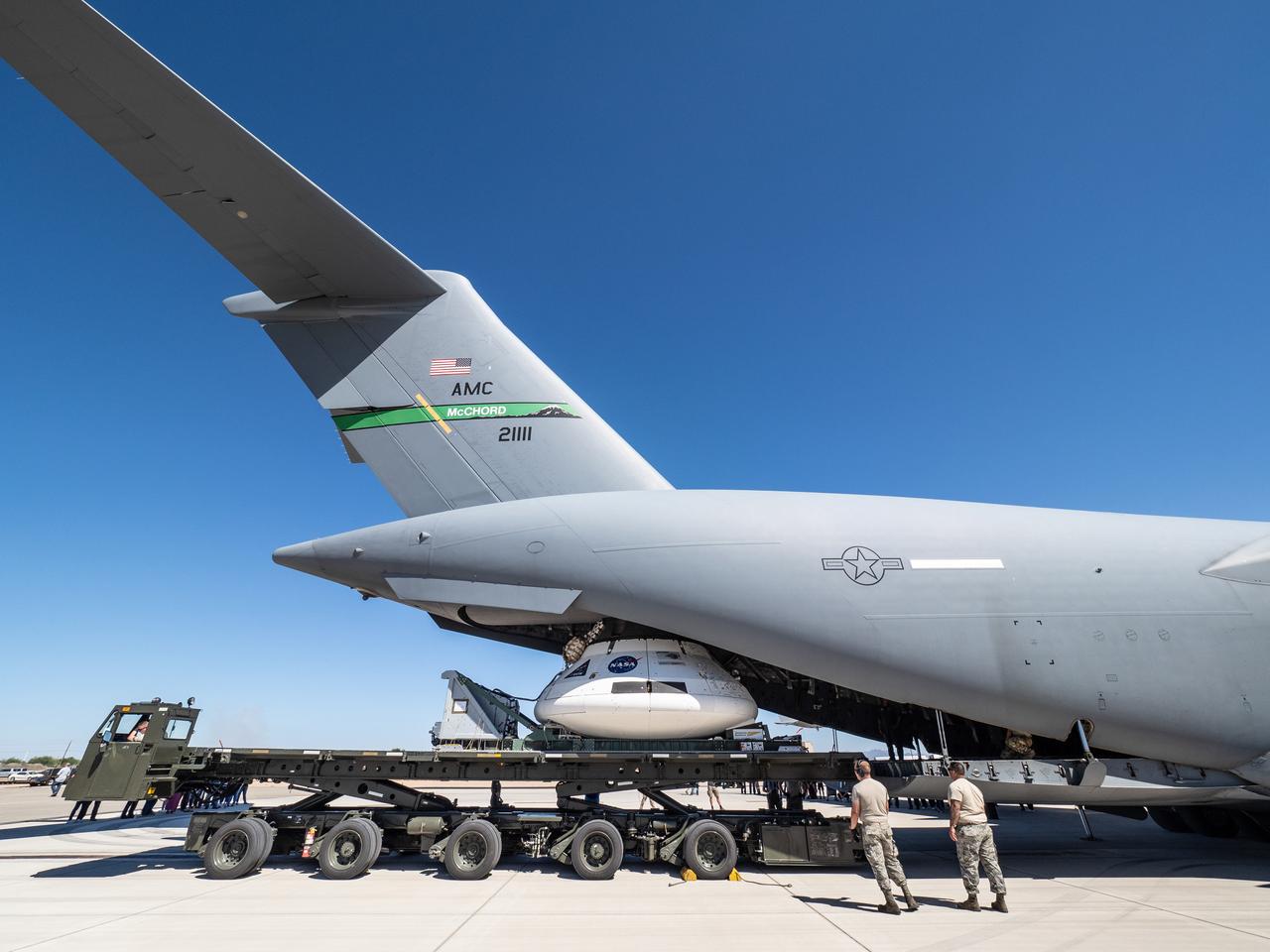
The Orion team prepares the parachute test vehicle for the final drop test which will qualify Orion's parachutes for human flight on Sept. 10, 2018...On September 12, 2018 an Orion test capsule will be dropped from a C-17 aircraft at an altitude of more than six miles to verify the spacecraft’s complex system of 11 parachutes, cannon-like mortars, and pyrotechnic devices work in sequence to slow the capsule’s descent for a safe landing on Earth.
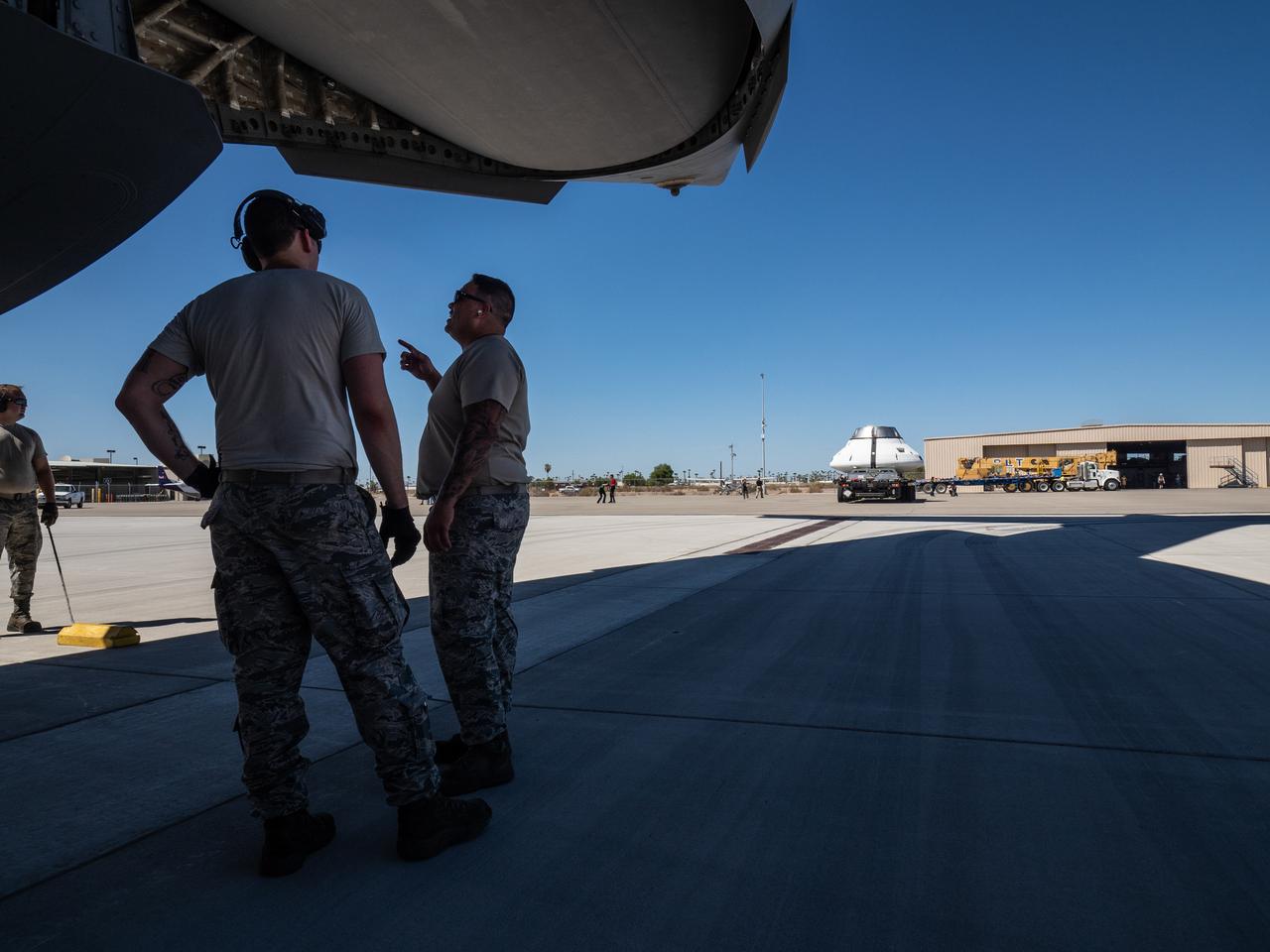
The Orion team prepares the parachute test vehicle for the final drop test which will qualify Orion's parachutes for human flight on Sept. 10, 2018...On September 12, 2018 an Orion test capsule will be dropped from a C-17 aircraft at an altitude of more than six miles to verify the spacecraft’s complex system of 11 parachutes, cannon-like mortars, and pyrotechnic devices work in sequence to slow the capsule’s descent for a safe landing on Earth.
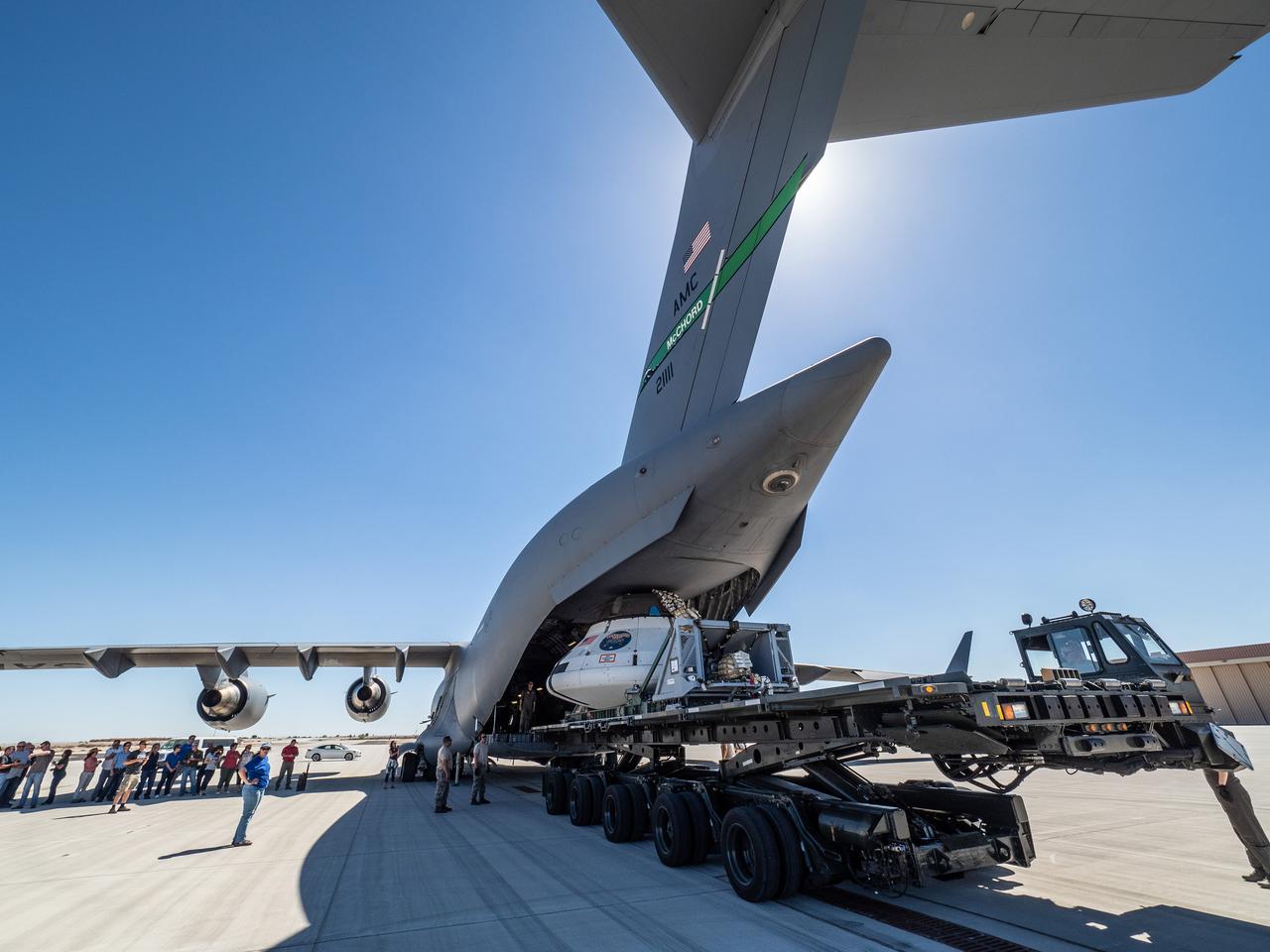
The Orion team prepares the parachute test vehicle for the final drop test which will qualify Orion's parachutes for human flight on Sept. 10, 2018...On September 12, 2018 an Orion test capsule will be dropped from a C-17 aircraft at an altitude of more than six miles to verify the spacecraft’s complex system of 11 parachutes, cannon-like mortars, and pyrotechnic devices work in sequence to slow the capsule’s descent for a safe landing on Earth.
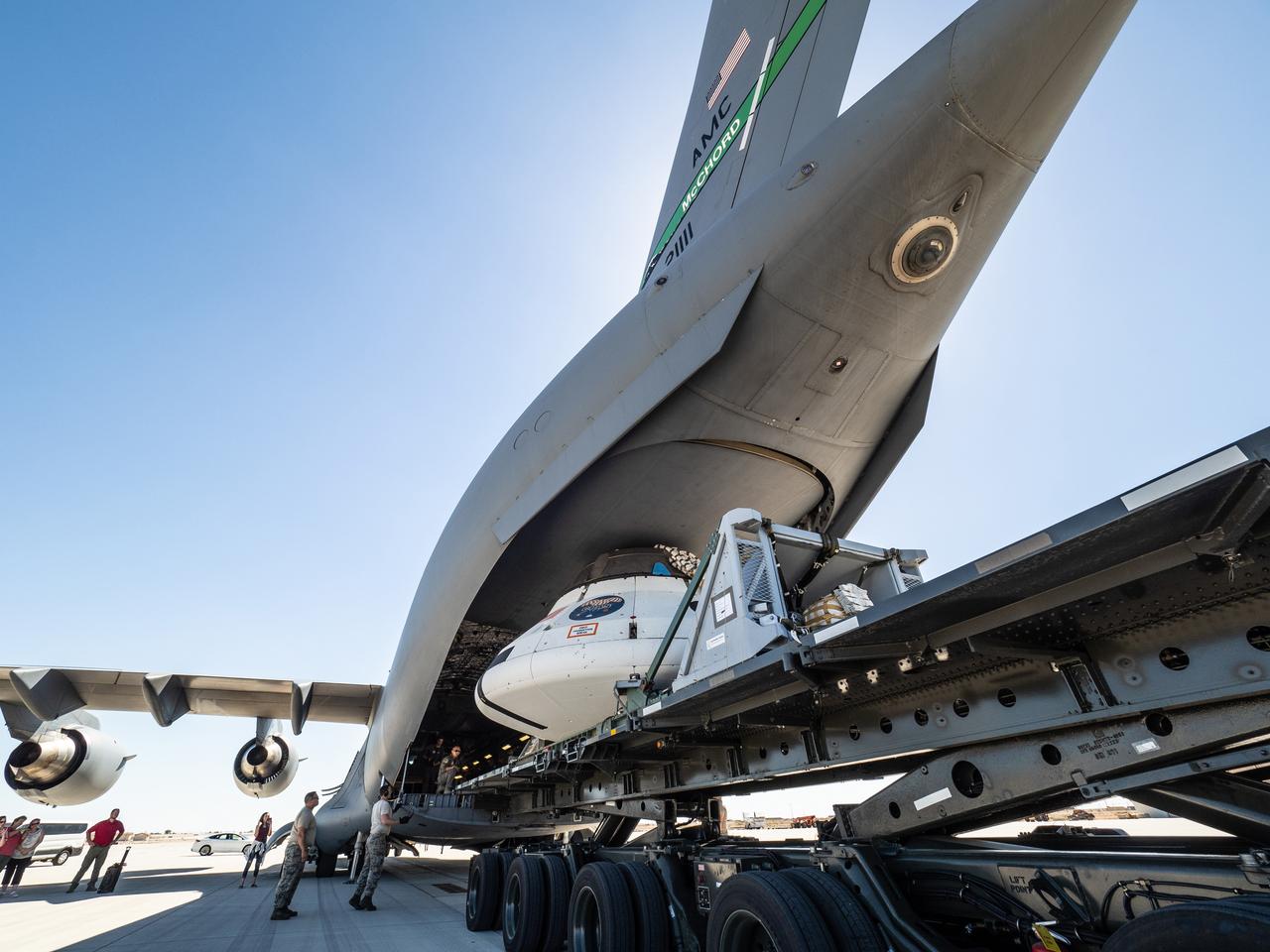
The Orion team prepares the parachute test vehicle for the final drop test which will qualify Orion's parachutes for human flight on Sept. 10, 2018...On September 12, 2018 an Orion test capsule will be dropped from a C-17 aircraft at an altitude of more than six miles to verify the spacecraft’s complex system of 11 parachutes, cannon-like mortars, and pyrotechnic devices work in sequence to slow the capsule’s descent for a safe landing on Earth.
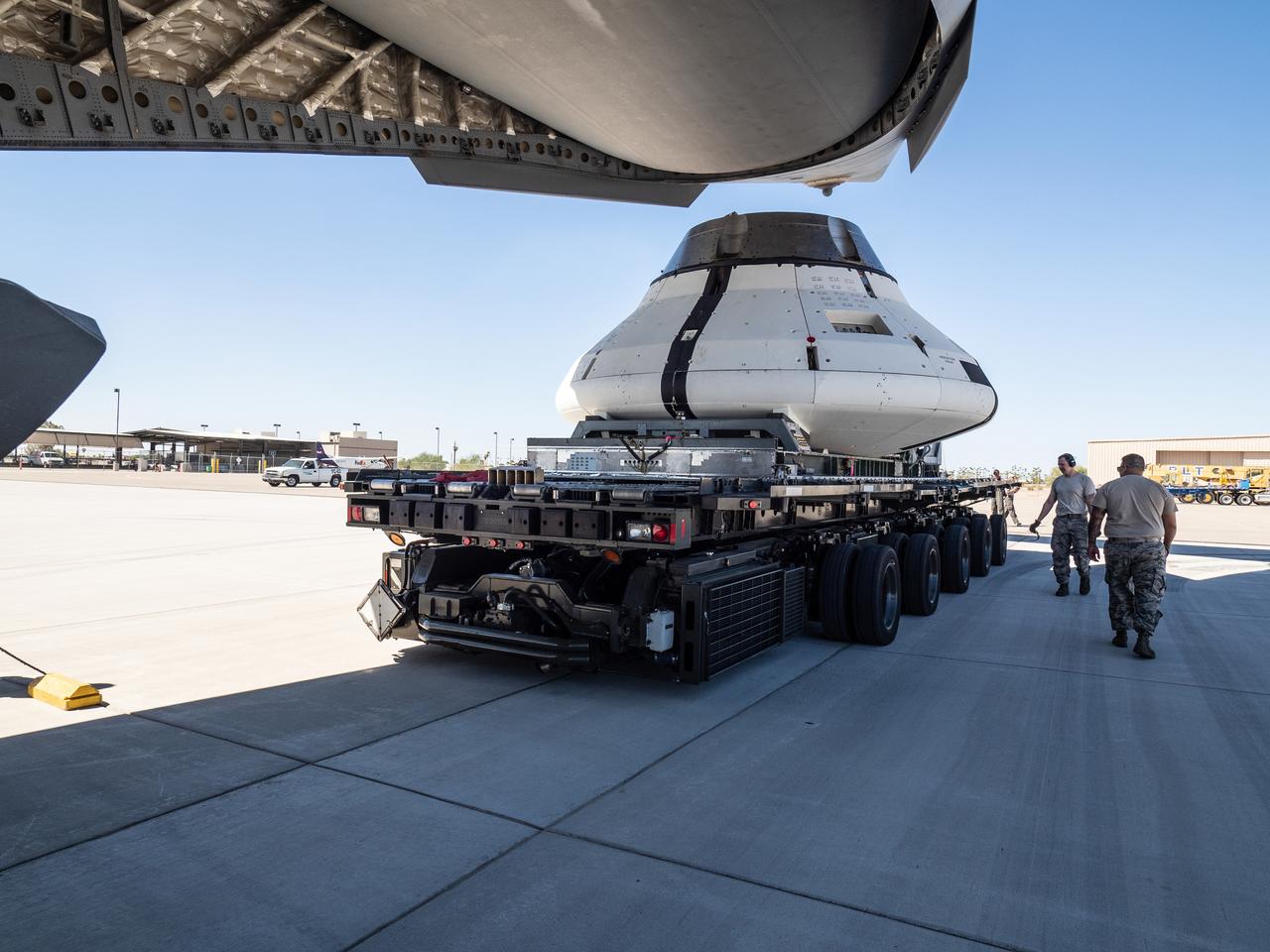
The Orion team prepares the parachute test vehicle for the final drop test which will qualify Orion's parachutes for human flight on Sept. 10, 2018...On September 12, 2018 an Orion test capsule will be dropped from a C-17 aircraft at an altitude of more than six miles to verify the spacecraft’s complex system of 11 parachutes, cannon-like mortars, and pyrotechnic devices work in sequence to slow the capsule’s descent for a safe landing on Earth.
MORRO BAY, Calif. – The SpaceX main parachutes control the descent of the Dragon test article following a test over the Pacific Ocean, off the coast of Morro Bay, Calif. The test enabled SpaceX engineers to evaluate the spacecraft's parachute deployment system as part of a milestone under its Commercial Crew Integrated Capability agreement with NASA's Commercial Crew Program. The parachute test took place at Marro Bay, Calif. Photo credit: NASA/Kim Shiflett

MORRO BAY, Calif. – The SpaceX main parachutes control the descent of the Dragon test article following a test over the Pacific Ocean, off the coast of Morro Bay, Calif. The test enabled SpaceX engineers to evaluate the spacecraft's parachute deployment system as part of a milestone under its Commercial Crew Integrated Capability agreement with NASA's Commercial Crew Program. The parachute test took place at Marro Bay, Calif. Photo credit: NASA/Kim Shiflett
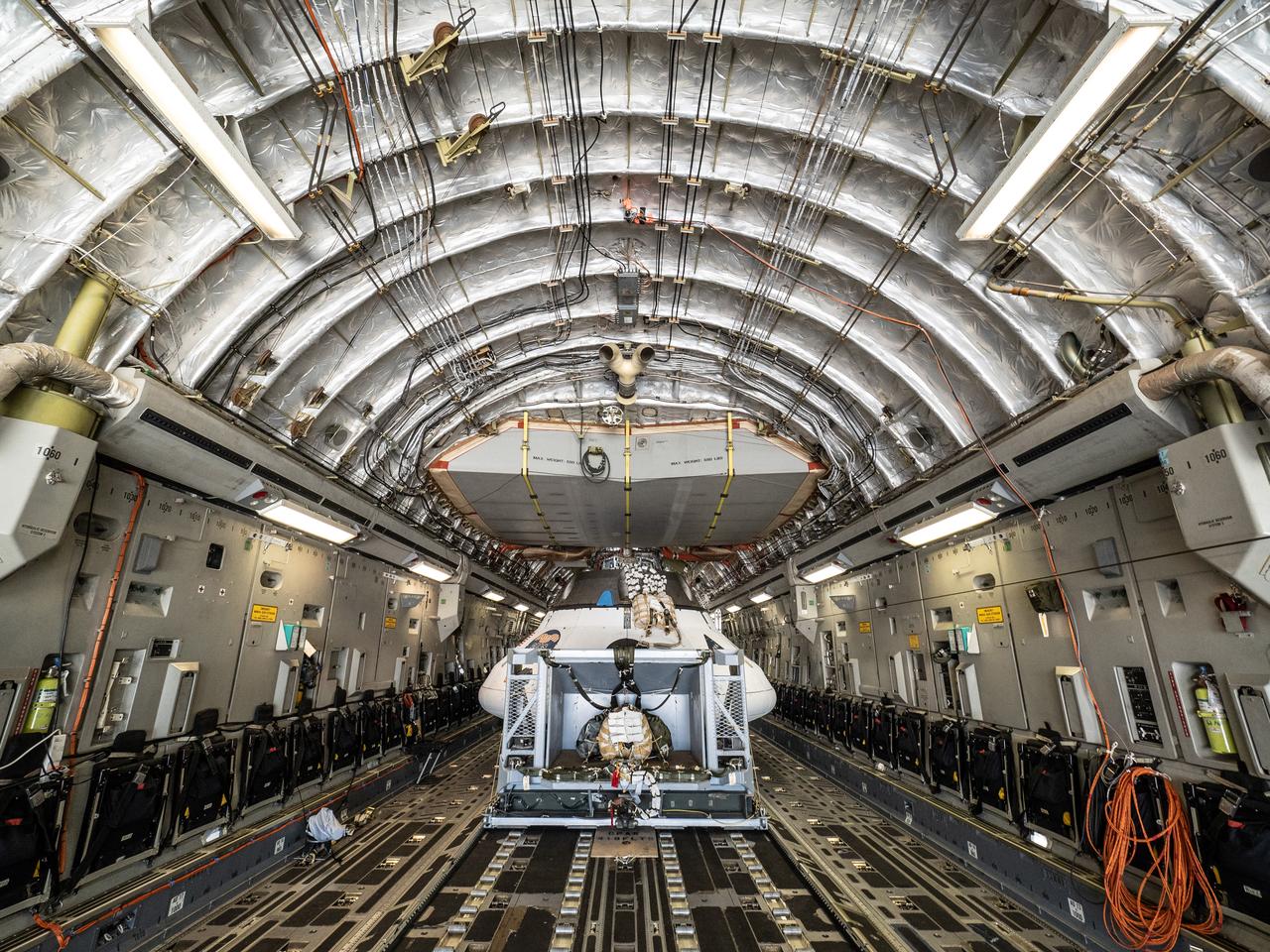
The Orion team prepares the parachute test vehicle for the final drop test which will qualify Orion's parachutes for human flight on Sept. 10, 2018...On September 12, 2018 an Orion test capsule will be dropped from a C-17 aircraft at an altitude of more than six miles to verify the spacecraft’s complex system of 11 parachutes, cannon-like mortars, and pyrotechnic devices work in sequence to slow the capsule’s descent for a safe landing on Earth.
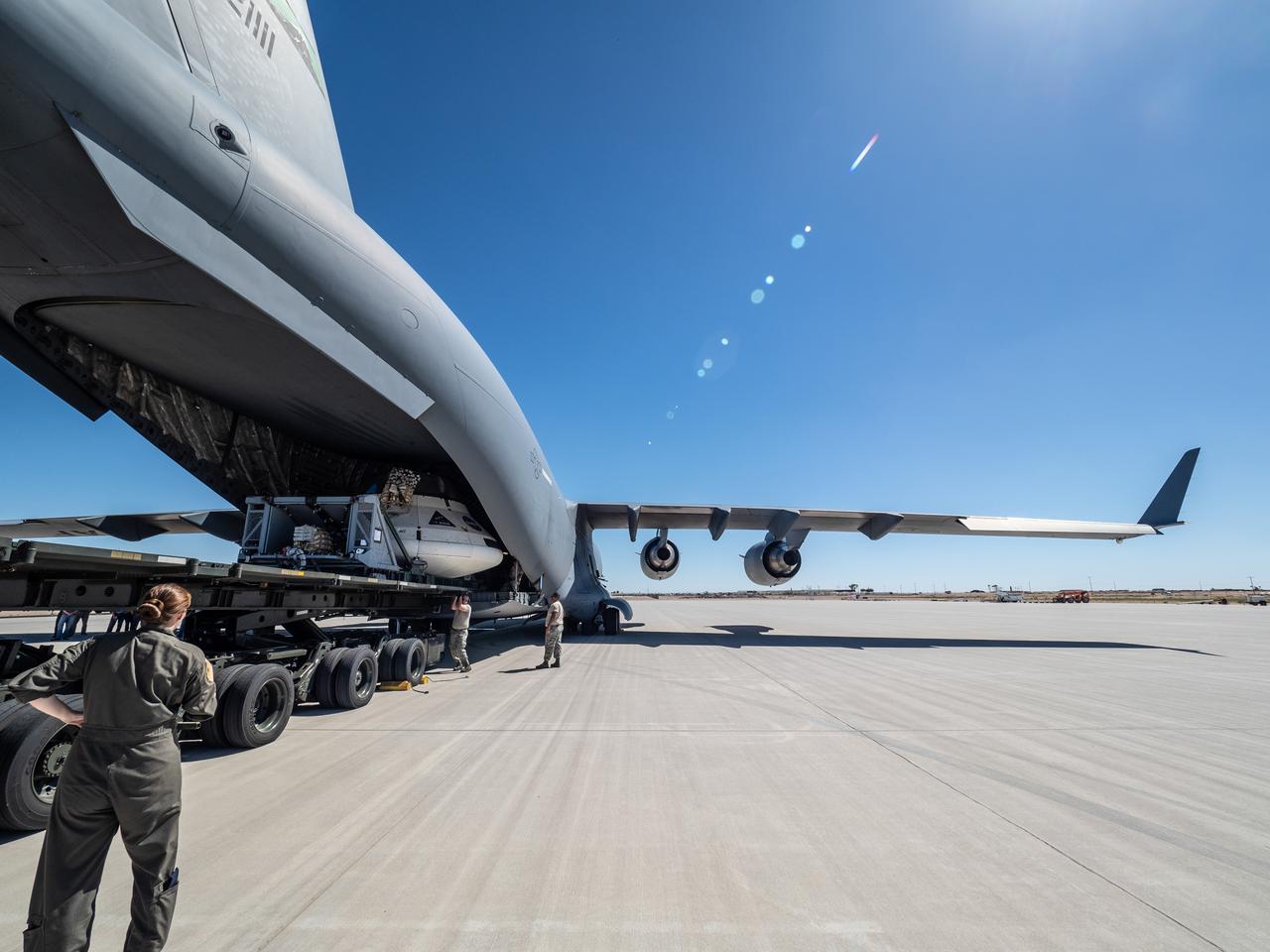
The Orion team prepares the parachute test vehicle for the final drop test which will qualify Orion's parachutes for human flight on Sept. 10, 2018...On September 12, 2018 an Orion test capsule will be dropped from a C-17 aircraft at an altitude of more than six miles to verify the spacecraft’s complex system of 11 parachutes, cannon-like mortars, and pyrotechnic devices work in sequence to slow the capsule’s descent for a safe landing on Earth.
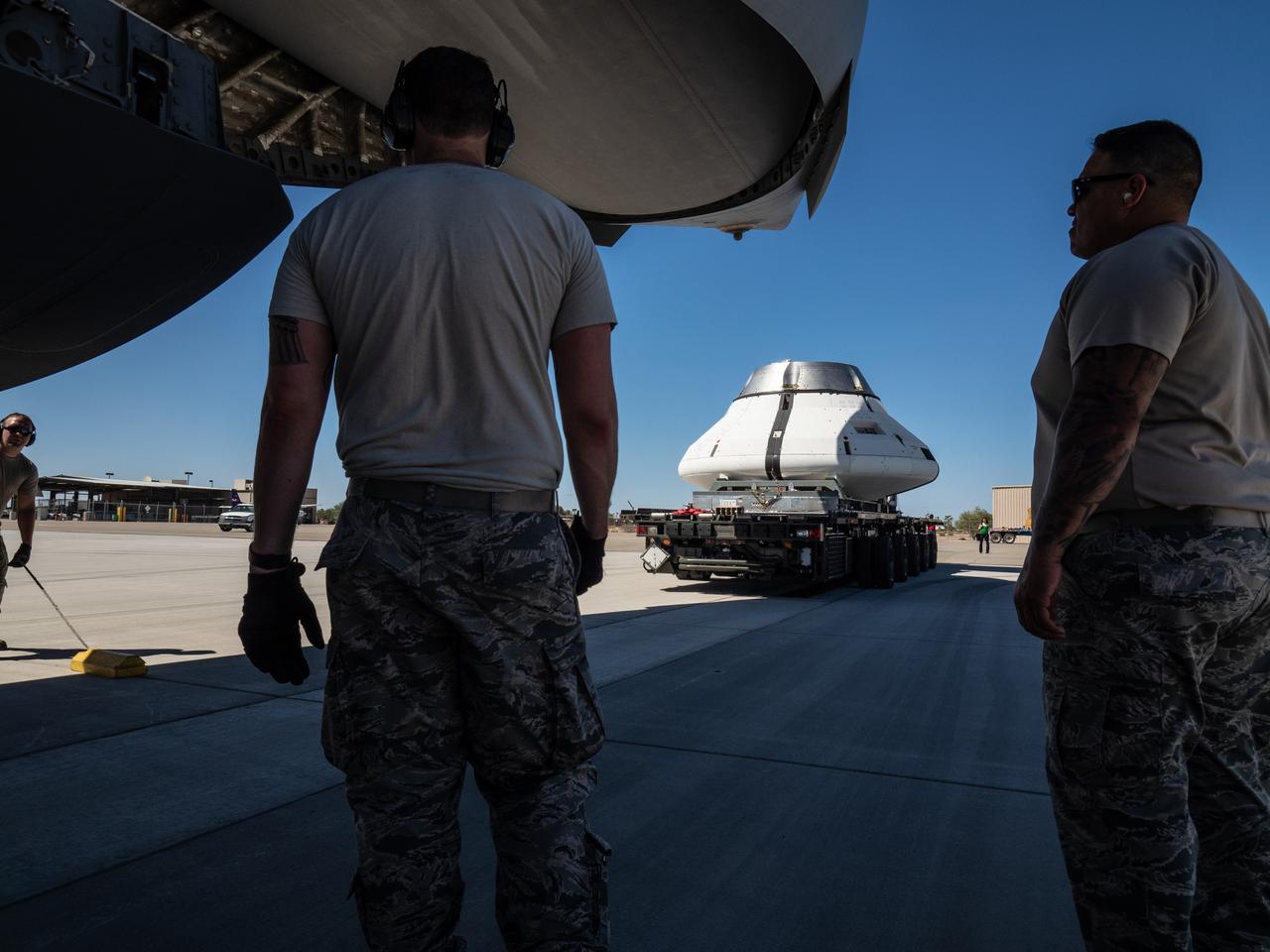
The Orion team prepares the parachute test vehicle for the final drop test which will qualify Orion's parachutes for human flight on Sept. 10, 2018...On September 12, 2018 an Orion test capsule will be dropped from a C-17 aircraft at an altitude of more than six miles to verify the spacecraft’s complex system of 11 parachutes, cannon-like mortars, and pyrotechnic devices work in sequence to slow the capsule’s descent for a safe landing on Earth.
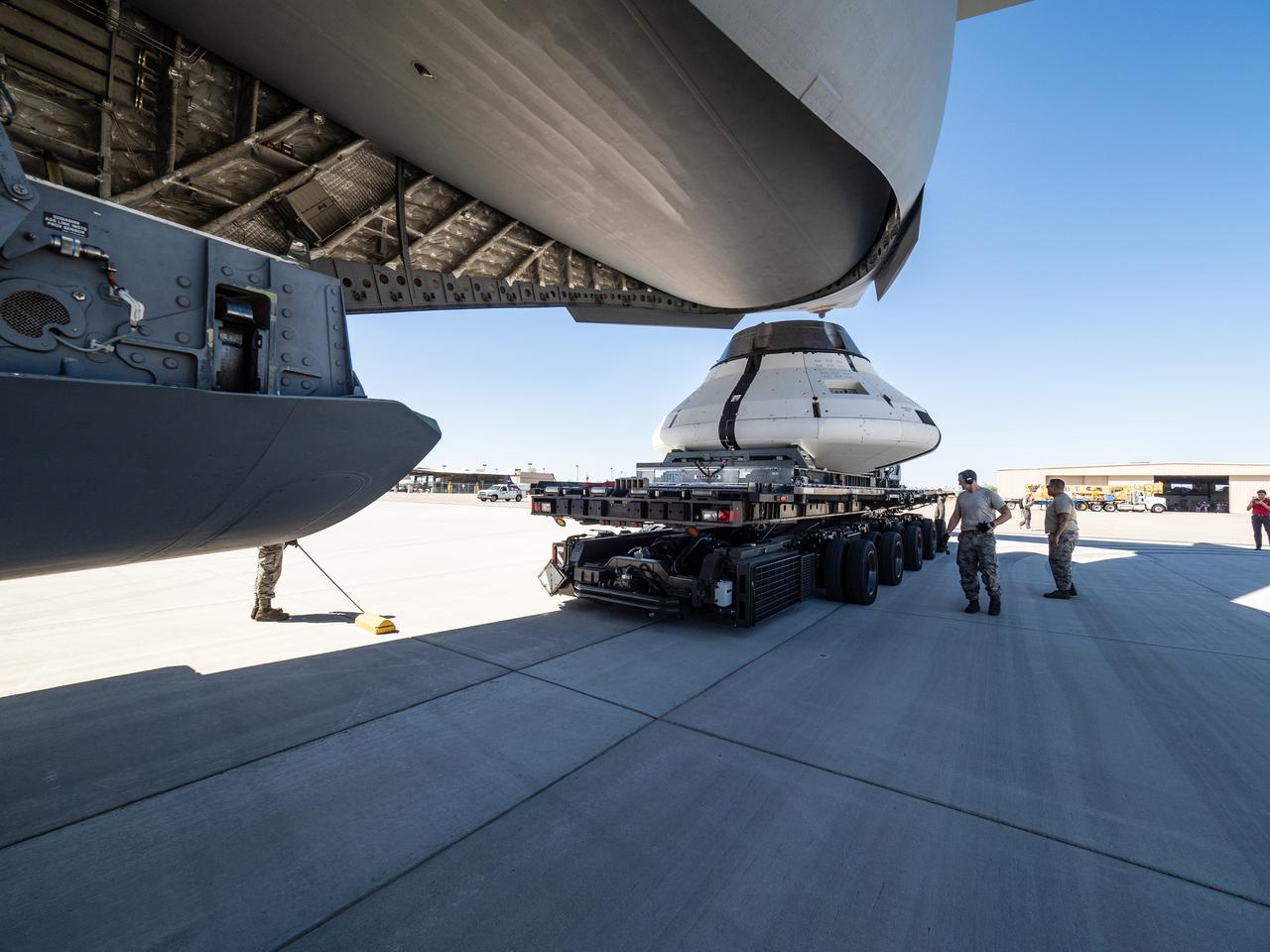
The Orion team prepares the parachute test vehicle for the final drop test which will qualify Orion's parachutes for human flight on Sept. 10, 2018...On September 12, 2018 an Orion test capsule will be dropped from a C-17 aircraft at an altitude of more than six miles to verify the spacecraft’s complex system of 11 parachutes, cannon-like mortars, and pyrotechnic devices work in sequence to slow the capsule’s descent for a safe landing on Earth.
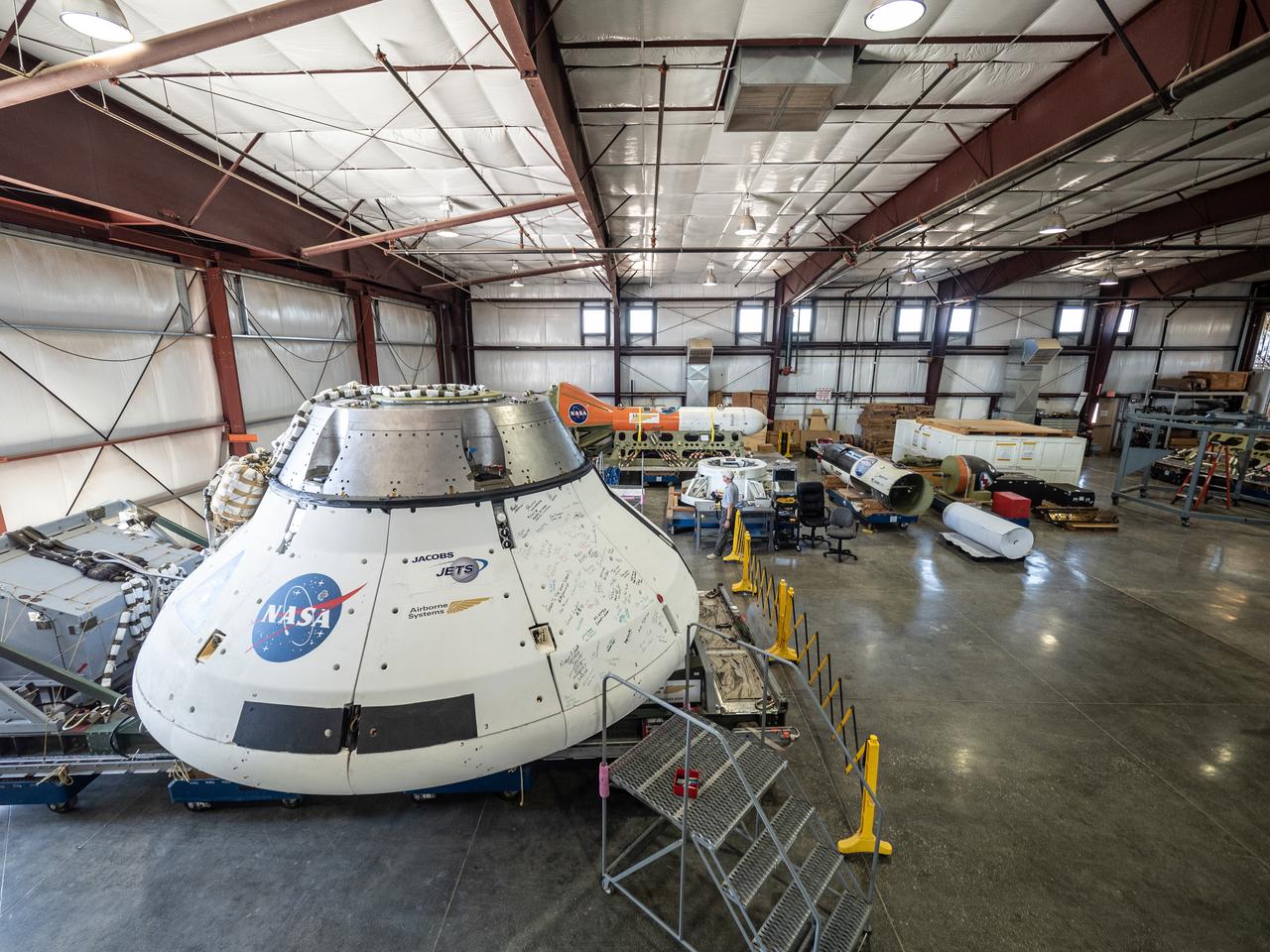
The Orion team prepares the parachute test vehicle for the final drop test which will qualify Orion's parachutes for human flight on Sept. 10, 2018...On September 12, 2018 an Orion test capsule will be dropped from a C-17 aircraft at an altitude of more than six miles to verify the spacecraft’s complex system of 11 parachutes, cannon-like mortars, and pyrotechnic devices work in sequence to slow the capsule’s descent for a safe landing on Earth.
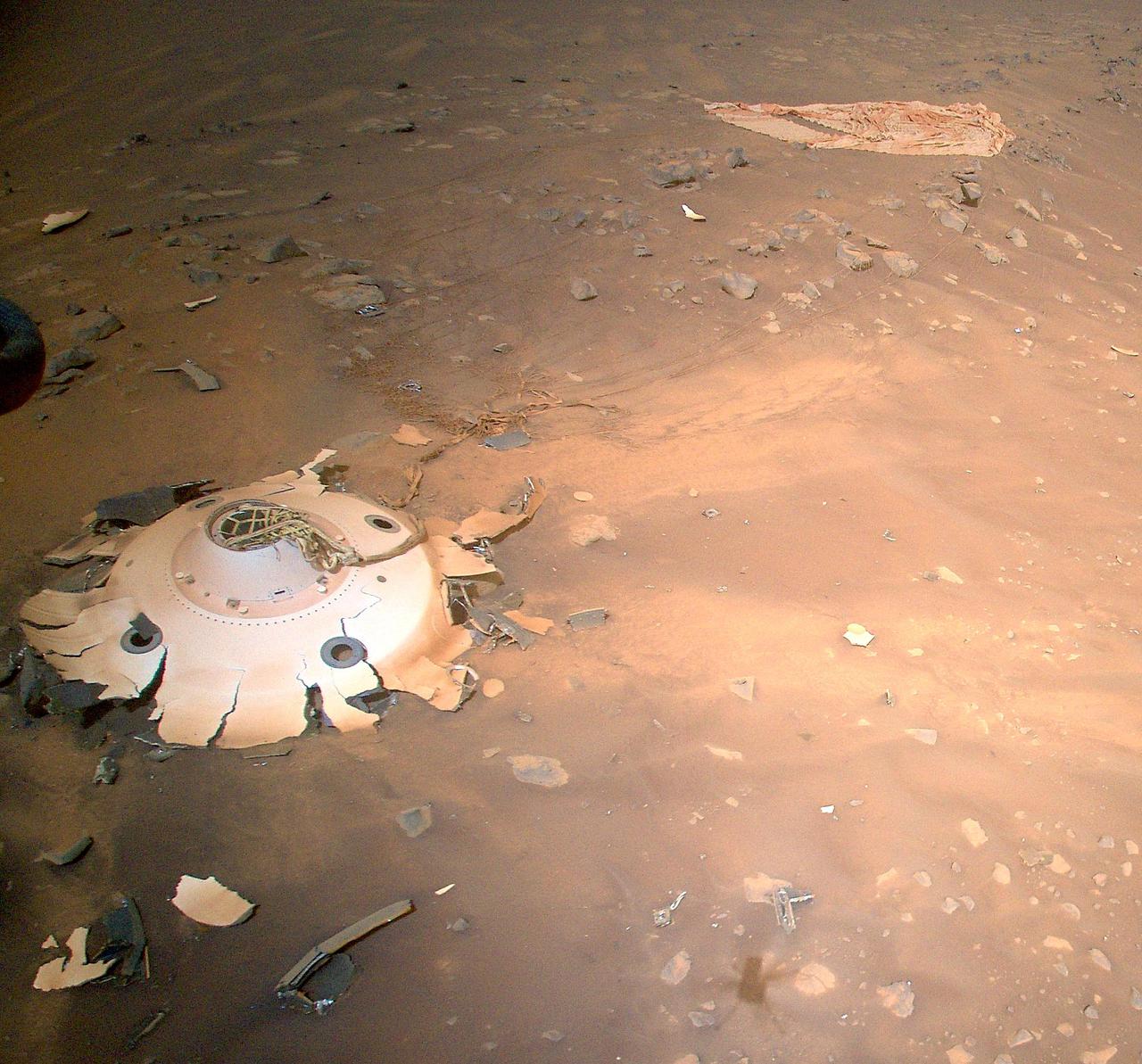
This image of Perseverance's backshell and parachute was collected from an altitude of 26 feet (8 meters) by the NASA's Ingenuity Mars Helicopter during its 26th flight on Mars on April 19, 2022. The parachute and cone-shaped backshell protected the rover during its fiery descent toward the Martian surface on Feb. 18, 2021. Engineers working on the Mars Sample Return program requested images be taken of the components from an aerial perspective because they may provide insight into the components' performance during the rover's entry, descent, and landing. https://photojournal.jpl.nasa.gov/catalog/PIA25217
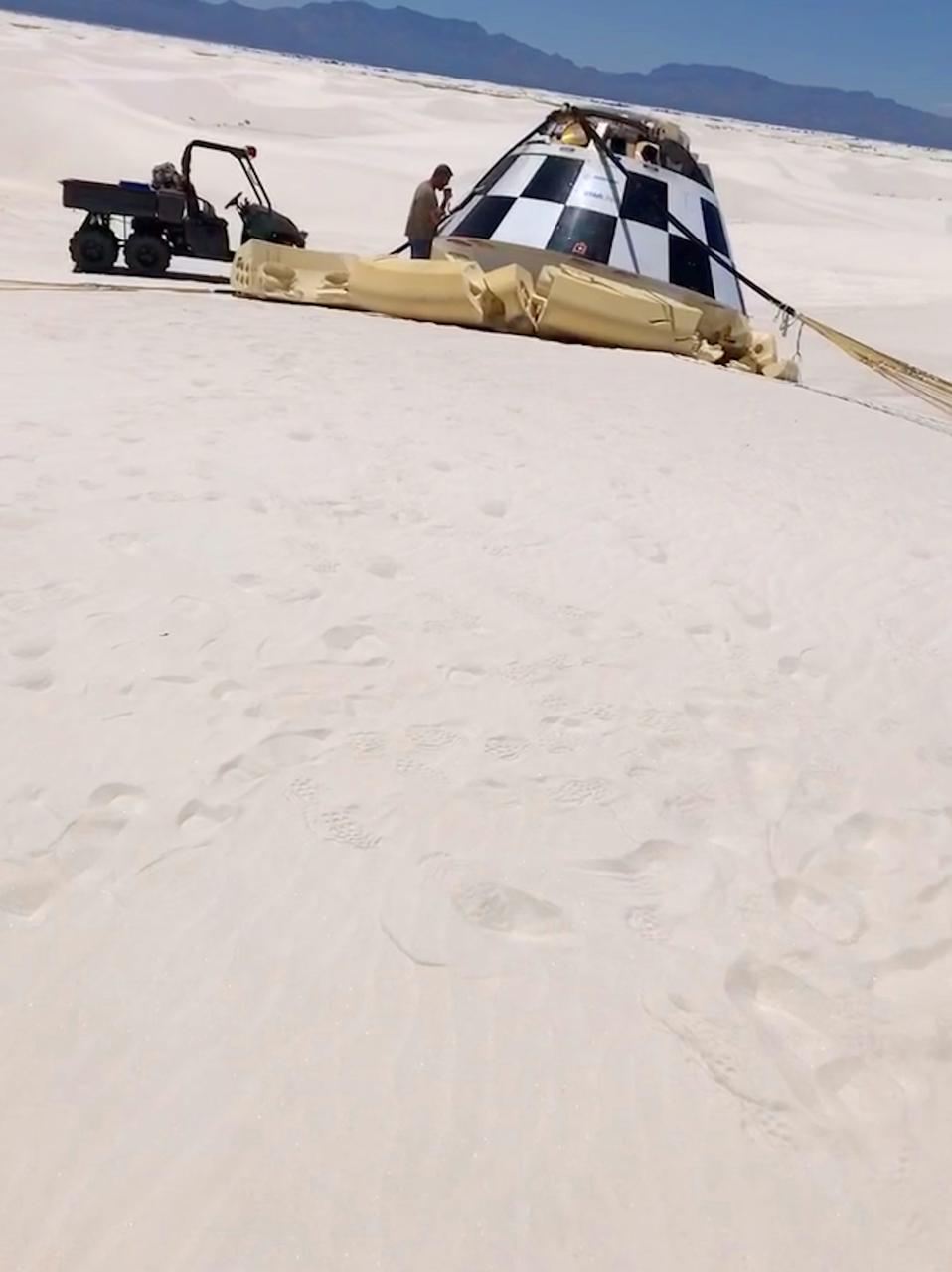
A full-scale Boeing CST-100 Starliner test article, known as a boiler plate, successfully lands at the U.S. Army’s White Sands Missile Range in New Mexico during parachute system testing on June 24, 2019. Boeing conducted the test, which involved intentionally disabling one of the parachute system’s two drogue parachutes and one of the three main parachutes to evaluate how the remaining parachutes handled the additional loads during deployment and descent. This was one of a series of important parachute tests to validate the system is safe to carry astronauts to and from the International Space Station as part of NASA’s Commercial Crew Program. Boeing is targeting an uncrewed Orbital Flight Test to the space station this summer, followed by its Crew Flight Test. Starliner will launch atop a United Launch Alliance Atlas V rocket from Space Launch Complex 41 at Cape Canaveral Air Force Station in Florida.
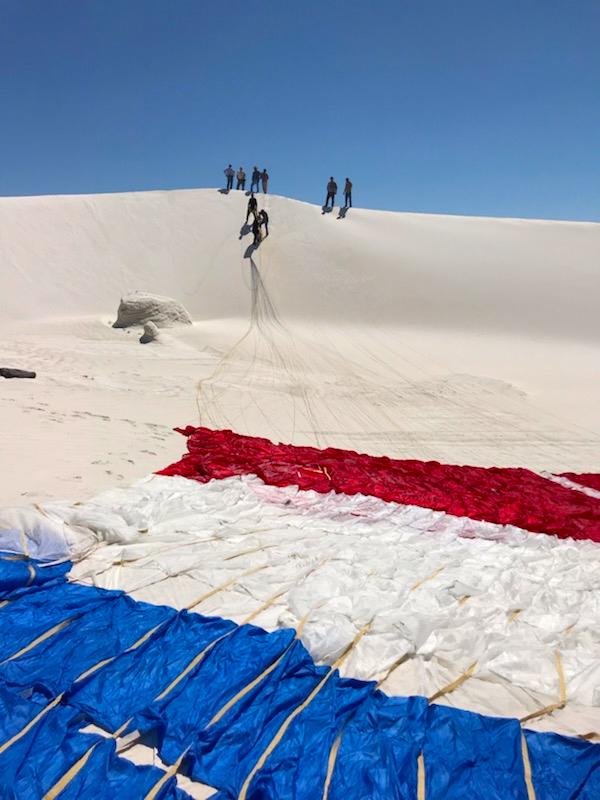
Boeing’s CST-100 Starliner’s parachute systems are successfully tested at the U.S. Army’s White Sands Missile Range in New Mexico on June 24, 2019. Boeing conducted the test using a full-scale Starliner test article, known as a boiler plate, designed to simulate the actual spacecraft. The test involved intentionally disabling one of the parachute system’s two drogue parachutes and one of the three main parachutes to evaluate how the remaining parachutes handled the additional loads during deployment and descent. This was one of a series of important parachute tests to validate the system is safe to carry astronauts to and from the International Space Station as part of NASA’s Commercial Crew Program. Boeing is targeting an uncrewed Orbital Flight Test to the space station this summer, followed by its Crew Flight Test. Starliner will launch atop a United Launch Alliance Atlas V rocket from Space Launch Complex 41 at Cape Canaveral Air Force Station in Florida.
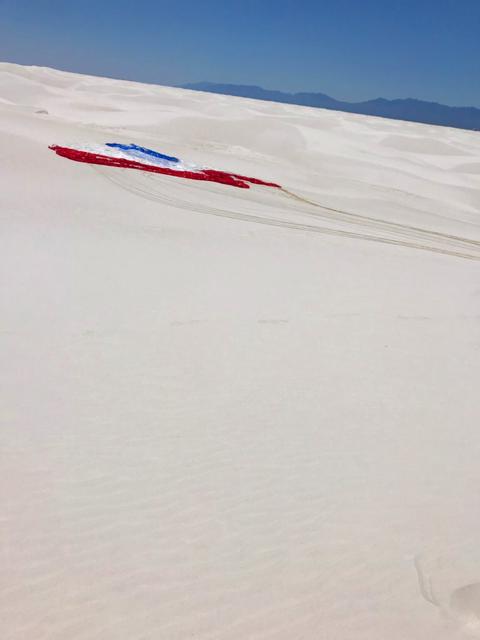
Boeing’s CST-100 Starliner’s parachute systems are successfully tested at the U.S. Army’s White Sands Missile Range in New Mexico on June 24, 2019. Boeing conducted the test using a full-scale Starliner test article, known as a boiler plate, designed to simulate the actual spacecraft. The test involved intentionally disabling one of the parachute system’s two drogue parachutes and one of the three main parachutes to evaluate how the remaining parachutes handled the additional loads during deployment and descent. This was one of a series of important parachute tests to validate the system is safe to carry astronauts to and from the International Space Station as part of NASA’s Commercial Crew Program. Boeing is targeting an uncrewed Orbital Flight Test to the space station this summer, followed by its Crew Flight Test. Starliner will launch atop a United Launch Alliance Atlas V rocket from Space Launch Complex 41 at Cape Canaveral Air Force Station in Florida.
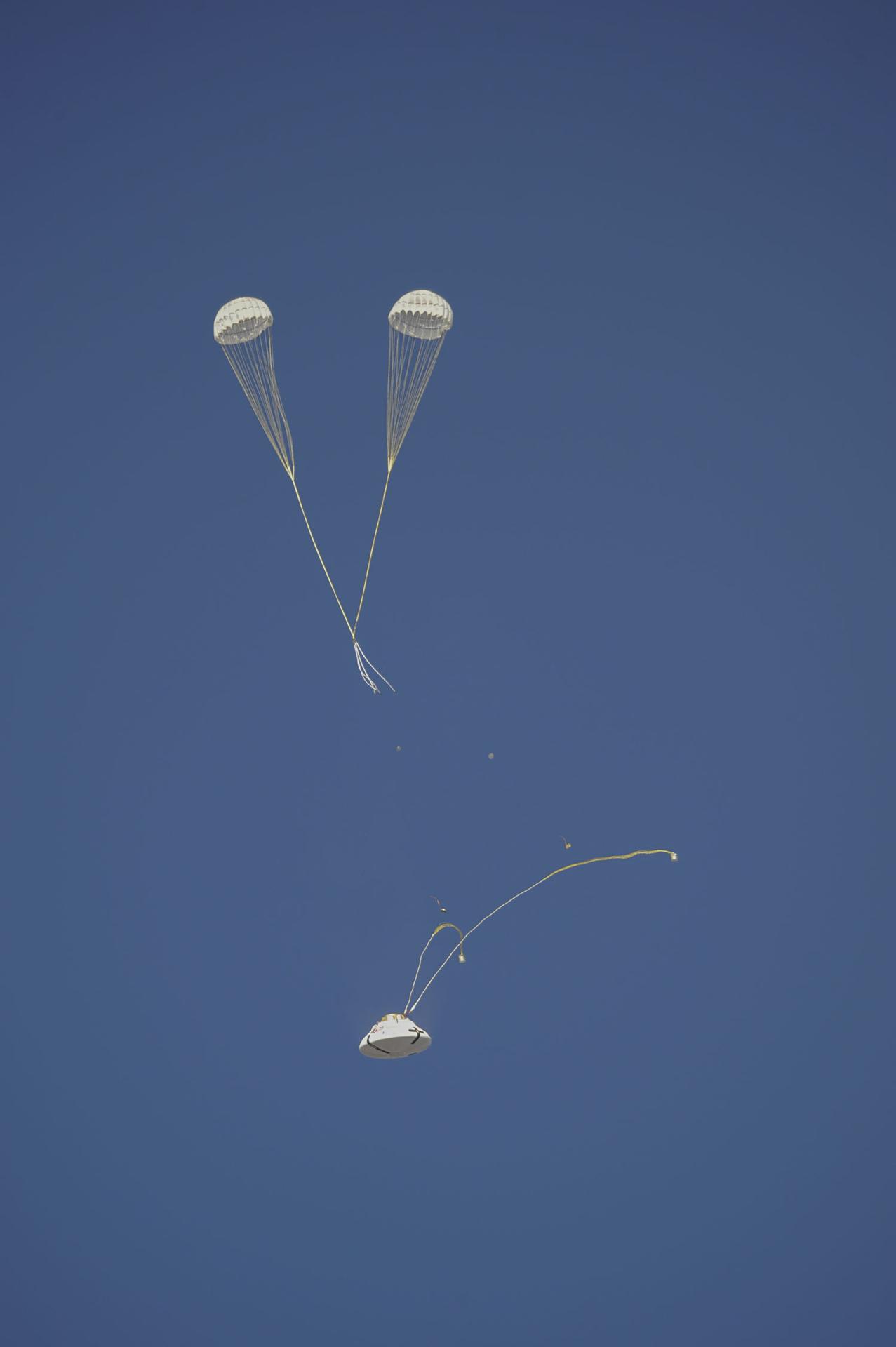
The Orion parachute system enters another phase of its descent after an air launch from a C-17 aircraft on Wednesday, July 18, 2012. Photographers and videographers from NASA’s Armstrong Flight Research Center in Edwards, California, and the agency’s Johnson Space Center in Houston documented a test version of the Orion during Capsule Parachute Assembly System project tests at the U.S. Army Proving Ground, near Yuma, Arizona.
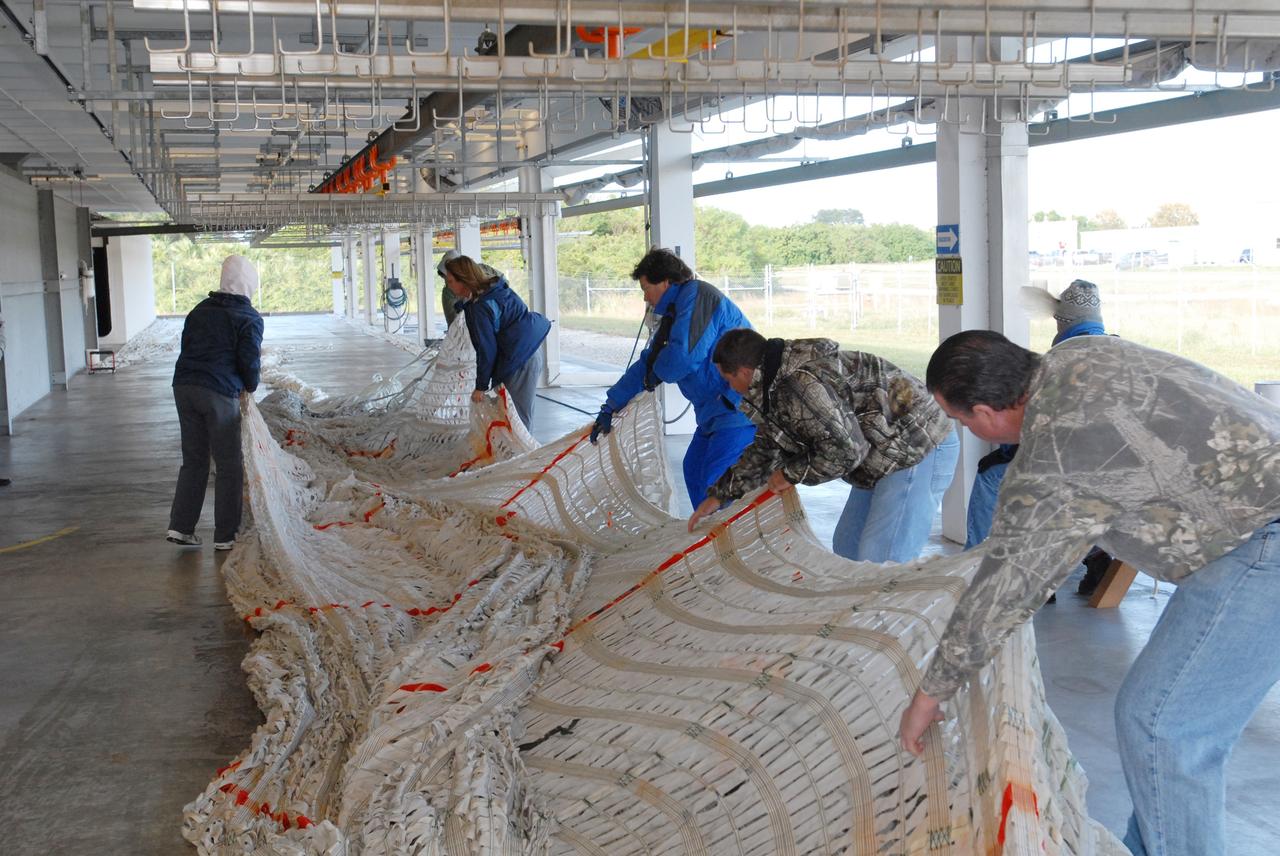
CAPE CANAVERAL, Fla. – At the Parachute Refurbishment Facility at NASA's Kennedy Space Center in Florida, workers spread out the parachutes recovered from sea after the launch of space shuttle Endeavour on the STS-126 mission to detangle them. The parachutes are used to slow the descent of the solid rocket boosters that are jettisoned during liftoff. One pilot, one drogue and three main canopies per booster slow the booster’s fall from about 360 mph to 50 mph. After the chutes are cleaned and repaired, they must be carefully packed into their bags so they will deploy correctly the next time they are used. Photo credit: NASA/Jim Grossmann
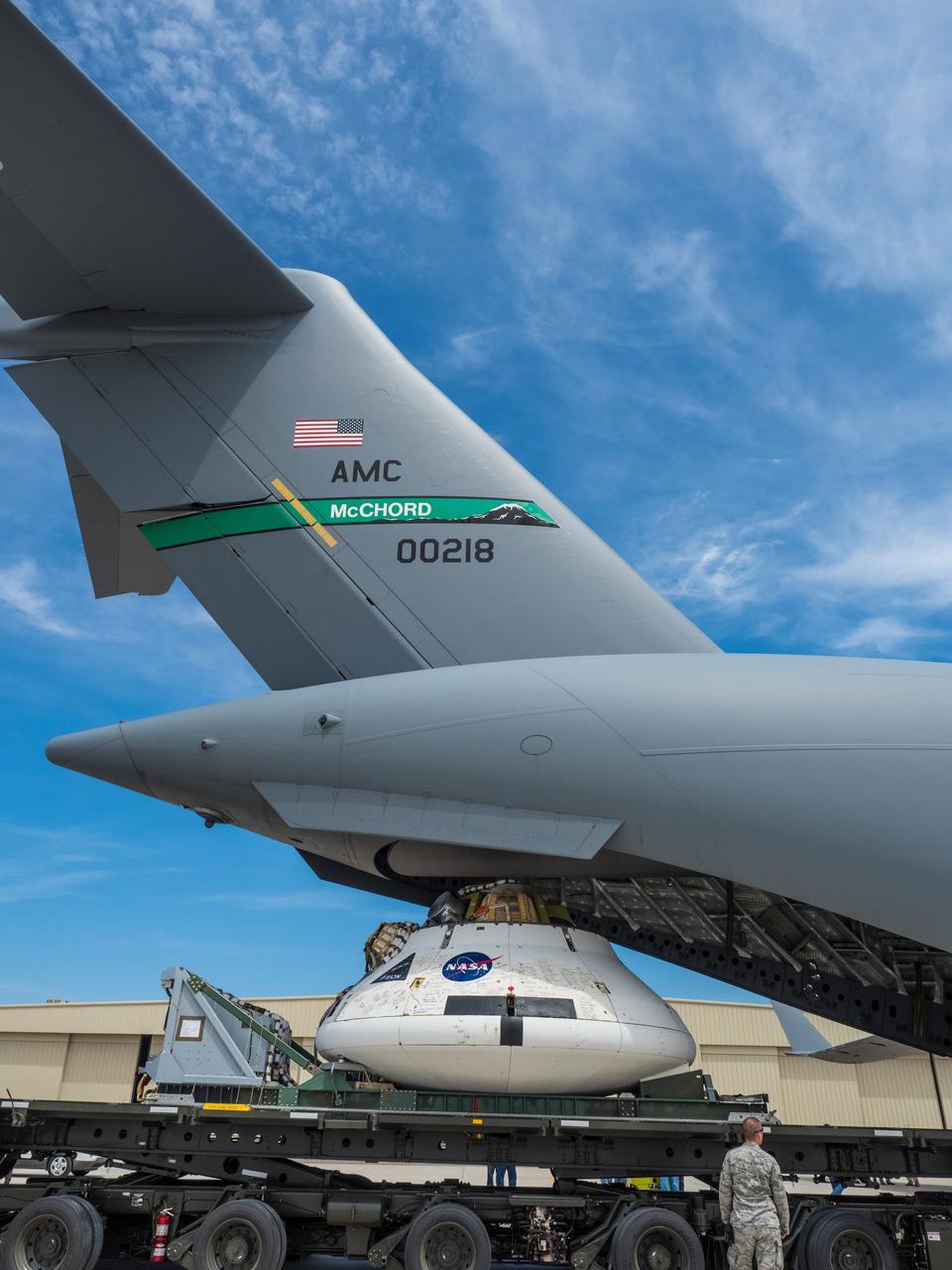
Engineers prepare to test the parachute system for NASA’s Orion spacecraft at the U.S. Army Yuma Proving Ground in Yuma, Arizona on Aug. 24, 2015. During the test, planned for Wednesday, Aug. 26, a C-17 aircraft will carry a representative Orion capsule to 35,000 feet in altitude and then drop it from its cargo bay. Engineers will test a scenario in which one of Orion’s two drogue parachutes, used to stabilize it in the air, does not deploy, and one of its three main parachutes, used to slow the capsule during the final stage of descent, also does not deploy. The risky test will provide data engineers will use as they gear up to qualify Orion’s parachutes for missions with astronauts. On Aug. 24, a C-17 was loaded with the test version of Orion, which has a similar mass and interfaces with the parachutes as the Orion being developed for deep space missions but is shorter on top to fit inside the aircraft. Part of Batch image transfer from Flickr.
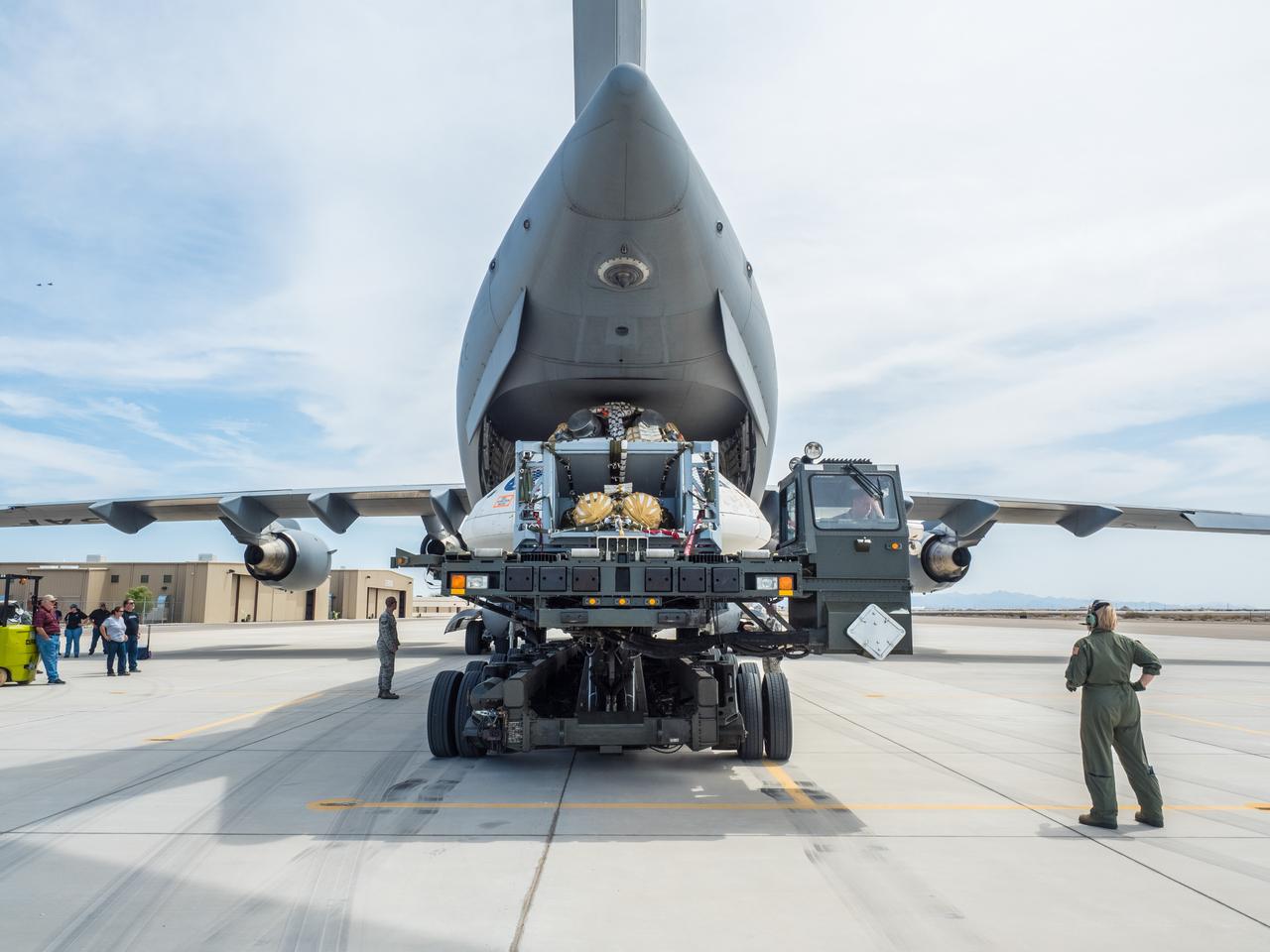
Engineers prepare to test the parachute system for NASA’s Orion spacecraft at the U.S. Army Yuma Proving Ground in Yuma, Arizona on Aug. 24, 2015. During the test, planned for Wednesday, Aug. 26, a C-17 aircraft will carry a representative Orion capsule to 35,000 feet in altitude and then drop it from its cargo bay. Engineers will test a scenario in which one of Orion’s two drogue parachutes, used to stabilize it in the air, does not deploy, and one of its three main parachutes, used to slow the capsule during the final stage of descent, also does not deploy. The risky test will provide data engineers will use as they gear up to qualify Orion’s parachutes for missions with astronauts. On Aug. 24, a C-17 was loaded with the test version of Orion, which has a similar mass and interfaces with the parachutes as the Orion being developed for deep space missions but is shorter on top to fit inside the aircraft. Part of Batch image transfer from Flickr.
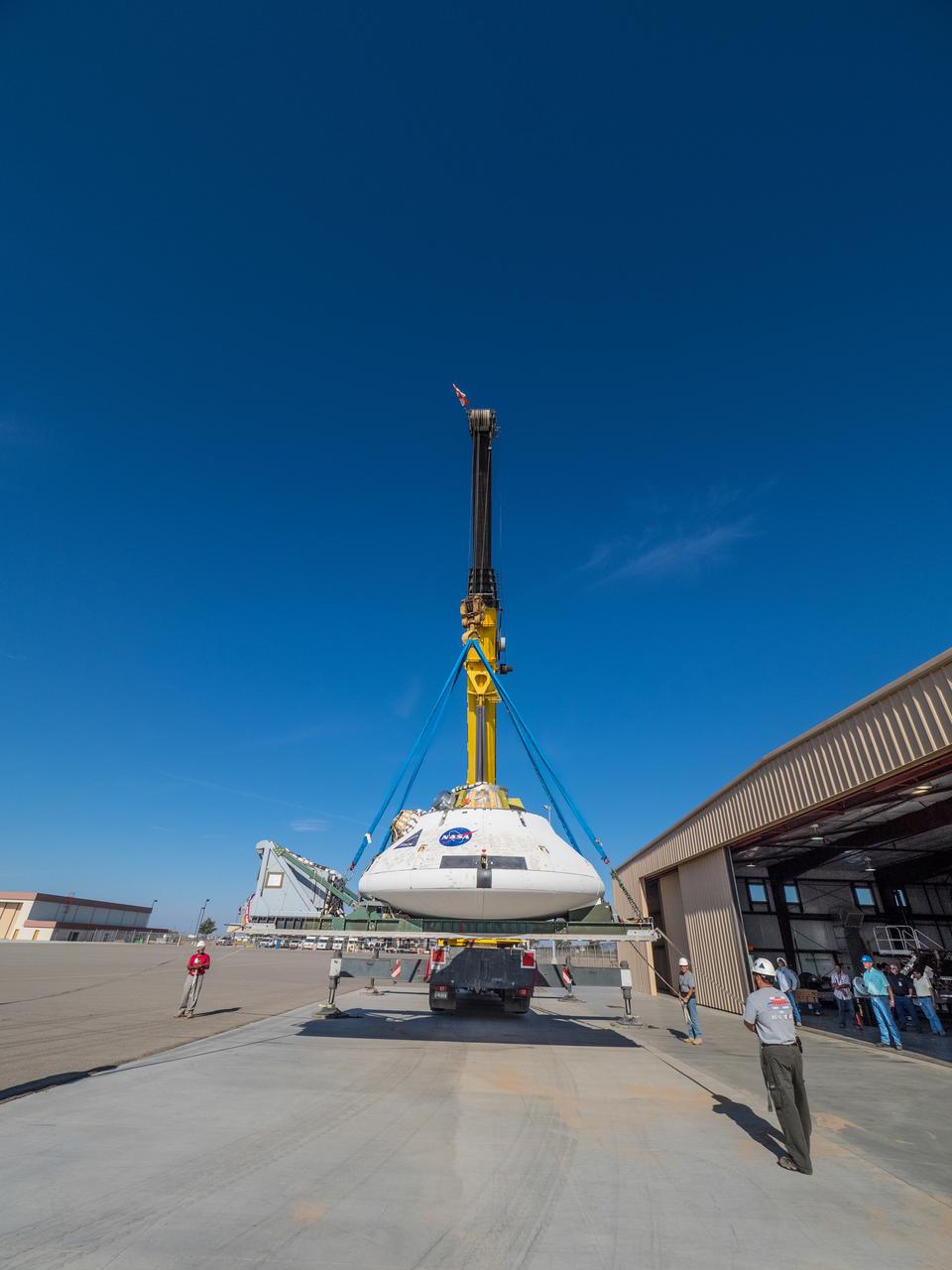
Engineers prepare to test the parachute system for NASA’s Orion spacecraft at the U.S. Army Yuma Proving Ground in Yuma, Arizona on Aug. 24, 2015. During the test, planned for Wednesday, Aug. 26, a C-17 aircraft will carry a representative Orion capsule to 35,000 feet in altitude and then drop it from its cargo bay. Engineers will test a scenario in which one of Orion’s two drogue parachutes, used to stabilize it in the air, does not deploy, and one of its three main parachutes, used to slow the capsule during the final stage of descent, also does not deploy. The risky test will provide data engineers will use as they gear up to qualify Orion’s parachutes for missions with astronauts. On Aug. 24, a C-17 was loaded with the test version of Orion, which has a similar mass and interfaces with the parachutes as the Orion being developed for deep space missions but is shorter on top to fit inside the aircraft. Part of Batch image transfer from Flickr.
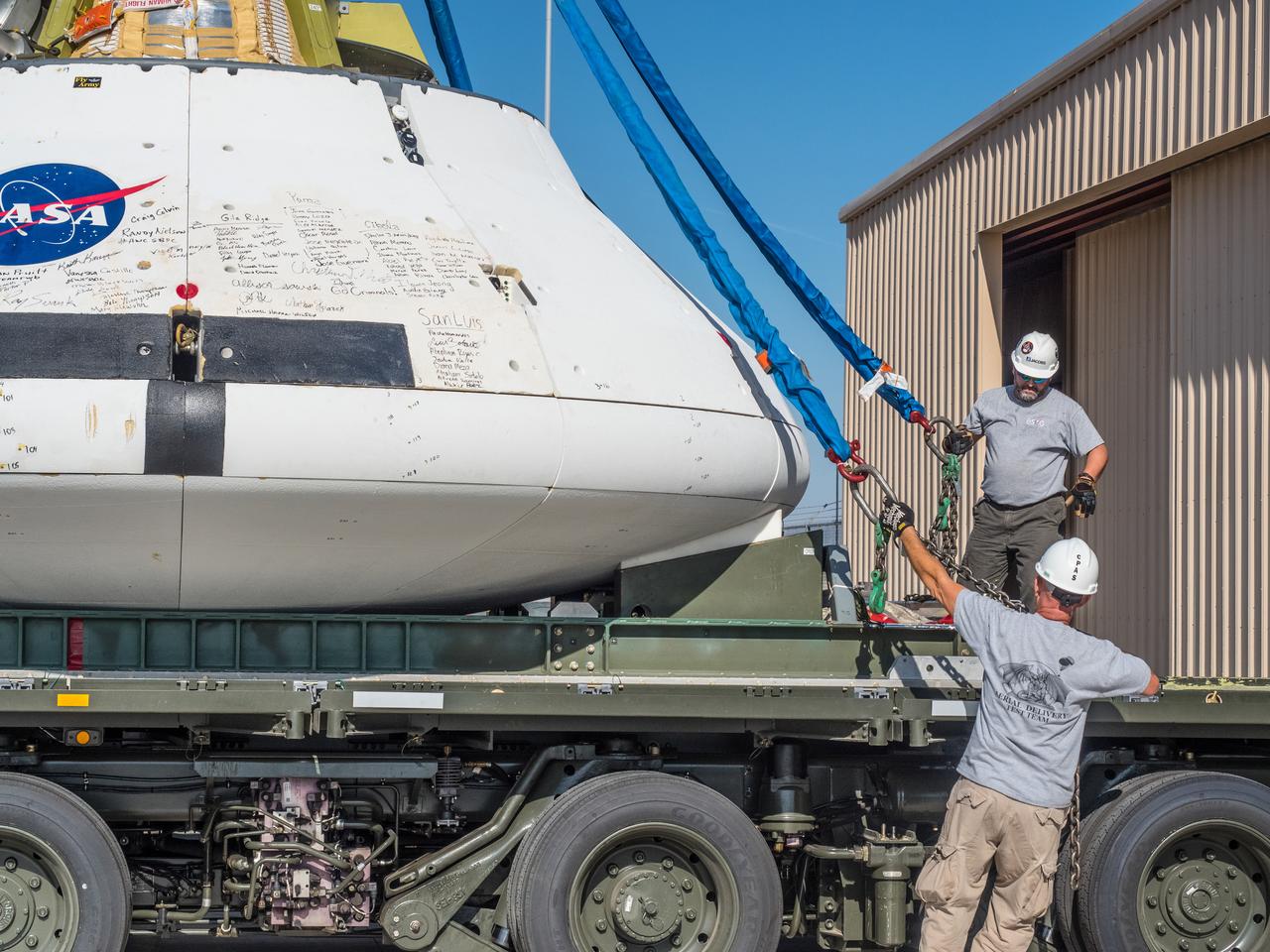
Engineers prepare to test the parachute system for NASA’s Orion spacecraft at the U.S. Army Yuma Proving Ground in Yuma, Arizona on Aug. 24, 2015. During the test, planned for Wednesday, Aug. 26, a C-17 aircraft will carry a representative Orion capsule to 35,000 feet in altitude and then drop it from its cargo bay. Engineers will test a scenario in which one of Orion’s two drogue parachutes, used to stabilize it in the air, does not deploy, and one of its three main parachutes, used to slow the capsule during the final stage of descent, also does not deploy. The risky test will provide data engineers will use as they gear up to qualify Orion’s parachutes for missions with astronauts. On Aug. 24, a C-17 was loaded with the test version of Orion, which has a similar mass and interfaces with the parachutes as the Orion being developed for deep space missions but is shorter on top to fit inside the aircraft. Part of Batch image transfer from Flickr.
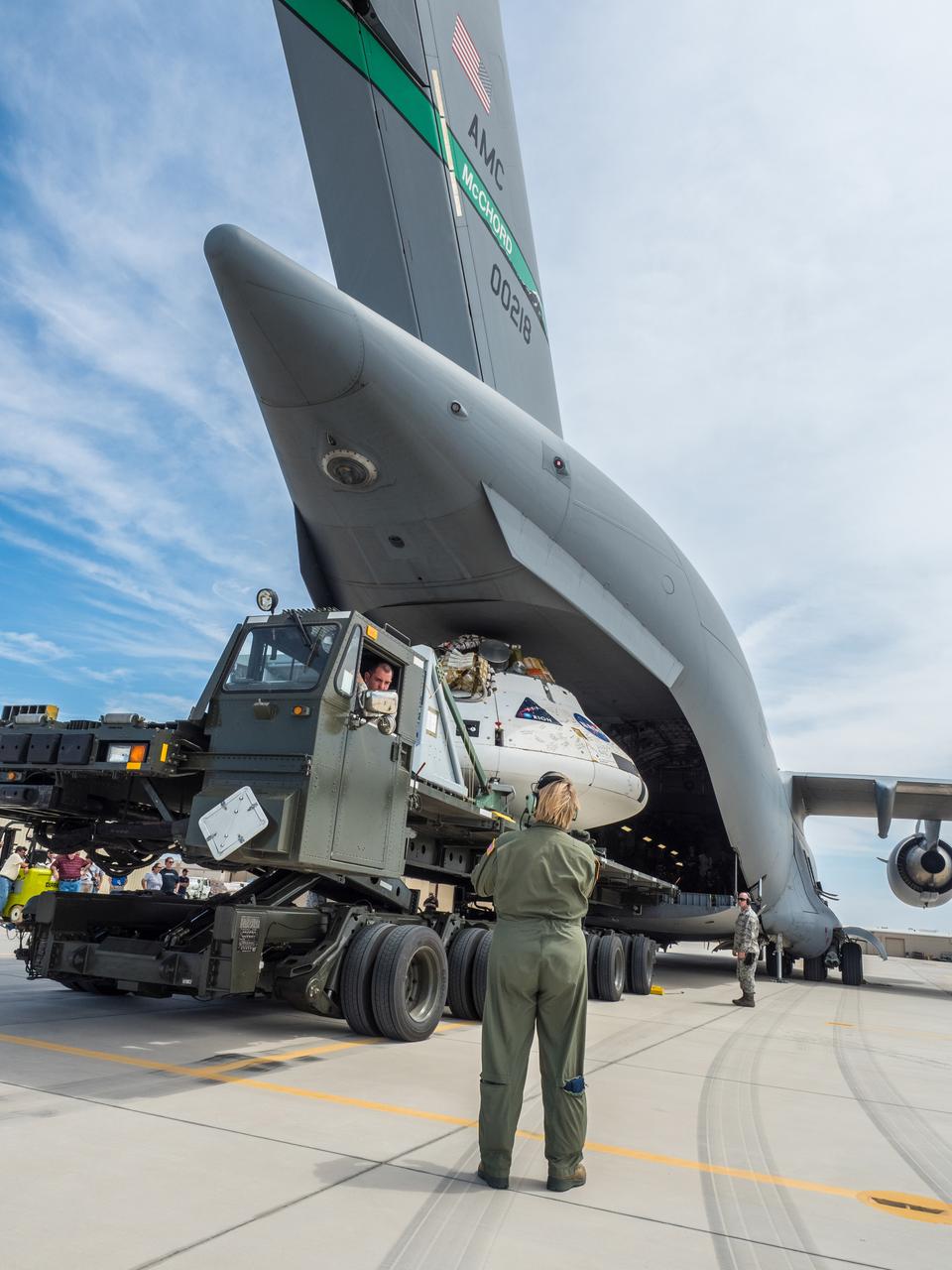
Engineers prepare to test the parachute system for NASA’s Orion spacecraft at the U.S. Army Yuma Proving Ground in Yuma, Arizona on Aug. 24, 2015. During the test, planned for Wednesday, Aug. 26, a C-17 aircraft will carry a representative Orion capsule to 35,000 feet in altitude and then drop it from its cargo bay. Engineers will test a scenario in which one of Orion’s two drogue parachutes, used to stabilize it in the air, does not deploy, and one of its three main parachutes, used to slow the capsule during the final stage of descent, also does not deploy. The risky test will provide data engineers will use as they gear up to qualify Orion’s parachutes for missions with astronauts. On Aug. 24, a C-17 was loaded with the test version of Orion, which has a similar mass and interfaces with the parachutes as the Orion being developed for deep space missions but is shorter on top to fit inside the aircraft. Part of Batch image transfer from Flickr.
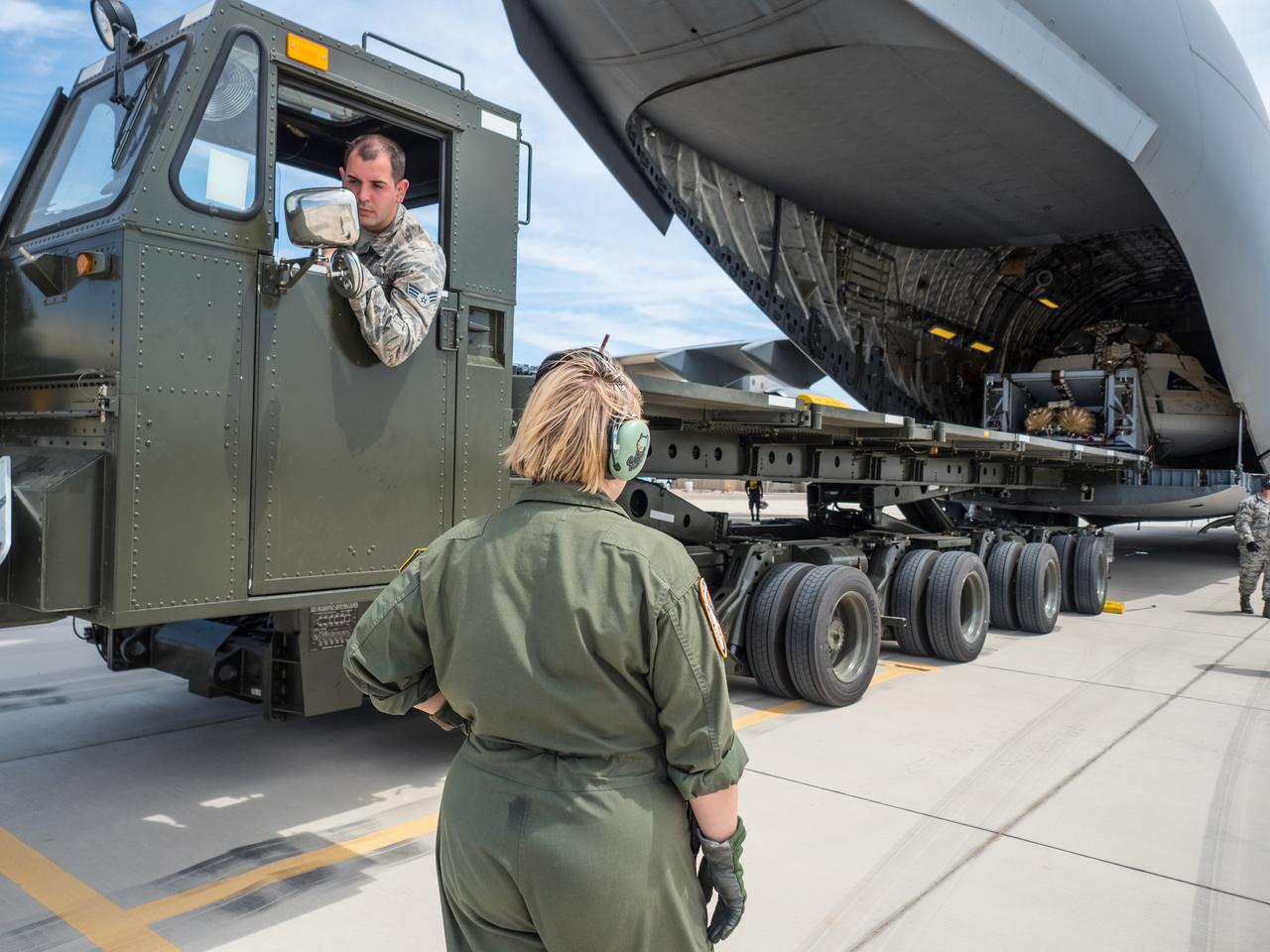
Engineers prepare to test the parachute system for NASA’s Orion spacecraft at the U.S. Army Yuma Proving Ground in Yuma, Arizona on Aug. 24, 2015. During the test, planned for Wednesday, Aug. 26, a C-17 aircraft will carry a representative Orion capsule to 35,000 feet in altitude and then drop it from its cargo bay. Engineers will test a scenario in which one of Orion’s two drogue parachutes, used to stabilize it in the air, does not deploy, and one of its three main parachutes, used to slow the capsule during the final stage of descent, also does not deploy. The risky test will provide data engineers will use as they gear up to qualify Orion’s parachutes for missions with astronauts. On Aug. 24, a C-17 was loaded with the test version of Orion, which has a similar mass and interfaces with the parachutes as the Orion being developed for deep space missions but is shorter on top to fit inside the aircraft. Part of Batch image transfer from Flickr.
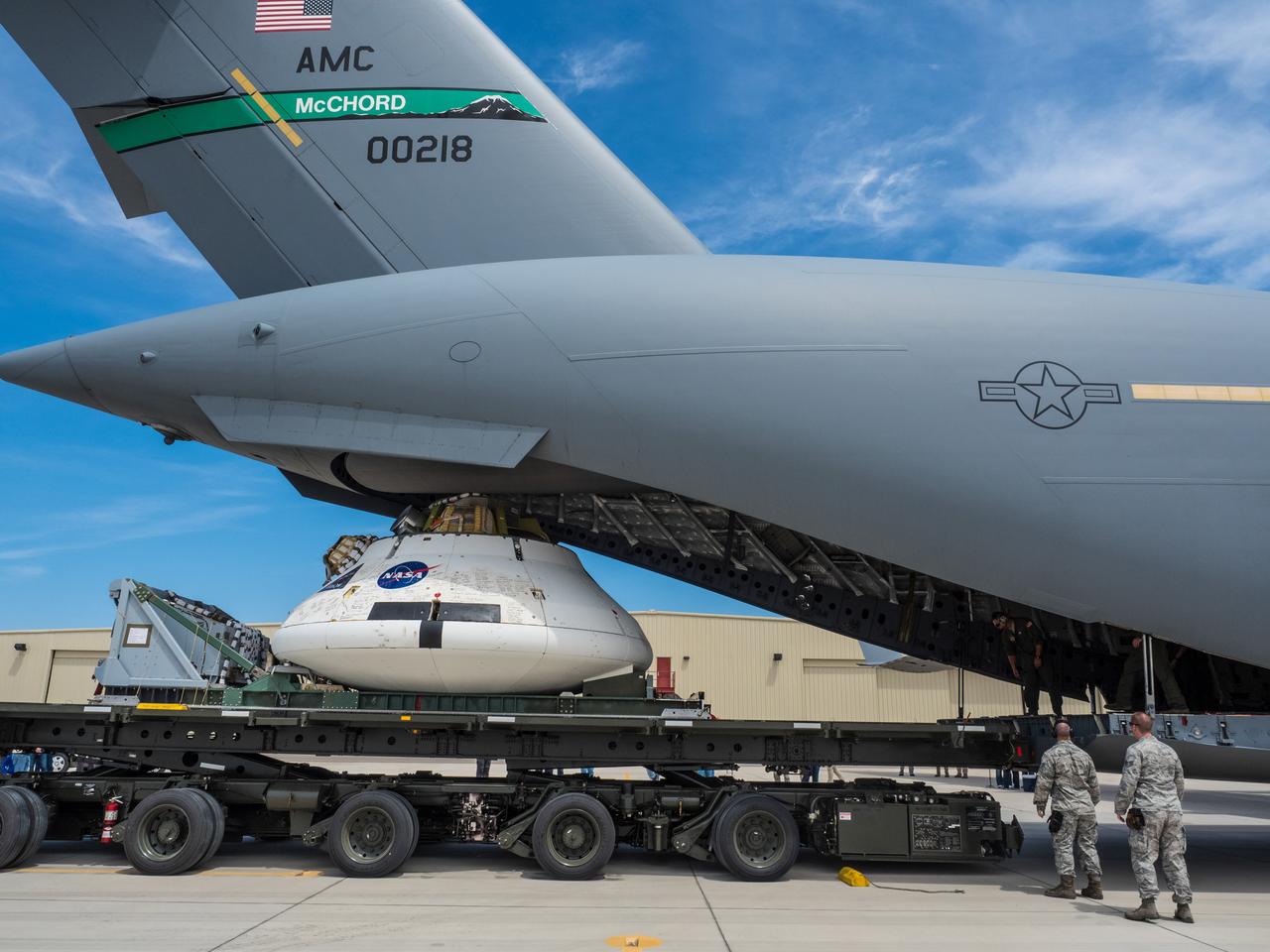
Engineers prepare to test the parachute system for NASA’s Orion spacecraft at the U.S. Army Yuma Proving Ground in Yuma, Arizona on Aug. 24, 2015. During the test, planned for Wednesday, Aug. 26, a C-17 aircraft will carry a representative Orion capsule to 35,000 feet in altitude and then drop it from its cargo bay. Engineers will test a scenario in which one of Orion’s two drogue parachutes, used to stabilize it in the air, does not deploy, and one of its three main parachutes, used to slow the capsule during the final stage of descent, also does not deploy. The risky test will provide data engineers will use as they gear up to qualify Orion’s parachutes for missions with astronauts. On Aug. 24, a C-17 was loaded with the test version of Orion, which has a similar mass and interfaces with the parachutes as the Orion being developed for deep space missions but is shorter on top to fit inside the aircraft. Part of Batch image transfer from Flickr.
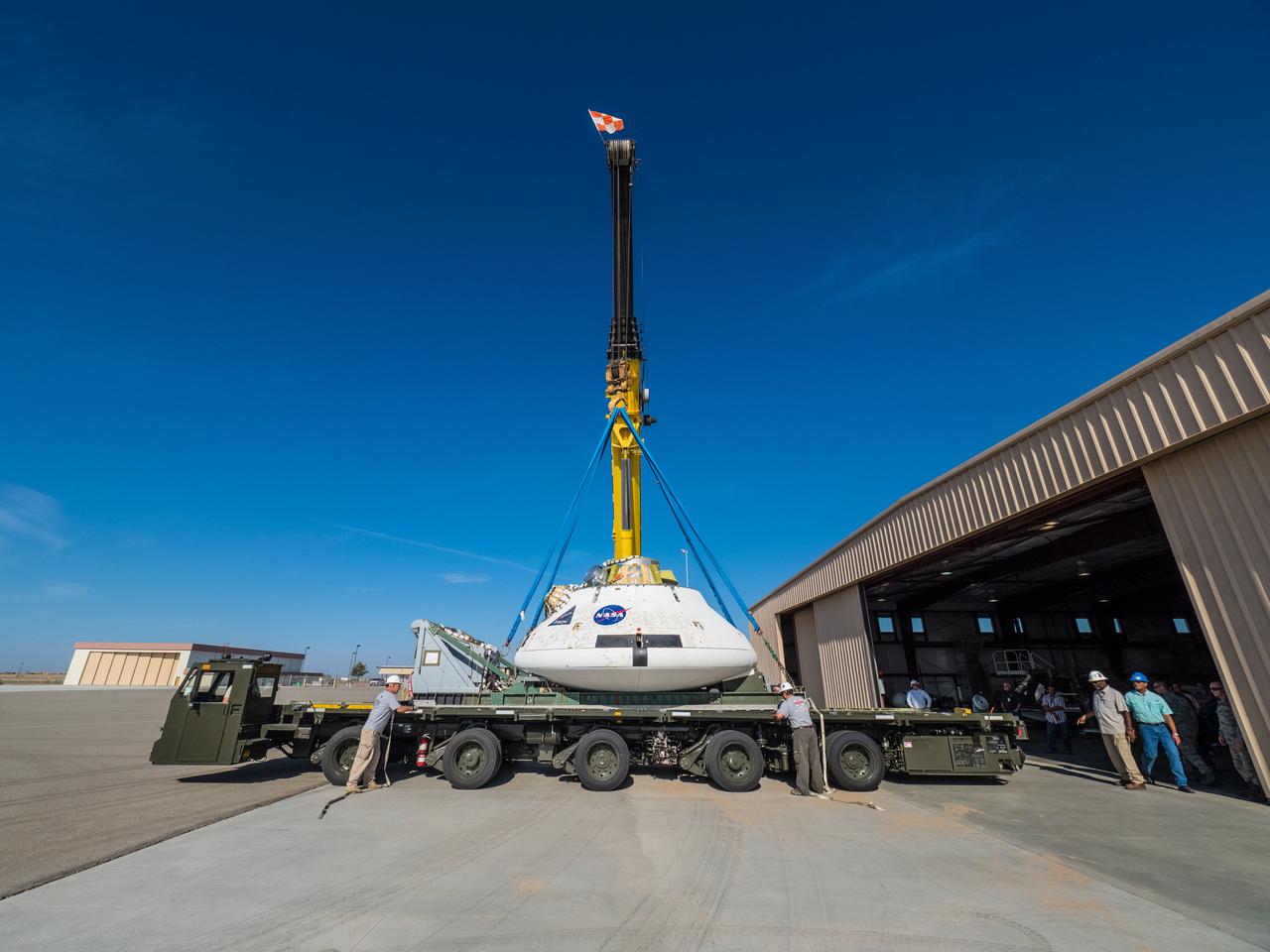
Engineers prepare to test the parachute system for NASA’s Orion spacecraft at the U.S. Army Yuma Proving Ground in Yuma, Arizona on Aug. 24, 2015. During the test, planned for Wednesday, Aug. 26, a C-17 aircraft will carry a representative Orion capsule to 35,000 feet in altitude and then drop it from its cargo bay. Engineers will test a scenario in which one of Orion’s two drogue parachutes, used to stabilize it in the air, does not deploy, and one of its three main parachutes, used to slow the capsule during the final stage of descent, also does not deploy. The risky test will provide data engineers will use as they gear up to qualify Orion’s parachutes for missions with astronauts. On Aug. 24, a C-17 was loaded with the test version of Orion, which has a similar mass and interfaces with the parachutes as the Orion being developed for deep space missions but is shorter on top to fit inside the aircraft. Part of Batch image transfer from Flickr.
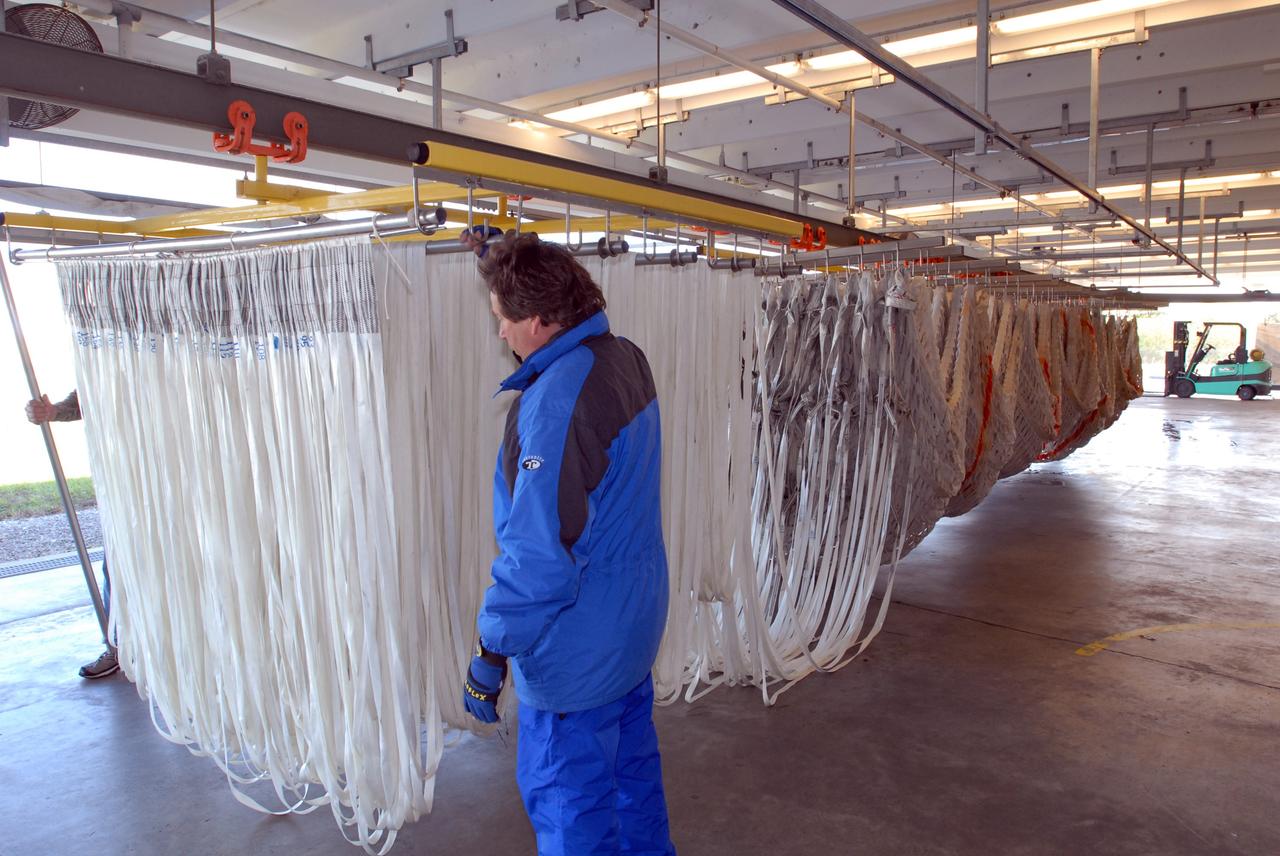
CAPE CANAVERAL, Fla. – At the Parachute Refurbishment Facility at NASA's Kennedy Space Center in Florida, a worker checks the parachute lines suspended from the monorail system. The parachutes were recovered from sea after the launch of space shuttle Endeavour on the STS-126 mission The parachutes are used to slow the descent of the solid rocket boosters that are jettisoned during liftoff. The monorail will transport each parachute into a 30,000-gallon washer and a huge dryer heated with 140-degree air at 13,000 cubic feet per minute. One pilot, one drogue and three main canopies per booster slow the booster’s fall from about 360 mph to 50 mph. After the chutes are cleaned and repaired, they must be carefully packed into their bags so they will deploy correctly the next time they are used. Photo credit: NASA/Jim Grossmann
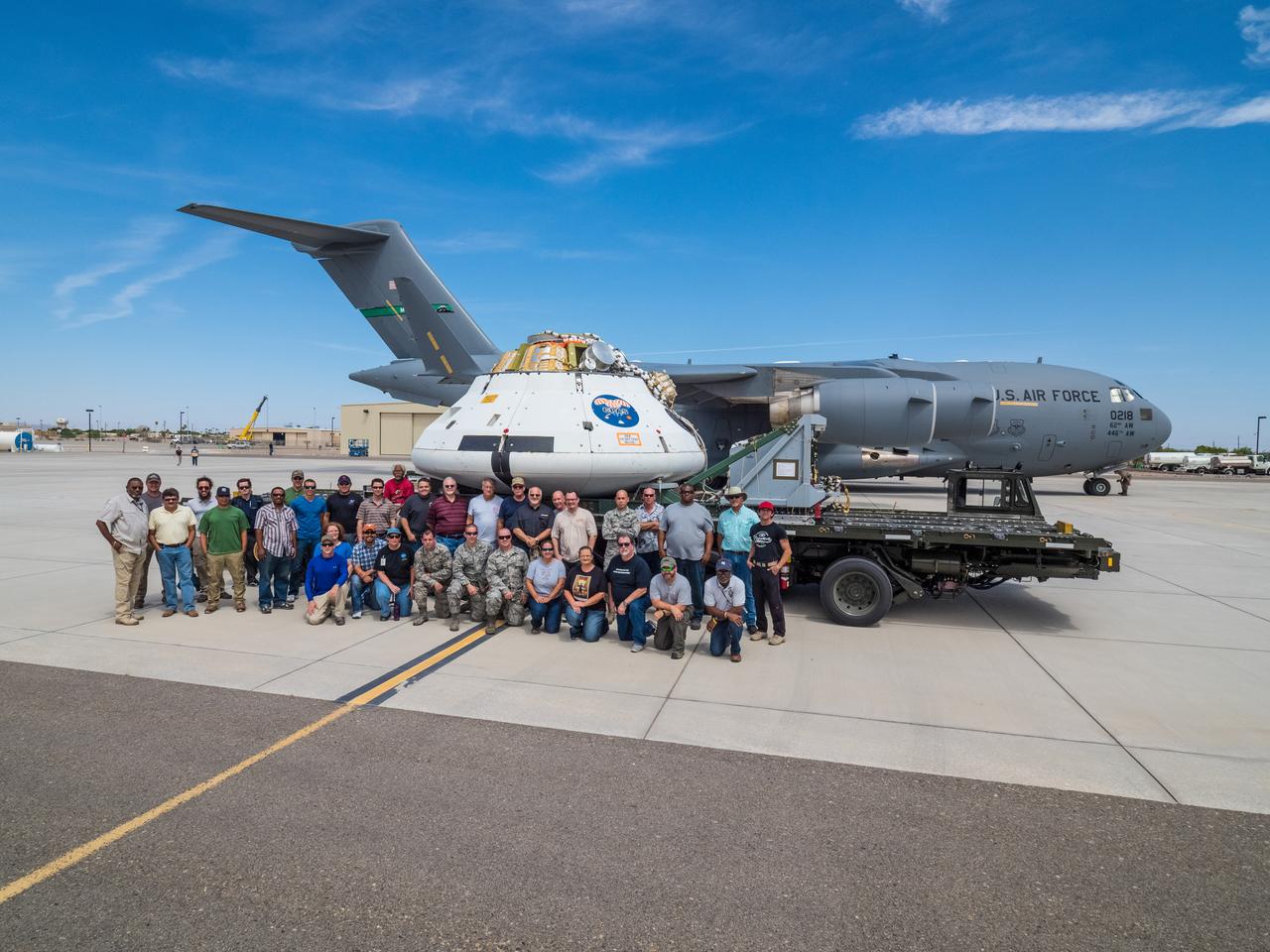
Engineers prepare to test the parachute system for NASA’s Orion spacecraft at the U.S. Army Yuma Proving Ground in Yuma, Arizona on Aug. 24, 2015. During the test, planned for Wednesday, Aug. 26, a C-17 aircraft will carry a representative Orion capsule to 35,000 feet in altitude and then drop it from its cargo bay. Engineers will test a scenario in which one of Orion’s two drogue parachutes, used to stabilize it in the air, does not deploy, and one of its three main parachutes, used to slow the capsule during the final stage of descent, also does not deploy. The risky test will provide data engineers will use as they gear up to qualify Orion’s parachutes for missions with astronauts. On Aug. 24, a C-17 was loaded with the test version of Orion, which has a similar mass and interfaces with the parachutes as the Orion being developed for deep space missions but is shorter on top to fit inside the aircraft. Part of Batch image transfer from Flickr.
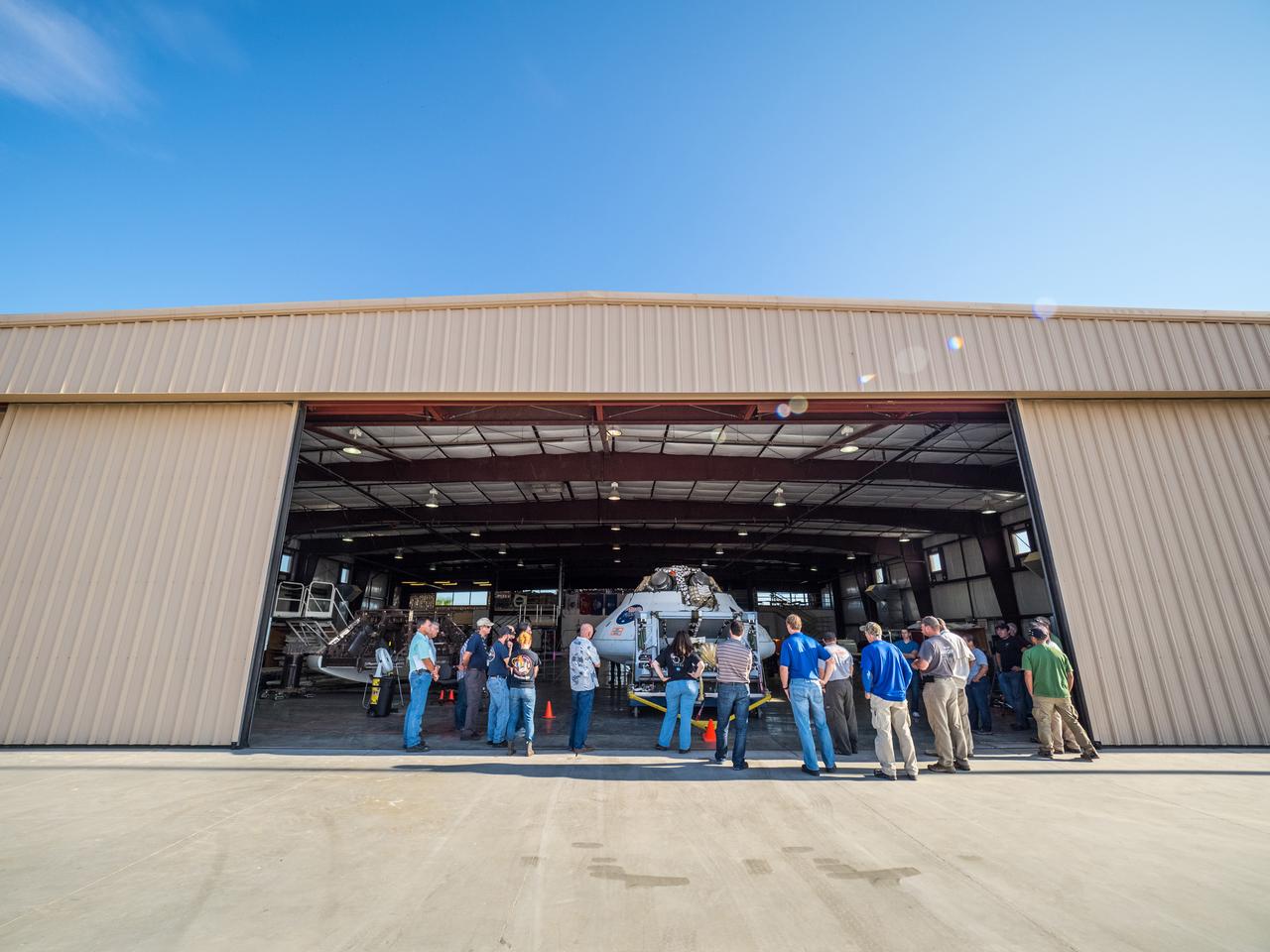
Engineers prepare to test the parachute system for NASA’s Orion spacecraft at the U.S. Army Yuma Proving Ground in Yuma, Arizona on Aug. 24, 2015. During the test, planned for Wednesday, Aug. 26, a C-17 aircraft will carry a representative Orion capsule to 35,000 feet in altitude and then drop it from its cargo bay. Engineers will test a scenario in which one of Orion’s two drogue parachutes, used to stabilize it in the air, does not deploy, and one of its three main parachutes, used to slow the capsule during the final stage of descent, also does not deploy. The risky test will provide data engineers will use as they gear up to qualify Orion’s parachutes for missions with astronauts. On Aug. 24, a C-17 was loaded with the test version of Orion, which has a similar mass and interfaces with the parachutes as the Orion being developed for deep space missions but is shorter on top to fit inside the aircraft. Part of Batch image transfer from Flickr.

Engineers prepare to test the parachute system for NASA’s Orion spacecraft at the U.S. Army Yuma Proving Ground in Yuma, Arizona on Aug. 24, 2015. During the test, planned for Wednesday, Aug. 26, a C-17 aircraft will carry a representative Orion capsule to 35,000 feet in altitude and then drop it from its cargo bay. Engineers will test a scenario in which one of Orion’s two drogue parachutes, used to stabilize it in the air, does not deploy, and one of its three main parachutes, used to slow the capsule during the final stage of descent, also does not deploy. The risky test will provide data engineers will use as they gear up to qualify Orion’s parachutes for missions with astronauts. On Aug. 24, a C-17 was loaded with the test version of Orion, which has a similar mass and interfaces with the parachutes as the Orion being developed for deep space missions but is shorter on top to fit inside the aircraft. Part of Batch image transfer from Flickr.
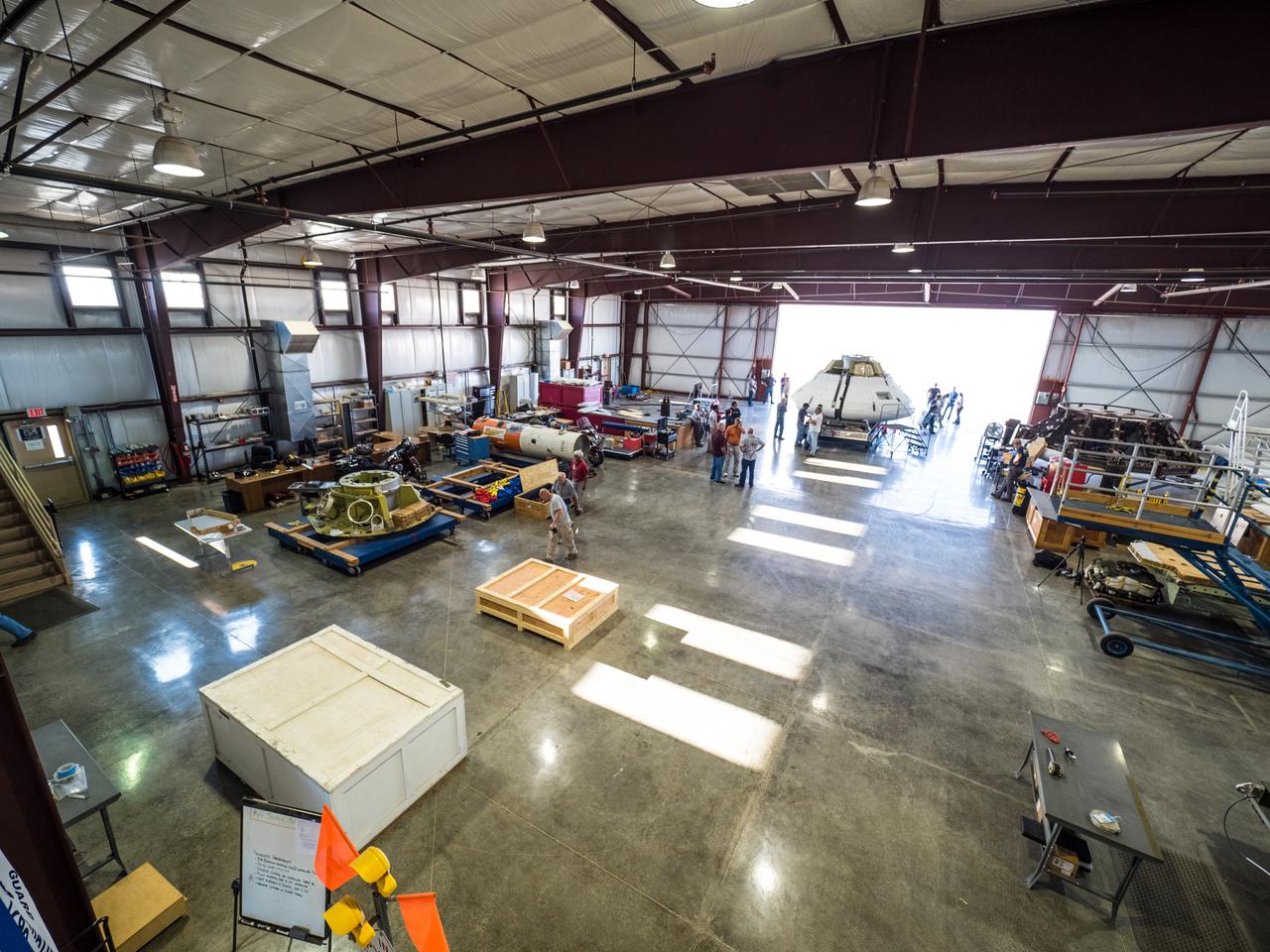
Engineers prepare to test the parachute system for NASA’s Orion spacecraft at the U.S. Army Yuma Proving Ground in Yuma, Arizona on Aug. 24, 2015. During the test, planned for Wednesday, Aug. 26, a C-17 aircraft will carry a representative Orion capsule to 35,000 feet in altitude and then drop it from its cargo bay. Engineers will test a scenario in which one of Orion’s two drogue parachutes, used to stabilize it in the air, does not deploy, and one of its three main parachutes, used to slow the capsule during the final stage of descent, also does not deploy. The risky test will provide data engineers will use as they gear up to qualify Orion’s parachutes for missions with astronauts. On Aug. 24, a C-17 was loaded with the test version of Orion, which has a similar mass and interfaces with the parachutes as the Orion being developed for deep space missions but is shorter on top to fit inside the aircraft. Part of Batch image transfer from Flickr.
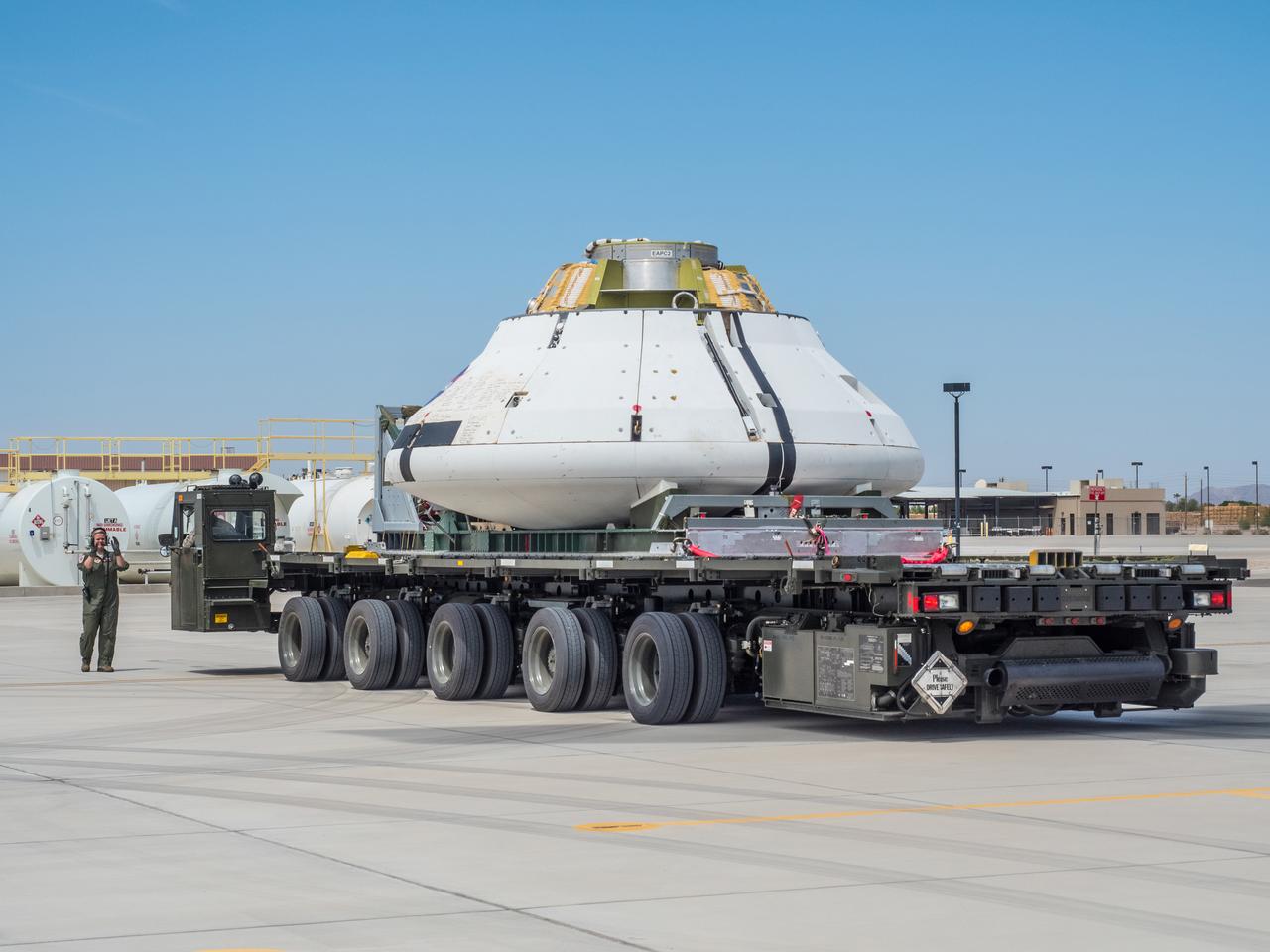
Engineers prepare to test the parachute system for NASA’s Orion spacecraft at the U.S. Army Yuma Proving Ground in Yuma, Arizona on Aug. 24, 2015. During the test, planned for Wednesday, Aug. 26, a C-17 aircraft will carry a representative Orion capsule to 35,000 feet in altitude and then drop it from its cargo bay. Engineers will test a scenario in which one of Orion’s two drogue parachutes, used to stabilize it in the air, does not deploy, and one of its three main parachutes, used to slow the capsule during the final stage of descent, also does not deploy. The risky test will provide data engineers will use as they gear up to qualify Orion’s parachutes for missions with astronauts. On Aug. 24, a C-17 was loaded with the test version of Orion, which has a similar mass and interfaces with the parachutes as the Orion being developed for deep space missions but is shorter on top to fit inside the aircraft. Part of Batch image transfer from Flickr.
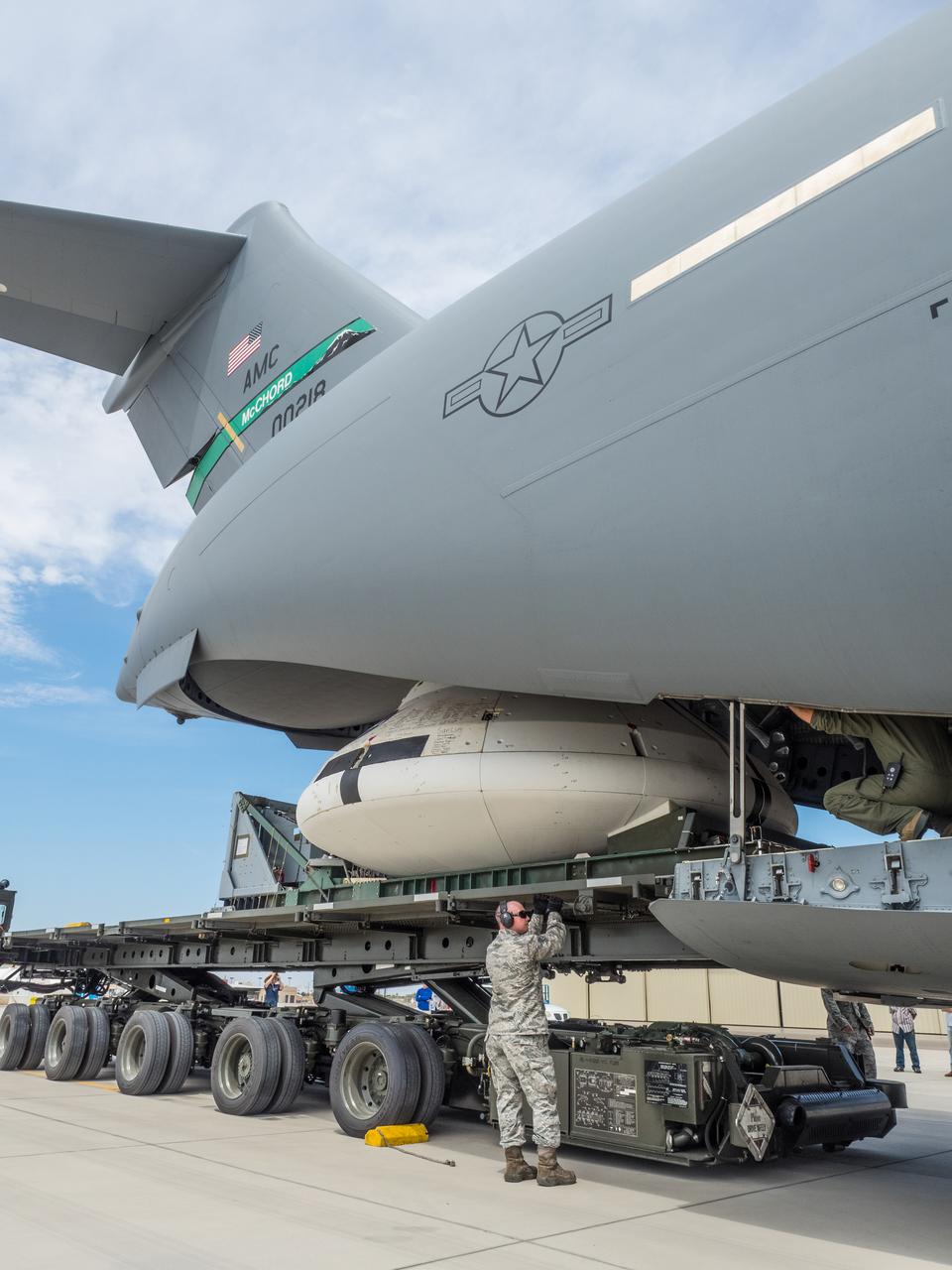
Engineers prepare to test the parachute system for NASA’s Orion spacecraft at the U.S. Army Yuma Proving Ground in Yuma, Arizona on Aug. 24, 2015. During the test, planned for Wednesday, Aug. 26, a C-17 aircraft will carry a representative Orion capsule to 35,000 feet in altitude and then drop it from its cargo bay. Engineers will test a scenario in which one of Orion’s two drogue parachutes, used to stabilize it in the air, does not deploy, and one of its three main parachutes, used to slow the capsule during the final stage of descent, also does not deploy. The risky test will provide data engineers will use as they gear up to qualify Orion’s parachutes for missions with astronauts. On Aug. 24, a C-17 was loaded with the test version of Orion, which has a similar mass and interfaces with the parachutes as the Orion being developed for deep space missions but is shorter on top to fit inside the aircraft. Part of Batch image transfer from Flickr.
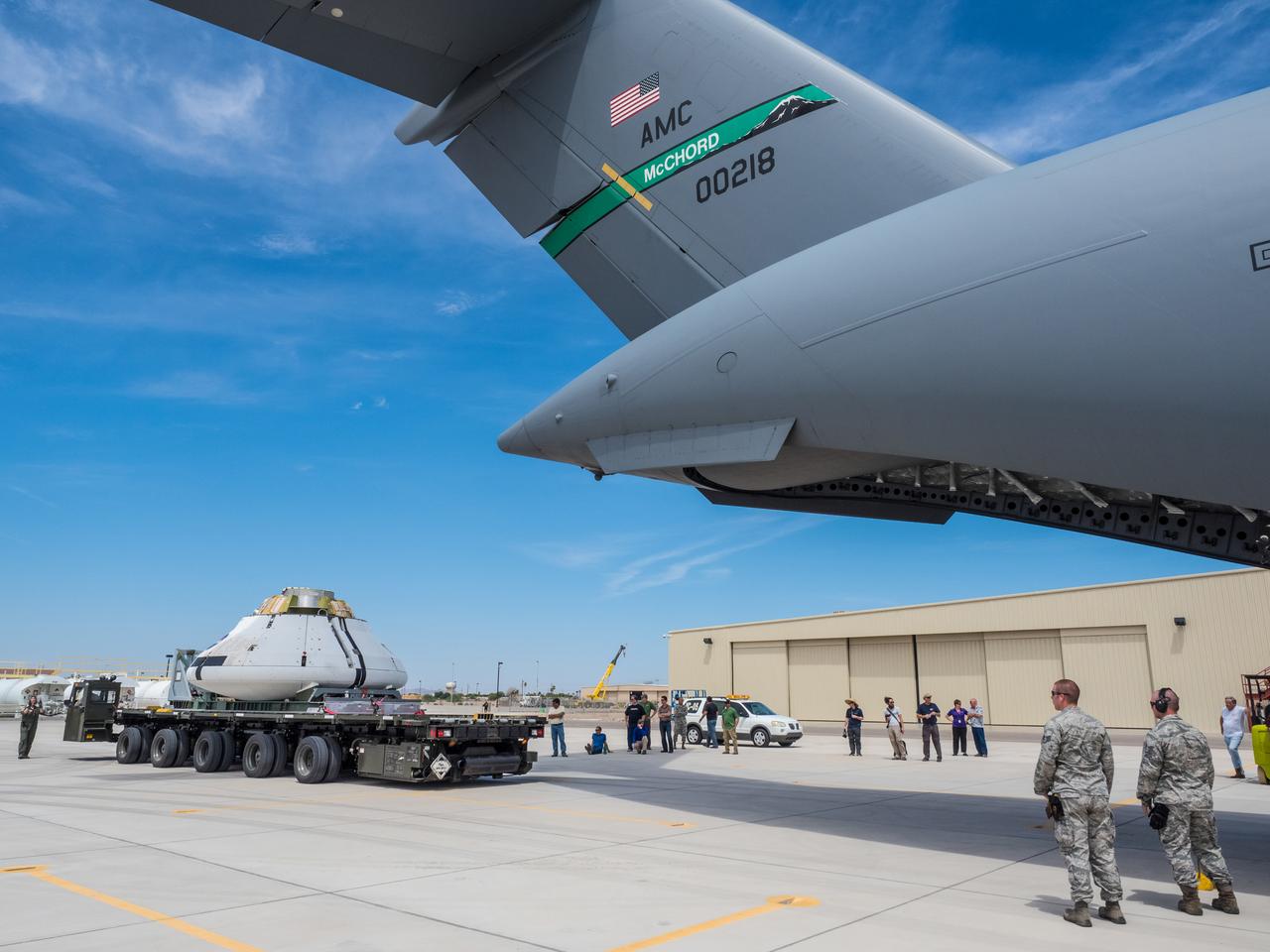
Engineers prepare to test the parachute system for NASA’s Orion spacecraft at the U.S. Army Yuma Proving Ground in Yuma, Arizona on Aug. 24, 2015. During the test, planned for Wednesday, Aug. 26, a C-17 aircraft will carry a representative Orion capsule to 35,000 feet in altitude and then drop it from its cargo bay. Engineers will test a scenario in which one of Orion’s two drogue parachutes, used to stabilize it in the air, does not deploy, and one of its three main parachutes, used to slow the capsule during the final stage of descent, also does not deploy. The risky test will provide data engineers will use as they gear up to qualify Orion’s parachutes for missions with astronauts. On Aug. 24, a C-17 was loaded with the test version of Orion, which has a similar mass and interfaces with the parachutes as the Orion being developed for deep space missions but is shorter on top to fit inside the aircraft. Part of Batch image transfer from Flickr.
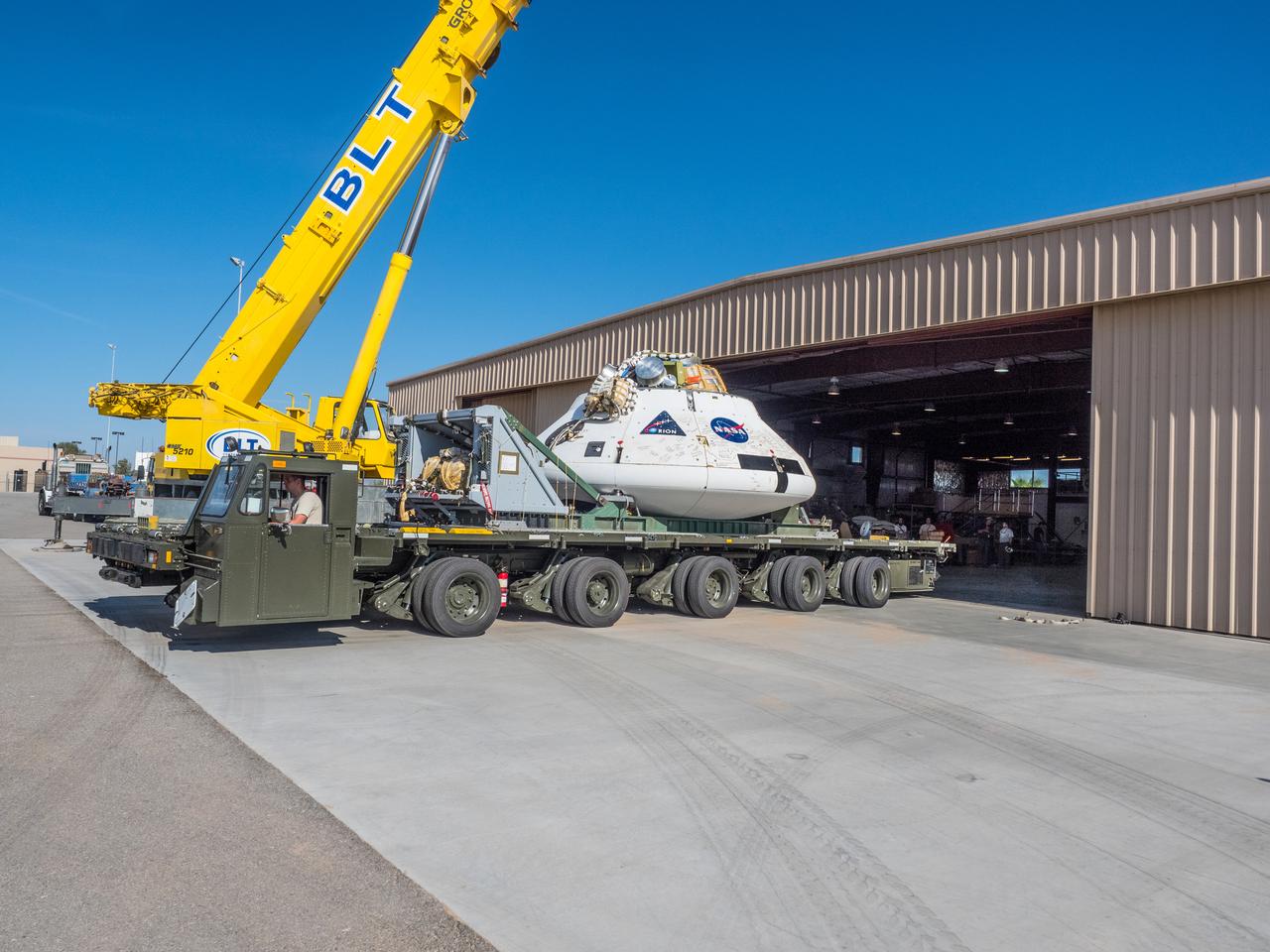
Engineers prepare to test the parachute system for NASA’s Orion spacecraft at the U.S. Army Yuma Proving Ground in Yuma, Arizona on Aug. 24, 2015. During the test, planned for Wednesday, Aug. 26, a C-17 aircraft will carry a representative Orion capsule to 35,000 feet in altitude and then drop it from its cargo bay. Engineers will test a scenario in which one of Orion’s two drogue parachutes, used to stabilize it in the air, does not deploy, and one of its three main parachutes, used to slow the capsule during the final stage of descent, also does not deploy. The risky test will provide data engineers will use as they gear up to qualify Orion’s parachutes for missions with astronauts. On Aug. 24, a C-17 was loaded with the test version of Orion, which has a similar mass and interfaces with the parachutes as the Orion being developed for deep space missions but is shorter on top to fit inside the aircraft. Part of Batch image transfer from Flickr.
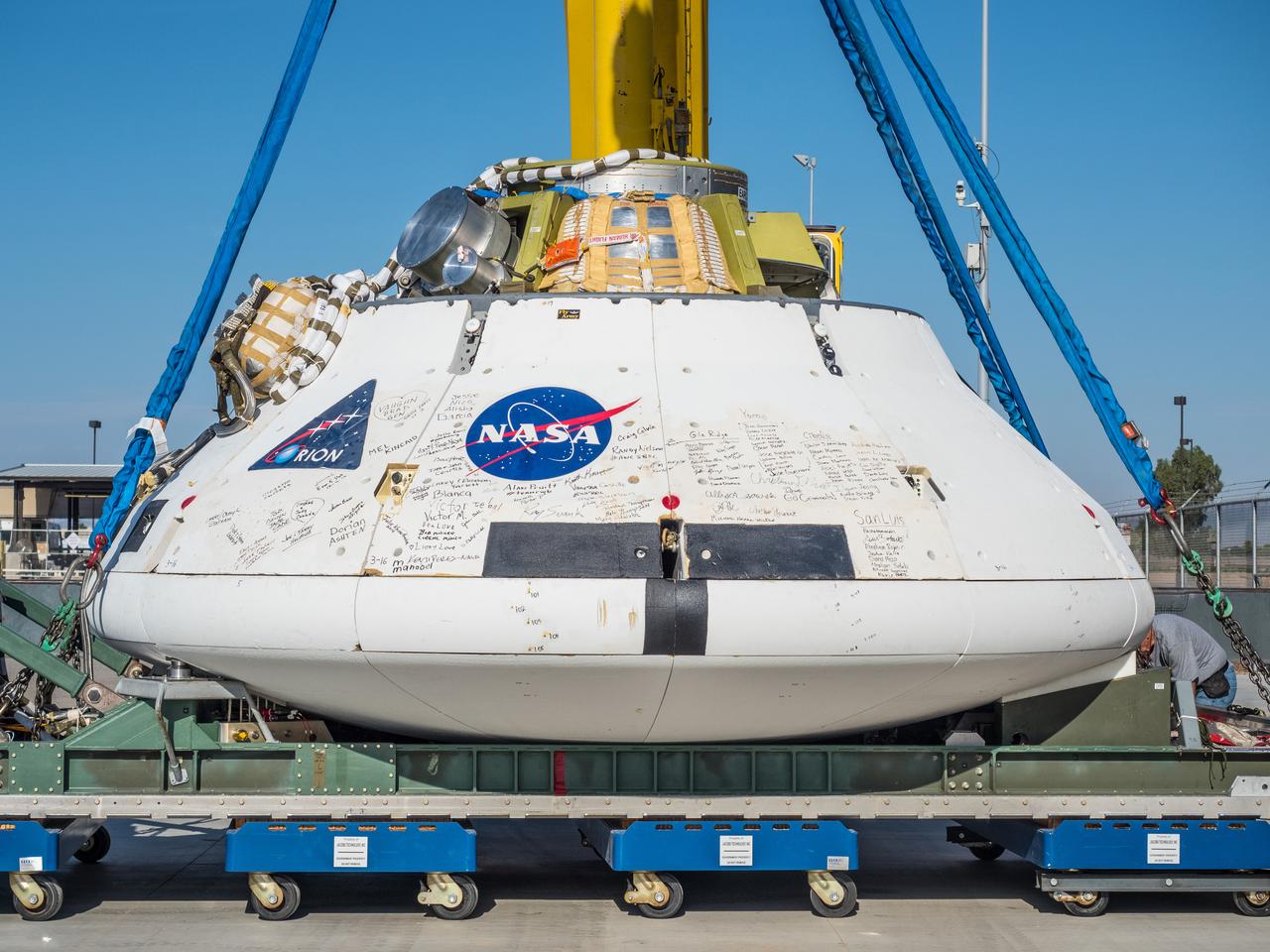
Engineers prepare to test the parachute system for NASA’s Orion spacecraft at the U.S. Army Yuma Proving Ground in Yuma, Arizona on Aug. 24, 2015. During the test, planned for Wednesday, Aug. 26, a C-17 aircraft will carry a representative Orion capsule to 35,000 feet in altitude and then drop it from its cargo bay. Engineers will test a scenario in which one of Orion’s two drogue parachutes, used to stabilize it in the air, does not deploy, and one of its three main parachutes, used to slow the capsule during the final stage of descent, also does not deploy. The risky test will provide data engineers will use as they gear up to qualify Orion’s parachutes for missions with astronauts. On Aug. 24, a C-17 was loaded with the test version of Orion, which has a similar mass and interfaces with the parachutes as the Orion being developed for deep space missions but is shorter on top to fit inside the aircraft. Part of Batch image transfer from Flickr.
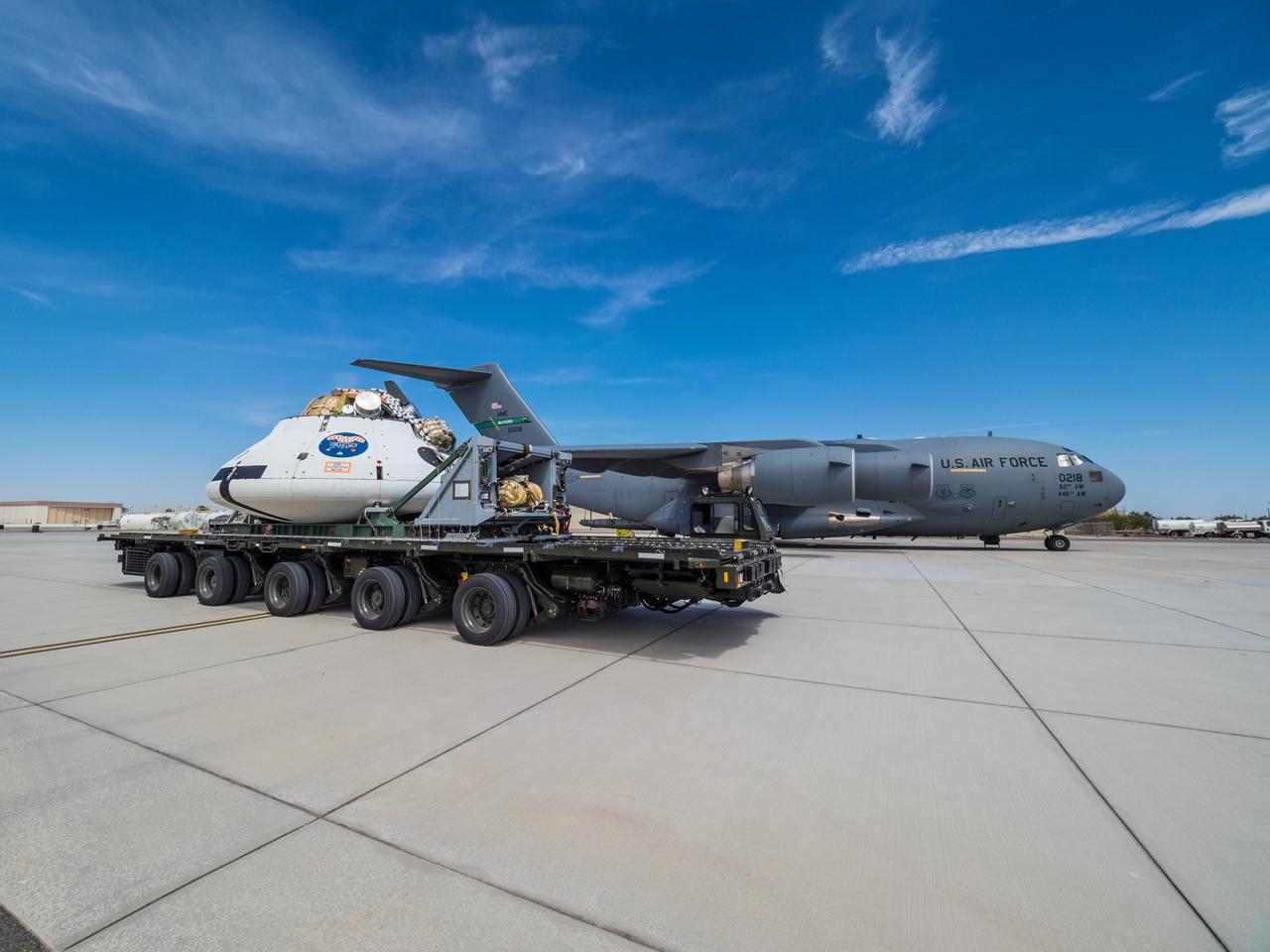
Engineers prepare to test the parachute system for NASA’s Orion spacecraft at the U.S. Army Yuma Proving Ground in Yuma, Arizona on Aug. 24, 2015. During the test, planned for Wednesday, Aug. 26, a C-17 aircraft will carry a representative Orion capsule to 35,000 feet in altitude and then drop it from its cargo bay. Engineers will test a scenario in which one of Orion’s two drogue parachutes, used to stabilize it in the air, does not deploy, and one of its three main parachutes, used to slow the capsule during the final stage of descent, also does not deploy. The risky test will provide data engineers will use as they gear up to qualify Orion’s parachutes for missions with astronauts. On Aug. 24, a C-17 was loaded with the test version of Orion, which has a similar mass and interfaces with the parachutes as the Orion being developed for deep space missions but is shorter on top to fit inside the aircraft. Part of Batch image transfer from Flickr.
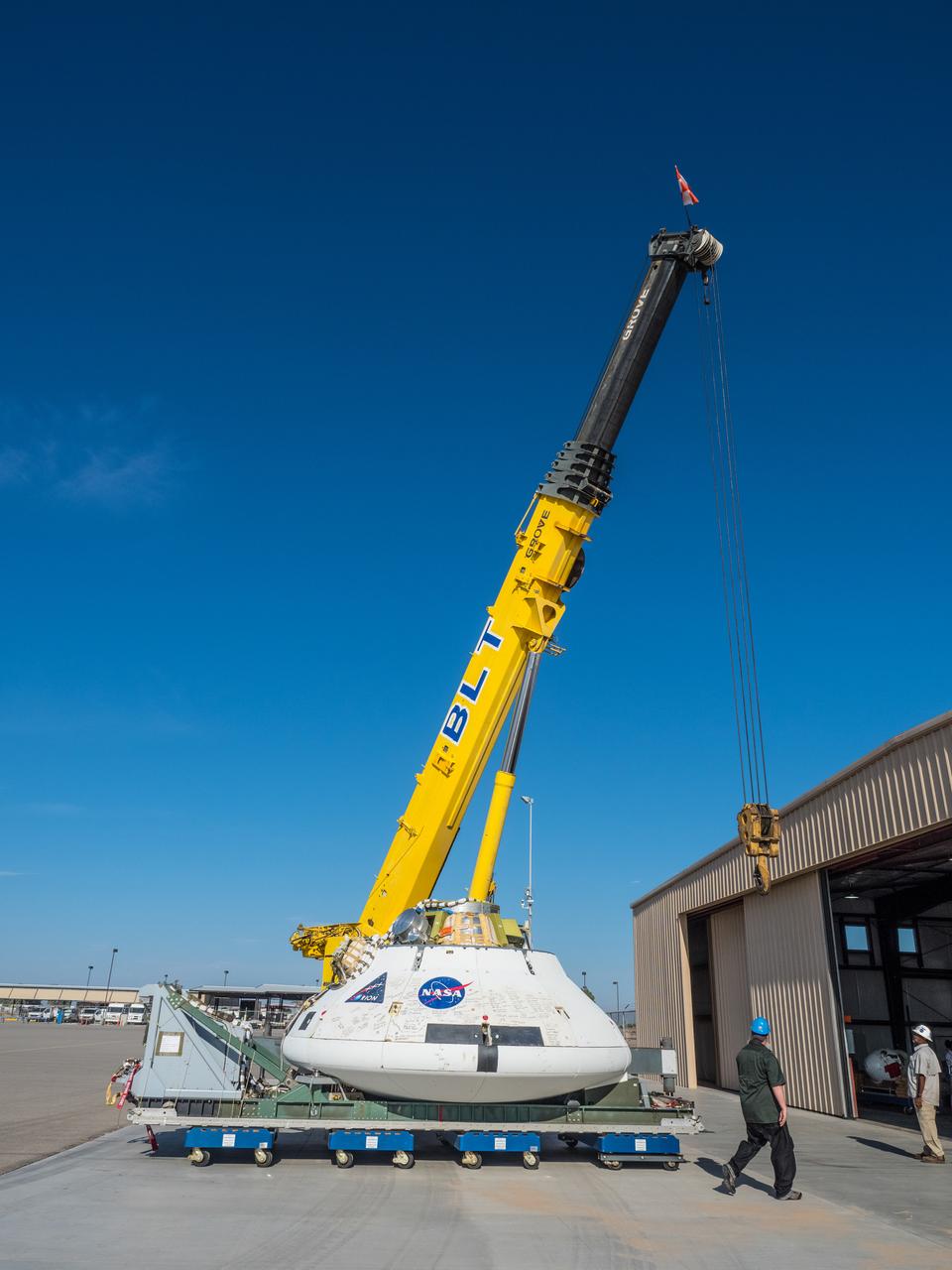
Engineers prepare to test the parachute system for NASA’s Orion spacecraft at the U.S. Army Yuma Proving Ground in Yuma, Arizona on Aug. 24, 2015. During the test, planned for Wednesday, Aug. 26, a C-17 aircraft will carry a representative Orion capsule to 35,000 feet in altitude and then drop it from its cargo bay. Engineers will test a scenario in which one of Orion’s two drogue parachutes, used to stabilize it in the air, does not deploy, and one of its three main parachutes, used to slow the capsule during the final stage of descent, also does not deploy. The risky test will provide data engineers will use as they gear up to qualify Orion’s parachutes for missions with astronauts. On Aug. 24, a C-17 was loaded with the test version of Orion, which has a similar mass and interfaces with the parachutes as the Orion being developed for deep space missions but is shorter on top to fit inside the aircraft. Part of Batch image transfer from Flickr.
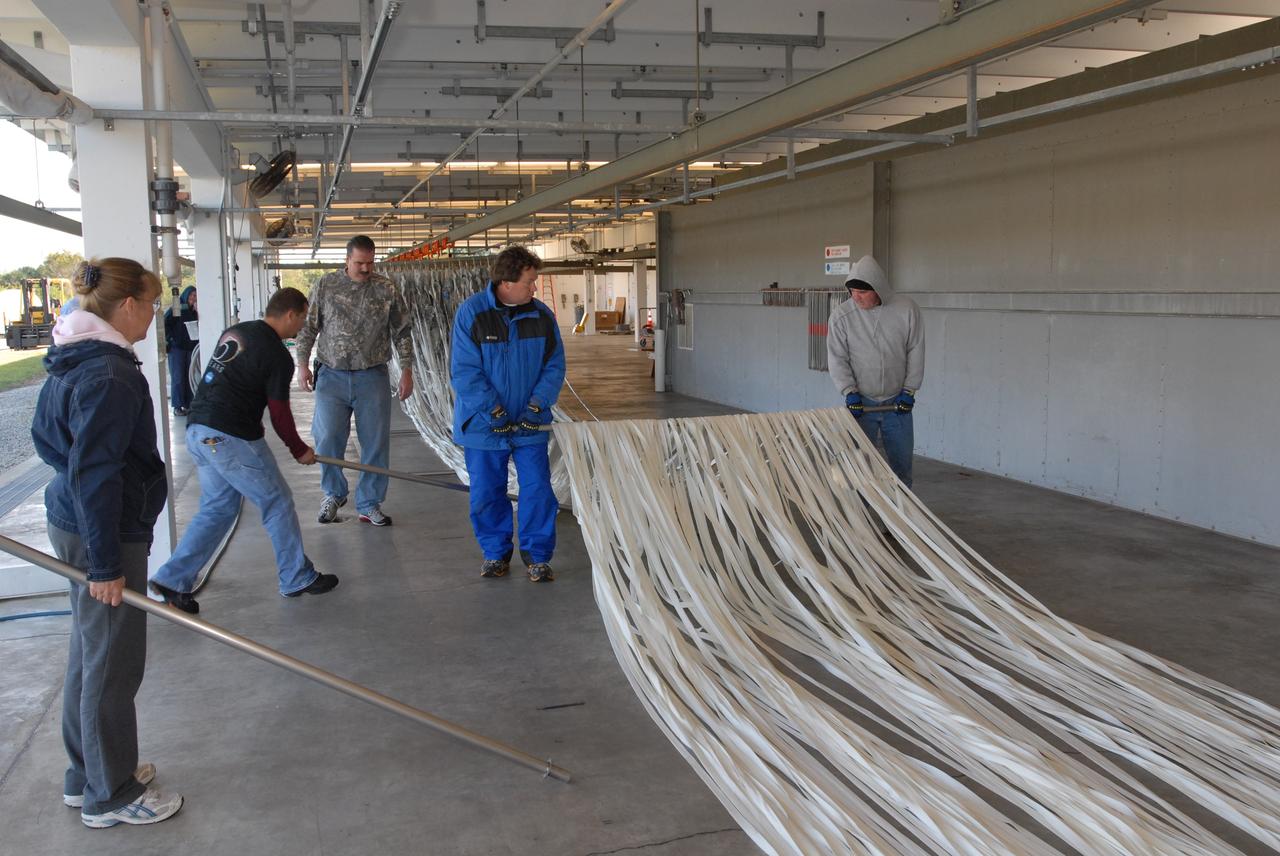
CAPE CANAVERAL, Fla. – At the Parachute Refurbishment Facility at NASA's Kennedy Space Center in Florida, workers place rods under the lines of the parachutes recovered from sea after the launch of space shuttle Endeavour on the STS-126 mission to hang them on a monorail system. Behind them, the parachutes are suspended from the monorail. The parachutes are used to slow the descent of the solid rocket boosters that are jettisoned during liftoff. The monorail will transport each parachute into a 30,000-gallon washer and a huge dryer heated with 140-degree air at 13,000 cubic feet per minute. One pilot, one drogue and three main canopies per booster slow the booster’s fall from about 360 mph to 50 mph. After the chutes are cleaned and repaired, they must be carefully packed into their bags so they will deploy correctly the next time they are used. Photo credit: NASA/Jim Grossmann
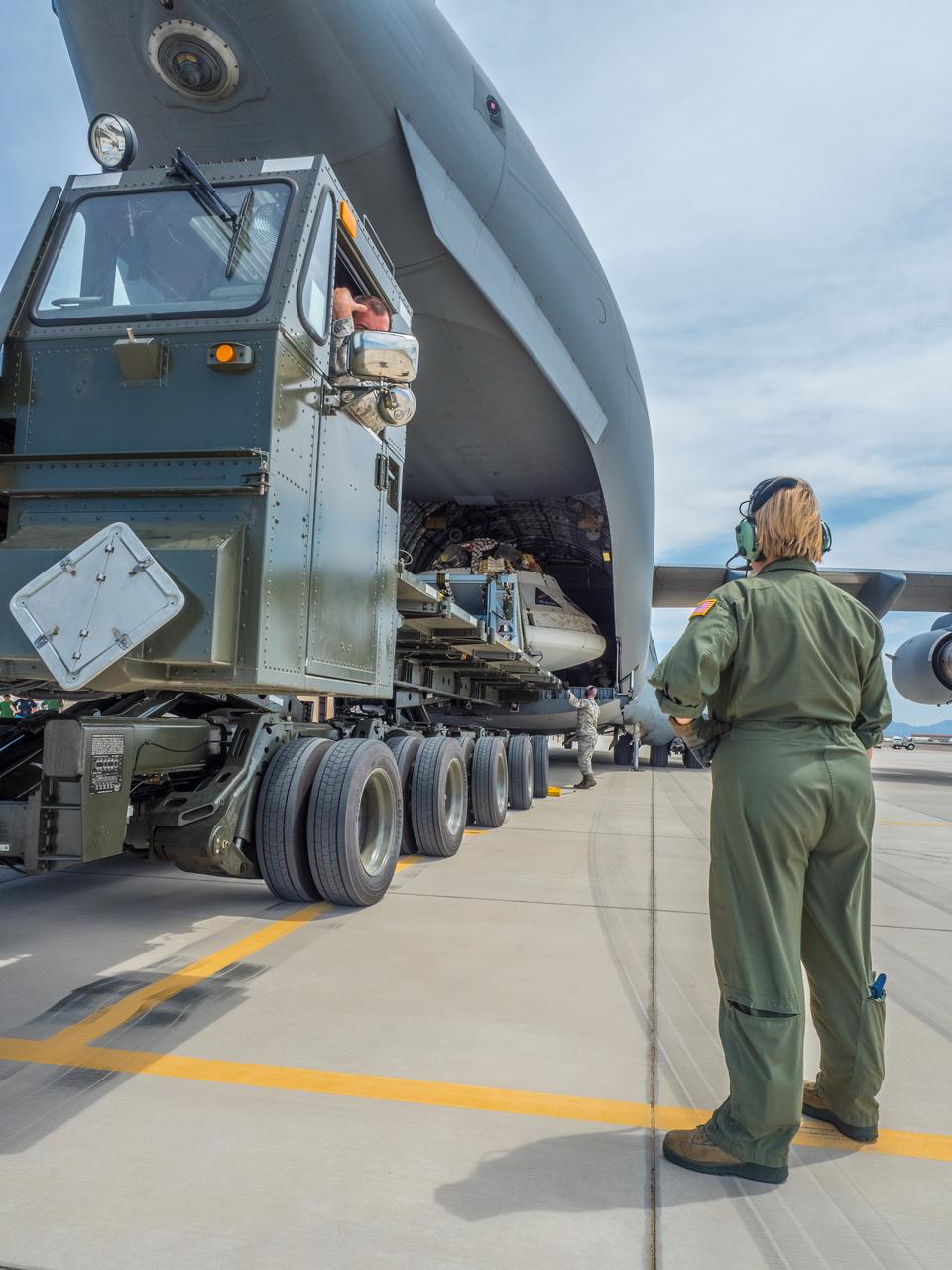
Engineers prepare to test the parachute system for NASA’s Orion spacecraft at the U.S. Army Yuma Proving Ground in Yuma, Arizona on Aug. 24, 2015. During the test, planned for Wednesday, Aug. 26, a C-17 aircraft will carry a representative Orion capsule to 35,000 feet in altitude and then drop it from its cargo bay. Engineers will test a scenario in which one of Orion’s two drogue parachutes, used to stabilize it in the air, does not deploy, and one of its three main parachutes, used to slow the capsule during the final stage of descent, also does not deploy. The risky test will provide data engineers will use as they gear up to qualify Orion’s parachutes for missions with astronauts. On Aug. 24, a C-17 was loaded with the test version of Orion, which has a similar mass and interfaces with the parachutes as the Orion being developed for deep space missions but is shorter on top to fit inside the aircraft. Part of Batch image transfer from Flickr.
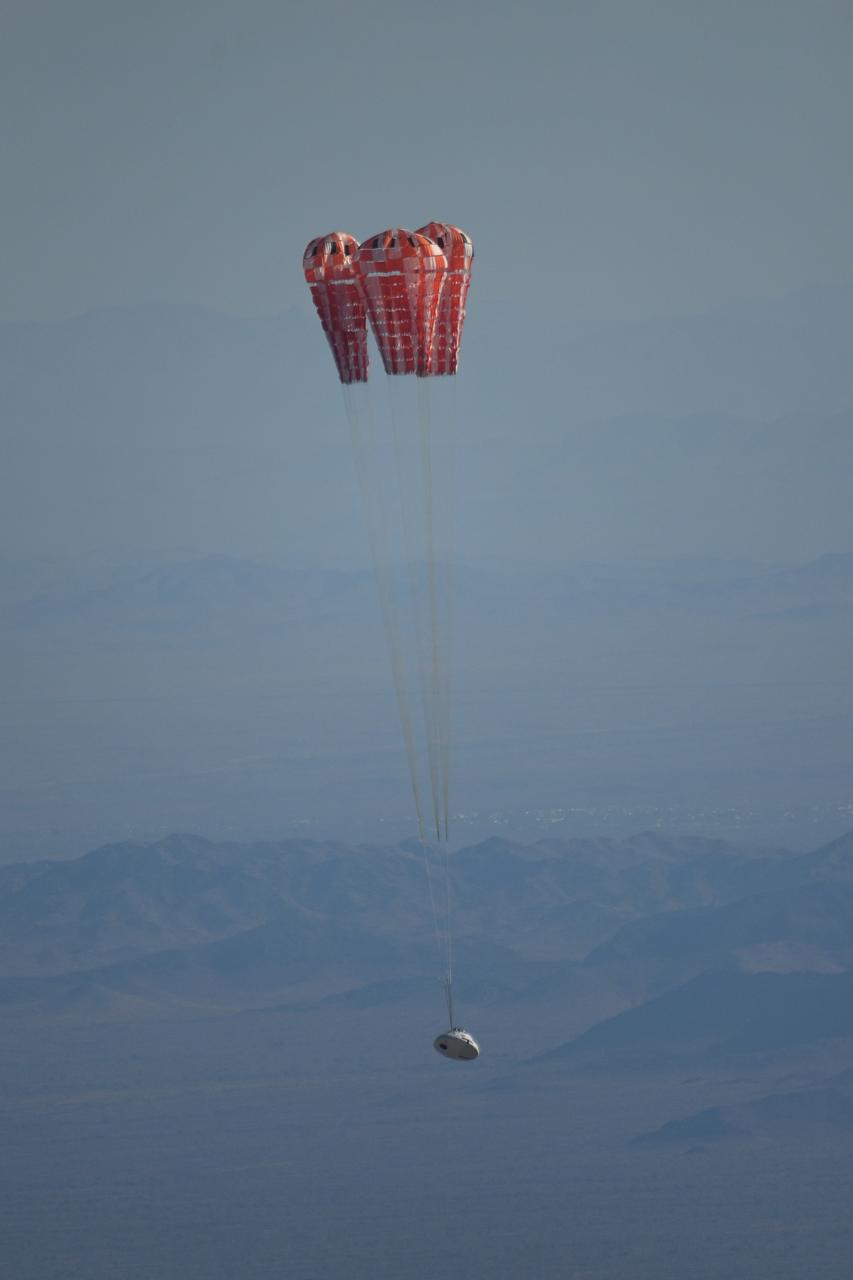
Orion’s three main orange and white parachutes help a representative model of the spacecraft descend through sky above Arizona, where NASA engineers tested the parachute system on Sept. 13, 2017 at the U.S. Army Proving Ground in Yuma. NASA is qualifying Orion’s parachutes for missions with astronauts.. .During this test, engineers replicated a situation in which Orion must abort off the Space Launch System rocket and bypasses part of its normal parachute deployment sequence that typically helps the spacecraft slow down during its descent to Earth after deep space missions. The capsule was dropped out of a C-17 aircraft at more than 4.7 miles in altitude and allowed to free fall for 20 seconds, longer than ever before, to produce high aerodynamic pressure before only its pilot and main parachutes were deployed, testing whether they could perform as expected under extreme loads. Orion’s full parachute system includes 11 total parachutes -- three forward bay cover parachutes and two drogue parachutes, along with three pilot parachutes that help pull out the spacecraft’s three mains.
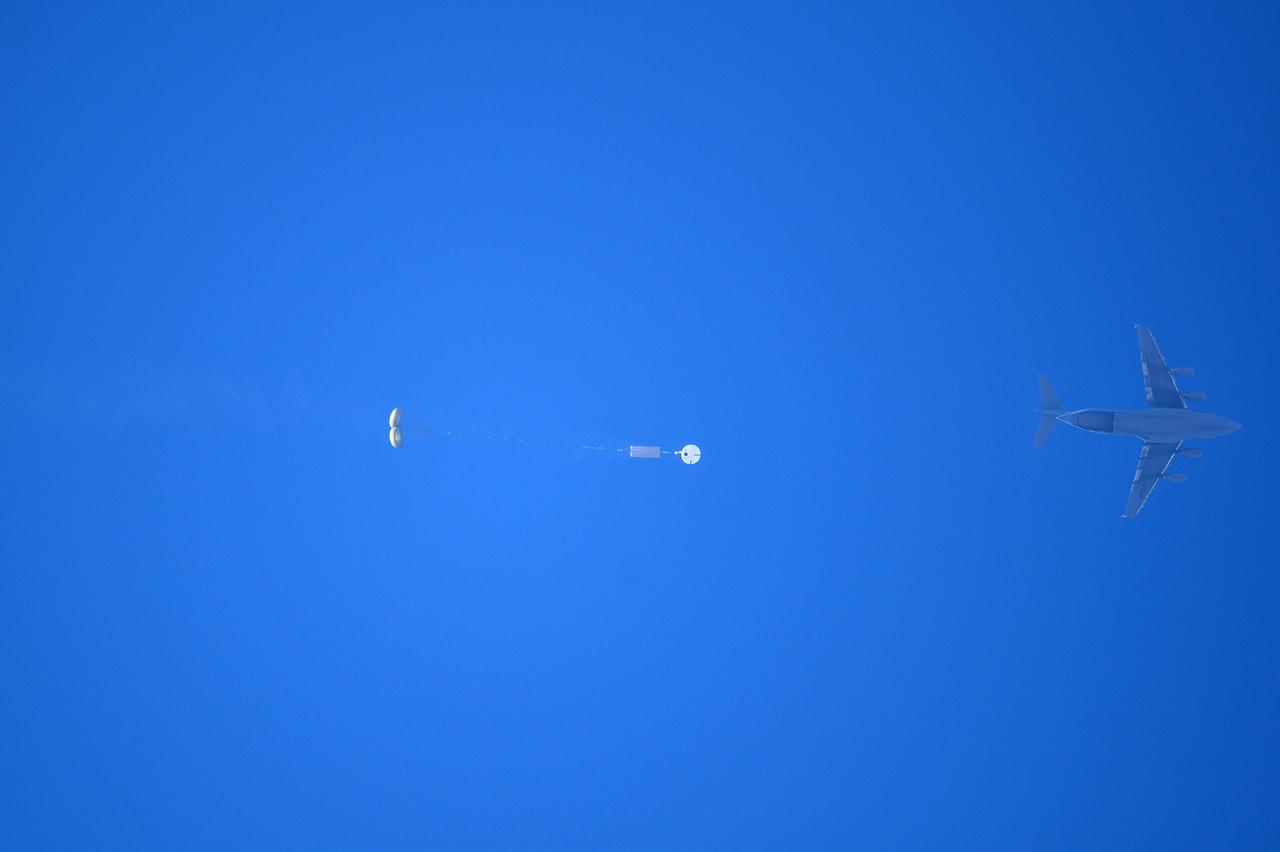
Orion’s three main orange and white parachutes help a representative model of the spacecraft descend through sky above Arizona, where NASA engineers tested the parachute system on Sept. 13, 2017 at the U.S. Army Proving Ground in Yuma. NASA is qualifying Orion’s parachutes for missions with astronauts.. .During this test, engineers replicated a situation in which Orion must abort off the Space Launch System rocket and bypasses part of its normal parachute deployment sequence that typically helps the spacecraft slow down during its descent to Earth after deep space missions. The capsule was dropped out of a C-17 aircraft at more than 4.7 miles in altitude and allowed to free fall for 20 seconds, longer than ever before, to produce high aerodynamic pressure before only its pilot and main parachutes were deployed, testing whether they could perform as expected under extreme loads. Orion’s full parachute system includes 11 total parachutes -- three forward bay cover parachutes and two drogue parachutes, along with three pilot parachutes that help pull out the spacecraft’s three mains.
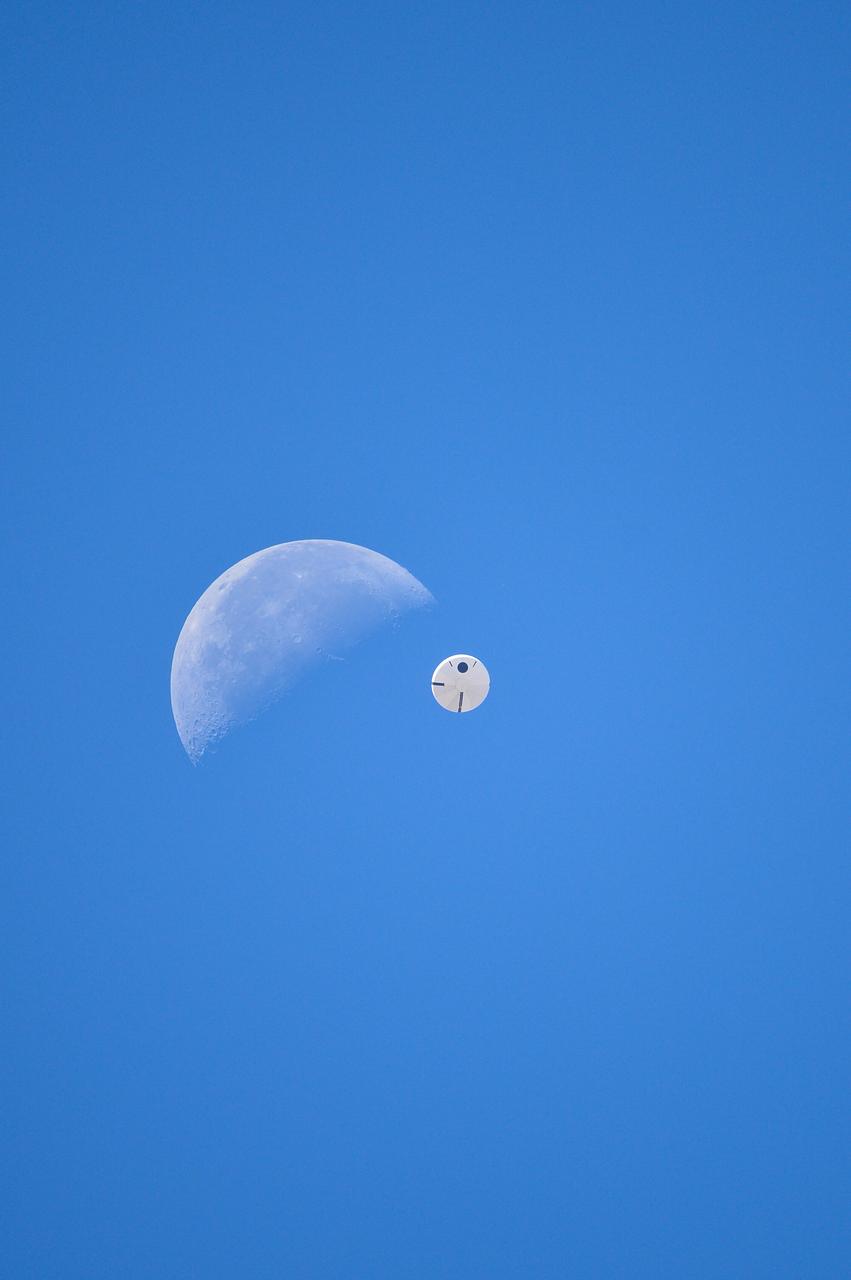
Orion’s three main orange and white parachutes help a representative model of the spacecraft descend through sky above Arizona, where NASA engineers tested the parachute system on Sept. 13, 2017 at the U.S. Army Proving Ground in Yuma. NASA is qualifying Orion’s parachutes for missions with astronauts.. .During this test, engineers replicated a situation in which Orion must abort off the Space Launch System rocket and bypasses part of its normal parachute deployment sequence that typically helps the spacecraft slow down during its descent to Earth after deep space missions. The capsule was dropped out of a C-17 aircraft at more than 4.7 miles in altitude and allowed to free fall for 20 seconds, longer than ever before, to produce high aerodynamic pressure before only its pilot and main parachutes were deployed, testing whether they could perform as expected under extreme loads. Orion’s full parachute system includes 11 total parachutes -- three forward bay cover parachutes and two drogue parachutes, along with three pilot parachutes that help pull out the spacecraft’s three mains.
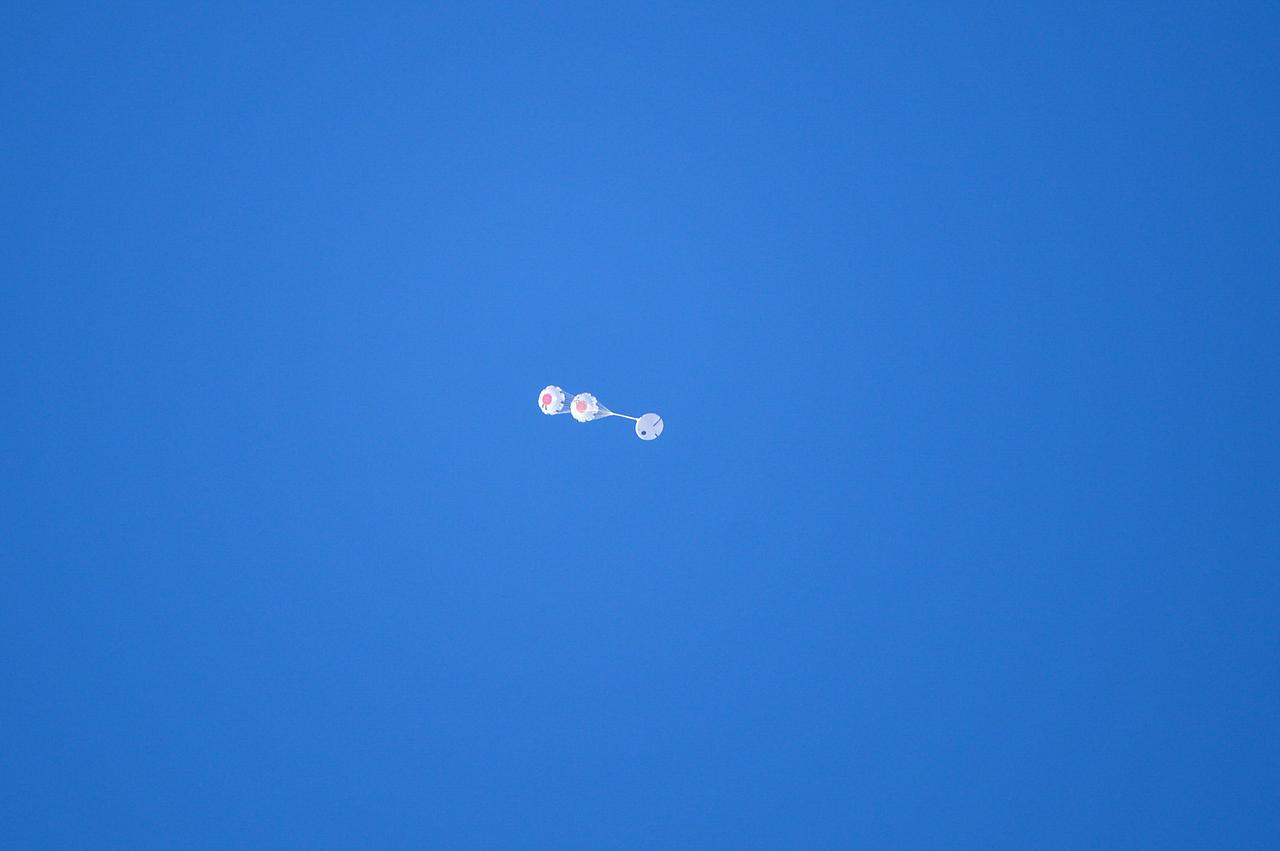
Orion’s three main orange and white parachutes help a representative model of the spacecraft descend through sky above Arizona, where NASA engineers tested the parachute system on Sept. 13, 2017 at the U.S. Army Proving Ground in Yuma. NASA is qualifying Orion’s parachutes for missions with astronauts.. .During this test, engineers replicated a situation in which Orion must abort off the Space Launch System rocket and bypasses part of its normal parachute deployment sequence that typically helps the spacecraft slow down during its descent to Earth after deep space missions. The capsule was dropped out of a C-17 aircraft at more than 4.7 miles in altitude and allowed to free fall for 20 seconds, longer than ever before, to produce high aerodynamic pressure before only its pilot and main parachutes were deployed, testing whether they could perform as expected under extreme loads. Orion’s full parachute system includes 11 total parachutes -- three forward bay cover parachutes and two drogue parachutes, along with three pilot parachutes that help pull out the spacecraft’s three mains.

Orion’s three main orange and white parachutes help a representative model of the spacecraft descend through sky above Arizona, where NASA engineers tested the parachute system on Sept. 13, 2017 at the U.S. Army Proving Ground in Yuma. NASA is qualifying Orion’s parachutes for missions with astronauts.. .During this test, engineers replicated a situation in which Orion must abort off the Space Launch System rocket and bypasses part of its normal parachute deployment sequence that typically helps the spacecraft slow down during its descent to Earth after deep space missions. The capsule was dropped out of a C-17 aircraft at more than 4.7 miles in altitude and allowed to free fall for 20 seconds, longer than ever before, to produce high aerodynamic pressure before only its pilot and main parachutes were deployed, testing whether they could perform as expected under extreme loads. Orion’s full parachute system includes 11 total parachutes -- three forward bay cover parachutes and two drogue parachutes, along with three pilot parachutes that help pull out the spacecraft’s three mains.
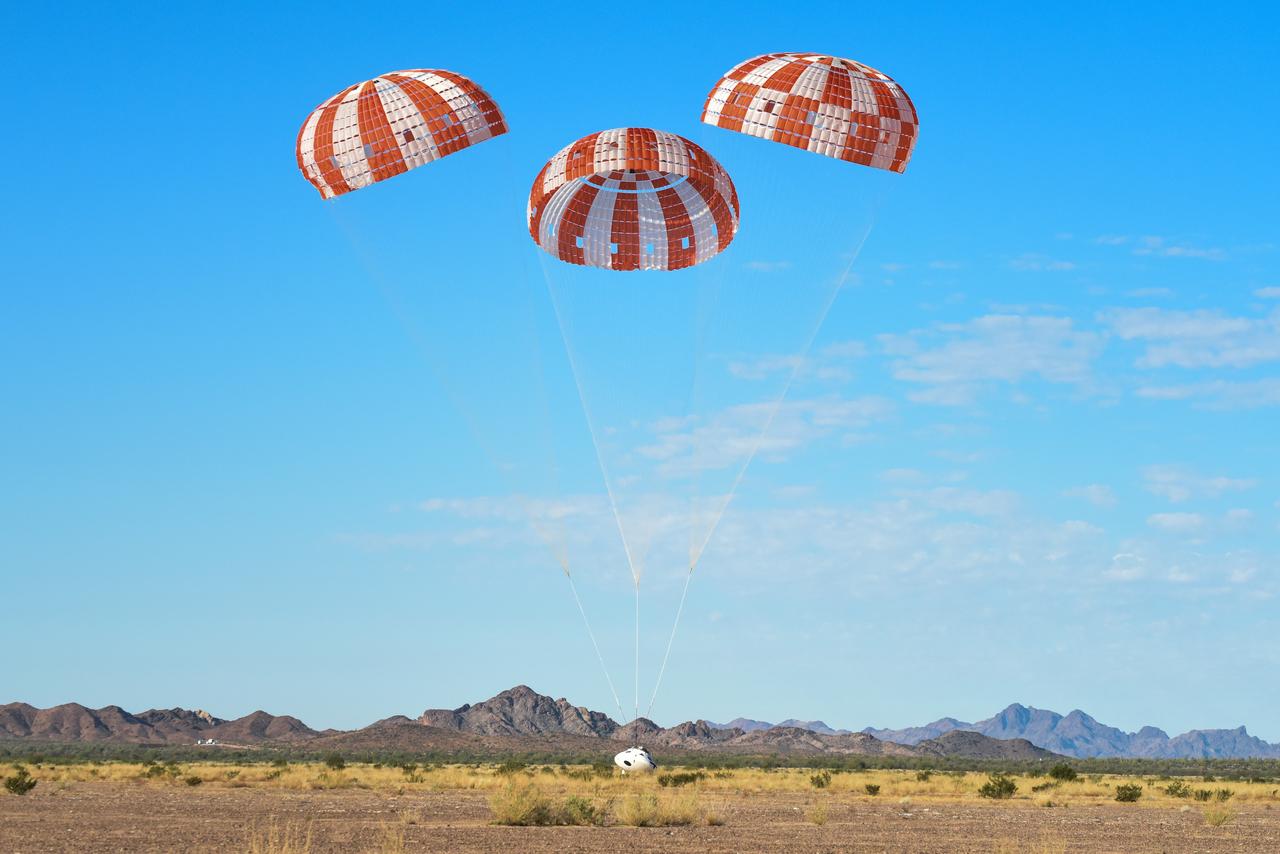
Orion’s three main orange and white parachutes help a representative model of the spacecraft descend through sky above Arizona, where NASA engineers tested the parachute system on Sept. 13, 2017 at the U.S. Army Proving Ground in Yuma. NASA is qualifying Orion’s parachutes for missions with astronauts.. .During this test, engineers replicated a situation in which Orion must abort off the Space Launch System rocket and bypasses part of its normal parachute deployment sequence that typically helps the spacecraft slow down during its descent to Earth after deep space missions. The capsule was dropped out of a C-17 aircraft at more than 4.7 miles in altitude and allowed to free fall for 20 seconds, longer than ever before, to produce high aerodynamic pressure before only its pilot and main parachutes were deployed, testing whether they could perform as expected under extreme loads. Orion’s full parachute system includes 11 total parachutes -- three forward bay cover parachutes and two drogue parachutes, along with three pilot parachutes that help pull out the spacecraft’s three mains.
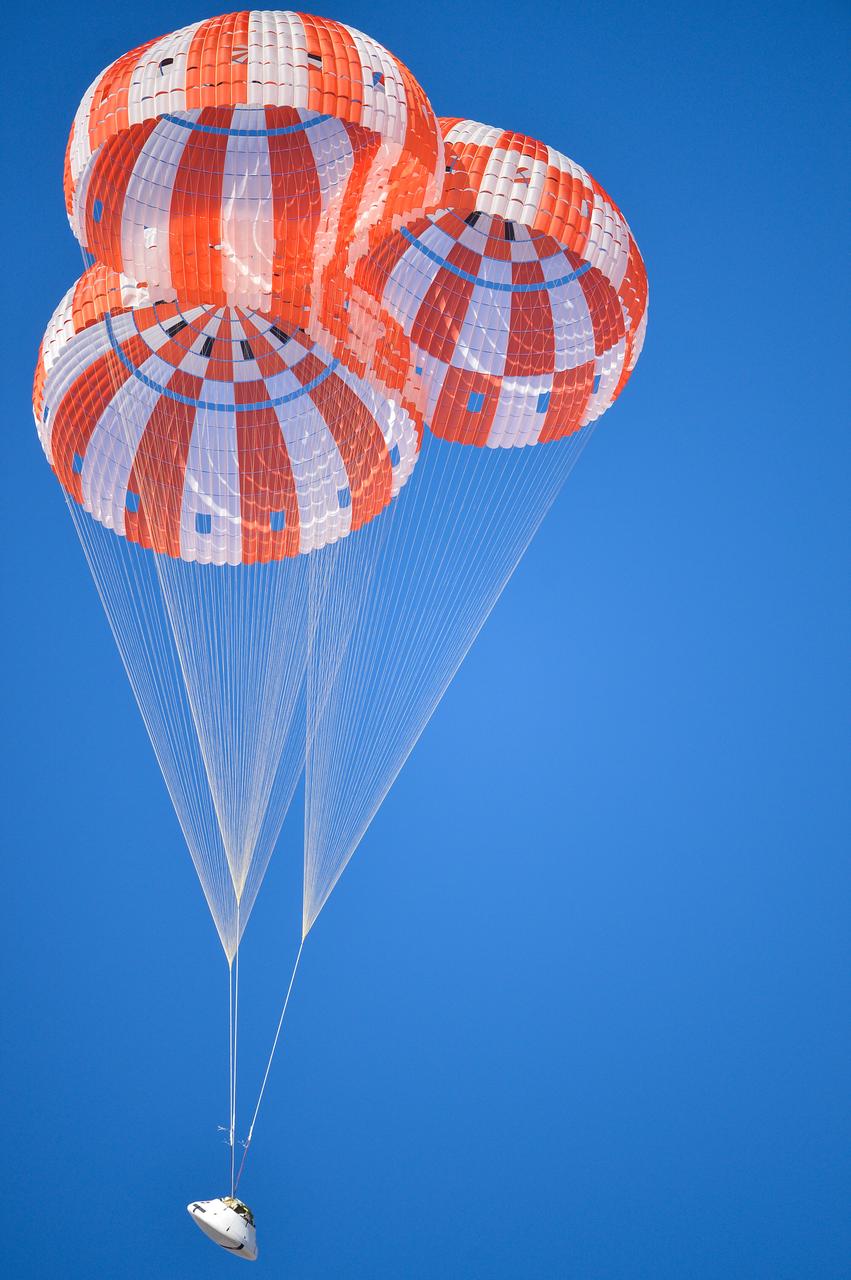
Orion’s three main orange and white parachutes help a representative model of the spacecraft descend through sky above Arizona, where NASA engineers tested the parachute system on Sept. 13, 2017 at the U.S. Army Proving Ground in Yuma. NASA is qualifying Orion’s parachutes for missions with astronauts.. .During this test, engineers replicated a situation in which Orion must abort off the Space Launch System rocket and bypasses part of its normal parachute deployment sequence that typically helps the spacecraft slow down during its descent to Earth after deep space missions. The capsule was dropped out of a C-17 aircraft at more than 4.7 miles in altitude and allowed to free fall for 20 seconds, longer than ever before, to produce high aerodynamic pressure before only its pilot and main parachutes were deployed, testing whether they could perform as expected under extreme loads. Orion’s full parachute system includes 11 total parachutes -- three forward bay cover parachutes and two drogue parachutes, along with three pilot parachutes that help pull out the spacecraft’s three mains.
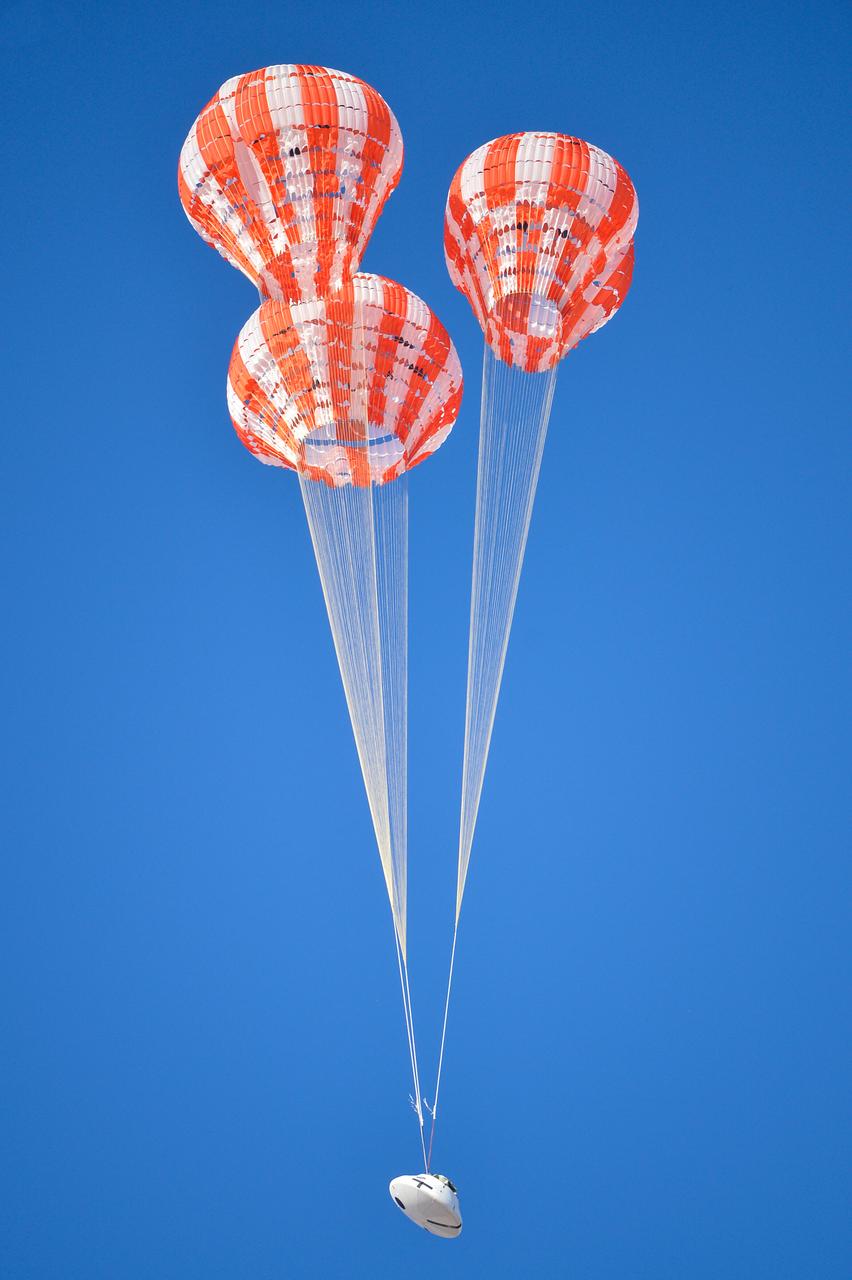
Orion’s three main orange and white parachutes help a representative model of the spacecraft descend through sky above Arizona, where NASA engineers tested the parachute system on Sept. 13, 2017 at the U.S. Army Proving Ground in Yuma. NASA is qualifying Orion’s parachutes for missions with astronauts.. .During this test, engineers replicated a situation in which Orion must abort off the Space Launch System rocket and bypasses part of its normal parachute deployment sequence that typically helps the spacecraft slow down during its descent to Earth after deep space missions. The capsule was dropped out of a C-17 aircraft at more than 4.7 miles in altitude and allowed to free fall for 20 seconds, longer than ever before, to produce high aerodynamic pressure before only its pilot and main parachutes were deployed, testing whether they could perform as expected under extreme loads. Orion’s full parachute system includes 11 total parachutes -- three forward bay cover parachutes and two drogue parachutes, along with three pilot parachutes that help pull out the spacecraft’s three mains.
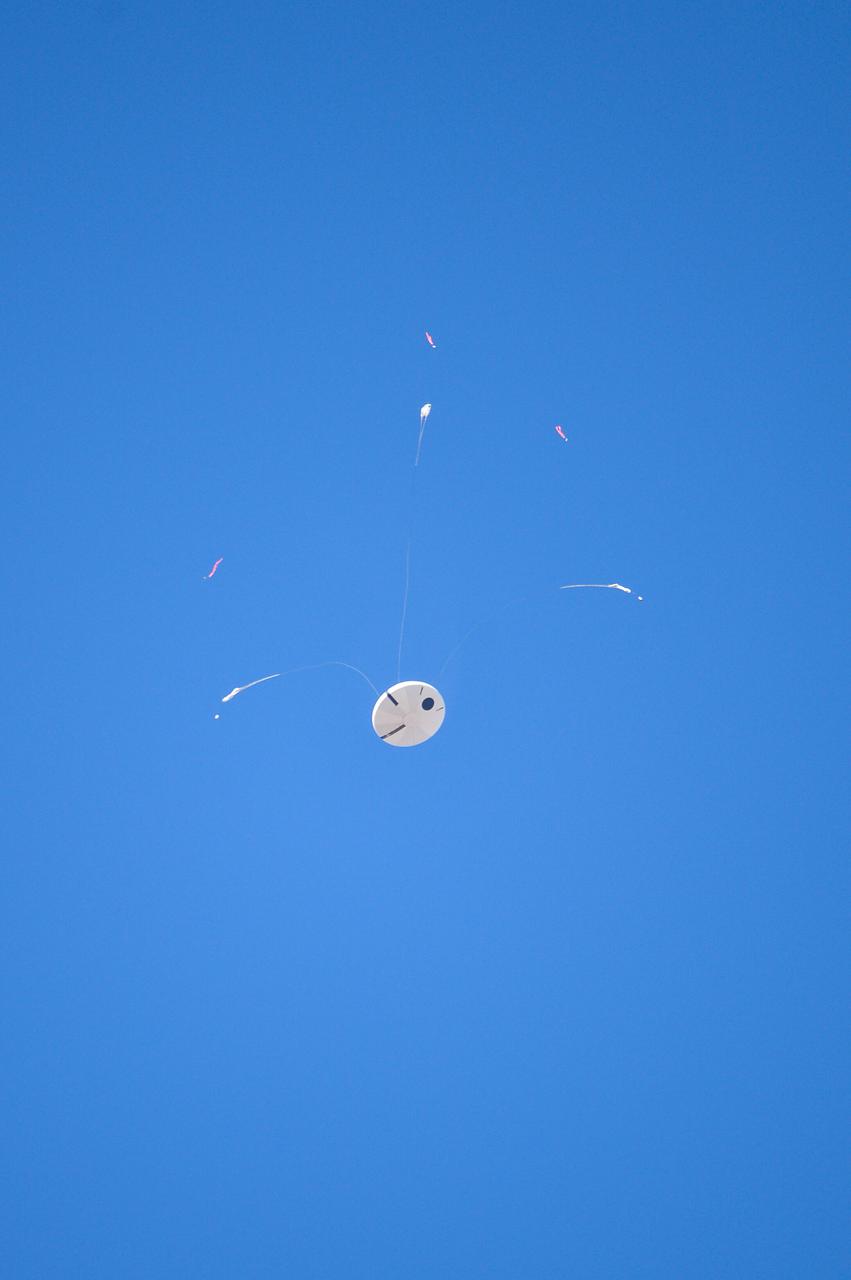
Orion’s three main orange and white parachutes help a representative model of the spacecraft descend through sky above Arizona, where NASA engineers tested the parachute system on Sept. 13, 2017 at the U.S. Army Proving Ground in Yuma. NASA is qualifying Orion’s parachutes for missions with astronauts.. .During this test, engineers replicated a situation in which Orion must abort off the Space Launch System rocket and bypasses part of its normal parachute deployment sequence that typically helps the spacecraft slow down during its descent to Earth after deep space missions. The capsule was dropped out of a C-17 aircraft at more than 4.7 miles in altitude and allowed to free fall for 20 seconds, longer than ever before, to produce high aerodynamic pressure before only its pilot and main parachutes were deployed, testing whether they could perform as expected under extreme loads. Orion’s full parachute system includes 11 total parachutes -- three forward bay cover parachutes and two drogue parachutes, along with three pilot parachutes that help pull out the spacecraft’s three mains.
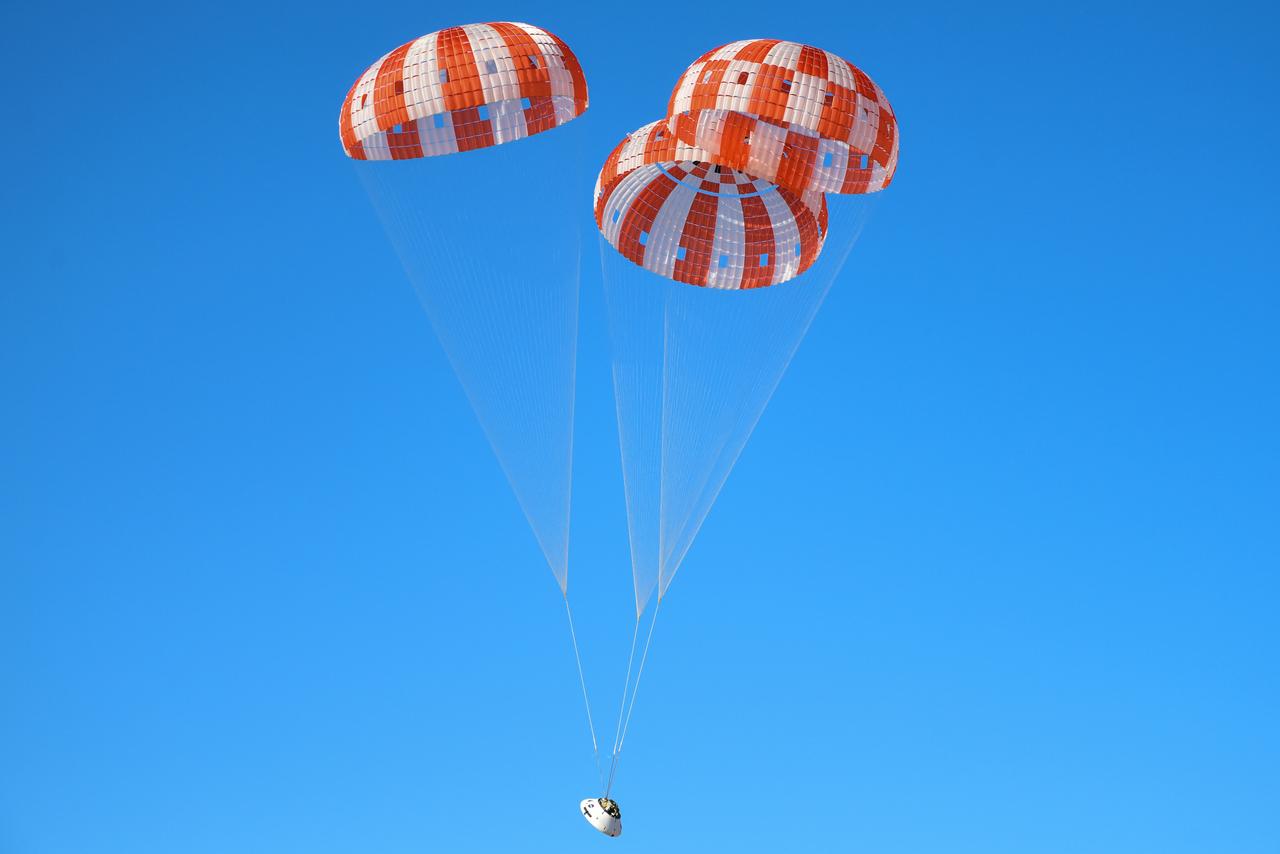
Orion’s three main orange and white parachutes help a representative model of the spacecraft descend through sky above Arizona, where NASA engineers tested the parachute system on Sept. 13, 2017 at the U.S. Army Proving Ground in Yuma. NASA is qualifying Orion’s parachutes for missions with astronauts.. .During this test, engineers replicated a situation in which Orion must abort off the Space Launch System rocket and bypasses part of its normal parachute deployment sequence that typically helps the spacecraft slow down during its descent to Earth after deep space missions. The capsule was dropped out of a C-17 aircraft at more than 4.7 miles in altitude and allowed to free fall for 20 seconds, longer than ever before, to produce high aerodynamic pressure before only its pilot and main parachutes were deployed, testing whether they could perform as expected under extreme loads. Orion’s full parachute system includes 11 total parachutes -- three forward bay cover parachutes and two drogue parachutes, along with three pilot parachutes that help pull out the spacecraft’s three mains.

Orion’s three main orange and white parachutes help a representative model of the spacecraft descend through sky above Arizona, where NASA engineers tested the parachute system on Sept. 13, 2017 at the U.S. Army Proving Ground in Yuma. NASA is qualifying Orion’s parachutes for missions with astronauts.. .During this test, engineers replicated a situation in which Orion must abort off the Space Launch System rocket and bypasses part of its normal parachute deployment sequence that typically helps the spacecraft slow down during its descent to Earth after deep space missions. The capsule was dropped out of a C-17 aircraft at more than 4.7 miles in altitude and allowed to free fall for 20 seconds, longer than ever before, to produce high aerodynamic pressure before only its pilot and main parachutes were deployed, testing whether they could perform as expected under extreme loads. Orion’s full parachute system includes 11 total parachutes -- three forward bay cover parachutes and two drogue parachutes, along with three pilot parachutes that help pull out the spacecraft’s three mains.
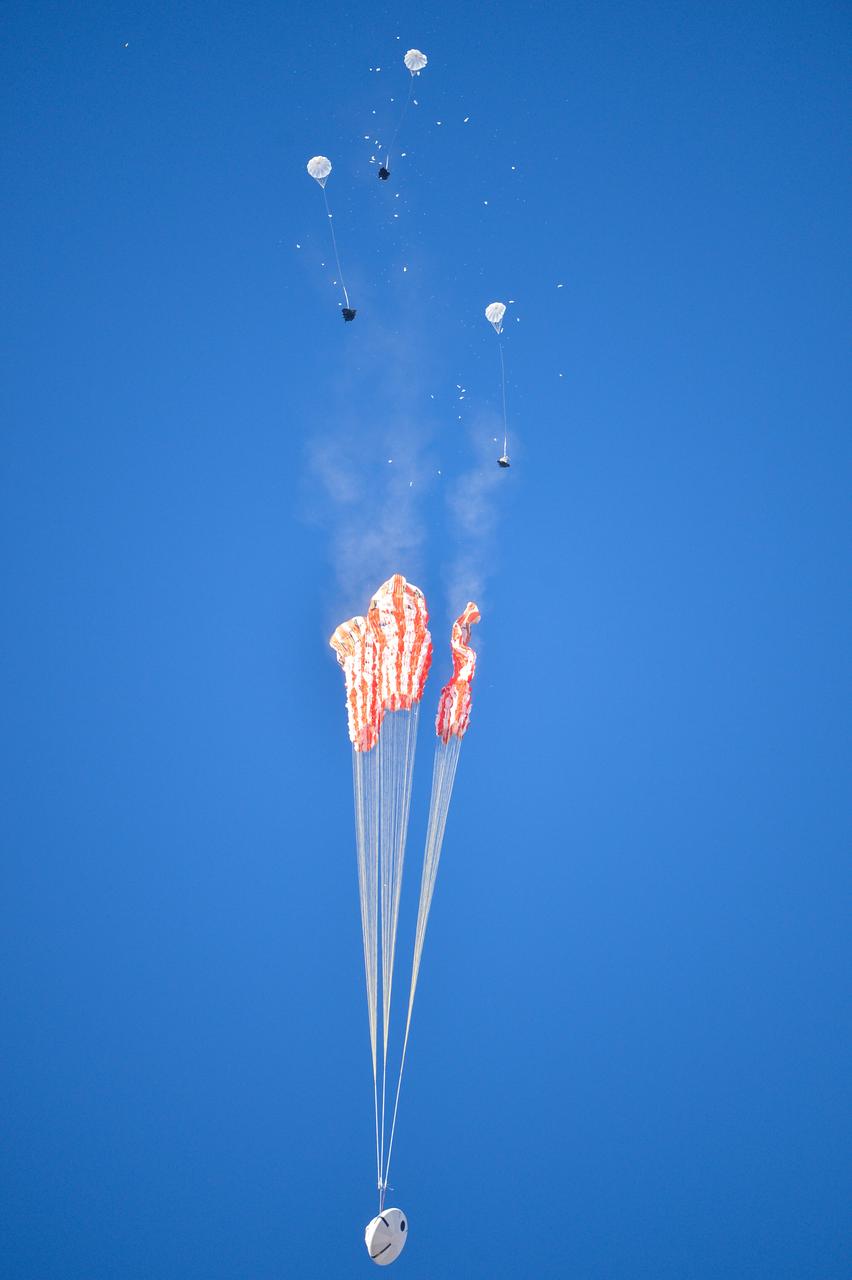
Orion’s three main orange and white parachutes help a representative model of the spacecraft descend through sky above Arizona, where NASA engineers tested the parachute system on Sept. 13, 2017 at the U.S. Army Proving Ground in Yuma. NASA is qualifying Orion’s parachutes for missions with astronauts.. .During this test, engineers replicated a situation in which Orion must abort off the Space Launch System rocket and bypasses part of its normal parachute deployment sequence that typically helps the spacecraft slow down during its descent to Earth after deep space missions. The capsule was dropped out of a C-17 aircraft at more than 4.7 miles in altitude and allowed to free fall for 20 seconds, longer than ever before, to produce high aerodynamic pressure before only its pilot and main parachutes were deployed, testing whether they could perform as expected under extreme loads. Orion’s full parachute system includes 11 total parachutes -- three forward bay cover parachutes and two drogue parachutes, along with three pilot parachutes that help pull out the spacecraft’s three mains.
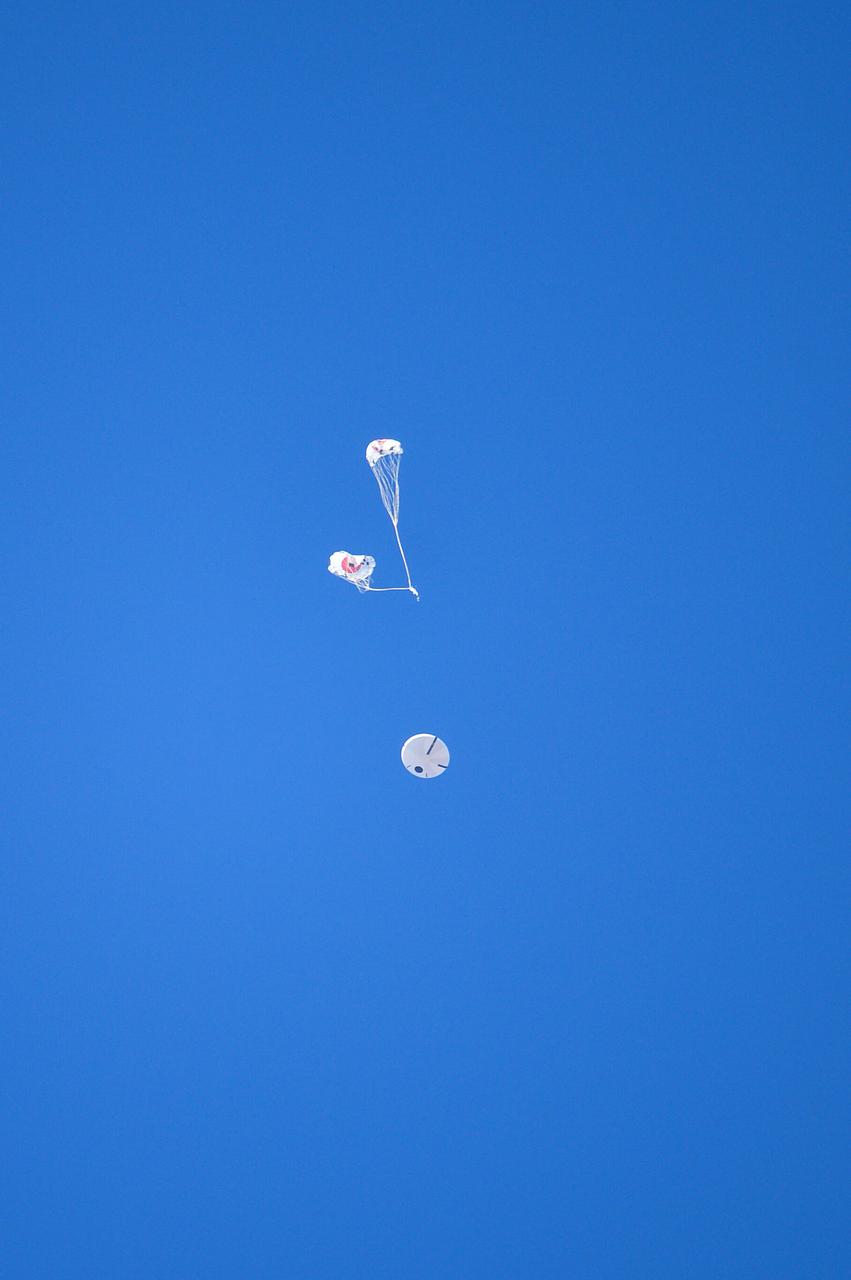
Orion’s three main orange and white parachutes help a representative model of the spacecraft descend through sky above Arizona, where NASA engineers tested the parachute system on Sept. 13, 2017 at the U.S. Army Proving Ground in Yuma. NASA is qualifying Orion’s parachutes for missions with astronauts.. .During this test, engineers replicated a situation in which Orion must abort off the Space Launch System rocket and bypasses part of its normal parachute deployment sequence that typically helps the spacecraft slow down during its descent to Earth after deep space missions. The capsule was dropped out of a C-17 aircraft at more than 4.7 miles in altitude and allowed to free fall for 20 seconds, longer than ever before, to produce high aerodynamic pressure before only its pilot and main parachutes were deployed, testing whether they could perform as expected under extreme loads. Orion’s full parachute system includes 11 total parachutes -- three forward bay cover parachutes and two drogue parachutes, along with three pilot parachutes that help pull out the spacecraft’s three mains.
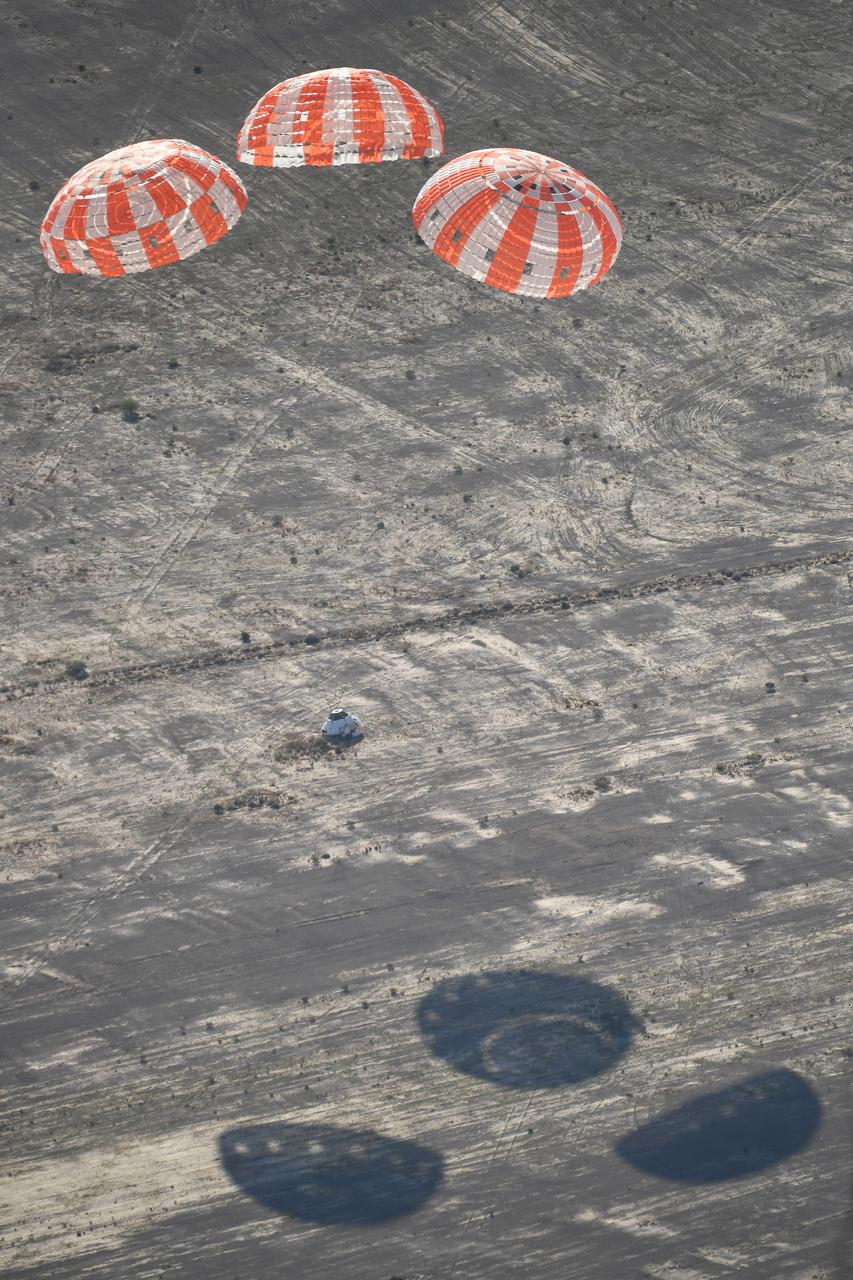
Orion’s three main orange and white parachutes help a representative model of the spacecraft descend through sky above Arizona, where NASA engineers tested the parachute system on Sept. 13, 2017 at the U.S. Army Proving Ground in Yuma. NASA is qualifying Orion’s parachutes for missions with astronauts.. .During this test, engineers replicated a situation in which Orion must abort off the Space Launch System rocket and bypasses part of its normal parachute deployment sequence that typically helps the spacecraft slow down during its descent to Earth after deep space missions. The capsule was dropped out of a C-17 aircraft at more than 4.7 miles in altitude and allowed to free fall for 20 seconds, longer than ever before, to produce high aerodynamic pressure before only its pilot and main parachutes were deployed, testing whether they could perform as expected under extreme loads. Orion’s full parachute system includes 11 total parachutes -- three forward bay cover parachutes and two drogue parachutes, along with three pilot parachutes that help pull out the spacecraft’s three mains.
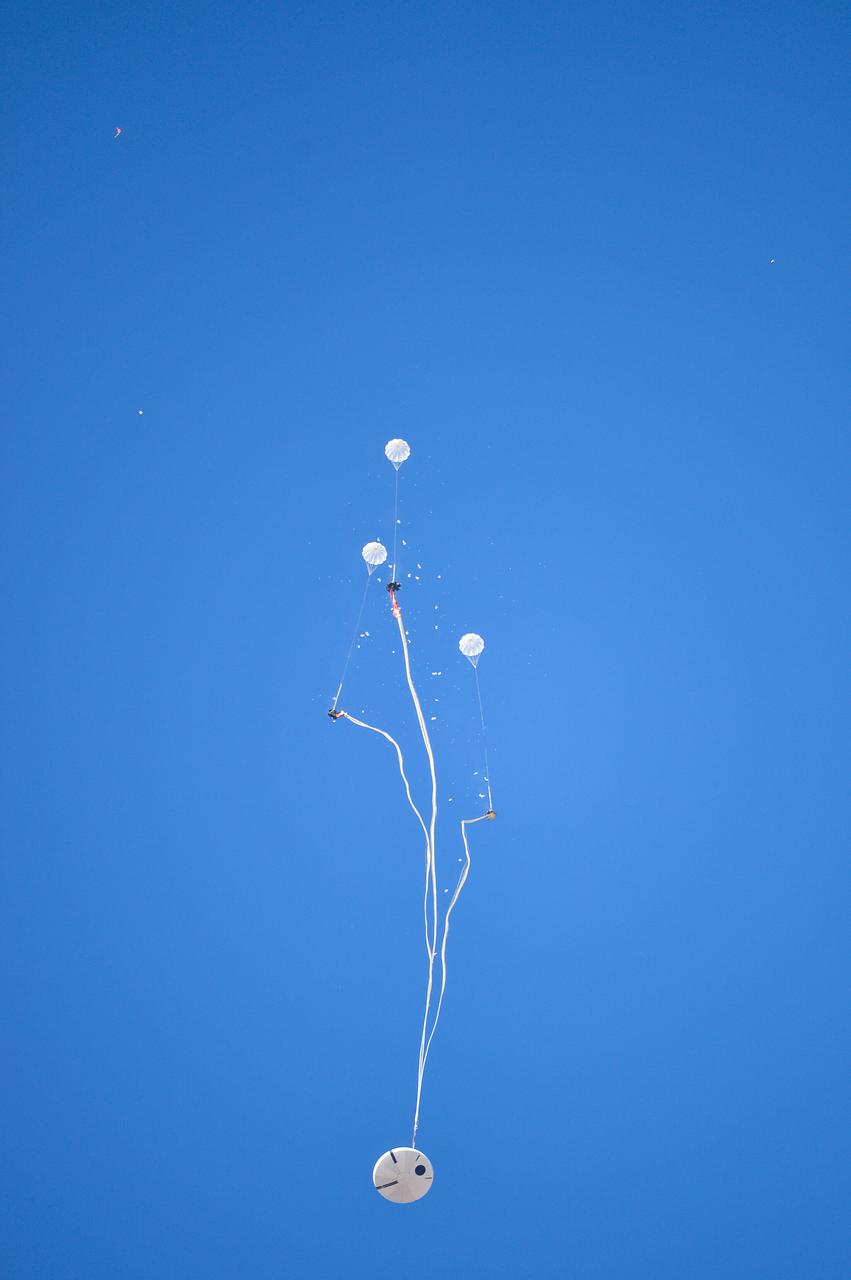
Orion’s three main orange and white parachutes help a representative model of the spacecraft descend through sky above Arizona, where NASA engineers tested the parachute system on Sept. 13, 2017 at the U.S. Army Proving Ground in Yuma. NASA is qualifying Orion’s parachutes for missions with astronauts.. .During this test, engineers replicated a situation in which Orion must abort off the Space Launch System rocket and bypasses part of its normal parachute deployment sequence that typically helps the spacecraft slow down during its descent to Earth after deep space missions. The capsule was dropped out of a C-17 aircraft at more than 4.7 miles in altitude and allowed to free fall for 20 seconds, longer than ever before, to produce high aerodynamic pressure before only its pilot and main parachutes were deployed, testing whether they could perform as expected under extreme loads. Orion’s full parachute system includes 11 total parachutes -- three forward bay cover parachutes and two drogue parachutes, along with three pilot parachutes that help pull out the spacecraft’s three mains.
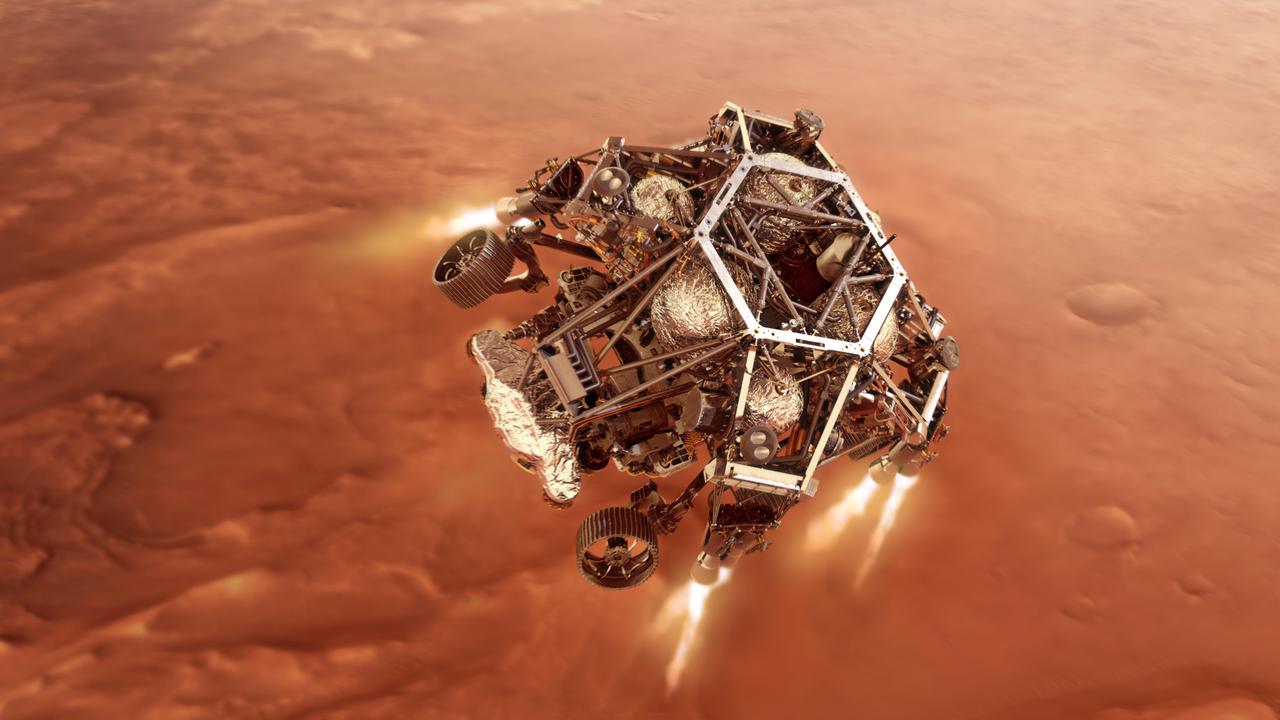
NASA's Perseverance rover fires up its descent stage engines as it nears the Martian surface in this illustration. This phase of its entry, descent and landing sequence, or EDL, is known as "powered descent." Hundreds of critical events must execute perfectly and exactly on time for the rover to land safely on Feb. 18, 2021. The cruise stage separates about 10 minutes before entering into the atmosphere, leaving the aeroshell, which encloses the rover and descent stage, to make the trip to the surface. At about 6,900 feet (2,100 meters) above the surface, the rover separates from the parachute and backshell. At this point, the rover is joined to the descent stage, which functions as a sort of jetpack for the rover. The descent stage fires up its engines, flies to a reachable self-selected safe landing target, levels out, and slows to its final descent speed of about 1.7 mph (2.7 kph). It then initiates the "skycrane" maneuver: about 12 seconds before touchdown, roughly 66 feet (20 meters) above the surface, the descent stage lowers the rover on a set of cables about 21 feet (6.4 meters) long. The rover unstows its mobility system, locking its legs and wheels into landing position. EDL ends about seven minutes after atmospheric entry, with Perseverance stationary on the Martian surface. https://photojournal.jpl.nasa.gov/catalog/PIA24318
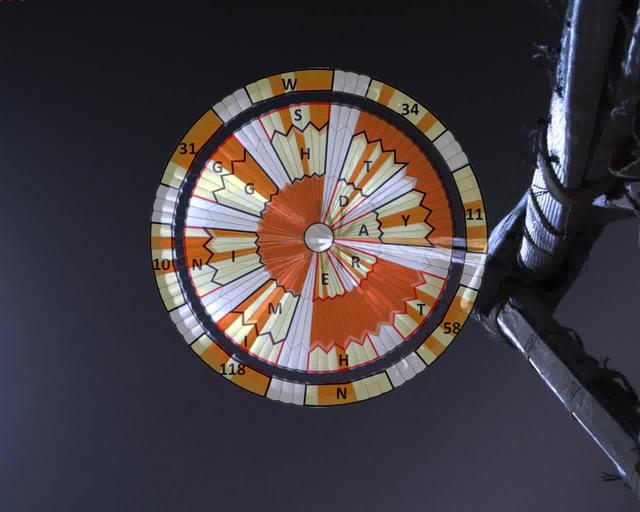
This annotated image was taken by a parachute-up-look camera aboard the protective back shell of NASA's Perseverance rover during its descent toward Mars' Jezero Crater on February 18, 2021. Using binary code, two messages have been encoded in the neutral white and international-orange parachute gores (the sections that make up the canopy's hemispherical shape). The inner portion spells out "DARE MIGHTY THINGS," with each word located on its own ring of gores. The outer band of the canopy provides GPS coordinates for NASA's Jet Propulsion Laboratory in Southern California, where the rover was built and the project is managed. Mars 2020 Perseverance Systems Engineer Ian Clark designed the binary code pattern. The saying is JPL's motto and is an abridgement of a quote from Teddy Roosevelt's "Strenuous Life" speech: "Far better is it to dare mighty things, to win glorious triumphs, even though checkered by failure ... than to rank with those poor spirits who neither enjoy nor suffer much, because they live in a gray twilight that knows not victory nor defeat." https://photojournal.jpl.nasa.gov/catalog/PIA24431
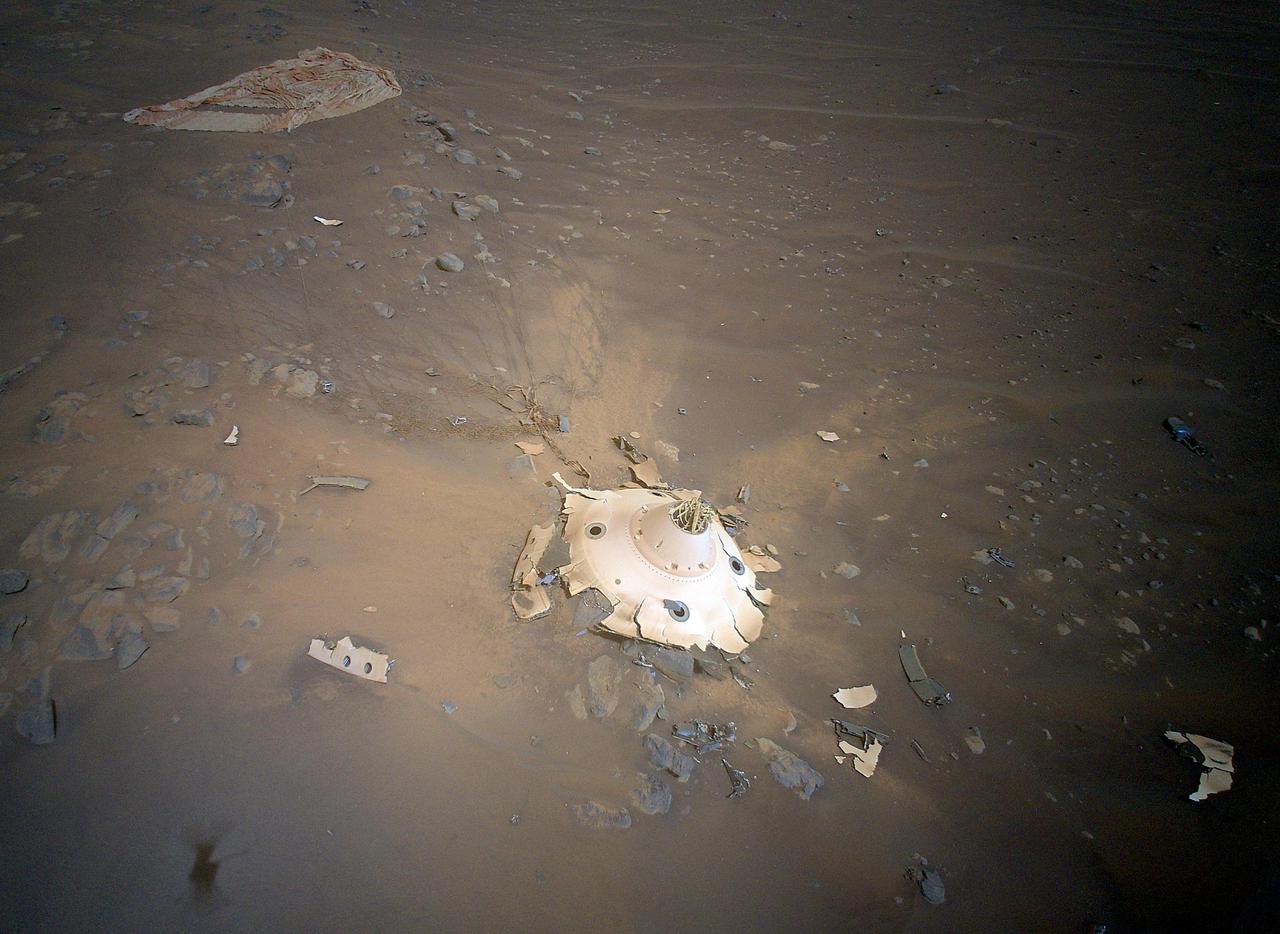
This image of Perseverance's backshell sitting upright on the surface of Jezero Crater was collected from an altitude of 26 feet (8 meters) by NASA's Ingenuity Mars Helicopter during its 26th flight at Mars on April 19, 2022. Engineers working on the Mars Sample Return program requested images be taken from an aerial perspective of the components because they may provide insight into the components' performance during the rover's entry, descent, and landing on Feb. 18, 2021. The tangle of cables seen streaming out from the top of the backshell, and coated with Martian dust on the surface, are high-strength suspension lines that connect the backshell to Perseverance's supersonic parachute (upper left). The backshell and parachute helped protect the rover in deep space and during its fiery descent toward the Martian surface. https://photojournal.jpl.nasa.gov/catalog/PIA25219
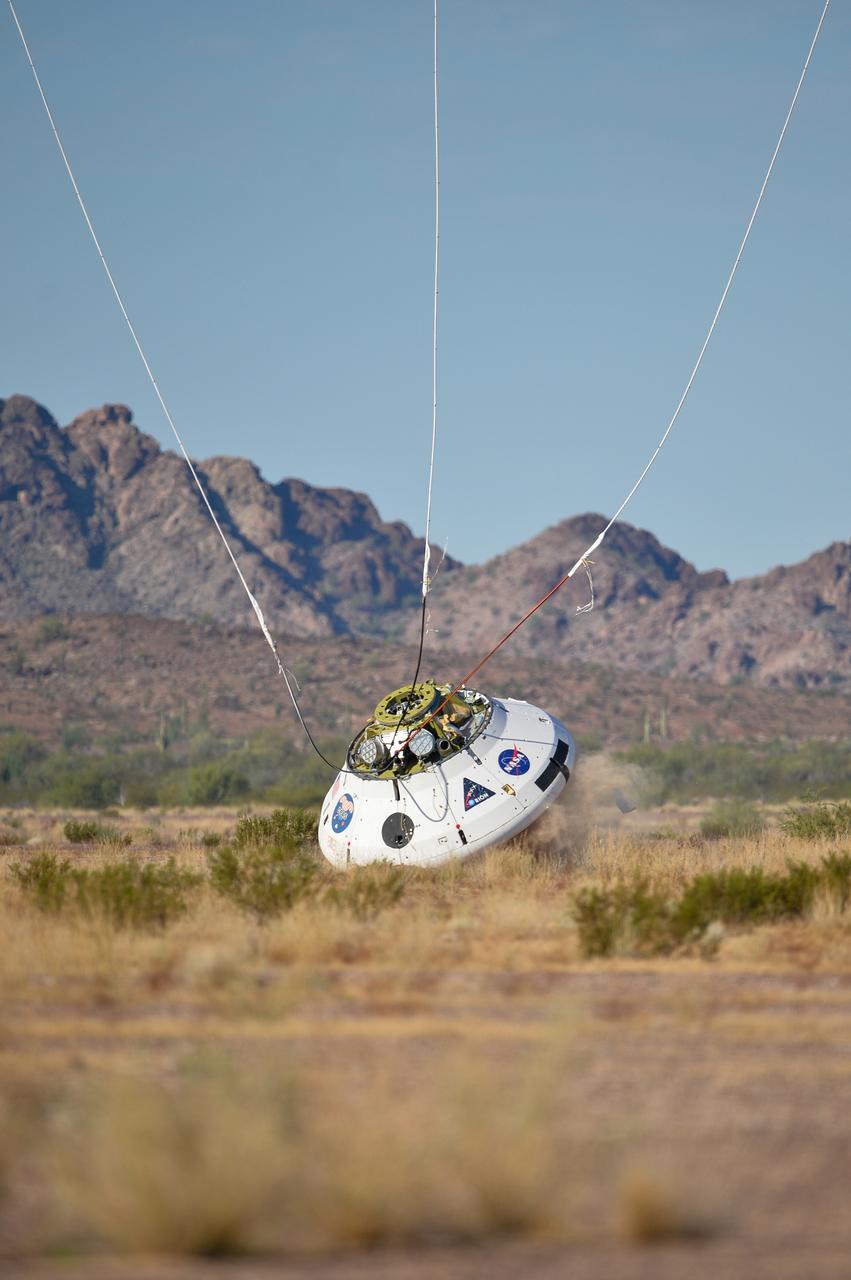
Engineers testing the parachute system for Orion during a Sept. 13, 2017 evaluation at the U.S. Army Proving Ground in Yuma.. .During this test, engineers replicated a situation in which Orion must abort off the Space Launch System rocket and bypasses part of its normal parachute deployment sequence that typically helps the spacecraft slow down during its descent to Earth after deep space missions. The capsule was dropped out of a C-17 aircraft at more than 4.7 miles in altitude and allowed to free fall for 20 seconds, longer than ever before, to produce high aerodynamic pressure before only its pilot and main parachutes were deployed, testing whether they could perform as expected under extreme loads. Orion’s full parachute system includes 11 total parachutes -- three forward bay cover parachutes and two drogue parachutes, along with three pilot parachutes that help pull out the spacecraft’s three mains.
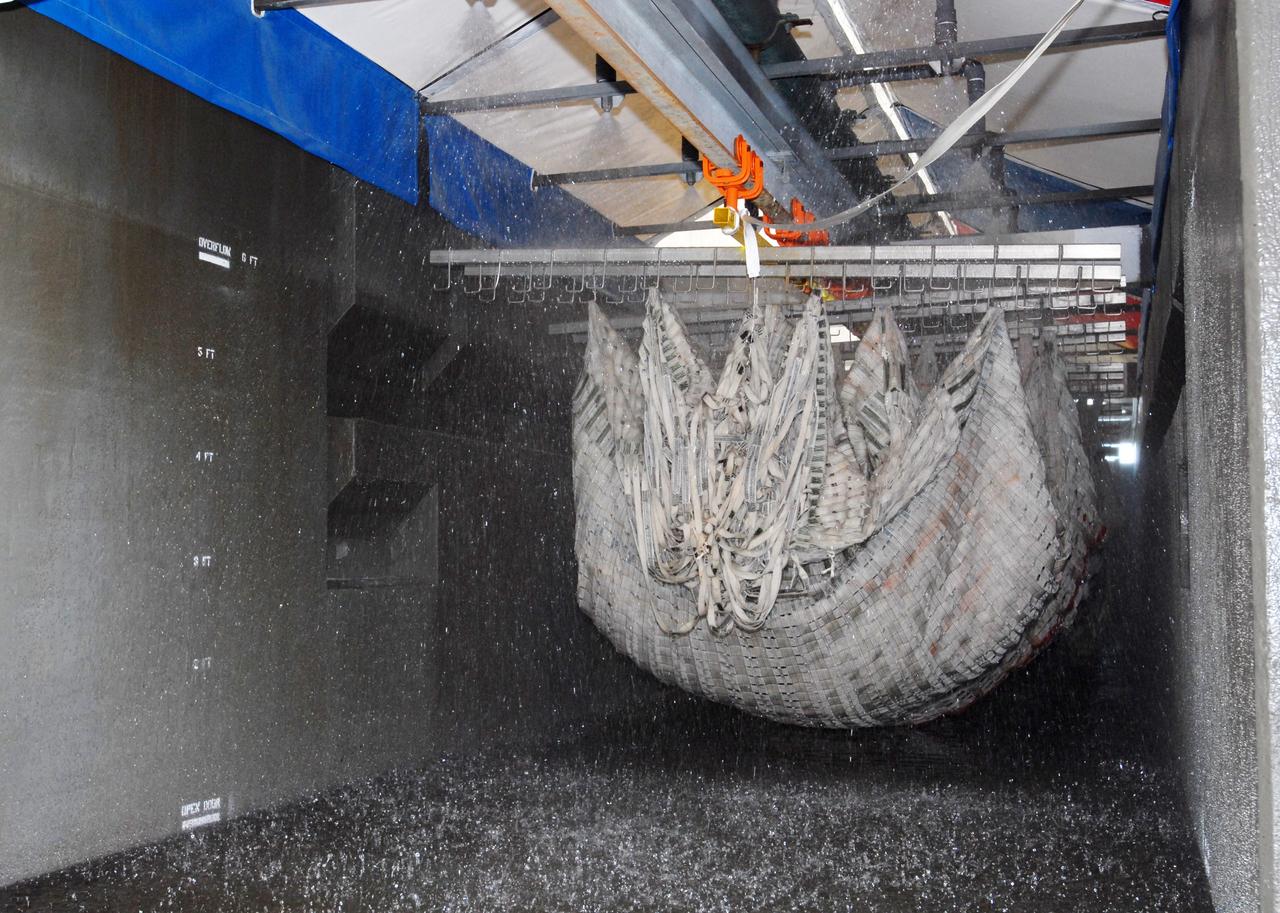
CAPE CANAVERAL, Fla. – At the Parachute Refurbishment Facility at NASA's Kennedy Space Center in Florida, the parachutes recovered from sea after the launch of space shuttle Endeavour on the STS-126 mission are moved through the 30,000-gallon washer. The parachutes are used to slow the descent of the solid rocket boosters that are jettisoned during liftoff. After washing, the monorail will move the parachutes into a huge dryer heated with 140-degree air at 13,000 cubic feet per minute. One pilot, one drogue and three main canopies per booster slow the booster’s fall from about 360 mph to 50 mph. After the chutes are cleaned and repaired, they must be carefully packed into their bags so they will deploy correctly the next time they are used. Photo credit: NASA/Jim Grossmann
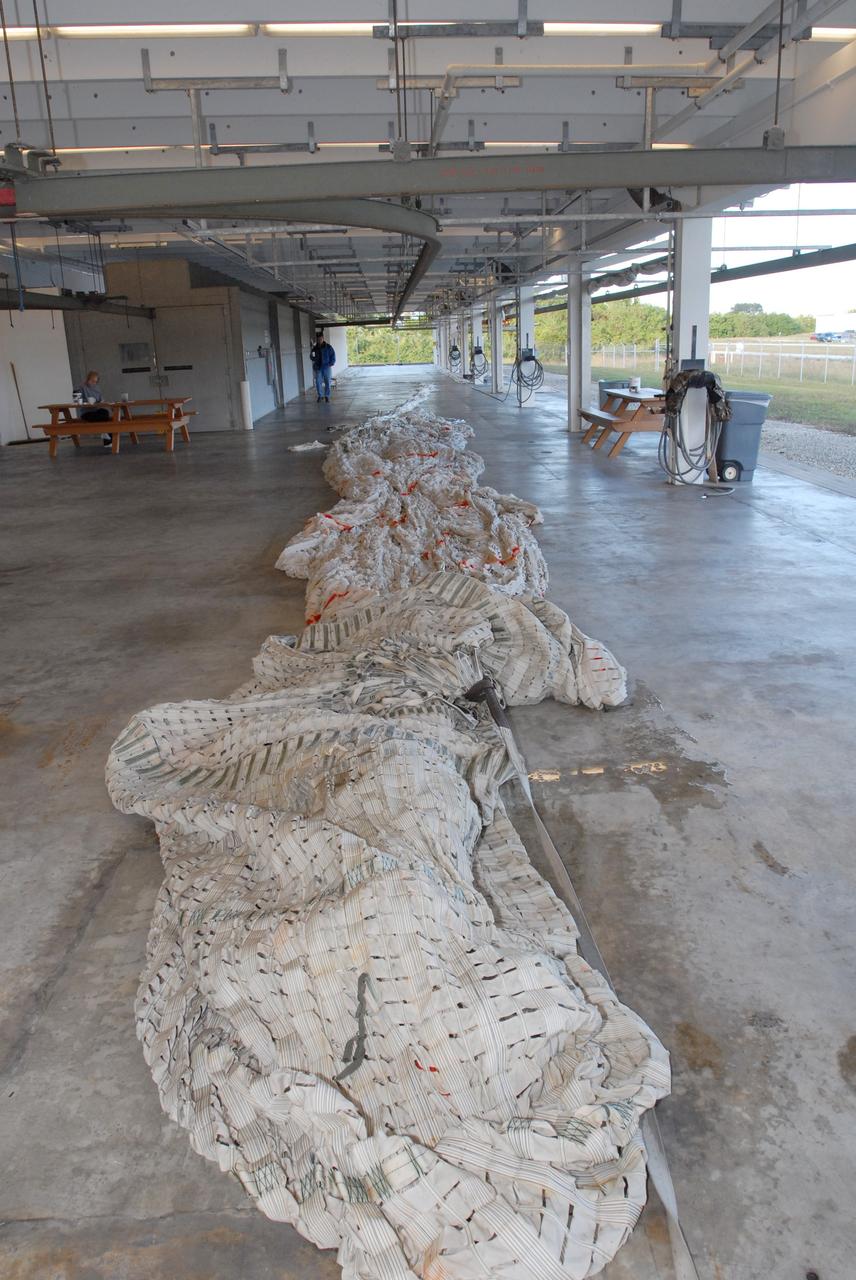
CAPE CANAVERAL, Fla. – Parachutes recovered from sea after the launch of space shuttle Endeavour on the STS-126 mission are stretched out at the Parachute Refurbishment Facility at NASA's Kennedy Space Center in Florida to detangle them. The parachutes are used to slow the descent of the solid rocket boosters that are jettisoned during liftoff. After the chutes are returned to the facility following launch, a hanging monorail system is used to transport each parachute into a 30,000-gallon washer and then into a huge dryer heated with 140-de¬gree air at 13,000 cubic feet per minute. One pilot, one drogue and three main canopies per booster slow the booster’s fall from about 360 mph to 50 mph. After the chutes are cleaned and repaired, they must be care¬fully packed into their bags so they will deploy correctly the next time they are used. Photo credit: NASA/Jim Grossmann
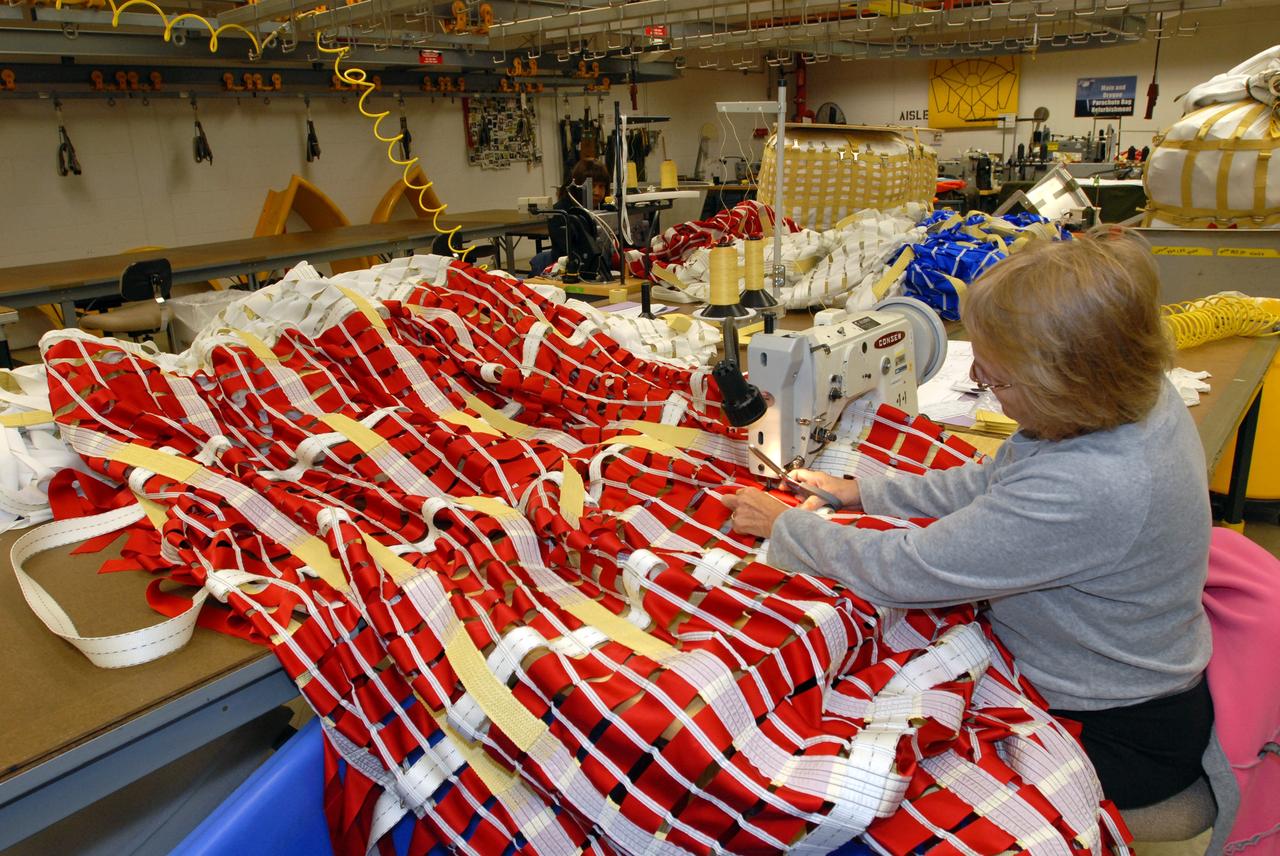
CAPE CANAVERAL, Fla. – In the Parachute Refurbishment Facility at NASA's Kennedy Space Center in Florida, workers repair the parachutes recovered from sea after the launch of space shuttle Endeavour on the STS-126 mission. Typically, each main canopy requires hundreds of repairs after each use. The smaller chutes and the parachute deployment bags they are packed in also require repairs. The parachutes are used to slow the descent of the solid rocket boosters that are jettisoned during liftoff. One pilot, one drogue and three main canopies per booster slow the booster’s fall from about 360 mph to 50 mph. After the chutes are cleaned and repaired, they must be carefully packed into their bags so they will deploy correctly the next time they are used. Photo credit: NASA/Jim Grossmann
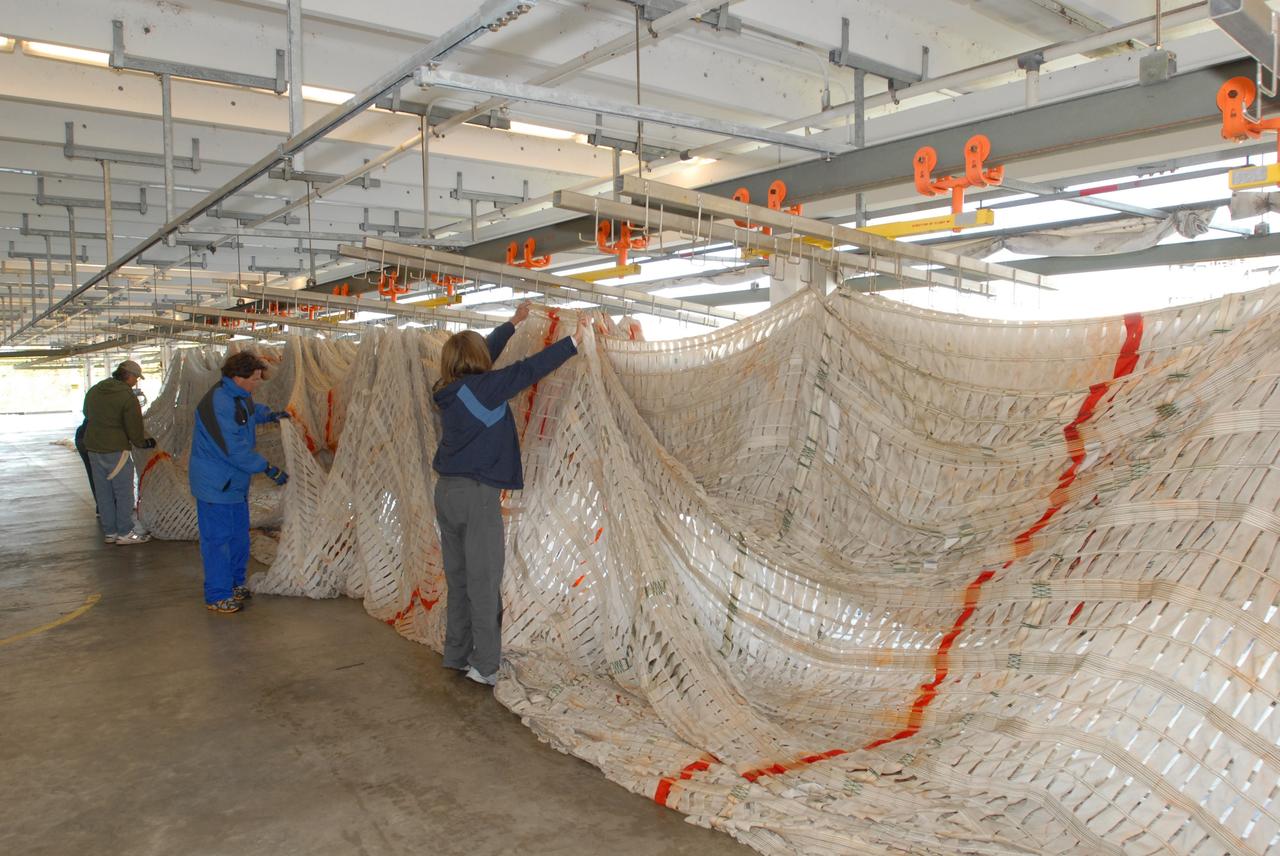
CAPE CANAVERAL, Fla. – At the Parachute Refurbishment Facility at NASA's Kennedy Space Center in Florida, workers begin hanging the parachutes recovered from sea after the launch of space shuttle Endeavour on the STS-126 mission onto a monorail system. The parachutes are used to slow the descent of the solid rocket boosters that are jettisoned during liftoff. The monorail will transport each parachute into a 30,000-gallon washer and a huge dryer heated with 140-degree air at 13,000 cubic feet per minute One pilot, one drogue and three main canopies per booster slow the booster’s fall from about 360 mph to 50 mph. After the chutes are cleaned and repaired, they must be carefully packed into their bags so they will deploy correctly the next time they are used. Photo credit: NASA/Jim Grossmann
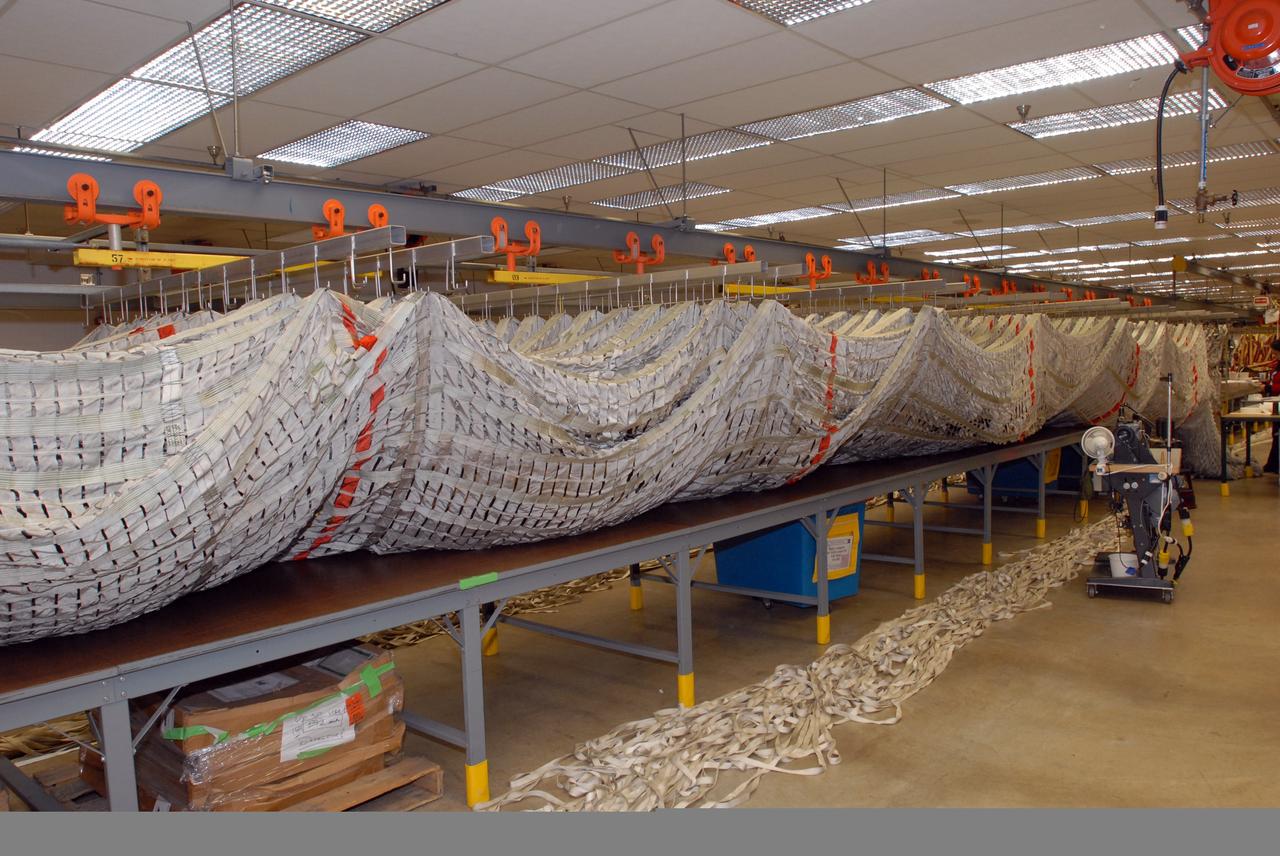
CAPE CANAVERAL, Fla. – Parachutes recovered from sea after the launch of space shuttle Endeavour on the STS-126 mission are suspended from a hanging monorail system at the Parachute Refurbishment Facility at NASA's Kennedy Space Center in Florida. The parachutes are used to slow the descent of the solid rocket boosters that are jettisoned during liftoff. The monorail will transport each parachute into a 30,000-gallon washer and a huge dryer heated with 140-degree air at 13,000 cubic feet per minute. One pilot, one drogue and three main canopies per booster slow the booster’s fall from about 360 mph to 50 mph. After the chutes are cleaned and repaired, they must be carefully packed into their bags so they will deploy correctly the next time they are used. Photo credit: NASA/Jim Grossmann
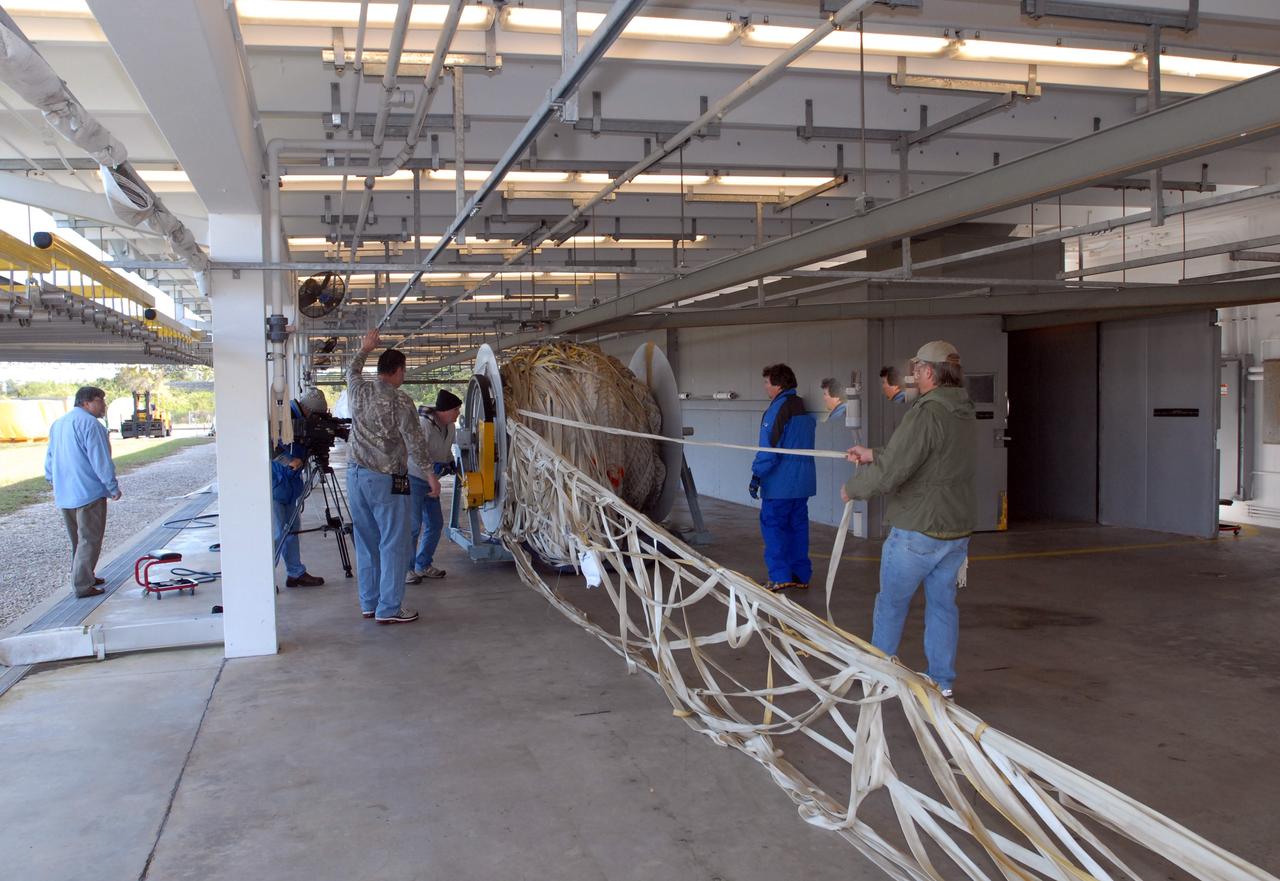
CAPE CANAVERAL, Fla. – At the Parachute Refurbishment Facility at NASA's Kennedy Space Center in Florida, another parachute recovered from sea after the launch of space shuttle Endeavour on the STS-126 mission is unwound from a large turnstile. After their recovery, the parachutes are untangled, hung on a monorail system and transported into a 30,000-gallon washer and a huge dryer heated with 140-degree air at 13,000 cubic feet per minute. The parachutes are used to slow the descent of the solid rocket boosters that are jettisoned during liftoff. One pilot, one drogue and three main canopies per booster slow the booster’s fall from about 360 mph to 50 mph. After the chutes are cleaned and repaired, they must be carefully packed into their bags so they will deploy correctly the next time they are used. Photo credit: NASA/Jim Grossmann
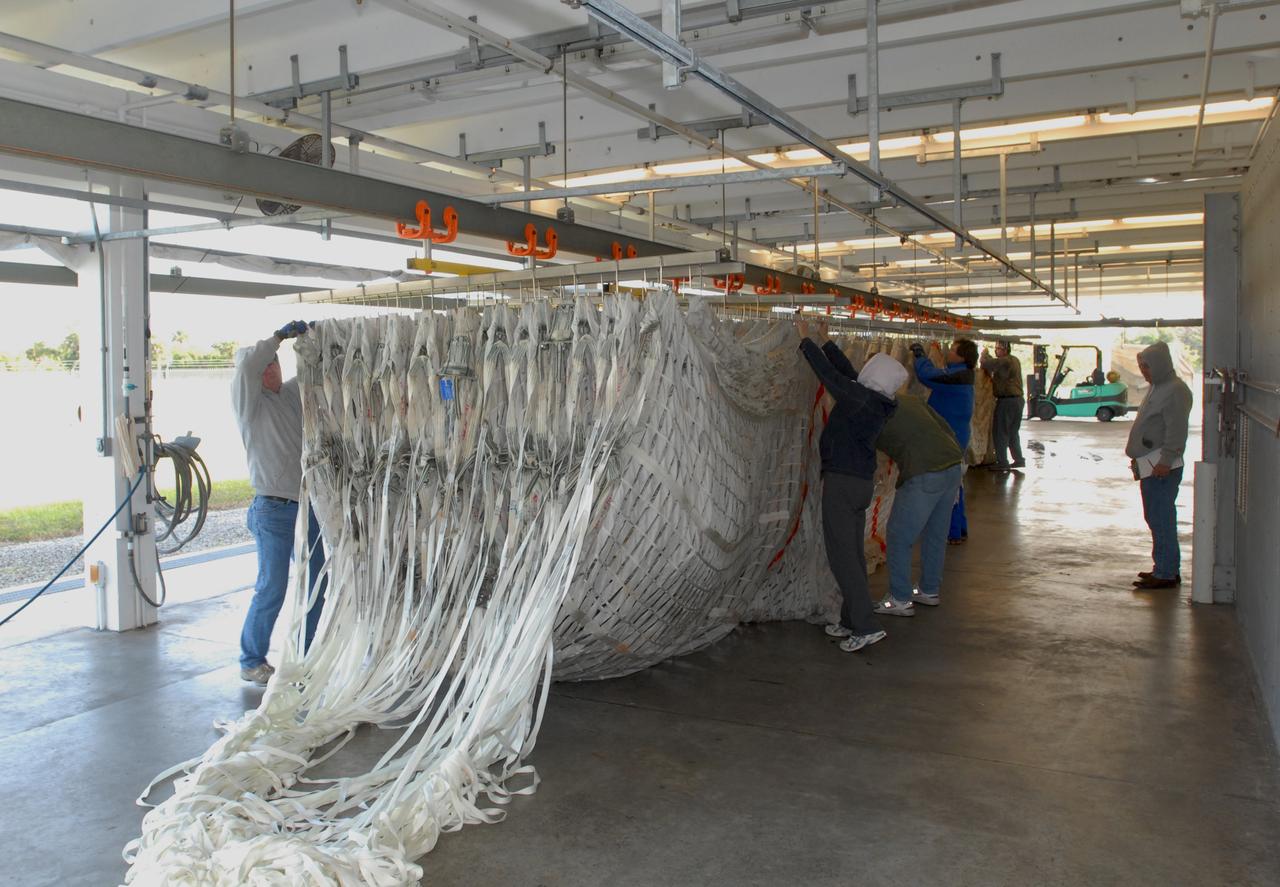
CAPE CANAVERAL, Fla. – At the Parachute Refurbishment Facility at NASA's Kennedy Space Center in Florida, workers begin hanging the parachutes recovered from sea after the launch of space shuttle Endeavour on the STS-126 mission onto a monorail system. The parachutes are used to slow the descent of the solid rocket boosters that are jettisoned during liftoff. The monorail will transport each parachute into a 30,000-gallon washer and a huge dryer heated with 140-degree air at 13,000 cubic feet per minute. One pilot, one drogue and three main canopies per booster slow the booster’s fall from about 360 mph to 50 mph. After the chutes are cleaned and repaired, they must be carefully packed into their bags so they will deploy correctly the next time they are used. Photo credit: NASA/Jim Grossmann

CAPE CANAVERAL, Fla. – At the Parachute Refurbishment Facility at NASA's Kennedy Space Center in Florida, a worker checks the parachute lines, recovered from sea after the launch of space shuttle Endeavour on the STS-126 mission, as they move into the 30,000-gallon washer. The parachutes are used to slow the descent of the solid rocket boosters that are jettisoned during liftoff. After washing, the monorail will move the parachutes into a huge dryer heated with 140-degree air at 13,000 cubic feet per minute. One pilot, one drogue and three main canopies per booster slow the booster’s fall from about 360 mph to 50 mph. After the chutes are cleaned and repaired, they must be carefully packed into their bags so they will deploy correctly the next time they are used. Photo credit: NASA/Jim Grossmann
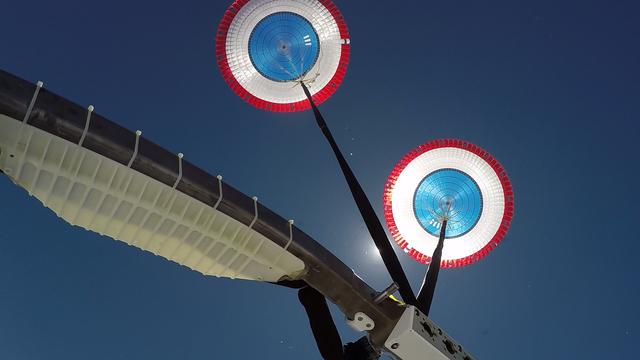
In this view looking up, Boeing’s CST-100 Starliner’s parachutes deploy above the U.S. Army’s White Sands Missile Range in New Mexico during parachute system testing on June 24, 2019. Boeing conducted the test using a full-scale Starliner test article, known as a boiler plate, designed to simulate the actual spacecraft. The test involved intentionally disabling one of the parachute system’s two drogue parachutes and one of the three main parachutes to evaluate how the remaining parachutes handled the additional loads during deployment and descent. This was one of a series of important parachute tests to validate the system is safe to carry astronauts to and from the International Space Station as part of NASA’s Commercial Crew Program. Boeing is targeting an uncrewed Orbital Flight Test to the space station this summer, followed by its Crew Flight Test. Starliner will launch atop a United Launch Alliance Atlas V rocket from Space Launch Complex 41 at Cape Canaveral Air Force Station in Florida.
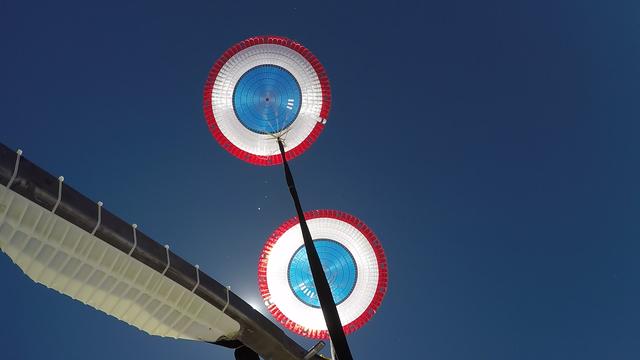
In this view looking up, Boeing’s CST-100 Starliner’s parachutes deploy above the U.S. Army’s White Sands Missile Range in New Mexico during parachute system testing on June 24, 2019. Boeing conducted the test using a full-scale Starliner test article, known as a boiler plate, designed to simulate the actual spacecraft. The test involved intentionally disabling one of the parachute system’s two drogue parachutes and one of the three main parachutes to evaluate how the remaining parachutes handled the additional loads during deployment and descent. This was one of a series of important parachute tests to validate the system is safe to carry astronauts to and from the International Space Station as part of NASA’s Commercial Crew Program. Boeing is targeting an uncrewed Orbital Flight Test to the space station this summer, followed by its Crew Flight Test. Starliner will launch atop a United Launch Alliance Atlas V rocket from Space Launch Complex 41 at Cape Canaveral Air Force Station in Florida.
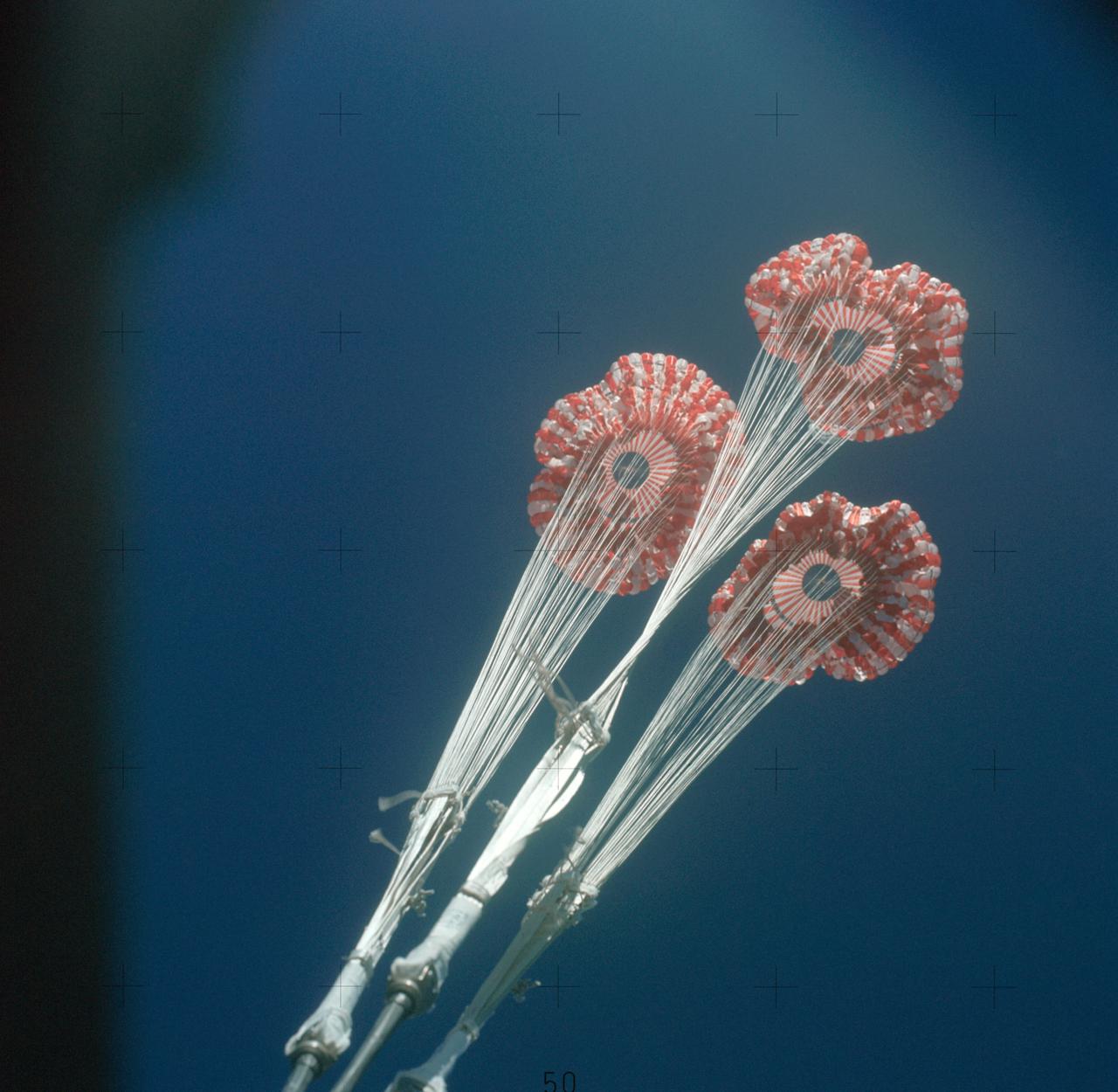
SL3-114-1760 (25 Sept. 1973) --? An excellent view of the three main ring sail parachutes of the Skylab 3 command module as they unfurl during descent to a successful splashdown in the Pacific Ocean. This picture was taken by a hand-held 70mm Hasselblad camera, looking up through a window of the command module. These parachutes open at approximately 10,000 feet altitude. Aboard the CM were astronauts Alan L. Bean, Owen K. Garriott and Jack R. Lousma, who had just completed a 59-day visit to the Skylab space station in Earth orbit. Photo credit: NASA
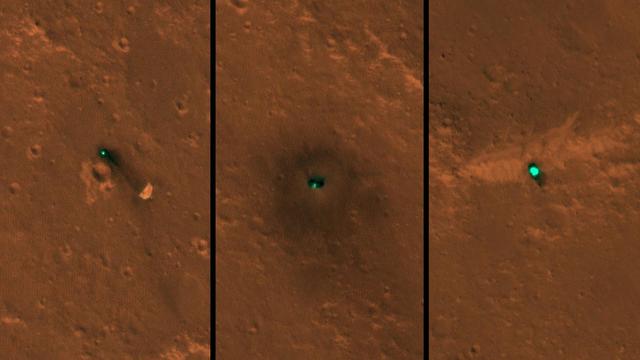
NASA's InSight spacecraft, its heat shield and its parachute were imaged on Dec. 6 and 11 by the HiRISE camera onboard NASA's Mars Reconnaissance Orbiter. In images released today, the three new features on the Martian landscape appear teal. That's not their actual color: Light reflected off their surfaces cause the color to be saturated. The ground around the lander is dark, blasted by its retrorockets during descent. Look carefully for a butterfly shape, and you can make out the lander's solar panels on either side. Unannotated, individual images of the lander, heat shield and parachute are also available. https://photojournal.jpl.nasa.gov/catalog/PIA22875
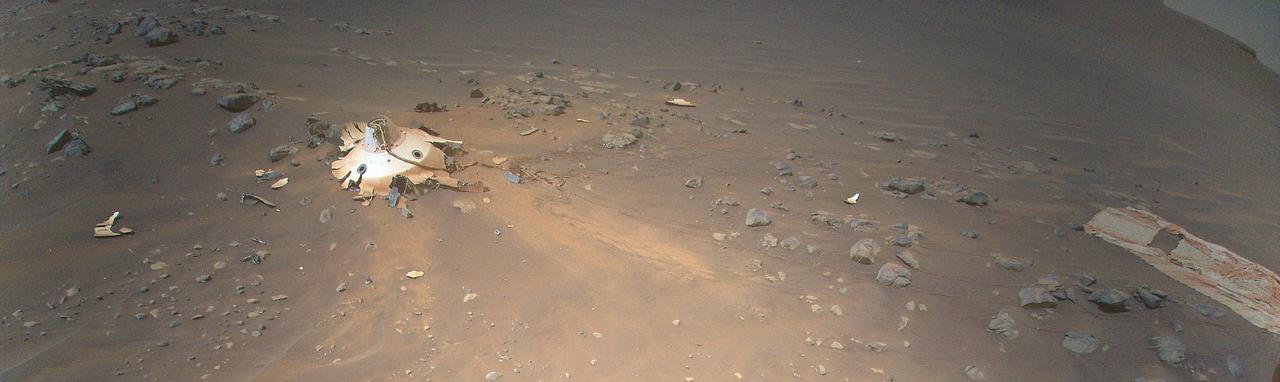
This image of Perseverance's backshell (left of center), supersonic parachute (far right), was collected from an altitude of 26 feet (8 meters) by NASA's Ingenuity Mars Helicopter during its 26th flight on Mars on April 19, 2022. During the Feb. 18, 2021, landing of Perseverance, the parachute and backshell were jettisoned at about 1.3 miles (2.1 km) altitude. The parachute and backshell continued to descend and impacted the ground at approximately 78 mph (126 kph). Engineers working on the Mars Sample Return program requested images be taken from an aerial perspective of the components because they may provide insight into the components' performance during the rover's entry, descent, and landing. The image has been cropped and processed from the original version. https://photojournal.jpl.nasa.gov/catalog/PIA25218
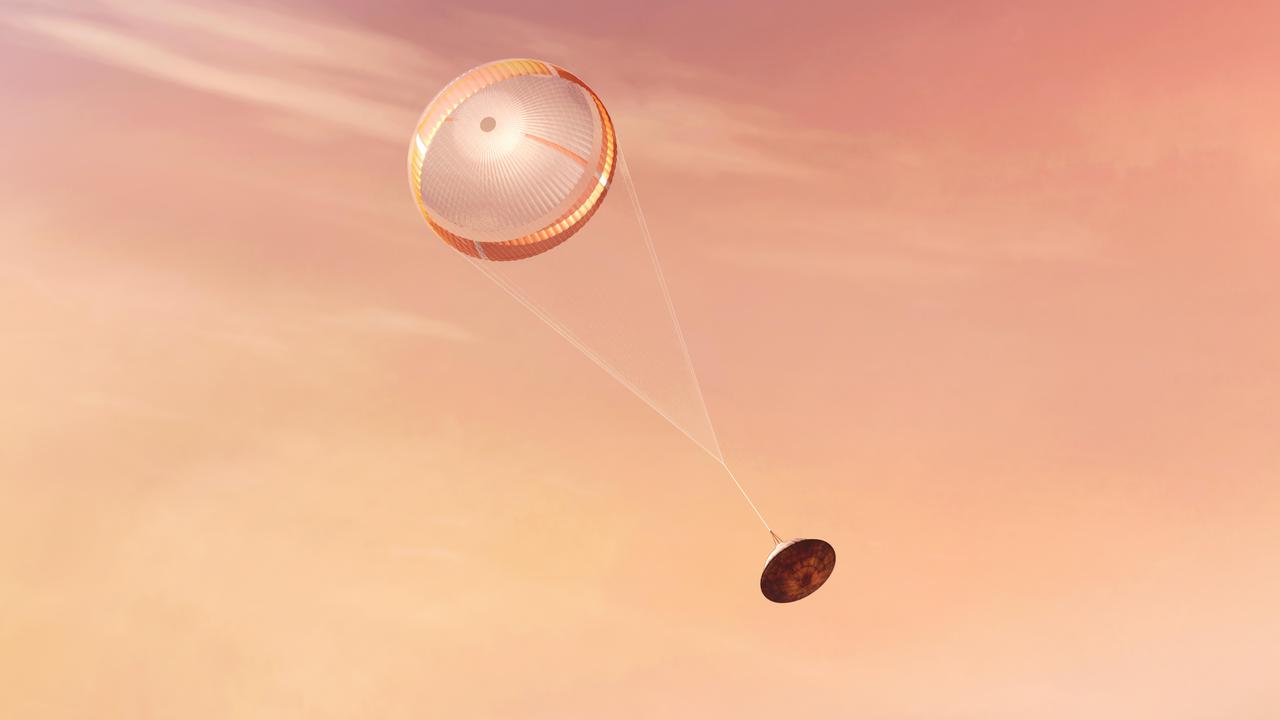
NASA's Perseverance rover deploys a supersonic parachute from its aeroshell as it slows down before landing, in this artist's illustration. Hundreds of critical events must execute perfectly and exactly on time for the rover to land safely on Feb. 18, 2021. Entry, Descent, and Landing, or "EDL," begins when the spacecraft reaches the top of the Martian atmosphere, traveling nearly 12,500 mph (20,000 kph). EDL ends about seven minutes after atmospheric entry, with Perseverance stationary on the Martian surface. The parachute, 70.5 feet (21.5 meters) in diameter, deploys about 240 seconds after entry into the Martian atmosphere, at an altitude of about 7 miles (11 kilometers) and a velocity of about 940 mph (1,512 kph). The parachute slows the vehicle to about 200 mph (320 kph). https://photojournal.jpl.nasa.gov/catalog/PIA24316
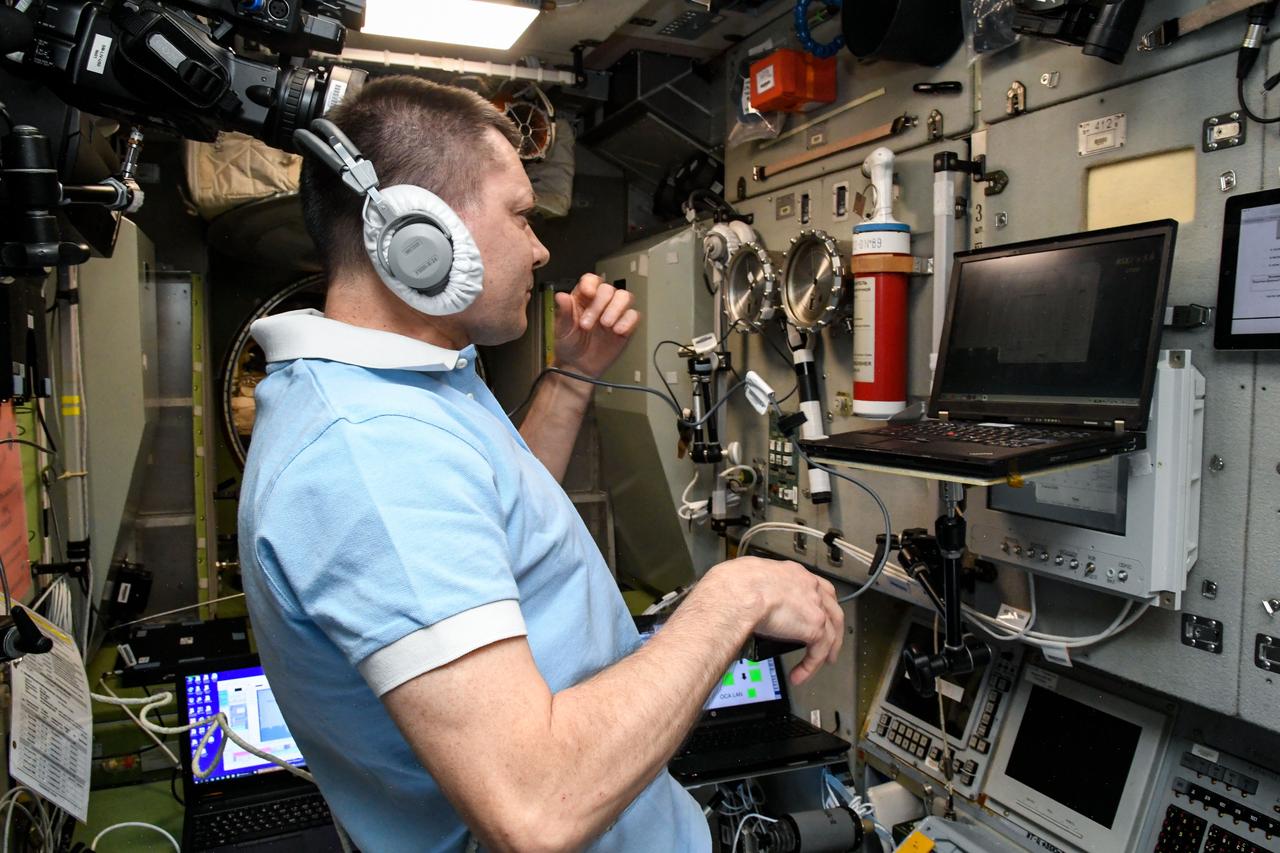
iss059e111655 (June 17, 2019) --- Expedition 59 Commander Oleg Kononenko of Roscosmos practices descent maneuvers on a computer that he will use to return to Earth aboard the Soyuz MS-11 spacecraft on June 24. He will lead Flight Engineers Anne McClain and David Saint-Jacques to a parachute-assisted landing in Kazakhstan after a 204-day mission in space.
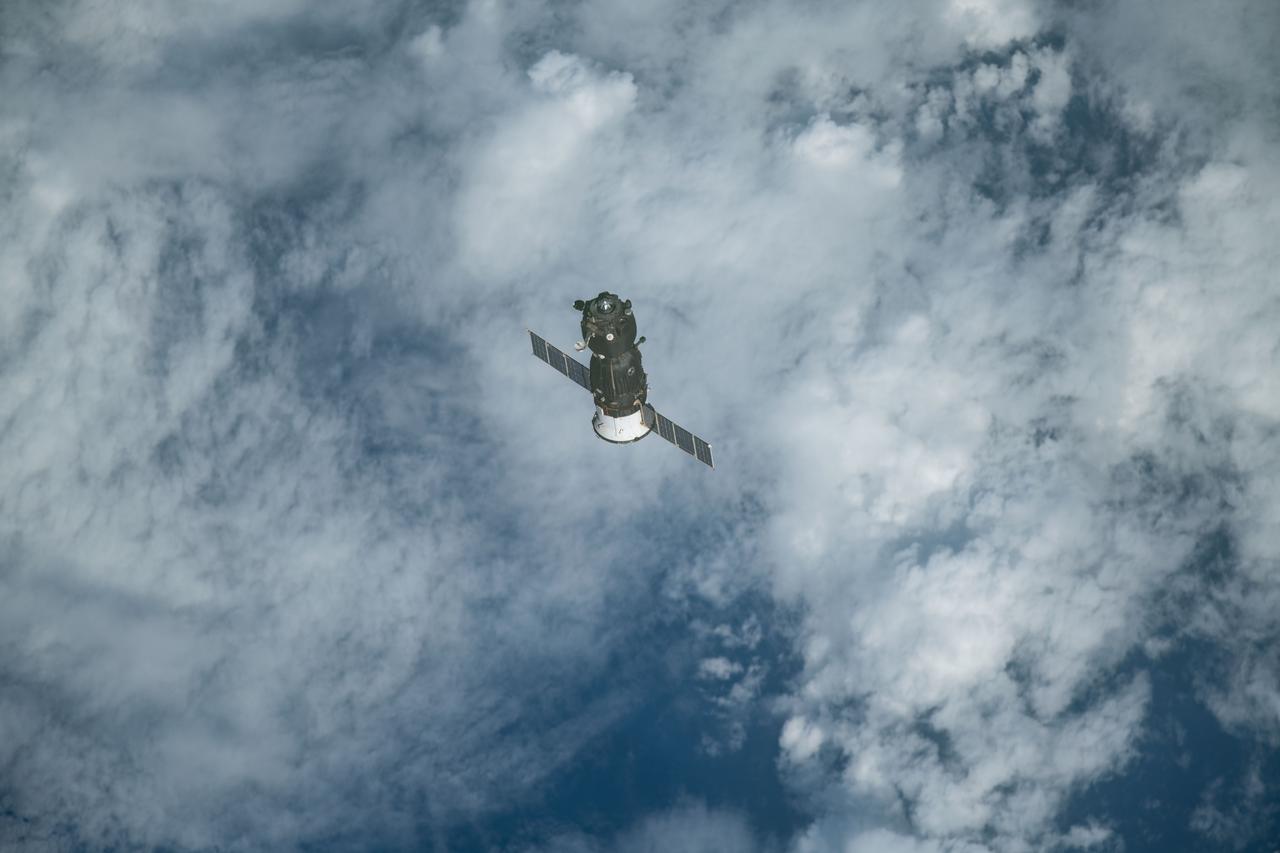
iss059e122506 (June 24, 2019) --- The Soyuz MS-11 crew craft separates from the International Space Station after its undocking and begins its descent to Earth. Expedition 59 crewmembers Oleg Kononenko of Roscosmos, Anne McClain of NASA and David Saint-Jacques of the Canadian Space Agency would parachute to a landing in Kazakhstan aboard the Soyuz after 204 days in space.
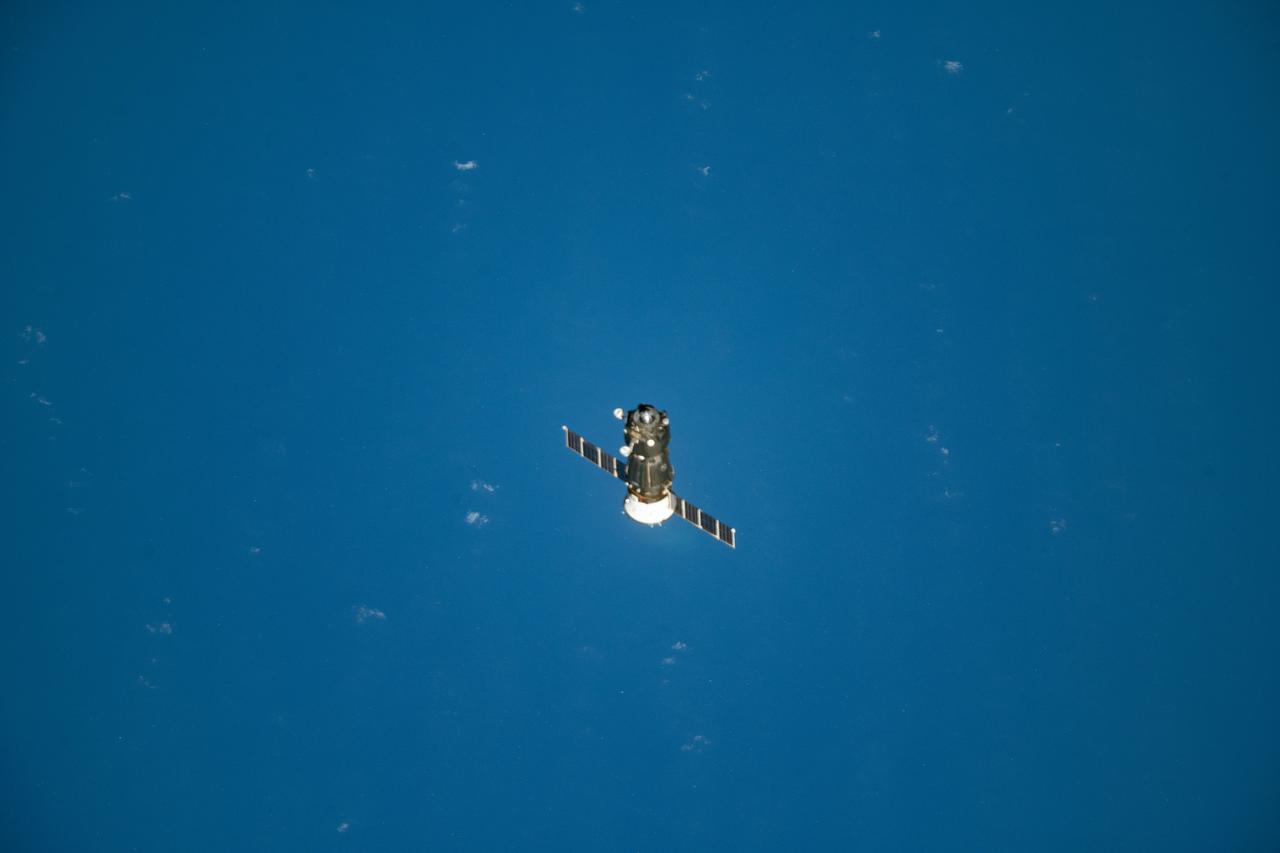
iss059e122556 (June 24, 2019) --- The Soyuz MS-11 crew craft separates from the International Space Station after its undocking and begins its descent to Earth. Expedition 59 crewmembers Oleg Kononenko of Roscosmos, Anne McClain of NASA and David Saint-Jacques of the Canadian Space Agency would parachute to a landing in Kazakhstan aboard the Soyuz after 204 days in space.
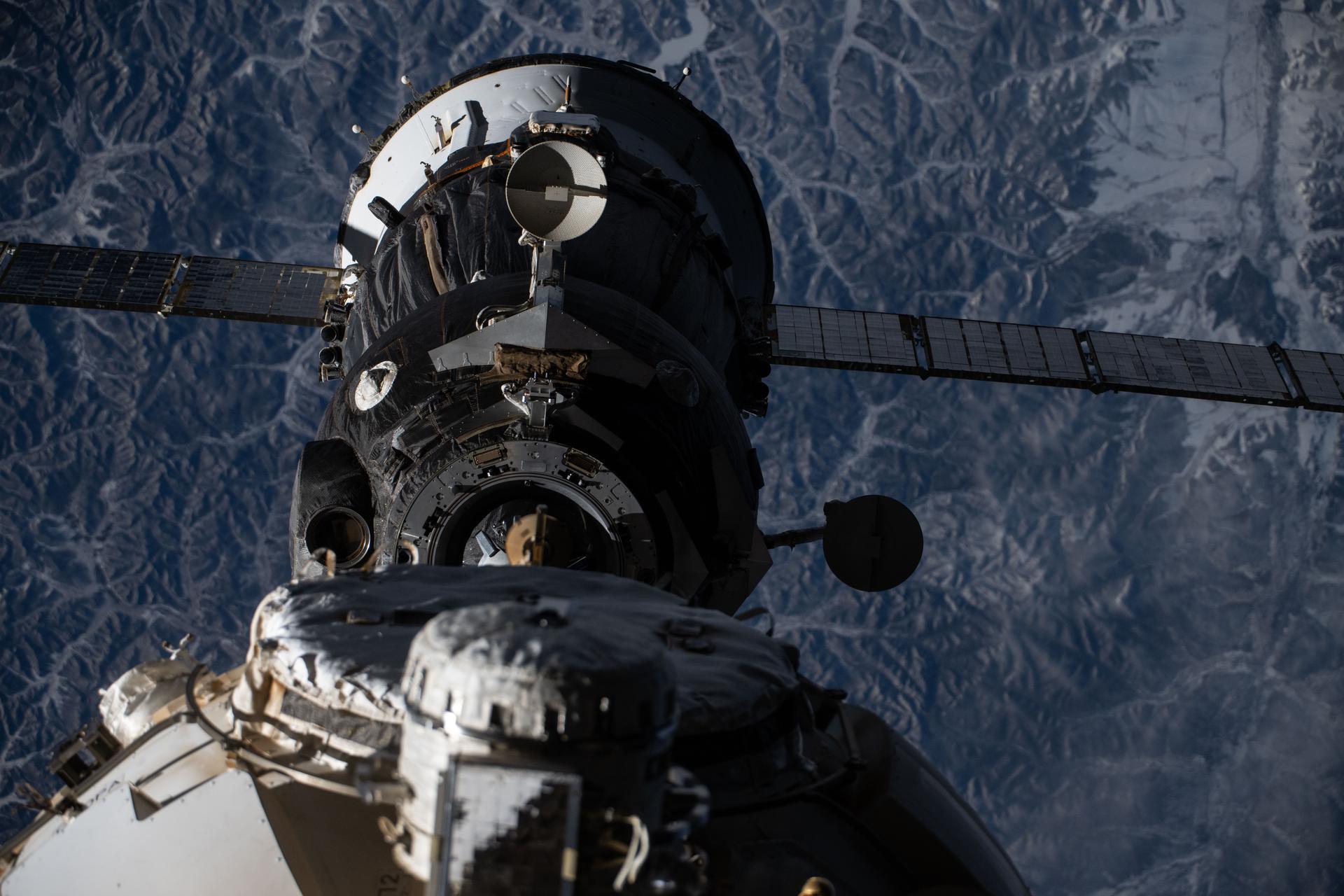
iss074e0000116 (Dec. 9, 2025) --- The Soyuz MS-27 spacecraft—carrying NASA astronaut Jonny Kim and Roscosmos cosmonauts Sergey Ryzhikov and Alexey Zubritsky—backs away from the International Space Station moments after undocking from the Poisk module while orbiting 265 miles above the frozen landscape of northwest Asia. The trio parachuted to Earth less than three-and-a-half hours later inside the Soyuz descent module completing a 245-day space research mission aboard the orbital outpost.
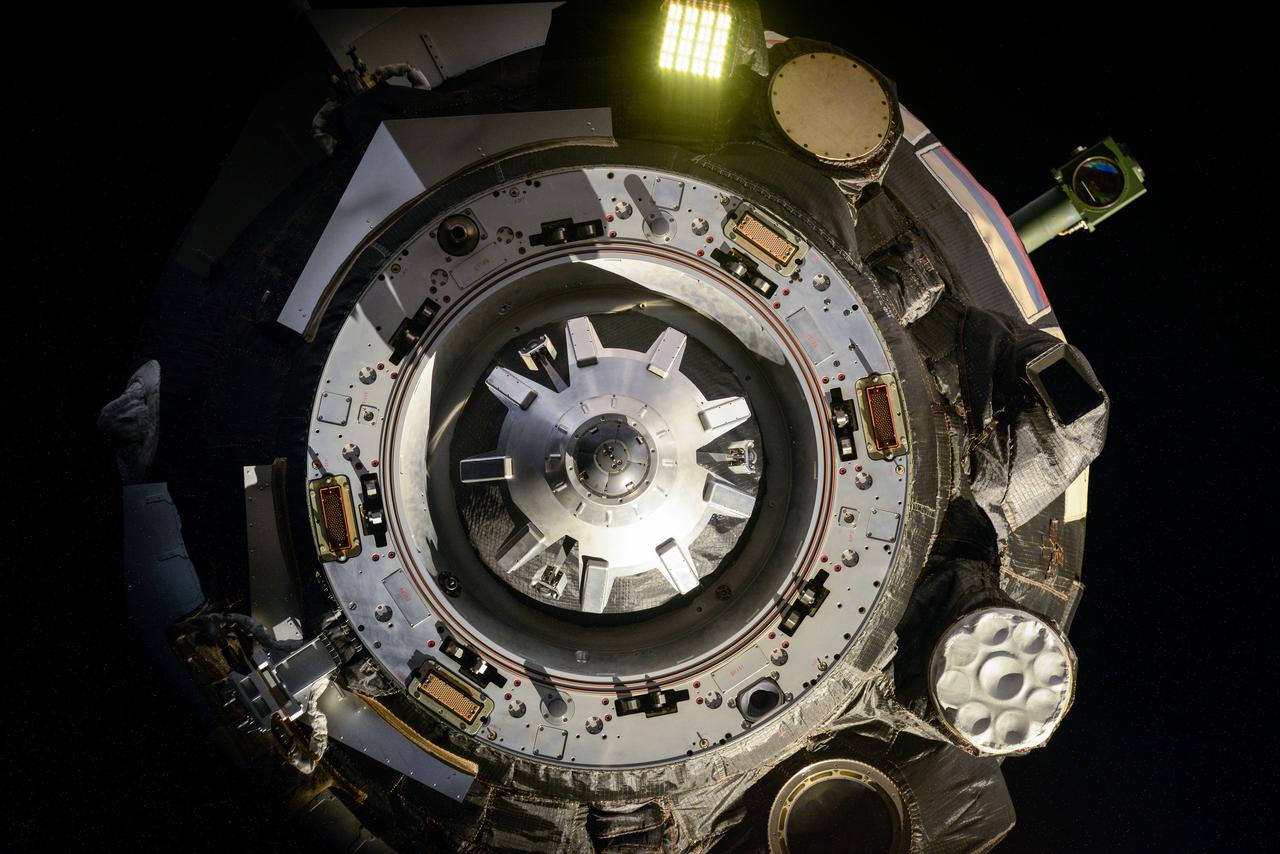
iss063e000001 (April 17, 2020) --- The docking module of the Soyuz MS-15 crew ship is pictured moments after undocking from the Zvezda service module with the Expedition 62 crewmembers, Oleg Skripochka, Jessica Meir and Andrew Morgan, onboard. They would parachute to a landing on Earth less than three-and-a-half hours later inside the Soyuz descent module.
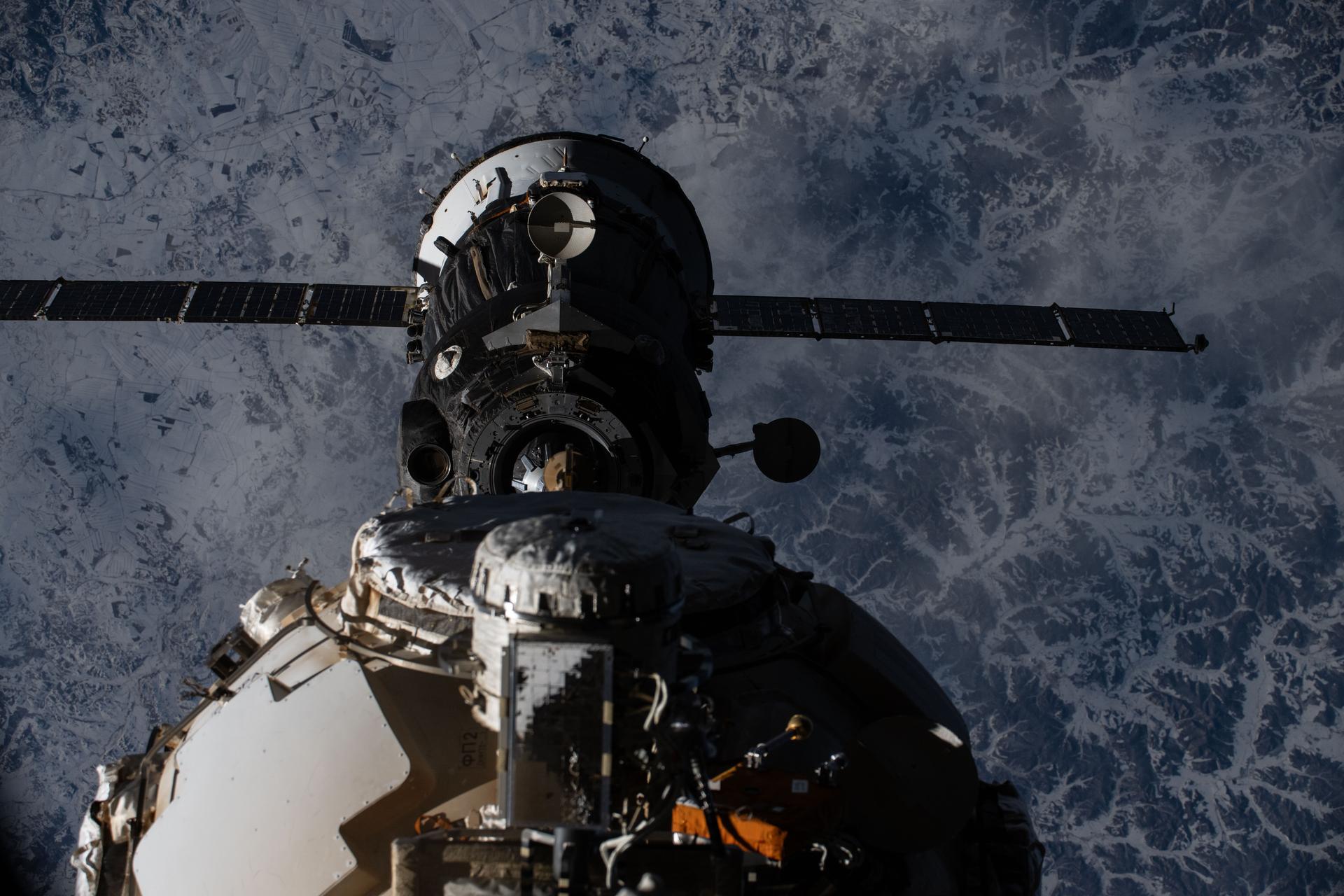
iss074e0000129 (Dec. 9, 2025) --- The Soyuz MS-27 spacecraft--carrying NASA astronaut Jonny Kim and Roscosmos cosmonauts Sergey Ryzhikov and Alexey Zubritsky--backs away from the International Space Station moments after undocking from the Poisk module while orbiting 265 miles above the frozen landscape of northwest Asia. The trio parachuted to Earth less than three-and-a-half hours later inside the Soyuz descent module completing a 245-day space research mission aboard the orbital outpost.
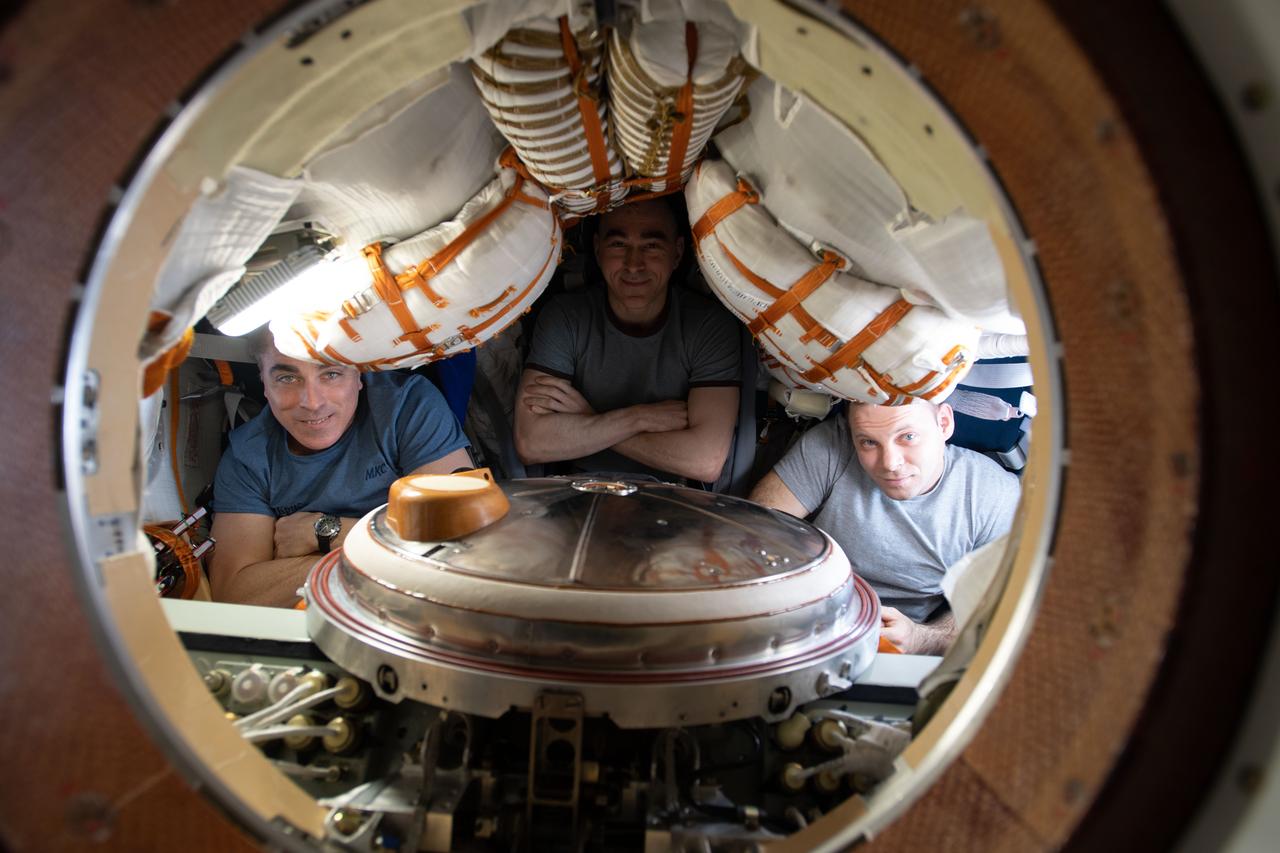
iss063e113857 (Oct. 21, 2020) --- Expedition 63 crewmates (from left) Chris Cassidy of NASA and Roscosmos cosmonauts Anatoly Ivanishin and Ivan Vagner are seated inside the Soyuz MS-16 crew ship moments before the hatches were closed to the International Space Station. The trio would parachute to Earth inside the Soyuz' descent module several hours later.
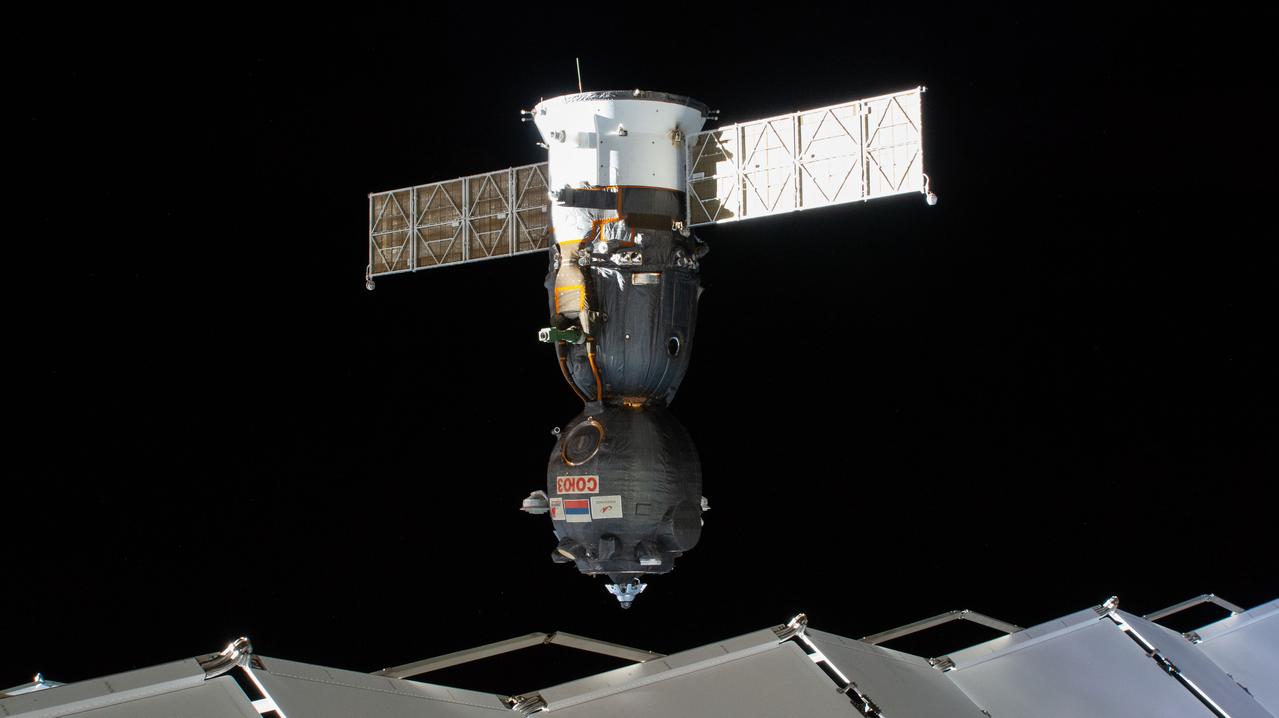
iss064e000143 (Oct. 21, 2020) --- The Soyuz MS-16 crew ship, with Expedition 63 crewmates Chris Cassidy of NASA and Roscosmos cosmonauts Anatoly Ivanishin and Ivan Vagner, departs the International Space Station moments after undocking from the Rassvet module. The trio would parachute to Earth inside the Soyuz' descent module just a few hours later.
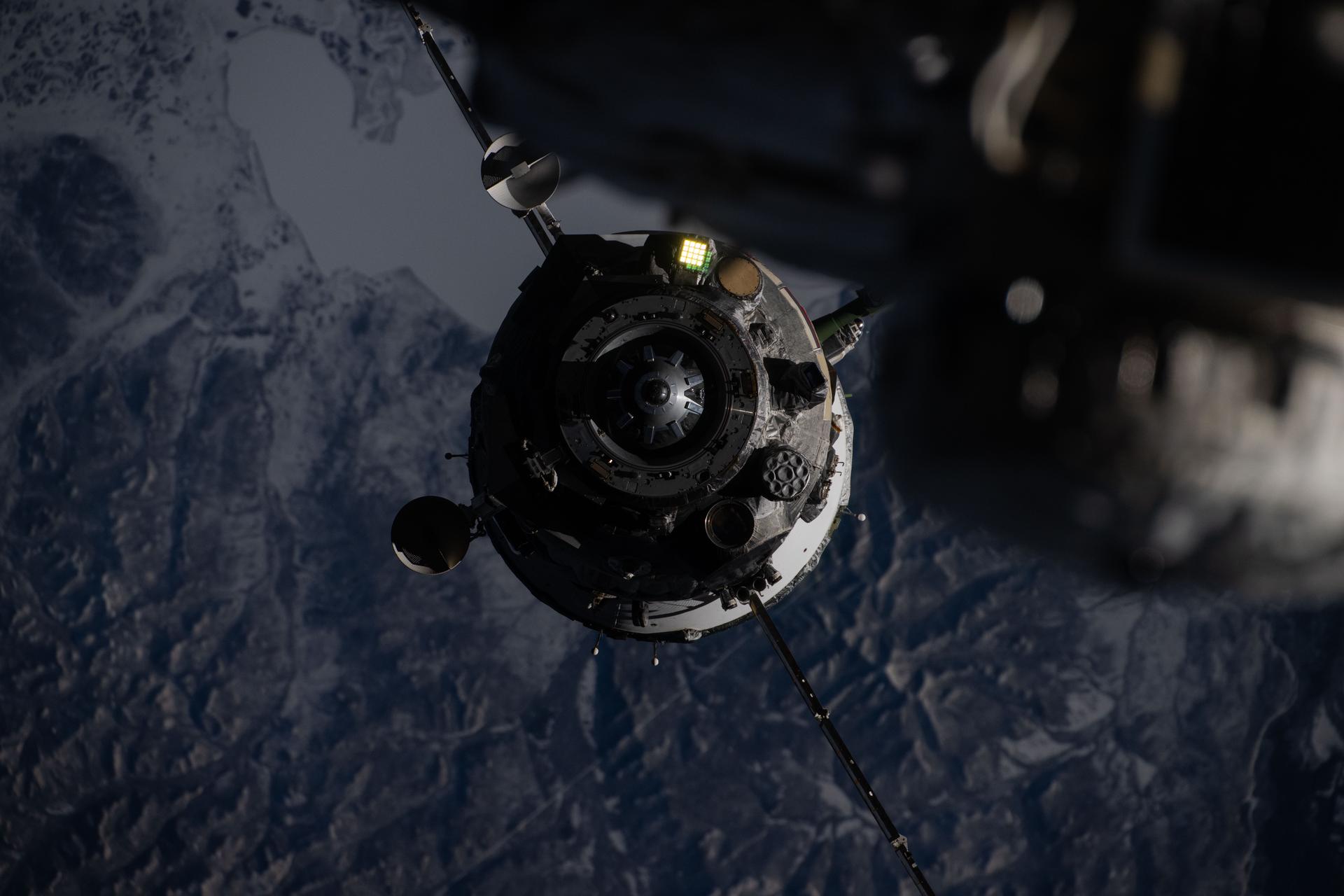
iss074e0000143 (Dec. 9, 2025) --- The Soyuz MS-27 spacecraft—carrying NASA astronaut Jonny Kim and Roscosmos cosmonauts Sergey Ryzhikov and Alexey Zubritsky—backs away from the International Space Station moments after undocking from the Poisk module while orbiting 265 miles above the frozen landscape of northwest Asia. The trio parachuted to Earth less than three-and-a-half hours later inside the Soyuz descent module completing a 245-day space research mission aboard the orbital outpost.
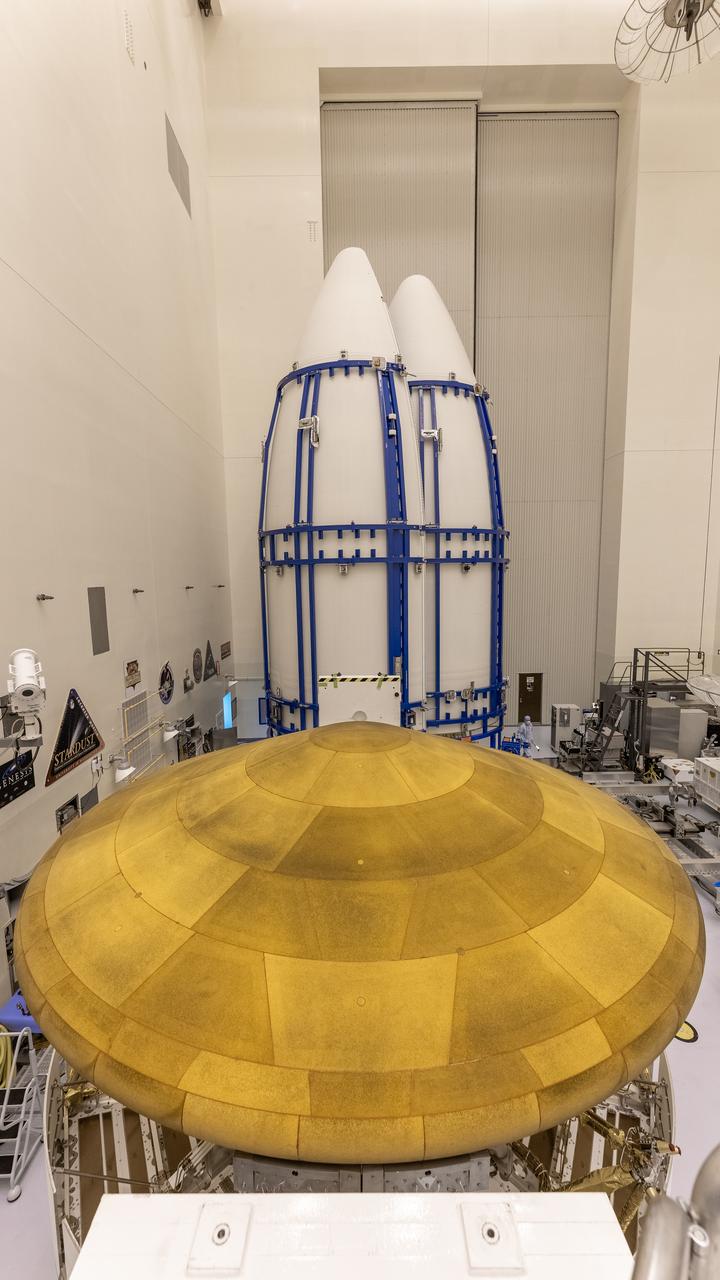
Inside the Payload Hazardous Servicing Facility at NASA’s Kennedy Space Center in Florida, the Backshell-Powered Descent Vehicle, in view, and Entry Vehicle assemblies are being attached to the Mars Perseverance rover on May 29, 2020. The cone-shaped backshell contains the parachute, and along with the mission’s heat shield, provides protection for the rover and descent stage during Martian atmospheric entry. The Mars Perseverance rover is scheduled to launch on July 20 atop a United Launch Alliance Atlas V 541 rocket from Pad 41 at nearby Cape Canaveral Air Force Station. The rover is part of NASA’s Mars Exploration Program, a long-term effort of robotic exploration of the Red Planet. The rover will search for habitable conditions in the ancient past and signs of past microbial life on Mars. The Launch Services Program at Kennedy is responsible for launch management.
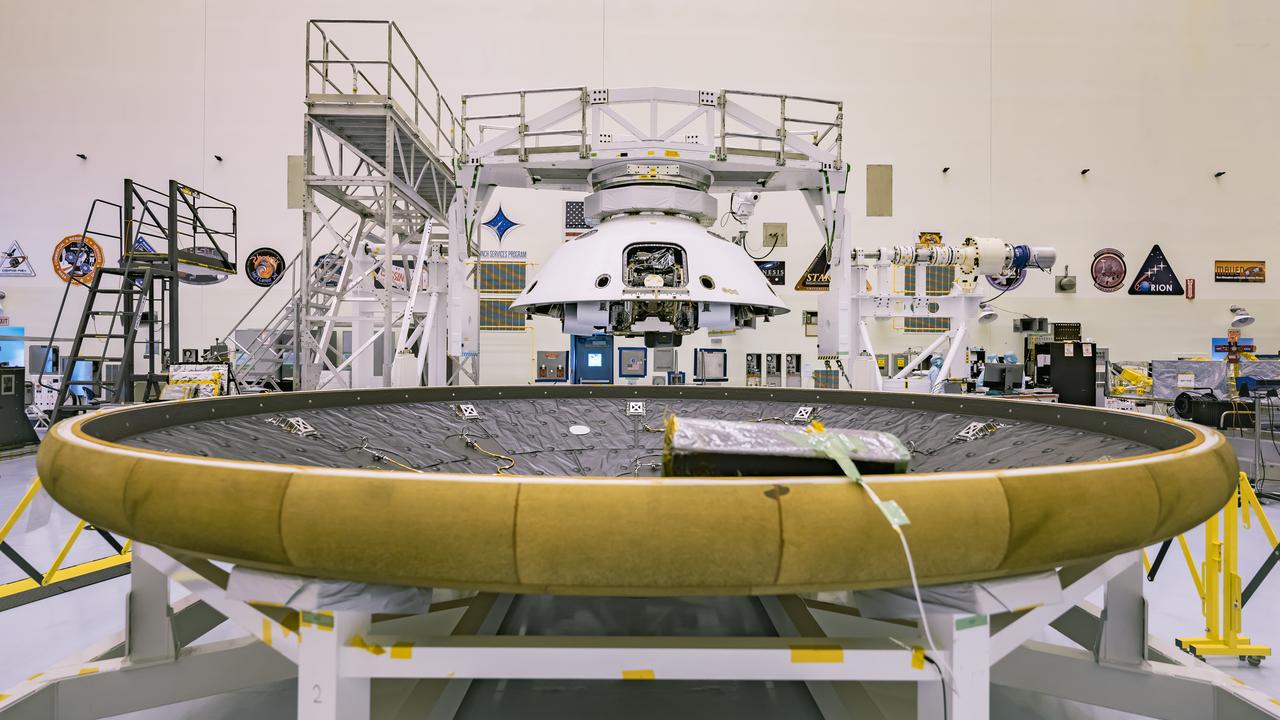
Inside the Payload Hazardous Servicing Facility at NASA’s Kennedy Space Center in Florida, the Backshell-Powered Descent Vehicle and Entry Vehicle assemblies are being prepared to be attached to the Mars Perseverance rover on May 5, 2020. The cone-shaped backshell contains the parachute, and along with the mission’s heat shield, provides protection for the rover and descent stage during Martian atmospheric entry. The Mars Perseverance rover is scheduled to launch in mid-July atop a United Launch Alliance Atlas V 541 rocket from Pad 41 at nearby Cape Canaveral Air Force Station. The rover is part of NASA’s Mars Exploration Program, a long-term effort of robotic exploration of the Red Planet. The rover will search for habitable conditions in the ancient past and signs of past microbial life on Mars. The Launch Services Program at Kennedy is responsible for launch management.
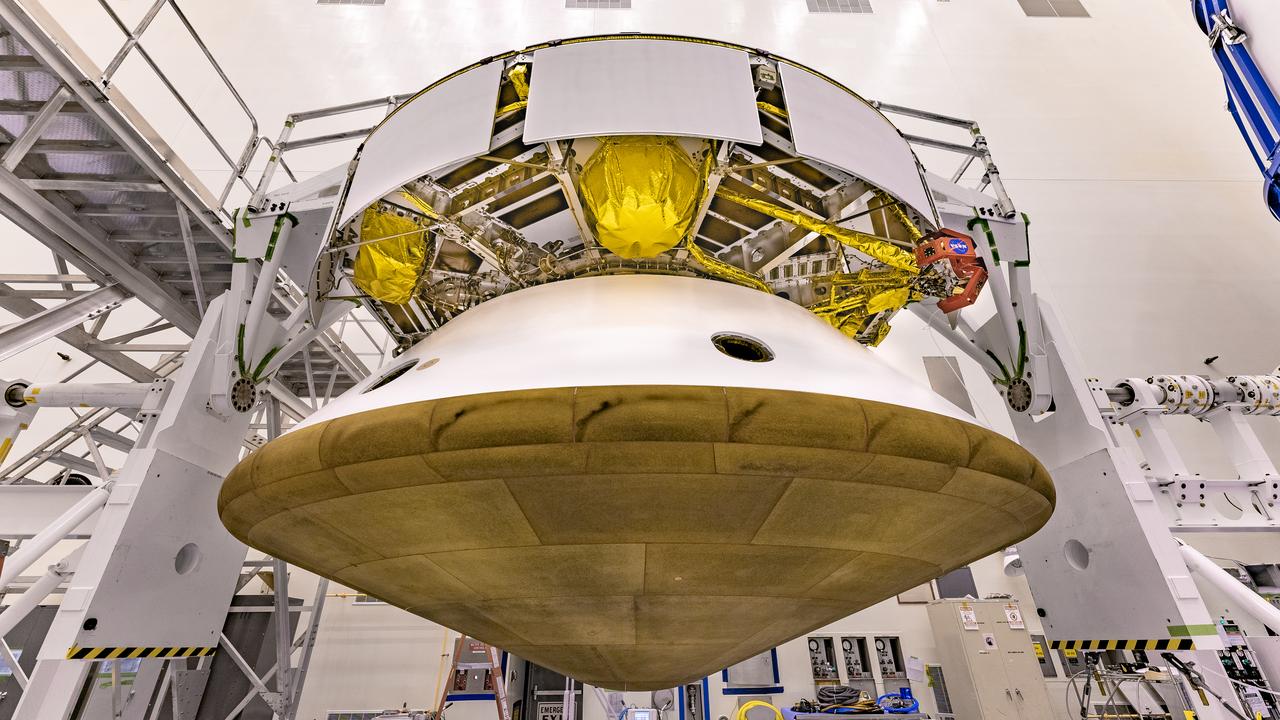
Inside the Payload Hazardous Servicing Facility at NASA’s Kennedy Space Center in Florida, the Backshell-Powered Descent Vehicle and Entry Vehicle assemblies are being attached to the Mars Perseverance rover on May 28, 2020. The cone-shaped backshell contains the parachute, and along with the mission’s heat shield, provides protection for the rover and descent stage during Martian atmospheric entry. The Mars Perseverance rover is scheduled to launch on July 20 atop a United Launch Alliance Atlas V 541 rocket from Pad 41 at nearby Cape Canaveral Air Force Station. The rover is part of NASA’s Mars Exploration Program, a long-term effort of robotic exploration of the Red Planet. The rover will search for habitable conditions in the ancient past and signs of past microbial life on Mars. The Launch Services Program at Kennedy is responsible for launch management.
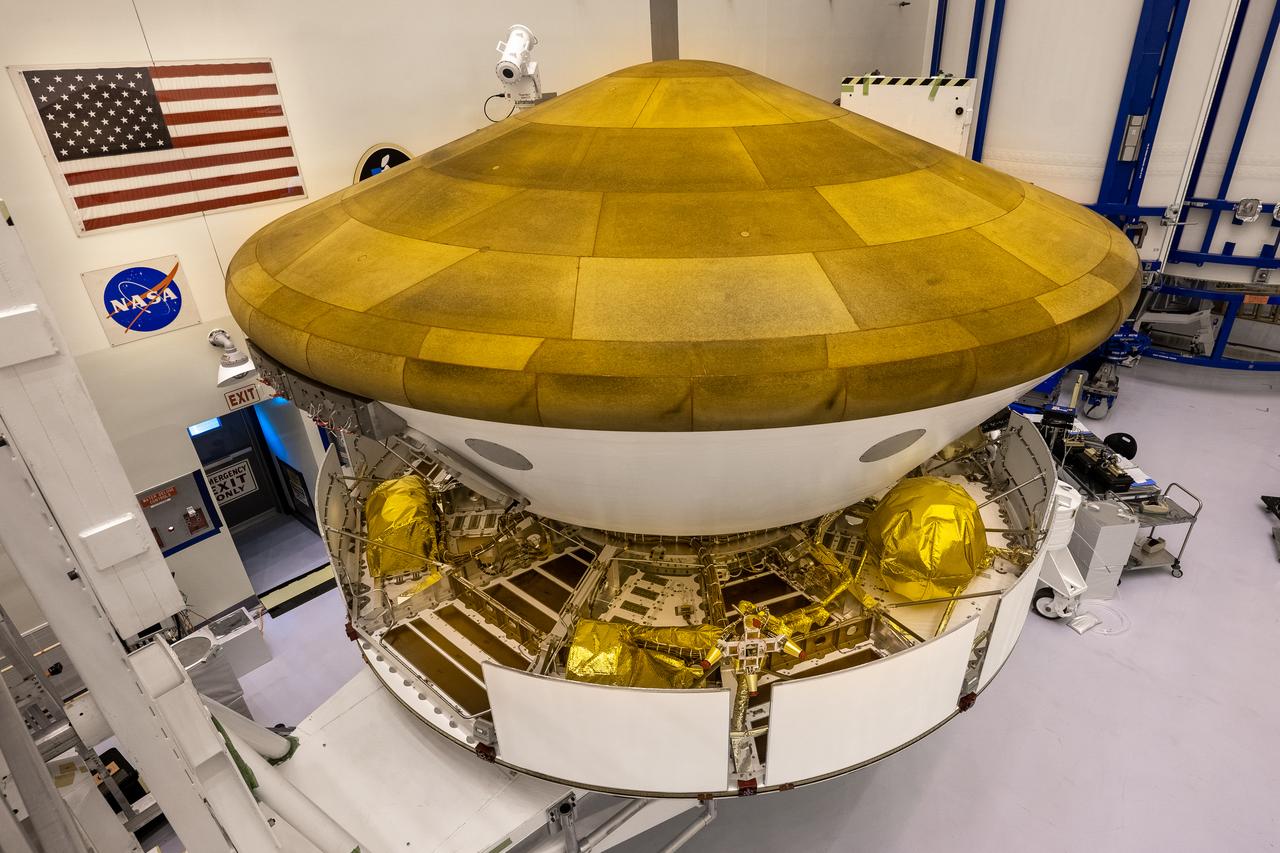
Inside the Payload Hazardous Servicing Facility at NASA’s Kennedy Space Center in Florida, the Backshell-Powered Descent Vehicle, in view, and Entry Vehicle assemblies are being attached to the Mars Perseverance rover on May 29, 2020. The cone-shaped backshell contains the parachute, and along with the mission’s heat shield, provides protection for the rover and descent stage during Martian atmospheric entry. The Mars Perseverance rover is scheduled to launch on July 20 atop a United Launch Alliance Atlas V 541 rocket from Pad 41 at nearby Cape Canaveral Air Force Station. The rover is part of NASA’s Mars Exploration Program, a long-term effort of robotic exploration of the Red Planet. The rover will search for habitable conditions in the ancient past and signs of past microbial life on Mars. The Launch Services Program at Kennedy is responsible for launch management.
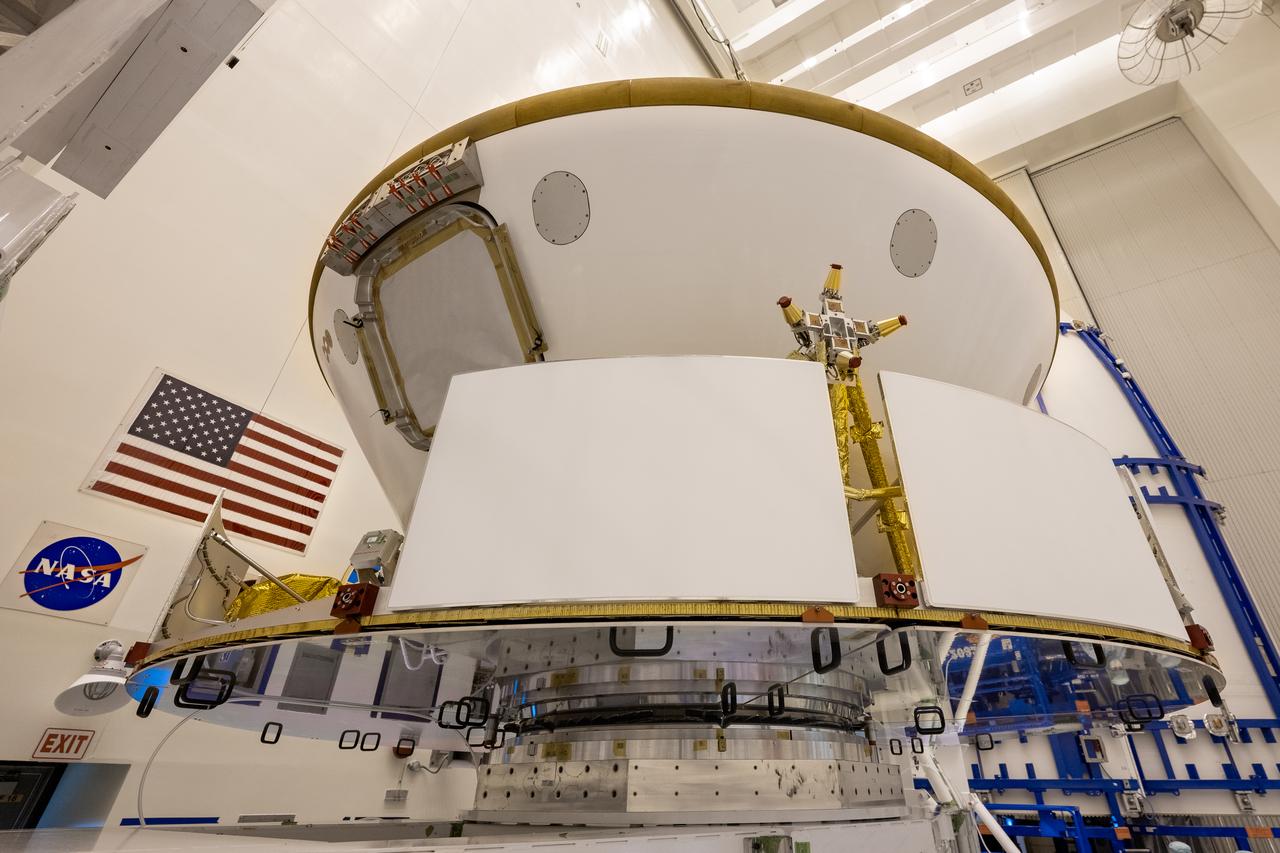
Inside the Payload Hazardous Servicing Facility at NASA’s Kennedy Space Center in Florida, the Backshell-Powered Descent Vehicle and Entry Vehicle assemblies are being attached to the Mars Perseverance rover on May 29, 2020. The cone-shaped backshell contains the parachute, and along with the mission’s heat shield, provides protection for the rover and descent stage during Martian atmospheric entry. The Mars Perseverance rover is scheduled to launch on July 20 atop a United Launch Alliance Atlas V 541 rocket from Pad 41 at nearby Cape Canaveral Air Force Station. The rover is part of NASA’s Mars Exploration Program, a long-term effort of robotic exploration of the Red Planet. The rover will search for habitable conditions in the ancient past and signs of past microbial life on Mars. The Launch Services Program at Kennedy is responsible for launch management.
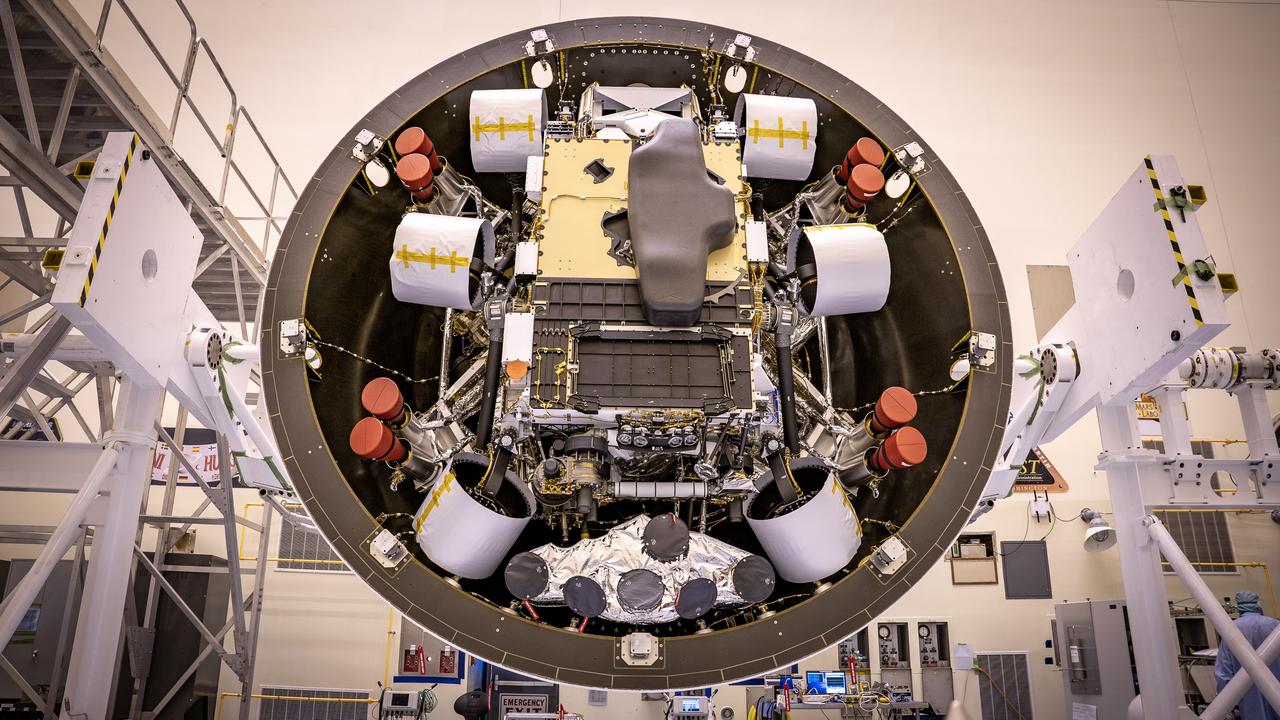
Inside the Payload Hazardous Servicing Facility at NASA’s Kennedy Space Center in Florida, the Backshell-Powered Descent Vehicle and Entry Vehicle assemblies are being prepared to be attached to the Mars Perseverance rover on May 4, 2020. The cone-shaped backshell contains the parachute, and along with the mission’s heat shield, provides protection for the rover and descent stage during Martian atmospheric entry. The Mars Perseverance rover is scheduled to launch in mid-July atop a United Launch Alliance Atlas V 541 rocket from Pad 41 at nearby Cape Canaveral Air Force Station. The rover is part of NASA’s Mars Exploration Program, a long-term effort of robotic exploration of the Red Planet. The rover will search for habitable conditions in the ancient past and signs of past microbial life on Mars. The Launch Services Program at Kennedy is responsible for launch management.
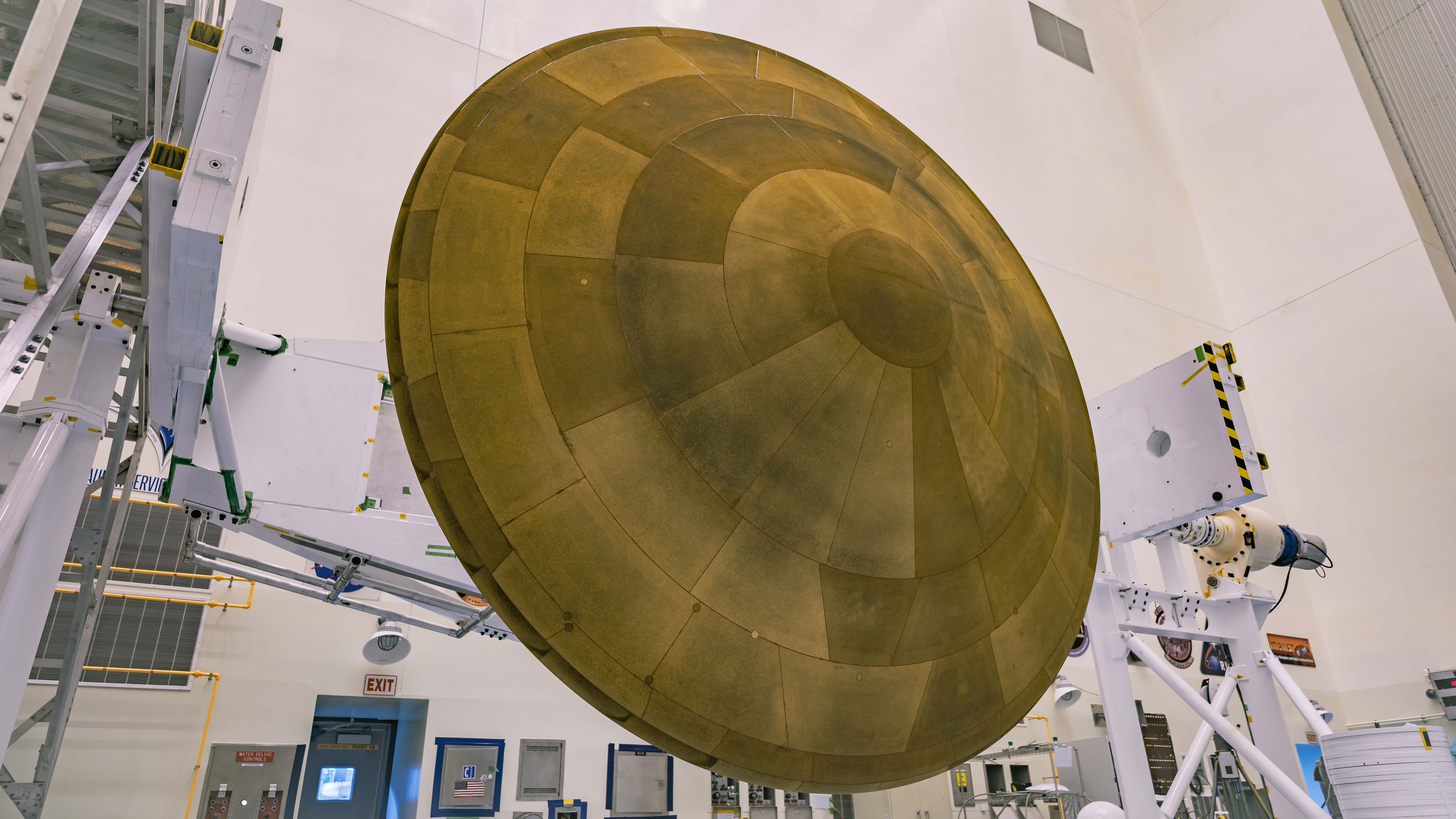
Inside the Payload Hazardous Servicing Facility at NASA’s Kennedy Space Center in Florida, the Backshell-Powered Descent Vehicle and Entry Vehicle assemblies are attached to the Mars Perseverance rover on May 6, 2020. The cone-shaped backshell contains the parachute, and along with the mission’s heat shield, provides protection for the rover and descent stage during Martian atmospheric entry. The Mars Perseverance rover is scheduled to launch in mid-July atop a United Launch Alliance Atlas V 541 rocket from Pad 41 at nearby Cape Canaveral Air Force Station. The rover is part of NASA’s Mars Exploration Program, a long-term effort of robotic exploration of the Red Planet. The rover will search for habitable conditions in the ancient past and signs of past microbial life on Mars. The Launch Services Program at Kennedy is responsible for launch management.
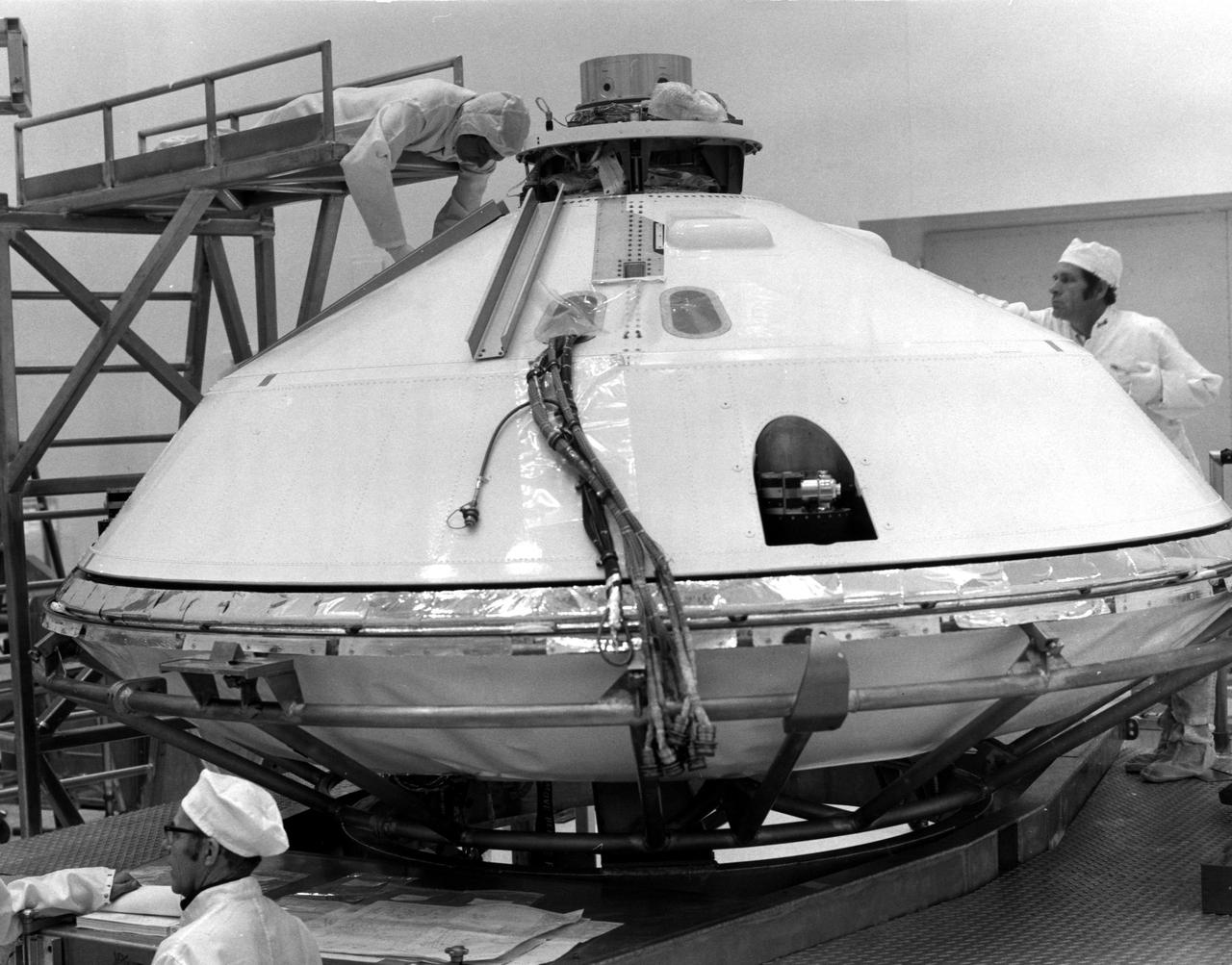
KENNEDY SPACE CENTER, FLA. -- Technicians prepared for removal of Viking Lander 1's aeroshell cover in KSC's Spacecraft Assembly and Encapsulation Facility 2 (SAEF-2) today. The cover remains over the Lander throughout its 440,000,000-mile journey to Mars. After the Lander separates from the Orbiter, the aeroshell will help to decelerate the speed of descent and will serve as a heat shield. After the aeroshell separates, the Lander's parachute will deploy at about 4,000 feet altitude to further slow descent for a soft landing on the Red Planet. The Kennedy Space Center will launch the first Viking from Complex 41, Cape Canaveral, no earlier than Aug. 11. The second Viking will be launched no earlier than Aug. 21.