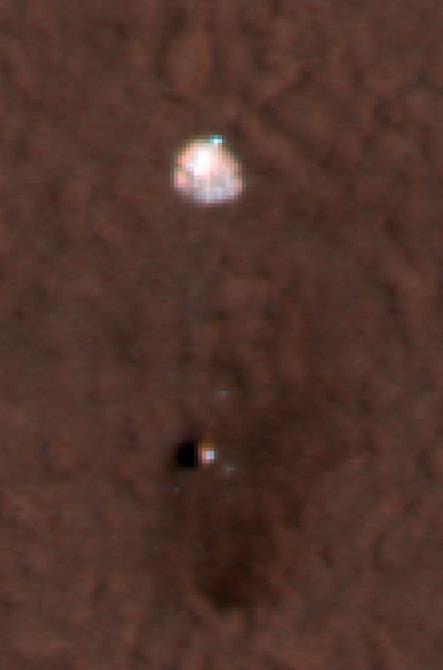
Color of Parachute on Ground
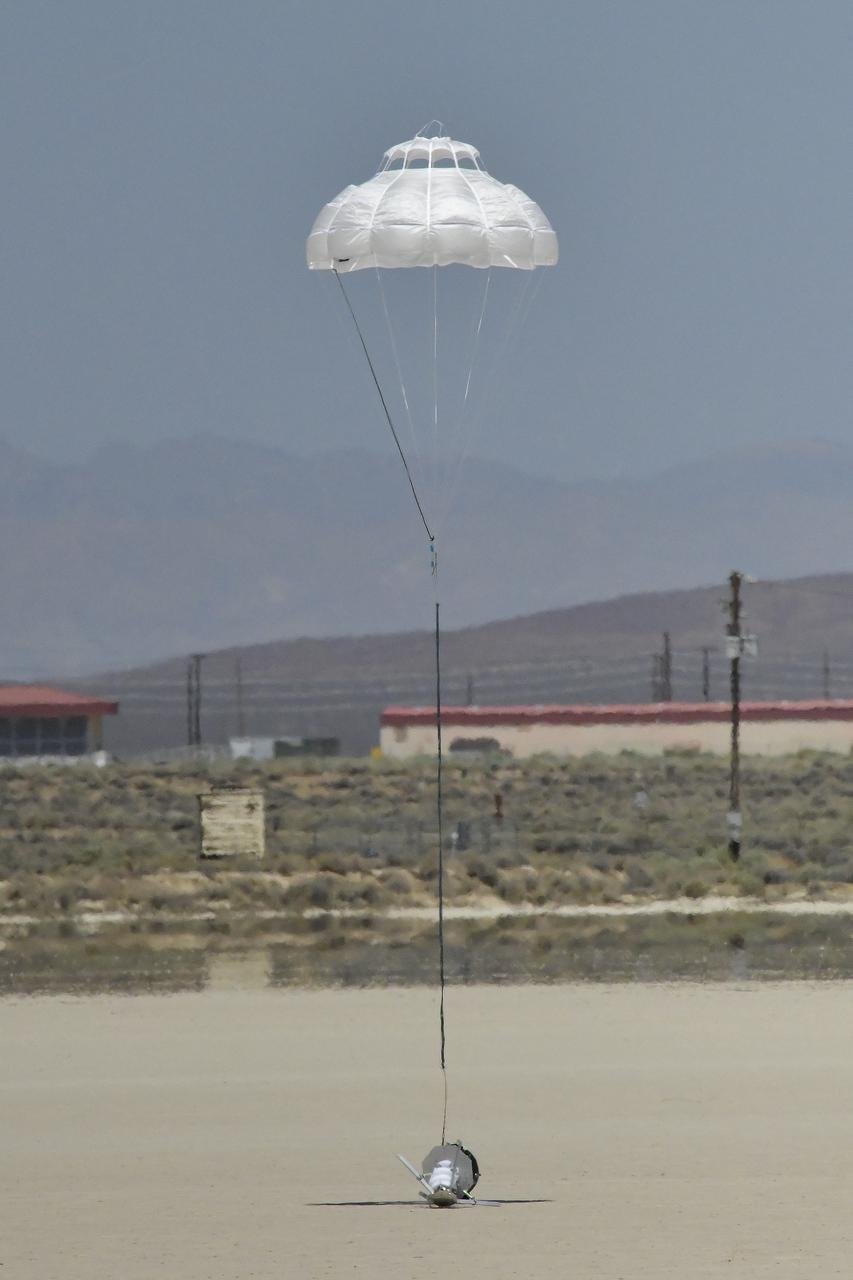
The Enhancing Parachutes by Instrumenting the Canopy test experiment lands following an air launch from an Alta X drone on June 4, 2025, at NASA’s Armstong Flight Research Center in Edwards, California. NASA researchers are developing technology to make supersonic parachutes safer and more reliable for delivering science instruments and payloads to Mars.
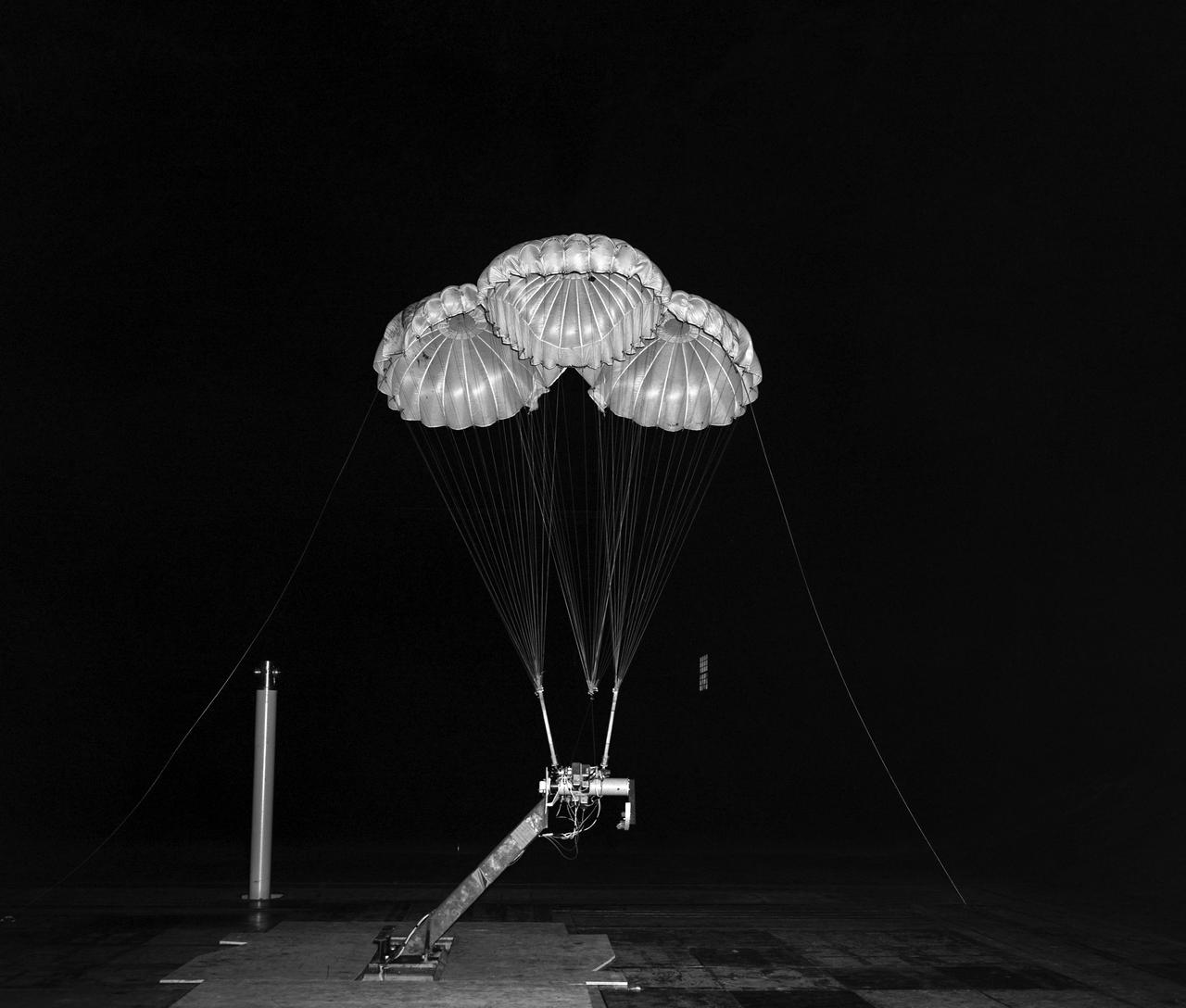
(02/18/1964) Apollo 3 Parachute cluster, flown vertically in 40x80 wind tunnel. Parachutes mounted on a control head with reels to vary the line lengths.
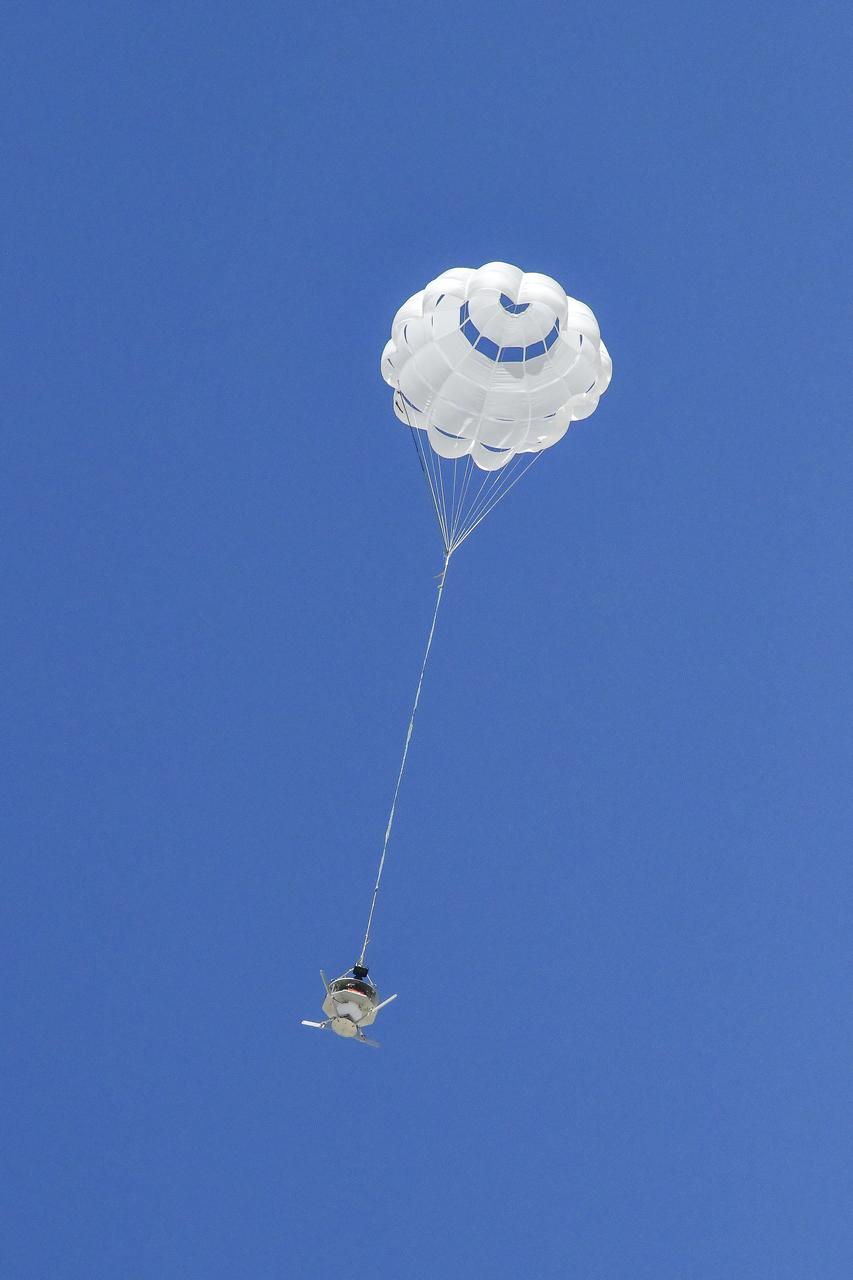
The parachute of the Enhancing Parachutes by Instrumenting the Canopy test experiment deploys following an air launch from an Alta X drone on June 4, 2025, at NASA’s Armstong Flight Research Center in Edwards, California. NASA researchers are developing technology to make supersonic parachutes safer and more reliable for delivering science instruments and payloads to Mars.
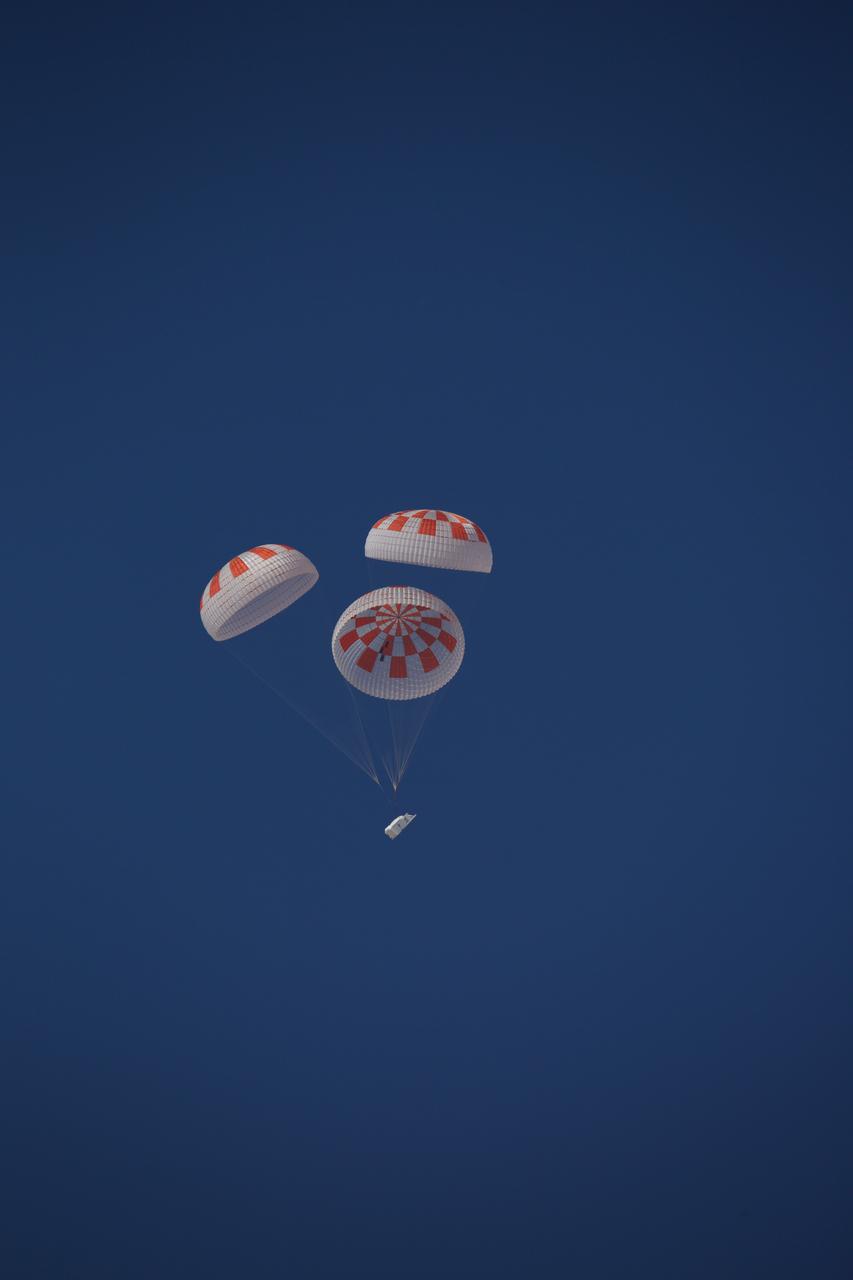
SpaceX performed its fourteenth overall parachute test supporting Crew Dragon development. This most recent exercise was the first of several planned parachute system qualification tests ahead of the spacecraft’s first crewed flight and resulted in the successful touchdown of Crew Dragon’s parachute system. During this test, a C-130 aircraft transported the parachute test vehicle, designed to achieve the maximum speeds that Crew Dragon could experience on re-entry, over the Mojave Desert in Southern California and dropped the vehicle from an altitude of 25,000 feet. The test demonstrated an off-nominal situation, deploying only one of the two drogue chutes and intentionally skipping a reefing stage on one of the four main parachutes, proving a safe landing in such a contingency scenario.
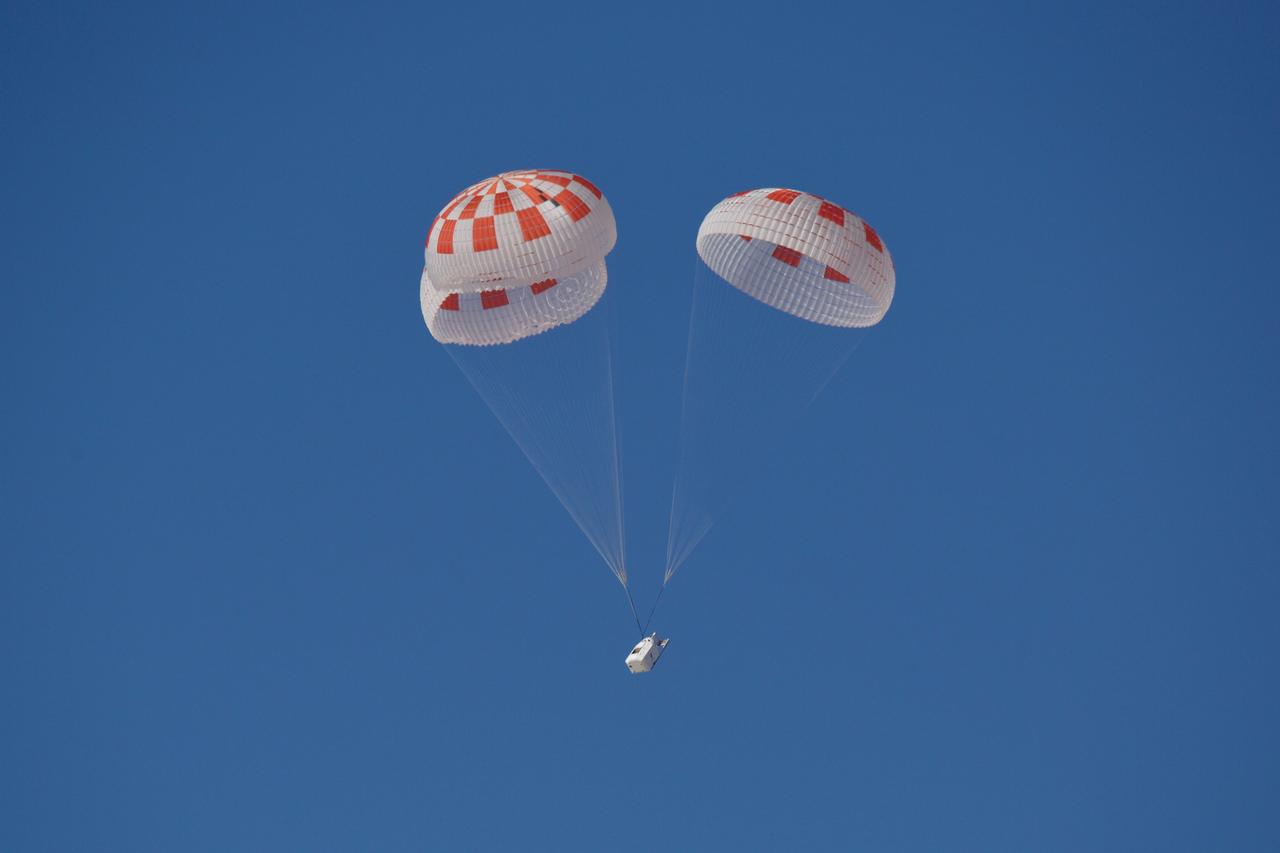
SpaceX performed its fourteenth overall parachute test supporting Crew Dragon development. This most recent exercise was the first of several planned parachute system qualification tests ahead of the spacecraft’s first crewed flight and resulted in the successful touchdown of Crew Dragon’s parachute system. During this test, a C-130 aircraft transported the parachute test vehicle, designed to achieve the maximum speeds that Crew Dragon could experience on re-entry, over the Mojave Desert in Southern California and dropped the vehicle from an altitude of 25,000 feet. The test demonstrated an off-nominal situation, deploying only one of the two drogue chutes and intentionally skipping a reefing stage on one of the four main parachutes, proving a safe landing in such a contingency scenario.
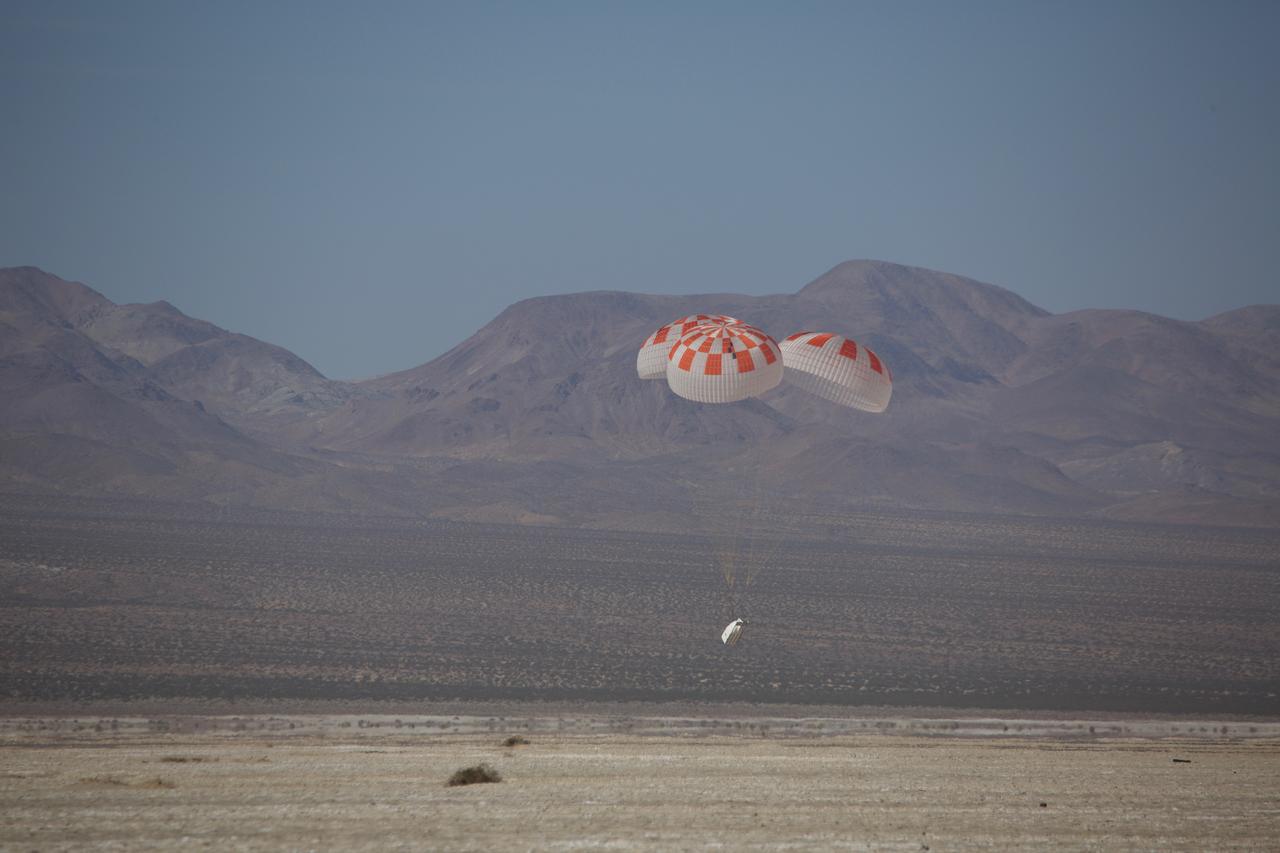
SpaceX performed its fourteenth overall parachute test supporting Crew Dragon development. This most recent exercise was the first of several planned parachute system qualification tests ahead of the spacecraft’s first crewed flight and resulted in the successful touchdown of Crew Dragon’s parachute system. During this test, a C-130 aircraft transported the parachute test vehicle, designed to achieve the maximum speeds that Crew Dragon could experience on re-entry, over the Mojave Desert in Southern California and dropped the vehicle from an altitude of 25,000 feet. The test demonstrated an off-nominal situation, deploying only one of the two drogue chutes and intentionally skipping a reefing stage on one of the four main parachutes, proving a safe landing in such a contingency scenario.
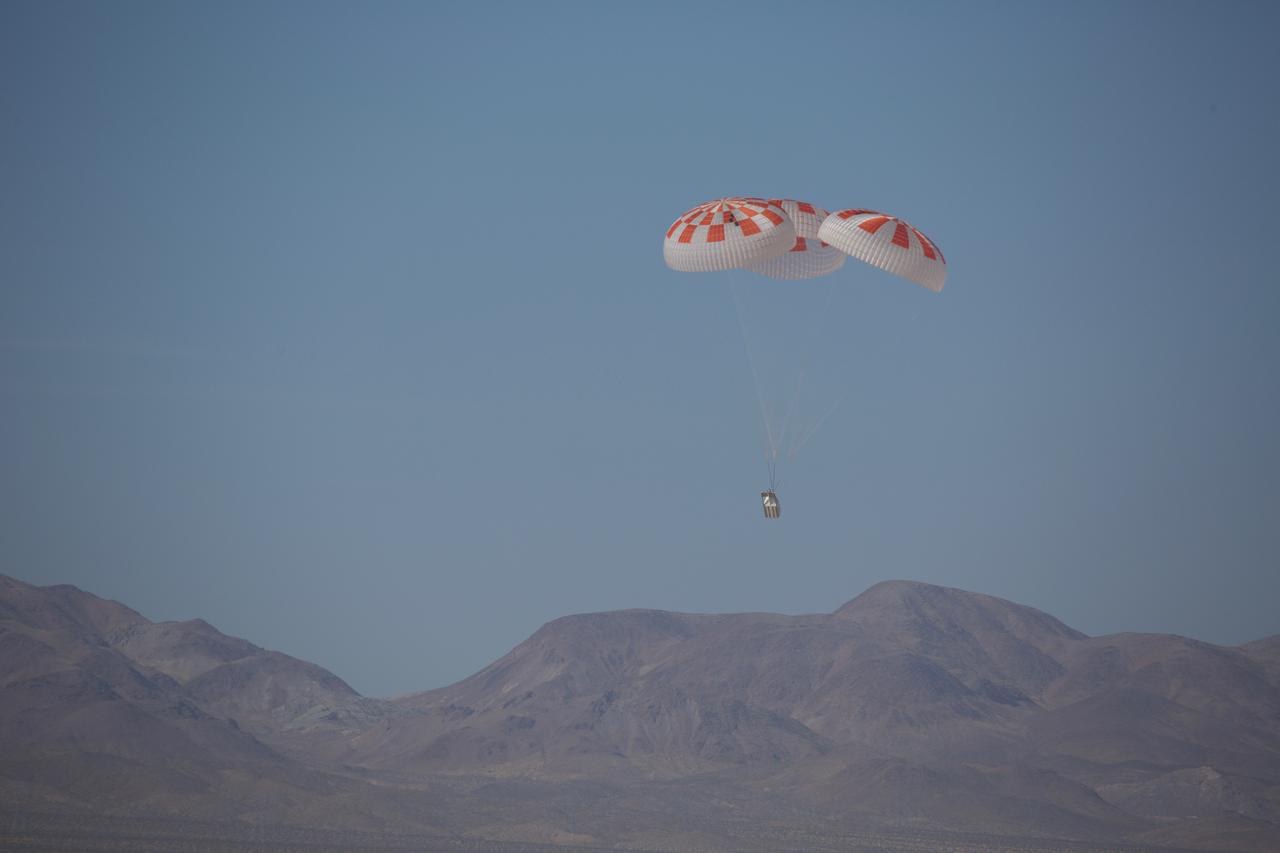
SpaceX performed its fourteenth overall parachute test supporting Crew Dragon development. This most recent exercise was the first of several planned parachute system qualification tests ahead of the spacecraft’s first crewed flight and resulted in the successful touchdown of Crew Dragon’s parachute system. During this test, a C-130 aircraft transported the parachute test vehicle, designed to achieve the maximum speeds that Crew Dragon could experience on re-entry, over the Mojave Desert in Southern California and dropped the vehicle from an altitude of 25,000 feet. The test demonstrated an off-nominal situation, deploying only one of the two drogue chutes and intentionally skipping a reefing stage on one of the four main parachutes, proving a safe landing in such a contingency scenario.
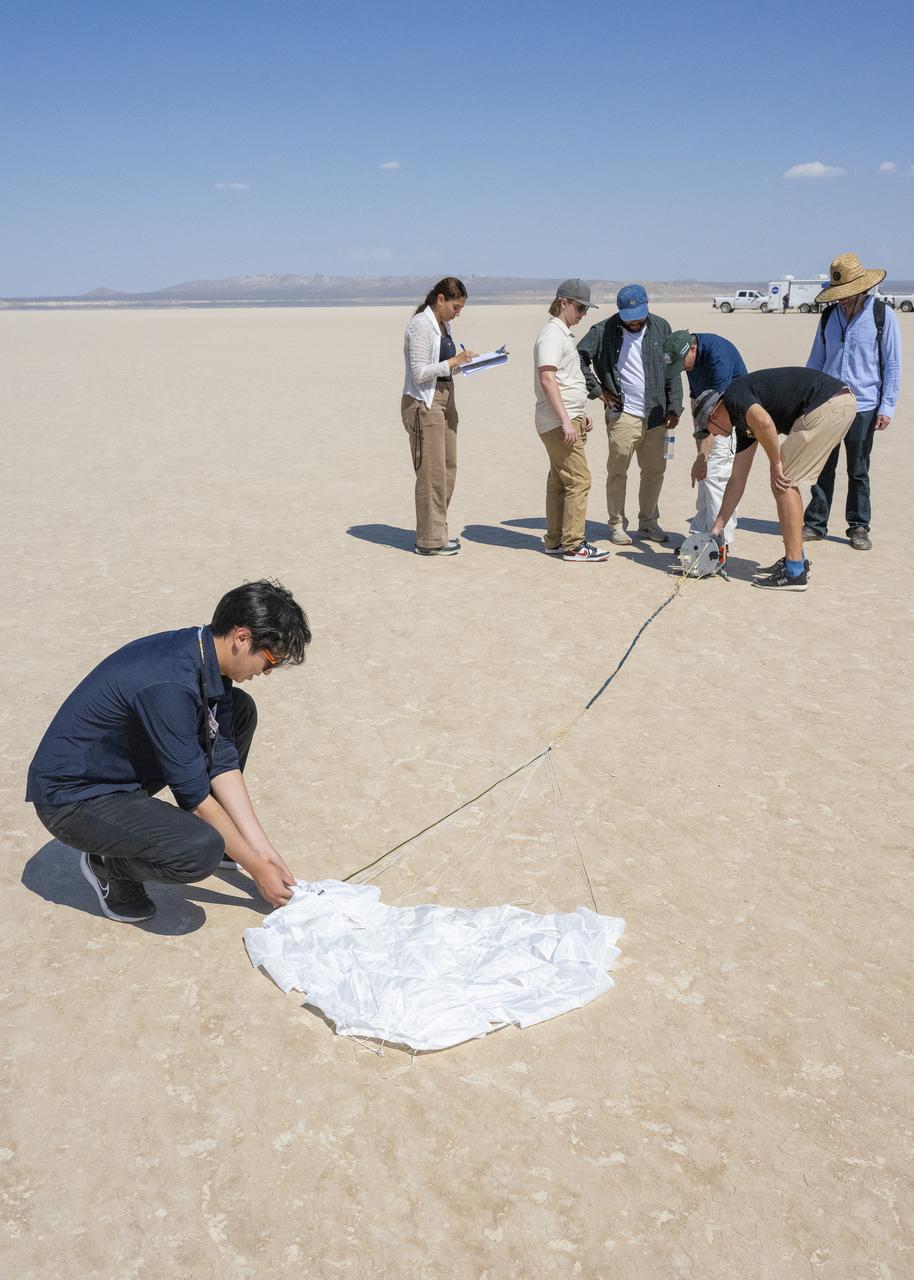
The Enhancing Parachutes by Instrumenting the Canopy project team examines a capsule and parachute following an air launch from an Alta X drone on June 4, 2025, at NASA’s Armstong Flight Research Center in Edwards, California. NASA researchers are developing technology to make supersonic parachutes safer and more reliable for delivering science instruments and payloads to Mars.
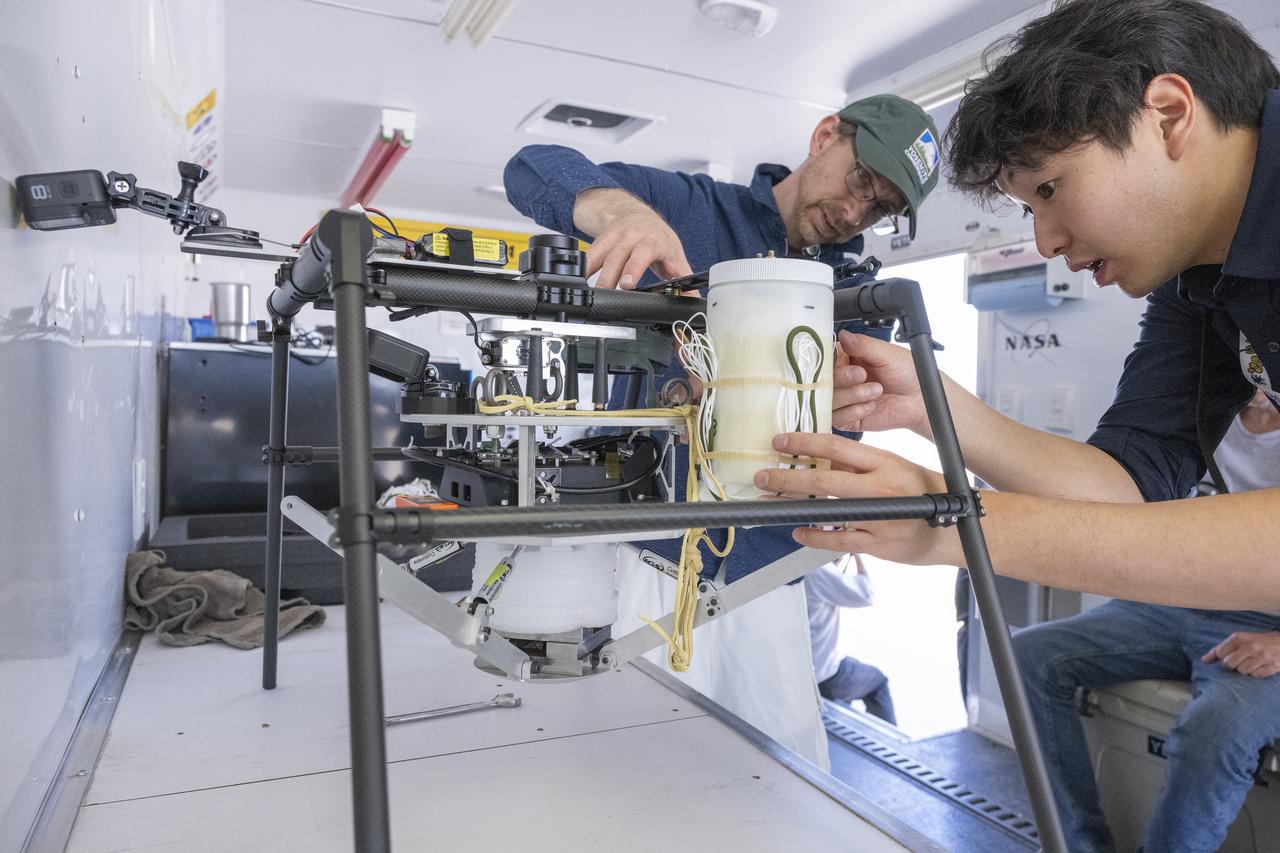
NASA researchers Paul Bean, center, and Mark Hagiwara, right, attach the capsule with parachute system to the Enhancing Parachutes by Instrumenting the Canopy test experiment on June 4, 2025, at NASA’s Armstong Flight Research Center in Edwards, California. NASA researchers are developing technology to make supersonic parachutes safer and more reliable for delivering science instruments and payloads to Mars.
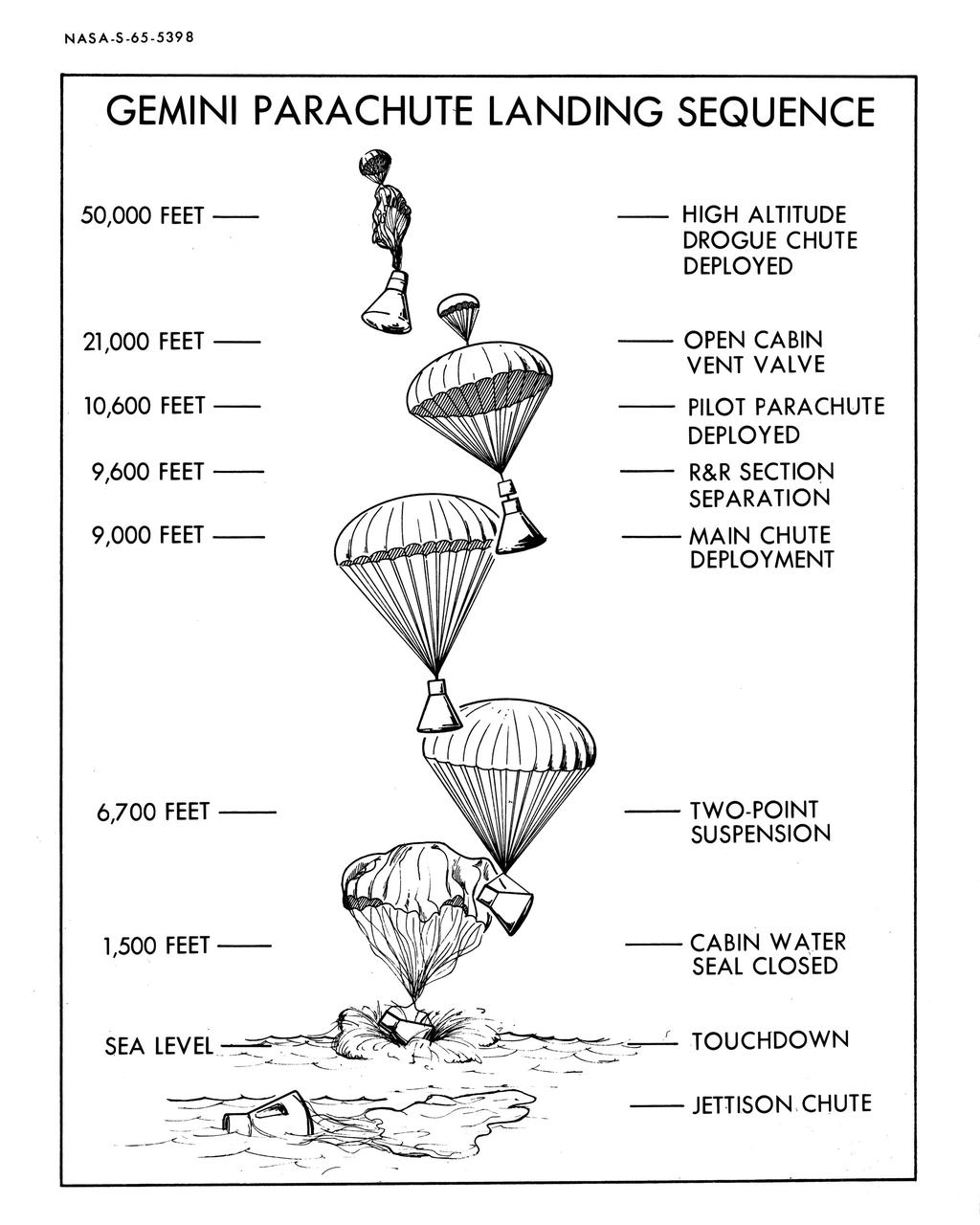
S65-05398 (1965) --- Artist concept of Gemini parachute landing sequence from high altitude drogue chute deployed to jettison of chute.
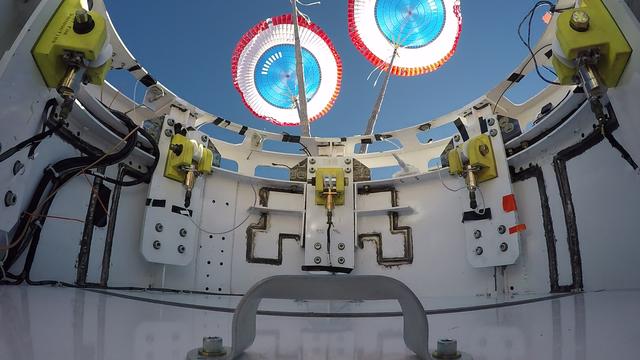
The parachute deployment is seen from the top hatch of a boilerplate CST-100 Starliner during a drop test of the Starliner's parachute system. Boeing, which is building the Starliner, conducted the test in White Sands, New Mexico, as part of the testing campaign for certification by NASA's Commercial Crew Program. Photo credit: Boeing
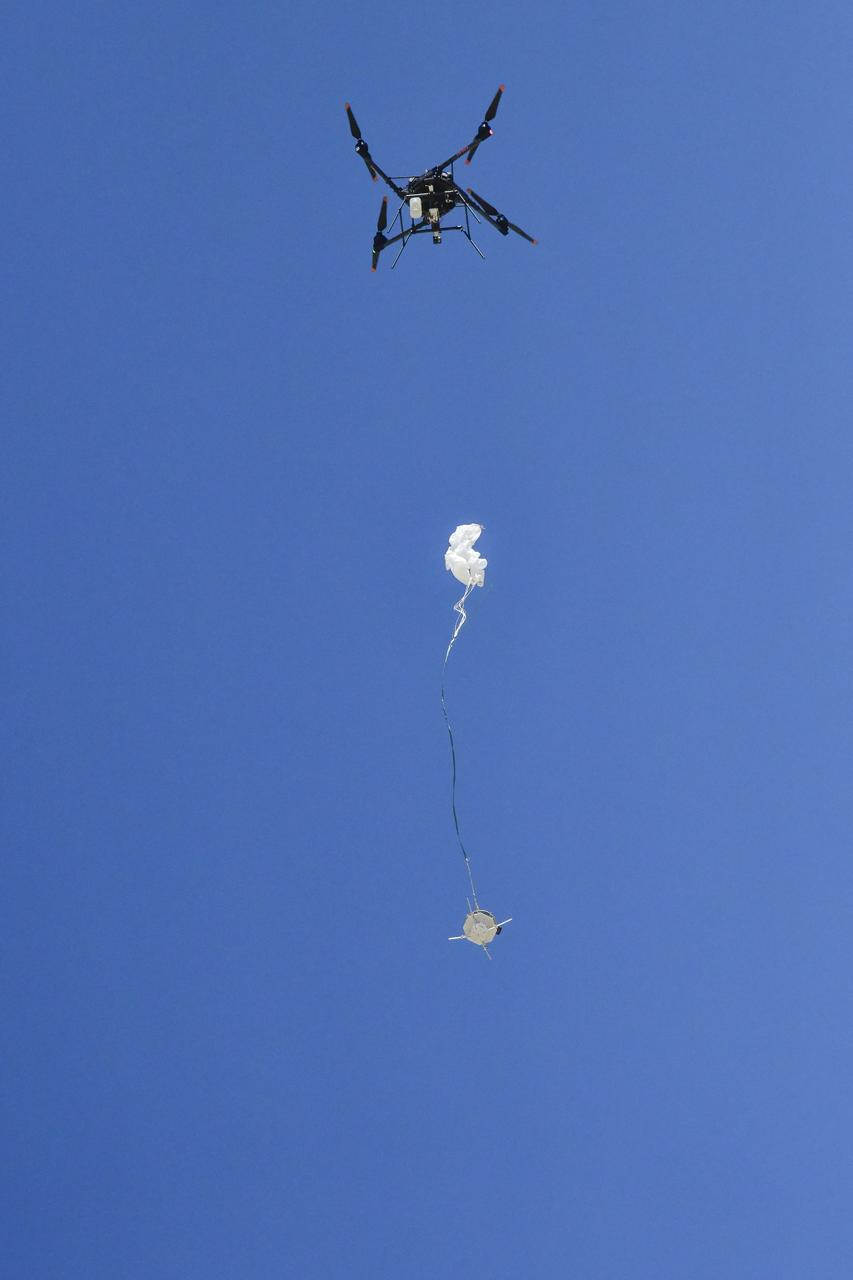
An Alta X drone air launches the Enhancing Parachutes by Instrumenting the Canopy test experiment on June 4, 2025, at NASA’s Armstong Flight Research Center in Edwards, California. NASA researchers are developing technology to make supersonic parachutes safer and more reliable for delivering science instruments and payloads to Mars.
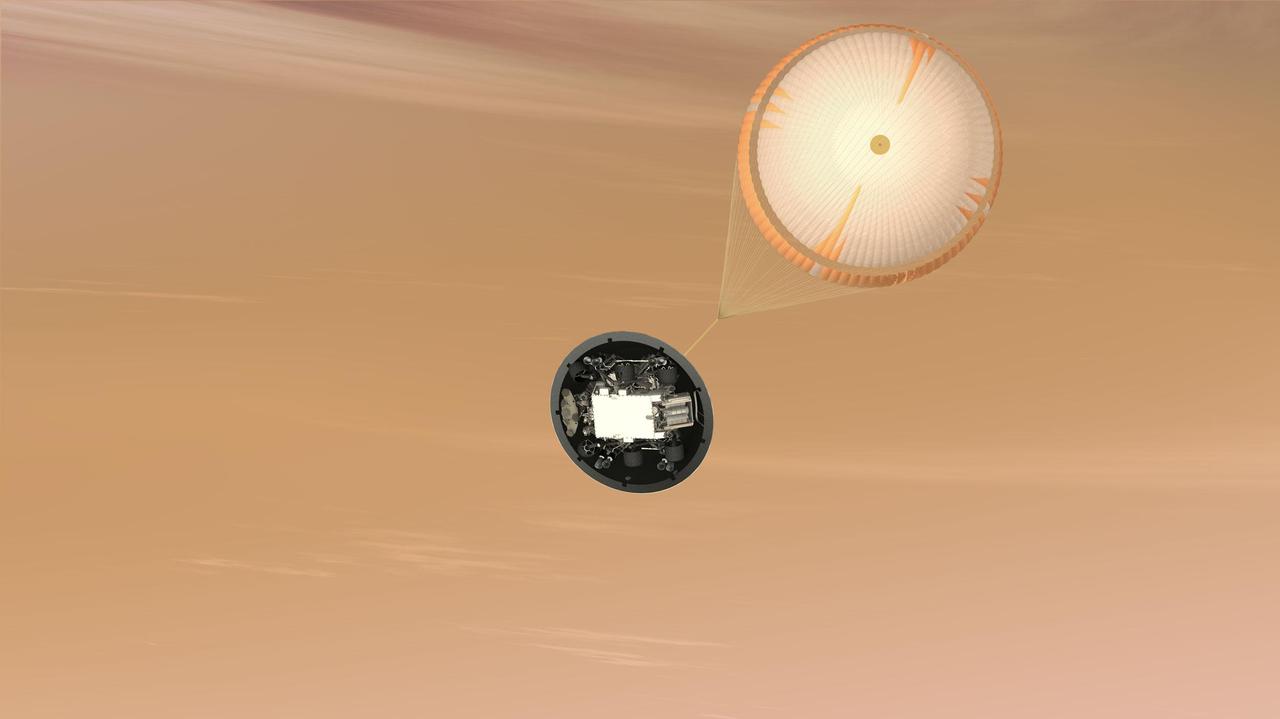
This artist concept is of NASA Mars Science Laboratory MSL Curiosity rover parachute system; the largest parachute ever built to fly on a planetary mission. The parachute is attached to the top of the backshell portion of the spacecraft aeroshell.
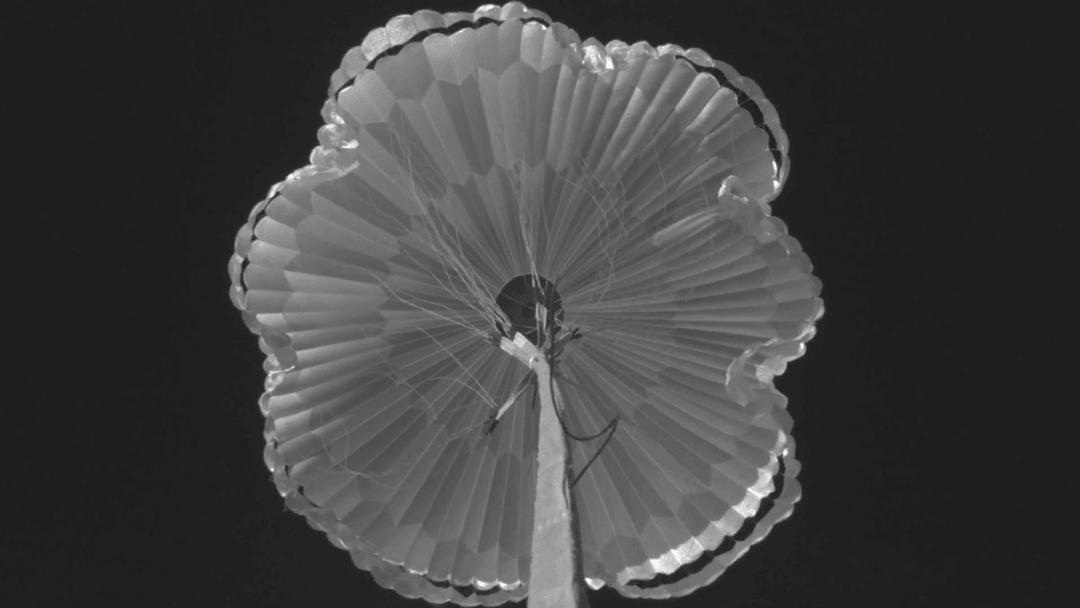
This animated GIF shows a successful test of the parachute that will be used to land NASA's Perseverance rover on Mars. The images were taken on Sept. 7, 2018, during the third and final flight of the Advanced Supersonic Parachute Inflation Research Experiment (ASPIRE) project. Movie available at https://photojournal.jpl.nasa.gov/catalog/PIA23890
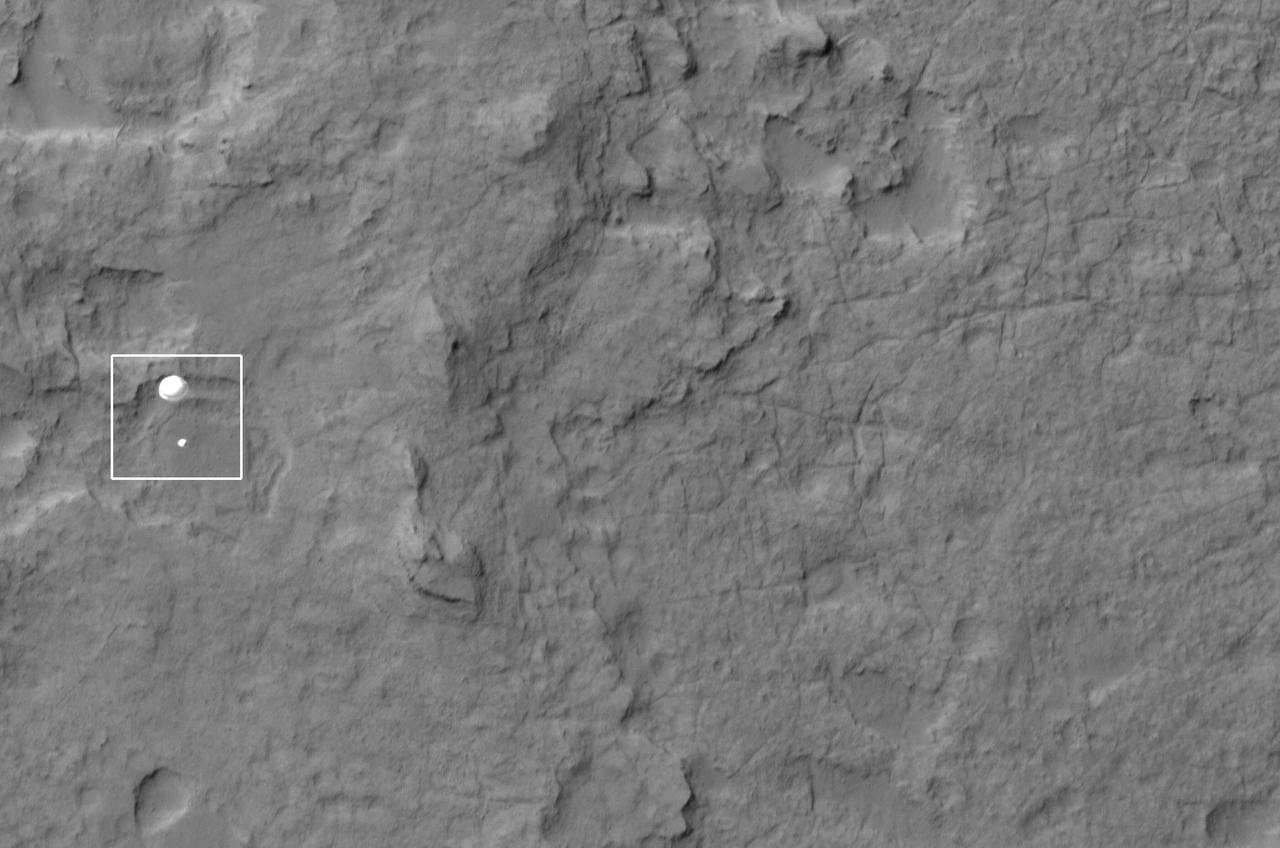
NASA Curiosity rover and its parachute were spotted by NASA Mars Reconnaissance Orbiter as Curiosity descended to the surface on Aug. 5 PDT Aug. 6 EDT. Curiosity and its parachute are in the center of the white box.
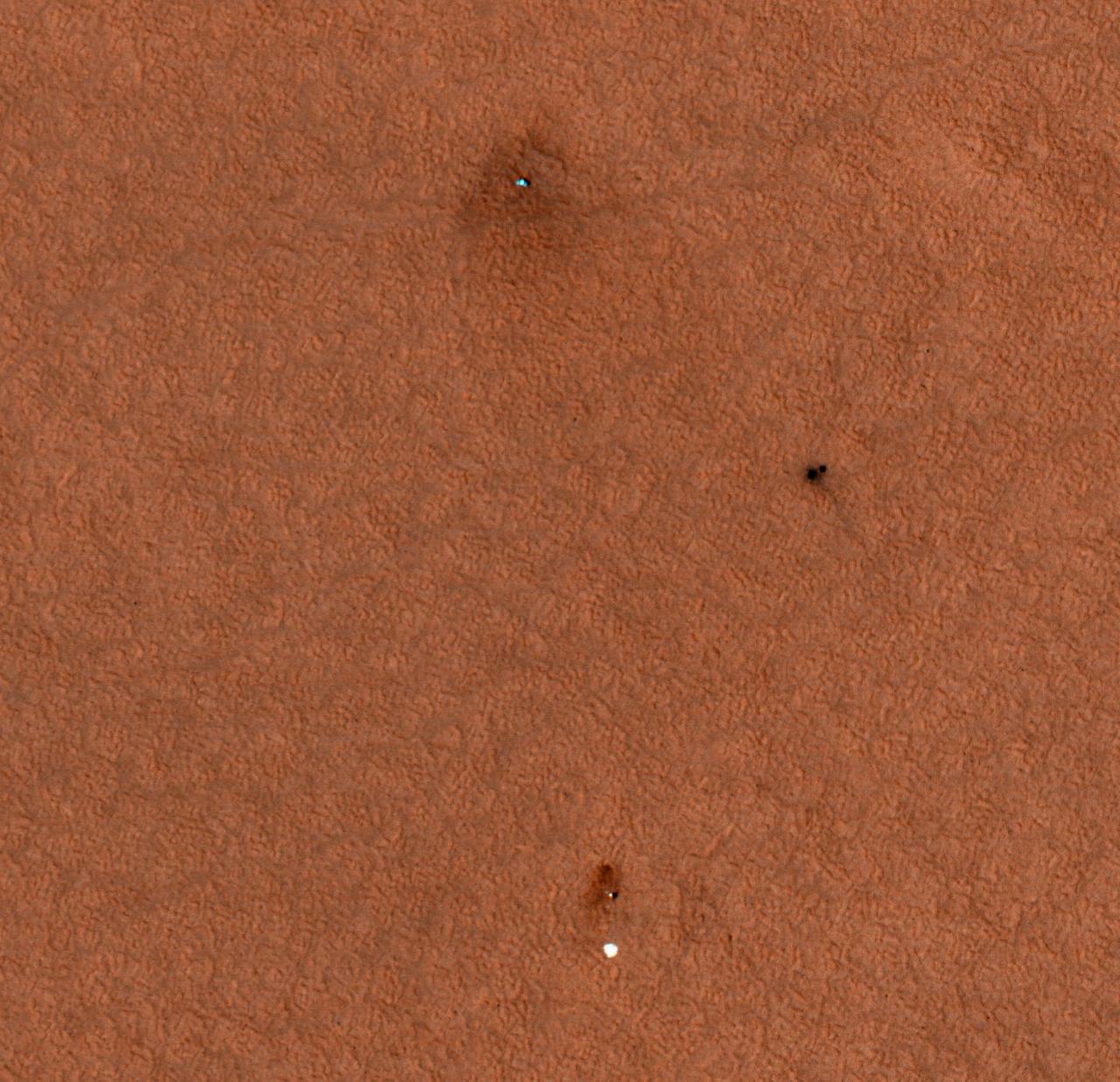
Connecting the Dots: Lander, Heat Shield, Parachute
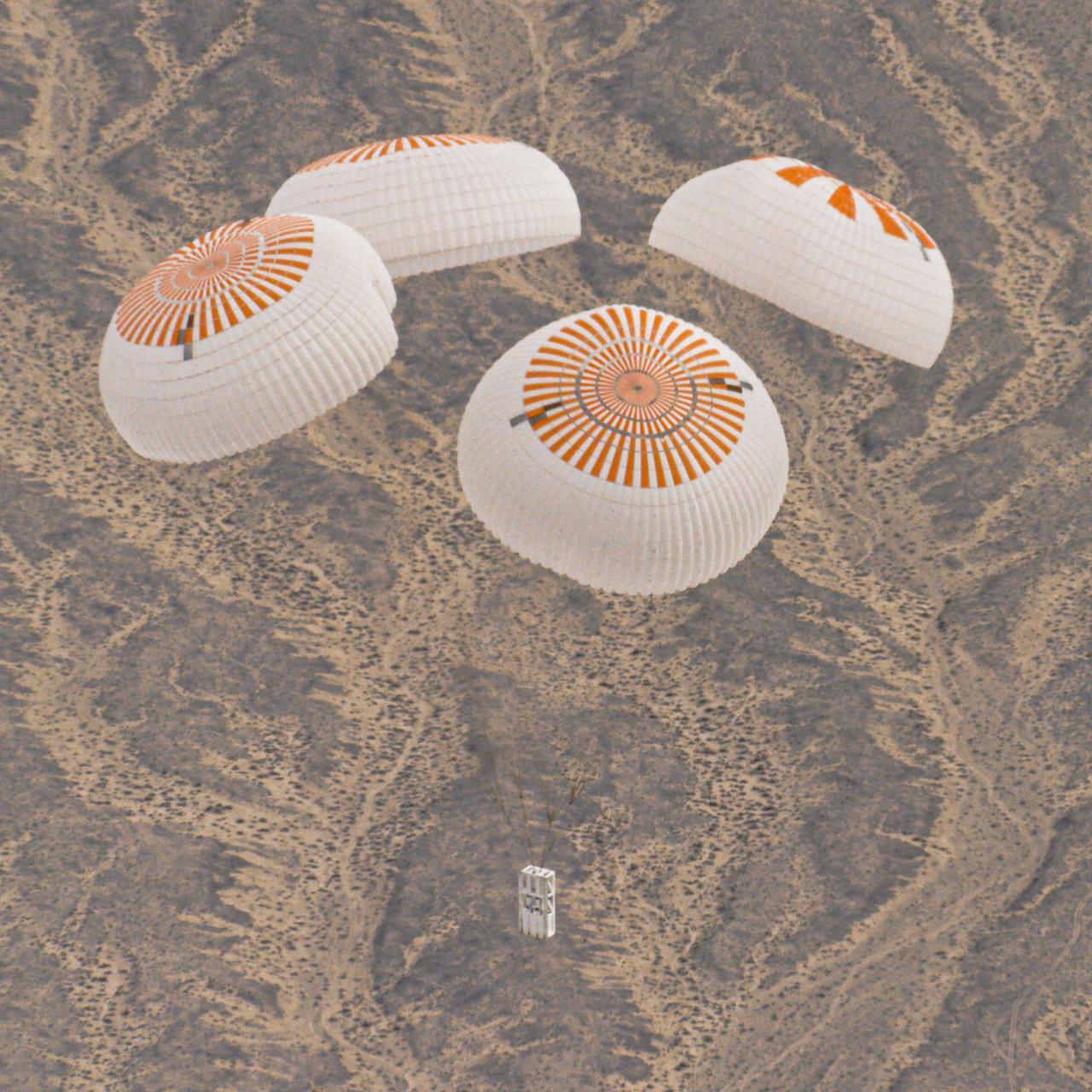
SpaceX completed the 7th successful system test of the Crew Dragon spacecraft’s upgraded Mark 3 parachutes in the western U.S. in December 2019. The parachutes will provide a safe landing on Earth for astronauts returning from the International Space Station in partnership with NASA’s Commercial Crew Program.
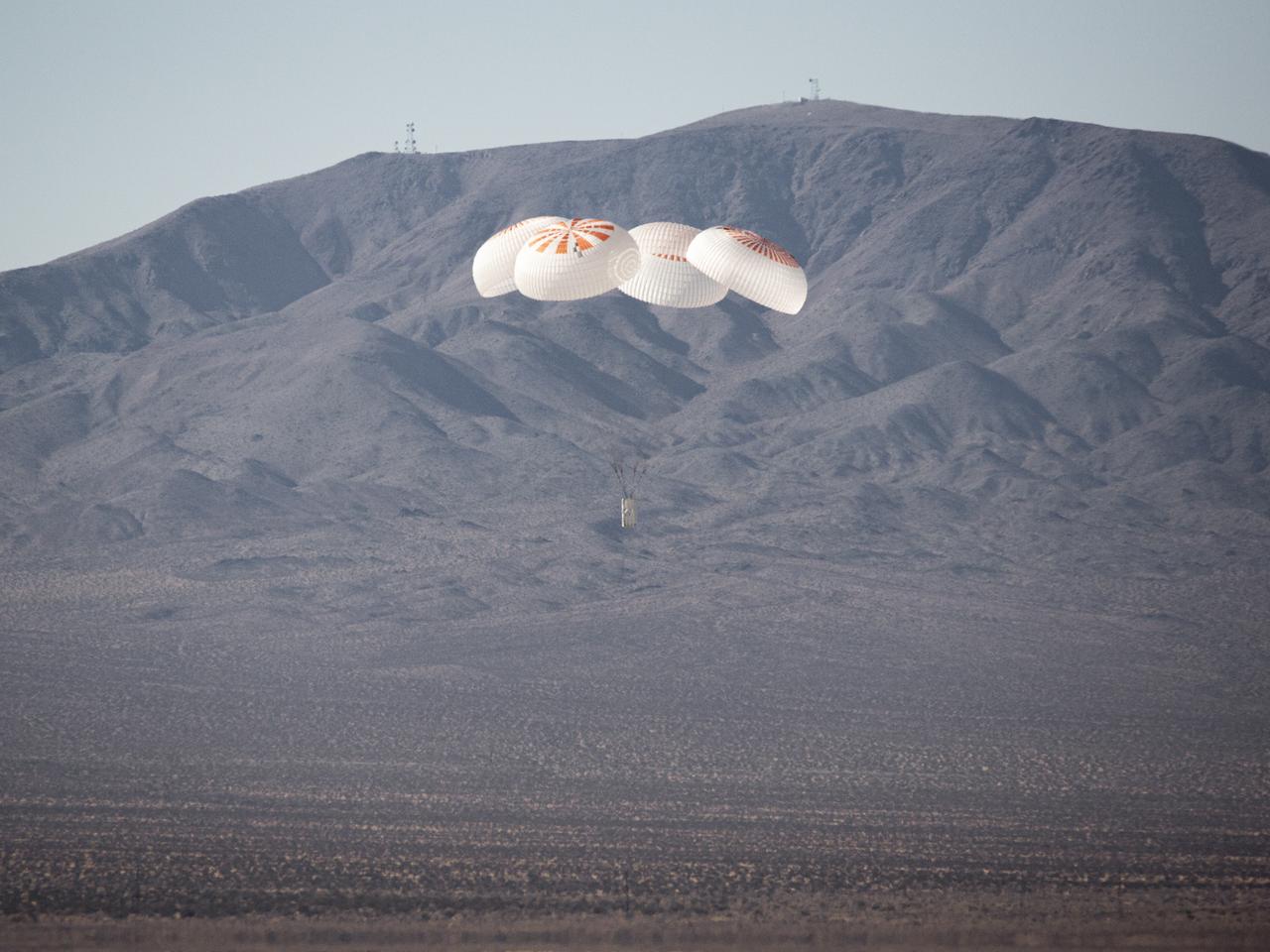
SpaceX completed the 7th successful system test of the Crew Dragon spacecraft’s upgraded Mark 3 parachutes in the western U.S. in December 2019. The parachutes will provide a safe landing on Earth for astronauts returning from the International Space Station in partnership with NASA’s Commercial Crew Program.

After NASA Phoenix Mars Lander enters the Martian atmosphere, and is traveling at about 1.7 times the speed of sound, it will deploy its parachute.
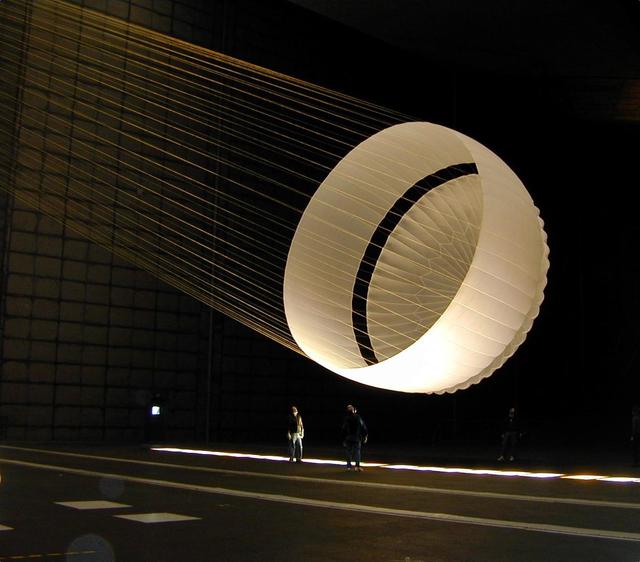
NASA Mars Exploration Rover parachute deployment testing in the world largest wind tunnel at NASA Ames Research Center, Moffet Field, Calif.
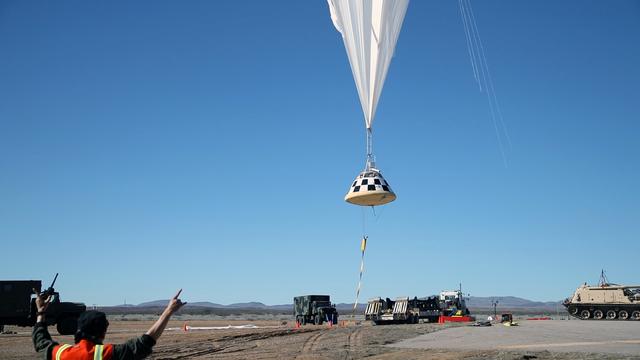
A boilerplate CST-100 Starliner is lifted skyward by a balloon for a drop test of the Starliner's parachute system. Boeing, which is building the Starliner, conducted the test in White Sands, New Mexico, as part of the testing campaign for certification by NASA's Commercial Crew Program. Photo credit: Boeing
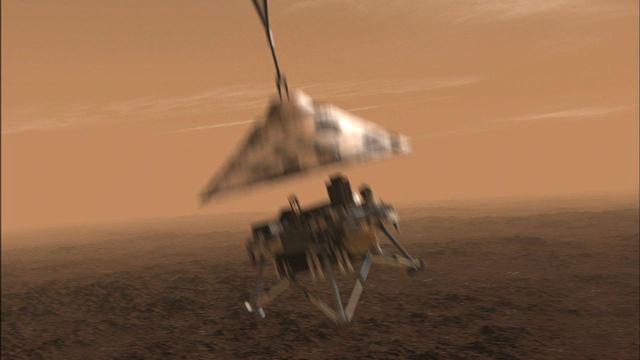
NASA Phoenix Mars Lander will be in free fall after it separates from its back shell and parachute, but not for long.
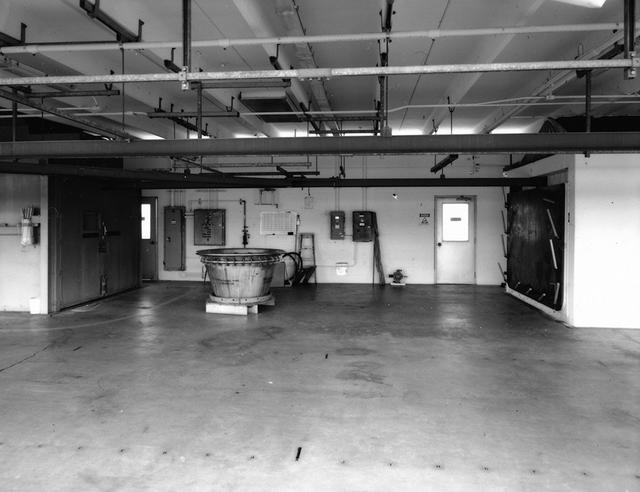
Interior view of the Parachute Refurbishment Facility
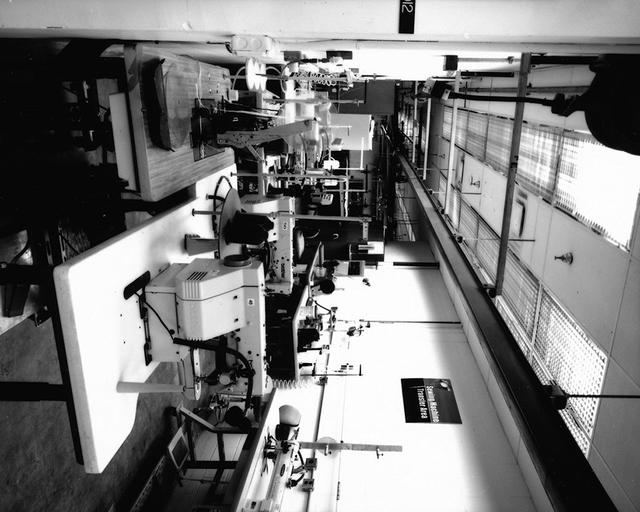
Interior view of the Parachute Refurbishment Facility
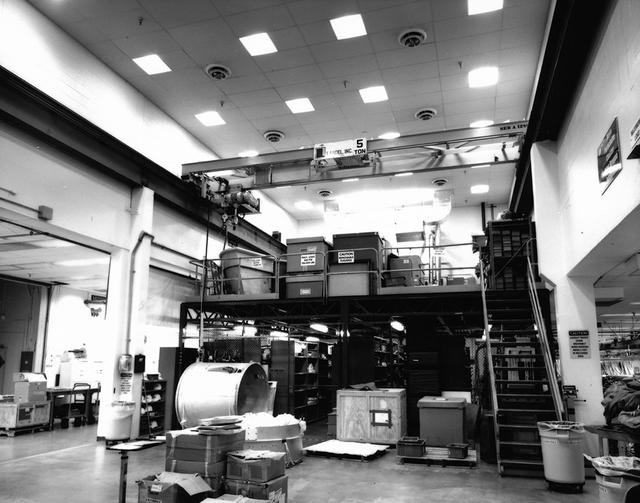
Interior view of the Parachute Refurbishment Facility
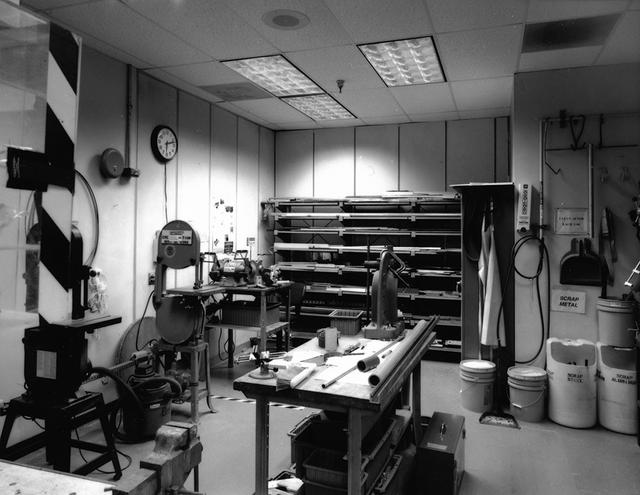
Interior view of the Parachute Refurbishment Facility
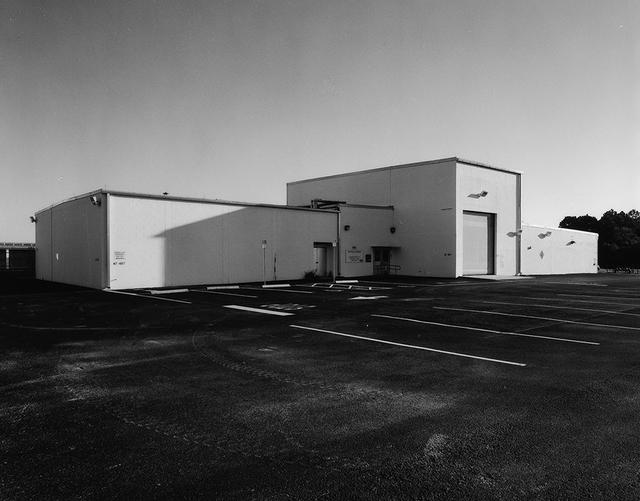
Exterior view of the Parachute Refurbishment Facility
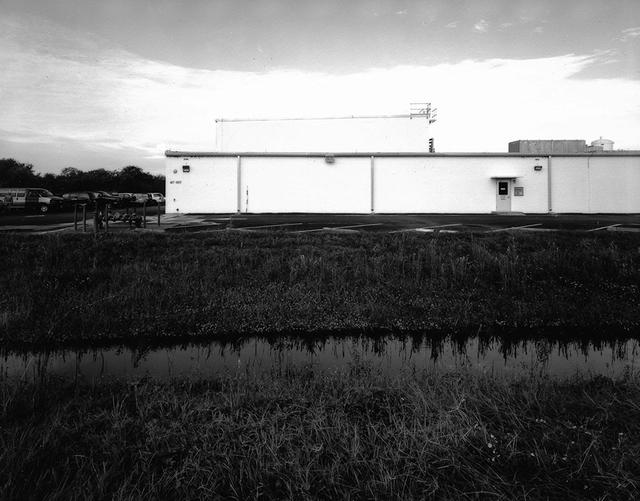
Exterior view of the Parachute Refurbishment Facility
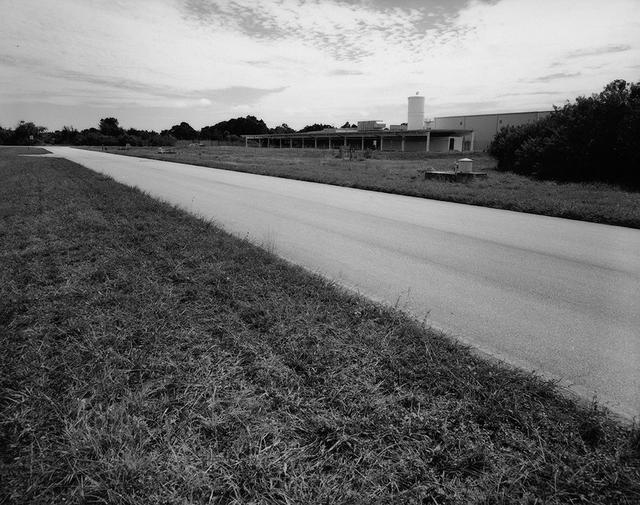
Exterior view of the Parachute Refurbishment Facility
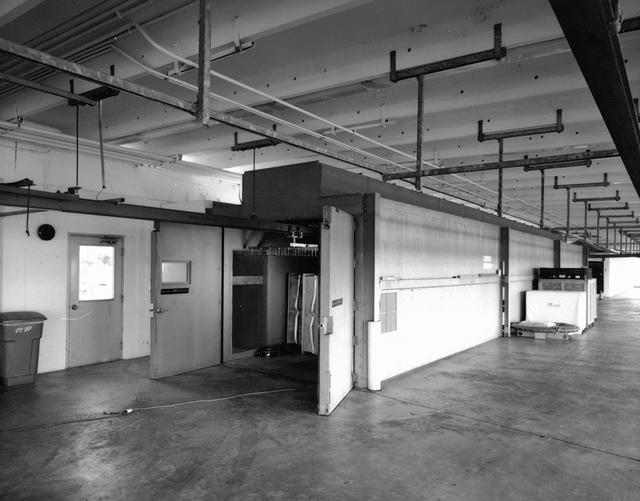
Interior view of the Parachute Refurbishment Facility
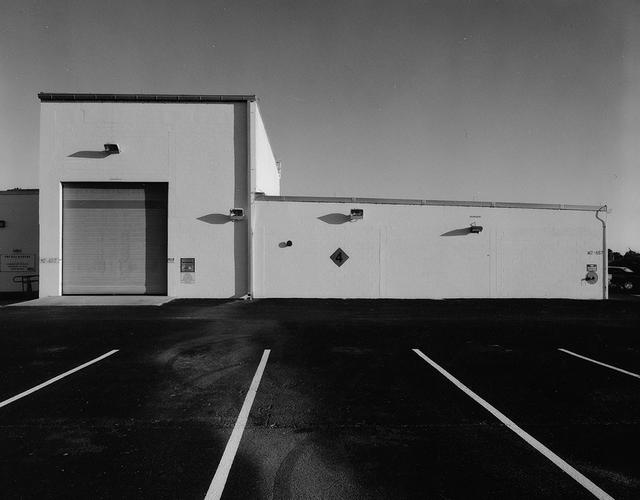
Exterior view of the Parachute Refurbishment Facility
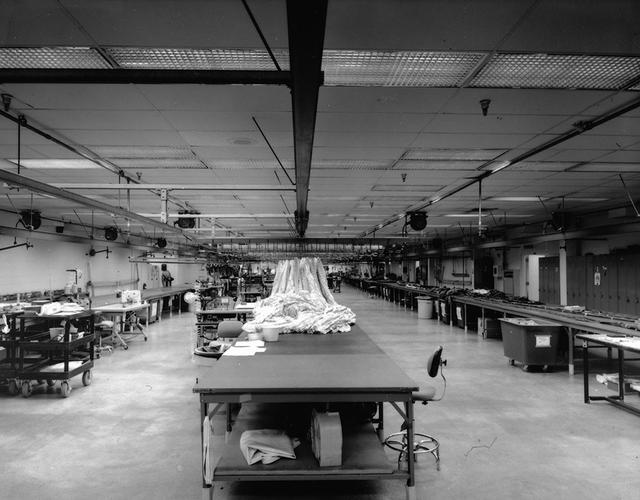
Interior view of the Parachute Refurbishment Facility
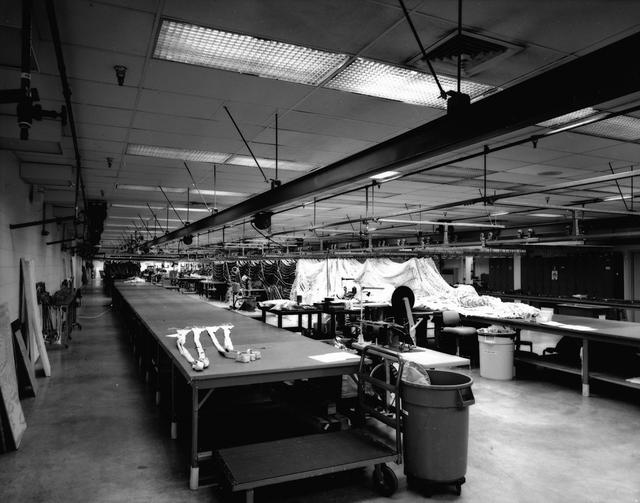
Interior view of the Parachute Refurbishment Facility
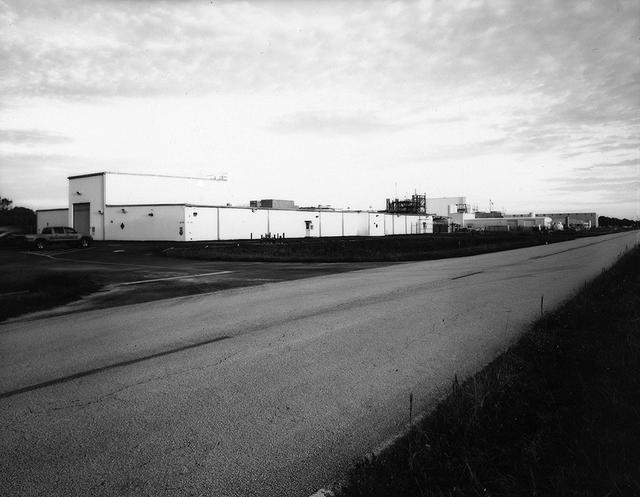
Exterior view of the Parachute Refurbishment Facility
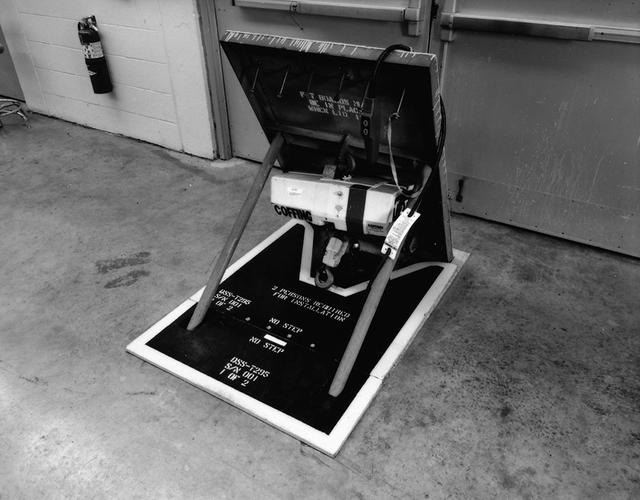
Interior view of the Parachute Refurbishment Facility
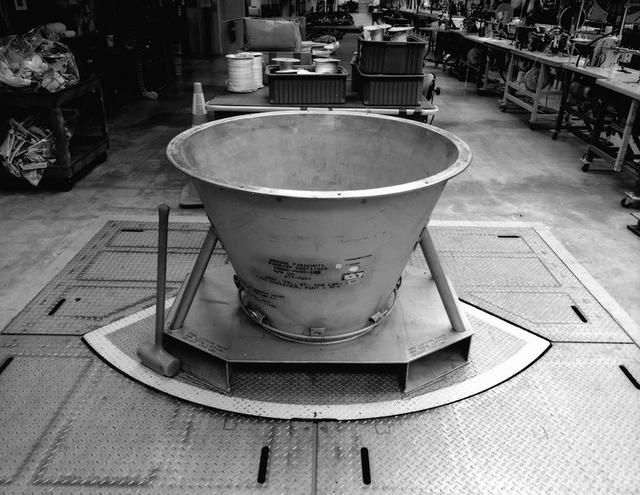
Interior view of the Parachute Refurbishment Facility
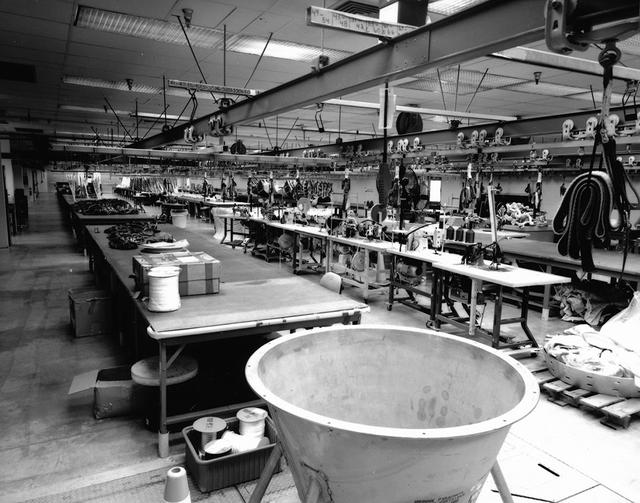
Interior view of the Parachute Refurbishment Facility
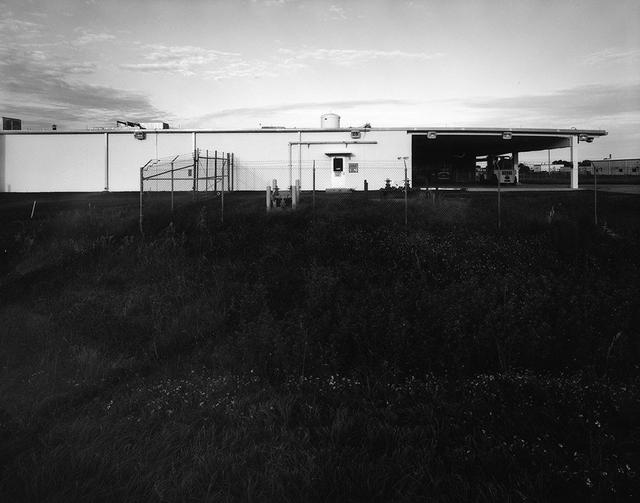
Exterior view of the Parachute Refurbishment Facility
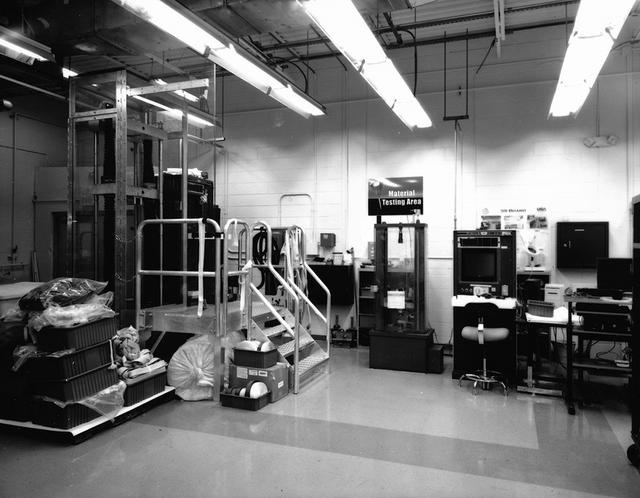
Interior view of the Parachute Refurbishment Facility
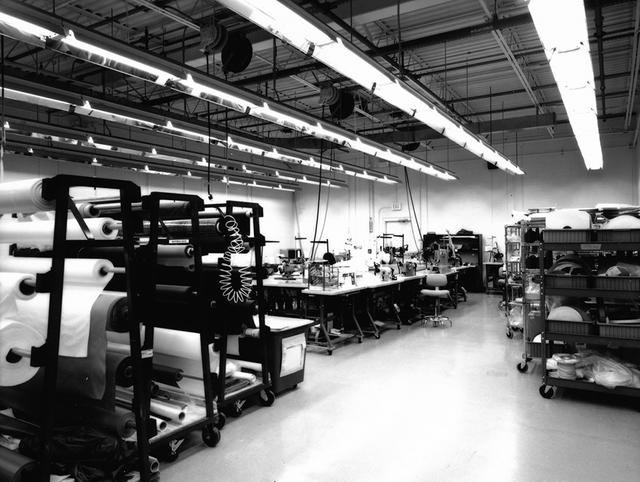
Interior view of the Parachute Refurbishment Facility
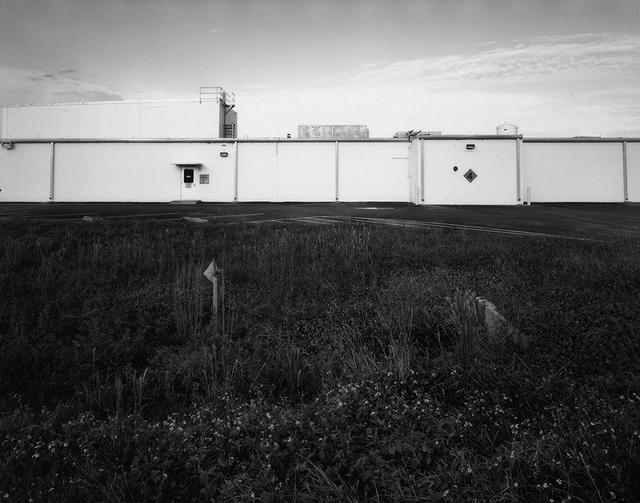
Exterior view of the Parachute Refurbishment Facility
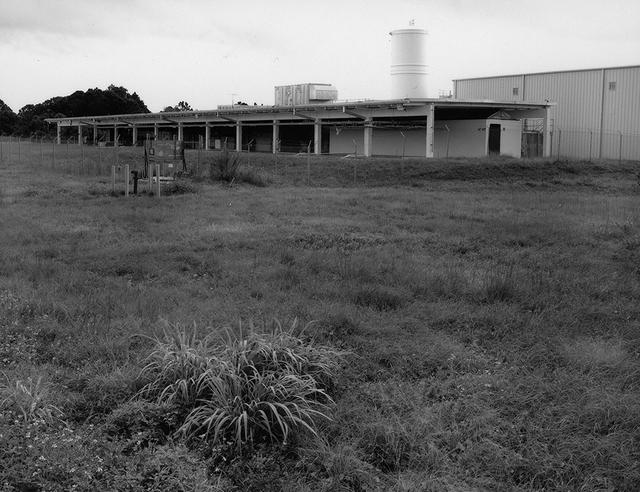
Exterior view of the Parachute Refurbishment Facility
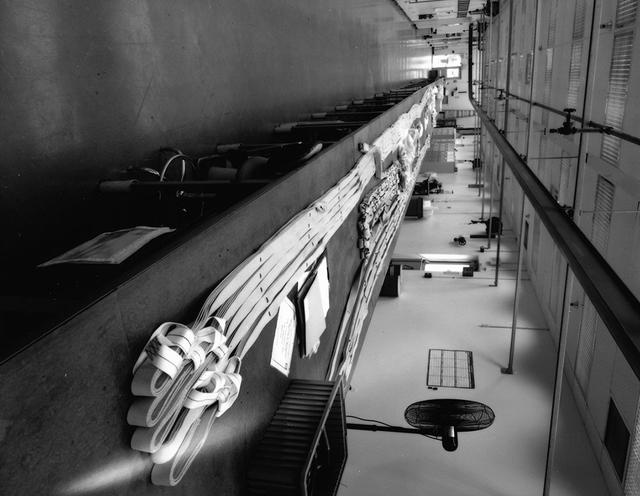
Interior view of the Parachute Refurbishment Facility
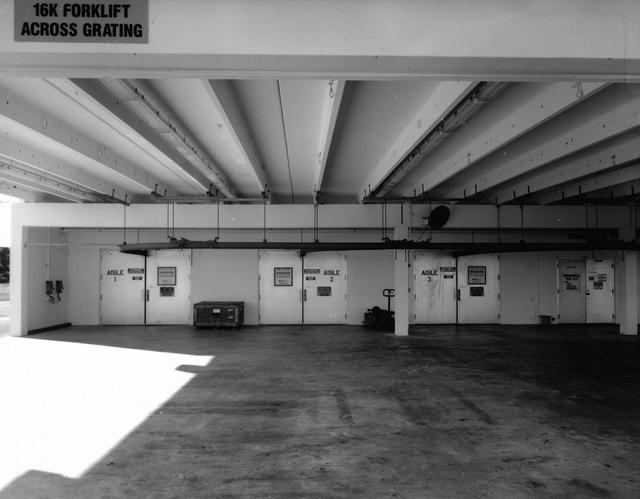
Interior view of the Parachute Refurbishment Facility
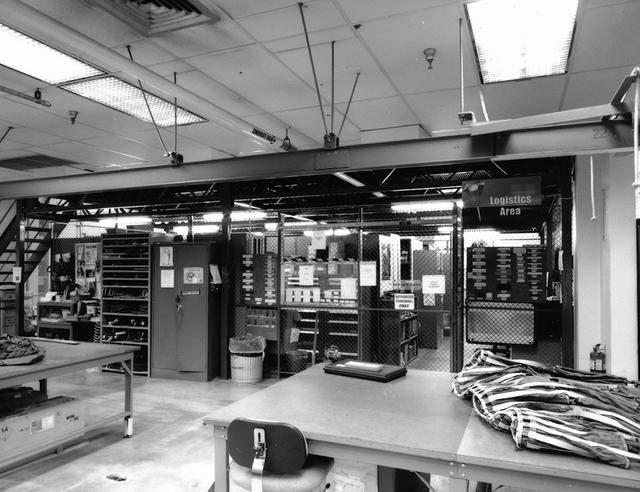
Interior view of the Parachute Refurbishment Facility
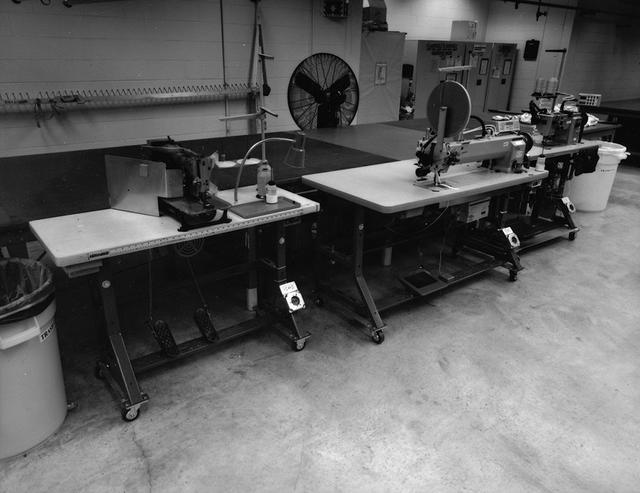
Interior view of the Parachute Refurbishment Facility
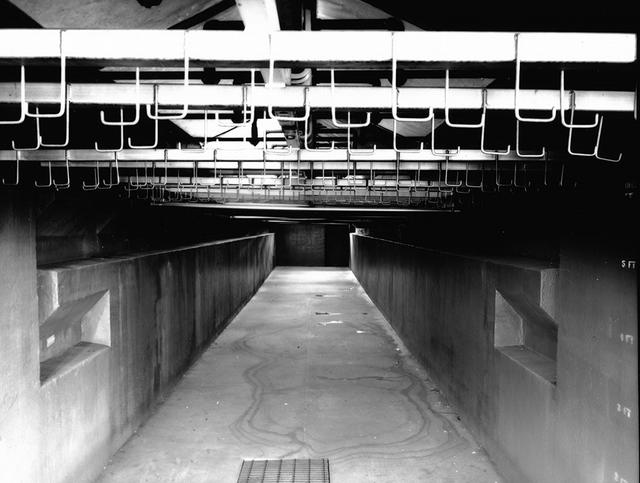
Interior view of the Parachute Refurbishment Facility
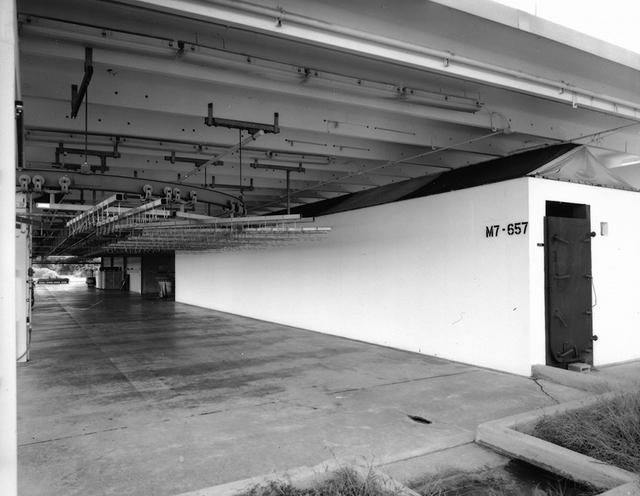
Interior view of the Parachute Refurbishment Facility
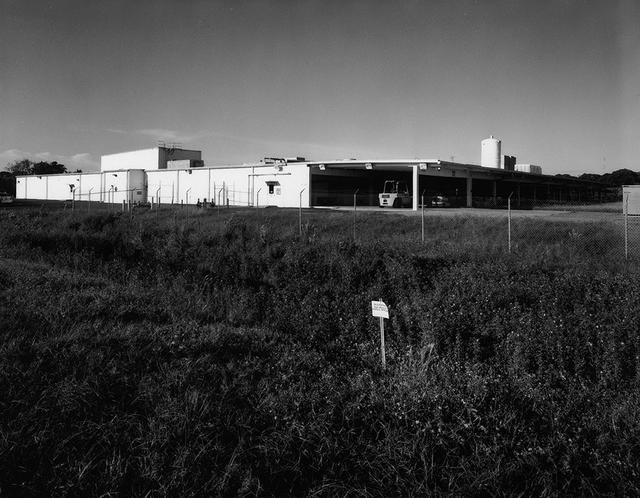
Exterior view of the Parachute Refurbishment Facility
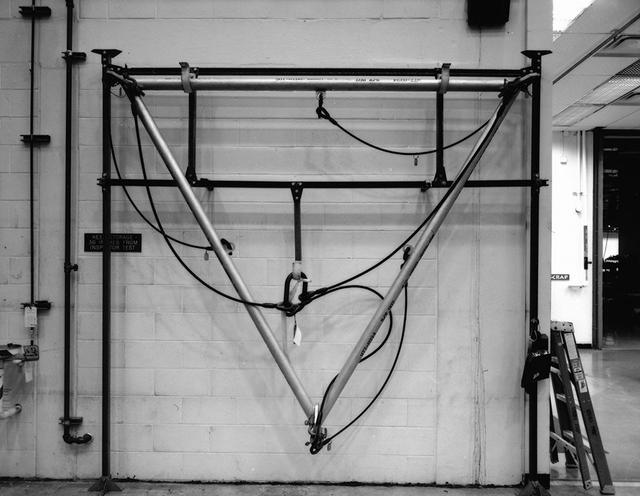
Interior view of the Parachute Refurbishment Facility
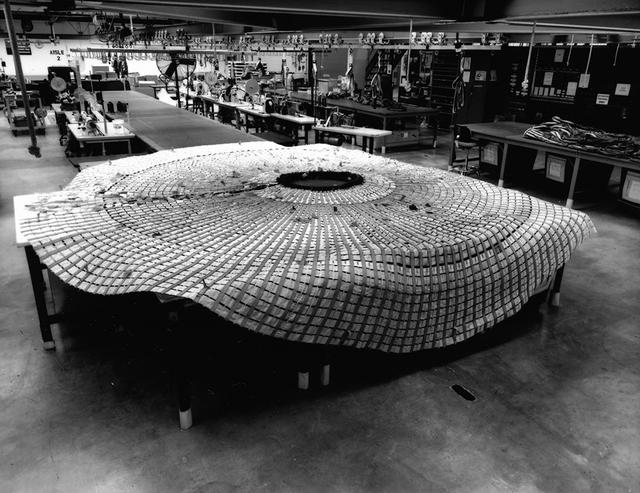
Interior view of the Parachute Refurbishment Facility
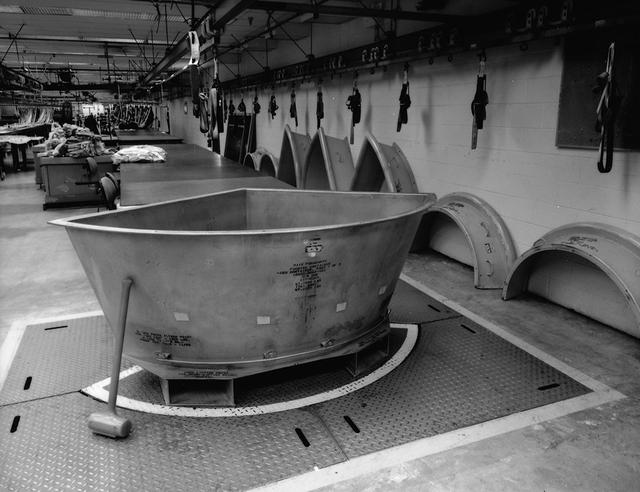
Interior view of the Parachute Refurbishment Facility
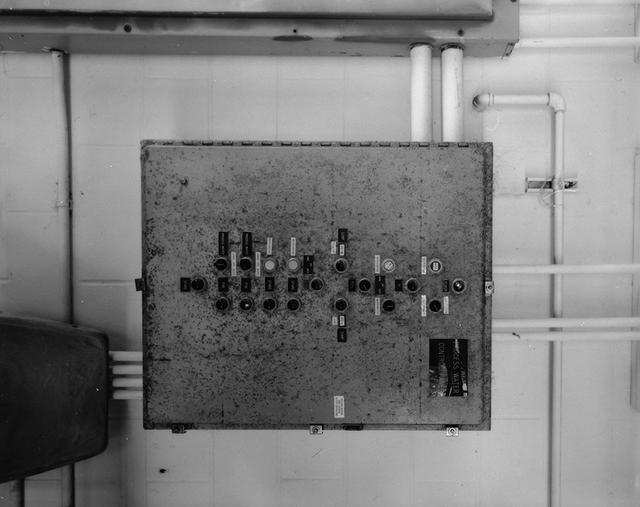
Interior view of the Parachute Refurbishment Facility
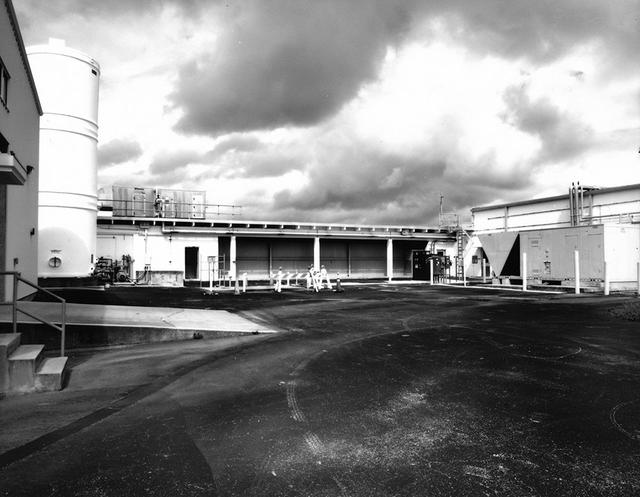
Exterior view of the Parachute Refurbishment Facility
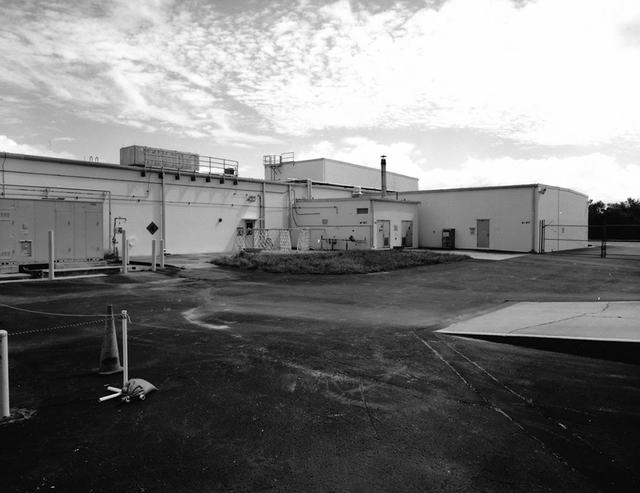
Exterior view of the Parachute Refurbishment Facility
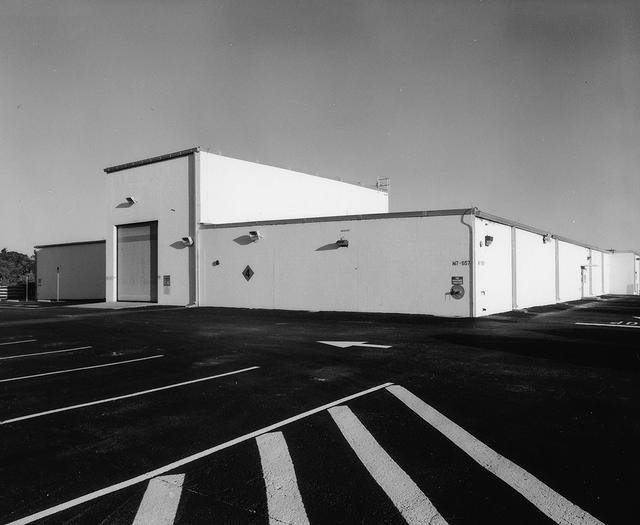
Exterior view of the Parachute Refurbishment Facility
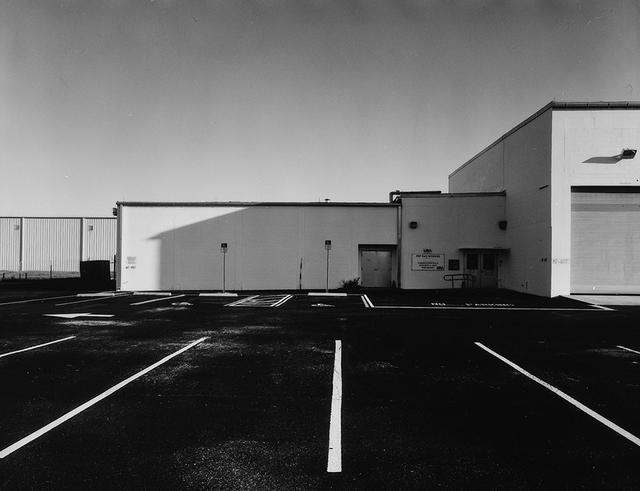
Exterior view of the Parachute Refurbishment Facility
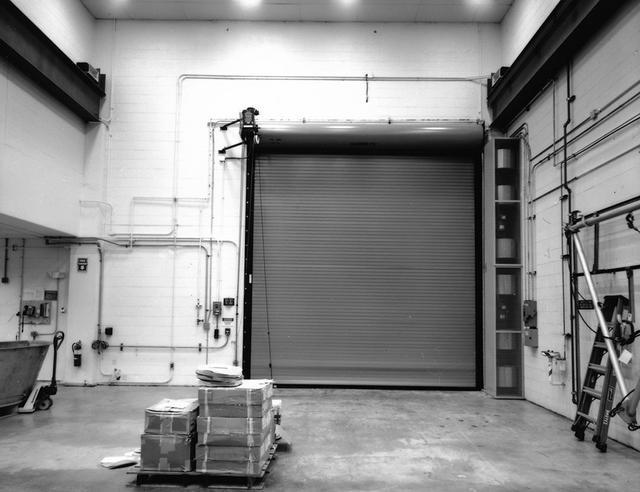
Interior view of the Parachute Refurbishment Facility
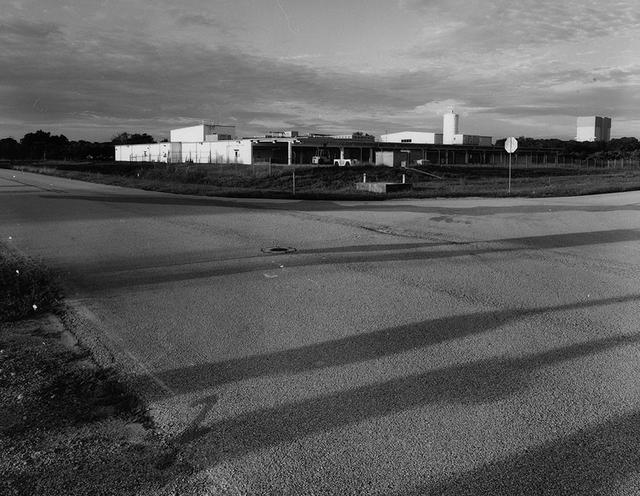
Exterior view of the Parachute Refurbishment Facility
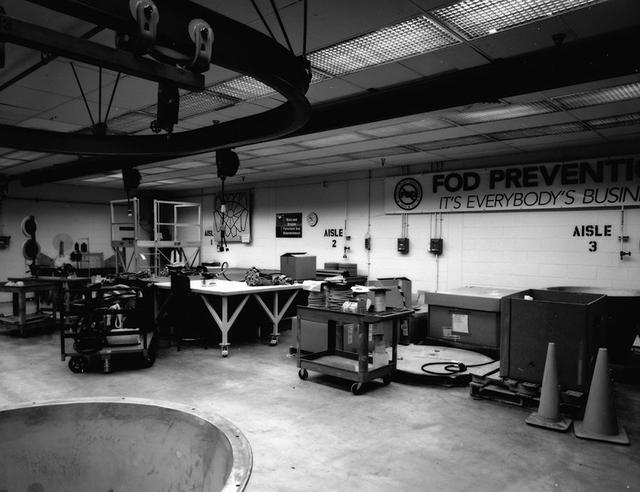
Interior view of the Parachute Refurbishment Facility
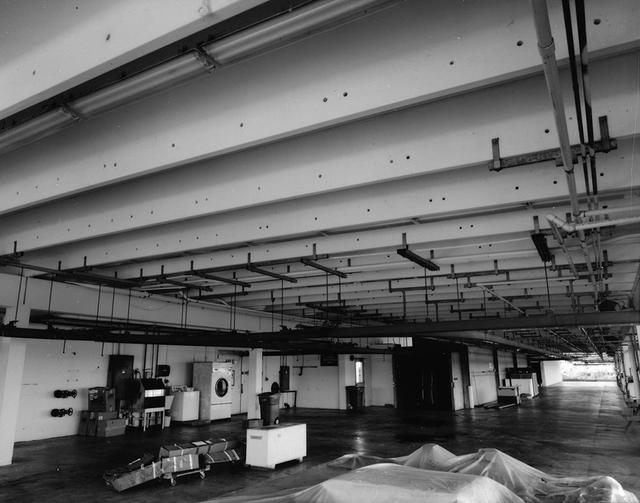
Interior view of the Parachute Refurbishment Facility
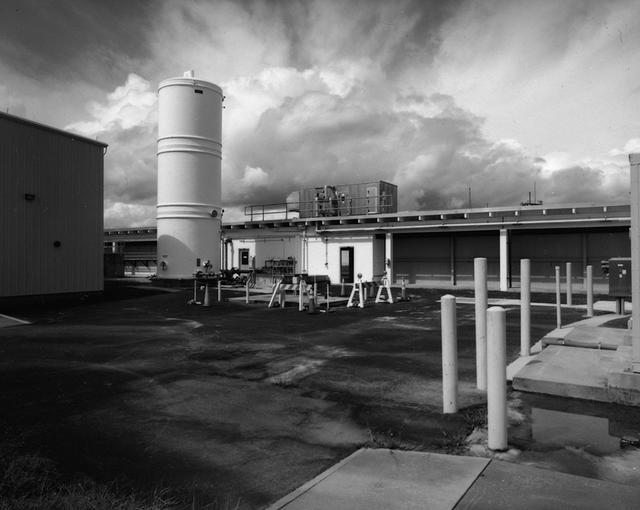
Exterior view of the Parachute Refurbishment Facility
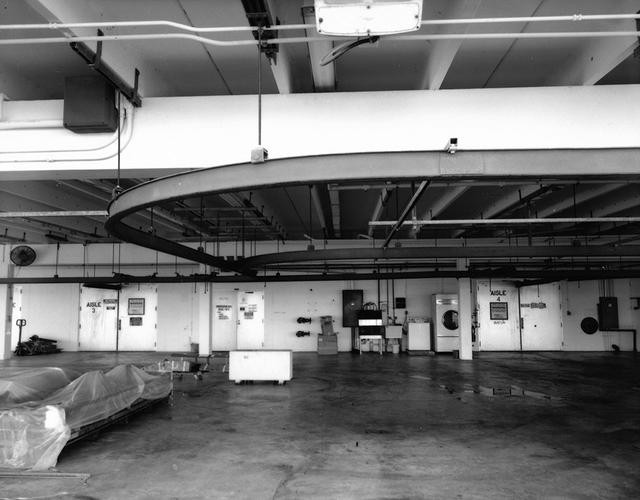
Interior view of the Parachute Refurbishment Facility
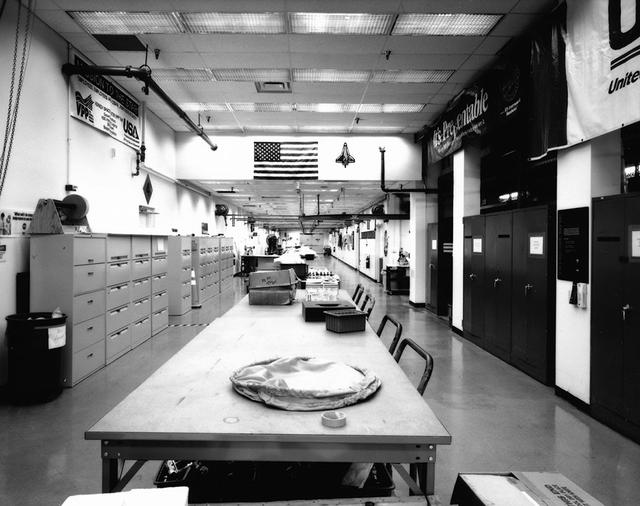
Interior view of the Parachute Refurbishment Facility
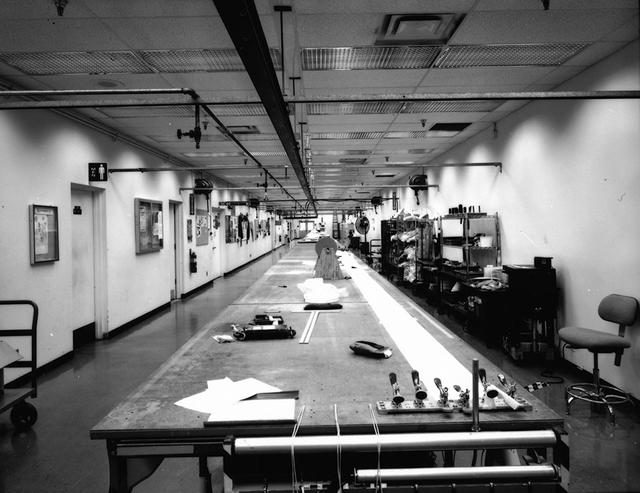
Interior view of the Parachute Refurbishment Facility
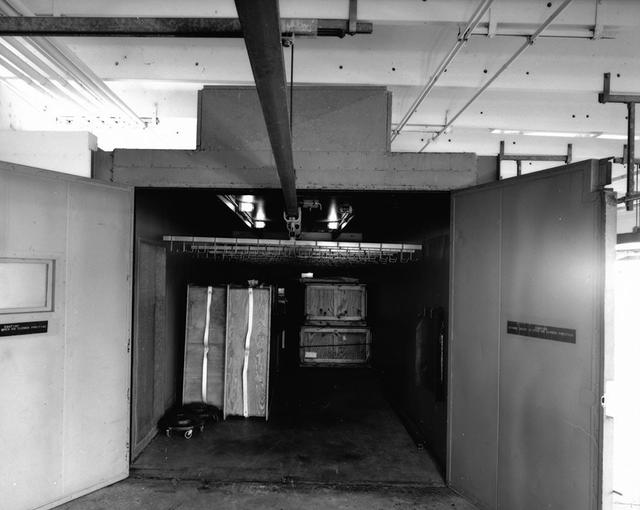
Interior view of the Parachute Refurbishment Facility
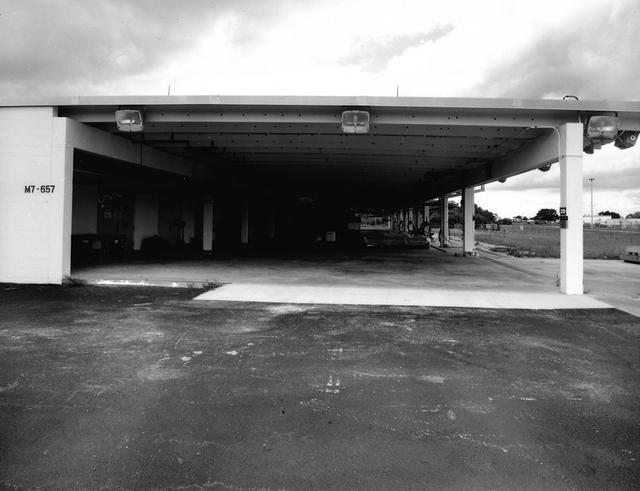
Exterior view of the Parachute Refurbishment Facility
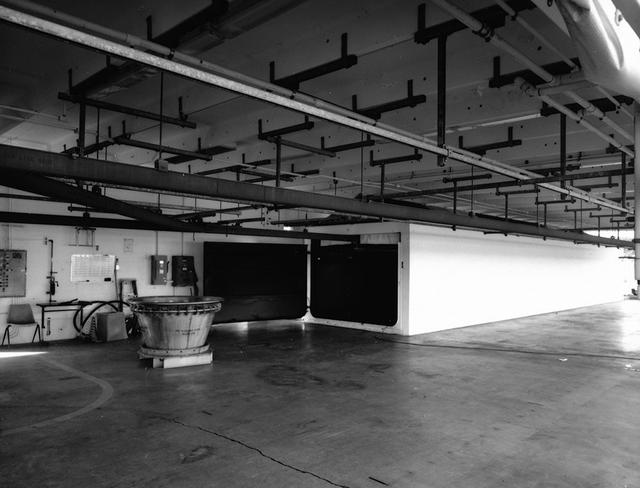
Interior view of the Parachute Refurbishment Facility
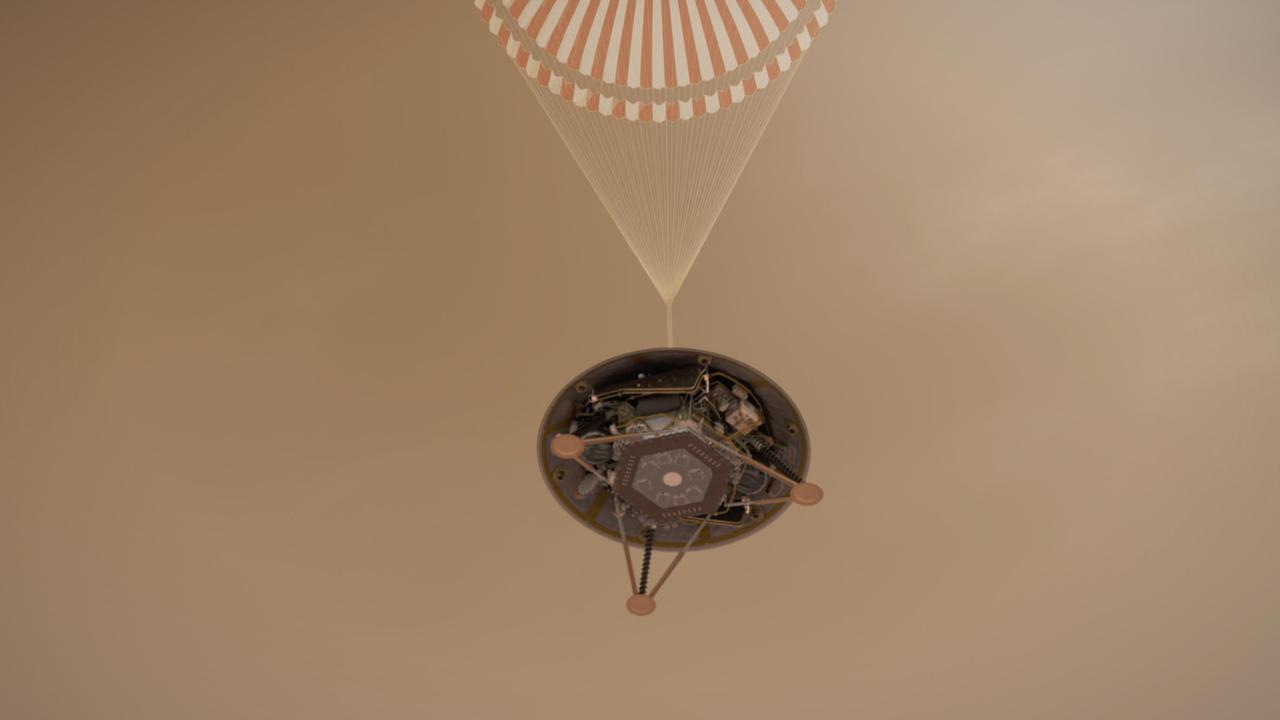
This illustration shows a simulated view of NASA's InSight lander descending towards the surface of Mars on its parachute. https://photojournal.jpl.nasa.gov/catalog/PIA22809
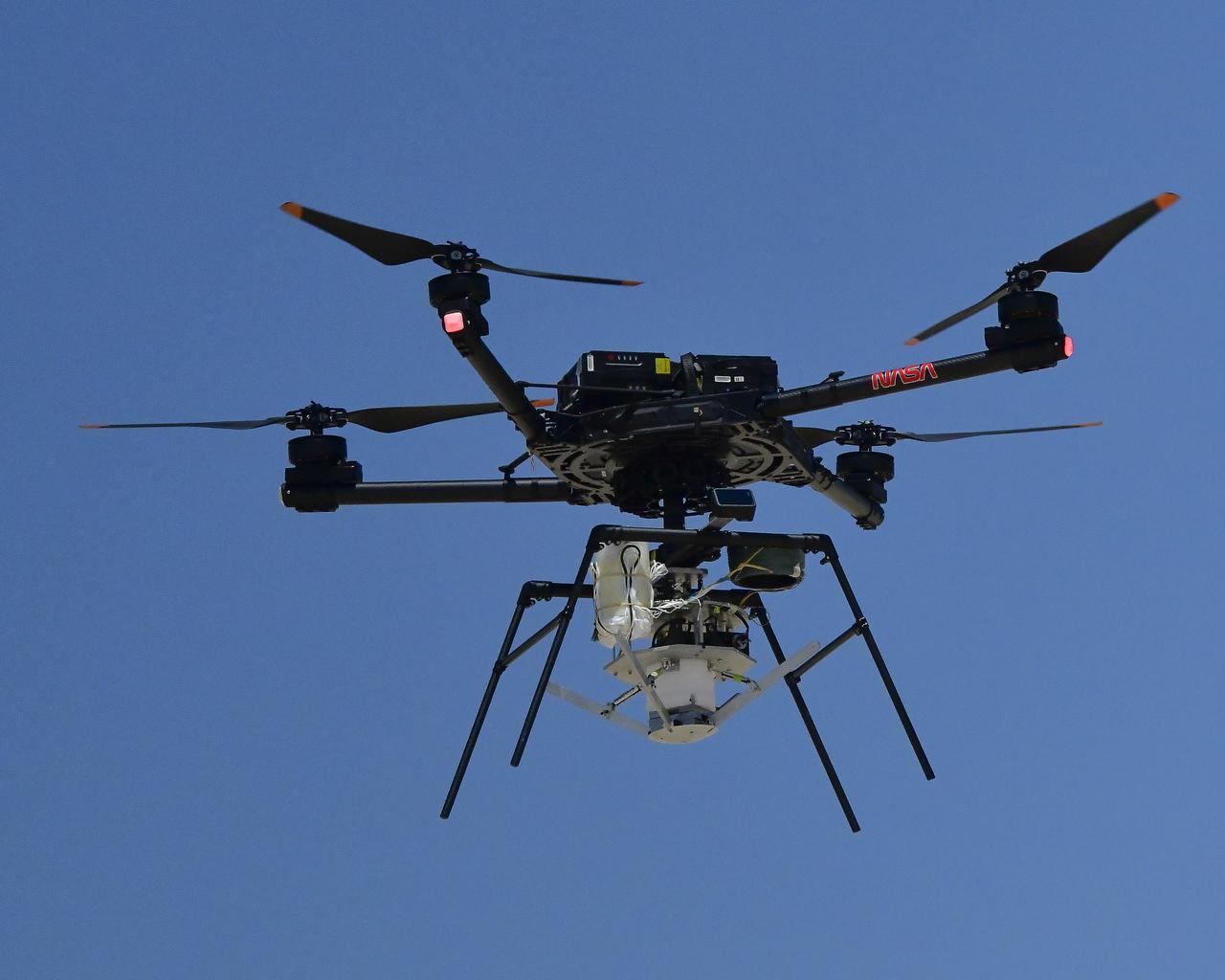
An Alta X drone is positioned at altitude for an air launch of the Enhancing Parachutes by Instrumenting the Canopy test experiment on June 4, 2025, at NASA’s Armstong Flight Research Center in Edwards, California. NASA researchers are developing technology to make supersonic parachutes safer and more reliable for delivering science instruments and payloads to Mars.
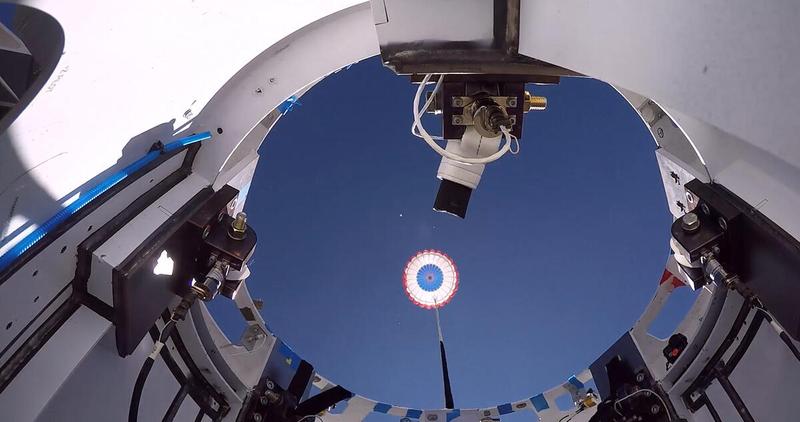
A reused drogue parachute deploys from Boeing’s CST-100 Starliner test article during the final balloon drop parachute test above White Sands, New Mexico, on Sept. 19, 2020. The test is part of a reliability campaign that will help strengthen the spacecraft’s landing system ahead of crewed flights to and from the International Space Station as part of NASA’s Commercial Crew Program.
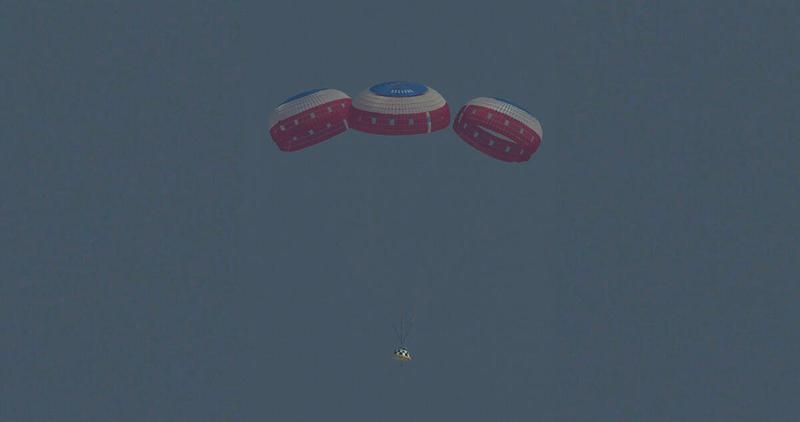
Boeing’s CST-100 Starliner's three main parachutes slow the test article to a safe and soft landing during the final balloon drop parachute test Sept. 19, 2020, at White Sands, New Mexico. The test is part of a reliability campaign that will help strengthen the spacecraft’s landing system ahead of crewed flights to and from the International Space Station as part of NASA’s Commercial Crew Program.
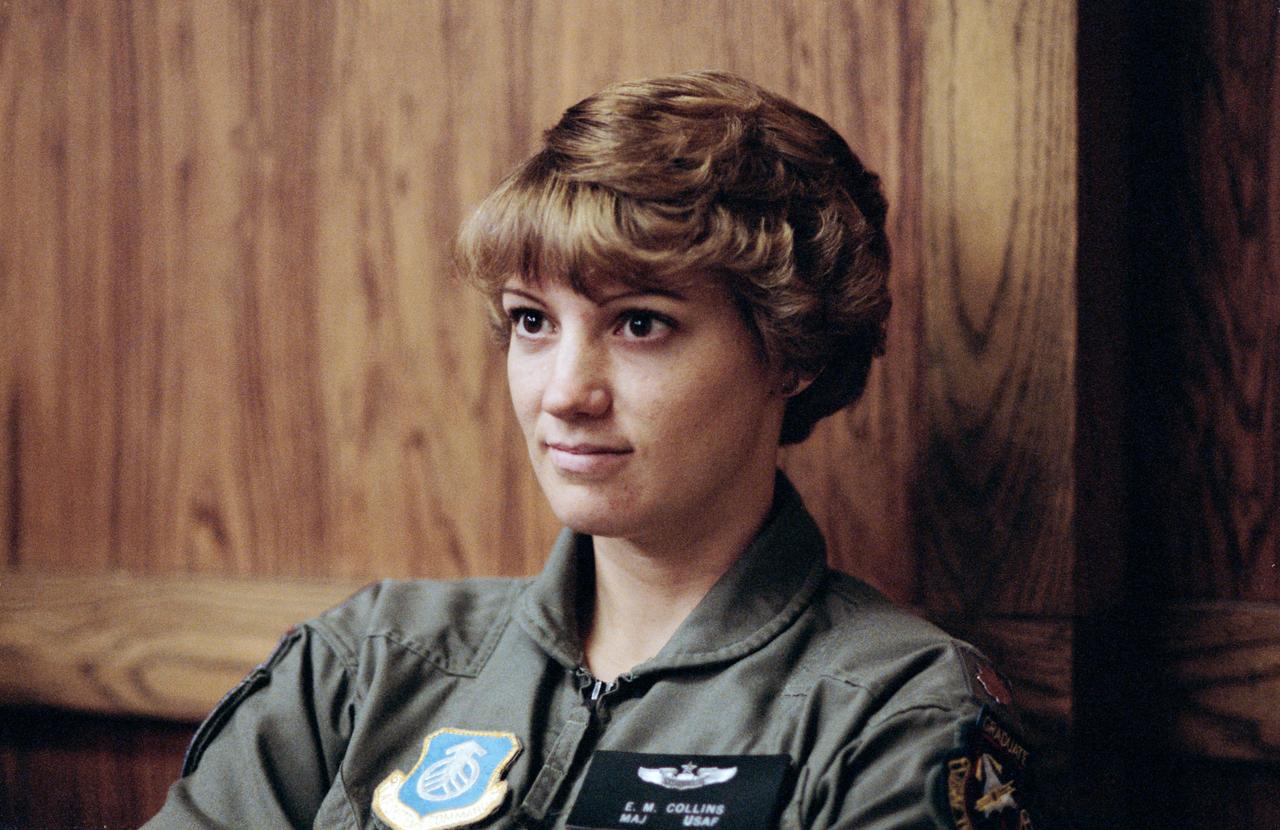
S90-45845 (29-31 July 1990) --- Eileen M. Collins, a USAF major and a candidate for a pilot astronaut's position with NASA, listens to a briefing on parachute ejection. The classroom session was part of a three-day survival training course hosted by Vance Air Force Base in Oklahoma. Photo credit: NASA
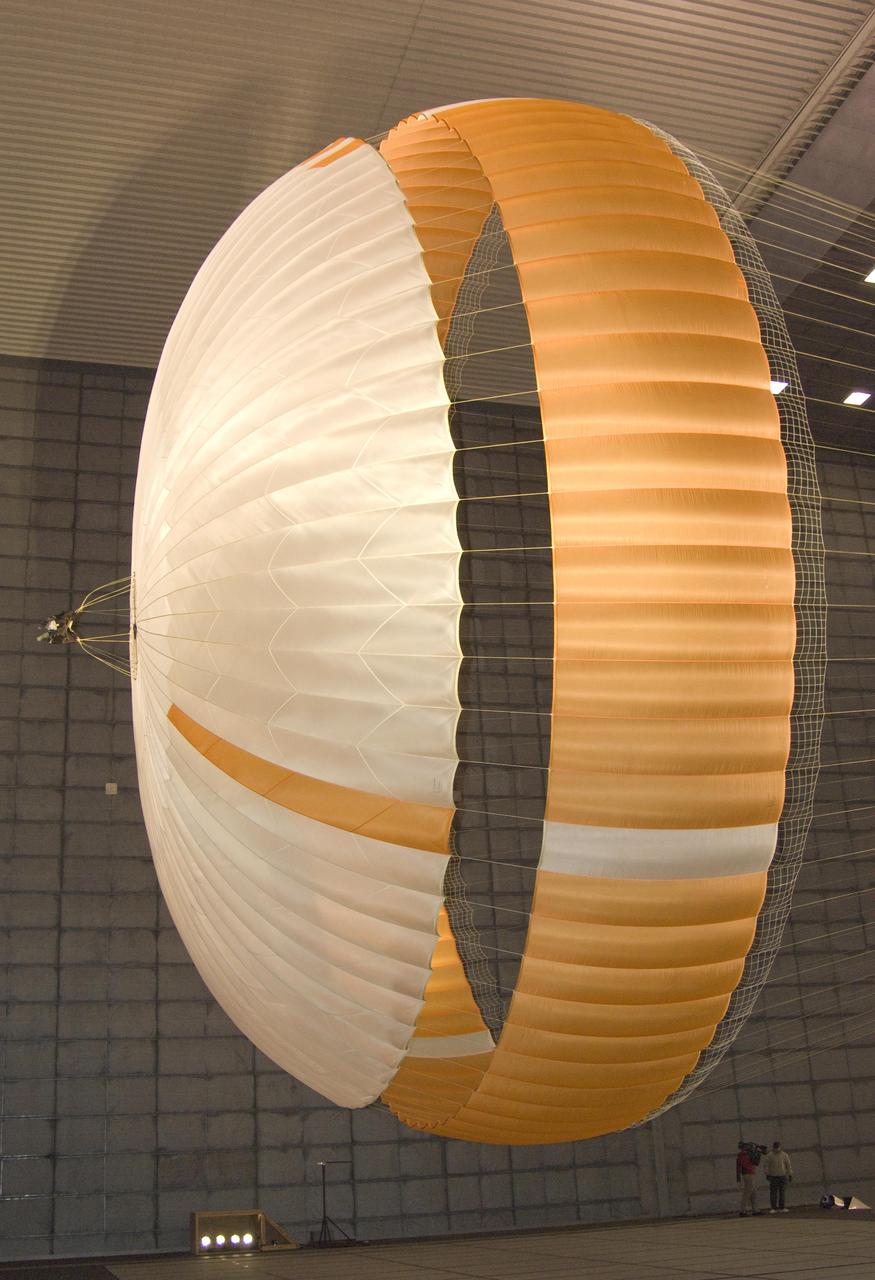
The parachute for NASA Mars Science Laboratory mission opens to a diameter of nearly 16 meters 51 feet. This image shows a duplicate qualification-test parachute inside the world's largest wind tunnel, at NASA Ames Research Center, Moffett Field, Calif. The Mars Science Laboratory will be launched in 2011 for a landing on Mars in 2012. Its parachute is the largest ever built to fly on an extraterrestrial mission. The parachute uses a configuration called disk-gap-band, with 80 suspension lines. Most of the orange and white fabric is nylon, though a small disk of heavier polyester is used near the vent in the apex of the canopy due to higher stresses there. http://photojournal.jpl.nasa.gov/catalog/PIA11994
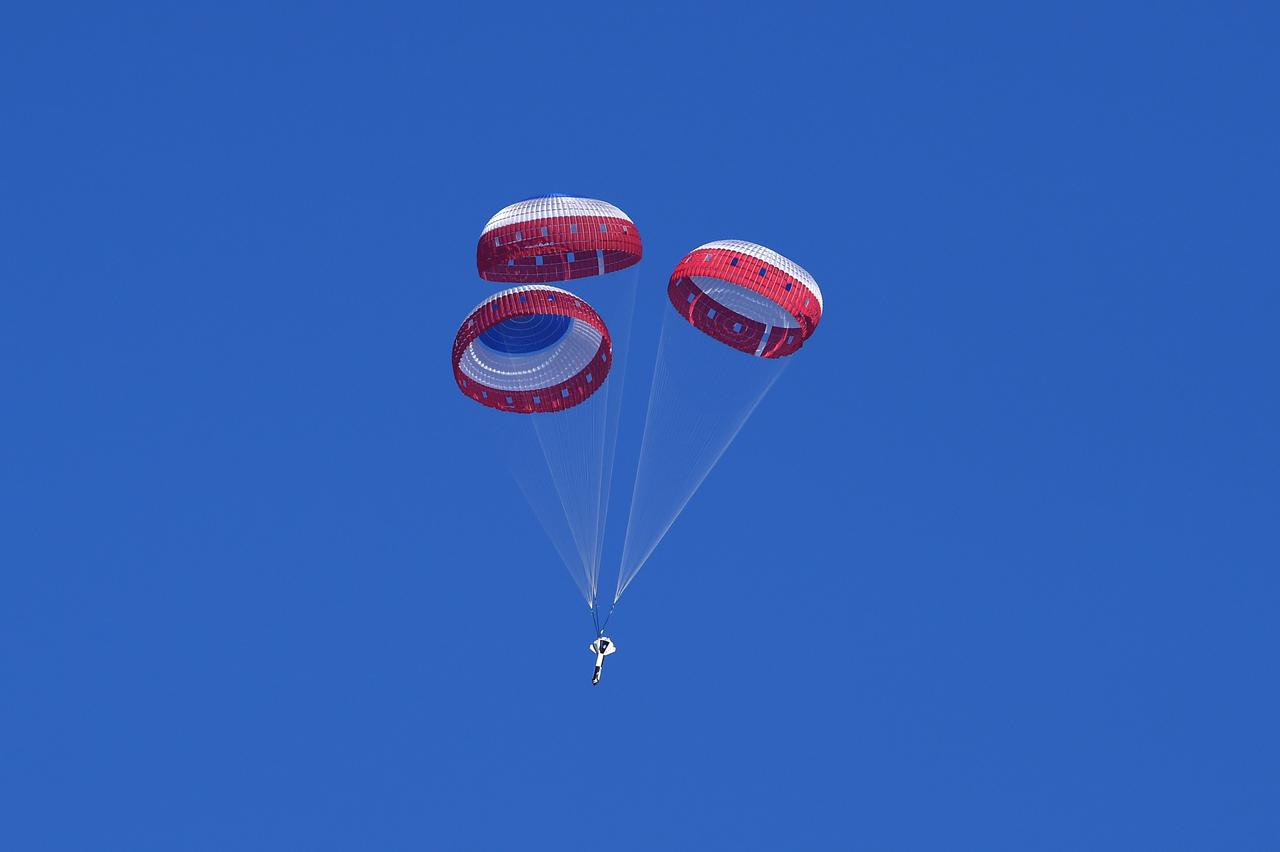
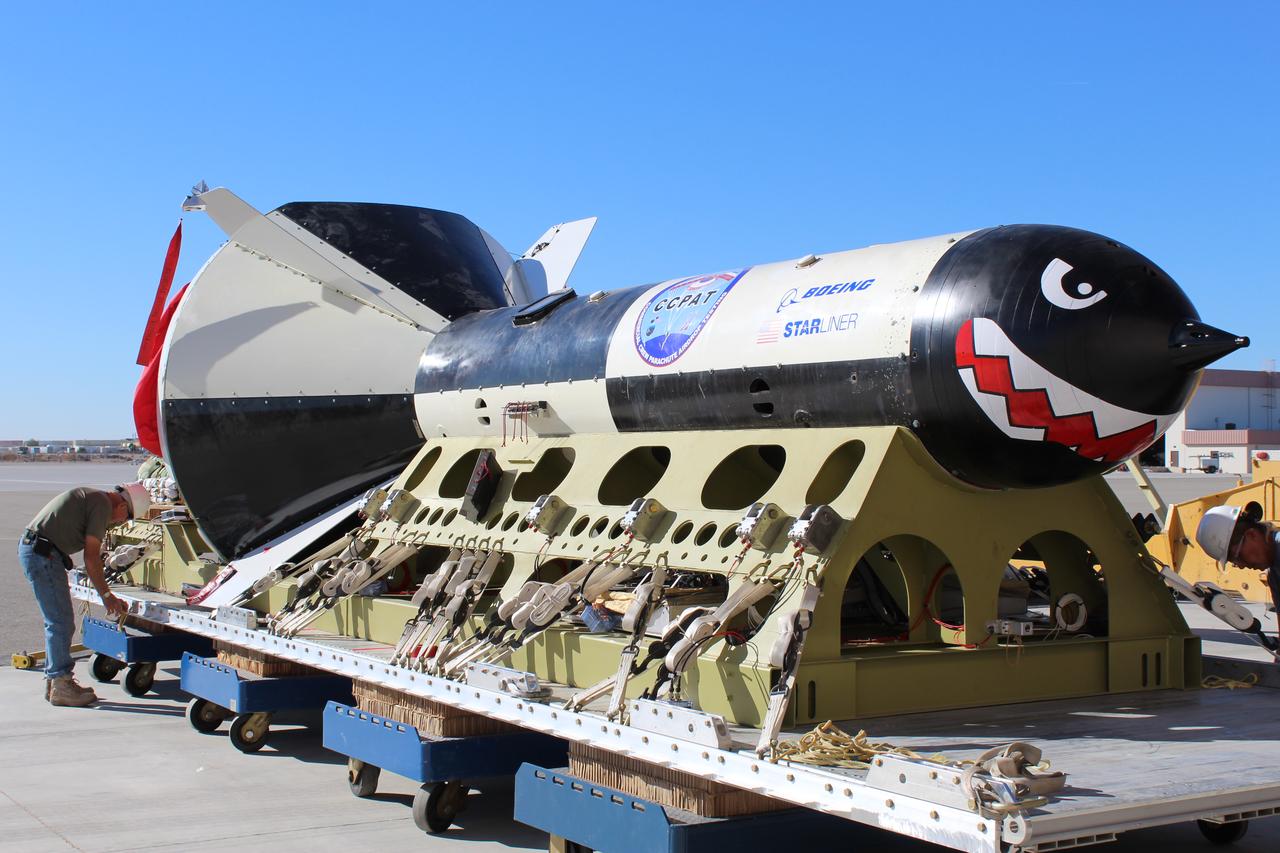
Boeing conducted the first in a series of reliability tests of its CST-100 Starliner flight drogue and main parachute system by releasing a long, dart-shaped test vehicle from a C-17 aircraft over Yuma, Arizona. Two more tests are planned using the dart module, as well as three similar reliability tests using a high fidelity capsule simulator designed to simulate the CST-100 Starliner capsule’s exact shape and mass. In both the dart and capsule simulator tests, the test spacecraft are released at various altitudes to test the parachute system at different deployment speeds, aerodynamic loads, and or weight demands. Data collected from each test is fed into computer models to more accurately predict parachute performance and to verify consistency from test to test.
Boeing conducted the first in a series of reliability tests of its CST-100 Starliner flight drogue and main parachute system by releasing a long, dart-shaped test vehicle from a C-17 aircraft over Yuma, Arizona. Two more tests are planned using the dart module, as well as three similar reliability tests using a high fidelity capsule simulator designed to simulate the CST-100 Starliner capsule’s exact shape and mass. In both the dart and capsule simulator tests, the test spacecraft are released at various altitudes to test the parachute system at different deployment speeds, aerodynamic loads, and or weight demands. Data collected from each test is fed into computer models to more accurately predict parachute performance and to verify consistency from test to test.
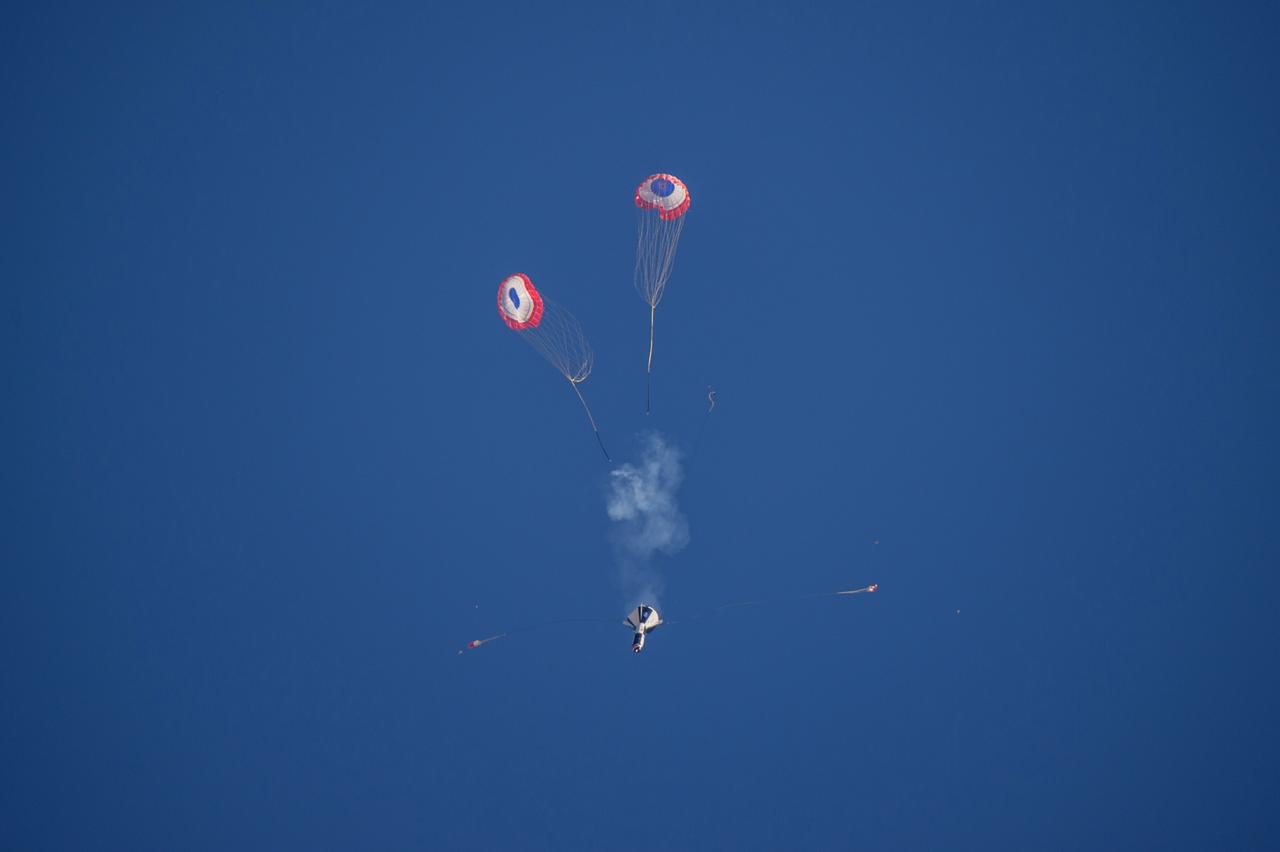
Boeing conducted the first in a series of reliability tests of its CST-100 Starliner flight drogue and main parachute system by releasing a long, dart-shaped test vehicle from a C-17 aircraft over Yuma, Arizona. Two more tests are planned using the dart module, as well as three similar reliability tests using a high fidelity capsule simulator designed to simulate the CST-100 Starliner capsule’s exact shape and mass. In both the dart and capsule simulator tests, the test spacecraft are released at various altitudes to test the parachute system at different deployment speeds, aerodynamic loads, and or weight demands. Data collected from each test is fed into computer models to more accurately predict parachute performance and to verify consistency from test to test.
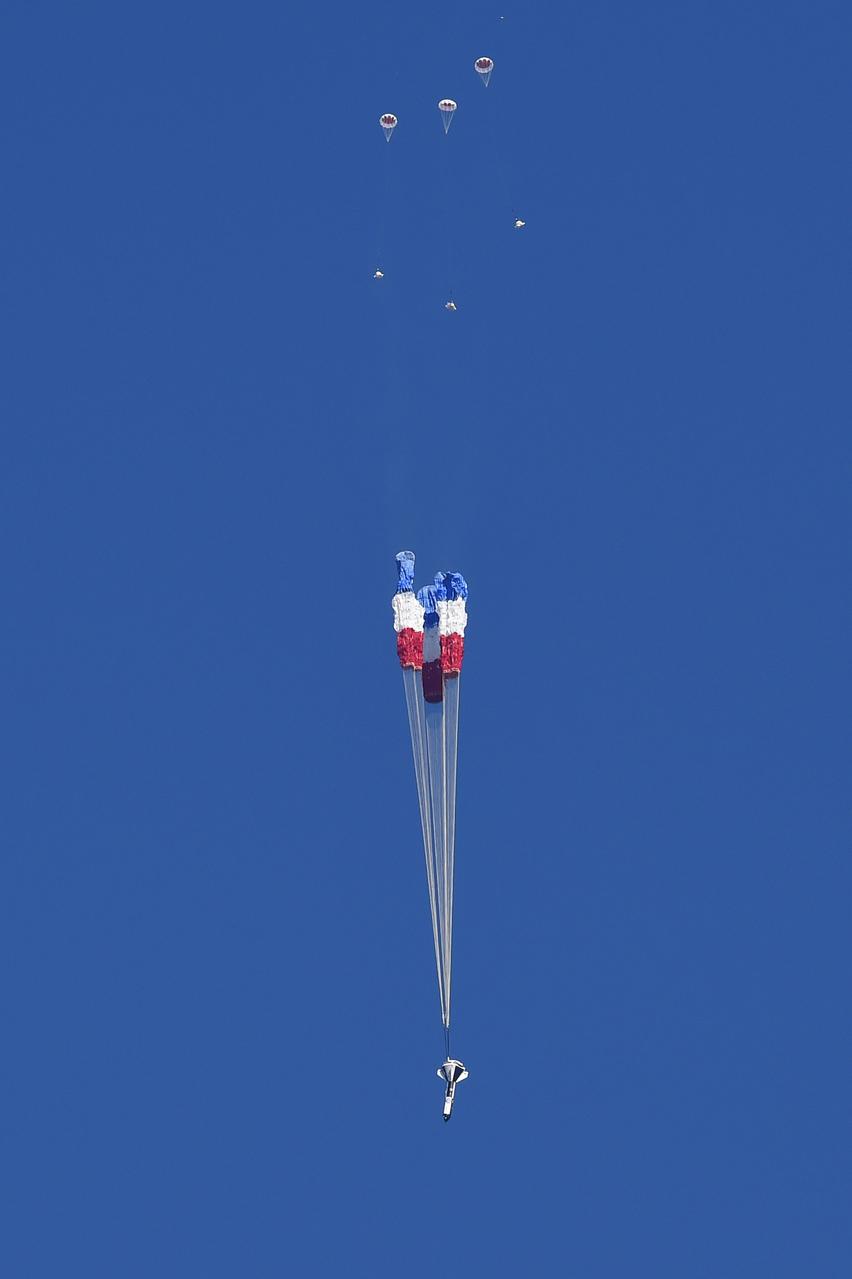
Boeing conducted the first in a series of reliability tests of its CST-100 Starliner flight drogue and main parachute system by releasing a long, dart-shaped test vehicle from a C-17 aircraft over Yuma, Arizona. Two more tests are planned using the dart module, as well as three similar reliability tests using a high fidelity capsule simulator designed to simulate the CST-100 Starliner capsule’s exact shape and mass. In both the dart and capsule simulator tests, the test spacecraft are released at various altitudes to test the parachute system at different deployment speeds, aerodynamic loads, and or weight demands. Data collected from each test is fed into computer models to more accurately predict parachute performance and to verify consistency from test to test.
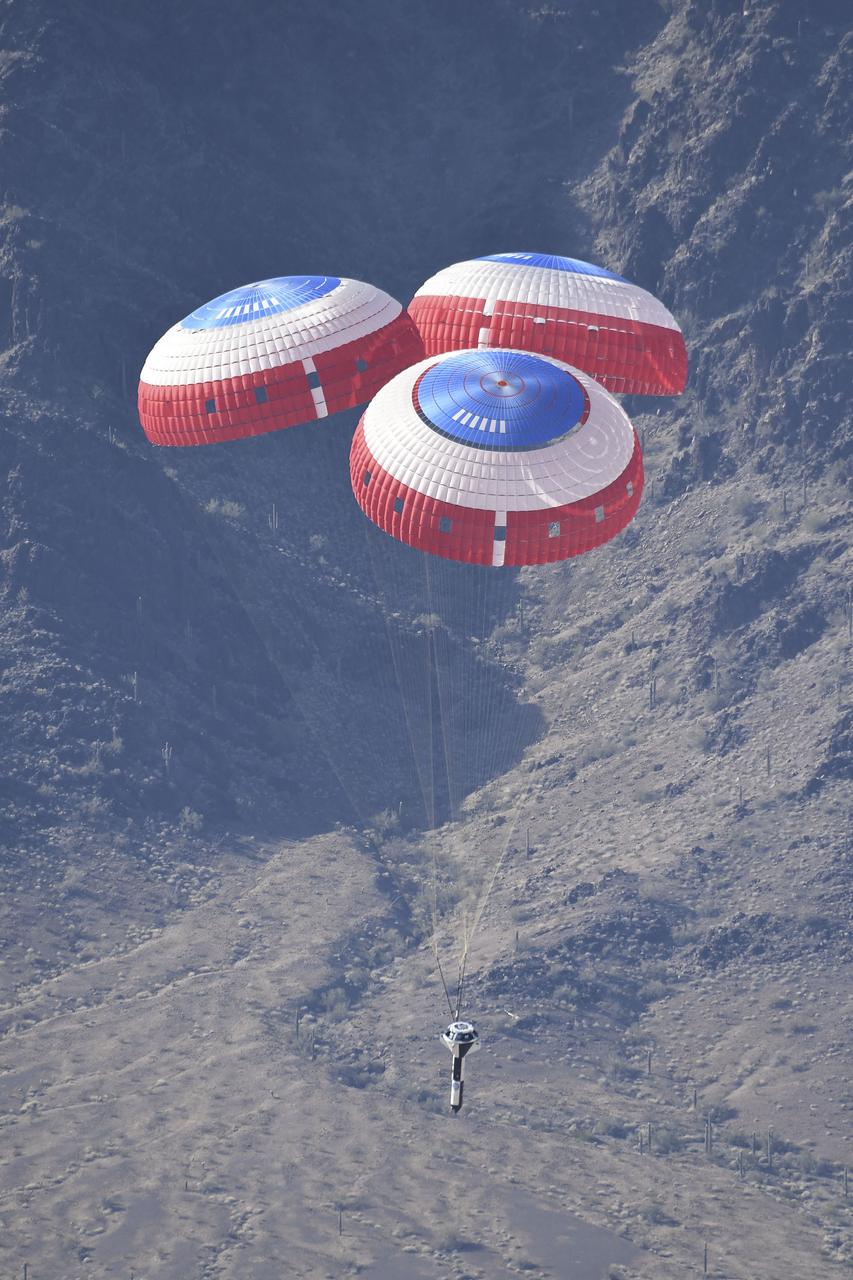
Boeing conducted the first in a series of reliability tests of its CST-100 Starliner flight drogue and main parachute system by releasing a long, dart-shaped test vehicle from a C-17 aircraft over Yuma, Arizona. Two more tests are planned using the dart module, as well as three similar reliability tests using a high fidelity capsule simulator designed to simulate the CST-100 Starliner capsule’s exact shape and mass. In both the dart and capsule simulator tests, the test spacecraft are released at various altitudes to test the parachute system at different deployment speeds, aerodynamic loads, and or weight demands. Data collected from each test is fed into computer models to more accurately predict parachute performance and to verify consistency from test to test.
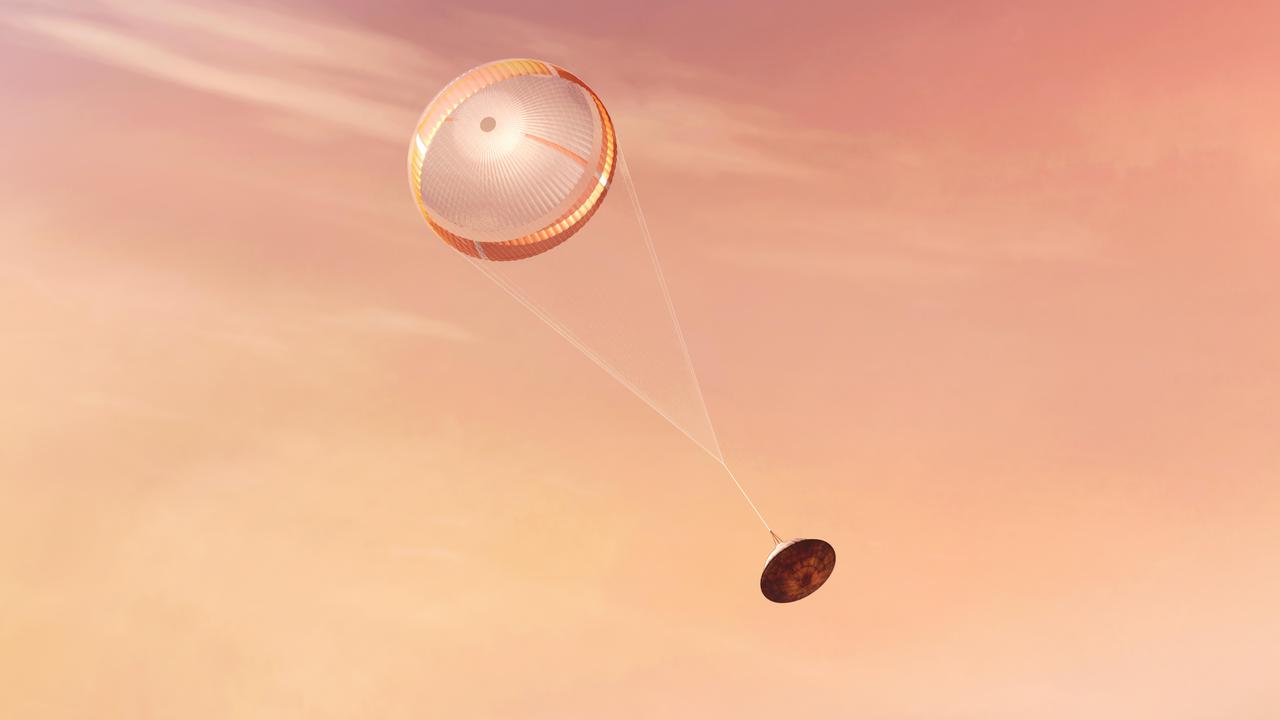
NASA's Perseverance rover deploys a supersonic parachute from its aeroshell as it slows down before landing, in this artist's illustration. Hundreds of critical events must execute perfectly and exactly on time for the rover to land safely on Feb. 18, 2021. Entry, Descent, and Landing, or "EDL," begins when the spacecraft reaches the top of the Martian atmosphere, traveling nearly 12,500 mph (20,000 kph). EDL ends about seven minutes after atmospheric entry, with Perseverance stationary on the Martian surface. The parachute, 70.5 feet (21.5 meters) in diameter, deploys about 240 seconds after entry into the Martian atmosphere, at an altitude of about 7 miles (11 kilometers) and a velocity of about 940 mph (1,512 kph). The parachute slows the vehicle to about 200 mph (320 kph). https://photojournal.jpl.nasa.gov/catalog/PIA24316
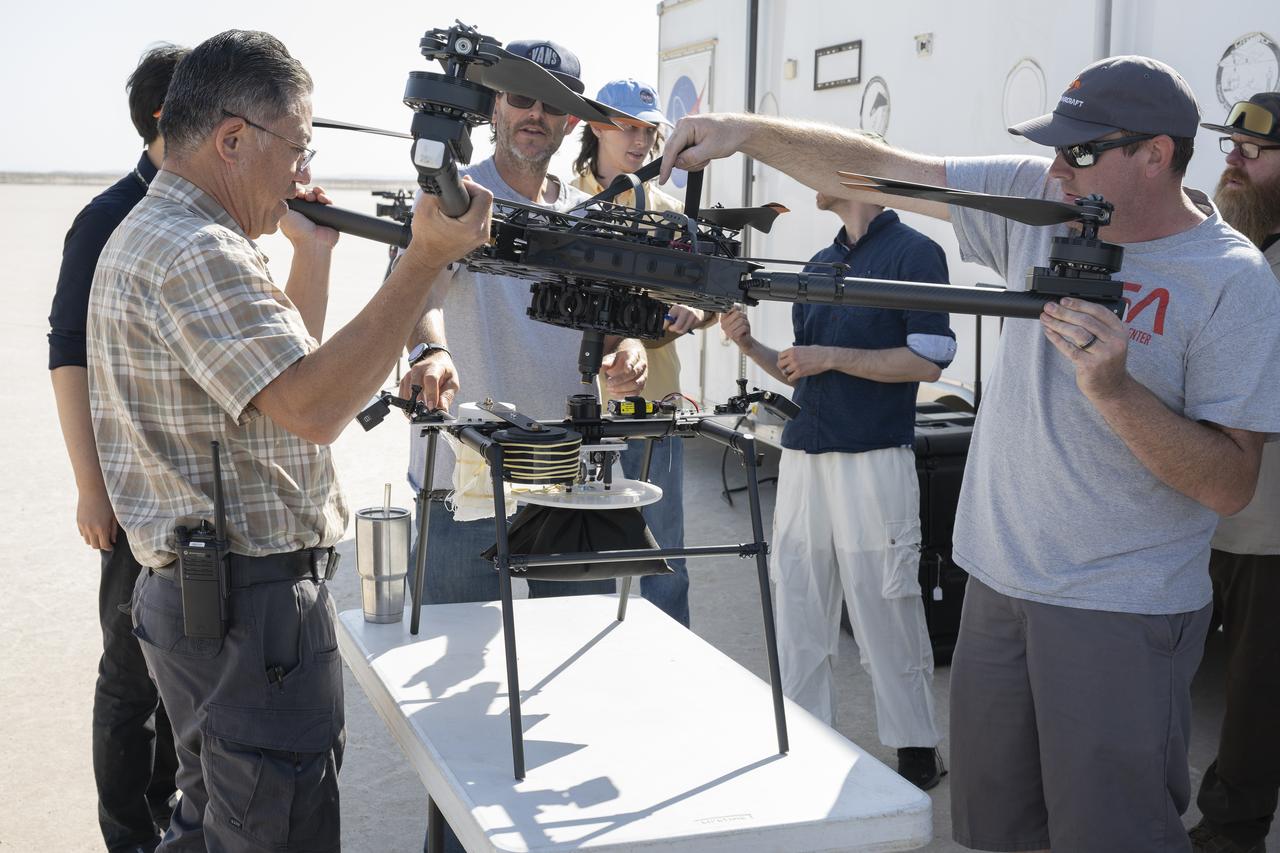
Derek Abramson, left, and Justin Link, right, attach an Alta X drone to the Enhancing Parachutes by Instrumenting the Canopy test experiment on June 4, 2025, at NASA’s Armstong Flight Research Center in Edwards, California. Abramson is NASA chief engineer at the center’s Dale Reed Subscale Flight Research Laboratory, where Link also works as a pilot for small uncrewed aircraft systems. NASA researchers are developing technology to make supersonic parachutes safer and more reliable for delivering science instruments and payloads to Mars.
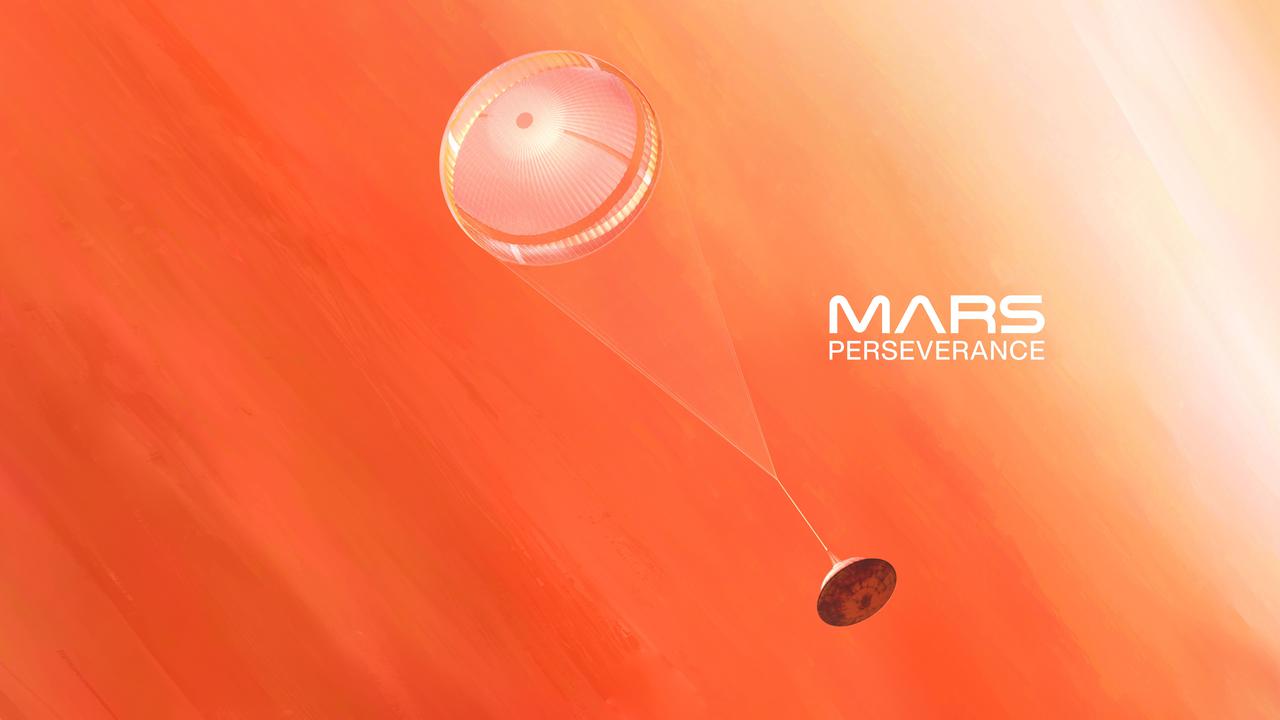
An illustration of NASA's Mars Perseverance rover deploying its supersonic parachute from its aeroshell as it slows down before landing. Hundreds of critical events must execute perfectly and exactly on time for the rover to land safely on Feb. 18, 2021. https://photojournal.jpl.nasa.gov/catalog/PIA24341

This animated GIF shows a test of the mortar system that will be used on Feb. 18, 2021, to deploy the parachute for NASA's Perseverance rover. The test took place in November 2019 at a facility in central Washington. Movie available at https://photojournal.jpl.nasa.gov/catalog/PIA23888
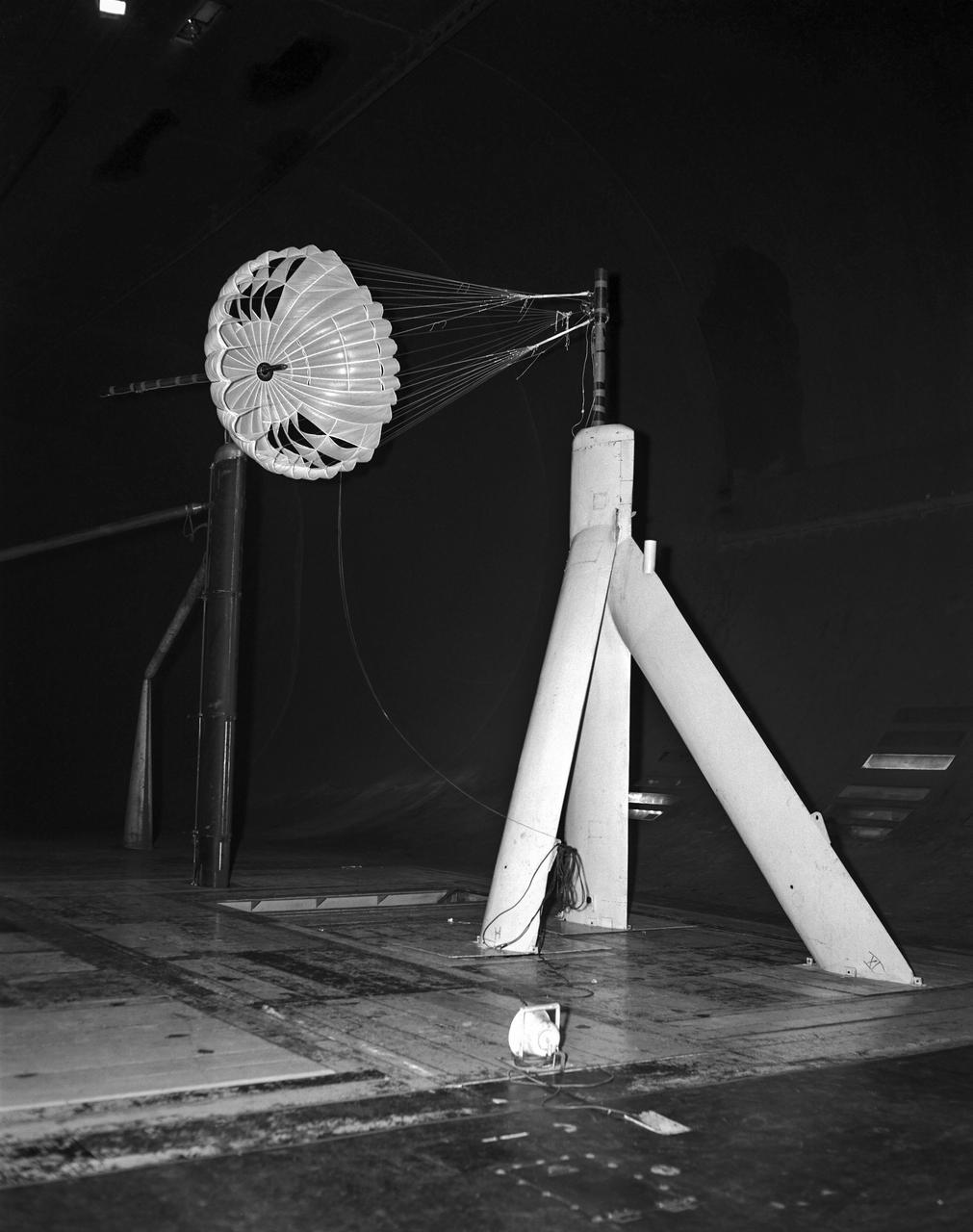
Gliding parachute test in 40x80 foot Wind Tunnel, mounted on main strut flying horizontally.

This stereo anaglyph shows the parachute and back shell that helped guide NASA Curiosity to the surface of Mars. You need 3-D glasses to view this image.
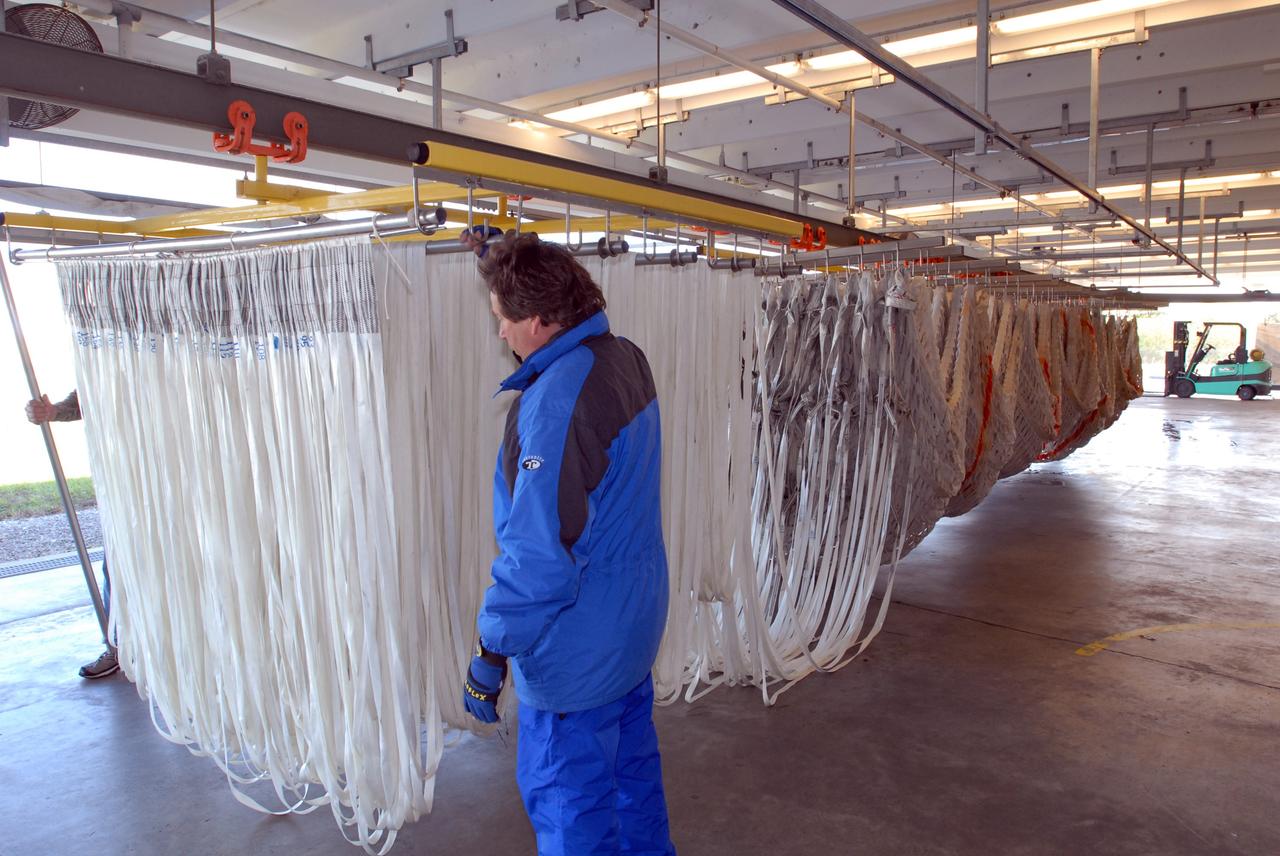
CAPE CANAVERAL, Fla. – At the Parachute Refurbishment Facility at NASA's Kennedy Space Center in Florida, a worker checks the parachute lines suspended from the monorail system. The parachutes were recovered from sea after the launch of space shuttle Endeavour on the STS-126 mission The parachutes are used to slow the descent of the solid rocket boosters that are jettisoned during liftoff. The monorail will transport each parachute into a 30,000-gallon washer and a huge dryer heated with 140-degree air at 13,000 cubic feet per minute. One pilot, one drogue and three main canopies per booster slow the booster’s fall from about 360 mph to 50 mph. After the chutes are cleaned and repaired, they must be carefully packed into their bags so they will deploy correctly the next time they are used. Photo credit: NASA/Jim Grossmann
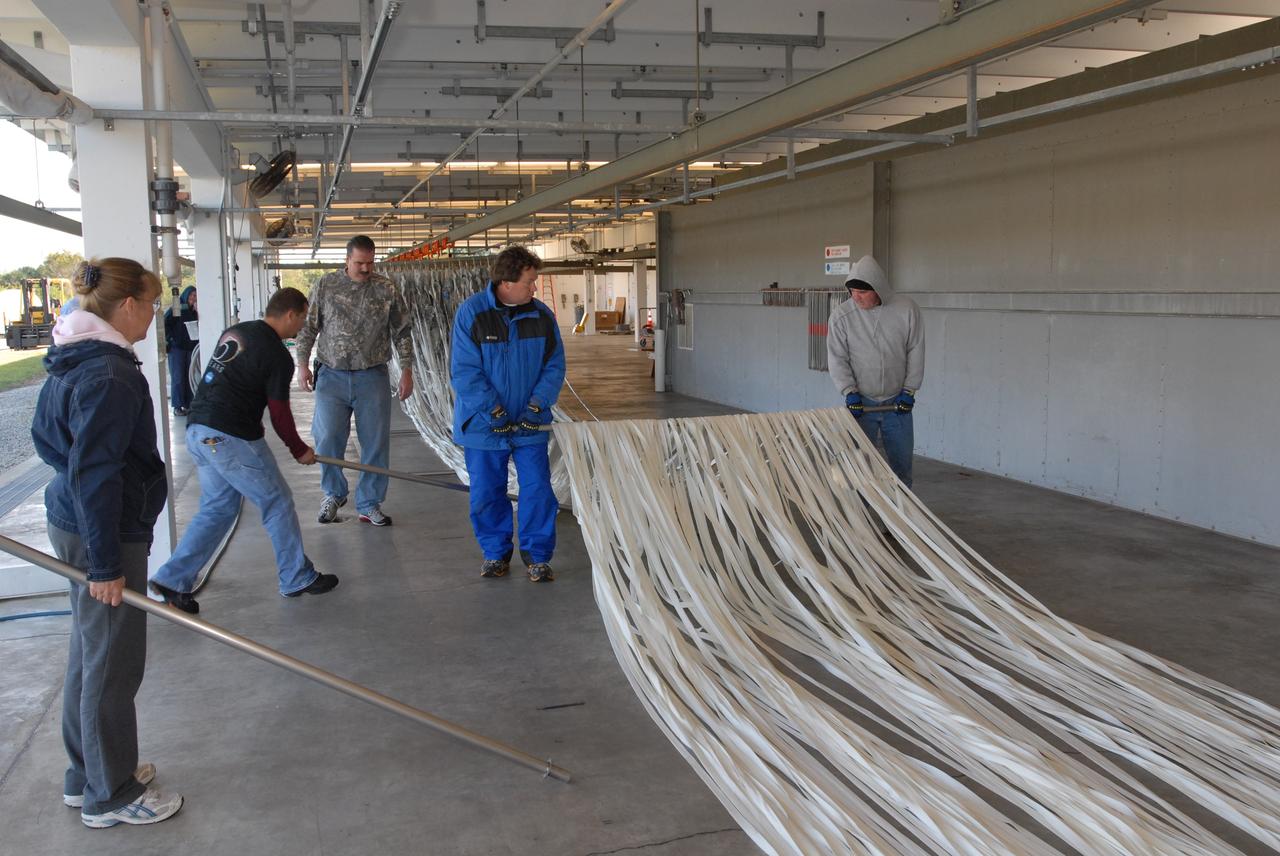
CAPE CANAVERAL, Fla. – At the Parachute Refurbishment Facility at NASA's Kennedy Space Center in Florida, workers place rods under the lines of the parachutes recovered from sea after the launch of space shuttle Endeavour on the STS-126 mission to hang them on a monorail system. Behind them, the parachutes are suspended from the monorail. The parachutes are used to slow the descent of the solid rocket boosters that are jettisoned during liftoff. The monorail will transport each parachute into a 30,000-gallon washer and a huge dryer heated with 140-degree air at 13,000 cubic feet per minute. One pilot, one drogue and three main canopies per booster slow the booster’s fall from about 360 mph to 50 mph. After the chutes are cleaned and repaired, they must be carefully packed into their bags so they will deploy correctly the next time they are used. Photo credit: NASA/Jim Grossmann
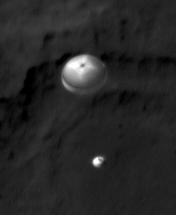
NASA Curiosity rover and its parachute were spotted by NASA Mars Reconnaissance Orbiter as Curiosity descended to the surface. The HiRISE camera captured this image of Curiosity while the orbiter was listening to transmissions from the rover.

An engineer works on the Parachute Deployment Device of the Low-Density Supersonic Decelerator test vehicle in this image taken at the Missile Assembly Building at the U.S. Navy Pacific Missile Range Facility in Kauai, Hawaii.
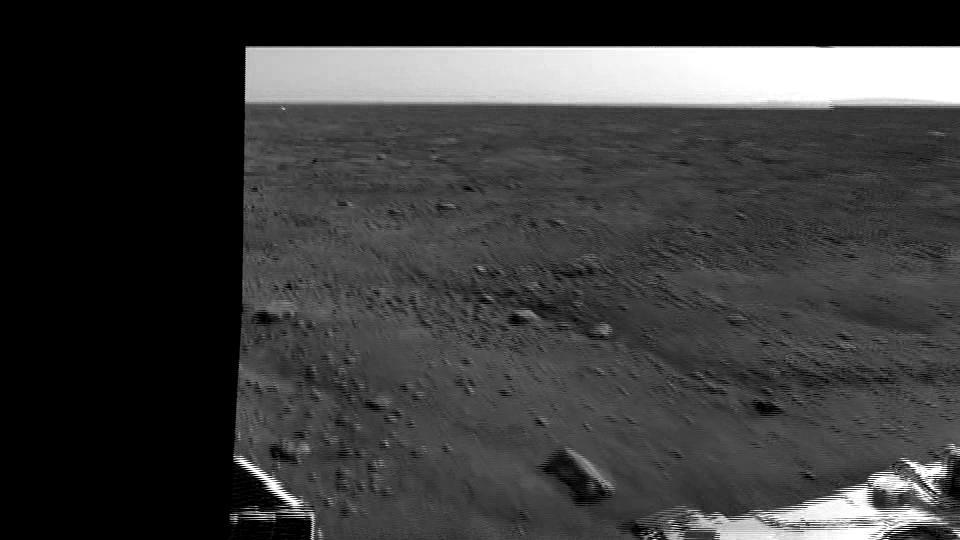
This image zooms in on the backshell and parachute, about 300 meters to the south of NASA Phoenix Mars Lander. In the distance, about 9 miles or 15 kilometers away, is a range of hills..
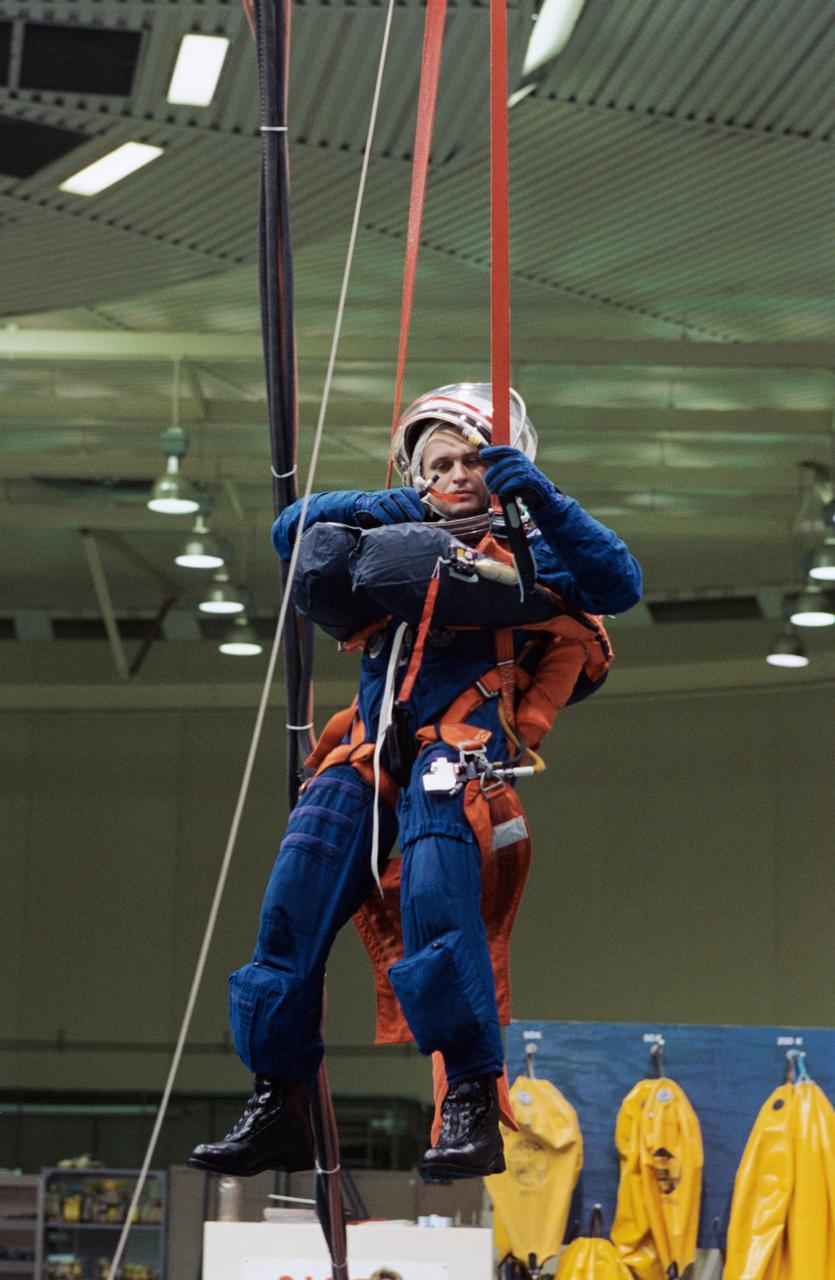
S94-47232 (13 Oct 1994) --- Cosmonaut Yuriy I. Onufriyenko (right), in the United States to participate in training for joint Russia-United States space missions, simulates a parachute drop into water. The training took place in the Johnson Space Center's (JSC) Weightless Environment Training Facility (WET-F) because it contains a 25-feet-deep pool. Onufriyenko, a Mir reserve team member, and a number of other cosmonauts and astronauts participating in the joint program were in Houston, Texas to prepare for upcoming missions which involve crewmembers from the two nations.
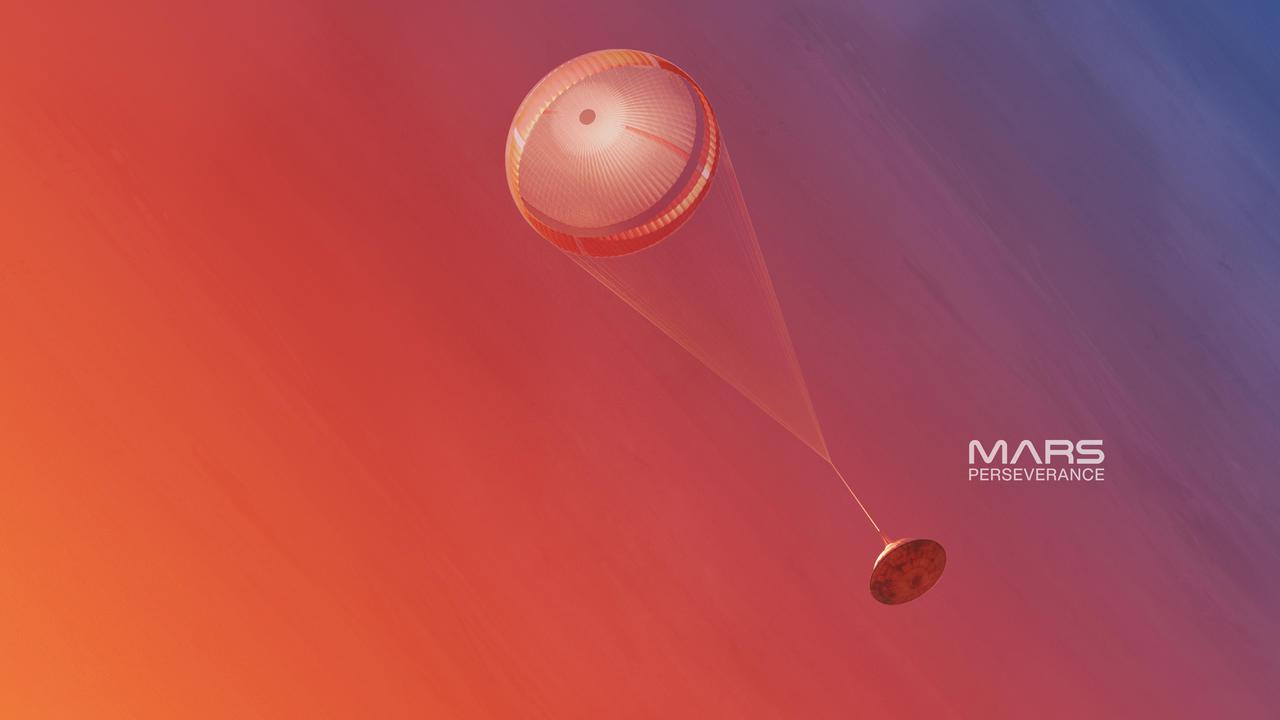
An illustration of NASA's Mars Perseverance rover deploying its supersonic parachute from its aeroshell as it slows down before landing. Hundreds of critical events must execute perfectly and exactly on time for the rover to land safely on Feb. 18, 2021. https://photojournal.jpl.nasa.gov/catalog/PIA24344
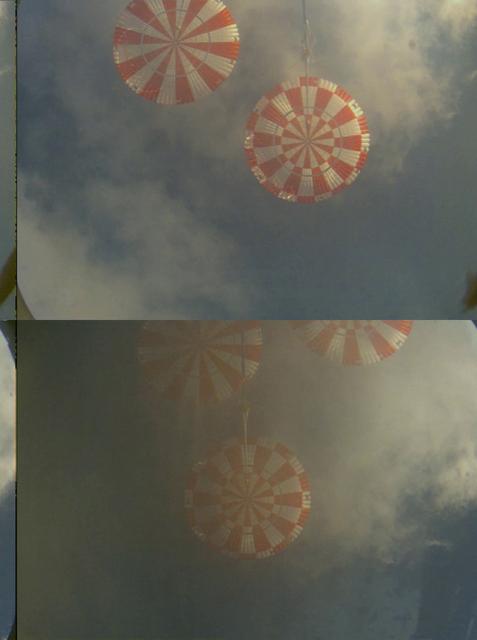
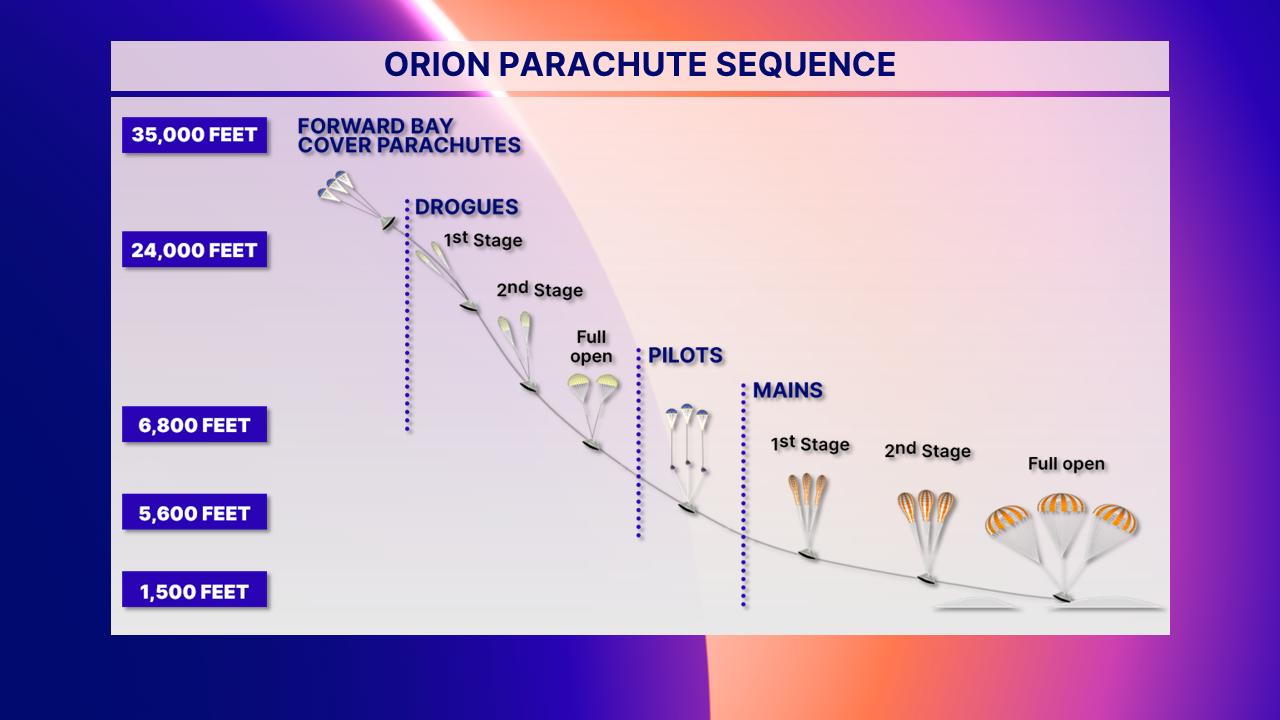
A view from the side windows as the parachutes deploy on Orion's first flight test, Exploration Flight Test-1 (EFT-1), on December 5, 2014.
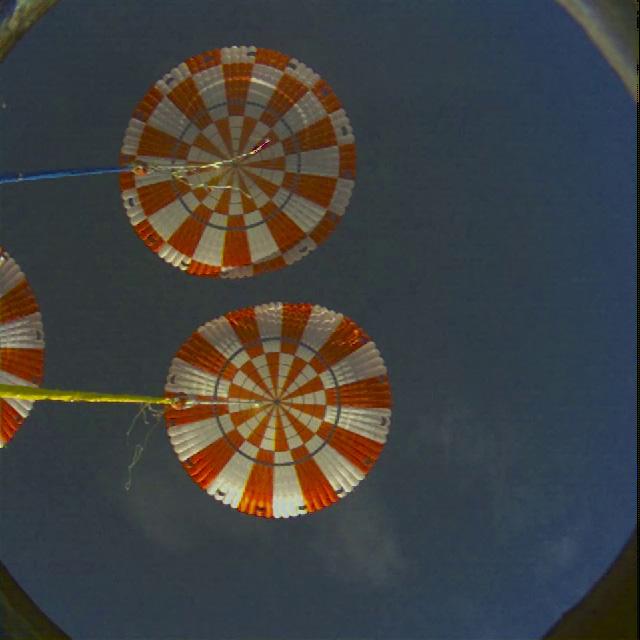
A view from the top hatch window as the parachutes deploy on Orion's first flight test, Exploration Flight Test-1 (EFT-1), on December 5, 2014.
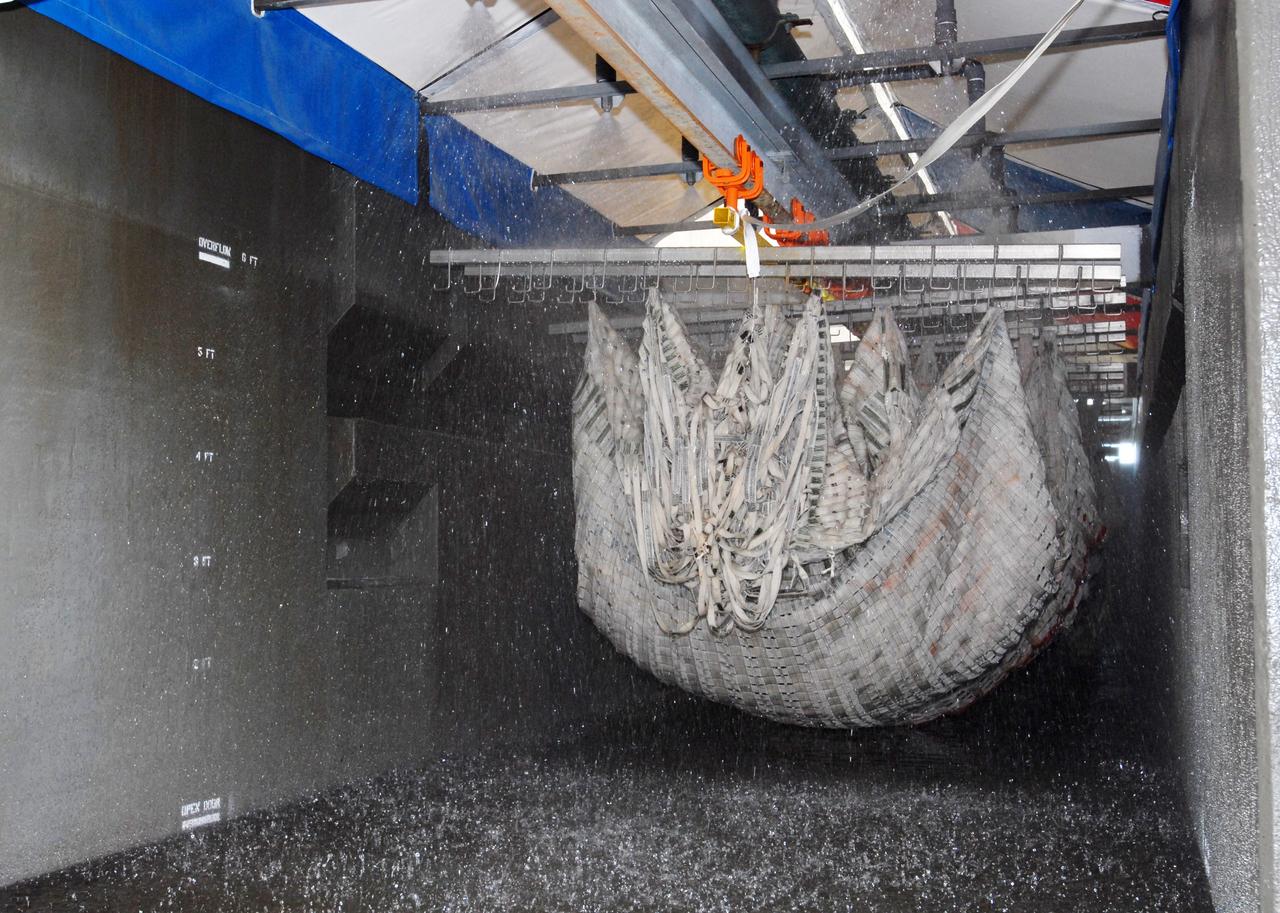
CAPE CANAVERAL, Fla. – At the Parachute Refurbishment Facility at NASA's Kennedy Space Center in Florida, the parachutes recovered from sea after the launch of space shuttle Endeavour on the STS-126 mission are moved through the 30,000-gallon washer. The parachutes are used to slow the descent of the solid rocket boosters that are jettisoned during liftoff. After washing, the monorail will move the parachutes into a huge dryer heated with 140-degree air at 13,000 cubic feet per minute. One pilot, one drogue and three main canopies per booster slow the booster’s fall from about 360 mph to 50 mph. After the chutes are cleaned and repaired, they must be carefully packed into their bags so they will deploy correctly the next time they are used. Photo credit: NASA/Jim Grossmann
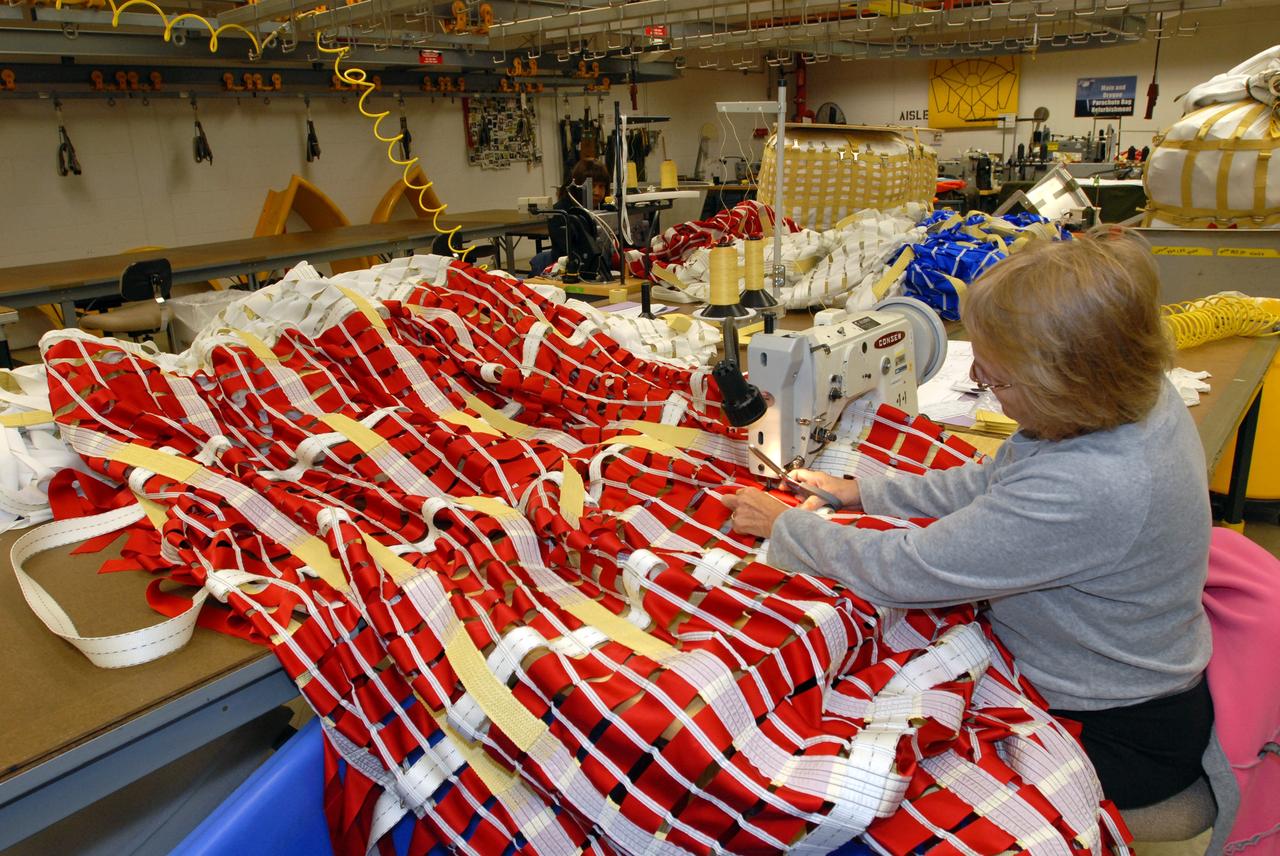
CAPE CANAVERAL, Fla. – In the Parachute Refurbishment Facility at NASA's Kennedy Space Center in Florida, workers repair the parachutes recovered from sea after the launch of space shuttle Endeavour on the STS-126 mission. Typically, each main canopy requires hundreds of repairs after each use. The smaller chutes and the parachute deployment bags they are packed in also require repairs. The parachutes are used to slow the descent of the solid rocket boosters that are jettisoned during liftoff. One pilot, one drogue and three main canopies per booster slow the booster’s fall from about 360 mph to 50 mph. After the chutes are cleaned and repaired, they must be carefully packed into their bags so they will deploy correctly the next time they are used. Photo credit: NASA/Jim Grossmann
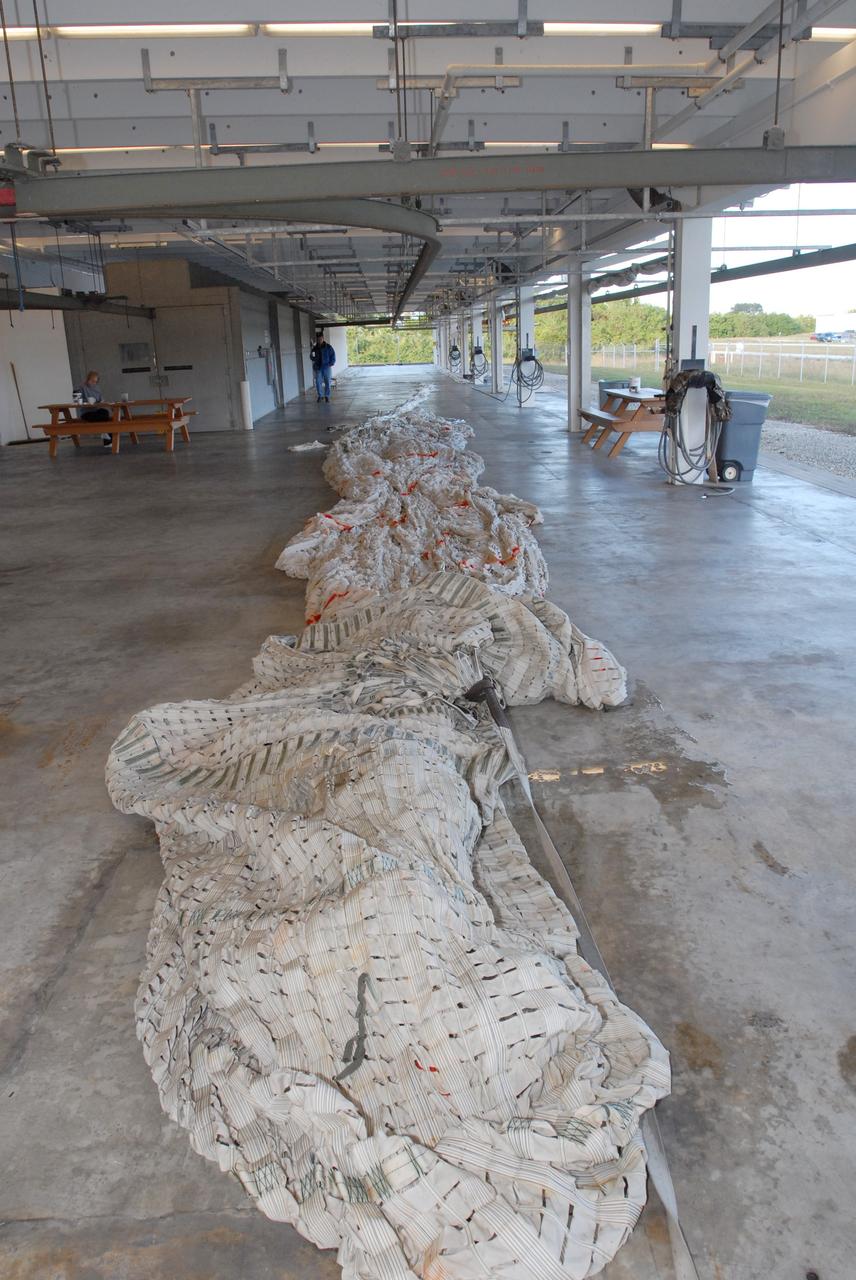
CAPE CANAVERAL, Fla. – Parachutes recovered from sea after the launch of space shuttle Endeavour on the STS-126 mission are stretched out at the Parachute Refurbishment Facility at NASA's Kennedy Space Center in Florida to detangle them. The parachutes are used to slow the descent of the solid rocket boosters that are jettisoned during liftoff. After the chutes are returned to the facility following launch, a hanging monorail system is used to transport each parachute into a 30,000-gallon washer and then into a huge dryer heated with 140-de¬gree air at 13,000 cubic feet per minute. One pilot, one drogue and three main canopies per booster slow the booster’s fall from about 360 mph to 50 mph. After the chutes are cleaned and repaired, they must be care¬fully packed into their bags so they will deploy correctly the next time they are used. Photo credit: NASA/Jim Grossmann
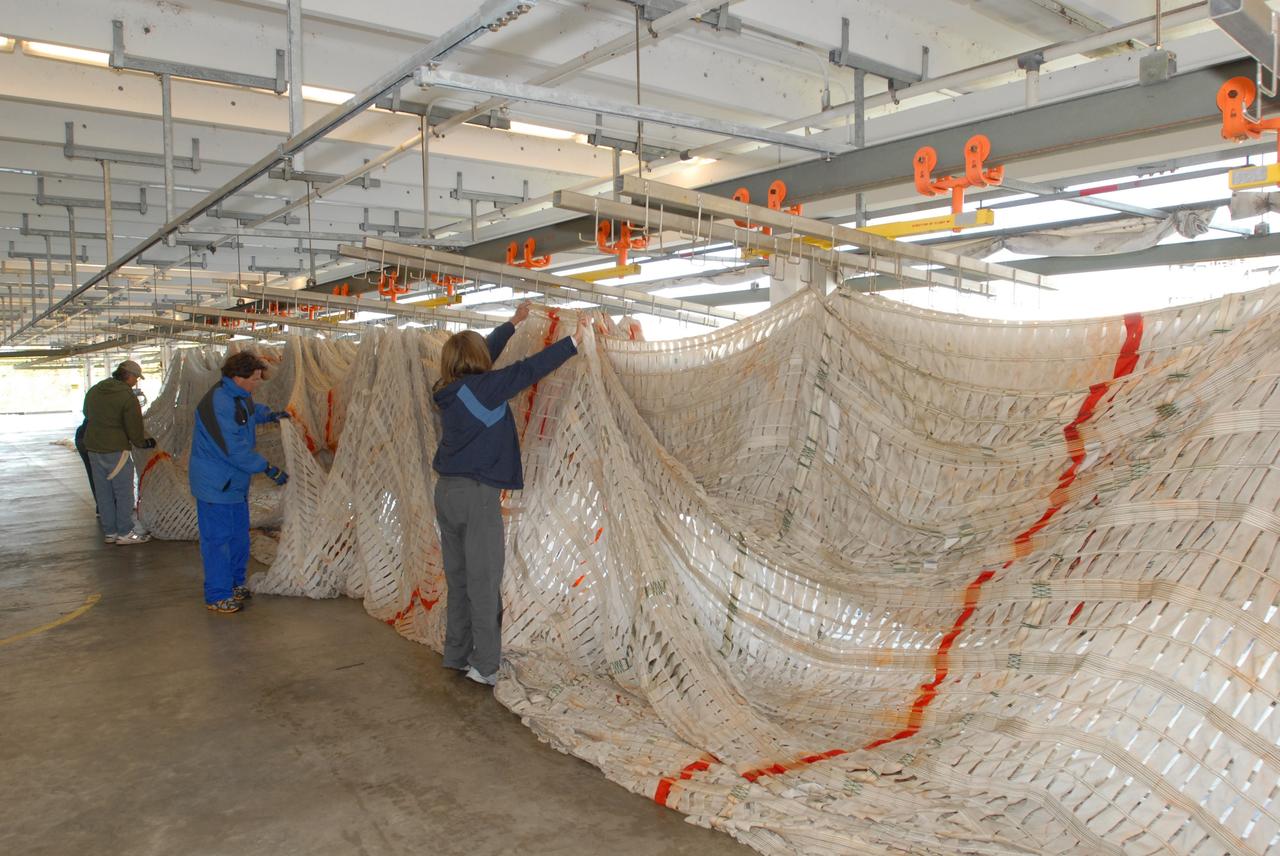
CAPE CANAVERAL, Fla. – At the Parachute Refurbishment Facility at NASA's Kennedy Space Center in Florida, workers begin hanging the parachutes recovered from sea after the launch of space shuttle Endeavour on the STS-126 mission onto a monorail system. The parachutes are used to slow the descent of the solid rocket boosters that are jettisoned during liftoff. The monorail will transport each parachute into a 30,000-gallon washer and a huge dryer heated with 140-degree air at 13,000 cubic feet per minute One pilot, one drogue and three main canopies per booster slow the booster’s fall from about 360 mph to 50 mph. After the chutes are cleaned and repaired, they must be carefully packed into their bags so they will deploy correctly the next time they are used. Photo credit: NASA/Jim Grossmann