
Particle-image velocimetry (PIV) is performed on the upper surface of a pitching airfoil in the NASA Glenn Icing Research Tunnel. PIV is a laser-based flow velocity measurement technique used widely in wind tunnels. These experiments were conducted as part of a research project focused on enhancing rotorcraft speed, efficiency and maneuverability by suppressing dynamic stall.
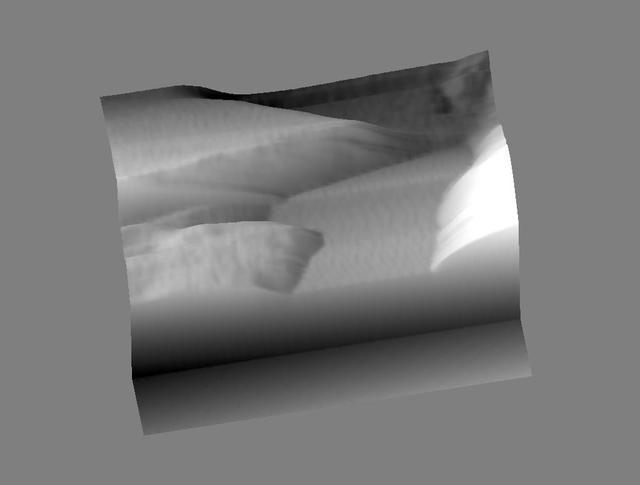
Martian Particle

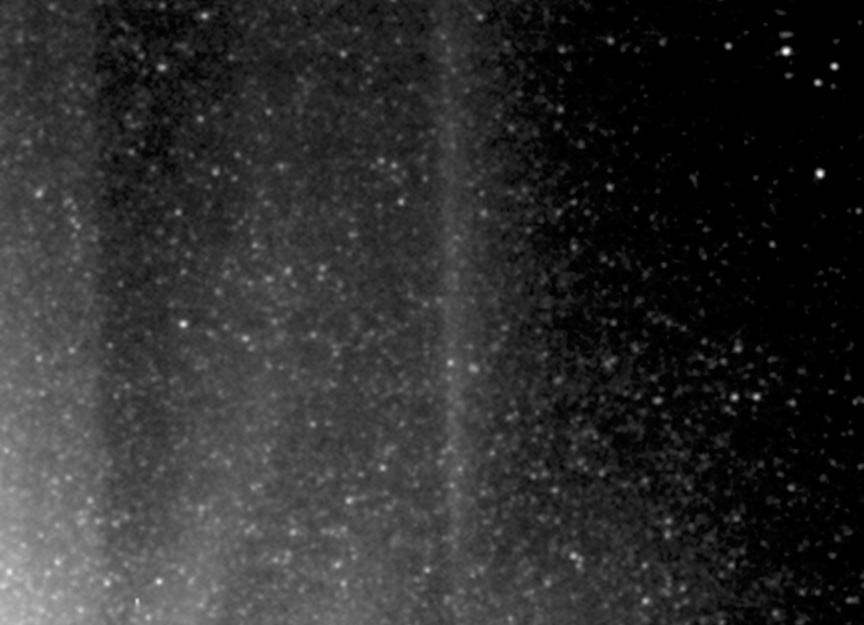
Small Particles in Ring A
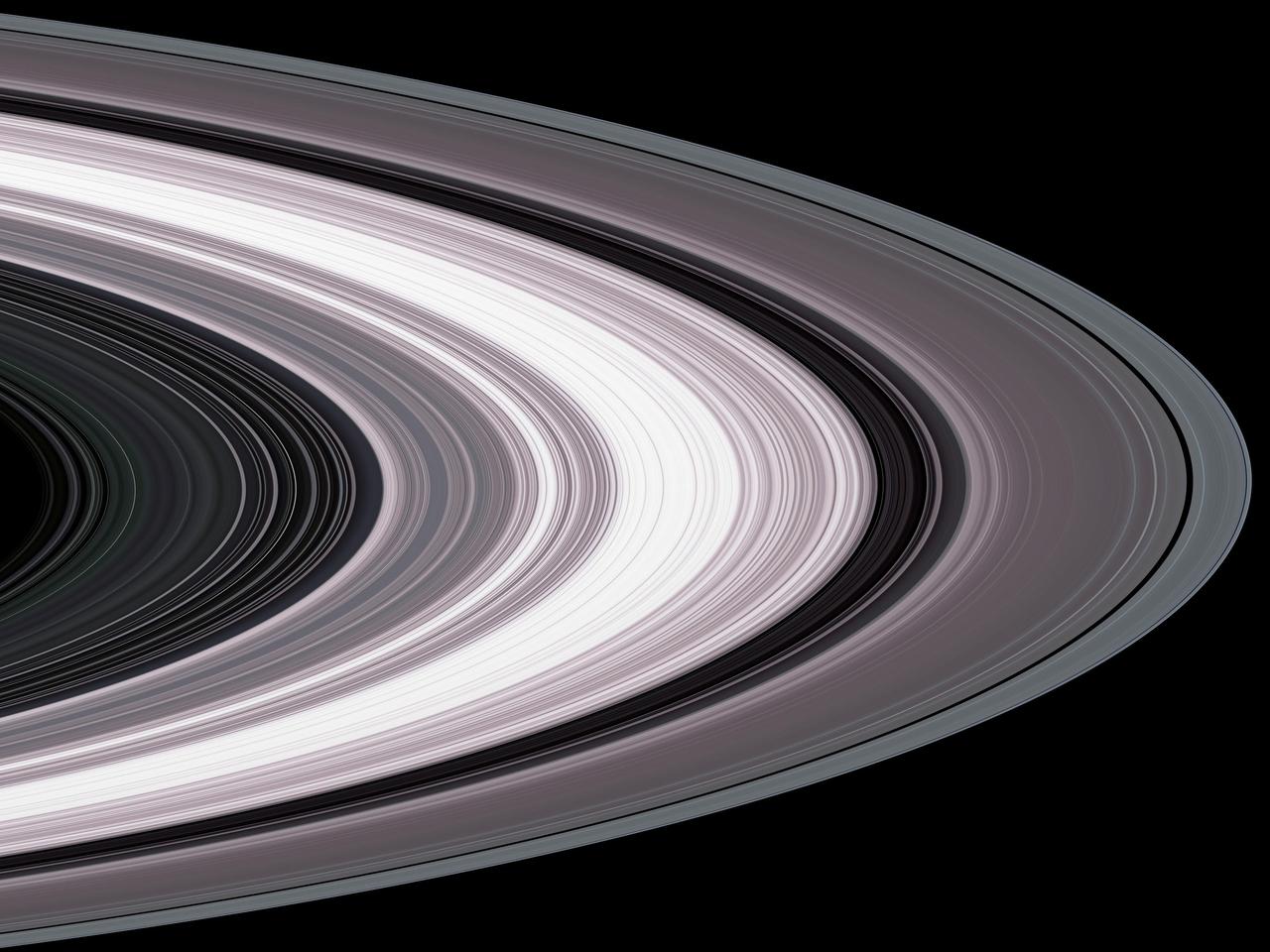
Small Particles in Saturn Rings
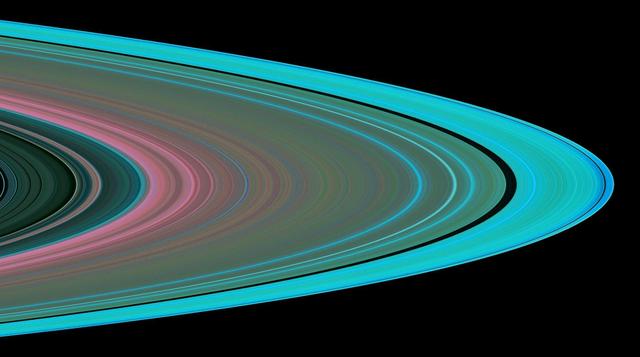
Waves and Small Particles in Ring A
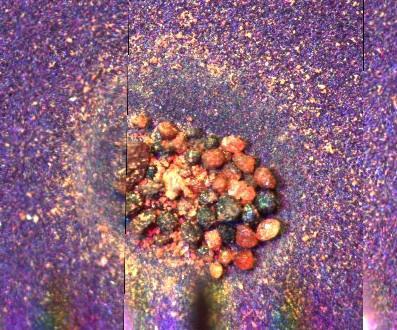
Microscope Image of Scavenged Particles
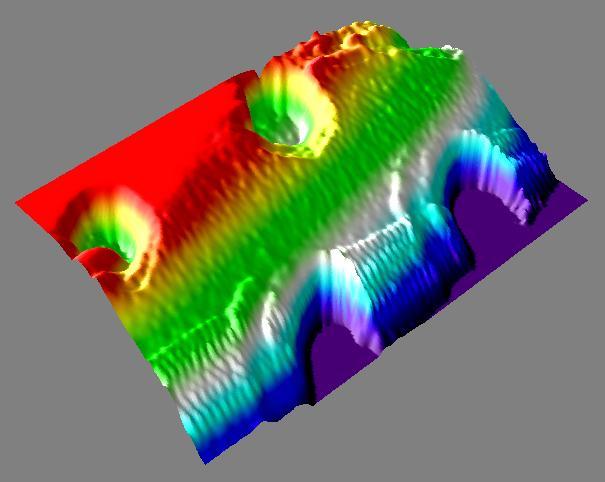
3-D View of Mars Particle
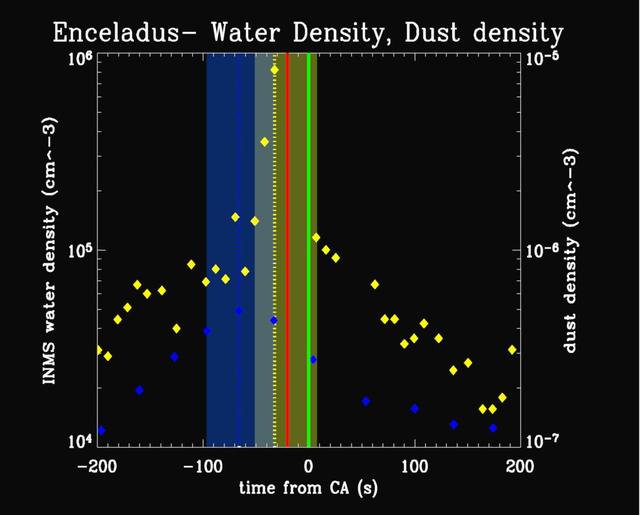
Water Vapor & Particles Over Enceladus
Magnetic Particles Are Found In The Martian Atmosphere http://photojournal.jpl.nasa.gov/catalog/PIA00394

This animation illustrates the modeled trajectories of particles that were ejected from Bennu's surface on Jan. 19, 2019. After ejecting from the asteroid's surface, the particles either briefly orbited Bennu and fell back to its surface or escaped from Bennu and into space. Animation available at https://photojournal.jpl.nasa.gov/catalog/PIA23555
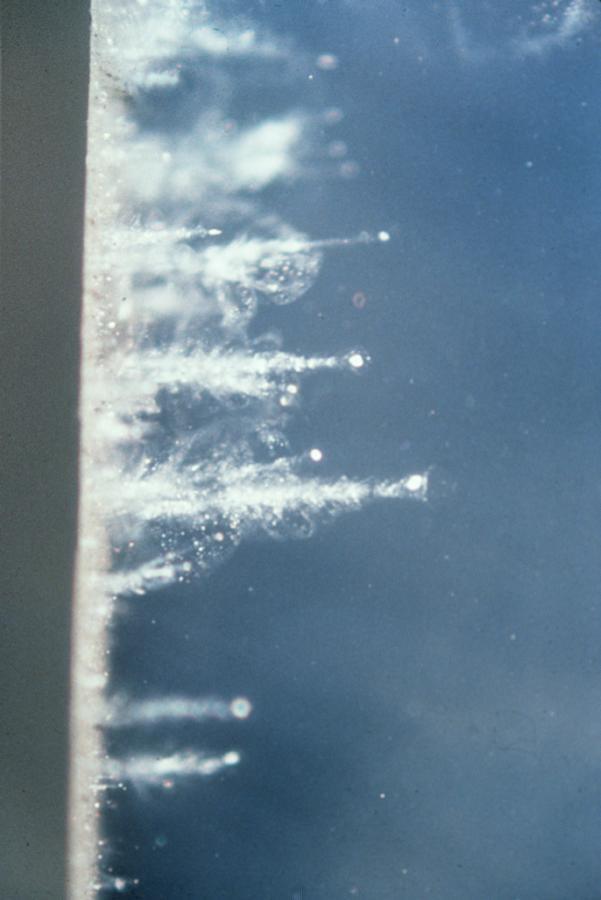
In an experiment using a special air gun, particles are shot into aerogel at high velocities. Closeup of particles leaving a carrot-shaped trail in the aerogel are shown here. Aerogel was used on NASA Stardust spacecraft.
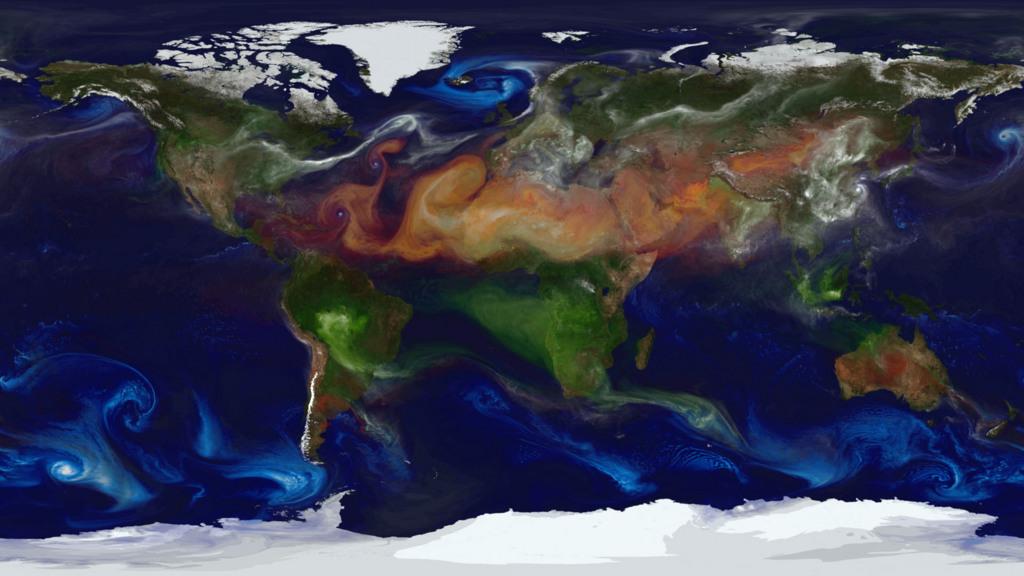
NASA models and supercomputing have created a colorful new view of aerosol movement. Satellites, balloon-borne instruments and ground-based devices make 30 million observations of the atmosphere each day. Yet these measurements still give an incomplete picture of the complex interactions within the membrane surrounding Earth. Enter climate models. Through mathematical experiments, modelers can move Earth forward or backward in time to create a dynamic portrait of the planet. Researchers from NASA Goddard’s Global Modeling and Assimilation Office recently ran a simulation of the atmosphere that captured how winds whip aerosols around the world. Such simulations allow scientists to better understand how these tiny particulates travel in the atmosphere and influence weather and climate. In the visualization below, covering August 2006 to April 2007, watch as dust and sea salt swirl inside cyclones, carbon bursts from fires, sulfate streams from volcanoes—and see how these aerosols paint the modeled world. Credit: NASA/Goddard Space Flight Center
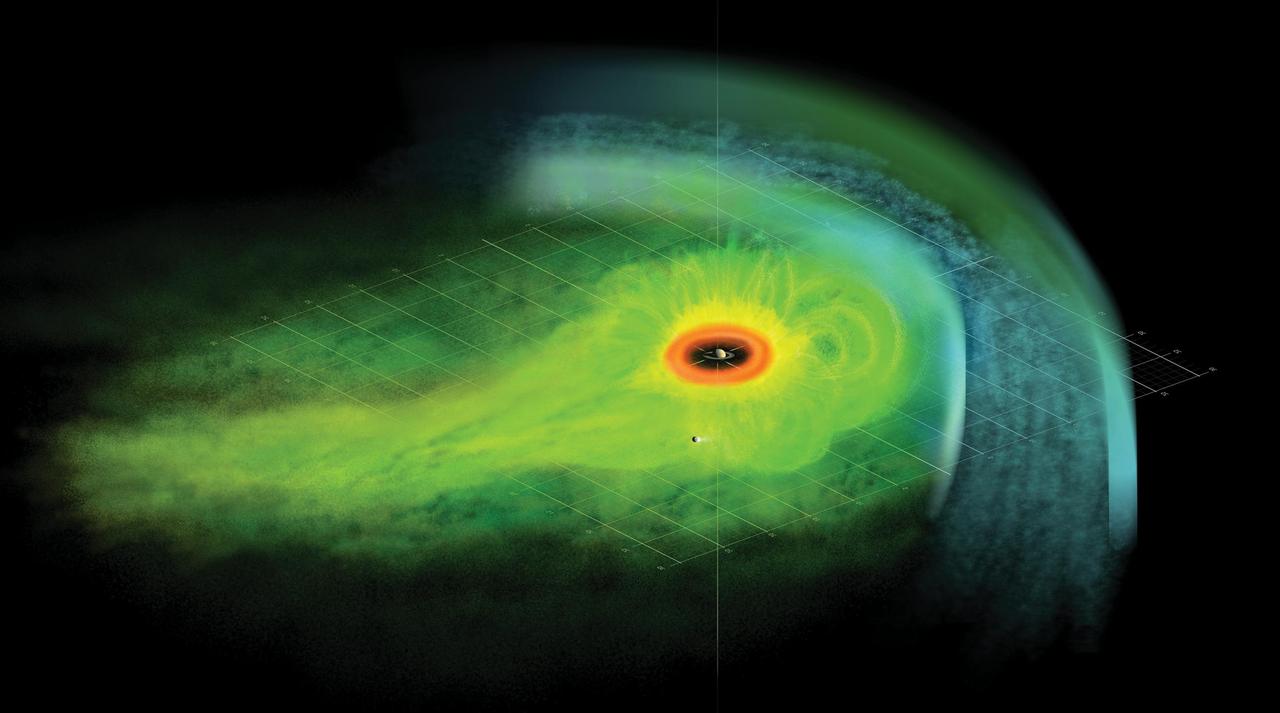
Artist Concept of Particle Population in Saturn Magnetosphere
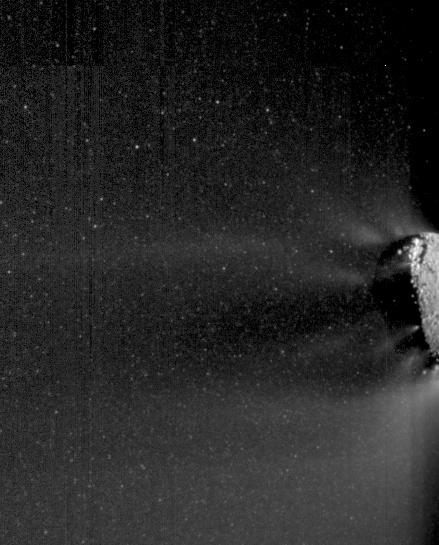
Images obtained by NASA EPOXI mission spacecraft show an active end of the nucleus of comet Hartley 2. Icy particles spew from the surface. Most of these particles are traveling with the nucleus; fluffy nowballs about 3 centimeters to 30 centimeters.
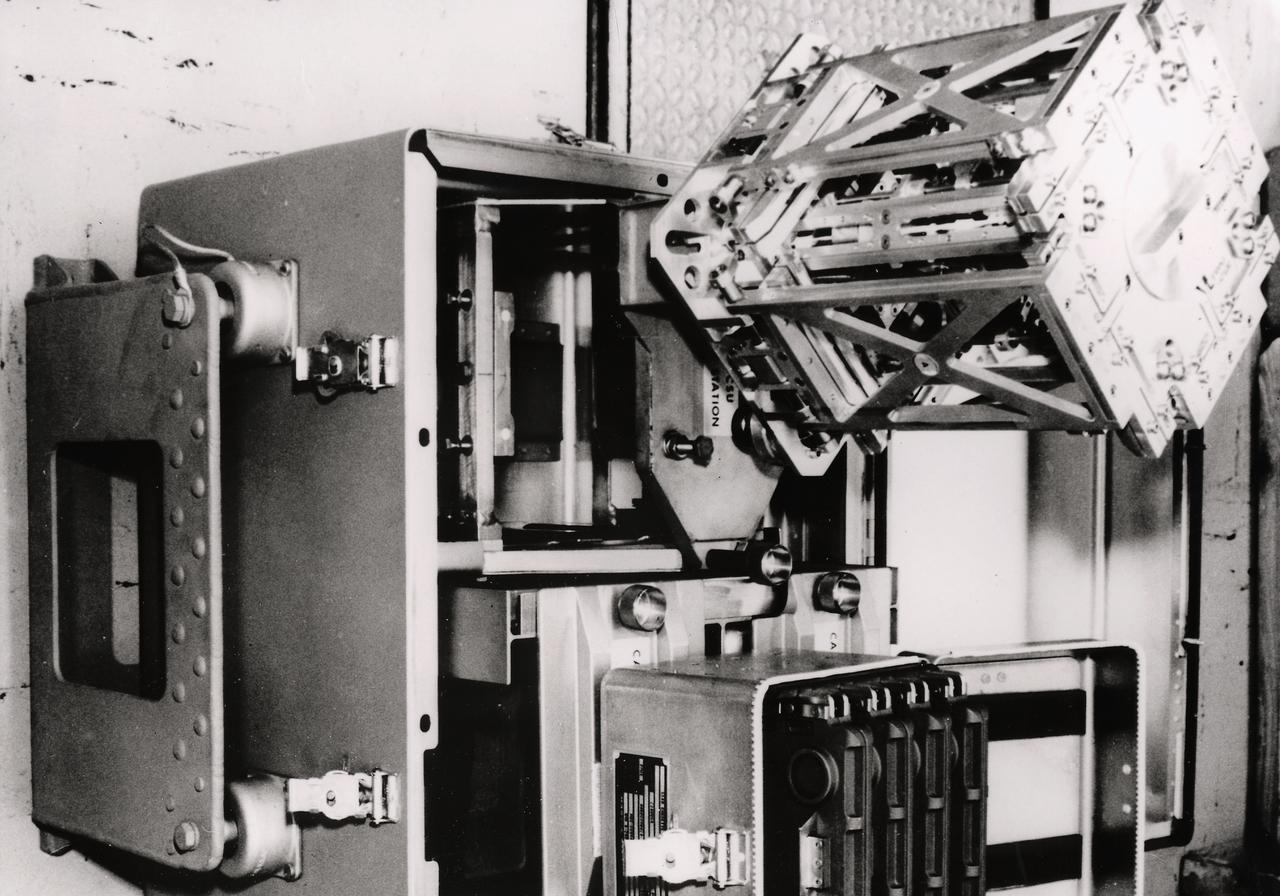
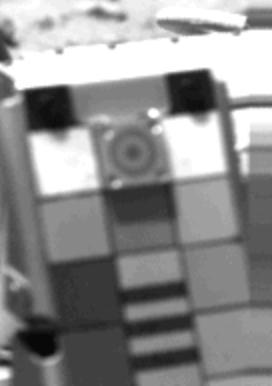
This photograph shows Skylab's Particle Collection device, a scientific experiment designed to study micro-meteoroid particles in near-Earth space and determine their abundance, mass distribution, composition, and erosive effects. The Marshall Space Flight Center had program management responsibility for the development of Skylab hardware and experiments.
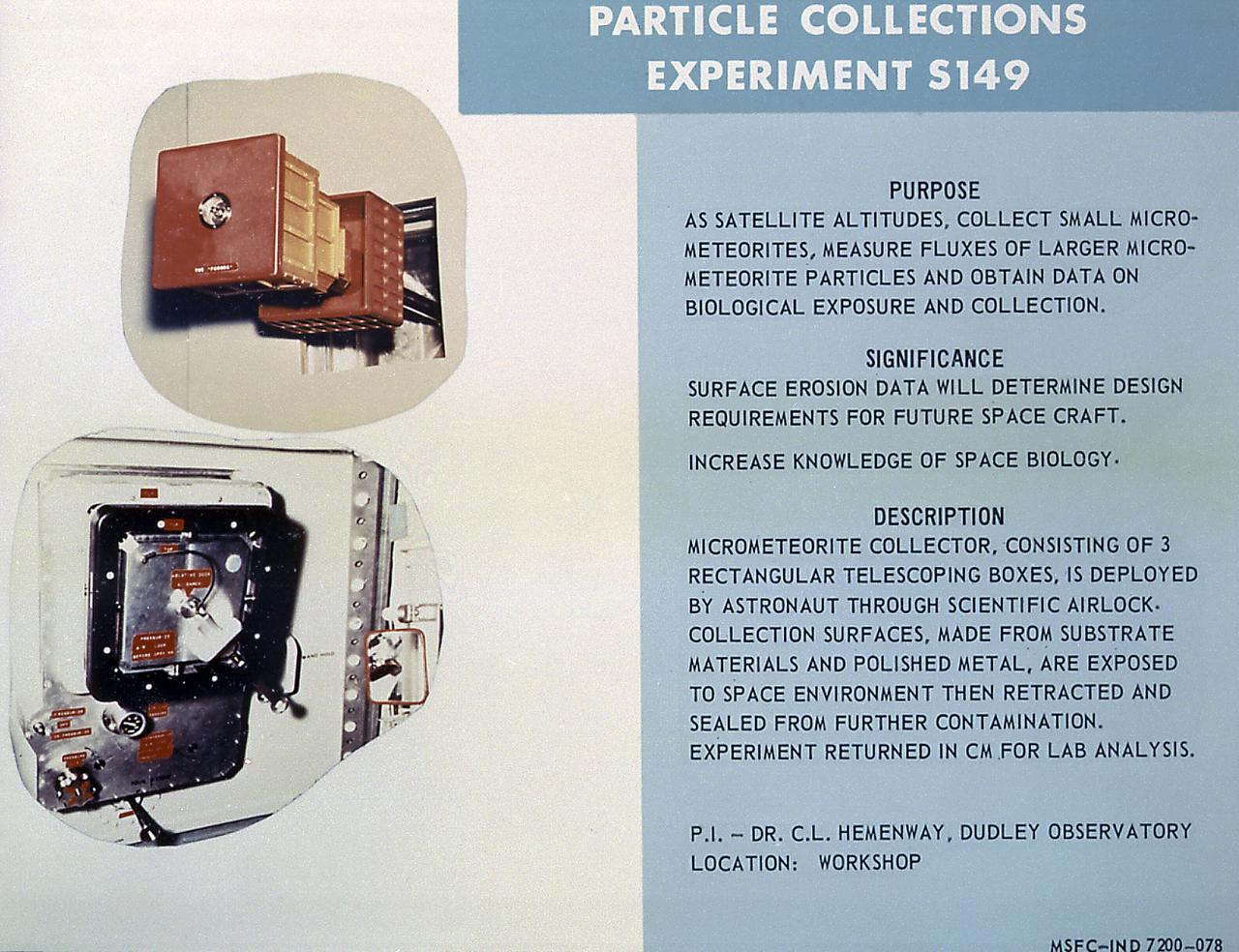
This chart describes Skylab's Particle Collection device, a scientific experiment designed to study micro-meteoroid particles in near-Earth space and determine their abundance, mass distribution, composition, and erosive effects. The Marshall Space Flight Center had program management responsibility for the development of Skylab hardware and experiments.
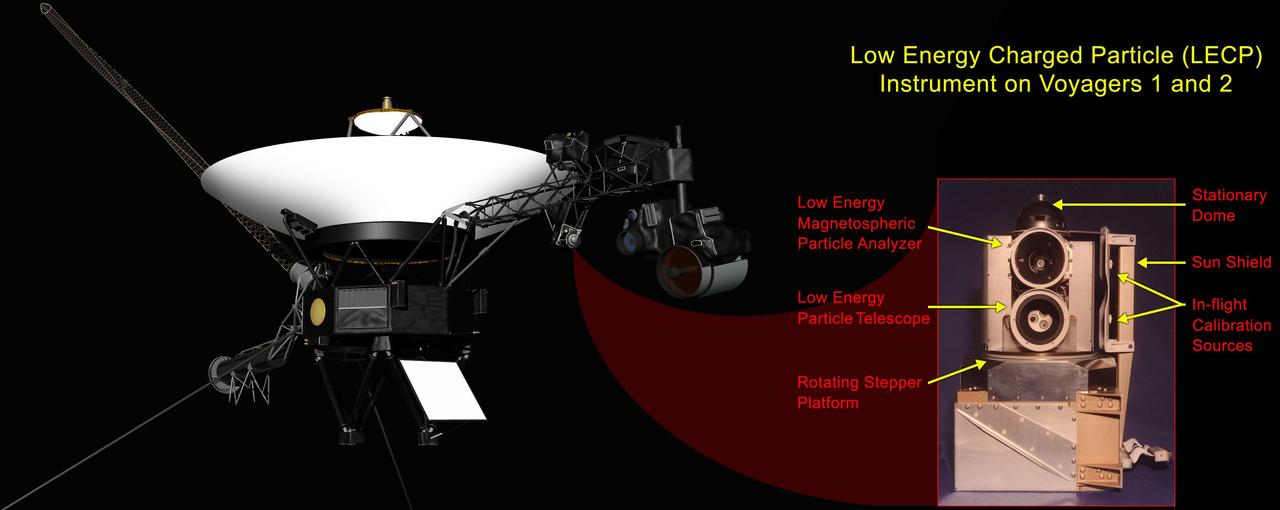
This graphic shows the NASA Voyager 1 spacecraft and the location of its low-energy charged particle instrument. A labeled close-up of the low-energy charged particle instrument appears as the inset image.
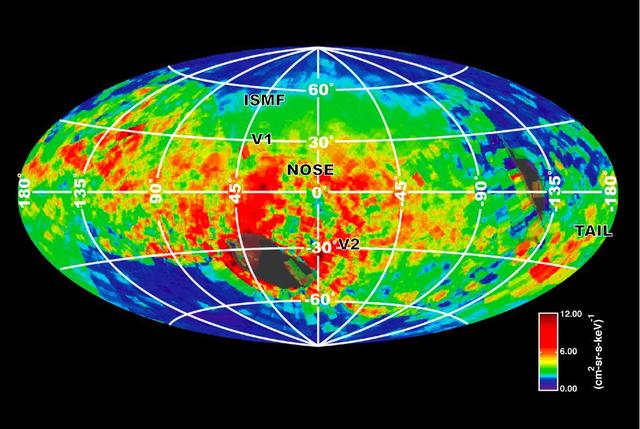
NASA Cassini spacecraft created this image of the bubble around our solar system based on emissions of particles known as energetic neutral atoms.
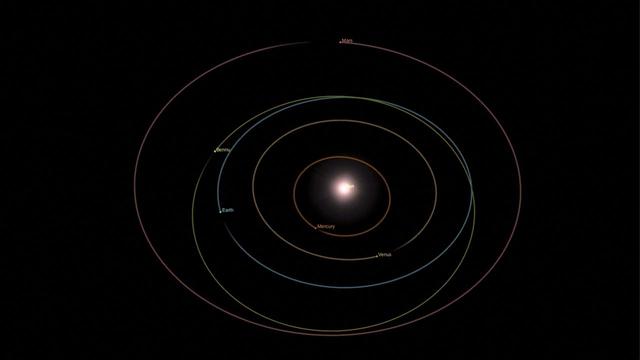
Using data collected by NASA's OSIRIS-REx mission, this animation shows the trajectories of rocky particles after being ejected from asteroid (101955) Bennu's surface. The animation emphasizes the four largest particle-ejection events detected at Bennu between December 2018 and September 2019. Additional particles not related to the ejections are also visible. Most of these pebble-size pieces of rock, typically measuring around a quarter inch (7 millimeters), were pulled back to Bennu under the asteroid's weak gravity after a short hop, sometimes even ricocheting back into space after colliding with the surface. Others remained in orbit for a few days and up to 16 revolutions. And some were ejected with enough force to completely escape from the Bennu environs. OSIRIS-REx — which stands for Origins, Spectral Interpretation, Resource Identification, and Security-Regolith Explorer — arrived at Bennu in December 2018. On Oct. 20, 2020, the mission will attempt to briefly touch down on the asteroid to scoop up material likely to include particles that were ejected before dropping back to the surface. If all goes as planned, the spacecraft will return to Earth in September 2023 with a cache of Bennu's particles for further study, including of which may even hold the physical clues as to what ejection mechanisms are at play. Movie available at https://photojournal.jpl.nasa.gov/catalog/PIA24101
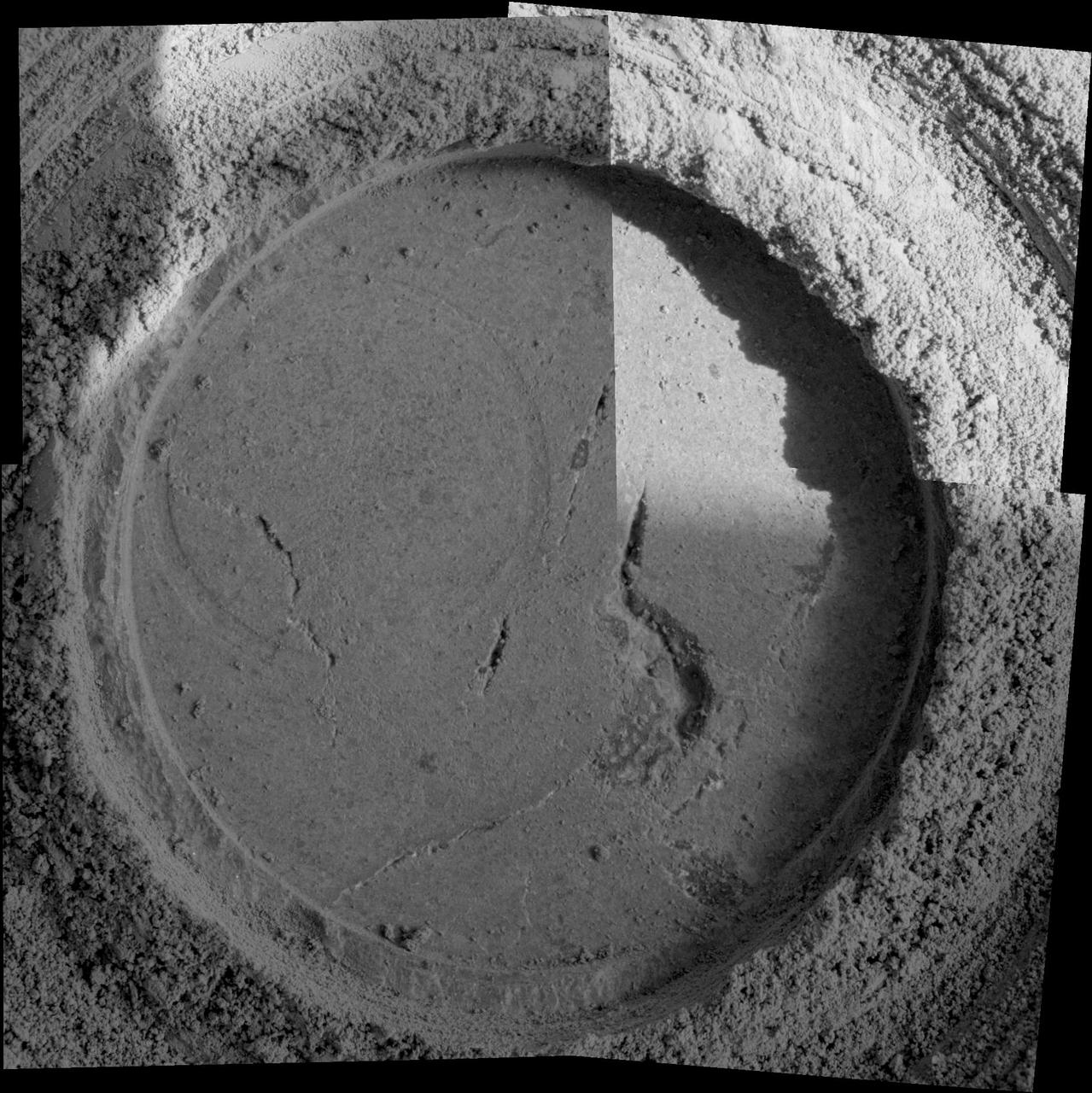
Close-up examination of a freshly exposed area of a rock called "Uchben" in the "Columbia Hills" of Mars reveals an assortment of particle shapes and sizes in the rock's makeup. NASA's Mars Exploration Rover Spirit used its microscopic imager during the rover's 286th martian day (Oct. 22, 2004) to take the frames assembled into this view. The view covers a circular hole ground into a target spot called "Koolik" on Uchben by the rover's rock abrasion tool. The circle is 4.5 centimeters (1.8 inches) in diameter. Particles in the rock vary in shape from angular to round, and range in size from about 0.5 millimeter (0.2 inch) to too small to be seen. This assortment suggests that the rock originated from particles that had not been transported much by wind or water, because such a transport process would likely have resulted in more sorting of the particles by size and shape. http://photojournal.jpl.nasa.gov/catalog/PIA07023
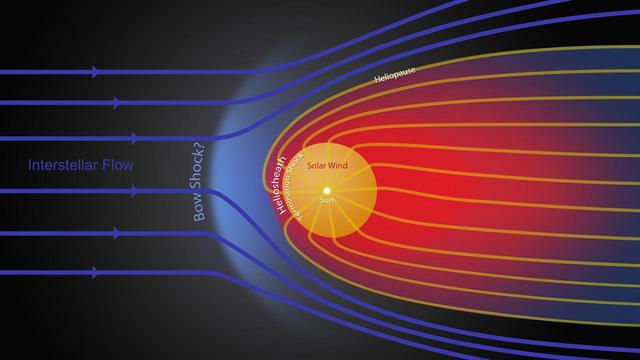
This graphic shows the different streams of charged particles inside the bubble around our sun and outside, in the unexplored territory of interstellar space. The heliosheath, where NASA two Voyager spacecraft are now traveling, is shown in red.
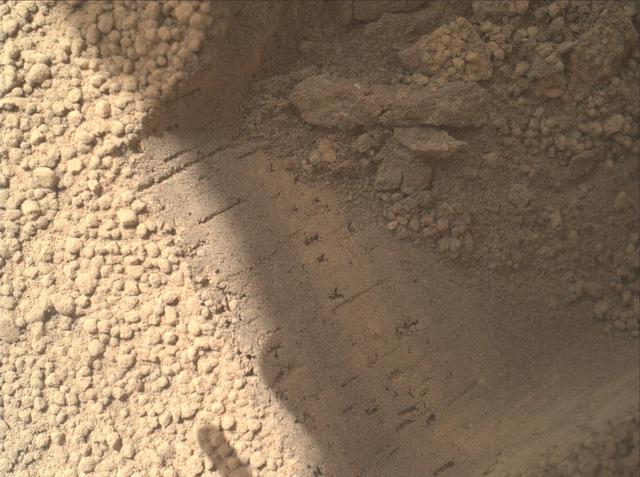
This image contributed to an interpretation by NASA Mars rover Curiosity science team that some of the bright particles on the ground near the rover are native Martian material.
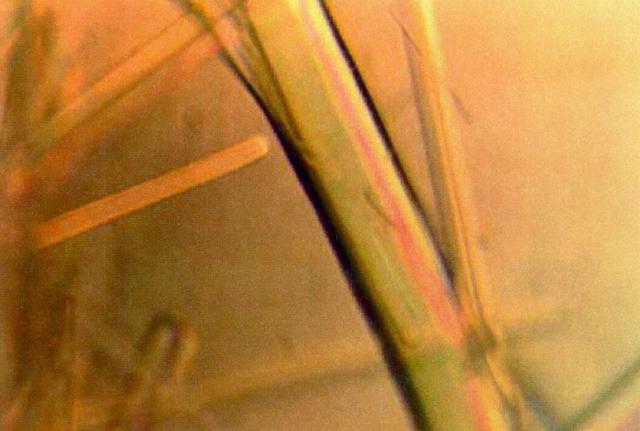
Nucleosome Core Particle grown on STS-81. The fundamental structural unit of chromatin and is the basis for organization within the genome by compaction of DNA within the nucleus of the cell and by making selected regions of chromosomes available for transcription and replication. Principal Investigator's are Dr. Dan Carter and Dr. Gerard Bunick of New Century Pharmaceuticals.
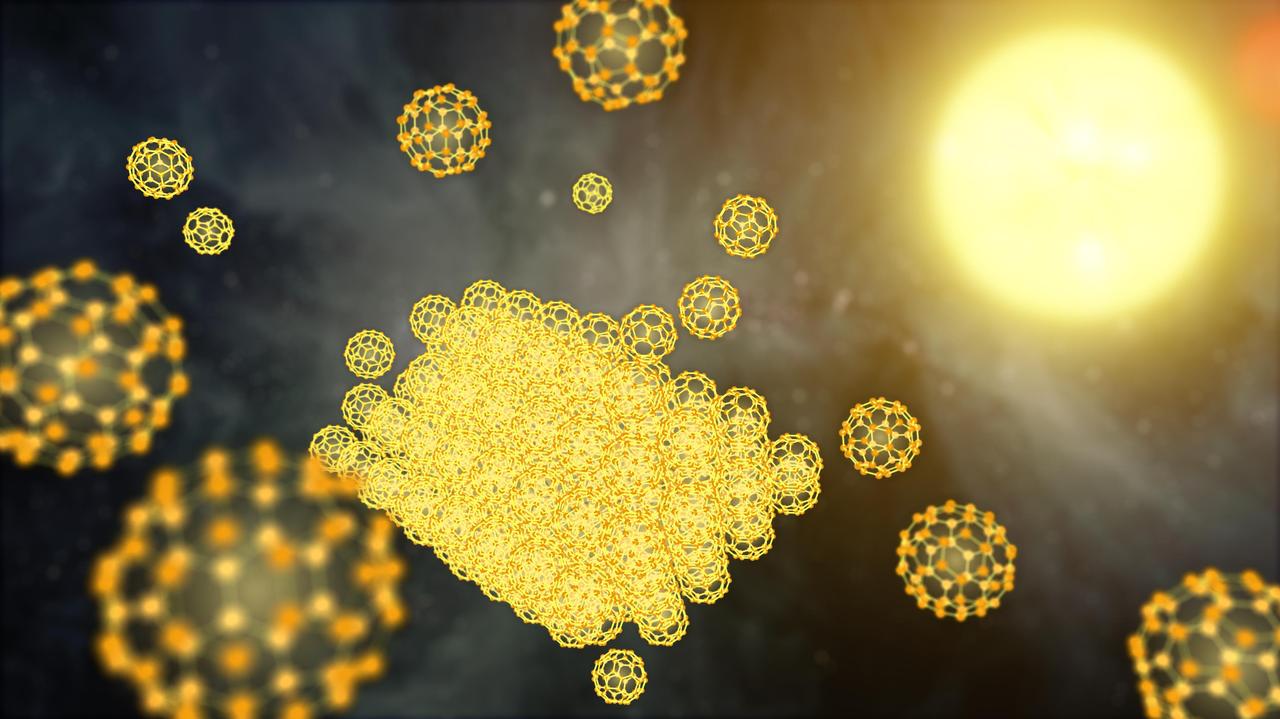
NASA Spitzer Space Telescope has detected the solid form of buckyballs in space for the first time. To form a solid particle, the buckyballs must stack together, as illustrated in this artist concept showing the very beginnings of the process.
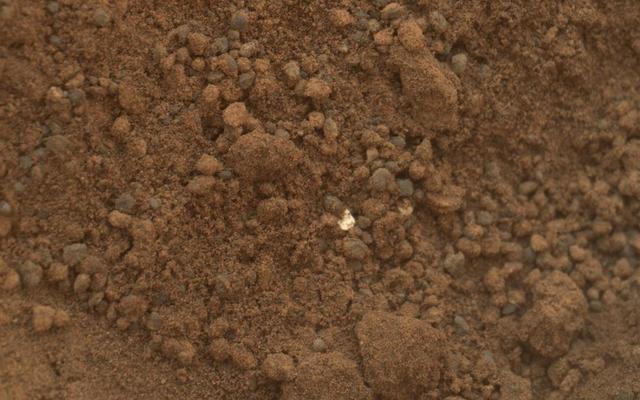
The mission science team assessed the bright particles in this scooped pit to be native Martian material rather than spacecraft debris as seen in this image from NASA Mars rover Curiosity as it collected its second scoop of Martian soil.
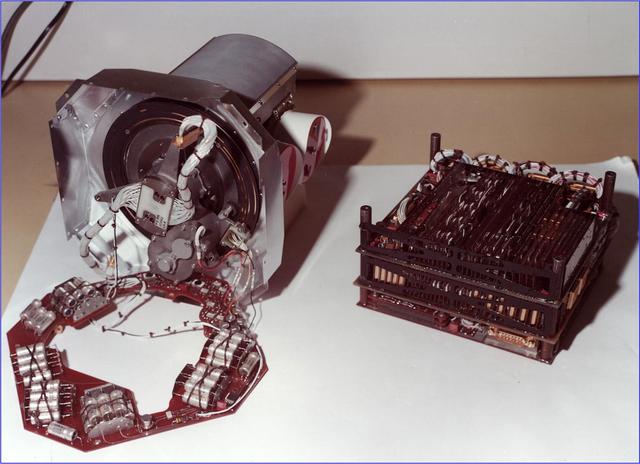
This image shows the low-energy charged particle instrument before it was installed on one of NASA Voyager spacecraft in 1977. The instrument includes a stepper motor that turns the platform on which the sensors are mounted.
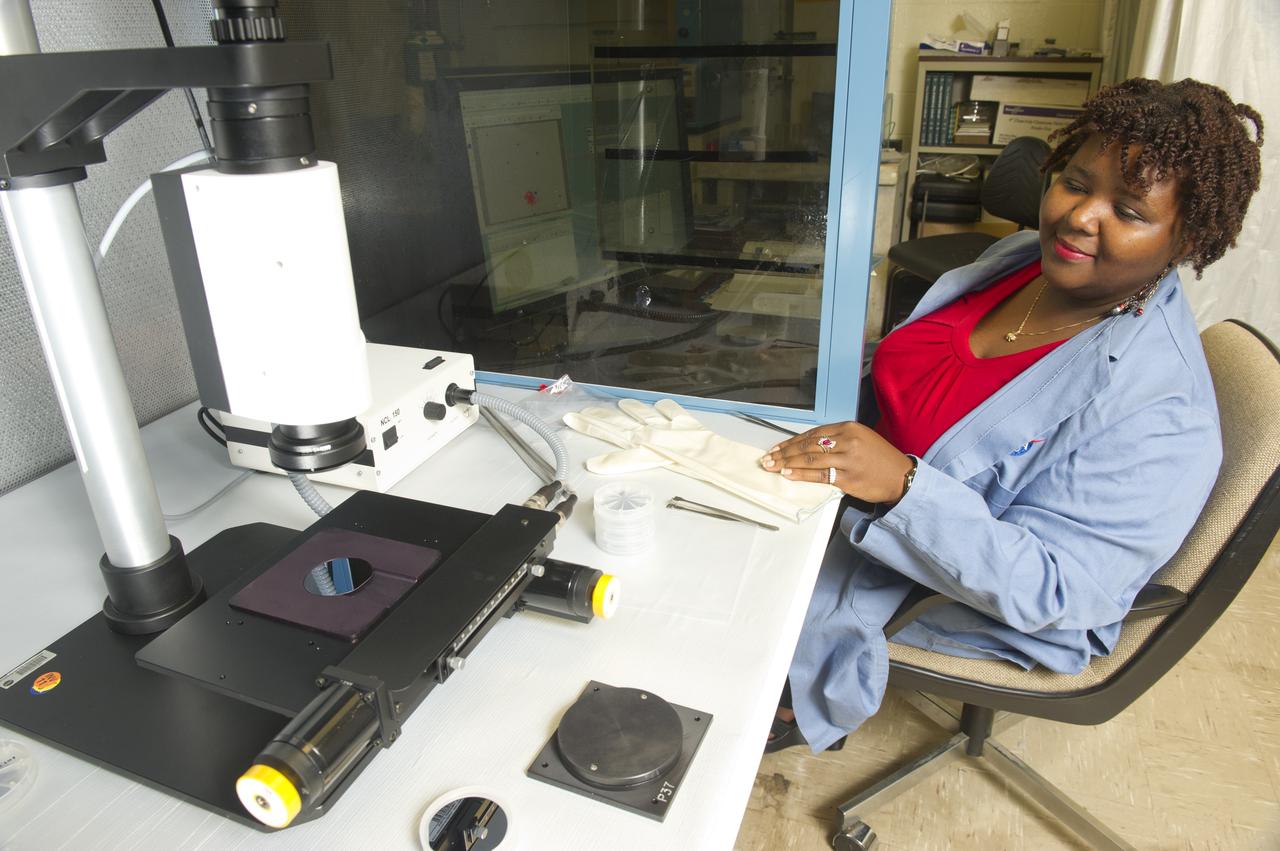
LAQUIETA HUEY WITH IMAGE ANALYSIS SYSTEM FOR AUTOMATED PARTICLE COUNTING.
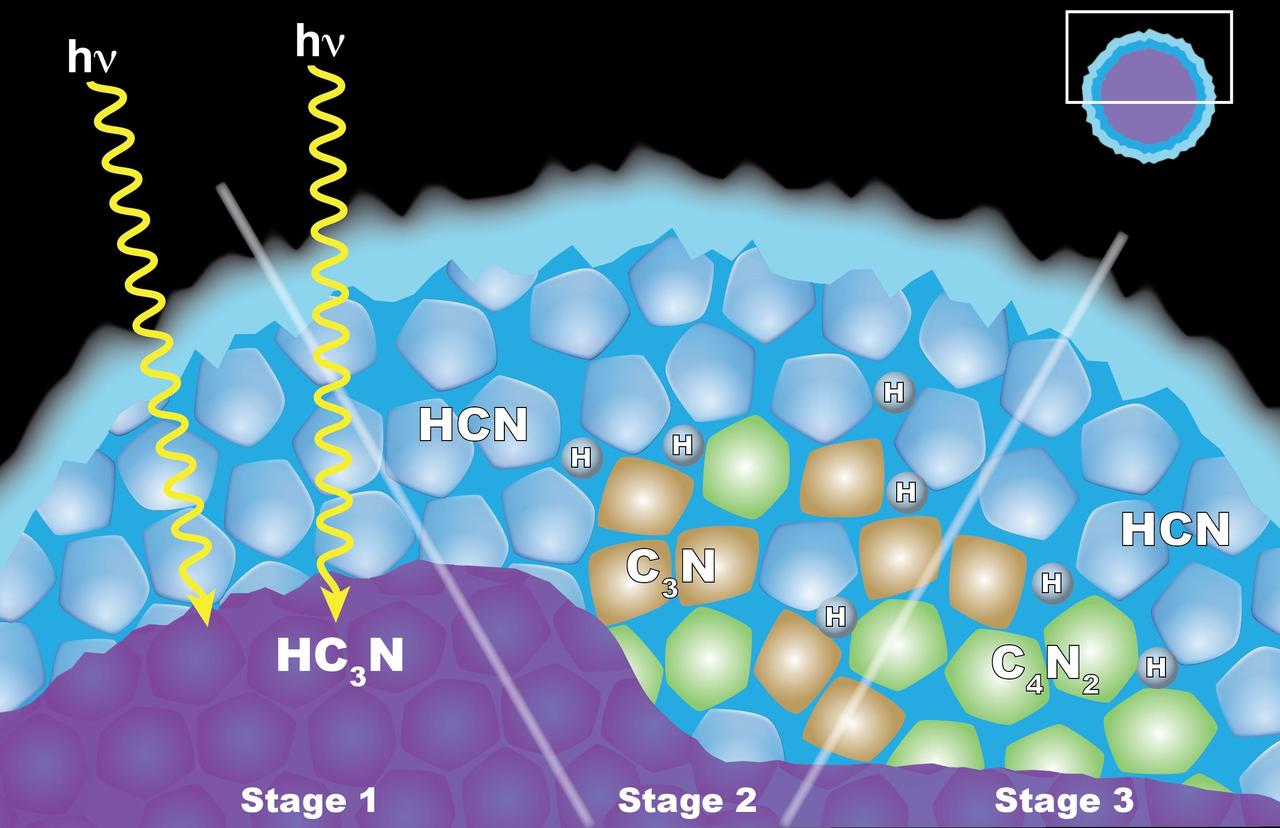
Scientists from NASA's Cassini mission suggested in a 2016 paper that the appearance of a cloud of dicyanoacetylene (C4N2) ice in Titan's stratosphere may be explained by "solid-state" chemistry taking place inside ice particles. The particles have an inner layer of cyanoacetylene (HC3N) ice coated with an outer layer of hydrogen cyanide (HCN) ice. Left: When a photon of light penetrates the outer shell, it can interact with the HC3N, producing C3N and H. Center: The C3N then reacts with HCN to yield C4N2 and H (shown at right). Another reaction that also yields C4N2 ice and H also is possible, but the researchers think it is less likely. http://photojournal.jpl.nasa.gov/catalog/PIA20715
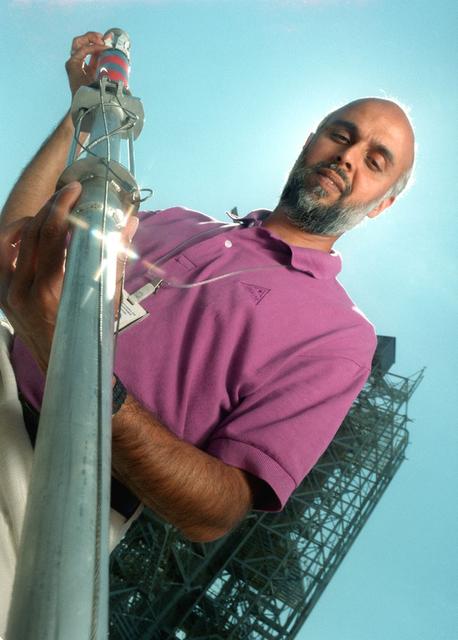
The dart and associated launching system was developed by engineers at MSFC to collect a sample of the aluminum oxide particles during the static fire testing of the Shuttle's solid rocket motor. The dart is launched through the exhaust and recovered post test. The particles are collected on sticky copper tapes affixed to a cylindrical shaft in the dart. A protective sleeve draws over the tape after the sample is collected to prevent contamination. The sample is analyzed under a scarning electron microscope under high magnification and a particle size distribution is determined. This size distribution is input into the analytical model to predict the radiative heating rates from the motor exhaust. Good prediction models are essential to optimizing the development of the thermal protection system for the Shuttle.
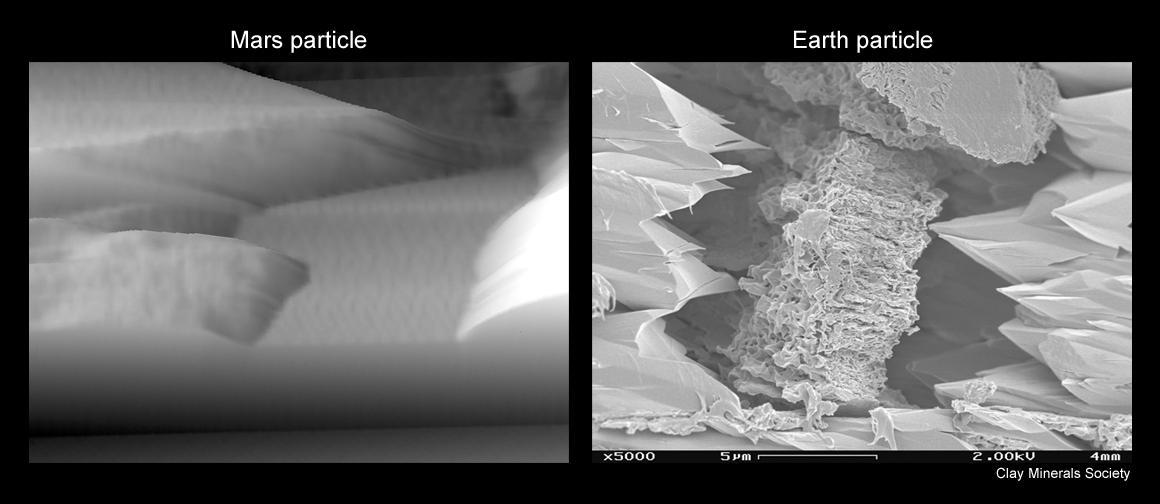
Mars Particle and Terrestrial Soil, Compared Microscopically
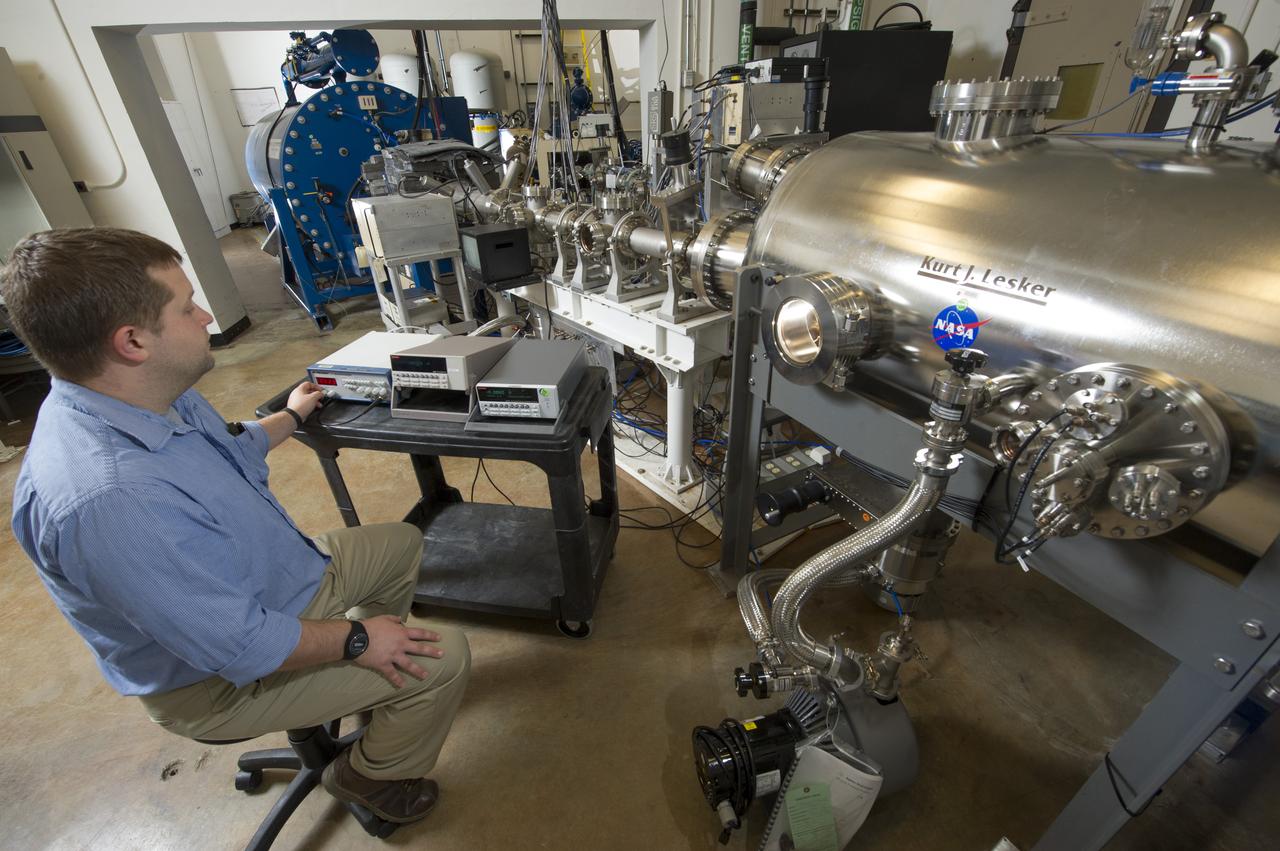
COMBINED ENVIRONMENTAL EFFECTS FACILITY (PELLETRON PARTICLE ACCELERATOR FOR RADIATION EXPOSURES) BRANDON PHILLIPS

COMBINED ENVIRONMENTAL EFFECTS FACILITY (PELLETRON PARTICLE ACCELERATOR FOR RADIATION EXPOSURES) PHYLLIS WHITTLESEY
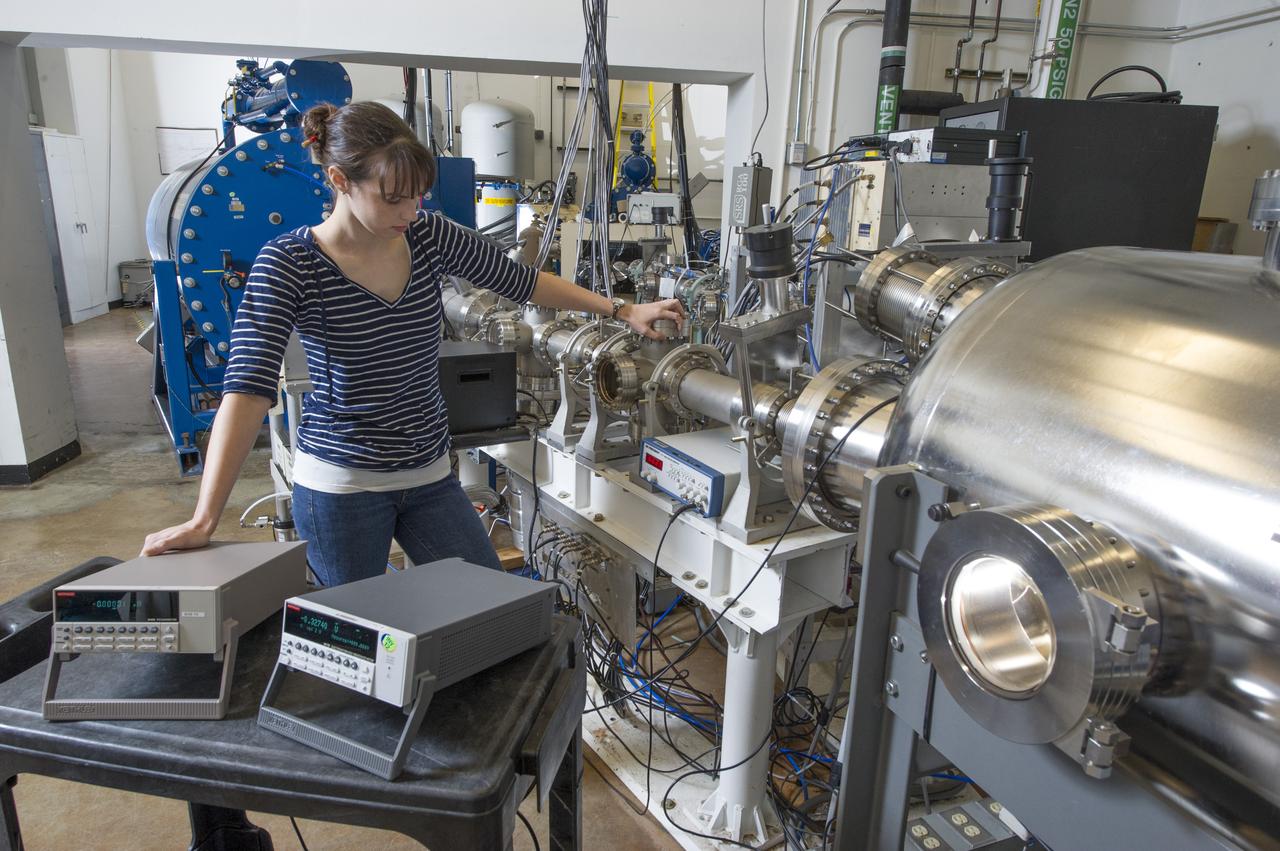
COMBINED ENVIRONMENTAL EFFECTS FACILITY (PELLETRON PARTICLE ACCELERATOR FOR RADIATION EXPOSURES) PHYLLIS WHITTLESEY
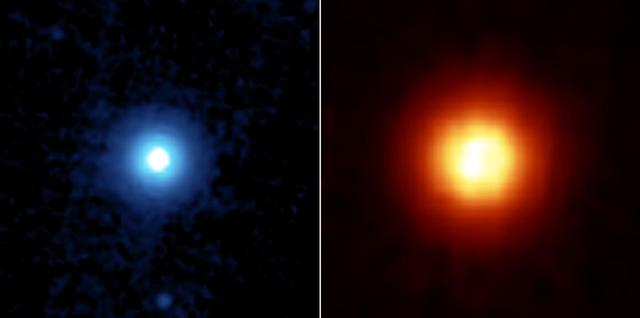
NASA's Spitzer Space Telescope recently captured these images of the star Vega, located 25 light years away in the constellation Lyra. Spitzer was able to detect the heat radiation from the cloud of dust around the star and found that the debris disc is much larger than previously thought. This side by side comparison, taken by Spitzer's multiband imaging photometer, shows the warm infrared glows from dust particles orbiting the star at wavelengths of 24 microns (figure 2 in blue) and 70 microns (figure 3 in red). Both images show a very large, circular and smooth debris disc. The disc radius extends to at least 815 astronomical units. (One astronomical unit is the distance from Earth to the Sun, which is 150-million kilometers or 93-million miles). Scientists compared the surface brightness of the disc in the infrared wavelengths to determine the temperature distribution of the disc and then infer the corresponding particle size in the disc. Most of the particles in the disc are only a few microns in size, or 100 times smaller than a grain of Earth sand. These fine dust particles originate from collisions of embryonic planets near the star at a radius of approximately 90 astronomical units, and are then blown away by Vega's intense radiation. The mass and short lifetime of these small particles indicate that the disc detected by Spitzer is the aftermath of a large and relatively recent collision, involving bodies perhaps as big as the planet Pluto. The images are 3 arcminutes on each side. North is oriented upward and east is to the left. http://photojournal.jpl.nasa.gov/catalog/PIA07218
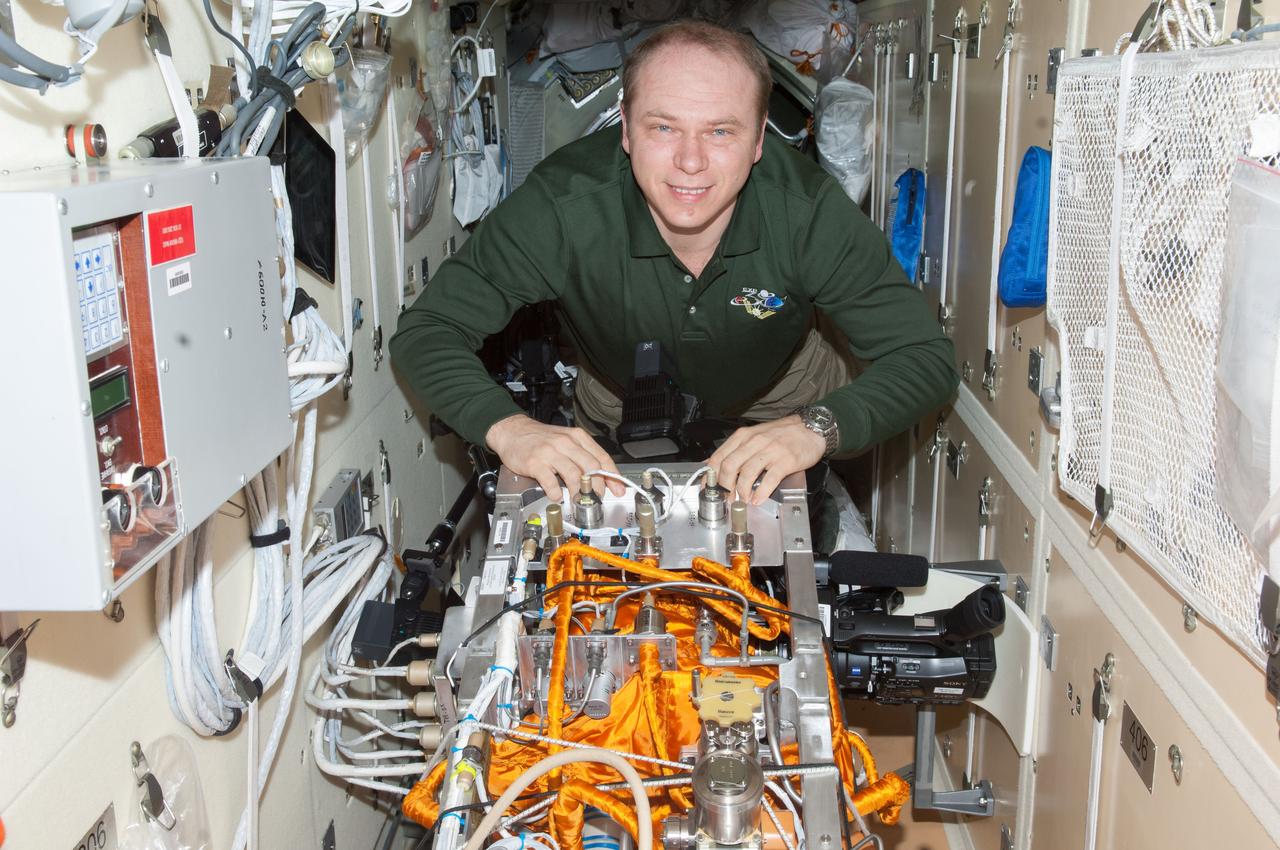
ISS038-E-029764 (13 Jan. 2014) --- Russian cosmonaut Oleg Kotov, Expedition 38 commander, sets up the Particle Cooler/Generator Module for the Kaplya-2 experiment in the Rassvet Mini-Research Module 1 (MRM1) of the International Space Station.
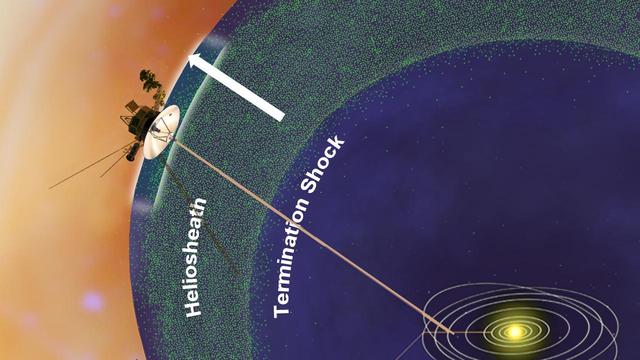
This artist concept shows NASA Voyager 1 spacecraft in a new region at the edge of our solar system where there are fewer low energy particles that originate from inside our solar system.
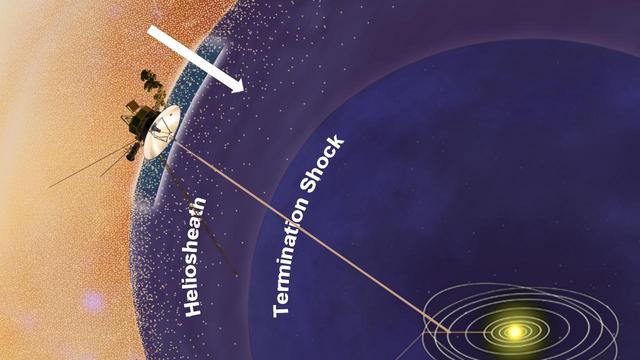
This artist concept shows NASA Voyager 1 spacecraft in a new region at the edge of our solar system where the amount of high-energy particles diffusing into our solar system from outside has increased.
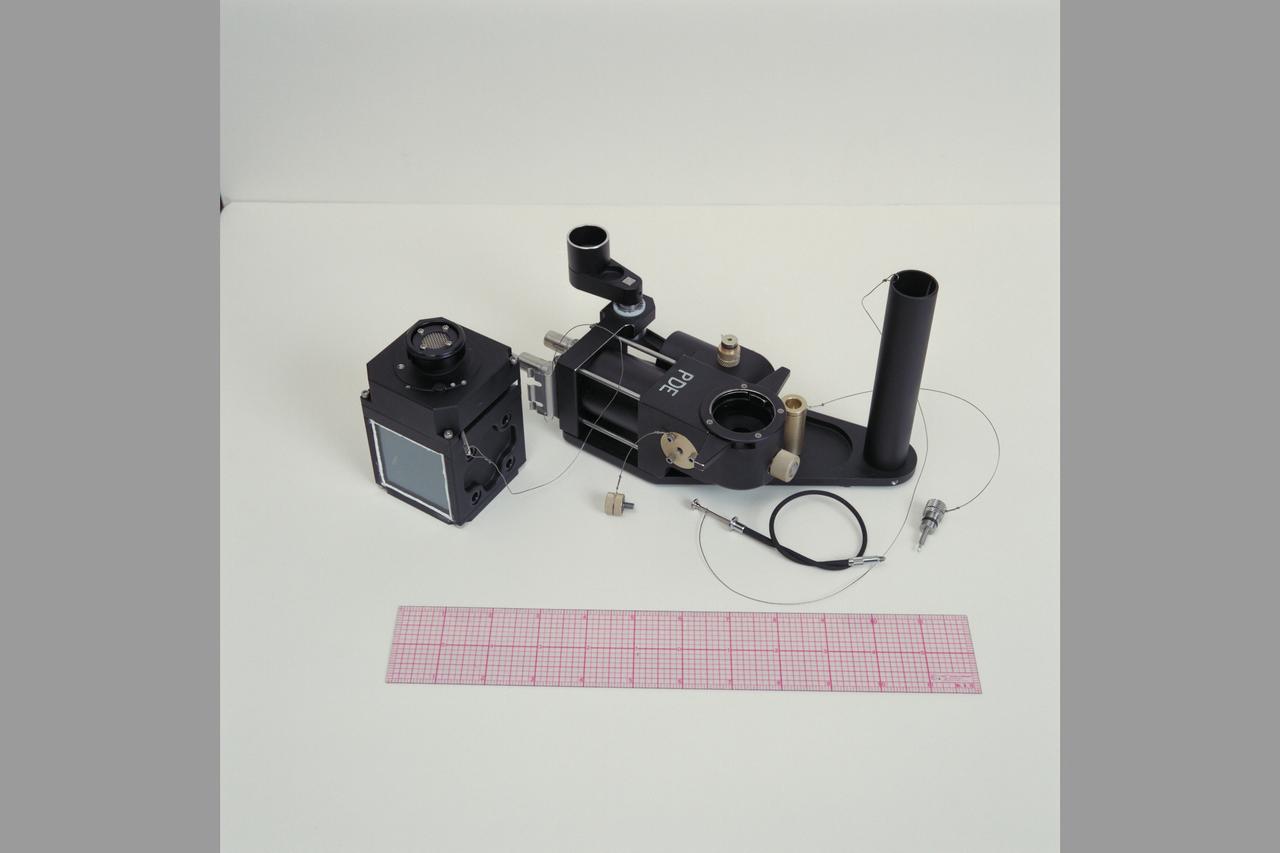
SSE (Solar System Exploration) flight apparatus: PDE (Particle Dispersion Experiement) on-board USML-1 (GEM)
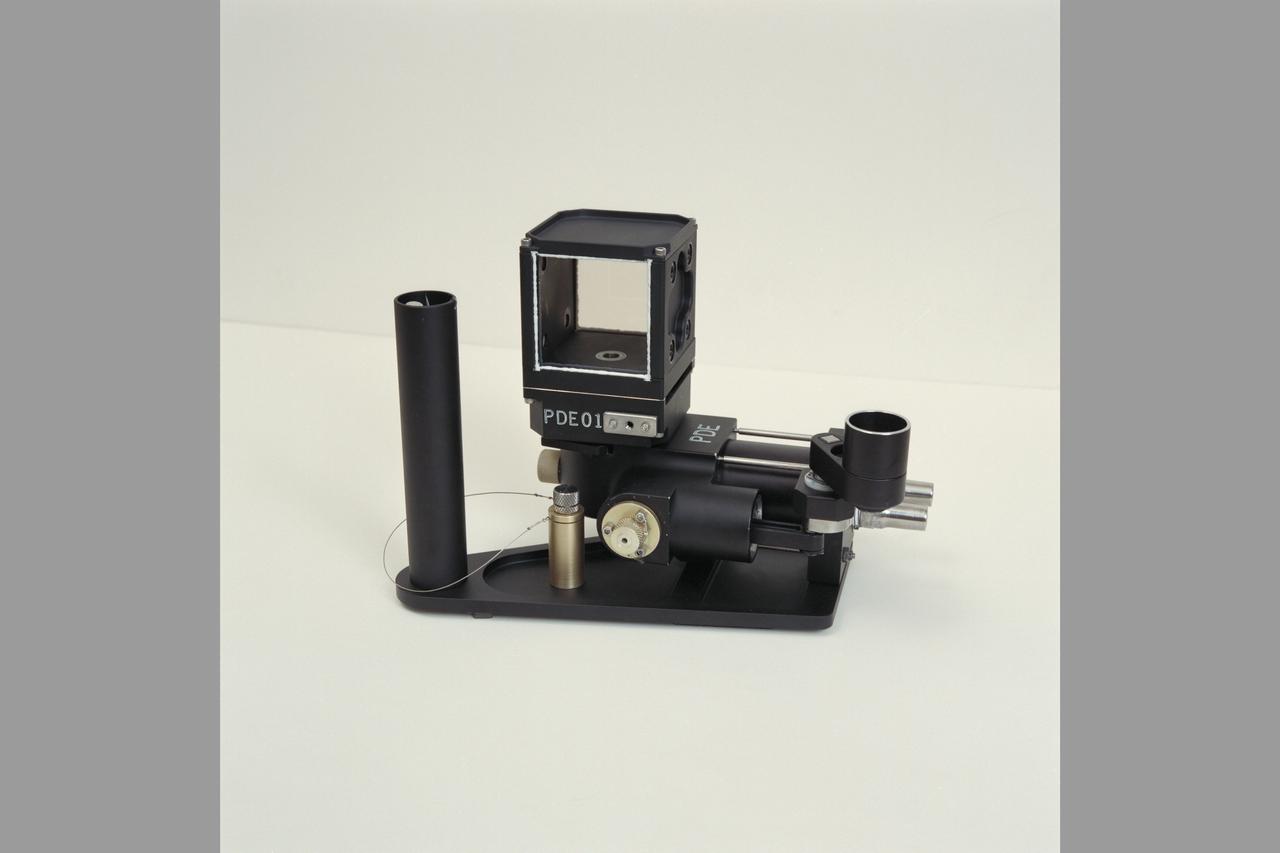
SSE (Solar System Exploration) flight apparatus: PDE (Particle Dispersion Experiement) on-board USML-1 (GEM)
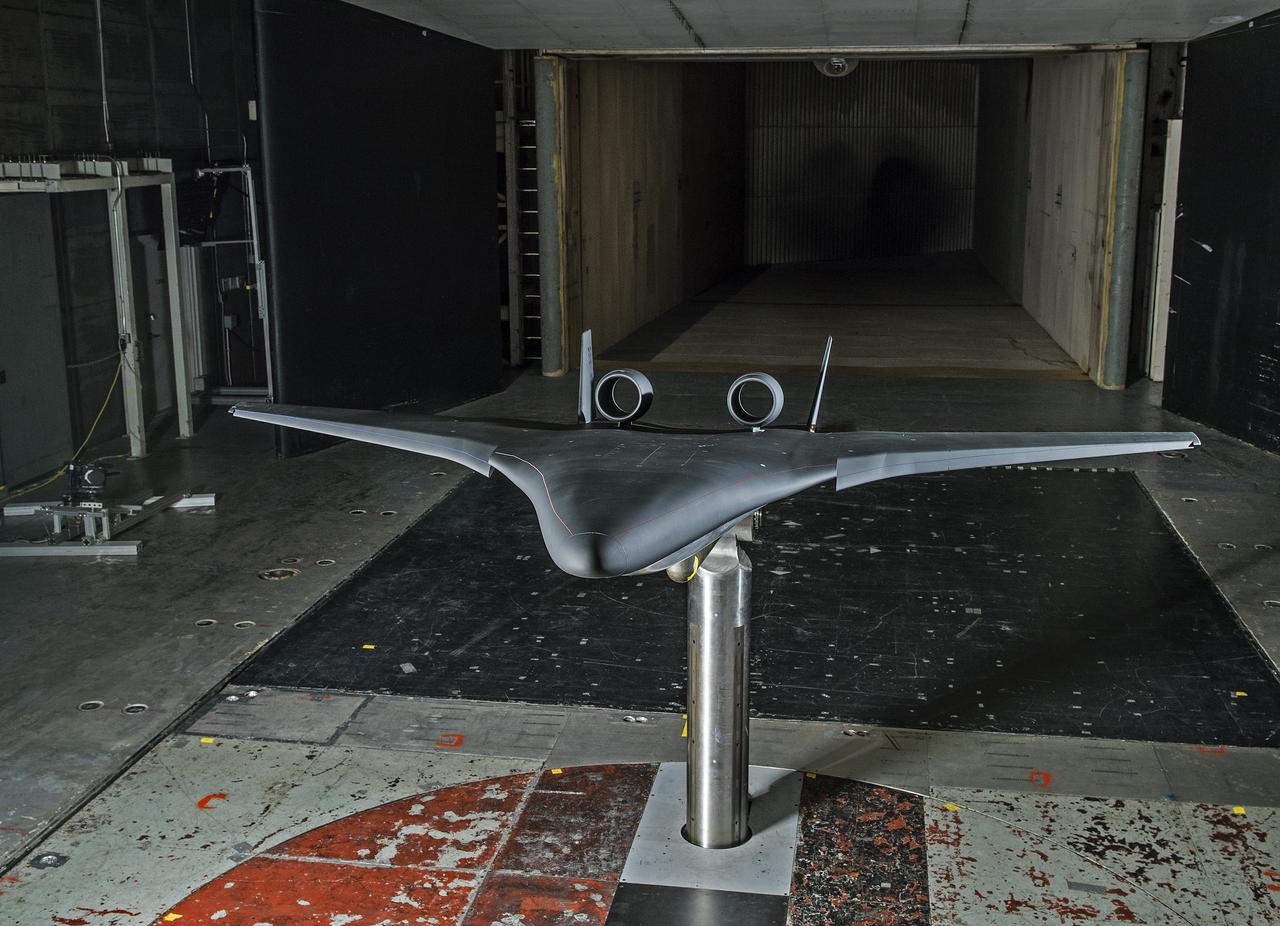
Hybrid Wing Body Particle Image Velocimetry Test in LaRC 14x22 Foot Tunnel: PIV measurement of HWB-N2A model in Langley 14x22 Foot Tunnel
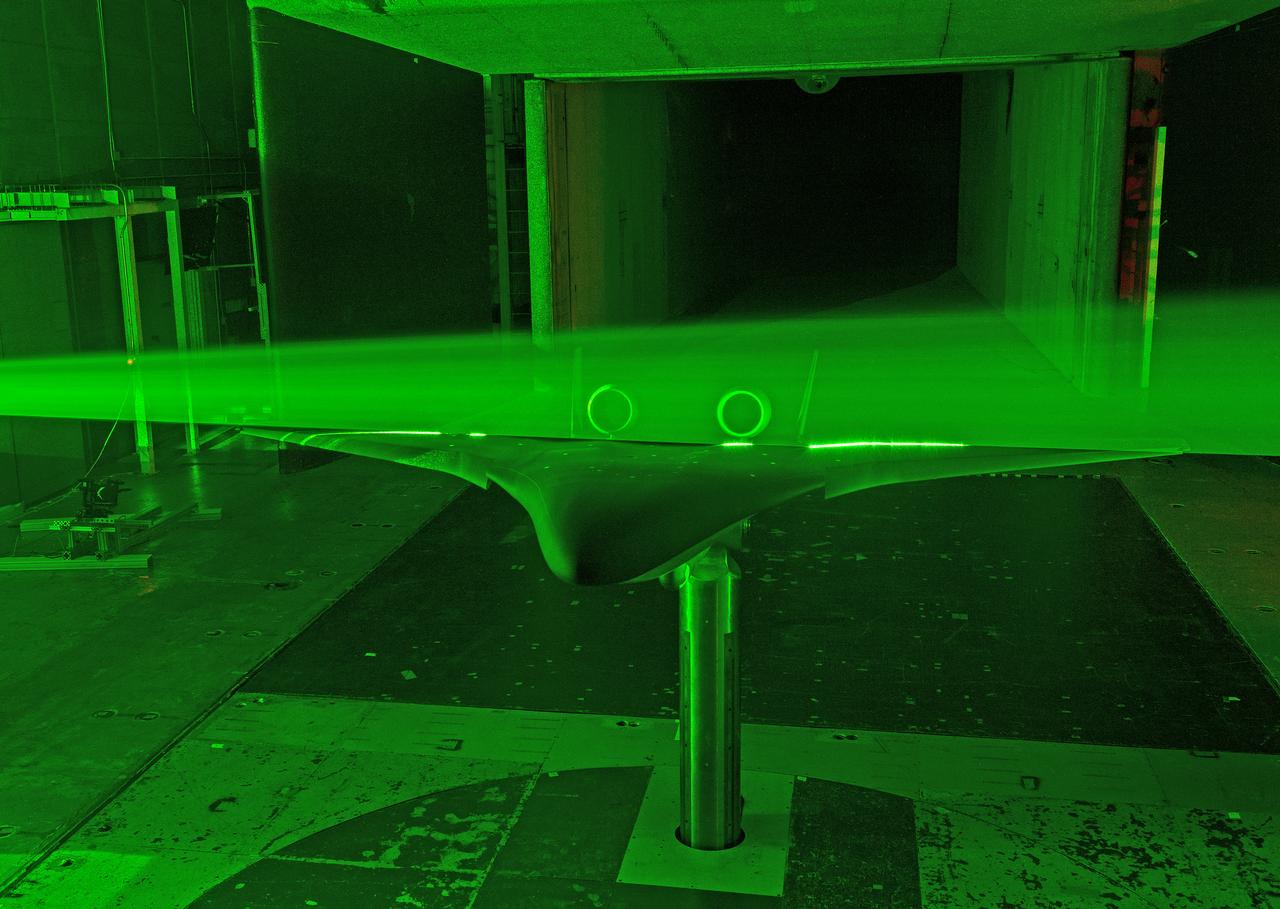
Hybrid Wing Body Particle Image Velocimetry Test in LaRC 14x22 Foot Tunnel: PIV measurement of HWB-N2A model in Langley 14x22 Foot Tunnel
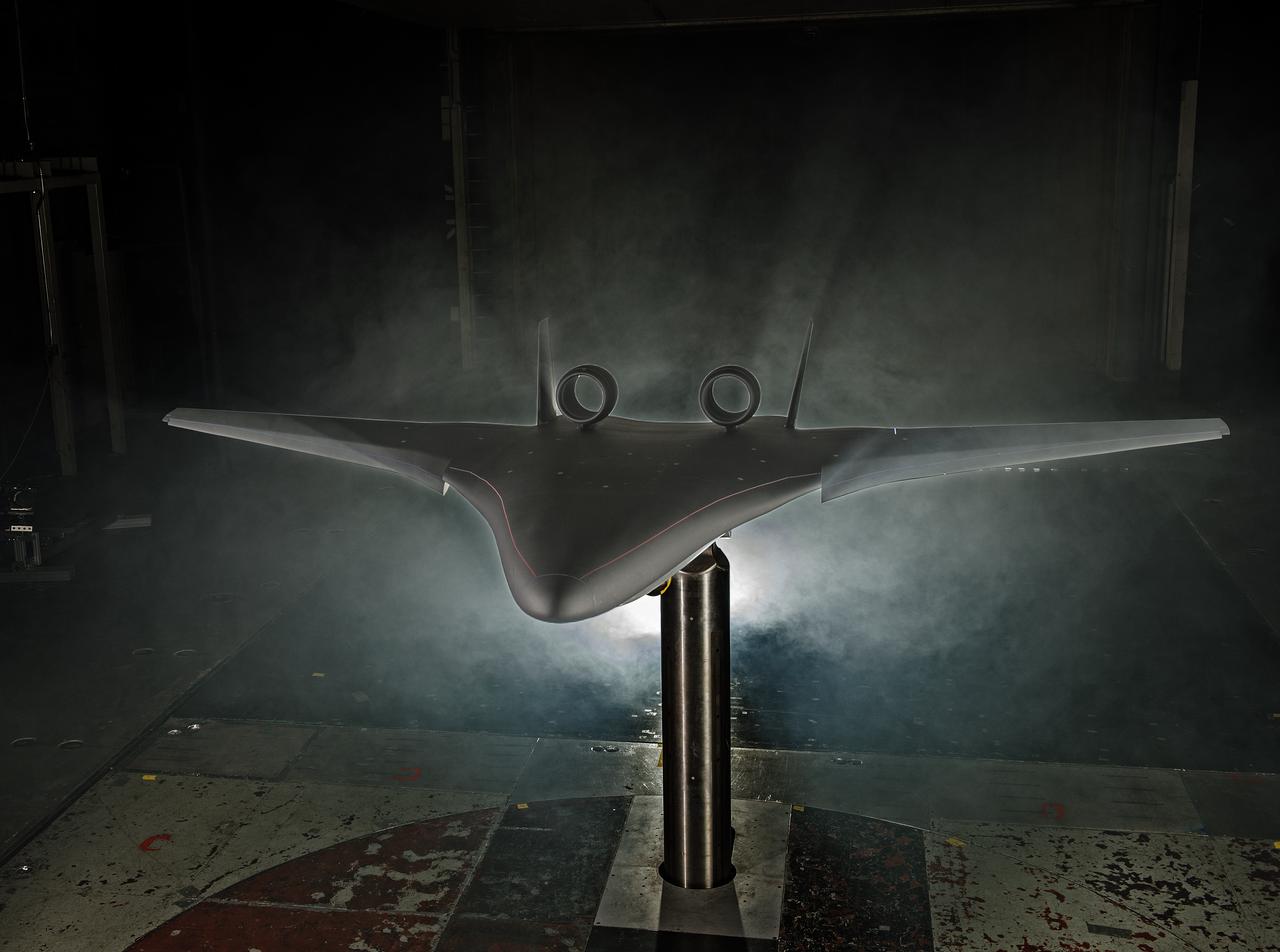
Hybrid Wing Body Particle Image Velocimetry Test in LaRC 14x22 Foot Tunnel: PIV measurement of HWB-N2A model in Langley 14x22 Foot Tunnel
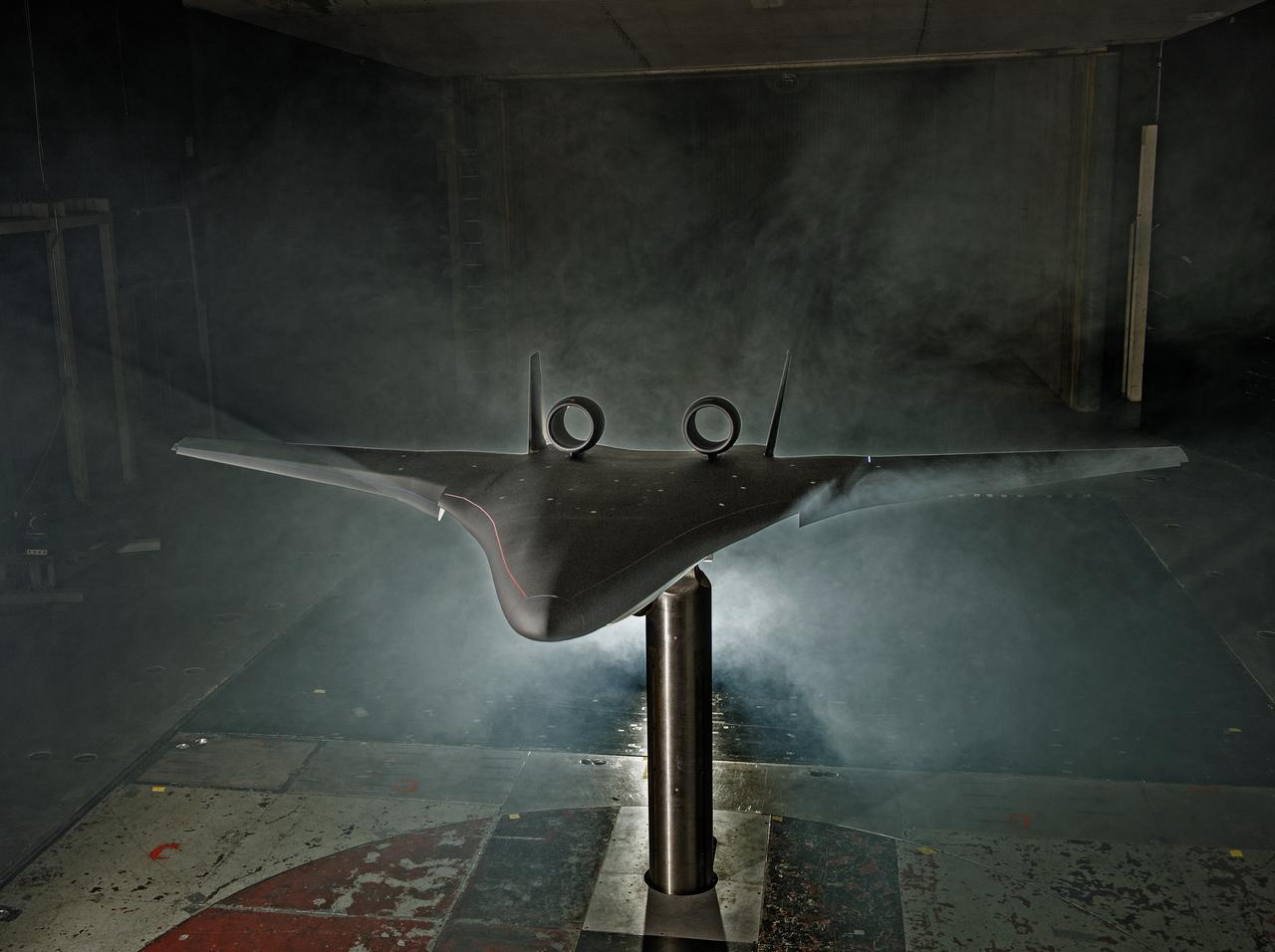
Hybrid Wing Body Particle Image Velocimetry Test in LaRC 14x22 Foot Tunnel: PIV measurement of HWB-N2A model in Langley 14x22 Foot Tunnel
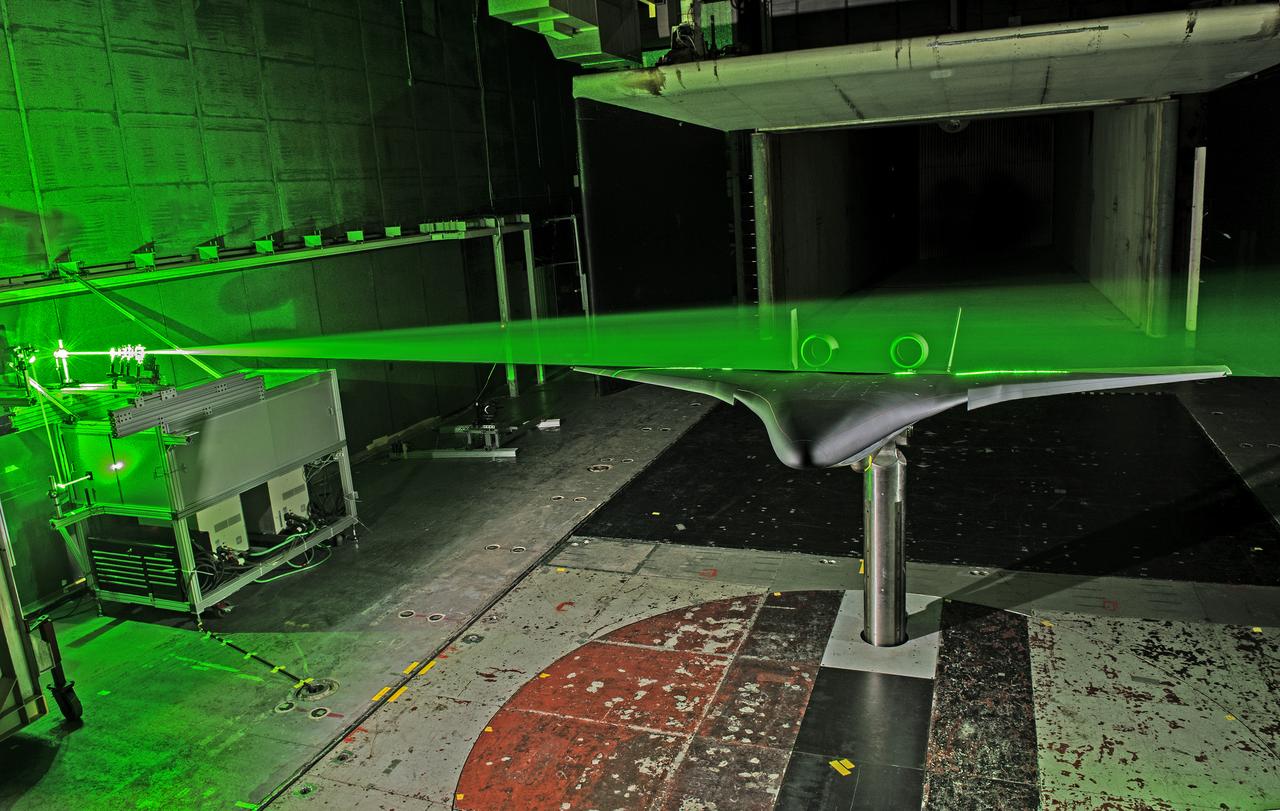
Hybrid Wing Body Particle Image Velocimetry Test in LaRC 14x22 Foot Tunnel: PIV measurement of HWB-N2A model in Langley 14x22 Foot Tunnel
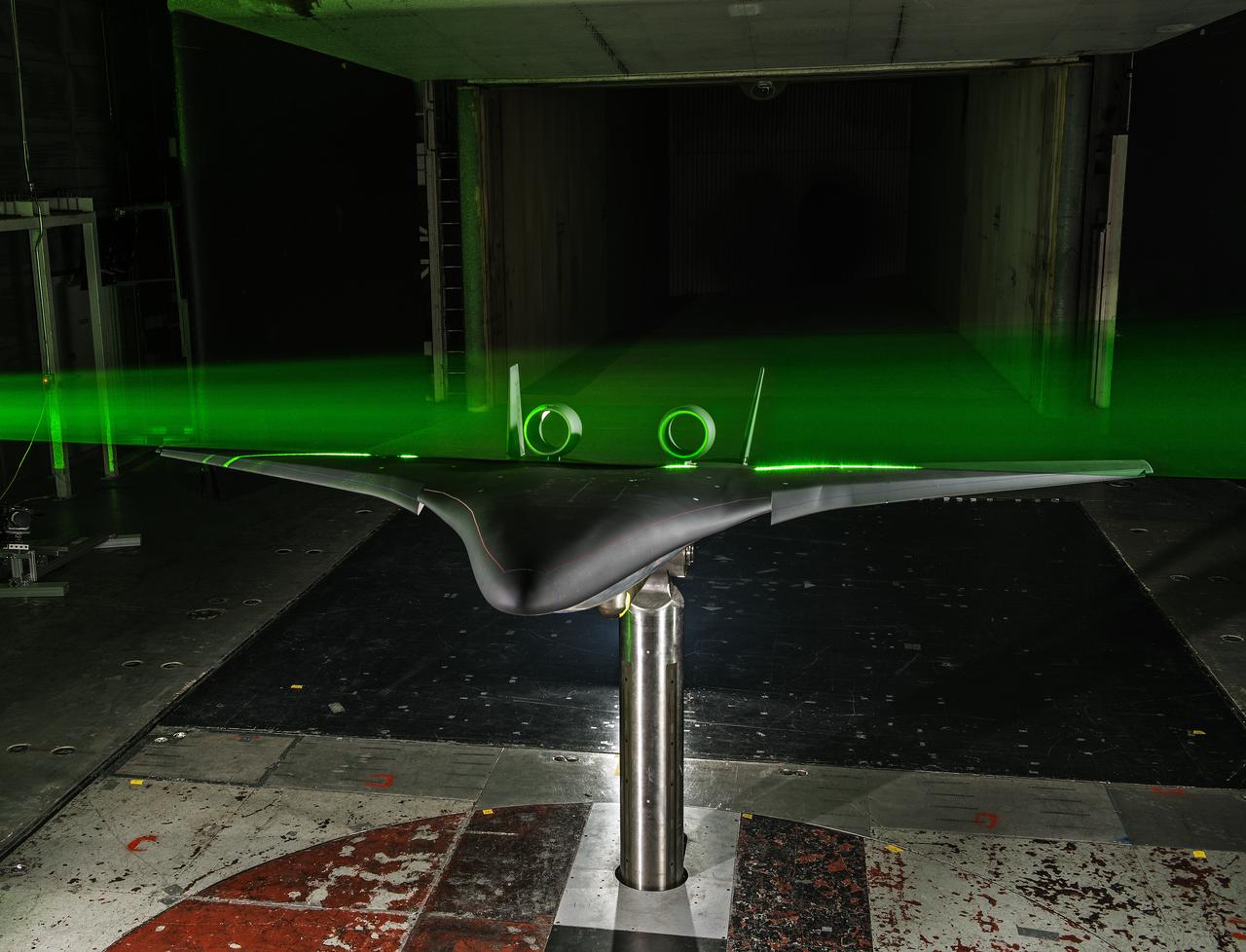
Hybrid Wing Body Particle Image Velocimetry Test in LaRC 14x22 Foot Tunnel: PIV measurement of HWB-N2A model in Langley 14x22 Foot Tunnel
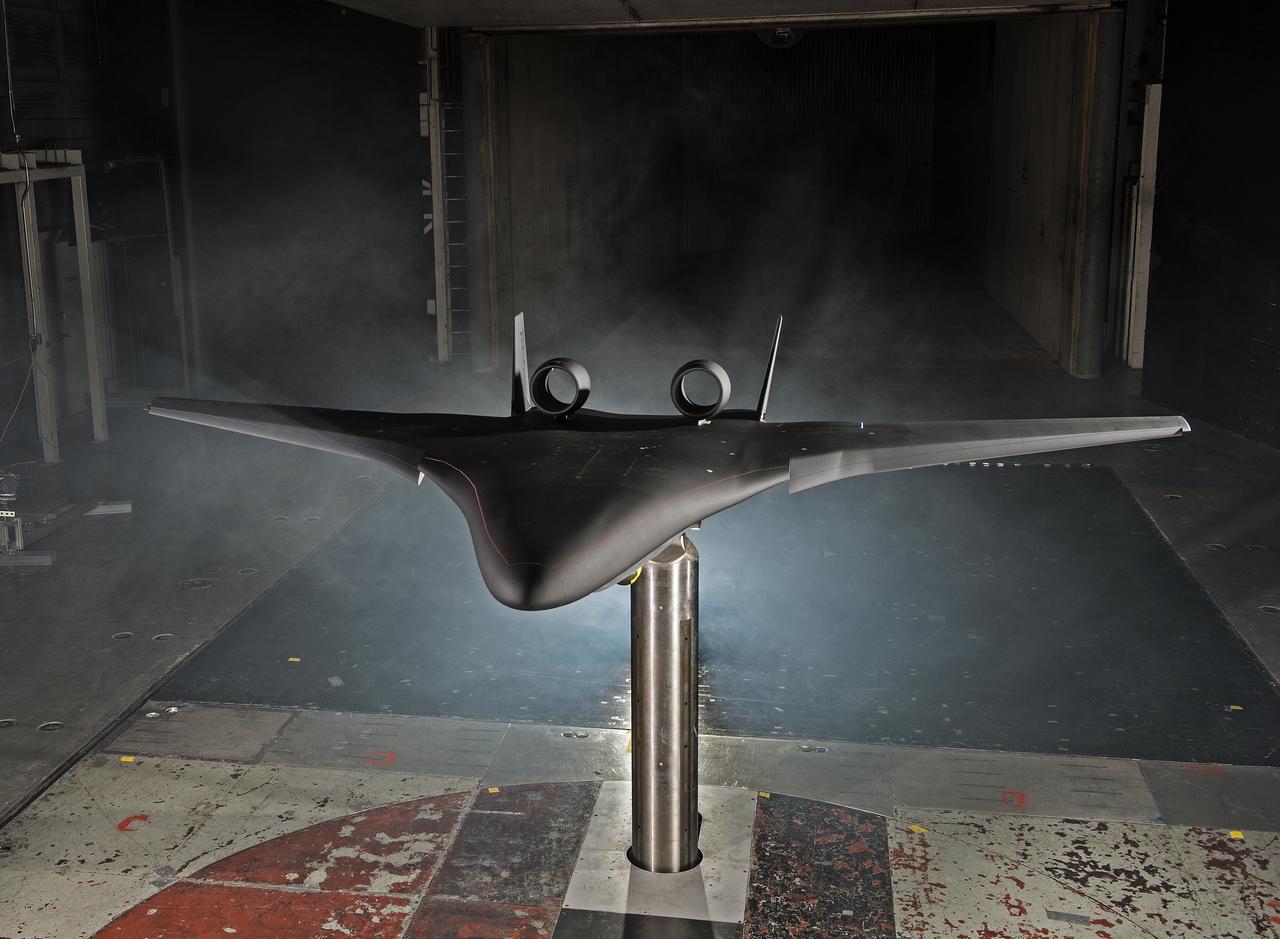
Hybrid Wing Body Particle Image Velocimetry Test in LaRC 14x22 Foot Tunnel: PIV measurement of HWB-N2A model in Langley 14x22 Foot Tunnel
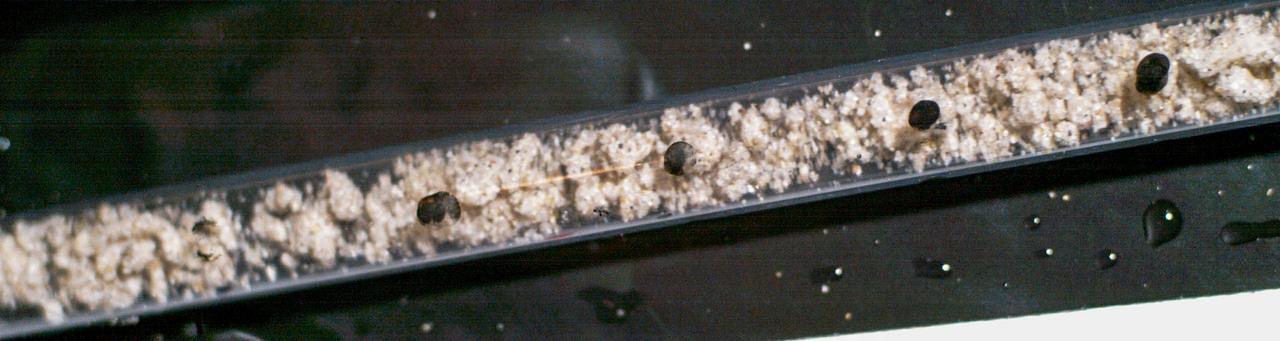
jsc2022e072960 (9/16/2022) --- Front view of flow of mixture of hydrophobic medium sand particles, water, and air. After mixing hydrophobic medium sand particles with water and air, researchers flow the mixture through the pipe. Both agglomerates and excess free sand particles are visible. Researchers also observe the segregation phenomenon during the flow of this particular mixture. Agglomerates do not occupy the pipe uniformly and do not always flow at the same speed. Catastrophic Post-Wildfire Mudflows studies the formation and stability of this bubble-sand structure in microgravity. A better understanding of these phenomena could improve the understanding, modeling, and predicting of mudflows and support development of innovative solutions to prevent catastrophic post-fire events. Image courtesy of the UCSD Geo-Micromechanics Research Group.
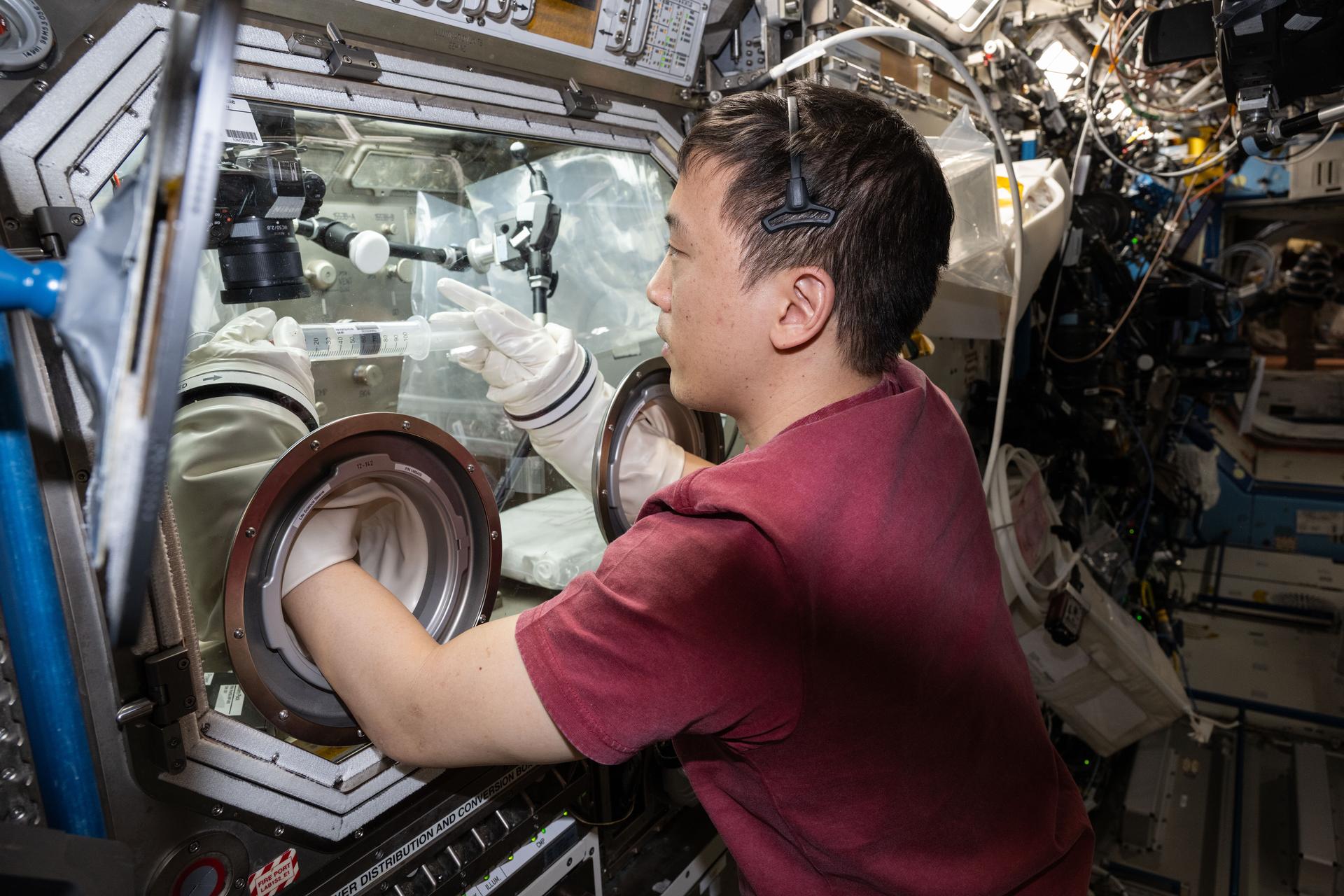
iss073e0917782 (Oct. 23, 2025) --- NASA astronaut and Expedition 73 Flight Engineer Jonny Kim conducts research operations for the Fluid Particles investigation inside the Microgravity Science Glovebox aboard the International Space Station's Destiny laboratory module. The fluid physics experiment may help researchers understand how particles in a liquid interface come together to form larger structures or clusters in microgravity advancing fire suppression, lunar dust control, and plant growth in space. Earth benefits may include insights into pollen behavior, algae blooms, plastic pollution, and sea salt transfer during storms.
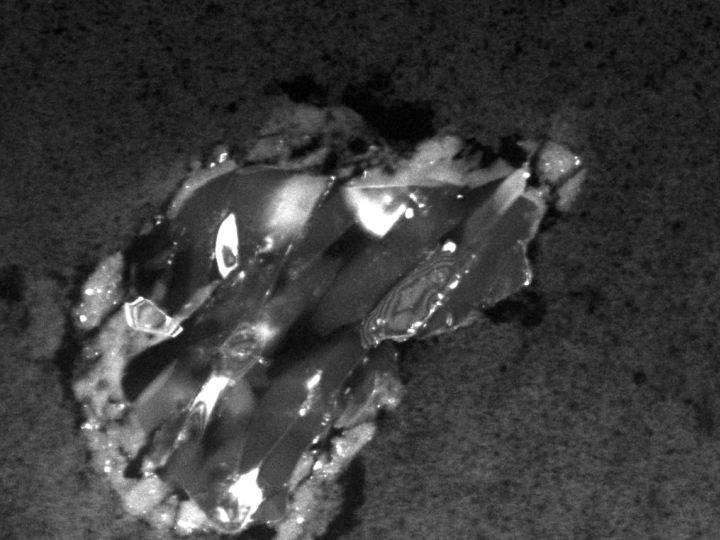
This image shows a comet particle collected by NASA’s Stardust spacecraft. The particle is made up of the silicate mineral forsterite, also known as peridot in its gem form.
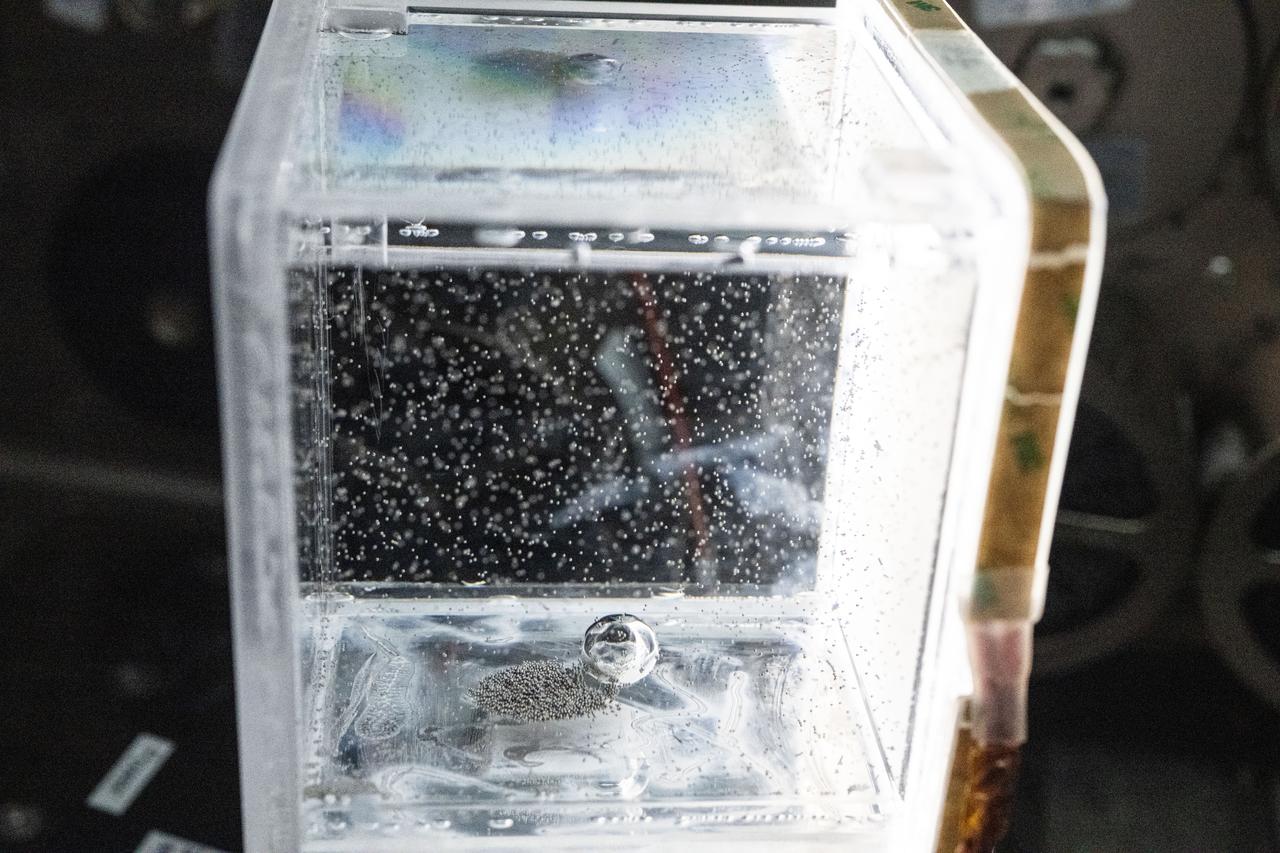
iss073e0917376 (Oct. 20, 2025) --- Tiny ball bearings surround a larger central bearing during the Fluid Particles experiment, conducted inside the Microgravity Science Glovebox (MSG) aboard the International Space Station’s Destiny laboratory module. A bulk container installed in the MSG, filled with viscous fluid and embedded particles, is subjected to oscillating frequencies to observe how the particles cluster and form larger structures in microgravity. Insights from this research may advance fire suppression, lunar dust mitigation, and plant growth in space. On Earth, the findings could inform our understanding of pollen dispersion, algae blooms, plastic pollution, and sea salt transport during storms.
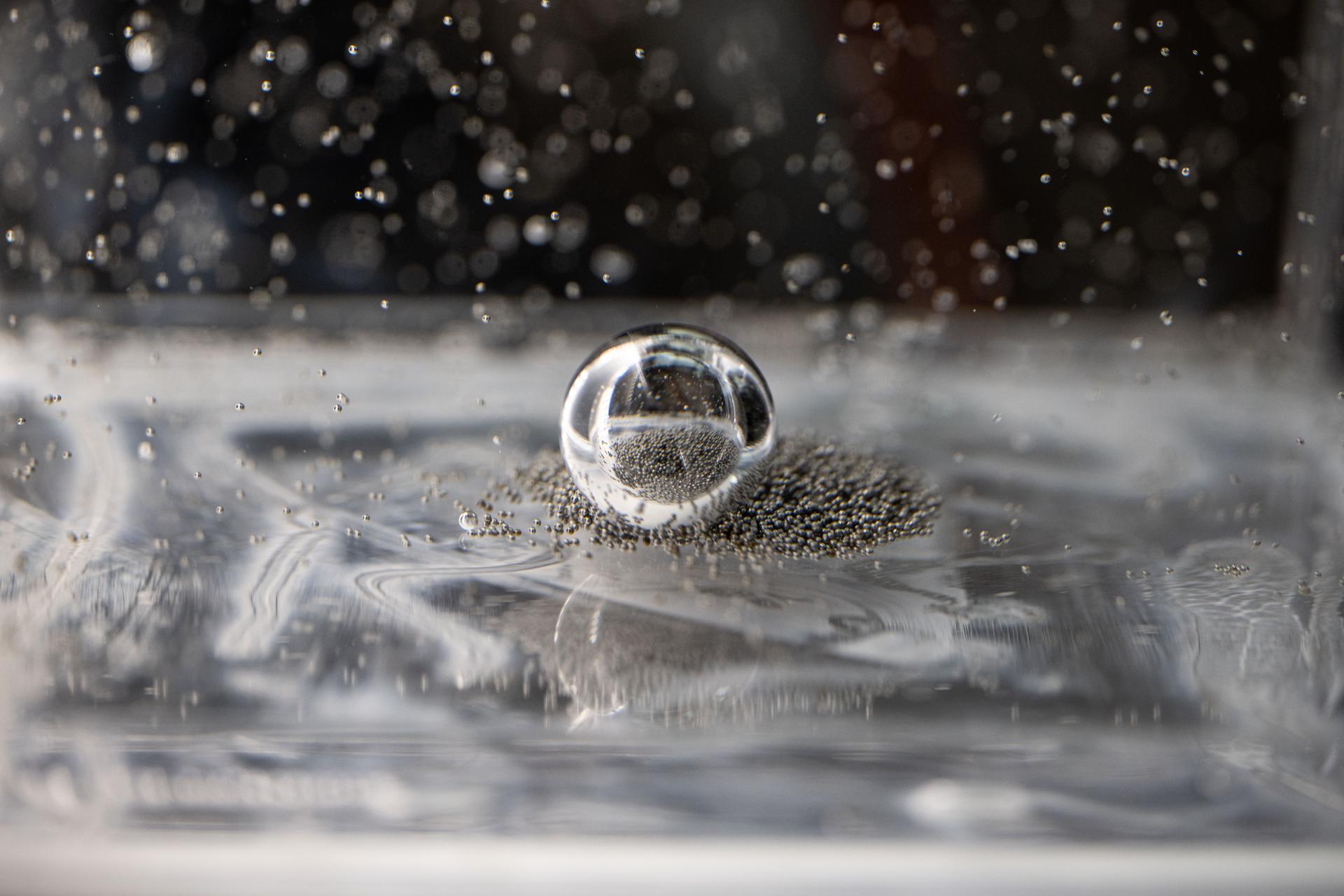
iss073e0917381 (Oct. 20, 2025) --- Tiny ball bearings surround a larger central bearing during the Fluid Particles experiment, conducted inside the Microgravity Science Glovebox (MSG) aboard the International Space Station’s Destiny laboratory module. A bulk container installed in the MSG, filled with viscous fluid and embedded particles, is subjected to oscillating frequencies to observe how the particles cluster and form larger structures in microgravity. Insights from this research may advance fire suppression, lunar dust mitigation, and plant growth in space. On Earth, the findings could inform our understanding of pollen dispersion, algae blooms, plastic pollution, and sea salt transport during storms.
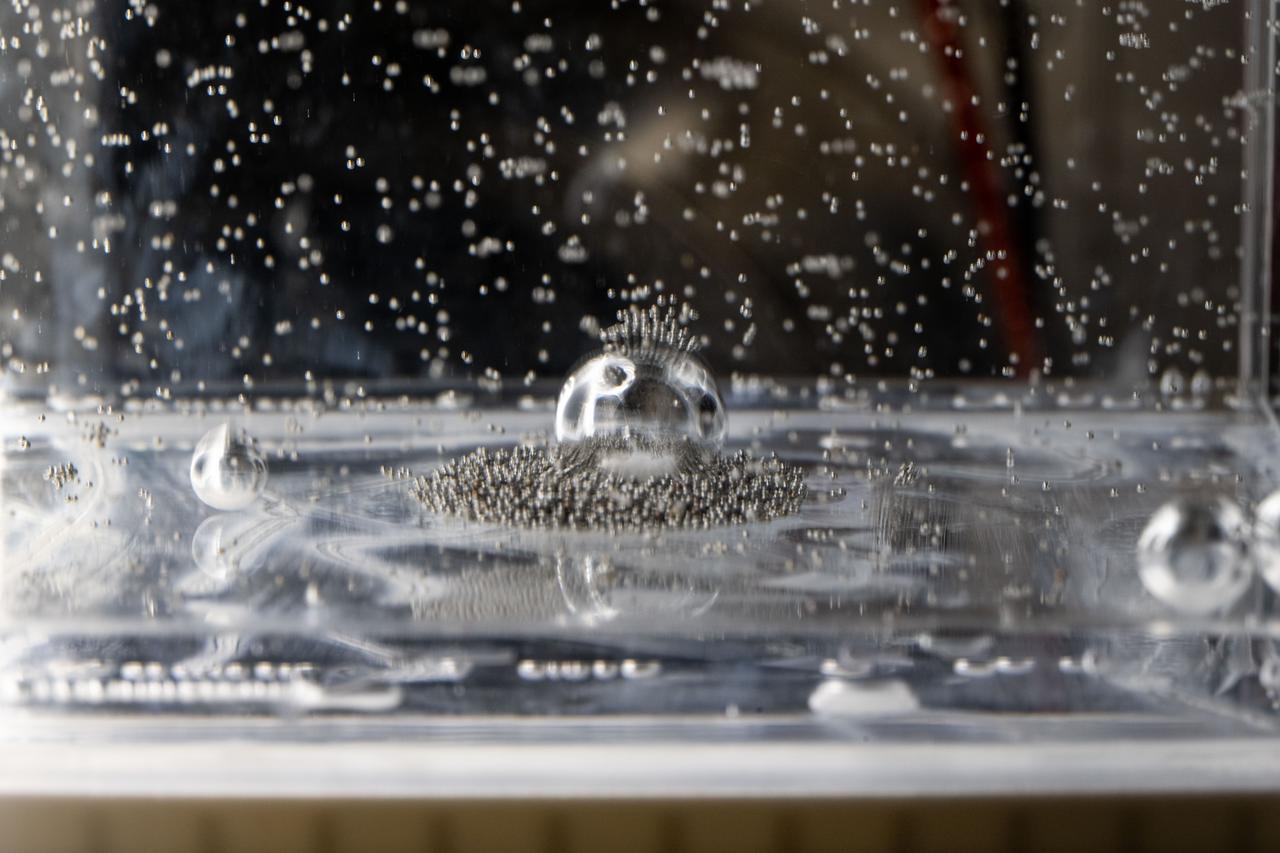
iss073e0917383 (Oct. 20, 2025) --- Tiny ball bearings surround a larger central bearing during the Fluid Particles experiment, conducted inside the Microgravity Science Glovebox (MSG) aboard the International Space Station’s Destiny laboratory module. A bulk container installed in the MSG, filled with viscous fluid and embedded particles, is subjected to oscillating frequencies to observe how the particles cluster and form larger structures in microgravity. Insights from this research may advance fire suppression, lunar dust mitigation, and plant growth in space. On Earth, the findings could inform our understanding of pollen dispersion, algae blooms, plastic pollution, and sea salt transport during storms.
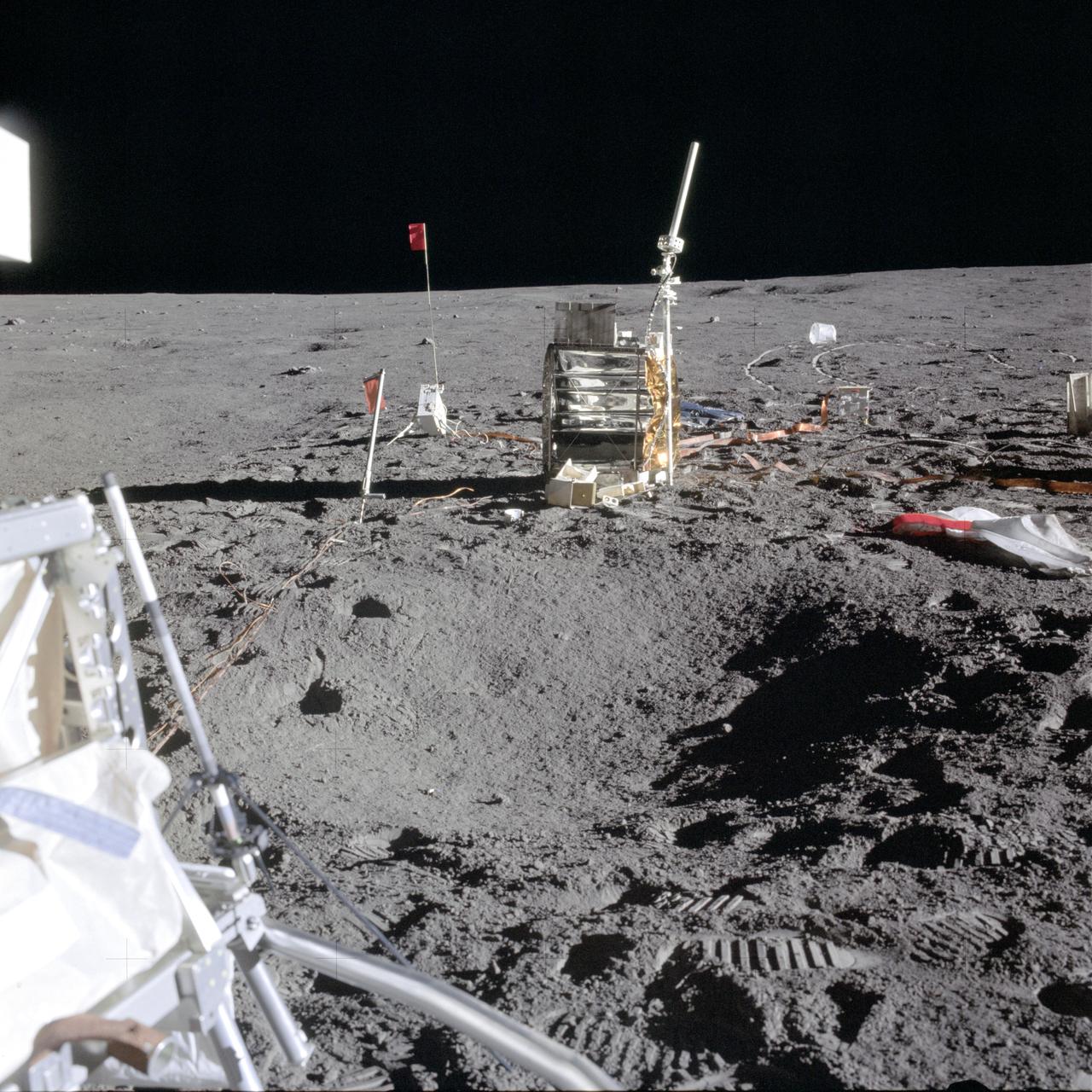
AS14-67-9376 (5 Feb. 1971) --- Several components of the Apollo lunar surface experiments package (ASLEP) are deployed in this photograph taken during the first Apollo 14 extravehicular activity (EVA). The larger object with antenna is the ALSEP central station (CS). The active seismic experiment (ASE) mortar package assembly is to the rear left of the CS. The charged particle lunar environment experiment (CPLEE) is to the right rear of the CS. A portion of the modularized equipment transporter (MET) can be seen in the left foreground.
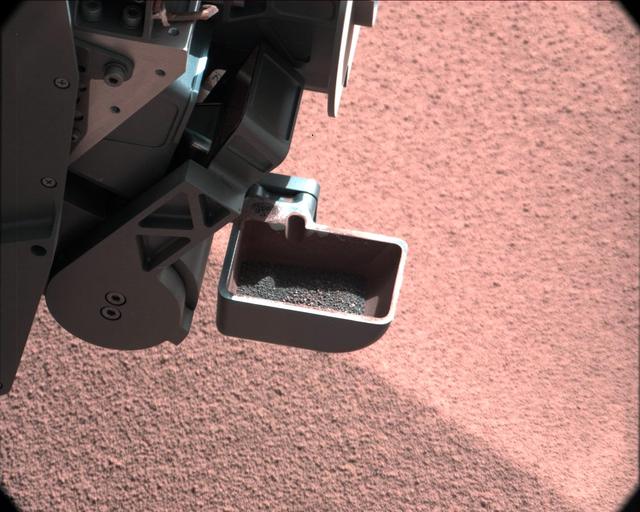
In this image, the scoop on NASA Curiosity rover shows the larger soil particles that were too big to filter through a sample-processing sieve that is porous only to particles less than 0.006 inches 150 microns across.
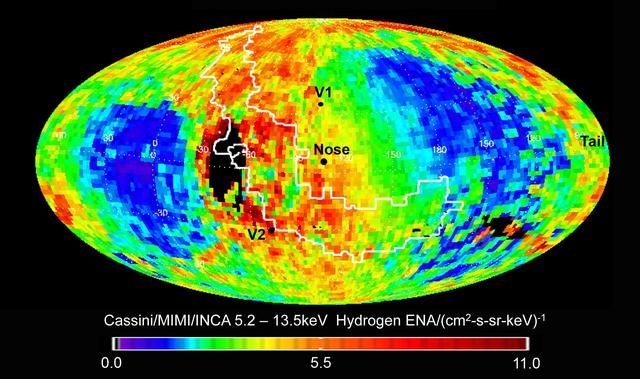
Data from NASA Cassini spacecraft have enabled scientists to create this map of the heliosphere, the bubble of charged particles around our sun. Charged particles stream out from our sun in a phenomenon known as solar wind.
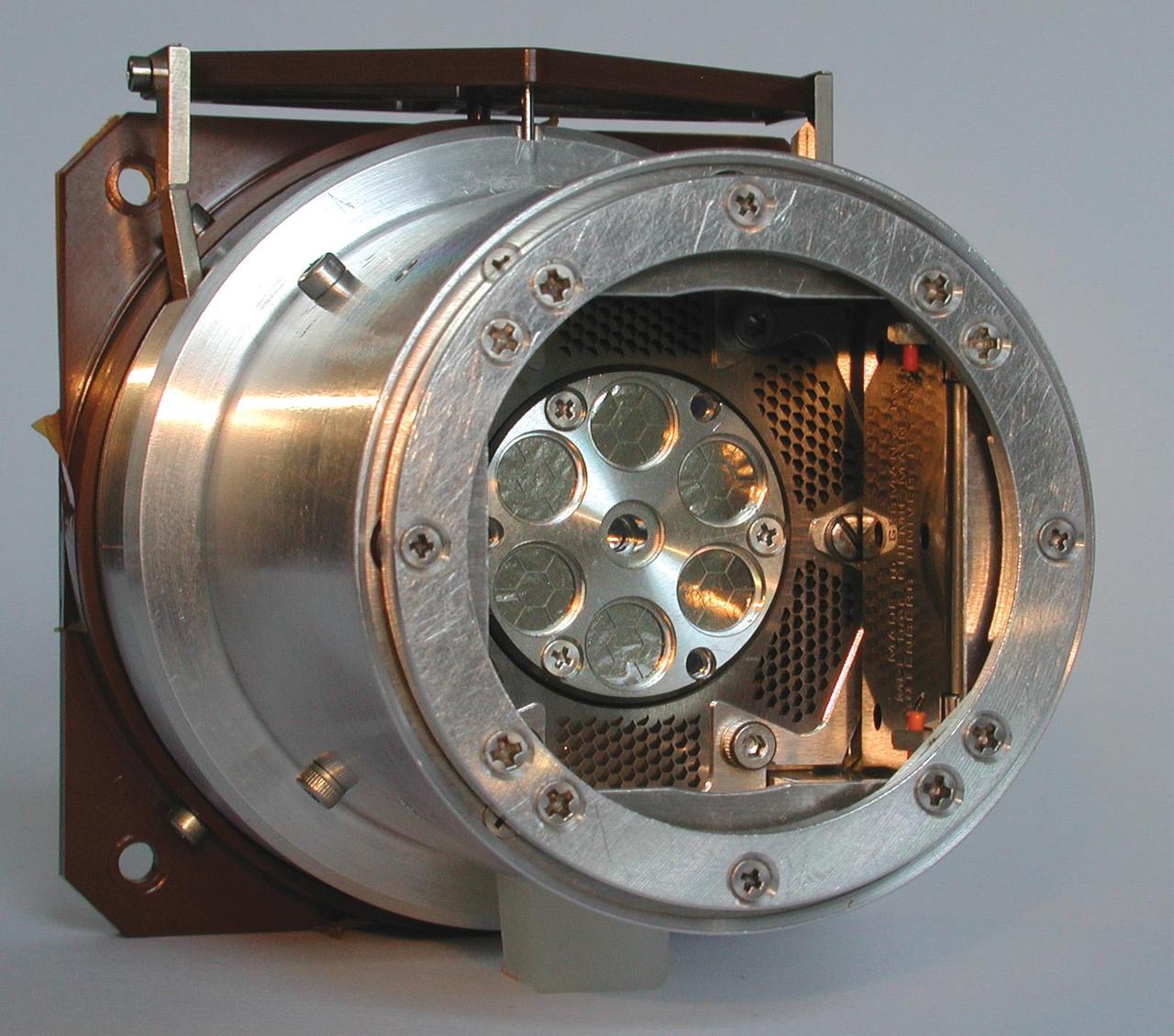
Located on the arm of NASA Mars Exploration Rover Spirit, the alpha particle X-ray spectrometer uses alpha particles and X-rays to determine the chemical make up of martian rocks and soils.
Icy particles in the cloud around Hartley 2, as seen by NASA EPOXI mission spacecraft. A star moving through the background is marked with red and moves in a particular direction, with a particular speed; icy particles move in random directions.
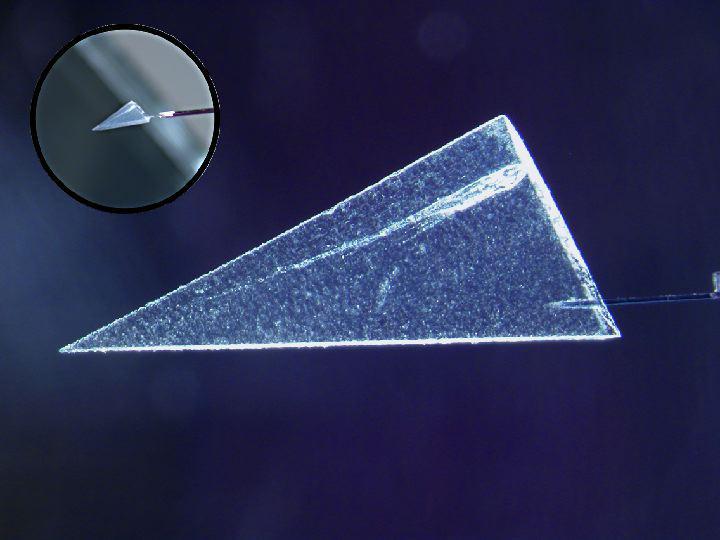
This image illustrates one of several ways scientists have begun extracting comet particles from NASAa Stardust spacecraft collector. First, a particle and its track are cut out of the collector material, called aerogel.

This illustration depicts charged particles from a solar storm stripping away charged particles of Mars' atmosphere, one of the processes of Martian atmosphere loss studied by NASA's MAVEN mission, beginning in 2014. Unlike Earth, Mars lacks a global magnetic field that could deflect charged particles emanating from the Sun. https://photojournal.jpl.nasa.gov/catalog/PIA22076
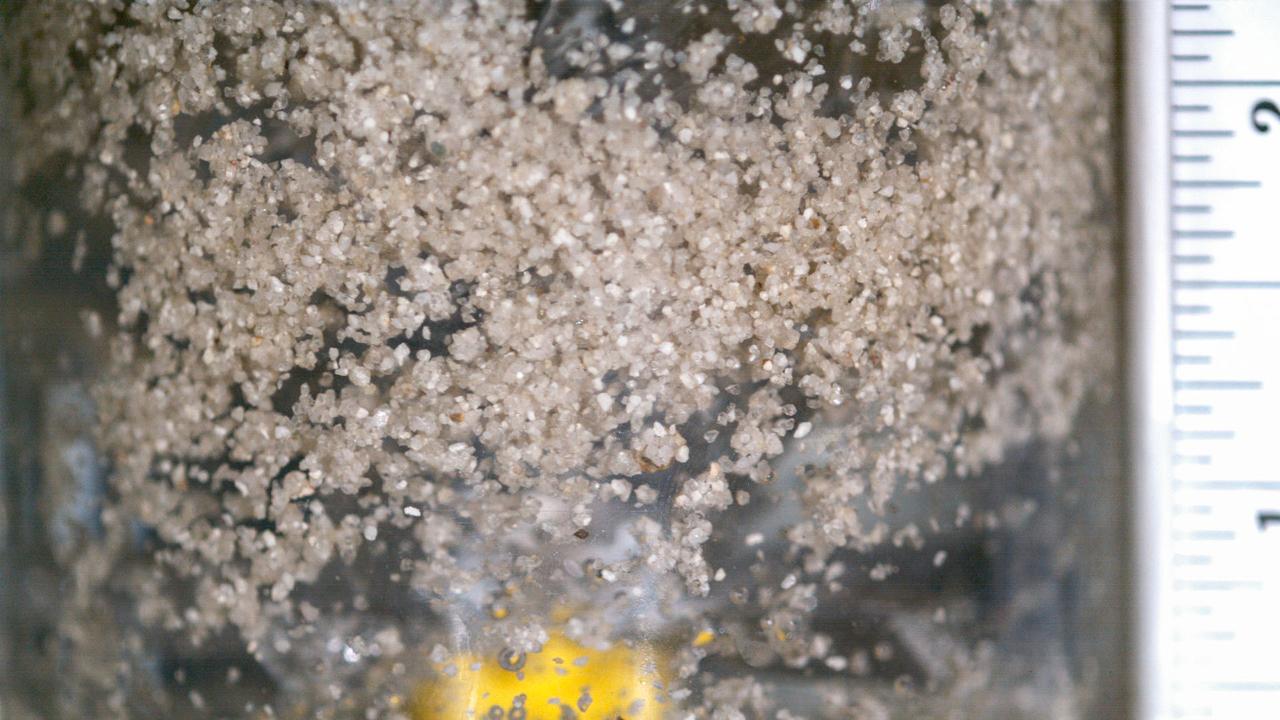
jsc2022e072959 (9/16/2022) --- Coarse hydrophobic sand is mixed for 25 seconds with water and air. Researchers observe a decent amount of agglomerates (air bubbles) covered by hydrophobic sand particles flowing in the water body. There are also free sand particles floating around. Catastrophic Post-Wildfire Mudflows studies the formation and stability of this bubble-sand structure in microgravity. A better understanding of these phenomena could improve the understanding, modeling, and predicting of mudflows and support development of innovative solutions to prevent catastrophic post-fire events. Image courtesy of the UCSD Geo-Micromechanics Research Group.
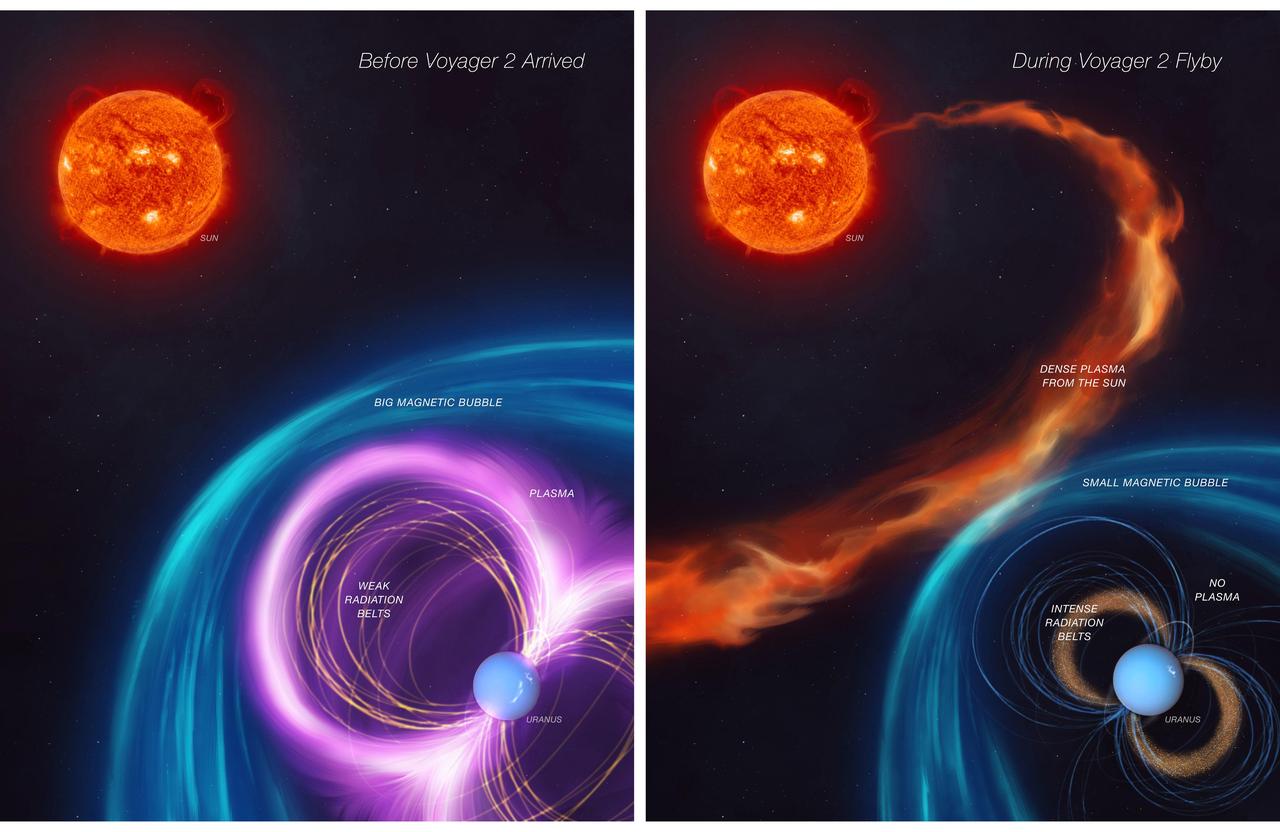
When NASA's Voyager 2 spacecraft flew by Uranus in 1986, it provided scientists' first – and, so far, only – close glimpse of this outer planet. Scientists were confronted by a mystery: The energized particles around the planet defied their understanding of how magnetic fields work to trap particle radiation. The first panel of this artist's concept depicts how Uranus's magnetosphere (its protective bubble) was behaving before Voyager 2's flyby. The second panel shows that an unusual kind of solar weather was happening at the same time as the spacecraft's flyby, giving scientists a skewed view of Uranus's magnetosphere. The work, led by a scientist at NASA's Jet Propulsion Laboratory and described in a paper published in Nature Astronomy in November 2024, contributes to scientists' understanding of this enigmatic planet. It also opens the door to the possibility that Uranus' five major moons may be active. https://photojournal.jpl.nasa.gov/catalog/PIA26069
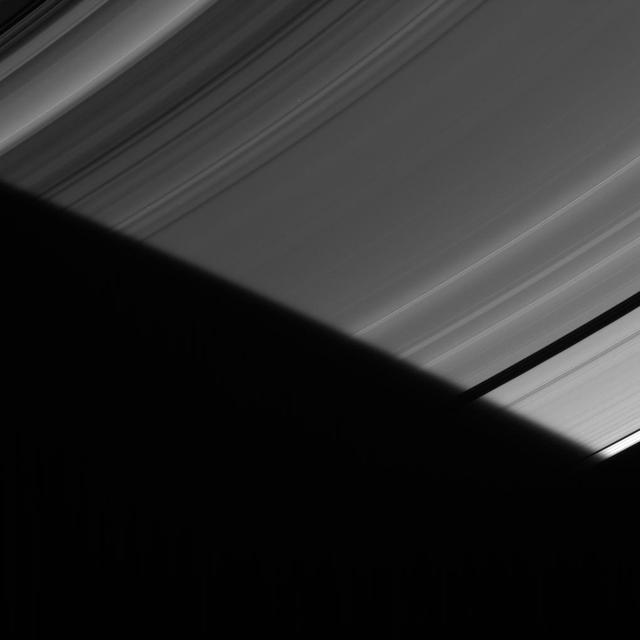
As the particles comprising Saturn A ring slip into the planet shadow, they find themselves briefly in the penumbra of Saturn shadow

This illustration depicts the shearing of an initially circular cloud of debris as a result of the particles in the cloud having differing orbital speeds around Saturn.
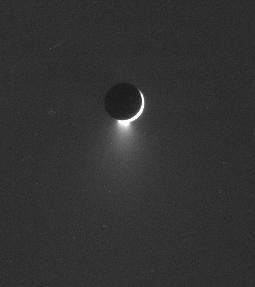
Enceladus continues to exhale water ice into Saturn orbit, keeping the E ring topped off with tiny particles
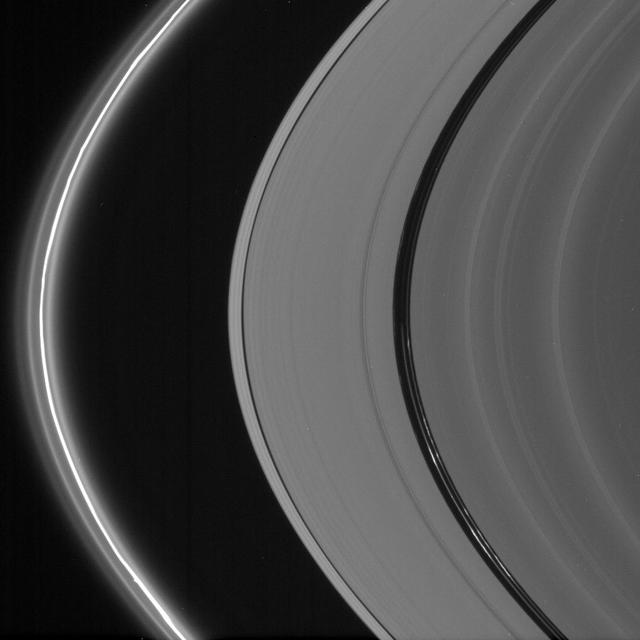
Saturn bright ringlets seen here are populated with microscopic icy particles and are among the brightest features in the rings at high phase angles
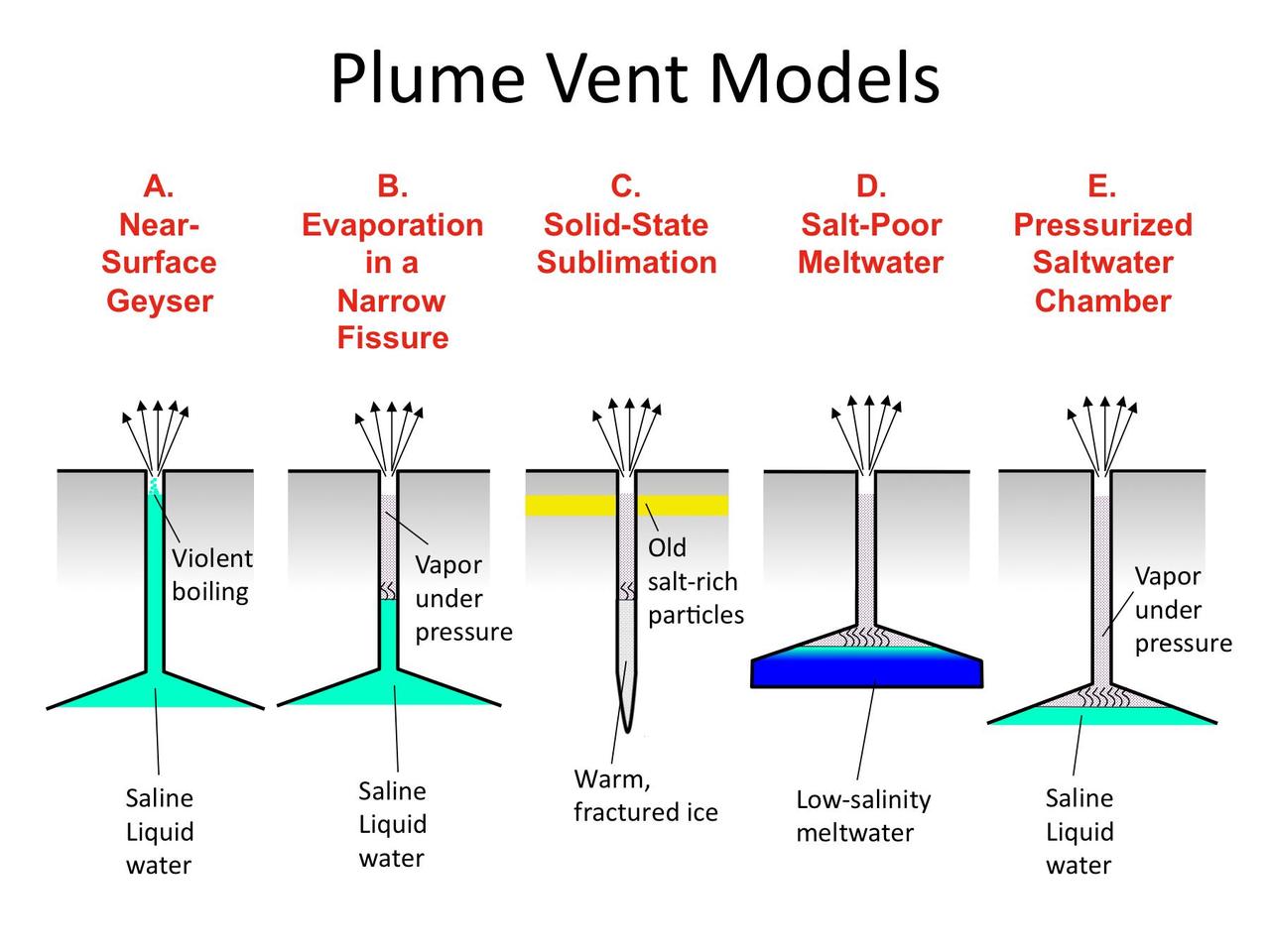
These illustrations indicate possible ways in which the water vapor and ice particles in the plume of Enceladus may be formed.
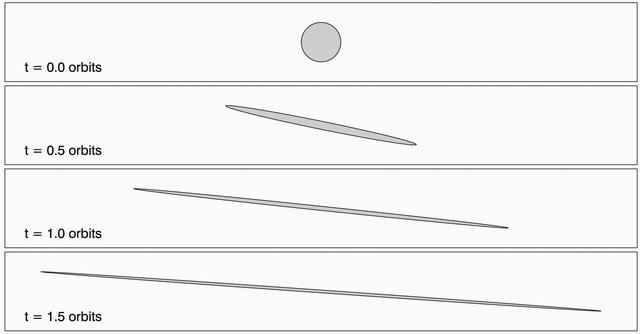
This animation depicts the shearing of an initially circular cloud of debris as a result of the particles in the cloud having differing orbital speeds around Saturn.
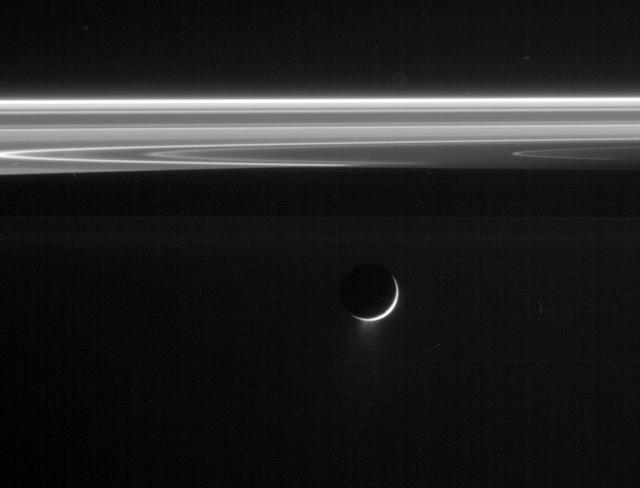
Multiple jets of icy particles are blasted into space by the active venting on Saturn moon Enceladus

This illustration shows Earth surrounded by filaments of dark matter called "hairs," which are proposed in a study in the Astrophysical Journal by Gary Prézeau of NASA's Jet Propulsion Laboratory, Pasadena, California. A hair is created when a stream of dark matter particles goes through the planet. According to simulations, the hair is densest at a point called the "root." When particles of a dark matter stream pass through the core of Earth, they form a hair whose root has a particle density about a billion times greater than average. The hairs in this illustration are not to scale. Simulations show that the roots of such hairs can be 600,000 miles (1 million kilometers) from Earth, while Earth's radius is only about 4,000 miles (6,400 kilometers). http://photojournal.jpl.nasa.gov/catalog/PIA20176
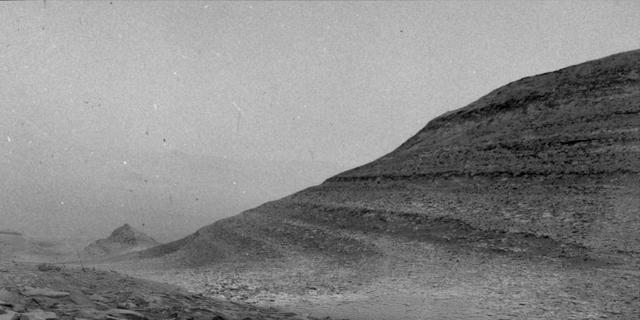
The specks in the sequence of images in this video were caused by charged particles from a solar storm hitting one of the navigation cameras aboard NASA's Curiosity Mars rover. The mission uses the rover's navigation cameras to try capturing images of dust devils (dust-bearing whirlwinds) and wind gusts, like the gust seen here. By chance, the gust occurred at the same time that charged particles began to strike the Martian surface on May 20, 2024, the 4,190th Martian day, or sol, of the mission. The particles do not damage the camera. Curiosity's Radiation Assessment Detector (RAD) measured a sharp increase in radiation at this time – the biggest radiation surge the mission has seen since landing in 2012. Animation available at https://photojournal.jpl.nasa.gov/catalog/PIA26303
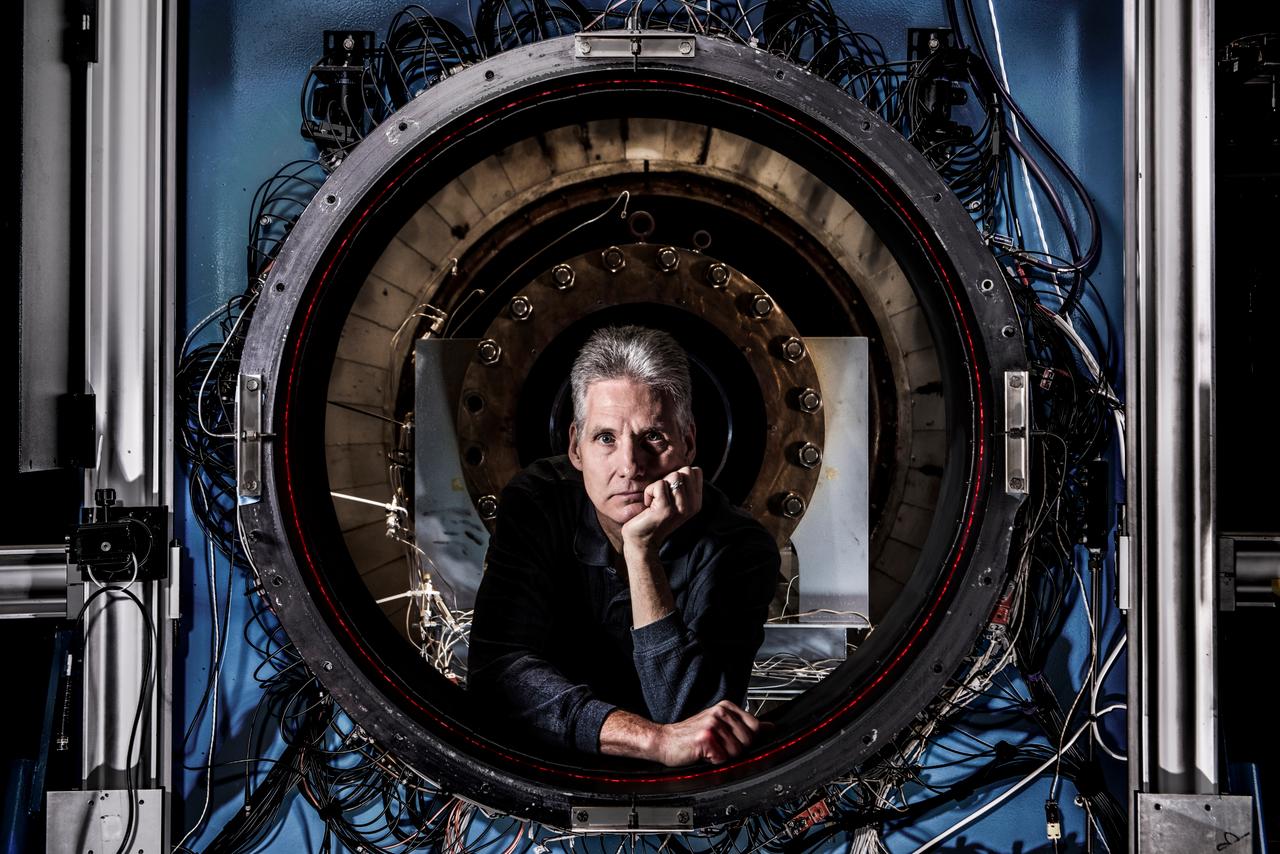
How do you measure a cloud? Tim Bencic does it with lasers. The NASA Glenn engineer invented a tomography system for our Propulsion Systems Lab to help understand the dangers of ice crystal icing on airplanes. Bencic’s system, affectionally called “Tim-ography” is like a CAT Scan. The laser light within its circular geometry bounces off the surface of ice particles in the cloud and fiber optic detectors map out its properties. This tool is helping NASA’s researchers make aircraft safer in challenging weather conditions.

A new, dynamic portrait of our Milky Way galaxy shows a frenzy of gas, charged particles and dust as seen by the European Space Agency Planck mission.
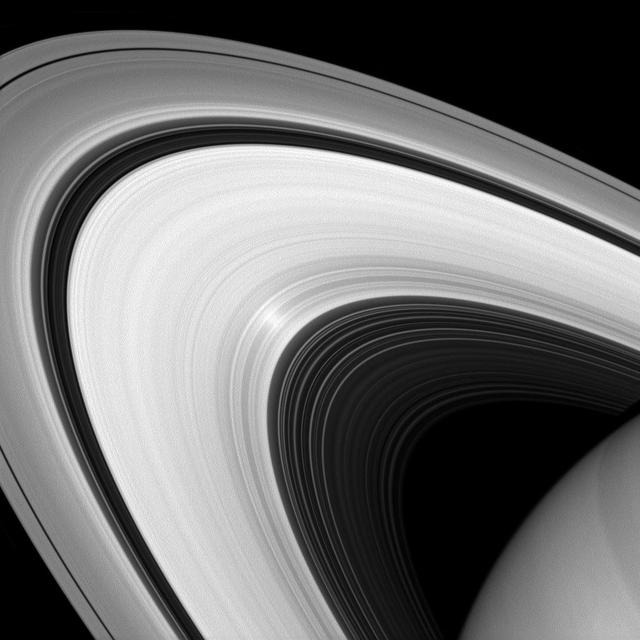
Scientists can use images such as this one from NASA Cassini spacecraft to learn more about the nature of the particles that make up Saturn rings.
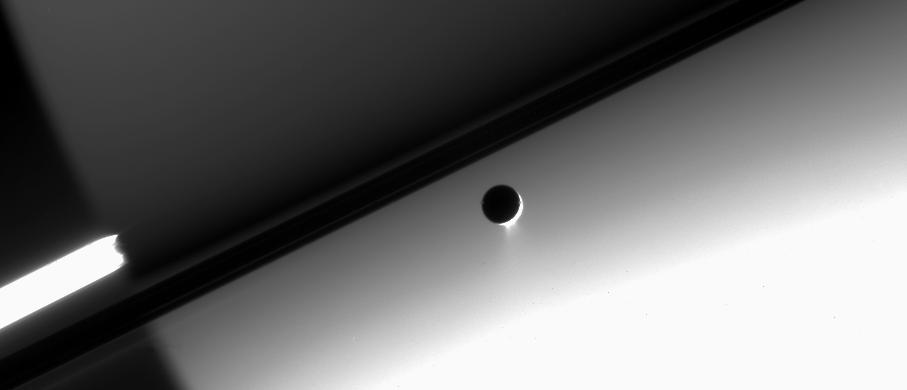
The plumes of Enceladus continue to gush icy particles into Saturn orbit, making this little moon one of a select group of geologically active bodies in the solar system
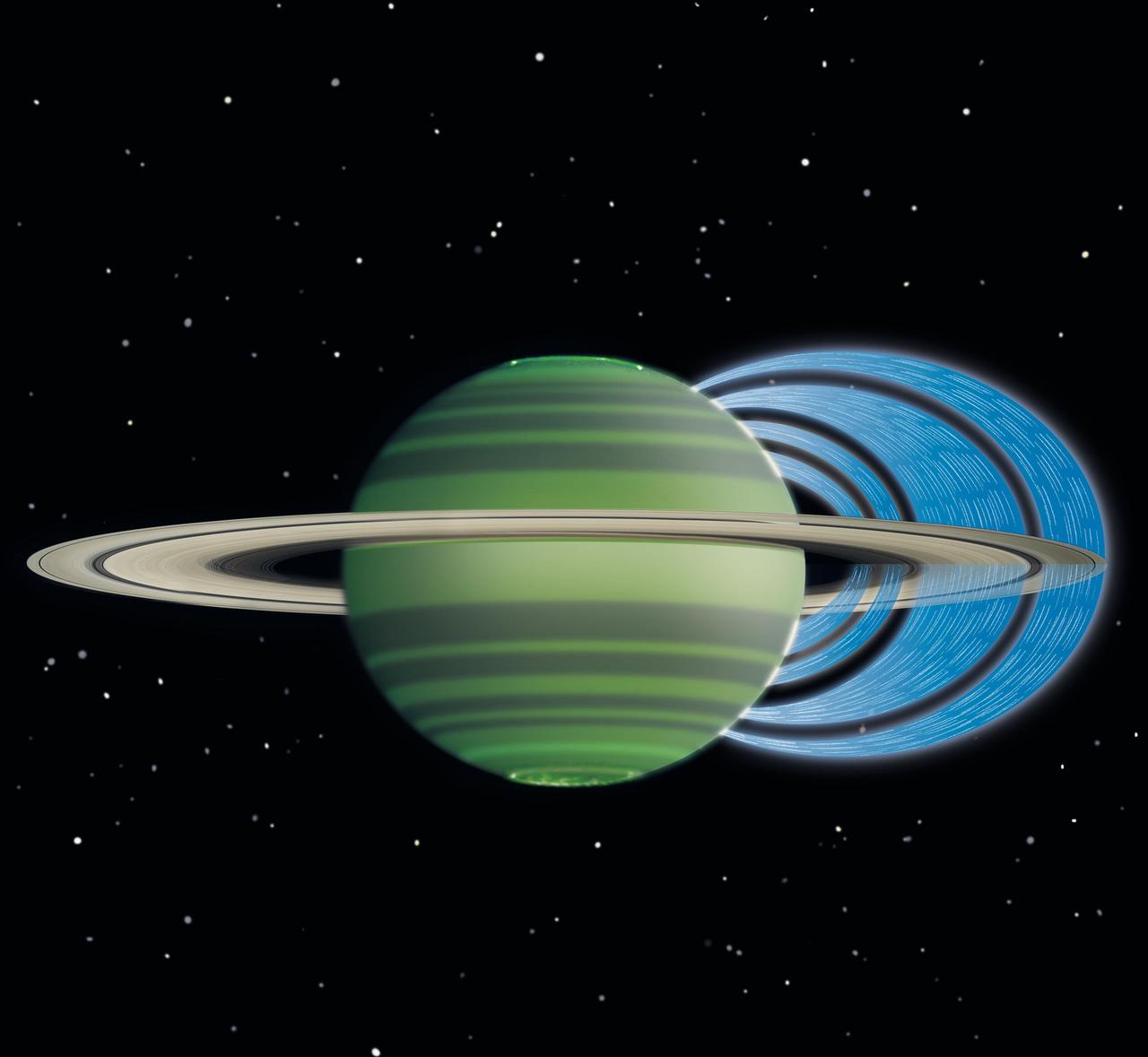
This artist concept illustrates how charged water particles flow into the Saturnian atmosphere from the planet rings, causing a reduction in atmospheric brightness.
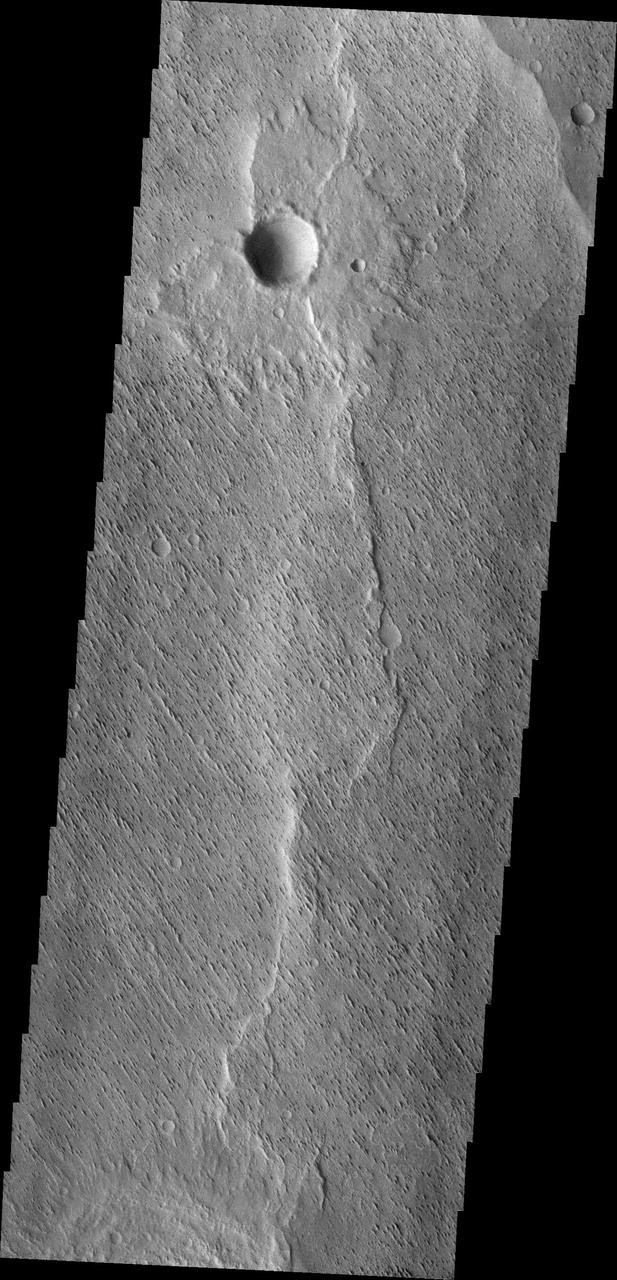
The small parallel ridges in this image captured by NASA 2001 Mars Odyssey spacecraft were created by the erosive power of wind blown particles.
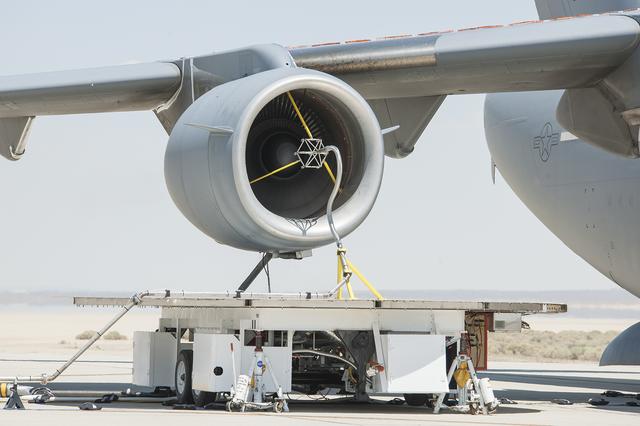
The volcanic ash distribution spider, shown here in the inlet of the engine while running, was used to send the ultra-fine particles of ash through the engine.
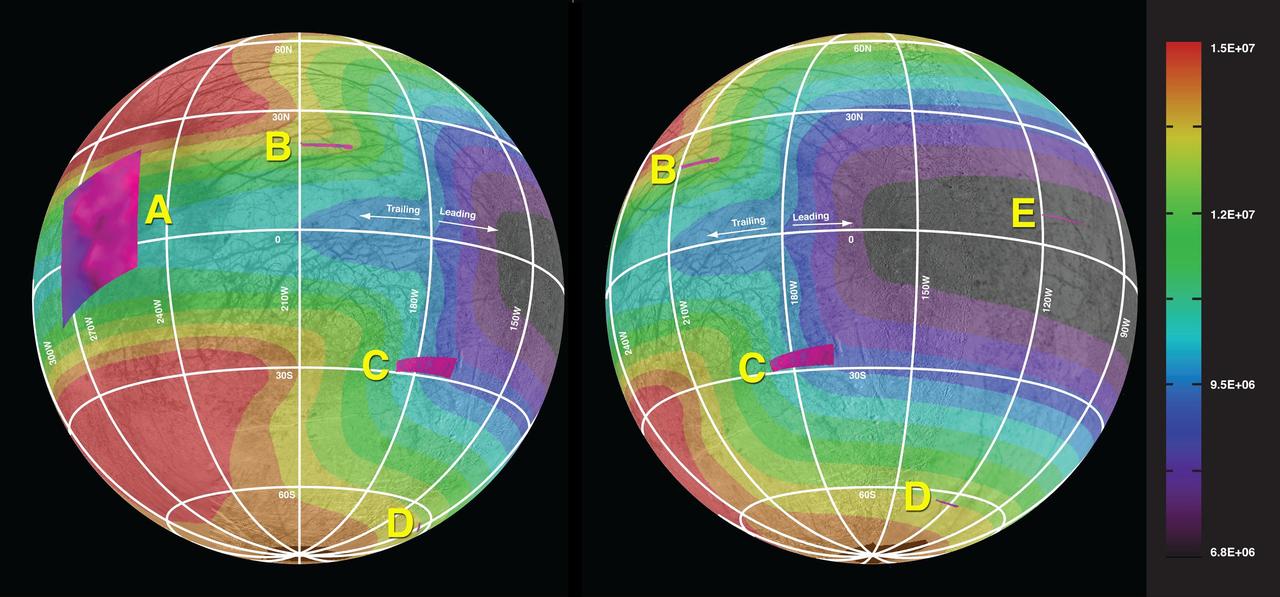
This graphic of Jupiter moon Europa maps a relationship between the amount of energy deposited onto the moon from charged-particle bombardment and chemical contents of ice deposits.
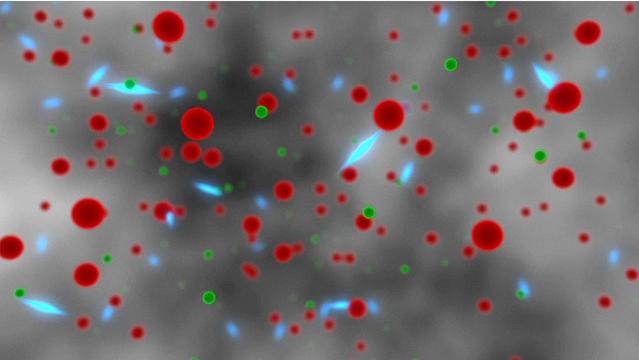
This frame from an artist animation depicts the life of a photon, or particle of light, as it travels across space and time, from the very early universe ESA Planck satellite.

Astronomers using NASA Spitzer Space Telescope found evidence that such quasar winds might have forged these dusty particles in the very early universe.
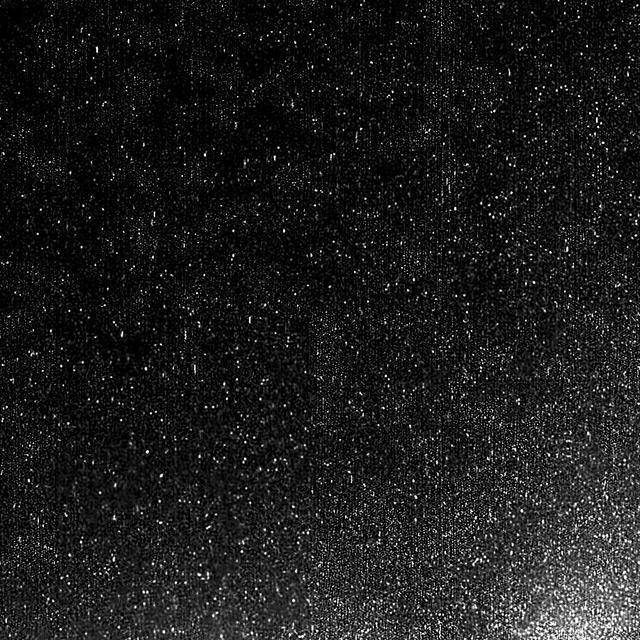
This zoomed-in image from the High-Resolution Instrument on NASA EPOXI mission spacecraft shows the particles swirling in a now storm around the nucleus of comet Hartley 2.
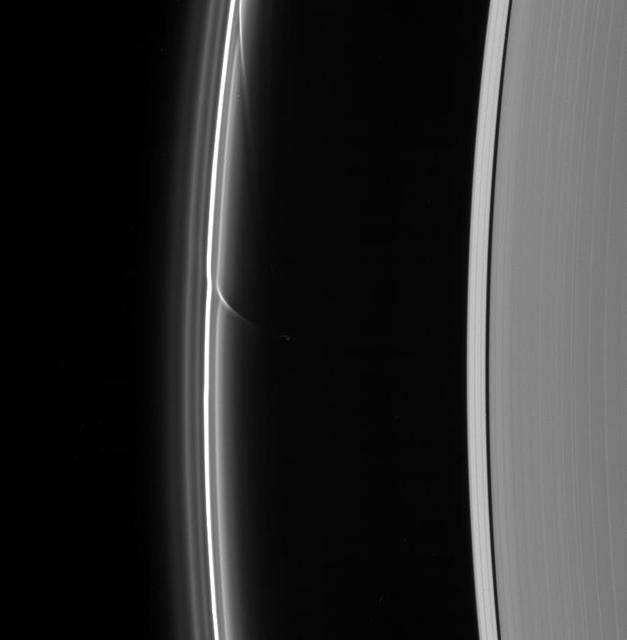
A shepherd moon can do more to define ring structures than just keep the flock of particles in line, as Cassini spacecraft images such as this have shown
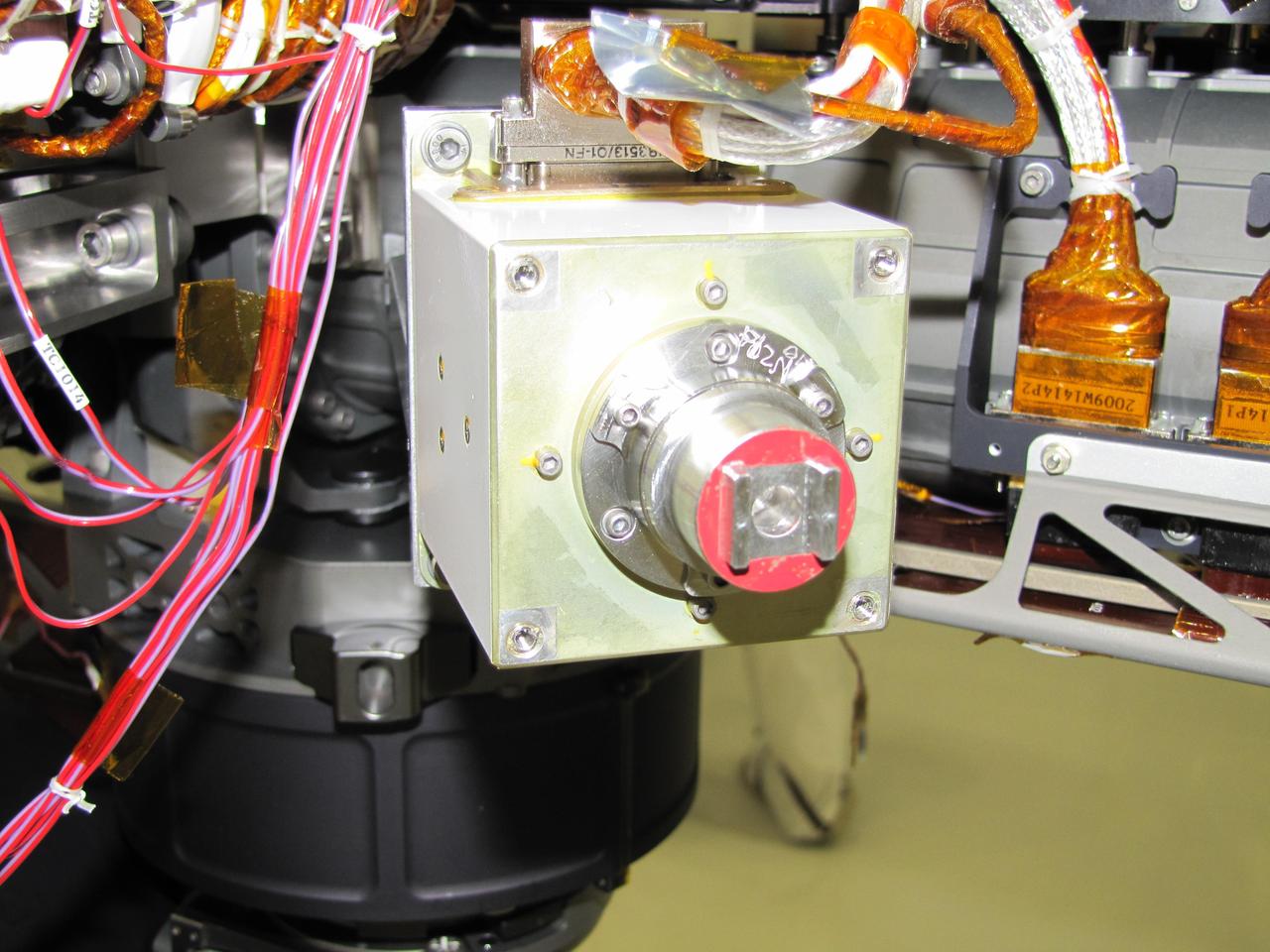
The sensor head on the Alpha Particle X-ray Spectrometer instrument was installed during testing at NASA Jet Propulsion Laboratory. The instrument is part of NASA Curiosity rover.
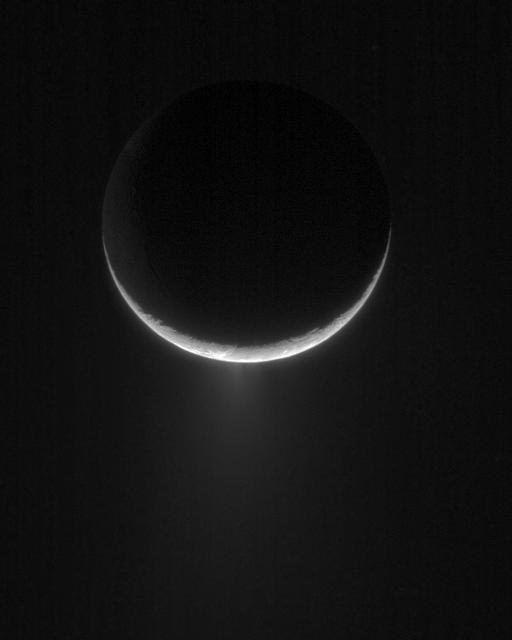
Peeking over the crescent of Enceladus, the Cassini spacecraft views the towering plume of ice particles erupting from the moon south polar region
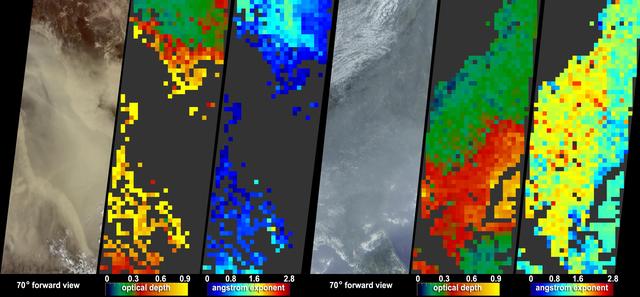
How precisely do the size of the aerosol particles comprising the dust that obscured the Red Sea on July 26, 2005? This image is from NASA Terra spacecraft.

A large coronal hole has been spewing solar wind particles in the general direction of Earth over the past few days (Aug. 31- Sept. 1, 2017). It is the extensive dark area that stretches from the top of the sun and angles down to the right. Coronal holes are areas of open magnetic field, which allow charge particles to escape into space. They appear dark in certain wavelengths of extreme ultraviolet light such as shown here. These clouds of particles can cause aurora to appear, particularly in higher latitude regions. Movies are available at https://photojournal.jpl.nasa.gov/catalog/PIA21942
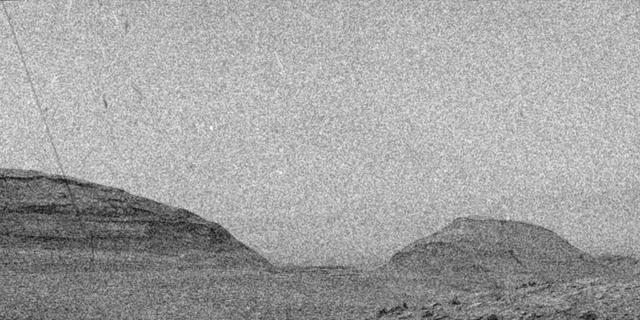
NASA's Curiosity Mars rover captured evidence of a solar storm's charged particles arriving at the Martian surface in this three-frame video taken by one of the rover's navigation cameras on May 20, 2024, the 4,190th Martian day, or sol, of the mission. The mission regularly captures videos to try and catch dust devils, or dust-bearing whirlwinds. While none were spotted in this particular sequence of images, engineers did see streaks and specks – visual artifacts created when charged particles from the Sun hit the camera's image detector. The particles do not damage the detector. The images in this sequence appear grainy because navigation-camera images are processed to highlight changes in the landscape from frame to frame. When there isn't much change – in this case, the rover was parked &ndash more noise appears in the image. Curiosity's Radiation Assessment Detector (RAD) measured a sharp increase in radiation at this time – the biggest radiation surge the mission has seen since landing in 2012. Animation available at https://photojournal.jpl.nasa.gov/catalog/PIA26302
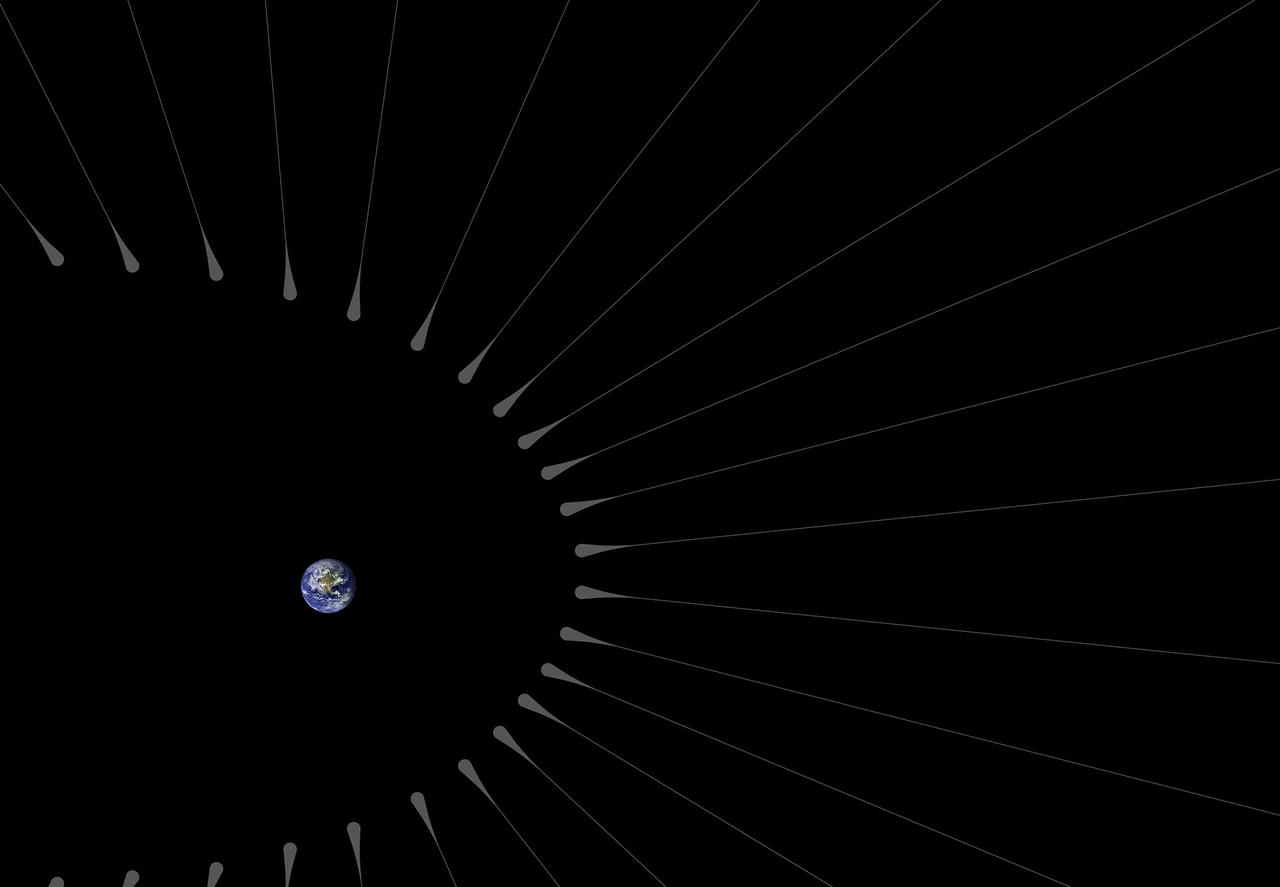
This illustration shows Earth surrounded by filaments of dark matter called "hairs," which are proposed in a study in the Astrophysical Journal by Gary Prézeau of NASA's Jet Propulsion Laboratory, Pasadena, California. A hair is created when a stream of dark matter particles goes through the planet. According to simulations, the hair is densest at a point called the "root." When particles of a dark matter stream pass through the core of Earth, they form a hair whose root has a particle density about a billion times greater than average. The hairs in this illustration are not to scale. Simulations show that the roots of such hairs can be 600,000 miles (1 million kilometers) from Earth, while Earth's radius is only about 4,000 miles (6,400 kilometers). http://photojournal.jpl.nasa.gov/catalog/PIA20177

jsc2025e036184 (4/4/2025) --- Airborne particles collected in the US Orbital Segment during the Aerosol Sampling Experiment (Aerosol Samplers). Top (from left to right): a stainless-steel particle collected near an exercise machine in Node 3, a silver particle collected on an overhead supply diffuser in Node 3, a skin flake (ubiquitous throughout the International Space Station cabin). Bottom (from left to right): a fiberglass particle (ubiquitous throughout the space station cabin), an antiperspirant particle collected in Node 2, an iron particle collected in the US Lab. The Aerosol Sampler collects airborne particles in the International Space Station’s cabin air and returns them to Earth so scientists can study the particles with powerful microscopes.

ISS038-E-029767 (13 Jan. 2014) --- Russian cosmonaut Oleg Kotov, Expedition 38 commander, uses the Remote Control Panel for the Kaplya-2 experiment in the Rassvet Mini-Research Module 1 (MRM1) of the International Space Station.
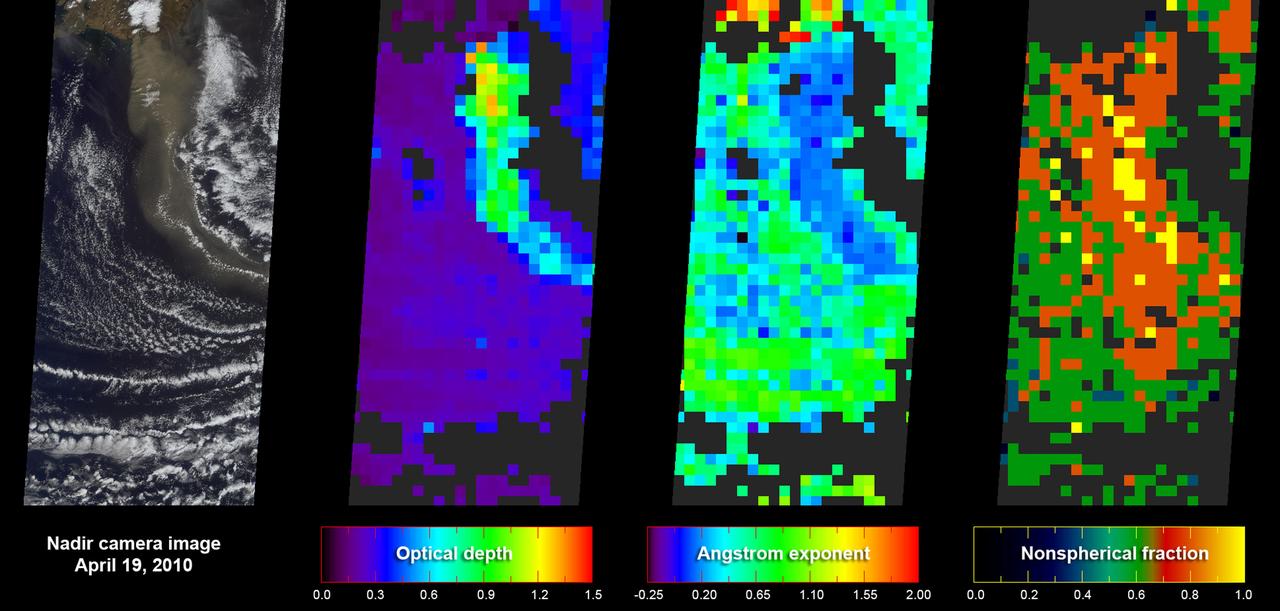
As NASA Terra satellite flew over Iceland erupting Eyjafjallajökull volcano, its Multi-angle Imaging SpectroRadiometer instrument acquired 36 near-simultaneous images of the ash plume, covering nine view angles in each of four wavelengths.
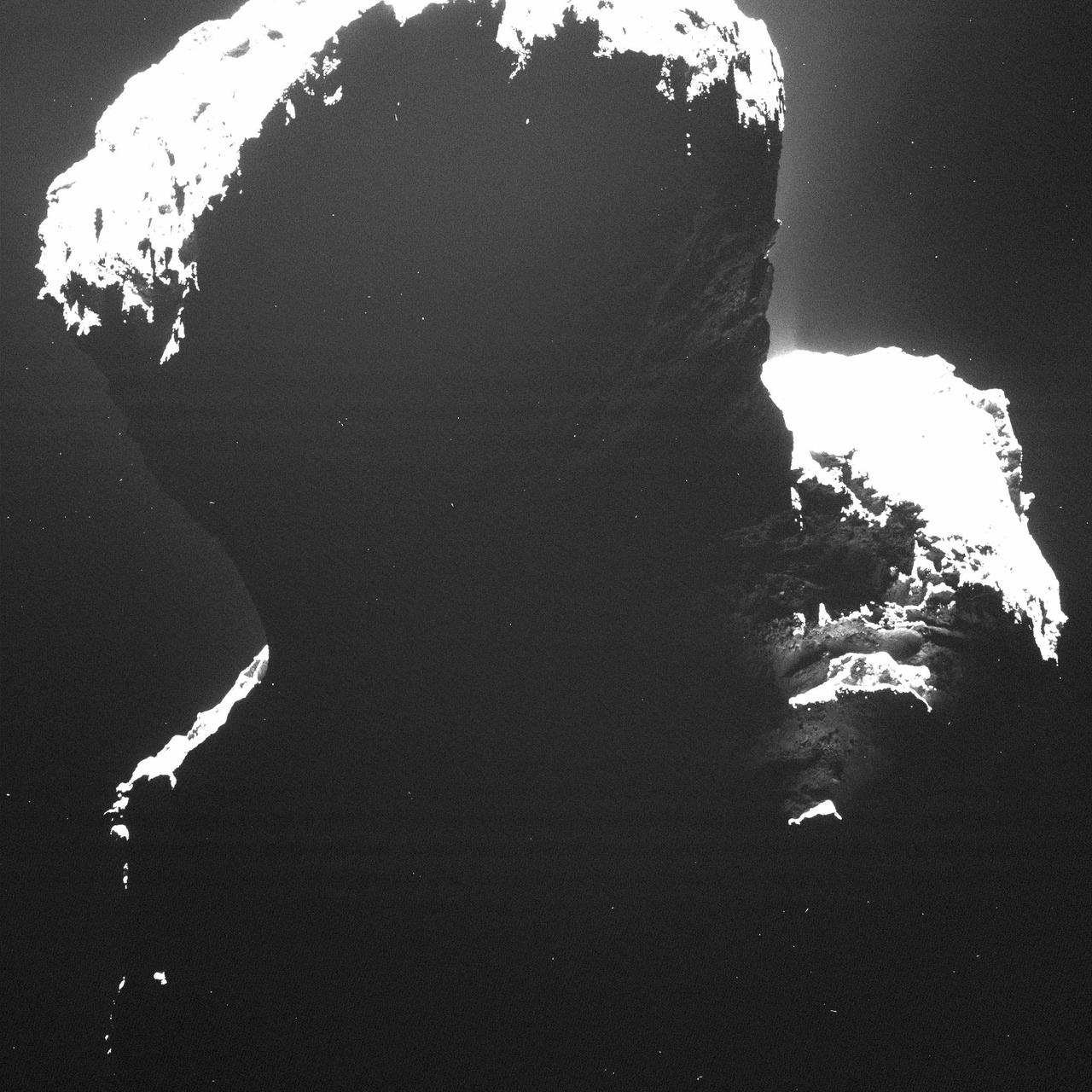
This is a rare glance at the dark side of comet 67P/Churyumov-Gerasimenko. Light backscattered from dust particles in the comet coma reveals a hint of surface structures. This image was taken by OSIRIS, Rosetta scientific imaging system.
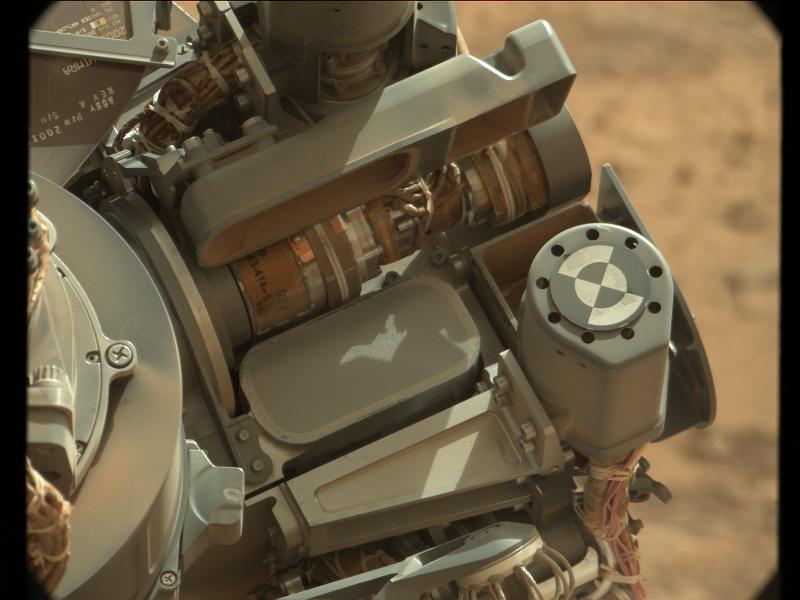
This image shows the location of the 150-micrometer sieve screen on NASA Mars rover Curiosity, a device used to remove larger particles from samples before delivery to science instruments.

This graphic shows the flux of radiation detected by NASA Mars Science Laboratory on the trip from Earth to Mars; the spikes in radiation levels occurred because of large solar energetic particle events caused by giant flares on the sun.
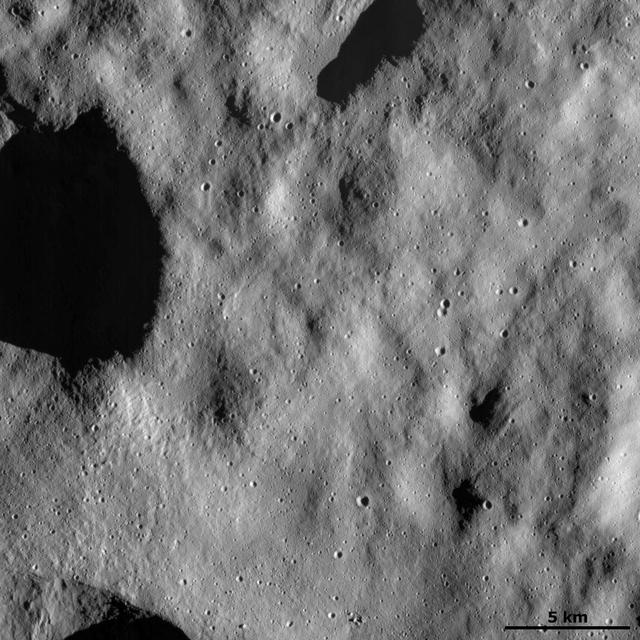
This image from NASA Dawn spacecraft shows a relatively smooth part of asteroid Vesta surface. This smooth texture is probably due to the surface being covered in a layer of tiny dust particles.
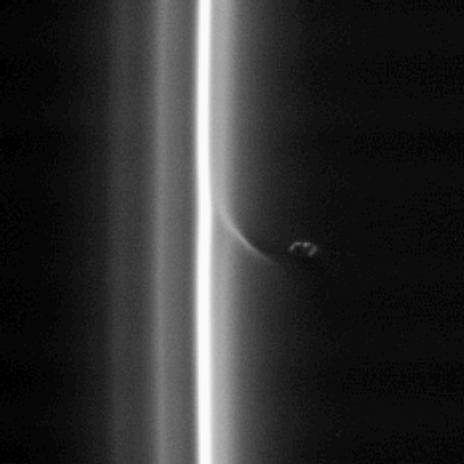
This view shows Prometheus with a streamer it has created in the inner edge of the F ring. Prometheus comes close to the inner edge of the ring once per orbit, perturbing the ring particles there
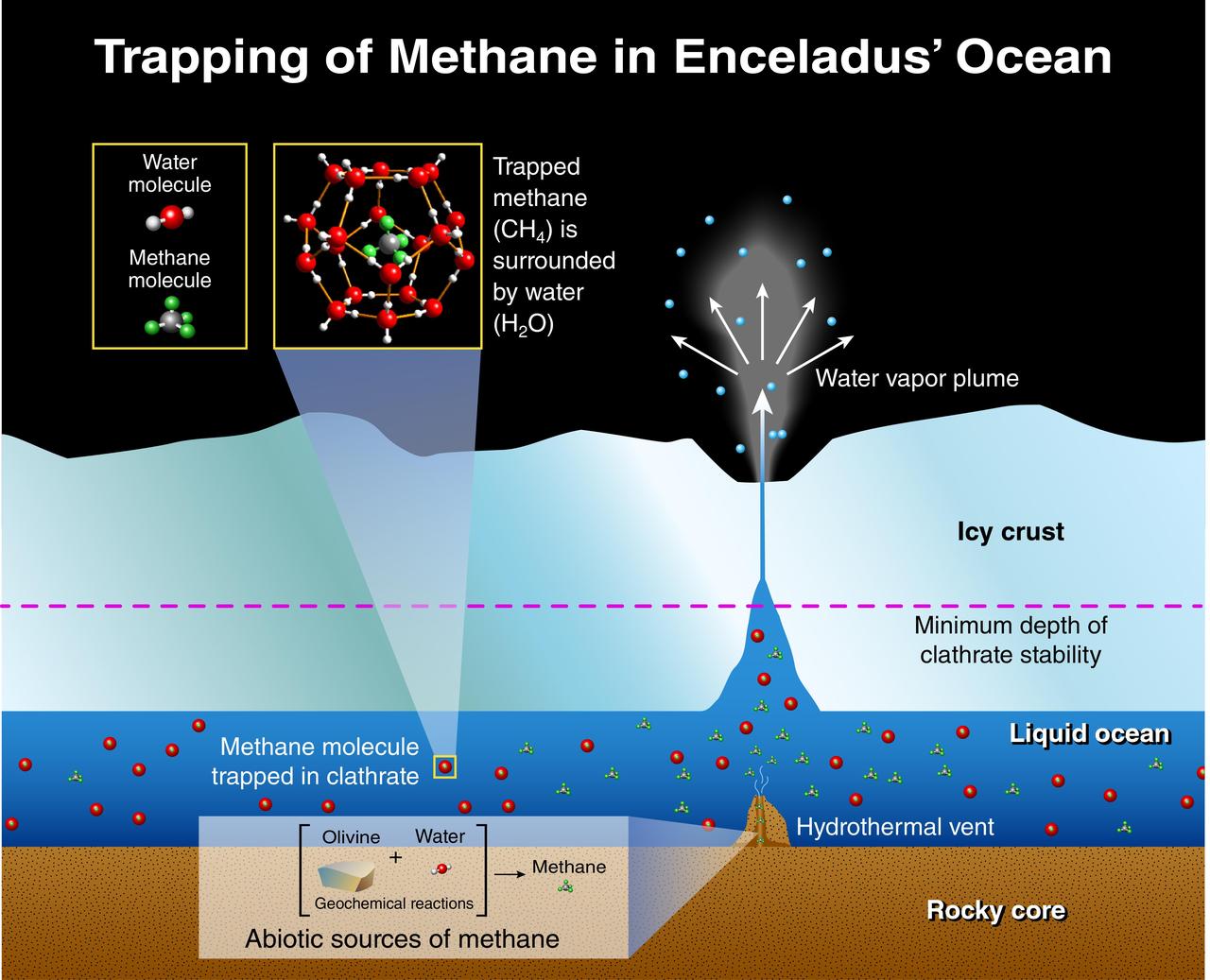
This illustration depicts potential origins of methane found in the plume of gas and ice particles that sprays from Saturn moon, Enceladus, based on research by scientists working with the Ion and Neutral Mass Spectrometer on NASA Cassini mission.
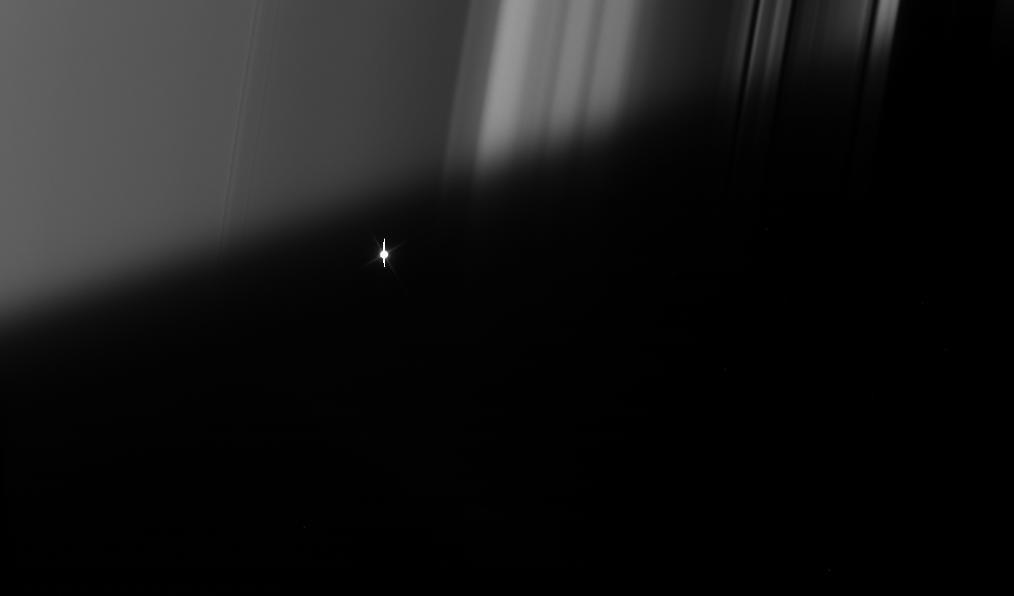
As Cassini watches the rings pass in front of bright red giant star Aldebaran, the star light fluctuates, providing information about the concentrations of ring particles within the various radial features in the rings
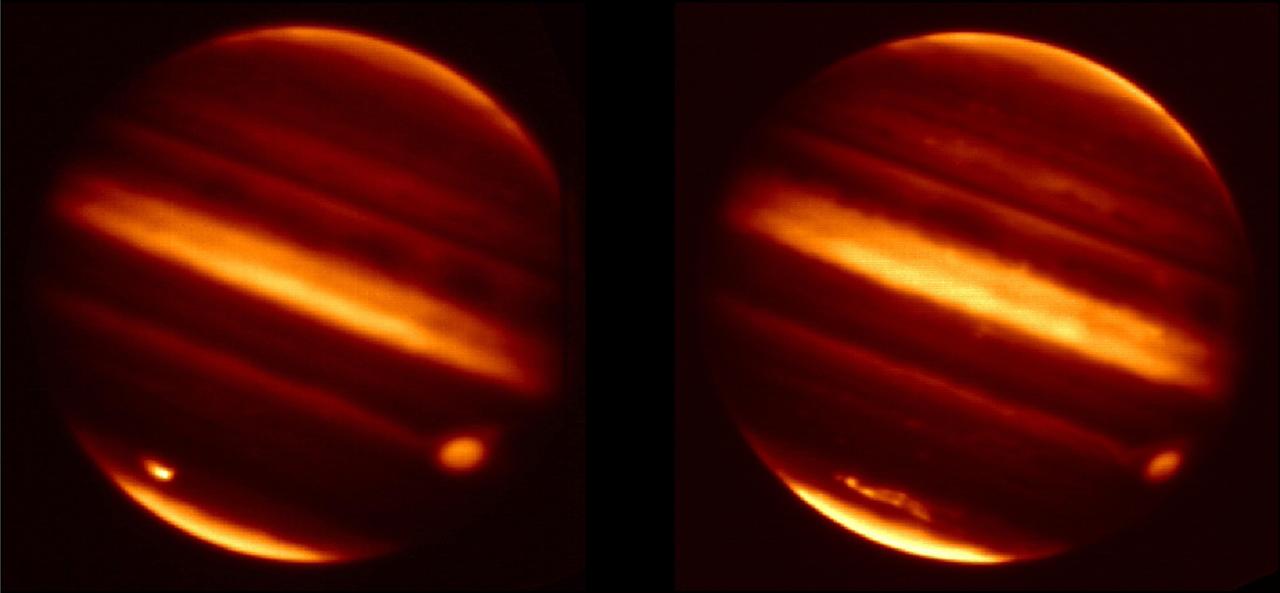
These infrared images obtained from NASA Infrared Telescope Facility in Mauna Kea, Hawaii, show before and aftereffects from particle debris in Jupiter atmosphere after an object hurtled into the atmosphere on July 19, 2009.
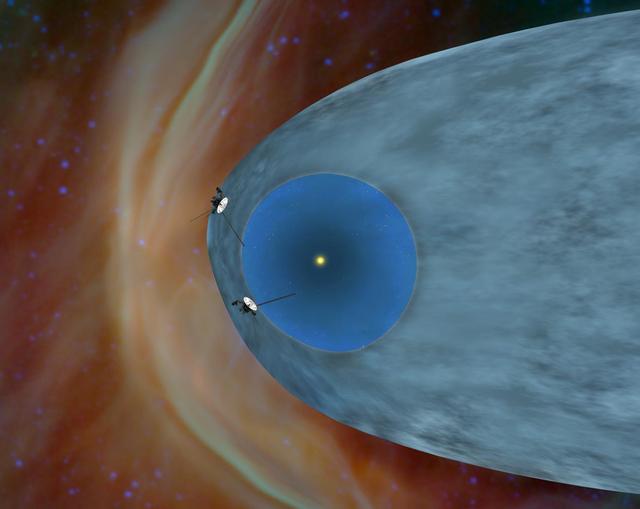
This artist concept shows NASA two Voyager spacecraft exploring a turbulent region of space known as the heliosheath, the outer shell of the bubble of charged particles around our sun.