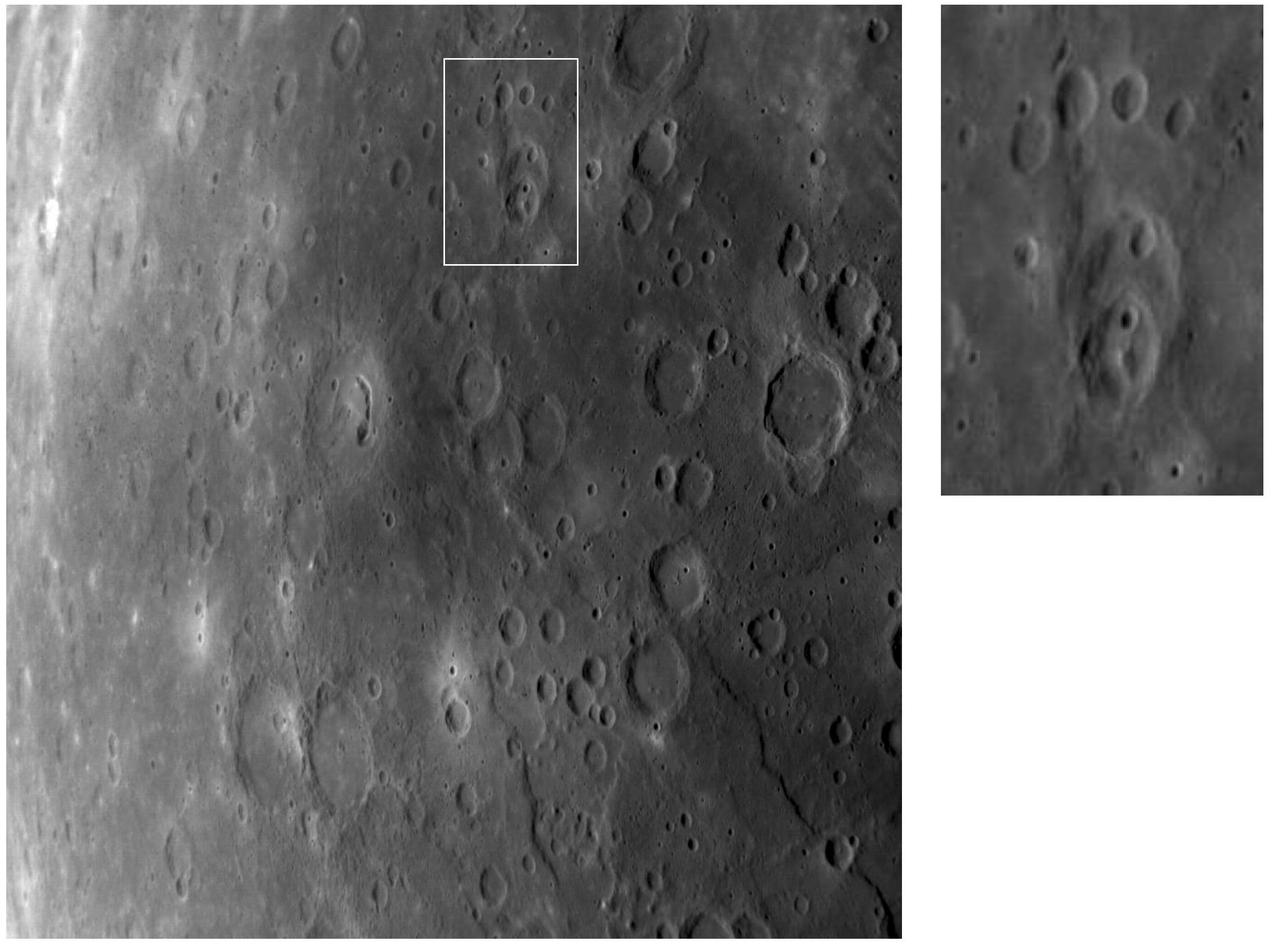
Mercury Cratered Surface and the Paw
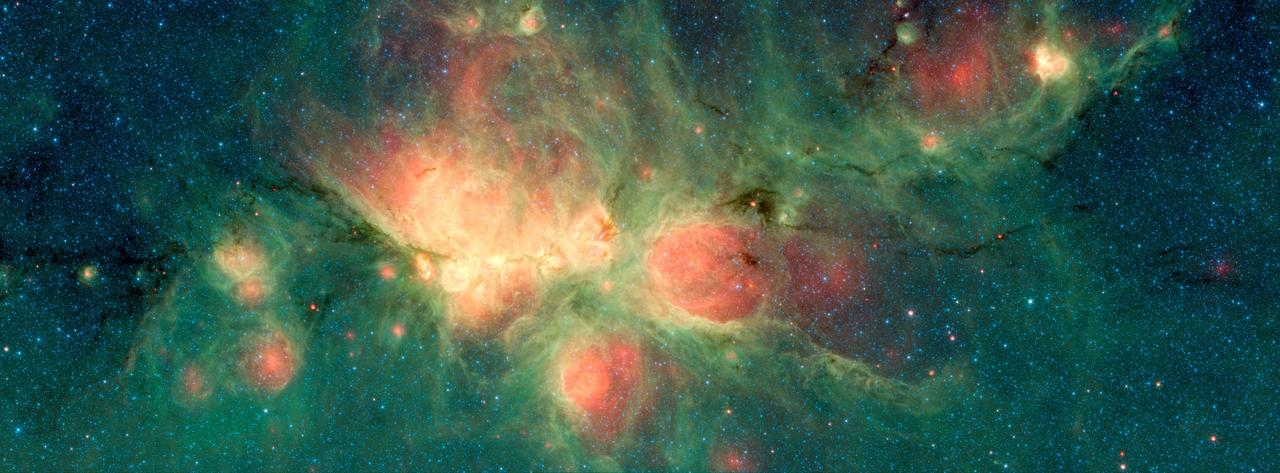
The Cat's Paw Nebula, imaged here by NASA's Spitzer Space Telescope, lies inside the Milky Way Galaxy and is located in the constellation Scorpius. Its distance from Earth is estimated to be between 1.3 kiloparsecs (about 4,200 light years) to 1.7 kiloparsecs (about 5,500 light years). The bright, cloudlike band running left to right across the image shows the presence of gas and dust that can collapse to form new stars. The black filaments running through the nebula are particularly dense regions of gas and dust. The entire star-forming region is thought to be between 24 and 27 parsecs (80-90 light years) across. The stars that form inside the nebula heat up the pressurized gas surrounding them, such that the gas may expand and form "bubbles", which appear red in this image. Asymmetric bubbles may "burst," creating U-shaped features. The green areas show regions where radiation from hot stars collided with large molecules and small dust grains called "polycyclic aromatic hydocarbons" (PAHs), causing them to fluoresce. This image was compiled using data from two Spitzer instruments, the Infrared Array Camera (IRAC) and the Multiband Imaging Photometer (MIPS). The colors correspond with wavelengths of 3.6 microns (blue), 4.5 microns (cyan), 8 microns (green) and 24 microns (red). https://photojournal.jpl.nasa.gov/catalog/PIA22568
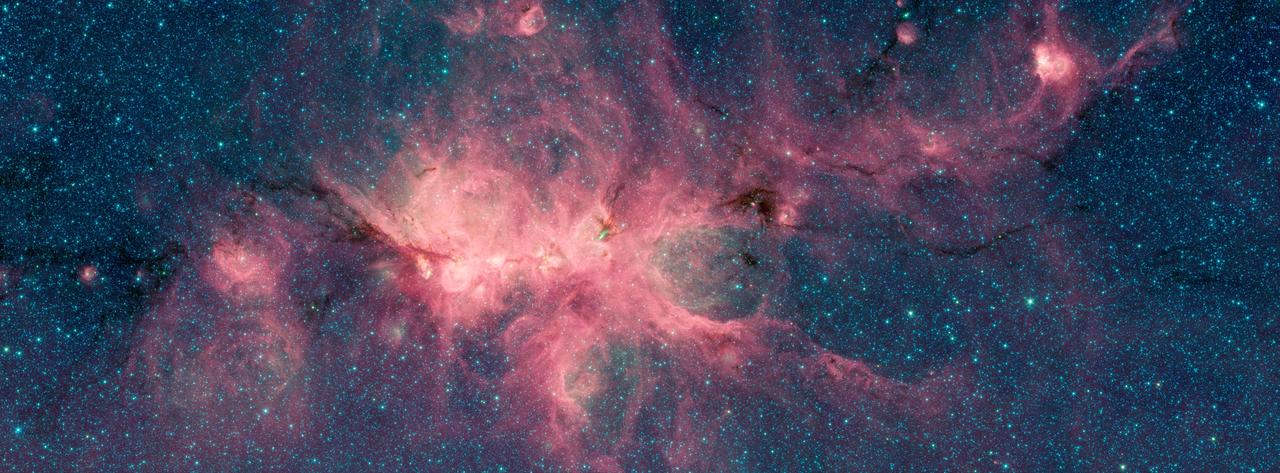
The Cat's Paw Nebula, imaged here by NASA's Spitzer Space Telescope, is a star-forming region inside the Milky Way Galaxy and is located in the constellation Scorpius. Its distance from Earth is estimated to be between 1.3 kiloparsecs (about 4,200 light years) to 1.7 kiloparsecs (about 5,500 light years). The image was taken as part of the Galactic Legacy Infrared Midplane Survey Extraordinaire (GLIMPSE), a survey of the Milky Way Galaxy. It was taken using Spitzer's Infrared Array Camera (IRAC). The colors correspond with wavelengths of 3.6 microns (blue), 4.5 microns (green), and 8 microns (red). The bright, cloudlike band running left to right across the image shows the presence of gas and dust that can collapse to form new stars. The black filaments running through the nebula are particularly dense regions of gas and dust. The entire star-forming region is thought to be between 24 and 27 parsecs (80-90 light years) across. New stars may heat up the pressurized gas surrounding them causing the gas to expand and form "bubbles." https://photojournal.jpl.nasa.gov/catalog/PIA22567
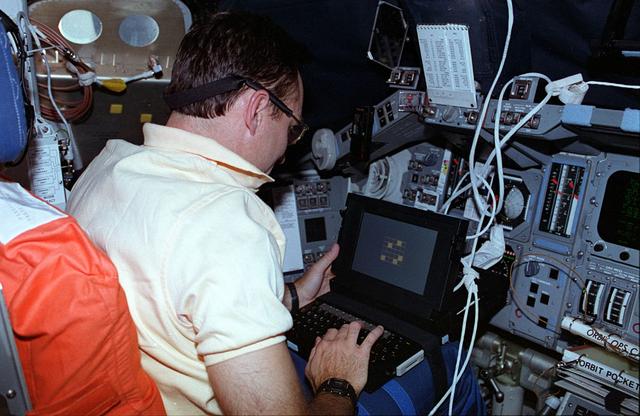
In this photograph, astronaut Carl Walz performs the Performance Assessment Workstation (PAWS) experiment at the flight deck of the Space Shuttle Orbiter Columbia during the STS-65 mission. Present day astronauts are subject to a variety of stresses during spaceflight. These include microgravity, physical isolation, confinement, lack of privacy, fatigue, and changing work/rest cycles. The purpose of this experiment is to determine the effects of microgravity upon thinking skills critical to the success of operational tasks in space. The principle objective is to distinguish between the effects of microgravity on specific information-processing skills affecting performance and those of fatigue caused by long work periods. To measure these skills, the investigators use a set of computerized performance tests called the Performance Assessment Workstation, which is based on current theoretical models of human performance. The tests were selected by analyzing tasks related to space missions and their hypothesized sensitivity to microgravity. Multiple subjective measures of cumulative fatigue and changing mood states are also included for interpreting performance data.
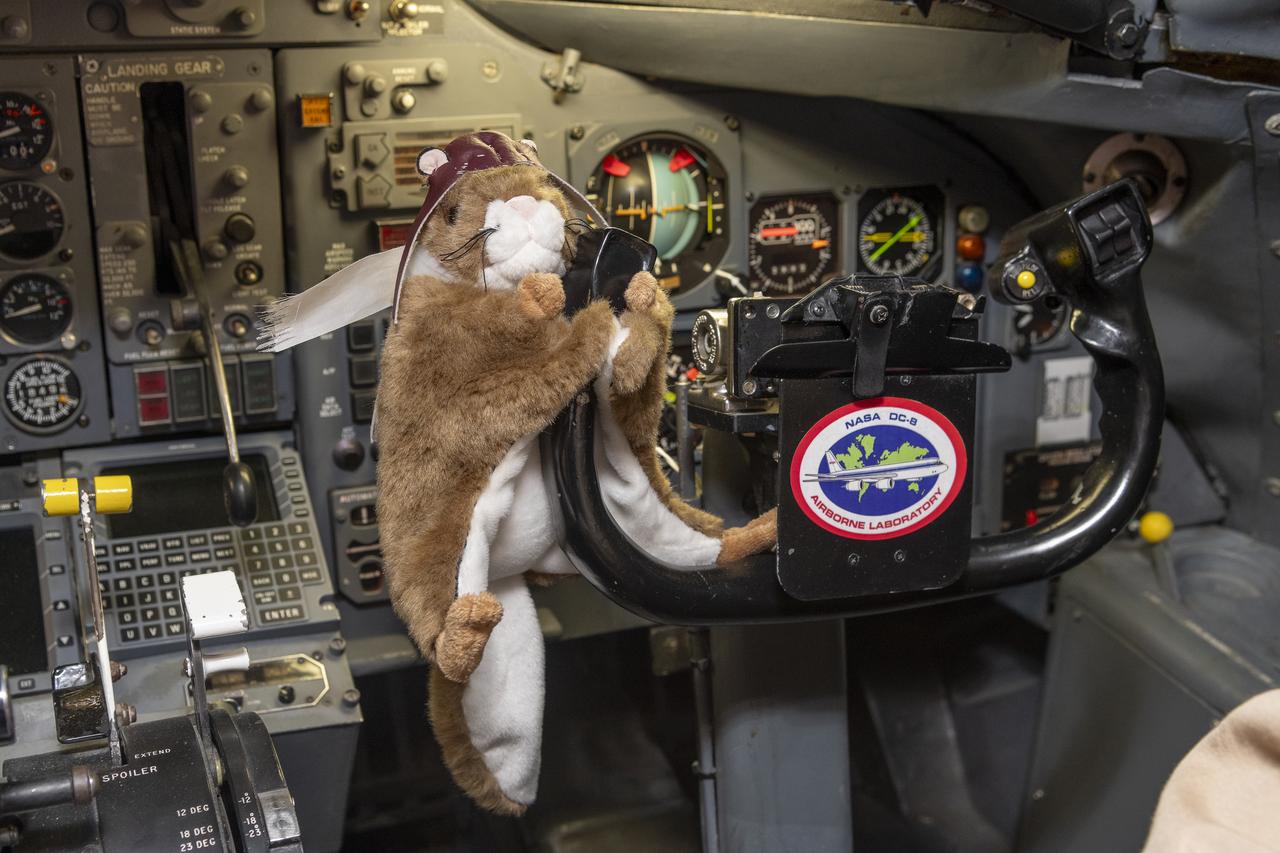
Orville, NASA’s high-flying squirrel, tries his paw at piloting the DC-8 aircraft at NASA’s Armstrong Flight Research Center Building 703 in Palmdale, California. On May 2, 2024, NASA personnel, friends, and family celebrated the DC-8 staff, aircraft, and science campaigns.
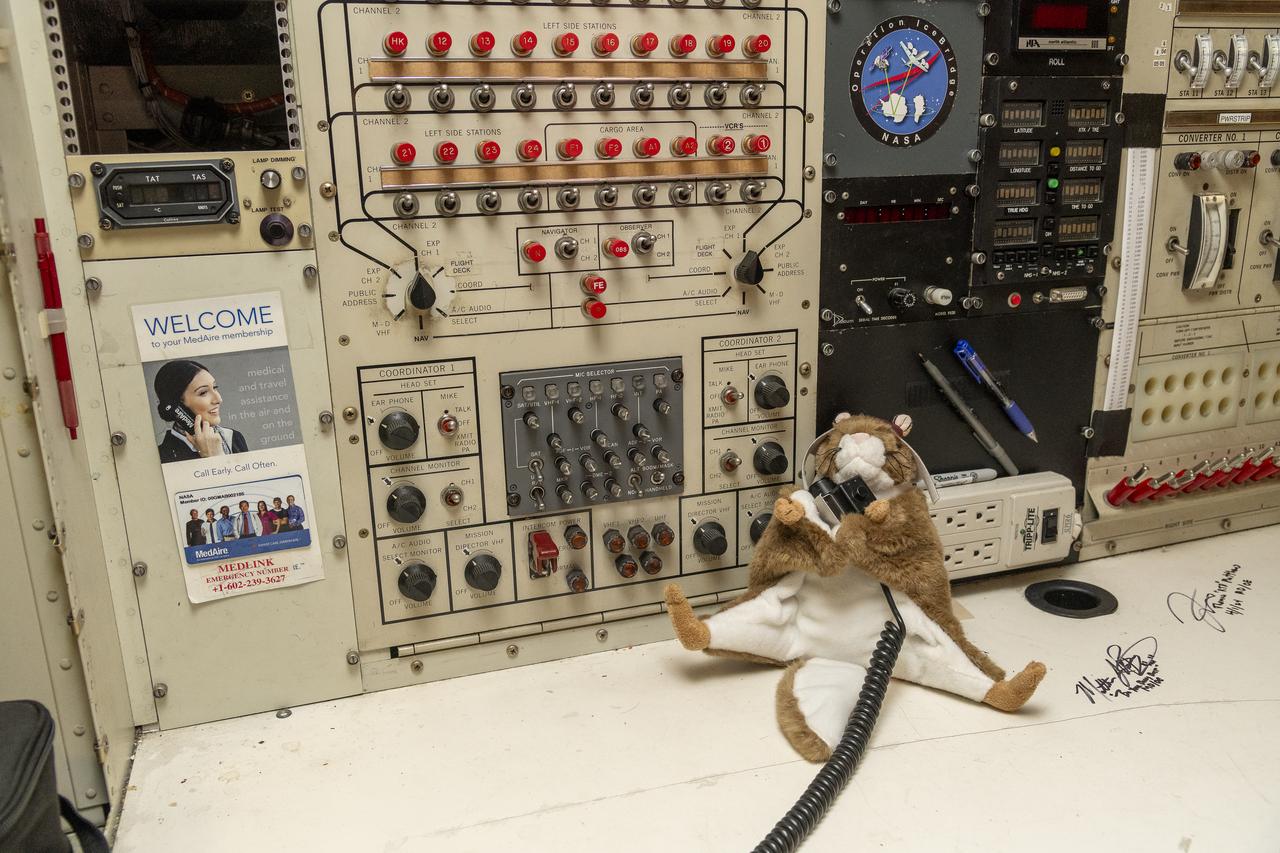
Orville, NASA’s high-flying squirrel, uses the microphone at the mission director station onboard the DC-8 aircraft at NASA’s Armstrong Flight Research Center Building 703 in Palmdale, California. On May 2, 2024, NASA personnel, friends, and family celebrated the DC-8 staff, aircraft, and science campaigns.