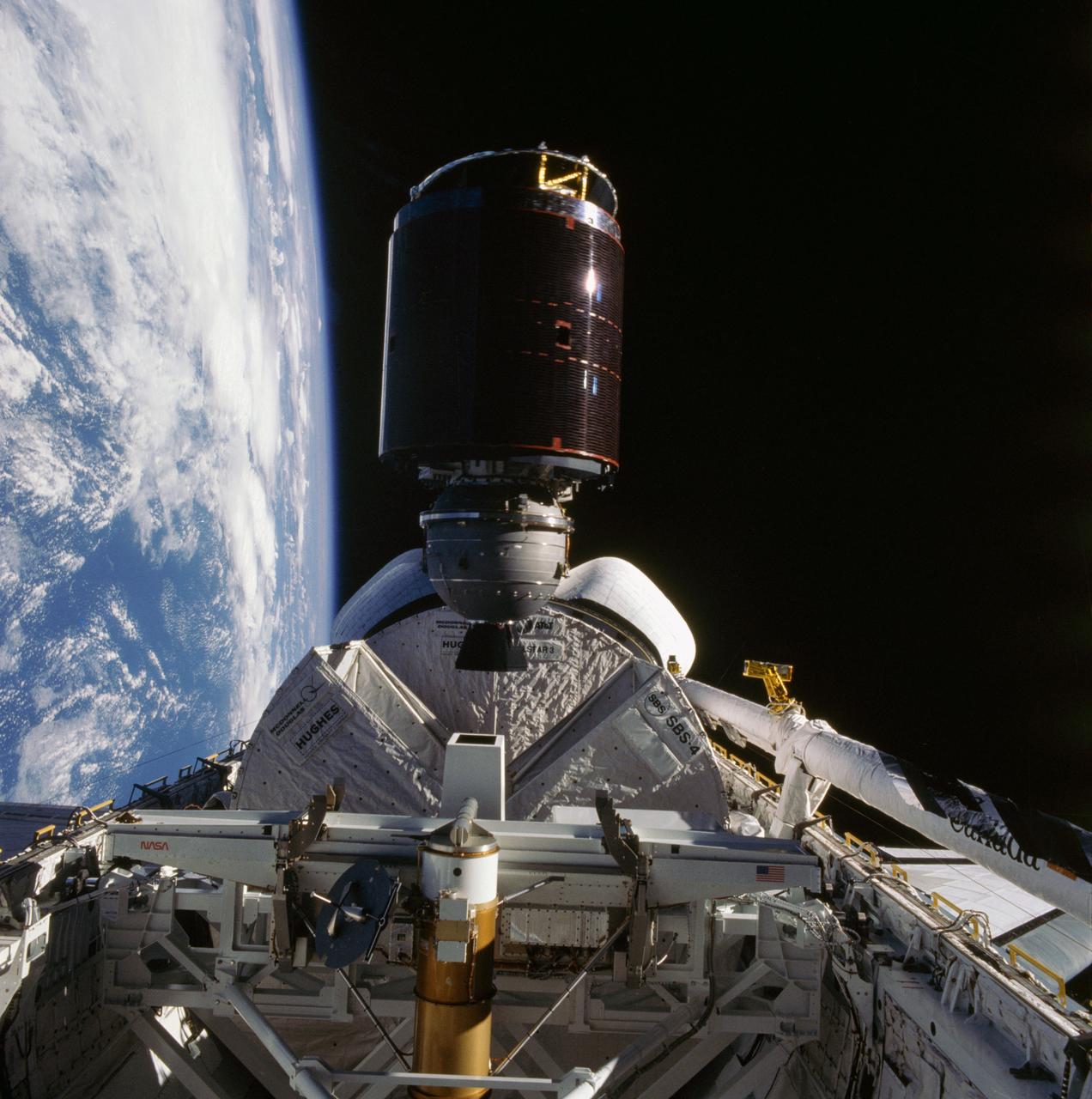
41D-36-034 (30 Aug 1984) --- Less than nine hours after the first launch of the Discovery, its astronaut crewmembers photographed deployment of the SBS-4 communications satellite. The cylindrical spacecraft spins and rises from its cradle-like protective shield to begin life in space. A number of maneuvers will place it in its desired orbit. A 70mm camera, aimed through the spacecraft’s aft flight deck windows, was used to expose the frame.
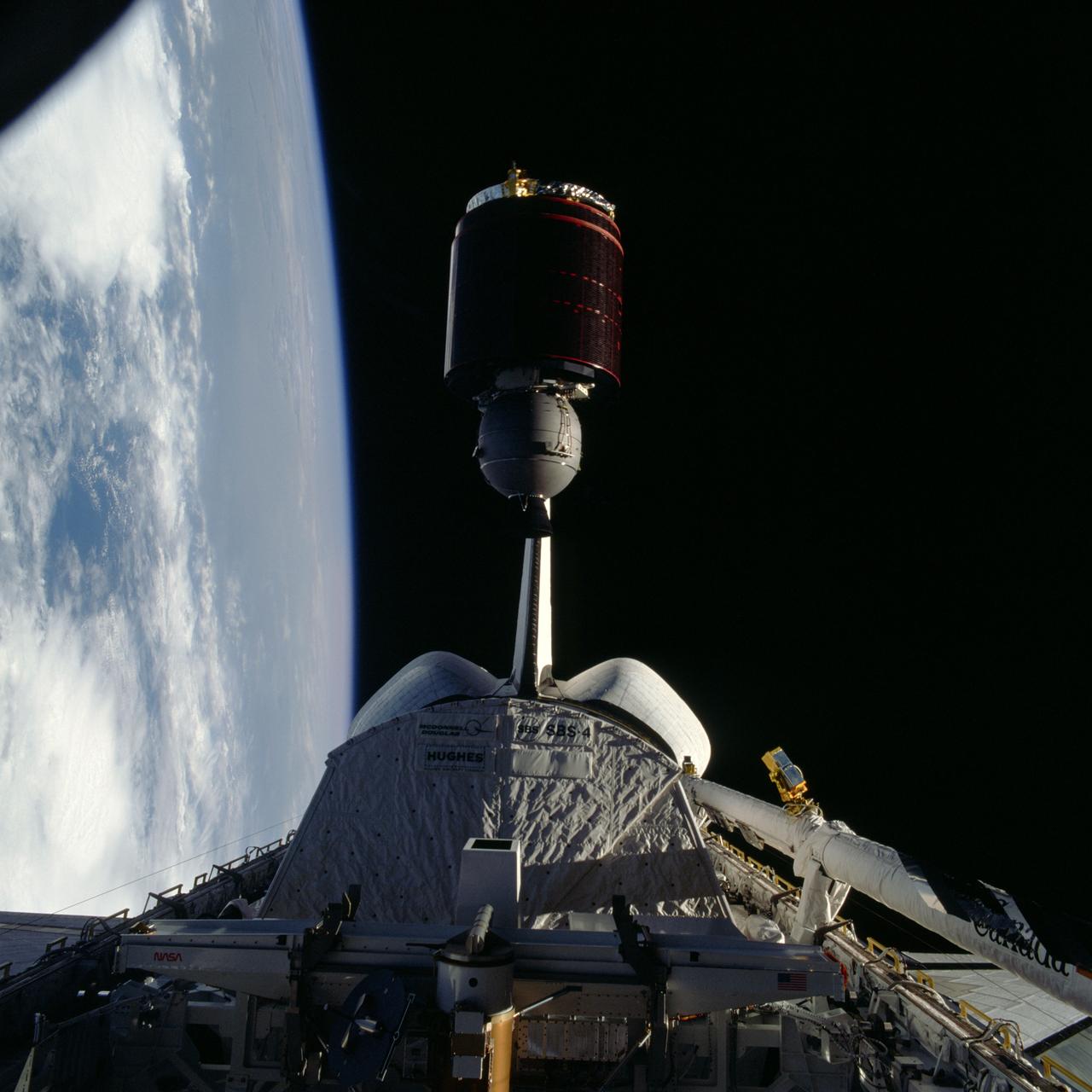
41D-37-050 (1 Sept 1984) --- Telstar, the third of three satellites to be placed into space via the Earth-orbiting Discovery, departs from the cargo bay of the manned vehicle during 41-D's third day in space. The scene was photographed at 9:35 a.m. (CDT), Sept. 1, 1984, with a 70mm handheld hasselblad camera aimed through the windows on the flight deck. Heavy clouds cover much of the water and land mass of Earth in the background.
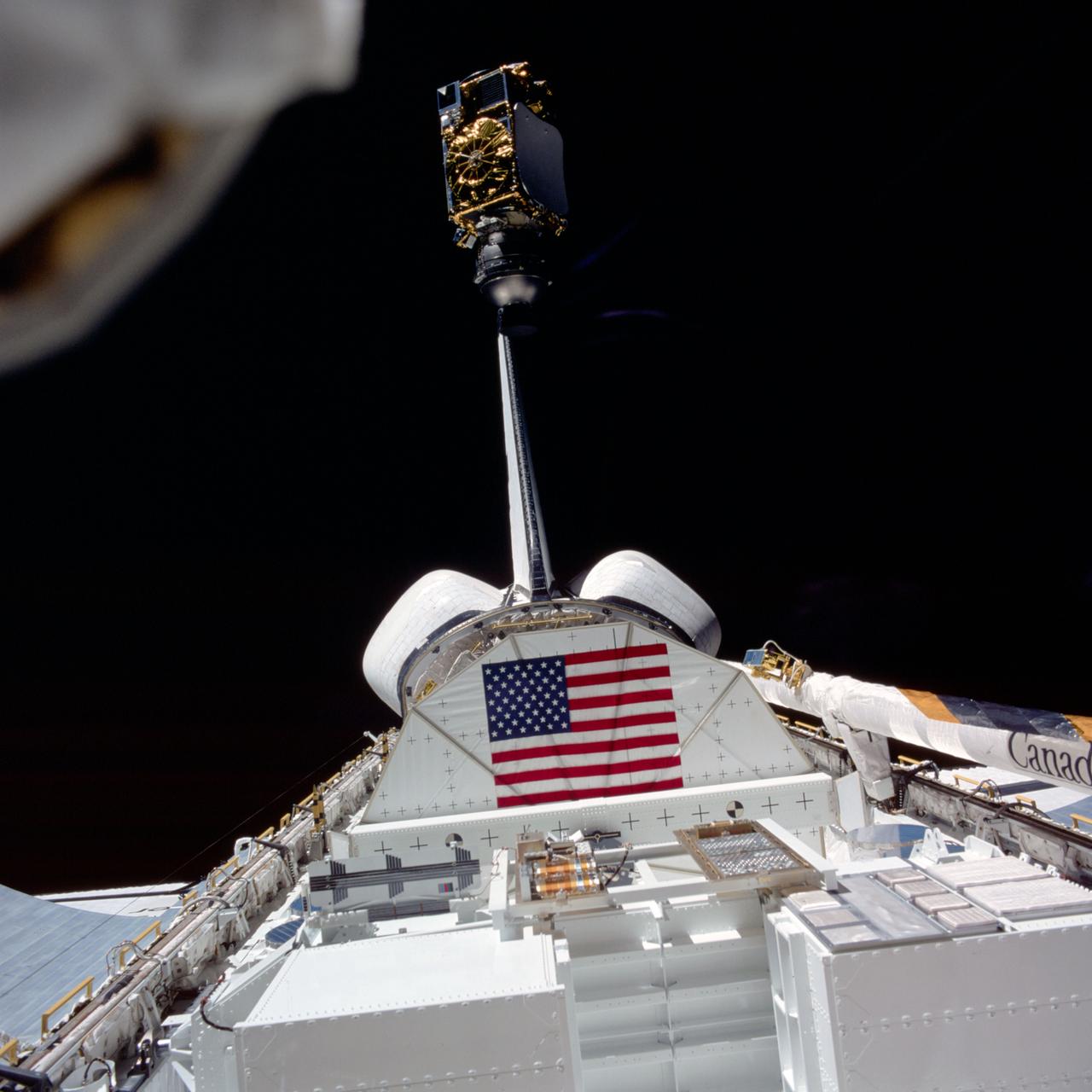
STS008-49-1724 (31 Aug 1983) --- The Indian National Satellite (INSAT) is about to clear the vertical stabilizer of the Earth-orbiting Space Shuttle Challenger and on its way to a higher orbit. The STS-8 mission's Payload Flight Test Article (PFTA) displays the U.S. flag in the middle of the cargo bay, as the Canadian built Remote Manipulator System (RMS) appears to be waiting for its busy agenda of activity with the barbell-shaped test device. This 70mm frame was exposed by a crewmember using a handheld Hasselblad inside Challenger's cabin.
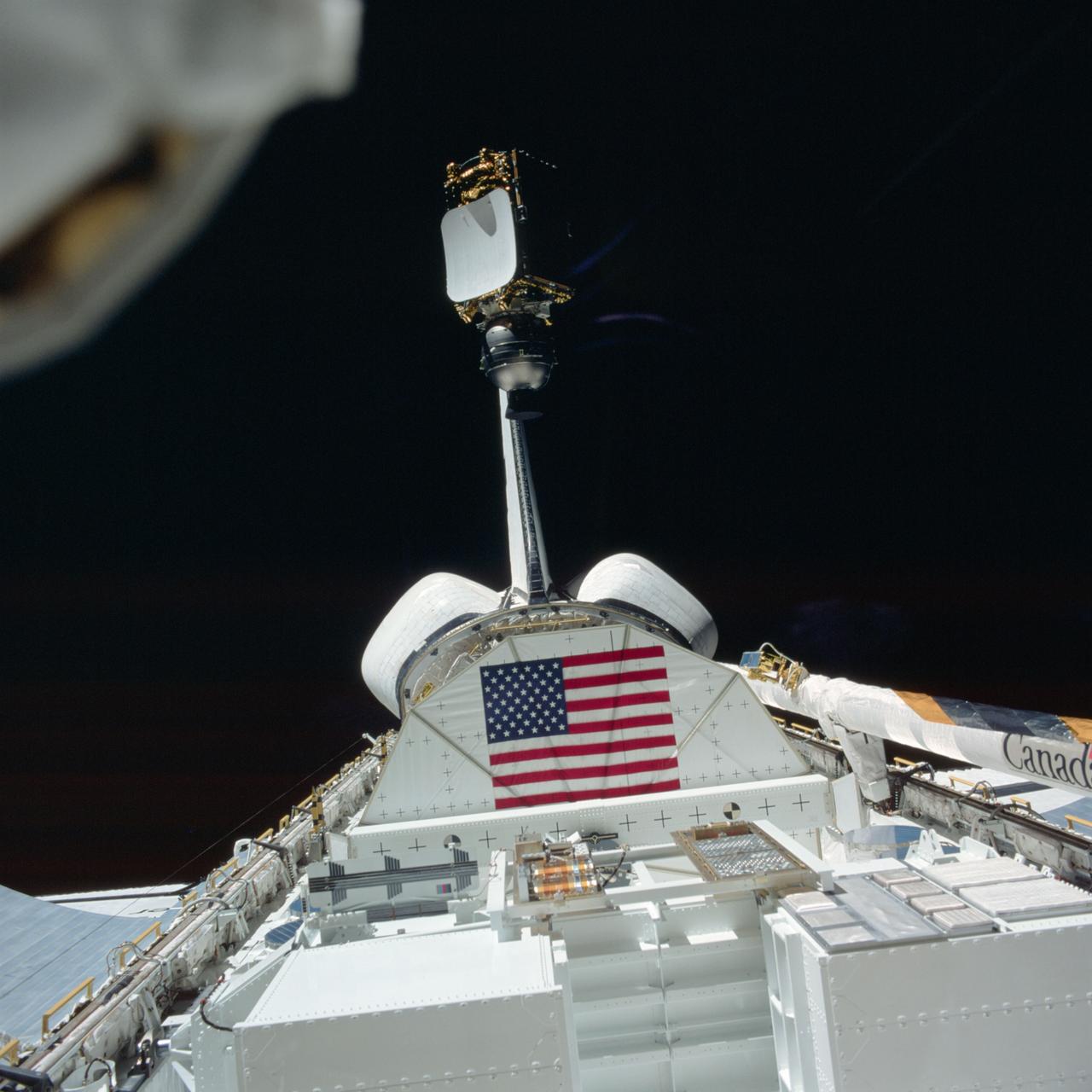
STS008-49-1722 (30 Aug-5 Sept 1983) --- The Indian National Satellite (INSAT) is about to clear the Earth-orbiting Space Shuttle Challenger this 70mm frame exposed with a handheld camera from the aft flight deck. The Payload Flight Test Article (PFTA) displays the United States flag in the middle of the cargo bay and the Canadian built Remote Manipulator System (RMS) appears to be waiting for its busy agenda of activity with the barbell-shaped test device.