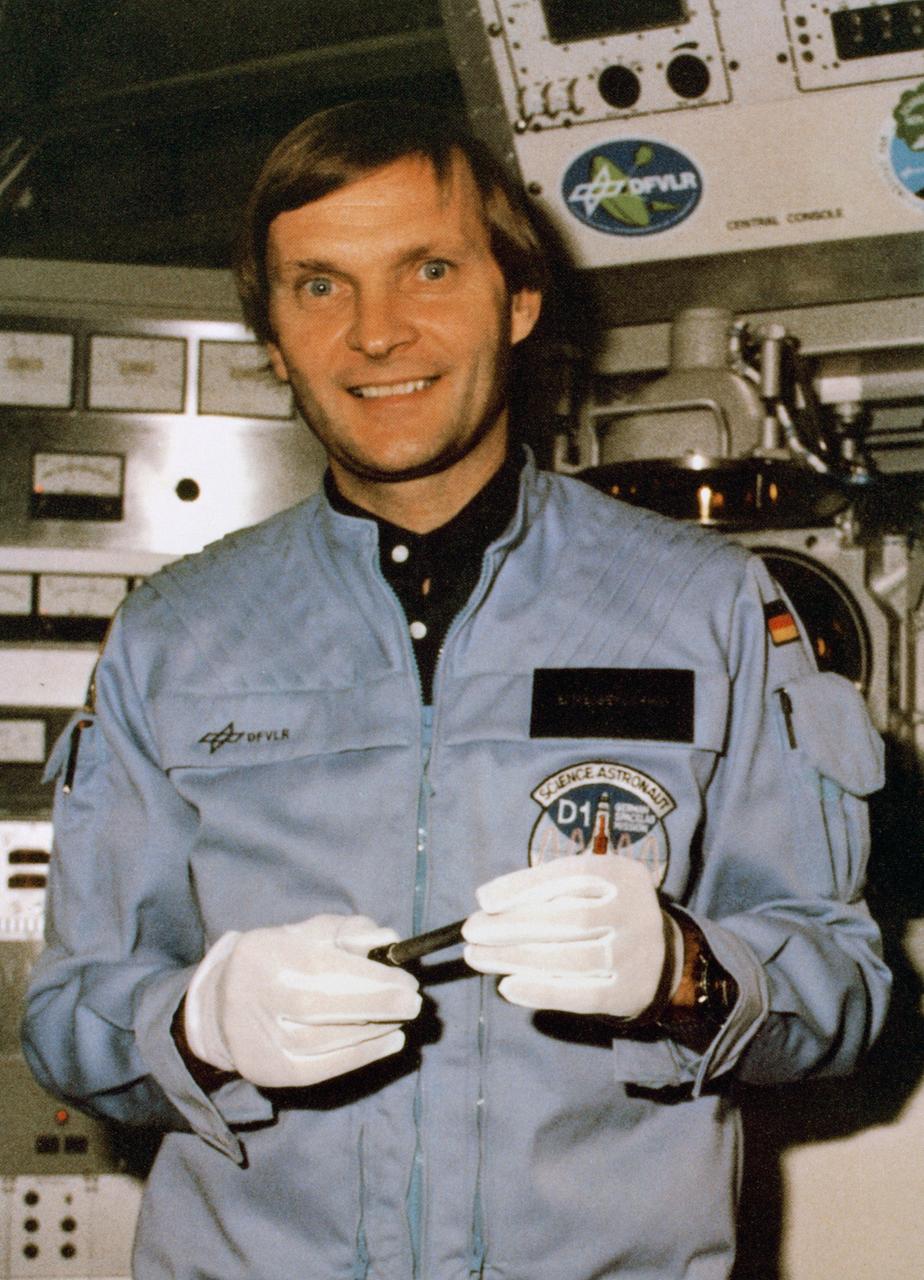
S84-47034 (Nov 1984) --- Astronaut Ernst Messerschmid, payload specialist, D-1 German Spacelab mission.
Portrait - German Payload Specialist (PS) Ernst Messerschmid
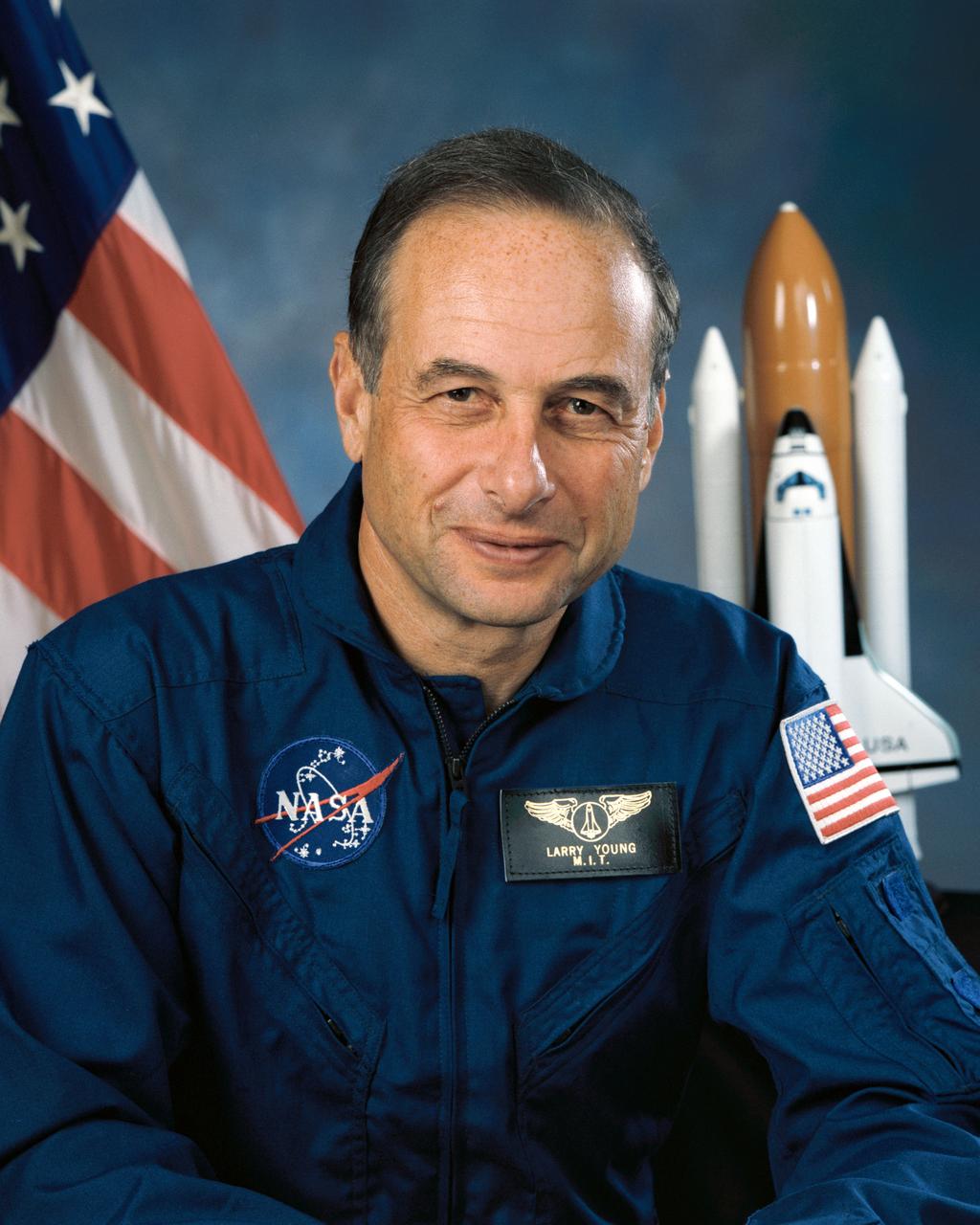
S92-49243 (November 1992) --- Astronaut Laurence Young, Sc. D., Massachusetts Institute of Technology, payload specialist
Offical portrait of STS-58 alternate payload specialist Lawrence Young
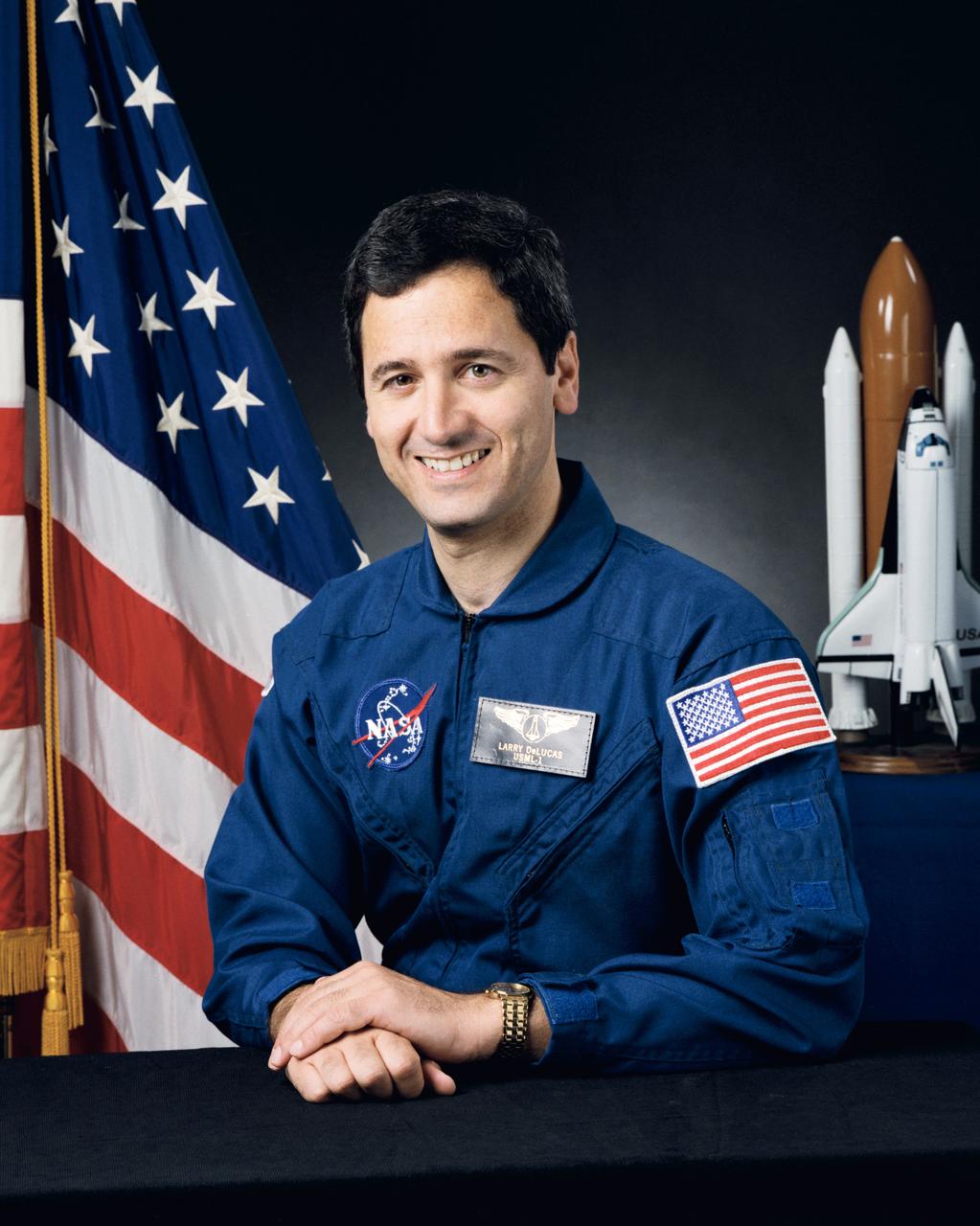
S91-41413 (July 1991) --- Payload specialist Lawrence J. DeLucas, Ph.D.
Official portrait of STS-50 Payload Specialist Lawrence J. DeLucas
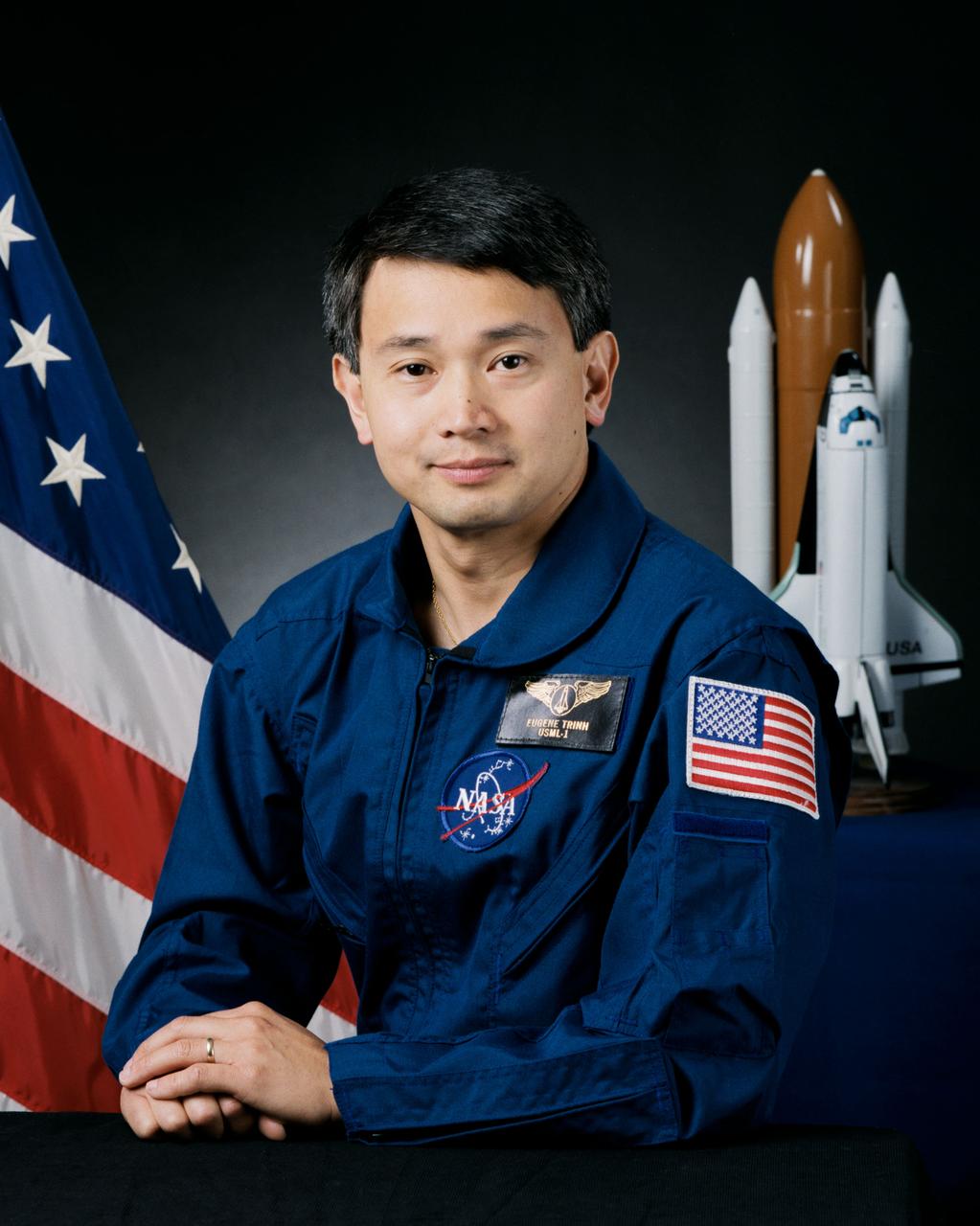
S91-46260 (1991) --- Astronaut Eugene H. Trinh, STS-50 USML payload specialist.
Official portrait of STS-50 USML payload specialist Eugene H. Trinh
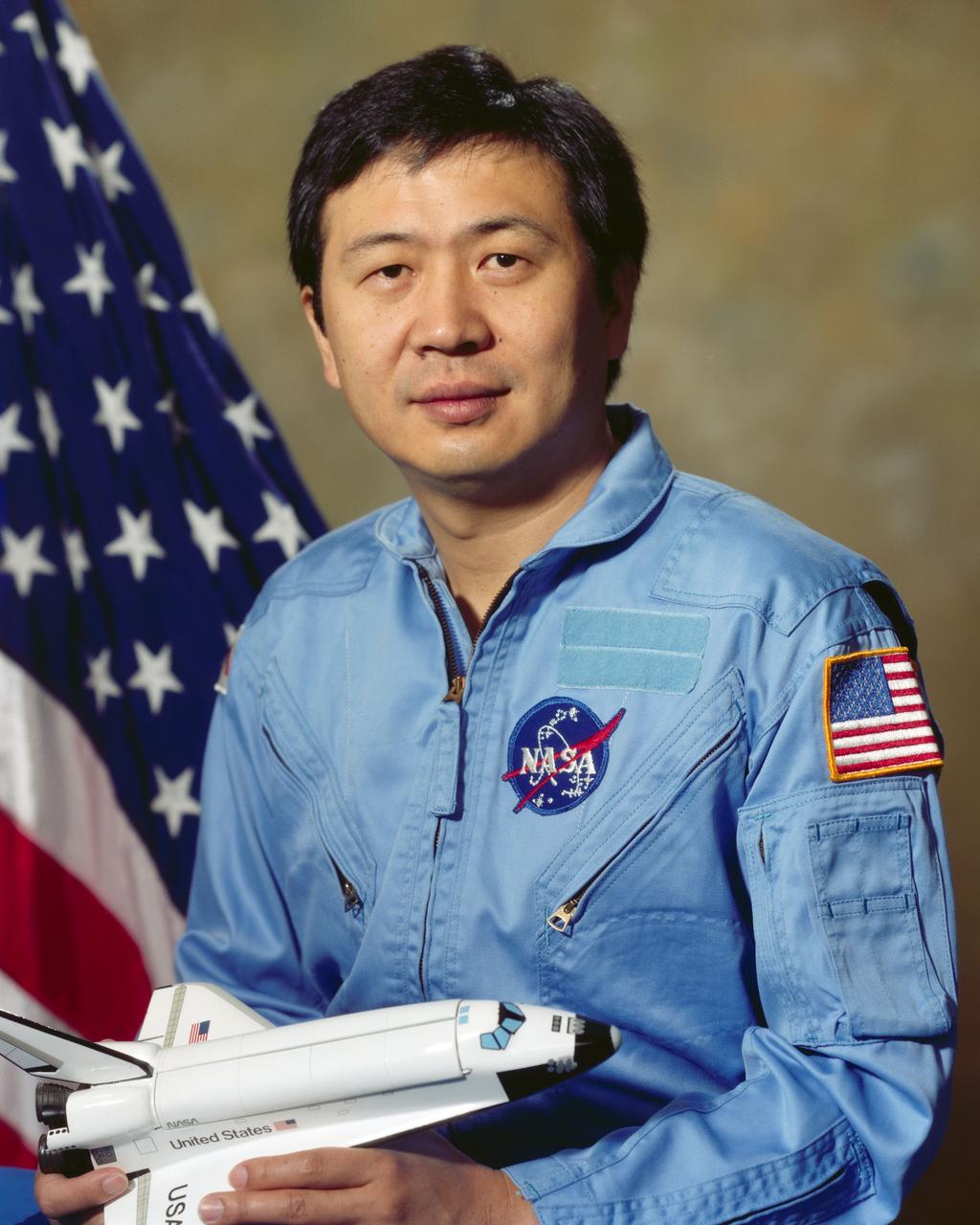
S84-36141 (20 June 1984) --- Astronaut Taylor E. Wang, payload specialist.
Portrait - Taylor E. Wang - Payload Specialist (PS)
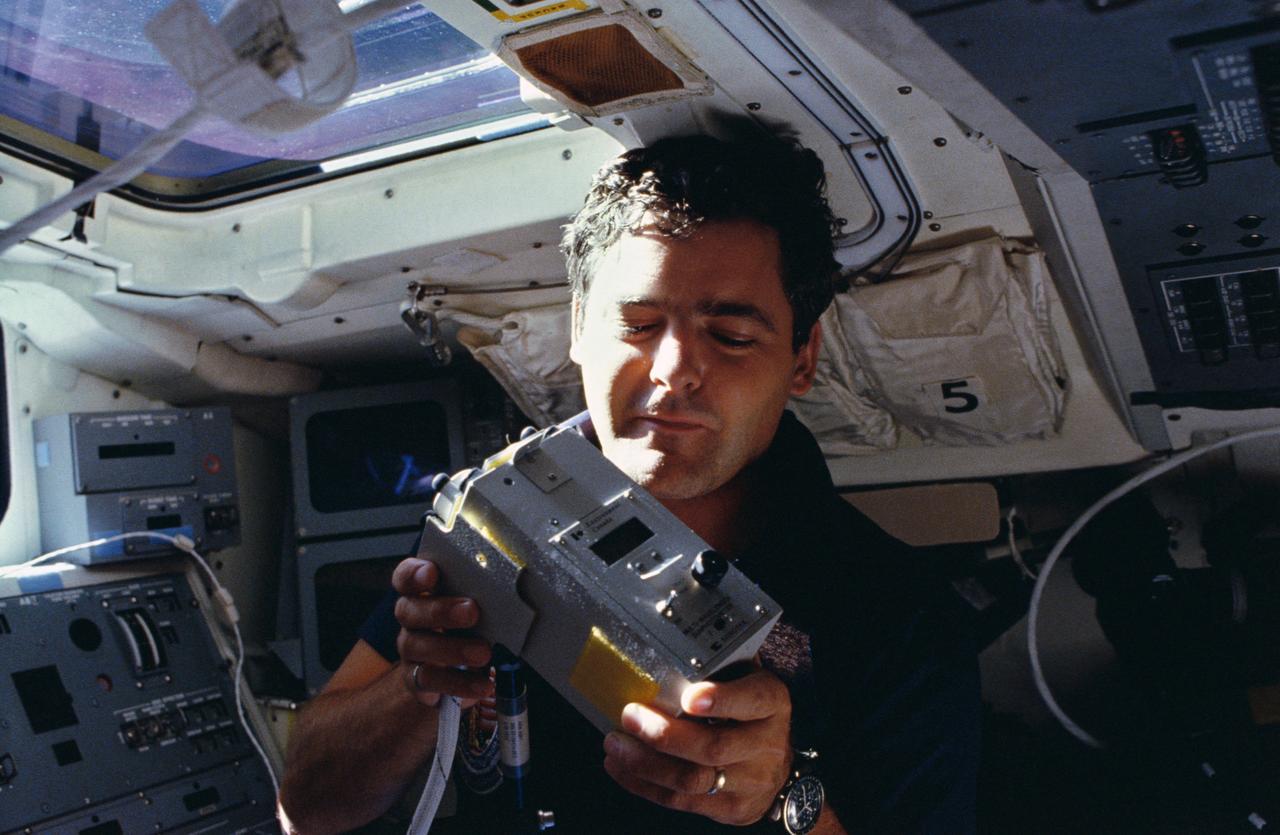
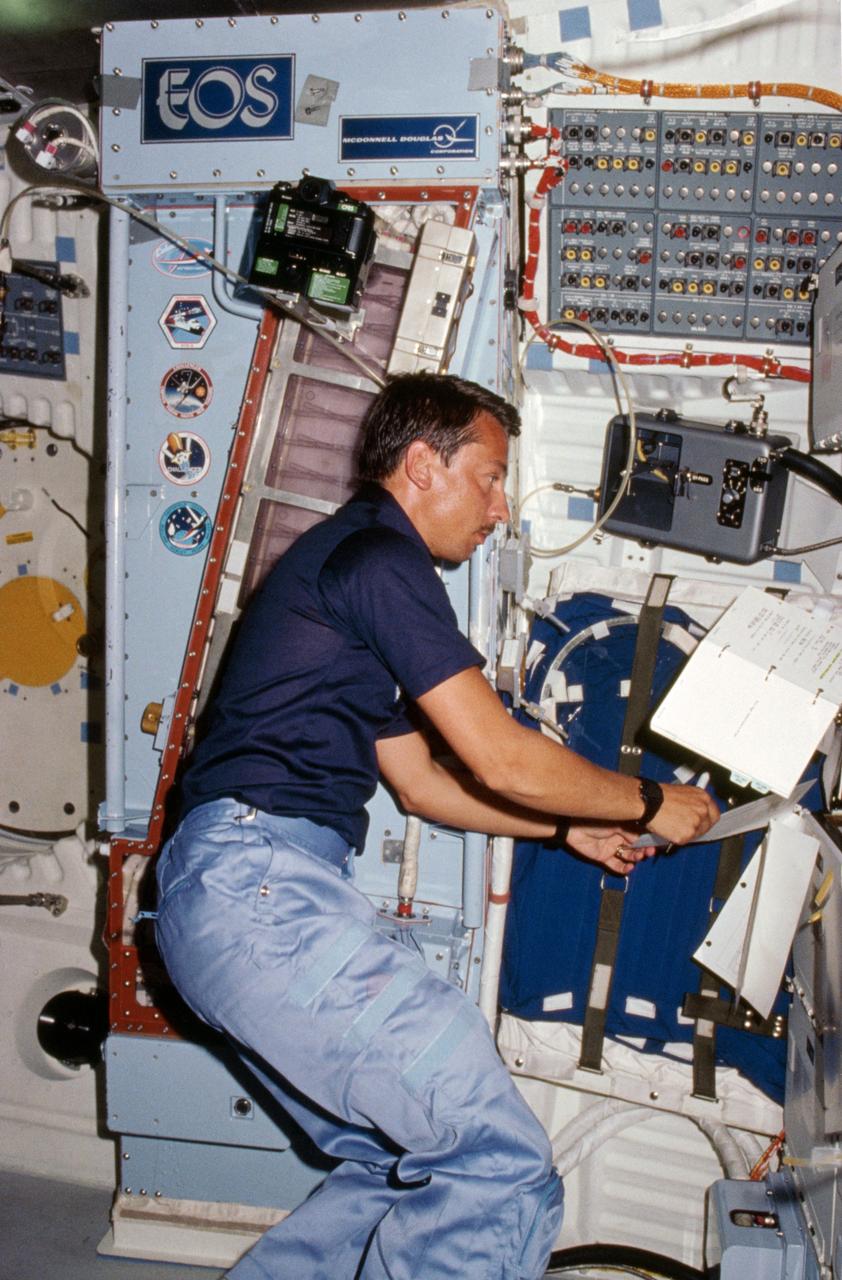
Payload specialist Marc Garneau displays a Canadian made Sunphotometer, part of a package of experiments which he is concentrating on during this mission. He is sitting on the Challenger's flight deck at the aft station.
Payload specialist Garneau displays Sunphotometer
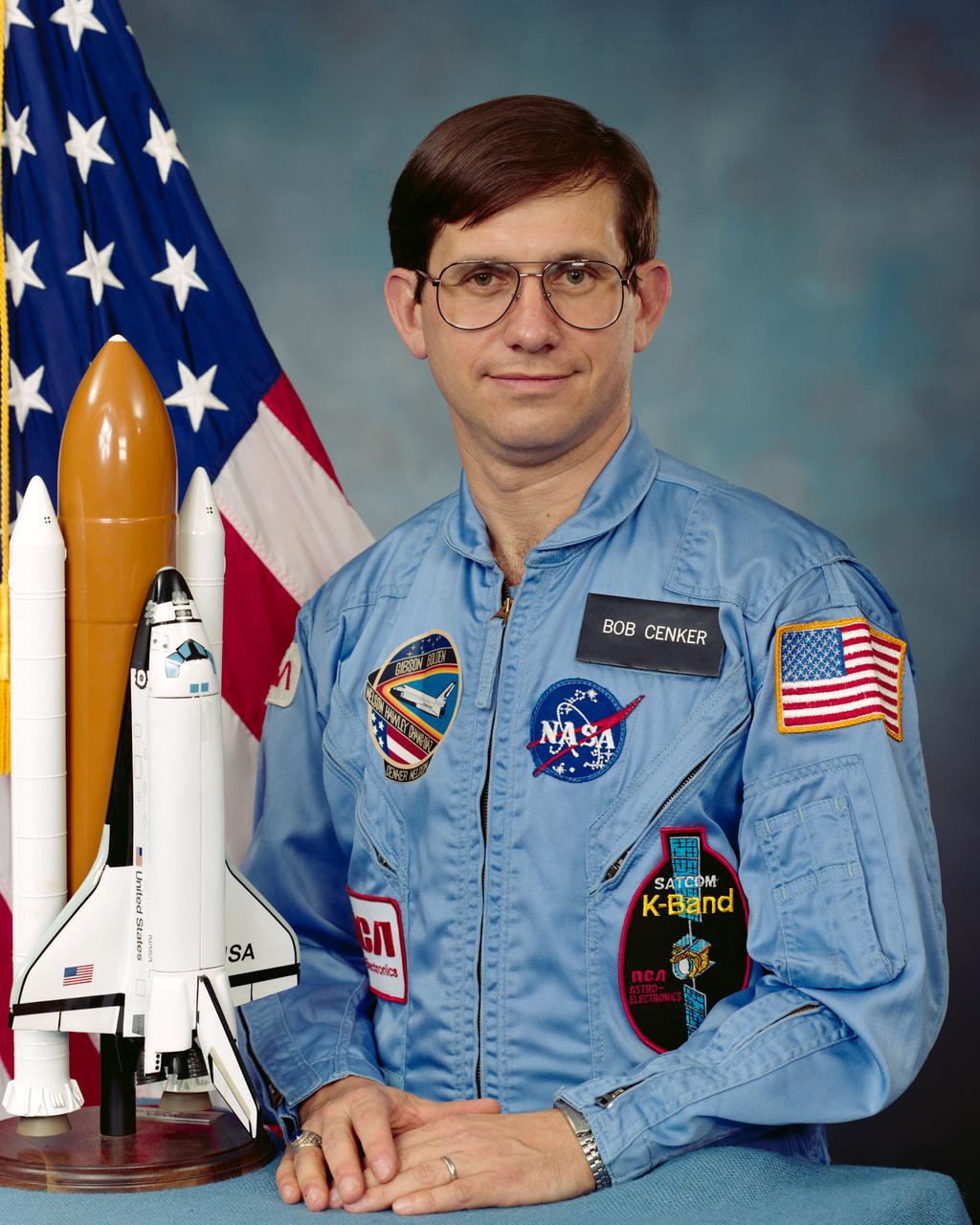
S85-45499 (2 Dec 1985) --- Payload specialist Robert J. Cenker.
Official Portrait - Robert J. Cenker - Payload Specialist (PS) - STS-61C
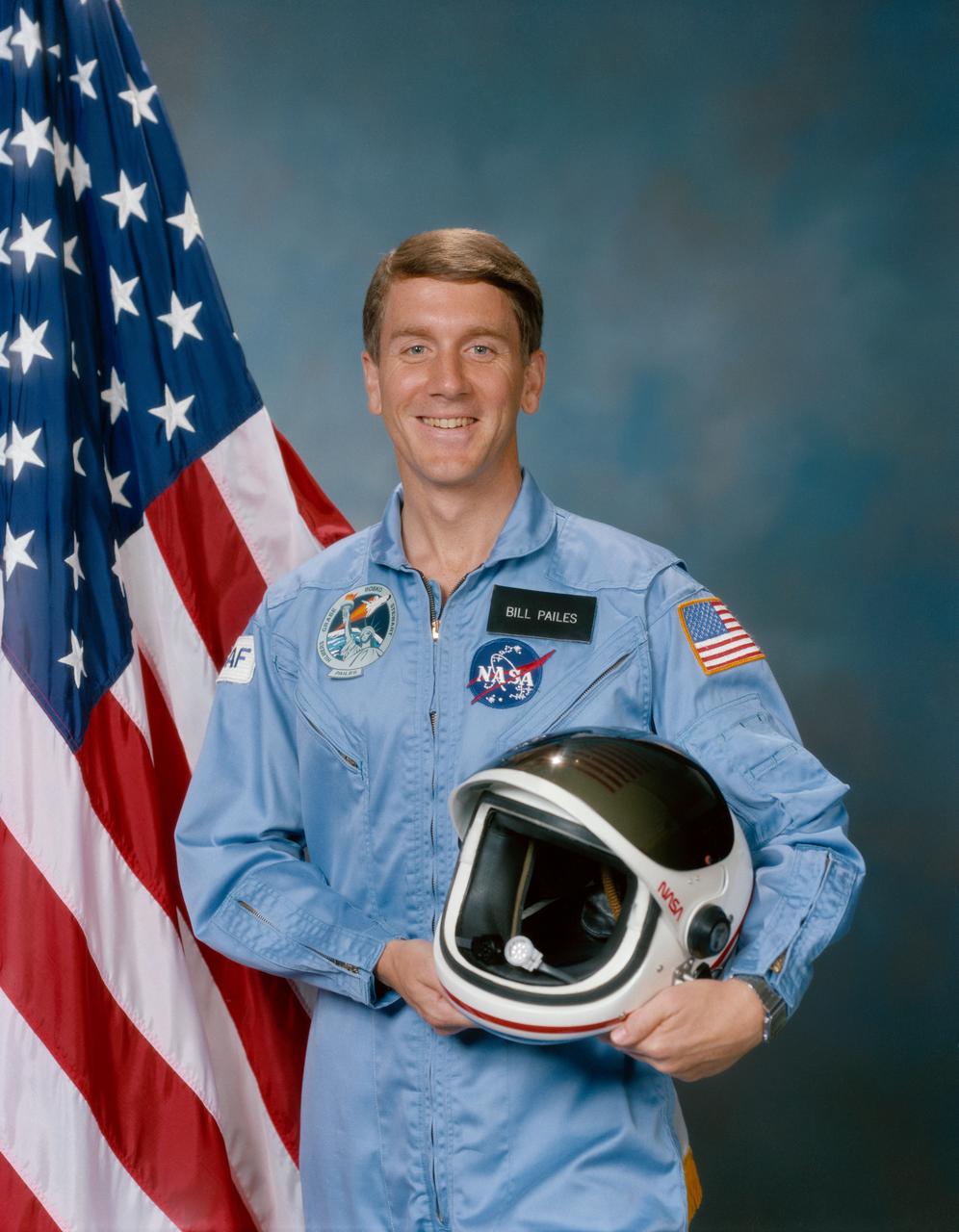
S85-39868 (1985) ---  William A. Pailes (Major USAF), Payload specialist on 51J.
Official Portrait - Major William A. Pailes - STS 51J Payload Specialist
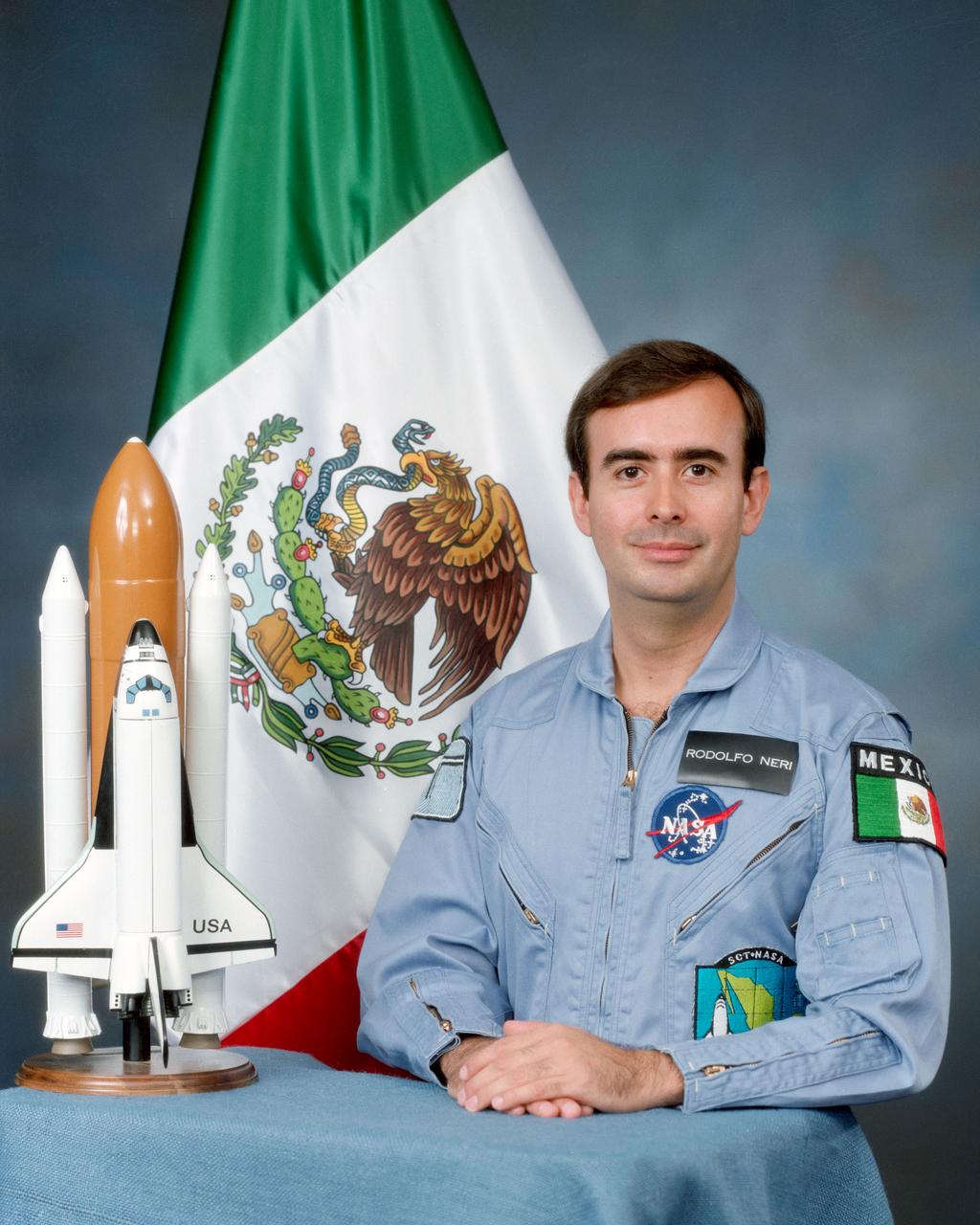
S85-39865 (4 Sept 1985) --- Astronaut Rodolfo Neri, payload specialist
Official Portrait - Mexican Payload Specialist (PS) Rodolfo Neri
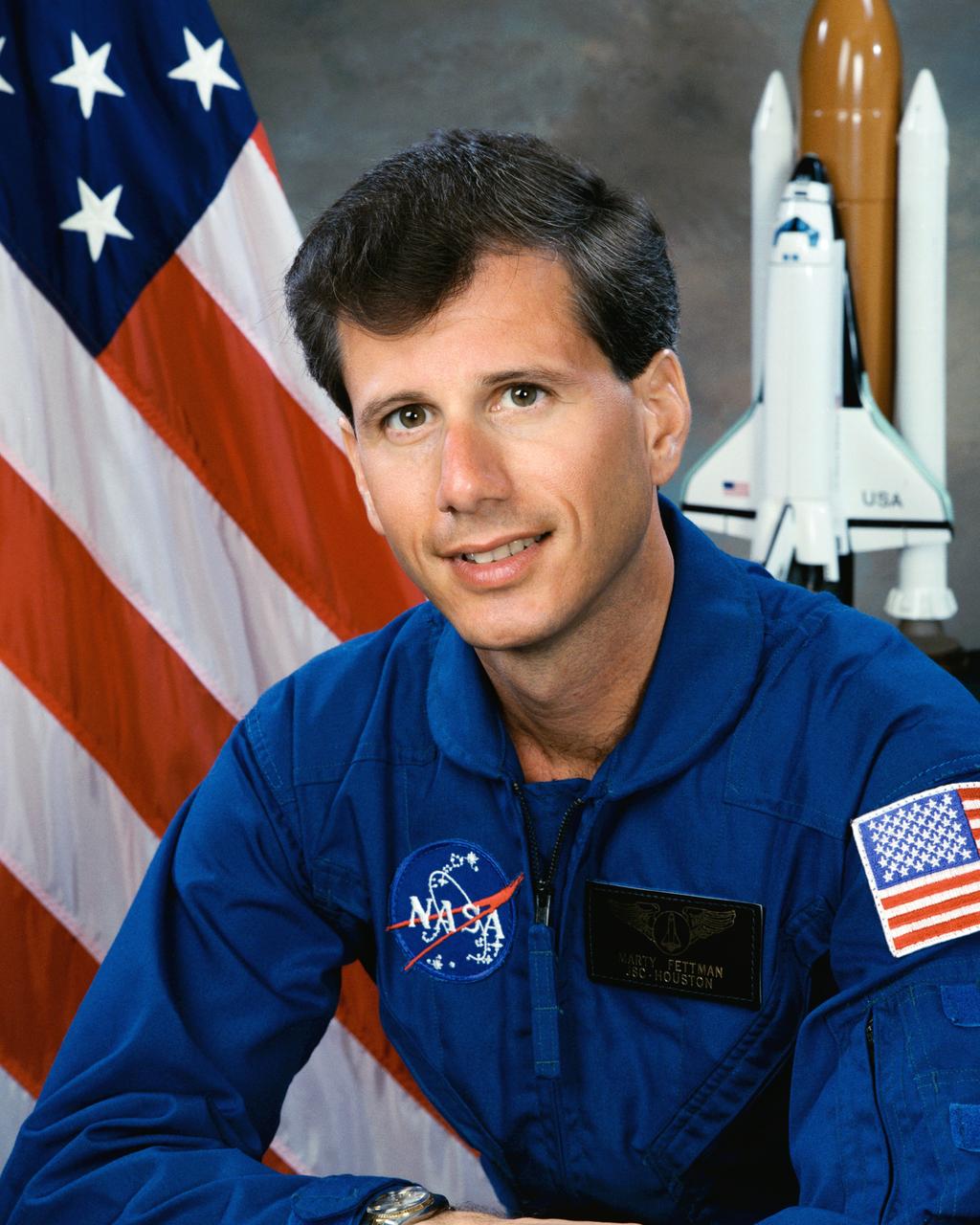
S92-48423 (October 1992) --- Astronaut Martin J. Fettman, payload specialist.
Official portrait of STS-58 SLS-2 payload specialist Dr. Martin J. Fettman
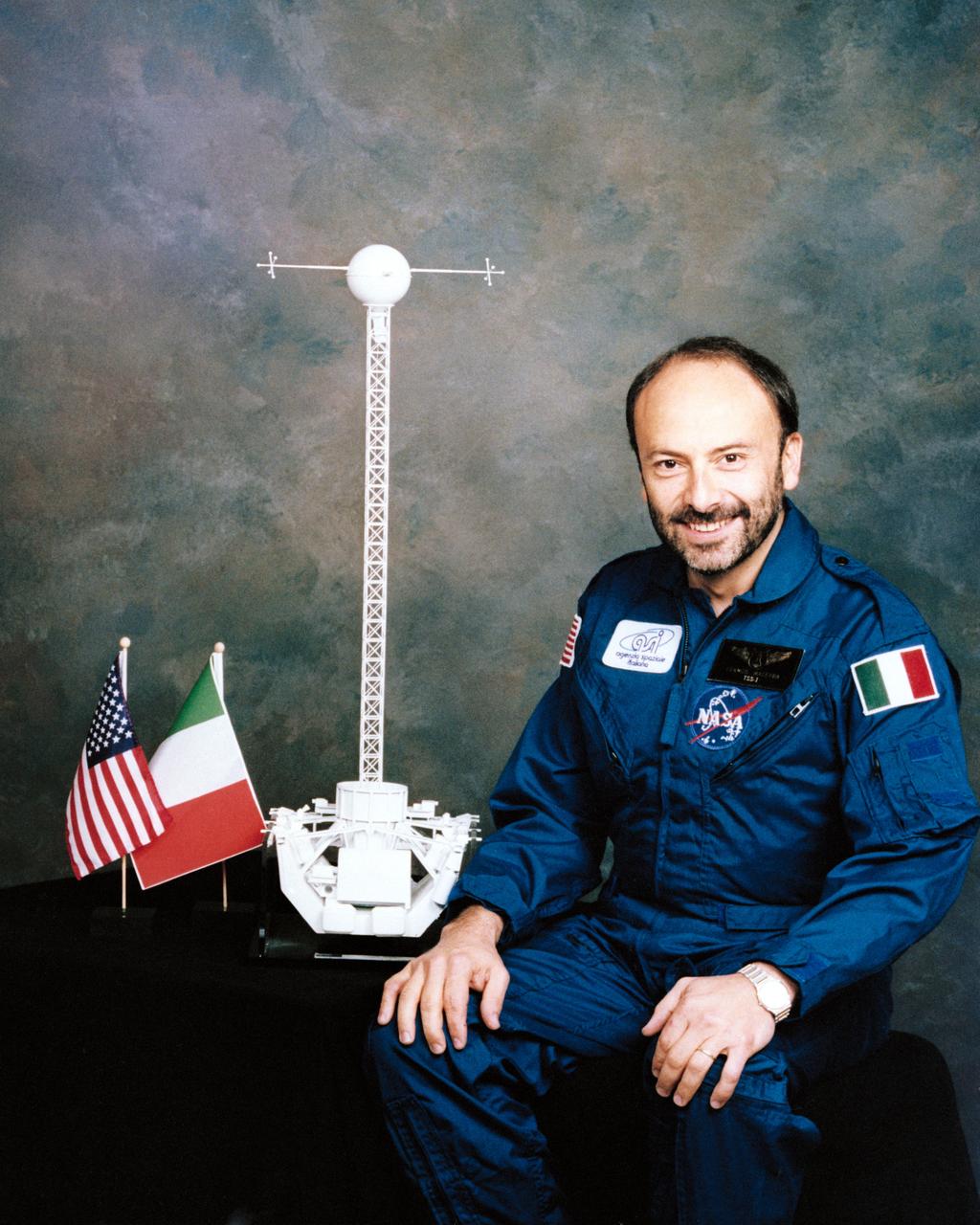
S92-30926 (12 March 1992) --- Astronaut Franco Malerba, STS-46 Italian Payload Specialist.
Portrait of STS-46 Italian Payload Specialist Franco Malerba taken at MSFC
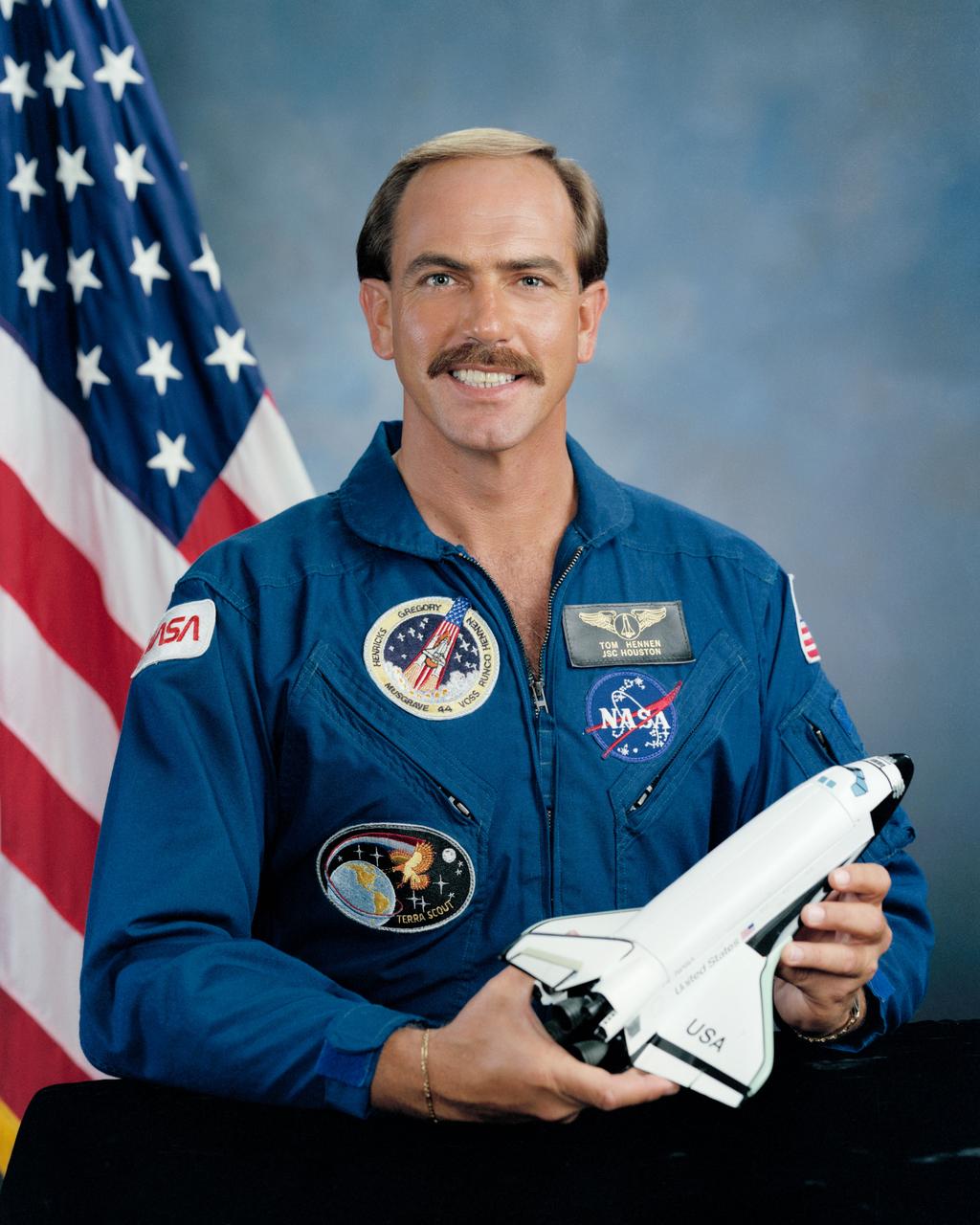
S91-45399 (30 Aug 1991) --- Astronaut Thomas J. Hennen, payload specialist.
Official portrait of STS-44 Terra Scout payload specialist Thomas J. Hennen
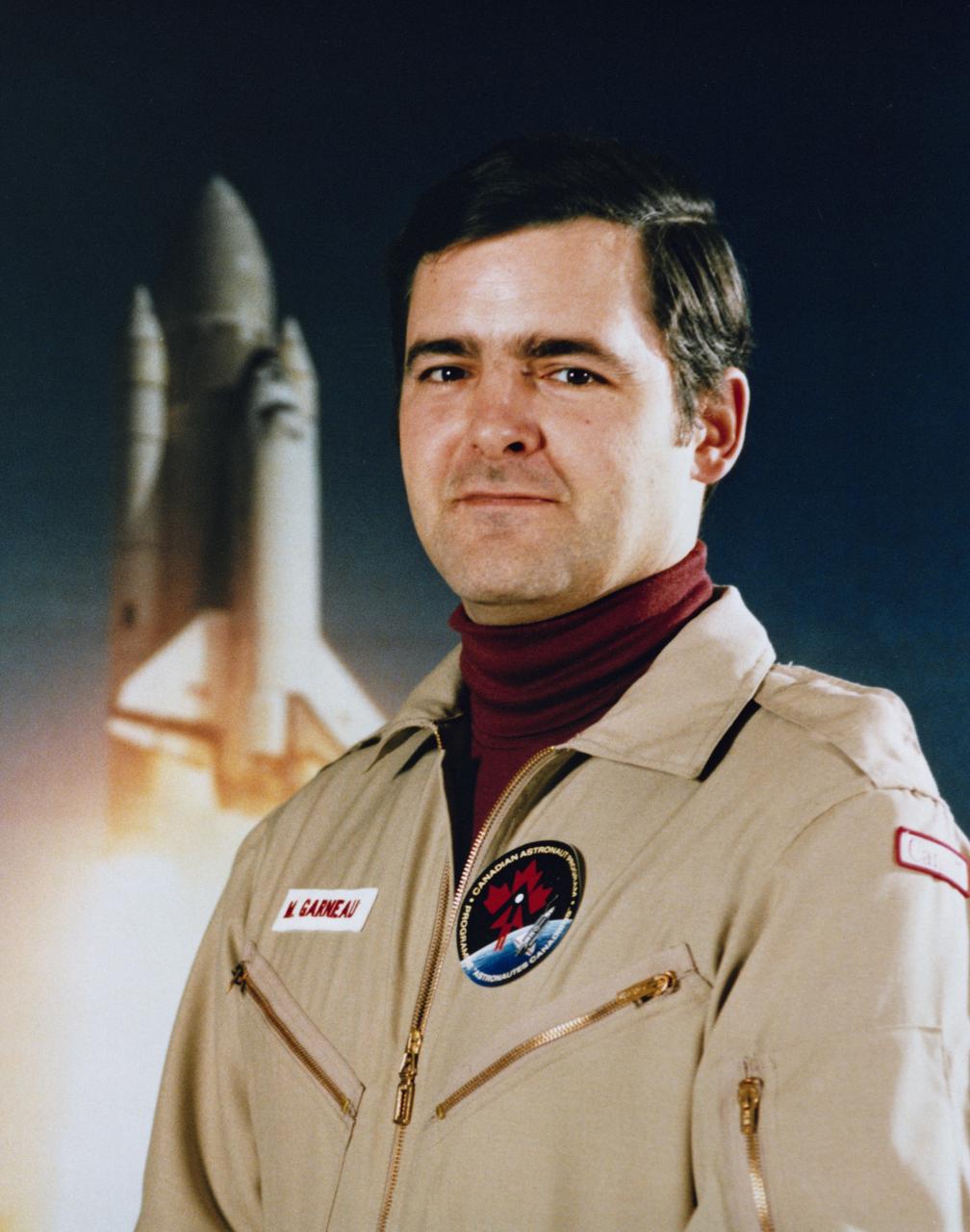
41D-3276 (S14-3276)(4 Sept 1984) --- Marc Garnea, 41-G payload specialist, will represent the Canadian National Research Council when the seven-member crew lauches aboard the Space Shuttle Challenger on Oct. 5, 1984.  Garneau and other members of the crew had earlier met the press for the first time   as a group.
Portrait view of Payload Specialist Marc Garneau
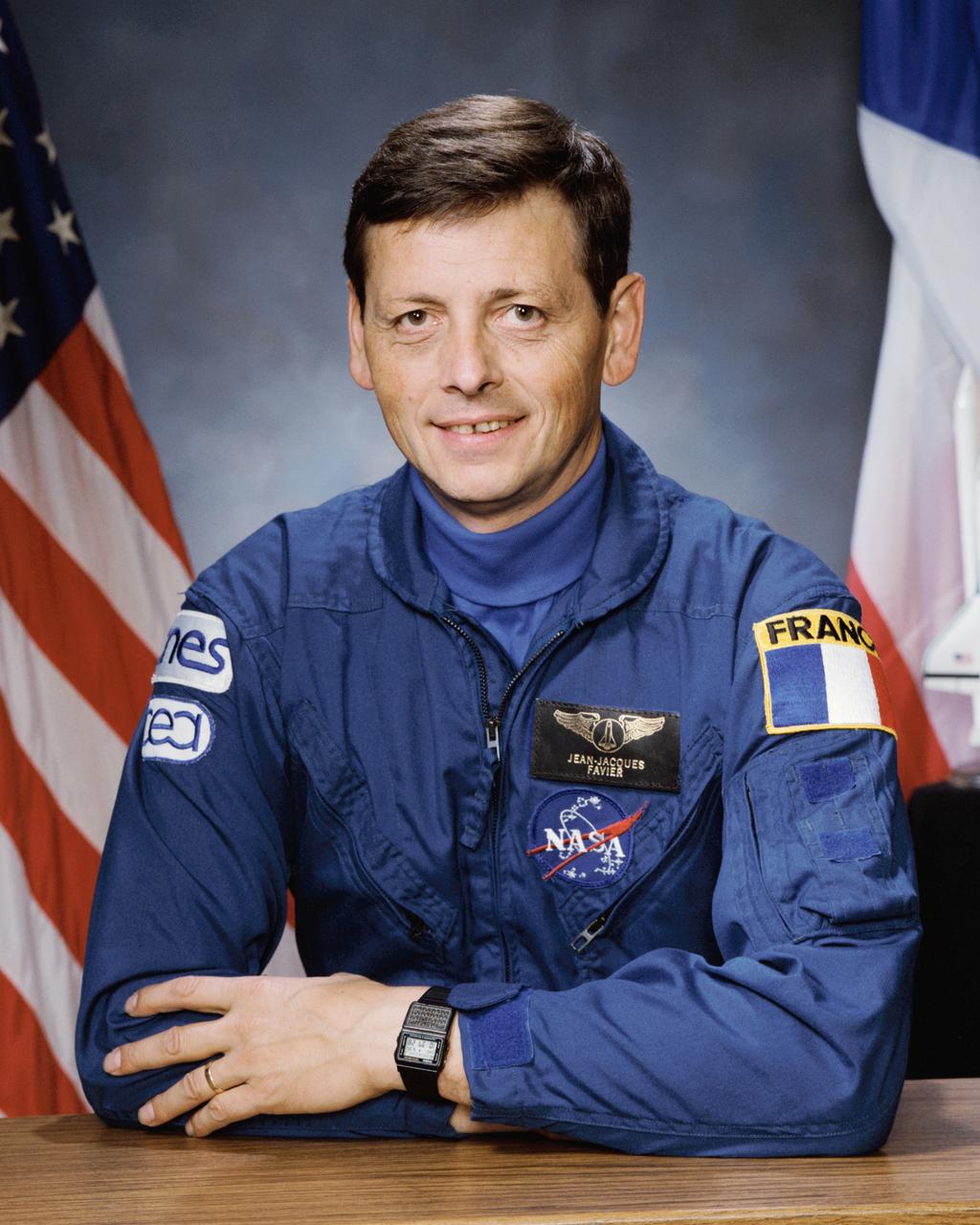
Official portrait of STS-65 International Microgravity Laboratory 2 (IML-2) backup Payload Specialist Jean-Jacques Favier. Favier is a member of the Centre National D'Etudes Spatiales (CNES), the French space agency.
Official portrait of STS-65 backup Payload Specialist Jean-Jacques Favier
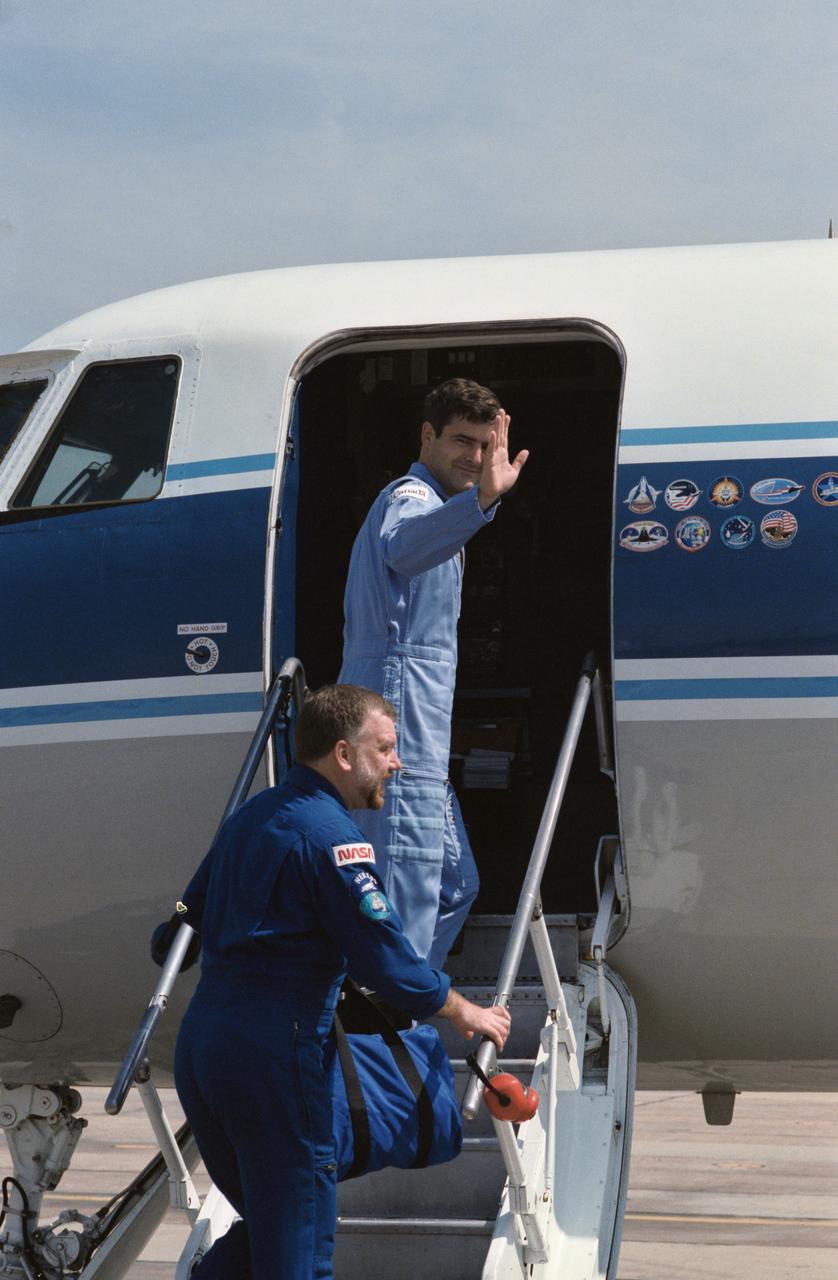
Payload Specialists Marc Garneau and Paul Scully-Power prepare to board the Shuttle Trainer aircraft to leave for the Kennedy Space Center (KSC) for the STS 41-G mission.
Payload Specialists Garneau and Scully-Power prepare to leave for KSC
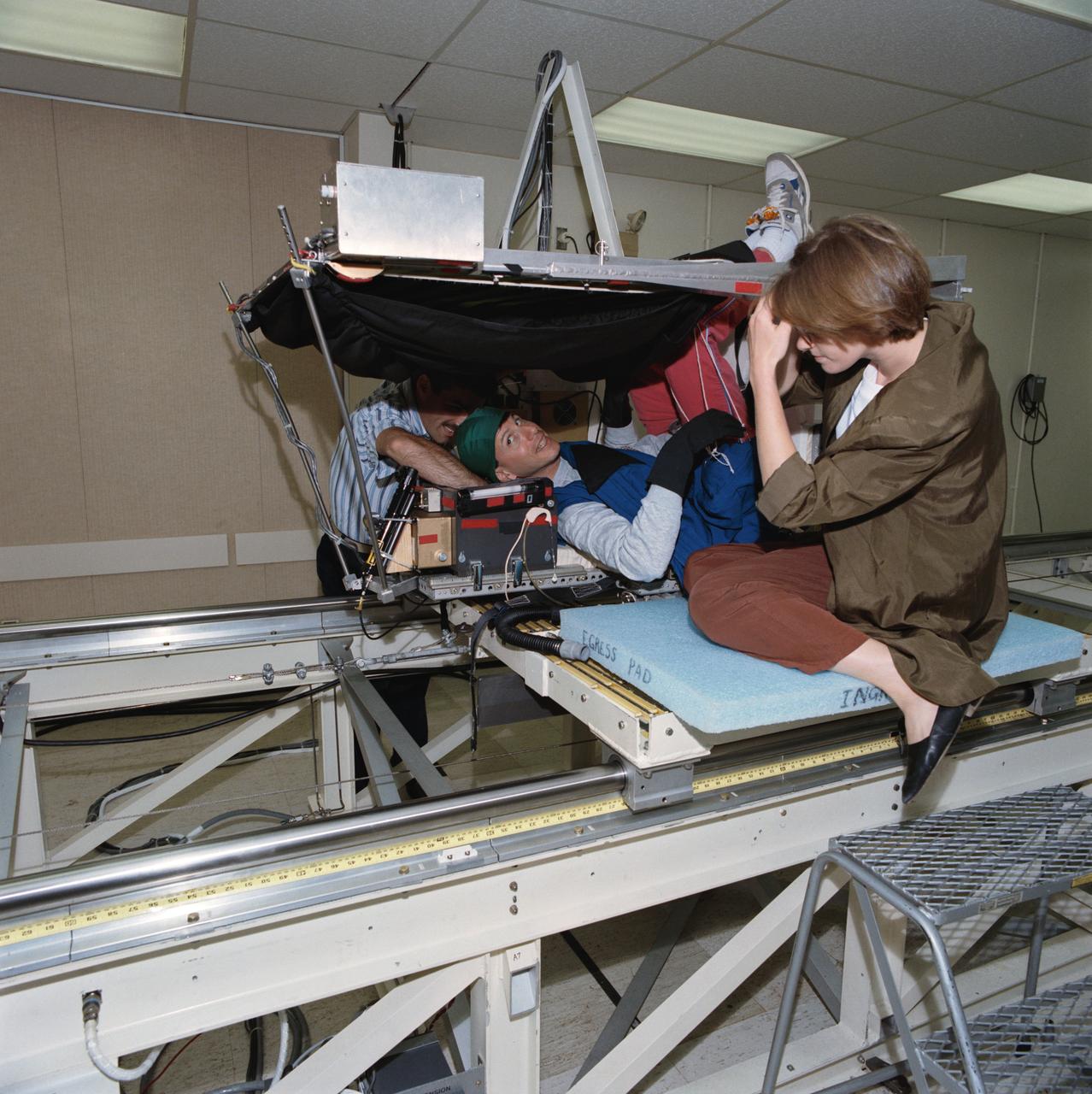
41D-06-013 (6 Sept 1984) --- Payload specialist Charles Walker works with the continuous flow electrophoresis systems (CFES) experiment, located in the middeck.
Payload specialist Charles Walker works with CFES experiment
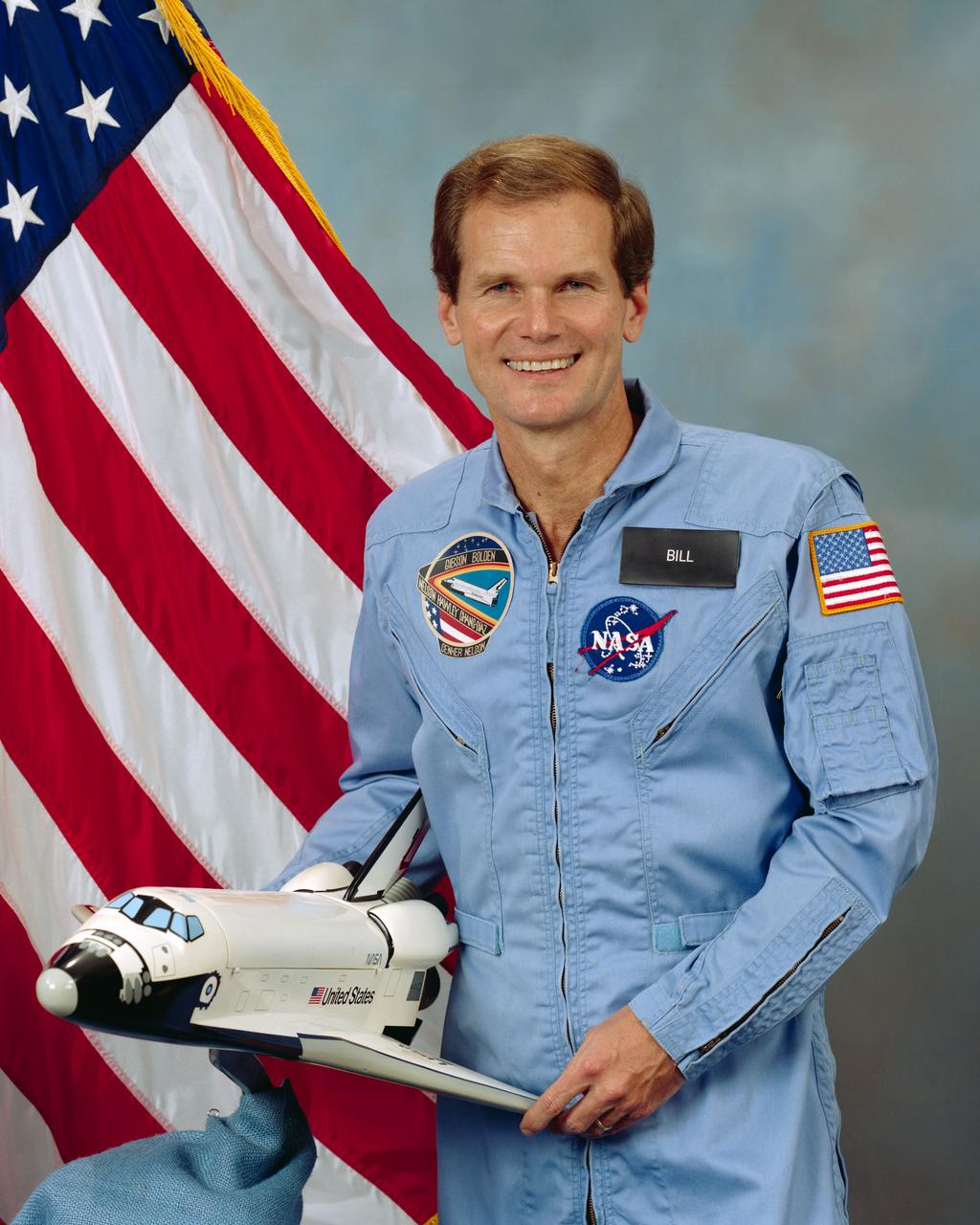
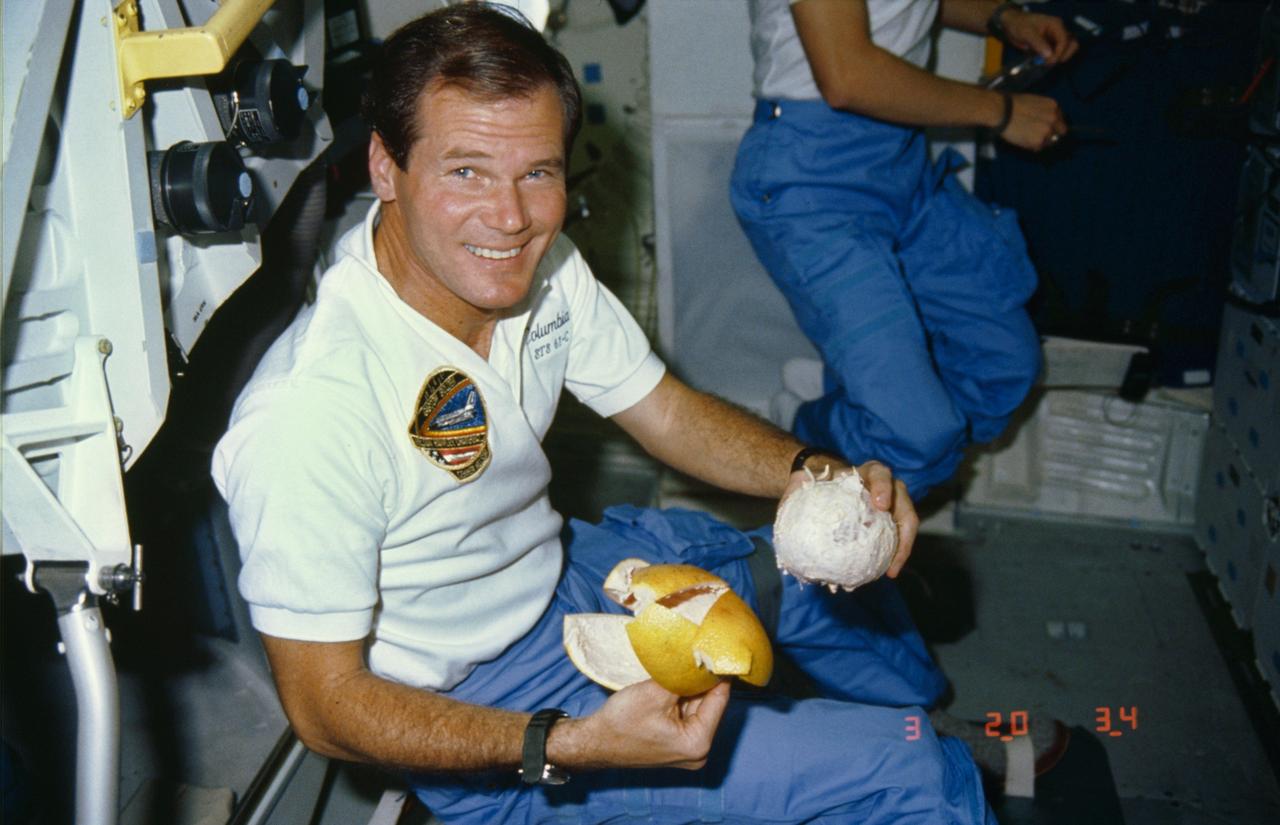
S85-43440 (25 Oct. 1985) --- Official portrait of Congressman Bill Nelson, U.S. House of Representatives - Florida, STS 61-C payload specialist. He is in the blue shuttle flight suit, holding a model of the shuttle with an American flag behind him.
Official portrait of Rep. Bill Nelson, STS 61-C payload specialist
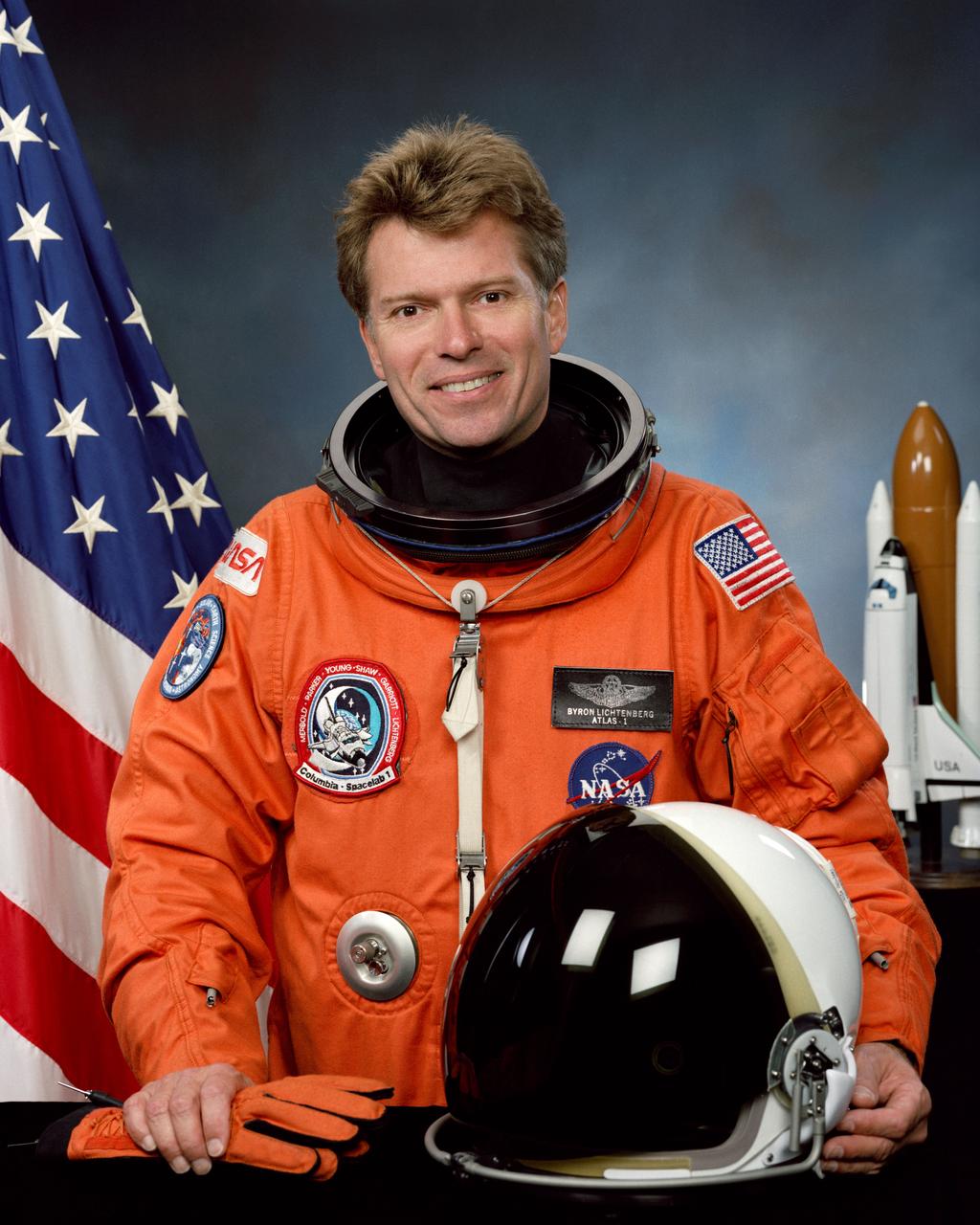
S91-51294 (Nov 1991) --- Astronaut Byron K. Lichtenberg, payload specialist.
Official portrait of STS-45 Payload Specialist Byron K. Lichtenberg
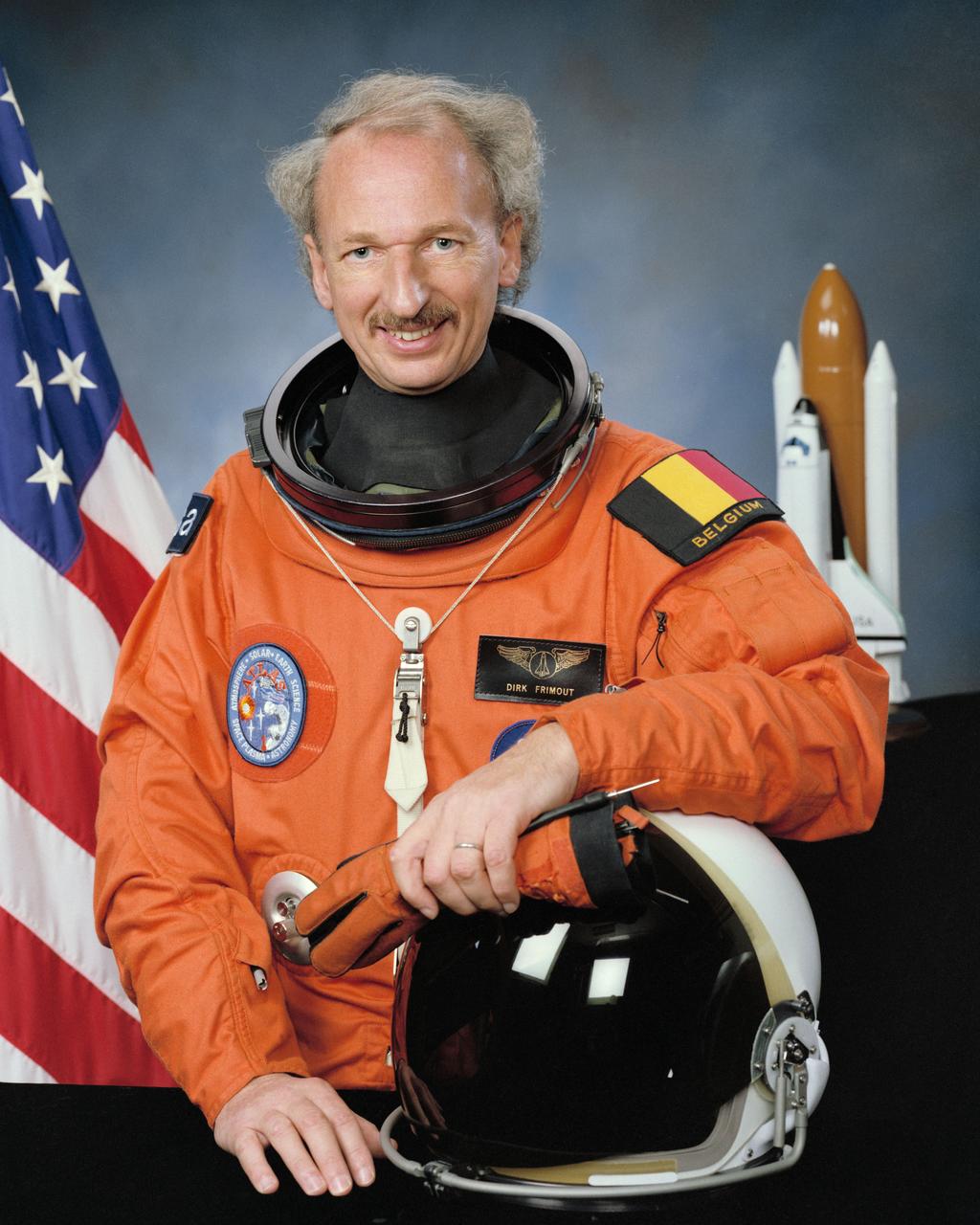
S91-51295 (1991) --- Astronaut Dirk Frimout, payload specialist representing the European Space Agency (ESA).
Official portrait of STS-45 Payload Specialist Dirk D. Frimout of Belgium
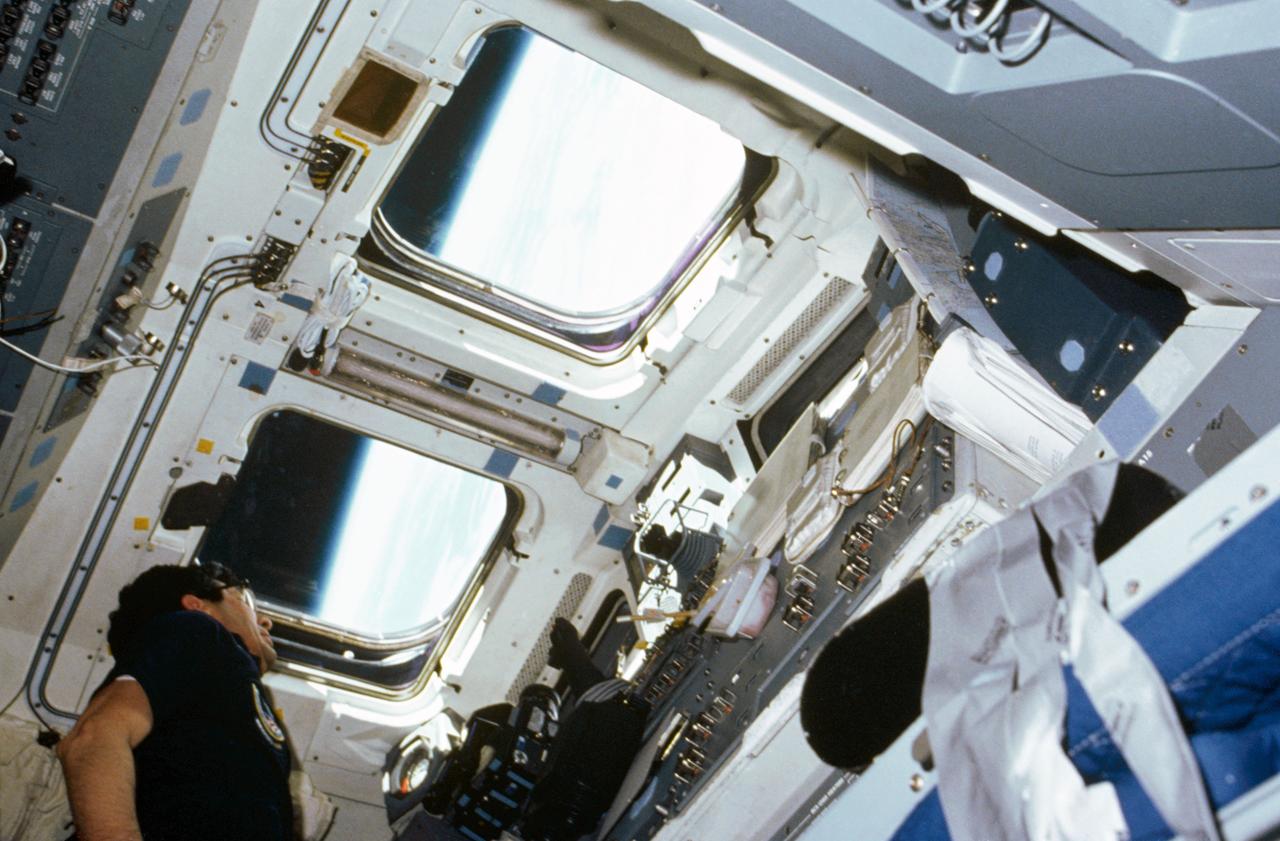
In this low-angle photo Payload specialist Lodewijk van den Berg, one of two payload specialists, looks out aft flight deck window aboard the shuttle orbiter Challenger.
Payload specialist Lodewijk van den Berg looks out aft flight deck window
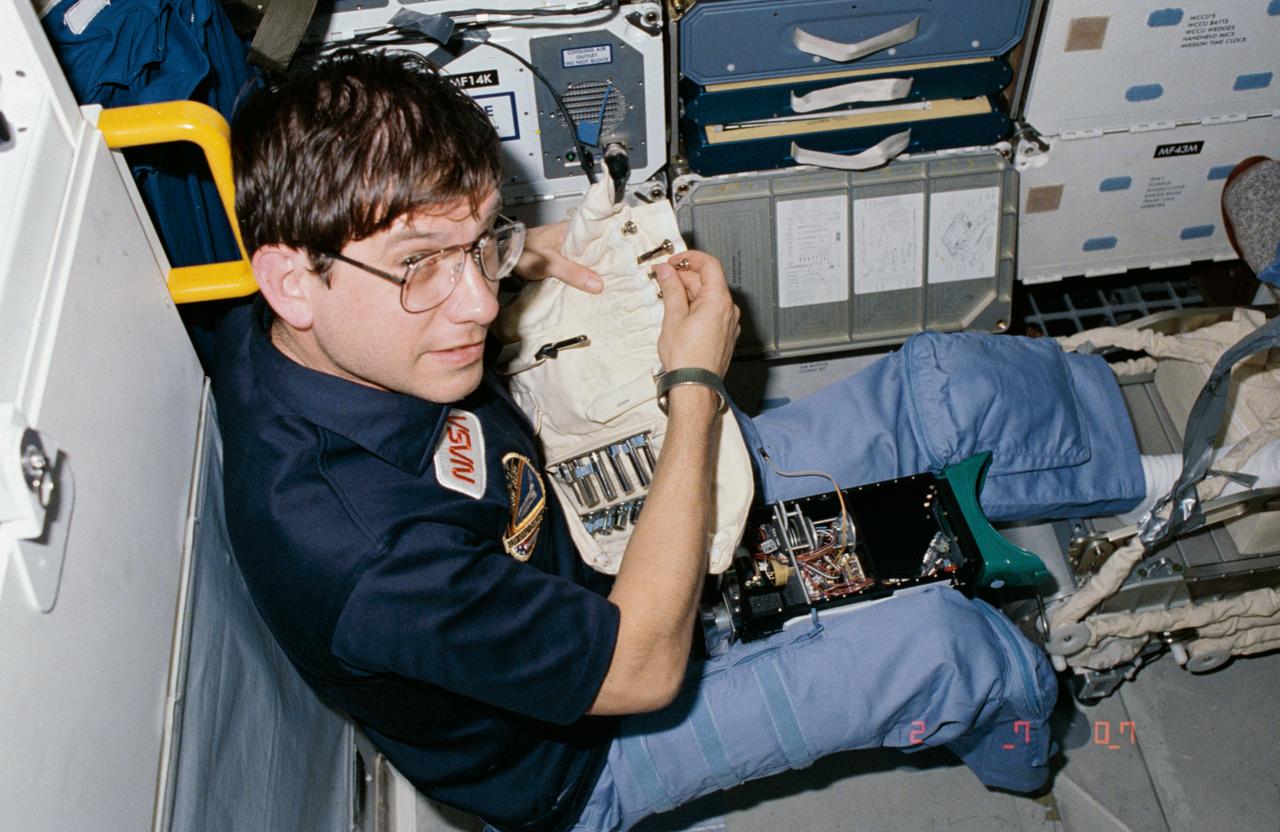
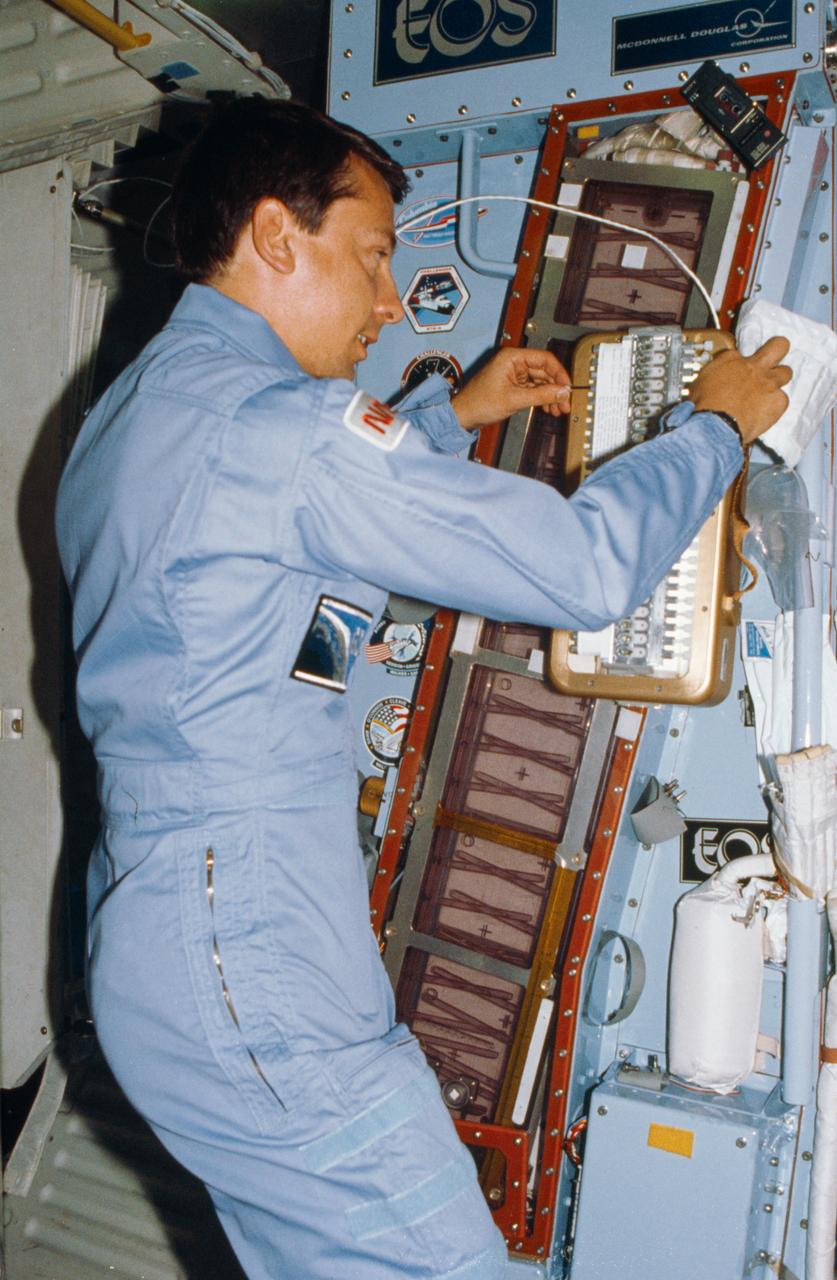
61C-05-035 (12-17 Jan 1986) --- Robert J. Cenker, 61-C payload specialist representing RCA, returns   a tiny tool to its stowage position after adjusting the inner workings of a device used in one of a number of detailed supplementary objective (DSO) studies for NASA's Space Biomedical Research Institute.  The device is a pair of ocular counter-rolling goggles used by U.S. Rep. Bill Nelson (D., Florida), 61-C's other   payload specialist aboard the Columbia for this five-day flight.
Payload specialist Robert Cenker after adjusting DSO equipment
S91-51633 (November 1991) --- Astronaut Roberta L. Bondar, Canadian payload specialist.
Official portrait of STS-42 IML-1 Payload Specialist Roberta L. Bondar
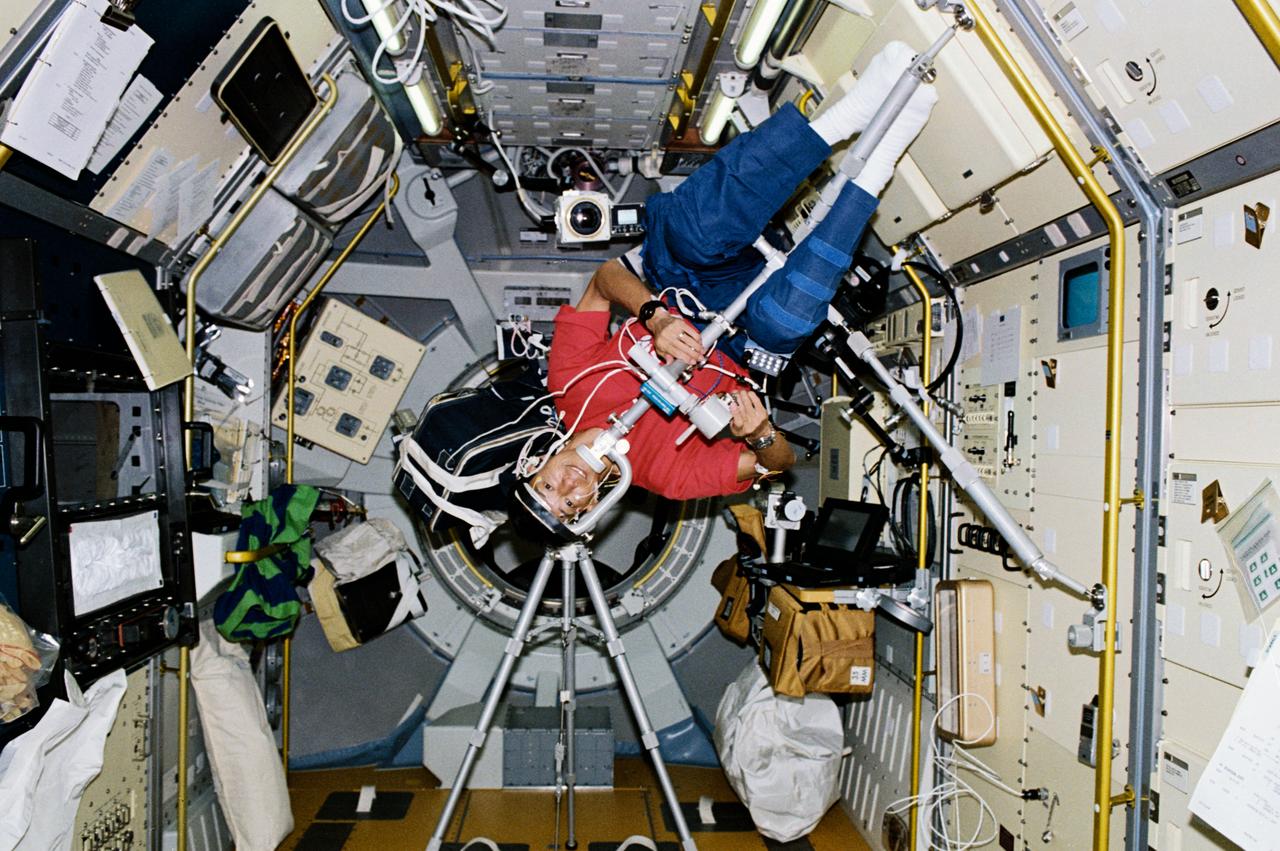
S93-45314 (29 Sept 1993) --- Payload specialist Martin J. Fettman, in an oscillating sled device, participates in a data collection project for neurovestibular functions.  The seven Spacelab Life Sciences (SLS-2) crewmembers devoted a full day to miscellaneous biomedical data collection in preparation for next month's two week mission aboard Columbia.
Payload specialist Martin Fettmen during data collection neurovestibular test
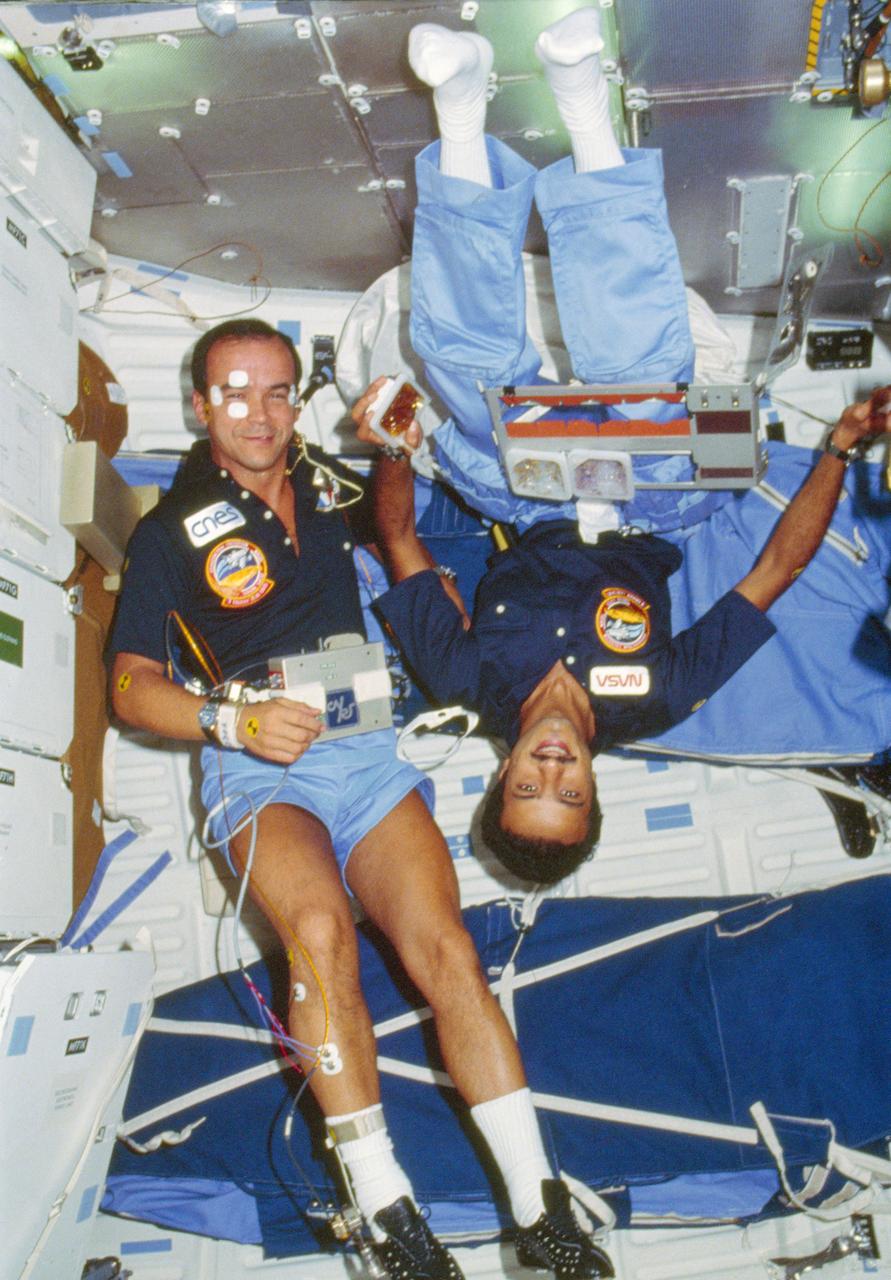
51G-102-035 (17-24 June 1985) --- The two payload specialists for the week-long flight share a middeck scene on the earth-orbiting Discovery.  Sultan Salman Abdelazize Al-Saud (left) is in the midst of a meal while Patrick Baudry conducts a phase of the French Postural Experiment (FPE) on himself.  Sleep restraints are in the background.
Payload specialists Baudry and Al-Saud in the middeck
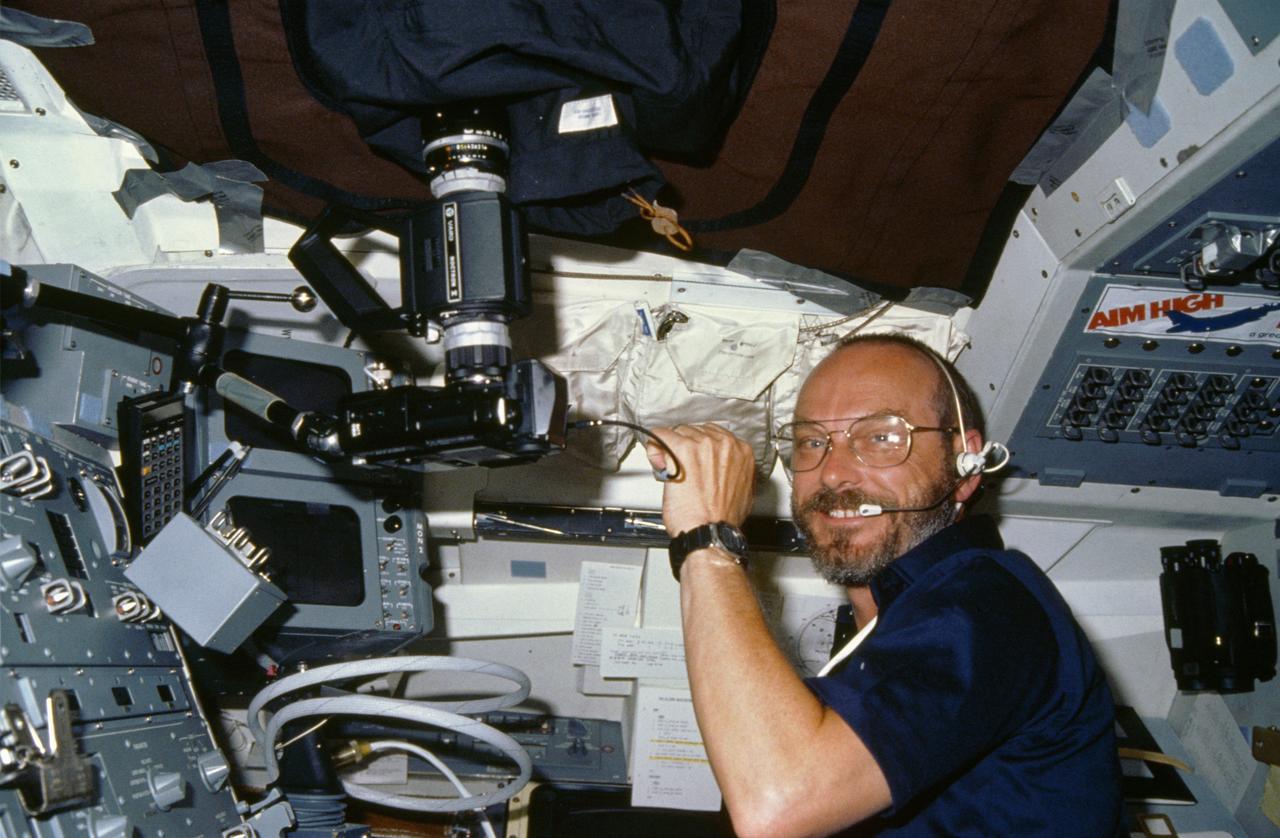
51F-17-011 (29 July-6 Aug 1985) --- Loren W. Acton, 51-F payload specialist, triggers a 35mm camera recording stellar imagery through the aft flight deck overhead windows aboard the Earth-orbiting Space Shuttle Challenger. The extension on the camera's lens is an image intensifier.
Payload specialist Loren Acton working at aft fligh deck station
61B-02-014 (26 Nov-3 Dec 1985) --- Payload Specialist Charles D. Walker works with the handheld protein growth experiment -- one of a series of tests being flown to study the possibility of crystallizing biological materials.  Walker rests the experiment against the larger continuous flow electrophoresis systems experiment.
Payload Specialist Charles Walker with handheld protein growth experiment
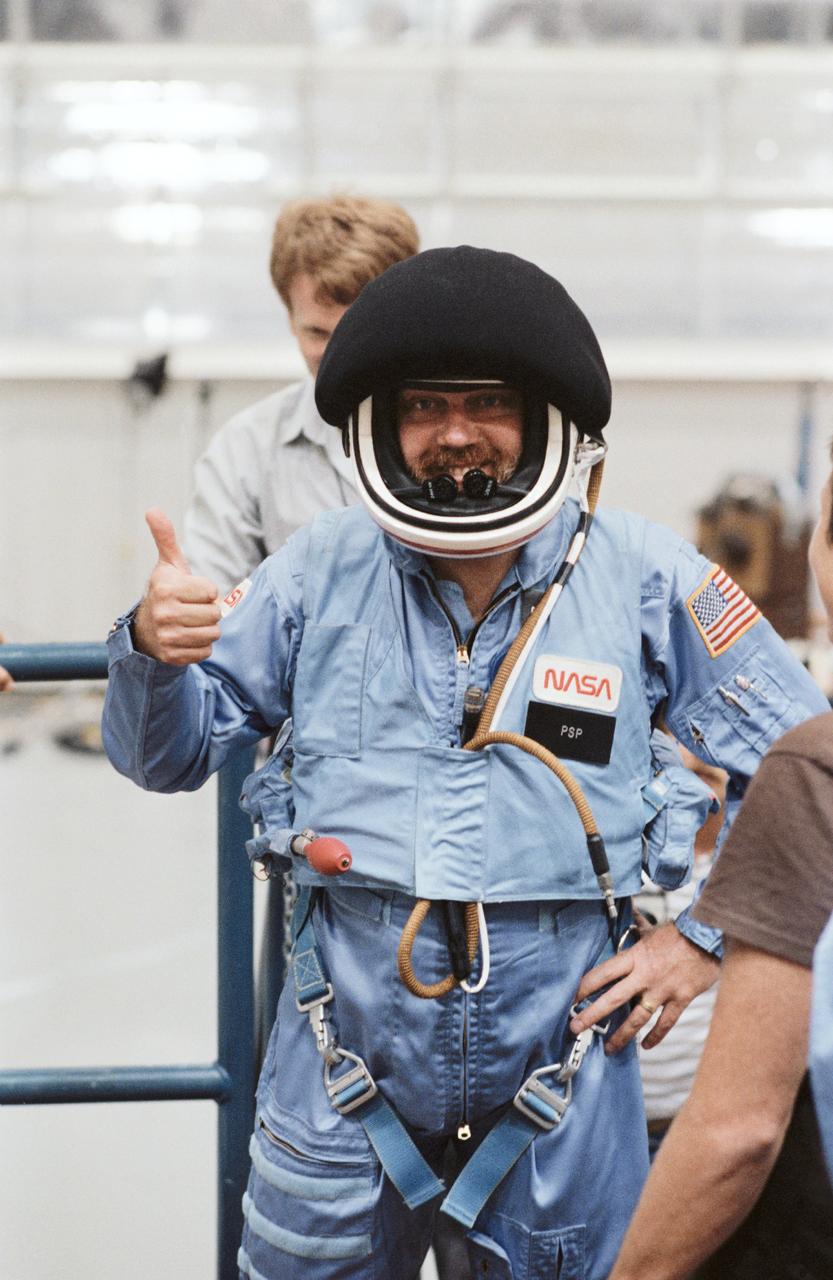
41D-3183 (2 Sept. 1984) --- Paul D. Scully-Power, 41-G payload specialist, appears ready to participate in the eight-day space shuttle mission in this photograph taken during a pause in training in the Johnson Space Center's mockup and integration laboratory. The U.S. Navy oceanographer and a Canadian will join five NASA astronauts for a busy stay in space aboard the Challenger next month. The team was practicing for emergency egress. Photo credit: NASA  (Editor's note: Please ignore the odd photo identification number for this image. This is a 41-G training image.)
Payload Specialist Scully-Power in full flight suit with helmet
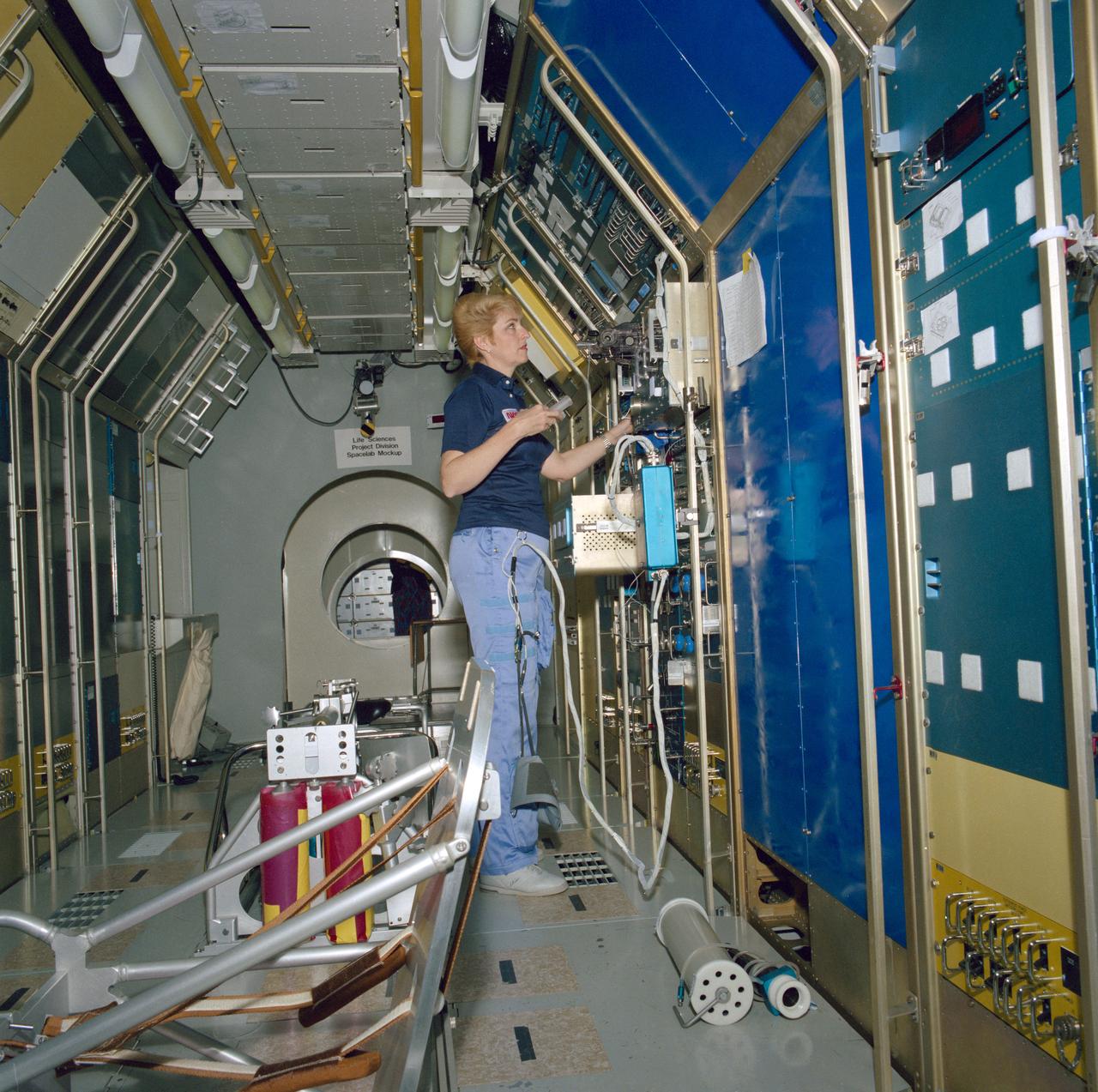
S87-28666 (March 1987) --- Millie Hughes-Fulford, STS-40/SLS-1 payload specialist, stands near the Echocardiograph on Rack 6 of the SLS-1 module, during a rehearsal of experimentation scheduled for her spaceflight.
STS-40 Payload Specialist Millie Hughes-Fulford trains in JSC's SLS mockup
S91-52649 (Nov 1991) ---- Astronaut Ulf Merbold, PhD, European Space Agency (ESA) Payload Specialist for STS-42, International Microgravity Laboratory (IML-1).
Official portrait of STS-42 IML-1 Payload Specialist Ulf D. Merbold
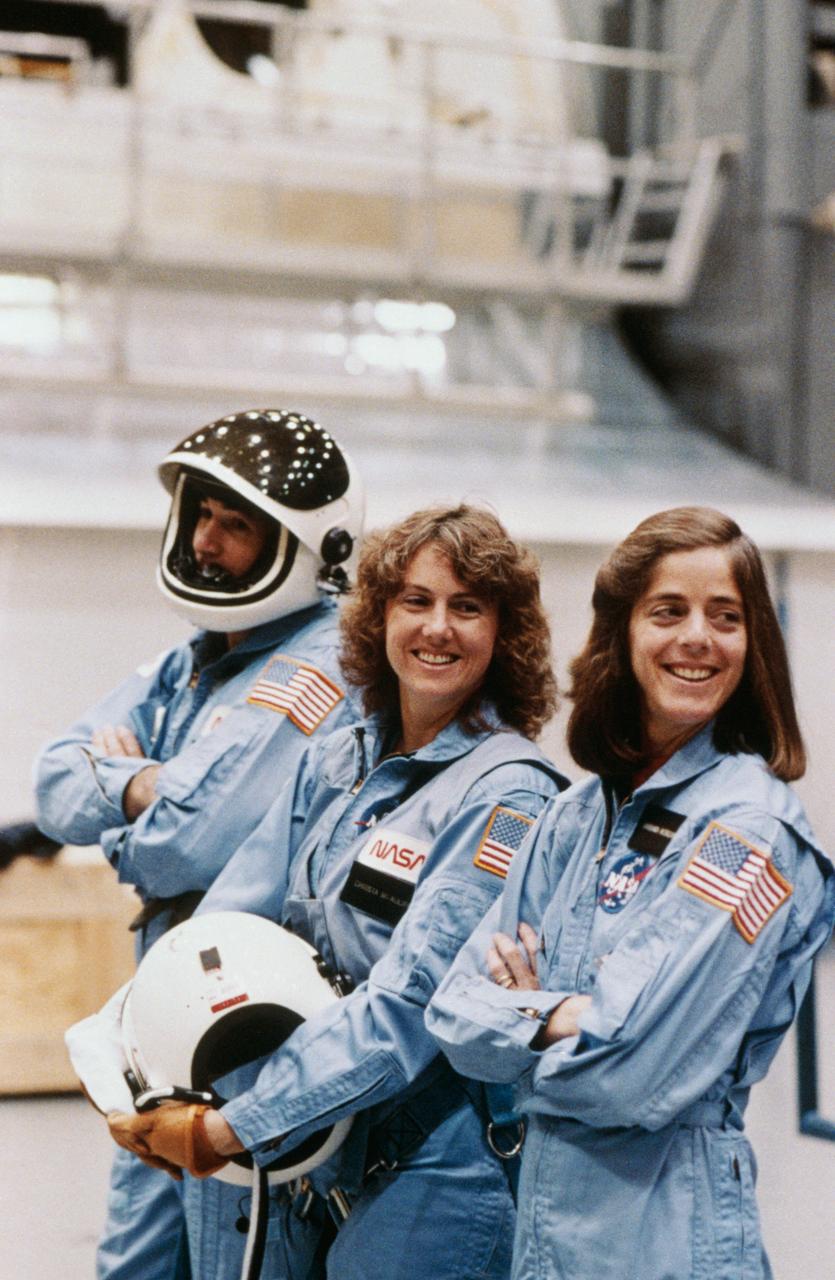
S86-25254 (January 1986) --- Payload specialists in training for STS-51L take a break in shuttle emergency egress training at the Johnson Space Center's (JSC) Shuttle Mock-up and Integration Laboratory. Left to right are Gregory Jarvis of Hughes, Sharon Christa McAuliffe and Barbara Morgan of the Teacher-in-Space Project. McAuliffe was selected as NASA's first citizen observer in the Space Shuttle Program and Morgan was named her backup. The photo was taken by Keith Meyers of the New York Times.    EDITOR?S NOTE: The STS-51L crew members lost their lives in the space shuttle Challenger accident moments after launch on Jan. 28, 1986 from the Kennedy Space Center (KSC). Photo credit: NASA
Payload specialists in training for STS 51-L in mockup & integration lab
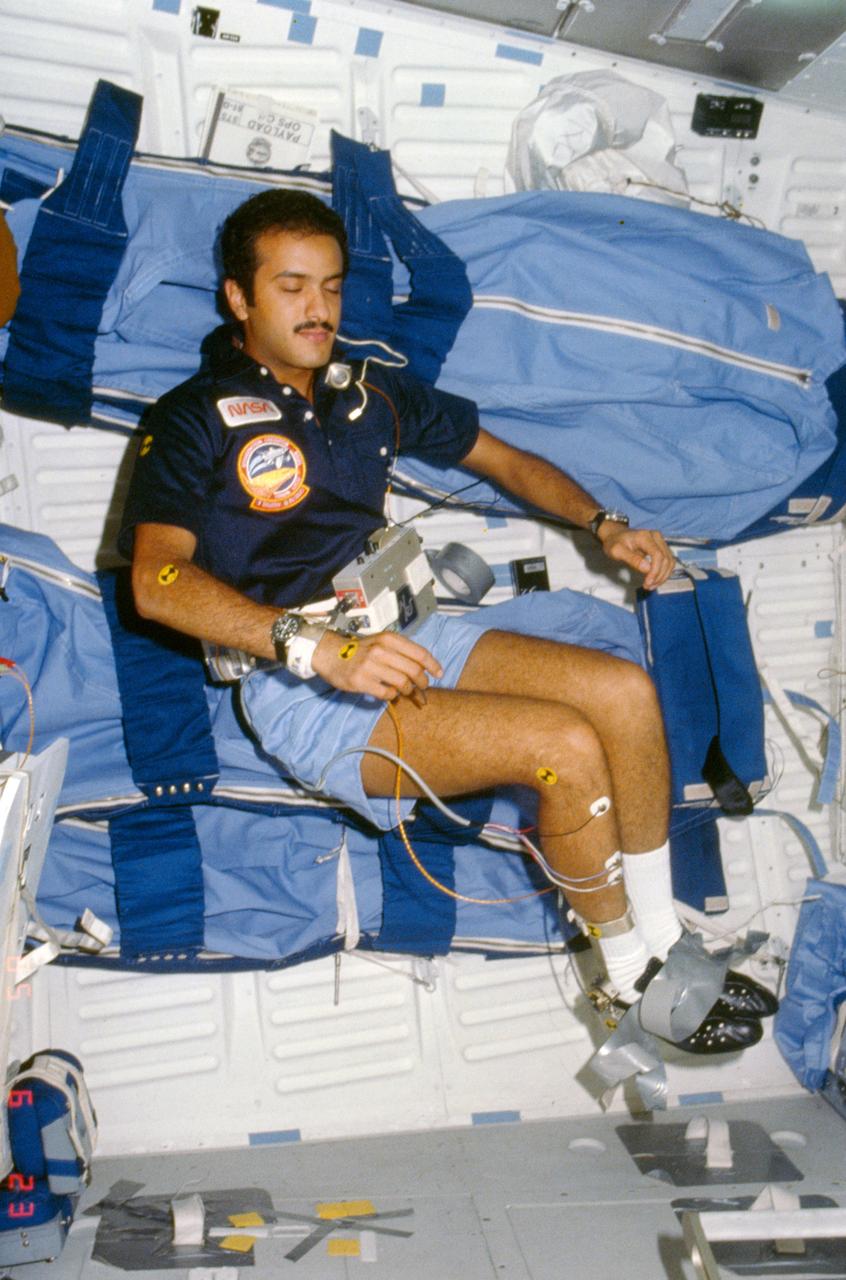
51G-105-030 (17-24 June 1985) --- Payload specialist Sultan Salman Abdelazize Al-Saud participates in the French Postural Experiment (FPE) on the middeck of the earth-orbiting Discovery.
Payload specialist Sultan Abdelazize Al-Saud conducts Postural experiment
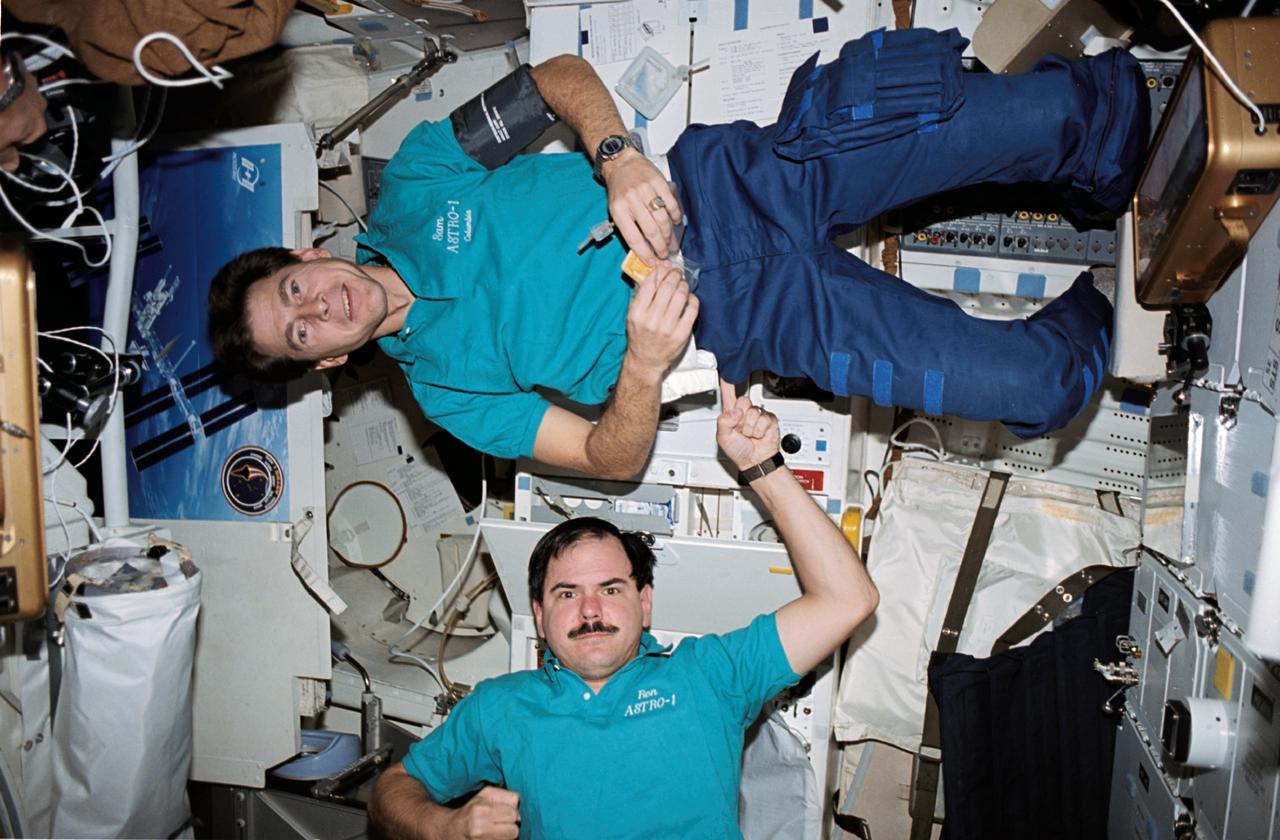
STS035-49-028 (2-10 Dec. 1990) --- This is one of 25 visuals used by the STS-35 crew at its Dec. 20, 1990 post-flight press conference. Columbia's flight of almost nine days duration (launched Dec. 2 from Kennedy Space Center and landed Dec. 10 at Edwards Air Force Base) carried the Astro-1 payload and was dedicated to astrophysics. The mission involved a seven-man crew. Crewmembers were astronauts Vance D. Brand, Guy S. Gardner, Jeffrey A. Hoffman, Robert A.R. Parker and John M. (Mike) Lounge; and Payload Specialists Samuel T. Durrance and Ronald A. Parise.
STS-35 payload specialists perform balancing act on OV-102's middeck
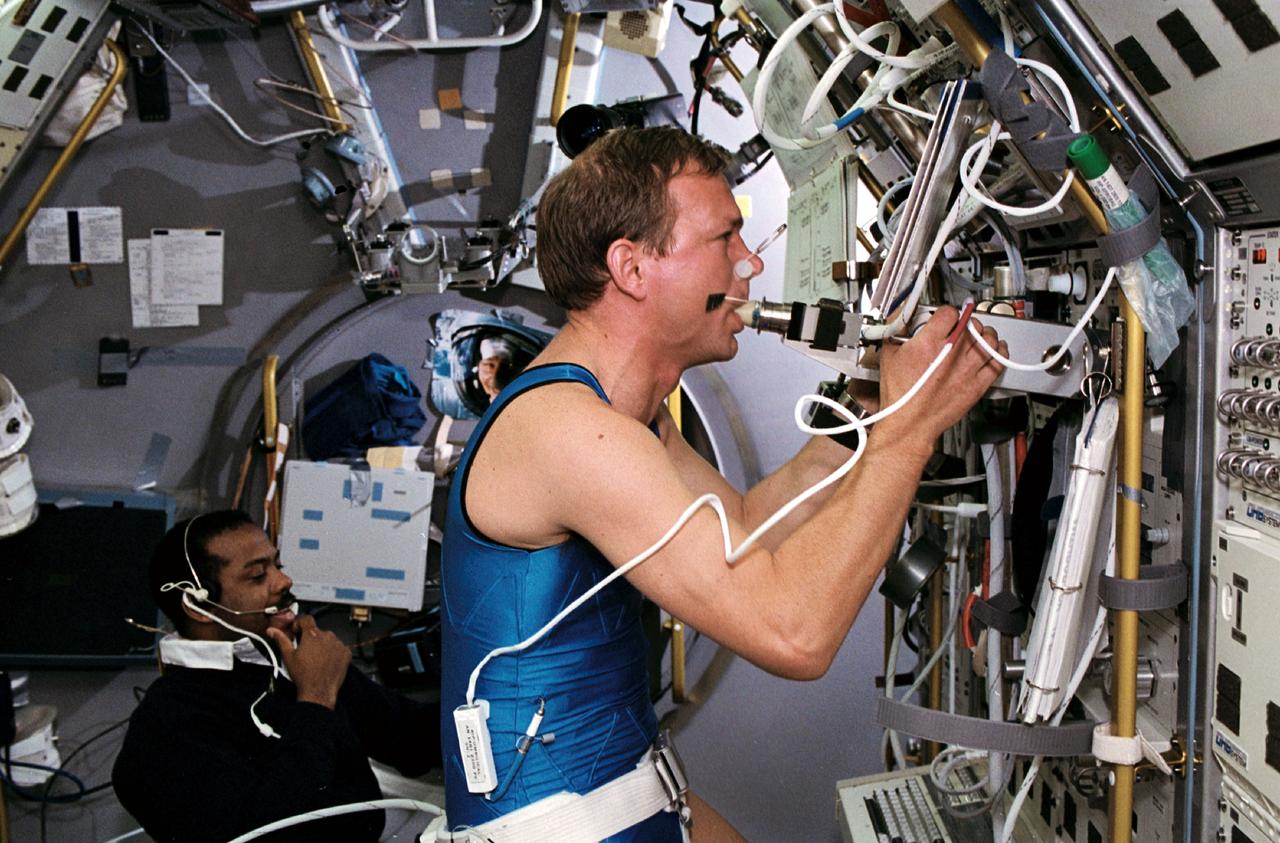
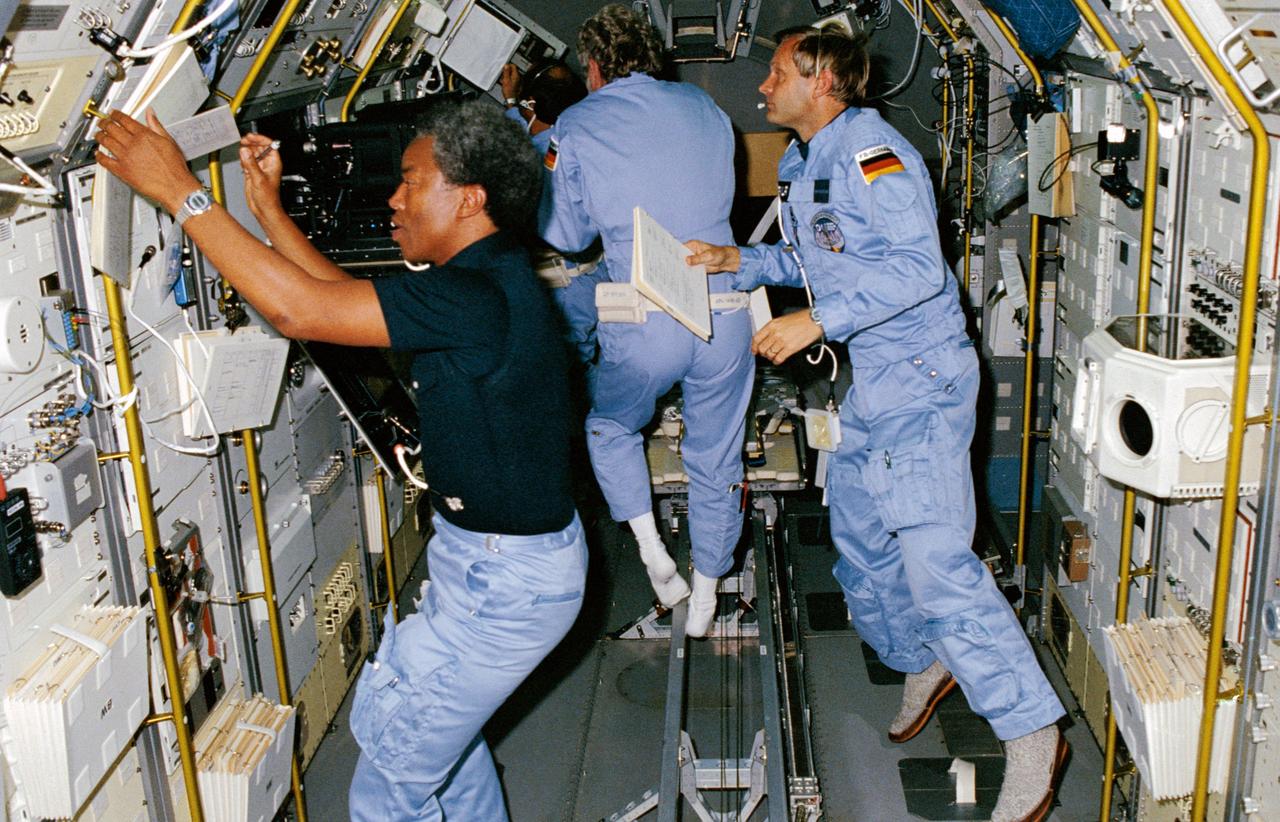
STS055-45-017 (26 April-6 May 1993) --- Hans Schlegel (foreground) participates in the ongoing investigation of human physiology under microgravity conditions as he works out on the ergometer at the Anthrorack. Monitoring the "run" is astronaut Bernard A. Harris, Jr., STS-55 mission specialist. Schlegel is one of two payload specialists representing the German Aerospace Research Establishment (DLR) on the Spacelab D-2 mission.
STS-55 MS3 Harris & Payload Specialist Schlegel conduct Anthrorack experiment
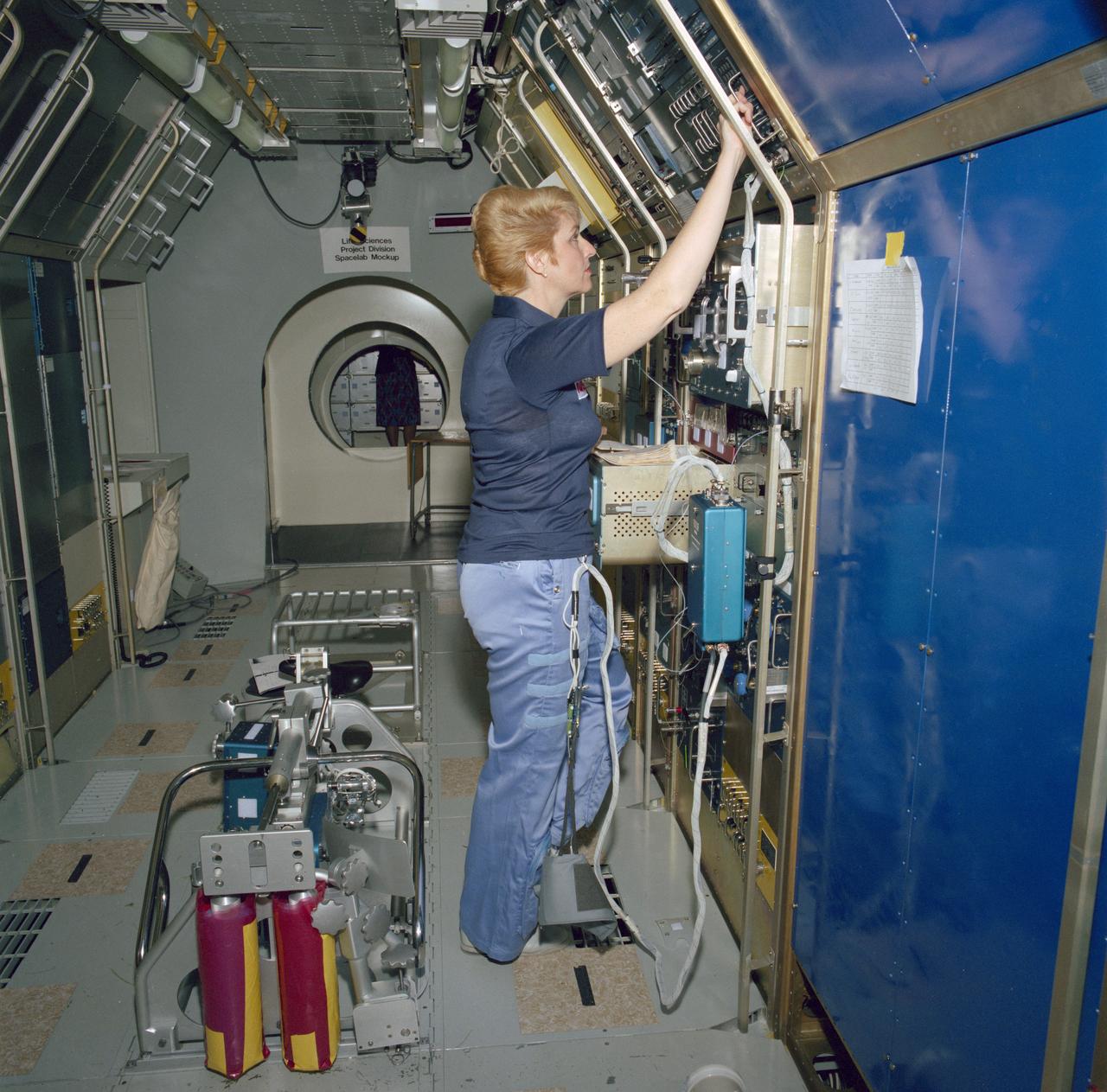
STS-40 Payload Specialist Millie Hughes-Fulford conducts Spacelab Life Sciences 1 (SLS-1) Experiment No. 198, Pulmonary Function During Weightlessness, in JSC's Life Sciences Project Division (LSPD) SLS mockup located in the Bioengineering and Test Support Facility Bldg 36. Hughes-Fulford sets switches on Rack 8. Behind her in the center aisle are the stowed bicycle ergometer (foreground) and the body restraint system.
STS-40 Payload Specialist Millie Hughes-Fulford trains in JSC's SLS mockup
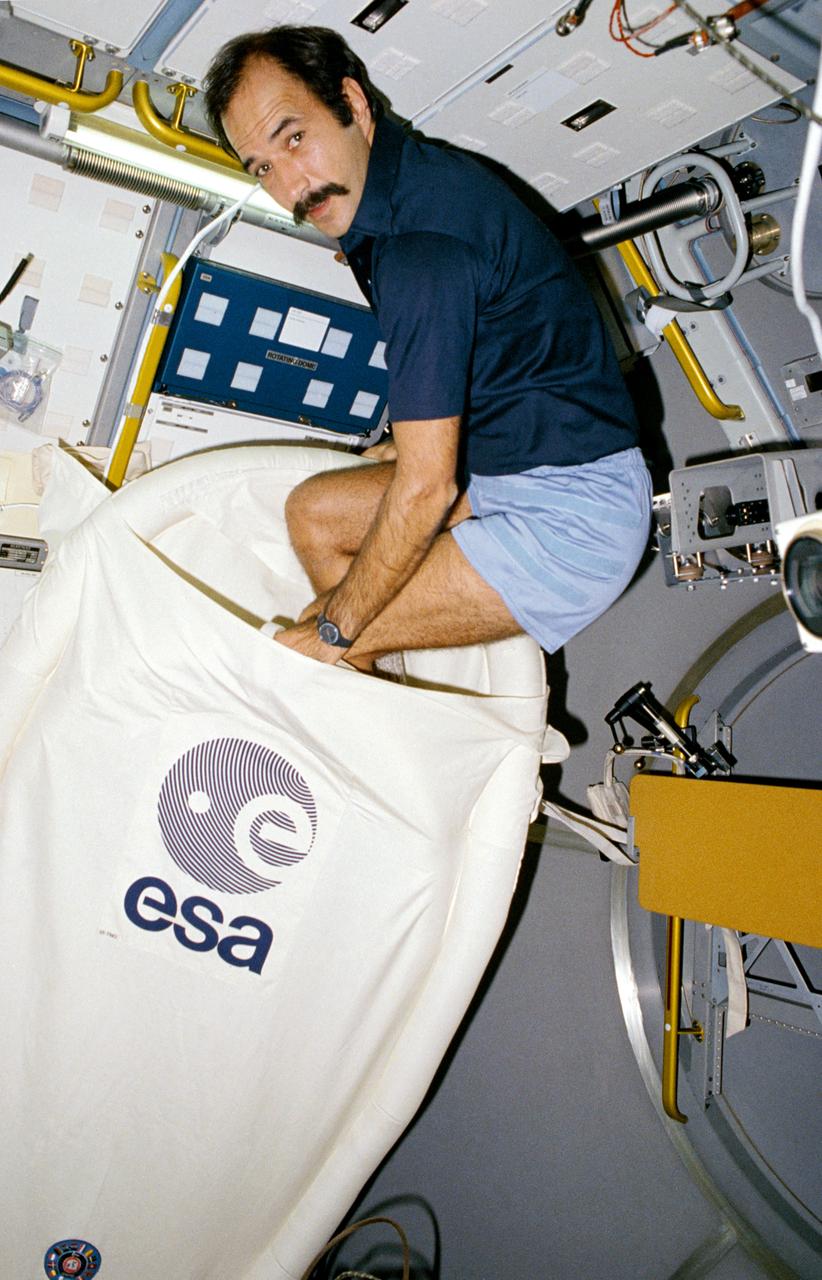
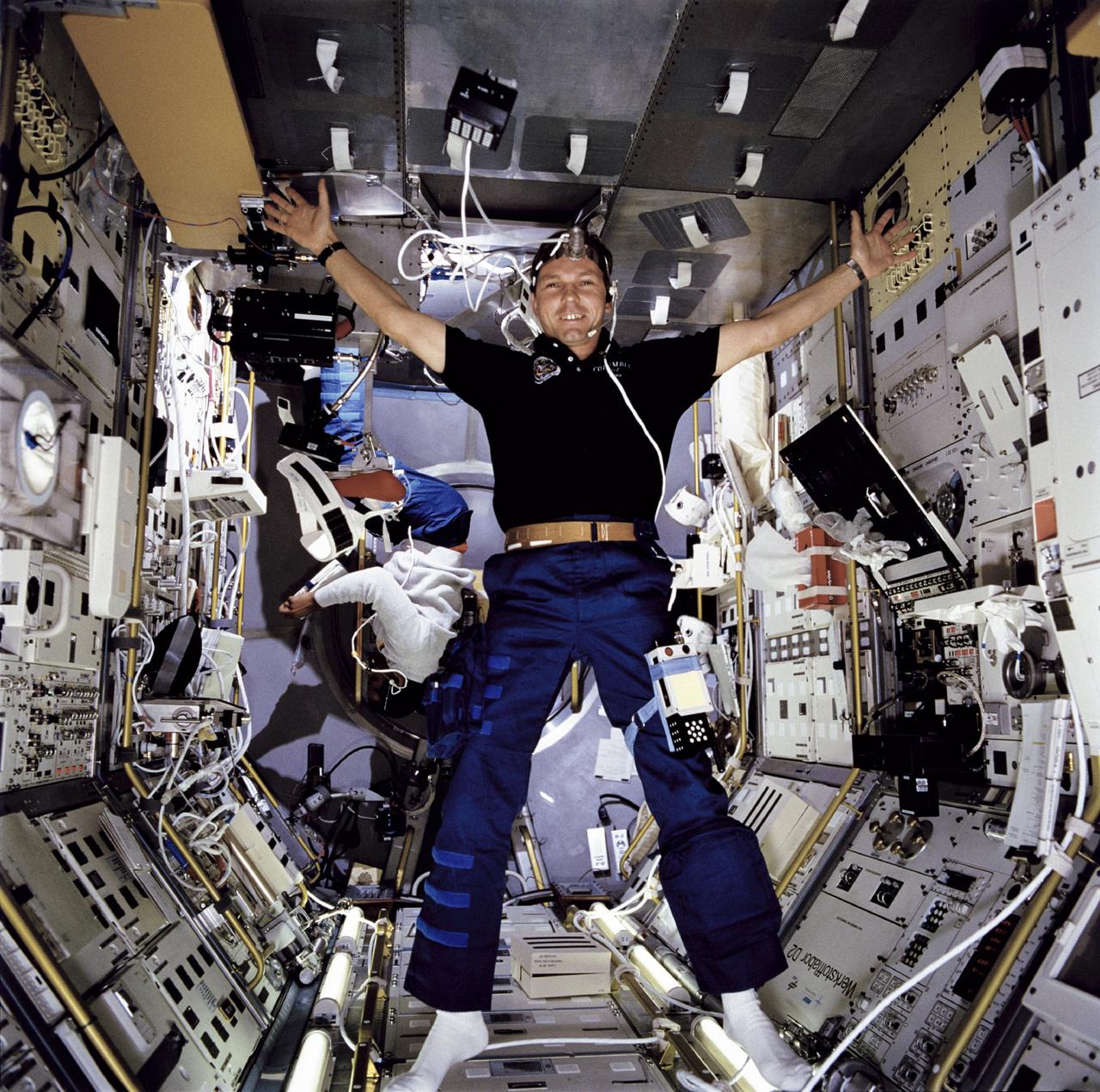
61A-08-018 (30 Oct.-6 Nov. 1985) --- Wubbo J. Ockels, a Dutch scientists representing the European Space Agency (ESA), crawls from an unique sleeping restraint in D-1 science module.  Unlike the other crewmembers on STS 61A, Ockels did not sleep in the middeck of the Challenger.  Ockels proposed this concept of sleeping facility and the actual hardware was developed by the Technisch Natur Wetenschappelyk Onderzoek (TNO), a Dutch government organization.
Payload specialist Wubbo Ockels in new sleeping restraint
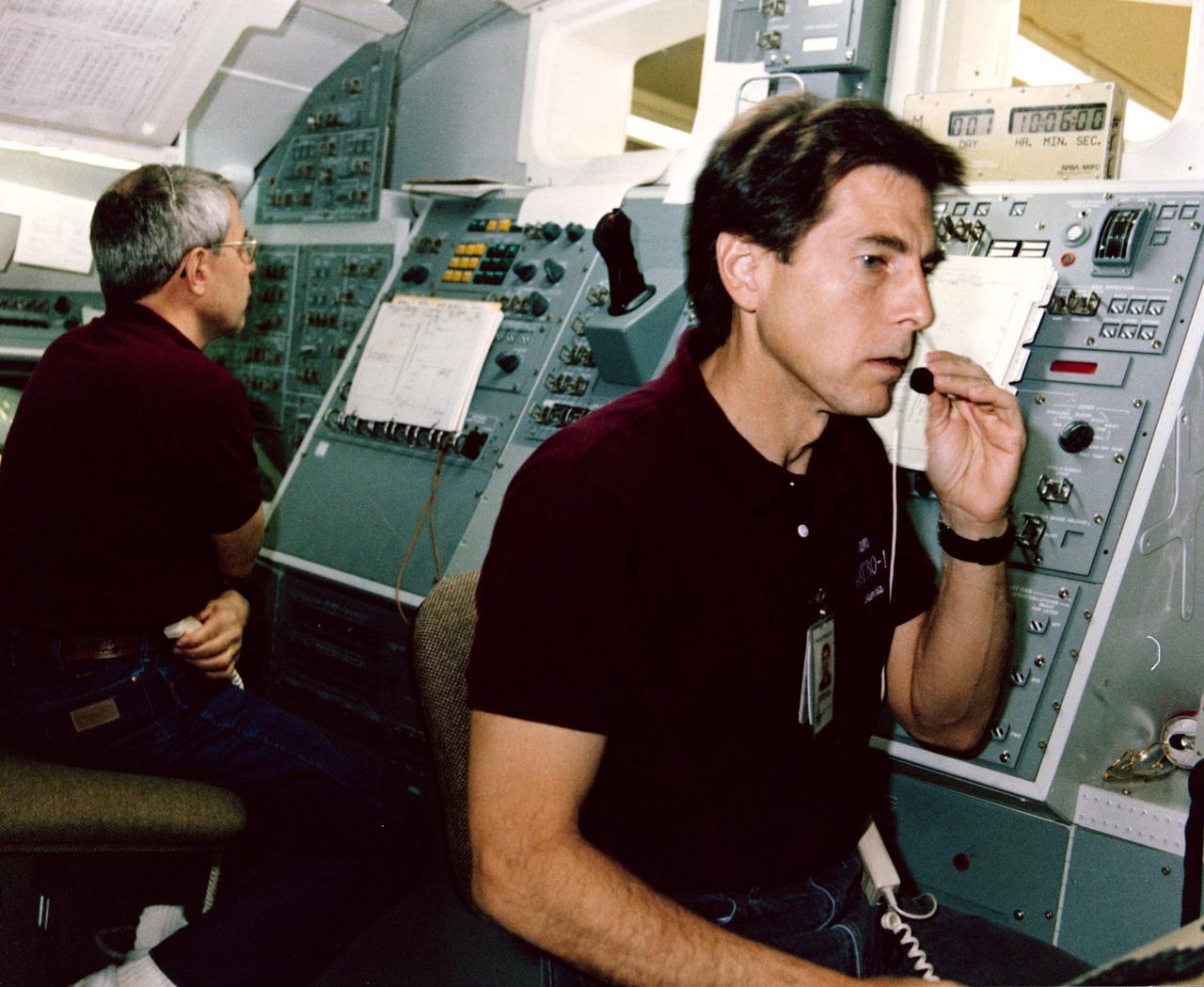
STS-35 Mission Specialist (MS) Robert A.R. Parker (left) and Payload Specialist Samuel T. Durrance practice Astronomy Laboratory 1 (ASTRO-1) experiment procedures in a space shuttle aft flight deck mockup in the Payload Crew Training Complex at the Marshall Space Flight Center (MSFC) in Huntsville, Alabama. For all Spacelab missions, shuttle crew members train regularly in the facility in preparation to operate experiments on their Spacelab missions. The ASTRO-1 crew will operate the ultraviolet telescopes and instrument pointing system (IPS) from Columbia's, Orbiter Vehicle (OV) 102's, aft flight deck. The seven-member ASTRO-1 crew will work around the clock, in 12-hour shifts, to allow the maximum number of observations to be made during their nine or ten days in orbit. In addition to the commander and pilot, the crew consistss of three MSs and two payload specialists. (MSs are career astronauts who are trained in a specialized field. Payload specialists are members of the science investigator teams who were nominated by their peers to operate their experiments on orbit. They are trained and certified for flight by NASA.) View provided by MSFC with alternate number 9005803.
STS-35 ASTRO-1 MS Parker and Payload Specialist Durrance train at MSFC
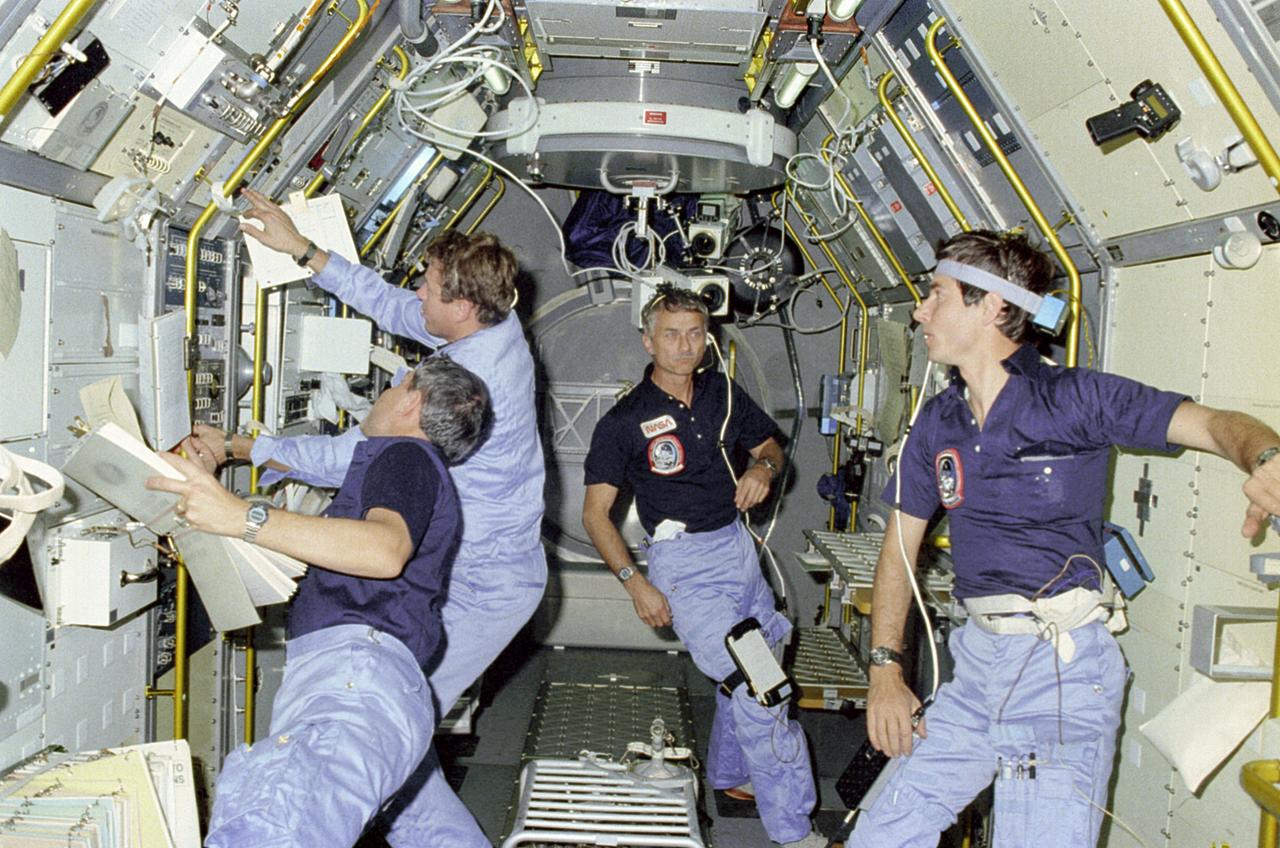
This photograph shows activities inside the science module during the Spacelab-1 (STS-9) mission. Left to right are Mission Specialist Robert Parker, Payload Specialist Byron Lichtenberg, Mission Specialist Owen Garriott, and Payload Specialist Ulf Merbold. The overall goal of the Spacelab-1 mission, the first mission of the Spacelab facility, were: (1) To verify the Spacelab system capability, (2) to obtain valuable scientific, applications, and technology data from a U.S./European multidisciplinary payload, and (3) to demonstrate the broad capability of Spacelab for scientific research. More than 70 experiments in 5 disciplines from 14 nations were conducted during the mission. The mission marked the the entry of non-astronaut persornel, called Payload Specialists, into space as working members of the crew. They are fellow scientists representing the international group of investigators using the mission. Mission Specialists are NASA astronauts who have broad scientific training. They operate various Orbiter-Spacelab systems, perform any required activity outside the spacecraft, and support investigations as needed. The Space Shuttle Orbiter Columbia that carried Spacelab-1 was operated by two other NASA astronauts serving as commander and pilot. The STS-9 mission, managed by the Marshall Space Flight Center, was launched on November 28, 1983.
Spacelab
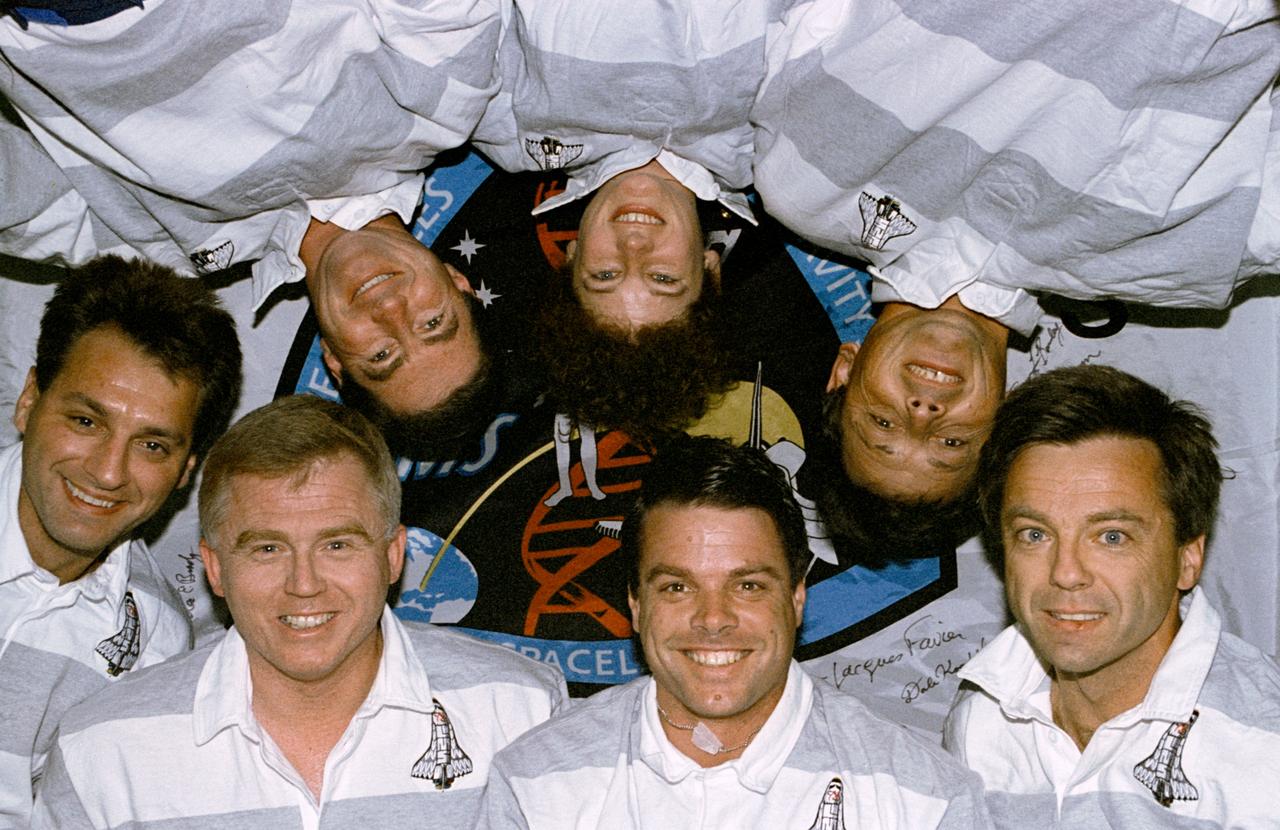
STS078-397-030 (20 June - 7 July 1996) --- Five NASA astronauts and two international payload specialists take a break from a Shuttle duration record-breaker flight to pose for the traditional inflight crew portrait.  The photograph should be oriented with payload commander Susan J. Helms at bottom center.  Others, clockwise, are French payload specialist Jean-Jacques Favier, Canadian payload specialist Robert B. Thirsk; and astronauts Kevin R. Kregel, pilot; and Charles J. (Chuck) Brady and Richard M. Linnehan, both mission specialists, and Terence T. (Tom) Henricks, mission commander.  The crew chose the Life and Microgravity Spacelab (LMS-1) Science Module, situated in the Space Shuttle Columbia's cargo bay, for the portrait setting.
STS-78 crew portrait in the Spacelab module
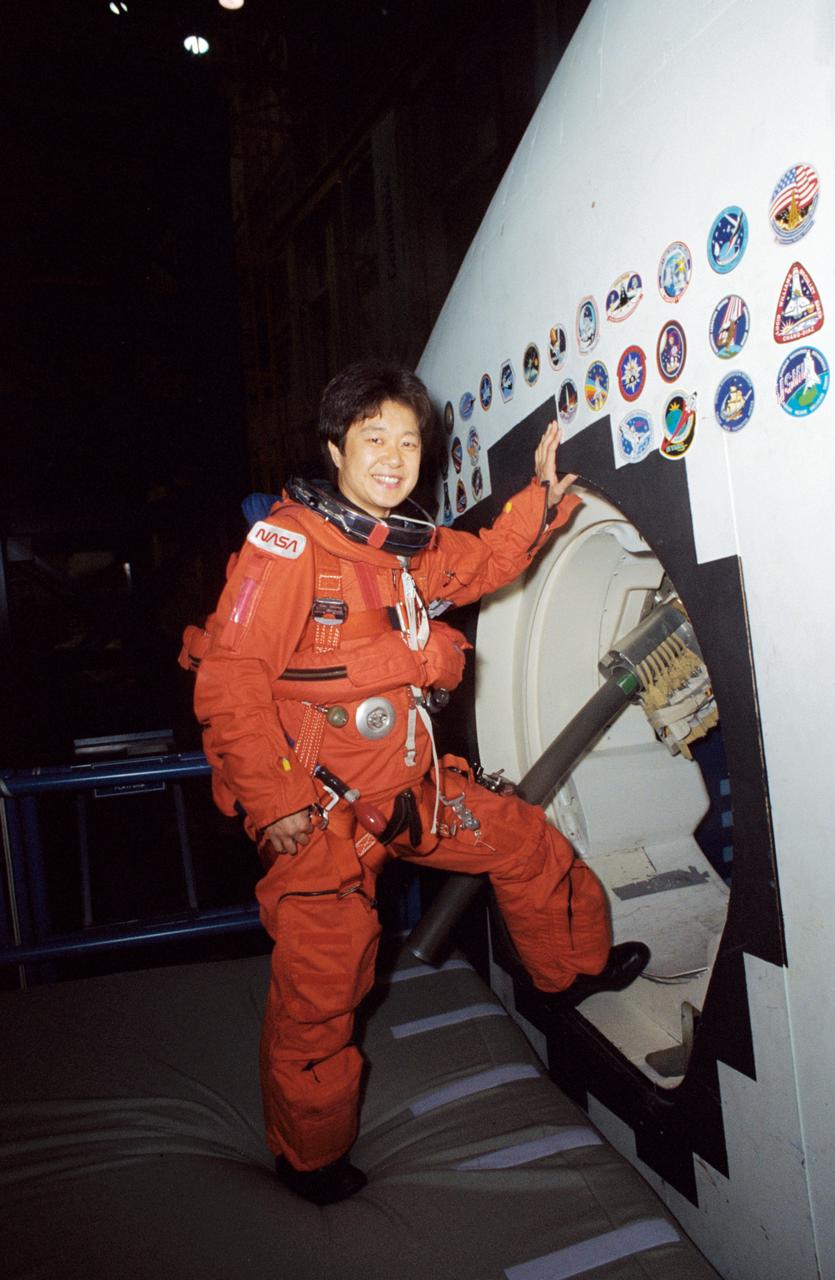
STS-65 Japanese Payload Specialist Chiaki Mukai takes a break from training at the Johnson Space Center (JSC). Wearing a training version of the orange launch and entry suit (LES), Mukai stands at the crew compartment trainer (CCT) side hatch in the Mockup and Integration Laboratory (MAIL) Bldg 9NE. Note the crew escape system (CES) pole device extending out the side hatch which would accommodate crewmembers in bailout from a troubled spacecraft. Mukai represents the National Space Development Agency (NASDA) of Japan and will serve as a payload specialist aboard Columbia, Orbiter Vehicle (OV) 102, during the STS-65 International Microgravity Laboratory 2 (IML-2) mission.
STS-65 Japanese Payload Specialist Mukai at CCT side hatch during training
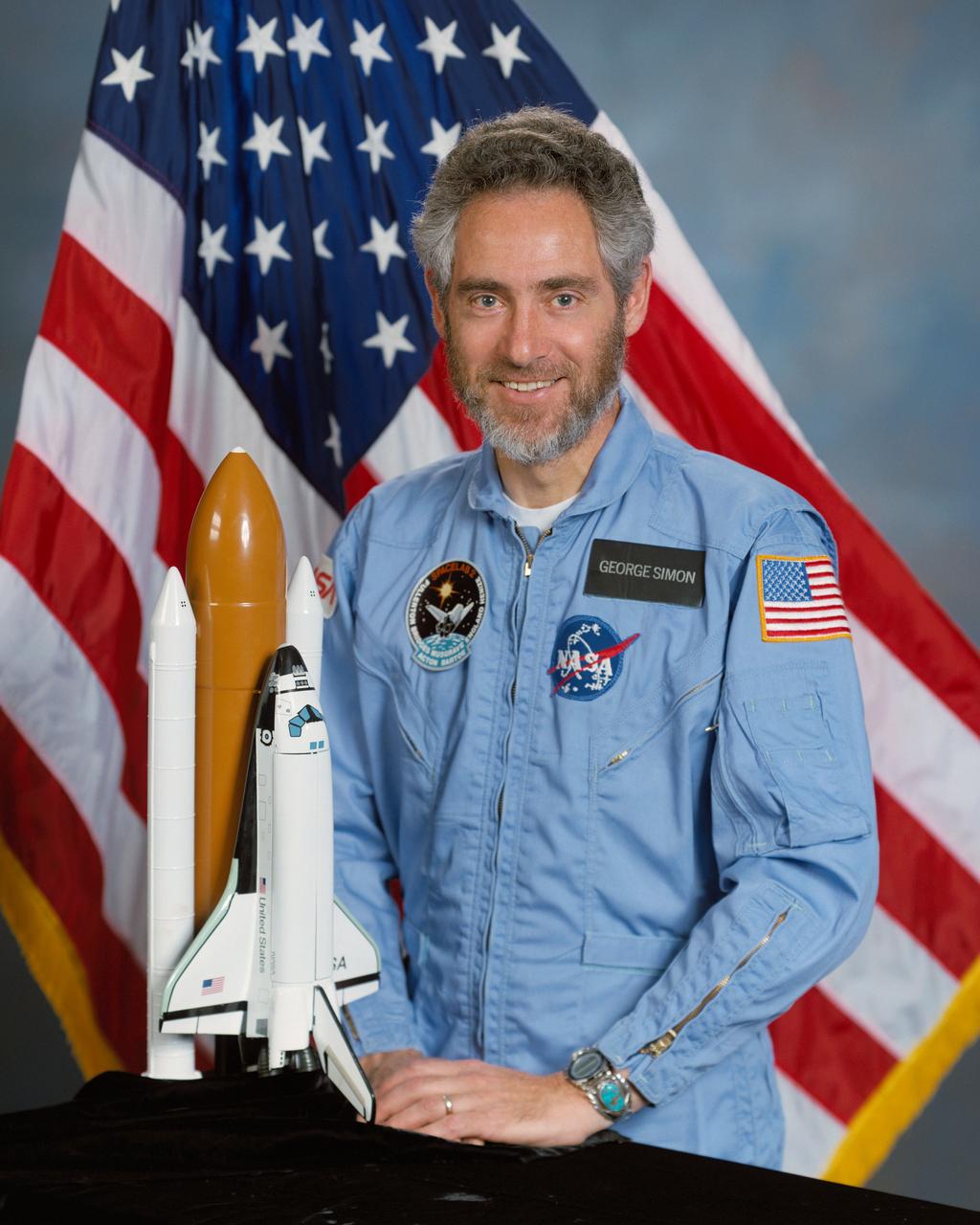
Portrait of STS 51-F Spacelab backup payload specialist George Simon, in blue flight suit
Portrait - George Simon
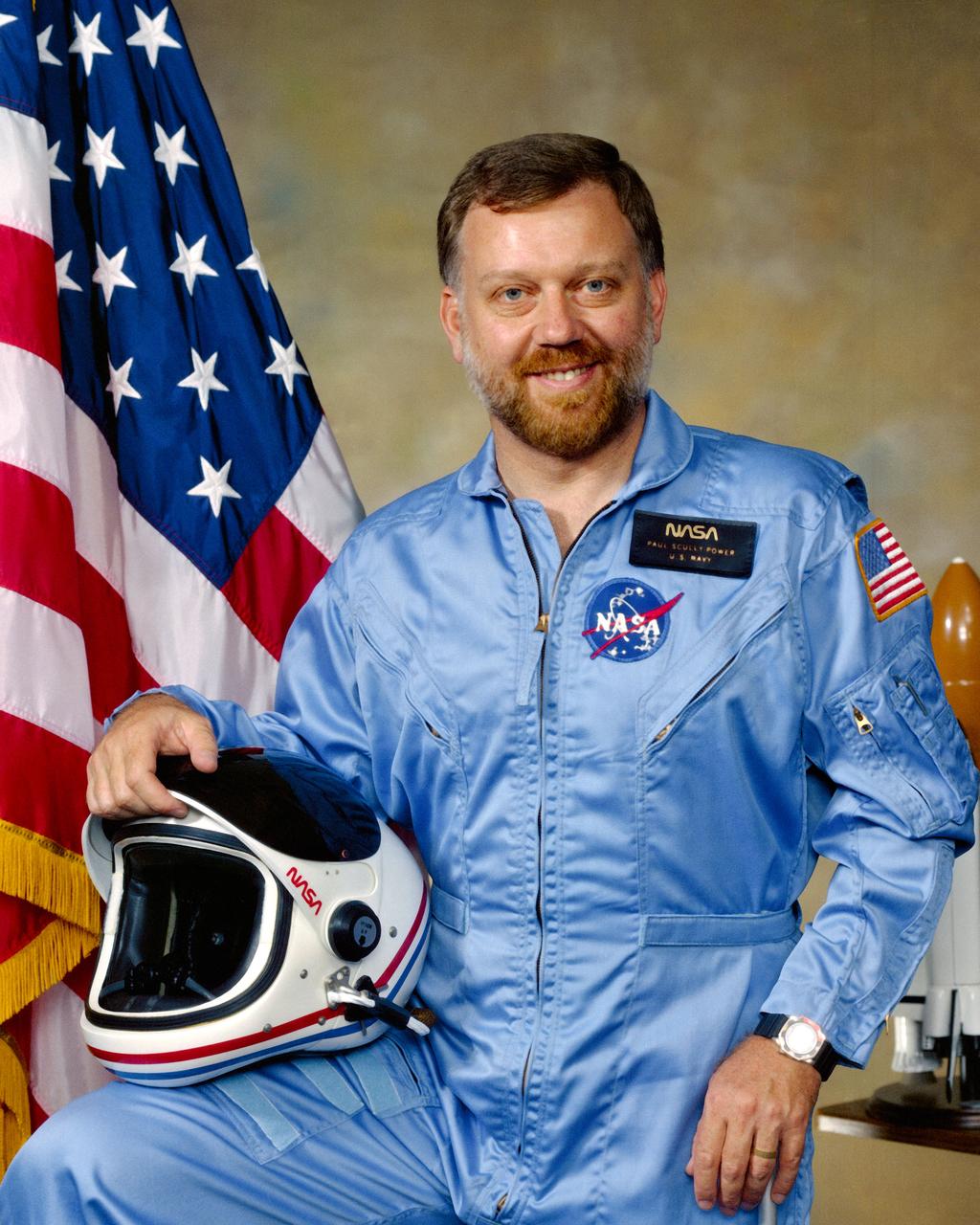
S84-38407 (26 July 1984) --- Astronaut Paul D. Scully-Power, payload specialist.
Portrait - Paul D. Scully-Power
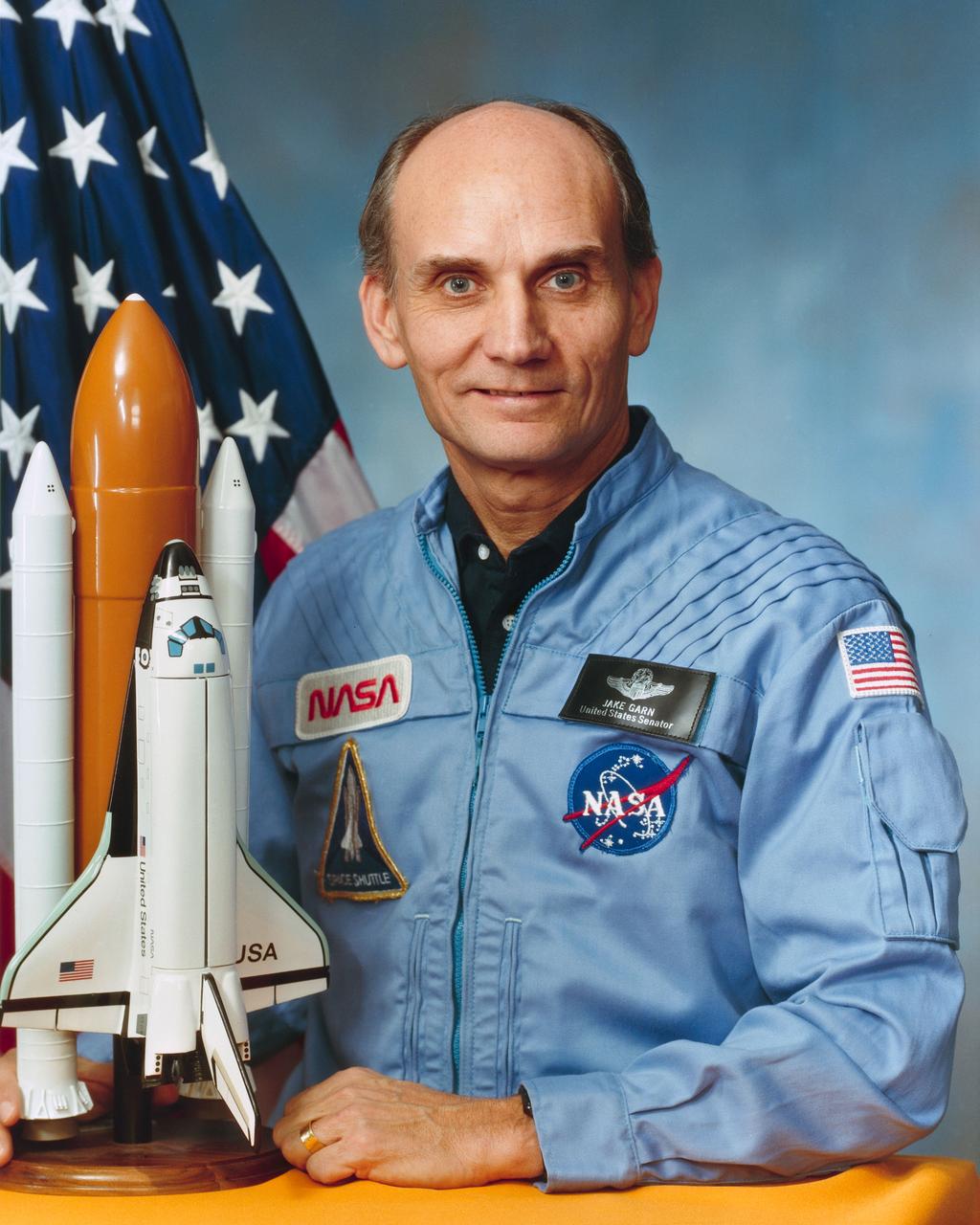
S85-25500 (1985) --- Senator E. J. "Jake" Garn, STS 51-D payload specialist.
Portrait - Garn, E.J. "Jake"
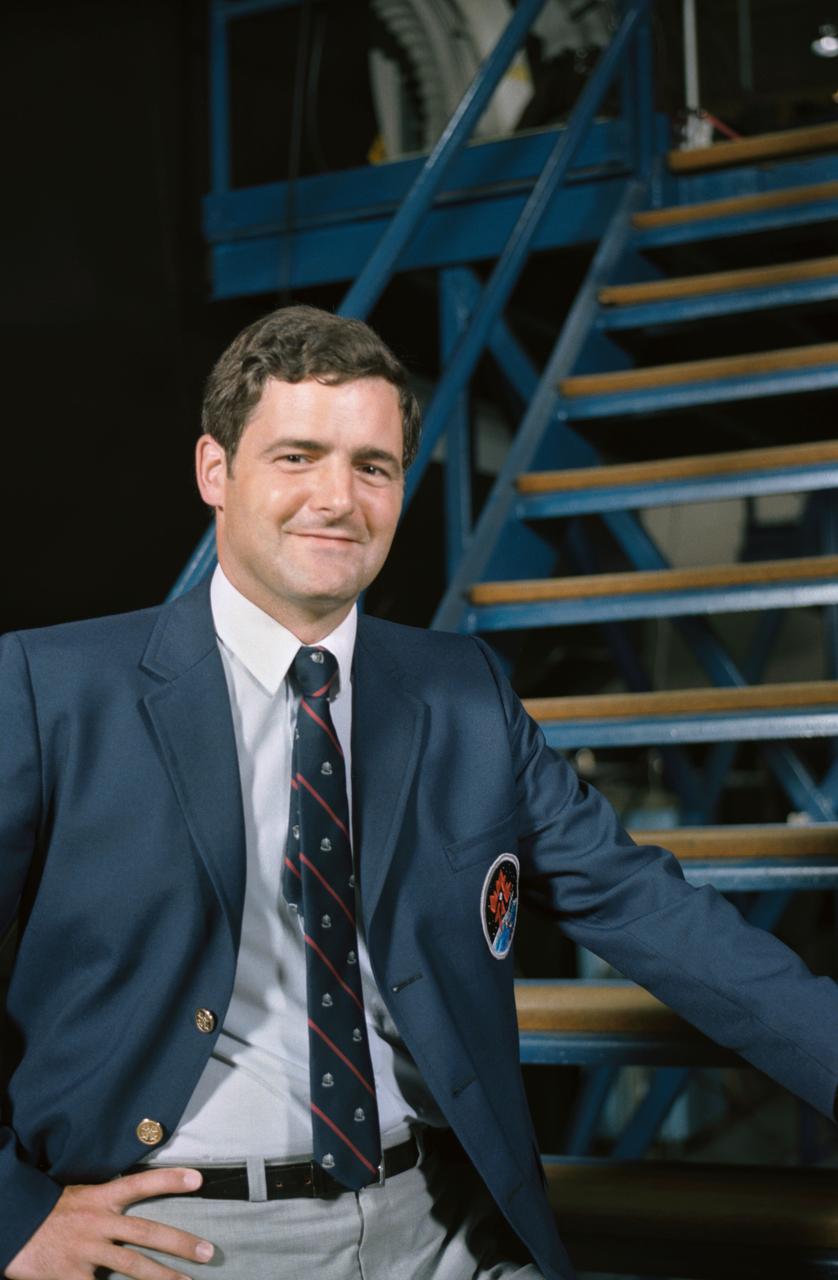
Portrait photograph, Canadian Payload Specialist Mark Garneau, assigned to the STS-16/41G Mission.    Also available in 4x5 B&W
PORTRAIT - PAYLOAD SPECIALIST GARNEAU, MARK
STS055-106-090 (26 April- 6 May 1993) --- Hans Schlegel, one of two STS-55 payload specialists representing the German Aerospace Research Establishment (DLR) onboard the Space Shuttle Columbia, finds plenty of room to "spread out" while participating in a Tissue experiment. Astronaut Bernard A. Harris, Jr., mission specialist, monitors an experiment in the background.
STS-55 German payload specialist Schlegel and MS3 Harris work in SL-D2 module
STS009-03-093 (28 Nov-8 Dec 1983) --- A mission specialist and two payload specialists busy themselves in the Spacelab 1 module aboard the Earth orbiting Space Shuttle Columbia.  Left to right are Payload Specialist Robert A. R. Parker.  Parker is partially obscured by a deployed instrument of the fluid physics module at the materials sciences double rack.  Merbold, a physicist from Max-Planck Institute in the Federal Republic of Germany, wears a head band-like device and a recorder as part of an overall effort to learn more about space adaptation.  Both Space lab 1 payload specialists wore the devices during most of their waking hours on this 10-day flight.  The frame was exposed with a 35mm camera.
STS-9 crewmembers work in the Spacelab 1 module
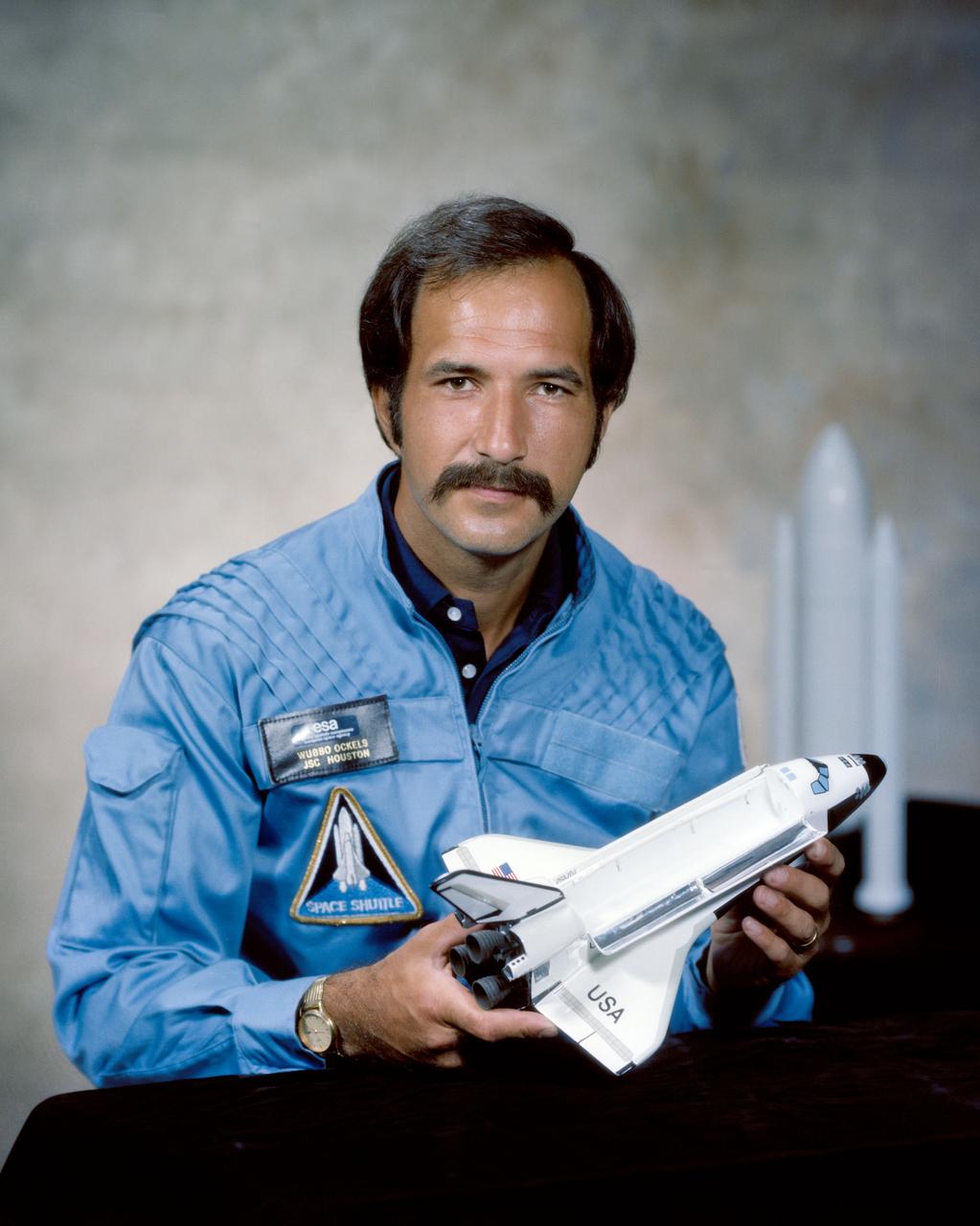
S81-33399 (July 1981) --- Wubbo Ockels, ESA    payload specialist
PORTRAIT - PAYLOAD SPECIALIST OCKELS, WUBBO - JSC
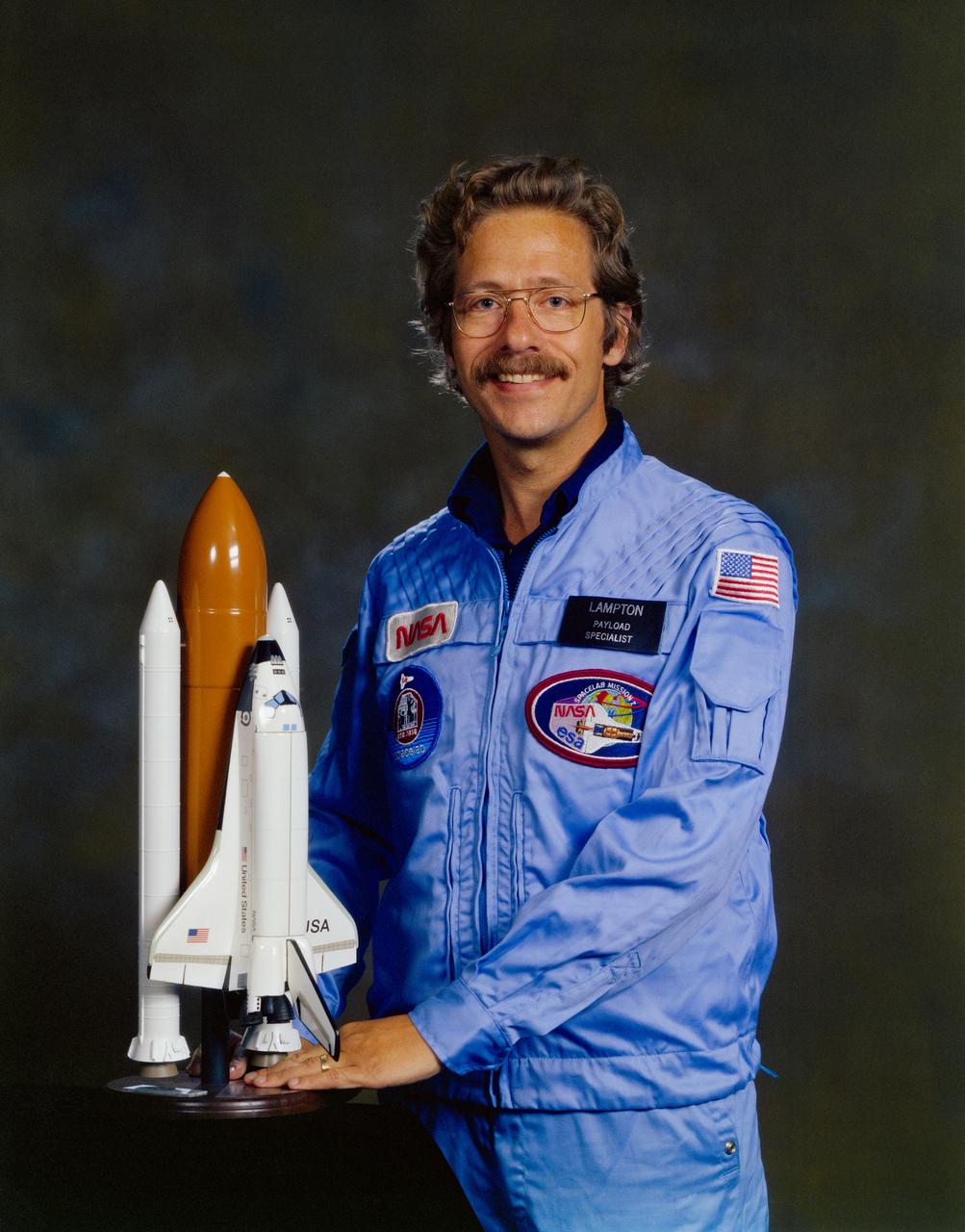
S83-41301 (1983) --- Michael Logan Lampton, backup payload specialist.
PORTRAIT - PAYLOAD SPECIALIST (PS) LAMPTON, MICHAEL - JSC
STS047-204-006 (12 - 20 Sept 1992) --- Dr. Mamoru Mohri, payload specialist representing Japan's National Space Development Agency (NASDA), participates in an experiment designed to learn more about Space Adaptation Syndrome (SAS).  The experiment is titled, "Comparative Measurement of Visual Stability in Earth and Cosmic Space."  During the experiment, Dr. Mohri tracked a flickering light target while eye movements and neck muscle tension were measured.  This 45-degree angle position was one of four studied during the eight-day Spacelab-J mission.
STS-47 Payload Specialist Mohri conducts visual stability experiment in SLJ
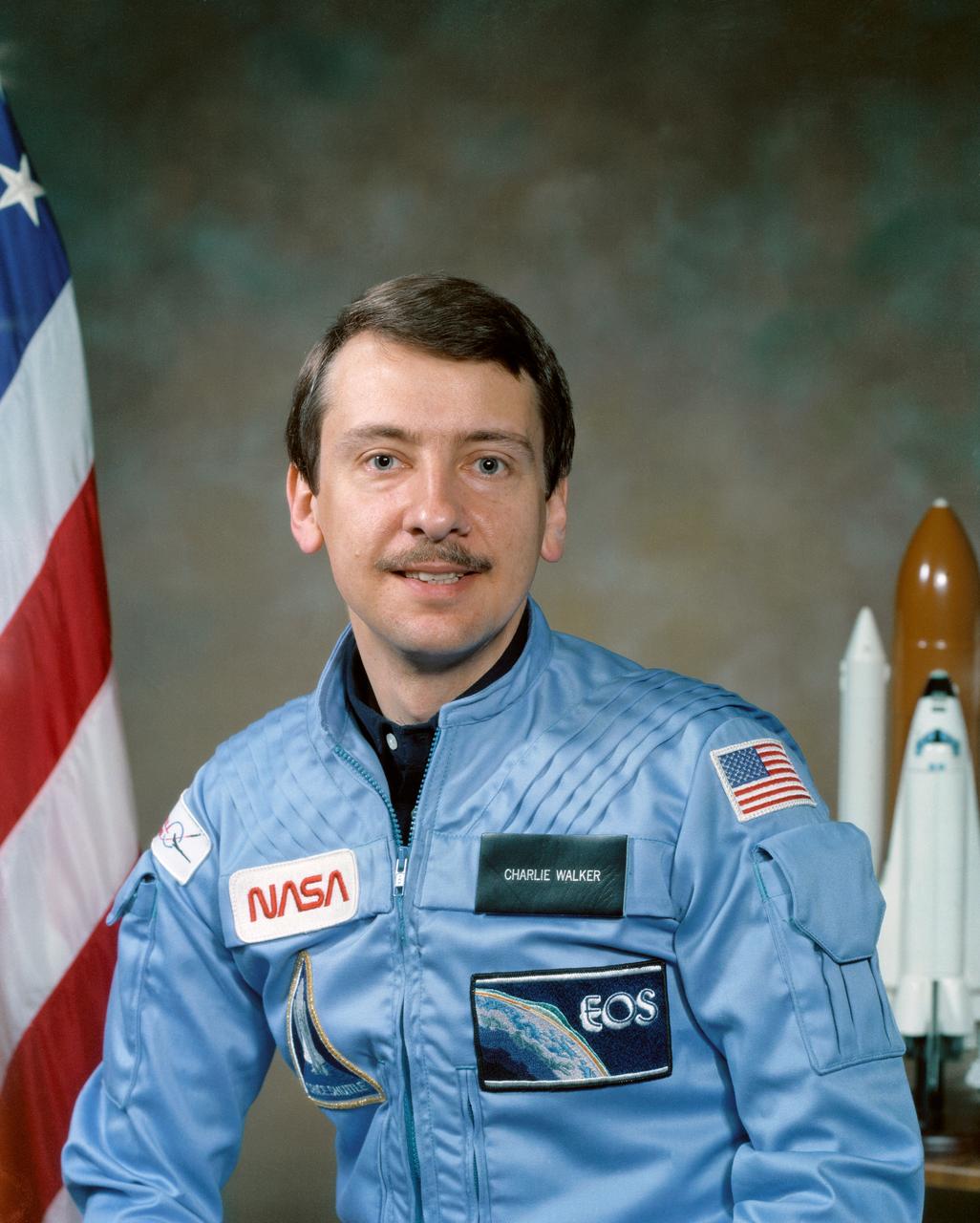
S84-27269 (16 Feb 1984) --- Astronaut Charles (Charlie) D. Walker, payload specialist and McDonnell-Douglas Civilian Engineer.
PORTRAIT - PAYLOAD SPECIALIST WALKER, CHARLES D. - JSC
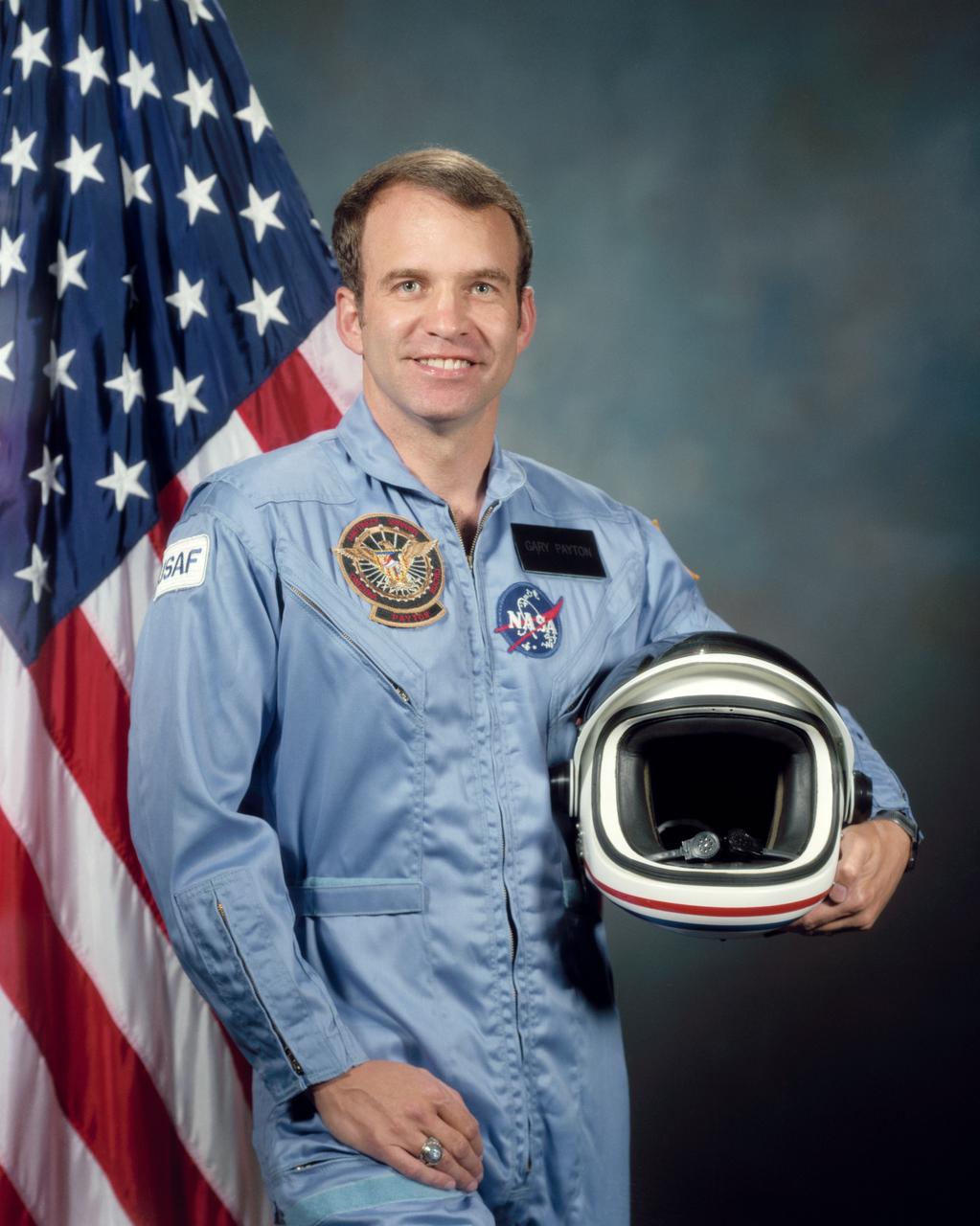
S84-44373 ( 4 Oct 1984) --- Payload Specialist   Gary E. Payton, representing United States Air Force.
Official portrait of the Payload Specialist Gary E. Payton
S84-36140 (16 June 1984) --- Lodewijk van den Berg, EG&G Corporation Spacelab 3 Payload Specialist.
Portraits - Shuttle Payload Specialists (PS)'s - JSC
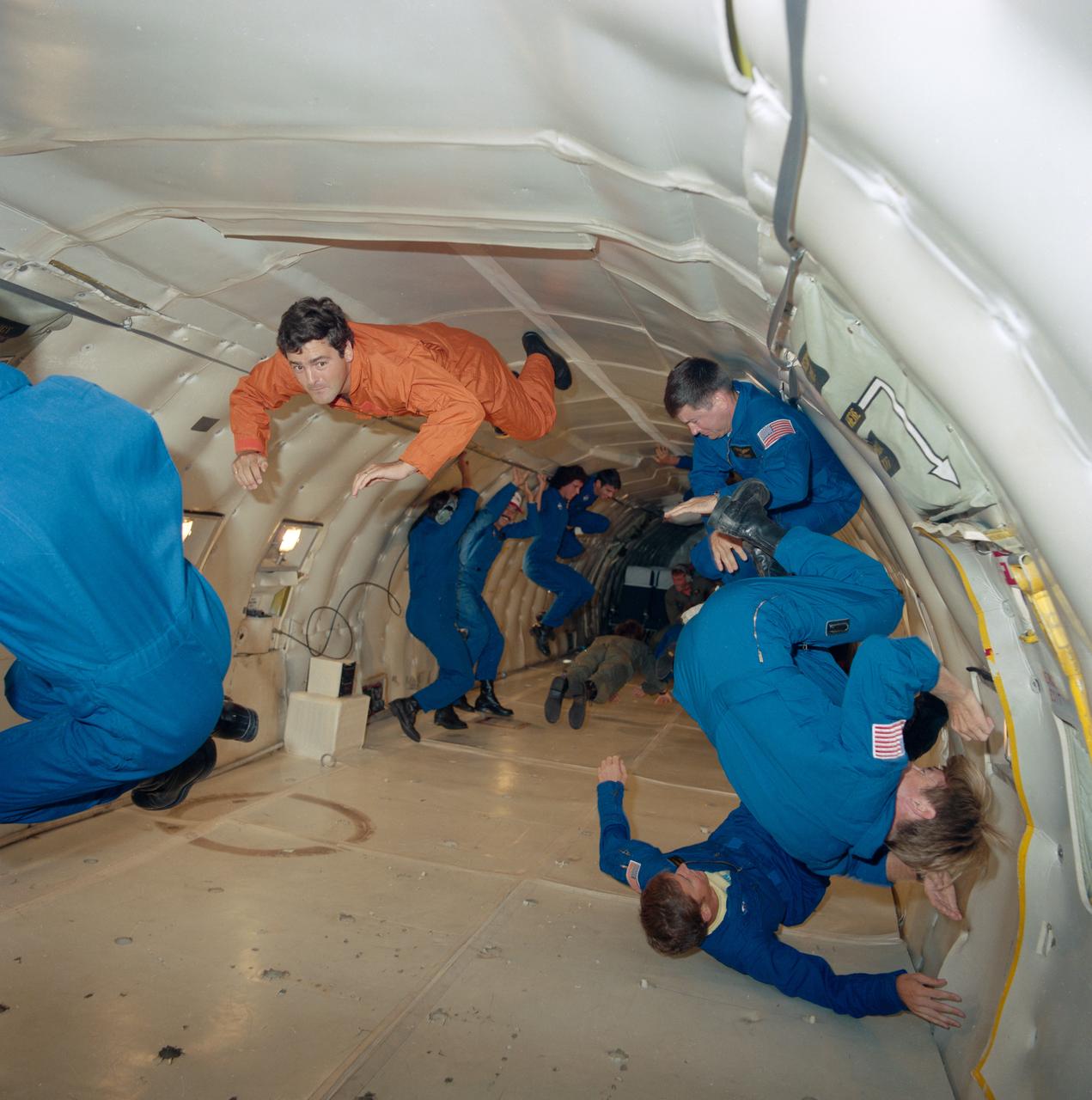
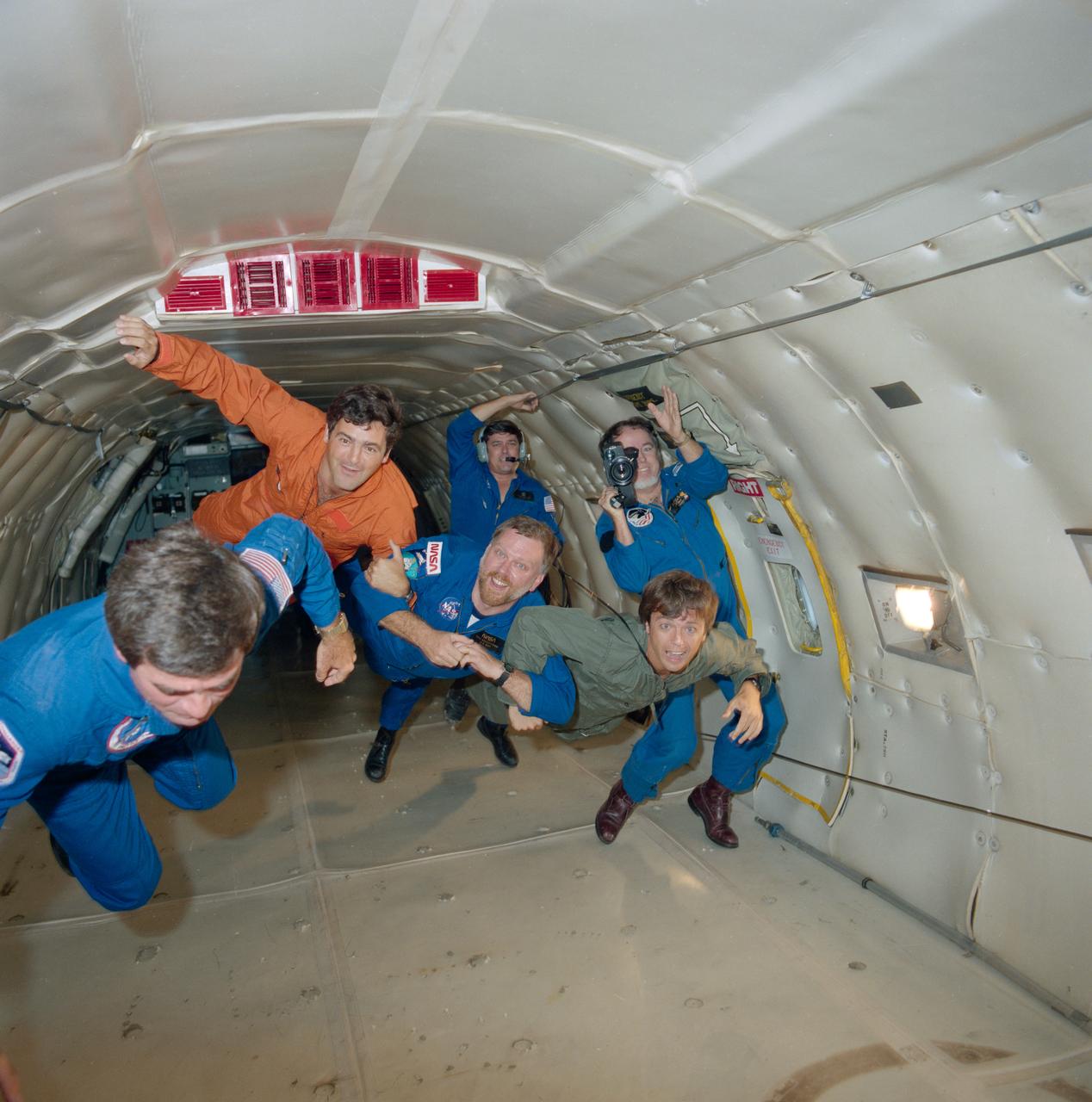
View of astronaut candidates and payload specialists during a training flight on the KC-135. The trainees are experiencing weightlessness in the hold of the aircraft.
View of Zero-G training for astronauts and payload specialists
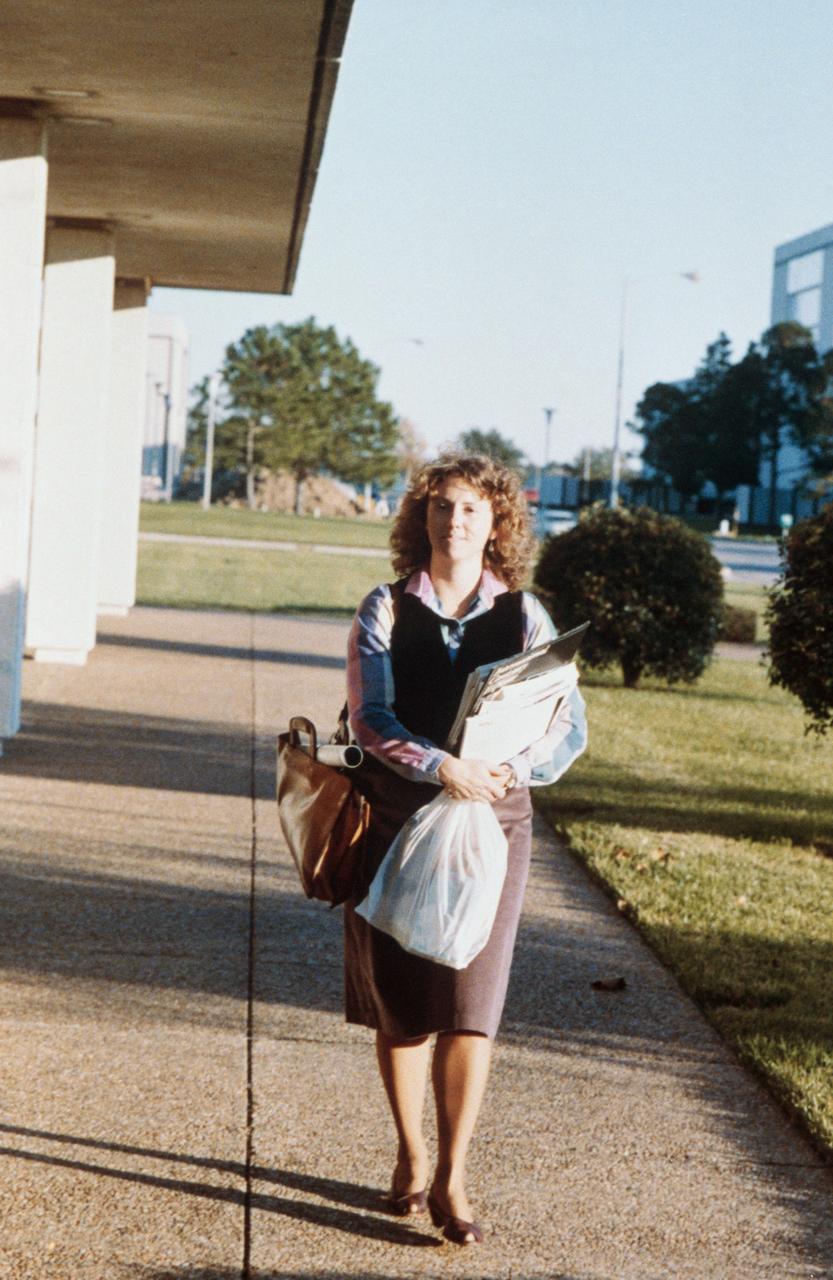
S86-25279 (November 1985) --- Sharon Christa McAuliffe, STS-51L payload specialist, has homework of her own to do as she prepares for a January 1986 flight. Photo by Keith Meyers of the New York Times. Photo credit: NASA
Christa McAuliffe preparing for STS 51-L flight
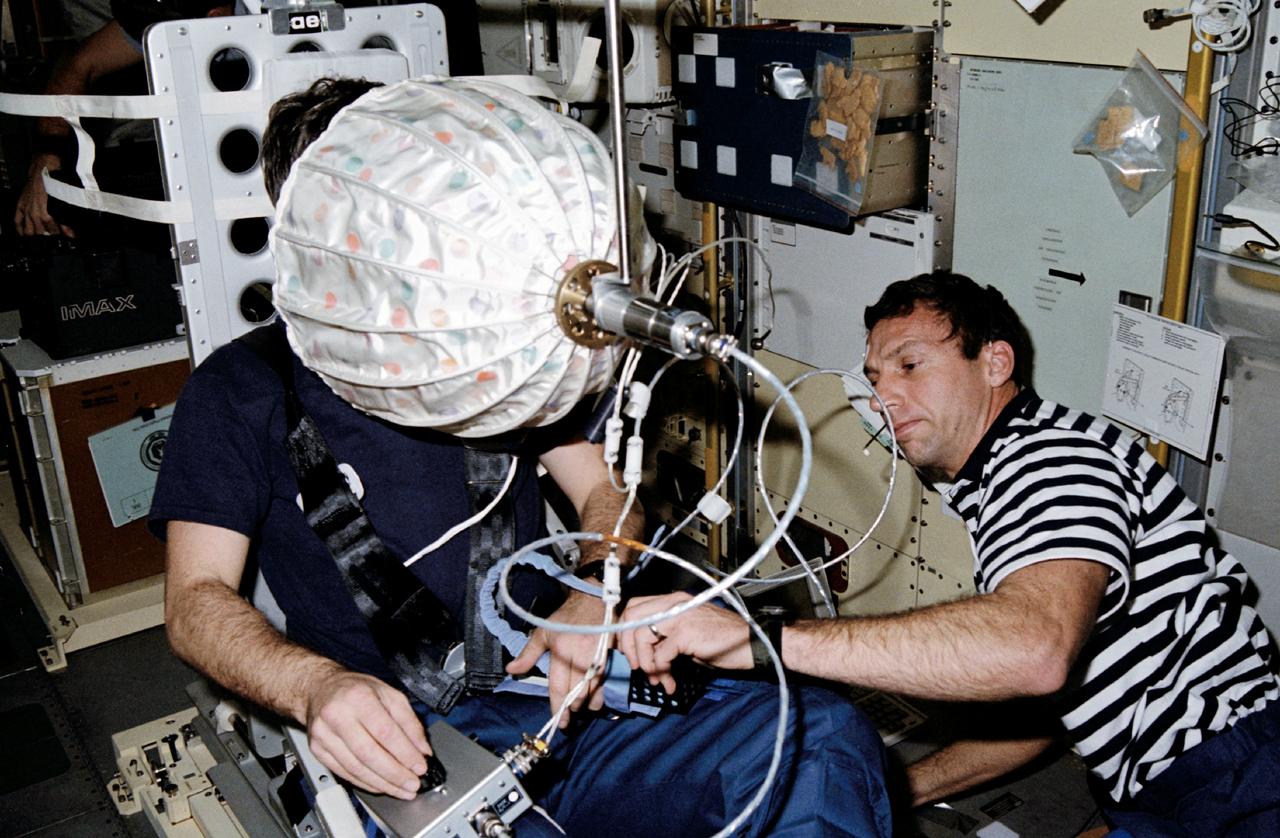
STS042-203-024 (22-30 Jan. 1992) --- Astronaut David C. Hilmers (right), STS-42 mission specialist, assists European Space Agency (ESA) payload specialist Ulf Merbold with the visual stimulator experiment on the Space Shuttle Discovery's middeck. This particular test is part of an ongoing study of the Space Adaptation Syndrome (SAS). Seated in a stationary mini-sled, Merbold (or any other subject for this test) stares at an umbrella-shaped rotating dome with a pattern of colored dots on its interior. While observing the rotating dome, the subject turns a knob to indicate his perception of body rotation. The strength of circular vection is calculated by comparing the signals from the dome and the knob. The greater the false sense of circular vection, the more the subject is relying on visual information instead of otolith information.
STS-42 MS Hilmers and Payload Specialist Merbold use IML-1 visual stimulator
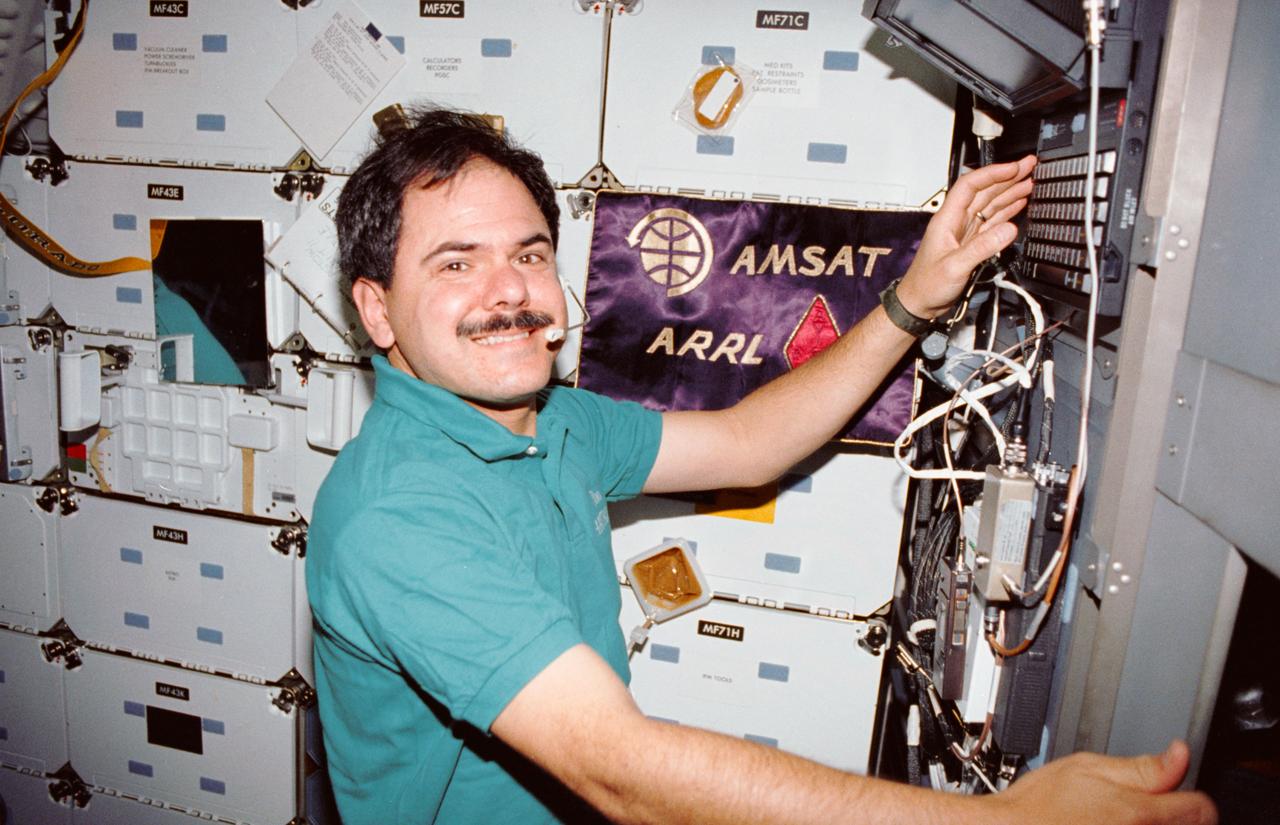
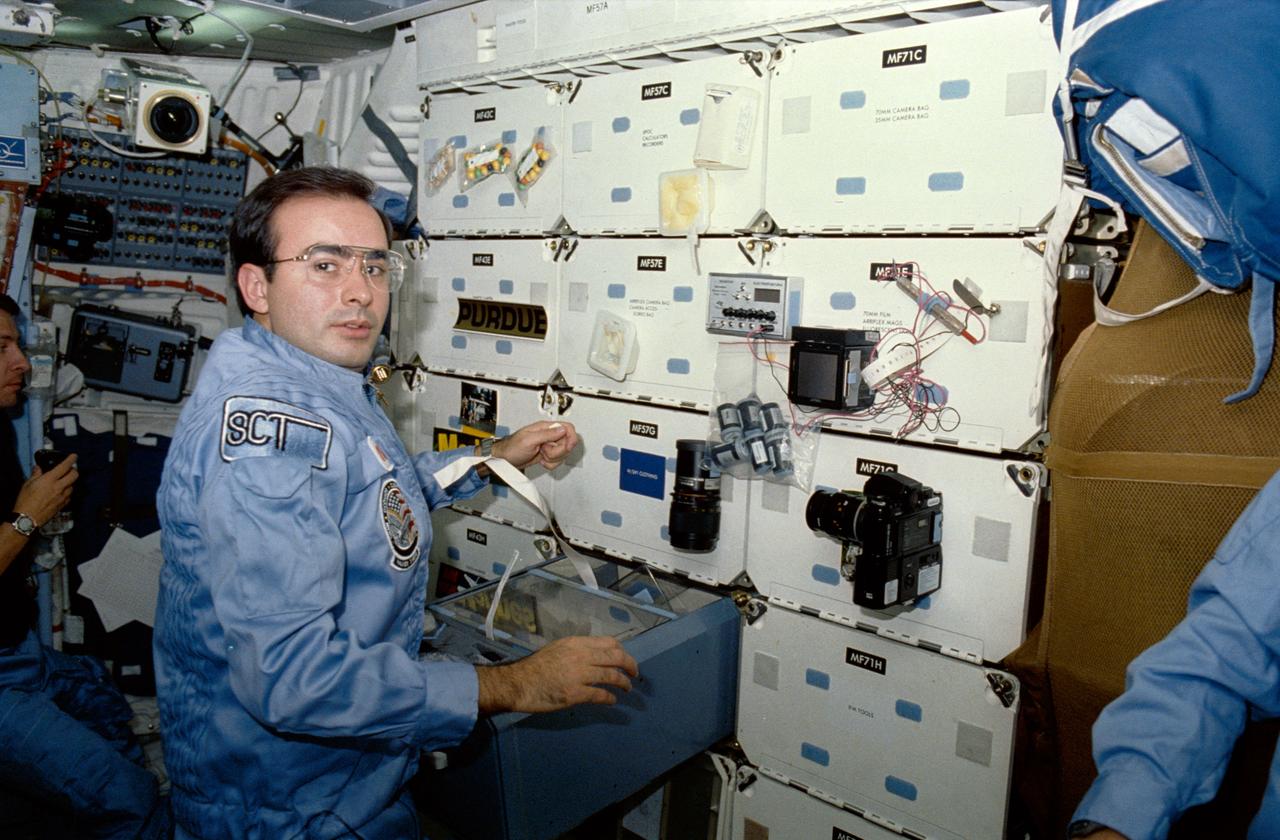
STS-35 Payload Specialist Ronald A. Parise enters data into the payload and general support computer (PGSC) in preparation for Earth communication via the Shuttle Amateur Radio Experiment (SAREX) aboard Columbia, Orbiter Vehicle (OV) 102. The SAREX equipment is secured to the middeck starboard sleep station. SAREX provided radio transmissions between ground based amateur radio operators around the world and Parise, a licensed amateur radio operator. The experiment enabled students to communicate with an astronaut in space, as Parise (call-sign WA4SIR) devoted some of his off-duty time to that purpose. Displayed on the forward lockers beside Parise is a AMSAT (Amateur Radio Satellite Corporation) / ARRL (American Radio Relay League) banner. Food items and checklists are attached to the lockers. In locker position MF43G, the Development Test Objective (DTO) Trash Compaction and Retention System Demonstration extended duration orbiter (EDO) compactor is visible.
STS-35 Payload Specialist Parise sets up SAREX on OV-102's middeck
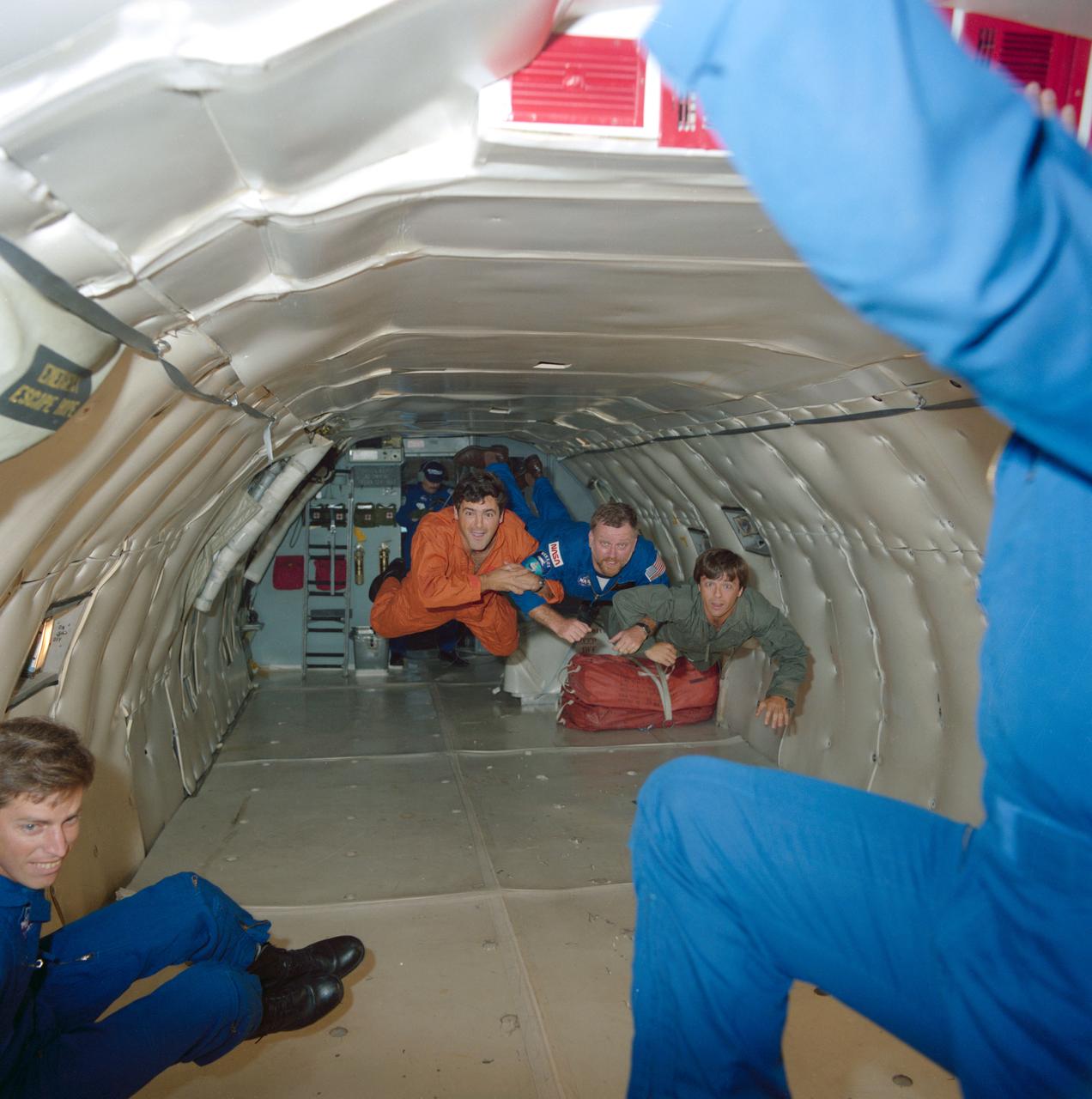
S84-40538 (24 Aug 1984) --- Two 41-G payload specialists and a backup for one of them   appear to be at home in zero gravity in this scene photographed aboard a KC-135 "Zero gravity" aircraft flying one of its weightlessness opportunity parabolas.  Paul D. Scully-Power, a civilian oceanographer with the U.S. Navey, is flanked by Marc Garneau (left) and Robert Thirsk, both representing the National Research Council of Canada.  Thirsk is back up payload specialist for Garneau.
View of Zero-G training for astronauts and payload specialists
Paul Scully-Power, 41-G payload specialist, links arms with two others as they experience weightlessness in the KC-135 training aircraft. The trio appears to be flying toward the front of the aircraft while others take photos.
View of Zero-G training for astronauts and payload specialists
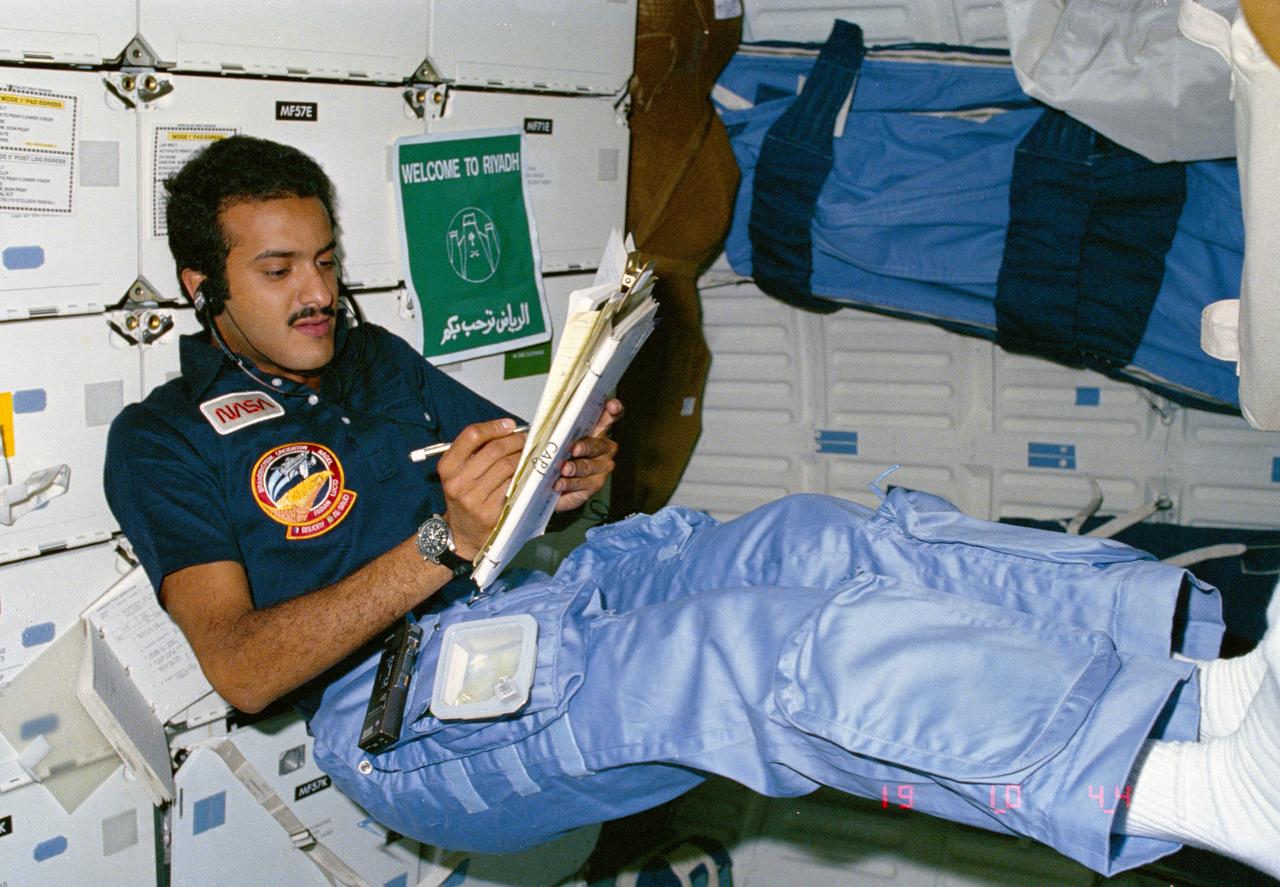
51G-04-010 (17 - 24 June 1985) --- Payload Specialist Sultan Salman Abdelize Al-Saud assumes a posture common to the weightlessness environment of space as he logs notes in Discovery?s middeck area.
Payload specialist Al-Saud siting in middeck area
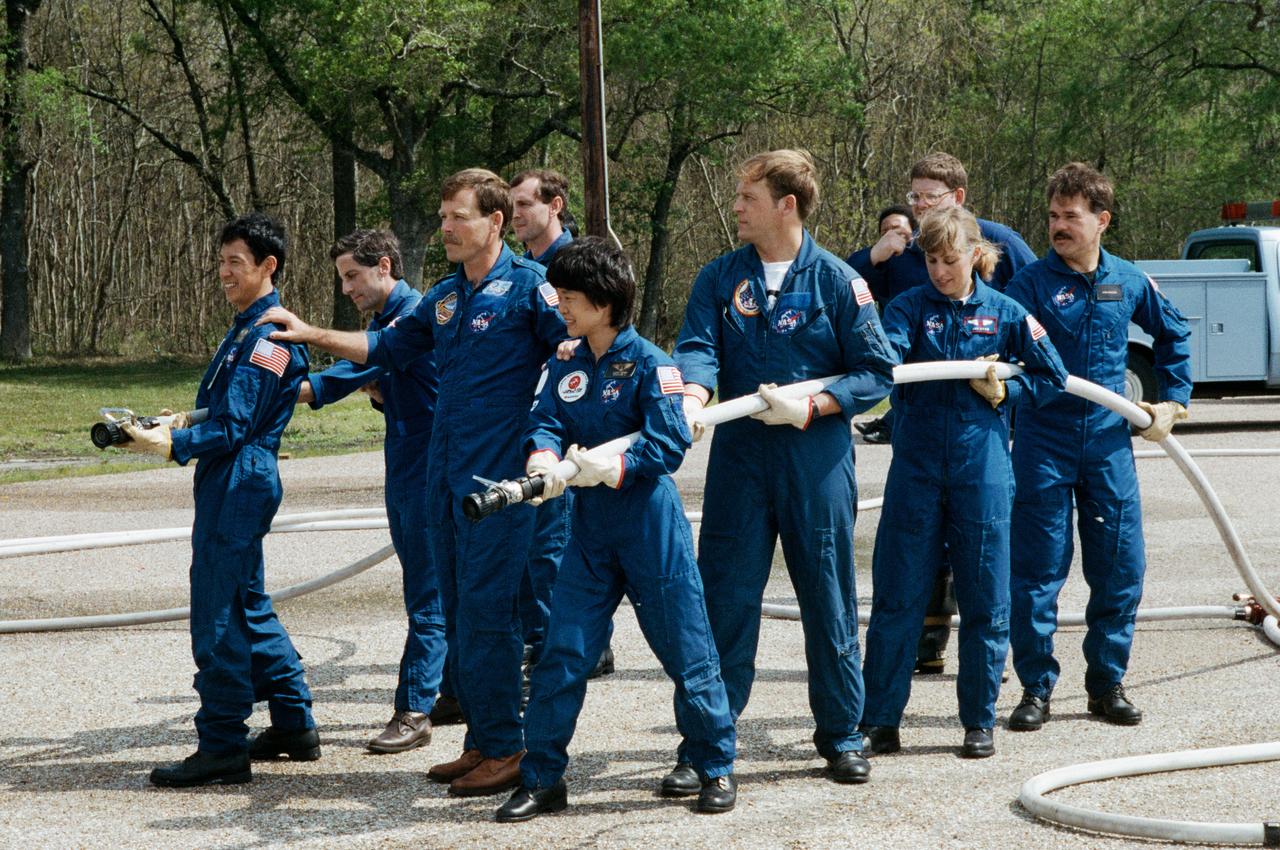
STS-47 Endeavour, Orbiter Vehicle (OV) 105, crewmembers led by Commander Robert L. Gibson (center) prepare to extinguish a blaze in JSC's Fire Training Pit. Lined up along the water hoses are: (on left) Payload Specialist Mamoru Mohri, holding the hose nozzle, followed by Mission Specialist (MS) Jerome Apt, and Pilot Curtis L. Brown, Jr; and (on right) backup Payload Specialist Chiaki Naito-Mukai, holding the hose nozzle, followed by MS and Payload Commander (PLC) Mark C. Lee, MS N. Jan Davis, and backup Payload Specialist Stan Koszelak. A veteran fire fighter and the instructor, positioned between the two hoses, looks on. Mohri and Mukai represent Japan's National Space Development Agency (NASDA). The Fire Training Pit is located across from the Gilruth Center Bldg 207.
STS-47 crewmembers and backups during JSC fire fighting exercises
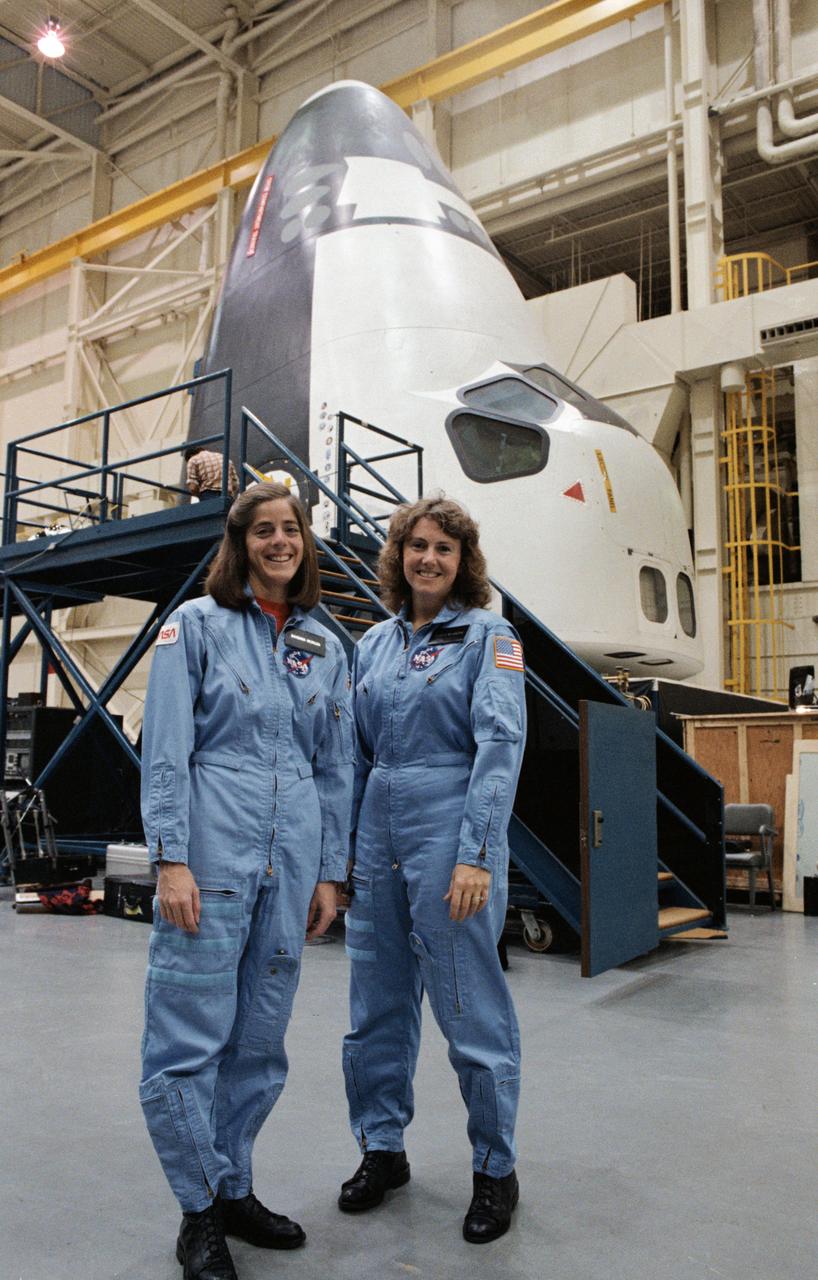
S85-46693 (26 Dec. 1985) --- Sharon Christa McAuliffe (right), the Teacher-in-Space payload specialist assigned to the STS-51L mission, and her backup, Barbara R. Morgan pose for photos after training in the shuttle mock-up and integration laboratory at JSC. The shuttle crew compartment, in a launch mode, can be seen in the background. Photo credit: NASA
Christa McAuliffe and Barbara Morgan pose for photos after training
S92-32108 (May 1992) --- Payload specialist Albert Sacco Jr. uses a one-person life raft during emergency bailout training exercises in the Johnson Space Center?s (JSC) Weightless Environment Training Facility (WET-F).  Sacco is an alternate payload specialist for the United States Microgravity Laboratory (USML-1) mission, scheduled for launch later this year.        EDITOR?S NOTE: Sacco was later named as prime crew payload specialist for the USML-2 mission (STS-73), scheduled for 1995.
Payload Specialist Albert Sacco Jr. during emergency bailout training
STS065-214-037 (8-23 July 1994) --- Ready to begin one of her busy twelve hour shifts, payload specialist Dr. Chiaki Naito-Mukai enters the International Microgravity Laboratory (IML-2) science module in the cargo bay via the tunnel connecting it to the Space Shuttle Columbia's cabin. Dr. Mukai joined six NASA astronauts for more than two weeks of experimenting in Earth orbit. This photo was among the first released by NASA following IML-2. Also onboard were NASA astronauts Robert D. Cabana, James D. Halsell, Jr., Richard J. Hieb, Carl E. Walz, Donald A. Thomas and Leroy Chiao. Dr. Mukai represented the National Space Development Agency (NASDA) of Japan.
STS-65 Payload Specialist Mukai enters IML-2 spacelab module aboard OV-102
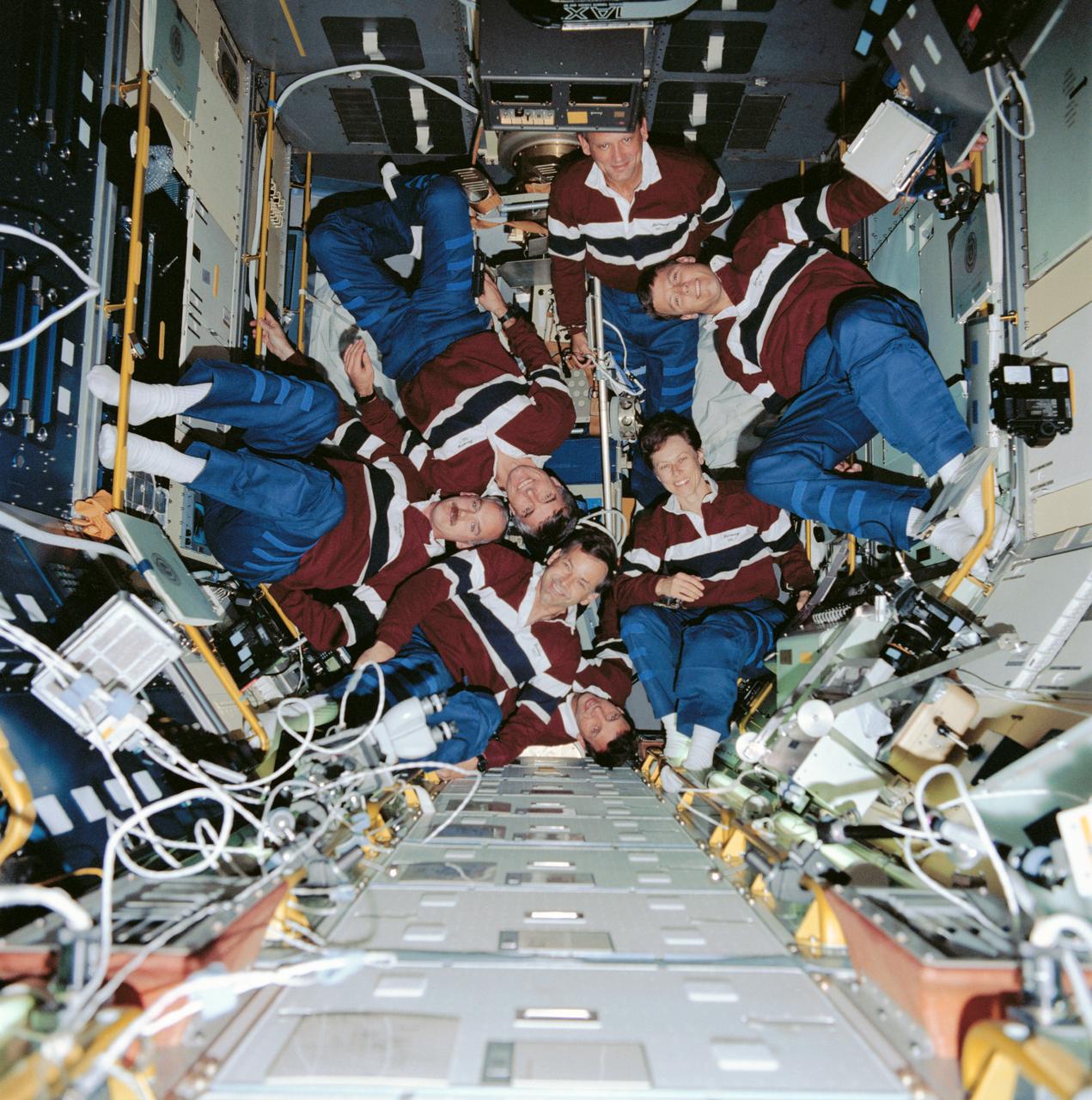
STS042-78-061 (22-30 Jan. 1992) --- The seven STS-42 crewmembers pose for a traditional in-space portrait in the shirt-sleeve environment of the International Microgravity Laboratory (IML-1) science module in the shuttle's cargo bay. (Hold picture with index numbers at top.) David C. Hilmers, mission specialist, is at top center of the 70mm image.  Others pictured are (clockwise) Ronald J. Grabe, mission commander; William F. Readdy; mission specialist; Ulf Merbold, European Space Agency (ESA) payload specialist; Norman E. Thagard, payload commander; Stephen S. Oswald, pilot; and Roberta L. Bondar, Canadian payload specialist. The rotating chair, used often in biomedical tests on the eight-day flight, is (partially obscured) in center frame.
STS-42 OV-103 crew poses for onboard (in-space) portrait in IML-1 SL module
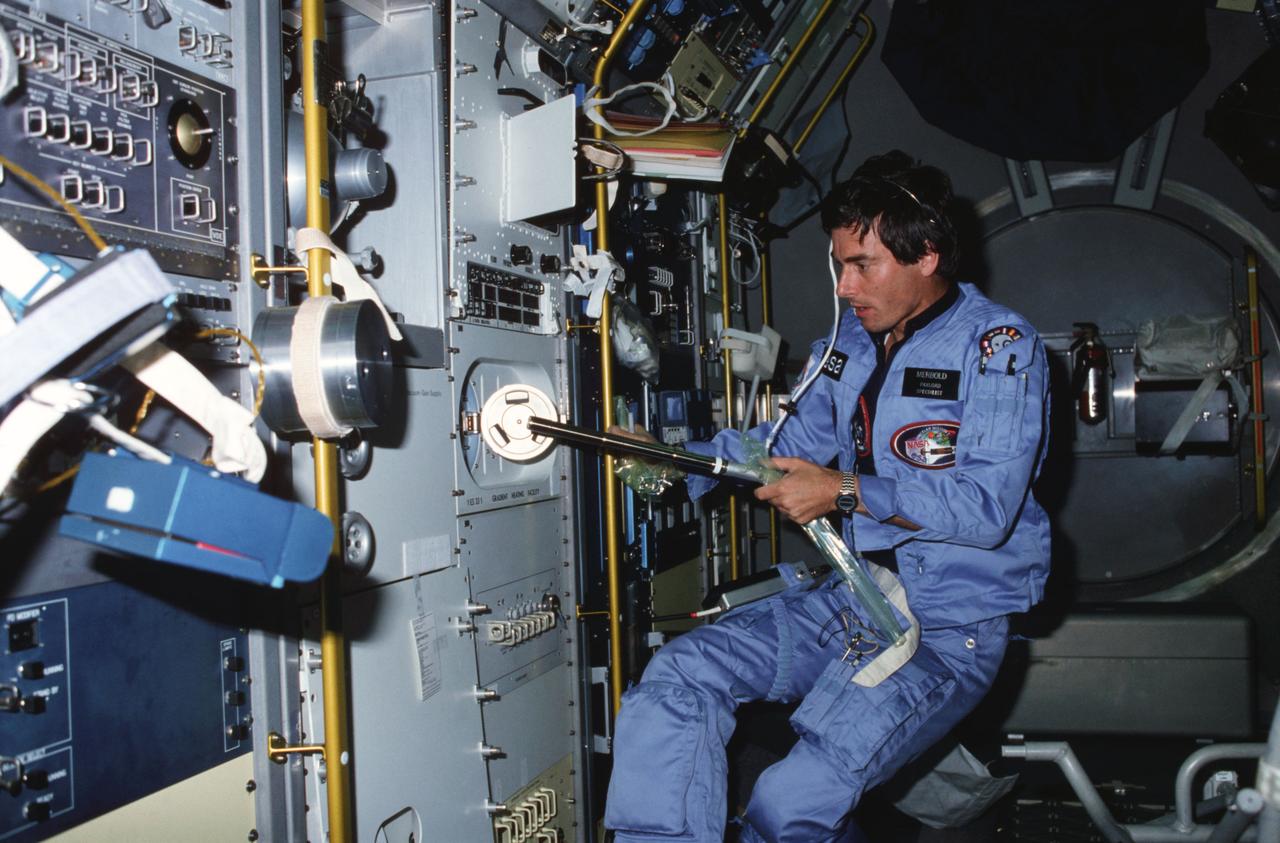
STS009-13-699 (28 Nov - 8 Dec 1983) --? Ulf Merbold, Spacelab 1 payload specialist, carries out one of the experiments using the gradient heating facility on the materials science double rack facility in the busy science module aboard the Earth-orbiting Space Shuttle Columbia.  Representing the European Space Agency, Dr. Merbold comes from Max-Planck Institute in Stuttgart, the Federal Republic of Germany.  He is a specialist in crystal lattice defects and low temperature physics.  The photograph was made with a 35mm camera.
Payload specialist Merbold performing experiment in Spacelab
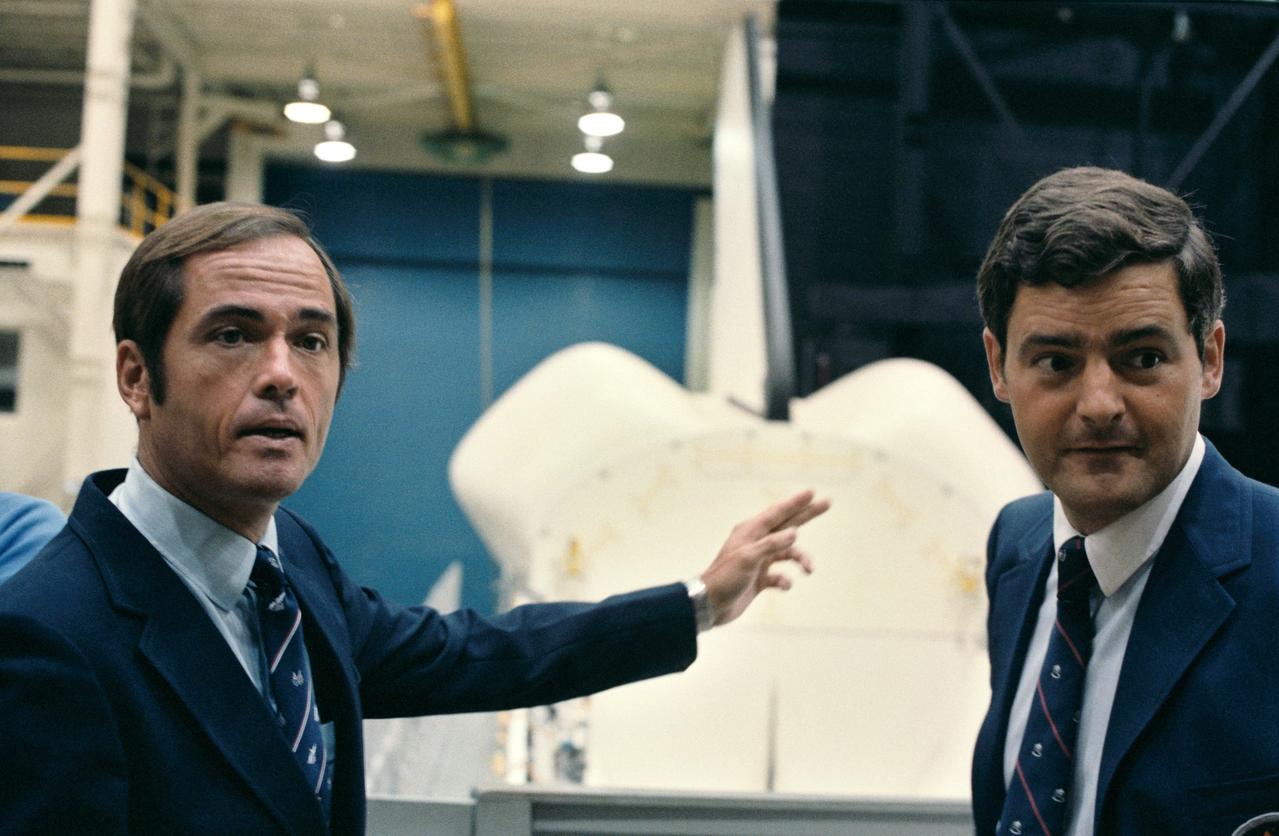
41D-3142 (3 Sept 1984) --- Astronaut Robert L. Crippen, left, crew commander for NASA's 41-G flight, and Marc Garneau, payload specialist representing the Canadian National Research Council (NRC), participate in a briefing in the Shuttle mockup and integration laboratory at the Johnson Space Center.
Astronauts Crippen and Payload specialist Garneau in front of SMS
STS009-125-427 (28 Nov 1983) --- Payload Specialist Byron K. Lichtenberg carries out an experiment at the fluid physics module on the busy materials science double rack facility. Two beverage containers can be seen just above the biomedical engineer's head.
Payload Specialist Byron K. Lichtenberg working in the Spacelab
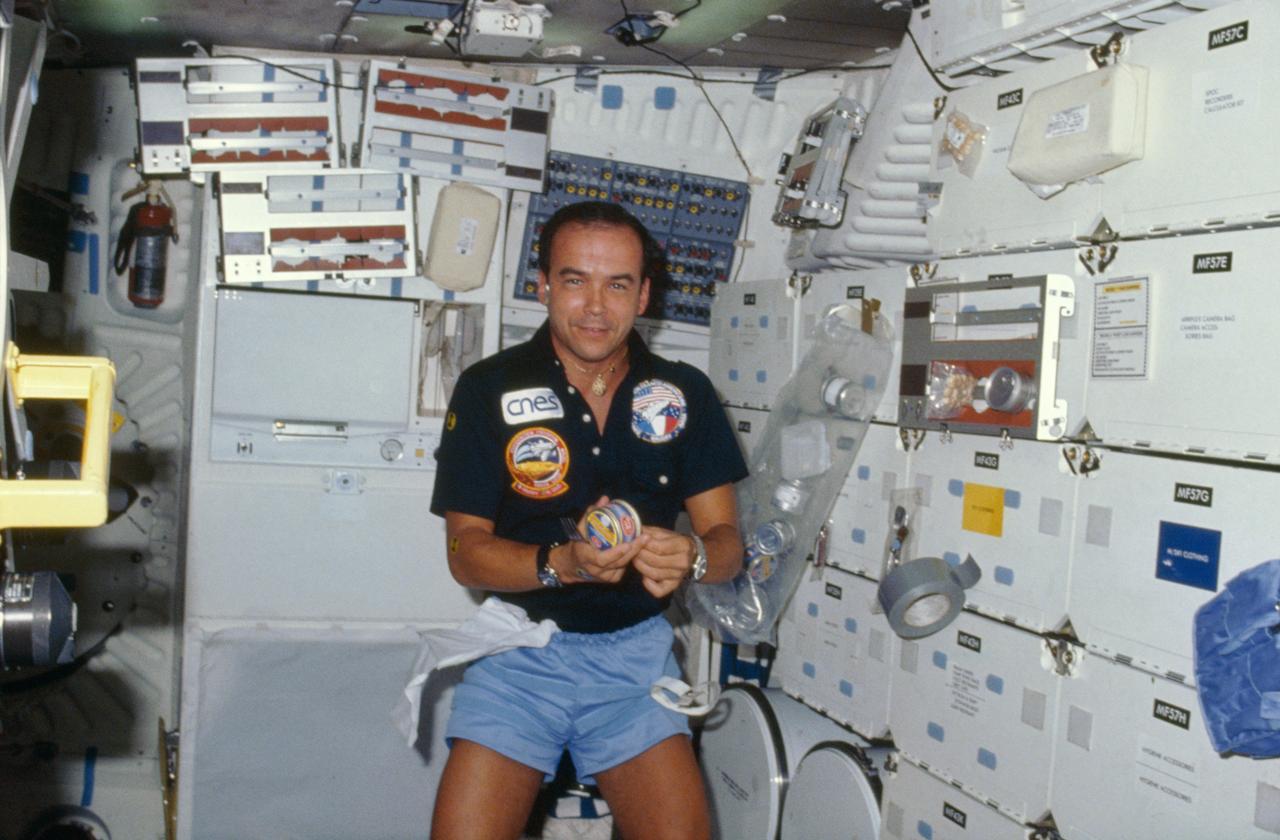
51G-08-021 (17-24 June 1985) --- Patrick Baudry, payload specialist representing the Centre National d'Etudes Spatiales of France, prepares to open a can of lobster.  The bag attached to a nearby locker door appears to contain several other French snacks.
French payload specialist Patrick Baudry prepares a meal
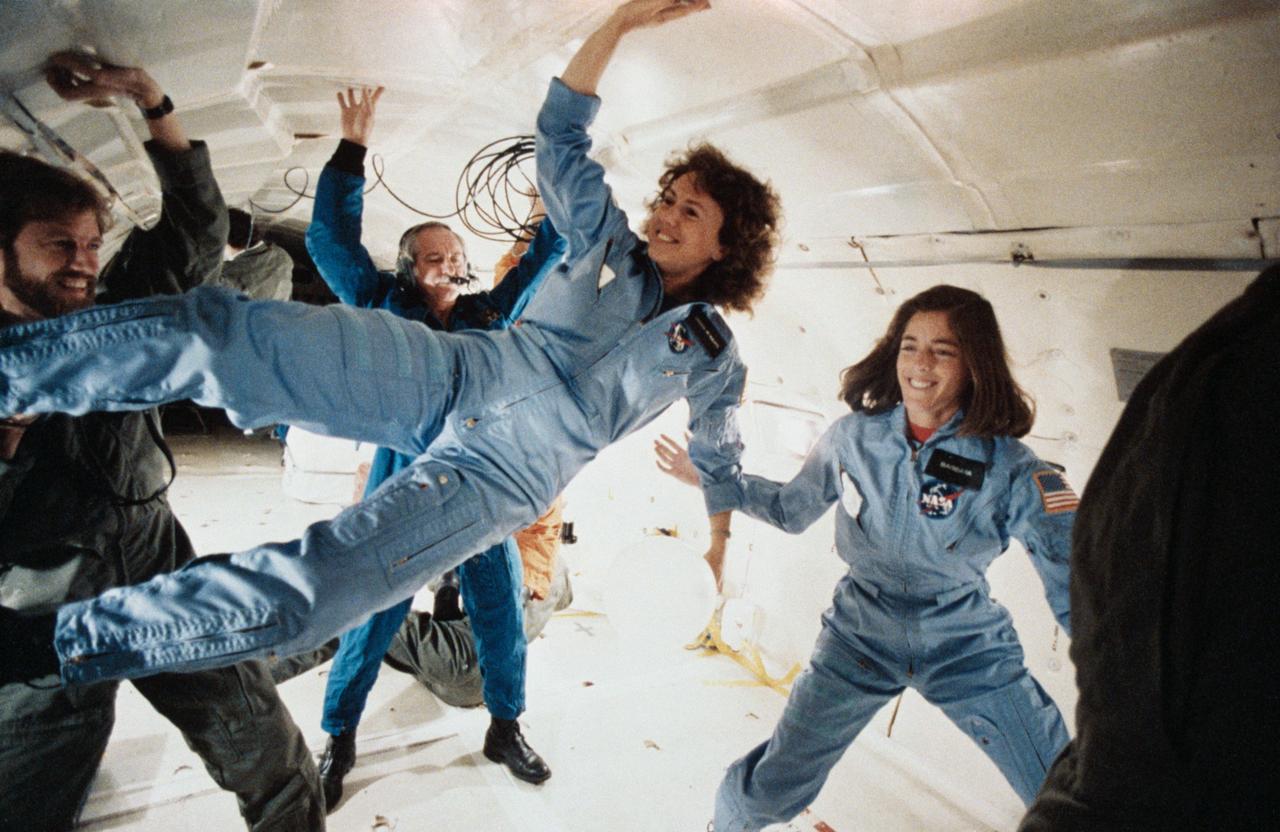
S86-25191 (for release January 1986) --- The two representatives of the Teacher-in-Space Project continue their training program at the Johnson Space Center with an additional flight aboard NASA?s KC-135 ?zero gravity? aircraft. Sharon Christa McAuliffe, left, is prime crew payload specialist, and Barbara R. Morgan is in training as backup payload specialist. The photo was taken by Keith Meyers of New York Times. Photo credit: NASA
Teacher in Space Christa McAuliffe on the KC-135 for zero-G training
STS078-397-010 (20 June - 7 July 1996) --- Payload specialist Jean-Jacques Favier, representing the French Space Agency (CNES), and astronaut Kevin R. Kregel, pilot, perform a successful Inflight Maintenance (IFM) on the Bubble Drop Particle Unit (BDPU).  The IFM technique was performed initially on the ground at the Marshall Space Flight Center (MSFC) by alternate payload specialist Pedro Duque of the European Space Agency (ESA), with the procedure being recorded on video and uplinked to the crew of the Space Shuttle Columbia to aid in the repair.
BDPU IFM, Favier and Kregel repair a short in the experiment's wires
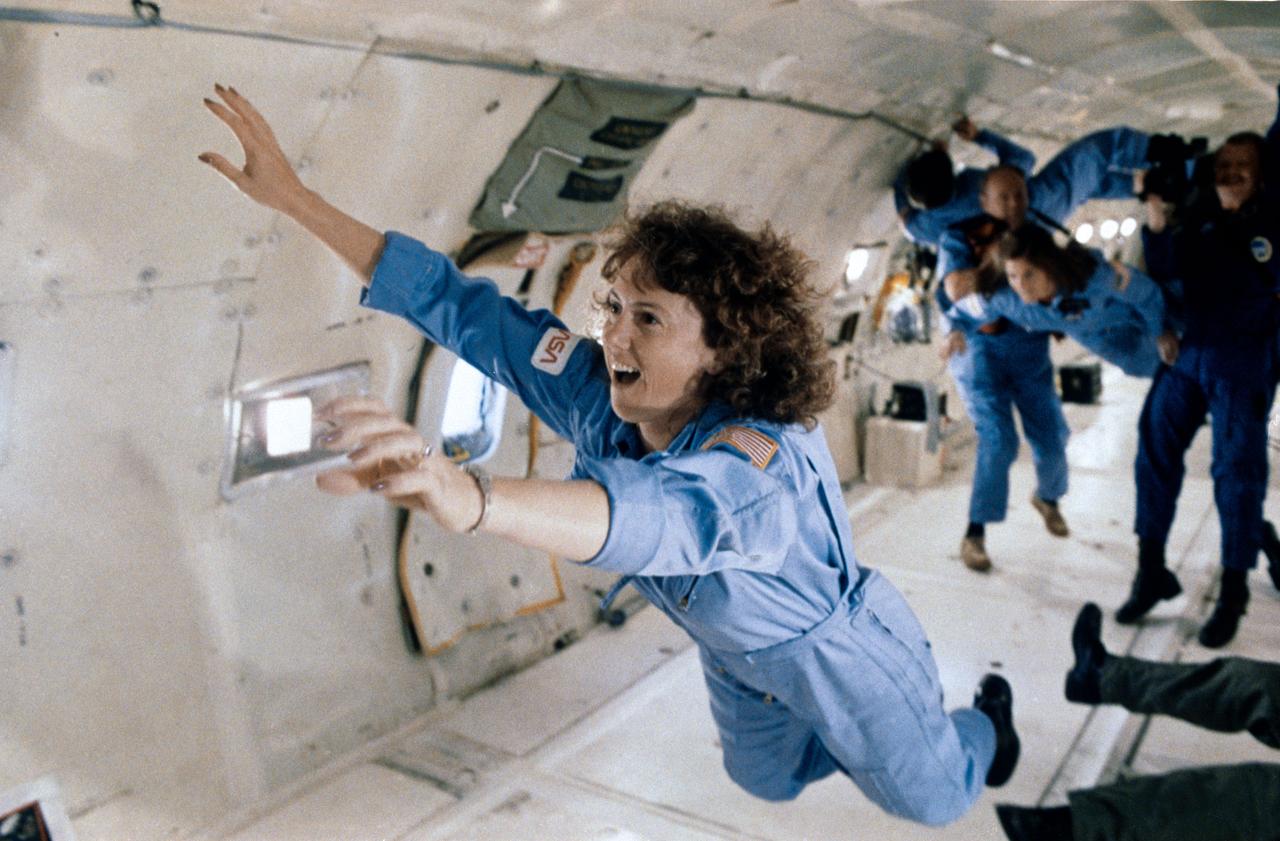
S86-25180 (October 1985) --- Sharon Christa McAuliffe, STS-51L citizen observer/payload specialist, representing the Teacher-in-Space Project, floats forward and upward during a few moments of weightlessness aboard a KC-135 aircraft. The flight is part of her training for the scheduled five-day flight aboard the Challenger in January of next year. Barbara R. Morgan, backup payload specialist for STS-51L, is partially visible in the background. The photo was taken by Keith Meyers of the New York Times. Photo credit: NASA
Teacher in Space Christa McAuliffe on the KC-135 for zero-G training
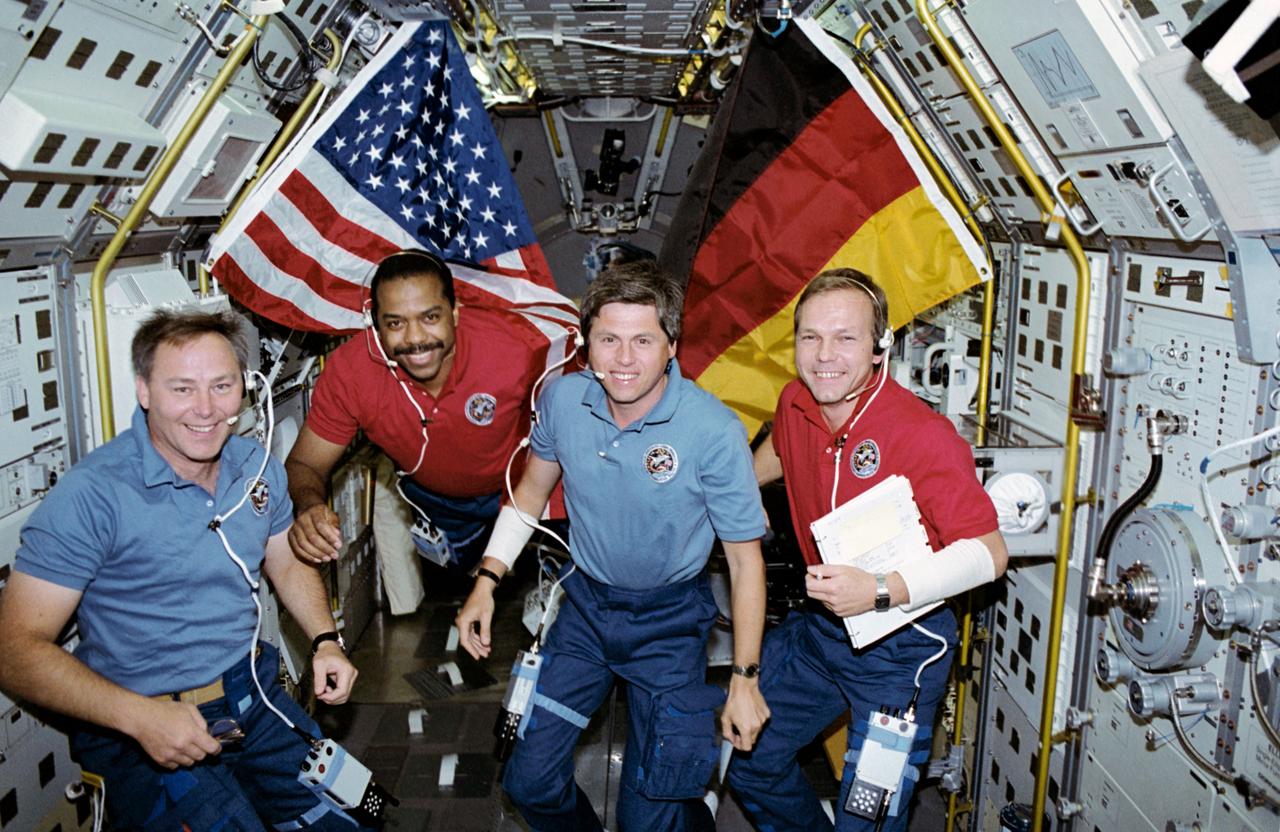
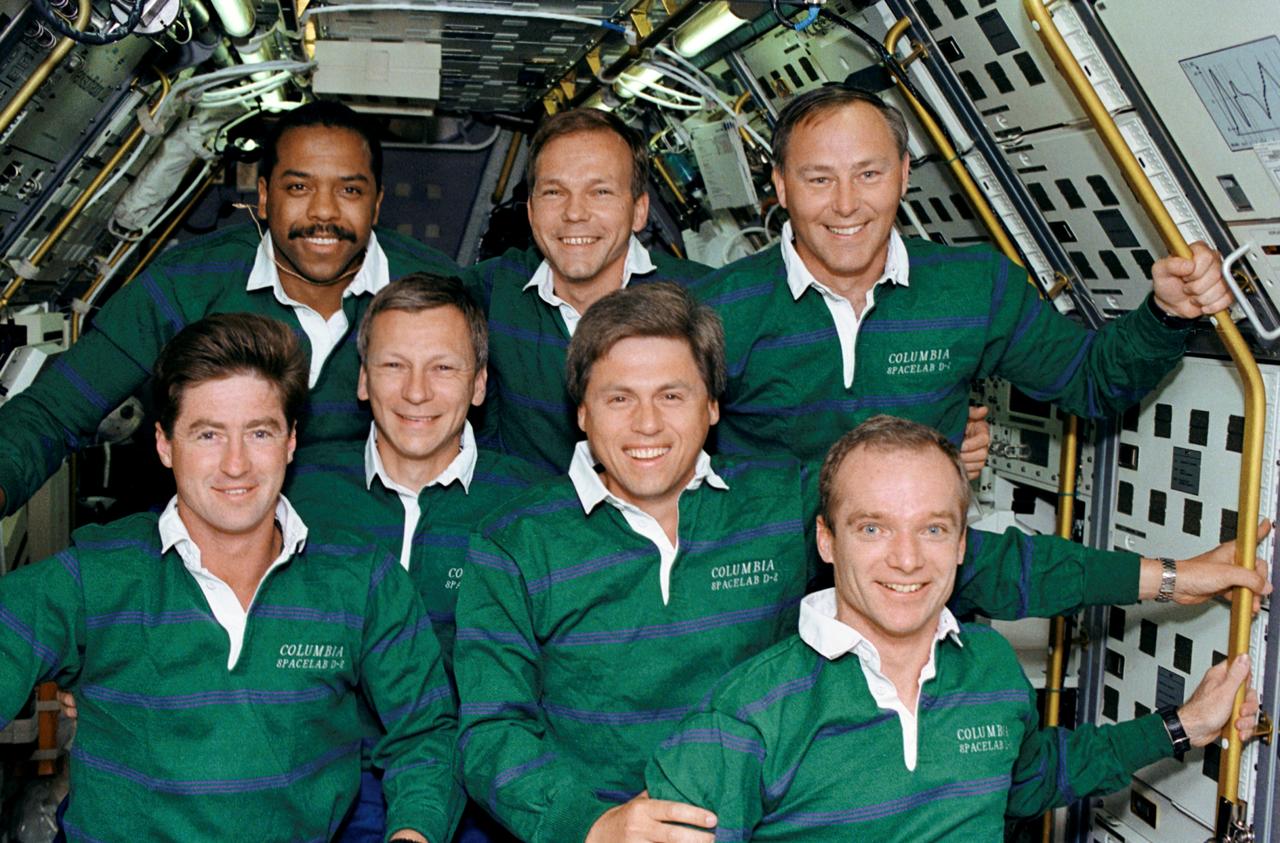
STS-55 crewmembers pose with United States and German flags inside the Spacelab Deutsche 2 (SL-D2) science module located in the payload bay (PLB) of Columbia, Orbiter Vehicle (OV) 102. Wearing communications kit assembly headsets (HDSTs) are (left to right) Mission Specialist 1 (MS1) and Payload Commander (PLC) Jerry L. Ross, MS3 Bernard A. Harris, Jr, German Payload Specialist 1 Ulrich Walter, and Payload Specialist 2 Hans Schlegel.
STS-55 crewmembers pose with U.S. and German flags in SL-D2 module on OV-102
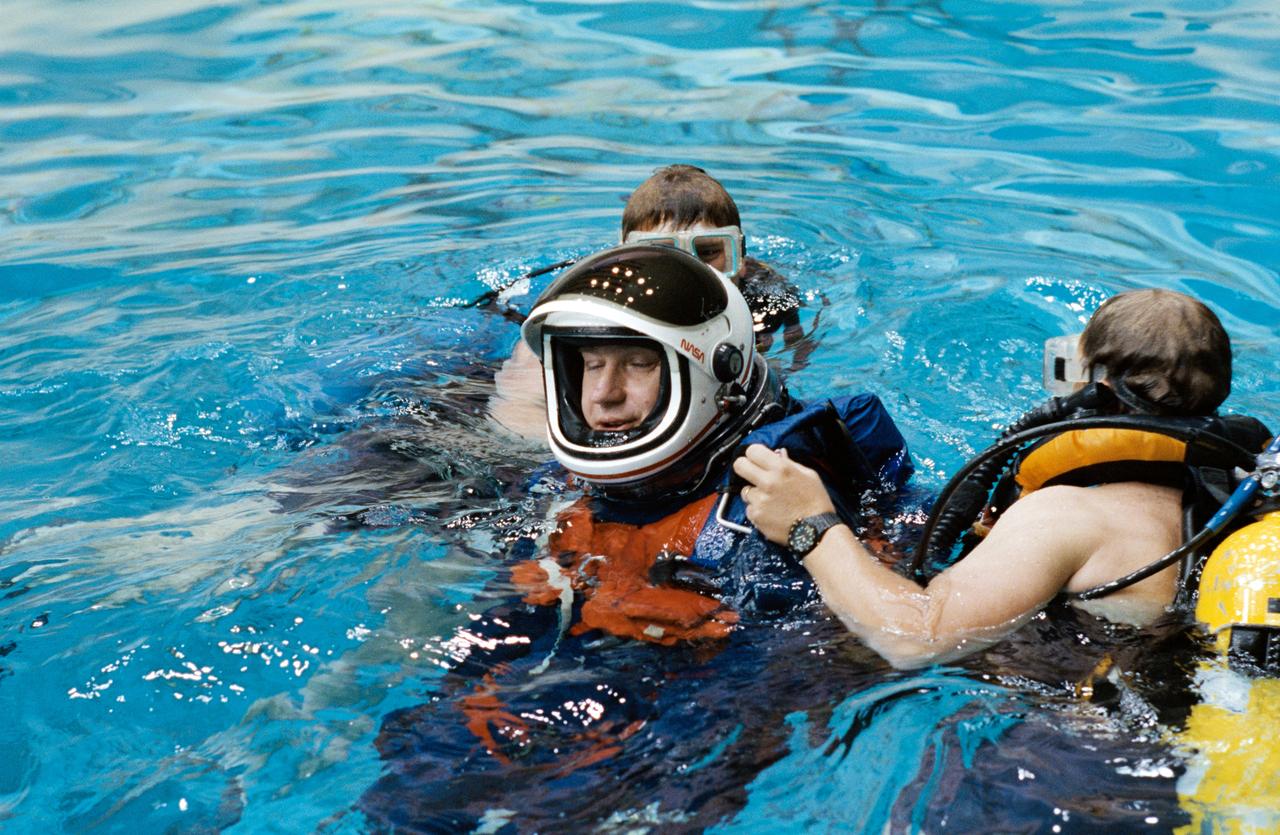
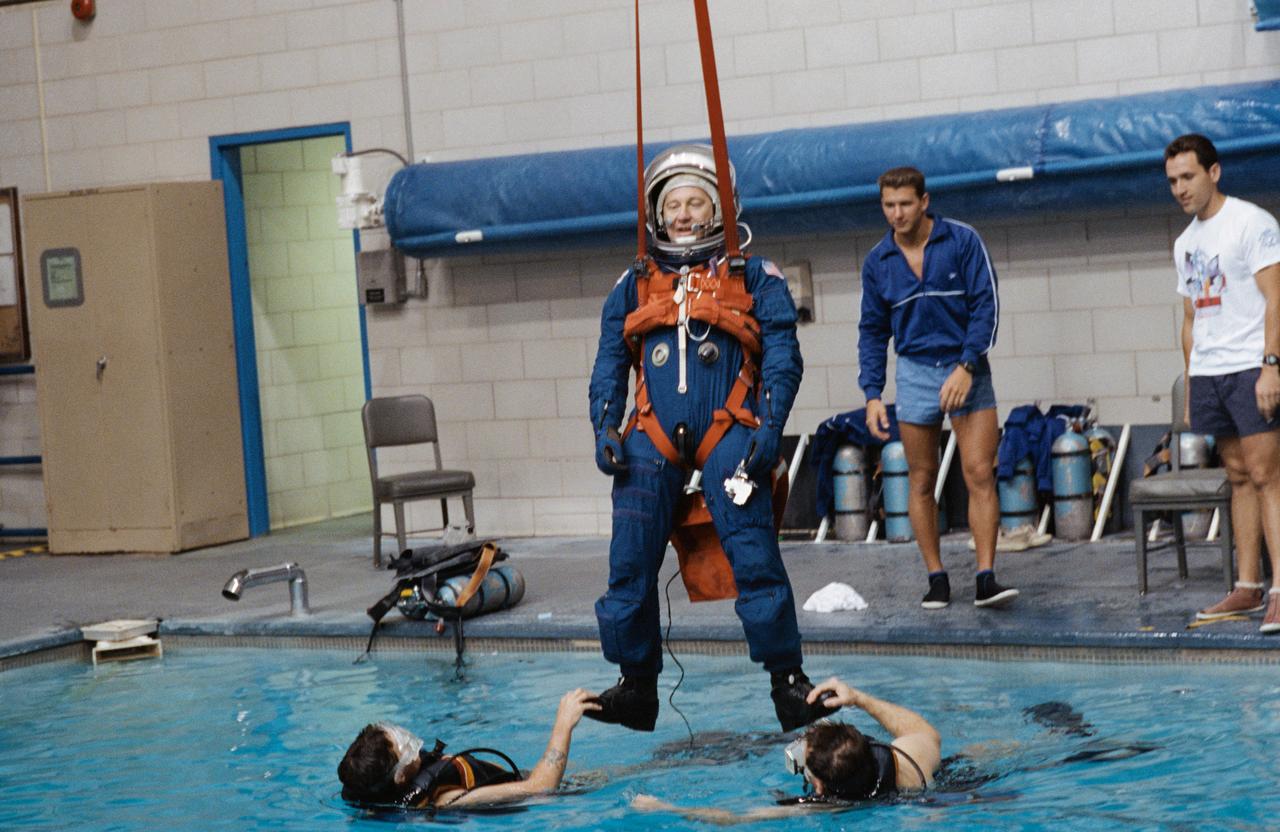
S92-32111 (May 1992) --- Payload specialist Albert Sacco Jr. is assisted by two SCUBA-equipped divers as he hangs by his parachute harness during emergency bailout training exercises in the Johnson Space Center?s (JSC) Weightless Environment Training Facility (WET-F).  Sacco is an alternate payload specialist for the United States Microgravity Laboratory (USML-1) mission, scheduled for launch later this year.        EDITOR?S NOTE: Sacco was later named as prime crew payload specialist for the USML-2 mission (STS-73), scheduled for 1995.
Payload Specialist Albert Sacco Jr. during emergency bailout training
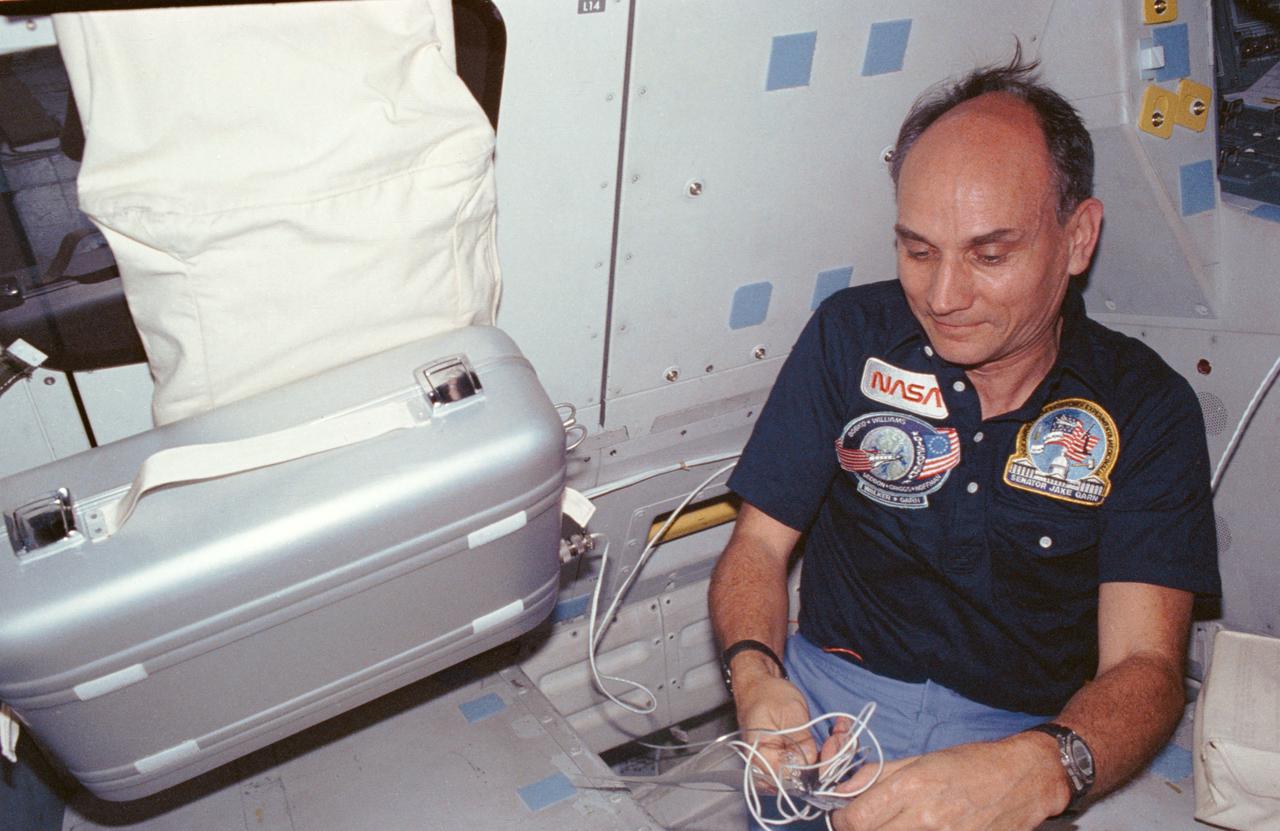
U. S. Senator E.J. (Jake) Garn, payload specialist, plugs in a food warmer in middeck area of the Shuttle Discovery.
Payload specialists Sen. Jake Garn plugs in food warmer in middeck area
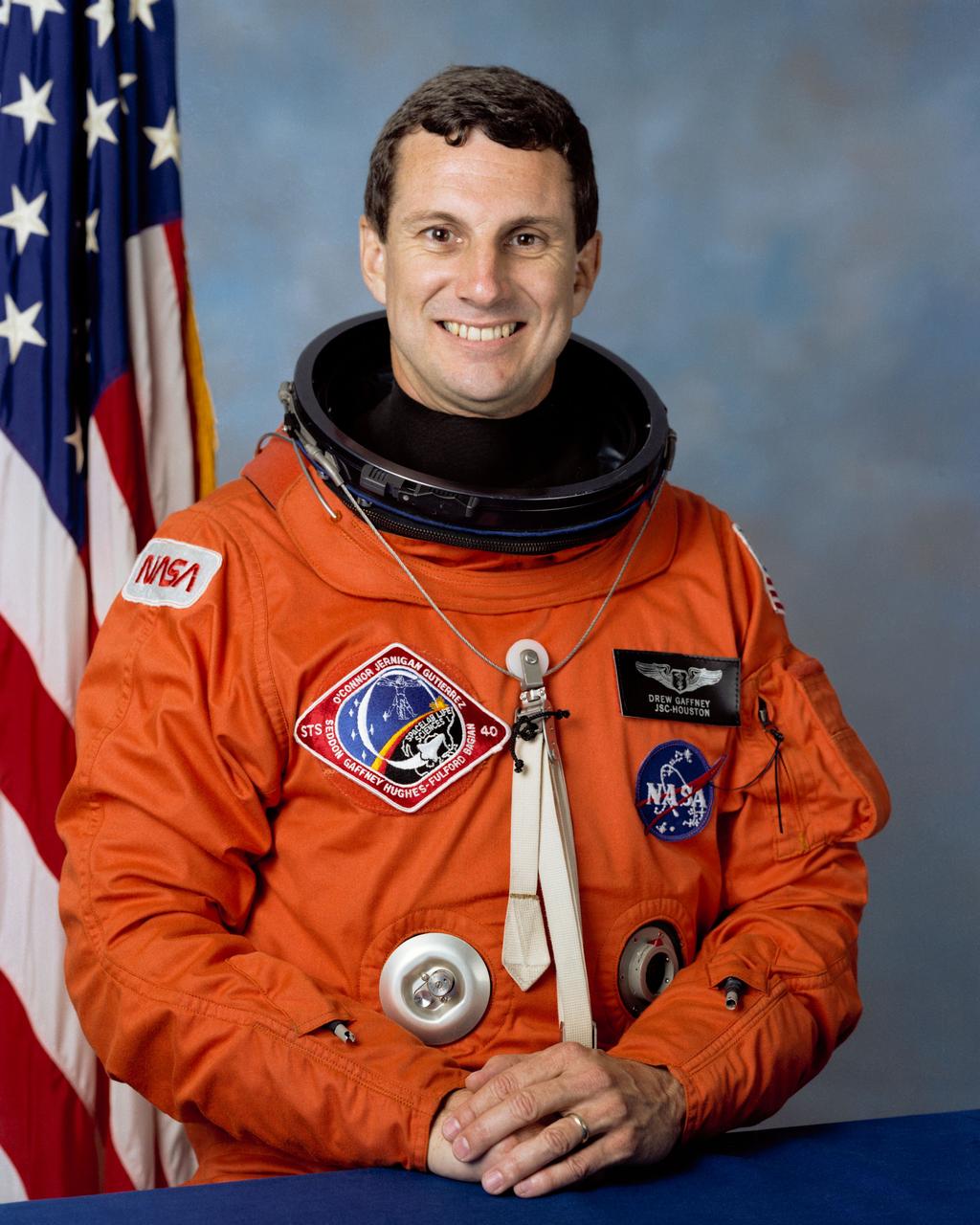
S90-41128 (October 1990) --- Astronaut Francis D. (Drew) Gaffney, Payload Specialist in training for SLS-1 (STS-40)
Official portrait of F. Drew Gaffney, STS-40 Payload Specialist
Payload specialist Sharon Christa McAuliffe appears to be enjoying her ride during her training in the T-38 jet trainer. Part of Galveston Island and the Greater Houston Metropolitan area can be seen in the background.
Christa McAuliffe during her training ride in the T-38 jet trainer
STS055-203-009 (26 April-6 May 1993) --- The seven crew members who spent 10 days aboard the space shuttle Columbia pose for the traditional in-flight portrait in the Spacelab D-2 Science Module.  Front, left to right, are Terence T. (Tom) Henricks, Steven R. Nagel, Ulrich Walter and Charles J. Precourt. In the rear are (left to right) Bernard A. Harris Jr., Hans Schlegel and Jerry L. Ross. Nagel served as mission commander; Henricks was the pilot and Ross, the payload commander. Harris and Precourt were mission specialists and Schlegel and Walter were payload specialists representing the German Aerospace Research Establishment (DLR). Photo credit: NASA
STS-55 Columbia, OV-102, crew poses for onboard portrait in SL-D2 module
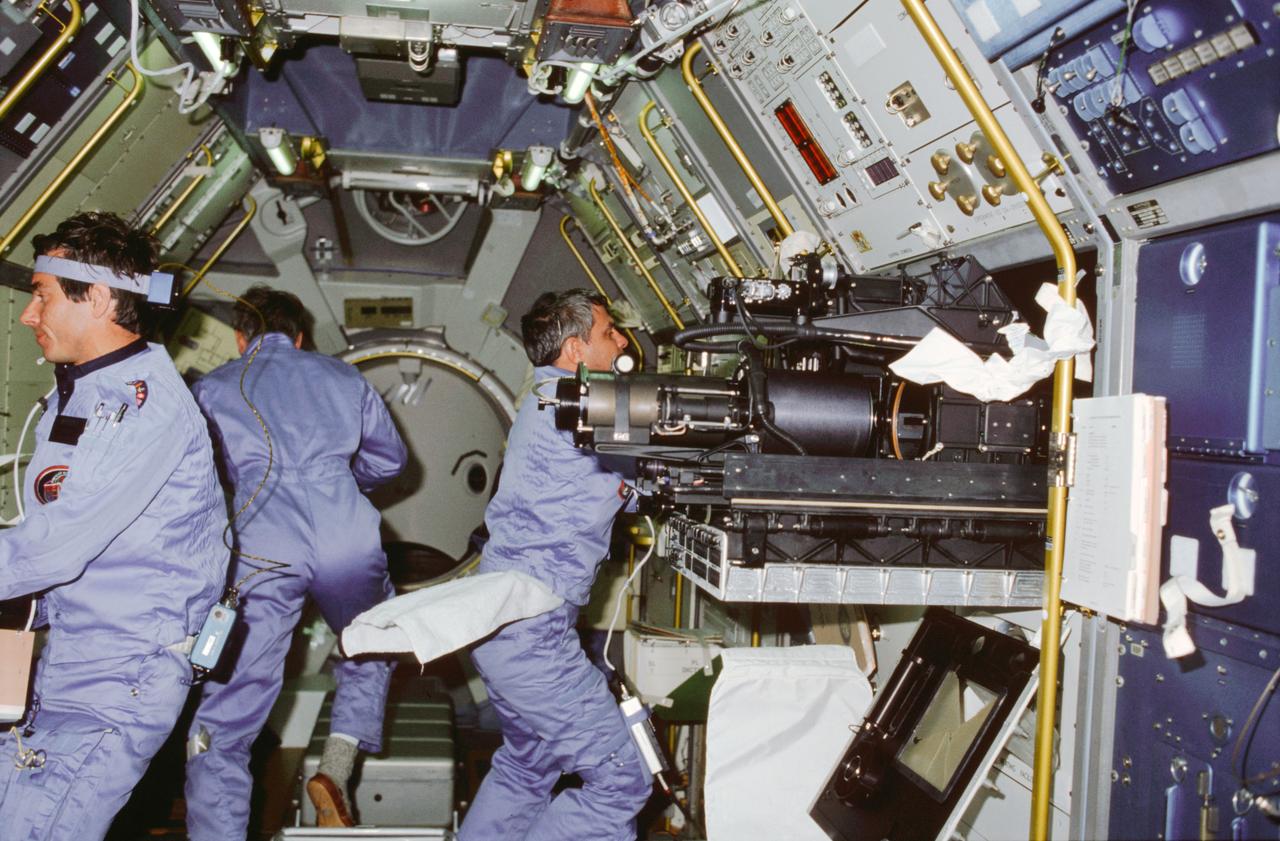
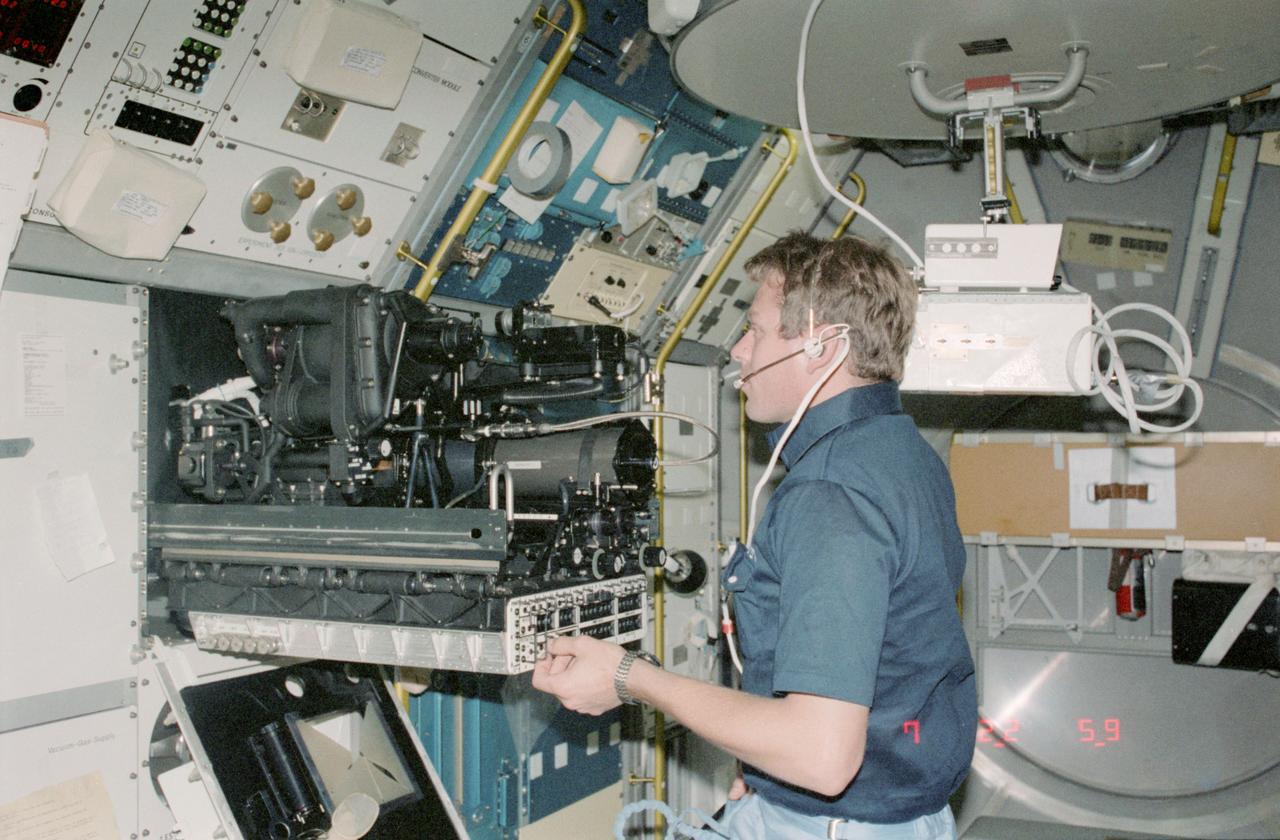
61A-01-030 (30 Oct.-6 Nov. 1985) --- Mission specialist Guion S. Bluford prepares to perform a physics experiment onboard the D-1 science module in the cargo bay of the earth-orbiting Space Shuttle Challenger.  In the backgroud, three European payload specialists busy themselves with experiment chores:  (L-R) Wubbo J. Ockels (partially obscured), Reinhard Furrer and Ernst Messerschmid.
STS 61-A crewmembers in Spacelab D-1 science module
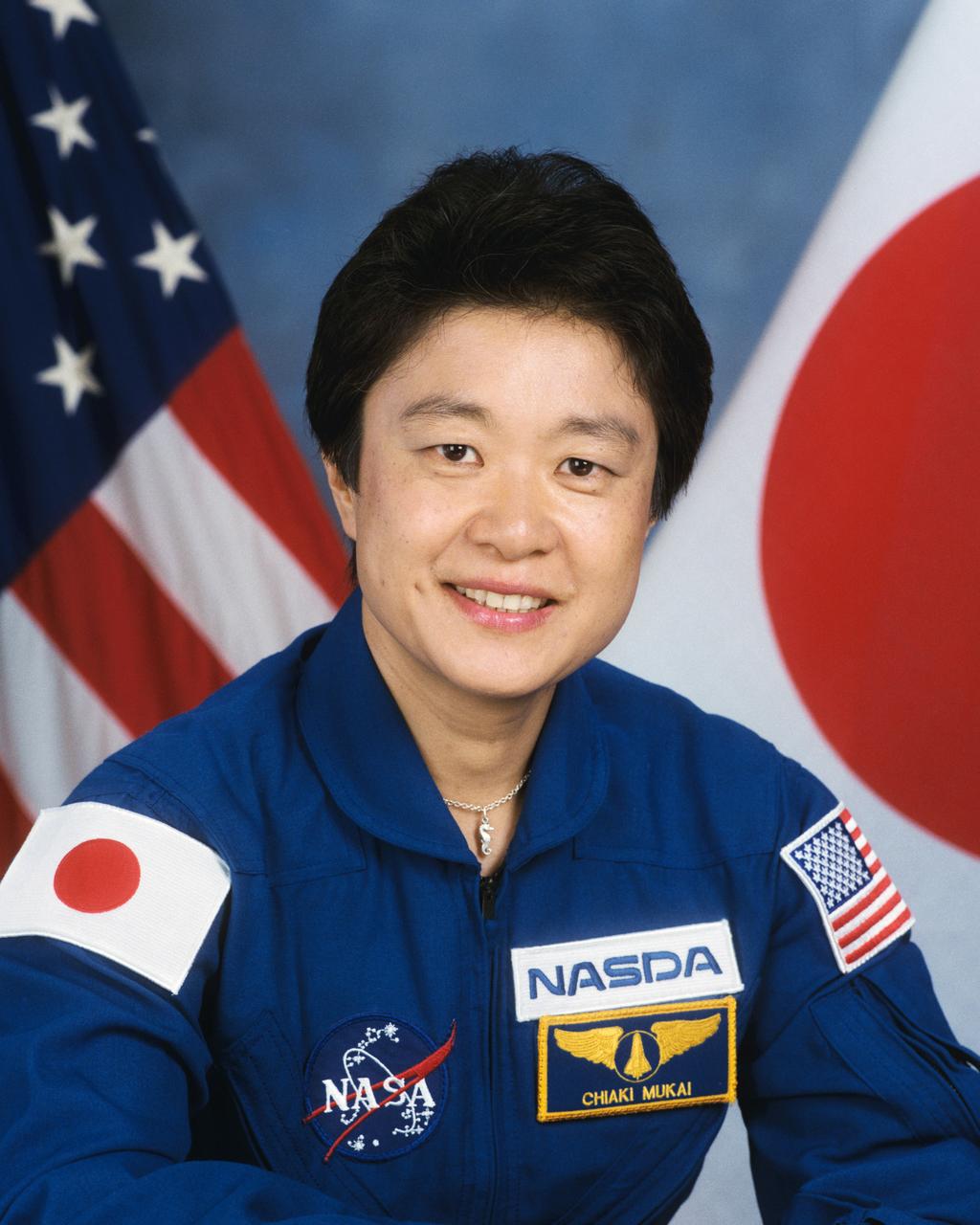
S97-00568 (2 Oct. 1996) --- Astronaut Chiaki Naito-Mukai, payload specialist, representing the National Space Development Agency (NASDA).
Official NASA Portrait of STS-90 Payload Specialist Chiaki Mukai
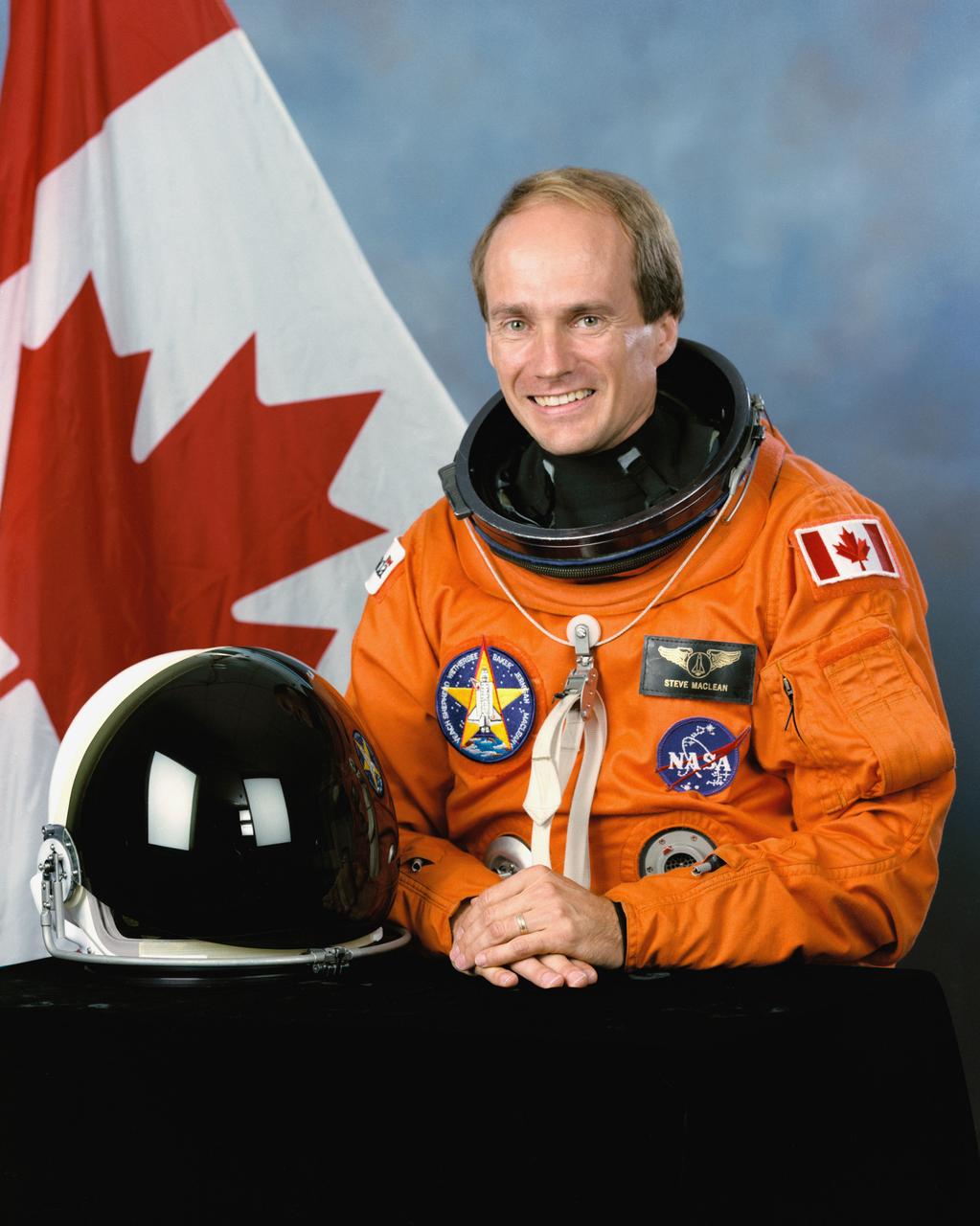
S92-44998 (August 1992) --- Astronaut Steven G. Maclean, payload specialist STS-52.       NOTE:  MacLean is one of six Canadian astronauts selected in December 1983.  He began astronaut training in February 1984.  He was designated in December 1985 as the Canadian payload specialist to fly on STS-52 with the CANEX-2 set of Canadian experiments.
Official Portrait of Canadian Payload Specialist Steve G. MacLean in
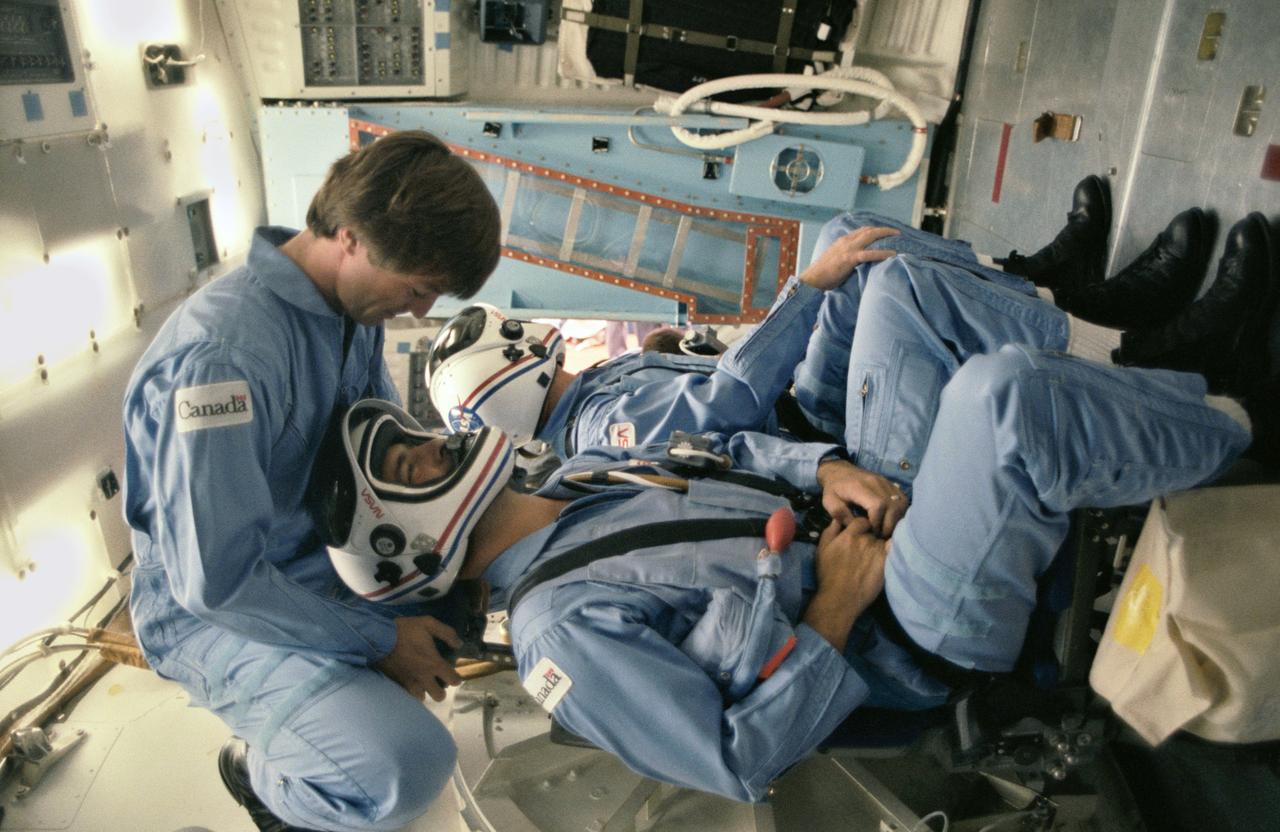
41D-3139 (2 Sept 1984) --- Two prime crew member payload specialist and a backup for NASA's 41-G Space Shuttle mission participate in launch phase simulations at the Johnson Space Center. Securing themselves in temporary stations in the middeck of a trainer are Marc Garneau,  representing the Canadian National Research Council (NRC), and Paul D.  Scully-Power (background), a U.S. Navy oceanographer.  Robert Thirsk, also with  the NRC, is a backup payload specialist.  This photograph was taken by Otis Imboden.
Payload specialists Marc Garneau and Paul Scully-Power in SMS
61B-05-021 (26 Nov-3 Dec 1985) --- Payload Specialist Rodolfo Neri, representing Mexico on the STS-61B space mission aboard the Atlantis, prepares to begin one of the experiments for Mexico.  Neri used a nearby 35mm camera to record plants and bacteria for various prescribed testing.  Here the payload specialist has opened a stowage drawer to retrieve components of one of the tests.
Payload specialists Rodolfo Neri prepares to begin experiments for Mexico
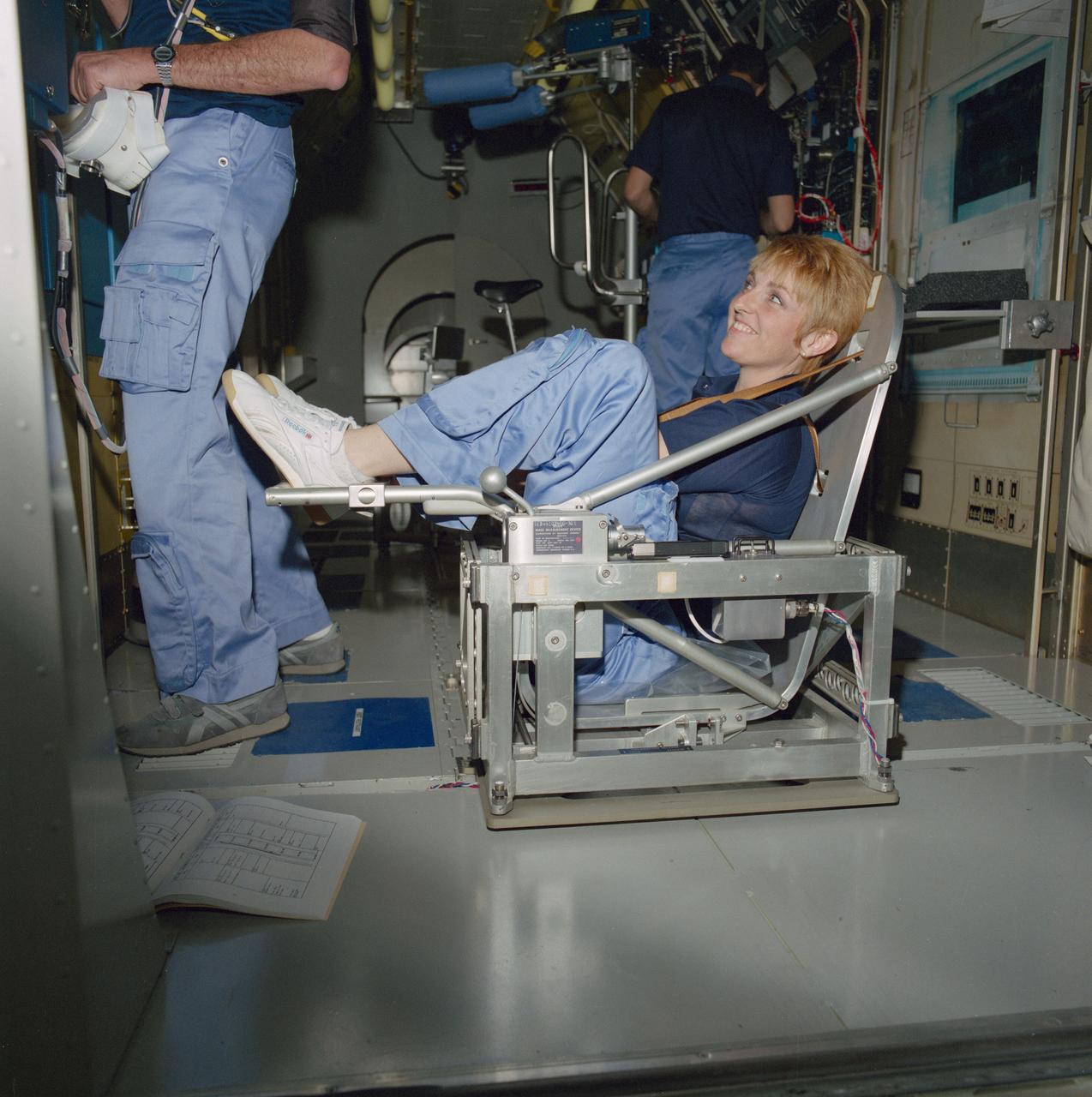
S85-26553 (Feb 1985) --- STS-40/SLS-1 payload specialist Millie Hughes-Fulford sits strapped in the special device scientists have developed for determining mass on orbit.  As the chair swings back and forth, a timer records how much the crewmember's mass retards the chair's movement. Dr. Hughes-Fulford will be joined by three mission specialists, the mission commander, the pilot and a second payload specialist for the scheduled 10-day Spacelab Life Sciences-1 (SLS-1) mission. The flight is totally dedicated to biological and medical experimentation.
Payload specialists Millie Hughes-Fulford in Body Mass Measurement Device
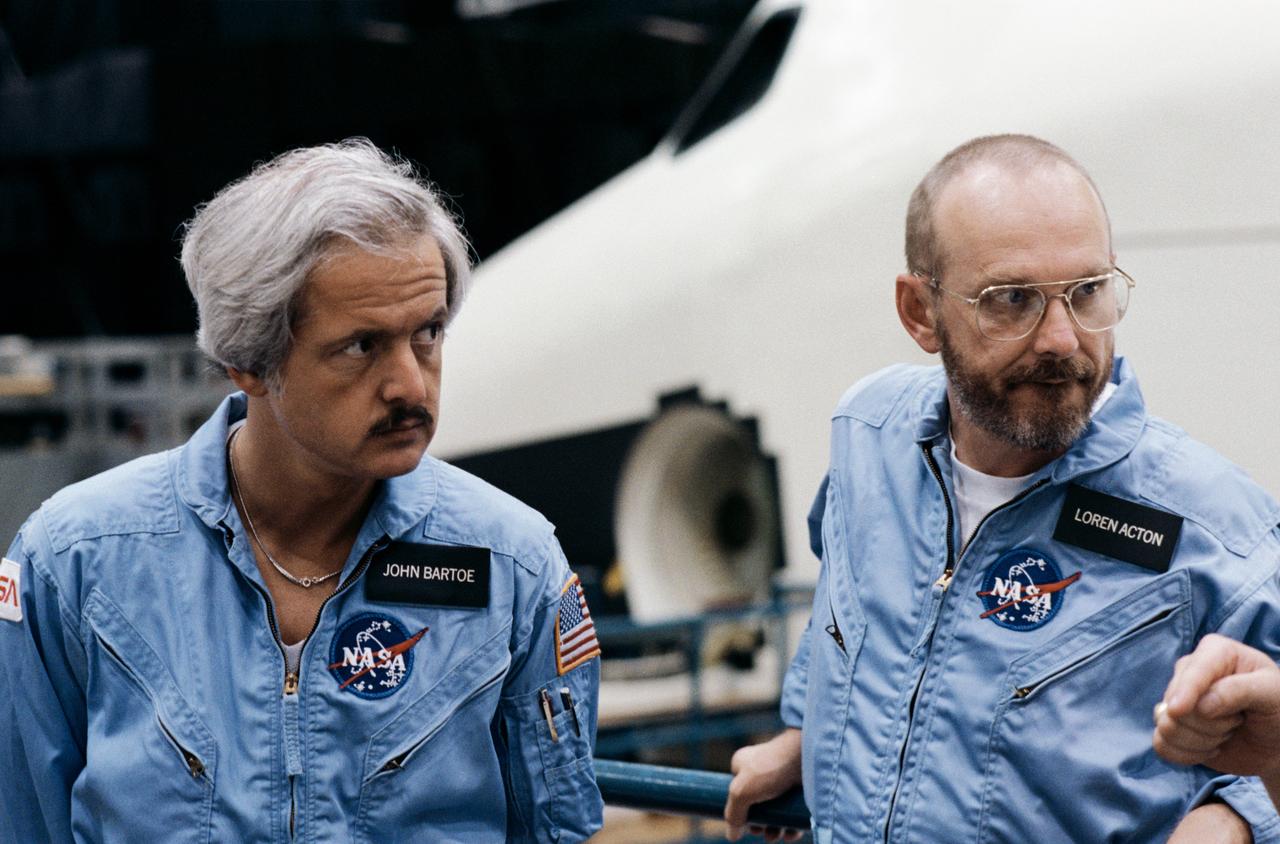
S85-34378 (4 June 1985) --- Payload specialists John-David Bartoe, left, and Loren W. Acton listen to a briefing by a crew trainer (out of frame) during emergency egress training for members of the Challenger's next crew. Later, the seven crewmembers used sky-genies to practice quick egress from a potentially troubled Space Shuttle craft.  They are standing near the crew compartment trainer in the Shuttle mockup and integration lab at JSC.
STS 51-F payload specialists during training
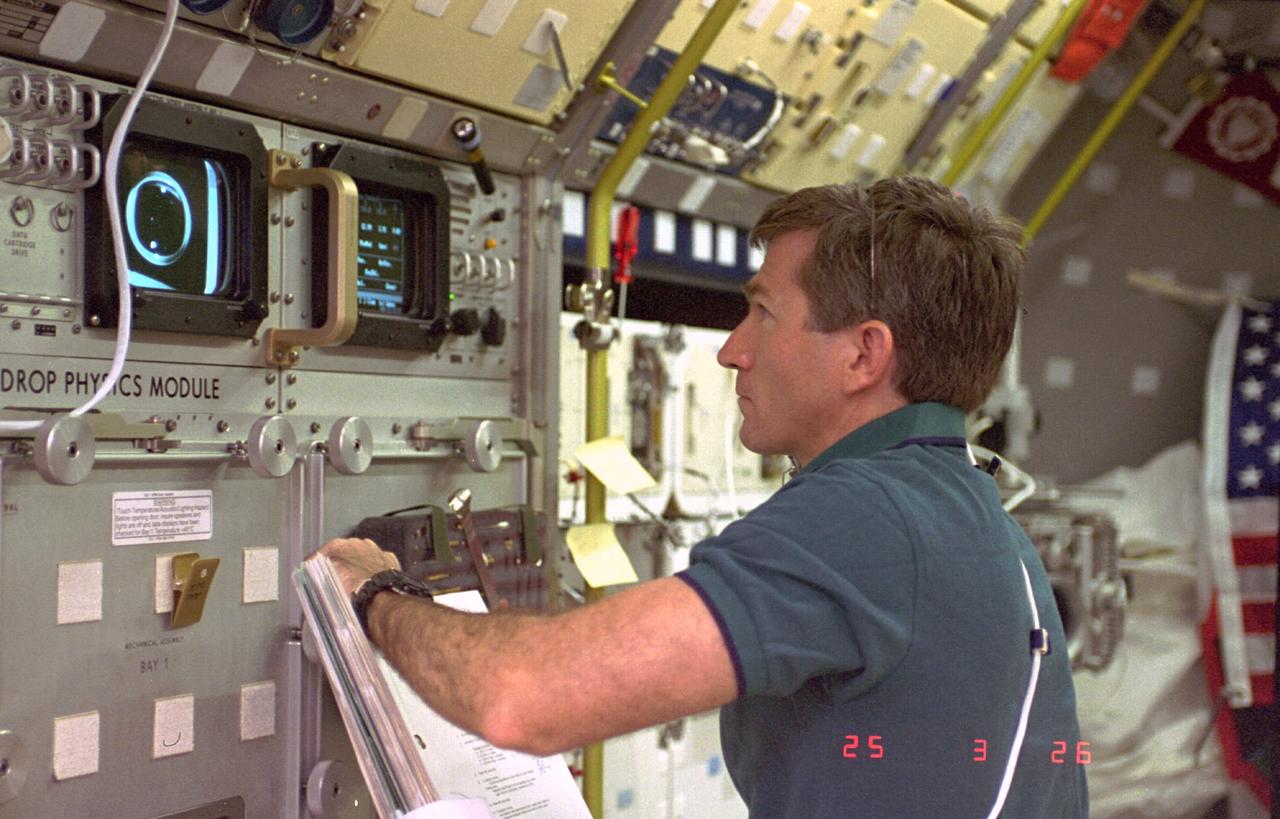
STS073-225-036 (20 October-5 November 1995) --- Payload specialist Fred W. Leslie monitors the response of a liquid drop at the Drop Physics Module (DPM) in the U.S. Microgravity Laboratory (USML-2) science module aboard the Space Shuttle Columbia.  Leslie joined another guest researcher and five NASA astronauts for almost 16-days of Earth-orbit research in support of the mission.
DPM, Payload Specialist Fred Leslie working in Spacelab
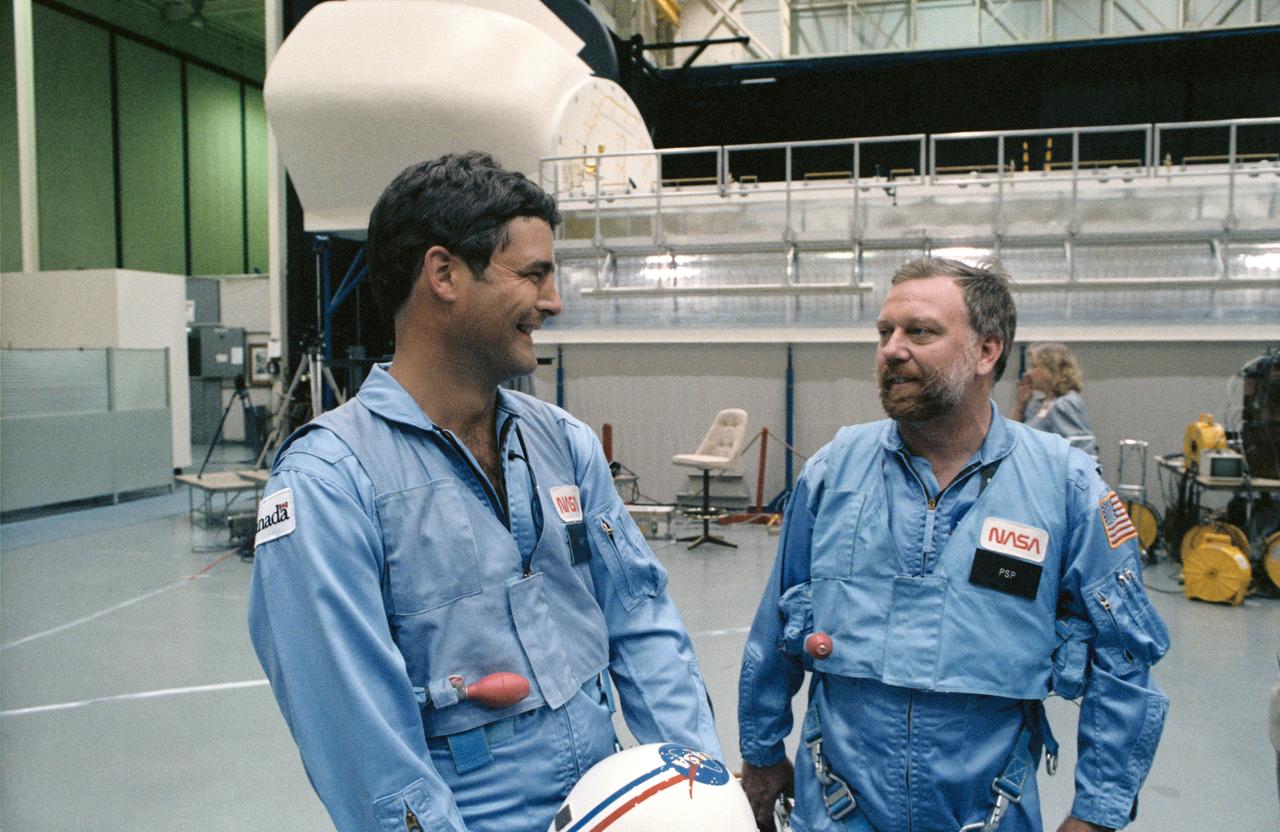
41D-3185 (S14-3185) (4 Sept 1984) --- The two payload specialists for NASA's 41-G mission aboard the Challenger chat prior to a simulation session in the Shuttle mockup and integration laboratory at the Johnson Space Center.  They are Marc Garneau, left,   representing the Canadian National Research   Council, and Paul D. Scully-Power, an   oceanographer with the U.S. Navy.  They are   standing near the manipulator development facility (MDF), pictured in background.
Payload specialists Garneau and Scully-Power discuss training
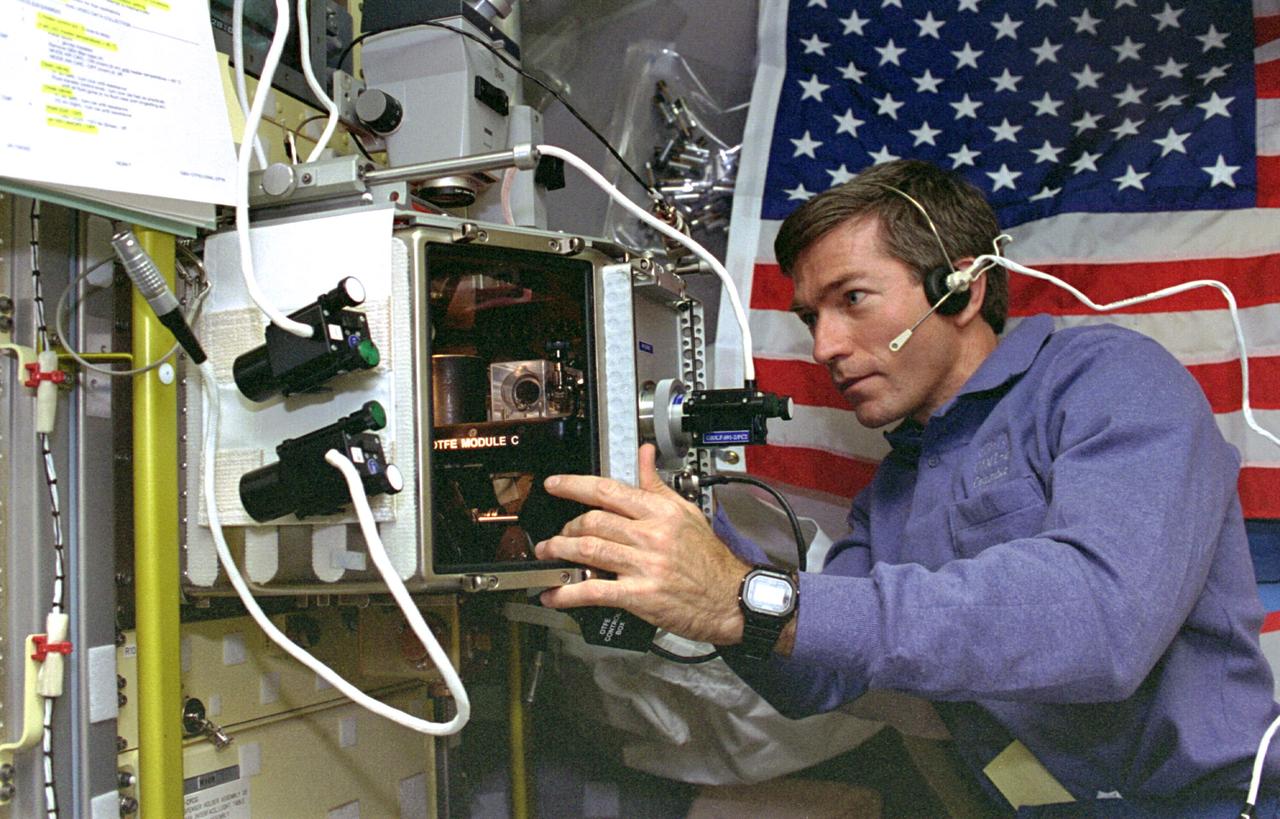
STS073-233-007 (20 October - 5 November 1995) --- Payload specialist Fred W. Leslie makes use of the versatile U.S. Microgravity Laboratory (USML-2) glovebox to conduct an investigation with the Oscillatory Thermocapillary Flow Experiment (OTFE).  This complement of the Surface-Tension-Driven Convection Experiment (STDCE) studies the shapes that fluid surfaces in weightless environments assume within specific containers.  Leslie was one of two guest researchers who joined five NASA astronauts for 16 days of on Earth-orbit research in support of USML-2.
OTFE, Payload Specialist Fred Leslie works in Spacelab
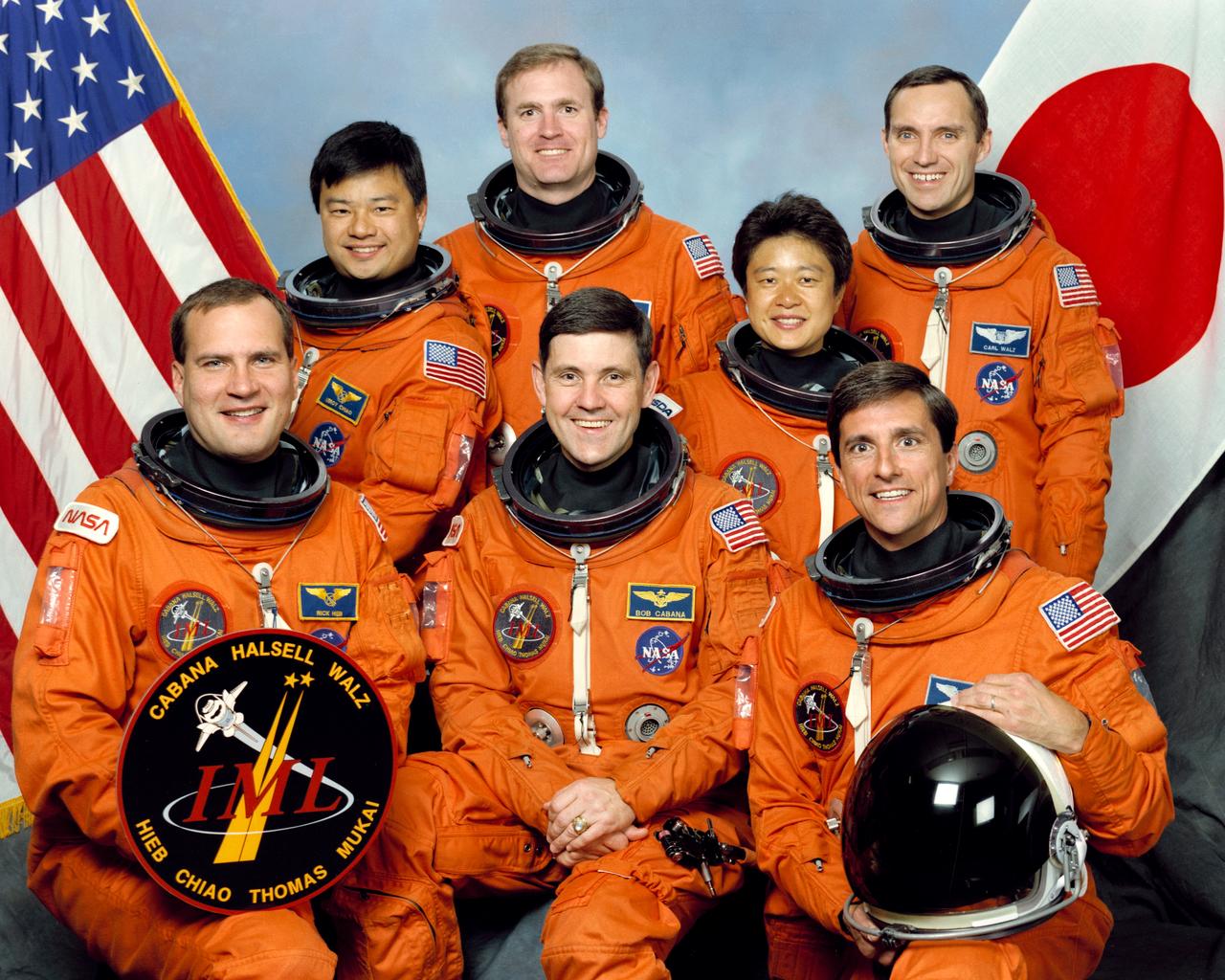
STS065-S-002 (April 1994) --- Six NASA astronauts and a Japanese payload specialist take a break from training to pose for their crew portrait. Left to right are Richard J. Hieb, Leroy Chiao, James D. Halsell Jr., Robert D. Cabana, Dr. Chiaki Mukai, Donald A. Thomas and Carl E. Walz. Cabana is mission commander, and Halsell has been assigned as pilot. Hieb is payload commander, with Walz, Thomas and Chiao serving as mission specialist. Dr. Mukai represents the National Space Development Agency (NASDA) of Japan as payload specialist on the International Microgravity Laboratory (IML) mission.
STS-65 Columbia, OV-102, IML-2 official crew portrait
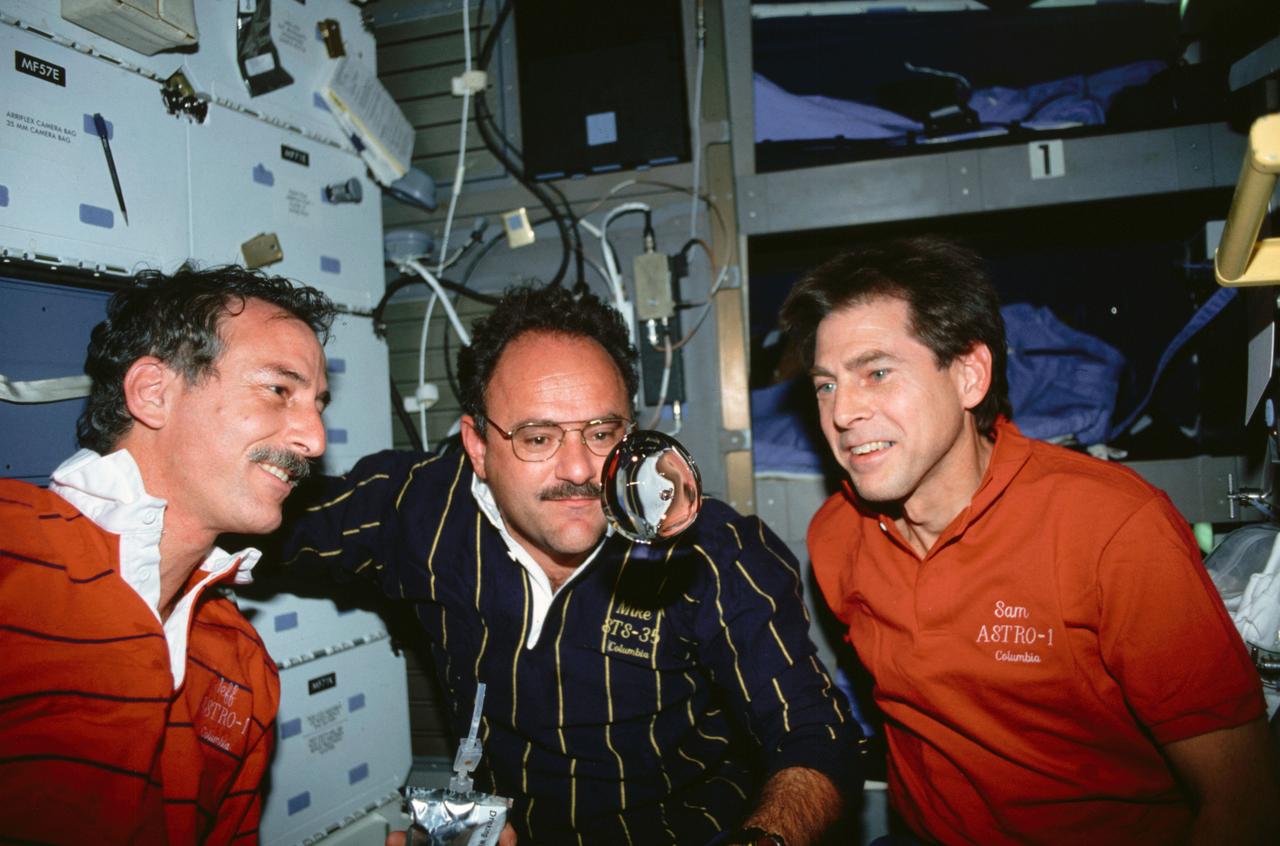
STS035-15-035 (2-10 Dec 1990) --- STS-35 crewmembers perform a microgravity experiment using their drinking water while on the middeck of Columbia, Orbiter Vehicle (OV) 102. Mission Specialist (MS) Jeffrey A. Hoffman (left) has released some water from a drinking container which he holds in his hand. MS John M. Lounge (wearing glasses, center) and Payload Specialist Samuel T. Durrance along with Hoffman study the changing shape and movement of the sphere of water.
STS-35 crewmembers watch a sphere of water float on OV-102's middeck
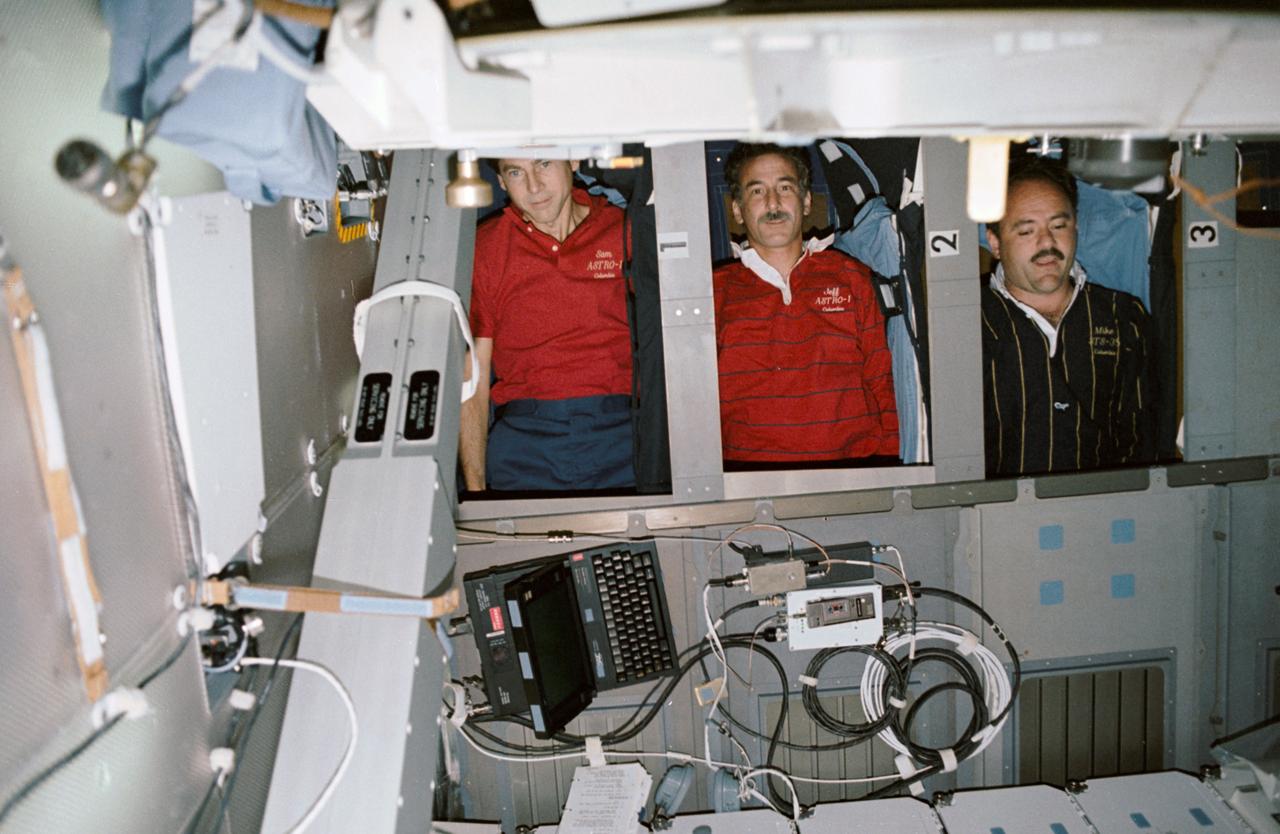
Though they are not actually asleep, three STS-35 crewmembers demonstrate the bunk-style sleep compartments onboard Columbia's, Orbiter Vehicle (OV) 102's, middeck. From top to bottom are Payload Specialist Samuel T. Durrance, Mission Specialist (MS) Jeffrey A. Hoffman, and MS John M. Lounge. At the left is the shuttle amateur radio experiment (SAREX). The crew escape pole (CES) is visible overhead and the open airlock hatch in the foreground. The sleep station is located against the middeck starboard wall.
STS-35 crewmembers in sleep station compartments on OV-102's middeck
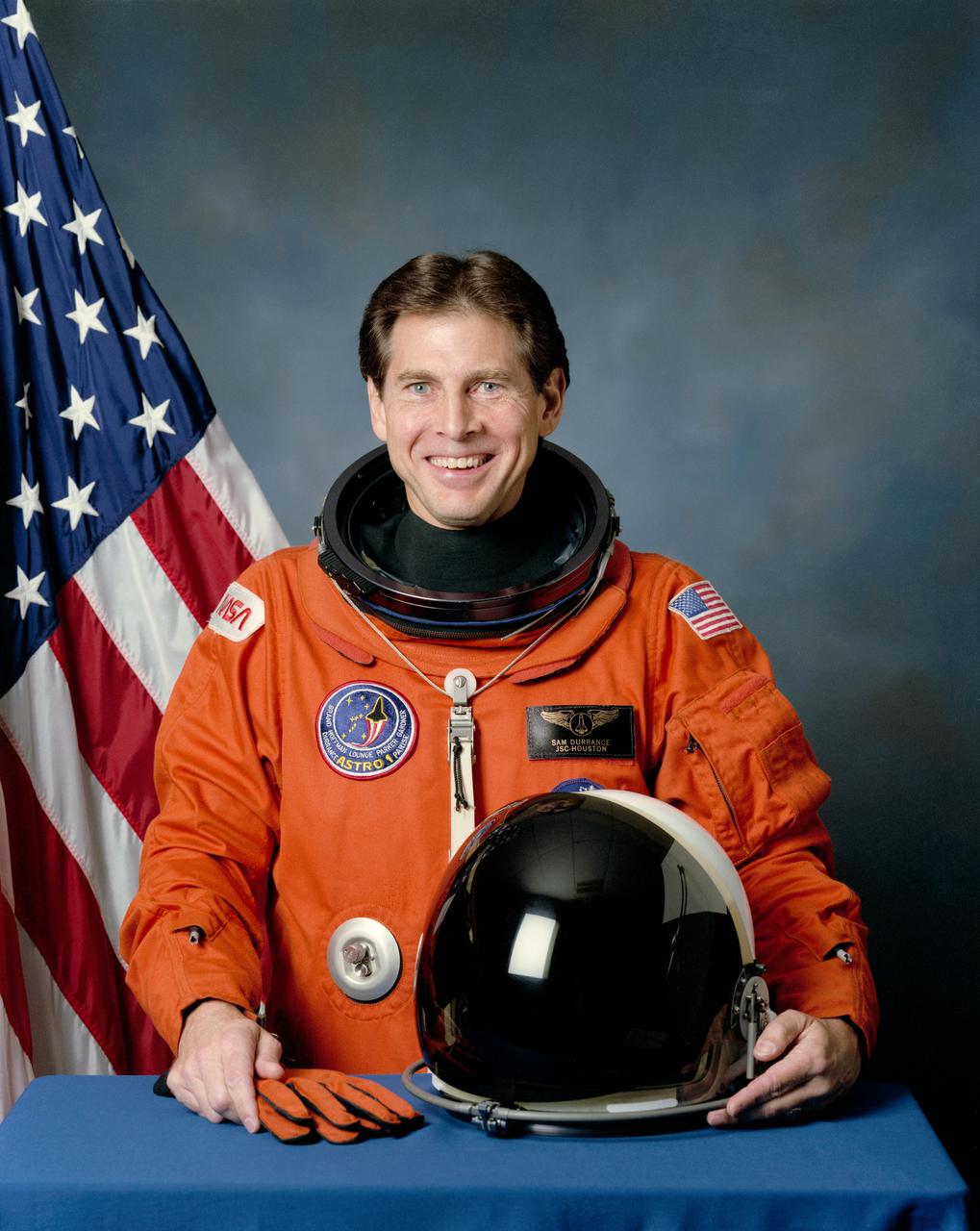
Official portrait of Samuel T. Durrance, Ph.D. and STS-35 Columbia, Orbiter Vehicle (OV) 102, Astronomy Laboratory 1 (ASTRO-1) payload specialist. Durrance wears launch and entry suit (LES) with helmet displayed on table at his left.
Official portrait of Samuel T. Durrance
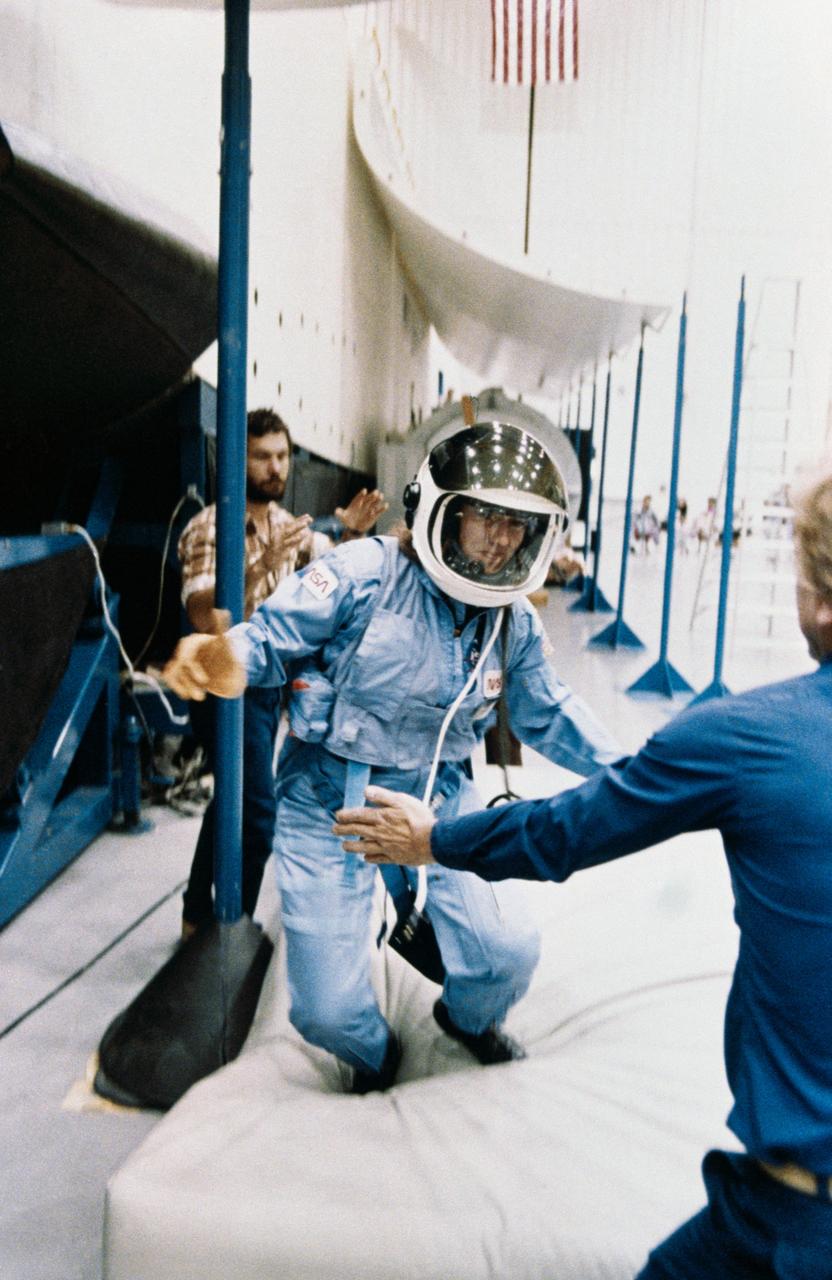
Sharon Christa McAuliffe, 51-L payload specialist representing the Teacher in Space project, jumps down onto a cushion during an emergency egress training session in JSC's mockup and integration laboratory. She had been descending from the mockup using a Sky-genie.
Christa McAuliffe using Sky-genie during emergency egress training
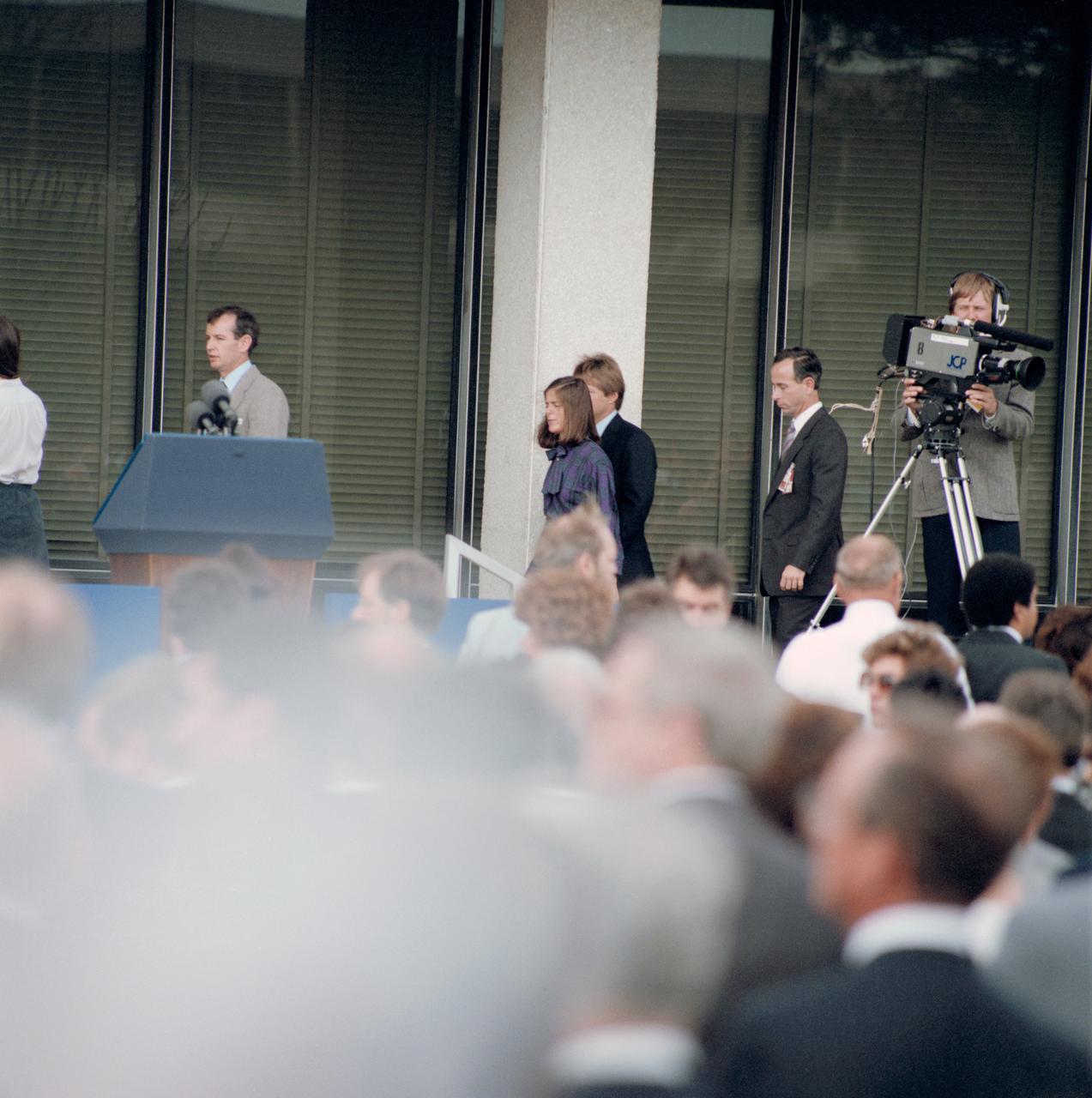
51L-S-108 (31 Jan. 1986) --- Barbara R. Morgan, 51-L backup payload specialist to Christa McAuliffe, with others on the stage at the Memorial service for the Challenger Seven at JSC. Photo credit: NASA
Barbara Morgan, 51-L backup payload specialist, at Memorial service
S85-25624 (1985) --- Astronaut Gregory B. Jarvis, payload specialist. Photo credit: NASA    (NOTE: Since this portrait was taken, Jarvis died in the STS-51L space shuttle Challenger explosion, on Jan. 28, 1986.)
Official portrait Gregory Jarvis STS 51-L payload specialist
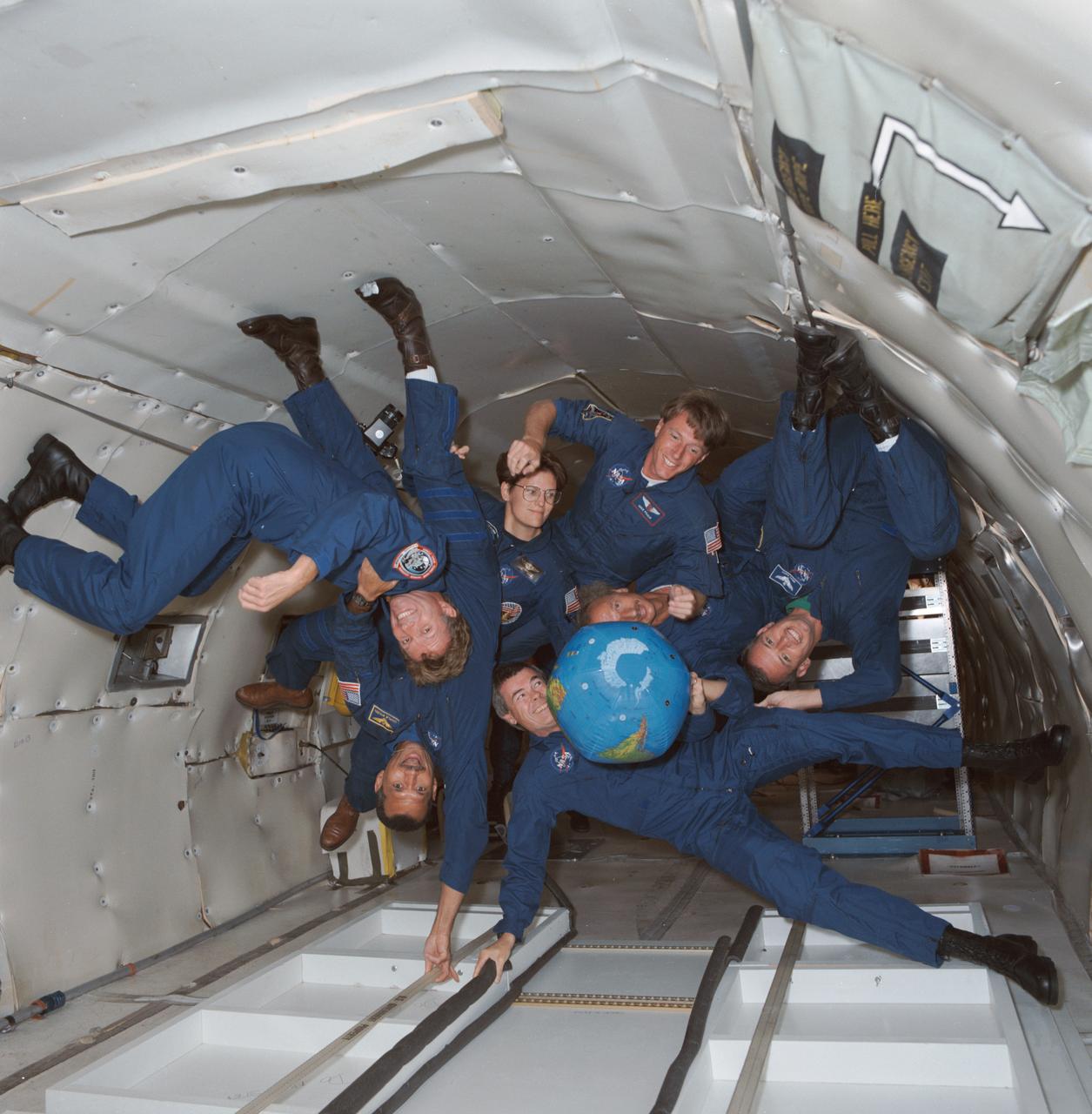
S91-44453 (21 Aug 1991) --- The crew of STS-45 is already training for its March 1992 mission, including stints on the KC-135 zero-gravity-simulating aircraft.  Shown with an inflatable globe are, clockwise from the top, C. Michael Foale, mission specialist; Dirk Frimout, payload specialist; Brian Duffy, pilot; Charles R. (Rick) Chappell, backup payload specialist; Charles F. Bolden, mission commander; Byron K. Lichtenberg, payload specialist; and Kathryn D. Sullivan, payload commander.
STS-45 crewmembers during zero gravity activities onboard KC-135 NASA 930
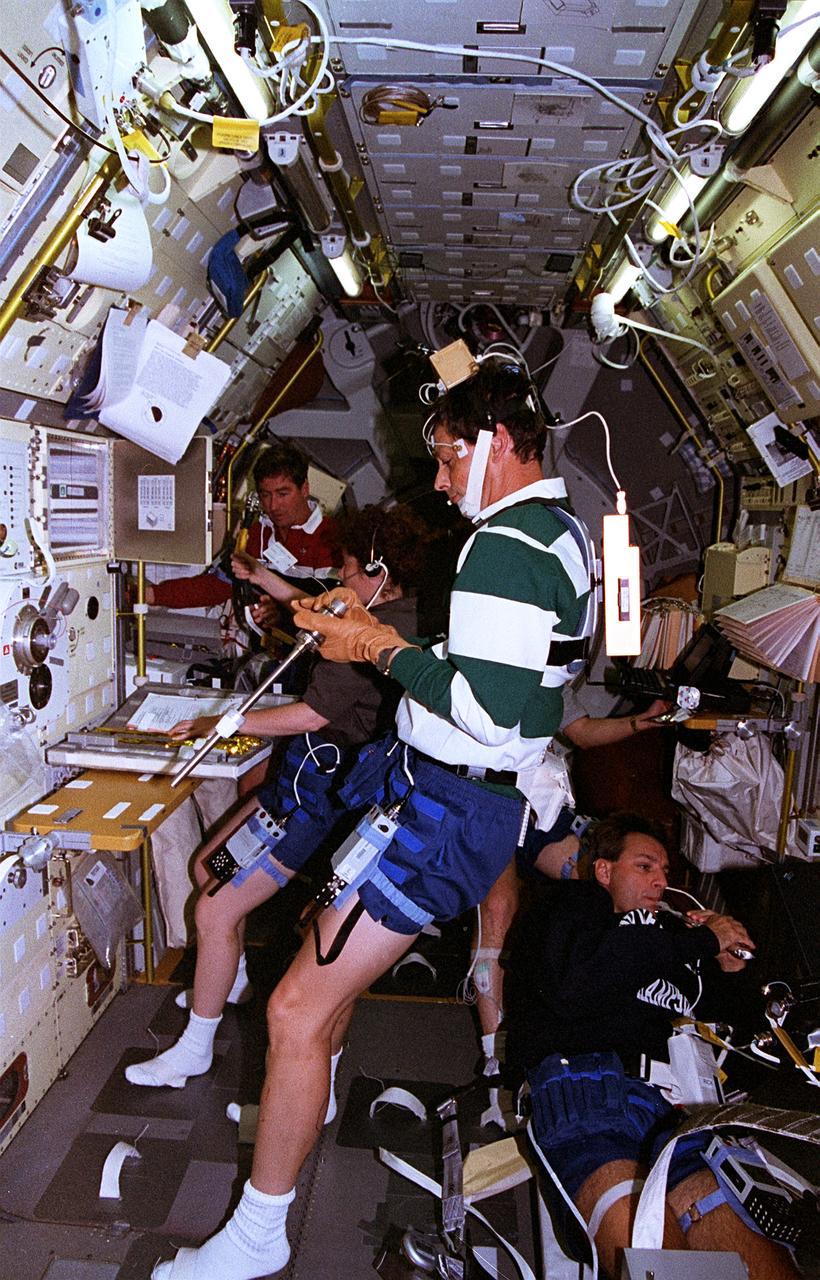
STS078-396-015 (20 June - 7 July 1996) --- Payload specialist Jean-Jacques Favier, representing the French Space Agency (CNES), prepares a sample for the Advanced Gradient Heating Facility (AGHF) while wearing instruments that measure upper body movement.  The Torso Rotation Experiment (TRE) complements other vestibular studies that measure differences in the way human beings react physically to their surroundings in microgravity.  This is a typical Life and Microgravity Spacelab (LMS-1) mission scene, with several experiments being performed.  Astronaut Susan J. Helms, payload commander, assists Favier in the AGHF preparations.  Astronaut Richard M. Linnehan (bottom right), mission specialist, tests his muscle response with the Handgrip Dynamometer.  Astronaut Thomas T. (Tom) Henricks (far background), mission commander, offers assistance.
AGHF, TRE and TVD experiment activity in the Spacelab during LMS-1 mission
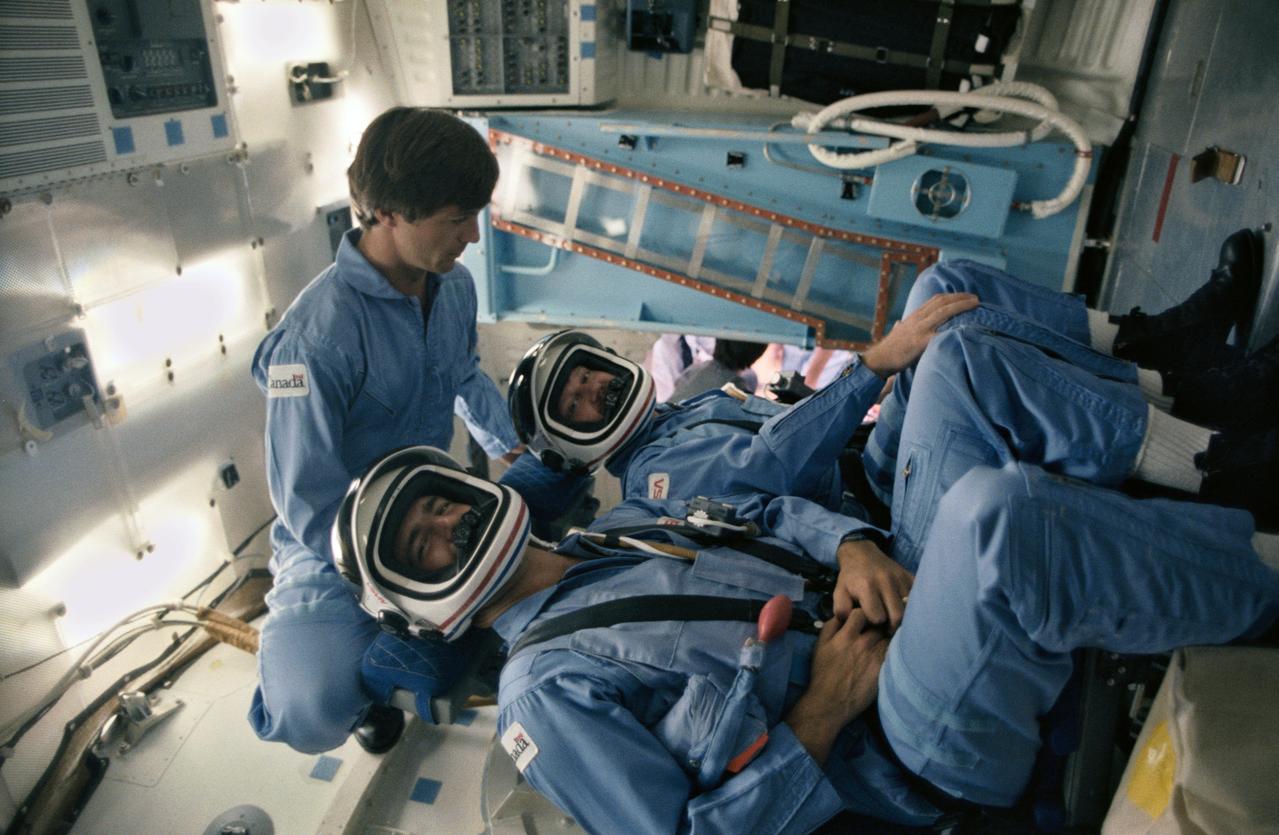
41D-3138 (4 Sept 1984)--- Canada's backup payload specialist assists the two 41-G prime payload specialists during a training session in the Johnson Space Center's Shuttle mockup and integration laboratory.  Robert Thirsk (without helmet) represents the National Research Council (NRC) and is backup to Marc Garneau (nearest camera), also of the NRC.  Paul D. Scully-Power, seated in the other middeck seat for the launch phase, is a civilian oceanographer with the U.S. Navy.  The 41-G flight aboard the Challenger is NASA's first to utilize a crew of more than six persons.  This photograph was taken by Otis Imboden.
Payload specialists Marc Garneau and Paul Scully-Power in SMS
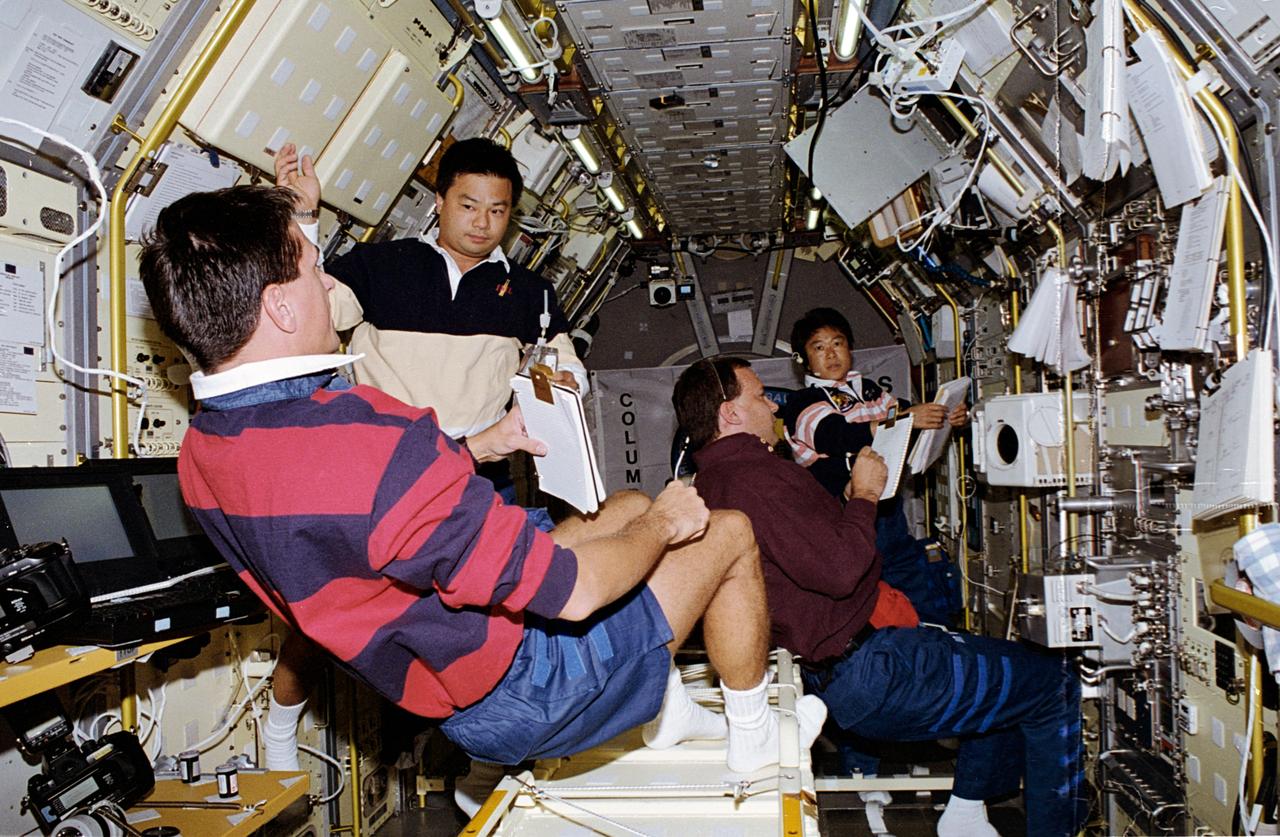
STS065-05-037 (8-23 July 1994) --- In the science module aboard the Space Shuttle Columbia, four members of the crew busy themselves with experiments in support of the second International Microgravity Laboratory (IML-2) mission.  Left to right are Donald A. Thomas and Leroy Chiao, both mission specialists; Richard J. Hieb, payload commander, and Dr. Chiaki Mukai of NASDA, payload specialist.
STS-65 crew works inside the IML-2 spacelab module aboard Columbia, OV-102
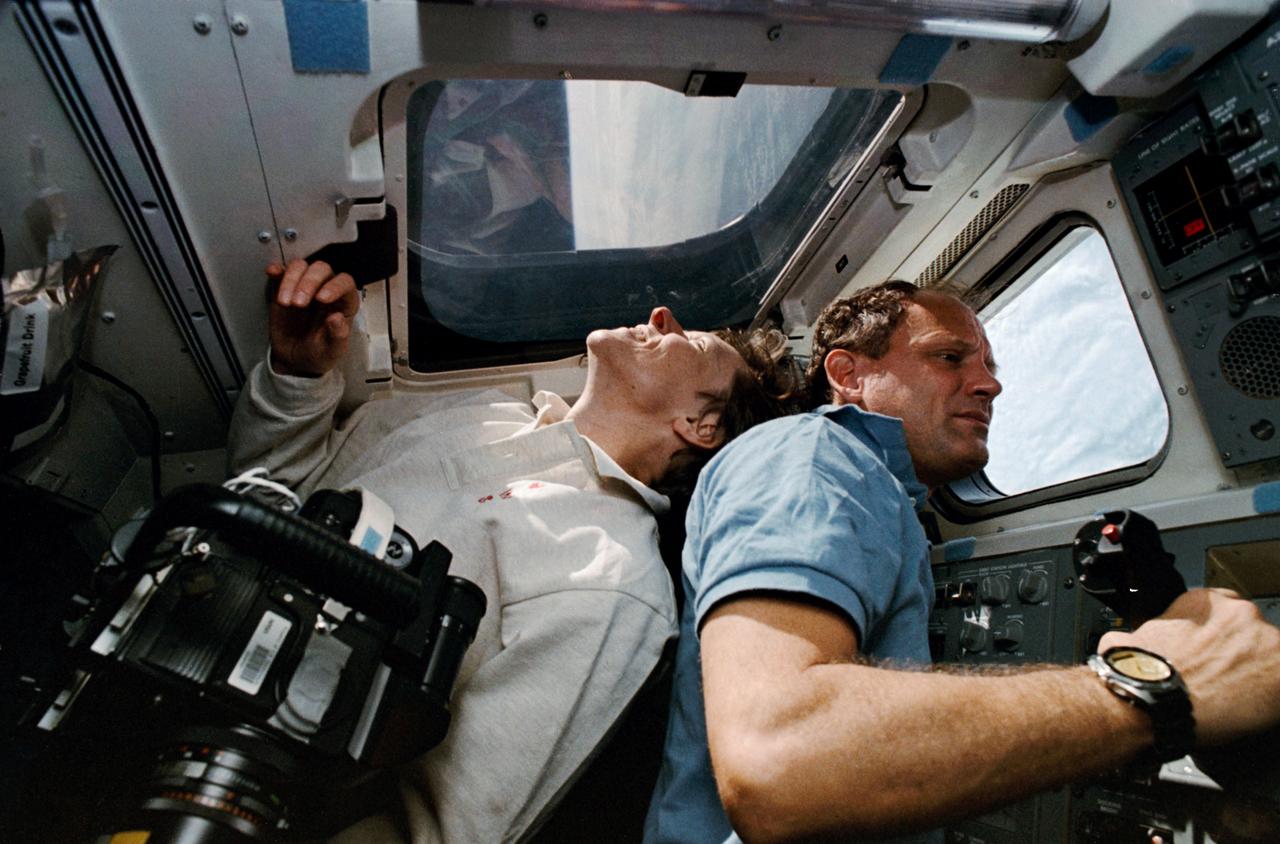
STS-42 Payload Specialist Roberta L. Bondar (light shirt) smiles as she looks out overhead window W7 while Mission Specialist (MS) and Payload Commander (PLC) Norman E. Thagard peers out aft viewing window W9. The two crewmembers are on the aft flight deck of Discovery, Orbiter Vehicle (OV) 103. In the foreground, a camera is ready to capture the Earth below.
STS-42 crewmembers take a look at the Earth from OV-103's aft flight deck
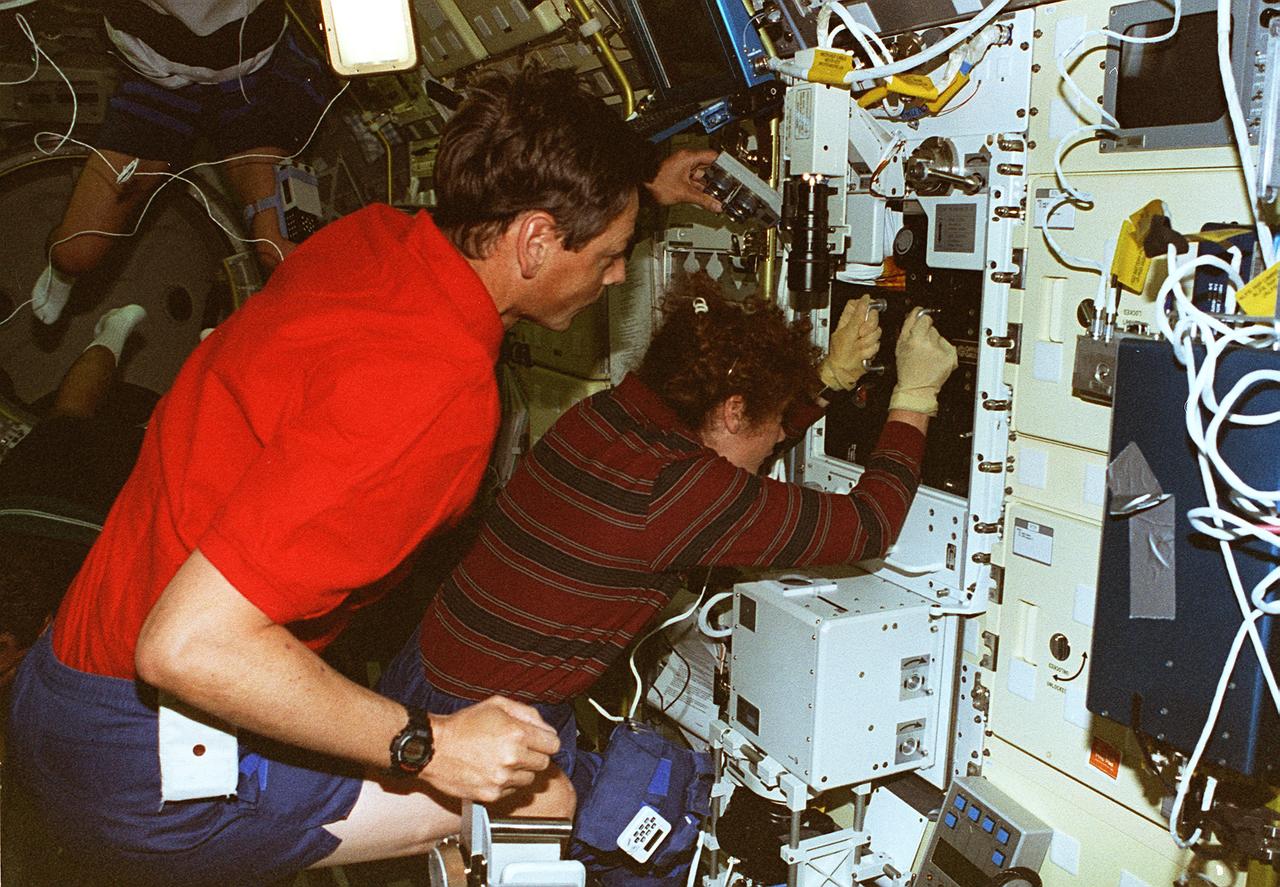
STS078-306-035 (20 June - 7 July 1996) --- Astronaut Susan J. Helms, payload commander, and payload specialist Jean-Jacques Favier, representing the French Space Agency (CNES), insert a test container into the Bubble Drop Particle Unit (BDPU) in the Life and Microgravity Spacelab (LMS-1) Science Module aboard the Space Shuttle Columbia.  The fluid in the chamber is heated and the fluid processes are observed by use of three internal cameras mounted inside the BDPU.  Investigations in this facility will help characterize interfacial processes involving either bubbles, drops, liquid columns or liquid layers.
BDPU, Helms places new test chamber into experiment module in LMS-1 Spacelab
S85-40030 (November 1985) --- Payload specialist Sharon Christa McAuliffe is briefed on launch/entry helmets by crew systems technician Alan M. Rochford in the Johnson Space Center’s crew systems lab. McAuliffe is one of seven crew members in training for STS-51L flight scheduled for January 1986. Photo credit: NASA
Payload Specialist (PS) Christa McAuliffe - Briefing - Launch/Entry Helmets - JSC