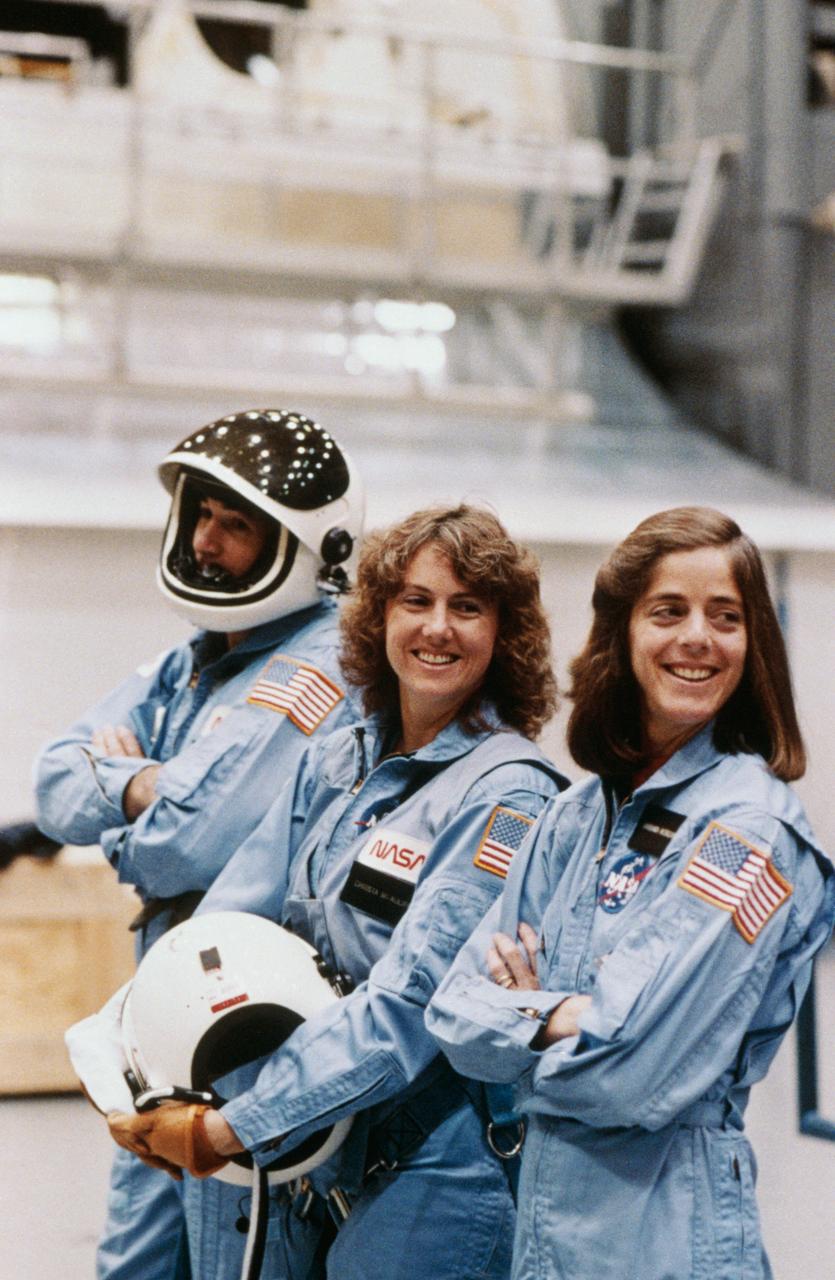
S86-25254 (January 1986) --- Payload specialists in training for STS-51L take a break in shuttle emergency egress training at the Johnson Space Center's (JSC) Shuttle Mock-up and Integration Laboratory. Left to right are Gregory Jarvis of Hughes, Sharon Christa McAuliffe and Barbara Morgan of the Teacher-in-Space Project. McAuliffe was selected as NASA's first citizen observer in the Space Shuttle Program and Morgan was named her backup. The photo was taken by Keith Meyers of the New York Times. EDITOR?S NOTE: The STS-51L crew members lost their lives in the space shuttle Challenger accident moments after launch on Jan. 28, 1986 from the Kennedy Space Center (KSC). Photo credit: NASA
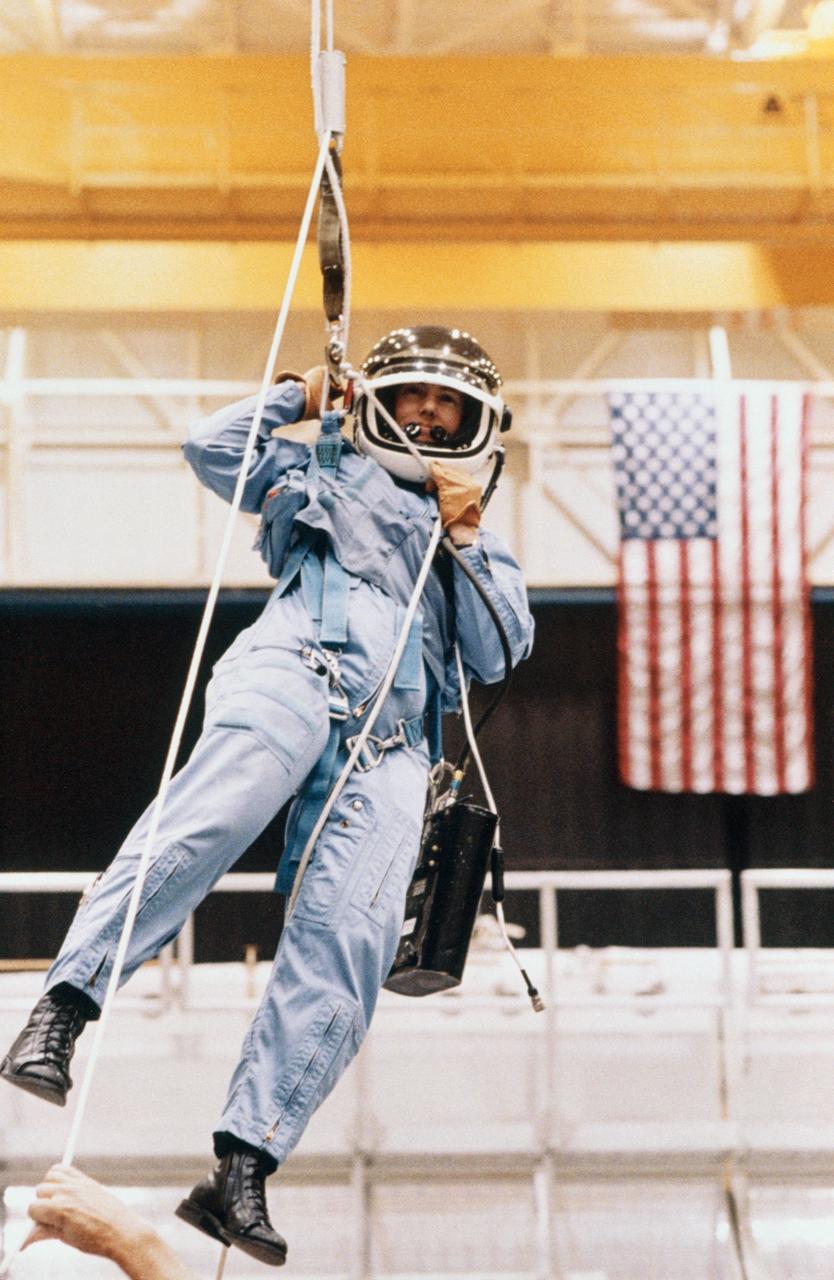
S86-25183 (for release January 1986) --- Sharon Christa McAuliffe, STS-51L payload specialist representing the Teacher-in-Space Project, descends from a mock-up of the space shuttle using a sky-genie device during an emergency training session in the Johnson Space Center?s (JSC) Shuttle Mock-up and Integration Laboratory. The photograph was taken by Keith Meyers of the New York Times. EDITOR?S NOTE: The STS-51L crew members lost their lives in the space shuttle Challenger accident moments after launch on Jan. 28, 1986 from the Kennedy Space Center (KSC). Photo credit: NASA
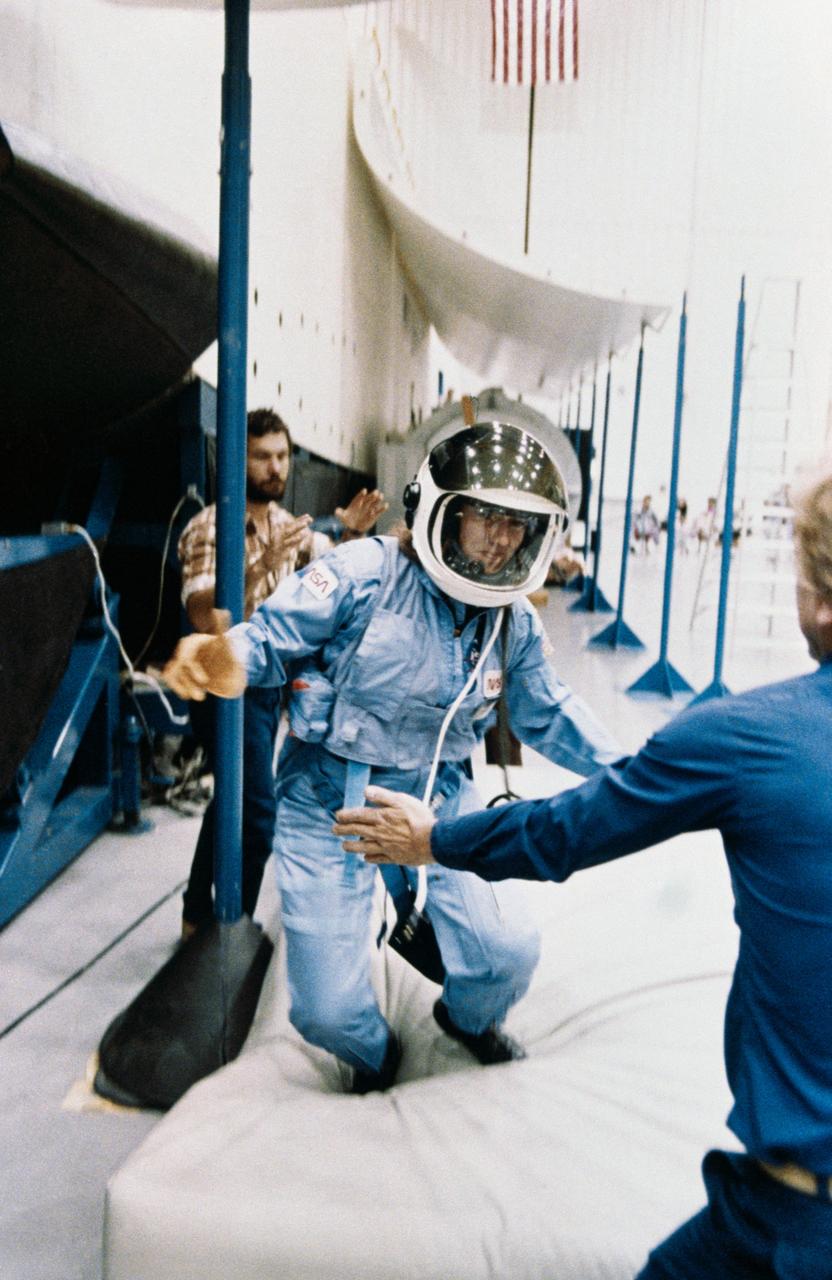
Sharon Christa McAuliffe, 51-L payload specialist representing the Teacher in Space project, jumps down onto a cushion during an emergency egress training session in JSC's mockup and integration laboratory. She had been descending from the mockup using a Sky-genie.
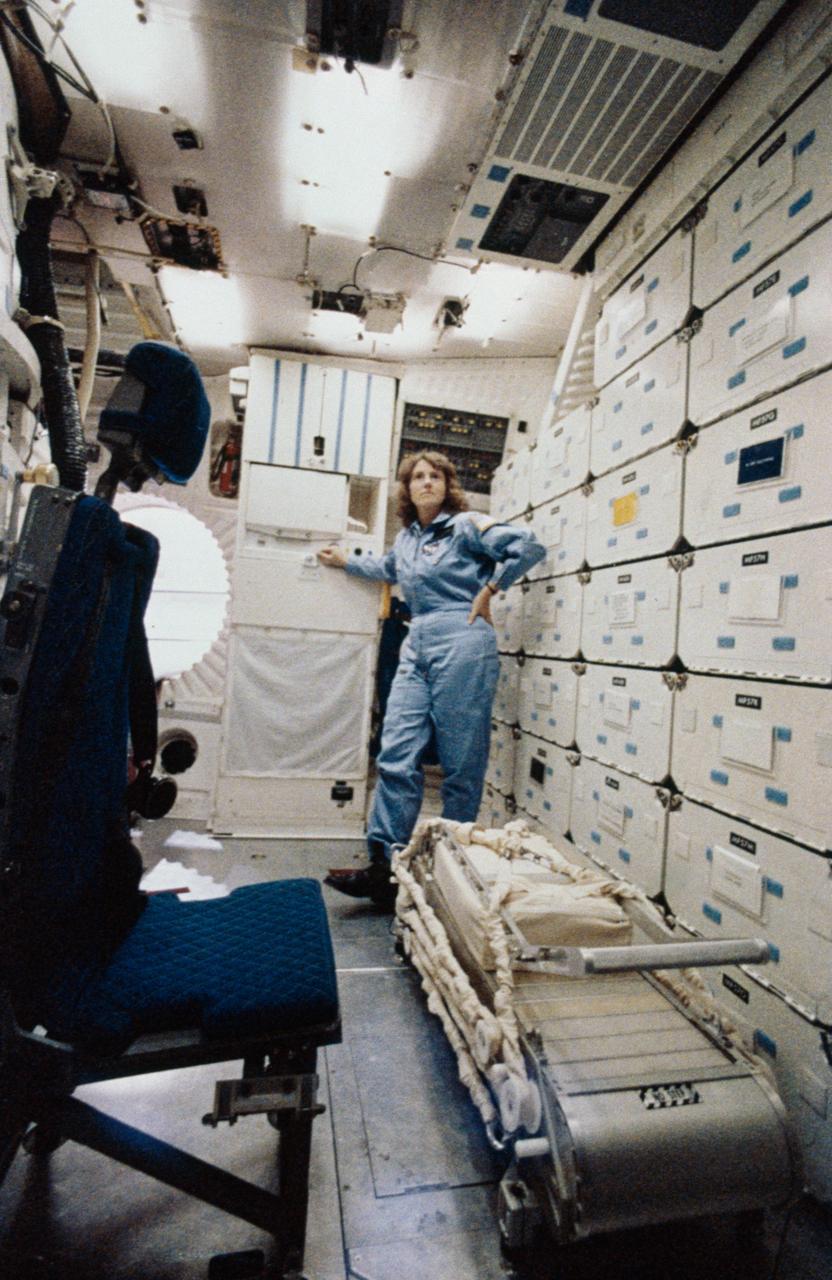
S86-25188 (December 1985) --- Sharon Christa McAuliffe, a school teacher Concord New Hampshire, surveys a ground training replica of the quarters she?ll be using in space when the space shuttle Challenger taxis two women and five men into space in January of 1986. The STS-51L citizen observer/payload specialist is in training at the Johnson Space Center, representing the Teacher-in-Space Project. The photo was taken by Keith Meyers of the New York Times. Photo credit: NASA
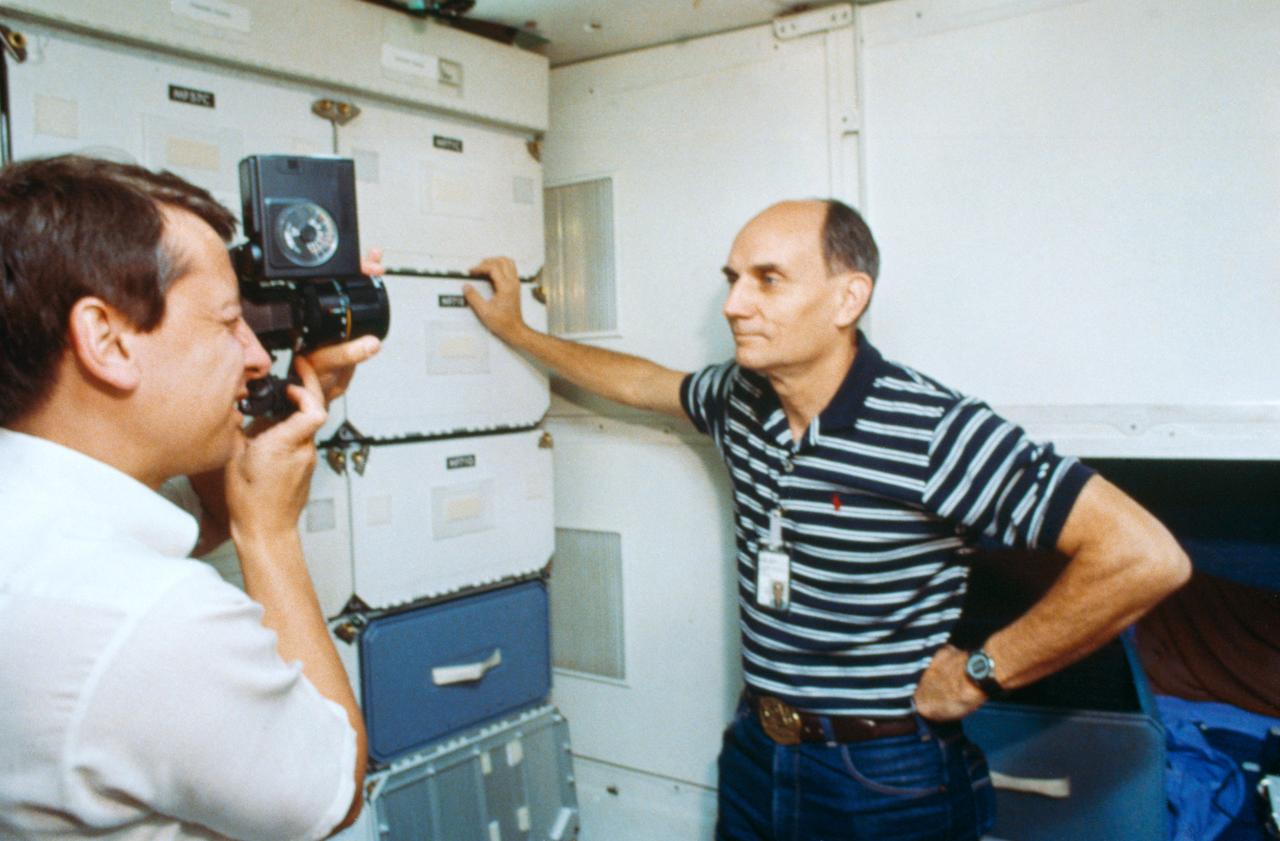
Two payload specialists for the STS 51-D mission get in some training time in the crew compartment trainerat JSC. Charles D. Walker, left, rehearses photography of U.S. Senator E.J. (Jake) Garn in the middeck section of the trainer.
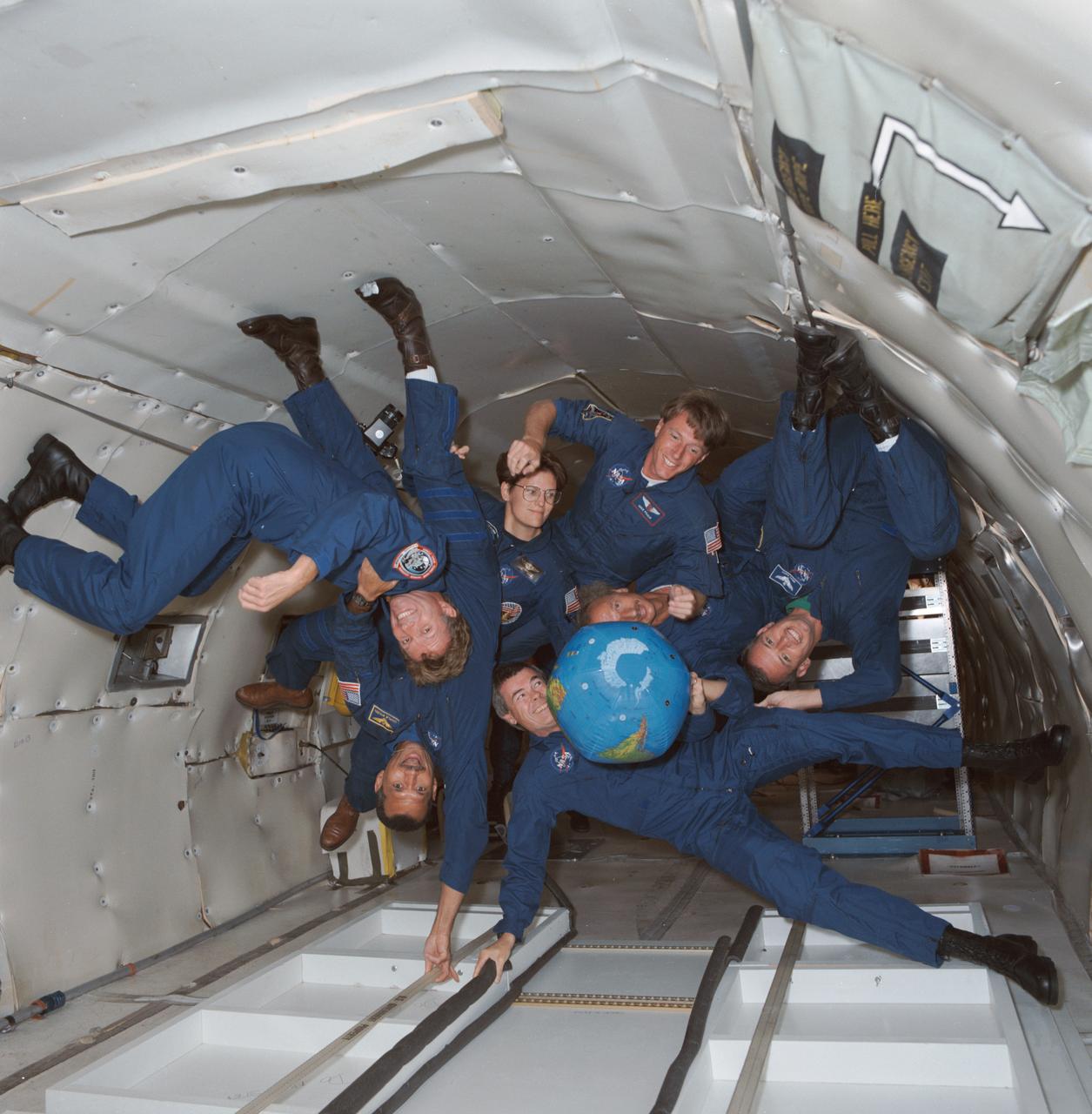
S91-44453 (21 Aug 1991) --- The crew of STS-45 is already training for its March 1992 mission, including stints on the KC-135 zero-gravity-simulating aircraft. Shown with an inflatable globe are, clockwise from the top, C. Michael Foale, mission specialist; Dirk Frimout, payload specialist; Brian Duffy, pilot; Charles R. (Rick) Chappell, backup payload specialist; Charles F. Bolden, mission commander; Byron K. Lichtenberg, payload specialist; and Kathryn D. Sullivan, payload commander.
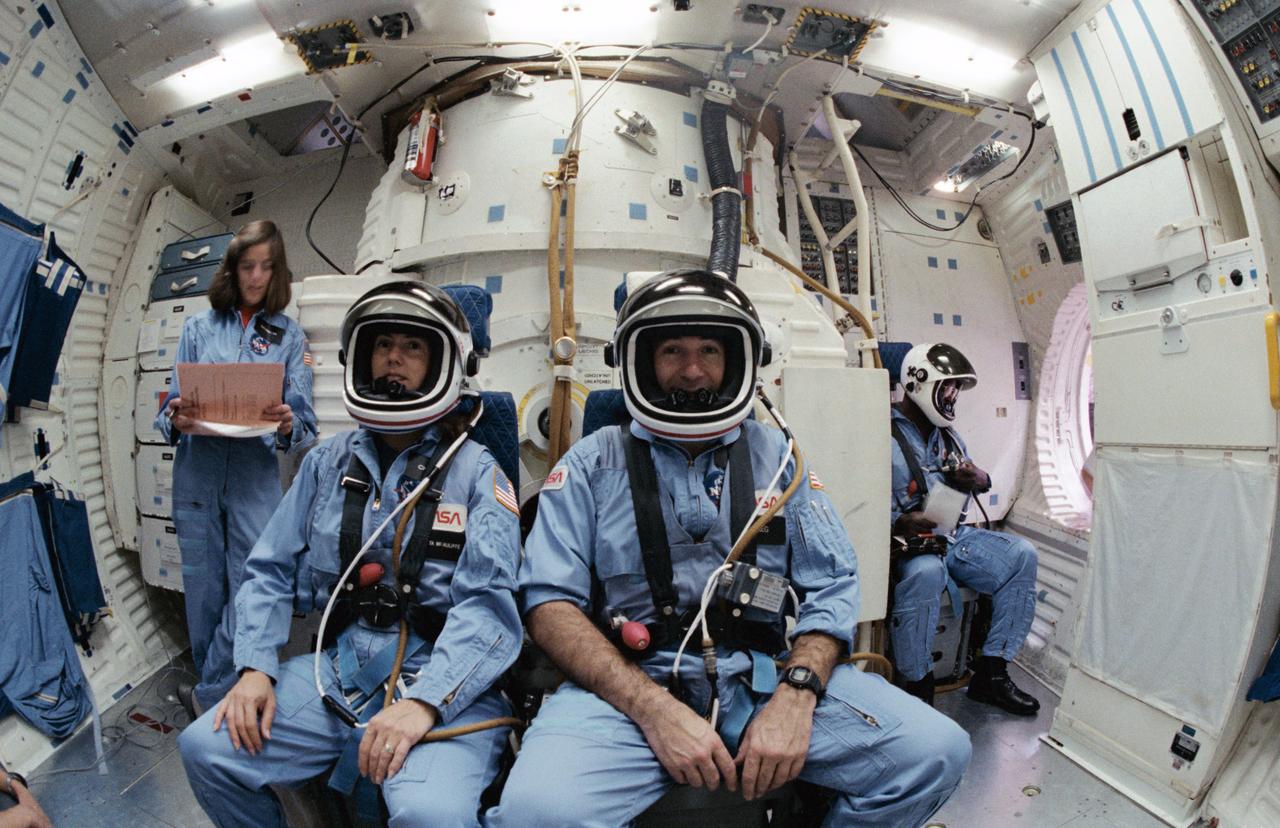
S85-46208 (December 1985) --- L.?R., backup Payload Specialist Barbara R. Morgan, Teacher Payload Specialist Christa McAuliffe, Hughes Payload Specialist Gregory B. Jarvis and Mission Specialist Ronald E. McNair in shuttle mission simulator at the Johnson Space Center. Photo was taken by Bill Bowers. Photo credit: NASA
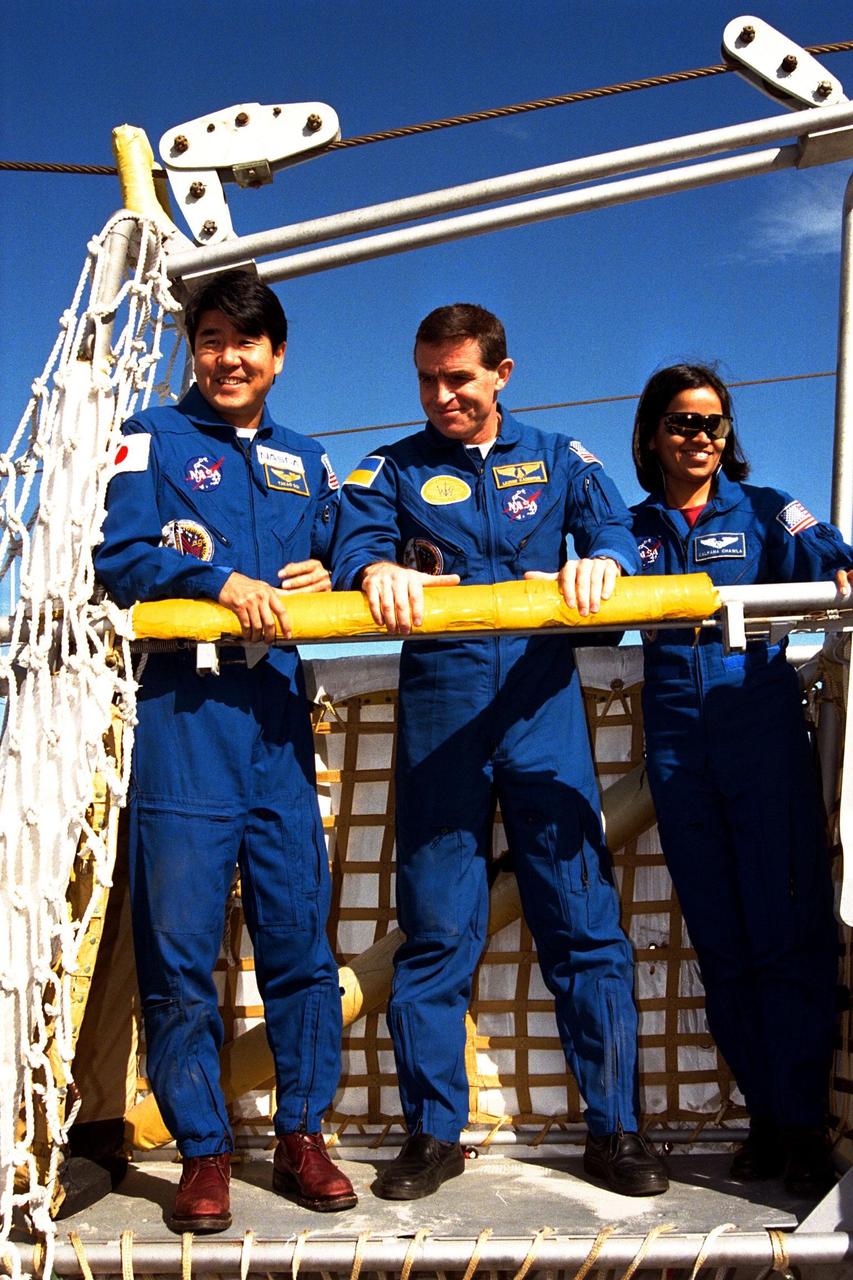
The crew of the STS-87 mission, scheduled for launch Nov. 19 aboard the Space Shuttle Columbia from pad 39B at Kennedy Space Center (KSC), participates in the Terminal Countdown Demonstration Test (TCDT) at KSC. Testing a slidewire basket that is part of the pad’s emergency egress system are, from left, Mission Specialist Takao Doi, Ph.D., of the National Space Development Agency of Japan; Payload Specialist Leonid Kadenyuk of the National Space Agency of Ukraine (NSAU); and Mission Specialist Kalpana Chawla, Ph.D. The TCDT is held at KSC prior to each Space Shuttle flight providing the crew of each mission opportunities to participate in simulated countdown activities. The TCDT ends with a mock launch countdown culminating in a simulated main engine cut-off. The crew also spends time undergoing emergency egress training exercises at the pad and has an opportunity to view and inspect the payloads in the orbiter's payload bay
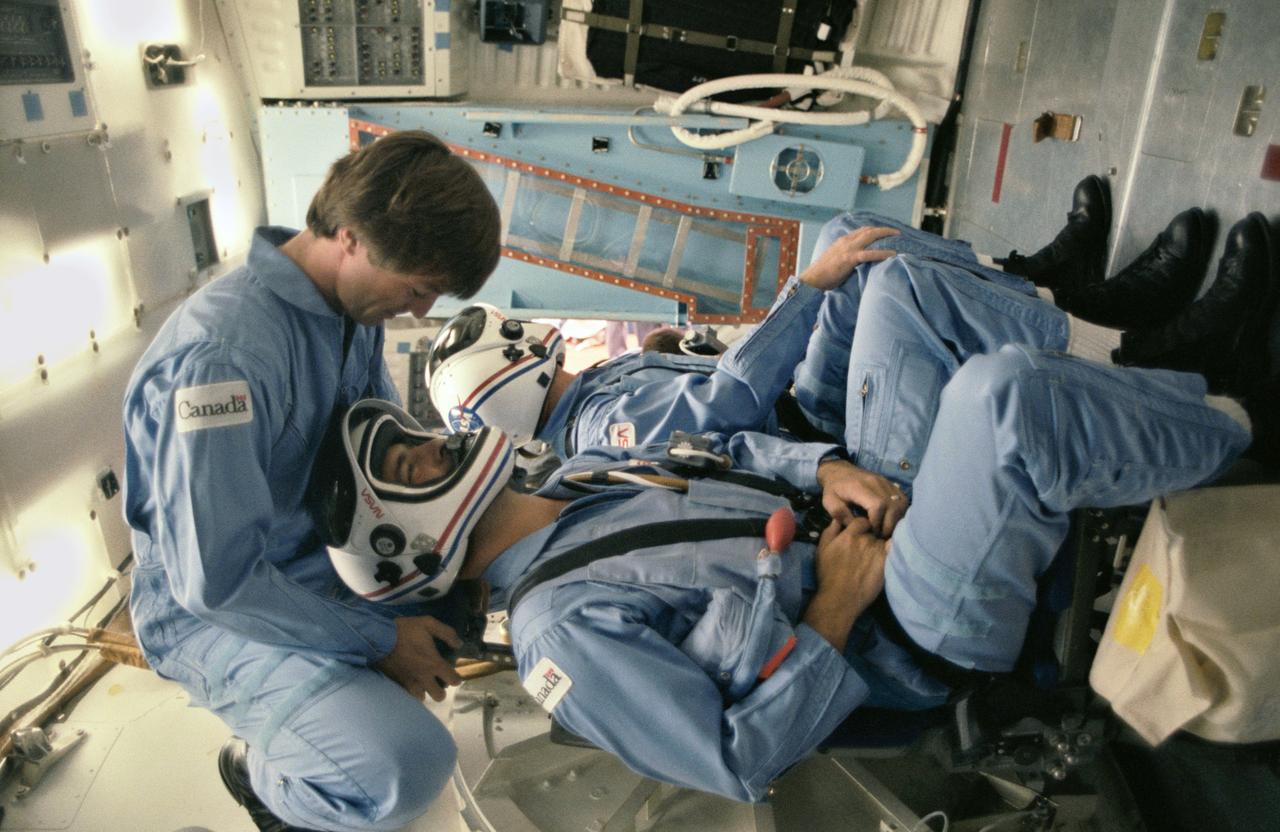
41D-3139 (2 Sept 1984) --- Two prime crew member payload specialist and a backup for NASA's 41-G Space Shuttle mission participate in launch phase simulations at the Johnson Space Center. Securing themselves in temporary stations in the middeck of a trainer are Marc Garneau, representing the Canadian National Research Council (NRC), and Paul D. Scully-Power (background), a U.S. Navy oceanographer. Robert Thirsk, also with the NRC, is a backup payload specialist. This photograph was taken by Otis Imboden.
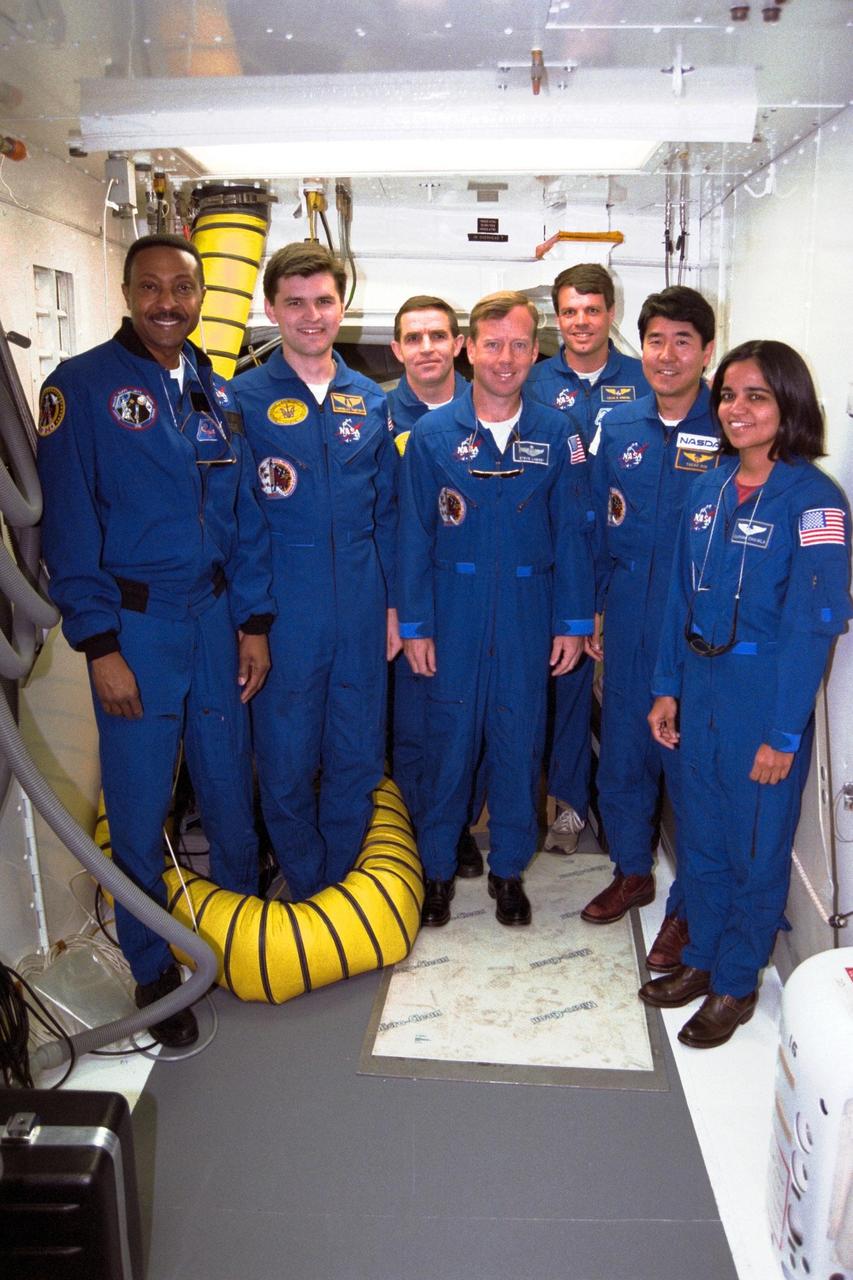
The crew of the STS-87 mission, scheduled for launch Nov. 19 aboard the Space Shuttle Columbia from pad 39B at Kennedy Space Center (KSC), participates in the Terminal Countdown Demonstration Test (TCDT) at KSC. Standing, from left, are Mission Specialist Winston Scott; backup Payload Specialist Yaroslav Pustovyi, Ph.D., of the National Space Agency of Ukraine (NSAU); Payload Specialist Leonid Kadenyuk of NSAU; Pilot Steven Lindsey; Commander Kevin Kregel; Mission Specialist Takao Doi, Ph.D., of the National Space Development Agency of Japan; and Mission Specialist Kalpana Chawla, Ph.D. The TCDT is held at KSC prior to each Space Shuttle flight providing the crew of each mission opportunities to participate in simulated countdown activities. The TCDT ends with a mock launch countdown culminating in a simulated main engine cut-off. The crew also spends time undergoing emergency egress training exercises at the pad and has an opportunity to view and inspect the payloads in the orbiter's payload bay
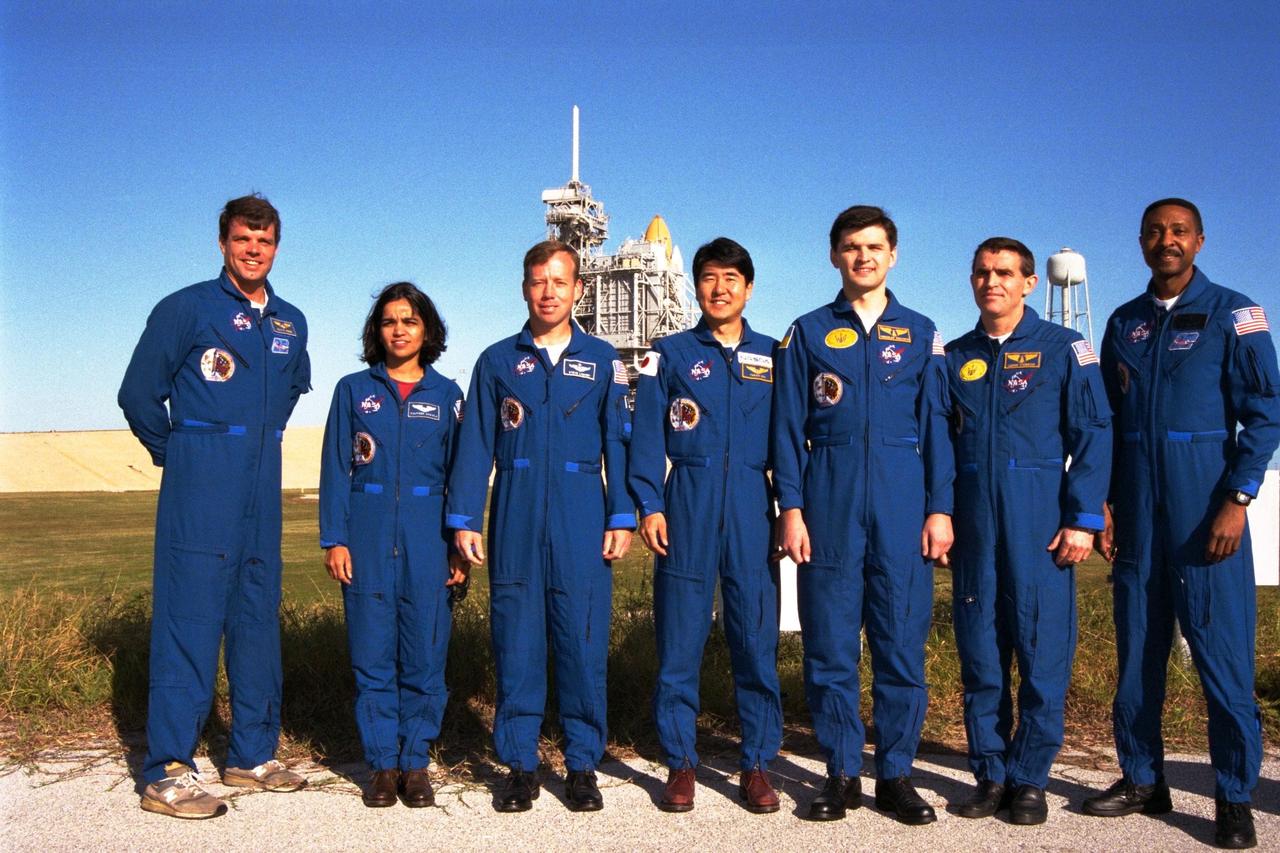
The crew of the STS-87 mission, scheduled for launch Nov. 19 aboard the Space Shuttle Columbia from Pad 39B at Kennedy Space Center (KSC), poses at the pad during a break in the Terminal Countdown Demonstration Test (TCDT) at KSC. Standing in front of the Shuttle Columbia are, from left, Commander Kevin Kregel; Mission Specialist Kalpana Chawla, Ph.D.; Pilot Steven Lindsey; Mission Specialist Takao Doi, Ph.D., of the National Space Development Agency of Japan; backup Payload Specialist Yaroslav Pustovyi, Ph.D., of the National Space Agency of Ukraine (NSAU); Payload Specialist Leonid Kadenyuk of NSAU; and Mission Specialist Winston Scott. The TCDT is held at KSC prior to each Space Shuttle flight providing the crew of each mission opportunities to participate in simulated countdown activities. The TCDT ends with a mock launch countdown culminating in a simulated main engine cutoff. The crew also spends time undergoing emergency egress training exercises at the pad and has an opportunity to view and inspect the payloads in the orbiter's payload bay

KENNEDY SPACE CENTER, FLA. -- STS-85 Payload Specialist Bjarni V. Tryggvason and Mission Specialist Stephen K. Robinson go through countdown procedures aboard the Space Shuttle orbiter Discovery during Terminal Countdown Demonstration Test (TCDT) activities for that mission. The TCDT includes a simulation of the final launch countdown. The primary payload aboard the Space Shuttle orbiter Discovery is the Cryogenic Infrared Spectrometers and Telescopes for the Atmosphere-2 (CRISTA-SPAS- 2). Other STS-85 payloads include the Manipulator Flight Demonstration (MFD), and Technology Applications and Science-1 (TAS-1) and International Extreme Ultraviolet Hitchhiker-2 (IEH-2) experiments
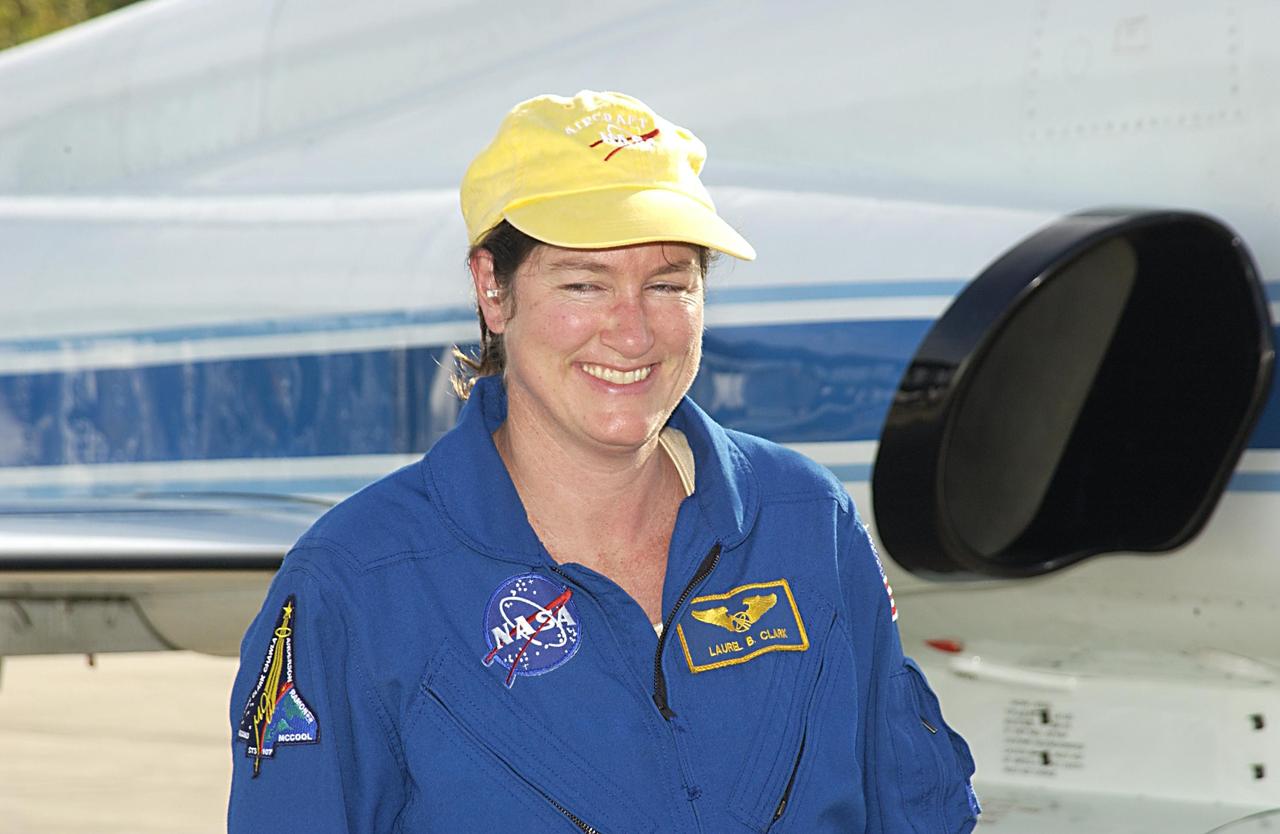
KENNEDY SPACE CENTER, FLA. -- STS-107 Mission Specialist Laurel Clark arrives at KSC to take part in Terminal Countdown Demonstration Test activities, which include a simulated launch countdown. Other crew members are Commander Rick Husband, Pilot William "Willie" McCool, Payload Commander Michael Anderson, Mission Specialists Kalpana Chawla and David Brown, and Payload Specialist Ilan Ramon, the first Israeli astronaut. STS-107 is a mission devoted to research and will include more than 80 experiments that will study Earth and space science, advanced technology development, and astronaut health and safety. Launch is scheduled for Jan. 16, 2003.
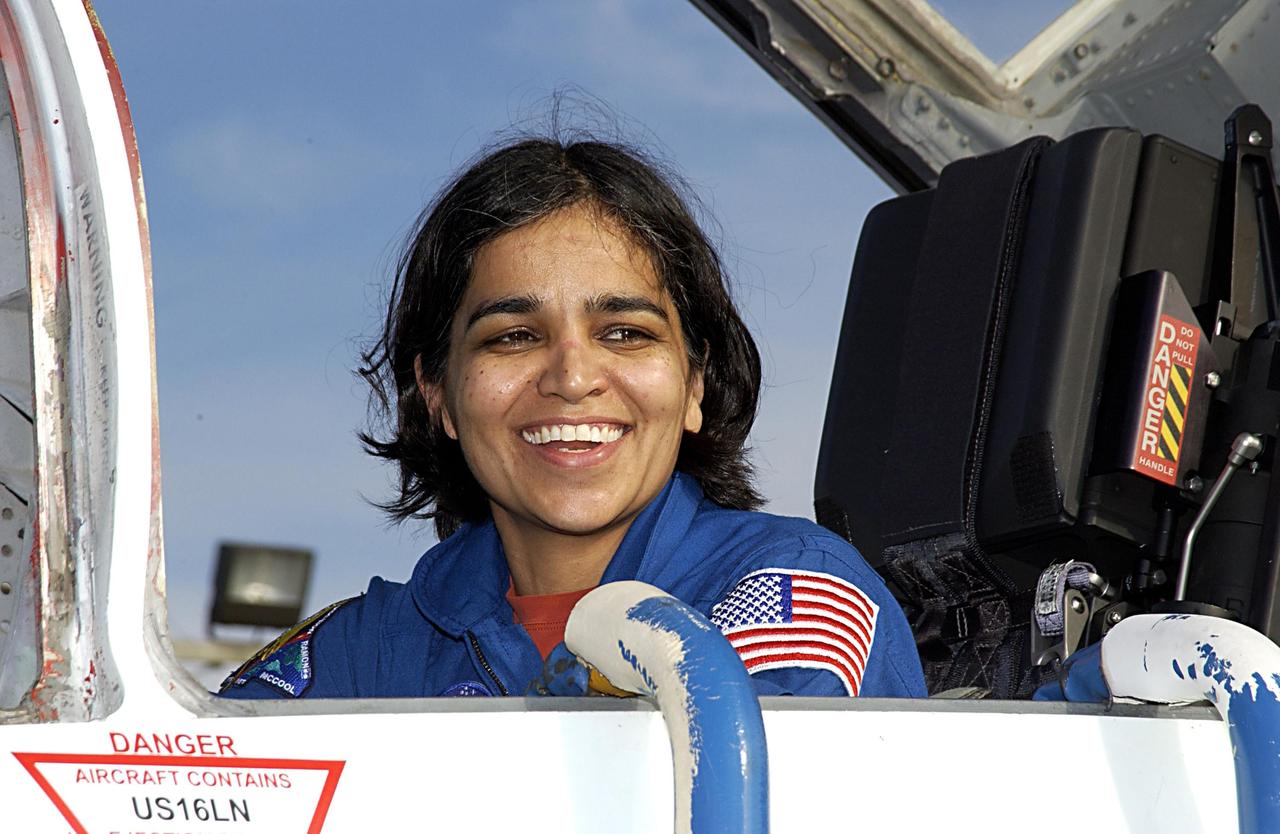
KENNEDY SPACE CENTER, FLA. - STS-107 Mission Specialist Kalpana Chawla arrives at KSC to take part in Terminal Countdown Demonstration Test activities, which include a simulated launch countdown. Other crew members are Commander Rick Husband, Pilot William "Willie" McCool, Payload Commander Michael Anderson, Mission Specialists David Brown and Laurel Clark and Payload Specialist Ilan Ramon (the first Israeli astronaut). STS-107 is a mission devoted to research and will include more than 80 experiments that will study Earth and space science, advanced technology development, and astronaut health and safety. Launch is scheduled for Jan. 16, 2003.
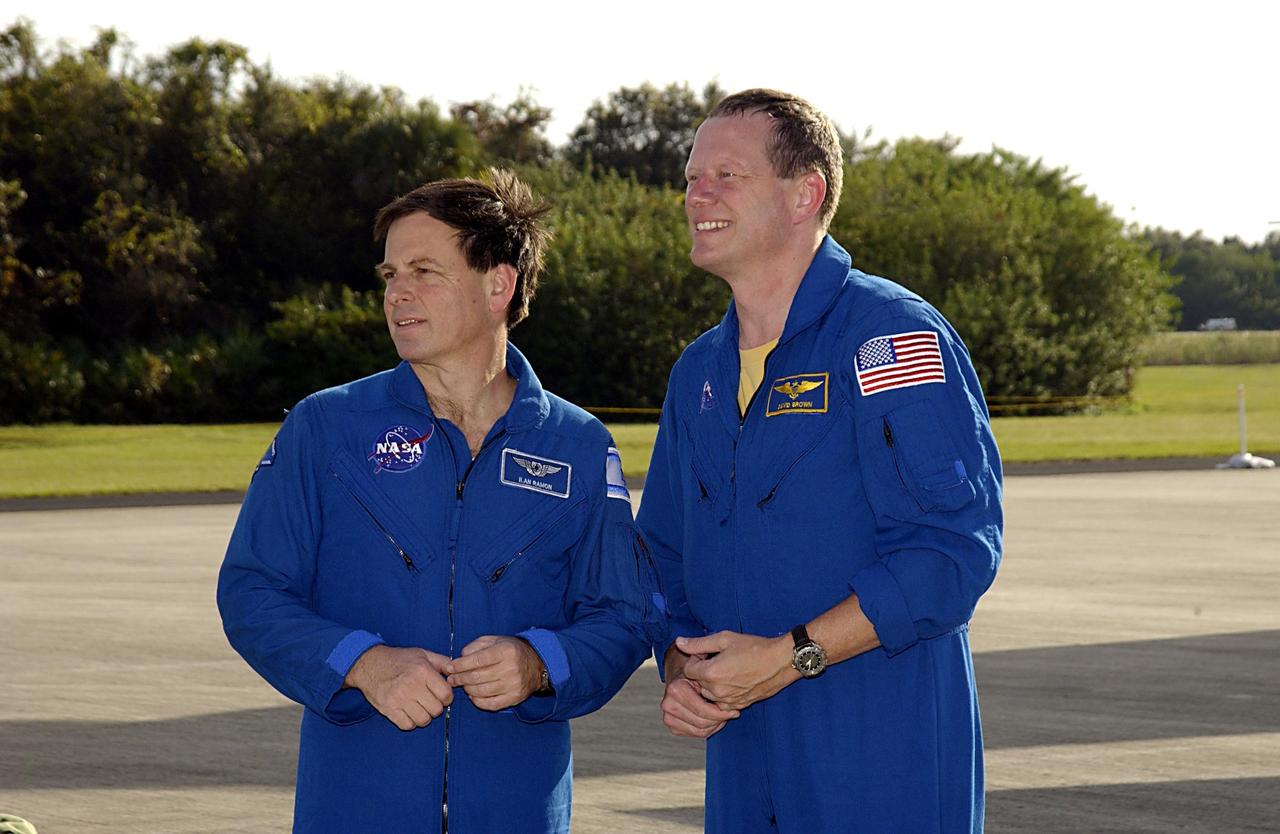
KENNEDY SPACE CENTER, FLA. - STS-107 Payload Specialist Ilan Ramon (left) and Mission Specialist David Brown (right) are ready to head for crew quarters after arriving at KSC. The crew is taking part in Terminal Countdown Demonstration Test activities, which include a simulated launch countdown. Other crew members are Commander Rick Husband, Pilot William "Willie" McCool, Payload Commander Michael Anderson, and Mission Specialists Kalpana Chawla and Laurel Clark. STS-107 is a mission devoted to research and will include more than 80 experiments that will study Earth and space science, advanced technology development, and astronaut health and safety. Launch is scheduled for Jan. 16, 2003.
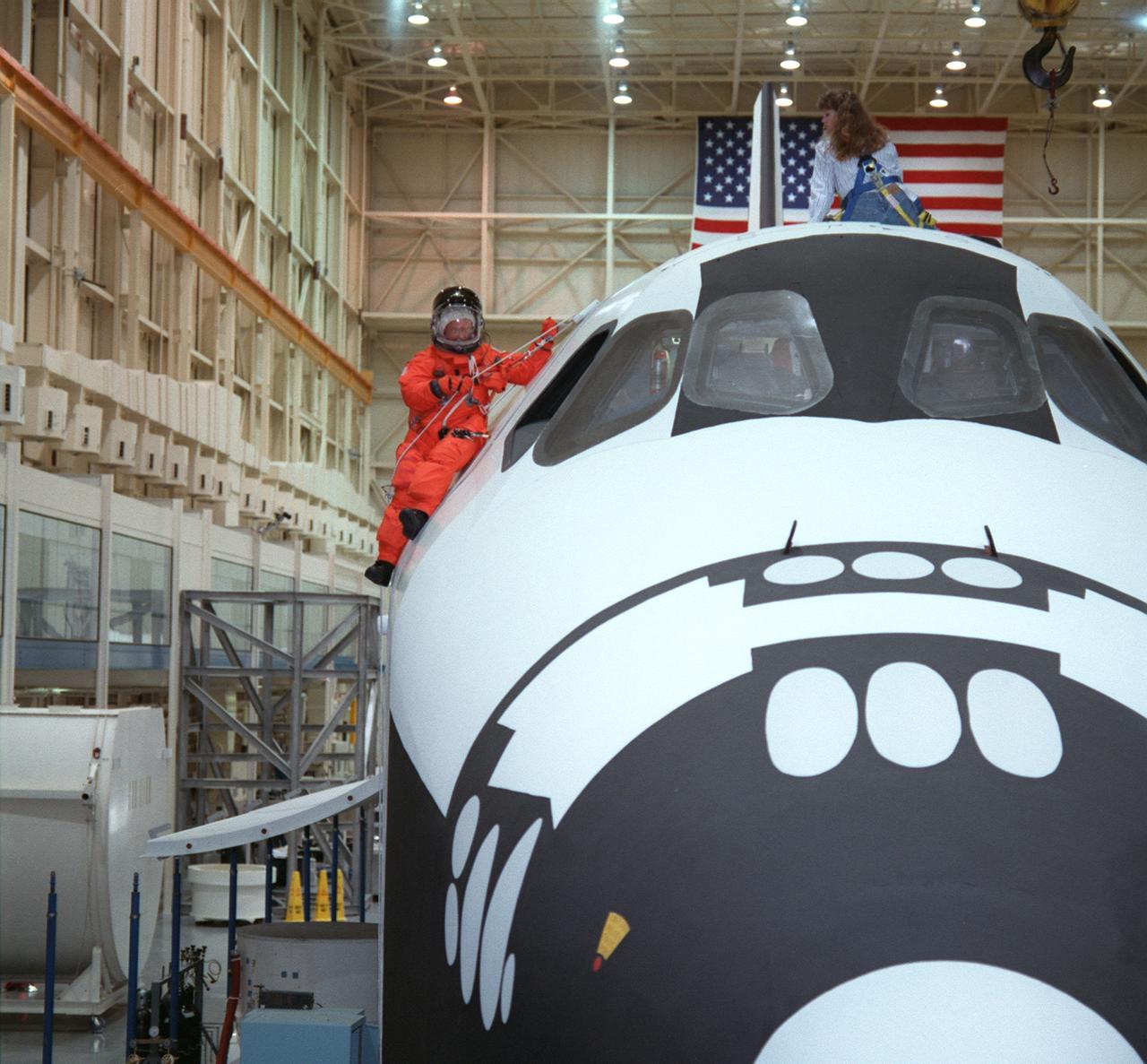
S98-07959 (5 June 1998) --- U.S. Sen. John H. Glenn Jr. (D.-Ohio) simulates emergency egress from a space shuttle in trouble during a series of training exercises in the Johnson Space Center's systems integration facility. Sharon Jones monitors the STS-95 payload specialist's rappelling performance.
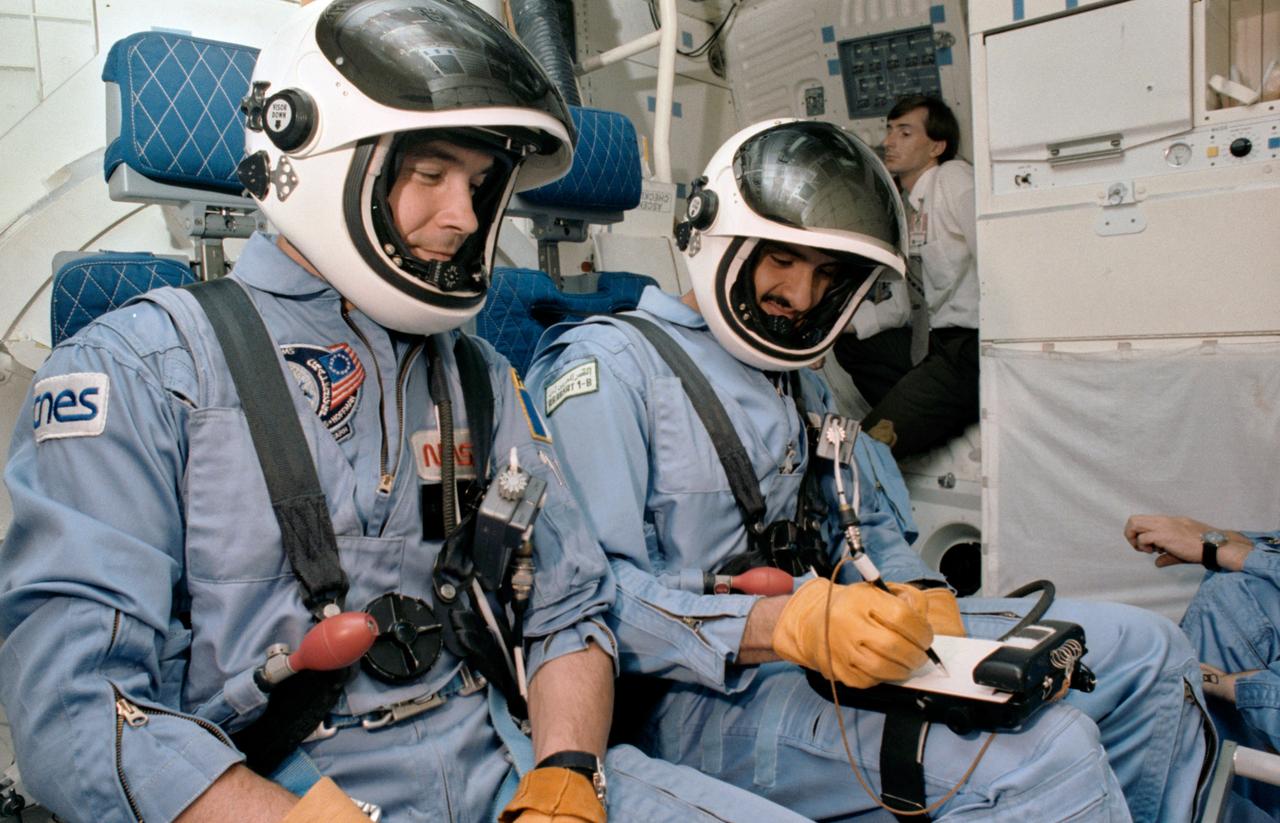
S85-32002 (17 May 1985) --- The two payload specialists for 51G participate in a training exercise in the Shuttle mission simulation and training facility at the Johnson Space Center (JSC). Patrick Baudry, left, and Sultan Salman Abdelazize Al-Saud were briefed on the launch and entry phases of their upcoming flight. The photo was taken by Otis Imboden.
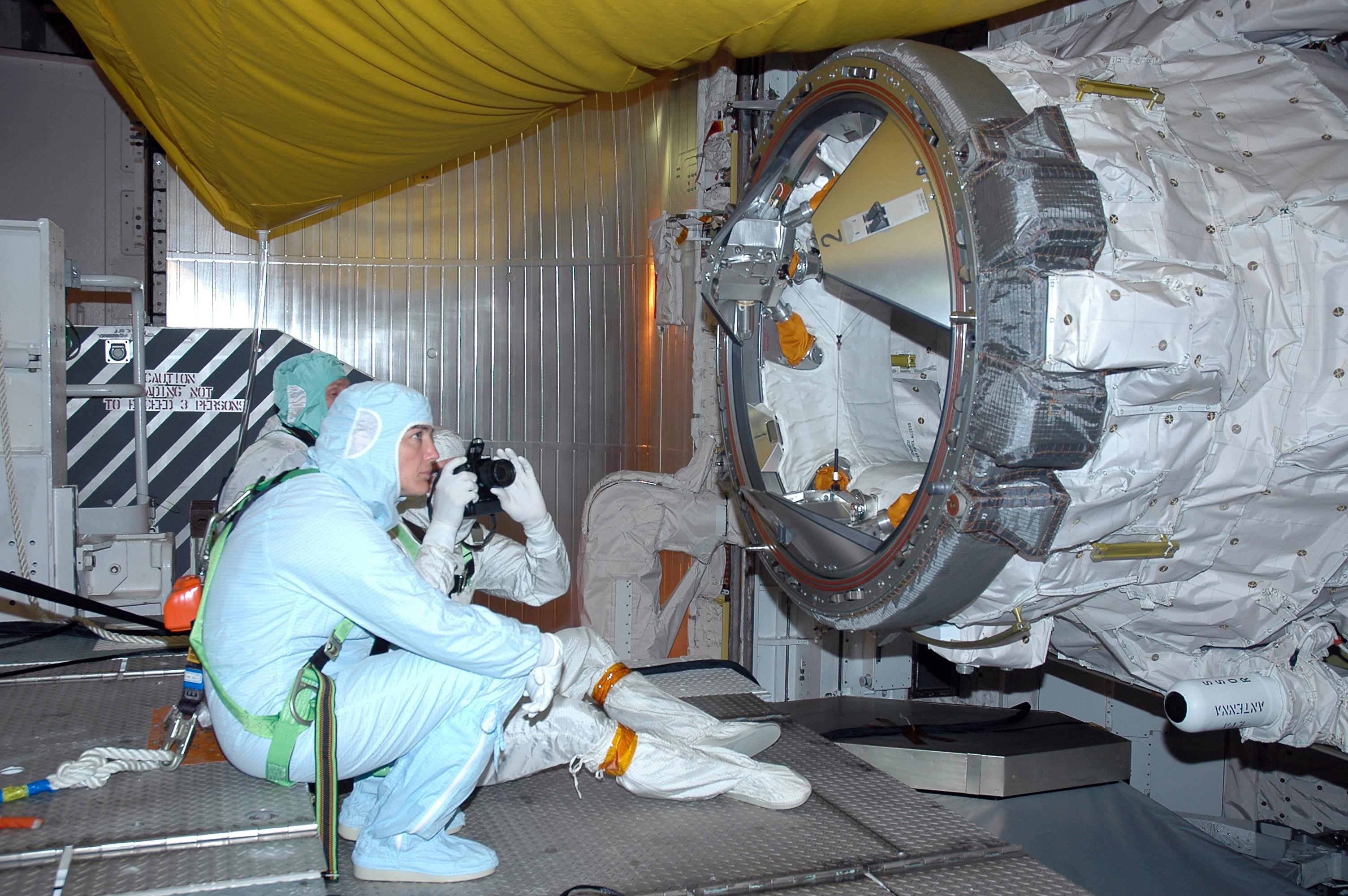
KENNEDY SPACE CENTER, FLA. - In the payload changeout room on Launch Pad 39B, STS-115 crew members look over the mission payload one more time before launch. In front is mission specialist Heidemarie Stefanyshyn-Piper. Mission specialist Joseph Tanner is holding a camera, and behind him is mission specialist Steven MacLean, representing the Canadian Space Agency. The mission crew has been at KSC to take part in Terminal Countdown Demonstration Test activities, which include emergency egress training, a simulated launch countdown and the payload familiarization. The TCDT is a prelaunch preparation for the mission that is scheduled to lift off in a window opening Aug. 27. During their 11-day mission to the International Space Station, the STS-115 crew will continue construction of the station and attach the payload elements, the Port 3/4 truss segment with its two large solar arrays. Photo credit: NASA/Cory Huston
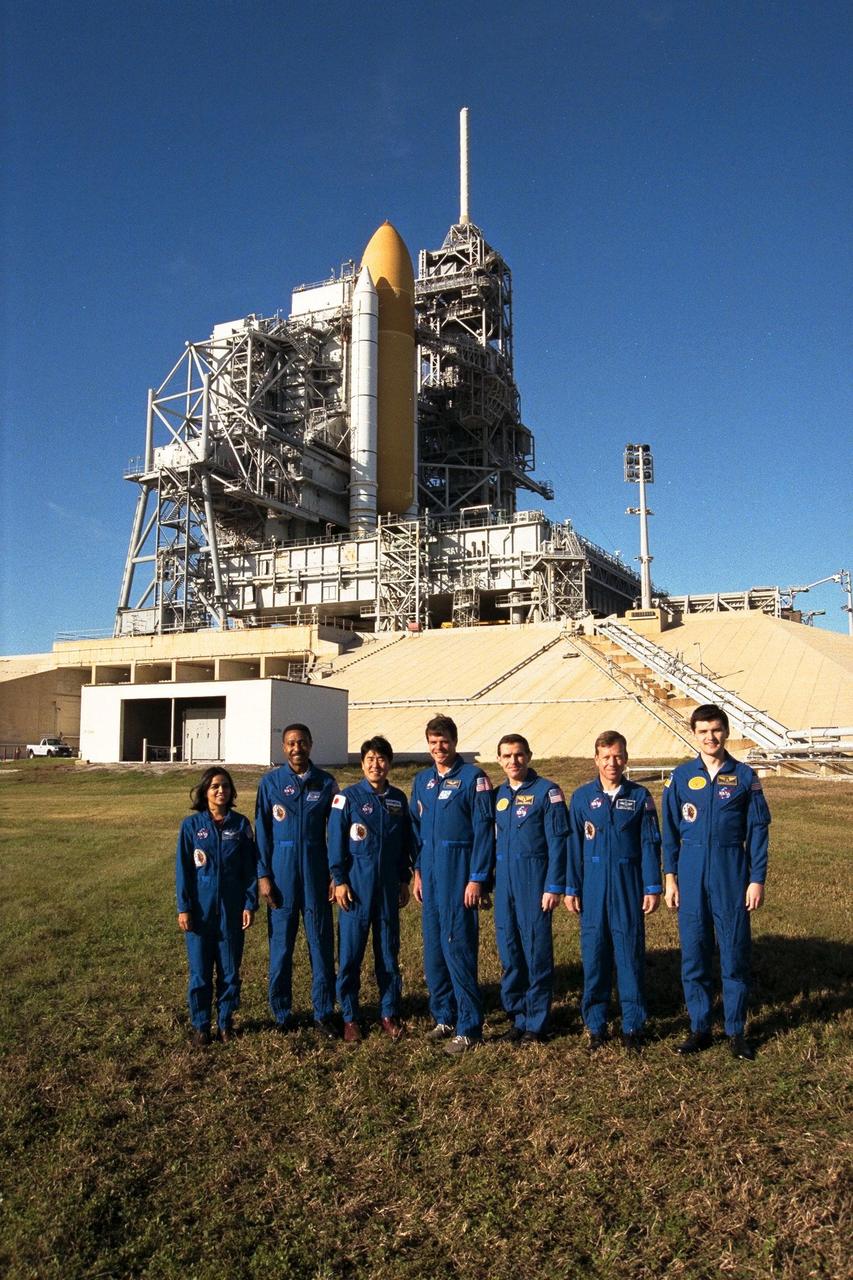
The crew of the STS-87 mission, scheduled for launch Nov. 19 aboard the Space Shuttle Columbia from Pad 39B at Kennedy Space Center (KSC), participate in the Terminal Countdown Demonstration Test (TCDT) at KSC. Posing for a group shot by Pad 39B are, from left to right, Mission Specialist Kalpana Chawla, Ph.D.; Mission Specialist Winston Scott; Mission Specialist Takao Doi, Ph.D., of the National Space Development Agency of Japan; Commander Kevin Kregel; Payload Specialist Leonid Kadenyuk of the National Space Agency of Ukraine (NSAU); Pilot Steven Lindsey; and Kadenyuk’s back-up, Yaroslav Pustovyi, Ph.D., also of NSAU. The TCDT is held at KSC prior to each Space Shuttle flight, providing the crew of each mission opportunities to participate in simulated countdown activities. The crew also spends time undergoing emergency egress training exercises at the pad and has an opportunity to view and inspect the payloads in the orbiter's payload bay
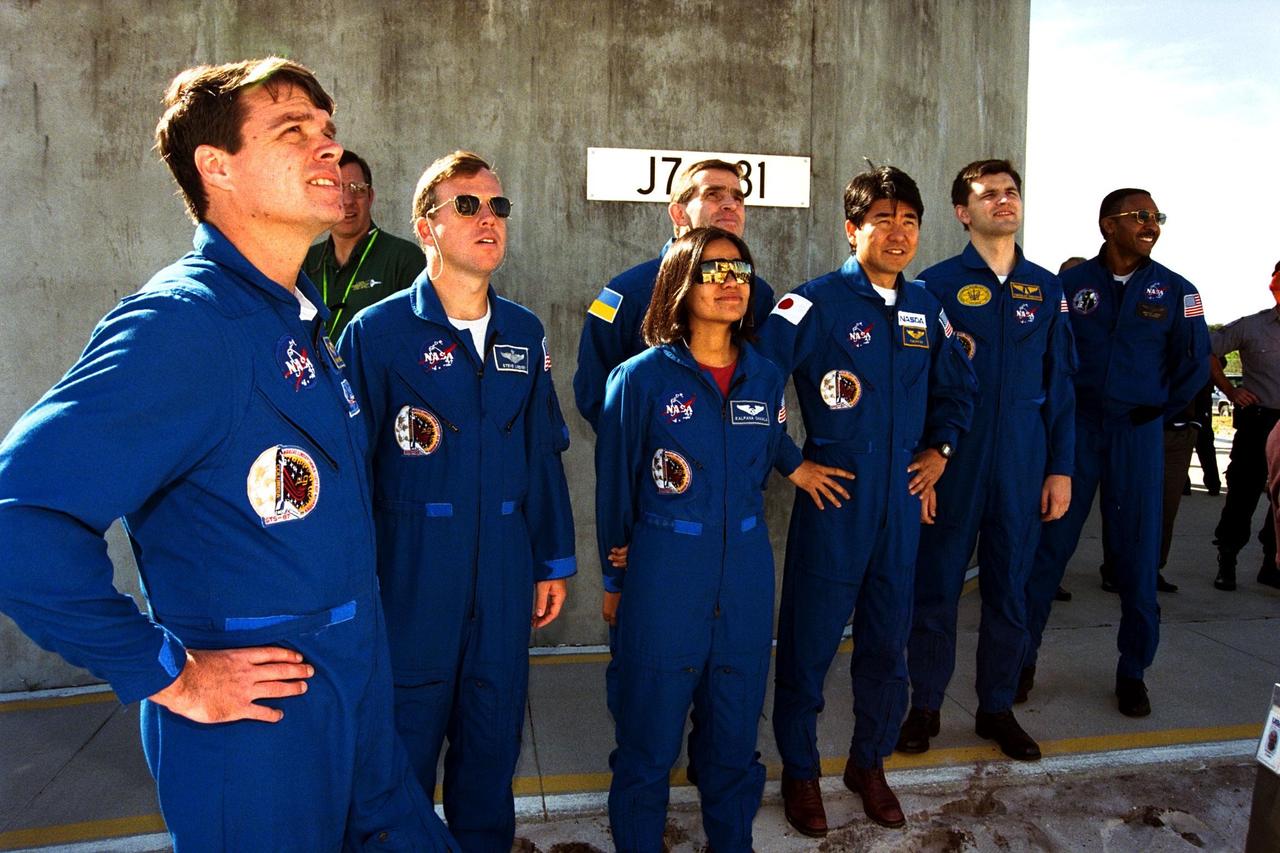
The crew of the STS-87 mission, scheduled for launch Nov. 19 aboard the Space Shuttle Columbia from Pad 39B at Kennedy Space Center (KSC), participates in the Terminal Countdown Demonstration Test (TCDT) at KSC. Getting a look at the Space Shuttle Columbia are, from left, Commander Kevin Kregel; Pilot Steven Lindsey; Mission Specialist Kalpana Chawla, Ph.D.; Payload Specialist Leonid Kadenyuk of the National Space Agency of Ukraine (NSAU); Mission Specialist Takao Doi, Ph.D., of the National Space Development Agency of Japan; Kadenyuk’s back-up, Yaroslav Pustovyi, Ph.D., also of NSAU; and Mission Specialist Winston Scott. The TCDT is held at KSC prior to each Space Shuttle flight providing the crew of each mission opportunities to participate in simulated countdown activities. The TCDT ends with a mock launch countdown culminating in a simulated main engine cut-off. The crew also spends time undergoing emergency egress training exercises at the pad and has an opportunity to view and inspect the payloads in the orbiter's payload bay
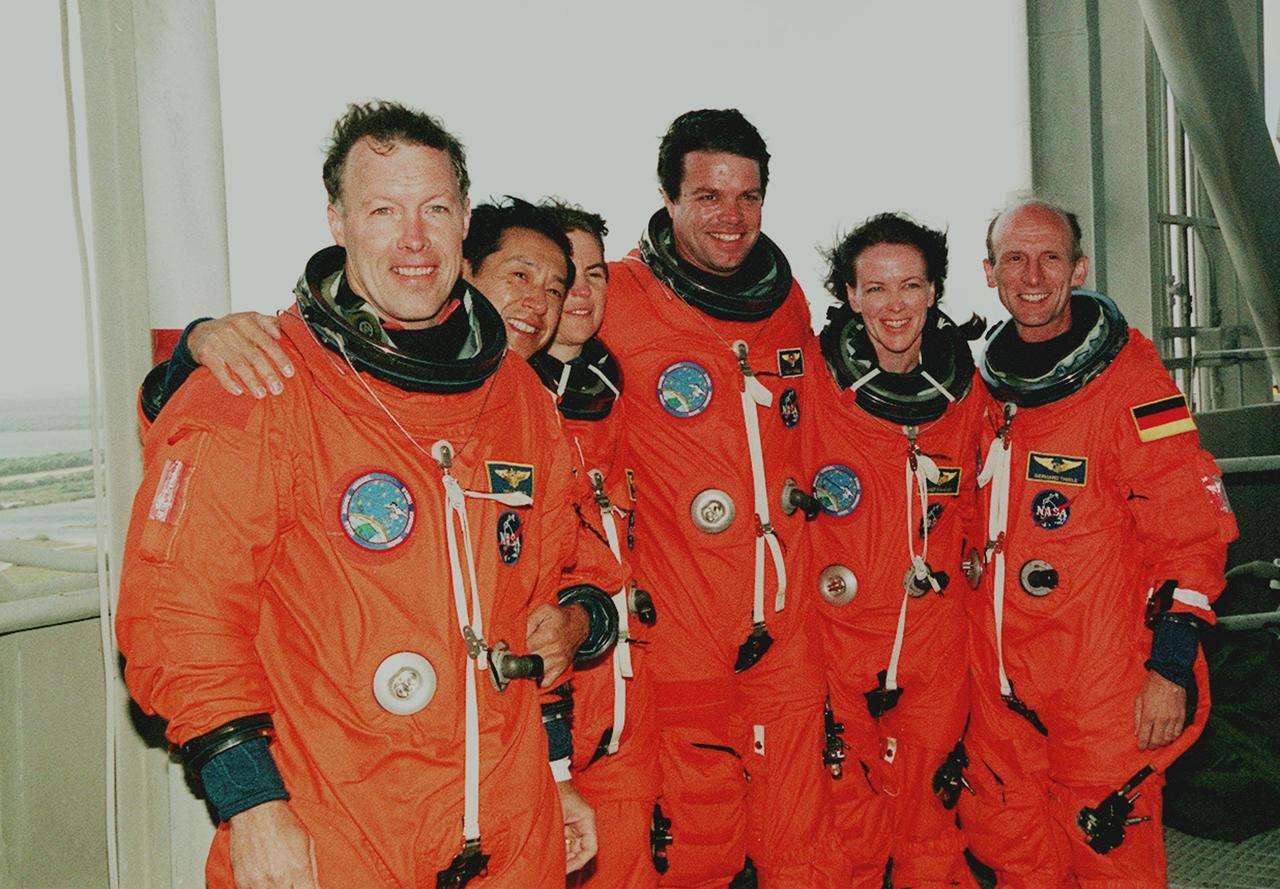
KENNEDY SPACE CENTER, Fla. -- At the 195-foot level of the Fixed Service Structure on Launch Pad 39A, the STS-99 crew pose for a photograph during Terminal Countdown Demonstration Test (TCDT) activities. Standing left to right are Pilot Dominic Gorie, Mission Specialist Mamoru Mohri (Ph.D.), Mission Specialist Janice Voss (Ph.D.), Commander Kevin Kregel, Mission Specialist Janet Lynn Kavandi (Ph.D.), and Mission Specialist Gerhard Thiele (Ph.D.). Thiele is with the European Space Agency and Mohri is with the National Space Development Agency (NASDA) of Japan. The TCDT provides the crew with simulated countdown exercises, emergency egress training, and opportunities to inspect the mission payloads in the orbiter's payload bay. STS-99 is the Shuttle Radar Topography Mission, which will chart a new course, using two antennae and a 200-foot-long section of space station-derived mast protruding from the payload bay to produce unrivaled 3-D images of the Earth's surface. The result of the Shuttle Radar Topography Mission could be close to 1 trillion measurements of the Earth's topography. Besides contributing to the production of better maps, these measurements could lead to improved water drainage modeling, more realistic flight simulators, better locations for cell phone towers, and enhanced navigation safety. Launch of Endeavour on the 11-day mission is scheduled for Jan. 31 at 12:47 p.m. EST
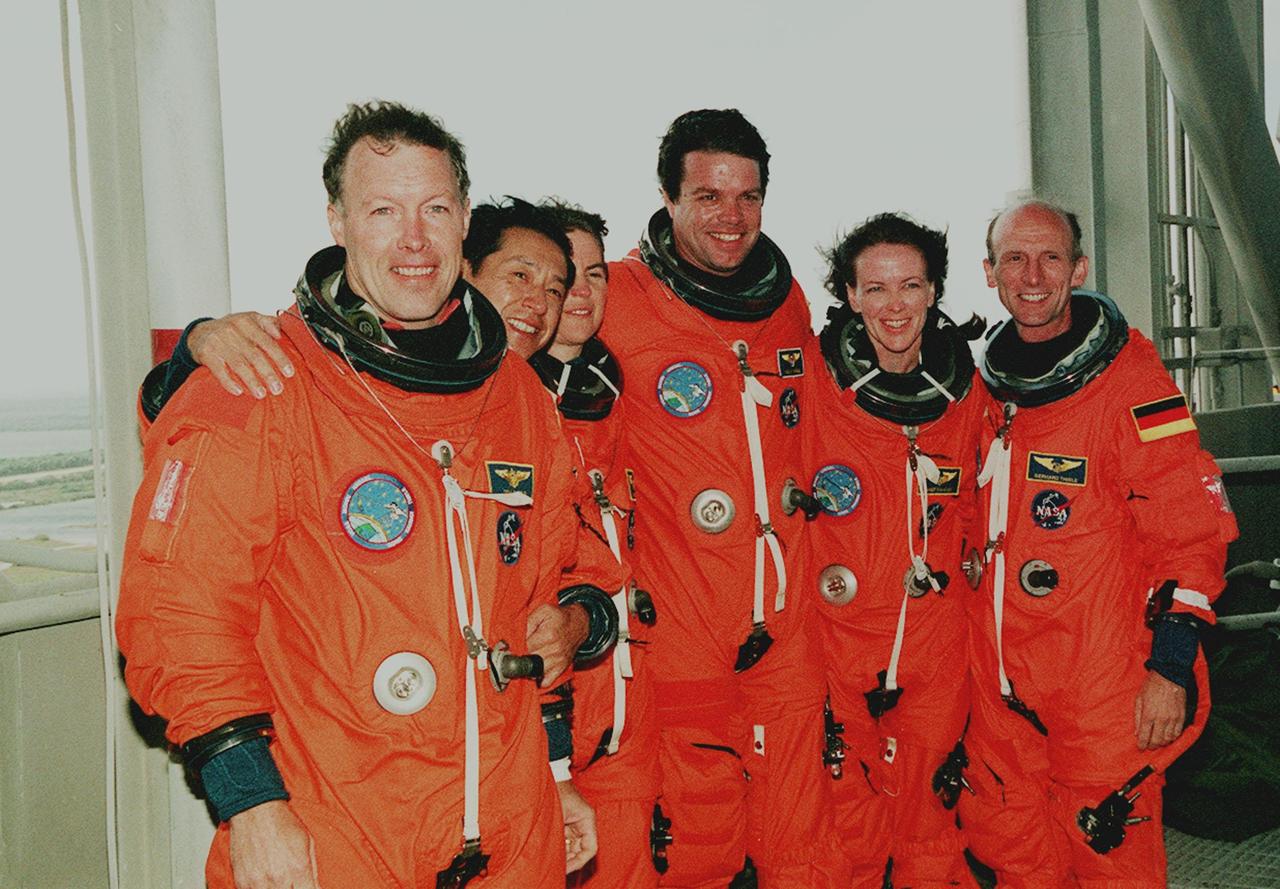
KENNEDY SPACE CENTER, Fla. -- At the 195-foot level of the Fixed Service Structure on Launch Pad 39A, the STS-99 crew pose for a photograph during Terminal Countdown Demonstration Test (TCDT) activities. Standing left to right are Pilot Dominic Gorie, Mission Specialist Mamoru Mohri (Ph.D.), Mission Specialist Janice Voss (Ph.D.), Commander Kevin Kregel, Mission Specialist Janet Lynn Kavandi (Ph.D.), and Mission Specialist Gerhard Thiele (Ph.D.). Thiele is with the European Space Agency and Mohri is with the National Space Development Agency (NASDA) of Japan. The TCDT provides the crew with simulated countdown exercises, emergency egress training, and opportunities to inspect the mission payloads in the orbiter's payload bay. STS-99 is the Shuttle Radar Topography Mission, which will chart a new course, using two antennae and a 200-foot-long section of space station-derived mast protruding from the payload bay to produce unrivaled 3-D images of the Earth's surface. The result of the Shuttle Radar Topography Mission could be close to 1 trillion measurements of the Earth's topography. Besides contributing to the production of better maps, these measurements could lead to improved water drainage modeling, more realistic flight simulators, better locations for cell phone towers, and enhanced navigation safety. Launch of Endeavour on the 11-day mission is scheduled for Jan. 31 at 12:47 p.m. EST
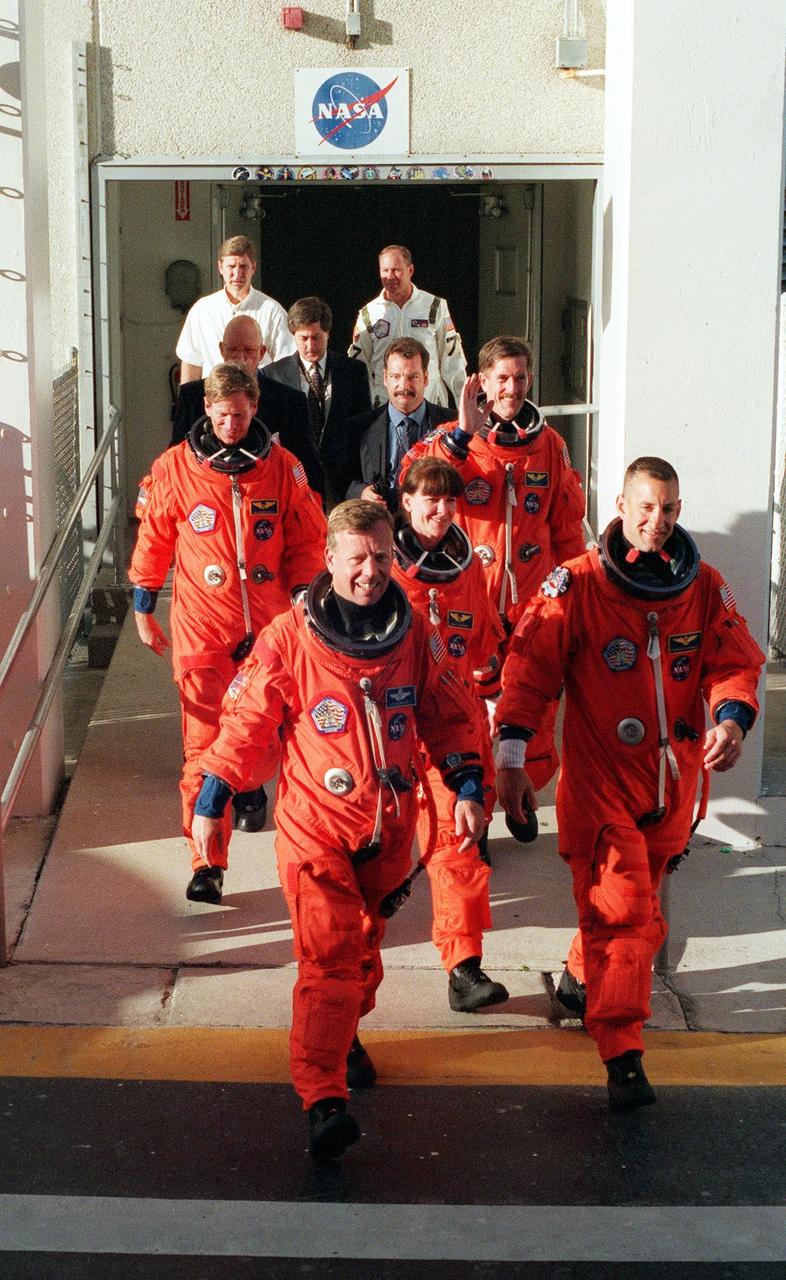
KENNEDY SPACE CENTER, Fla. -- The STS-104 crew walks out of the Operations and Checkout Building, on their way to Launch Pad 39B and a simulated countdown exercise. From back to front are Mission Specialists Michael L. Gernhardt (left) and James F. Reilly (right); middle, Mission Specialist Janet Lynn Kavandi; front, Commander Steven W. Lindsey (left) and Pilot Charles O. Hobaugh (right). The crew is taking part in Terminal Countdown Demonstration Test activities, which include emergency exit training from the orbiter, opportunities to inspect their mission payloads in the orbiter’s payload bay and simulated countdown exercises. The launch of Atlantis on mission STS-104 is scheduled July 12 from Launch Pad 39B. The mission is the 10th flight to the International Space Station and carries the Joint Airlock Module
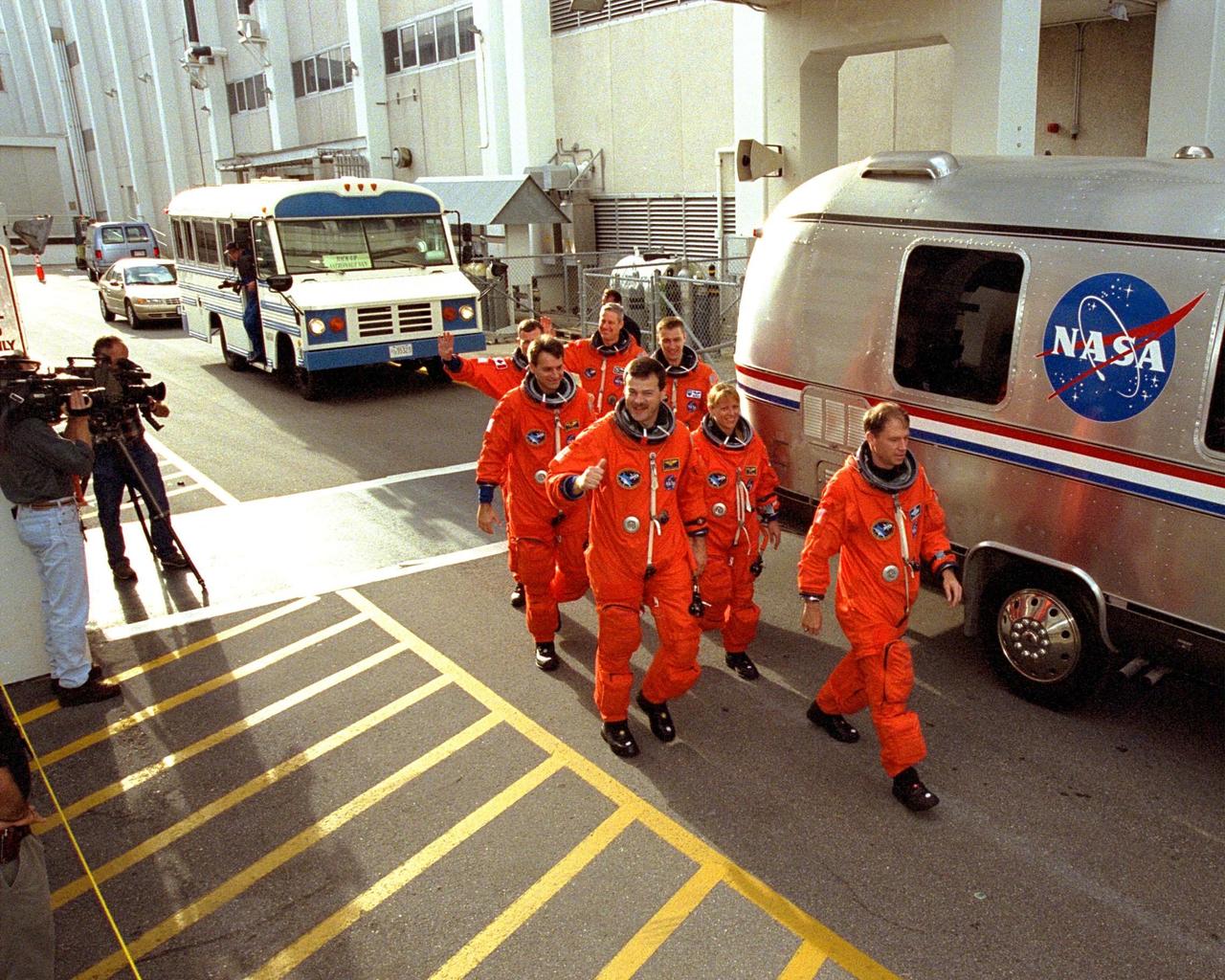
The crew of STS-90 leave the Operations and Checkout Building for Launch Pad 39B during Terminal Countdown Demonstration Test (TCDT) activities. The TCDT is held at KSC prior to each Space Shuttle flight to provide crews with the opportunity to participate in simulated countdown activities. The STS-90 crew members are, front to back and left to right, Commander Richard Searfoss, Pilot Scott Altman, Mission Specialist Kathryn (Kay) Hire, Mission Specialist Richard Linnehan, D.V.M., Payload Specialist James Pawelczyk, Ph.D., Mission Specialist Dafydd (Dave) Williams with the Canadian Space Agency, and Payload Specialist Jay Buckey, M.D. Columbia is targeted for launch of STS-90 on April 16 at 2:19 p.m. EDT and will be the second mission of 1998. The mission is scheduled to last nearly 17 days
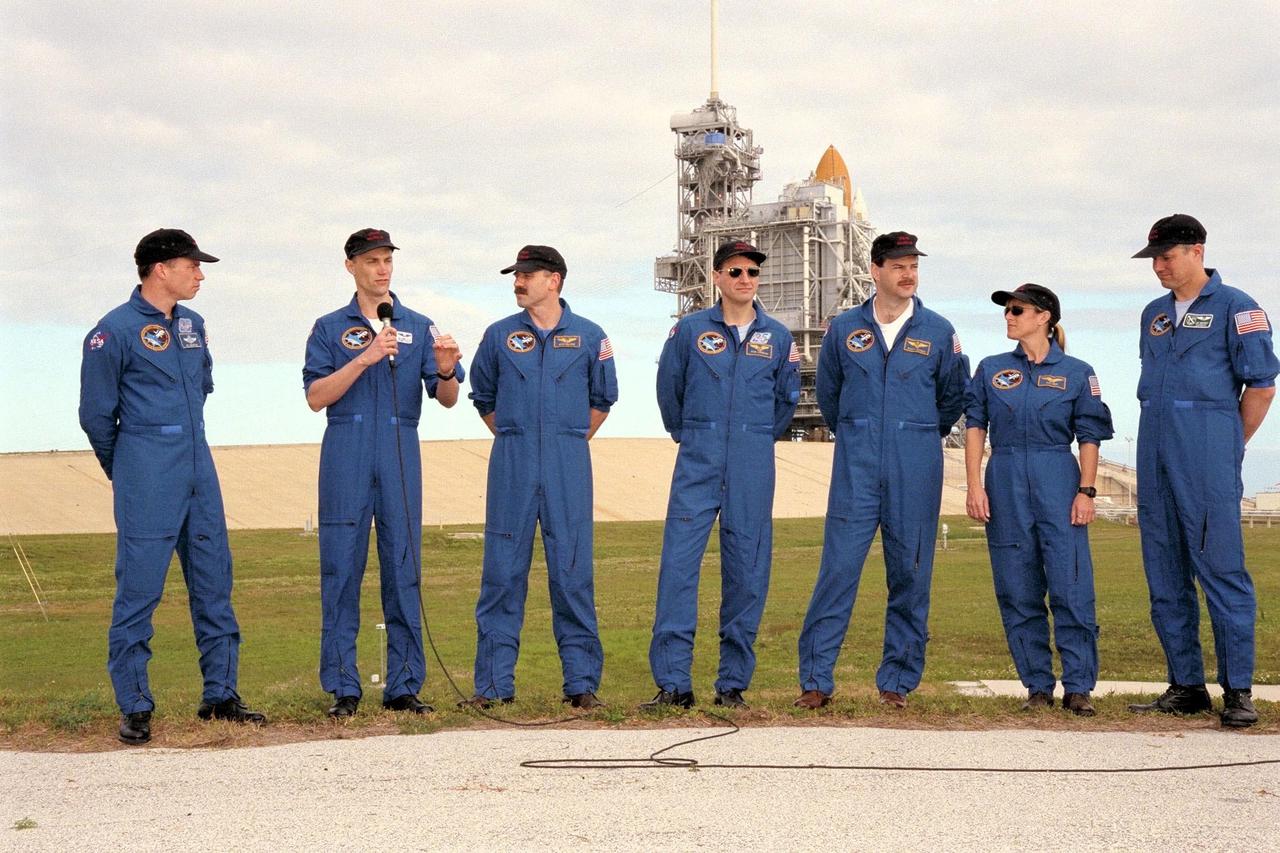
The crew of STS-90 participate in Terminal Countdown Demonstration Test (TCDT) activities at KSC's Launch Pad 39B. The TCDT is held at KSC prior to each Space Shuttle flight to provide crews with the opportunity to participate in simulated countdown activities. The crew include, left to right, Commander Richard Searfoss, Payload Specialist James Pawelczyk, Ph.D., Mission Specialist Dafydd (Dave) Williams, M.D., with the Canadian Space Agency, Mission Specialist Richard Linnehan, D.V.M., Pilot Scott Altman, Mission Specialist Kathryn (Kay) Hire, and Payload Specialist Jay Buckey, M.D. Columbia is targeted for launch of STS-90 on April 16 at 2:19 p.m. EDT and will be the second mission of 1998. The mission is scheduled to last nearly 17 days

Members of the STS-90 crew participate in Terminal Countdown Demonstration Test (TCDT) activities at KSC's Launch Pad 39B. The TCDT is held at KSC prior to each Space Shuttle flight to provide crews with the opportunity to participate in simulated countdown activities. The STS-90 crew members are, from left to right, Payload Specialist Jay Buckey, M.D., Pilot Scott Altman, Mission Specialist Kathryn (Kay) Hire, Commander Richard Searfoss, Payload Specialist James Pawelczyk, Ph.D., Mission Specialist Dafydd (Dave) Williams with the Canadian Space Agency, and Mission Specialist Richard Linnehan, D.V.M. Columbia is targeted for launch of STS-90 on April 16 at 2:19 p.m. EDT and will be the second mission of 1998. The mission is scheduled to last nearly 17 days
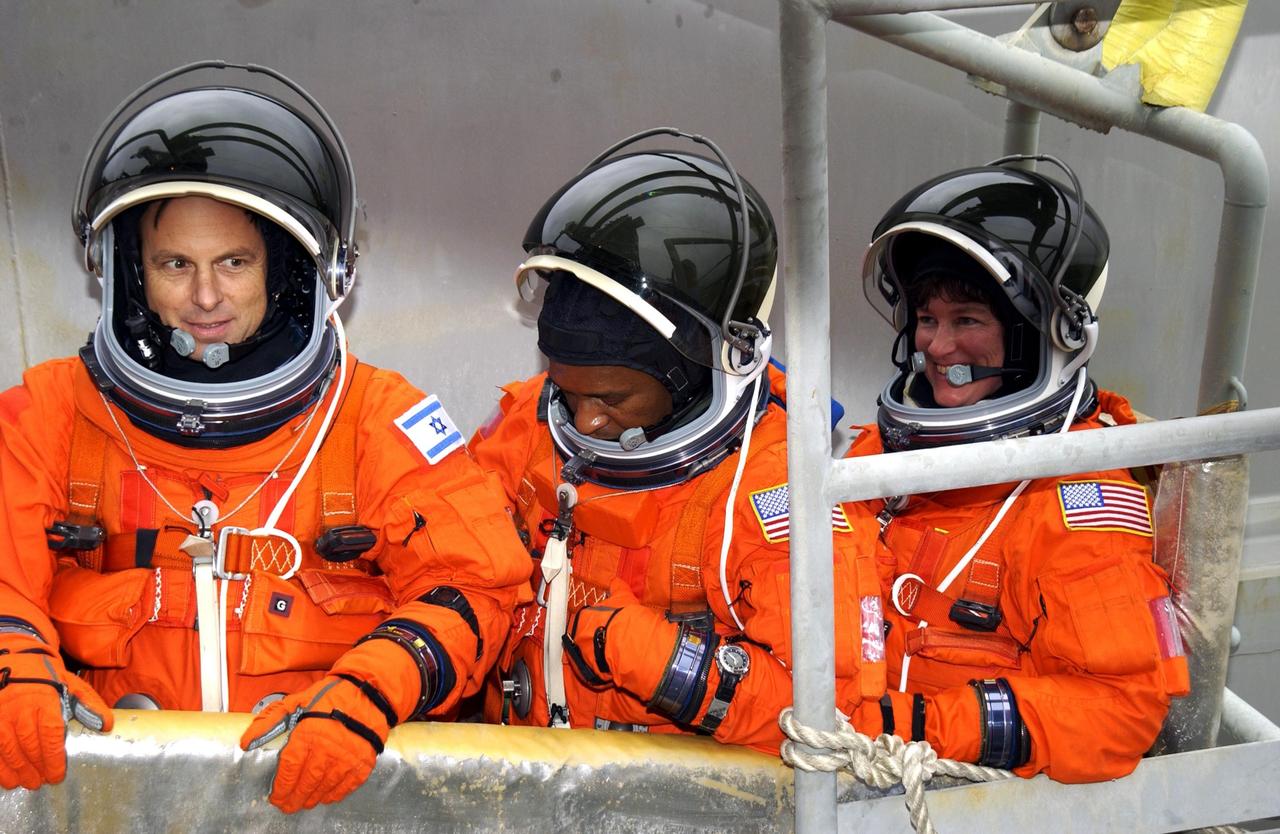
KENNEDY SPACE CENTER, FLA. - Sitting in the slidewire basket on the launch pad are (left to right) STS-107 Payload Specialist Ilan Ramon, Payload Commander Michael Anderson and Mission Specialist Laurel Clark. The crew is taking part in a simulated launch countdown, part of Terminal Countdown Demonstration Test activities. STS-107 is a mission devoted to research and will include more than 80 experiments that will study Earth and space science, advanced technology development, and astronaut health and safety. Launch is planned for Jan. 16, 2003, between 10 a.m. and 2 p.m. EST aboard Space Shuttle Columbia. .
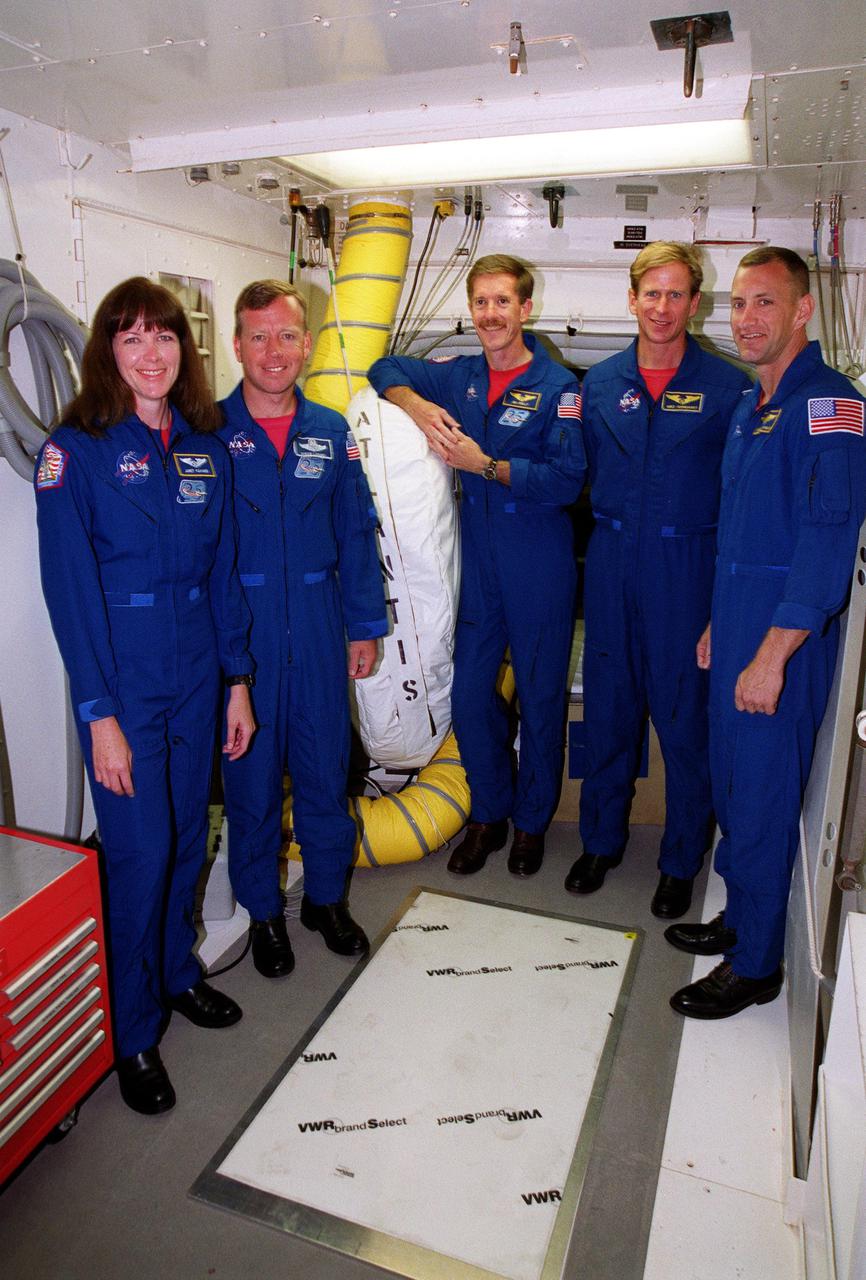
KENNEDY SPACE CENTER, Fla. -- The STS-104 crew pauses during Terminal Countdown Demonstration Test (TCDT) activities to pose for a group photo. Standing left to right are Mission Specialist Janet Lynn Kavandi, Commander Steven W. Lindsey, Mission Specialists James F. Reilly and Michael L. Gernhardt, and Pilot Charles O. Hobaugh. The TCDT includes emergency exit training from the orbiter, opportunities to inspect their mission payloads in the orbiter’s payload bay and simulated countdown exercises. The launch of Atlantis on mission STS-104 is scheduled July 12 from Launch Pad 39B. The mission is the 10th flight to the International Space Station and carries the Joint Airlock Module
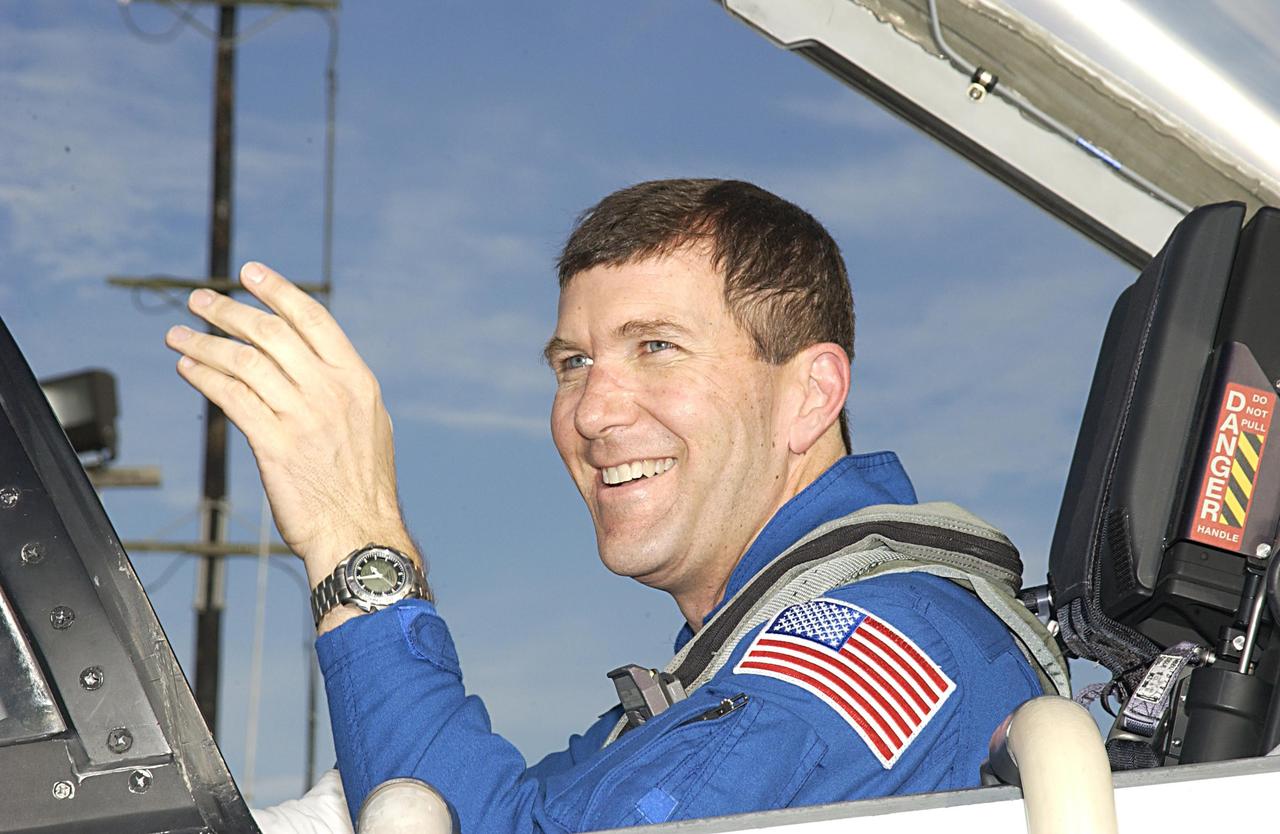
KENNEDY SPACE CENTER, FLA. -- STS-107 Commander Rick Husband arrives at KSC to take part in Terminal Countdown Demonstration Test activities, which include a simulated launch countdown. Other crew members are Pilot William "Willie" McCool Payload Commander Michael Anderson, Mission Specialists Kalpana Chawla, David Brown, Laurel Clark and Payload Specialist Ilan Ramon (the first Israeli astronaut). STS-107 is a mission devoted to research and will include more than 80 experiments that will study Earth and space science, advanced technology development, and astronaut health and safety. Launch is scheduled for Jan. 16, 2003.
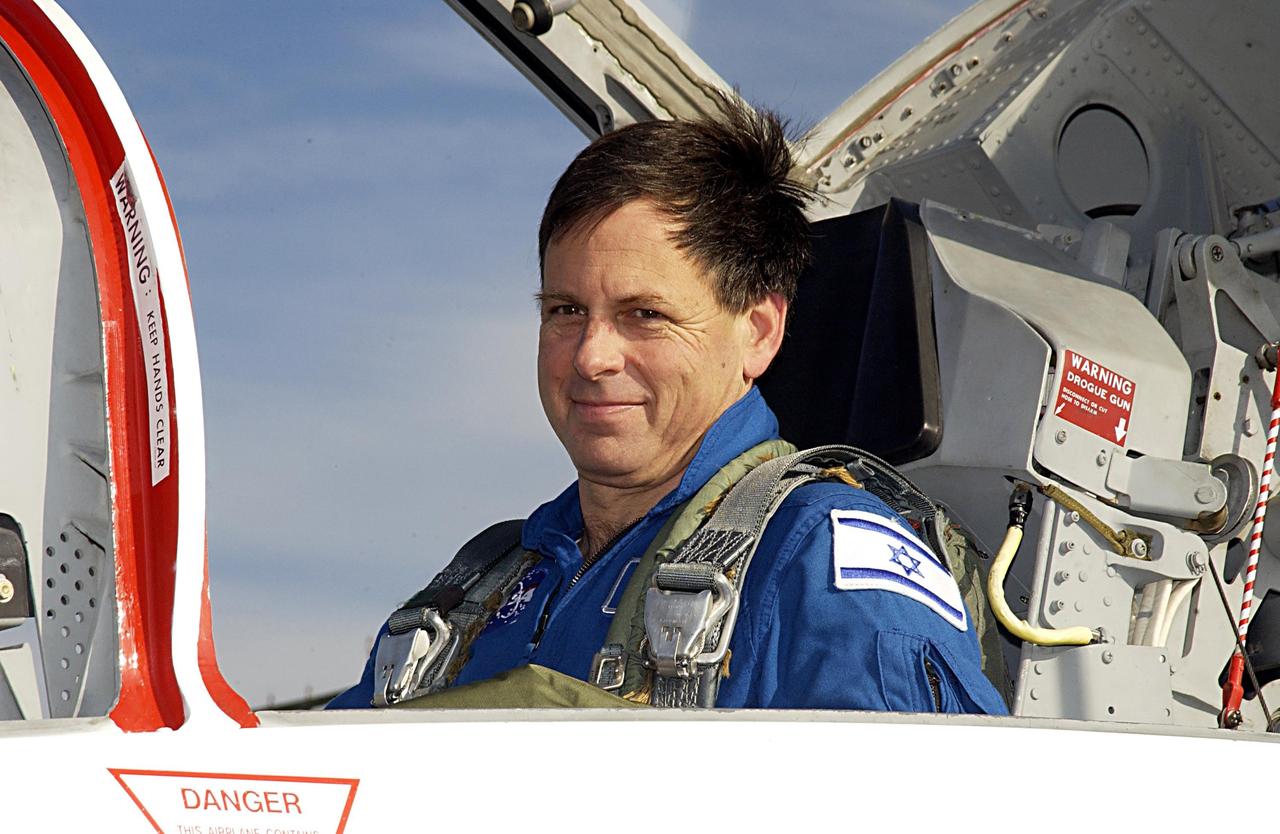
KENNEDY SPACE CENTER, FLA. - STS-107 Payload Specialist Ilan Ramon (the first Israeli astronaut) arrives at KSC to take part in Terminal Countdown Demonstration Test activities, which include a simulated launch countdown. Other crew members are Commander Rick Husband, Pilot William "Willie" McCool, Payload Commander Michael Anderson, Mission Specialists Kalpana Chawla, David Brown and Laurel Clark. STS-107 is a mission devoted to research and will include more than 80 experiments that will study Earth and space science, advanced technology development, and astronaut health and safety. Launch is scheduled for Jan. 16, 2003.
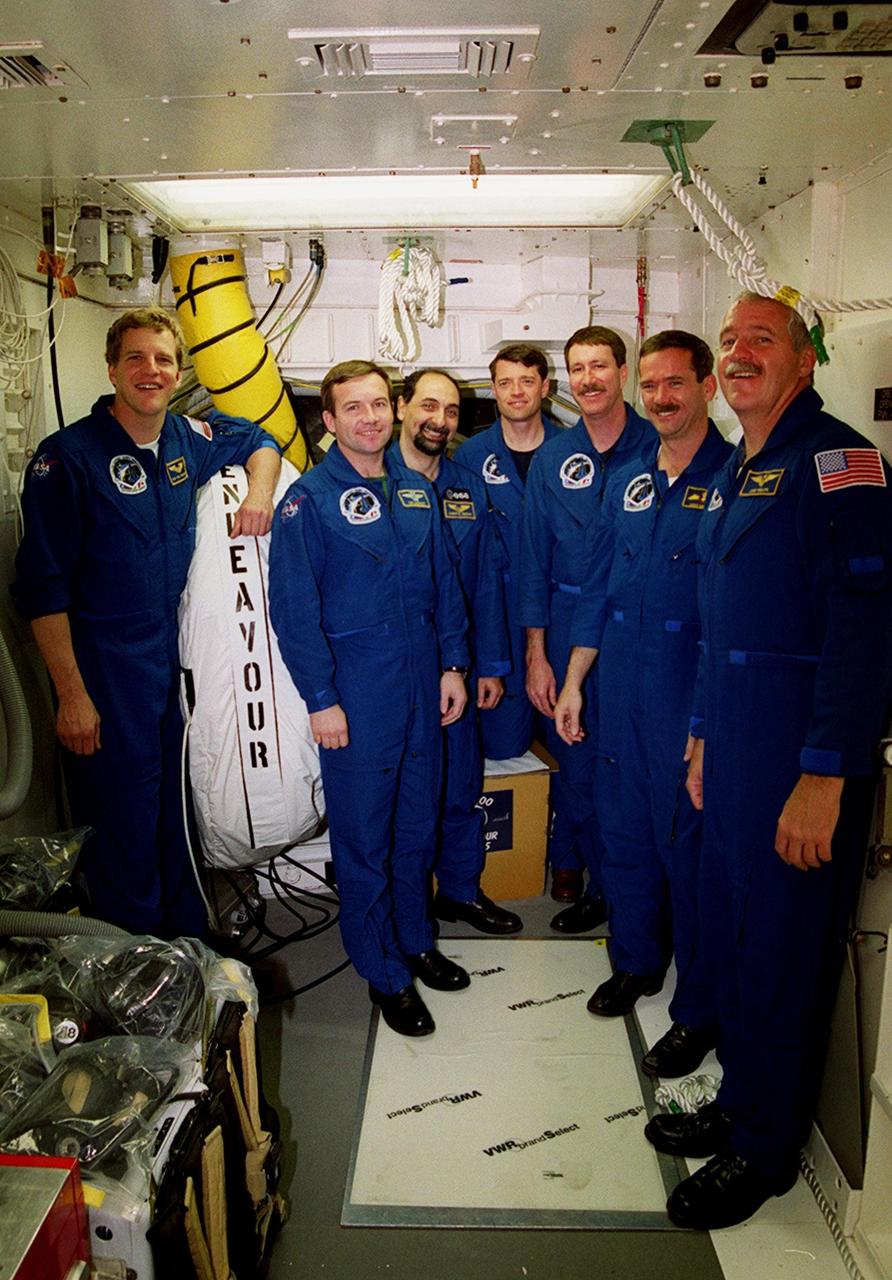
The crew on mission STS-100 poses in the White Room during Terminal Countdown Demonstration Test activities. Standing, from left, are Mission Specialists Scott E. Parazynski, Yuri Lonchakov, and Umberto Guidoni; Pilot Jeffrey S. Ashby; Commander Kent V. Rominger; and Mission Specialists Chris A. Hadfield and John L. Phillips. The TCDT includes emergency escape training, payload bay walkdown, and a simulated launch countdown. The primary payload comprises the Canadian robotic arm, SSRMS, and Multi-Purpose Logistics Module, Raffaello. Launch of Space Shuttle Endeavour on mission STS-100 is targeted for April 19 at 2:41 p.m. EDT from Launch Pad 39A
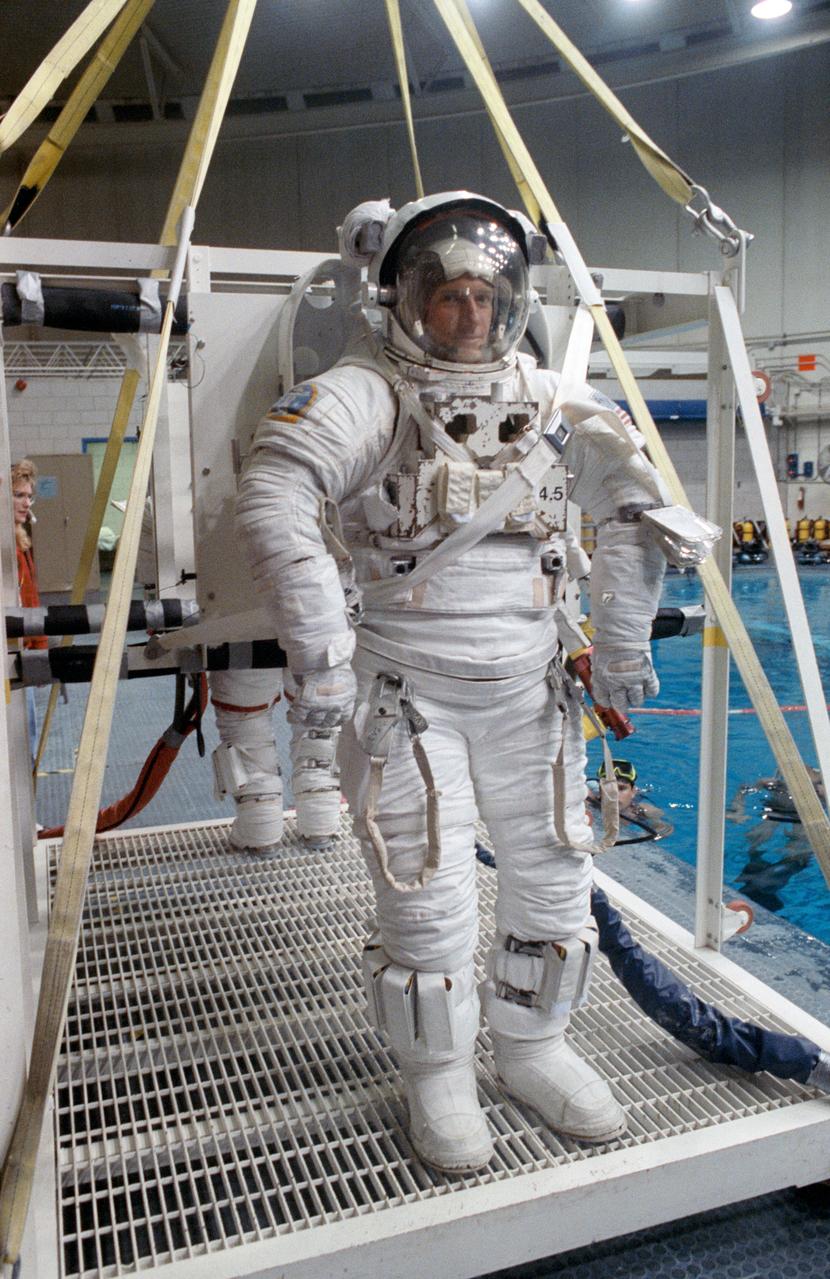
S91-30196 (1 March 1991) --- Astronaut C. Michael Foale, mission specialist, and Kathryn D. Sullivan, payload commander (barely visible in background), stand on a platform (out of frame) which is part of a system that will lower them into a 25-ft. deep pool. The payload commander and mission specialist used the pool in the weightless environment training facility (WET-F) to rehearse a contingency extravehicular activity (EVA). Astronauts wear pressurized spacesuits configured for achieving a neutrally buoyant condition in the water to simulate both planned and contingency EVAs. Two SCUBA-equipped swimmers assisting the training are seen in the background.
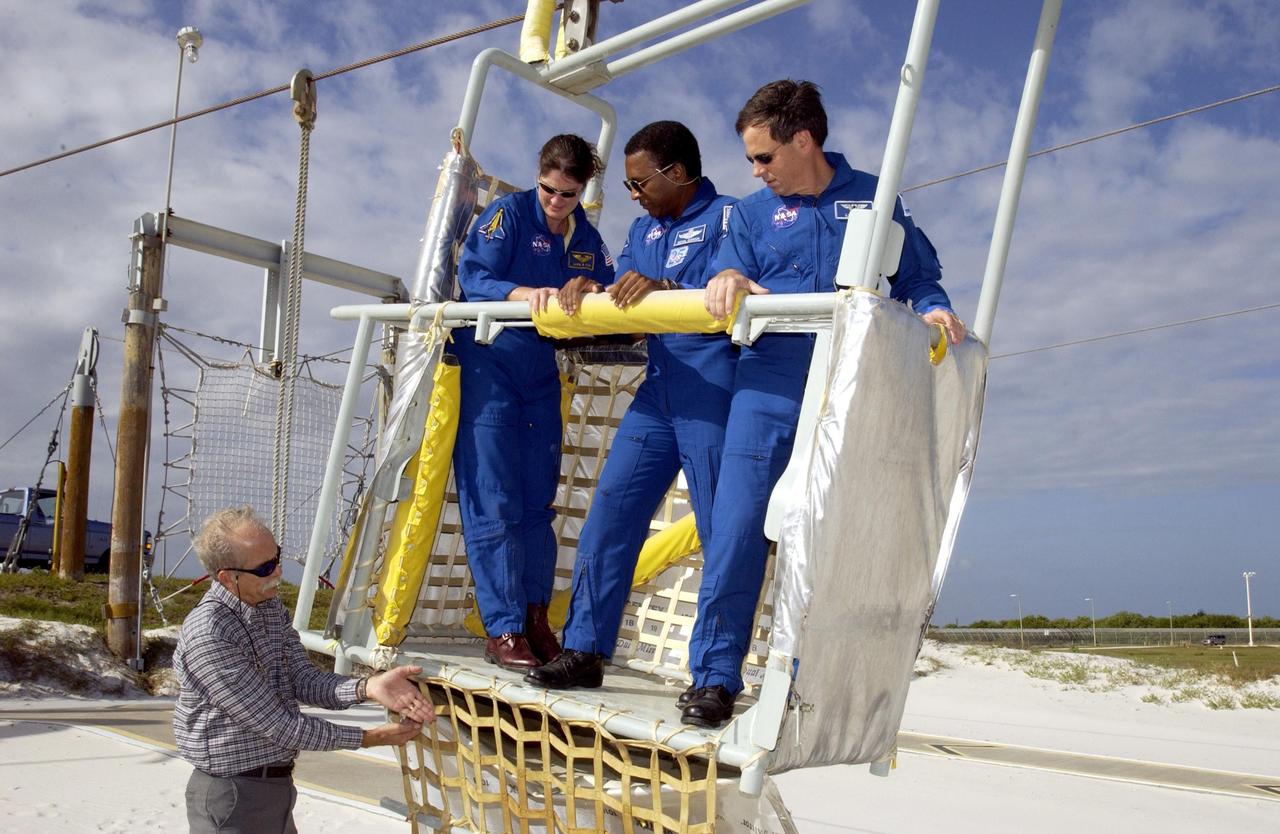
KENNEDY SPACE CENTER, FLA. -- The STS-107 crew gets instruction on the slidewire basket during emergency egress training, part of Terminal Countdown Demonstration Test activities. Seen are Mission Specialist Laurel Clark, Payload Commander Michael Anderson and Payload Specialist Ilan Ramon (the first Israeli astronaut). The TCDT also includes a simulated launch countdown. STS-107 is a mission devoted to research and will include more than 80 experiments that will study Earth and space science, advanced technology development, and astronaut health and safety. Launch is planned for Jan. 16, 2003, between 10 a.m. and 2 p.m. EST aboard Space Shuttle Columbia. .
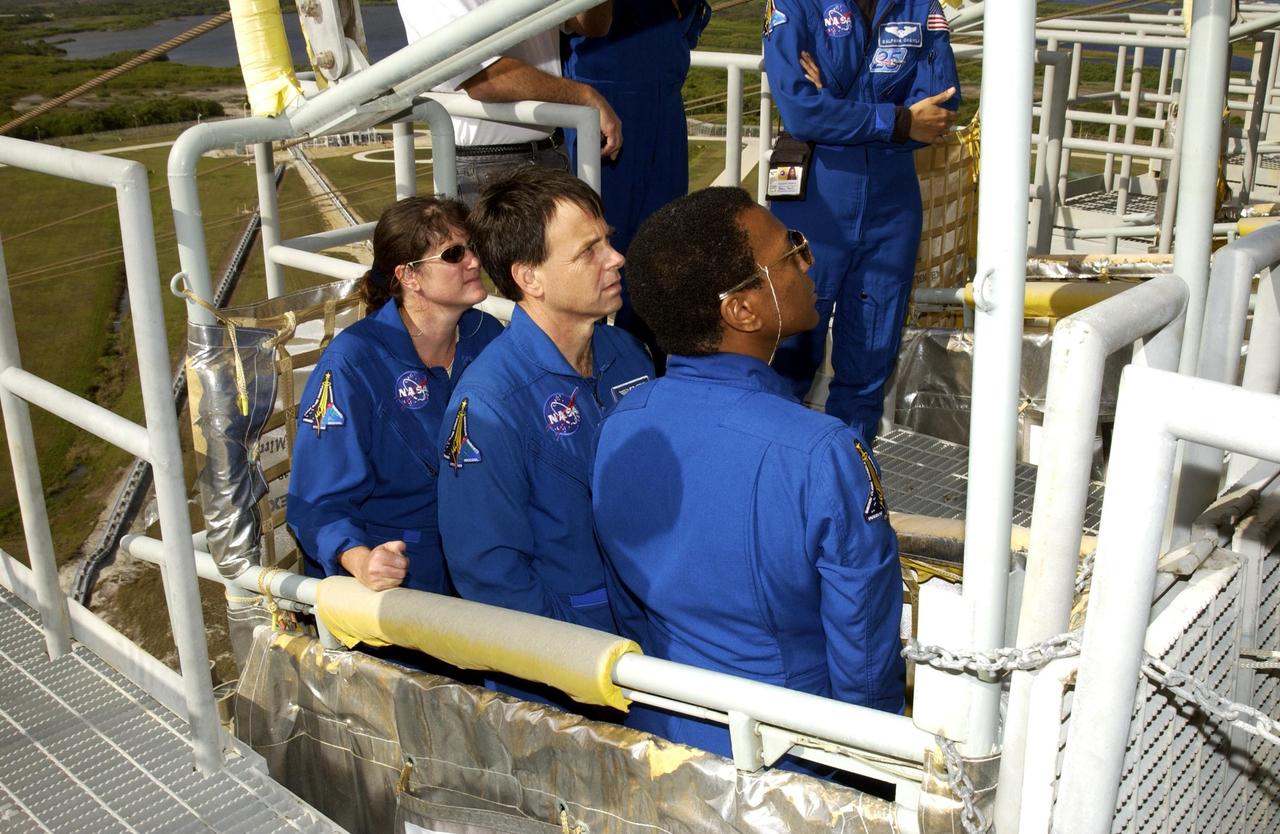
KENNEDY SPACE CENTER, FLA. - The STS-107 crew gets instruction on emergency egress from the pad during Terminal Countdown Demonstration Test activities. Standing in the slidewire basket are (from left) Mission Specialist Laurel Clark, Payload Specialist Ilan Ramon (the first Israeli astronaut) and Payload Commander Michael Anderson. The TCDT also includes a simulated launch countdown. STS-107 is a mission devoted to research and will include more than 80 experiments that will study Earth and space science, advanced technology development, and astronaut health and safety. Launch is planned for Jan. 16, 2003, between 10 a.m. and 2 p.m. EST aboard Space Shuttle Columbia. .
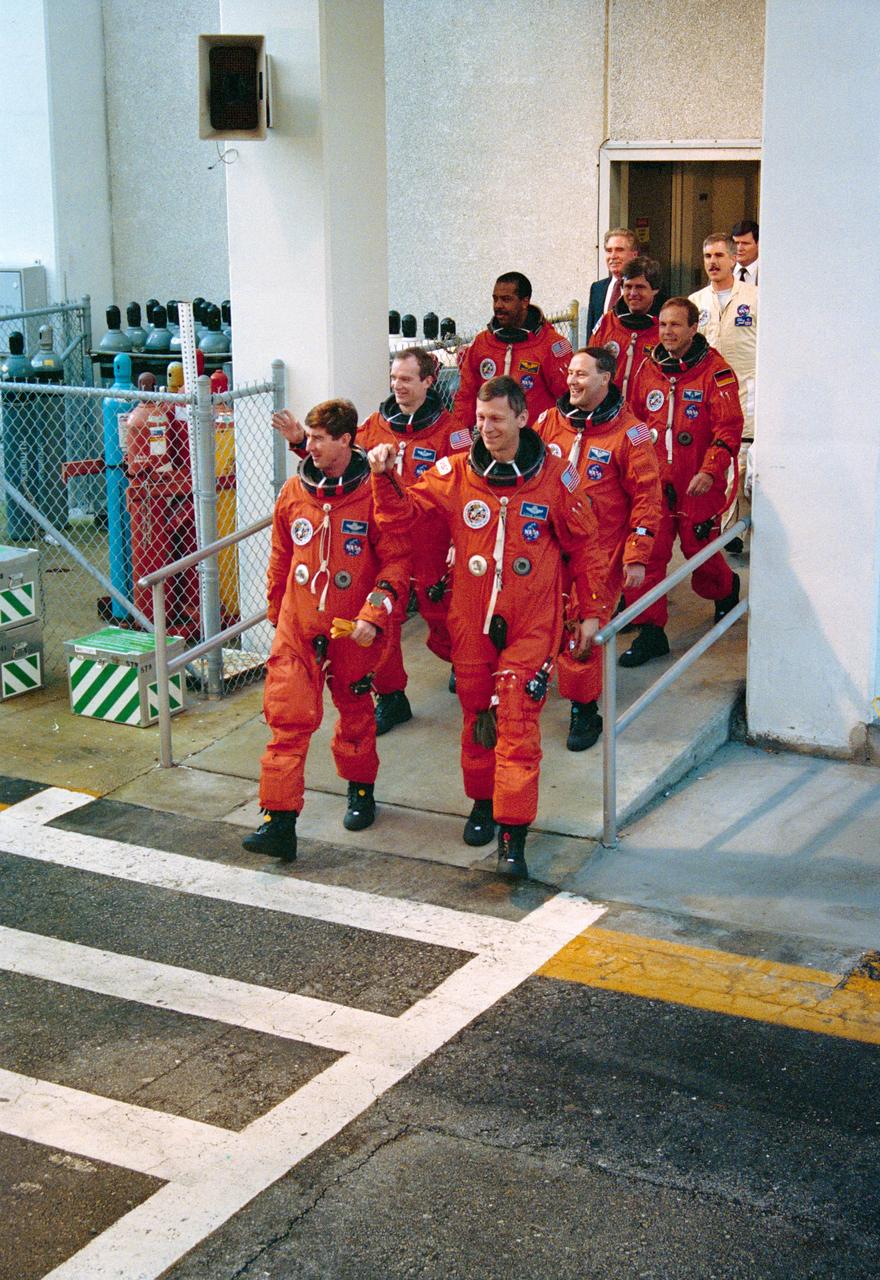
S93-29851 (12 Feb 1993) --- Clad in their bright orange launch/entry suits, the STS-55 flight crew departs the Operations and Checkout Building for the Space Shuttle Columbia at Launch Pad 39A. Leading the way are Pilot Terence T. Henricks (left) and Mission Commander Steven R. Nagel; behind them are, from left, Mission Specialists Charles J. Precourt and Bernard A. Harris Jr.; Payload Commander Jerry L. Ross; and Payload Specialists Ulrich Walter and Hans Schlegel. This is the final portion of the Terminal Countdown Demonstration Test, a dress rehearsal for launch which culminates with a simulated T -0.
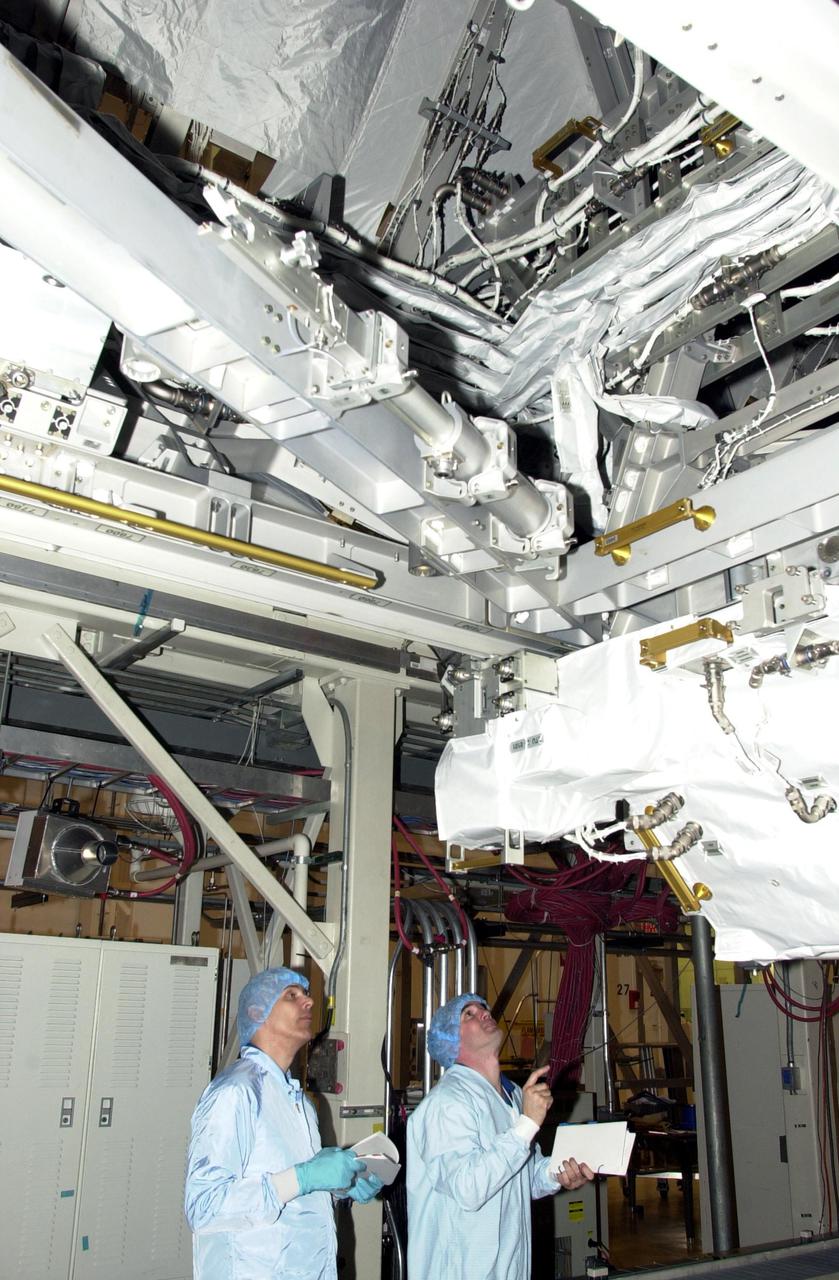
KENNEDY SPACE CENTER, FLA. - STS-110 Mission Specialists Lee Morin and Rex Walheim look up at the S0 Integrated Truss Structure, part of the payload on their mission to the International Space Station. Crew members are at KSC for Terminal Countdown Demonstration Test activities that include the payload familiarization and a simulated launch countdown. Mission STS-110 is scheduled for launch April 4.
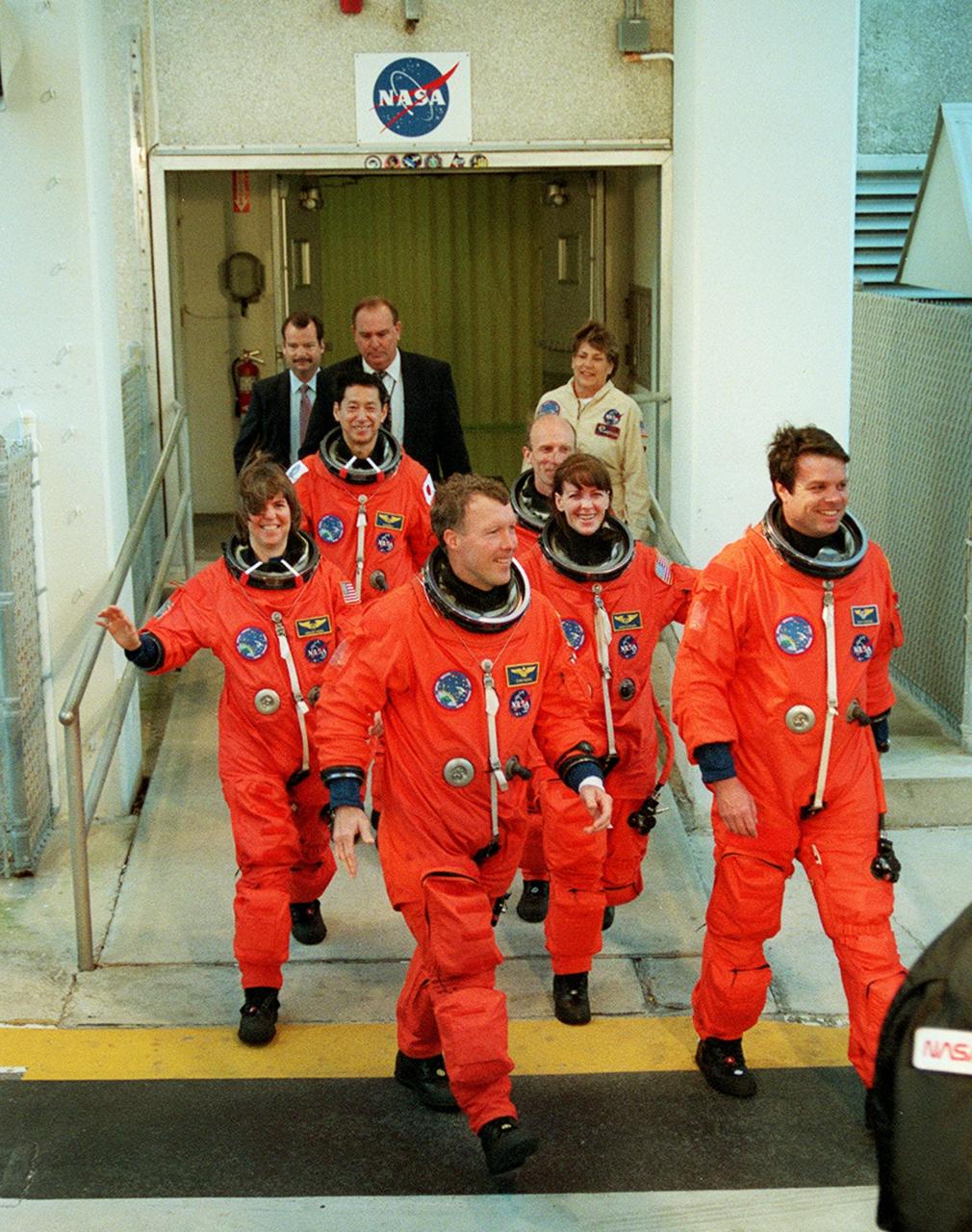
The STS-99 crew leave the Operations and Checkout Building on their way to Launch Pad 39A and a simulated countdown exercise. In the front row are Pilot Dominic Gorie and Commander Kevin Kregel; in the middle row are mission Specialists Janice Voss (Ph.D.) and Janet Lynn Kavandi (Ph.D.); in the back row are Mission Specialists Mamoru Mohri, who is with the National Space Development Agency (NASDA) of Japan, and Gerhard Thiele, who is with the European Space Agency. The crew are taking part in Terminal Countdown Demonstration Test activities, which provide them with simulated countdown exercises, emergency egress training, and opportunities to inspect the mission payloads in the orbiter's payload bay. STS-99 is the Shuttle Radar Topography Mission, which will chart a new course, using two antennae and a 200-foot-long section of space station-derived mast protruding from the payload bay to produce unrivaled 3-D images of the Earth's surface. The result of the Shuttle Radar Topography Mission could be close to 1 trillion measurements of the Earth's topography. Besides contributing to the production of better maps, these measurements could lead to improved water drainage modeling, more realistic flight simulators, better locations for cell phone towers, and enhanced navigation safety. Launch of Endeavour on the 11-day mission is scheduled for Jan. 31 at 12:47 p.m. EST
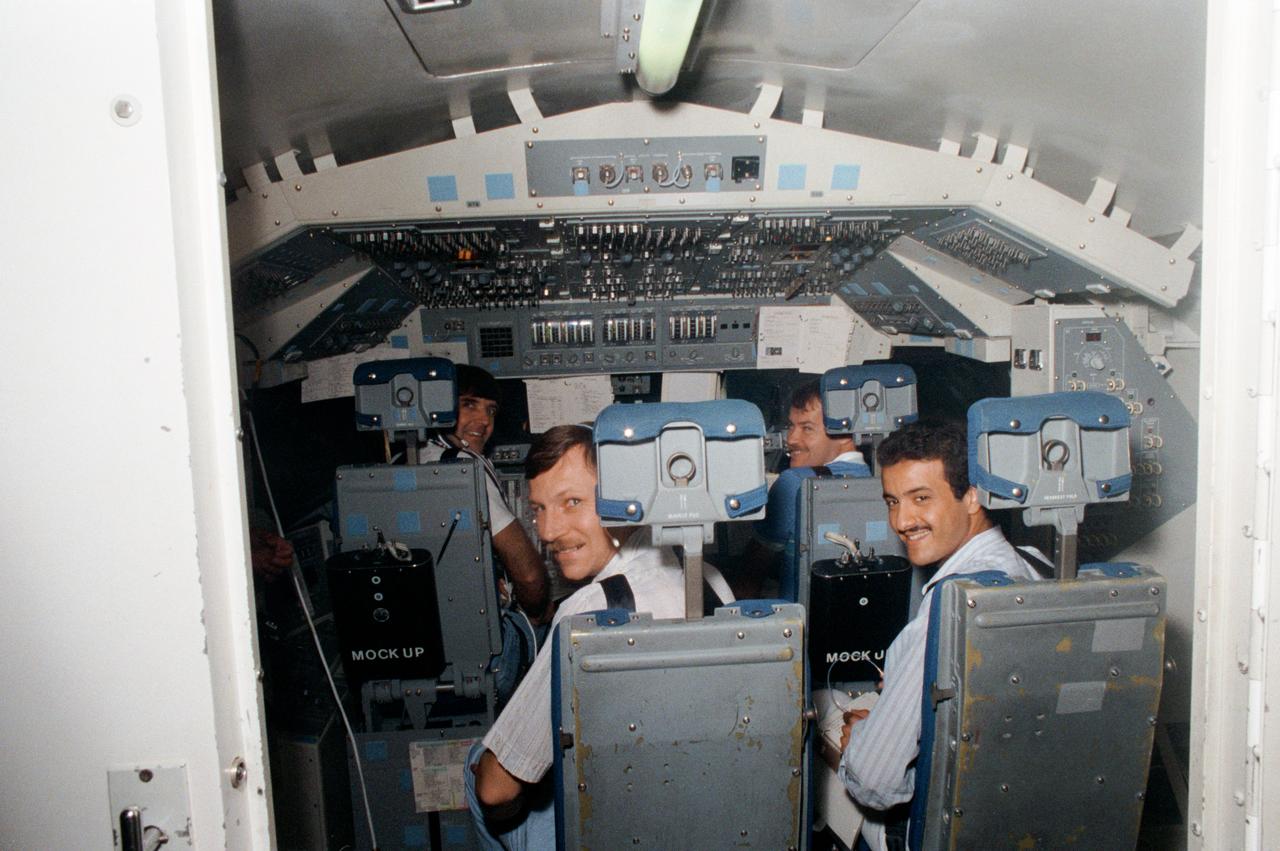
S85-31933 (17 May 1985) --- Four members of the STS 51-G crew participate in a training exercise in the shuttle mission simulation and training facility at the Johnson Space Center. Steven R. Nagel, left foreground, is a mission specialist for the flight, while Sultan Salman Abdelazize Al-Saud (right foreground) is a payload specialist. In the background are astronauts Daniel C. Brandenstein (left) in the commander's station and John O. Creighton in the pilot's position. Photo credit: NASA/ Otis Imboden of National Geographic
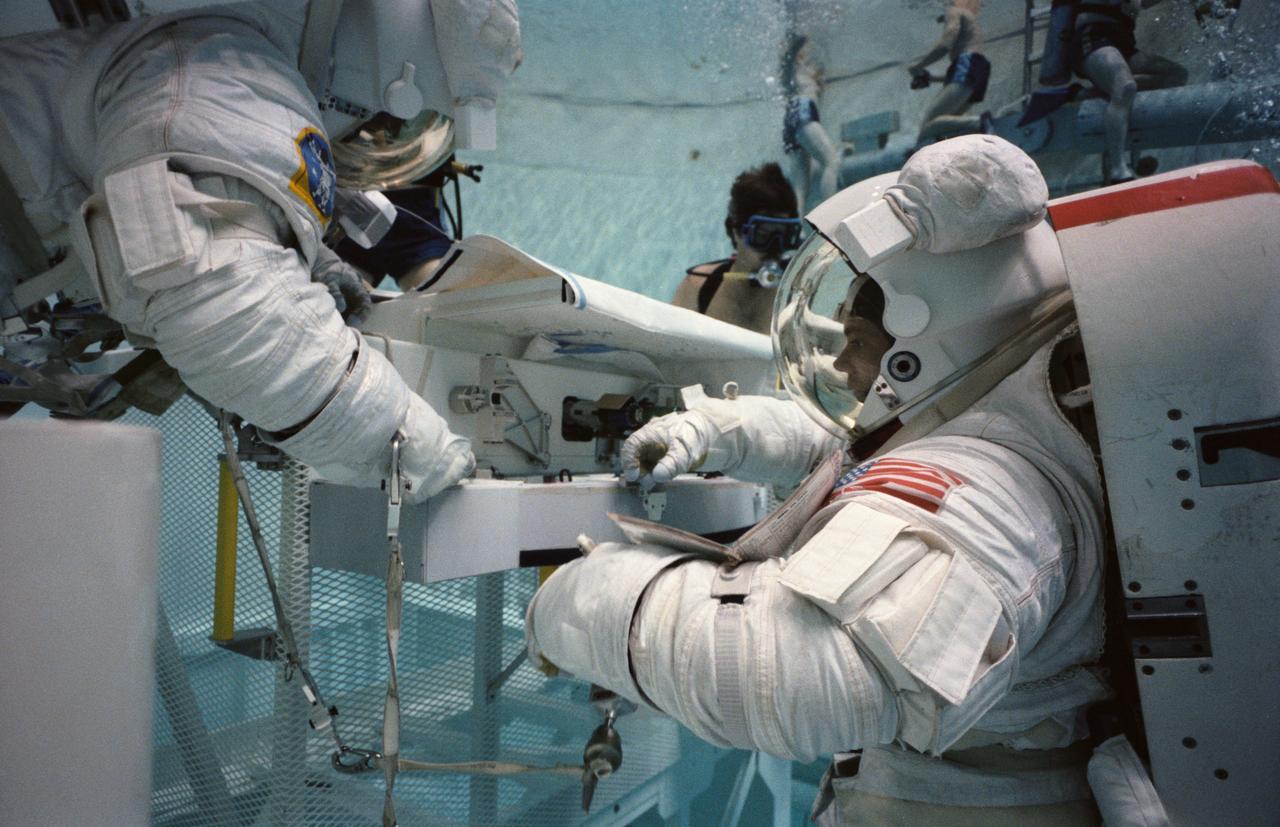
S84-36960 (5 July 1984) --- Astronauts Kathryn D. Sullivan, left, and David C. Leestma, Mission 41-G crewmembers, simulate the transfer of cryogenics in space during an Earth-bound underwater session in the Johnson Space Center's weightless environment training facility (WET-F). The two mission specialists will be joined by three NASA astronauts and two payload specialists for a flight aboard the Columbia later this year. The photograph was taken by Otis Imboden.
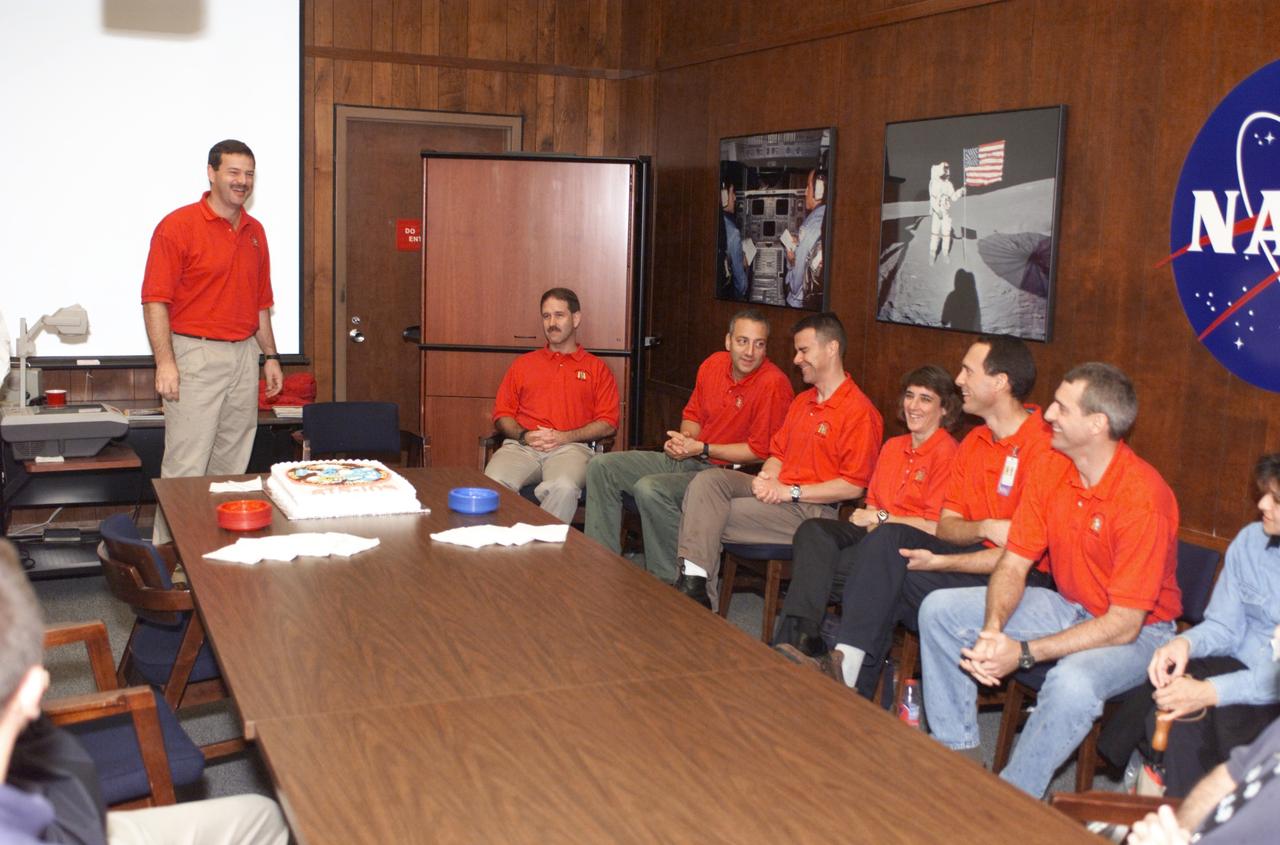
JSC2001-E-44844 (December 2001) --- The STS-109 crew members pause from their mission training for a cake cutting ceremony in the Jake Garn Simulation and Training Facility at the Johnson Space Center (JSC). Standing is astronaut Scott D. Altman, mission commander. Seated from left to right are astronauts John M. Grunsfeld, payload commander; Michael J. Massimino, mission specialist; Duane G. Carey, pilot; along with Nancy J. Currie, James H. Newman, and Richard M. Linnehan, mission specialists.
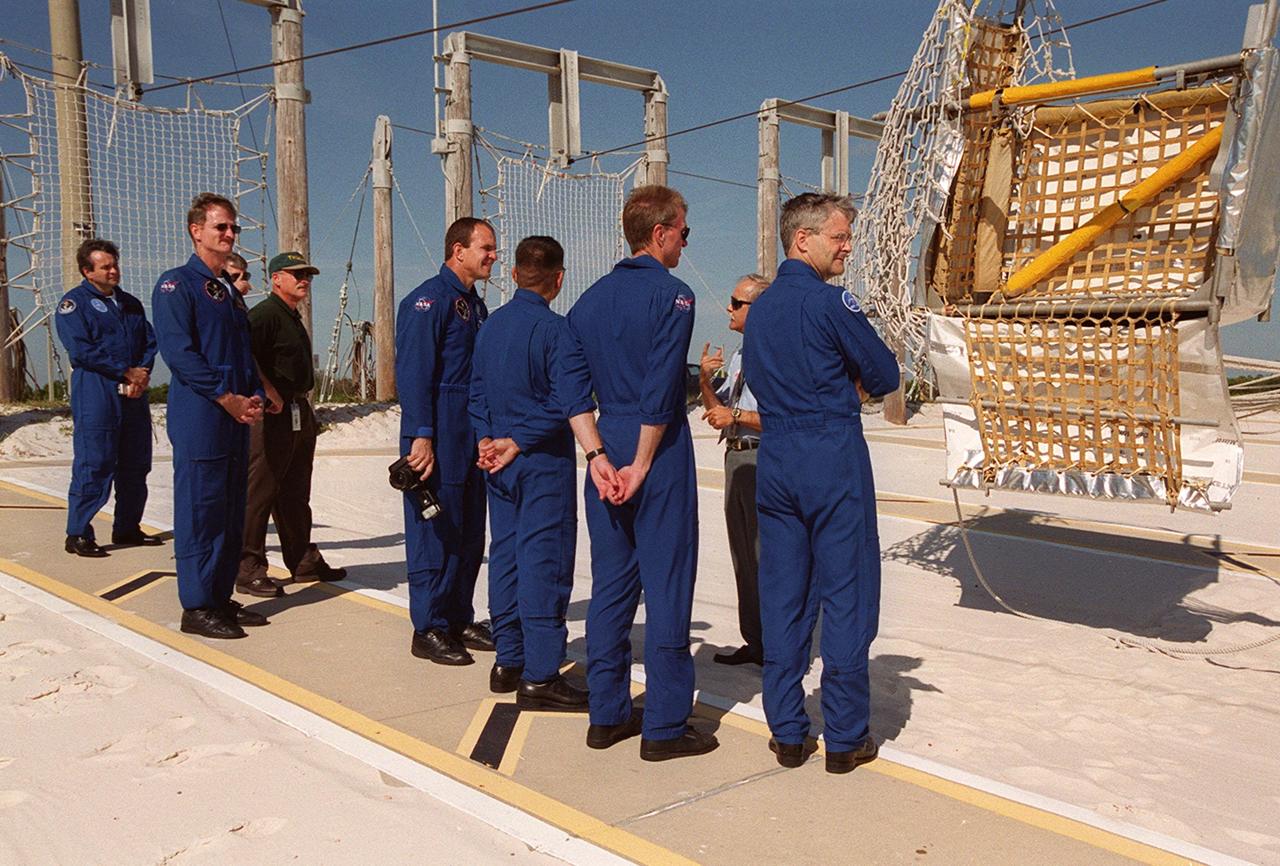
The STS-97 crew listens to a trainer explain use of the slidewire basket (right) for emergency egress from the Fixed Service Structure. Second from left is Mission Specialist Joe Tanner; next to him in the cap is Capt. George Hoggard, safety trainer with the KSC Fire Department; Pilot Mike Bloomfield; Mission Specialist Carlos Noriega; Commander Brent Jett; and Mission Specialist Marc Garneau. The training is part of Terminal Countdown Demonstration Test (TCDT) activities, which also include a simulated launch countdown and opportunities to inspect the mission payloads in the orbiter’s payload bay. Mission STS-97is the sixth construction flight to the International Space Station. Its payload includes the P6 Integrated Truss Structure and a photovoltaic (PV) module, with giant solar arrays that will provide power to the Station. The mission includes two spacewalks to complete the solar array connections. STS-97 is scheduled to launch Nov. 30 at 10:05 p.m. EST
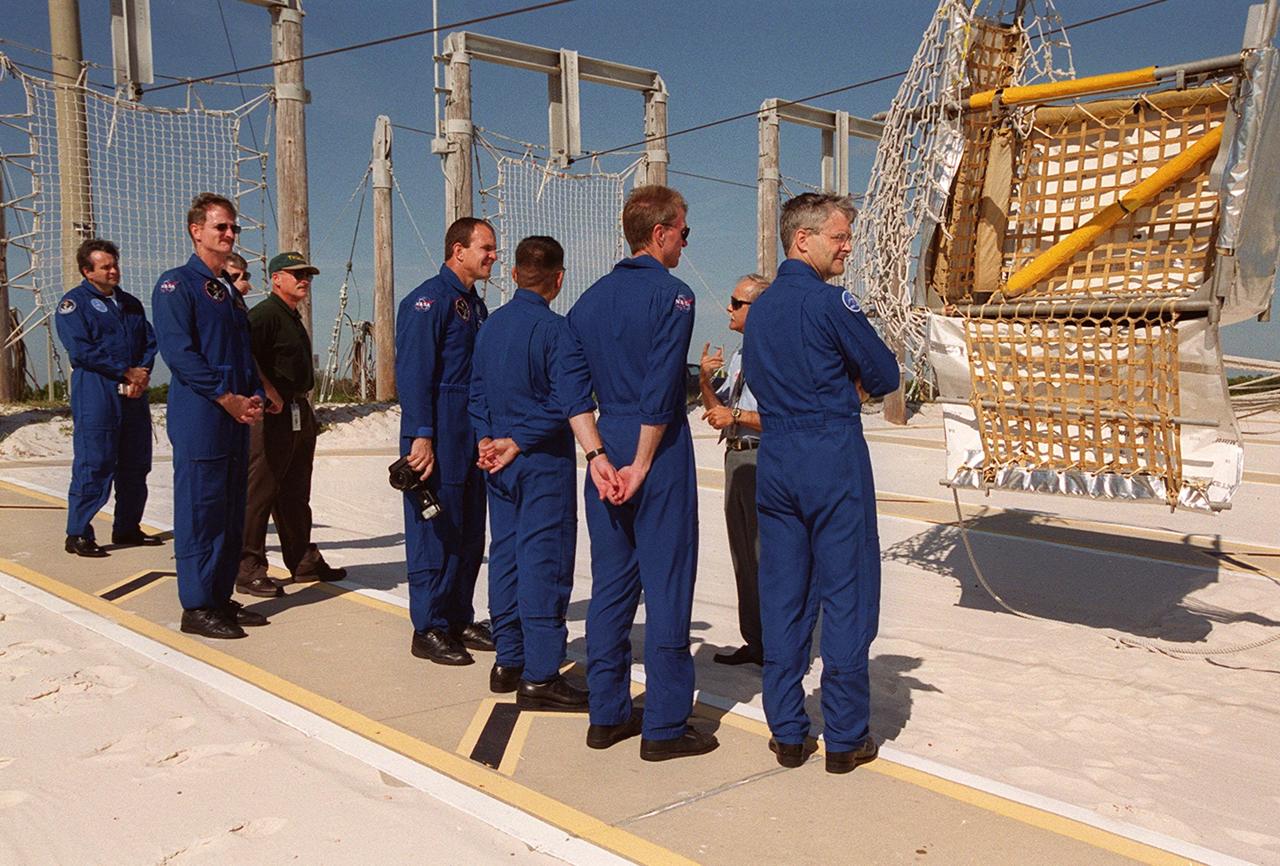
The STS-97 crew listens to a trainer explain use of the slidewire basket (right) for emergency egress from the Fixed Service Structure. Second from left is Mission Specialist Joe Tanner; next to him in the cap is Capt. George Hoggard, safety trainer with the KSC Fire Department; Pilot Mike Bloomfield; Mission Specialist Carlos Noriega; Commander Brent Jett; and Mission Specialist Marc Garneau. The training is part of Terminal Countdown Demonstration Test (TCDT) activities, which also include a simulated launch countdown and opportunities to inspect the mission payloads in the orbiter’s payload bay. Mission STS-97is the sixth construction flight to the International Space Station. Its payload includes the P6 Integrated Truss Structure and a photovoltaic (PV) module, with giant solar arrays that will provide power to the Station. The mission includes two spacewalks to complete the solar array connections. STS-97 is scheduled to launch Nov. 30 at 10:05 p.m. EST
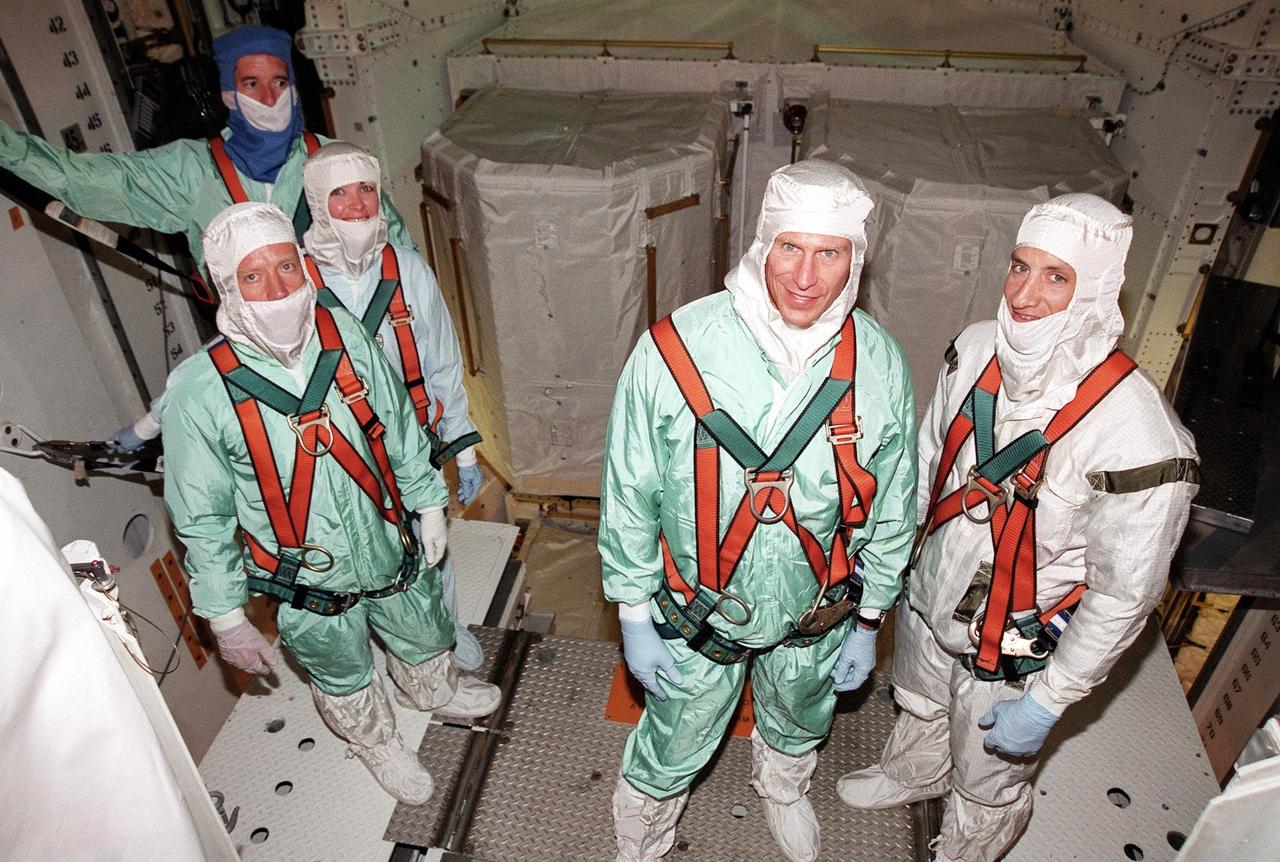
KENNEDY SPACE CENTER, Fla. -- During payload walkdown at Launch Pad 39B, the STS-104 crew pause for a photo. At left are Commander Steven W. Lindsey (front), Mission Specialist Janet Lynn Kavandi (center) and Mission Specialist James F. Reilly (back). At right are Mission Specialist Michael L. Gernhardt and Pilot Charles O. Hobaugh. The crew is taking part in Terminal Countdown Demonstration Test activities, which include emergency exit training from the orbiter, opportunities to inspect their mission payloads in the orbiter’s payload bay and simulated countdown exercises. The launch of Atlantis on mission STS-104 is scheduled July 12 from Launch Pad 39B. The mission is the 10th flight to the International Space Station and carries the Joint Airlock Module
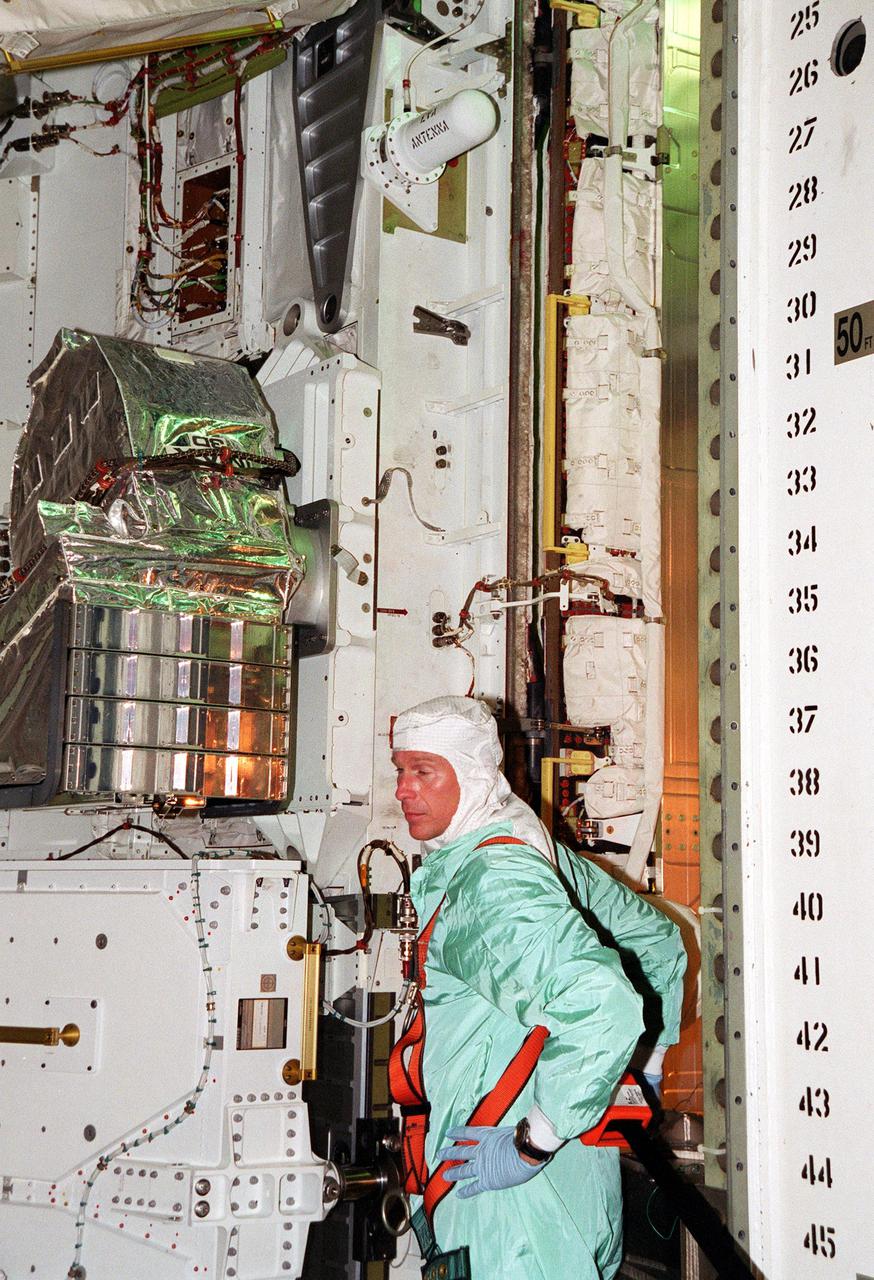
KENNEDY SPACE CENTER, Fla. -- At Launch Pad 39B, STS-104 Mission Specialist Michael L. Gernhardt pauses during payload walkdown in Atlantis’s payload bay. He and other crew members are taking part in Terminal Countdown Demonstration Test activities, which include emergency exit training from the orbiter, opportunities to inspect their mission payloads in the orbiter’s payload bay and simulated countdown exercises. The launch of Atlantis on mission STS-104 is scheduled July 12 from Launch Pad 39B. The mission is the 10th flight to the International Space Station and carries the Joint Airlock Module
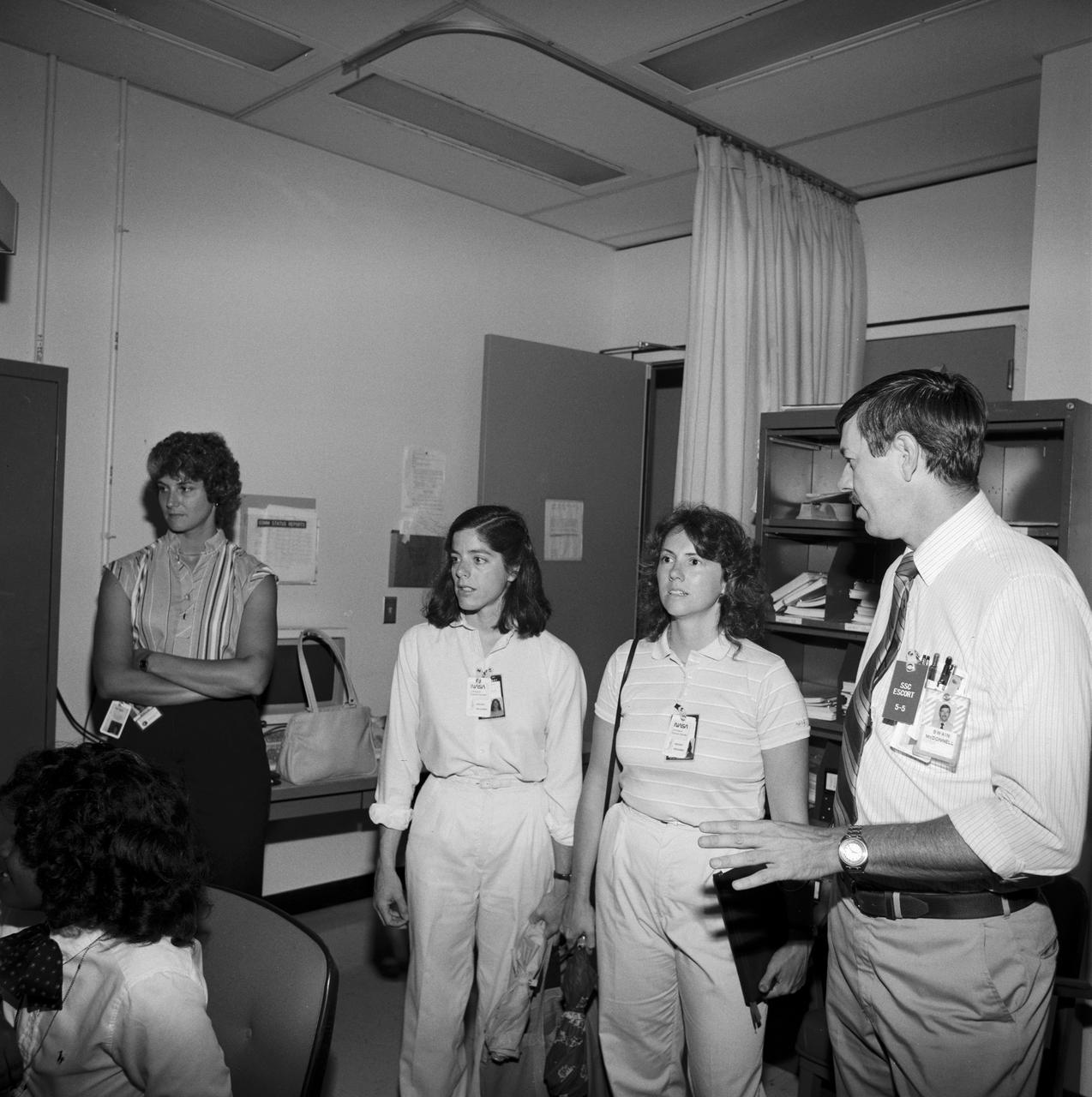
S85-40510 & S85-40511 (23 Sept. 1985) --- Two women representing the Teacher-in-Space Project undergo training in preparation for the 51-L mission in two photographs made in the Johnson Space Center’s mission simulation and training facility. In S85-40510, Sharon Christa McAuliffe (second right), prime crew member; and Barbara R. Morgan (second left), backup, are briefed in the shuttle mission simulator’s instruction station by Jerry Swain, right, instruction team leader. Others pictured are Michelle Brekke (far left) of the payload specialists’ office and Patricia A. Lawson (lower left foreground). Astronaut Ellison S. Onizuka, in S85-40511, assists Morgan with a head set as the two trainees are familiarized with launch and entry stations in the motion base shuttle mission simulator (SMS). The citizen observer (McAuliffe) is scheduled to be seated on the middeck. This picture, however, was taken at the mission specialists’ station on the flight deck. Photo credit: NASA
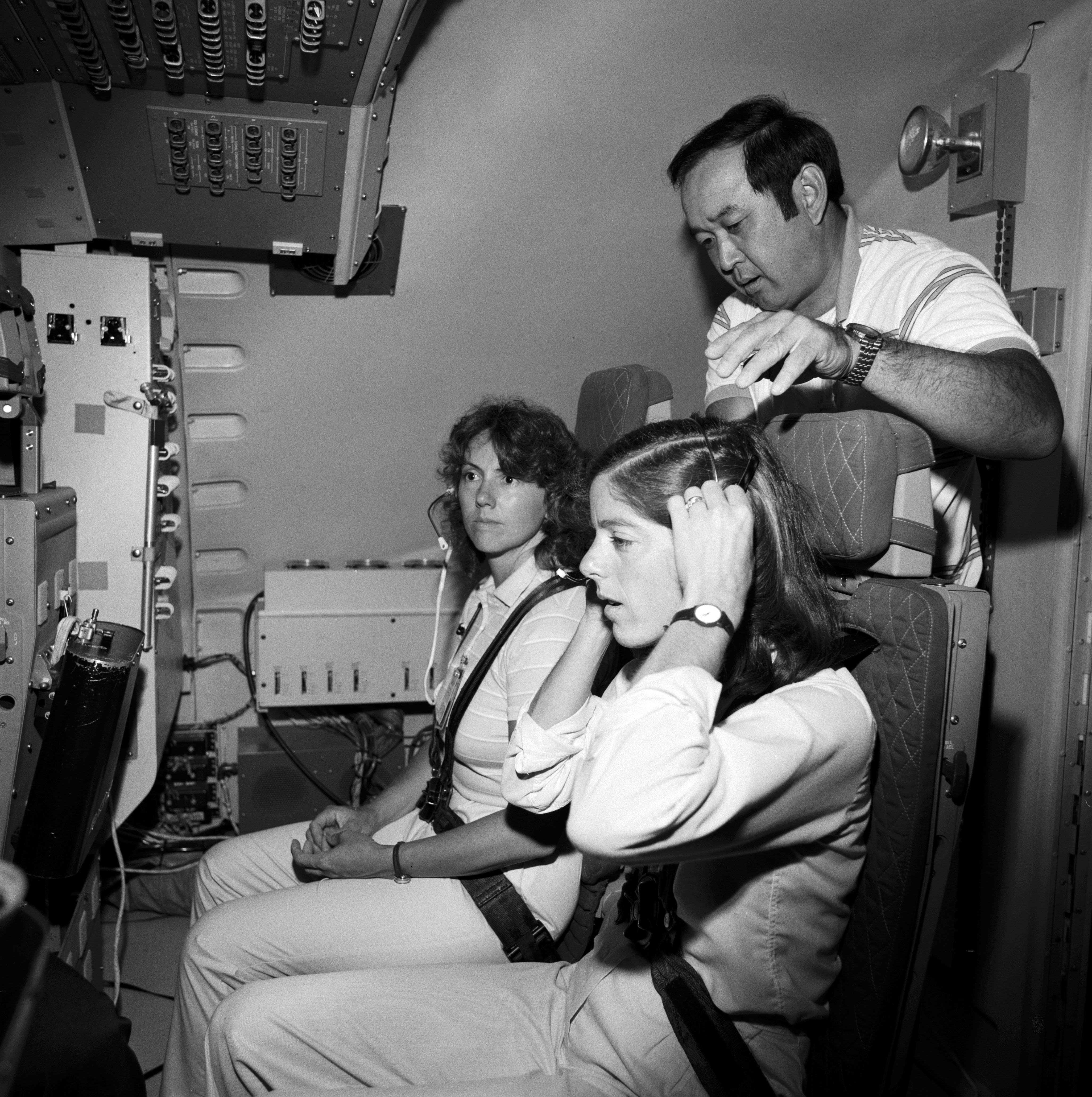
S85-40510 & S85-40511 (23 Sept. 1985) --- Two women representing the Teacher-in-Space Project undergo training in preparation for the 51-L mission in two photographs made in the Johnson Space Center’s mission simulation and training facility. In S85-40510, Sharon Christa McAuliffe (second right), prime crew member; and Barbara R. Morgan (second left), backup, are briefed in the shuttle mission simulator’s instruction station by Jerry Swain, right, instruction team leader. Others pictured are Michelle Brekke (far left) of the payload specialists’ office and Patricia A. Lawson (lower left foreground). Astronaut Ellison S. Onizuka, in S85-40511, assists Morgan with a head set as the two trainees are familiarized with launch and entry stations in the motion base shuttle mission simulator (SMS). The citizen observer (McAuliffe) is scheduled to be seated on the middeck. This picture, however, was taken at the mission specialists’ station on the flight deck. Photo credit: NASA
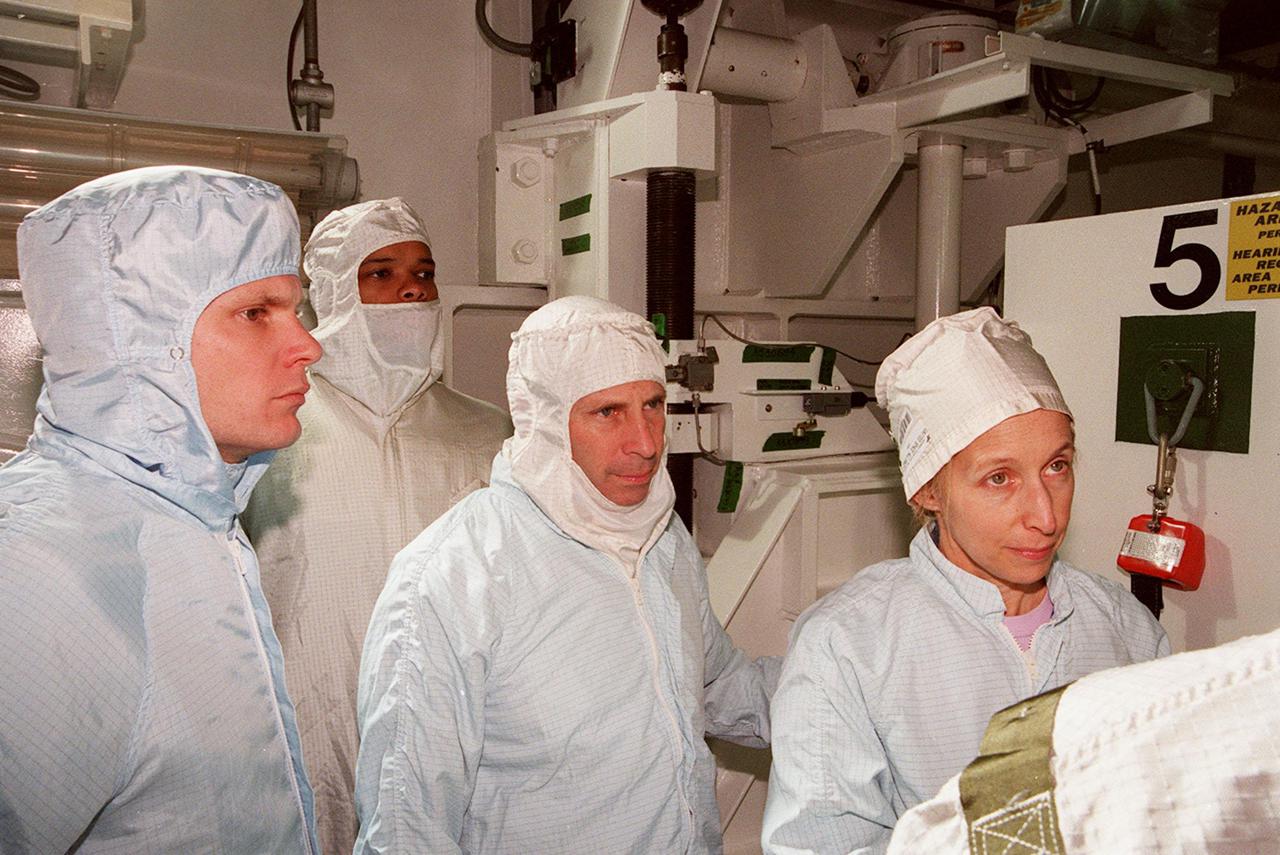
KENNEDY SPACE CENTER, FLA. -- Along with Scott Thurston (left), of the VITT office, members of the STS-98 crew Mission Specialist Robert Curbeam, Commander Ken Cockrell and Mission Specialist Marsha Ivins are in Atlantis’ payload bay to check out their mission payload, the U.S. Lab Destiny. The crew is at KSC for Terminal Countdown Demonstration Test activities, which also include a simulated launch countdown. A key element in the construction of the International Space Station, Destiny is a pressurized module designed to accommodate pressurized payloads. It has a capacity of 24 rack locations. Payload racks will occupy 13 locations especially designed to support experiments. The module already has five system racks installed inside. Launch of STS-98 on its 11-day mission is scheduled for Jan. 19 at 2:11 a.m. EST
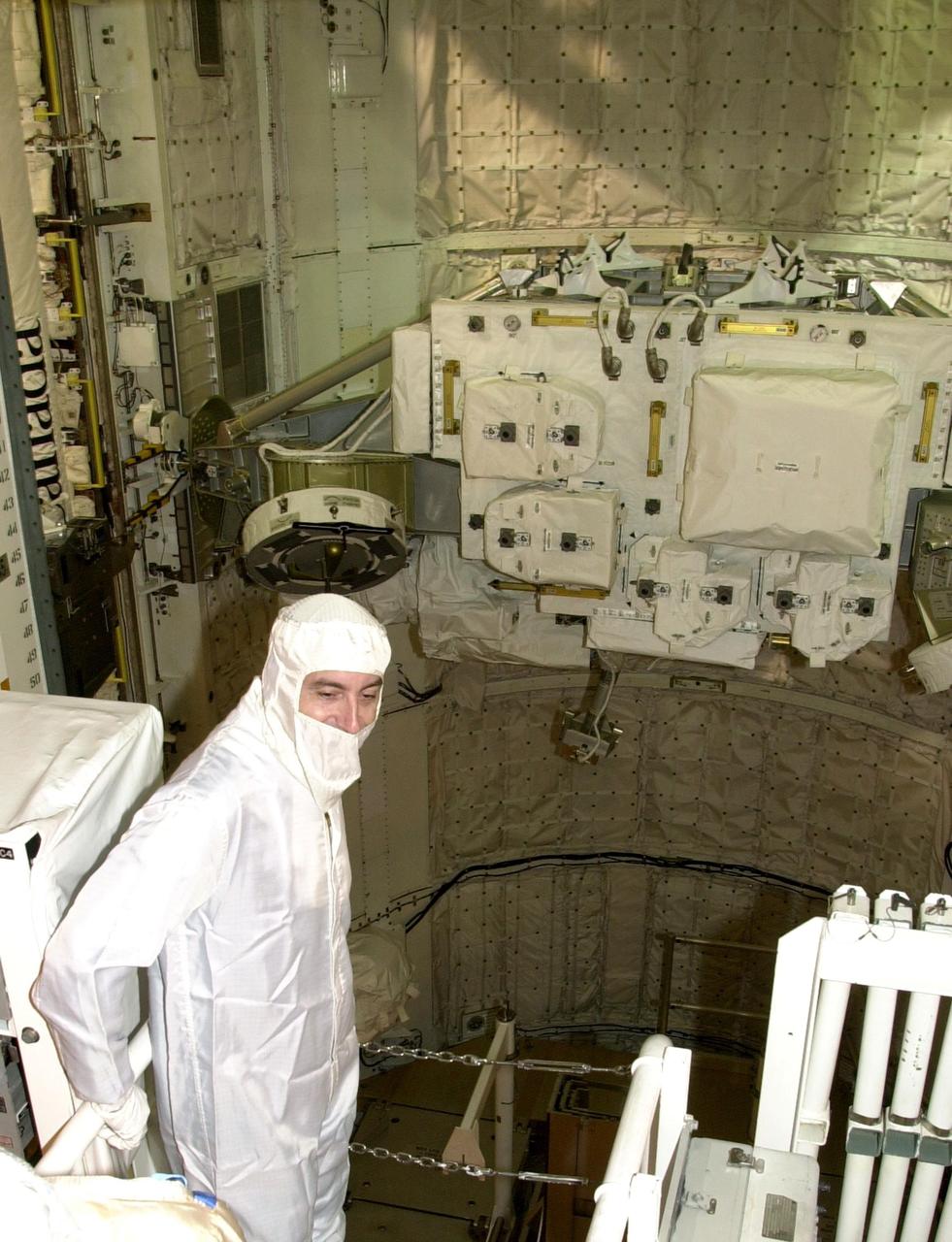
KENNEDY SPACE CENTER, FLA. -- In the Orbiter Processing Facility, STS-111 Mission Specialist Philippe Perrin, with the French Space Agency, looks over the payload installed in Endeavour's payload bay. The crew is at KSC for Terminal Countdown Demonstration Test activities, which include payload familiarization and a simulated launch countdown. The crew also comprises Commander Kenneth Cockrell, Pilot Paul Lockhart and Mission Specialist Franklin Chang-Diaz. The payload on mission STS-111 to the International Space Station includes the Mobile Base System, an Orbital Replacement Unit and Multi-Purpose Logistics Module Leonardo. Traveling on Endeavour is also the Expedition 5 crew - Commander Valeri Korzun, Peggy Whitson and Sergei Treschev -- who will replace the Expedition 4 crew on the Station. Korzun and Treschev are with the Russian Space Agency. Launch of Endeavour is scheduled for May 30, 2002
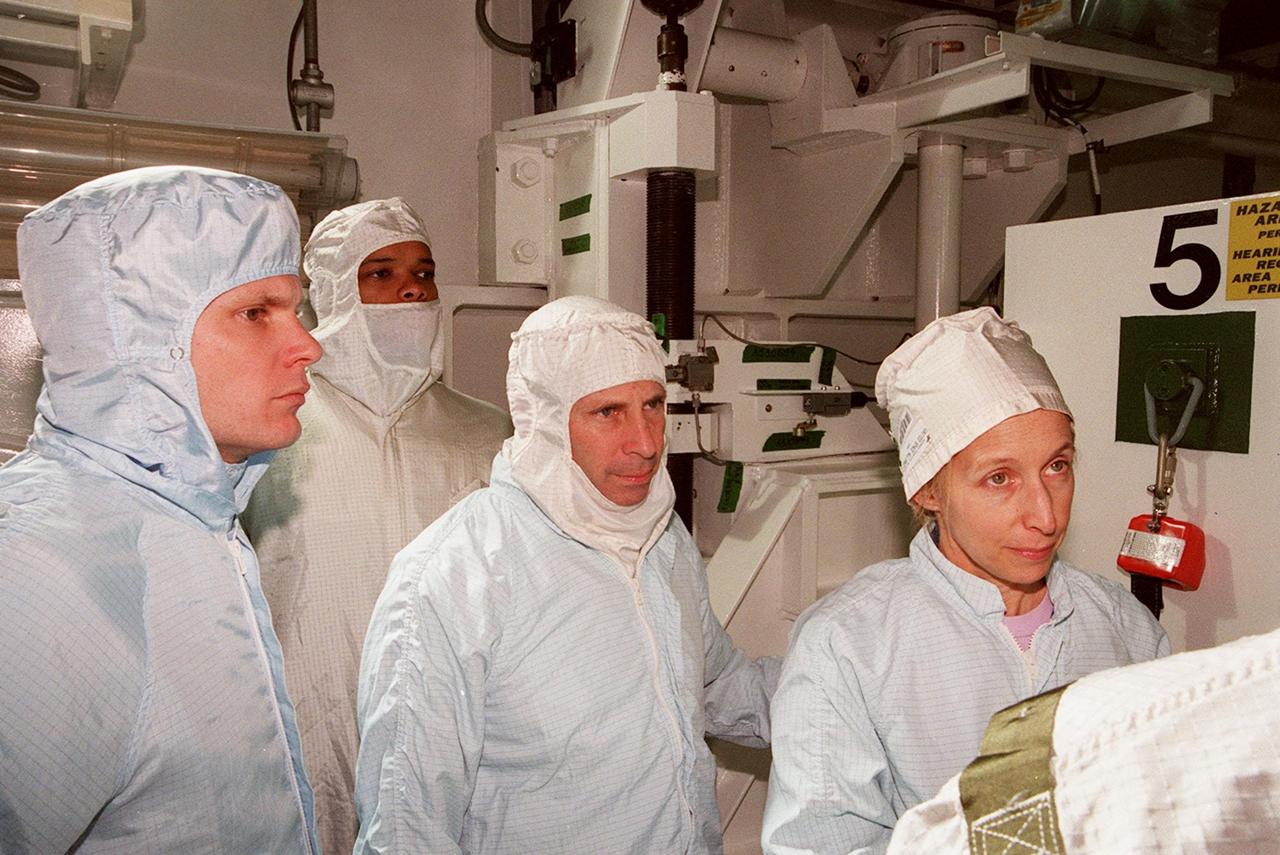
KENNEDY SPACE CENTER, FLA. -- Along with Scott Thurston (left), of the VITT office, members of the STS-98 crew Mission Specialist Robert Curbeam, Commander Ken Cockrell and Mission Specialist Marsha Ivins are in Atlantis’ payload bay to check out their mission payload, the U.S. Lab Destiny. The crew is at KSC for Terminal Countdown Demonstration Test activities, which also include a simulated launch countdown. A key element in the construction of the International Space Station, Destiny is a pressurized module designed to accommodate pressurized payloads. It has a capacity of 24 rack locations. Payload racks will occupy 13 locations especially designed to support experiments. The module already has five system racks installed inside. Launch of STS-98 on its 11-day mission is scheduled for Jan. 19 at 2:11 a.m. EST
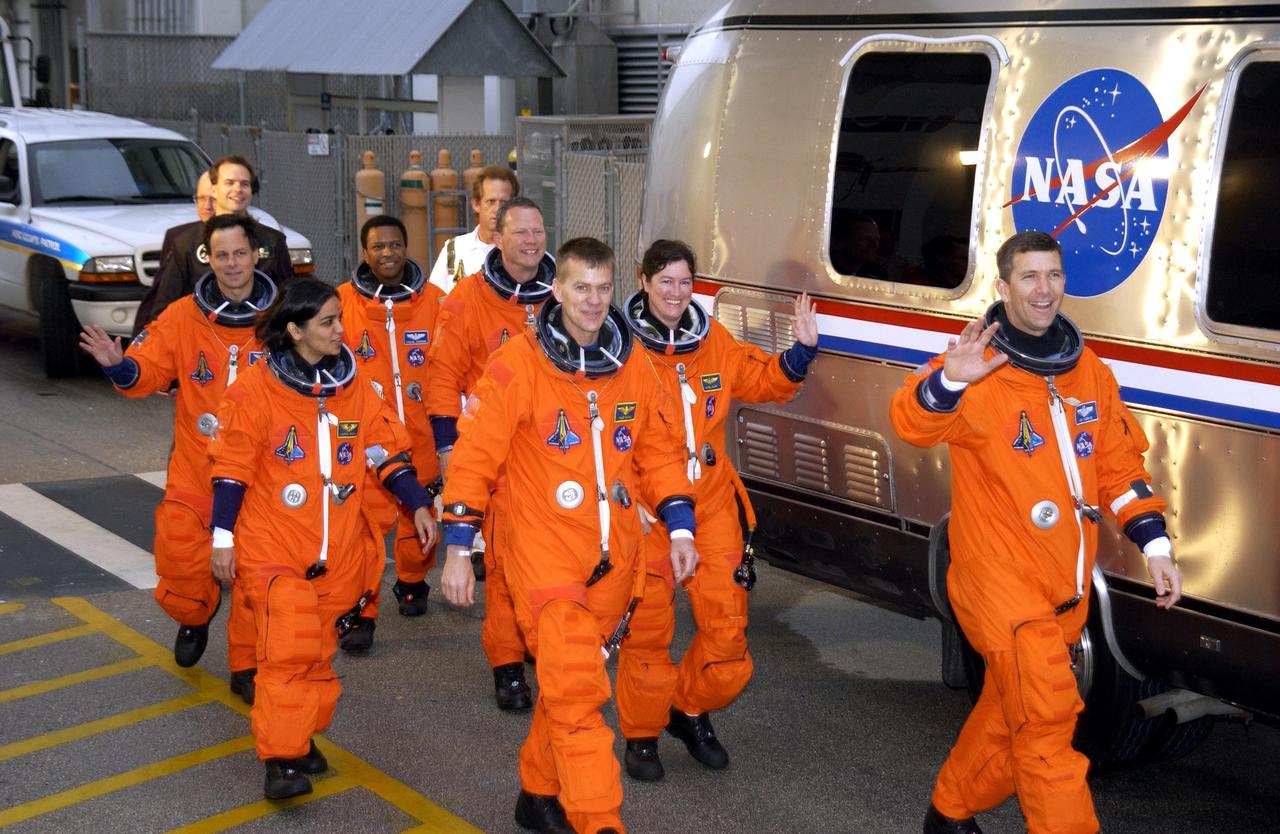
KENNEDY SPACE CENTER, FLA. - The STS-107 crew heads for the Astrovan and a ride to Launch Pad 39A for a simulated launch countdown. From left are Payload Specialist Ilan Ramon, Mission Specialist Kalpana Chawla, Payload Commander Michael Anderson, Mission Specialist David Brown, Pilot William "Willie" McCool, Mission Specialist Laurel Clark and Commander Rick Husband. The countdown is part of Terminal Countdown Demonstration Test activities. STS-107 is a mission devoted to research and will include more than 80 experiments that will study Earth and space science, advanced technology development, and astronaut health and safety. Launch is planned for Jan. 16, 2003, between 10 a.m. and 2 p.m. EST aboard Space Shuttle Columbia. .
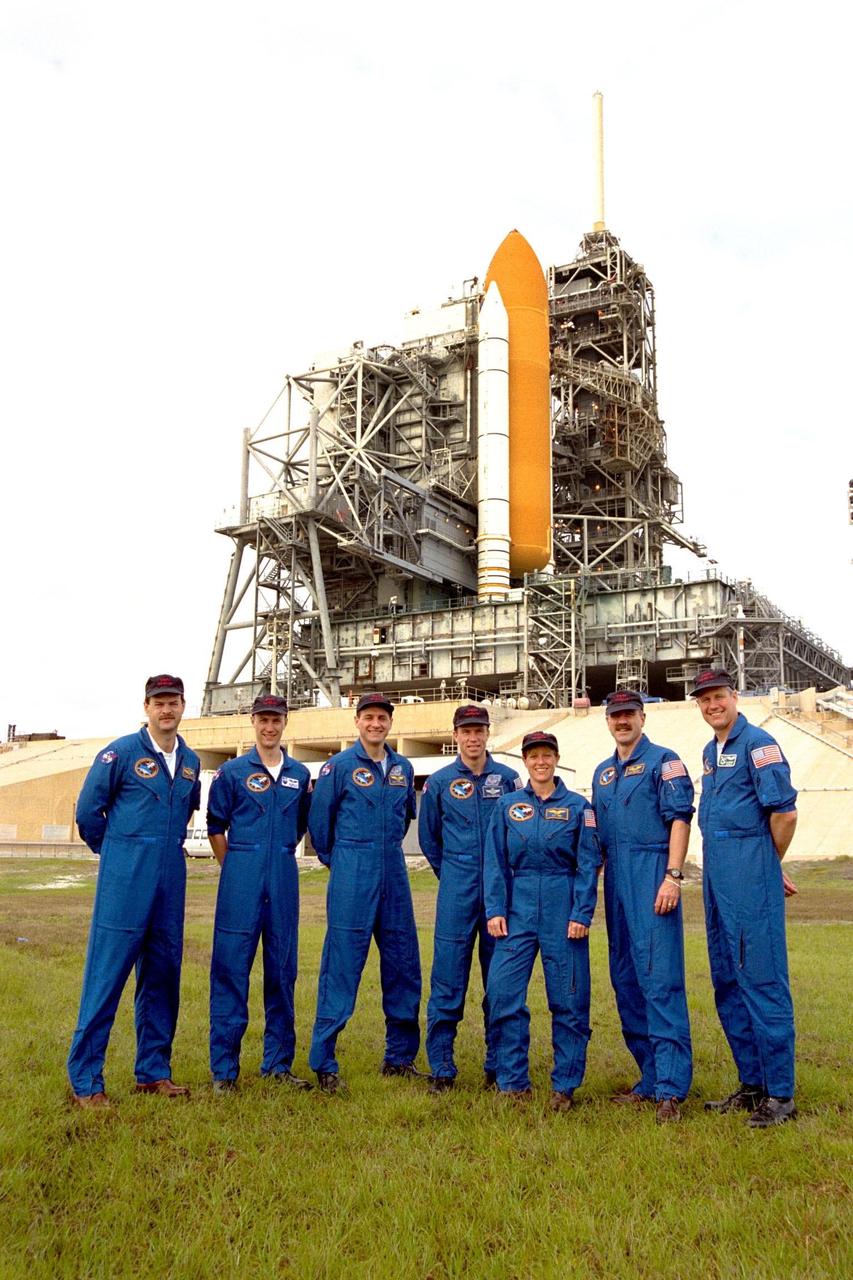
The crew of STS-90 participate in Terminal Countdown Demonstration Test (TCDT) activities at KSC's Launch Pad 39B. The TCDT is held at KSC prior to each Space Shuttle flight to provide crews with the opportunity to participate in simulated countdown activities. The STS-90 crew, left to right, are Pilot Scott Altman, Payload Specialist James Pawelczyk, Ph.D., Mission Specialist Richard Linnehan, D.V.M., Commander Richard Searfoss, Mission Specialists Kathryn (Kay) Hire and Dafydd (Dave) Williams with the Canadian Space Agency, and Payload Specialist Jay Buckey, M.D. Columbia is targeted for launch of STS-90 on April 16 at 2:19 p.m. EST and will be the second mission of 1998. The mission is scheduled to last nearly 17 days
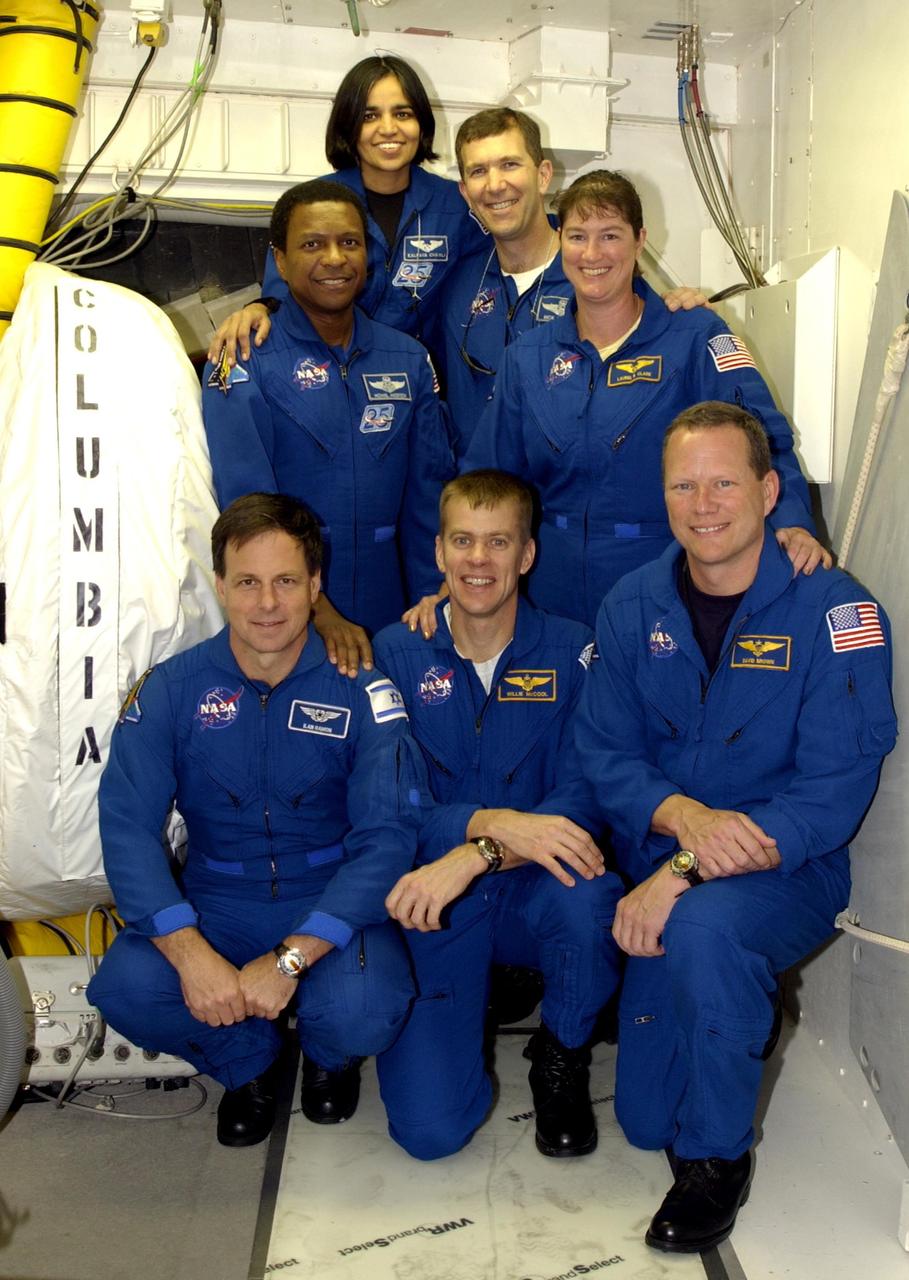
KENNEDY SPACE CENTER, FLA. -- The STS-107 crew poses in front of the entry into Space Shuttle Columbia during Terminal Countdown Demonstration Test activities on the pad. Kneeling in front are (left to right) Payload Specialist Ilan Ramon (the first Israeli astronaut), Pilot William "Willie" McCool and Mission Specialist David Brown. Standing in back are (left to right) Payload Commander Michael Anderson, Mission Specialist Kalpana Chawla, Commander Rick Husband and Mission Specialist Laurel Clark. The TCDT also includes a simulated launch countdown. STS-107 is a mission devoted to research and will include more than 80 experiments that will study Earth and space science, advanced technology development, and astronaut health and safety. Launch is planned for Jan. 16, 2003, between 10 a.m. and 2 p.m. EST aboard Columbia. .
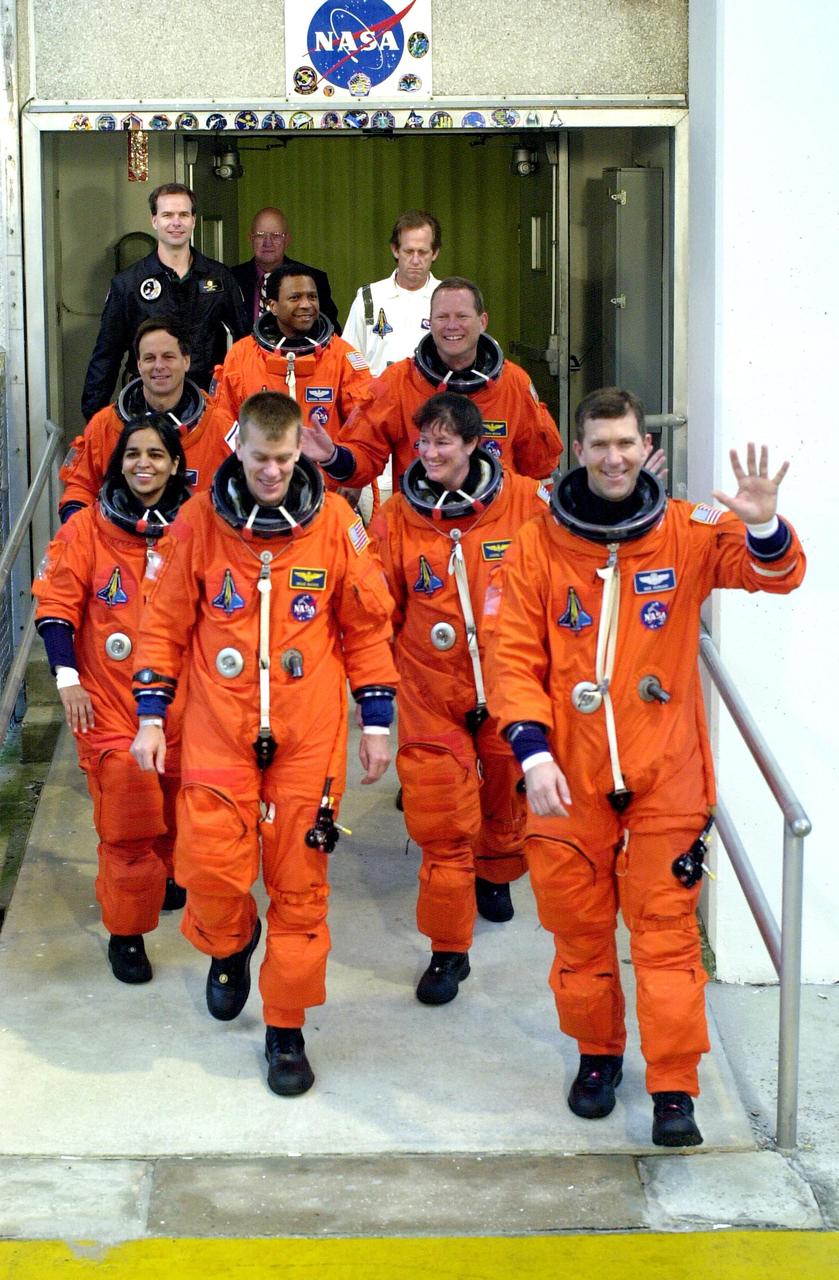
KENNEDY SPACE CENTER, FLA. -- The STS-107 crew exits the Operations and Checkout Building for a ride to Launch Pad 39A and a simulated launch countdown. From left are Payload Specialist Ilan Ramon, Mission Specialist Kalpana Chawla, Payload Commander Michael Anderson, Mission Specialist David Brown, Pilot William "Willie" McCool, Mission Specialist Laurel Clark and Commander Rick Husband. The countdown is part of Terminal Countdown Demonstration Test activities. STS-107 is a mission devoted to research and will include more than 80 experiments that will study Earth and space science, advanced technology development, and astronaut health and safety. Launch is planned for Jan. 16, 2003, between 10 a.m. and 2 p.m. EST aboard Space Shuttle Columbia. .
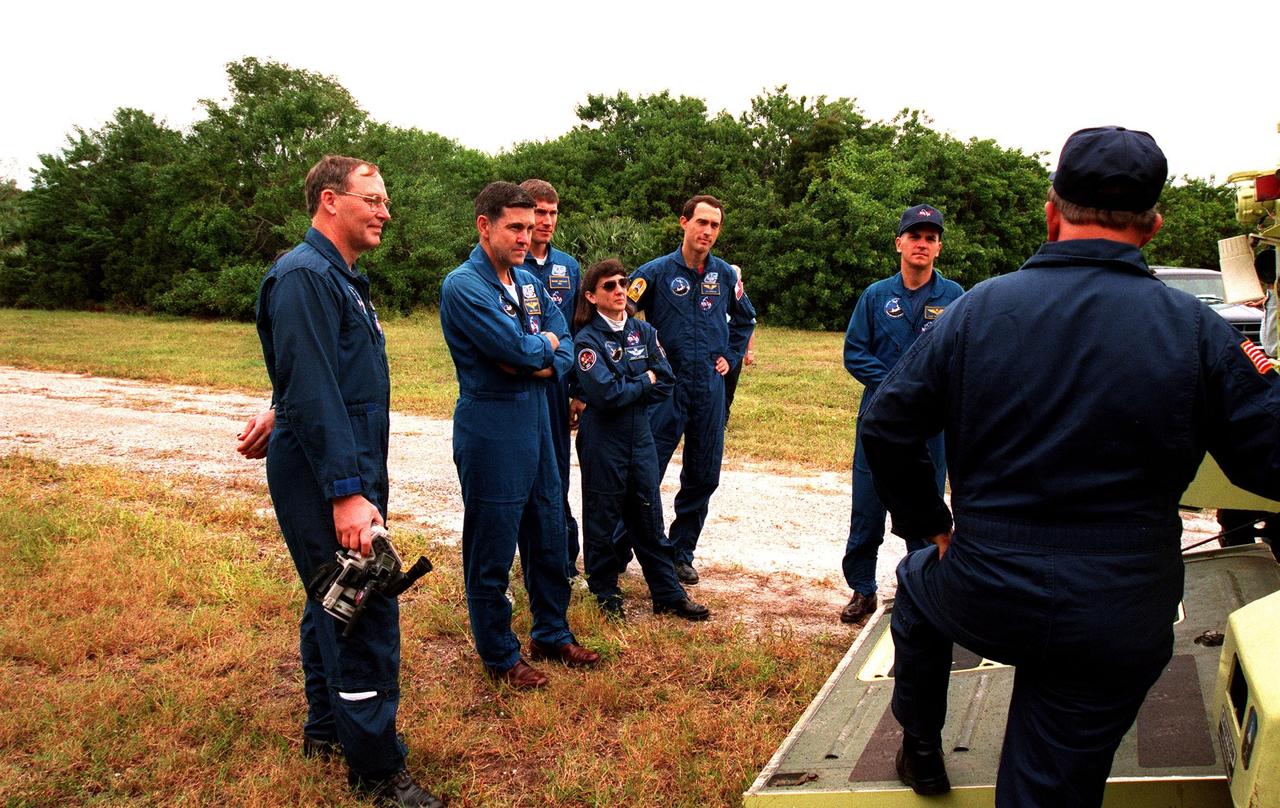
The STS-88 crew receives instruction on the operation of an M-113, an armored personnel carrier, as part of emergency egress training from George Hoggard (back to camera) during Terminal Countdown Demonstration Test (TCDT) activities. From left to right, they are Mission Specialist Jerry L. Ross; Mission Commander Robert D. Cabana; Mission Specialist Sergei Konstantinovich Krikalev, a Russian cosmonaut; Mission Specialist Nancy J. Currie; Mission Specialist James H. Newman; and Pilot Frederick W. "Rick" Sturckow. The TCDT also provides the crew with simulated countdown exercises and opportunities to inspect their mission payloads in the orbiter's payload bay. Mission STS-88 is targeted for launch on Dec. 3, 1998. It is the first U.S. flight for the assembly of the International Space Station and will carry the Unity connecting module
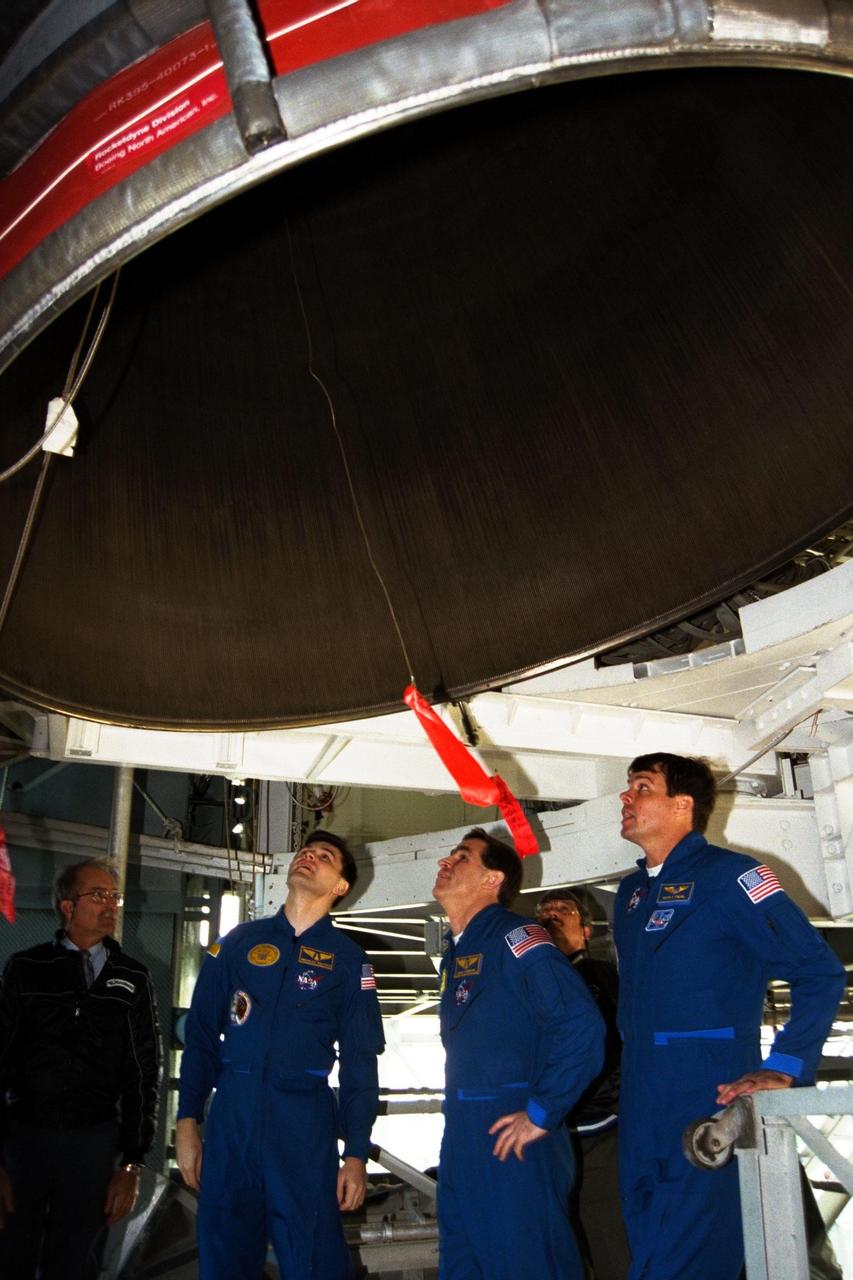
The crew of the STS-87 mission, scheduled for launch Nov. 19 aboard the Space Shuttle Columbia from Pad 39B at Kennedy Space Center (KSC), participates in the Terminal Countdown Demonstration Test (TCDT) at KSC. Getting a close look at one of the Space Shuttle’s main engines are, from right, Commander Kevin Kregel, Payload Specialist Leonid Kadenyuk of the National Space Agency of Ukraine (NSAU), and Kadenyuk’s back-up, Yaroslav Pustovyi, Ph.D., also of NSAU. The TCDT is held at KSC prior to each Space Shuttle flight, providing the crew of each mission opportunities to participate in simulated countdown activities. The TCDT ends with a mock launch countdown culminating in a simulated main engine cut-off. The crew also spends time undergoing emergency egress training exercises at the pad and has an opportunity to view and inspect the payloads in the orbiter's payload bay

STS-87 Payload Specialist Leonid Kadenyuk of the National Space Agency of Ukraine (NSAU) is assisted with his orange launch and entry spacesuit by NASA suit technicians at Launch Pad 39B during Terminal Countdown Demonstration Test (TCDT) activities. The crew of the STS-87 mission is scheduled for launch Nov. 19 aboard the Space Shuttle Columbia. The TCDT is held at KSC prior to each Space Shuttle flight providing the crew of each mission opportunities to participate in simulated countdown activities. The TCDT ends with a mock launch countdown culminating in a simulated main engine cut-off. The crew also spends time undergoing emergency egress training exercises at the pad and has an opportunity to view and inspect the payloads in the orbiter's payload bay
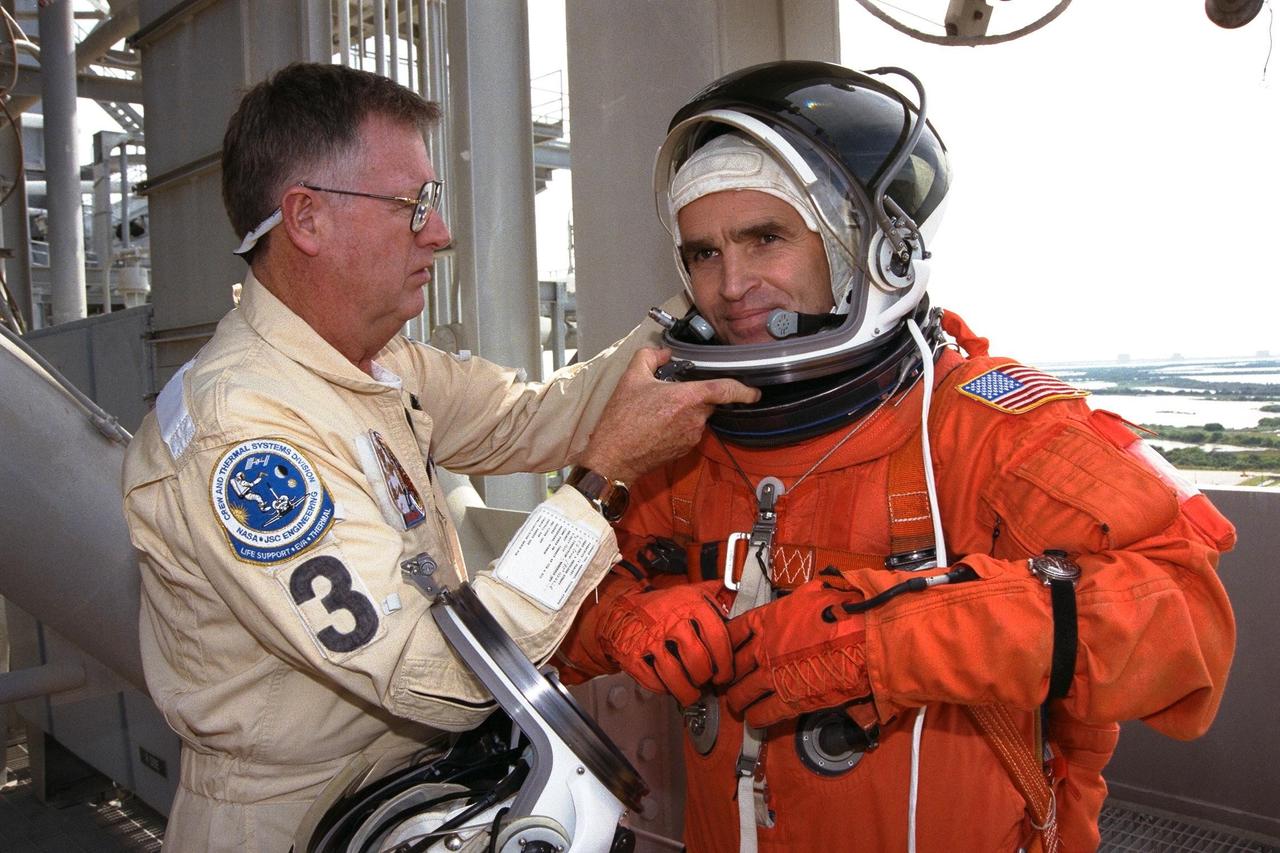
STS-87 Payload Specialist Leonid Kadenyuk, at right, of the National Space Agency of Ukraine (NSAU) is assisted into his orange launch and entry spacesuit ensemble by NASA Suit Technician Al Rochford, at left, before participating in Terminal Countdown Demonstration Test (TCDT) activities. The crew of the STS-87 mission is scheduled for launch Nov. 19 aboard the Space Shuttle Columbia. The TCDT is held at KSC prior to each Space Shuttle flight providing the crew of each mission opportunities to participate in simulated countdown activities. The TCDT ends with a mock launch countdown culminating in a simulated main engine cut-off. The crew also spends time undergoing emergency egress training exercises at the pad and has an opportunity to view and inspect the payloads in the orbiter's payload bay
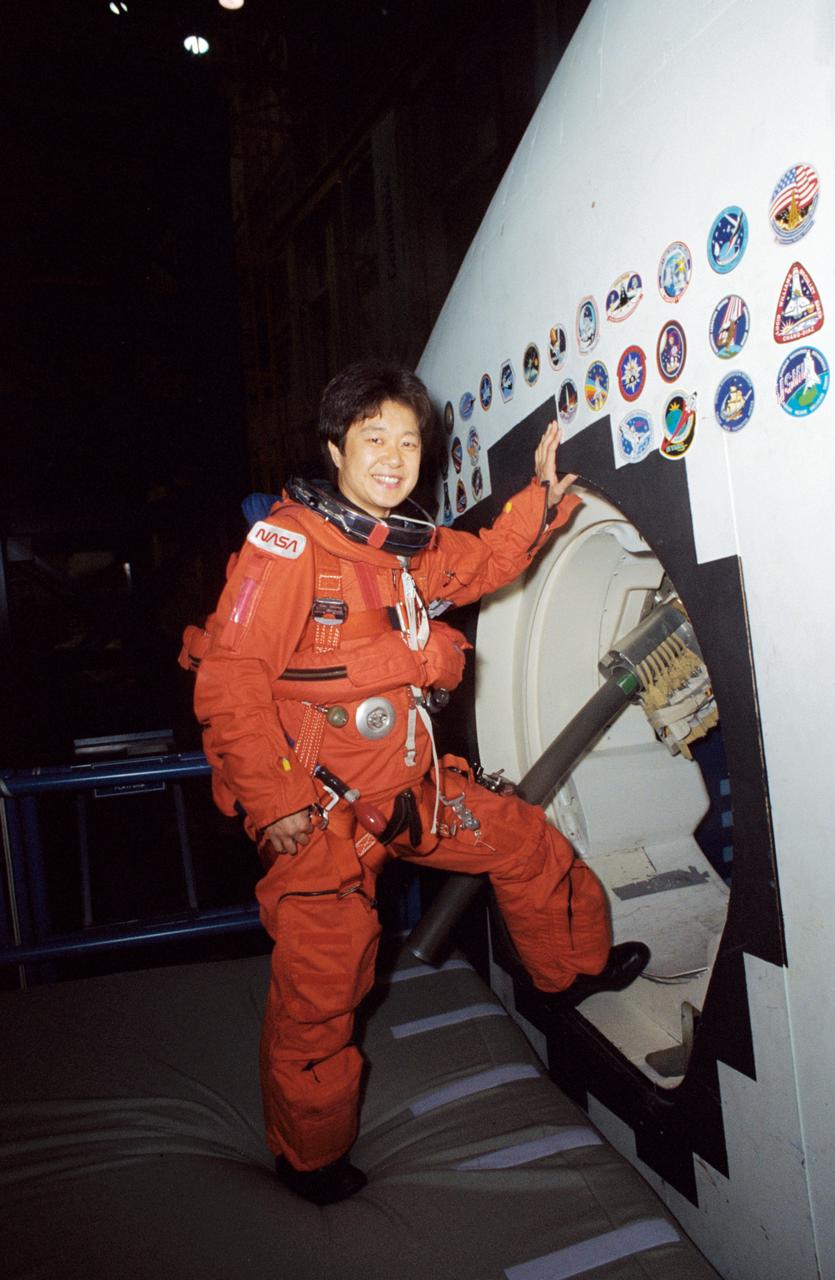
STS-65 Japanese Payload Specialist Chiaki Mukai takes a break from training at the Johnson Space Center (JSC). Wearing a training version of the orange launch and entry suit (LES), Mukai stands at the crew compartment trainer (CCT) side hatch in the Mockup and Integration Laboratory (MAIL) Bldg 9NE. Note the crew escape system (CES) pole device extending out the side hatch which would accommodate crewmembers in bailout from a troubled spacecraft. Mukai represents the National Space Development Agency (NASDA) of Japan and will serve as a payload specialist aboard Columbia, Orbiter Vehicle (OV) 102, during the STS-65 International Microgravity Laboratory 2 (IML-2) mission.
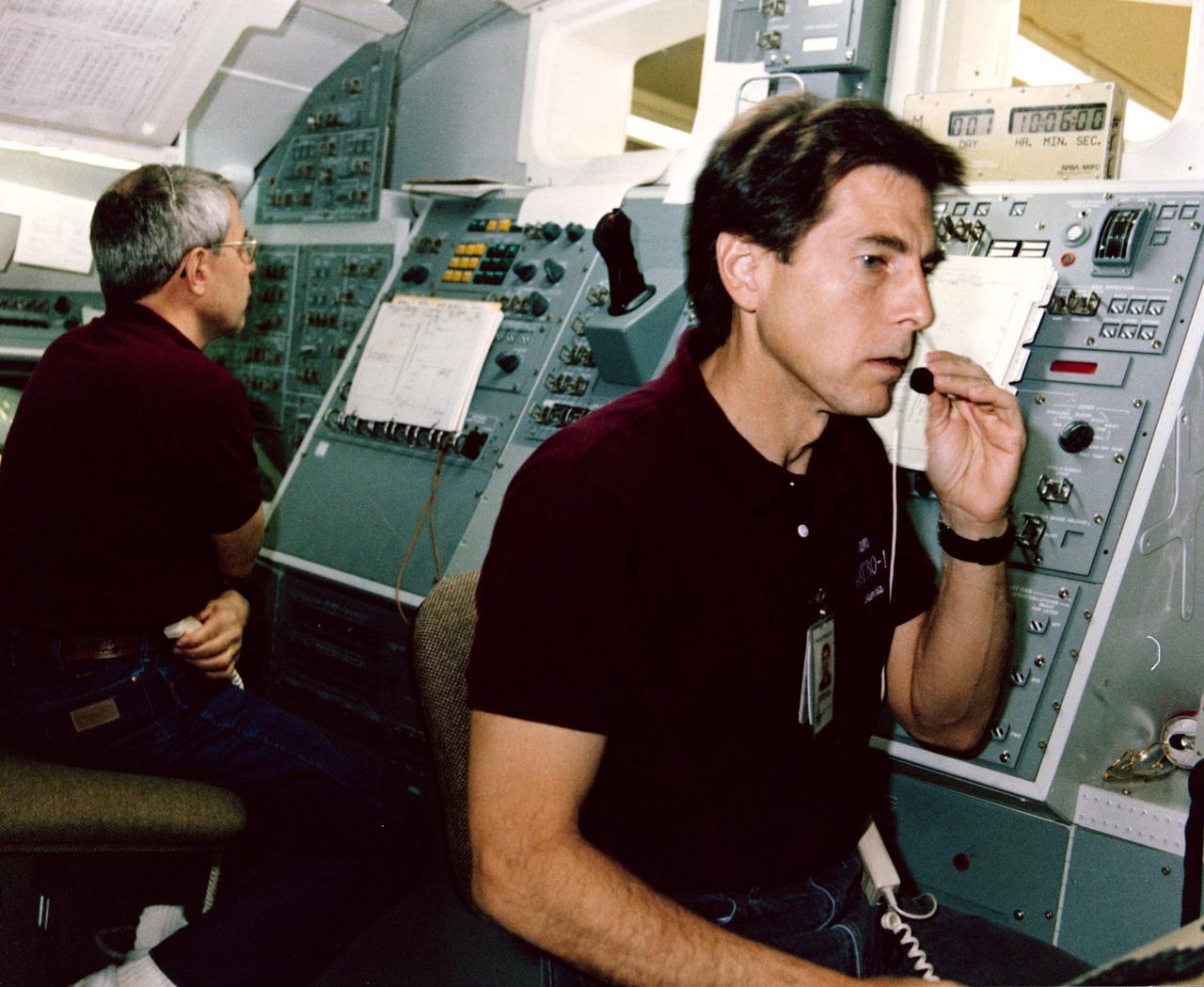
STS-35 Mission Specialist (MS) Robert A.R. Parker (left) and Payload Specialist Samuel T. Durrance practice Astronomy Laboratory 1 (ASTRO-1) experiment procedures in a space shuttle aft flight deck mockup in the Payload Crew Training Complex at the Marshall Space Flight Center (MSFC) in Huntsville, Alabama. For all Spacelab missions, shuttle crew members train regularly in the facility in preparation to operate experiments on their Spacelab missions. The ASTRO-1 crew will operate the ultraviolet telescopes and instrument pointing system (IPS) from Columbia's, Orbiter Vehicle (OV) 102's, aft flight deck. The seven-member ASTRO-1 crew will work around the clock, in 12-hour shifts, to allow the maximum number of observations to be made during their nine or ten days in orbit. In addition to the commander and pilot, the crew consistss of three MSs and two payload specialists. (MSs are career astronauts who are trained in a specialized field. Payload specialists are members of the science investigator teams who were nominated by their peers to operate their experiments on orbit. They are trained and certified for flight by NASA.) View provided by MSFC with alternate number 9005803.
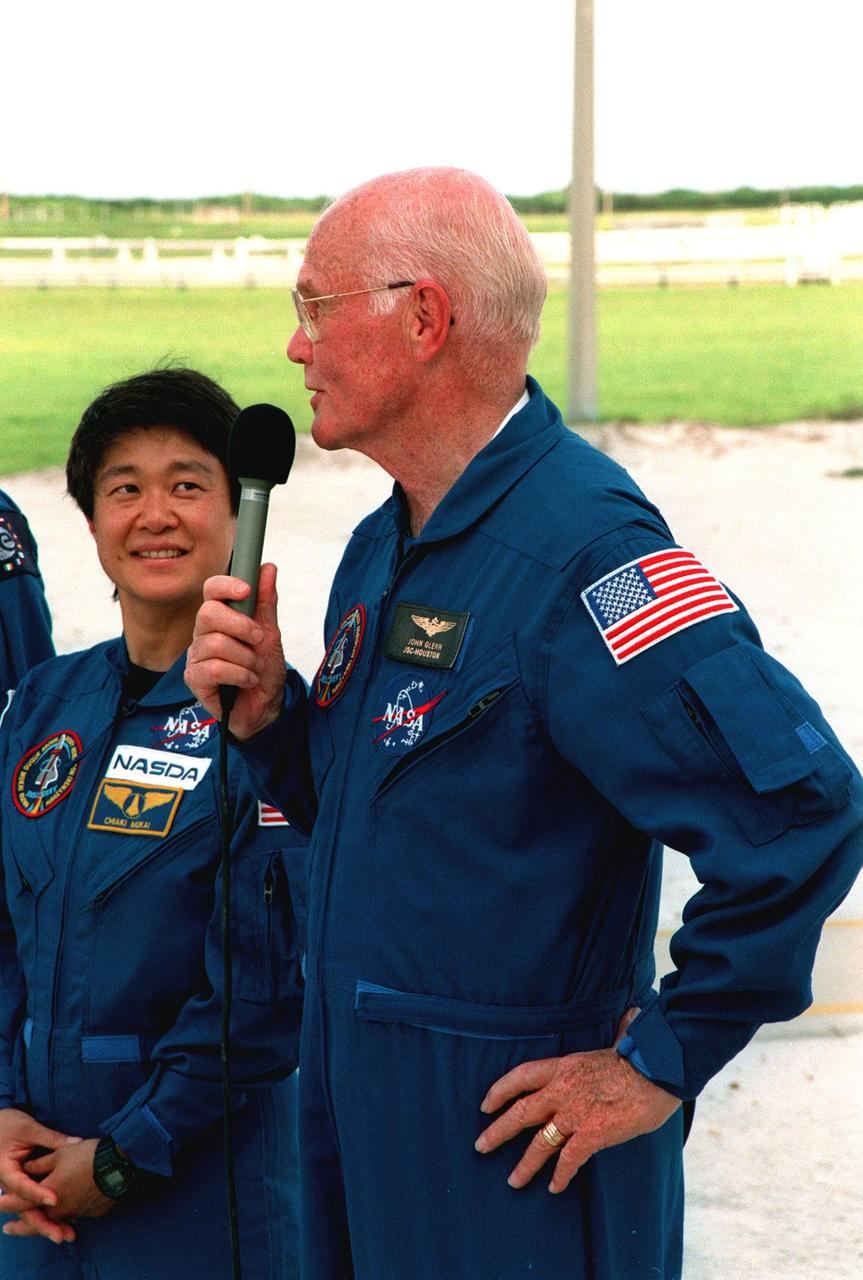
At Launch Pad 39-B, STS-95 Payload Specialist John H. Glenn Jr., senator from Ohio, (right) responds to one of many questions he was asked about the mission and training by reporters during a brief break from the Terminal Countdown Demonstration Test (TCDT). Amused with his answer is Payload Specialist Chiaki Mukai, representing the National Space Development Agency of Japan (NASDA). Other crew members (not shown) are Mission Specialist Scott E. Parazynski, Mission Specialist Stephen K. Robinson, who also serves as Payload Commander, Pilot Steven W. Lindsey, Mission Commander Curtis L. Brown, and Mission Specialist Pedro Duque of Spain, representing the European Space Agency (ESA). The crew were at the pad for emergency egress training after the break. The TCDT also involves mission familiarization activities and a simulated main engine cut-off exercise. The STS-95 mission, targeted for liftoff on Oct. 29, includes research payloads such as the Spartan solar-observing deployable spacecraft, the Hubble Space Telescope Orbital Systems Test Platform, the International Extreme Ultraviolet Hitchhiker, as well as the SPACEHAB single module with experiments on space flight and the aging process. Following the TCDT, the crew will be returning to Houston for final flight preparations
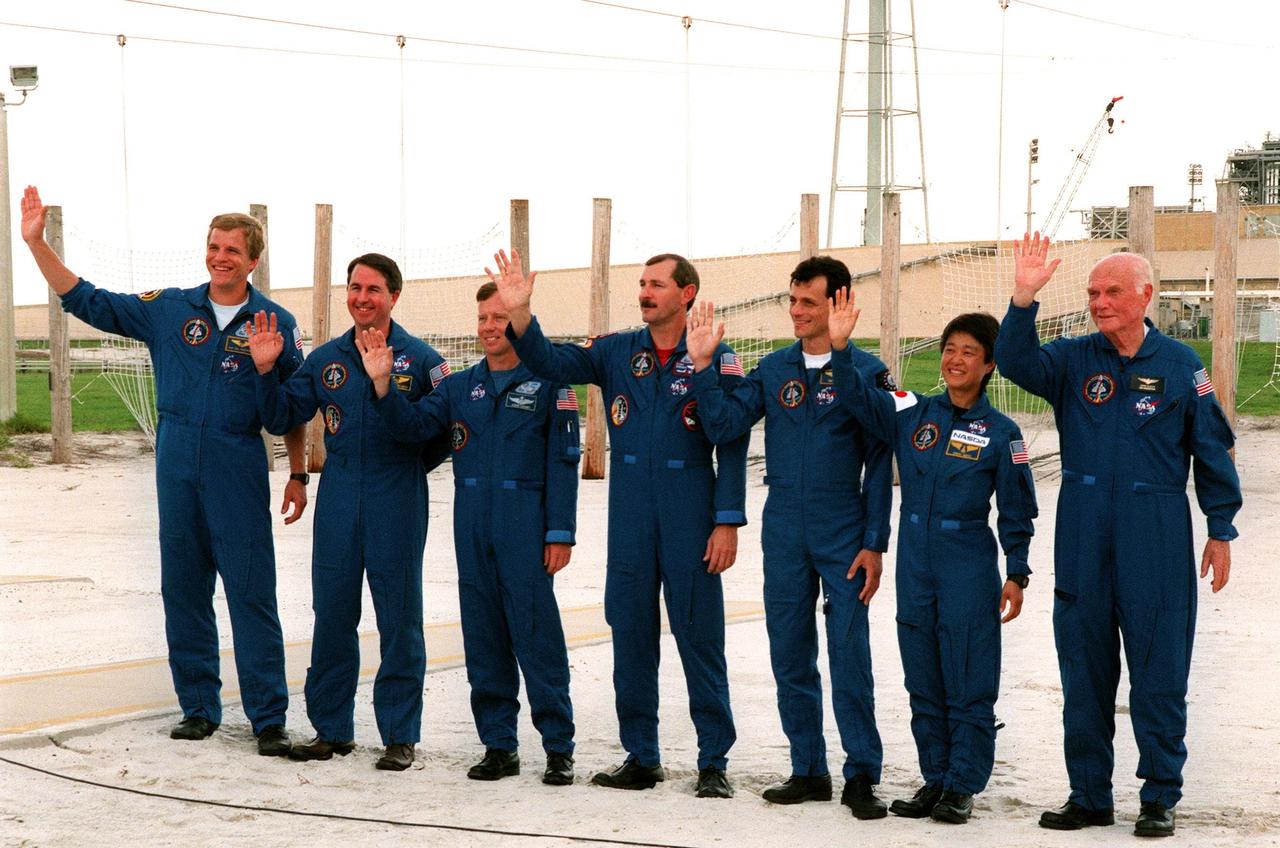
Near the slide wire basket drop point on Launch Pad 39-B, the STS-95 crew wave at 106 reporters and photographers during a brief break from the Terminal Countdown Demonstration Test (TCDT) to answer questions about the mission and training. The crew were at the pad for emergency egress training after the break. Mission Commander Curtis L. Brown (center) introduced the rest of the crew: (left to right) Mission Specialist Scott E. Parazynski, Mission Specialist Stephen K. Robinson, who also serves as Payload Commander, Pilot Steven W. Lindsey, (Brown), Mission Specialist Pedro Duque of Spain, representing the European Space Agency (ESA), Payload Specialist Chiaki Mukai, representing the National Space Development Agency of Japan (NASDA), and Payload Specialist John H. Glenn Jr., senator from Ohio. The TCDT also involves mission familiarization activities and a simulated main engine cut-off exercise. The STS-95 mission, targeted for liftoff on Oct. 29, includes research payloads such as the Spartan solar-observing deployable spacecraft, the Hubble Space Telescope Orbital Systems Test Platform, the International Extreme Ultraviolet Hitchhiker, as well as the SPACEHAB single module with experiments on space flight and the aging process. Following the TCDT, the crew will be returning to Houston for final flight preparations
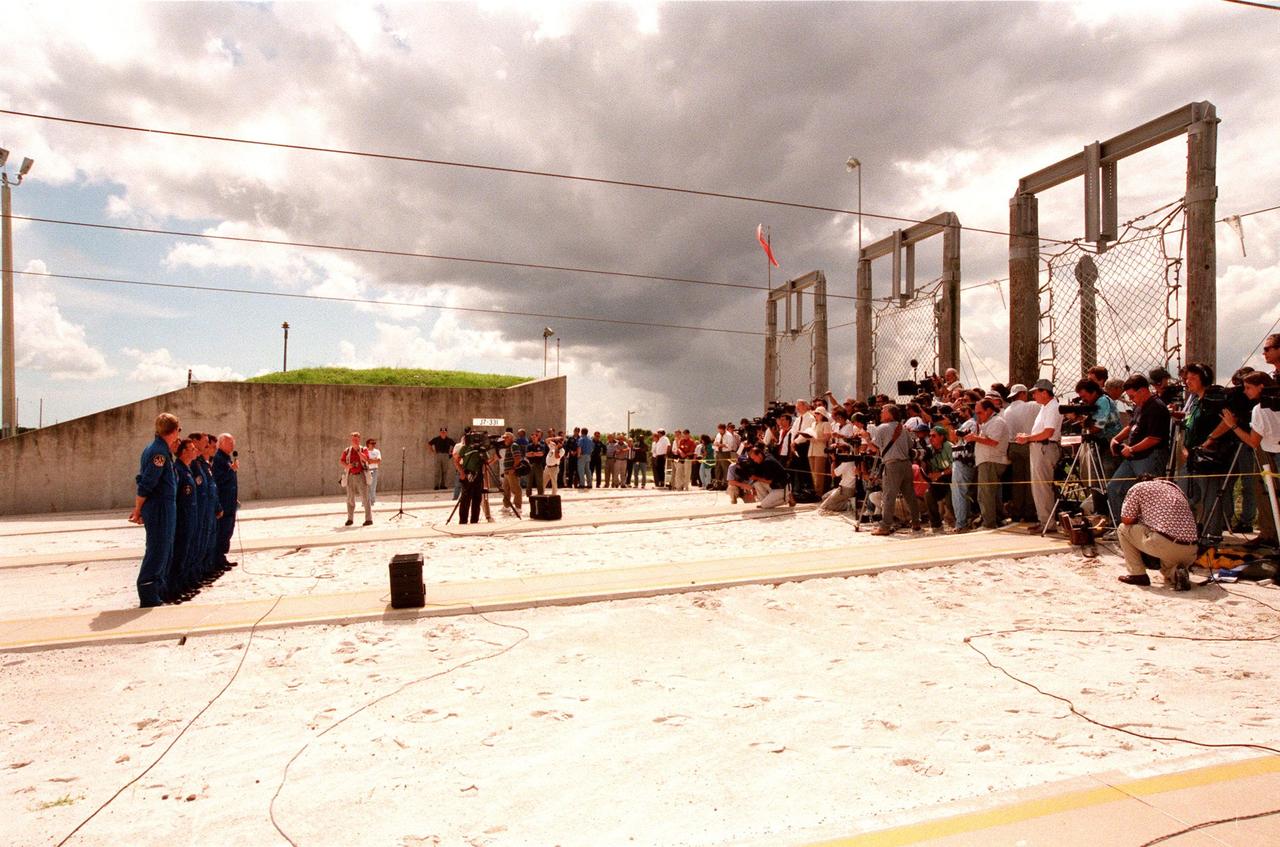
In front of the bunker near Launch Pad 39-B, the STS-95 crew members (at left) respond to questions about the mission and training from 106 reporters and photographers during a brief break from the Terminal Countdown Demonstration Test (TCDT). From left they are Mission Specialist Scott E. Parazynski, Mission Specialist Stephen K. Robinson, who also serves as Payload Commander, Pilot Steven W. Lindsey, Mission Commander Curtis L. Brown, Mission Specialist Pedro Duque of Spain, representing the European Space Agency (ESA), Payload Specialist Chiaki Mukai, representing the National Space Development Agency of Japan (NASDA), and Payload Specialist John H. Glenn Jr., senator from Ohio, holding a microphone. The crew were at the pad for emergency egress training after the break. Above them are the slidewires leading to the catch nets for the baskets that are used in emergency egress. The TCDT also involves mission familiarization activities and a simulated main engine cut-off exercise. The STS-95 mission, targeted for liftoff on Oct. 29, includes research payloads such as the Spartan solar-observing deployable spacecraft, the Hubble Space Telescope Orbital Systems Test Platform, the International Extreme Ultraviolet Hitchhiker, as well as the SPACEHAB single module with experiments on space flight and the aging process. Following the TCDT, the crew will be returning to Houston for final flight preparations

Near Launch Pad 39-B, the STS-95 crew members respond to questions about the mission and training from reporters during a brief break from the Terminal Countdown Demonstration Test (TCDT). From left they are Mission Specialist Scott E. Parazynski, Mission Specialist Stephen K. Robinson, who also serves as Payload Commander, Pilot Steven W. Lindsey, Mission Commander Curtis L. Brown, Mission Specialist Pedro Duque of Spain, representing the European Space Agency (ESA), Payload Specialist Chiaki Mukai, representing the National Space Development Agency of Japan (NASDA), and Payload Specialist John H. Glenn Jr., senator from Ohio, holding a microphone. The crew were at the pad for emergency egress training after the break. Behind them are the catch nets for the slidewire baskets that are used in emergency egress. The TCDT also involves mission familiarization activities and a simulated main engine cut-off exercise. The STS-95 mission, targeted for liftoff on Oct. 29, includes research payloads such as the Spartan solar-observing deployable spacecraft, the Hubble Space Telescope Orbital Systems Test Platform, the International Extreme Ultraviolet Hitchhiker, as well as the SPACEHAB single module with experiments on space flight and the aging process. Following the TCDT, the crew will be returning to Houston for final flight preparations
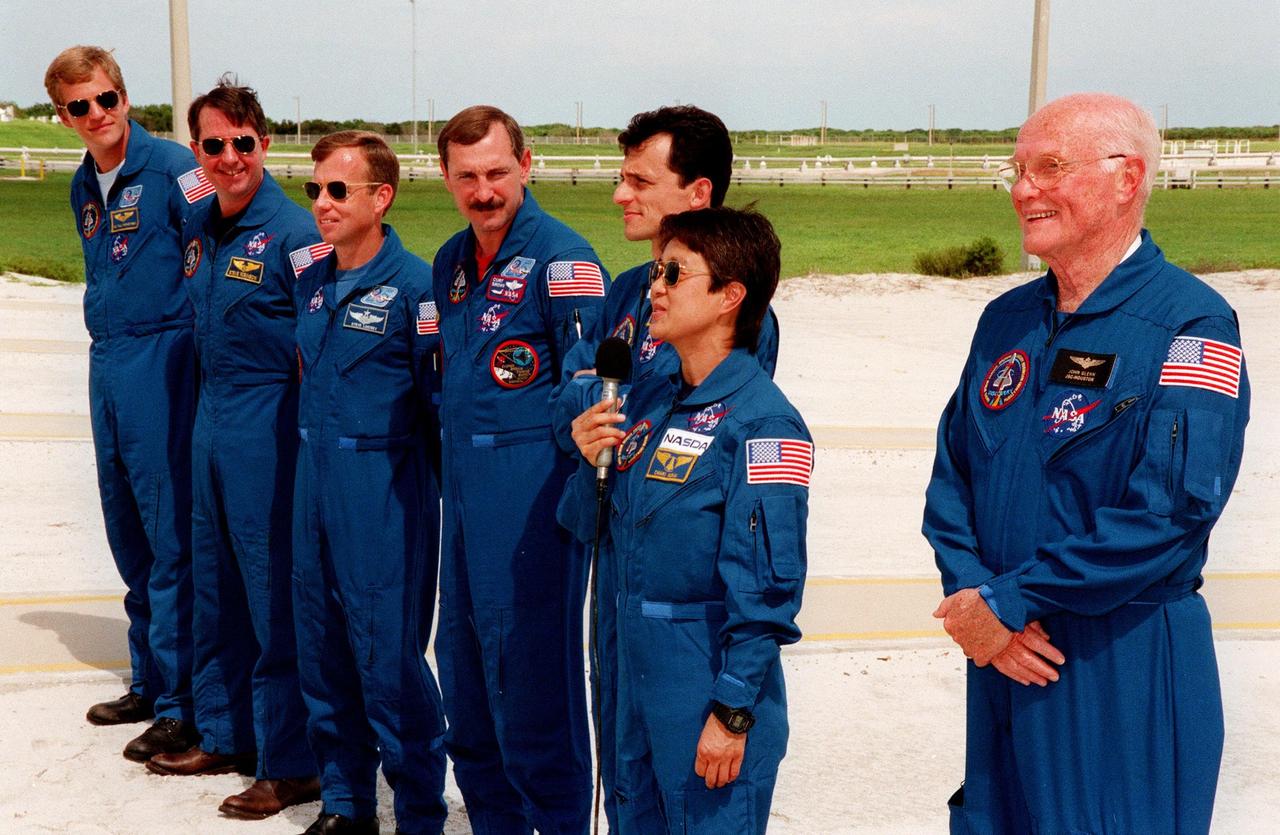
Near Launch Pad 39-B, STS-95 Payload Specialist Chiaki Mukai (second from right), representing the National Space Development Agency of Japan (NASDA), responds to questions about the mission and training from reporters during a brief break from the Terminal Countdown Demonstration Test (TCDT). Other crew members also participated: (from left) Mission Specialist Scott E. Parazynski, Mission Specialist Stephen K. Robinson, who also serves as Payload Commander, Pilot Steven W. Lindsey, Mission Commander Curtis L. Brown, Mission Specialist Pedro Duque of Spain, representing the European Space Agency (ESA), (Mukai), and Payload Specialist John H. Glenn Jr., senator from Ohio. The crew were at the pad for emergency egress training after the break. The TCDT also involves mission familiarization activities and a simulated main engine cut-off exercise. The STS-95 mission, targeted for liftoff on Oct. 29, includes research payloads such as the Spartan solar-observing deployable spacecraft, the Hubble Space Telescope Orbital Systems Test Platform, the International Extreme Ultraviolet Hitchhiker, as well as the SPACEHAB single module with experiments on space flight and the aging process. Following the TCDT, the crew will be returning to Houston for final flight preparations
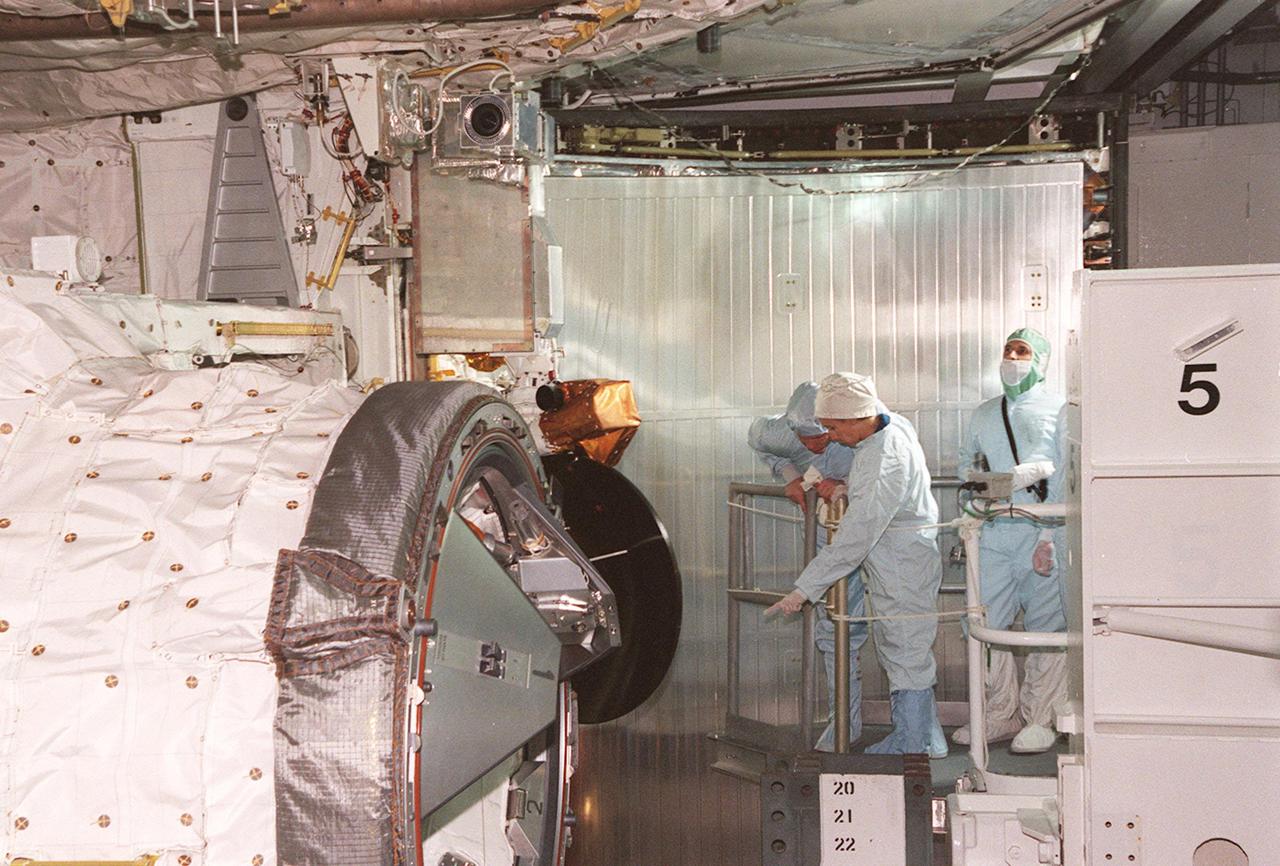
KENNEDY SPACE CENTER, FLA. -- STS-98 Mission Specialist Marsha Ivins (center, pointing) checks out the U.S. Lab Destiny in the payload bay of the orbiter Atlantis. The crew is at KSC for Terminal Countdown Demonstration Test activities, which also include a simulated launch countdown. Destiny, a key element in the construction of the International Space Station, is a pressurized module designed to accommodate pressurized payloads. It has a capacity of 24 rack locations. Payload racks will occupy 13 locations especially designed to support experiments. The module already has five system racks installed inside. Launch of STS-98 on its 11-day mission is scheduled for Jan. 19 at 2:11 a.m. EST
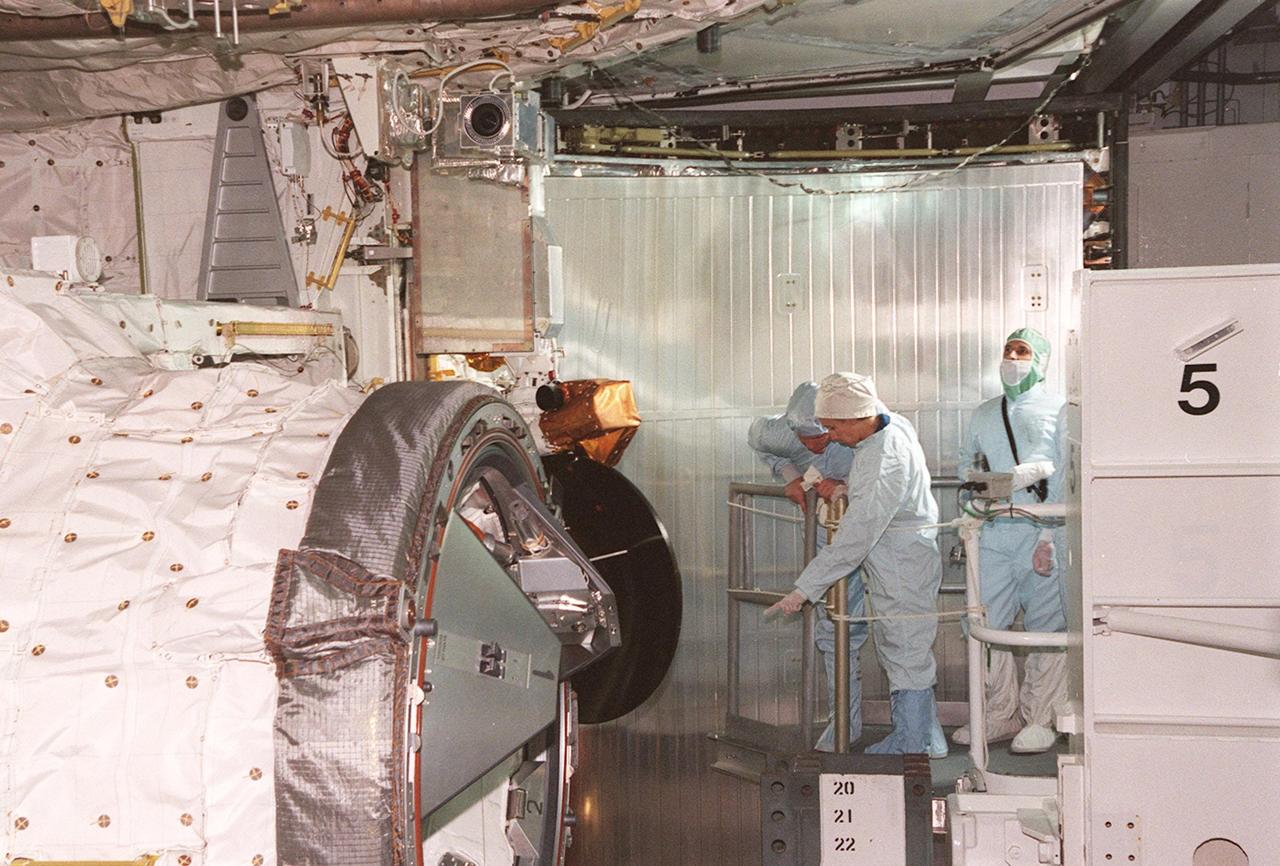
KENNEDY SPACE CENTER, FLA. -- STS-98 Mission Specialist Marsha Ivins (center, pointing) checks out the U.S. Lab Destiny in the payload bay of the orbiter Atlantis. The crew is at KSC for Terminal Countdown Demonstration Test activities, which also include a simulated launch countdown. Destiny, a key element in the construction of the International Space Station, is a pressurized module designed to accommodate pressurized payloads. It has a capacity of 24 rack locations. Payload racks will occupy 13 locations especially designed to support experiments. The module already has five system racks installed inside. Launch of STS-98 on its 11-day mission is scheduled for Jan. 19 at 2:11 a.m. EST
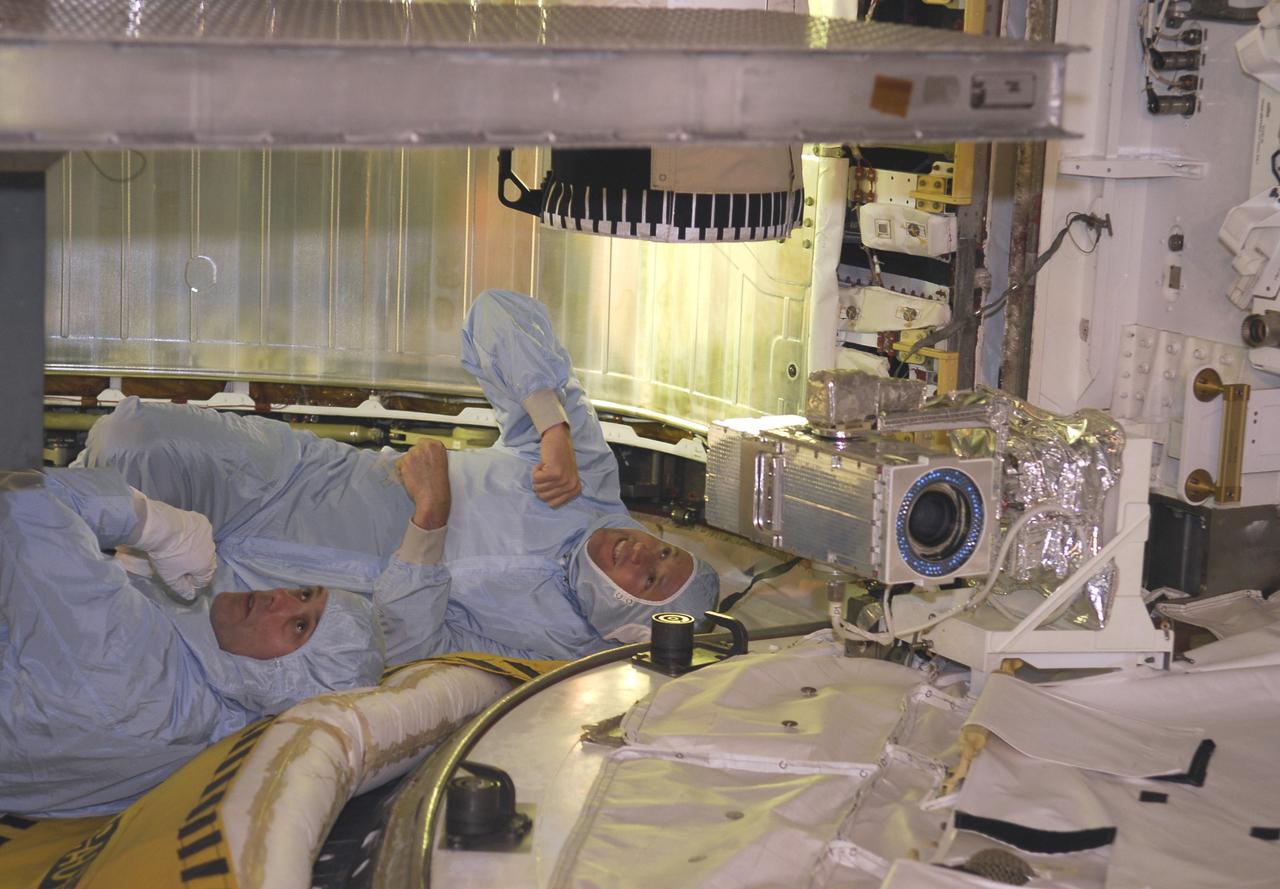
CAPE CANAVERAL, Fla. -- On Launch Pad 39A at NASA's Kennedy Space Center, STS-124 Pilot Ken Ham (right) and Mission Specialist Ron Garan get on their backs for a different view of the payload in space shuttle Discovery's payload bay. The payload bay walkdown is part of the launch dress rehearsal called the terminal countdown demonstration test. TCDT provides astronauts and ground crews with an opportunity to participate in various simulated countdown activities, including equipment familiarization and emergency training. On the STS-124 mission, the crew will deliver and install the Japanese Experiment Module – Pressurized Module and Japanese Remote Manipulator System. Discovery's launch is targeted for May 31. Photo credit: NASA/Kim Shiflett
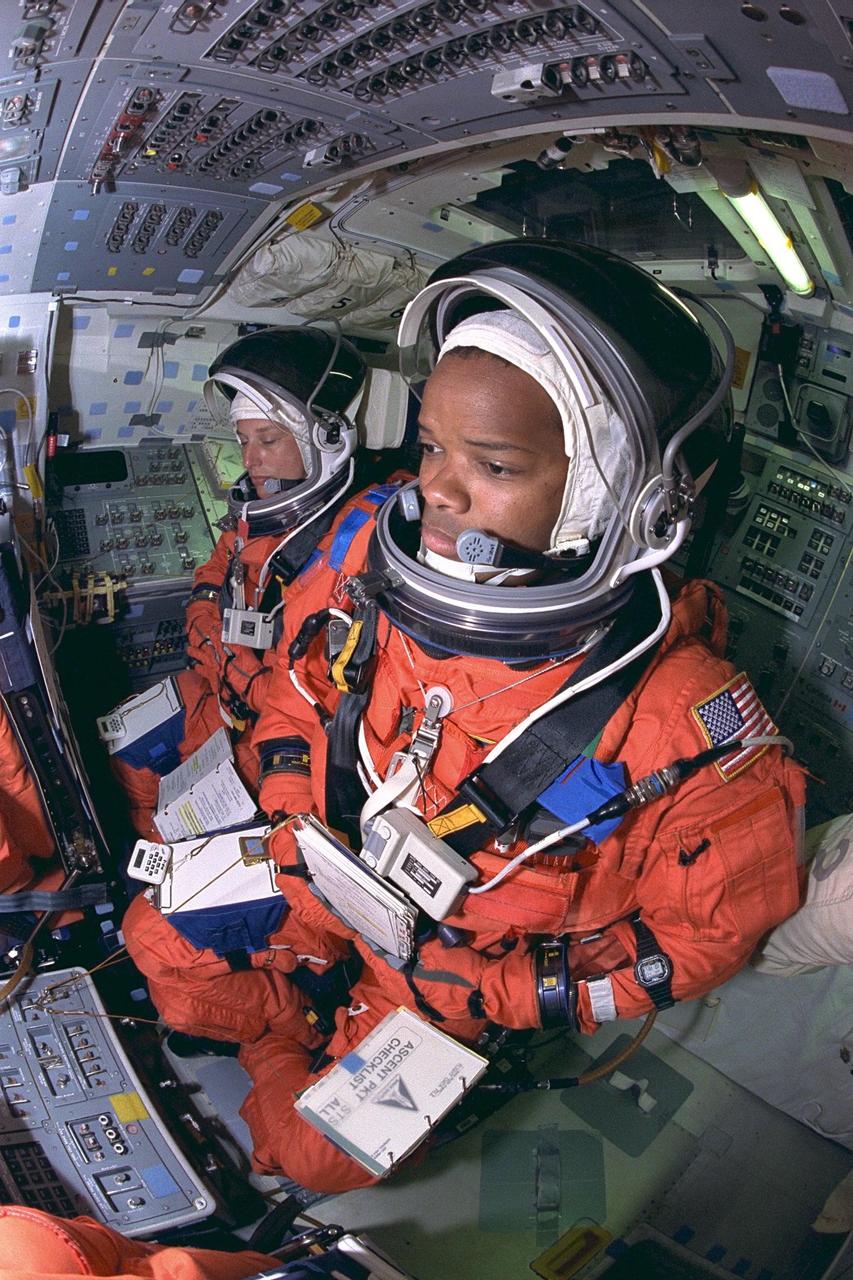
KENNEDY SPACE CENTER, FLA. -- STS-85 Payload Commander N. Jan Davis (left) and Mission Specialist Robert L. Curbeam, Jr., go through countdown procedures aboard the Space Shuttle orbiter Discovery during Terminal Countdown Demonstration Test (TCDT) activities for that mission. The TCDT includes a simulation of the final launch countdown. The primary payload aboard the Space Shuttle orbiter Discovery is the Cryogenic Infrared Spectrometers and Telescopes for the Atmosphere-2 (CRISTA-SPAS-2). Other STS-85 payloads include the Manipulator Flight Demonstration (MFD), and Technology Applications and Science-1 (TAS-1) and International Extreme Ultraviolet Hitchhiker-2 (IEH-2) experiments
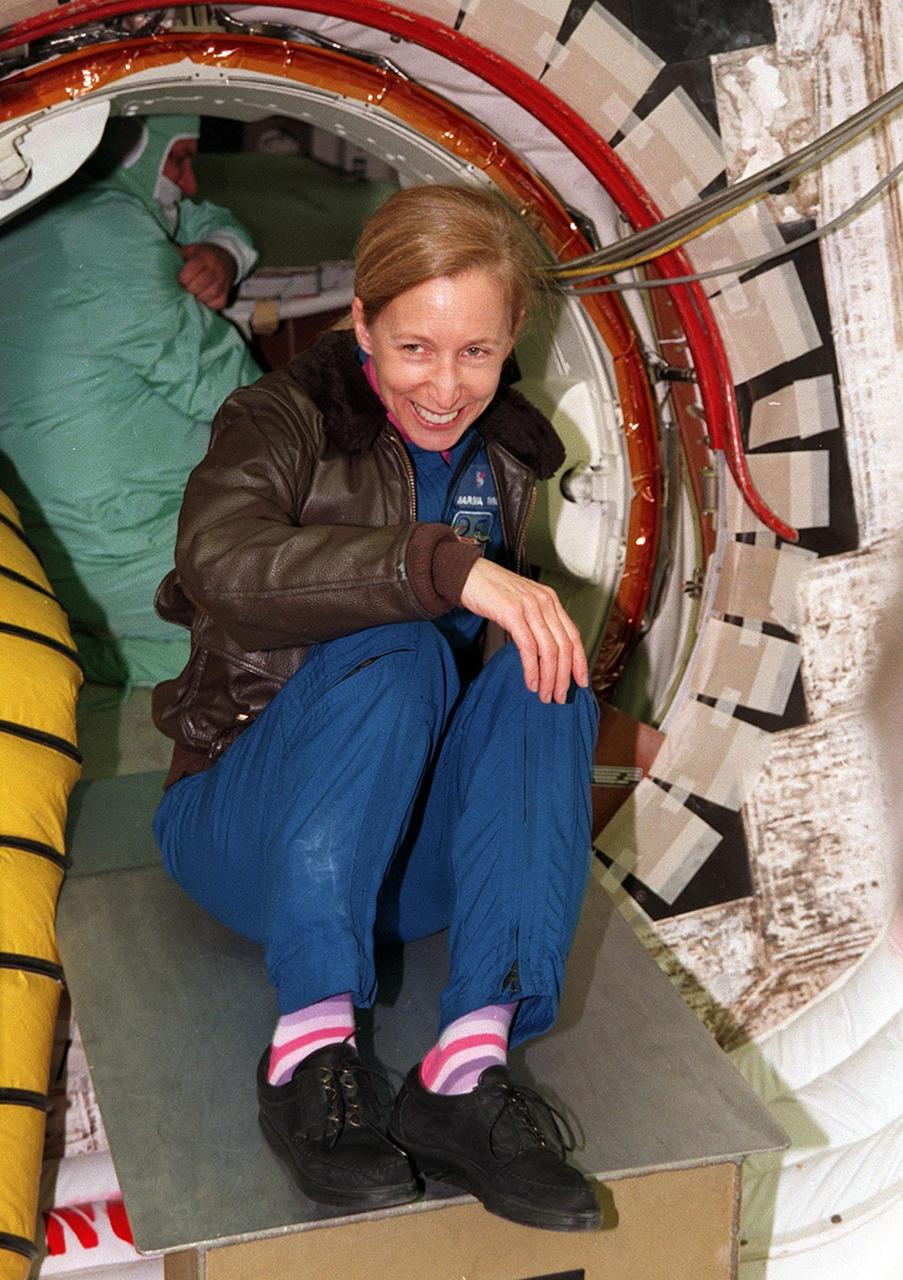
STS-98 Mission Specialist Marsha Ivins waits in the White Room outside the entrance into Atlantis. The crew is at KSC to take part in Terminal Countdown Demonstration Test activities, which include emergency egress training and a simulated launch countdown. The other crew members are Pilot Mark Polansky, Mission Specialist Thomas Jones, Commander Ken Cockrell and Mission Specialist Robert Curbeam. STS-98 is the seventh construction flight to the International Space Station, carrying as payload the U.S. Lab Destiny, a key element in the construction of the ISS. Launch of STS-98 is scheduled for Jan. 19 at 2:11 a.m
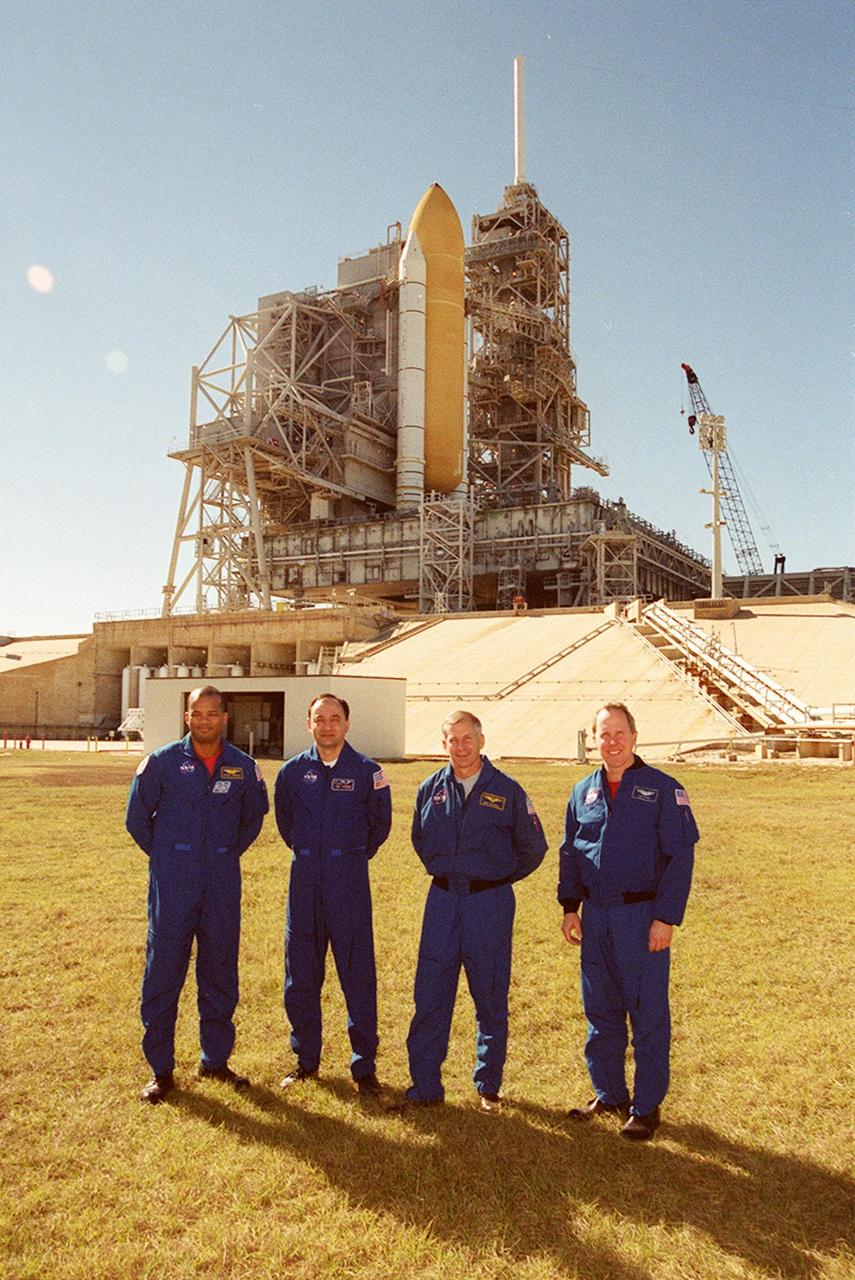
KENNEDY SPACE CENTER, FLA. -- Four members of the STS-98 crew pose for a photo at Launch Pad 39A. Standing, left to right, are Mission Specialist Robert Curbeam, Pilot Mark Polansky, Commander Ken Cockrell and Mission Specialist Thomas Jones. Not pictured is Mission Specialist Marsha Ivins. The crew is at KSC to take part in Terminal Countdown Demonstration Test activities, which include emergency egress training and a simulated launch countdown. STS-98 is the seventh construction flight to the International Space Station, carrying as payload the U.S. Lab Destiny, a key element in the construction of the ISS. Launch of STS-98 is scheduled for Jan. 19 at 2:11 a.m
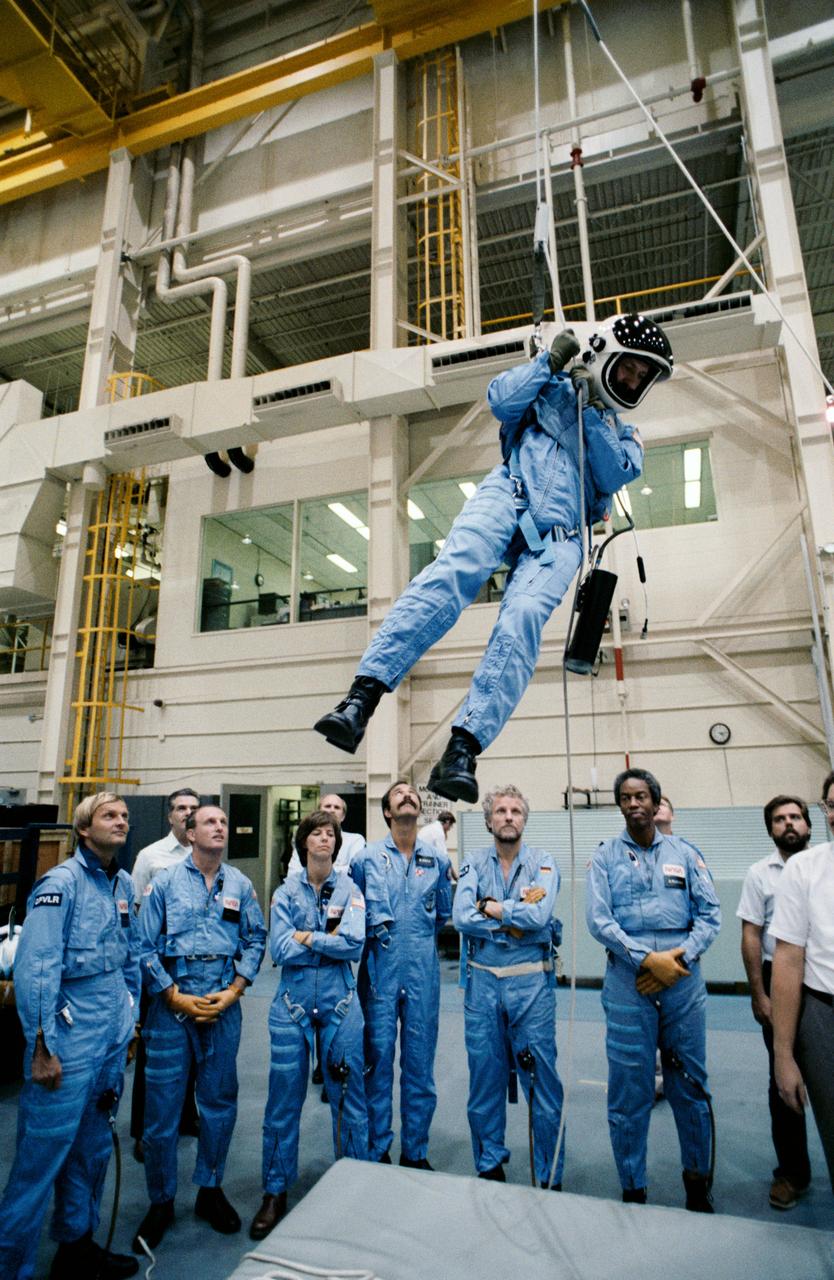
S85-41246 (26 Sept 1985) --- The STS 61-A/Spacelab D-1 crewmembers are seen in this training scene in the Johnson Space Center's Space Shuttle mockup and integration laboratory. Descending from a simulated Shuttle orbiter in distress, using a Sky-Genie device, is Astronaut Henry W. Hartsfield, Jr. mission commander. Watching in blue flight garments are other members of the crew. They are, left to right, Ernst Messerschmid, German payload specialist (PS1); James F. Buchli, NASA mission specialist (MS2); Bonnie J. Dunbar, NASA mission specialist (MS1); Wubbo J. Ockels, Dutch PS3. Not pictured is Steven R. Nagel, pilot. Photo was taken by Otis Imboden.
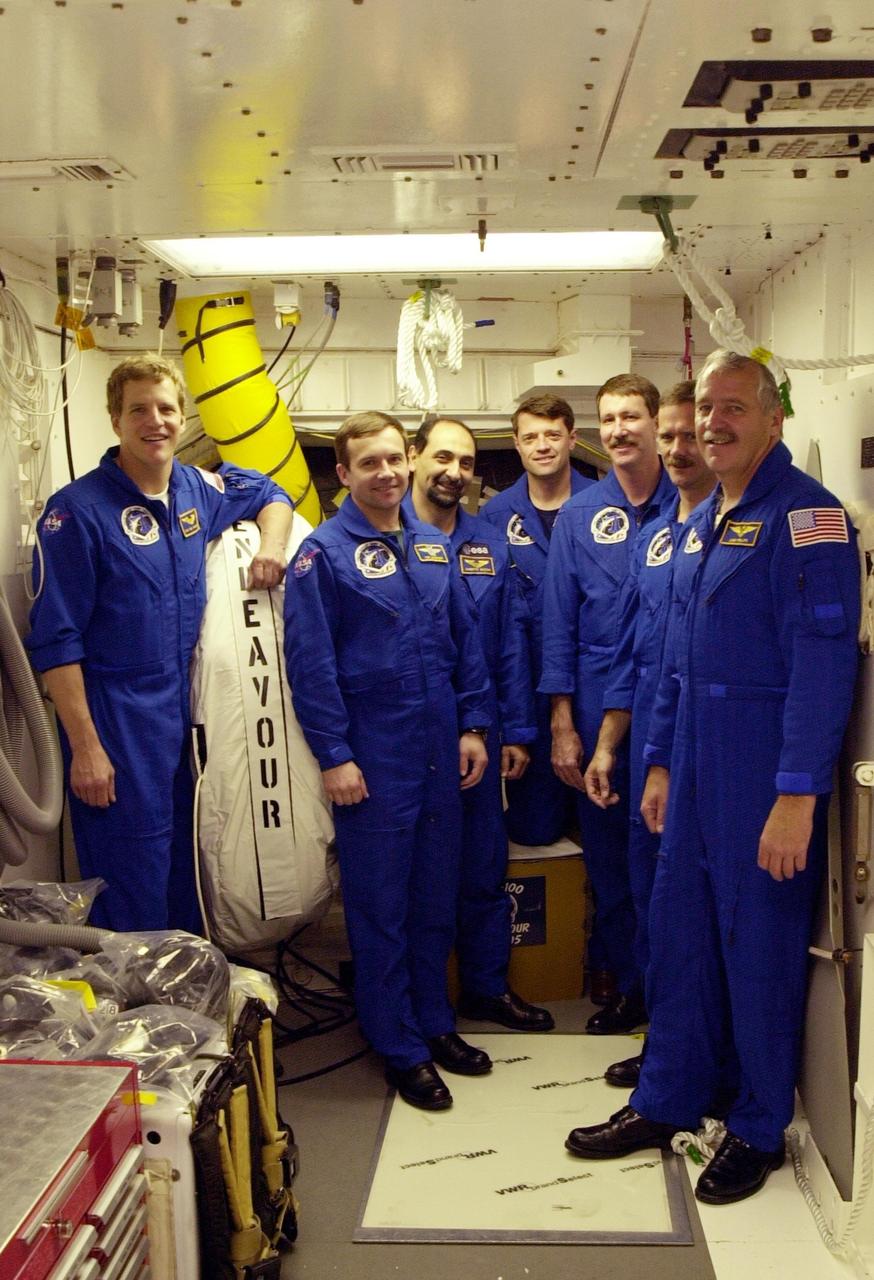
The crew on mission STS-100 poses in the White Room during Terminal Countdown Demonstration Test activities. Standing, from left, are Mission Specialists Scott E. Parazynski, Yuri Lonchakov, and Umberto Guidoni; Pilot Jeffrey S. Ashby; Commander Kent V. Rominger; Mission Specialist Chris A. Hadfield; and Mission Specialist John L. Phillips. The TCDT includes emergency escape training, payload bay walkdown, and a simulated launch countdown. Launch of Space Shuttle Endeavour on mission STS-100 is targeted for April 19 at 2:41 p.m. EDT from Launch Pad 39A
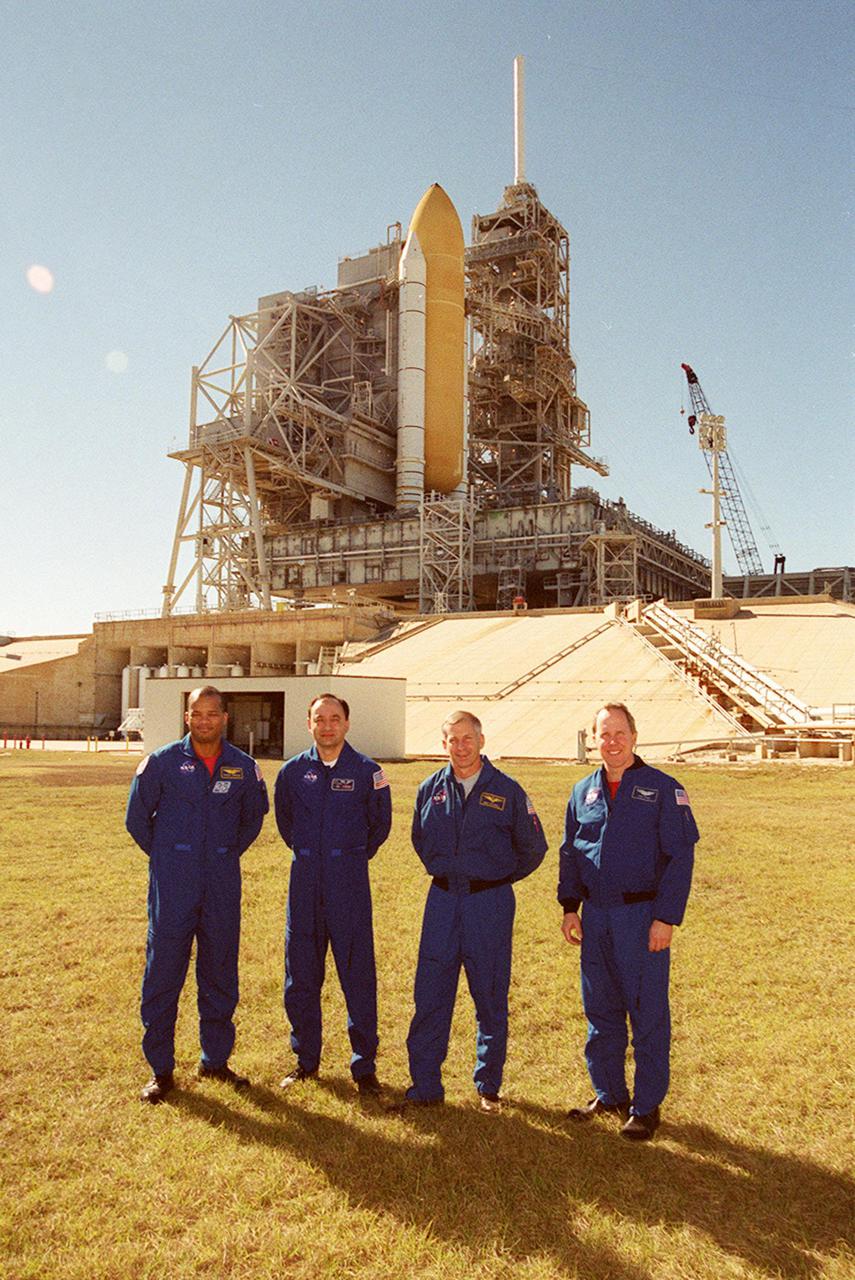
KENNEDY SPACE CENTER, FLA. -- Four members of the STS-98 crew pose for a photo at Launch Pad 39A. Standing, left to right, are Mission Specialist Robert Curbeam, Pilot Mark Polansky, Commander Ken Cockrell and Mission Specialist Thomas Jones. Not pictured is Mission Specialist Marsha Ivins. The crew is at KSC to take part in Terminal Countdown Demonstration Test activities, which include emergency egress training and a simulated launch countdown. STS-98 is the seventh construction flight to the International Space Station, carrying as payload the U.S. Lab Destiny, a key element in the construction of the ISS. Launch of STS-98 is scheduled for Jan. 19 at 2:11 a.m

STS-98 Mission Specialist Marsha Ivins waits in the White Room outside the entrance into Atlantis. The crew is at KSC to take part in Terminal Countdown Demonstration Test activities, which include emergency egress training and a simulated launch countdown. The other crew members are Pilot Mark Polansky, Mission Specialist Thomas Jones, Commander Ken Cockrell and Mission Specialist Robert Curbeam. STS-98 is the seventh construction flight to the International Space Station, carrying as payload the U.S. Lab Destiny, a key element in the construction of the ISS. Launch of STS-98 is scheduled for Jan. 19 at 2:11 a.m
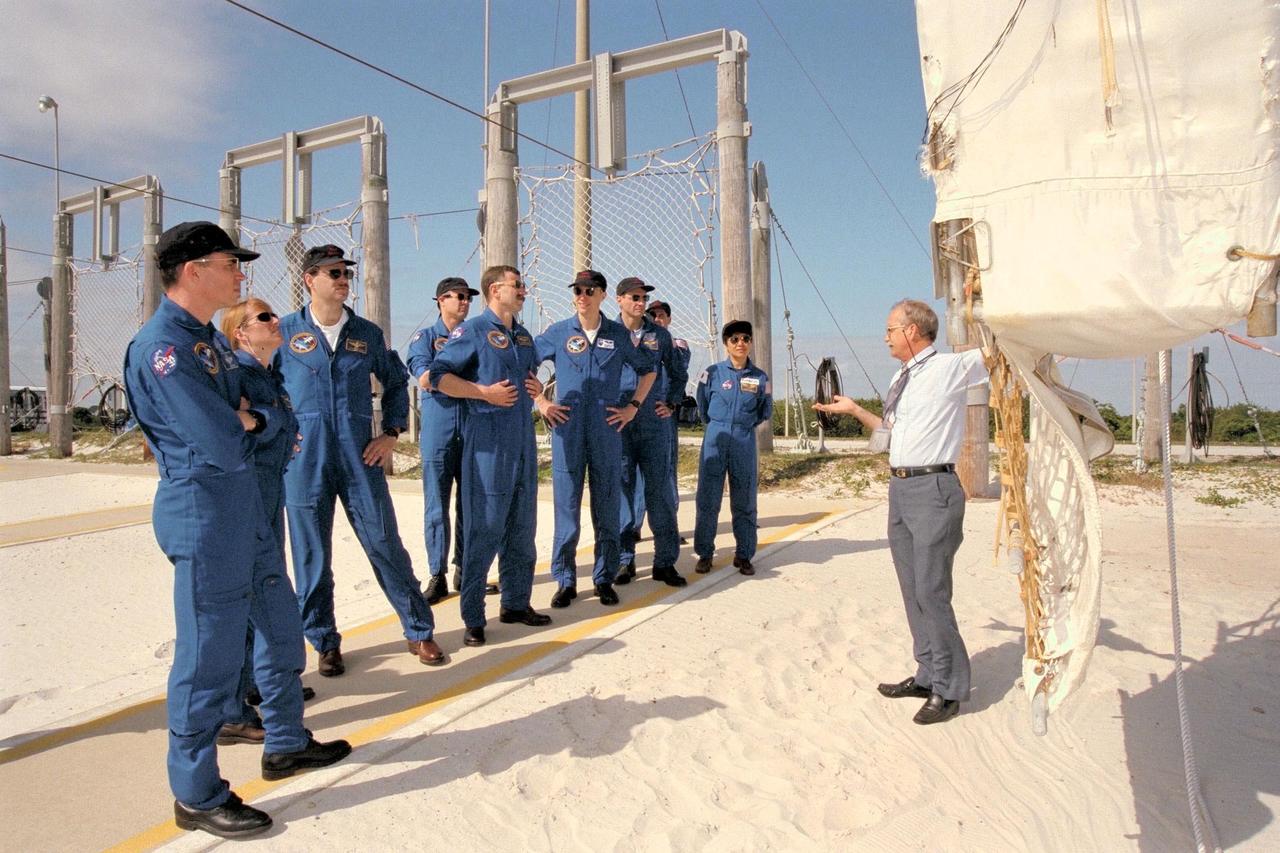
Members of the STS-90 flight crew train in the braking pit area for the emergency egress system slidewire baskets for Launch Pad 39B during Terminal Countdown Demonstration Test (TCDT) activities for that mission. The TCDT is held at KSC prior to each Space Shuttle flight to provide crews with the opportunity to participate in simulated countdown activities. From left to right are Commander Richard Searfoss, Mission Specialist Kathryn (Kay) Hire, Pilot Scott Altman, Payload Specialist Jay Buckey, M.D. (behind), Mission Specialist Dafydd (Dave) Williams, M.D., with the Canadian Space Agency, Payload Specialist James Pawelczyk, Ph.D., and Mission Specialist Richard Linnehan, D.V.M. Backup Payload Specialists Alexander Dunlap (holding camera), D.V.M., M.D., and Chiaki Mukai, M.D., Ph.D., with the National Space Development Agency of Japan are also listening to USA technical trainer Bob Parks' instruction. Columbia is targeted for launch of STS-90 on April 16 at 2:19 p.m. EDT and will be the second mission of 1998. The mission is scheduled to last nearly 17 days
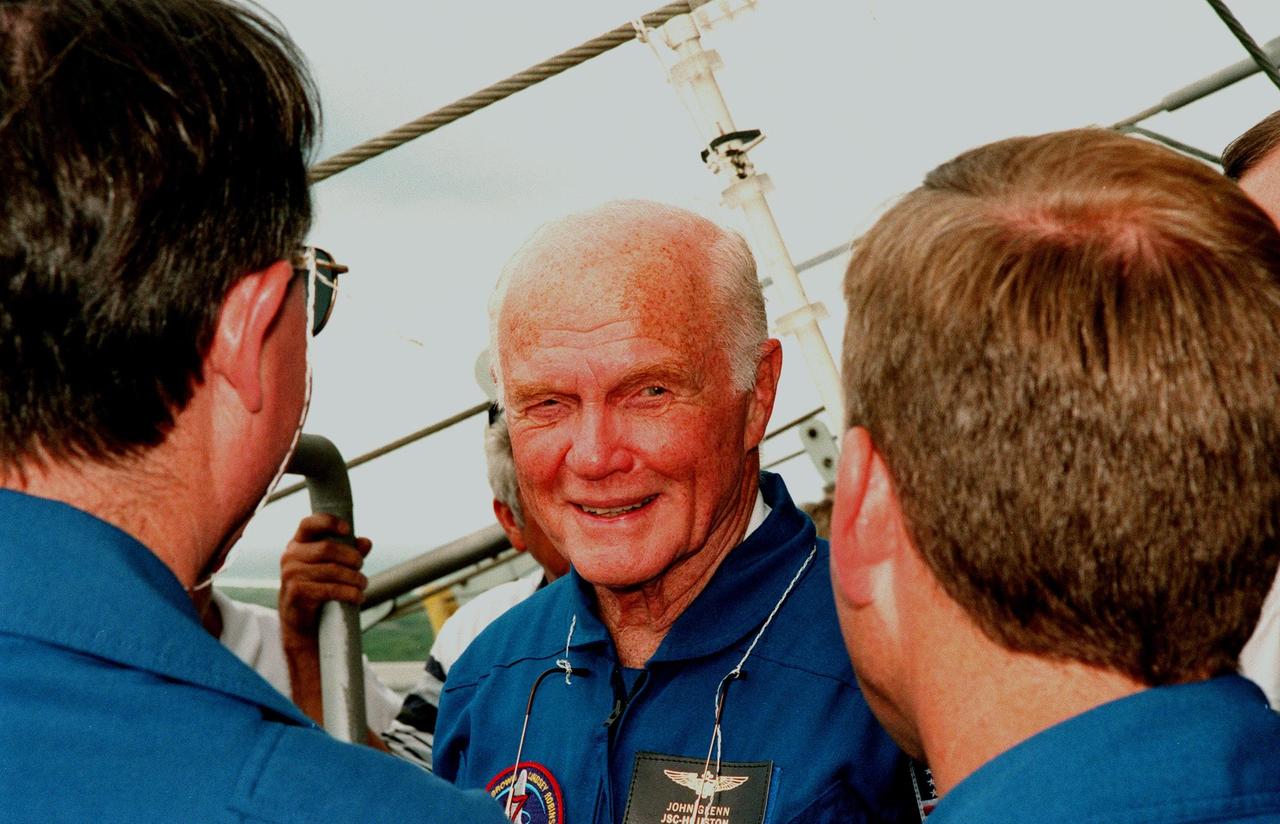
At Launch Pad 39-B, at the 195-foot level, STS-95 Payload Specialist John H. Glenn Jr., senator from Ohio, takes a moment from emergency egress training to talk to (left) Mission Specialist Stephen K. Robinson and Pilot Steven W. Lindsey (right). The STS-95 crew are at KSC to participate in a Terminal Countdown Demonstration Test (TCDT) which includes mission familiarization activities, emergency egress training, and a simulated main engine cut-off exercise. Other crew members are Mission Specialist Scott E. Parazynski, Mission Specialist Pedro Duque of Spain, representing the European Space Agency (ESA), Mission Specialist Payload Specialist Chiaki Mukai, representing the National Space Development Agency of Japan (NASDA), and Mission Commander Curtis L. Brown. The STS-95 mission, targeted for liftoff on Oct. 29, includes research payloads such as the Spartan solar-observing deployable spacecraft, the Hubble Space Telescope Orbital Systems Test Platform, the International Extreme Ultraviolet Hitchhiker, as well as the SPACEHAB single module with experiments on space flight and the aging process. Following the TCDT, the crew will be returning to Houston for final flight preparations
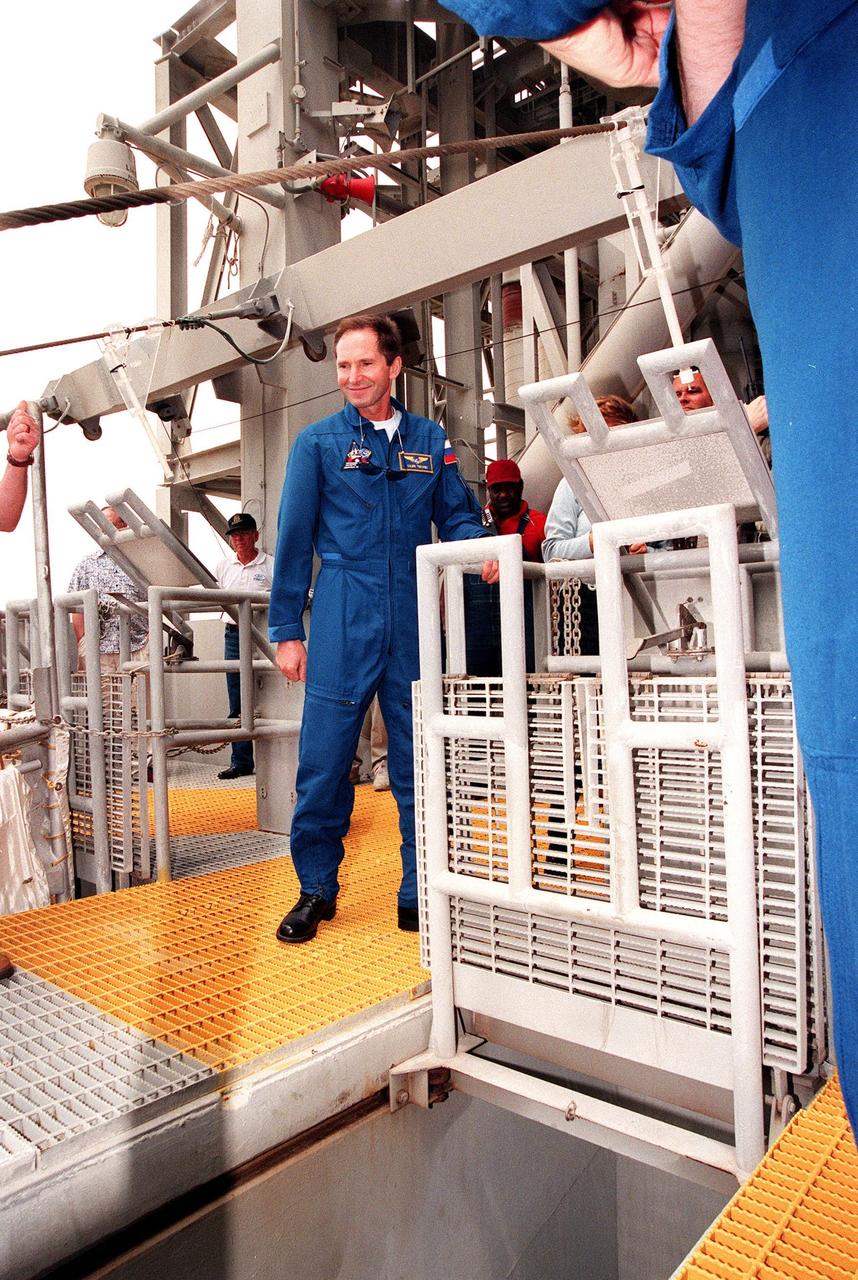
At the 195-foot level of Launch Pad 39B, STS-96 Mission Specialist Valery Ivanovich Tokarev releases a slidewire basket, part of emergency egress training. The STS-96 crew are taking part in Terminal Countdown Demonstration Test activities which also provide simulated countdown exercises and opportunities to inspect the mission payloads in the orbiter's payload bay. The other crew members are Commander Kent V. Rominger, Pilot Rick Douglas Husband and Mission Specialists Ellen Ochoa (Ph.D.), Tamara E. Jernigan (Ph.D.), Daniel Barry (M.D., Ph.D.) and Julie Payette, with the Canadian Space. STS-96, which is scheduled for liftoff on May 20 at 9:32 a.m., is a logistics and resupply mission for the International Space Station, carrying such payloads as a Russian crane, the Strela; a U.S.-built crane; the Spacehab Oceaneering Space System Box (SHOSS), a logistics items carrier; and STARSHINE, a student-led experiment
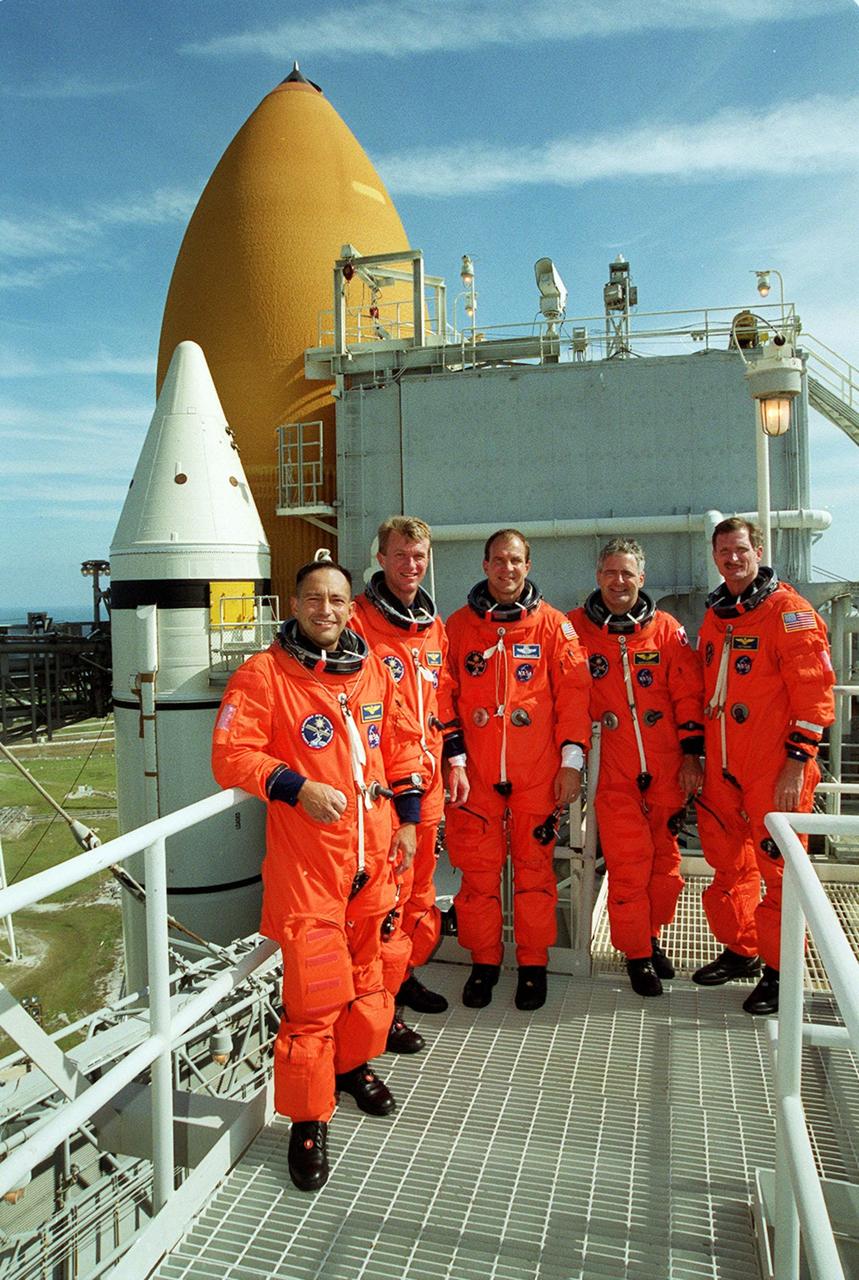
During Terminal Countdown Demonstration Test (TCDT) activities at Launch Pad 39B, the STS-97 crew poses for a photo at the 215-foot level. From left, they are Mission Specialist Carlos Noriega, Commander Brent Jett, Pilot Mike Bloomfield and Mission Specialists Marc Garneau and Joe Tanner. Behind them at left can be seen the top of the solid rocket booster and external tank on Space Shuttle Endeavour. The TCDT includes emergency egress training, opportunities to inspect the mission payloads in the orbiter’s payload bay and a simulated launch countdown. Mission STS-97is the sixth construction flight to the International Space Station. Its payload includes the P6 Integrated Truss Structure and a photovoltaic (PV) module, with giant solar arrays that will provide power to the Station. The mission includes two spacewalks to complete the solar array connections. STS-97 is scheduled to launch Nov. 30 at 10:05 p.m. EST
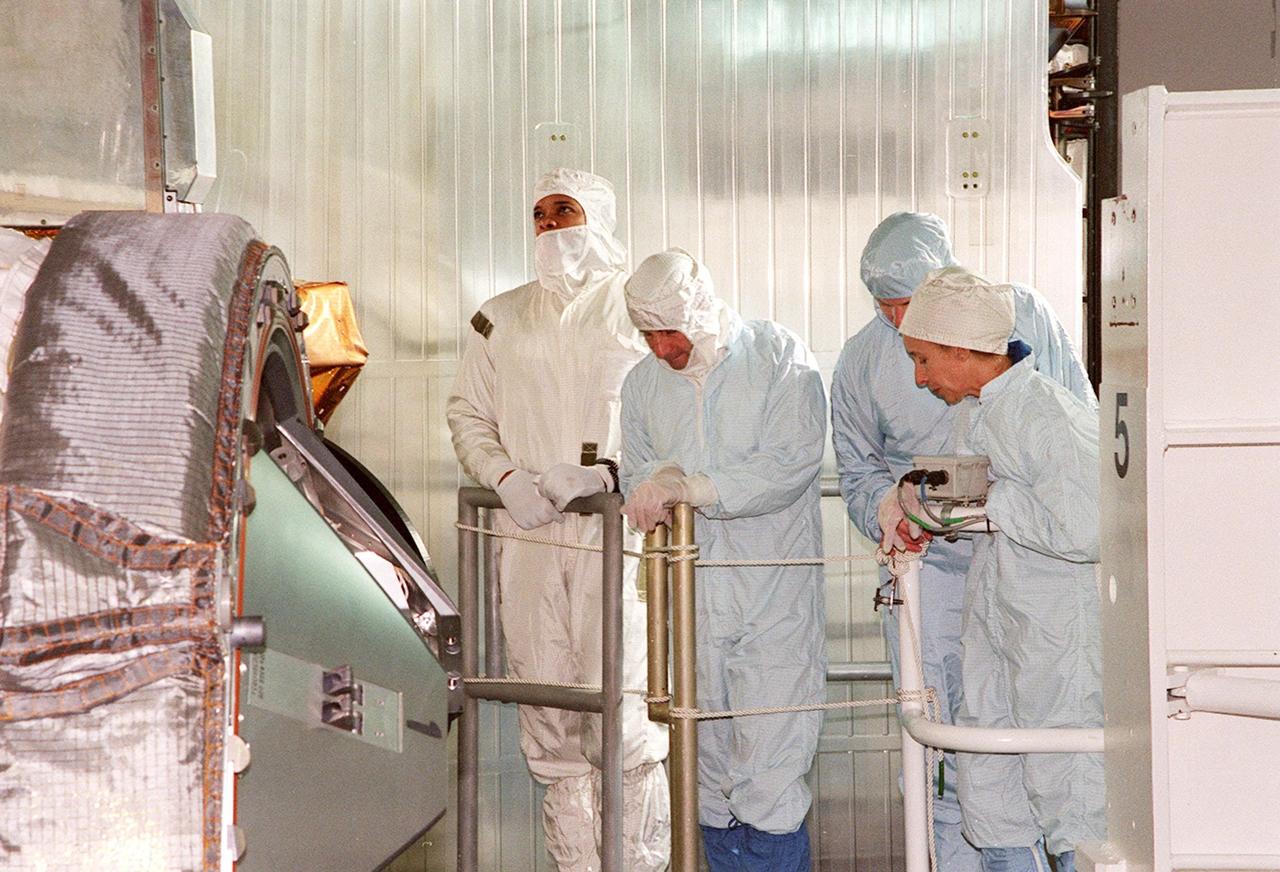
KENNEDY SPACE CENTER, FLA. -- STS-98 Mission Specialist Robert Curbeam (left), Commander Ken Cockrell (center) and Mission Specialist Marsha Ivins (right) look over the U.S. Lab Destiny in the payload bay of the orbiter Atlantis. Behind Ivins is Scott Thurston, of the VITT office. The crew is at KSC for Terminal Countdown Demonstration Test activities, which also include a simulated launch countdown. A key element in the construction of the International Space Station, Destiny is a pressurized module designed to accommodate pressurized payloads. It has a capacity of 24 rack locations. Payload racks will occupy 13 locations especially designed to support experiments. The module already has five system racks installed inside. Launch of STS-98 on its 11-day mission is scheduled for Jan. 19 at 2:11 a.m. EST
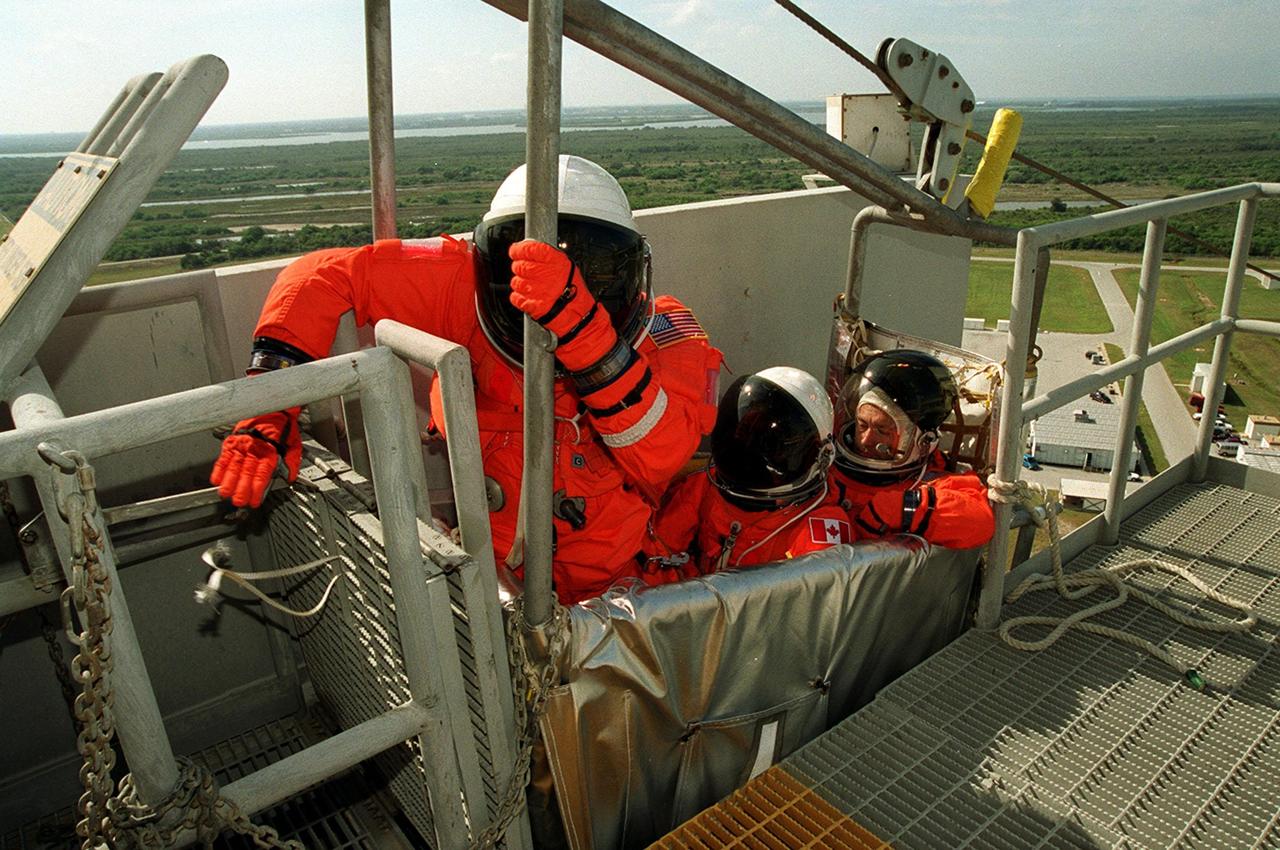
On the 195-foot level at Launch Pad 39B, STS-97 Mission Specialist Joe Tanner reaches for the lever to release the slidewire basket that also holds Mission Specialists Marc Garneau (middle) and Carlos Noriega (right). They are practicing their emergency egress training from Endeavour as part of Terminal Countdown Demonstration Test (TCDT) activities. The TCDT also includes a simulated launch countdown and opportunities to inspect the mission payloads in the orbiter’s payload bay. Mission STS-97is the sixth construction flight to the International Space Station. Its payload includes the P6 Integrated Truss Structure and a photovoltaic (PV) module, with giant solar arrays that will provide power to the Station. The mission includes two spacewalks to complete the solar array connections. STS-97 is scheduled to launch Nov. 30 at 10:05 p.m. EST
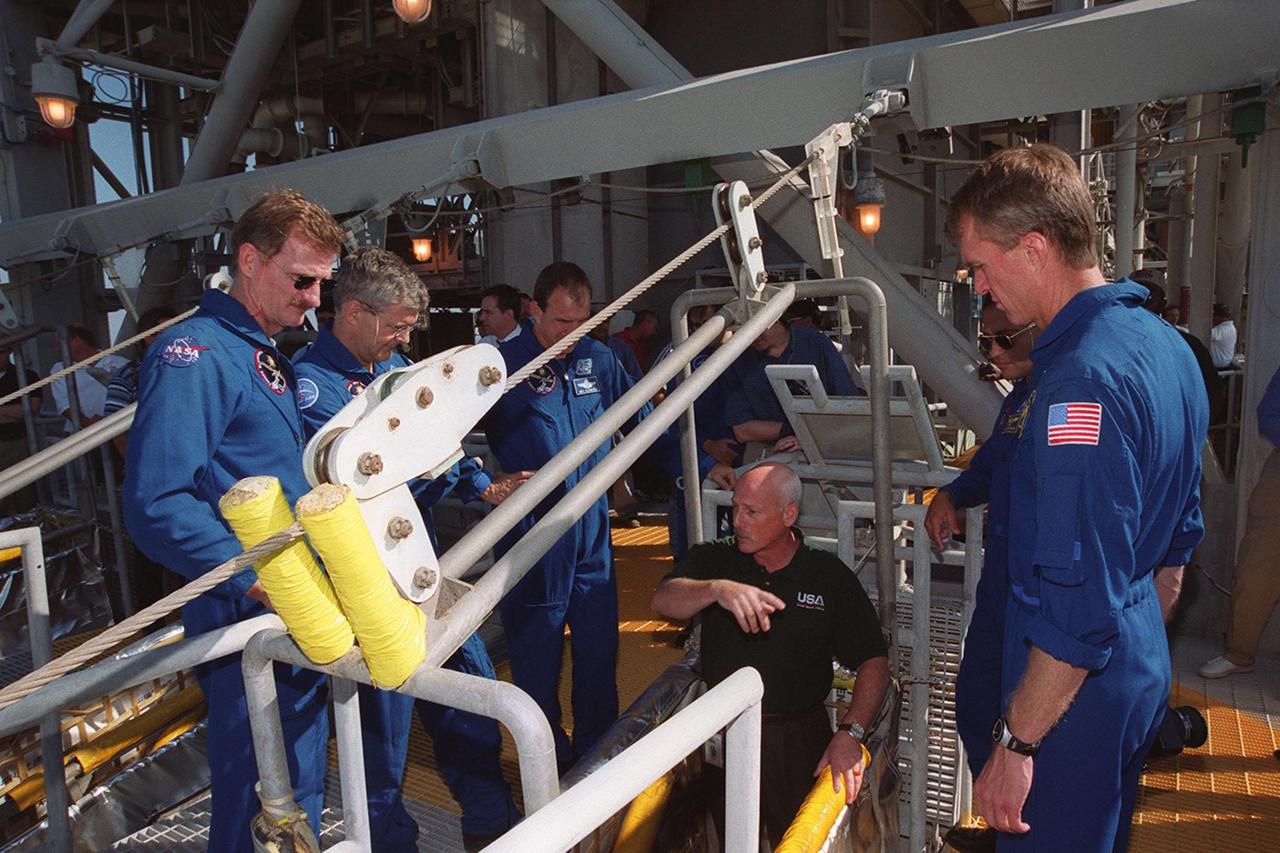
The STS-97 crew gets instruction on use of the slidewire basket during emergency egress training on the 195-foot level at Launch Pad 39B. On the left are Mission Specialists Joe Tanner and Marc Garneau and Pilot Mike Bloomfield. On the right are Commander Brent Jett (foreground) and Mission Specialist Carlos Noriega (behind Jett). The training is part of Terminal Countdown Demonstration Test (TCDT) activities, which also include a simulated launch countdown and opportunities to inspect the mission payloads in the orbiter’s payload bay. Mission STS-97is the sixth construction flight to the International Space Station. Its payload includes the P6 Integrated Truss Structure and a photovoltaic (PV) module, with giant solar arrays that will provide power to the Station. The mission includes two spacewalks to complete the solar array connections. STS-97 is scheduled to launch Nov. 30 at 10:05 p.m. EST
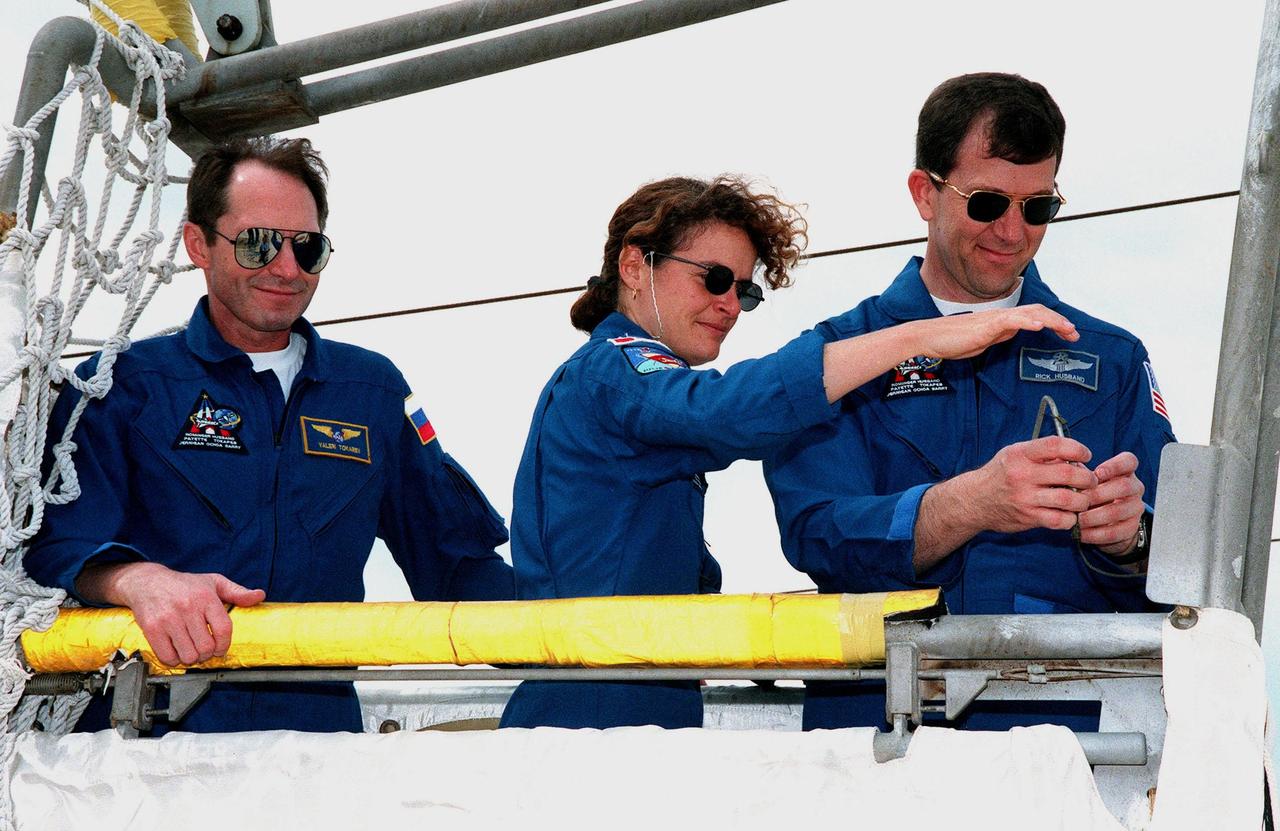
At the 195-foot level of Launch Pad 39B, STS-96 Mission Specialists Valery Ivanovich Tokarev and Julie Payette, plus Pilot Rick Douglas Husband, inspect the slidewire basket used for emergency egress. The training is part of Terminal Countdown Demonstration Test (TCDT) activities, which also provide the crew with simulated countdown exercises and opportunities to inspect the mission payloads in the orbiter's payload bay. Other crew members taking part in the TCDT are Commander Kent V. Rominger and Mission Specialists Tamara E. Jernigan (Ph.D.), Daniel Barry (M.D., Ph.D.), and Ellen Ochoa (Ph.D.). Scheduled for liftoff on May 20 at 9:32 a.m., STS-96 is a logistics and resupply mission for the International Space Station, carrying such payloads as a Russian crane, the Strela; a U.S.-built crane; the Spacehab Oceaneering Space System Box (SHOSS), a logistics items carrier; and STARSHINE, a student-led experiment
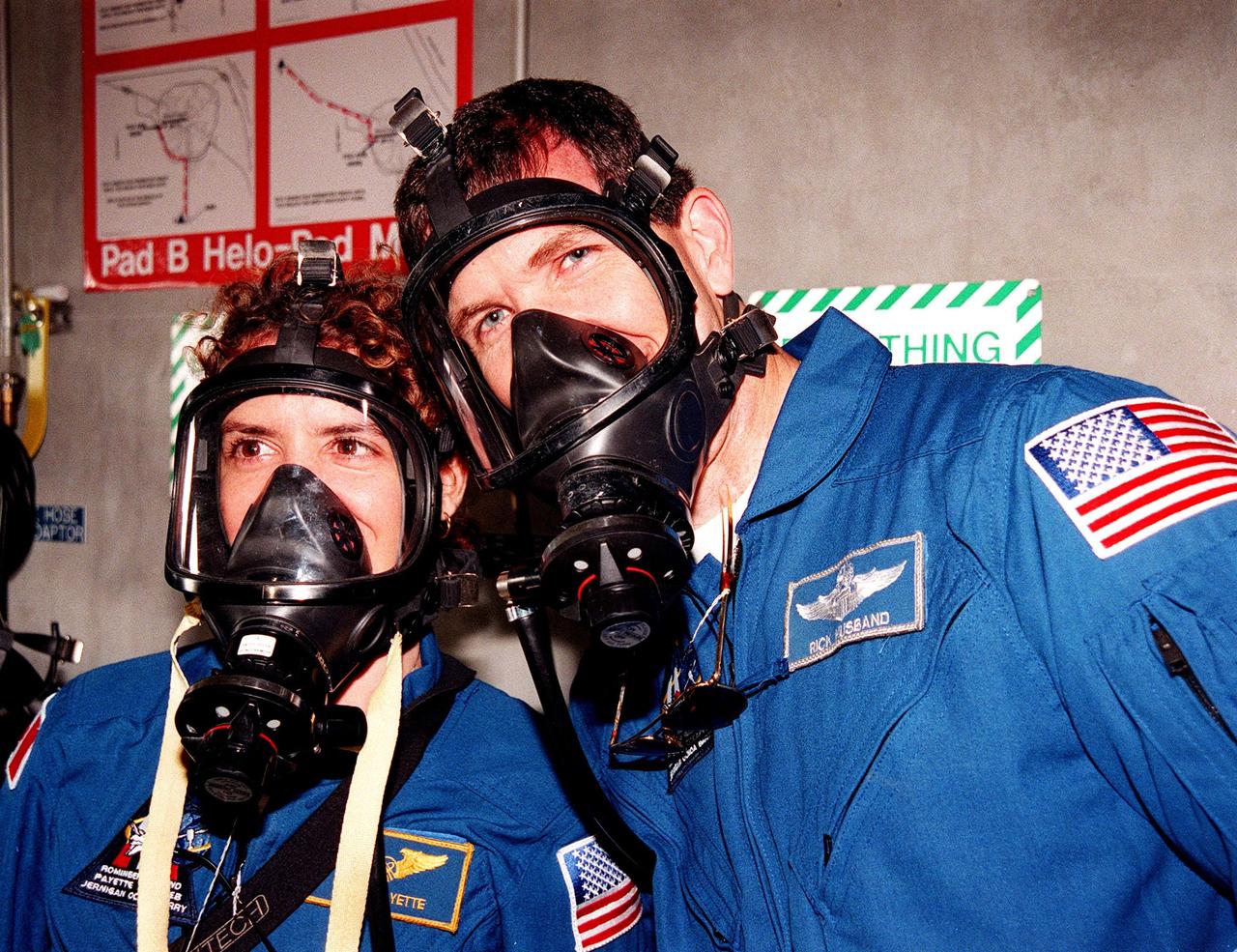
At Launch Pad 39B, STS-96 Mission Specialist Julie Payette, with the Canadian Space Agency, and Pilot Rick Douglas Husband practice putting on oxygen gas masks as part of Terminal Countdown Demonstration Test (TCDT) activities. The TCDT provides the crew with emergency egress traiing, simulated countdown exercises and opportunities to inspect the mission payloads in the orbiter's payload bay. Other crew members taking part in the TCDT are Commander Kent V. Rominger and Mission Specialists Tamara E. Jernigan (Ph.D.), Daniel Barry (M.D., Ph.D.), Ellen Ochoa (Ph.D.) and Valery Ivanovich Tokarev, with the Russian Space Agency. Scheduled for liftoff on May 20 at 9:32 a.m., STS-96 is a logistics and resupply mission for the International Space Station, carrying such payloads as a Russian crane, the Strela; a U.S.-built crane; the Spacehab Oceaneering Space System Box (SHOSS), a logistics items carrier; and STARSHINE, a student-led experiment
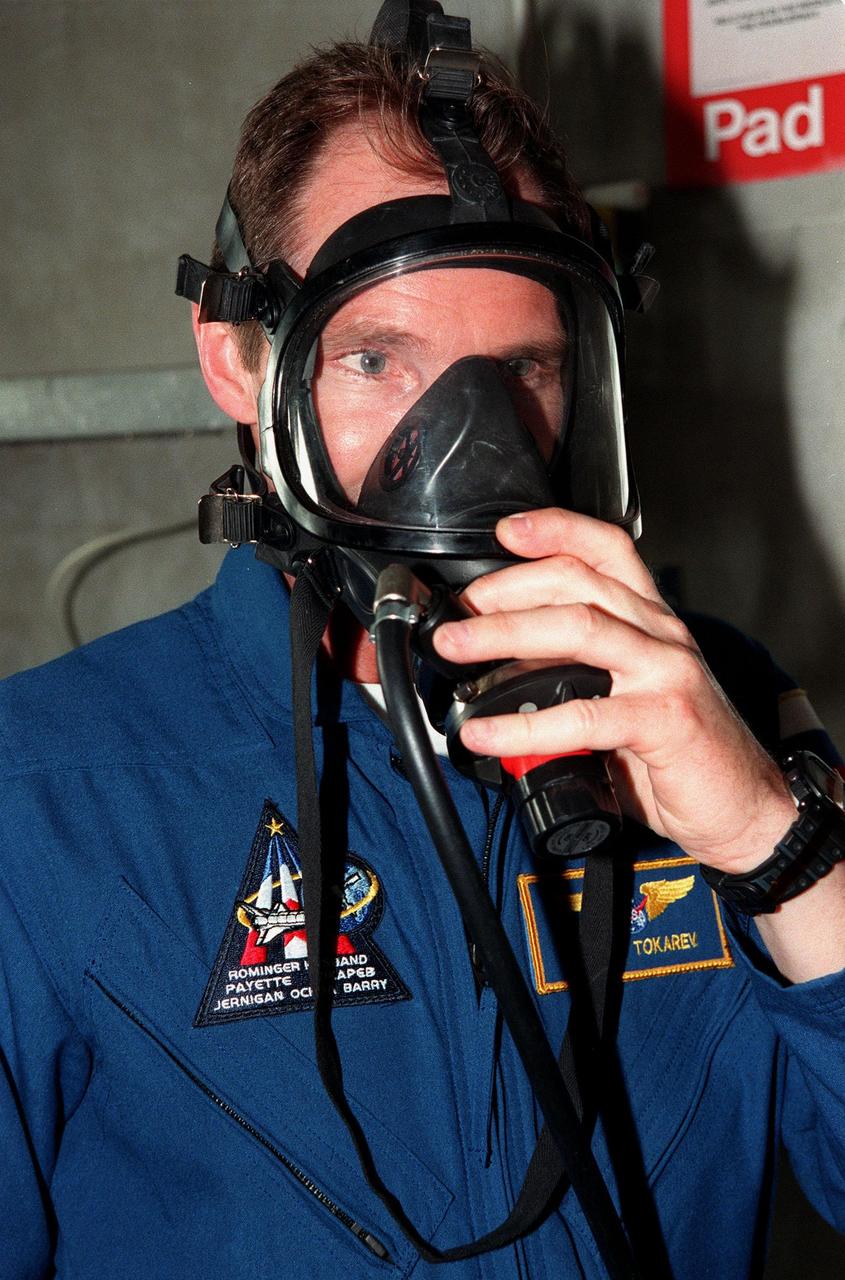
STS-96 Mission Specialist Valery Ivanovich Tokarev, with the Russian Space Agency, tries on an oxygen gas mask during Terminal Countdown Demonstration Test (TCDT) activities at Launch Pad 39B. The TCDT provides the crew with simulated countdown exercises, emergency egress training and opportunities to inspect the mission payloads in the orbiter's payload bay. Other crew members taking part in the TCDT are Commander Kent V. Rominger, Pilot Rick Douglas Husband, and Mission Specialists Tamara E. Jernigan (Ph.D.), Daniel Barry (M.D., Ph.D.), Ellen Ochoa (Ph.D.) and Julie Payette, with the Canadian Space Agency. Scheduled for liftoff on May 20 at 9:32 a.m., STS-96 is a logistics and resupply mission for the International Space Station, carrying such payloads as a Russian crane, the Strela; a U.S.-built crane; the Spacehab Oceaneering Space System Box (SHOSS), a logistics items carrier; and STARSHINE, a student-led experiment
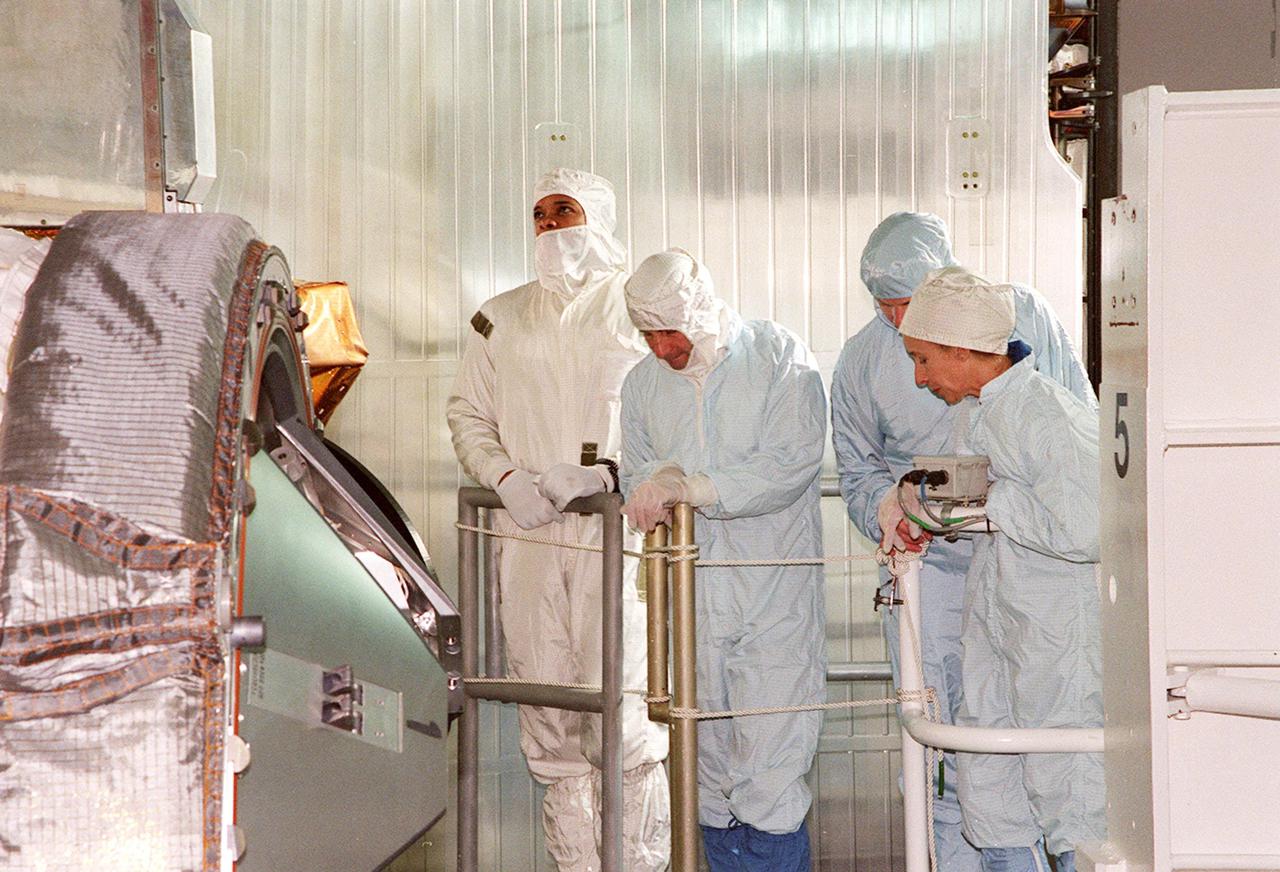
KENNEDY SPACE CENTER, FLA. -- STS-98 Mission Specialist Robert Curbeam (left), Commander Ken Cockrell (center) and Mission Specialist Marsha Ivins (right) look over the U.S. Lab Destiny in the payload bay of the orbiter Atlantis. Behind Ivins is Scott Thurston, of the VITT office. The crew is at KSC for Terminal Countdown Demonstration Test activities, which also include a simulated launch countdown. A key element in the construction of the International Space Station, Destiny is a pressurized module designed to accommodate pressurized payloads. It has a capacity of 24 rack locations. Payload racks will occupy 13 locations especially designed to support experiments. The module already has five system racks installed inside. Launch of STS-98 on its 11-day mission is scheduled for Jan. 19 at 2:11 a.m. EST
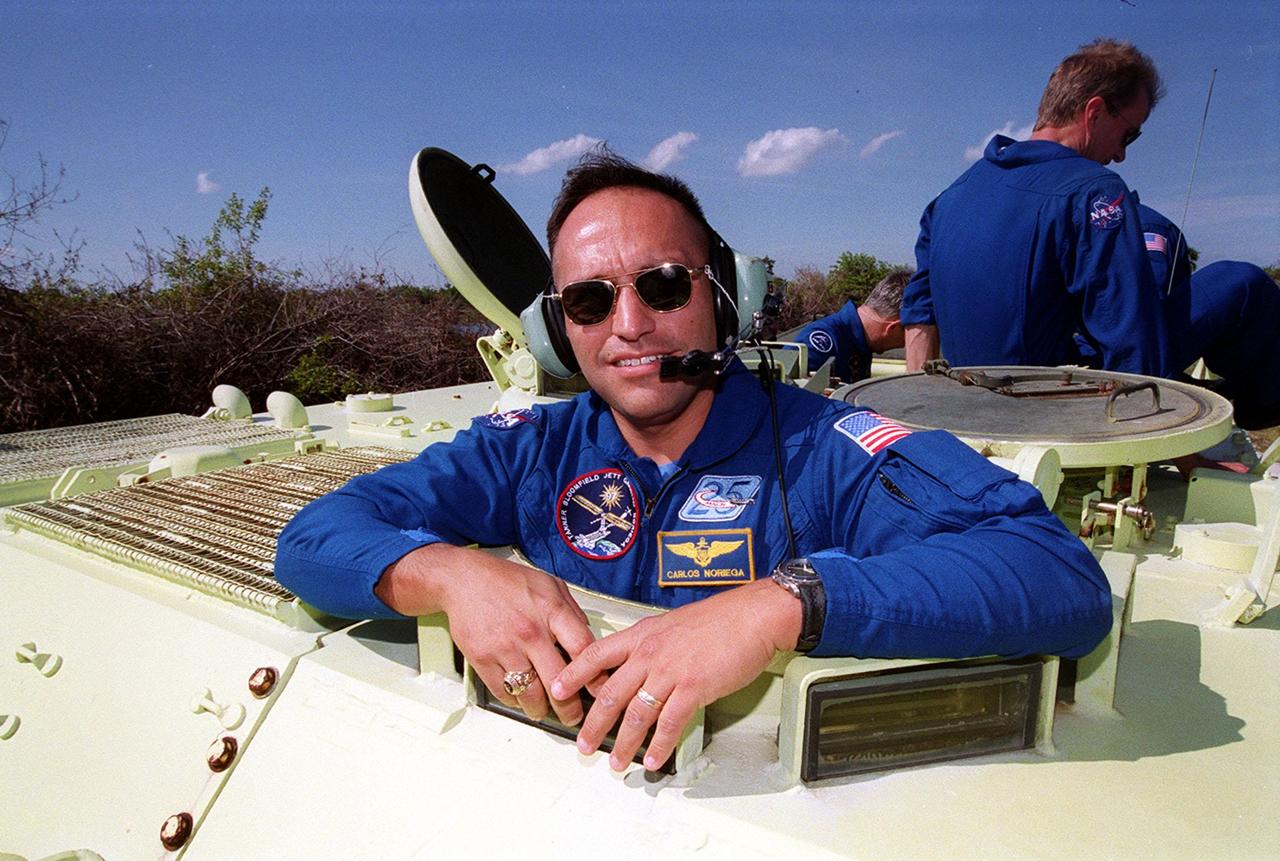
Mission Specialist Carlos Noriega (front) gets ready to take the wheel of an M-113. In the rear can be seen Mission Specialists Marc Garneau (left) and Joe Tanner (right). Learning to drive the armored vehicle is part of emergency egress training during Terminal Countdown Demonstration Test (TCDT) activities. The tracked vehicle could be used by the crew in the event of an emergency at the pad during which the crew must make a quick exit from the area. The TCDT, also includes a simulated launch countdown and opportunities to inspect the mission payloads in the orbiter’s payload bay. Mission STS-97is the sixth construction flight to the International Space Station. Its payload includes the P6 Integrated Truss Structure and a photovoltaic (PV) module, with giant solar arrays that will provide power to the Station. The mission includes two spacewalks to complete the solar array connections. STS-97 is scheduled to launch Nov. 30 at 10:05 p.m. EST
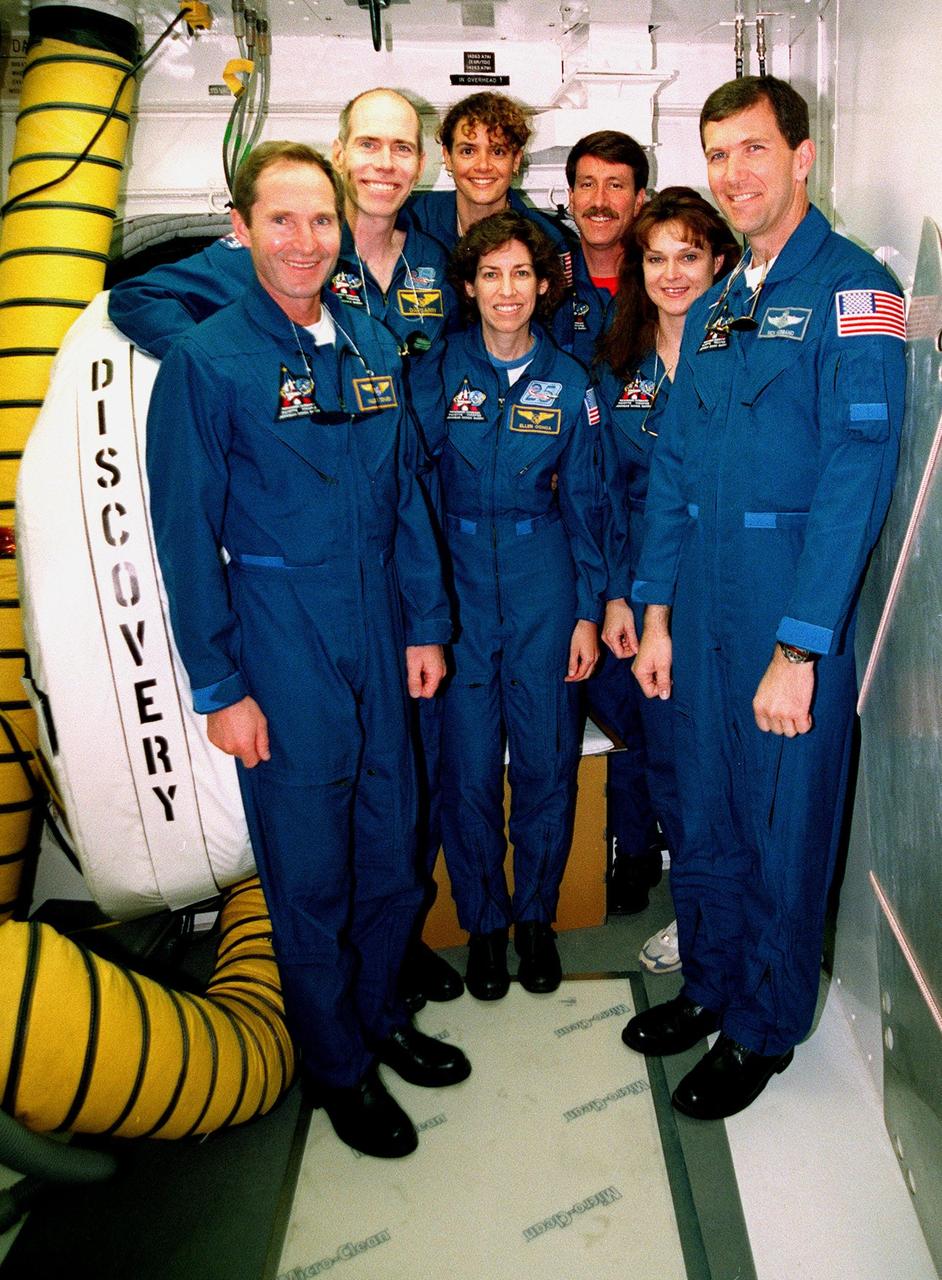
The STS-96 crew take a photo break during Terminal Countdown Demonstration Test (TCDT) activities at Launch Pad 39B. From left, they are Mission Specialists Valery Ivanovich Tokarev, Daniel Barry (M.D., Ph.D.), Julie Payette, Ellen Ochoa (Ph.D.), Commander Kent V. Rominger, Mission Specialist Tamara E. Jernigan (Ph.D.) and Pilot Rick Douglas Husband. Payette is with the Canadian Space Agency and Tokarev with the Russian Space Agency. The TCDT provides simulated countdown exercises, emergency egress training and opportunities to inspect the mission payloads in the orbiter's payload bay. STS-96, which is scheduled for liftoff on May 20 at 9:32 a.m., is a logistics and resupply mission for the International Space Station, carrying such payloads as a Russian crane, the Strela; a U.S.-built crane; the Spacehab Oceaneering Space System Box (SHOSS), a logistics items carrier; and STARSHINE, a student-led experiment
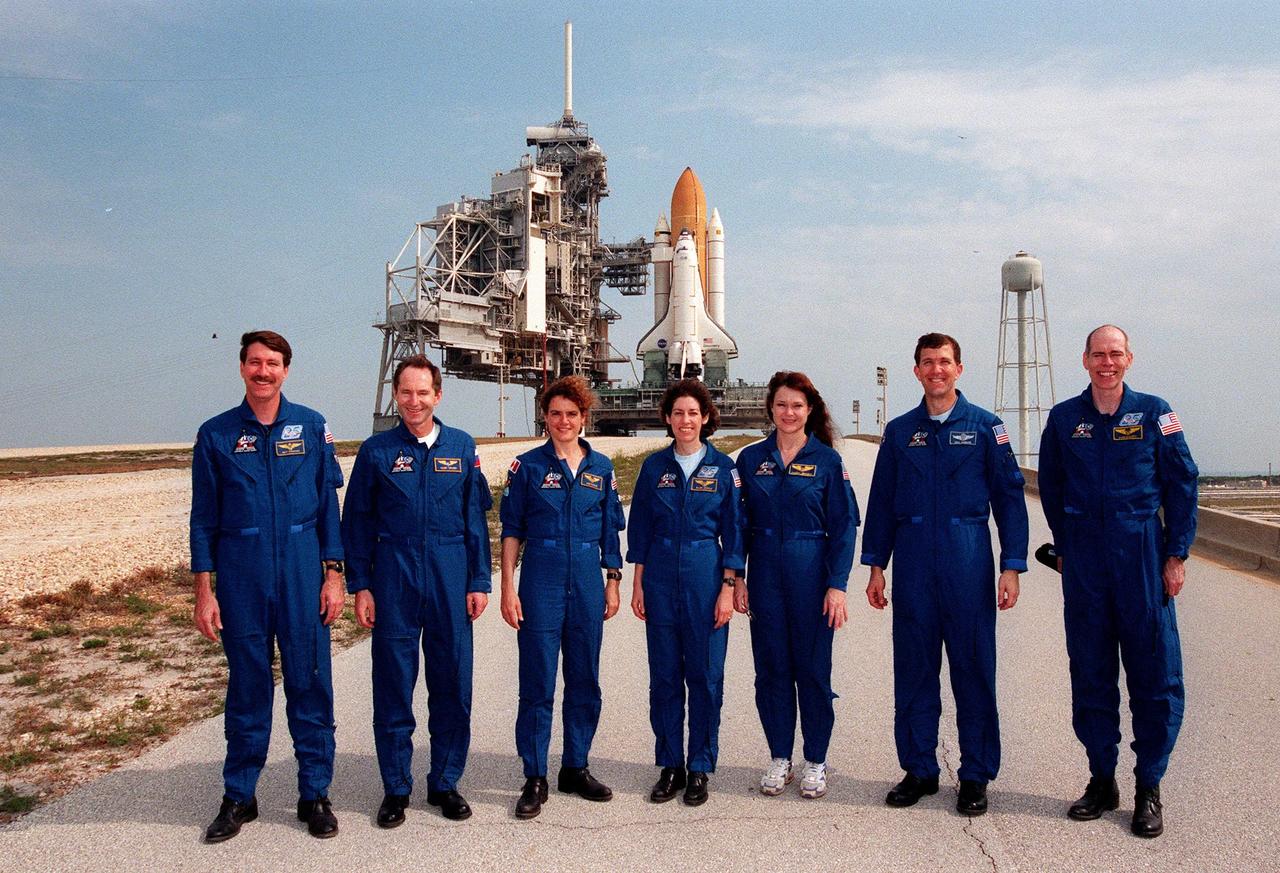
The STS-96 crew visit Launch Pad 39B where Space Shuttle Discovery, in the background, is being prepared for the mission launch on May 20. From left to right are Commander Kent V. Rominger; Mission Specialists Valery Ivanovich Tokarev, Julie Payette, Ellen Ochoa (Ph.D.), and Tamara E. Jernigan (Ph.D.); Pilot Rick Douglas Husband; and Mission Specialist Daniel Barry (M.D., Ph.D.). The crew are taking part in Terminal Countdown Demonstration Test (TCDT) activities. The TCDT provides simulated countdown exercises, emergency egress training, and opportunities to inspect the mission payloads in the orbiter's payload bay. Mission STS-96 is a logistics and resupply mission for the International Space Station, carrying such payloads as a Russian crane, the Strela; a U.S.-built crane; the Spacehab Oceaneering Space System Box (SHOSS), a logistics items carrier; and STARSHINE, a student-led experiment
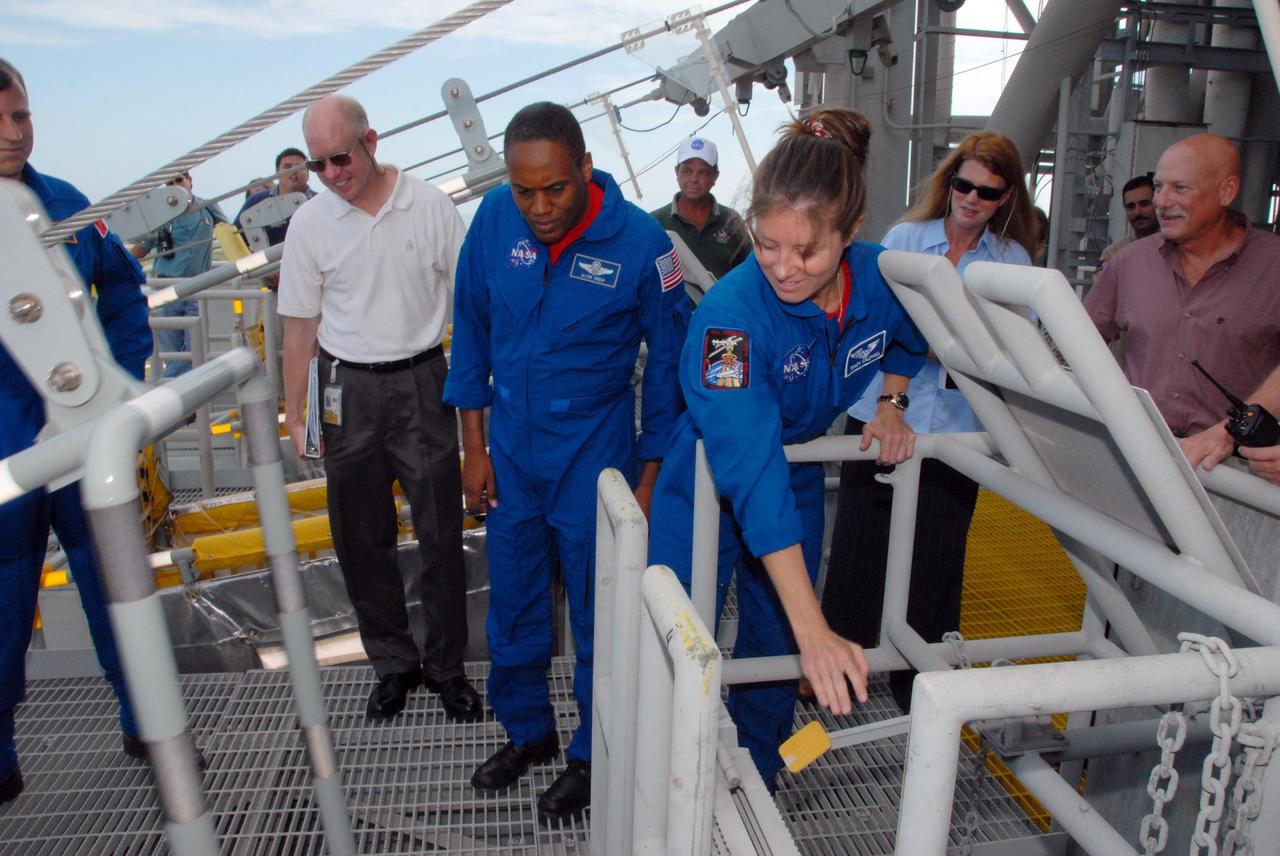
KENNEDY SPACE CENTER, Fla. -- On an upper level of the Pad 39A fixed service structure, the STS-118 crew members get directions about using the slidewire basket that is part of the emergency egress system. At right, Mission Specialist Tracy Caldwell identifies the pull lever to release the basket. At far left is Mission Specialist Dave Williams, who represents the Canadian Space Agency. At center is Mission Specialist Alvin Drew. The crew is at Kennedy for terminal countdown demonstration test, or TCDT, training activities. Those activities include M-113 training, payload familiarization, the emergency egress training at the pad and a simulated launch countdown. The mission is the 22nd flight to the International Space Station and Space Shuttle Endeavour will carry a payload including the S5 truss, a SPACEHAB module and external stowage platform 3. STS-118 is targeted for launch on Aug. 7. NASA/George Shelton
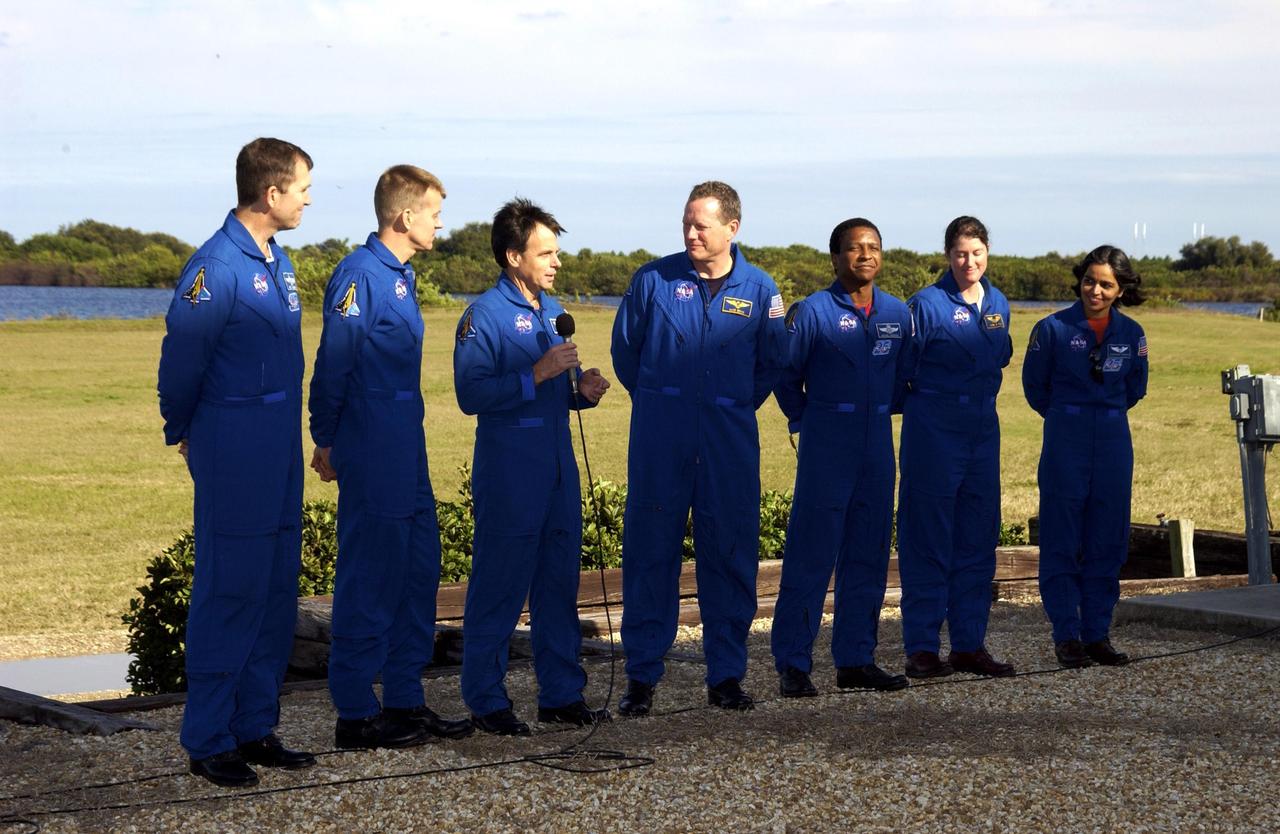
KENNEDY SPACE CENTER, FLA. -- The STS-107 crew meet with the media in front of the grandstand. With the microphone is Payload Specialist Ilan Ramon, the first Israeli astronaut. Others, from left, are Commander Rick Husband, Pilot William "Willie" McCool, Ramon, Mission Specialist David Brown, Payload Commander Michael Anderson, and Mission Specialists Laurel Clark and Kalpana Chawla. The crew just finished Terminal Countdown Demonstration Test activities, including a simulated launch countdown, in preparation for launch planned for Jan. 16, 2003, between 10 a.m. and 2 p.m. EST aboard Space Shuttle Columbia. STS-107 is a mission devoted to research and will include more than 80 experiments that will study Earth and space science, advanced technology development, and astronaut health and safety. .
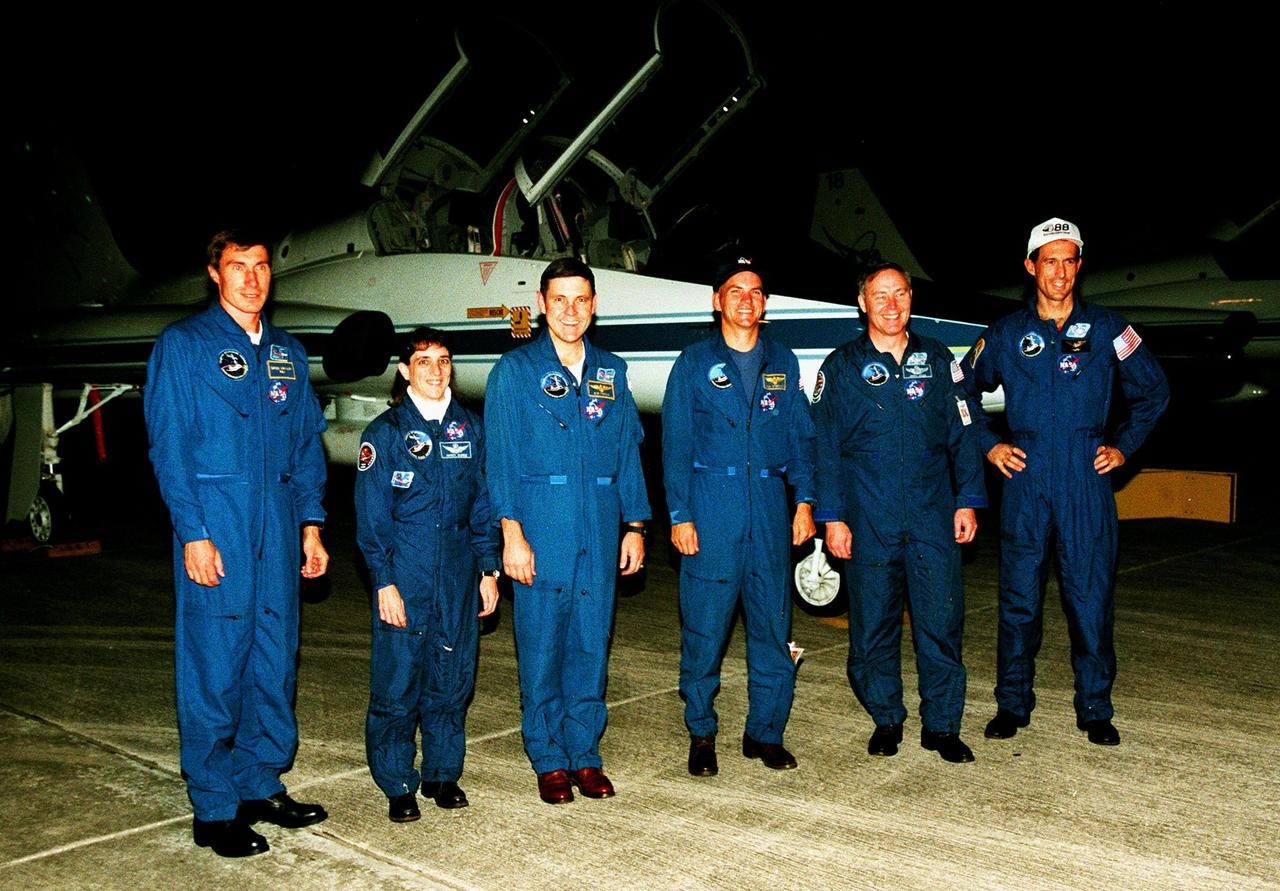
The STS-88 crew members pose for a group photograph in front of a T-38 jet aircraft after their nighttime arrival at the Shuttle Landing Facility to take part in Terminal Countdown Demonstration Test (TCDT) activities. From left to right, they are Mission Specialist Sergei Krikalev, who is a Russian cosmonaut, Mission Specialist Nancy J. Currie, Mission Commander Robert D. Cabana, Pilot Frederick W. "Rick" Sturckow, and Mission Specialists Jerry L. Ross and James H. Newman. The TCDT provides the crew with simulated countdown exercises, emergency egress training, and opportunities to inspect their mission payloads in the orbiter's payload bay. Mission STS-88 is targeted for launch on Dec. 3, 1998. It is the first U.S. flight for the assembly of the International Space Station and will carry the Unity connecting module. Ross and Newman will make three spacewalks to connect power, data and utility lines and install exterior equipment
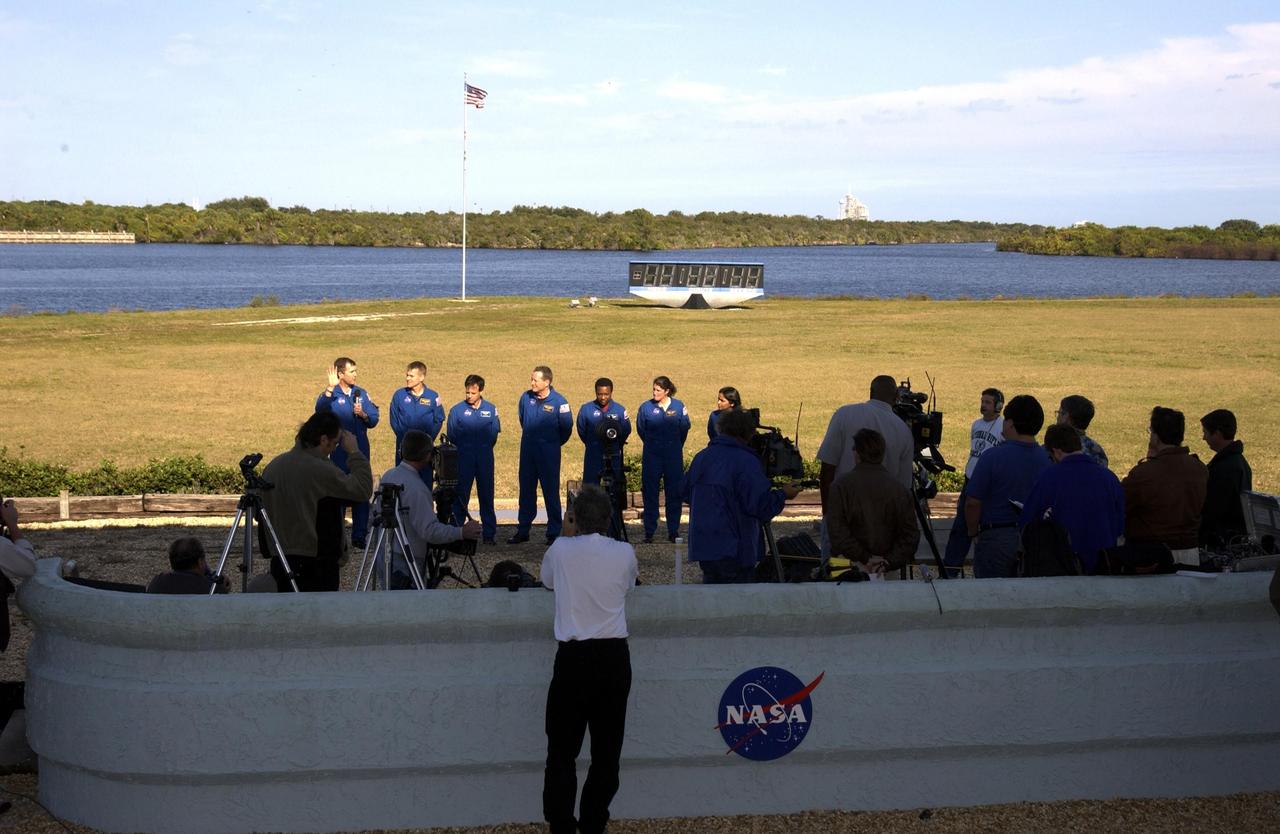
KENNEDY SPACE CENTER, FLA. - The STS-107 crew meet with the media in front of the grandstand. From left are Commander Rick Husband, Pilot William "Willie" McCool, Payload Specialist Ilan Ramon, Mission Specialist David Brown, Payload Commander Michael Anderson, and Mission Specialists Laurel Clark and Kalpana Chawla. The crew just finished Terminal Countdown Demonstration Test activities, including a simulated launch countdown, in preparation for launch planned for Jan. 16, 2003, between 10 a.m. and 2 p.m. EST aboard Space Shuttle Columbia. STS-107 is a mission devoted to research and will include more than 80 experiments that will study Earth and space science, advanced technology development, and astronaut health and safety. .
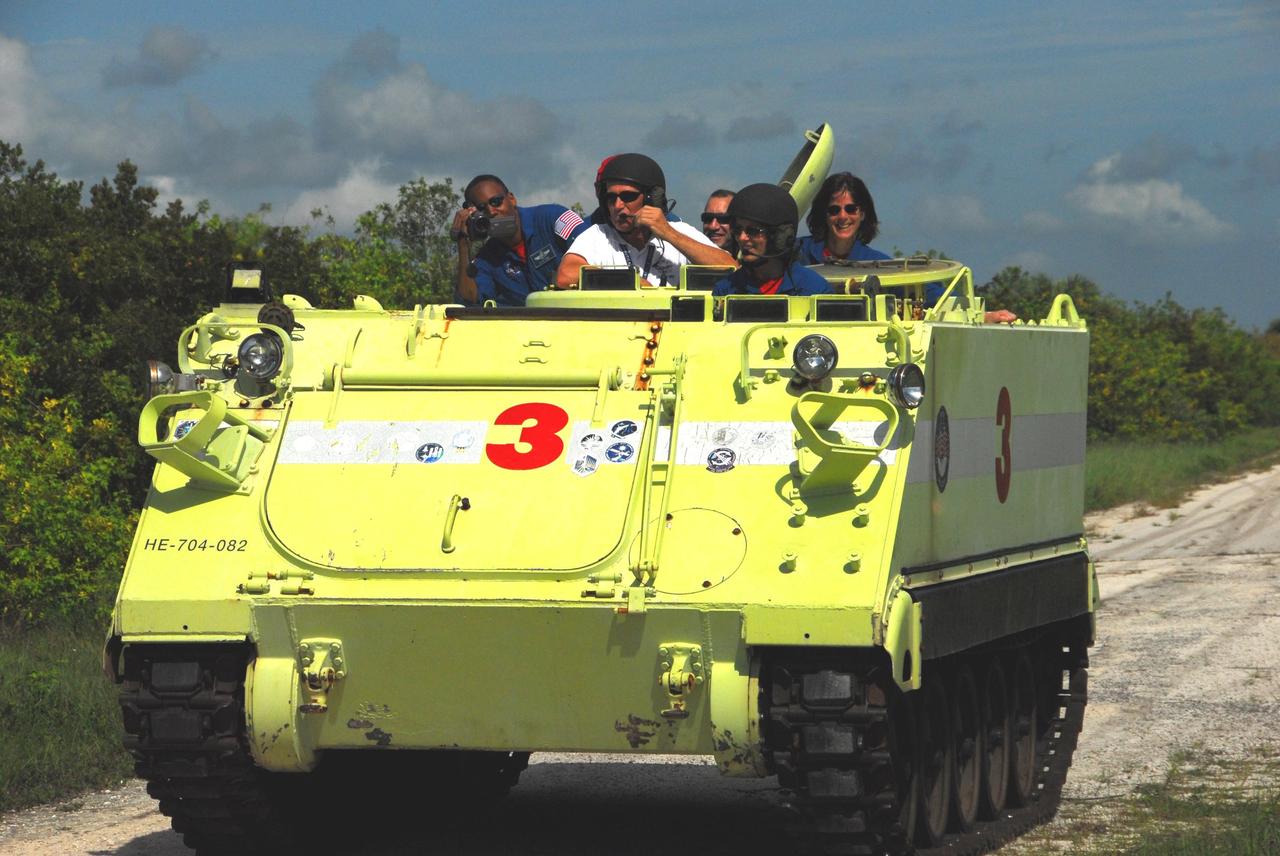
KENNEDY SPACE CENTER, Fla. -- STS-118 Mission Specialist Tracy Caldwell practices driving an M-113 armored personnel carrier as part of emergency exit training. Seen in the back are Mission Specialist Alvin Drew, Pilot Charlie Hobaugh and educator astronaut and Mission Specialist Barbara R. Morgan. They and other crew members are at Kennedy for the Terminal Countdown Demonstration Test (TCDT), a dress rehearsal for launch. TCDT activities include the M-113 training, payload familiarization, emergency egress training at the pad and a simulated launch countdown. The STS-118 payload aboard Space Shuttle Endeavour includes the S5 truss, a SPACEHAB module and external stowage platform 3. The mission is the 22nd flight to the International Space Station and is targeted for launch on Aug.7. NASA/George Shelton
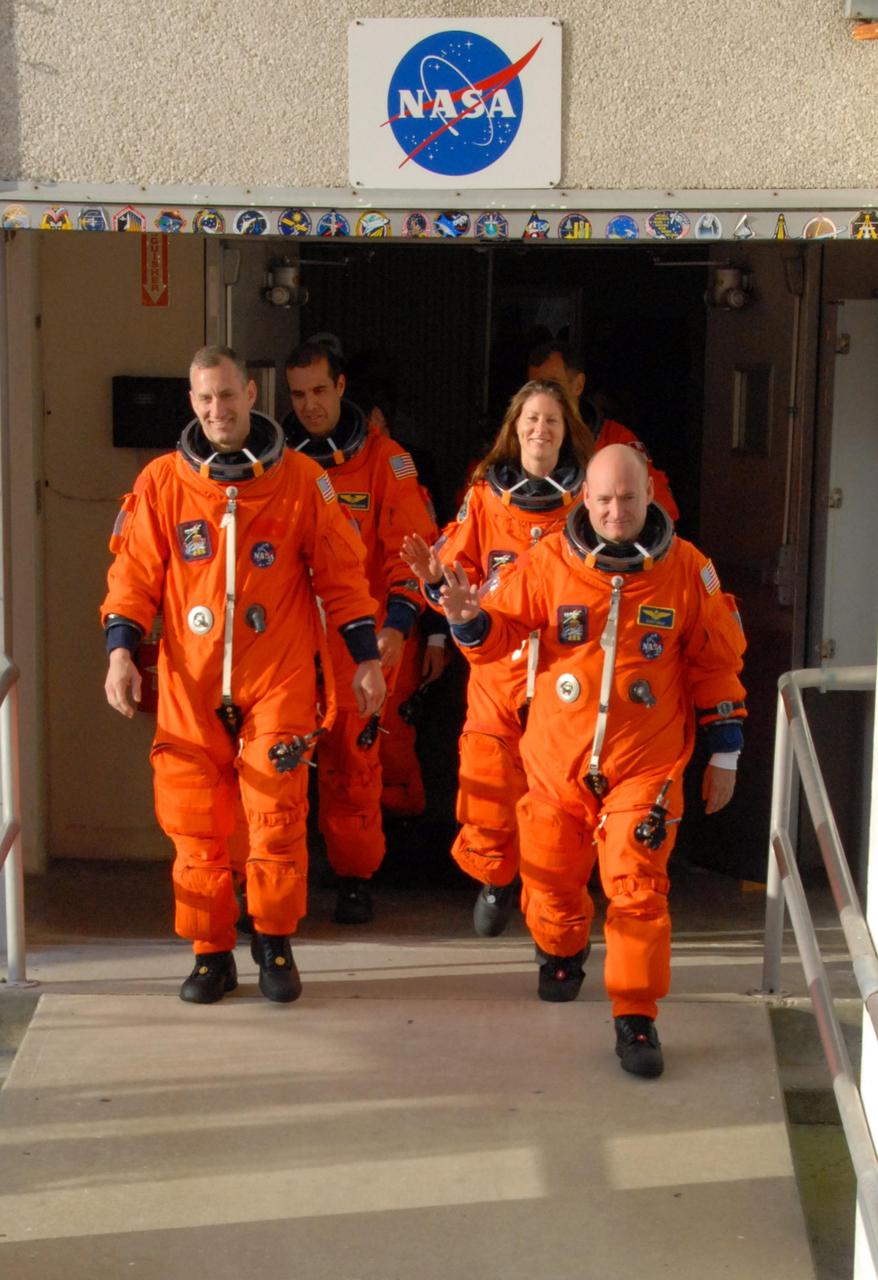
KENNEDY SPACE CENTER, Fla. -- The STS-118 crew walks out of the Operations and Checkout Building, heading for Launch Pad 39A and a simulated launch countdown. On the left, Pilot Charlie Hobaugh leads one column, with Mission Specialist Rick Mastracchio behind him. On the right, Commander Scott Kelly leads, with Mission Specialists Tracy Caldwell and Dave Williams behind. Not pictured are Mission Specialists Alvin Drew and teacher-turned-astronaut Barbara R. Morgan. The countdown concludes the terminal countdown demonstration test, or TCDT. The STS-118 crew has been at Kennedy for the TCDT activities that also include M-113 training, payload familiarization and emergency egress training at the pad. The mission is the 22nd flight to the International Space Station and Space Shuttle Endeavour will carry a payload including the S5 truss, a SPACEHAB module and external stowage platform 3. STS-118 is targeted for launch on Aug. 7. Photo credit: NASA/George Shelton
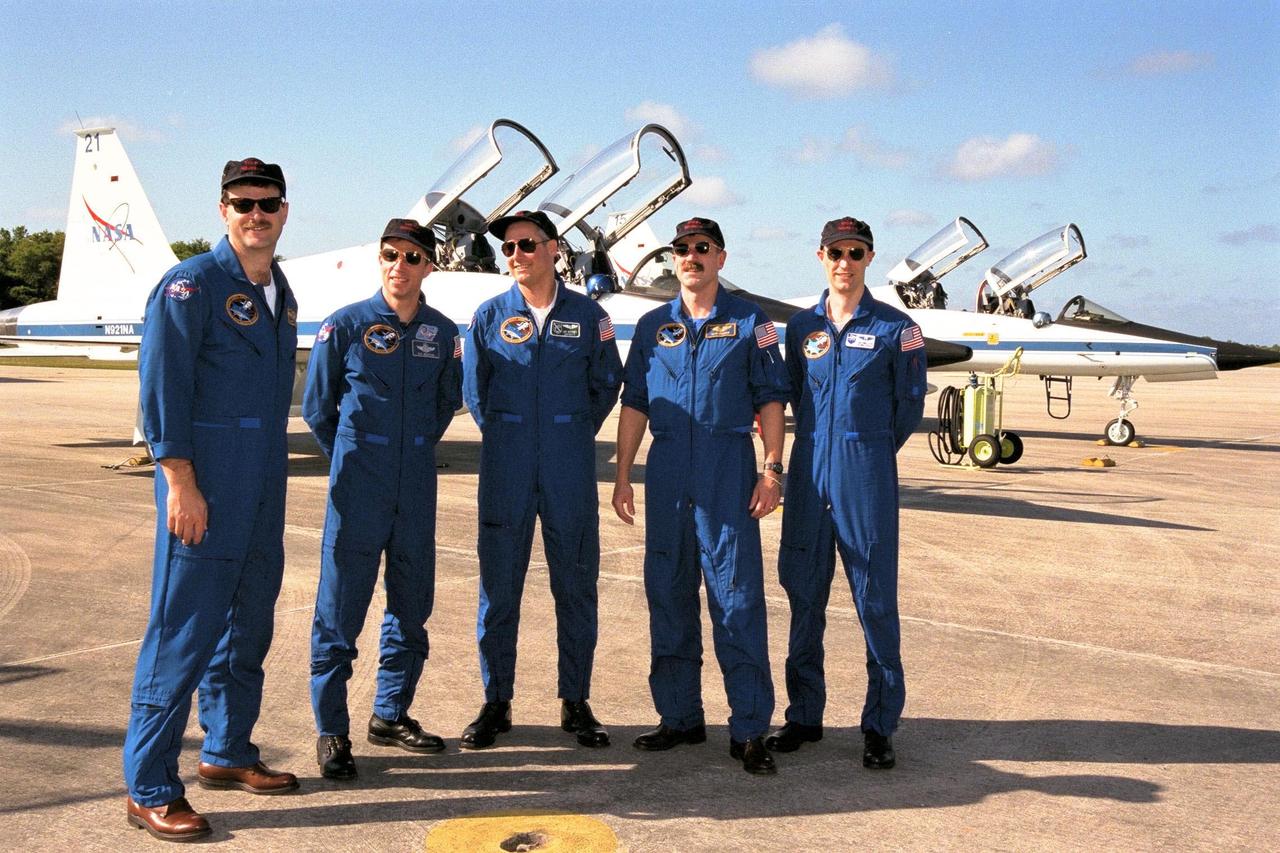
Members of the STS-90 crew pose together shortly after arriving at the KSC Shuttle Landing Facility from NASA’s Johnson Space Center to begin Terminal Countdown Demonstration Test (TCDT) activities. The TCDT is held at KSC prior to each Space Shuttle flight to provide crews with the opportunity to participate in simulated countdown activities. These five members of the seven-member crew are, left to right, Pilot Scott Altman, Commander Richard Searfoss, Payload Specialist Jay Buckey, M.D., Mission Specialist Daffyd (Dave) Williams with the Canadian Space Agency, and Payload Specialist James Pawelczyk, Ph.D. Columbia is targeted for launch of STS-90 on April 16 at 2:19 p.m. EDT and will be the second mission of 1998. The mission is scheduled to last nearly 17 days
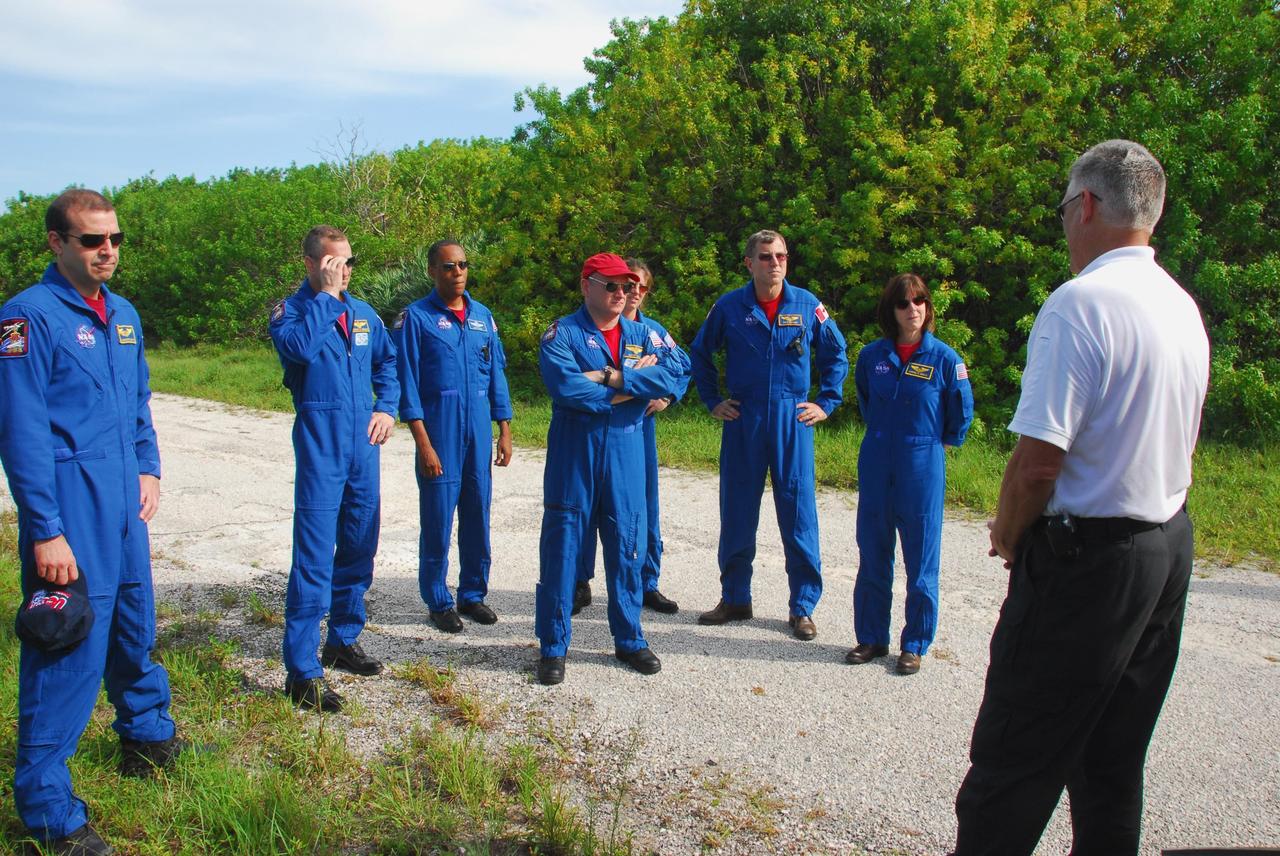
KENNEDY SPACE CENTER, Fla. -- The STS-118 crew gets instructions on emergency exit procedures from Launch Pad 39A. From left are Mission Specialist Rick Mastracchio, Pilot Charlie Hobaugh, Mission Specialist Alvin Drew, Commander Scott Kelly, and Mission Specialists Tracy Caldwell, Dave Williams and Barbara R. Morgan, whojoined NASA's Teacher in Space program in 1985. She was selected as an astronaut in 1998. TCDT activities include the M-113 training, payload familiarization, emergency egress training at the pad and a simulated launch countdown. The STS-118 payload aboard Space Shuttle Endeavour includes the S5 truss, a SPACEHAB module and external stowage platform 3. The mission is the 22nd flight to the International Space Station and is targeted for launch on Aug.7. NASA/George Shelton
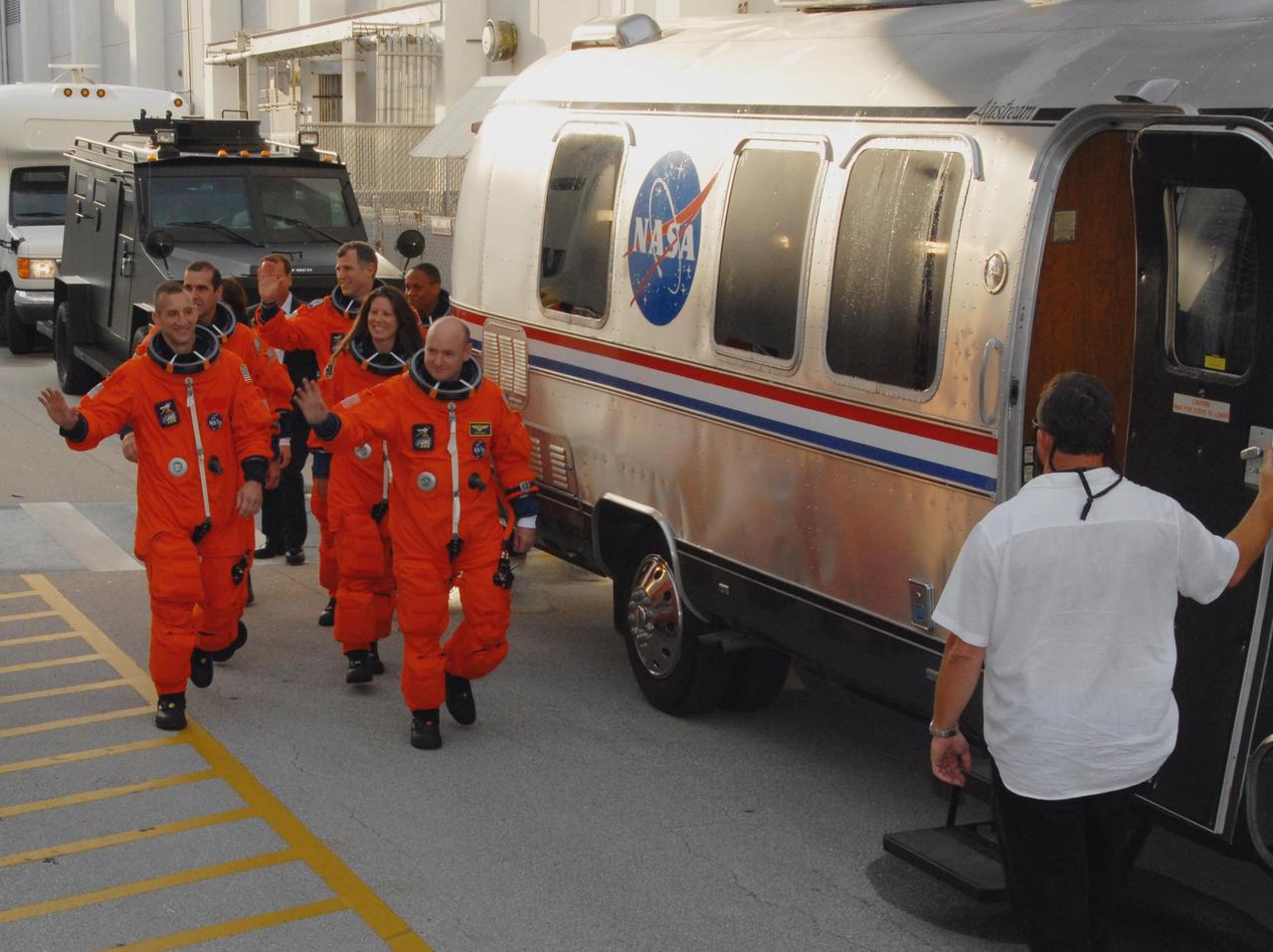
KENNEDY SPACE CENTER, Fla. -- The STS-118 crew walks toward the Astrovan that will take them to Launch Pad 39A for a simulated launch countdown. On the left are Pilot Charlie Hobaugh leading the way and Mission Specialist Rick Mastracchio. ON the right, Commander Scott Kelly leads with (front to back) Mission Specialists Tracy Caldwell, Dave Williams and Alvin Drew. Not visible is teacher-turned-astronaut Barbara R. Morgan, also a mission specialist. The countdown concludes the terminal countdown demonstration test, or TCDT. The STS-118 crew has been at Kennedy for the TCDT activities that also include M-113 training, payload familiarization and emergency egress training at the pad. The mission is the 22nd flight to the International Space Station and Space Shuttle Endeavour will carry a payload including the S5 truss, a SPACEHAB module and external stowage platform 3. STS-118 is targeted for launch on Aug. 7. Photo credit: NASA/George Shelton
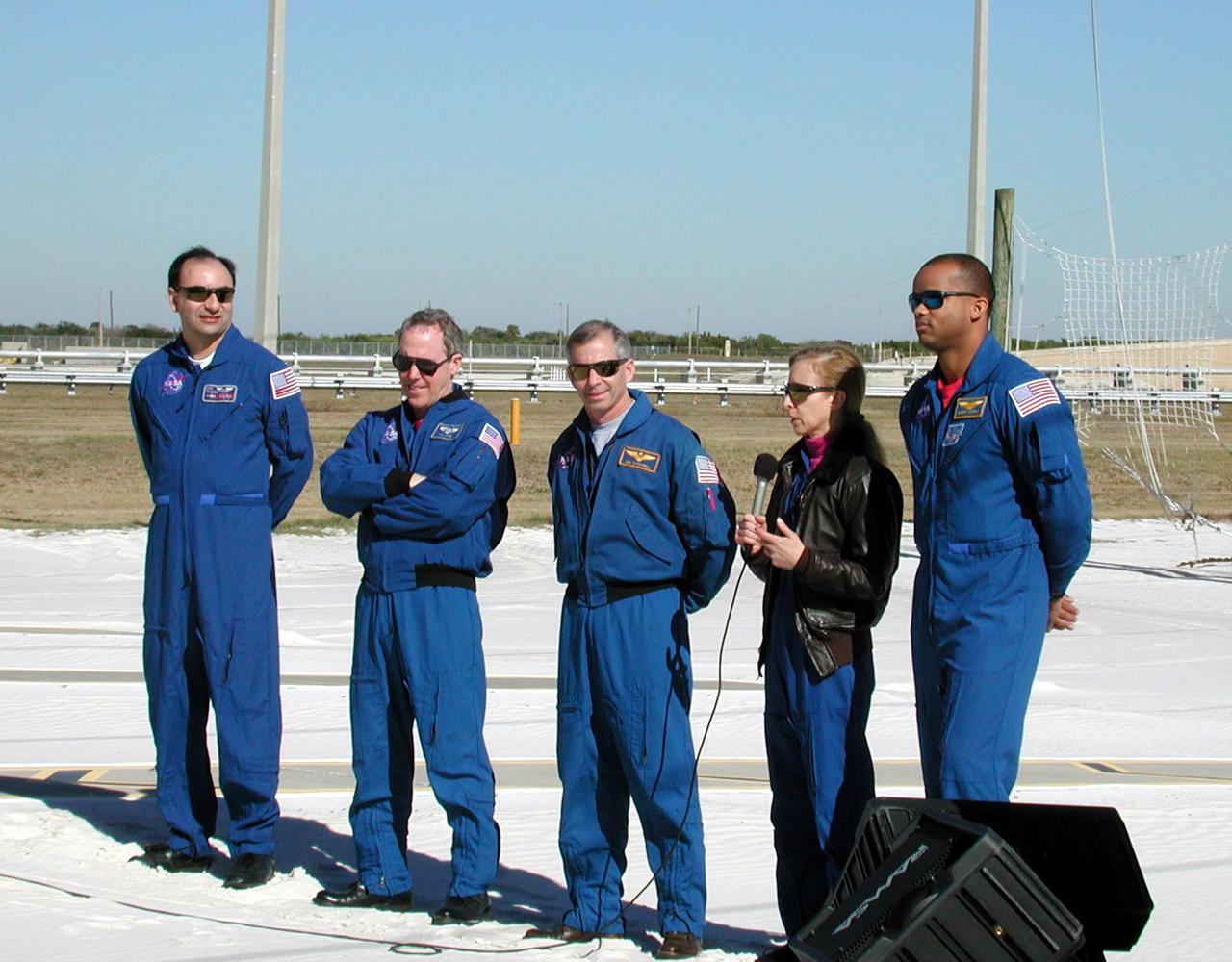
KENNEDY SPACE CENTER, Fla. -- The STS-98 crew talks to the press at a briefing at Launch Pad 39A. With the microphone is Mission Specialist Marsha Ivins, who discusses her role in the mission using the robotic arm to move the payload into position. The other crew members are (left to right) Pilot Mark Polansky, Mission Specialist Thomas Jones, Commander Ken Cockrell and Mission Specialist Robert Curbeam (far right). They are at KSC to take part in Terminal Countdown Demonstration Test activities, which also include a simulated launch countdown. STS-98 is the seventh construction flight to the International Space Station, carrying as payload the U.S. Lab Destiny, a key element in the construction of the ISS. Launch of STS-98 is scheduled for Jan. 19 at 2:11 a.m
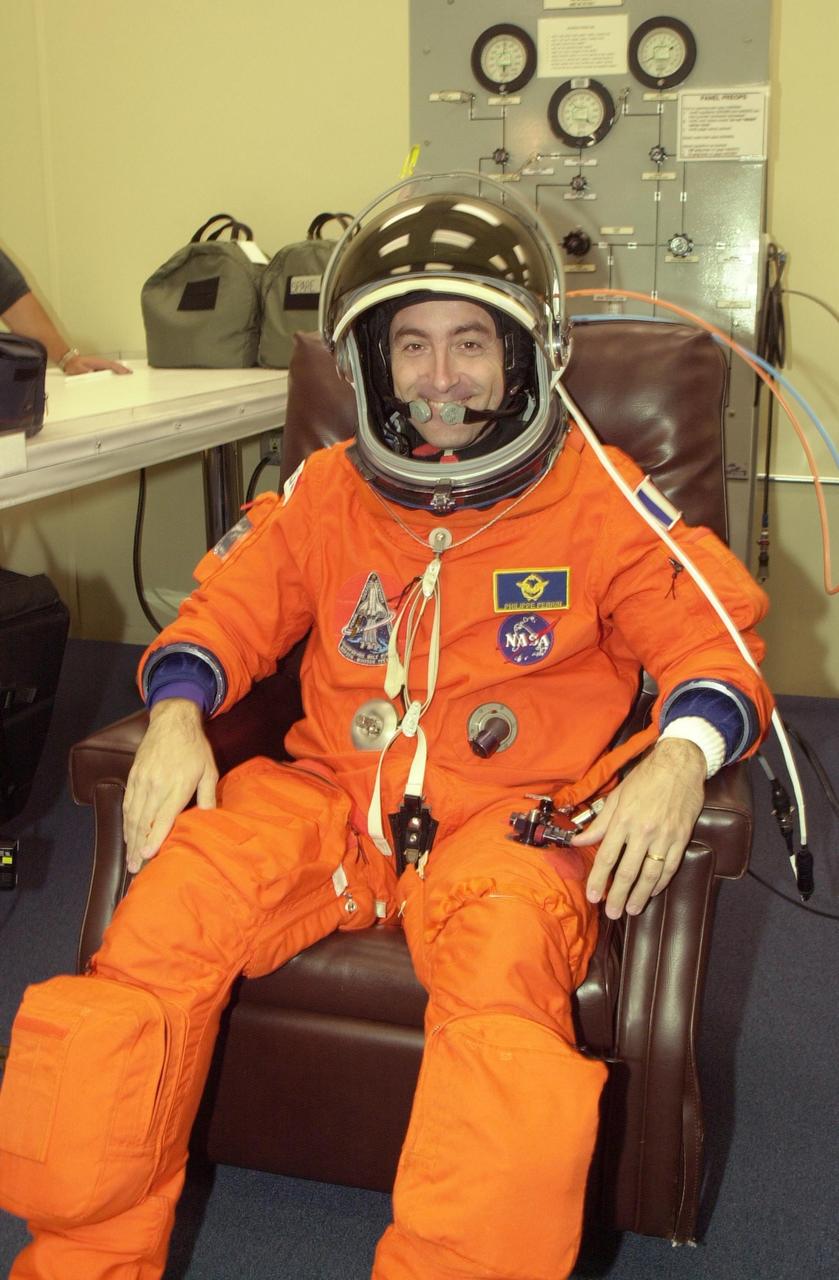
KENNEDY SPACE CENTER, FLA. -- STS-111 Mission Specialist Philippe Perrin gets ready in his launch and entry suit for a simulated launch countdown at the pad. Perrin is with the French Space Agency. The simulation is part of STS-111 Terminal Countdown Demonstration Test activities for the STS-111 crew and Expedition 5. The payload on the mission to the International Space Station includes the Mobile Base System, an Orbital Replacement Unit and Multi-Purpose Logistics Module Leonardo. The Expedition 5 crew is traveling on Endeavour to replace the Expedition 4 crew on the Station. Launch of Endeavour is scheduled for May 30, 2002.

KENNEDY SPACE CENTER, FLA. - The STS-115 crew members are suiting up for their simulated launch countdown. Shown here is Mission Specialist Daniel Burbank. The mission crew is at KSC for Terminal Countdown Demonstration Test (TCDT) activities that are preparation for launch on Space Shuttle Atlantis, scheduled to take place in a window that opens Aug. 27. The TCDT has included emergency egress training as well as the simulation. During their 11-day mission to the International Space Station, the STS-115 crew will continue construction of the station and attach the payload elements, the Port 3/4 truss segment with its two large solar arrays. Photo credit: NASA/Cory Huston