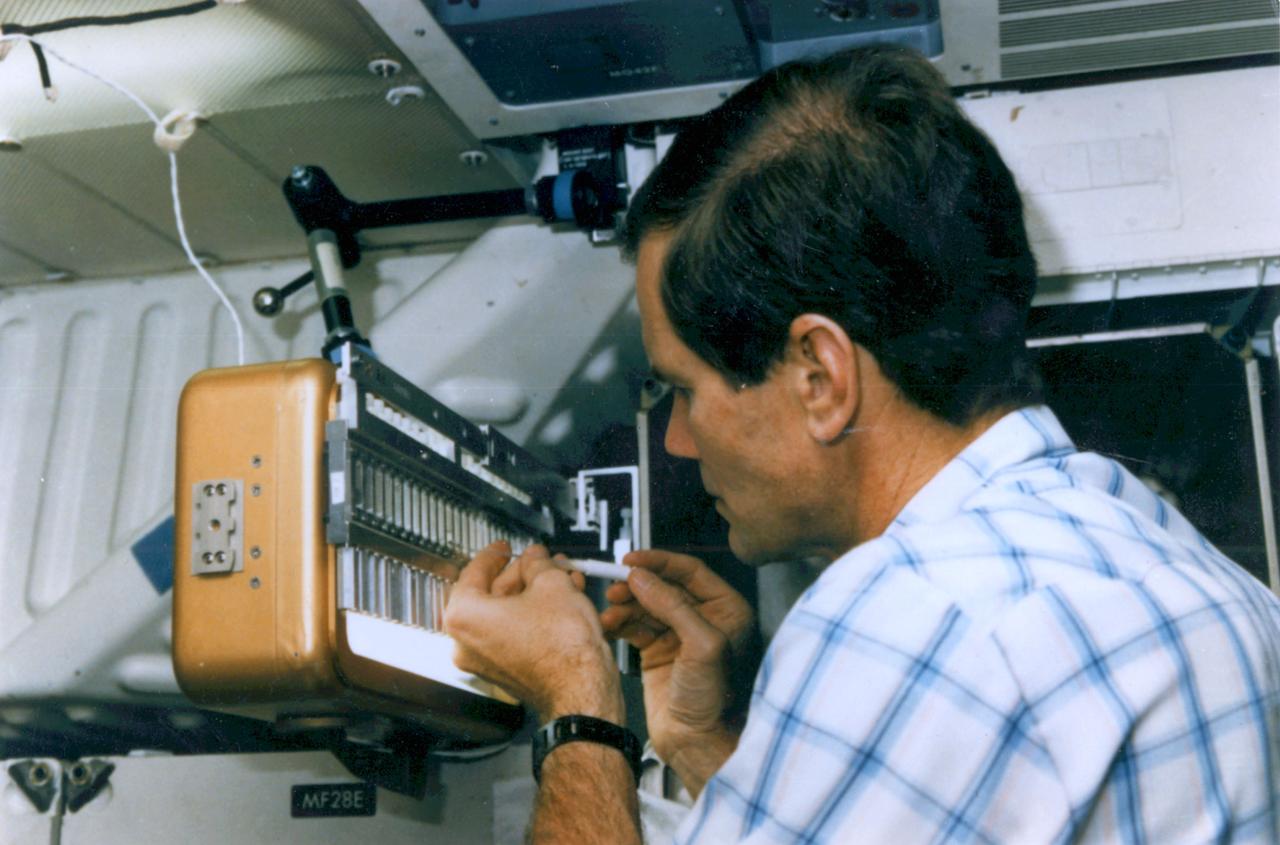
Crew member practices injecting seed crystals into hand-held Protein Crystallization Apparatus for Microgravity (PCAM).
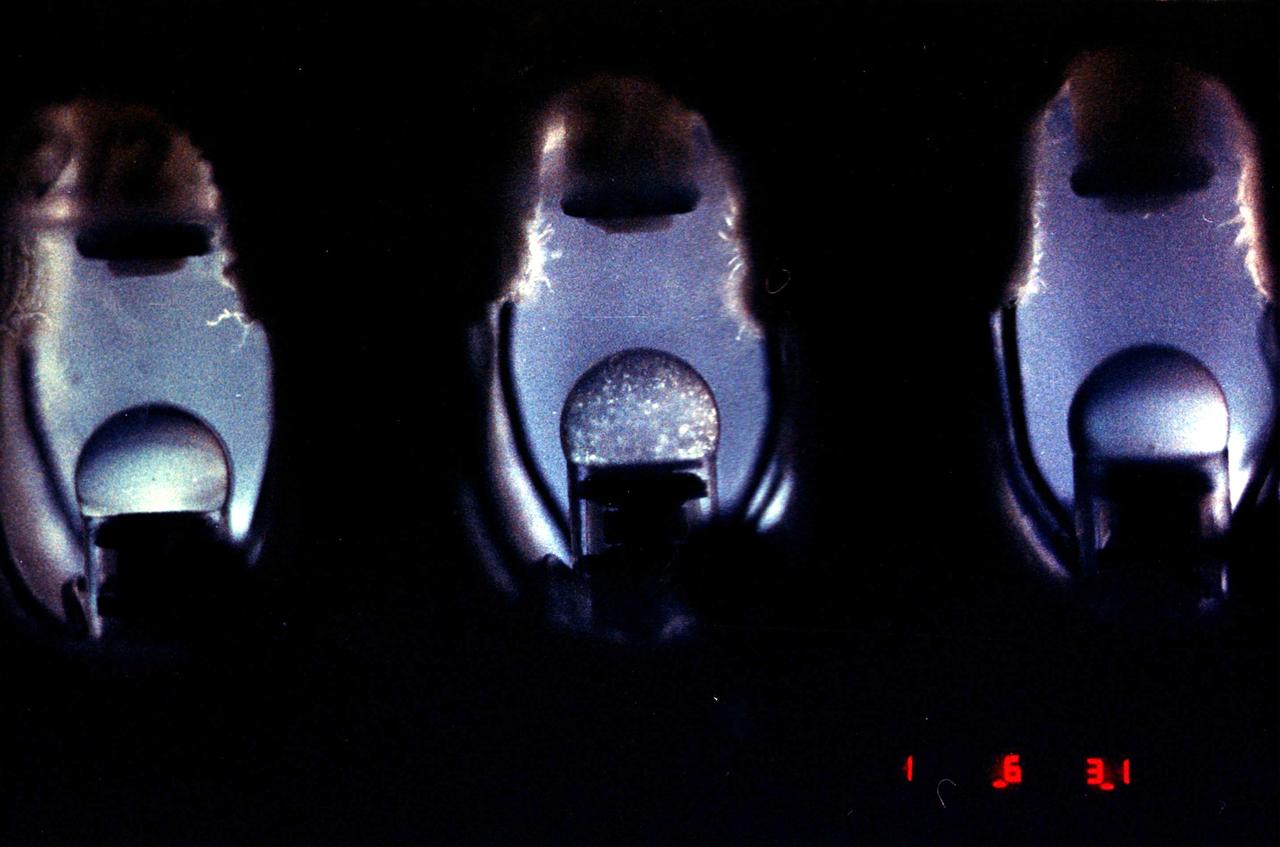
Crystals grown in the hand-held Protein Crystallization Apparatus for Microgravity (PCAM) onboard STS-61C. The PCAM has a pedestal in the center of a circular chamber, the surrounding chamber holds an absorbent reservoir that contains a solution of the precipitant. Vapor pressure differences between the protein solution and the reservoir solution force water to move from the protein solution to the reservoir. As protein concentrations increase, protein crystals begin to nucleate and grow.
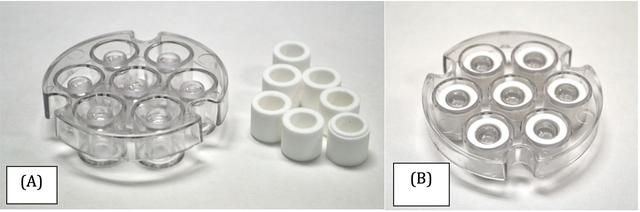
jsc2021e010283 (3102021) --- The sitting-drop New Century Pharmaceuticals Protein Crystallization Apparatus for Microgravity (PCAM). Photo courtesy of Timothy Mueser.
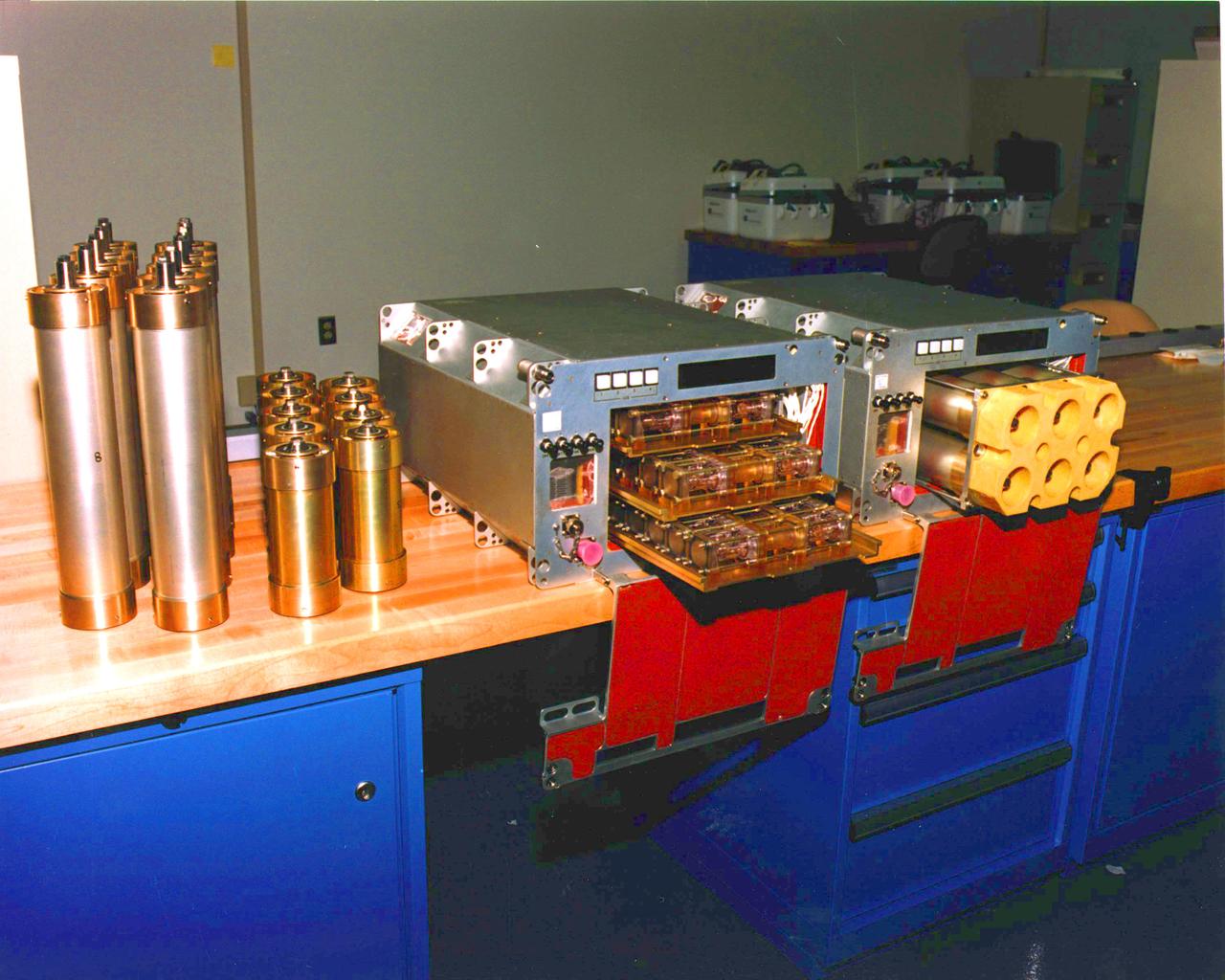
Two versions of (PCAM) Protein Crystallization Apparatus for Microgravity, (DCAM) Diffusion Controled Crystallization Apparatus is in the (STES) Single Locker Thermal Enclosure System. Principal Investigator was Dan Carter.
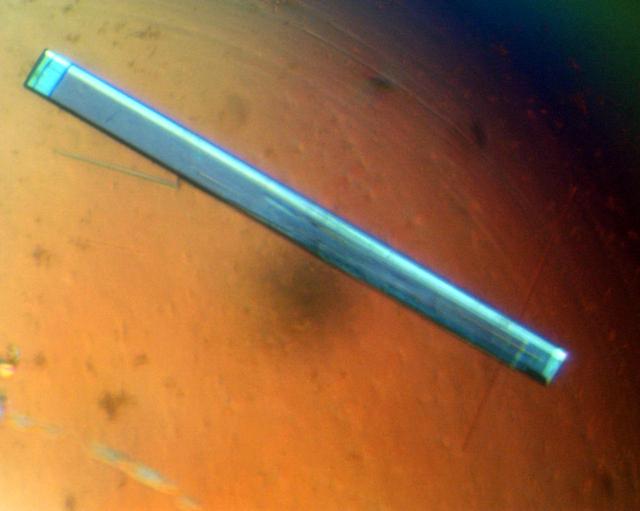
Parvalbumins are found in the muscles, endocrine glands, skin cells, and some neurons of vertebrates, but the role they play for musculature is not yet understood. Researchers are exploring theories of a correlation between parvalbumin concentration levels and the relaxation speed of mammalian muscles after contraction. An ultra-high resolution structure was achieved from samples grown on STS-83 and in July 1997, during STS-94, PCAM produced the largest crystals of pike parvalbumin grown to date. Principal Investigator: Dan Carter of New Century Pharmaceuticals.