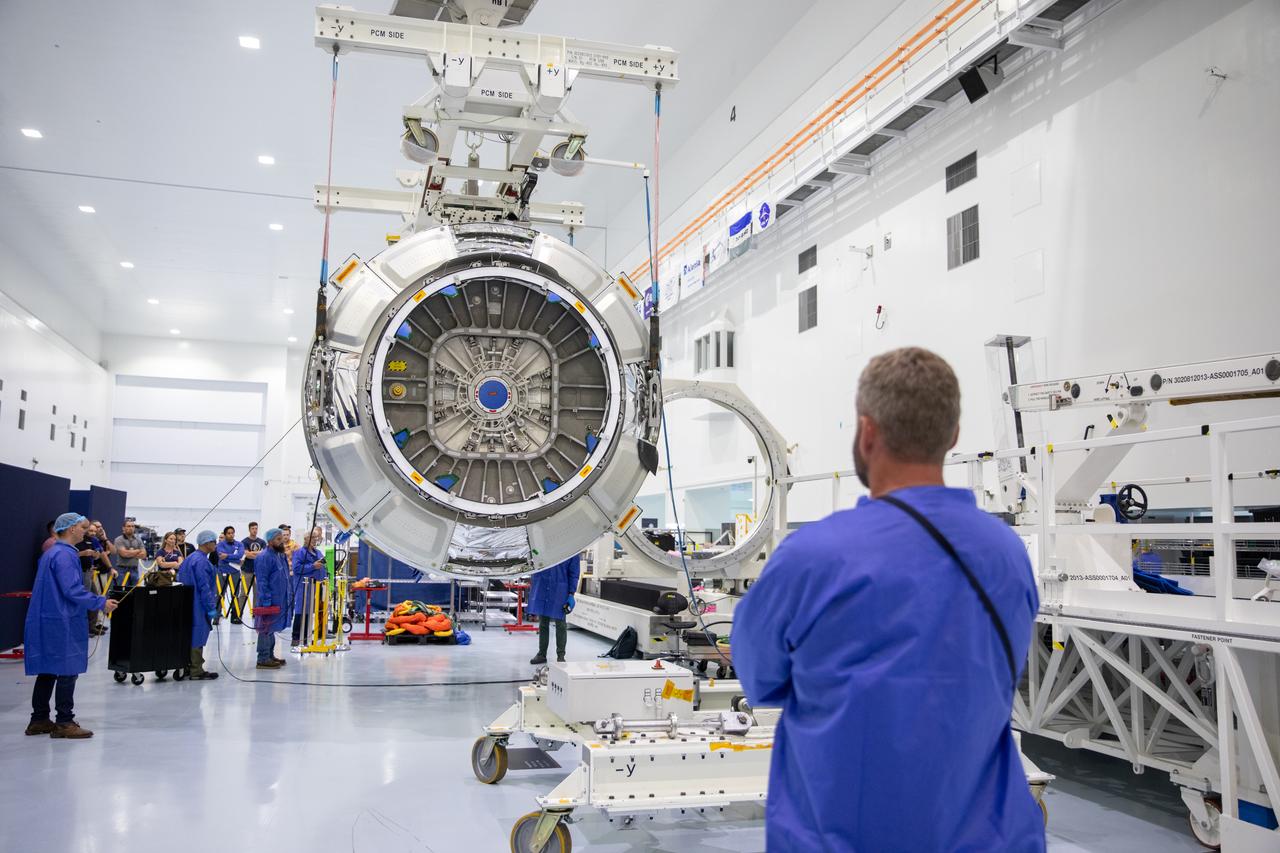
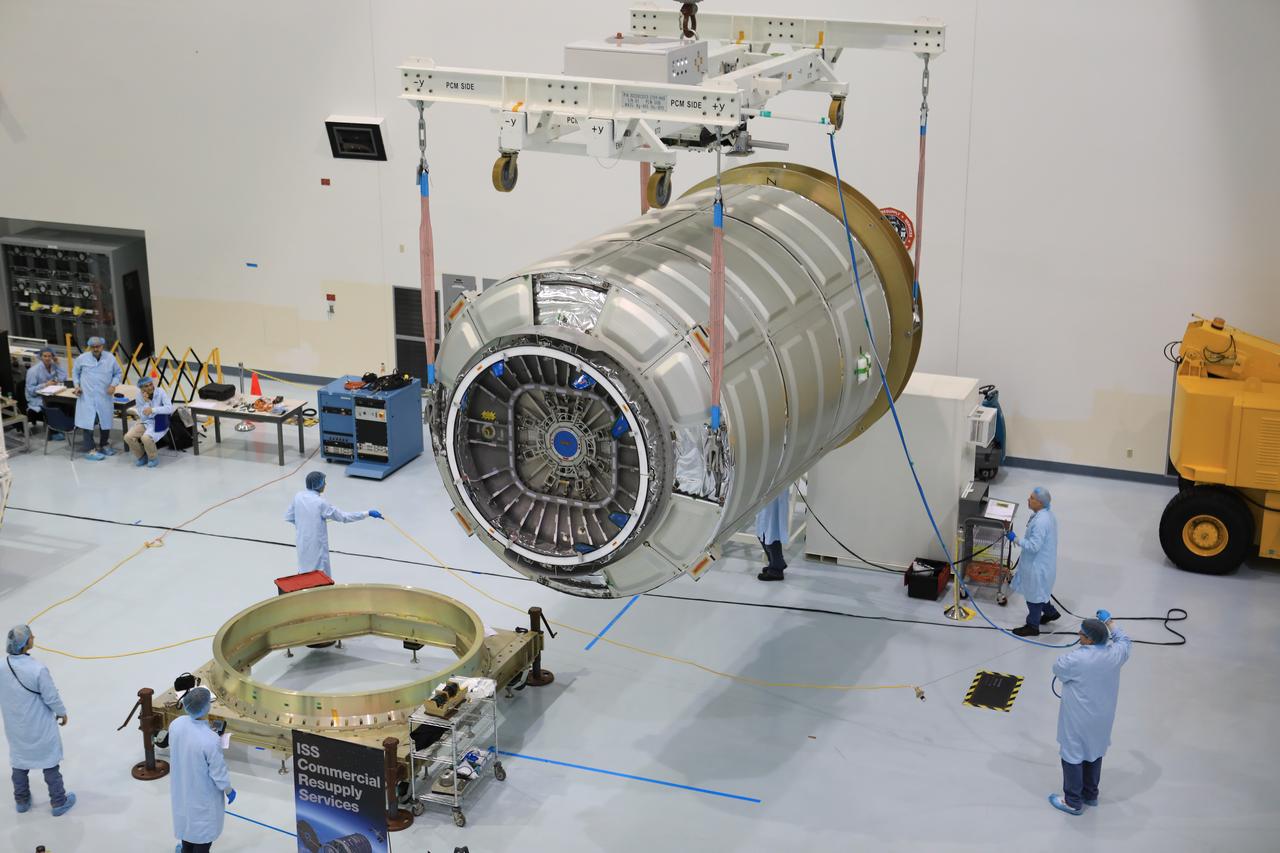
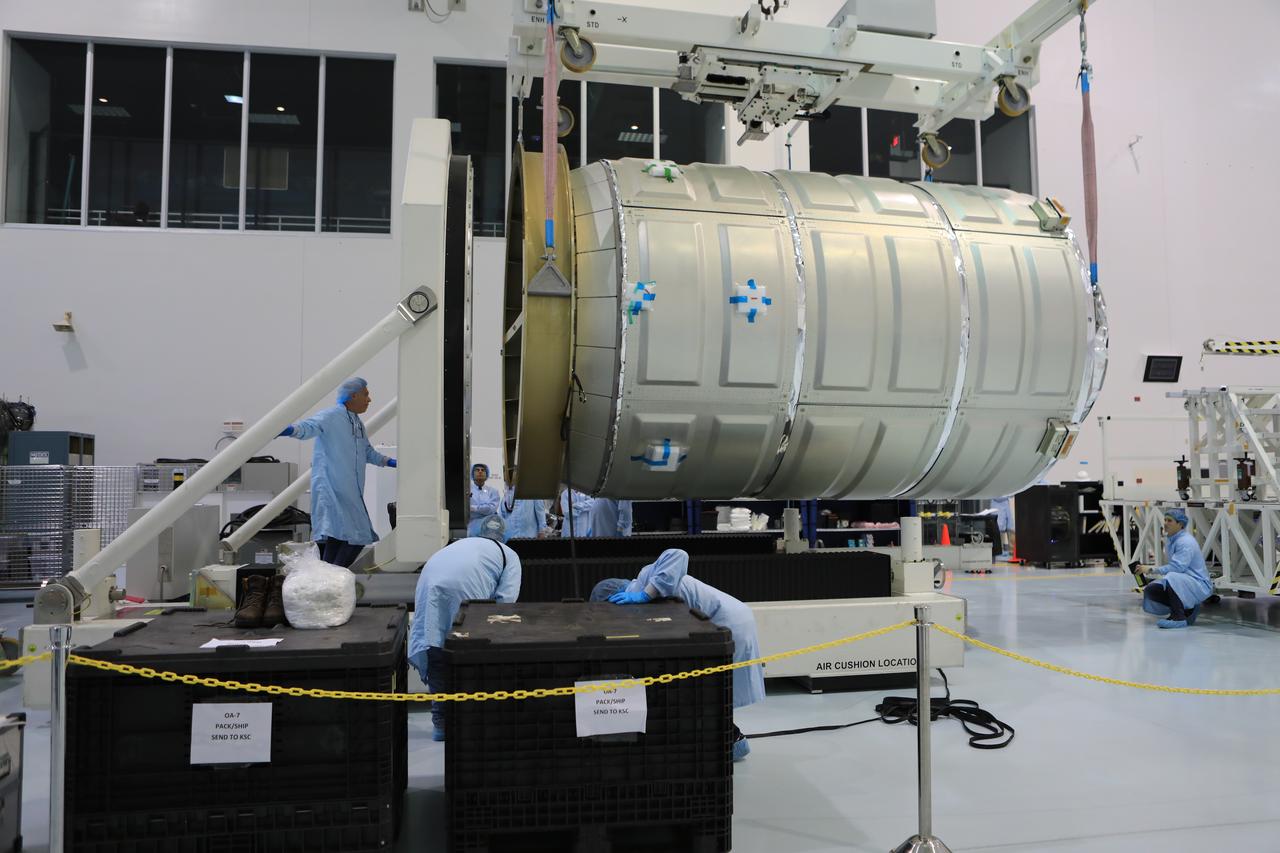
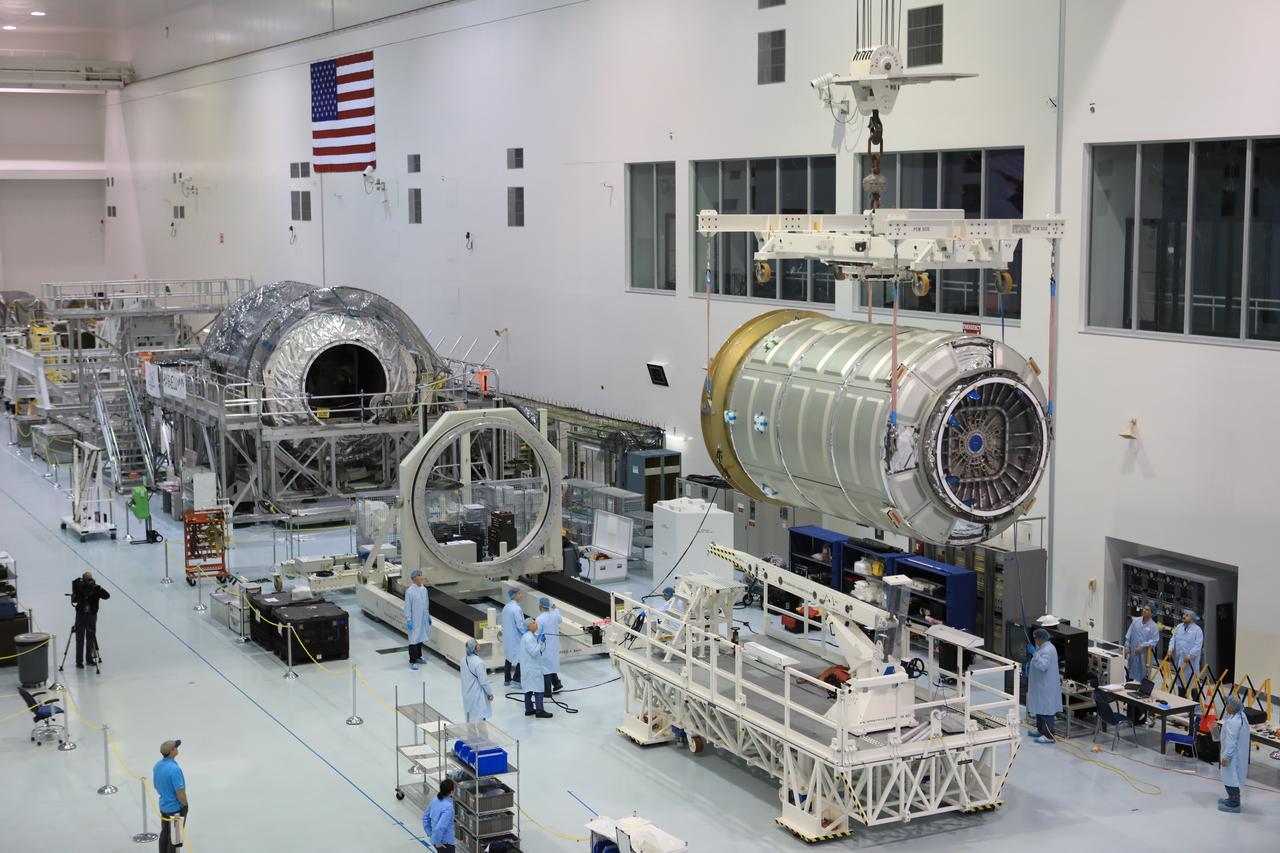
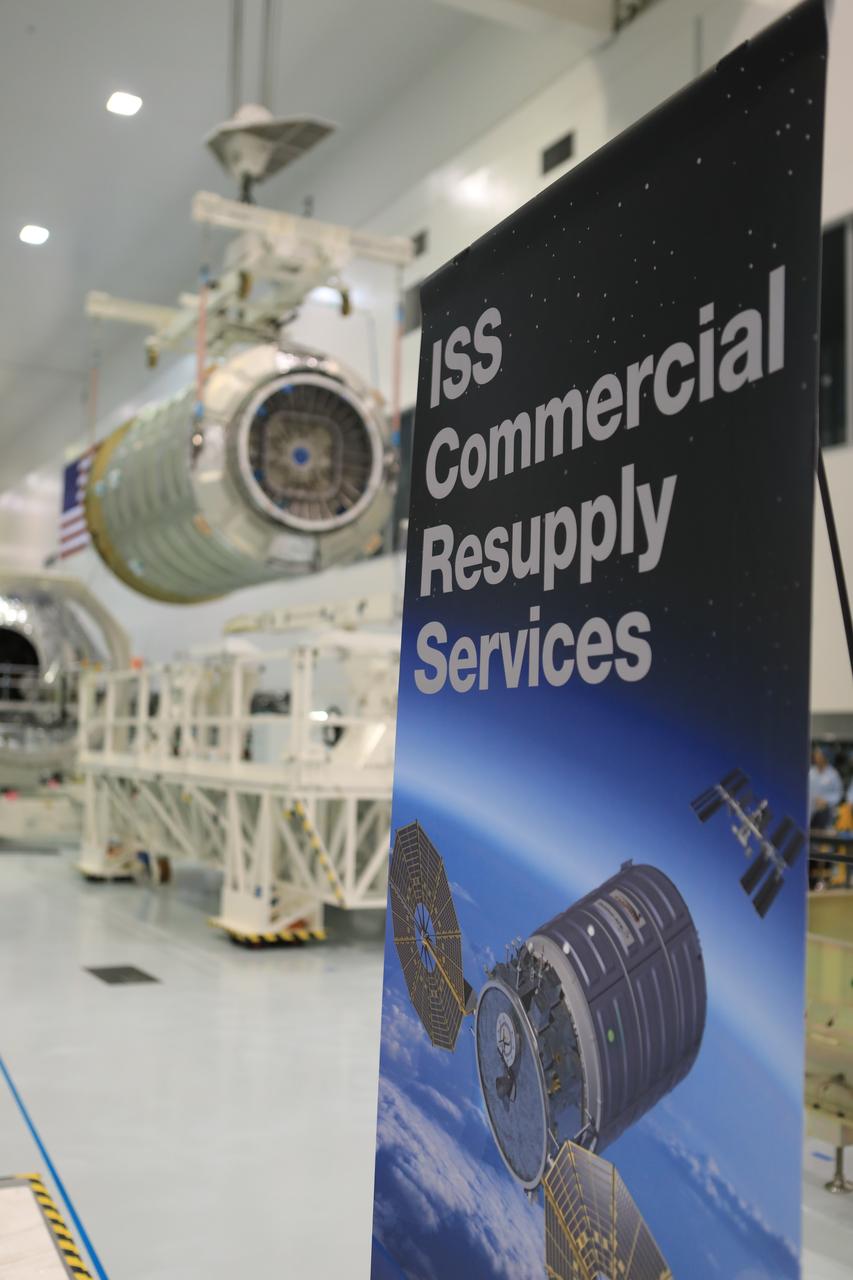
The Northrop Grumman Cygnus spacecraft’s pressurized cargo module (PCM) for the company’s 20th commercial resupply mission is lifted and moved by crane inside the high bay in the Space Station Processing Facility at NASA’s Kennedy Space Center in Florida on Monday, Sept. 18, 2023. The next step is vehicle processing for the mission to the International Space Station. Liftoff, aboard a SpaceX Falcon 9 rocket, will be from Cape Canaveral Space Force Station’s Space Launch Complex 40.
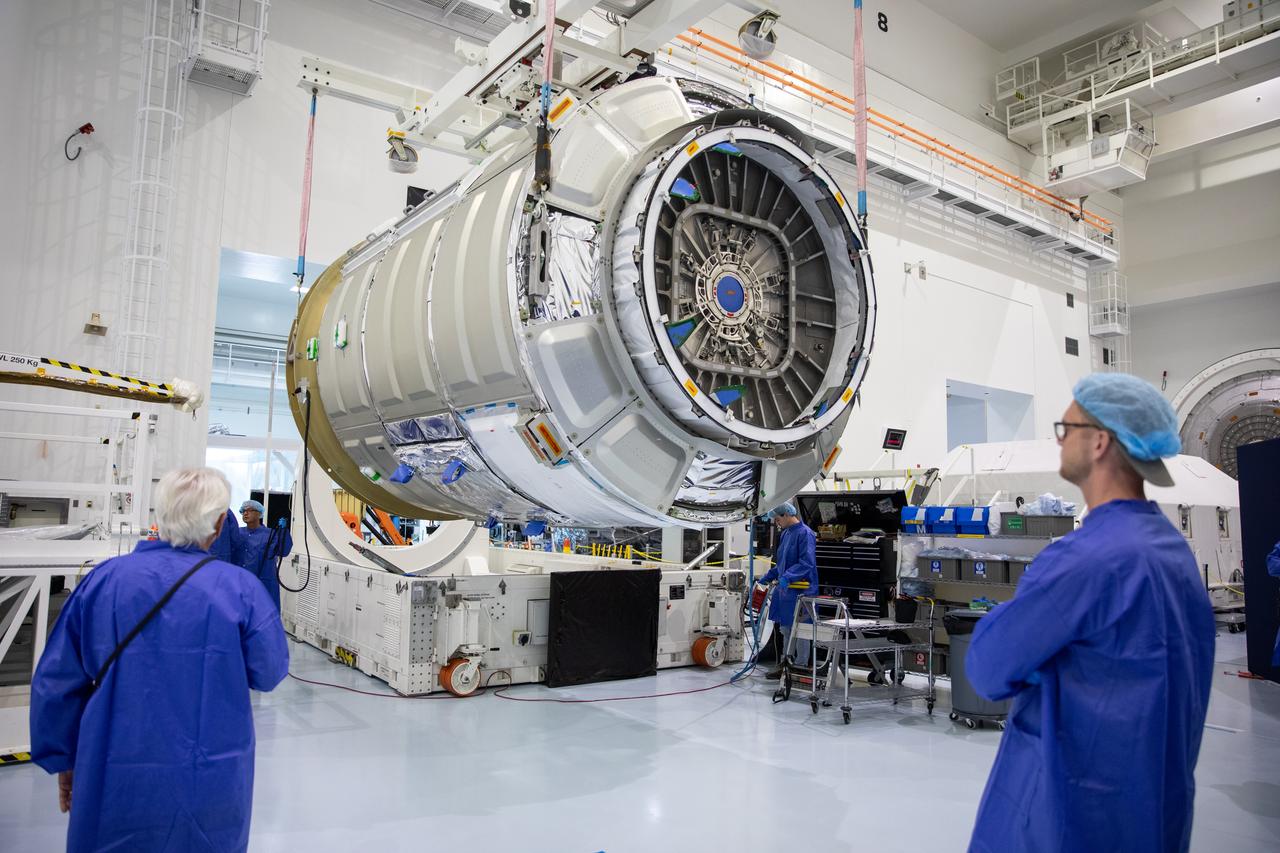
The Northrop Grumman Cygnus spacecraft’s pressurized cargo module (PCM) for the company’s 20th commercial resupply mission is lifted and moved by crane inside the high bay in the Space Station Processing Facility at NASA’s Kennedy Space Center in Florida on Monday, Sept. 18, 2023. The next step is vehicle processing for the mission to the International Space Station. Liftoff, aboard a SpaceX Falcon 9 rocket, will be from Cape Canaveral Space Force Station’s Space Launch Complex 40.
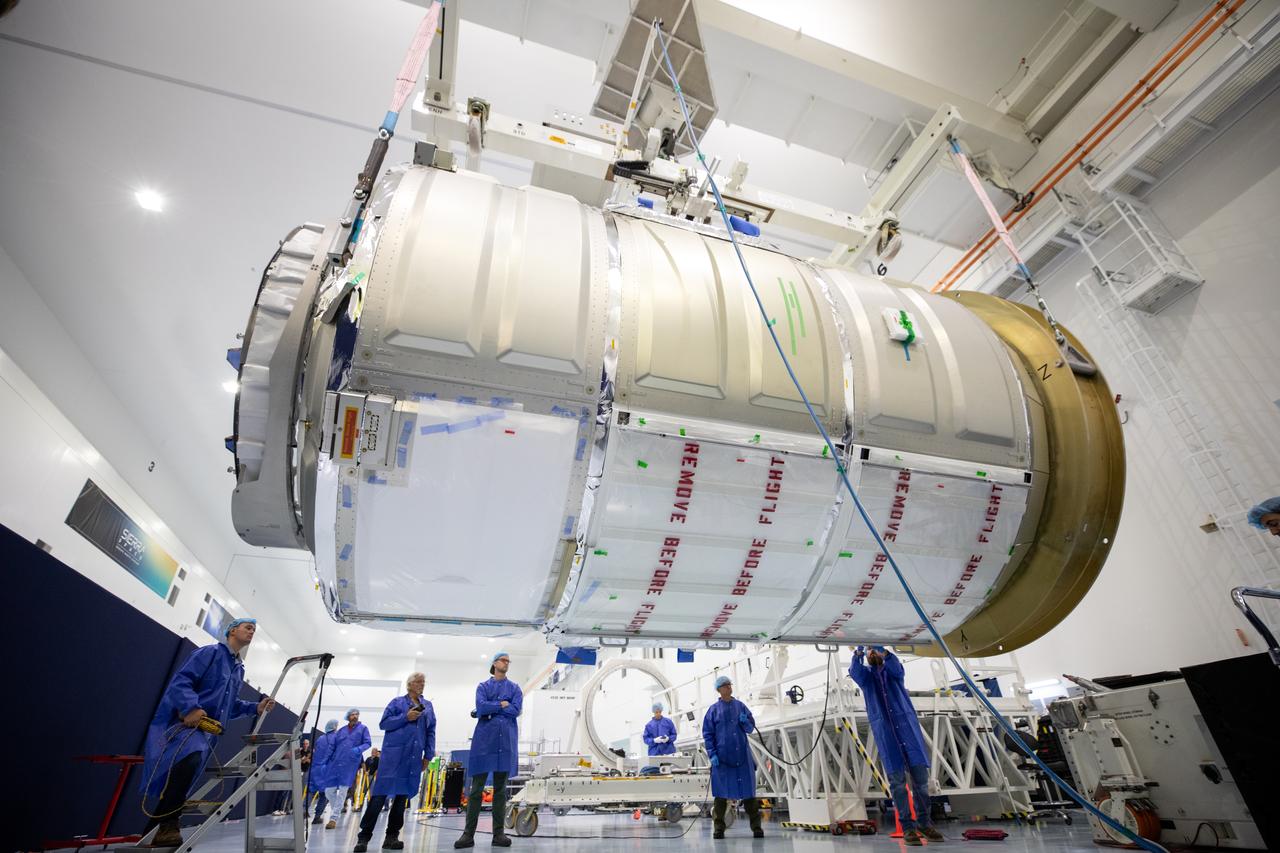
The Northrop Grumman Cygnus spacecraft’s pressurized cargo module (PCM) for the company’s 20th commercial resupply mission is lifted and moved by crane inside the high bay in the Space Station Processing Facility at NASA’s Kennedy Space Center in Florida on Monday, Sept. 18, 2023. The next step is vehicle processing for the mission to the International Space Station. Liftoff, aboard a SpaceX Falcon 9 rocket, will be from Cape Canaveral Space Force Station’s Space Launch Complex 40.
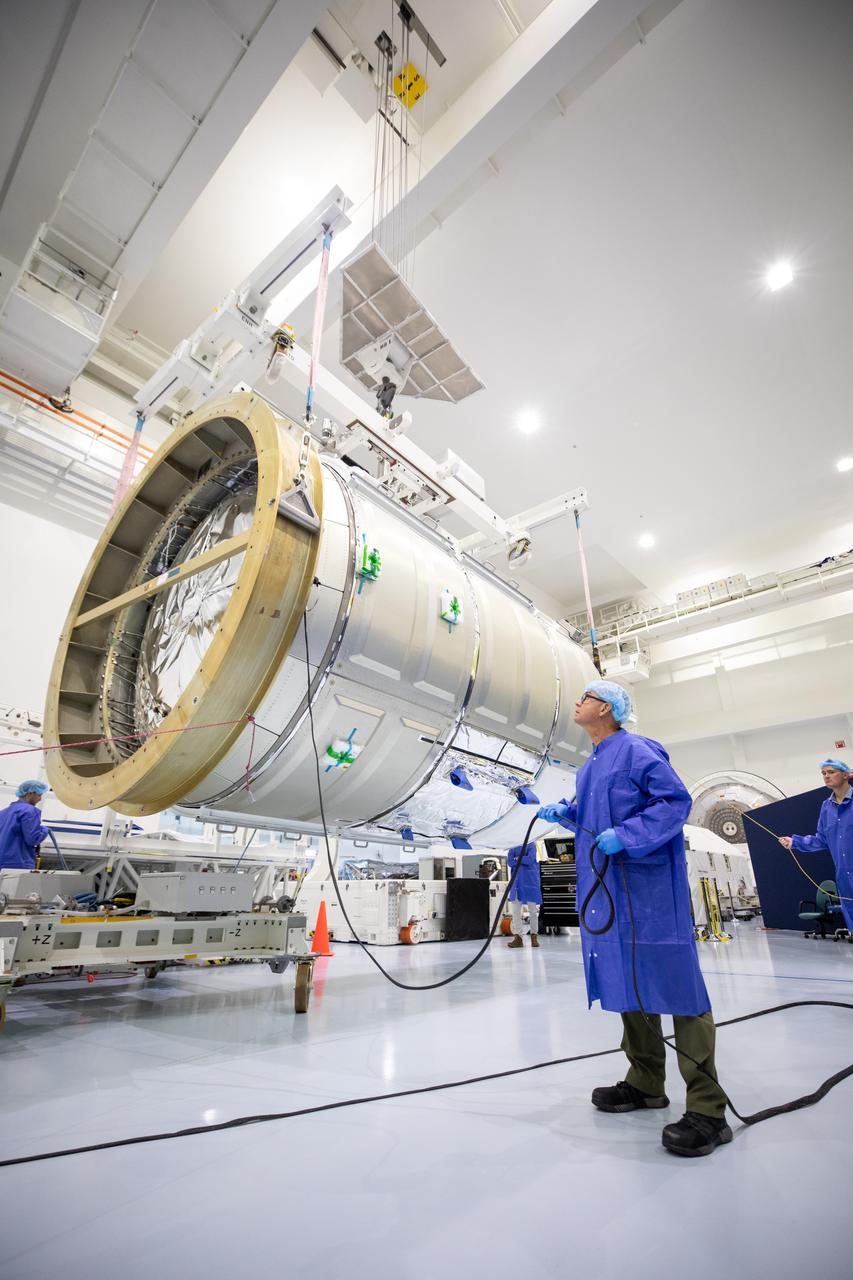
The Northrop Grumman Cygnus spacecraft’s pressurized cargo module (PCM) for the company’s 20th commercial resupply mission is lifted and moved by crane inside the high bay in the Space Station Processing Facility at NASA’s Kennedy Space Center in Florida on Monday, Sept. 18, 2023. The next step is vehicle processing for the mission to the International Space Station. Liftoff, aboard a SpaceX Falcon 9 rocket, will be from Cape Canaveral Space Force Station’s Space Launch Complex 40.
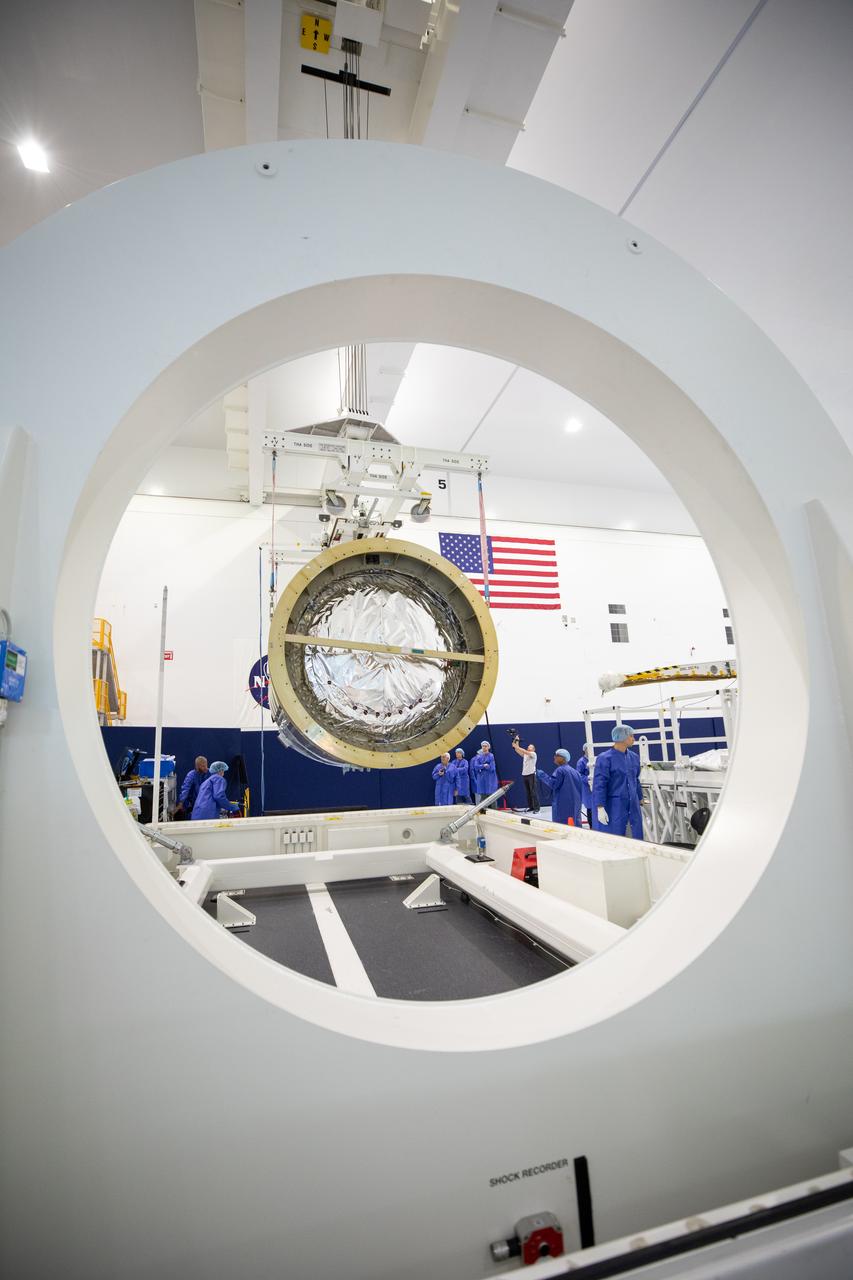
The Northrop Grumman Cygnus spacecraft’s pressurized cargo module (PCM) for the company’s 20th commercial resupply mission is lifted and moved by crane inside the high bay in the Space Station Processing Facility at NASA’s Kennedy Space Center in Florida on Monday, Sept. 18, 2023. The next step is vehicle processing for the mission to the International Space Station. Liftoff, aboard a SpaceX Falcon 9 rocket, will be from Cape Canaveral Space Force Station’s Space Launch Complex 40.
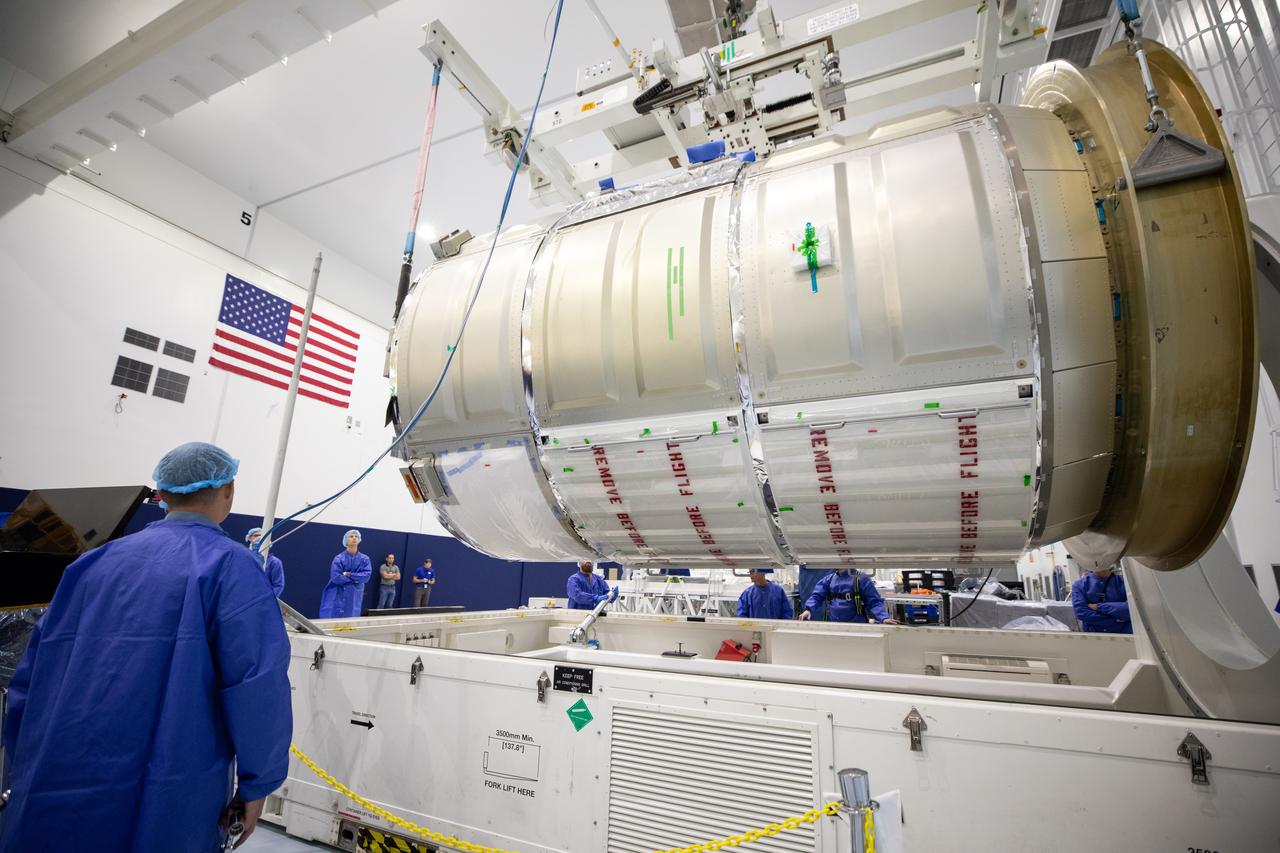
The Northrop Grumman Cygnus spacecraft’s pressurized cargo module (PCM) for the company’s 20th commercial resupply mission is lifted and moved by crane inside the high bay in the Space Station Processing Facility at NASA’s Kennedy Space Center in Florida on Monday, Sept. 18, 2023. The next step is vehicle processing for the mission to the International Space Station. Liftoff, aboard a SpaceX Falcon 9 rocket, will be from Cape Canaveral Space Force Station’s Space Launch Complex 40.
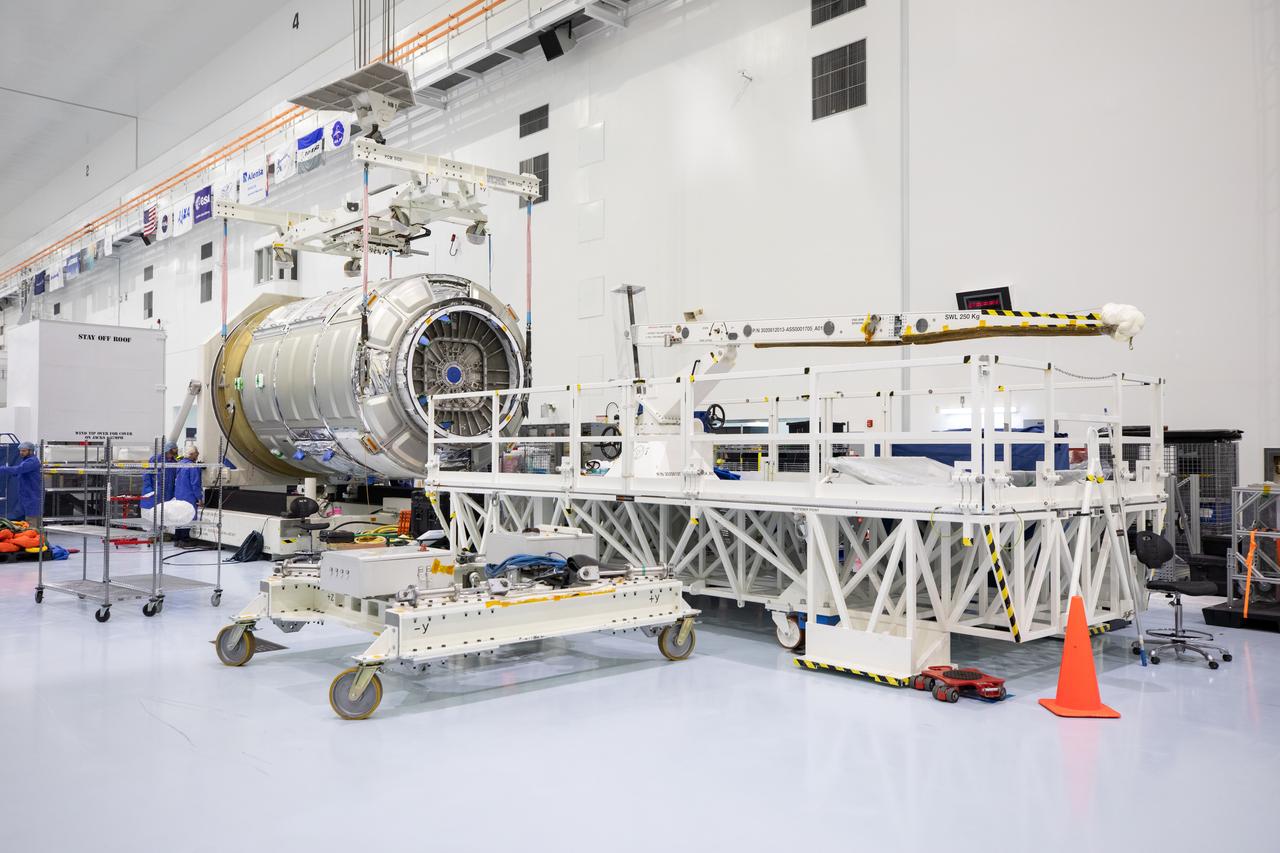
The Northrop Grumman Cygnus spacecraft’s pressurized cargo module (PCM) for the company’s 20th commercial resupply mission is lifted and moved by crane inside the high bay in the Space Station Processing Facility at NASA’s Kennedy Space Center in Florida on Monday, Sept. 18, 2023. The next step is vehicle processing for the mission to the International Space Station. Liftoff, aboard a SpaceX Falcon 9 rocket, will be from Cape Canaveral Space Force Station’s Space Launch Complex 40.
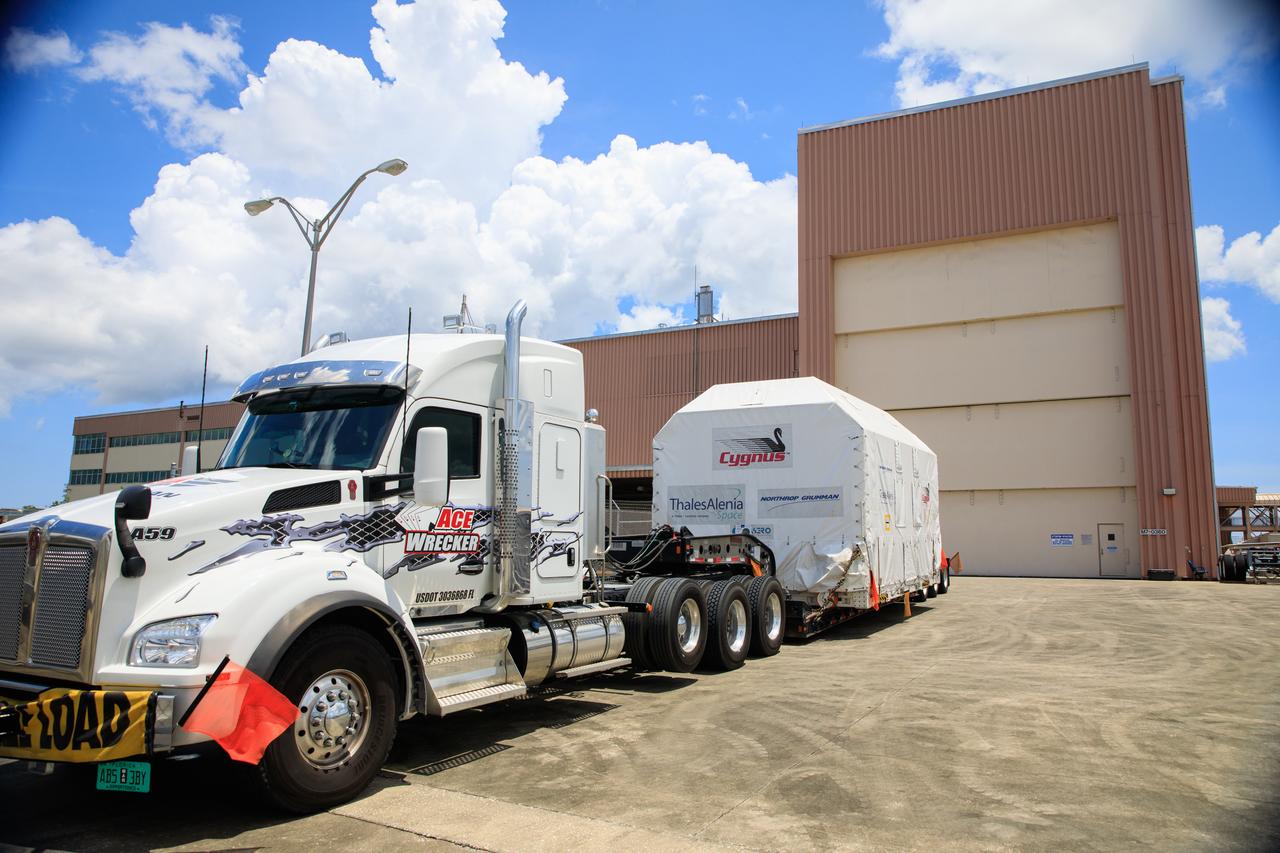
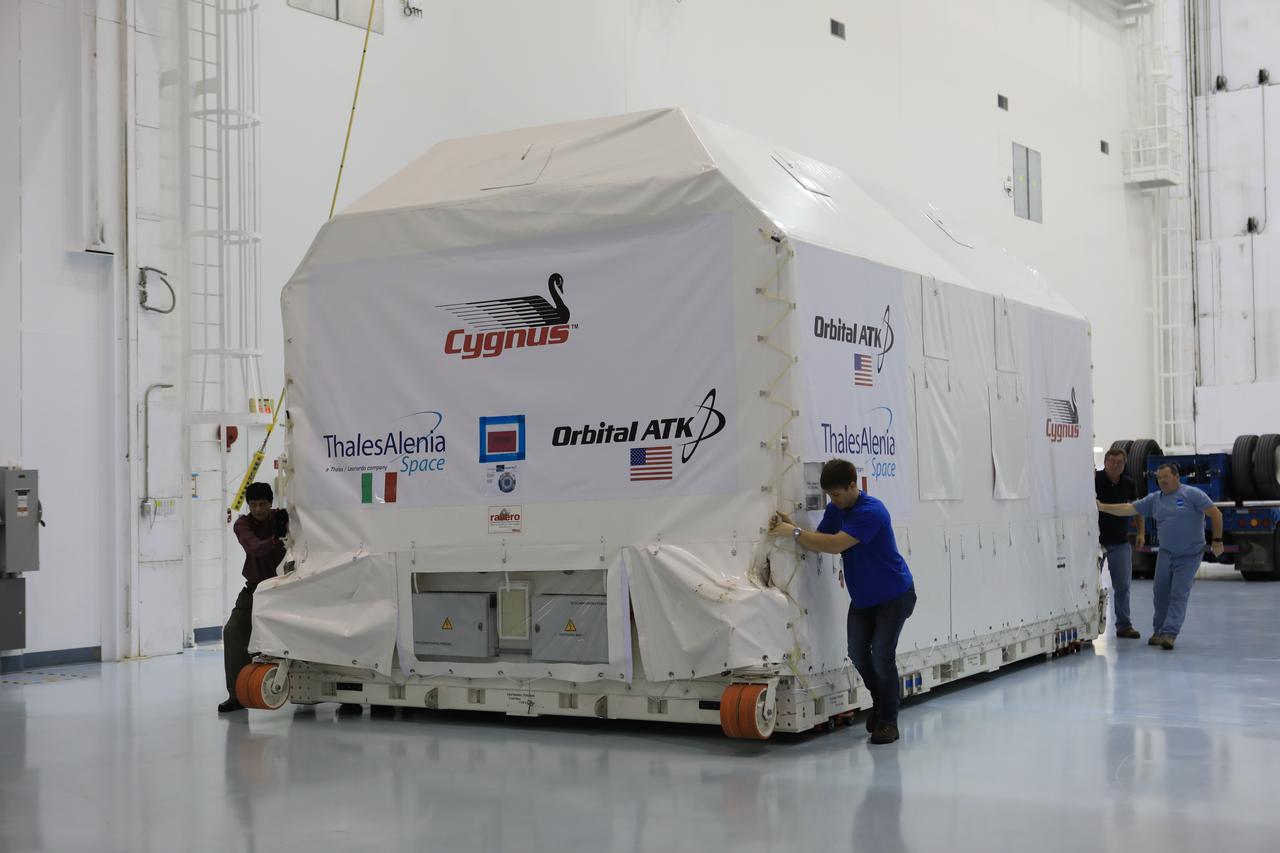
The Northrop Grumman Cygnus spacecraft's pressurized cargo module (PCM) arrives at the Space Station Processing Facility of NASA's Kennedy Space Center in Florida on Aug. 2, 2023. The PCM is sealed in an environmentally controlled shipping container, pulled in by truck on a flatbed trailer. Cygnus will launch later this year atop a SpaceX Falcon 9 rocket from Cape Canaveral Space Force Station’s Space Launch Complex 40 to the International Space Station. Cygnus will undergo prelaunch processing at Kennedy before it is transported to SpaceX’s integration facility.
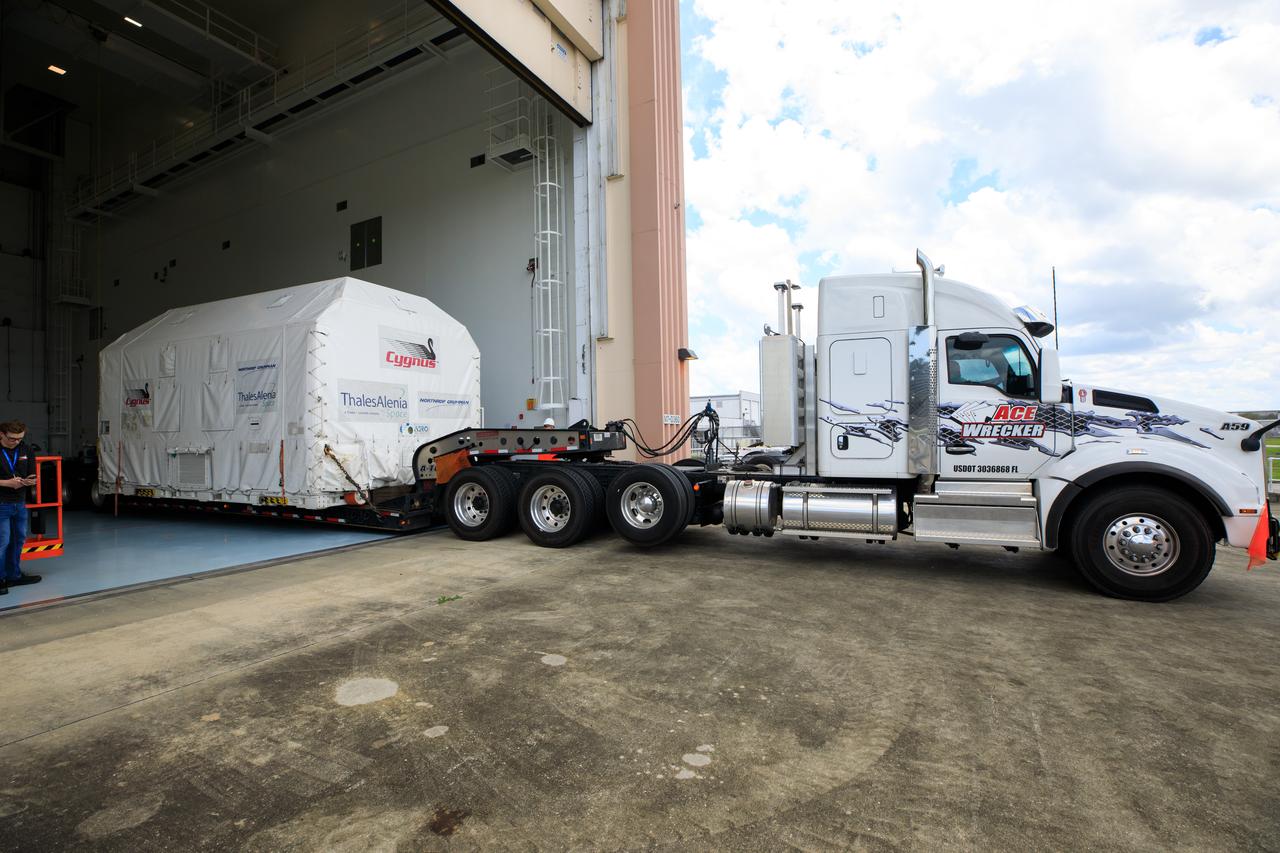
The Northrop Grumman Cygnus spacecraft's pressurized cargo module (PCM) arrives at the Space Station Processing Facility of NASA's Kennedy Space Center in Florida on Aug. 2, 2023. The PCM is sealed in an environmentally controlled shipping container, pulled in by truck on a flatbed trailer. Cygnus will launch later this year atop a SpaceX Falcon 9 rocket from Cape Canaveral Space Force Station’s Space Launch Complex 40 to the International Space Station. Cygnus will undergo prelaunch processing at Kennedy before it is transported to SpaceX’s integration facility.
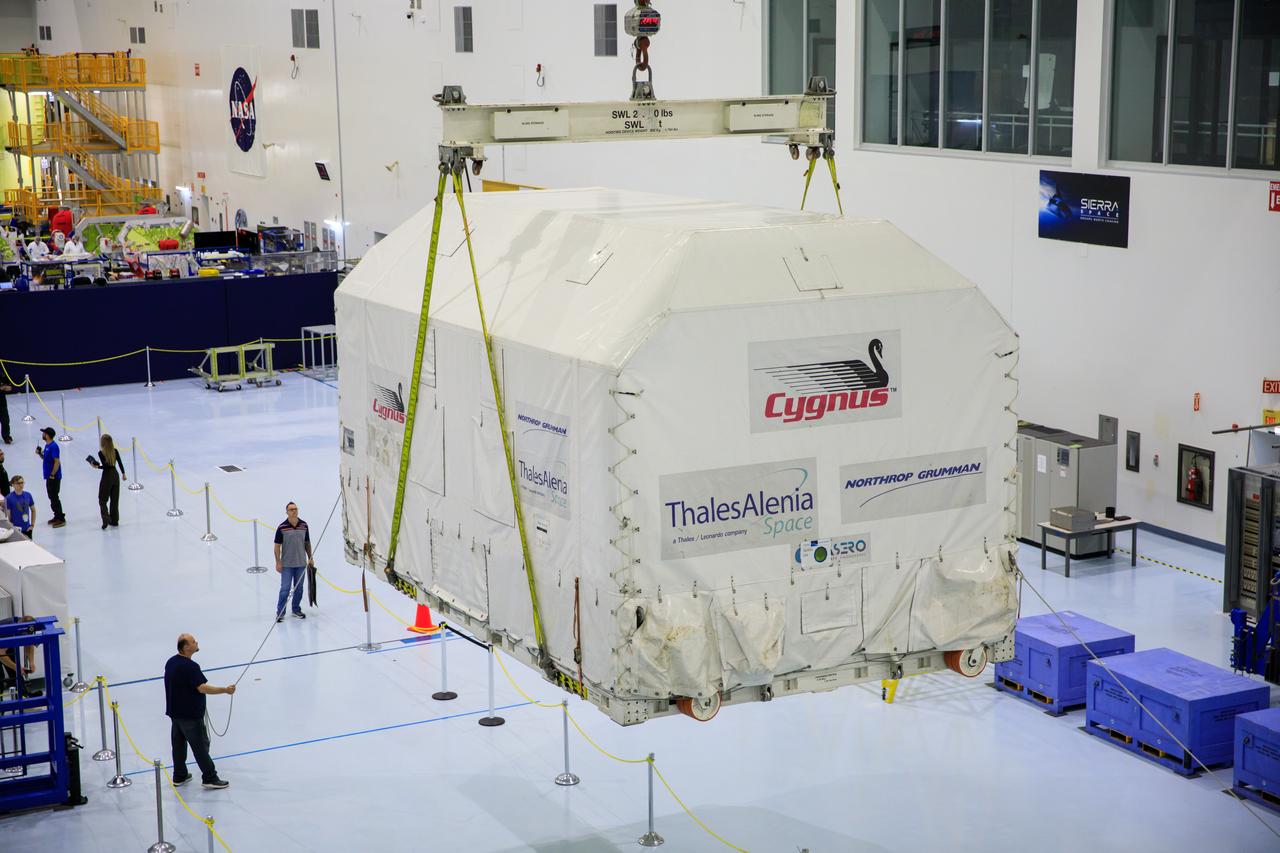
A crane is used to lift the Northrop Grumman Cygnus spacecraft's pressurized cargo module (PCM) off a flatbed truck after arrival at the Space Station Processing Facility of NASA's Kennedy Space Center in Florida on Aug. 2, 2023. The PCM is sealed in an environmentally controlled shipping container. Cygnus will launch later this year atop a SpaceX Falcon 9 rocket from Cape Canaveral Space Force Station’s Space Launch Complex 40 to the International Space Station. Cygnus will undergo prelaunch processing at Kennedy before it is transported to SpaceX’s integration facility.
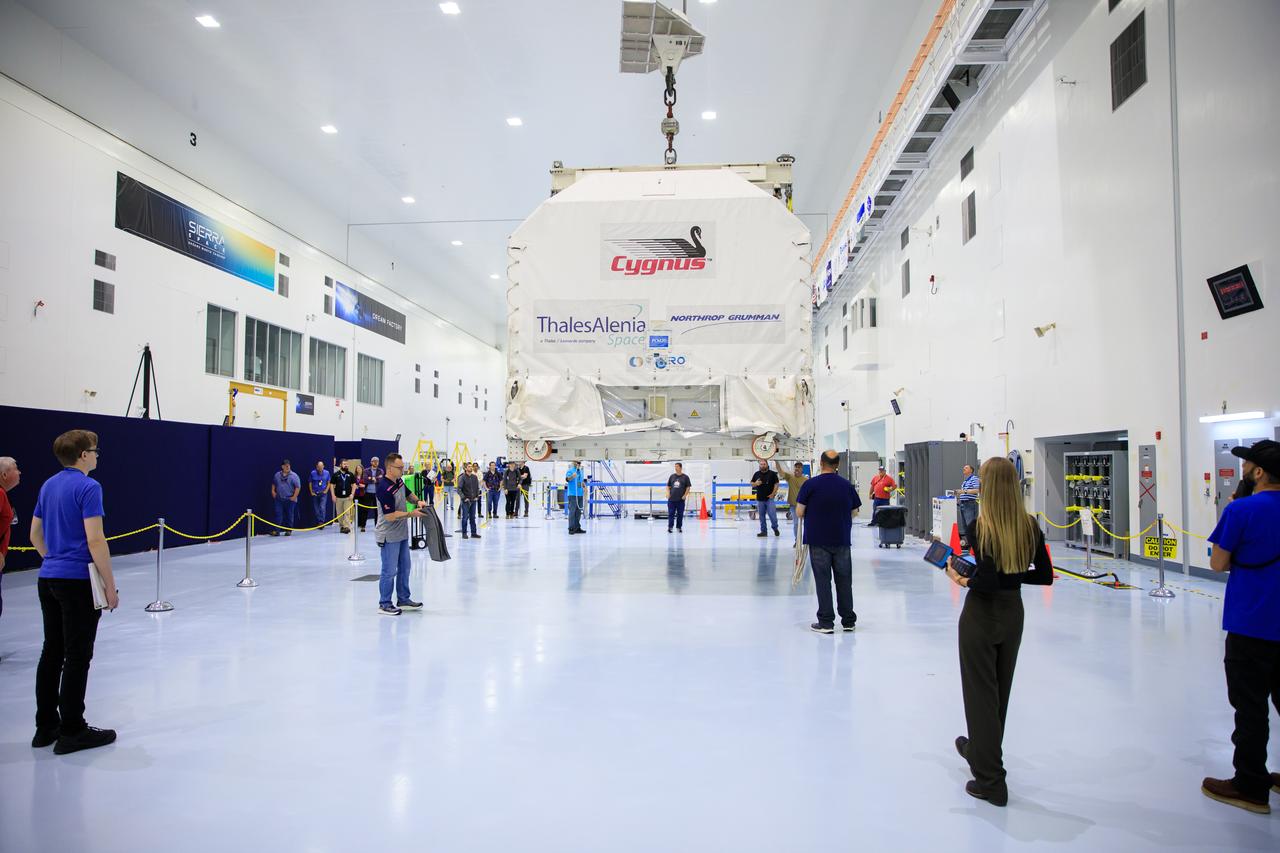
The Northrop Grumman Cygnus spacecraft’s pressurized cargo module (PCM) for the company’s 20th commercial resupply mission is lifted and moved by crane in its environmentally controlled shipping container inside the high bay in the Space Station Processing Facility at NASA's Kennedy Space Center in Florida on Aug. 2, 2023. Cygnus will launch later this year atop a SpaceX Falcon 9 rocket from Cape Canaveral Space Force Station’s Space Launch Complex 40 to the International Space Station. Cygnus will undergo prelaunch processing at Kennedy before it is transported to SpaceX’s integration facility.
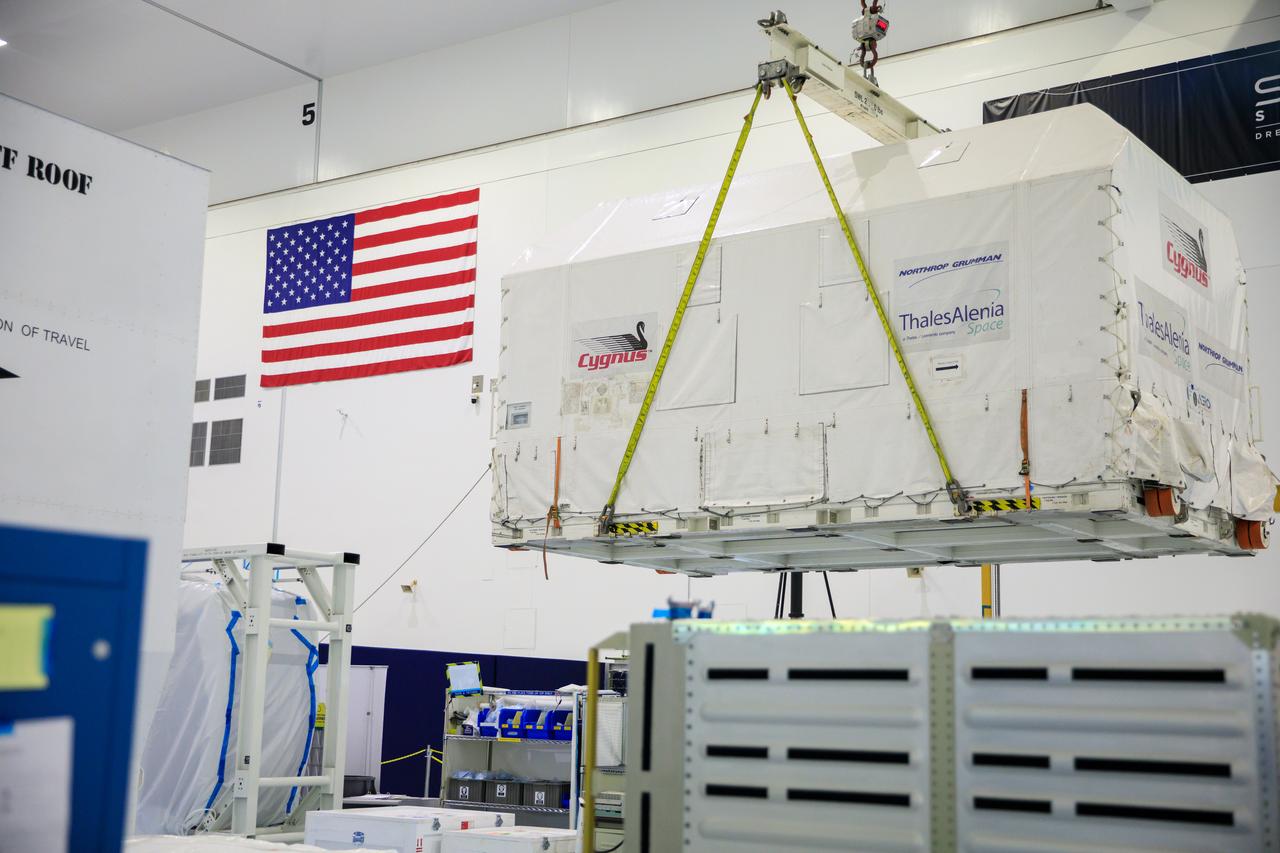
The Northrop Grumman Cygnus spacecraft’s pressurized cargo module (PCM) for the company’s 20th commercial resupply mission is moved by crane in its environmentally controlled shipping container in to the Space Station Processing Facility’s high bay at NASA's Kennedy Space Center in Florida on Aug. 2, 2023. Cygnus will launch later this year atop a SpaceX Falcon 9 rocket from Cape Canaveral Space Force Station’s Space Launch Complex 40 to the International Space Station. Cygnus will undergo prelaunch processing at Kennedy before it is transported to SpaceX’s integration facility.
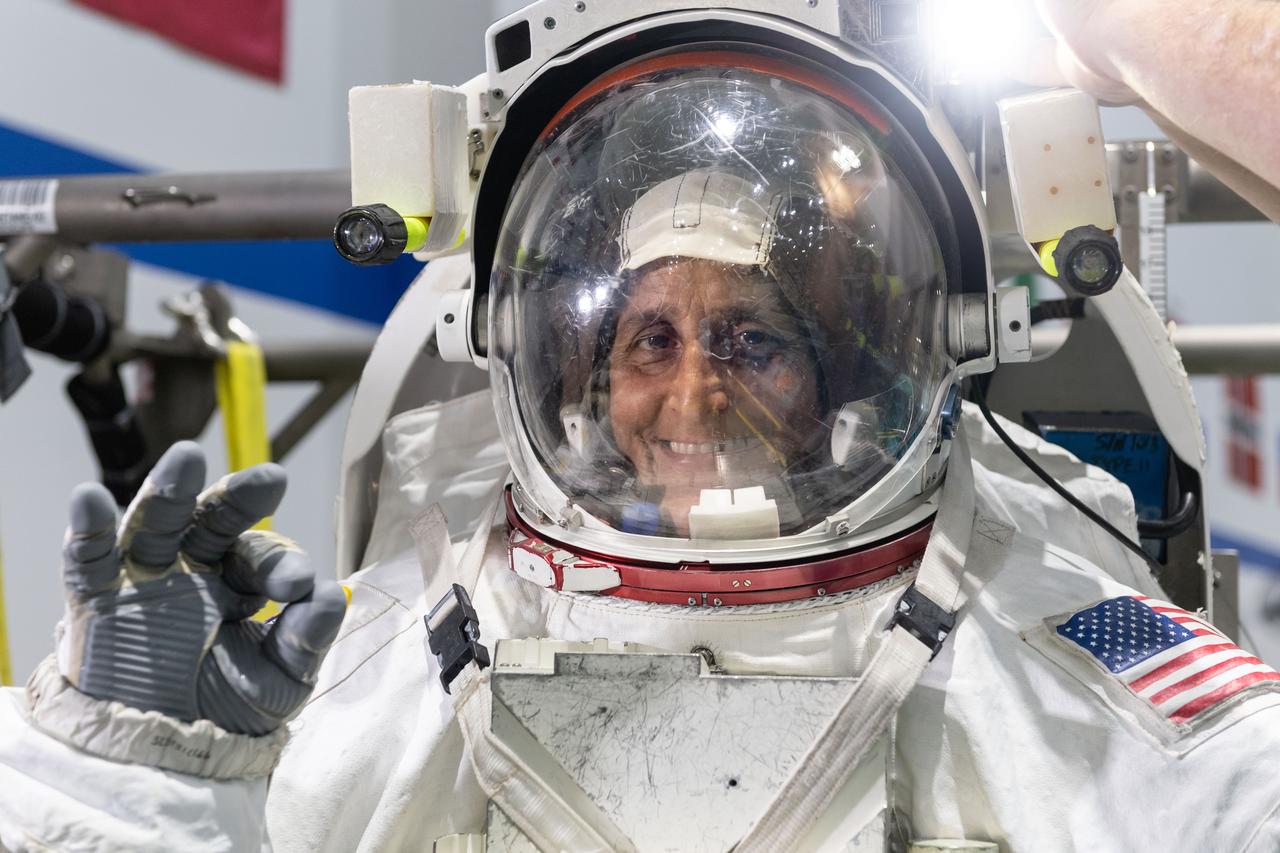
Commercial Crew Program astronaut training with Boeing PCM crew members Suni Williams & Josh Cassada during ISS EVA Maintenance 1 training at the NBL.

Commercial Crew Program astronaut training with Boeing PCM crew members Suni Williams & Josh Cassada during ISS EVA Maintenance 1 training at the NBL.
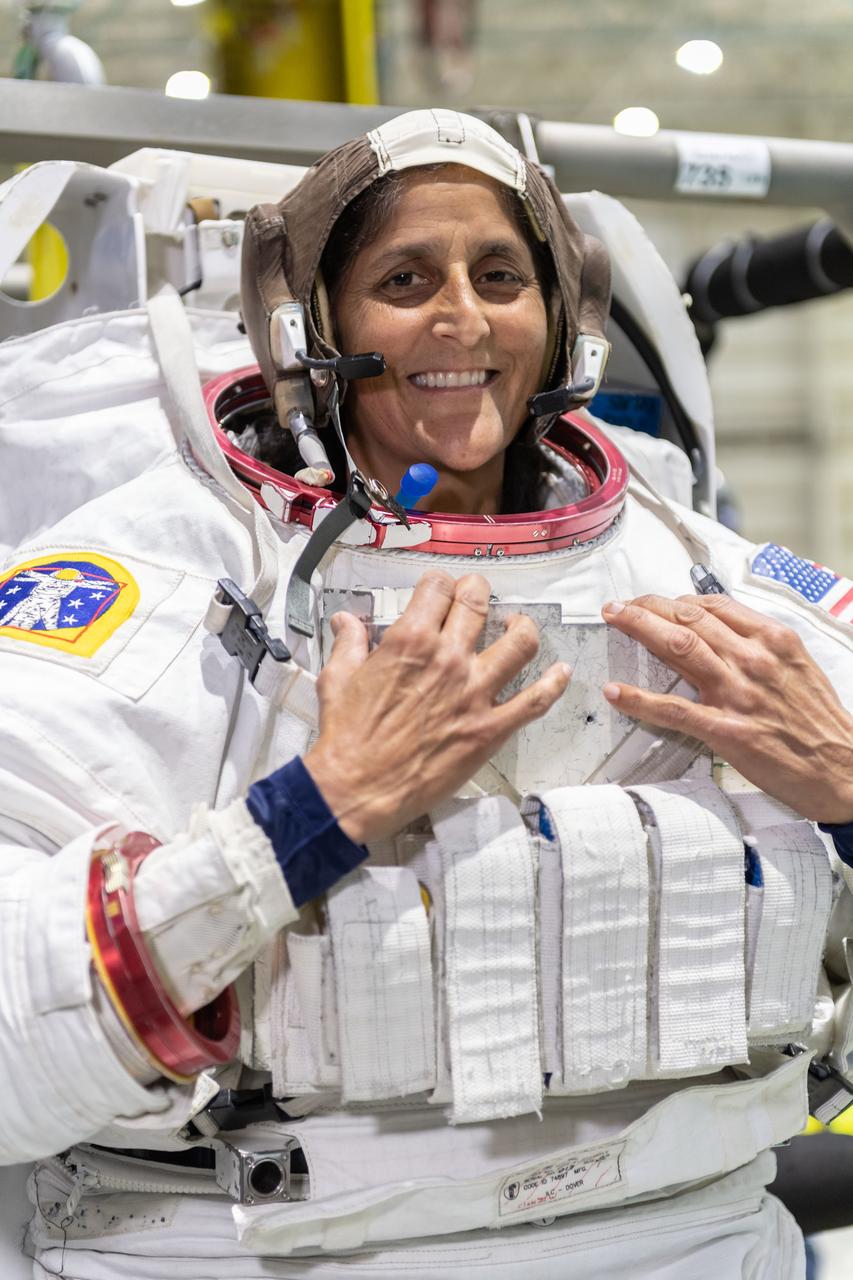
Commercial Crew Program astronaut training with Boeing PCM crew members Suni Williams & Josh Cassada during ISS EVA Maintenance 1 training at the NBL.

Commercial Crew Program astronaut training with Boeing PCM crew members Suni Williams & Josh Cassada during ISS EVA Maintenance 1 training at the NBL.

Commercial Crew Program astronaut training with Boeing PCM crew members Suni Williams & Josh Cassada during ISS EVA Maintenance 1 training at the NBL.

Commercial Crew Program astronaut training with Boeing PCM crew members Suni Williams & Josh Cassada during ISS EVA Maintenance 1 training at the NBL.
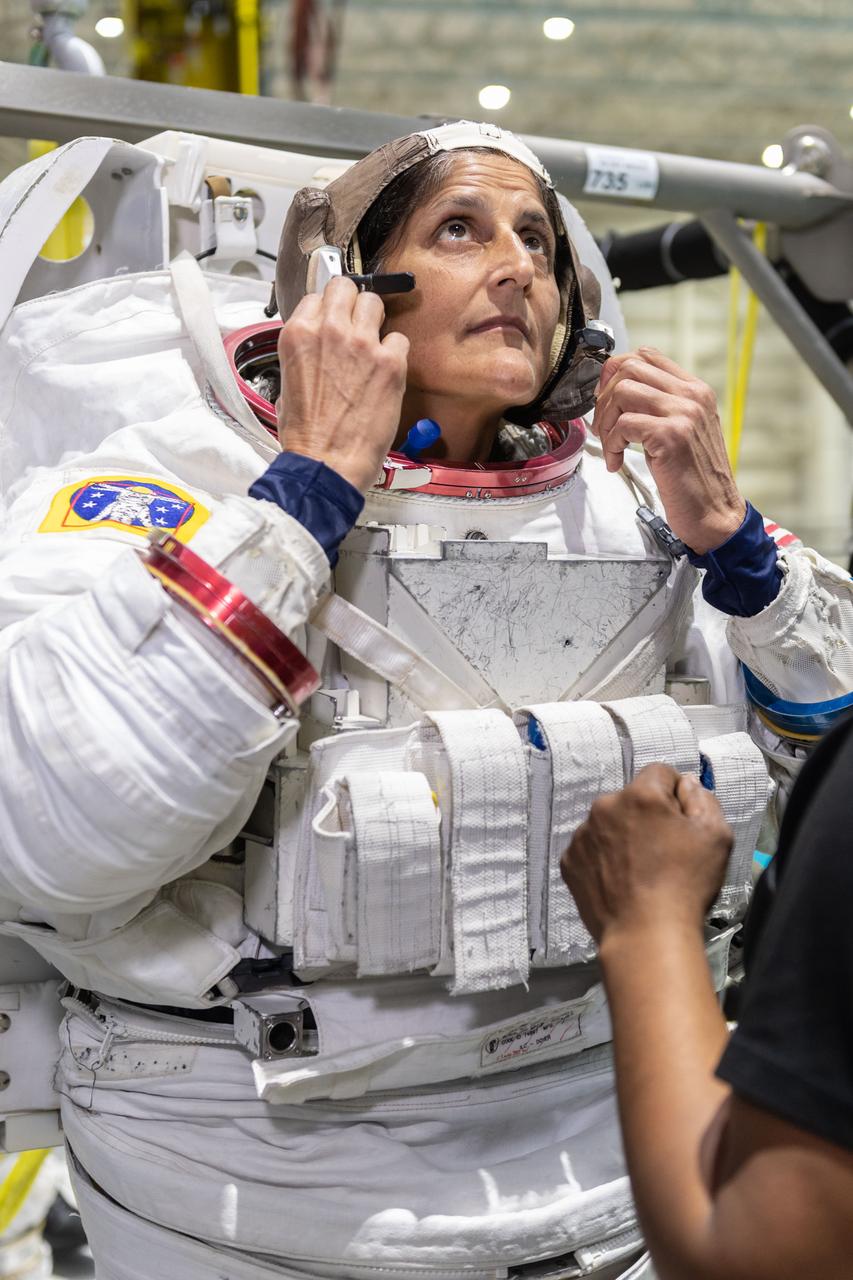
Commercial Crew Program astronaut training with Boeing PCM crew members Suni Williams & Josh Cassada during ISS EVA Maintenance 1 training at the NBL.
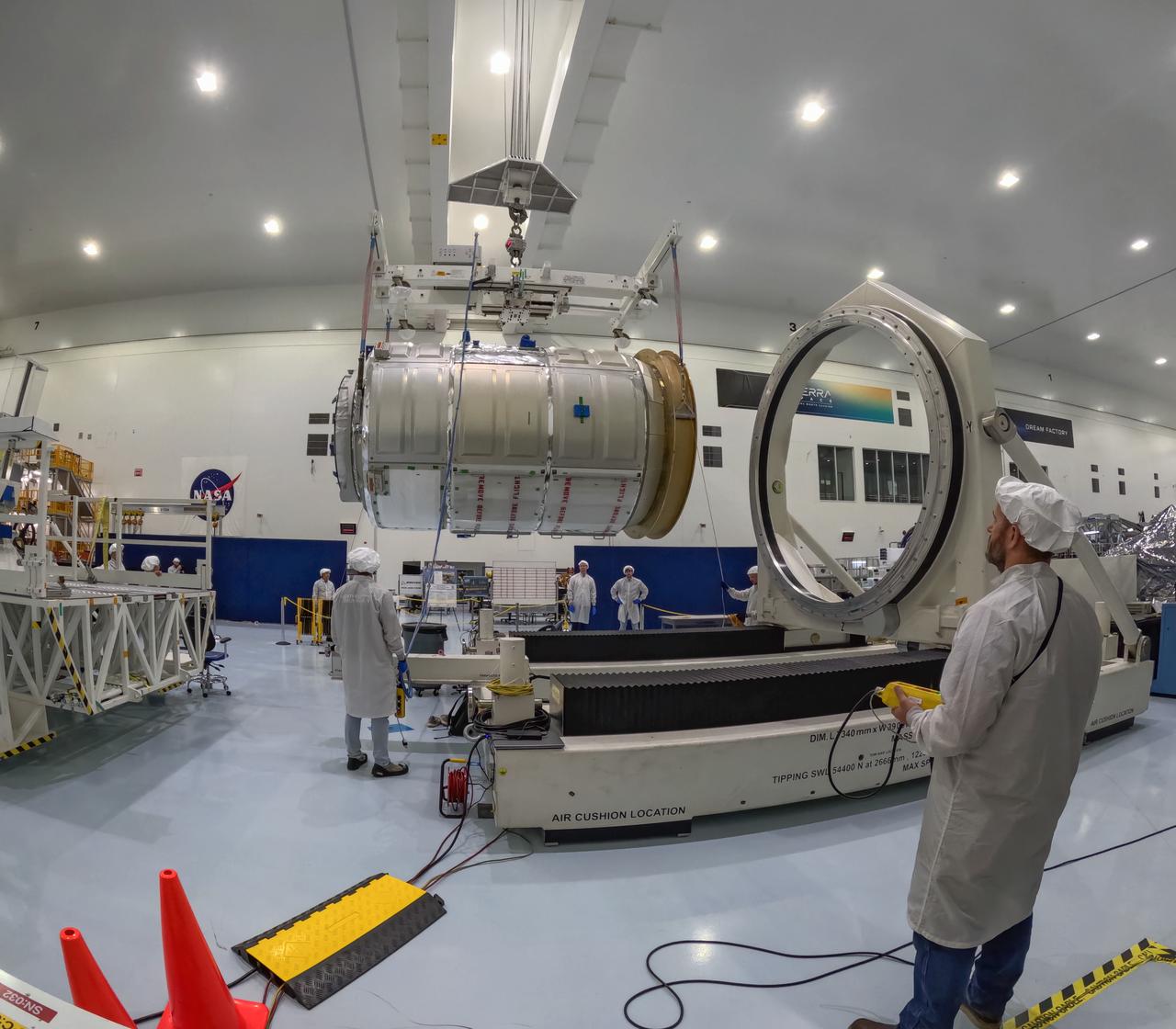
The Northrop Grumman Cygnus spacecraft’s pressurized cargo module for the company’s 21st commercial resupply mission is lifted and moved by a crane inside the Space Systems Processing Facility at NASA’s Kennedy Space Center in Florida on Saturday, June 1, 2024, as prelaunch processing operations continue. The Cygnus spacecraft will launch to the International Space Station aboard a SpaceX Falcon 9 rocket from Space Launch Complex 40 at Cape Canaveral Space Force Station.
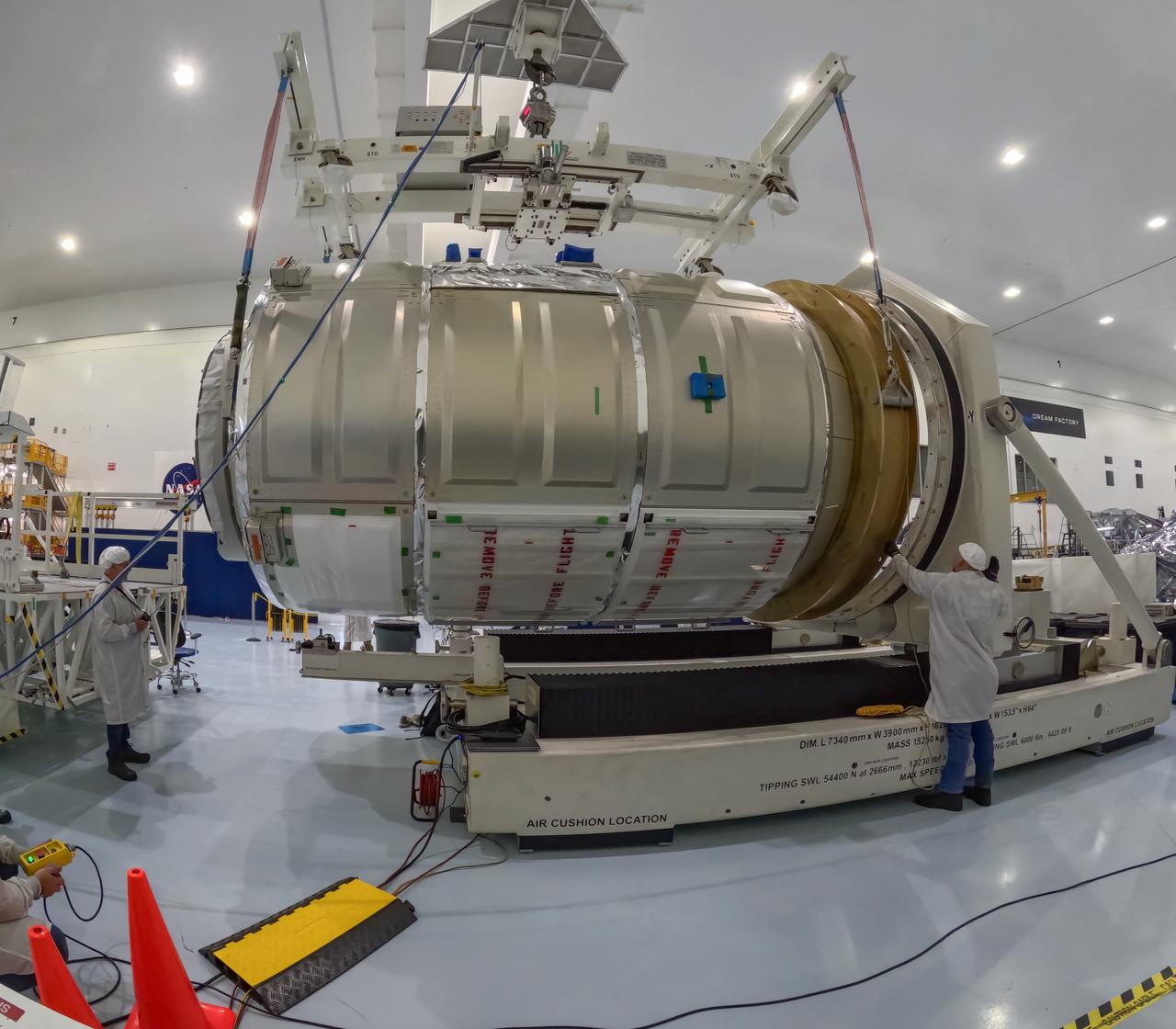
The Northrop Grumman Cygnus spacecraft’s pressurized cargo module for the company’s 21st commercial resupply mission is lifted and moved by a crane inside the Space Systems Processing Facility at NASA’s Kennedy Space Center in Florida on Saturday, June 1, 2024, as prelaunch processing operations continue. The Cygnus spacecraft will launch to the International Space Station aboard a SpaceX Falcon 9 rocket from Space Launch Complex 40 at Cape Canaveral Space Force Station.
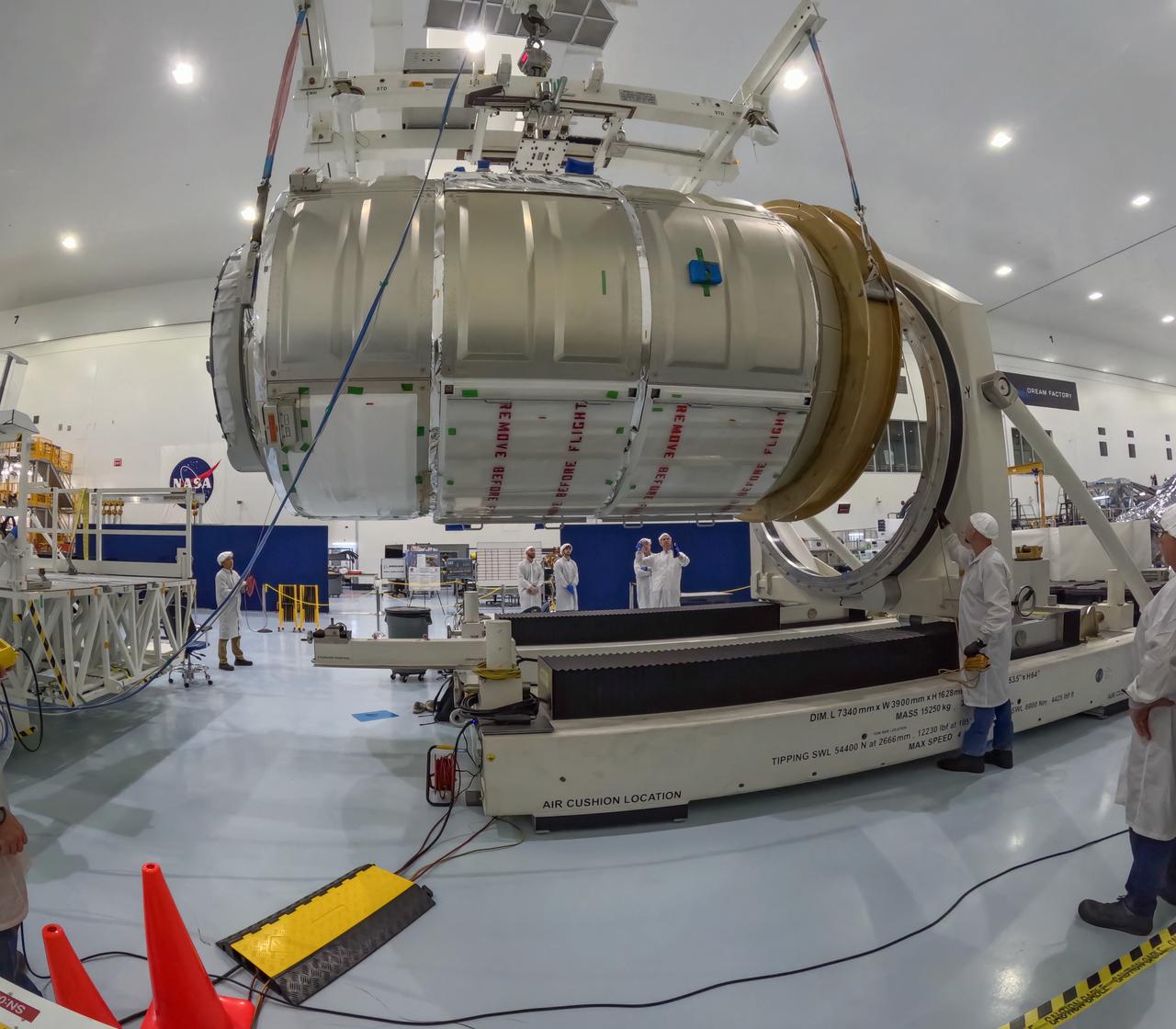
The Northrop Grumman Cygnus spacecraft’s pressurized cargo module for the company’s 21st commercial resupply mission is lifted and moved by a crane inside the Space Systems Processing Facility at NASA’s Kennedy Space Center in Florida on Saturday, June 1, 2024, as prelaunch processing operations continue. The Cygnus spacecraft will launch to the International Space Station aboard a SpaceX Falcon 9 rocket from Space Launch Complex 40 at Cape Canaveral Space Force Station.
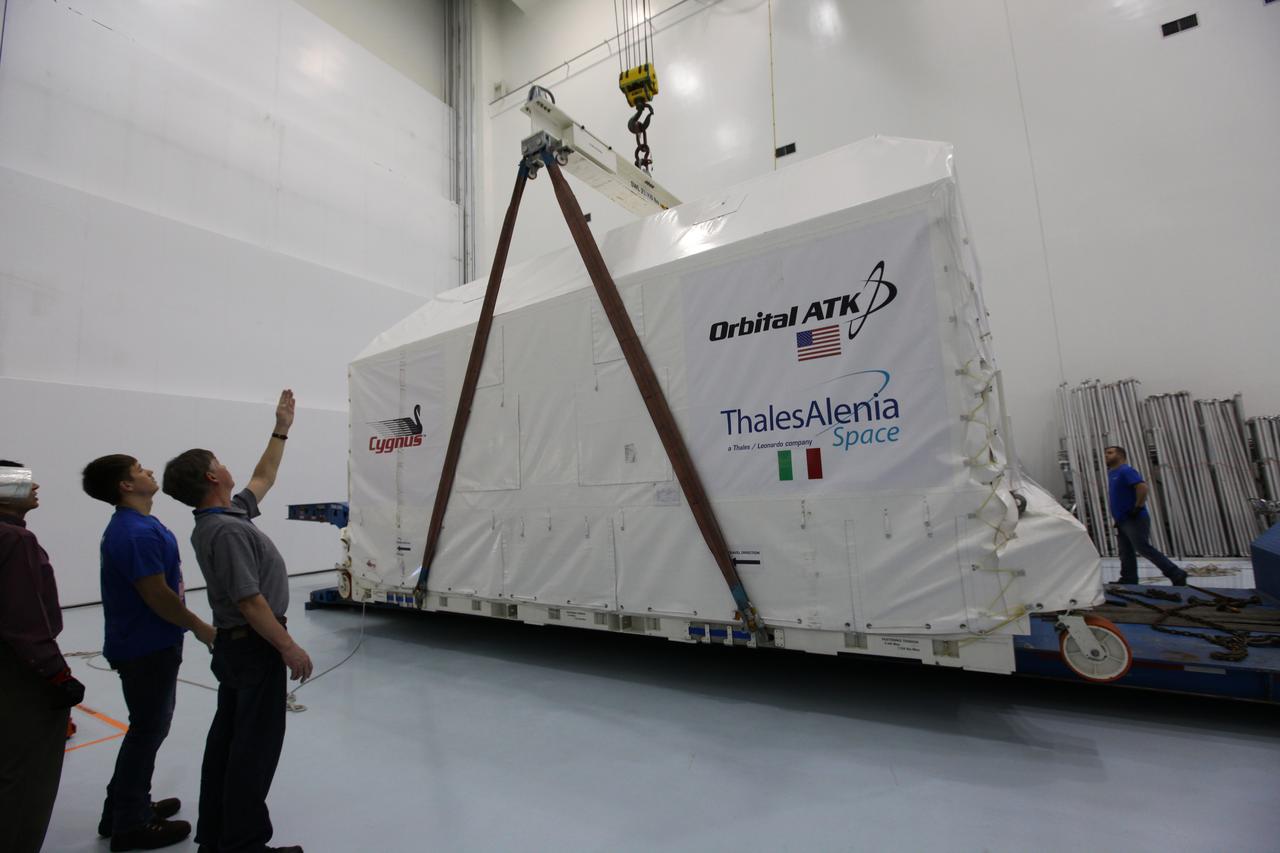
The Orbital ATK OA-7 Cygnus spacecraft's pressurized cargo module (PCM) arrives at the Space Station Processing Facility of NASA's Kennedy Space Center in Florida. The PCM is sealed in an environmentally controlled shipping container. Scheduled to launch on March 19, 2017, the Orbital ATK OA-7 mission will lift off atop a United Launch Alliance Atlas V rocket from Space launch Complex 41 at Cape Canaveral Air Force Station. The commercial resupply services mission to the International Space Station will deliver thousands of pounds of supplies, equipment and scientific research materials that improve life on Earth and drive progress toward future space exploration.
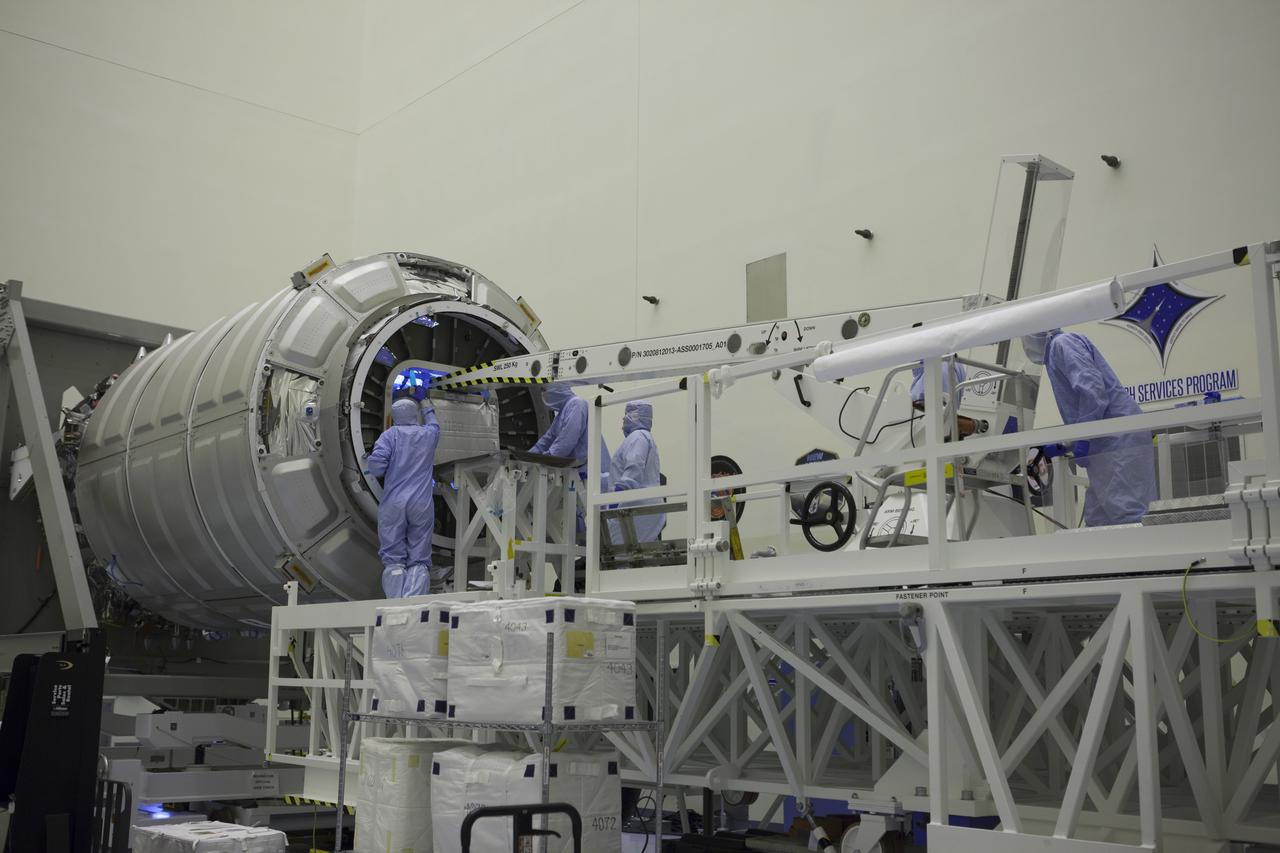
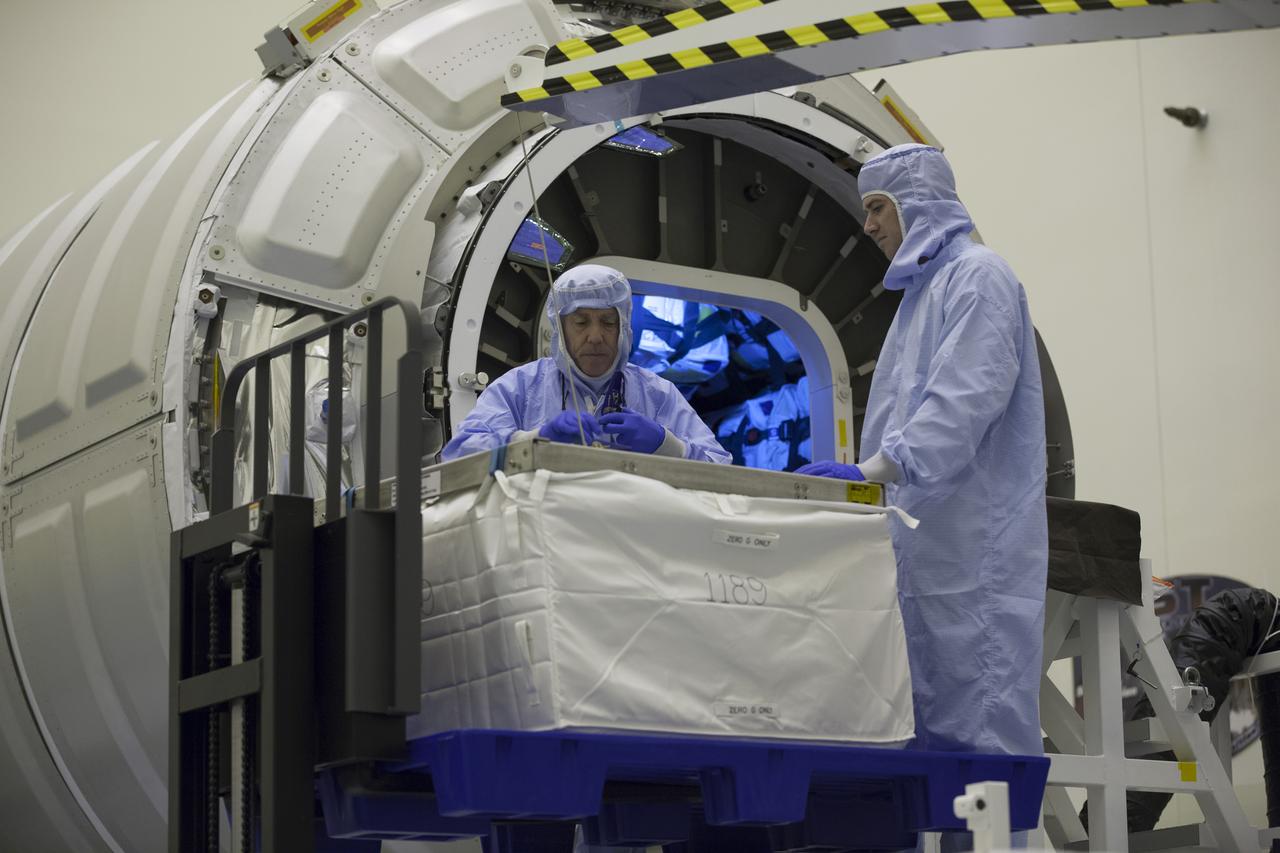
Technicians move cargo into the Orbital ATK CRS-6 pressurized cargo module during late stowage inside the Payload Hazardous Servicing Facility at NASA’s Kennedy Space Center in Florida. The spacecraft is scheduled for the upcoming Orbital ATK Commercial Resupply Services-6 mission to deliver hardware and supplies to the International Space Station. The Cygnus is scheduled to lift off atop a United Launch Alliance Atlas V rocket on March 22.
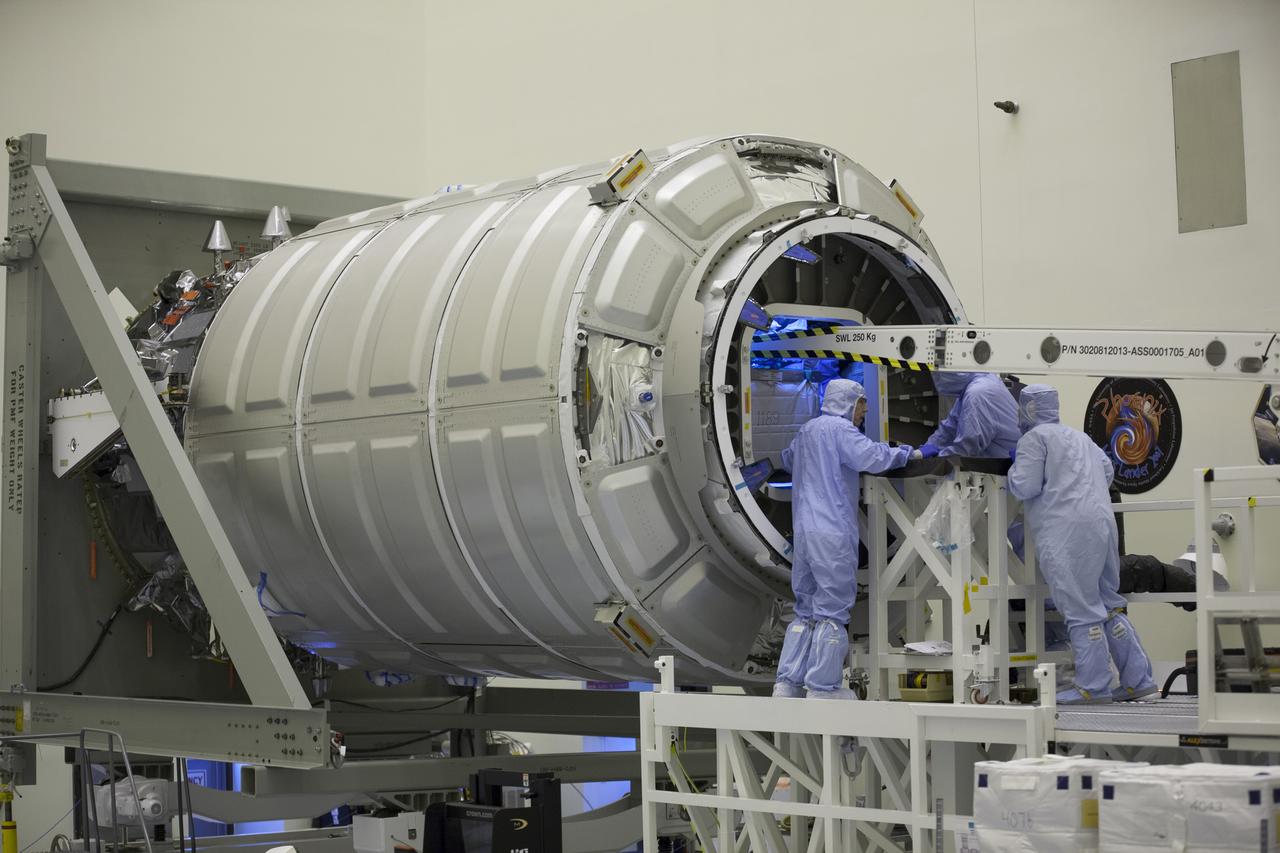
Technicians move cargo into the Orbital ATK CRS-6 pressurized cargo module during late stowage inside the Payload Hazardous Servicing Facility at NASA’s Kennedy Space Center in Florida. The spacecraft is scheduled for the upcoming Orbital ATK Commercial Resupply Services-6 mission to deliver hardware and supplies to the International Space Station. The Cygnus is scheduled to lift off atop a United Launch Alliance Atlas V rocket on March 22.
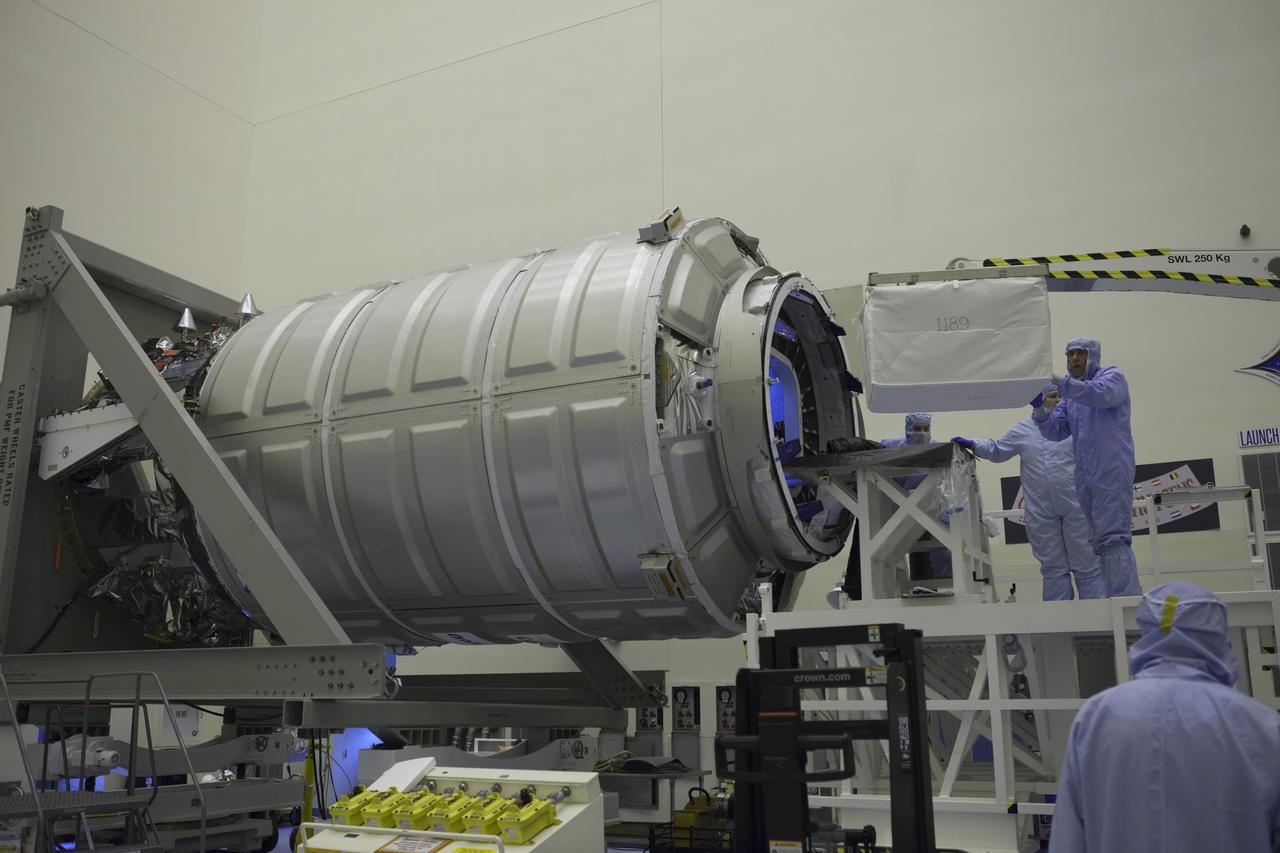
Technicians move cargo into the Orbital ATK CRS-6 pressurized cargo module during late stowage inside the Payload Hazardous Servicing Facility at NASA’s Kennedy Space Center in Florida. The spacecraft is scheduled for the upcoming Orbital ATK Commercial Resupply Services-6 mission to deliver hardware and supplies to the International Space Station. The Cygnus is scheduled to lift off atop a United Launch Alliance Atlas V rocket on March 22.
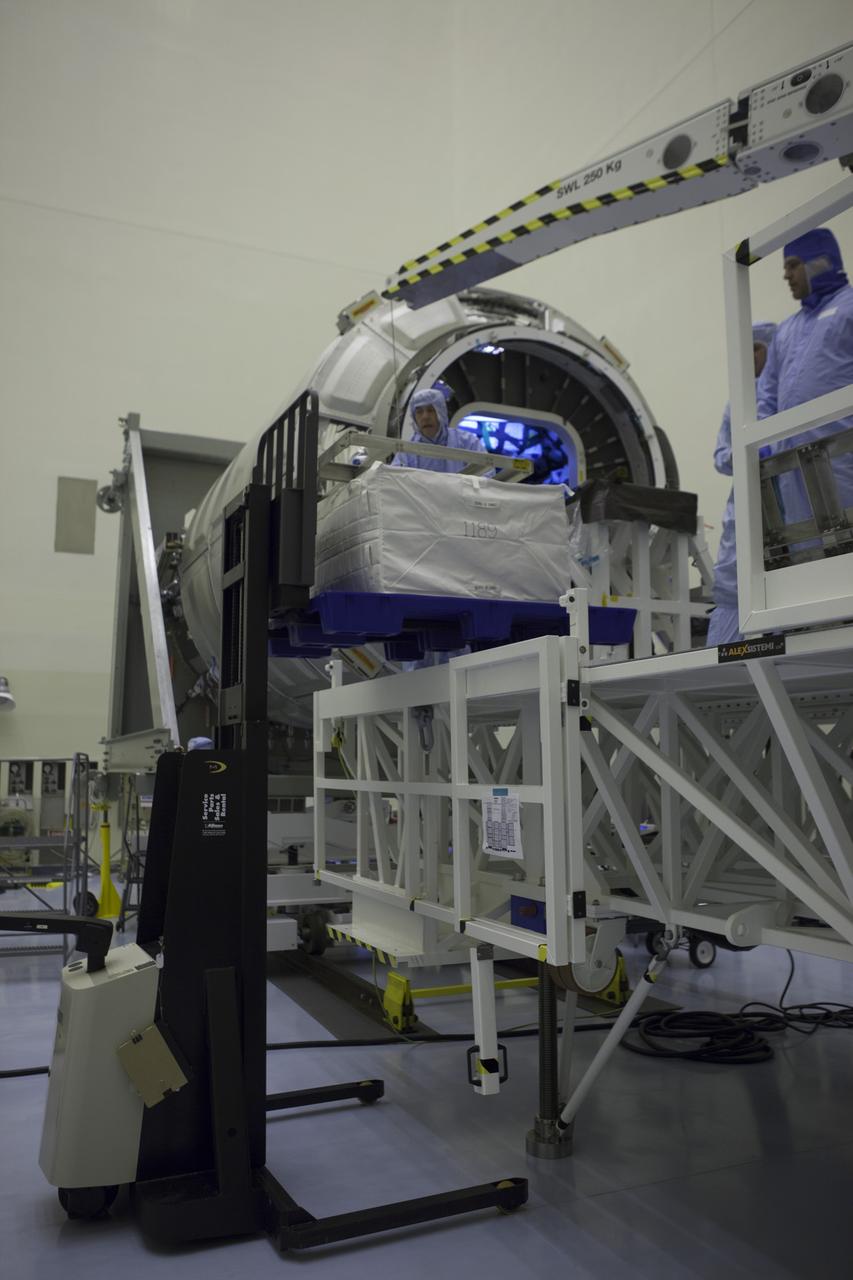
Technicians prepare to move a cargo package from a forklift into the Orbital ATK CRS-6 pressurized cargo module during late stowage inside the Payload Hazardous Servicing Facility at NASA’s Kennedy Space Center in Florida. The spacecraft is scheduled for the upcoming Orbital ATK Commercial Resupply Services-6 mission to deliver hardware and supplies to the International Space Station. The Cygnus is scheduled to lift off atop a United Launch Alliance Atlas V rocket on March 22.
Technicians prepare to move cargo into the Orbital ATK CRS-6 pressurized cargo module during late stowage inside the Payload Hazardous Servicing Facility at NASA’s Kennedy Space Center in Florida. The spacecraft is scheduled for the upcoming Orbital ATK Commercial Resupply Services-6 mission to deliver hardware and supplies to the International Space Station. The Cygnus is scheduled to lift off atop a United Launch Alliance Atlas V rocket on March 22.
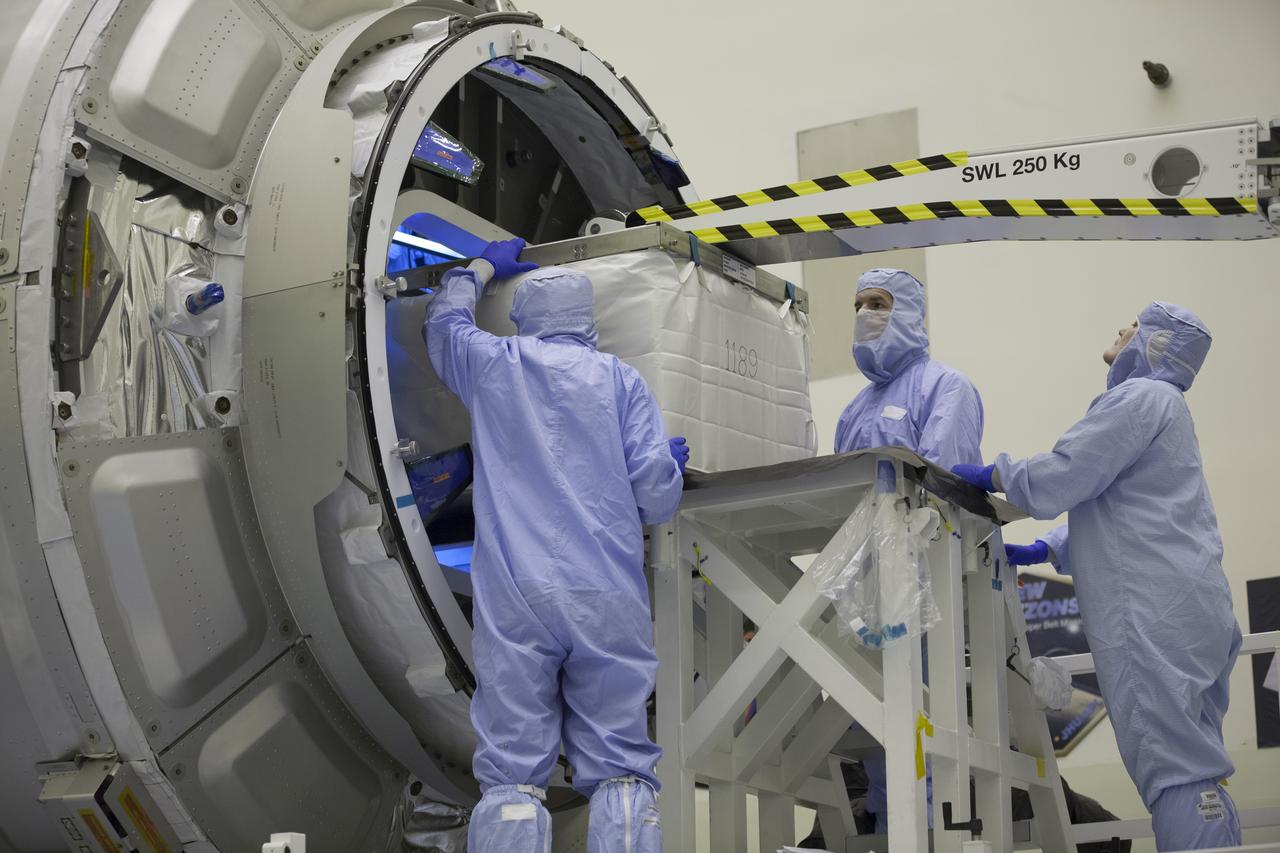
Technicians move cargo into the Orbital ATK CRS-6 pressurized cargo module during late stowage inside the Payload Hazardous Servicing Facility at NASA’s Kennedy Space Center in Florida. The spacecraft is scheduled for the upcoming Orbital ATK Commercial Resupply Services-6 mission to deliver hardware and supplies to the International Space Station. The Cygnus is scheduled to lift off atop a United Launch Alliance Atlas V rocket on March 22.
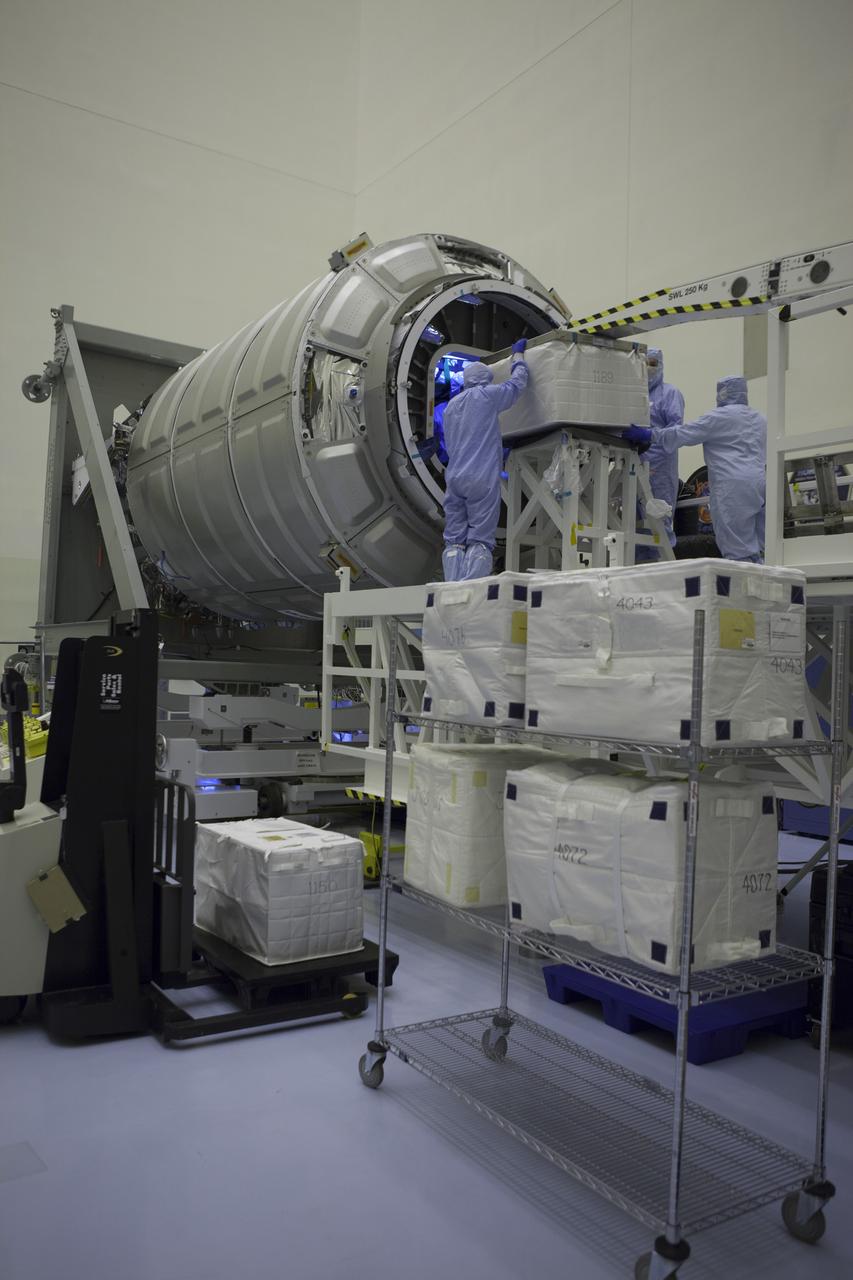
Technicians move cargo into the Orbital ATK CRS-6 pressurized cargo module during late stowage inside the Payload Hazardous Servicing Facility at NASA’s Kennedy Space Center in Florida. The spacecraft is scheduled for the upcoming Orbital ATK Commercial Resupply Services-6 mission to deliver hardware and supplies to the International Space Station. The Cygnus is scheduled to lift off atop a United Launch Alliance Atlas V rocket on March 22.
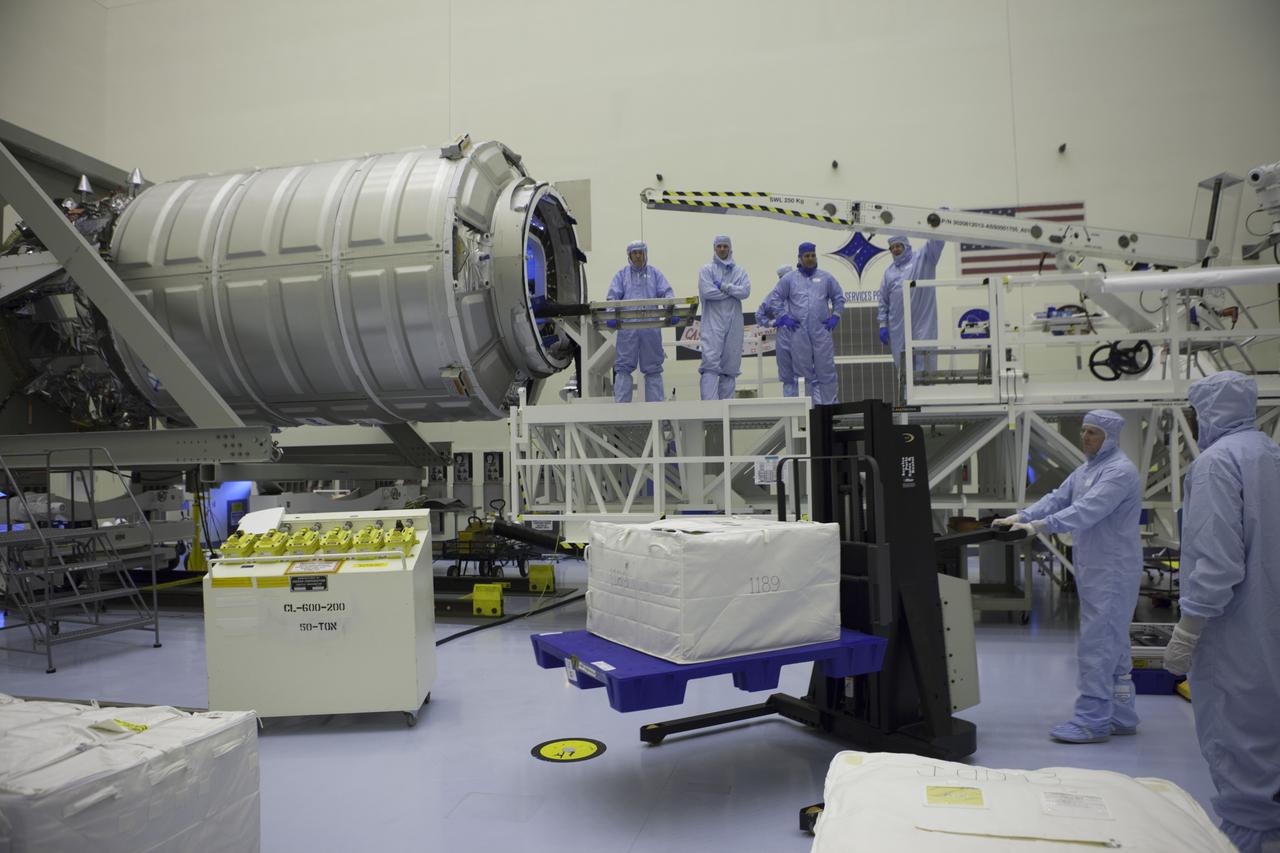
Technicians are positioned at the hatch of the Orbital ATK CRS-6 pressurized cargo module as a forklift moves a cargo package into position for installation into the spacecraft inside the Payload Hazardous Servicing Facility at NASA’s Kennedy Space Center in Florida. The spacecraft is scheduled for the upcoming Orbital ATK Commercial Resupply Services-6 mission to deliver hardware and supplies to the International Space Station. The Cygnus is scheduled to lift off atop a United Launch Alliance Atlas V rocket on March 22
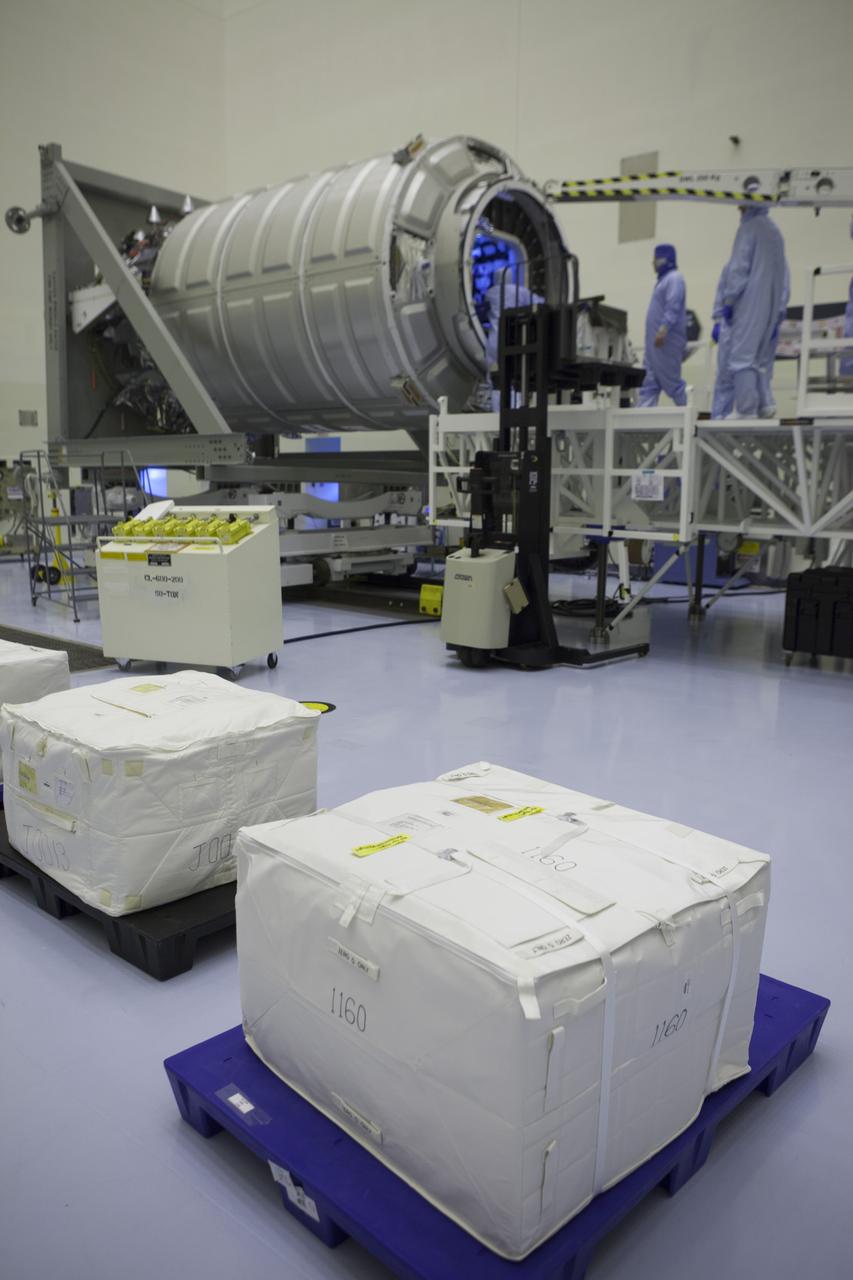
Carefully packaged cargo waits on pallets inside the Payload Hazardous Servicing Facility at NASA’s Kennedy Space Center in Florida. In the background, technicians prepare to begin loading the cargo into the Orbital ATK Cygnus pressurized module during late stowage operations. The spacecraft is scheduled for the upcoming Orbital ATK Commercial Resupply Services-6 mission to deliver hardware and supplies to the International Space Station. The Cygnus is scheduled to lift off atop a United Launch Alliance Atlas V rocket on March 22.
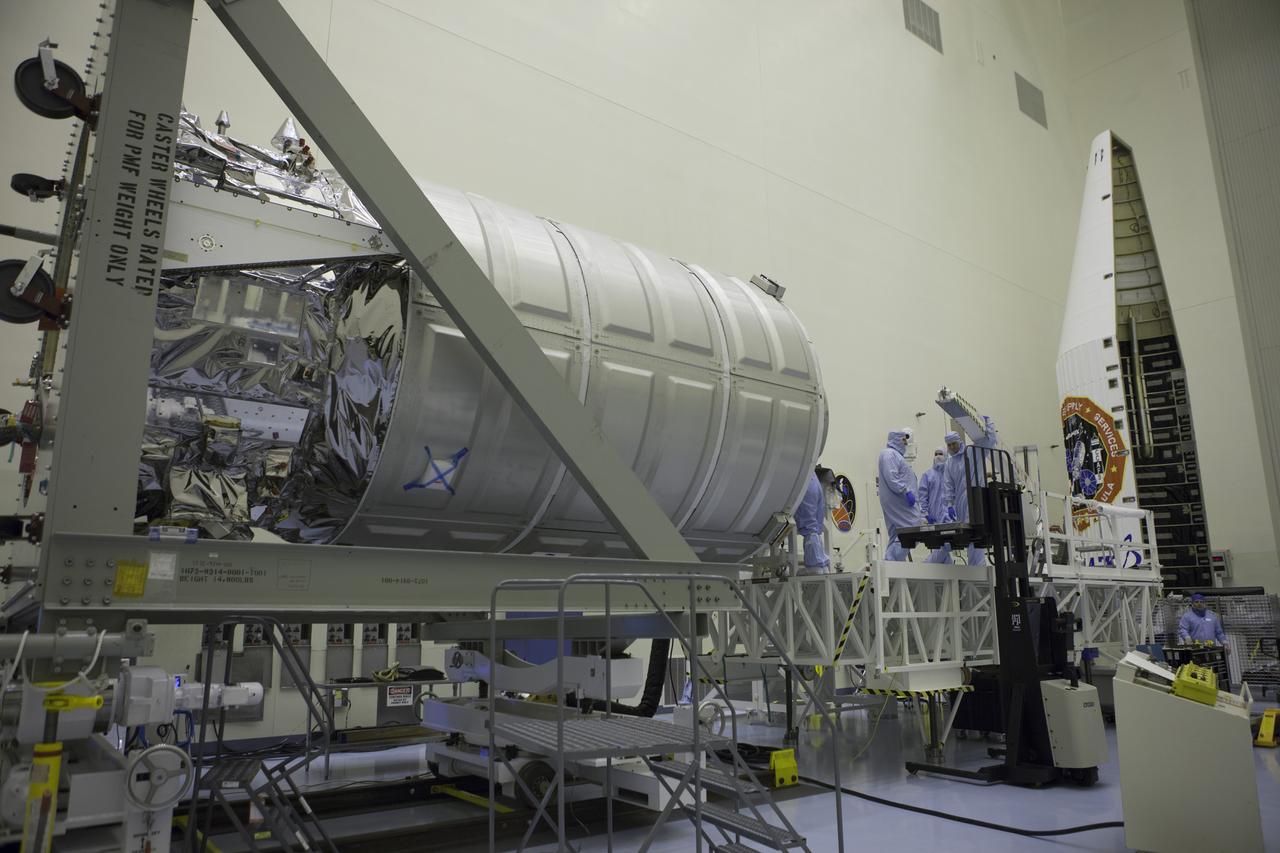
Technicians prepare load cargo into the Orbital ATK Cygnus pressurized module during late stowage operations inside the Payload Hazardous Servicing Facility at NASA's Kennedy Space Center in Florida. The spacecraft is scheduled for the upcoming Orbital ATK Commercial Resupply Services-6 mission to deliver hardware and supplies to the International Space Station. The Cygnus is scheduled to lift off atop a United Launch Alliance Atlas V rocket on March 22.
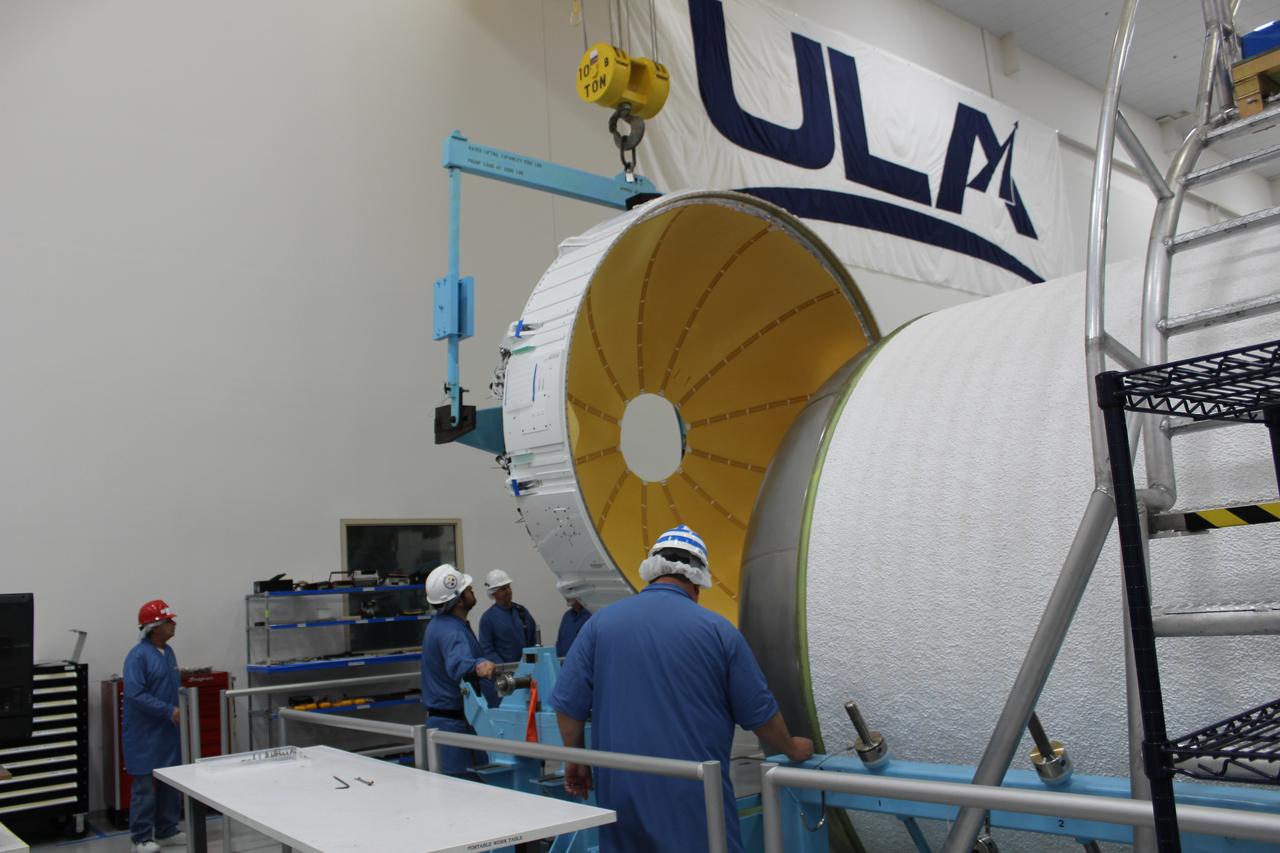
Workers assemble a United Launch Alliance (ULA) Atlas V dual engine Centaur upper stage in ULA’s factory in Decatur, Alabama on March 29, 2019. The dual engine upper stage is being prepared for the first crew rotation mission of Boeing’s CST-100 Starliner to the International Space Station. Starliner and the Atlas V rockets that will launch the spacecraft, are key elements of NASA’s Commercial Crew Program to restore the capability to send astronauts to the space station from U.S. soil.
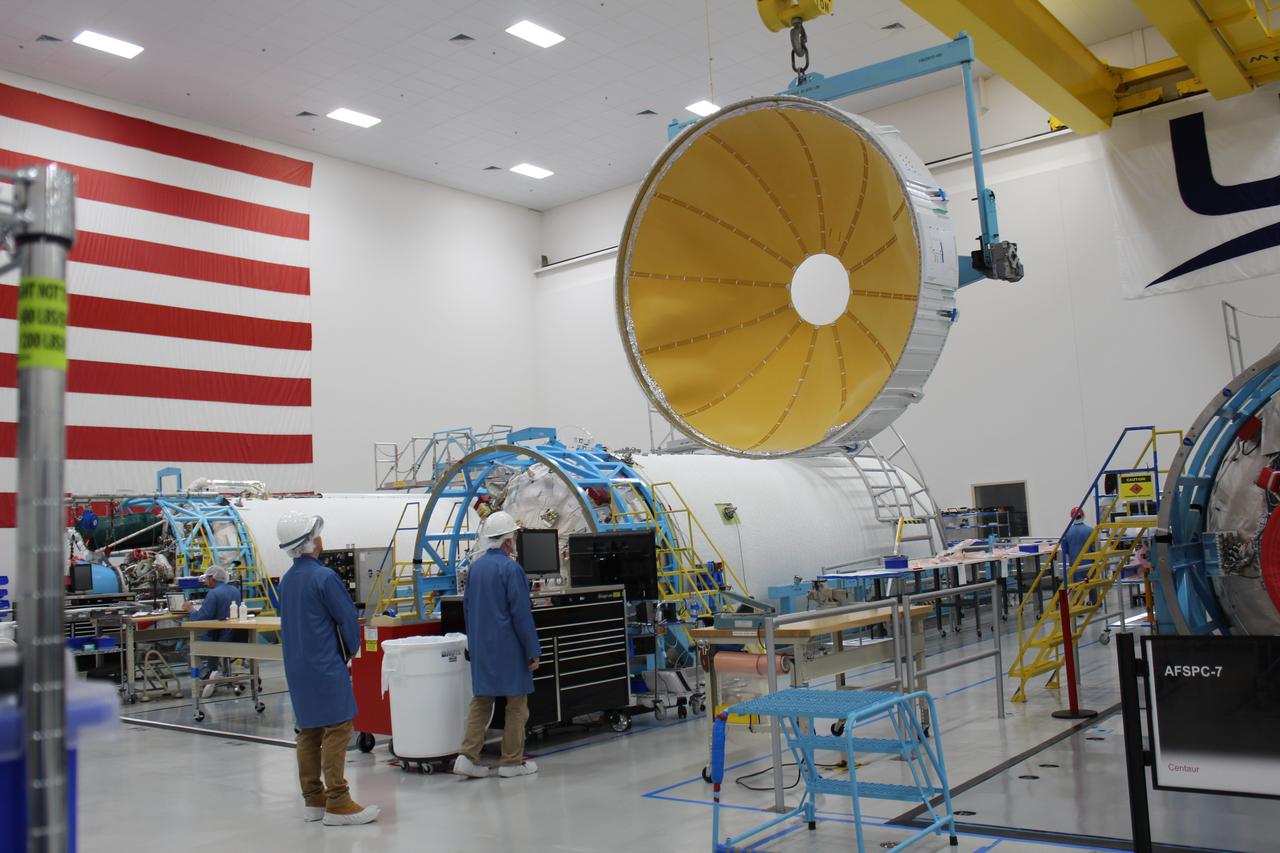
Workers assemble a United Launch Alliance (ULA) Atlas V dual engine Centaur upper stage in ULA’s factory in Decatur, Alabama on March 29, 2019. The dual engine upper stage is being prepared for the first crew rotation mission of Boeing’s CST-100 Starliner to the International Space Station. Starliner and the Atlas V rockets that will launch the spacecraft, are key elements of NASA’s Commercial Crew Program to restore the capability to send astronauts to the space station from U.S. soil.
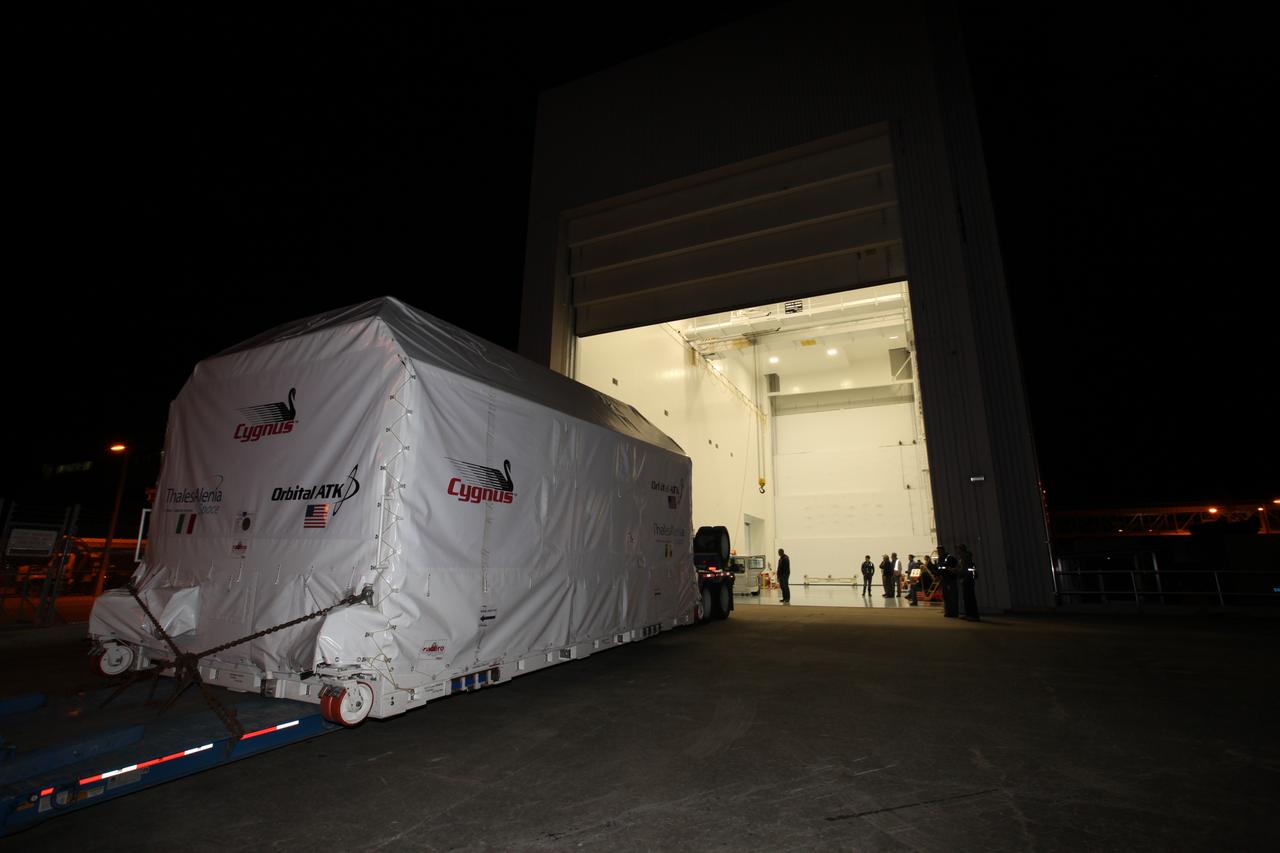
The Orbital ATK OA-7 Cygnus spacecraft's pressurized cargo module (PCM) arrives at the Space Station Processing Facility of NASA's Kennedy Space Center in Florida. The PCM is sealed in an environmentally controlled shipping container, pulled in by truck on a low-boy flatbed trailer. Scheduled to launch in March 2017, the Orbital ATK OA-7 mission will lift off atop a United Launch Alliance Atlas V rocket from Space launch Complex 41 at Cape Canaveral Air Force Station. The commercial resupply services mission to the International Space Station will deliver thousands of pounds of supplies, equipment and scientific research materials that improve life on Earth and drive progress toward future space exploration.
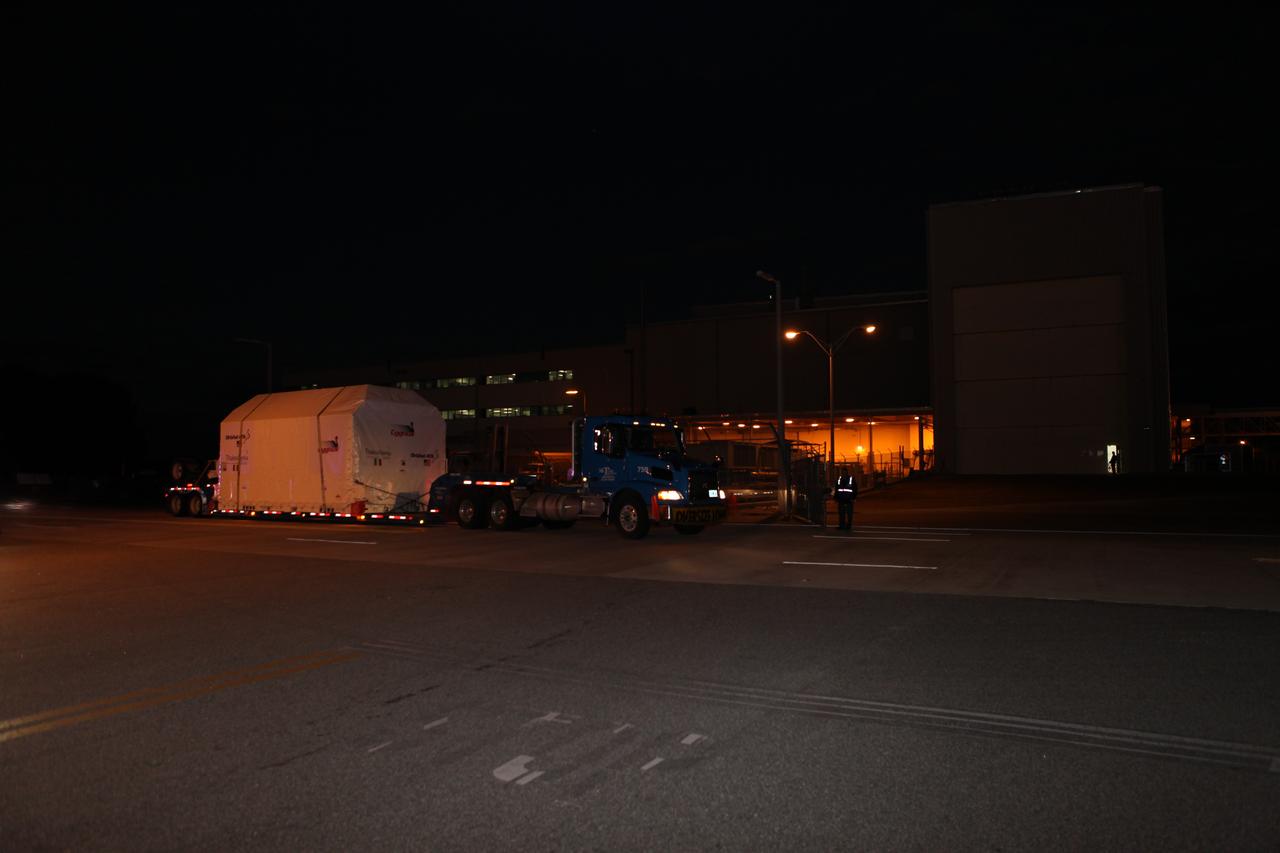
The Orbital ATK OA-7 Cygnus spacecraft's pressurized cargo module (PCM) arrives at the Space Station Processing Facility of NASA's Kennedy Space Center in Florida. The PCM is sealed in an environmentally controlled shipping container, pulled in by truck on a low-boy flatbed trailer. Scheduled to launch in March 2017, the Orbital ATK OA-7 mission will lift off atop a United Launch Alliance Atlas V rocket from Space launch Complex 41 at Cape Canaveral Air Force Station. The commercial resupply services mission to the International Space Station will deliver thousands of pounds of supplies, equipment and scientific research materials that improve life on Earth and drive progress toward future space exploration.
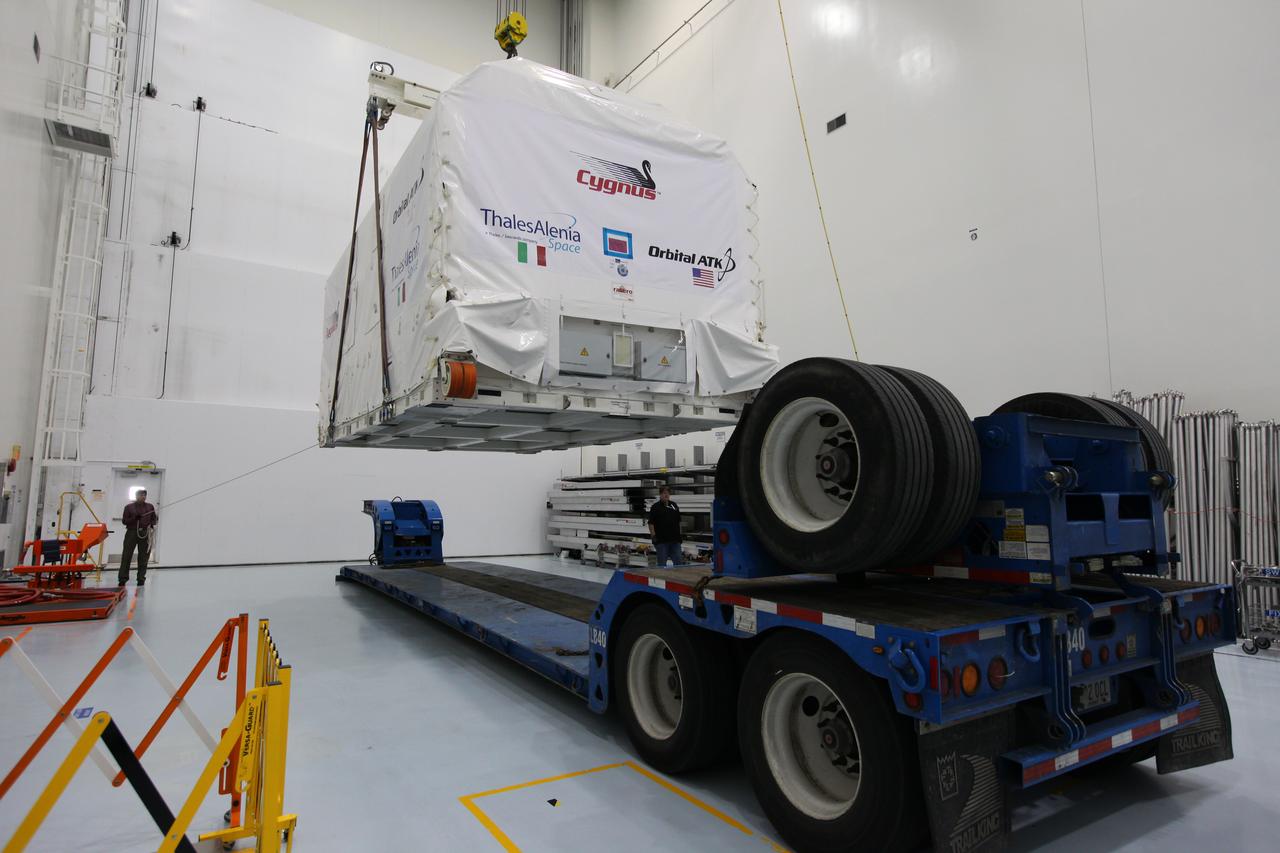
A crane is used to lift the Orbital ATK OA-7 Cygnus spacecraft's pressurized cargo module (PCM) off a flatbed truck after arrival at the Space Station Processing Facility of NASA's Kennedy Space Center in Florida. The PCM is sealed in an environmentally controlled shipping container. Scheduled to launch on March 19, 2017, the Orbital ATK OA-7 mission will lift off atop a United Launch Alliance Atlas V rocket from Space launch Complex 41 at Cape Canaveral Air Force Station. The commercial resupply services mission to the International Space Station will deliver thousands of pounds of supplies, equipment and scientific research materials that improve life on Earth and drive progress toward future space exploration.
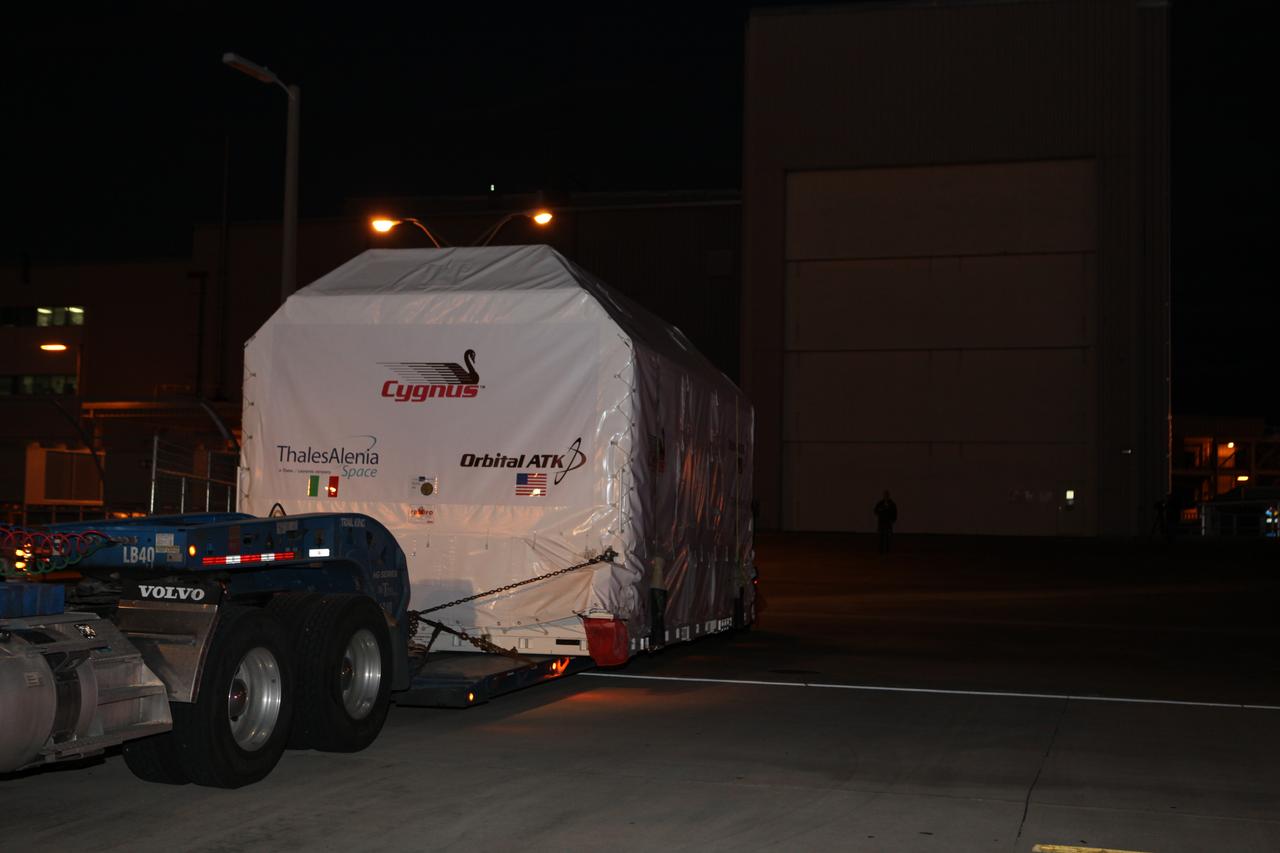
The Orbital ATK OA-7 Cygnus spacecraft's pressurized cargo module (PCM) arrives at the Space Station Processing Facility of NASA's Kennedy Space Center in Florida. The PCM is sealed in an environmentally controlled shipping container, pulled in by truck on a low-boy flatbed trailer. Scheduled to launch in March 2017, the Orbital ATK OA-7 mission will lift off atop a United Launch Alliance Atlas V rocket from Space launch Complex 41 at Cape Canaveral Air Force Station. The commercial resupply services mission to the International Space Station will deliver thousands of pounds of supplies, equipment and scientific research materials that improve life on Earth and drive progress toward future space exploration.
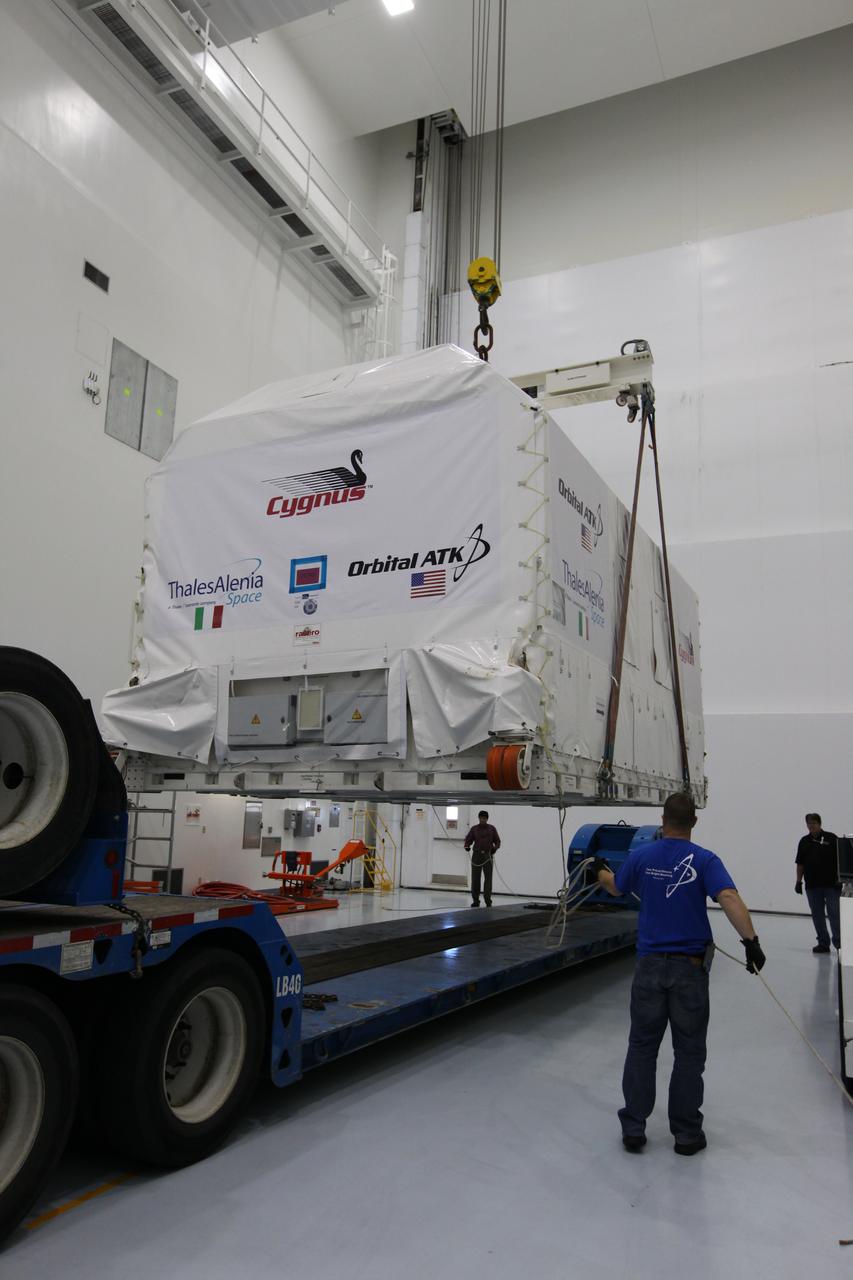
A crane is used to lift the Orbital ATK OA-7 Cygnus spacecraft's pressurized cargo module (PCM) off a flatbed truck after arrival at the Space Station Processing Facility of NASA's Kennedy Space Center in Florida. The PCM is sealed in an environmentally controlled shipping container. Scheduled to launch on March 19, 2017, the Orbital ATK OA-7 mission will lift off atop a United Launch Alliance Atlas V rocket from Space launch Complex 41 at Cape Canaveral Air Force Station. The commercial resupply services mission to the International Space Station will deliver thousands of pounds of supplies, equipment and scientific research materials that improve life on Earth and drive progress toward future space exploration.
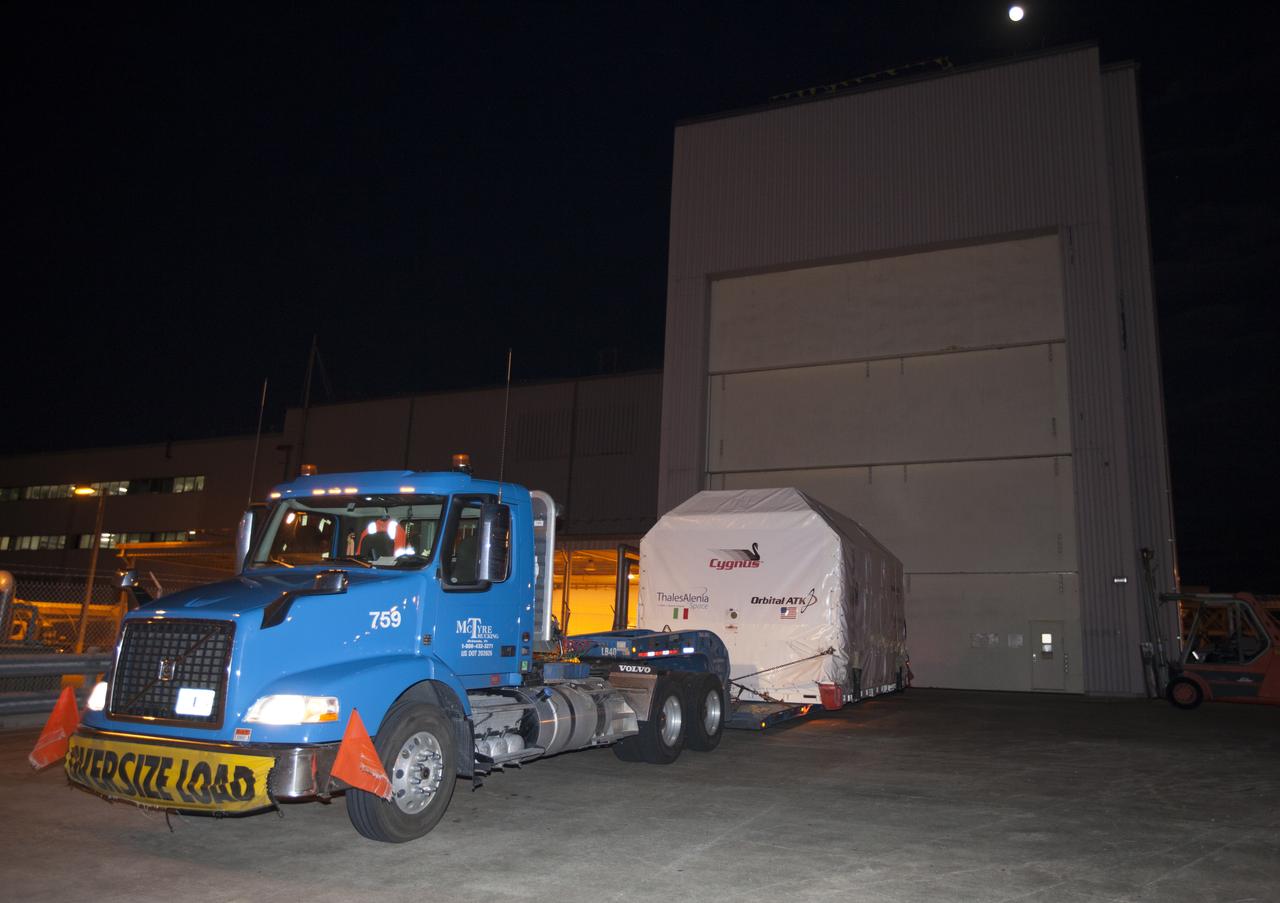
The Orbital ATK OA-7 Cygnus spacecraft's pressurized cargo module (PCM) arrives at the Space Station Processing Facility of NASA's Kennedy Space Center in Florida. The PCM is sealed in an environmentally controlled shipping container, pulled in by truck on a low-boy flatbed trailer. Scheduled to launch in March 2017, the Orbital ATK OA-7 mission will lift off atop a United Launch Alliance Atlas V rocket from Space launch Complex 41 at Cape Canaveral Air Force Station. The commercial resupply services mission to the International Space Station will deliver thousands of pounds of supplies, equipment and scientific research materials that improve life on Earth and drive progress toward future space exploration.
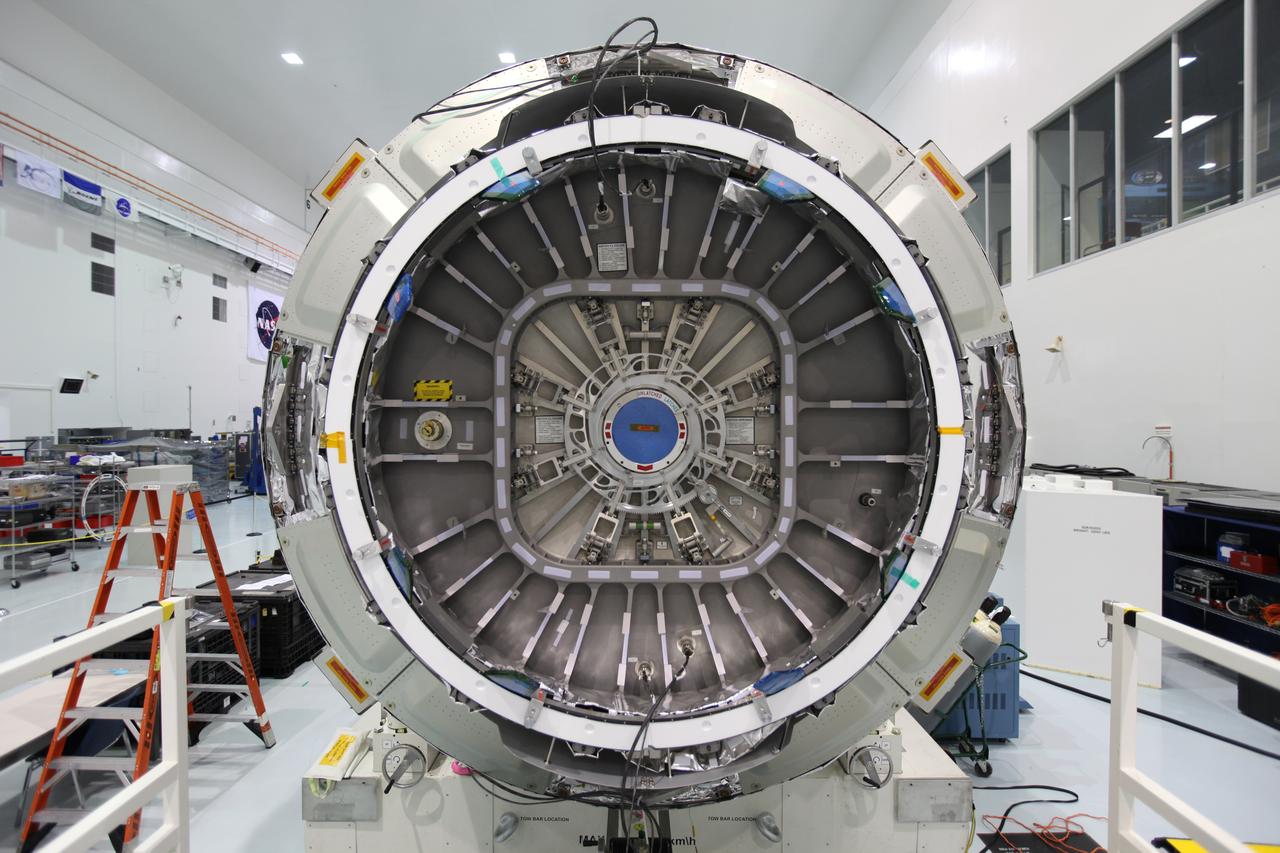
In the Space Station Processing Facility at NASA's Kennedy Space Center in Florida, the hatch has been closed on the Cygnus spacecraft's pressurized cargo module (PCM) for the Orbital ATK CRS-7 mission to the International Space Station. The module will be rotated to vertical for mating to the service module. Scheduled to launch on March 19, 2017, the commercial resupply services mission will lift off atop a United Launch Alliance Atlas V rocket from Space launch Complex 41 at Cape Canaveral Air Force Station.
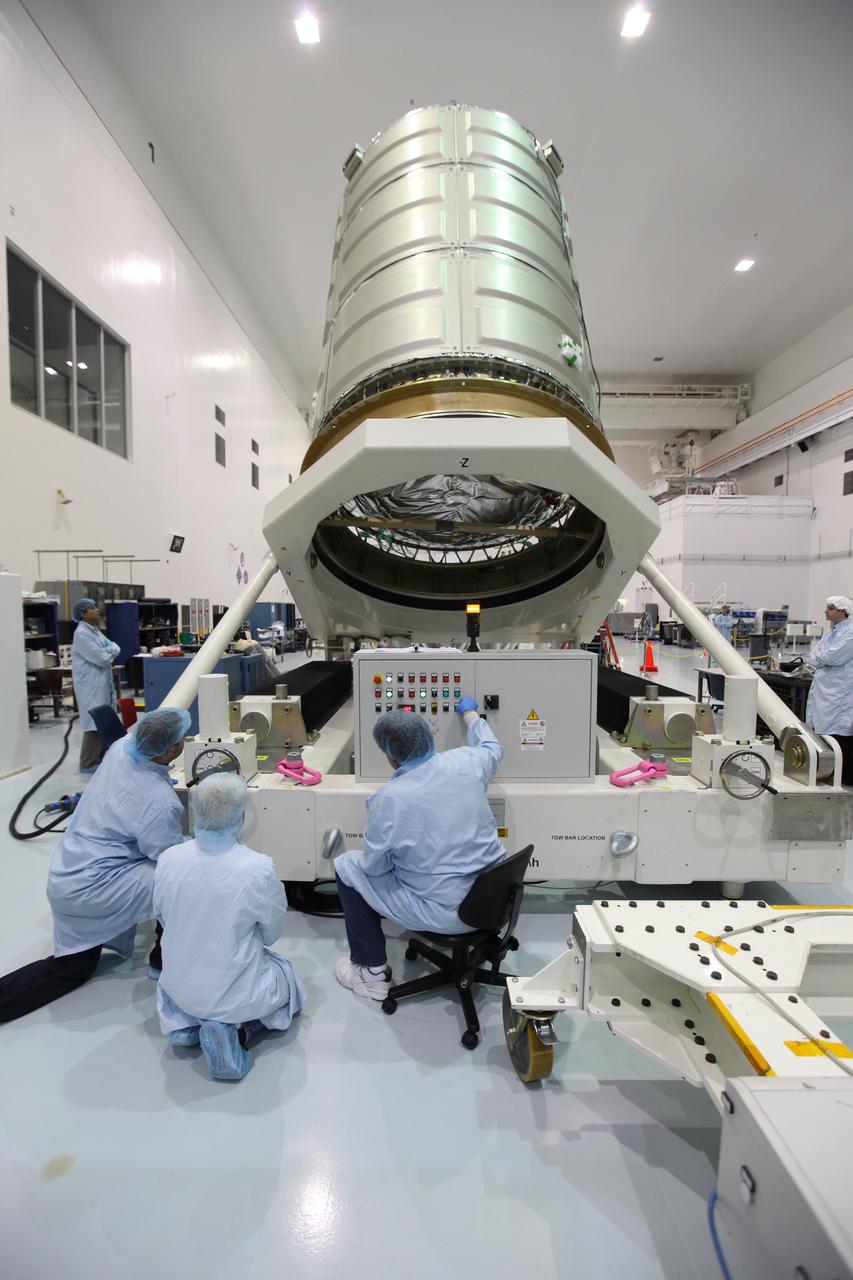
In the Space Station Processing Facility at NASA's Kennedy Space Center in Florida, technicians monitor the progress as the Cygnus spacecraft's pressurized cargo module (PCM) for the Orbital ATK CRS-7 mission to the International Space Station is rotated to vertical for mating to the service module. Scheduled to launch on March 19, 2017, the commercial resupply services mission will lift off atop a United Launch Alliance Atlas V rocket from Space launch Complex 41 at Cape Canaveral Air Force Station.
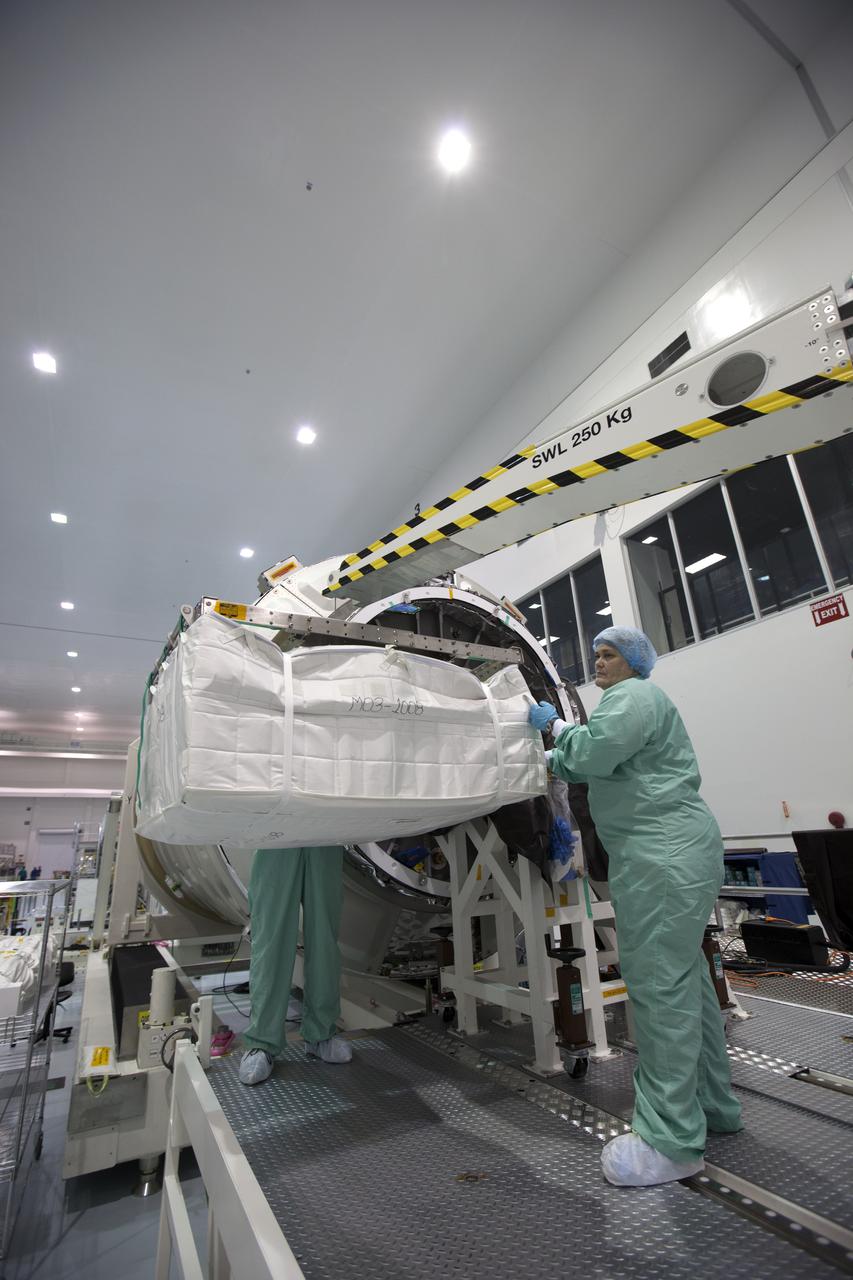
In the Space Station Processing Facility at NASA's Kennedy Space Center in Florida, technicians and engineers load thousands of pounds of supplies, equipment and scientific research materials aboard a Cygnus spacecraft's pressurized cargo module (PCM) for the Orbital ATK CRS-7 mission to the International Space Station. Scheduled to launch on March 19, 2017, the commercial resupply services mission will lift off atop a United Launch Alliance Atlas V rocket from Space launch Complex 41 at Cape Canaveral Air Force Station.
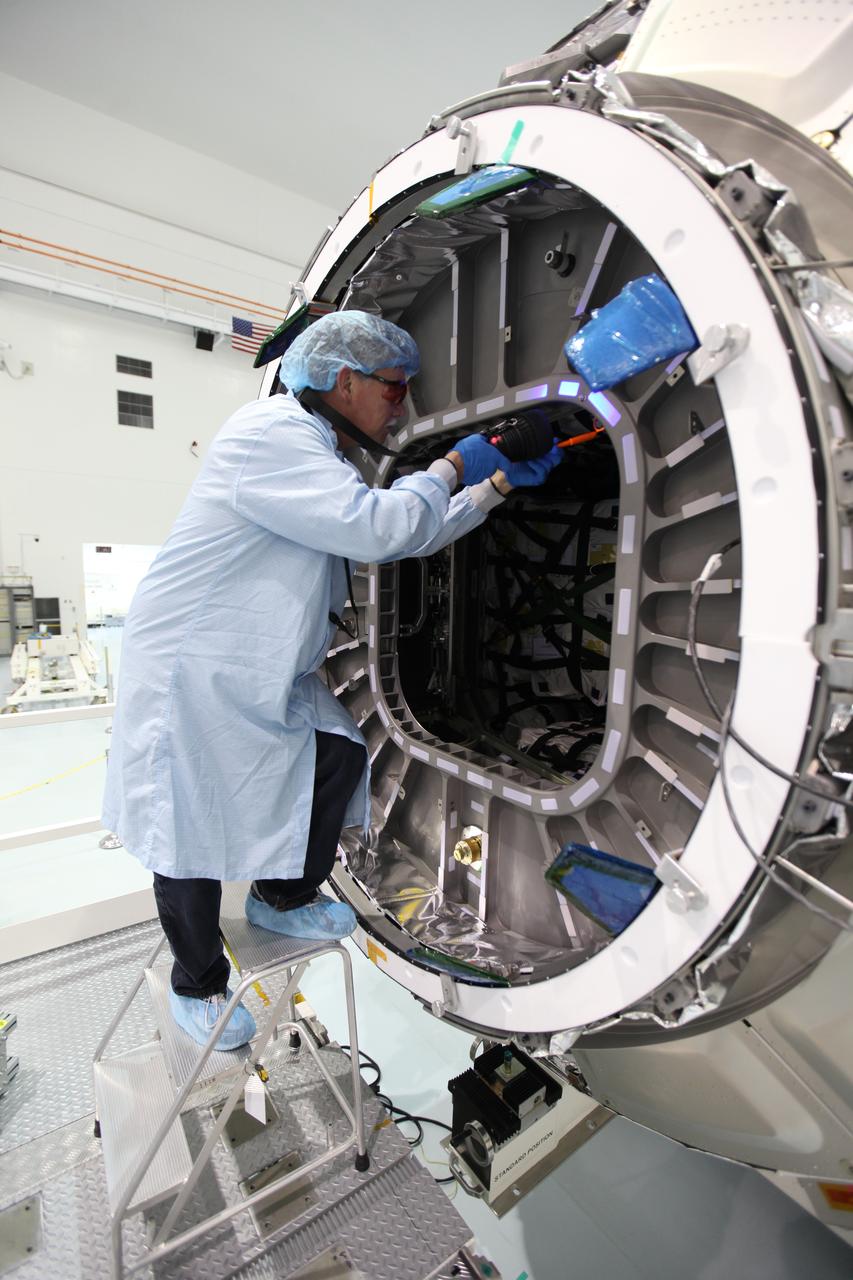
In the Space Station Processing Facility at NASA's Kennedy Space Center in Florida, preparations are underway to close the hatch of the Cygnus spacecraft's pressurized cargo module (PCM) for the Orbital ATK CRS-7 mission to the International Space Station. Scheduled to launch on March 19, 2017, the commercial resupply services mission will lift off atop a United Launch Alliance Atlas V rocket from Space launch Complex 41 at Cape Canaveral Air Force Station.
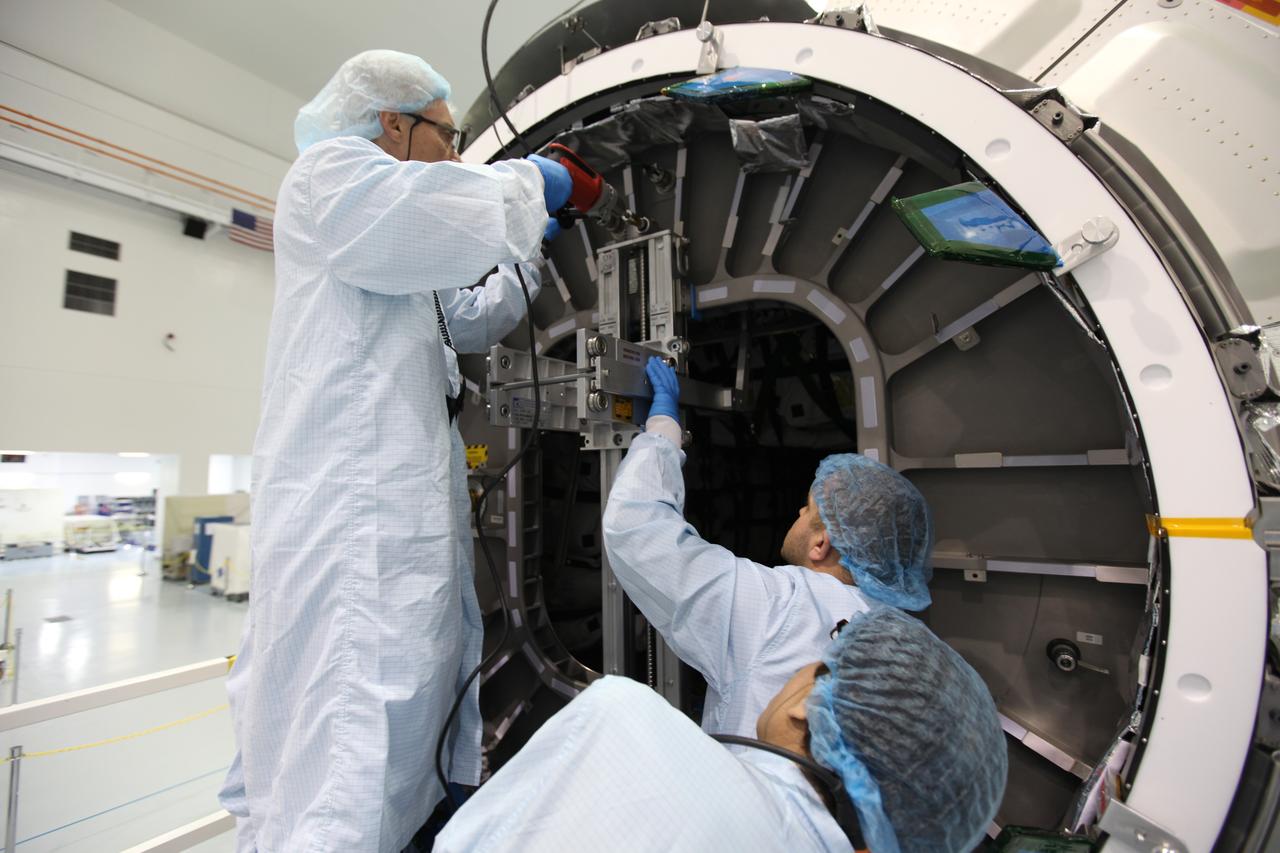
In the Space Station Processing Facility at NASA's Kennedy Space Center in Florida, technicians help secure the hatch for closure on the Cygnus spacecraft's pressurized cargo module (PCM) for the Orbital ATK CRS-7 mission to the International Space Station. Scheduled to launch on March 19, 2017, the commercial resupply services mission will lift off atop a United Launch Alliance Atlas V rocket from Space launch Complex 41 at Cape Canaveral Air Force Station.
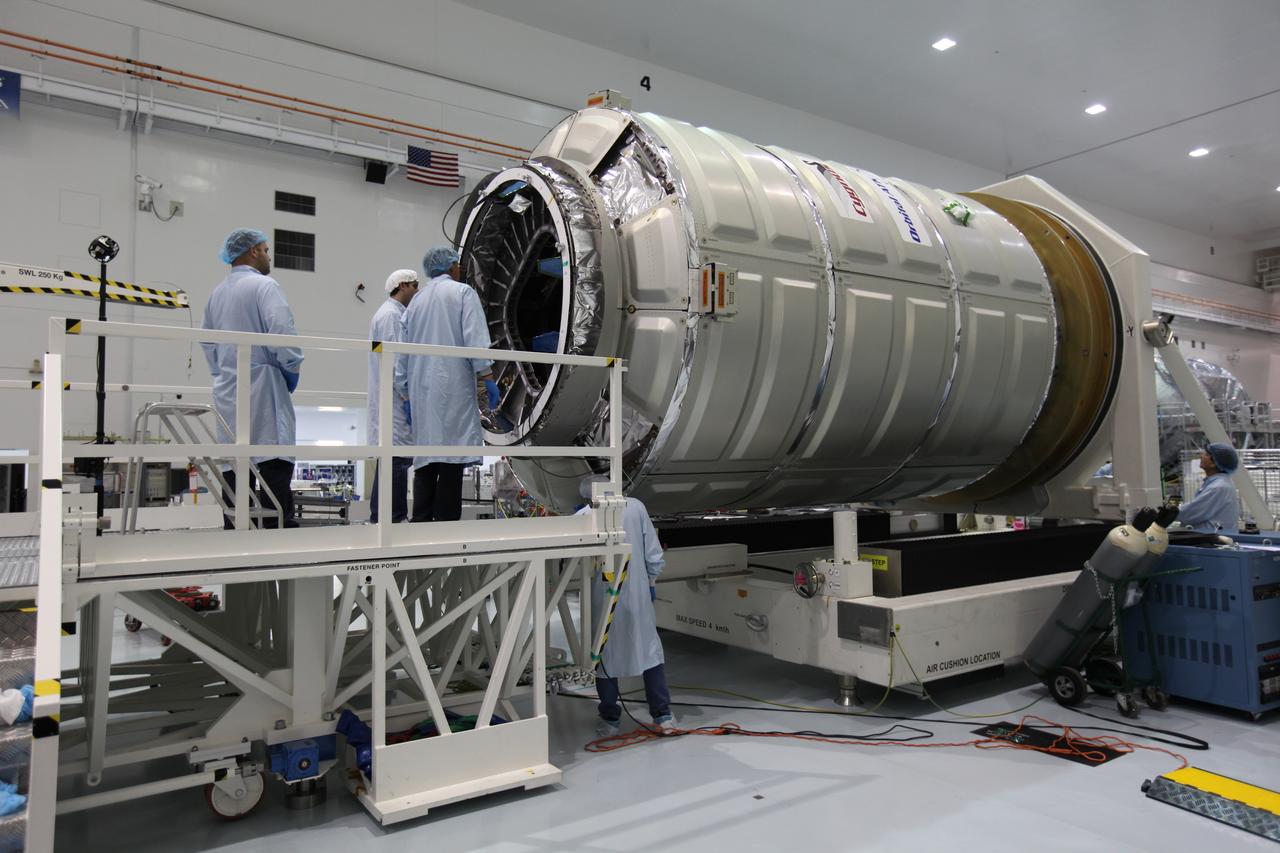
In the Space Station Processing Facility at NASA's Kennedy Space Center in Florida, technicians help prepare the hatch for closure on the Cygnus spacecraft's pressurized cargo module (PCM) for the Orbital ATK CRS-7 mission to the International Space Station. Scheduled to launch on March 19, 2017, the commercial resupply services mission will lift off atop a United Launch Alliance Atlas V rocket from Space launch Complex 41 at Cape Canaveral Air Force Station.
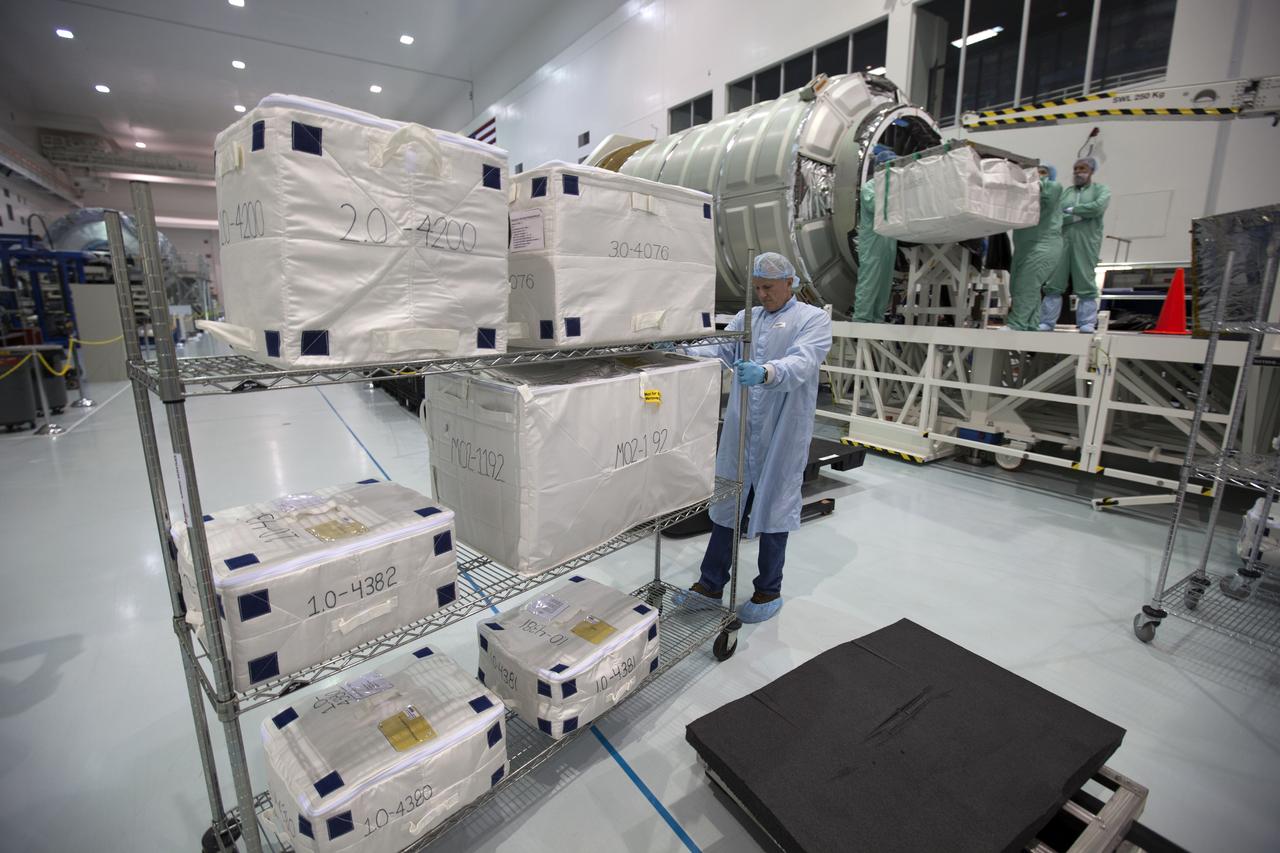
In the Space Station Processing Facility at NASA's Kennedy Space Center in Florida, technicians and engineers load thousands of pounds of supplies, equipment and scientific research materials aboard a Cygnus spacecraft's pressurized cargo module (PCM) for the Orbital ATK CRS-7 mission to the International Space Station. Scheduled to launch on March 19, 2017, the commercial resupply services mission will lift off atop a United Launch Alliance Atlas V rocket from Space launch Complex 41 at Cape Canaveral Air Force Station.
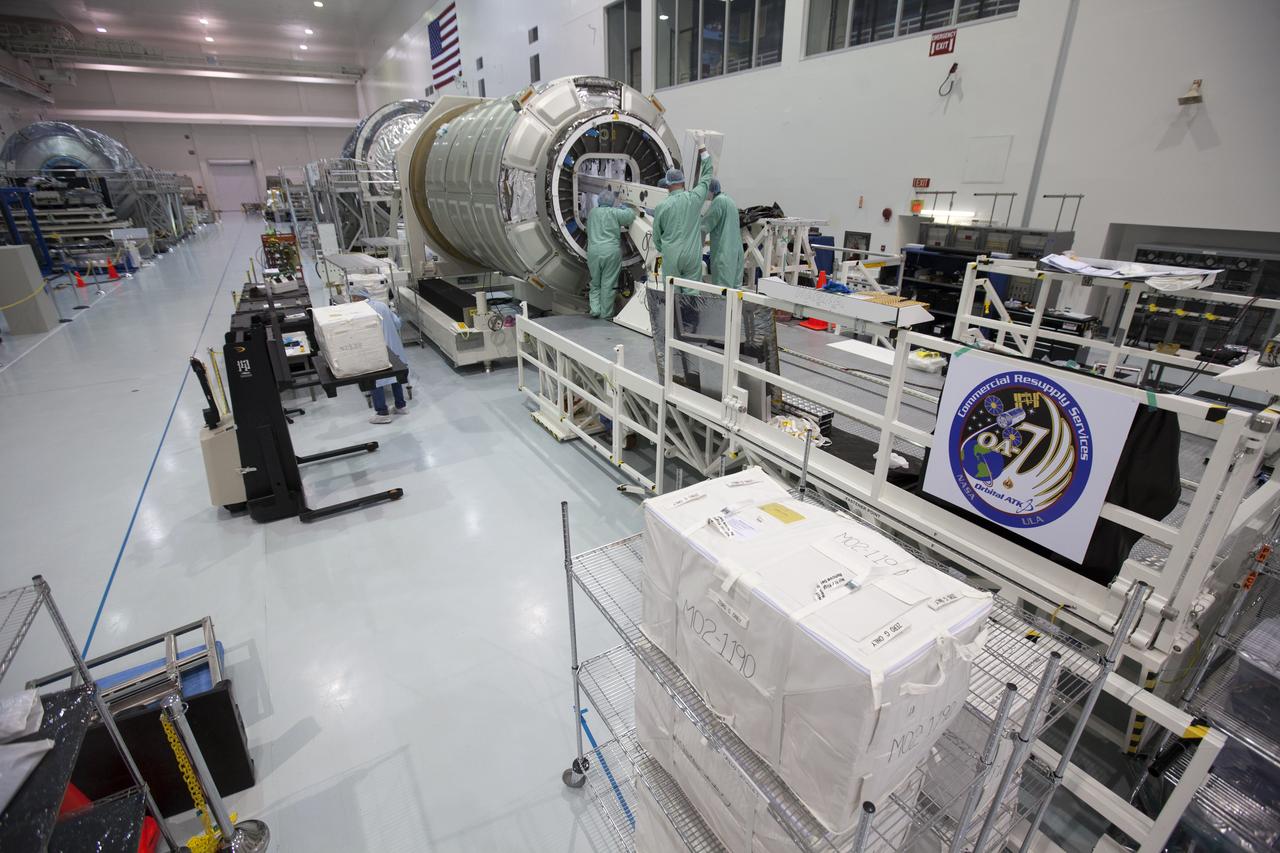
In the Space Station Processing Facility at NASA's Kennedy Space Center in Florida, technicians and engineers load thousands of pounds of supplies, equipment and scientific research materials aboard a Cygnus spacecraft's pressurized cargo module (PCM) for the Orbital ATK CRS-7 mission to the International Space Station. Scheduled to launch on March 19, 2017, the commercial resupply services mission will lift off atop a United Launch Alliance Atlas V rocket from Space launch Complex 41 at Cape Canaveral Air Force Station.
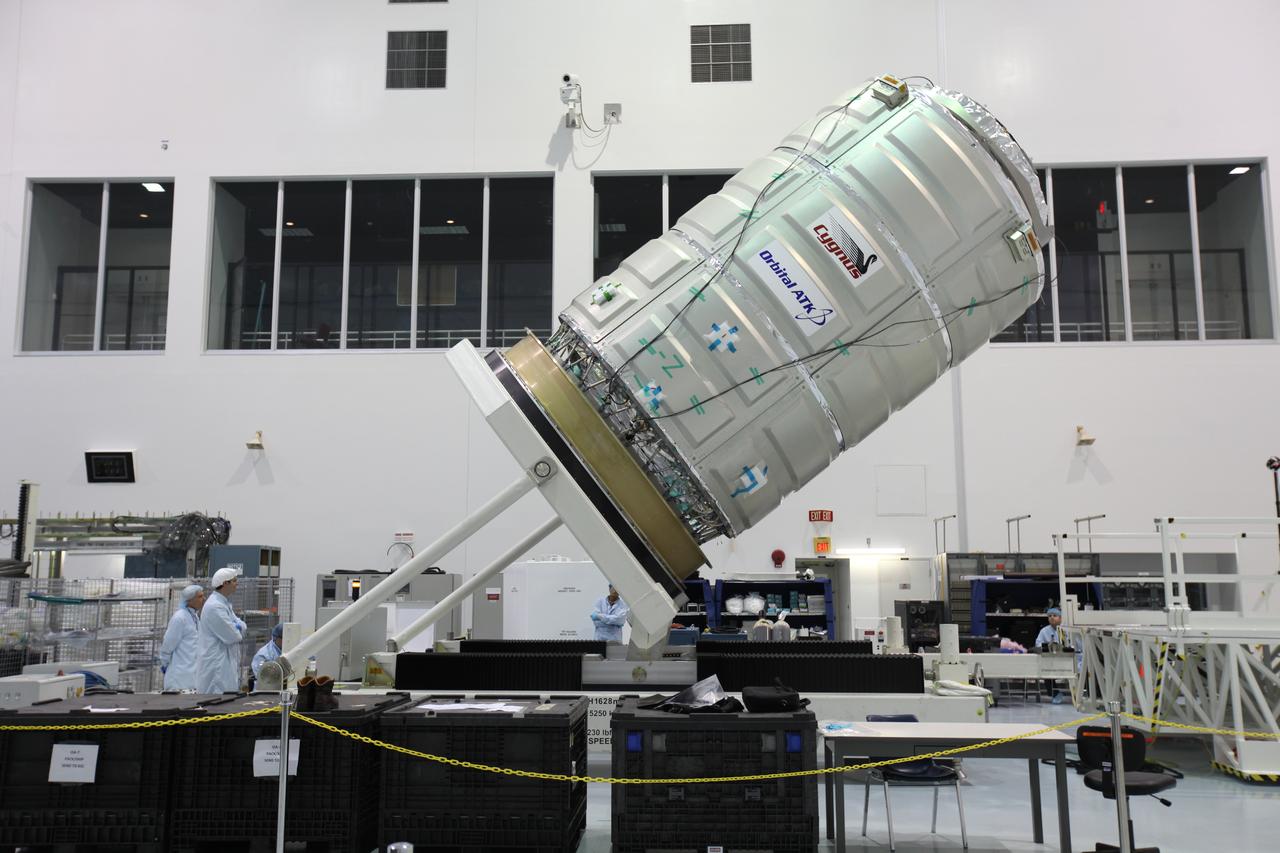
In the Space Station Processing Facility at NASA's Kennedy Space Center in Florida, the hatch was closed on the Cygnus spacecraft's pressurized cargo module (PCM) for the Orbital ATK CRS-7 mission to the International Space Station. The module is being rotated to vertical for mating to the service module. Scheduled to launch on March 19, 2017, the commercial resupply services mission will lift off atop a United Launch Alliance Atlas V rocket from Space launch Complex 41 at Cape Canaveral Air Force Station.
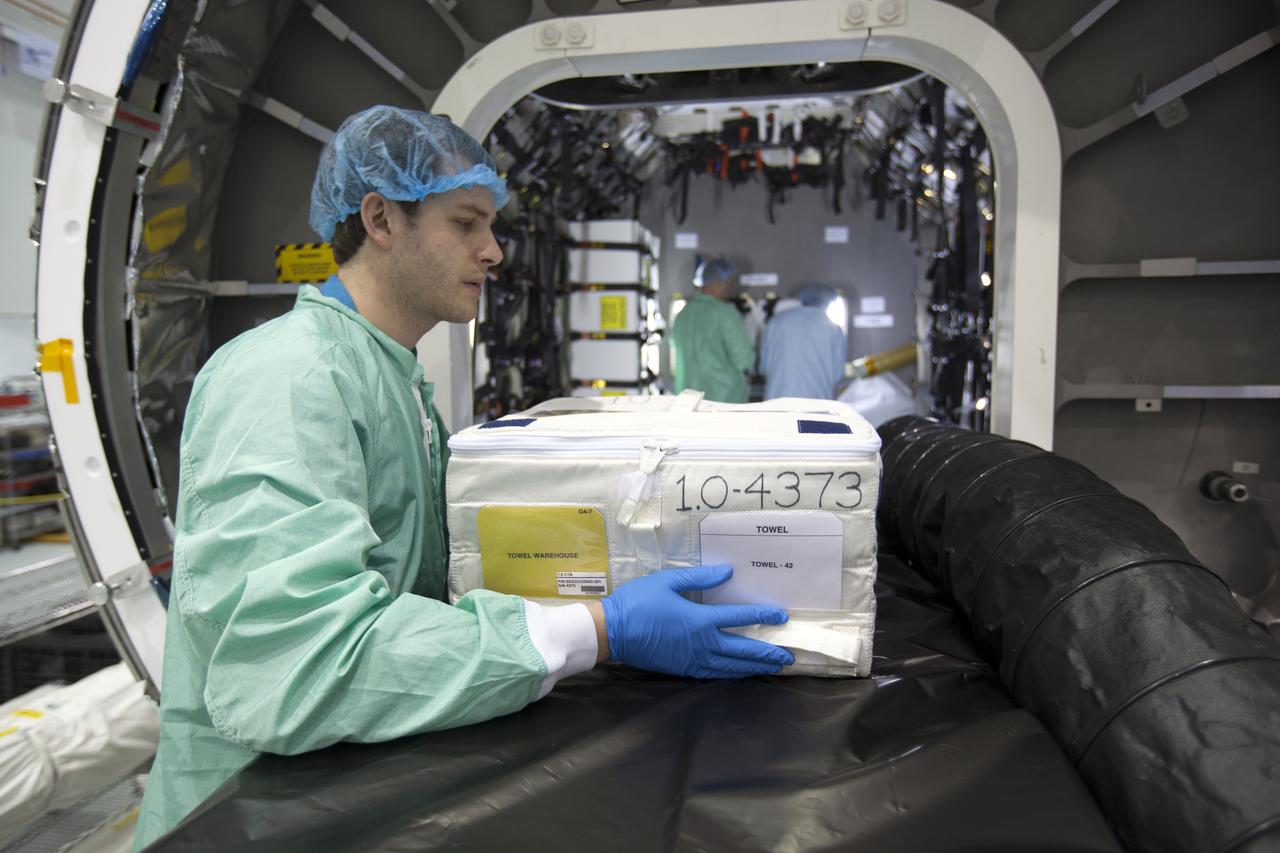
In the Space Station Processing Facility at NASA's Kennedy Space Center in Florida, thousands of pounds of supplies, equipment and scientific research materials are prepared for loading aboard a Cygnus spacecraft's pressurized cargo module (PCM) for the Orbital ATK CRS-7 mission to the International Space Station. Scheduled to launch on March 19, 2017, the commercial resupply services mission will lift off atop a United Launch Alliance Atlas V rocket from Space launch Complex 41 at Cape Canaveral Air Force Station.
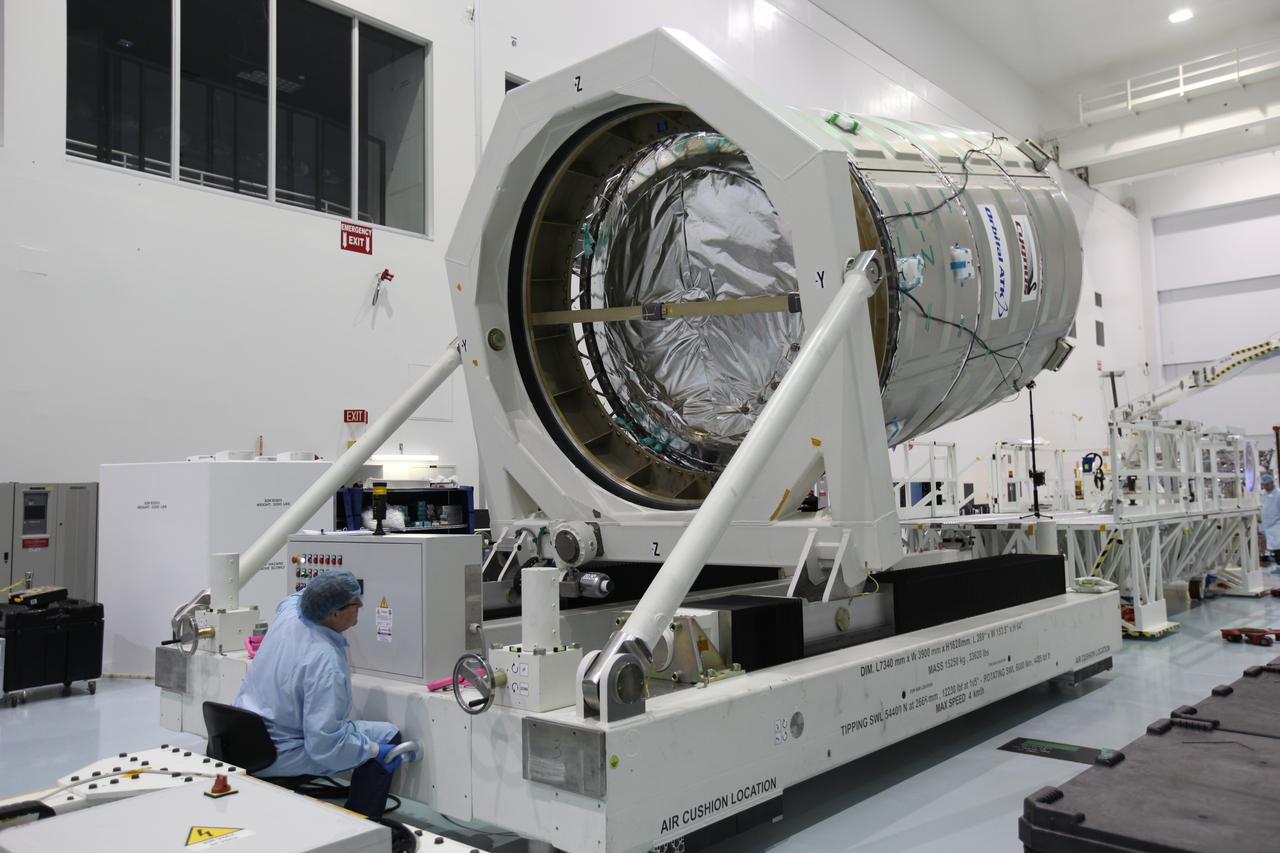
In the Space Station Processing Facility at NASA's Kennedy Space Center in Florida, the hatch is closed on the Cygnus spacecraft's pressurized cargo module (PCM) for the Orbital ATK CRS-7 mission to the International Space Station. The module is being rotated to vertical for mating to the service module. Scheduled to launch on March 19, 2017, the commercial resupply services mission will lift off atop a United Launch Alliance Atlas V rocket from Space launch Complex 41 at Cape Canaveral Air Force Station.
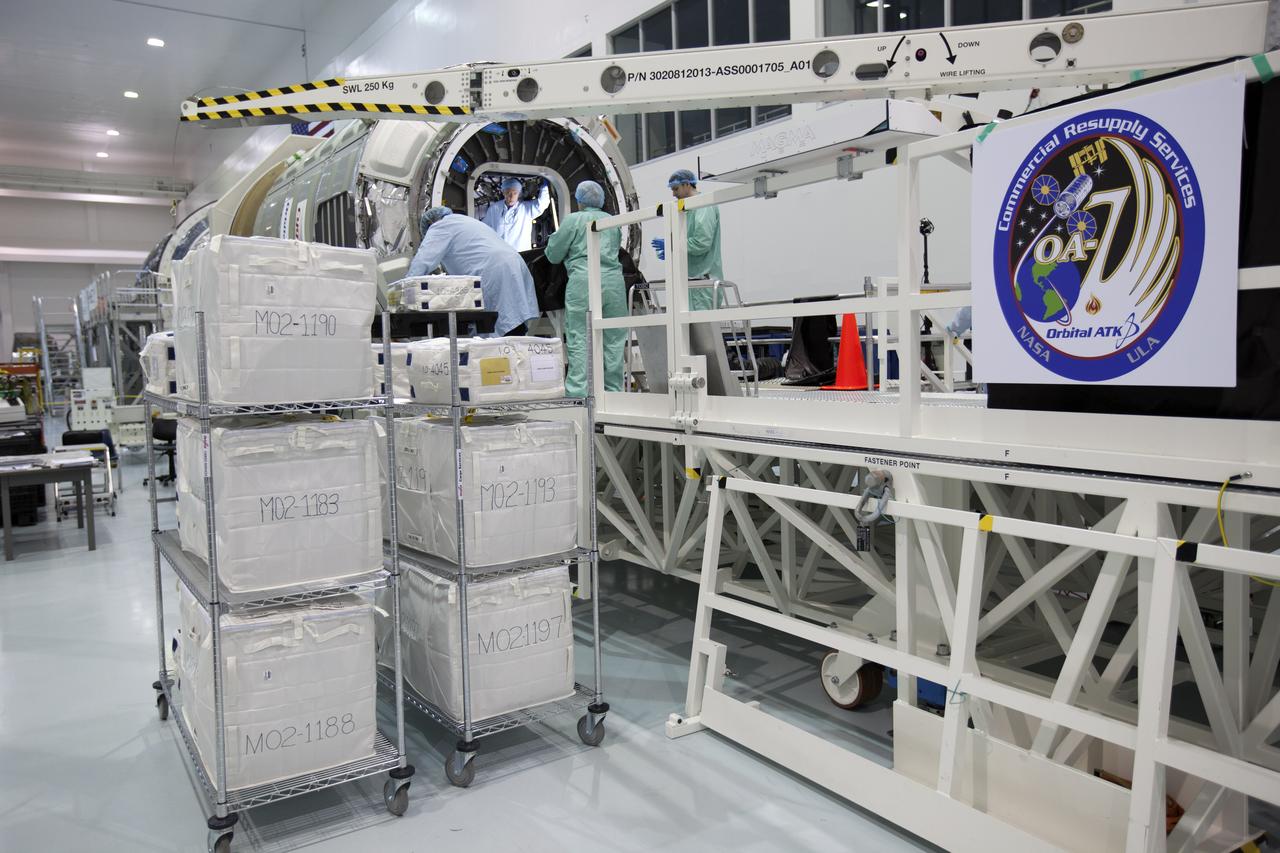
In the Space Station Processing Facility at NASA's Kennedy Space Center in Florida, technicians and engineers load thousands of pounds of supplies, equipment and scientific research materials aboard a Cygnus spacecraft's pressurized cargo module (PCM) for the Orbital ATK CRS-7 mission to the International Space Station. Scheduled to launch on March 19, 2017, the commercial resupply services mission will lift off atop a United Launch Alliance Atlas V rocket from Space launch Complex 41 at Cape Canaveral Air Force Station.
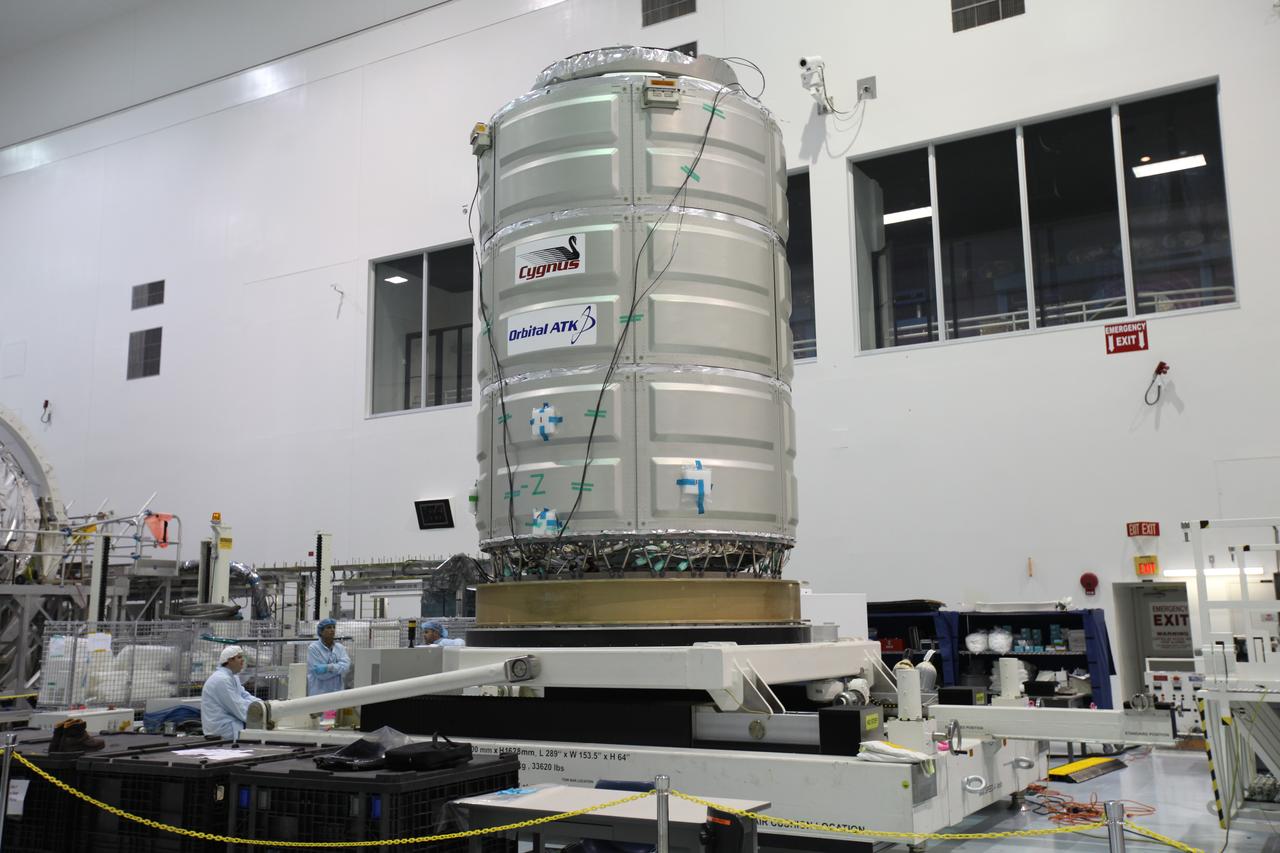
In the Space Station Processing Facility at NASA's Kennedy Space Center in Florida, preparations are underway to close the hatch of the Cygnus spacecraft's pressurized cargo module (PCM) for the Orbital ATK CRS-7 mission to the International Space Station. Scheduled to launch on March 19, 2017, the commercial resupply services mission will lift off atop a United Launch Alliance Atlas V rocket from Space launch Complex 41 at Cape Canaveral Air Force Station.
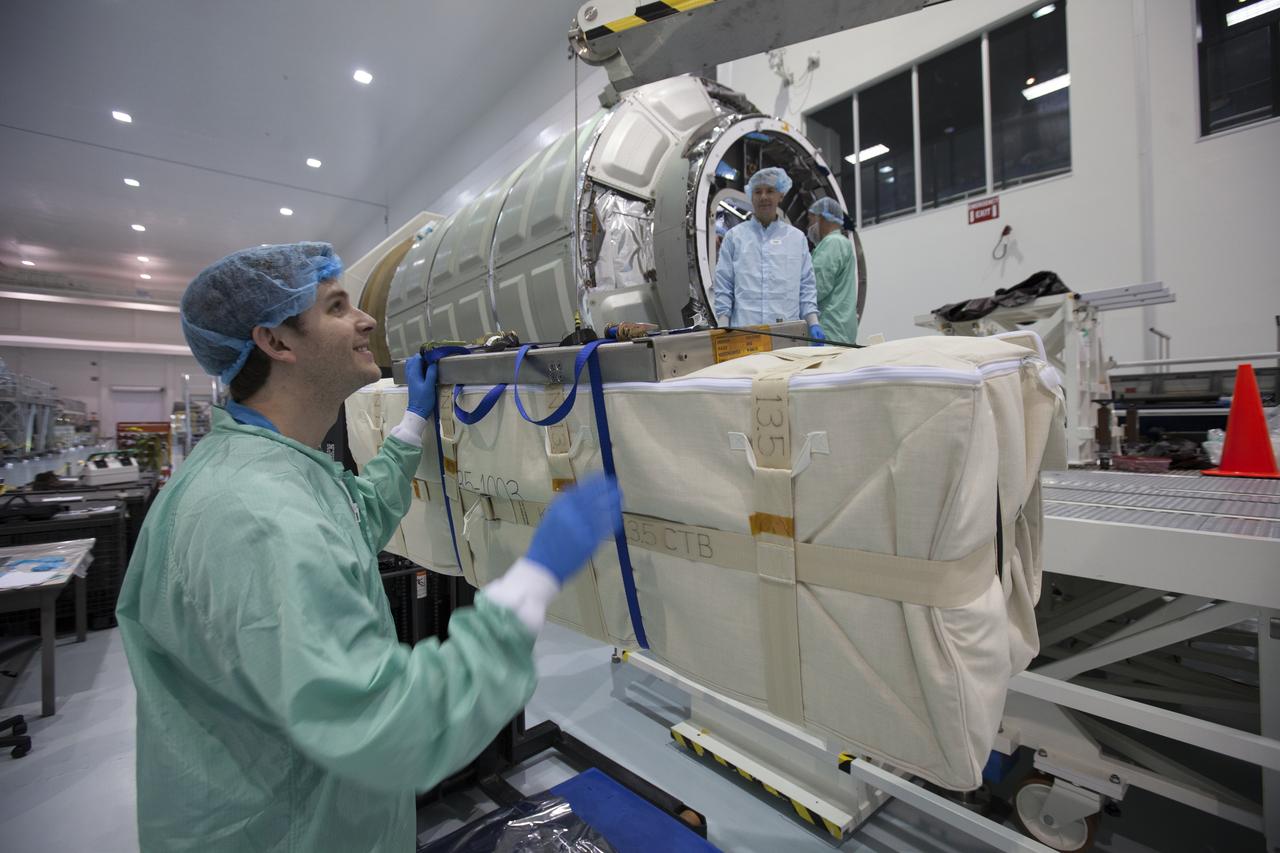
In the Space Station Processing Facility at NASA's Kennedy Space Center in Florida, technicians and engineers load thousands of pounds of supplies, equipment and scientific research materials aboard a Cygnus spacecraft's pressurized cargo module (PCM) for the Orbital ATK CRS-7 mission to the International Space Station. Scheduled to launch on March 19, 2017, the commercial resupply services mission will lift off atop a United Launch Alliance Atlas V rocket from Space launch Complex 41 at Cape Canaveral Air Force Station.
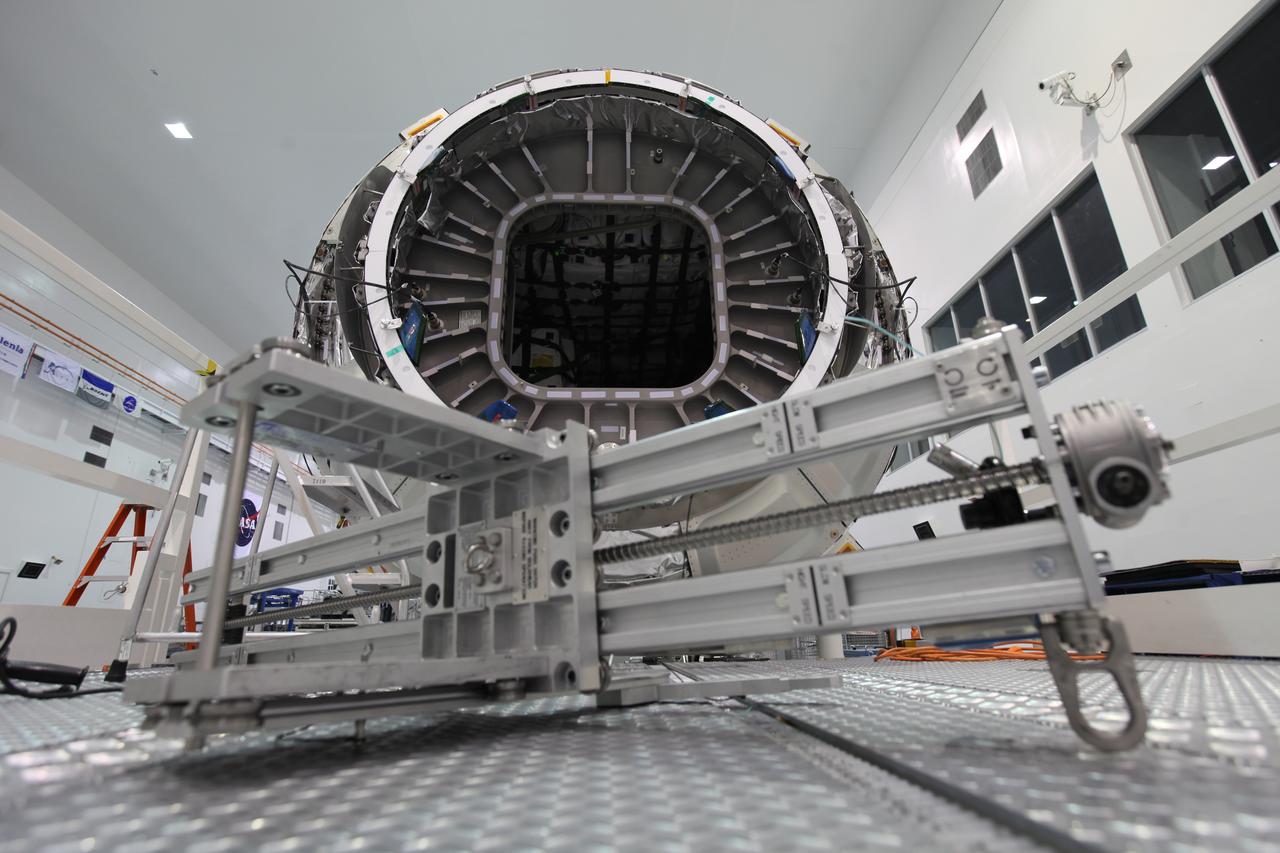
In the Space Station Processing Facility at NASA's Kennedy Space Center in Florida, preparations are underway to close the hatch of the Cygnus spacecraft's pressurized cargo module (PCM) for the Orbital ATK CRS-7 mission to the International Space Station. Scheduled to launch on March 19, 2017, the commercial resupply services mission will lift off atop a United Launch Alliance Atlas V rocket from Space launch Complex 41 at Cape Canaveral Air Force Station.
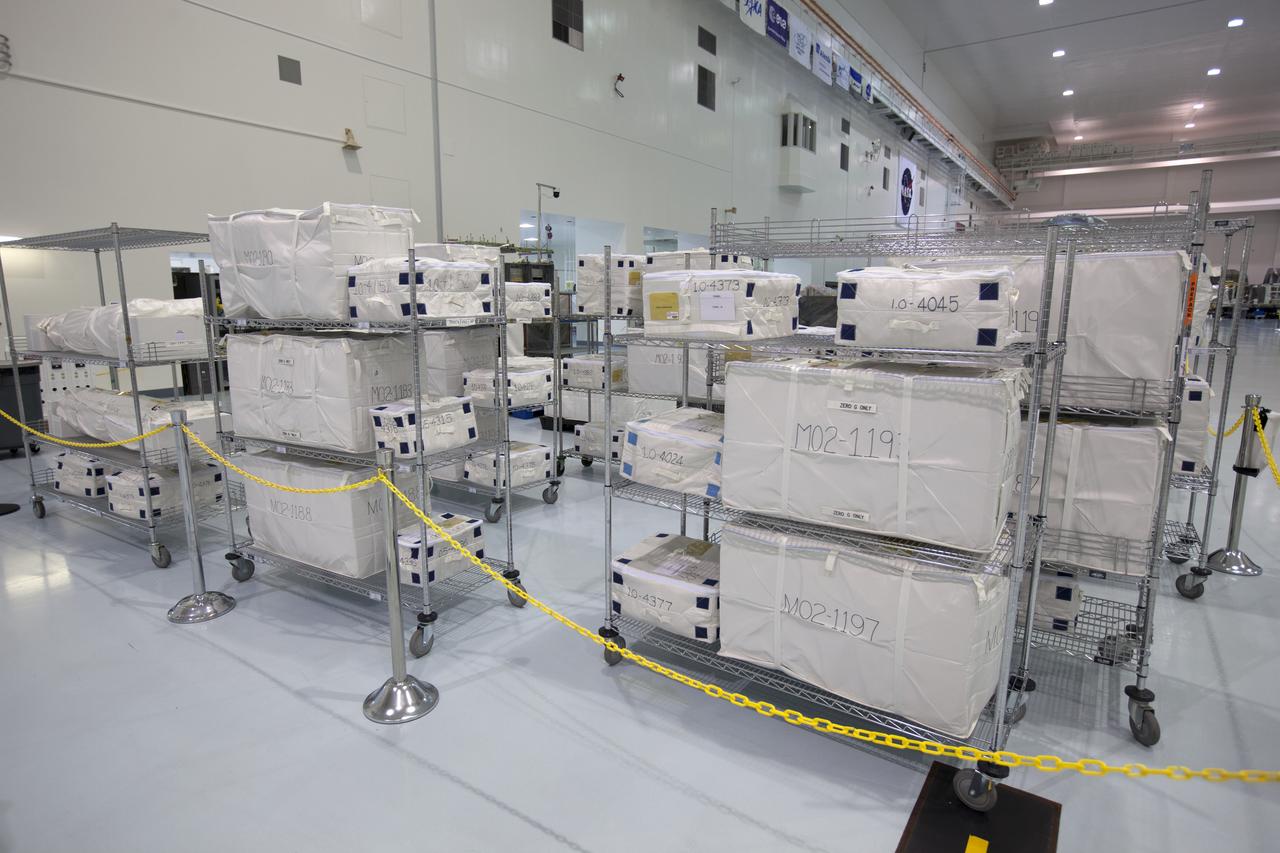
In the Space Station Processing Facility at NASA's Kennedy Space Center in Florida, thousands of pounds of supplies, equipment and scientific research materials are prepared for loading aboard a Cygnus spacecraft's pressurized cargo module (PCM) for the Orbital ATK CRS-7 mission to the International Space Station. Scheduled to launch on March 19, 2017, the commercial resupply services mission will lift off atop a United Launch Alliance Atlas V rocket from Space launch Complex 41 at Cape Canaveral Air Force Station.

In the Space Station Processing Facility at NASA's Kennedy Space Center in Florida, the hatch was closed on the Cygnus spacecraft's pressurized cargo module (PCM) for the Orbital ATK CRS-7 mission to the International Space Station. The module is being rotated to vertical for mating to the service module. Scheduled to launch on March 19, 2017, the commercial resupply services mission will lift off atop a United Launch Alliance Atlas V rocket from Space launch Complex 41 at Cape Canaveral Air Force Station.
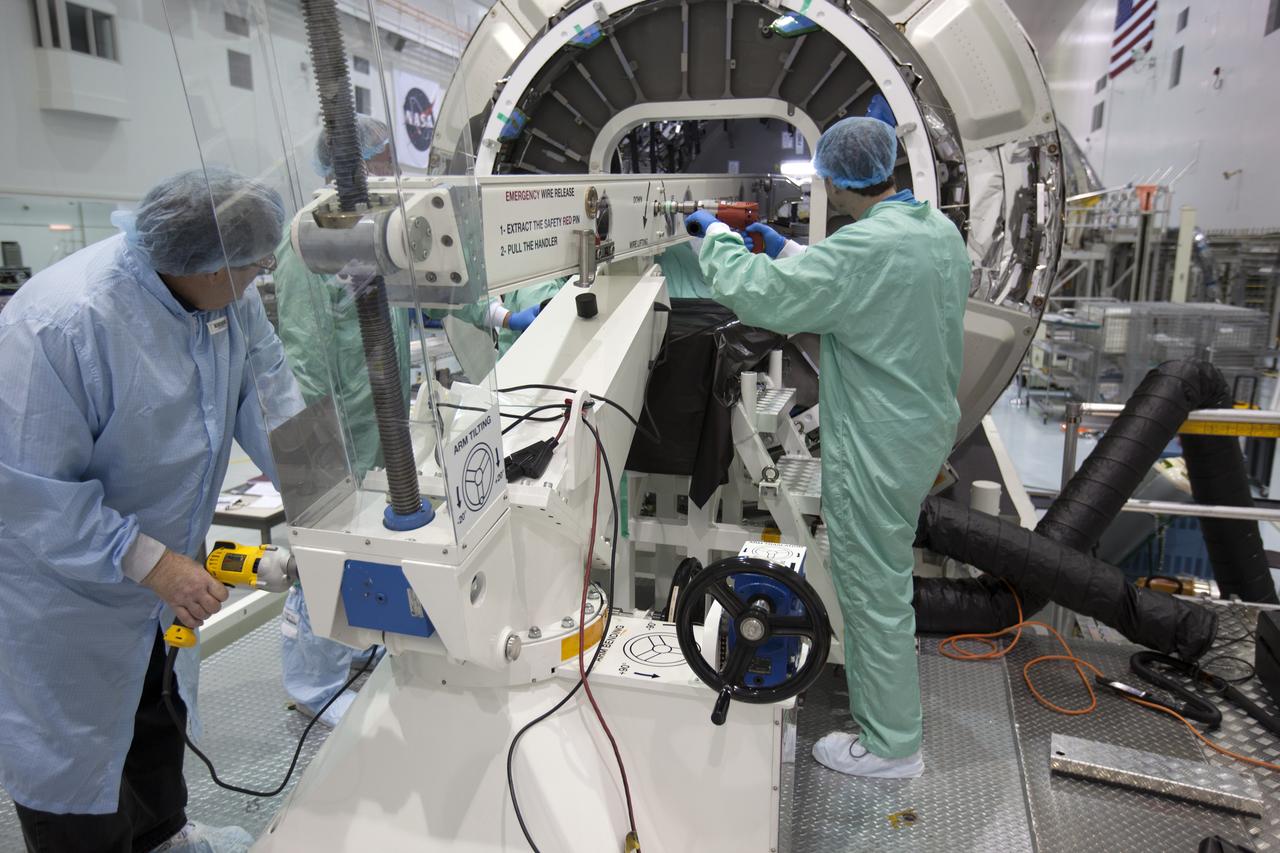
In the Space Station Processing Facility at NASA's Kennedy Space Center in Florida, technicians and engineers load thousands of pounds of supplies, equipment and scientific research materials aboard a Cygnus spacecraft's pressurized cargo module (PCM) for the Orbital ATK CRS-7 mission to the International Space Station. Scheduled to launch on March 19, 2017, the commercial resupply services mission will lift off atop a United Launch Alliance Atlas V rocket from Space launch Complex 41 at Cape Canaveral Air Force Station.
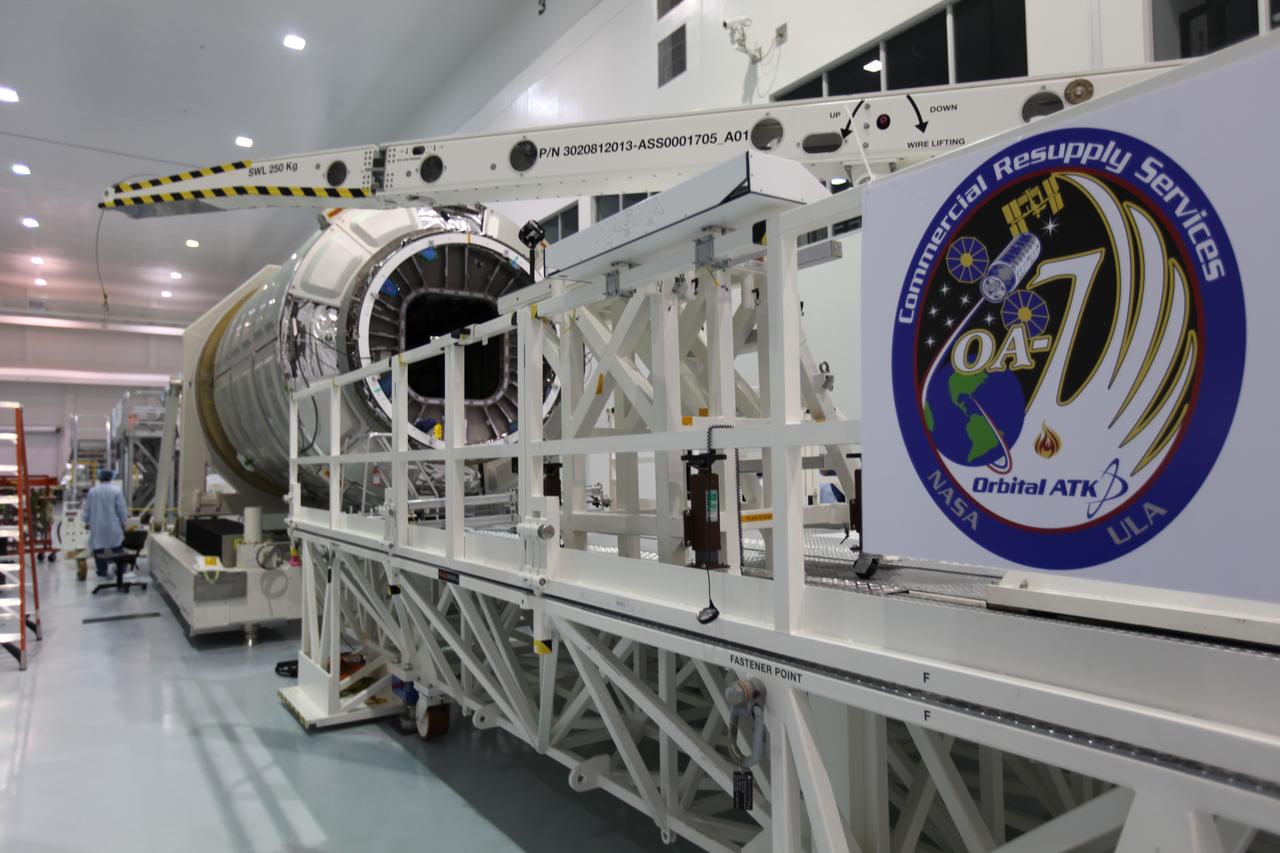
In the Space Station Processing Facility at NASA's Kennedy Space Center in Florida, preparations are underway to close the hatch of the Cygnus spacecraft's pressurized cargo module (PCM) for the Orbital ATK CRS-7 mission to the International Space Station. Scheduled to launch on March 19, 2017, the commercial resupply services mission will lift off atop a United Launch Alliance Atlas V rocket from Space launch Complex 41 at Cape Canaveral Air Force Station.

In the Space Station Processing Facility at NASA's Kennedy Space Center in Florida, a technician helps secure the hatch for closure on the Cygnus spacecraft's pressurized cargo module (PCM) for the Orbital ATK CRS-7 mission to the International Space Station. Scheduled to launch on March 19, 2017, the commercial resupply services mission will lift off atop a United Launch Alliance Atlas V rocket from Space launch Complex 41 at Cape Canaveral Air Force Station.
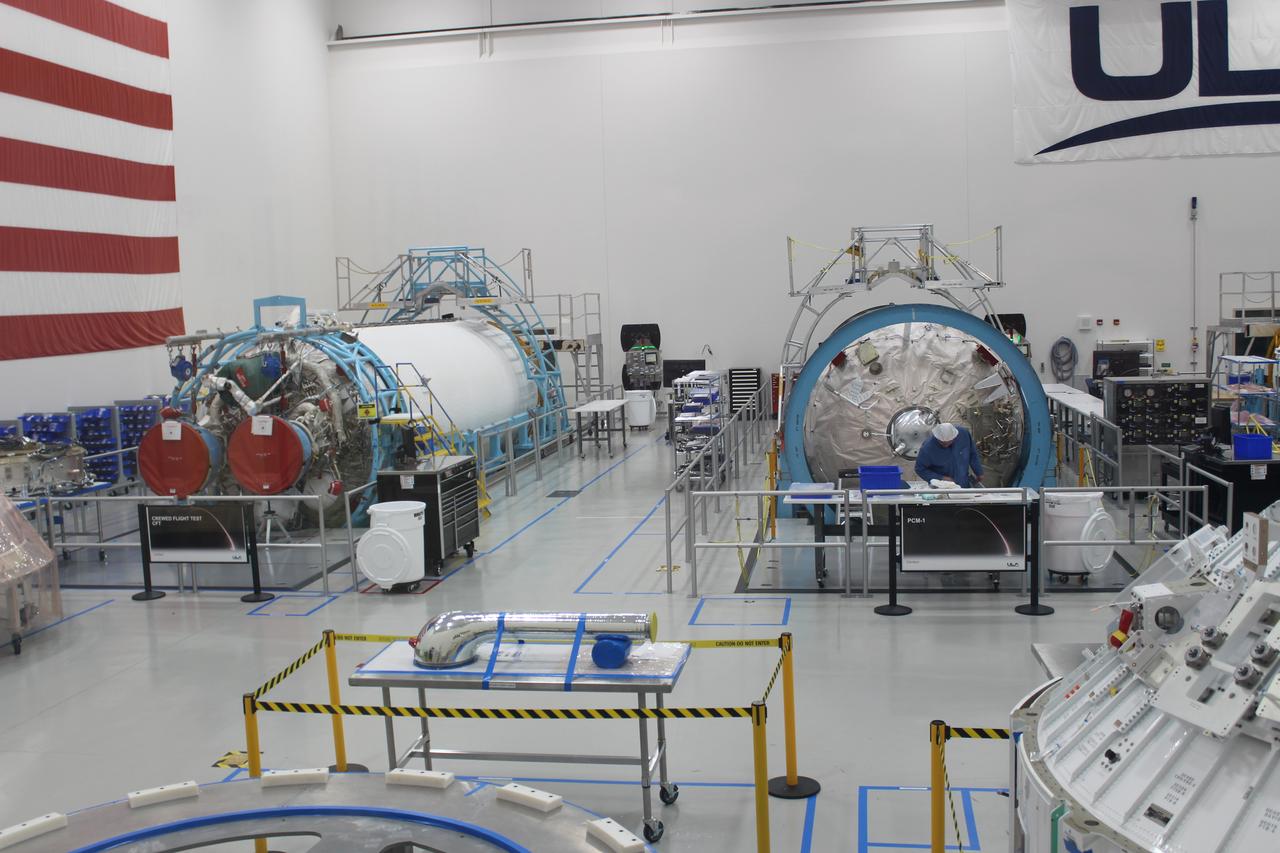
Two United Launch Alliance (ULA) Atlas V dual engine Centaur upper stages are in production in ULA's factory in Decatur, Alabama on March 1, 2019. One is for Boeing’s Crew Flight Test on the CST-100 Starliner, and the other will be used for the first crew rotation mission on the Starliner. One of the Centaur upper stages will be assembled to the first stage booster. They will be shipped aboard the company’s Mariner cargo ship to NASA’s Kennedy Space Center in Florida. Starliner and the Atlas V rockets that will launch the spacecraft, are key to restoring the nation’s capability to send astronauts to the space station from U.S. soil with NASA’s Commercial Crew Program. NASA astronauts Mike Fincke and Nicole Mann, and Boeing astronaut Chris Ferguson will launch to the space station aboard the Starliner for the Crew Flight Test.

iss049e052550 (10/29/20160 --- NASA astronaut Kate Rubins is photographed removing samples from the Minus Eighty-Degree Laboratory Freezer for ISS 2 (MELFI2) as part of handover to the Russian crew for packing. The Minus Eighty-degree Laboratory Freezer for ISS (MELFI) is a cold storage unit that maintains experiment samples at ultra-cold temperatures throughout a mission.
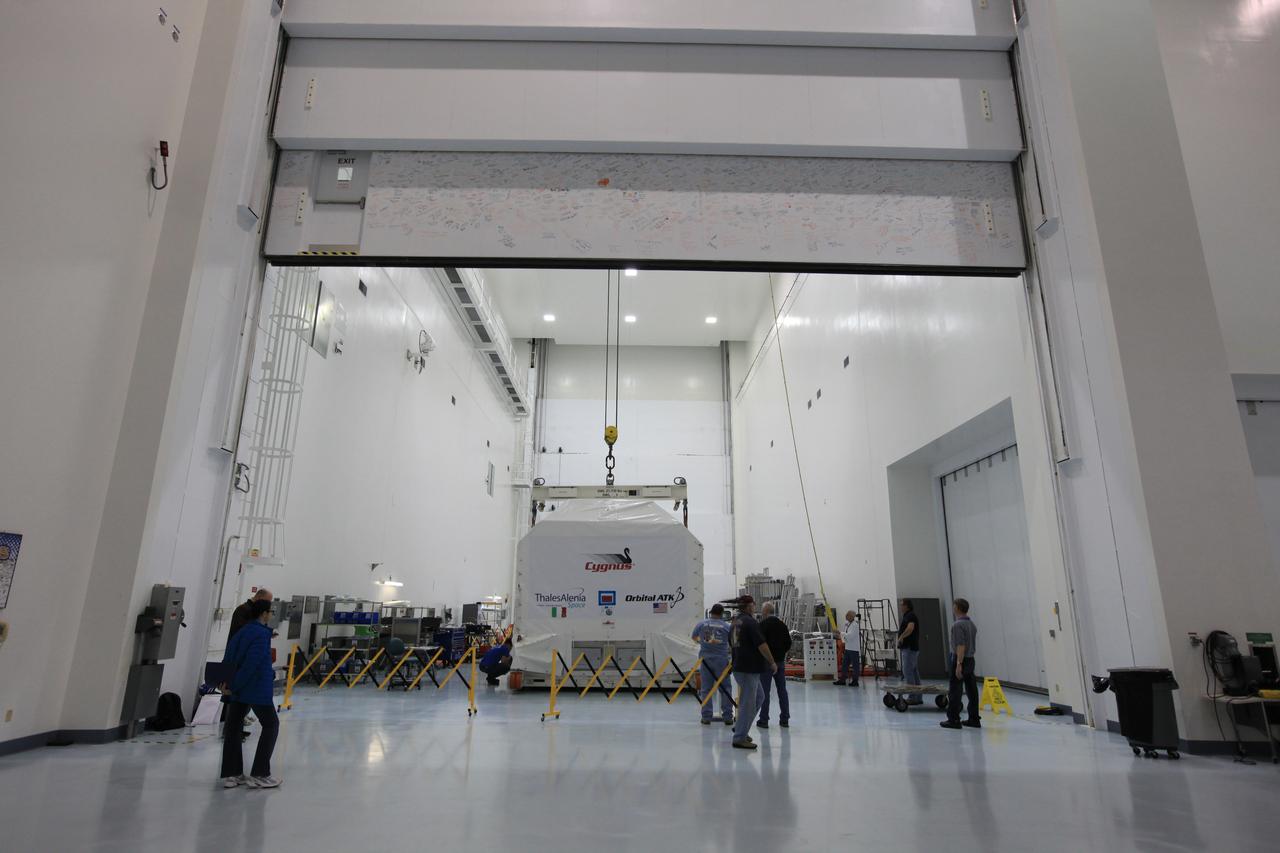
Inside an environmentally controlled shipping container the Orbital ATK OA-7 Cygnus spacecraft's pressurized cargo module (PCM) moves from an airlock to the high bay of the Space Station Processing Facility of NASA's Kennedy Space Center in Florida. Scheduled to launch on March 19, 2017, the Orbital ATK OA-7 mission will lift off atop a United Launch Alliance Atlas V rocket from Space launch Complex 41 at Cape Canaveral Air Force Station. The commercial resupply services mission to the International Space Station will deliver thousands of pounds of supplies, equipment and scientific research materials that improve life on Earth and drive progress toward future space exploration.
Inside an environmentally controlled shipping container the Orbital ATK OA-7 Cygnus spacecraft's pressurized cargo module (PCM) moves from an airlock to the high bay of the Space Station Processing Facility of NASA's Kennedy Space Center in Florida. Scheduled to launch on March 19, 2017, the Orbital ATK OA-7 mission will lift off atop a United Launch Alliance Atlas V rocket from Space launch Complex 41 at Cape Canaveral Air Force Station. The commercial resupply services mission to the International Space Station will deliver thousands of pounds of supplies, equipment and scientific research materials that improve life on Earth and drive progress toward future space exploration.
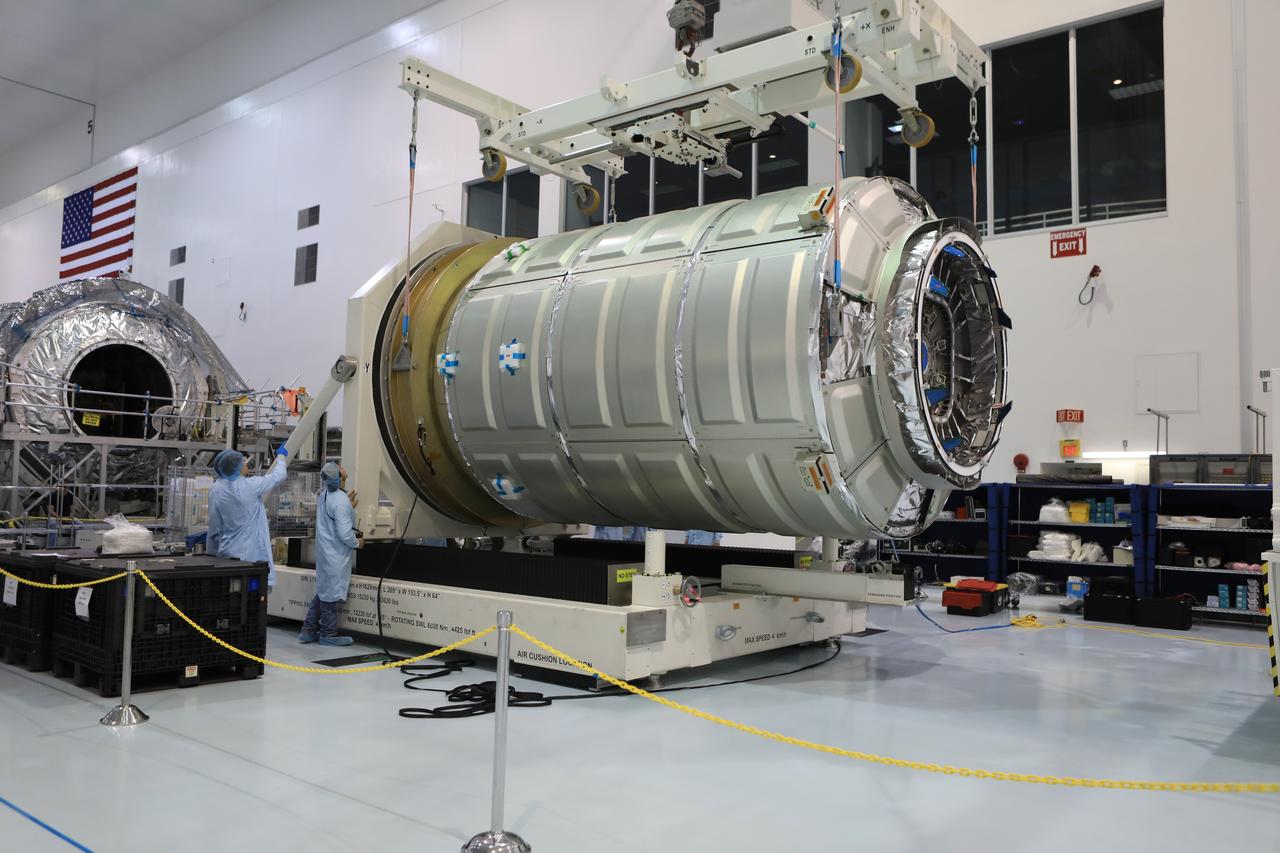
Engineers and technicians at NASA's Kennedy Space Center in Florida move the Orbital ATK OA-7 Cygnus spacecraft's pressurized cargo module (PCM) to a test stand inside the high bay of the Space Station Processing Facility. Scheduled to launch on March 19, 2017, the Orbital ATK OA-7 mission will lift off atop a United Launch Alliance Atlas V rocket from Space launch Complex 41 at Cape Canaveral Air Force Station. The commercial resupply services mission to the International Space Station will deliver thousands of pounds of supplies, equipment and scientific research materials that improve life on Earth and drive progress toward future space exploration.
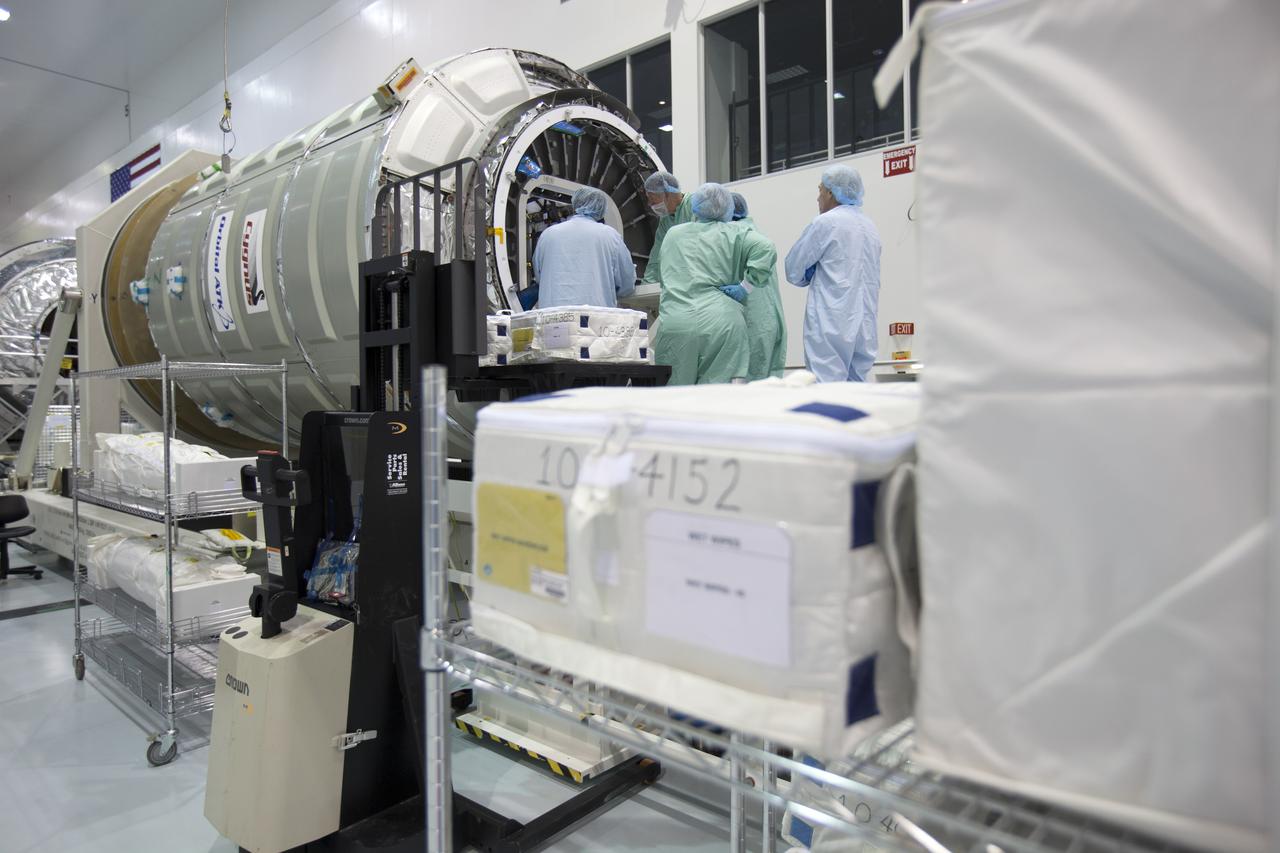
OA-7 Cargo Module In the Space Station Processing Facility at NASA's Kennedy Space Center in Florida, technicians and engineers load thousands of pounds of supplies, equipment and scientific research materials aboard a Cygnus spacecraft's pressurized cargo module (PCM) for the Orbital ATK CRS-7 mission to the International Space Station. Scheduled to launch on March 19, 2017, the commercial resupply services mission will lift off atop a United Launch Alliance Atlas V rocket from Space launch Complex 41 at Cape Canaveral Air Force Stationbeing loaded inside the SSPF building, located at Kennedy Space Center.
Engineers and technicians at NASA's Kennedy Space Center in Florida move the Orbital ATK OA-7 Cygnus spacecraft's pressurized cargo module (PCM) to a test stand inside the high bay of the Space Station Processing Facility. Scheduled to launch on March 19, 2017, the Orbital ATK OA-7 mission will lift off atop a United Launch Alliance Atlas V rocket from Space launch Complex 41 at Cape Canaveral Air Force Station. The commercial resupply services mission to the International Space Station will deliver thousands of pounds of supplies, equipment and scientific research materials that improve life on Earth and drive progress toward future space exploration.
Engineers and technicians at NASA's Kennedy Space Center in Florida move the Orbital ATK OA-7 Cygnus spacecraft's pressurized cargo module (PCM) to a test stand inside the high bay of the Space Station Processing Facility. Scheduled to launch on March 19, 2017, the Orbital ATK OA-7 mission will lift off atop a United Launch Alliance Atlas V rocket from Space launch Complex 41 at Cape Canaveral Air Force Station. The commercial resupply services mission to the International Space Station will deliver thousands of pounds of supplies, equipment and scientific research materials that improve life on Earth and drive progress toward future space exploration.
Engineers and technicians at NASA's Kennedy Space Center in Florida move the Orbital ATK OA-7 Cygnus spacecraft's pressurized cargo module (PCM) to a test stand inside the high bay of the Space Station Processing Facility. Scheduled to launch on March 19, 2017, the Orbital ATK OA-7 mission will lift off atop a United Launch Alliance Atlas V rocket from Space launch Complex 41 at Cape Canaveral Air Force Station. The commercial resupply services mission to the International Space Station will deliver thousands of pounds of supplies, equipment and scientific research materials that improve life on Earth and drive progress toward future space exploration.
Engineers and technicians at NASA's Kennedy Space Center in Florida move the Orbital ATK OA-7 Cygnus spacecraft's pressurized cargo module (PCM) to a test stand inside the high bay of the Space Station Processing Facility. Scheduled to launch on March 19, 2017, the Orbital ATK OA-7 mission will lift off atop a United Launch Alliance Atlas V rocket from Space launch Complex 41 at Cape Canaveral Air Force Station. The commercial resupply services mission to the International Space Station will deliver thousands of pounds of supplies, equipment and scientific research materials that improve life on Earth and drive progress toward future space exploration.
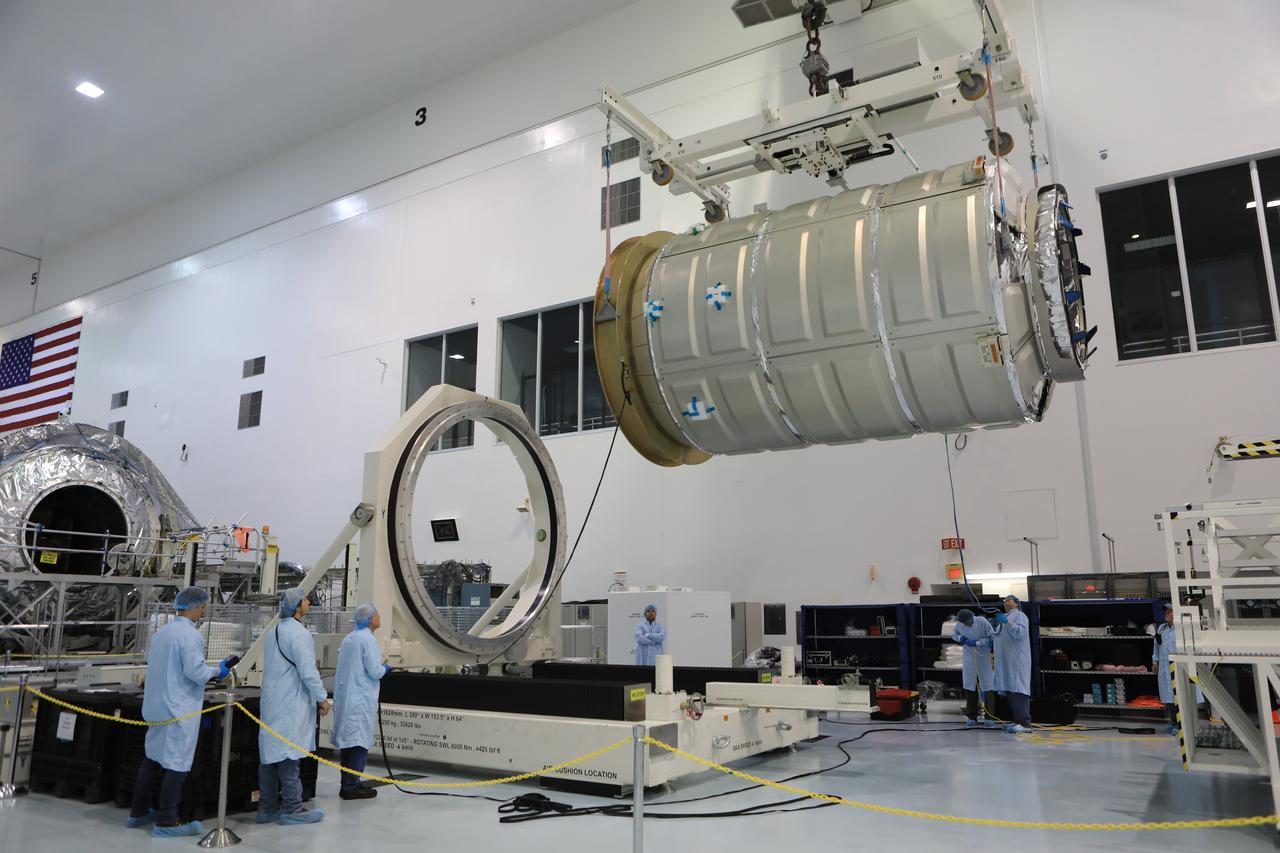
Engineers and technicians at NASA's Kennedy Space Center in Florida move the Orbital ATK OA-7 Cygnus spacecraft's pressurized cargo module (PCM) to a test stand inside the high bay of the Space Station Processing Facility. Scheduled to launch on March 19, 2017, the Orbital ATK OA-7 mission will lift off atop a United Launch Alliance Atlas V rocket from Space launch Complex 41 at Cape Canaveral Air Force Station. The commercial resupply services mission to the International Space Station will deliver thousands of pounds of supplies, equipment and scientific research materials that improve life on Earth and drive progress toward future space exploration.
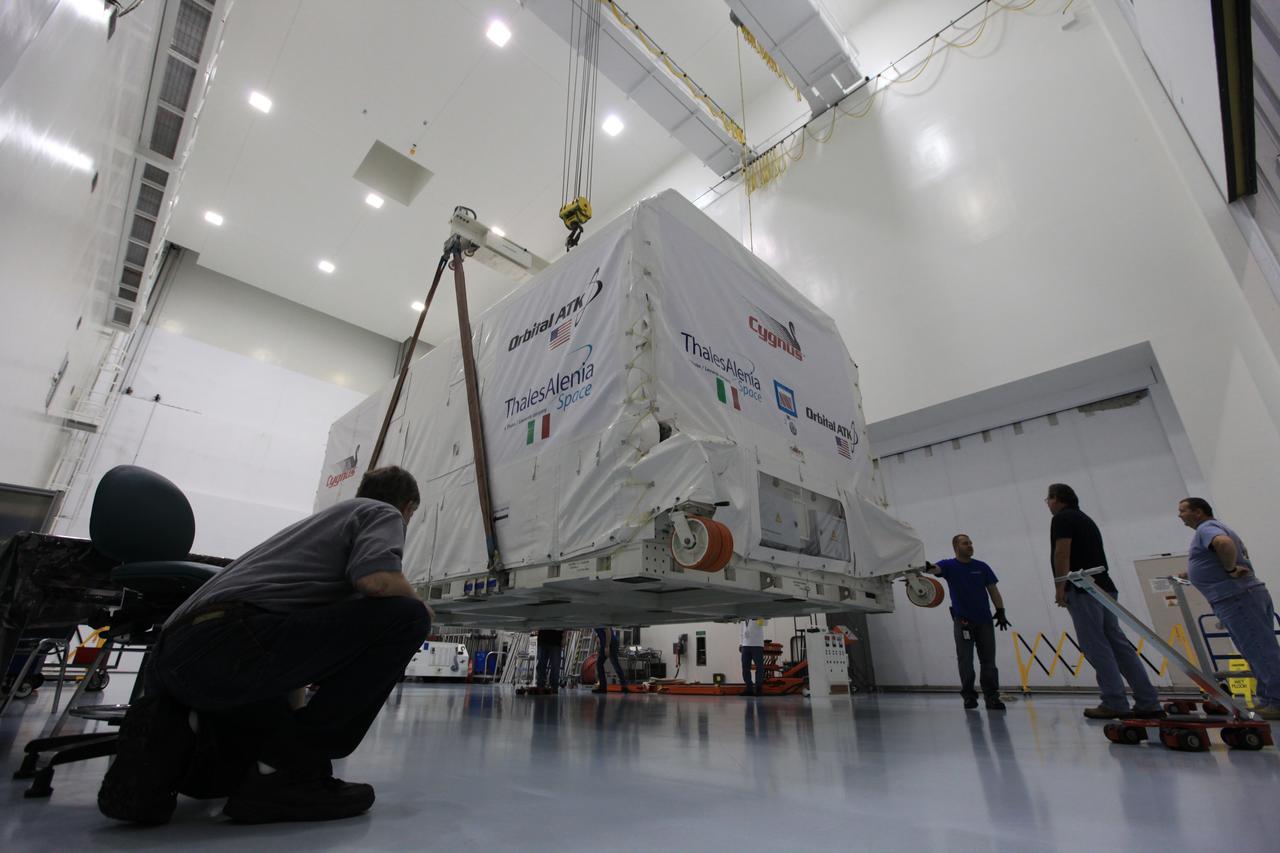
A crane lowers an environmentally controlled shipping container with the Orbital ATK OA-7 Cygnus spacecraft's pressurized cargo module (PCM) inside to the floor of the Space Station Processing Facility of NASA's Kennedy Space Center in Florida. Scheduled to launch on March 19, 2017, the Orbital ATK OA-7 mission will lift off atop a United Launch Alliance Atlas V rocket from Space launch Complex 41 at Cape Canaveral Air Force Station. The commercial resupply services mission to the International Space Station will deliver thousands of pounds of supplies, equipment and scientific research materials that improve life on Earth and drive progress toward future space exploration.
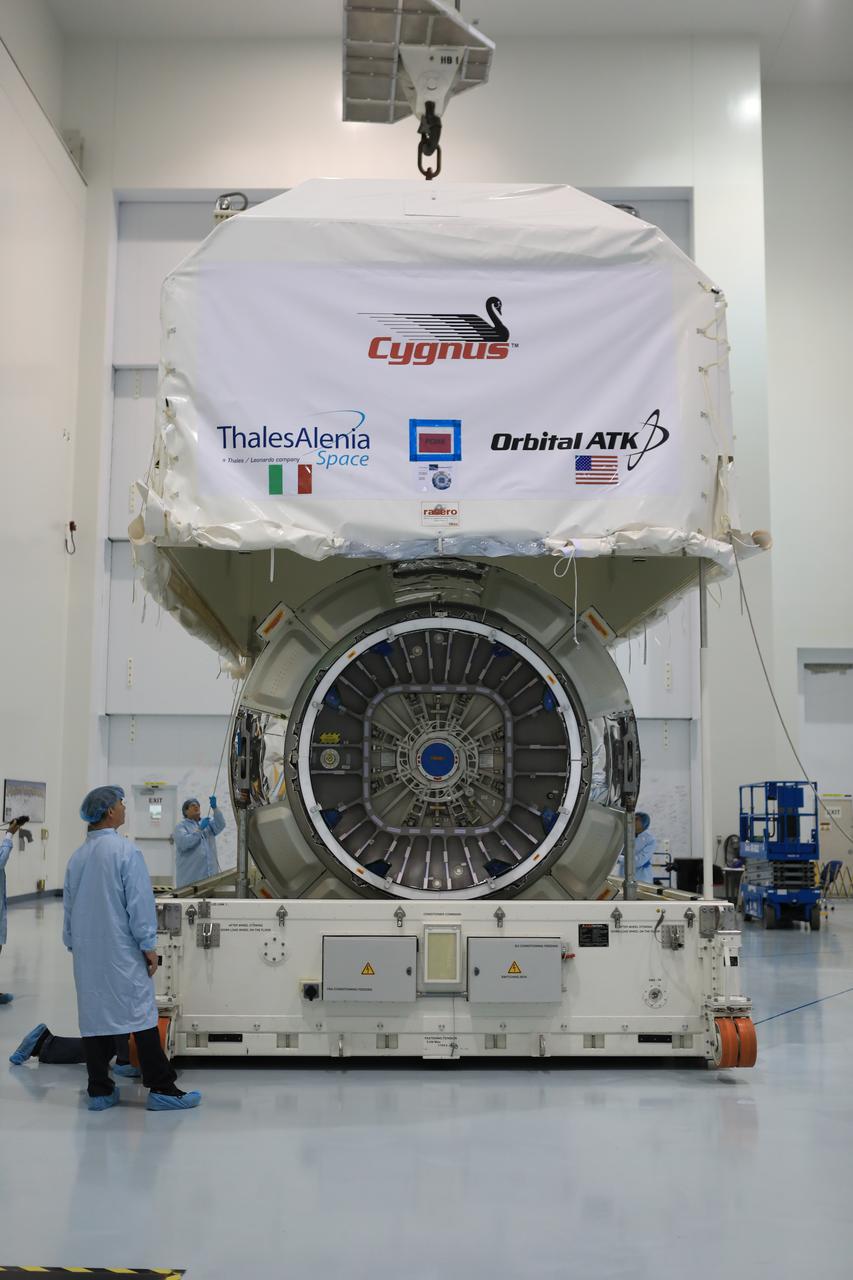
Inside the high bay of the Space Station Processing Facility of NASA's Kennedy Space Center in Florida engineers and technicians remove the Orbital ATK OA-7 Cygnus spacecraft's pressurized cargo module (PCM) from its environmentally controlled shipping container. Scheduled to launch on March 19, 2017, the Orbital ATK OA-7 mission will lift off atop a United Launch Alliance Atlas V rocket from Space launch Complex 41 at Cape Canaveral Air Force Station. The commercial resupply services mission to the International Space Station will deliver thousands of pounds of supplies, equipment and scientific research materials that improve life on Earth and drive progress toward future space exploration.
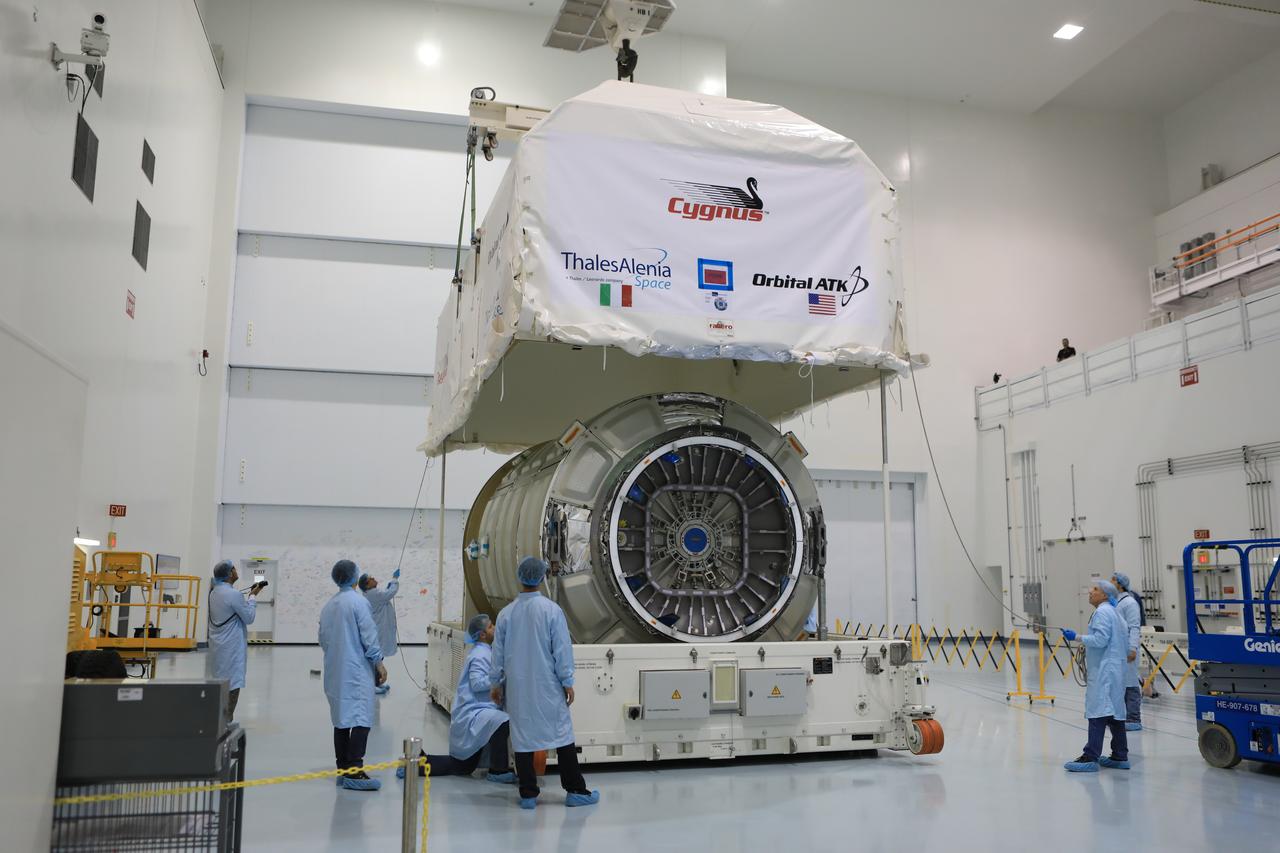
Inside the high bay of the Space Station Processing Facility of NASA's Kennedy Space Center in Florida engineers and technicians remove the Orbital ATK OA-7 Cygnus spacecraft's pressurized cargo module (PCM) from its environmentally controlled shipping container. Scheduled to launch on March 19, 2017, the Orbital ATK OA-7 mission will lift off atop a United Launch Alliance Atlas V rocket from Space launch Complex 41 at Cape Canaveral Air Force Station. The commercial resupply services mission to the International Space Station will deliver thousands of pounds of supplies, equipment and scientific research materials that improve life on Earth and drive progress toward future space exploration.
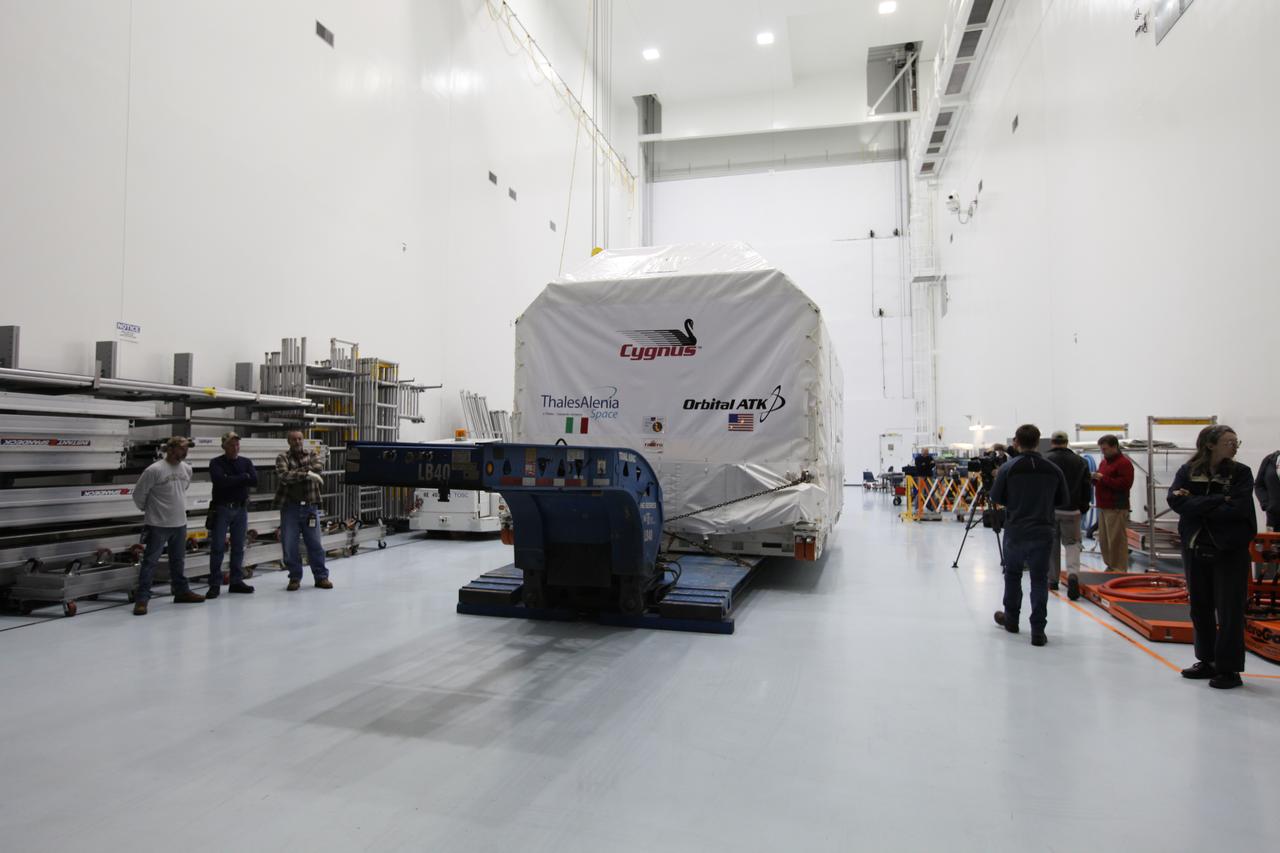
Still sealed in its environmentally controlled shipping container, the Orbital ATK OA-7 Cygnus spacecraft's pressurized cargo module (PCM) has arrived inside the Space Station Processing Facility at NASA's Kennedy Space Center in Florida. Once the Cygnus spacecraft is removed from its shipping container, engineers and technicians will begin preparing for launch scheduled for March 2017. Orbital ATK CRS-7 will lift off atop a United Launch Alliance Atlas V rocket from Space launch Complex 41 at Cape Canaveral Air Force Station. The commercial resupply services mission to the International Space Station will deliver thousands of pounds of supplies, equipment and scientific research materials that improve life on Earth and drive progress toward future space exploration.
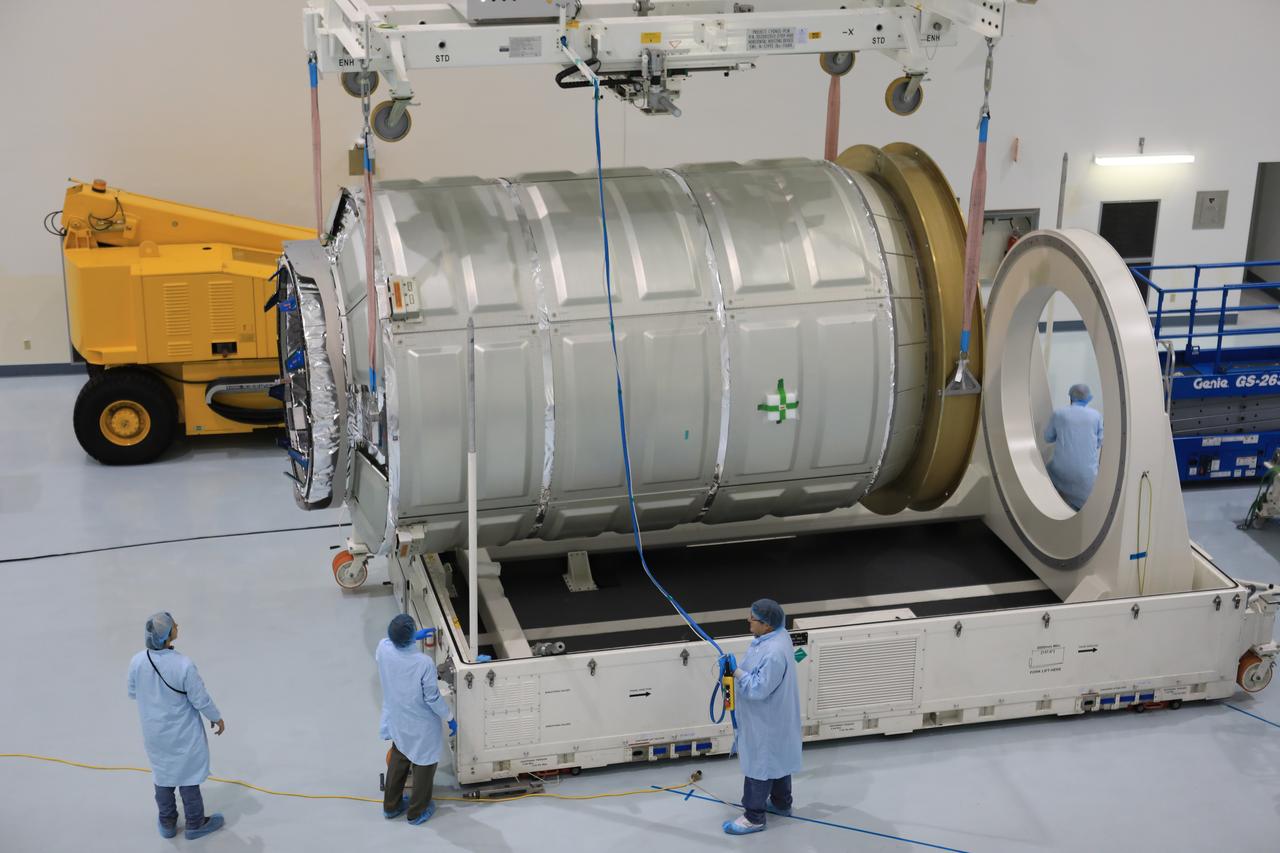
Inside the high bay of the Space Station Processing Facility of NASA's Kennedy Space Center in Florida engineers and technicians remove the Orbital ATK OA-7 Cygnus spacecraft's pressurized cargo module (PCM) from its environmentally controlled shipping container. Scheduled to launch on March 19, 2017, the Orbital ATK OA-7 mission will lift off atop a United Launch Alliance Atlas V rocket from Space launch Complex 41 at Cape Canaveral Air Force Station. The commercial resupply services mission to the International Space Station will deliver thousands of pounds of supplies, equipment and scientific research materials that improve life on Earth and drive progress toward future space exploration.
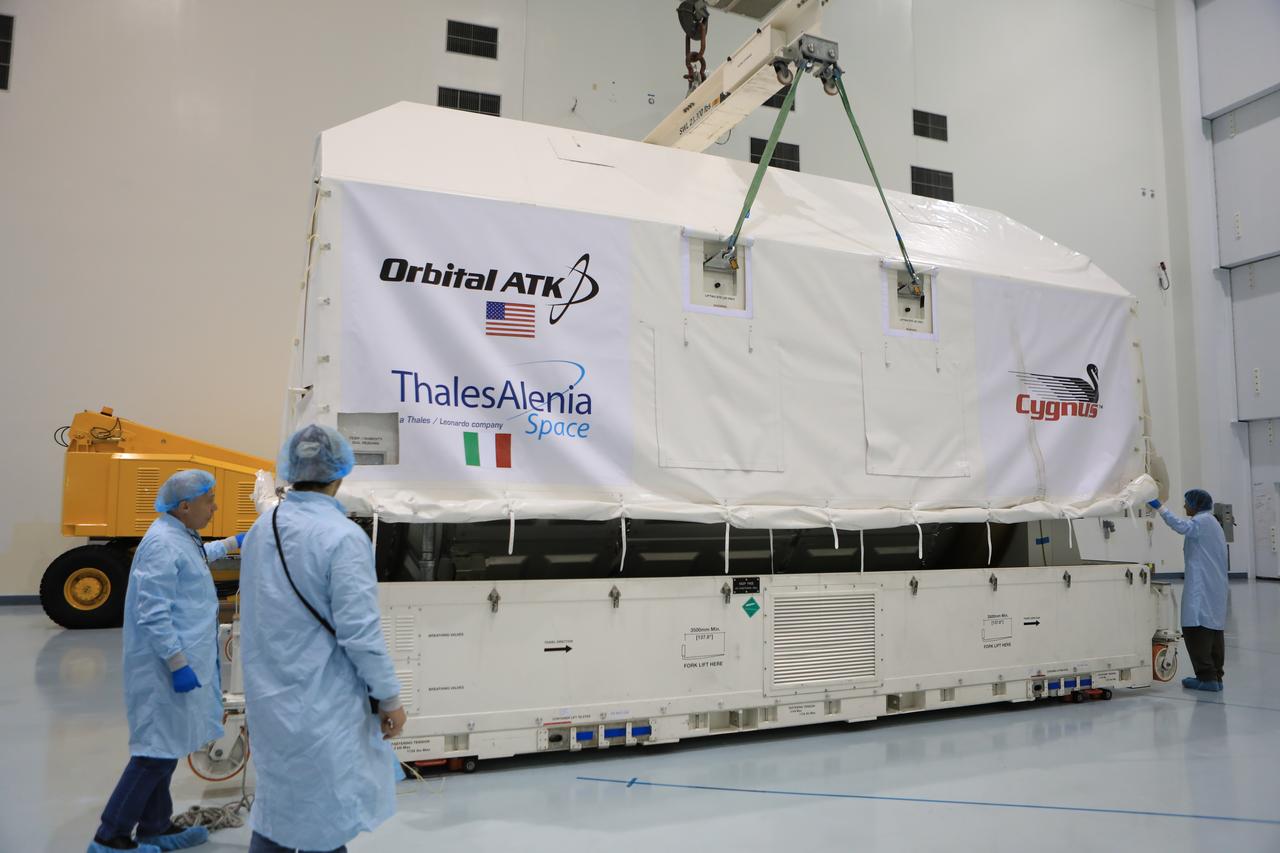
Inside the high bay of the Space Station Processing Facility of NASA's Kennedy Space Center in Florida engineers and technicians remove the Orbital ATK OA-7 Cygnus spacecraft's pressurized cargo module (PCM) from its environmentally controlled shipping container. Scheduled to launch on March 19, 2017, the Orbital ATK OA-7 mission will lift off atop a United Launch Alliance Atlas V rocket from Space launch Complex 41 at Cape Canaveral Air Force Station. The commercial resupply services mission to the International Space Station will deliver thousands of pounds of supplies, equipment and scientific research materials that improve life on Earth and drive progress toward future space exploration.
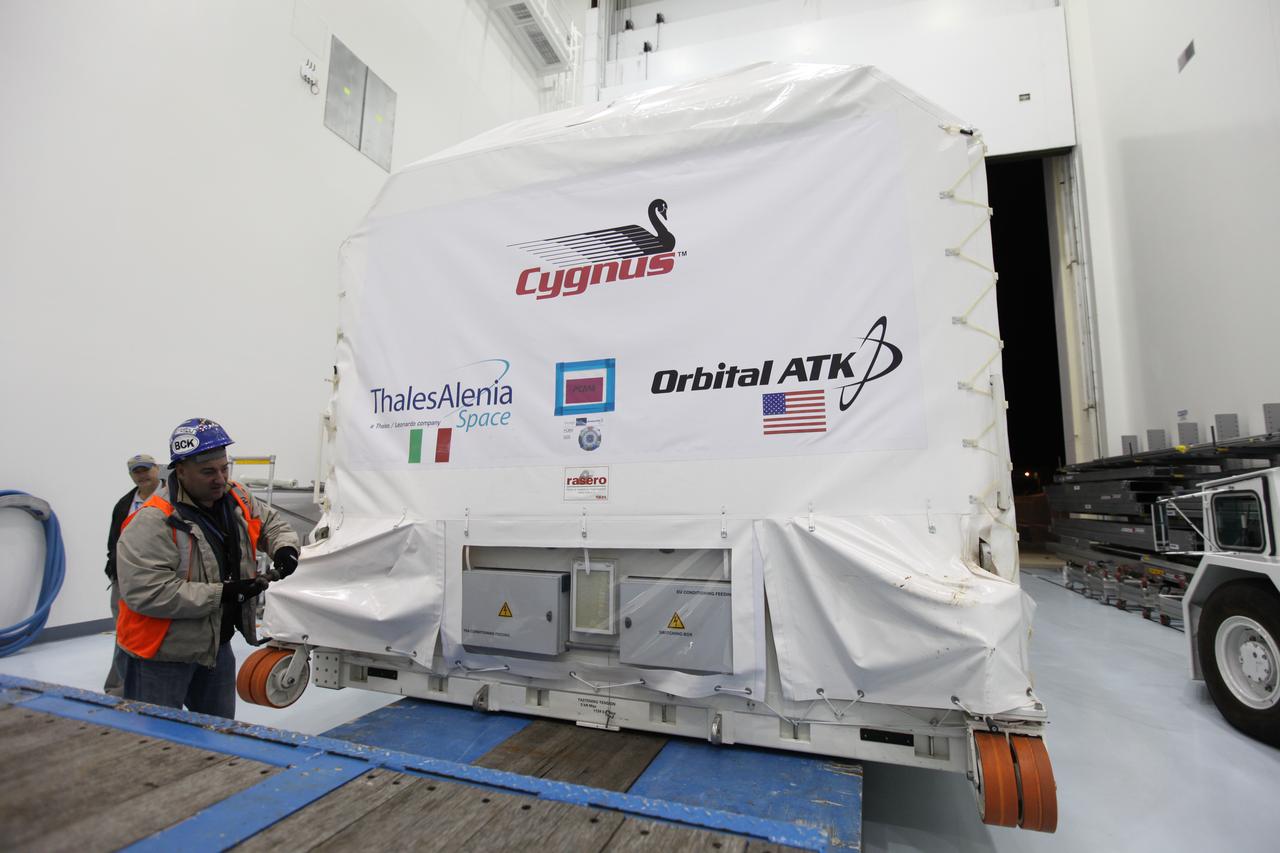
Still sealed in its environmentally controlled shipping container, the Orbital ATK OA-7 Cygnus spacecraft's pressurized cargo module (PCM) has arrived inside the Space Station Processing Facility at NASA's Kennedy Space Center in Florida. Once the Cygnus spacecraft is removed from its shipping container, engineers and technicians will begin preparing for launch scheduled for March 2017. Orbital ATK CRS-7 will lift off atop a United Launch Alliance Atlas V rocket from Space launch Complex 41 at Cape Canaveral Air Force Station. The commercial resupply services mission to the International Space Station will deliver thousands of pounds of supplies, equipment and scientific research materials that improve life on Earth and drive progress toward future space exploration.
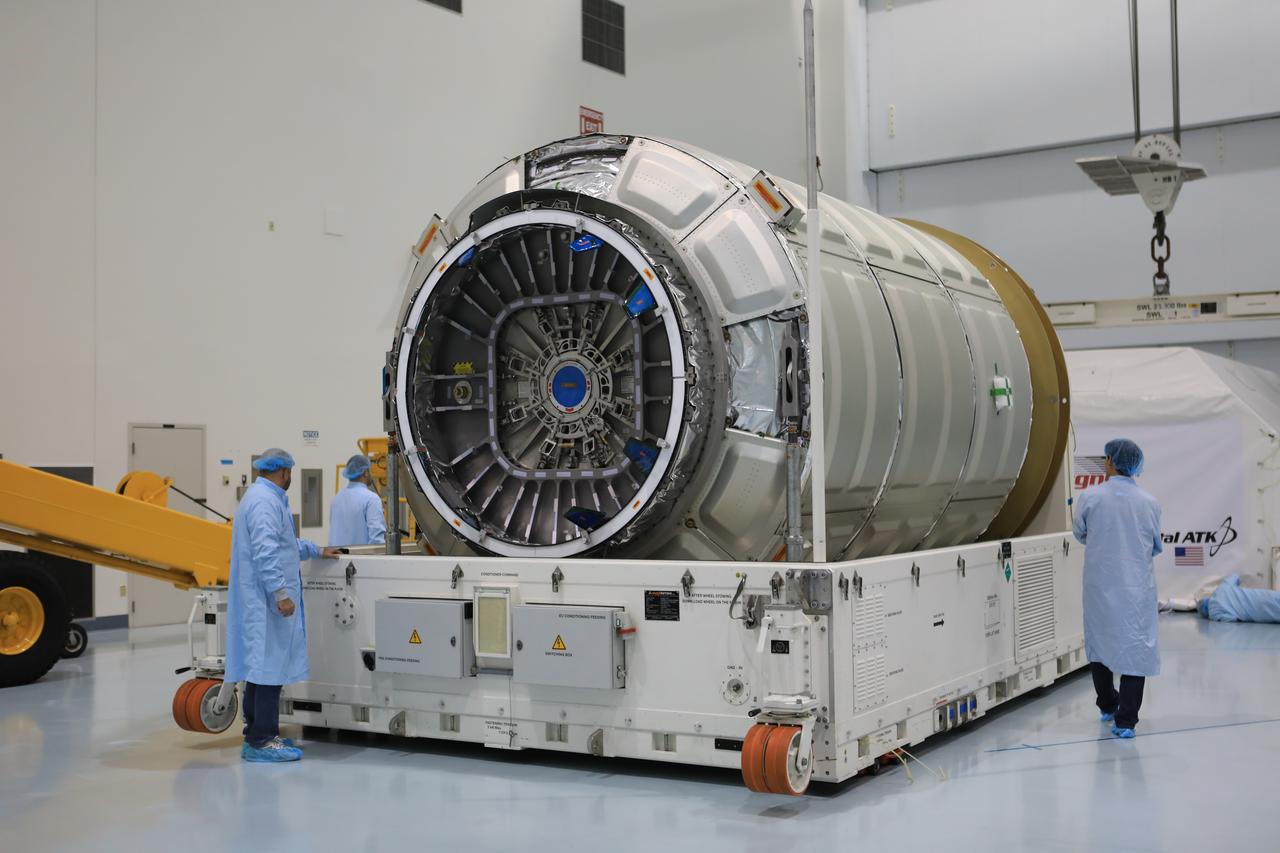
Inside the high bay of the Space Station Processing Facility of NASA's Kennedy Space Center in Florida engineers and technicians remove the Orbital ATK OA-7 Cygnus spacecraft's pressurized cargo module (PCM) from its environmentally controlled shipping container. Scheduled to launch on March 19, 2017, the Orbital ATK OA-7 mission will lift off atop a United Launch Alliance Atlas V rocket from Space launch Complex 41 at Cape Canaveral Air Force Station. The commercial resupply services mission to the International Space Station will deliver thousands of pounds of supplies, equipment and scientific research materials that improve life on Earth and drive progress toward future space exploration.
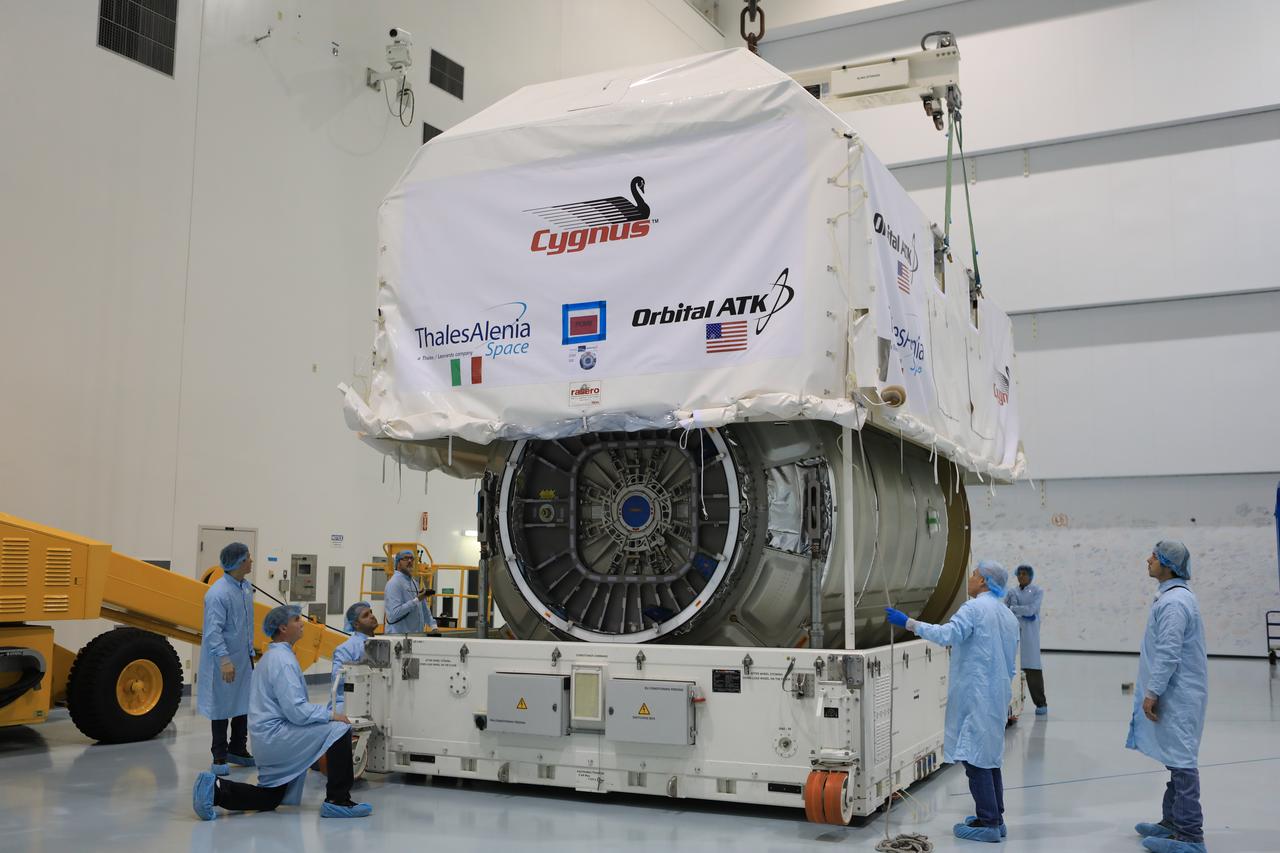
Inside the high bay of the Space Station Processing Facility of NASA's Kennedy Space Center in Florida engineers and technicians remove the Orbital ATK OA-7 Cygnus spacecraft's pressurized cargo module (PCM) from its environmentally controlled shipping container. Scheduled to launch on March 19, 2017, the Orbital ATK OA-7 mission will lift off atop a United Launch Alliance Atlas V rocket from Space launch Complex 41 at Cape Canaveral Air Force Station. The commercial resupply services mission to the International Space Station will deliver thousands of pounds of supplies, equipment and scientific research materials that improve life on Earth and drive progress toward future space exploration.
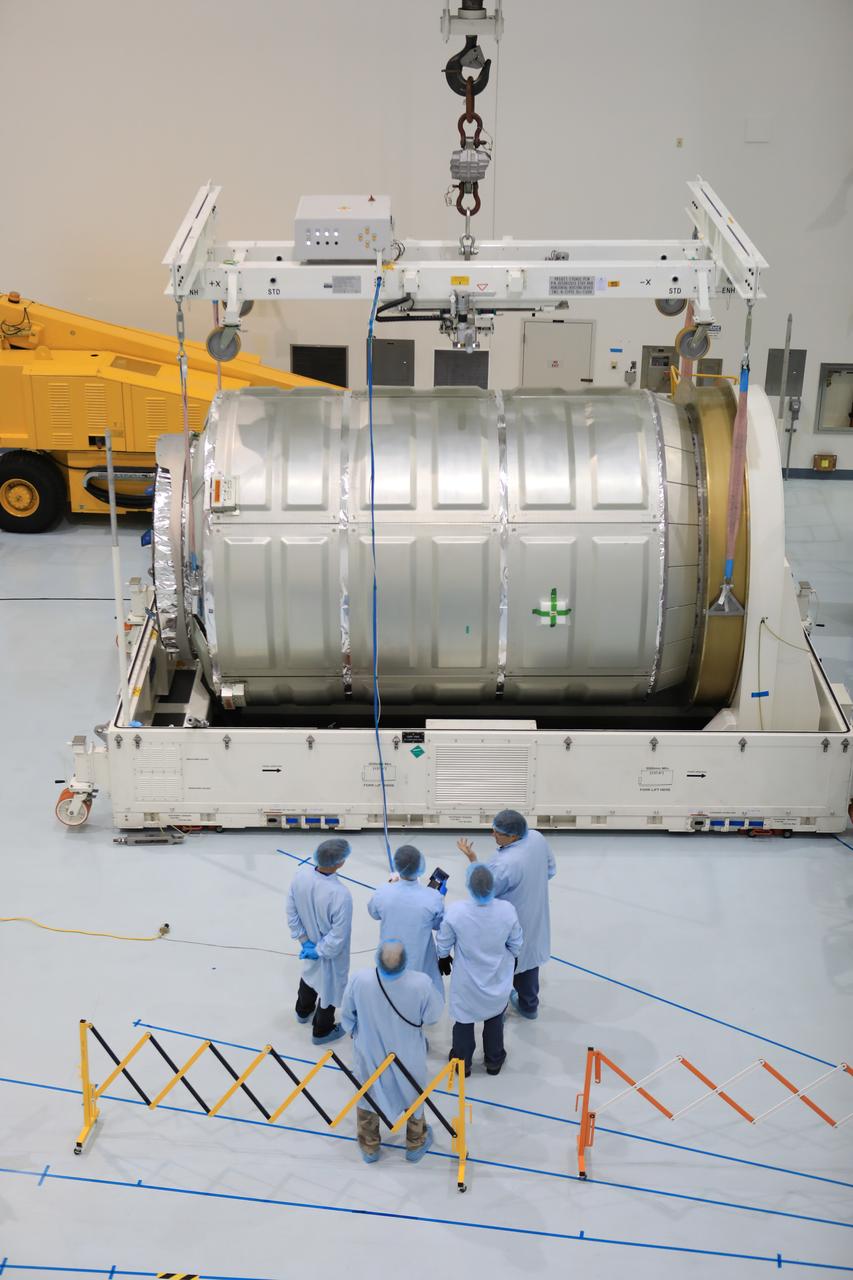
Inside the high bay of the Space Station Processing Facility of NASA's Kennedy Space Center in Florida engineers and technicians remove the Orbital ATK OA-7 Cygnus spacecraft's pressurized cargo module (PCM) from its environmentally controlled shipping container. Scheduled to launch on March 19, 2017, the Orbital ATK OA-7 mission will lift off atop a United Launch Alliance Atlas V rocket from Space launch Complex 41 at Cape Canaveral Air Force Station. The commercial resupply services mission to the International Space Station will deliver thousands of pounds of supplies, equipment and scientific research materials that improve life on Earth and drive progress toward future space exploration.
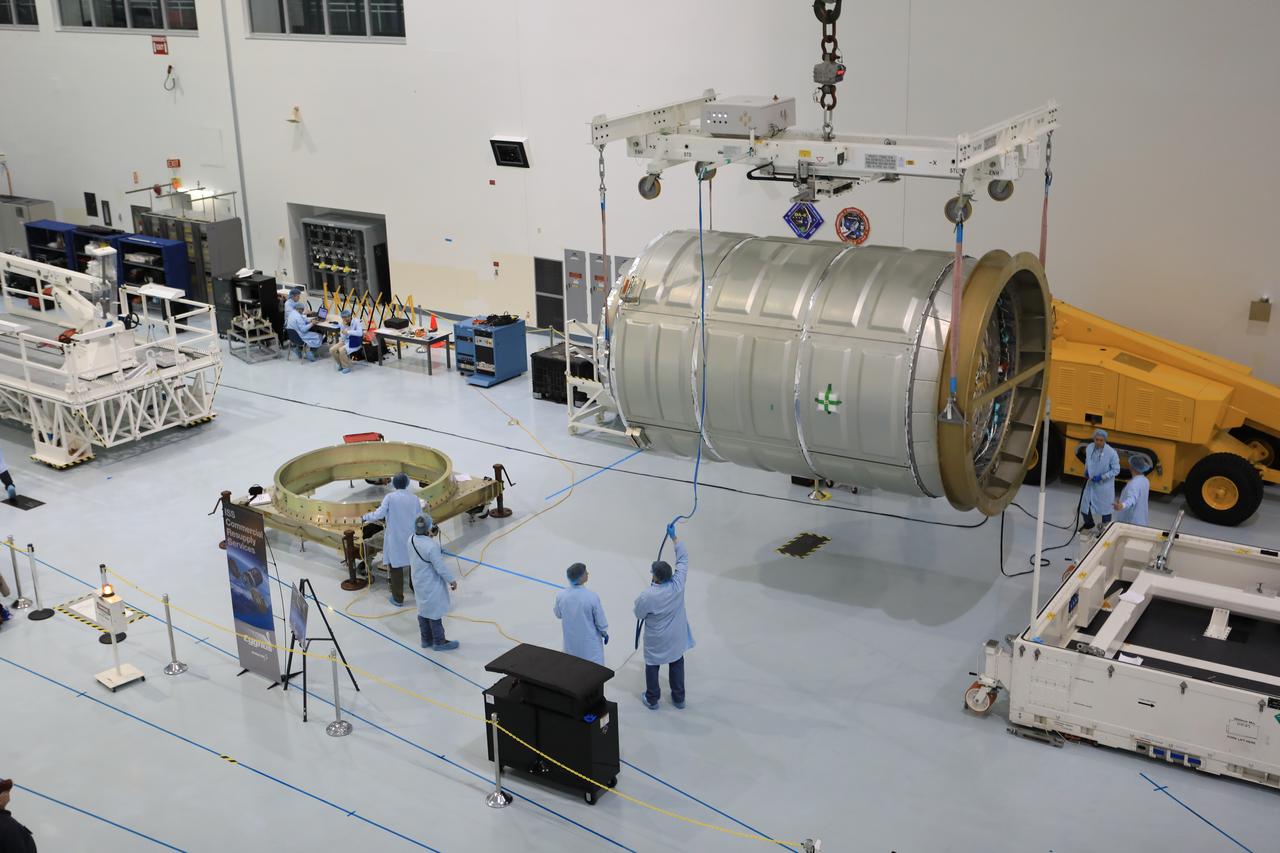
Inside the high bay of the Space Station Processing Facility of NASA's Kennedy Space Center in Florida engineers and technicians remove the Orbital ATK OA-7 Cygnus spacecraft's pressurized cargo module (PCM) from its environmentally controlled shipping container. Scheduled to launch on March 19, 2017, the Orbital ATK OA-7 mission will lift off atop a United Launch Alliance Atlas V rocket from Space launch Complex 41 at Cape Canaveral Air Force Station. The commercial resupply services mission to the International Space Station will deliver thousands of pounds of supplies, equipment and scientific research materials that improve life on Earth and drive progress toward future space exploration.
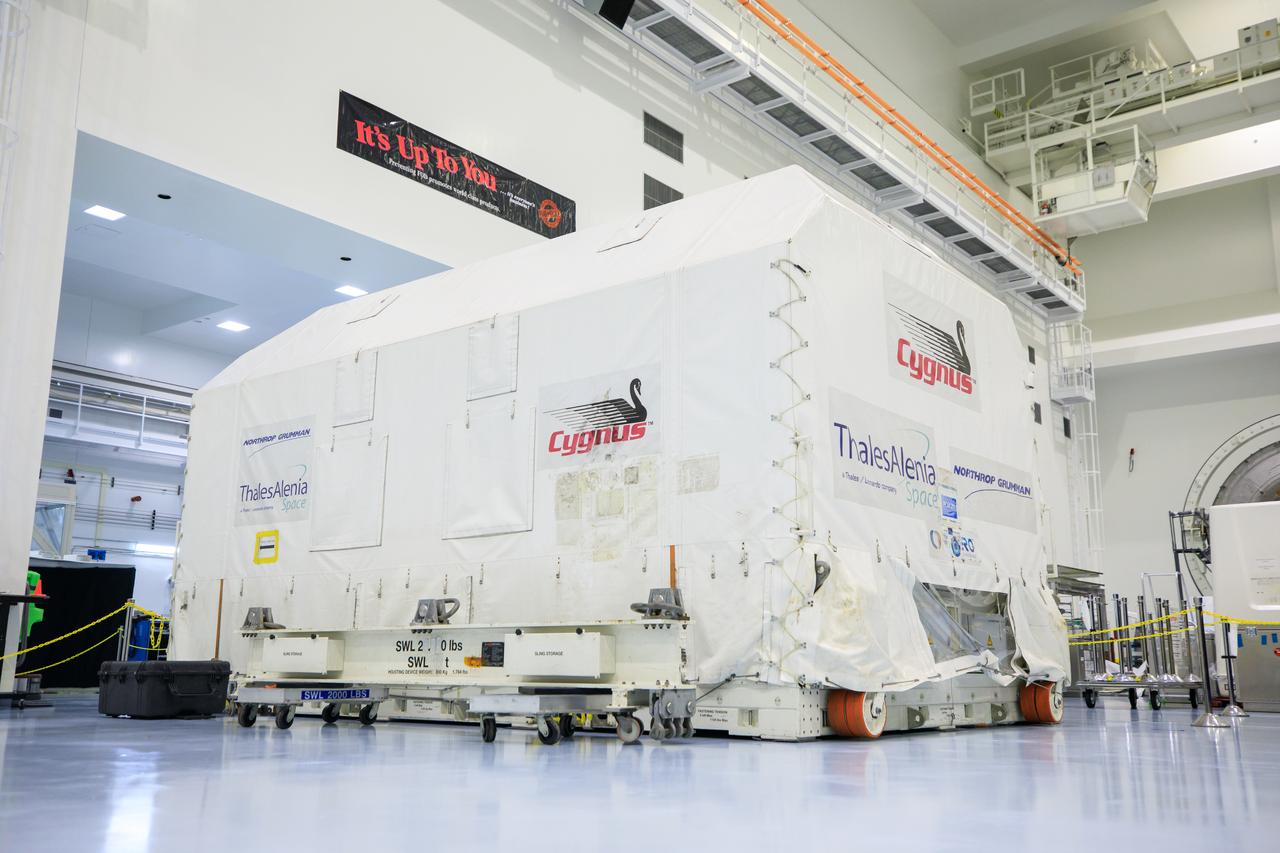
Northrop Grumman’s Cygnus pressurized cargo module for the company’s 20th commercial resupply mission arrives in its environmentally controlled shipping container inside the high bay in the Space Station Processing Facility at NASA's Kennedy Space Center in Florida on Aug. 2, 2023. Cygnus will launch later this year atop a SpaceX Falcon 9 rocket from Cape Canaveral Space Force Station’s Space Launch Complex 40 to the International Space Station. Cygnus will undergo prelaunch processing at Kennedy before it is transported to SpaceX’s integration facility.
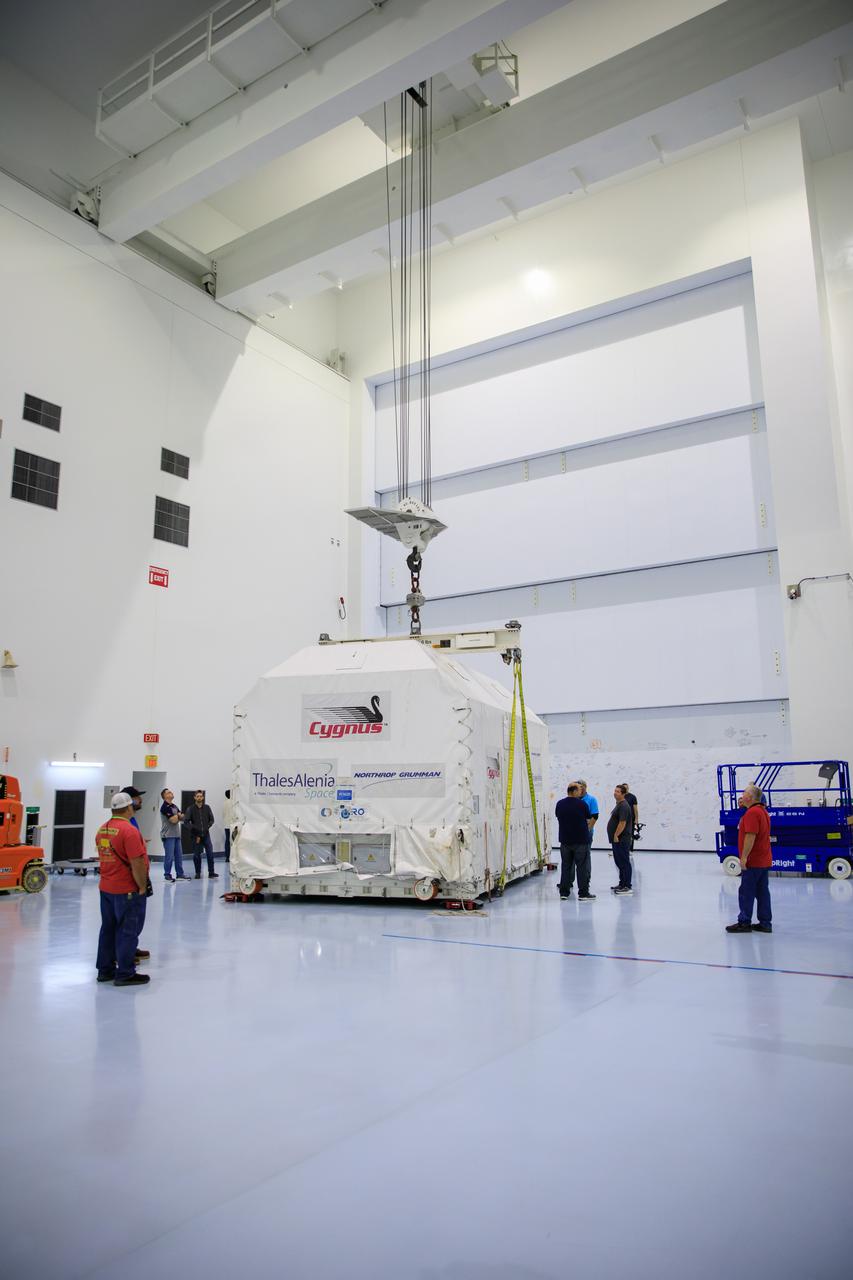
The Cygnus pressurized cargo module for Northrop Grumman’s 20th commercial resupply mission is lowered by crane in its carrier and secured onto a transport base inside the low bay in the Space Station Processing Facility at NASA's Kennedy Space Center in Florida on Aug. 2, 2023. Cygnus will launch later this year atop a SpaceX Falcon 9 rocket from Cape Canaveral Space Force Station’s Space Launch Complex 40 to the International Space Station. Cygnus will undergo prelaunch processing at Kennedy before it is transported to SpaceX’s integration facility.