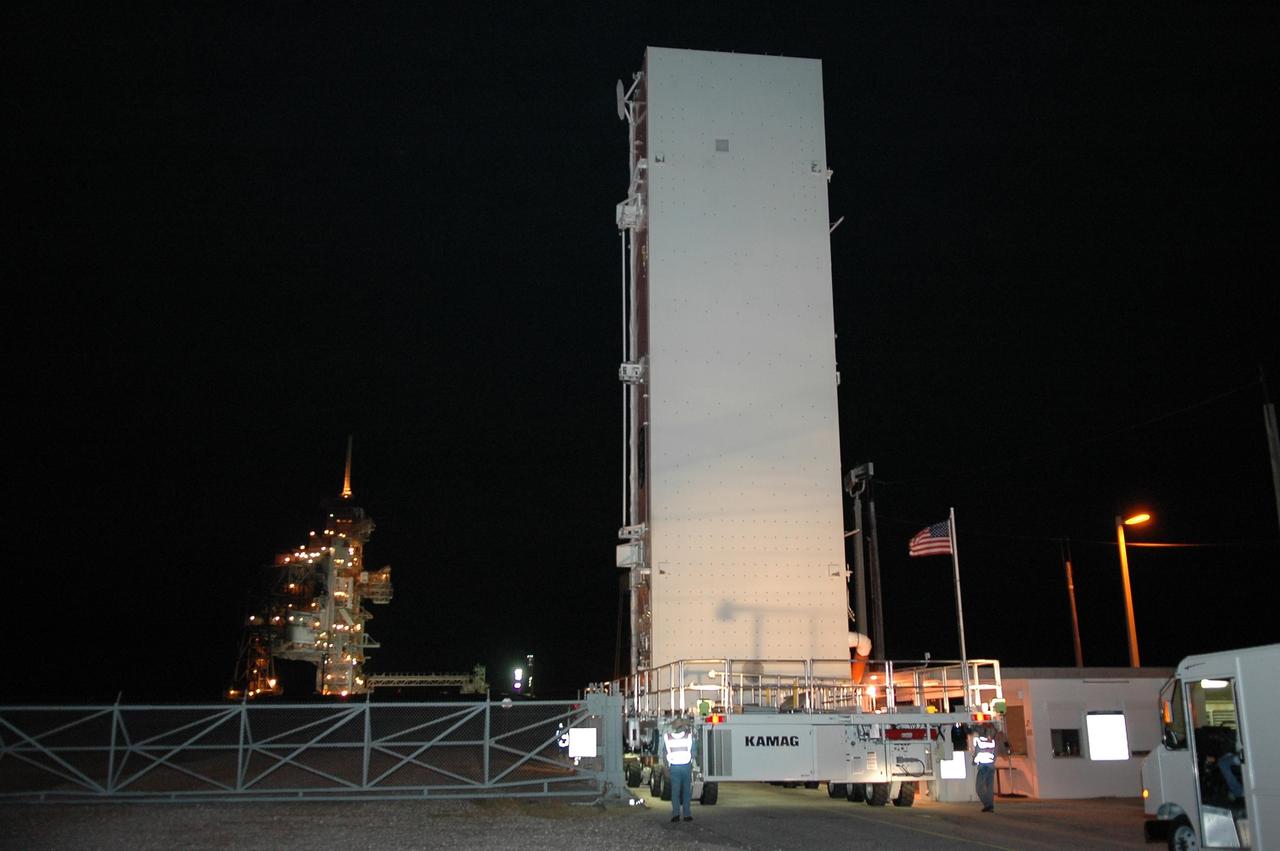
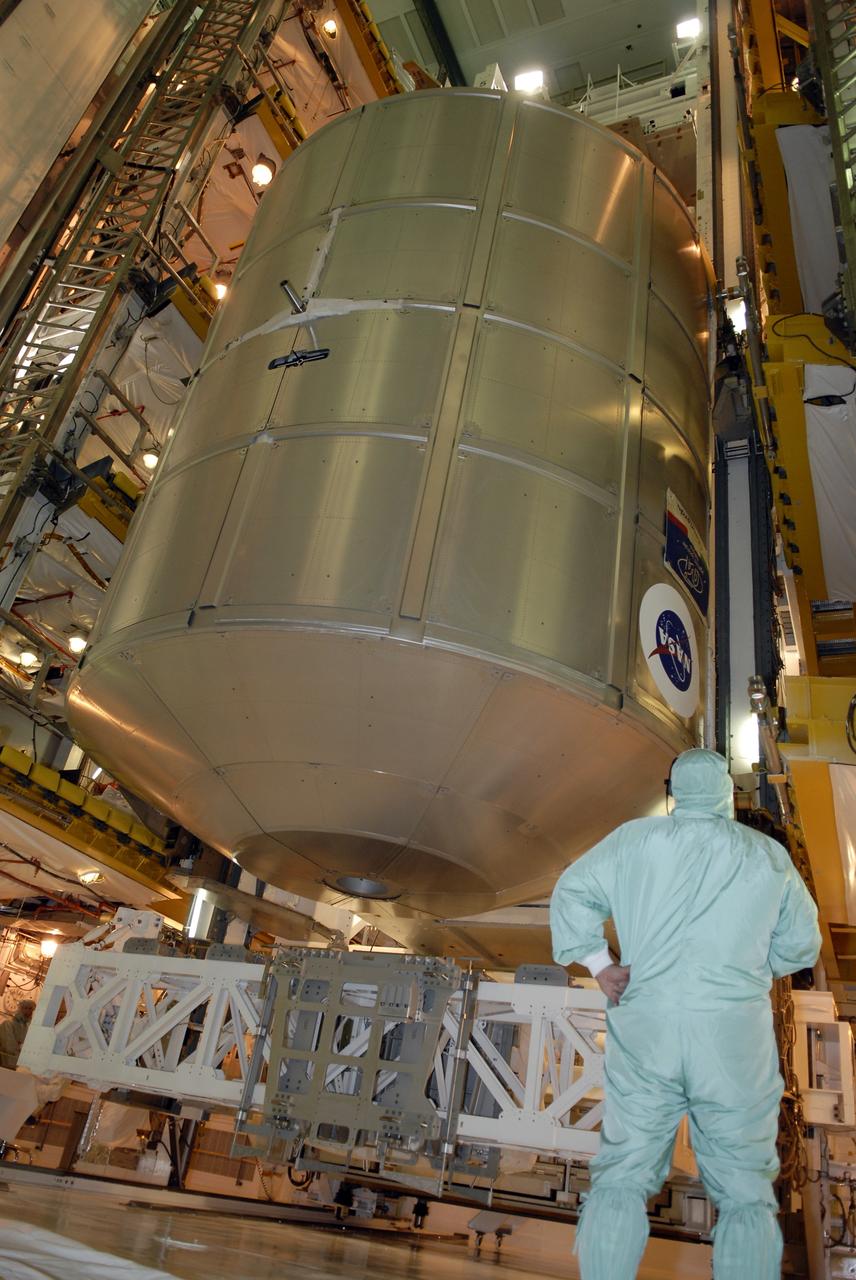
KENNEDY SPACE CENTER, FLA. -- The payload canister transporter and canister arrive at the gate to Launch Pad 39B. Inside the canister are the SPACEHAB module and the port 5 truss segment for mission STS-116. They will be moved into the payload changeout room (PCR) at the pad and transferred into Space Shuttle Discovery's payload bay once the vehicle has rolled out to the pad. The PCR is the enclosed, environmentally controlled portion of the RSS that supports cargo delivery to the pad and subsequent vertical installation into the orbiter payload bay. Seals around the mating surface of the PCR fit against the orbiter and allow the opening of the payload bay or canister doors and removal of the cargo without exposure to outside air and contaminants. A clean-air purge in the PCR maintains environmental control during PCR cargo operations. Cargo is removed from the payload canister and installed vertically in the orbiter by the payload ground handling mechanism (PGHM). Photo credit: NASA/Kim Shiflett
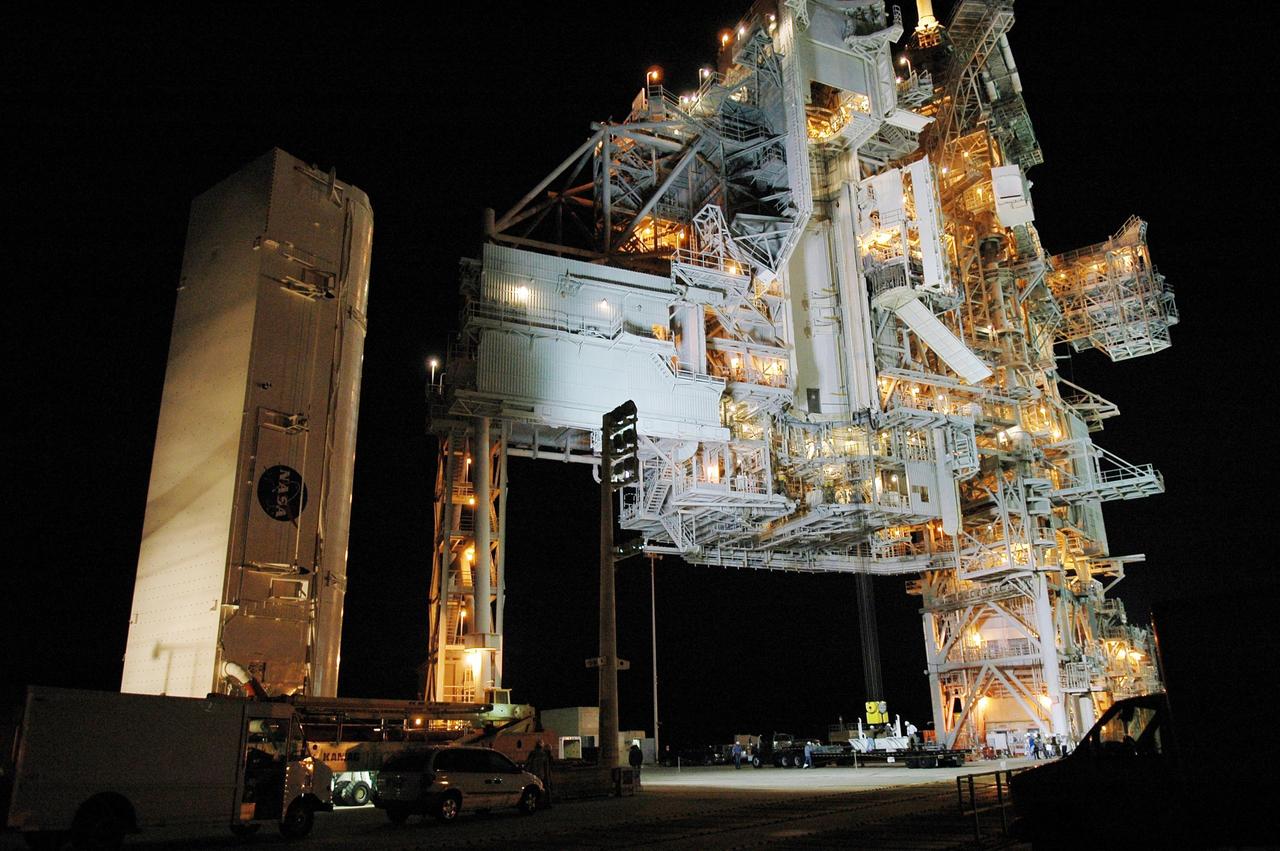
KENNEDY SPACE CENTER, FLA. -- The payload canister transporter and canister approach the rotating service structure (RSS) on Launch Pad 39B. Inside the canister are the SPACEHAB module and the port 5 truss segment for mission STS-116. They will be moved into the payload changeout room (PCR) on the RSS and transferred into Space Shuttle Discovery's payload bay once the vehicle has rolled out to the pad. The PCR is the enclosed, environmentally controlled portion of the RSS that supports cargo delivery to the pad and subsequent vertical installation into the orbiter payload bay. Seals around the mating surface of the PCR fit against the orbiter and allow the opening of the payload bay or canister doors and removal of the cargo without exposure to outside air and contaminants. A clean-air purge in the PCR maintains environmental control during PCR cargo operations. Cargo is removed from the payload canister and installed vertically in the orbiter by the payload ground handling mechanism (PGHM). Photo credit: NASA/Kim Shiflett
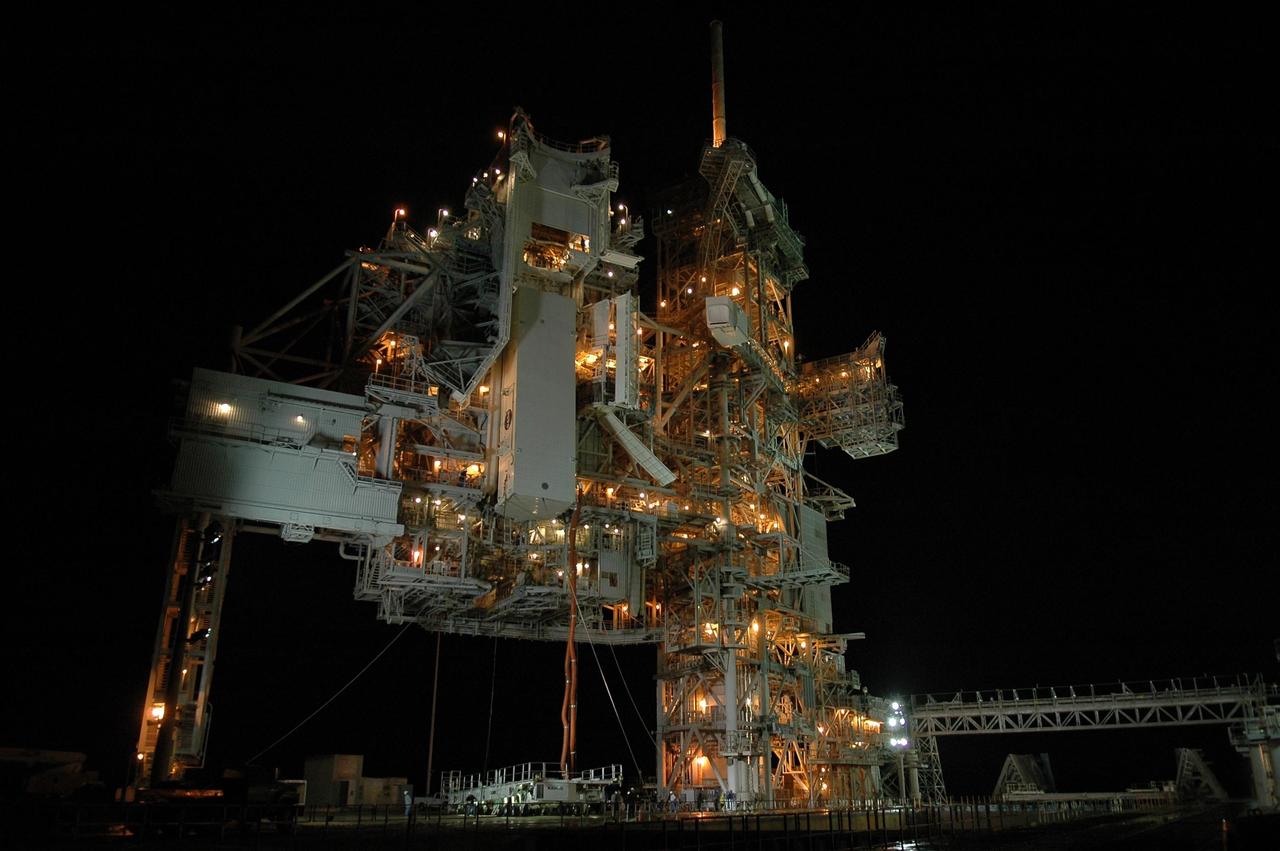
KENNEDY SPACE CENTER, FLA. -- With umbilical lines still attached, the payload canister is lifted up to the payload changeout room (PCR) on the rotating service structure (RSS) on Launch Pad 39B. Inside the canister are the SPACEHAB module and the port 5 truss segment for mission STS-116. Once inside the PCR, they will be transferred into Space Shuttle Discovery's payload bay once the vehicle has rolled out to the pad. On the right is the fixed service structure. The PCR is the enclosed, environmentally controlled portion of the RSS that supports cargo delivery to the pad and subsequent vertical installation into the orbiter payload bay. Seals around the mating surface of the PCR fit against the orbiter and allow the opening of the payload bay or canister doors and removal of the cargo without exposure to outside air and contaminants. A clean-air purge in the PCR maintains environmental control during PCR cargo operations. Cargo is removed from the payload canister and installed vertically in the orbiter by the payload ground handling mechanism (PGHM). Photo credit: NASA/Kim Shiflett
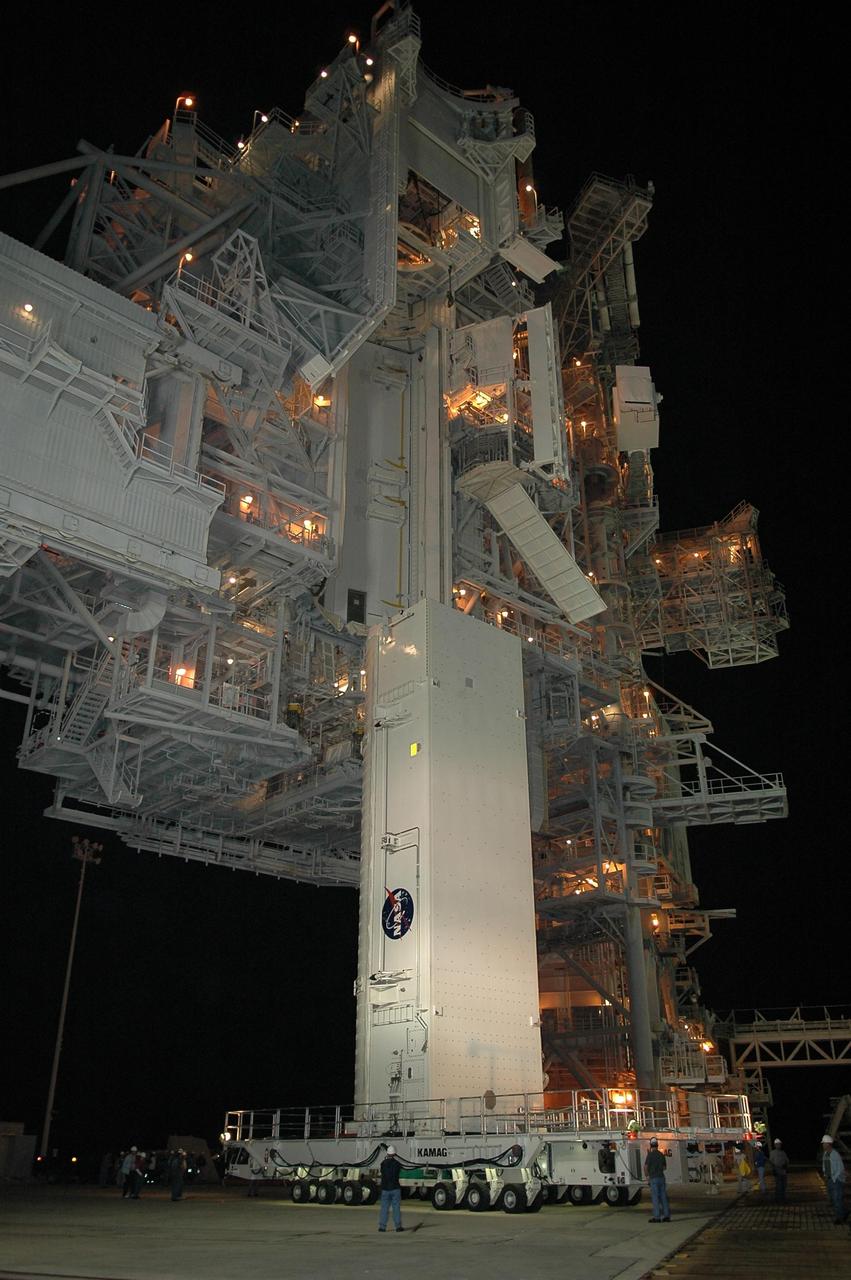
KENNEDY SPACE CENTER, FLA. -- The payload canister transporter and canister move into place under the payload changeout room (PCR) on the rotating service structure (RSS) on Launch Pad 39B. Inside the canister are the SPACEHAB module and the port 5 truss segment for mission STS-116. Once inside the PCR, they will be transferred into Space Shuttle Discovery's payload bay once the vehicle has rolled out to the pad. The PCR is the enclosed, environmentally controlled portion of the RSS that supports cargo delivery to the pad and subsequent vertical installation into the orbiter payload bay. Seals around the mating surface of the PCR fit against the orbiter and allow the opening of the payload bay or canister doors and removal of the cargo without exposure to outside air and contaminants. A clean-air purge in the PCR maintains environmental control during PCR cargo operations. Cargo is removed from the payload canister and installed vertically in the orbiter by the payload ground handling mechanism (PGHM). Photo credit: NASA/Kim Shiflett
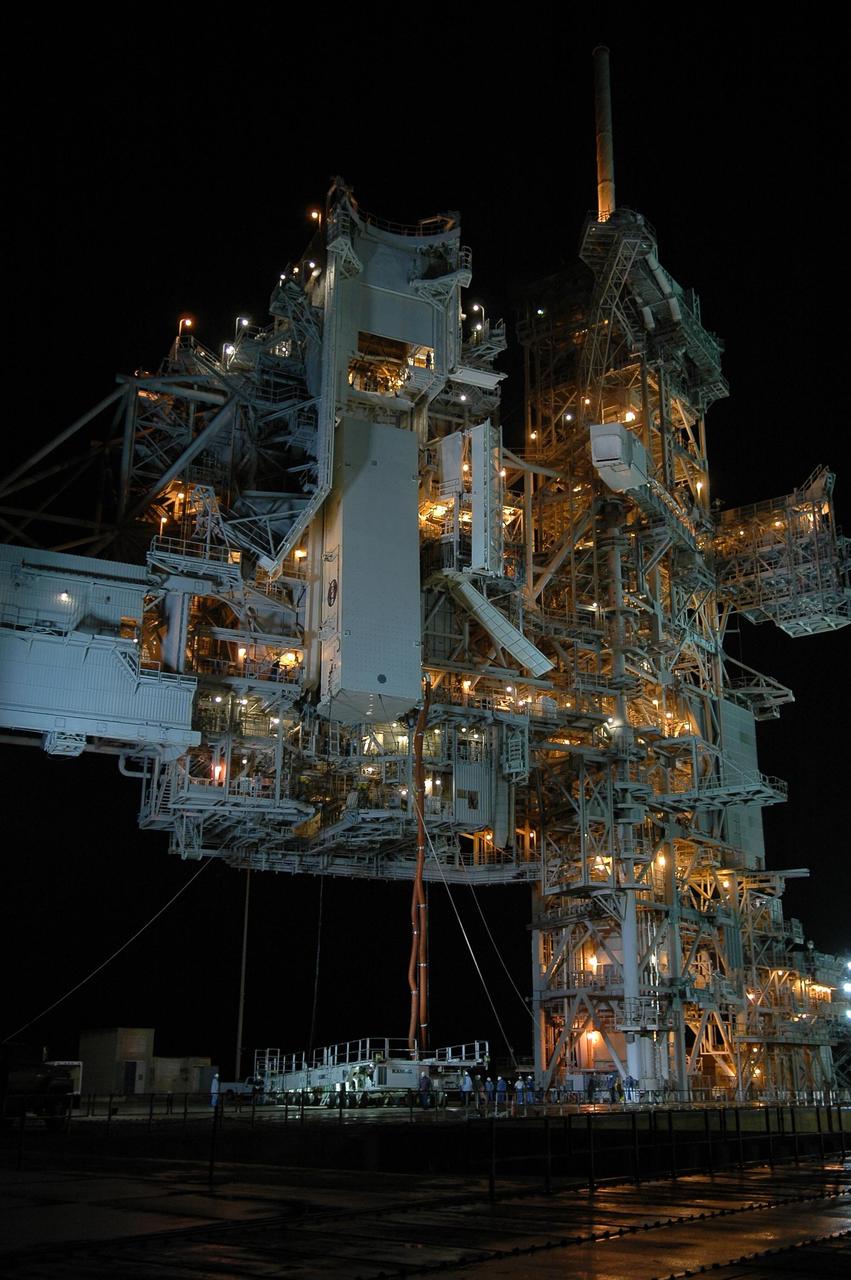
KENNEDY SPACE CENTER, FLA. -- With umbilical lines still attached, the payload canister is lifted up to the payload changeout room (PCR) on the rotating service structure (RSS) on Launch Pad 39B. Inside the canister are the SPACEHAB module and the port 5 truss segment for mission STS-116. Once inside the PCR, they will be transferred into Space Shuttle Discovery's payload bay once the vehicle has rolled out to the pad. On the right is the fixed service structure. The PCR is the enclosed, environmentally controlled portion of the RSS that supports cargo delivery to the pad and subsequent vertical installation into the orbiter payload bay. Seals around the mating surface of the PCR fit against the orbiter and allow the opening of the payload bay or canister doors and removal of the cargo without exposure to outside air and contaminants. A clean-air purge in the PCR maintains environmental control during PCR cargo operations. Cargo is removed from the payload canister and installed vertically in the orbiter by the payload ground handling mechanism (PGHM). Photo credit: NASA/Kim Shiflett
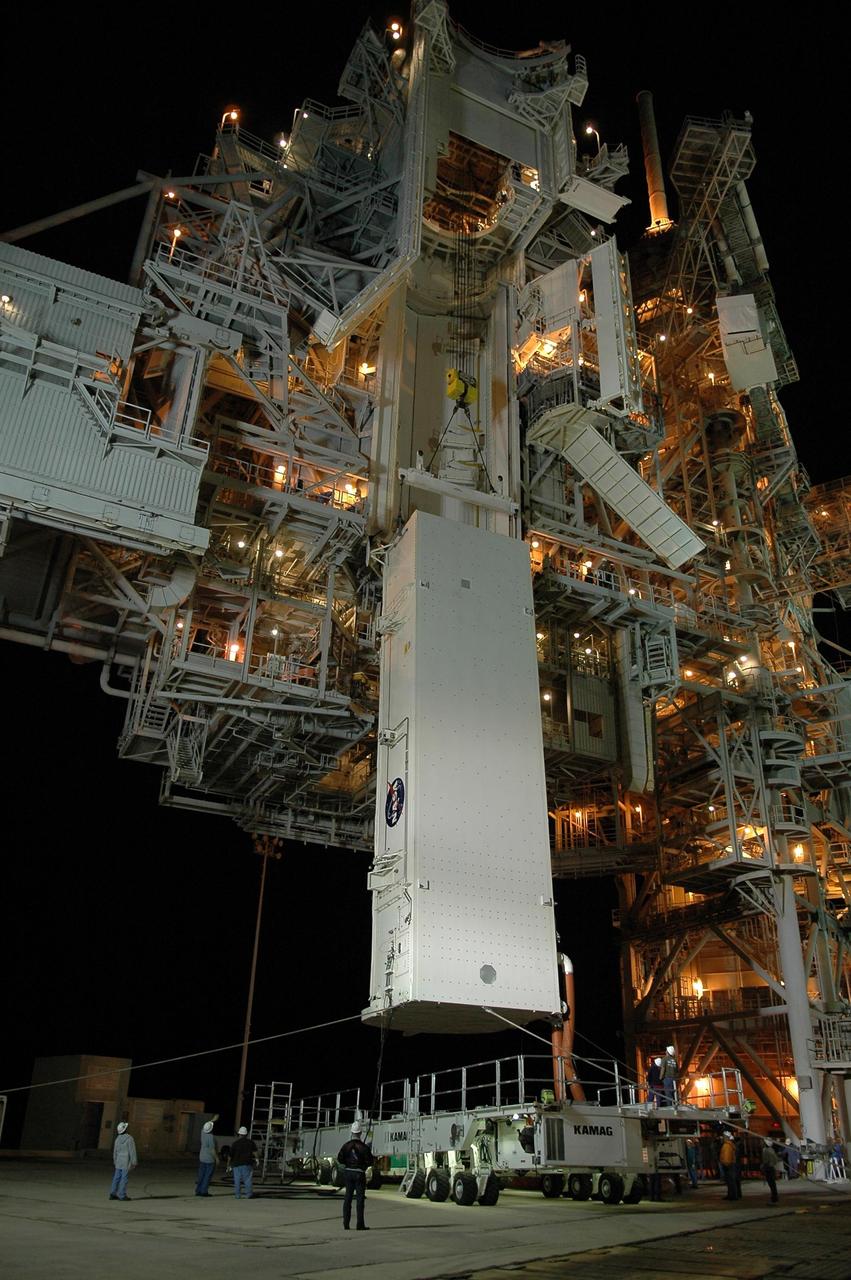
KENNEDY SPACE CENTER, FLA. -- With umbilical lines still attached, the payload canister is lifted up to the payload changeout room (PCR) on the rotating service structure (RSS) on Launch Pad 39B. Inside the canister are the SPACEHAB module and the port 5 truss segment for mission STS-116. Once inside the PCR, they will be transferred into Space Shuttle Discovery's payload bay once the vehicle has rolled out to the pad. On the right is the fixed service structure. The PCR is the enclosed, environmentally controlled portion of the RSS that supports cargo delivery to the pad and subsequent vertical installation into the orbiter payload bay. Seals around the mating surface of the PCR fit against the orbiter and allow the opening of the payload bay or canister doors and removal of the cargo without exposure to outside air and contaminants. A clean-air purge in the PCR maintains environmental control during PCR cargo operations. Cargo is removed from the payload canister and installed vertically in the orbiter by the payload ground handling mechanism (PGHM). Photo credit: NASA/Kim Shiflett
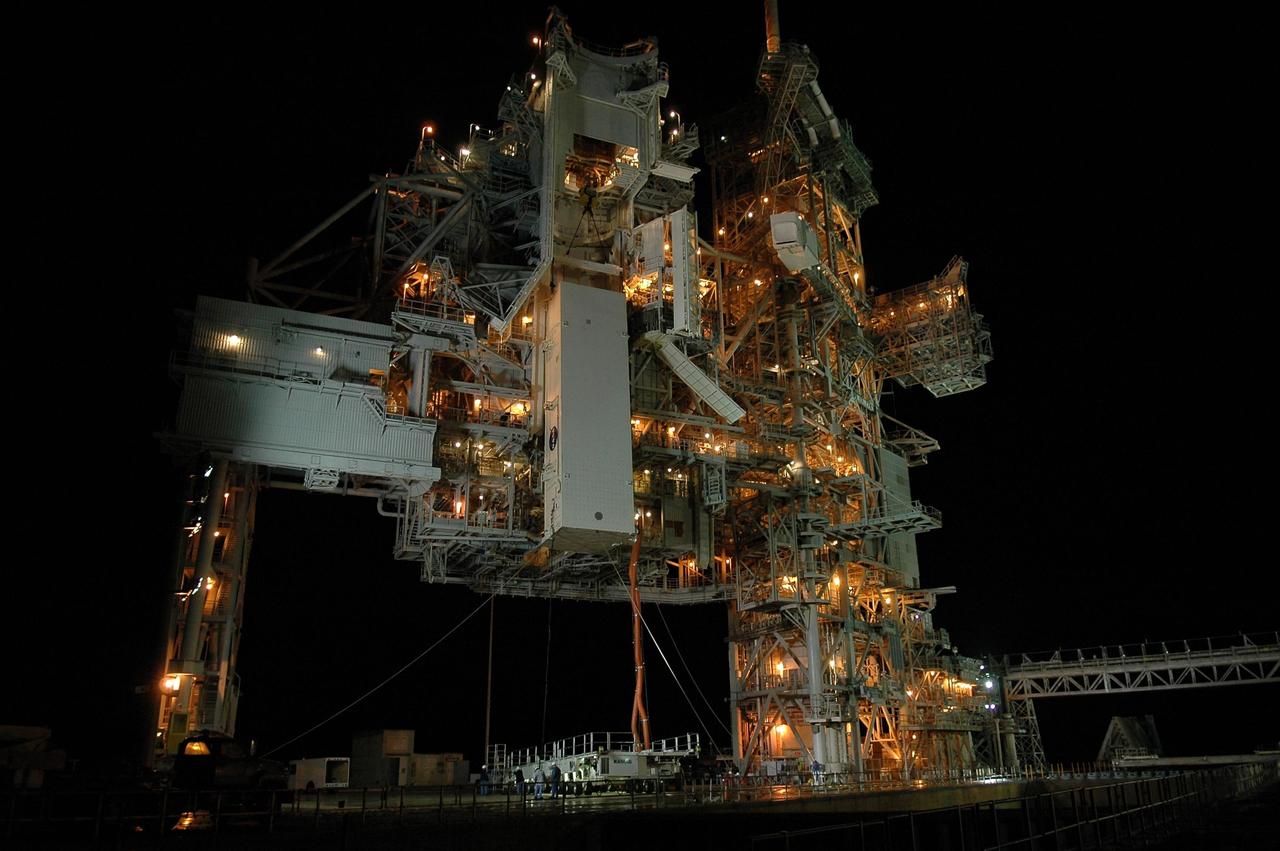
KENNEDY SPACE CENTER, FLA. -- With umbilical lines still attached, the payload canister is lifted up to the payload changeout room (PCR) on the rotating service structure (RSS) on Launch Pad 39B. Inside the canister are the SPACEHAB module and the port 5 truss segment for mission STS-116. Once inside the PCR, they will be transferred into Space Shuttle Discovery's payload bay after the vehicle has rolled out to the pad. On the right is the fixed service structure. The PCR is the enclosed, environmentally controlled portion of the RSS that supports cargo delivery to the pad and subsequent vertical installation into the orbiter payload bay. Seals around the mating surface of the PCR fit against the orbiter and allow the opening of the payload bay or canister doors and removal of the cargo without exposure to outside air and contaminants. A clean-air purge in the PCR maintains environmental control during PCR cargo operations. Cargo is removed from the payload canister and installed vertically in the orbiter by the payload ground handling mechanism (PGHM). Photo credit: NASA/Kim Shiflett
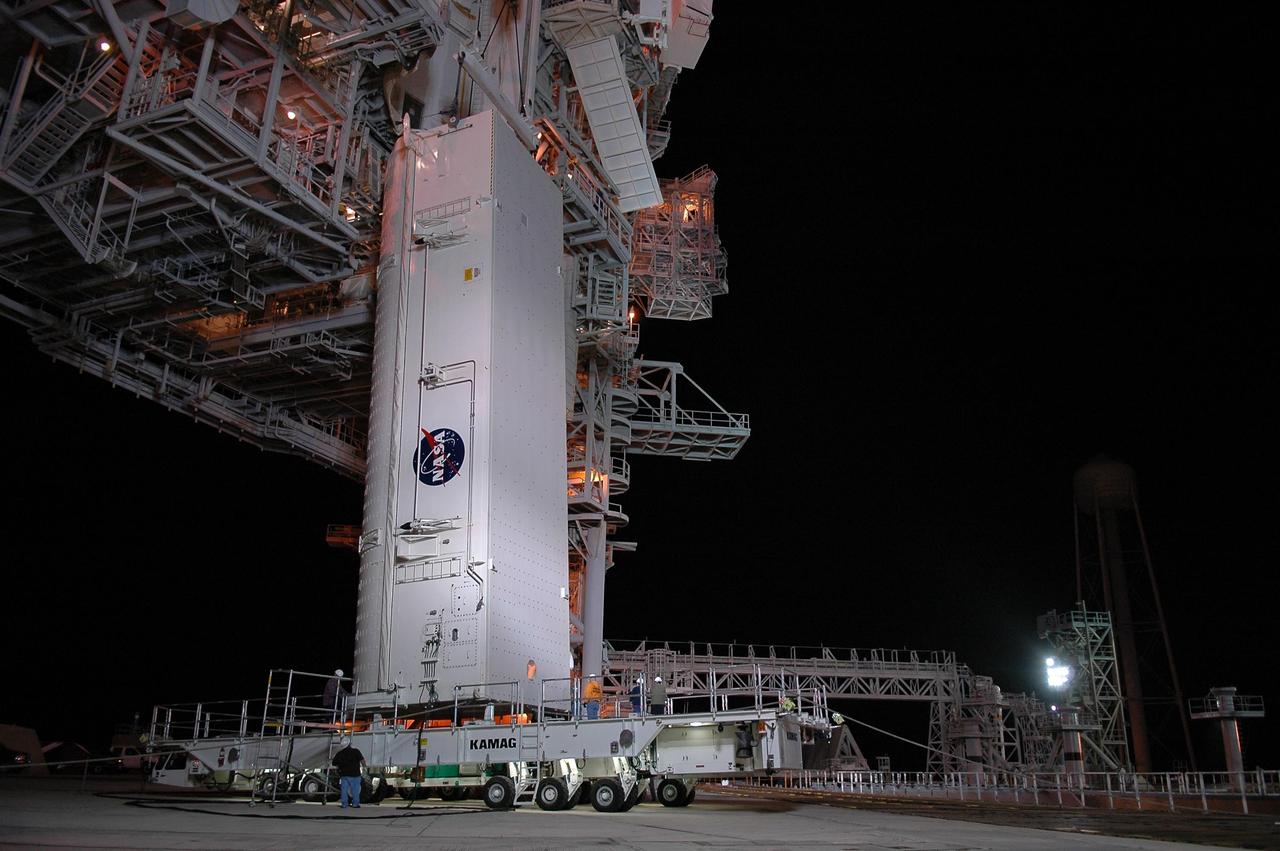
KENNEDY SPACE CENTER, FLA. -- The payload canister is raised off the transporter and will be lifted up to the payload changeout room (PCR) on the rotating service structure (RSS) on Launch Pad 39B. Inside the canister are the SPACEHAB module and the port 5 truss segment for mission STS-116. Once inside the PCR, they will be transferred into Space Shuttle Discovery's payload bay once the vehicle has rolled out to the pad. The PCR is the enclosed, environmentally controlled portion of the RSS that supports cargo delivery to the pad and subsequent vertical installation into the orbiter payload bay. Seals around the mating surface of the PCR fit against the orbiter and allow the opening of the payload bay or canister doors and removal of the cargo without exposure to outside air and contaminants. A clean-air purge in the PCR maintains environmental control during PCR cargo operations. Cargo is removed from the payload canister and installed vertically in the orbiter by the payload ground handling mechanism (PGHM). Photo credit: NASA/Kim Shiflett
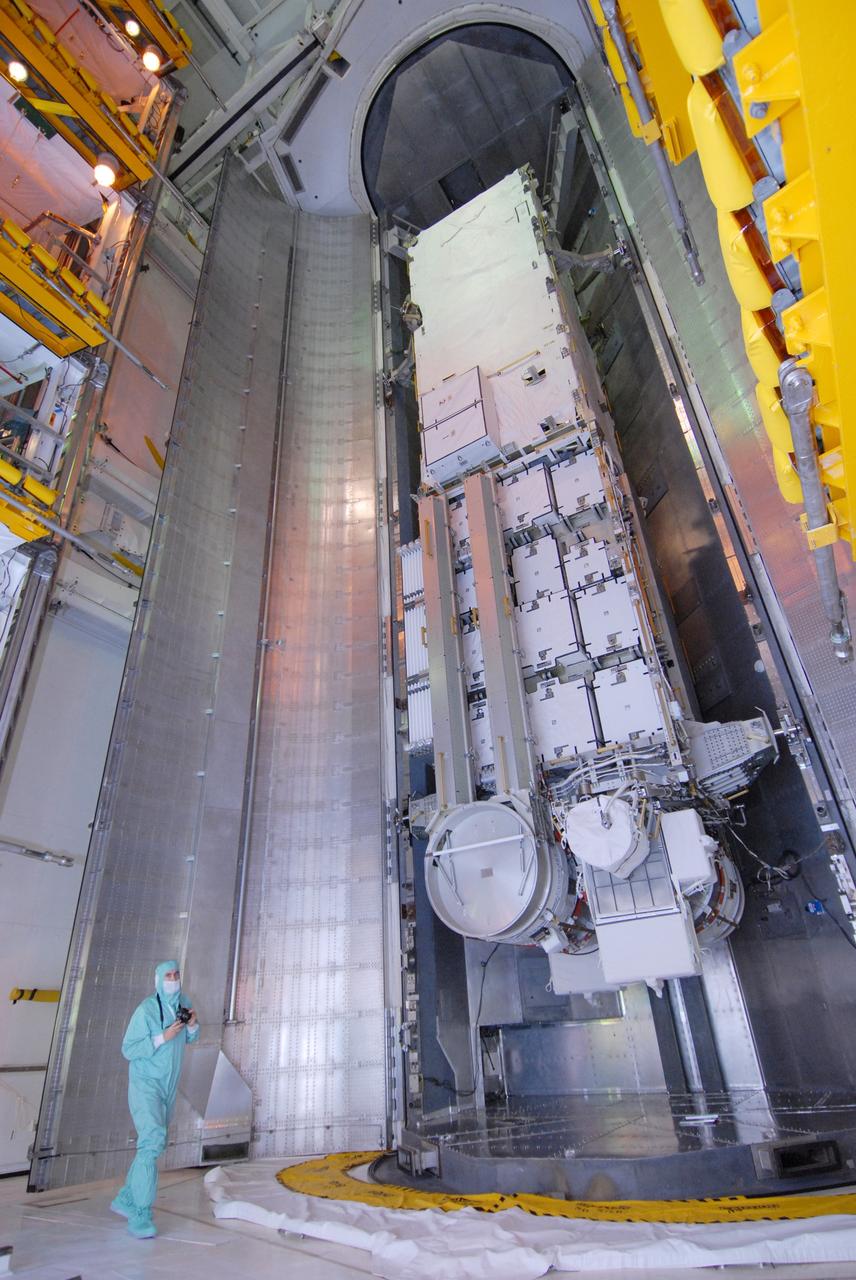
CAPE CANAVERAL, Fla. -- On Launch Pad 39A at NASA's Kennedy Space Center in Florida, the open doors of the payload canister reveal space shuttle Discovery's payload, the integrated truss structure S6 and solar arrays, for the STS-119 mission. The payload will be transferred into the Payload Changeout Room, or PCR. They will be installed in Discovery's payload bay after the shuttle rolls out to the launch pad. Launch of Discovery on the STS-119 mission is scheduled for Feb. 12. During Discovery's 14-day mission, the crew will install the S6 truss segment and its solar arrays to the starboard side of the station, completing the station's backbone, or truss. Photo credit: NASA/Chris Rhodes
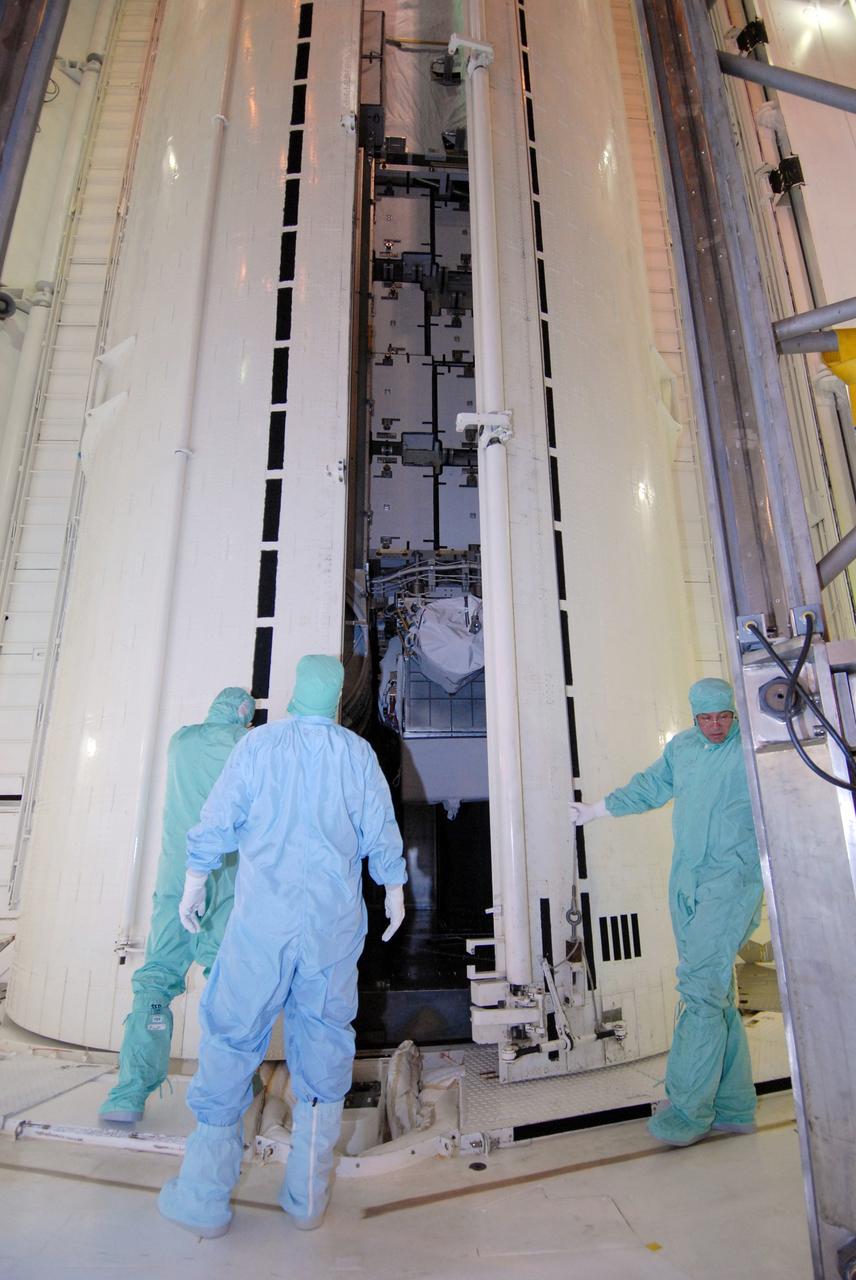
CAPE CANAVERAL, Fla. -- On Launch Pad 39A at NASA's Kennedy Space Center in Florida, the doors of the payload canister are opened to transfer the space shuttle Discovery's payload into the Payload Changeout Room, or PCR. The payload for the STS-119 mission comprises the integrated truss structure S6 and solar arrays to be installed on the International Space Station. They will be installed in Discovery's payload bay after the shuttle rolls out to the launch pad. Launch of Discovery on the STS-119 mission is scheduled for Feb. 12. During Discovery's 14-day mission, the crew will install the S6 truss segment and its solar arrays to the starboard side of the station, completing the station's backbone, or truss. Photo credit: NASA/Chris Rhodes
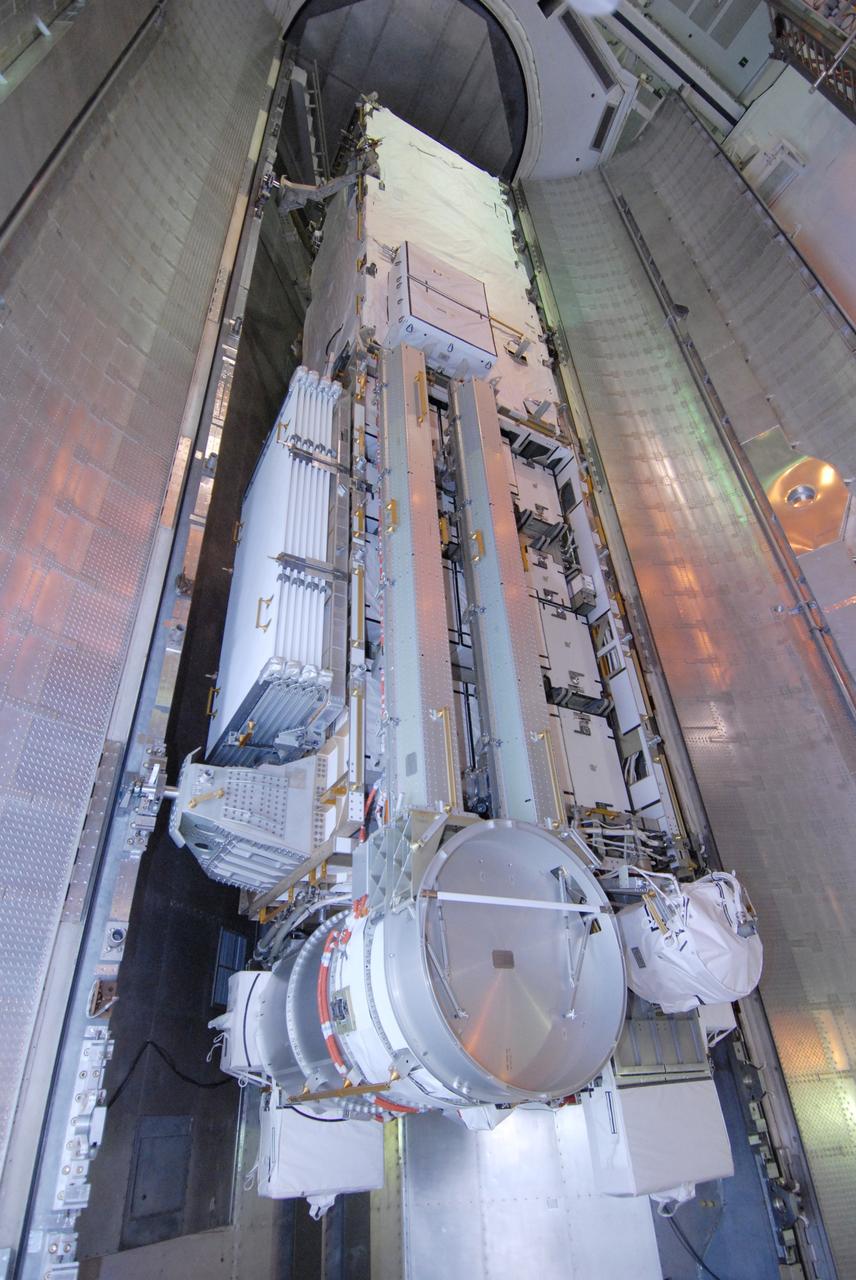
CAPE CANAVERAL, Fla. -- On Launch Pad 39A at NASA's Kennedy Space Center in Florida, the integrated truss structure S6 and solar arrays, the STS-119 mission payload, slowly move out of the payload canister into the Payload Changeout Room, or PCR. They will be installed in space shuttle Discovery's payload bay after the shuttle rolls out to the launch pad. Launch of Discovery on the STS-119 mission is scheduled for Feb. 12. During Discovery's 14-day mission, the crew will install the S6 truss segment and its solar arrays to the starboard side of the station, completing the station's backbone, or truss. Photo credit: NASA/Chris Rhodes
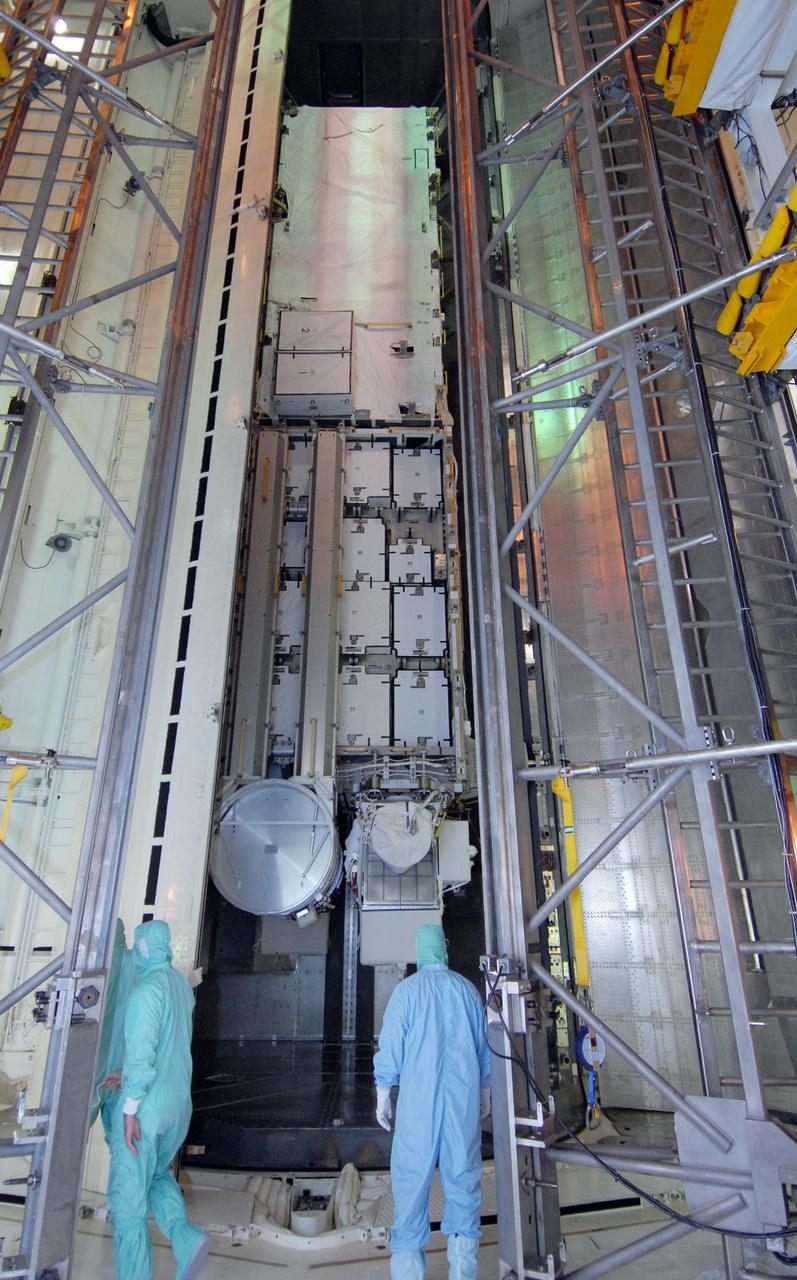
CAPE CANAVERAL, Fla. -- On Launch Pad 39A at NASA's Kennedy Space Center in Florida, the doors of the payload canister open to reveal space shuttle Discovery's payload, the integrated truss structure S6 and solar arrays, for the STS-119 mission. The payload will be transferred into the Payload Changeout Room, or PCR. They will be installed in Discovery's payload bay after the shuttle rolls out to the launch pad. Launch of Discovery on the STS-119 mission is scheduled for Feb. 12. During Discovery's 14-day mission, the crew will install the S6 truss segment and its solar arrays to the starboard side of the station, completing the station's backbone, or truss. Photo credit: NASA/Chris Rhodes
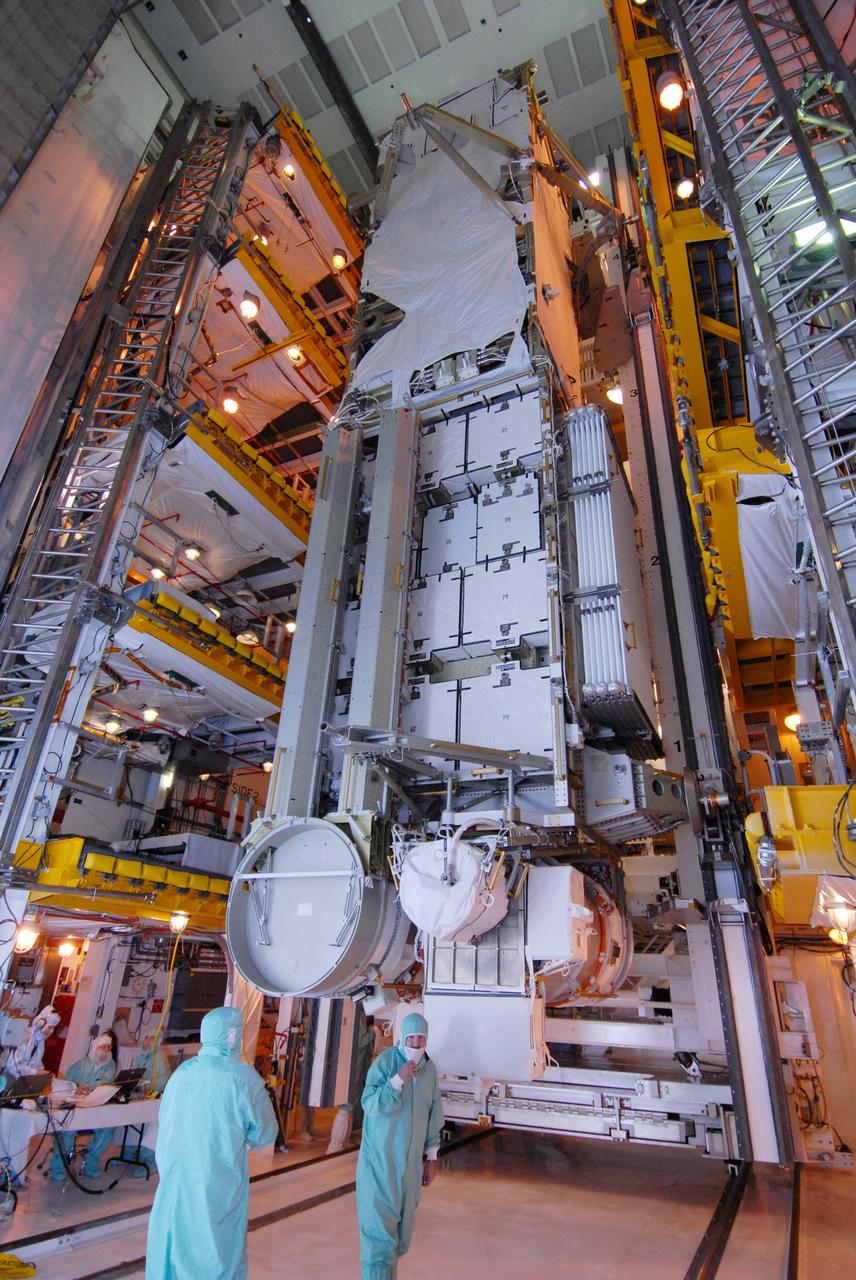
CAPE CANAVERAL, Fla. -- On Launch Pad 39A at NASA's Kennedy Space Center in Florida, the integrated truss structure S6 and solar arrays, the STS-119 mission payload, are moved into the Payload Changeout Room, or PCR. They will be installed in space shuttle Discovery's payload bay after the shuttle rolls out to the launch pad. Launch of Discovery on the STS-119 mission is scheduled for Feb. 12. During Discovery's 14-day mission, the crew will install the S6 truss segment and its solar arrays to the starboard side of the station, completing the station's backbone, or truss. Photo credit: NASA/Chris Rhodes
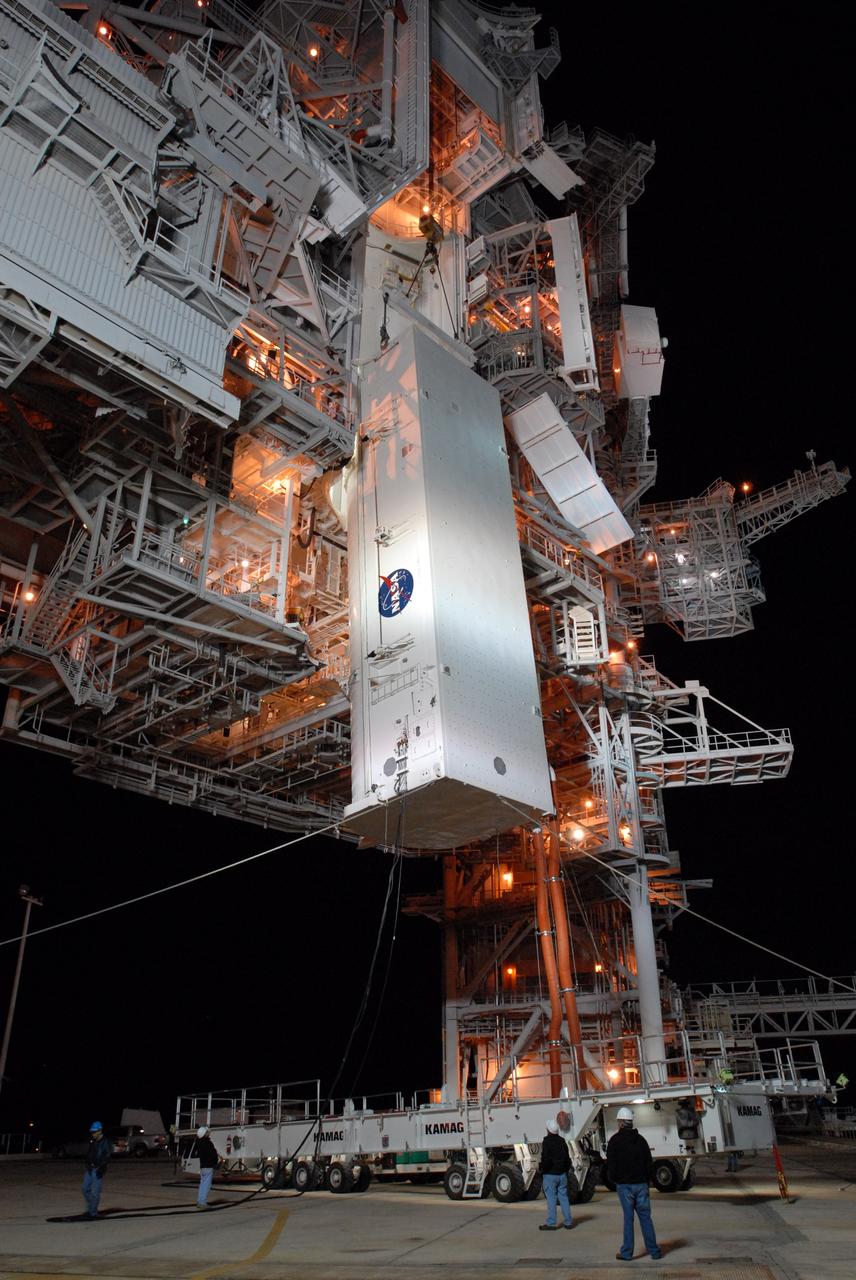
CAPE CANAVERAL, Fla. -- With red umbilical lines attached, the payload containing space shuttle Discovery's S6 truss and solar arrays is lifted up to the Payload Changeout Room, or PCR, on Launch Pad 39A at NASA's Kennedy Space Center in Florida. The payload will be transferred inside the PCR where it will wait until Discovery rolls out to the pad. Then the payload will be installed in the shuttle's payload bay. Launch of Discovery on the STS-119 mission is scheduled for Feb. 12. During Discovery's 14-day mission, the crew will install the S6 truss segment and its solar arrays to the starboard side of the station, completing the station's backbone, or truss. Photo credit: NASA/Jim Grossmann
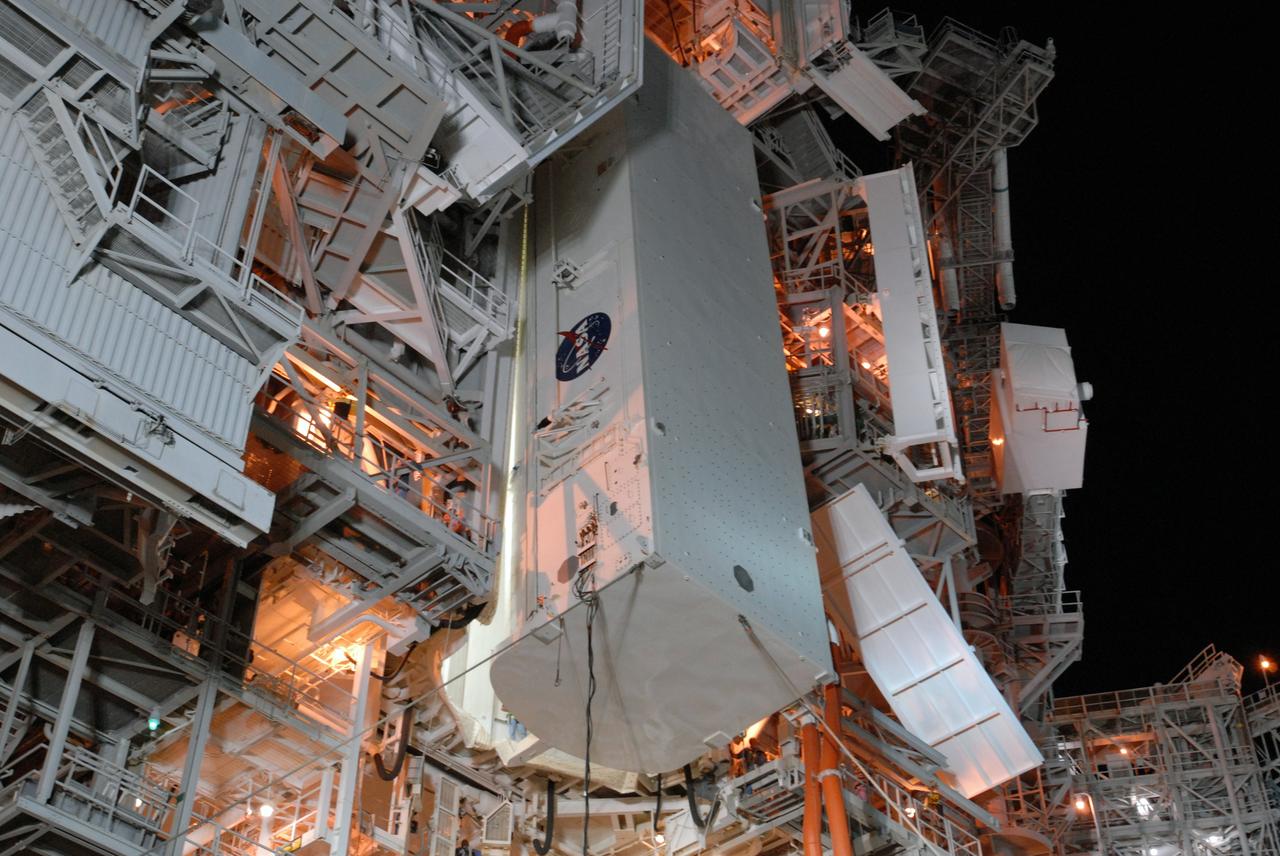
CAPE CANAVERAL, Fla. -- With red umbilical lines attached, the payload containing space shuttle Discovery's S6 truss and solar arrays is lifted up to the Payload Changeout Room, or PCR, on Launch Pad 39A at NASA's Kennedy Space Center in Florida. The payload will be transferred inside the PCR where it will wait until Discovery rolls out to the pad. Then the payload will be installed in the shuttle's payload bay. Launch of Discovery on the STS-119 mission is scheduled for Feb. 12. During Discovery's 14-day mission, the crew will install the S6 truss segment and its solar arrays to the starboard side of the station, completing the station's backbone, or truss Photo credit: NASA/Jim Grossmann
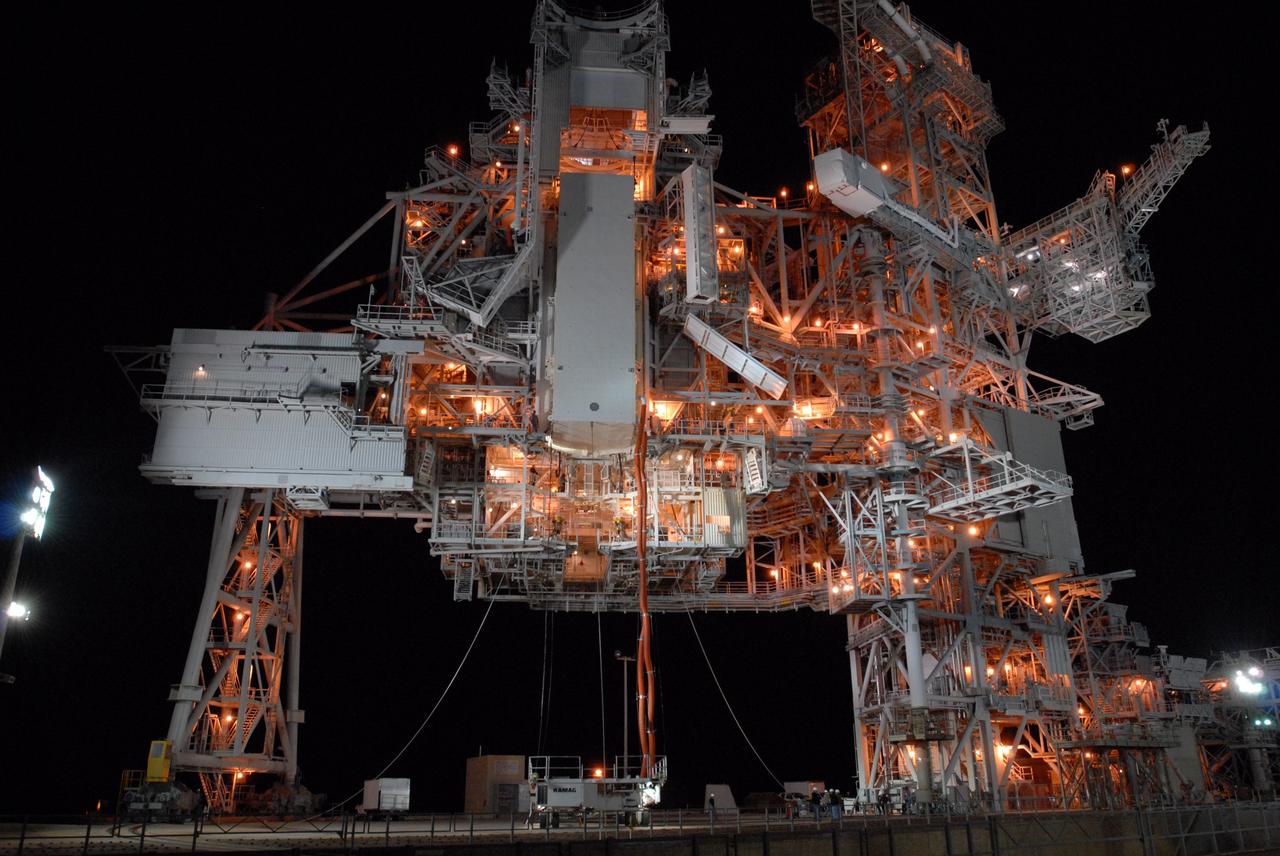
CAPE CANAVERAL, Fla. -- With red umbilical lines attached, the payload containing space shuttle Discovery's S6 truss and solar arrays is lifted up to the Payload Changeout Room, or PCR, on Launch Pad 39A at NASA's Kennedy Space Center in Florida. The payload will be transferred inside the PCR where it will wait until Discovery rolls out to the pad. Then the payload will be installed in the shuttle's payload bay. Launch of Discovery on the STS-119 mission is scheduled for Feb. 12. During Discovery's 14-day mission, the crew will install the S6 truss segment and its solar arrays to the starboard side of the station, completing the station's backbone, or truss Photo credit: NASA/Jim Grossmann
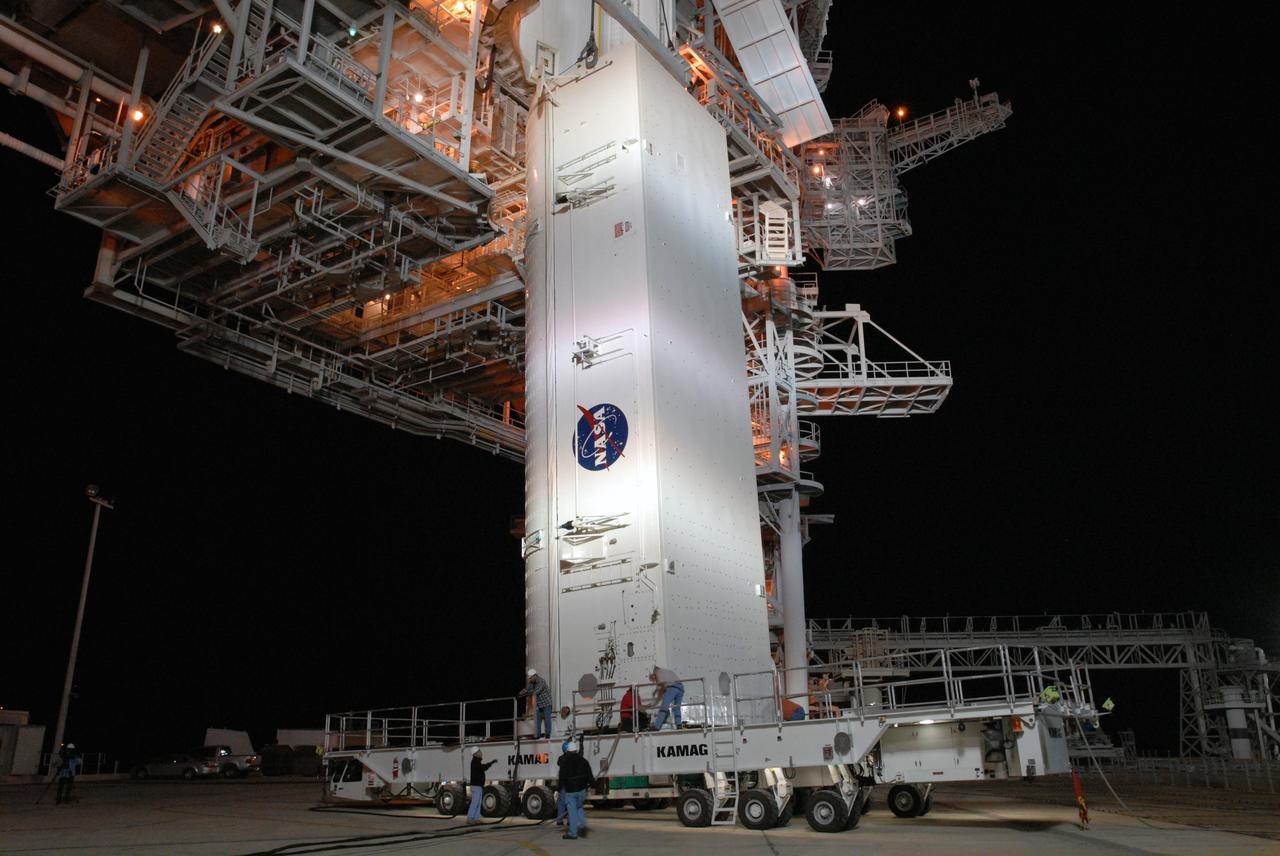
CAPE CANAVERAL, Fla. -- The payload canister containing the S6 truss and solar arrays arrives at Launch Pad 39A at NASA's Kennedy Space Center in Florida. The canister sits below the Payload Changeout Room, or PCR. It will be lifted up to the PCR and space shuttle Discovery's payload transferred inside. After Discovery rolls out to the pad, the payload will be installed in the shuttle's payload bay. Launch of Discovery on the STS-119 mission is scheduled for Feb. 12. During Discovery's 14-day mission, the crew will install the S6 truss segment and its solar arrays to the starboard side of the station, completing the station's backbone, or truss Photo credit: NASA/Jim Grossmann

CAPE CANAVERAL, Fla. – At Launch Pad 39A at NASA's Kennedy Space Center in Florida, a crane lifts the canister containing the payload for space shuttle Endeavour’s STS-127 mission into the Payload Changeout Room. Endeavour’s rollaround from Pad 39B to Pad 39A is planned for May 30. The STS-127 payload includes the Japan Aerospace Exploration Agency's Kibo Exposed Facility and the Experiment Logistics Module Exposed Section of the International Space Station. They will be installed on the Kibo laboratory already on the station. Launch of the STS-127 mission is targeted for June 13. Photo credit: NASA/Kim Shiflett
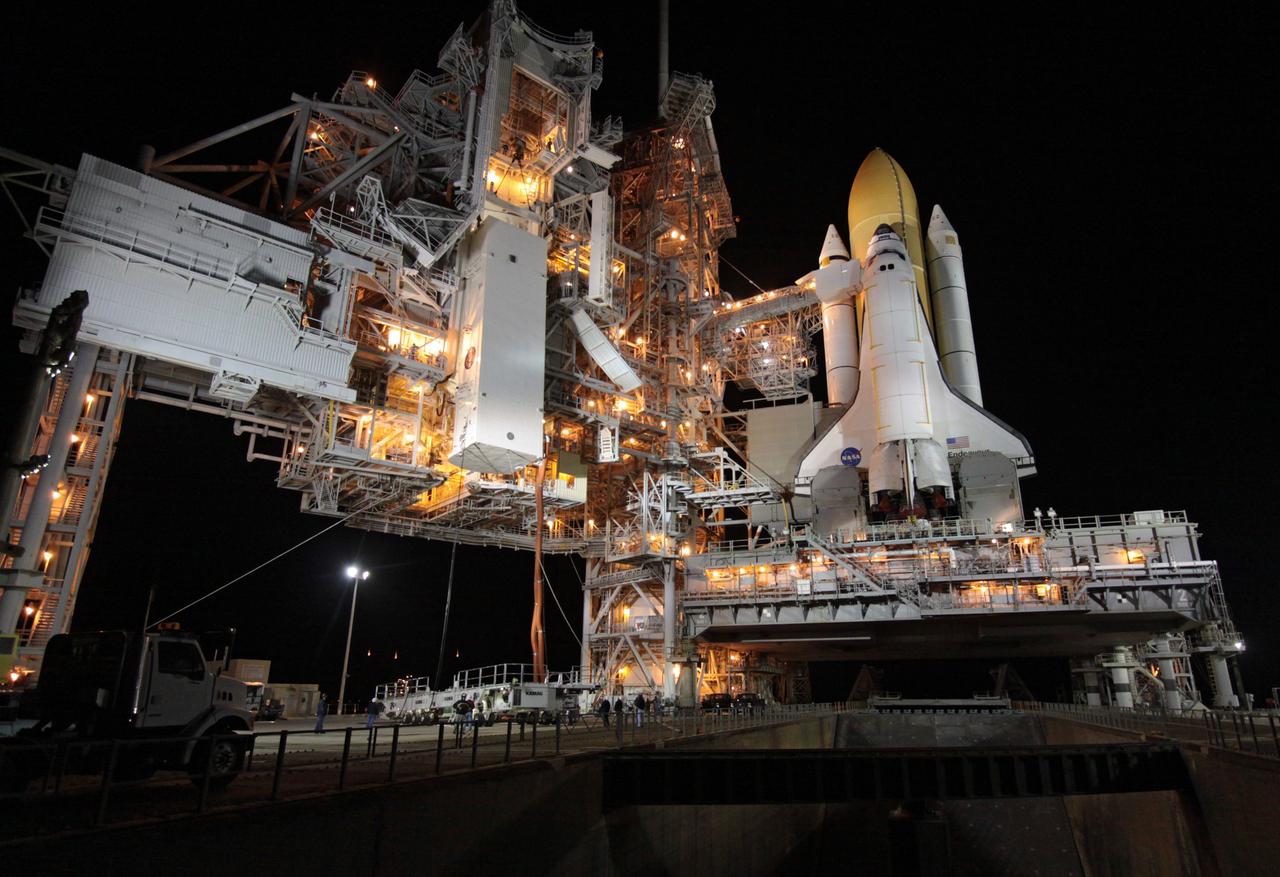
CAPE CANAVERAL, Fla. – At NASA's Kennedy Space Center in Florida, the payload transportation canister containing the International Space Station's Node 3, named Tranquility, is lifted toward the payload changeout room in the fixed service structure on Launch Pad 39A. Operations are under way to install Tranquility in space shuttle Endeavour's payload bay. The primary payload for Endeavour's STS-130 mission, Tranquility is a pressurized module that will provide room for many of the International Space Station's life support systems. Attached to one end of Tranquility is a cupola, a unique work area with six windows on its sides and one on top. The cupola resembles a circular bay window and will provide a vastly improved view of the station's exterior. The multi-directional view will allow the crew to monitor spacewalks and docking operations, as well as provide a spectacular view of Earth and other celestial objects. The module was built in Turin, Italy, by Thales Alenia Space for the European Space Agency. Endeavour's launch is targeted for Feb. 7. For information on the STS-130 mission and crew, visit http://www.nasa.gov/mission_pages/shuttle/shuttlemissions/sts130/index.html. Photo credit: NASA/Jack Pfaller
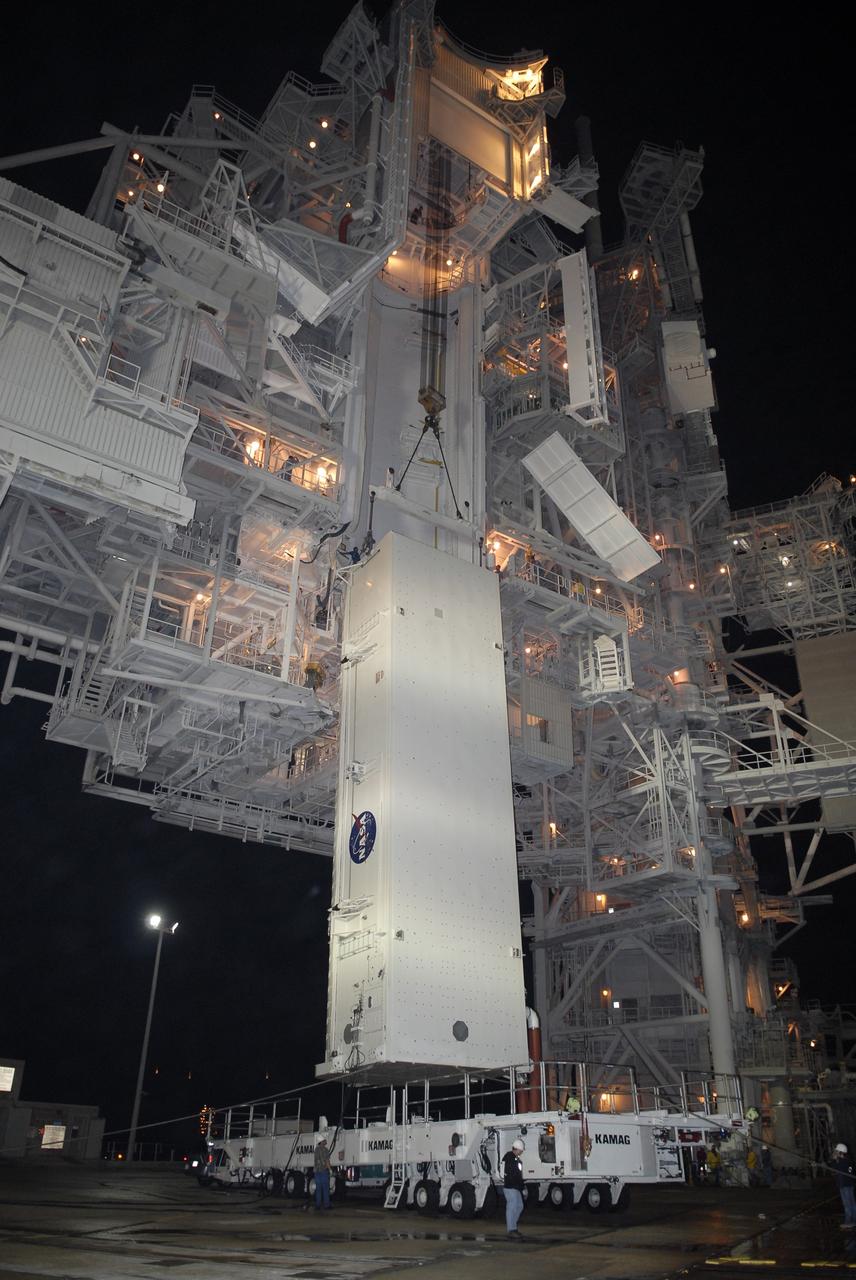
CAPE CANAVERAL, Fla. - At Launch Pad 39A at NASA's Kennedy Space Center in Florida, the canister containing the payload for space shuttle Endeavour’s STS-127 mission is lifted from its transporter toward the Payload Changeout Room. Endeavour’s rollaround from Pad 39B to Pad 39A is planned for May 30. The STS-127 payload includes the Japan Aerospace Exploration Agency's Kibo Exposed Facility and the Experiment Logistics Module Exposed Section of the International Space Station. They will be installed on the Kibo laboratory already on the station. Launch of the STS-127 mission is targeted for June 13. Photo credit: NASA/Kim Shiflett
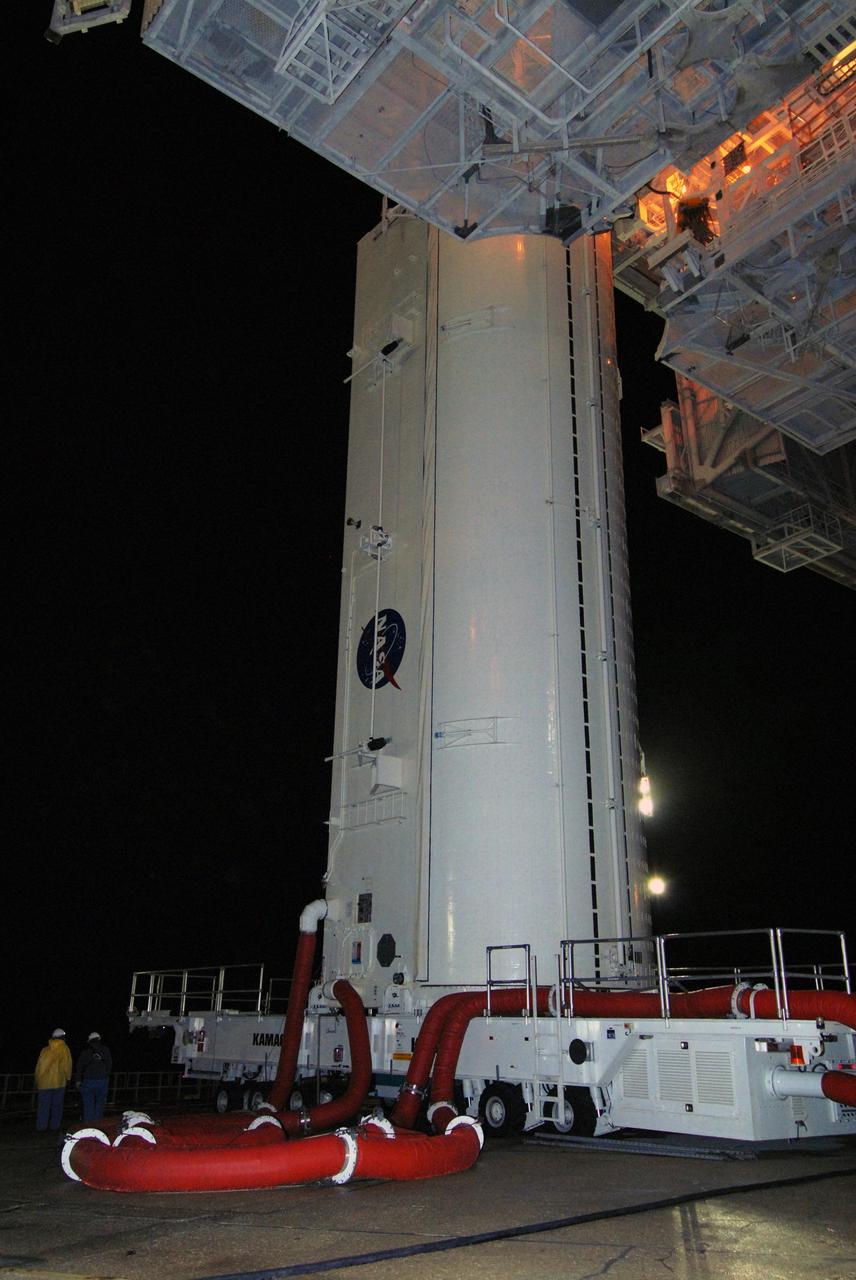
CAPE CANAVERAL, Fla. – At Launch Pad 39A at NASA's Kennedy Space Center in Florida, the canister containing the payload for space shuttle Endeavour’s STS-127 mission is prepared for its lift into the Payload Changeout Room. Endeavour’s rollaround from Pad 39B to Pad 39A is planned for May 30. The STS-127 payload includes the Japan Aerospace Exploration Agency's Kibo Exposed Facility and the Experiment Logistics Module Exposed Section of the International Space Station. They will be installed on the Kibo laboratory already on the station. Launch of the STS-127 mission is targeted for June 13. Photo credit: NASA/Tim Jacobs
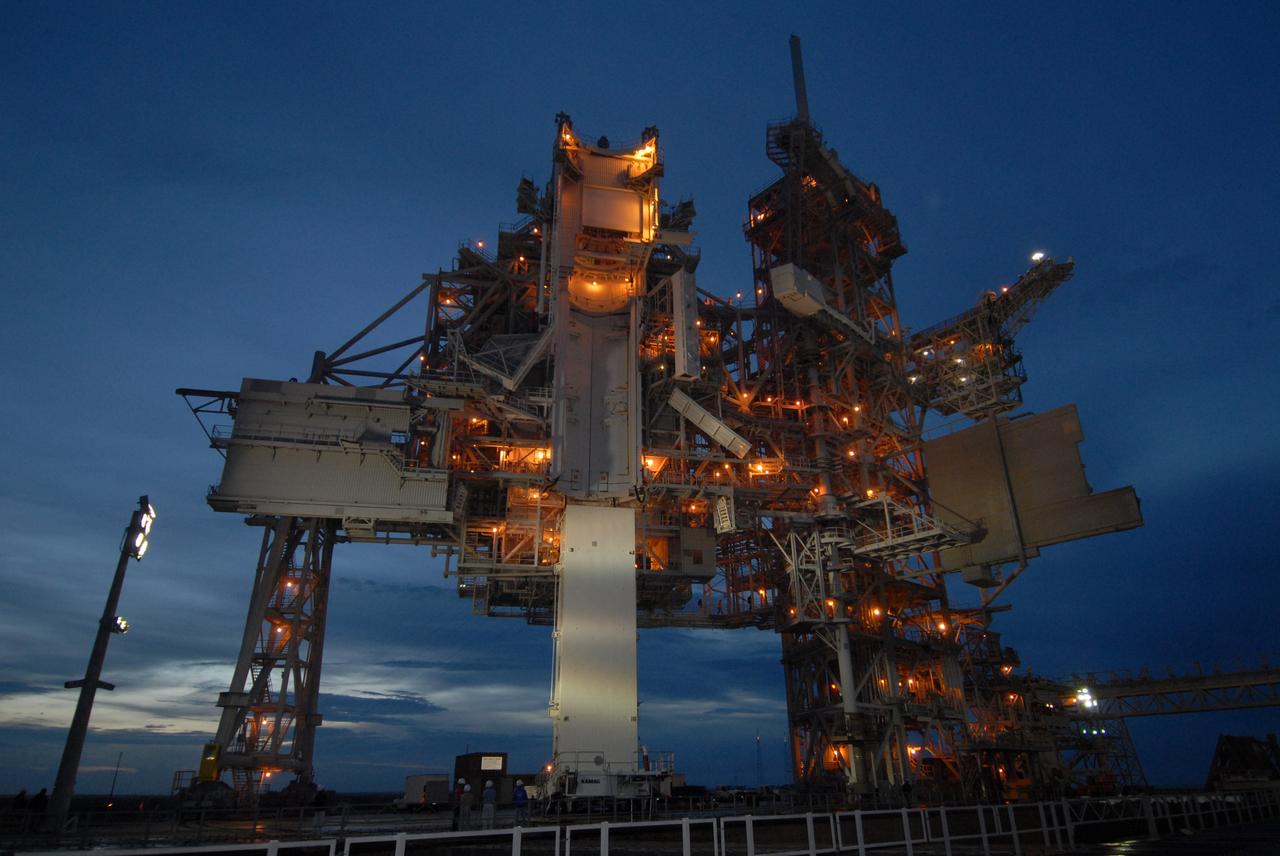
CAPE CANAVERAL, Fla. – At Launch Pad 39A at NASA's Kennedy Space Center in Florida, the canister containing the payload for space shuttle Endeavour’s STS-127 mission is prepared for its lift into the Payload Changeout Room above. Endeavour’s rollaround from Pad 39B to Pad 39A is planned for May 30. The STS-127 payload includes the Japan Aerospace Exploration Agency's Kibo Exposed Facility and the Experiment Logistics Module Exposed Section of the International Space Station. They will be installed on the Kibo laboratory already on the station. Launch of the STS-127 mission is targeted for June 13. Photo credit: NASA/Tim Jacobs
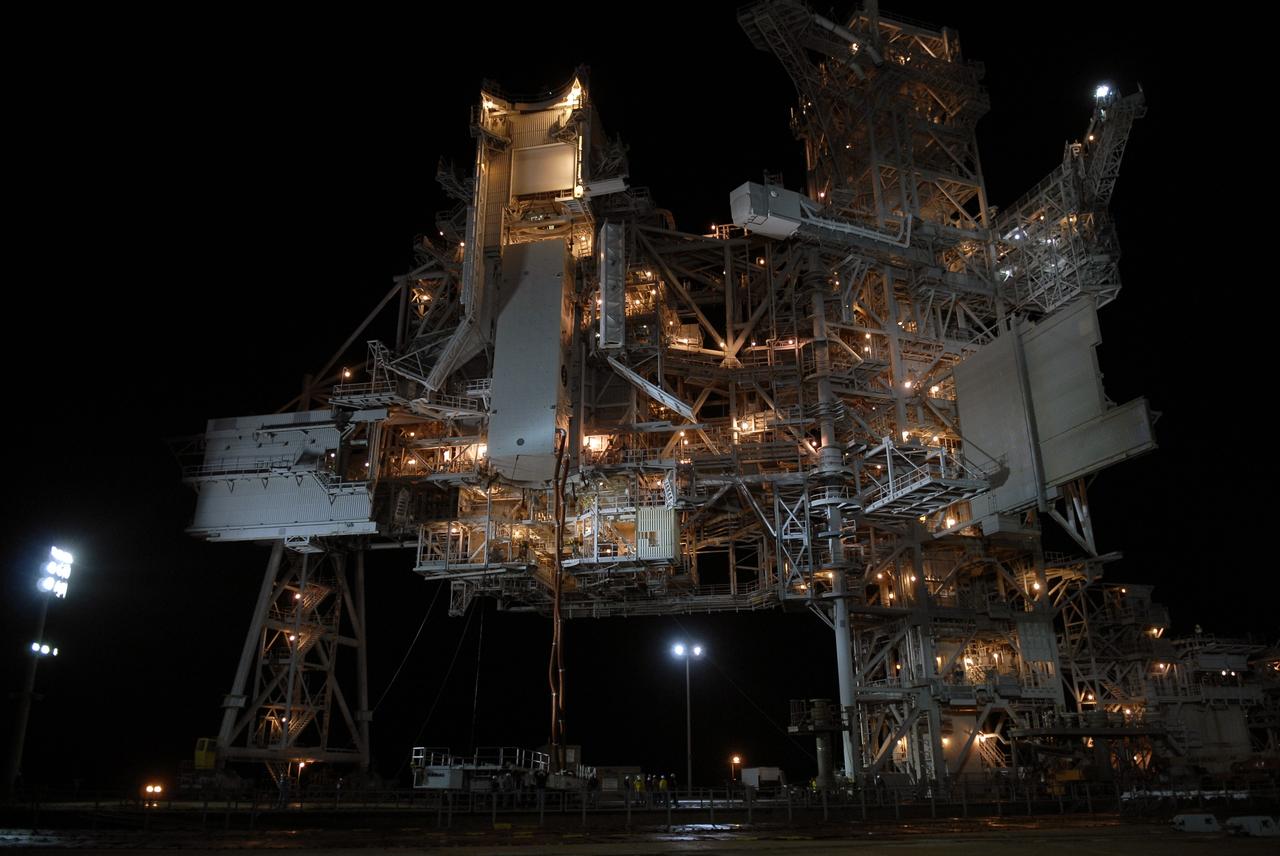
CAPE CANAVERAL, Fla. – At Launch Pad 39A at NASA's Kennedy Space Center in Florida, the canister containing the payload for space shuttle Endeavour’s STS-127 mission is secured in the Payload Changeout Room, a fixture of the pad’s Rotating Service Structure. Endeavour’s rollaround from Pad 39B to Pad 39A is planned for May 30. The STS-127 payload includes the Japan Aerospace Exploration Agency's Kibo Exposed Facility and the Experiment Logistics Module Exposed Section of the International Space Station. They will be installed on the Kibo laboratory already on the station. Launch of the STS-127 mission is targeted for June 13. Photo credit: NASA/Kim Shiflett
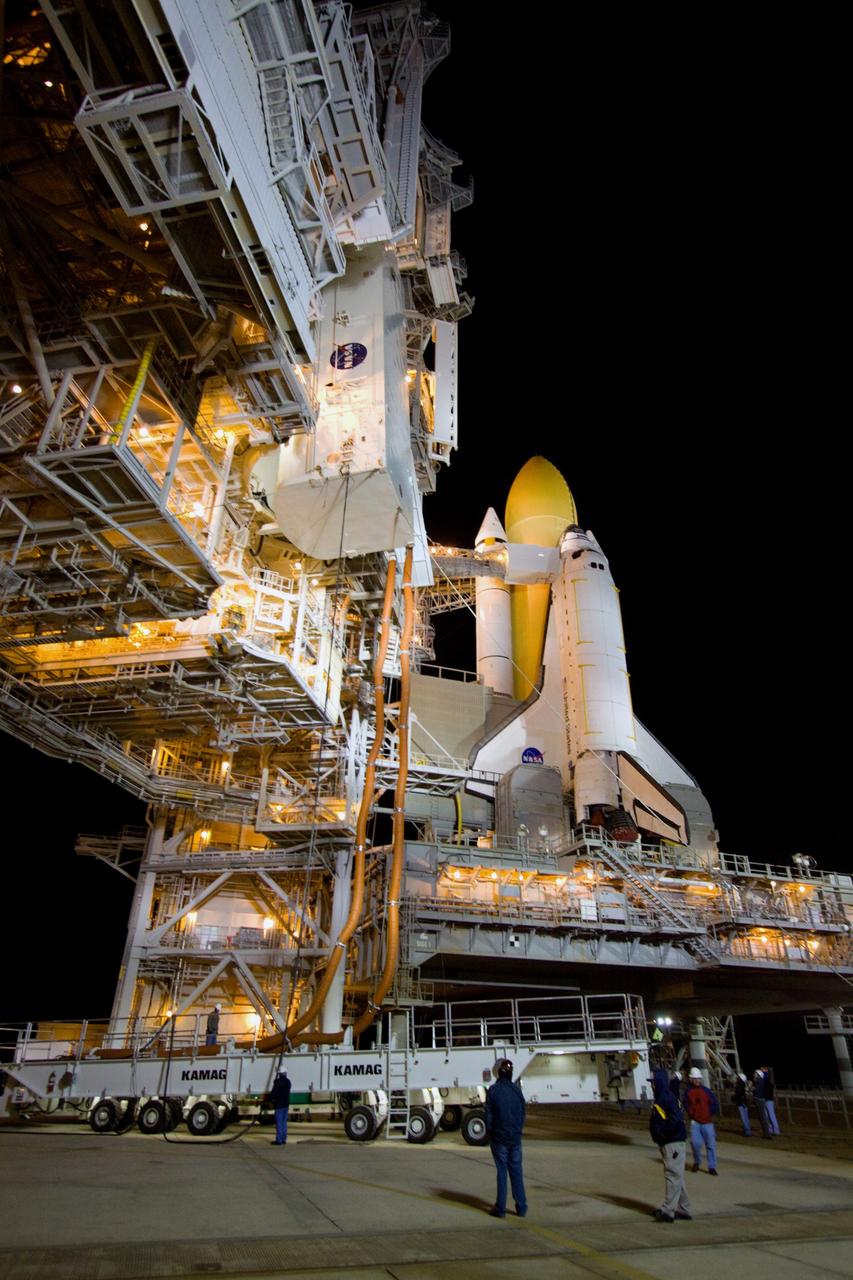
CAPE CANAVERAL, Fla. – At NASA's Kennedy Space Center in Florida, the payload transportation canister containing the International Space Station's Node 3, named Tranquility, is lifted into the payload changeout room in the fixed service structure on Launch Pad 39A. Operations are under way to install Tranquility in space shuttle Endeavour's payload bay. The primary payload for Endeavour's STS-130 mission, Tranquility is a pressurized module that will provide room for many of the International Space Station's life support systems. Attached to one end of Tranquility is a cupola, a unique work area with six windows on its sides and one on top. The cupola resembles a circular bay window and will provide a vastly improved view of the station's exterior. The multi-directional view will allow the crew to monitor spacewalks and docking operations, as well as provide a spectacular view of Earth and other celestial objects. The module was built in Turin, Italy, by Thales Alenia Space for the European Space Agency. Endeavour's launch is targeted for Feb. 7. For information on the STS-130 mission and crew, visit http://www.nasa.gov/mission_pages/shuttle/shuttlemissions/sts130/index.html. Photo credit: NASA/Jack Pfaller
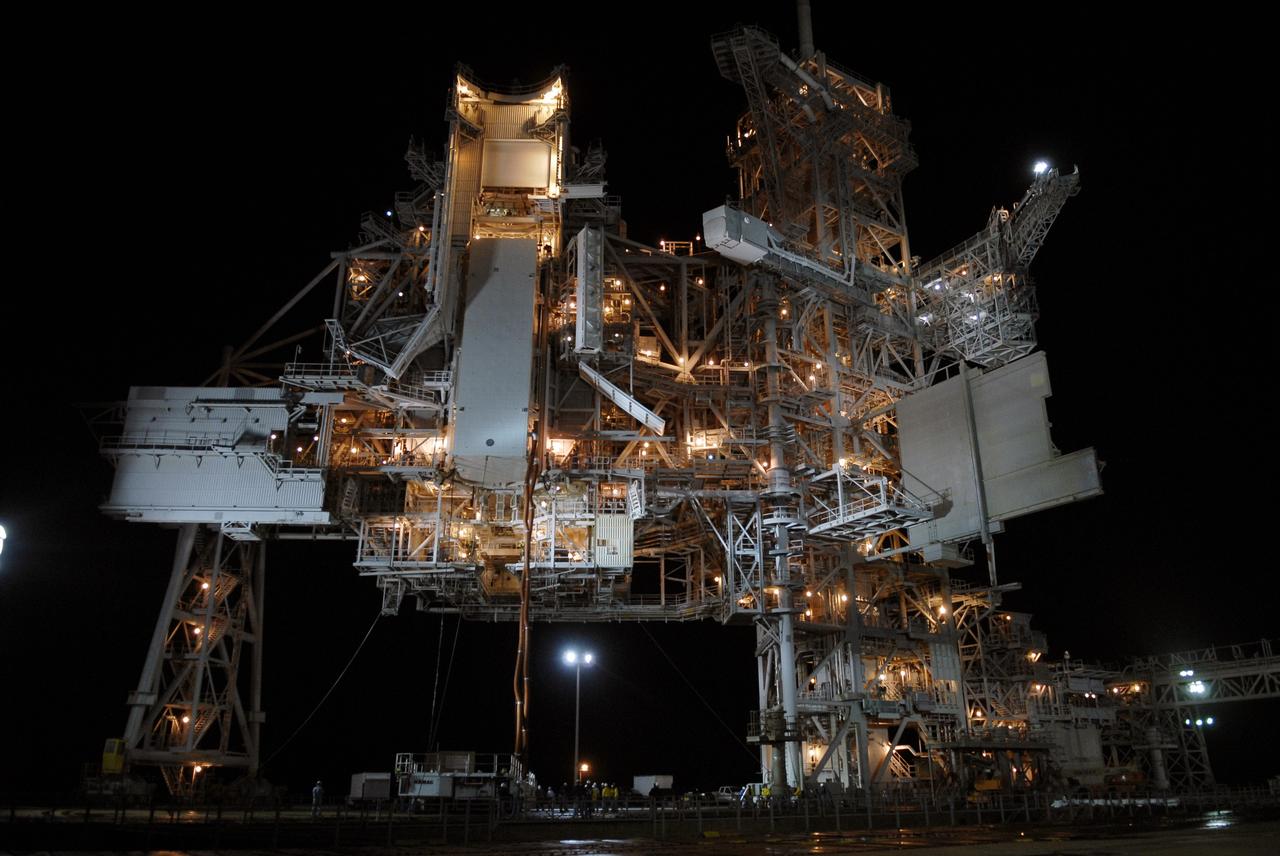
CAPE CANAVERAL, Fla. – At Launch Pad 39A at NASA's Kennedy Space Center in Florida, the canister containing the payload for space shuttle Endeavour’s STS-127 mission is lifted into the Payload Changeout Room, a fixture of the pad’s Rotating Service Structure. Endeavour’s rollaround from Pad 39B to Pad 39A is planned for May 30. The STS-127 payload includes the Japan Aerospace Exploration Agency's Kibo Exposed Facility and the Experiment Logistics Module Exposed Section of the International Space Station. They will be installed on the Kibo laboratory already on the station. Launch of the STS-127 mission is targeted for June 13. Photo credit: NASA/Kim Shiflett
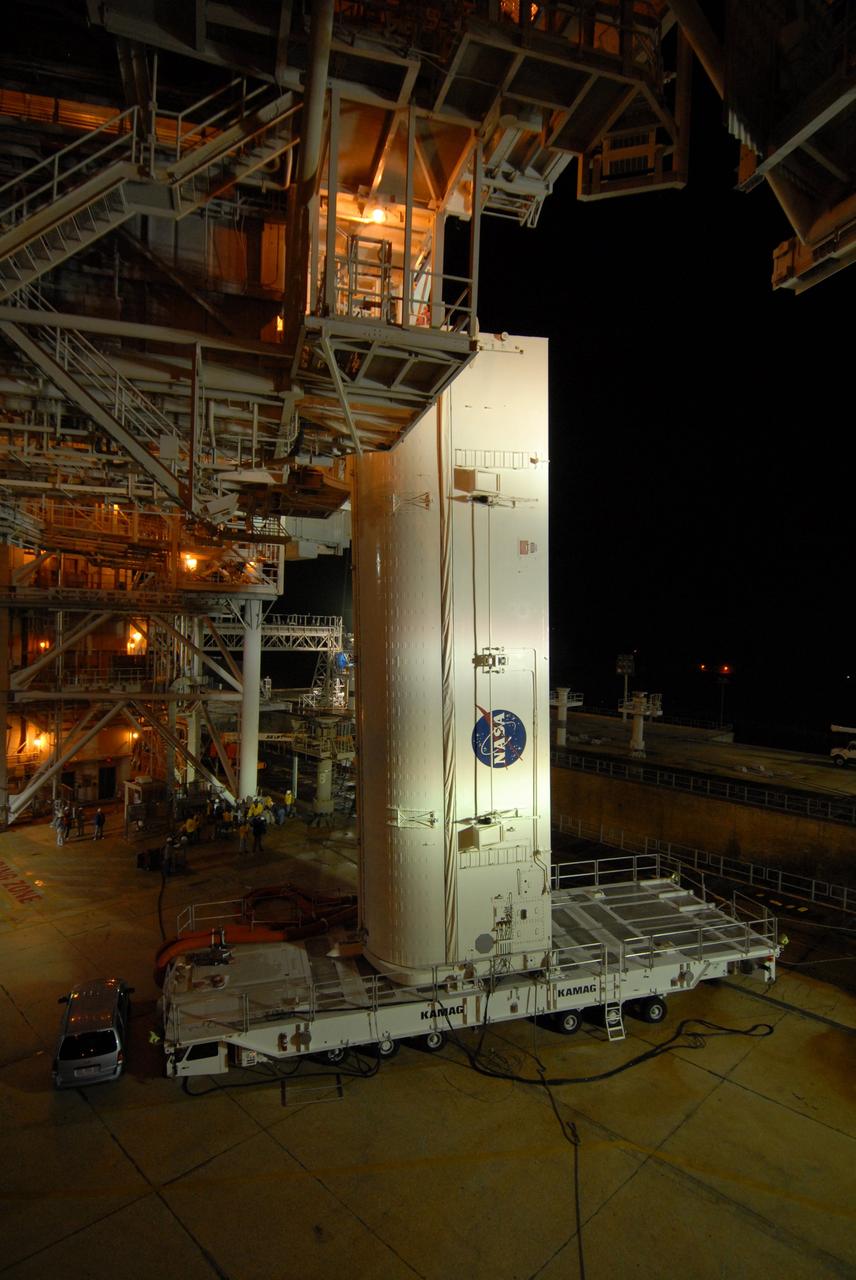
CAPE CANAVERAL, Fla. – At Launch Pad 39A at NASA's Kennedy Space Center in Florida, the canister containing the payload for space shuttle Endeavour’s STS-127 mission awaits a lift into the Payload Changeout Room. Endeavour’s rollaround from Pad 39B to Pad 39A is planned for May 30. The STS-127 payload includes the Japan Aerospace Exploration Agency's Kibo Exposed Facility and the Experiment Logistics Module Exposed Section of the International Space Station. They will be installed on the Kibo laboratory already on the station. Launch of the STS-127 mission is targeted for June 13. Photo credit: NASA/Tim Jacobs
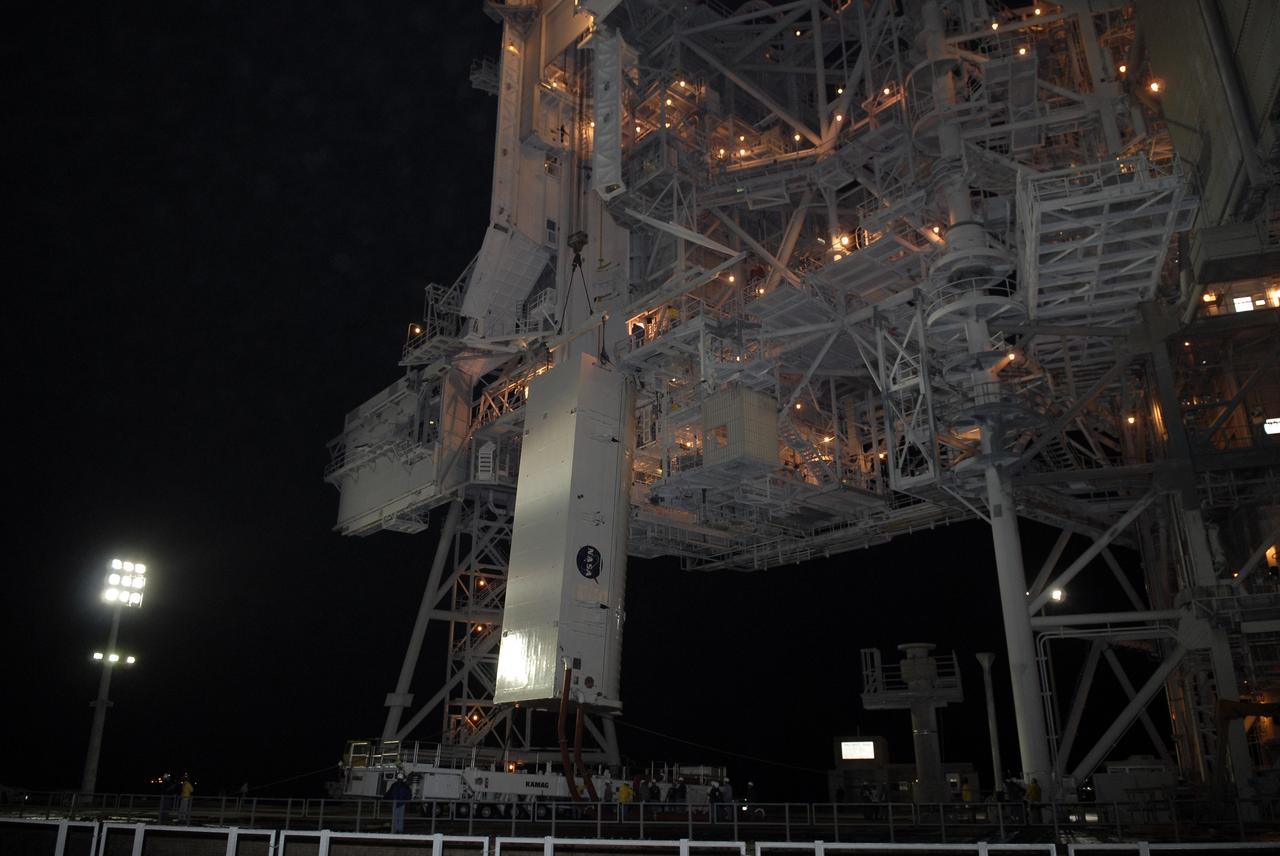
CAPE CANAVERAL, Fla. - At Launch Pad 39A at NASA's Kennedy Space Center in Florida, a crane lifts the canister containing the payload for space shuttle Endeavour’s STS-127 mission from its transporter toward the Payload Changeout Room. Endeavour’s rollaround from Pad 39B to Pad 39A is planned for May 30. The STS-127 payload includes the Japan Aerospace Exploration Agency's Kibo Exposed Facility and the Experiment Logistics Module Exposed Section of the International Space Station. They will be installed on the Kibo laboratory already on the station. Launch of the STS-127 mission is targeted for June 13. Photo credit: NASA/Kim Shiflett
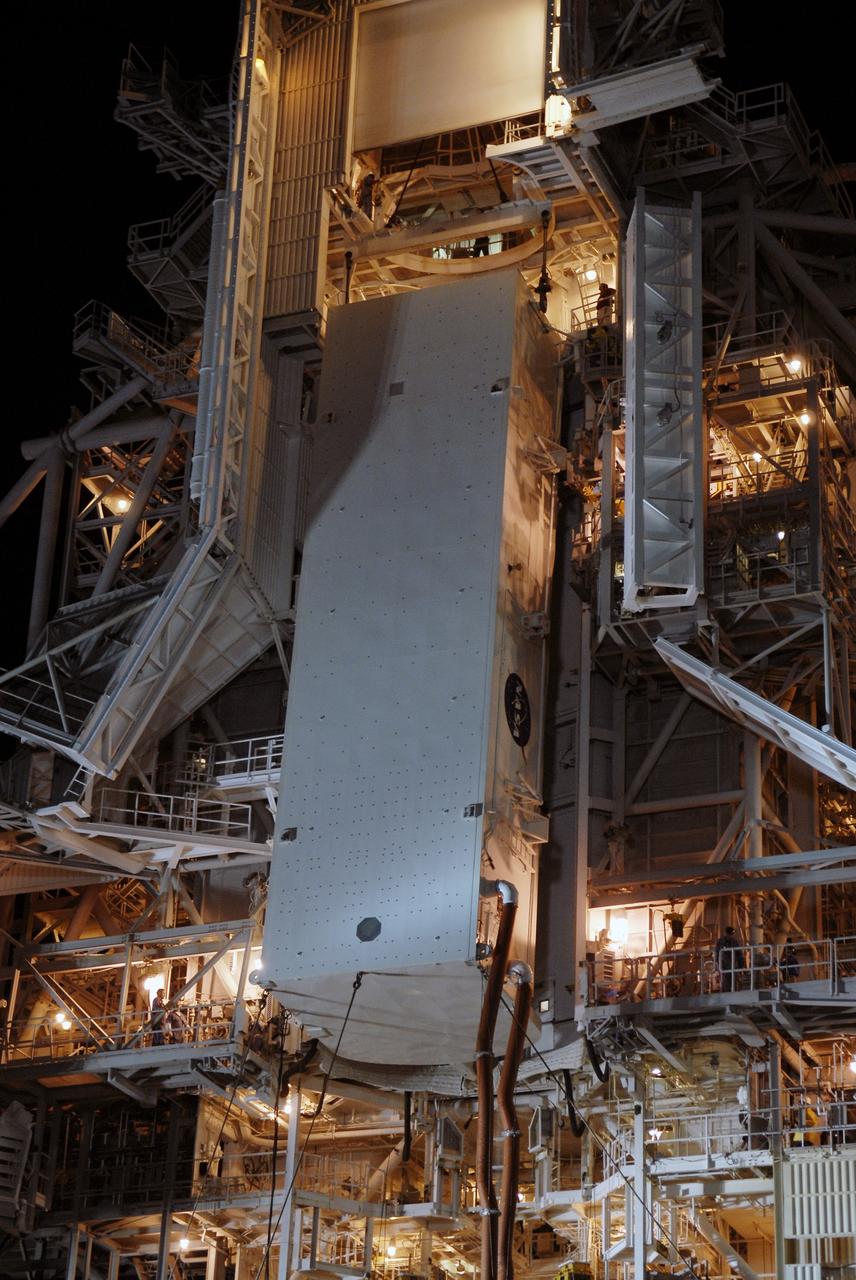
CAPE CANAVERAL, Fla. – At Launch Pad 39A at NASA's Kennedy Space Center in Florida, the canister containing the payload for space shuttle Endeavour’s STS-127 mission is positioned into the Payload Changeout Room, a fixture of the pad’s Rotating Service Structure. Endeavour’s rollaround from Pad 39B to Pad 39A is planned for May 30. The STS-127 payload includes the Japan Aerospace Exploration Agency's Kibo Exposed Facility and the Experiment Logistics Module Exposed Section of the International Space Station. They will be installed on the Kibo laboratory already on the station. Launch of the STS-127 mission is targeted for June 13. Photo credit: NASA/Kim Shiflett

Orbiter payload canister being raised into the PCR at Launch Pad 39A - 1980
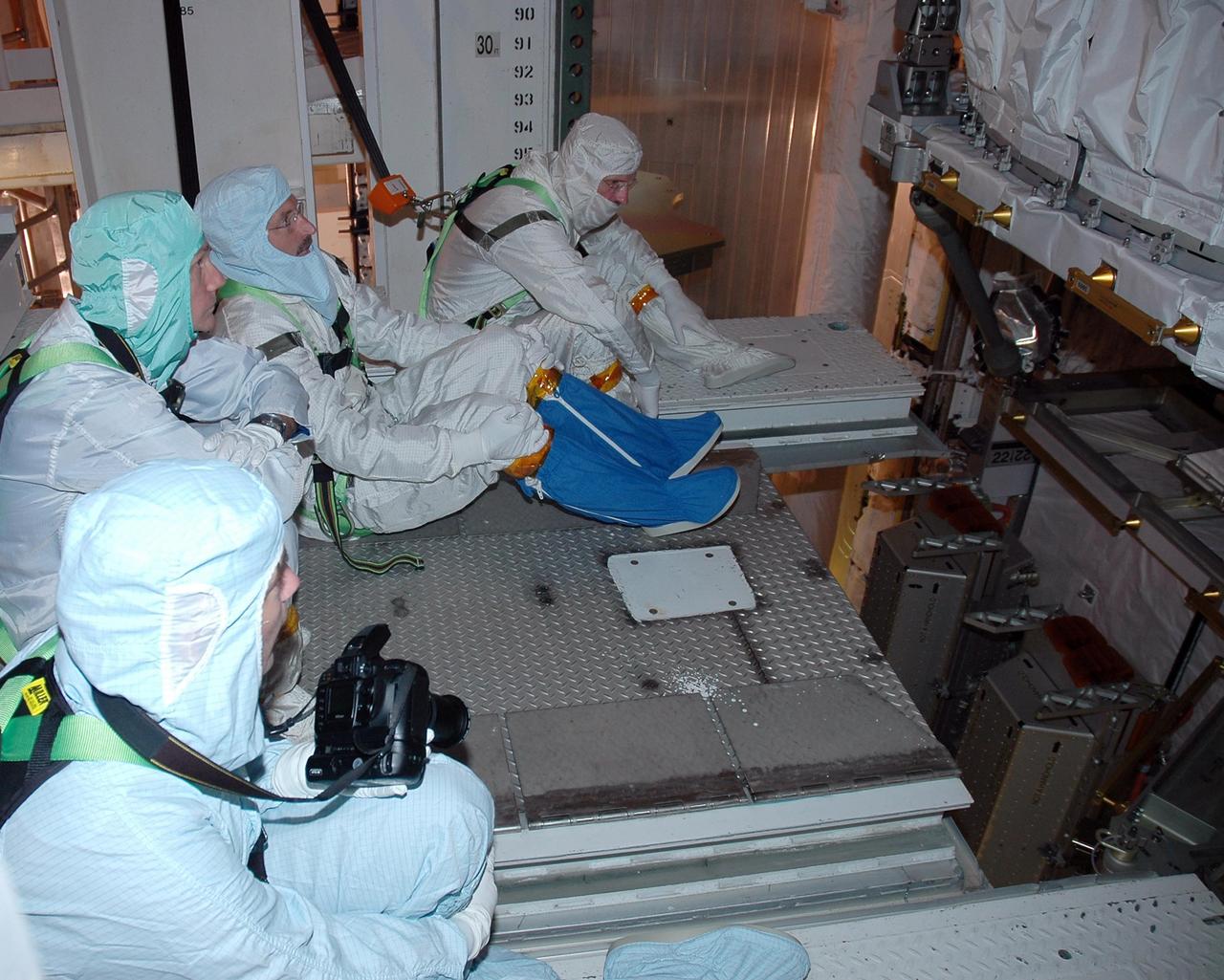
KENNEDY SPACE CENTER, FLA. - In the payload changeout room on Launch Pad 39B, STS-115 crew members look over the mission payload one more time before launch. From left are mission specialists Heidemarie Stefanyshyn-Piper, Steven MacLean, representing the Canadian Space Agency, Daniel Burbank and Joseph Tanner. The mission crew has been at KSC to take part in Terminal Countdown Demonstration Test activities, which include emergency egress training, a simulated launch countdown and the payload familiarization. The TCDT is a prelaunch preparation for the mission that is scheduled to lift off in a window opening Aug. 27. During their 11-day mission to the International Space Station, the STS-115 crew will continue construction of the station and attach the payload elements, the Port 3/4 truss segment with its two large solar arrays. Photo credit: NASA/Cory Huston
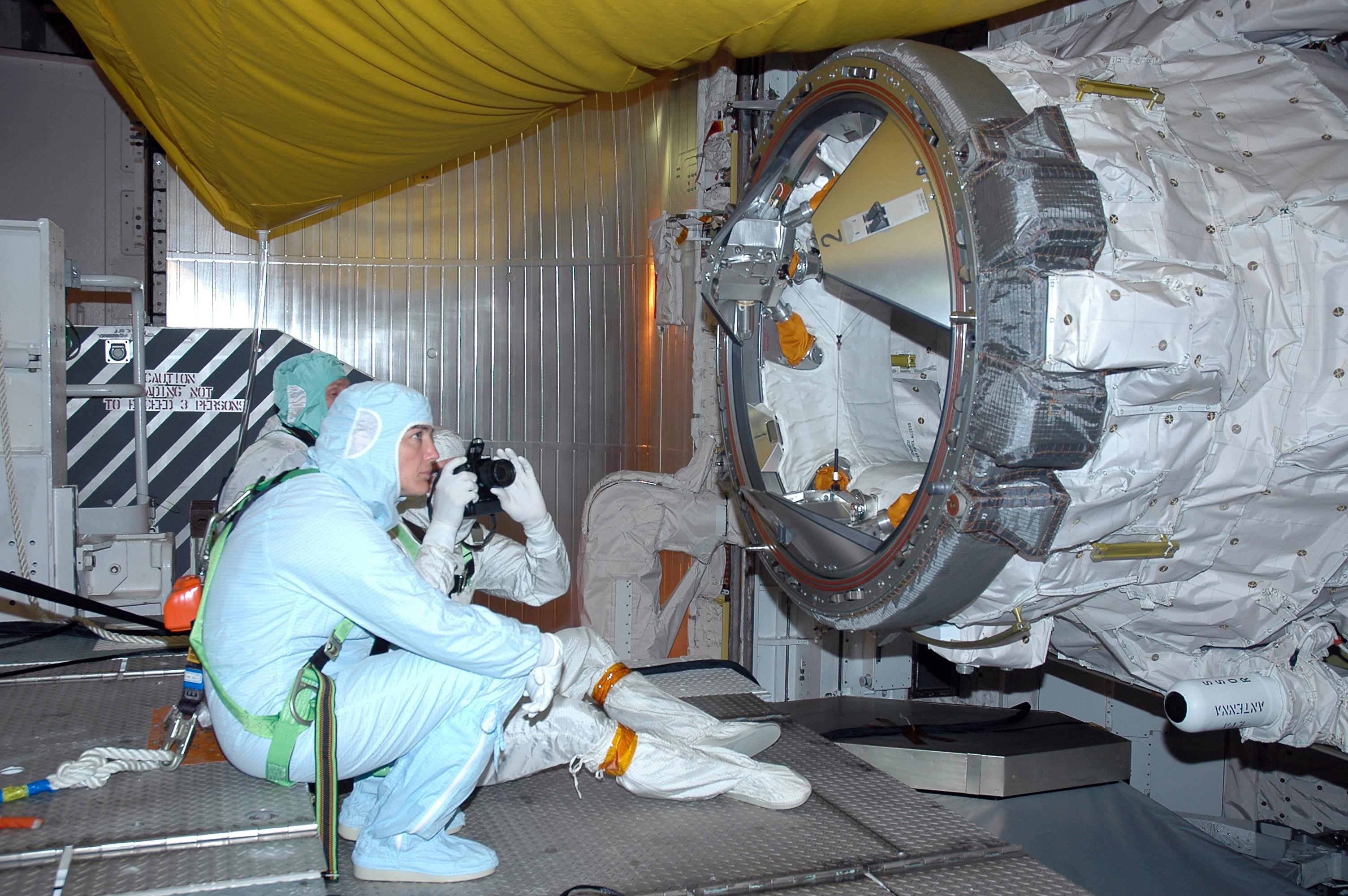
KENNEDY SPACE CENTER, FLA. - In the payload changeout room on Launch Pad 39B, STS-115 crew members look over the mission payload one more time before launch. In front is mission specialist Heidemarie Stefanyshyn-Piper. Mission specialist Joseph Tanner is holding a camera, and behind him is mission specialist Steven MacLean, representing the Canadian Space Agency. The mission crew has been at KSC to take part in Terminal Countdown Demonstration Test activities, which include emergency egress training, a simulated launch countdown and the payload familiarization. The TCDT is a prelaunch preparation for the mission that is scheduled to lift off in a window opening Aug. 27. During their 11-day mission to the International Space Station, the STS-115 crew will continue construction of the station and attach the payload elements, the Port 3/4 truss segment with its two large solar arrays. Photo credit: NASA/Cory Huston
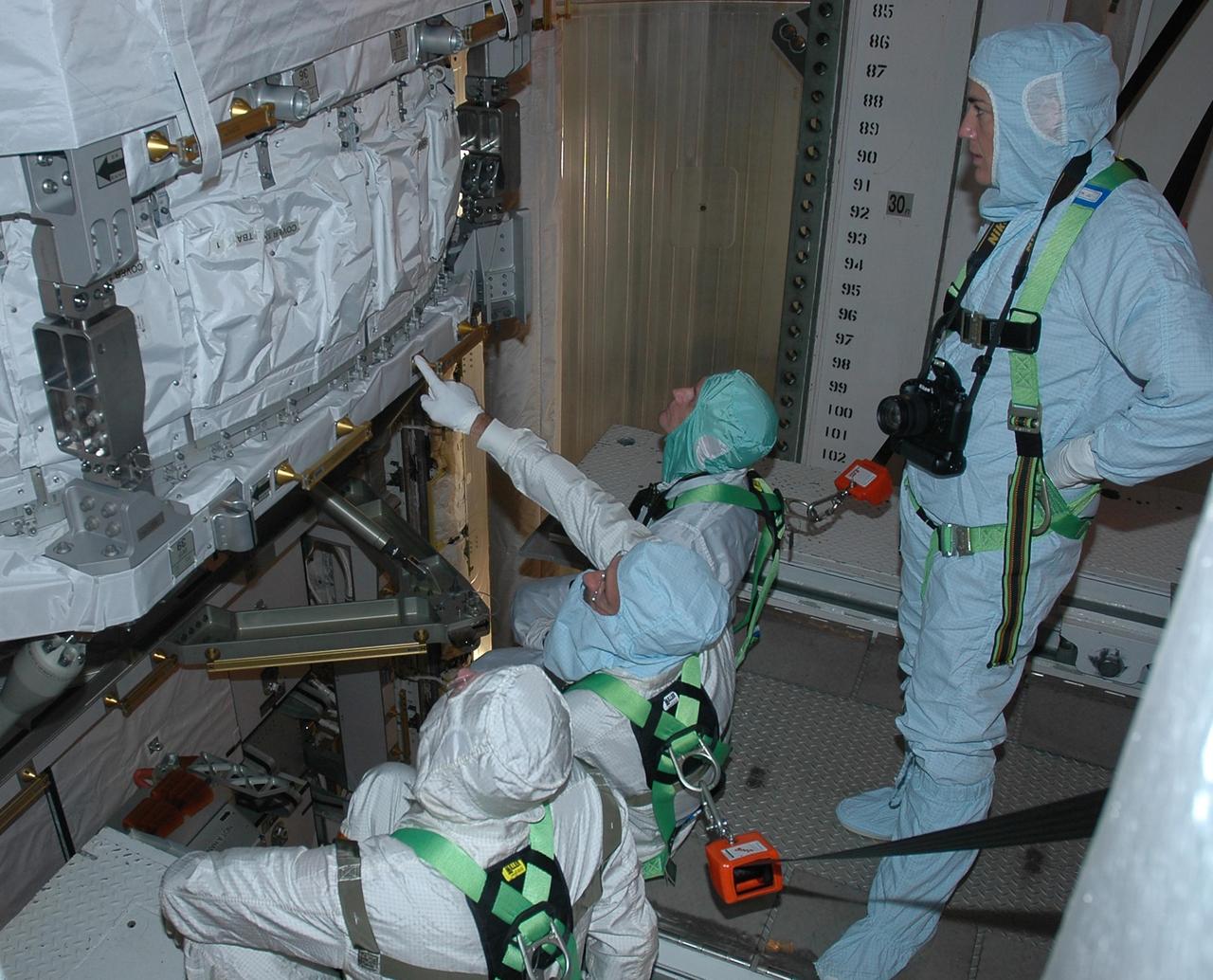
KENNEDY SPACE CENTER, FLA. - In the payload changeout room on Launch Pad 39B, STS-115 crew members look over the mission payload one more time before launch. From left are mission specialists Joseph Tanner, Daniel Burbank, Steven MacLean, who represents the Canadian Space Agency, and Heidemarie Stefanyshyn-Piper (standing). The mission crew has been at KSC to take part in Terminal Countdown Demonstration Test activities, which include emergency egress training, a simulated launch countdown and the payload familiarization. The TCDT is a prelaunch preparation for the mission that is scheduled to lift off in a window opening Aug. 27. During their 11-day mission to the International Space Station, the STS-115 crew will continue construction of the station and attach the payload elements, the Port 3/4 truss segment with its two large solar arrays. Photo credit: NASA/Cory Huston
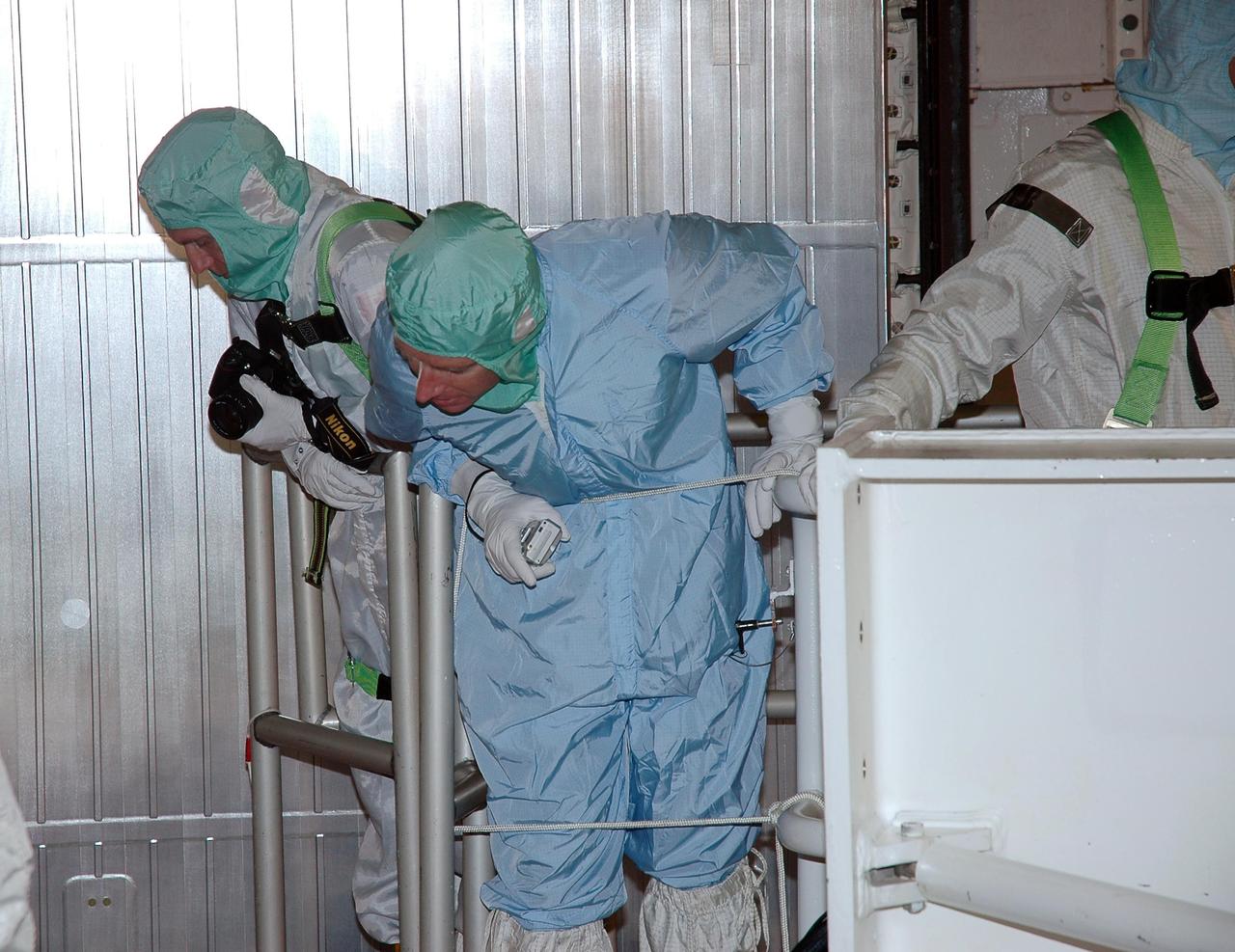
KENNEDY SPACE CENTER, FLA. - In the payload changeout room on Launch Pad 39B, STS-115 crew members look over the mission payload one more time before launch. From left are mission specialist Steven MacLean, representing the Canadian Space Agency, and pilot Christopher Ferguson. The mission crew has been at KSC to take part in Terminal Countdown Demonstration Test activities, which include emergency egress training, a simulated launch countdown and the payload familiarization. The TCDT is a prelaunch preparation for the mission that is scheduled to lift off in a window opening Aug. 27. During their 11-day mission to the International Space Station, the STS-115 crew will continue construction of the station and attach the payload elements, the Port 3/4 truss segment with its two large solar arrays. Photo credit: NASA/Cory Huston
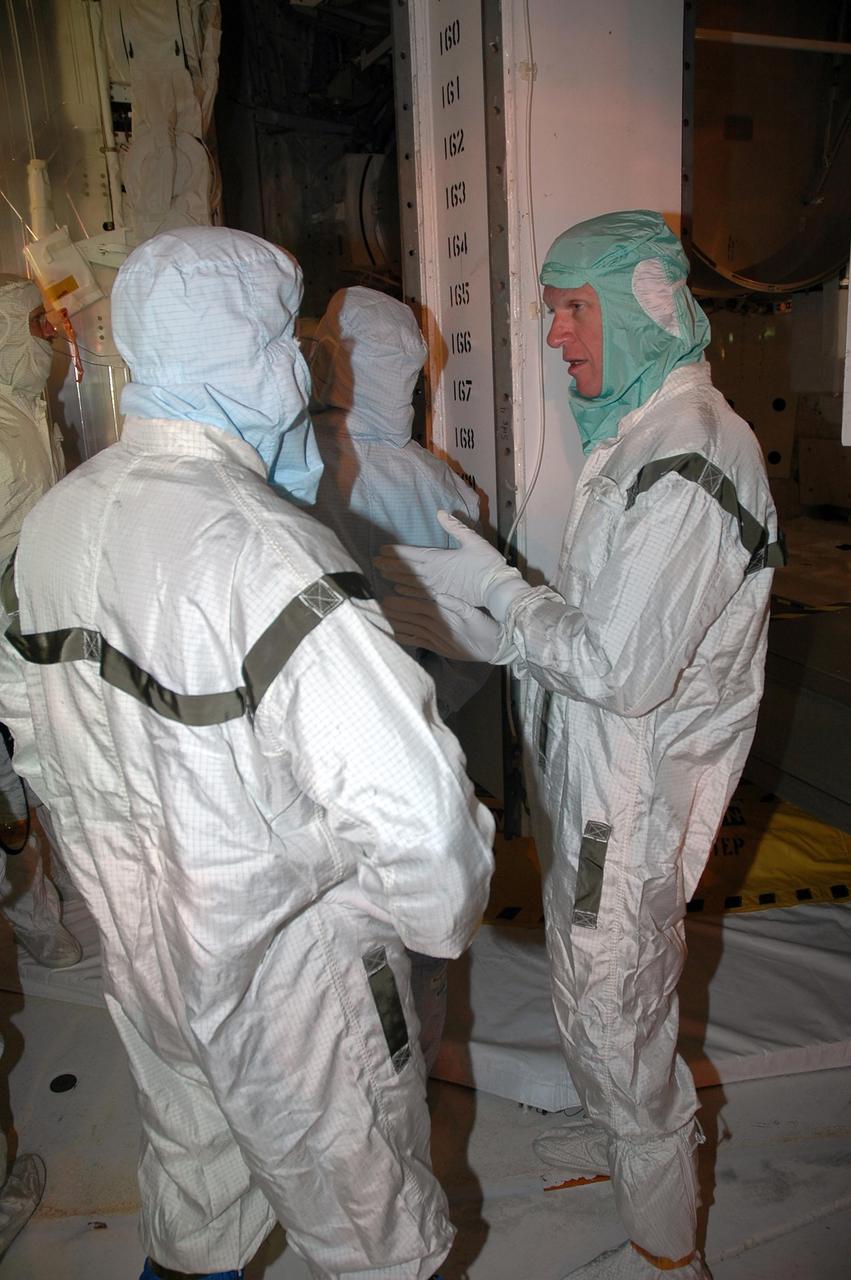
KENNEDY SPACE CENTER, FLA. - In the payload changeout room on Launch Pad 39B, STS-115 crew members look over the mission payload one more time before launch. At right is commander Brett Jett. The mission crew has been at KSC to take part in Terminal Countdown Demonstration Test activities, which include emergency egress training, a simulated launch countdown and the payload familiarization. The TCDT is a prelaunch preparation for the mission that is scheduled to lift off in a window opening Aug. 27. During their 11-day mission to the International Space Station, the STS-115 crew will continue construction of the station and attach the payload elements, the Port 3/4 truss segment with its two large solar arrays. Photo credit: NASA/Cory Huston
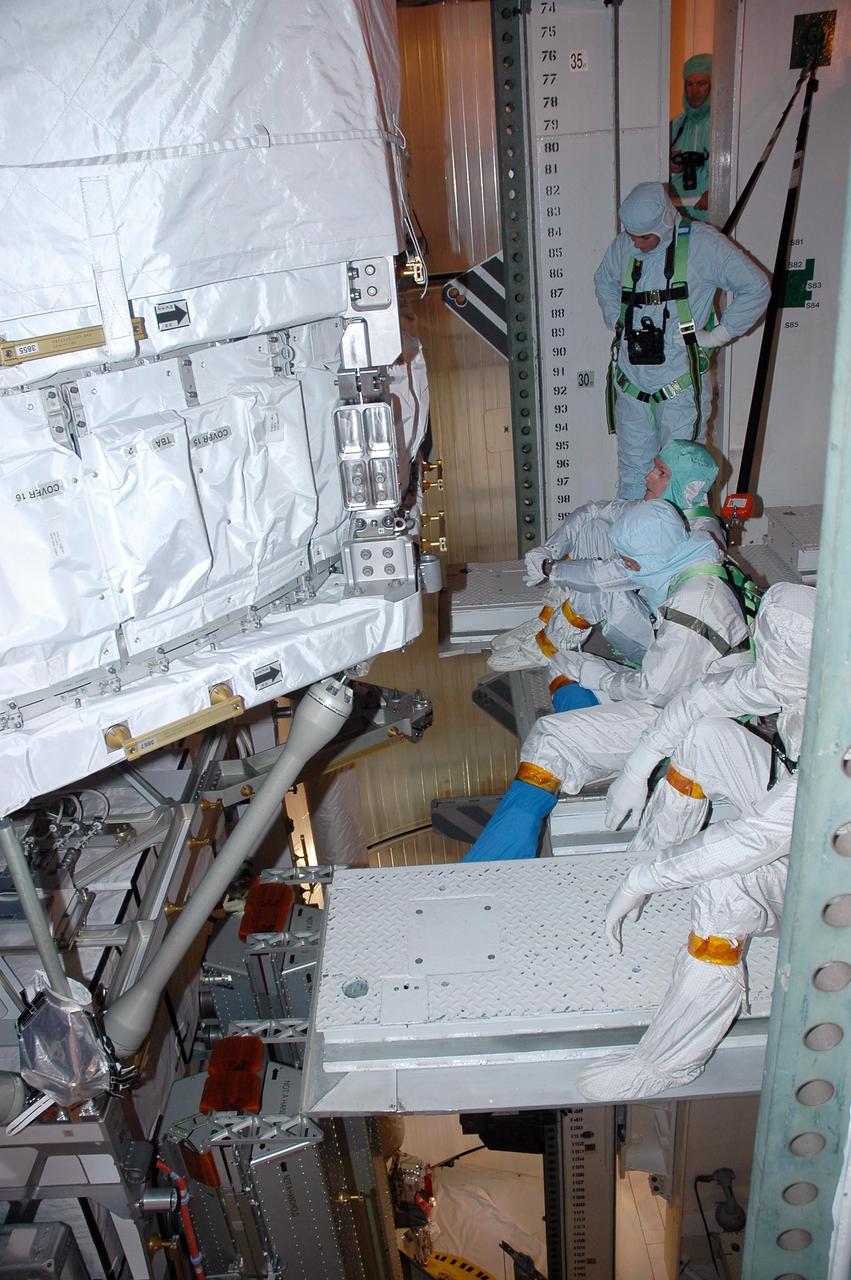
KENNEDY SPACE CENTER, FLA. - In the payload changeout room on Launch Pad 39B, STS-115 crew members look over the mission payload one more time before launch. From front to back are mission specialists Joseph Tanner, Daniel Burbank, Steven MacLean, who represents the Canadian Space Agency, and Heidemarie Stefanyshyn-Piper. The mission crew has been at KSC to take part in Terminal Countdown Demonstration Test activities, which include emergency egress training, a simulated launch countdown and the payload familiarization. The TCDT is a prelaunch preparation for the mission that is scheduled to lift off in a window opening Aug. 27. During their 11-day mission to the International Space Station, the STS-115 crew will continue construction of the station and attach the payload elements, the Port 3/4 truss segment with its two large solar arrays. Photo credit: NASA/Cory Huston
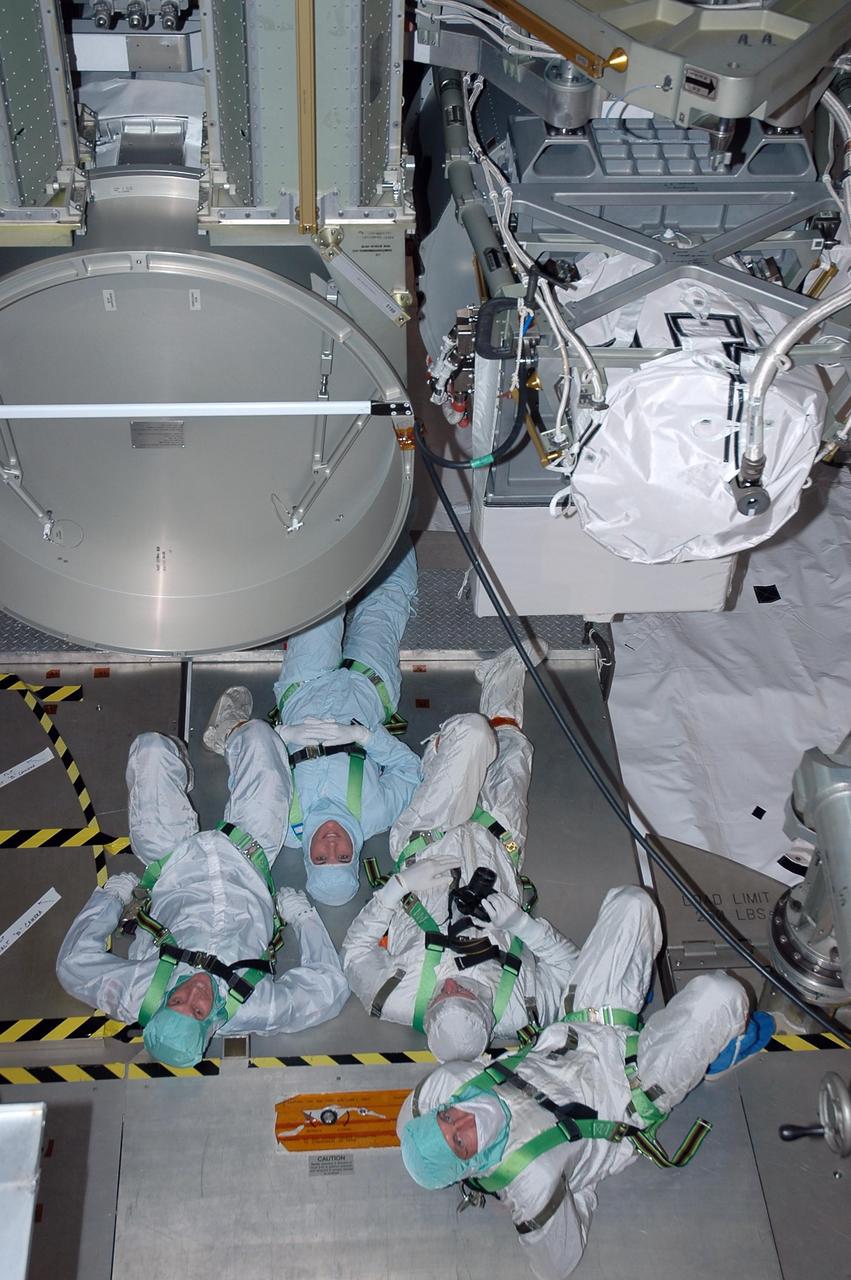
KENNEDY SPACE CENTER, FLA. - In the payload changeout room on Launch Pad 39B, STS-115 crew members look over the mission payload one more time before launch. Looking up at the payload from left, are mission specialists Steven MacLean, who represents the Canadian Space Agency, Heidemarie Stefanyshyn-Piper, Joseph Tanner, and Daniel Burbank. The mission crew has been at KSC to take part in Terminal Countdown Demonstration Test activities, which include emergency egress training, a simulated launch countdown and the payload familiarization. The TCDT is a prelaunch preparation for the mission that is scheduled to lift off in a window opening Aug. 27. During their 11-day mission to the International Space Station, the STS-115 crew will continue construction of the station and attach the payload elements, the Port 3/4 truss segment with its two large solar arrays. Photo credit: NASA/Cory Huston

KENNEDY SPACE CENTER, FLA. - In the payload changeout room on Launch Pad 39B, STS-115 crew members look over the mission payload one more time before launch. From left are mission specialists Heidemarie Stefanyshyn-Piper, Steven MacLean, representing the Canadian Space Agency, Daniel Burbank and Joseph Tanner. The mission crew has been at KSC to take part in Terminal Countdown Demonstration Test activities, which include emergency egress training, a simulated launch countdown and the payload familiarization. The TCDT is a prelaunch preparation for the mission that is scheduled to lift off in a window opening Aug. 27. During their 11-day mission to the International Space Station, the STS-115 crew will continue construction of the station and attach the payload elements, the Port 3/4 truss segment with its two large solar arrays. Photo credit: NASA/Cory Huston
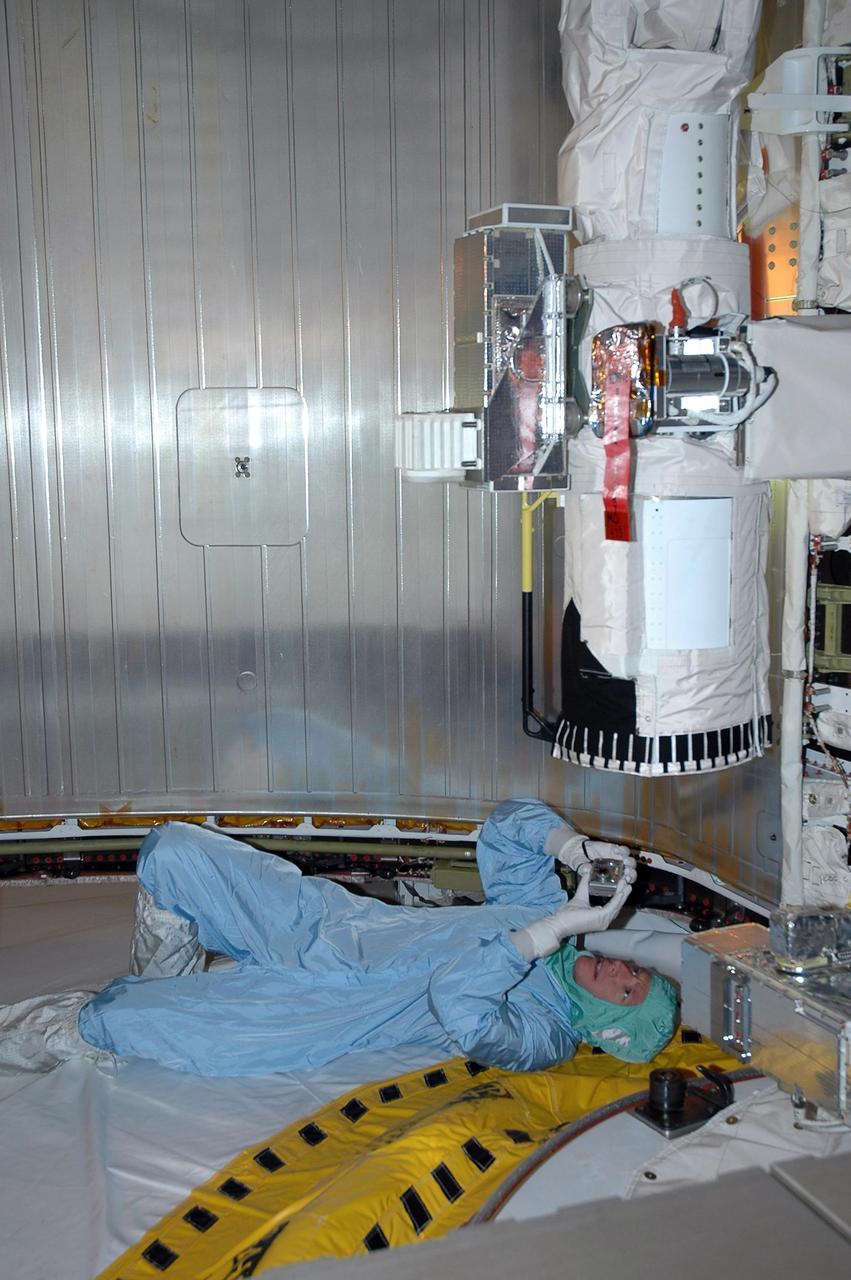
KENNEDY SPACE CENTER, FLA. - In the payload changeout room on Launch Pad 39B, STS-115 pilot Christopher Ferguson looks over the mission payload one more time before launch. The mission crew has been at KSC to take part in Terminal Countdown Demonstration Test activities, which include emergency egress training, a simulated launch countdown and the payload familiarization. The TCDT is a prelaunch preparation for the mission that is scheduled to lift off in a window opening Aug. 27. During their 11-day mission to the International Space Station, the STS-115 crew will continue construction of the station and attach the payload elements, the Port 3/4 truss segment with its two large solar arrays. Photo credit: NASA/Cory Huston
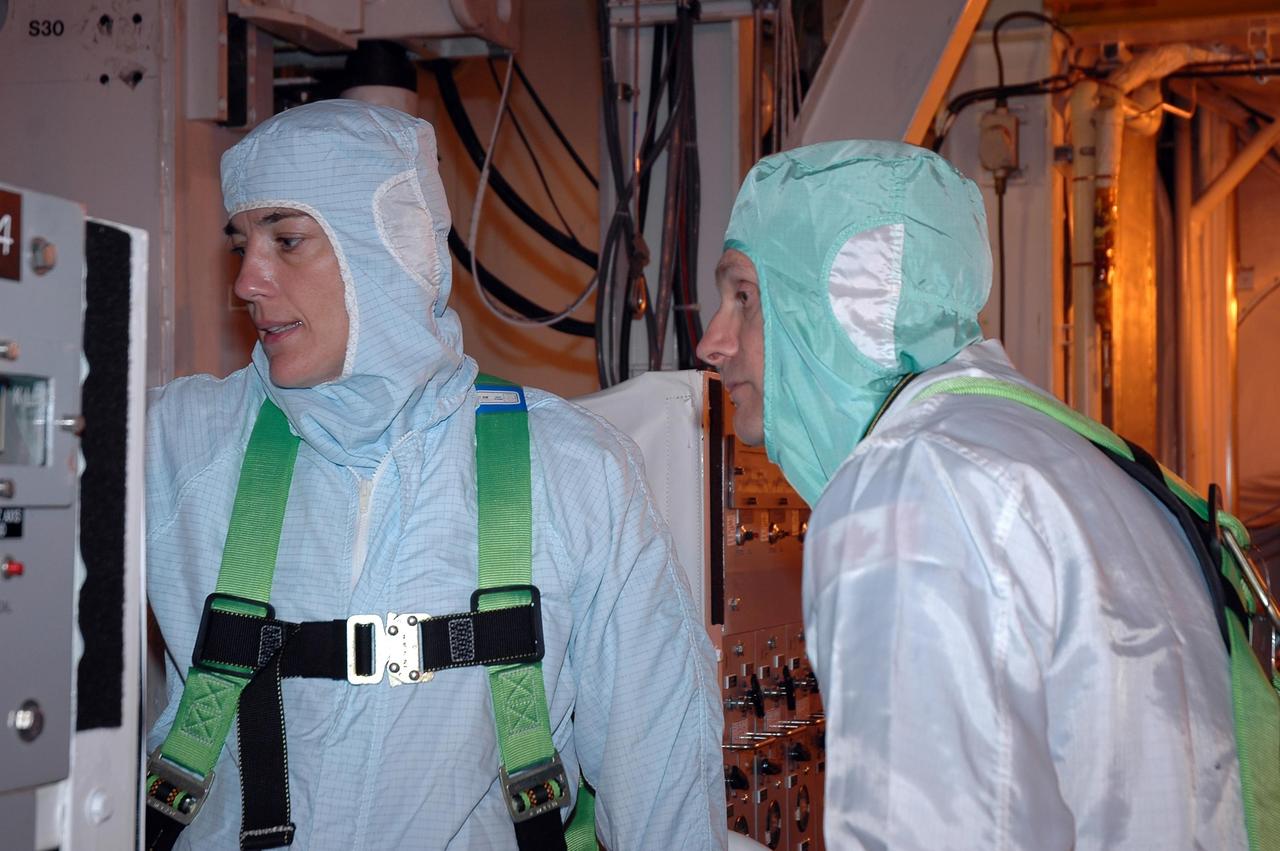
KENNEDY SPACE CENTER, FLA. - In the payload changeout room on Launch Pad 39B, STS-115 crew members look over the mission payload one more time before launch. From left are mission specialists Heidemarie Stefanyshyn-Piper and Steven MacLean, representing the Canadian Space Agency. The mission crew has been at KSC to take part in Terminal Countdown Demonstration Test activities, which include emergency egress training, a simulated launch countdown and the payload familiarization. The TCDT is a prelaunch preparation for the mission that is scheduled to lift off in a window opening Aug. 27. During their 11-day mission to the International Space Station, the STS-115 crew will continue construction of the station and attach the payload elements, the Port 3/4 truss segment with its two large solar arrays. Photo credit: NASA/Cory Huston
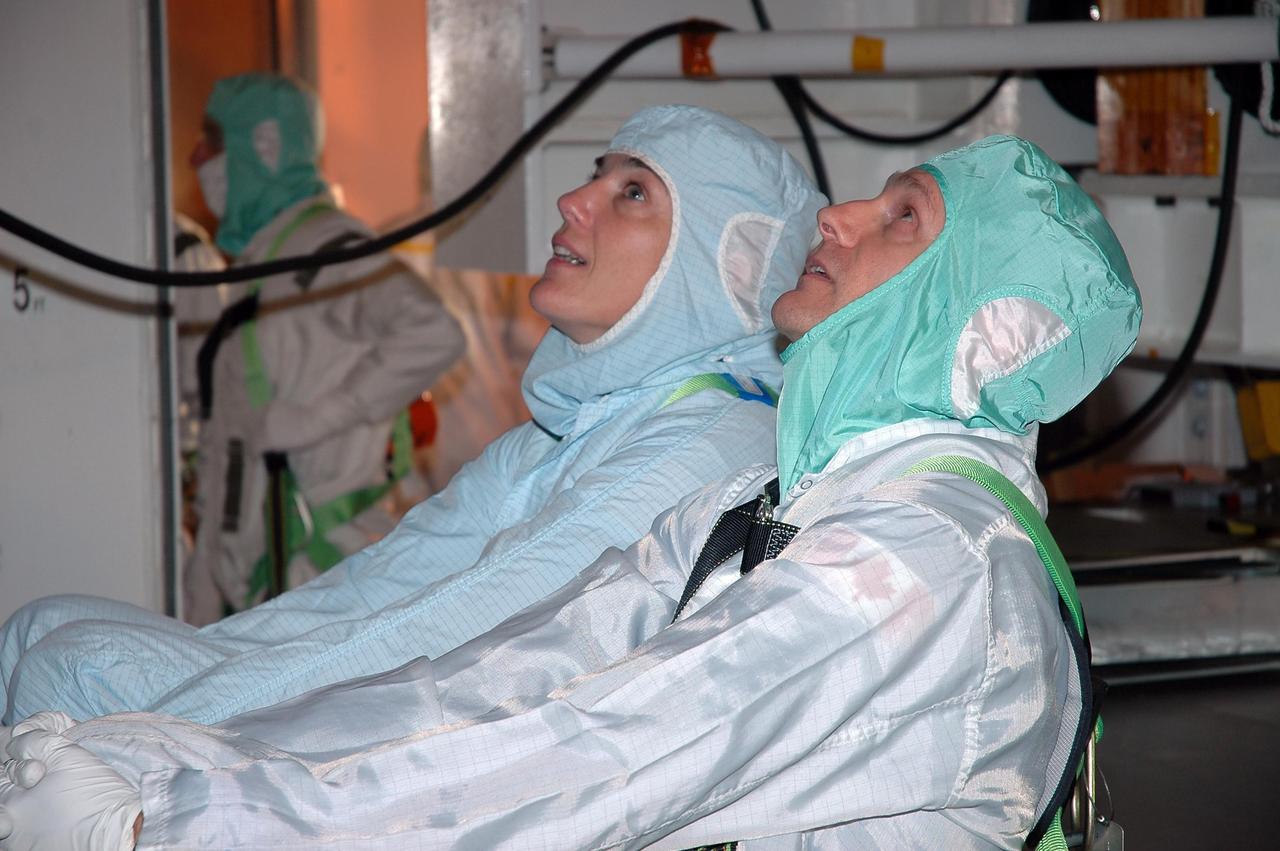
KENNEDY SPACE CENTER, FLA. - In the payload changeout room on Launch Pad 39B, STS-115 crew members look over the mission payload one more time before launch. From left are mission specialists Heidemarie Stefanyshyn-Piper and Steven MacLean, who represents the Canadian Space Agency. The mission crew has been at KSC to take part in Terminal Countdown Demonstration Test activities, which include emergency egress training, a simulated launch countdown and the payload familiarization. The TCDT is a prelaunch preparation for the mission that is scheduled to lift off in a window opening Aug. 27. During their 11-day mission to the International Space Station, the STS-115 crew will continue construction of the station and attach the payload elements, the Port 3/4 truss segment with its two large solar arrays. Photo credit: NASA/Cory Huston
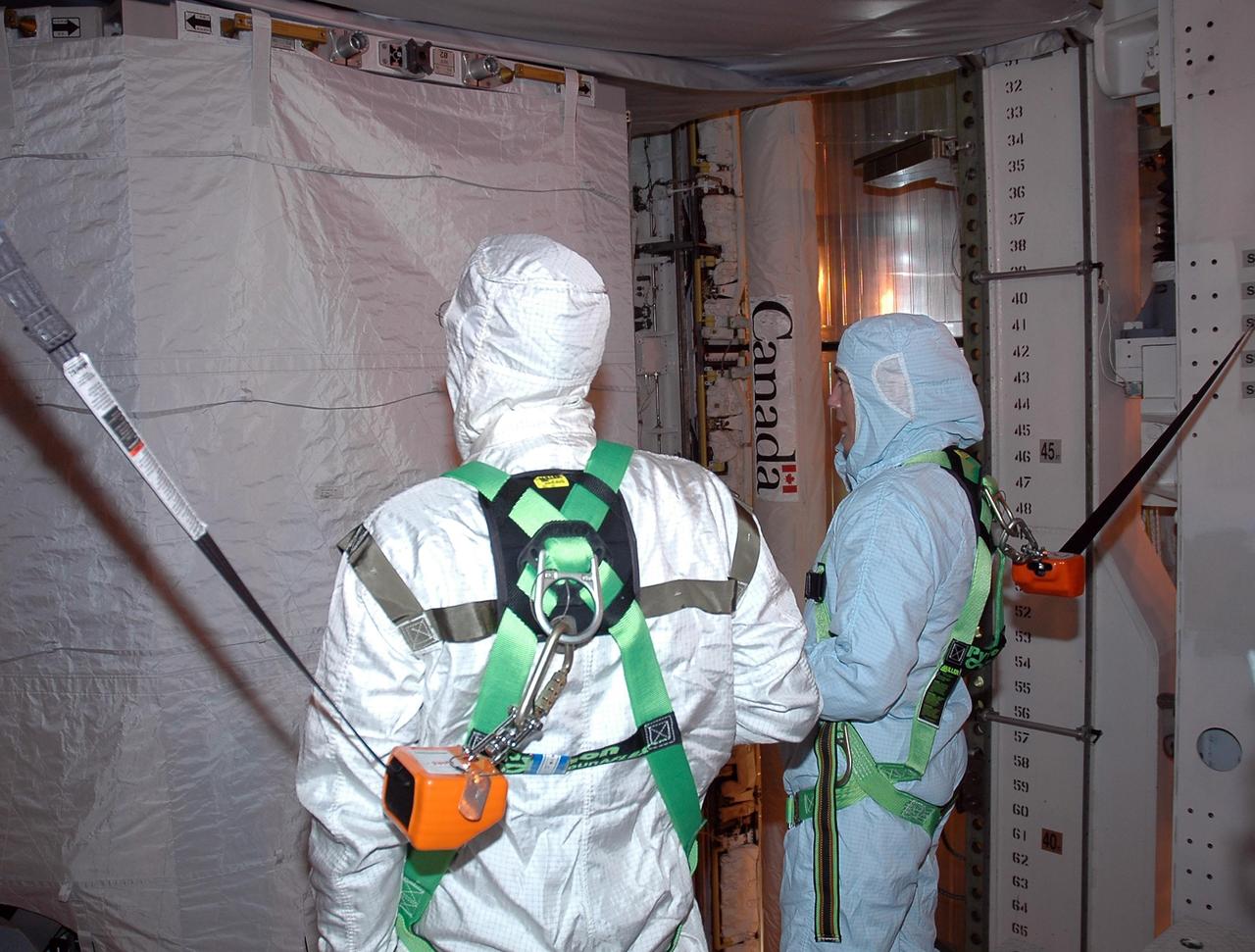
KENNEDY SPACE CENTER, FLA. - In the payload changeout room on Launch Pad 39B, STS-115 crew members look over the mission payload one more time before launch. From left are mission specialists Joseph Tanner and Heidemarie Stefanyshyn-Piper. The mission crew has been at KSC to take part in Terminal Countdown Demonstration Test activities, which include emergency egress training, a simulated launch countdown and the payload familiarization. The TCDT is a prelaunch preparation for the mission that is scheduled to lift off in a window opening Aug. 27. During their 11-day mission to the International Space Station, the STS-115 crew will continue construction of the station and attach the payload elements, the Port 3/4 truss segment with its two large solar arrays. Photo credit: NASA/Cory Huston

KENNEDY SPACE CENTER, FLA. - In the payload changeout room on Launch Pad 39B, STS-115 crew members look over the mission payload one more time before launch. From left are mission specialists Joseph Tanner and Heidemarie Stefanyshyn-Piper. The mission crew has been at KSC to take part in Terminal Countdown Demonstration Test activities, which include emergency egress training, a simulated launch countdown and the payload familiarization. The TCDT is a prelaunch preparation for the mission that is scheduled to lift off in a window opening Aug. 27. During their 11-day mission to the International Space Station, the STS-115 crew will continue construction of the station and attach the payload elements, the Port 3/4 truss segment with its two large solar arrays. Photo credit: NASA/Cory Huston
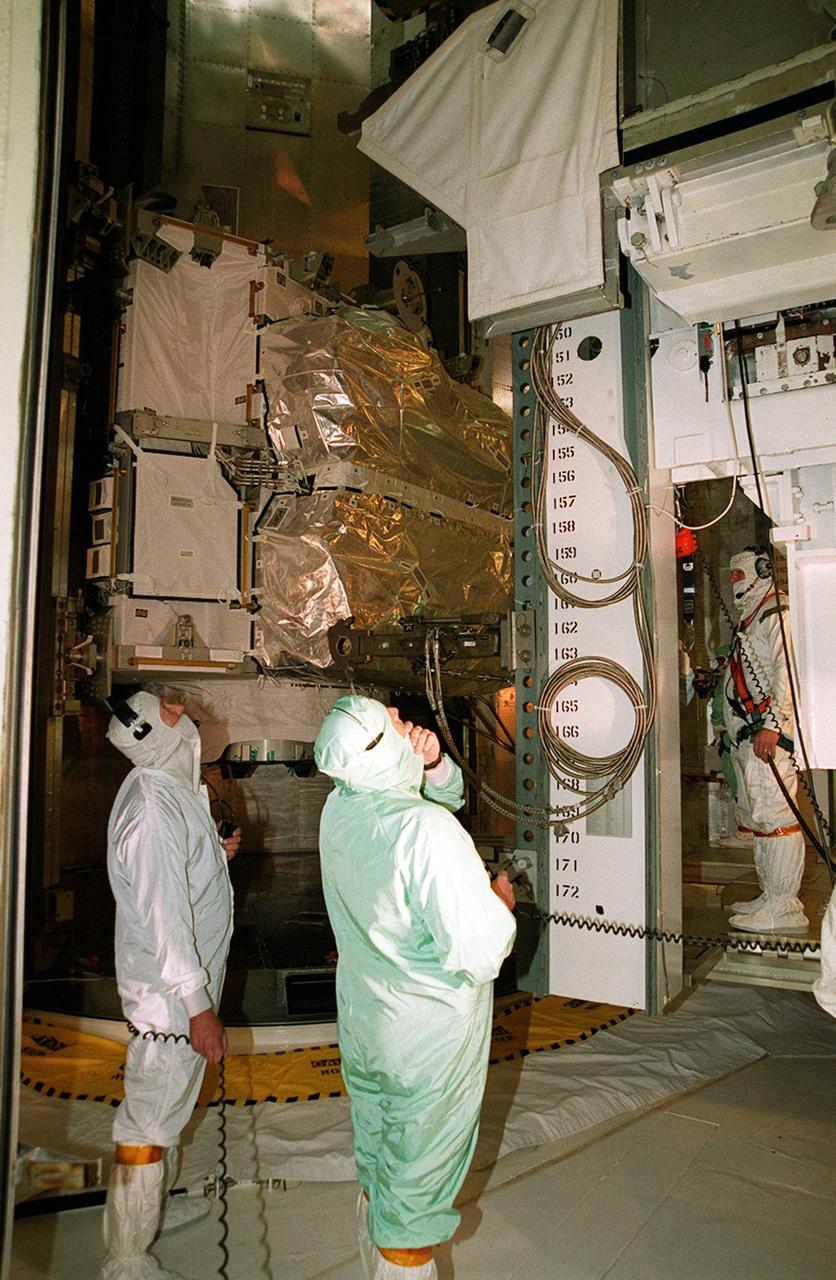
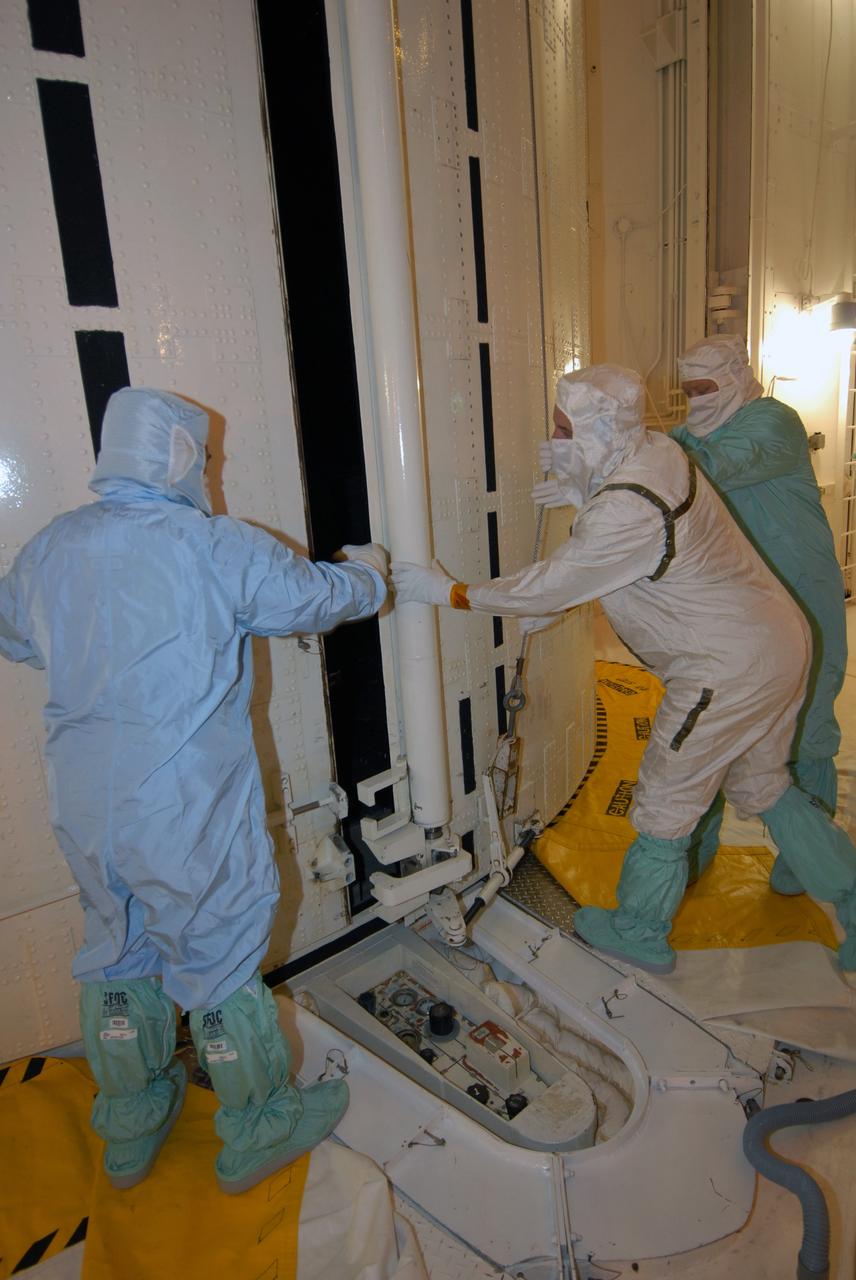
Inside the Payload Changeout Room (PCR), workers check the controls on movement of the Integrated Truss Structure Z1 behind them into the PCR from the payload canister. Once sealed inside the PCR, workers will get ready to move the Z1 into the payload bay of Space Shuttle Discovery. The Z1 truss is the first of 10 that will become the backbone of the International Space Station, eventually stretching the length of a football field. Along with its companion payload, the third Pressurized Mating Adapter, the Z1 is scheduled to be launched aboard Discovery Oct. 5 at 9:38 p.m. EDT

KENNEDY SPACE CENTER, FLA. -- A worker in the payload changeout room (PCR) on Launch Pad 39A monitors the payload ground-handling mechanism that is used to transfer the payload into the PCR and the shuttle's payload bay. The PCR is the enclosed, environmentally controlled portion of the rotating service structure that supports cargo delivery to the pad and subsequent vertical installation into the orbiter payload bay. The truss is the payload for Space Shuttle Atlantis on mission STS-117 to the International Space Station. The Atlantis crew will install the new truss segment, retract a set of solar arrays and unfold a new set on the starboard side of the station. Launch is targeted for March 15. Photo credit: NASA/Jack Pfaller
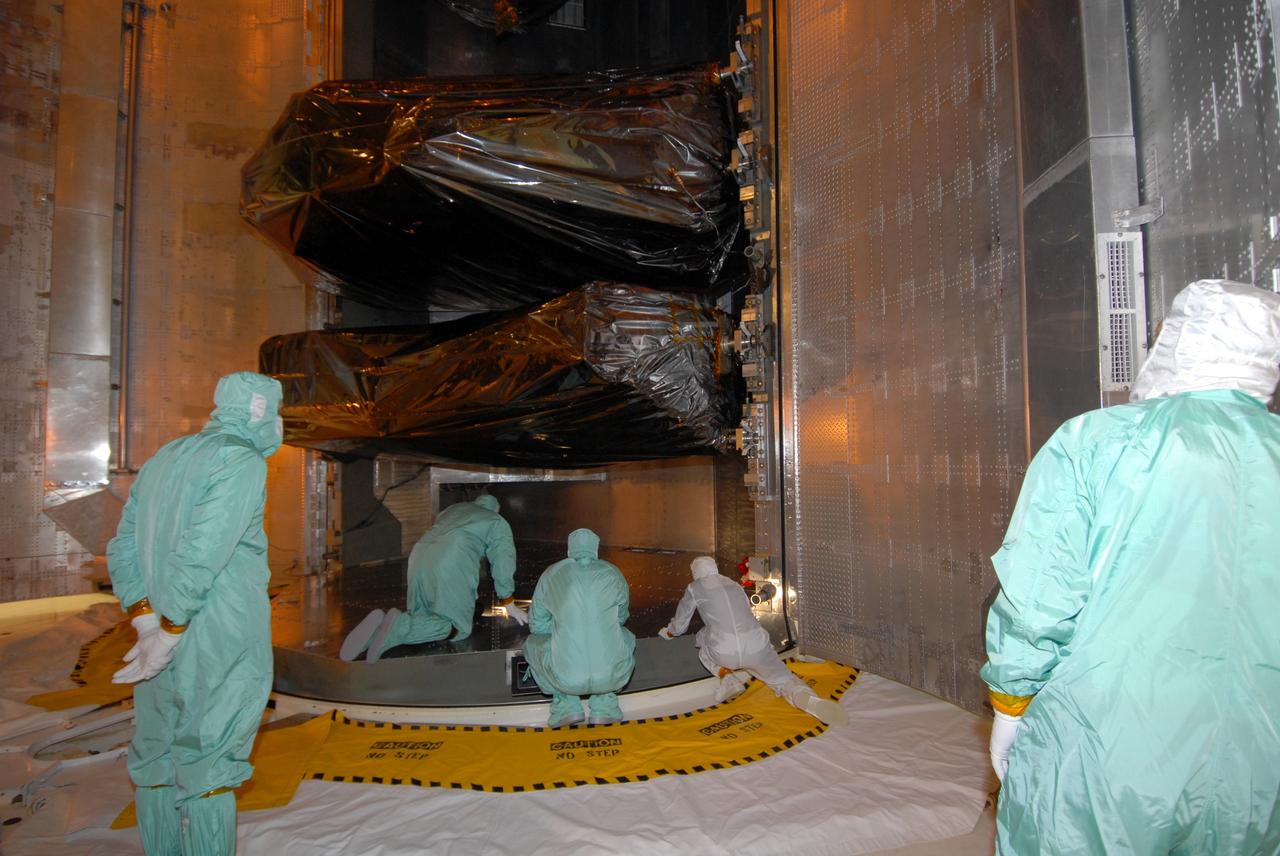
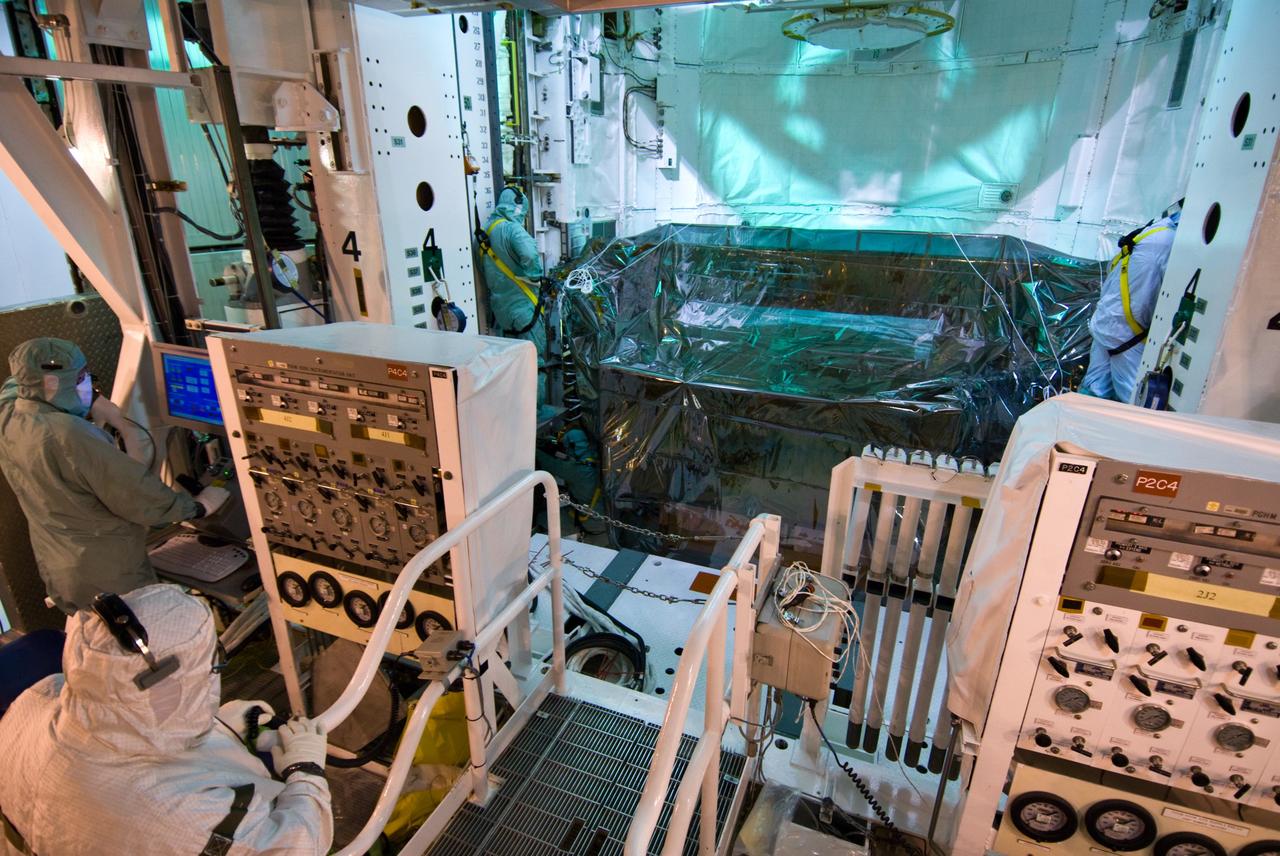
CAPE CANAVERAL, Fla. - Inside the payload changeout room, or PCR, at NASA's Kennedy Space Center Launch Pad 39A, workers prepare for the transfer of the payload from the canister into the PCR. The payload comprises four carriers holding various equipment for the STS-125 mission aboard space shuttle Atlantis to service NASA’s Hubble Space Telescope. The PCR is the enclosed, environmentally controlled portion of the rotating service structure that supports cargo delivery to the pad and subsequent vertical installation into the shuttle’s payload bay. Launch of Atlantis is targeted for Oct. 10. Photo credit: NASA/Jack Pfaller
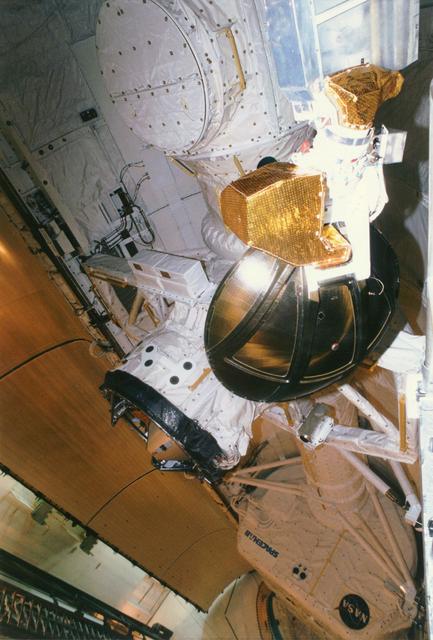
KENNEDY SPACE CENTER, FLA. - The orbiter Ku-band antenna looms large in this view of the Space Shuttle Atlantis' payload bay. Visible just past the antenna system - stowed on the starboard side of the payload bay wall - is the Orbiter Docking System (ODS), and connected to the ODS via a tunnel is the Spacehab Double Module in the aft area of the payload bay. This photograph was taken from the starboard wing platform on the fifth level of the Payload Changeout Room (PCR) at Launch Pad 39A. Work is under way in the PCR to close Atlantis' payload bay doors for flight. Atlantis currently is being targeted for liftoff on Mission STS-79, the fourth docking of the U.S. Shuttle to the Russian Space Station Mir, around Sept. 12.
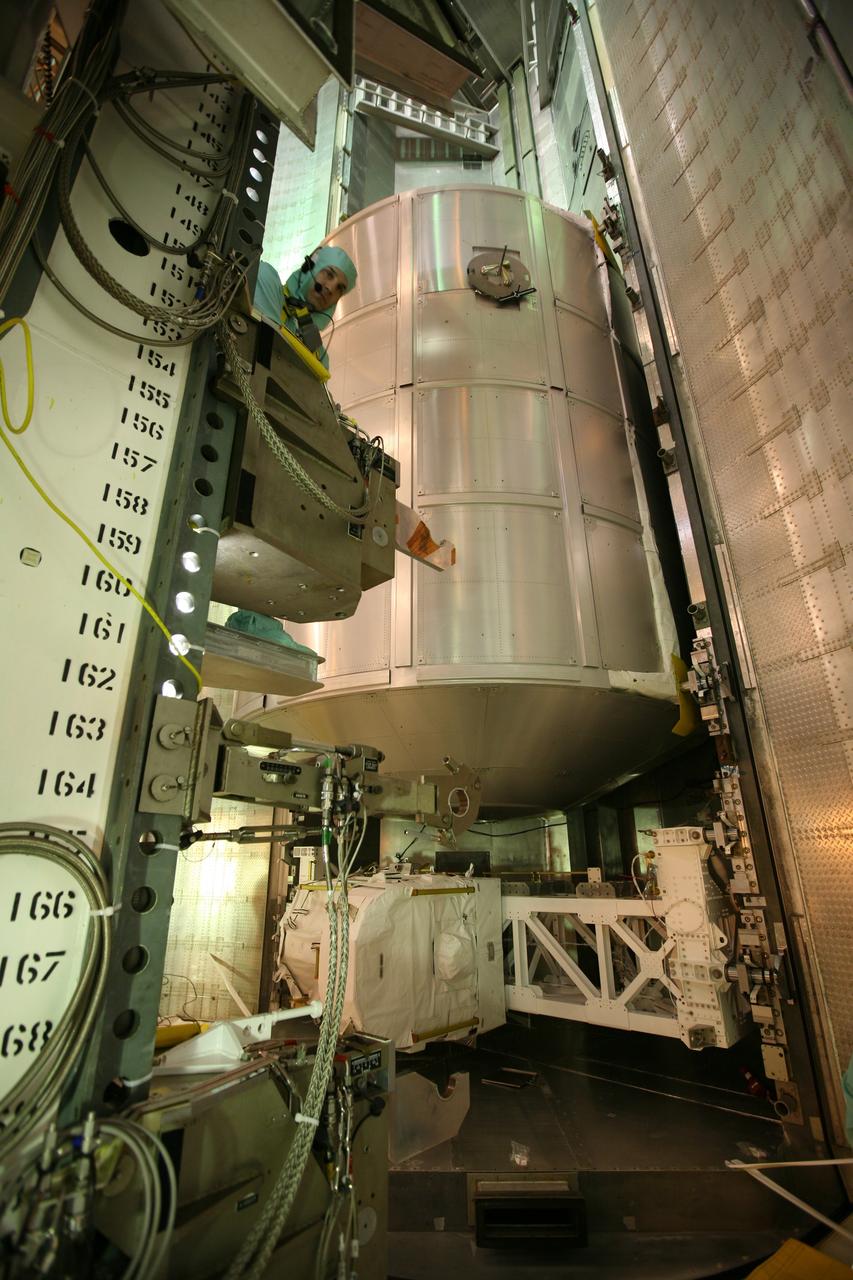
CAPE CANAVERAL, Fla. - On Launch Pad 39A at NASA's Kennedy Space Center in Florida, workers use the payload ground-handling mechanism in the Payload Changeout Room, or PCR, to aid the transfer of the Multi-Purpose Logistics Module Leonardo (center) and the Lightweight Multi-Purpose Experiment Support Structure Carrier (bottom) from the payload canister into the PCR. Later, the payload will be installed in Endeavour's payload bay. Endeavour is targeted for launch on Nov. 14. Photo credit: NASA/Dimitri Gerondidakis
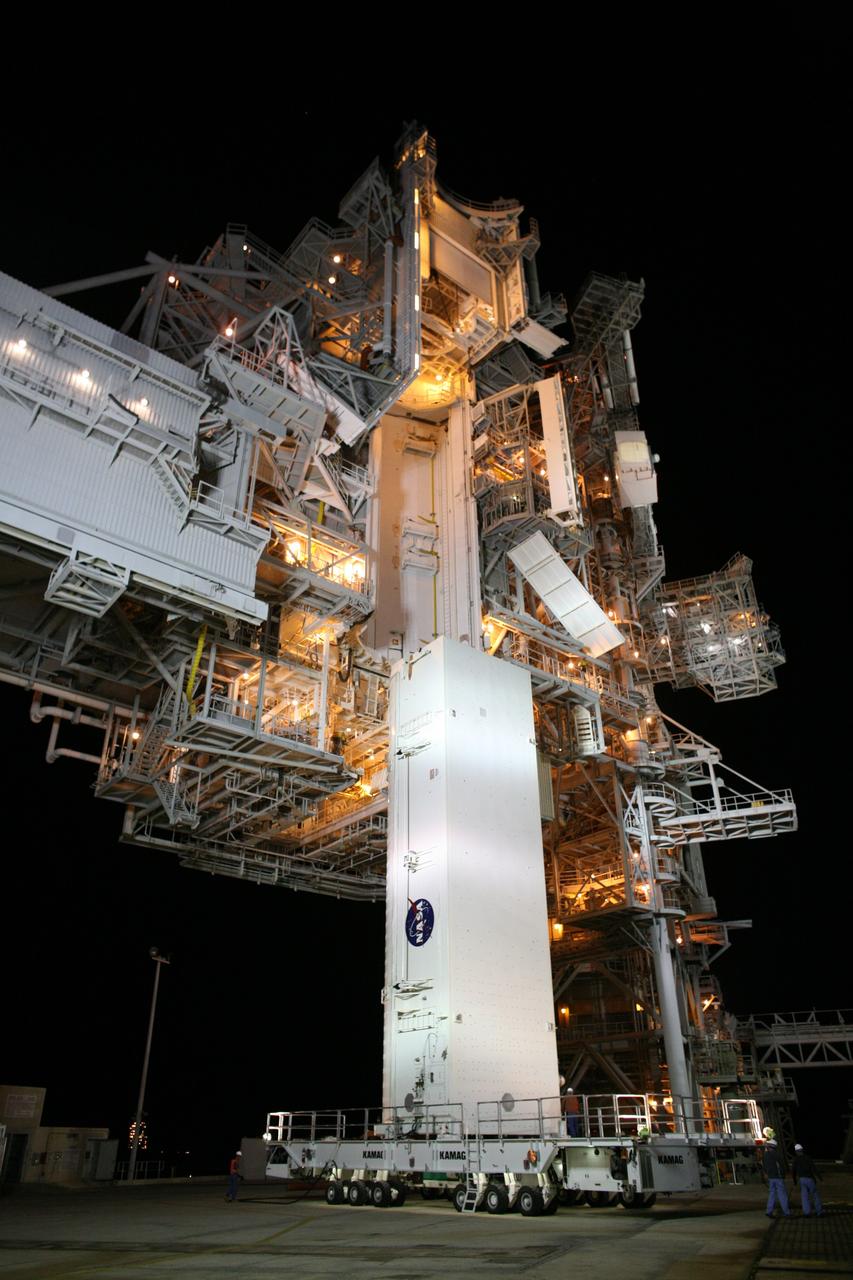
CAPE CANAVERAL, Fla. - On Launch Pad 39A at NASA's Kennedy Space Center in Florida, the payload canister with space shuttle Endeavour's STS-126 mission payload inside is in place to be lifted into the Payload Changeout Room, or PCR, above. Inside the canister are the Multi-Purpose Logistics Module Leonardo and the Lightweight Multi-Purpose Experiment Support Structure Carrier. The payload canister will release its cargo into the PCR. Later, the payload will be installed in Endeavour's payload bay. Endeavour is targeted for launch on Nov. 14. Photo credit: NASA/Dimitri Gerondidakis
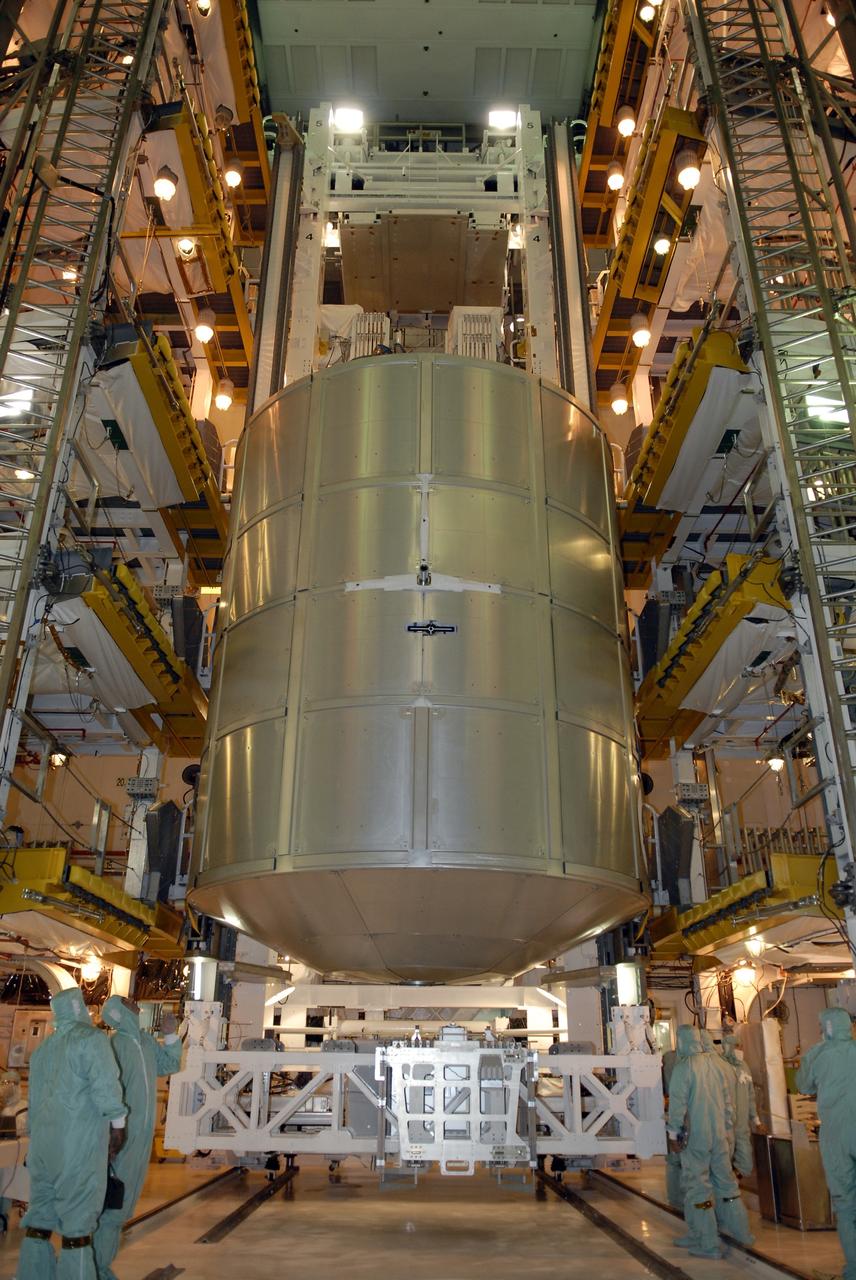
CAPE CANAVERAL, Fla. - In the Payload Changeout Room, or PCR, on Launch Pad 39A at NASA's Kennedy Space Center in Florida, space shuttle Endeavour's STS-126 mission payload is transferred from the payload canister into the PCR. Seen here is the Multi-Purpose Logistics Module Leonardo. The payload later will be installed in Endeavour's payload bay. Endeavour is targeted for launch on Nov. 14. Photo credit: NASA/Kim Shiflett
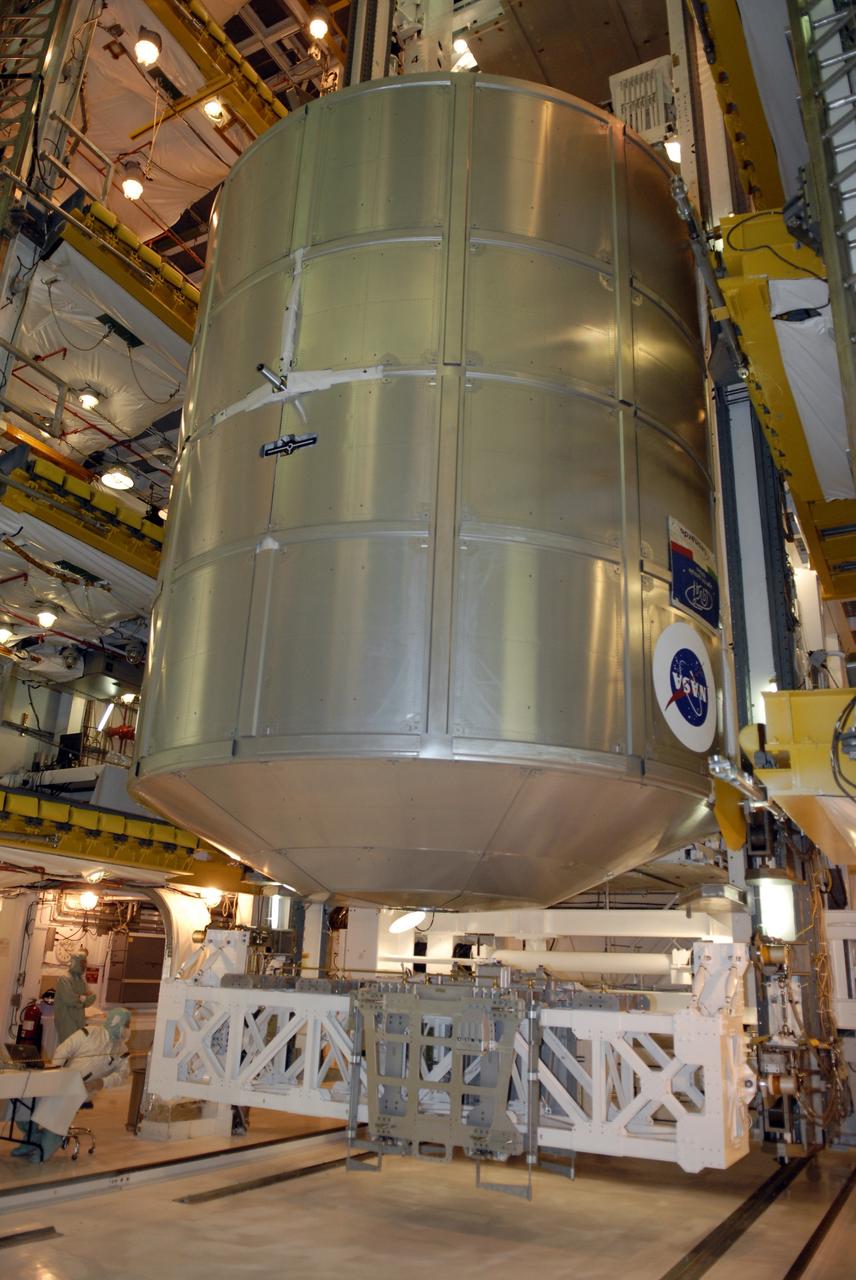
CAPE CANAVERAL, Fla. - In the Payload Changeout Room, or PCR, on Launch Pad 39A at NASA's Kennedy Space Center in Florida, space shuttle Endeavour's STS-126 mission payload is transferred from the payload canister into the PCR. Seen here is the Multi-Purpose Logistics Module Leonardo. The payload later will be installed in Endeavour's payload bay. Endeavour is targeted for launch on Nov. 14. Photo credit: NASA/Kim Shiflett
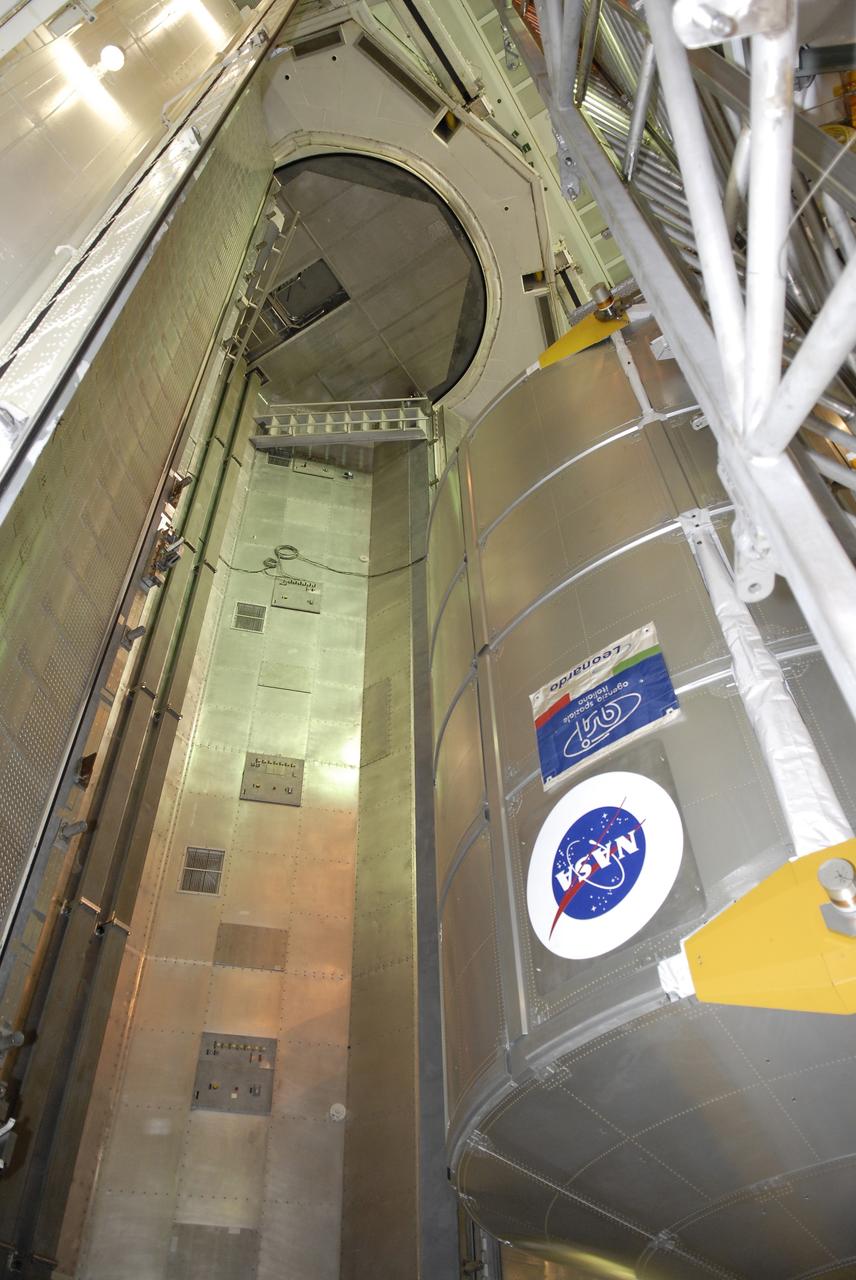
CAPE CANAVERAL, Fla. - In the Payload Changeout Room, or PCR, on Launch Pad 39A at NASA's Kennedy Space Center in Florida, space shuttle Endeavour's STS-126 mission payload is transferred from the payload canister into the PCR. Seen at right is the Multi-Purpose Logistics Module Leonardo. The payload later will be installed in Endeavour's payload bay. Endeavour is targeted for launch on Nov. 14. Photo credit: NASA/Kim Shiflett
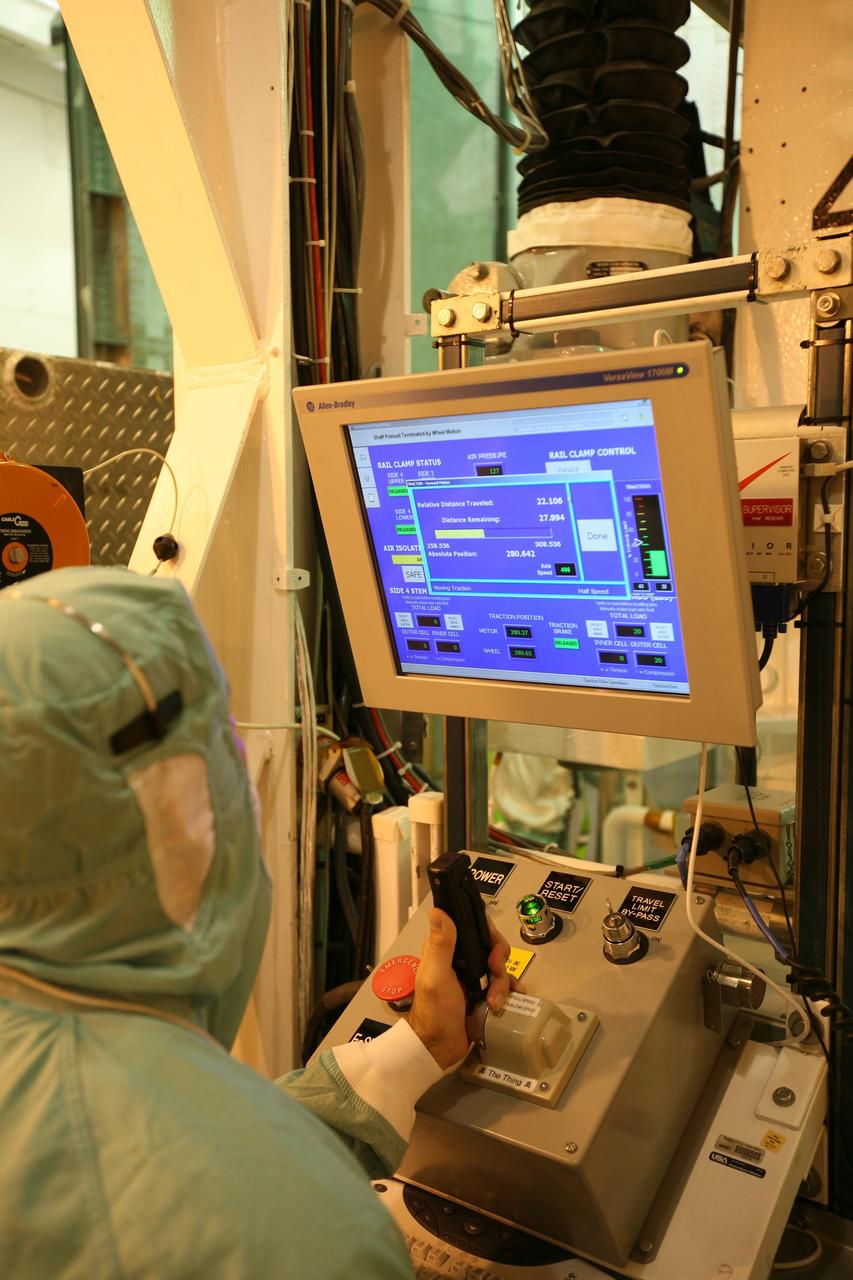
CAPE CANAVERAL, Fla. - On Launch Pad 39A at NASA's Kennedy Space Center in Florida, a worker monitors use of the payload ground-handling mechanism in the Payload Changeout Room, or PCR, to aid the transfer of the Multi-Purpose Logistics Module Leonardo (center) and the Lightweight Multi-Purpose Experiment Support Structure Carrier (bottom) from the payload canister into the PCR. Later, the payload will be installed in Endeavour's payload bay. Endeavour is targeted for launch on Nov. 14. Photo credit: NASA/Dimitri Gerondidakis
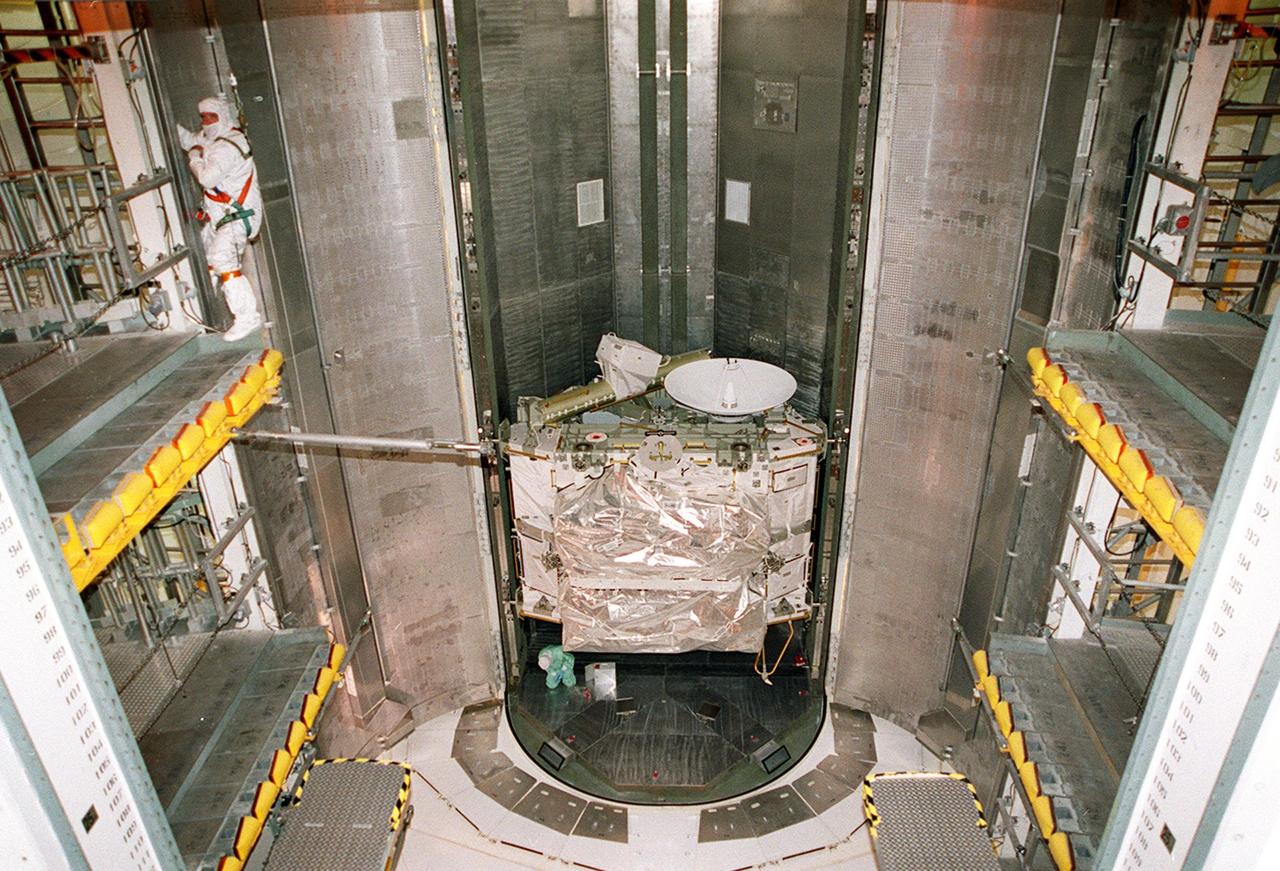
Inside the Payload Changeout Room (PCR), workers prepare to move the Integrated Truss Structure Z1 out of the payload canister. Once inside the PCR, workers will get ready to move the Z1 into the payload bay of Space Shuttle Discovery. The Z1 truss is the first of 10 that will become the backbone of the International Space Station, eventually stretching the length of a football field. Along with its companion payload, the third Pressurized Mating Adapter, the Z1 is scheduled to be launched aboard Discovery Oct. 5 at 9:38 p.m. EDT

CAPE CANAVERAL, Fla. - On Launch Pad 39A at NASA's Kennedy Space Center in Florida, workers in the Payload Changeout Room, or PCR, oversee the transfer of the Multi-Purpose Logistics Module Leonardo (center) and the Lightweight Multi-Purpose Experiment Support Structure Carrier (bottom) from the payload canister into the PCR. Later, the payload will be installed in Endeavour's payload bay. Endeavour is targeted for launch on Nov. 14. Photo credit: NASA/Dimitri Gerondidakis
CAPE CANAVERAL, Fla. - In the Payload Changeout Room, or PCR, on Launch Pad 39A at NASA's Kennedy Space Center in Florida, space shuttle Endeavour's STS-126 mission payload is transferred from the payload canister into the PCR. Seen here is the Multi-Purpose Logistics Module Leonardo. The payload later will be installed in Endeavour's payload bay. Endeavour is targeted for launch on Nov. 14. Photo credit: NASA/Kim Shiflett
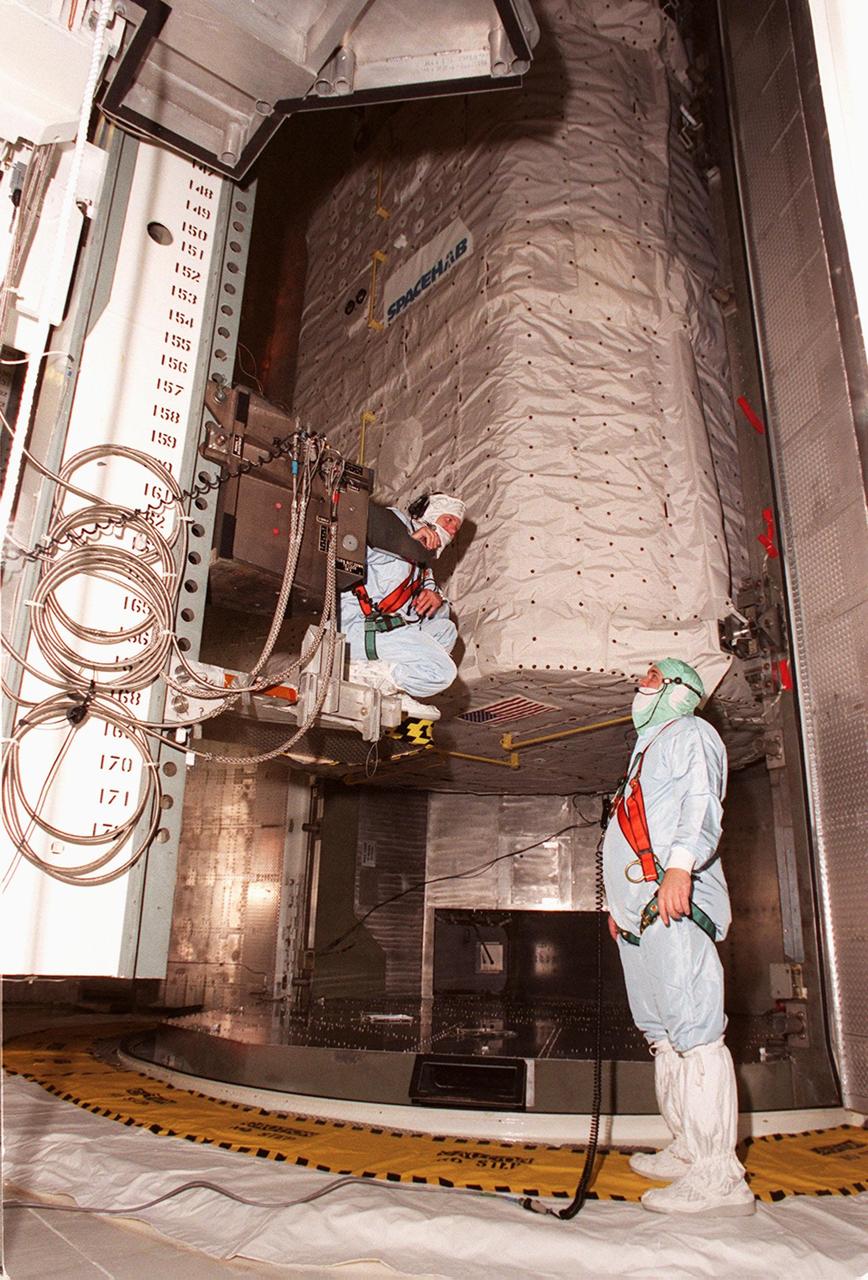
KENNEDY SPACE CENTER, FLA. -- Workers in the Payload Changeout Room (PCR) at Launch Pad 39A check out the SPACEHAB Double Module before moving into the PCR. Part of the Rotating Service Structure, the PCR is an environmentally controlled facility supporting cargo delivery to the pad and vertical installation in the orbiter cargo bay. The primary payloads on mission STS-101, the module and ICC contain internal logistics and resupply cargo for restoring full redundancy to the International Space Station power system in preparation for the arrival of the next pressurized module, the Russian-built Zvezda. The payloads will be transferred to Space Shuttle Atlantis after Atlantis rolls out to the pad. Launch of Atlantis on mission STS-101 is scheduled no earlier than April 17, 2000
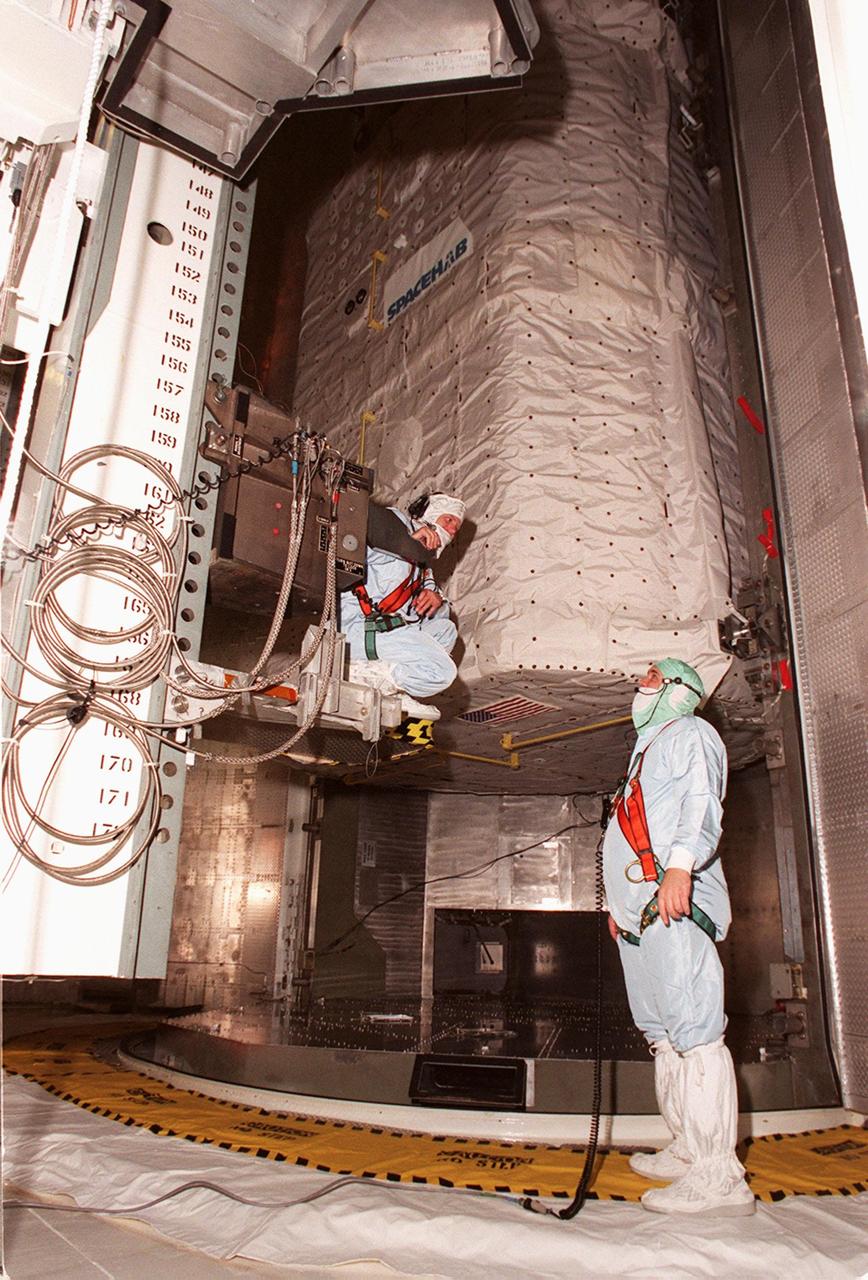
KENNEDY SPACE CENTER, FLA. -- Workers in the Payload Changeout Room (PCR) at Launch Pad 39A check out the SPACEHAB Double Module before moving into the PCR. Part of the Rotating Service Structure, the PCR is an environmentally controlled facility supporting cargo delivery to the pad and vertical installation in the orbiter cargo bay. The primary payloads on mission STS-101, the module and ICC contain internal logistics and resupply cargo for restoring full redundancy to the International Space Station power system in preparation for the arrival of the next pressurized module, the Russian-built Zvezda. The payloads will be transferred to Space Shuttle Atlantis after Atlantis rolls out to the pad. Launch of Atlantis on mission STS-101 is scheduled no earlier than April 17, 2000
CAPE CANAVERAL, Fla. - Inside the payload changeout room, or PCR, at NASA's Kennedy Space Center Launch Pad 39A, workers open the doors of the payload canister. Inside are four carriers holding various equipment for the STS-125 mission aboard space shuttle Atlantis to service NASA’s Hubble Space Telescope. From top to bottom are the Multi-Use Logistic Equipment carrier, the Flight Support System carrier, the Orbital Replacment Unit Carrier and the Super Lightweight Interchangeable Carrier. The payload will be moved into the PCR. The PCR is the enclosed, environmentally controlled portion of the rotating service structure that supports cargo delivery to the pad and subsequent vertical installation into the shuttle’s payload bay. Launch of Atlantis is targeted for Oct. 10. Photo credit: NASA/Jack Pfaller

CAPE CANAVERAL, Fla. - Inside the payload changeout room, or PCR, at NASA's Kennedy Space Center Launch Pad 39A, workers prepare for the transfer of the payload from the canister into the PCR. The payload comprises four carriers holding various equipment for the STS-125 mission aboard space shuttle Atlantis to service NASA’s Hubble Space Telescope. From top to bottom are the Multi-Use Logistic Equipment carrier, the Flight Support System carrier, the Orbital Replacment Unit Carrier and the Super Lightweight Interchangeable Carrier. The PCR is the enclosed, environmentally controlled portion of the rotating service structure that supports cargo delivery to the pad and subsequent vertical installation into the shuttle’s payload bay. Launch of Atlantis is targeted for Oct. 10. Photo credit: NASA/Jack Pfaller
CAPE CANAVERAL, Fla. –– On Launch Pad 39A at NASA's Kennedy Space Center in Florida, the equipment and hardware needed to service the Hubble Space Telescope are installed into space shuttle Atlantis' payload bay. Launch of Atlantis' 11-day STS-125 mission to Hubble is targeted for May 12. The flight will include five spacewalks during which astronauts will refurbish and upgrade the telescope with state-of-the-art science instruments. As a result, Hubble's capabilities will be expanded and its operational lifespan extended through at least 2014. Photo credit: NASA/Jack Pfaller

KENNEDY SPACE CENTER, FLA. -- On Launch Pad 39B, a worker inside the payload changeout room monitors the clearance during closing of one payload bay door on Space Shuttle Discovery. The payload visible is the P5 integrated truss structure. Launch of Space Shuttle Discovery on mission STS-116 is scheduled no earlier than Dec. 7. Photo credit: NASA/Dimitri Gerondidakis
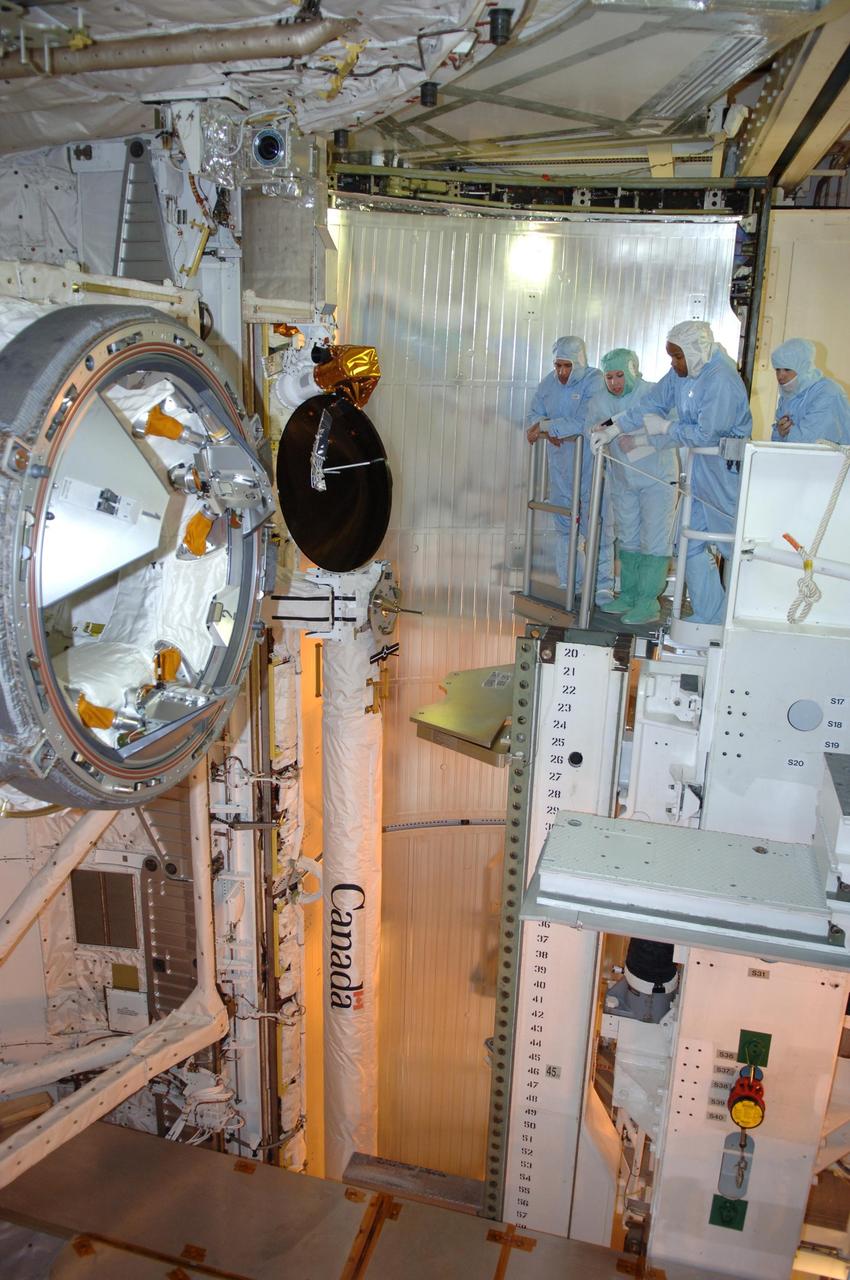
KENNEDY SPACE CENTER, FLA. -- In the payload changeout room on Launch Pad 39B, STS-116 crew members look over the mission payload with payload managers one more time before launch. At left is Pilot William Oefelein. Second from right is Mission Specialist Robert Curbeam. The crew is at KSC to take part in Terminal Countdown Demonstration Test activities, which include emergency egress training, a simulated launch countdown and payload familiarization. The TCDT is part of prelaunch preparations for the mission that is scheduled to lift off in a window opening no earlier than Dec. 7. The STS-116 mission is No. 20 to the International Space Station and construction flight 12A.1. The mission payload is the SPACEHAB module, the P5 integrated truss structure and other key components. Photo credit: NASA/Kim Shiflett
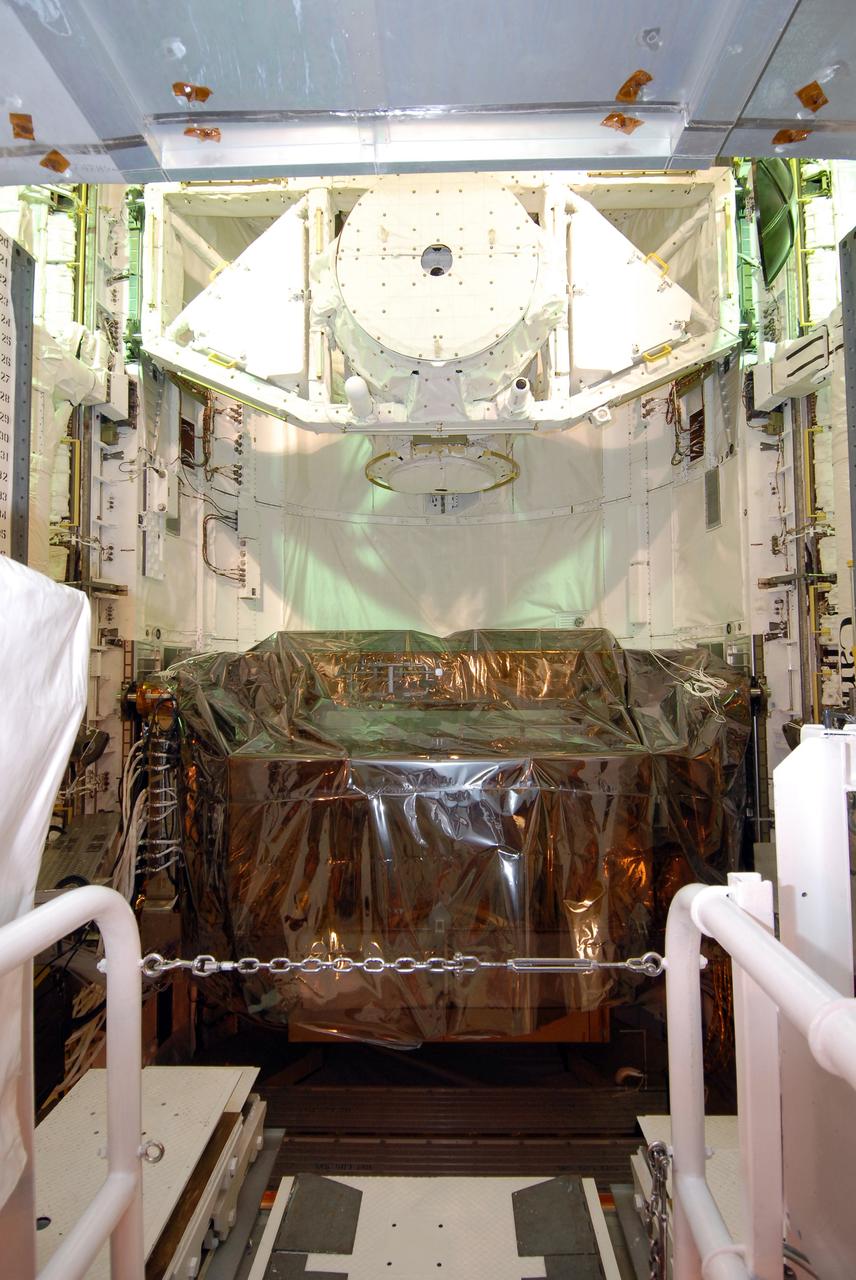
CAPE CANAVERAL, Fla. - On Launch Pad 39A at NASA's Kennedy Space Center in Florida, the Super Lightweight Interchangeable Carrier is installed behind the shuttle external airlock (top) in space shuttle Atlantis’ payload bay for the STS-125 mission. STS-125 is the fifth and final shuttle servicing mission for NASA’s Hubble Space Telescope. The payload comprises four carriers holding various equipment for the mission. Atlantis is targeted to launch Oct. 14 on the 11-day mission. Photo credit: NASA/Jack Pfaller
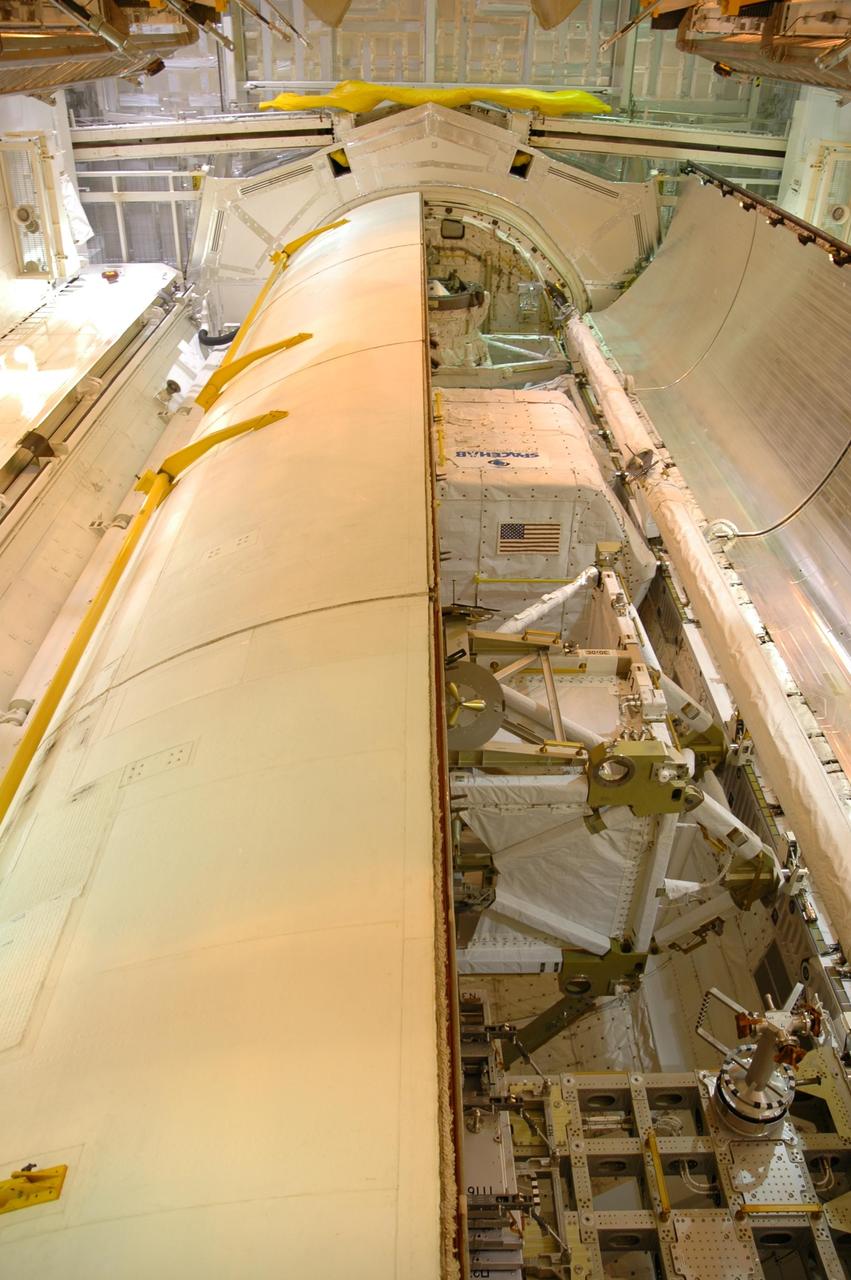
KENNEDY SPACE CENTER, FLA. -- One of Space Shuttle Discovery's payload bay doors is nearly closed. Still visible are two major payload components, the SPACEHAB module on top and the P5 truss below. Launch of Space Shuttle Discovery on mission STS-116 is scheduled no earlier than Dec. 7. Photo credit: NASA/Dimitri Gerondidakis

CAPE CANAVERAL, Fla. -- On Launch Pad 39A at NASA's Kennedy Space Center, a worker watches the progress of space shuttle Discovery's payload bay doors as they close around the Japanese Experiment Module—Pressurized Module. The launch of Discovery on its STS-124 mission is targeted for May 31. On the mission, Discovery will transport the pressurized module and the Japanese Remote Manipulator System to the International Space Station. Photo credit: NASA/Kim Shiflett
CAPE CANAVERAL, Fla. –– On Launch Pad 39A at NASA's Kennedy Space Center in Florida, workers install the equipment and hardware needed to service the Hubble Space Telescope into space shuttle Atlantis' payload bay. Launch of Atlantis' 11-day STS-125 mission to Hubble is targeted for May 12. The flight will include five spacewalks during which astronauts will refurbish and upgrade the telescope with state-of-the-art science instruments. As a result, Hubble's capabilities will be expanded and its operational lifespan extended through at least 2014. Photo credit: NASA/Jack Pfaller
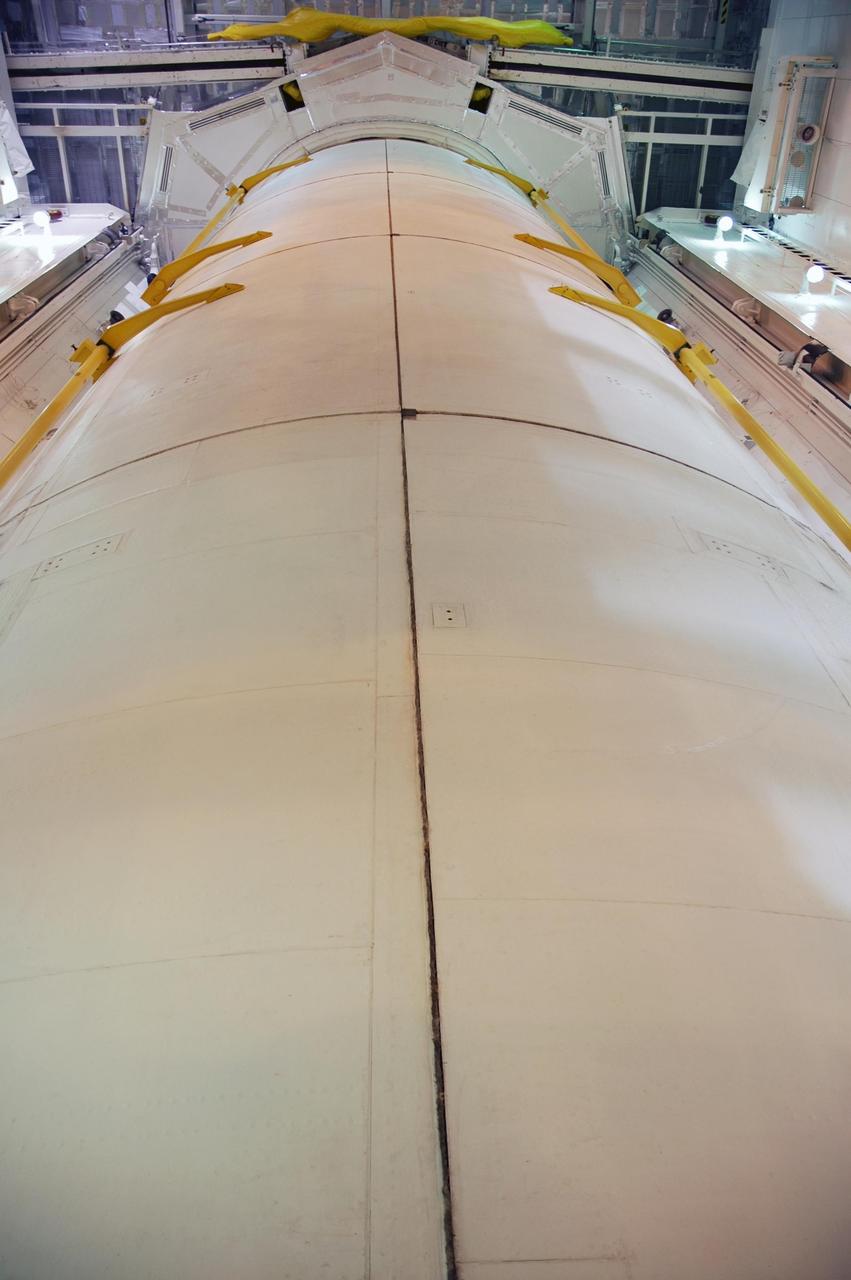
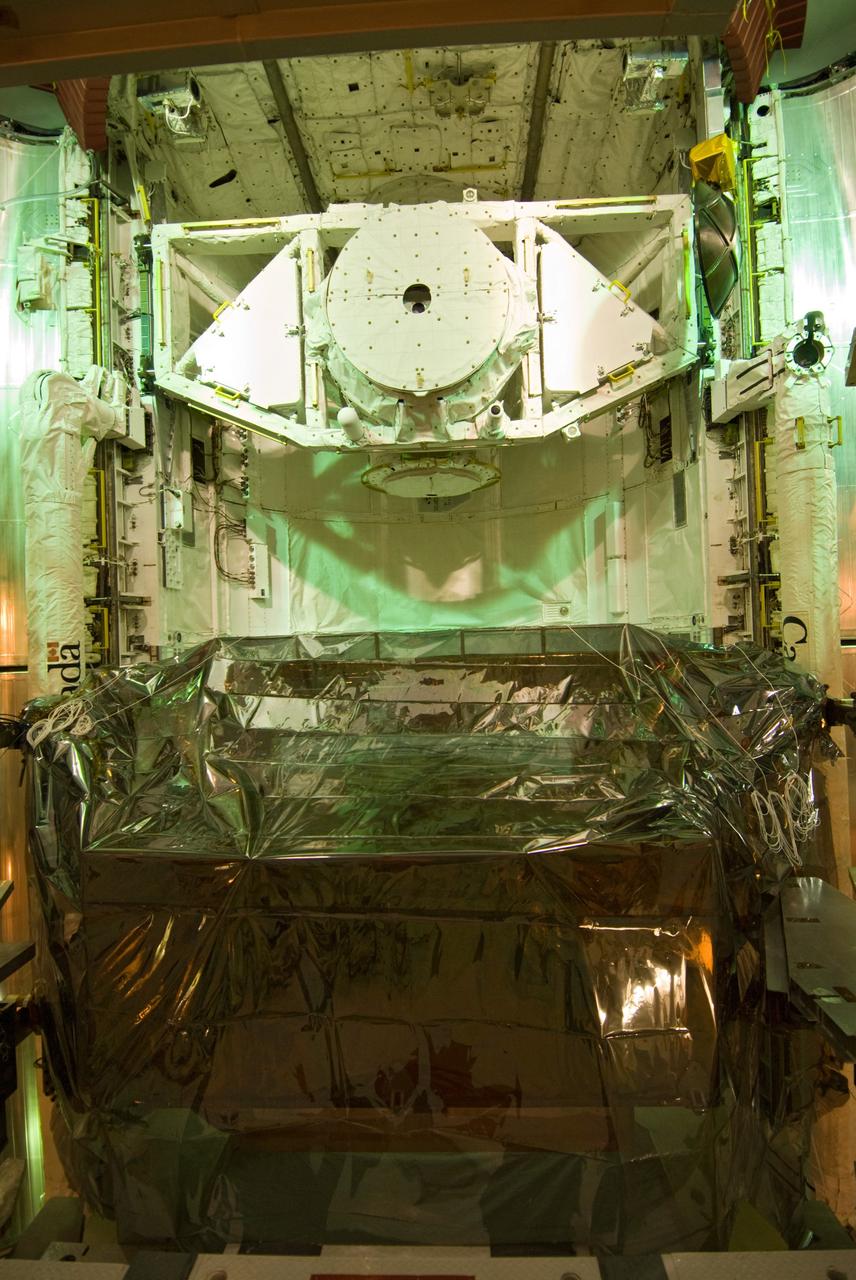
KENNEDY SPACE CENTER, FLA. -- On Launch Pad 39B, Space Shuttle Discovery's payload bay doors are fully closed and ready for launch. The payload includes the SPACEHAB module, the P5 integrated truss structure and other key components. Launch of Space Shuttle Discovery on mission STS-116 is scheduled no earlier than Dec. 7. Photo credit: NASA/Dimitri Gerondidakis
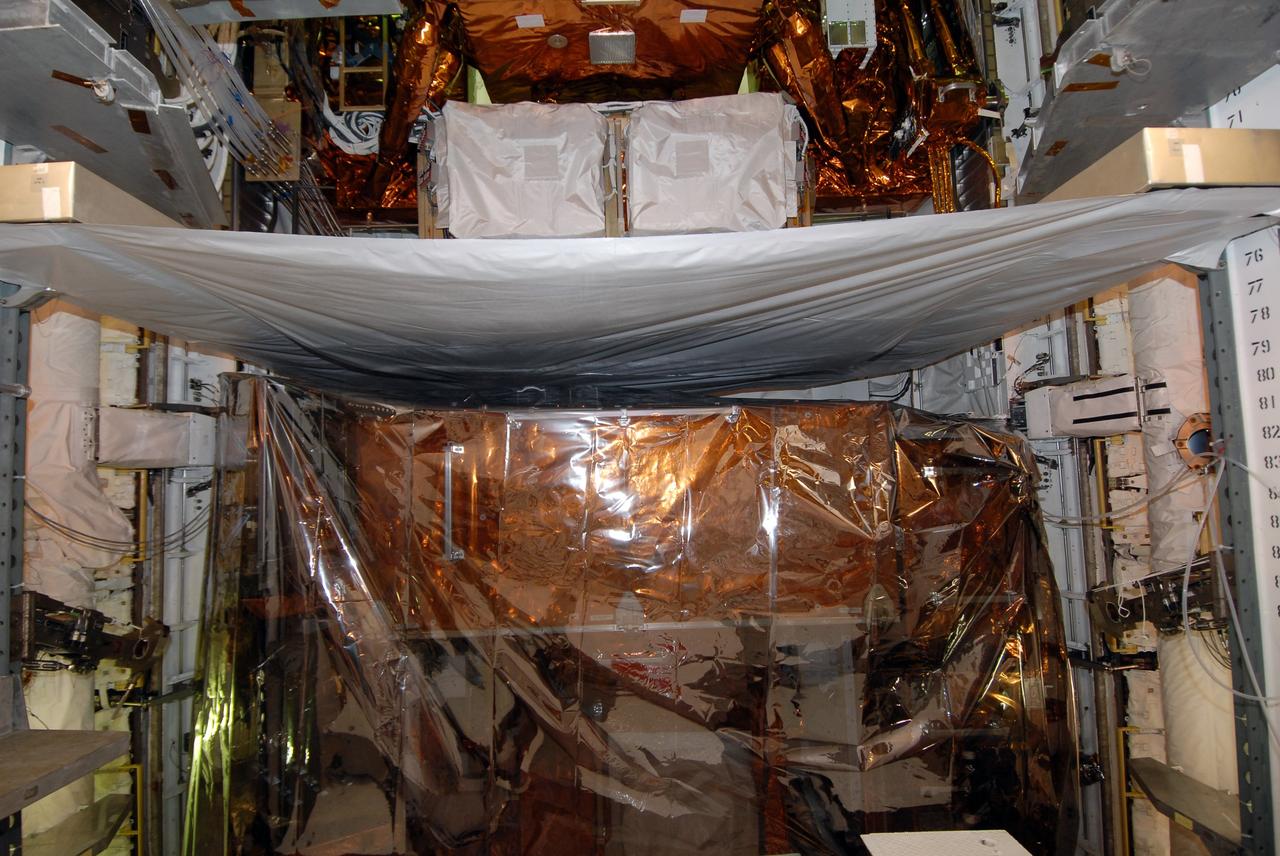
CAPE CANAVERAL, Fla. - In the Payload Changeout Room on Launch Pad 39A at NASA's Kennedy Space Center in Florida, the payload for the STS-125 mission is ready to be moved into space shuttle Atlantis’ payload bay. STS-125 is the fifth and final shuttle servicing mission for NASA’s Hubble Space Telescope. The payload comprises four carriers holding various equipment for the mission. Atlantis is targeted to launch Oct. 14 on the 11-day mission. Photo credit: NASA/Jack Pfaller
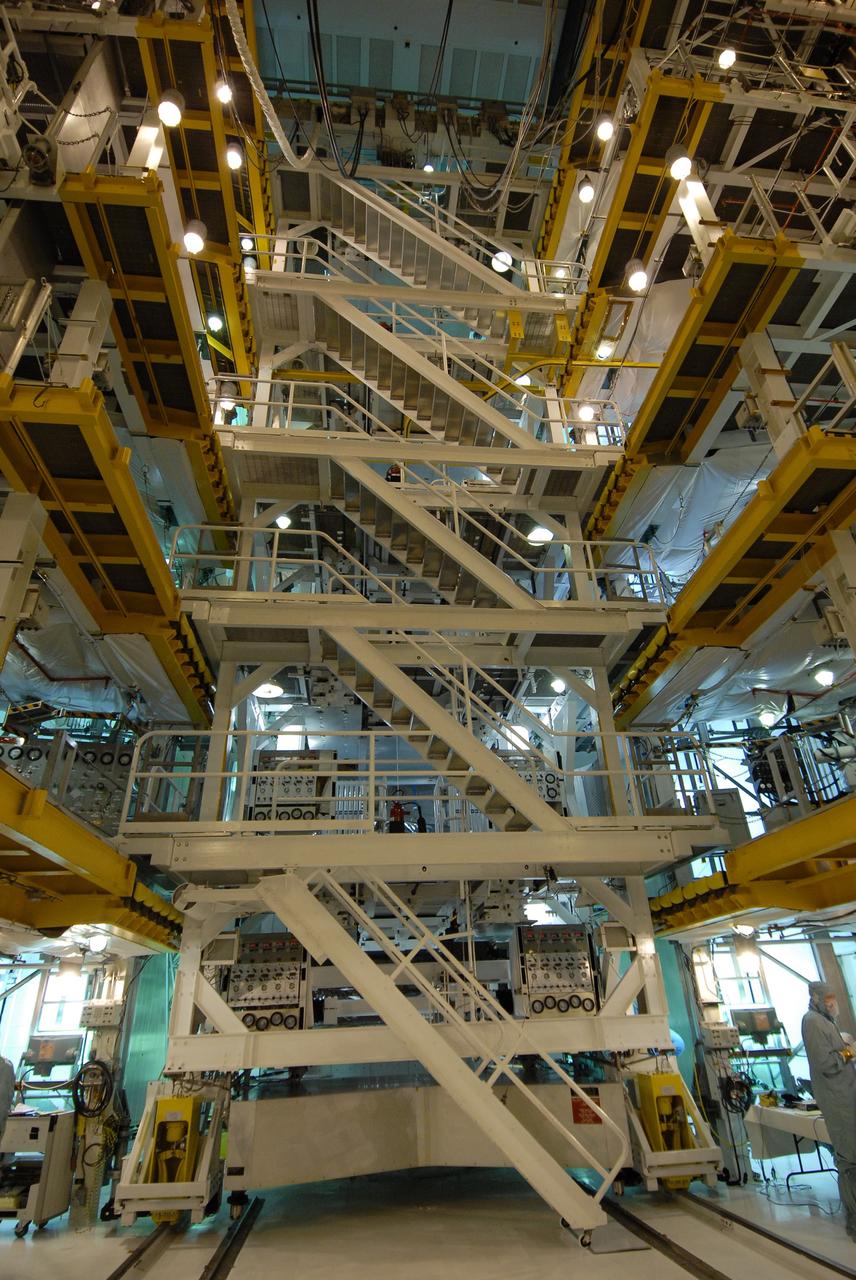
CAPE CANAVERAL, Fla. - In At NASA's Kennedy Space Center in Florida, the payload ground handling mechanism in the Payload Changeout Room on Launch Pad 39A is viewed from the rear as it transfers the STS-125 mission payload into space shuttle Atlantis’ payload bay. STS-125 is the fifth and final shuttle servicing mission for NASA’s Hubble Space Telescope. The payload comprises four carriers holding various equipment for the mission. Atlantis is targeted to launch Oct. 14 on the 11-day mission. Photo credit: NASA/Jack Pfaller
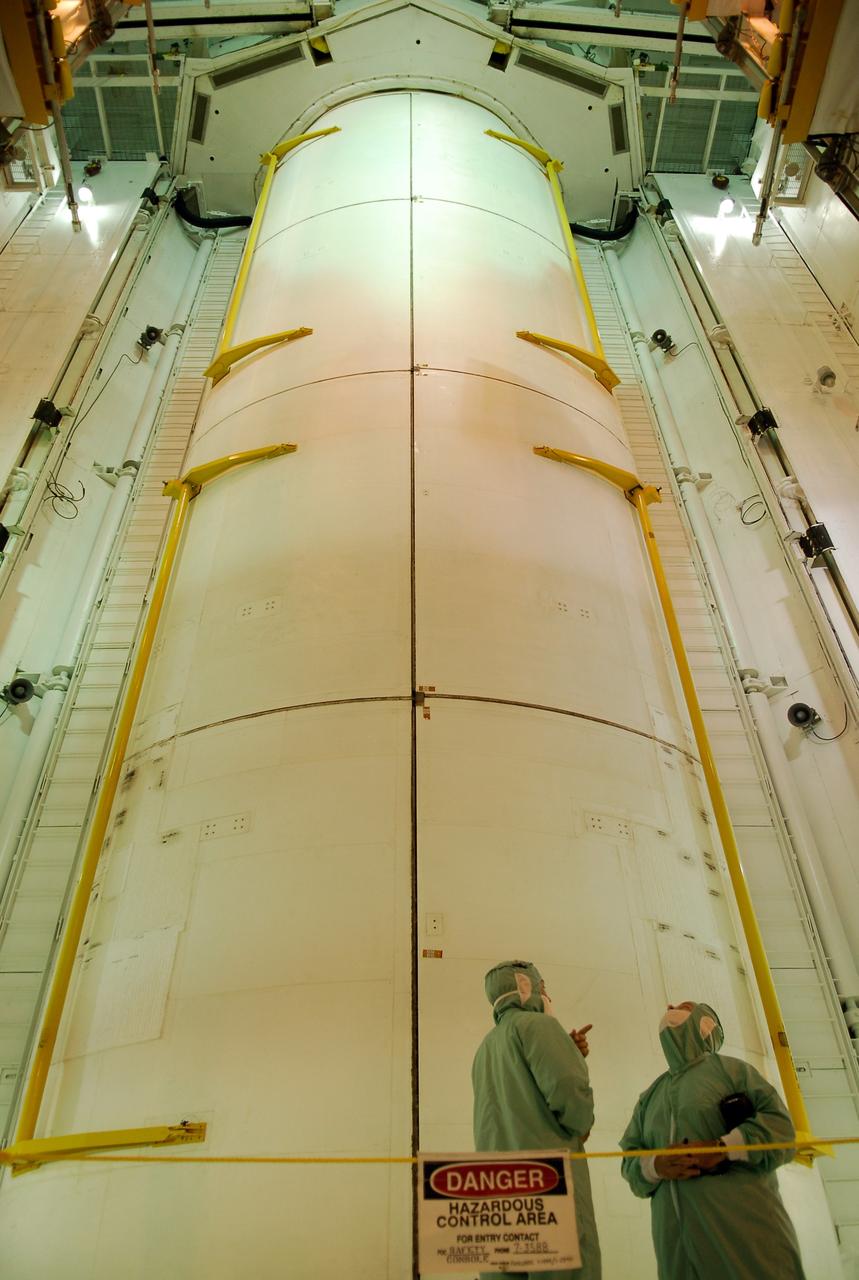
CAPE CANAVERAL, Fla. -- On Launch Pad 39A at NASA's Kennedy Space Center, space shuttle Discovery's payload bay doors have successfully closed around the Japanese Experiment Module—Pressurized Module. The launch of Discovery on its STS-124 mission is targeted for May 31. On the mission, Discovery will transport the pressurized module and the Japanese Remote Manipulator System to the International Space Station. Photo credit: NASA/Kim Shiflett
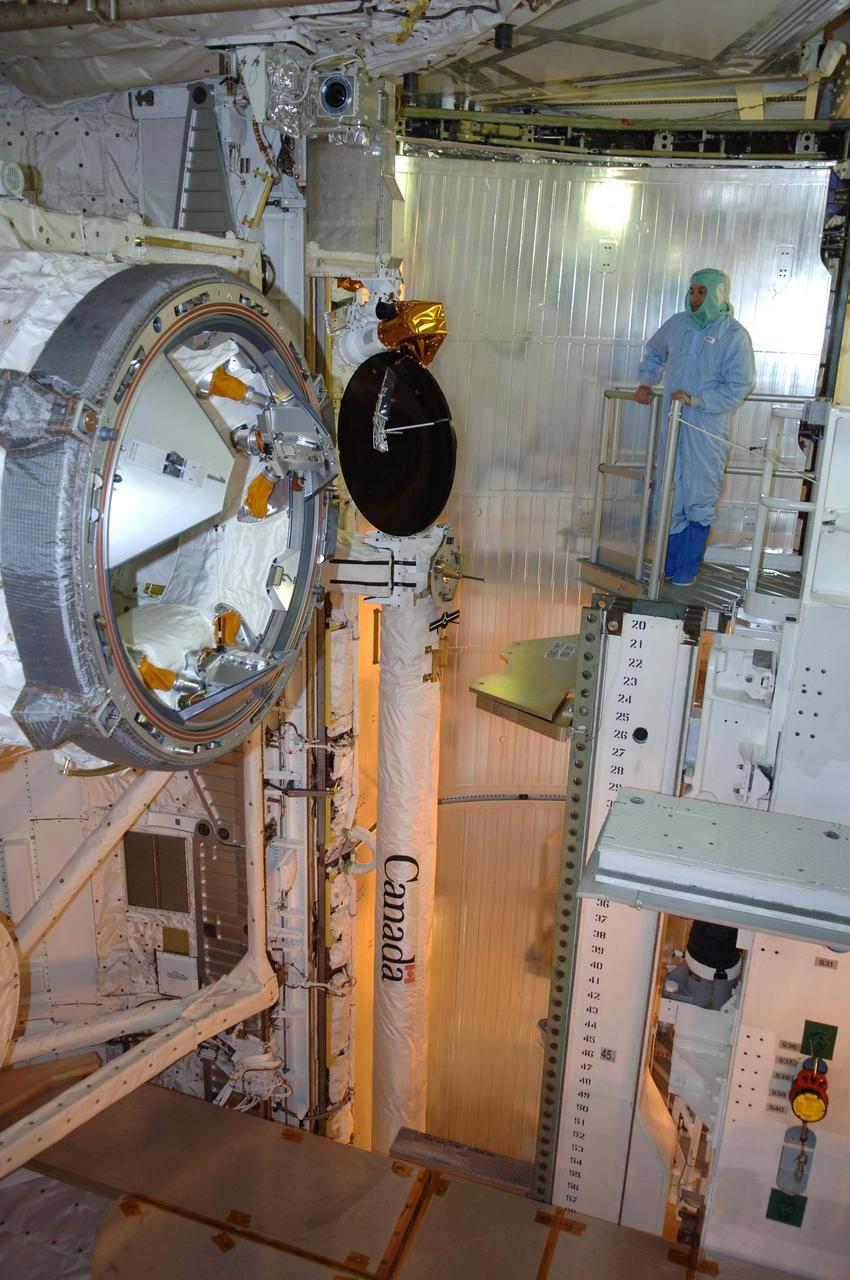
KENNEDY SPACE CENTER, FLA. -- In the payload changeout room on Launch Pad 39B, STS-116 Commander Mark Polansky looks over the mission payload one more time before launch. The crew is at KSC to take part in Terminal Countdown Demonstration Test activities, which include emergency egress training, a simulated launch countdown and payload familiarization. The TCDT is part of prelaunch preparations for the mission that is scheduled to lift off in a window opening no earlier than Dec. 7. The STS-116 mission is No. 20 to the International Space Station and construction flight 12A.1. The mission payload is the SPACEHAB module, the P5 integrated truss structure and other key components. Photo credit: NASA/Kim Shiflett
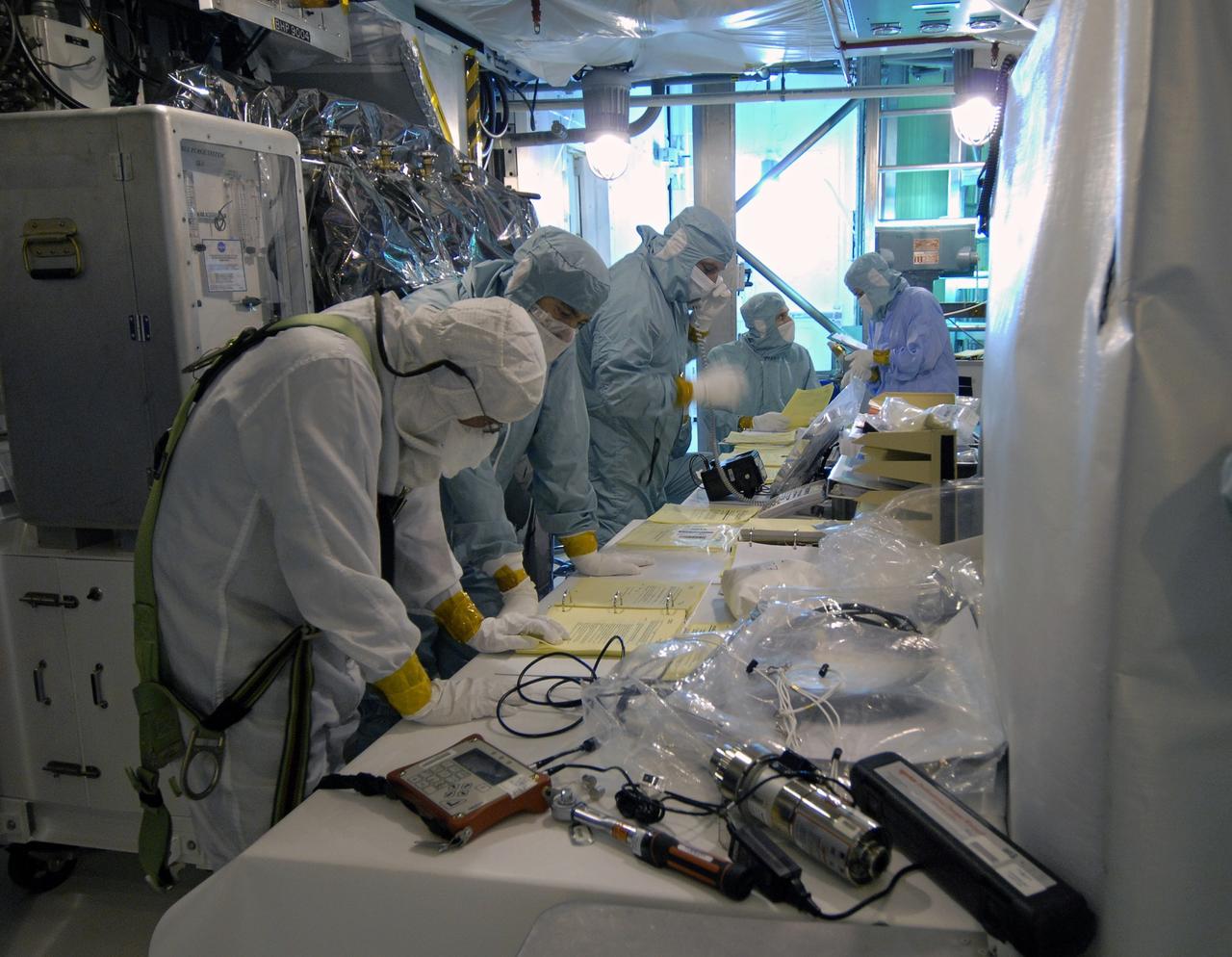
CAPE CANAVERAL, Fla. - At NASA's Kennedy Space Center in Florida, workers check data on the payload ground handling mechanism, or PGHM, in the Payload Changeout Room on Launch Pad 39A. The PGHM is being used to transfer the STS-125 mission payload into space shuttle Atlantis’ payload bay. STS-125 is the fifth and final shuttle servicing mission for NASA’s Hubble Space Telescope. The payload comprises four carriers holding various equipment for the mission. Atlantis is targeted to launch Oct. 14 on the 11-day mission. Photo credit: NASA/Jack Pfaller
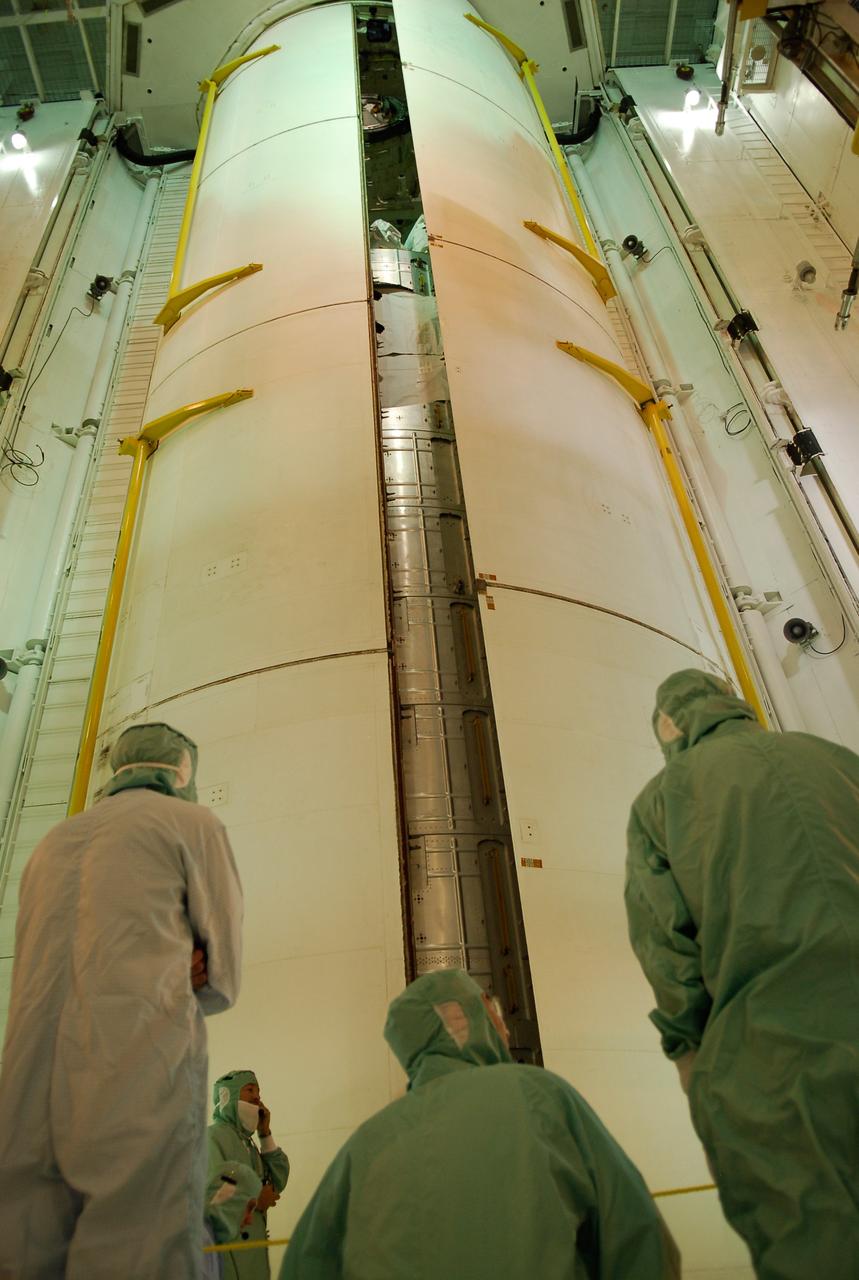
CAPE CANAVERAL, Fla. -- Workers in the payload changeout room on Launch Pad 39A at NASA's Kennedy Space Center watch closely as space shuttle Discovery's payload bay doors close around the Japanese Experiment Module—Pressurized Module. The launch of Discovery on its STS-124 mission is targeted for May 31. On the mission, Discovery will transport the pressurized module and the Japanese Remote Manipulator System to the International Space Station. Photo credit: NASA/Kim Shiflett
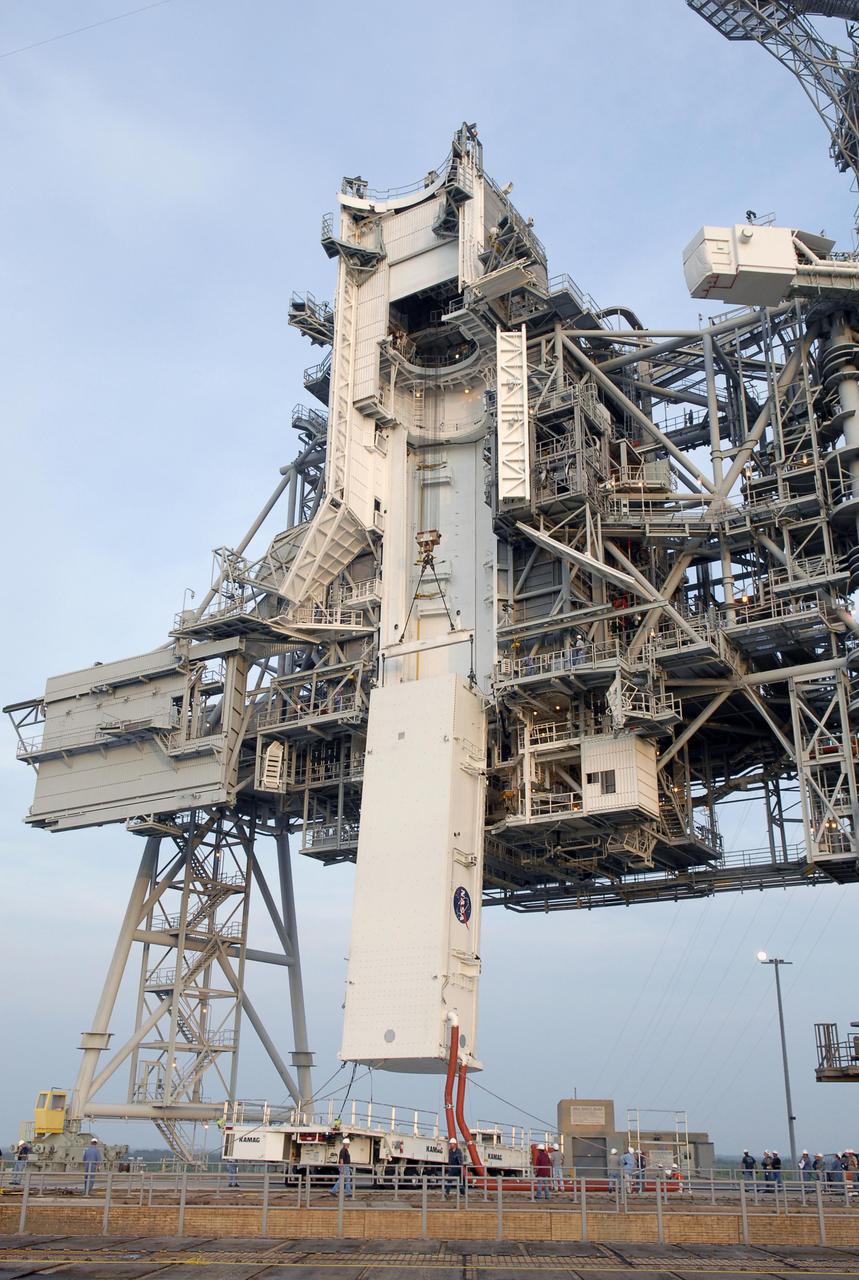
KENNEDY SPACE CENTER, FLA. -- The payload canister is lifted off its transporter up to the payload changeout room. Inside the canister are the S5 truss, SPACEHAB module and external stowage platform 3, the payload for mission STS-118. The red umbilical lines are still attached. The payloads will be transferred inside the changeout room to wait for Space Shuttle Endeavour to arrive at the pad. The changeout room is the enclosed, environmentally controlled portion of the rotating service structure that supports cargo delivery to the pad and subsequent vertical installation into the orbiter payload bay. The mission will be Endeavour's first flight in more than four years. The shuttle has undergone extensive modifications, including the addition of safety upgrades already added to shuttles Discovery and Atlantis. Endeavour also features new hardware, such as the Station-to-Shuttle Power Transfer System that will allow the docked shuttle to draw electrical power from the station and extend its visits to the orbiting lab. Space Shuttle Endeavour is targeted for launch on Aug. 7 from Launch Pad 39A. Photo credit: NASA_Kim Shiflett
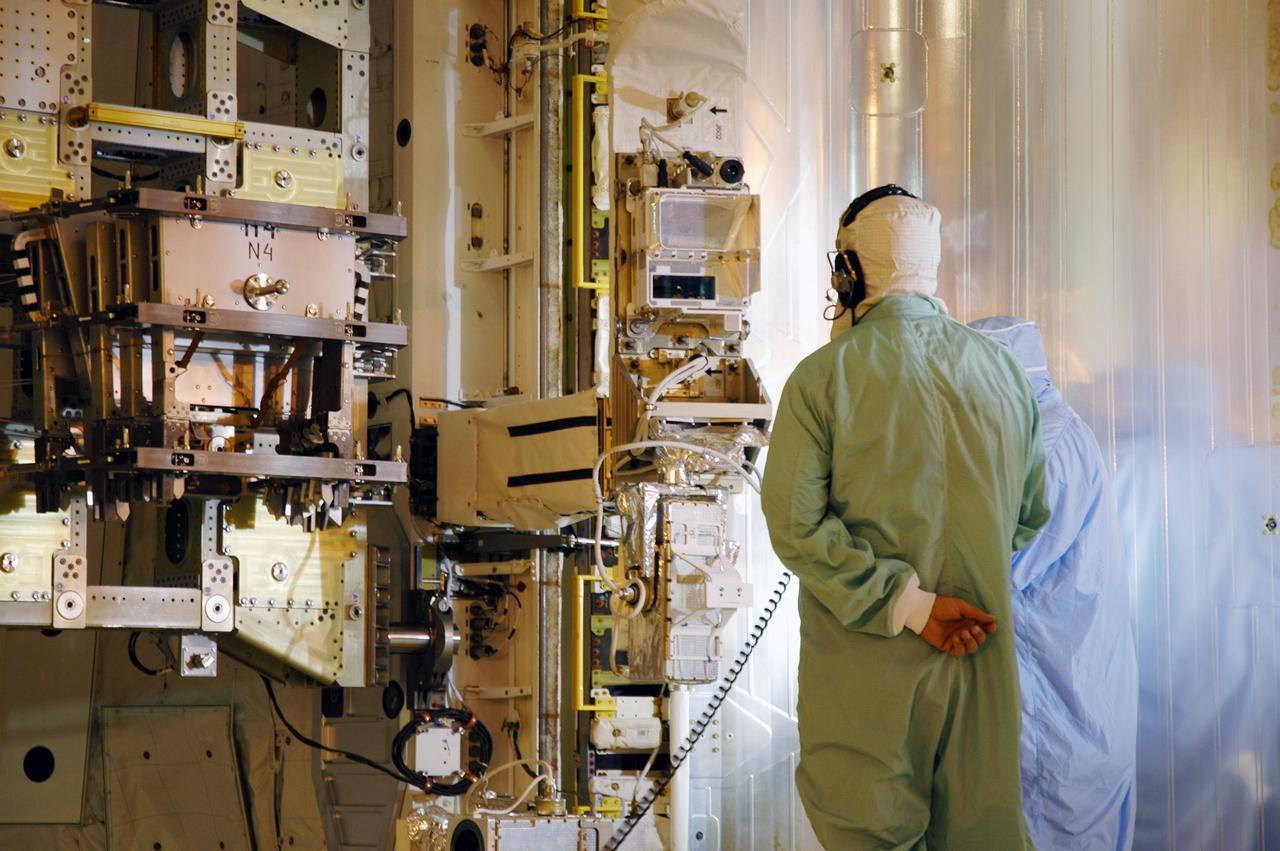
KENNEDY SPACE CENTER, FLA. -- On Launch Pad 39B, workers inside the payload changeout room monitor the closing of the payload bay doors on Space Shuttle Discovery. The payload includes the SPACEHAB module, the P5 integrated truss structure and other key components. Launch of Space Shuttle Discovery on mission STS-116 is scheduled no earlier than Dec. 7. Photo credit: NASA/Dimitri Gerondidakis
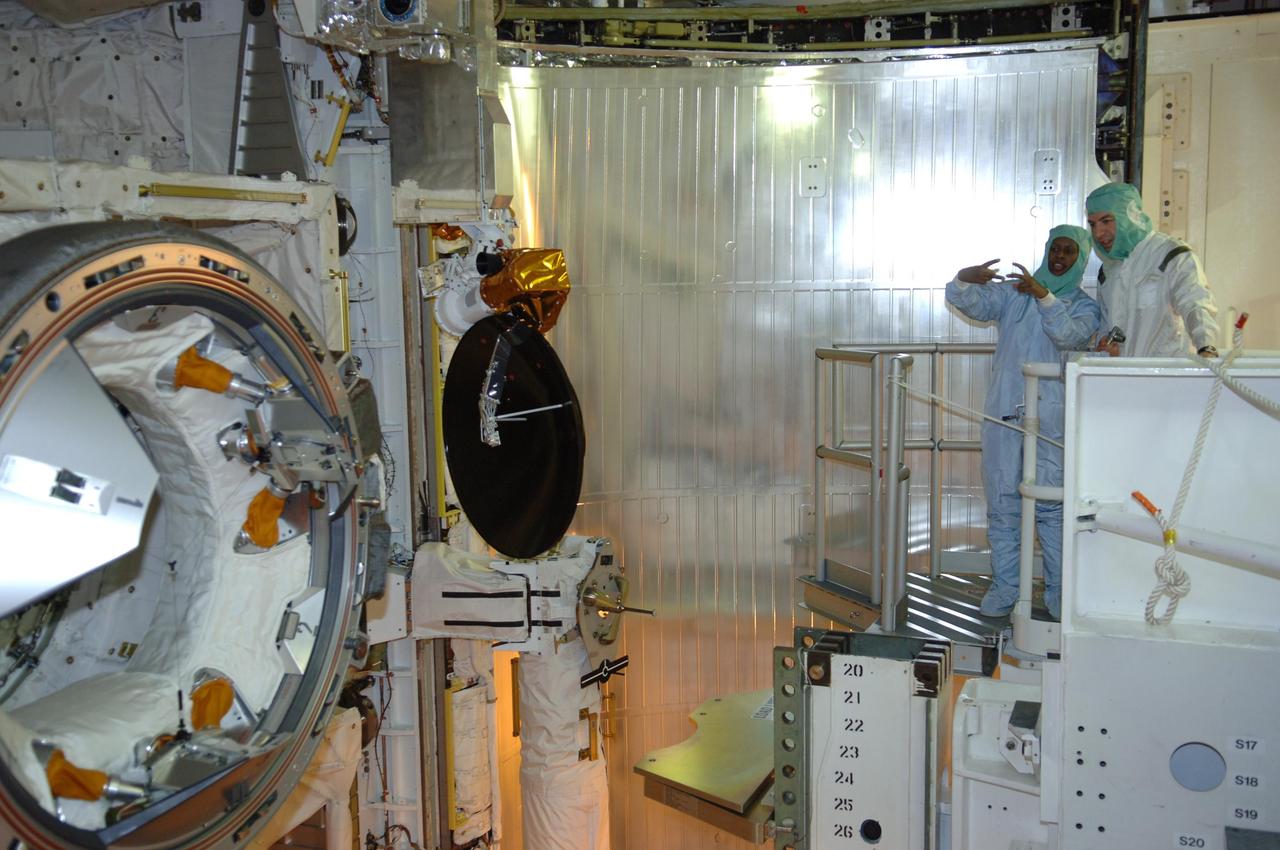
KENNEDY SPACE CENTER, FLA. -- In the payload changeout room on Launch Pad 39B, STS-116 crew members look over the mission payload one more time before launch. Mission Specialist Joan Higginbotham is at left. The crew is at KSC to take part in Terminal Countdown Demonstration Test activities, which include emergency egress training, a simulated launch countdown and payload familiarization. The TCDT is part of prelaunch preparations for the mission that is scheduled to lift off in a window opening no earlier than Dec. 7. The STS-116 mission is No. 20 to the International Space Station and construction flight 12A.1. The mission payload is the SPACEHAB module, the P5 integrated truss structure and other key components. Photo credit: NASA/Kim Shiflett
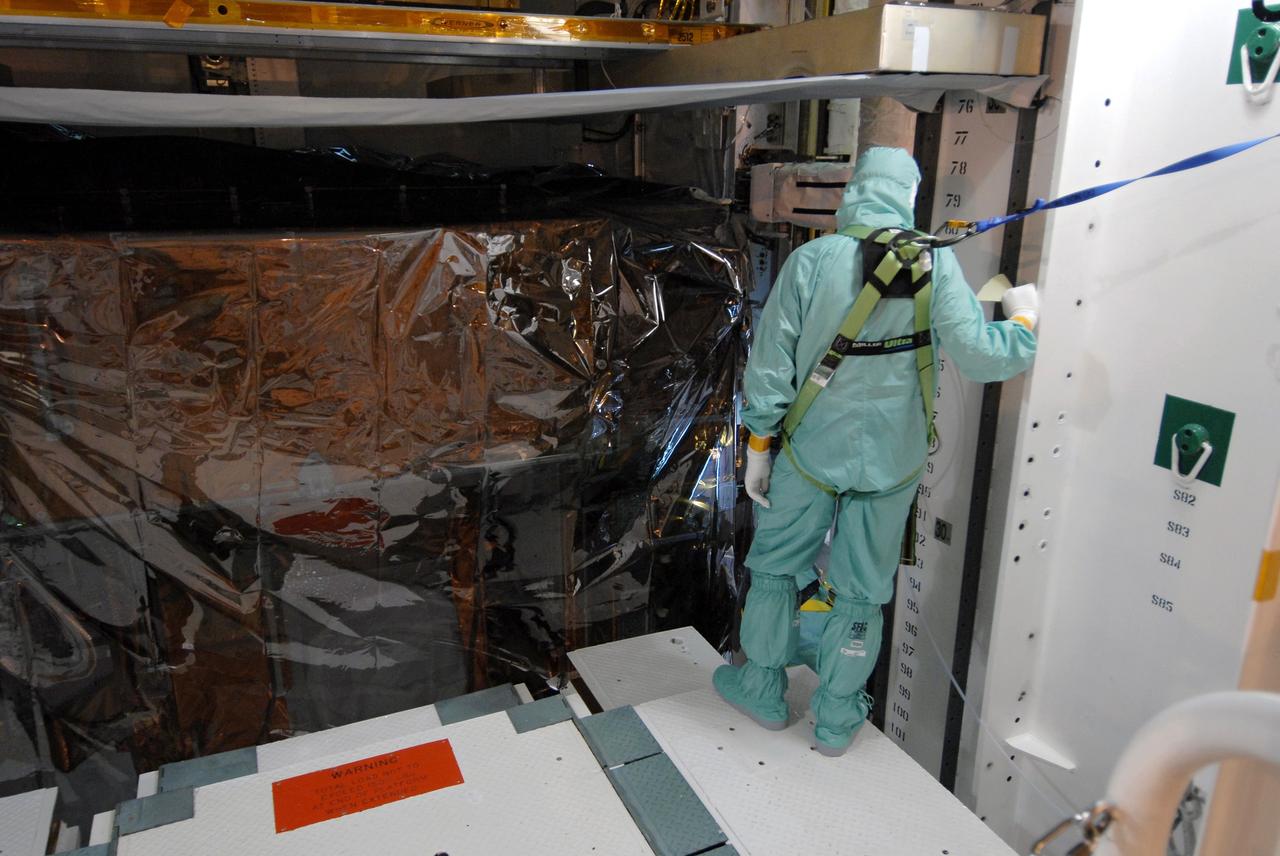
CAPE CANAVERAL, Fla. - In the Payload Changeout Room on Launch Pad 39A at NASA's Kennedy Space Center in Florida, a worker uses the payload ground handling mechanism to install the payload for the STS-125 mission into space shuttle Atlantis’ payload bay. STS-125 is the fifth and final shuttle servicing mission for NASA’s Hubble Space Telescope. The payload comprises four carriers holding various equipment for the mission. Atlantis is targeted to launch Oct. 14 on the 11-day mission. Photo credit: NASA/Jack Pfaller
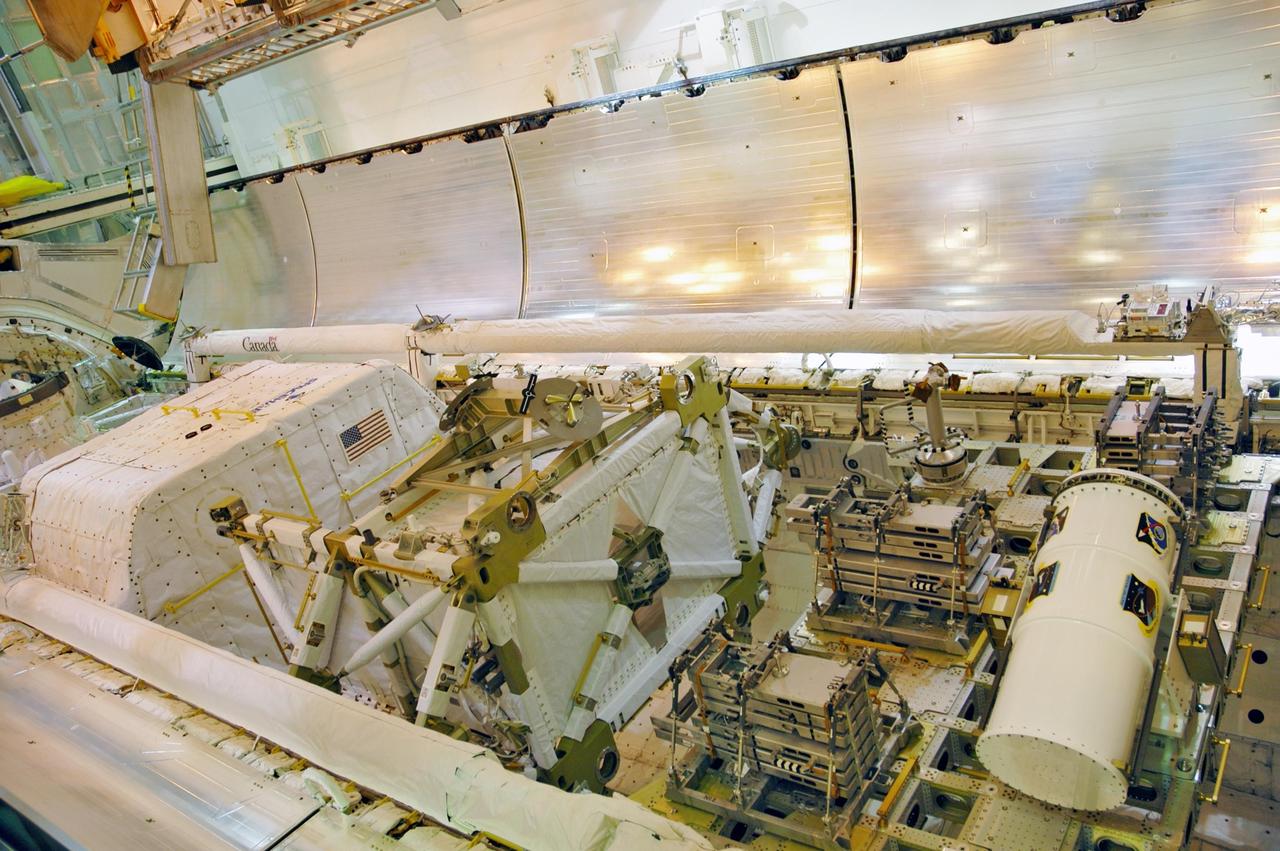
KENNEDY SPACE CENTER, FLA. -- With the payload successfully installed inside, the payload bay doors on Space Shuttle Discovery are closing. Seen here are the SPACEHAB module at left, the P5 truss in the center, service module debris panels and the Space Test Program experiment canister on the integrated cargo carrier at right. The shuttle is on Launch Pad 39B, ready for launch on mission STS-116 scheduled no earlier than Dec. 7. Photo credit: NASA/Dimitri Gerondidakis
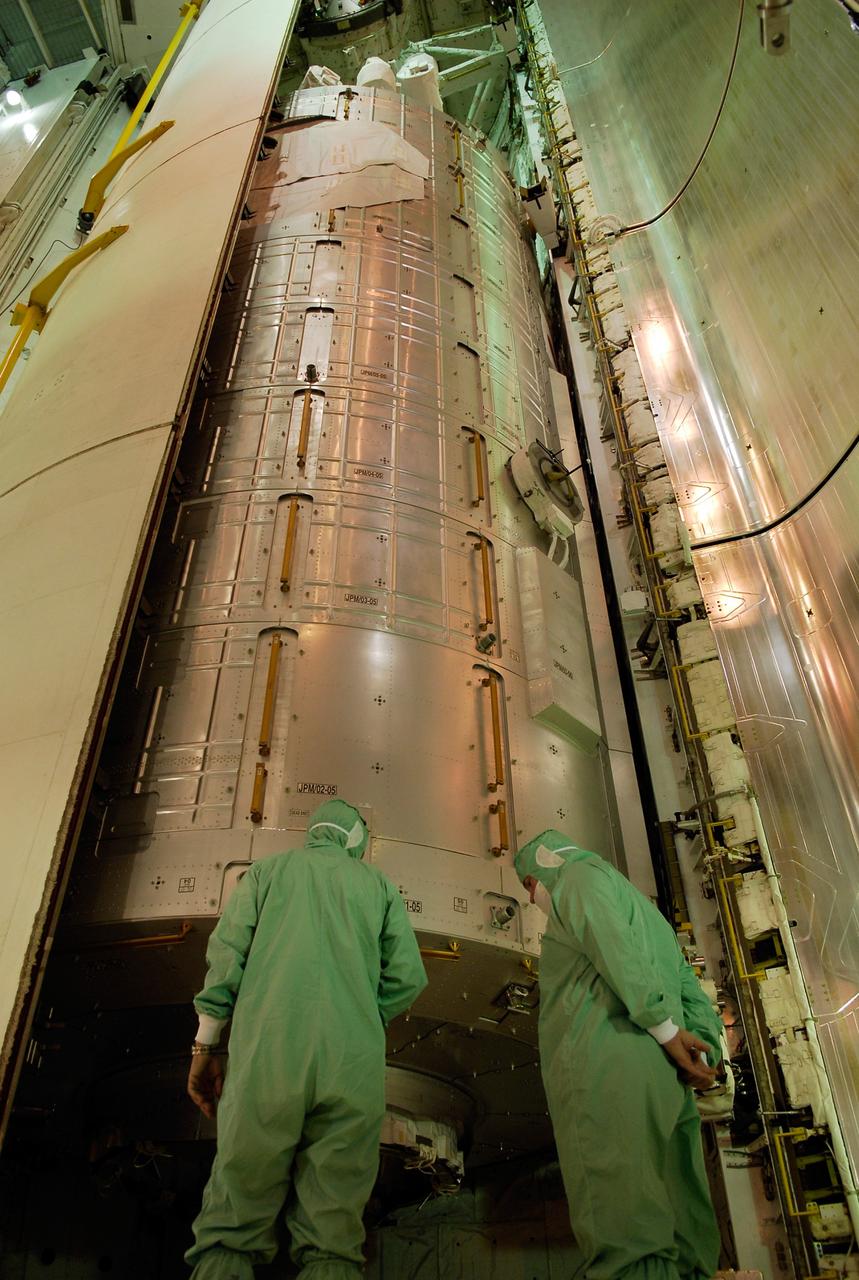
CAPE CANAVERAL, Fla. -- Workers in the payload changeout room on Launch Pad 39A at NASA's Kennedy Space Center check space shuttle Discovery's payload bay doors as they close around the Japanese Experiment Module—Pressurized Module. The launch of Discovery on its STS-124 mission is targeted for May 31. On the mission, Discovery will transport the pressurized module and the Japanese Remote Manipulator System to the International Space Station. Photo credit: NASA/Kim Shiflett
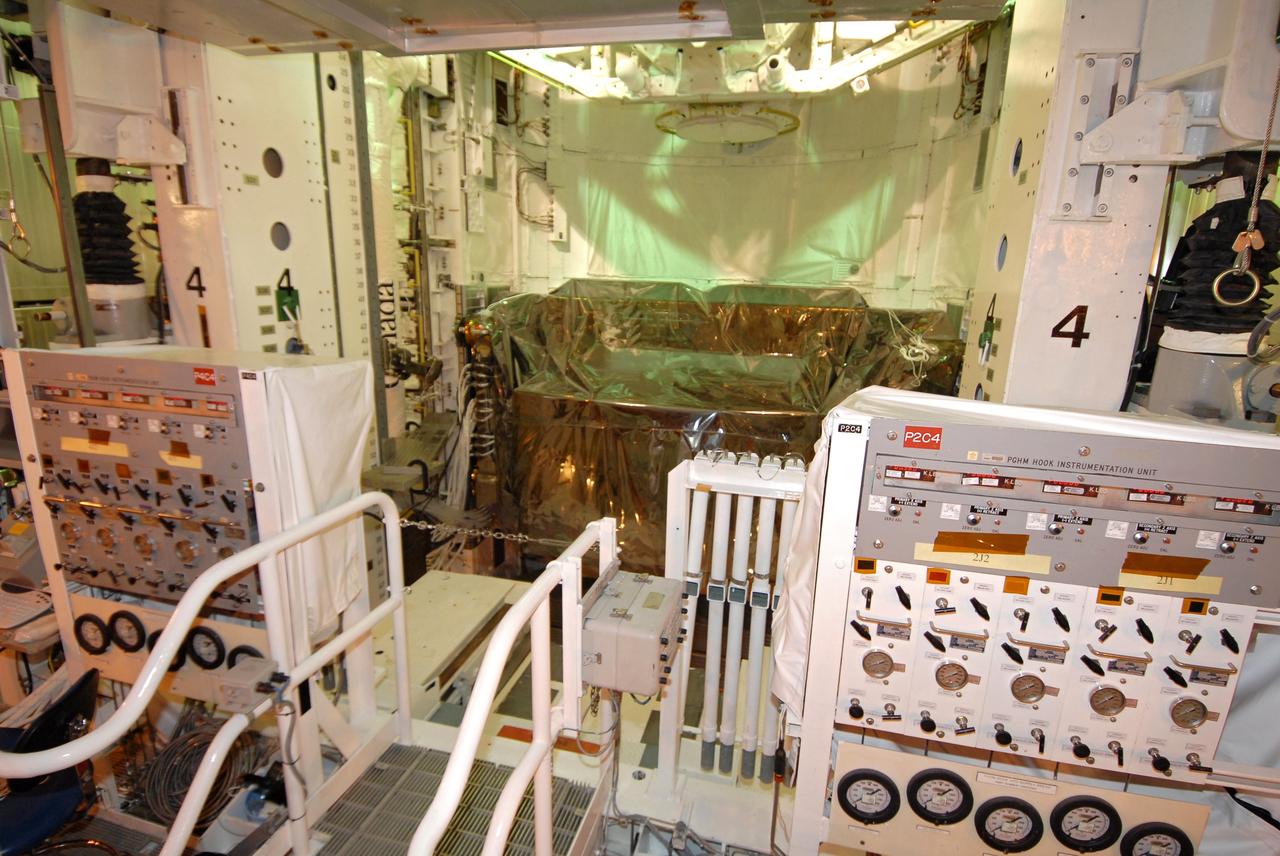
CAPE CANAVERAL, Fla. - Viewed from inside the Payload Changeout Room on Launch Pad 39A at NASA's Kennedy Space Center in Florida, the Super Lightweight Interchangeable Carrier is installed behind the shuttle external airlock (top) in space shuttle Atlantis’ payload bay for the STS-125 mission. STS-125 is the fifth and final shuttle servicing mission for NASA’s Hubble Space Telescope. The payload comprises four carriers holding various equipment for the mission. Atlantis is targeted to launch Oct. 14 on the 11-day mission. Photo credit: NASA/Jack Pfaller
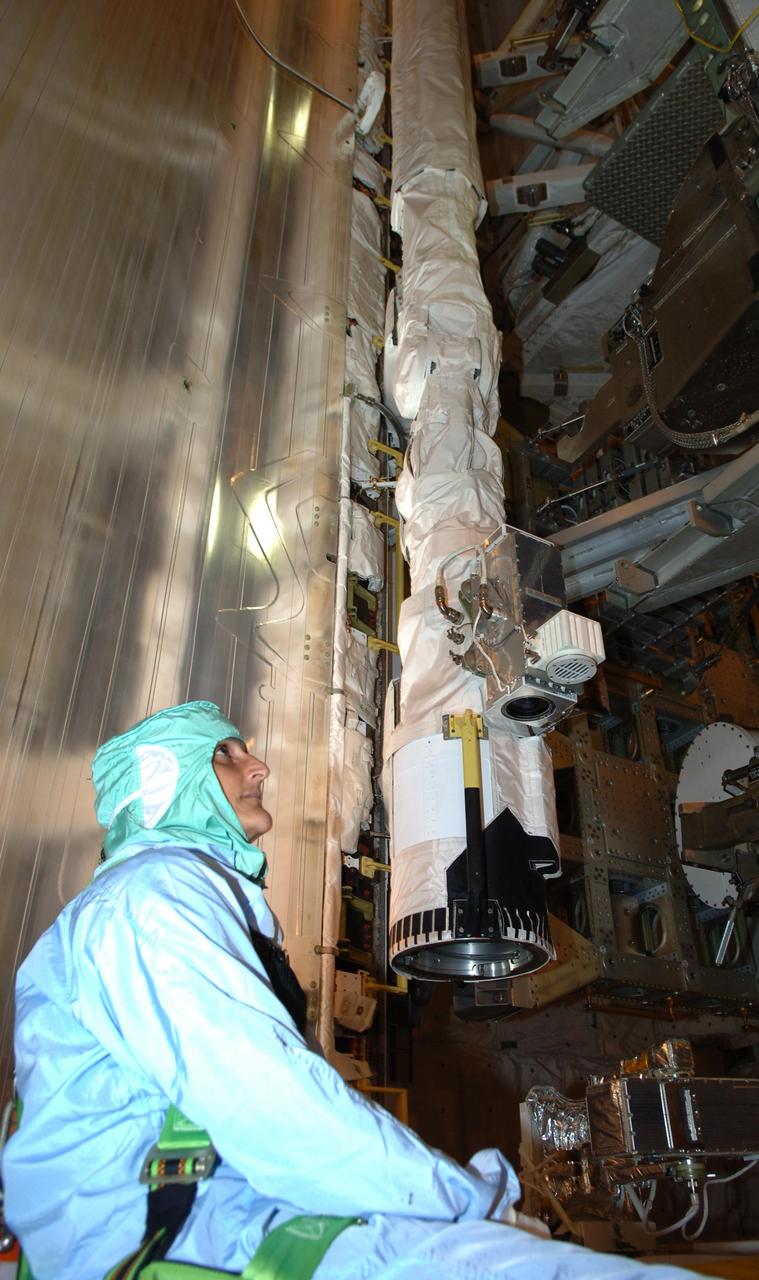
KENNEDY SPACE CENTER, FLA. -- In the payload changeout room on Launch Pad 39B, Expedition 14 Flight Engineer Sunita Williams looks over the STS-116 mission payload one more time before launch. Williams will be traveling aboard Discovery with the STS-116 crew and staying on the International Space Station. The crew is at KSC to take part in Terminal Countdown Demonstration Test activities, which include emergency egress training, a simulated launch countdown and payload familiarization. The TCDT is part of prelaunch preparations for the mission that is scheduled to lift off in a window opening no earlier than Dec. 7. The STS-116 mission is No. 20 to the International Space Station and construction flight 12A.1. The mission payload is the SPACEHAB module, the P5 integrated truss structure and other key components. Photo credit: NASA/Kim Shiflett
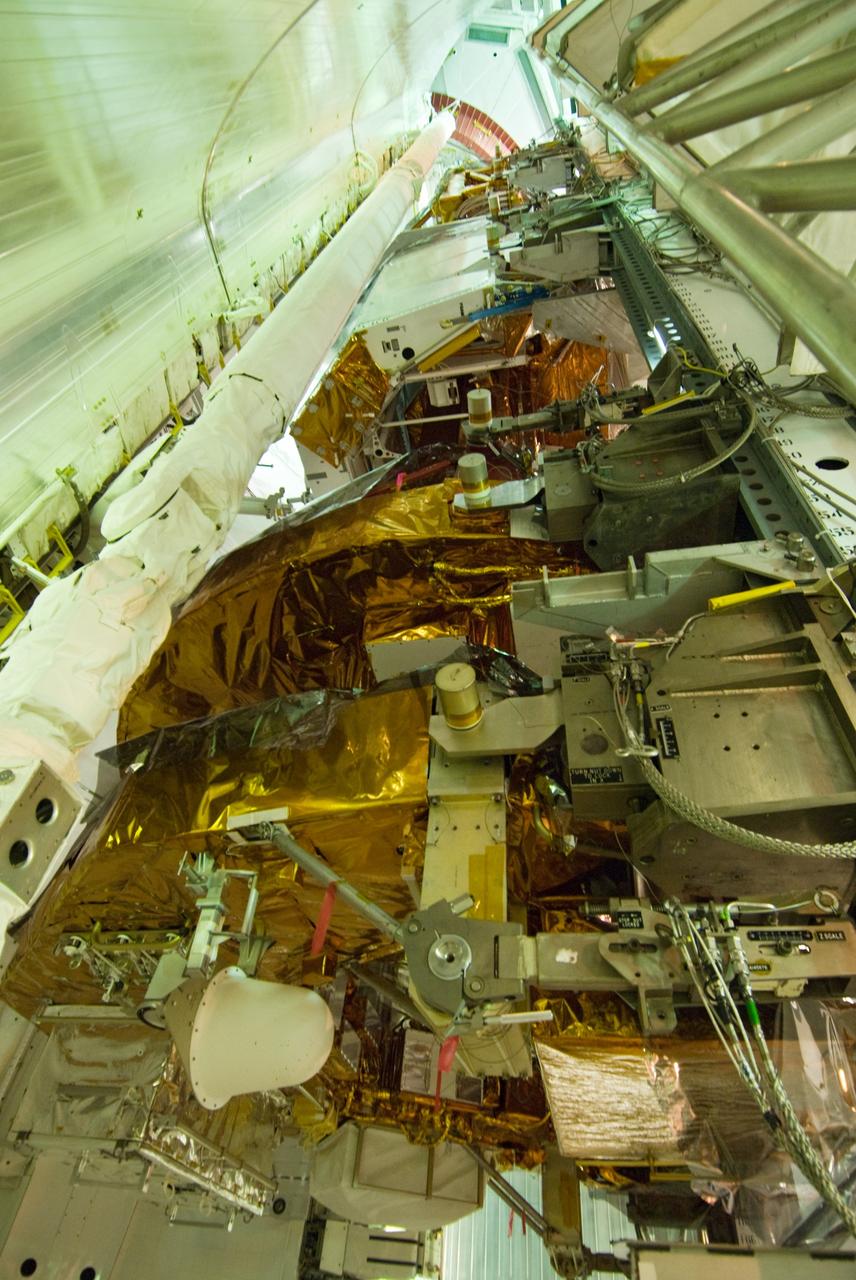
CAPE CANAVERAL, Fla. –– On Launch Pad 39A at NASA's Kennedy Space Center in Florida, the equipment and hardware needed to service the Hubble Space Telescope are transferred from the payload changeout room to space shuttle Atlantis' cargo bay. Launch of Atlantis' 11-day STS-125 mission to Hubble is targeted for May 12. The flight will include five spacewalks during which astronauts will refurbish and upgrade the telescope with state-of-the-art science instruments. As a result, Hubble's capabilities will be expanded and its operational lifespan extended through at least 2014. Photo credit: NASA/Jack Pfaller
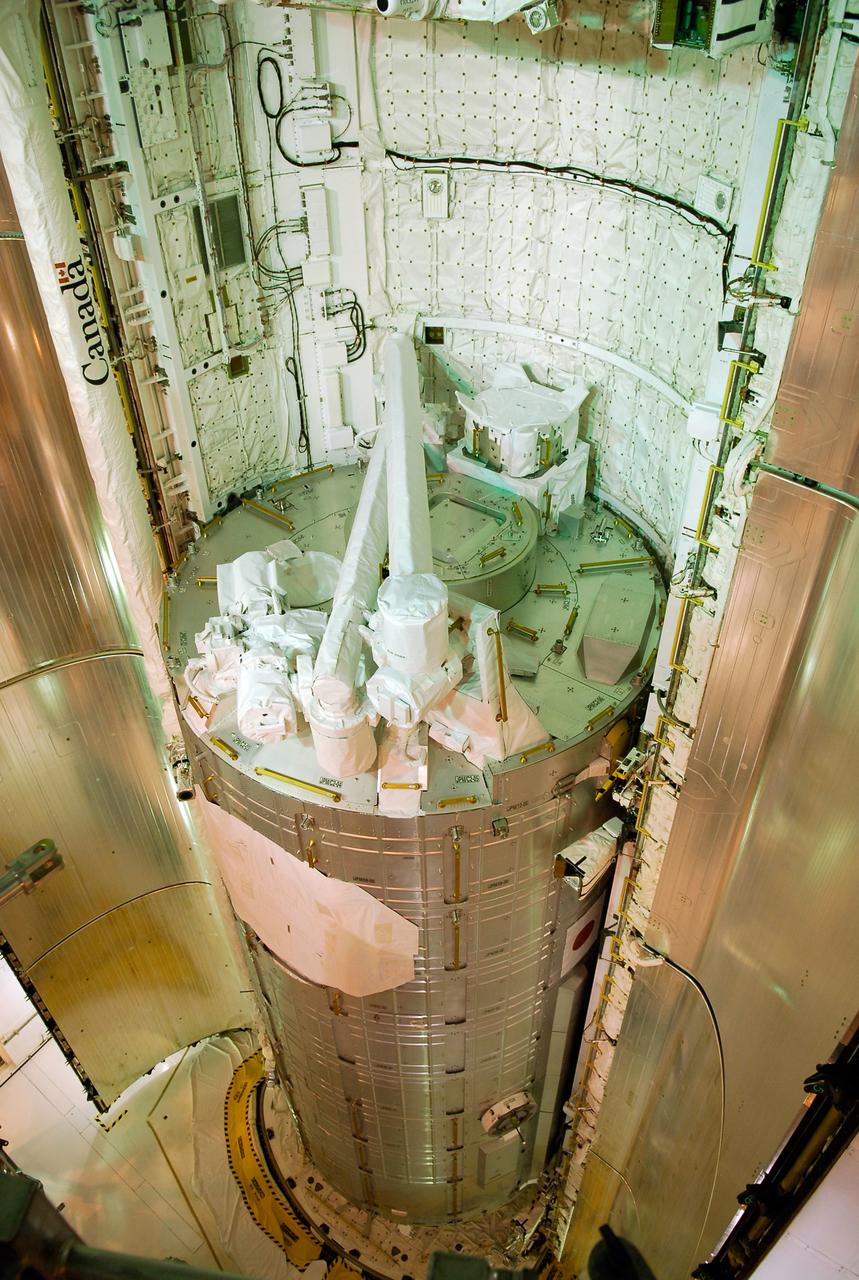
CAPE CANAVERAL, Fla. -- On Launch Pad 39A at NASA's Kennedy Space Center, the Japanese Experiment Module—Pressurized Module is in place in space shuttle Discovery's payload bay as the payload bay doors begin to close. The launch of Discovery on its STS-124 mission is targeted for May 31. On the mission, Discovery will transport the pressurized module and the Japanese Remote Manipulator System to the International Space Station. Photo credit: NASA/Kim Shiflett
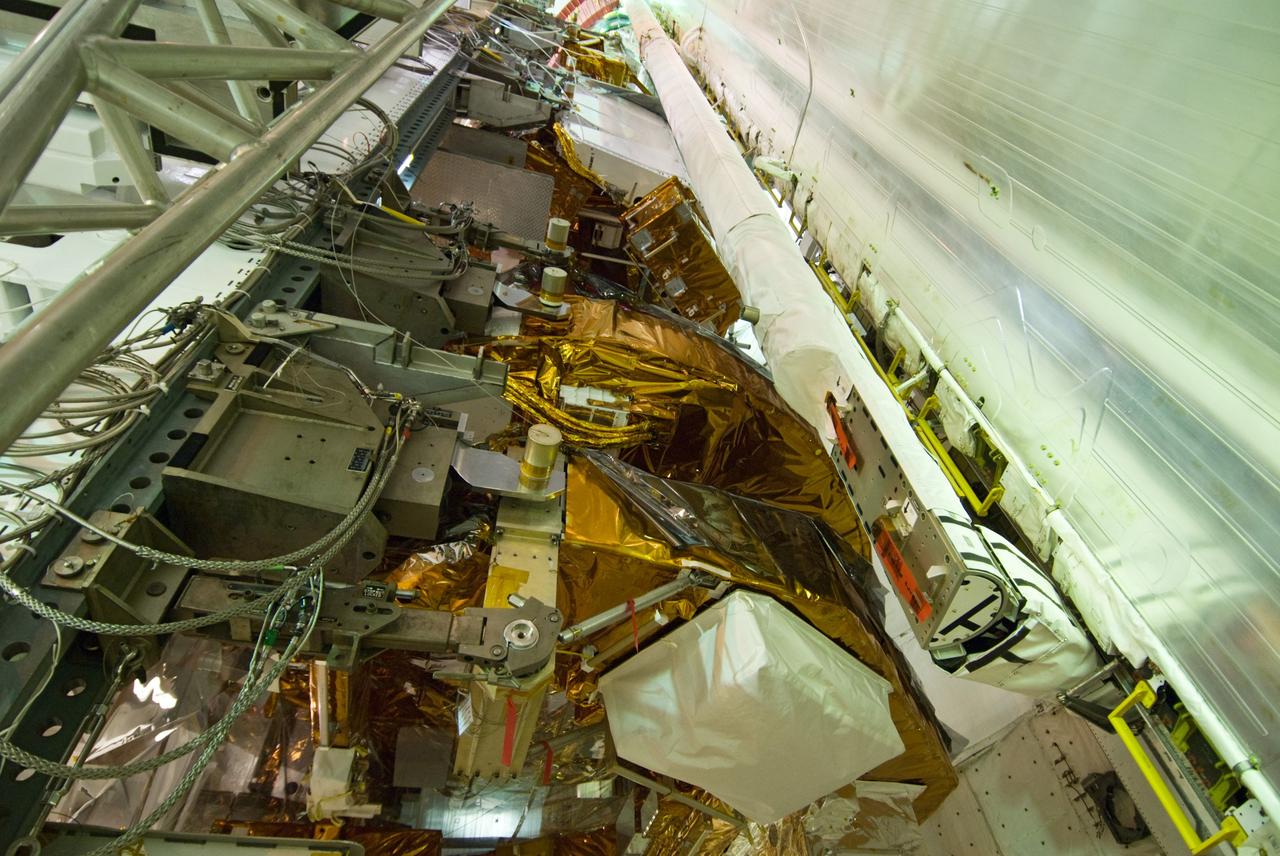
CAPE CANAVERAL, Fla. –– On Launch Pad 39A at NASA's Kennedy Space Center in Florida, the equipment and hardware needed to service the Hubble Space Telescope are transferred from the payload changeout room to space shuttle Atlantis' cargo bay. Launch of Atlantis' 11-day STS-125 mission to Hubble is targeted for May 12. The flight will include five spacewalks during which astronauts will refurbish and upgrade the telescope with state-of-the-art science instruments. As a result, Hubble's capabilities will be expanded and its operational lifespan extended through at least 2014. Photo credit: NASA/Jack Pfaller
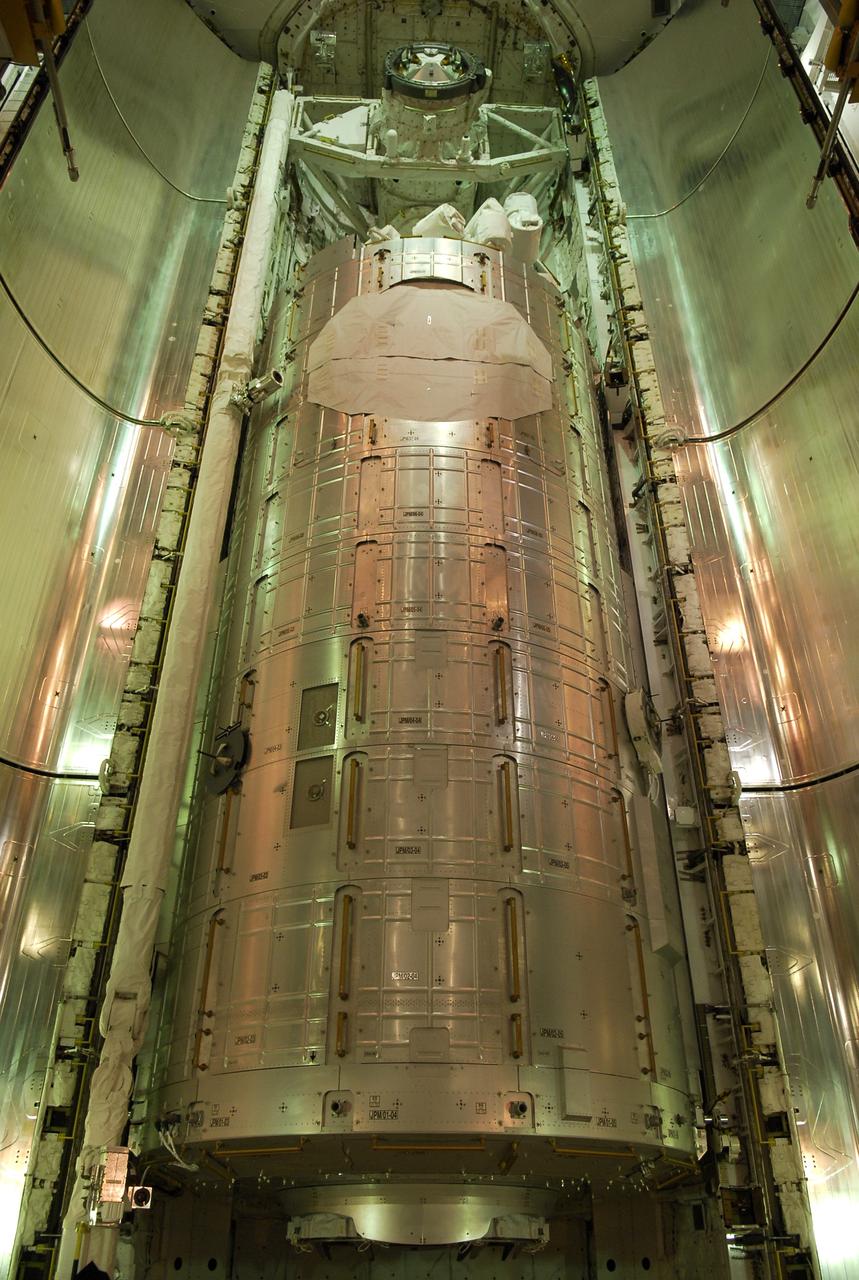
CAPE CANAVERAL, Fla. -- On Launch Pad 39A at NASA's Kennedy Space Center, the Japanese Experiment Module—Pressurized Module is seen in space shuttle Discovery's payload bay as the payload bay doors begin to close. Above the pressurized module is the orbital docking system. The launch of Discovery on its STS-124 mission is targeted for May 31. On the mission, Discovery will transport the pressurized module and the Japanese Remote Manipulator System to the International Space Station. Photo credit: NASA/Kim Shiflett

KENNEDY SPACE CENTER, FLA. -- With the payload successfully installed inside, the payload bay doors on Space Shuttle Discovery are closing. Seen here are the SPACEHAB module at left and the orbiter docking system at right. The shuttle is on Launch Pad 39B, ready for launch on mission STS-116 scheduled no earlier than Dec. 7. Photo credit: NASA/Dimitri Gerondidakis
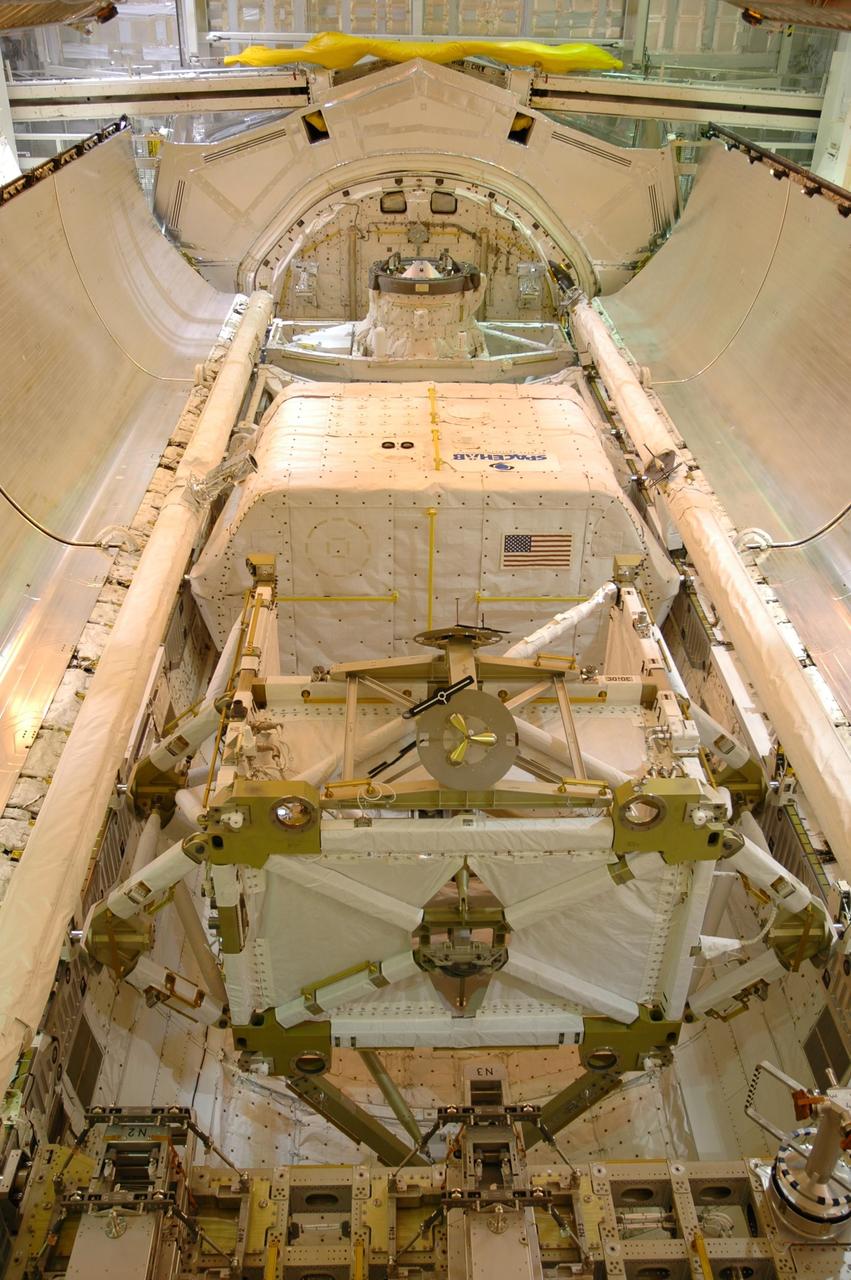
KENNEDY SPACE CENTER, FLA. -- With the payload successfully installed inside, the payload bay doors on Space Shuttle Discovery are closing. Seen here are the SPACEHAB module on top and the P5 truss below. Launch of Space Shuttle Discovery on mission STS-116 is scheduled no earlier than Dec. 7. Photo credit: NASA/Dimitri Gerondidakis
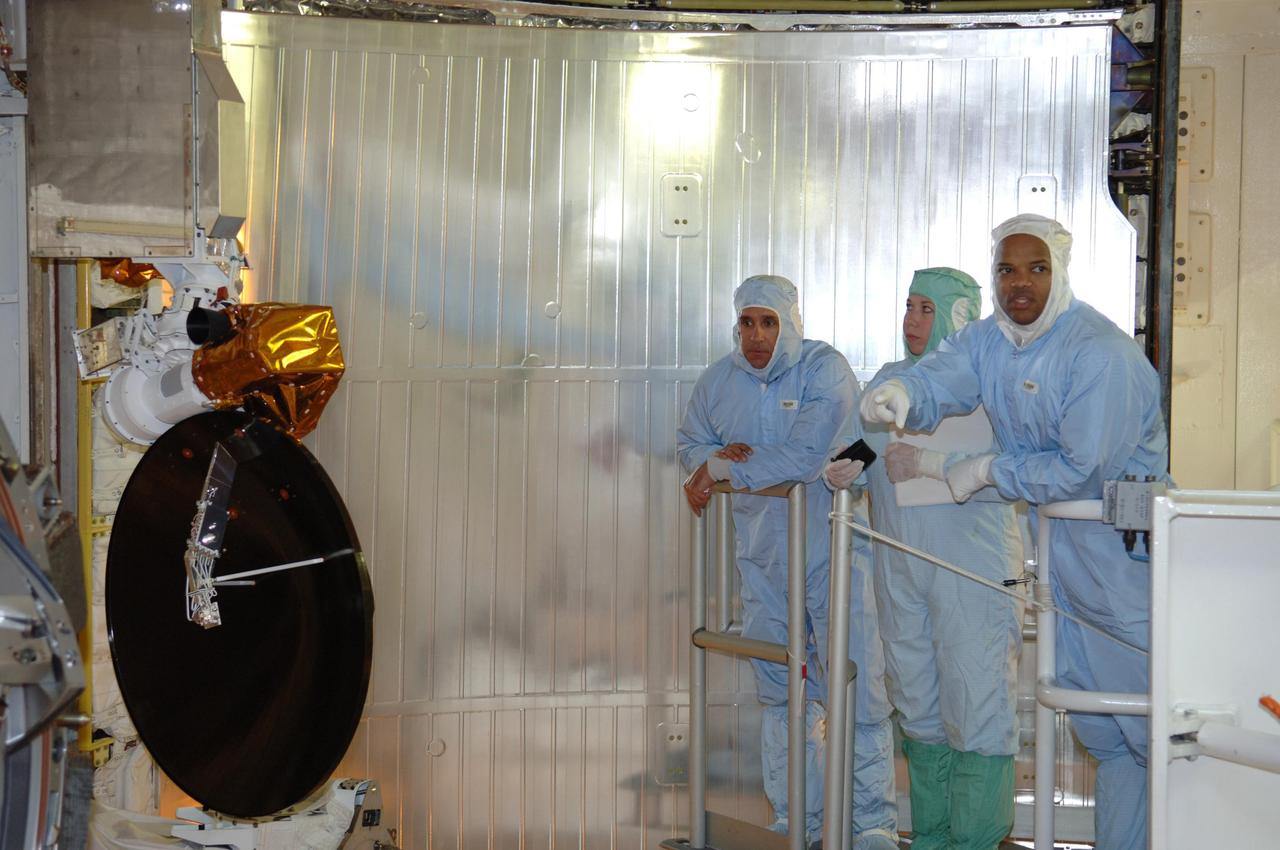
KENNEDY SPACE CENTER, FLA. -- In the payload changeout room on Launch Pad 39B, STS-116 crew members look over the mission payload one more time before launch. Pilot William Oefelein is at left and Mission Specialist Robert Curbeam is at right. The crew is at KSC to take part in Terminal Countdown Demonstration Test activities, which include emergency egress training, a simulated launch countdown and payload familiarization. The TCDT is part of prelaunch preparations for the mission that is scheduled to lift off in a window opening no earlier than Dec. 7. The STS-116 mission is No. 20 to the International Space Station and construction flight 12A.1. The mission payload is the SPACEHAB module, the P5 integrated truss structure and other key components. Photo credit: NASA/Kim Shiflett

CAPE CANAVERAL, Fla. -- Workers in the payload changeout room on Launch Pad 39A at NASA's Kennedy Space Center check the placement of space shuttle Discovery's payload bay doors as they close around the Japanese Experiment Module—Pressurized Module. The launch of Discovery on its STS-124 mission is targeted for May 31. On the mission, Discovery will transport the pressurized module and the Japanese Remote Manipulator System to the International Space Station. Photo credit: NASA/Kim Shiflett
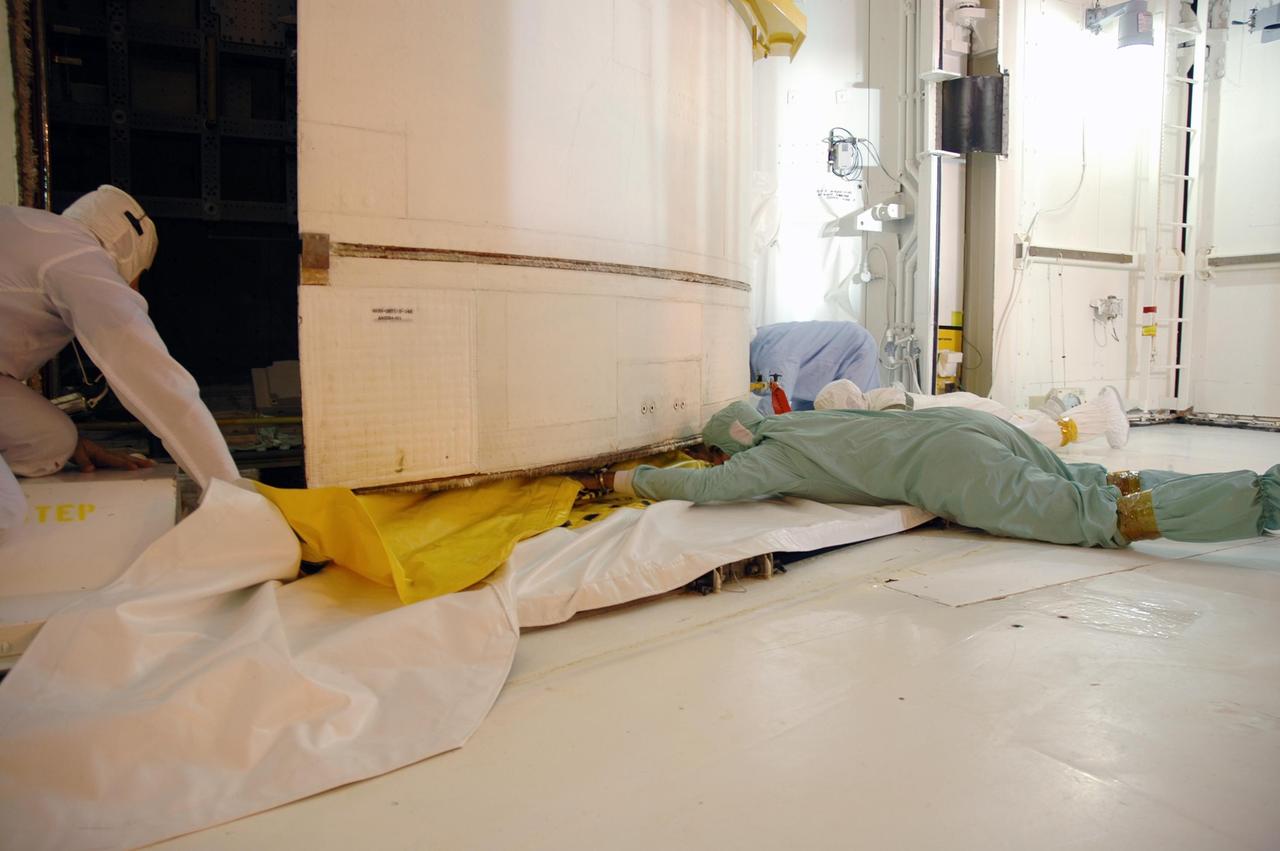
KENNEDY SPACE CENTER, FLA. -- On Launch Pad 39B, technicians check the clearance under the payload door on Space Shuttle Discovery as the door closes. The payload includes the SPACEHAB module, the P5 integrated truss structure and other key components. Launch of Space Shuttle Discovery on mission STS-116 is scheduled no earlier than Dec. 7. Photo credit: NASA/Dimitri Gerondidakis
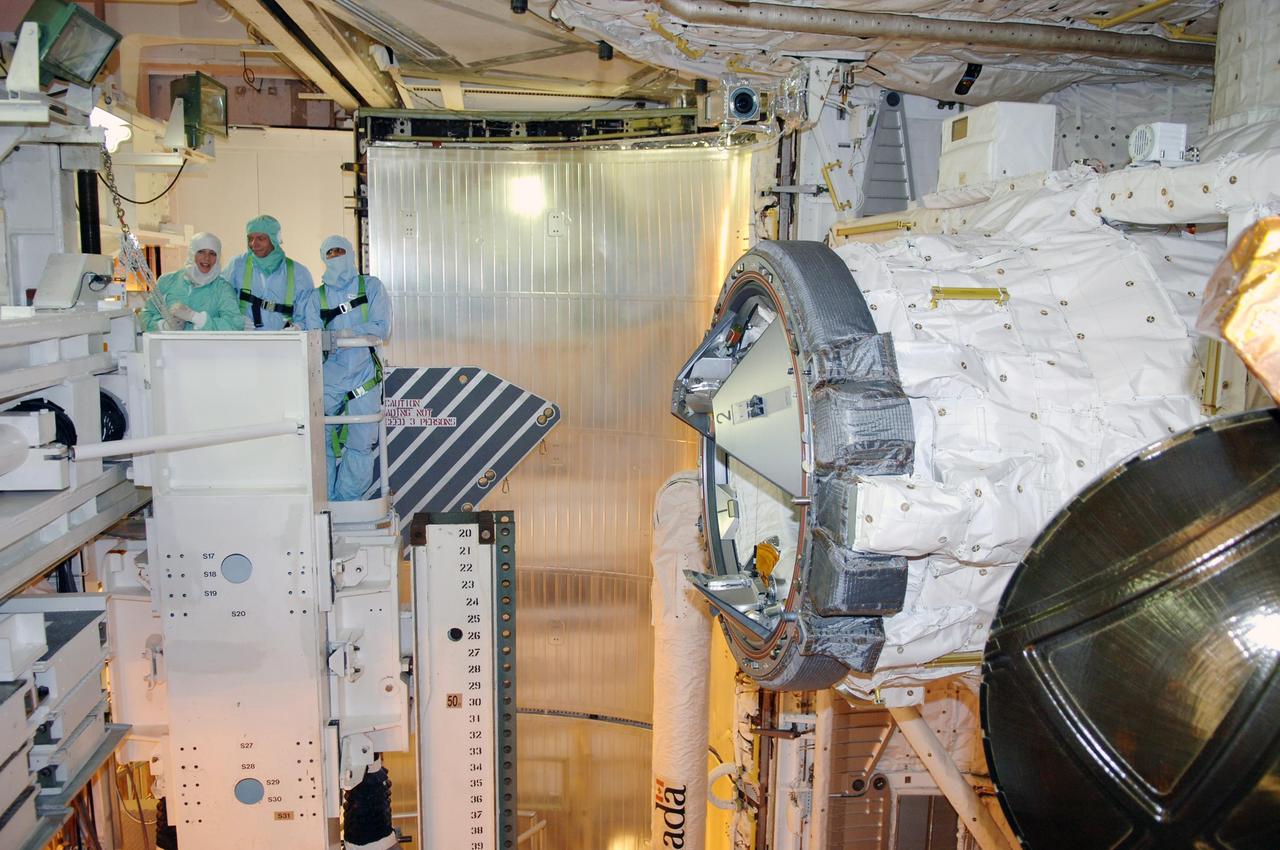
KENNEDY SPACE CENTER, FLA. -- In the payload changeout room on Launch Pad 39B, STS-116 crew members look over the mission payload with payload managers one more time before launch. Mission Specialist Christer Fuglesang is in the center.The crew is at KSC to take part in Terminal Countdown Demonstration Test activities, which include emergency egress training, a simulated launch countdown and payload familiarization. The TCDT is part of prelaunch preparations for the mission that is scheduled to lift off in a window opening no earlier than Dec. 7. The STS-116 mission is No. 20 to the International Space Station and construction flight 12A.1. The mission payload is the SPACEHAB module, the P5 integrated truss structure and other key components. Photo credit: NASA/Kim Shiflett
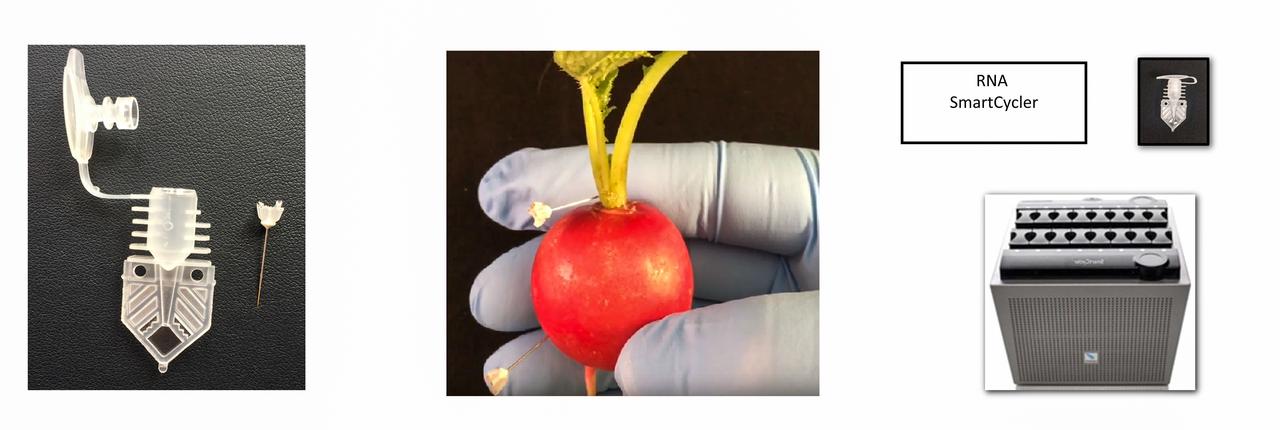
jsc2019e058183 (7/1/2019) --- Gene Sampler technology overview illustrating the direct purification and amplification of genetic material using RNA capture pins and the SmartCycler PCR instrument. Image courtesy of: Dr. Niel D. Crews
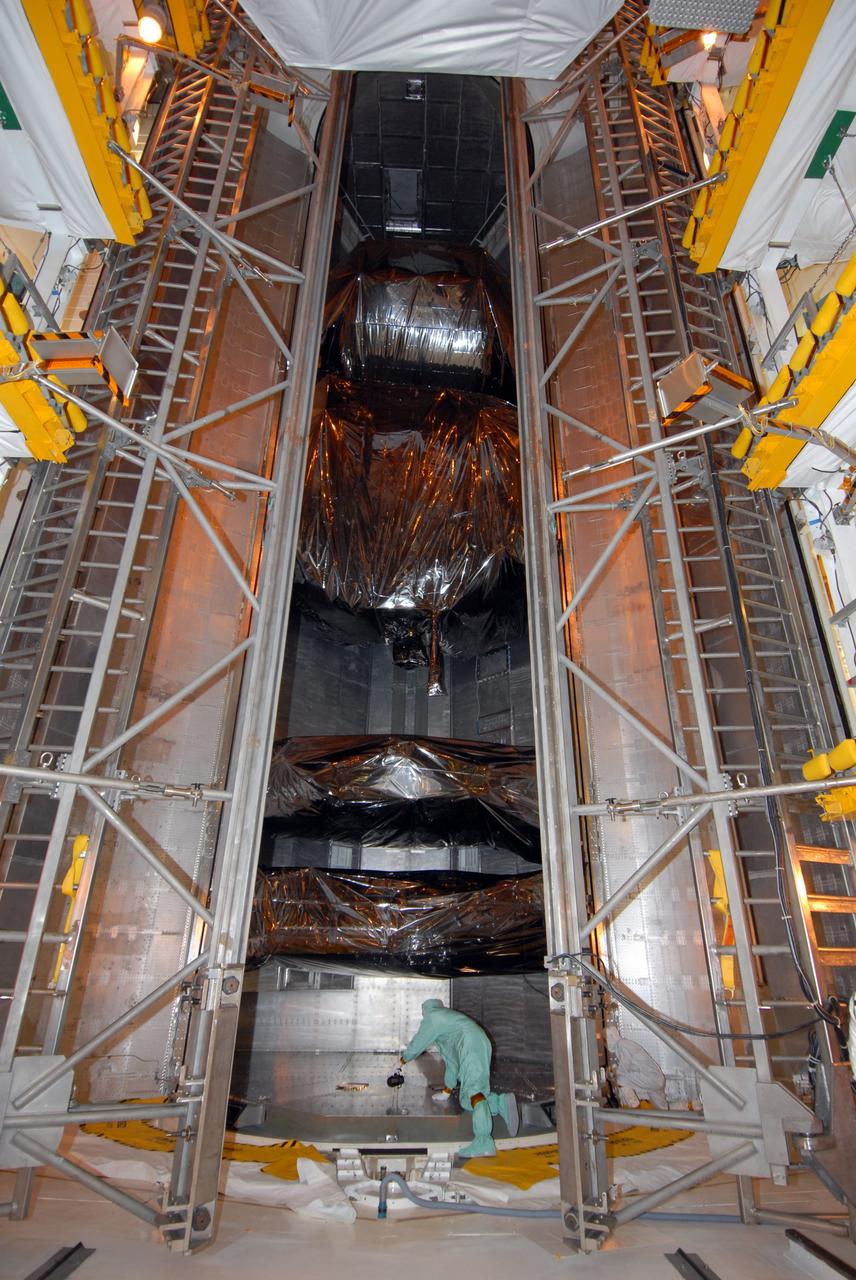
CAPE CANAVERAL, Fla. - Inside the payload changeout room, or PCR, at NASA's Kennedy Space Center Launch Pad 39A, the doors of the payload canister are open. Inside are four carriers holding various equipment for the STS-125 mission aboard space shuttle Atlantis to service NASA’s Hubble Space Telescope. The PCR is the enclosed, environmentally controlled portion of the rotating service structure that supports cargo delivery to the pad and subsequent vertical installation into the shuttle’s payload bay. Launch of Atlantis is targeted for Oct. 10. Photo credit: NASA/Jack Pfaller
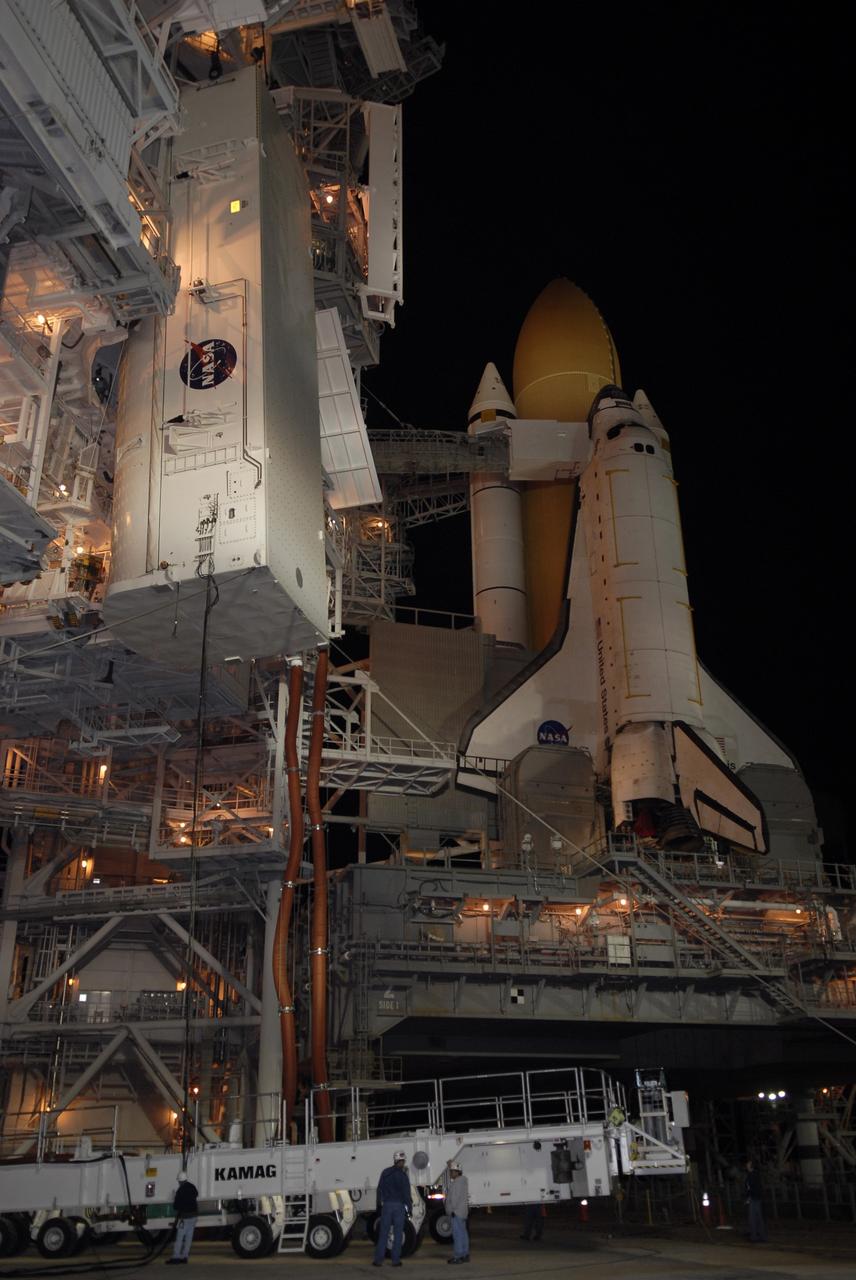
CAPE CANAVERAL, Fla. –– On Launch Pad 39A at NASA's Kennedy Space Center in Florida, the payload canister is lifted toward the payload changeout room, or PCR, on the rotating service structure. The canister's cargo of Hubble Space Telescope equipment will be deposited in the PCR and later transferred to the payload bay on space shuttle Atlantis, at right. Atlantis' 11-day STS-125 mission to service Hubble is targeted for launch May 12. The flight will include five spacewalks in which astronauts will refurbish and upgrade the telescope with state-of-the-art science instruments. As a result, Hubble's capabilities will be expanded and its operational lifespan extended through at least 2014. Photo credit: NASA/Kim Shiflett
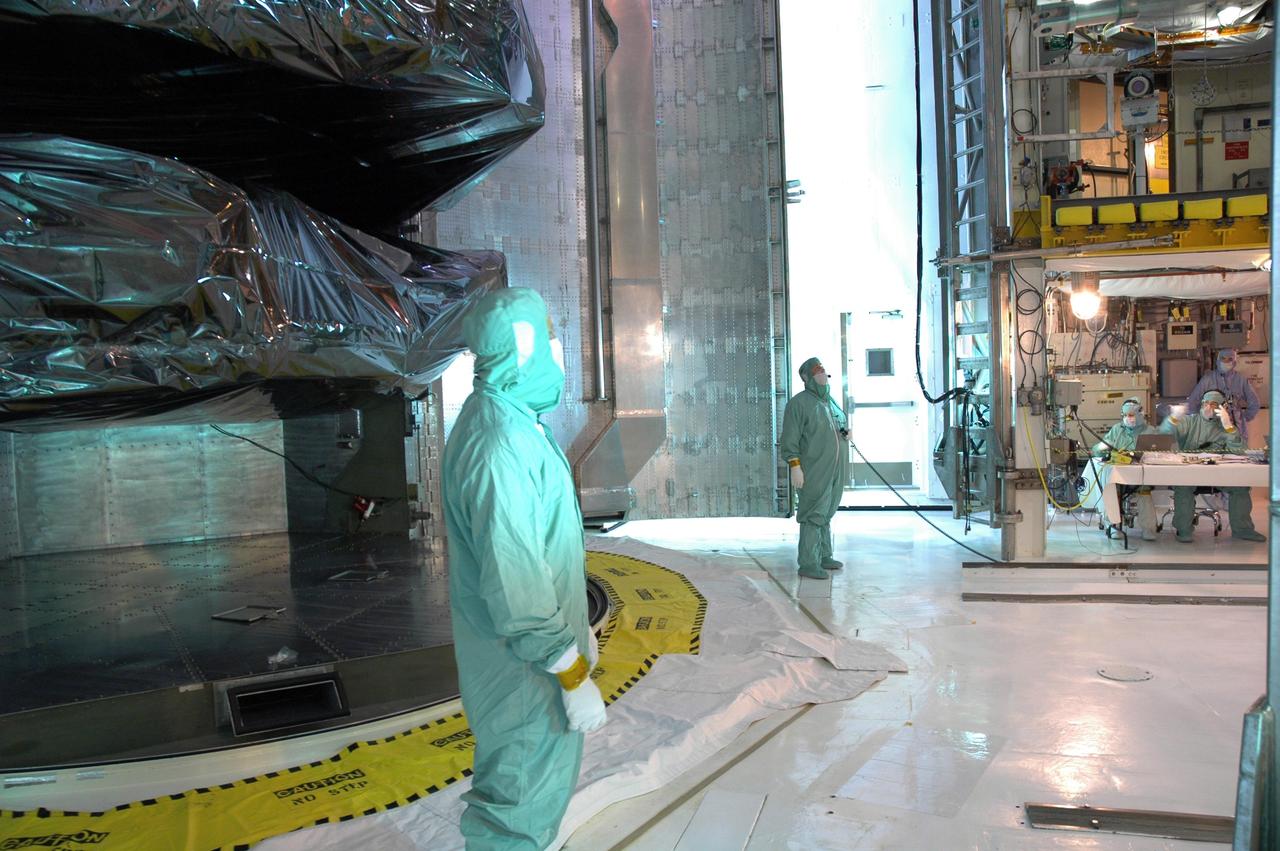
CAPE CANAVERAL, Fla. - In the payload changeout room, or PCR, on Launch Pad 39A at NASA's Kennedy Space Center in Florida, workers prepare for the transfer of the cargo inside the payload canister, at left. Two of the four carriers seen behind the workers are the Orbital Replacement Unit Carrier (top) and the Super Lightweight Interchangeable Carrier. The cargo will be transferred into the PCR via the payload ground-handling mechanism, or PGHM. The PGHM removes payloads from a transportation canister and installs them into the shuttle. It is essentially NASA’s largest fork-lift. Atlantis is targeted to launch Oct. 10. Photo credit: NASA/Jim Grossmann
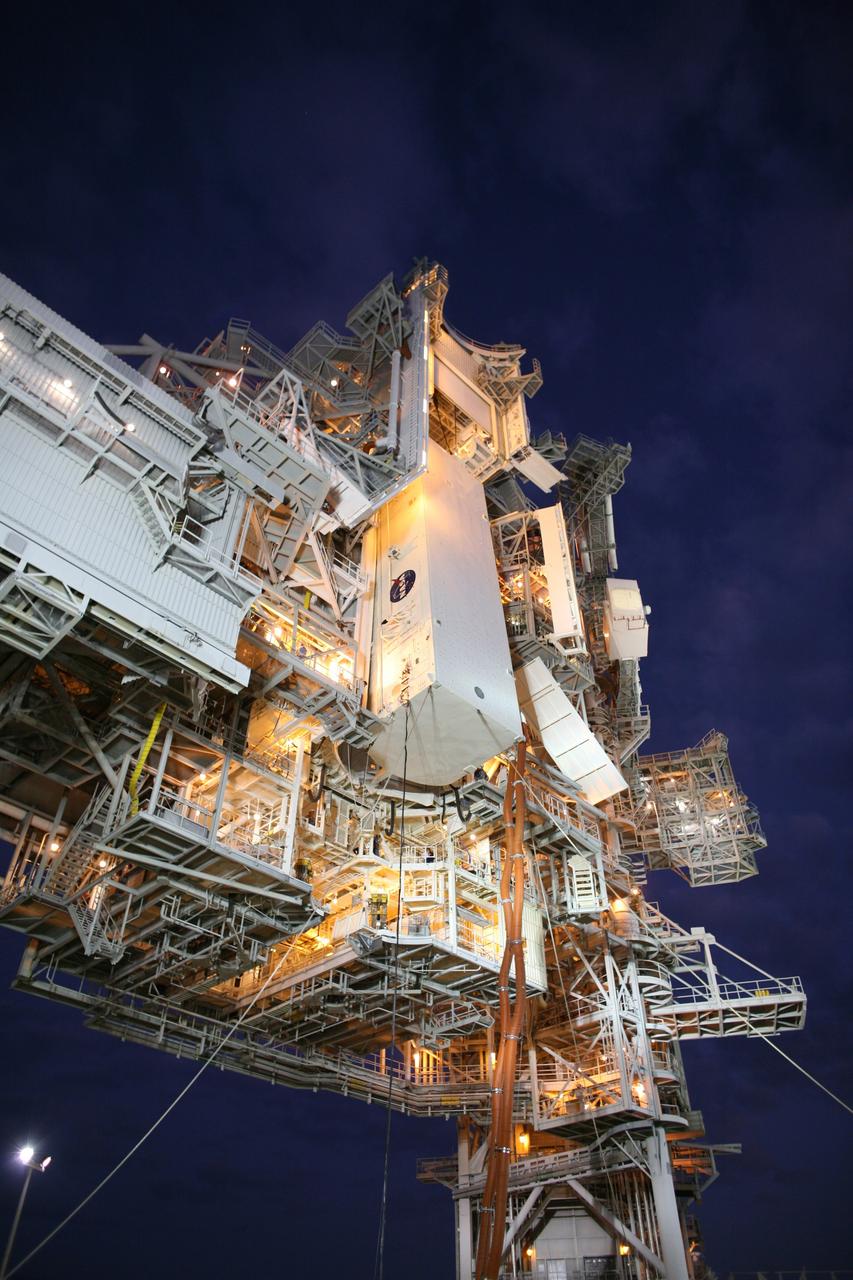
CAPE CANAVERAL, Fla. - On Launch Pad 39A at NASA's Kennedy Space Center in Florida, the payload canister with space shuttle Endeavour's STS-126 mission payload inside is lifted to the Payload Changeout Room, or PCR, above. Inside the canister are the Multi-Purpose Logistics Module Leonardo and the Lightweight Multi-Purpose Experiment Support Structure Carrier. The red umbilical lines attached preserve the environmentally controlled interior. The payload canister will release its cargo into the PCR. Later, the payload will be installed in Endeavour's payload bay. Endeavour is targeted for launch on Nov. 14. Photo credit: NASA/Dimitri Gerondidakis

KENNEDY SPACE CENTER, FLA. -- With umbilical lines still attached, the payload canister is hoisted up alongside the Rotating Service Structure (RSS) on Launch Pad 39B. The canister with its cargo of the SPACEHAB module and Integrated Cargo Carrier will be moved into the Payload Changeout Room (PCR) near the top of the RSS for transfer to the payload bay of Shuttle Atlantis for mission STS-106. The PCR provides an environmentally controlled facility for the transfer. The 11-day mission to the International Space Station will include service module support tasks on orbit, transfer supplies and outfit the Space Station for the first long-duration crew. Atlantis is scheduled to launch Sept. 8 at 8:31 a.m. EDT
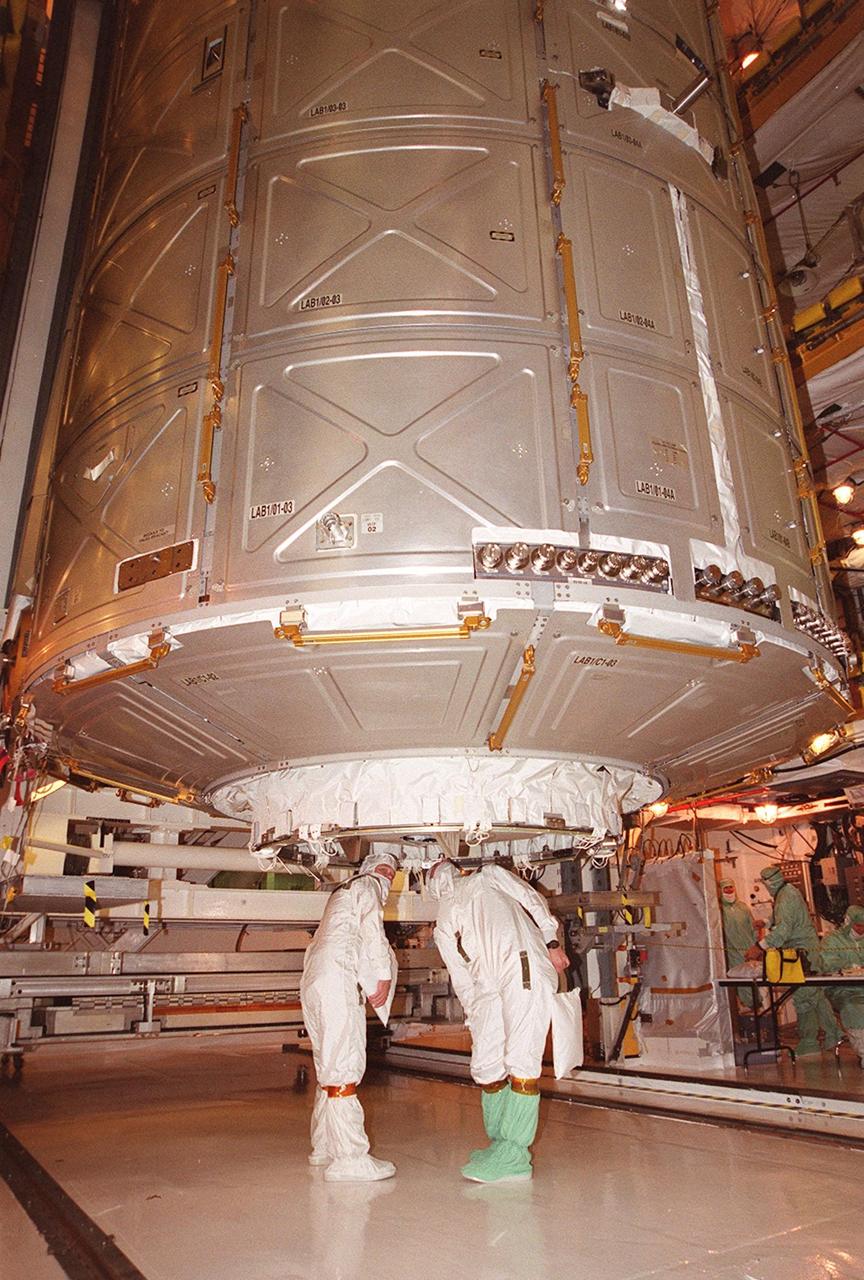
Workers in the Payload Changeout Room check the U.S. Lab Destiny as its moves from Atlantis’ payload bay into the PCR. Destiny will remain in the PCR while Atlantis rolls back to the Vehicle Assembly Building to allow workers to conduct inspections, continuity checks and X-ray analysis on the 36 solid rocket booster cables located inside each booster’s system tunnel. An extensive evaluation of NASA’s SRB cable inventory revealed conductor damage in four (of about 200) cables on the shelf. Shuttle managers decided to prove the integrity of the system tunnel cables already on Atlantis

Workers in the Payload Changeout Room check the U.S. Lab Destiny as its moves from Atlantis’ payload bay into the PCR. Destiny will remain in the PCR while Atlantis rolls back to the Vehicle Assembly Building to allow workers to conduct inspections, continuity checks and X-ray analysis on the 36 solid rocket booster cables located inside each booster’s system tunnel. An extensive evaluation of NASA’s SRB cable inventory revealed conductor damage in four (of about 200) cables on the shelf. Shuttle managers decided to prove the integrity of the system tunnel cables already on Atlantis

Workers in the Payload Changeout Room check the U.S. Lab Destiny as its moves from Atlantis’ payload bay into the PCR. Destiny will remain in the PCR while Atlantis rolls back to the Vehicle Assembly Building to allow workers to conduct inspections, continuity checks and X-ray analysis on the 36 solid rocket booster cables located inside each booster’s system tunnel. An extensive evaluation of NASA’s SRB cable inventory revealed conductor damage in four (of about 200) cables on the shelf. Shuttle managers decided to prove the integrity of the system tunnel cables already on Atlantis