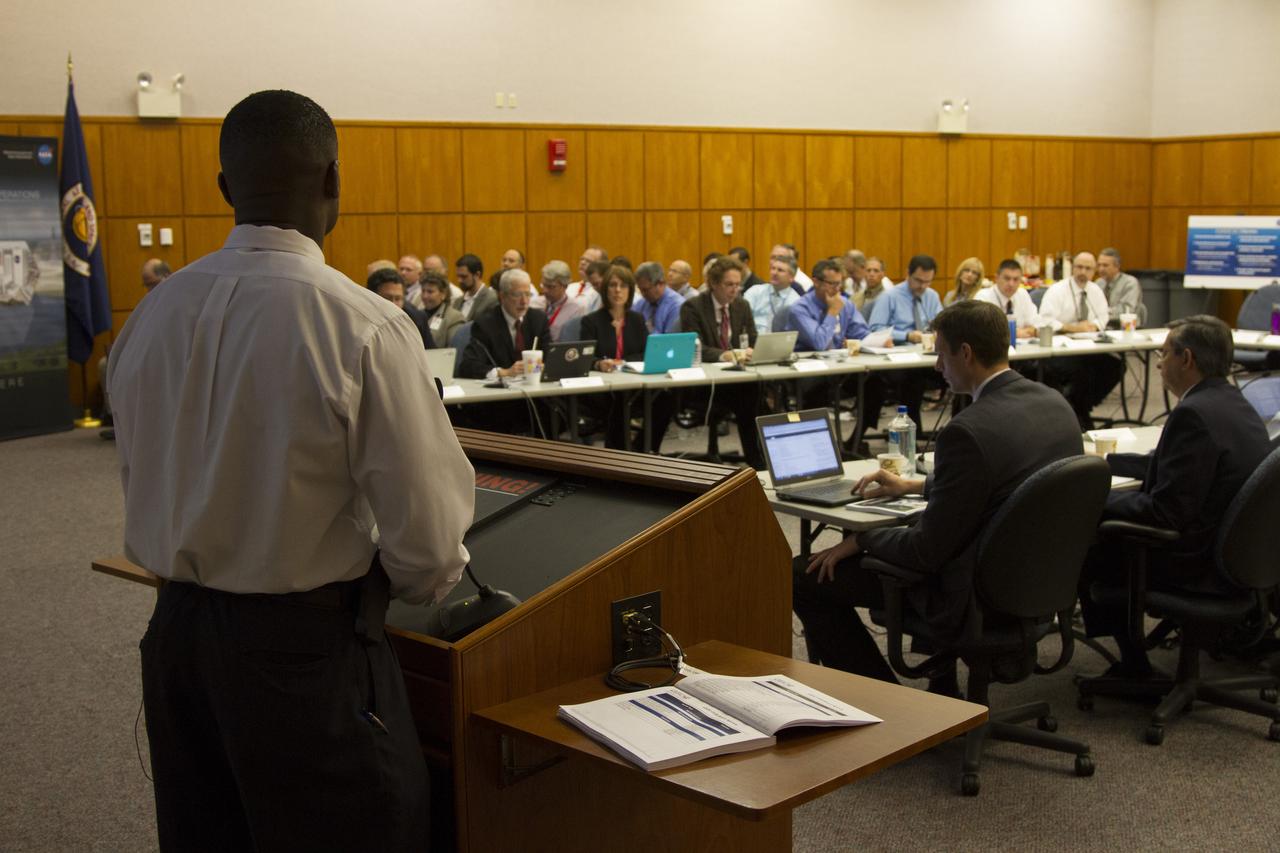
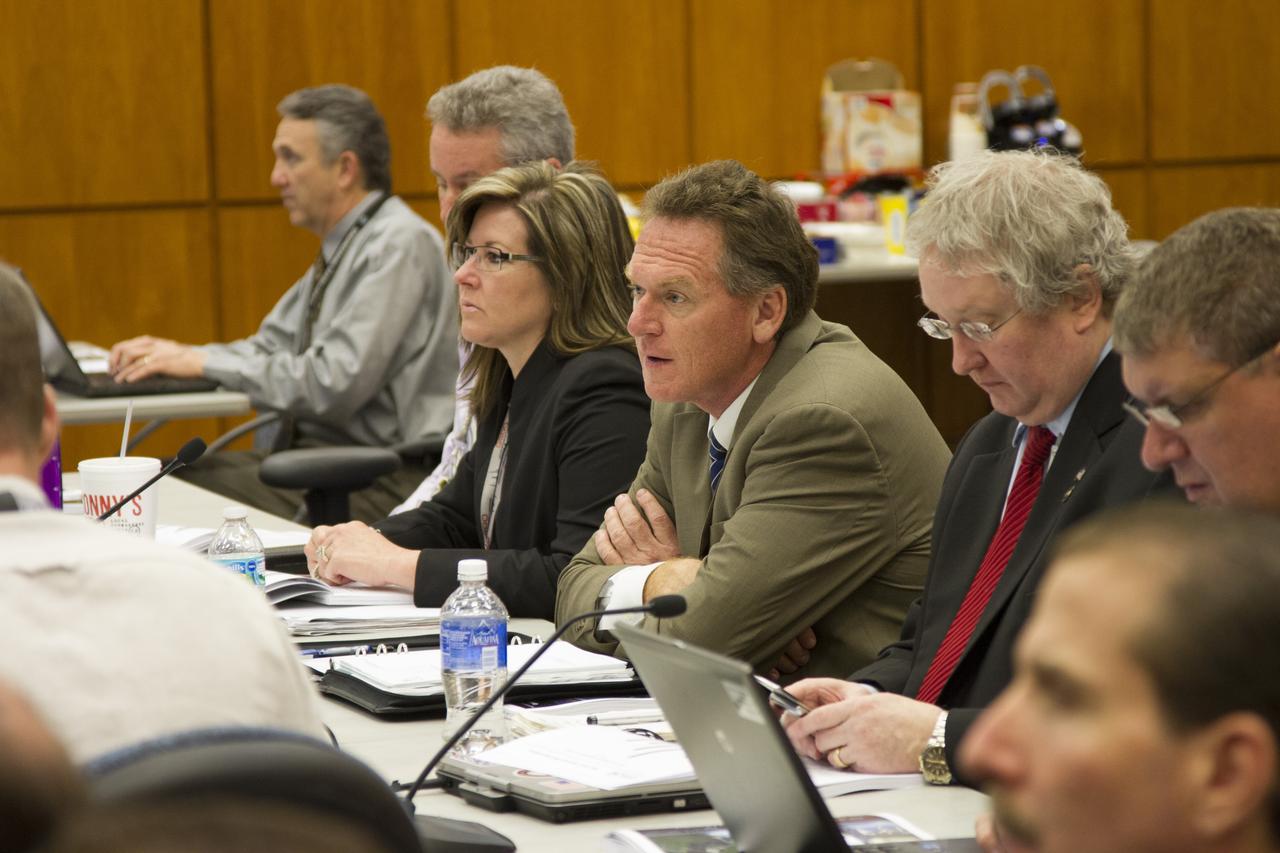
CAPE CANAVERAL, Fla. – The Ground Systems Development and Operations, or GSDO, Program completed its preliminary design review which allows development of the ground systems to proceed to detailed design. Representatives from NASA, its contractor partners and experts from across the aerospace industry met in the Mission Briefing Room inside the Operations and Checkout Building at NASA’s Kennedy Space Center in Florida to conclude the initial design and technology development phase. Completion of this review has validated that the baseline architecture is sound and aligns with the agency's exploration objectives. NASA is developing the Space Launch System and Orion spacecraft to provide an entirely new capability for human exploration beyond low-Earth orbit, with the flexibility to launch spacecraft for crew and cargo missions, including to an asteroid and Mars. Orion’s first unpiloted test flight is scheduled to launch later this year atop a Delta IV rocket. A second uncrewed flight test is scheduled for fiscal year 2018 on the Space Launch System rocket. For more information, visit http://www.nasa.gov/orion. Photo credit: NASA/Cory Huston
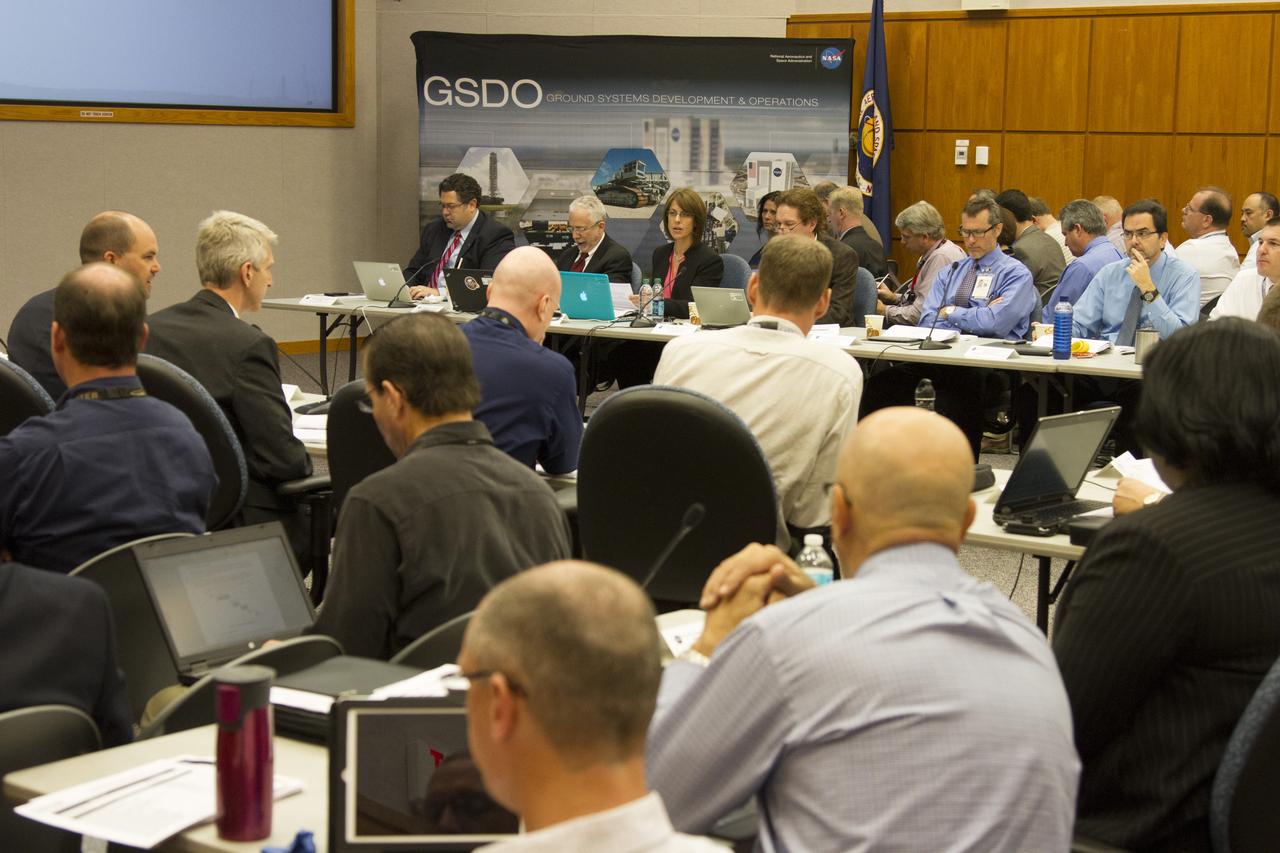
CAPE CANAVERAL, Fla. – The Ground Systems Development and Operations, or GSDO, Program completed its preliminary design review which allows development of the ground systems to proceed to detailed design. Representatives from NASA, its contractor partners and experts from across the aerospace industry met in the Mission Briefing Room inside the Operations and Checkout Building at NASA’s Kennedy Space Center in Florida to conclude the initial design and technology development phase. Completion of this review has validated that the baseline architecture is sound and aligns with the agency's exploration objectives. NASA is developing the Space Launch System and Orion spacecraft to provide an entirely new capability for human exploration beyond low-Earth orbit, with the flexibility to launch spacecraft for crew and cargo missions, including to an asteroid and Mars. Orion’s first unpiloted test flight is scheduled to launch later this year atop a Delta IV rocket. A second uncrewed flight test is scheduled for fiscal year 2018 on the Space Launch System rocket. For more information, visit http://www.nasa.gov/orion. Photo credit: NASA/Cory Huston
CAPE CANAVERAL, Fla. – Mike Bolger, program manager for the Ground Systems Development and Operations, or GSDO, Program speaks to participants during completion of the preliminary design review in the Mission Briefing Room inside the Operations and Checkout Building at NASA’s Kennedy Space Center in Florida. Representatives from NASA, its contractor partners and experts from across the aerospace industry met in the Mission Briefing Room inside the Operations and Checkout Building at NASA’s Kennedy Space Center in Florida to conclude the initial design and technology development phase. Completion of this review has validated that the baseline architecture is sound and aligns with the agency's exploration objectives. NASA is developing the Space Launch System and Orion spacecraft to provide an entirely new capability for human exploration beyond low-Earth orbit, with the flexibility to launch spacecraft for crew and cargo missions, including to an asteroid and Mars. Orion’s first unpiloted test flight is scheduled to launch later this year atop a Delta IV rocket. A second uncrewed flight test is scheduled for fiscal year 2018 on the Space Launch System rocket. For more information, visit http://www.nasa.gov/orion. Photo credit: NASA/Cory Huston
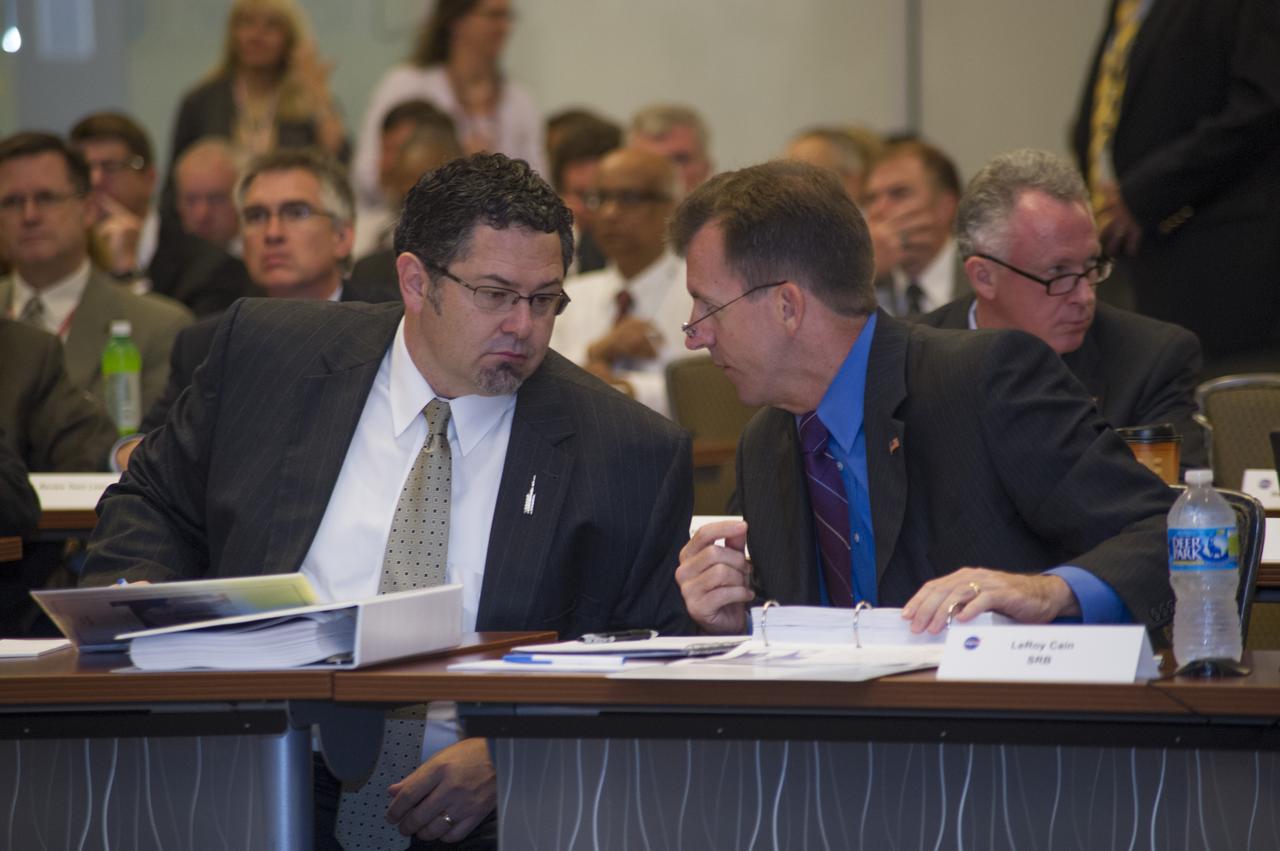
TODD MAY, LEFT, MANAGER OF THE SLS PROGRAM AT THE MARSHALL CENTER, DISCUSSES THE ROCKET'S SPECIFICATIONS WITH LEROY CAIN, WHO HEADS THE INDEPENDENT STANDING REVIEW BOARD FOR SLS, DURING THE SLS PROGRAM'S PRELIMINARY DESIGN REVIEW. THE REVIEW KICKED OFF JUNE 18-19
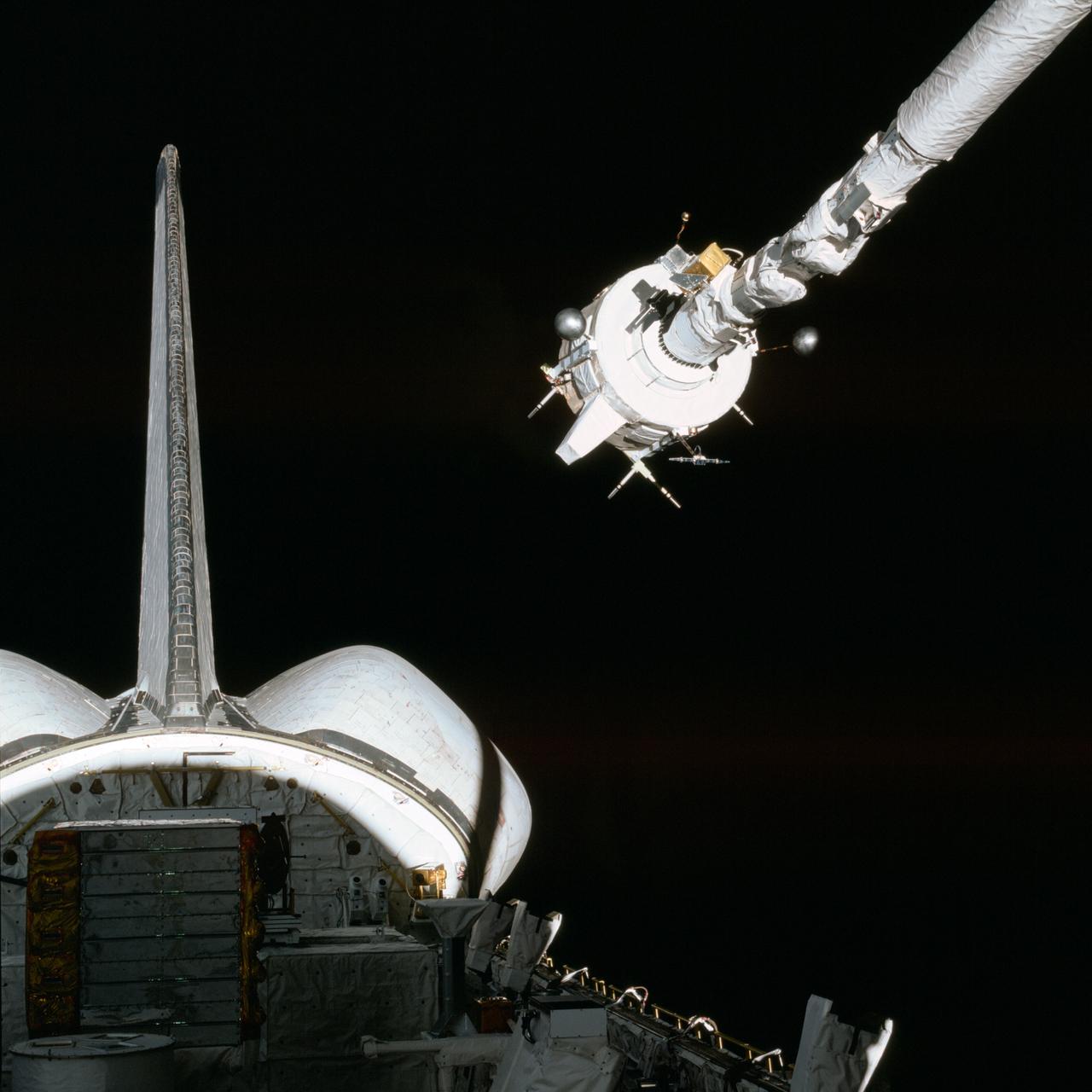
STS003-09-444 (22-30 March 1982) --- The darkness of space provides the backdrop for this scene of the plasma diagnostics package (PDR) experiment in the grasp of the end effector or ?hand? of the remote manipulator system (RMS) arm, and other components of the Office of Space Sciences (OSS-1) package in the aft section of the Columbia?s cargo hold. The PDP is a compact, comprehensive assembly of electromagnetic and particle sensors that will be used to study the interaction of the orbiter with its surrounding environment; to test the capabilities of the shuttle?s remote manipulator system; and to carry out experiments in conjunction with the fast pulse electron generator of the vehicle charging and potential experiment, another experiment on the OSS-1 payload pallet. This photograph was exposed with a 70mm handheld camera by the astronaut crew of STS-3, with a handheld camera aimed through the flight deck?s aft window. Photo credit: NASA
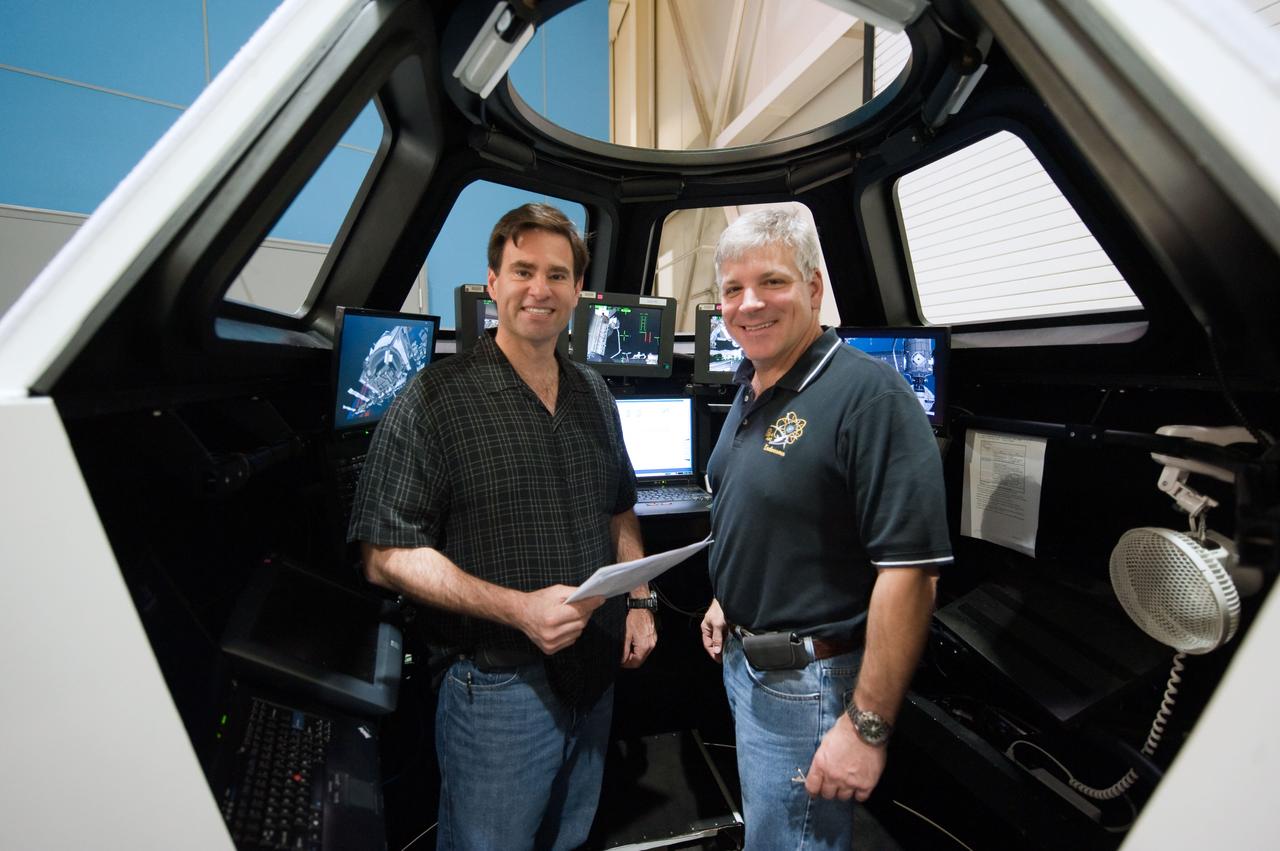
JSC2011-E-028160 (23 March 2011) --- NASA astronauts Greg H. Johnson (right), STS-134 pilot; and Greg Chamitoff, mission specialist, are pictured during an exercise in the systems engineering simulator in the Avionics Systems Laboratory at NASA's Johnson Space Center. Photo credit: NASA or National Aeronautics and Space Administration
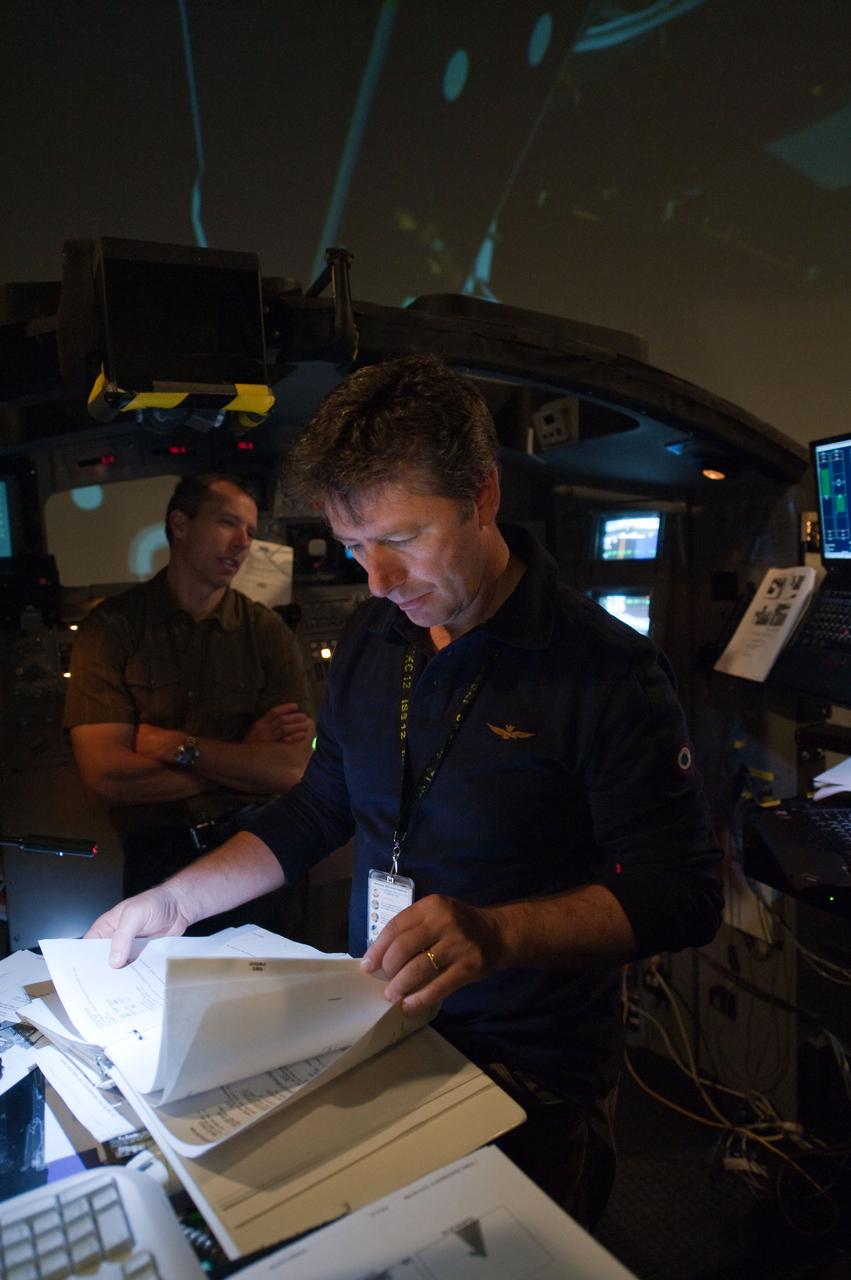
JSC2011-E-028156 (23 March 2011) --- European Space Agency astronaut Roberto Vittori (foreground) and NASA astronaut Andrew Feustel, both STS-134 mission specialists, participate in an exercise in the systems engineering simulator in the Avionics Systems Laboratory at NASA's Johnson Space Center. The facility includes moving scenes of full-sized International Space Station components over a simulated Earth. Photo credit: NASA or National Aeronautics and Space Administration
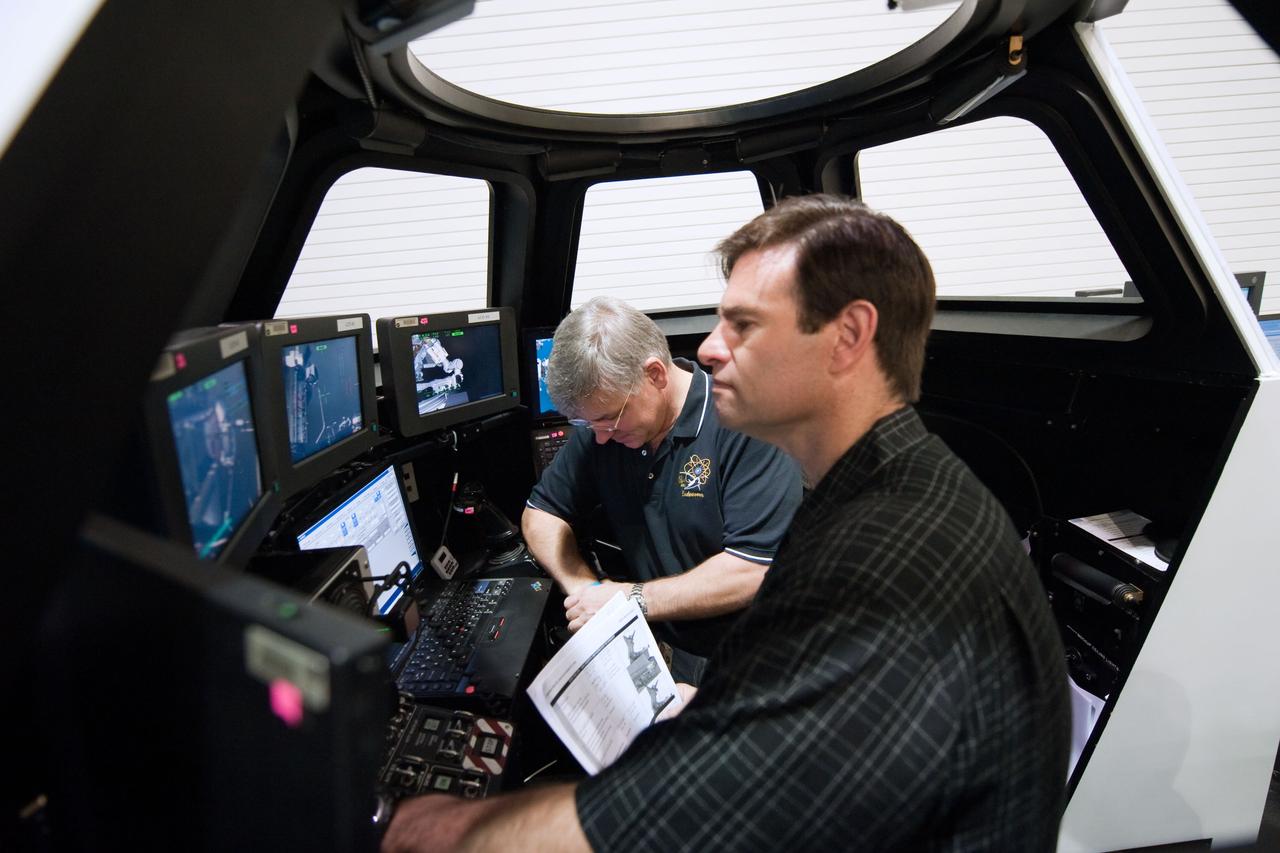
JSC2011-E-028161 (23 March 2011) --- NASA astronauts Greg Chamitoff (foreground), STS-134 mission specialist; and Greg H. Johnson, pilot, participate in an exercise in the systems engineering simulator in the Avionics Systems Laboratory at NASA's Johnson Space Center. The facility includes moving scenes of full-sized International Space Station components over a simulated Earth. Photo credit: NASA or National Aeronautics and Space Administration
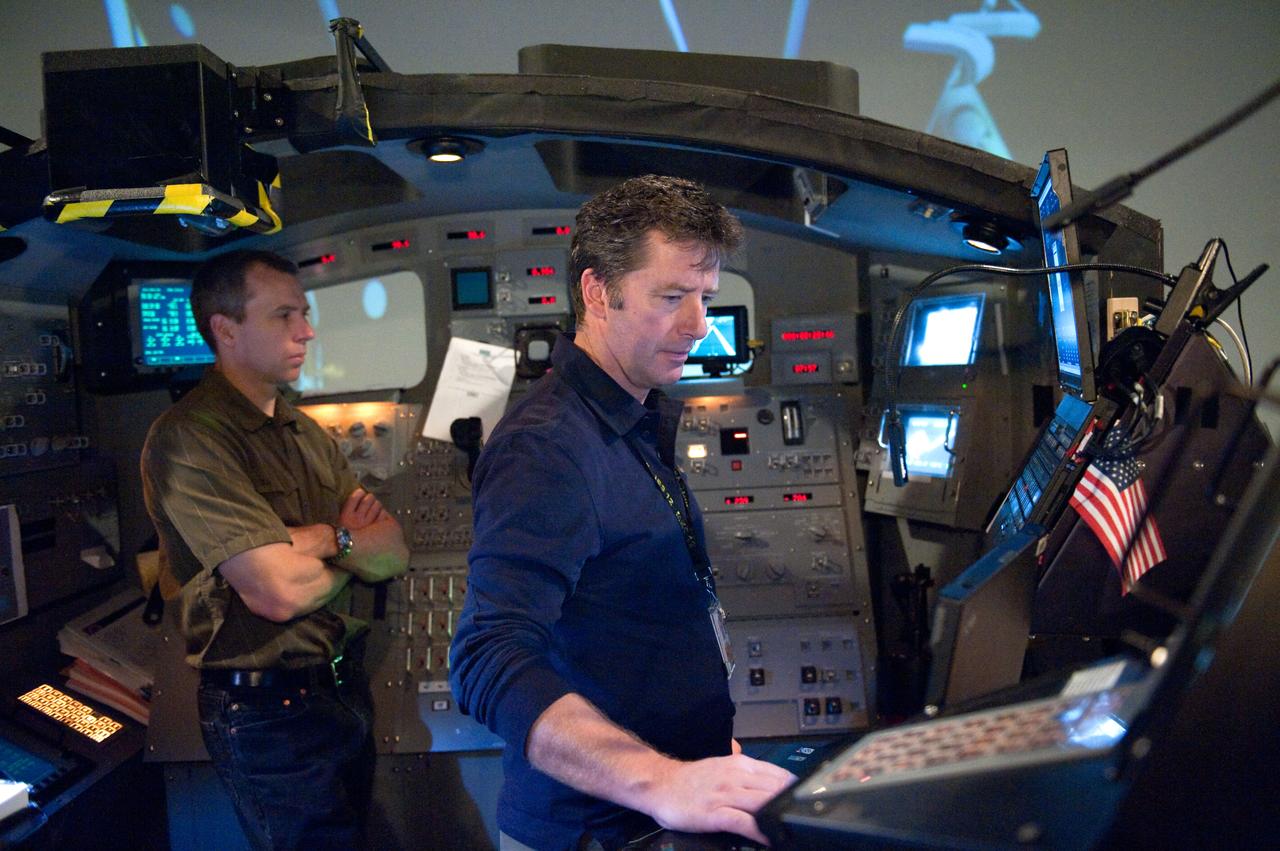
JSC2011-E-028164 (23 March 2011) --- European Space Agency astronaut Roberto Vittori (right) and NASA astronaut Andrew Feustel, both STS-134 mission specialists, participate in an exercise in the systems engineering simulator in the Avionics Systems Laboratory at NASA's Johnson Space Center. The facility includes moving scenes of full-sized International Space Station components over a simulated Earth. Photo credit: NASA or National Aeronautics and Space Administration
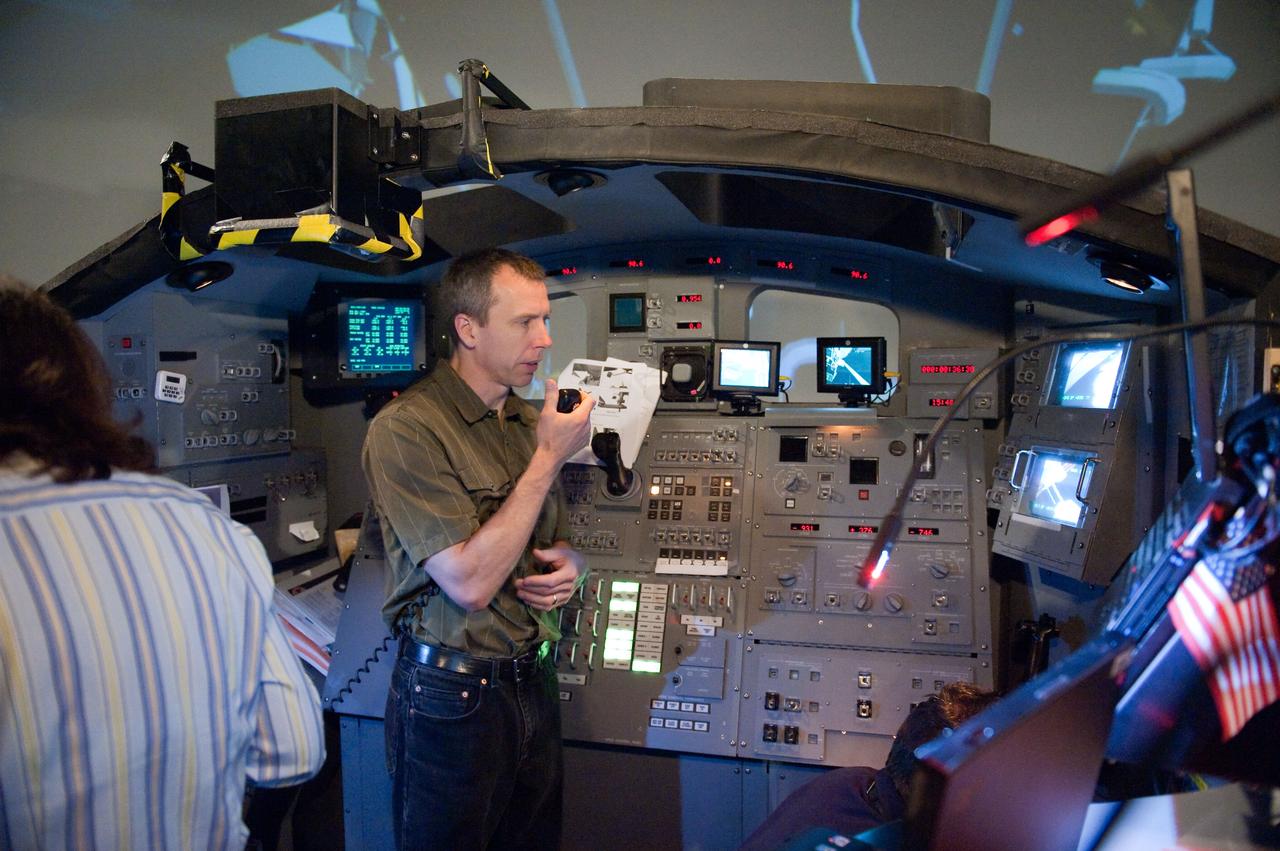
JSC2011-E-028170 (23 March 2011) --- NASA astronaut Andrew Feustel, STS-134 mission specialist, participates in an exercise in the systems engineering simulator in the Avionics Systems Laboratory at NASA's Johnson Space Center. The facility includes moving scenes of full-sized International Space Station components over a simulated Earth. Photo credit: NASA or National Aeronautics and Space Administration
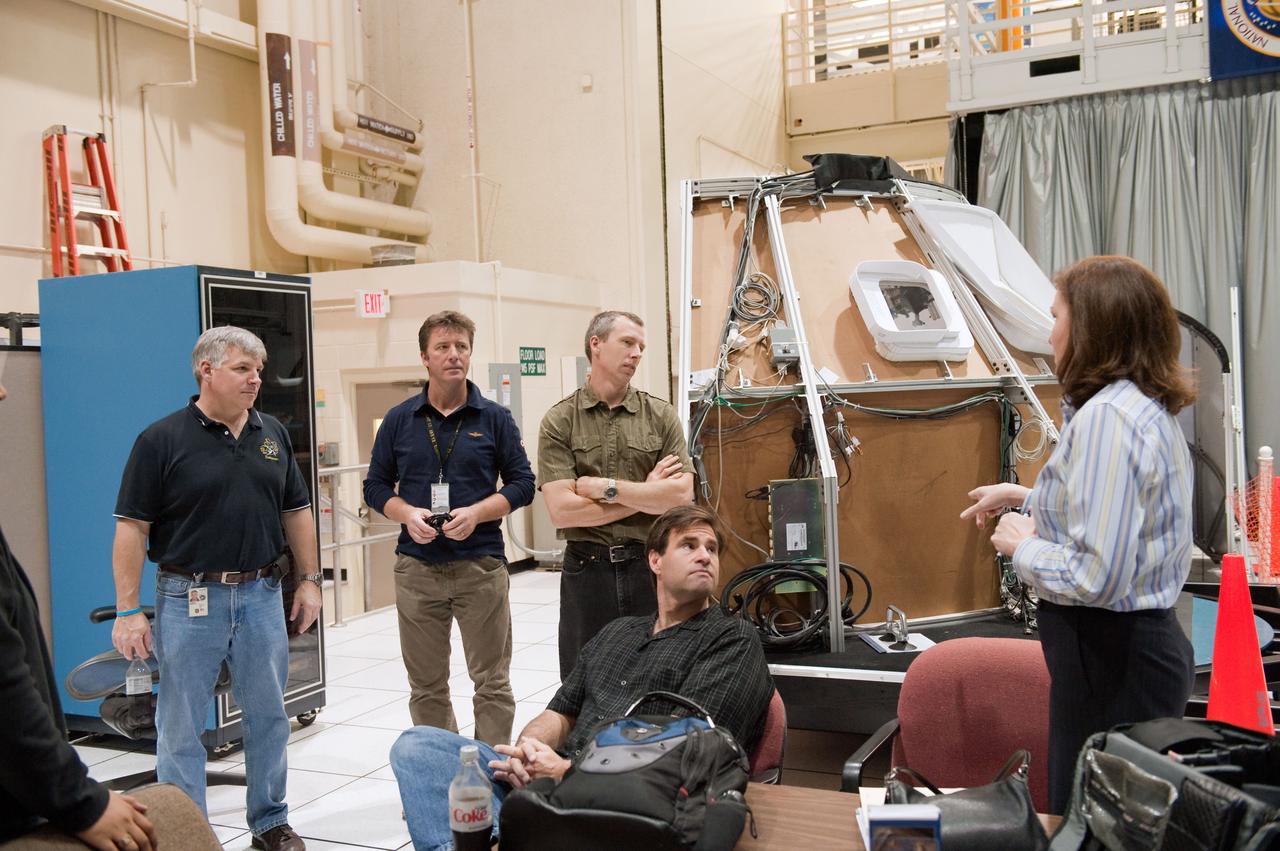
JSC2011-E-028157 (23 March 2011) --- NASA astronaut Greg H. Johnson (left), STS-134 pilot; along with European Space Agency astronaut Roberto Vittori (second left) and NASA astronauts Andrew Feustel and Greg Chamitoff (seated), all mission specialists, participate in an exercise in the systems engineering simulator in the Avionics Systems Laboratory at NASA's Johnson Space Center. Photo credit: NASA or National Aeronautics and Space Administration
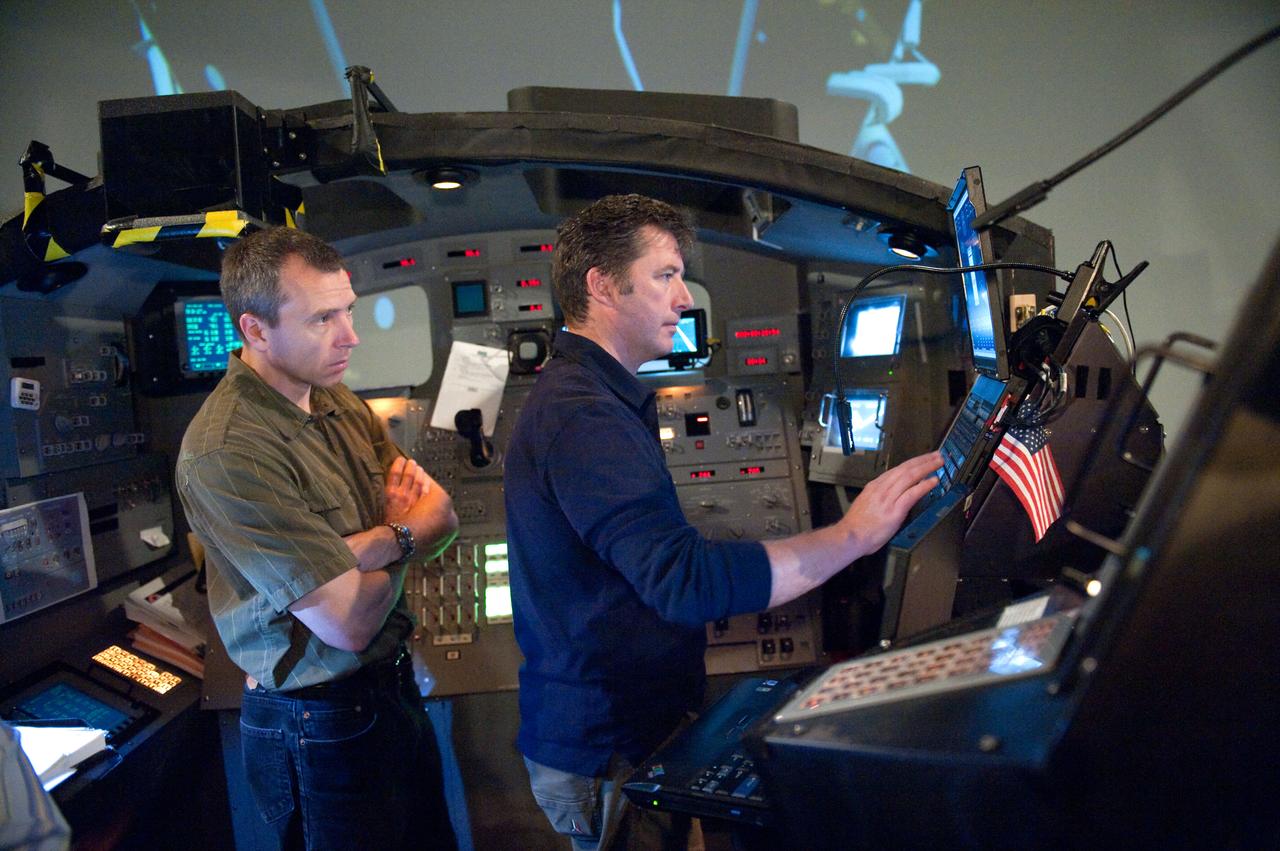
JSC2011-E-028166 (23 March 2011) --- European Space Agency astronaut Roberto Vittori (right) and NASA astronaut Andrew Feustel, both STS-134 mission specialists, participate in an exercise in the systems engineering simulator in the Avionics Systems Laboratory at NASA's Johnson Space Center. The facility includes moving scenes of full-sized International Space Station components over a simulated Earth. Photo credit: NASA or National Aeronautics and Space Administration
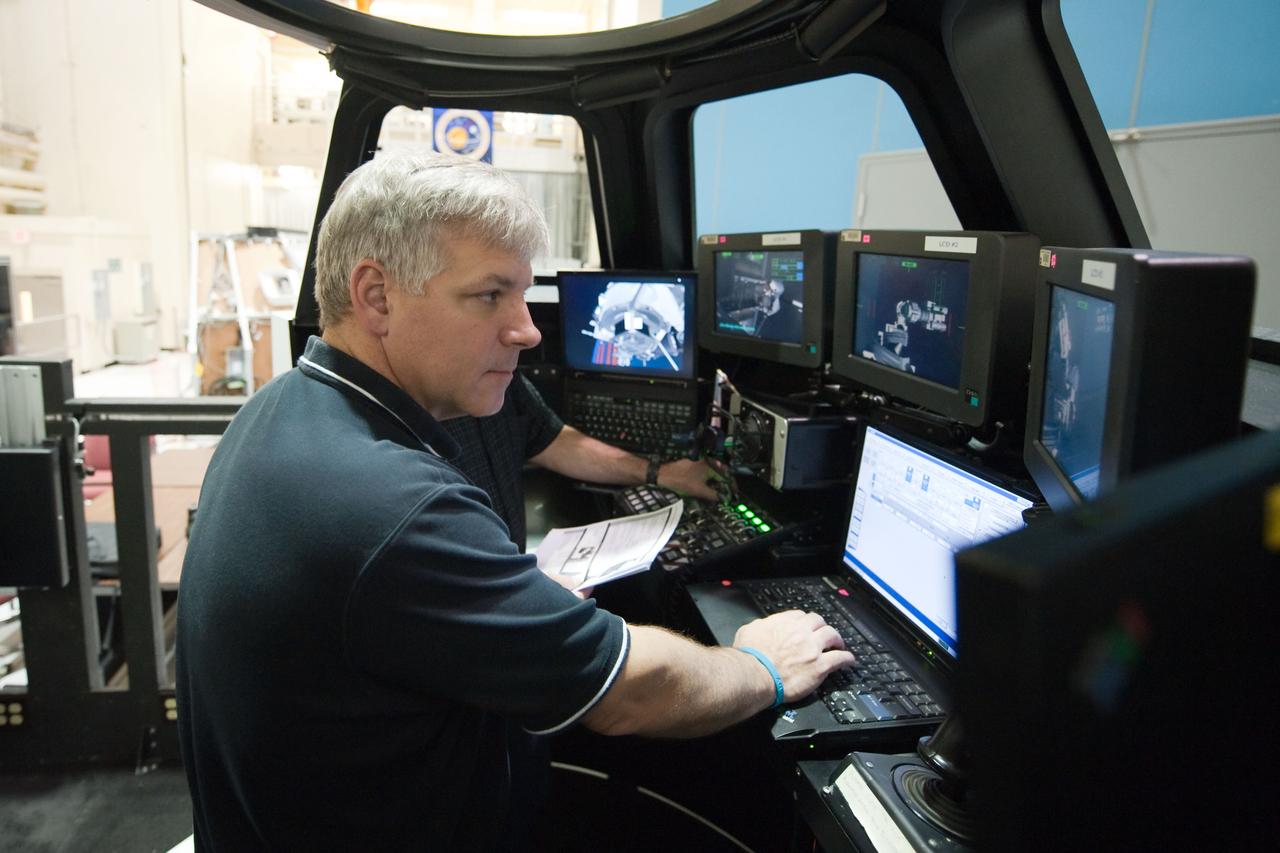
JSC2011-E-028158 (23 March 2011) --- NASA astronaut Greg H. Johnson, STS-134 pilot, participates in an exercise in the systems engineering simulator in the Avionics Systems Laboratory at NASA's Johnson Space Center. Photo credit: NASA or National Aeronautics and Space Administration
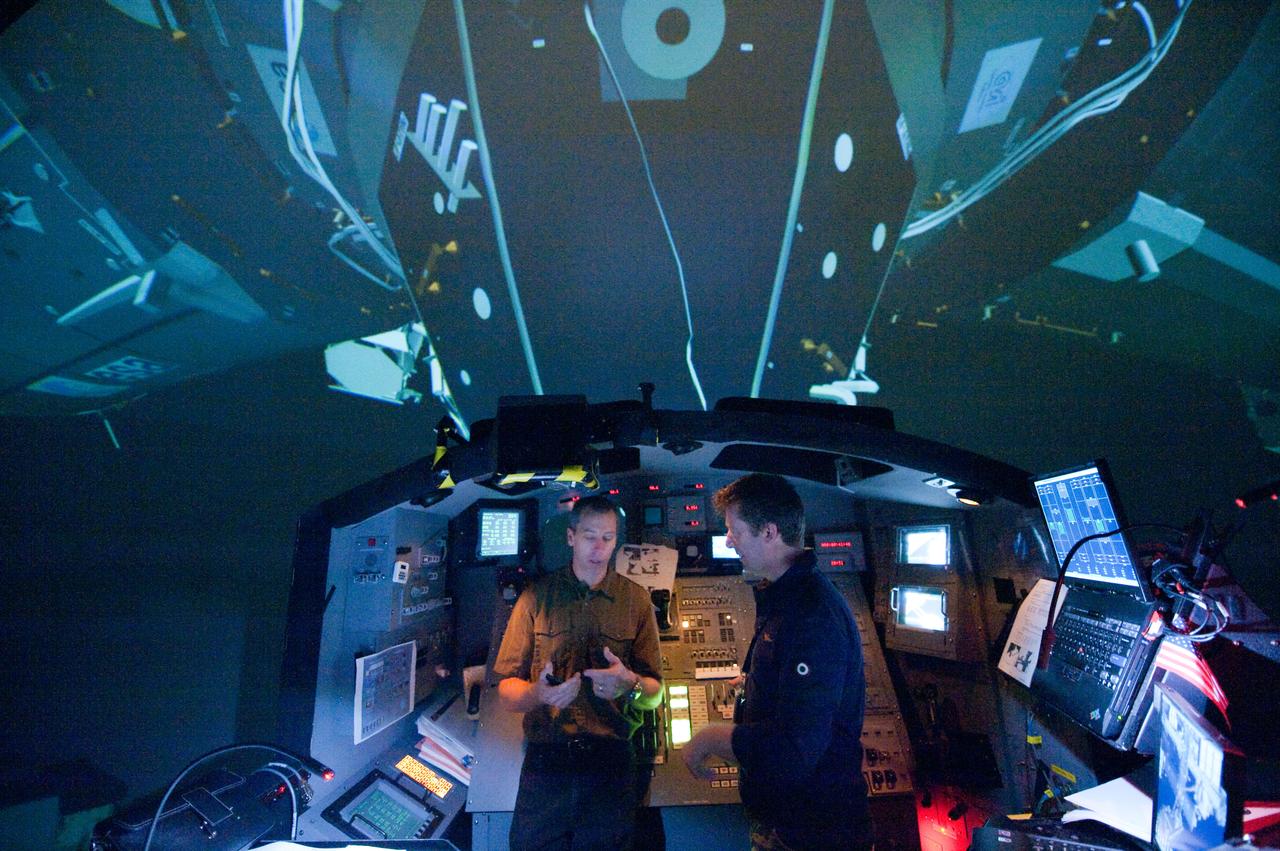
JSC2011-E-028173 (23 March 2011) --- European Space Agency astronaut Roberto Vittori (right) and NASA astronaut Andrew Feustel, both STS-134 mission specialists, participate in an exercise in the systems engineering simulator in the Avionics Systems Laboratory at NASA's Johnson Space Center. The facility includes moving scenes of full-sized International Space Station components over a simulated Earth. Photo credit: NASA or National Aeronautics and Space Administration
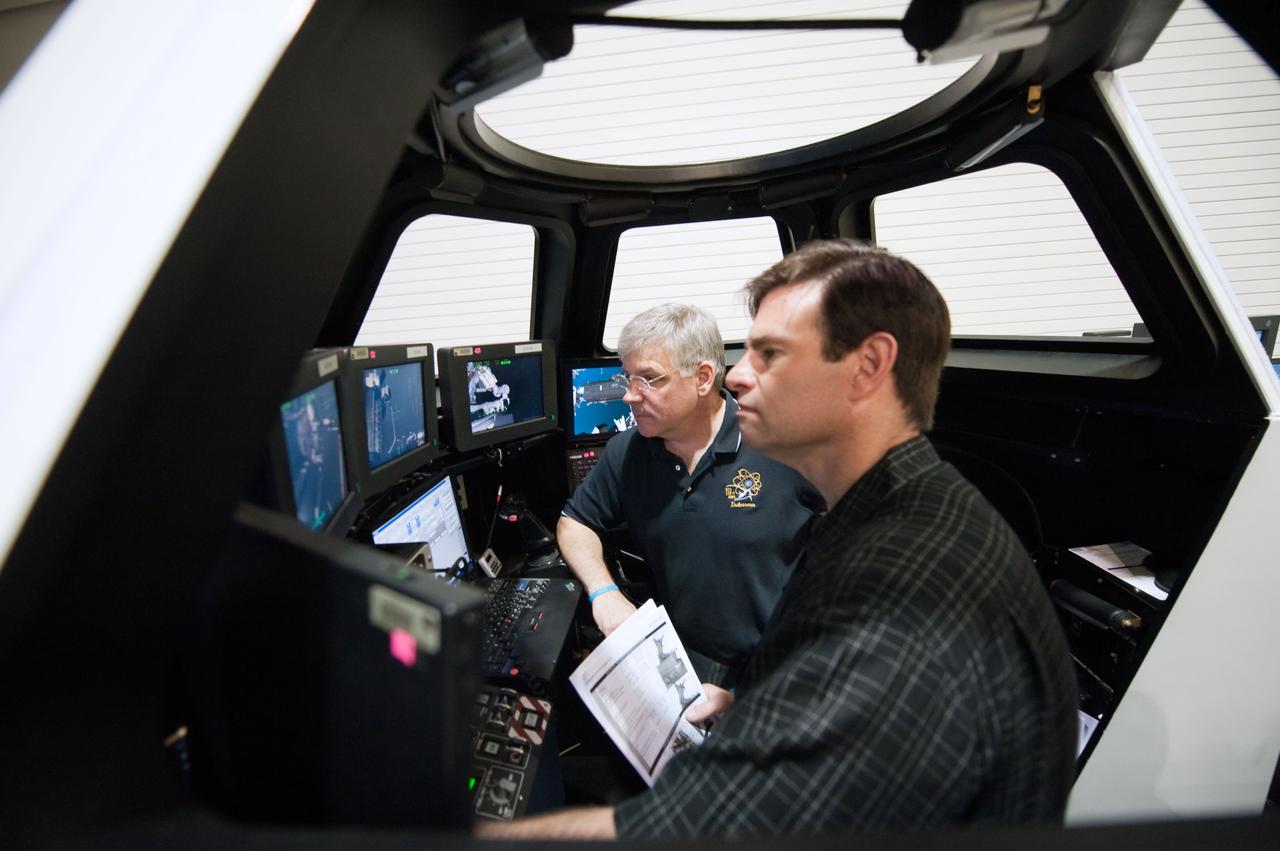
JSC2011-E-028163 (23 March 2011) --- NASA astronauts Greg Chamitoff (foreground), STS-134 mission specialist; and Greg H. Johnson, pilot, participate in an exercise in the systems engineering simulator in the Avionics Systems Laboratory at NASA's Johnson Space Center. The facility includes moving scenes of full-sized International Space Station components over a simulated Earth. Photo credit: NASA or National Aeronautics and Space Administration
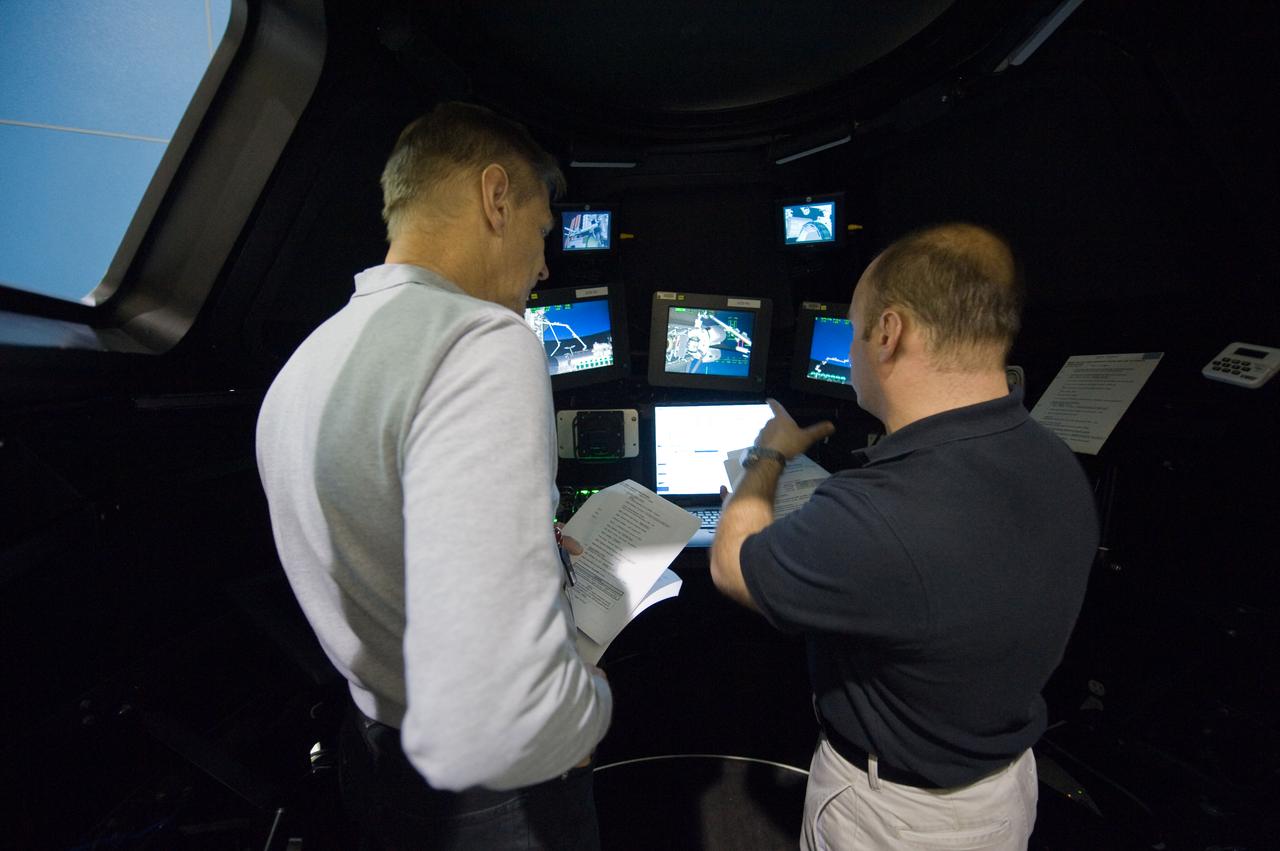
JSC2009-E-286971 (22 Dec. 2009) --- Astronauts Piers Sellers (left) and Garrett Reisman, both STS-132 mission specialists, participate in an exercise in the systems engineering simulator in the Avionics Systems Laboratory at NASA?s Johnson Space Center. The facility includes moving scenes of full-sized International Space Station components over a simulated Earth.
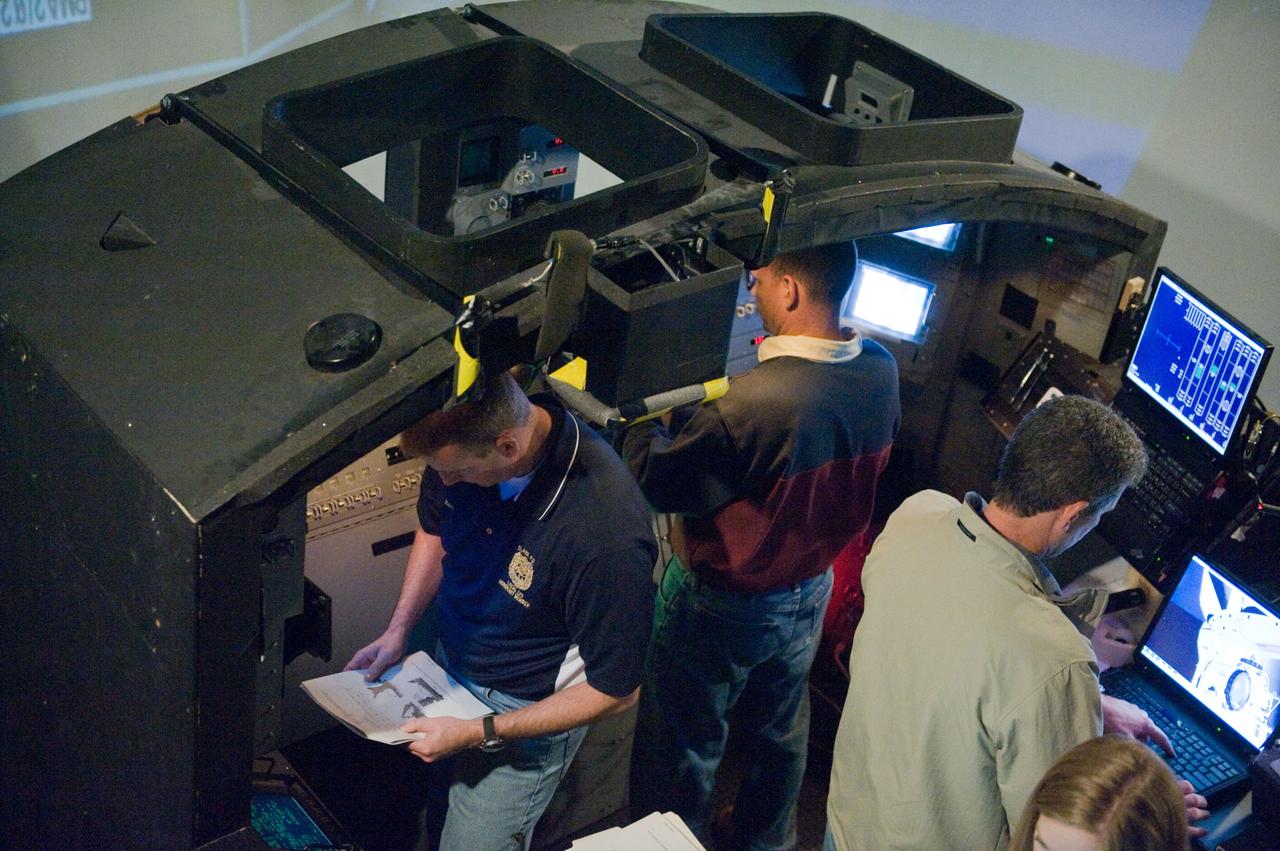
JSC2009-E-286973 (22 Dec. 2009) --- Astronauts Ken Ham (left), STS-132 commander; Tony Antonelli (center), pilot; and Mike Good, mission specialist, participate in an exercise in the systems engineering simulator in the Avionics Systems Laboratory at NASA?s Johnson Space Center. The facility includes moving scenes of full-sized International Space Station components over a simulated Earth.
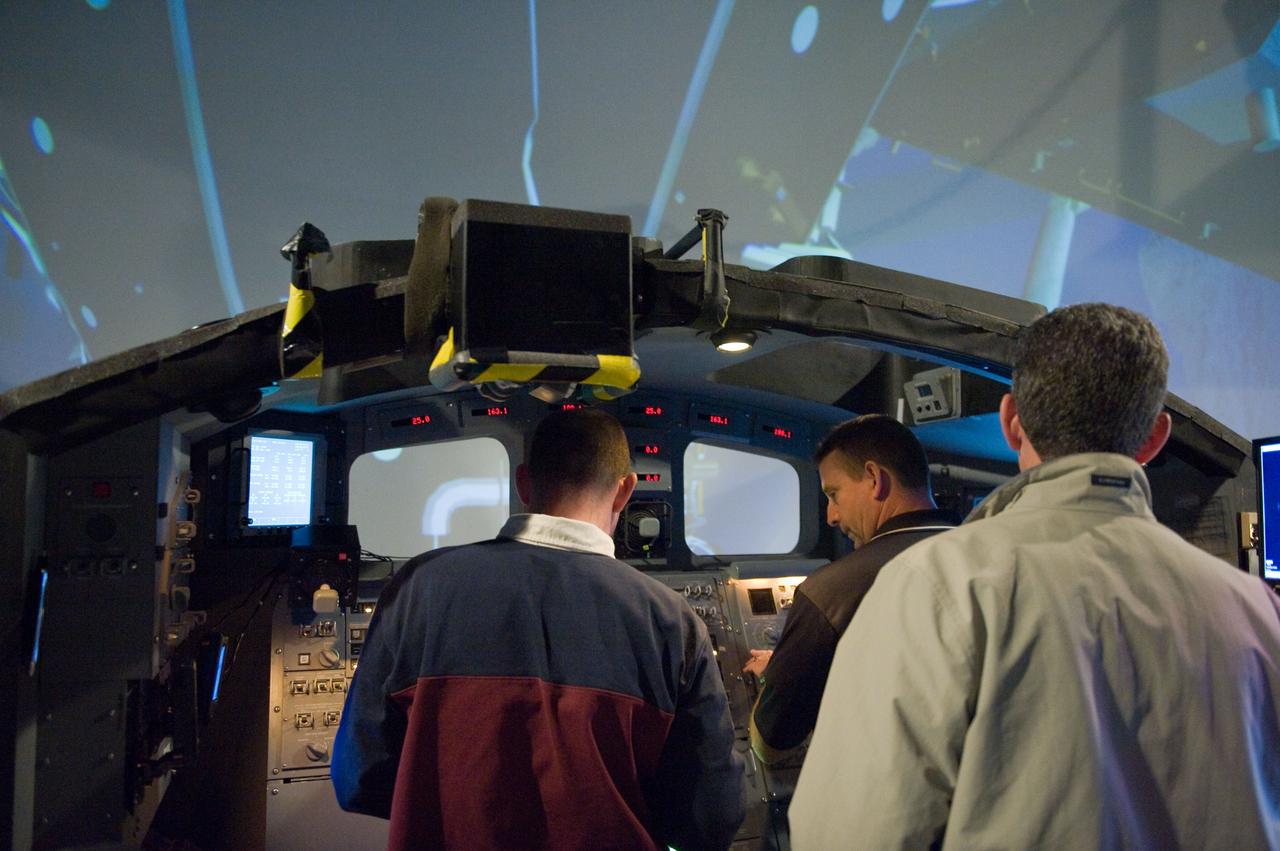
JSC2009-E-286962 (22 Dec. 2009) --- Astronauts Ken Ham (right background), STS-132 commander; Tony Antonelli (left), pilot; and Mike Good, mission specialist, participate in an exercise in the systems engineering simulator in the Avionics Systems Laboratory at NASA?s Johnson Space Center. The facility includes moving scenes of full-sized International Space Station components over a simulated Earth.
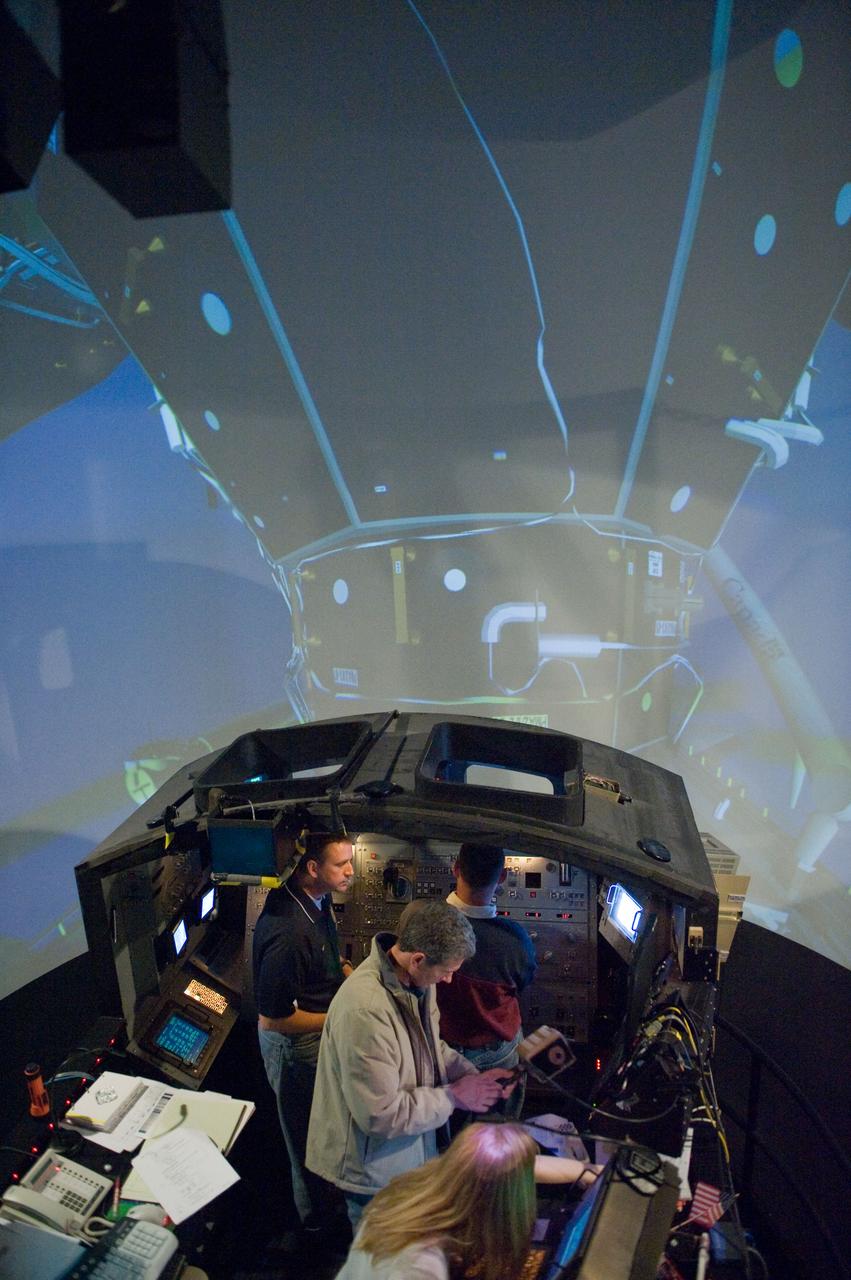
JSC2009-E-286974 (22 Dec. 2009) --- Astronauts Ken Ham (left background), STS-132 commander; Tony Antonelli (right background), pilot; and Mike Good, mission specialist, participate in an exercise in the systems engineering simulator in the Avionics Systems Laboratory at NASA?s Johnson Space Center. The facility includes moving scenes of full-sized International Space Station components over a simulated Earth.

JSC2009-E-286976 (22 Dec. 2009) --- Astronauts Ken Ham (left), STS-132 commander; Tony Antonelli (right background), pilot; and Mike Good, mission specialist, participate in an exercise in the systems engineering simulator in the Avionics Systems Laboratory at NASA?s Johnson Space Center. The facility includes moving scenes of full-sized International Space Station components over a simulated Earth.
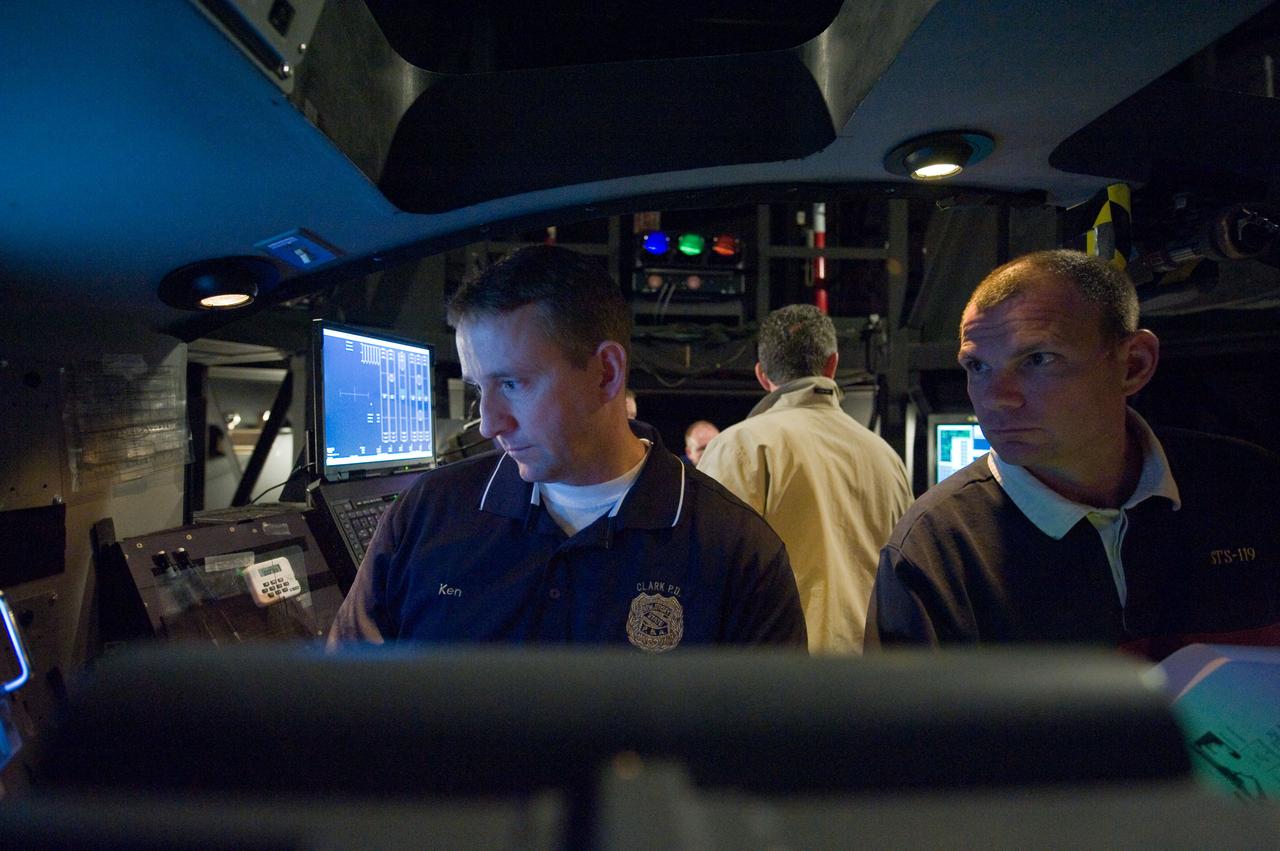
JSC2009-E-286968 (22 Dec. 2009) --- Astronauts Ken Ham (left), STS-132 commander; Tony Antonelli (right), pilot; and Mike Good, mission specialist, participate in an exercise in the systems engineering simulator in the Avionics Systems Laboratory at NASA?s Johnson Space Center. The facility includes moving scenes of full-sized International Space Station components over a simulated Earth.
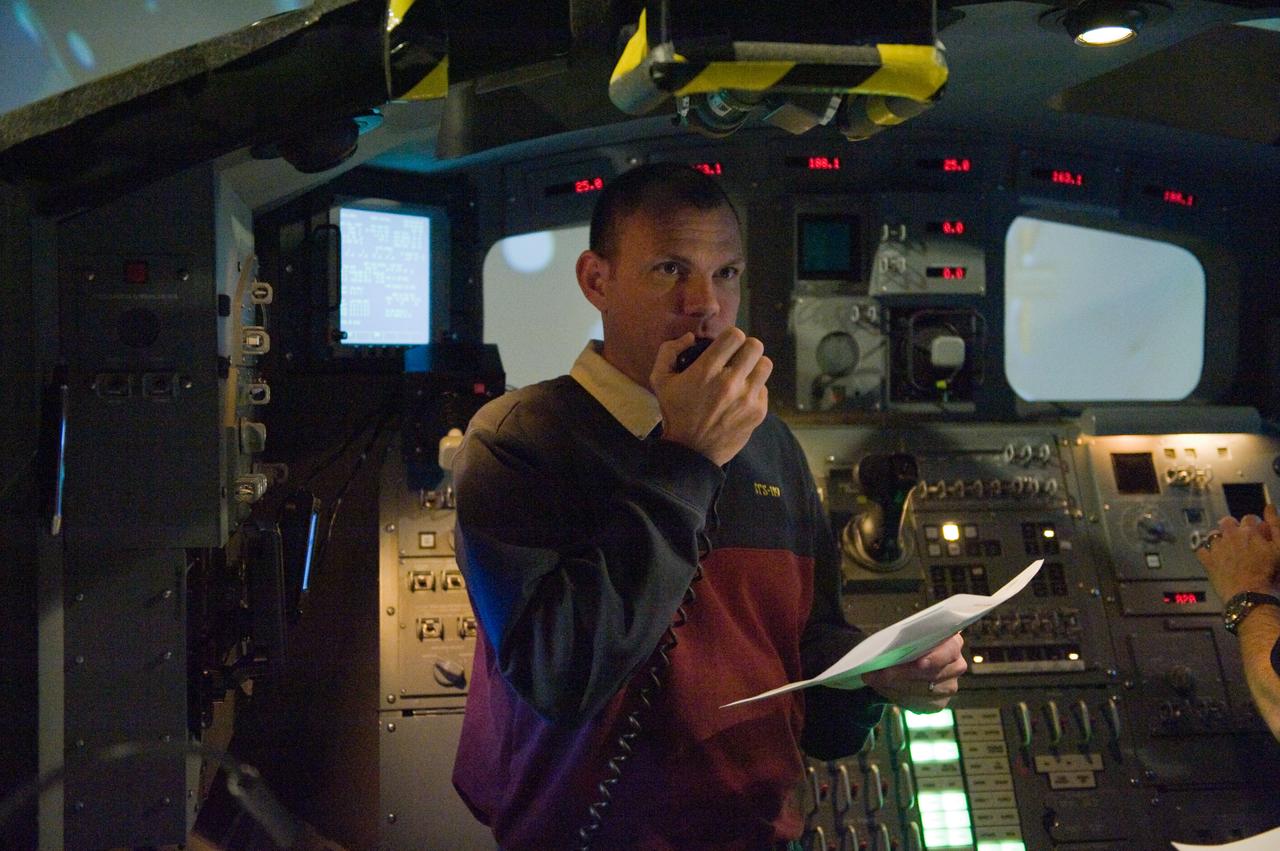
JSC2009-E-286961 (22 Dec. 2009) --- Astronaut Tony Antonelli, STS-132 pilot, uses a communication system during an exercise in the systems engineering simulator in the Avionics Systems Laboratory at NASA?s Johnson Space Center. The facility includes moving scenes of full-sized International Space Station components over a simulated Earth.
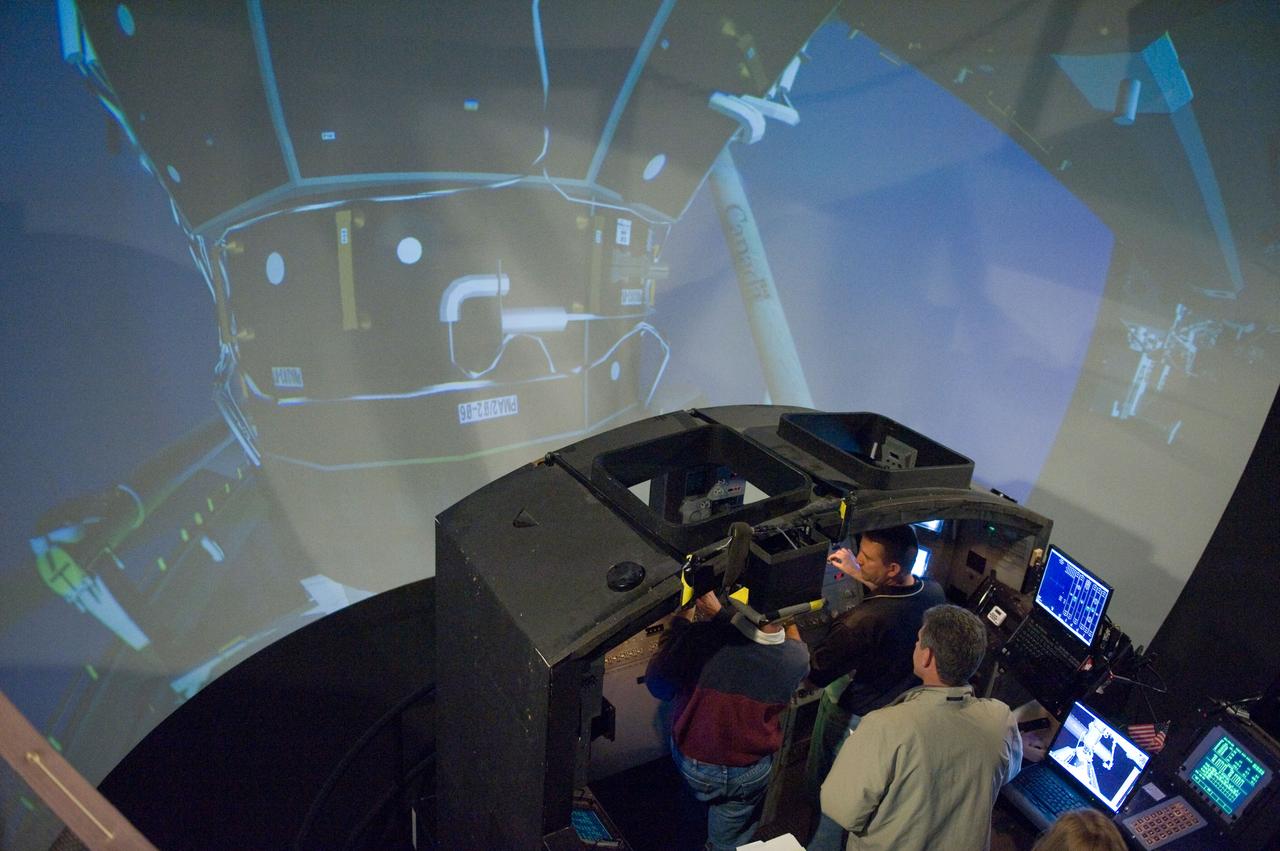
JSC2009-E-286972 (22 Dec. 2009) --- Astronauts Ken Ham (right background), STS-132 commander; Tony Antonelli (left), pilot; and Mike Good, mission specialist, participate in an exercise in the systems engineering simulator in the Avionics Systems Laboratory at NASA?s Johnson Space Center. The facility includes moving scenes of full-sized International Space Station components over a simulated Earth.
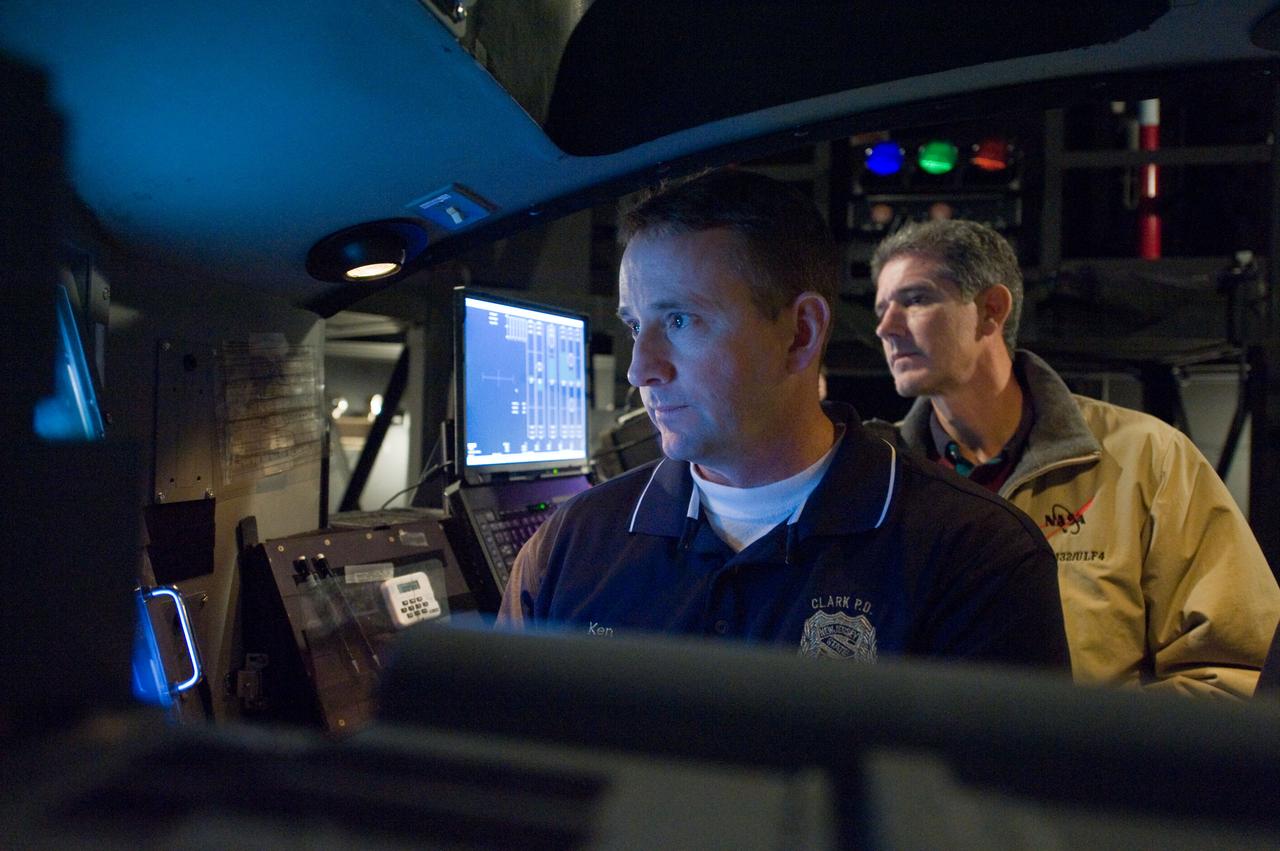
JSC2009-E-286964 (22 Dec. 2009) --- Astronauts Ken Ham (foreground), STS-132 commander; and Mike Good, mission specialist, participate in an exercise in the systems engineering simulator in the Avionics Systems Laboratory at NASA?s Johnson Space Center. The facility includes moving scenes of full-sized International Space Station components over a simulated Earth.
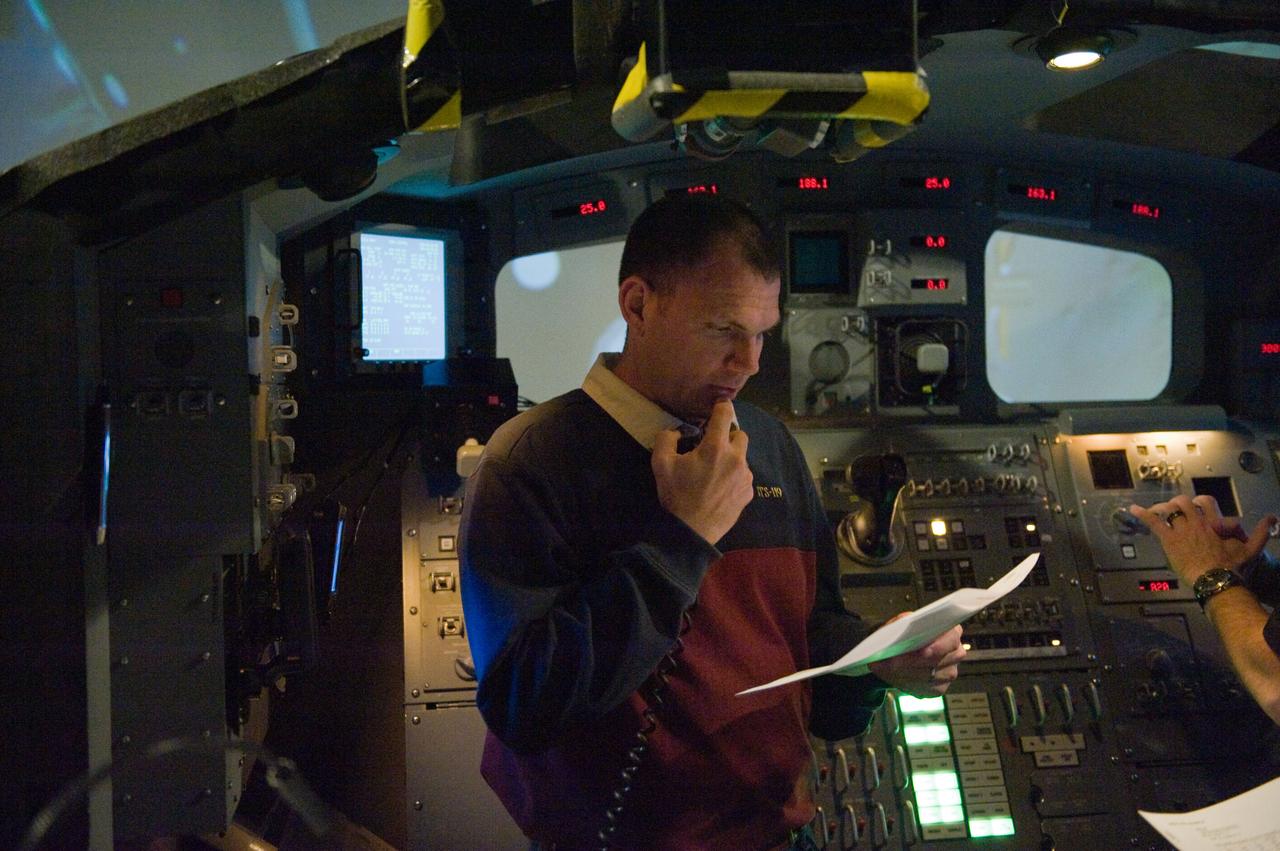
JSC2009-E-286960 (22 Dec. 2009) --- Astronaut Tony Antonelli, STS-132 pilot, uses a communication system during an exercise in the systems engineering simulator in the Avionics Systems Laboratory at NASA?s Johnson Space Center. The facility includes moving scenes of full-sized International Space Station components over a simulated Earth.