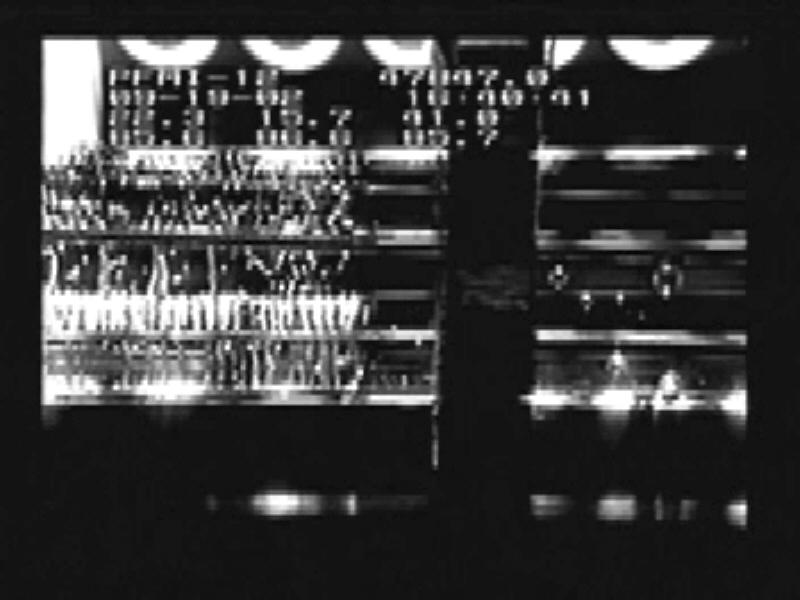
Video images sent to the ground allow scientists to watch the behavior of the bubbles as they control the melting and freezing of the material during the Pore Formation and Mobility Investigation (PFMI) in the Microgravity Science Glovebox aboard the International Space Station. While the investigation studies the way that metals behave at the microscopic scale on Earth -- and how voids form -- the experiment uses a transparent material called succinonitrile that behaves like a metal to study this problem. The bubbles do not float to the top of the material in microgravity, so they can study their interactions.
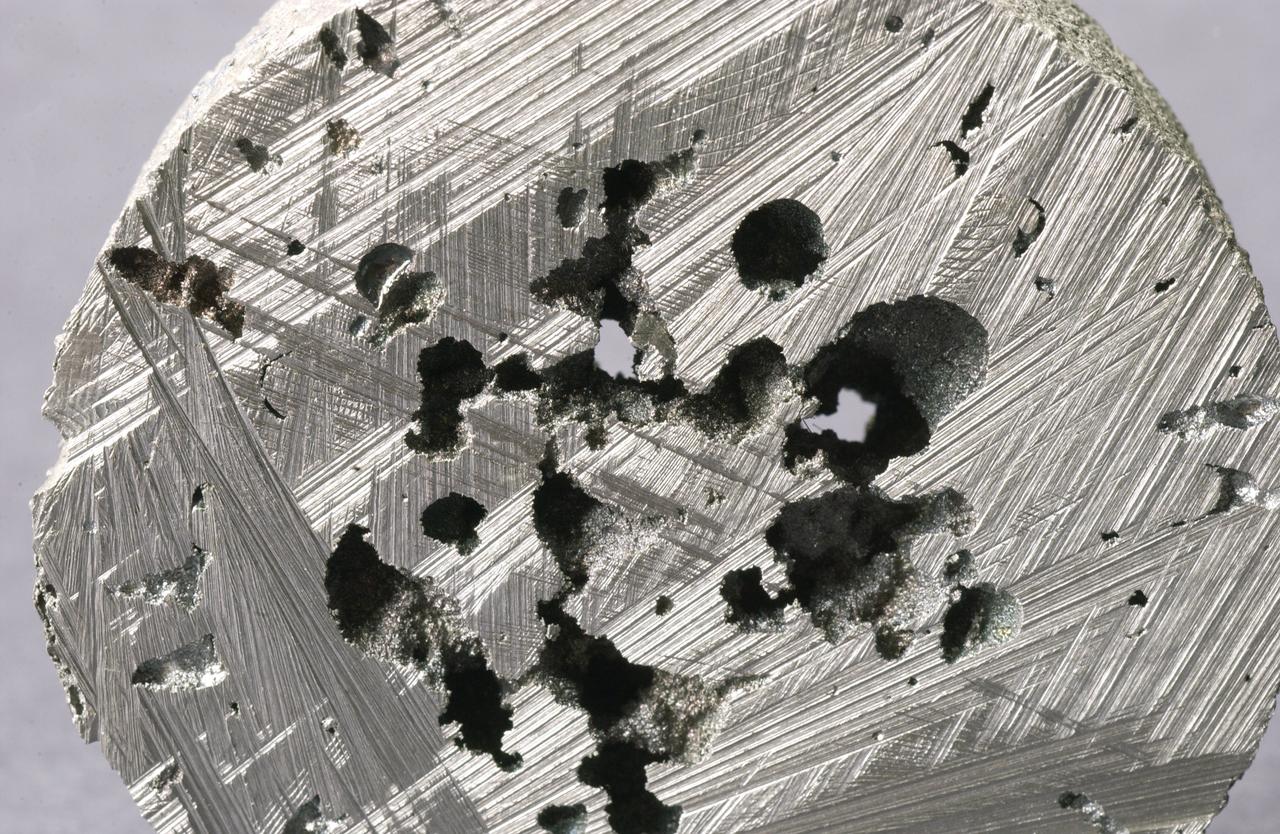
Pores and voids often form in metal castings on Earth (above) making them useless. A transparent material that behaves at a large scale in microgravity the way that metals behave at the microscopic scale on Earth, will help show how voids form and learn how to prevent them. Scientists are using the microgravity environment on the International Space Station to study how these bubbles form, move and interact. The Pore Formation and Mobility Investigation (PFMI) in the Microgravity Science Glovebox aboard the International Space Station uses a transparent material called succinonitrile that behaves like a metal to study this problem. Video images sent to the ground allow scientists to watch the behavior of the bubbles as they control the melting and freezing of the material. The bubbles do not float to the top of the material in microgravity, so they can study their interactions.
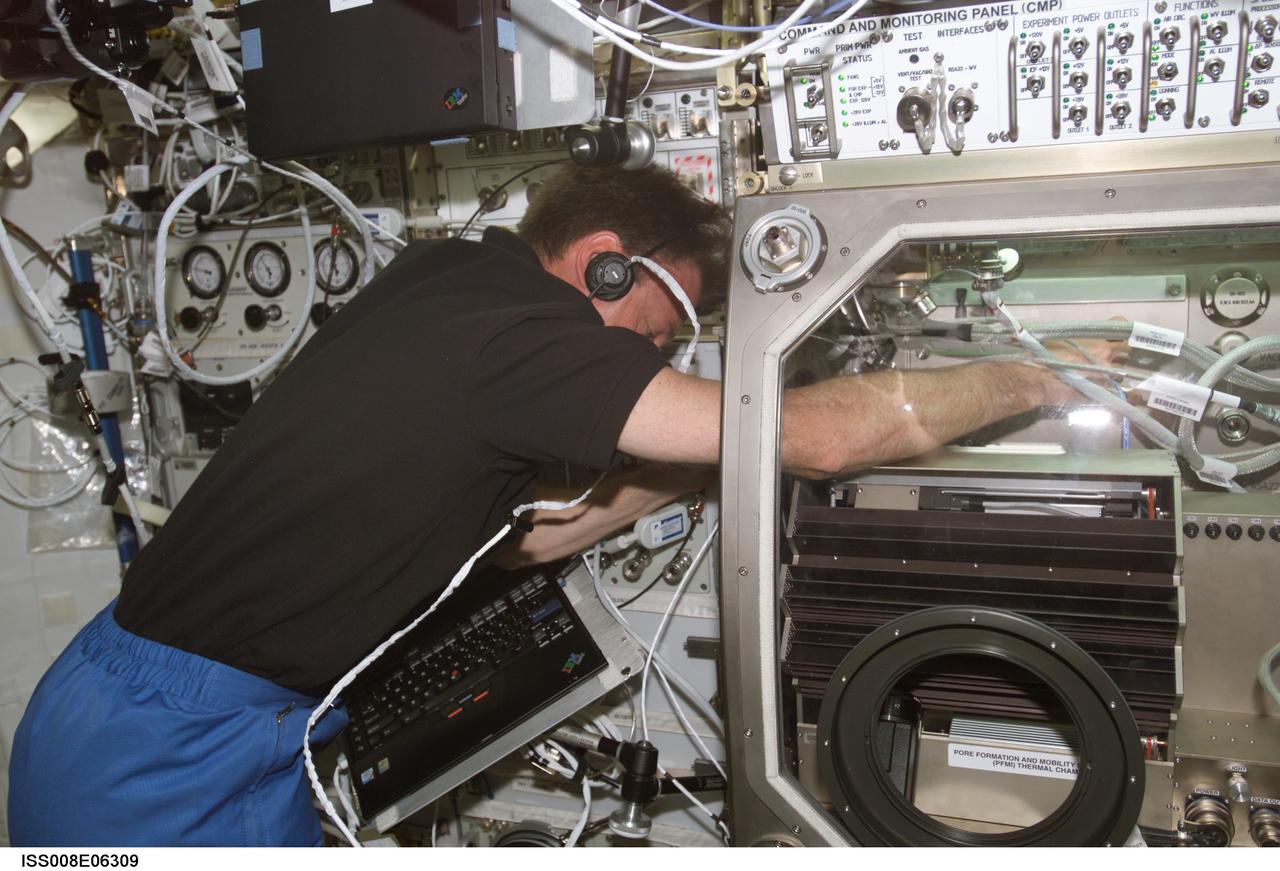
ISS008-E-06309 (28 November 2003) --- Astronaut C. Michael Foale, Expedition 8 mission commander and NASA ISS science officer, installs equipment in the Microgravity Science Glovebox (MSG) for the Pore Formation and Mobility Investigation (PFMI) experiment in the Destiny laboratory on the International Space Station (ISS). This experiment studies how bubbles form in metal and crystal samples, thus deteriorating the samples’ strength and usefulness in experiments.
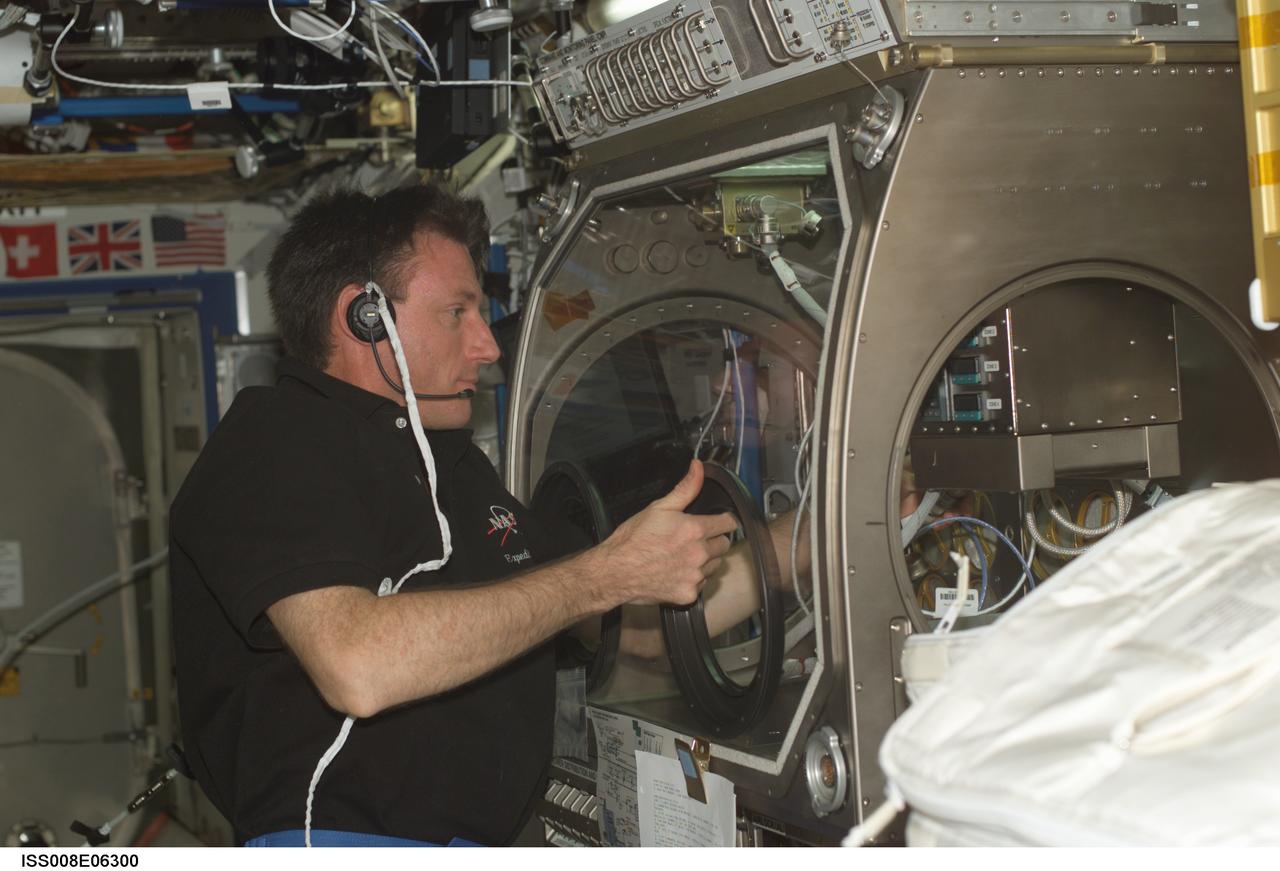
ISS008-E-06300 (28 November 2003) --- Astronaut C. Michael Foale, Expedition 8 mission commander and NASA ISS science officer, installs equipment in the Microgravity Science Glovebox (MSG) for the Pore Formation and Mobility Investigation (PFMI) experiment in the Destiny laboratory on the International Space Station (ISS). This experiment studies how bubbles form in metal and crystal samples, thus deteriorating the samples’ strength and usefulness in experiments.
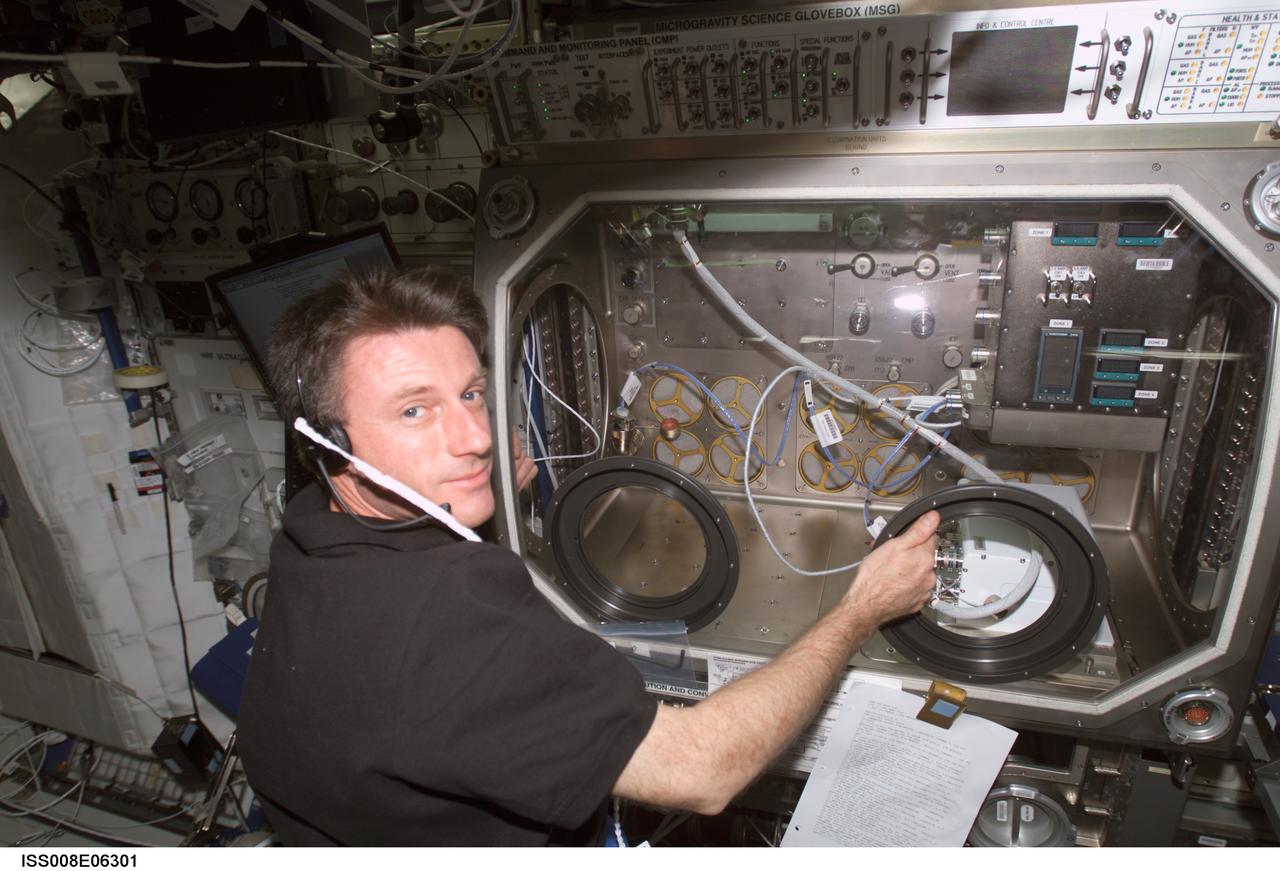
ISS008-E-06301 (28 November 2003) --- Astronaut C. Michael Foale, Expedition 8 mission commander and NASA ISS science officer, installs equipment in the Microgravity Science Glovebox (MSG) for the Pore Formation and Mobility Investigation (PFMI) experiment in the Destiny laboratory on the International Space Station (ISS). This experiment studies how bubbles form in metal and crystal samples, thus deteriorating the samples’ strength and usefulness in experiments.
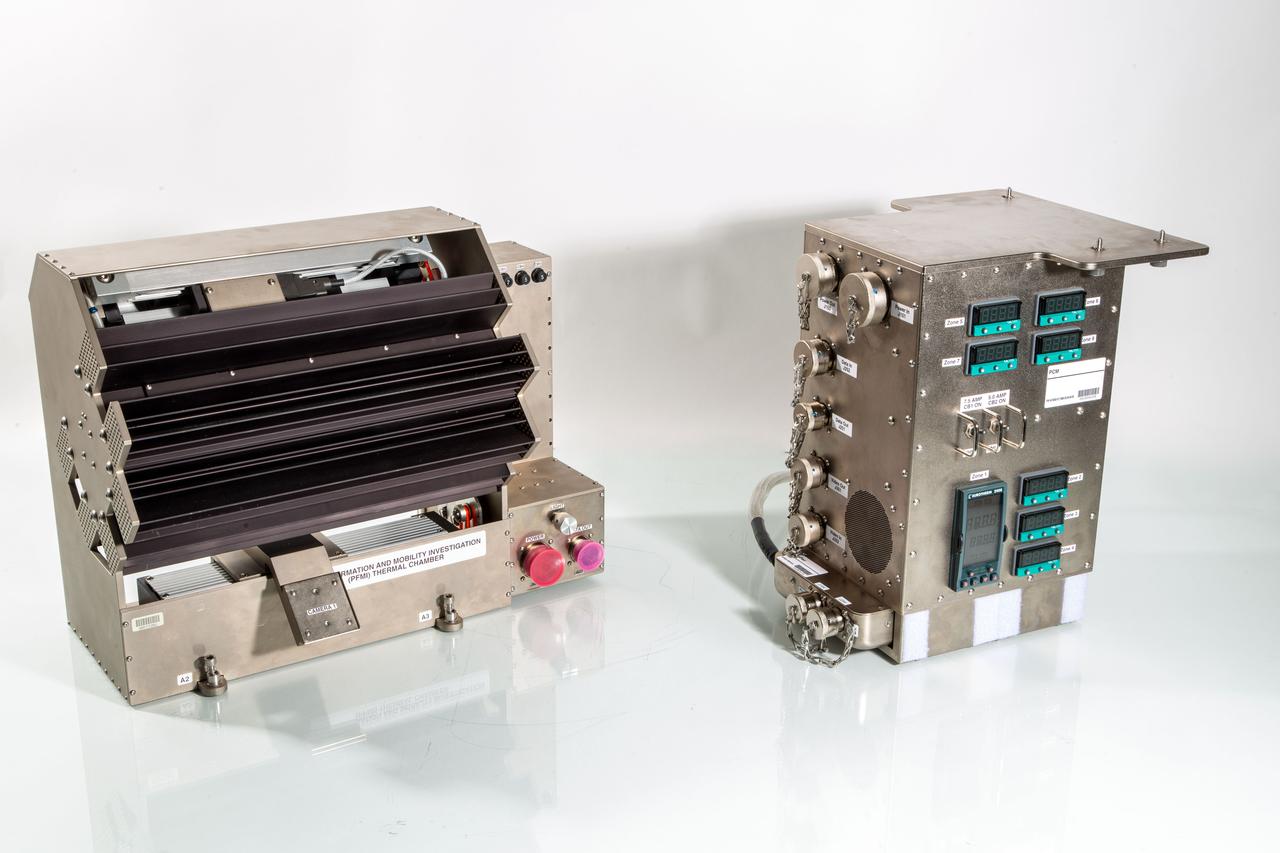
jsc2020e030482 (4/24/2020) --- A preflight view of the PFMI Furnace. The Pore Formation and Mobility Investigation (PFMI) facility objective is to study the fundamental phenomena responsible for the formation of certain classes of defects in different materials. Investigators examine the physical principles which control the occurrence of defects in manufacturing on Earth in order to develop methods to reduce flaws, defects or wasted material. (Image courtesy of: Techshot, Inc.)
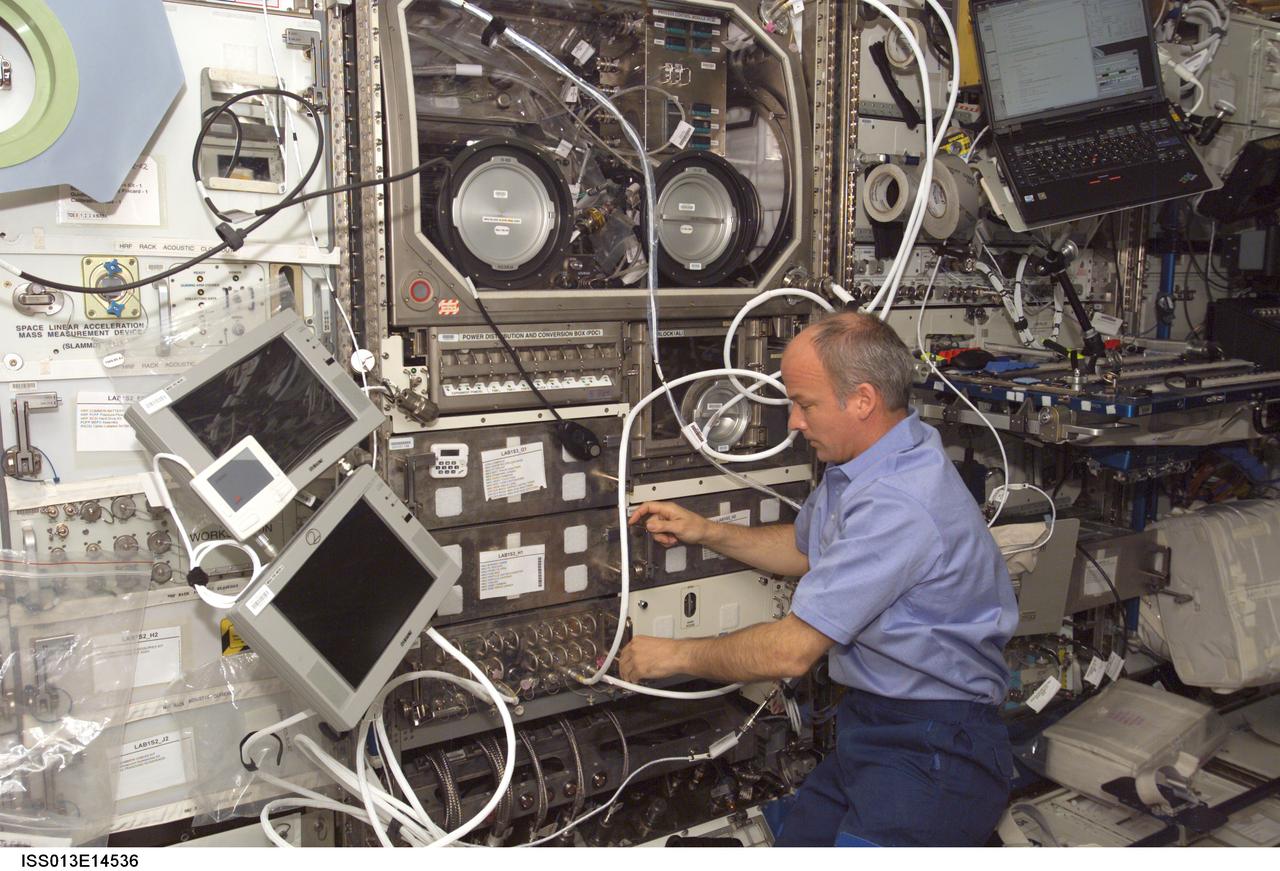
ISS013-E-14536 (4 May 2006) --- Astronaut Jeffrey N. Williams, Expedition 13 NASA space station science officer and flight engineer, conducts the first run of the Pore Formation and Mobility Investigation (PFMI) in the Microgravity Science Glovebox (MSG) in the Destiny laboratory of the International Space Station.
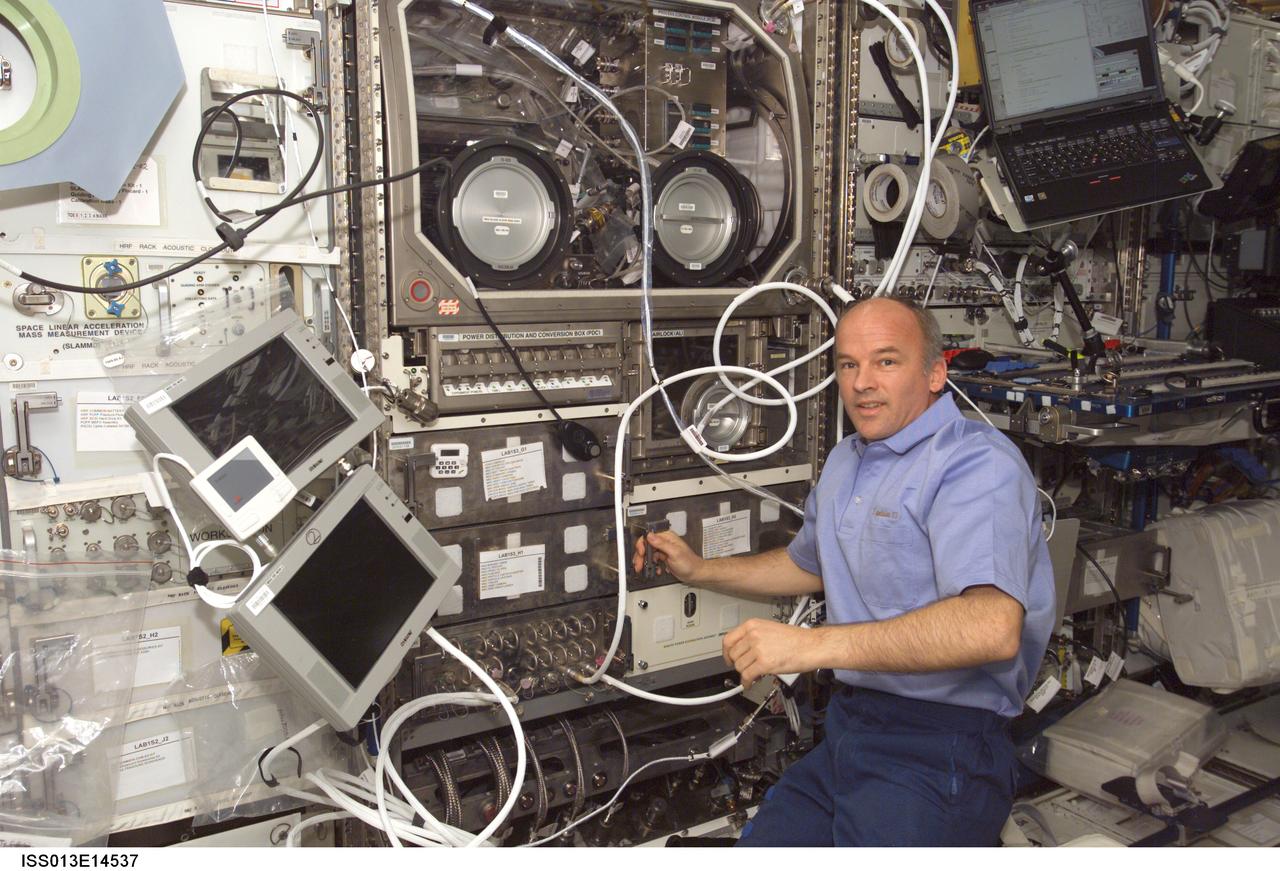
ISS013-E-14537 (4 May 2006) --- Astronaut Jeffrey N. Williams, Expedition 13 NASA space station science officer and flight engineer, conducts the first run of the Pore Formation and Mobility Investigation (PFMI) in the Microgravity Science Glovebox (MSG) in the Destiny laboratory of the International Space Station.
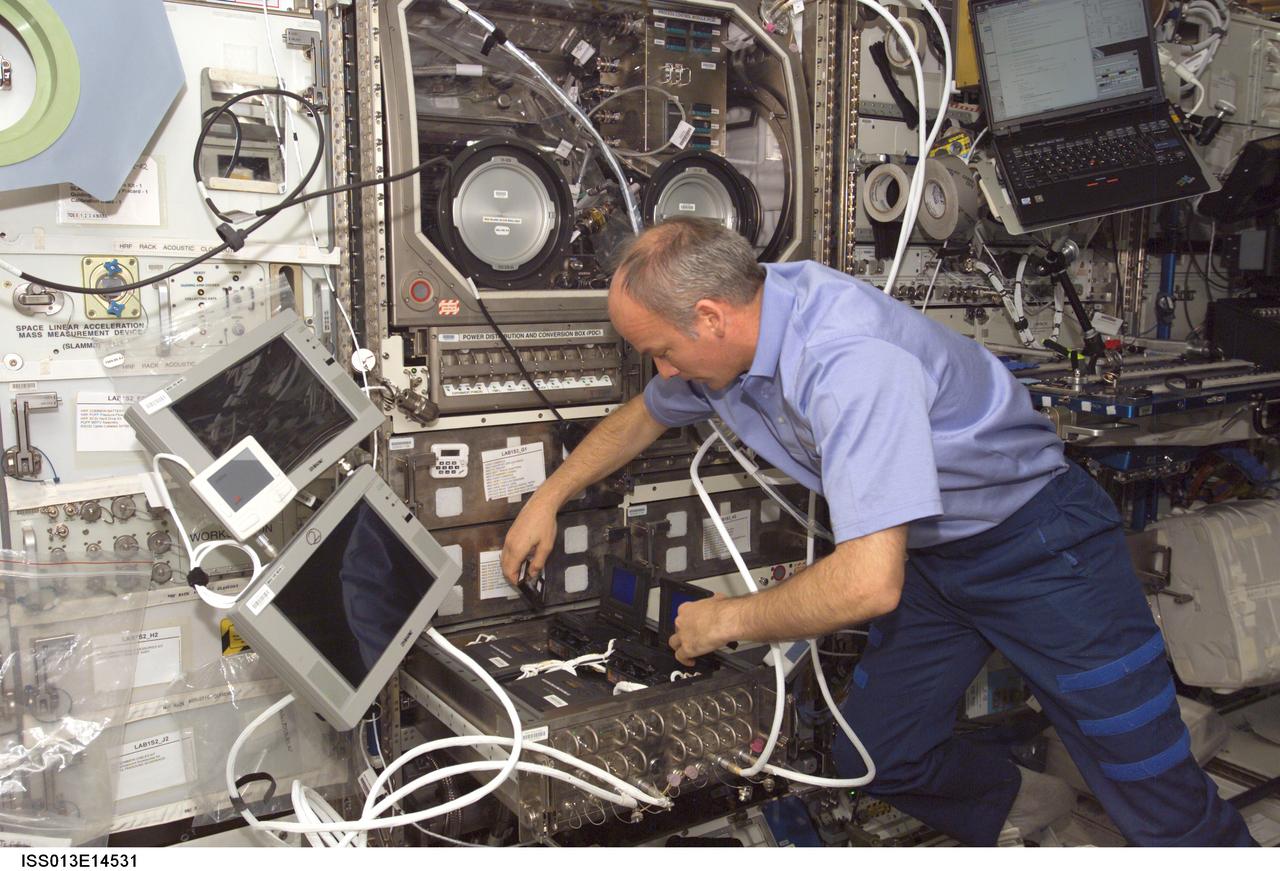
ISS013-E-14531 (4 May 2006) --- Astronaut Jeffrey N. Williams, Expedition 13 NASA space station science officer and flight engineer, conducts the first run of the Pore Formation and Mobility Investigation (PFMI) in the Microgravity Science Glovebox (MSG) in the Destiny laboratory of the International Space Station.
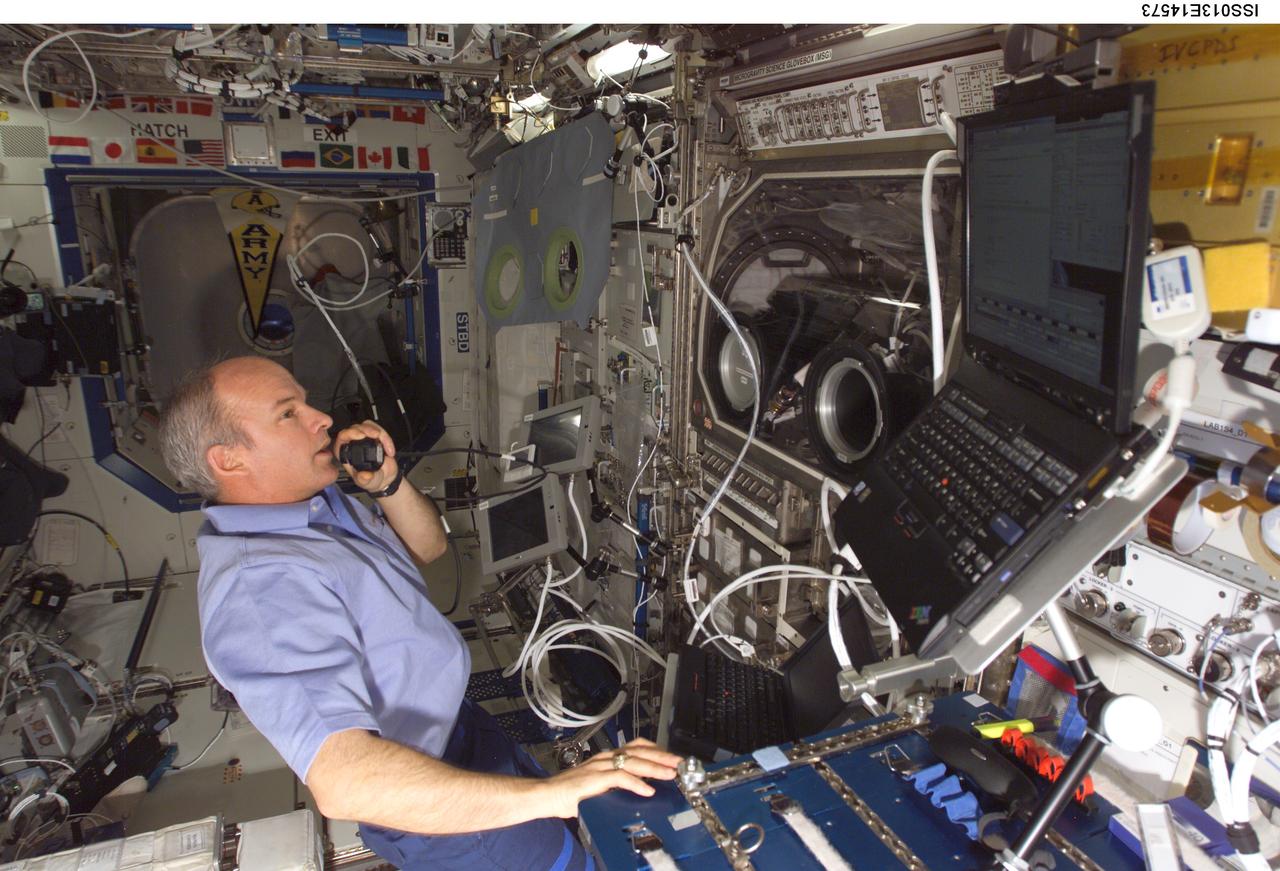
ISS013-E-14573 (4 May 2006) --- Astronaut Jeffrey N. Williams, Expedition 13 NASA space station science officer and flight engineer, conducts the first run of the Pore Formation and Mobility Investigation (PFMI) in the Microgravity Science Glovebox (MSG) in the Destiny laboratory of the International Space Station.
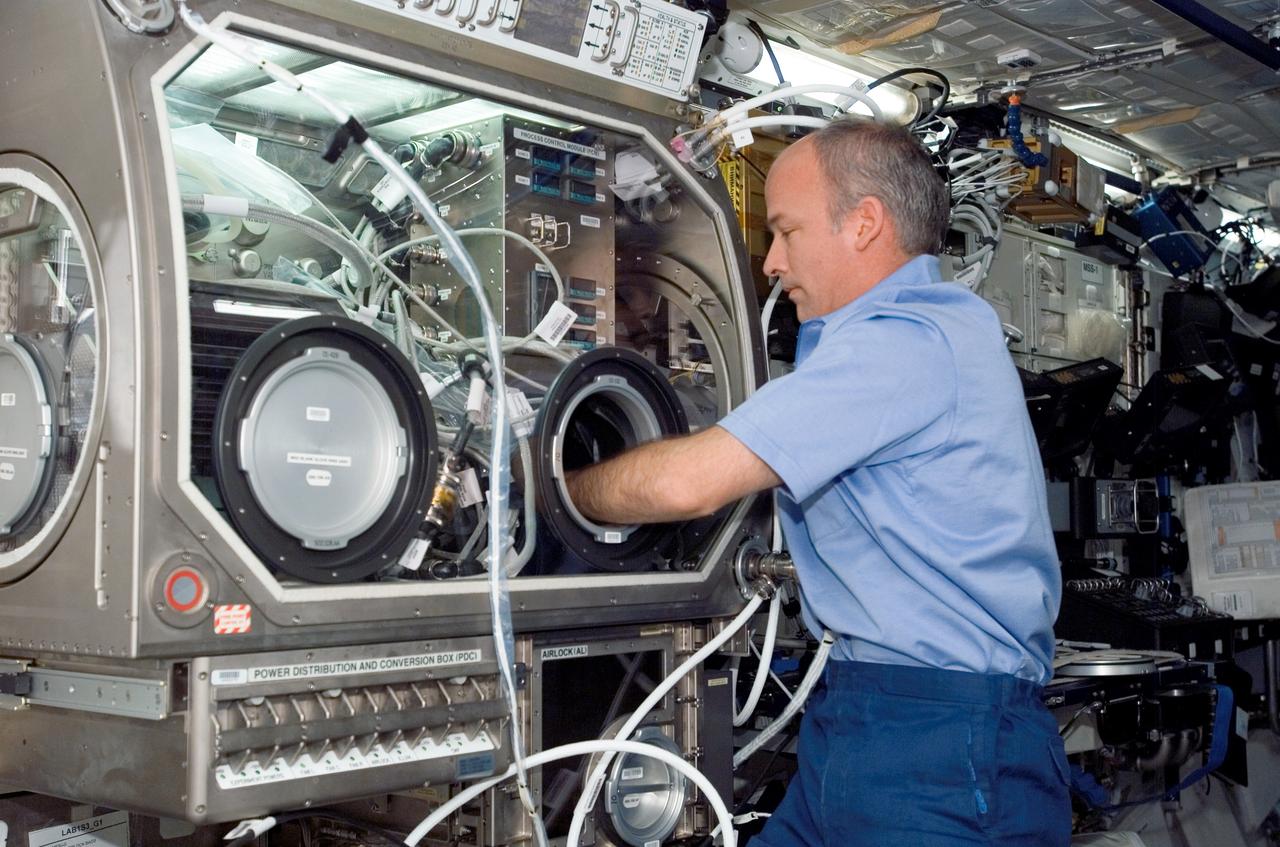
ISS013-E-14524 (4 May 2006) --- Astronaut Jeffrey N. Williams, Expedition 13 NASA space station science officer and flight engineer, conducts the first run of the Pore Formation and Mobility Investigation (PFMI) in the Microgravity Science Glovebox (MSG) in the Destiny laboratory of the International Space Station.
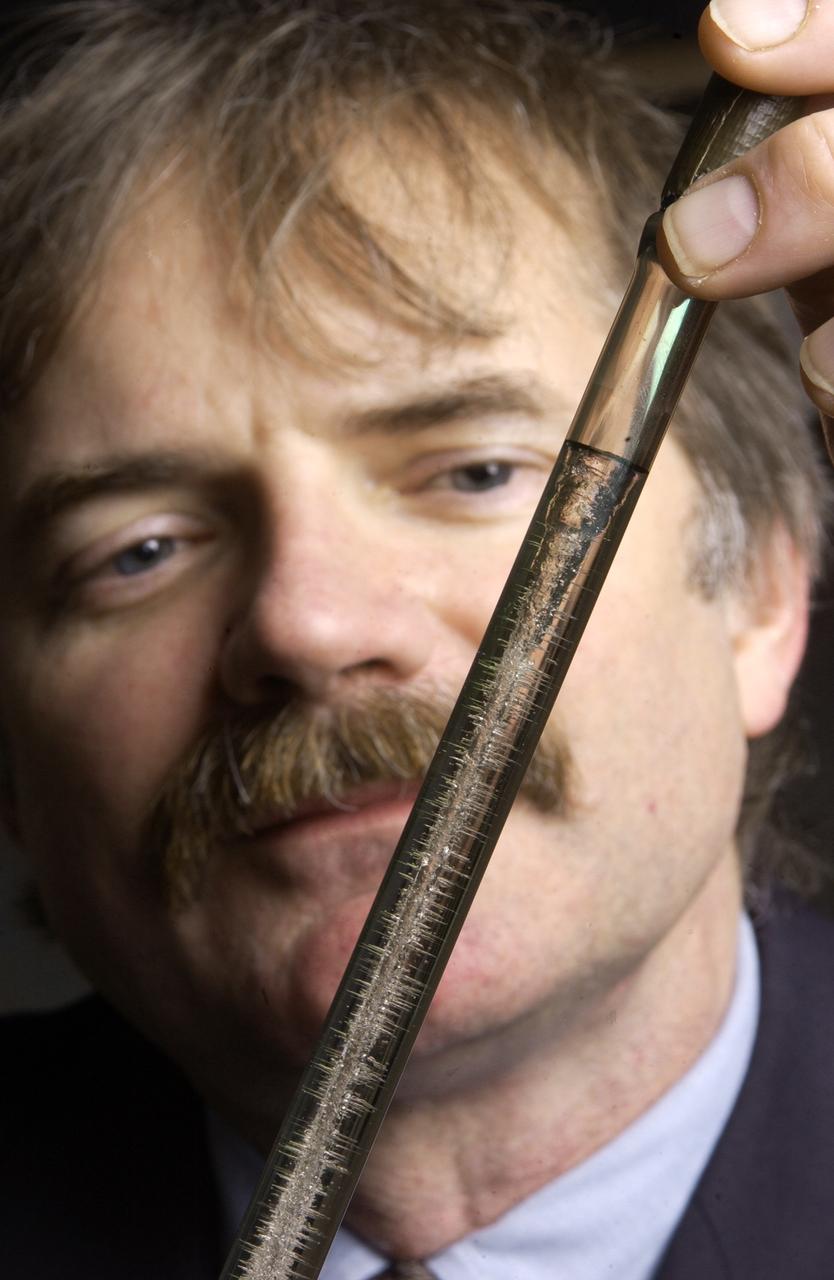
On Earth when scientists melt metals, bubbles that form in the molten material can rise to the surface, pop and disappear. In microgravity -- the near-weightless environment created as the International Space Station orbits Earth -- the lighter bubbles do not rise and disappear. Prior space experiments have shown that bubbles often become trapped in the final metal or crystal sample -similar to the bubbles trapped in this sample. In the solid, these bubbles, or porosity, are defects that diminish both the material's strength and usefulness. The Pore Formation and Mobility Investigation will melt samples of a transparent modeling material, succinonitrile and succinonitrile water mixtures, shown here in an ampoule being examined by Dr. Richard Grugel, the principal investigator for the experiment at NASA's Marshall Space Flight Center in Huntsville, Ala. As the samples are processed in space, Grugel will be able to observe how bubbles form in the samples and study their movements and interactions.
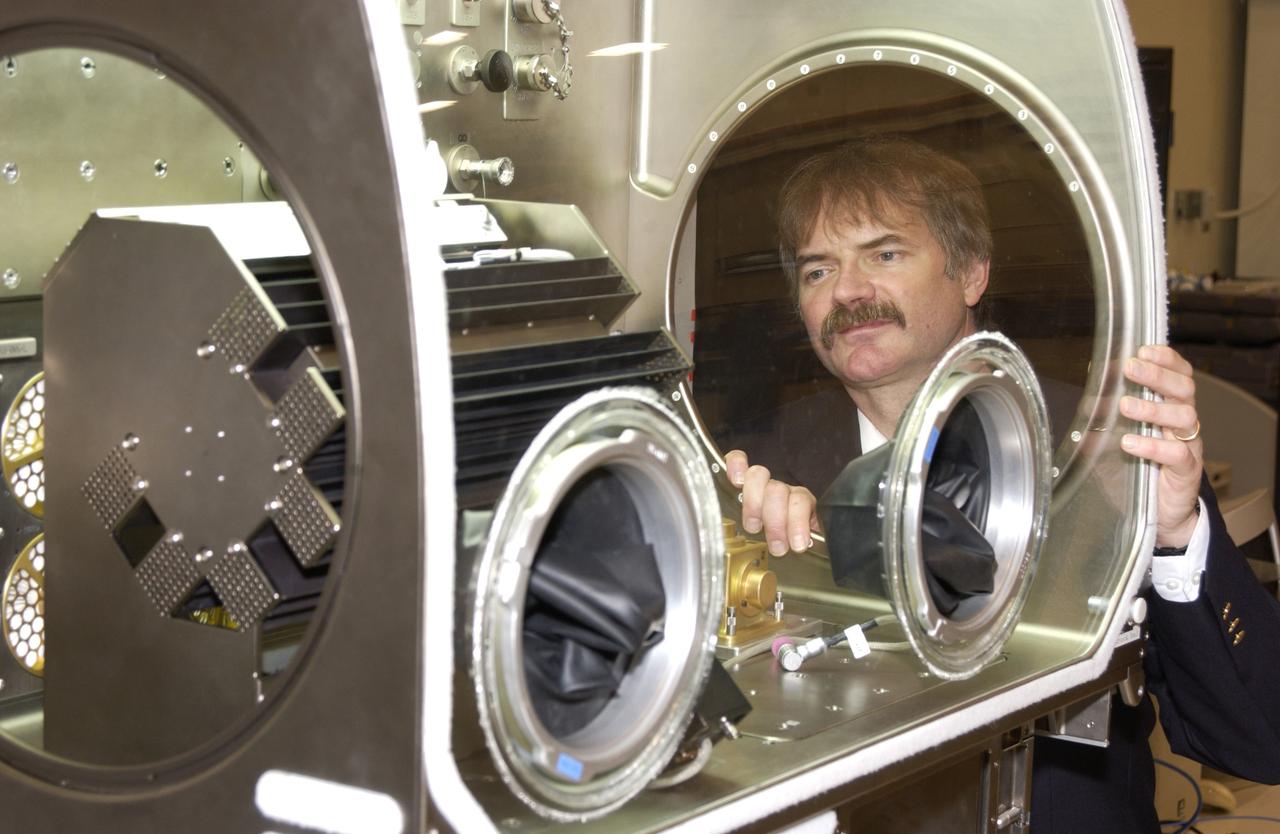
Dr. Richard Grugel, a materials scientist at NASA's Marshall Space Flight in Huntsville, Ala., examines the furnace used to conduct his Pore Formation and Mobility Investigation -- one of the first two materials science experiments to be conducted on the International Space Station. This experiment studies materials processes similar to those used to make components used in jet engines. Grugel's furnace was installed in the Microgravity Science Glovebox through the circular port on the side. In space, crewmembers are able to change out samples using the gloves on the front of the facility's work area.
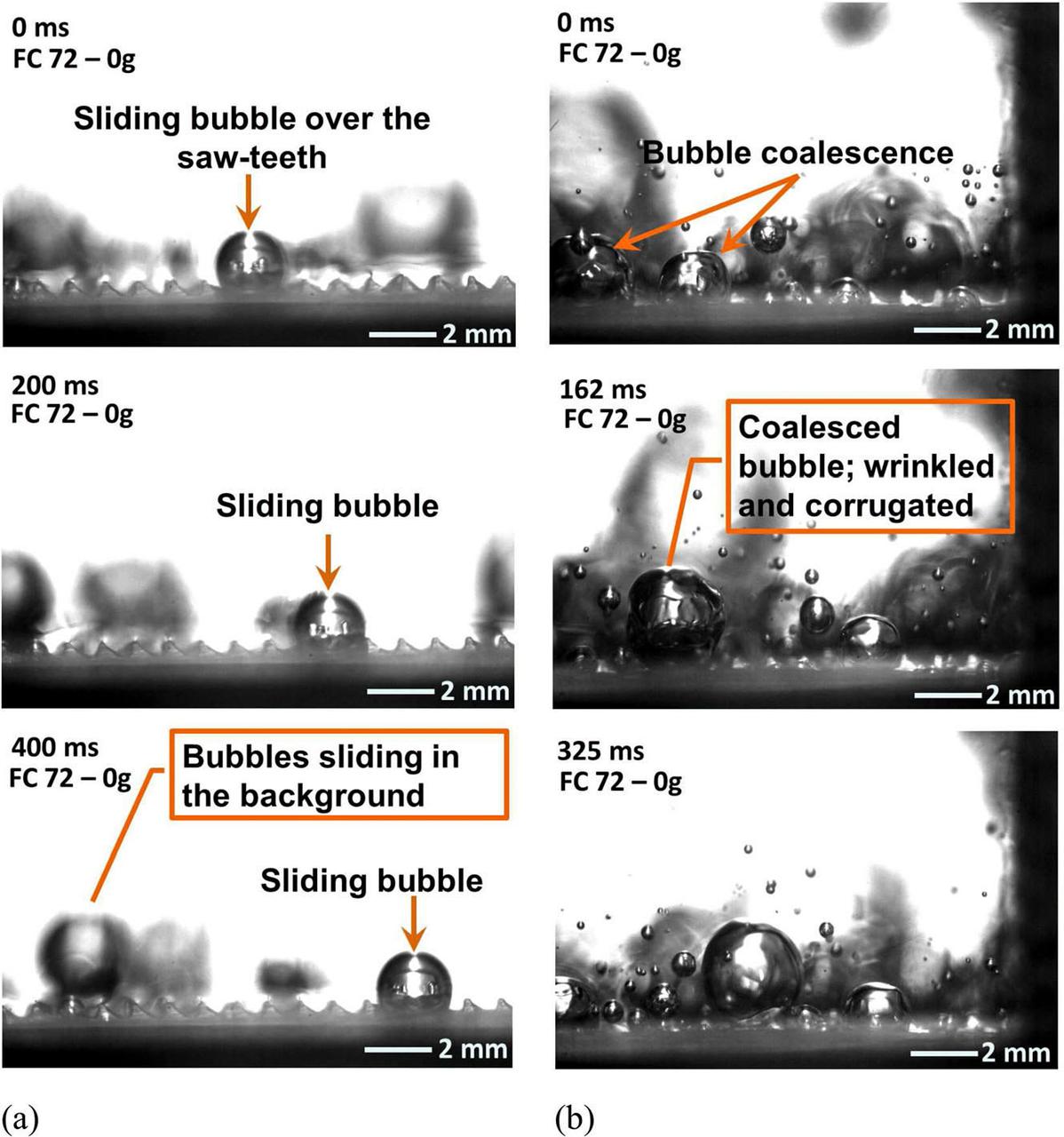
jsc2020e030483 (4/20/2020) --- A preflight image sequence from parabolic flight experiments indicating motion of vapor bubble on heated ratchet surface. Asymmetric Sawtooth and Cavity-Enhanced Nucleation-Driven Transport (PFMI-ASCENT) demonstrates a passive cooling system for electronic devices in microgravity using a microstructured surface. When fluids boil over flat heated surfaces in microgravity, vapor bubbles grow larger in size, causing poor heat transfer that can lead to damage of devices. Adding microscopic rachets on the surface may passively enable mobility of vapor bubbles and prevent this damage. (Image courtesy of: Techshot, Inc.)
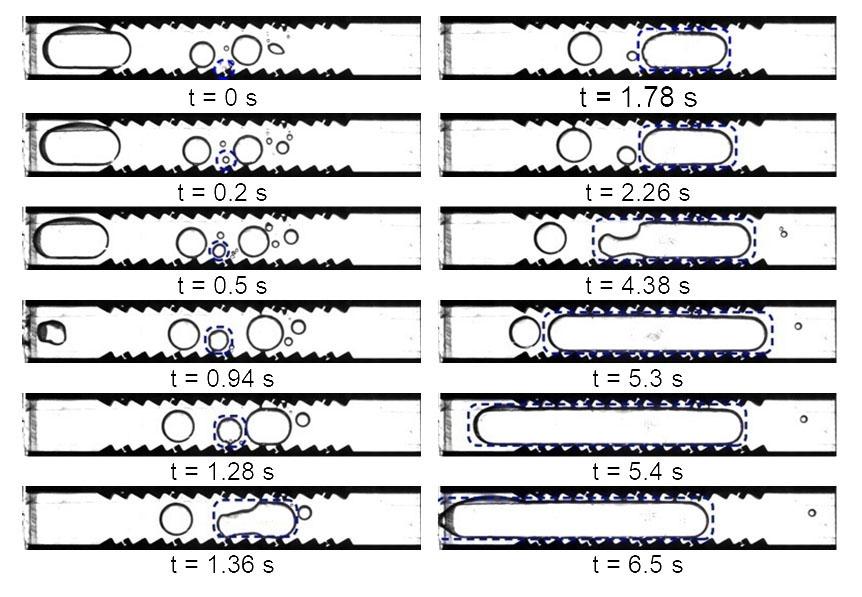
jsc2020e030484 (4/20/2020) --- A preflight image sequence from terrestrial experiments with two vertically oriented ratchet surfaces; subcooling: 9.5 ℃; heat flux: 1.31 W/cm2. Asymmetric Sawtooth and Cavity-Enhanced Nucleation-Driven Transport (PFMI-ASCENT) demonstrates a passive cooling system for electronic devices in microgravity using a microstructured surface. When fluids boil over flat heated surfaces in microgravity, vapor bubbles grow larger in size, causing poor heat transfer that can lead to damage of devices. Adding microscopic rachets on the surface may passively enable mobility of vapor bubbles and prevent this damage. (Image courtesy of: Techshot, Inc.)