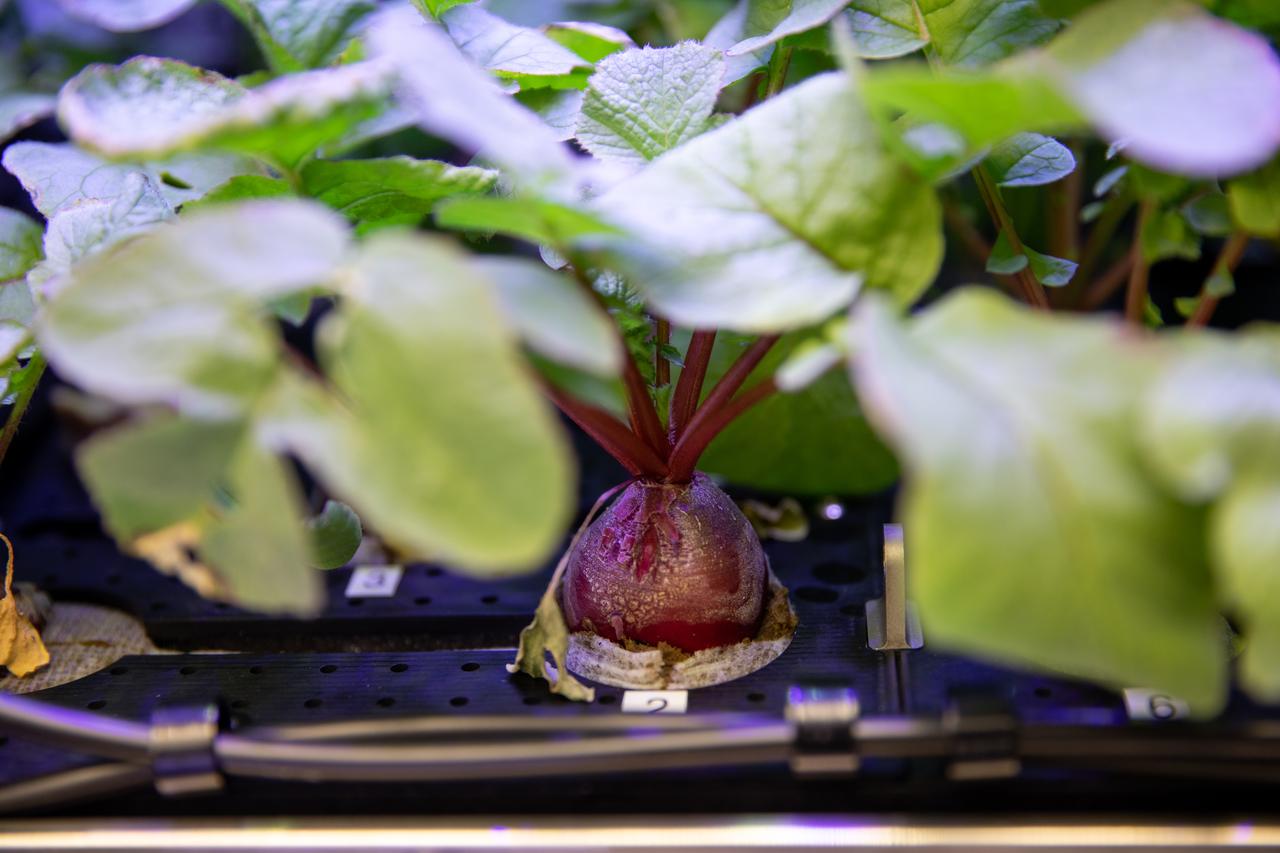
A view of radishes growing in the Advanced Plant Habitat (APH) ground unit inside the Space Station Processing Facility at NASA’s Kennedy Space Center in Florida on Dec. 14, 2020. The radishes are a ground control crop for the Plant Habitat-02 (PH-02) experiment. The experiment also involves growing two similar radish crops inside the International Space Station’s APH. NASA astronaut Kate Rubins harvested the first crop on Nov. 30, and the second harvest aboard the orbiting laboratory is planned for Dec. 30. Once samples return to Earth, researchers will compare those grown in space to the radishes grown here on Earth to better understand how microgravity affects plant growth.
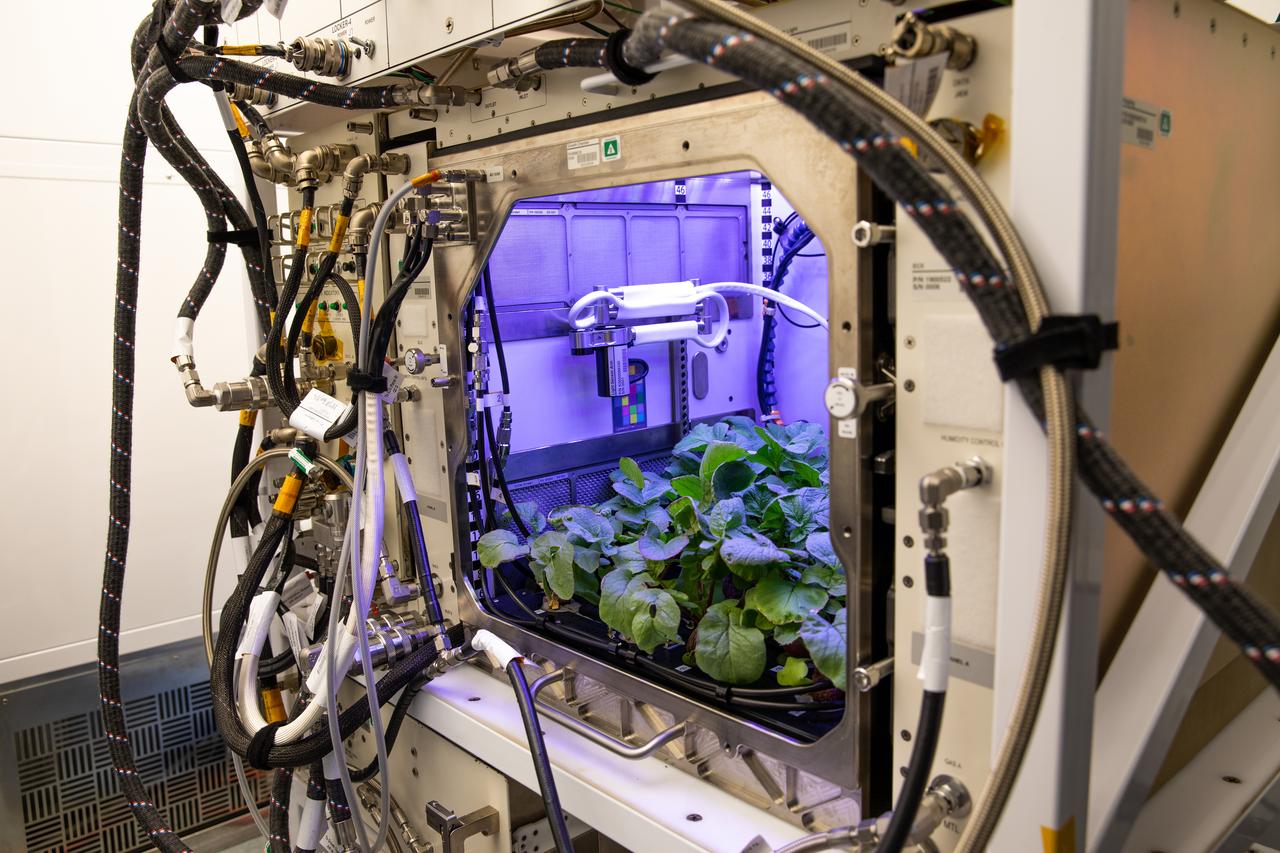
A view of radishes growing in the Advanced Plant Habitat (APH) ground unit inside the Space Station Processing Facility at NASA’s Kennedy Space Center in Florida on Dec. 14, 2020. The radishes are a ground control crop for the Plant Habitat-02 (PH-02) experiment, which also involves growing two similar radish crops inside the International Space Station’s APH. NASA astronaut Kate Rubins harvested the first crop on Nov. 30, and the second harvest aboard the orbiting laboratory is planned for Dec. 30. Once samples return to Earth, researchers will compare those grown in space to the radishes grown here on Earth to better understand how microgravity affects plant growth.
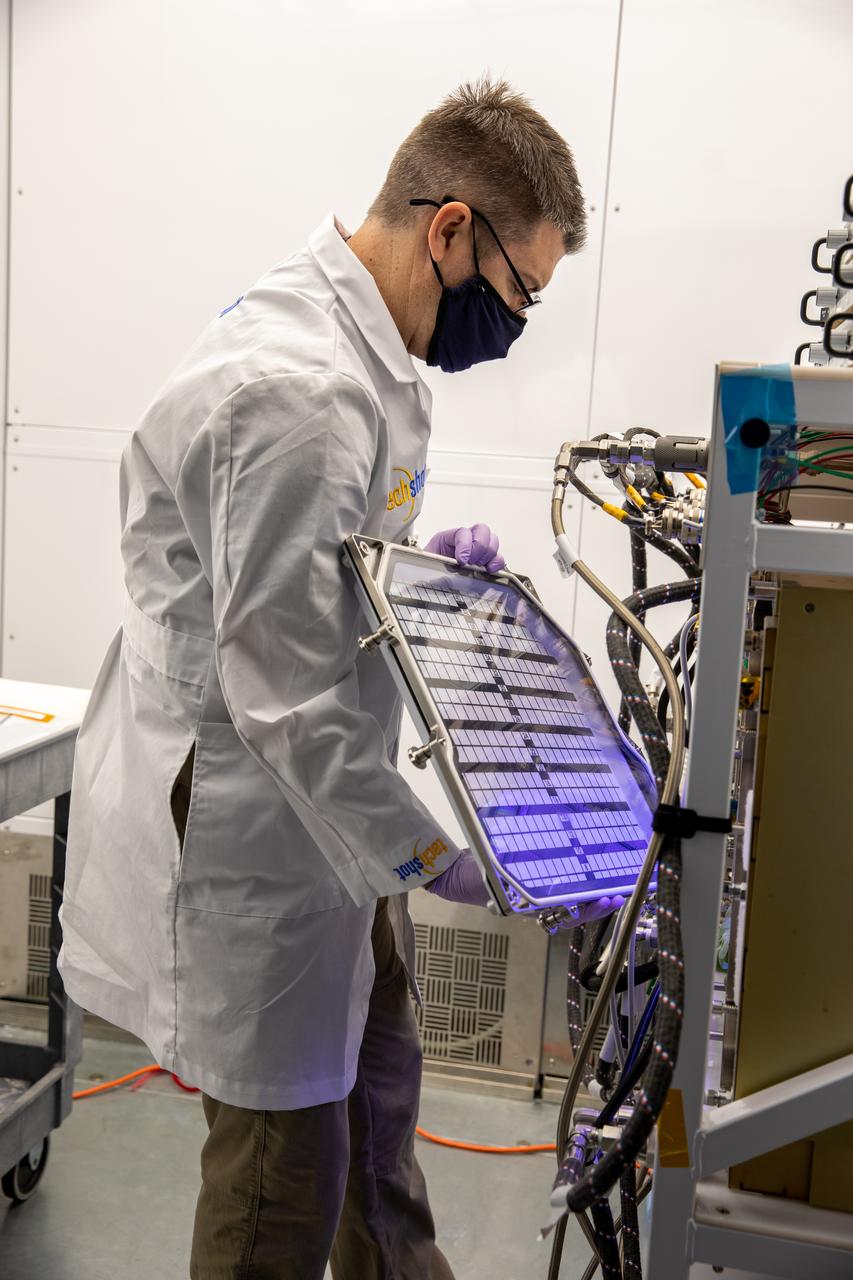
A researcher prepares to harvest radishes grown in the Advanced Plant Habitat (APH) ground unit inside the Space Station Processing Facility at NASA’s Kennedy Space Center in Florida on Dec. 14, 2020. The radishes are a ground control crop for the Plant Habitat-02 (PH-02) experiment, which also involves growing two radish crops inside the International Space Station’s APH. NASA astronaut Kate Rubins harvested the first crop on Nov. 30, and the second harvest aboard the orbiting laboratory is planned for Dec. 30. Once samples return to Earth, researchers will compare those grown in space to the radishes grown here on Earth to better understand how microgravity affects plant growth.
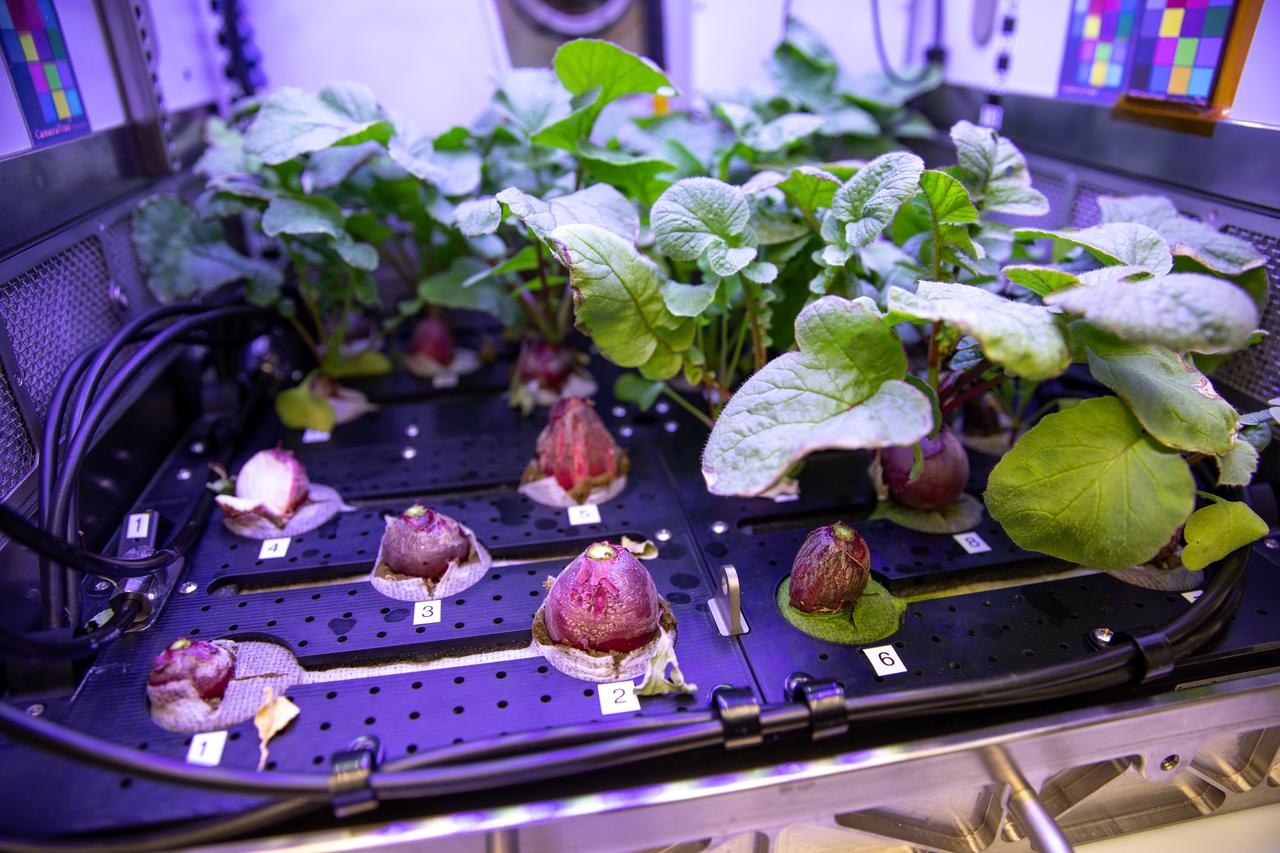
A view of radishes growing in the Advanced Plant Habitat (APH) ground unit inside the Space Station Processing Facility at NASA’s Kennedy Space Center in Florida on Dec. 14, 2020. The radishes are a ground control crop for the Plant Habitat-02 (PH-02) experiment. The experiment also involves growing two similar radish crops inside the International Space Station’s APH. NASA astronaut Kate Rubins harvested the first crop on Nov. 30, and the second harvest aboard the orbiting laboratory is planned for Dec. 30. Once samples return to Earth, researchers will compare those grown in space to the radishes grown here on Earth to better understand how microgravity affects plant growth.
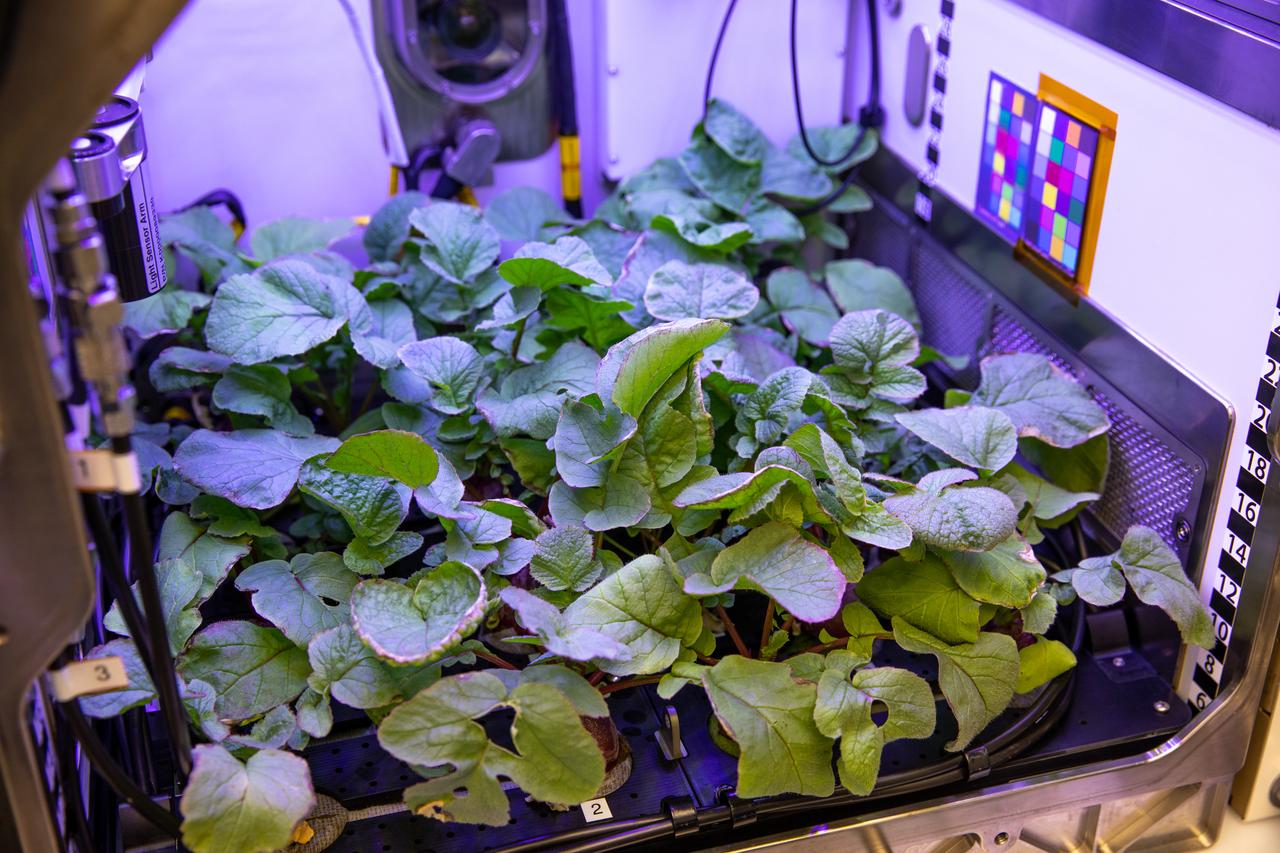
A view of radishes growing in the Advanced Plant Habitat (APH) ground unit inside the Space Station Processing Facility at NASA’s Kennedy Space Center in Florida on Dec. 14, 2020. The radishes are a ground control crop for the Plant Habitat-02 (PH-02) experiment. The experiment also involves growing two similar radish crops inside the International Space Station’s APH. NASA astronaut Kate Rubins harvested the first crop on Nov. 30, and the second harvest aboard the orbiting laboratory is planned for Dec. 30. Once samples return to Earth, researchers will compare those grown in space to the radishes grown here on Earth to better understand how microgravity affects plant growth.
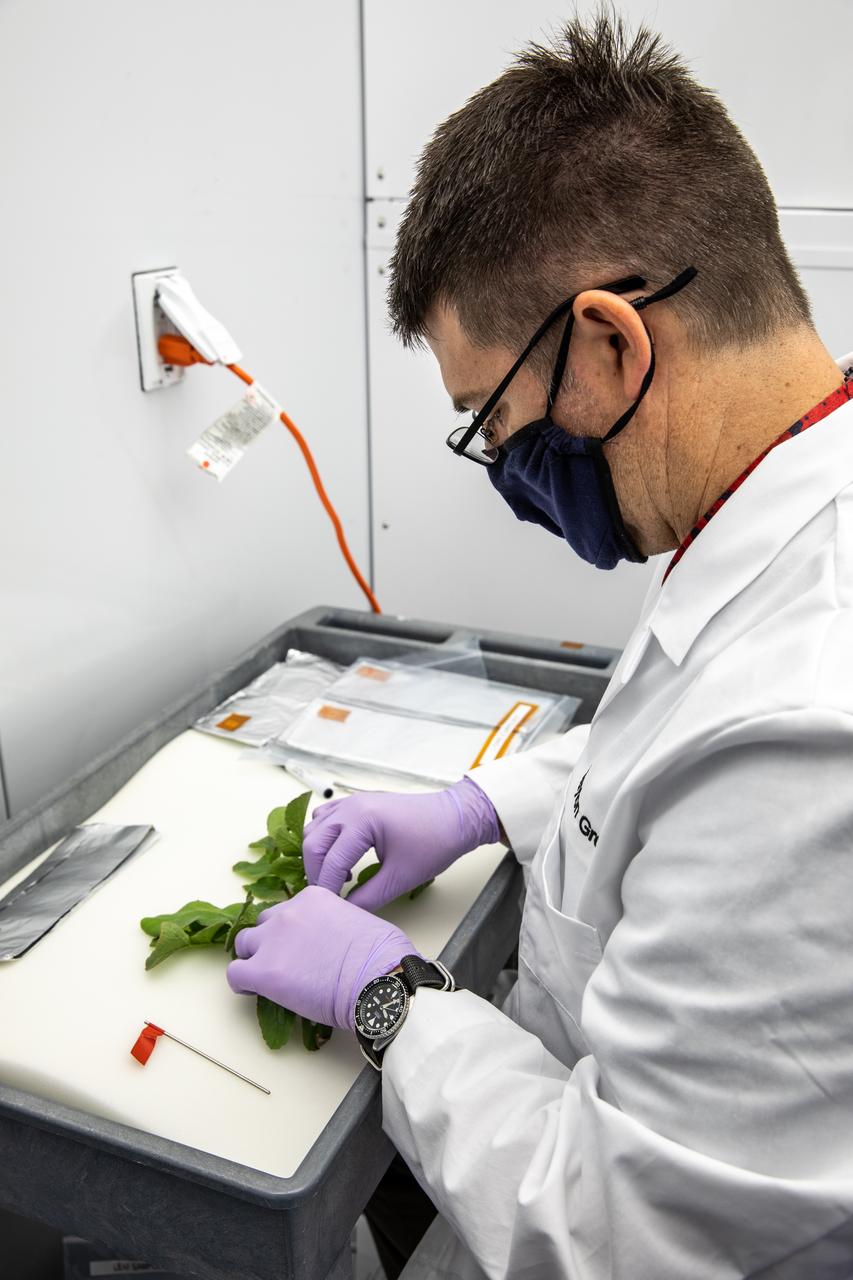
A research scientist collects measurements of radishes harvested from the Advanced Plant Habitat (APH) ground unit inside the Space Station Processing Facility at NASA’s Kennedy Space Center in Florida on Dec. 14, 2020. The radishes are a ground control crop for the Plant Habitat-02 (PH-02) experiment, which also involves growing two similar radish crops inside the International Space Station’s APH. NASA astronaut Kate Rubins harvested the first crop on Nov. 30, and the second harvest aboard the orbiting laboratory is planned for Dec. 30. Once samples return to Earth, researchers will compare those grown in space to the radishes grown here on Earth to better understand how microgravity affects plant growth.
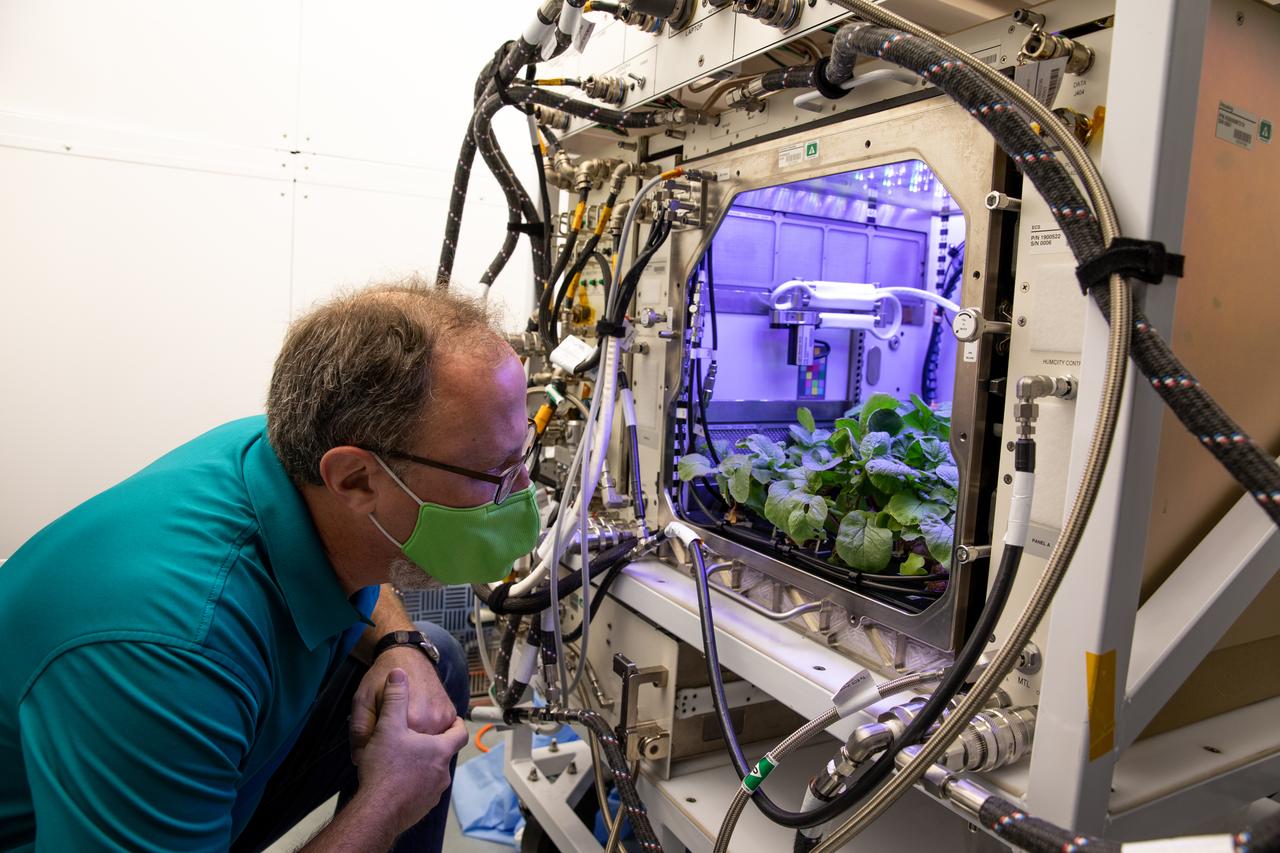
Dave Reed, Florida operations director for Techshot, Inc., observes radishes growing in the Advanced Plant Habitat (APH) ground unit inside the Space Station Processing Facility at NASA’s Kennedy Space Center in Florida on Dec. 14, 2020. The radishes are a ground control crop for the Plant Habitat-02 (PH-02) experiment, which also involves growing two similar radish crops inside the International Space Station’s APH. NASA astronaut Kate Rubins harvested the first crop on Nov. 30, and the second harvest aboard the orbiting laboratory is planned for Dec. 30. Once samples return to Earth, researchers will compare those grown in space to the radishes grown here on Earth to better understand how microgravity affects plant growth.
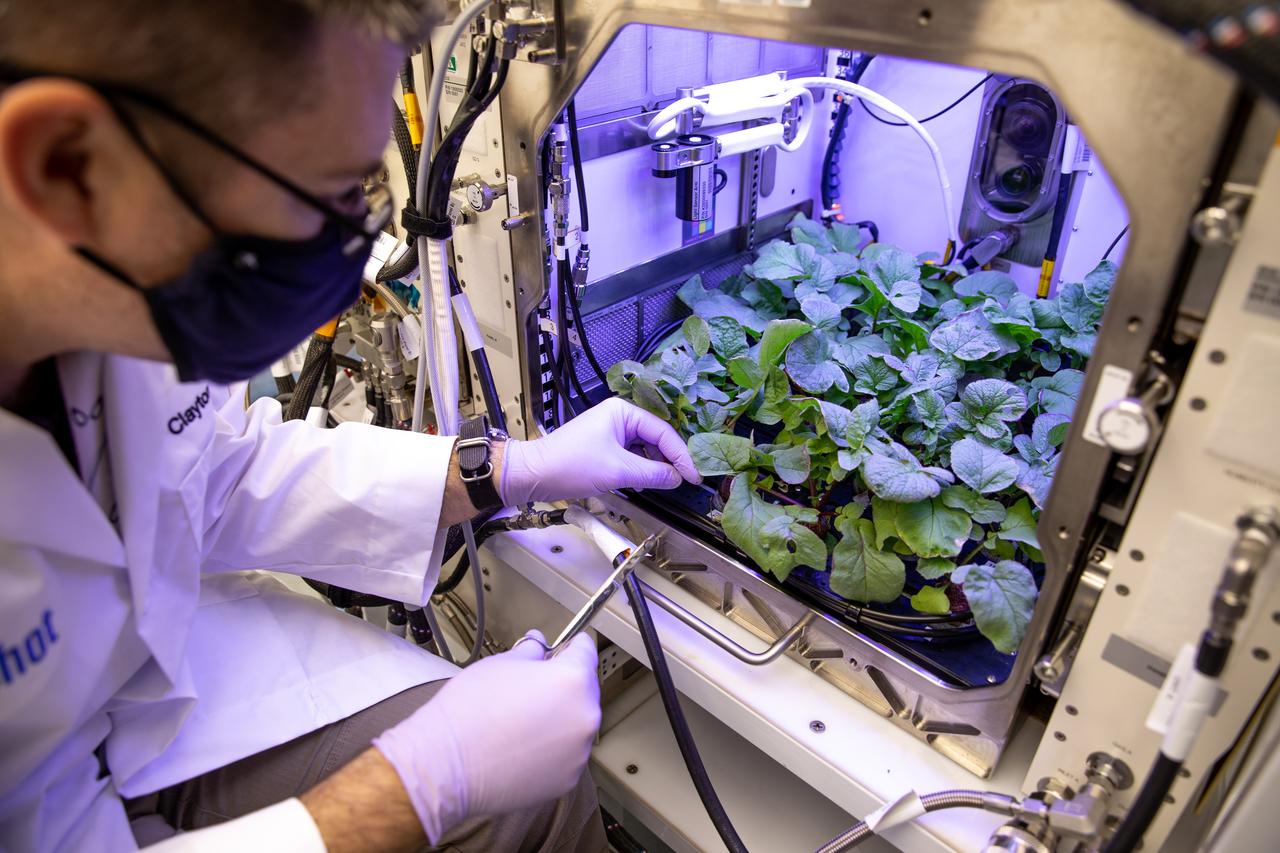
A research scientist harvests radishes grown in the Advanced Plant Habitat (APH) ground unit inside the Space Station Processing Facility at NASA’s Kennedy Space Center in Florida on Dec. 14, 2020. The radishes are a ground control crop for the Plant Habitat-02 (PH-02) experiment. The experiment also involves growing two similar radish crops inside the International Space Station’s APH. NASA astronaut Kate Rubins harvested the first crop on Nov. 30, and the second harvest aboard the orbiting laboratory is planned for Dec. 30. Once samples return to Earth, researchers will compare those grown in space to the radishes grown here on Earth to better understand how microgravity affects plant growth.

A researcher takes measurements of a radish crop harvested from the Advanced Plant Habitat (APH) ground unit inside the Space Station Processing Facility at NASA’s Kennedy Space Center in Florida on Dec. 14, 2020. The radishes are a ground control crop for the Plant Habitat-02 (PH-02) experiment, which also involves growing two similar radish crops inside the International Space Station’s APH. NASA astronaut Kate Rubins harvested the first crop on Nov. 30, and the second harvest aboard the orbiting laboratory is planned for Dec. 30. Once samples return to Earth, researchers will compare those grown in space to the radishes grown here on Earth to better understand how microgravity affects plant growth.
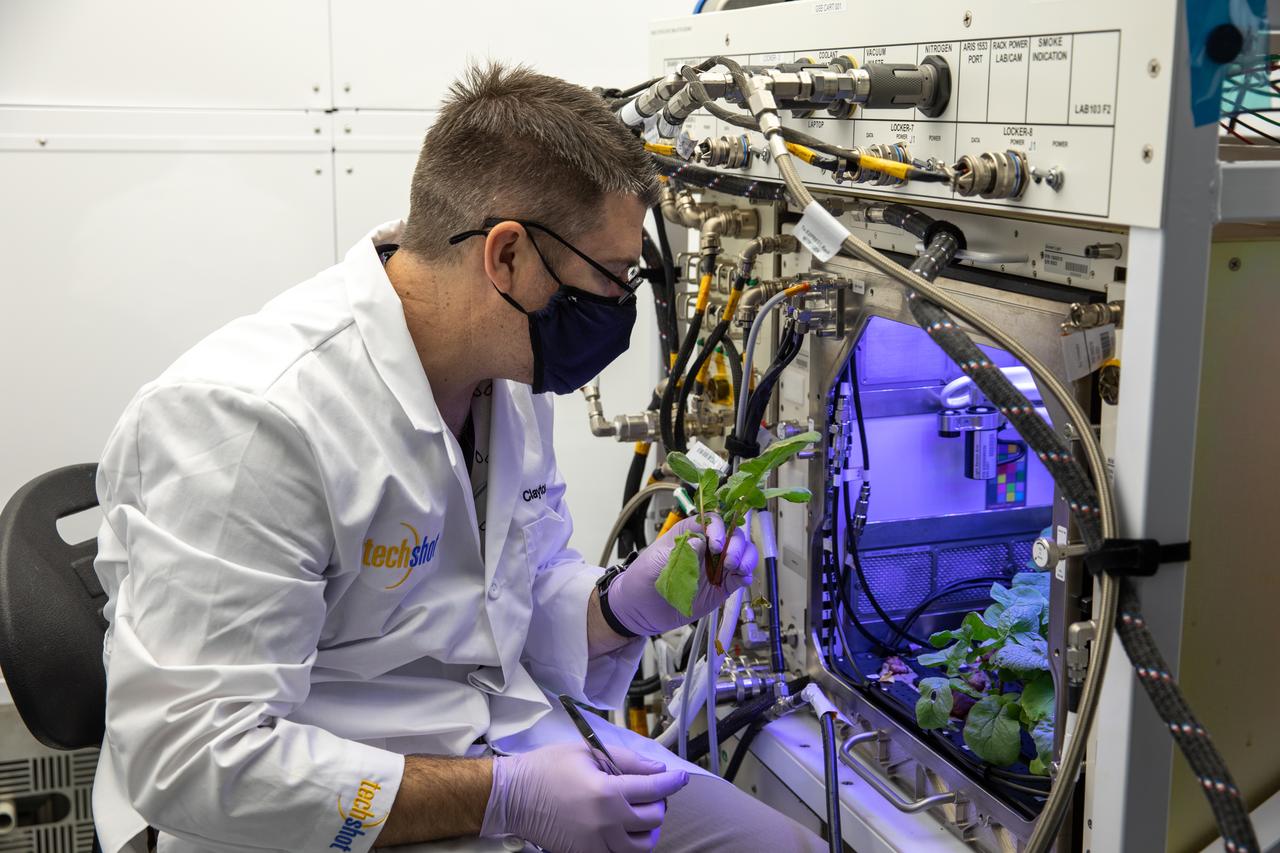
A research scientist harvests radishes grown in the Advanced Plant Habitat (APH) ground unit inside the Space Station Processing Facility at NASA’s Kennedy Space Center in Florida on Dec. 14, 2020. The radishes are a ground control crop for the Plant Habitat-02 (PH-02) experiment. The experiment also involves growing two similar radish crops inside the International Space Station’s APH. NASA astronaut Kate Rubins harvested the first crop on Nov. 30, and the second harvest aboard the orbiting laboratory is planned for Dec. 30. Once samples return to Earth, researchers will compare those grown in space to the radishes grown here on Earth to better understand how microgravity affects plant growth.
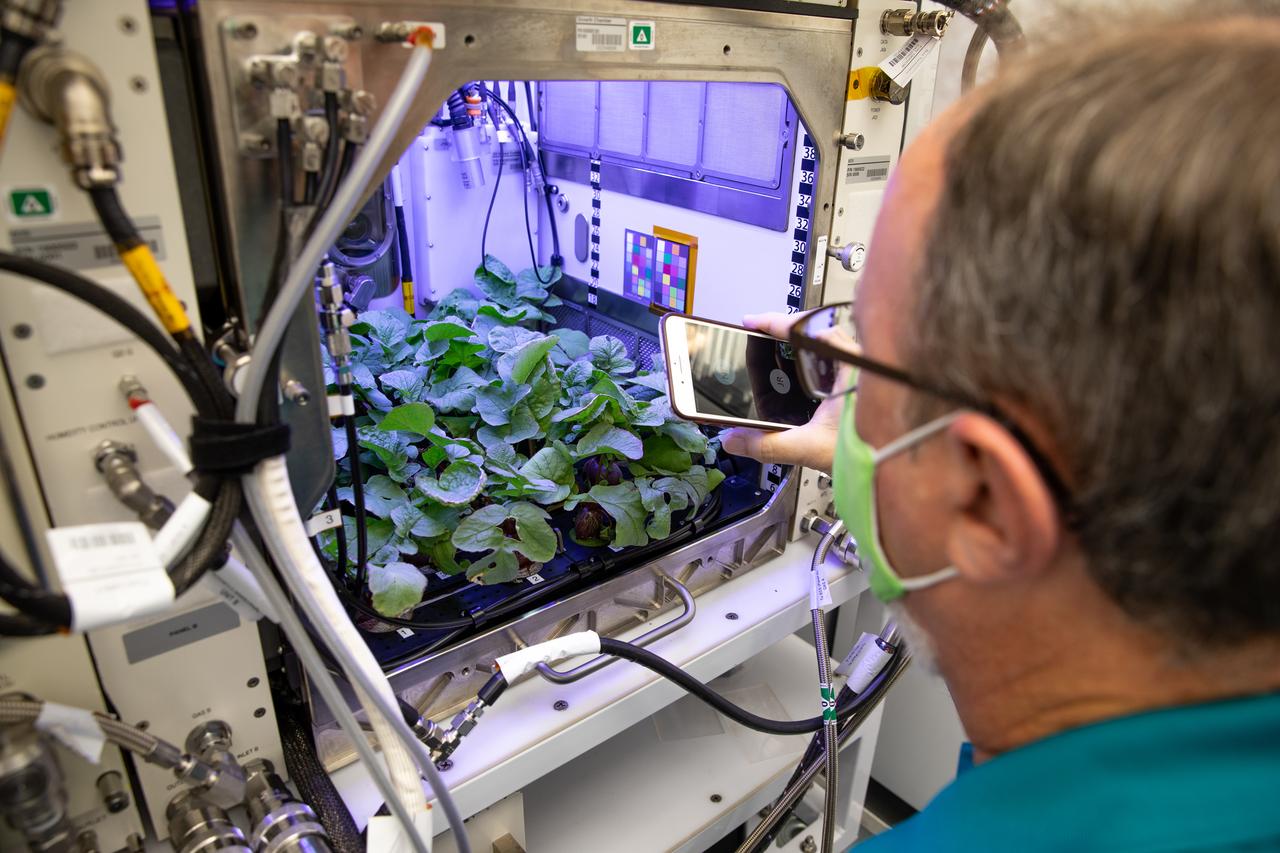
Dave Reed, Florida operations director for Techshot, Inc., observes radishes growing in the Advanced Plant Habitat (APH) ground unit inside the Space Station Processing Facility at NASA’s Kennedy Space Center in Florida on Dec. 14, 2020. The radishes are a ground control crop for the Plant Habitat-02 (PH-02) experiment. The experiment also involves growing two similar radish crops inside the International Space Station’s APH. NASA astronaut Kate Rubins harvested the first crop on Nov. 30, and the second harvest aboard the orbiting laboratory is planned for Dec. 30. Once samples return to Earth, researchers will compare those grown in space to the radishes grown here on Earth to better understand how microgravity affects plant growth.
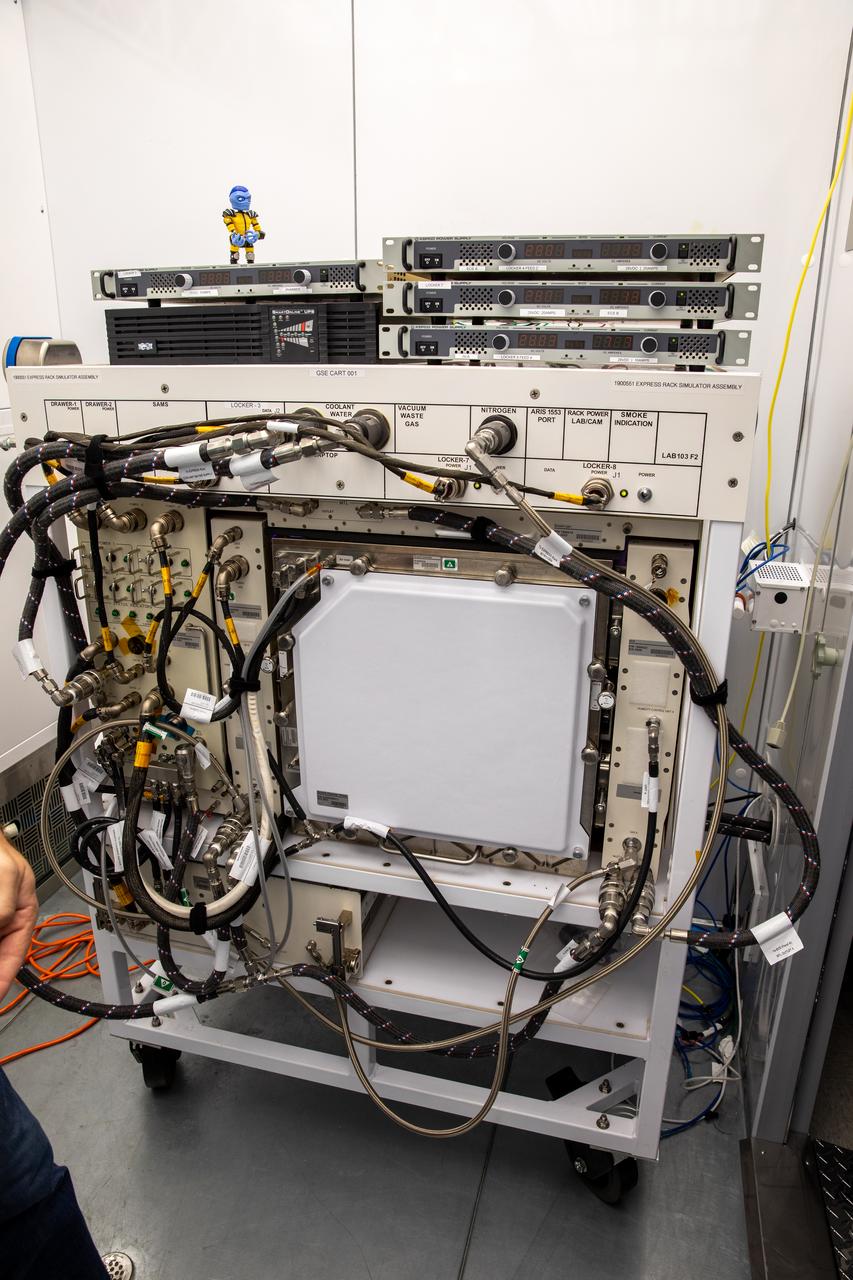
In view is the Advanced Plant Habitat (APH) ground unit inside the Space Station Processing Facility at NASA’s Kennedy Space Center in Florida on Dec. 14, 2020. Part of the Plant Habitat-02 (PH-02) experiment, a ground control crop of radishes was grown at Kennedy and harvested on Dec. 14. The experiment also involves growing two similar radish crops inside the International Space Station’s APH. NASA astronaut Kate Rubins harvested the first crop on Nov. 30, and the second harvest aboard the orbiting laboratory is planned for Dec. 30. Once samples return to Earth, researchers will compare those grown in space to the radishes grown here on Earth to better understand how microgravity affects plant growth.
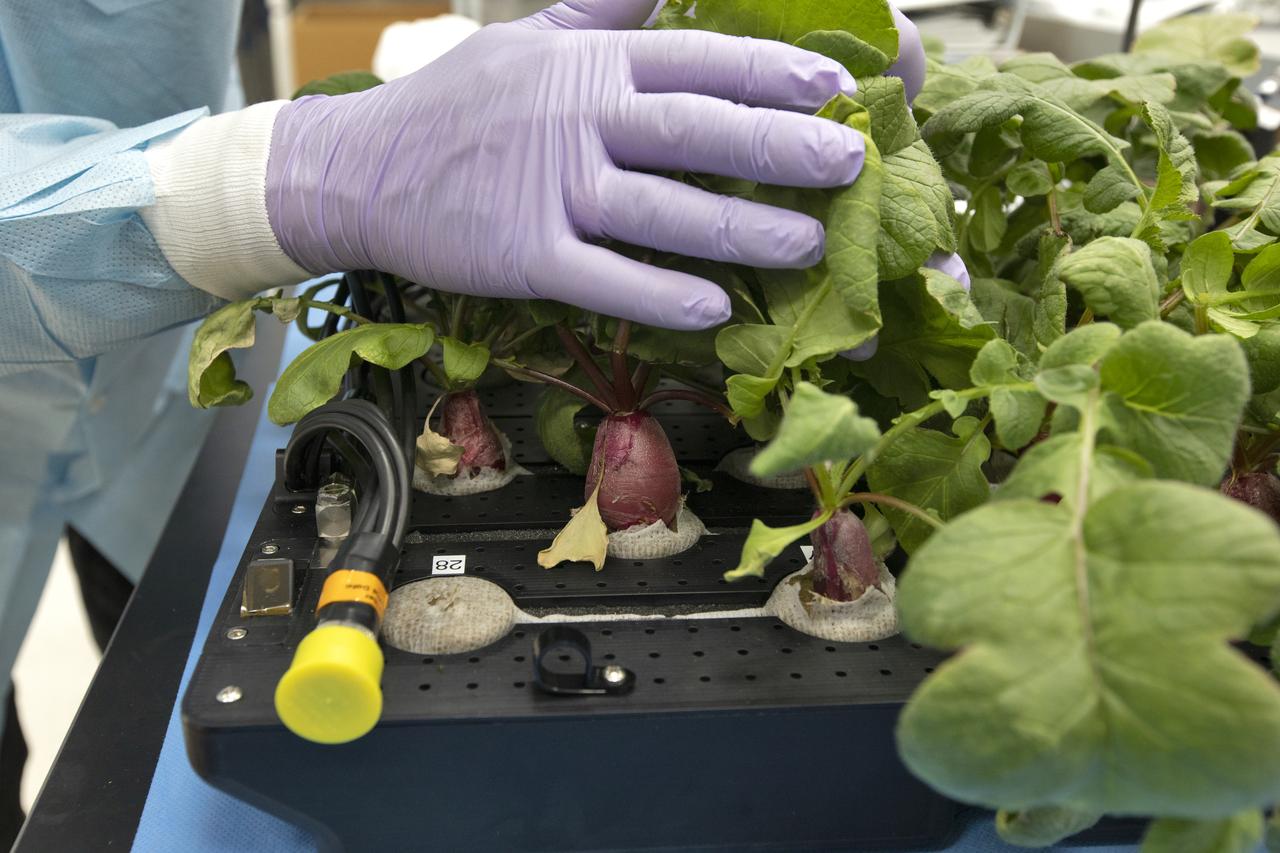
Radish plants are growing inside the Advanced Plant Habitat (APH) ground unit inside a laboratory in the Space Station Processing Facility at NASA's Kennedy Space Center in Florida on June 13, 2019. The plants are being grown as part of a science verification test for PH-02, a Space Life and Physical Sciences Research and Applications-funded experiment which seeks to determine the effects of spaceflight on radishes. The APH is a highly automated plant growth chamber with 180 sensors and is able to closely regulate variables related to plant growth.
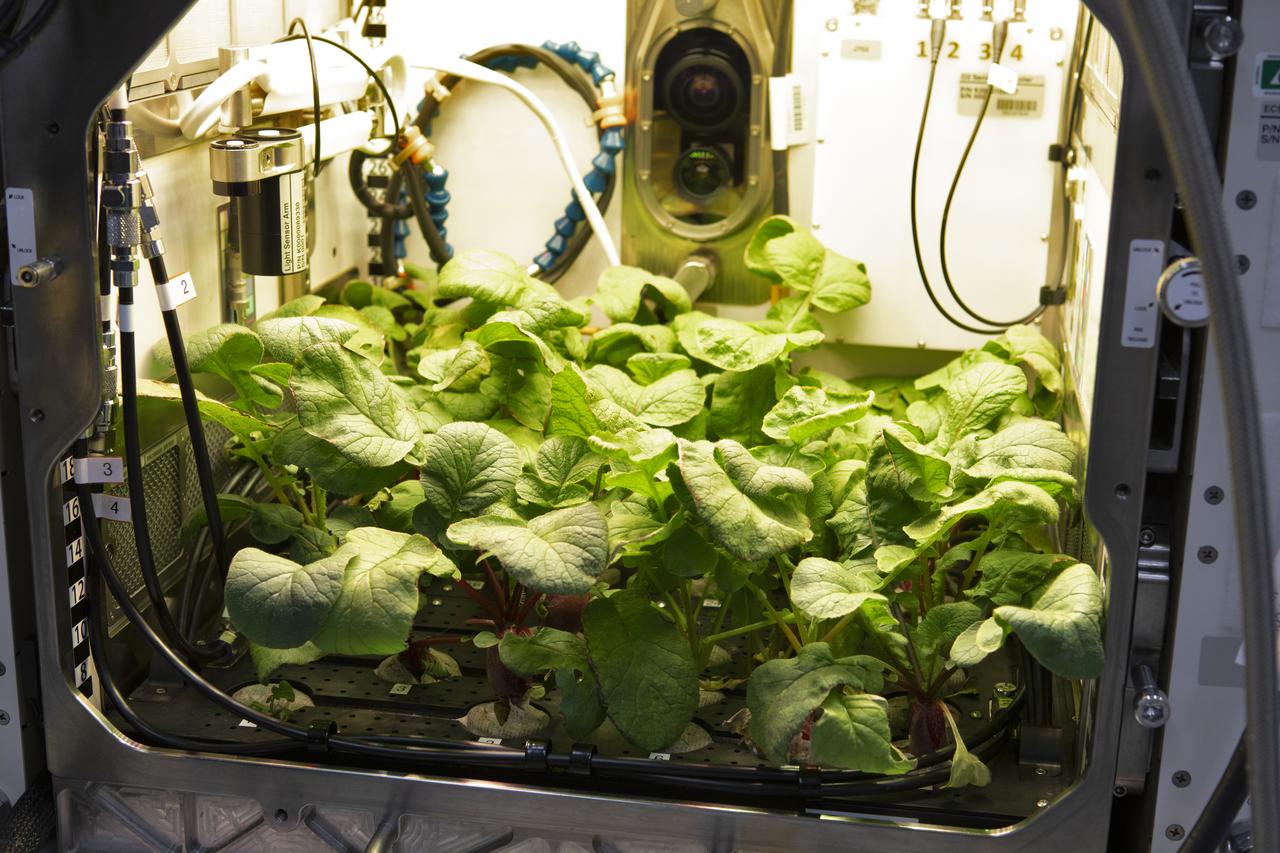
Radish plants are growing inside the Advanced Plant Habitat (APH) ground unit inside a laboratory in the Space Station Processing Facility at NASA's Kennedy Space Center in Florida on June 13, 2019. The plants are being grown as part of a science verification test for PH-02, a Space Life and Physical Sciences Research and Applications-funded experiment which seeks to determine the effects of spaceflight on radishes. The APH is a highly automated plant growth chamber with 180 sensors and is able to closely regulate variables related to plant growth.

Radish plants are growing inside the Advanced Plant Habitat (APH) ground unit inside a laboratory in the Space Station Processing Facility at NASA's Kennedy Space Center in Florida on June 13, 2019. The plants are being grown as part of a science verification test for PH-02, a Space Life and Physical Sciences Research and Applications-funded experiment which seeks to determine the effects of spaceflight on radishes. The APH is a highly automated plant growth chamber with 180 sensors and is able to closely regulate variables related to plant growth.

Karl Hasenstein, the principal investigator for the Plant Habitat-02, or PH-02, plants radish seeds in seed carriers for the Addvanced Plant Habitat (APH) in the Space Life Sciences Lab at Kennedy Space Center on Sept. 23, 2020. The carriers will fly aboard Northrop Grumman’s 14th commercial resupply services mission to the International Space Station. The launch, aboard Northrop Grumman’s Cygnus spacecraft, is targeted for Sept. 29 from NASA’s Wallops Flight Facility in Virginia. Astronauts will grow radish plants in the APH, NASA’s largest and most advanced growth chamber on station.

Karl Hasenstein, the principal investigator for the Plant Habitat-02, or PH-02, plants radish seeds in seed carriers for the Addvanced Plant Habitat (APH) in the Space Life Sciences Lab at Kennedy Space Center on Sept. 23, 2020. The carriers will fly aboard Northrop Grumman’s 14th commercial resupply services mission to the International Space Station. The launch, aboard Northrop Grumman’s Cygnus spacecraft, is targeted for Sept. 29 from NASA’s Wallops Flight Facility in Virginia. Astronauts will grow radish plants in the APH, NASA’s largest and most advanced growth chamber on station.

Karl Hasenstein, the principal investigator for the Plant Habitat-02, or PH-02, plants radish seeds in seed carriers for the Addvanced Plant Habitat (APH) in the Space Life Sciences Lab at Kennedy Space Center on Sept. 23, 2020. The carriers will fly aboard Northrop Grumman’s 14th commercial resupply services mission to the International Space Station. The launch, aboard Northrop Grumman’s Cygnus spacecraft, is targeted for Sept. 29 from NASA’s Wallops Flight Facility in Virginia. Astronauts will grow radish plants in the APH, NASA’s largest and most advanced growth chamber on station.

Karl Hasenstein, the principal investigator for the Plant Habitat-02, or PH-02, plants radish seeds in seed carriers for the Addvanced Plant Habitat (APH) in the Space Life Sciences Lab at Kennedy Space Center on Sept. 23, 2020. The carriers will fly aboard Northrop Grumman’s 14th commercial resupply services mission to the International Space Station. The launch, aboard Northrop Grumman’s Cygnus spacecraft, is targeted for Sept. 29 from NASA’s Wallops Flight Facility in Virginia. Astronauts will grow radish plants in the APH, NASA’s largest and most advanced growth chamber on station.

Karl Hasenstein, the principal investigator for the Plant Habitat-02, or PH-02, plants radish seeds in seed carriers for the Addvanced Plant Habitat (APH) in the Space Life Sciences Lab at Kennedy Space Center on Sept. 23, 2020. The carriers will fly aboard Northrop Grumman’s 14th commercial resupply services mission to the International Space Station. The launch, aboard Northrop Grumman’s Cygnus spacecraft, is targeted for Sept. 29 from NASA’s Wallops Flight Facility in Virginia. Astronauts will grow radish plants in the APH, NASA’s largest and most advanced growth chamber on station.

Karl Hasenstein, the principal investigator for the Plant Habitat-02, or PH-02, plants radish seeds in seed carriers for the Addvanced Plant Habitat (APH) in the Space Life Sciences Lab at Kennedy Space Center on Sept. 23, 2020. The carriers will fly aboard Northrop Grumman’s 14th commercial resupply services mission to the International Space Station. The launch, aboard Northrop Grumman’s Cygnus spacecraft, is targeted for Sept. 29 from NASA’s Wallops Flight Facility in Virginia. Astronauts will grow radish plants in the APH, NASA’s largest and most advanced growth chamber on station.

Karl Hasenstein, the principal investigator for the Plant Habitat-02, or PH-02, plants radish seeds in seed carriers for the Addvanced Plant Habitat (APH) in the Space Life Sciences Lab at Kennedy Space Center on Sept. 23, 2020. The carriers will fly aboard Northrop Grumman’s 14th commercial resupply services mission to the International Space Station. The launch, aboard Northrop Grumman’s Cygnus spacecraft, is targeted for Sept. 29 from NASA’s Wallops Flight Facility in Virginia. Astronauts will grow radish plants in the APH, NASA’s largest and most advanced growth chamber on station.

Karl Hasenstein, the principal investigator for the Plant Habitat-02, or PH-02, plants radish seeds in seed carriers for the Addvanced Plant Habitat (APH) in the Space Life Sciences Lab at Kennedy Space Center on Sept. 23, 2020. The carriers will fly aboard Northrop Grumman’s 14th commercial resupply services mission to the International Space Station. The launch, aboard Northrop Grumman’s Cygnus spacecraft, is targeted for Sept. 29 from NASA’s Wallops Flight Facility in Virginia. Astronauts will grow radish plants in the APH, NASA’s largest and most advanced growth chamber on station.

Karl Hasenstein, the principal investigator for the Plant Habitat-02, or PH-02, plants radish seeds in seed carriers for the Addvanced Plant Habitat (APH) in the Space Life Sciences Lab at Kennedy Space Center on Sept. 23, 2020. The carriers will fly aboard Northrop Grumman’s 14th commercial resupply services mission to the International Space Station. The launch, aboard Northrop Grumman’s Cygnus spacecraft, is targeted for Sept. 29 from NASA’s Wallops Flight Facility in Virginia. Astronauts will grow radish plants in the APH, NASA’s largest and most advanced growth chamber on station.

Karl Hasenstein, the principal investigator for the Plant Habitat-02, or PH-02, plants radish seeds in seed carriers for the Addvanced Plant Habitat (APH) in the Space Life Sciences Lab at Kennedy Space Center on Sept. 23, 2020. The carriers will fly aboard Northrop Grumman’s 14th commercial resupply services mission to the International Space Station. The launch, aboard Northrop Grumman’s Cygnus spacecraft, is targeted for Sept. 29 from NASA’s Wallops Flight Facility in Virginia. Astronauts will grow radish plants in the APH, NASA’s largest and most advanced growth chamber on station.
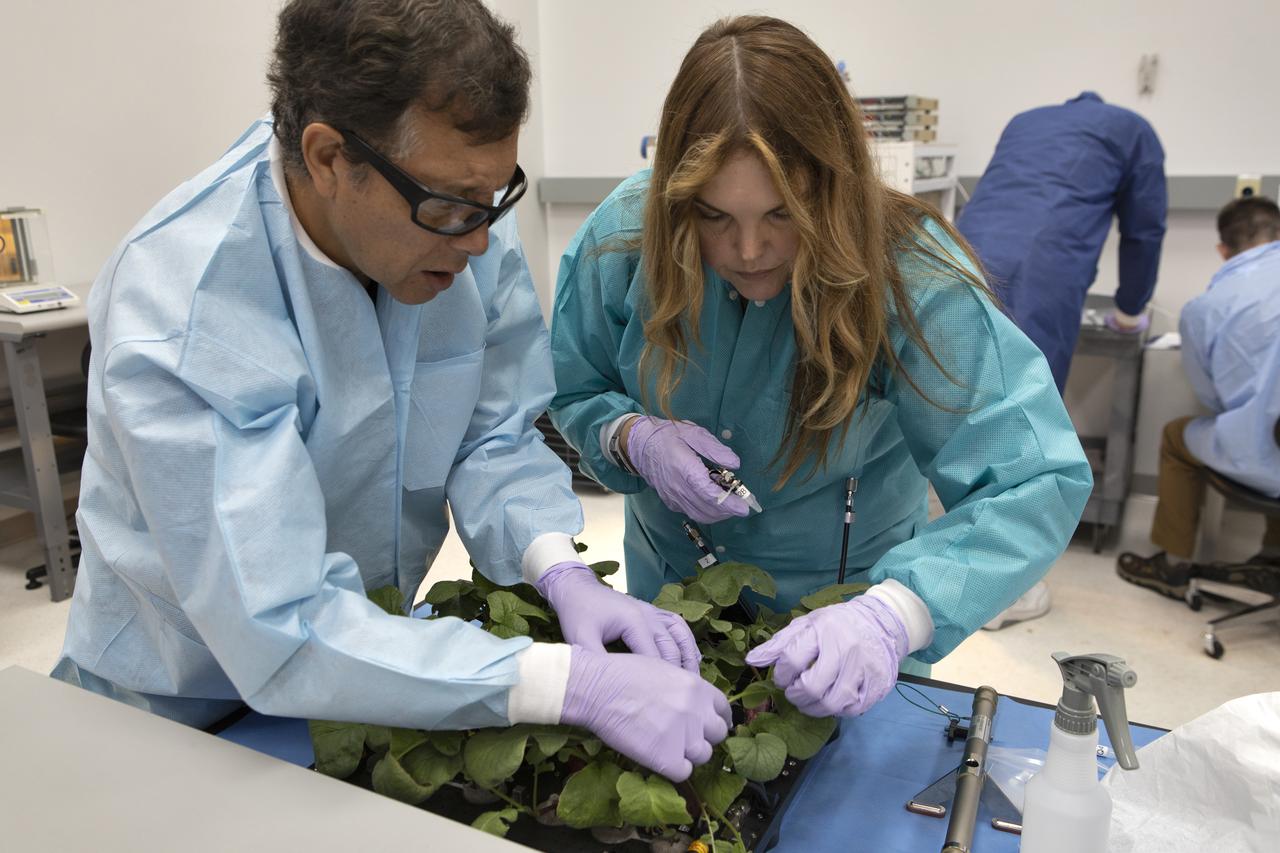
From left, Oscar Monje, Ph.D., a plant physiologist with AECOM Management Services; and Alora Mazarakis, an electrical engineer with Techshot, prepare to harvest radish plants from the base of the Advanced Plant Habitat ground unit inside a laboratory in the Space Station Processing Facility at NASA’s Kennedy Space Center in Florida on June 13, 2019. The radishes are being harvested as part of a science verification test. The APH is currently the largest plant chamber built for the agency in use on the International Space Station. It is an autonomous plant growth facility that is being used to conduct bioscience research on the space station with the goal of enabling astronauts to be sustainable on long duration missions to the Moon, Mars and beyond.
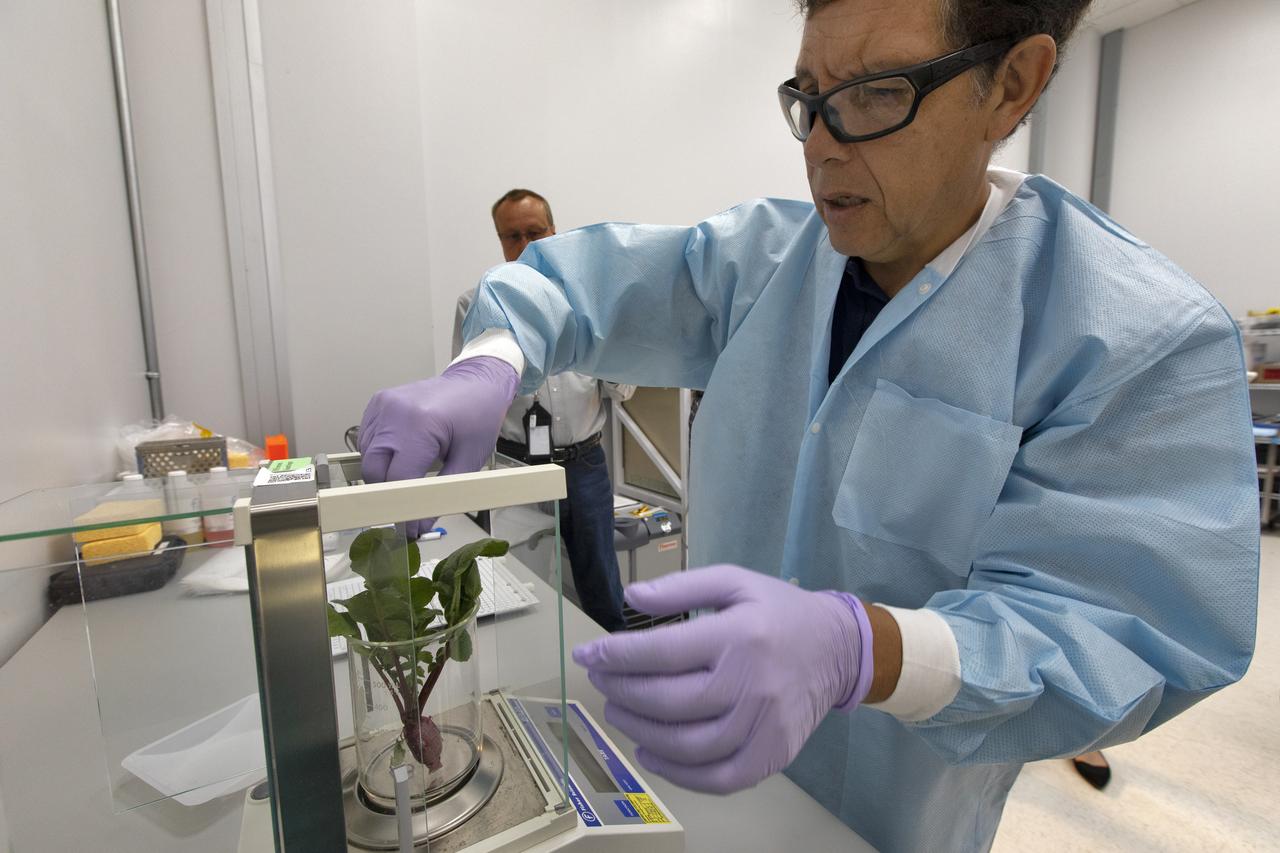
Oscar Monje, Ph.D., a plant physiologist with AECOM Management Services, weighs a harvested radish plant inside a laboratory in the Space Station Processing Facility at NASA’s Kennedy Space Center in Florida on June 13, 2019. The radishes are being harvested from the base of the Advanced Plant Habitat (APH) ground unit as part of a science verification test. The APH is currently the largest plant chamber built for the agency in use on the International Space Station. It is an autonomous plant growth facility that is being used to conduct bioscience research on the space station with the goal of enabling astronauts to be sustainable on long duration missions to the Moon, Mars and beyond.
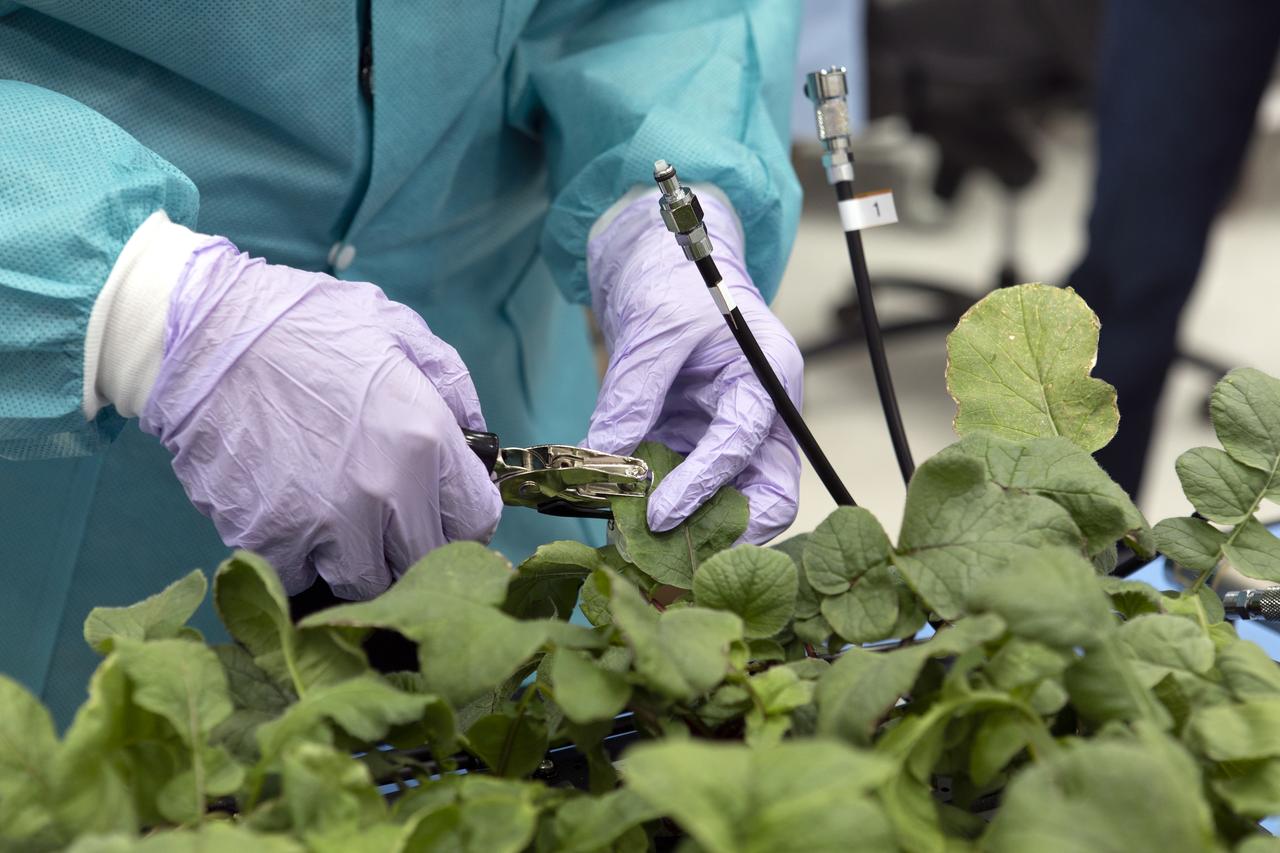
Clayton Grosse, a mechanical engineer with Techshot, uses a punch to take a sample of the leaf of a radish plant growing in the base of the Advanced Plant Habitat (APH) ground unit, inside a laboratory in the Space Station Processing Facility at NASA’s Kennedy Space Center in Florida on June 13, 2019. The radishes are being harvested as part of a science verification test. The APH is currently the largest plant chamber built for the agency in use on the International Space Station. It is an autonomous plant growth facility that is being used to conduct bioscience research on the space station with the goal of enabling astronauts to be sustainable on long duration missions to the Moon, Mars and beyond.
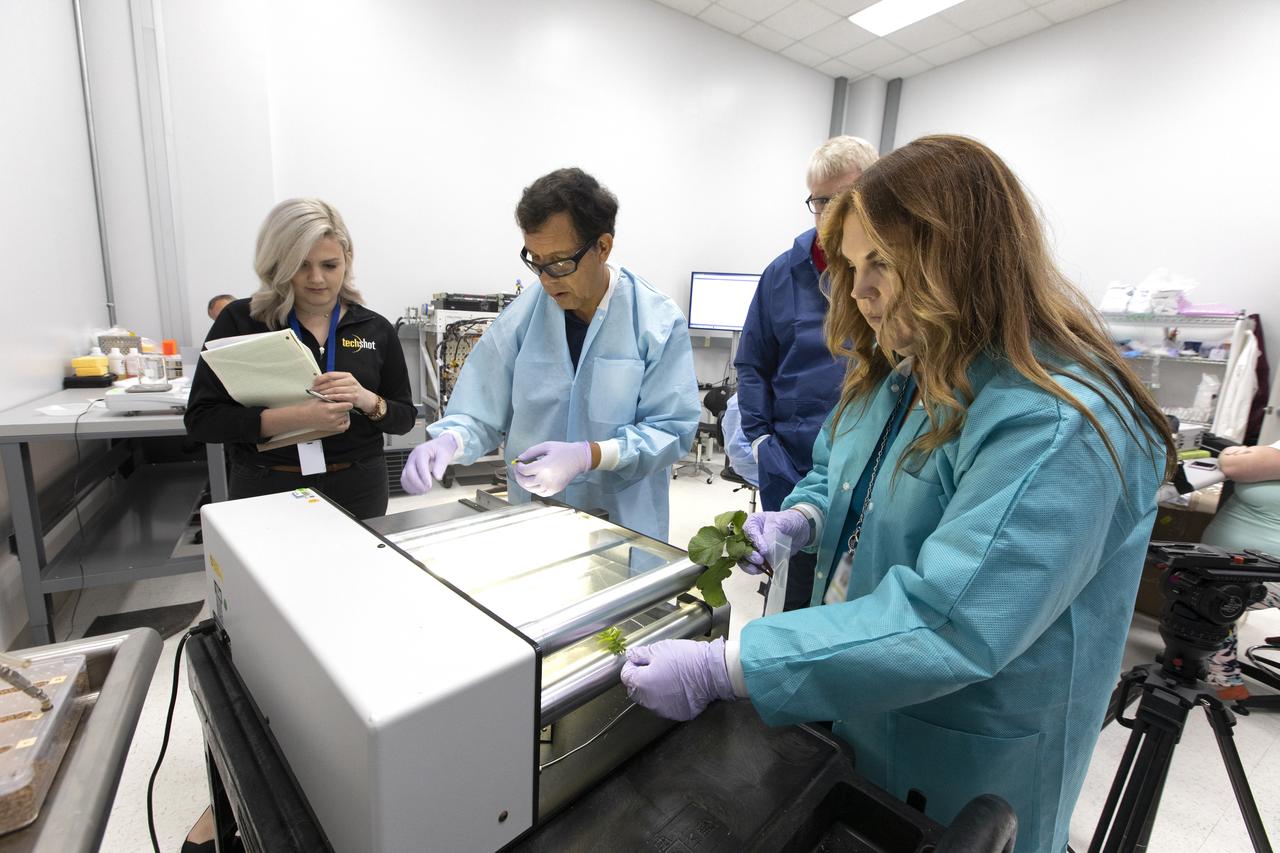
From left are Ashleigh Ruggles, a launch operations support specialist with Techshot; Oscar Monje, Ph.D., a plant physiologist with AECOM Management Services; and Sam Logan, senior mechanical engineering technician; and Alora Mazarakis, an electrical engineer, both with Techshot. They are harvesting radish plants from the base of the Advanced Plant Habitat ground unit inside a laboratory in the Space Station Processing Facility at NASA’s Kennedy Space Center in Florida on June 13, 2019. The radishes are being harvested as part of a science verification test. The APH is currently the largest plant chamber built for the agency in use on the International Space Station. It is an autonomous plant growth facility that is being used to conduct bioscience research on the space station with the goal of enabling astronauts to be sustainable on long duration missions to the Moon, Mars and beyond.
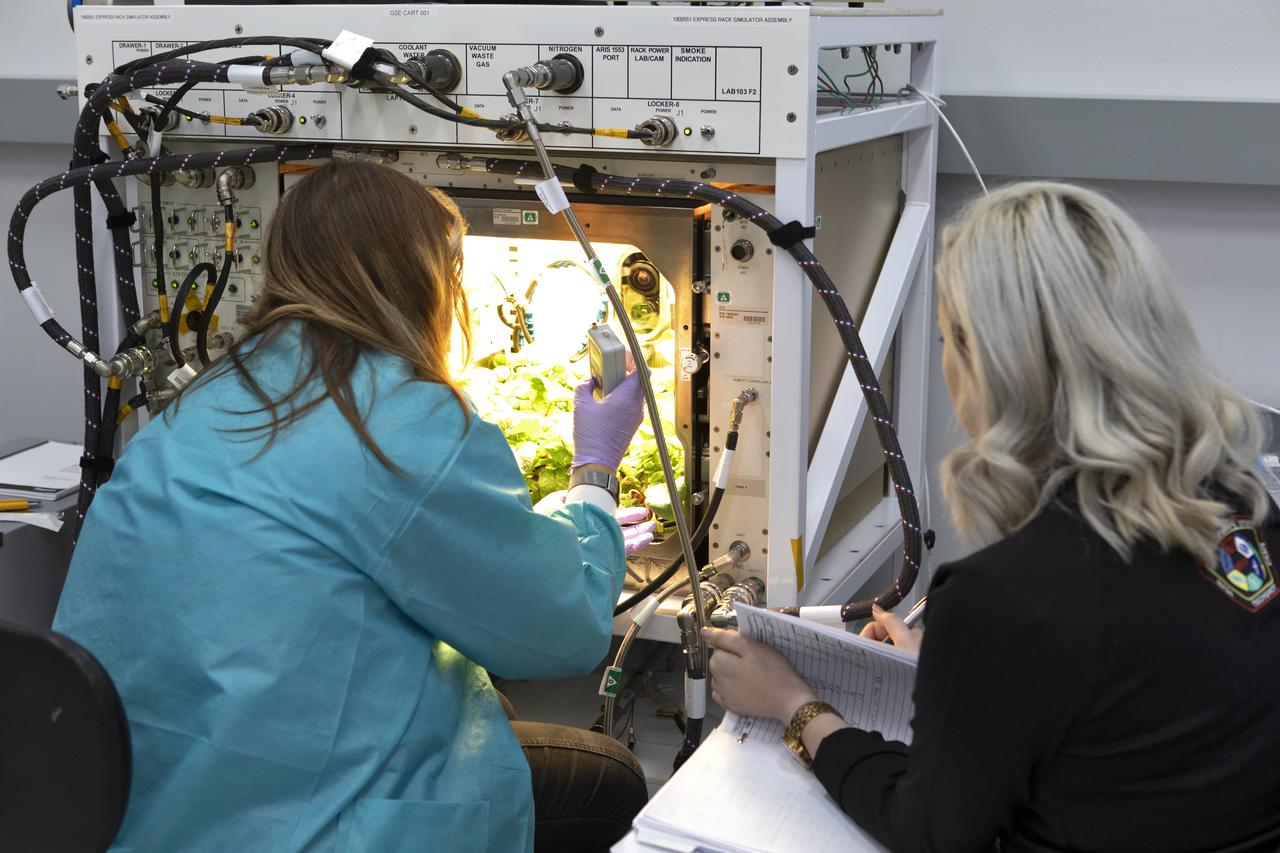
Inside a laboratory in the Space Station Processing Facility at NASA’s Kennedy Space Center in Florida, plant biologists prepare to harvest radish plants growing in the Advanced Plant Habitat (APH) ground unit on June 13, 2019. The radishes are being harvested as part of a science verification test. The APH is currently the largest plant chamber built for the agency in use on the International Space Station. It is an autonomous plant growth facility that is being used to conduct bioscience research on the space station with the goal of enabling astronauts to be sustainable on long duration missions to the Moon, Mars and beyond.
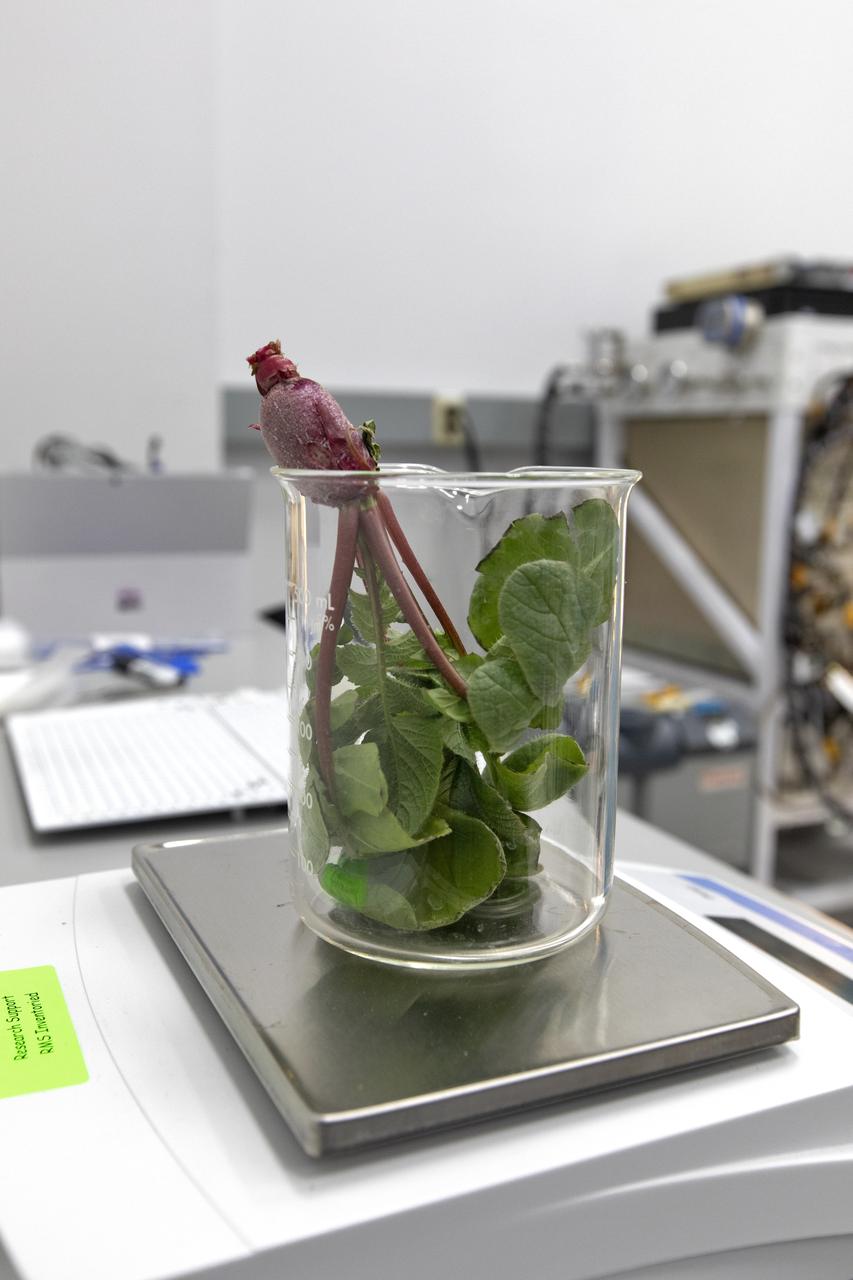
A radish plant is weighed inside a laboratory in the Space Station Processing Facility at NASA’s Kennedy Space Center in Florida on June 13, 2019. The radishes are being harvested from the base of the Advanced Plant Habitat (APH) ground unit as part of a science verification test. The APH is currently the largest plant chamber built for the agency in use on the International Space Station. It is an autonomous plant growth facility that is being used to conduct bioscience research on the space station with the goal of enabling astronauts to be sustainable on long duration missions to the Moon, Mars and beyond.
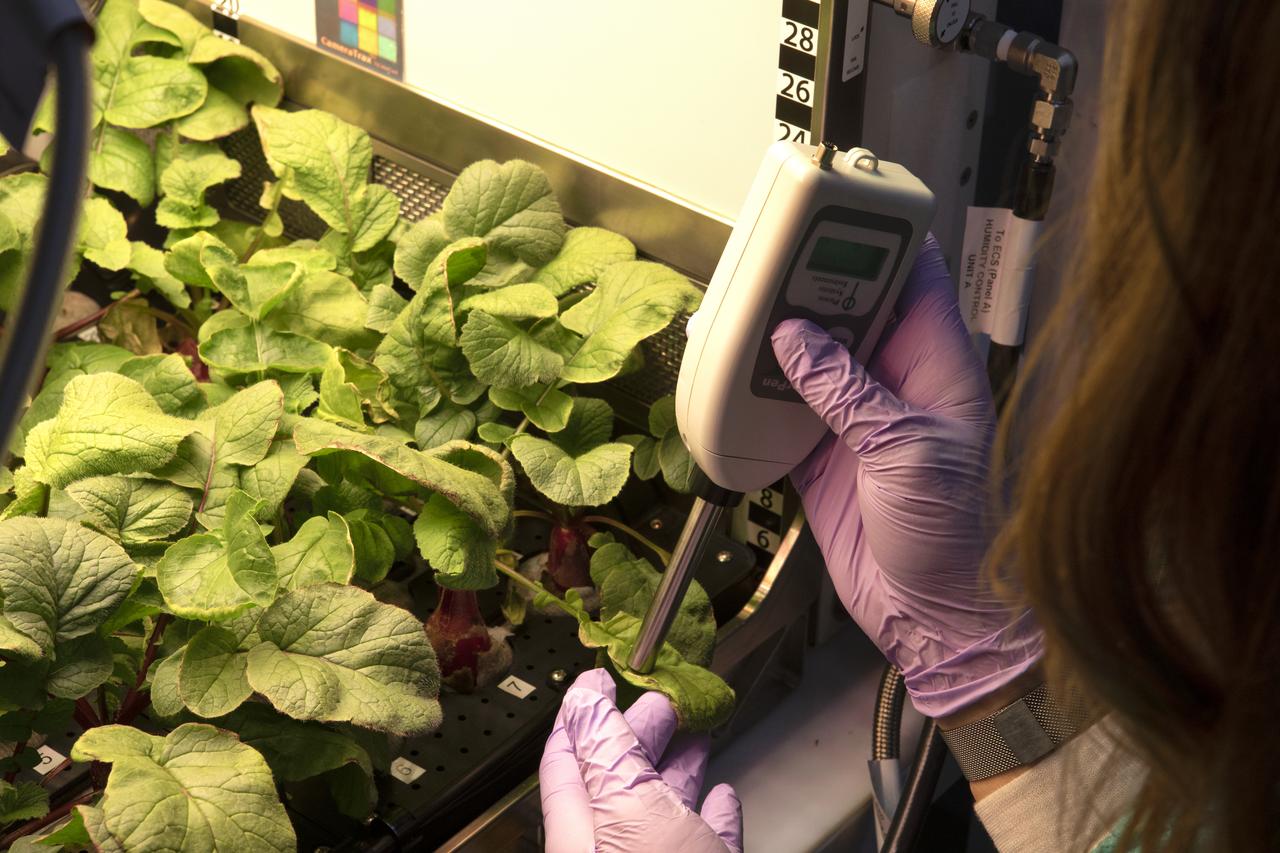
Inside a laboratory in the Space Station Processing Facility at NASA’s Kennedy Space Center in Florida, a plant biologist prepares to harvest radish plants growing in the Advanced Plant Habitat (APH) ground unit on June 13, 2019. The radishes are being harvested as part of a science verification test. The APH is currently the largest plant chamber built for the agency in use on the International Space Station. It is an autonomous plant growth facility that is being used to conduct bioscience research on the space station with the goal of enabling astronauts to be sustainable on long duration missions to the Moon, Mars and beyond.
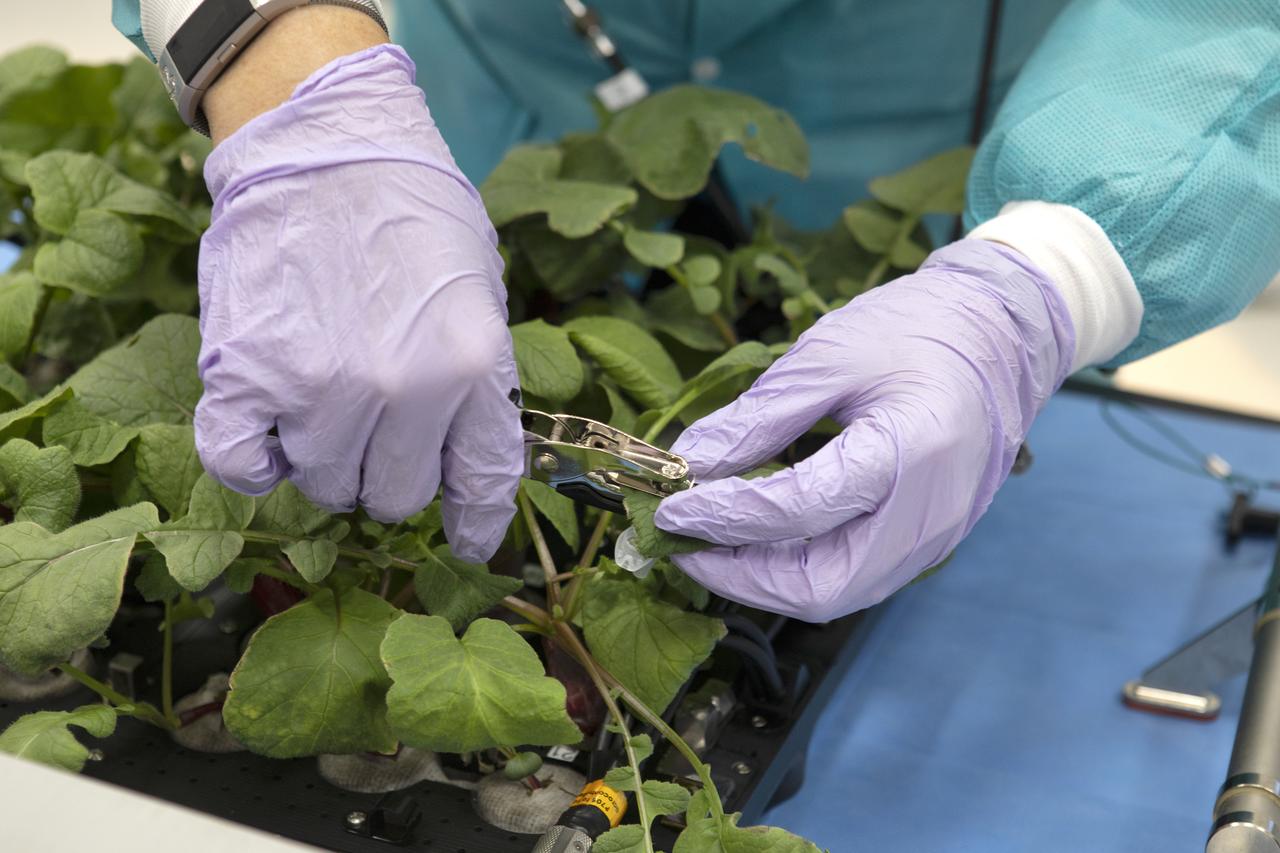
A sample of a leaf from one of the radish plant growing in the base of the Advanced Plant Habitat (APH) ground unit is taken inside a laboratory in the Space Station Processing Facility at NASA’s Kennedy Space Center in Florida on June 13, 2019. The radishes are being harvested as part of a science verification test. The APH is currently the largest plant chamber built for the agency in use on the International Space Station. It is an autonomous plant growth facility that is being used to conduct bioscience research on the space station with the goal of enabling astronauts to be sustainable on long duration missions to the Moon, Mars and beyond.
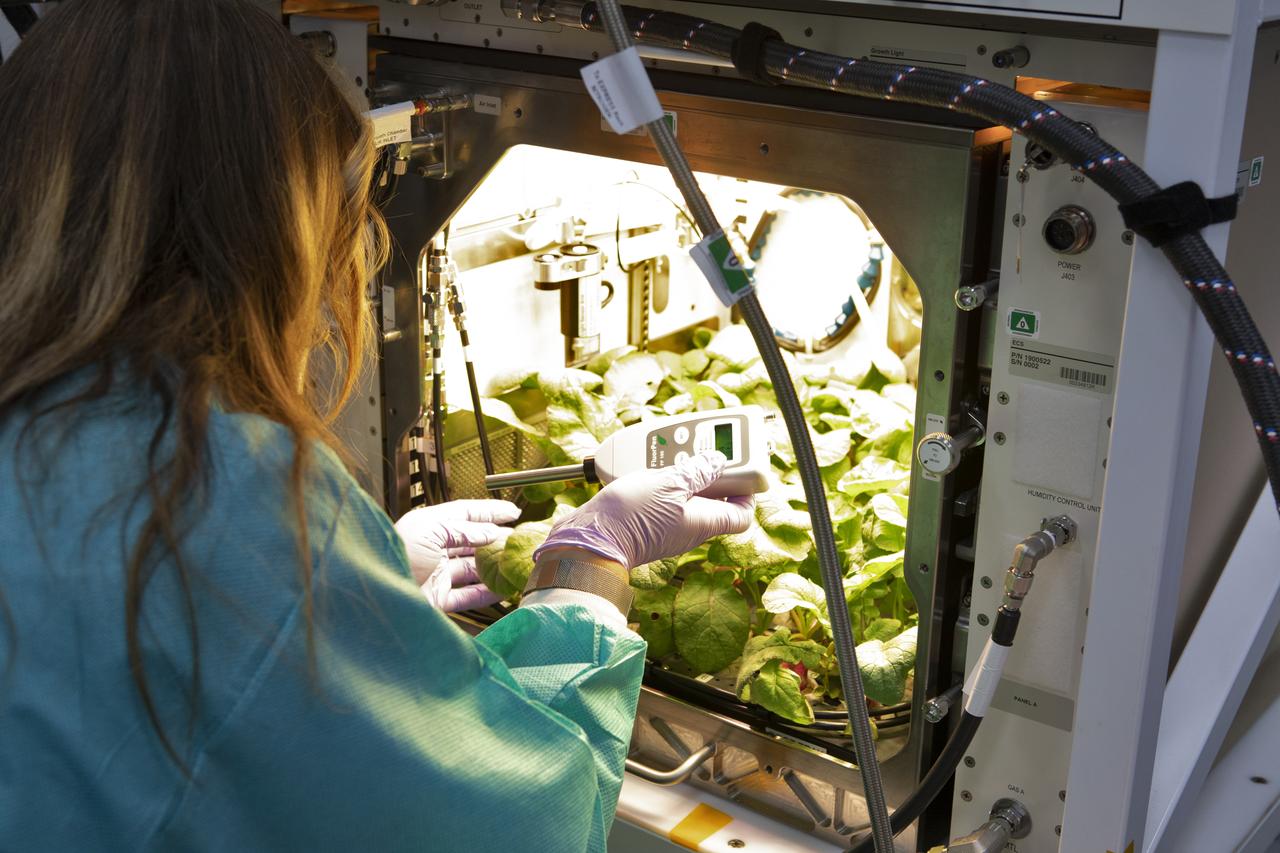
Inside a laboratory in the Space Station Processing Facility at NASA’s Kennedy Space Center in Florida, a plant biologist prepares to harvest radish plants growing in the Advanced Plant Habitat (APH) ground unit on June 13, 2019. The radishes are being harvested as part of a science verification test. The APH is currently the largest plant chamber built for the agency in use on the International Space Station. It is an autonomous plant growth facility that is being used to conduct bioscience research on the space station with the goal of enabling astronauts to be sustainable on long duration missions to the Moon, Mars and beyond.
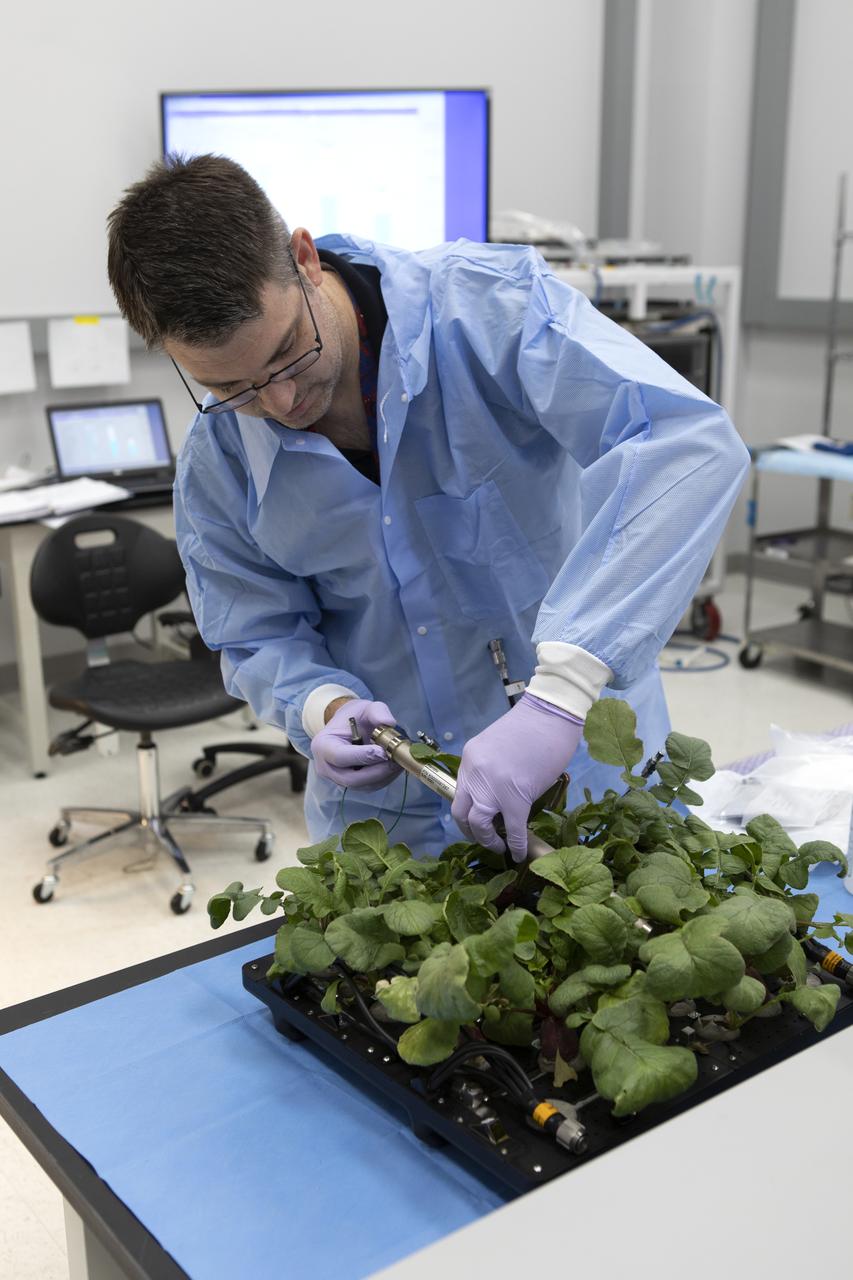
Clayton Grosse, a mechanical engineer with Techshot, prepares to harvest radish plants from the base of the Advanced Plant Habitat (APH) ground unit inside a laboratory in the Space Station Processing Facility at NASA’s Kennedy Space Center in Florida on June 13, 2019. The radishes are being harvested as part of a science verification test. The APH is currently the largest plant chamber built for the agency in use on the International Space Station. It is an autonomous plant growth facility that is being used to conduct bioscience research on the space station with the goal of enabling astronauts to be sustainable on long duration missions to the Moon, Mars and beyond.
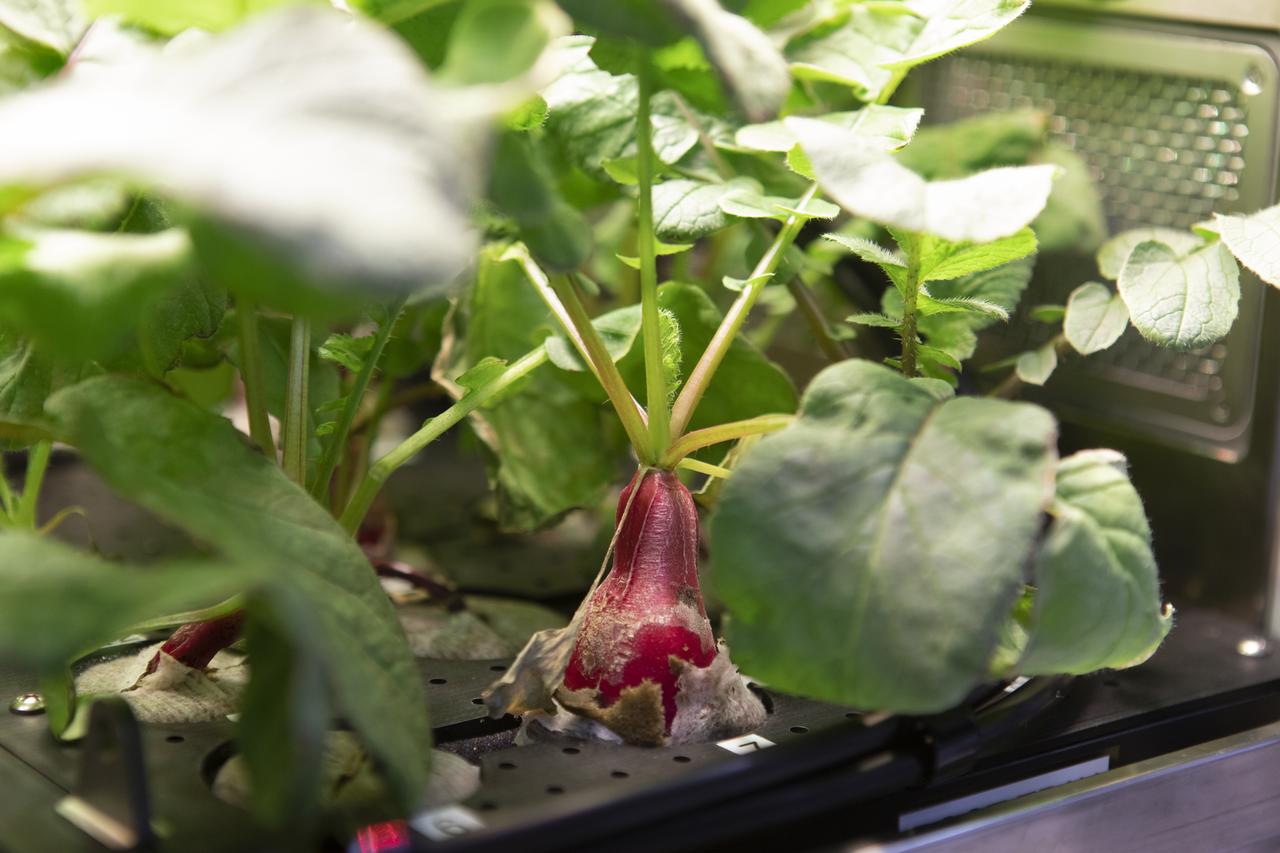
A colorful radish plant is in view inside the Advanced Plant Habitat (APH) ground unit inside a laboratory in the Space Station Processing Facility at NASA's Kennedy Space Center in Florida on June 13, 2019. The radishes are being grown as part of a science verification test. The APH is currently the largest plant chamber built for the agency in use on the International Space Station. It is an autonomous plant growth facility that is being used to conduct bioscience research on the space station with the goal of enabling astronauts to be sustainable on long duration missions to the Moon, Mars and beyond.