Cloud Phantoms
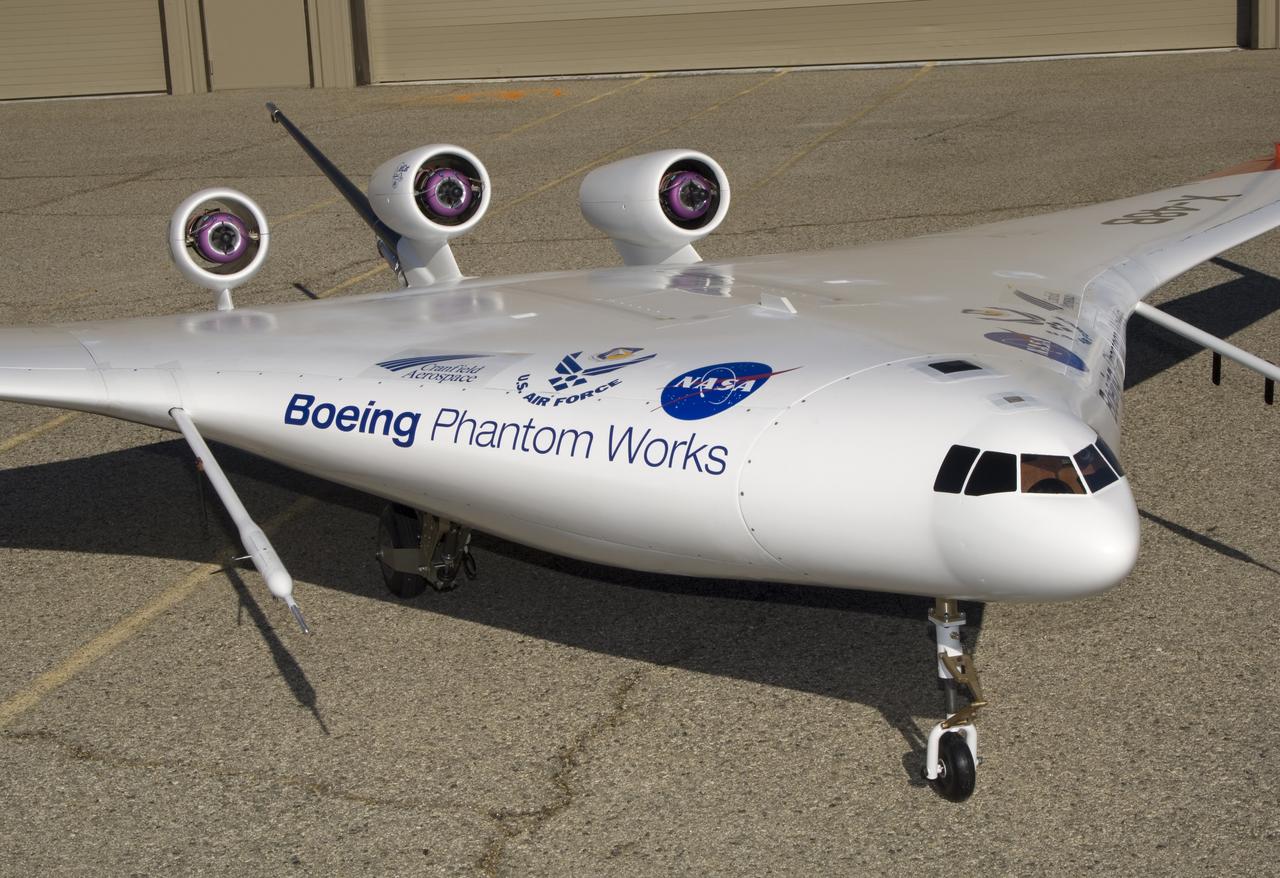
This closeup of Boeing Phantom Works' unique X-48B Blended Wing Body technology demonstrator shows off its unusual engine placement and supercritical airfoil.
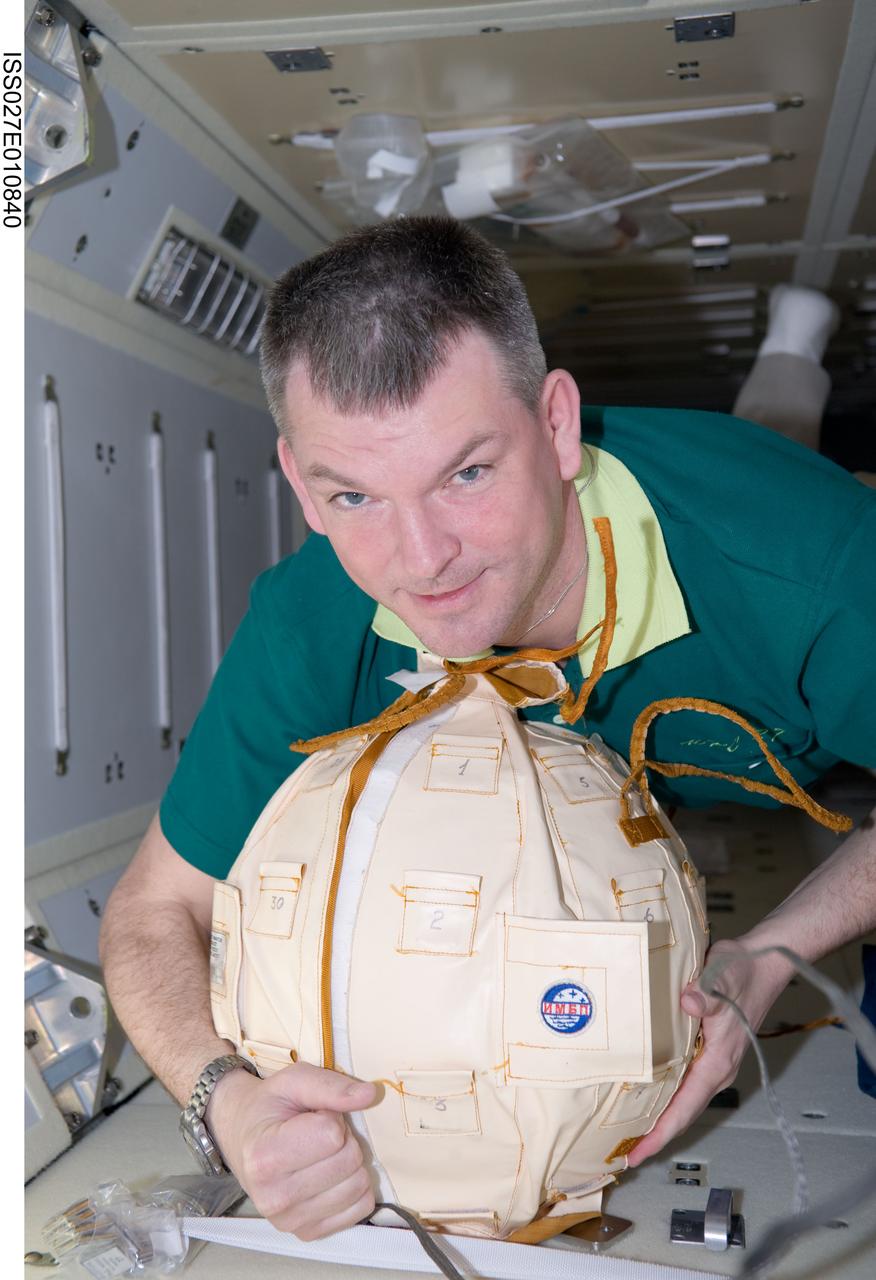
ISS027-E-010840 (8 April 2011) --- Russian cosmonaut Alexander Samokutyaev, Expedition 27 flight engineer, works with Matryoshka-R Phantom hardware in the Rassvet Mini-Research Module 1 (MRM1) of the International Space Station.
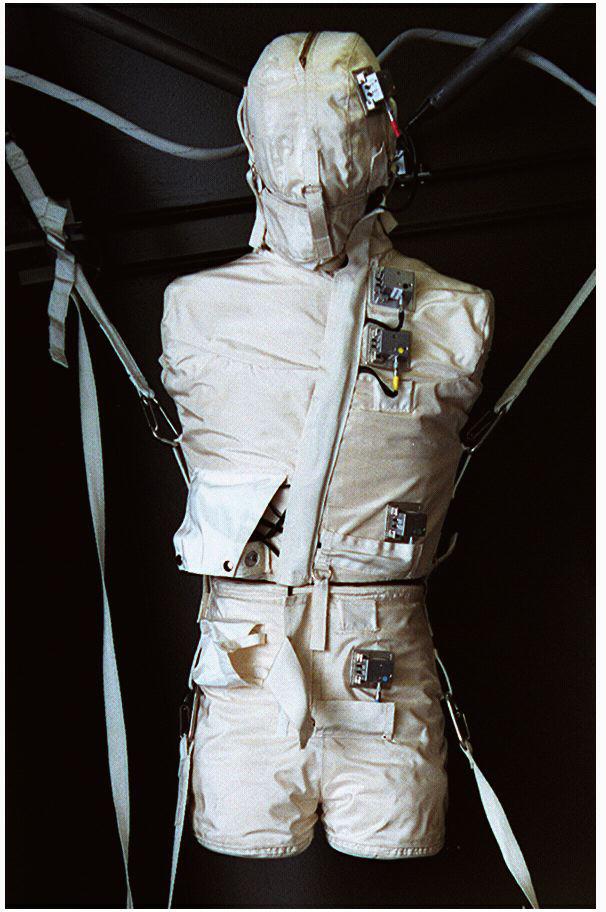
The Phantom Torso is a tissue-muscle plastic anatomical model of a torso and head. It contains over 350 radiation measuring devices to calculate the radiation that penetrates internal organs in space travel. The Phantom Torso is one of three radiation experiments in Expedition Two including the Borner Ball Neutron Detector and Dosimetric Mapping.
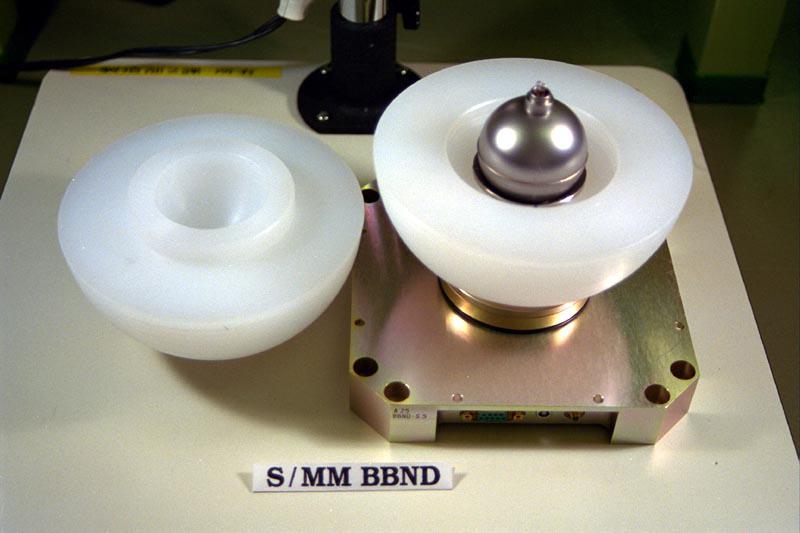
The Bonner Ball Neutron Detector measures neutron radiation. Neutrons are uncharged atomic particles that have the ability to penetrate living tissues, harming human beings in space. The Bonner Ball Neutron Detector is one of three radiation experiments during Expedition Two. The others are the Phantom Torso and Dosimetric Mapping.
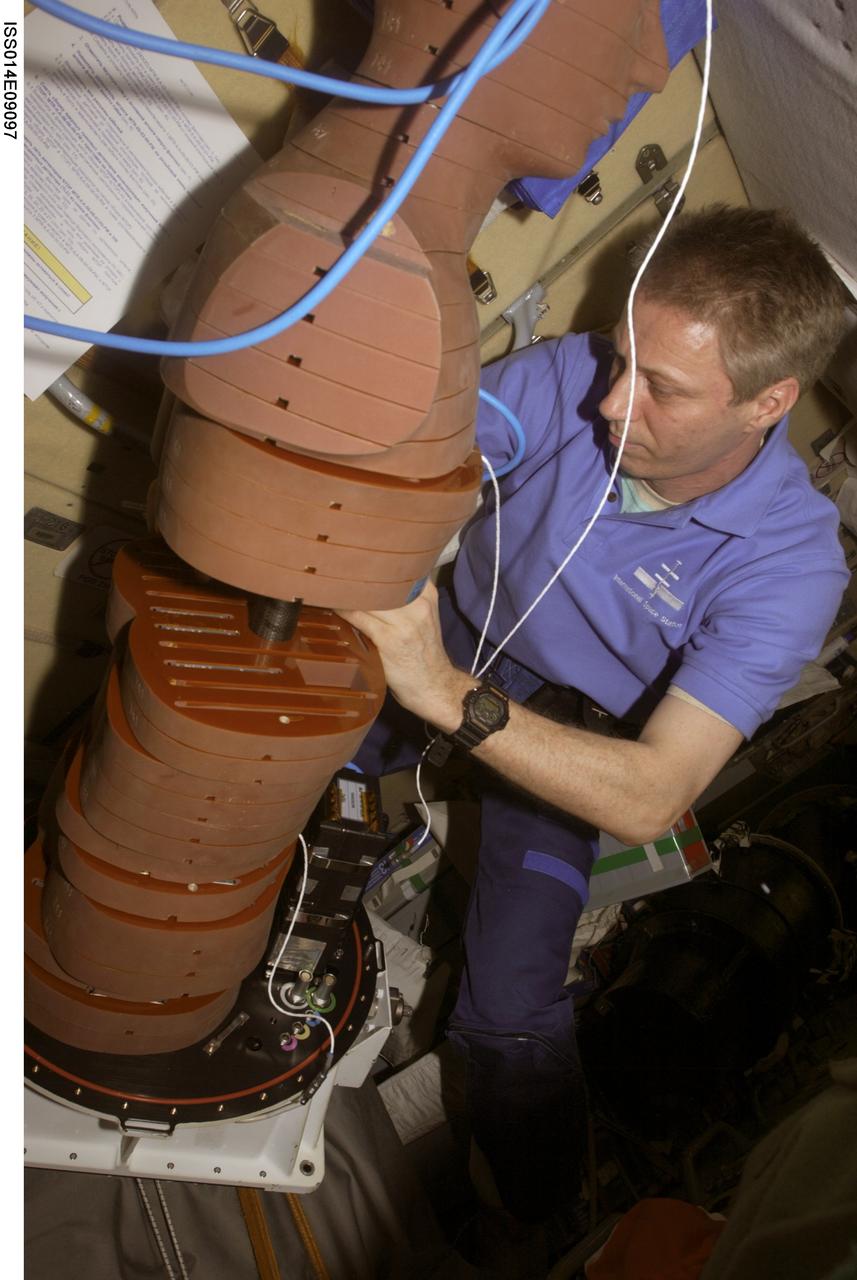
ISS014-E-09097 (December 2006) --- European Space Agency (ESA) astronaut Thomas Reiter, Expedition 14 flight engineer, works with the European Matroshka-R Phantom experiment in the Zvezda Service Module of the International Space Station. Matroshka, the name for the traditional Russian set of nestling dolls, is an antroph-amorphous model of a human torso designed for radiation studies. The activity, supported by ground specialist tag-up, requires equipping the torso's individual horizontal slice-like layers with 356 thermo luminescent detectors (TLDs) and five nuclear radiation tracking detectors (NTDPs). The mannequin was then to be reassembled, covered with poncho and hood and installed in the Pirs Docking Compartment for studies of on-orbit radiation and long-term dose accumulation.
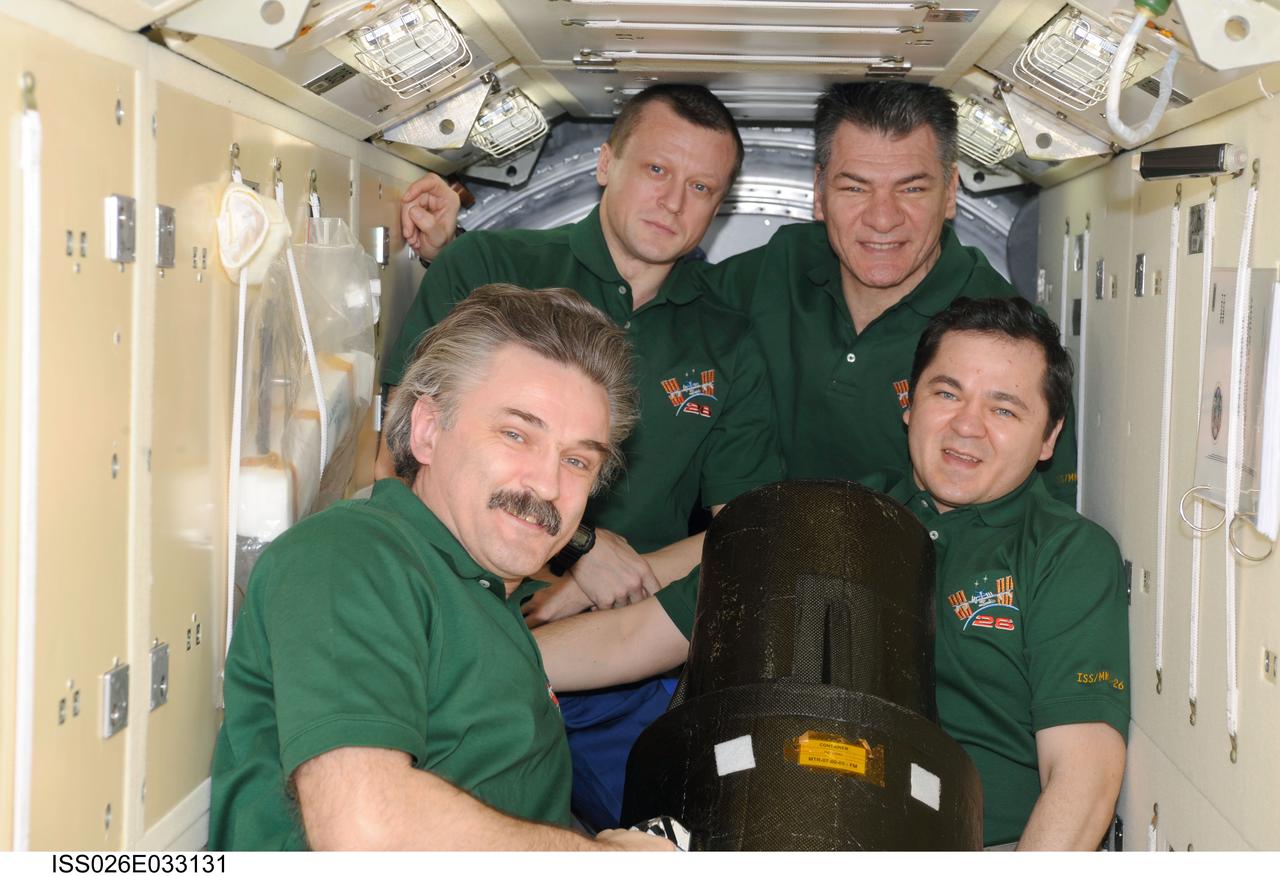
ISS026-E-033131 (11 March 2011) --- Russian cosmonauts Alexander Kaleri (left foreground), Oleg Skripochka (right foreground), Dmitry Kondratyev (left background) and European Space Agency astronaut Paolo Nespoli, all Expedition 26 flight engineers, pose for a photo with the European Matroshka-R Phantom experiment in the Zarya Functional Cargo Block (FGB) of the International Space Station. Matroshka, the name for the traditional Russian set of nestling dolls, is an antroph-amorphous model of a human torso designed for radiation studies.
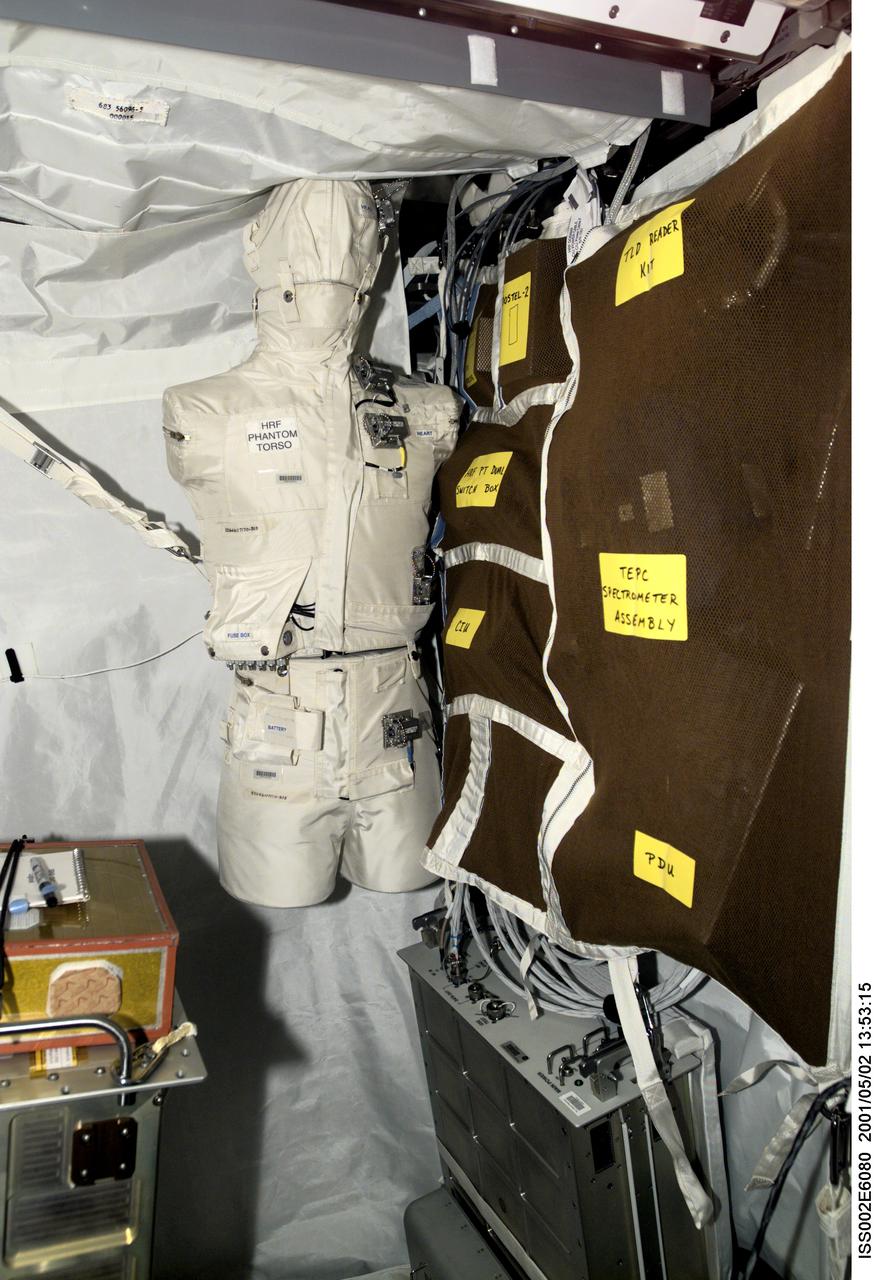
ISS002-E-6080 (2 May 2001) --- The Phantom Torso, seen here in the Human Research Facility (HRF) section of the Destiny/U.S. laboratory on the International Space Station (ISS), is designed to measure the effects of radiation on organs inside the body by using a torso that is similar to those used to train radiologists on Earth. The torso is equivalent in height and weight to an average adult male. It contains radiation detectors that will measure, in real-time, how much radiation the brain, thyroid, stomach, colon, and heart and lung area receive on a daily basis. The data will be used to determine how the body reacts to and shields its internal organs from radiation, which will be important for longer duration space flights. The experiment was delivered to the orbiting outpost during by the STS-100/6A crew in April 2001. Dr. Gautam Badhwar, NASA JSC, Houston, TX, is the principal investigator for this experiment. A digital still camera was used to record this image.
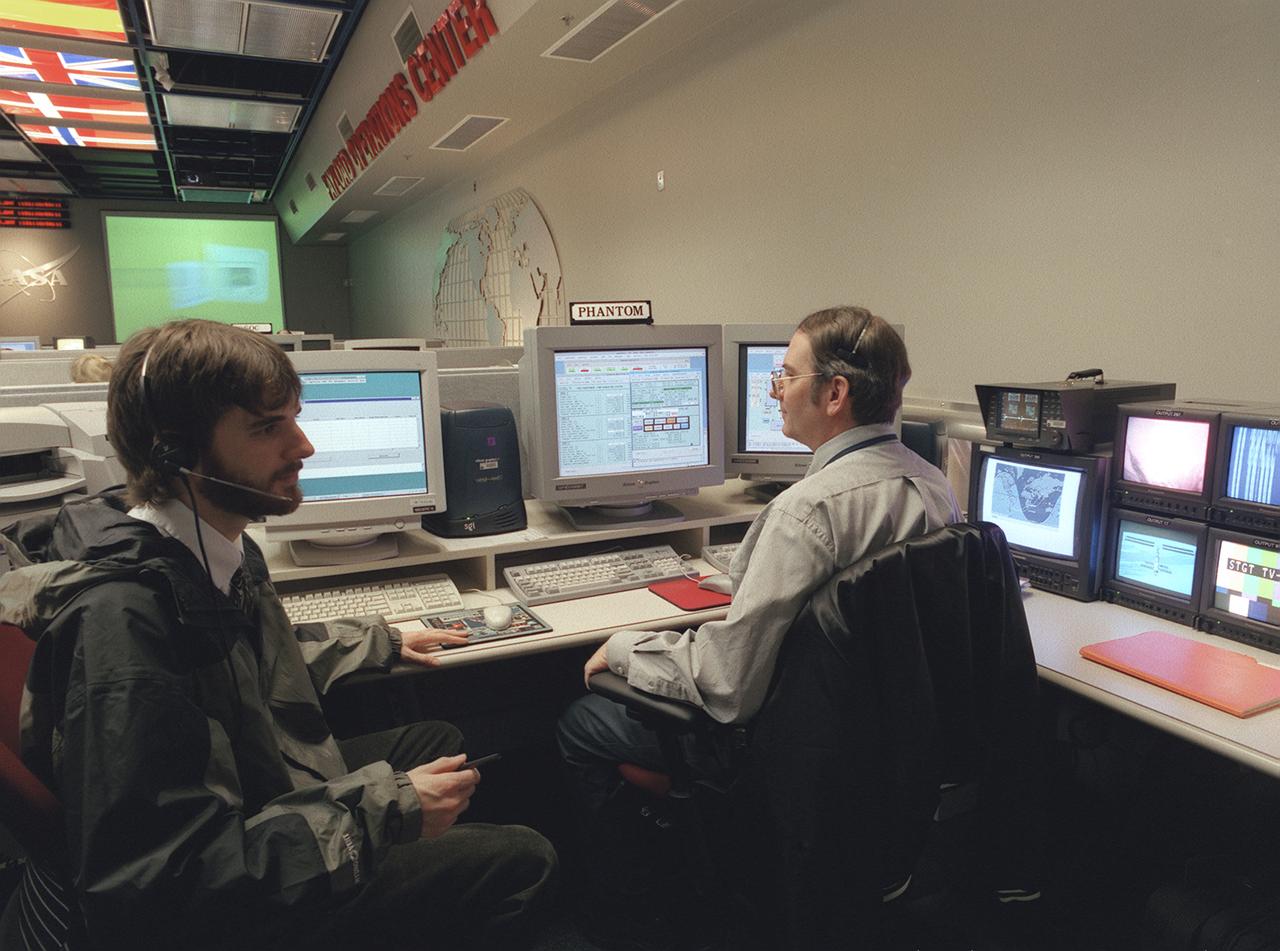
The Payload Operations Center (POC) is the science command post for the International Space Station (ISS). Located at NASA's Marshall Space Flight Center in Huntsville, Alabama, it is the focal point for American and international science activities aboard the ISS. The POC's unique capabilities allow science experts and researchers around the world to perform cutting-edge science in the unique microgravity environment of space. The POC is staffed around the clock by shifts of payload flight controllers. At any given time, 8 to 10 flight controllers are on consoles operating, plarning for, and controlling various systems and payloads. This photograph shows the Photo and TV Operations Manager (PHANTOM) at a work station. The PHANTOM configures all video systems aboard the ISS and ensures they are working properly, providing a video link from the ISS to the POC.
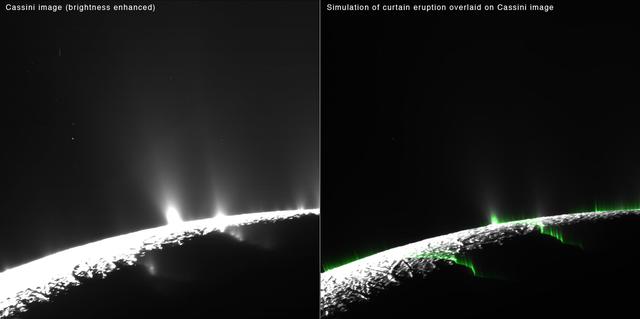
Phantom jets in simulated images produced by the scientists line up nicely with some of the features in real images from NASA Cassini spacecraft that appear to be discrete columns of spray.
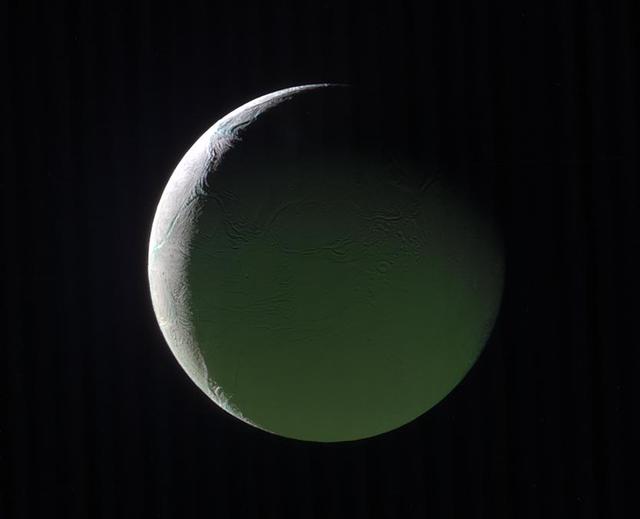
The brightly lit limb of a crescent Enceladus looks ethereal against the blackness of space. The rest of the moon, lit by light reflected from Saturn, presents a ghostly appearance. Enceladus (313 miles or 504 kilometers across) is back-lit in this image, as is apparent by the thin crescent. However, the Sun-Enceladus-spacecraft (or phase) angle, at 141 degrees, is too low to make the moon's famous plumes easily visible. This view looks toward the Saturn-facing hemisphere of Enceladus. North on Enceladus is up. The above image is a composite of images taken with the Cassini spacecraft narrow-angle camera on March 29, 2017 using filters that allow infrared, green, and ultraviolet light. The image filter centered on 930 nm (IR) was is red in this image, the image filter centered on the green is green, and the image filter centered on 338 nm (UV) is blue. The view was obtained at a distance of approximately 110,000 miles (180,000 kilometers) from Enceladus. Image scale is 0.6 miles (1 kilometer) per pixel. The Cassini spacecraft ended its mission on Sept. 15, 2017. https://photojournal.jpl.nasa.gov/catalog/PIA21346
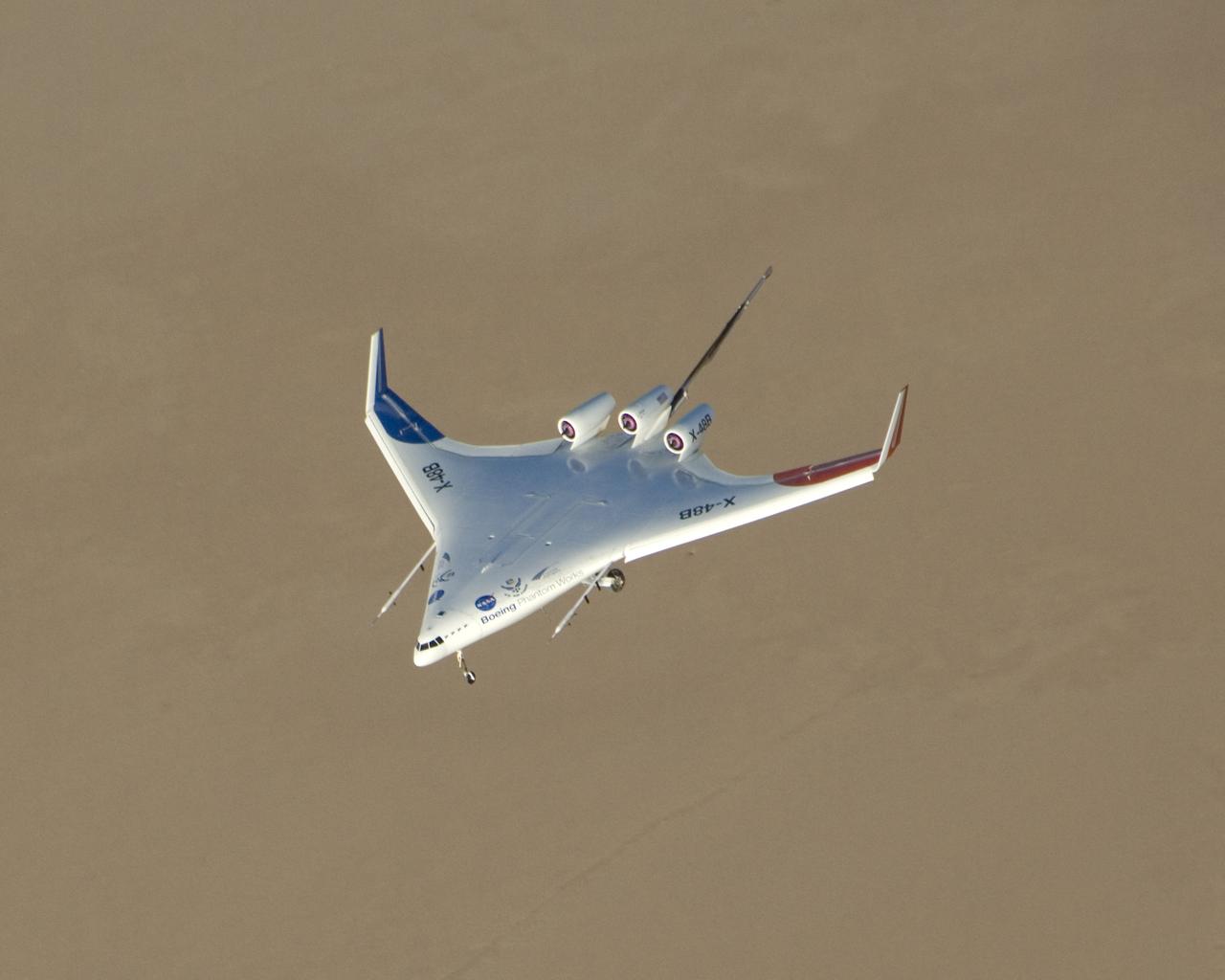
Boeing Phantom Works' subscale Blended Wing Body technology demonstration aircraft began its initial flight tests from NASA's Dryden Flight Research Center at Edwards Air Force Base, Calif. in the summer of 2007. The 8.5 percent dynamically scaled unmanned aircraft, designated the X-48B by the Air Force, is designed to mimic the aerodynamic characteristics of a full-scale large cargo transport aircraft with the same blended wing body shape. The initial flight tests focused on evaluation of the X-48B's low-speed flight characteristics and handling qualities. About 25 flights were planned to gather data in these low-speed flight regimes. Based on the results of the initial flight test series, a second set of flight tests was planned to test the aircraft's low-noise and handling characteristics at transonic speeds.
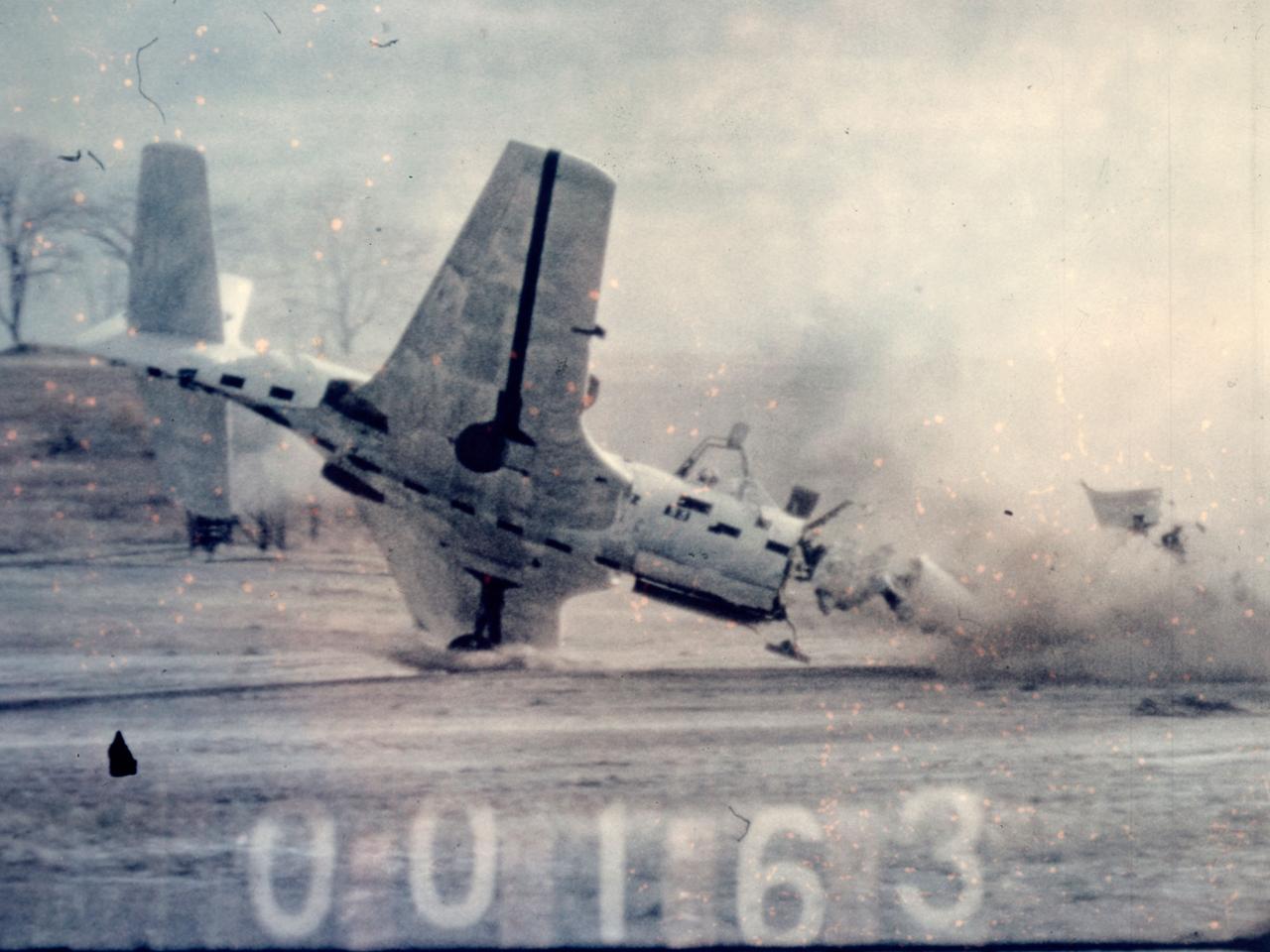
Researchers at the National Advisory Committee for Aeronautics (NACA) Lewis Flight Propulsion Laboratory purposely wreck a McDonnell FH-1 Phantom as part of the laboratory’s Crash Fire Program. NACA Lewis researchers created the program in 1949 to investigate methods for improving survival rates for take-off and landing-type crashes. In these types of crashes, the passengers often survived the impact only to perish in the ensuing fire. Previously there had been little information on the nature of post-crash fires, and it was difficult to use analytical studies in this area. Irving Pinkel, Chief of the Lewis Flight Propulsion Division, was the primary researcher. He enlisted flight safety specialist and aeronautics researchers G. Merritt Preston and Gerard Pesman, mechanical engineer Dugald Black, and others. The tests were conducted at the nearby Ravenna Arsenal using decommissioned Air Force fighter and transport aircraft. The pilotless aircraft were accelerated down a rail on a 1700-foot track at take-off speeds and run into barriers to simulate a variety of different types of crashes. The first barrier stripped off the landing gears and another briefly sent the aircraft off the ground before it crashed into a dirt mound. Telemetry and high-speed cameras were crucial elements in these studies. NACA Lewis photographer Bill Wynne developed a method for inserting timekeeping devices on test film that were able to show time to one thousandth of a second.

NASA Mars Underwater Rover Phantom 2 TROV (Telepresences Controlled Remotely Operated Vehicle)
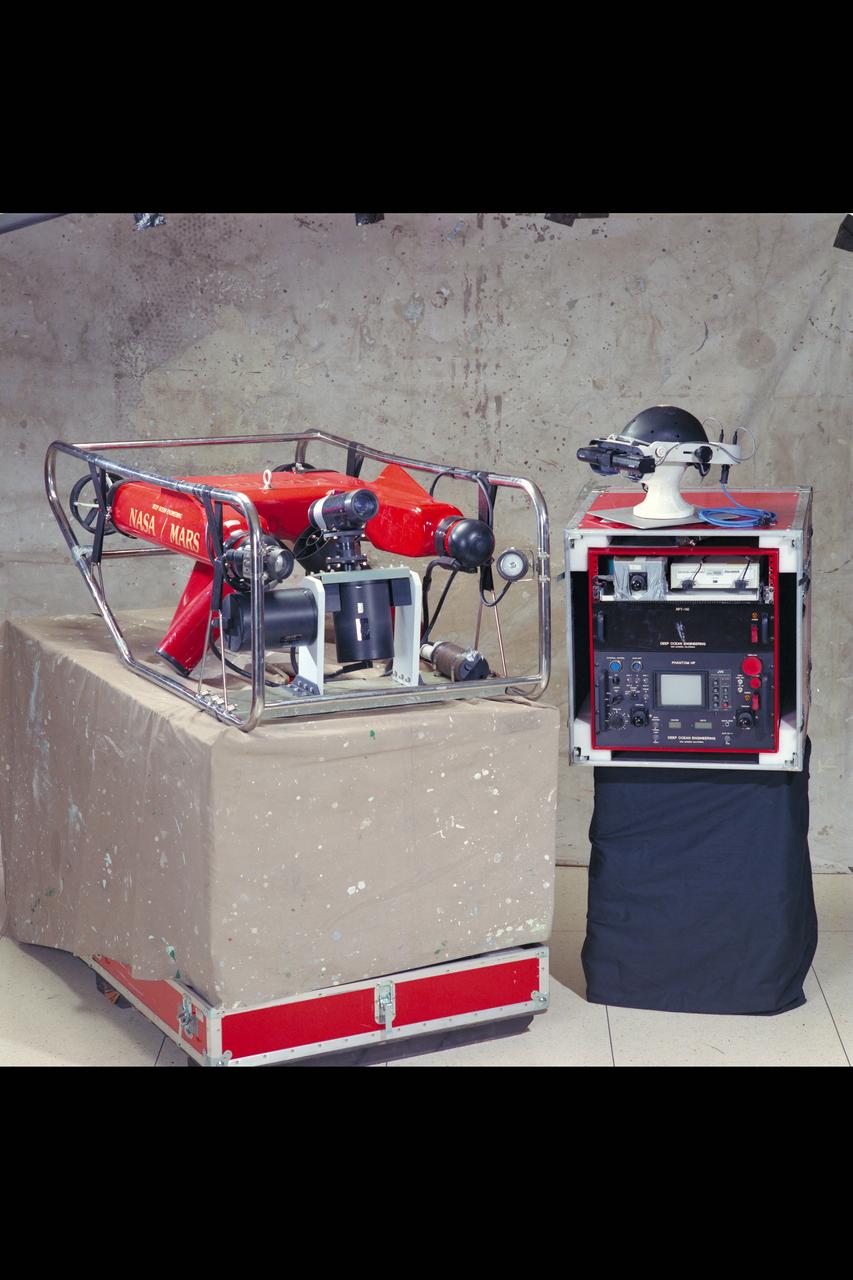
NASA Mars Underwater Rover Phantom 2 TROV (Telepresences Controlled Remotely Operated Vehicle)
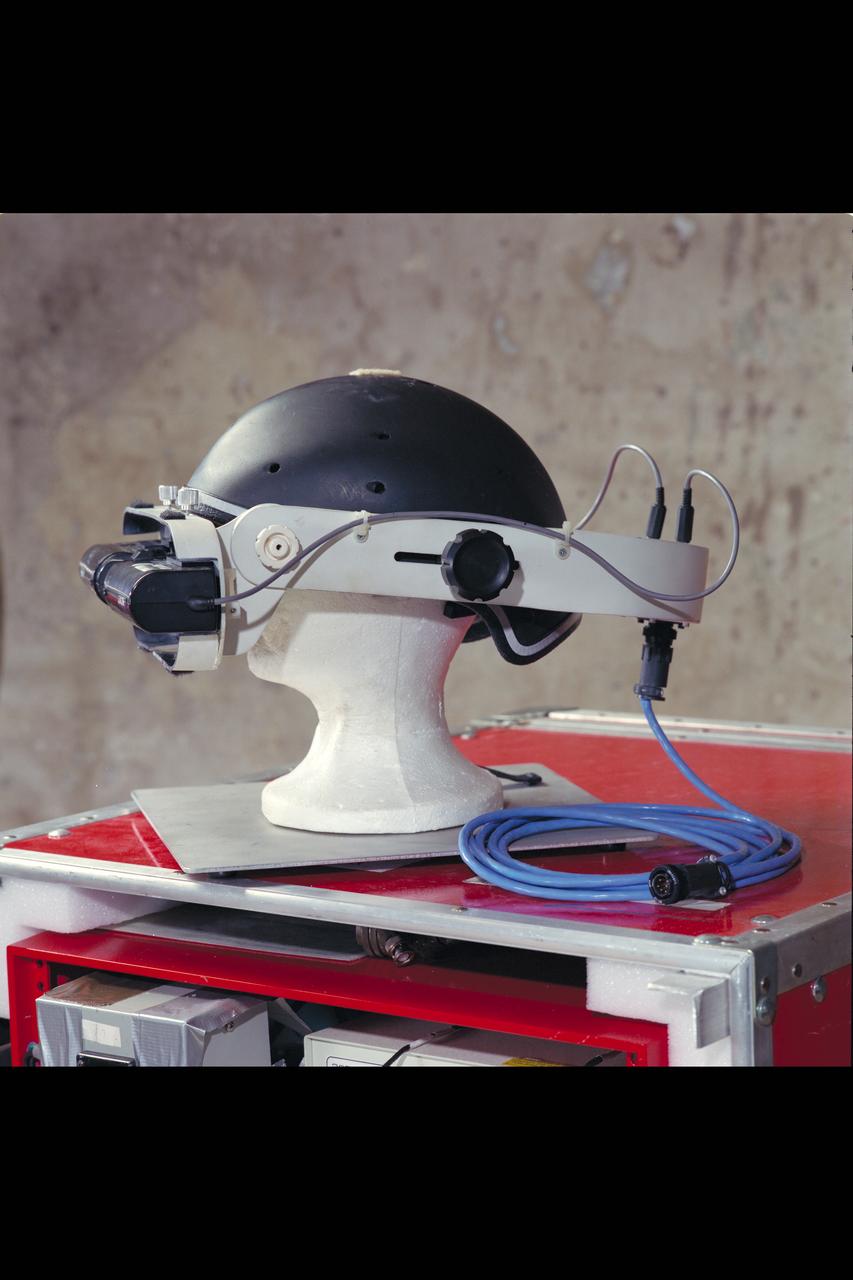
NASA Mars Underwater Rover Phantom 2 TROV (Telepresences Controlled Remotely Operated Vehicle) - helmet head piece
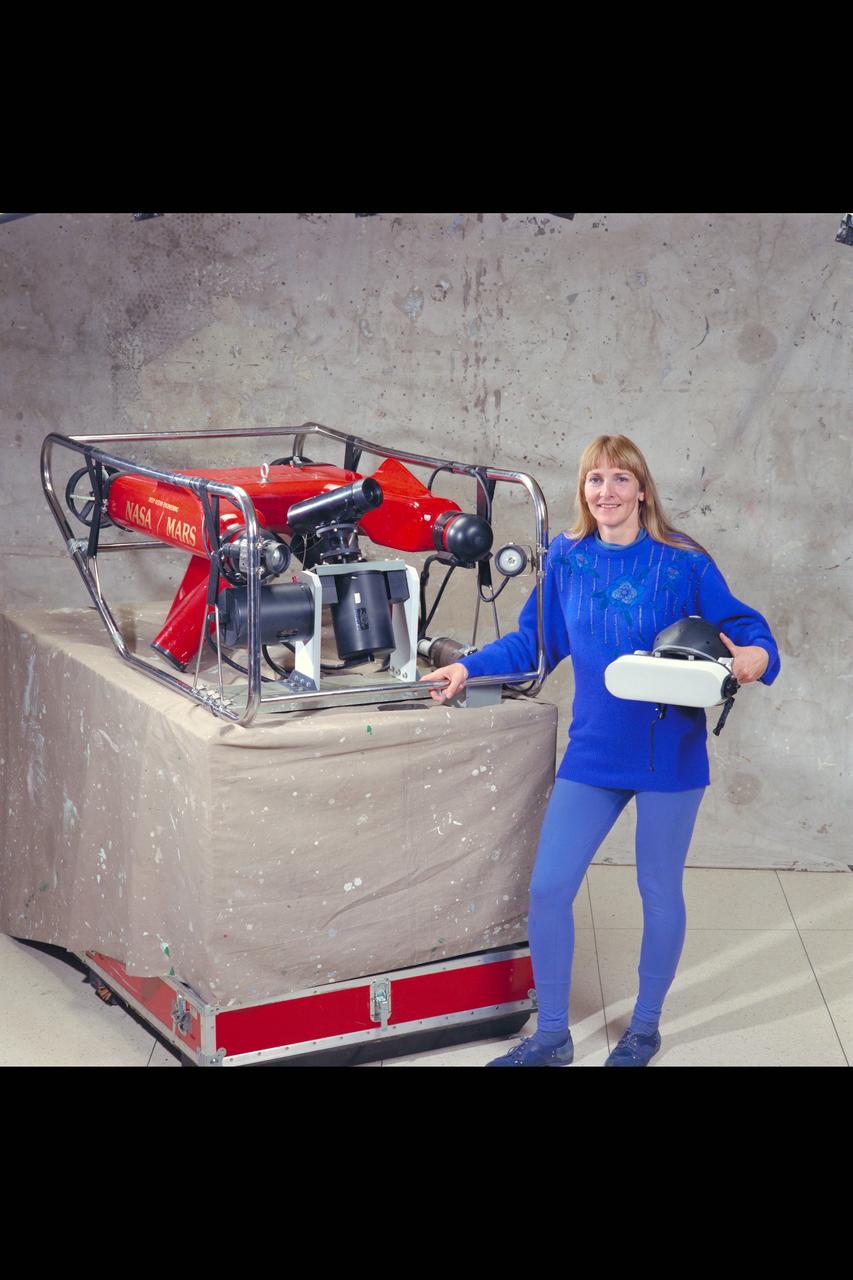
NASA Mars Underwater Rover Phantom 2 TROV (Telepresences Controlled Remotely Operated Vehicle) with Dr. Carol Stoker
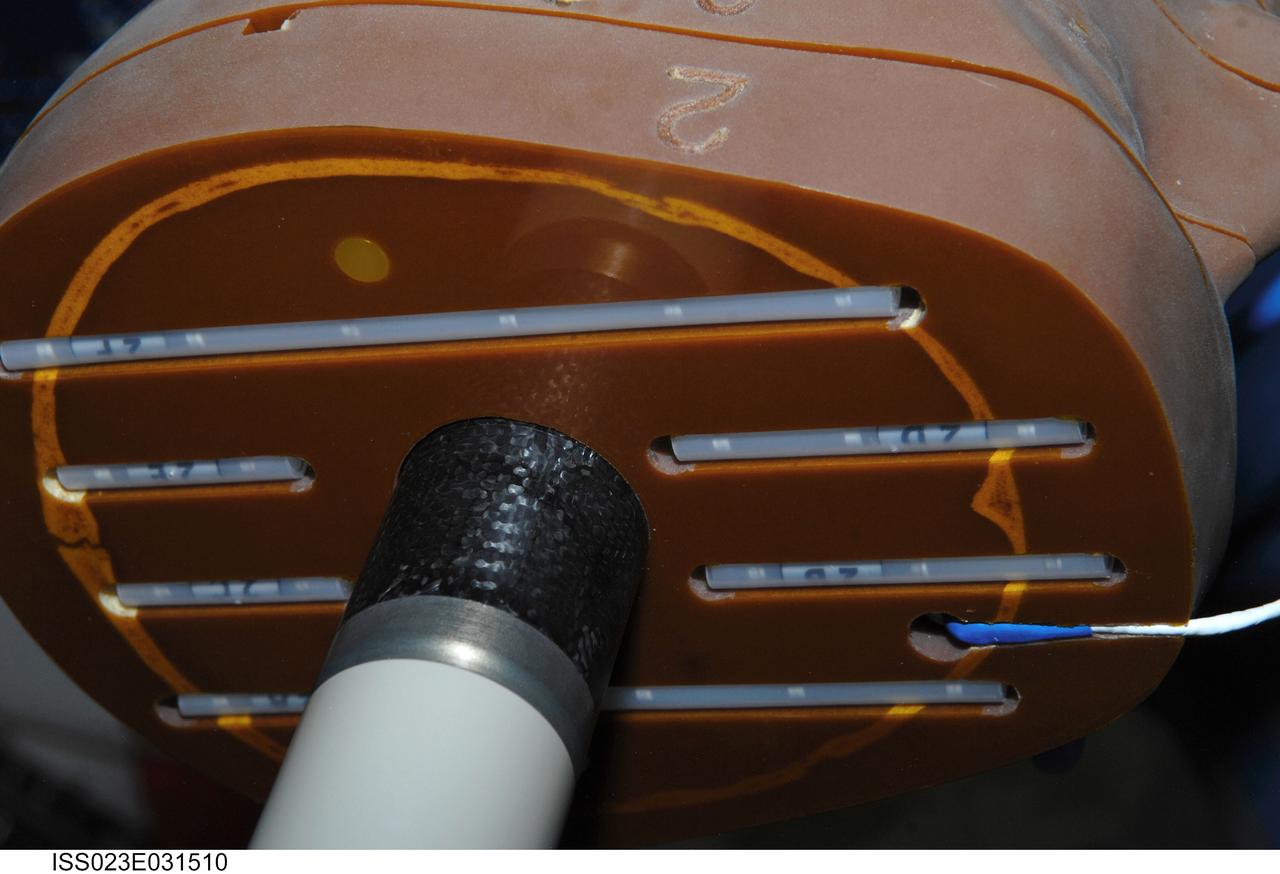
iss023e031510 (542010) --- A view of the detectors installed in the anthropomorphic Phantom for the Matroshka-2 Kibo experiment.
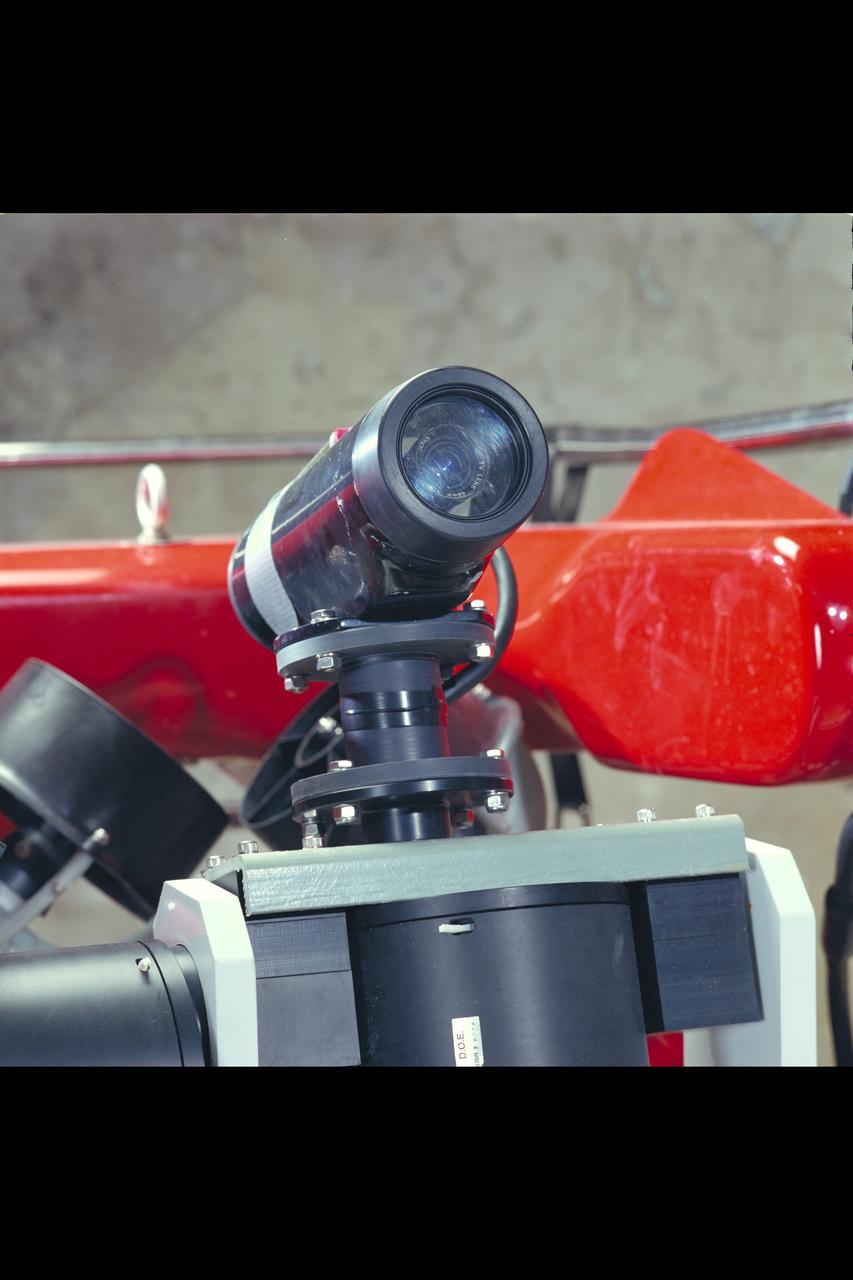
NASA Mars Underwater Rover Phantom 2 TROV (Telepresences Controlled Remotely Operated Vehicle) cameras
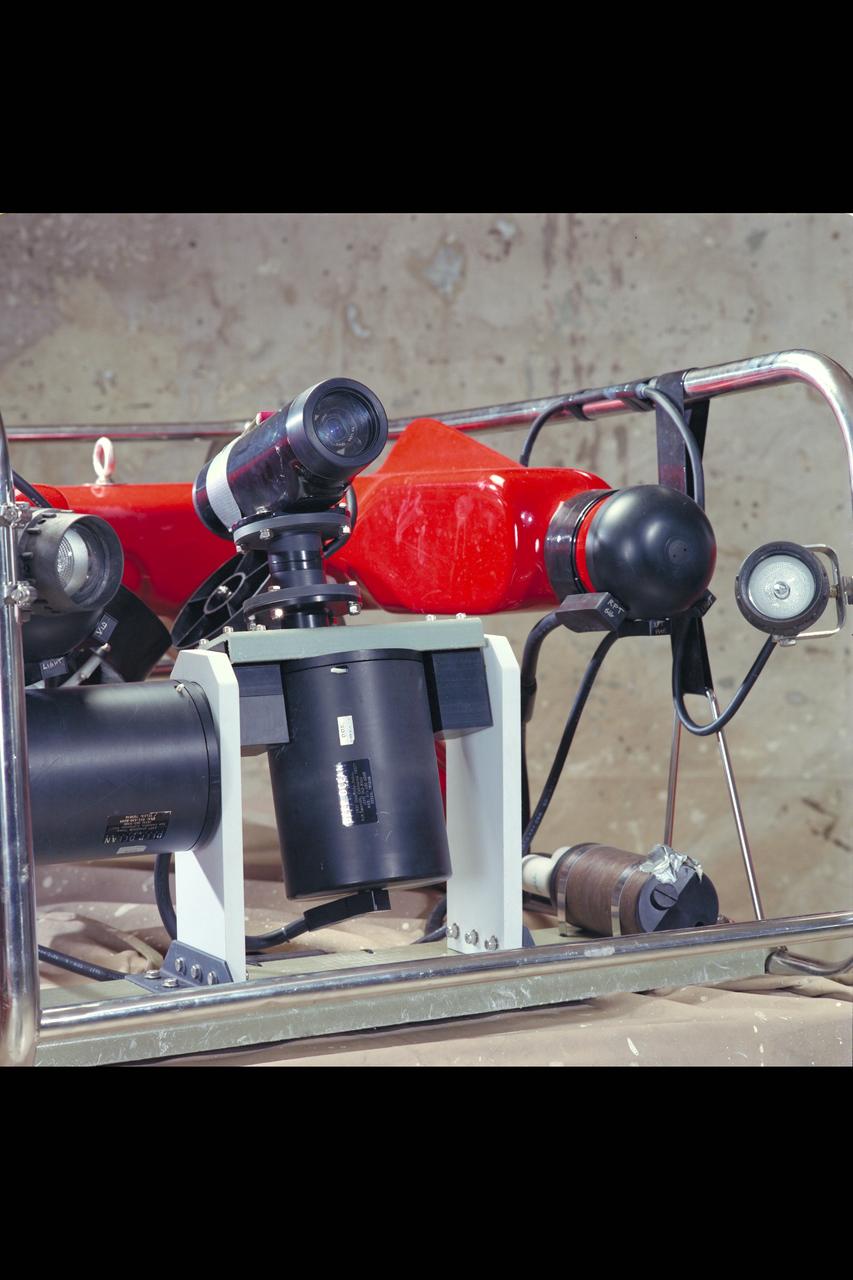
NASA Mars Underwater Rover Phantom 2 TROV (Telepresences Controlled Remotely Operated Vehicle) cameras
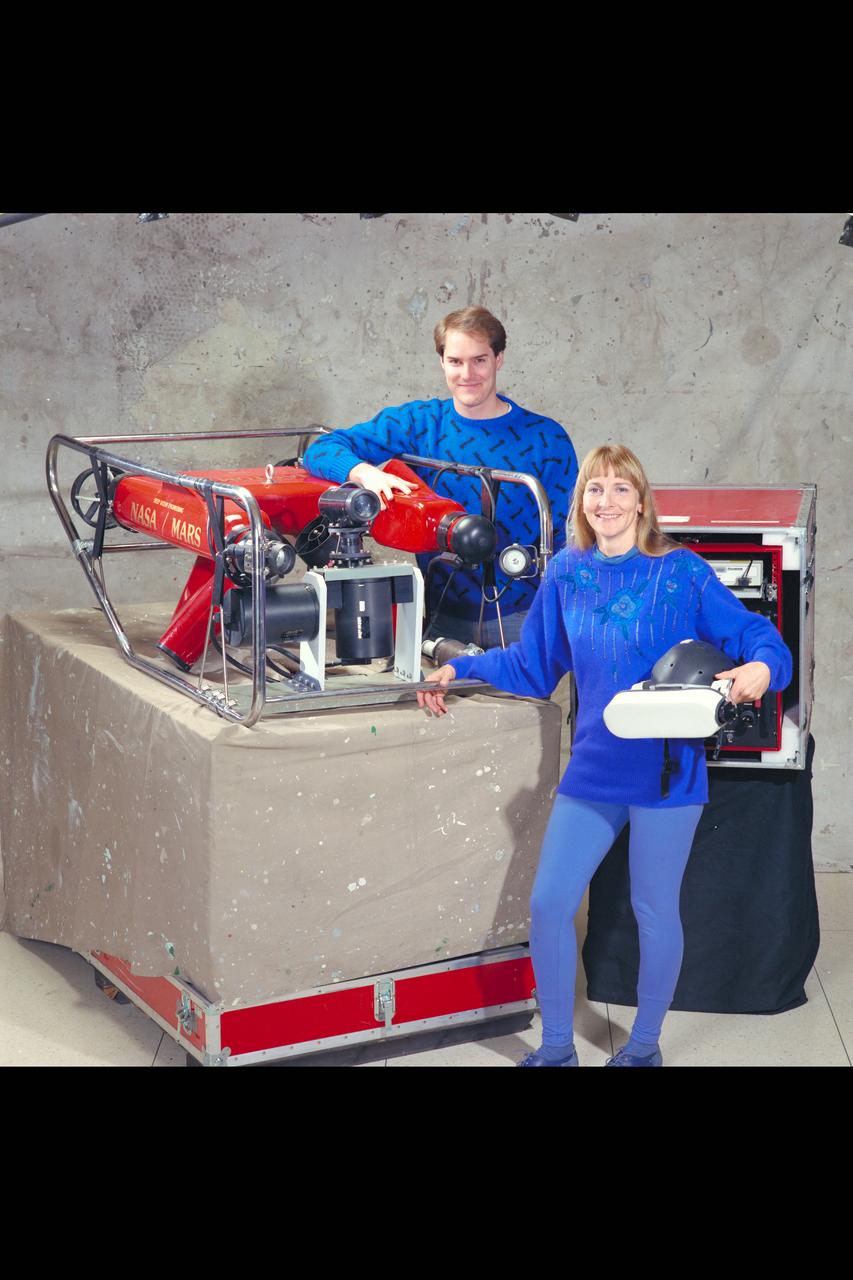
NASA Mars Underwater Rover Phantom 2 TROV (Telepresences Controlled Remotely Operated Vehicle) with Dr. Carol Stoker and Owen Gwynne
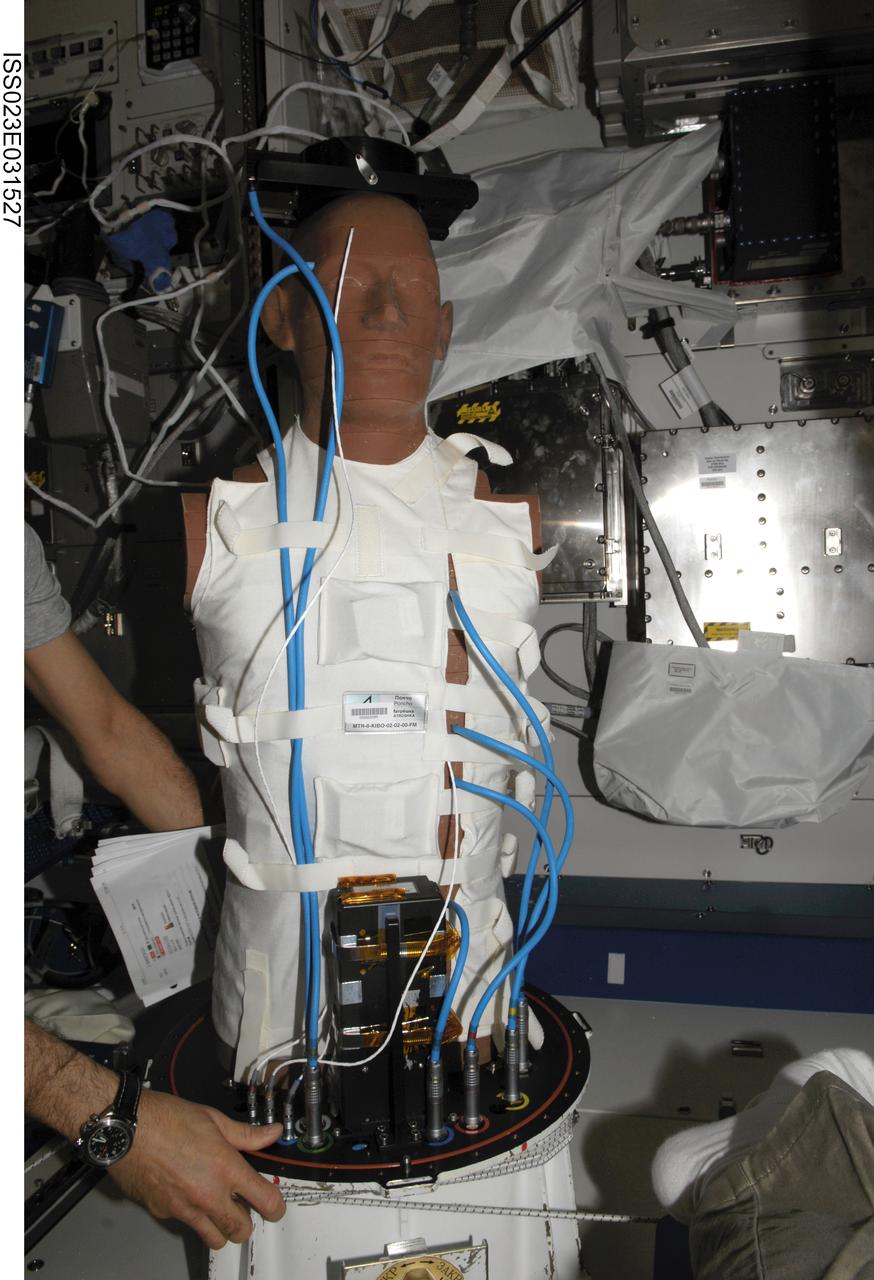
iss023e031527 (5/4/2010) --- A view of the anthropomorphic Phantom for the Matroshka-2 Kibo experiment installed at location JPM1F2 in the Kibo Japanese Experiment Pressurized Module (JPM) aboard the International Space Station (ISS).
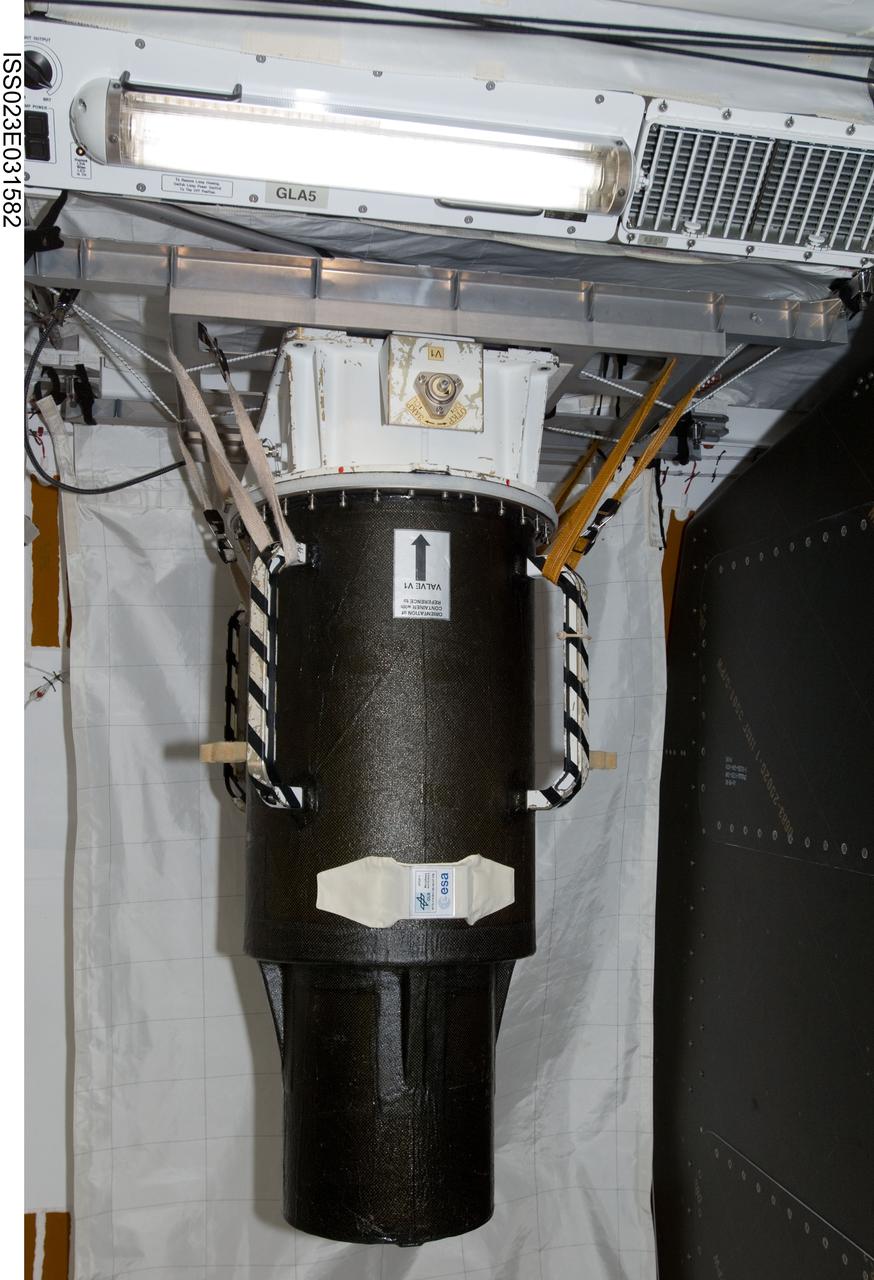
iss023e031582 (5/4/2010) --- A view of the anthropomorphic Phantom for the Matroshka-2 Kibo experiment installed at location JPM1F2 in the Kibo Japanese Experiment Pressurized Module (JPM) aboard the International Space Station (ISS).
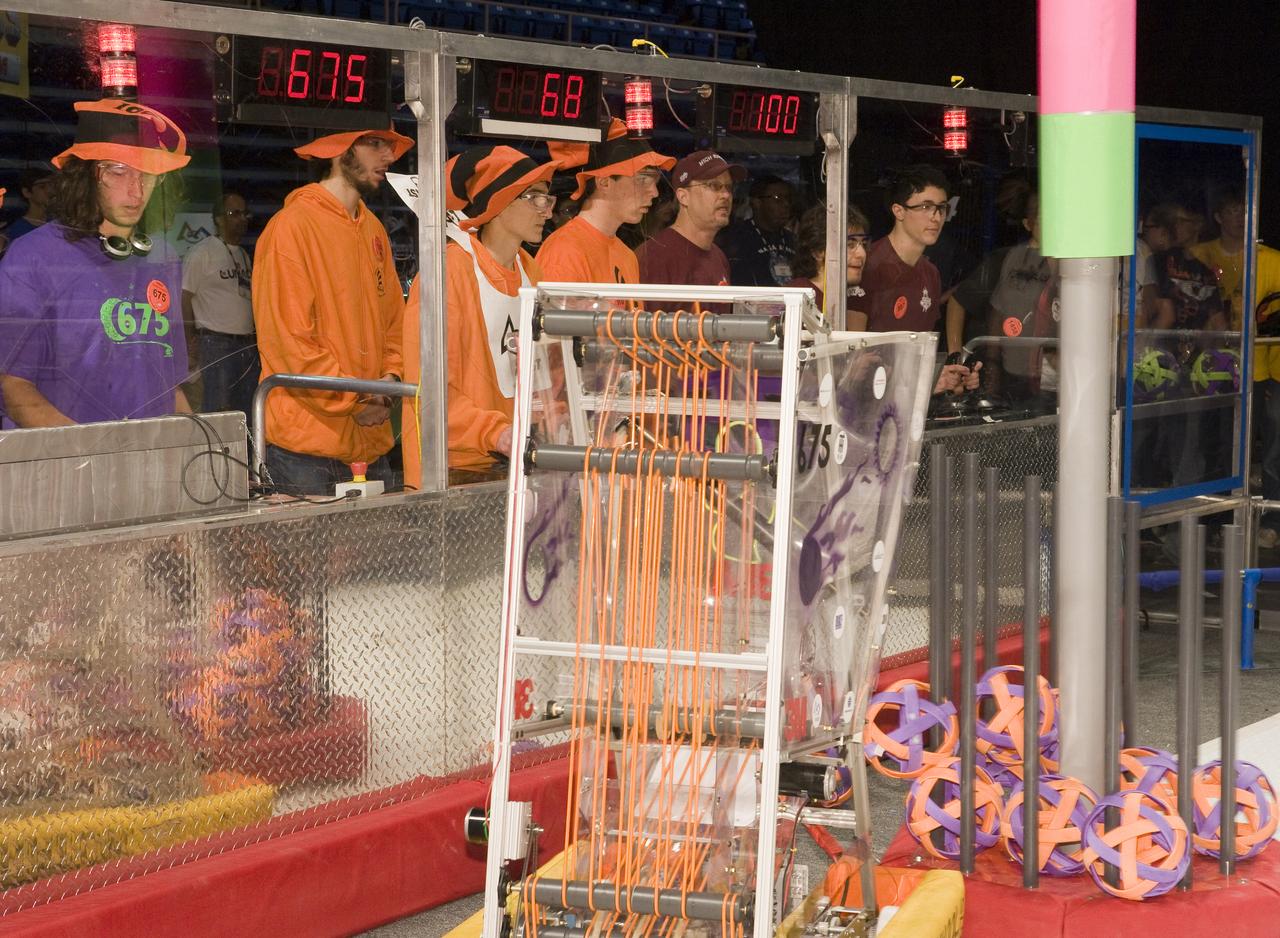
FIRST Robotics Competition 'Lunacy' hosted by NASA at San Jose State University Event Center. For Inspiration and Recognition of Science and Technology let the games begin. Phantom Robotics team #675, The Wildhats team #100 and Highrollers team #987
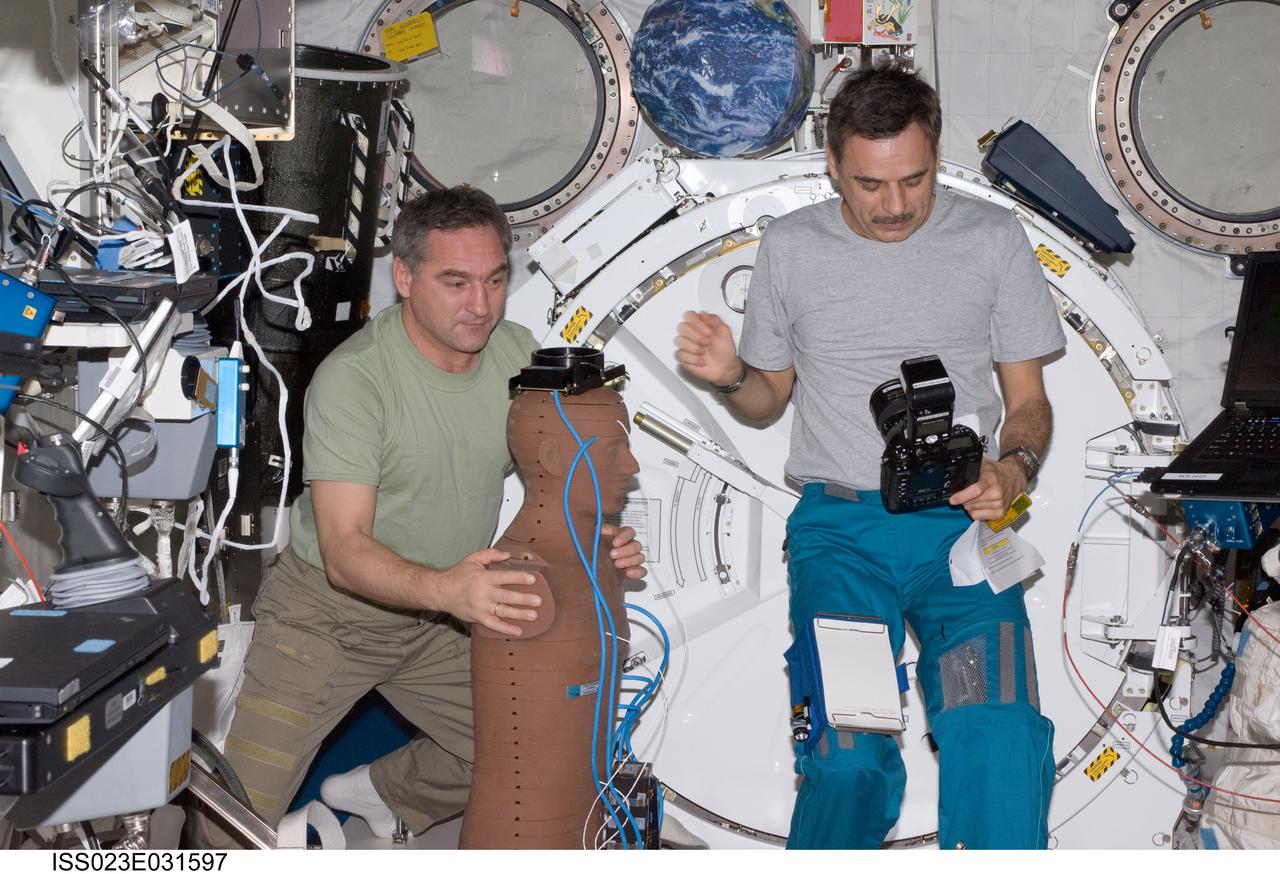
ISS023-E-031597 (4 May 2010) --- Russian cosmonauts Alexander Skvortsov (left) and Mikhail Kornienko, both Expedition 23 flight engineers, work with the European Matroshka-R Phantom experiment in the Kibo laboratory of the International Space Station. Matroshka, the name for the traditional Russian set of nestling dolls, is an antroph-amorphous model of a human torso designed for radiation studies.
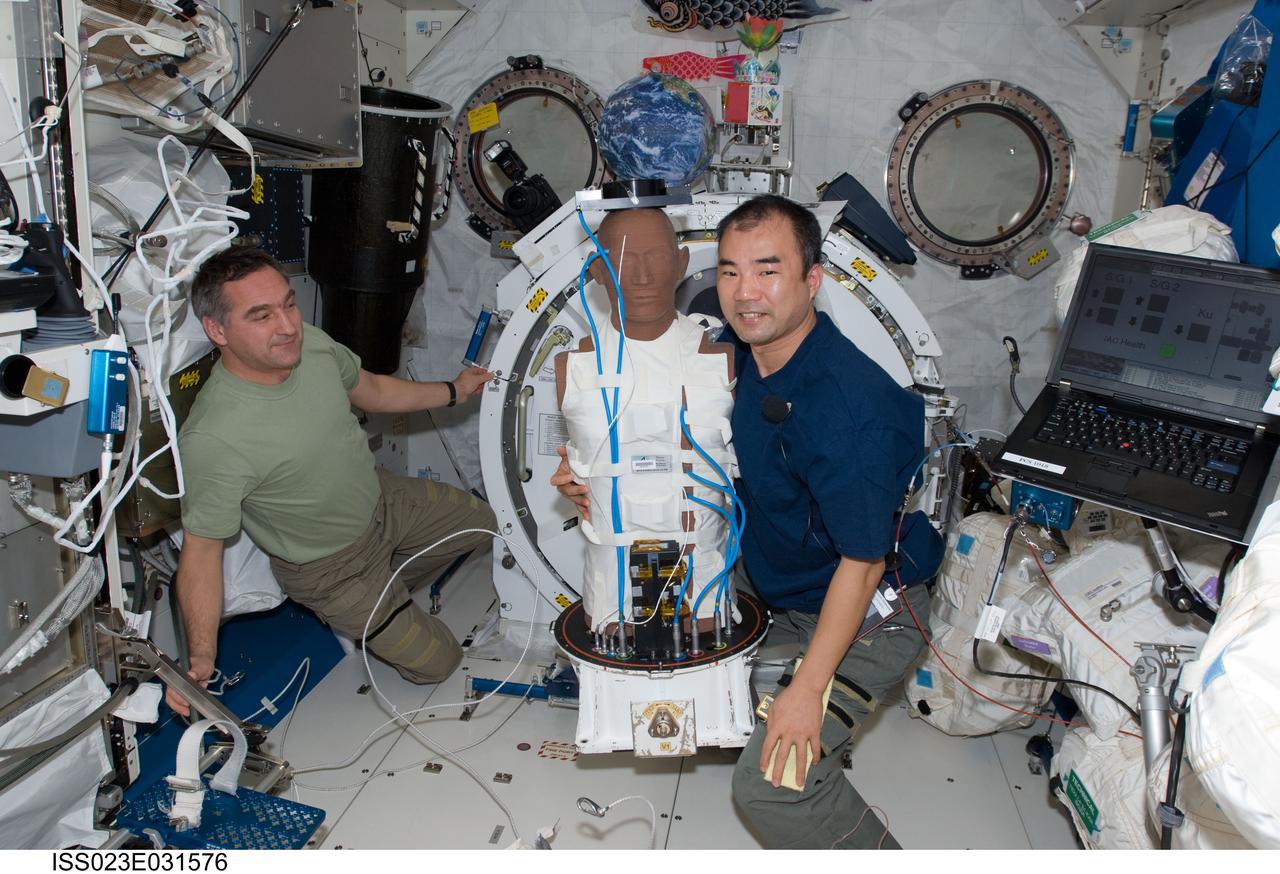
ISS023-E-031576 (4 May 2010) --- Russian cosmonaut Alexander Skvortsov (left) and Japan Aerospace Exploration Agency (JAXA) astronaut Soichi Noguchi, both Expedition 23 flight engineers, work with the European Matroshka-R Phantom experiment in the Kibo laboratory of the International Space Station. Matroshka, the name for the traditional Russian set of nestling dolls, is an antroph-amorphous model of a human torso designed for radiation studies.
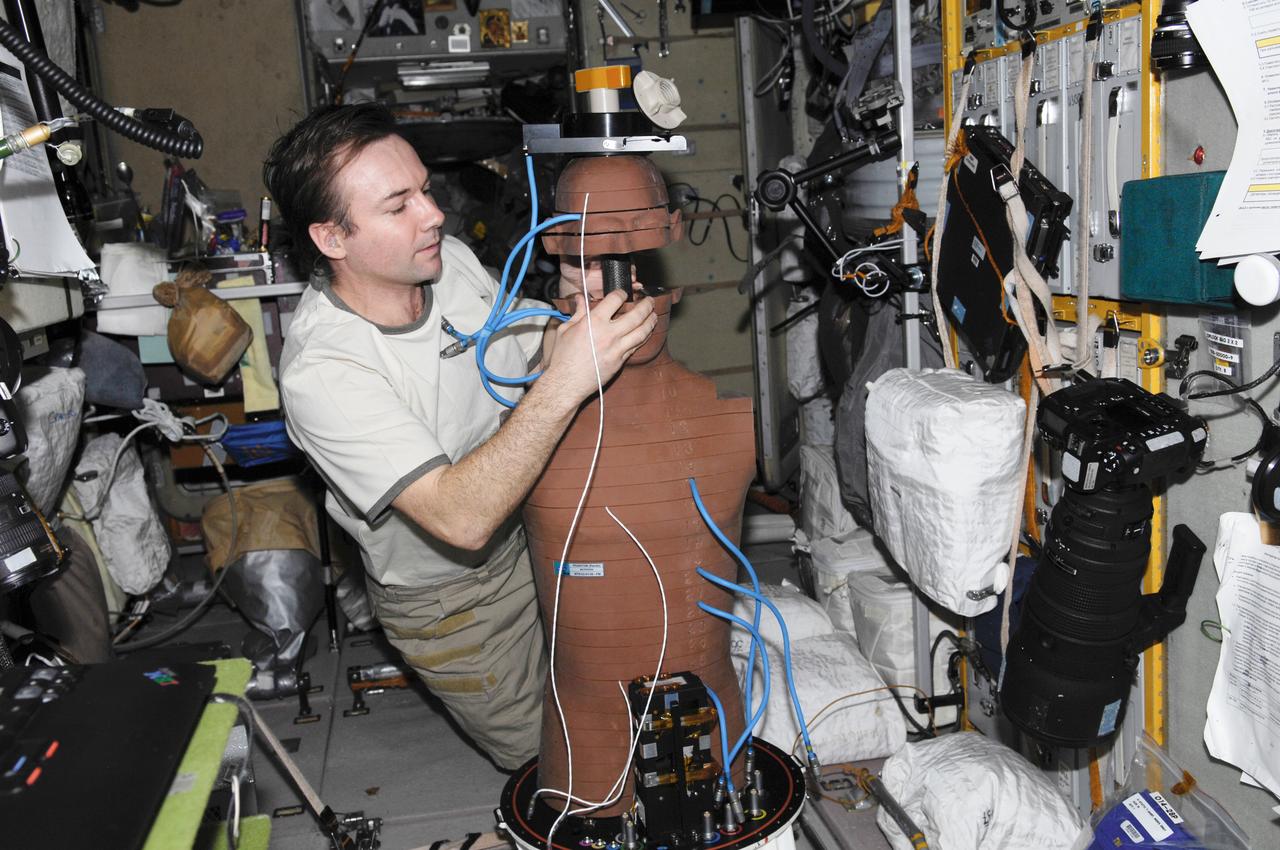
ISS018-E-040944 (18 March 2009) --- Cosmonaut Yury Lonchakov, Expedition 18 flight engineer, works with the European Matroshka-R Phantom experiment in the Zvezda Service Module of the International Space Station while Space Shuttle Discovery (STS-119) remains docked with the station. Matroshka, the name for the traditional Russian set of nestling dolls, is an antroph-amorphous model of a human torso designed for radiation studies.
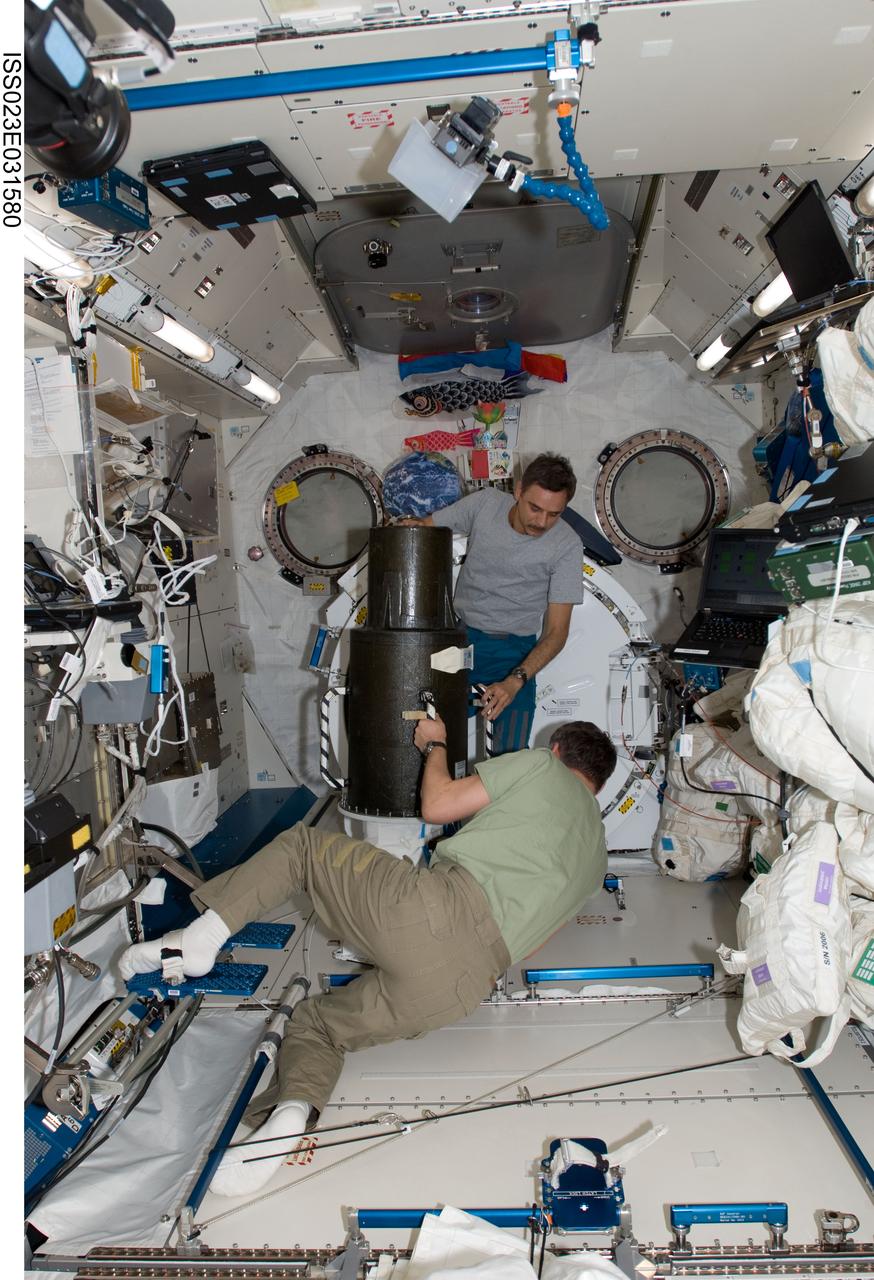
ISS023-E-031580 (4 May 2010) --- Russian cosmonauts Alexander Skvortsov (foreground) and Mikhail Kornienko, both Expedition 23 flight engineers, work with the European Matroshka-R Phantom experiment in the Kibo laboratory of the International Space Station. Matroshka, the name for the traditional Russian set of nestling dolls, is an antroph-amorphous model of a human torso designed for radiation studies.

F-111B Fighter, Variable Sweep wings, wings swept forward, landing gear down. Slat experiments. The General Dynamics/Grumman F-111B was a long-range carrier-based interceptor aircraft that was planned to be a follow-on to the F-4 Phantom II. The F-111B was developed in the 1960s by General Dynamics in conjunction with Grumman for the United States Navy (USN) as part of the joint Tactical Fighter Experimental (TFX) with the United States Air Force (USAF) to produce a common fighter for the services that could perform a variety of missions.

Test of Unmanned Aircraft Systems Traffic Management (UTM) technical capability Level 2 (TCL2) at Reno-Stead Airport, Nevada. During the test, five drones simultaneously crossed paths, separated by altitude. Two drones flew beyond visual line-of-sight and three flew within line-of-sight of their operators. Drone Co-habitation Services operates a Phantom 3 commercial multi-rotor unmanned aircraft, one of 11 vehicles in the UTM TCL2 demonstration that will fly beyond line of sight of the pilot in command in Nevada test.
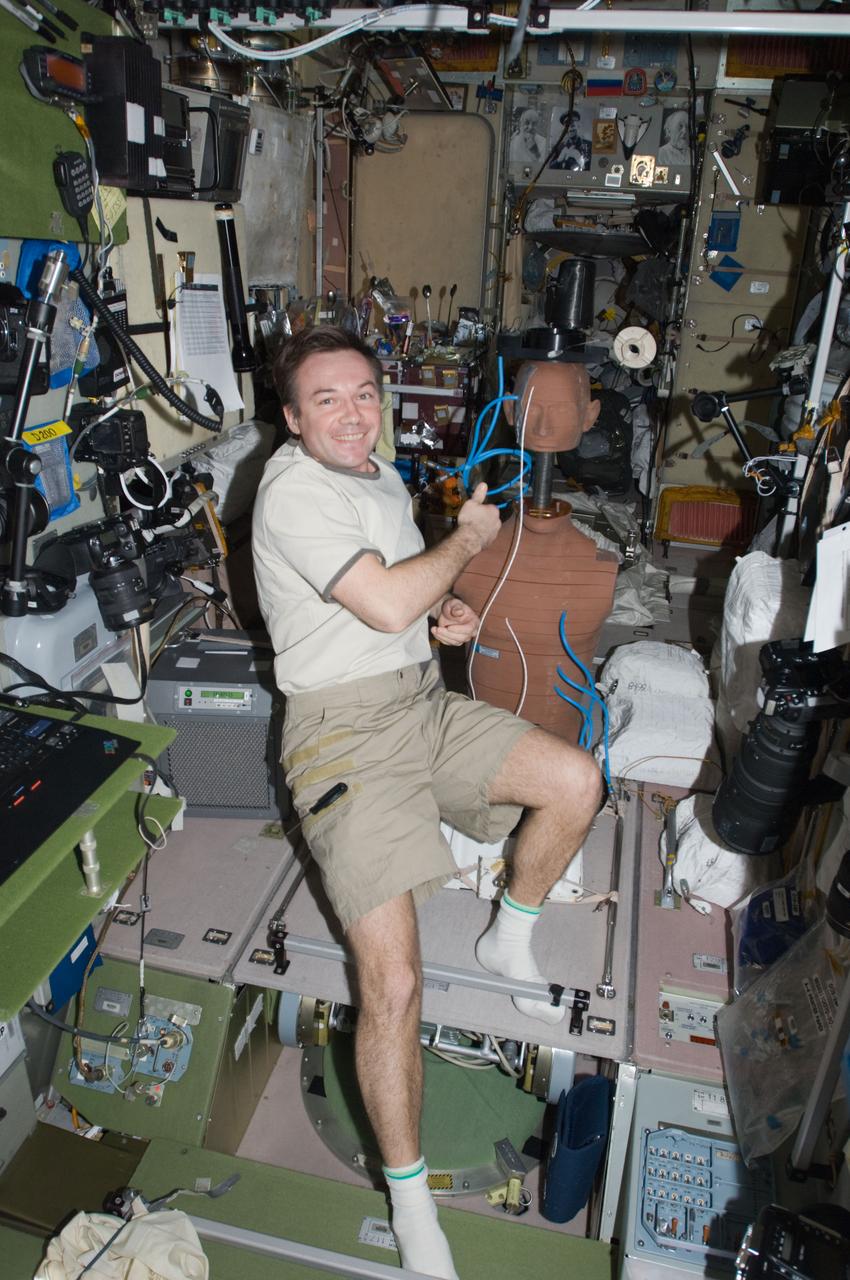
ISS018-E-040992 (18 March 2009) --- Cosmonaut Yury Lonchakov, Expedition 18 flight engineer, works with the European Matroshka-R Phantom experiment in the Zvezda Service Module of the International Space Station while Space Shuttle Discovery (STS-119) remains docked with the station. Matroshka, the name for the traditional Russian set of nestling dolls, is an antroph-amorphous model of a human torso designed for radiation studies.
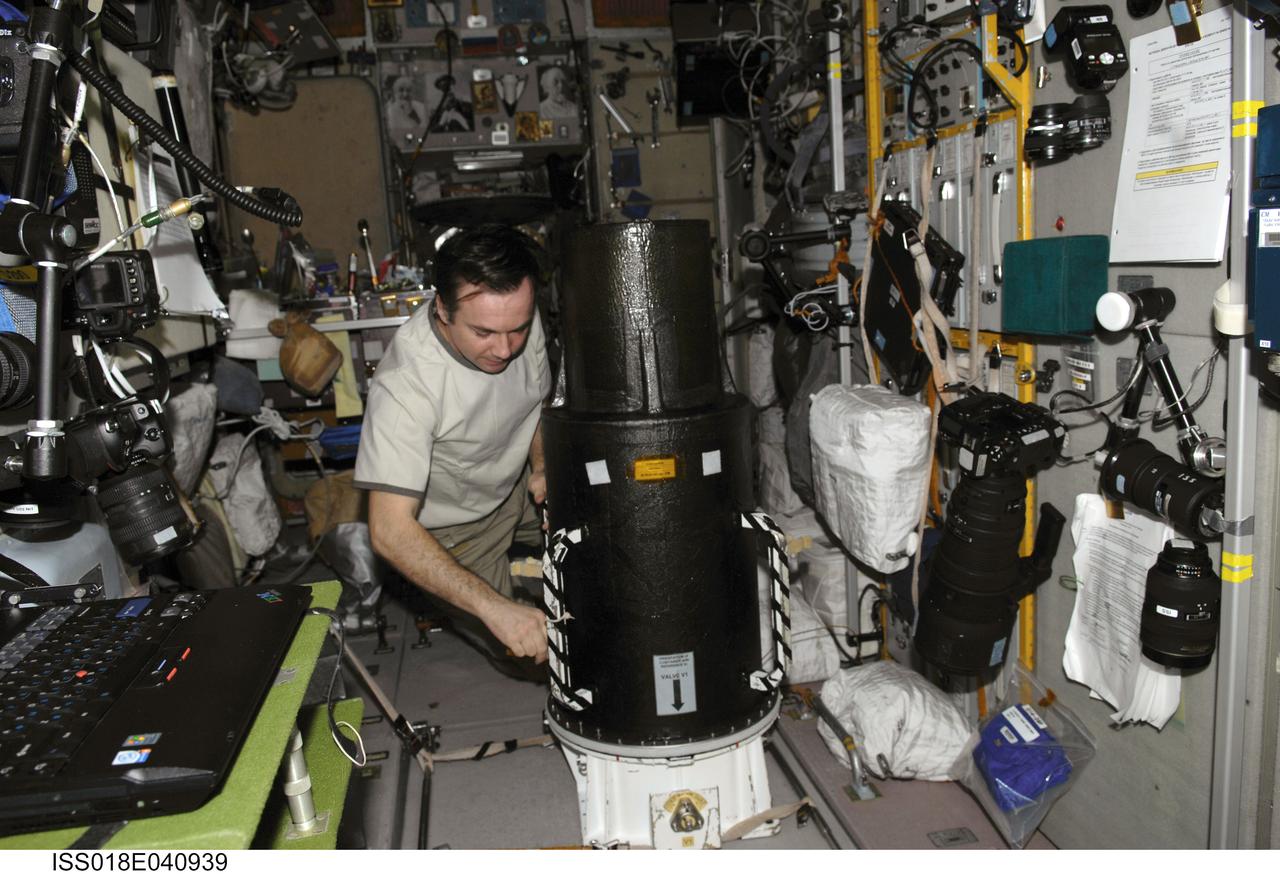
ISS018-E-040939 (18 March 2009) --- Cosmonaut Yury Lonchakov, Expedition 18 flight engineer, prepares to work with the European Matroshka-R Phantom experiment in the Zvezda Service Module of the International Space Station while Space Shuttle Discovery (STS-119) remains docked with the station. Matroshka, the name for the traditional Russian set of nestling dolls, is an antroph-amorphous model of a human torso designed for radiation studies.
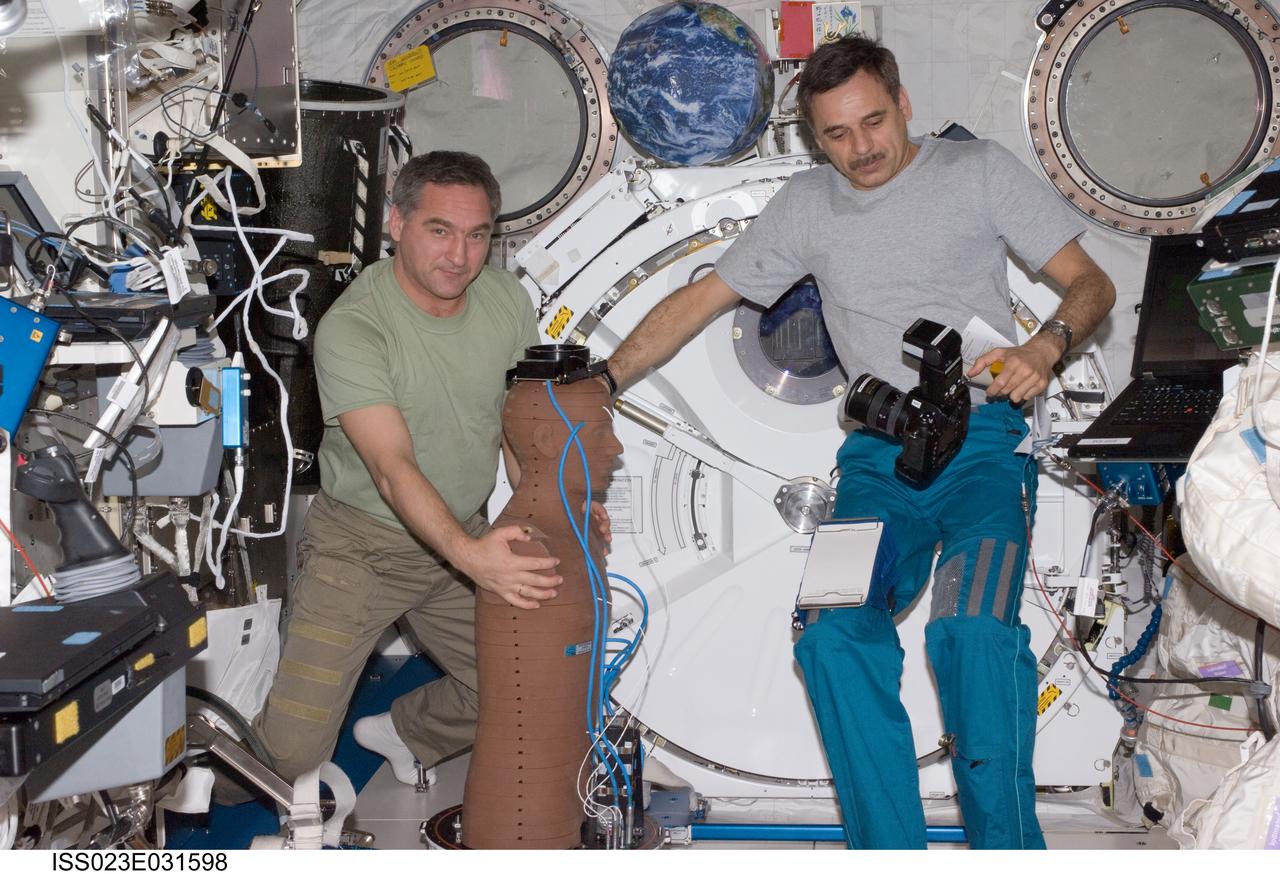
ISS023-E-031598 (4 May 2010) --- Russian cosmonauts Alexander Skvortsov (left) and Mikhail Kornienko, both Expedition 23 flight engineers, work with the European Matroshka-R Phantom experiment in the Kibo laboratory of the International Space Station. Matroshka, the name for the traditional Russian set of nestling dolls, is an antroph-amorphous model of a human torso designed for radiation studies.
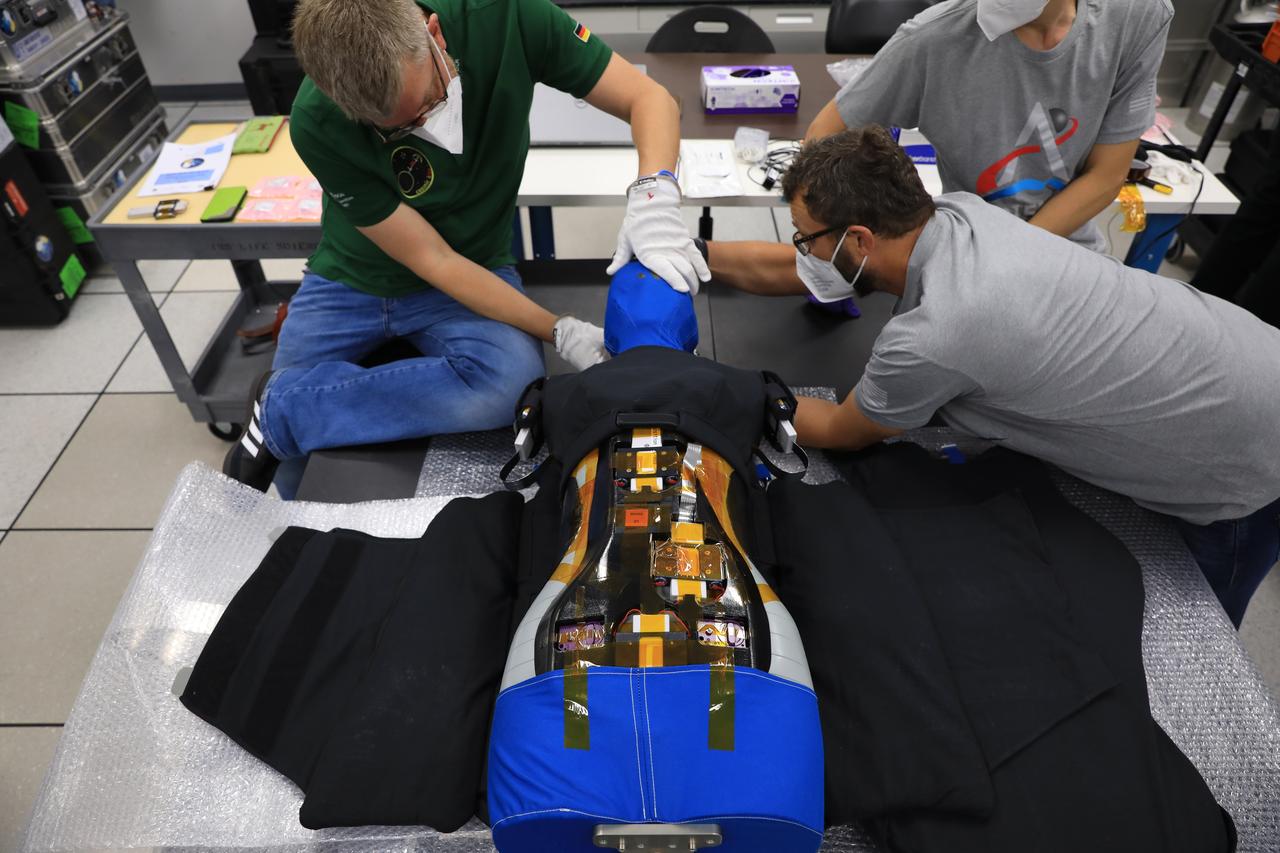
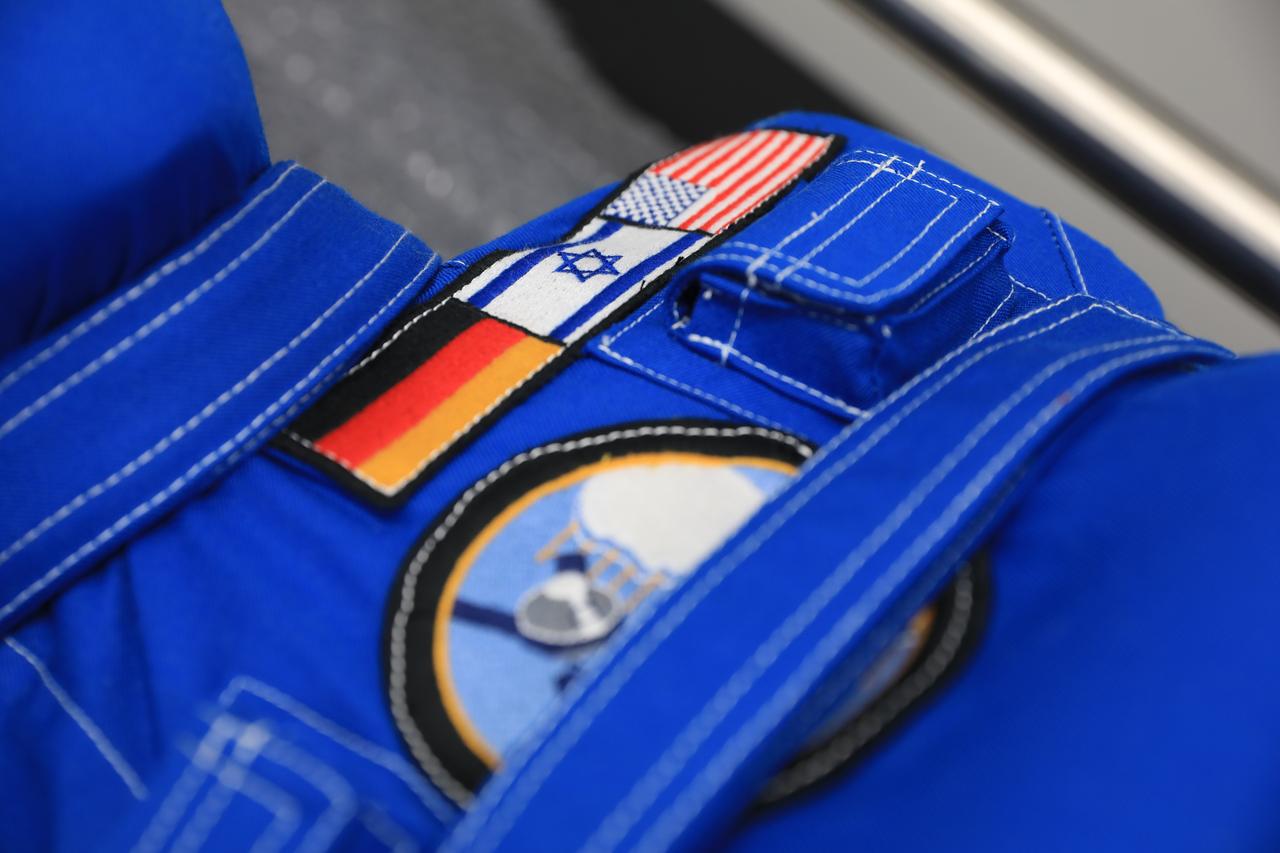
In preparation for the Artemis I flight test, teams at NASA’s Kennedy Space Center in Florida prepare the Matroshka AstroRad Radiation Experiment (MARE) investigation on Aug. 5, 2022. MARE will fly on Artemis I and features two manikins, called phantoms – Helga and Zohar – equipped with radiation detectors to determine the radiation risk on its way to the Moon. The phantoms will be seated as passengers in the Orion crew module, with Zohar also wearing the experimental AstroRad radiation protection vest. The MARE experiment is part of an agreement between NASA, the Israel Space Agency, and the German Aerospace Center. Artemis I will provide a foundation for human deep space exploration and demonstrate NASA’s capability to extend human presence to the Moon and beyond. The primary goal of Artemis I is to thoroughly test the Space Launch System rocket and Orion spacecraft’s integrated systems before crewed missions. Under Artemis, NASA aims to land the first woman and first person of color on the Moon and establish sustainable lunar exploration.
In preparation for the Artemis I flight test, teams at NASA’s Kennedy Space Center in Florida prepare two manikins, called phantoms, as part of the Matroshka AstroRad Radiation Experiment (MARE) investigation on Aug. 4, 2022. The two female phantoms – Helga and Zohar – will fly aboard the Orion crew module during Artemis I. Each will be equipped with radiation detectors, with Zohar also wearing a radiation protection vest, to determine the radiation risk on its way to the Moon. The MARE experiment is part of an agreement between NASA, the Israel Space Agency, and the German Aerospace Center. Artemis I will provide a foundation for human deep space exploration and demonstrate NASA’s capability to extend human presence to the Moon and beyond. The primary goal of Artemis I is to thoroughly test the Space Launch System rocket and Orion spacecraft’s integrated systems before crewed missions. Under Artemis, NASA aims to land the first woman and first person of color on the Moon and establish sustainable lunar exploration.
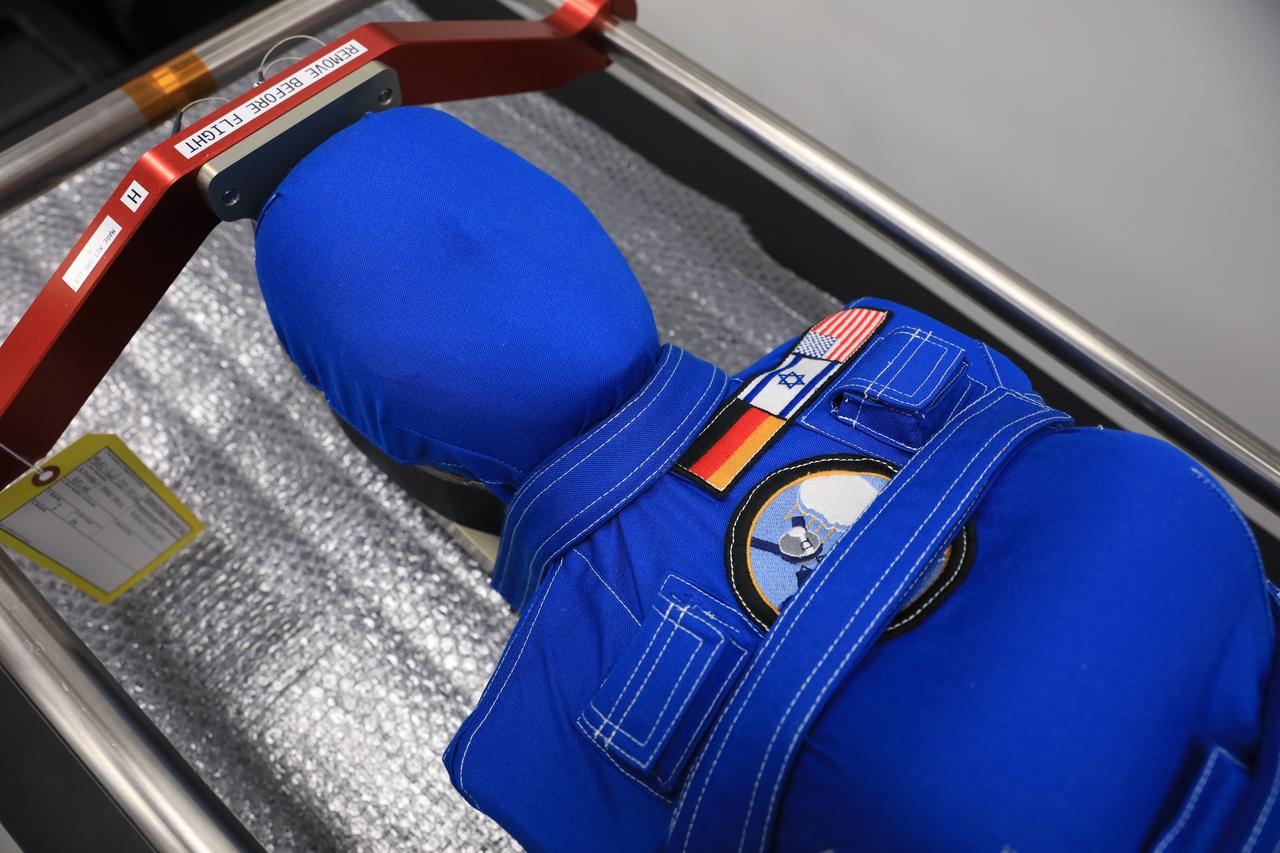
In preparation for the Artemis I flight test, teams at NASA’s Kennedy Space Center in Florida prepare two manikins, called phantoms, as part of the Matroshka AstroRad Radiation Experiment (MARE) investigation on Aug. 4, 2022. The two female phantoms – Helga and Zohar – will fly aboard the Orion crew module during Artemis I. Each will be equipped with radiation detectors, with Zohar also wearing a radiation protection vest, to determine the radiation risk on its way to the Moon. The MARE experiment is part of an agreement between NASA, the Israel Space Agency, and the German Aerospace Center. Artemis I will provide a foundation for human deep space exploration and demonstrate NASA’s capability to extend human presence to the Moon and beyond. The primary goal of Artemis I is to thoroughly test the Space Launch System rocket and Orion spacecraft’s integrated systems before crewed missions. Under Artemis, NASA aims to land the first woman and first person of color on the Moon and establish sustainable lunar exploration.
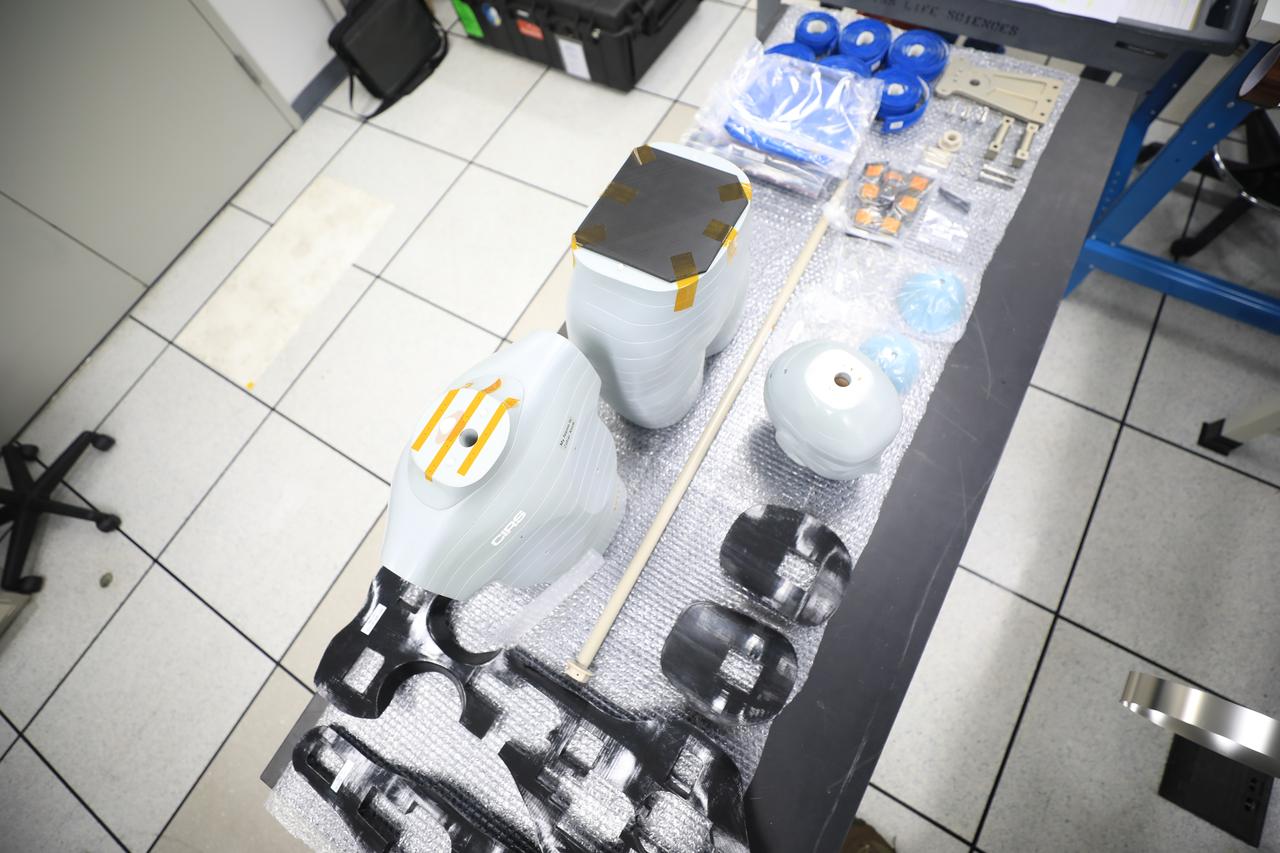
In preparation for the Artemis I flight test, teams at NASA’s Kennedy Space Center in Florida prepare two manikins, called phantoms, as part of the Matroshka AstroRad Radiation Experiment (MARE) investigation on Aug. 4, 2022. The two female phantoms – Helga and Zohar – will fly aboard the Orion crew module during Artemis I. Each will be equipped with radiation detectors, with Zohar also wearing a radiation protection vest, to determine the radiation risk on its way to the Moon. The MARE experiment is part of an agreement between NASA, the Israel Space Agency, and the German Aerospace Center. Artemis I will provide a foundation for human deep space exploration and demonstrate NASA’s capability to extend human presence to the Moon and beyond. The primary goal of Artemis I is to thoroughly test the Space Launch System rocket and Orion spacecraft’s integrated systems before crewed missions. Under Artemis, NASA aims to land the first woman and first person of color on the Moon and establish sustainable lunar exploration.
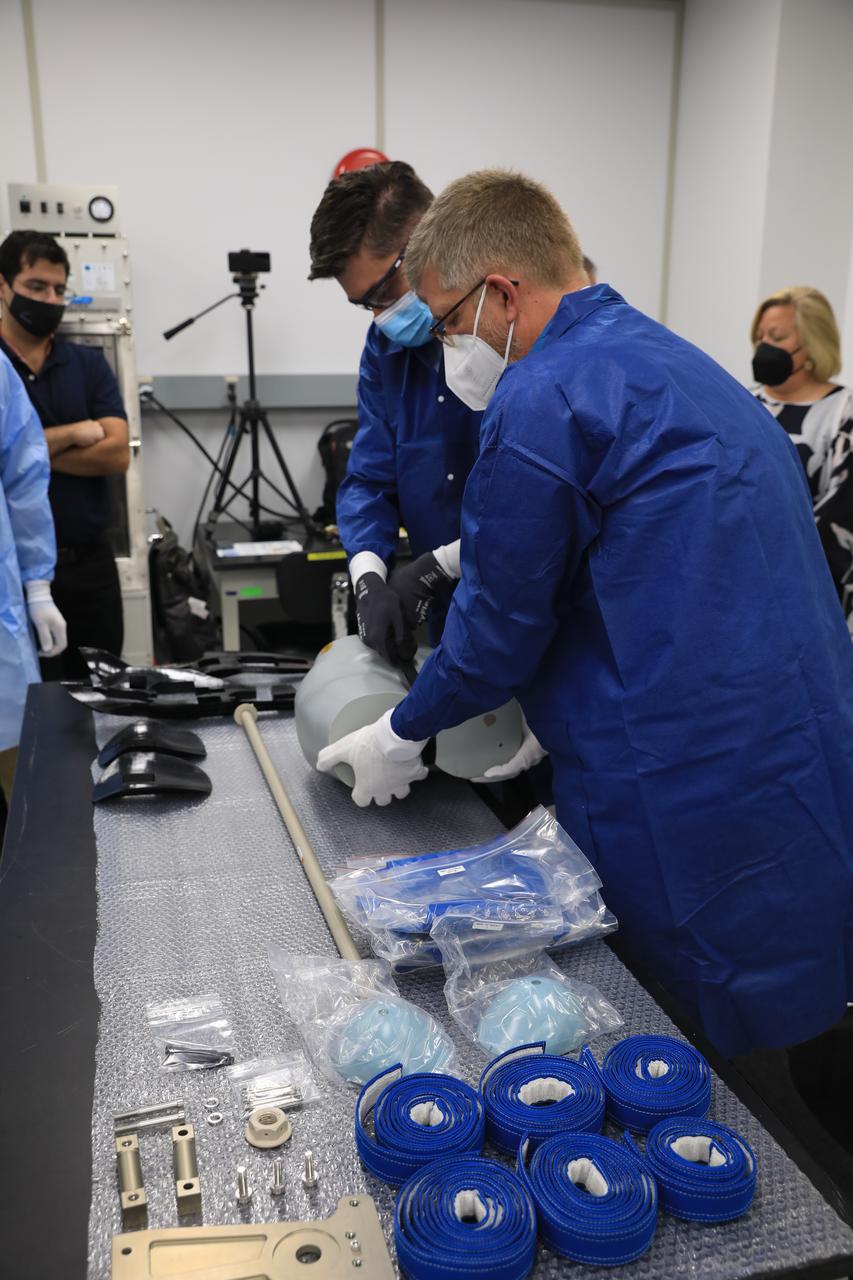
In preparation for the Artemis I flight test, teams at NASA’s Kennedy Space Center in Florida prepare the Matroshka AstroRad Radiation Experiment (MARE) investigation on Aug. 5, 2022. MARE will fly on Artemis I and features two manikins, called phantoms – Helga and Zohar – equipped with radiation detectors to determine the radiation risk on its way to the Moon. The phantoms will be seated as passengers in the Orion crew module, with Zohar also wearing the experimental AstroRad radiation protection vest. The MARE experiment is part of an agreement between NASA, the Israel Space Agency, and the German Aerospace Center. Artemis I will provide a foundation for human deep space exploration and demonstrate NASA’s capability to extend human presence to the Moon and beyond. The primary goal of Artemis I is to thoroughly test the Space Launch System rocket and Orion spacecraft’s integrated systems before crewed missions. Under Artemis, NASA aims to land the first woman and first person of color on the Moon and establish sustainable lunar exploration.
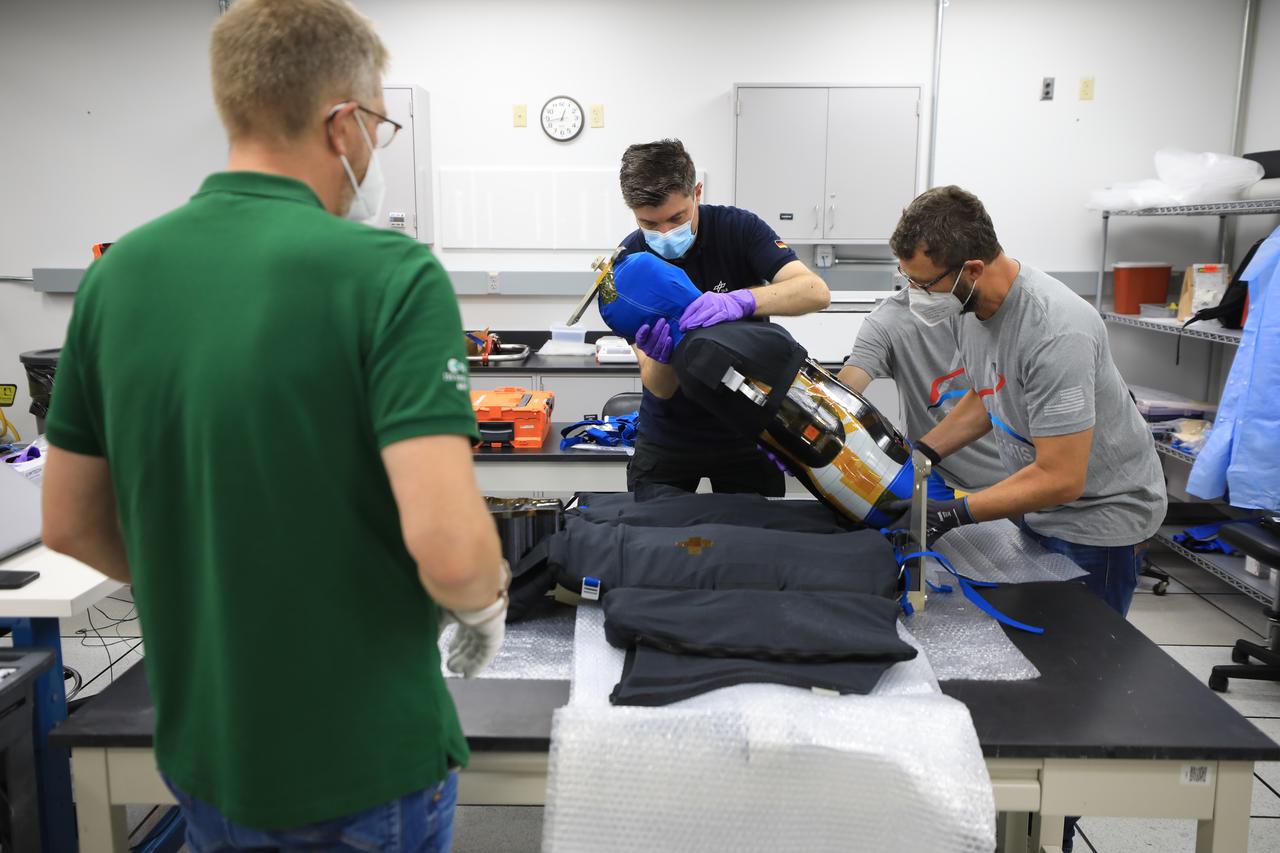
In preparation for the Artemis I flight test, teams at NASA’s Kennedy Space Center in Florida prepare two manikins, called phantoms, as part of the Matroshka AstroRad Radiation Experiment (MARE) investigation on Aug. 4, 2022. The two female phantoms – Helga and Zohar – will fly aboard the Orion crew module during Artemis I. Each will be equipped with radiation detectors, with Zohar also wearing a radiation protection vest, to determine the radiation risk on its way to the Moon. The MARE experiment is part of an agreement between NASA, the Israel Space Agency, and the German Aerospace Center. Artemis I will provide a foundation for human deep space exploration and demonstrate NASA’s capability to extend human presence to the Moon and beyond. The primary goal of Artemis I is to thoroughly test the Space Launch System rocket and Orion spacecraft’s integrated systems before crewed missions. Under Artemis, NASA aims to land the first woman and first person of color on the Moon and establish sustainable lunar exploration.
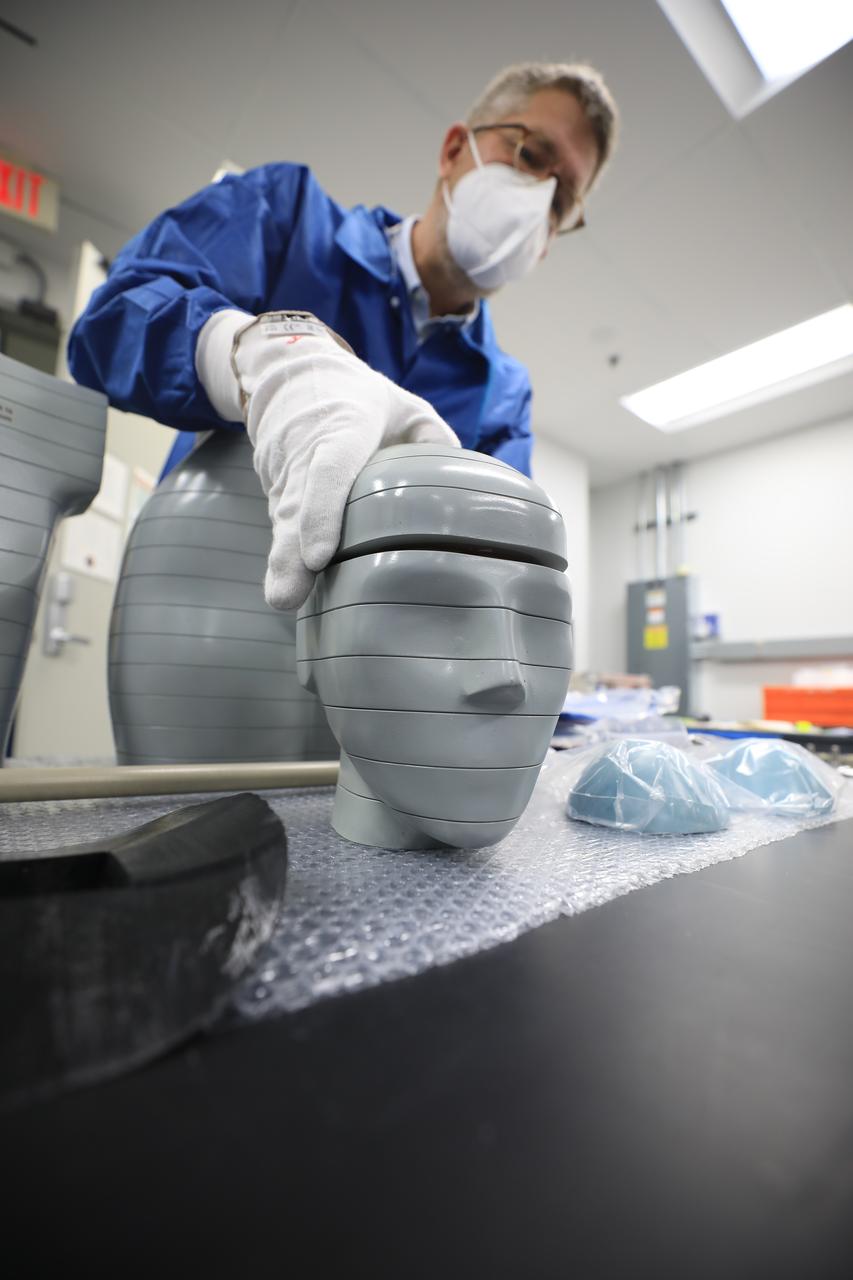
In preparation for the Artemis I flight test, teams at NASA’s Kennedy Space Center in Florida prepare two manikins, called phantoms, as part of the Matroshka AstroRad Radiation Experiment (MARE) investigation on Aug. 4, 2022. The two female phantoms – Helga and Zohar – will fly aboard the Orion crew module during Artemis I. Each will be equipped with radiation detectors, with Zohar also wearing a radiation protection vest, to determine the radiation risk on its way to the Moon. The MARE experiment is part of an agreement between NASA, the Israel Space Agency, and the German Aerospace Center. Artemis I will provide a foundation for human deep space exploration and demonstrate NASA’s capability to extend human presence to the Moon and beyond. The primary goal of Artemis I is to thoroughly test the Space Launch System rocket and Orion spacecraft’s integrated systems before crewed missions. Under Artemis, NASA aims to land the first woman and first person of color on the Moon and establish sustainable lunar exploration.
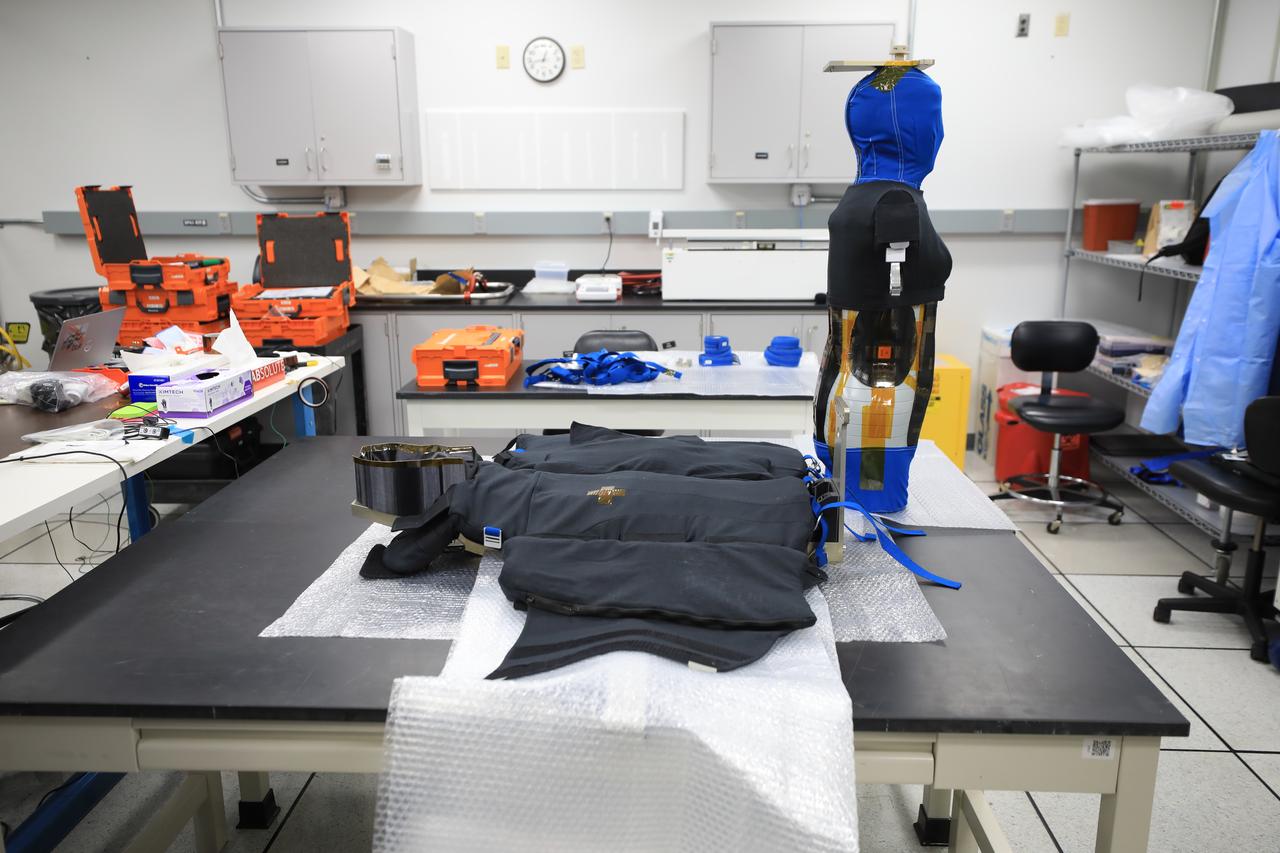
In preparation for the Artemis I flight test, teams at NASA’s Kennedy Space Center in Florida prepare the Matroshka AstroRad Radiation Experiment (MARE) investigation on Aug. 5, 2022. MARE will fly on Artemis I and features two manikins, called phantoms – Helga and Zohar – equipped with radiation detectors to determine the radiation risk on its way to the Moon. The phantoms will be seated as passengers in the Orion crew module, with Zohar also wearing the experimental AstroRad radiation protection vest. The MARE experiment is part of an agreement between NASA, the Israel Space Agency, and the German Aerospace Center. Artemis I will provide a foundation for human deep space exploration and demonstrate NASA’s capability to extend human presence to the Moon and beyond. The primary goal of Artemis I is to thoroughly test the Space Launch System rocket and Orion spacecraft’s integrated systems before crewed missions. Under Artemis, NASA aims to land the first woman and first person of color on the Moon and establish sustainable lunar exploration.
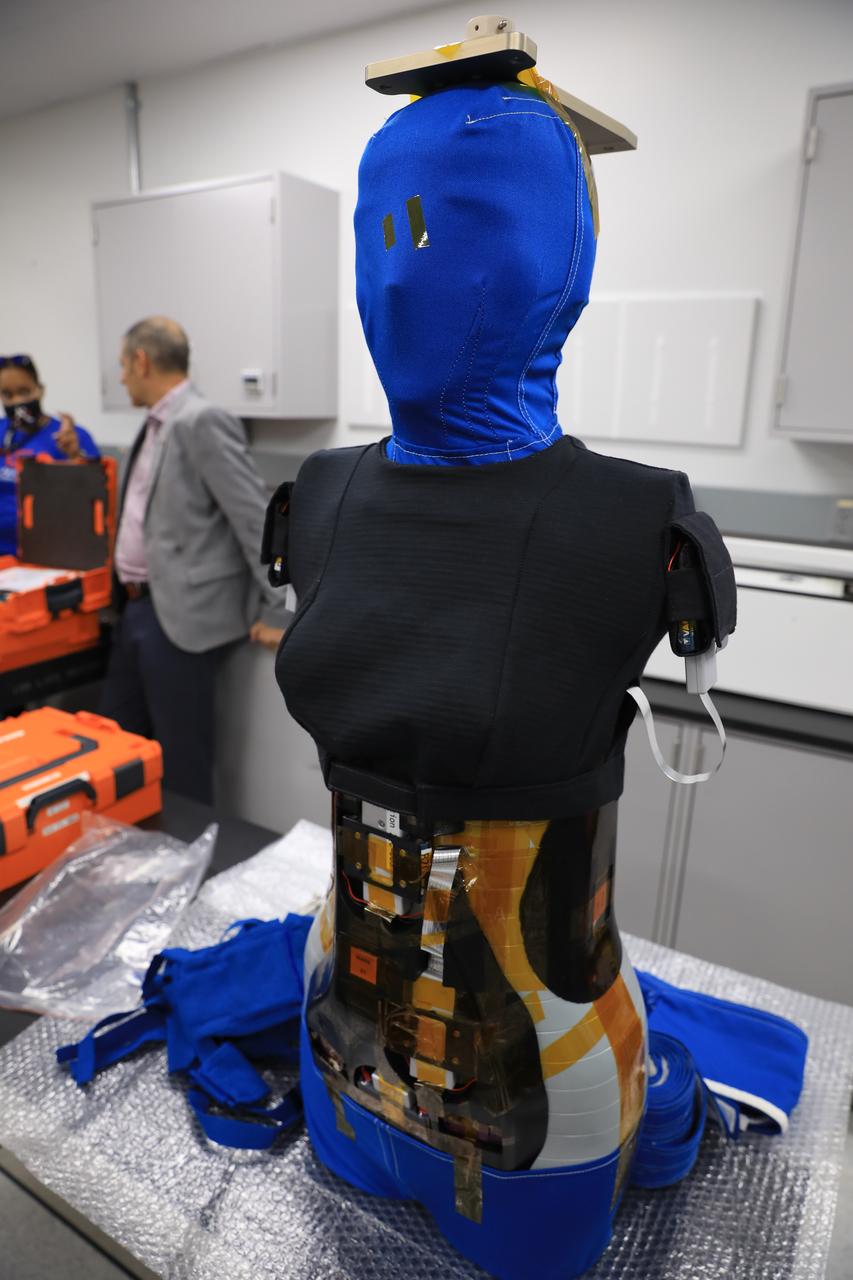
In preparation for the Artemis I flight test, teams at NASA’s Kennedy Space Center in Florida prepare the Matroshka AstroRad Radiation Experiment (MARE) investigation on Aug. 5, 2022. MARE will fly on Artemis I and features two manikins, called phantoms – Helga and Zohar – equipped with radiation detectors to determine the radiation risk on its way to the Moon. The phantoms will be seated as passengers in the Orion crew module, with Zohar also wearing the experimental AstroRad radiation protection vest. The MARE experiment is part of an agreement between NASA, the Israel Space Agency, and the German Aerospace Center. Artemis I will provide a foundation for human deep space exploration and demonstrate NASA’s capability to extend human presence to the Moon and beyond. The primary goal of Artemis I is to thoroughly test the Space Launch System rocket and Orion spacecraft’s integrated systems before crewed missions. Under Artemis, NASA aims to land the first woman and first person of color on the Moon and establish sustainable lunar exploration.
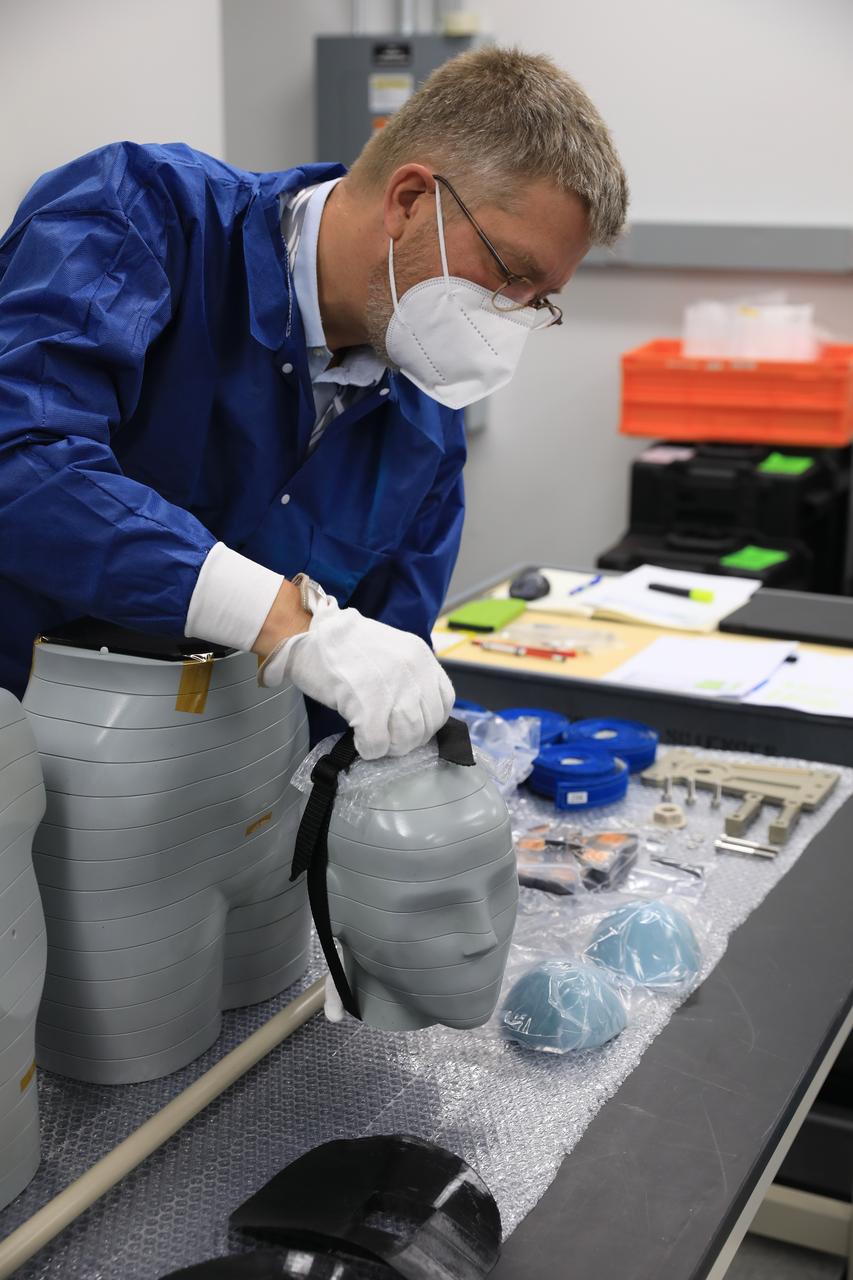
In preparation for the Artemis I flight test, teams at NASA’s Kennedy Space Center in Florida prepare two manikins, called phantoms, as part of the Matroshka AstroRad Radiation Experiment (MARE) investigation on Aug. 4, 2022. The two female phantoms – Helga and Zohar – will fly aboard the Orion crew module during Artemis I. Each will be equipped with radiation detectors, with Zohar also wearing a radiation protection vest, to determine the radiation risk on its way to the Moon. The MARE experiment is part of an agreement between NASA, the Israel Space Agency, and the German Aerospace Center. Artemis I will provide a foundation for human deep space exploration and demonstrate NASA’s capability to extend human presence to the Moon and beyond. The primary goal of Artemis I is to thoroughly test the Space Launch System rocket and Orion spacecraft’s integrated systems before crewed missions. Under Artemis, NASA aims to land the first woman and first person of color on the Moon and establish sustainable lunar exploration.
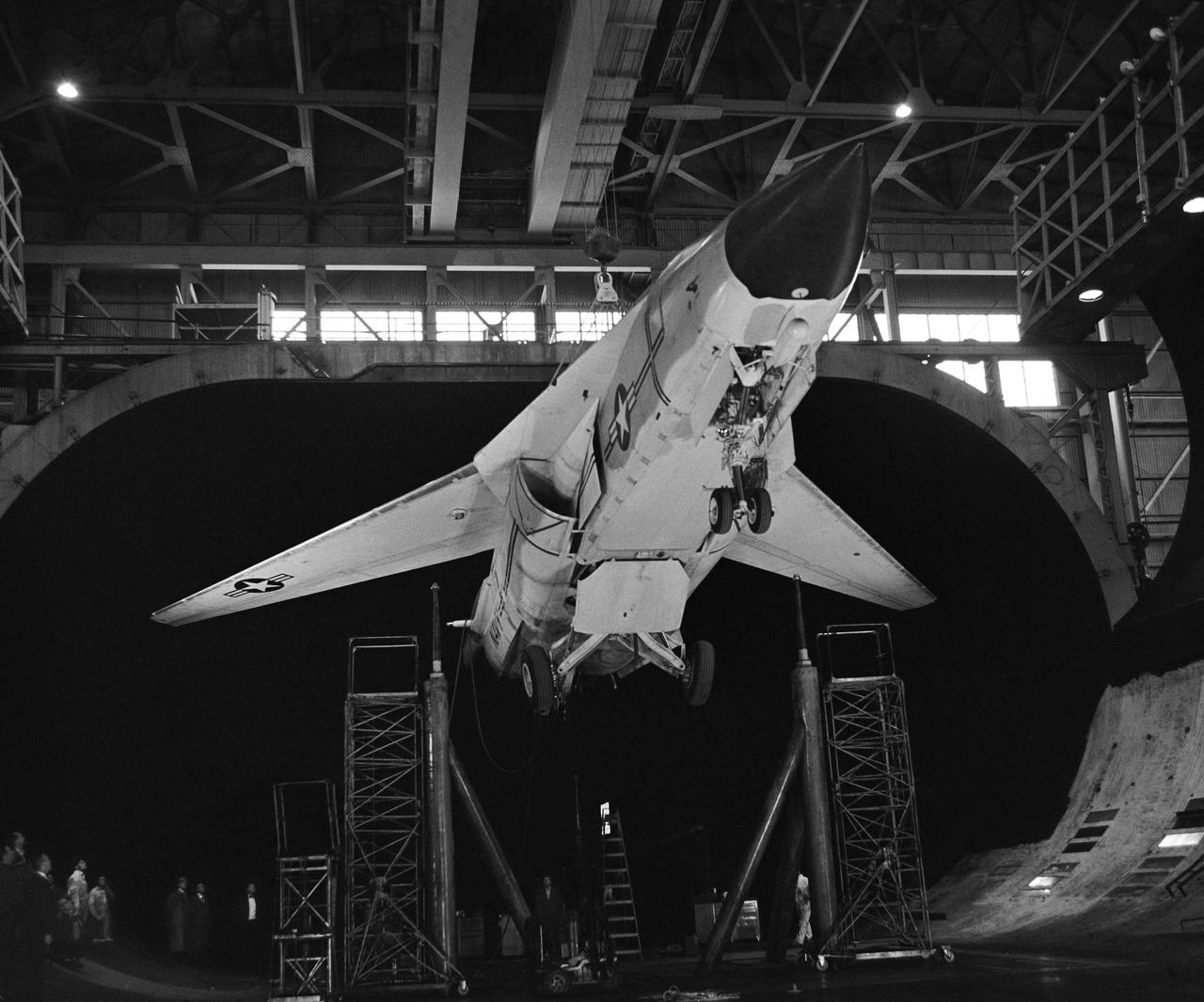
Installation Photos, 3/4 front view from below. F-111B in Ames 40x80 Foot Wind Tunnel. The General Dynamics/Grumman F-111B was a long-range carrier-based interceptor aircraft that was planned to be a follow-on to the F-4 Phantom II. The F-111B was developed in the 1960s by General Dynamics in conjunction with Grumman for the United States Navy (USN) as part of the joint Tactical Fighter Experimental (TFX) with the United States Air Force (USAF) to produce a common fighter for the services that could perform a variety of missions. It incorporated innovations such as variable-geometry wings, afterburning turbofan engines, and a long-range radar and missile weapons system.

This simulated true color perspective view over the Grand Canyon was created from Advanced Spaceborne Thermal Emission and Reflection Radiometer (ASTER) data acquired on May 12, 2000. The Grand Canyon Village is in the lower foreground; the Bright Angel Trail crosses the Tonto Platform, before dropping down to the Colorado Village and then to the Phantom Ranch (green area across the river). Bright Angel Canyon and the North Rim dominate the view. At the top center of the image the dark blue area with light blue haze is an active forest fire. http://photojournal.jpl.nasa.gov/catalog/PIA01908
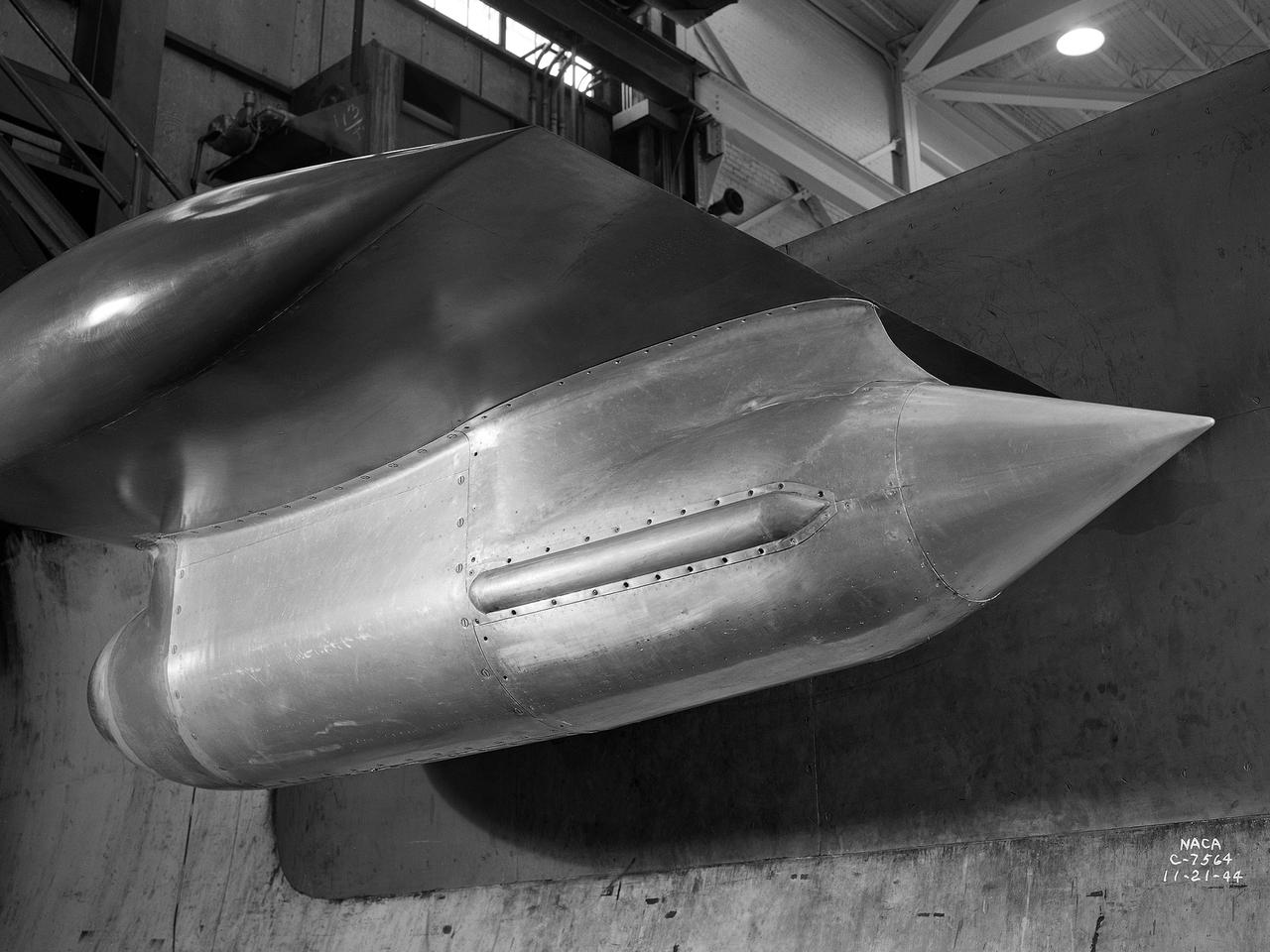
The Westinghouse 19XB turbojet seen from the side in the Altitude Wind Tunnel (AWT) test section at the National Advisory Committee for Aeronautics (NACA) Aircraft Engine Research Laboratory. Westinghouse started the development of a series of relatively small axial-flow turbojets for the Navy shortly after Pearl Harbor. In 1943 the 19A engine became both the first operational US-designed jet engine and the only U.S. turbojet incorporated into an aircraft during the war in Europe. In March 1943 Westinghouse agreed to create an improved six-stage 1400-pound thrust version, the 19B. The engine underwent its first test run a year later in March 1944. Almost immediately the navy agreed to Westinghouse’s proposal for the even larger 10-stage, 1600-pound-thrust 19XB prototype. By July 1944 the navy had contracted with the NACA for the testing of both engines in the AWT. The tunnel was the nation’s only facility for studying full-scale engines in simulated altitude conditions. The wind tunnel investigations, which began on September 9, 1944, revealed the superiority of the previously untested 19XB over the 19B. The 19B engines failed to restart consistently and suffered combustion blowouts above 17,000 feet. The 19XB, however, performed well and restarted routinely at twice that altitude. Two months later on January 26, 1945, two 19Bs powered a McDonnell XFD–1 Phantom, the US Navy’s first fighter jet, on its initial flight. Following its exceptional performance in the AWT, the 19XB engines soon replaced the 19Bs in the Phantom.
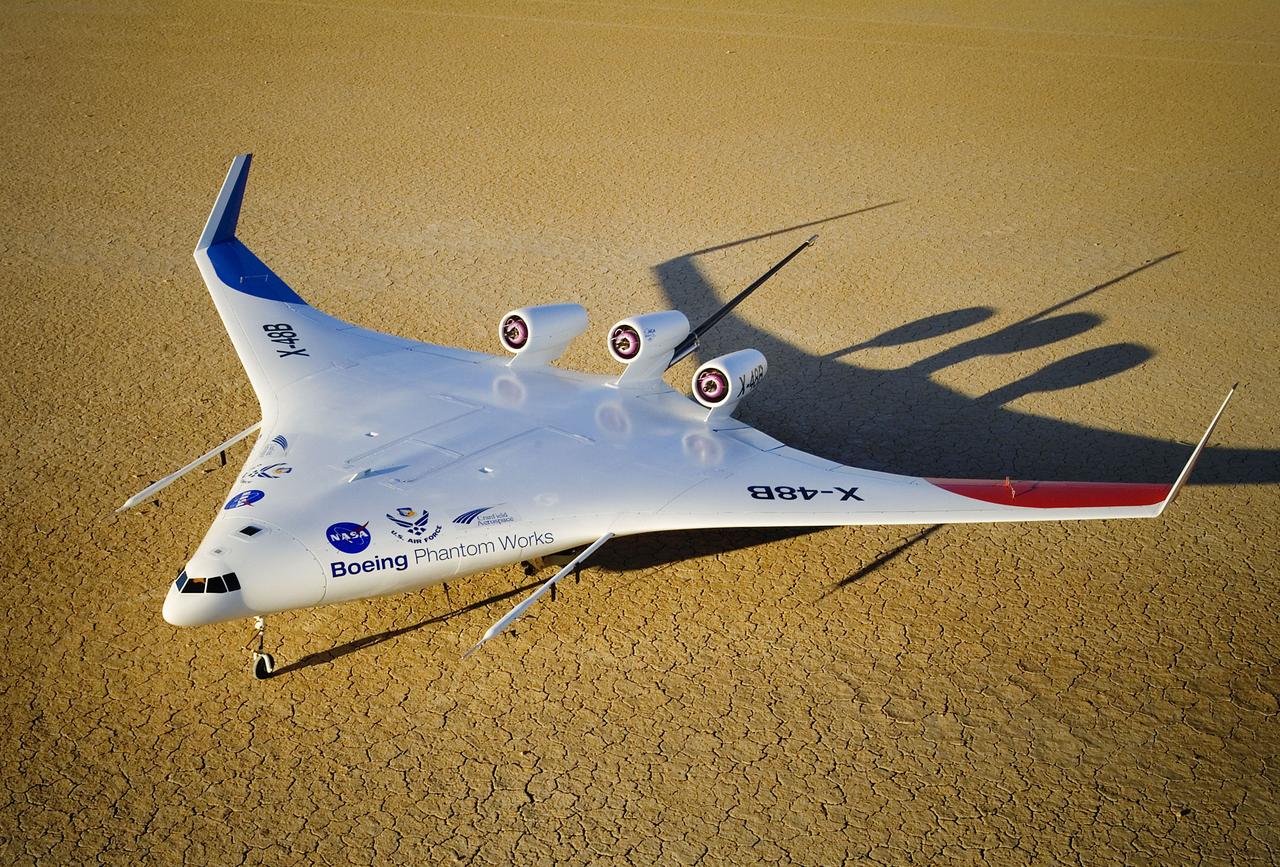
Boeing's X-48B Blended Wing Body technology demonstrator shows off its unique lines at sunset on Rogers Dry Lake adjacent to NASA's Dryden Flight Research Center. (Boeing photo # SMF06_F_KOEH_X48B-0900a)
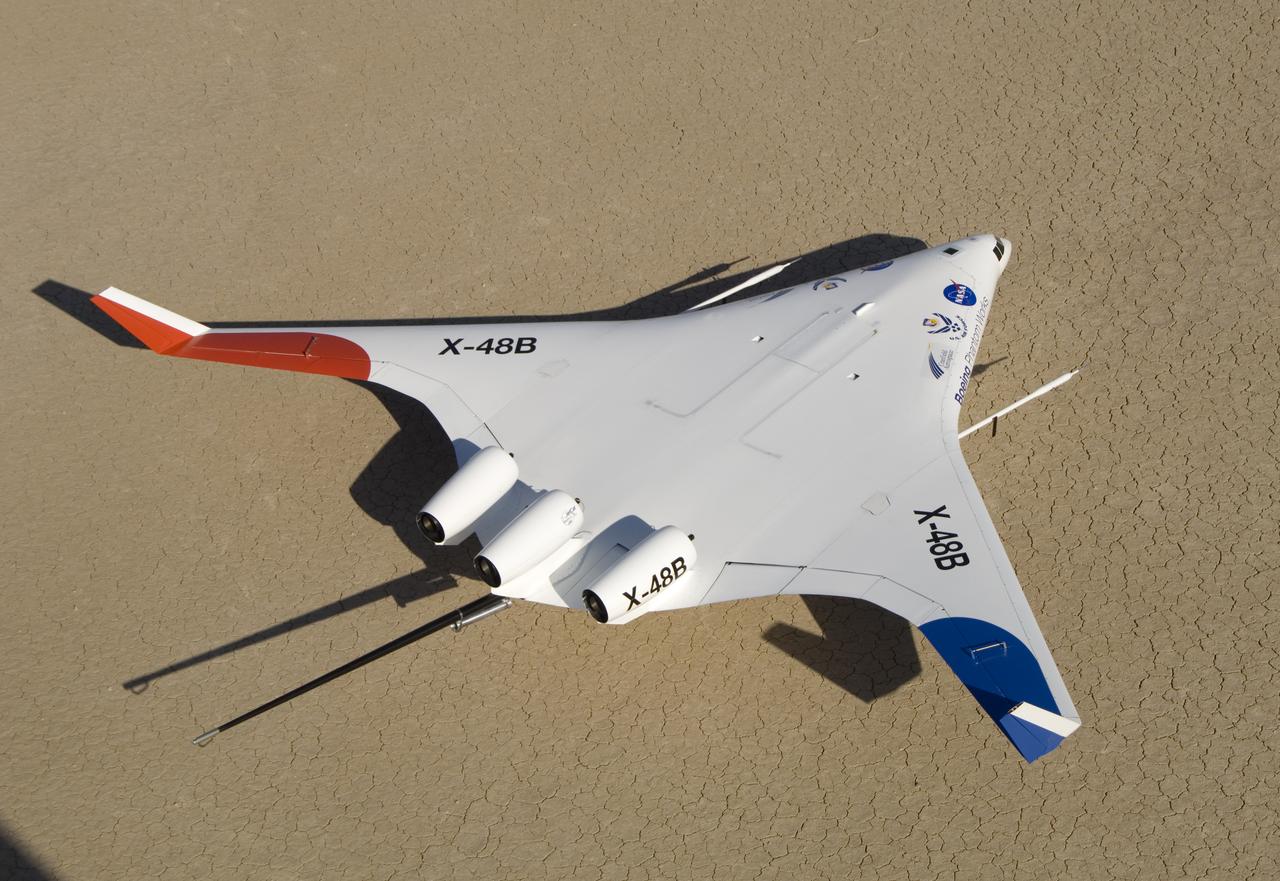
This rear-quarter view shows off the unique lines of Boeing's X-48B Blended Wing Body technology demonstrator on Rogers Dry Lake adjacent to NASA Dryden.
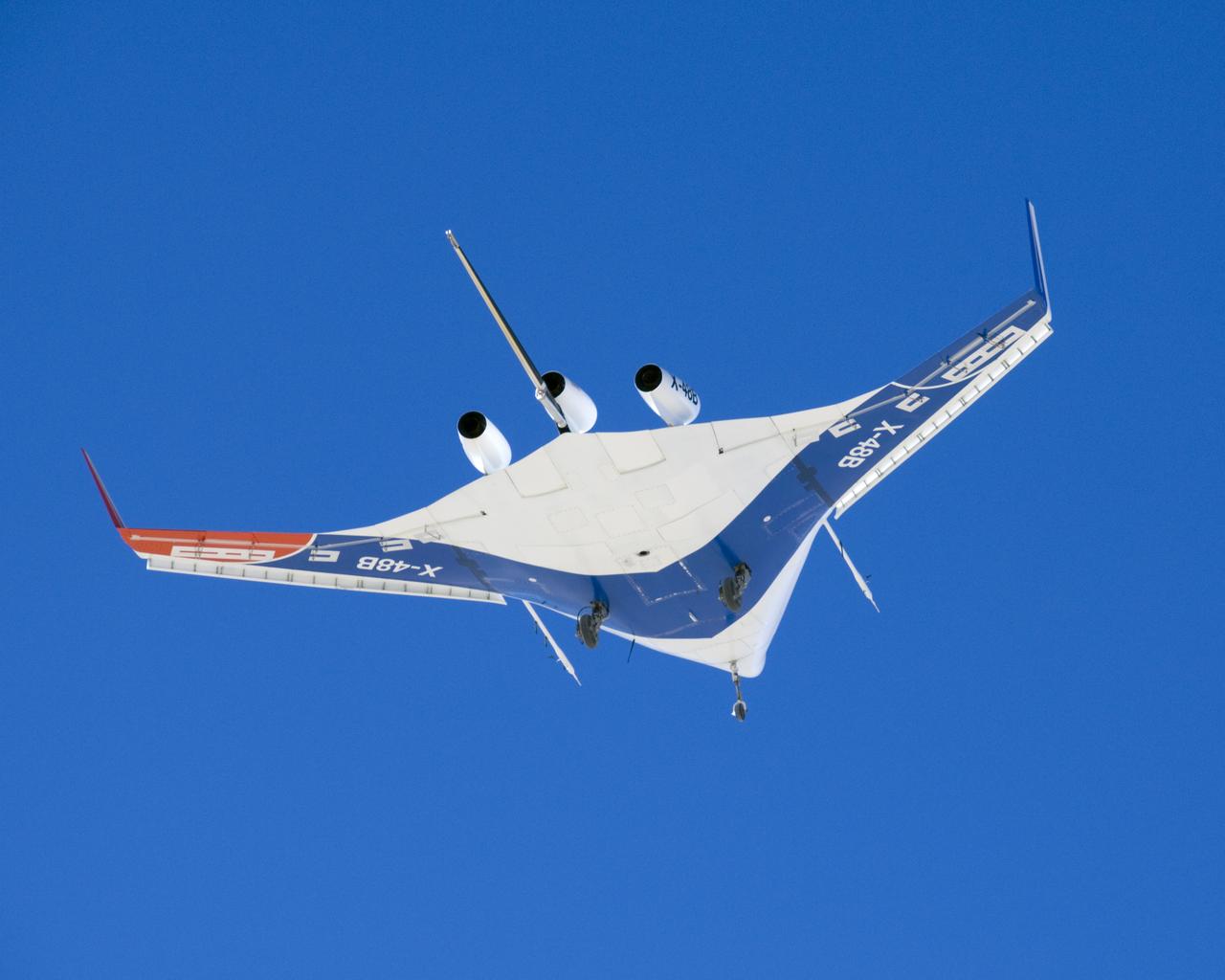
A pristine blue sky backdrops the X-48B Blended Wing Body aircraft during the aircraft's first flight July 20, 2007, from NASA's Dryden Flight Research Center.
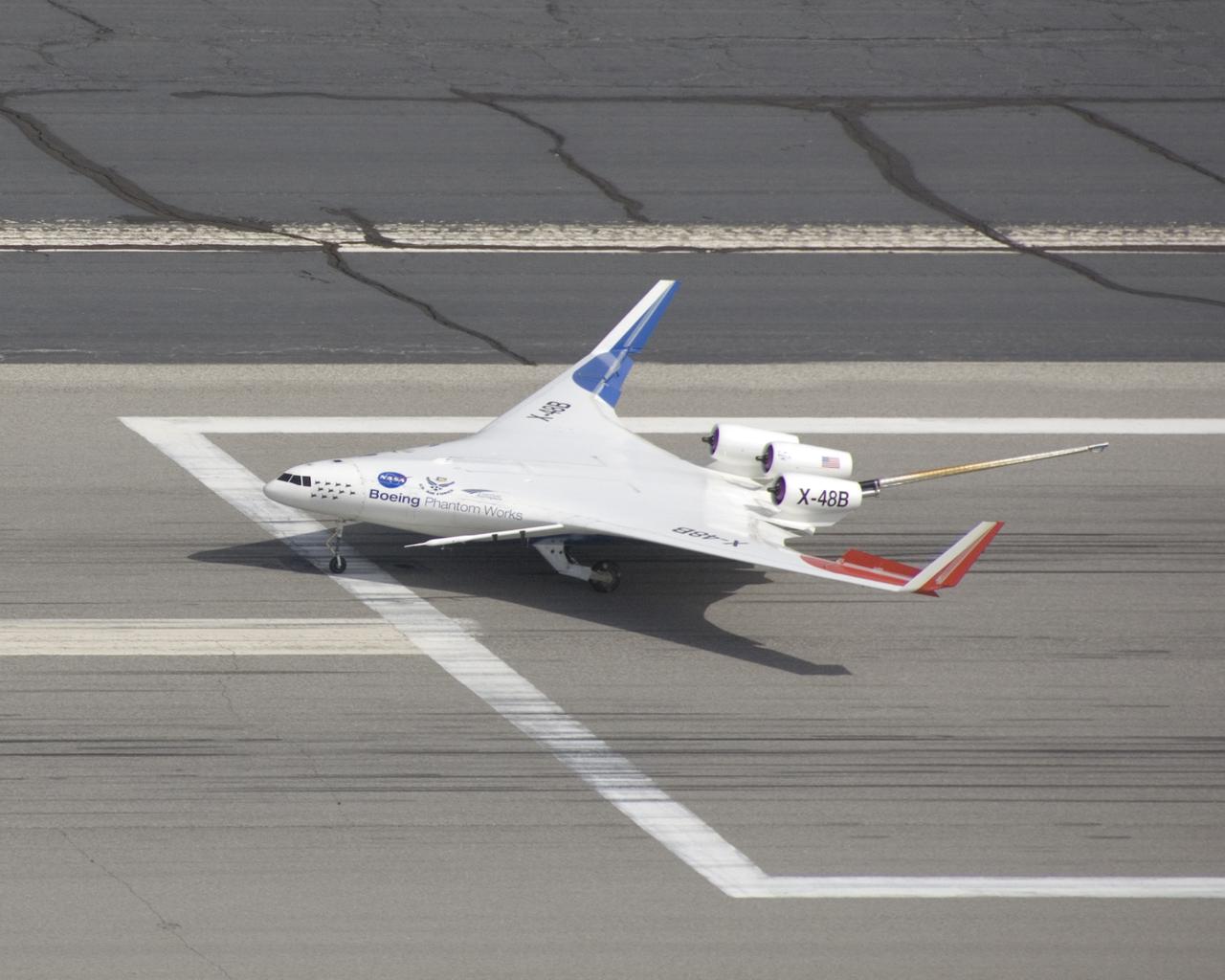
Making a nice landing, the X-48B Blended Wing Body research aircraft team ends another successful Block 2 flight.
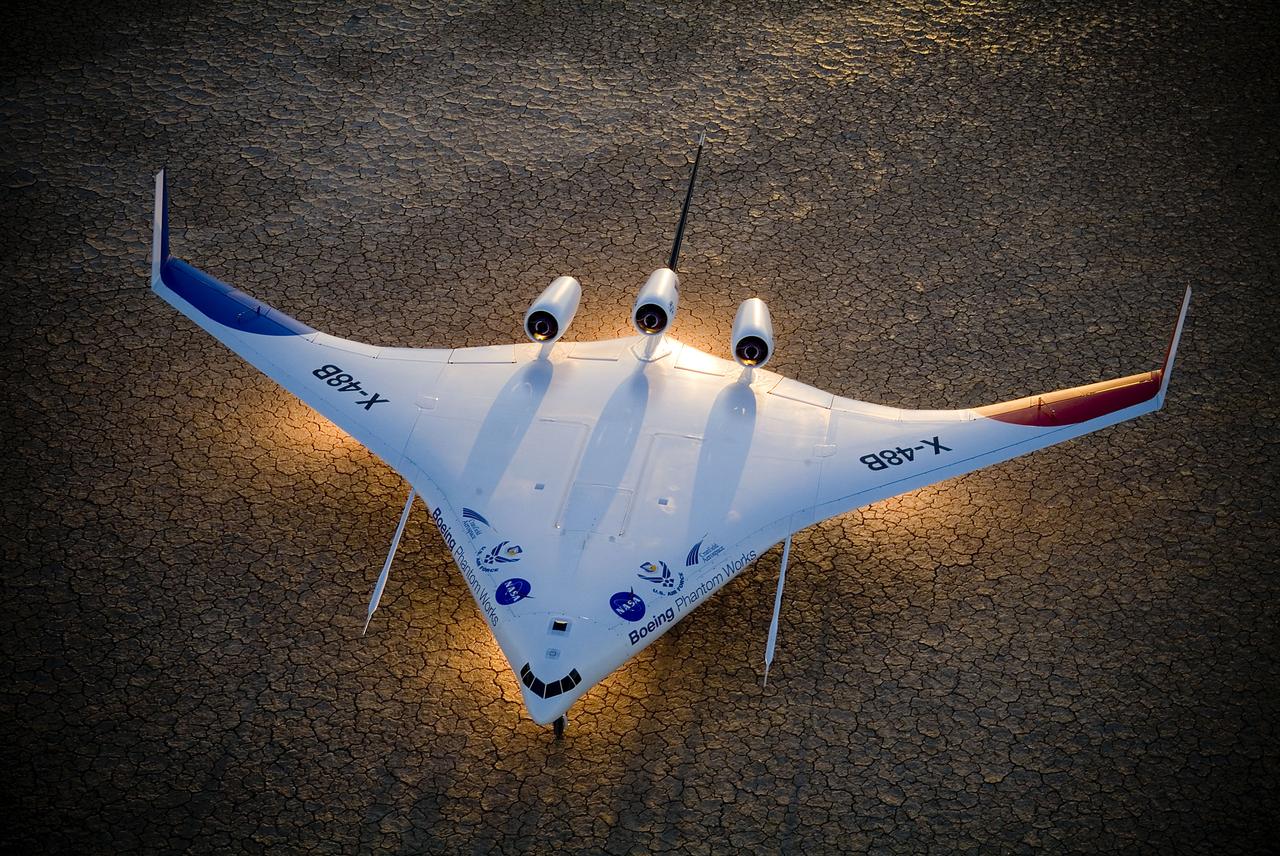
Boeing's X-48B Blended Wing Body technology demonstrator shows off its unique lines at sunset on Rogers Dry Lake adjacent to NASA's Dryden Flight Research Center. (Boeing photo # SMF06_F_KOEH_X48B-0955)

Boeing's sub-scale X-48B Blended Wing Body aircraft flies over the edge of Rogers Dry Lake at Edwards Air Force Base during its fifth flight on Aug. 14, 2007.
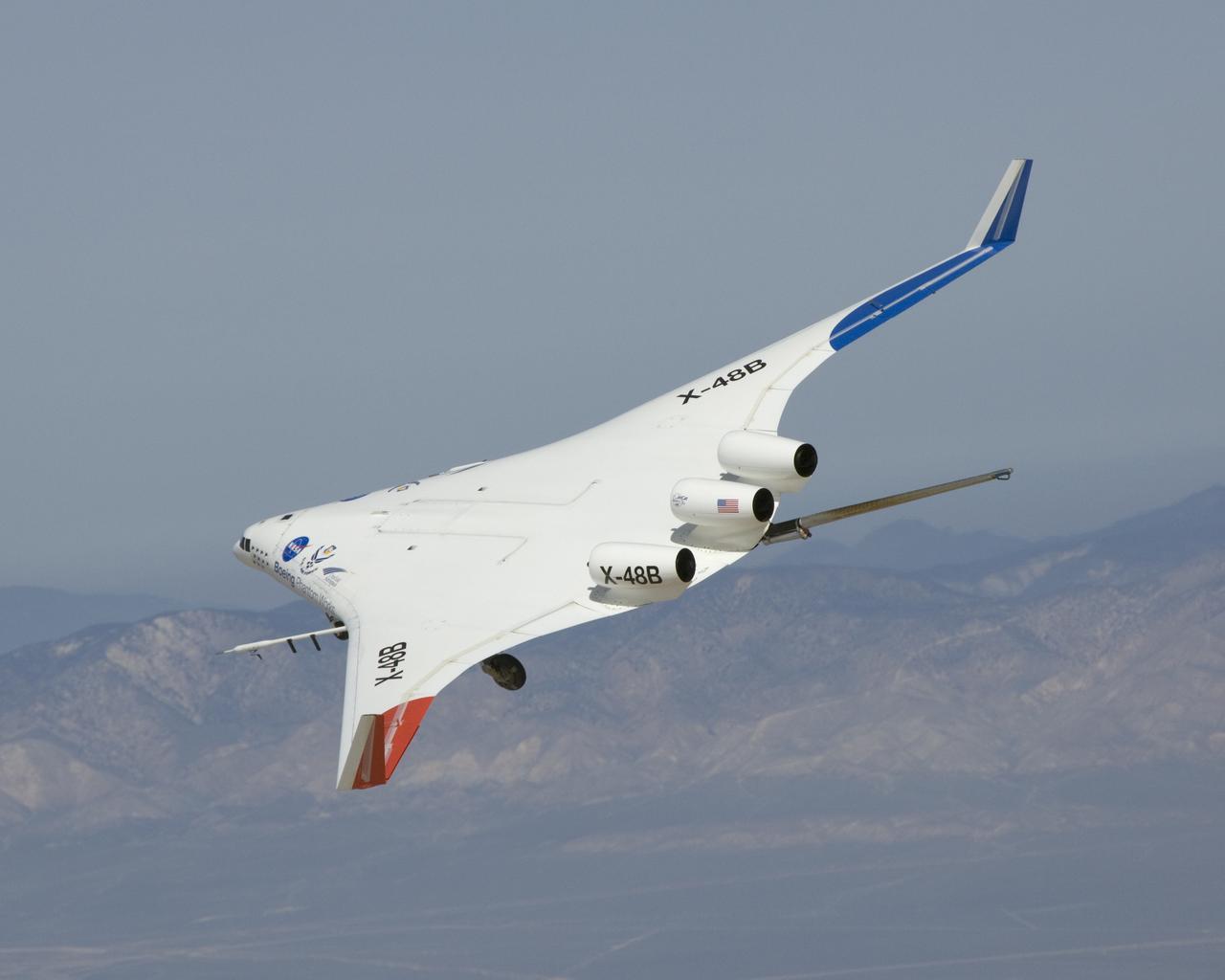
The X-48B Blended Wing Body research aircraft banks smartly in this Block 2 flight phase image.

The unique manta-ray shaped planform of the Blended Wing Body X-48B is evidenced as the subscale demonstrator soars over Edwards AFB on its first test flight.
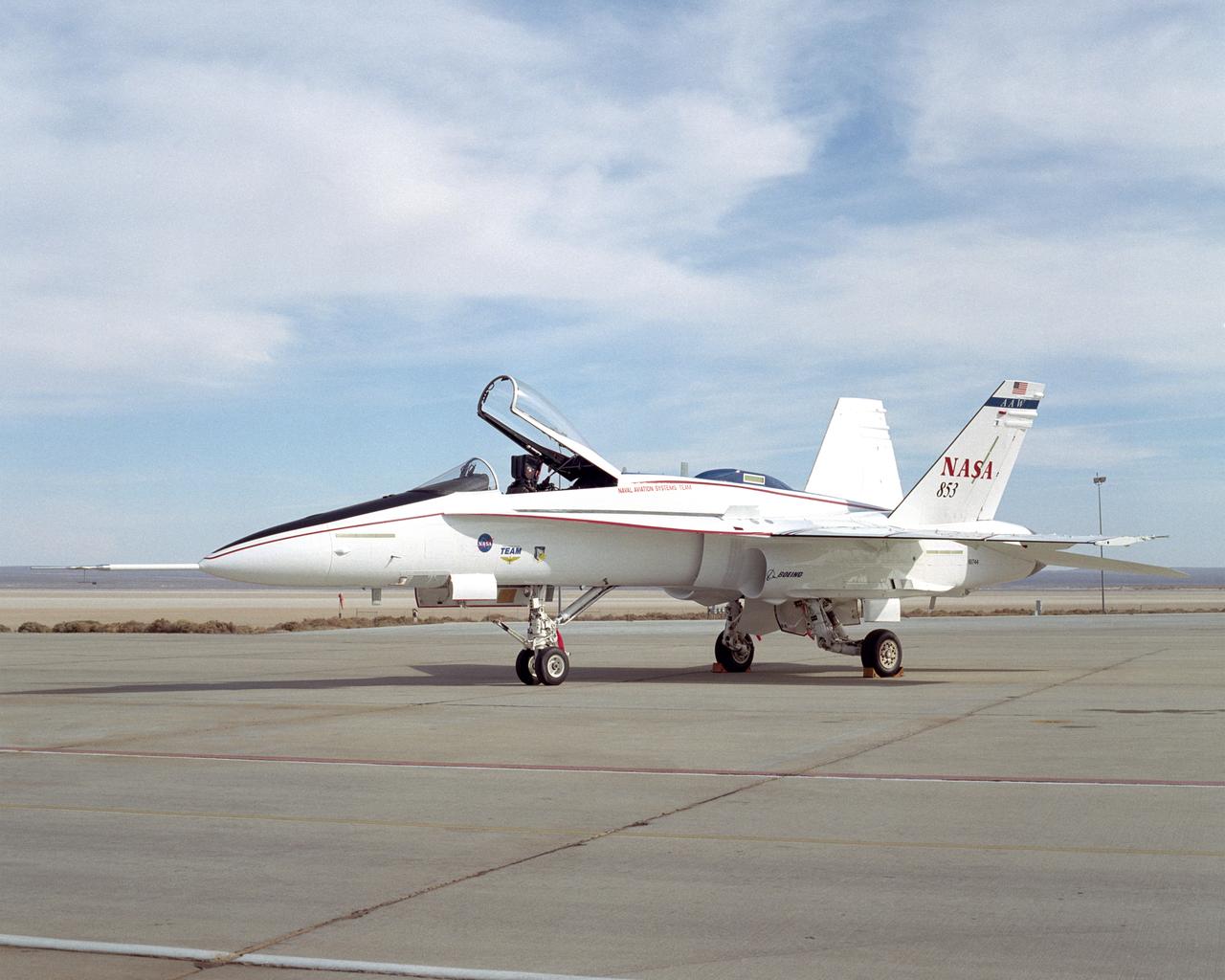
This modified F/A-18A is the test aircraft for the Active Aeroelastic Wing (AAW) project at NASA's Dryden Flight Research Center, Edwards, California.
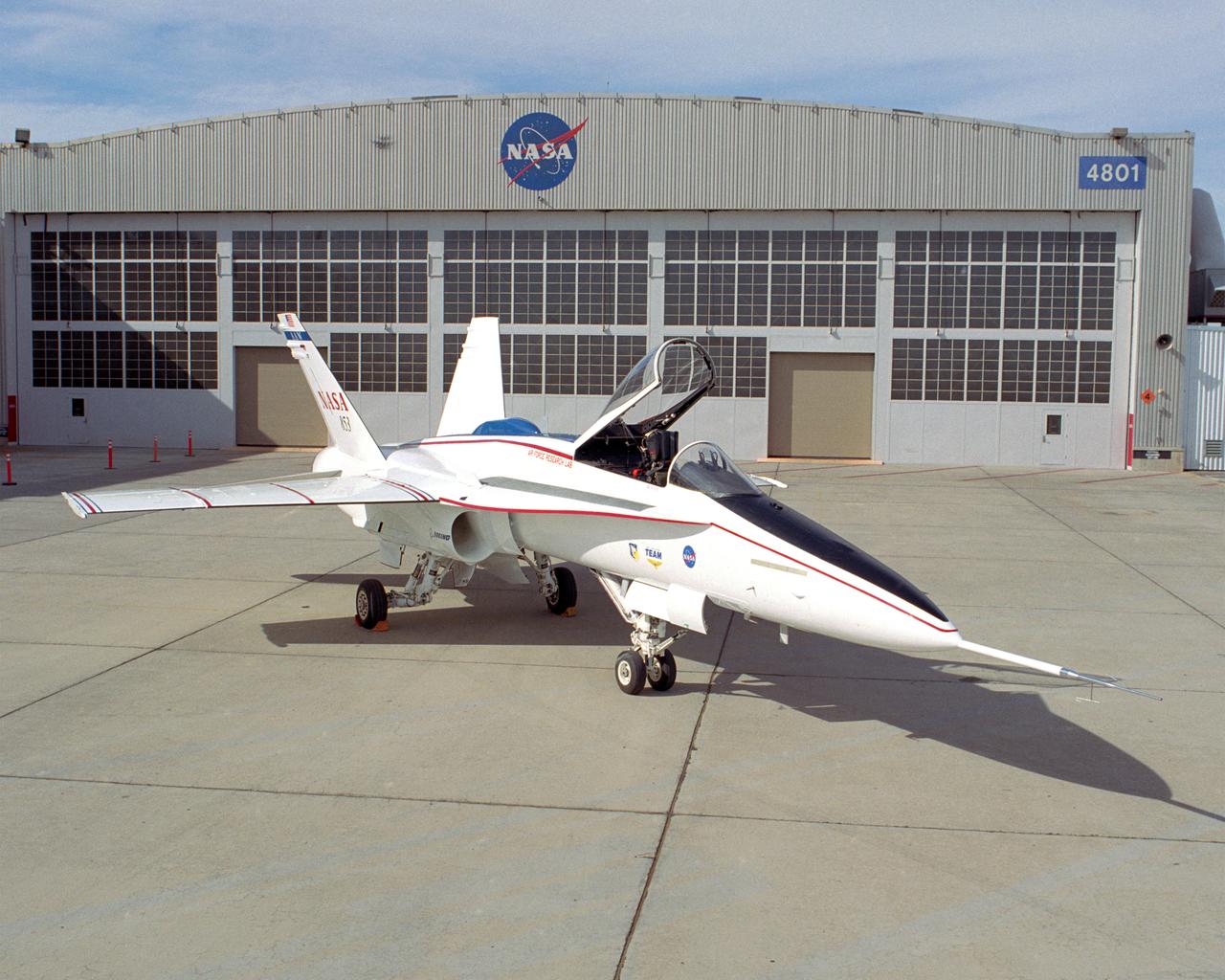
This modified F/A-18A is the test aircraft for the Active Aeroelastic Wing (AAW) project at NASA's Dryden Flight Research Center, Edwards, California.
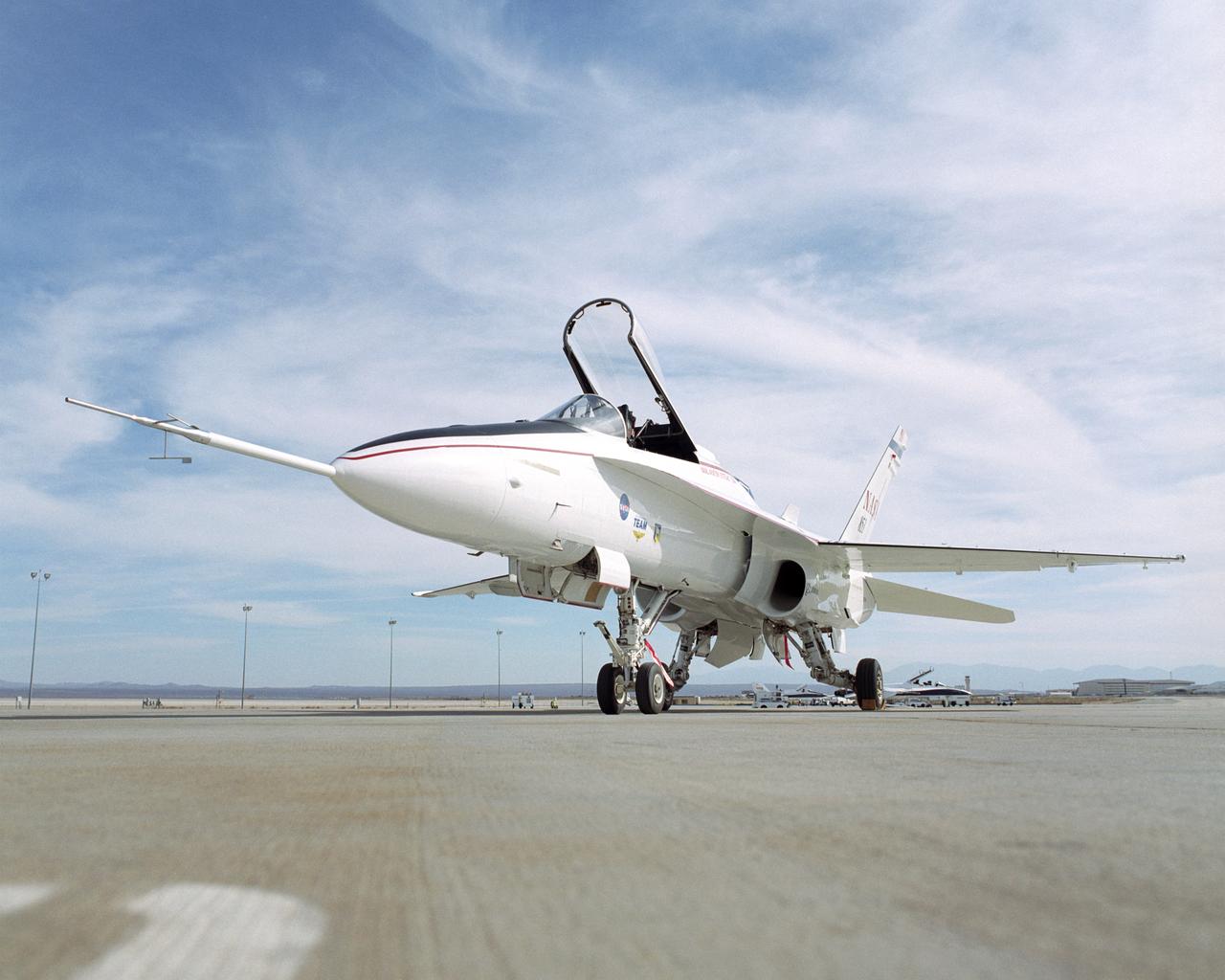
This modified F/A-18A is the test aircraft for the Active Aeroelastic Wing (AAW) project at NASA's Dryden Flight Research Center, Edwards, California.
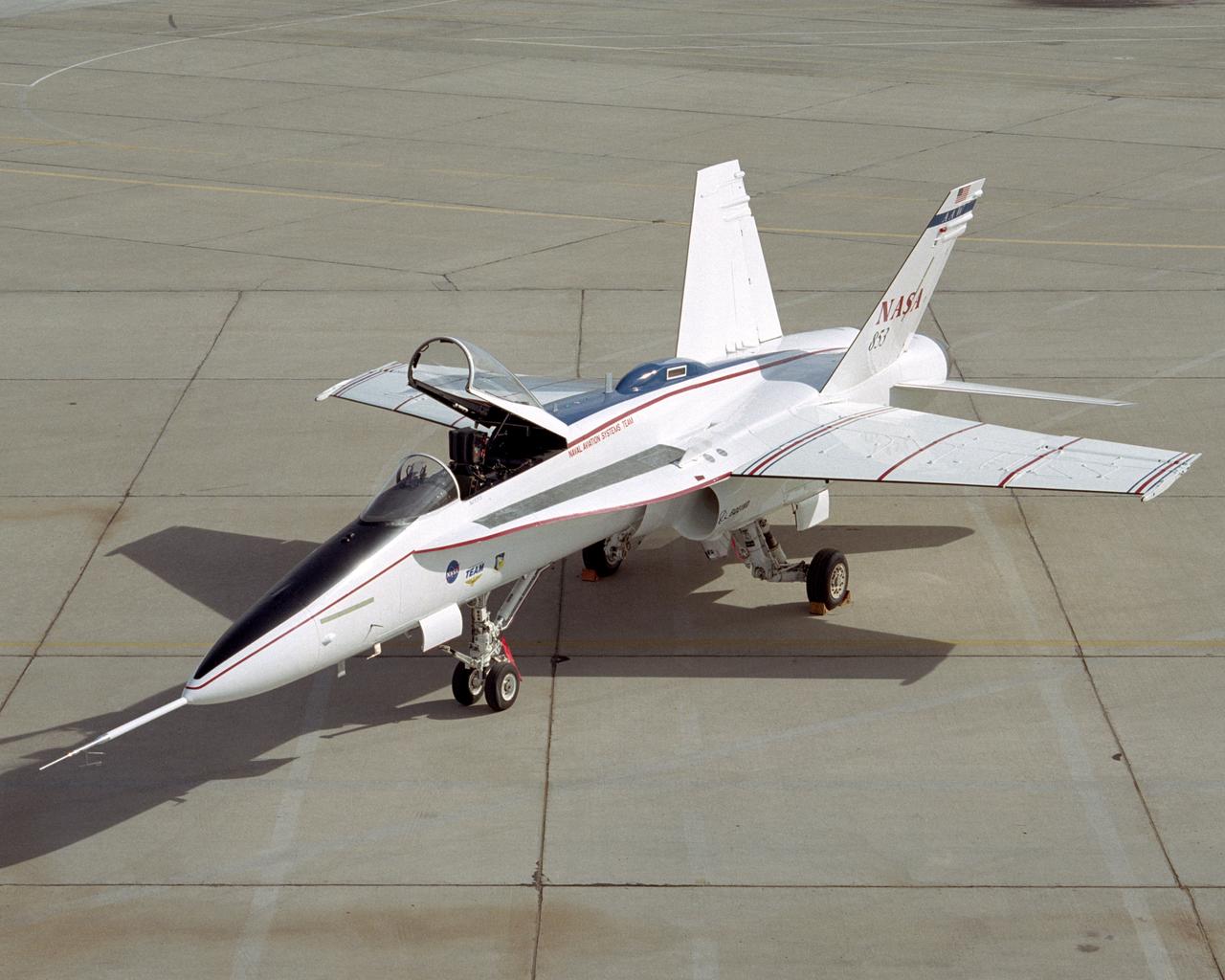
This modified F/A-18A is the test aircraft for the Active Aeroelastic Wing (AAW) project at NASA's Dryden Flight Research Center, Edwards, California.
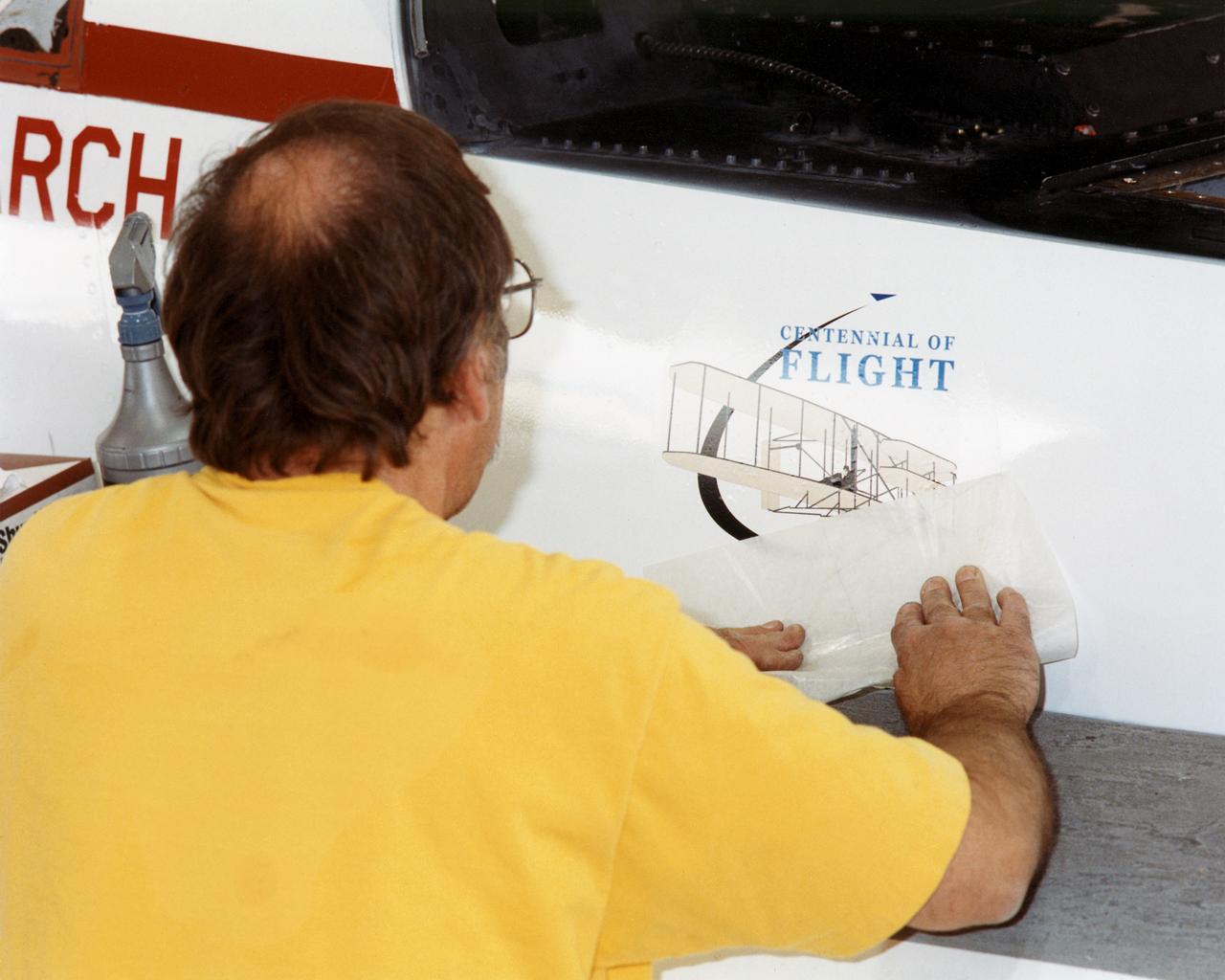
NASA aircraft technician Don Herman completes placement of the first official U.S. Centennial of Flight Commission logo on an aircraft, Dryden's Active Aeroelastic Wing (AAW) F/A-18.
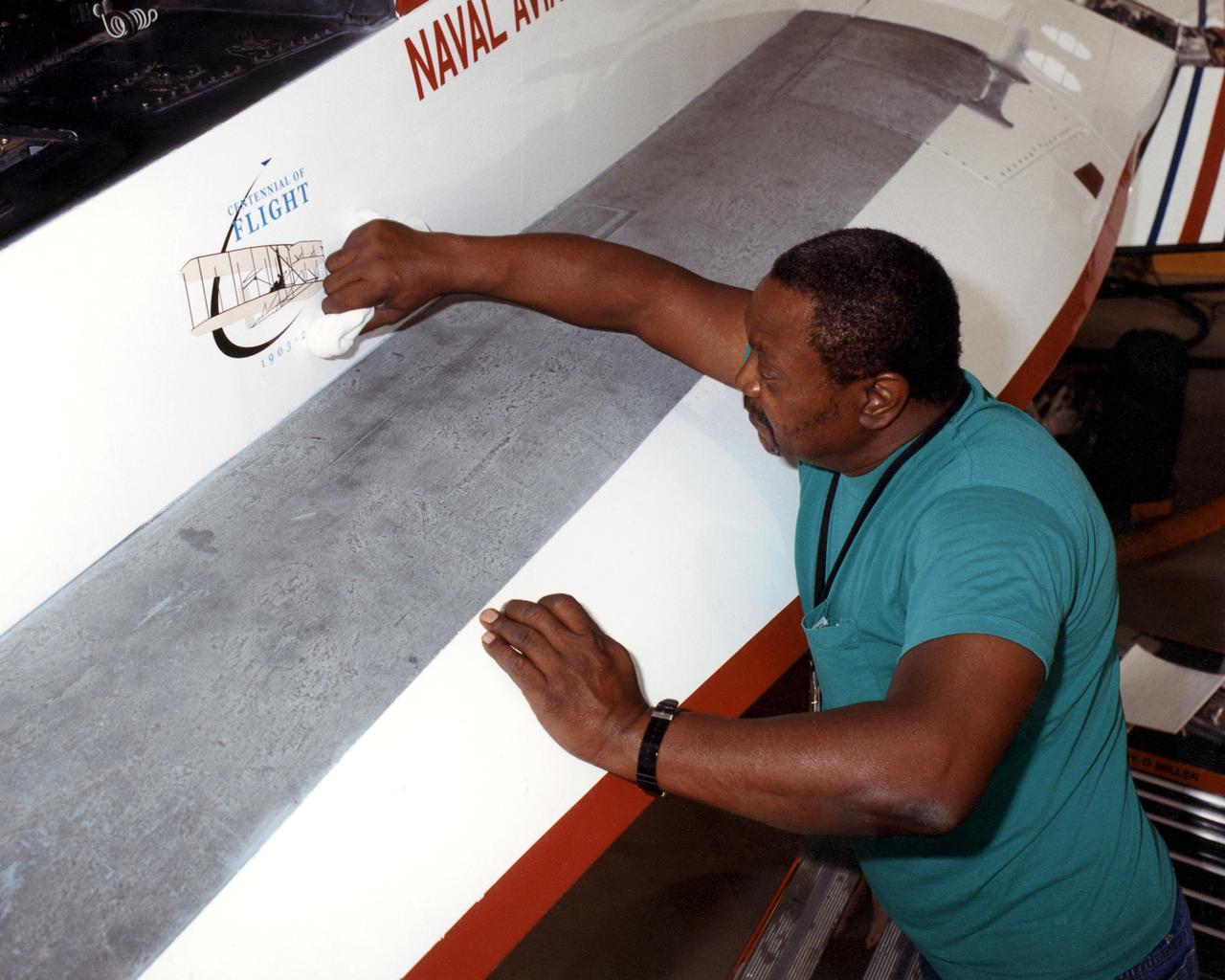
NASA aircraft technician Donte Warren completes placement of the first official U.S. Centennial of Flight Commission logo on an aircraft, Dryden's Active Aeroelastic Wing (AAW) F/A-18.

After a 25-day flight inside the Artemis I Orion crew module beyond the Moon and back, Helga, one of two identical phantom torsos, is shown without a radiation detection vest while undergoing post-flight payload inspections inside the Space Station Processing Facility at Kennedy Space Center in Florida on Jan. 11, 2023. The detectors will be removed at Kennedy and the torsos will return to teams at the German Space Agency for further analysis. As part of the Matroshka AstroRad Radiation Experiment (MARE) investigation, two female manikins – Helga and Zohar – were equipped with radiation detectors, while Zohar also wore a radiation protection vest, to determine the radiation risk during the Artemis I mission and potentially reduce exposure during future missions with astronauts. Artemis I Orion launched atop the Space Launch System (SLS) rocket from Kennedy’s Launch Complex 39B on Nov. 16, 2022, at 1:47 a.m. EST. During the flight, Orion flew farther than any spacecraft built for humans has ever flown, paving the way for human deep space exploration and demonstrating NASA’s commitment and capability to extend human presence to the Moon and beyond. The primary goal of Artemis I was to thoroughly test the SLS and Orion spacecraft’s integrated systems before crewed missions. Under Artemis, NASA aims to land the first woman and first person of color on the Moon and establish sustainable lunar exploration.
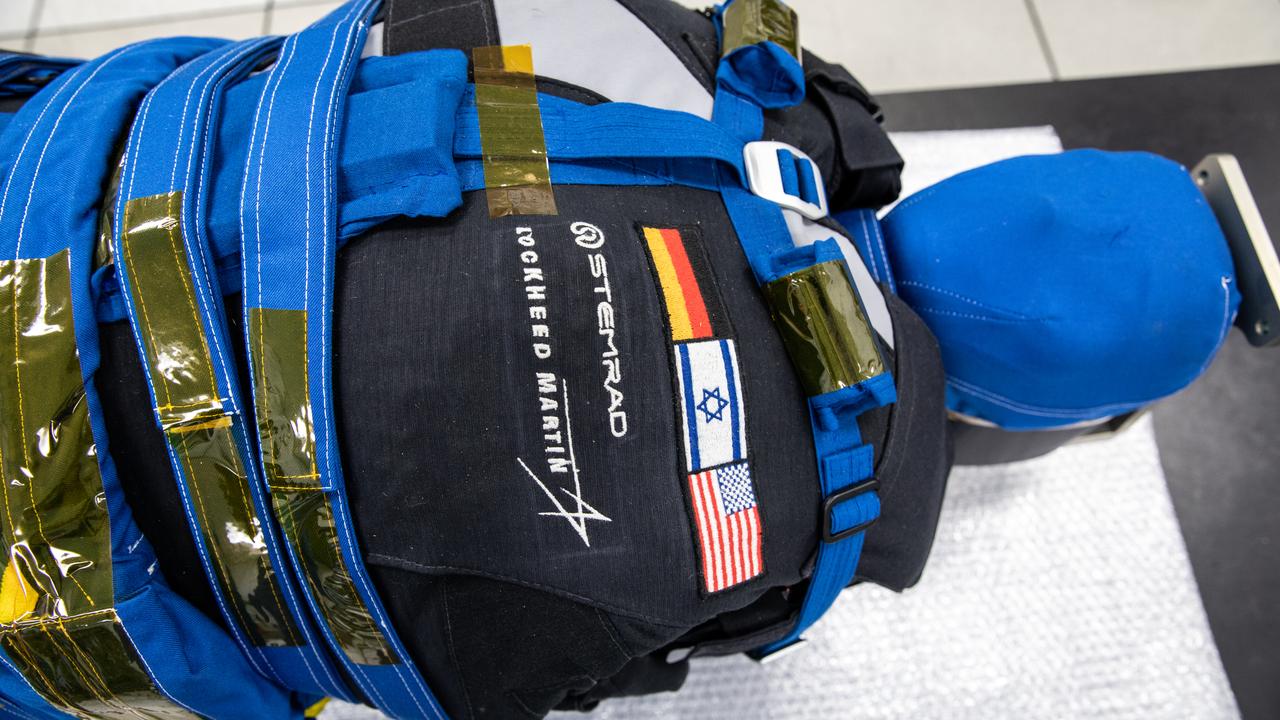
After a 25-day flight inside the Artemis I Orion crew module beyond the Moon and back, Helga, one of two identical phantom torsos, is shown without a radiation detection vest while undergoing post-flight payload inspections inside the Space Station Processing Facility at Kennedy Space Center in Florida on Jan. 11, 2023. The detectors will be removed at Kennedy and the torsos will return to teams at the German Space Agency for further analysis. As part of the Matroshka AstroRad Radiation Experiment (MARE) investigation, two female manikins – Helga and Zohar – were equipped with radiation detectors, while Zohar also wore a radiation protection vest, to determine the radiation risk during the Artemis I mission and potentially reduce exposure during future missions with astronauts. Artemis I Orion launched atop the Space Launch System (SLS) rocket from Kennedy’s Launch Complex 39B on Nov. 16, 2022, at 1:47 a.m. EST. During the flight, Orion flew farther than any spacecraft built for humans has ever flown, paving the way for human deep space exploration and demonstrating NASA’s commitment and capability to extend human presence to the Moon and beyond. The primary goal of Artemis I was to thoroughly test the SLS and Orion spacecraft’s integrated systems before crewed missions. Under Artemis, NASA aims to land the first woman and first person of color on the Moon and establish sustainable lunar exploration.
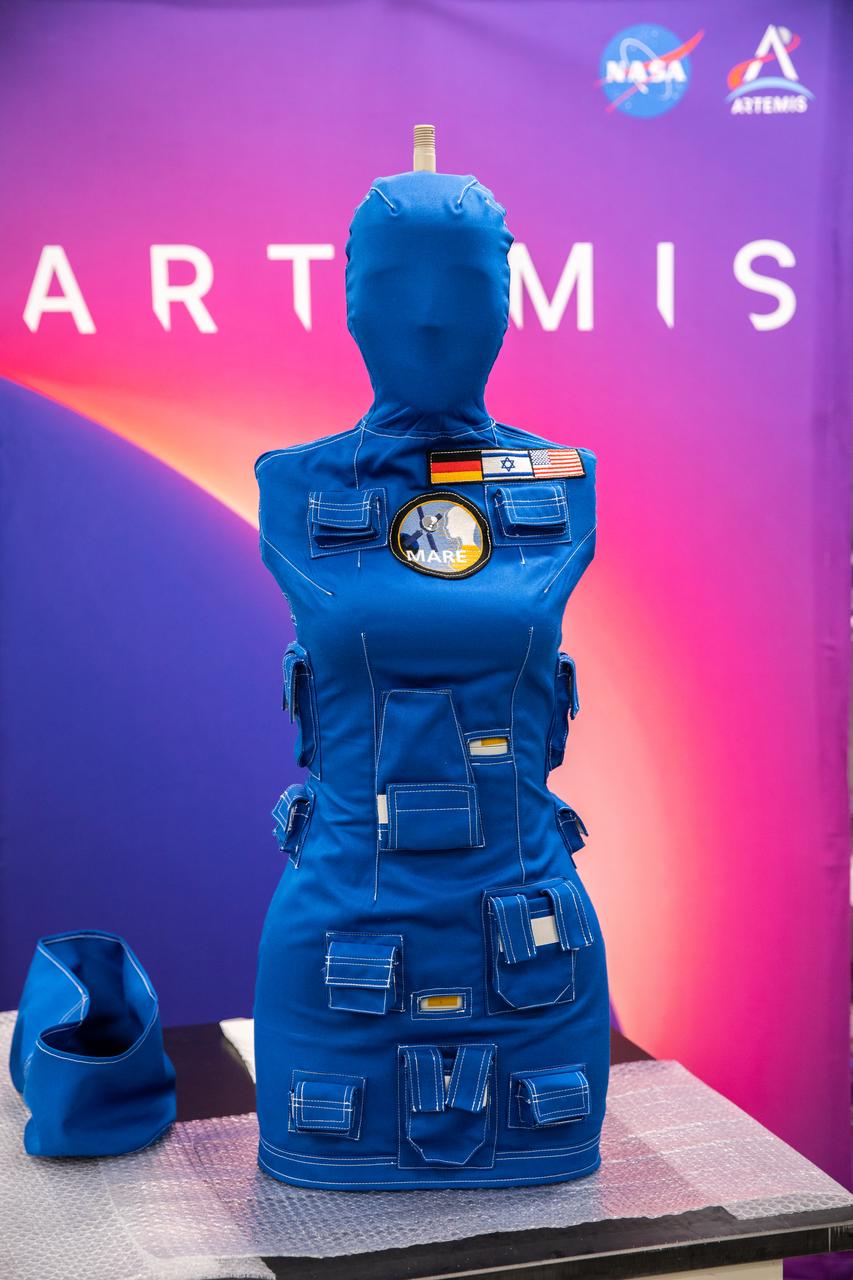
After a 25-day flight inside the Artemis I Orion crew module beyond the Moon and back, Helga, one of two identical phantom torsos, is shown without a radiation detection vest while undergoing post-flight payload inspections inside the Space Station Processing Facility at Kennedy Space Center in Florida on Jan. 11, 2023. The detectors will be removed at Kennedy and the torsos will return to teams at the German Space Agency for further analysis. As part of the Matroshka AstroRad Radiation Experiment (MARE) investigation, two female manikins – Helga and Zohar – were equipped with radiation detectors, while Zohar also wore a radiation protection vest, to determine the radiation risk during the Artemis I mission and potentially reduce exposure during future missions with astronauts. Artemis I Orion launched atop the Space Launch System (SLS) rocket from Kennedy’s Launch Complex 39B on Nov. 16, 2022, at 1:47 a.m. EST. During the flight, Orion flew farther than any spacecraft built for humans has ever flown, paving the way for human deep space exploration and demonstrating NASA’s commitment and capability to extend human presence to the Moon and beyond. The primary goal of Artemis I was to thoroughly test the SLS and Orion spacecraft’s integrated systems before crewed missions. Under Artemis, NASA aims to land the first woman and first person of color on the Moon and establish sustainable lunar exploration.
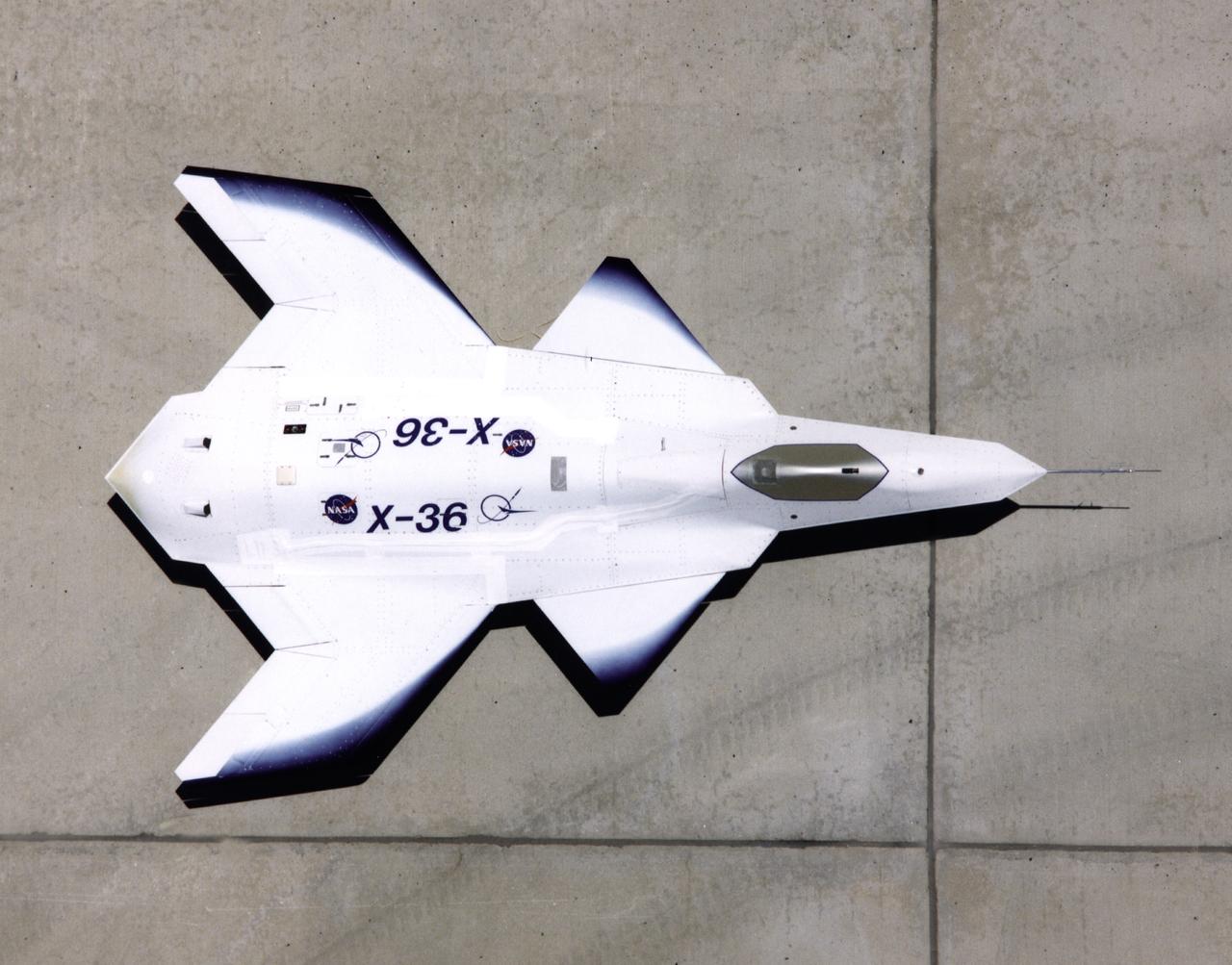
This look-down view of the X-36 Tailless Fighter Agility Research Aircraft on the ramp at NASA’s Dryden Flight Research Center, Edwards, California, clearly shows the unusual wing and canard design of the remotely-piloted aircraft.
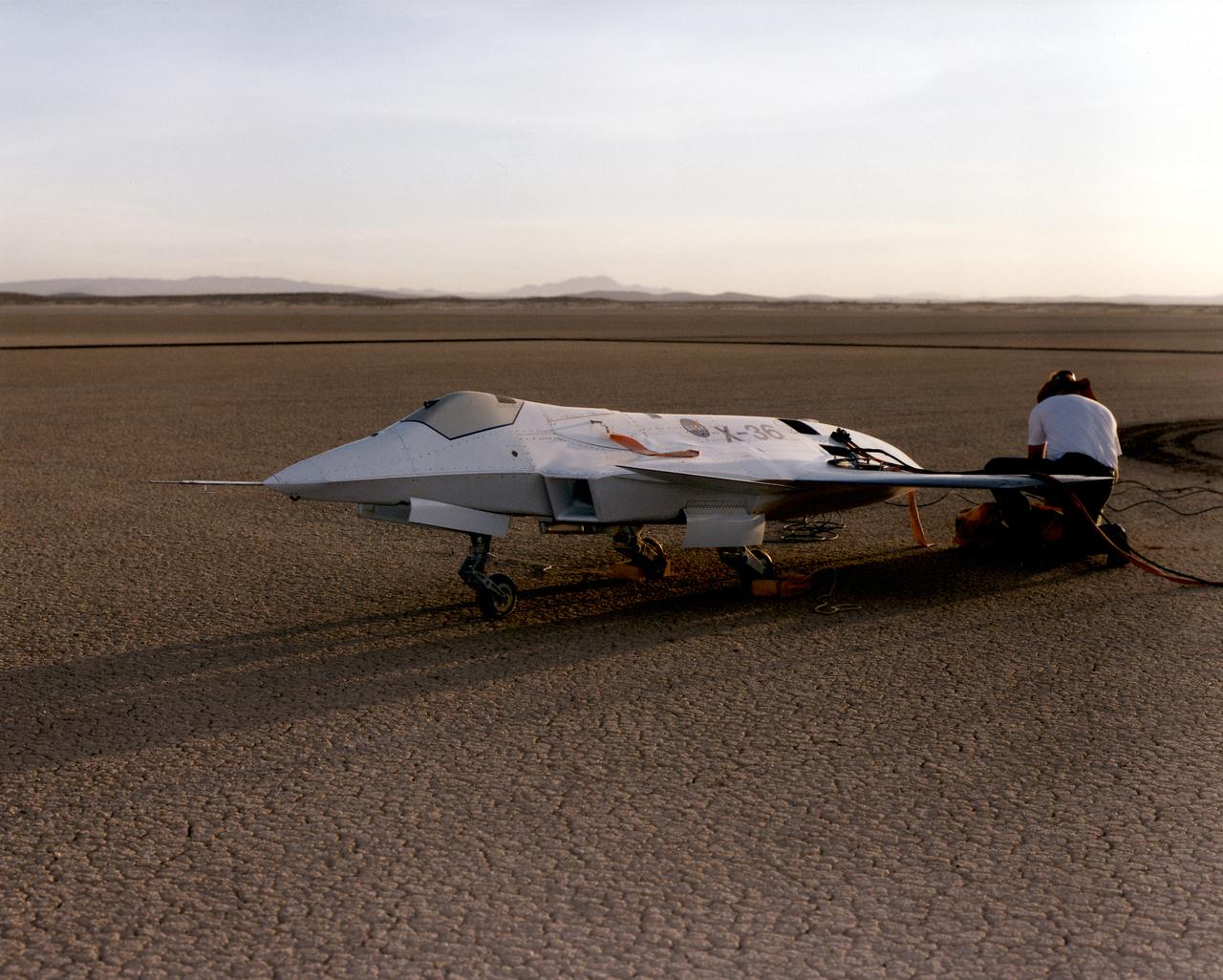
Lit by the rays of the morning sunrise on Rogers Dry Lake, adjacent to NASA's Dryden Flight Research Center, Edwards, California, technicians prepare the remotely-piloted X-36 Tailless Fighter Agility Research Aircraft for its first flight in May 1997.
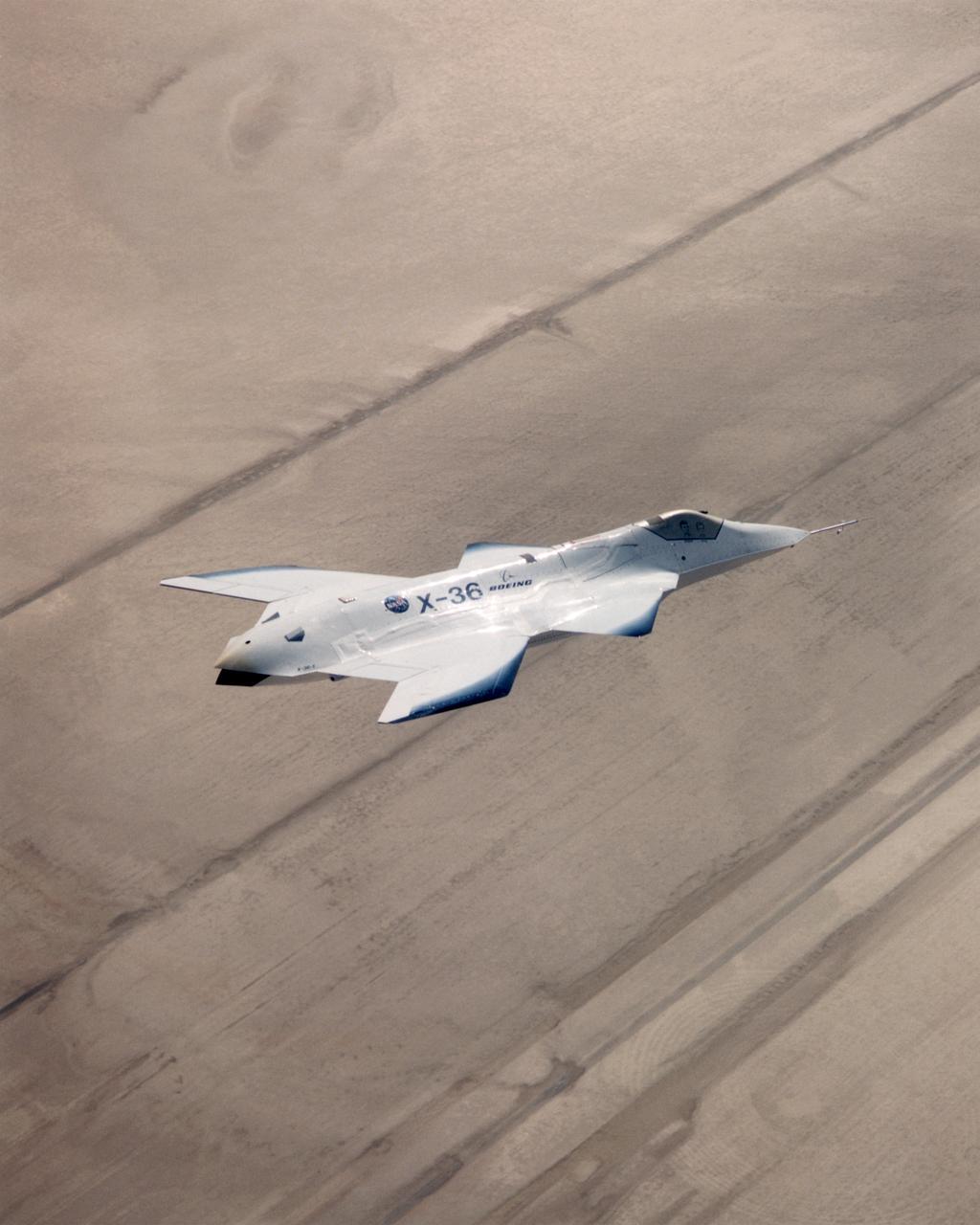
The X-36 technology demonstrator shows off its distinctive shape as the remotely piloted aircraft flies a research mission over the Southern California desert on October 30, 1997.
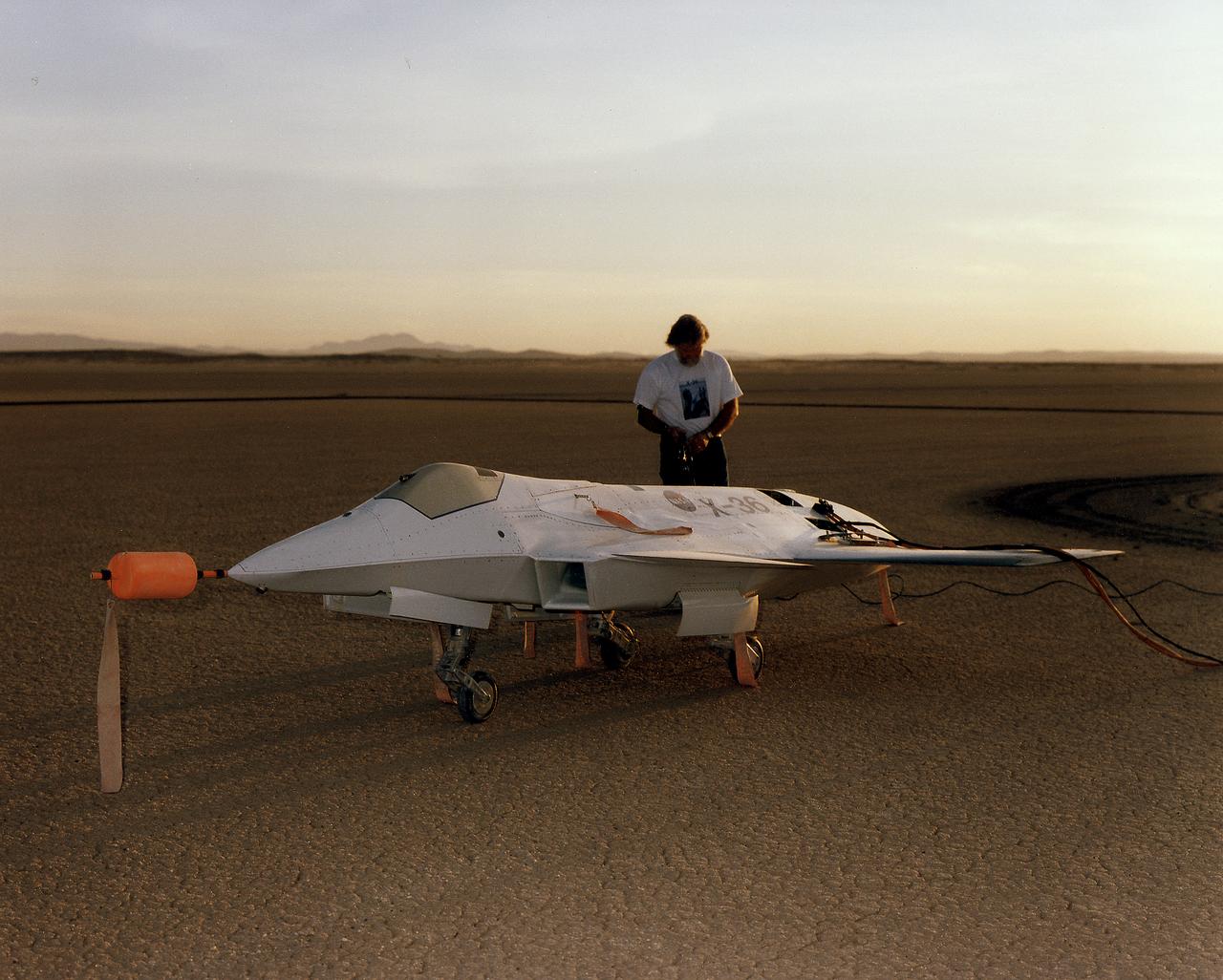
Lit by the rays of the morning sunrise on Rogers Dry Lake, adjacent to NASA's Dryden Flight Research Center, Edwards, California, a technician prepares the remotely-piloted X-36 Tailless Fighter Agility Research Aircraft for its first flight on May 17, 1997.
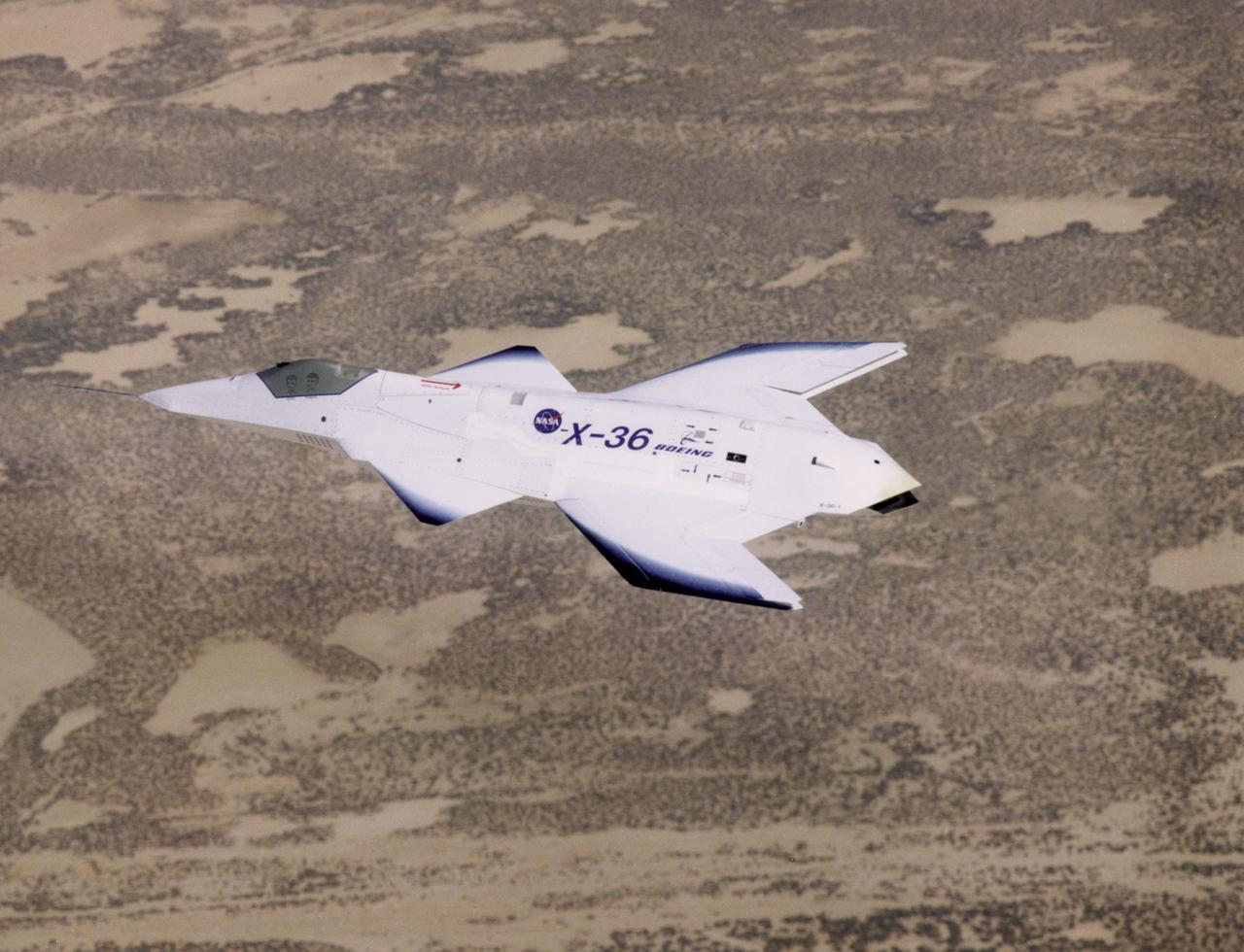
The unusual lines of the X-36 technology demonstrator contrast sharply with the desert floor as the remotely piloted aircraft scoots across the California desert at low altitude during a research flight on October 30, 1997.
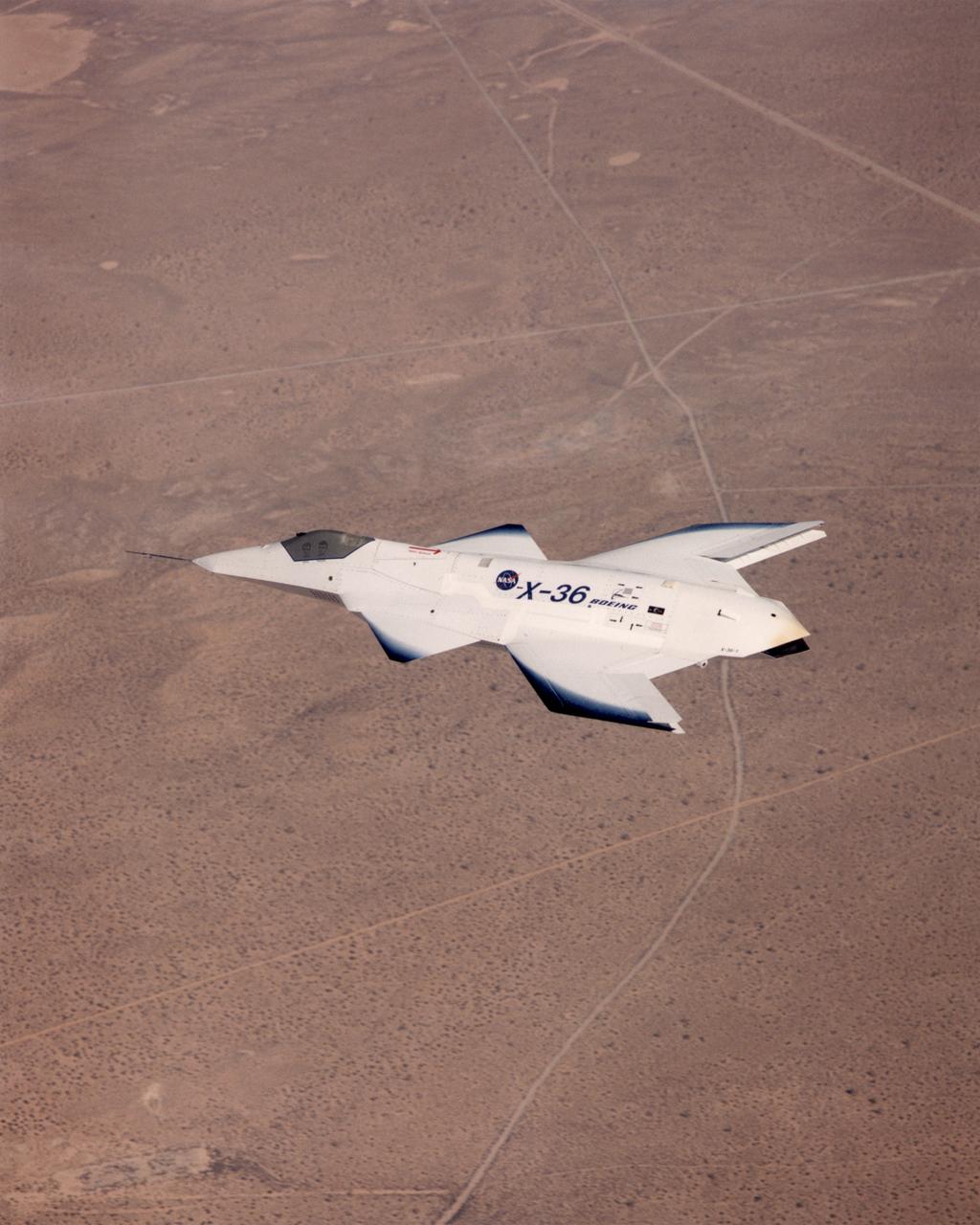
The tailless X-36 technology demonstrator research aircraft cruises over the California desert at low altitude during a 1997 research flight.
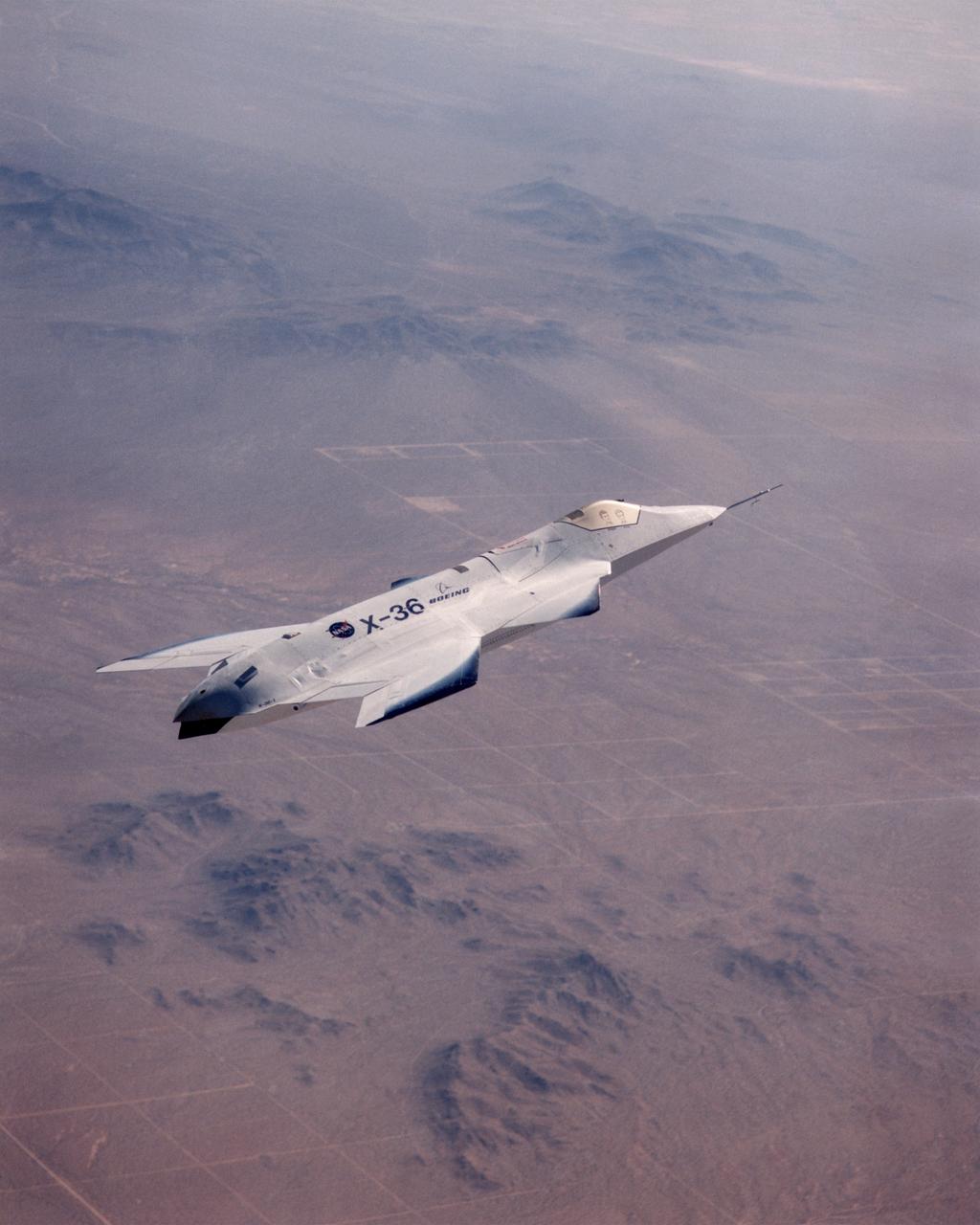
The X-36 technology demonstrator shows off its distinctive shape as the remotely piloted aircraft flies a research mission over the Southern California desert on October 30, 1997.
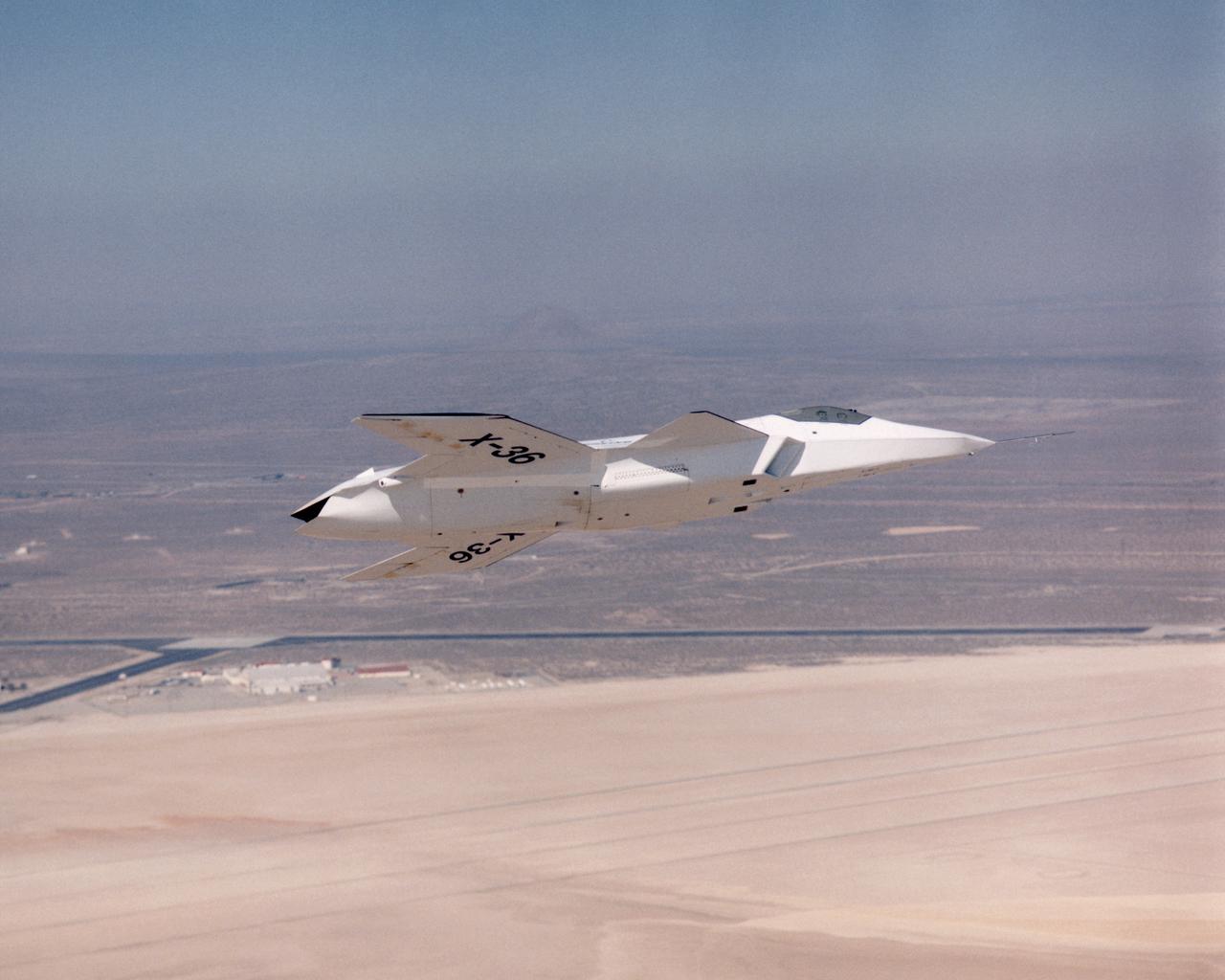
The lack of a vertical tail on the X-36 technology demonstrator is evident as the remotely piloted aircraft flies a low-altitude research flight above Rogers Dry Lake at Edwards Air Force Base in the California desert on October 30, 1997.
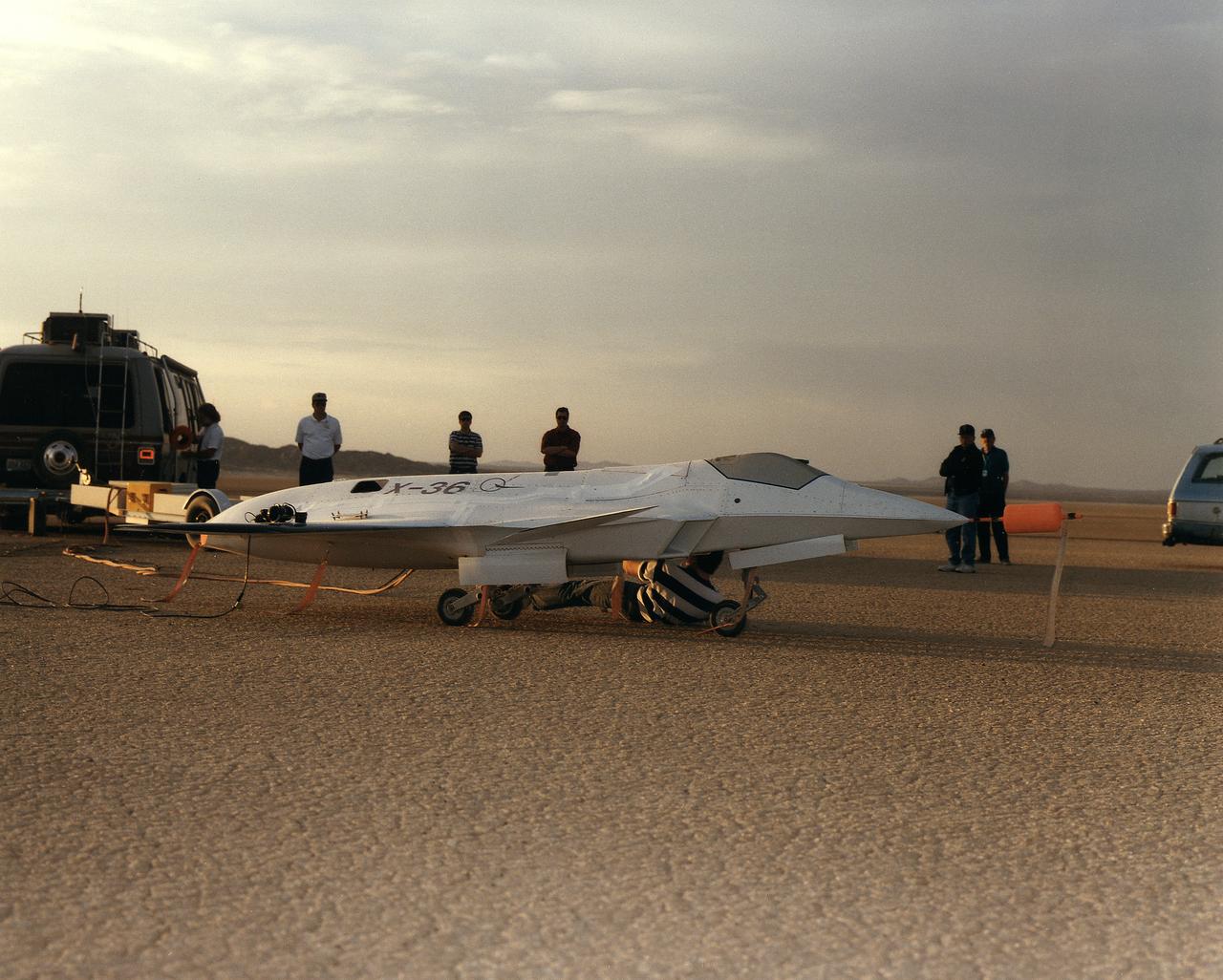
Lit by the rays of the morning sunrise on Rogers Dry Lake, adjacent to NASA's Dryden Flight Research Center, Edwards, California, technicians prepares the remotely-piloted X-36 Tailless Fighter Agility Research Aircraft for its first flight on May 17, 1997.
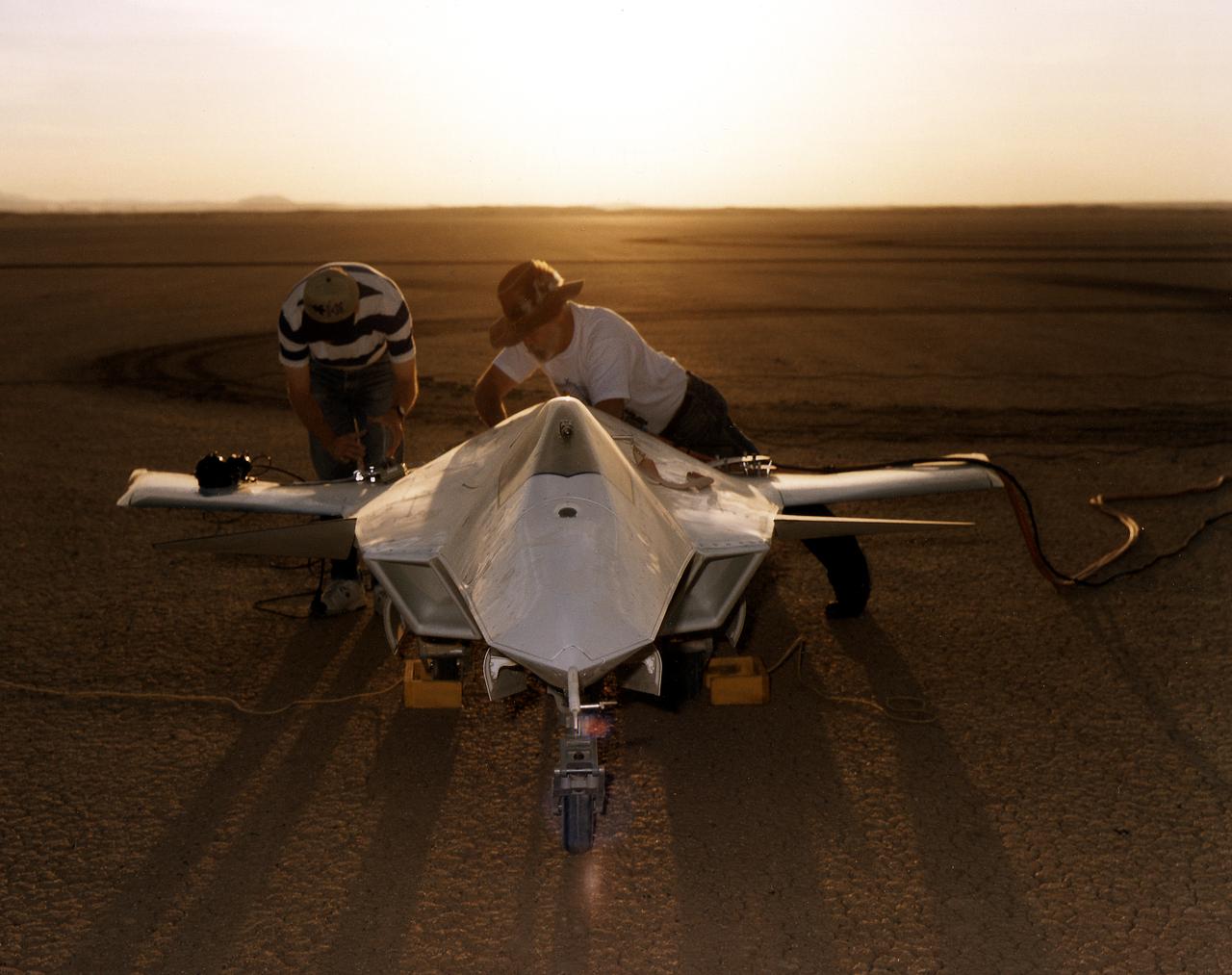
As the sun creeps above the horizon of Rogers Dry Lake at NASA's Dryden Flight Research Center, Edwards, California, technicians make final preparations for the first flight of the X-36 Tailless Fighter Agility Research Aircraft.

James Barrilleaux is the assistant chief pilot for ER-2s in the Flight Crew Branch of NASA's Dryden Flight Research Center, Edwards, California. The ER-2s--civilian variants of the military U-2S reconnaissance aircraft--are part of NASA's Airborne Science program. The ER-2s can carry airborne scientific payloads of up to 2,600 pounds to altitudes of about 70,000 feet to investigate such matters as earth resources, celestial phenomena, atmospheric chemistry and dynamics, and oceanic processes. Barrilleaux has held his current position since February 1998. Barrilleaux joined NASA in 1986 as a U-2/ER-2 pilot with NASA's Airborne Science program at Ames Research Center, Moffett Field, California. He flew both the U-2C (until 1989) and the ER-2 on a wide variety of missions both domestic and international. Barrilleaux flew high-altitude operations over Antarctica in which scientific instruments aboard the ER-2 defined the cause of ozone depletion over the continent, known as the ozone hole. He has also flown the ER-2 over the North Pole. Barrilleaux served for 20 years in the U.S. Air Force before he joined NASA. He completed pilot training at Reese Air Force Base, Lubbock, Texas, in 1966. He flew 120 combat missions as a F-4 fighter pilot over Laos and North Vietnam in 1970 and 1971. He joined the U-2 program in 1974, becoming the commander of an overseas U-2 operation in 1982. In 1983, he became commander of the squadron responsible for training all U-2 pilots and SR-71 crews located at Beale Air Force Base, Marysville, California. He retired from the Air Force as a lieutenant colonel in 1986. On active duty, he flew the U-2, F-4 Phantom, the T-38, T-37, and the T-33. His decorations included two Distinguished Flying Crosses, 12 Air Medals, two Meritorious Service Medals, and other Air Force and South Vietnamese awards. Barrilleaux earned a bachelor of science degree in chemical engineering from Texas A&M University, College Station, in 1964 and a master of science
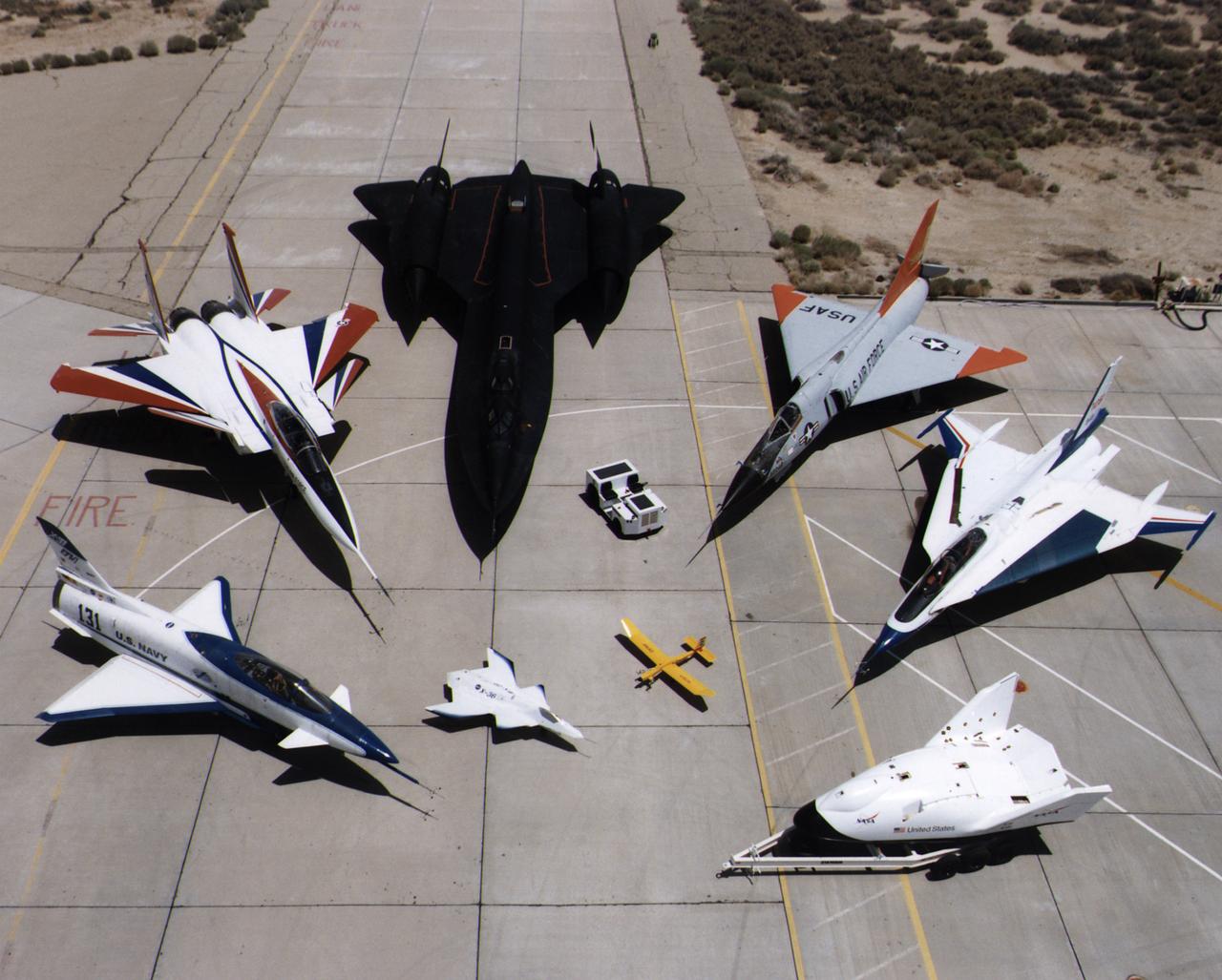
A collection of NASA's research aircraft on the ramp at the Dryden Flight Research Center in July 1997: X-31, F-15 ACTIVE, SR-71, F-106, F-16XL Ship #2, X-38, Radio Controlled Mothership and X-36.
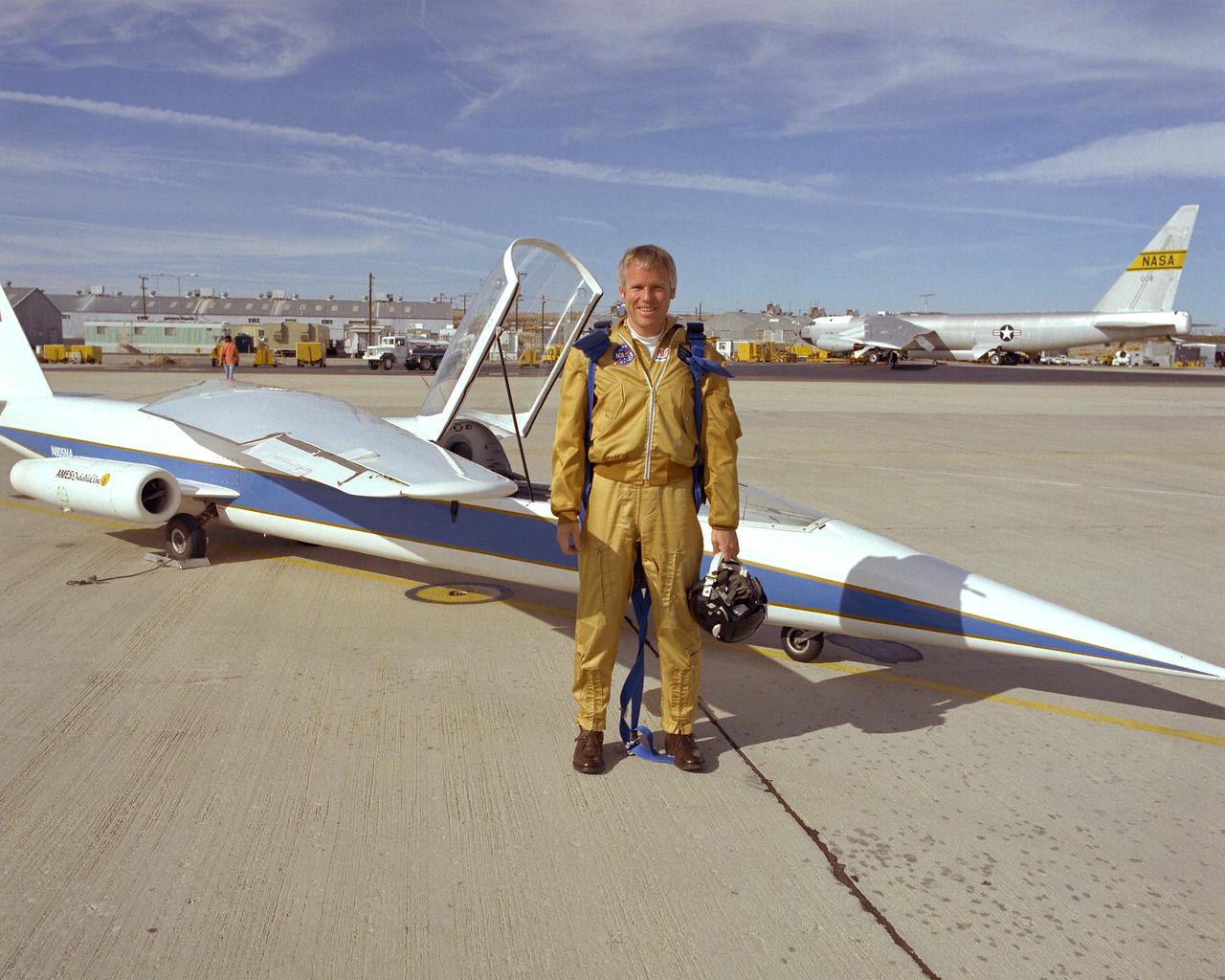
Research pilot Richard E. Gray, standing in front of the AD-1 Oblique Wing research aircraft.