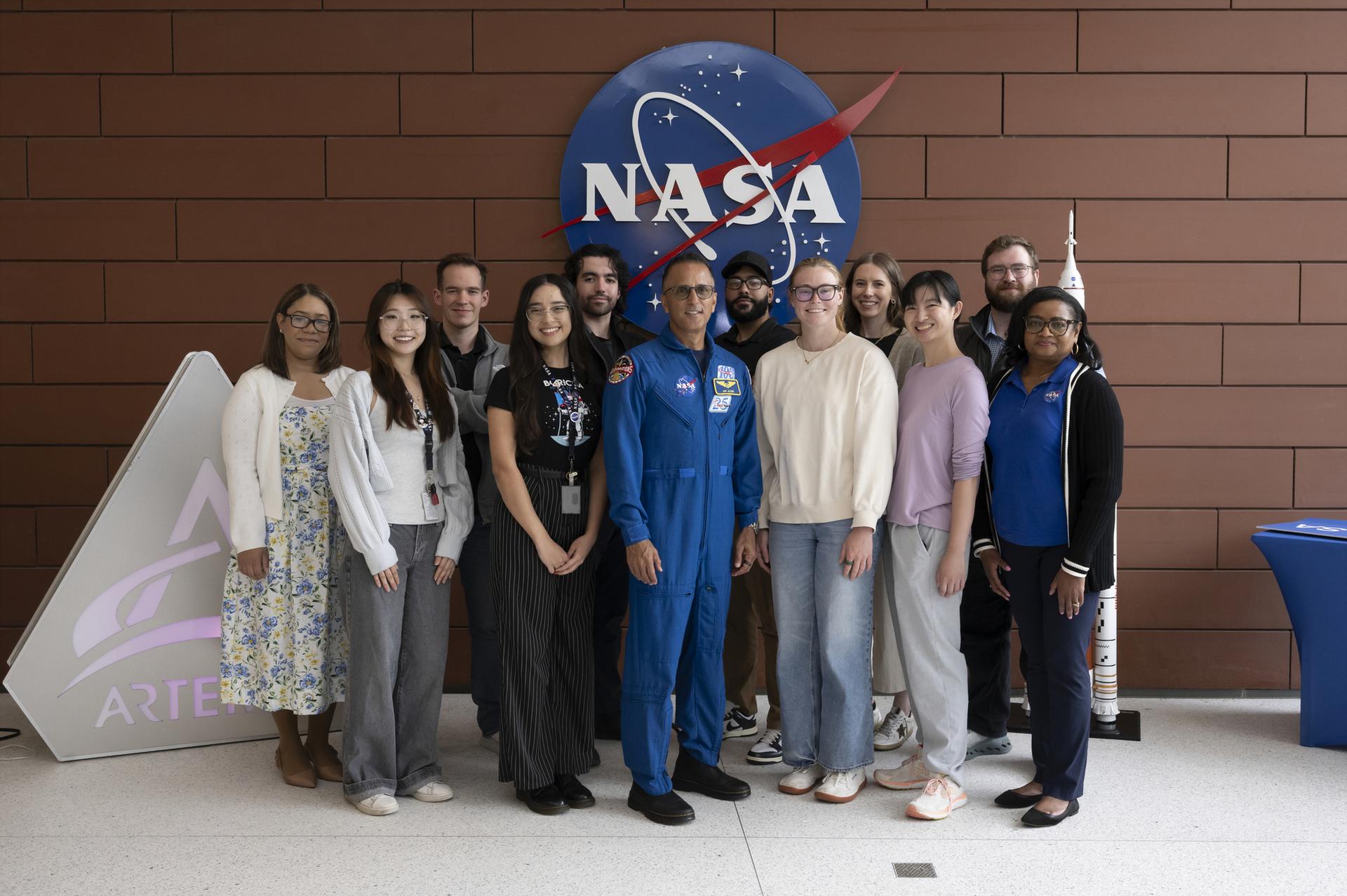
People are seen viewing the partial solar eclipse from NASA Langley Research Center in Hampton, VA, Monday, April 8, 2024. A total solar eclipse swept across a narrow portion of the North American continent from Mexico’s Pacific coast to the Atlantic coast of Newfoundland, Canada. A partial solar eclipse was visible across the entire North American continent along with parts of Central America and Europe. Photo Credit: (NASA/Ryan Hill)


People are seen viewing the partial solar eclipse from NASA Langley Research Center in Hampton, VA, Monday, April 8, 2024. A total solar eclipse swept across a narrow portion of the North American continent from Mexico’s Pacific coast to the Atlantic coast of Newfoundland, Canada. A partial solar eclipse was visible across the entire North American continent along with parts of Central America and Europe. Photo Credit: (NASA/Ryan Hill)

People are seen viewing the partial solar eclipse from NASA Langley Research Center in Hampton, VA, Monday, April 8, 2024. A total solar eclipse swept across a narrow portion of the North American continent from Mexico’s Pacific coast to the Atlantic coast of Newfoundland, Canada. A partial solar eclipse was visible across the entire North American continent along with parts of Central America and Europe. Photo Credit: (NASA/Ryan Hill)

People are seen viewing the partial solar eclipse from NASA Langley Research Center in Hampton, VA, Monday, April 8, 2024. A total solar eclipse swept across a narrow portion of the North American continent from Mexico’s Pacific coast to the Atlantic coast of Newfoundland, Canada. A partial solar eclipse was visible across the entire North American continent along with parts of Central America and Europe. Photo Credit: (NASA/Ryan Hill)
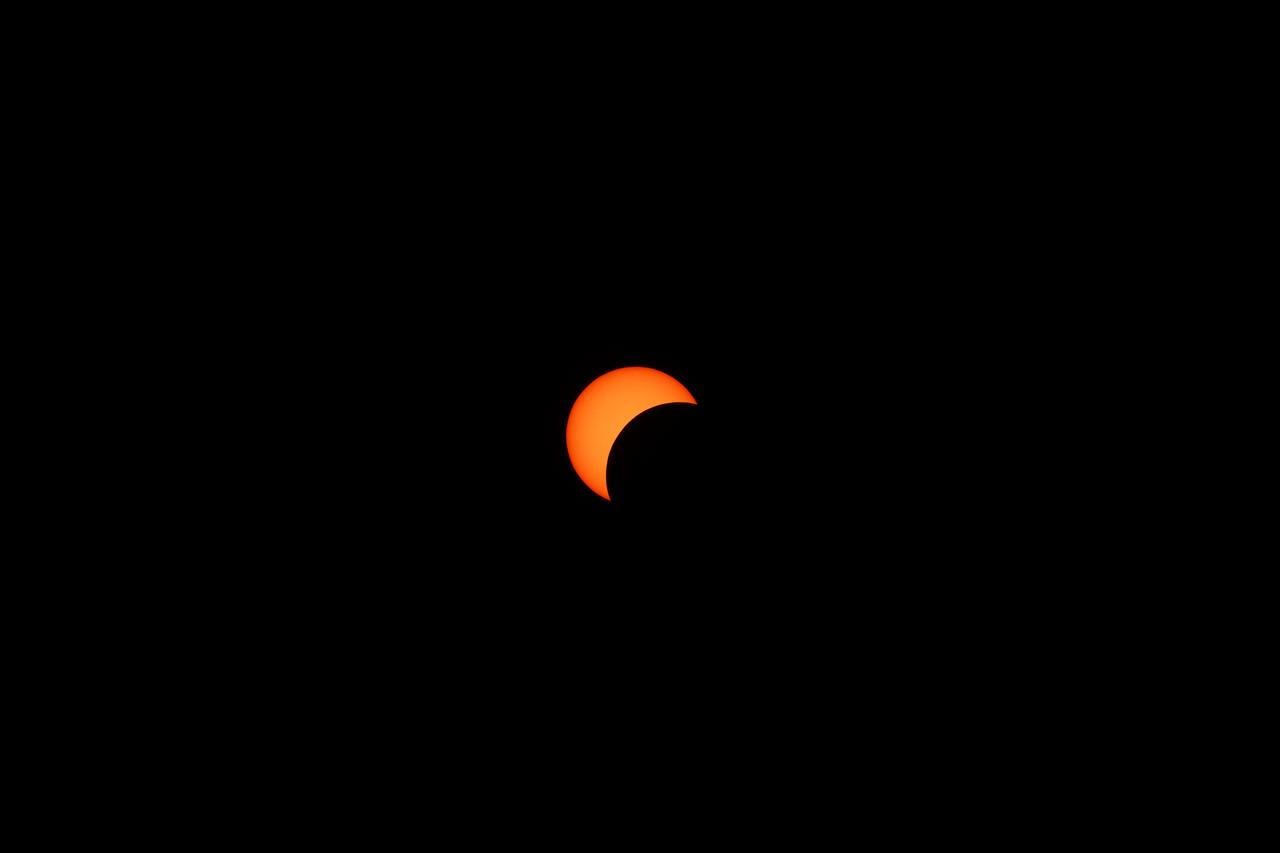
The moon is seen passing in front of the sun during a partial solar eclipse from NASA Langley Research Center in Hampton, VA, Monday, April 8, 2024. A total solar eclipse swept across a narrow portion of the North American continent from Mexico’s Pacific coast to the Atlantic coast of Newfoundland, Canada. A partial solar eclipse was visible across the entire North American continent along with parts of Central America and Europe. Photo Credit: (NASA/Ryan Hill)
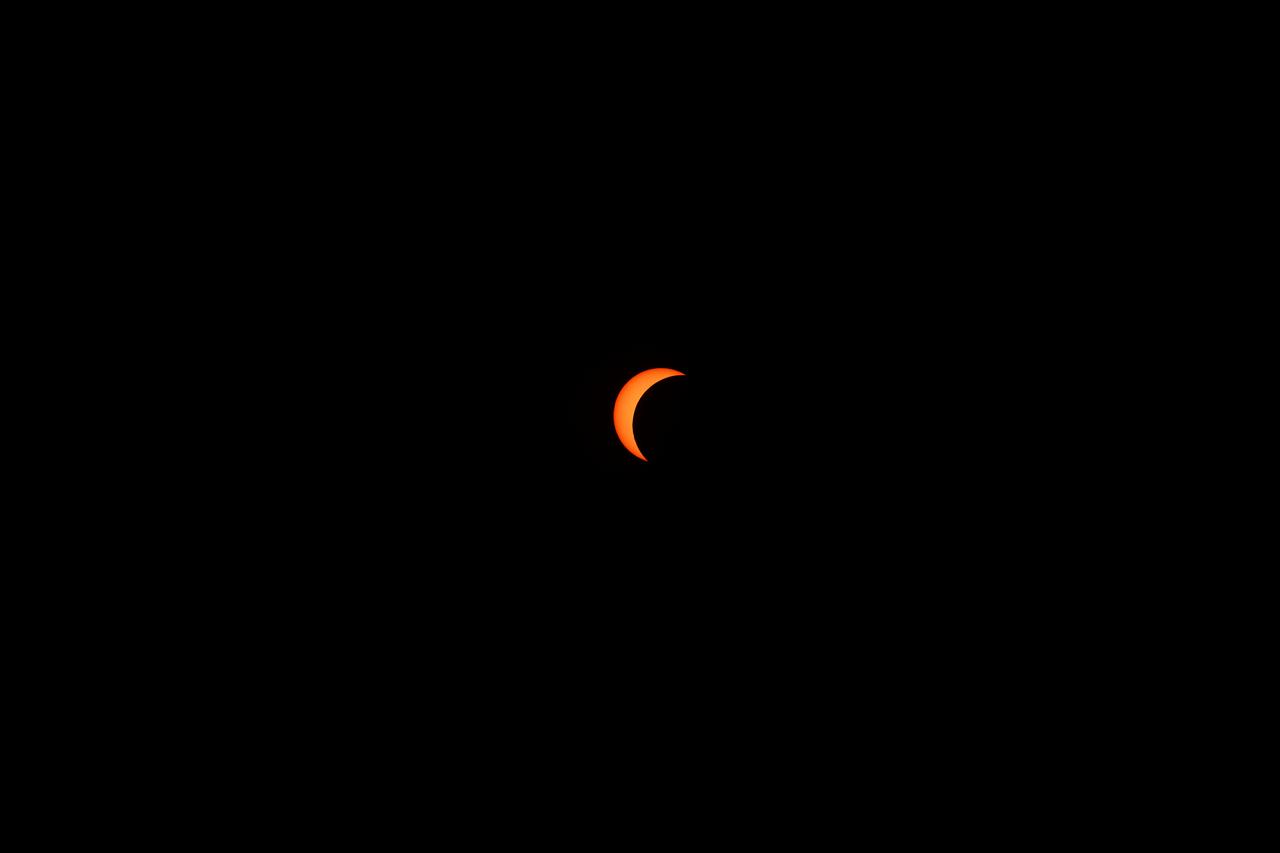
The moon is seen passing in front of the sun during a partial solar eclipse from NASA Langley Research Center in Hampton, VA, Monday, April 8, 2024. A total solar eclipse swept across a narrow portion of the North American continent from Mexico’s Pacific coast to the Atlantic coast of Newfoundland, Canada. A partial solar eclipse was visible across the entire North American continent along with parts of Central America and Europe. Photo Credit: (NASA/Ryan Hill)
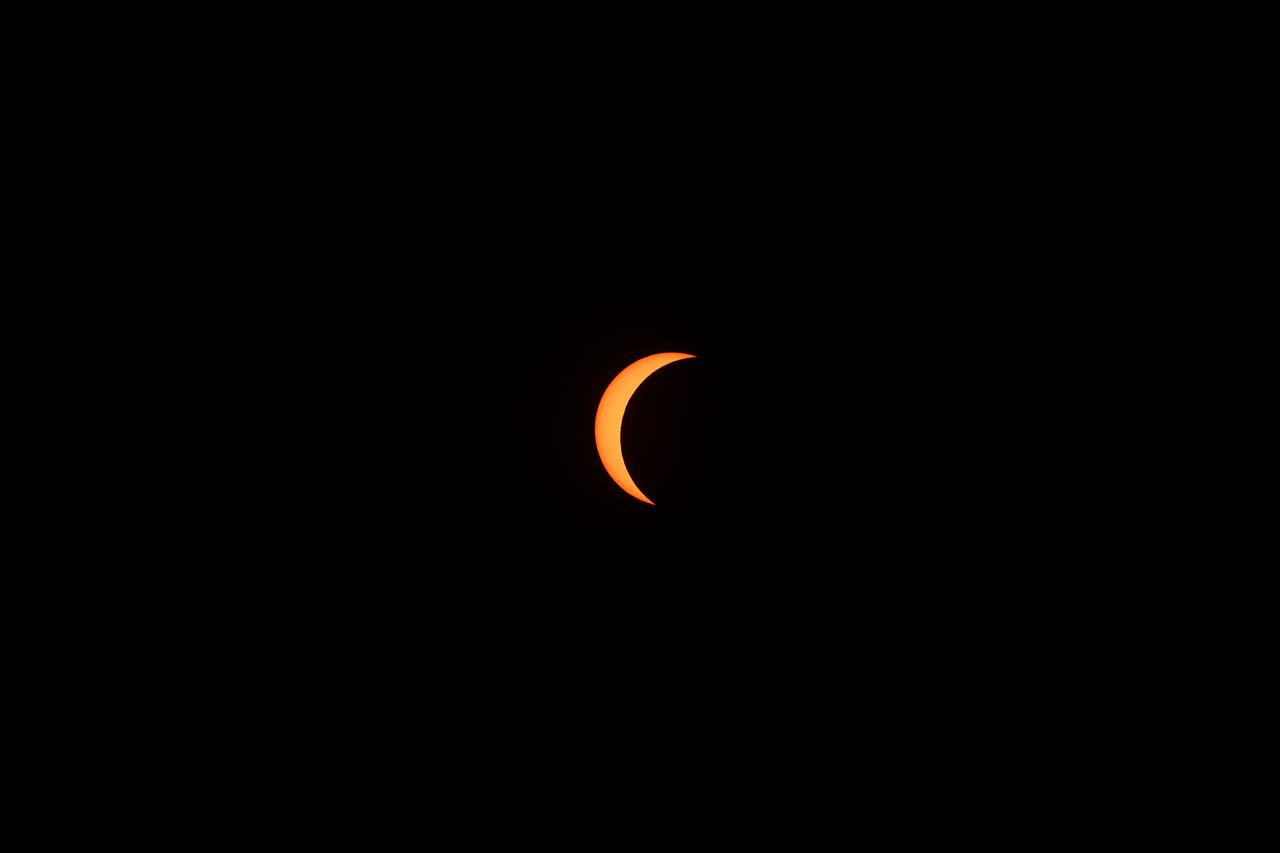
The moon is seen passing in front of the sun during a partial solar eclipse from NASA Langley Research Center in Hampton, VA, Monday, April 8, 2024. A total solar eclipse swept across a narrow portion of the North American continent from Mexico’s Pacific coast to the Atlantic coast of Newfoundland, Canada. A partial solar eclipse was visible across the entire North American continent along with parts of Central America and Europe. Photo Credit: (NASA/Ryan Hill)

CRM-HL model (2.7% full span) installed in the National Transonic Facility (NTF)

Research, Science, and Engineering Services (RSES) intern tour of the 8ft high temperature hypersonic wind tunnel (8ft HTT/B1265)

Full-Scale Test Campaign of Gravity Offloading and Analysis of Long Imperfection-Sensitive Elements (GOALIE) TRAC boom in B1293B Thor Tower, Test of Load Case C, Off-axis Compression