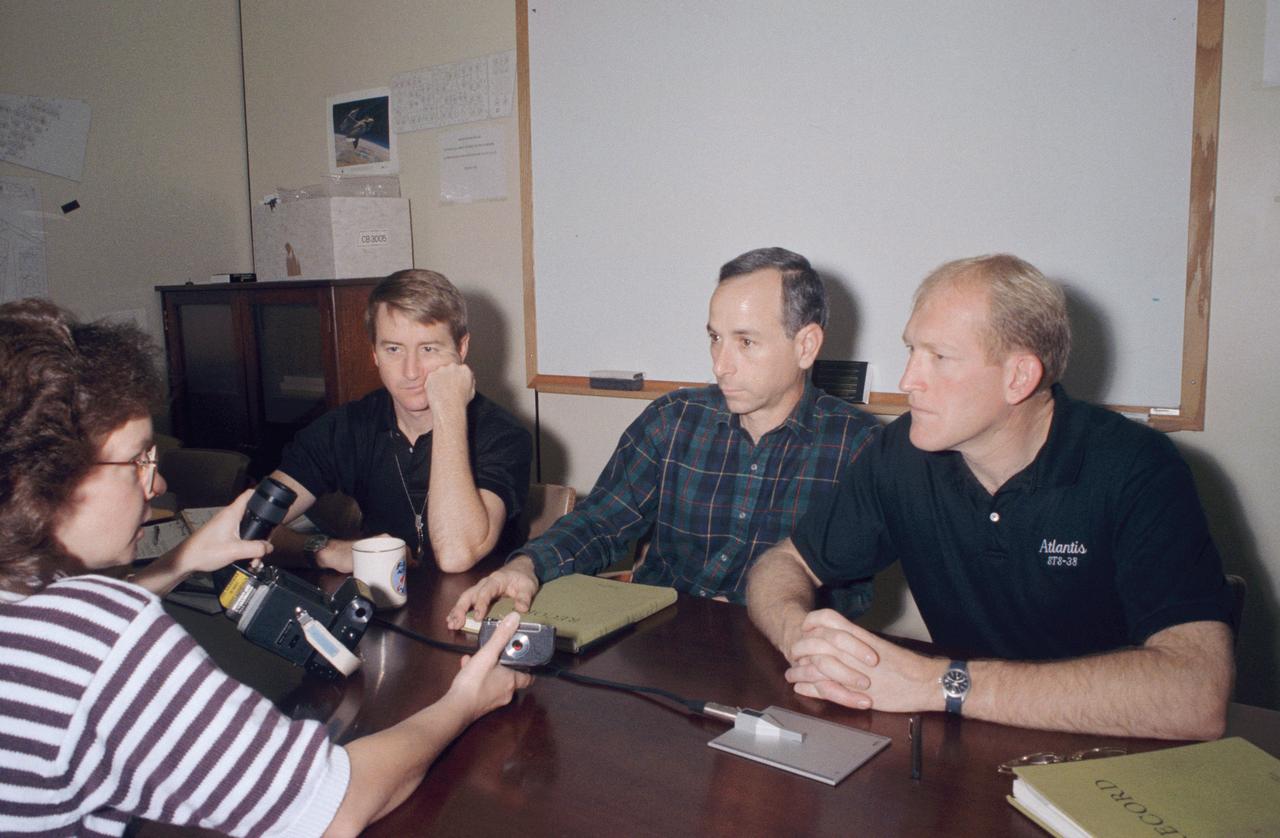
STS-38 crewmembers listen as RSOC-JSC crew trainer M. Judy Alexander explains the camera equipment they will be using on their upcoming Department of Defense (DOD) mission. Left to right are Pilot Frank L. Culbertson, Mission Specialist (MS) Carl J. Meade, and MS Charles D. Gemar. Alexander is holding a training version of the 70mm handheld HASSELBLAD camera.
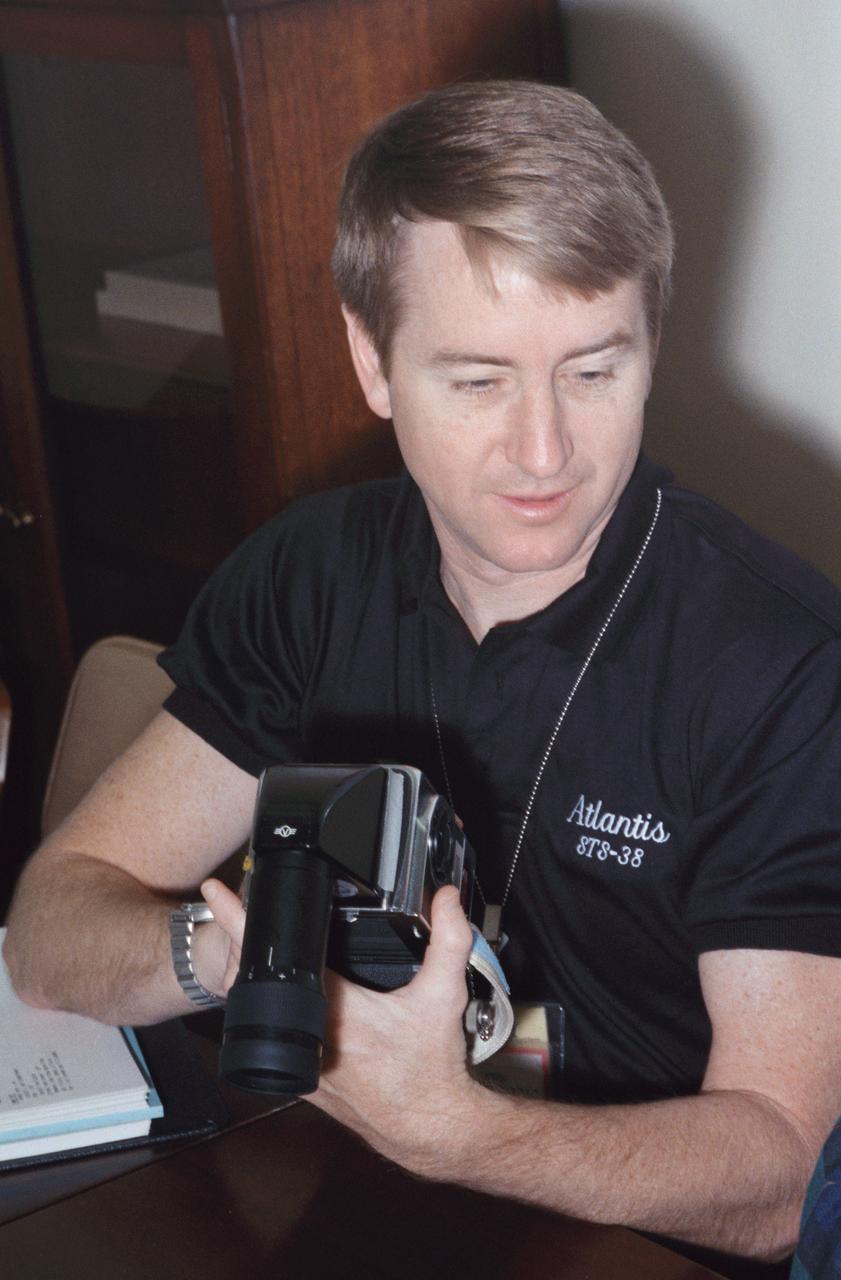
STS-38 Pilot Frank L. Culbertson holds a training version of the 70mm handheld HASSELBLAD camera he will be using on his upcoming Department of Defense (DOD) mission.
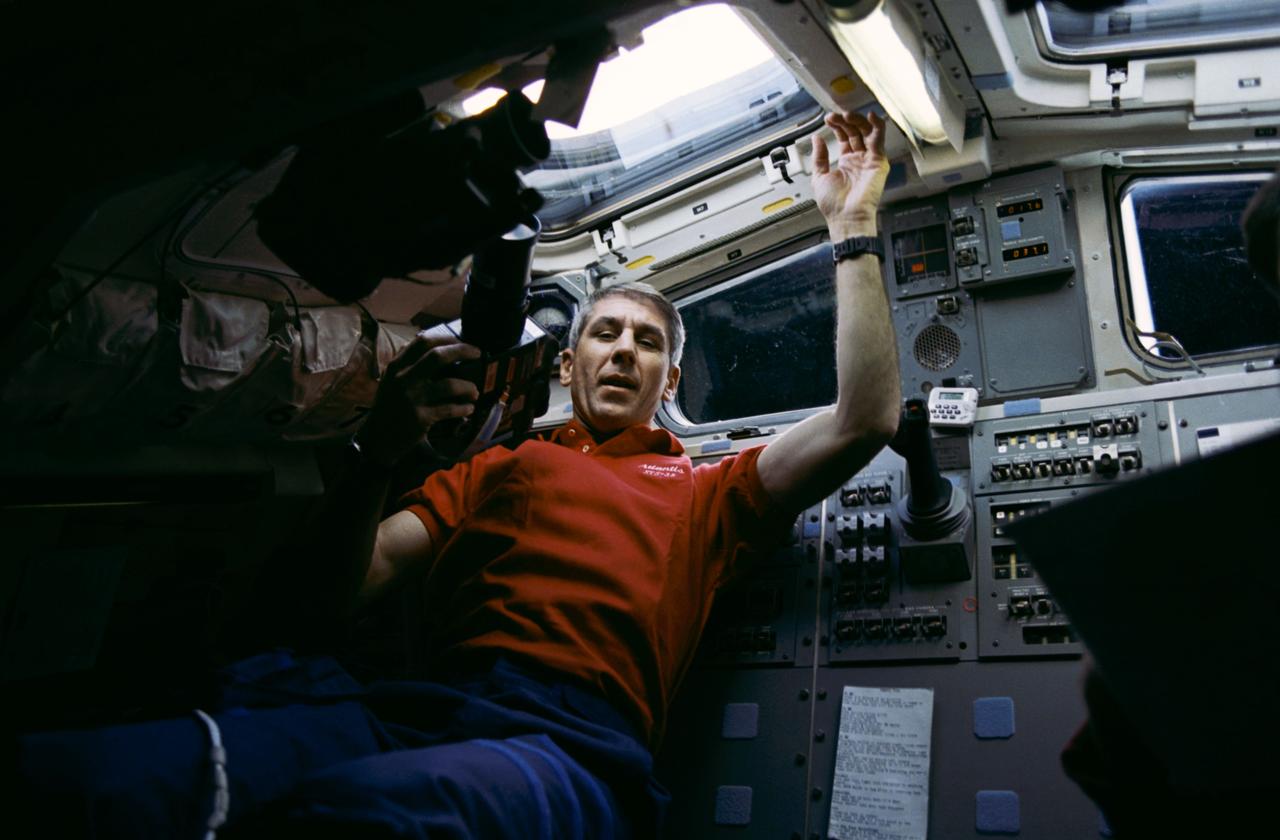
STS038-25-005 (20 Nov 1990) --- STS-38 Mission Specialist (MS) Robert C. Springer, holding HASSELBLAD camera, positions himself under aft flight deck overhead window W7 before recording the Earth's surface below. Behind Springer are Atlantis', Orbiter Vehicle (OV) 104's, on orbit station and aft flight deck viewing windows.
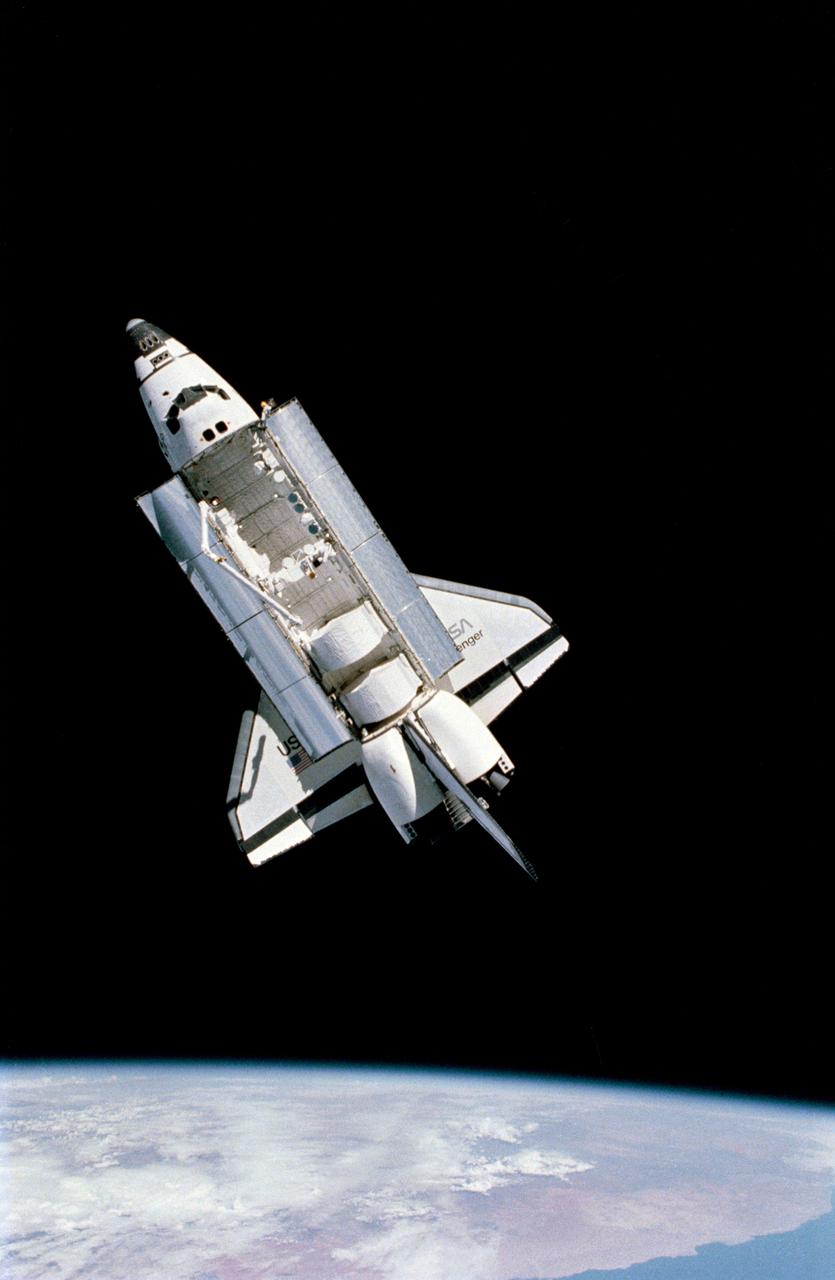
S84-27022 (7 Feb 1984) --- A 35mm frame from the February 7, 1984, extravehicular activity (EVA) photographed with a camera affixed to the gear of astronaut Bruce McCandless II. The mission specialist was equipped with the nitrogen-propelled, hand-controlled Manned Maneuvering Unit (MMU), which took him some 90 meters away from the Space Shuttle Challenger. This scene is reminiscent of views of the Challenger during the June 1983, STS-7 flight, on which the Shuttle Pallet Satellite (SPAS - seen here in the middle of the cargo bay) provided scenes of 38-meter-long reusable vehicle over the Earth.
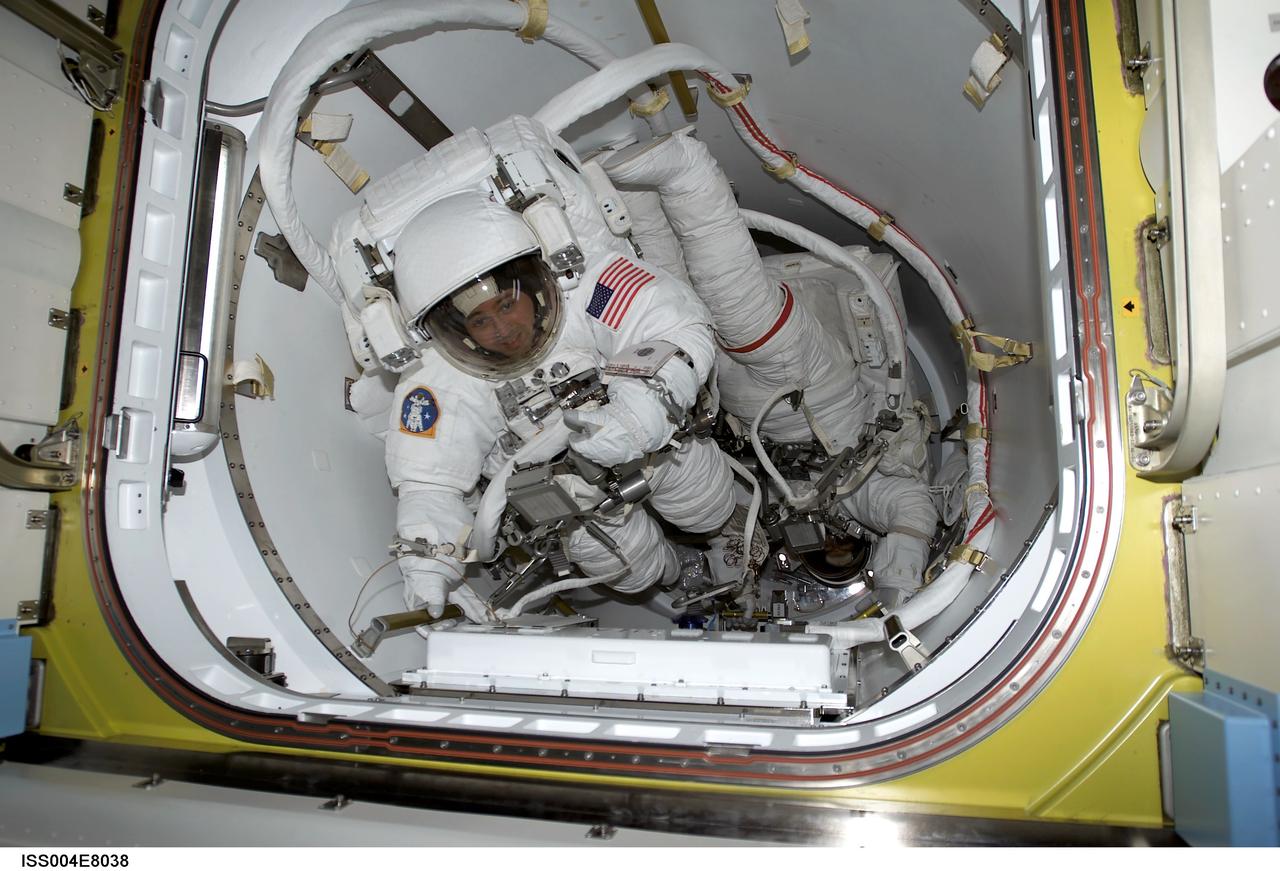
ISS004-E-8038 (20 February 2002) --- Astronauts Daniel W. Bursch (left) and Carl E. Walz are photographed in the crew lock of Quest prior to the February 20 space walk. The photograph was taken with a digital still camera by cosmonaut Yury I. Onufrienko, Expedition Four commander. Onufrienko remained onboard the International Space Station (ISS) while the two flight engineers, attired in NASA extravehicular mobility units (EMU), worked on the orbital outpost, logging a total of 5-hours, 47-minutes outside the station. The two tested equipment and procedures for the Airlock Quest and performed other tasks to prepare for Space Shuttle Atlantis’ STS-110 mission in April. The space walk began at 5:38 a.m. (CST) and ended at 11:25 a.m.
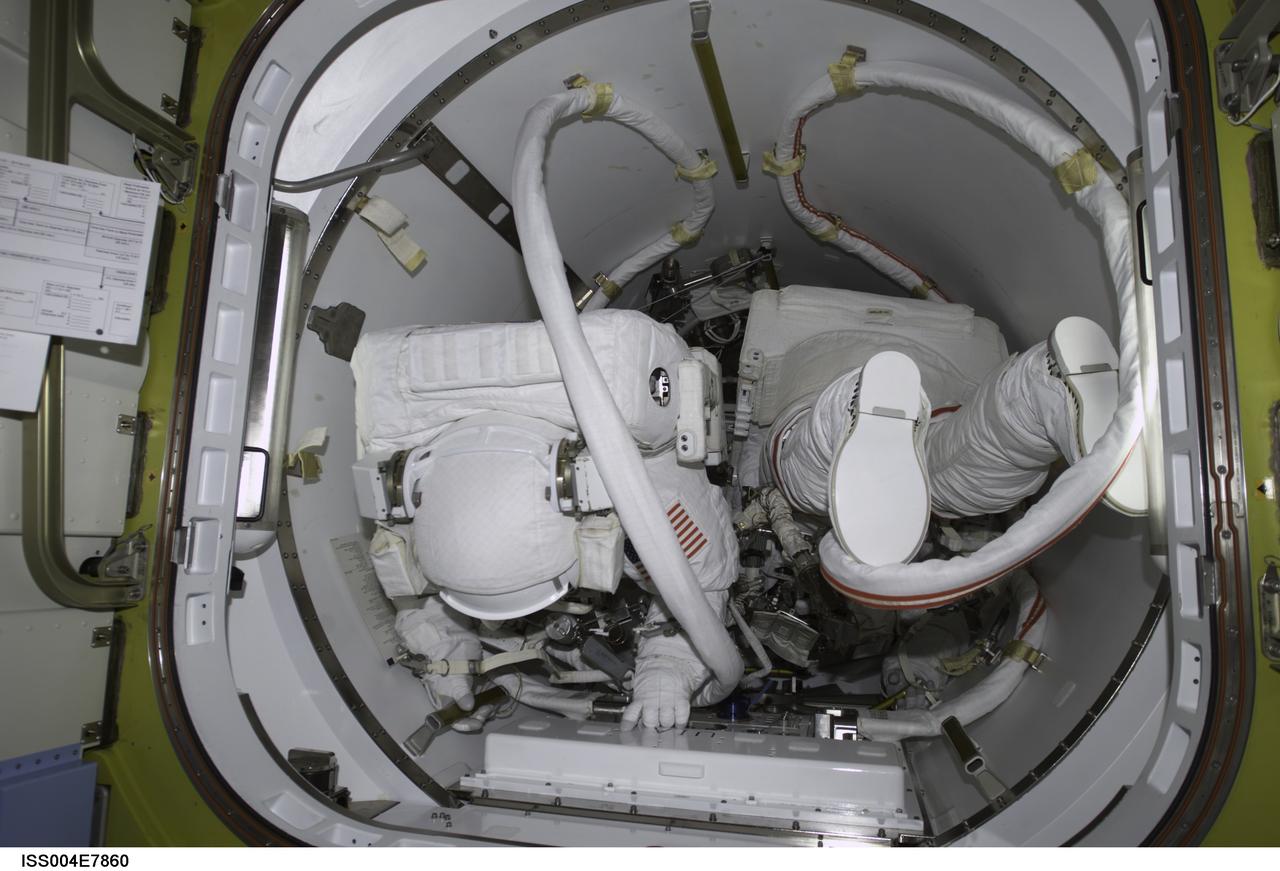
ISS004-E-7860 (20 February 2002) --- Astronauts Daniel W. Bursch (left) and Carl E. Walz are photographed in the crew lock of Quest prior to the February 20 space walk. The photograph was taken with a digital still camera by cosmonaut Yury I. Onufrienko, Expedition Four commander. Onufrienko remained onboard the International Space Station (ISS) while the two flight engineers, attired in NASA extravehicular mobility units (EMU), worked on the orbital outpost, logging a total of 5-hours, 47-minutes outside the station. The two tested equipment and procedures for the Airlock Quest and performed other tasks to prepare for Space Shuttle Atlantis’ STS-110 mission in April. The space walk began at 5:38 a.m. (CST) and ended at 11:25 a.m.
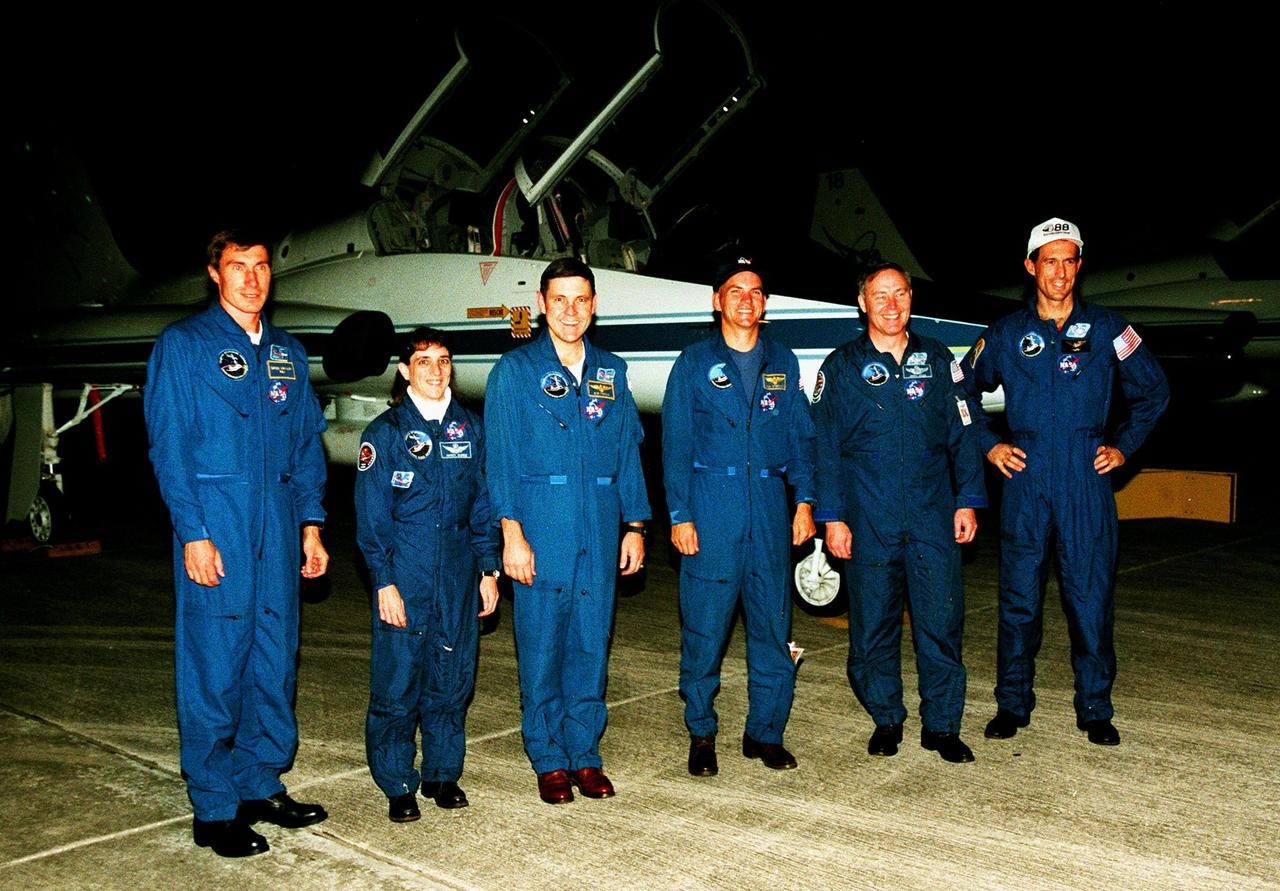
The STS-88 crew members pose for a group photograph in front of a T-38 jet aircraft after their nighttime arrival at the Shuttle Landing Facility to take part in Terminal Countdown Demonstration Test (TCDT) activities. From left to right, they are Mission Specialist Sergei Krikalev, who is a Russian cosmonaut, Mission Specialist Nancy J. Currie, Mission Commander Robert D. Cabana, Pilot Frederick W. "Rick" Sturckow, and Mission Specialists Jerry L. Ross and James H. Newman. The TCDT provides the crew with simulated countdown exercises, emergency egress training, and opportunities to inspect their mission payloads in the orbiter's payload bay. Mission STS-88 is targeted for launch on Dec. 3, 1998. It is the first U.S. flight for the assembly of the International Space Station and will carry the Unity connecting module. Ross and Newman will make three spacewalks to connect power, data and utility lines and install exterior equipment

ISS004-E-8039 (20 February 2002) --- Astronauts Daniel W. Bursch and Carl E. Walz (obscured) go through preparations in the crew lock of Quest prior to the February 20 space walk. The photograph was taken with a digital still camera by cosmonaut Yury I. Onufrienko, Expedition Four commander. Onufrienko remained onboard the International Space Station (ISS) while the two flight engineers, attired in NASA extravehicular mobility units (EMU), worked on the orbital outpost, logging a total of 5-hours, 47-minutes outside the station. The two tested equipment and procedures for the Airlock Quest and performed other tasks to prepare for Space Shuttle Atlantis’ STS-110 mission in April. The space walk began at 5:38 a.m. (CST) and ended at 11:25 a.m.
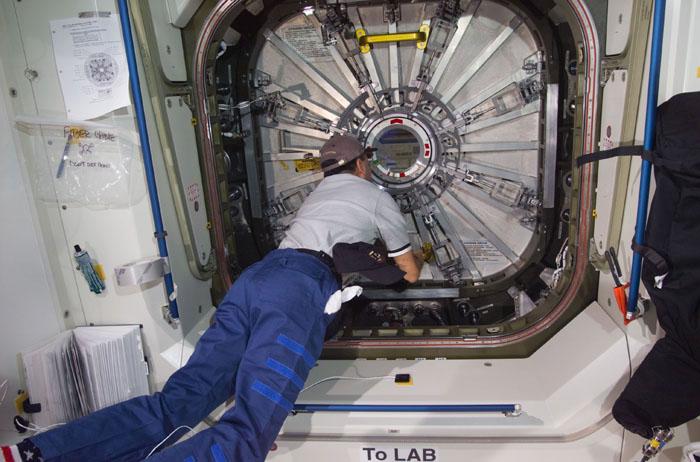
STS98-E-5115 (11 February 2001) --- This medium shot, photographed with a digital still camera, shows STS-98 pilot Mark L. Polansky looking through the observation port on Unity's closed hatch to the newly attached Destiny laboratory. The crews of Atlantis and the International Space Station opened the laboratory shortly after this photo was made on Feb. 11; and the astronauts and cosmonauts spent the first full day of what are planned to be years of work ahead inside the orbiting science and command center. Station commander William M. (Bill) Shepherd opened the Destiny hatch, and he and shuttle commander Kenneth D. Cockrell ventured inside at 8:38 a.m. (CST), Feb. 11. As depicted in subsequent digital images in this series, members of both crews went to work quickly inside the new module, activating air systems, fire extinguishers, alarm systems, computers and internal communications. The crew also continued equipment transfers from the shuttle to the station.