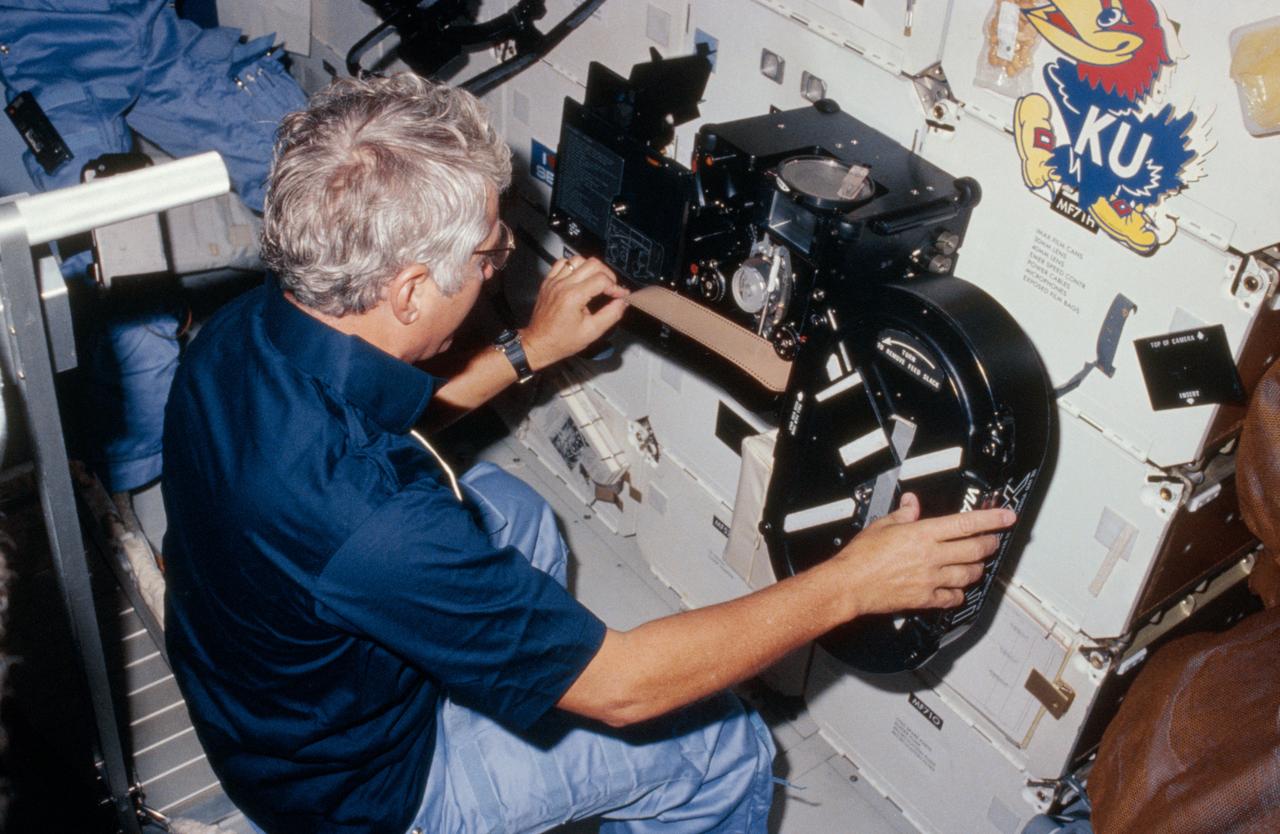
41D-11-004 (8 September 1984 --- View of Crew Commander Henry Hartsfield Jr. loading film into the IMAX camera during the 41-D mission. The camera is floating in front of the middeck lockers. Above it is a sticker of the University of Kansas mascott, the Jayhawk.
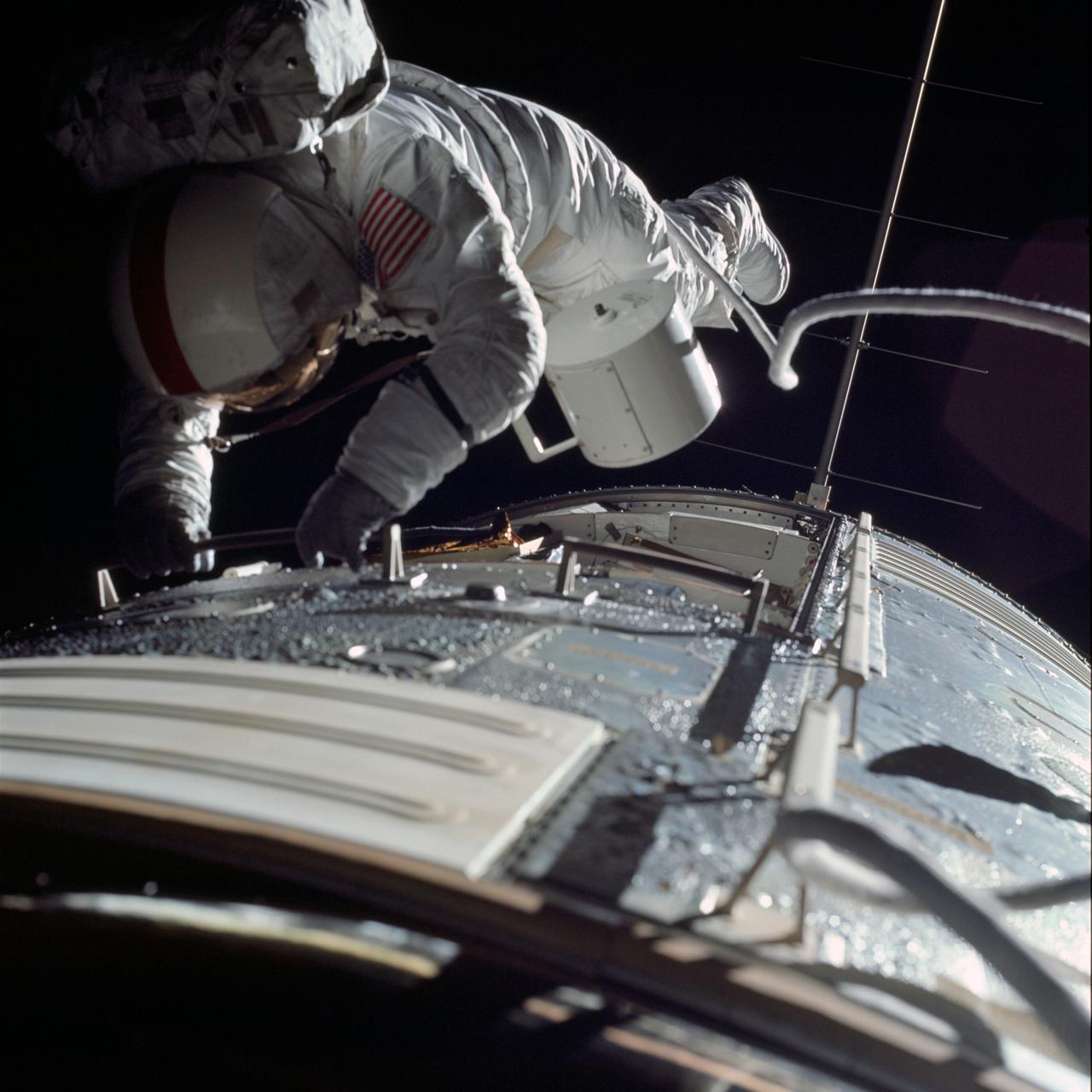
AS17-152-23391 (17 Dec. 1972) --- Astronaut Ronald E. Evans is photographed performing extravehicular activity during the Apollo 17 spacecraft's trans-Earth coast. During his EVA, Evans, command module pilot, retrieved film cassettes from the lunar sounder, mapping camera and panoramic camera. The cylindrical object at Evans' left side is the mapping camera cassette. The total time for the trans-Earth EVA was one hour, seven minutes, 18 seconds, starting at ground elapsed time of 257:25 (2:28 p.m.) and ending at G.E.T. of 258:42 (3:35 p.m.) on Sunday, Dec. 17, 1972.
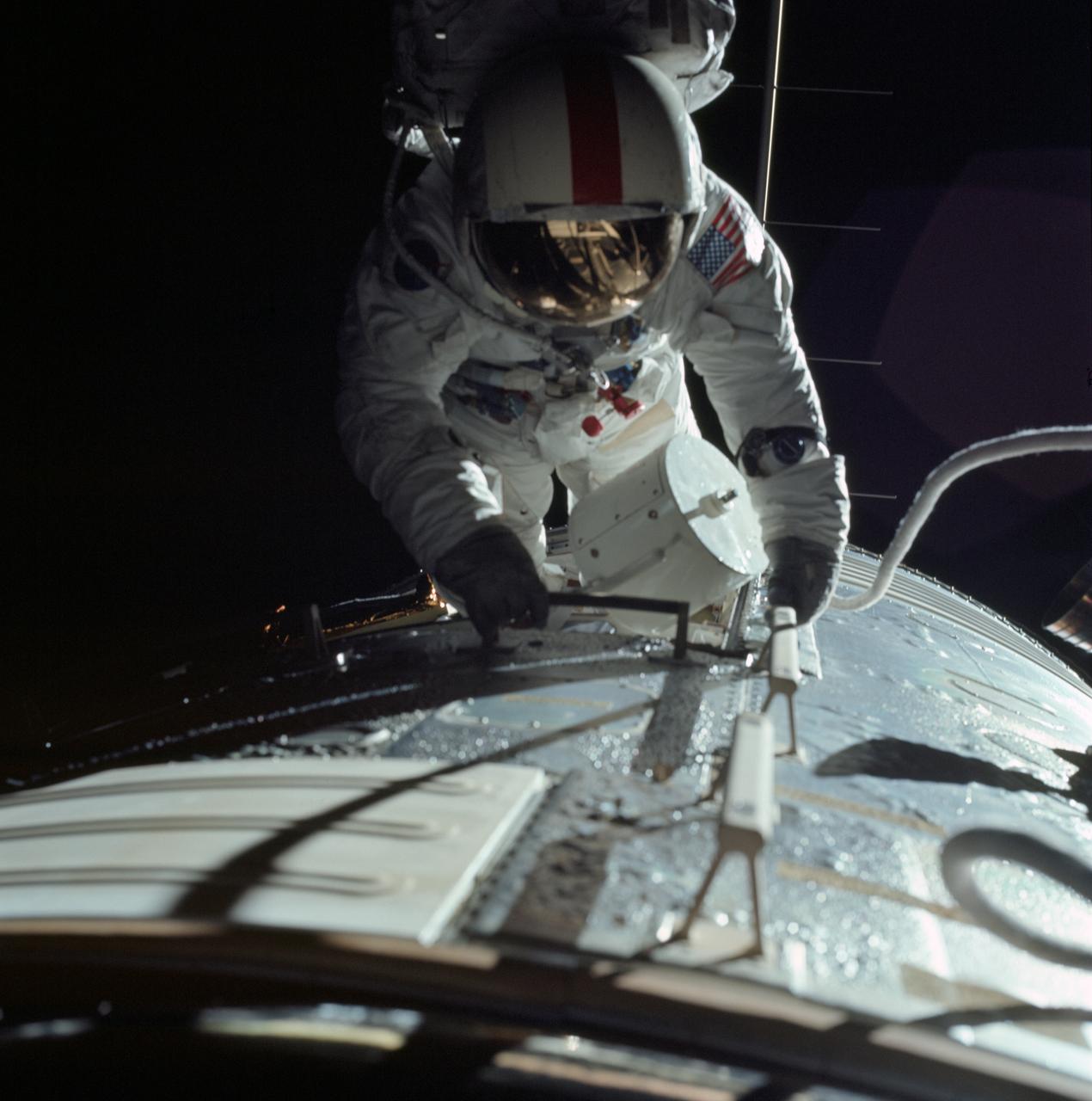
AS17-152-23393 (17 Dec. 1972) --- Astronaut Ronald E. Evans is photographed performing extravehicular activity during the Apollo 17 spacecraft's trans-Earth coast. During his EVA, command module pilot Evans retrieved film cassettes from the Lunar Sounder, Mapping Camera, and Panoramic Camera. The cylindrical object at Evans' left side is the Mapping Camera cassette. The total time for the trans-Earth EVA was one hour seven minutes 18 seconds, starting at ground elapsed time of 257:25 (2:28 p.m.) and ending at ground elapsed timed of 258:42 (3:35 p.m.) on Sunday, Dec. 17, 1972.
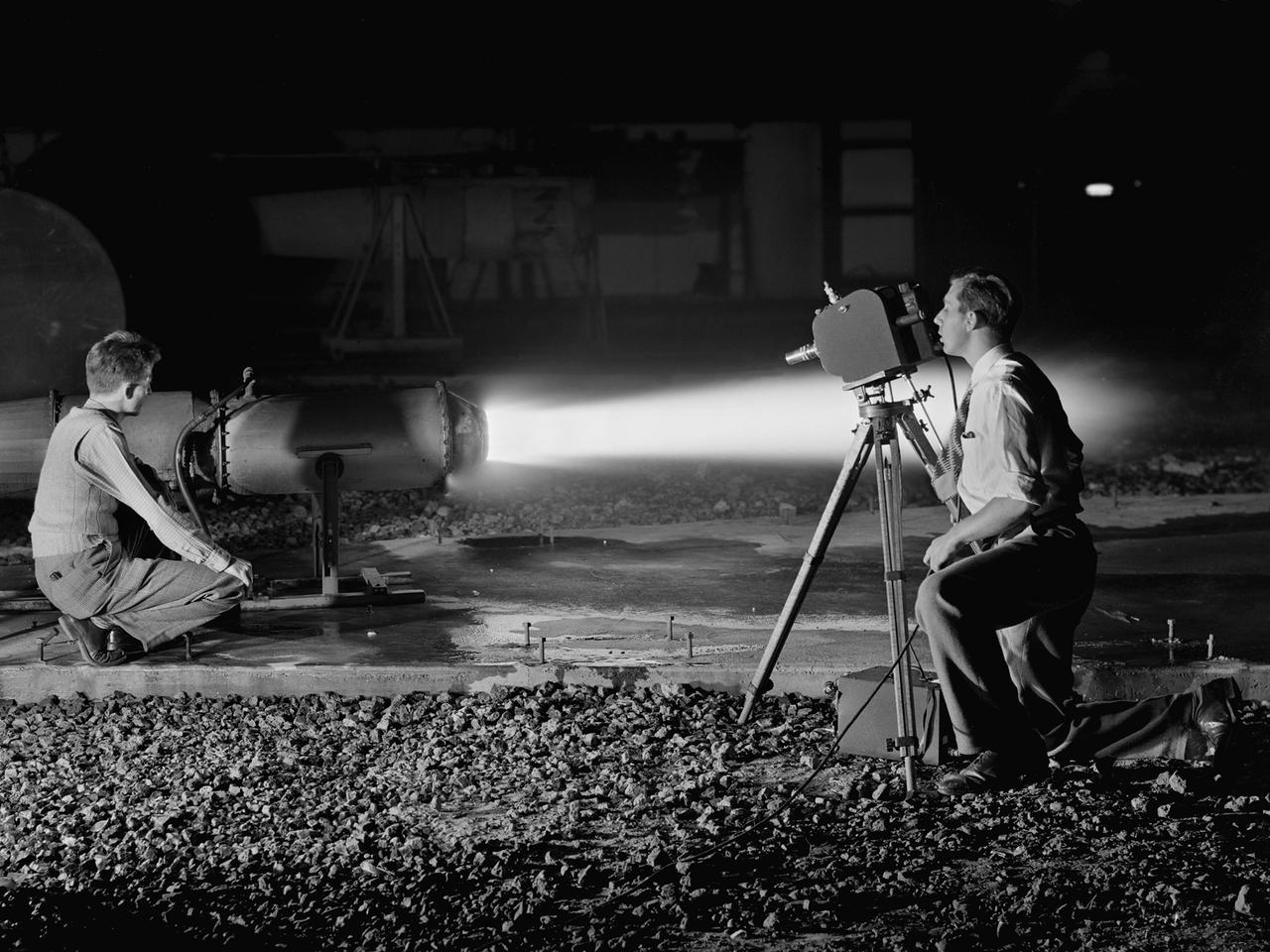
A National Advisory Committee for Aeronautics (NACA) photographer films the test of a ramjet engine at the Lewis Flight Propulsion Laboratory. The laboratory had an arsenal of facilities to test the engines and their components, and immersed itself in the study of turbojet and ramjet engines during the mid-1940s. Combustion, fuel injection, flameouts, and performance at high altitudes were of particular interest to researchers. They devised elaborate schemes to instrument the engines in order to record temperature, pressure, and other data. Many of the tests were also filmed so Lewis researchers could visually review the combustion performance along with the data. The photographer in this image was using high-speed film to document a thrust augmentation study at Lewis’ Jet Static Propulsion Laboratory. The ramjet in this photograph was equipped with a special afterburner as part of a general effort to improve engine performance. Lewis’ Photo Lab was established in 1942. The staff was expanded over the next few years as more test facilities became operational. The Photo Lab’s staff and specialized equipment have been key research tools for decades. They accompany pilots on test flights, use high-speed cameras to capture fleeting processes like combustion, and work with technology, such as the Schlieren camera, to capture supersonic aerodynamics. In addition, the group has documented construction projects, performed publicity work, created images for reports, and photographed data recording equipment.
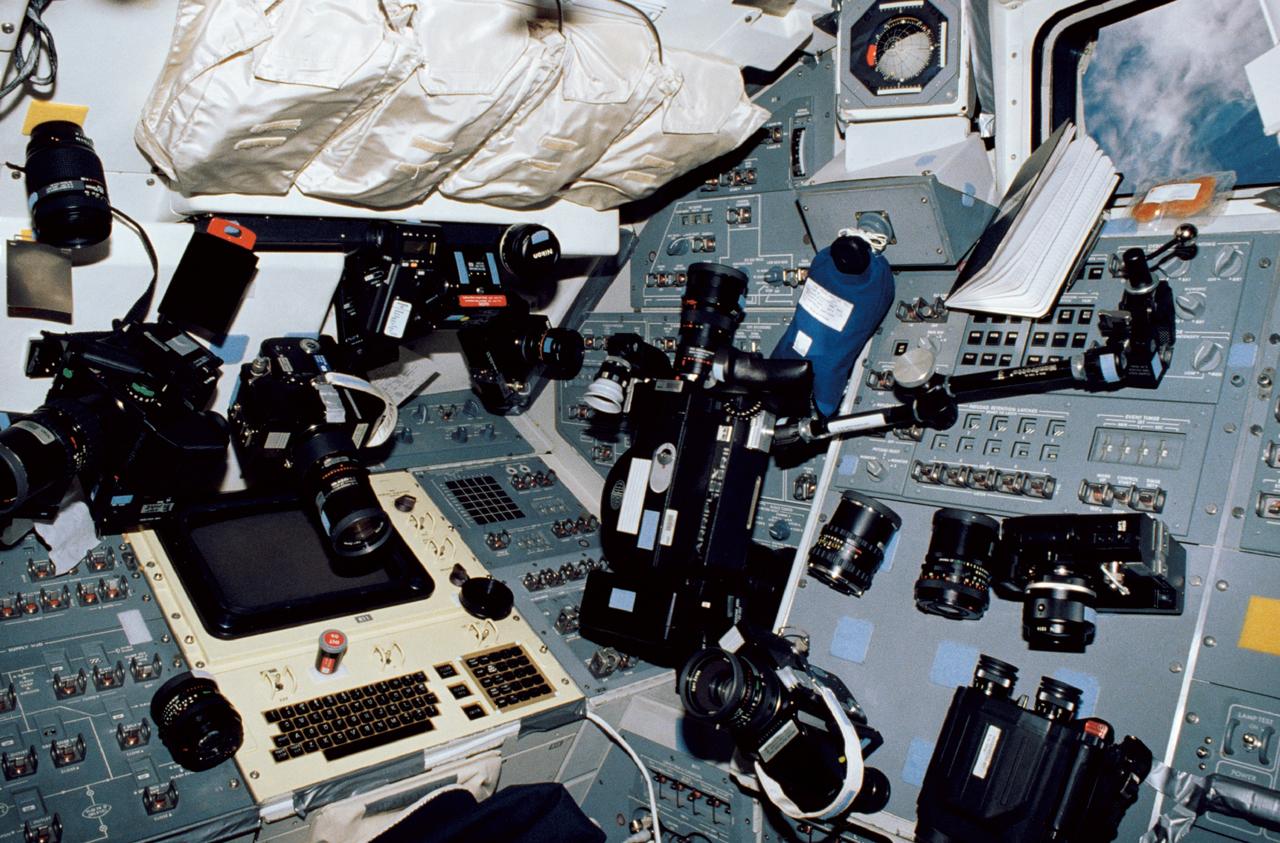
STS035-10-015 (2-10 Dec 1990) --- This busy scene shows cameras and supportive photographic gear temporarily stowed on Space Shuttle Columbia's aft flight deck. It was photographed with a 35mm camera by astronaut Jeffrey A. Hoffman, mission specialist, who called the cluster a "camera forest." The seven STS-35 crewmembers trained to record a wide variety of imagery with an equally broad range of equipment. In addition to cameras, a spot meter, film, a pair of binoculars, a bracket, lenses, lens cleaner and other photographic equipment are in the scene. Clouds over ocean waters are framed by an aft flight deck window at upper right.
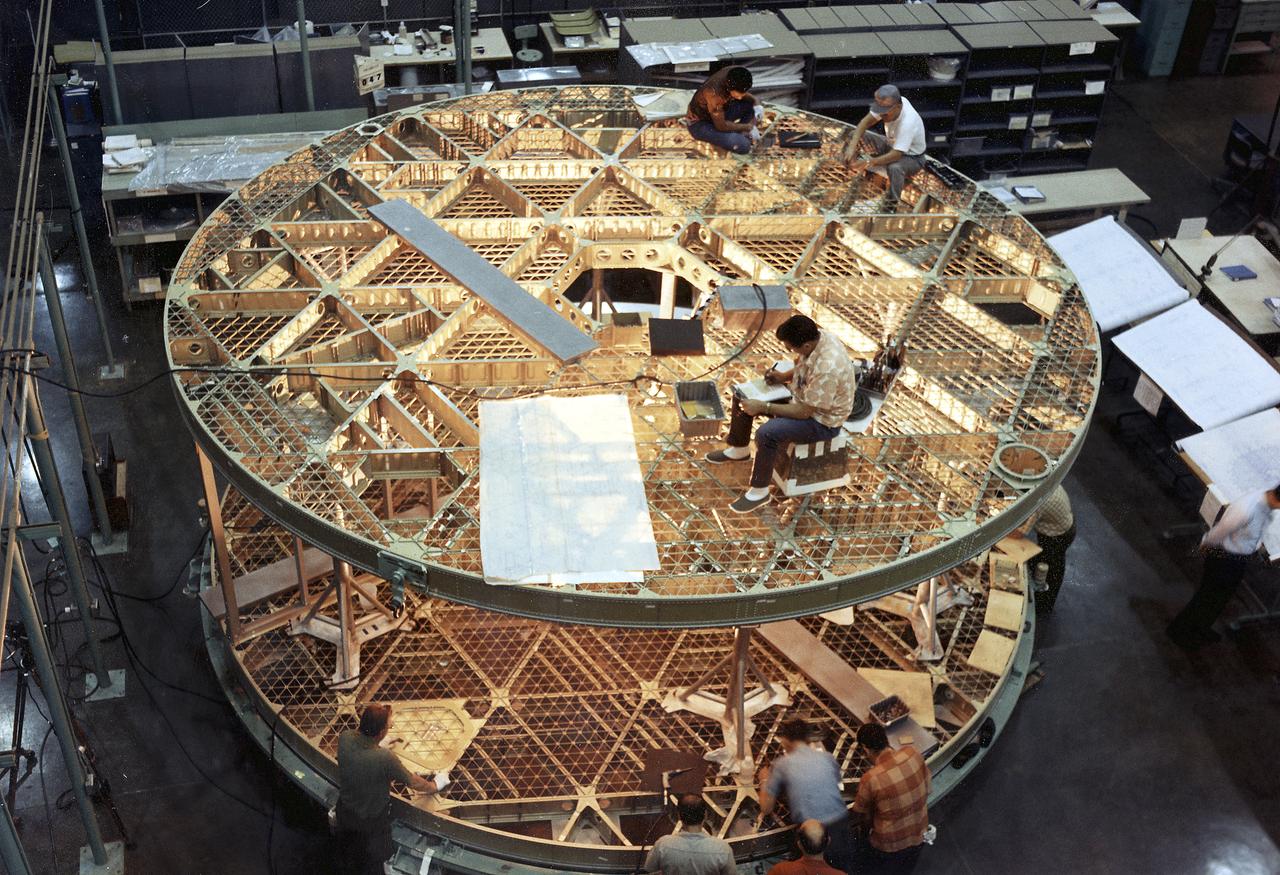
This photograph was taken during assembly of the bottom and upper floors of the Skylab Orbital Workshop (OWS). The OWS was divided into two major compartments. The lower level provided crew accommodations for sleeping, food preparation and consumption, hygiene, waste processing and disposal, and performance of certain experiments. The upper level consisted of a large work area and housed water storage tanks, a food freezer, storage vaults for film, scientific airlocks, mobility and stability experiment equipment, and other experimental equipment.
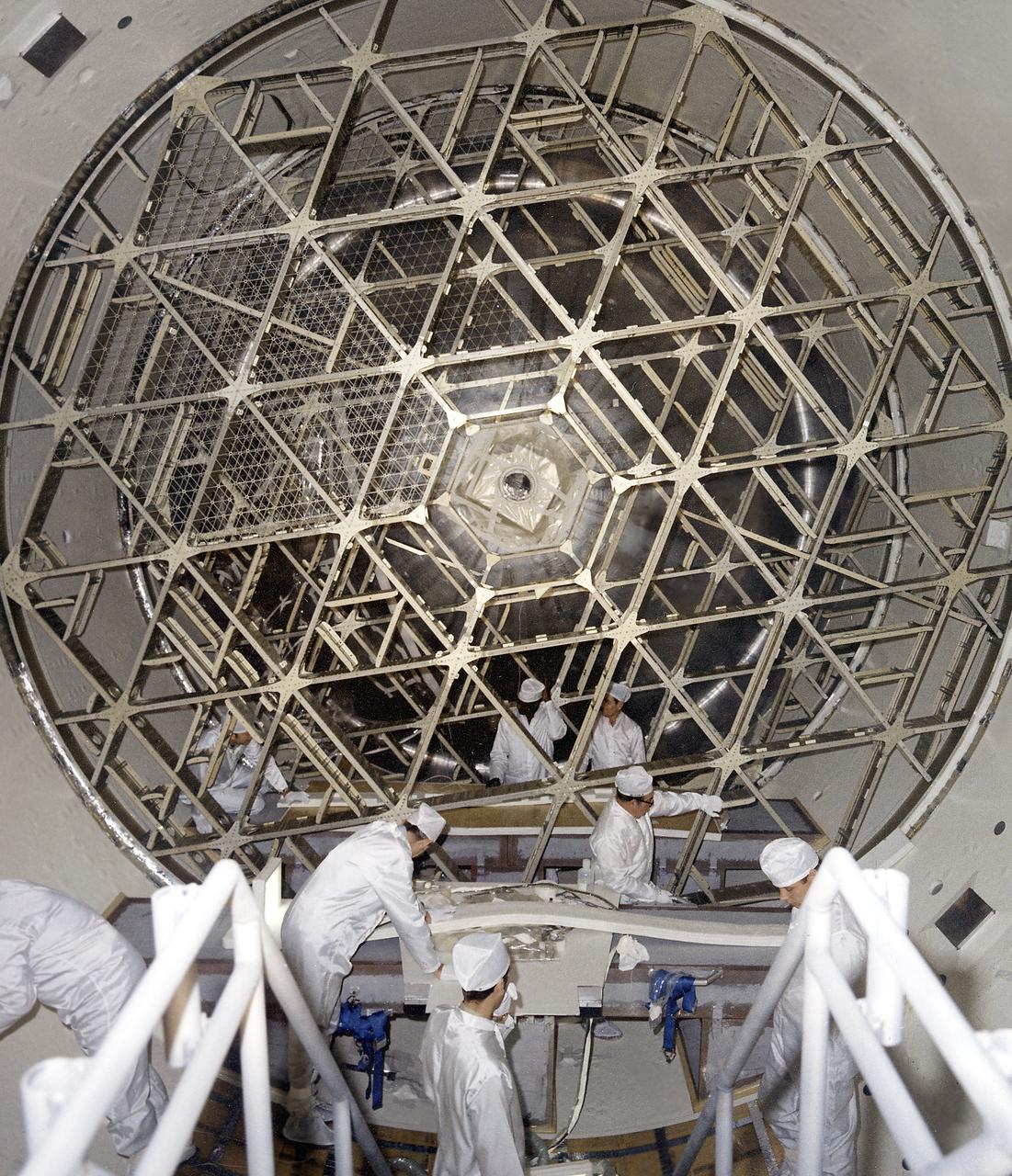
This photograph was taken during installation of floor grids on the upper and lower floors inside the Skylab Orbital Workshop at the McDornell Douglas plant at Huntington Beach, California. The OWS was divided into two major compartments. The lower level provided crew accommodations for sleeping, food preparation and consumption, hygiene, waste processing and disposal, and performance of certain experiments. The upper level consisted of a large work area and housed water storage tanks, a food freezer, storage vaults for film, scientific airlocks, mobility and stability experiment equipment, and other experimental equipment.
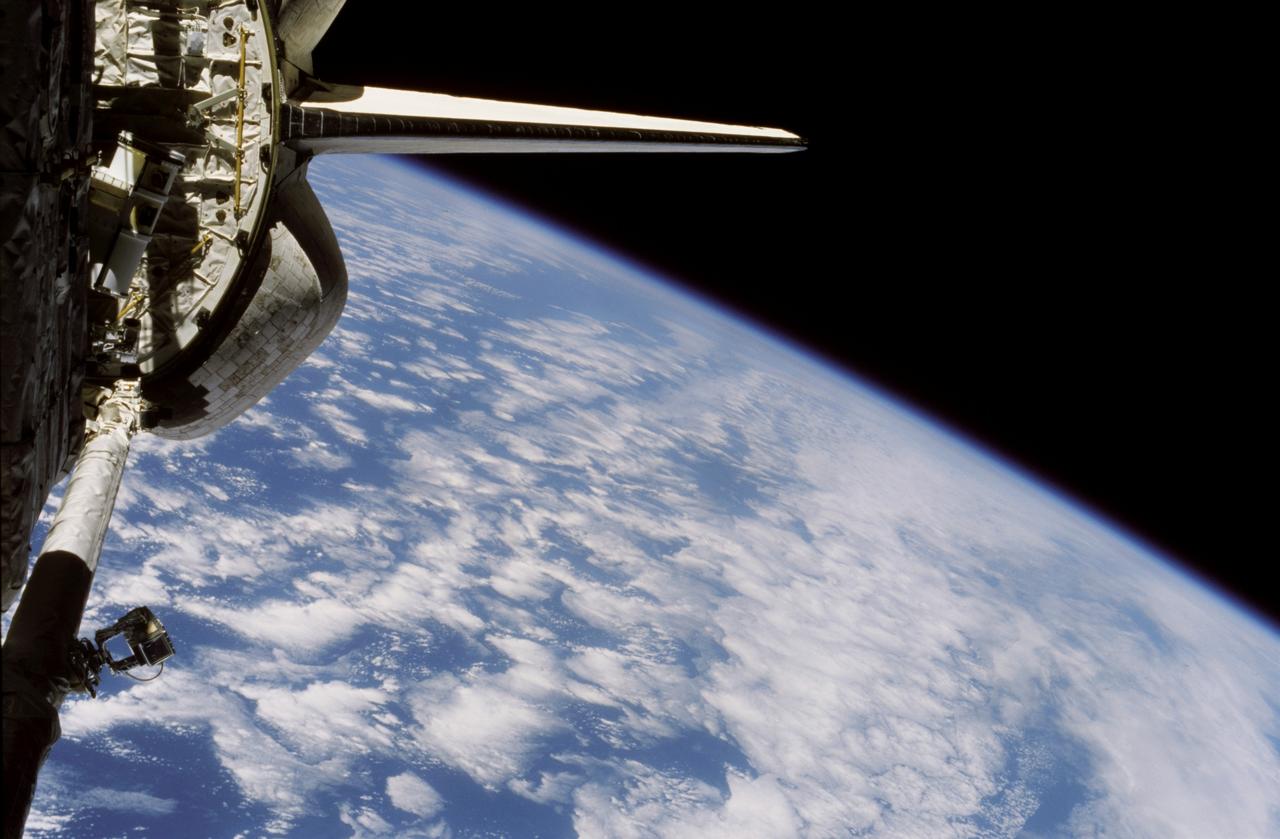
STS116-320-001 (9-22 Dec. 2006) --- Backdropped by the horizon of a blue and white Earth and the blackness of space, part of the Space Shuttle Discovery's aft cargo bay, its vertical stabilizer and orbital maneuvering system (OMS) pods are seen in this image photographed by an STS-116 crewmember onboard the shuttle. This image was recorded with a 35mm film-equipped camera.
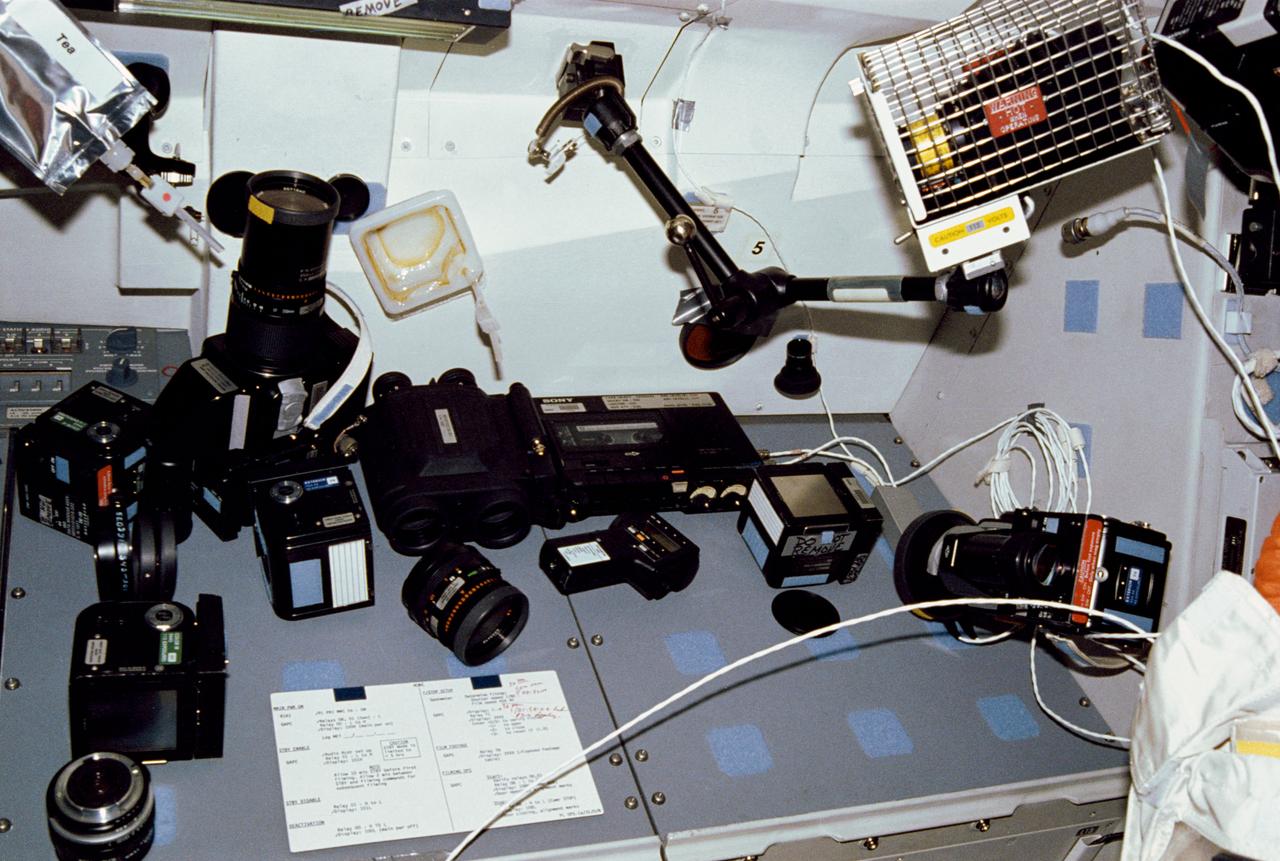
This array of photographic equipment, displayed on the aft flight deck payload station, represents just a part of the imaging and recording hardware which was carried aboard Discovery, Orbiter Vehicle (OV) 103, for STS-31's five day mission. Lenses, film magazines, cassettes, recorders, camera chassis, a pair of binoculars, spot meter, tape recorder, and a bracket-mounted light fixture are included among the array.
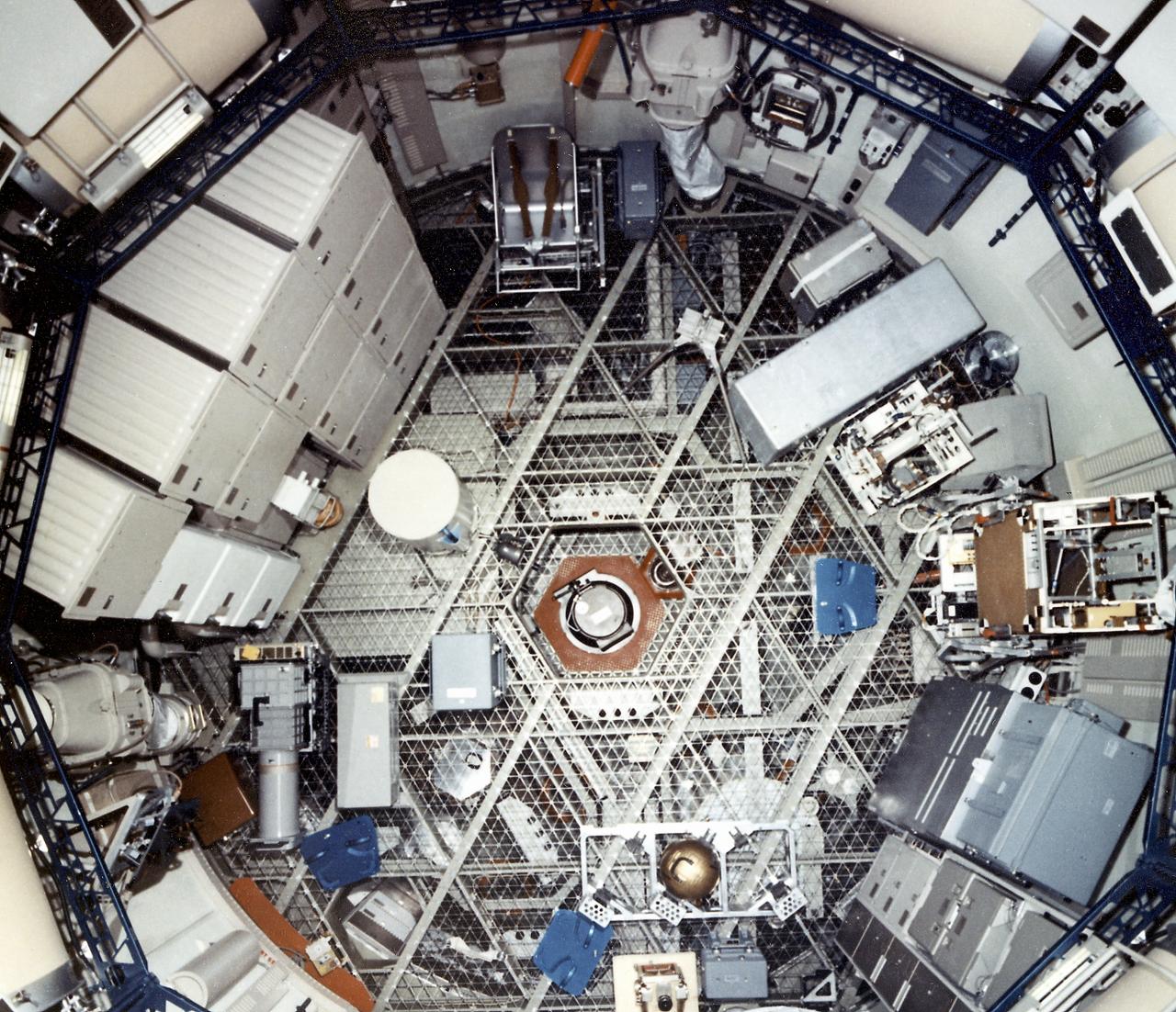
This photograph is an interior view of the Orbital Workshop (OWS) upper level looking from the airlock hatch, showing the octagonal opening that separated the workshop's two levels. The trash airlock can be seen at center. The lower level of the OWS provided crew accommodations for sleeping, food preparation and consumption, hygiene, waste processing and disposal, and performance of certain experiments. The upper level consisted of a large work area and housed water storage tanks, a food freezer, storage vaults for film, scientific airlocks, mobility and stability experiment equipment, and other experimental equipment.
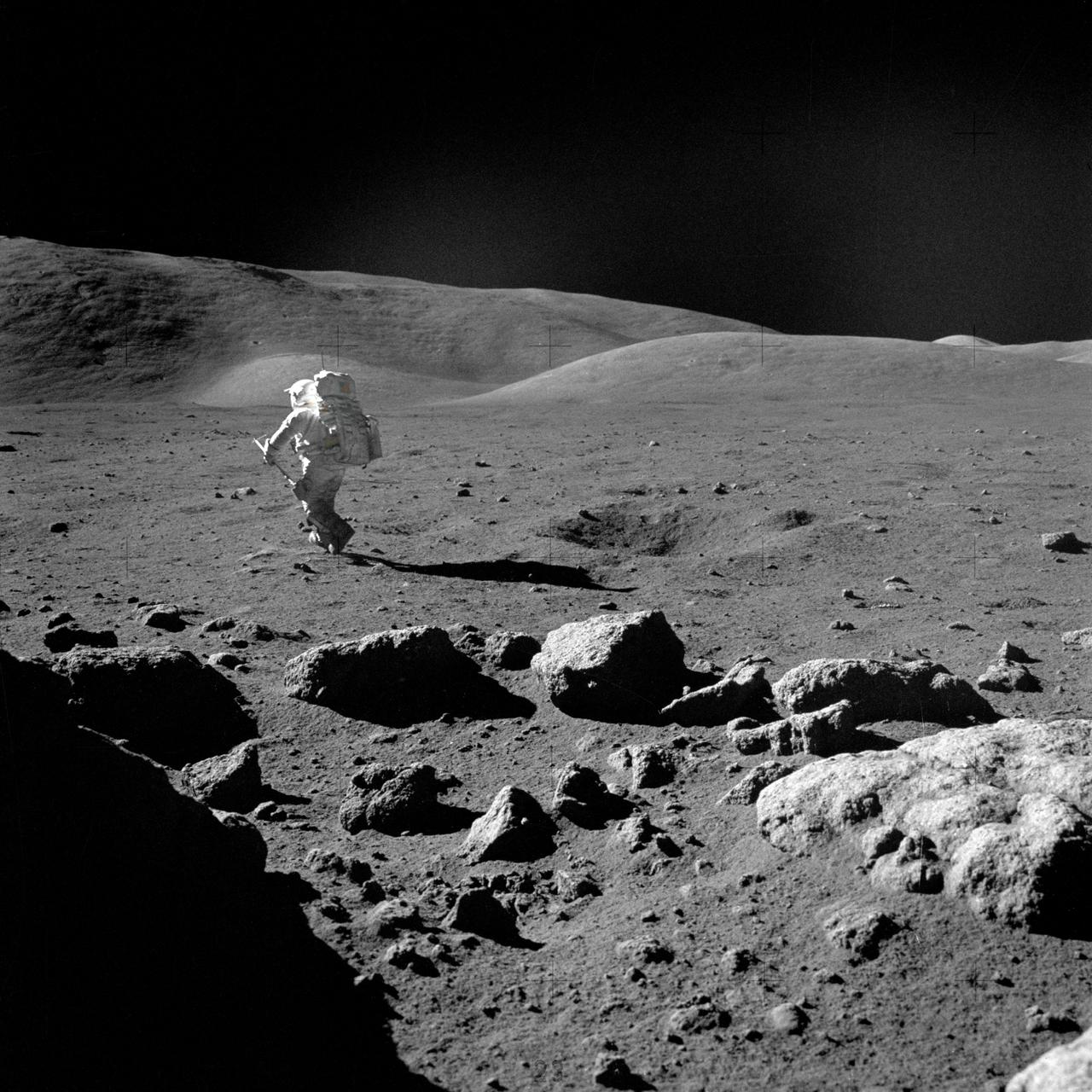
AS17-145-22165 (12 Dec. 1972) --- Scientist-astronaut Harrison H. Schmitt, lunar module pilot, with his adjustable sampling scoop, heads for a selected rock on the lunar surface to retrieve the sample for study. The action was photographed by Apollo 17 crew commander, astronaut Eugene A. Cernan on the mission's second extravehicular activity (EVA), at Station 5 at the Taurus-Littrow landing site. Cernan used a 70mm Hasselblad camera equipped with a 60mm lens and type SO-368 color film for this photograph. While astronauts Cernan and Schmitt descended in the Lunar Module (LM) "Challenger" to explore the Taurus-Littrow region of the moon, astronaut Ronald E. Evans, command module pilot, remained with the Command and Service Modules (CSM) "America" in lunar orbit.
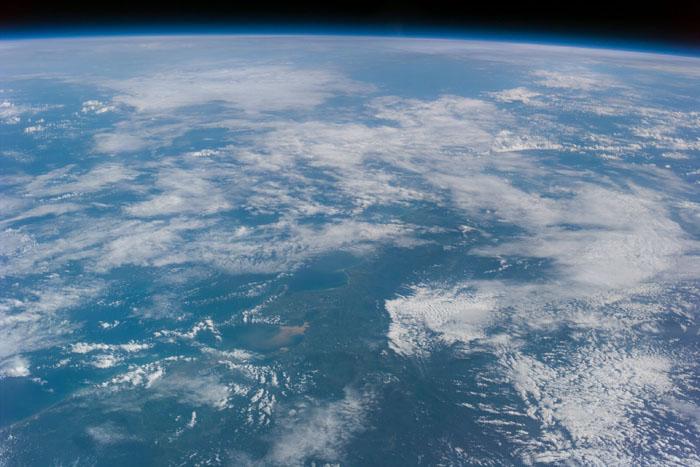
S99-E-5555 (17 February 2000) --- As photographed from the Space Shuttle Endeavour, this oblique electronic still image of Earth's horizon reveals a great deal of cloud cover. In the case of the electronic still camera (ESC), as well as film-bearing instruments, clouds naturally obscure views of recognizable land masses. Much of Earth is heavily cloud covered during the current mission and meteorlogists and oceanographers are interested in studying that aspect. However, the Shuttle Radar Topography Mission's other sensing equipment, X-SAR and C-band antennae, are able to penetrate cloud cover and record important topographic data for mapmakers and scientists of other disciplines. In addition to the sensing equipment mentioned above, this mission is supporting the EarthKAM project which utilizes the services of another electronic still camera mounted in Endeavour's windows. Unlike this oblique view, EarthKAM records strictly vertical or nadir imagery of points all over the world. Students across the United States and in France, Germany and Japan are taking photos throughout the STS-99 mission. And they are using these new photos, plus all the images already available in the EarthKAM system, to enhance their classroom learning in Earth and space science, social studies, geography, mathematics and more.
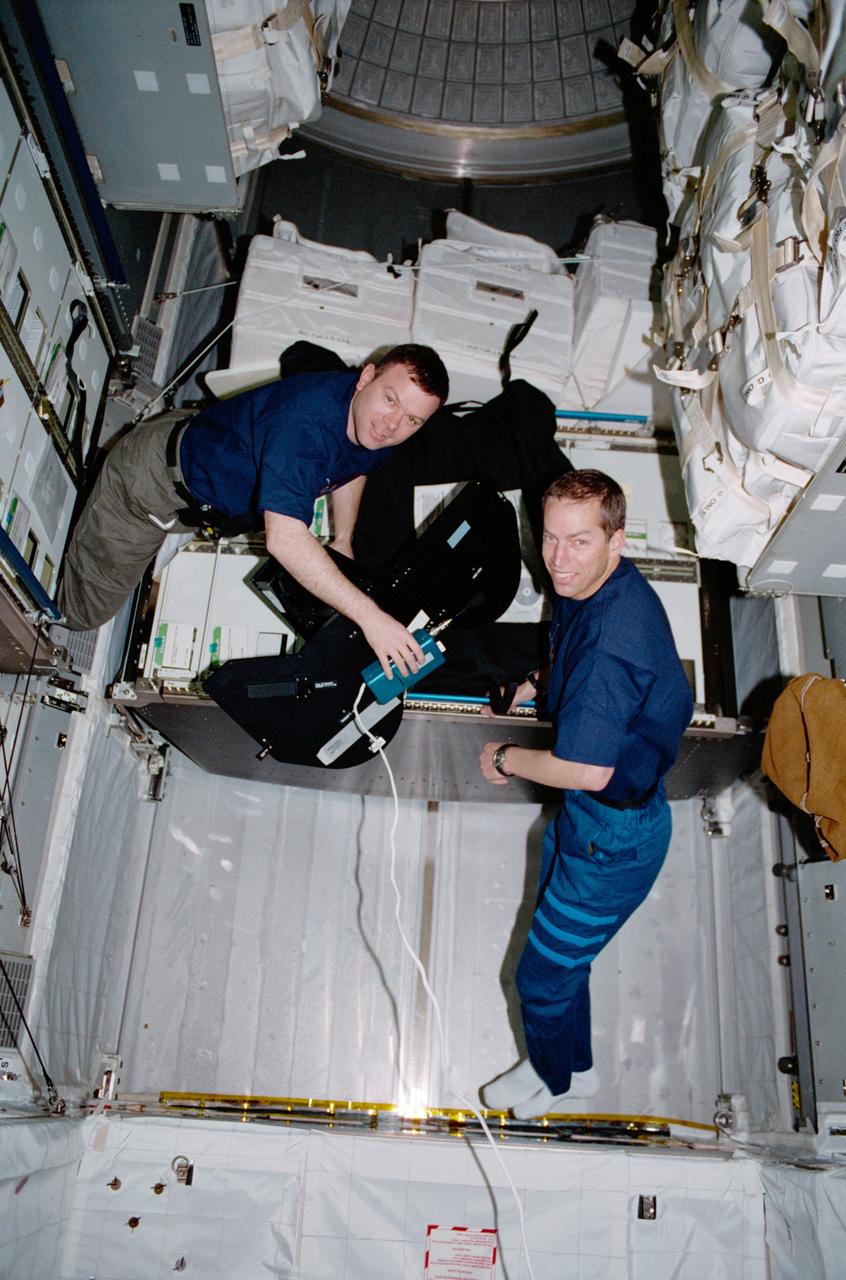
Pilot James M. Kelly (left) and Commander James D. Wetherbee for the STS-102 mission, participate in the movement of supplies inside Leonardo, the Italian Space Agency built Multipurpose Logistics Module (MPLM). In this particular photograph, the two are handling a film magazine for the IMAX cargo bay camera. The primary cargo of the STS-102 mission, the Leonardo MPLM is the first of three such pressurized modules that will serve as the International Space Station's (ISS') moving vans, carrying laboratory racks filled with equipment, experiments, and supplies to and from the Station aboard the Space Shuttle. The cylindrical module is approximately 21-feet long and 15- feet in diameter, weighing almost 4.5 tons. It can carry up to 10 tons of cargo in 16 standard Space Station equipment racks. Of the 16 racks the module can carry, 5 can be furnished with power, data, and fluid to support refrigerators or freezers. In order to function as an attached station module as well as a cargo transport, the logistics module also includes components that provide life support, fire detection and suppression, electrical distribution, and computer functions. The eighth station assembly flight, the STS-102 mission also served as a crew rotation flight. It delivered the Expedition Two crew to the Station and returned the Expedition One crew back to Earth.
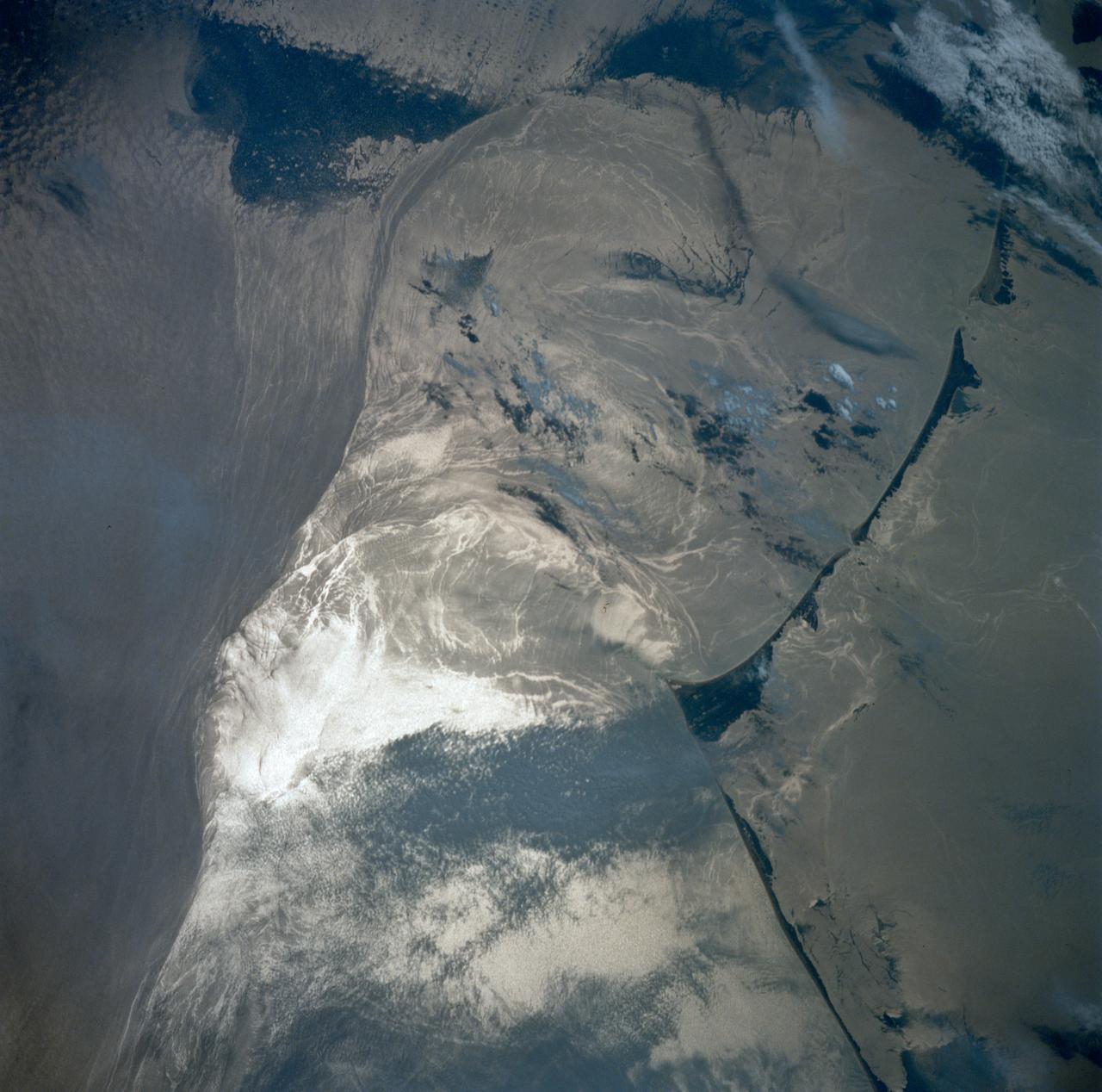
STS039-83-091 (28 April-6 May 1991) --- (HOLD PHOTO WITH BARRIER ISLANDS ALONG THE LEFT SIDE). This photograph of the water sunglint pattern along the Outer Banks of North Carolina was taken with a 70mm handheld camera equipped with color visible film and a 250mm lens. The islands appear as dark areas along the left side of the frame and Cape Hatteras is seen to the left and slightly above frame center. Sunglint is composed of light reflected from the water surface and the patterns seen in this photo are largely the result of sea surface roughness. Smooth water has a mirror-like reflectance and is represented in the photo as a bright area. Rough water, on the other hand, tends to disperse the light reflected from the water surface and, therefore, appears dark. Water currents in this area are extremely dynamic because the swift, northward flowing Gulf Stream (the offshore darker water along the right side of the photo) diverges from the coastline north of Cape Hatteras. The sharp line between bright and dark water is the western boundary of the Gulf Stream.
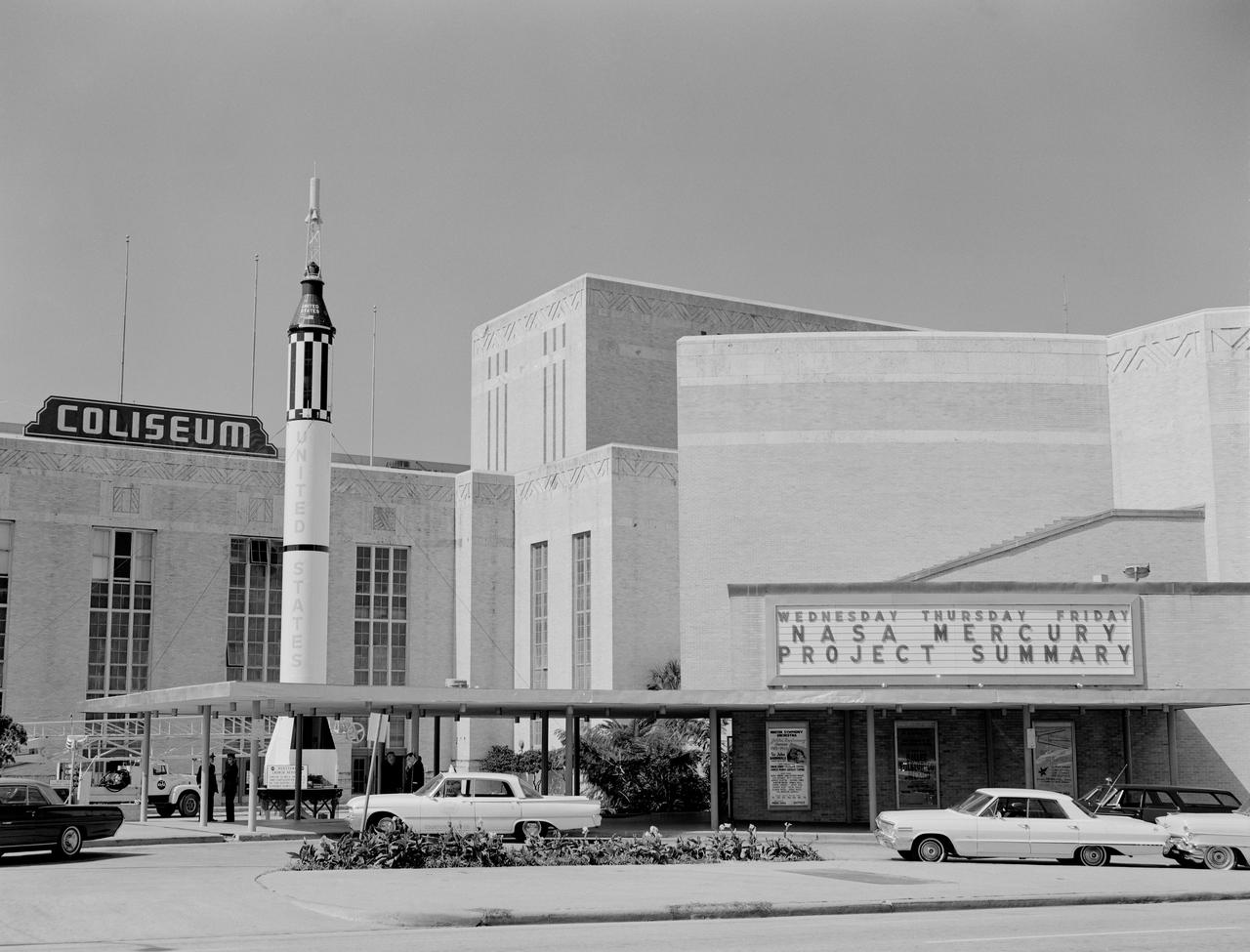
In October 1963, the Project Mercury Summary Conference was held in the Houston, TX, Coliseum. This series of 44 photos is documentation of that conference. A view of the Houston, TX, Coliseum, and parking area in front with a Mercury Redstone Rocket setup in the parking lot for display (S63-16451). A view of an Air Force Atlas Rocket, a Mercury Redstone Rocket, and a Mercury Spacecraft on a test booster on display in the front area of the Coliseum (S63-16452). A view an Air Force Atlas Rocket and a Mercury Redstone Rocket set up for display with the Houston City Hall in the background (S63- 16453). This view shows the Atlas Rocket, Mercury Redstone, and Mercury Test Rocket with the Houston, TX, Coliseum in the background (S63- 16454). A balcony view, from the audience right side, of the attendees looking at the stage (S63-16455). A view of the NASA Space Science Demonstration with equipment setup on a table, center stage and Space Science Specialist briefing the group as he pours Liquid Oxygen into a beaker (S63-16456). View of the audience from the balcony on the audience right showing the speakers lecturn on stage to the audience left (S63-16457). A view of attendees in the lobby. Bennet James, MSC Public Affairs Office is seen to the left of center (S63-16458). Another view of the attendees in the lobby (S63- 16459). In this view, Astronaut Neil Armstrong is seen writing as others look on (S63-16460). In this view of the attendees, Astronauts Buzz Aldrin and Walt Cunningham are seen in the center of the shot. The October Calendar of Events is visable in the background (S63-16461). Dr. Charles Berry is seen in this view to the right of center, seated in the audience (S63-16462). View of " Special Registration " and the five ladies working there (S63-16463). A view from behind the special registration table, of the attendees being registered (S63-16464). A view of a conference table with a panel seated. (R-L): Dr. Robert R. Gilruth, Hugh L. Dryden, Walter C. Williams, and an unidentified man (S63- 16465). A closeup of the panel at the table with Dr. Gilruth on the left (S63-16466). About the same shot as number S63-16462, Dr. Berry is seen in this shot as well (S63-16467). In this view the audio setup is seen. In the audience, (L-R): C. C. Kraft, Vernon E. (Buddy) Powell, Public Affairs Office (PAO); and, in the foreground mixing the audio is Art Tantillo; and, at the recorder is Doyle Hodges both of the audio people are contractors that work for PAO at MSC (S63-16468). In this view Maxime Faget is seen speaking at the lecturn (S63-16469). Unidentified person at the lecturn (S63-16470). In this view the motion picture cameras and personel are shown documenting the conference (S63-16471). A motion picture cameraman in the balcony is shown filming the audience during a break (S63- 16472). Family members enjoy an exhibit (S63-16473). A young person gets a boost to look in a Gemini Capsule on display (S63-16474). A young person looks at the Gemini Capsule on display (S63-16475). Dr. Robert R. Gilruth is seen at the conference table (S63-16476). Walt Williams is seen in this view at the conference table (S63-16477). Unidentified man sitting next to Walt Williams (S63-16478). (L-R): Seated at the conference table, Dr. Robert Gilruth, Hugh L. Dryden, and Walt Williams (S63- 16479). Group in lobby faces visable, (L-R): Walt Williams, unidentified person, Dr. Robert Gilruth, Congressman (S63-16480). Man in uniform at the lecturn (S63-16481). Astronaut Leroy Gordon Cooper at the lecturn (S63-16482). Astronaut Cooper at the lecturn with a picture on the screen with the title, " Astronaut Names for Spacecraft " (S63-16483). Dr. Gilruth at the lecturn (S63-16484). Walt Williams at the lecturn (S63-16485). Unidentified man at the lecturn (S63-16486). John H. Boynton addresses the Summary Conference (S63-16487). (L-R): Astronaut Leroy Gordon Cooper, Mrs. Cooper, Senator Cris Cole, and Mrs. Cole (S63- 16488). In this view in the lobby, Senator and Mrs. Cris Cole, with Astronaut Gordon Cooper standing near the heatshield, and Mrs. Cooper; next, on the right is a press photographer (S63-16489). (L-R): Astronaut L. Gordon Cooper and Mrs. Cooper, unidentified man, and Senator Walter Richter (S63-16490). (L-R): Eugene Horton, partially obscured, briefs a group on the Mercury Spacecraft, an unidentified person, Harold Ogden, a female senator, Senator Chris Cole, Mrs. Cole, an unidentified female, Senator Walter Richter, Jim Bower, and an unidentified female (S63-16491). In this view, Mrs. Jim Bates is seen in the center, and Senator Walter Richter to the right (S63- 16492). The next three (3) shots are 4X5 CN (S63-16493 - S63-16495). In this view a NASA Space Science Demonstration is seen (S63-16493). In this view a shot of the conference table is seen, and, (L-R): Dr. Robert R. Gilruth, Hugh L. Dryden, Mr. Walter Williams, and an unidentfied man (S63-16494 - S63-16495). HOUSTON, TX
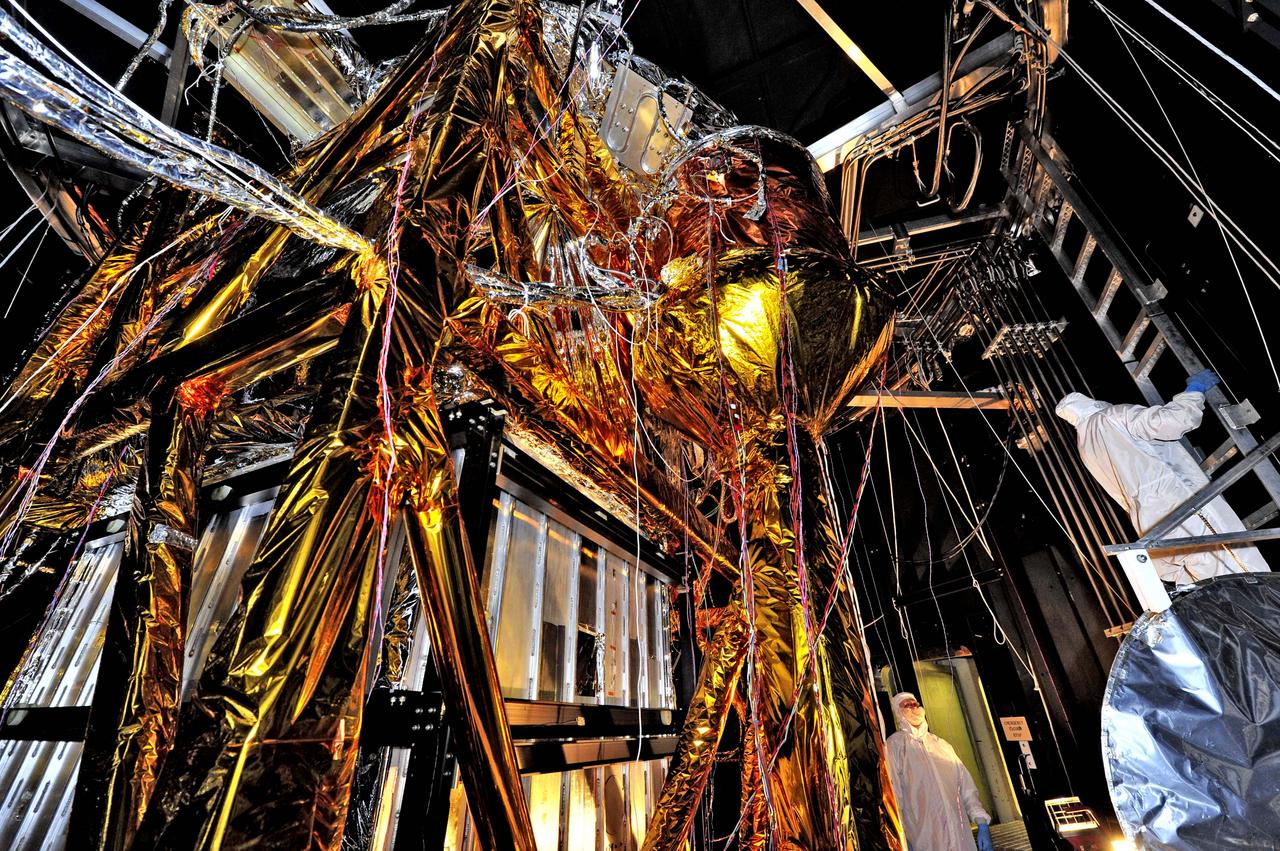
NASA image release August 23, 2012 What looks like a giant golden spider weaving a web of cables and cords, is actually ground support equipment, including the Optical Telescope Simulator (OSIM), for the James Webb Space Telescope. OSIM's job is to generate a beam of light just like the one that the real telescope optics will feed into the actual flight instruments. Because the real flight instruments will be used to test the real flight telescope, their alignment and performance first have to be verified by using the OSIM. Engineers are thoroughly checking out OSIM now in preparation for using it to test the flight science instruments later. This photo was taken from inside a large thermal-vacuum chamber called the Space Environment Simulator (SES), at NASA's Goddard Space Flight Center in Greenbelt, Md. Engineers have blanketed the structure of the OSIM with special insulating material to help control its temperature while it goes into the deep freeze testing that mimics the chill of space that Webb will ultimately experience in its operational orbit over 1 million miles from Earth. The golden-colored thermal blankets are made of aluminized kapton, a polymer film that remains stable over a wide range of temperatures. The structure that looks like a silver and black cube underneath the "spider" is a set of cold panels that surround OSIM's optics. During testing, OSIM's temperature will drop to 100 Kelvin (-280 F or -173 C) as liquid nitrogen flows through tubes welded to the chamber walls and through tubes along the silver panels surrounding OSIM's optics. These cold panels will keep the OSIM optics very cold, but the parts covered by the aluminized kapton blankets will stay warm. "Some blankets have silver facing out and gold facing in, or inverted, or silver on both sides, etc.," says Erin Wilson, a Goddard engineer. "Depending on which side of the blanket your hardware is looking at, the blankets can help it get colder or stay warmer, in an environmental test." Another reason for thermal blankets is to shield the cold OSIM optics from unwanted stray infrared light. When the OSIM is pointing its calibrated light beam at Webb's science instruments, engineers don't want any stray infrared light, such as "warm photons" from warm structures, leaking into the instruments' field of view. Too much of this stray light would raise the background too much for the instruments to "see" light from the OSIM—it would be like trying to photograph a lightning bug flying in front of car headlights. To get OSIM's optics cold, the inside of the chamber has to get cold, and to do that, all the air has to be pumped out to create a vacuum. Then liquid nitrogen has to be run though the plumbing along the inner walls of the chamber. Wilson notes that's why the blankets have to have vents in them: "That way, the air between all the layers can be evacuated as the chamber pressure drops, otherwise the blankets could pop," says Wilson. The most powerful space telescope ever built, Webb is the successor to NASA's Hubble Space Telescope. Webb's four instruments will reveal how the universe evolved from the Big Bang to the formation of our solar system. Webb is a joint project of NASA, the European Space Agency and the Canadian Space Agency. Credit: NASA/GSFC/Chris Gunn <b><a href="http://www.nasa.gov/audience/formedia/features/MP_Photo_Guidelines.html" rel="nofollow">NASA image use policy.</a></b> <b><a href="http://www.nasa.gov/centers/goddard/home/index.html" rel="nofollow">NASA Goddard Space Flight Center</a></b> enables NASA’s mission through four scientific endeavors: Earth Science, Heliophysics, Solar System Exploration, and Astrophysics. Goddard plays a leading role in NASA’s accomplishments by contributing compelling scientific knowledge to advance the Agency’s mission. <b>Follow us on <a href="http://twitter.com/NASA_GoddardPix" rel="nofollow">Twitter</a></b> <b>Like us on <a href="http://www.facebook.com/pages/Greenbelt-MD/NASA-Goddard/395013845897?ref=tsd" rel="nofollow">Facebook</a></b> <b>Find us on <a href="http://instagrid.me/nasagoddard/?vm=grid" rel="nofollow">Instagram</a></b>