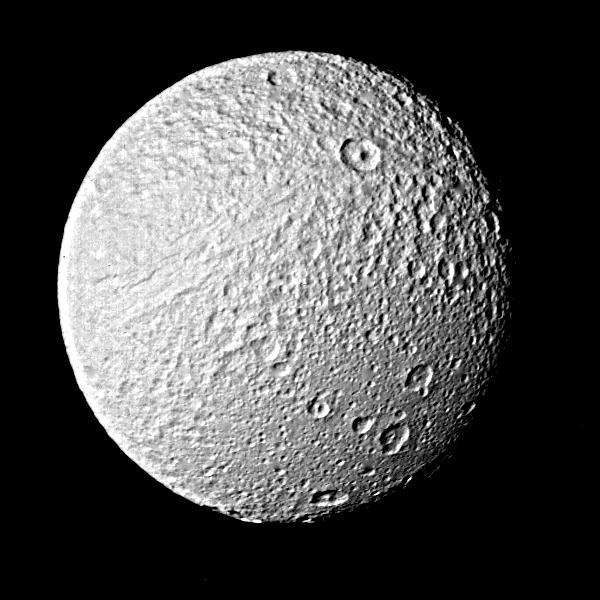
Photograph of Saturns Satellite Tethys
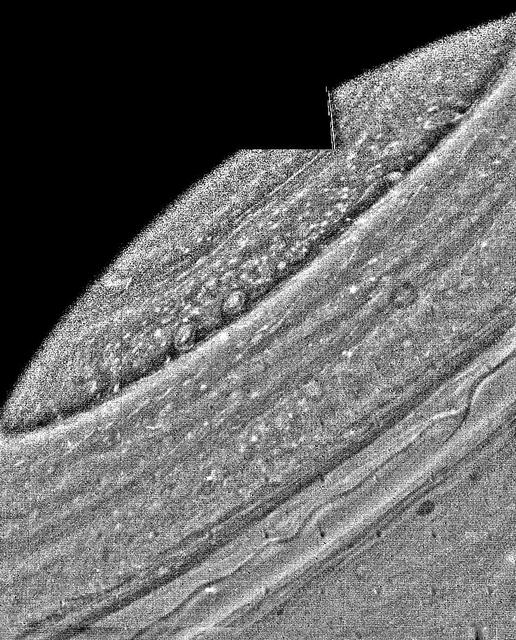
Photographic Mosaic of Saturn
Opportunity Photographs Her Underbelly
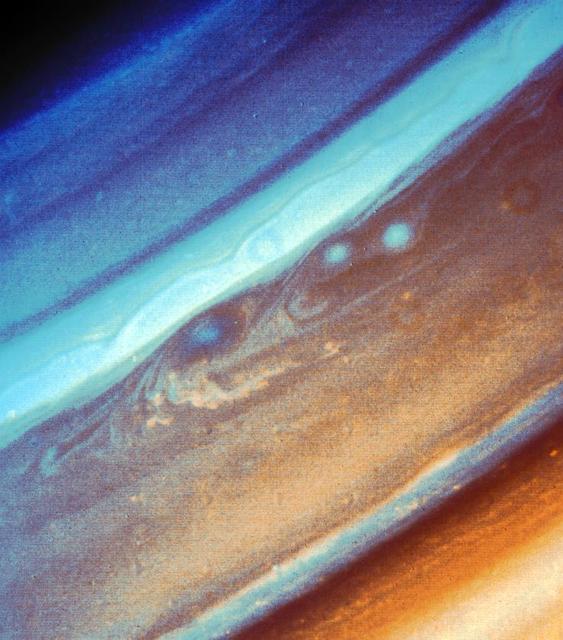
Photograph of Saturn Constructed in False Color
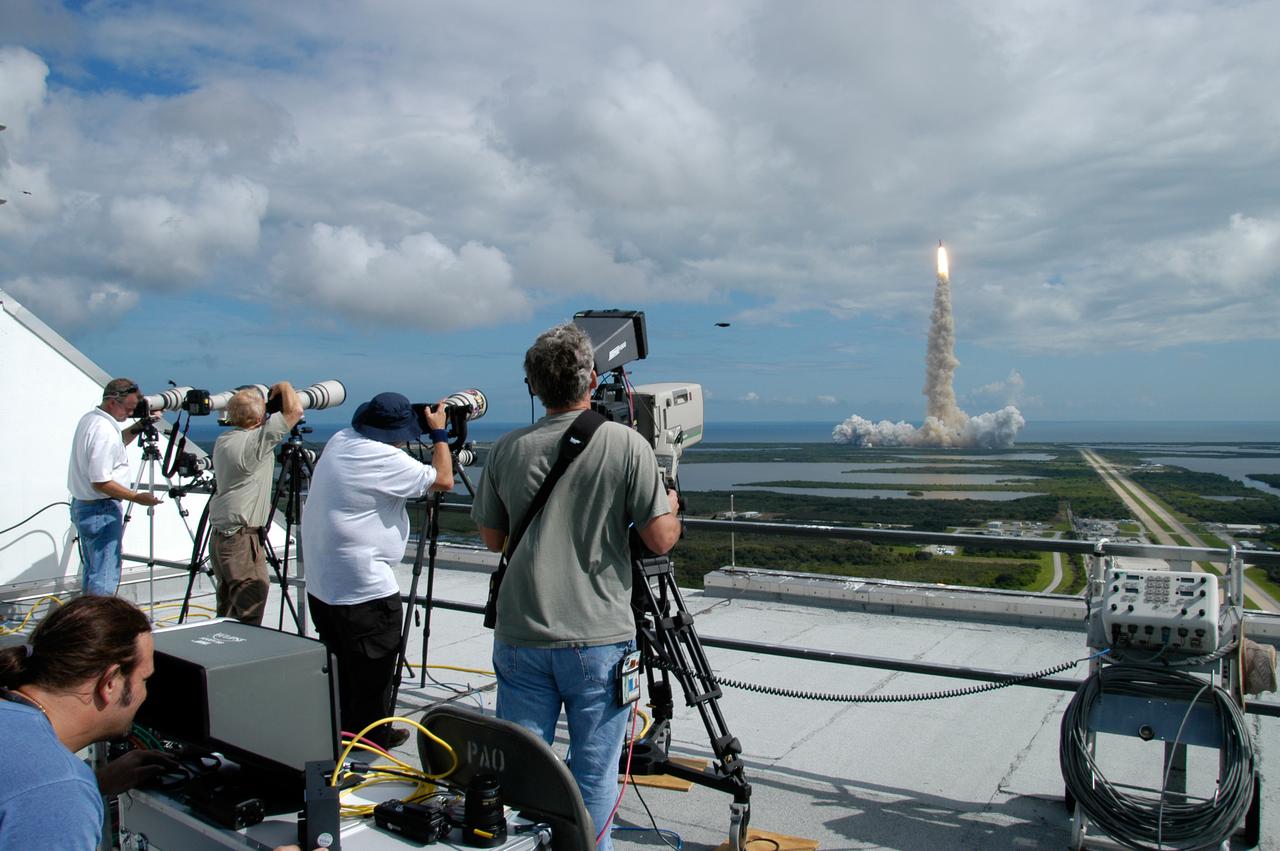
From the roof of the Vehicle Assembly Building at NASA's Kennedy Space Center, media photographers capture the launch of space shuttle Discovery as it soars from its seaside launch pad. Liftoff was on time at 11:38:19 a.m. EDT. Discovery carries the Italian-built U.S. Node 2, called Harmony. During the 14-day STS-120 mission, the crew will install Harmony and move the P6 solar arrays to their permanent position and deploy them. Discovery is expected to complete its mission and return home at 4:47 a.m. EST on Nov. 6.
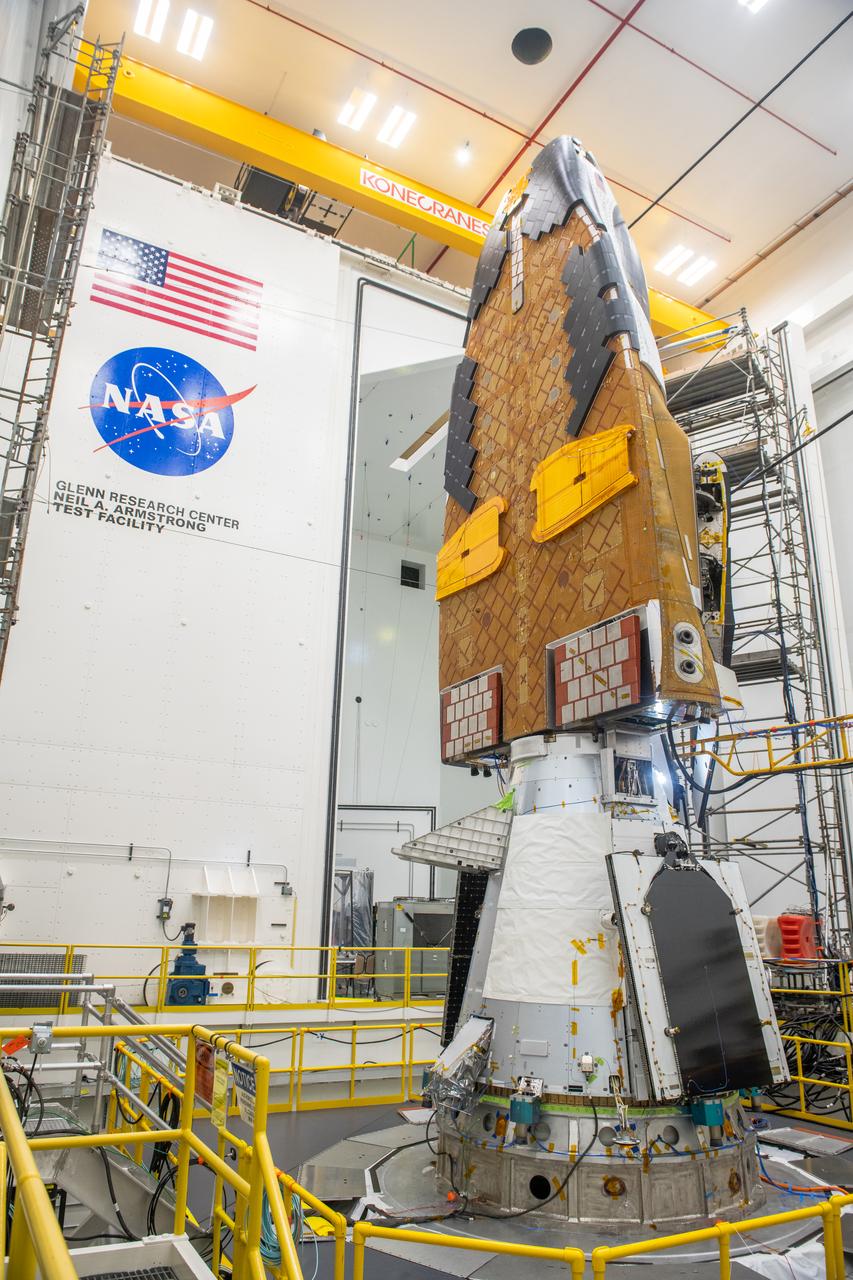
Sierra Space Dream Chaser Spaceplane Documentation Photographs
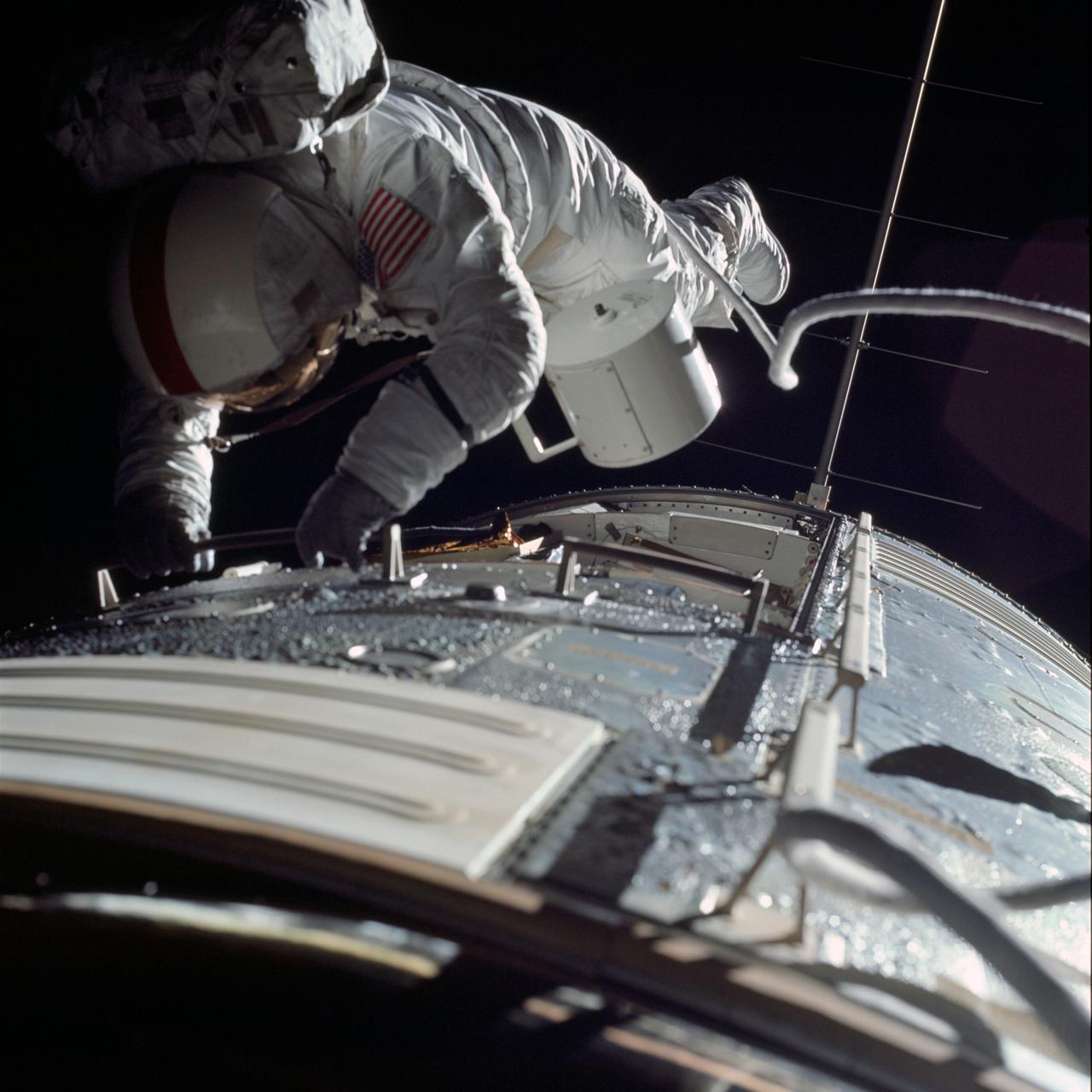
AS17-152-23391 (17 Dec. 1972) --- Astronaut Ronald E. Evans is photographed performing extravehicular activity during the Apollo 17 spacecraft's trans-Earth coast. During his EVA, Evans, command module pilot, retrieved film cassettes from the lunar sounder, mapping camera and panoramic camera. The cylindrical object at Evans' left side is the mapping camera cassette. The total time for the trans-Earth EVA was one hour, seven minutes, 18 seconds, starting at ground elapsed time of 257:25 (2:28 p.m.) and ending at G.E.T. of 258:42 (3:35 p.m.) on Sunday, Dec. 17, 1972.
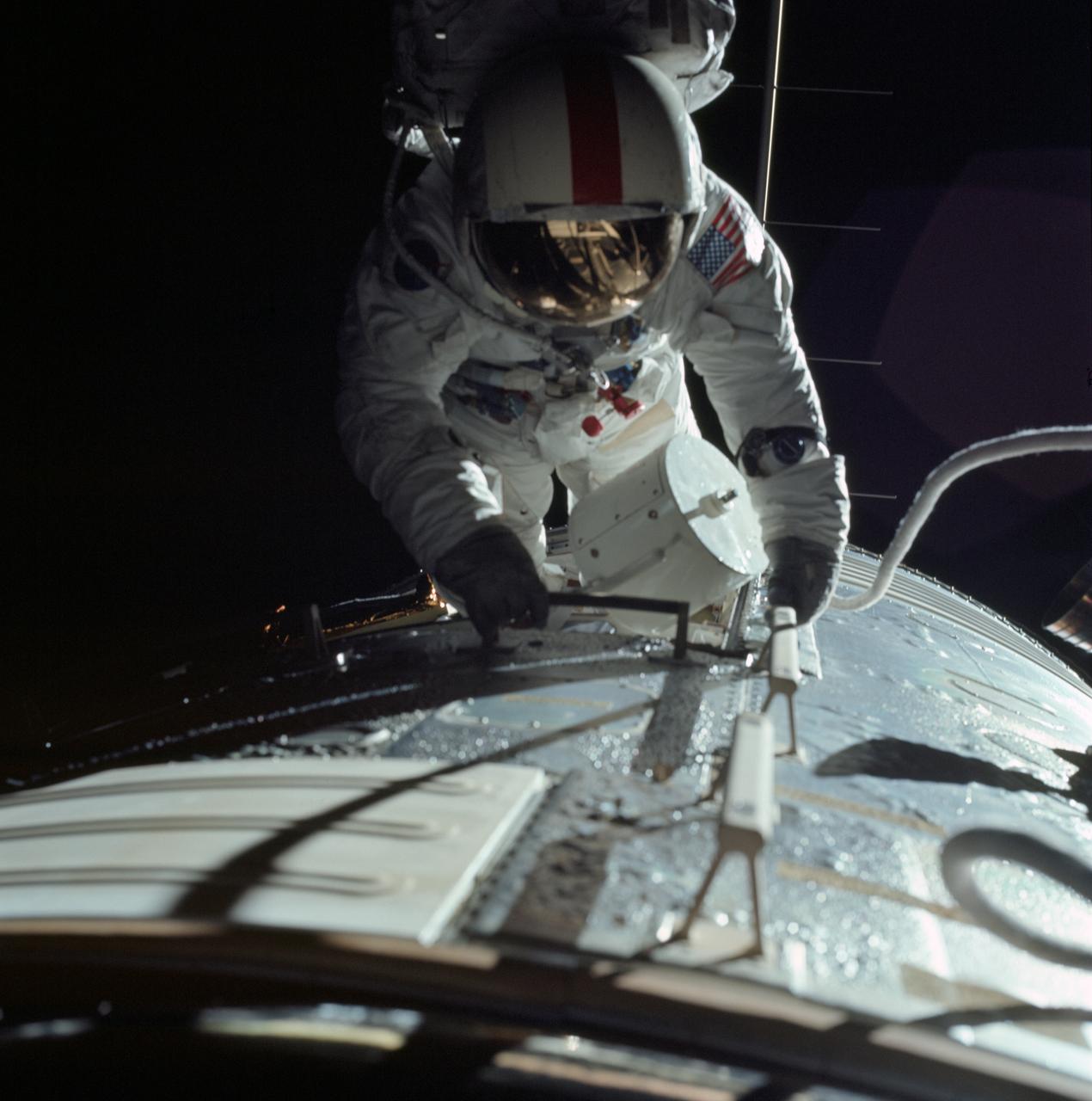
AS17-152-23393 (17 Dec. 1972) --- Astronaut Ronald E. Evans is photographed performing extravehicular activity during the Apollo 17 spacecraft's trans-Earth coast. During his EVA, command module pilot Evans retrieved film cassettes from the Lunar Sounder, Mapping Camera, and Panoramic Camera. The cylindrical object at Evans' left side is the Mapping Camera cassette. The total time for the trans-Earth EVA was one hour seven minutes 18 seconds, starting at ground elapsed time of 257:25 (2:28 p.m.) and ending at ground elapsed timed of 258:42 (3:35 p.m.) on Sunday, Dec. 17, 1972.
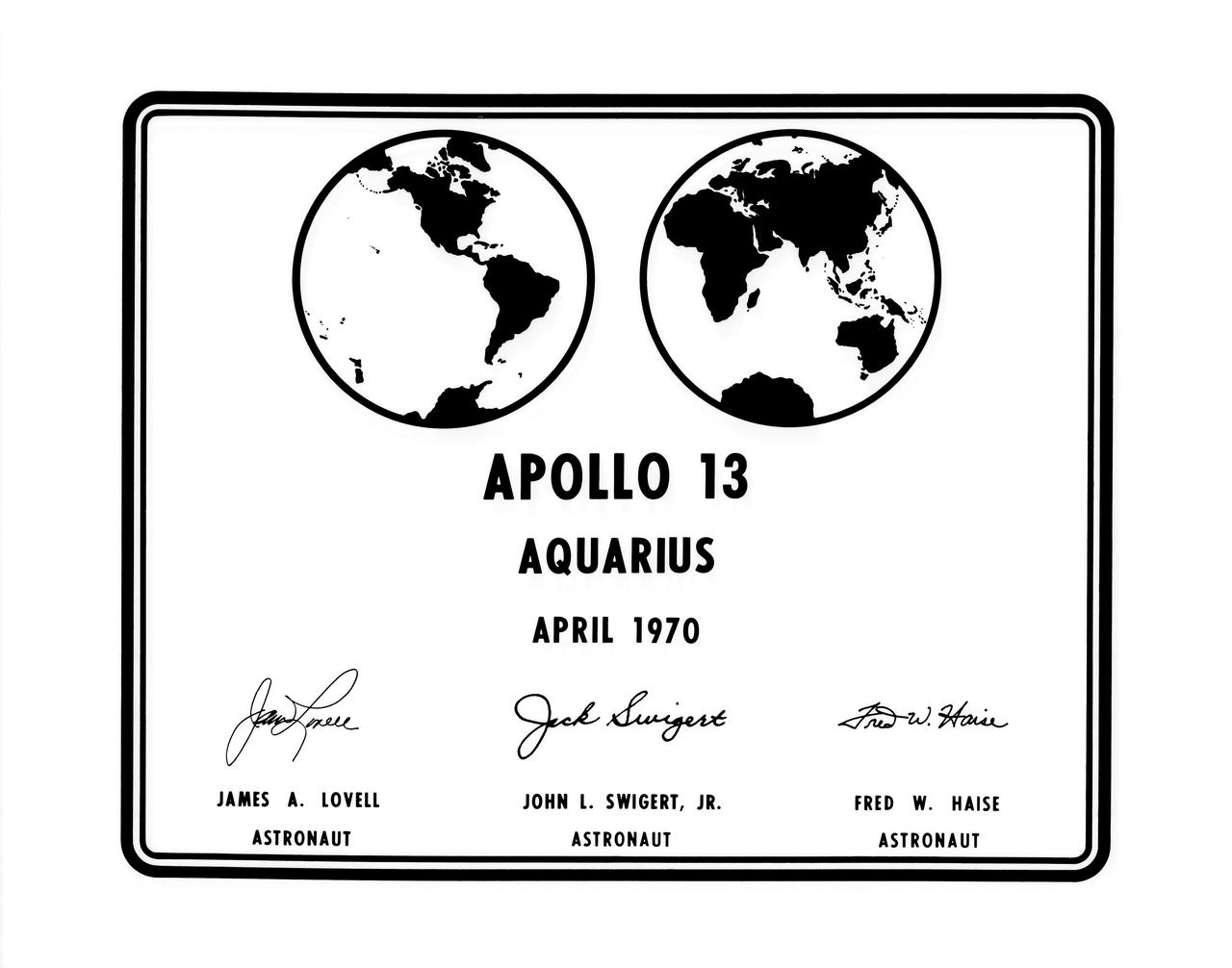
S70-34685 (April 1970) --- A photographic replica of the plaque which the Apollo 13 astronauts will leave behind on the moon during their lunar landing mission. Astronauts James A. Lovell Jr., commander; and Fred W. Haise Jr., lunar module pilot, will descend to the lunar surface in the Lunar Module (LM) "Aquarius". Astronaut John L. Swigert Jr., command module pilot, will remain with the Command and Service Modules (CSM) in lunar orbit. The plaque will be attached to the ladder of the landing gear strut on the LM?s descent stage. Commemorative plaques were also left on the moon by the Apollo 11 and Apollo 12 astronauts.
![This is the first photograph ever taken on the surface of the planet Mars. It was obtained by Viking 1 just minutes after the spacecraft landed successfully early today [July 20, 1976]. The center of the image is about 1.4 meters (five feet) from Viking Lander camera #2. We see both rocks and finely granulated material--sand or dust. Many of the small foreground rocks are flat with angular facets. Several larger rocks exhibit irregular surfaces with pits and the large rock at top left shows intersecting linear cracks. Extending from that rock toward the camera is a vertical linear dark band which may be due to a one-minute partial obscuration of the landscape due to clouds or dust intervening between the sun and the surface. Associated with several of the rocks are apparent signs of wind transport of granular material. The large rock in the center is about 10 centimeters (4 inches) across and shows three rough facets. To its lower right is a rock near a smooth portion of the Martian surface probably composed of very fine-grained material. It is possible that the rock was moved during Viking 1 descent maneuvers, revealing the finer-grained basement substratum; or that the fine-grained material has accumulated adjacent to the rock. There are a number of other furrows and depressions and places with fine-grained material elsewhere in the picture. At right is a portion of footpad #2. Small quantities of fine grained sand and dust are seen at the center of the footpad near the strut and were deposited at landing. The shadow to the left of the footpad clearly exhibits detail, due to scattering of light either from the Martian atmosphere or from the spacecraft, observable because the Martian sky scatters light into shadowed areas. http://photojournal.jpl.nasa.gov/catalog/PIA00381](https://images-assets.nasa.gov/image/PIA00381/PIA00381~thumb.jpg)
This is the first photograph ever taken on the surface of the planet Mars. It was obtained by Viking 1 just minutes after the spacecraft landed successfully early today [July 20, 1976]. The center of the image is about 1.4 meters (five feet) from Viking Lander camera #2. We see both rocks and finely granulated material--sand or dust. Many of the small foreground rocks are flat with angular facets. Several larger rocks exhibit irregular surfaces with pits and the large rock at top left shows intersecting linear cracks. Extending from that rock toward the camera is a vertical linear dark band which may be due to a one-minute partial obscuration of the landscape due to clouds or dust intervening between the sun and the surface. Associated with several of the rocks are apparent signs of wind transport of granular material. The large rock in the center is about 10 centimeters (4 inches) across and shows three rough facets. To its lower right is a rock near a smooth portion of the Martian surface probably composed of very fine-grained material. It is possible that the rock was moved during Viking 1 descent maneuvers, revealing the finer-grained basement substratum; or that the fine-grained material has accumulated adjacent to the rock. There are a number of other furrows and depressions and places with fine-grained material elsewhere in the picture. At right is a portion of footpad #2. Small quantities of fine grained sand and dust are seen at the center of the footpad near the strut and were deposited at landing. The shadow to the left of the footpad clearly exhibits detail, due to scattering of light either from the Martian atmosphere or from the spacecraft, observable because the Martian sky scatters light into shadowed areas. http://photojournal.jpl.nasa.gov/catalog/PIA00381
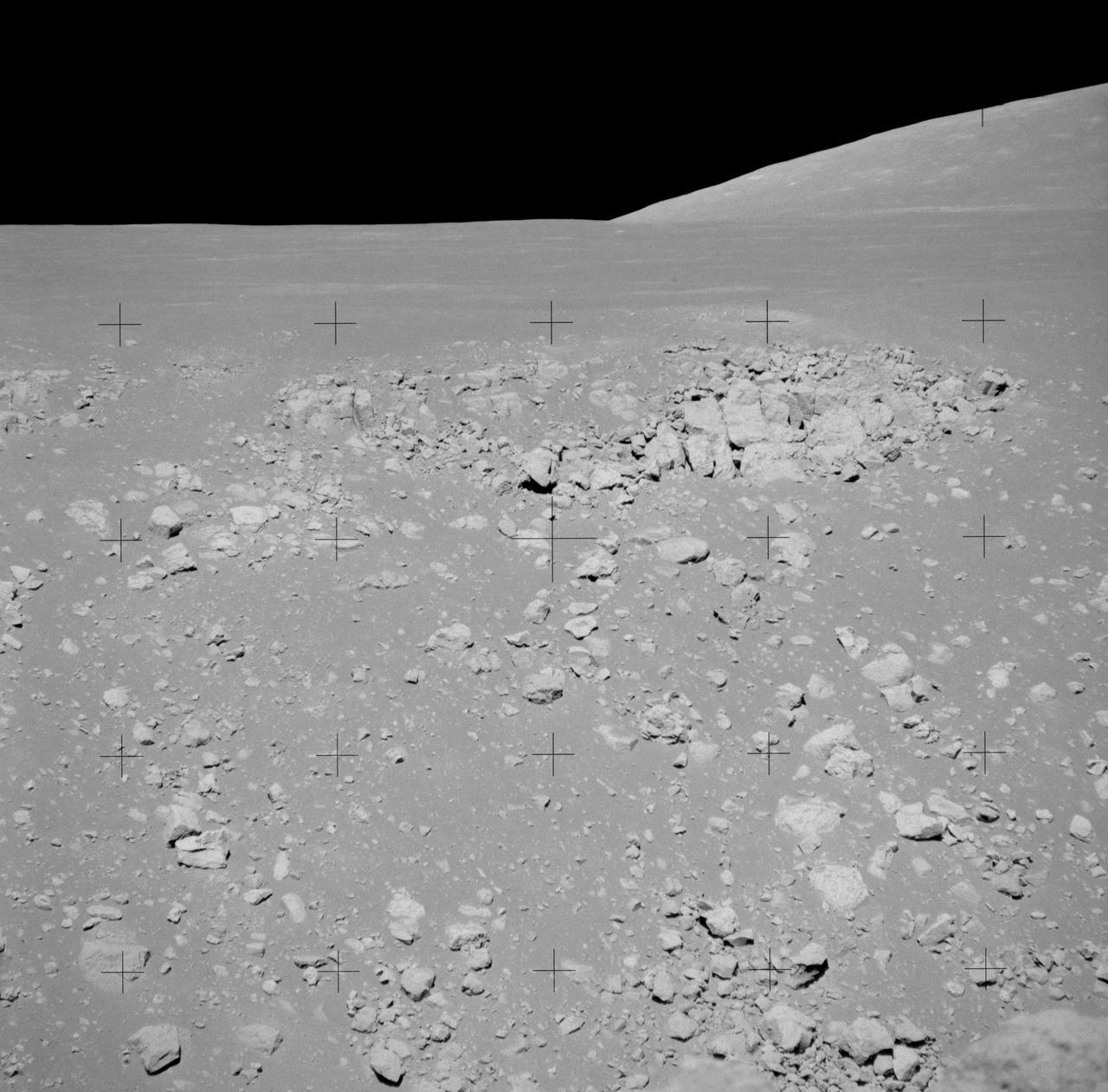
AS15-89-12100 (2 Aug. 1971) --- A telephoto lens view looking across Hadley Rille, photographed during the third Apollo 15 lunar surface extravehicular activity (EVA) at the Hadley-Apennine landing site on the nearside of the moon. The blocky outcrop at the top of the west wall of the rille is about 1.9 kilometers (1.1 statute miles) from the camera. About one-half of the debris-covered wall is visible in the photograph. On the horizon the northern end of Hill 305 is more than 16 kilometers (10 statute miles) from the camera.
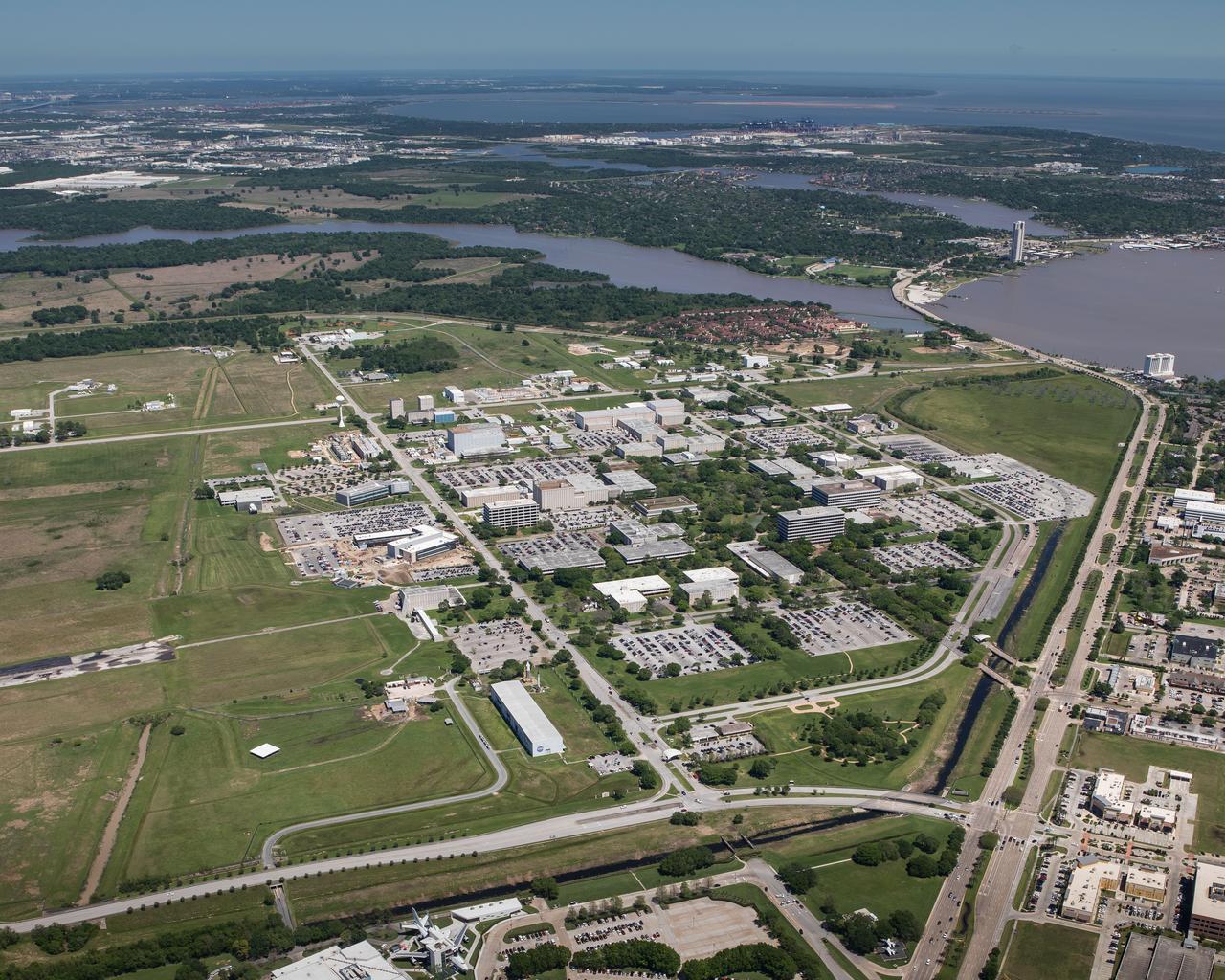
jsc2017e039526 (March 31, 2017) --- Aerial photograph of Johnson Space Center facilities taken from a U.S. Coast Guard H-65 helicopter.
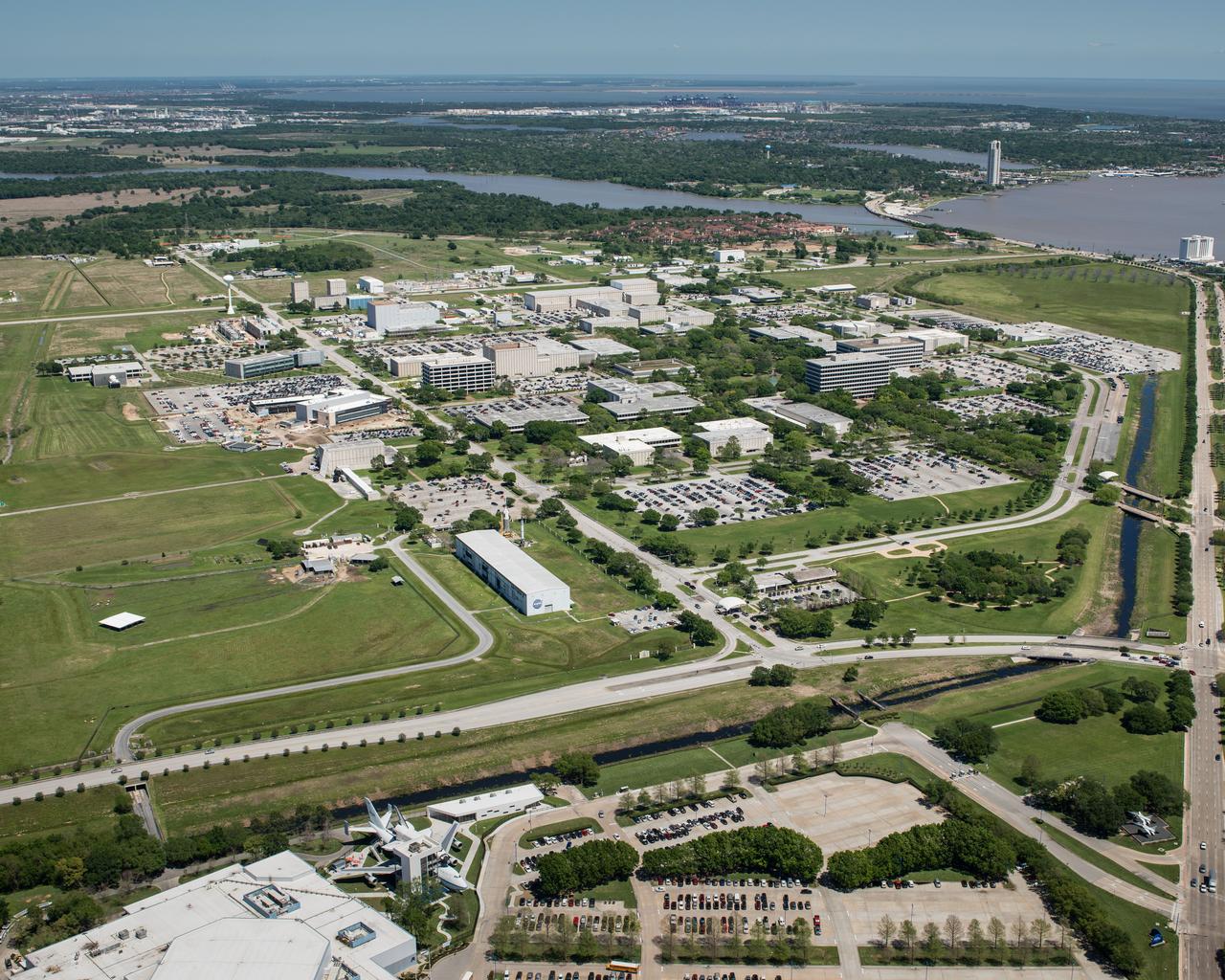
jsc2017e039531 (March 31, 2017) --- Aerial photograph of Johnson Space Center facilities taken from a U.S. Coast Guard H-65 helicopter.
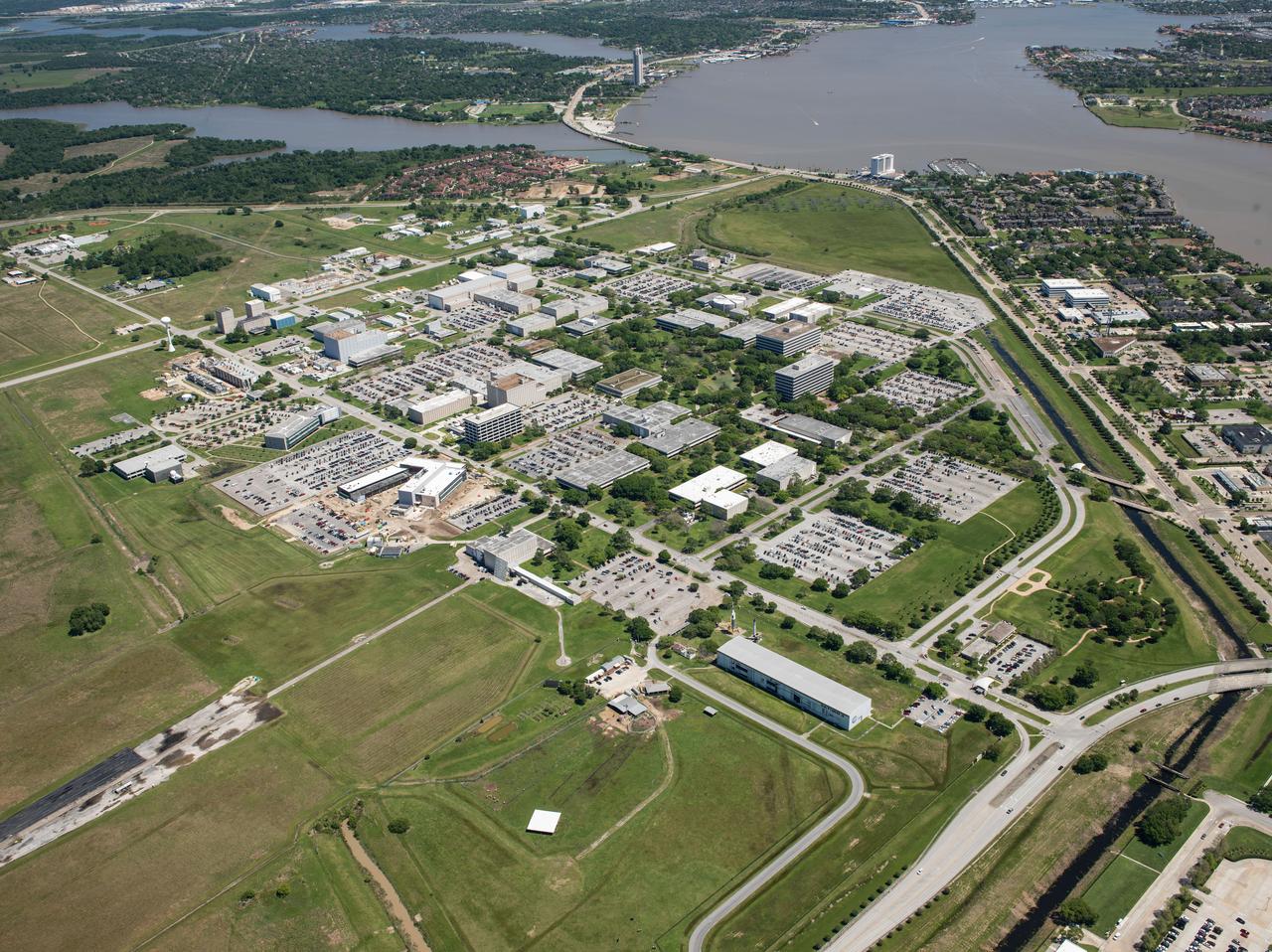
jsc2017e039526 (March 31, 2017) --- Aerial photograph of Johnson Space Center facilities taken from a U.S. Coast Guard H-65 helicopter.
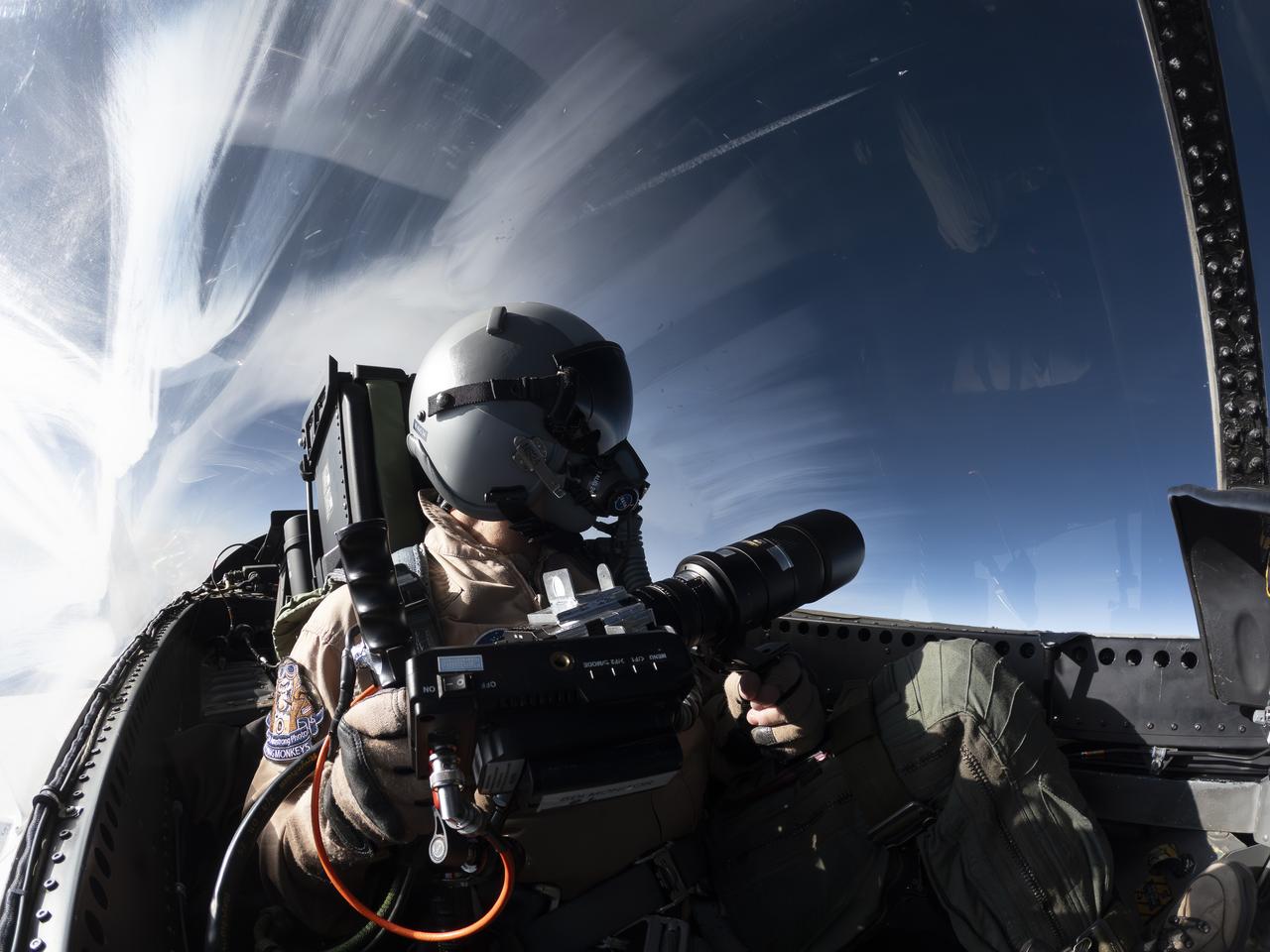
NASA Photographer Carla Thomas holds the Airborne Schlieren Photography System (ASPS), aiming it out the window in flight. The ASPS uses a photographic method called schlieren imaging, capable of visualizing changes in air density and revealing shock waves and air flow patterns around moving objects. The system is one of several tools validated during recent dual F-15 flights at NASA’s Armstrong Flight Research Center in Edwards, California, in support of NASA’s Quesst mission, ahead of the X-59’s first flight.

AS07-04-1586 (20 Oct. 1968) --- Astronaut Walter Cunningham, Apollo 7 lunar module pilot, writes with space pen as he is photographed performing flight tasks on the ninth day of the Apollo 7 mission. Note the 70mm Hasselblad camera film magazine just above Cunningham's right hand floating in the weightless (zero gravity) environment of the spacecraft.
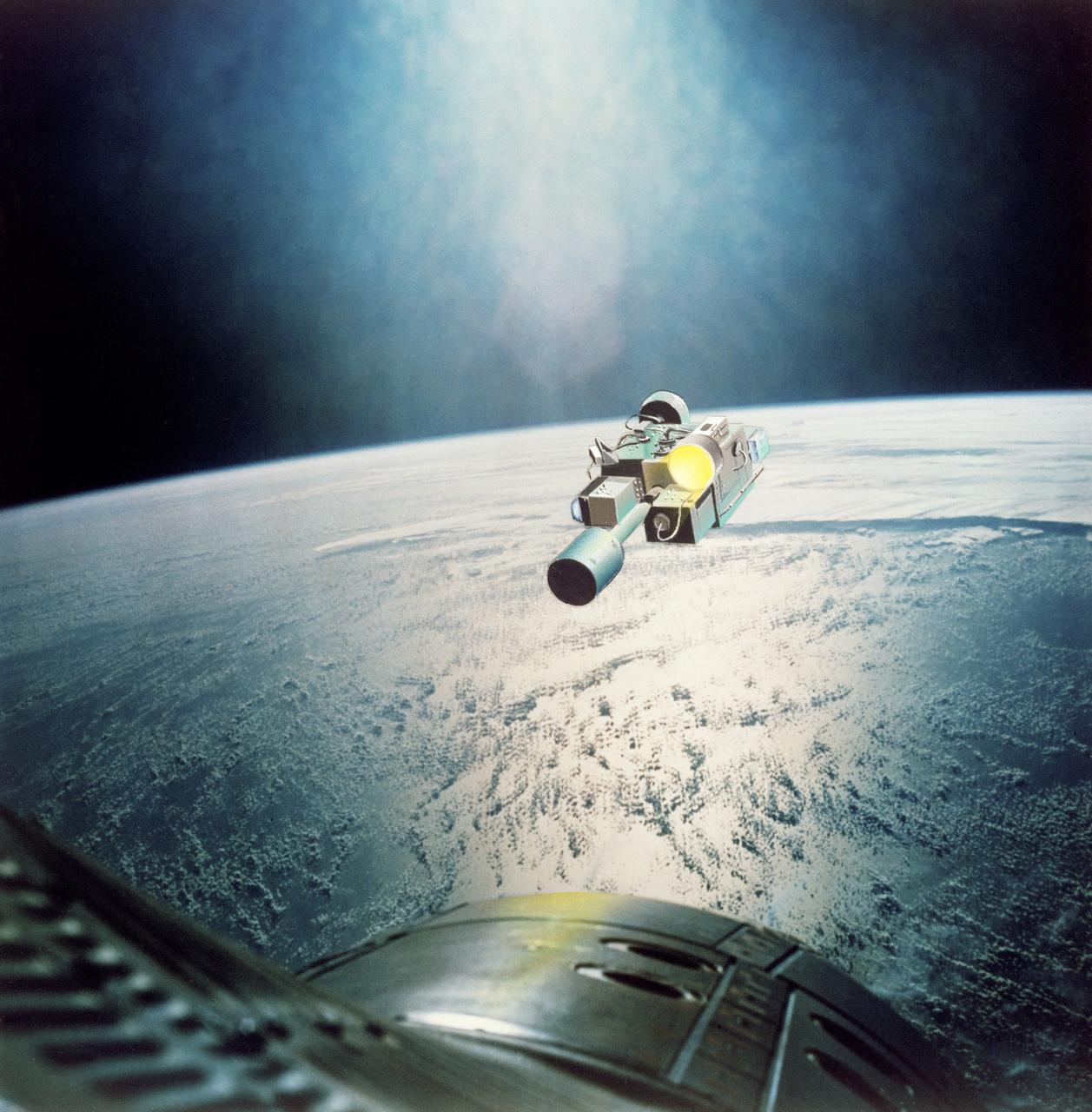
S65-28653 (August 1965) --- Rendezvous Evaluation Pod (REP) in orbit is approached by Gemini spacecraft as seen in this artist's concept using an actual photograph taken on the Gemini-4 mission. The REP is superimposed over a Gemini-4 Earth-sky picture of cloud formations over an ocean. The REP will be used by the crew of the Gemini-5 spacecraft to practice rendezvous techniques.
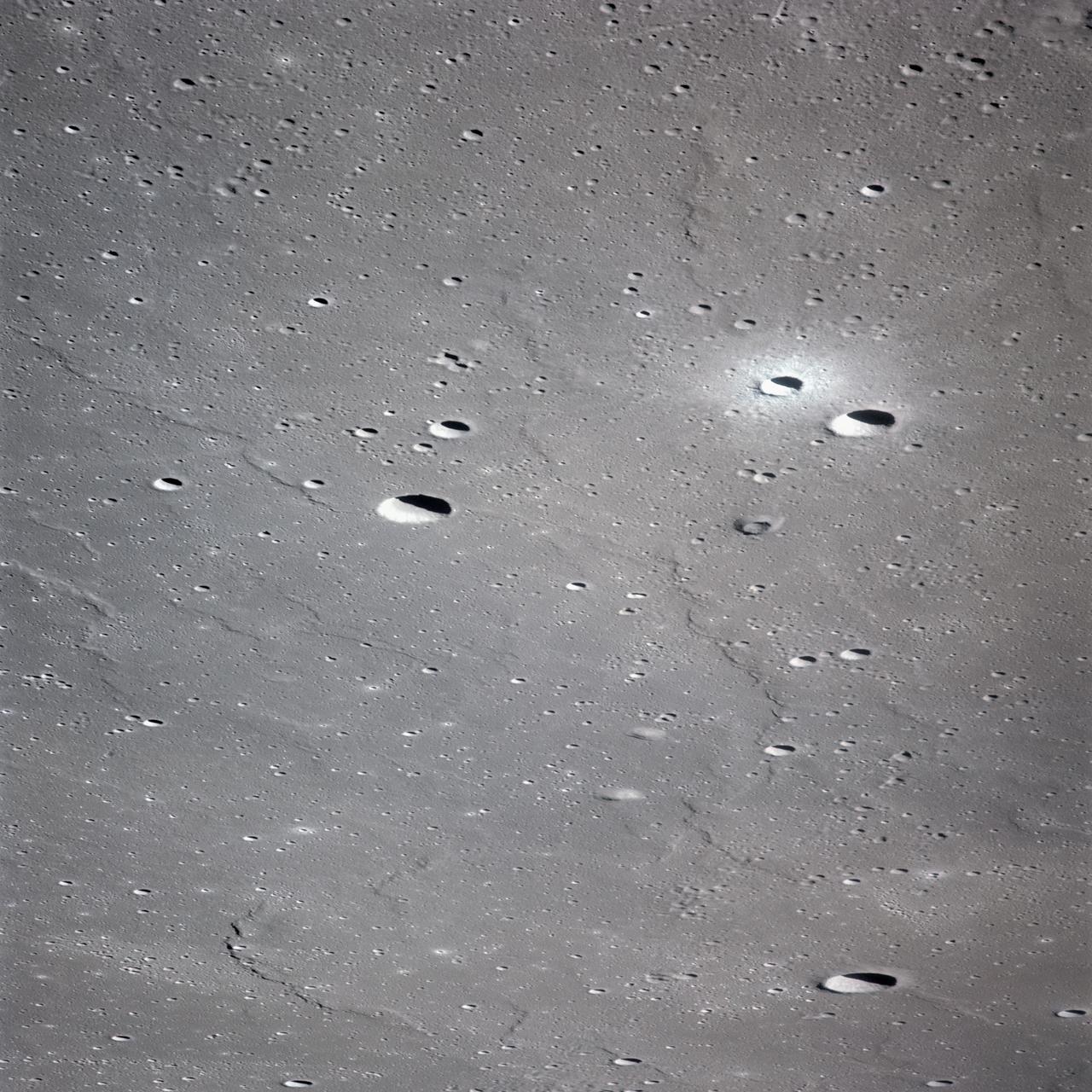
AS16-120-19237 (April 1972) --- An oblique view of a portion of the lunar nearside as photographed from the Apollo 16 spacecraft in lunar orbit. The small, bright crater is Lassell D at the northeastern edge of Mare Nubium (Sea of Clouds). The area seen in this picture is immediately west of Lassell C Crater, southwest of Guoricke Crater, and southwest of Davy Crater.
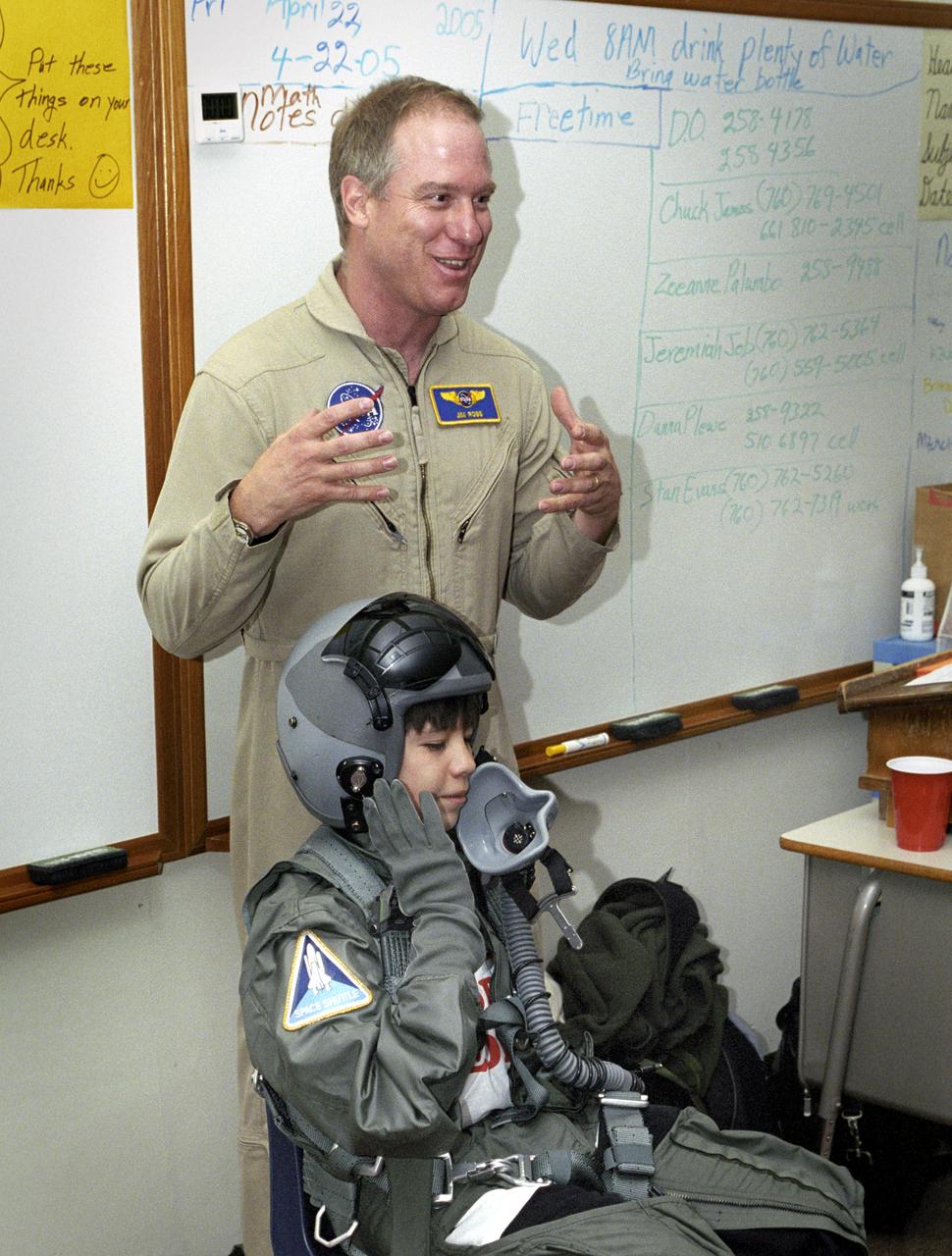
While NASA Dryden's Jim Ross outlined his job as an aerial photographer, sixth-grade student Leo Banuelos learned first-hand about the gear Ross wears in the cockpit.
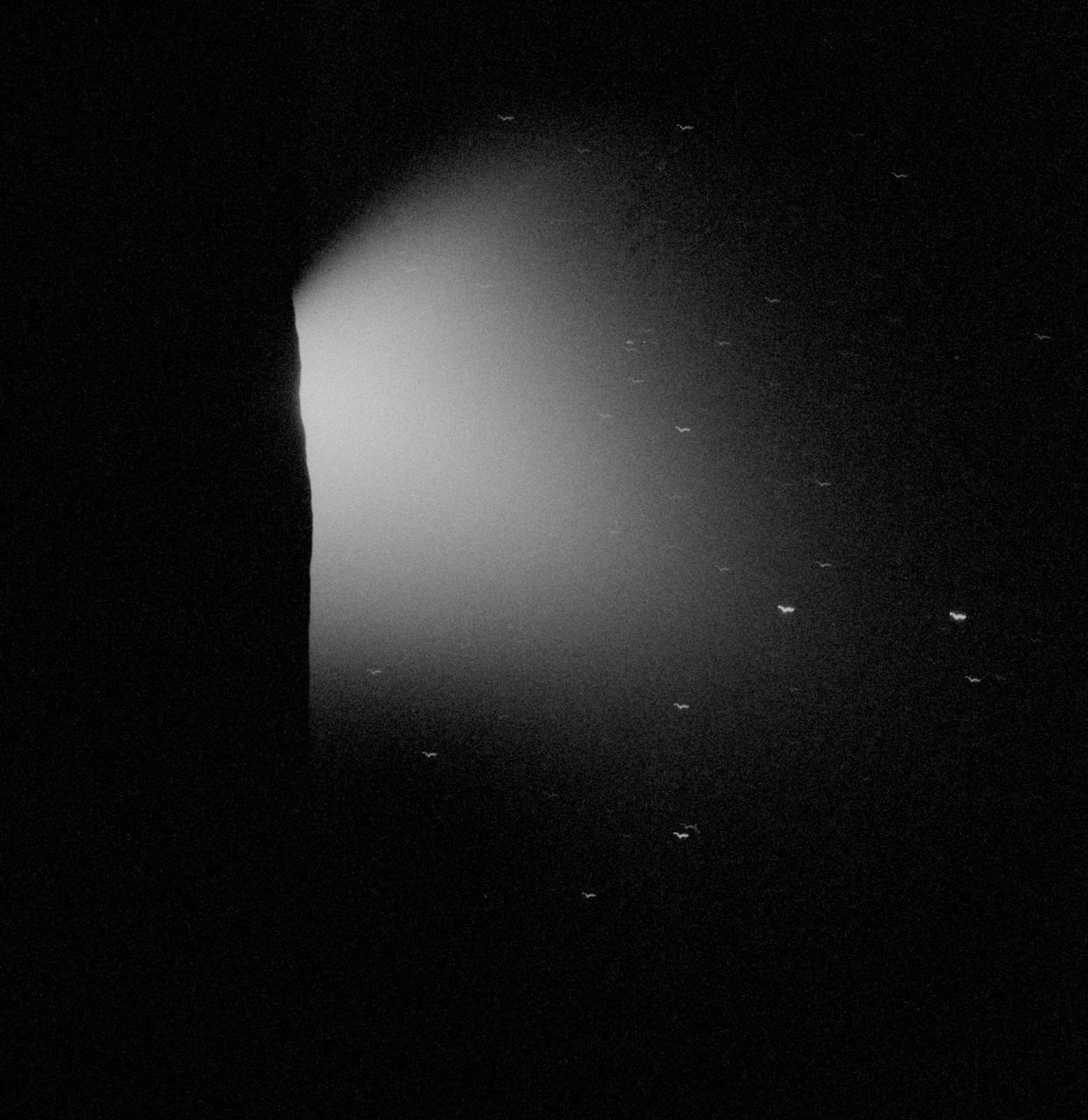
AS15-98-13311 (31 July 1971) --- The solar corona, as photographed from the Apollo 15 spacecraft about one minute prior to sunrise on July 31, 1971, is seen just beyond the lunar horizon. The bright object on the opposite of the frame is the planet Mercury. The bright star near the frame center is Regulus, and the lesser stars form the head of the constellation Leo. Mercury is approximately 28 degrees from the center of the sun. The solar coronal streamers, therefore, appear to extend about eight degrees from the sun's center. This solar corona photograph was the second in a series of seven. Three such series were obtained by astronaut Alfred M. Worden, command module pilot, during the solo part of his lunar orbital flight. They represent man's first view of this part of the sun's light. While astronauts David R. Scott, commander, and James B. Irwin, lunar module pilot, descended in the Lunar Module (LM) "Falcon" to explore the Hadley-Apennine area of the moon, astronaut Worden remained with the Command and Service Modules (CSM) in lunar orbit.
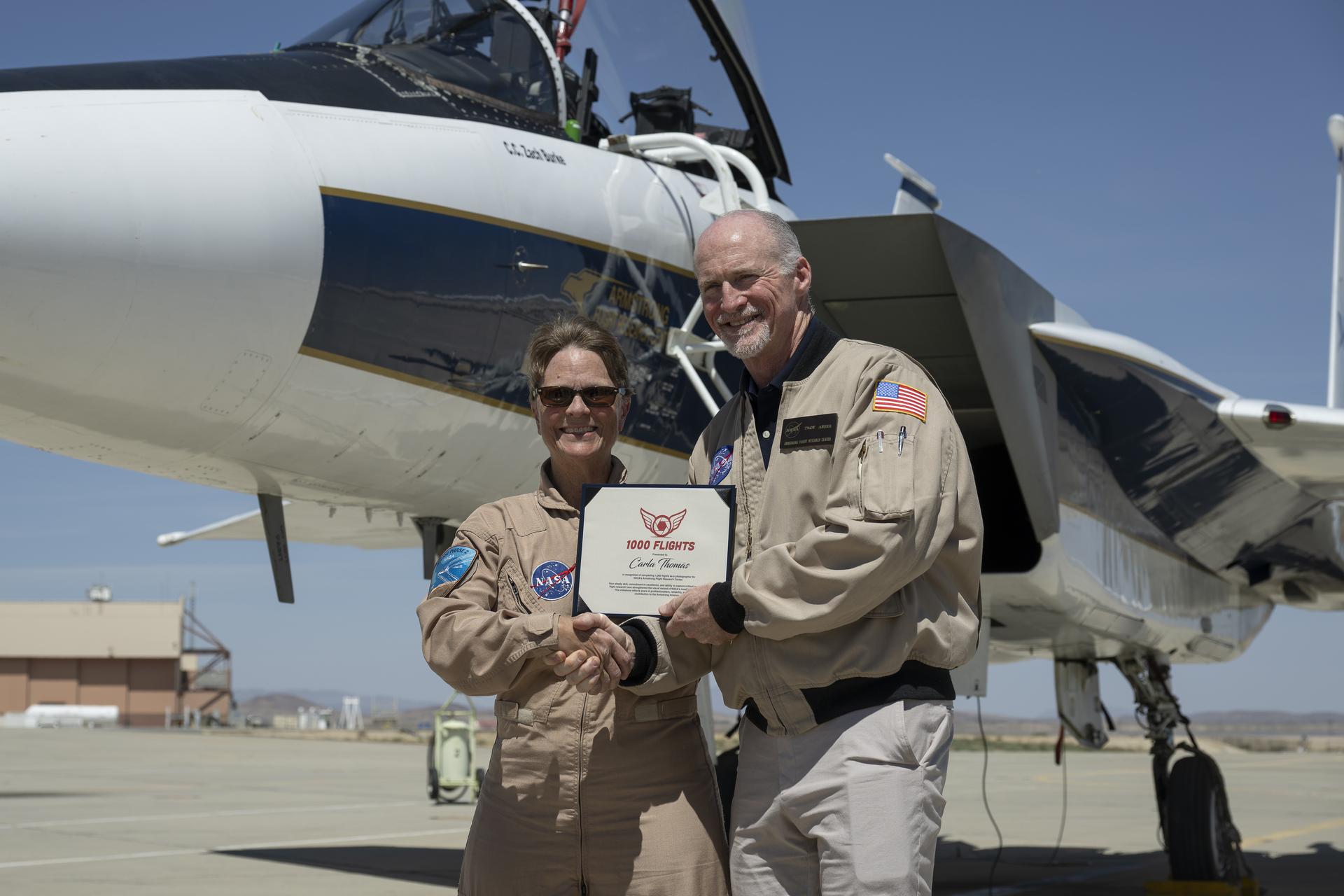
Troy Asher, acting center director, presents NASA aerial photographer Carla Thomas with an award commemorating her 1,000th flight at NASA’s Armstrong Flight Research Center in Edwards, California, on Monday, April 20, 2026. For 38 years, Thomas has captured aerial photographs of research and science flights. The milestone flight was completed in the backseat of a NASA F-15 aircraft piloted by NASA Armstrong chief pilot Wayne Ringelberg.
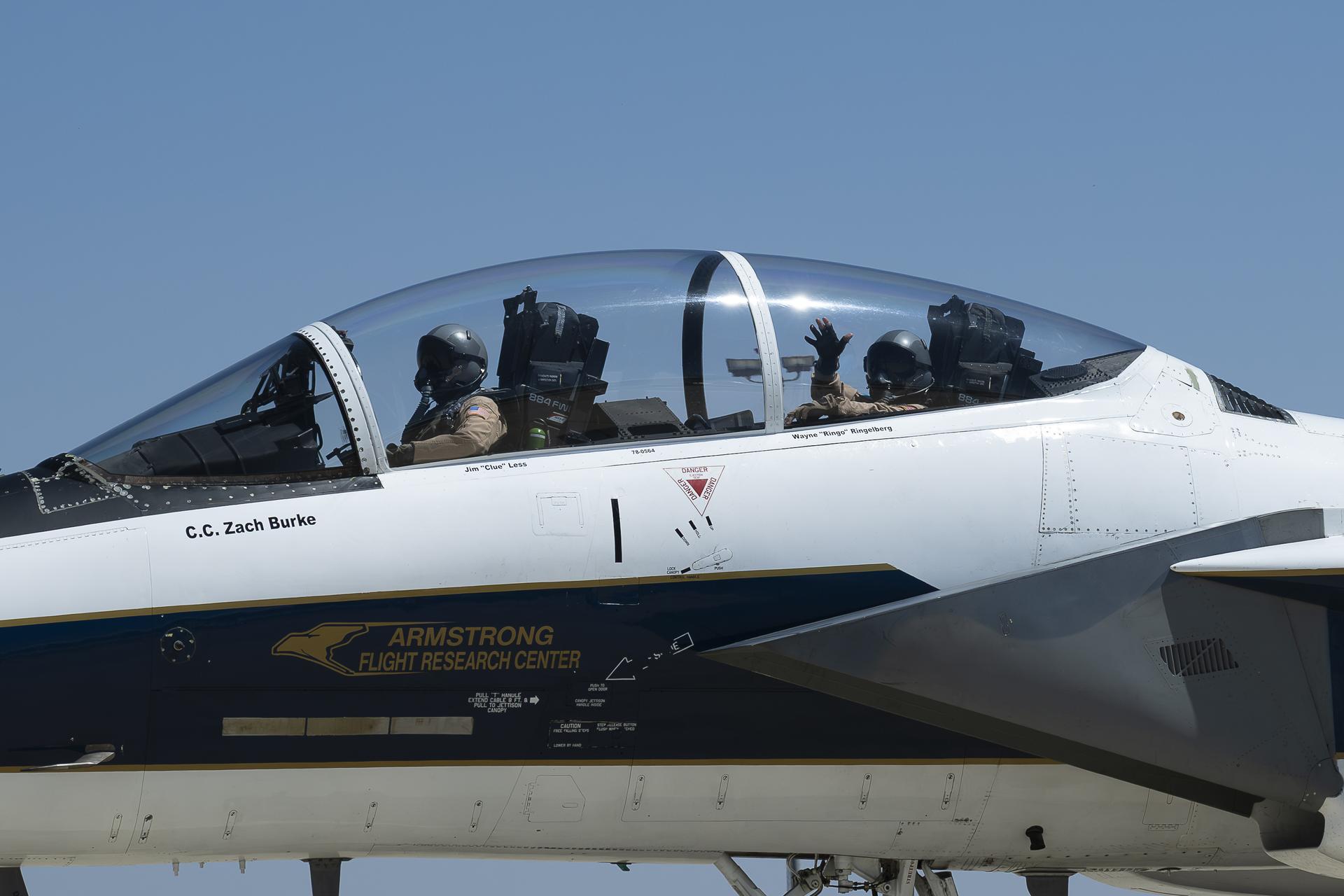
NASA aerial photographer Carla Thomas waves from the backseat of a NASA F-15 aircraft as chief pilot Wayne Ringelberg taxis following Thomas’ 1,000th flight at NASA’s Armstrong Flight Research Center in Edwards, California, on Monday, April 20, 2026. For 38 years, Thomas has captured aerial photographs of research and science flights.
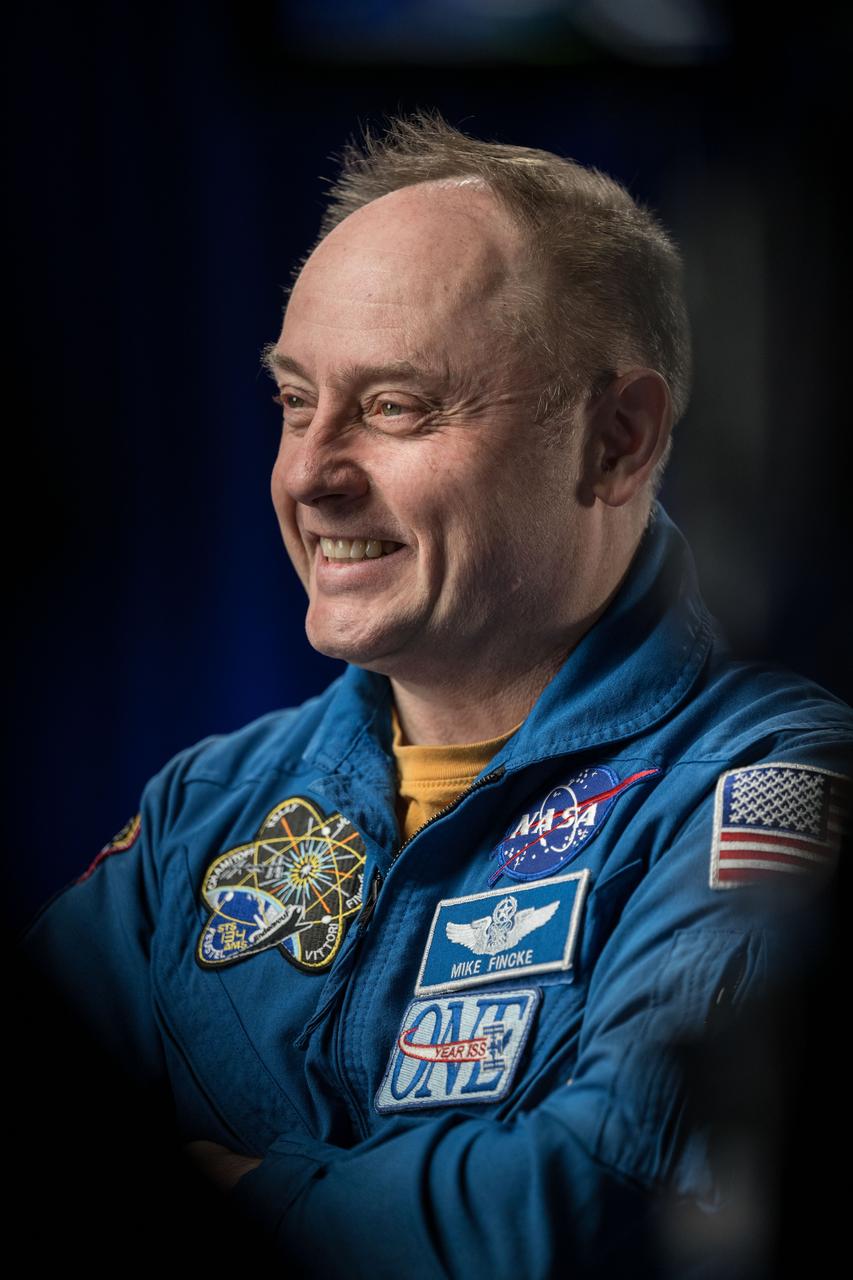
jsc2025e005132 (Jan. 29, 2025) --- NASA astronaut Mike Fincke is photographed during an interview at NASA’s Johnson Space Center in Houston, Texas. Credit: NASA/Josh Valcarcel
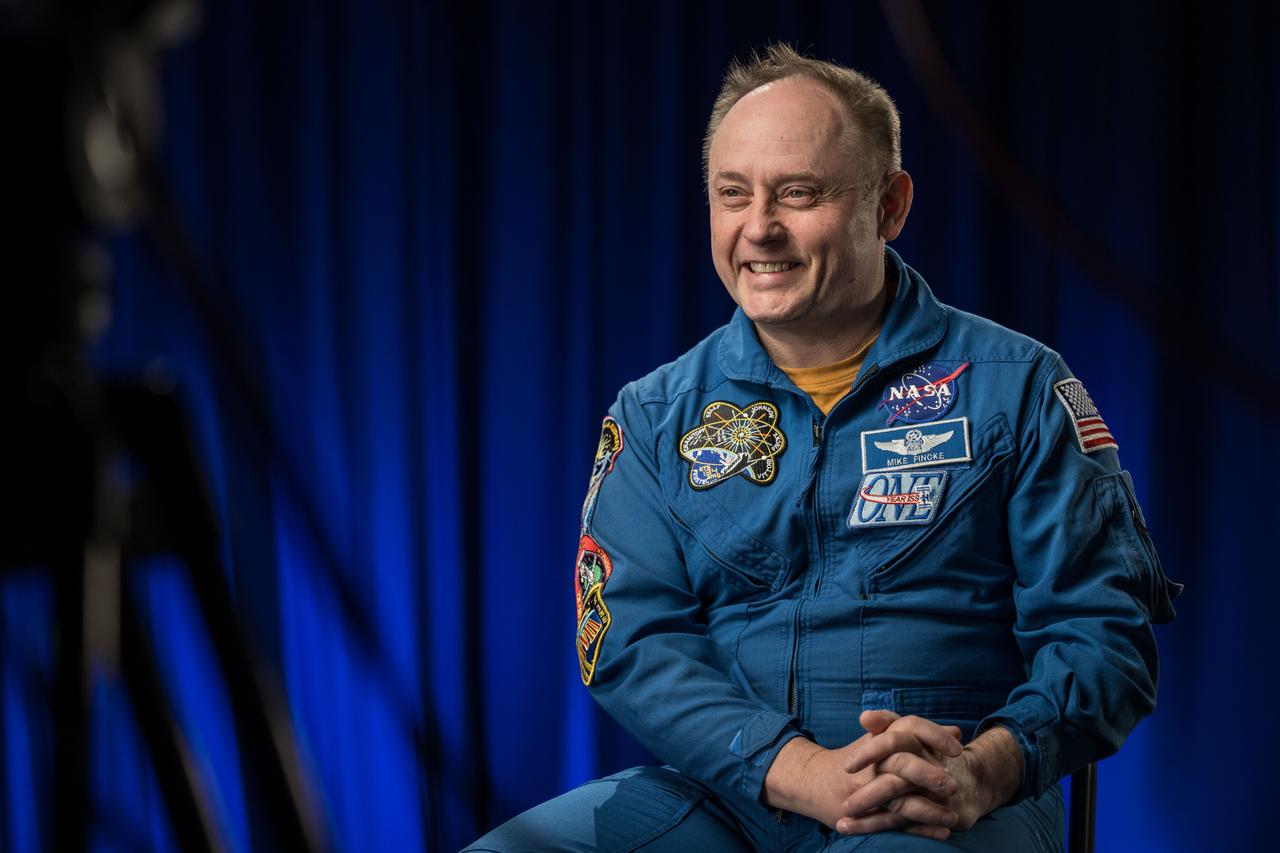
jsc2025e005133 (Jan. 29, 2025) --- NASA astronaut Mike Fincke is photographed during an interview at NASA’s Johnson Space Center in Houston, Texas. Credit: NASA/Josh Valcarcel
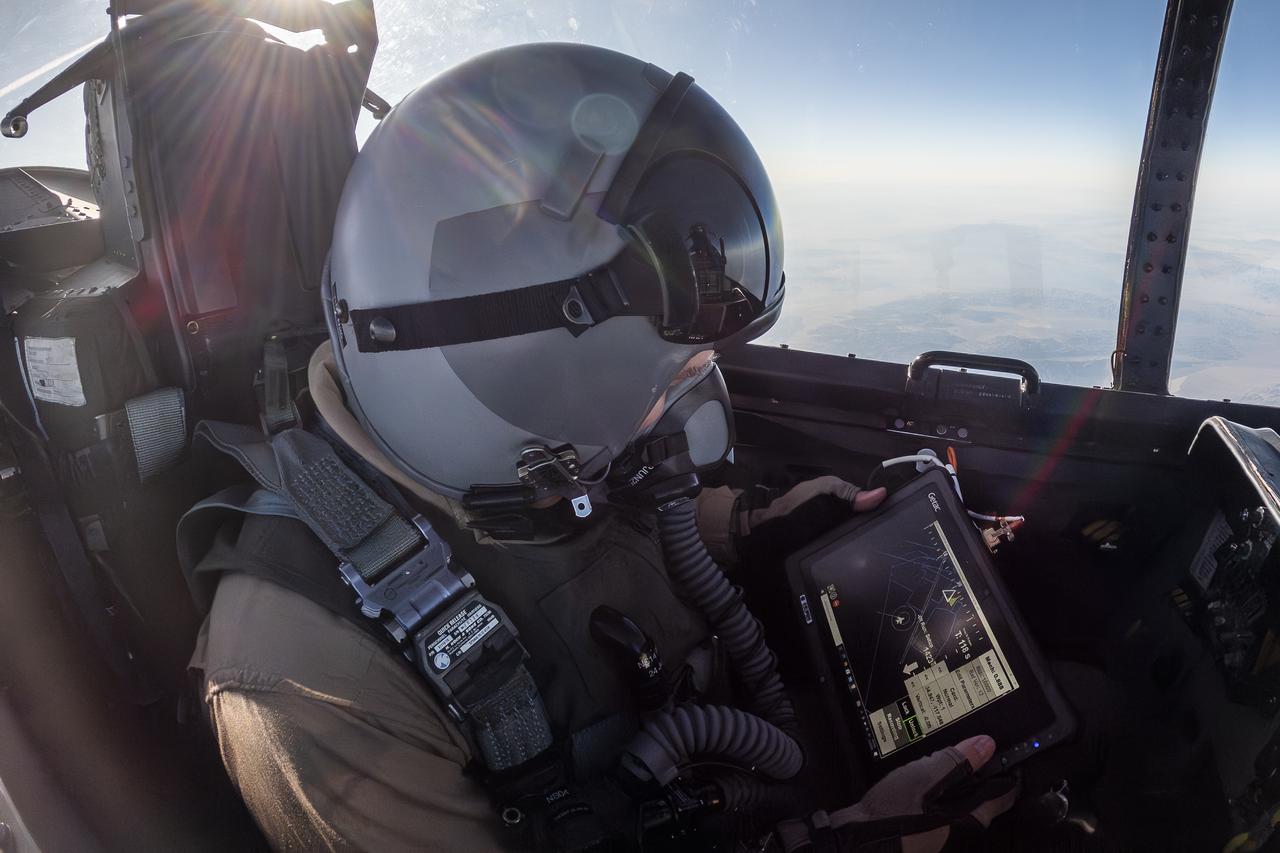
NASA photographer James Ross monitors the Airborne Location Integrating Geospatial Navigation System (ALIGNS) from the backseat of an F-15 near NASA’s Armstrong Flight Research Center in Edwards, California. The ALIGNS provides real-time positioning guidance between aircraft for shock wave probing and schlieren imagery capture.
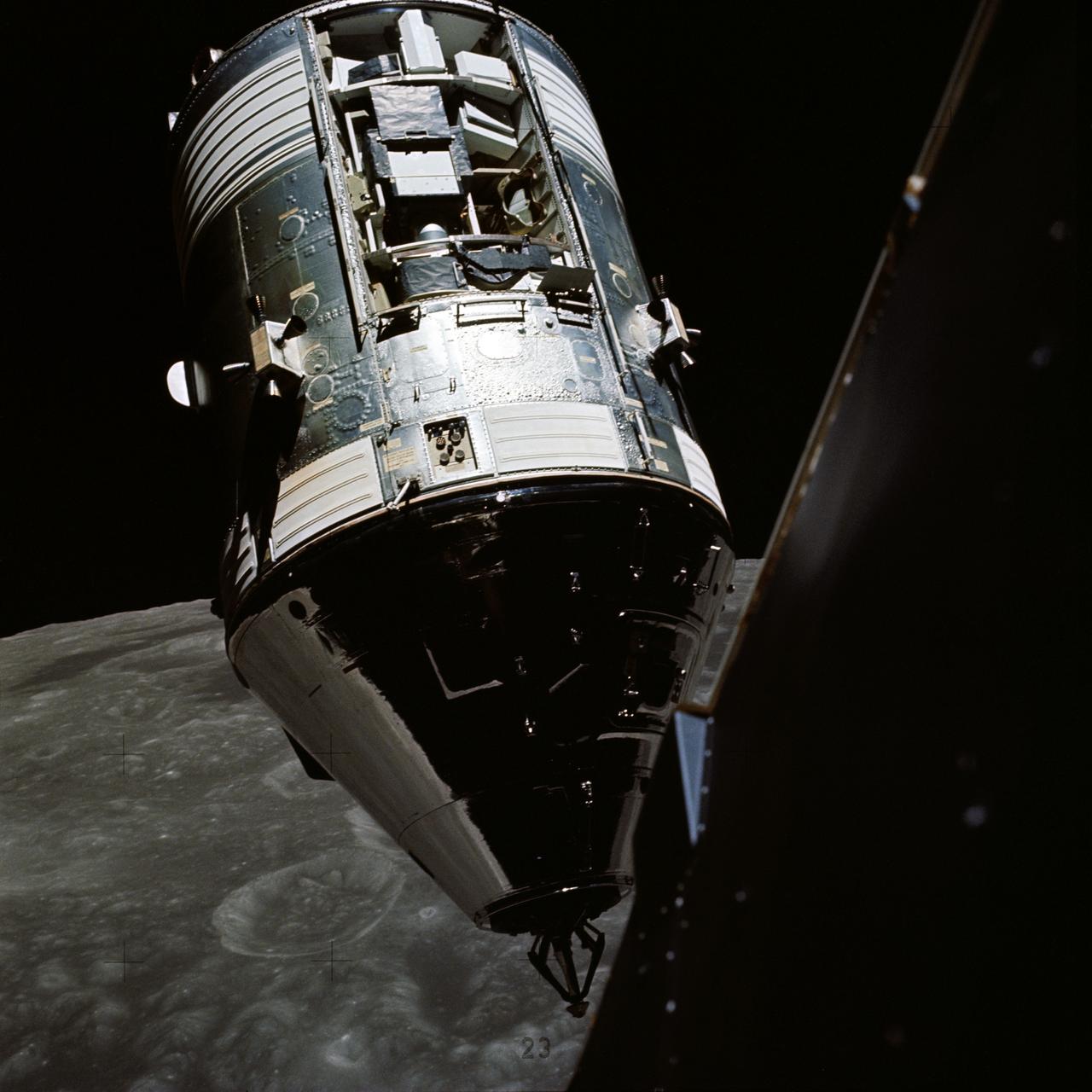
AS17-145-22254 (14 Dec. 1972) --- An excellent view of the Apollo 17 Command and Service Modules (CSM) photographed from the Lunar Module (LM) "Challenger" during rendezvous and docking maneuvers in lunar orbit. The LM ascent stage, with astronauts Eugene A. Cernan and Harrison H. Schmitt aboard, had just returned from the Taurus-Littrow landing site on the lunar surface. Astronaut Ronald E. Evans remained with the CSM in lunar orbit. Note the exposed Scientific Instrument Module (SIM) Bay in Sector 1 of the Service Module (SM). Three experiments are carried in the SIM bay: S-209 lunar sounder, S-171 infrared scanning spectrometer, and the S-169 far-ultraviolet spectrometer. Also mounted in the SIM bay are the panoramic camera, mapping camera and laser altimeter used in service module photographic tasks. A portion of the LM is on the right.
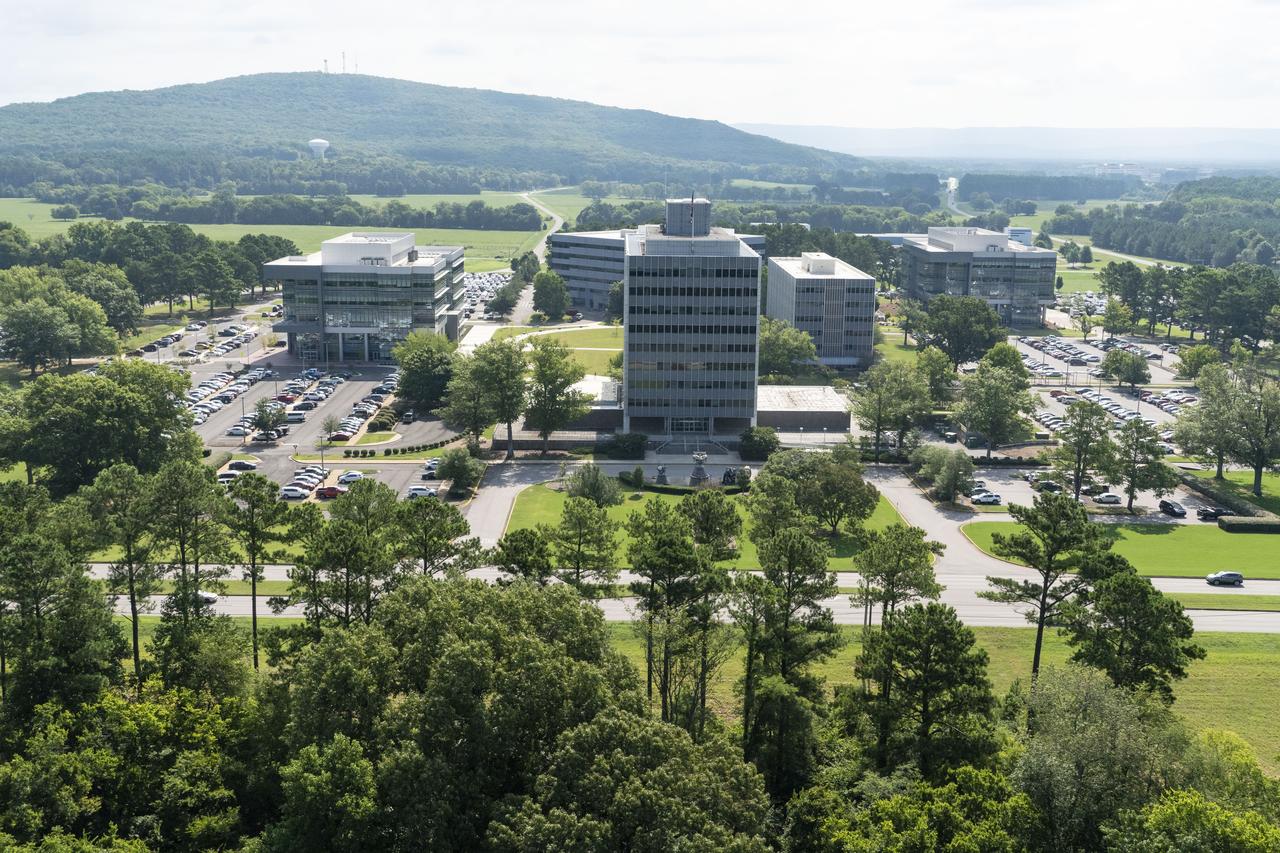
Aerial photograph of the 4200 complex
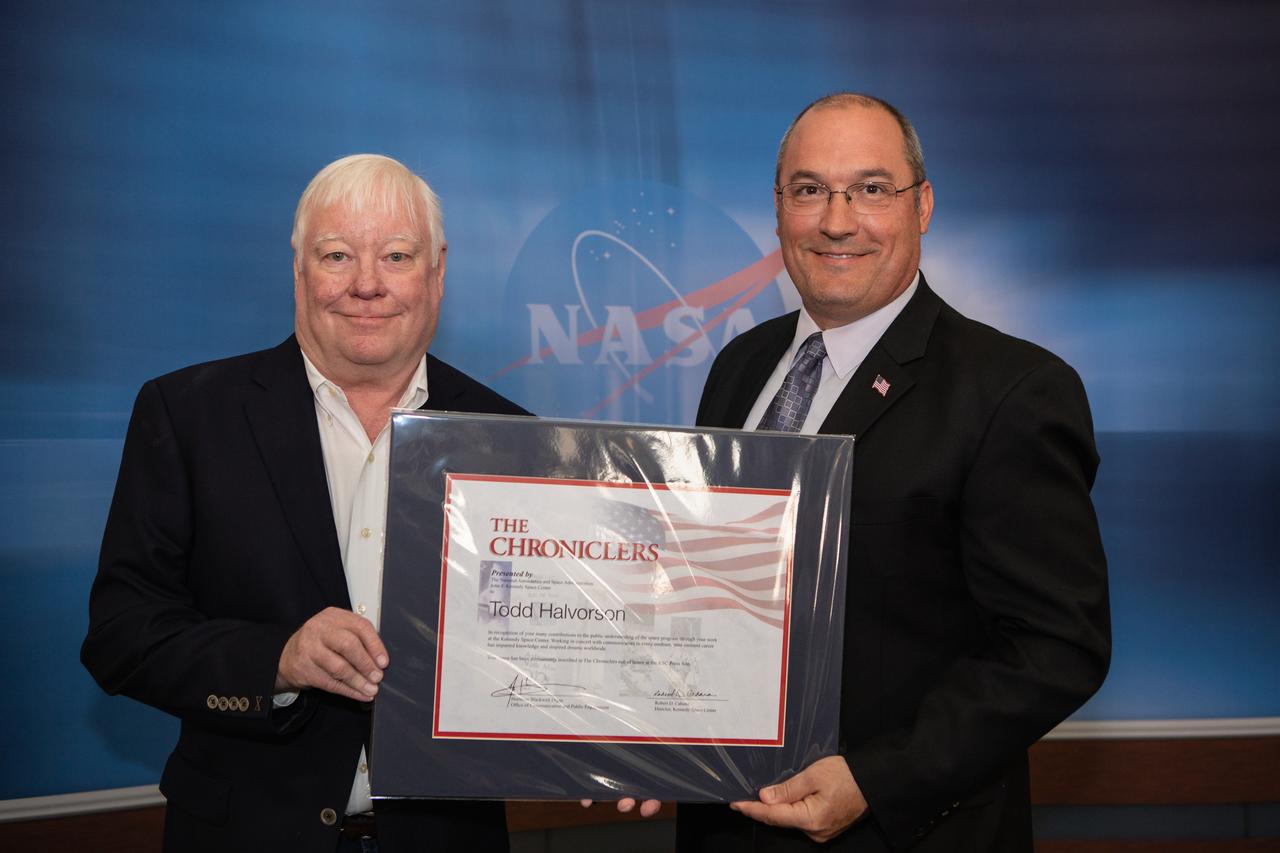
NASA Public Affairs Officer Greg Harland, right, poses for a photograph with newly inducted Chronicler Todd Halvorson during a ceremony at Kennedy Space Center’s NASA News Center in Florida on May 3, 2019. Halvorson covered the space program from Kennedy for more than three decades and also was senior aerospace reporter at Florida Today. Also inducted as members were journalist Jim Banke, radio broadcaster Vic Ratner and photographer Peter Cosgrove. They were selected by a committee of their peers on March 25. The Chroniclers recognizes retirees of the news and communications business who have helped spread news of American space exploration from Kennedy for 10 years or more.
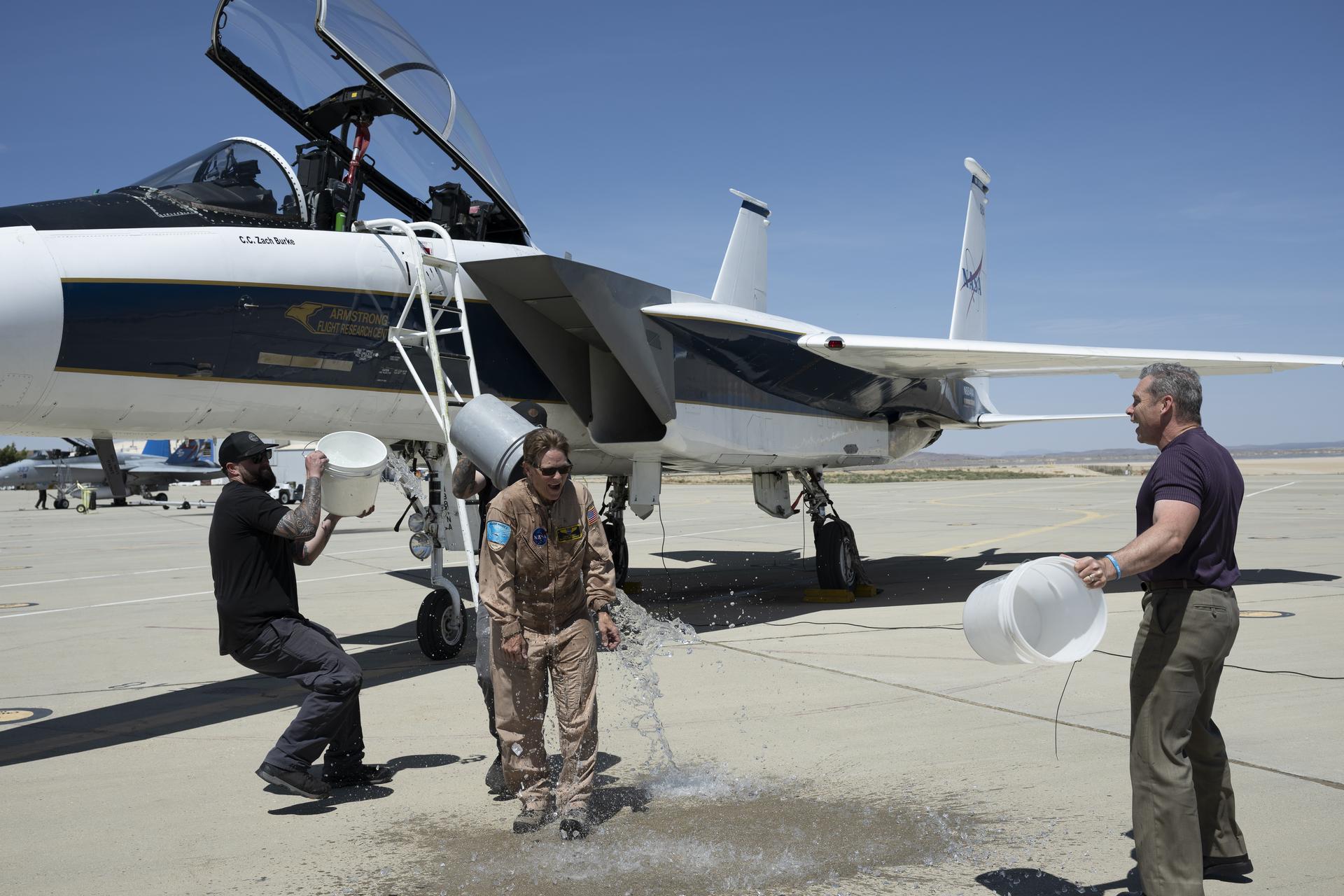
F-15 aircraft crew chief Zack Burke, left, and X-59 mechanic Jamie Trescott, center back, splash buckets of ice water on NASA aerial photographer Carla Thomas in celebration of her 1,000th flight at NASA’s Armstrong Flight Research Center in Edwards, California, on Monday, April 20, 2026. Tim Krall, NASA Armstrong support aircraft fleet manager, watches. Thomas completed her flight in the backseat of a NASA F-15 aircraft flown by NASA Armstrong chief pilot Wayne Ringelberg. For 38 years, Thomas has captured aerial photographs of research and science flights.
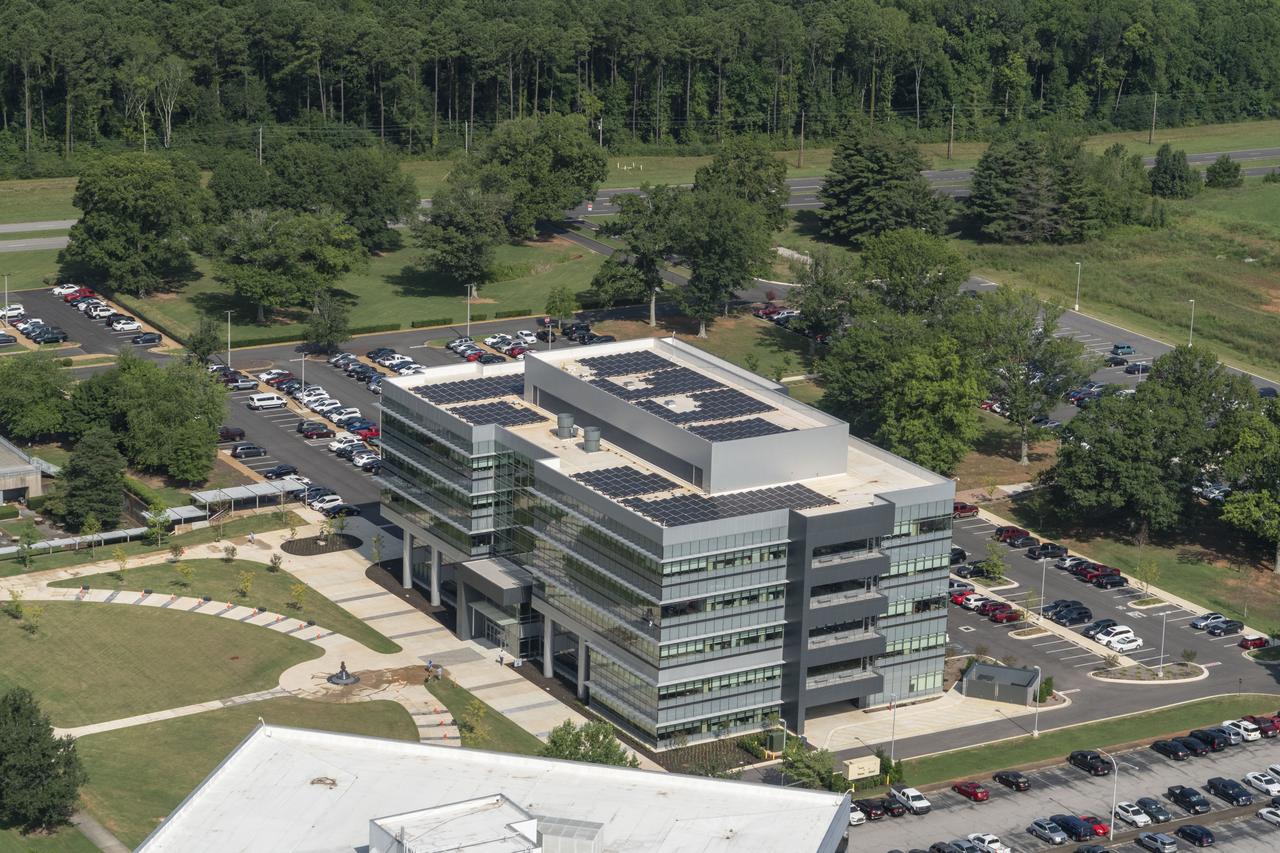
Aerial photograph of MSFC building 4221
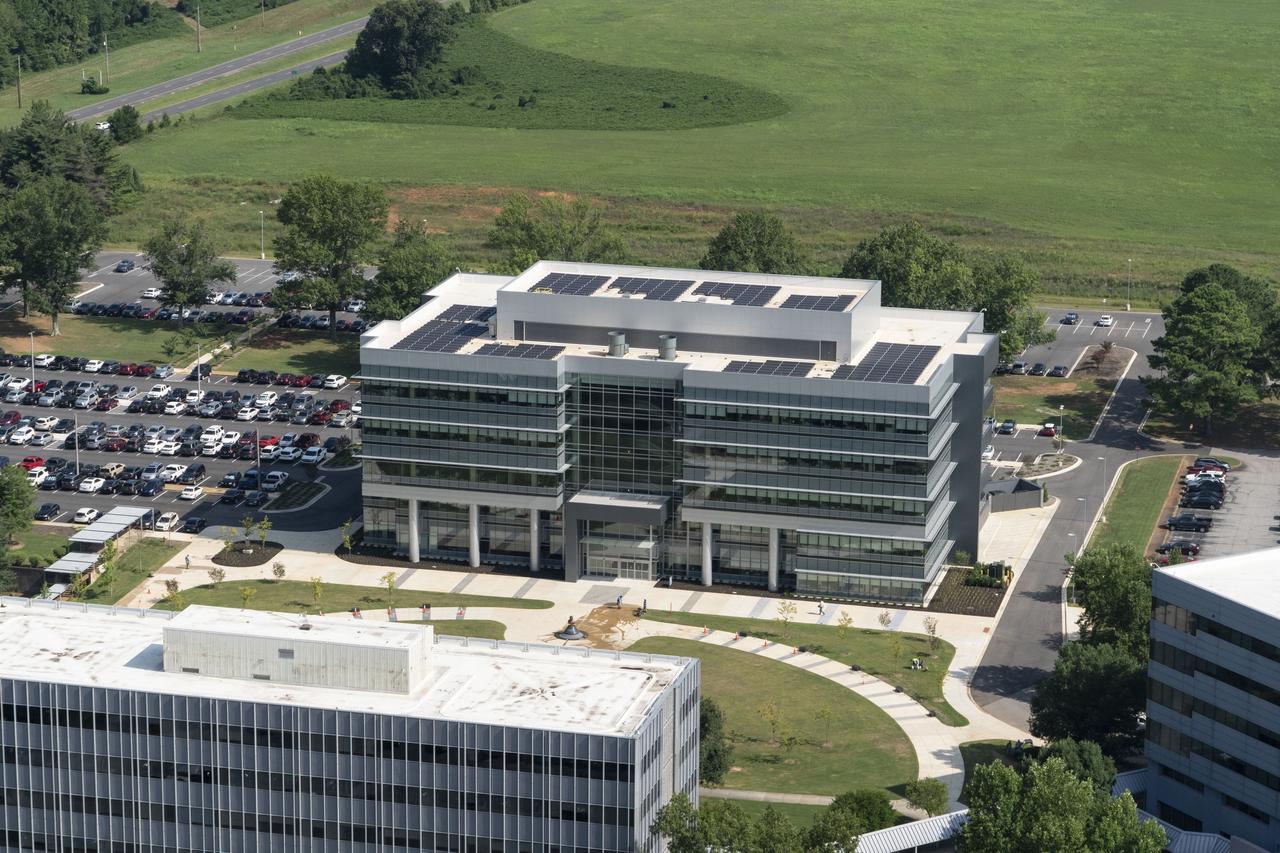
Aerial photograph of MSFC building 4221
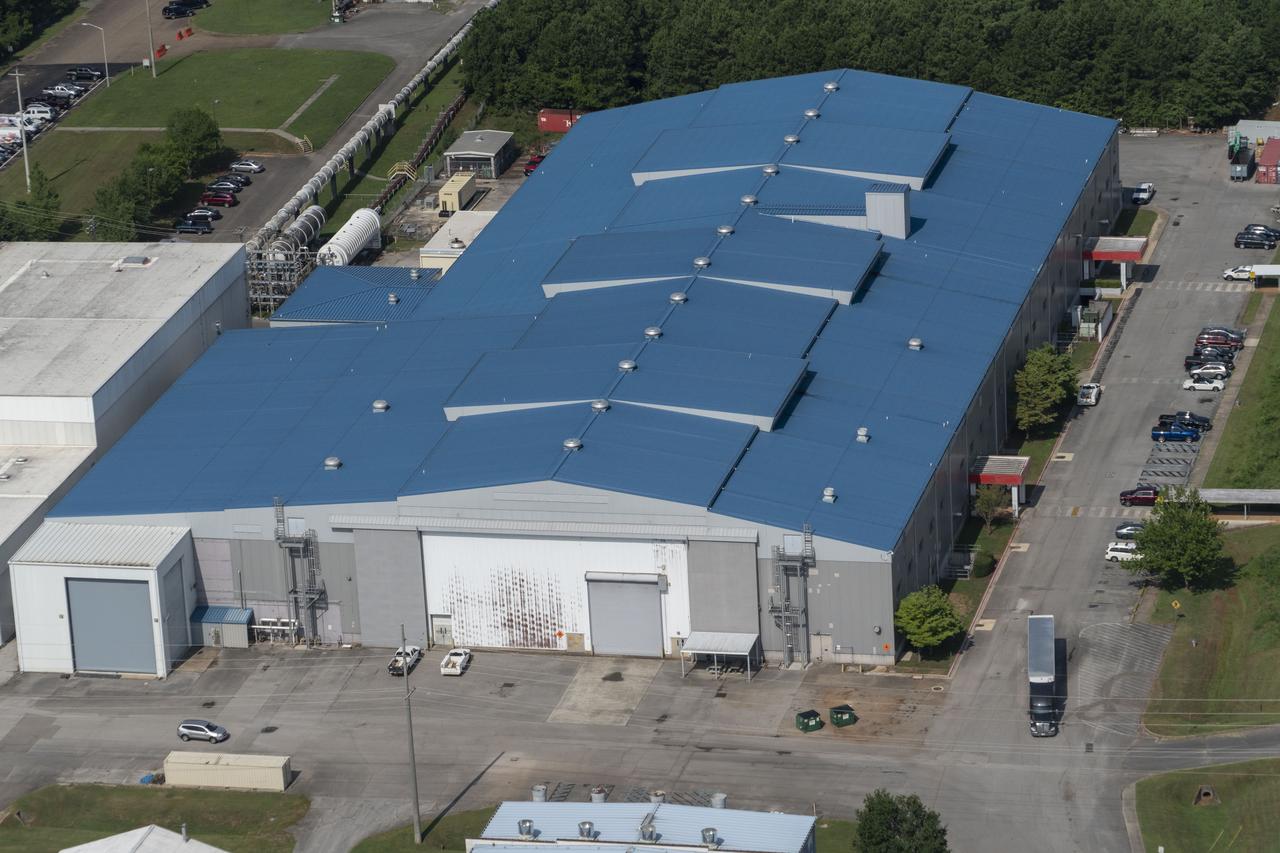
Aerial photograph of MSFC building 4708
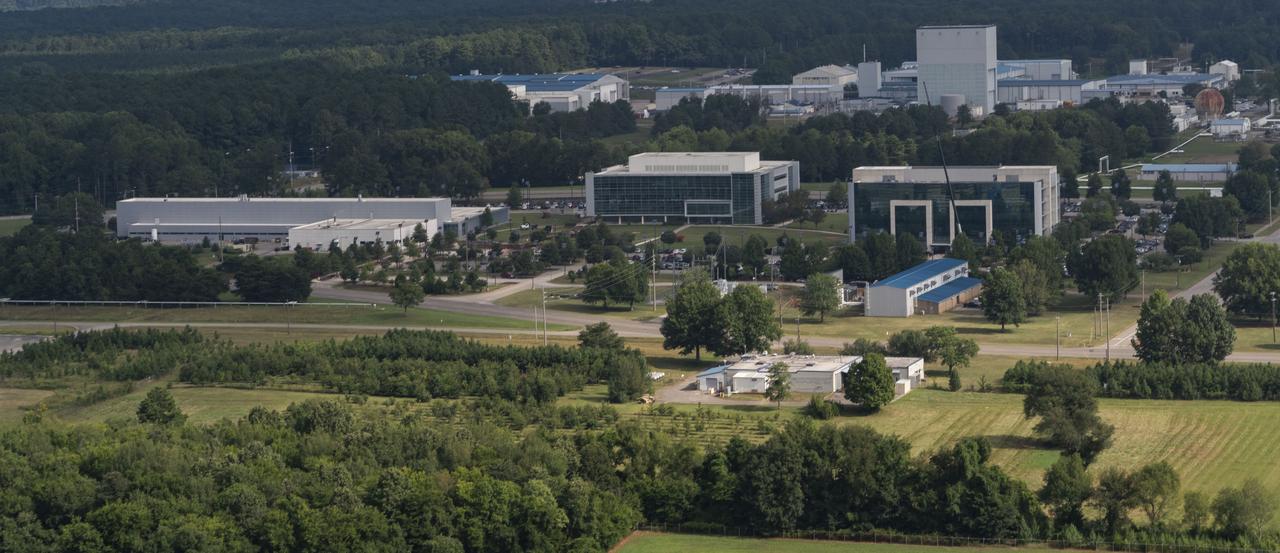
Aerial photograph of the MSFC 4600 complex
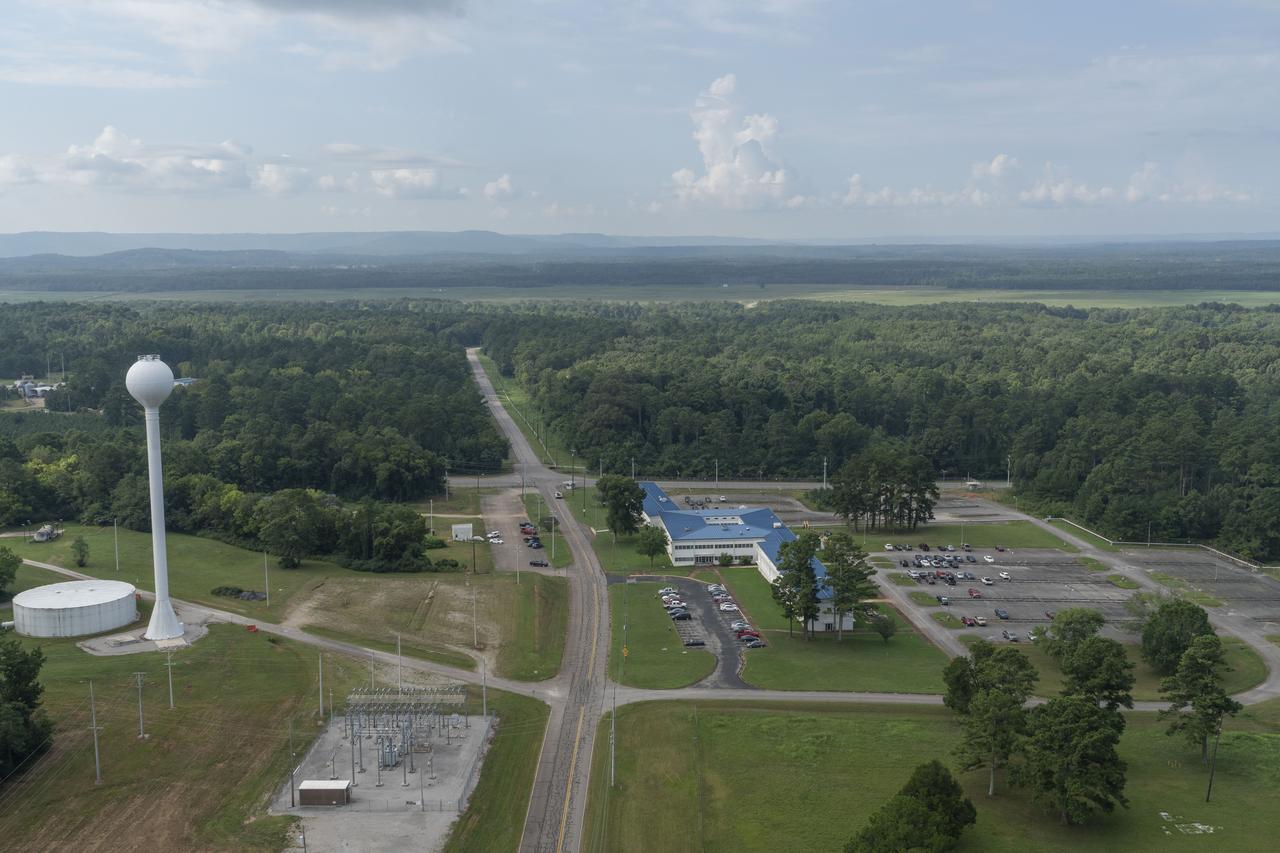
Aerial photograph of MSFC building 4666
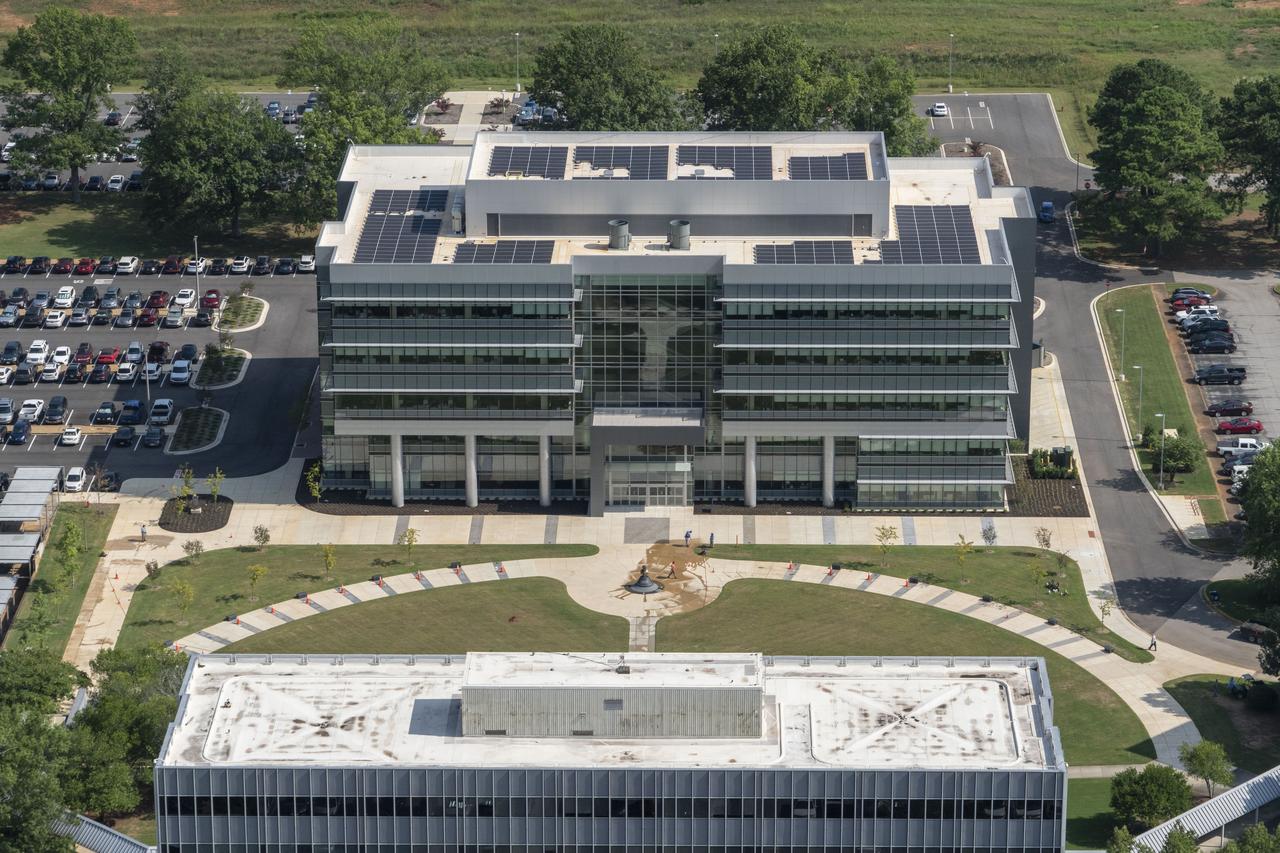
Aerial photograph of MSFC building 4221

Computer Engineer Gilena Monroe photographed for the NASA Hidden Figures project.
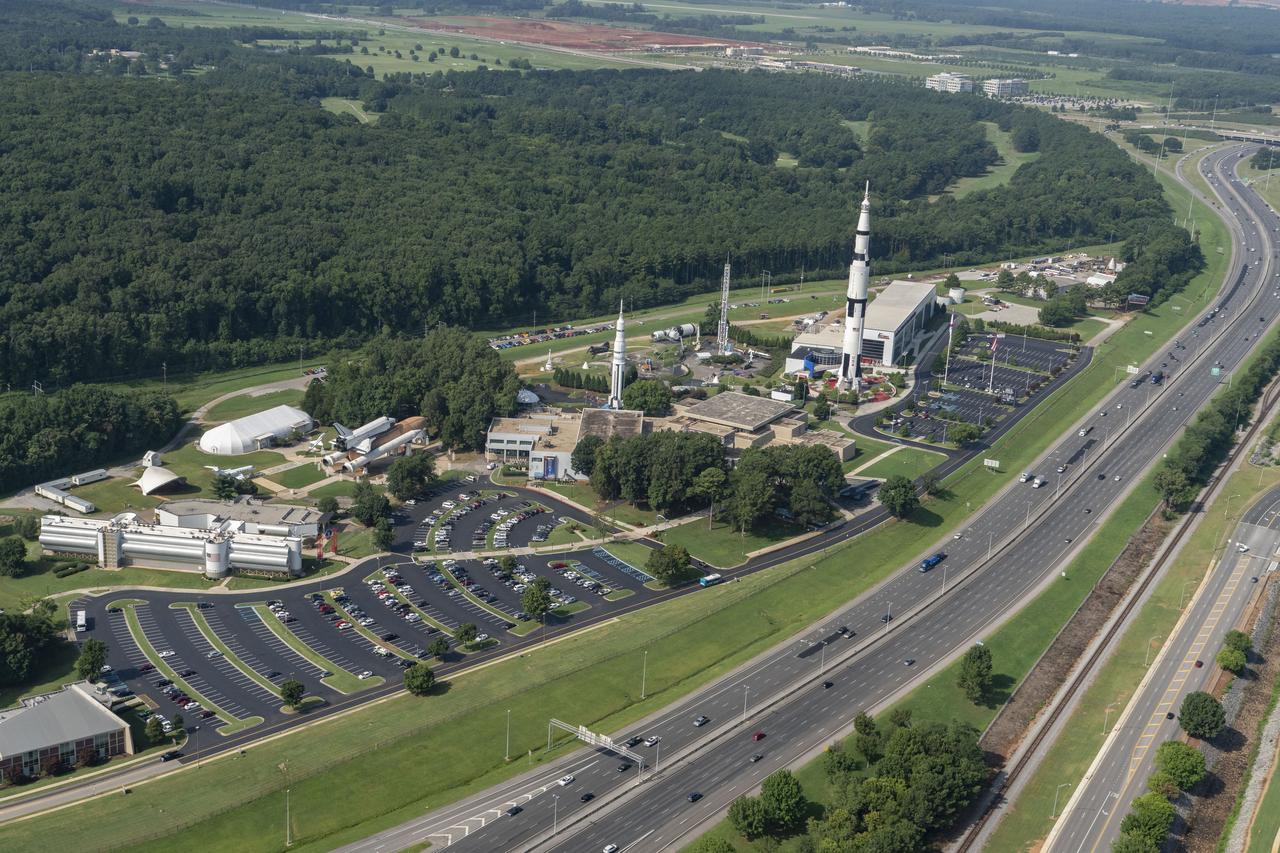
Aerial photograph of the U.S. Space and Rocket Center (USSRC)
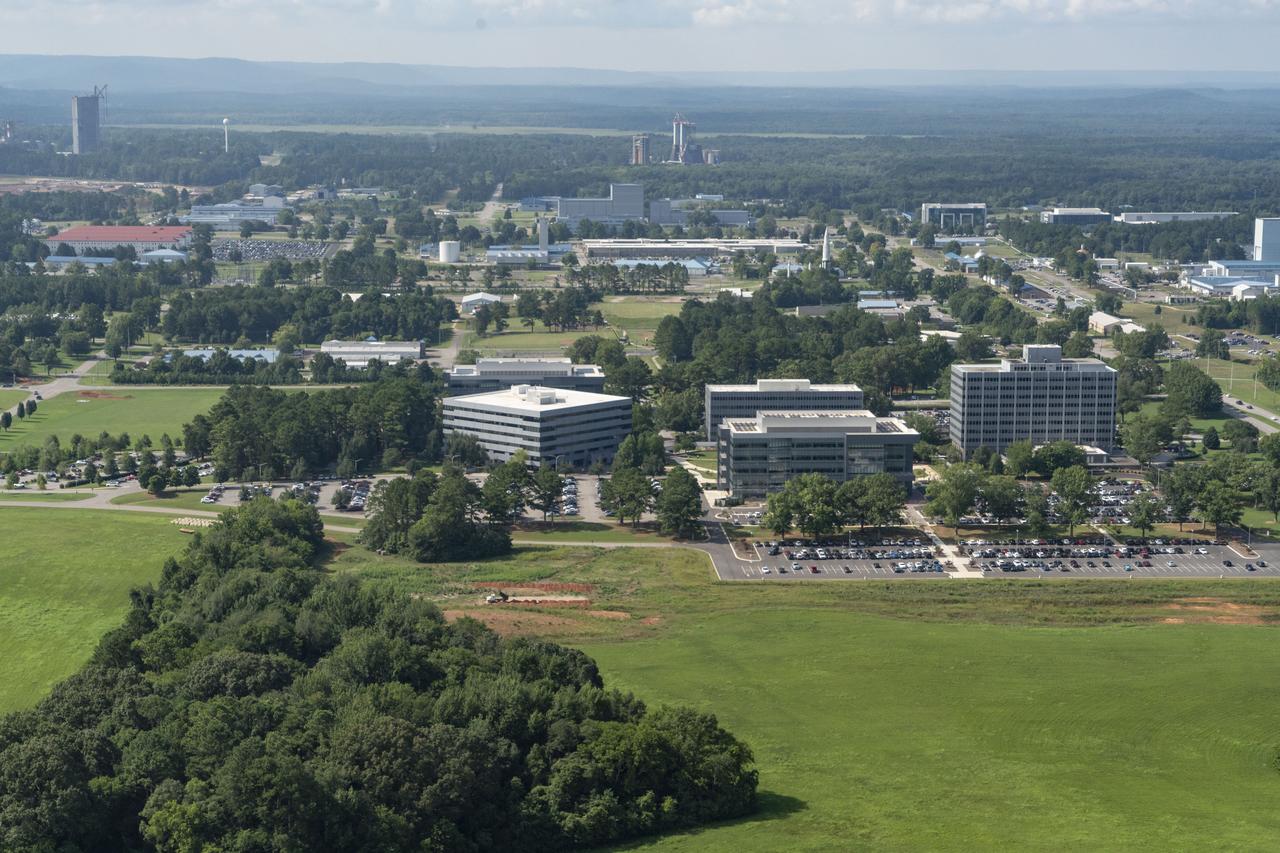
Aerial photograph of MSFC with the 4200 complex in the foreground
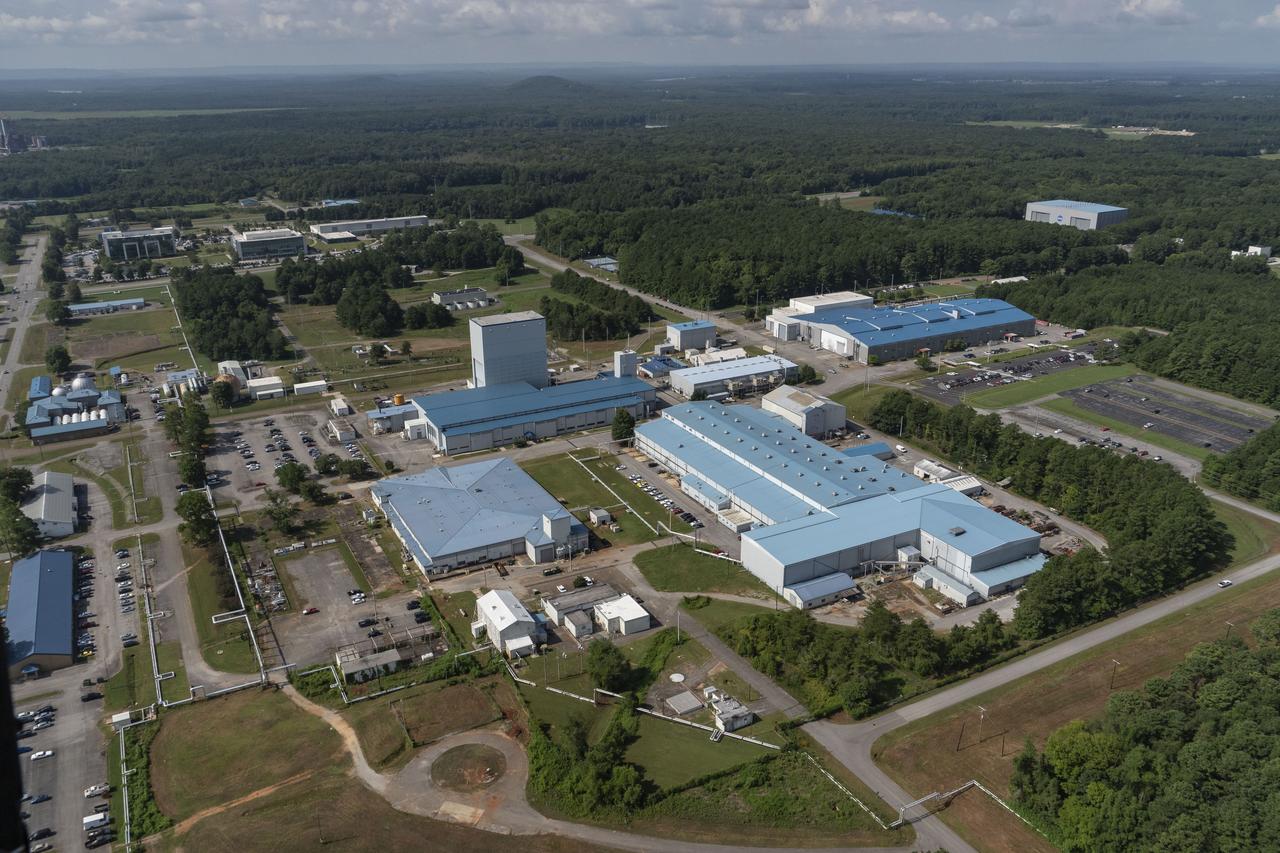
Aerial photograph of the 4700 complex with the 4600 complex in the background
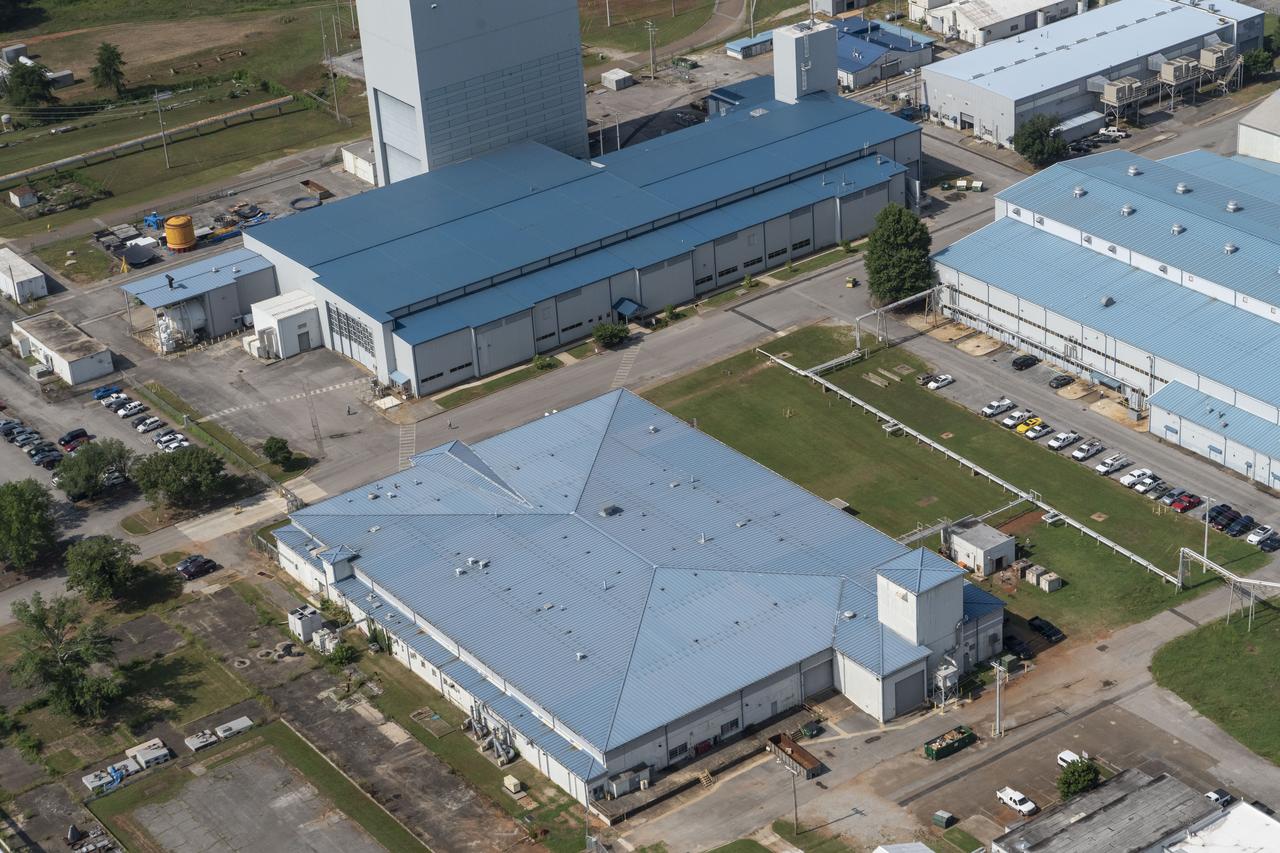
Aerial photograph of the 4700 complex with buildings 4707and 4711
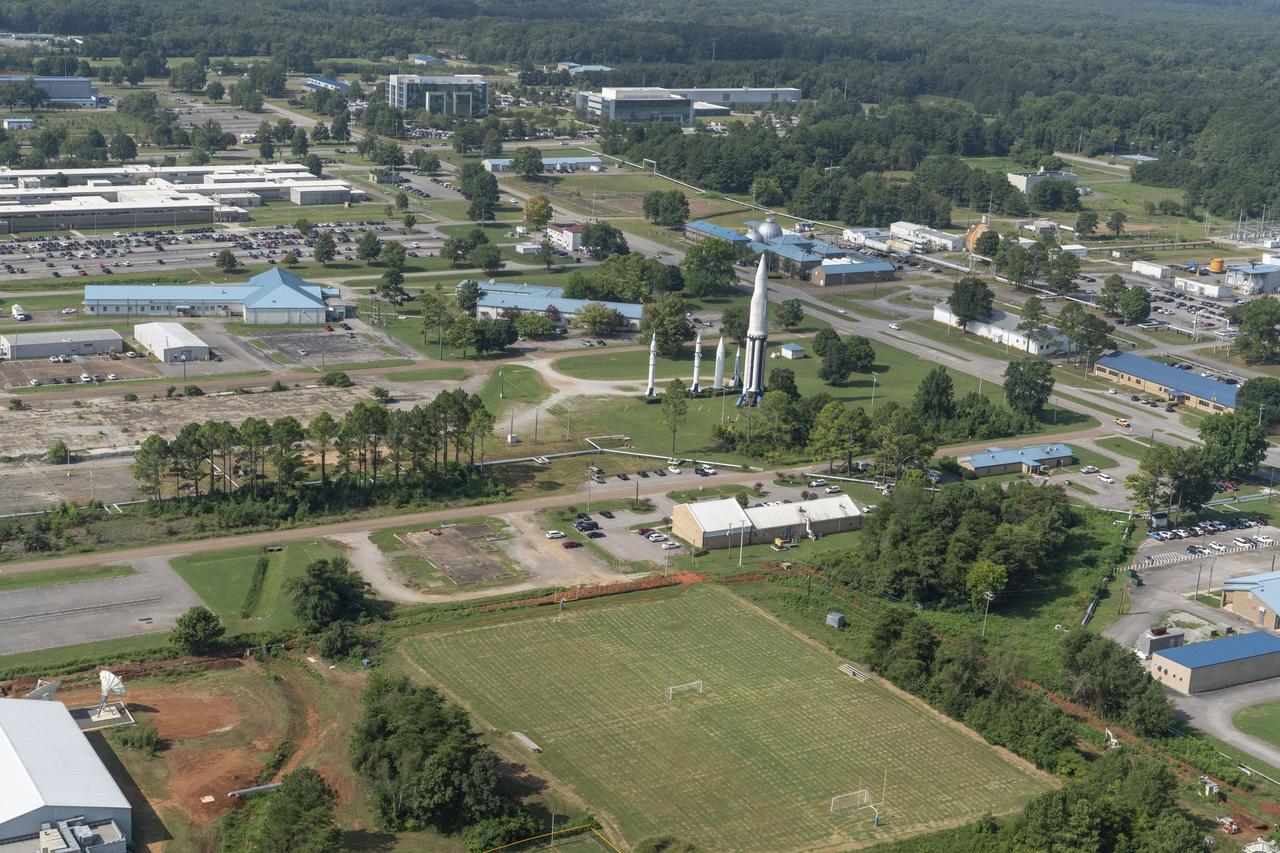
Aerial photograph of various MSFC buildings and the Rocket Park
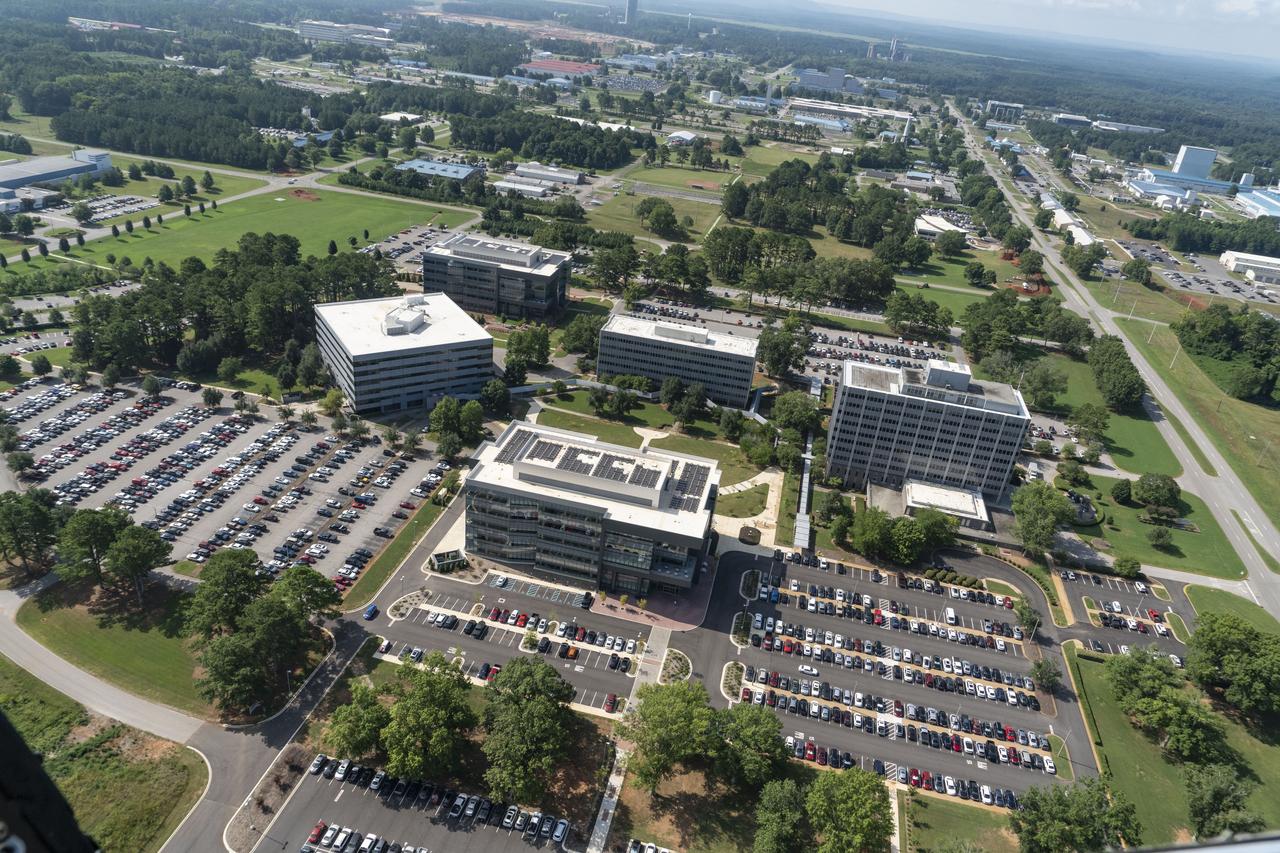
Aerial photograph of MSFC buildings with the 4200 complex in the foreground
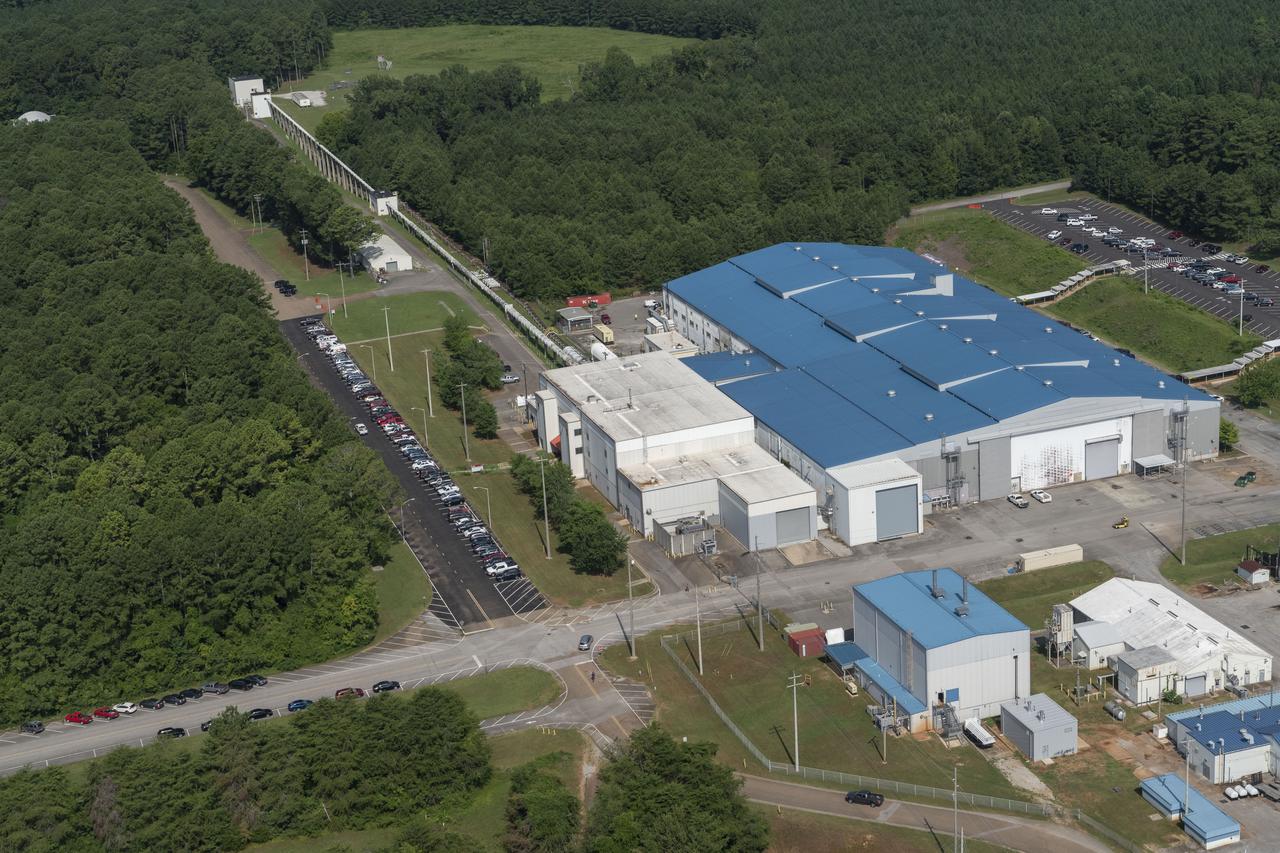
Aerial photograph of MSFC buildings 4718 and 4708

Aerial photograph of the U.S. Space and Rocket Center (USSRC)
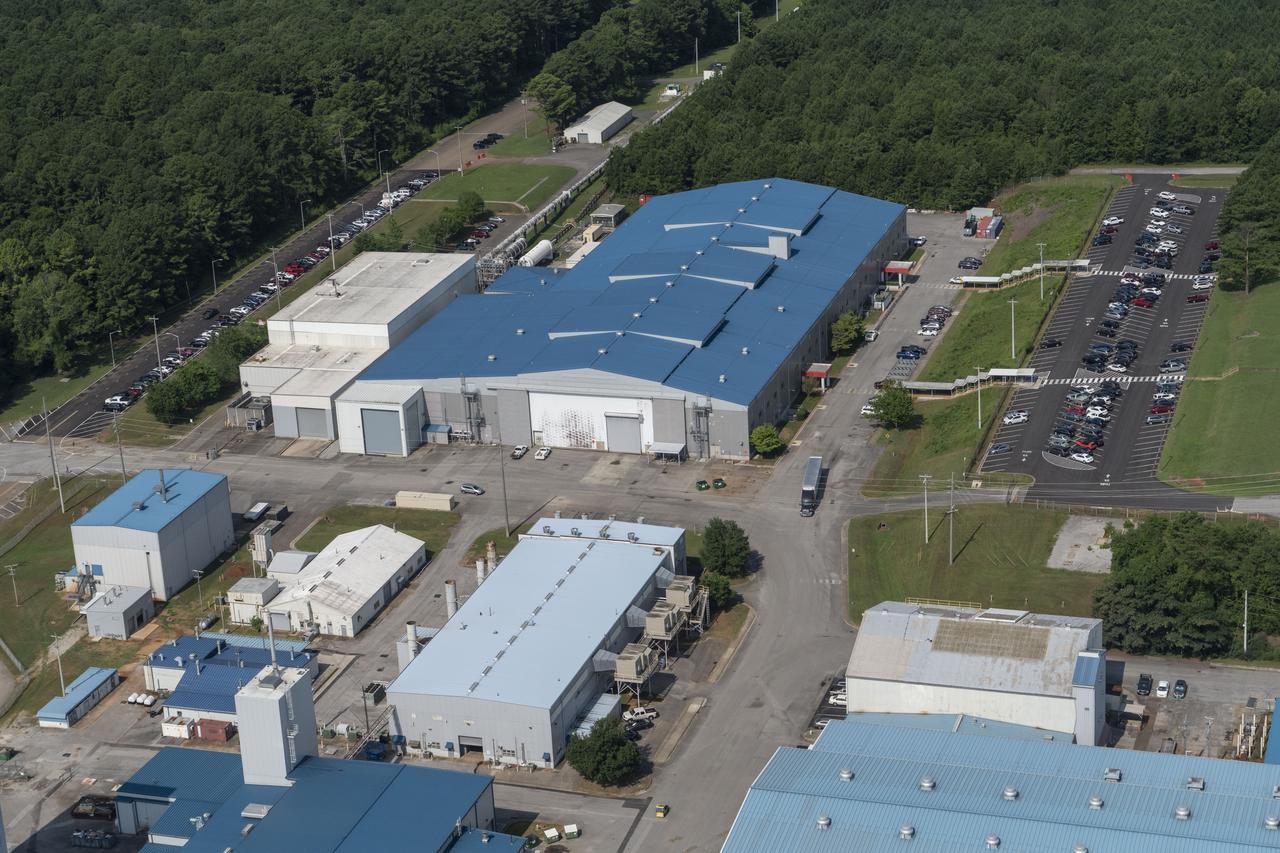
Aerial photograph of MSFC buildings 4808 and 4718

Aerial photograph of MSFC building 4718 and 4755, 4708
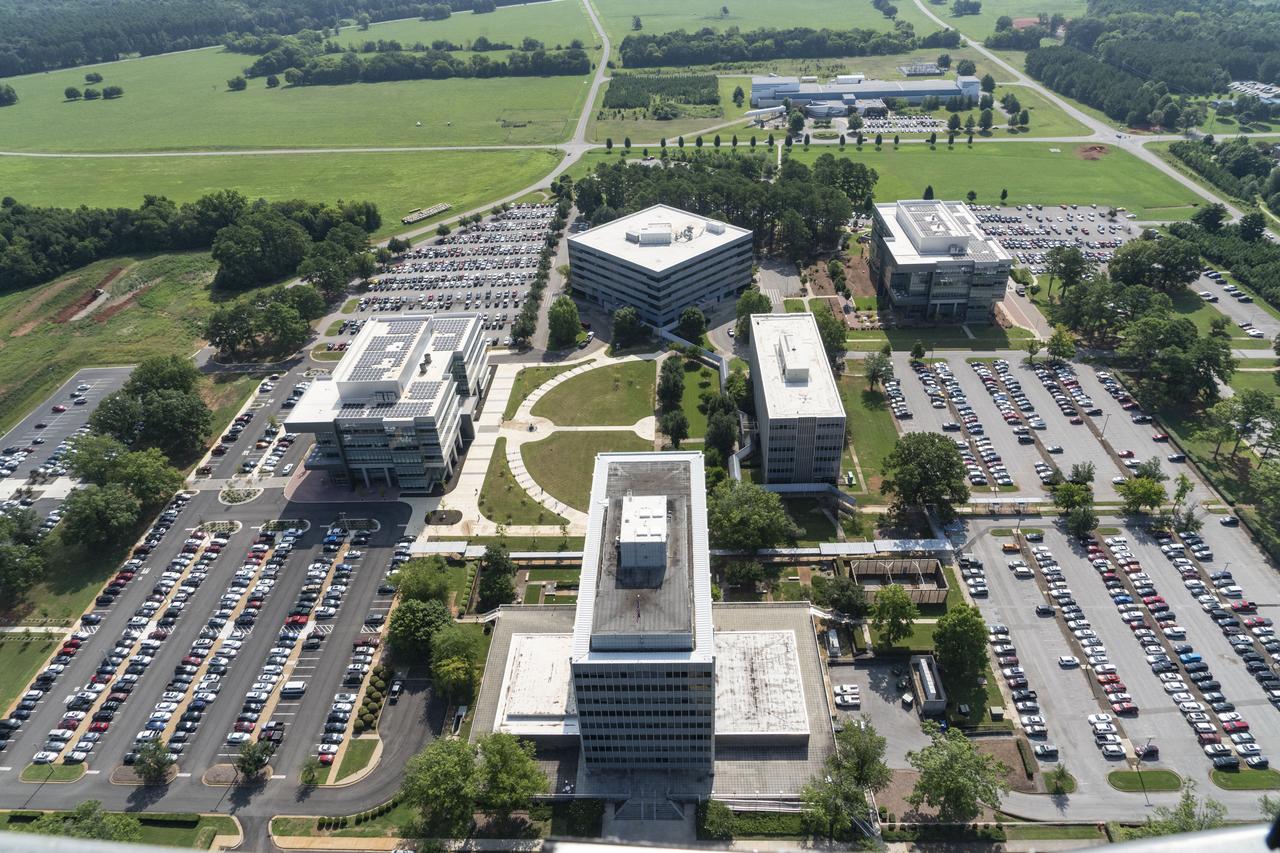
Aerial photograph of the MSFC 4200 complex with 4205 in the background
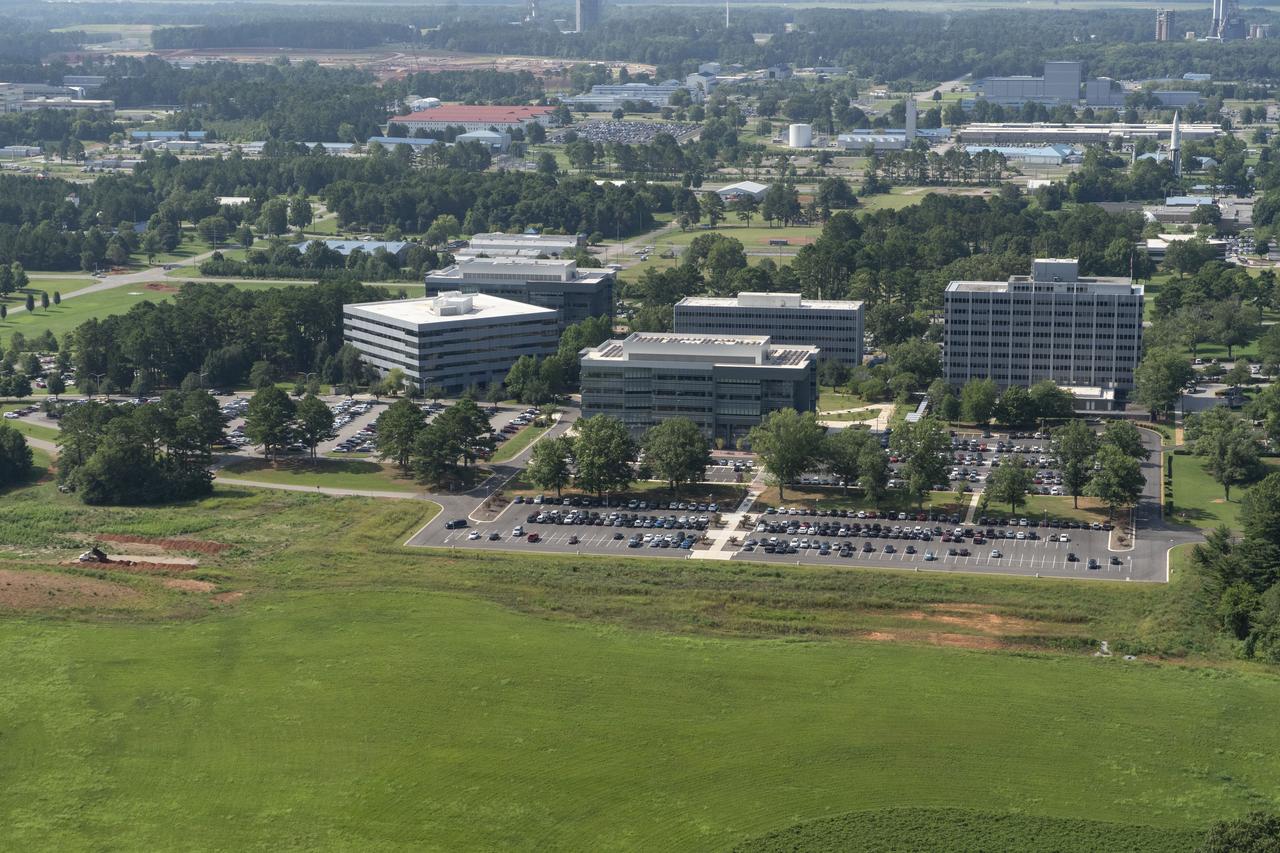
Aerial photograph of MSFC with the 4200 complex in the foreground

This photograph was taken as the third crew (Skylab-4) departed the space station. The solar observatory was designed for full exposure to the Sun throughout most of the Skylab mission. Solar energy was transformed into electrical power for operation of all spacecraft systems. The proper operation of these solar arrays was vital to the mission. This Skylab in orbit view was taken by the Skylab-4 crew.
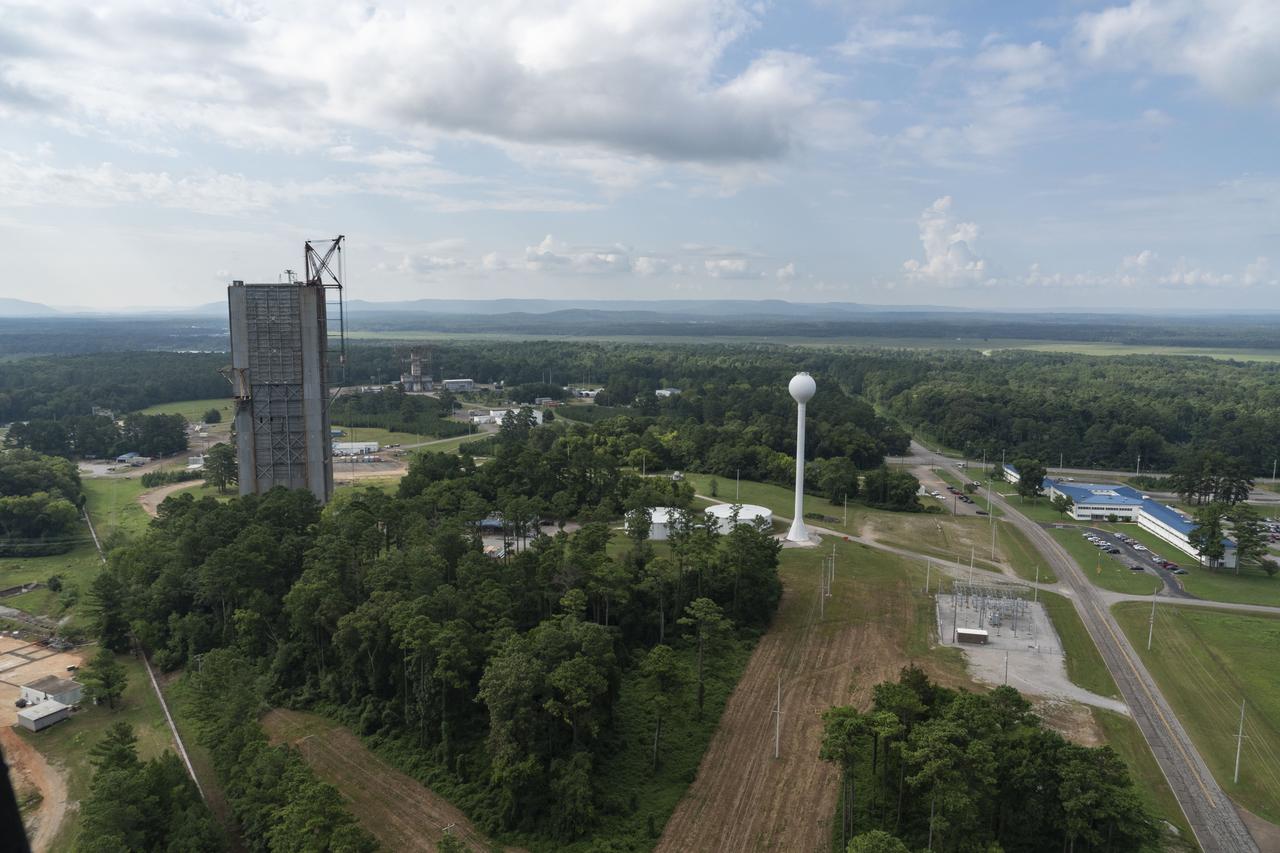
Aerial photograph of the MSFC West Test Area with building 4666 on the right
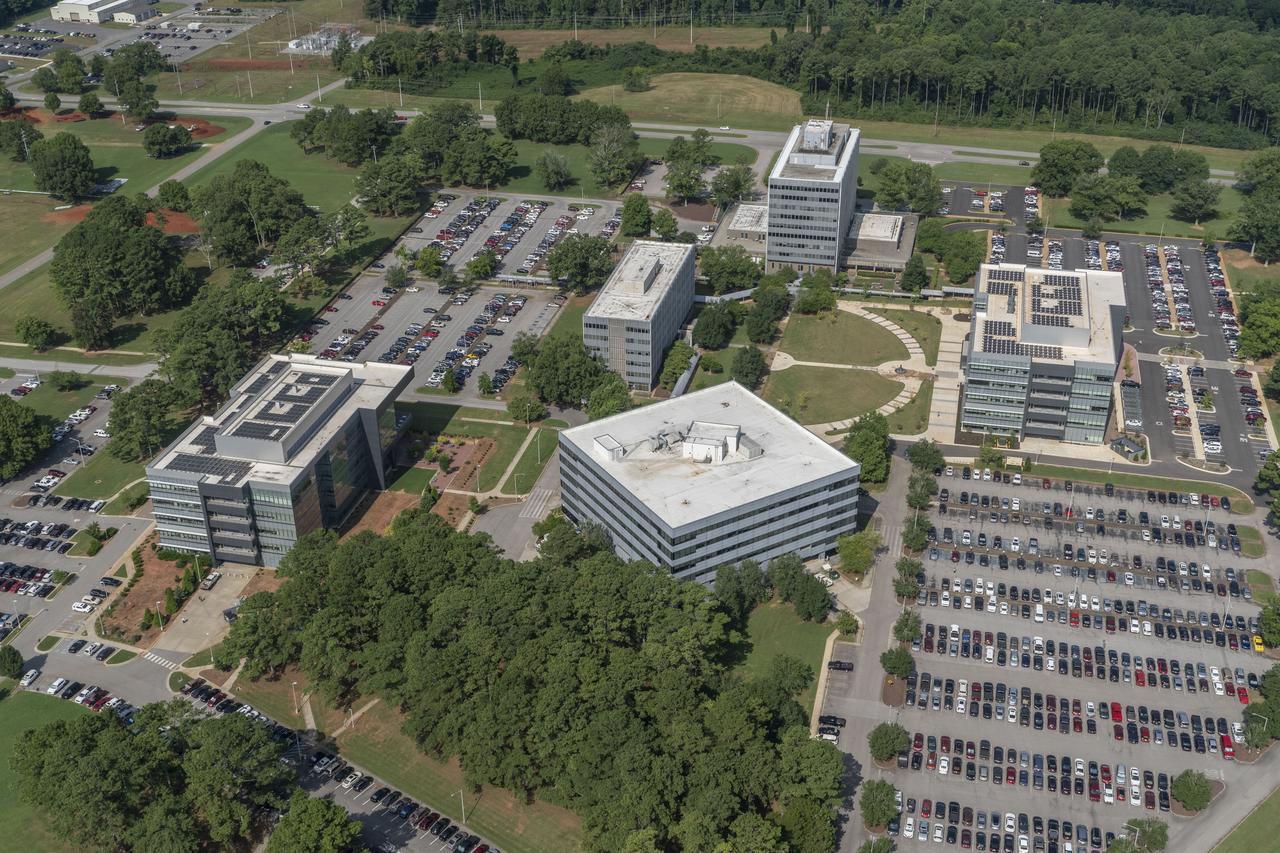
Aerial photograph of MSFC buildings 4200, 4201, 4203, 4220, and 4221
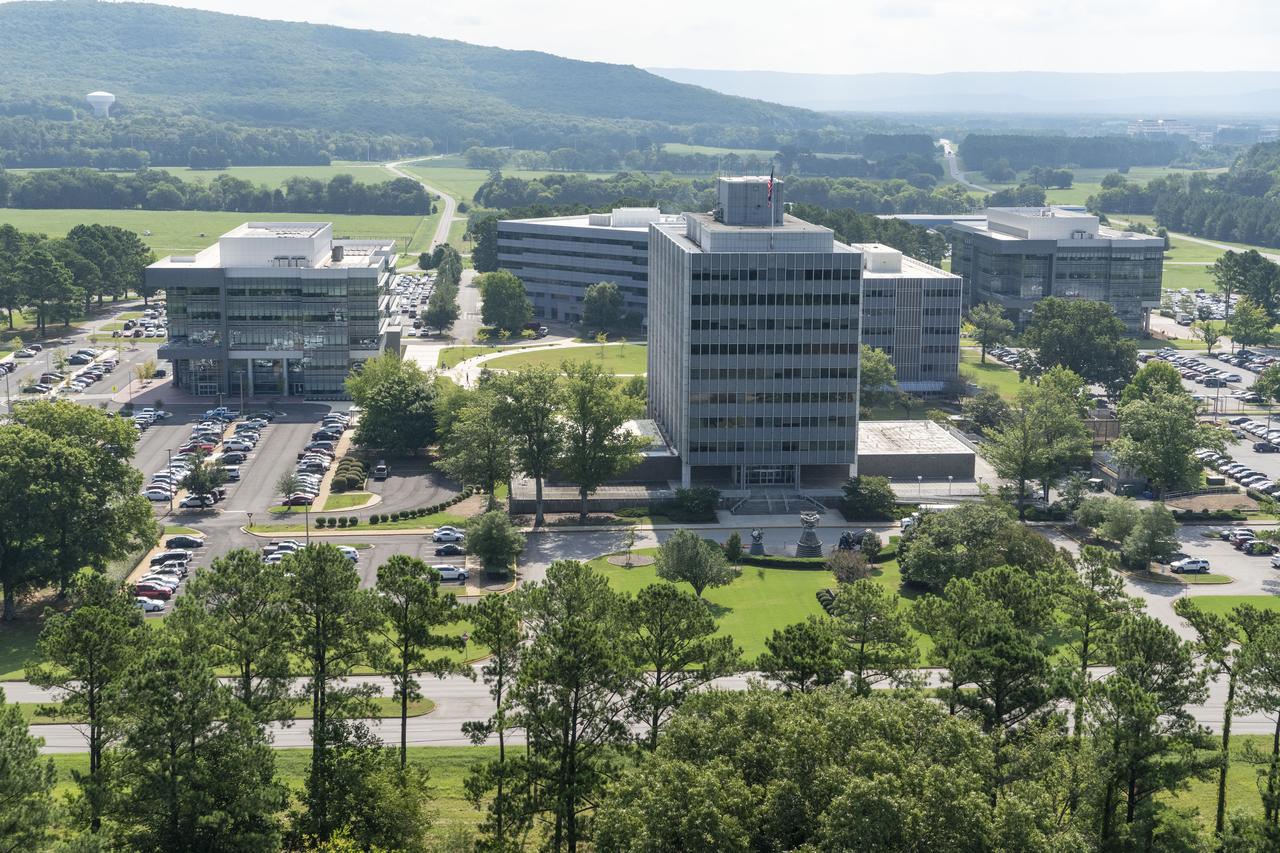
Aerial photograph of MSFC buildings 4200, 4201, 4203, 4220, and 4221
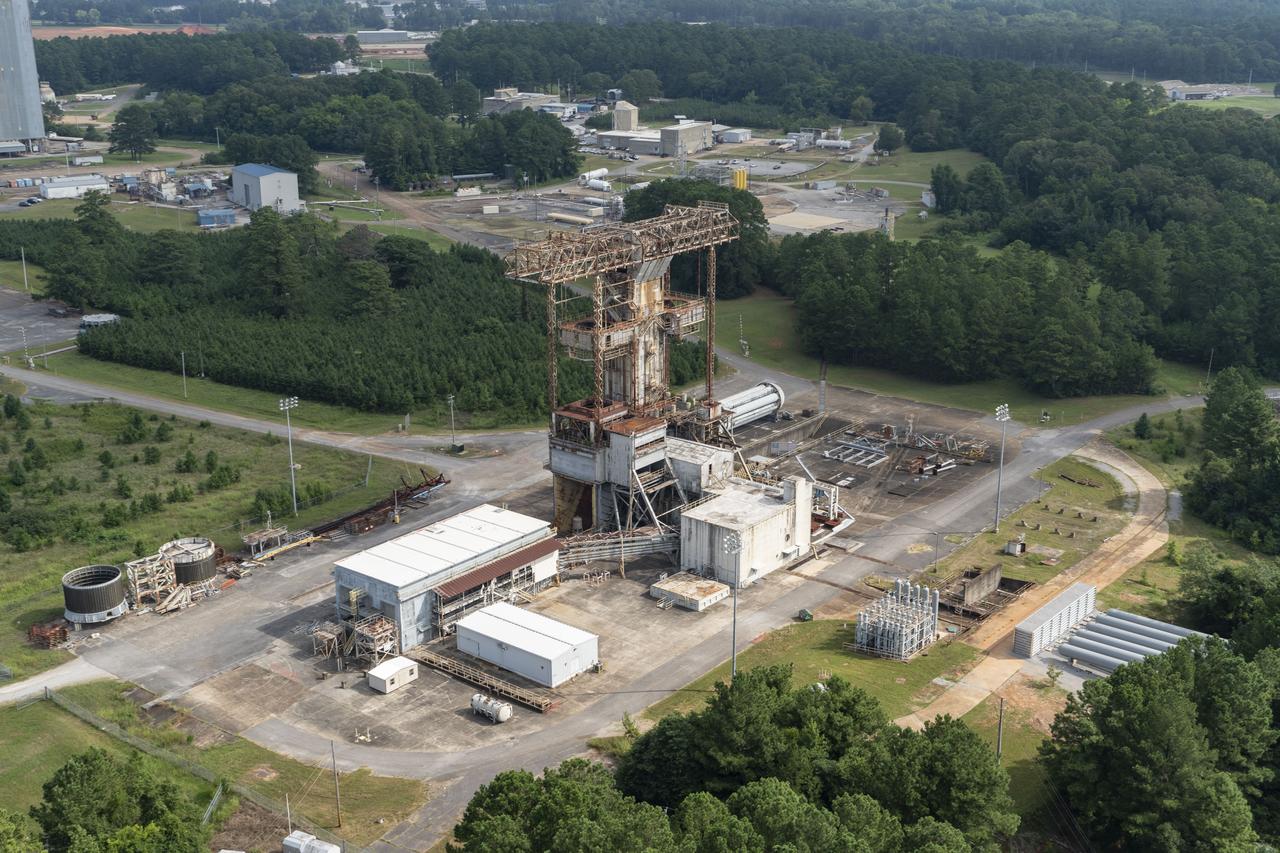
Aerial photograph of the MSFC West Test area with the T-Stand in the foreground
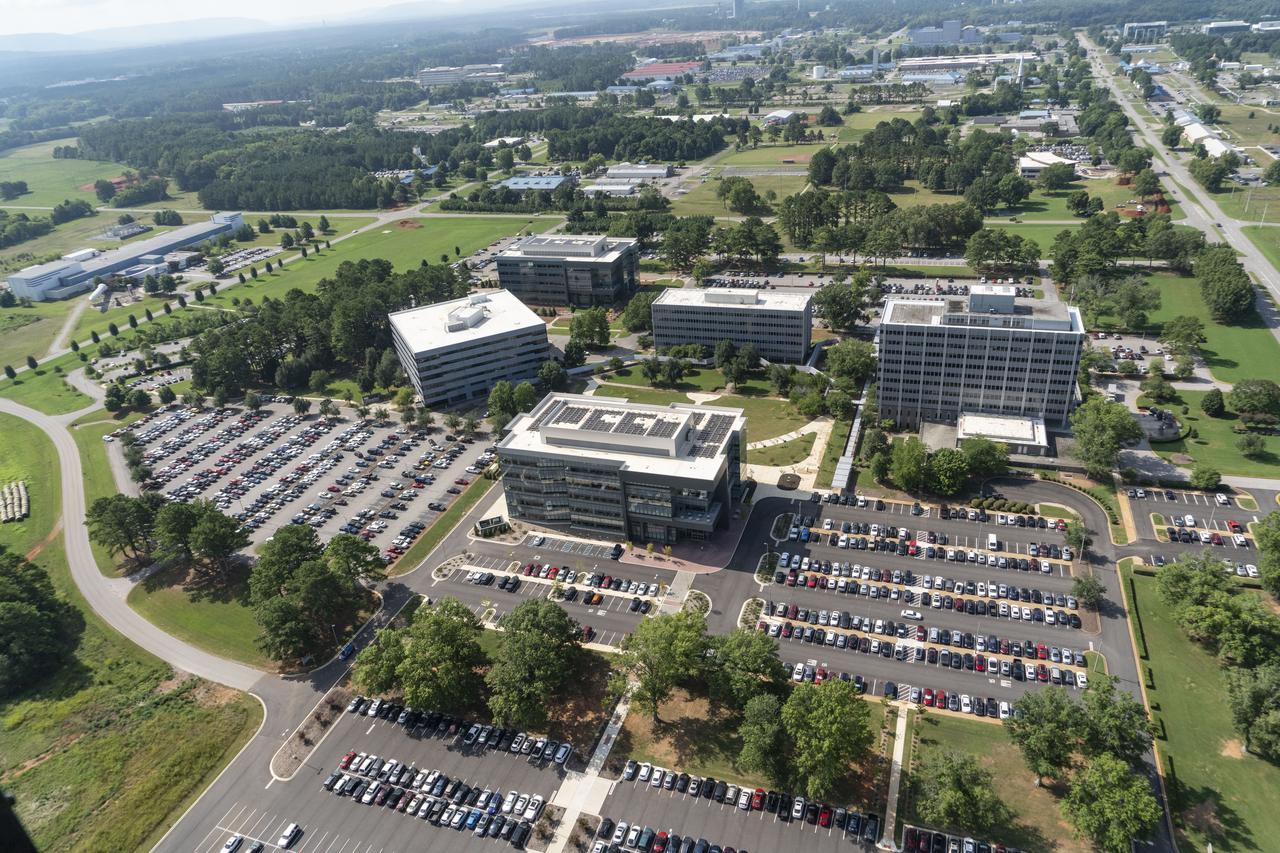
Aerial photograph of MSFC buildings with the 4200 complex in the foreground and 4205 to the left
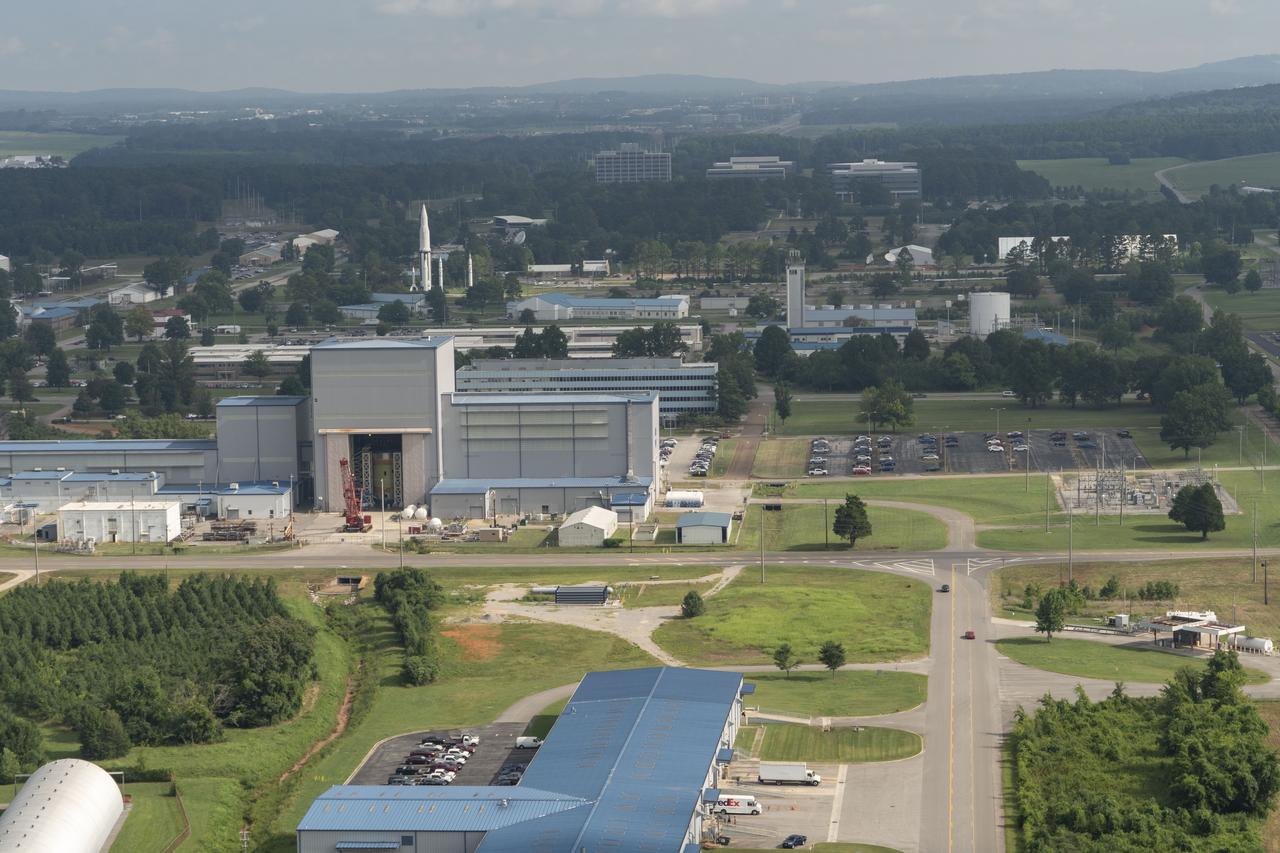
Aerial photograph of MSFC building 4719 with the SLS Intertank visible in the open doors
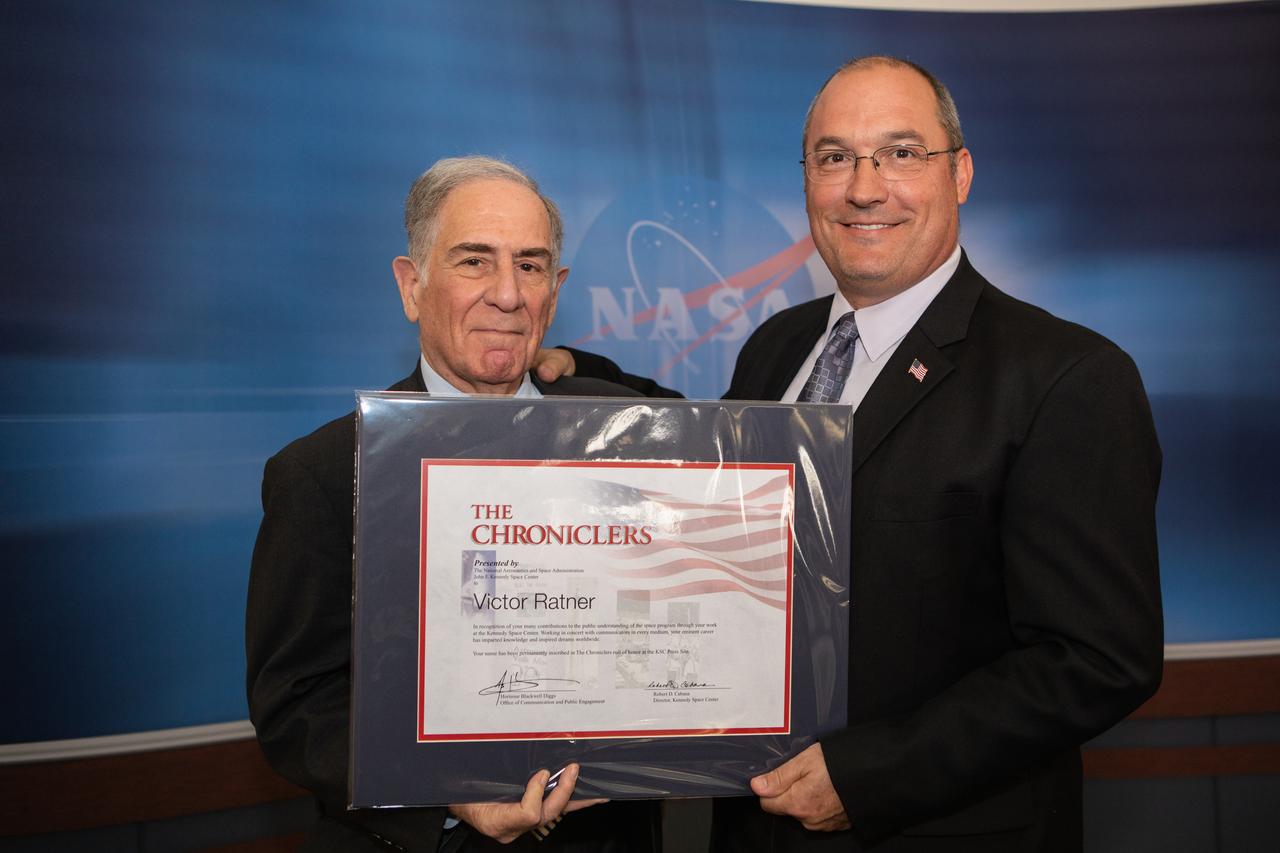
NASA Public Affairs Officer Greg Harland, right, poses for a photograph with newly inducted Chronicler Vic Ratner during a ceremony at Kennedy Space Center’s NASA News Center in Florida on May 3, 2019. Ratner covered the space program for ABC Radio and was the only radio correspondent on the air live during the Space Shuttle Challenger accident, providing on-the-scene information for more than five hours that day after the tragedy. Also inducted as members were journalists Jim Banke and Todd Halvorson, and photographer Peter Cosgrove. They were selected by a committee of their peers on March 25. The Chroniclers recognizes retirees of the news and communications business who have helped spread news of American space exploration from Kennedy for 10 years or more.

NASA Public Affairs Officer Greg Harland, right, poses for a photograph with newly inducted Chronicler Jim Banke during a ceremony at Kennedy Space Center’s NASA News Center in Florida on May 3, 2019. Banke spent many years with Florida Today and covered the Space Shuttle Program and many other launches from Kennedy and Cape Canaveral Air Force Station for more than 20 years. Also inducted as members were journalist Todd Halvorson, radio broadcaster Vic Ratner and photographer Peter Cosgrove. They were selected by a committee of their peers on March 25. The Chroniclers recognizes retirees of the news and communications business who have helped spread news of American space exploration from Kennedy for 10 years or more.
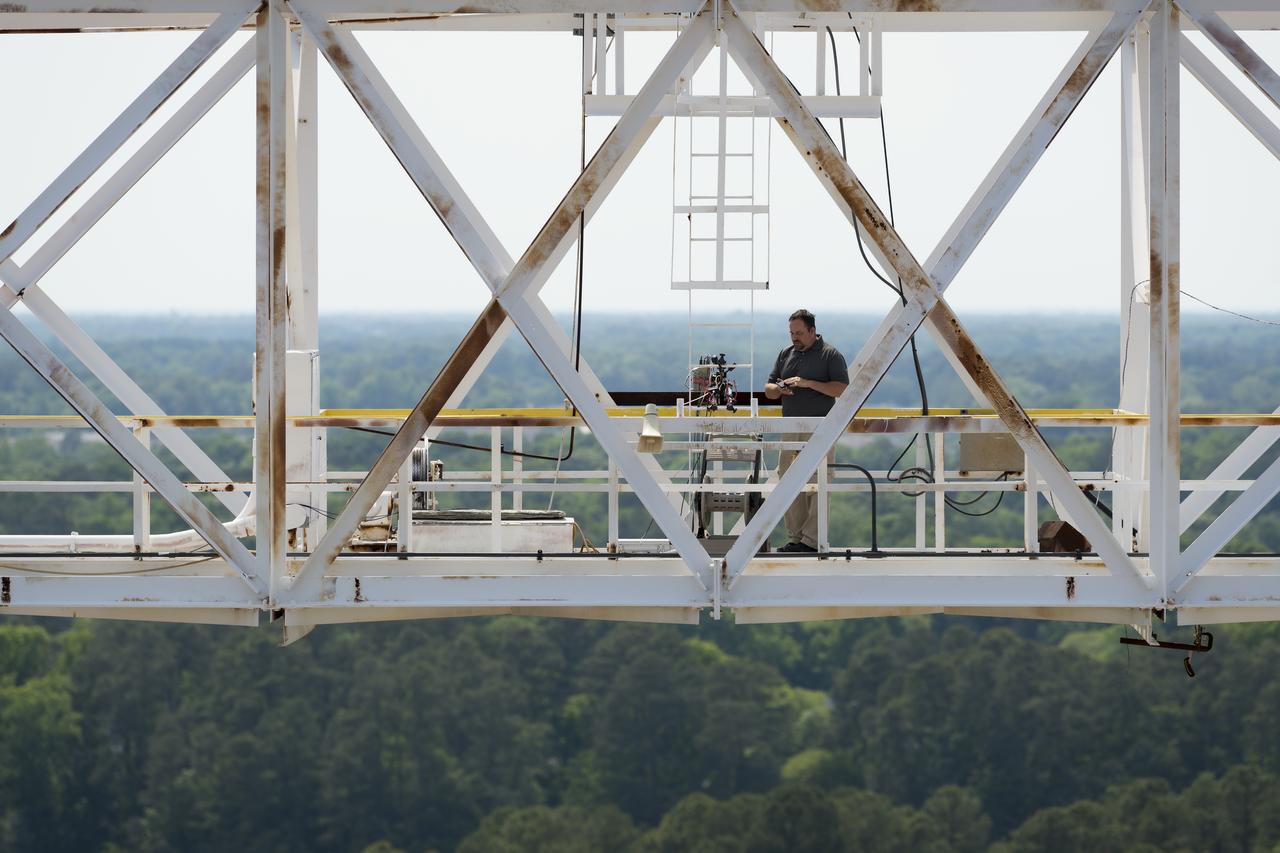
Images from Orion Structural Test Article (STA) vertical water impact testing (WIT) Swing Test 4, Photographer Harlen Capen at the top of the Impact Dynamics Facility or Gantry as it is know at NASA Langley Research Center.

Aerial photograph of MSFC test stand 4697 with the Liquid Oxygen (LOX) test article in the stand
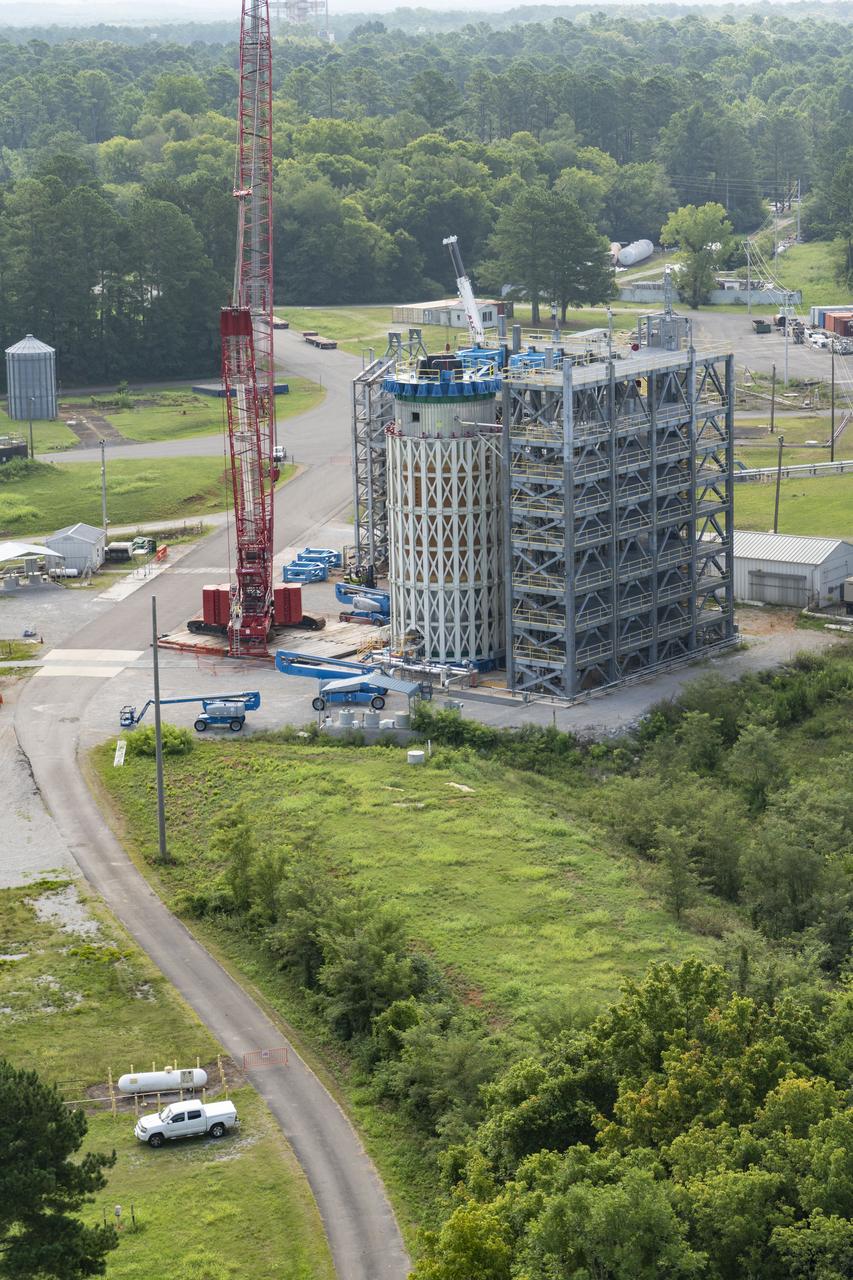
Aerial photograph of MSFC test stand 4697 with the Liquid Oxygen (LOX) test article in the stand
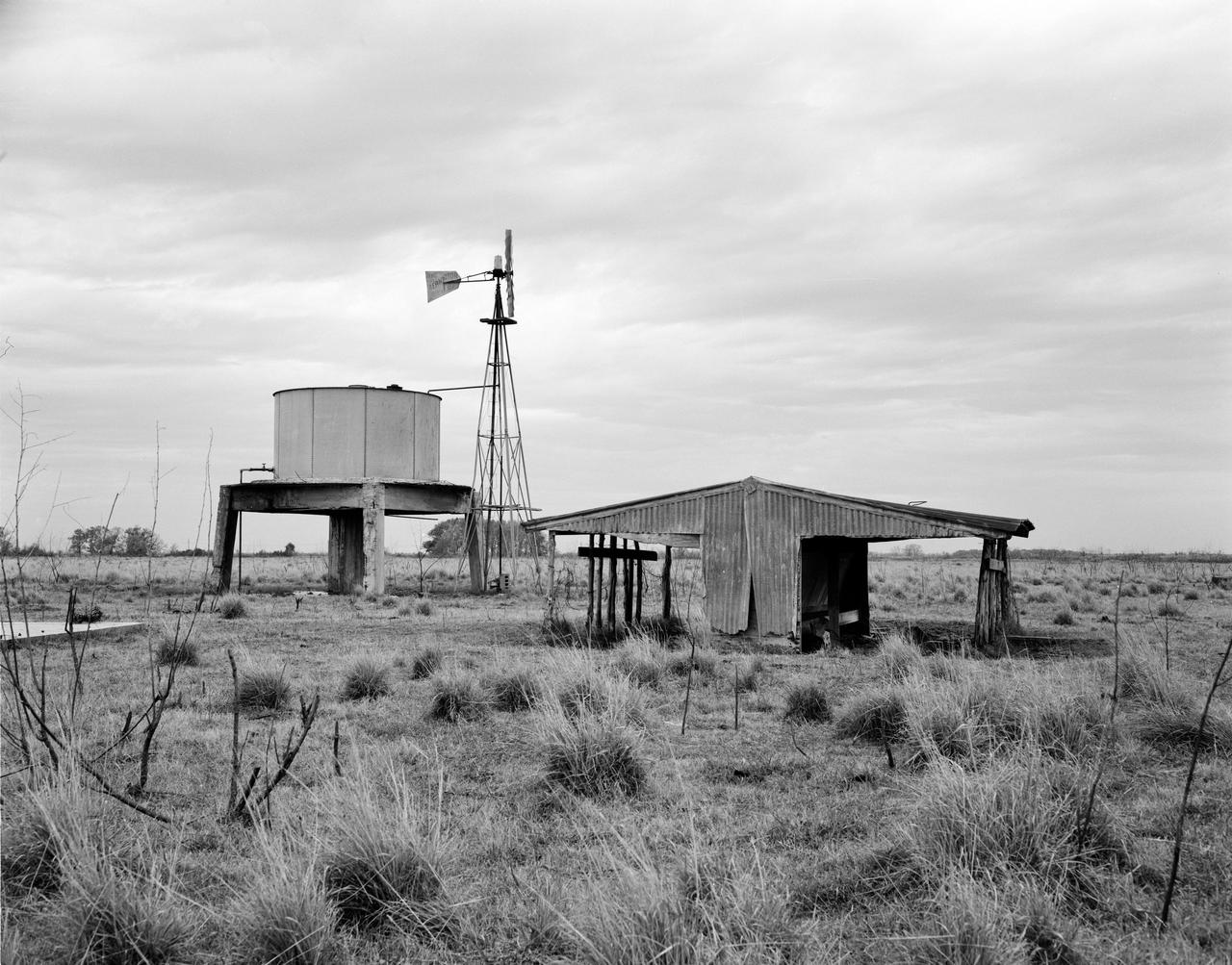
S62-00631 (March 1962) --- Area photograph of Site 1, Manned Spacecraft Center, at Clear Lake, prior to start of construction.
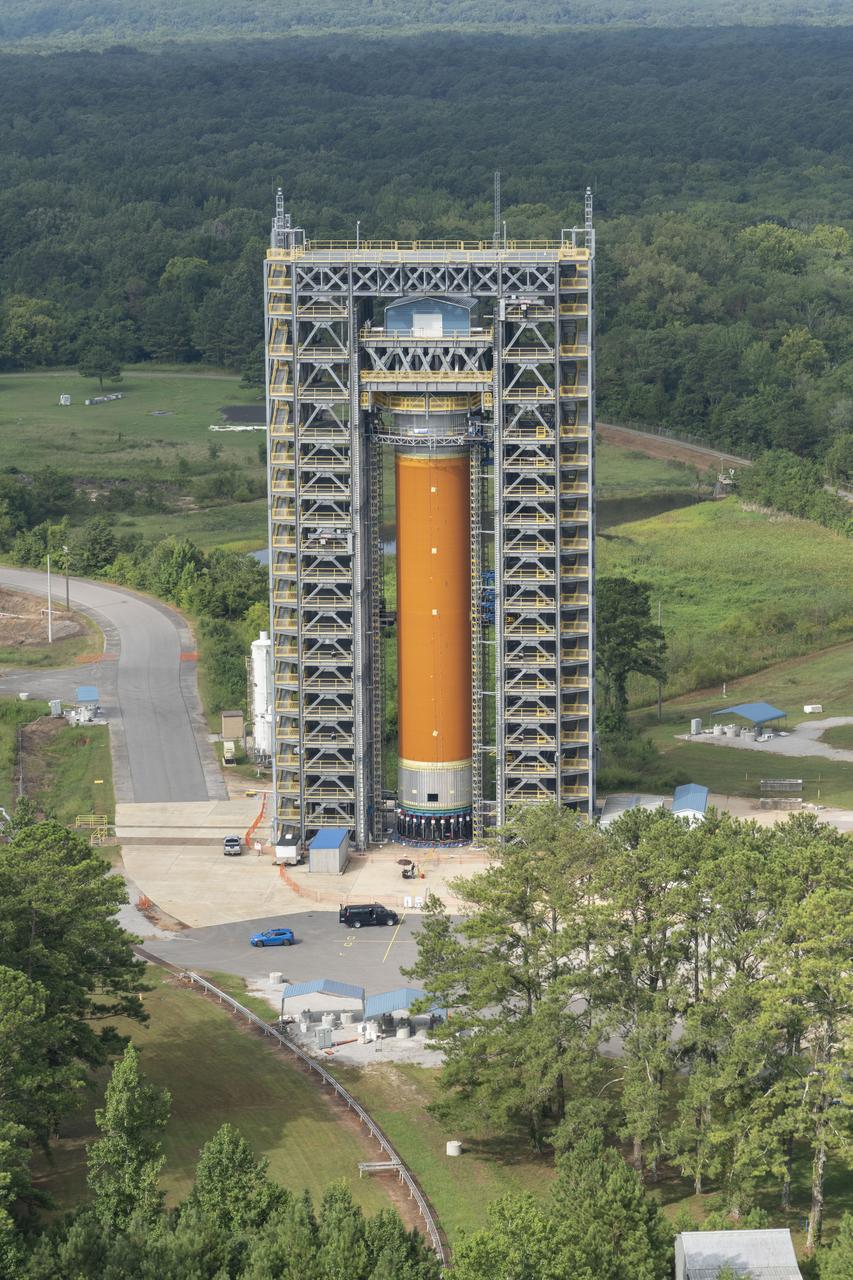
Aerial photograph of MSFC test stand 4693 with the Liquid Hydrogen test article (LH2) in the stand

Aerial photograph of MSFC test stand 4693 with the Liquid Hydrogen test article (LH2) in the stand

Aerial photograph of MSFC test stand 4697 with the Liquid Oxygen (LOX) test article in the stand
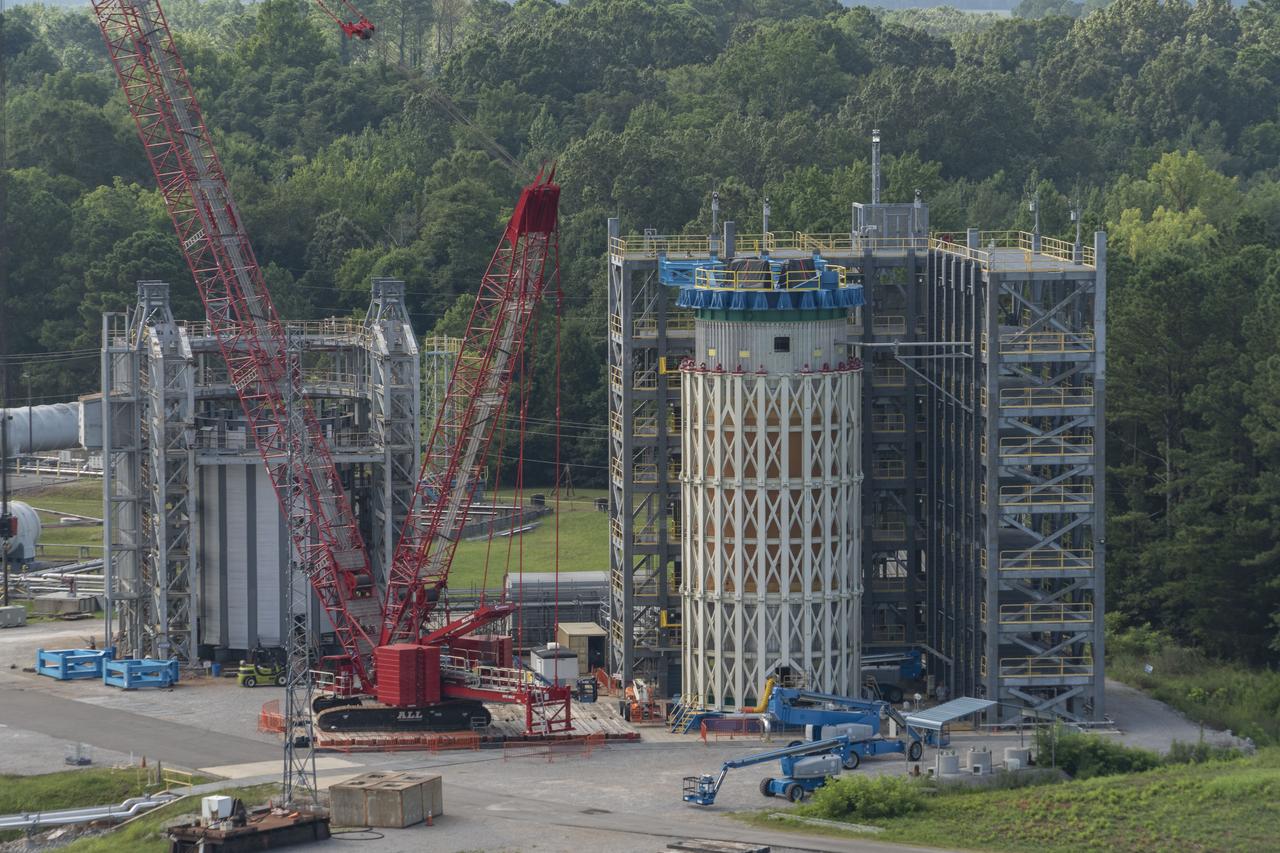
Aerial photograph of MSFC test stand 4697 with the Liquid Oxygen (LOX) test article in the stand
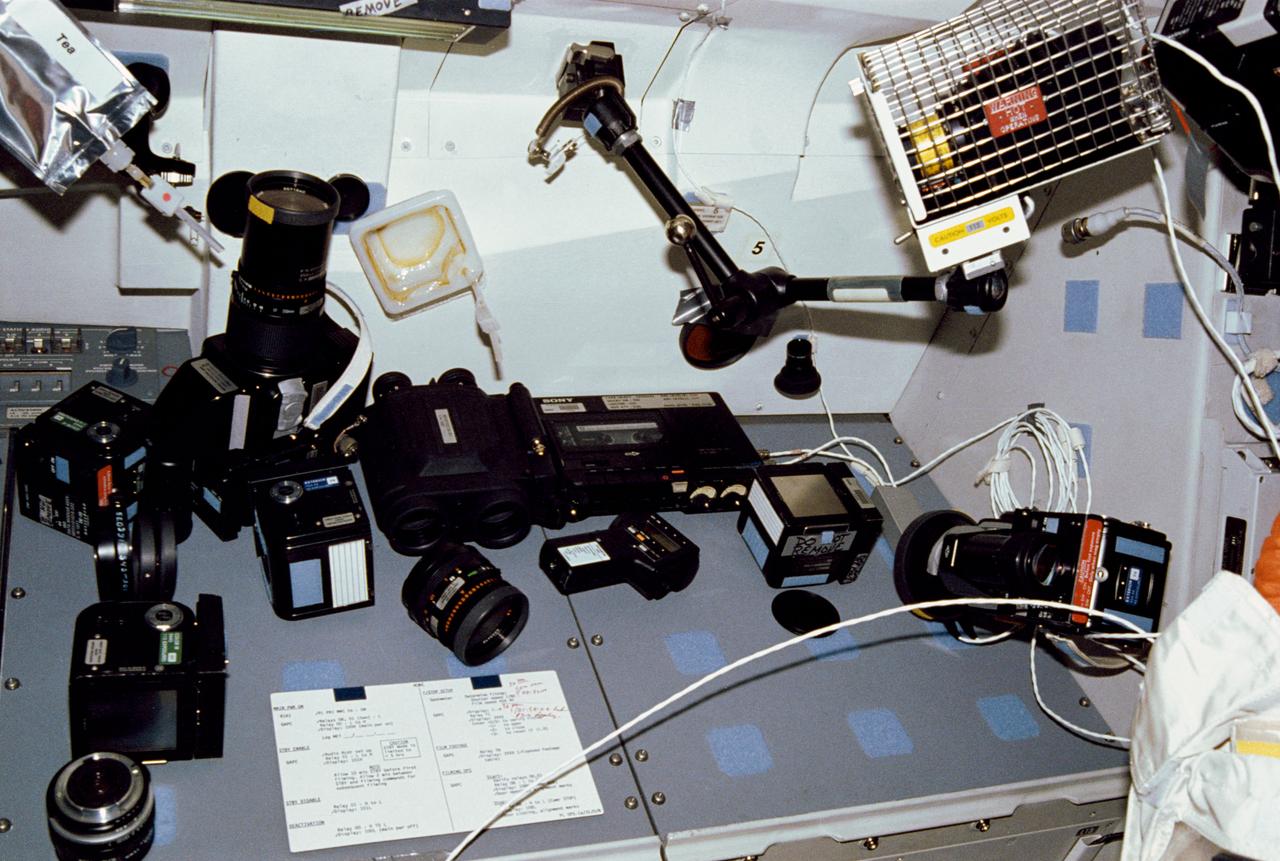
This array of photographic equipment, displayed on the aft flight deck payload station, represents just a part of the imaging and recording hardware which was carried aboard Discovery, Orbiter Vehicle (OV) 103, for STS-31's five day mission. Lenses, film magazines, cassettes, recorders, camera chassis, a pair of binoculars, spot meter, tape recorder, and a bracket-mounted light fixture are included among the array.
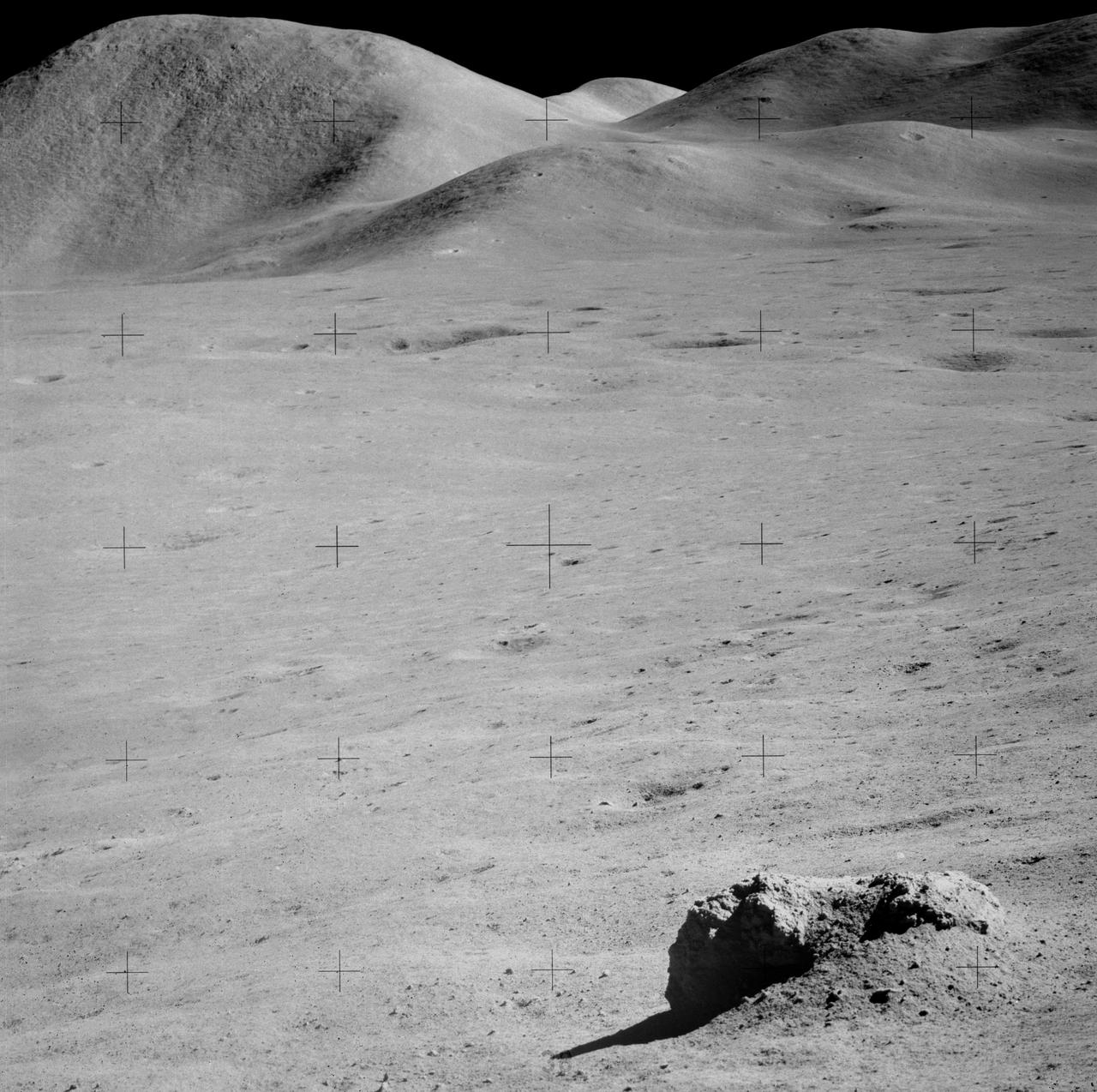
AS15-90-12187 (31 July-2 Aug. 1971) --- This view, looking generally north, shows the tall Mount Hadley in the left background. The photograph was taken from the slope of Hadley Delta during Apollo 15 extravehicular activity (EVA). The crewmen of Apollo 15 noted the visible layering feature of the mountain. Note boulder in foreground. Mount Hadley rises approximately 14,765 feet (about 4,500 meters) above the plain.
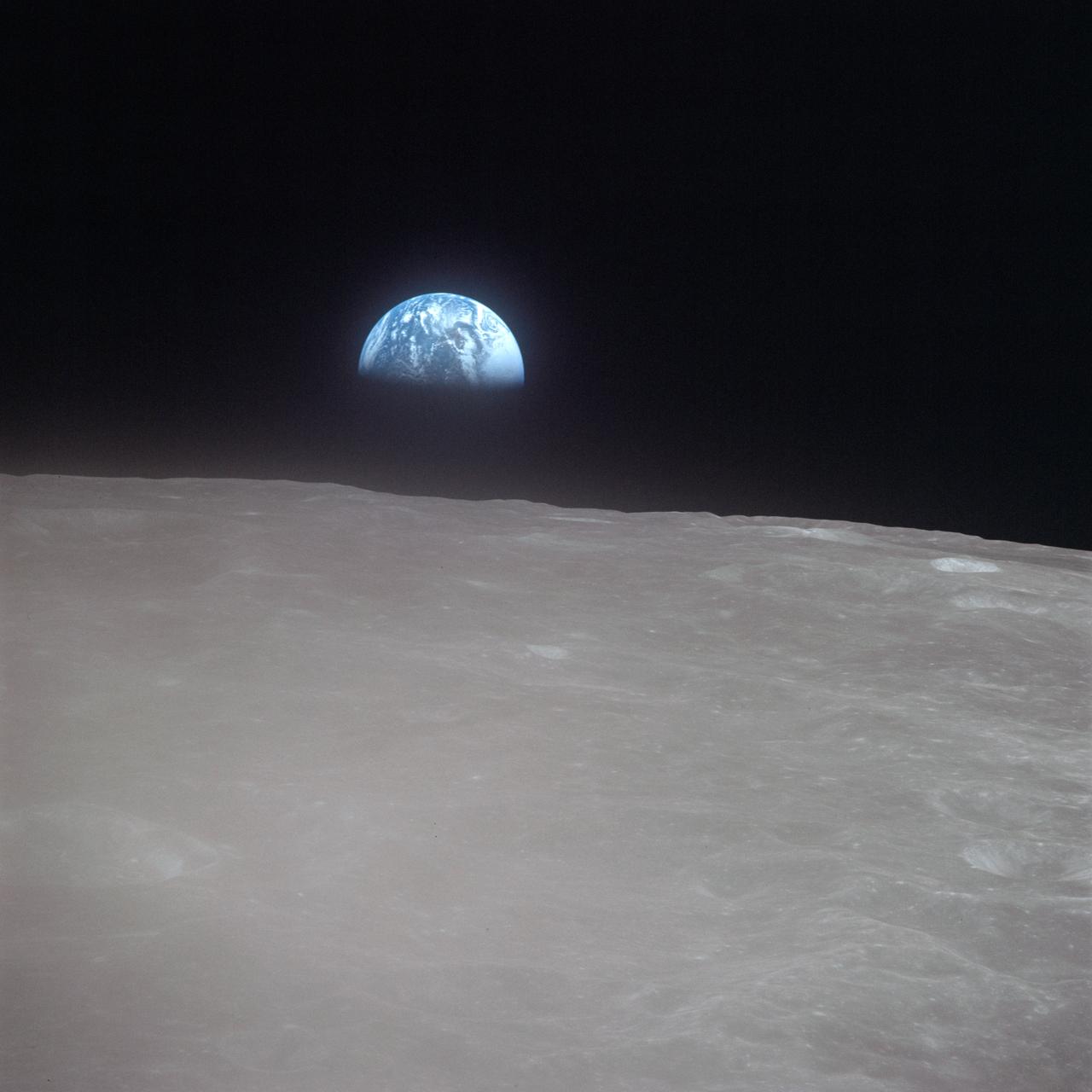
AS16-120-19187 (19 April 1972) --- Apollo 16 astronauts captured this Earth rise scene with a handheld Hasselblad camera during the second revolution of the moon. Identifiable craters seen on the moon include Saha, Wyld, and Saenger. Much of the terrain seen here is never visible from Earth, as the Command Module (CM) was just passing onto what is known as the dark side or far side of the moon. Crewmen aboard the CM at the time the photo was made were astronauts John W. Young, Thomas K. Mattingly II and Charles M. Duke Jr. Mattingly remained later with the CM in lunar orbit while Young and Duke descended in the lunar module (LM) to explore the surface of the moon.
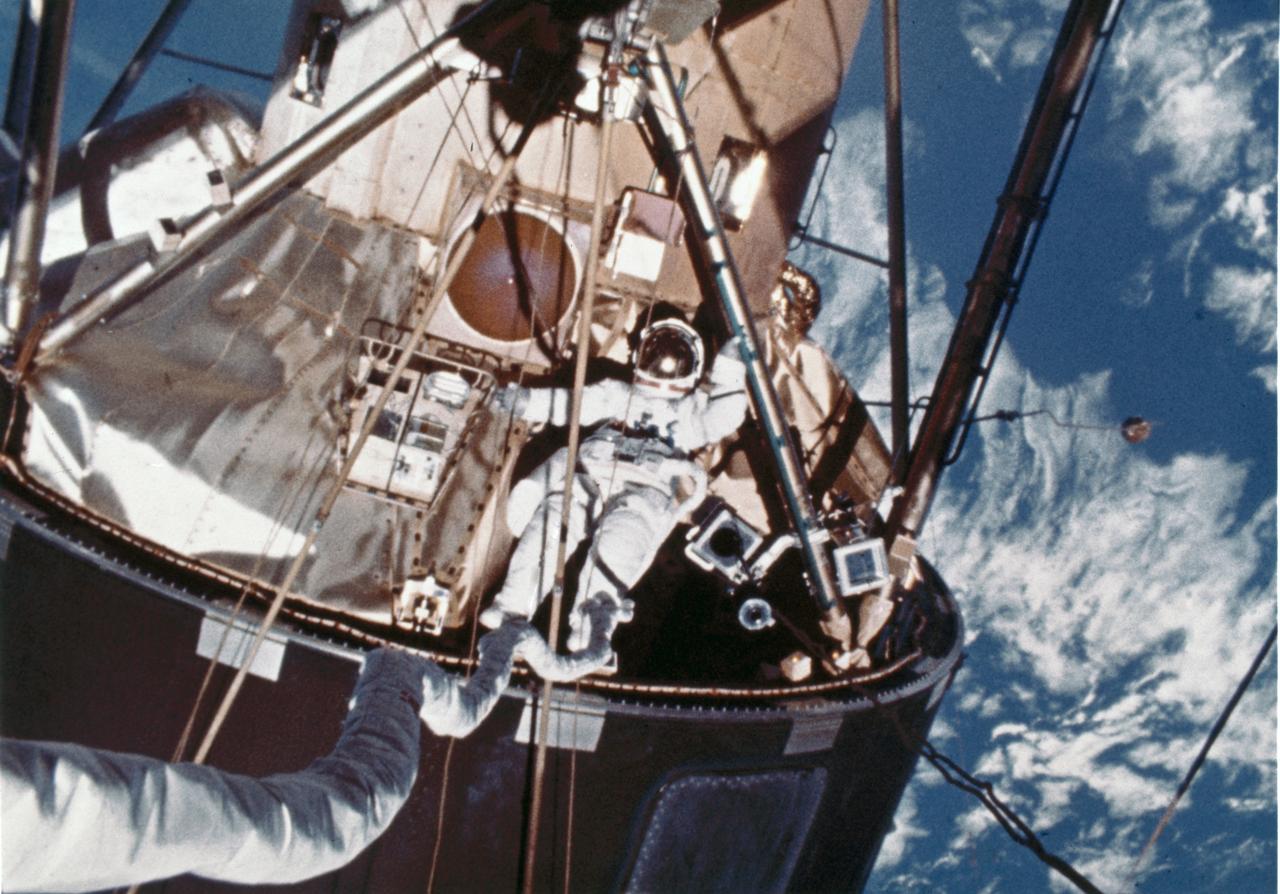
In this photograph, a skylab-4 astronaut performs Extra Vehicular Activities (EVA) outside of the lab. The third crew (Skylab-4) spent 84 days in the orbiting laboratory. The solar observatory was designed for full exposure to the Sun throughout most of the Skylab mission. Solar energy was transformed into electrical power for operation of all spacecraft systems. The proper operation of these solar arrays was vital to the mission.
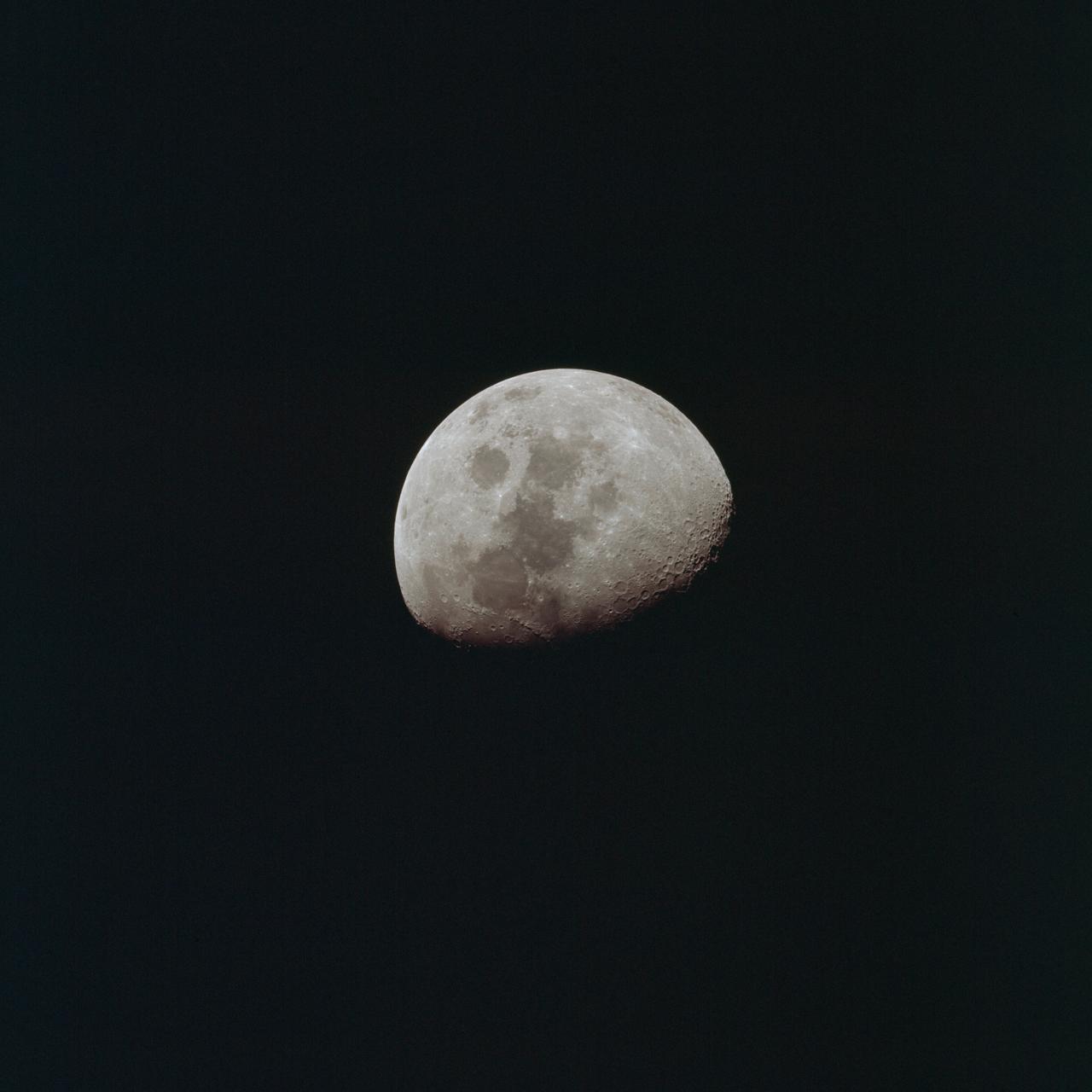
AS10-27-3956 (24 May 1969) --- This photograph of the moon was taken after trans-Earth insertion when the Apollo 10 spacecraft was high above the lunar equator near 27 degrees east longitude. North is about 20 degrees left of the top of the photograph. Apollo Landing Site 3 is on the lighted side of the terminator in a dark area just north of the equator. Apollo Landing Site 2 is near the lower left margin of the Sea of Tranquility (Mare Tranquillitatis), which is the large, dark area near the center of the photograph.
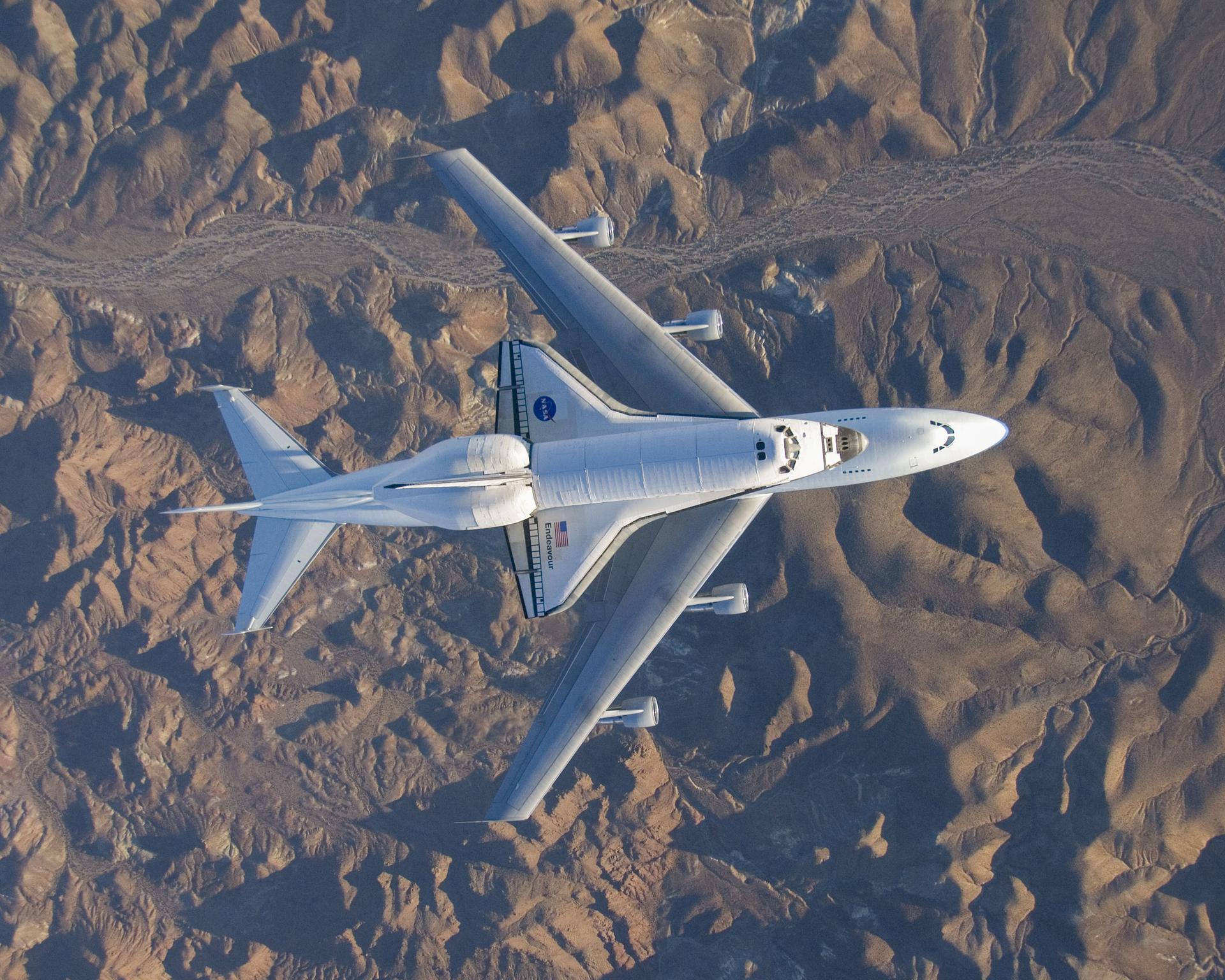
NASA aerial photographer Carla Thomas captured this top-down view of the Space Shuttle Endeavor mounted on a NASA 747 Shuttle Carrier Aircraft from an inverted F/A-18 on Wednesday, Dec. 10, 2008, over the Mojave Desert in California. The shuttle, returning to Kennedy Space Center in Florida, landed at Edwards Air Force Base in Edwards, California, and was prepared nearby at NASA’s Armstrong Flight Research Center for the return trip to Kennedy.
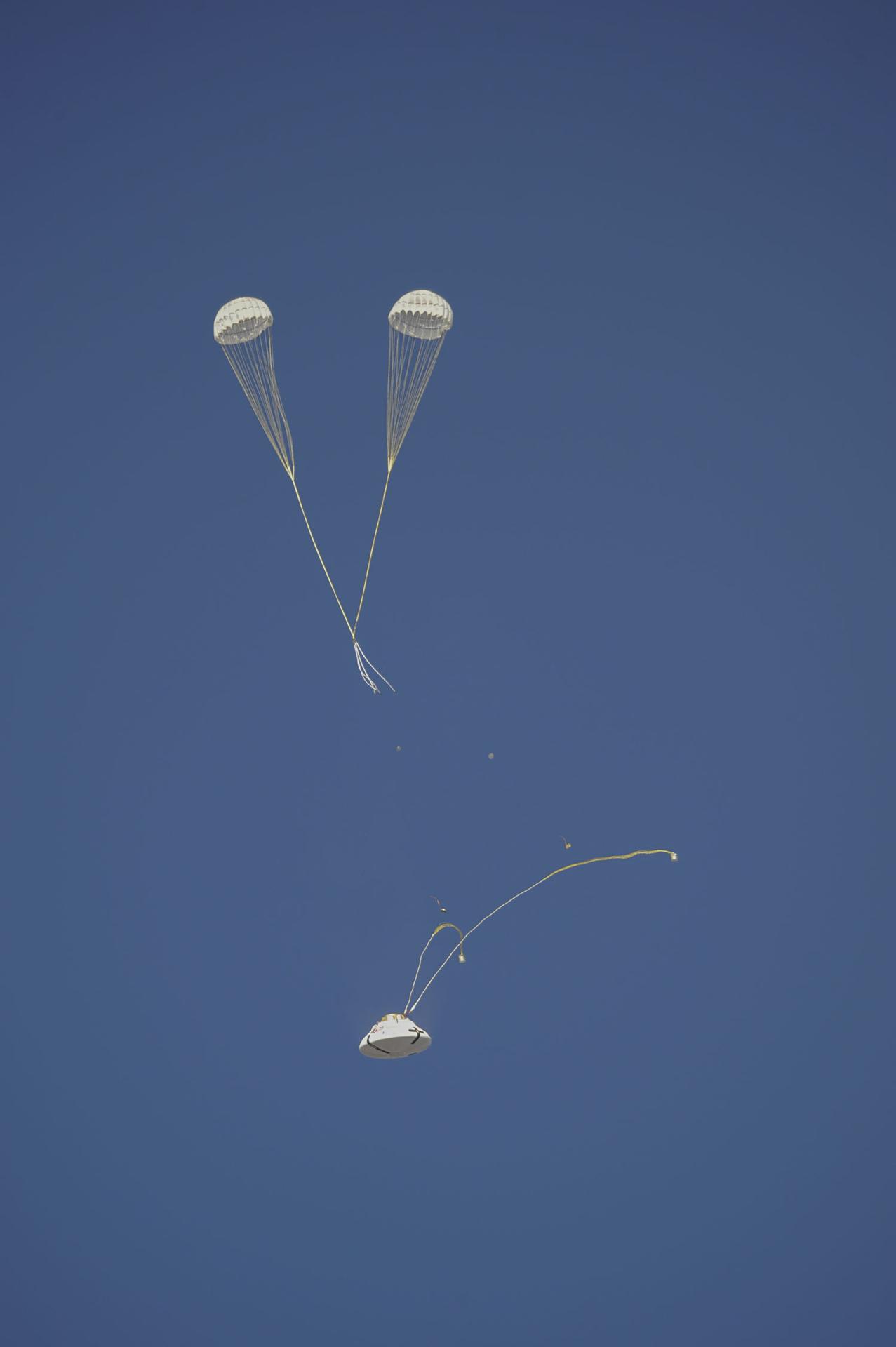
The Orion parachute system enters another phase of its descent after an air launch from a C-17 aircraft on Wednesday, July 18, 2012. Photographers and videographers from NASA’s Armstrong Flight Research Center in Edwards, California, and the agency’s Johnson Space Center in Houston documented a test version of the Orion during Capsule Parachute Assembly System project tests at the U.S. Army Proving Ground, near Yuma, Arizona.
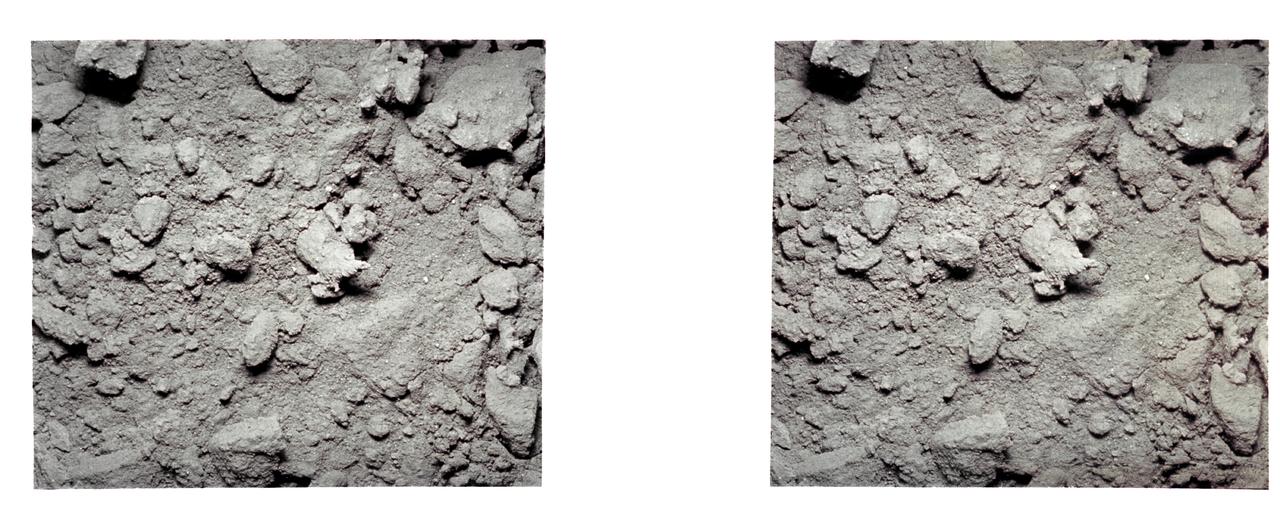
AS12-57-8455 (19-20 Nov. 1969) --- An Apollo 12 stereo view showing a three-inch square of the lunar surface. The exposure was made with an Apollo 35mm stereo close-up camera during extravehicular activity of the Apollo 12 lunar landing mission. The camera was developed to get the highest possible resolution of a small area. The three-inch square is photographed with a flash illumination and at a fixed distance. The camera is mounted on a walking stick, and the astronauts use it by holding it up against the object to be photographed and pulling the trigger. Astronauts Charles Conrad Jr., commander, and Alan L. Bean, lunar module pilot, descended in the Apollo 12 Lunar Module to explore the moon while astronaut Richard F. Gordon Jr. remained with the Command and Service Modules in lunar orbit in the capacity of command module pilot.
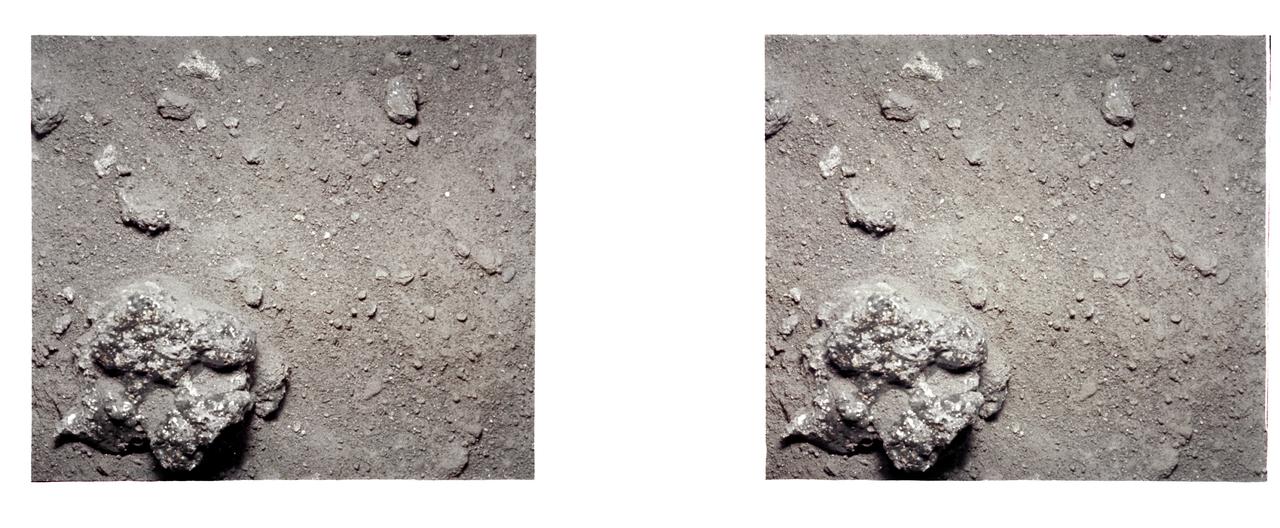
AS12-57-8452 (19-20 Nov. 1969) --- An Apollo 12 stereo view showing a three-inch square of the lunar surface. The exposure was made with an Apollo 35mm stereo close-up camera during extravehicular activity of the Apollo 12 lunar landing mission. The camera was developed to get the highest possible resolution of a small area. The three-inch square is photographed with a flash illumination and at a fixed distance. The camera is mounted on a walking stick, and the astronauts use it by holding it up against the object to be photographed and pulling the trigger. Astronauts Charles Conrad Jr., commander, and Alan L. Bean, lunar module pilot, descended in the Apollo 12 Lunar Module to explore the moon while astronaut Richard F. Gordon Jr. remained with the Command and Service Modules in lunar orbit in the capacity of command module pilot.
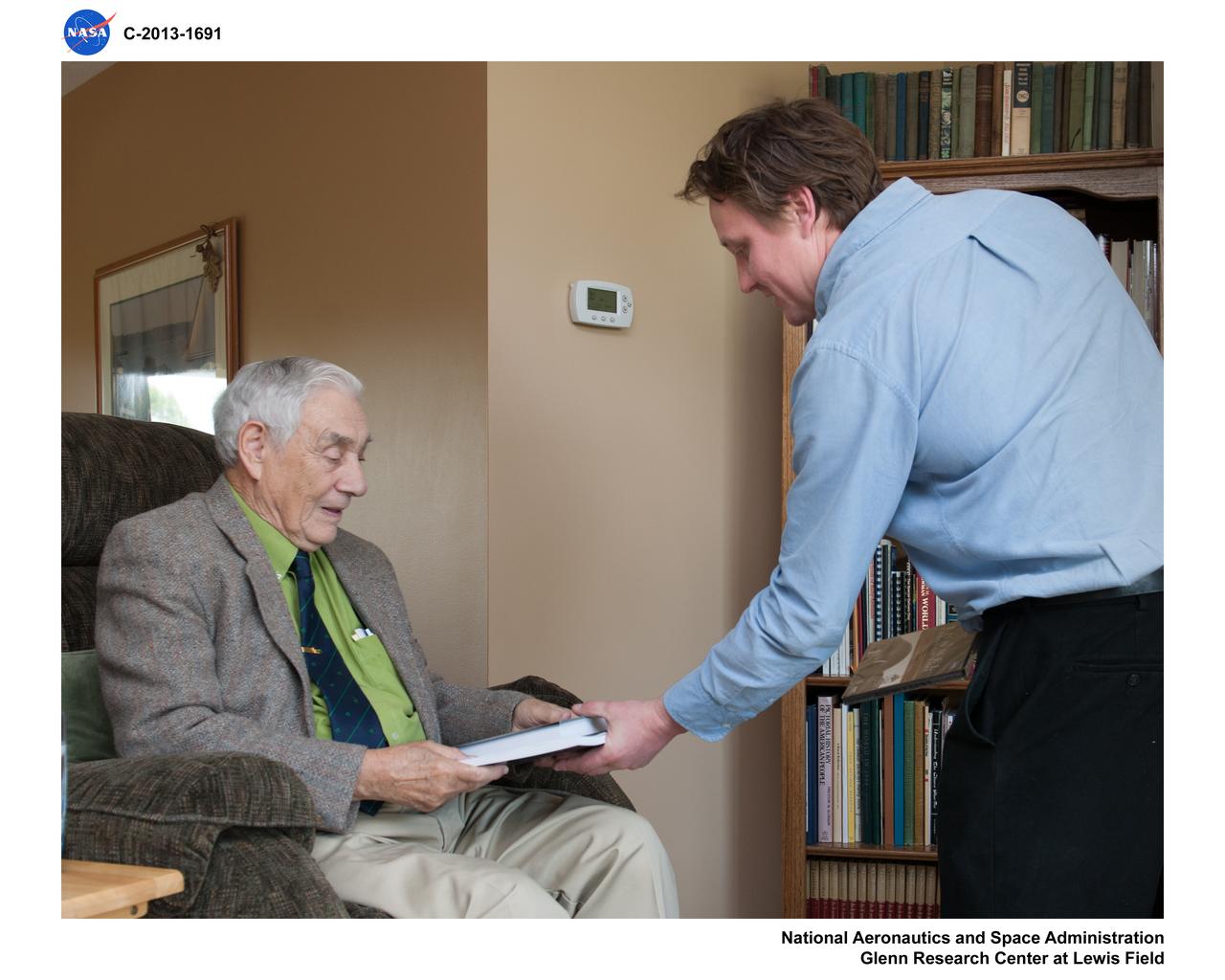
Interview with a NACA, National Advisory Committee for Aeronautics, Flight Photographer, William Wynne
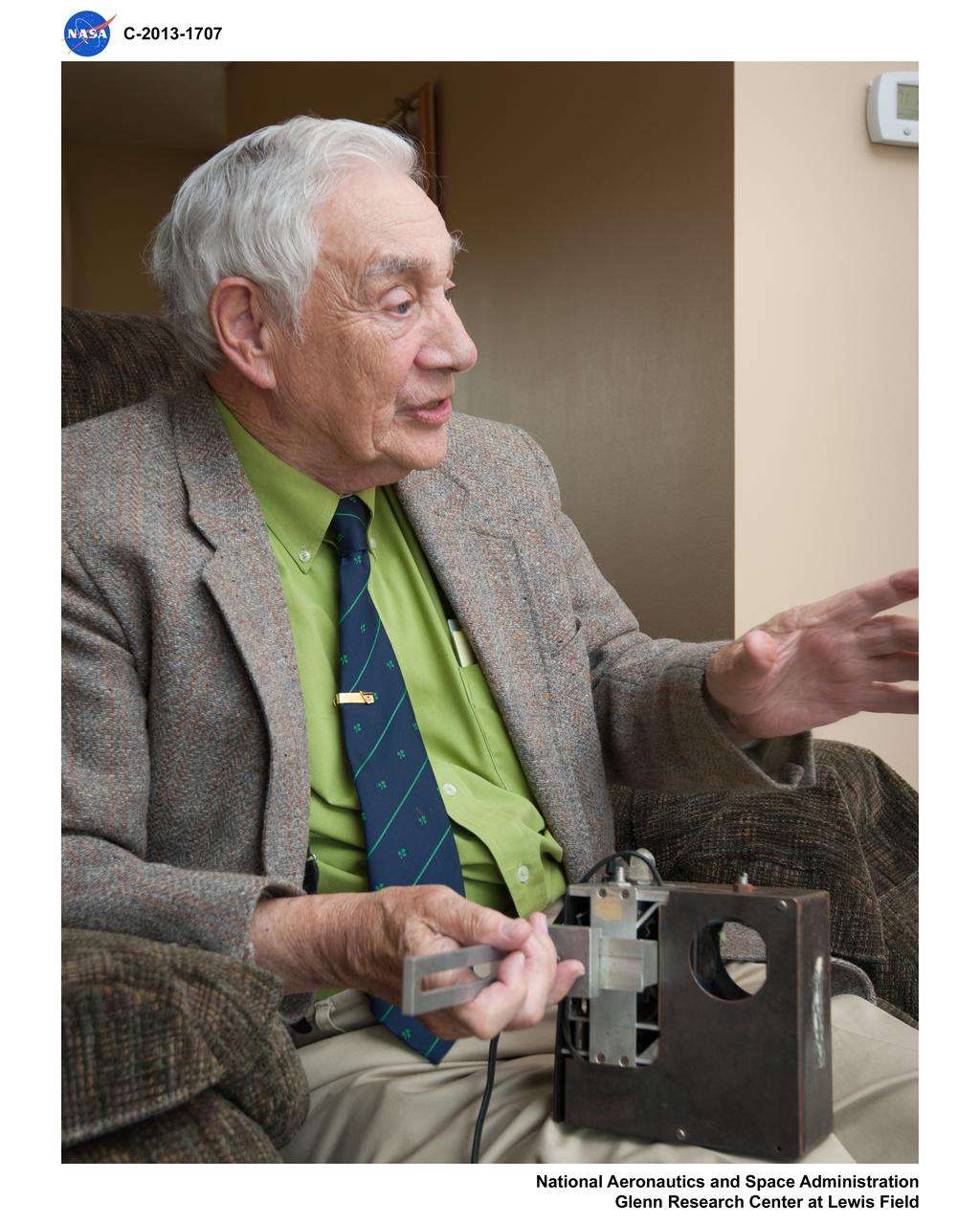
Interview with a NACA, National Advisory Committee for Aeronautics, Flight Photographer, William Wynne.

Todd Halvorson, former journalist with Florida Today, shares a few remarks after he is inducted as a 2019 Chronicler during a ceremony at Kennedy Space Center’s NASA News Center in Florida on May 3, 2019. Also honored as Chroniclers were journalist Jim Banke, photographer Peter Cosgrove and radio broadcaster Vic Ratner. The Chroniclers recognizes retirees of the news and communications business who have helped spread news of American space exploration from Kennedy for 10 years or more. The group of four was selected by a committee of their peers on March 25. Their names were engraved on brass strips and added to The Chroniclers wall display in the news center and were unveiled during the ceremony.
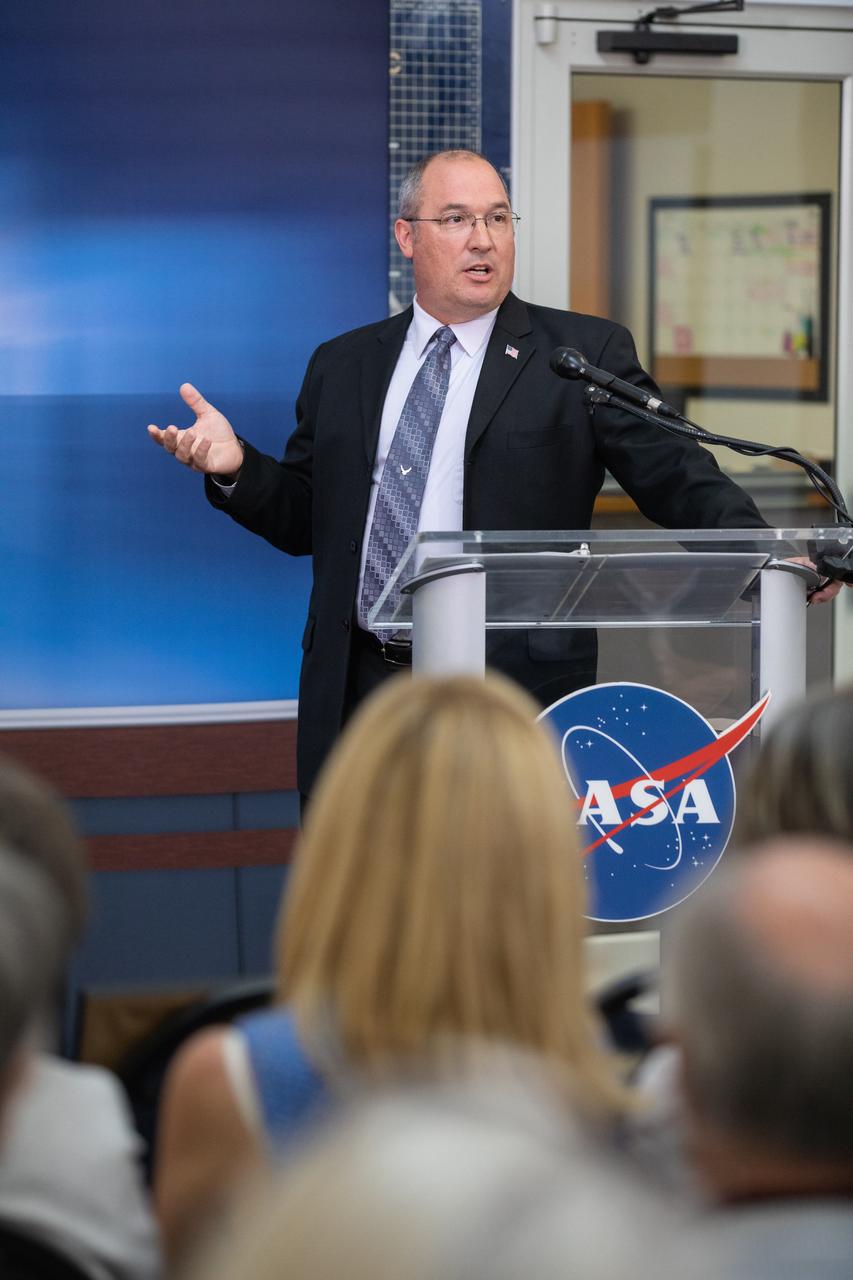
NASA Public Affairs Officer Greg Harland addresses a crowd of family and friends, current and former NASA officials, and space journalists during a ceremony May 3, 2019, in which four individuals were added to The Chroniclers roll of honor. The program recognizes retirees of the news and communications business who have helped spread news of American space exploration from Kennedy for 10 years or more. The 2019 Chroniclers are journalists Jim Banke and Todd Halvorson, radio broadcaster Vic Ratner and photographer Peter Cosgrove. They were selected by a committee of their peers on March 25.
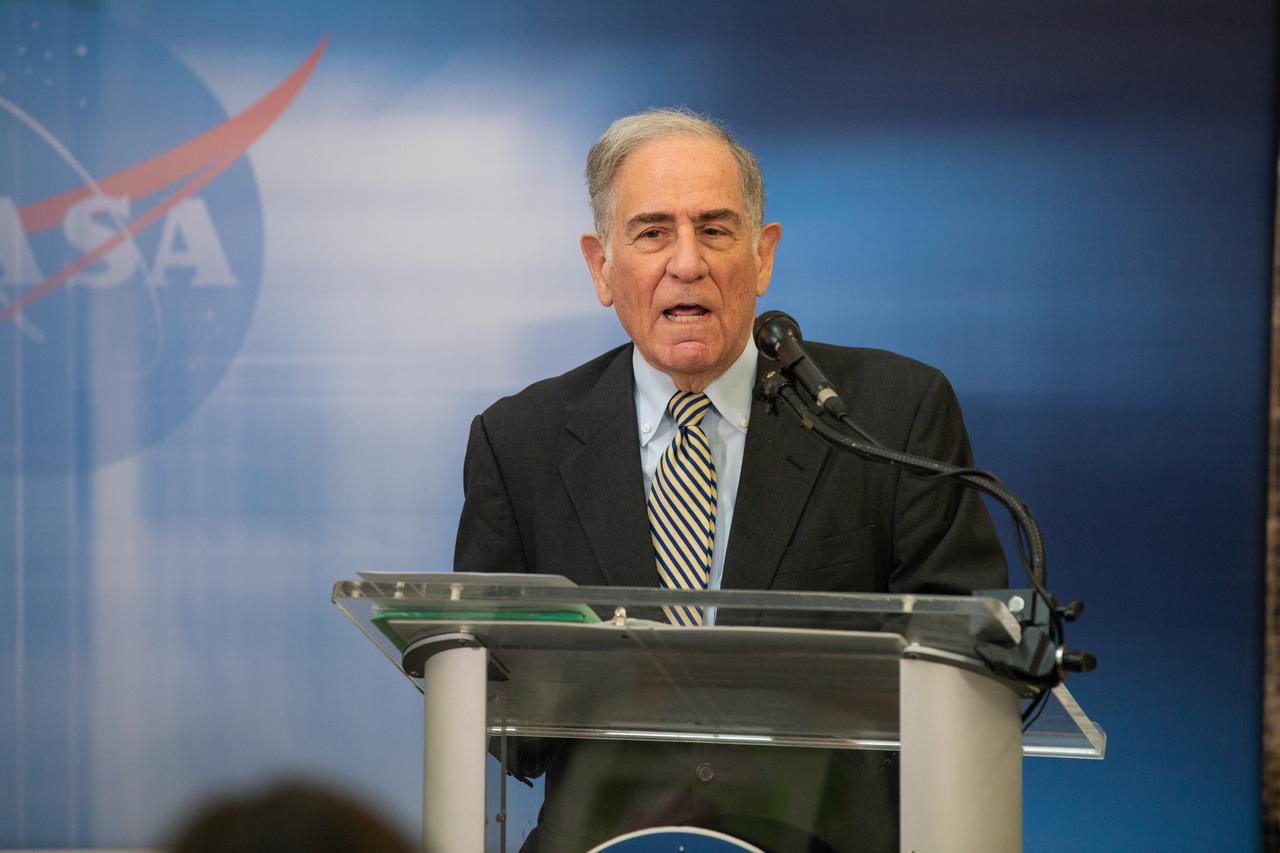
Vic Ratner, former radio broadcaster for ABC Radio, shares a few remarks after he is inducted as a 2019 Chronicler during a ceremony at Kennedy Space Center’s NASA News Center in Florida on May 3, 2019. Also honored as Chroniclers were journalists Jim Banke and Todd Halvorson, and photographer Peter Cosgrove. The Chroniclers recognizes retirees of the news and communications business who have helped spread news of American space exploration from Kennedy for 10 years or more. The group of four was selected by a committee of their peers on March 25. Their names were engraved on brass strips and added to The Chroniclers wall display in the news center and were unveiled during the ceremony.
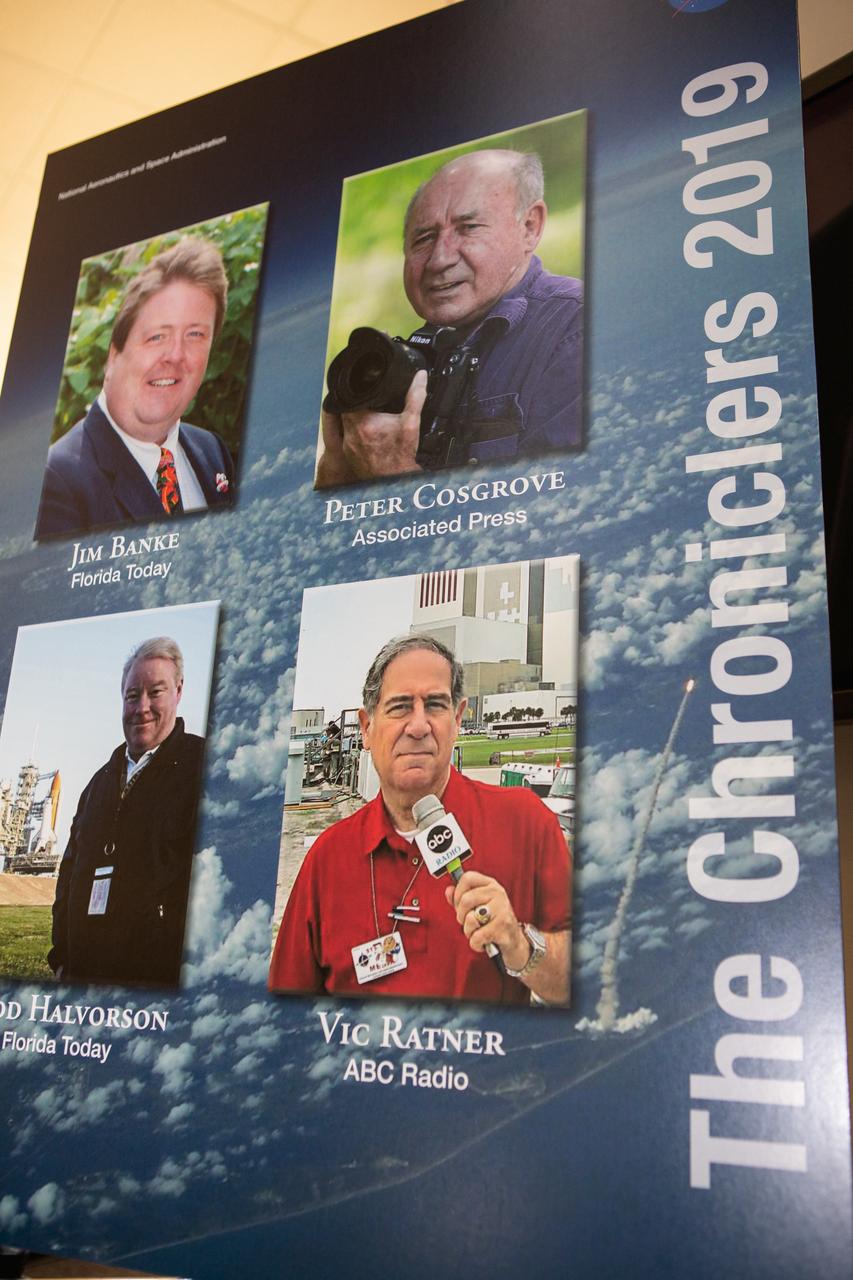
A poster bearing the names and photos of the four new honorees distinguished as Chroniclers stands in Kennedy Space Center’s NASA News Center in Florida during a ceremony on May 3, 2019. The Chroniclers recognizes retirees of the news and communications business who have helped spread news of American space exploration from Kennedy for 10 years or more. From top left to bottom right are Jim Banke, Florida Today; Peter Cosgrove, Associated Press photographer; Todd Halvorson, Florida Today; and Vic Ratner, ABC Radio. The group of four was selected by a committee of their peers on March 25.
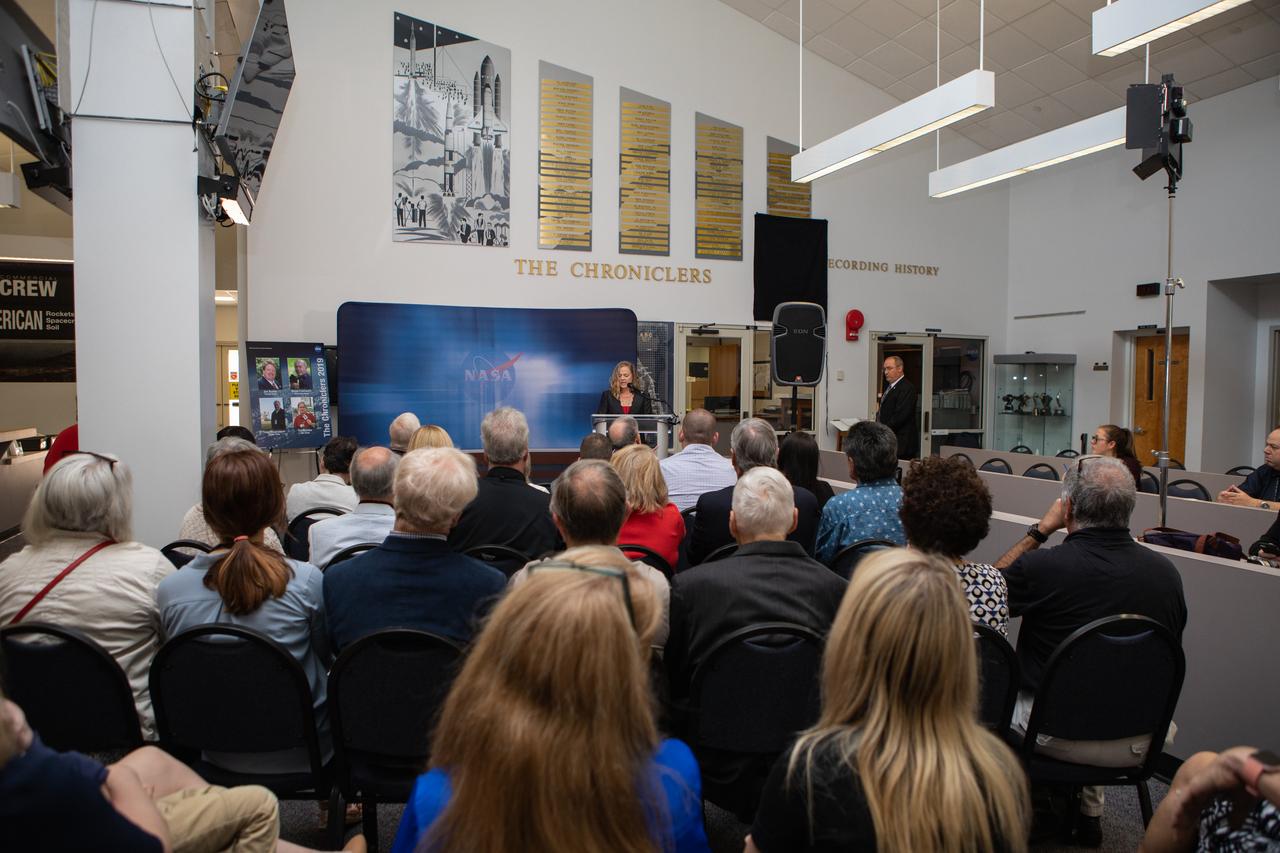
Current and former NASA officials, space journalists, and friends and families gather in Kennedy Space Center’s NASA News Center in Florida during a ceremony May 3, 2019, in which four individuals were added to The Chroniclers roll of honor. The program recognizes retirees of the news and communications business who have helped spread news of American space exploration from Kennedy for 10 years or more. The 2019 Chroniclers are journalists Jim Banke and Todd Halvorson, radio broadcaster Vic Ratner and photographer Peter Cosgrove. They were selected by a committee of their peers on March 25.

Four honorees were added as members to The Chroniclers during a ceremony May 3, 2019, at Kennedy Space Center’s NASA News Center. From left to right in the front row are Vic Ratner, Todd Halvorson and Jim Banke. A photograph of Peter Cosgrove also was placed in the front row in his memory, as he passed away earlier in 2019. They were selected by a committee of their peers on March 25. The Chroniclers recognizes retirees of the news and communications business who have helped spread news of American space exploration from Kennedy for 10 years or more.

Jim Banke, former journalist with Florida Today, shares a few remarks after he is inducted as a 2019 Chronicler during a ceremony at Kennedy Space Center’s NASA News Center in Florida on May 3, 2019. Also honored as Chroniclers were journalist Todd Halvorson, photographer Peter Cosgrove and radio broadcaster Vic Ratner. The Chroniclers recognizes retirees of the news and communications business who have helped spread news of American space exploration from Kennedy for 10 years or more. The group of four was selected by a committee of their peers on March 25. Their names were engraved on brass strips and added to The Chroniclers wall display in the news center and were unveiled during the ceremony.
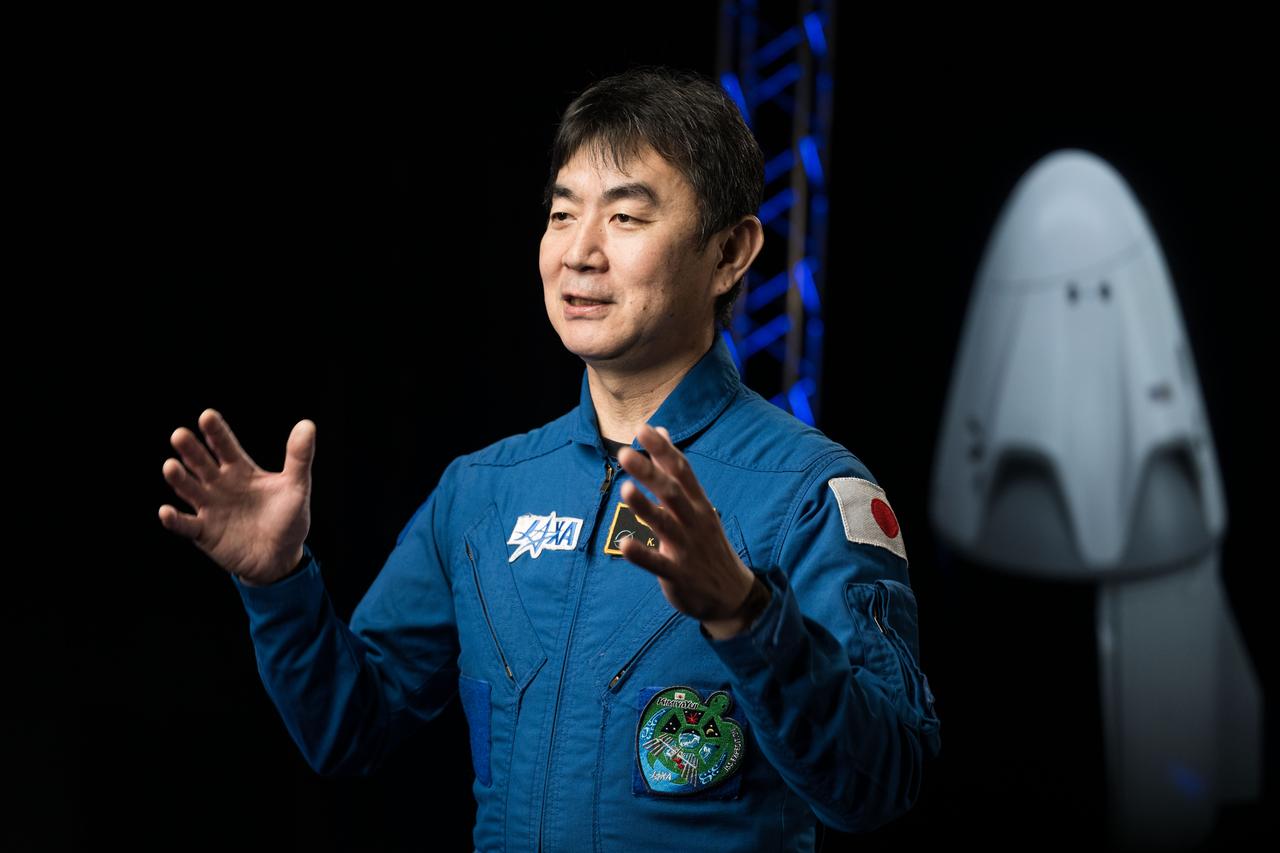
jsc2025e032707 (March 20, 2025) --- JAXA astronaut Kimiya Yui is photographed during an interview in a studio at NASA’s Johnson Space Center in Houston, Texas, before his upcoming mission to the International Space Station. Credit: NASA/Josh Valcarcel
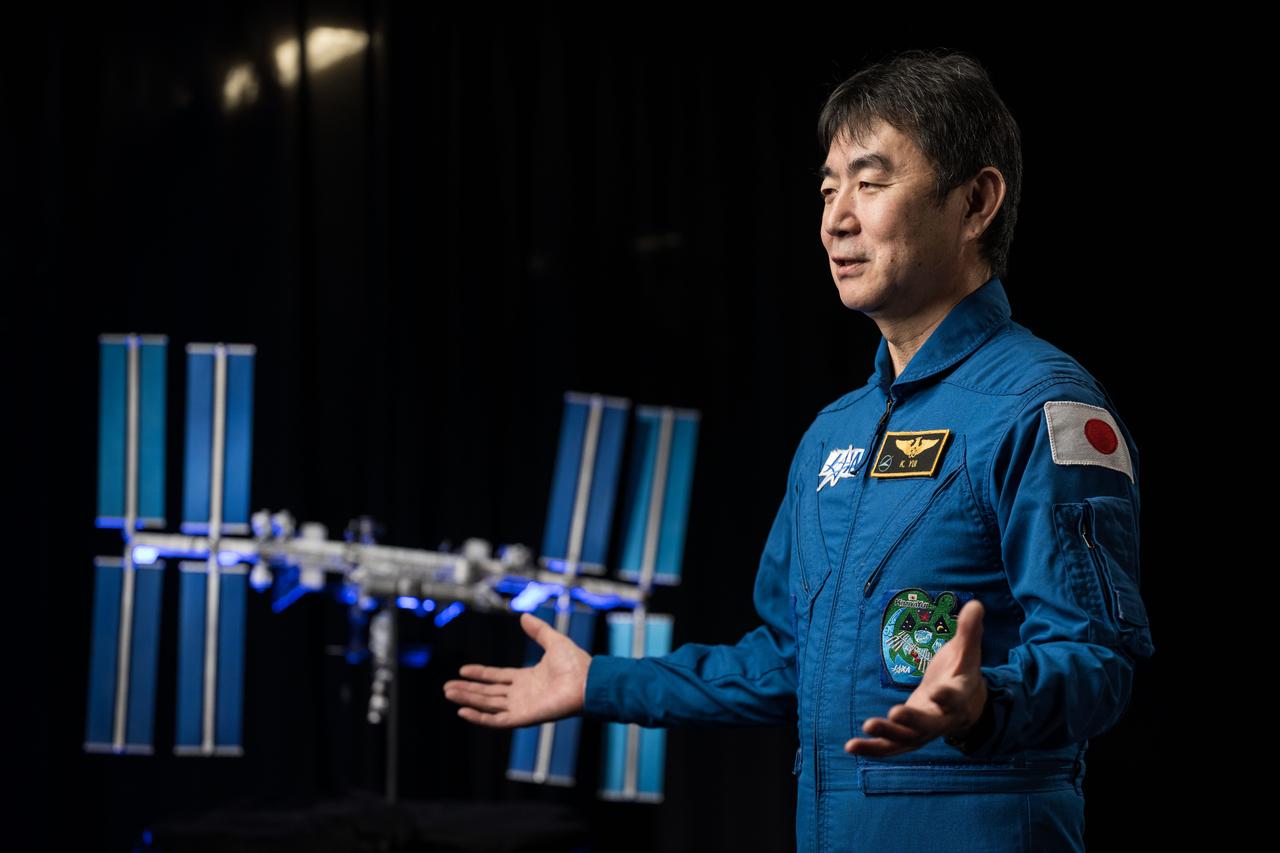
jsc2025e032710 (March 20, 2025) --- JAXA astronaut Kimiya Yui is photographed during an interview in a studio at NASA’s Johnson Space Center in Houston, Texas, before his upcoming mission to the International Space Station. Credit: NASA/Josh Valcarcel
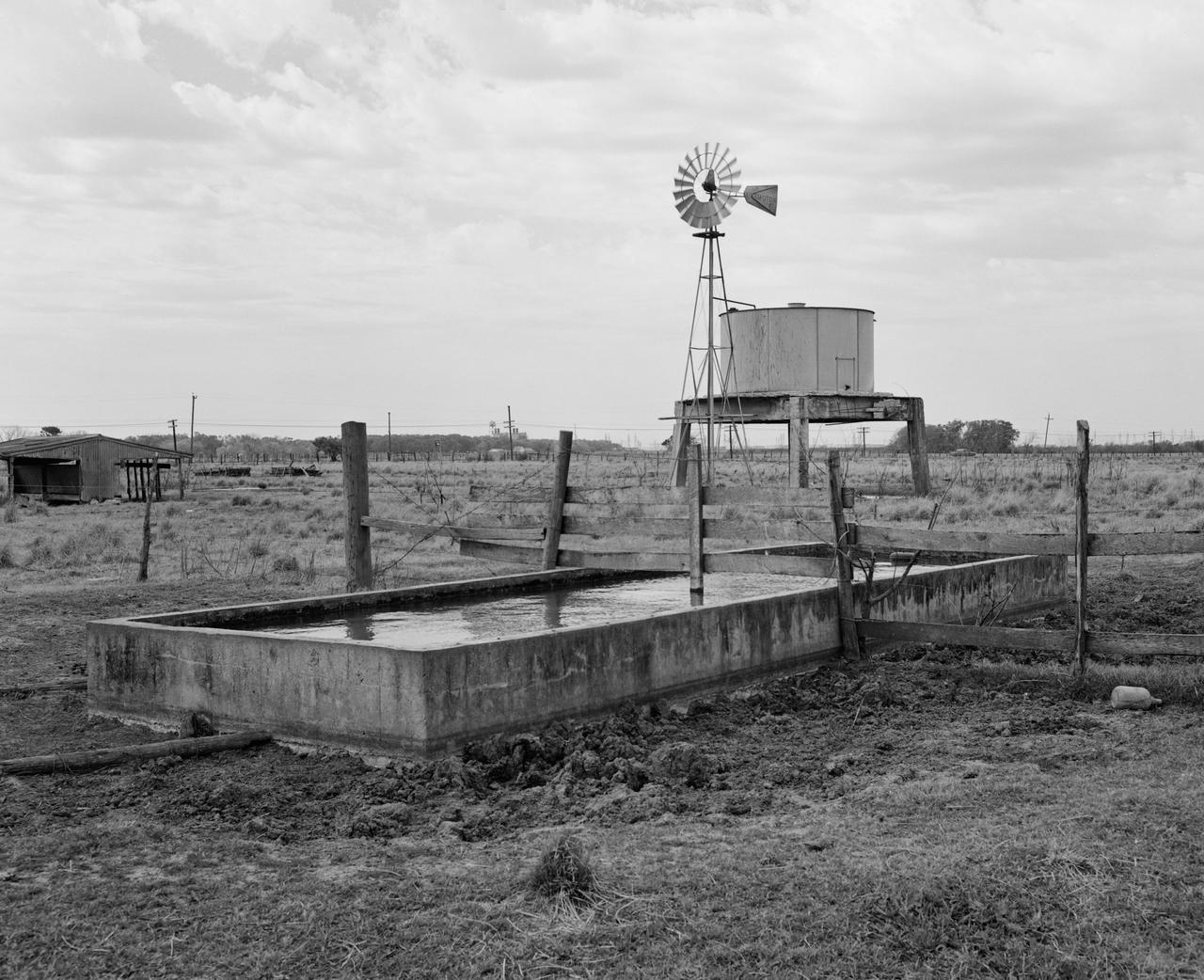
S62-00632 (March 1962) --- Area photograph of Site 1, Manned Spacecraft Center, at Clear Lake, prior to start of construction.
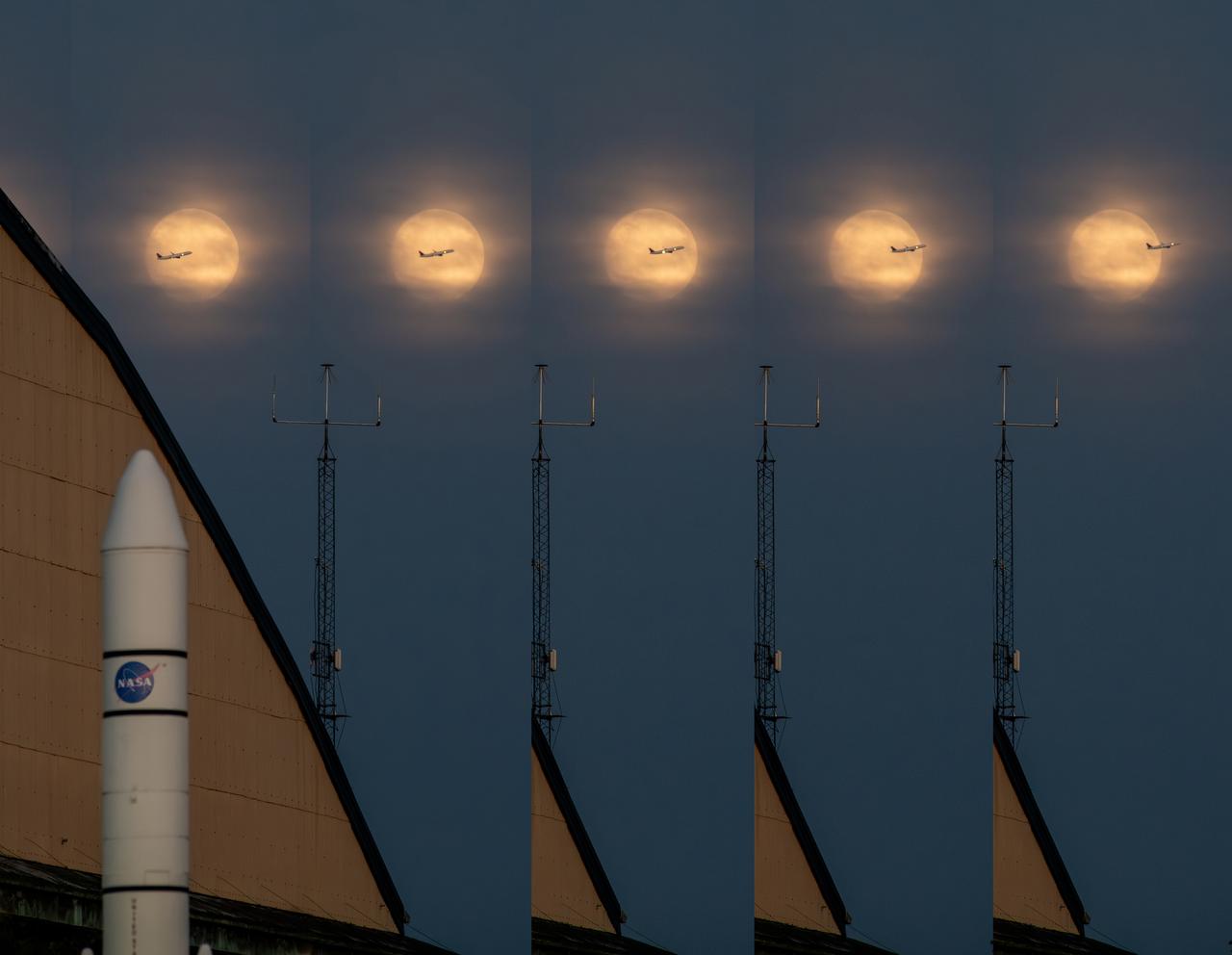
While photographing the Supermoon on September 17, 2024 for a NASA GRC Aerospace Frontiers article on the 2024 Supermoon, a plane departing Cleveland Hopkins Airport flew right through the middle of the moon. The photographer used a portion of the rocket garden’s Ares 1 rocket and a corner of the NASA GRC hangar building to frame the photograph of the moon. When the plane was seen approaching, the photographer used continuous shutter speed in hopes of capturing the plane and the moon together
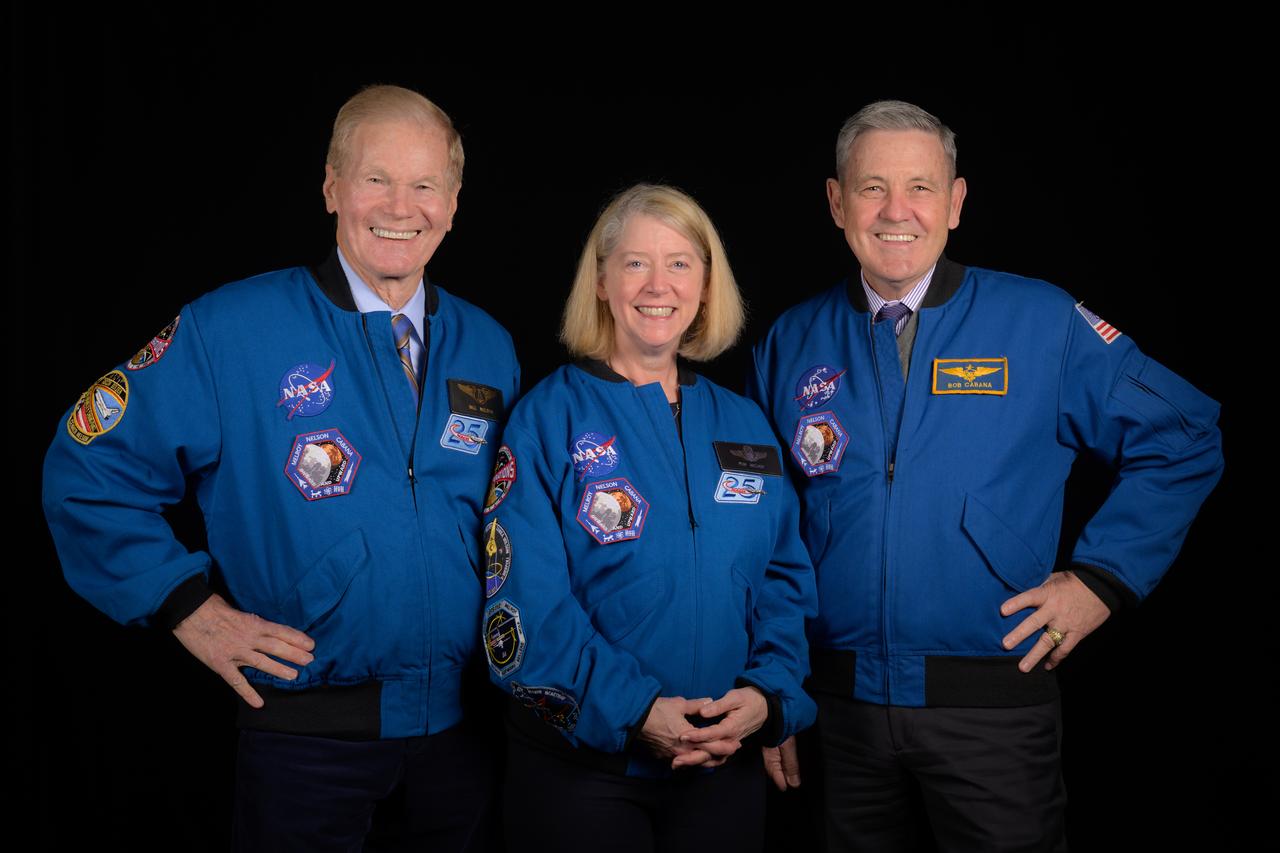
NASA Administrator Bill Nelson, left, NASA Deputy Administrator Pam Melroy, and NASA Associate Administrator Bob Cabana, right, pose for a group photograph, Monday, Feb. 28, 2022, at the Mary W. Jackson NASA Headquarters building in Washington. Photo Credit: (NASA/Bill Ingalls)
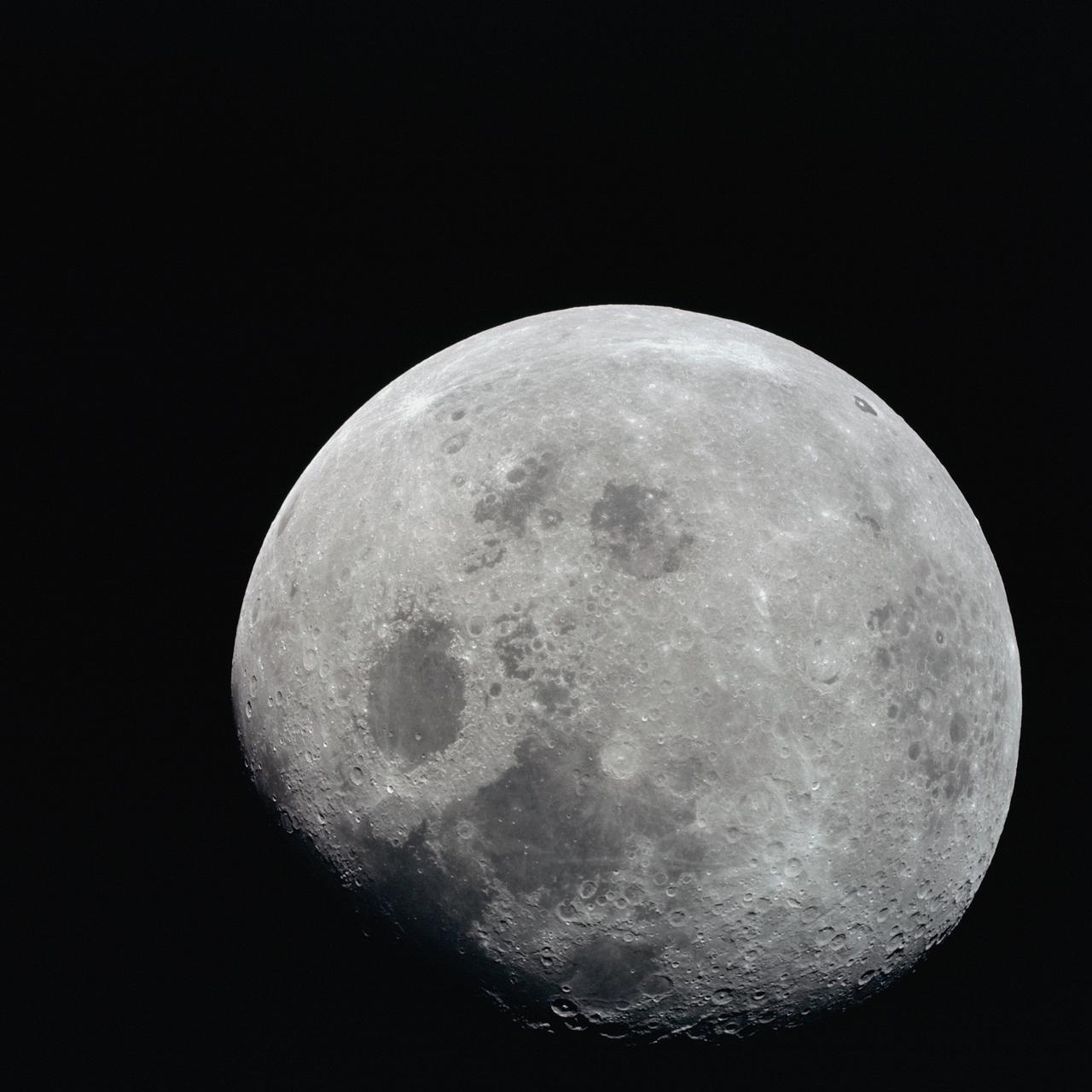
AS08-14-2506 (21-27 Dec. 1968) --- This photograph of a nearly full moon was taken from the Apollo 8 spacecraft at a point above 70 degrees east longitude. (Hold picture with moon's dark portion at left). Mare Crisium, the circular, dark-colored area near the center, is near the eastern edge of the moon as viewed from Earth. Mare Nectaris is the circular mare near the terminator. The large, irregular maira are Tranquillitatis and Fecunditatis. The terminator at left side of picture crosses Mare Tranquillitatis and highlands to the south. Lunar farside features occupy most of the right half of the picture. The large, dark-colored crater Tsiolkovsky is near the limb at the lower right. Conspicuous bright rays radiate from two large craters, one to the north of Tsiolkovsky, the other near the limb in the upper half of the picture. These rayed craters were not conspicuous in Lunar Orbiter photography due to the low sun elevations when the Lunar Orbiter photography was made. The crater Langrenus is near the center of the picture at the eastern edge of Mare Fecunditatis. The lunar surface probably has less pronounced color that indicated by this print.

Peter Cosgrove was honored as a Chronicler during a ceremony May 3, 2019, at Kennedy Space Center’s NASA News Center in Florida. Cosgrove passed away earlier in 2019, and his award was accepted by members of his family on his behalf. Cosgrove was a photographer with the Associated Press, and his career in photojournalism spanned 50 years. He covered four Apollo Moon mission crew recoveries and more than 100 space shuttle launches. Also inducted as members were journalists Jim Banke and Todd Halvorson, and radio broadcaster Vic Ratner. They were selected by a committee of their peers on March 25. The Chroniclers recognizes retirees of the news and communications business who have helped spread news of American space exploration from Kennedy for 10 years or more.
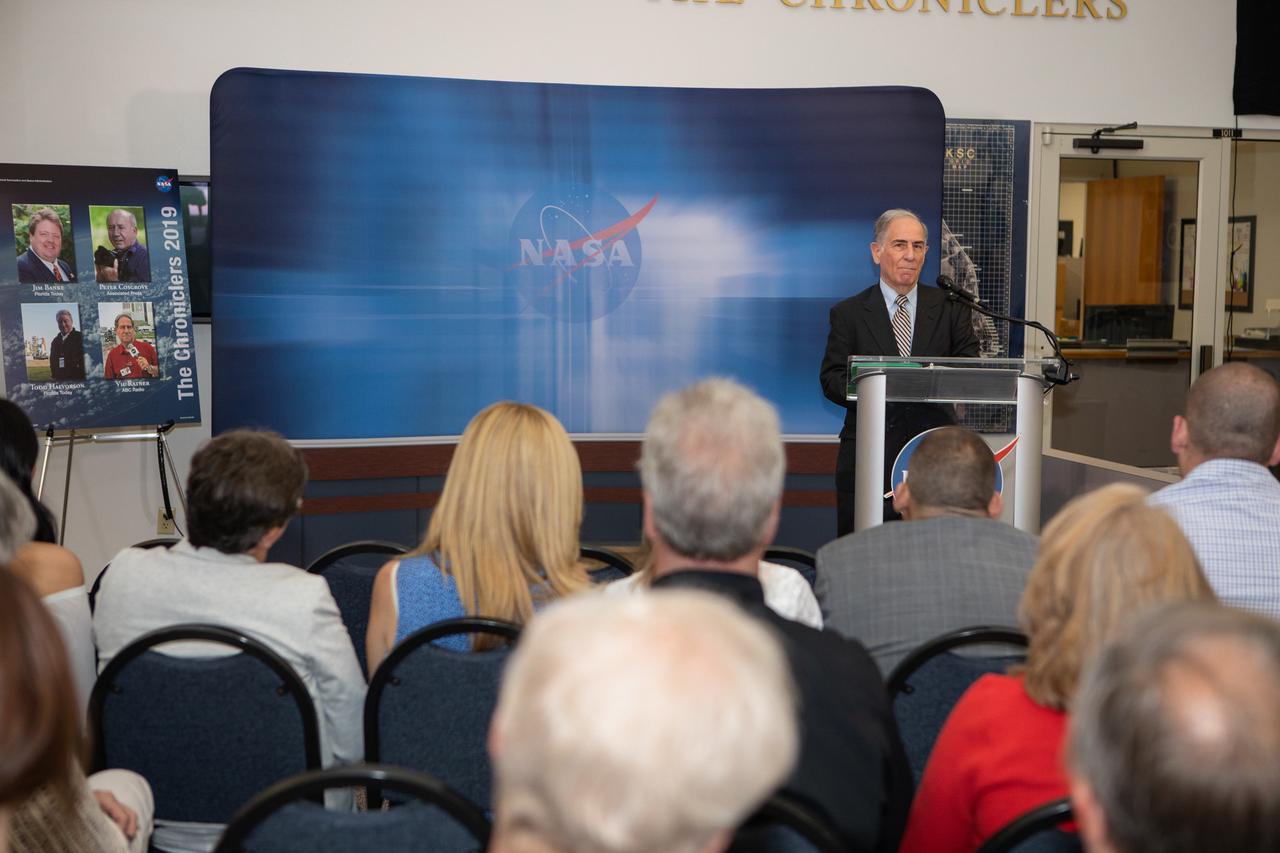
Vic Ratner, former radio broadcaster for ABC Radio, addresses a crowd of family and friends, current and former NASA officials, and space journalists after he is inducted as a 2019 Chronicler during a ceremony at Kennedy Space Center’s NASA News Center in Florida on May 3, 2019. Also honored as Chroniclers were journalists Jim Banke and Todd Halvorson, and photographer Peter Cosgrove. The Chroniclers recognizes retirees of the news and communications business who have helped spread news of American space exploration from Kennedy for 10 years or more. The group of four was selected by a committee of their peers on March 25. Their names were engraved on brass strips and added to The Chroniclers wall display in the news center and were unveiled during the ceremony.
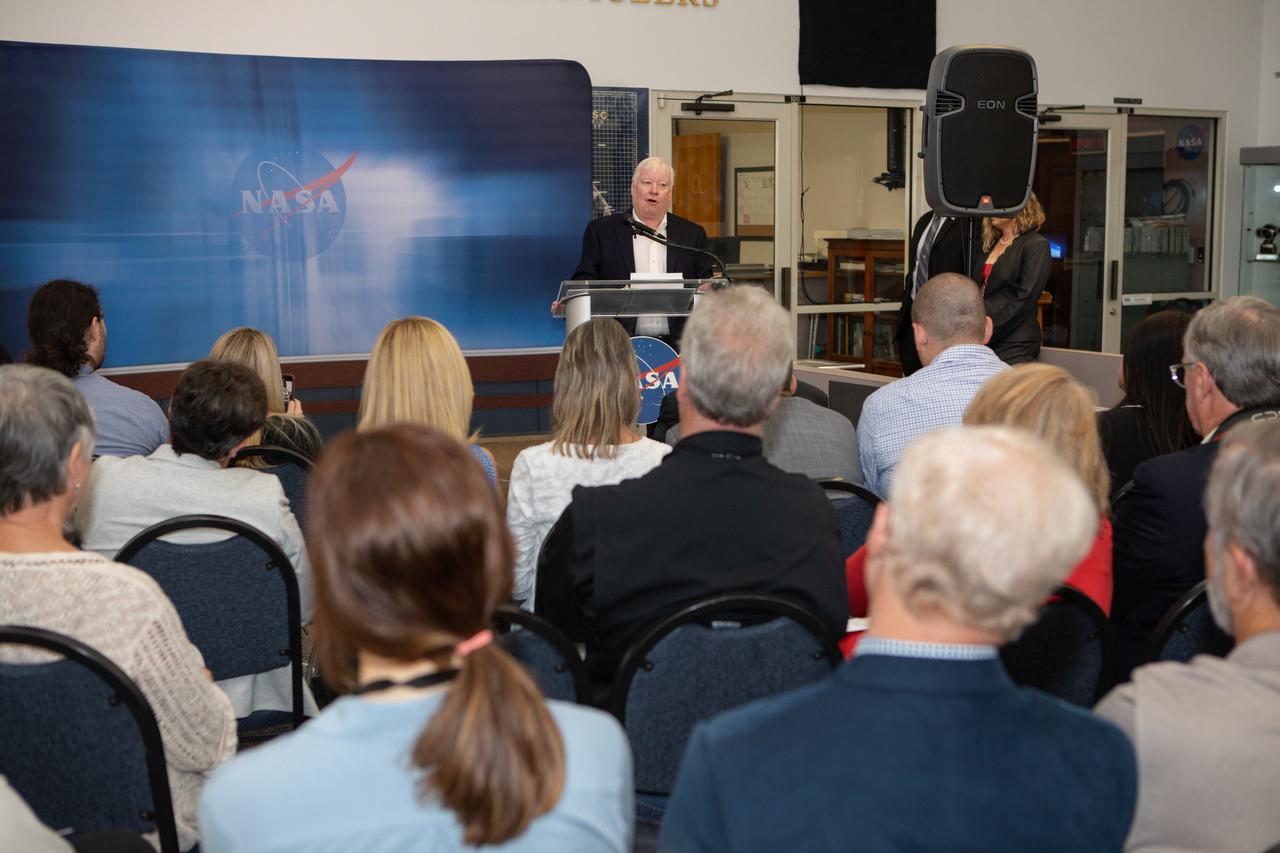
Todd Halvorson, former journalist for Florida Today, addresses a crowd of family and friends, current and former NASA officials, and space journalists after he is inducted as a 2019 Chronicler during a ceremony at Kennedy Space Center’s NASA News Center in Florida on May 3, 2019. Also honored as Chroniclers were journalist Jim Banke, radio broadcaster Vic Ratner and photographer Peter Cosgrove. The Chroniclers recognizes retirees of the news and communications business who have helped spread news of American space exploration from Kennedy for 10 years or more. The group of four was selected by a committee of their peers on March 25. Their names were engraved on brass strips and added to The Chroniclers wall display in the news center and were unveiled during the ceremony.
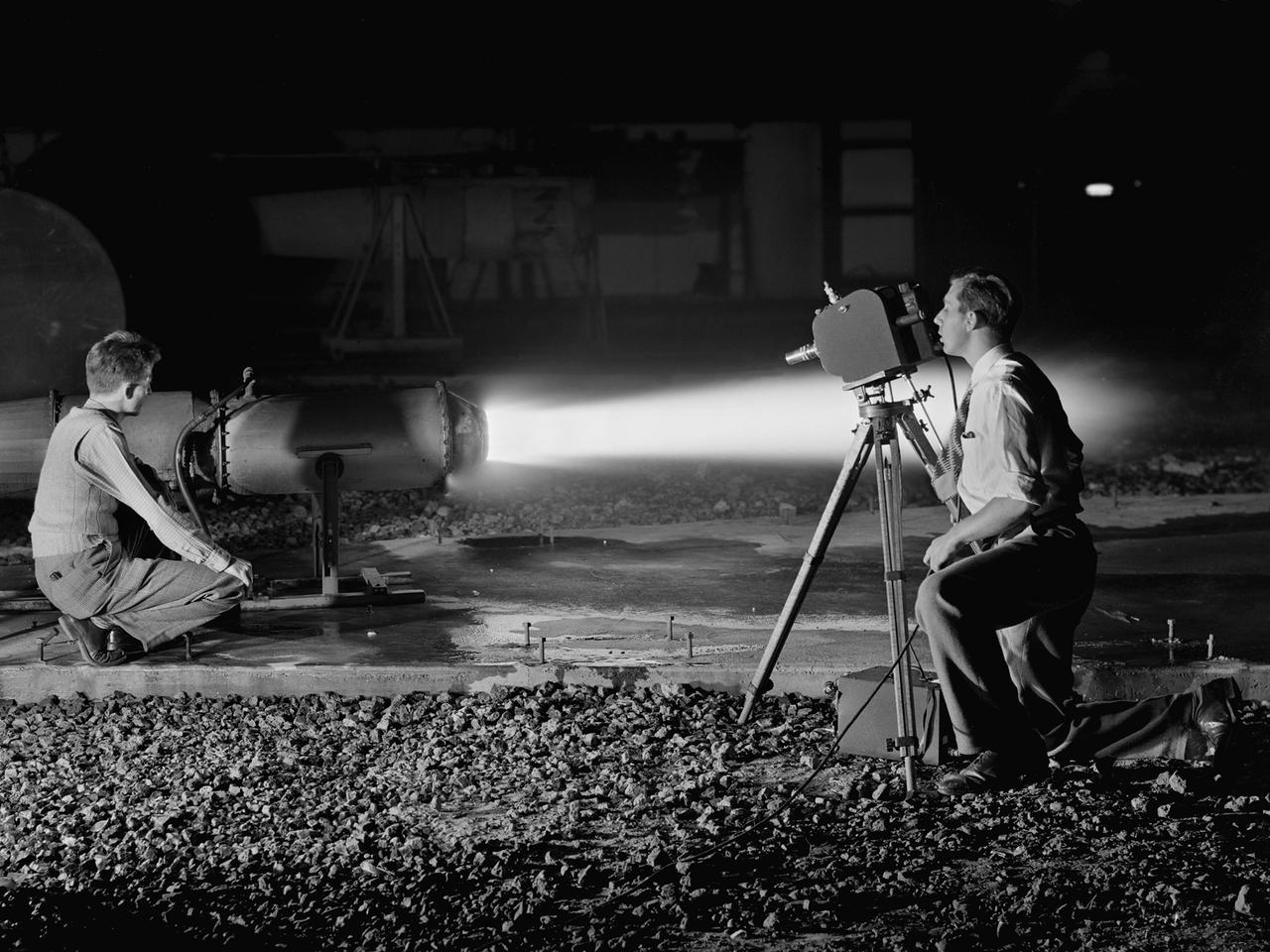
A National Advisory Committee for Aeronautics (NACA) photographer films the test of a ramjet engine at the Lewis Flight Propulsion Laboratory. The laboratory had an arsenal of facilities to test the engines and their components, and immersed itself in the study of turbojet and ramjet engines during the mid-1940s. Combustion, fuel injection, flameouts, and performance at high altitudes were of particular interest to researchers. They devised elaborate schemes to instrument the engines in order to record temperature, pressure, and other data. Many of the tests were also filmed so Lewis researchers could visually review the combustion performance along with the data. The photographer in this image was using high-speed film to document a thrust augmentation study at Lewis’ Jet Static Propulsion Laboratory. The ramjet in this photograph was equipped with a special afterburner as part of a general effort to improve engine performance. Lewis’ Photo Lab was established in 1942. The staff was expanded over the next few years as more test facilities became operational. The Photo Lab’s staff and specialized equipment have been key research tools for decades. They accompany pilots on test flights, use high-speed cameras to capture fleeting processes like combustion, and work with technology, such as the Schlieren camera, to capture supersonic aerodynamics. In addition, the group has documented construction projects, performed publicity work, created images for reports, and photographed data recording equipment.
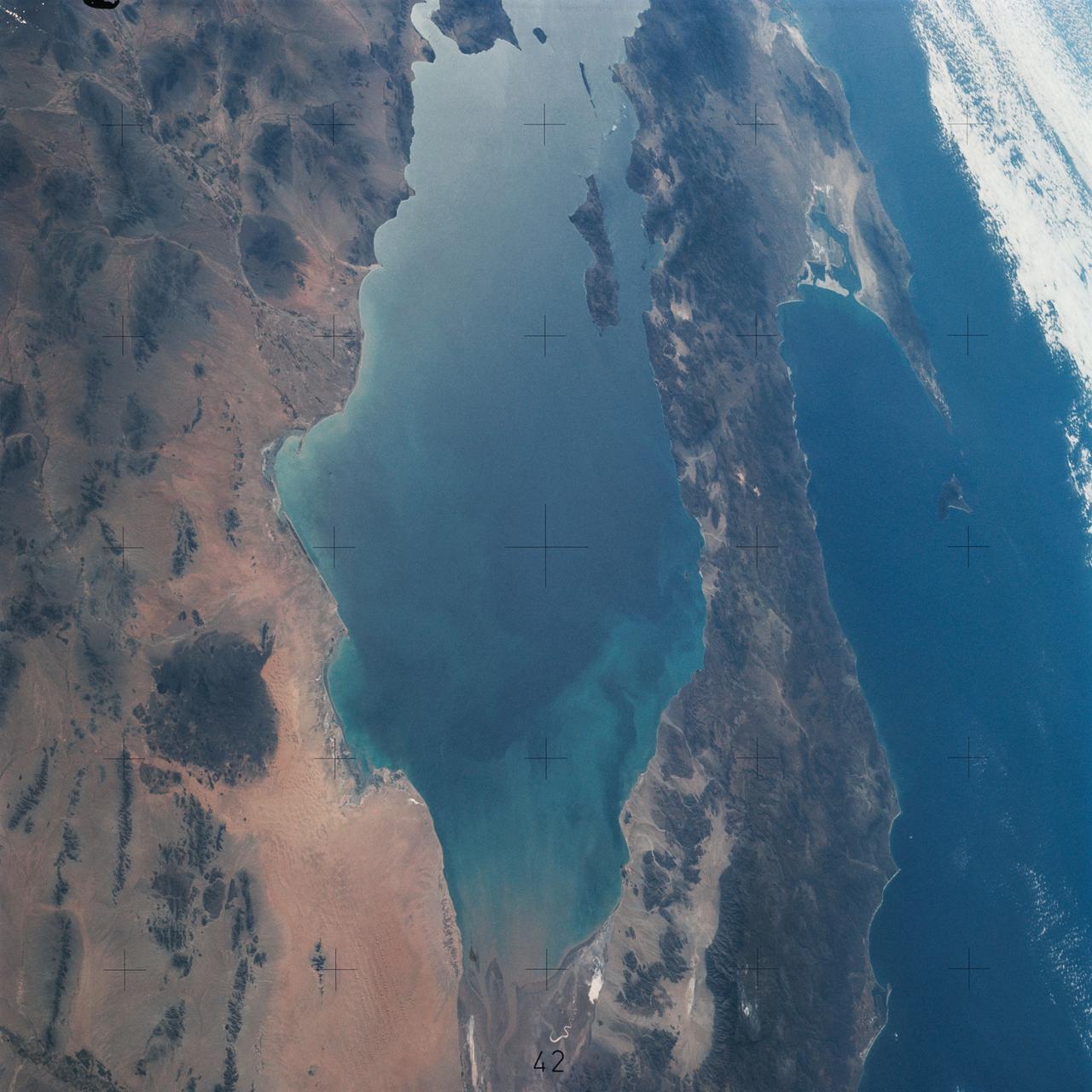
SL4-142-4548 (27 Jan. 1974) --- An oblique view of northwestern Mexico, as photographed from the Skylab space station in Earth orbit by one of the Skylab 4 crewmen. The camera used was a hand-held 70mm Hasselblad, with SO-368 medium-speed Ektachrome film. This photograph was taken on a sweep down the coast to document the fault patterns of southern California and northwest Mexico. SL4-142-4532 gives an excellent overview of the entire region. The specific reason for this picture was an attempt to see if the Agua Blanca Fault in Baja California extends to the east toward the Gulf of California. Several attempts were made by the Skylab 4 crew to visually detect such an extension, but none was found. The report was that the fault disappeared into an area of sand and heavily eroded material that obscured any feature that might be present deeper. This area of sand and loose material is the light-colored area in the center of Baja at the extreme north part of the photograph. In addition to this geology the Pinacate volcanic field in Sonora, the sand dunes in Sonora, and the sediment flow patterns of the Colorado River entering the Gulf are additional areas of study utilizing this photograph. Photo credit: NASA
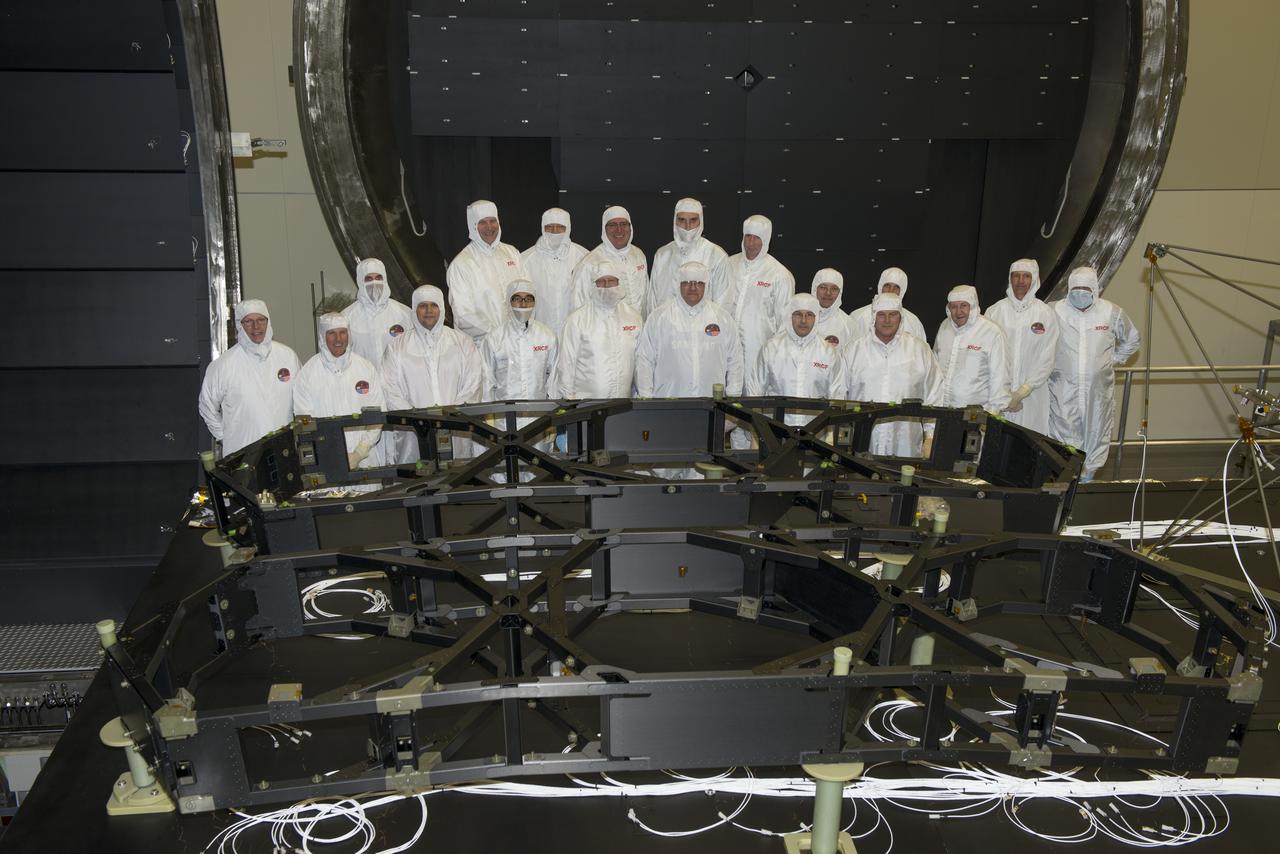
NASA AND ATK TEAM PHOTOGRAPH WITH THE 2 JWST (JAMES WEBB SPACE TELESCOPE) WINGS AFTER INSTALLATION IN THE XRCF (X-RAY & CRYOGENIC FACILITY)
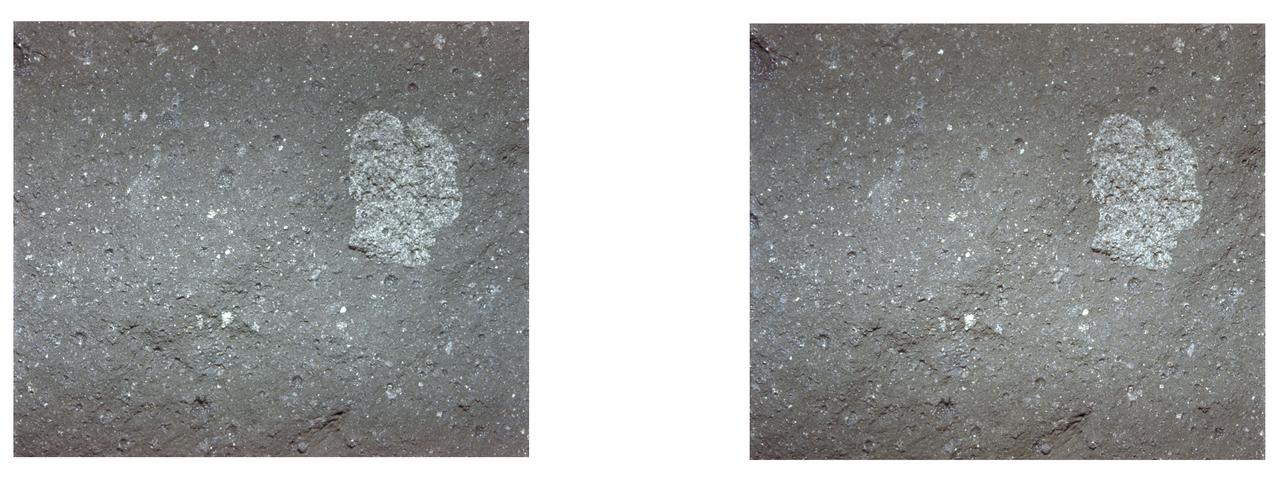
AS11-45-6709 (20 July 1969) --- An Apollo 11 stereo view of the surface of a lunar rock showing an embedded three-fourths inch fragment of a different color. On the surface several small pits are seen; mostly less than one-eighth inch in size, and with a glazed surface. They have a raised rim, characteristic of pits made by high-velocity micro meteorite impacts. The exposure was made by the Apollo 11 35mm stereo close-up camera. The camera was specially developed to get the highest possible resolution of a small area. A three-inch square area is photographed with a flash illumination and at a fixed distance. The camera is mounted on a walking stick, and the astronauts use it by holding it up against the object to be photographed and pulling the trigger. The pictures are in color and give a stereo view, enabling the fine detail to be seen very clearly. The project is under the direction of Professor T. Gold of Cornell University and Mr. F. Pearce of NASA. The camera was designed and built by Eastman Kodak. Professor E. Purcell of Harvard University and Dr. E. Land of the Polaroid Corporation have contributed to the project. The pictures brought back from the moon by the Apollo 11 crew are of excellent quality and allow fine detail of the undisturbed lunar surface to be seen. Scientists hope to be able to deduce from them some of the processes that have taken place that have shaped and modified the surface.
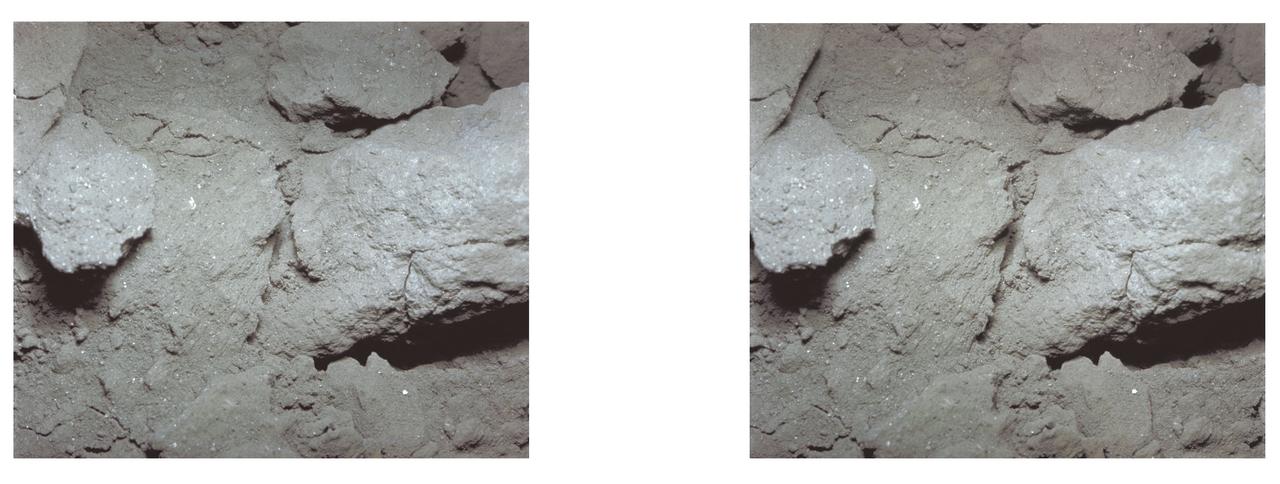
AS11-45-6706 (20 July 1969) --- An Apollo 11 stereo view showing a clump of lunar surface powder, with various small pieces of different color. Many small, shiny spherical particles can be seen. The picture is three inches across. The exposure was made by the Apollo 11 35mm stereo close-up camera. The camera was specially developed to get the highest possible resolution of a small area. A three-inch square area is photographed with a flash illumination and at a fixed distance. The camera is mounted on a walking stick, and the astronauts use it by holding it up against the object to be photographed and pulling the trigger. The pictures are in color and give a stereo view, enabling the fine detail to be seen very clearly. The project is under the direction of Professor T. Gold of Cornell University and Mr. F. Pearce of NASA. The camera was designed and built by Eastman Kodak. Professor E. Purcell of Harvard University and Dr. E. Land of the Polaroid Corporation have contributed to the project. The pictures brought back from the moon by the Apollo 11 crew are of excellent quality and allow fine detail of the undisturbed lunar surface to be seen. Scientists hope to be able to deduce from them some of the processes that have taken place that have shaped and modified the surface.
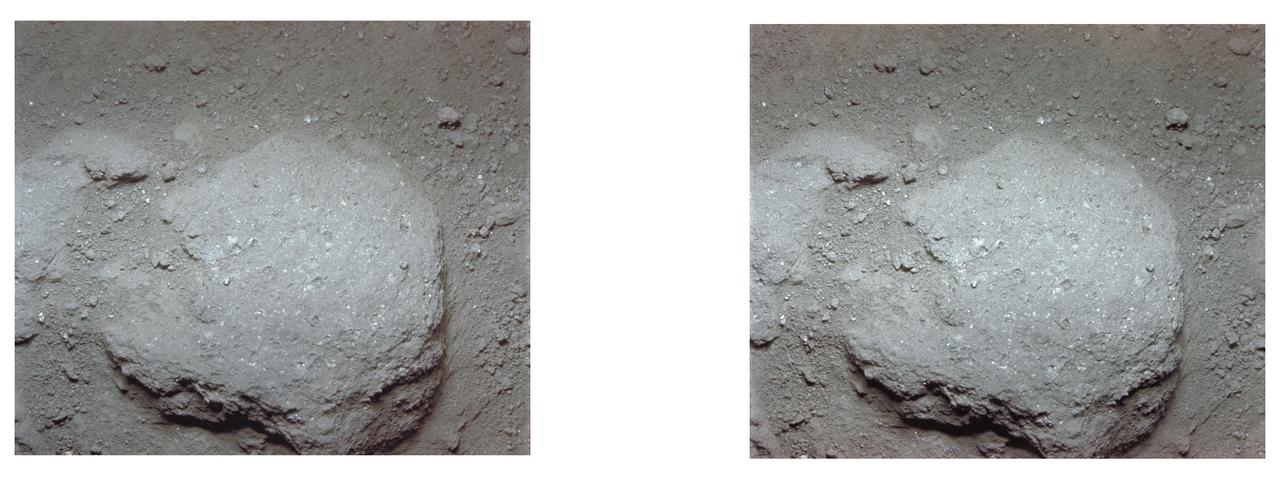
AS11-45-6712 (20 July 1969) --- An Apollo 11 stereo view of a stone, about two and one-half inches long, embedded in the powdery lunar surface material. The little pieces closely around it suggest that it has suffered some erosion. On the surface several small pits are seen, mostly less than one-eighth inch in size, and with a glazed surface. They have a raised rim, characteristic of pits made by the Apollo 11 35mm stereo close-up camera. The camera was specially developed to get the highest possible resolution of a small area. A three-inch square area is photographed with a flash illumination and at a fixed distance. The camera is mounted on a walking stick, and the astronauts use it by holding it up against the object to be photographed and pulling the trigger. The pictures are in color and give a stereo view, enabling the fine detail to be seen very clearly. The project is under the direction of Professor T. Gold of Cornell University and Mr. F. Pearce of NASA. The camera was designed and built by Eastman Kodak. Professor E. Purcell of Harvard University and Dr. E. Land of the Polaroid Corporation have contributed to the project. The pictures brought back from the moon by the Apollo 11 crew are of excellent quality and allow fine detail of the undisturbed lunar surface to be seen. Scientists hope to be able to deduce from them some of the processes that have taken place that have shaped and modified the surface.
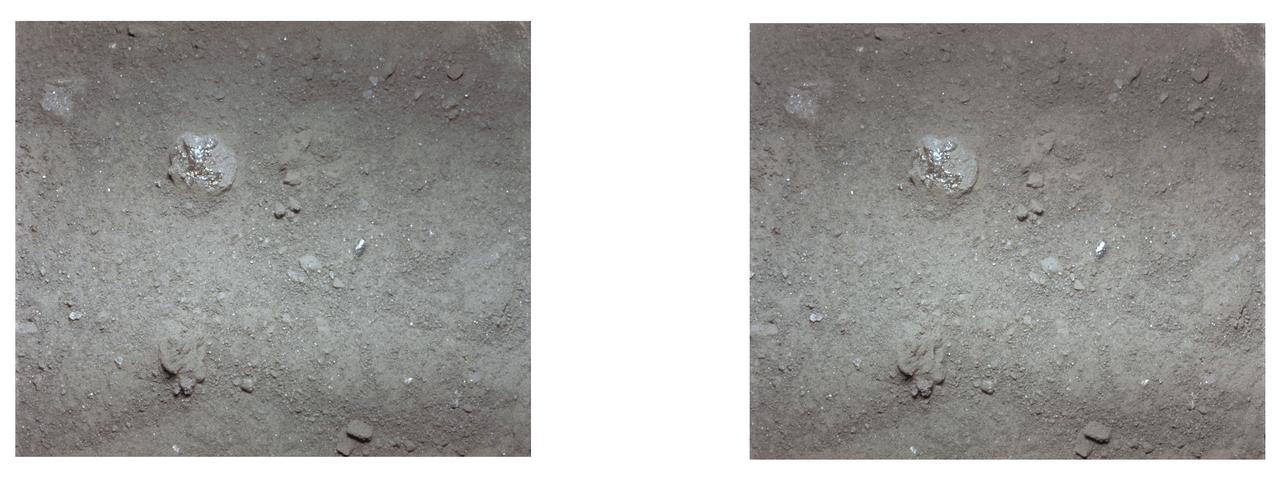
AS11-45-6704 (20 July 1969) --- An Apollo stereo view showing a close-up of a small lump of lunar surface powder about a half inch across, with a splash of a glassy material over it. It seems that a drop of molten material fell on it, splashed and froze. The exposure was made by the Apollo 11 35mm stereo close-up camera. The camera was specially developed to get the highest possible resolution of a small area. A three-inch square area is photographed with a flash illumination and at a fixed distance. The camera is mounted on a walking stick, and the astronauts use it by holding it up against the object to be photographed and pulling the trigger. The pictures are in color and give a stereo view, enabling the fine detail to be seen very clearly. The project is under the direction of Professor T. Gold of Cornell University and Dr. F. Pearce of NASA. The camera was designed and built by Eastman Kodak. Professor E. Purcell of Harvard University and Dr. E. Land of the Polaroid Corporation have contributed to the project. The pictures brought back from the moon by the Apollo 11 crew are of excellent quality and allow fine detail of the undisturbed lunar surface to be seen. Scientists hope to be able to deduce from them some of the processes that have taken place that have shaped and modified the surface.
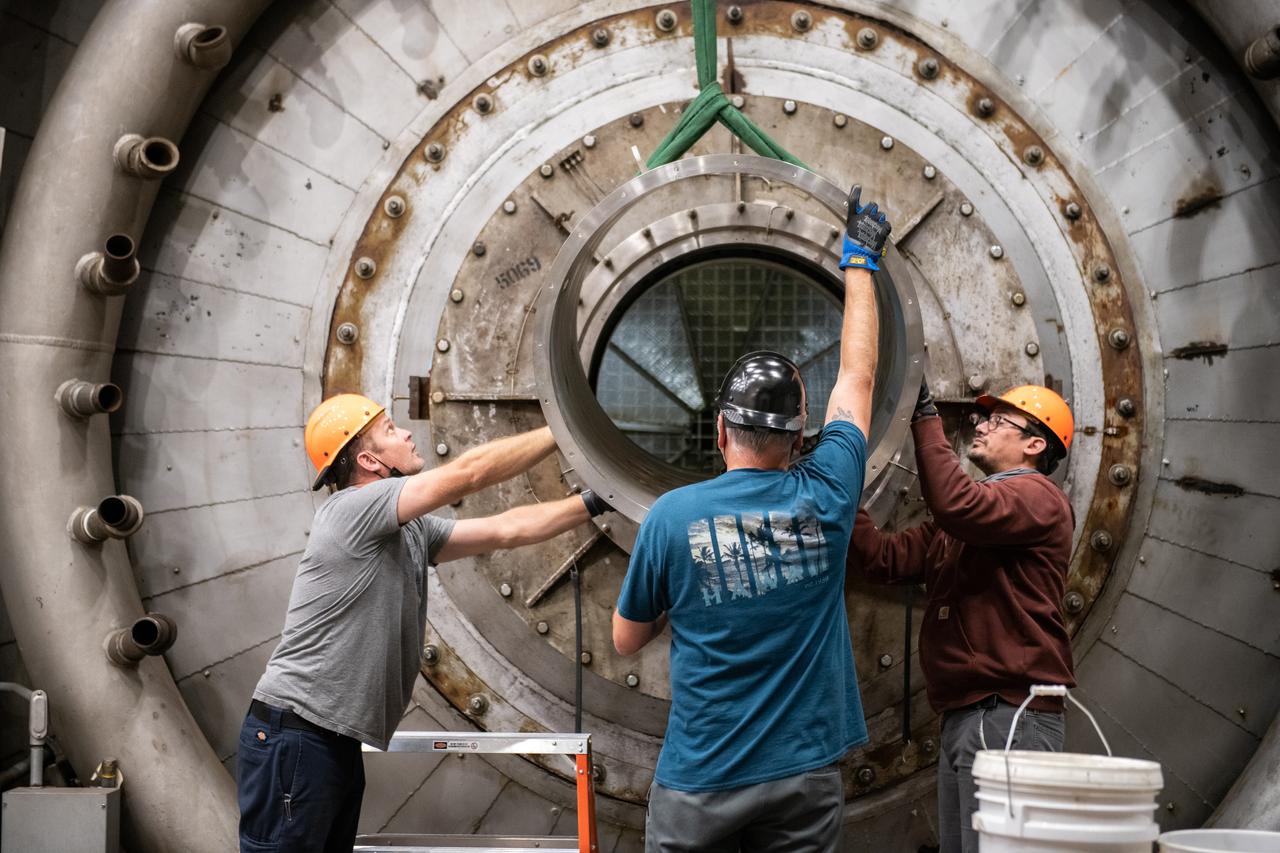
American Society of Mechanical Engineers, ASME Nozzle Test at Propulsion Systems Laboratory, PSL Documentation Photographs