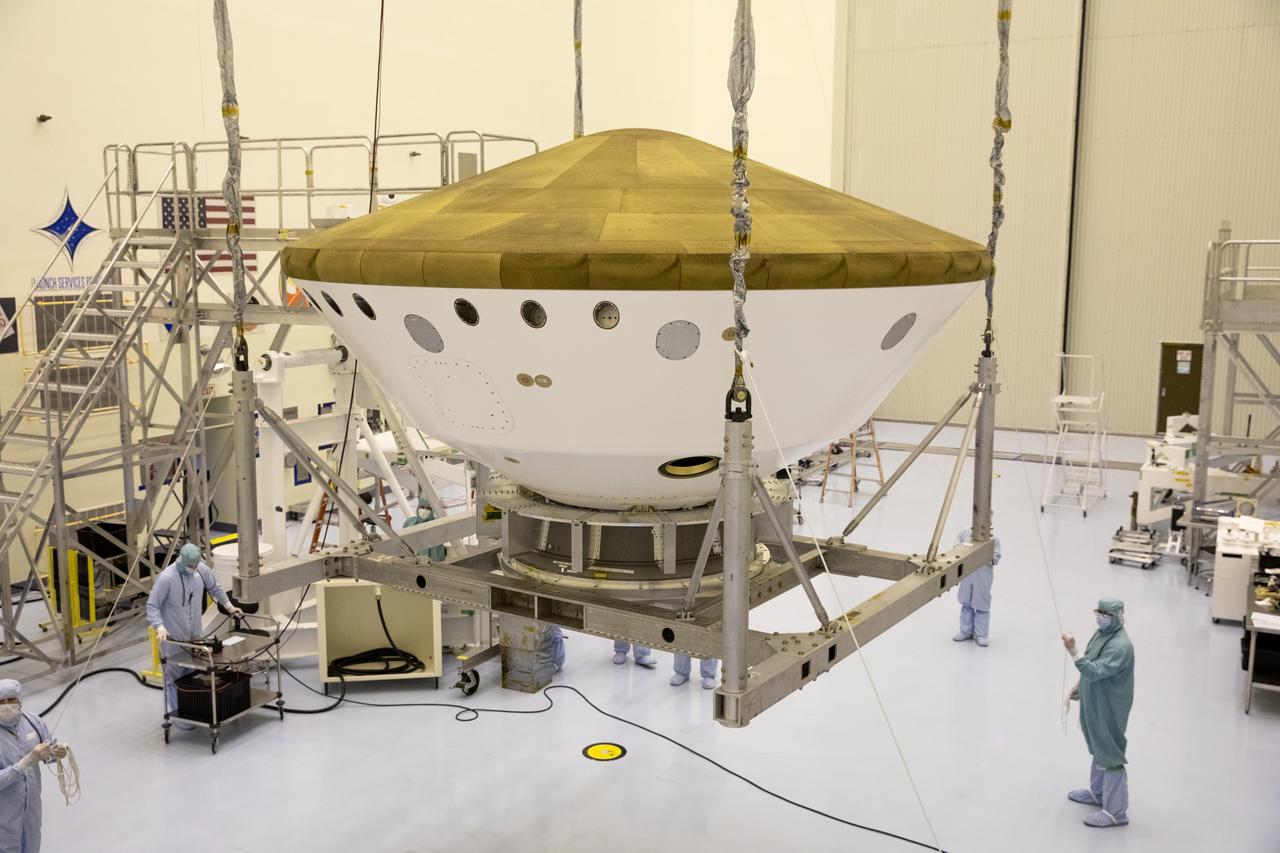
Mars 2020 Lift Activities in Payload Hazardous Serviceing Facility (PHSF)
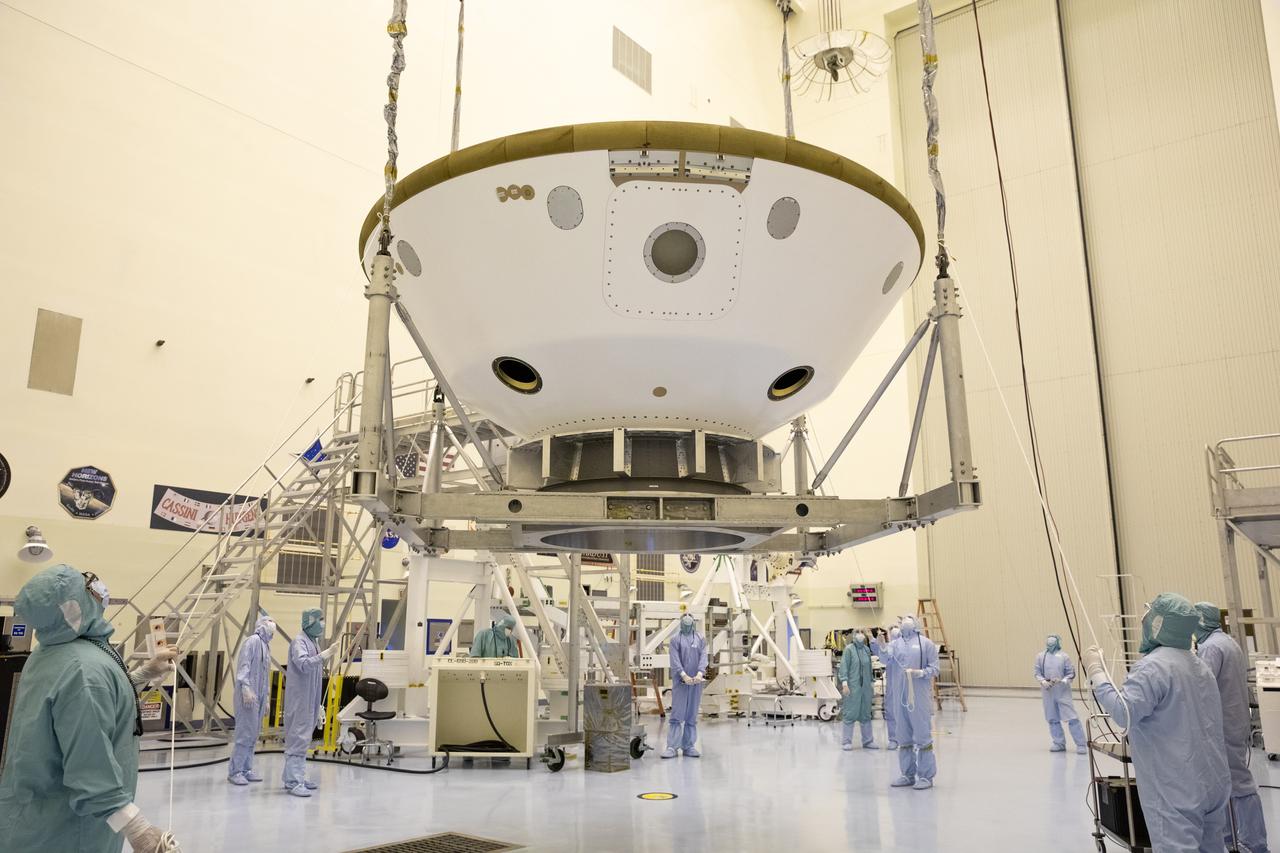
Mars 2020 Lift Activities in Payload Hazardous Serviceing Facility (PHSF)
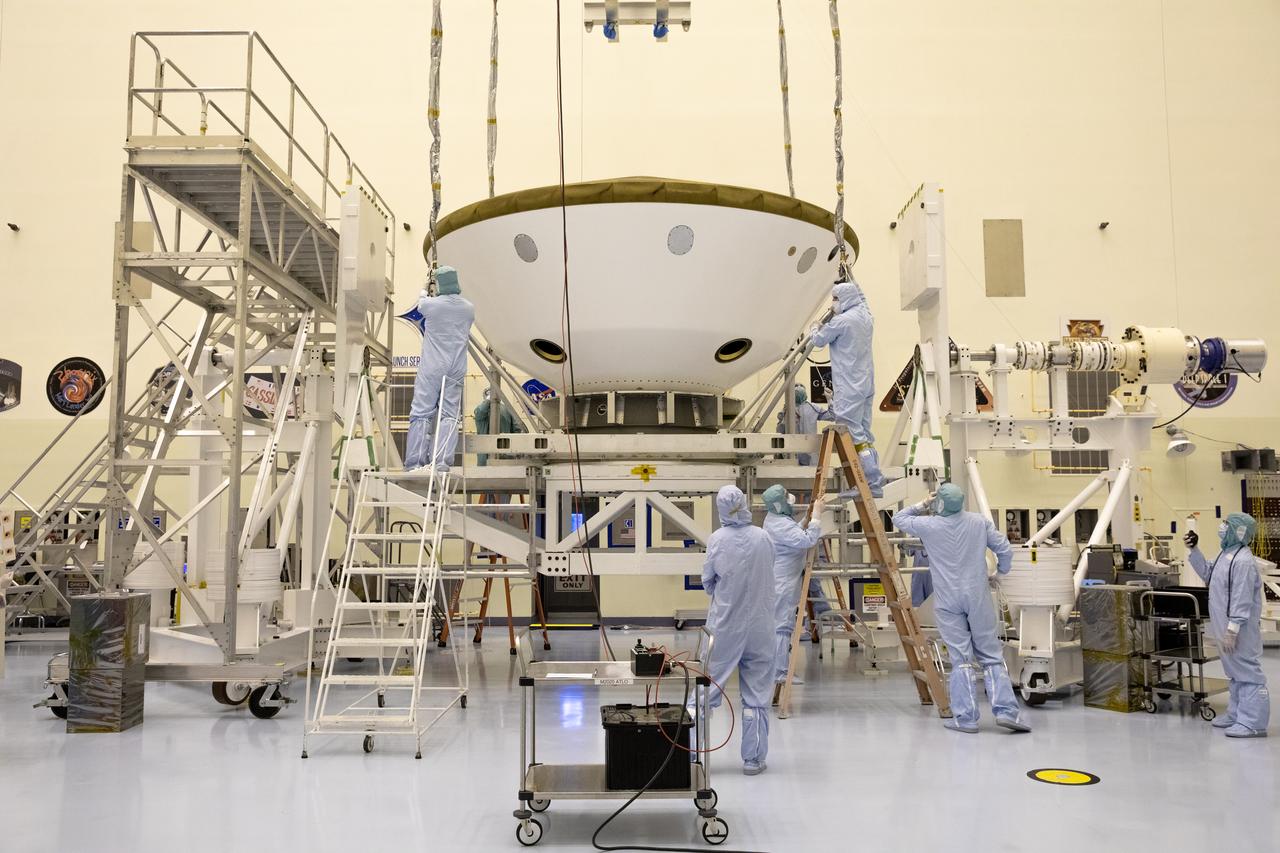
Mars 2020 Lift Activities in Payload Hazardous Serviceing Facility (PHSF)
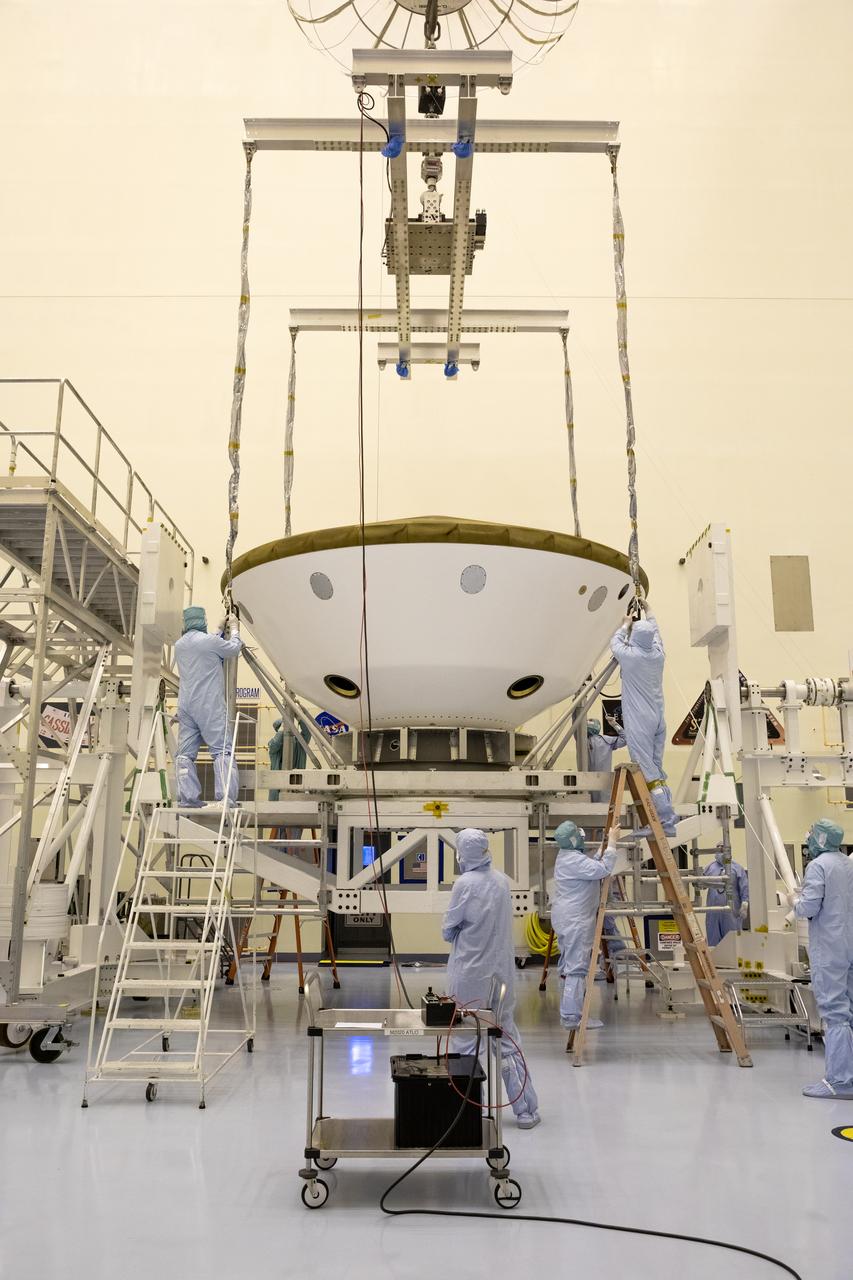
Mars 2020 Lift Activities in Payload Hazardous Serviceing Facility (PHSF)
Mars 2020 Lift Activities in Payload Hazardous Serviceing Facility (PHSF)
Mars 2020 Lift Activities in Payload Hazardous Serviceing Facility (PHSF)
Mars 2020 Lift Activities in Payload Hazardous Serviceing Facility (PHSF)
Mars 2020 Lift Activities in Payload Hazardous Serviceing Facility (PHSF)
Mars 2020 Lift Activities in Payload Hazardous Serviceing Facility (PHSF)
Mars 2020 Lift Activities in Payload Hazardous Serviceing Facility (PHSF)
Mars 2020 Lift Activities in Payload Hazardous Serviceing Facility (PHSF)
Mars 2020 Lift Activities in Payload Hazardous Serviceing Facility (PHSF)
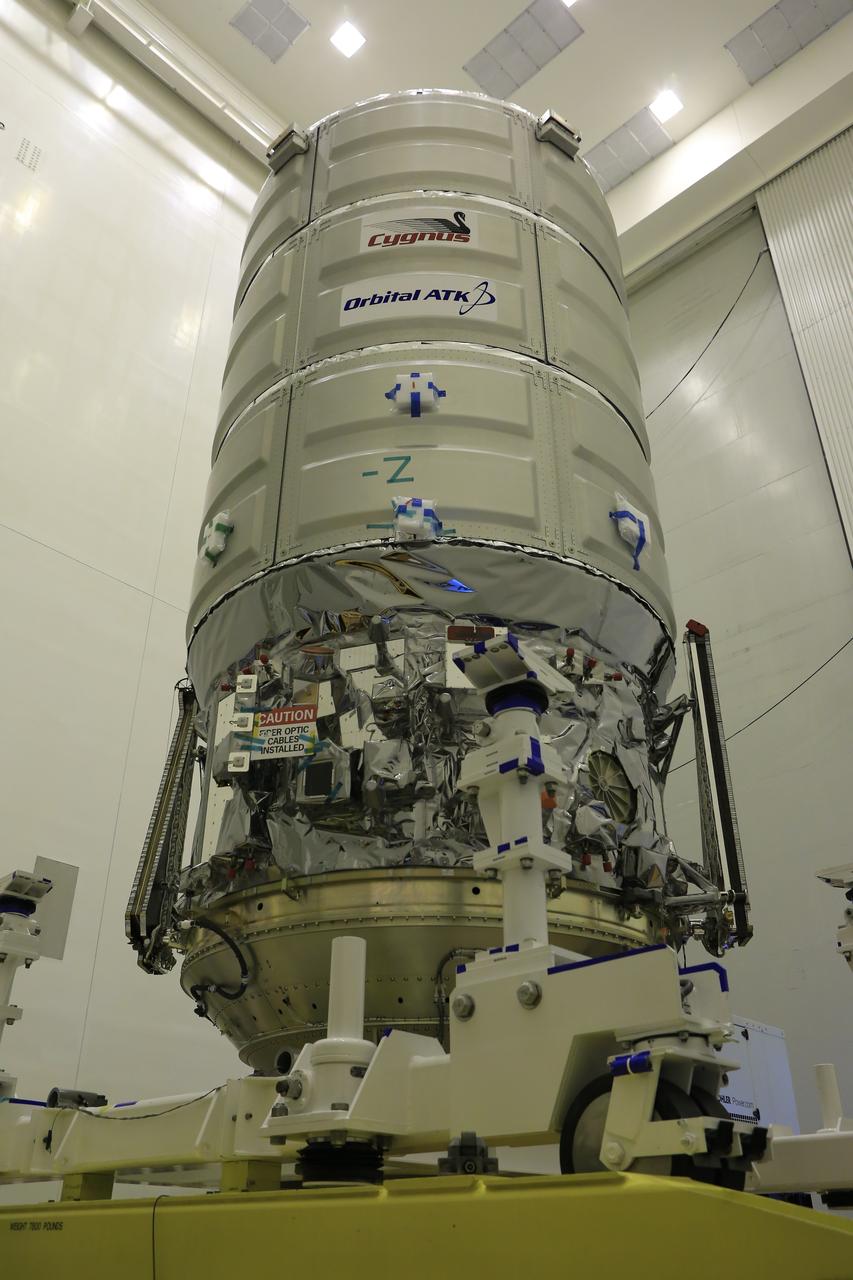
Inside the Payload Hazardous Servicing Facility at NASA's Kennedy Space Center in Florida, the protective covering was removed from Orbital ATK's CYGNUS pressurized cargo module on a KAMAG transporter. In the PHSF, Cygnus will be moved to a work stand for final propellant loading and late cargo stowage. The Orbital ATK CRS-7 commercial resupply services mission to the International Space Station is scheduled to launch atop a United Launch Alliance Atlas V rocket from Space Launch Complex 41 at Cape Canaveral Air Force Station on March 19, 2017. CYGNUS will deliver thousands of pounds of supplies, equipment and scientific research materials to the space station.
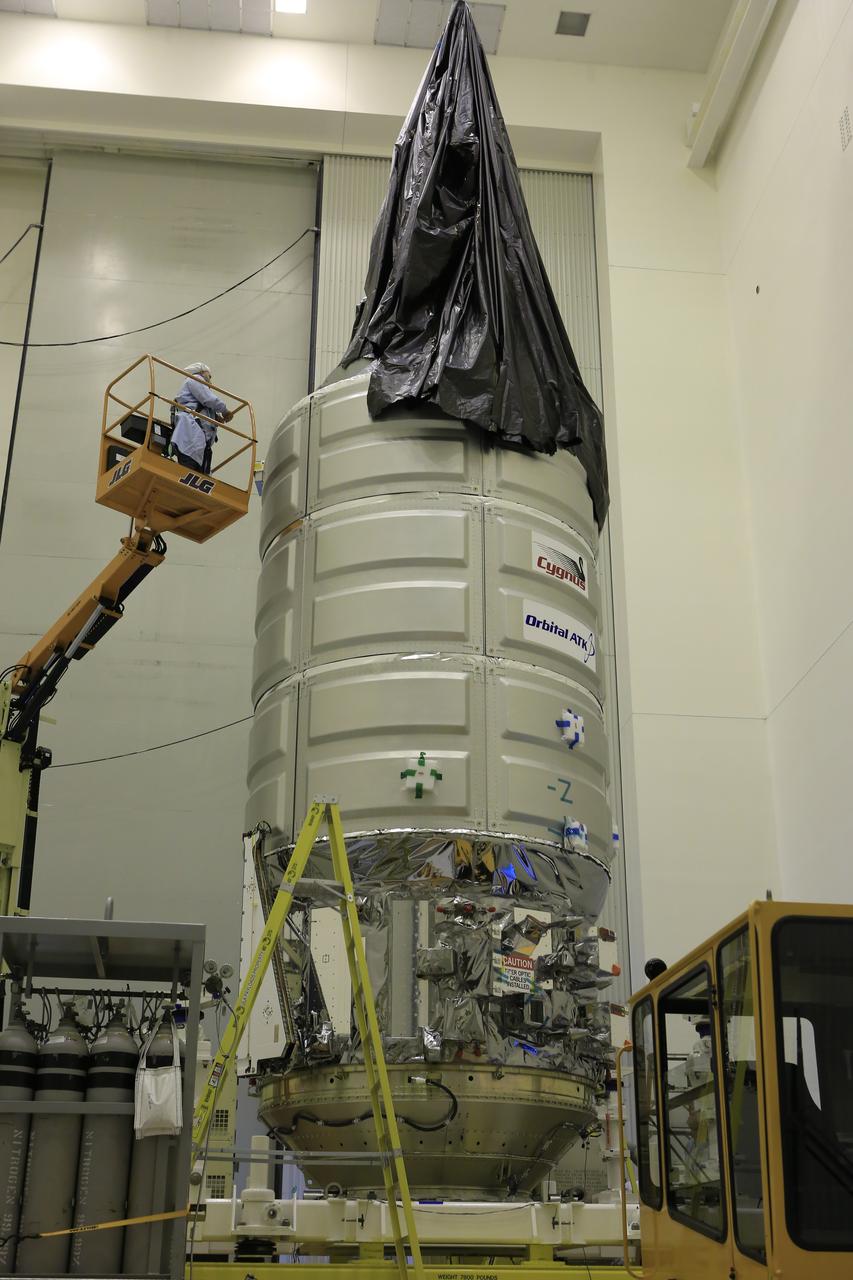
Inside the Payload Hazardous Servicing Facility at NASA's Kennedy Space Center in Florida, technicians assist as a crane is used to remove the protective covering from Orbital ATK's CYGNUS pressurized cargo module on a KAMAG transporter. In the PHSF, Cygnus will be moved to a work stand for final propellant loading and late cargo stowage. The Orbital ATK CRS-7 commercial resupply services mission to the International Space Station is scheduled to launch atop a United Launch Alliance Atlas V rocket from Space Launch Complex 41 at Cape Canaveral Air Force Station on March 19, 2017. CYGNUS will deliver thousands of pounds of supplies, equipment and scientific research materials to the space station.
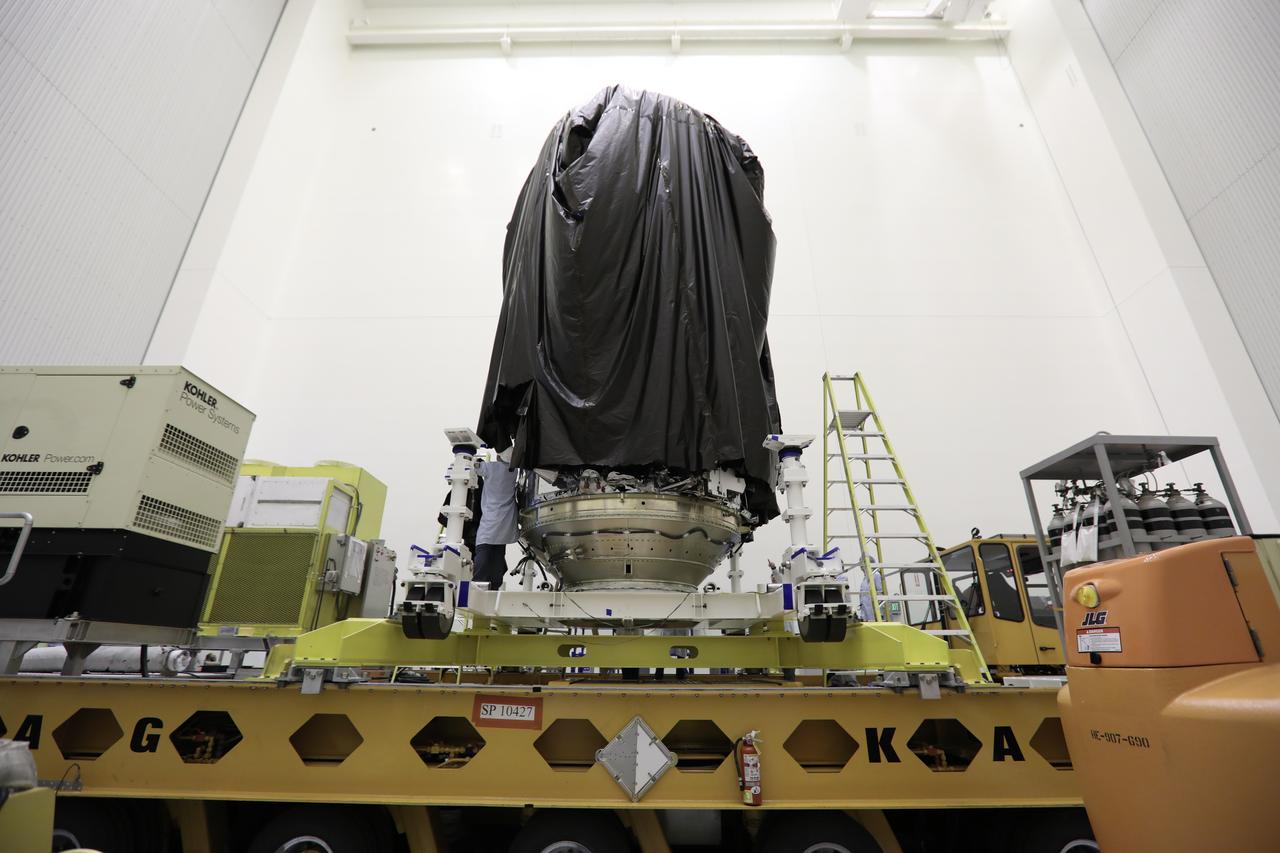
Inside the Payload Hazardous Servicing Facility at NASA's Kennedy Space Center in Florida, technicians begin to remove the protective covering from Orbital ATK's CYGNUS pressurized cargo module on a KAMAG transporter. In the PHSF, Cygnus will be move to a work stand for final propellant loading and late cargo stowage. The Orbital ATK CRS-7 commercial resupply services mission to the International Space Station is scheduled to launch atop a United Launch Alliance Atlas V rocket from Space Launch Complex 41 at Cape Canaveral Air Force Station on March 19, 2017. CYGNUS will deliver thousands of pounds of supplies, equipment and scientific research materials to the space station.
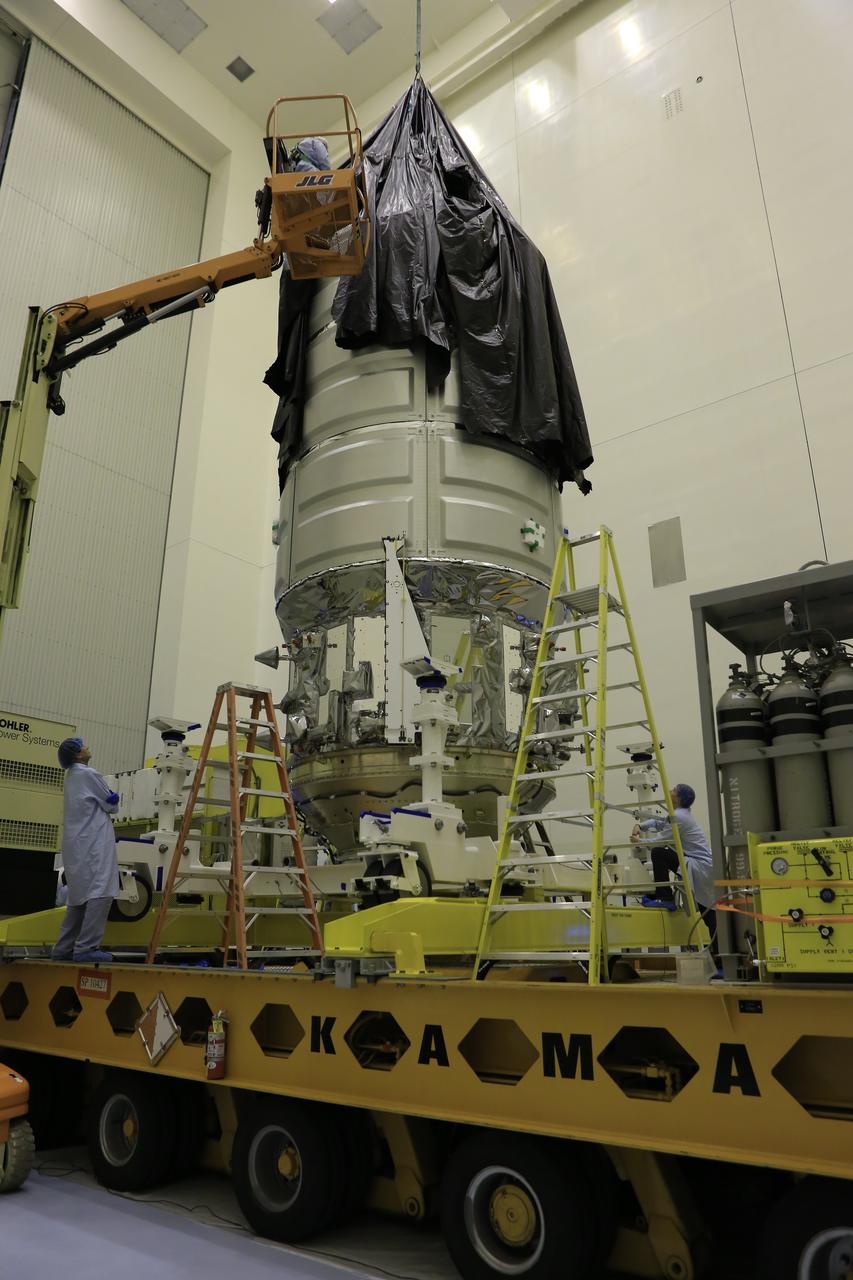
Inside the Payload Hazardous Servicing Facility at NASA's Kennedy Space Center in Florida, technicians assist as a crane is used to remove the protective covering from Orbital ATK's CYGNUS pressurized cargo module on a KAMAG transporter. In the PHSF, Cygnus will be moved to a work stand for final propellant loading and late cargo stowage. The Orbital ATK CRS-7 commercial resupply services mission to the International Space Station is scheduled to launch atop a United Launch Alliance Atlas V rocket from Space Launch Complex 41 at Cape Canaveral Air Force Station on March 19, 2017. CYGNUS will deliver thousands of pounds of supplies, equipment and scientific research materials to the space station.
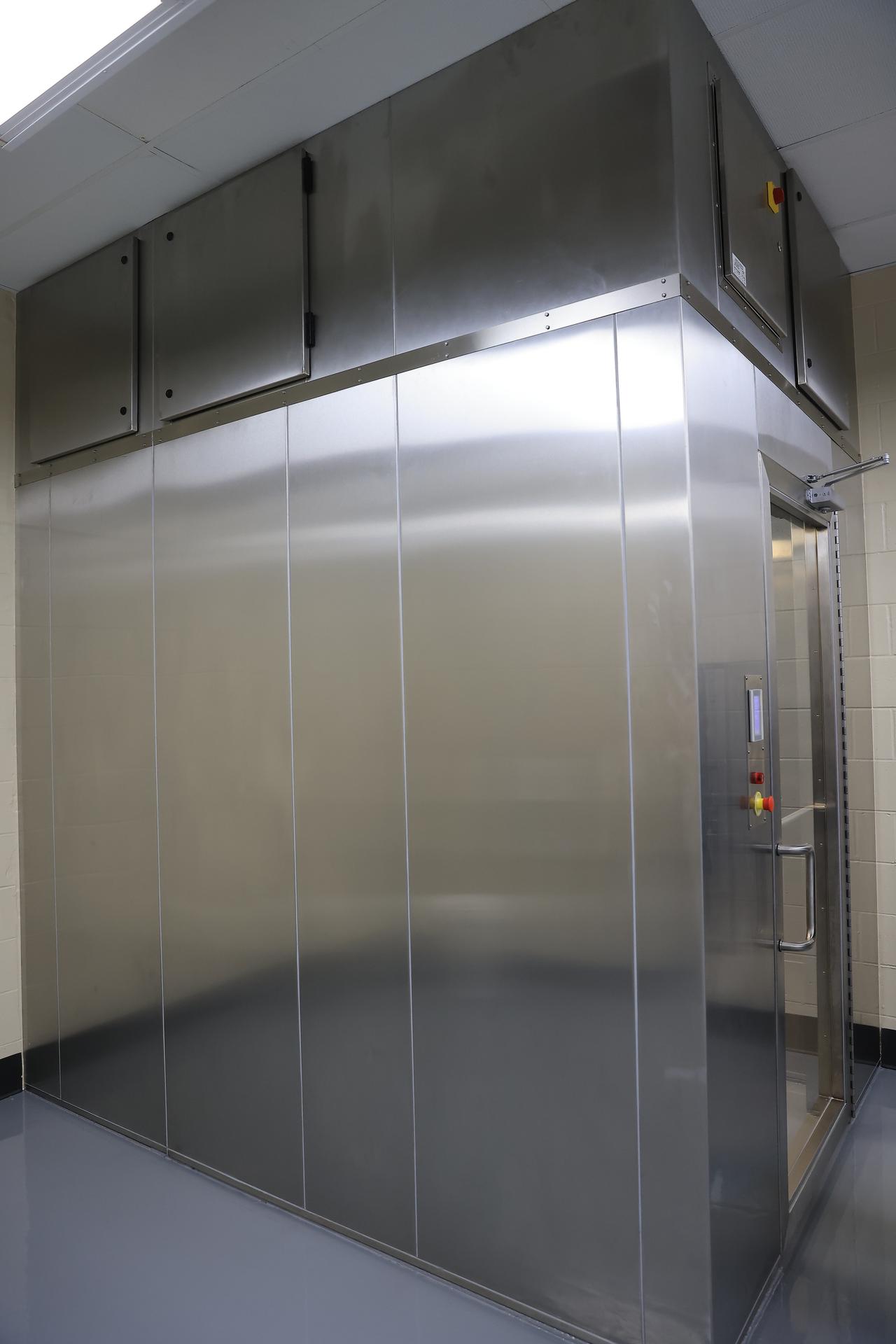
This image shows the recently upgraded air showers which blast high-velocity HEPA-filtered air onto people before they enter a clean room at NASA’s Payload Hazardous Servicing Facility at the agency’s Kennedy Space Center in Florida on Friday, Feb. 27, 2026. The PHSF went through several upgrades ahead of the arrival of Nancy Grace Roman Space Telescope. Roman will provide deep, panoramic views of the cosmos, generating never-before-seen pictures that will revolutionize our understanding of the universe. Roman will undergo several prelaunch operations, including thermal protection closeout, cleaning, solar array work, and loading hydrazine propellant.
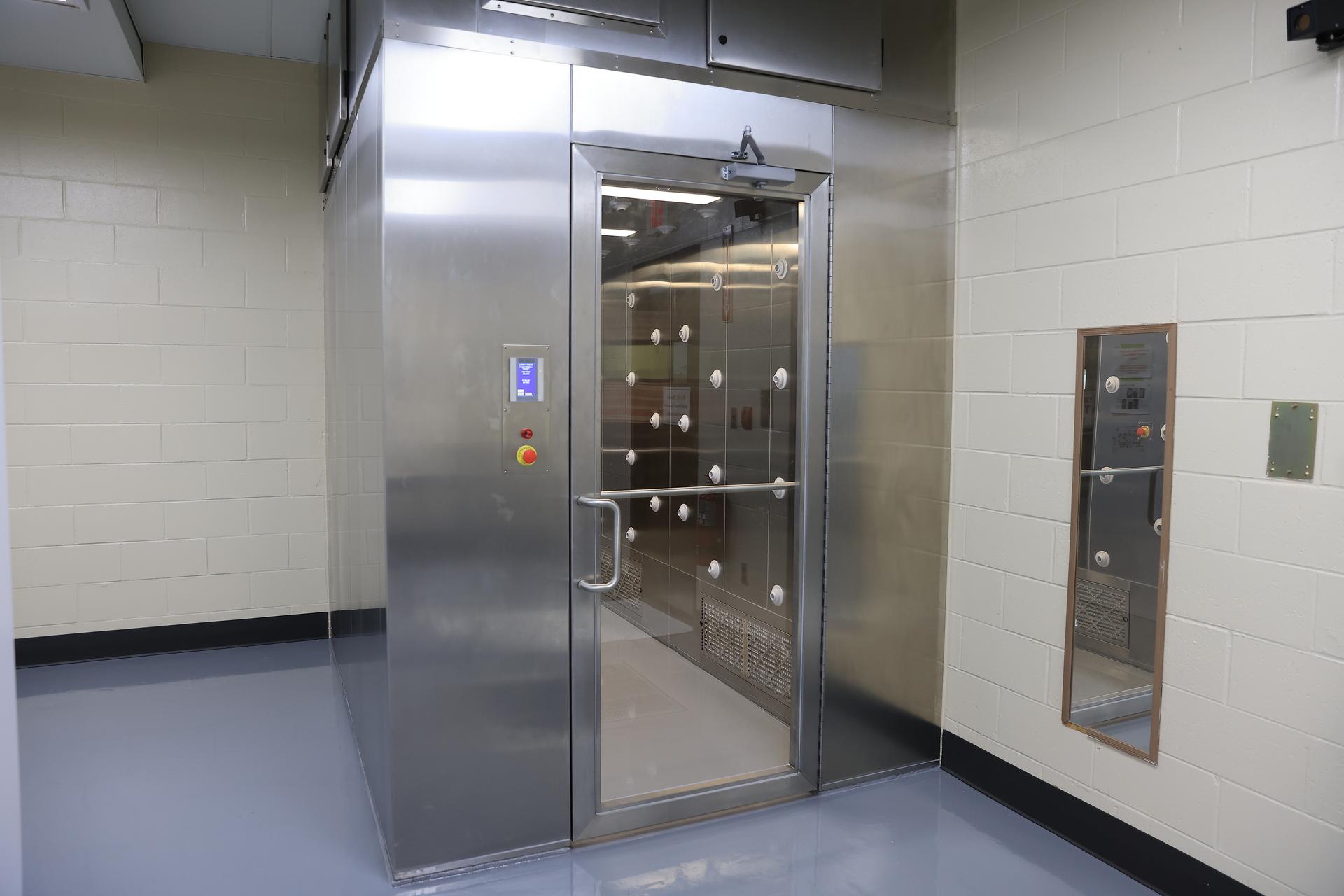
This image shows the recently upgraded air showers which blast high-velocity HEPA-filtered air onto people before they enter a clean room at NASA’s Payload Hazardous Servicing Facility at the agency’s Kennedy Space Center in Florida on Friday, Feb. 27, 2026. The PHSF went through several upgrades ahead of the arrival of Nancy Grace Roman Space Telescope. Roman will provide deep, panoramic views of the cosmos, generating never-before-seen pictures that will revolutionize our understanding of the universe. Roman will undergo several prelaunch operations, including thermal protection closeout, cleaning, solar array work, and loading hydrazine propellant.
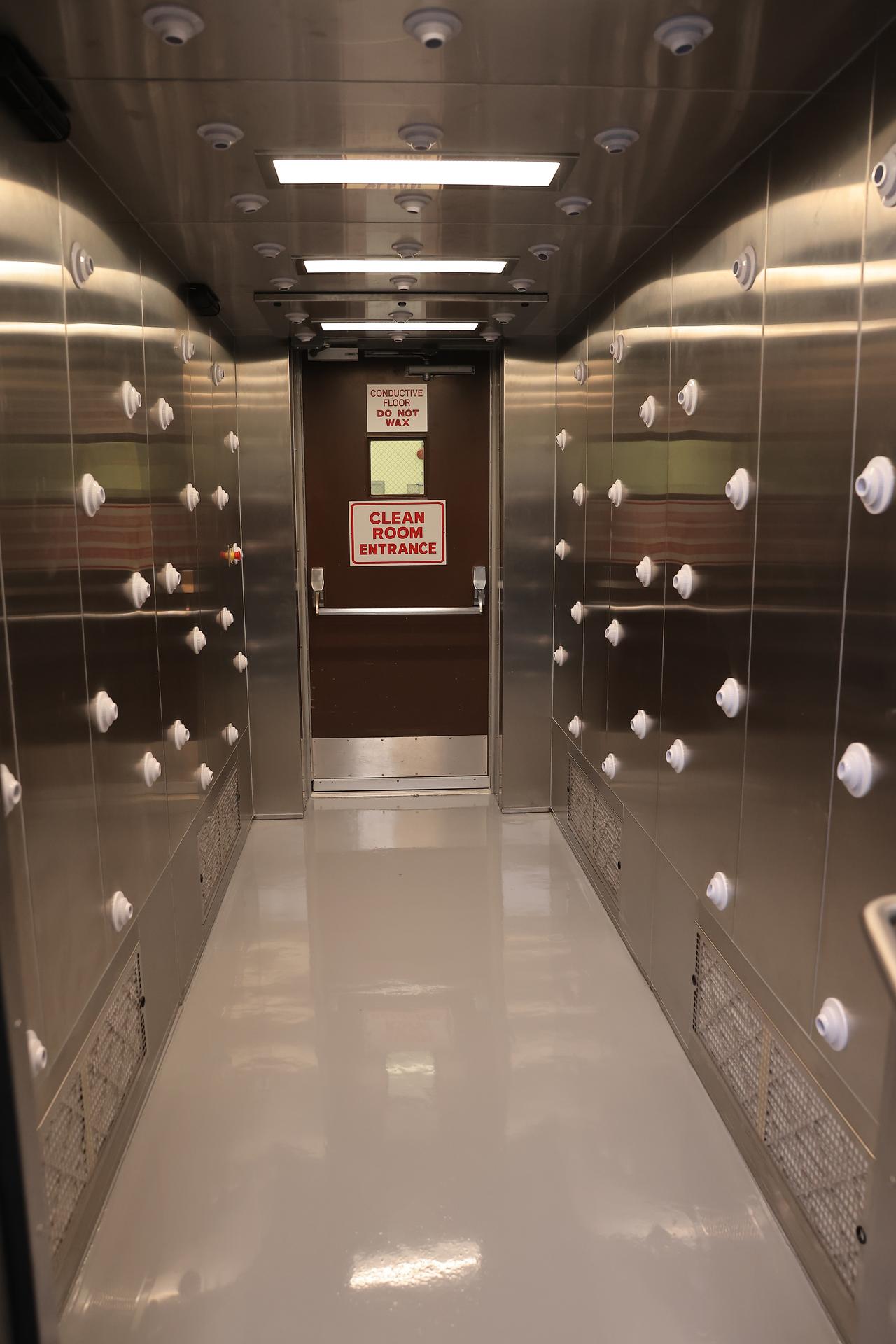
This image shows the recently upgraded air showers which blast high-velocity HEPA-filtered air onto people before they enter a clean room at NASA’s Payload Hazardous Servicing Facility at the agency’s Kennedy Space Center in Florida on Friday, Feb. 27, 2026. The PHSF went through several upgrades ahead of the arrival of Nancy Grace Roman Space Telescope. Roman will provide deep, panoramic views of the cosmos, generating never-before-seen pictures that will revolutionize our understanding of the universe. Roman will undergo several prelaunch operations, including thermal protection closeout, cleaning, solar array work, and loading hydrazine propellant.
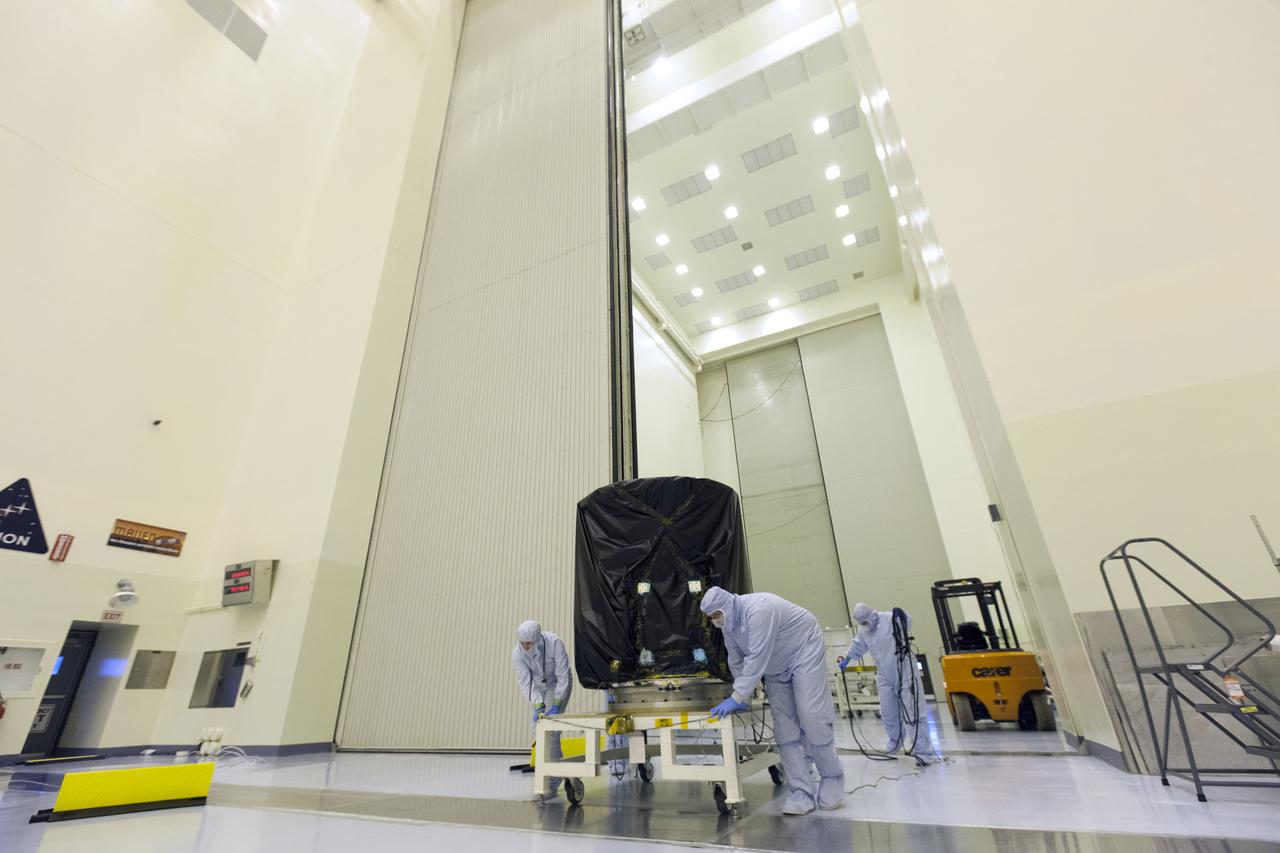
Technicians dressed in clean room suits move NASA's Transiting Exoplanet Survey Satellite (TESS) on a test stand inside the Payload Hazardous Servicing Facility (PHSF) at the agency's Kennedy Space Center in Florida. Inside the PHSF, the satellite will be processed and prepared for its flight. TESS is scheduled to launch atop a SpaceX Falcon 9 rocket from Space Launch Complex 40 at Cape Canaveral Air Force Station. TESS is the next step in NASA's search for planets outside our solar system, known as exoplanets. TESS is a NASA Astrophysics Explorer mission led and operated by MIT in Cambridge, Massachusetts, and managed by NASA’s Goddard Space Flight Center in Greenbelt, Maryland. Dr. George Ricker of MIT’s Kavli Institute for Astrophysics and Space Research serves as principal investigator for the mission. Additional partners include Orbital ATK, NASA’s Ames Research Center, the Harvard-Smithsonian Center for Astrophysics and the Space Telescope Science Institute. More than a dozen universities, research institutes and observatories worldwide are participants in the mission. NASA’s Launch Services Program is responsible for launch management.
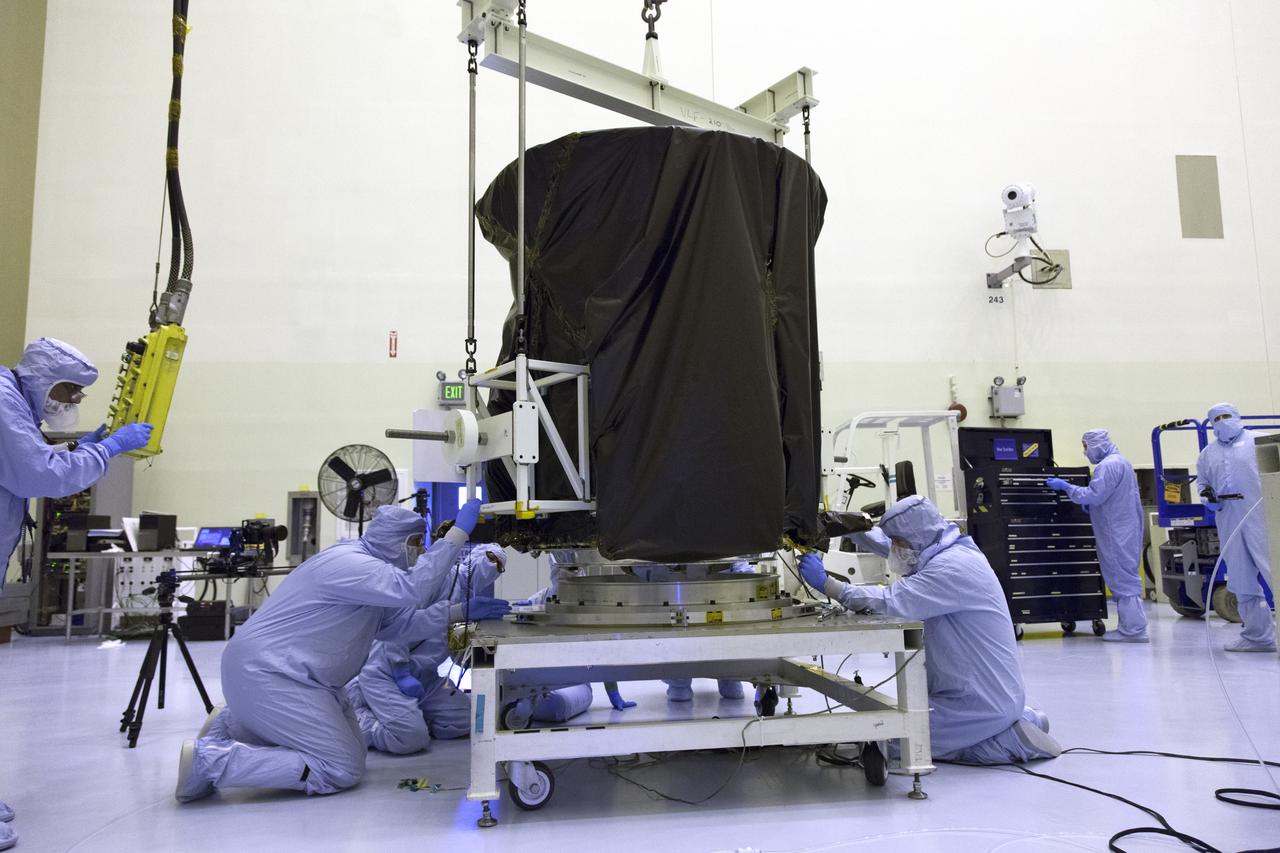
Technicians dressed in clean room suits monitor the progress as a crane lowers NASA's Transiting Exoplanet Survey Satellite (TESS) onto a test stand inside the Payload Hazardous Servicing Facility (PHSF) at the agency's Kennedy Space Center in Florida. Inside the PHSF, the satellite will be processed and prepared for its flight. TESS is scheduled to launch atop a SpaceX Falcon 9 rocket from Space Launch Complex 40 at Cape Canaveral Air Force Station. TESS is the next step in NASA's search for planets outside our solar system, known as exoplanets. TESS is a NASA Astrophysics Explorer mission led and operated by MIT in Cambridge, Massachusetts, and managed by NASA’s Goddard Space Flight Center in Greenbelt, Maryland. Dr. George Ricker of MIT’s Kavli Institute for Astrophysics and Space Research serves as principal investigator for the mission. Additional partners include Orbital ATK, NASA’s Ames Research Center, the Harvard-Smithsonian Center for Astrophysics and the Space Telescope Science Institute. More than a dozen universities, research institutes and observatories worldwide are participants in the mission. NASA’s Launch Services Program is responsible for launch management.
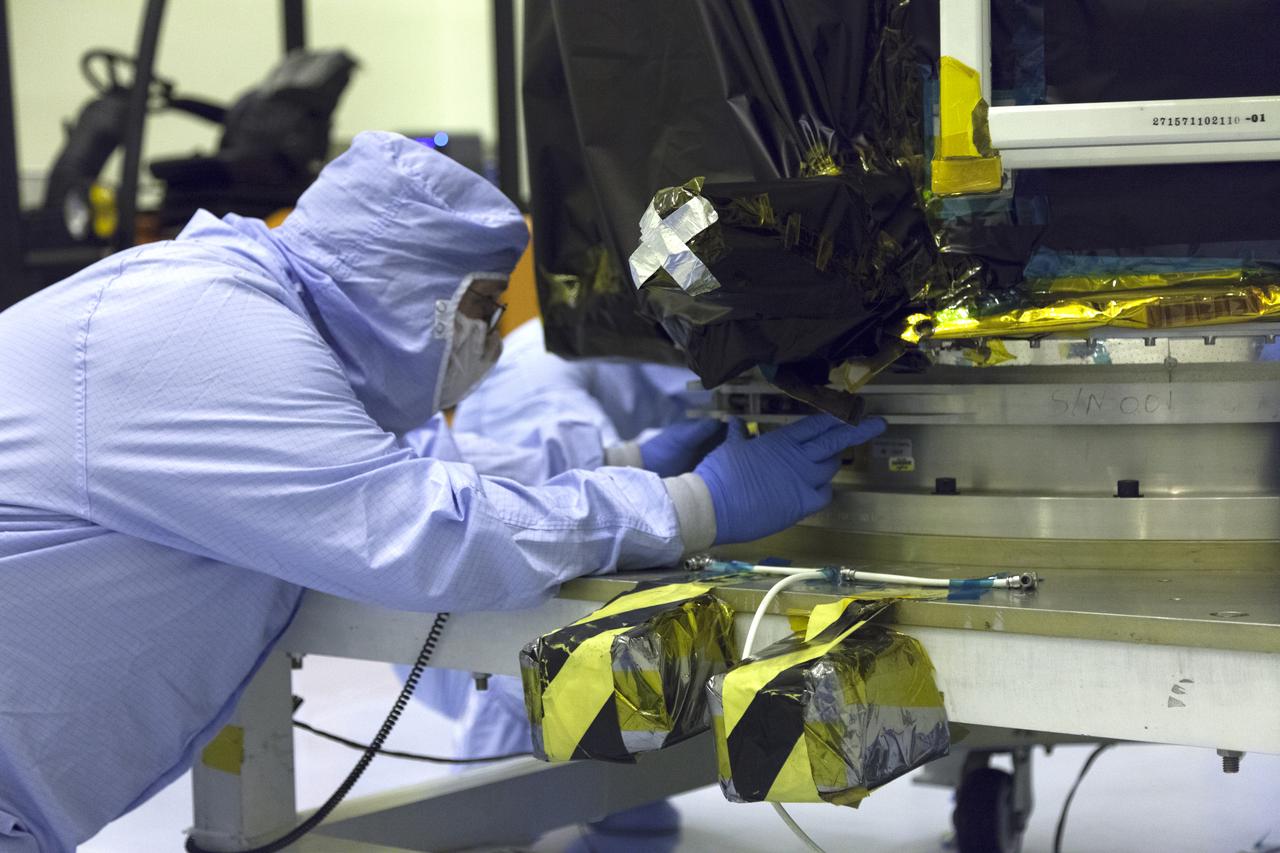
A technician dressed in a clean room suit closely monitors the progress as a crane lowers NASA's Transiting Exoplanet Survey Satellite (TESS) onto a test stand inside the Payload Hazardous Servicing Facility (PHSF) at the agency's Kennedy Space Center in Florida. Inside the PHSF, the satellite will be processed and prepared for its flight. TESS is scheduled to launch atop a SpaceX Falcon 9 rocket from Space Launch Complex 40 at Cape Canaveral Air Force Station. TESS is the next step in NASA's search for planets outside our solar system, known as exoplanets. TESS is a NASA Astrophysics Explorer mission led and operated by MIT in Cambridge, Massachusetts, and managed by NASA’s Goddard Space Flight Center in Greenbelt, Maryland. Dr. George Ricker of MIT’s Kavli Institute for Astrophysics and Space Research serves as principal investigator for the mission. Additional partners include Orbital ATK, NASA’s Ames Research Center, the Harvard-Smithsonian Center for Astrophysics and the Space Telescope Science Institute. More than a dozen universities, research institutes and observatories worldwide are participants in the mission. NASA’s Launch Services Program is responsible for launch management.
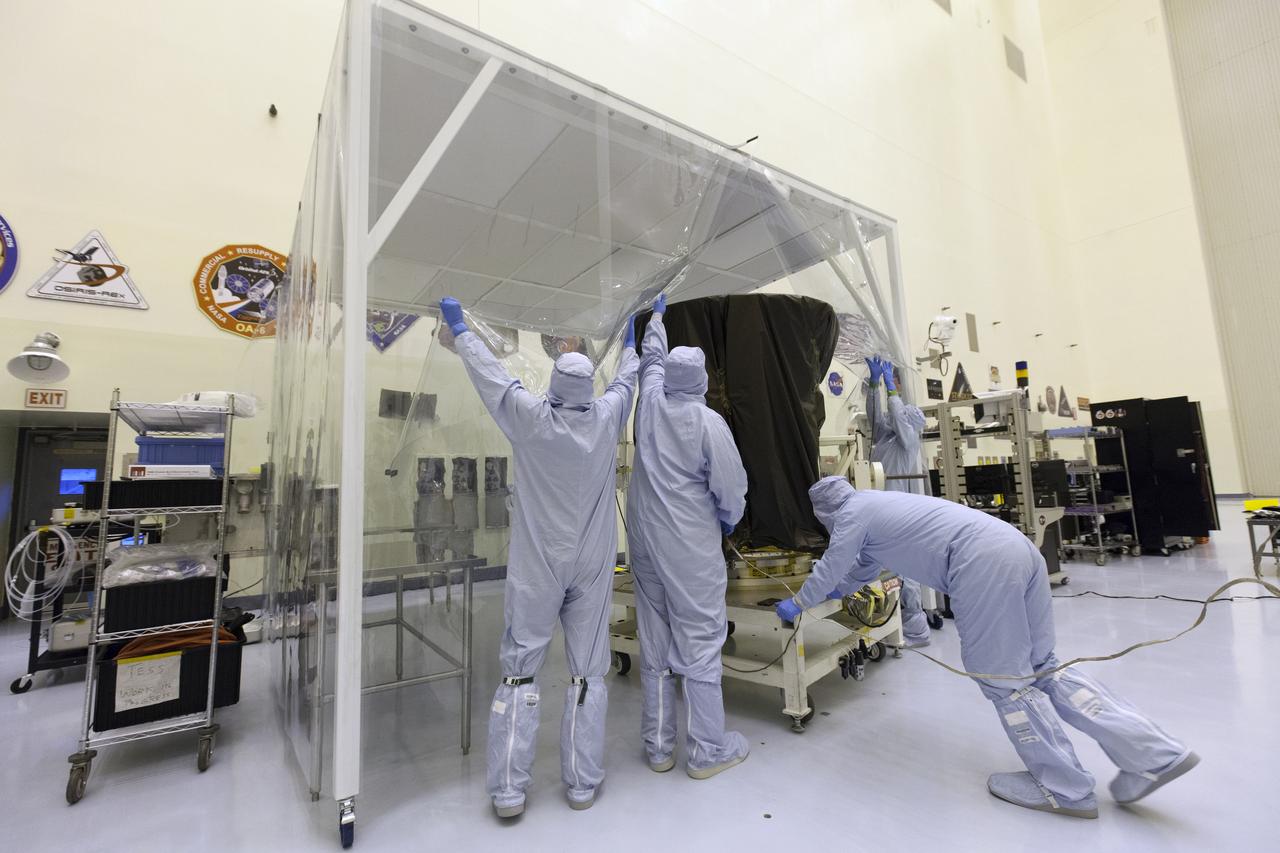
Technician dressed in clean room suits move NASA's Transiting Exoplanet Survey Satellite (TESS) on a test stand into a clean room tent inside the Payload Hazardous Servicing Facility (PHSF) at the agency's Kennedy Space Center in Florida. Inside the PHSF, the satellite will be processed and prepared for its flight. TESS is scheduled to launch atop a SpaceX Falcon 9 rocket from Space Launch Complex 40 at Cape Canaveral Air Force Station. TESS is the next step in NASA's search for planets outside our solar system, known as exoplanets. TESS is a NASA Astrophysics Explorer mission led and operated by MIT in Cambridge, Massachusetts, and managed by NASA’s Goddard Space Flight Center in Greenbelt, Maryland. Dr. George Ricker of MIT’s Kavli Institute for Astrophysics and Space Research serves as principal investigator for the mission. Additional partners include Orbital ATK, NASA’s Ames Research Center, the Harvard-Smithsonian Center for Astrophysics and the Space Telescope Science Institute. More than a dozen universities, research institutes and observatories worldwide are participants in the mission. NASA’s Launch Services Program is responsible for launch management.
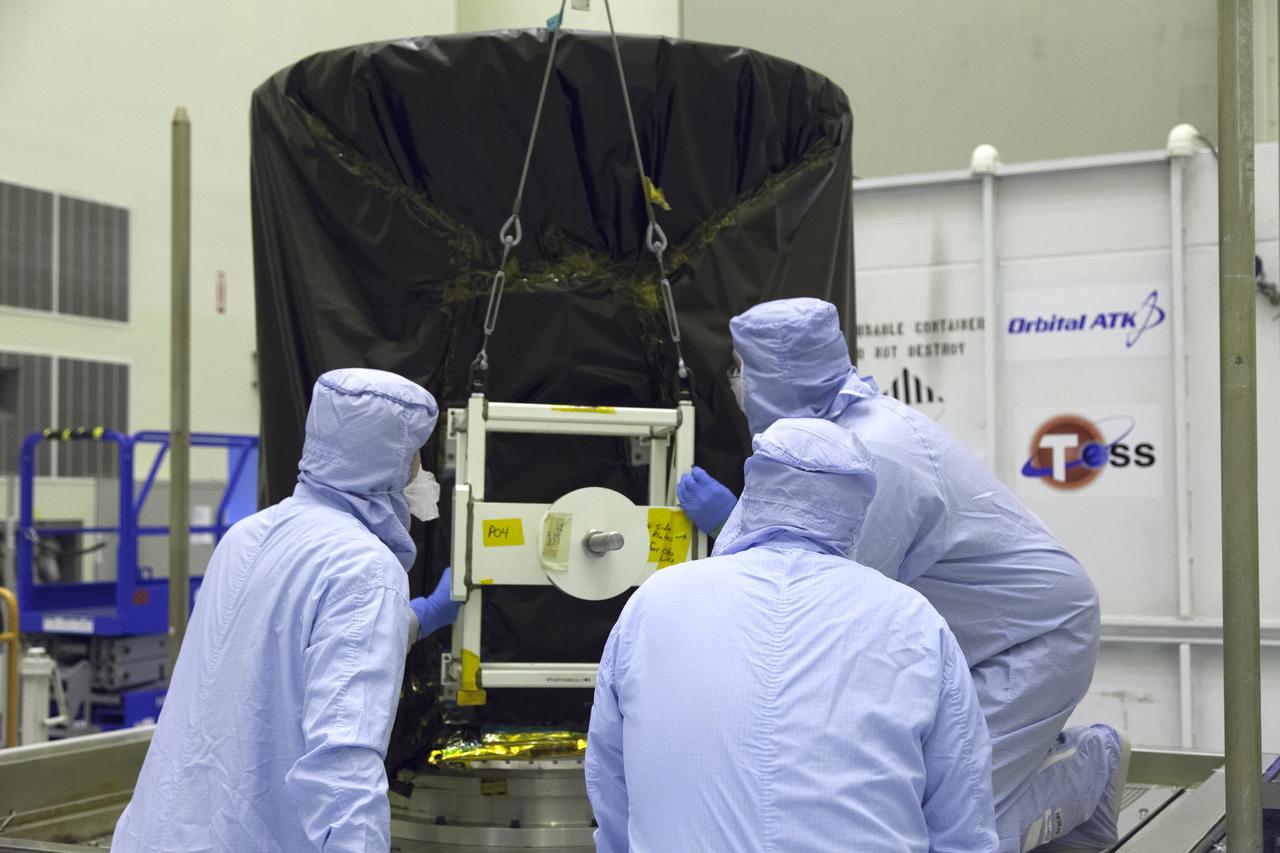
NASA's Transiting Exoplanet Survey Satellite (TESS) is lifted up from the base of its shipping container and will be lowered onto a test stand for processing inside the Payload Hazardous Servicing Facility (PHSF) at the agency's Kennedy Space Center in Florida. Inside the PHSF, the satellite will be processed and prepared for its flight. TESS is scheduled to launch atop a SpaceX Falcon 9 rocket from Space Launch Complex 40 at Cape Canaveral Air Force Station. TESS is the next step in NASA's search for planets outside our solar system, known as exoplanets. TESS is a NASA Astrophysics Explorer mission led and operated by MIT in Cambridge, Massachusetts, and managed by NASA’s Goddard Space Flight Center in Greenbelt, Maryland. Dr. George Ricker of MIT’s Kavli Institute for Astrophysics and Space Research serves as principal investigator for the mission. Additional partners include Orbital ATK, NASA’s Ames Research Center, the Harvard-Smithsonian Center for Astrophysics and the Space Telescope Science Institute. More than a dozen universities, research institutes and observatories worldwide are participants in the mission. NASA’s Launch Services Program is responsible for launch management.
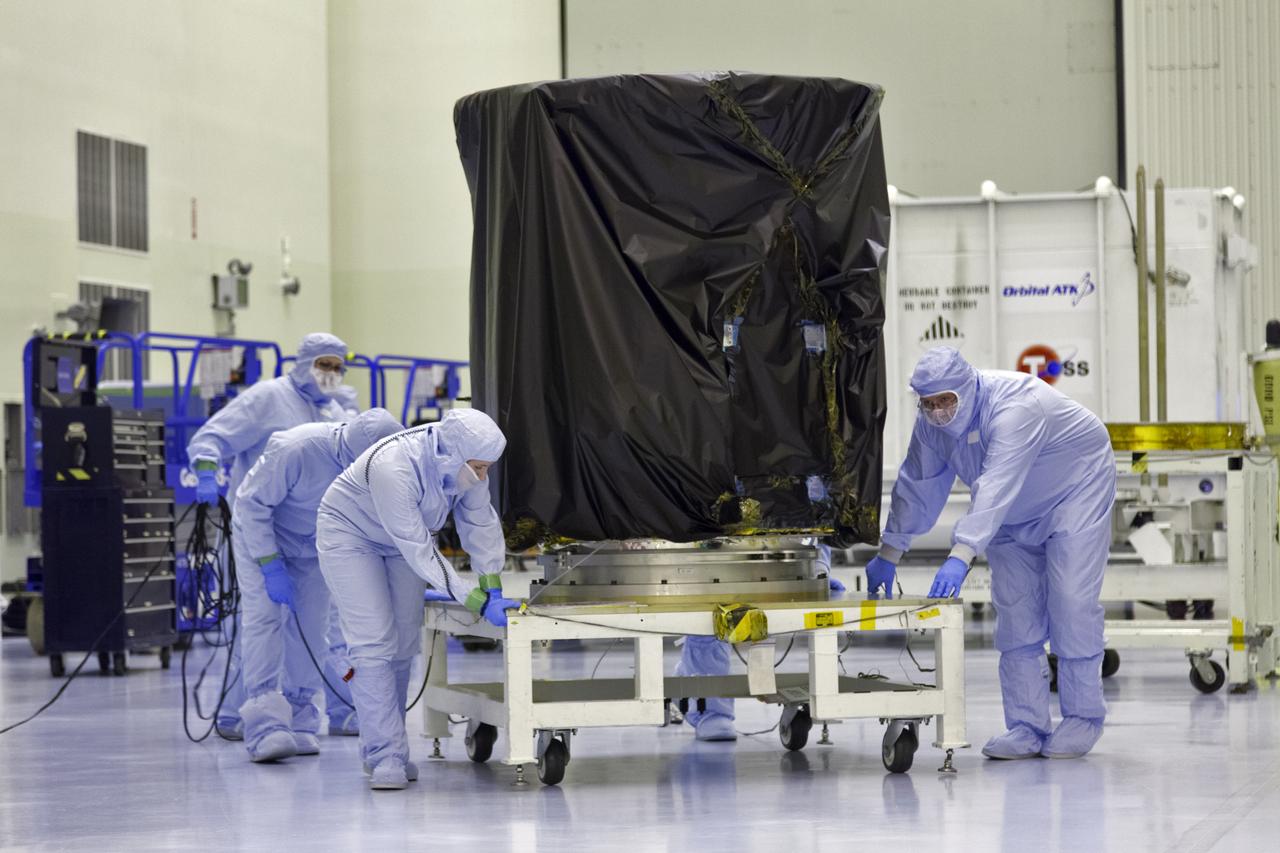
Technicians dressed in clean room suits move NASA's Transiting Exoplanet Survey Satellite (TESS) secured on a test stand inside the Payload Hazardous Servicing Facility (PHSF) at the agency's Kennedy Space Center in Florida. Inside the PHSF, the satellite will be processed and prepared for its flight. TESS is scheduled to launch atop a SpaceX Falcon 9 rocket from Space Launch Complex 40 at Cape Canaveral Air Force Station. TESS is the next step in NASA's search for planets outside our solar system, known as exoplanets. TESS is a NASA Astrophysics Explorer mission led and operated by MIT in Cambridge, Massachusetts, and managed by NASA’s Goddard Space Flight Center in Greenbelt, Maryland. Dr. George Ricker of MIT’s Kavli Institute for Astrophysics and Space Research serves as principal investigator for the mission. Additional partners include Orbital ATK, NASA’s Ames Research Center, the Harvard-Smithsonian Center for Astrophysics and the Space Telescope Science Institute. More than a dozen universities, research institutes and observatories worldwide are participants in the mission. NASA’s Launch Services Program is responsible for launch management.
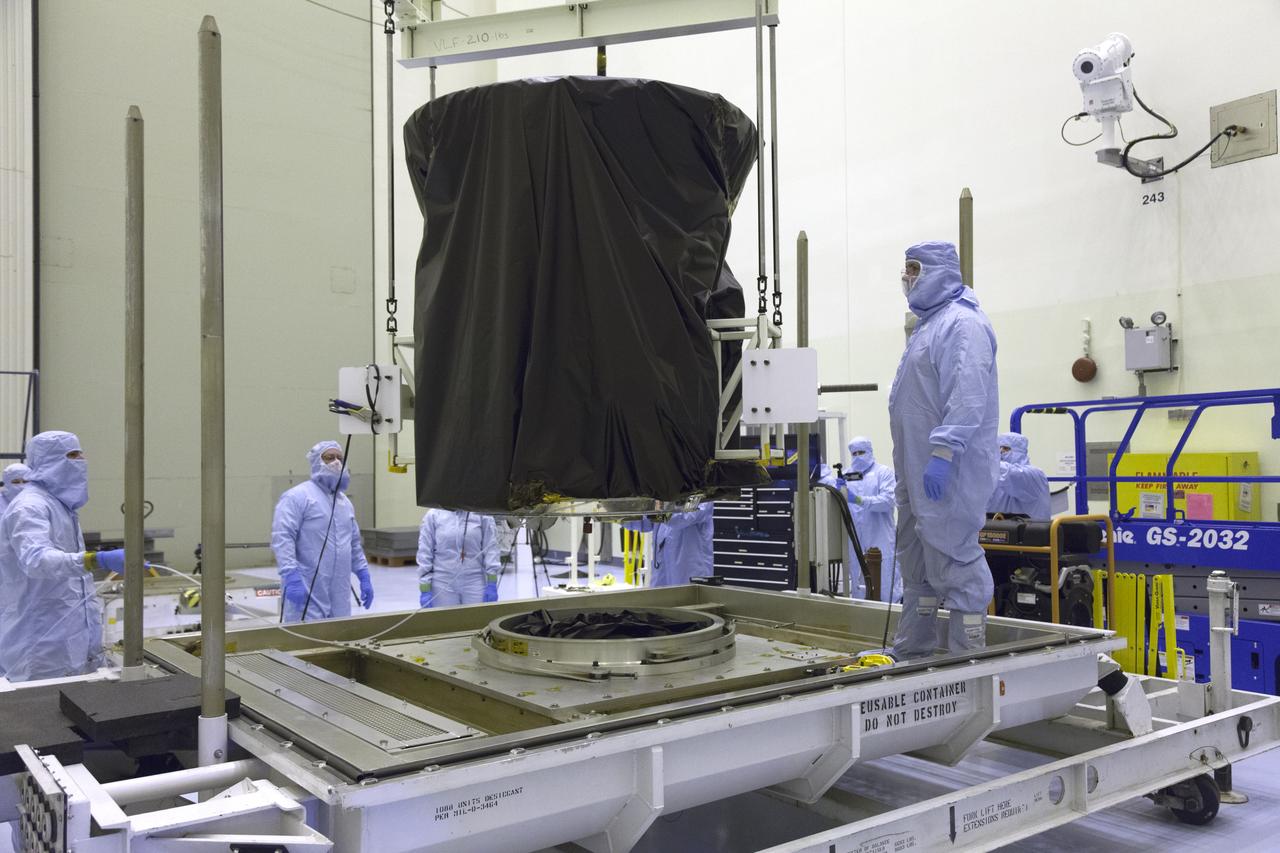
NASA's Transiting Exoplanet Survey Satellite (TESS) is lifted up from the base of its shipping container and will be lowered onto a test stand for processing inside the Payload Hazardous Servicing Facility (PHSF) at the agency's Kennedy Space Center in Florida. Inside the PHSF, the satellite will be processed and prepared for its flight. TESS is scheduled to launch atop a SpaceX Falcon 9 rocket from Space Launch Complex 40 at Cape Canaveral Air Force Station. TESS is the next step in NASA's search for planets outside our solar system, known as exoplanets. TESS is a NASA Astrophysics Explorer mission led and operated by MIT in Cambridge, Massachusetts, and managed by NASA’s Goddard Space Flight Center in Greenbelt, Maryland. Dr. George Ricker of MIT’s Kavli Institute for Astrophysics and Space Research serves as principal investigator for the mission. Additional partners include Orbital ATK, NASA’s Ames Research Center, the Harvard-Smithsonian Center for Astrophysics and the Space Telescope Science Institute. More than a dozen universities, research institutes and observatories worldwide are participants in the mission. NASA’s Launch Services Program is responsible for launch management.
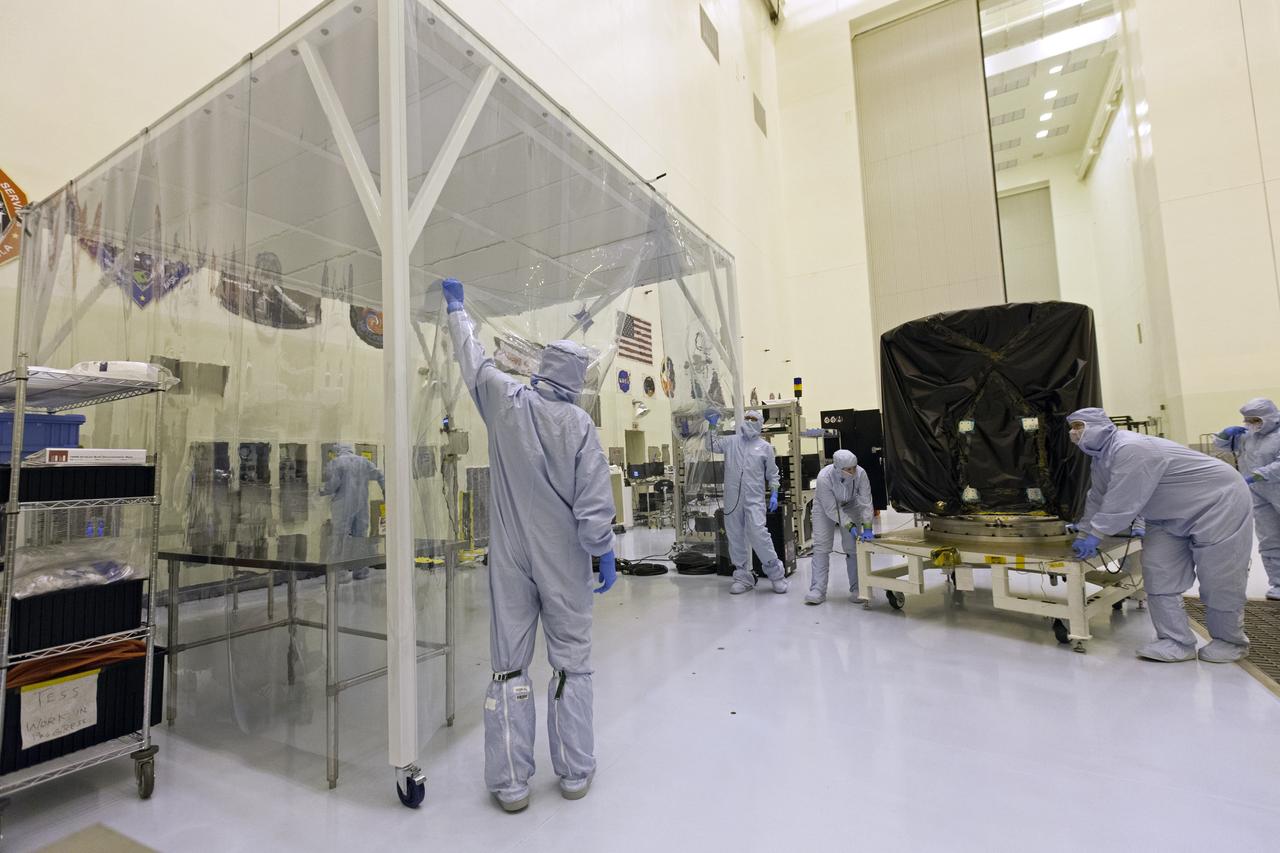
Technician dressed in clean room suits move NASA's Transiting Exoplanet Survey Satellite (TESS) on a test stand to a clean room tent inside the Payload Hazardous Servicing Facility (PHSF) at the agency's Kennedy Space Center in Florida. Inside the PHSF, the satellite will be processed and prepared for its flight. TESS is scheduled to launch atop a SpaceX Falcon 9 rocket from Space Launch Complex 40 at Cape Canaveral Air Force Station. TESS is the next step in NASA's search for planets outside our solar system, known as exoplanets. TESS is a NASA Astrophysics Explorer mission led and operated by MIT in Cambridge, Massachusetts, and managed by NASA’s Goddard Space Flight Center in Greenbelt, Maryland. Dr. George Ricker of MIT’s Kavli Institute for Astrophysics and Space Research serves as principal investigator for the mission. Additional partners include Orbital ATK, NASA’s Ames Research Center, the Harvard-Smithsonian Center for Astrophysics and the Space Telescope Science Institute. More than a dozen universities, research institutes and observatories worldwide are participants in the mission. NASA’s Launch Services Program is responsible for launch management.
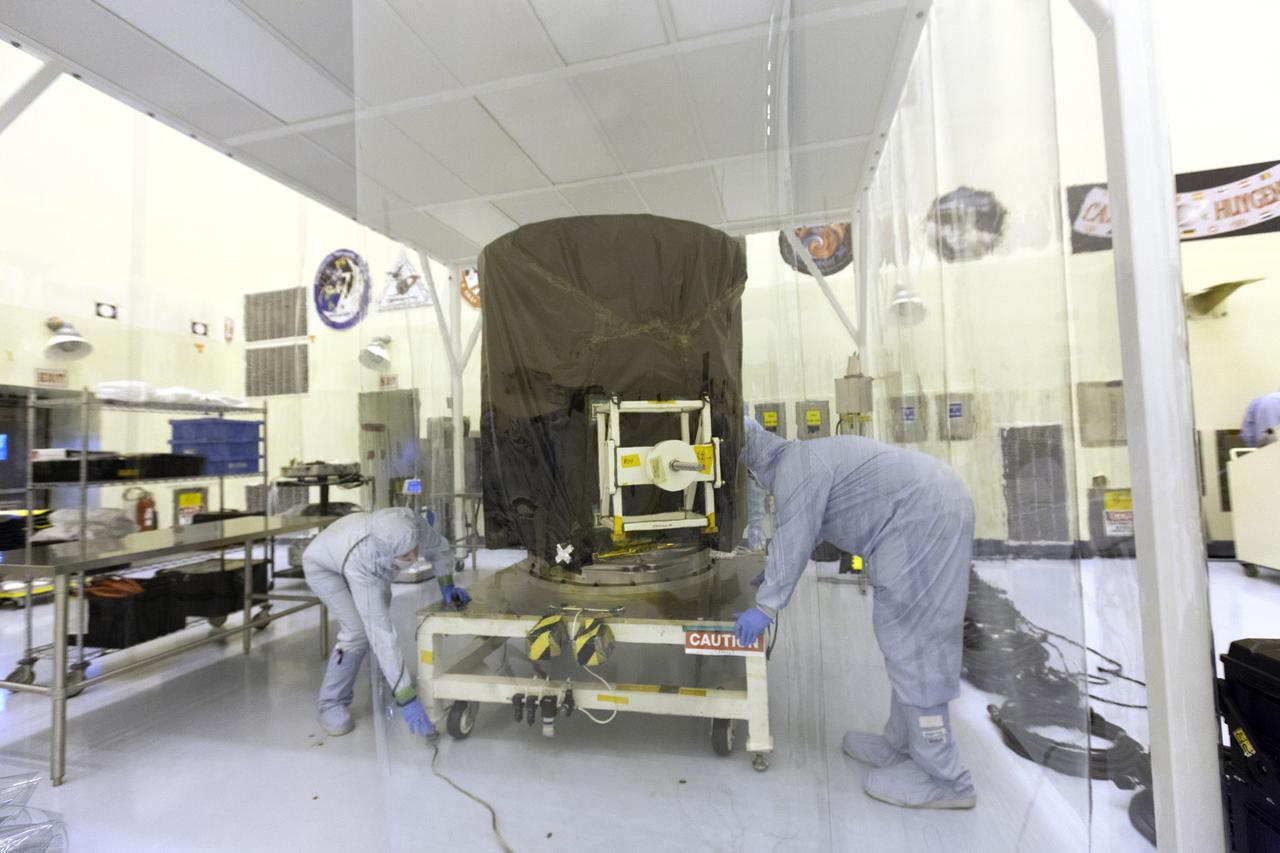
NASA's Transiting Exoplanet Survey Satellite (TESS), secured on a test stand, is moved into a clean room tent inside the Payload Hazardous Servicing Facility (PHSF) at the agency's Kennedy Space Center in Florida. Inside the PHSF, the satellite will be processed and prepared for its flight. TESS is scheduled to launch atop a SpaceX Falcon 9 rocket from Space Launch Complex 40 at Cape Canaveral Air Force Station. TESS is the next step in NASA's search for planets outside our solar system, known as exoplanets. TESS is a NASA Astrophysics Explorer mission led and operated by MIT in Cambridge, Massachusetts, and managed by NASA’s Goddard Space Flight Center in Greenbelt, Maryland. Dr. George Ricker of MIT’s Kavli Institute for Astrophysics and Space Research serves as principal investigator for the mission. Additional partners include Orbital ATK, NASA’s Ames Research Center, the Harvard-Smithsonian Center for Astrophysics and the Space Telescope Science Institute. More than a dozen universities, research institutes and observatories worldwide are participants in the mission. NASA’s Launch Services Program is responsible for launch management.
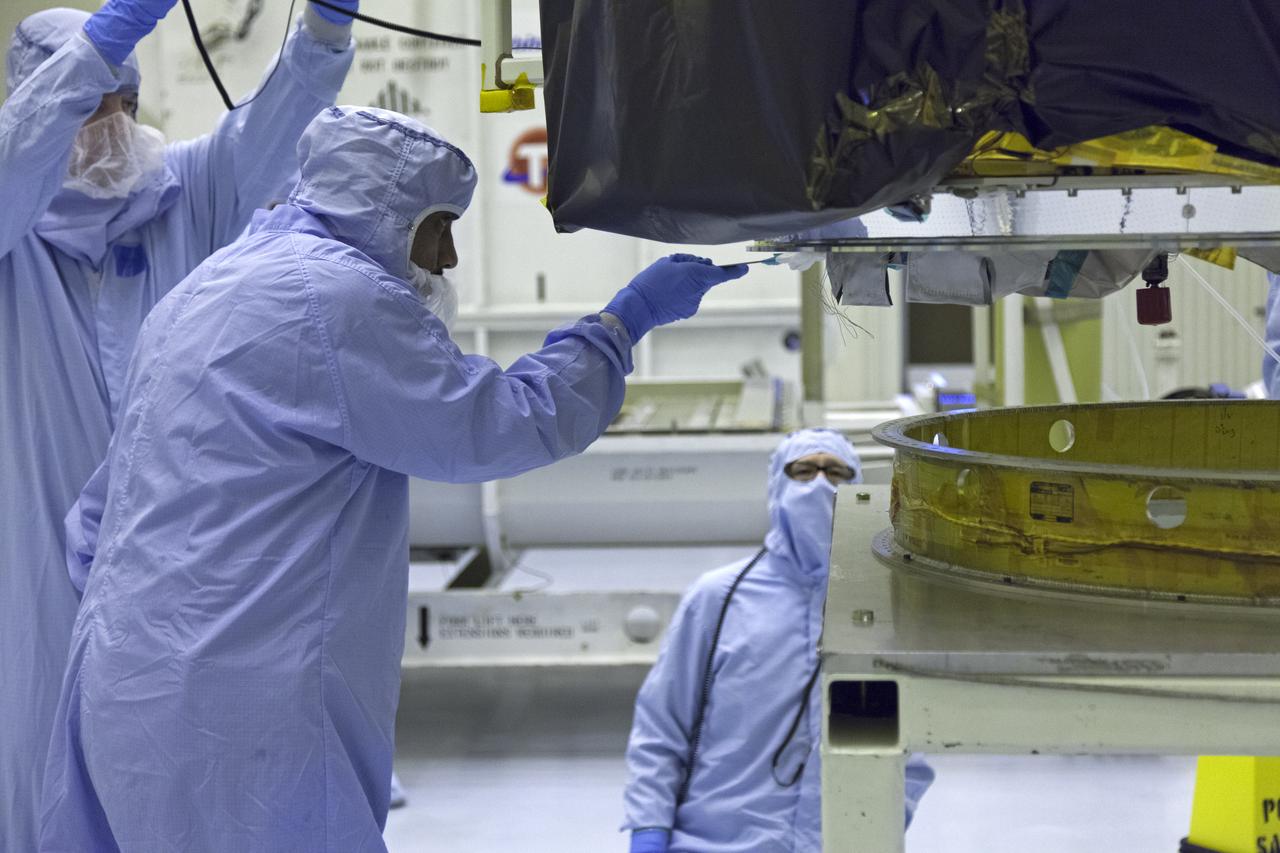
Technicians dressed in clean room suits monitor the progress as a crane lowers NASA's Transiting Exoplanet Survey Satellite (TESS) onto a test stand inside the Payload Hazardous Servicing Facility (PHSF) at the agency's Kennedy Space Center in Florida. Inside the PHSF, the satellite will be processed and prepared for its flight. TESS is scheduled to launch atop a SpaceX Falcon 9 rocket from Space Launch Complex 40 at Cape Canaveral Air Force Station. TESS is the next step in NASA's search for planets outside our solar system, known as exoplanets. TESS is a NASA Astrophysics Explorer mission led and operated by MIT in Cambridge, Massachusetts, and managed by NASA’s Goddard Space Flight Center in Greenbelt, Maryland. Dr. George Ricker of MIT’s Kavli Institute for Astrophysics and Space Research serves as principal investigator for the mission. Additional partners include Orbital ATK, NASA’s Ames Research Center, the Harvard-Smithsonian Center for Astrophysics and the Space Telescope Science Institute. More than a dozen universities, research institutes and observatories worldwide are participants in the mission. NASA’s Launch Services Program is responsible for launch management.

Technicians dressed in clean room suits monitor the progress as both solar panels are deployed on NASA's Transiting Exoplanet Survey Satellite (TESS) inside the Payload Hazardous Servicing Facility (PHSF) at the agency's Kennedy Space Center in Florida. Inside the PHSF, the satellite is being processed and prepared for its flight. TESS is scheduled to launch atop a SpaceX Falcon 9 rocket from Space Launch Complex 40 at Cape Canaveral Air Force Station. The satellite is the next step in NASA's search for planets outside our solar system, known as exoplanets. TESS is a NASA Astrophysics Explorer mission led and operated by MIT in Cambridge, Massachusetts, and managed by NASA’s Goddard Space Flight Center in Greenbelt, Maryland. Dr. George Ricker of MIT’s Kavli Institute for Astrophysics and Space Research serves as principal investigator for the mission. Additional partners include Orbital ATK, NASA’s Ames Research Center, the Harvard-Smithsonian Center for Astrophysics and the Space Telescope Science Institute. More than a dozen universities, research institutes and observatories worldwide are participants in the mission. NASA’s Launch Services Program is responsible for launch management.
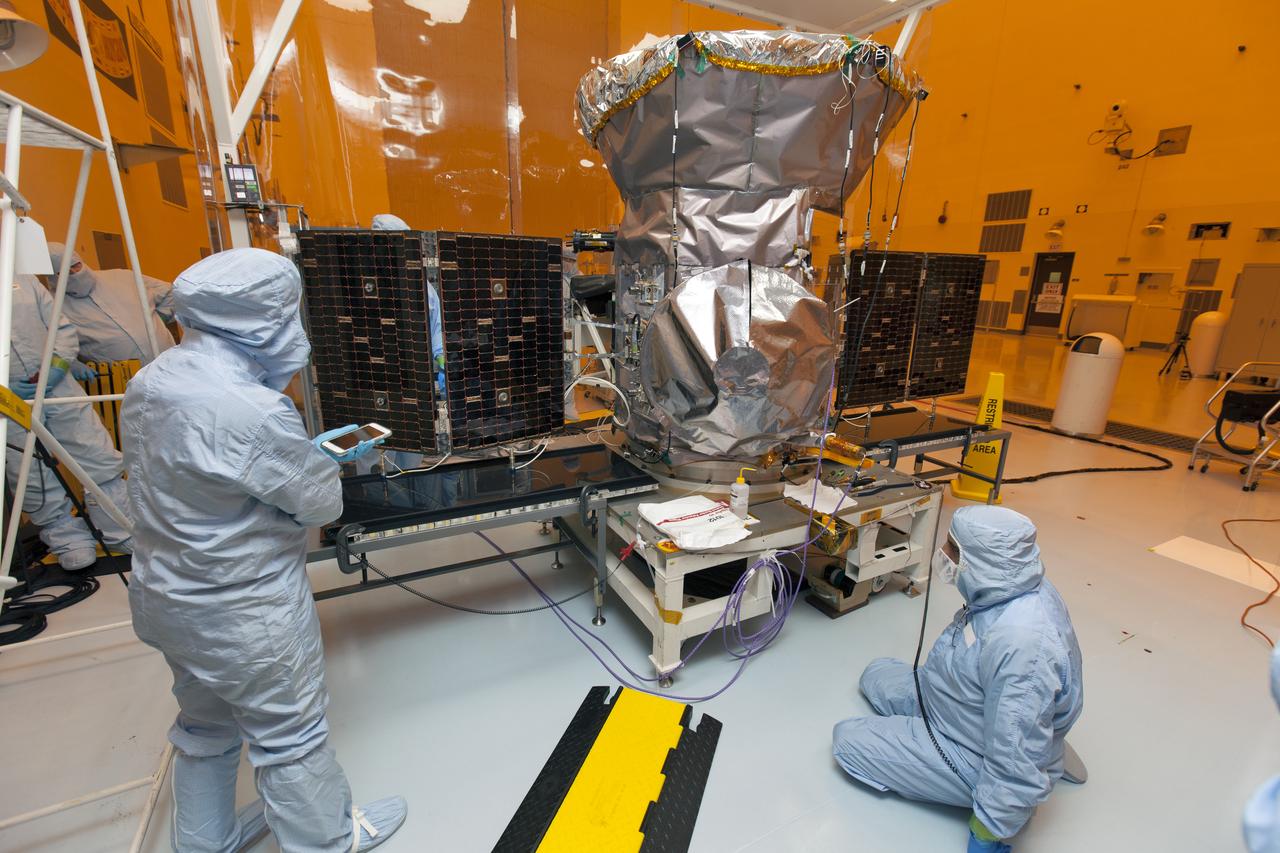
Technicians dressed in clean room suits monitor the progress as both solar panels are deployed on NASA's Transiting Exoplanet Survey Satellite (TESS) inside the Payload Hazardous Servicing Facility (PHSF) at the agency's Kennedy Space Center in Florida. Inside the PHSF, the satellite is being processed and prepared for its flight. TESS is scheduled to launch atop a SpaceX Falcon 9 rocket from Space Launch Complex 40 at Cape Canaveral Air Force Station. The satellite is the next step in NASA's search for planets outside our solar system, known as exoplanets. TESS is a NASA Astrophysics Explorer mission led and operated by MIT in Cambridge, Massachusetts, and managed by NASA’s Goddard Space Flight Center in Greenbelt, Maryland. Dr. George Ricker of MIT’s Kavli Institute for Astrophysics and Space Research serves as principal investigator for the mission. Additional partners include Orbital ATK, NASA’s Ames Research Center, the Harvard-Smithsonian Center for Astrophysics and the Space Telescope Science Institute. More than a dozen universities, research institutes and observatories worldwide are participants in the mission. NASA’s Launch Services Program is responsible for launch management.
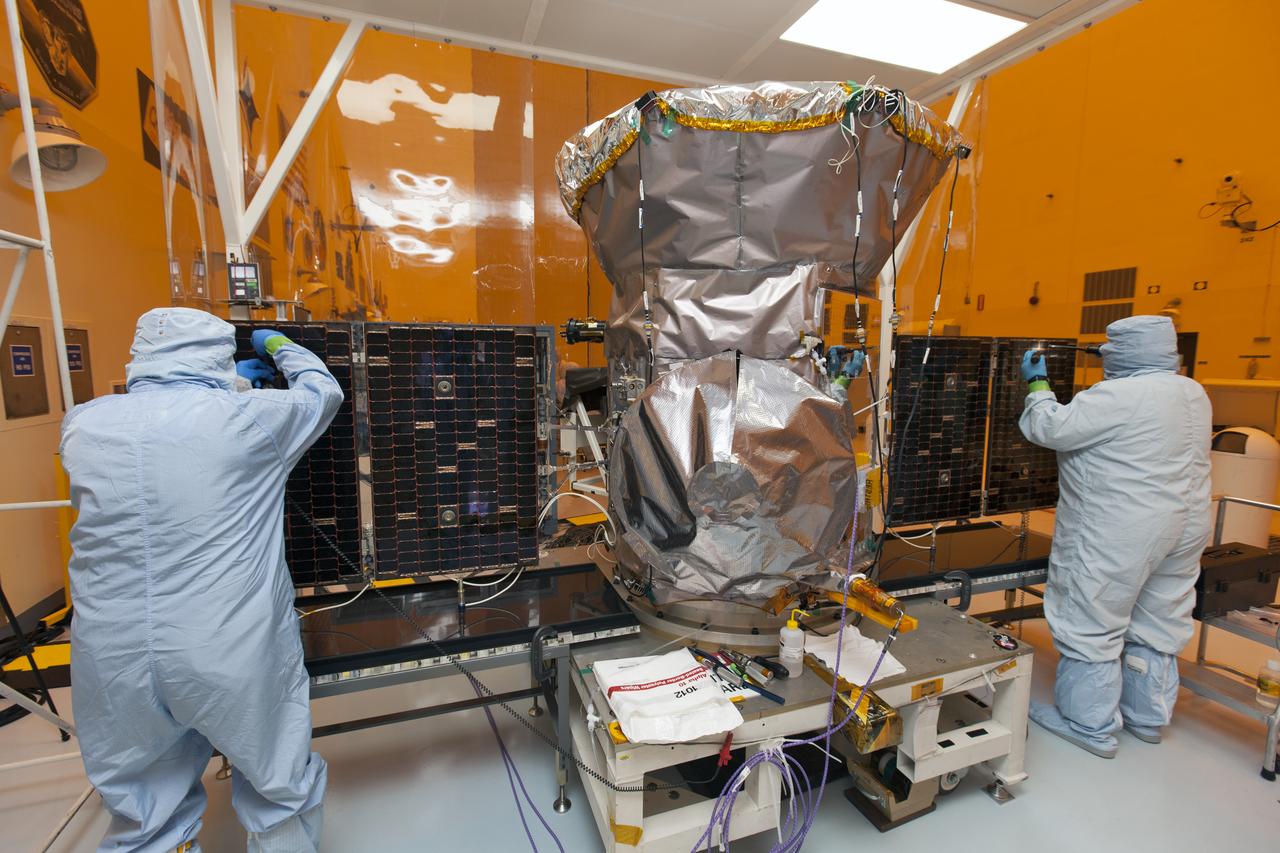
Technicians dressed in clean room suits check the solar panels, which have been deployed, on NASA's Transiting Exoplanet Survey Satellite (TESS) inside the Payload Hazardous Servicing Facility (PHSF) at the agency's Kennedy Space Center in Florida. Inside the PHSF, the satellite is being processed and prepared for its flight. TESS is scheduled to launch atop a SpaceX Falcon 9 rocket from Space Launch Complex 40 at Cape Canaveral Air Force Station. The satellite is the next step in NASA's search for planets outside our solar system, known as exoplanets. TESS is a NASA Astrophysics Explorer mission led and operated by MIT in Cambridge, Massachusetts, and managed by NASA’s Goddard Space Flight Center in Greenbelt, Maryland. Dr. George Ricker of MIT’s Kavli Institute for Astrophysics and Space Research serves as principal investigator for the mission. Additional partners include Orbital ATK, NASA’s Ames Research Center, the Harvard-Smithsonian Center for Astrophysics and the Space Telescope Science Institute. More than a dozen universities, research institutes and observatories worldwide are participants in the mission. NASA’s Launch Services Program is responsible for launch management.
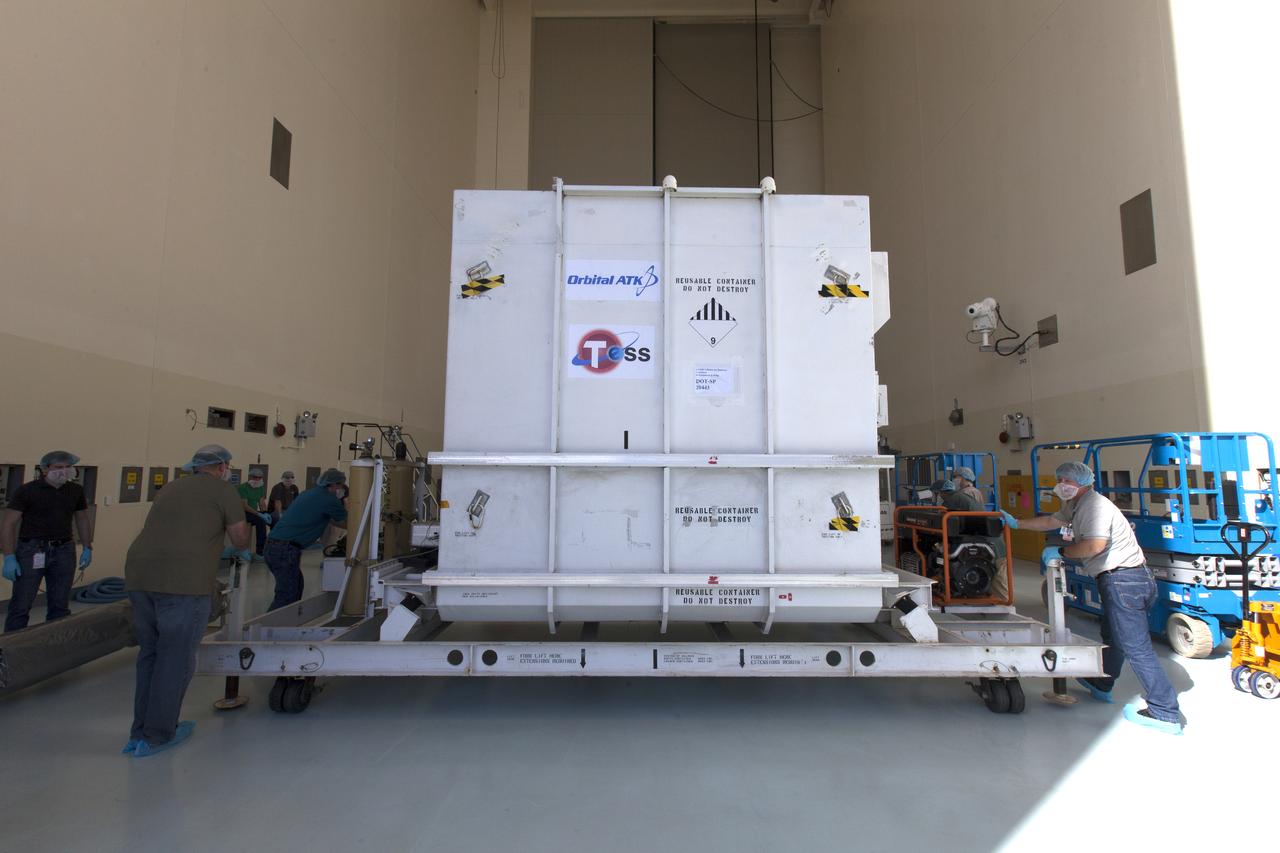
NASA's Transiting Exoplanet Survey Satellite (TESS), inside its shipping container, is moved into Payload Hazardous Servicing Facility (PHSF) at the agency's Kennedy Space Center in Florida. Inside the PHSF, the satellite will be processed and prepared for its flight. TESS is scheduled to launch atop a SpaceX Falcon 9 rocket from Space Launch Complex 40 at Cape Canaveral Air Force Station. TESS is the next step in NASA's search for planets outside our solar system, known as exoplanets. TESS is a NASA Astrophysics Explorer mission led and operated by MIT in Cambridge, Massachusetts, and managed by NASA’s Goddard Space Flight Center in Greenbelt, Maryland. Dr. George Ricker of MIT’s Kavli Institute for Astrophysics and Space Research serves as principal investigator for the mission. Additional partners include Orbital ATK, NASA’s Ames Research Center, the Harvard-Smithsonian Center for Astrophysics and the Space Telescope Science Institute. More than a dozen universities, research institutes and observatories worldwide are participants in the mission. NASA’s Launch Services Program is responsible for launch management.
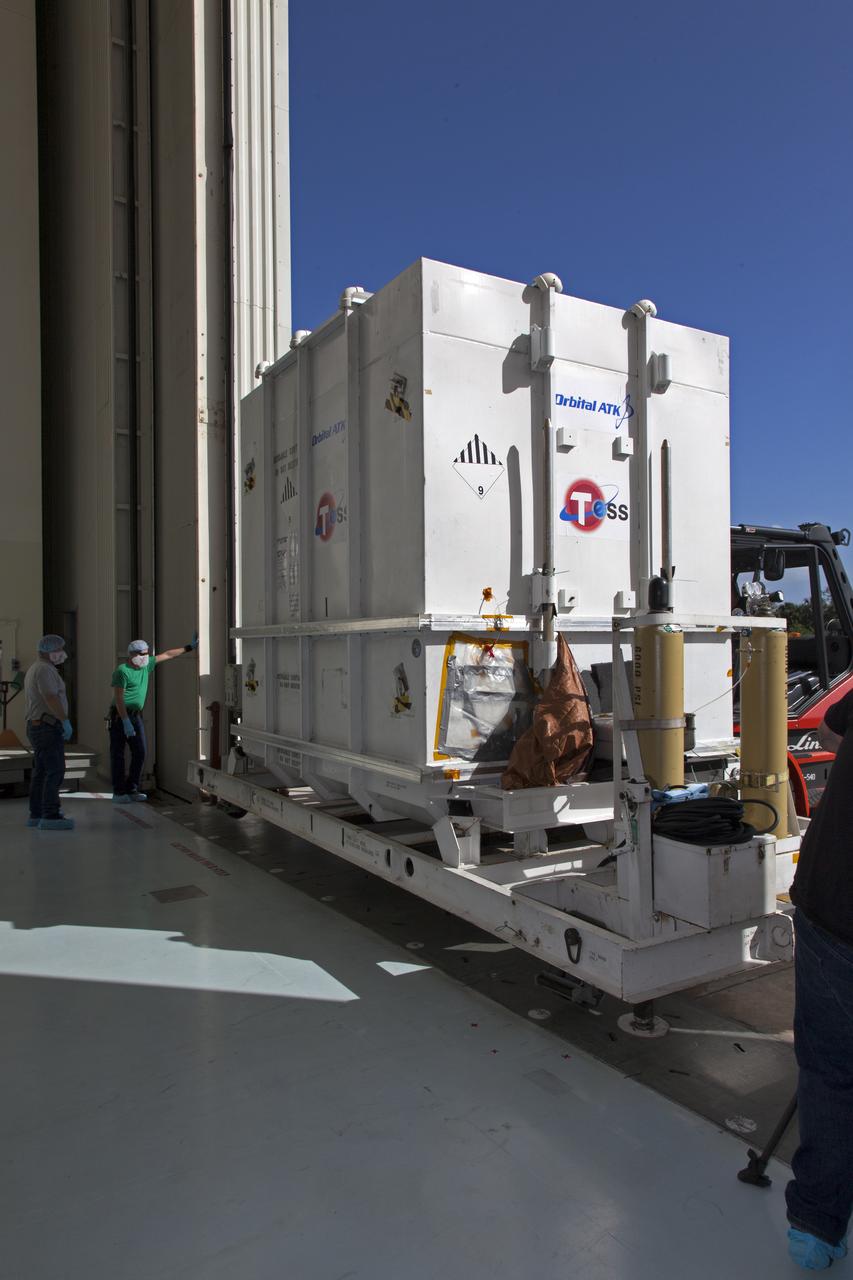
The shipping container with NASA's Transiting Exoplanet Survey Satellite (TESS) inside, is moved into the Payload Hazardous Servicing Facility (PHSF) at the agency's Kennedy Space Center in Florida. Inside the PHSF, the satellite will be processed and prepared for its flight. TESS is scheduled to launch atop a SpaceX Falcon 9 rocket from Space Launch Complex 40 at Cape Canaveral Air Force Station. TESS is the next step in NASA's search for planets outside our solar system, known as exoplanets. TESS is a NASA Astrophysics Explorer mission led and operated by MIT in Cambridge, Massachusetts, and managed by NASA’s Goddard Space Flight Center in Greenbelt, Maryland. Dr. George Ricker of MIT’s Kavli Institute for Astrophysics and Space Research serves as principal investigator for the mission. Additional partners include Orbital ATK, NASA’s Ames Research Center, the Harvard-Smithsonian Center for Astrophysics and the Space Telescope Science Institute. More than a dozen universities, research institutes and observatories worldwide are participants in the mission. NASA’s Launch Services Program is responsible for launch management.
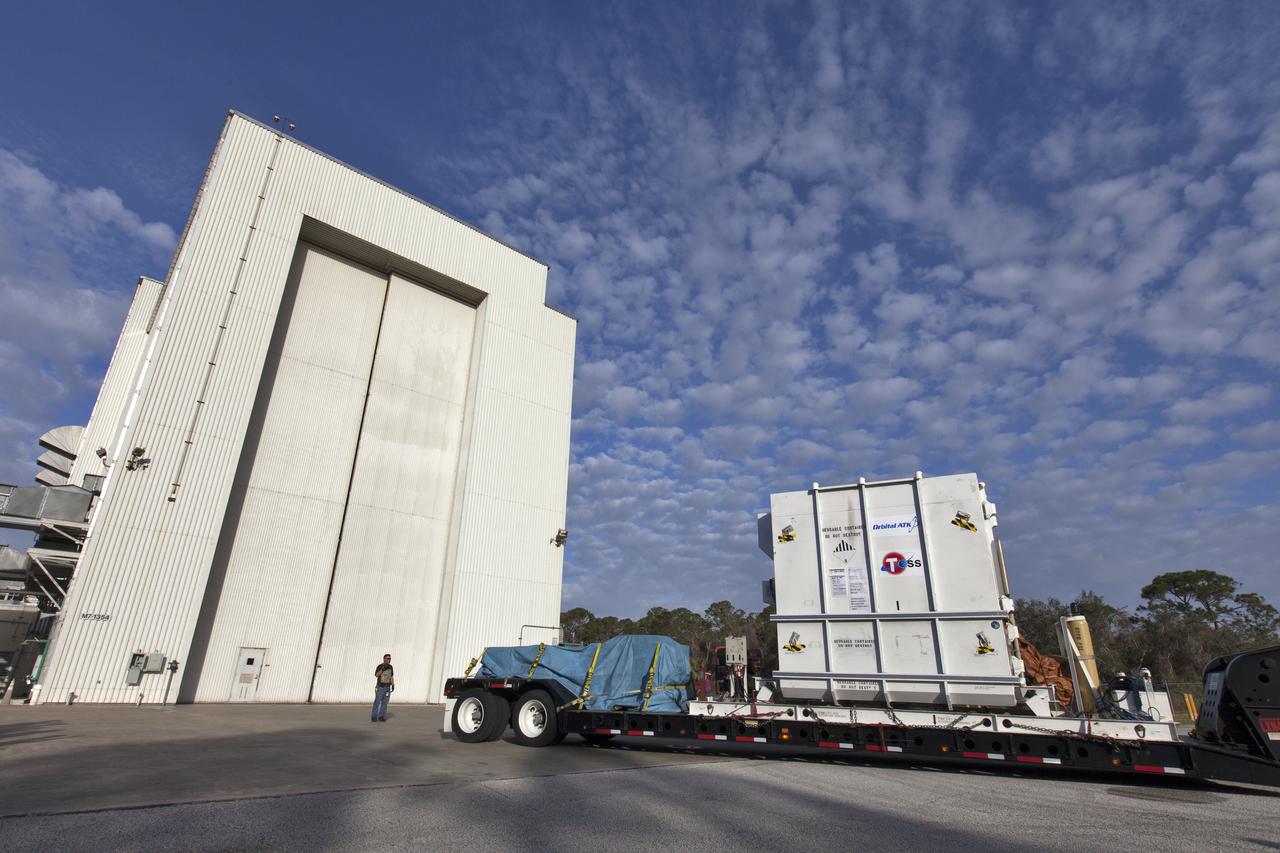
NASA's Transiting Exoplanet Survey Satellite (TESS), inside its shipping container, is backed in on flatbed truck to the Payload Hazardous Servicing Facility (PHSF) at the agency's Kennedy Space Center in Florida. Inside the PHSF, the satellite will be processed and prepared for its flight. TESS is scheduled to launch atop a SpaceX Falcon 9 rocket from Space Launch Complex 40 at Cape Canaveral Air Force Station. TESS is the next step in NASA's search for planets outside our solar system, known as exoplanets. TESS is a NASA Astrophysics Explorer mission led and operated by MIT in Cambridge, Massachusetts, and managed by NASA’s Goddard Space Flight Center in Greenbelt, Maryland. Dr. George Ricker of MIT’s Kavli Institute for Astrophysics and Space Research serves as principal investigator for the mission. Additional partners include Orbital ATK, NASA’s Ames Research Center, the Harvard-Smithsonian Center for Astrophysics and the Space Telescope Science Institute. More than a dozen universities, research institutes and observatories worldwide are participants in the mission. NASA’s Launch Services Program is responsible for launch management.
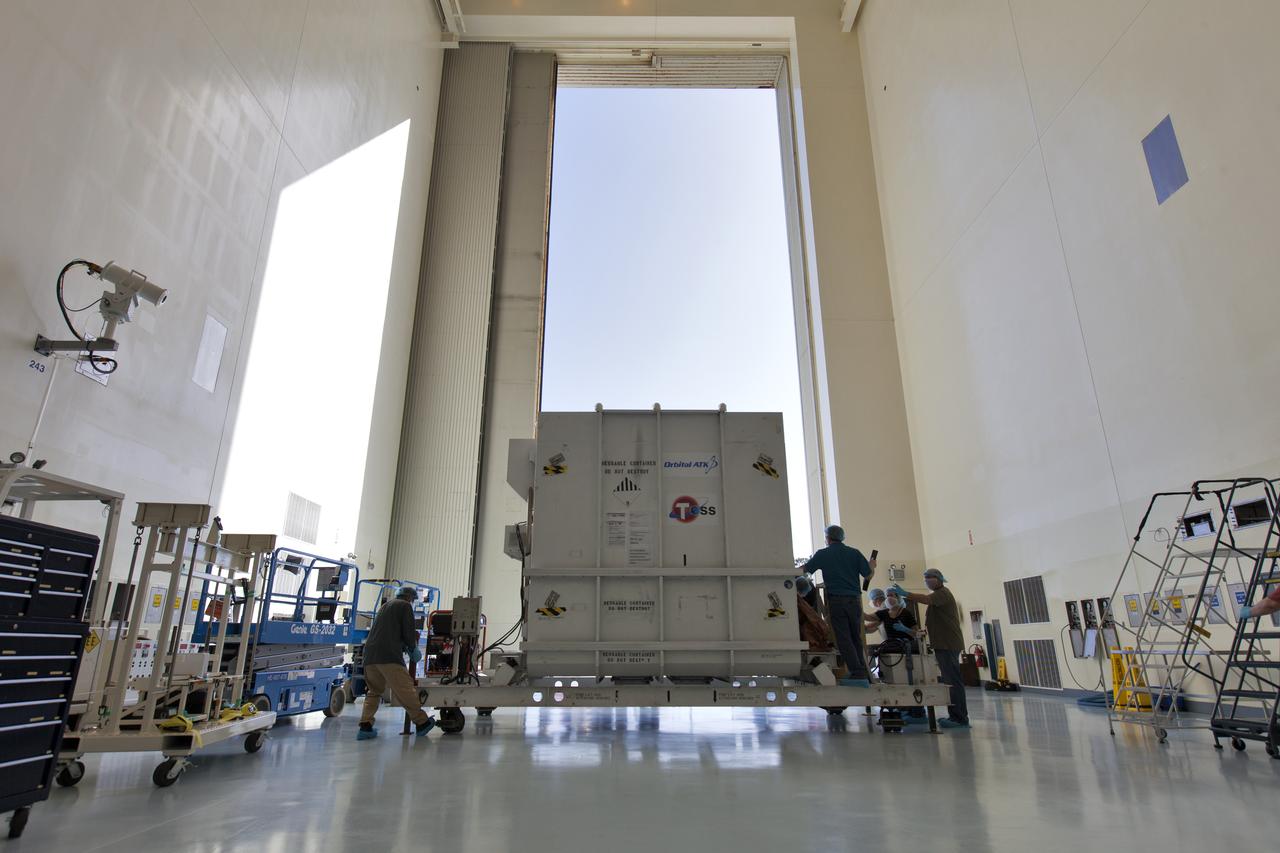
The shipping container with NASA's Transiting Exoplanet Survey Satellite (TESS) inside, is moved into the Payload Hazardous Servicing Facility (PHSF) at the agency's Kennedy Space Center in Florida. Inside the PHSF, the satellite will be processed and prepared for its flight. TESS is scheduled to launch atop a SpaceX Falcon 9 rocket from Space Launch Complex 40 at Cape Canaveral Air Force Station. TESS is the next step in NASA's search for planets outside our solar system, known as exoplanets. TESS is a NASA Astrophysics Explorer mission led and operated by MIT in Cambridge, Massachusetts, and managed by NASA’s Goddard Space Flight Center in Greenbelt, Maryland. Dr. George Ricker of MIT’s Kavli Institute for Astrophysics and Space Research serves as principal investigator for the mission. Additional partners include Orbital ATK, NASA’s Ames Research Center, the Harvard-Smithsonian Center for Astrophysics and the Space Telescope Science Institute. More than a dozen universities, research institutes and observatories worldwide are participants in the mission. NASA’s Launch Services Program is responsible for launch management.
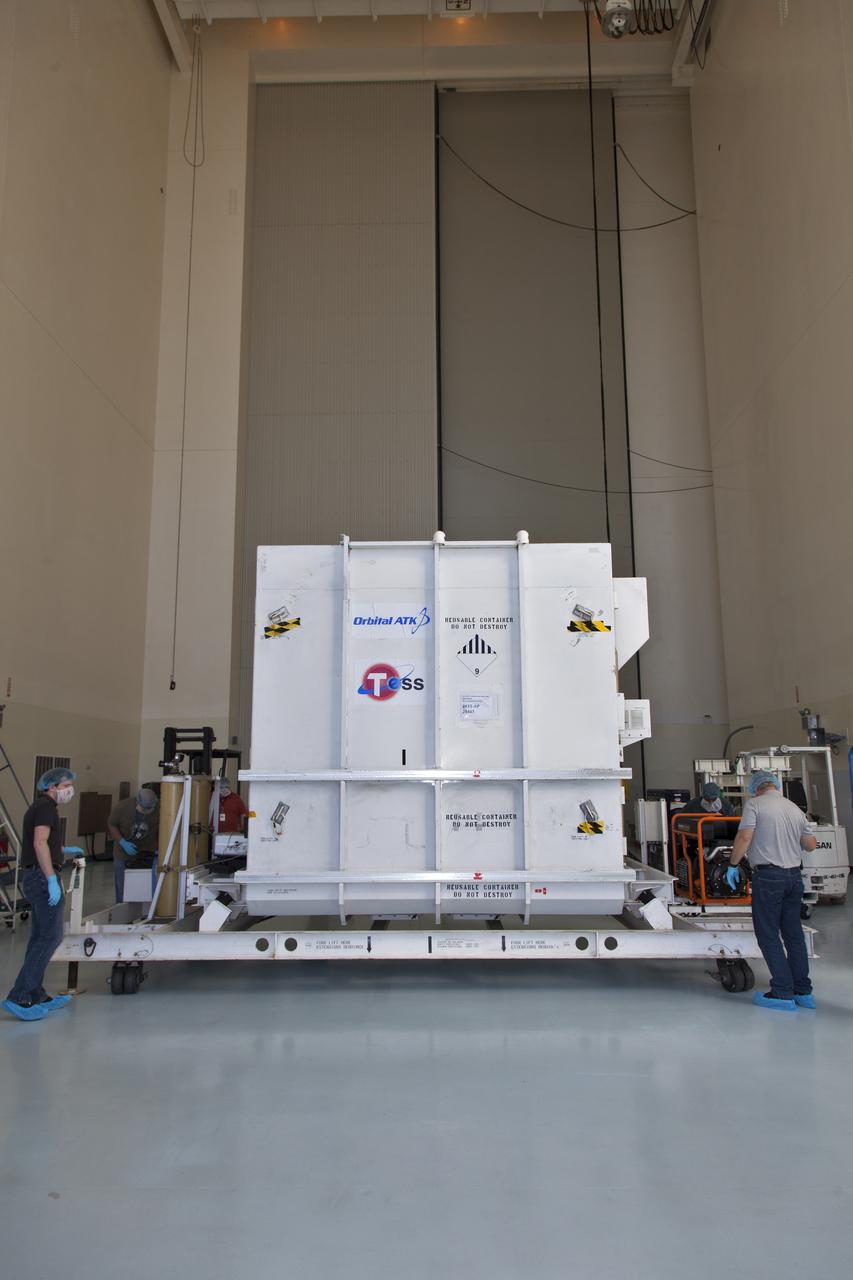
The shipping container with NASA's Transiting Exoplanet Survey Satellite (TESS) inside, is moved into the Payload Hazardous Servicing Facility (PHSF) at the agency's Kennedy Space Center in Florida. Inside the PHSF, the satellite will be processed and prepared for its flight. TESS is scheduled to launch atop a SpaceX Falcon 9 rocket from Space Launch Complex 40 at Cape Canaveral Air Force Station. TESS is the next step in NASA's search for planets outside our solar system, known as exoplanets. TESS is a NASA Astrophysics Explorer mission led and operated by MIT in Cambridge, Massachusetts, and managed by NASA’s Goddard Space Flight Center in Greenbelt, Maryland. Dr. George Ricker of MIT’s Kavli Institute for Astrophysics and Space Research serves as principal investigator for the mission. Additional partners include Orbital ATK, NASA’s Ames Research Center, the Harvard-Smithsonian Center for Astrophysics and the Space Telescope Science Institute. More than a dozen universities, research institutes and observatories worldwide are participants in the mission. NASA’s Launch Services Program is responsible for launch management.
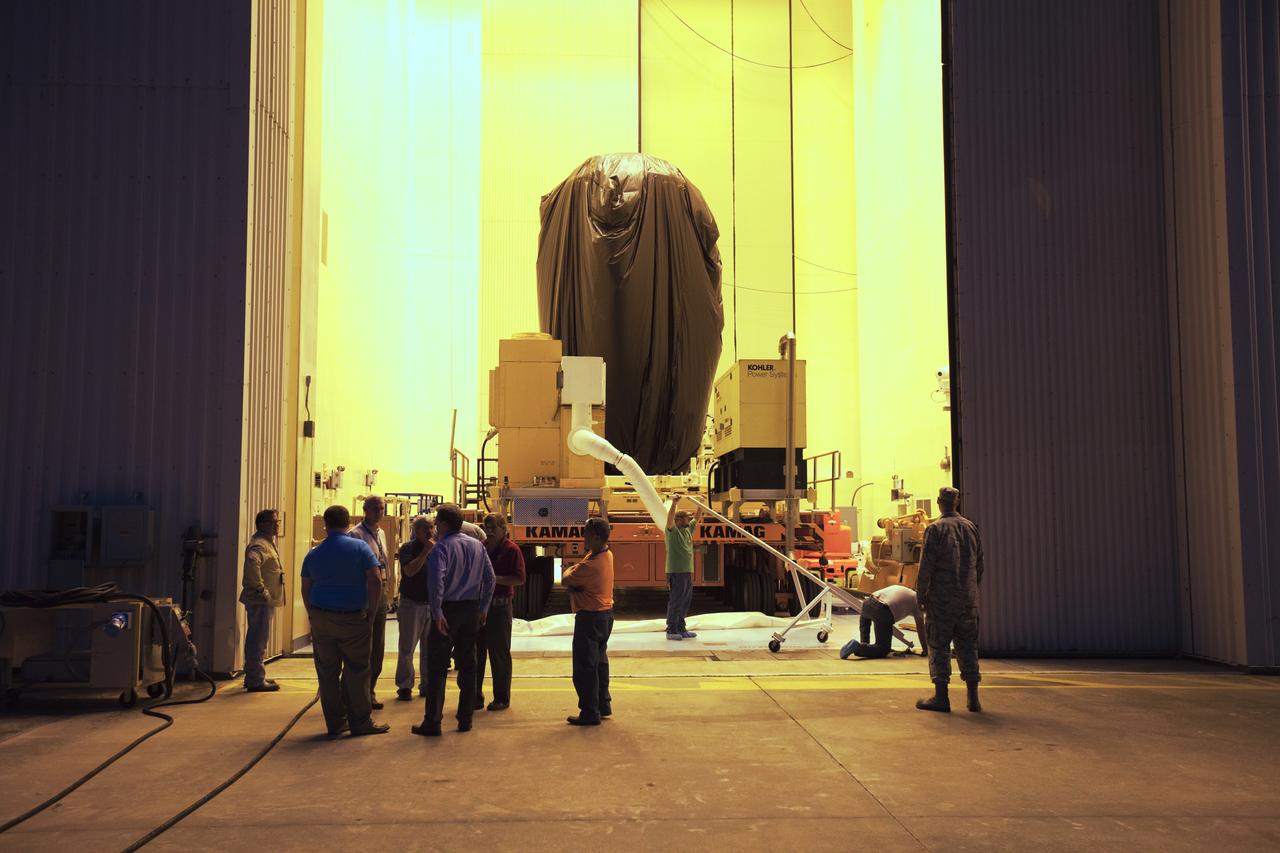
A KAMAG transporter with Orbital ATK's CYGNUS pressurized cargo module secured on top is moved inside the Payload Hazardous Servicing Facility at NASA's Kennedy Space Center in Florida. CYGNUS will be lifted off of the transporter and lowered onto a processing stand for final propellant loading and late cargo stowage. The Orbital ATK CRS-7 commercial resupply services mission to the International Space Station is scheduled to launch atop a United Launch Alliance Atlas V rocket from Space Launch Complex 41 at Cape Canaveral Air Force Station on March 19, 2017. CYGNUS will deliver thousands of pounds of supplies, equipment and scientific research materials to the space station.
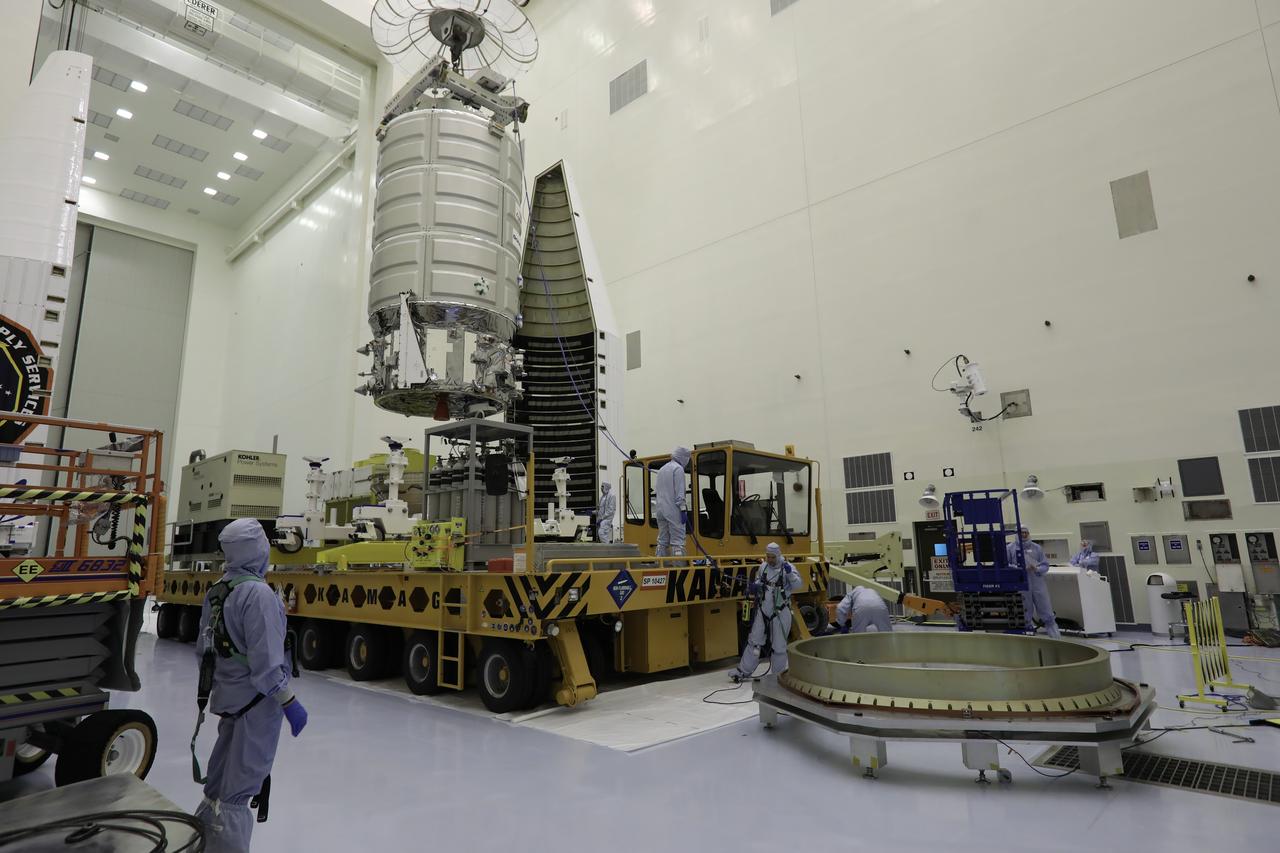
A crane lifts Orbital ATK's CYGNUS pressurized cargo module up from the KAMAG transporter inside the Payload Hazardous Servicing Facility at NASA's Kennedy Space Center in Florida. CYGNUS will be lowered onto a work stand for final propellant loading and late cargo stowage. The Orbital ATK CRS-7 commercial resupply services mission to the International Space Station is scheduled to launch atop a United Launch Alliance Atlas V rocket from Space Launch Complex 41 at Cape Canaveral Air Force Station on March 19, 2017. CYGNUS will deliver thousands of pounds of supplies, equipment and scientific research materials to the space station.
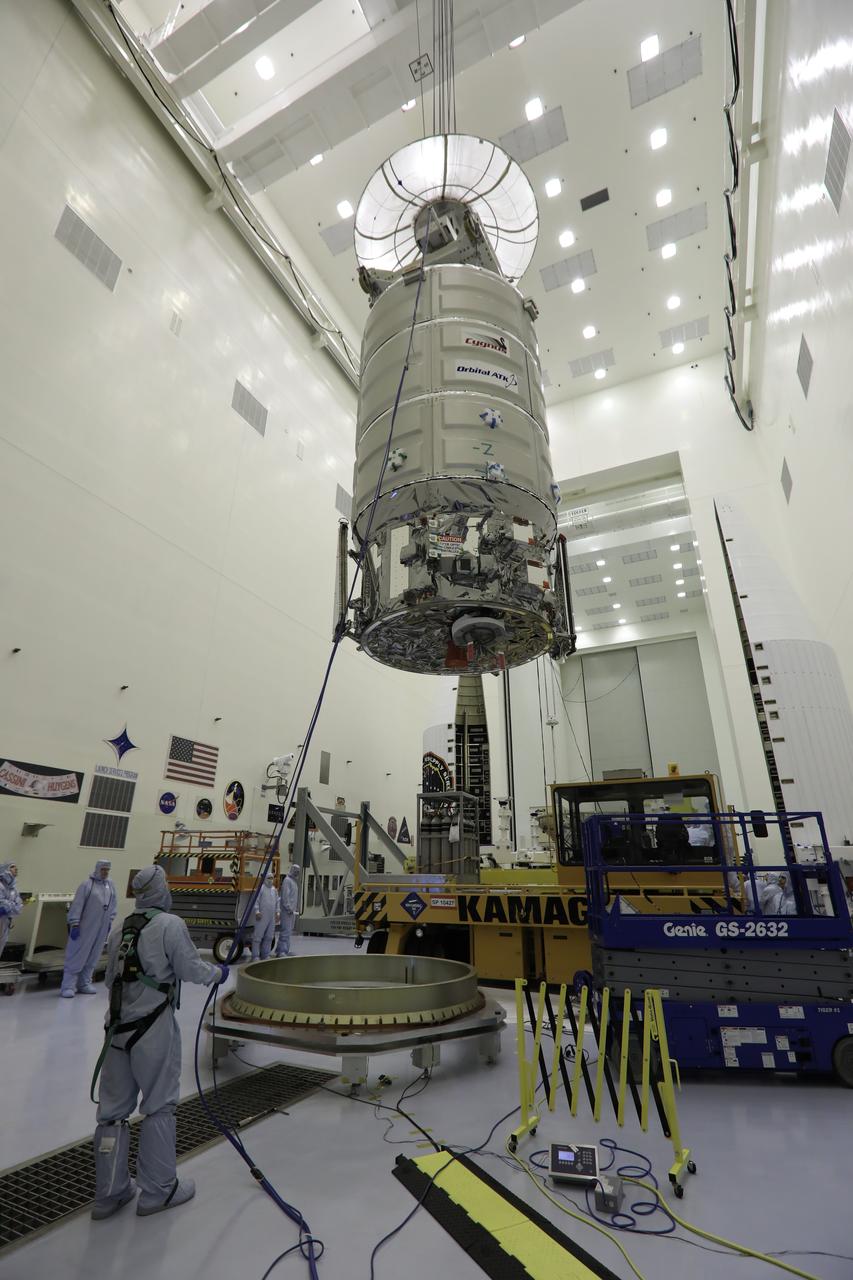
A crane lifts Orbital ATK's CYGNUS pressurized cargo module up and away from the KAMAG transporter inside the Payload Hazardous Servicing Facility at NASA's Kennedy Space Center in Florida. CYGNUS will be lowered onto a work stand for final propellant loading and late cargo stowage. The Orbital ATK CRS-7 commercial resupply services mission to the International Space Station is scheduled to launch atop a United Launch Alliance Atlas V rocket from Space Launch Complex 41 at Cape Canaveral Air Force Station on March 19, 2017. CYGNUS will deliver thousands of pounds of supplies, equipment and scientific research materials to the space station.
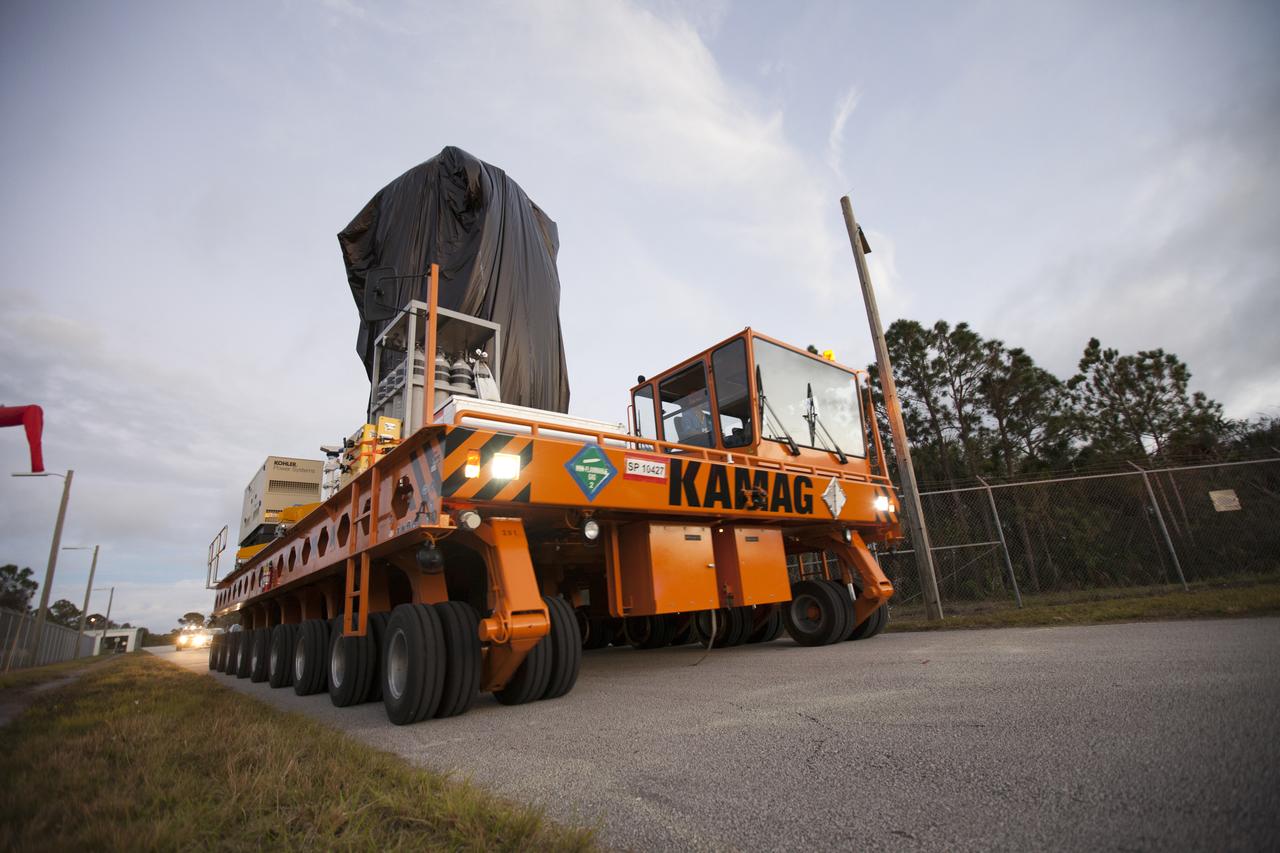
A KAMAG transporter with Orbital ATK's CYGNUS pressurized cargo module secured on top moves slowly along the road after exiting the Space Station Processing Facility at NASA's Kennedy Space Center in Florida. CYGNUS will be transported to the Payload Hazardous Servicing Facility for final propellant loading and late cargo stowage. The Orbital ATK CRS-7 commercial resupply services mission to the International Space Station is scheduled to launch atop a United Launch Alliance Atlas V rocket from Space Launch Complex 41 at Cape Canaveral Air Force Station on March 19, 2017. CYGNUS will deliver thousands of pounds of supplies, equipment and scientific research materials to the space station.
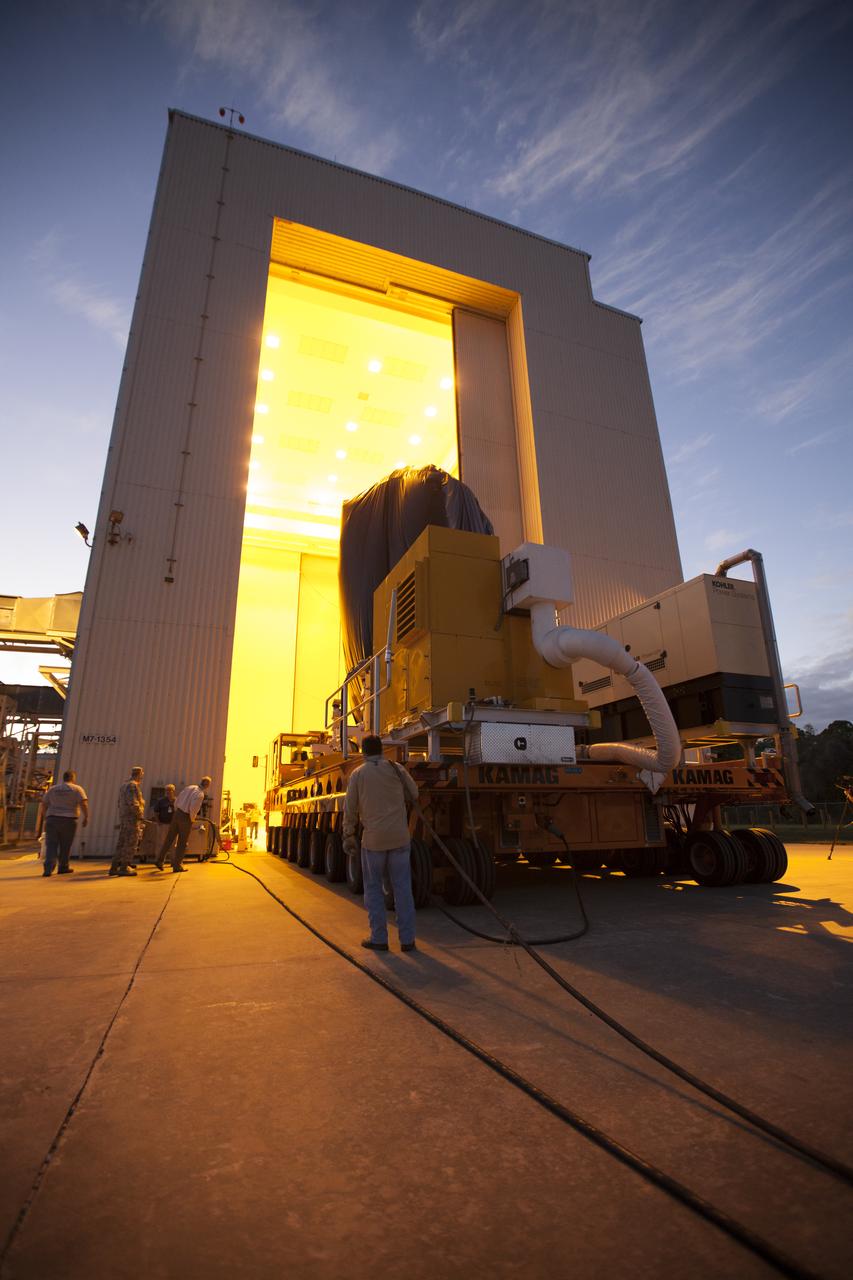
A KAMAG transporter with Orbital ATK's CYGNUS pressurized cargo module secured on top arrives at the Payload Hazardous Servicing Facility at NASA's Kennedy Space Center in Florida. CYGNUS will be moved inside the facility for final propellant loading and late cargo stowage. The Orbital ATK CRS-7 commercial resupply services mission to the International Space Station is scheduled to launch atop a United Launch Alliance Atlas V rocket from Space Launch Complex 41 at Cape Canaveral Air Force Station on March 19, 2017. CYGNUS will deliver thousands of pounds of supplies, equipment and scientific research materials to the space station.
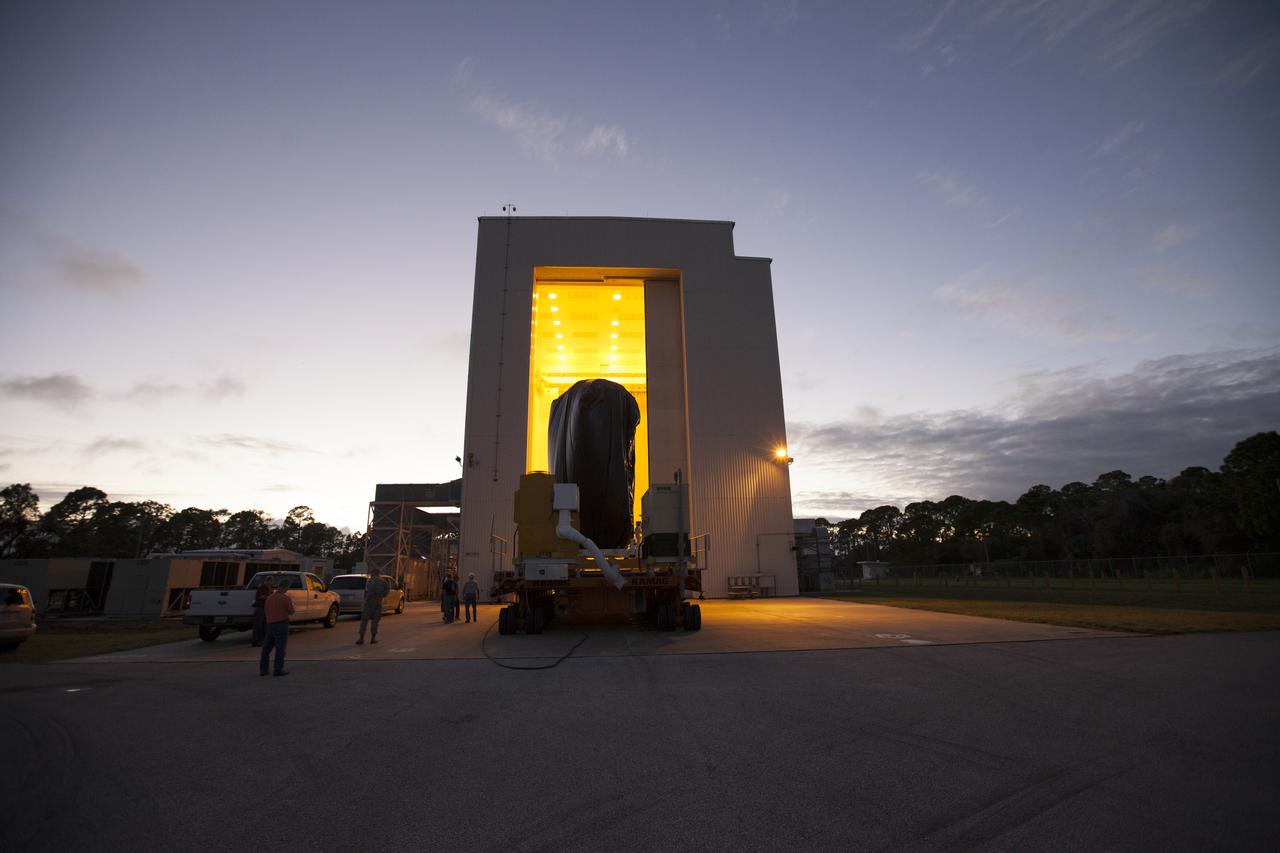
A KAMAG transporter with Orbital ATK's CYGNUS pressurized cargo module secured on top arrives at the Payload Hazardous Servicing Facility at NASA's Kennedy Space Center in Florida. CYGNUS will be moved inside the facility for final propellant loading and late cargo stowage. The Orbital ATK CRS-7 commercial resupply services mission to the International Space Station is scheduled to launch atop a United Launch Alliance Atlas V rocket from Space Launch Complex 41 at Cape Canaveral Air Force Station on March 19, 2017. CYGNUS will deliver thousands of pounds of supplies, equipment and scientific research materials to the space station.
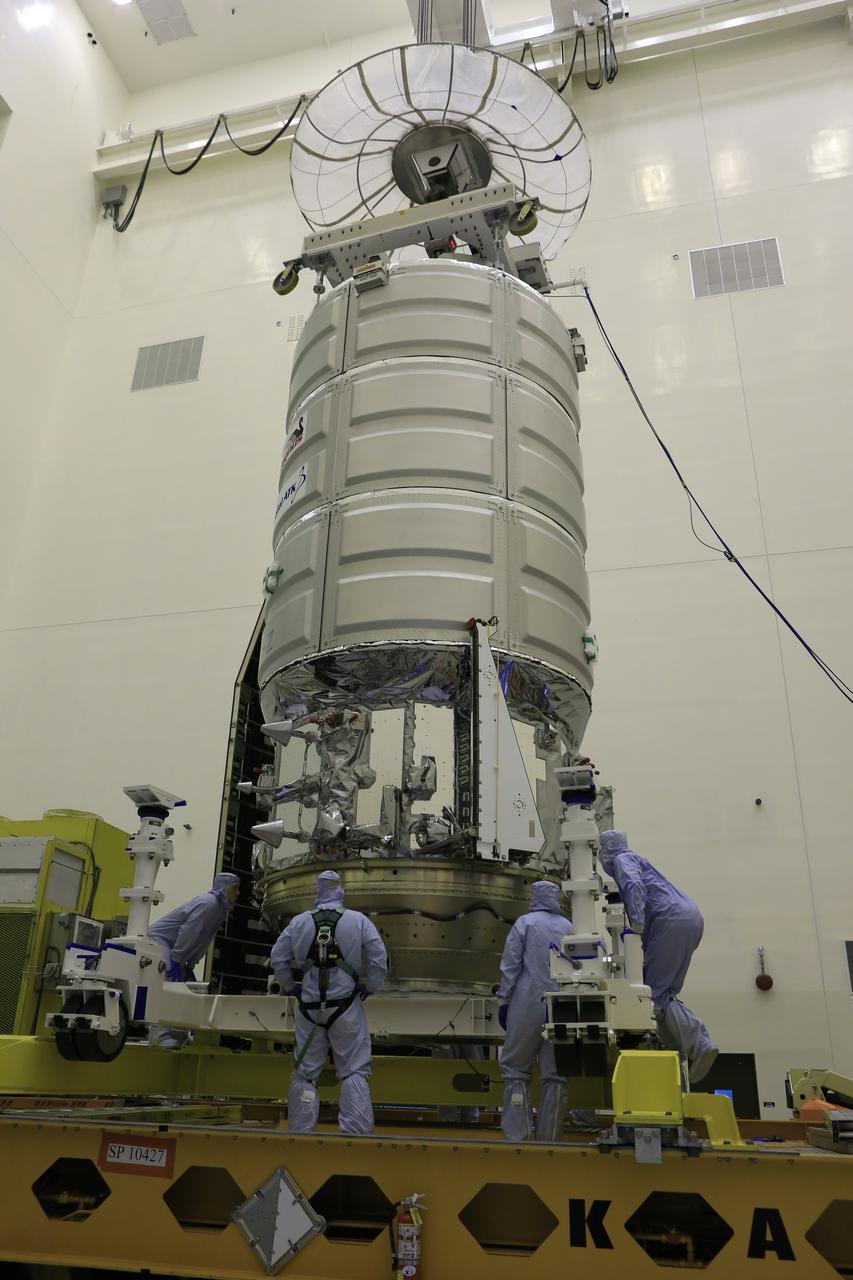
A crane is attached to Orbital ATK's CYGNUS pressurized cargo module to lift it up from the KAMAG transporter inside the Payload Hazardous Servicing Facility at NASA's Kennedy Space Center in Florida. CYGNUS will be lowered onto a work stand for final propellant loading and late cargo stowage. The Orbital ATK CRS-7 commercial resupply services mission to the International Space Station is scheduled to launch atop a United Launch Alliance Atlas V rocket from Space Launch Complex 41 at Cape Canaveral Air Force Station on March 19, 2017. CYGNUS will deliver thousands of pounds of supplies, equipment and scientific research materials to the space station.
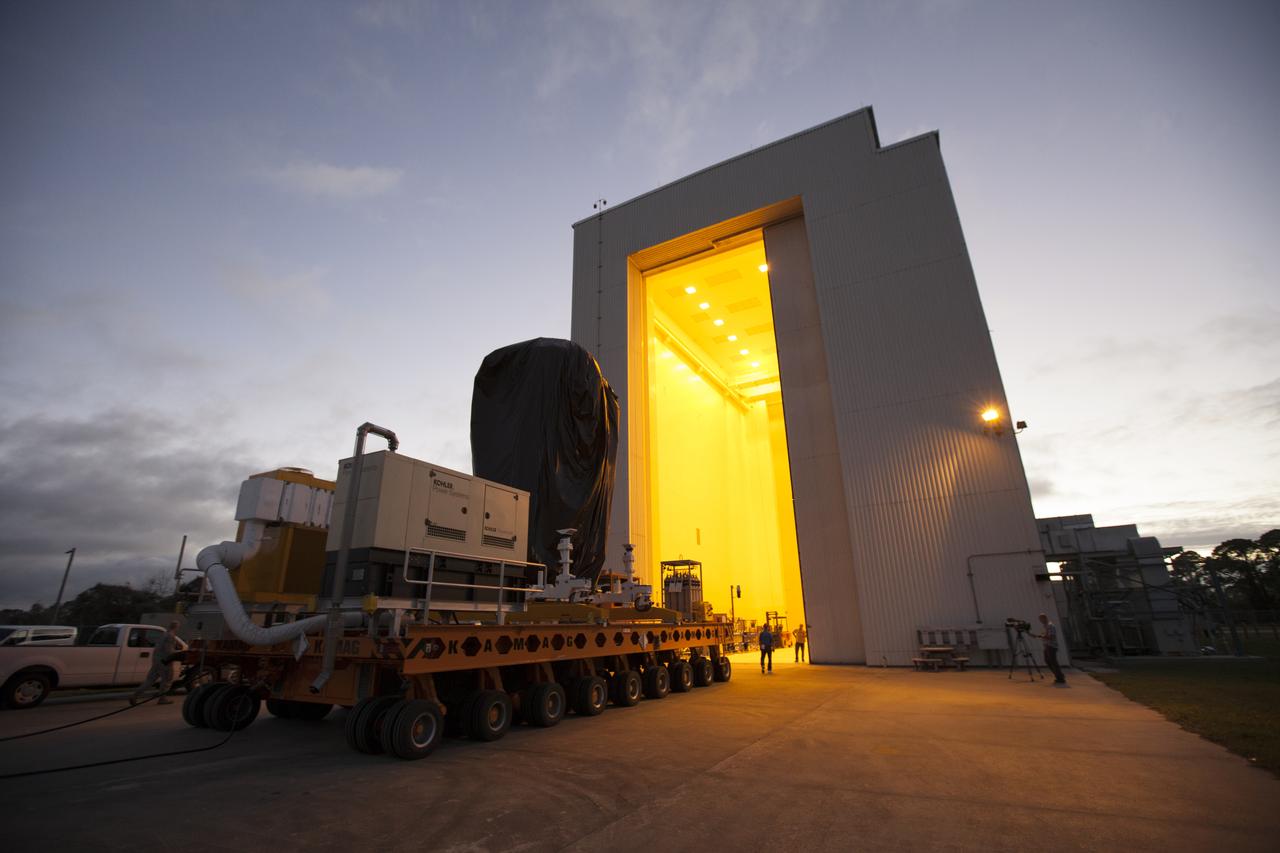
A KAMAG transporter with Orbital ATK's CYGNUS pressurized cargo module secured on top arrives at the Payload Hazardous Servicing Facility at NASA's Kennedy Space Center in Florida. CYGNUS will be moved inside the facility for final propellant loading and late cargo stowage. The Orbital ATK CRS-7 commercial resupply services mission to the International Space Station is scheduled to launch atop a United Launch Alliance Atlas V rocket from Space Launch Complex 41 at Cape Canaveral Air Force Station on March 19, 2017. CYGNUS will deliver thousands of pounds of supplies, equipment and scientific research materials to the space station.
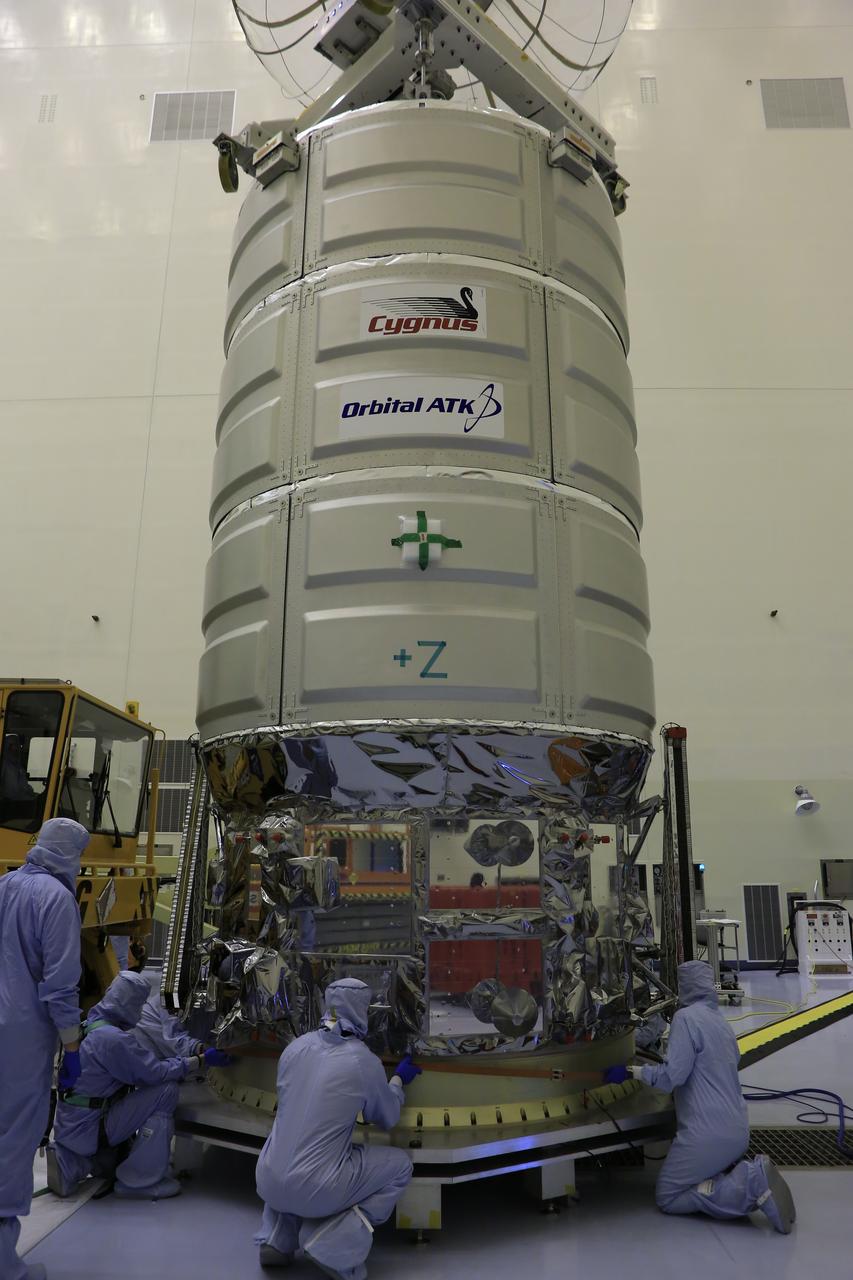
Technicians assist as a crane lowers Orbital ATK's CYGNUS pressurized cargo module onto a work stand inside the Payload Hazardous Servicing Facility at NASA's Kennedy Space Center in Florida. CYGNUS will be secured on the work stand for final propellant loading and late cargo stowage. The Orbital ATK CRS-7 commercial resupply services mission to the International Space Station is scheduled to launch atop a United Launch Alliance Atlas V rocket from Space Launch Complex 41 at Cape Canaveral Air Force Station on March 19, 2017. CYGNUS will deliver thousands of pounds of supplies, equipment and scientific research materials to the space station.
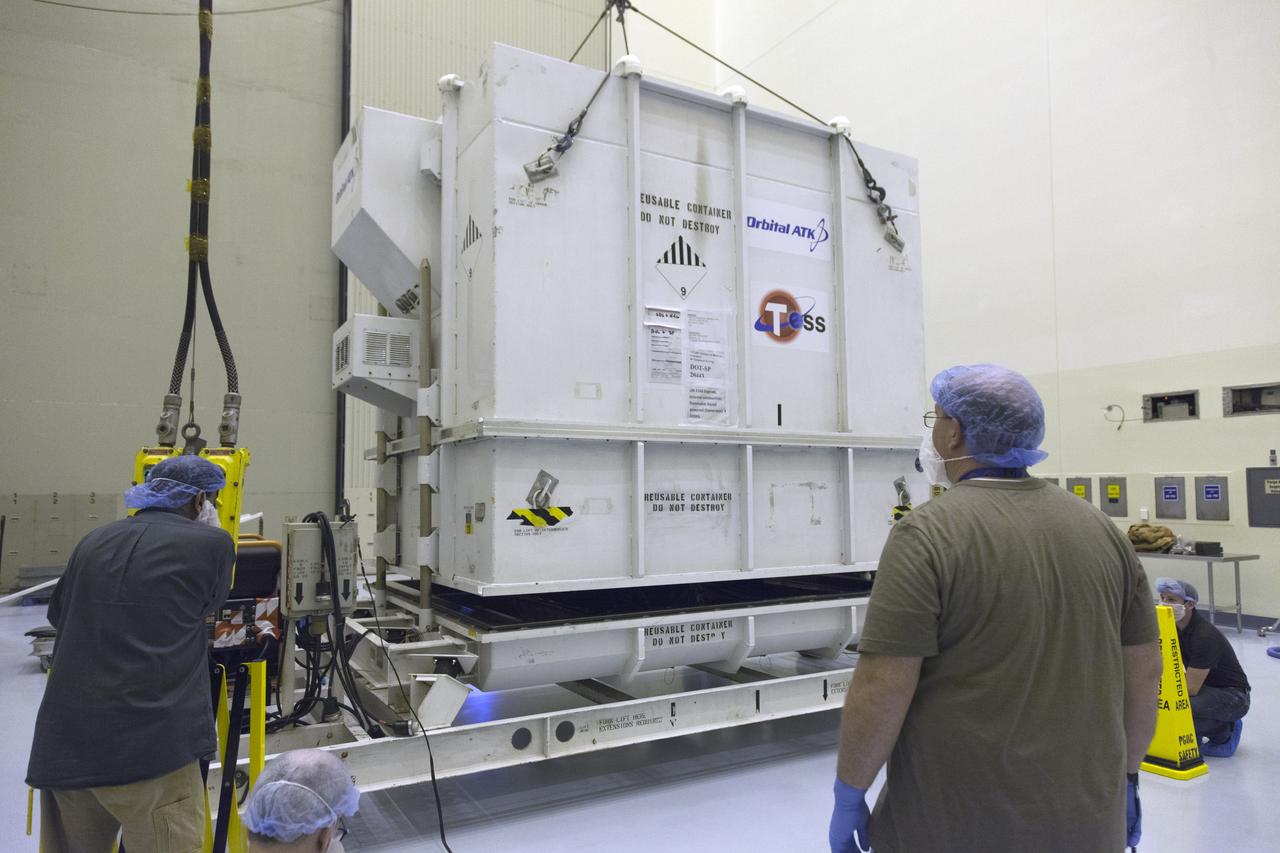
The shipping container with NASA's Transiting Exoplanet Survey Satellite (TESS) arrives inside the Payload Hazardous Servicing Facility at the agency's Kennedy Space Center in Florida. Inside the PHSF, TESS will be unpacked, lifted up and moved to a test stand for processing. TESS is scheduled to launch atop a SpaceX Falcon 9 rocket from Space Launch Complex 40 at Cape Canaveral Air Force Station. TESS is the next step in NASA's search for planets outside our solar system, known as exoplanets. TESS is a NASA Astrophysics Explorer mission led and operated by MIT in Cambridge, Massachusetts, and managed by NASA’s Goddard Space Flight Center in Greenbelt, Maryland. Dr. George Ricker of MIT’s Kavli Institute for Astrophysics and Space Research serves as principal investigator for the mission. Additional partners include Orbital ATK, NASA’s Ames Research Center, the Harvard-Smithsonian Center for Astrophysics and the Space Telescope Science Institute. More than a dozen universities, research institutes and observatories worldwide are participants in the mission. NASA’s Launch Services Program is responsible for launch management.
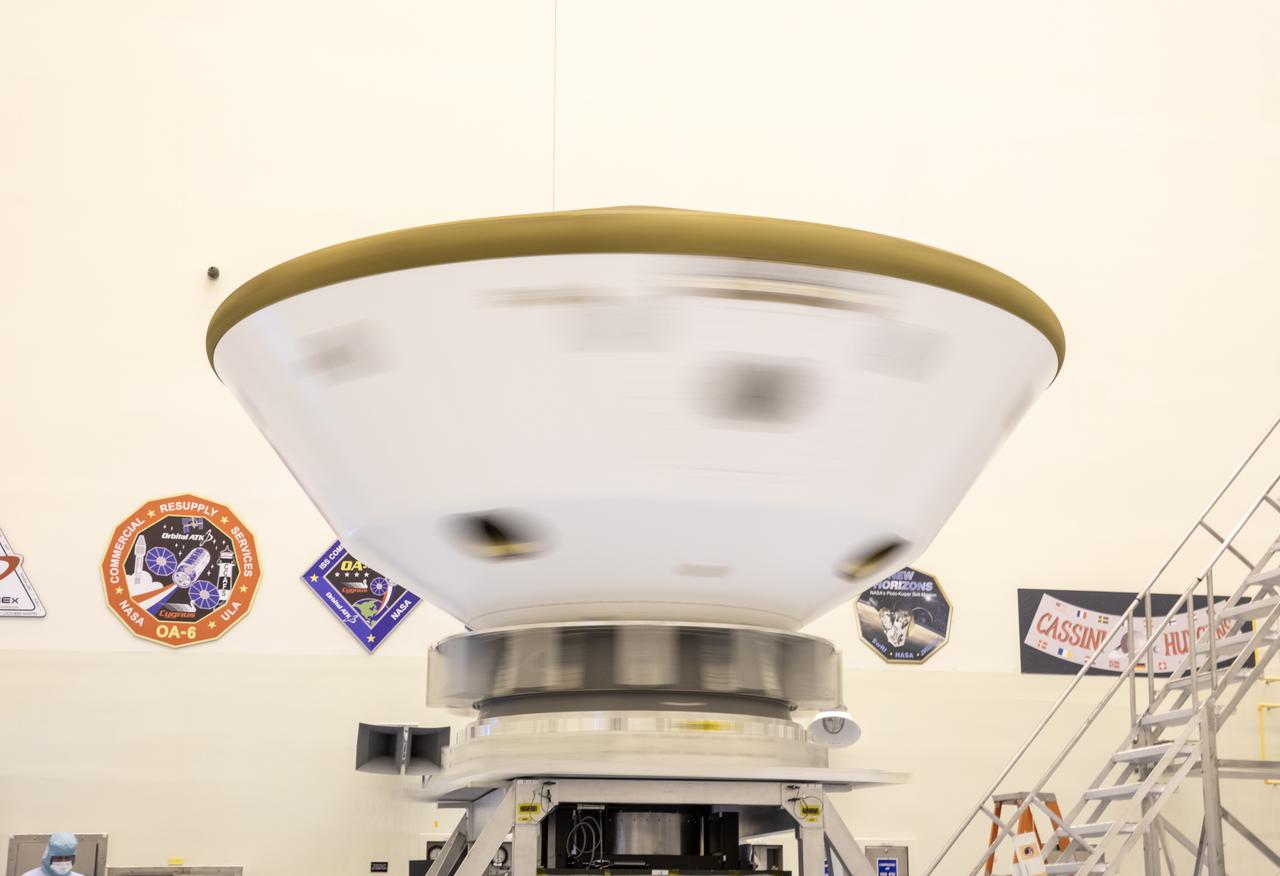
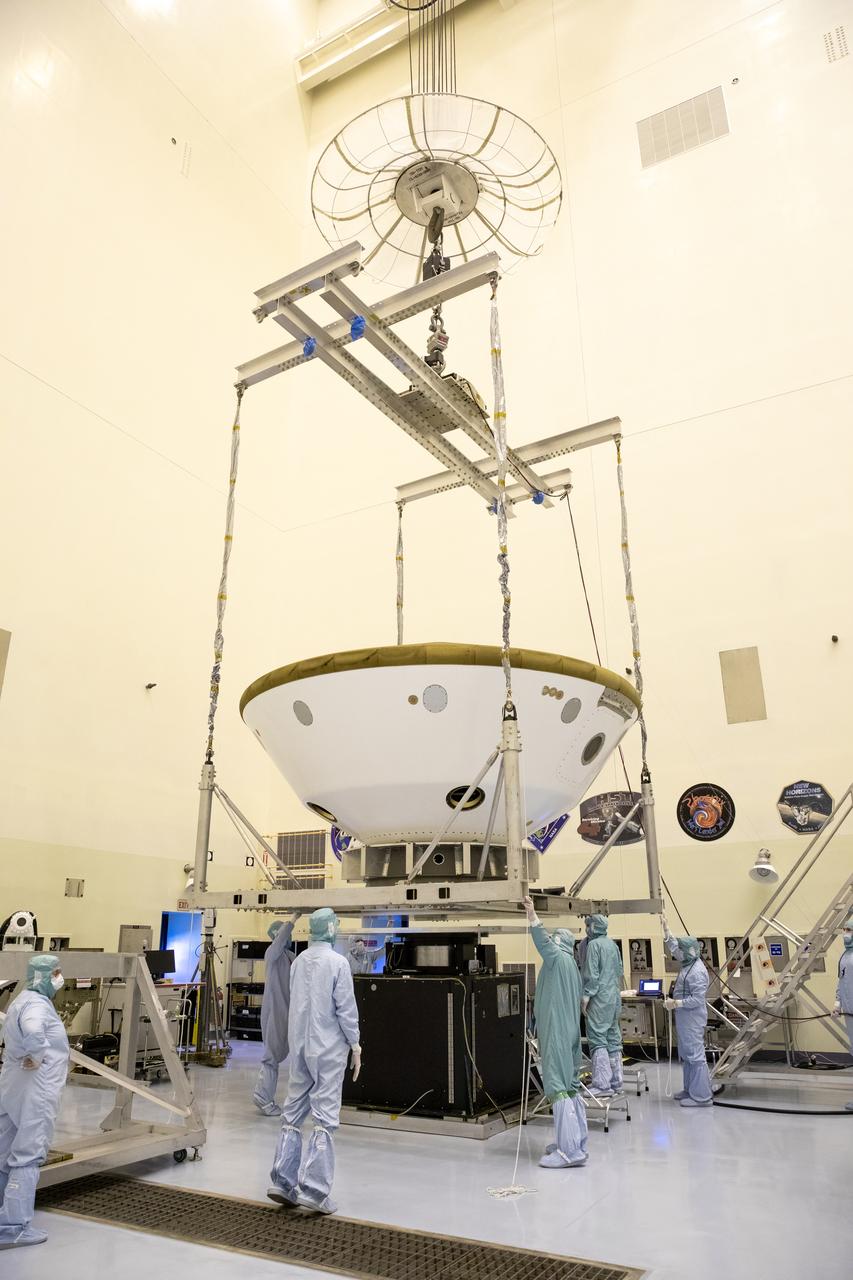
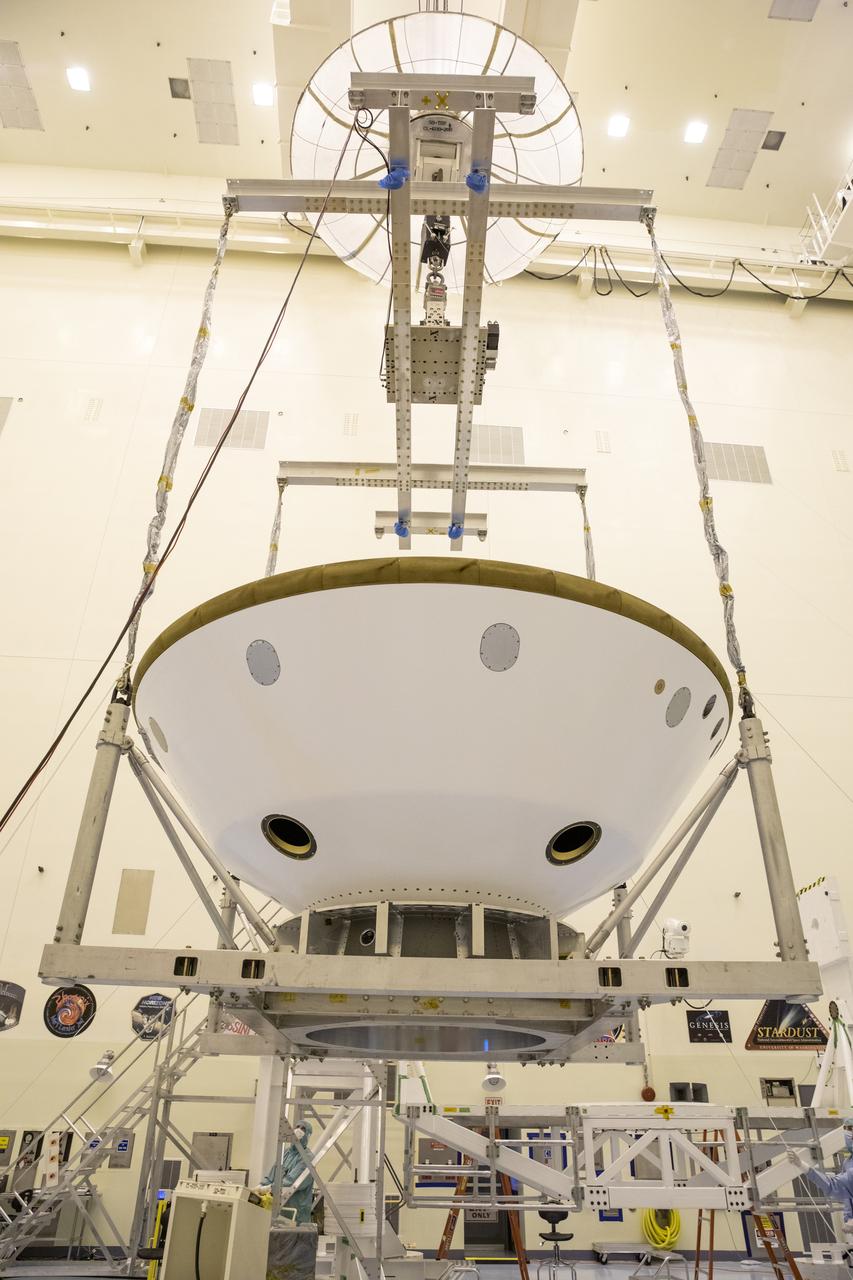
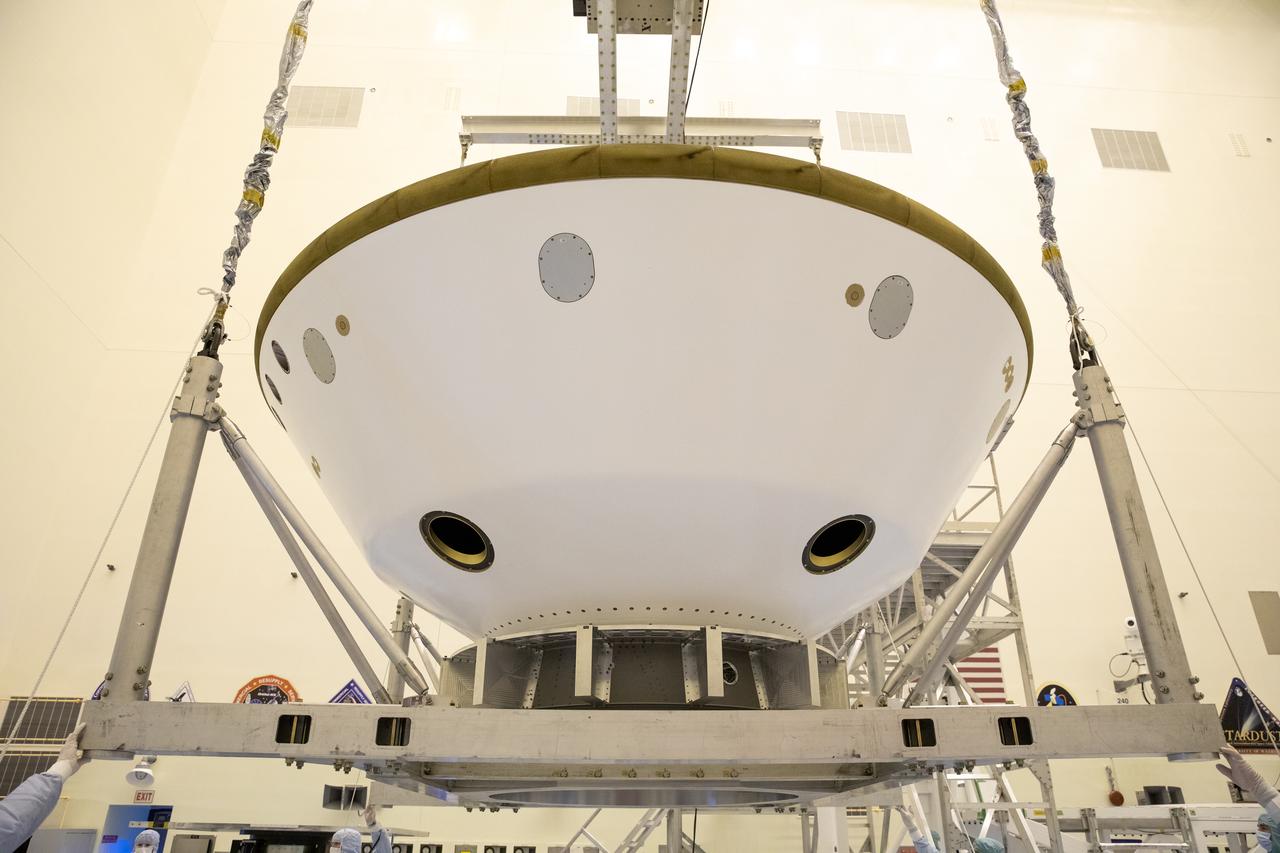
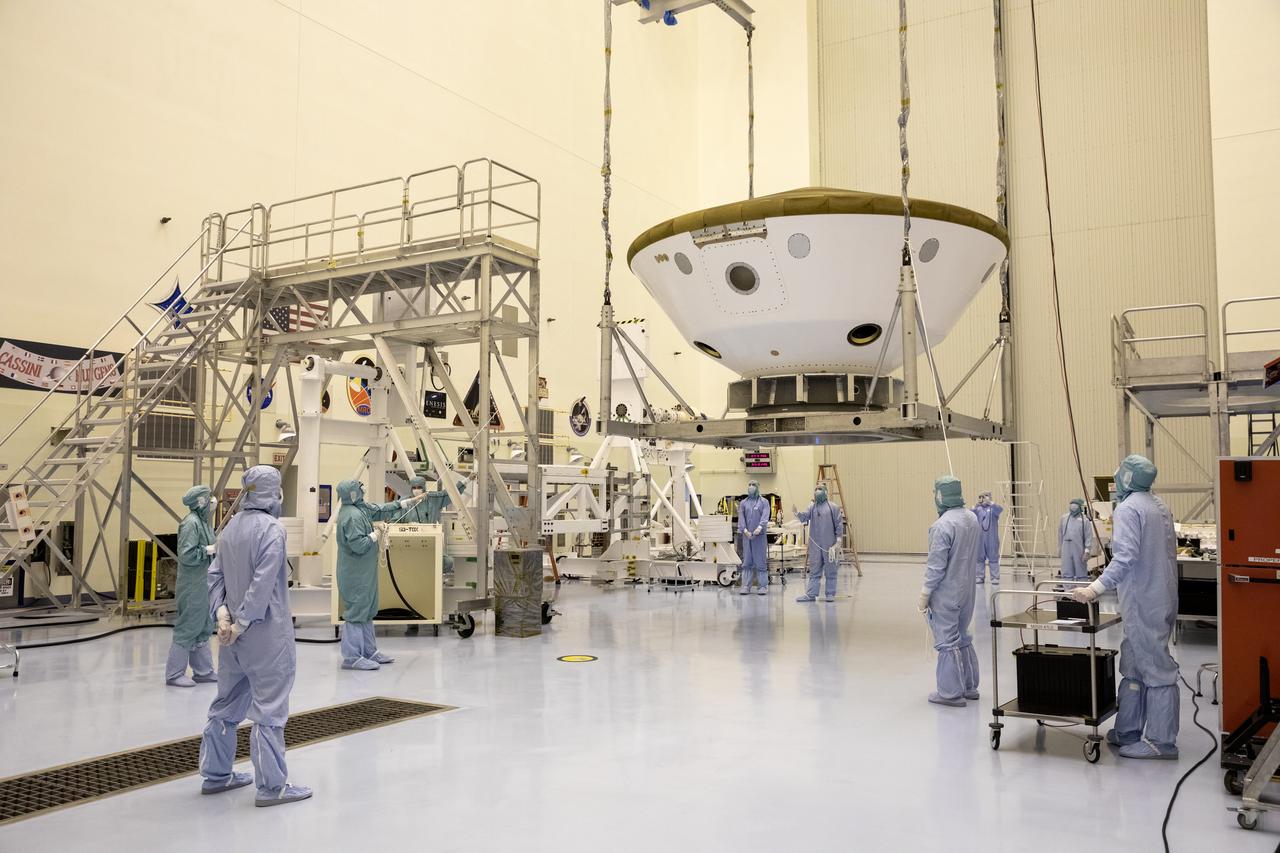
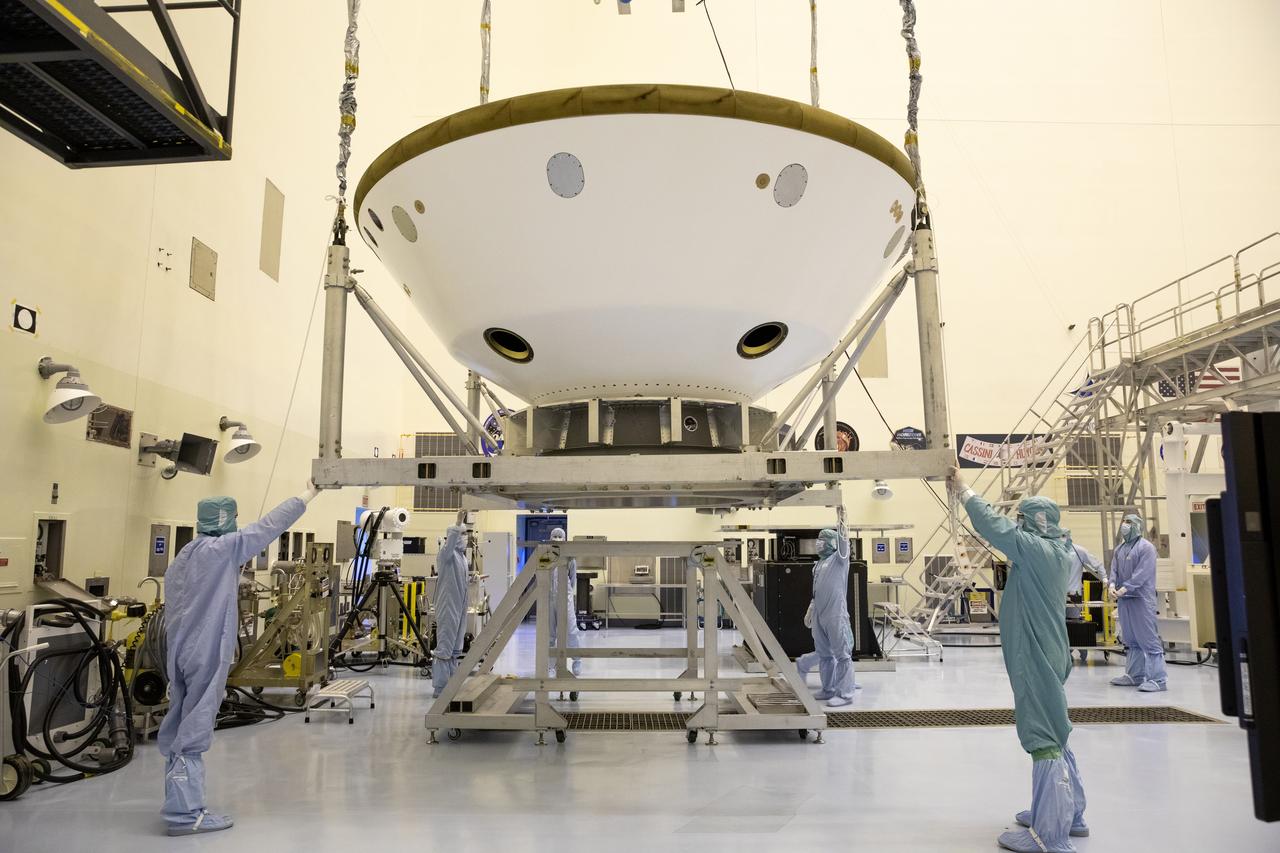
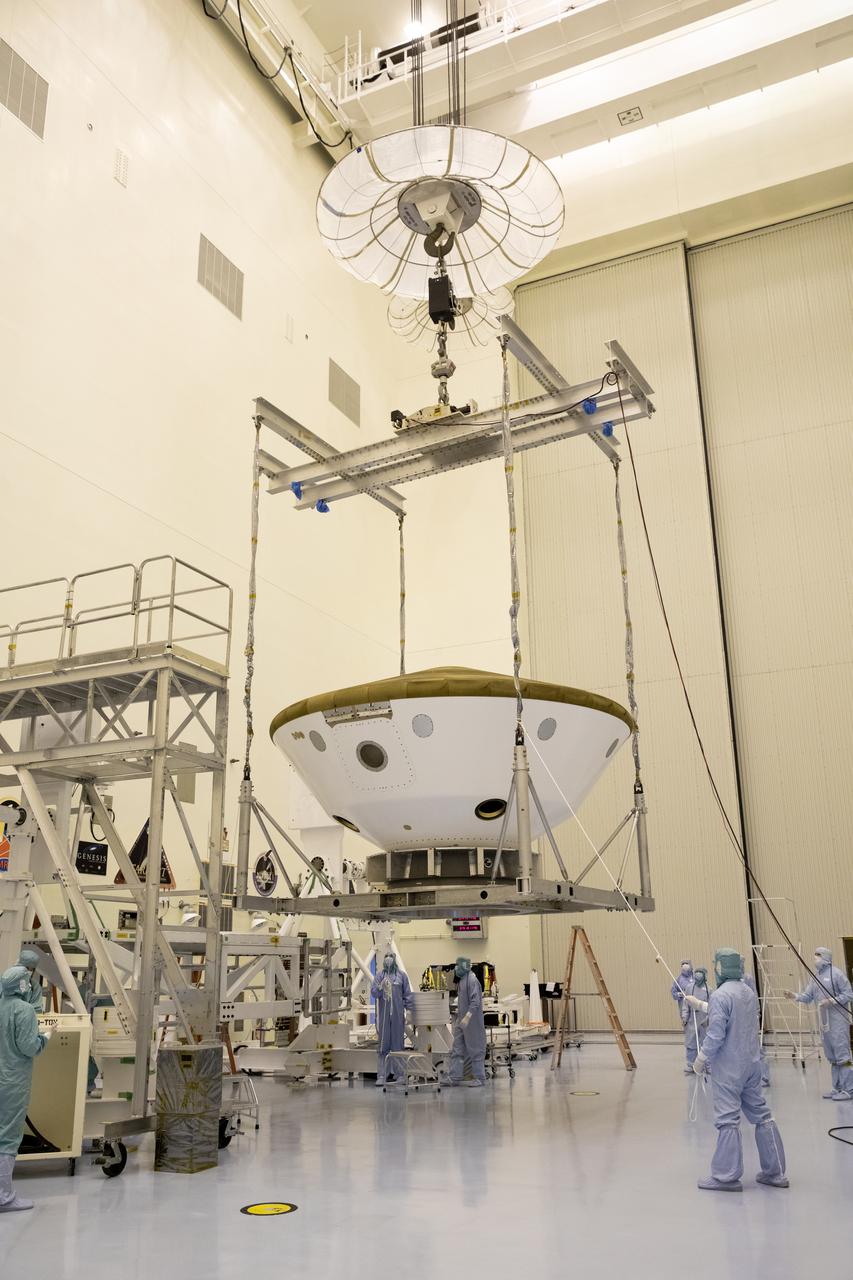
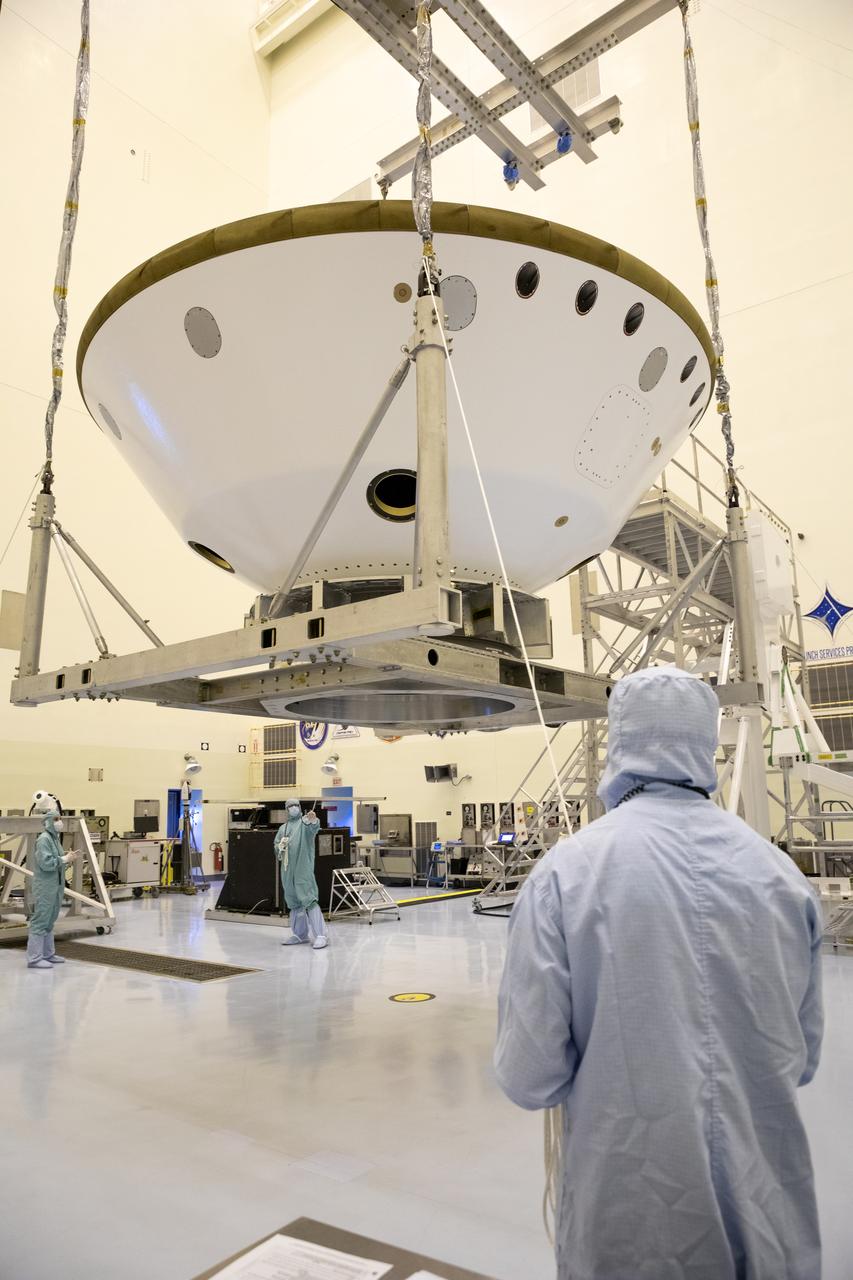
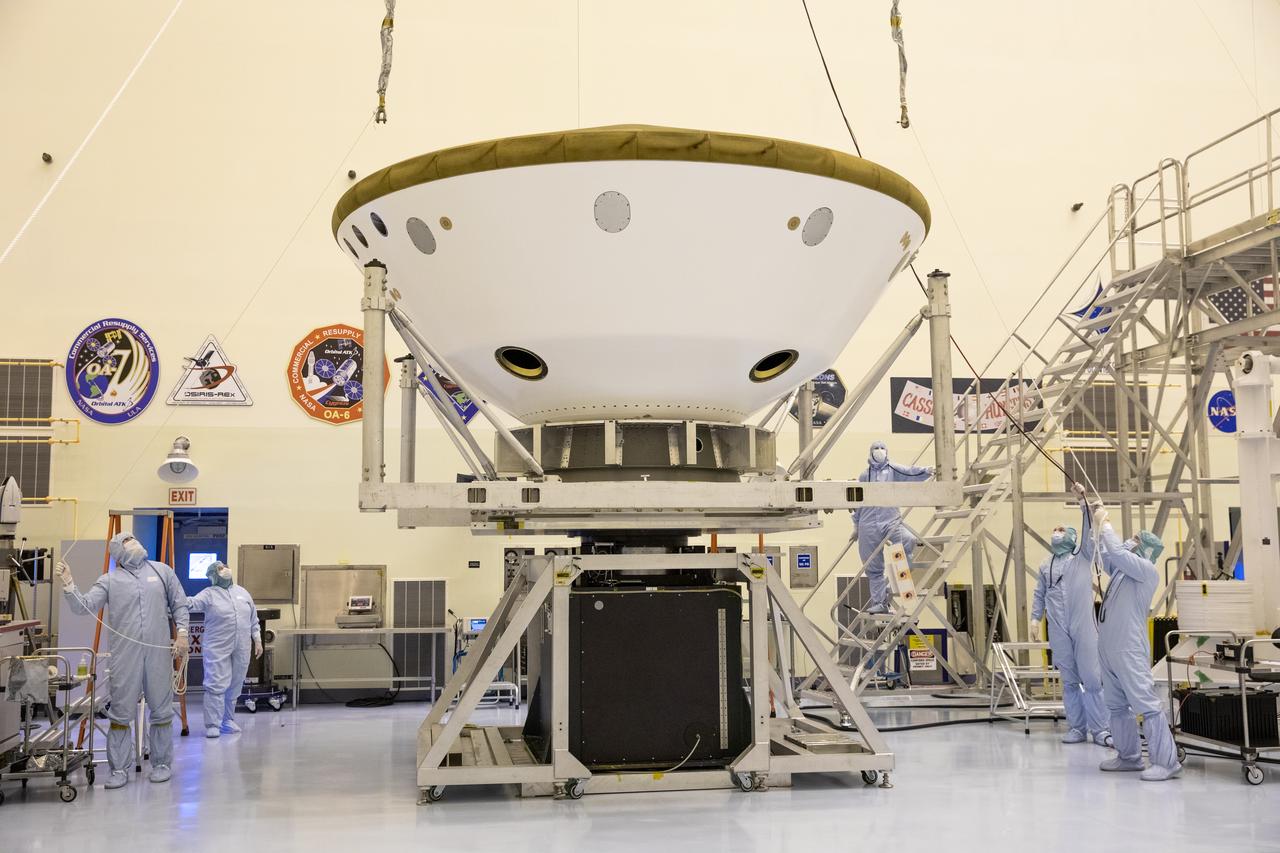
Tests to measure the center of gravity and moments of inertia for the Mars 2020 rover aeroshell are performed on the spin table inside Kennedy Space Center’s Payload Hazardous Servicing Facility on Jan. 15, 2020. The Mars 2020 rover will carry seven different scientific instruments, landing on the Red Planet on Feb. 18, 2021. It is scheduled to launch aboard a United Launch Alliance Atlas V 541 rocket, procured by NASA’s Launch Services Program, in the summer of 2020.
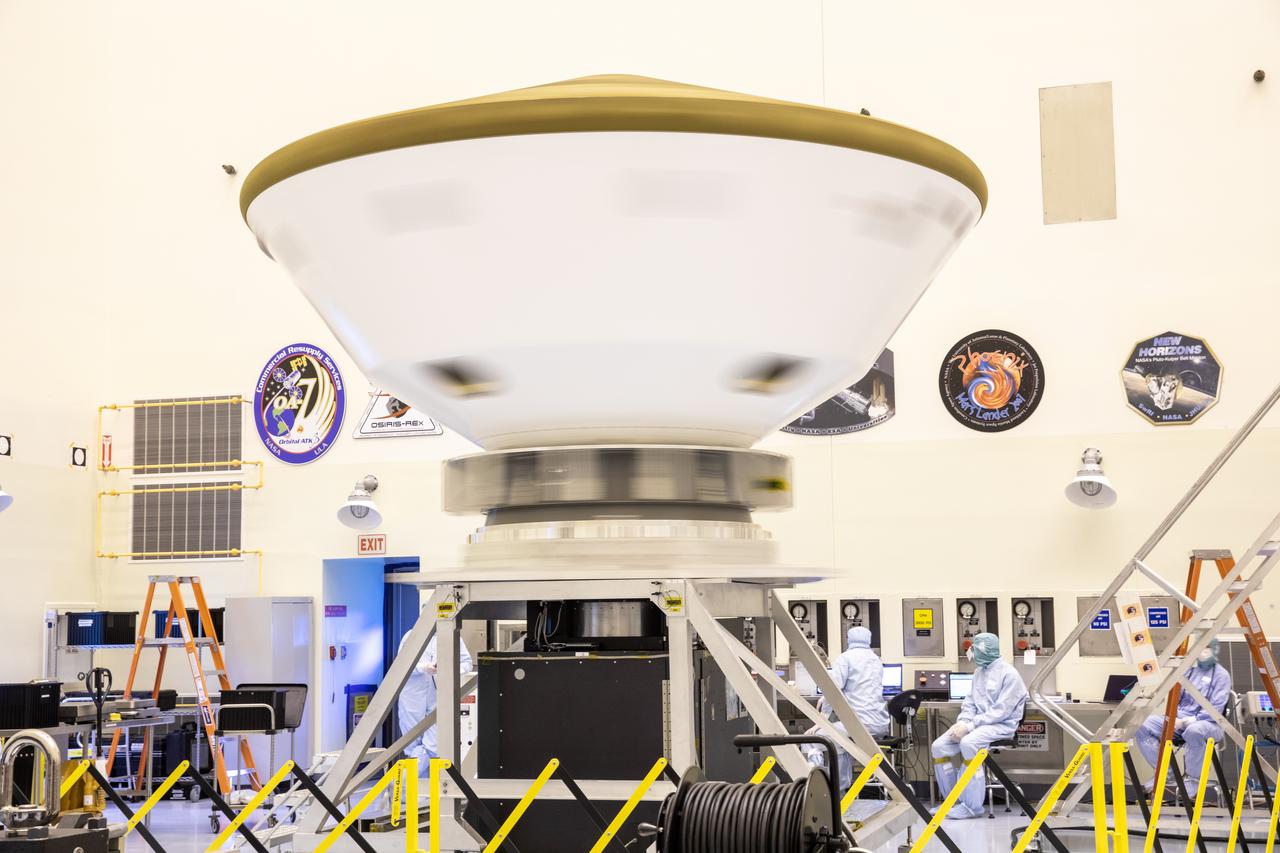
Tests to measure the center of gravity and moments of inertia for the Mars 2020 rover aeroshell are performed on the spin table inside Kennedy Space Center’s Payload Hazardous Servicing Facility on Jan. 15, 2020. The Mars 2020 rover will carry seven different scientific instruments, landing on the Red Planet on Feb. 18, 2021. It is scheduled to launch aboard a United Launch Alliance Atlas V 541 rocket, procured by NASA’s Launch Services Program, in the summer of 2020.
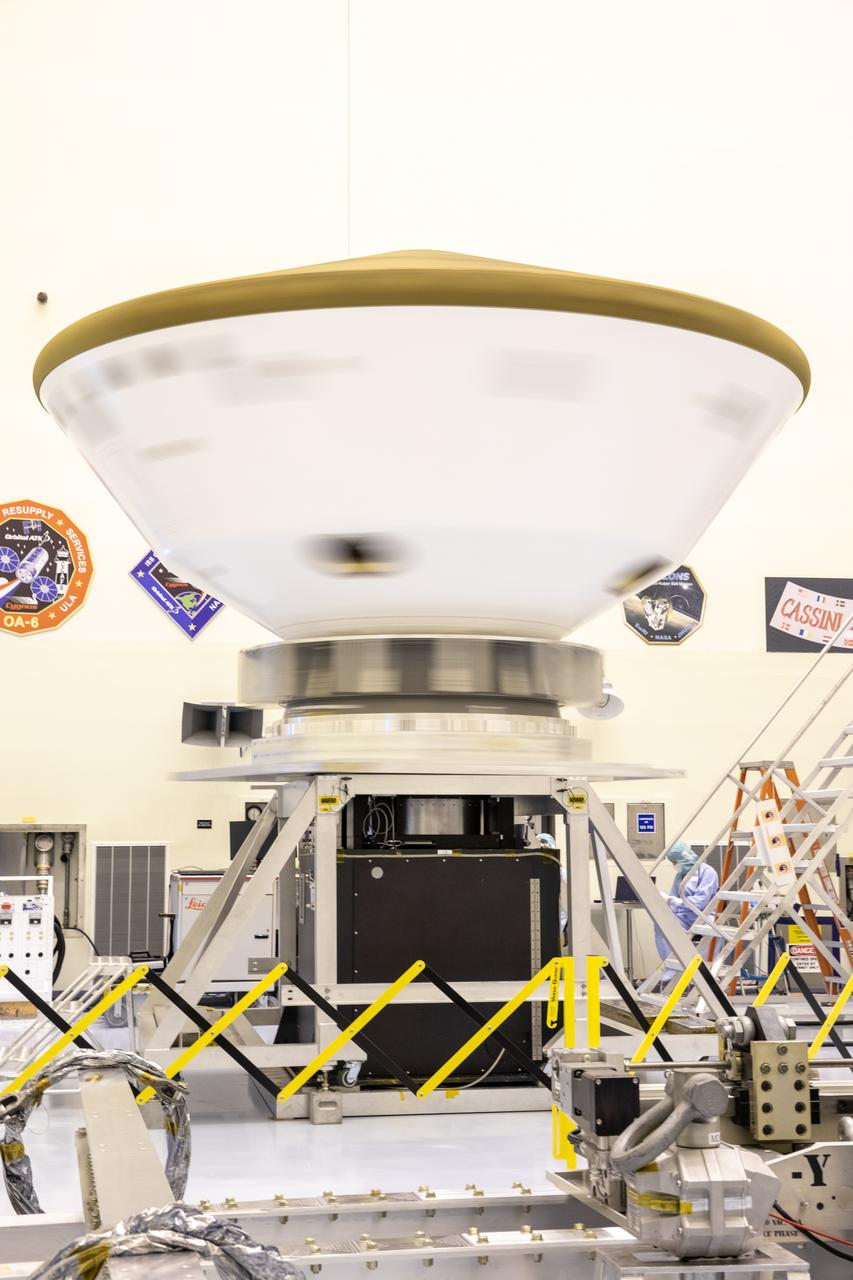
Tests to measure the center of gravity and moments of inertia for the Mars 2020 rover aeroshell are performed on the spin table inside Kennedy Space Center’s Payload Hazardous Servicing Facility on Jan. 15, 2020. The Mars 2020 rover will carry seven different scientific instruments, landing on the Red Planet on Feb. 18, 2021. It is scheduled to launch aboard a United Launch Alliance Atlas V 541 rocket, procured by NASA’s Launch Services Program, in the summer of 2020.
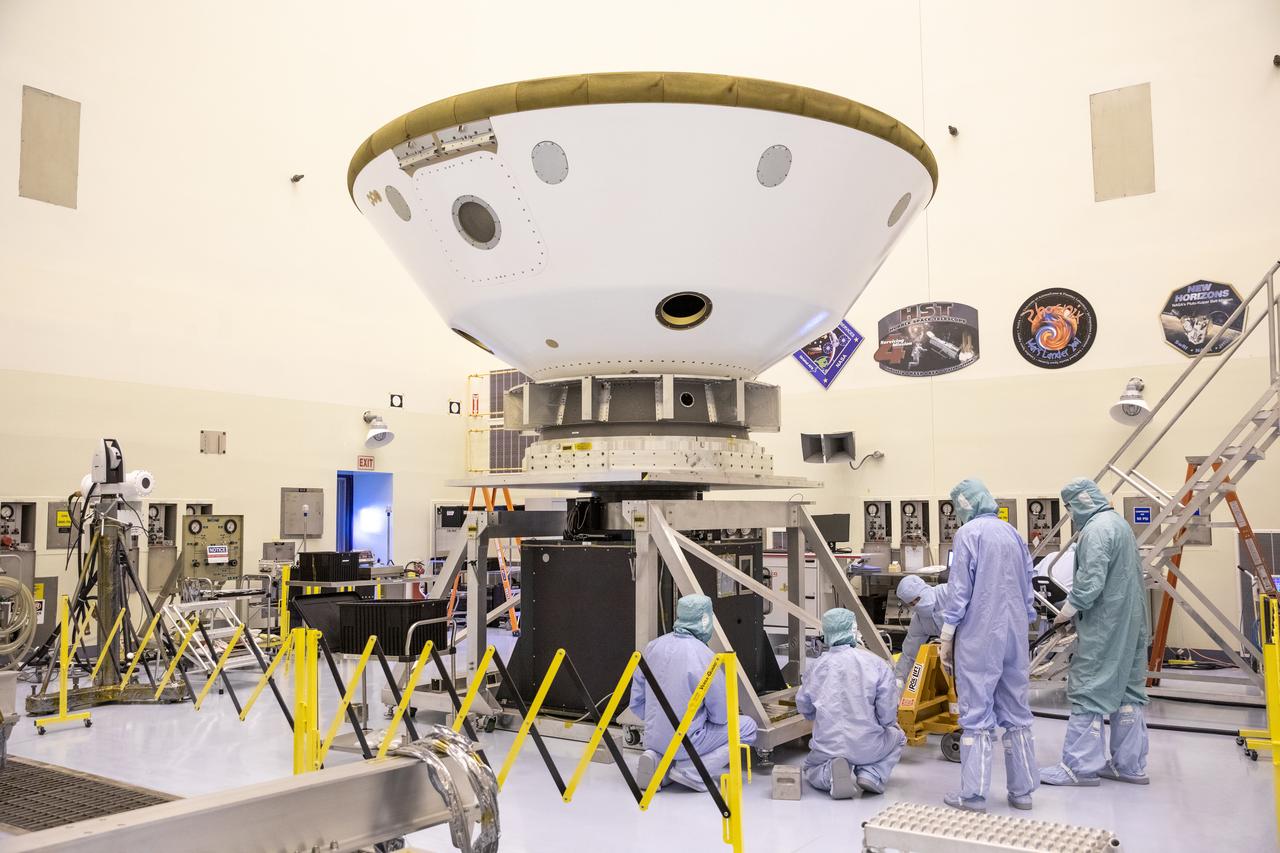
Tests to measure the center of gravity and moments of inertia for the Mars 2020 rover aeroshell are performed on the spin table inside Kennedy Space Center’s Payload Hazardous Servicing Facility on Jan. 15, 2020. The Mars 2020 rover will carry seven different scientific instruments, landing on the Red Planet on Feb. 18, 2021. It is scheduled to launch aboard a United Launch Alliance Atlas V 541 rocket, procured by NASA’s Launch Services Program, in the summer of 2020.

A KAMAG transporter with Orbital ATK's CYGNUS pressurized cargo module secured on top moves from the airlock into the high bay of the Payload Hazardous Servicing Facility at NASA's Kennedy Space Center in Florida. Cygnus will be moved to a work stand for final propellant loading and late cargo stowage. The Orbital ATK CRS-7 commercial resupply services mission to the International Space Station is scheduled to launch atop a United Launch Alliance Atlas V rocket from Space Launch Complex 41 at Cape Canaveral Air Force Station on March 19, 2017. CYGNUS will deliver thousands of pounds of supplies, equipment and scientific research materials to the space station.
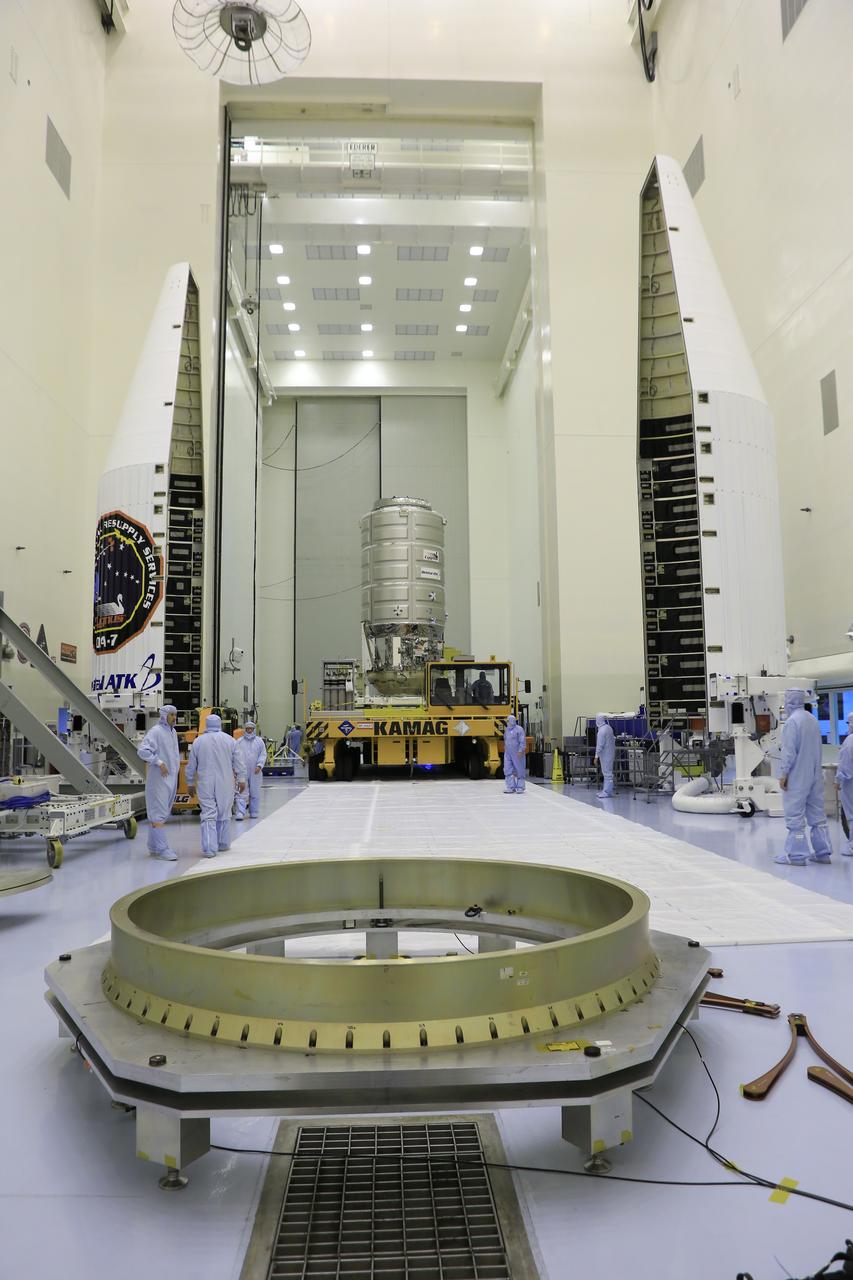
A KAMAG transporter with Orbital ATK's CYGNUS pressurized cargo module secured on top slowly moves from the airlock into the high bay of the Payload Hazardous Servicing Facility at NASA's Kennedy Space Center in Florida. Cygnus will be moved to a work stand for final propellant loading and late cargo stowage. The Orbital ATK CRS-7 commercial resupply services mission to the International Space Station is scheduled to launch atop a United Launch Alliance Atlas V rocket from Space Launch Complex 41 at Cape Canaveral Air Force Station on March 19, 2017. CYGNUS will deliver thousands of pounds of supplies, equipment and scientific research materials to the space station.
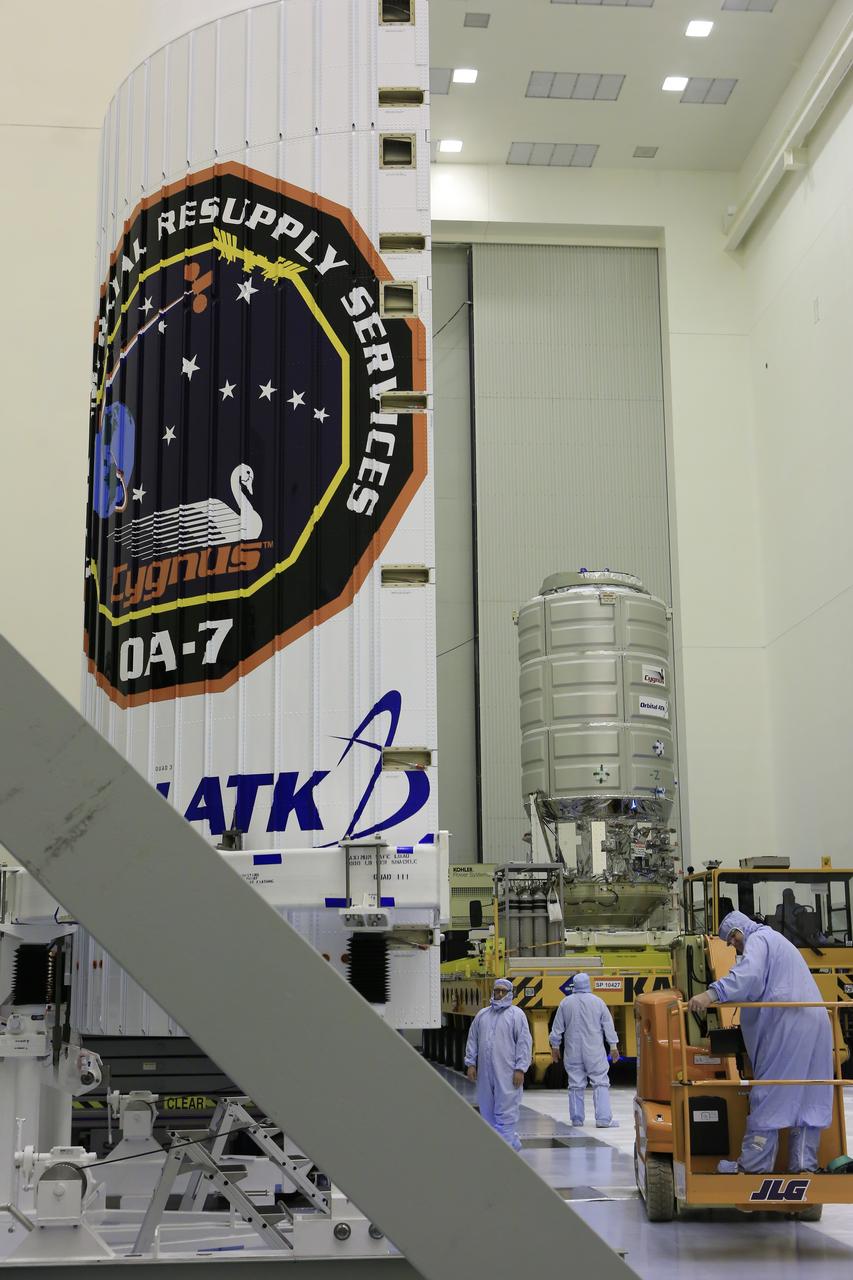
A KAMAG transporter with Orbital ATK's CYGNUS pressurized cargo module secured on top slowly moves from the airlock into the high bay of the Payload Hazardous Servicing Facility at NASA's Kennedy Space Center in Florida. Cygnus will be moved to a work stand for final propellant loading and late cargo stowage. The Orbital ATK CRS-7 commercial resupply services mission to the International Space Station is scheduled to launch atop a United Launch Alliance Atlas V rocket from Space Launch Complex 41 at Cape Canaveral Air Force Station on March 19, 2017. CYGNUS will deliver thousands of pounds of supplies, equipment and scientific research materials to the space station.
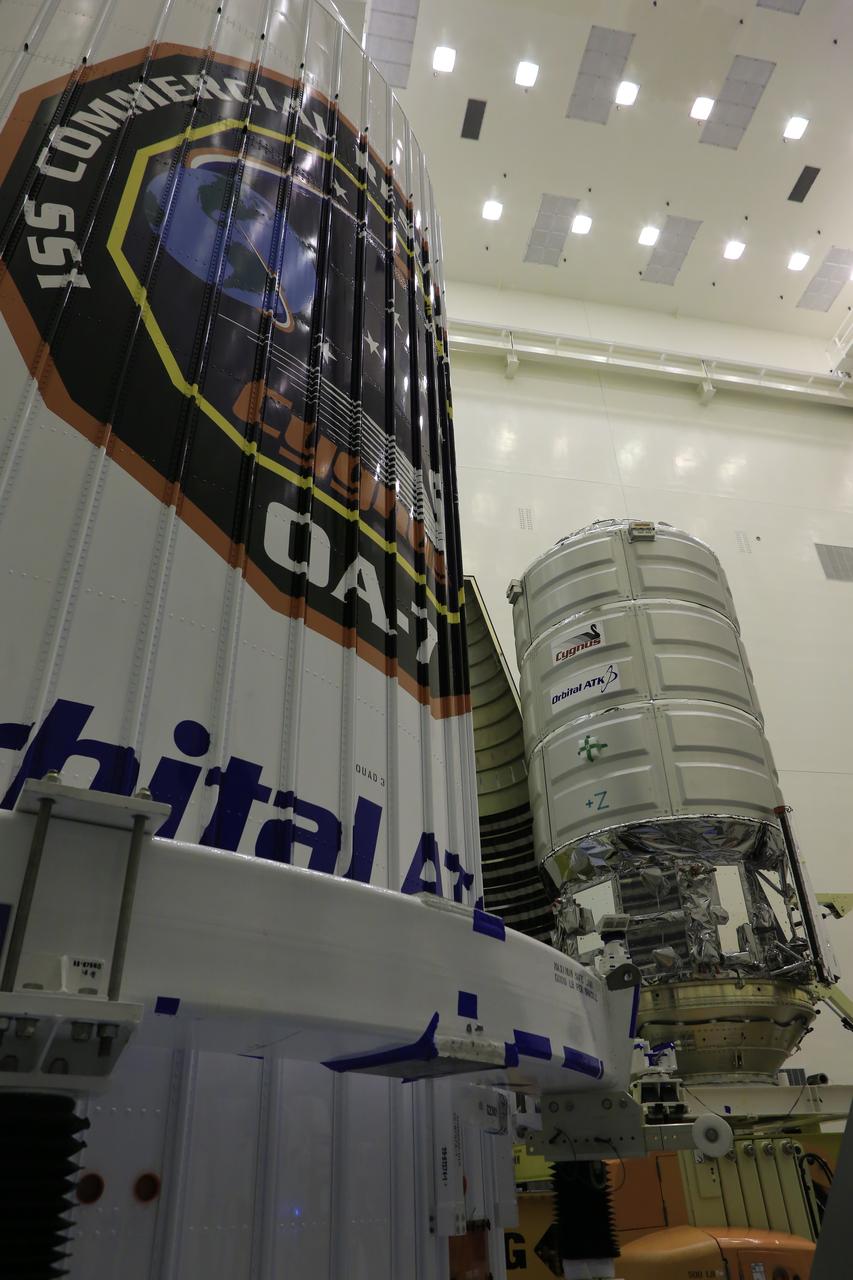
A KAMAG transporter with Orbital ATK's CYGNUS pressurized cargo module secured on top moves into the high bay of the Payload Hazardous Servicing Facility at NASA's Kennedy Space Center in Florida. Cygnus will be moved to a work stand for final propellant loading and late cargo stowage. The Orbital ATK CRS-7 commercial resupply services mission to the International Space Station is scheduled to launch atop a United Launch Alliance Atlas V rocket from Space Launch Complex 41 at Cape Canaveral Air Force Station on March 19, 2017. CYGNUS will deliver thousands of pounds of supplies, equipment and scientific research materials to the space station.
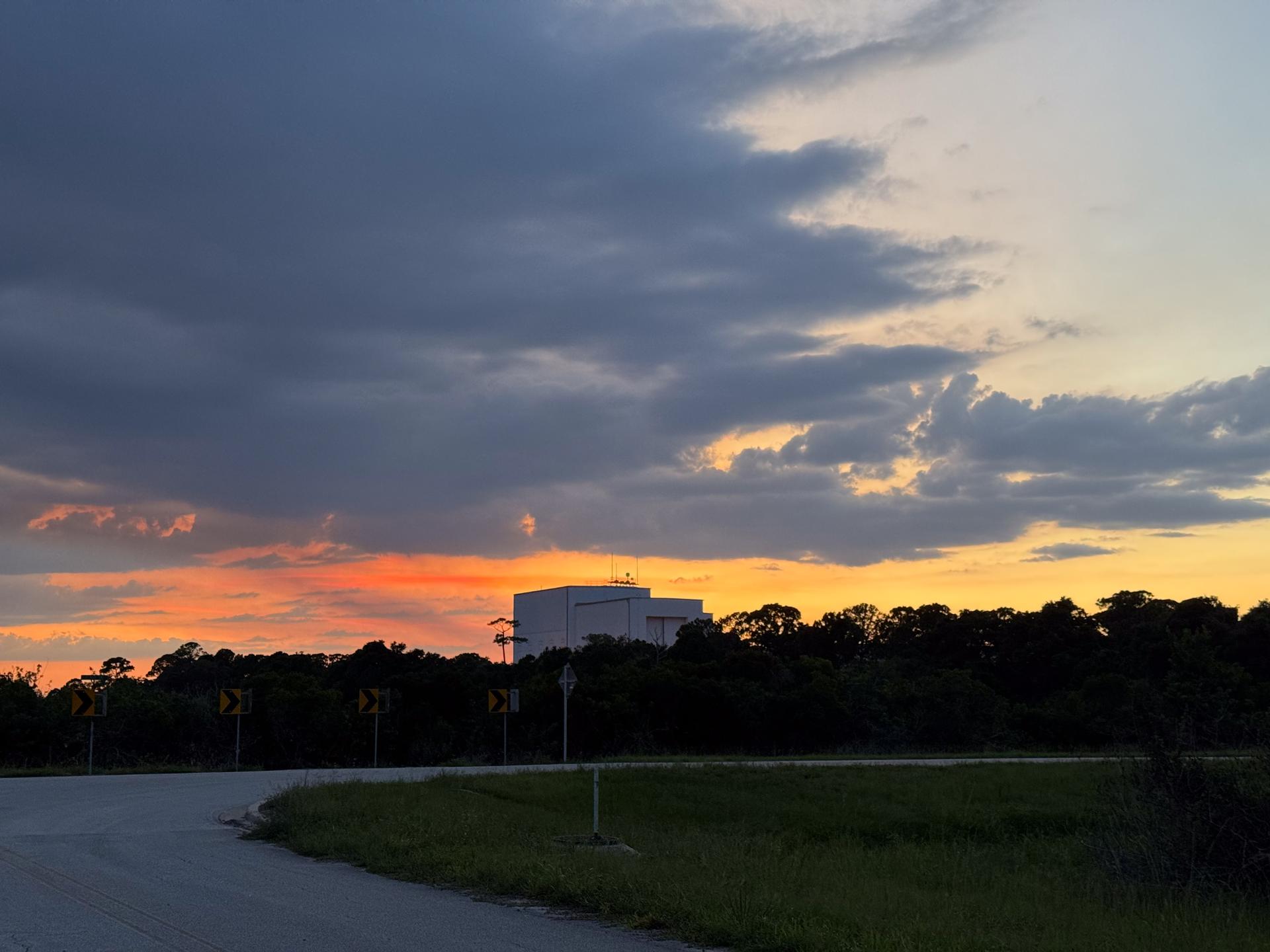
The sun sets on Sunday, June 21, 2026, at the Payload Hazardous Servicing Facility at the agency’s Kennedy Space Center in Florida before the arrival of NASA’s Nancy Grace Roman Space Telescope to undergo prelaunch processing. Named for NASA’s first chief astronomer and “mother of the Hubble Space Telescope,” Roman will offer a field of view over 100 times larger than Hubble’s to study up to a billion galaxies, directly image exoplanets and planet‑forming disks, and address fundamental questions about dark energy, exoplanets, and infrared astrophysics. Liftoff atop a SpaceX Falcon Heavy rocket from NASA Kennedy’s Launch Complex 39A is targeted no earlier than Sunday, Aug. 30, 2026.

NASA’s Nancy Grace Roman Space Telescope arrives at the Payload Hazardous Servicing Facility at the agency’s Kennedy Space Center in Florida on Sunday, June 21, 2026, to undergo prelaunch processing. Named for NASA’s first chief astronomer and “mother of the Hubble Space Telescope,” Roman will offer a field of view over 100 times larger than Hubble’s to study up to a billion galaxies, directly image exoplanets and planet‑forming disks, and address fundamental questions about dark energy, exoplanets, and infrared astrophysics. Liftoff atop a SpaceX Falcon Heavy rocket from NASA Kennedy’s Launch Complex 39A is targeting no earlier than Sunday, Aug. 30, 2026.
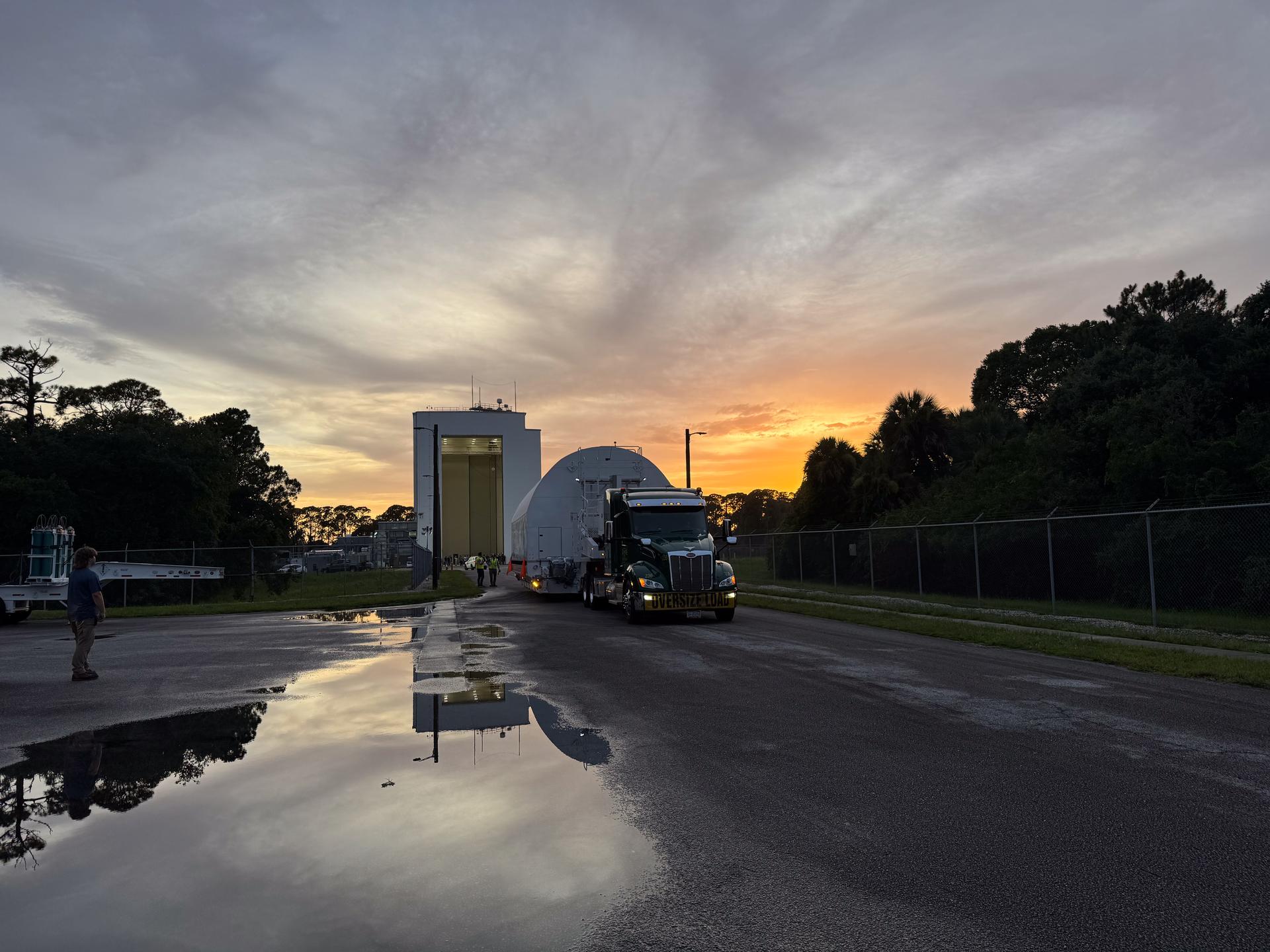
NASA’s Nancy Grace Roman Space Telescope arrives at the Payload Hazardous Servicing Facility at the agency’s Kennedy Space Center in Florida on Sunday, June 21, 2026, to undergo prelaunch processing. Named for NASA’s first chief astronomer and “mother of the Hubble Space Telescope,” Roman will offer a field of view over 100 times larger than Hubble’s to study up to a billion galaxies, directly image exoplanets and planet‑forming disks, and address fundamental questions about dark energy, exoplanets, and infrared astrophysics. Liftoff atop a SpaceX Falcon Heavy rocket from NASA Kennedy’s Launch Complex 39A is targeted no earlier than Sunday, Aug. 30, 2026.
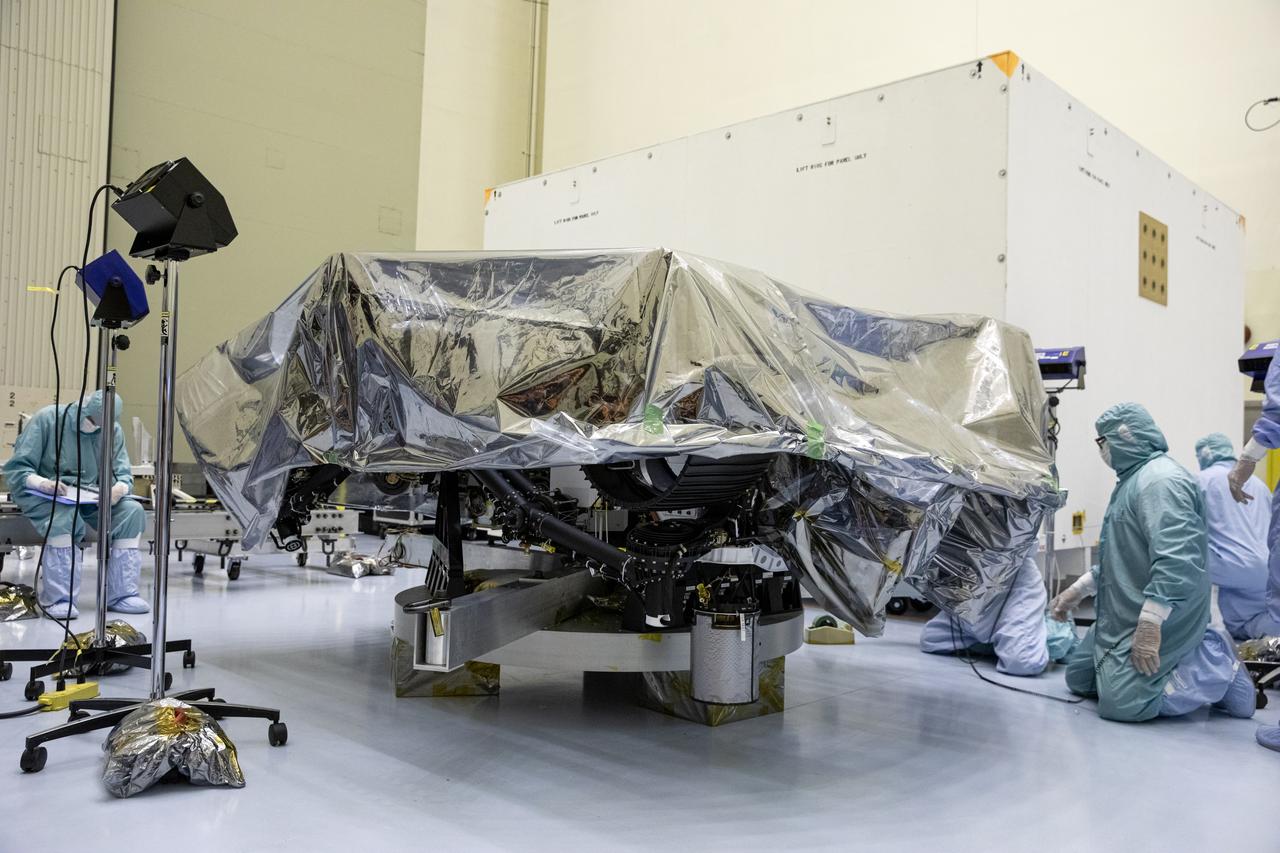
The Mars 2020 rover undergoes processing inside the Payload Hazardous Servicing Facility at NASA’s Kennedy Space Center in Florida on Feb. 13, 2020. The spacecraft was flown to Kennedy from California aboard a C-17 aircraft on Feb. 12. Targeted for mid-July 2020, the mission is scheduled to launch aboard an Atlas V 541 rocket from Cape Canaveral Air Force Station. The launch is managed by the Launch Services Program. The Mars 2020 rover will search for signs of past microbial life, characterize the planet’s climate and geology, collect samples for future return to Earth and pave the way for human exploration of Mars.
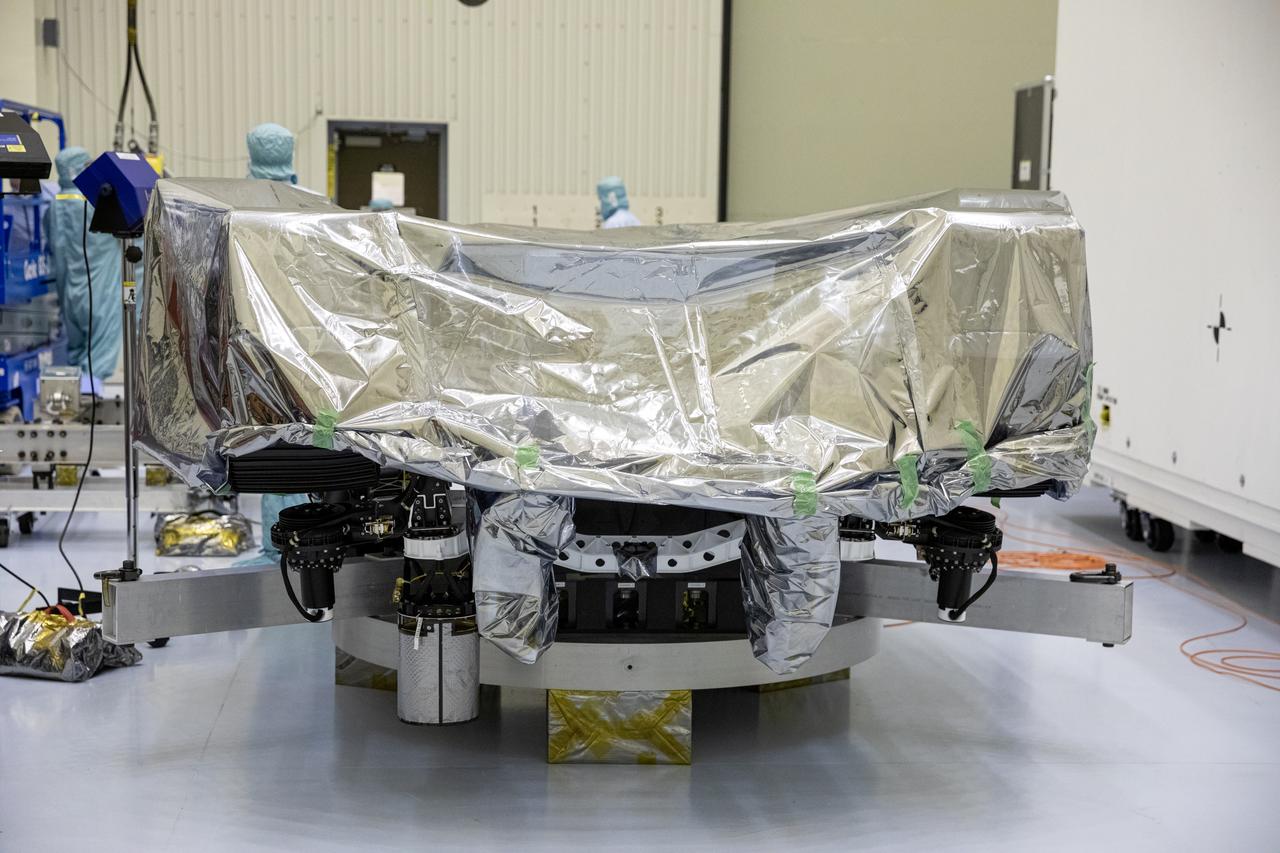
The Mars 2020 rover undergoes processing inside the Payload Hazardous Servicing Facility at NASA’s Kennedy Space Center in Florida on Feb. 13, 2020. The spacecraft was flown to Kennedy from California aboard a C-17 aircraft on Feb. 12. Targeted for mid-July 2020, the mission is scheduled to launch aboard an Atlas V 541 rocket from Cape Canaveral Air Force Station. The launch is managed by the Launch Services Program. The Mars 2020 rover will search for signs of past microbial life, characterize the planet’s climate and geology, collect samples for future return to Earth and pave the way for human exploration of Mars.
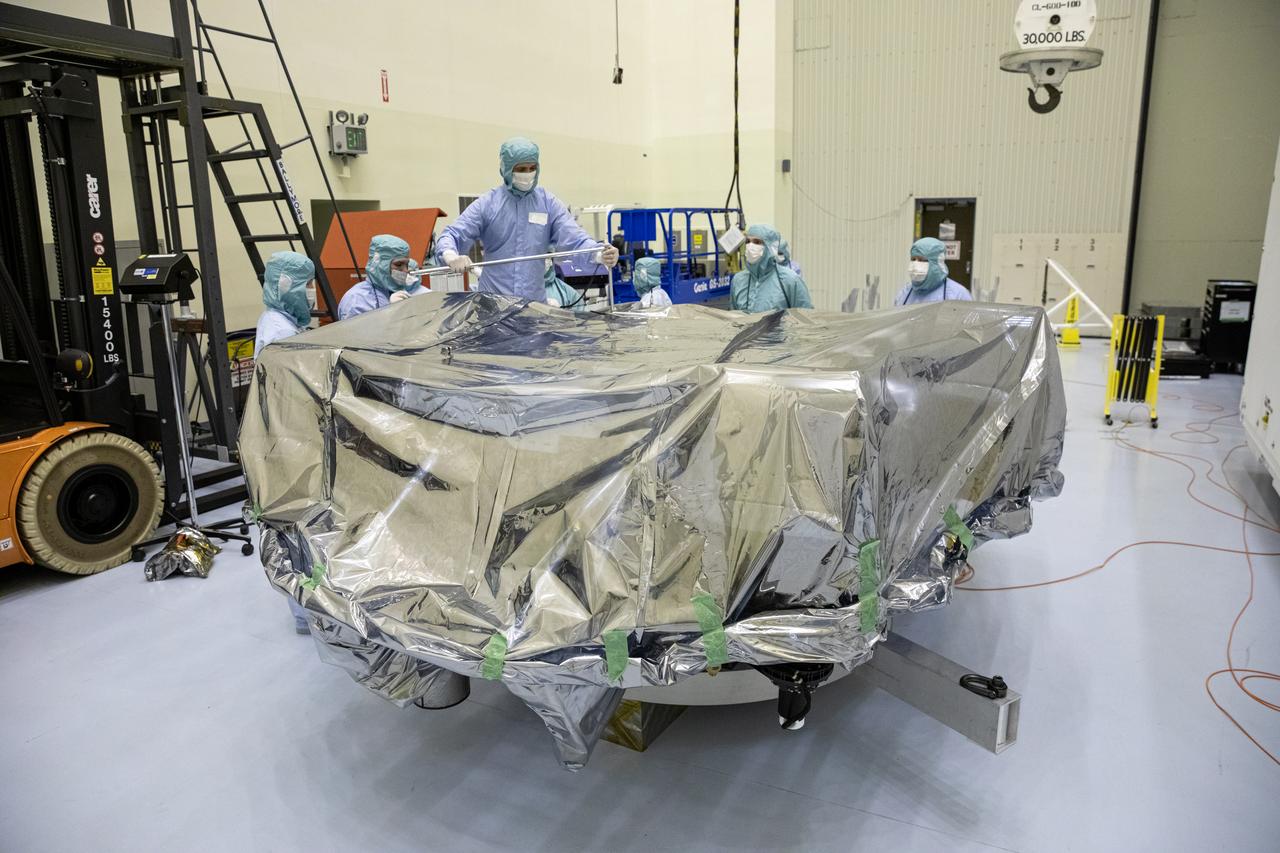
The Mars 2020 rover undergoes processing inside the Payload Hazardous Servicing Facility at NASA’s Kennedy Space Center in Florida on Feb. 13, 2020. The spacecraft was flown to Kennedy from California aboard a C-17 aircraft on Feb. 12. Targeted for mid-July 2020, the mission is scheduled to launch aboard an Atlas V 541 rocket from Cape Canaveral Air Force Station. The launch is managed by the Launch Services Program. The Mars 2020 rover will search for signs of past microbial life, characterize the planet’s climate and geology, collect samples for future return to Earth and pave the way for human exploration of Mars.
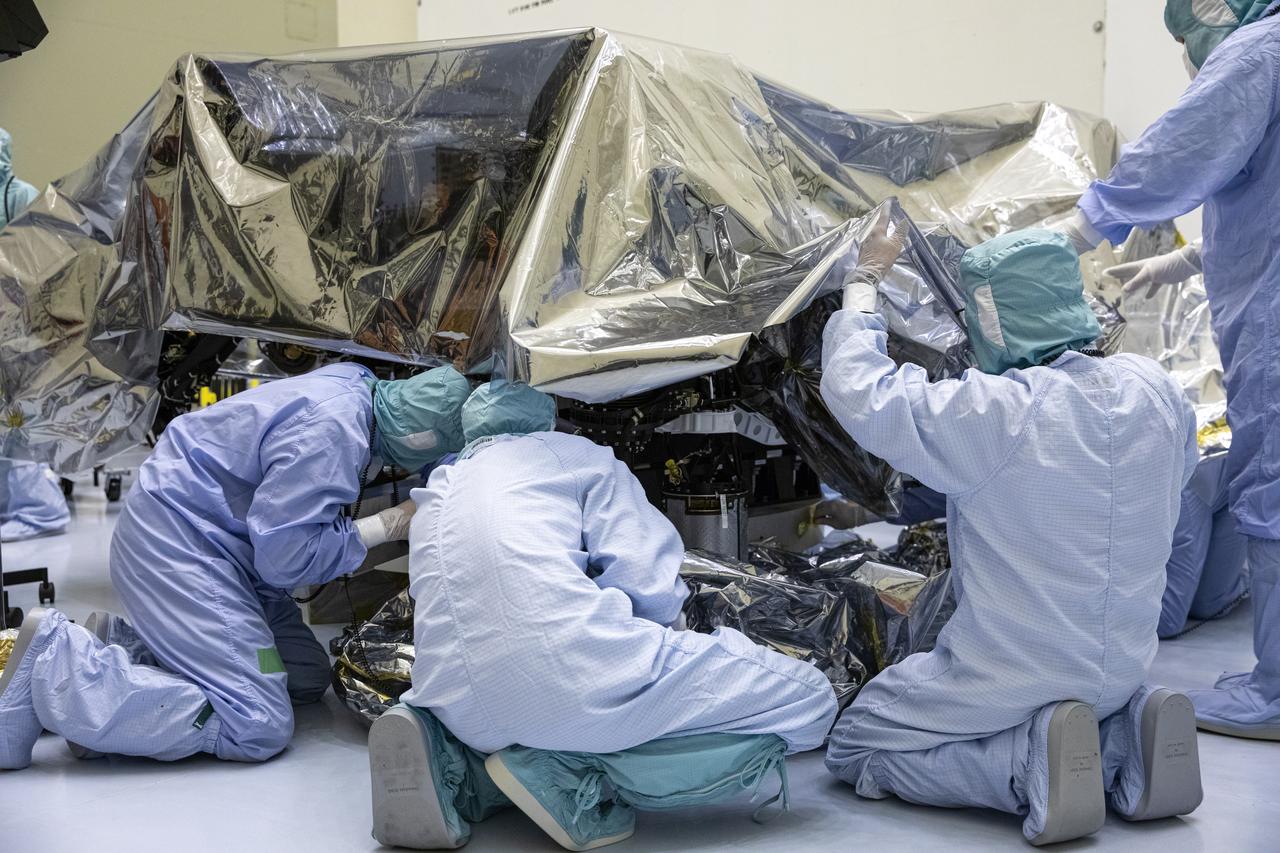
The Mars 2020 rover undergoes processing inside the Payload Hazardous Servicing Facility at NASA’s Kennedy Space Center in Florida on Feb. 13, 2020. The spacecraft was flown to Kennedy from California aboard a C-17 aircraft on Feb. 12. Targeted for mid-July 2020, the mission is scheduled to launch aboard an Atlas V 541 rocket from Cape Canaveral Air Force Station. The launch is managed by the Launch Services Program. The Mars 2020 rover will search for signs of past microbial life, characterize the planet’s climate and geology, collect samples for future return to Earth and pave the way for human exploration of Mars.
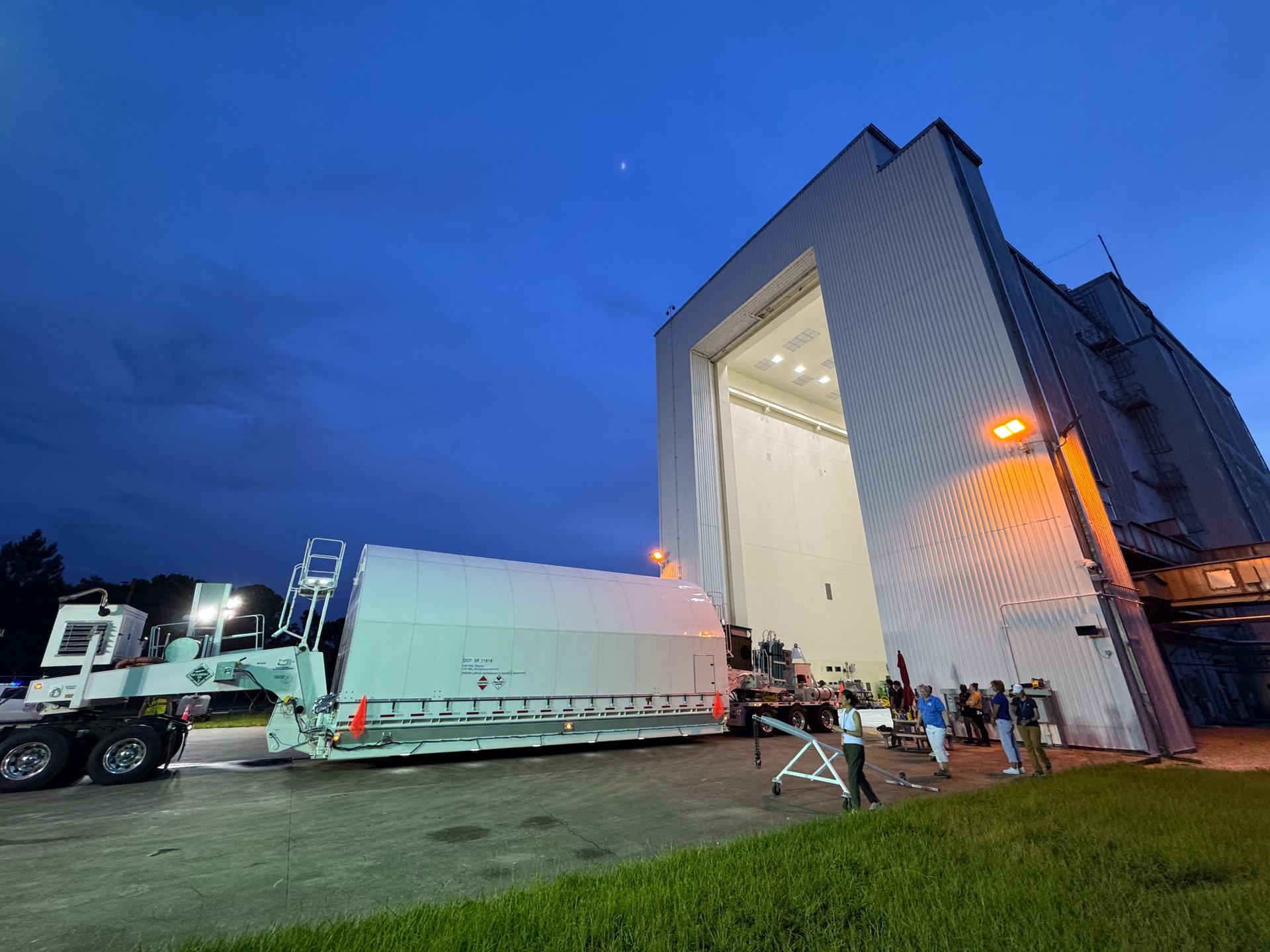
NASA’s Nancy Grace Roman Space Telescope arrives at the Payload Hazardous Servicing Facility at the agency’s Kennedy Space Center in Florida on Sunday, June 21, 2026, to undergo prelaunch processing. Named for NASA’s first chief astronomer and “mother of the Hubble Space Telescope,” Roman will offer a field of view over 100 times larger than Hubble’s to study up to a billion galaxies, directly image exoplanets and planet‑forming disks, and address fundamental questions about dark energy, exoplanets, and infrared astrophysics. Liftoff atop a SpaceX Falcon Heavy rocket from NASA Kennedy’s Launch Complex 39A is targeted no earlier than Sunday, Aug. 30, 2026.

Teams prepare for the arrival of NASA’s Nancy Grace Roman Space Telescope at the Payload Hazardous Servicing Facility at the agency’s Kennedy Space Center in Florida on Sunday, June 21, 2026, to undergo prelaunch processing. Named for NASA’s first chief astronomer and “mother of the Hubble Space Telescope,” Roman will offer a field of view over 100 times larger than Hubble’s to study up to a billion galaxies, directly image exoplanets and planet‑forming disks, and address fundamental questions about dark energy, exoplanets, and infrared astrophysics. Liftoff atop a SpaceX Falcon Heavy rocket from NASA Kennedy’s Launch Complex 39A is targeting no earlier than Sunday, Aug. 30, 2026.

NASA’s Nancy Grace Roman Space Telescope arrives at the Payload Hazardous Servicing Facility at the agency’s Kennedy Space Center in Florida on Sunday, June 21, 2026, to undergo prelaunch processing. Named for NASA’s first chief astronomer and “mother of the Hubble Space Telescope,” Roman will offer a field of view over 100 times larger than Hubble’s to study up to a billion galaxies, directly image exoplanets and planet‑forming disks, and address fundamental questions about dark energy, exoplanets, and infrared astrophysics. Liftoff atop a SpaceX Falcon Heavy rocket from NASA Kennedy’s Launch Complex 39A is targeting no earlier than Sunday, Aug. 30, 2026.

The Mars 2020 rover undergoes processing inside the Payload Hazardous Servicing Facility at NASA’s Kennedy Space Center in Florida on Feb. 13, 2020. The spacecraft was flown to Kennedy from California aboard a C-17 aircraft on Feb. 12. Targeted for mid-July 2020, the mission is scheduled to launch aboard an Atlas V 541 rocket from Cape Canaveral Air Force Station. The launch is managed by the Launch Services Program. The Mars 2020 rover will search for signs of past microbial life, characterize the planet’s climate and geology, collect samples for future return to Earth and pave the way for human exploration of Mars.
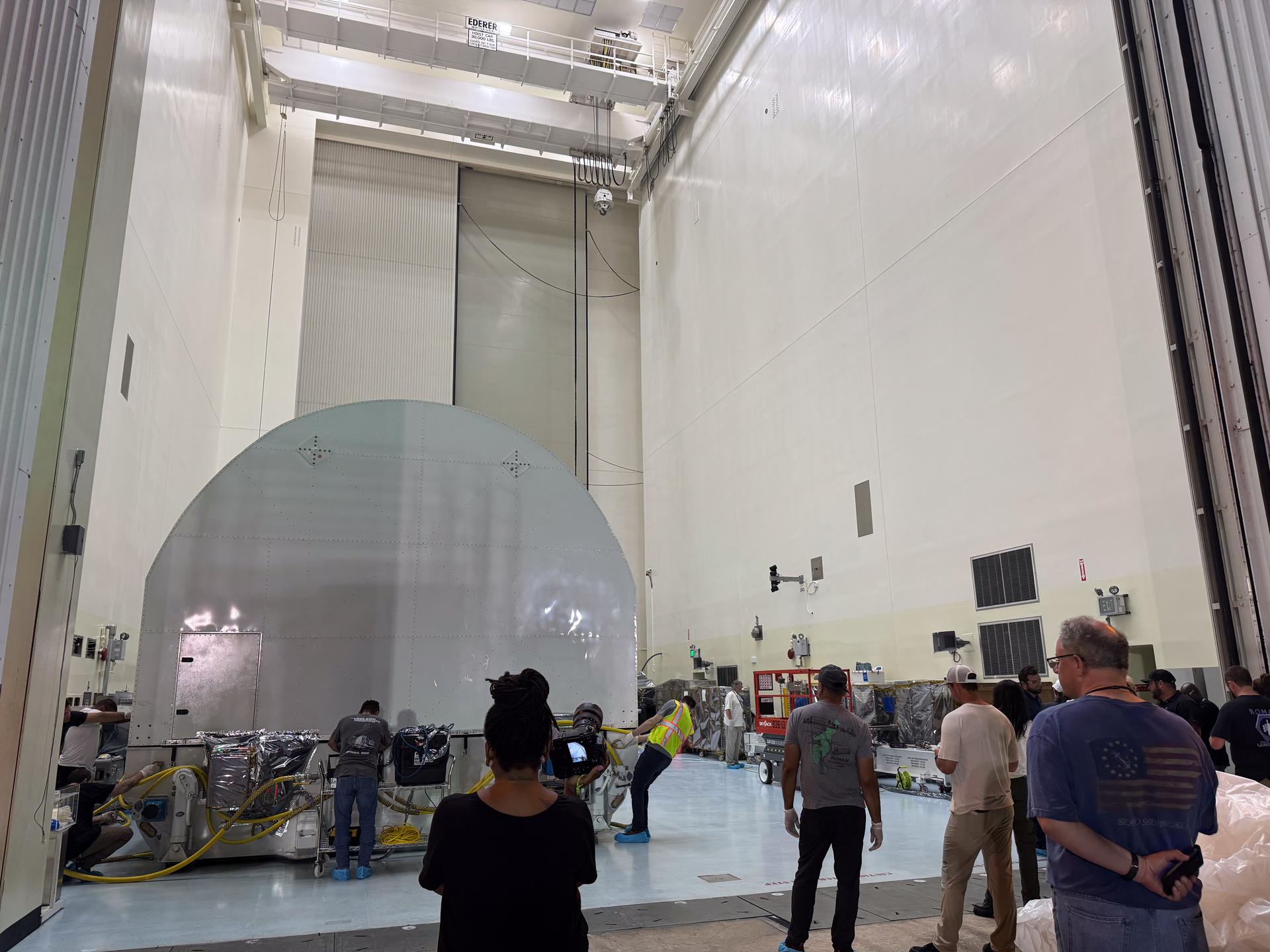
NASA’s Nancy Grace Roman Space Telescope arrives at the Payload Hazardous Servicing Facility at the agency’s Kennedy Space Center in Florida on Sunday, June 21, 2026, to undergo prelaunch processing. Named for NASA’s first chief astronomer and “mother of the Hubble Space Telescope,” Roman will offer a field of view over 100 times larger than Hubble’s to study up to a billion galaxies, directly image exoplanets and planet‑forming disks, and address fundamental questions about dark energy, exoplanets, and infrared astrophysics. Liftoff atop a SpaceX Falcon Heavy rocket from NASA Kennedy’s Launch Complex 39A is targeted no earlier than Sunday, Aug. 30, 2026.
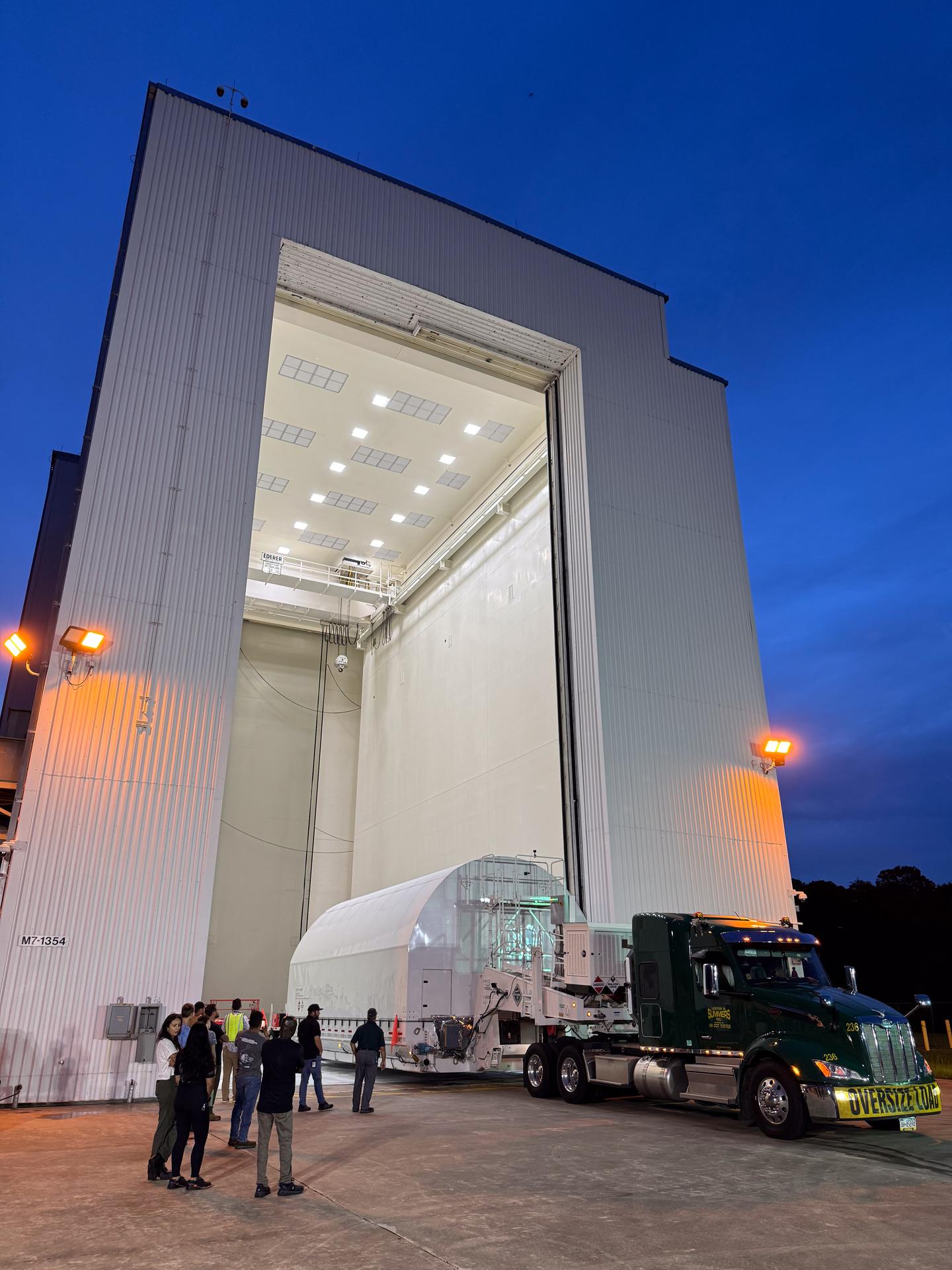
NASA’s Nancy Grace Roman Space Telescope arrives at the Payload Hazardous Servicing Facility at the agency’s Kennedy Space Center in Florida on Sunday, June 21, 2026, to undergo prelaunch processing. Named for NASA’s first chief astronomer and “mother of the Hubble Space Telescope,” Roman will offer a field of view over 100 times larger than Hubble’s to study up to a billion galaxies, directly image exoplanets and planet‑forming disks, and address fundamental questions about dark energy, exoplanets, and infrared astrophysics. Liftoff atop a SpaceX Falcon Heavy rocket from NASA Kennedy’s Launch Complex 39A is targeted no earlier than Sunday, Aug. 30, 2026.
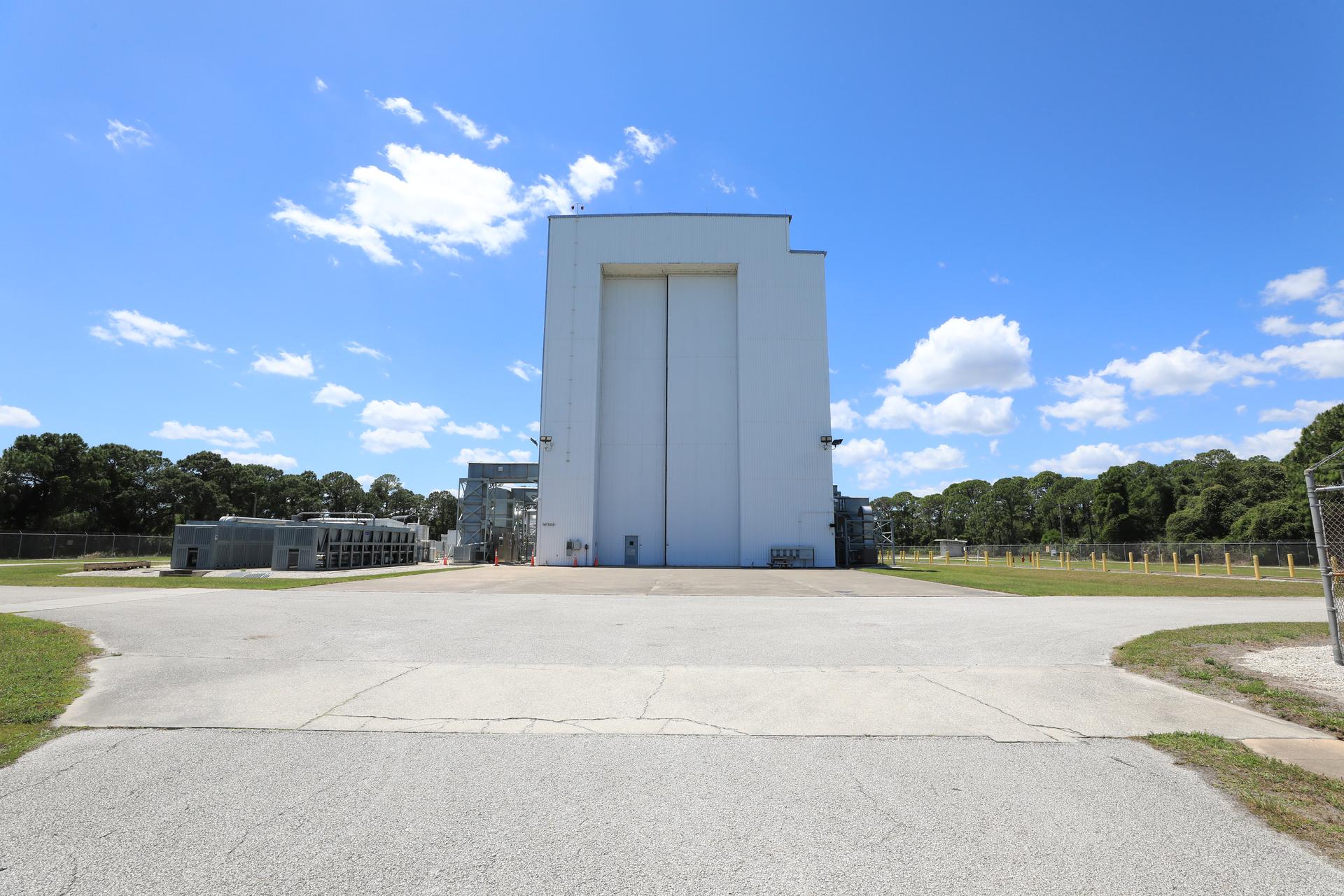
A photograph shows the exterior of NASA’s Payload Hazardous Servicing Facility (PHSF) on Tuesday, April 21, 2026, at NASA’s Kennedy Space Center in Florida. Recently, technicians performed several upgrades to the facility ahead of the arrival of the agency’s Nancy Grace Roman Space Telescope, designed to provide deep, panoramic views of the cosmos, generating never-before-seen pictures that will revolutionize our understanding of the universe. Roman will undergo several prelaunch operations, including thermal protection closeout, cleaning, solar array work, and loading hydrazine propellant. The PHSF is one of the very few facilities where spacecraft undergo both hazardous fueling operations and delicate contamination control procedures.
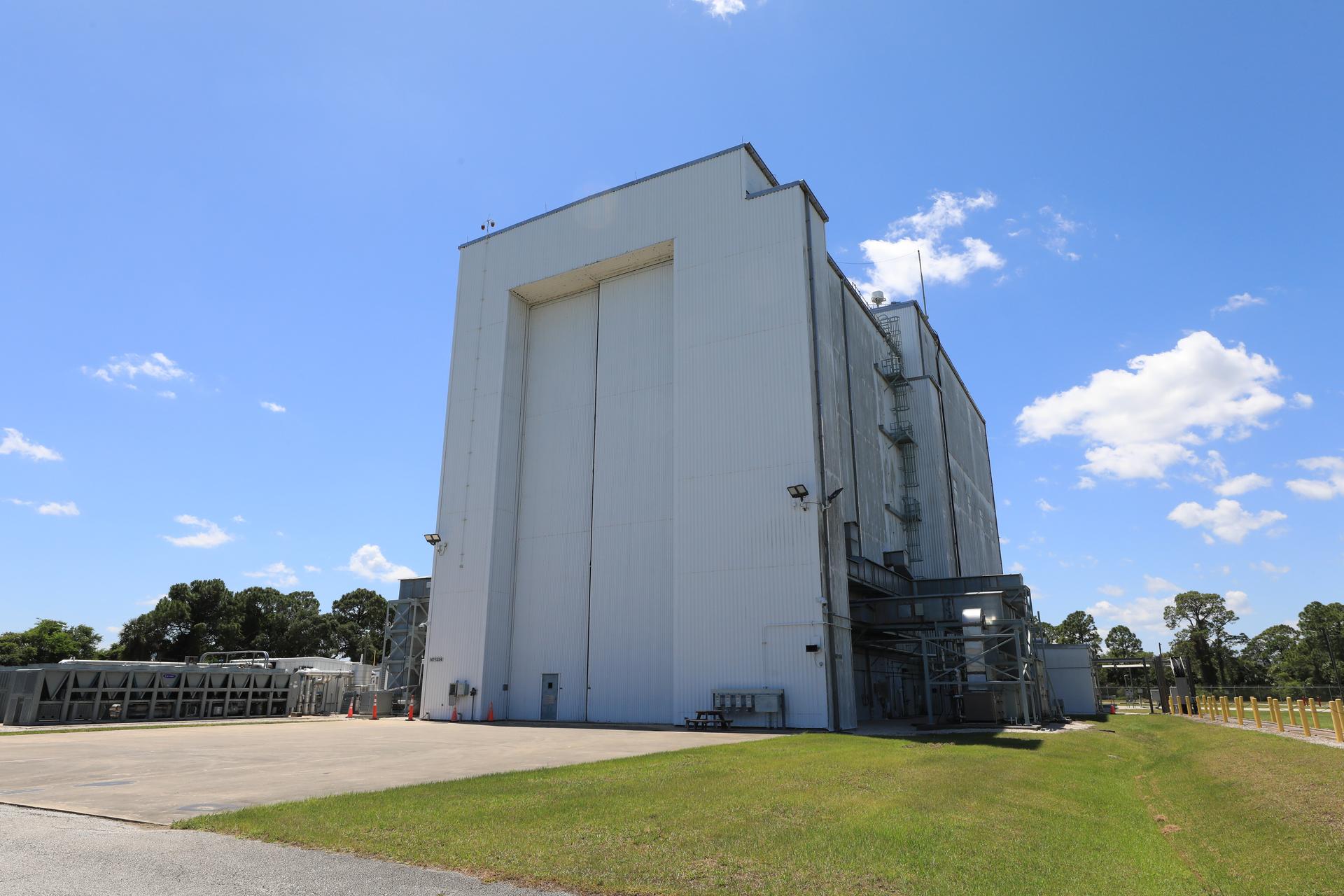
A photograph shows the exterior of NASA’s Payload Hazardous Servicing Facility (PHSF) on Tuesday, April 21, 2026, at NASA’s Kennedy Space Center in Florida. Recently, technicians performed several upgrades to the facility ahead of the arrival of the agency’s Nancy Grace Roman Space Telescope, designed to provide deep, panoramic views of the cosmos, generating never-before-seen pictures that will revolutionize our understanding of the universe. Roman will undergo several prelaunch operations, including thermal protection closeout, cleaning, solar array work, and loading hydrazine propellant. The PHSF is one of the very few facilities where spacecraft undergo both hazardous fueling operations and delicate contamination control procedures.
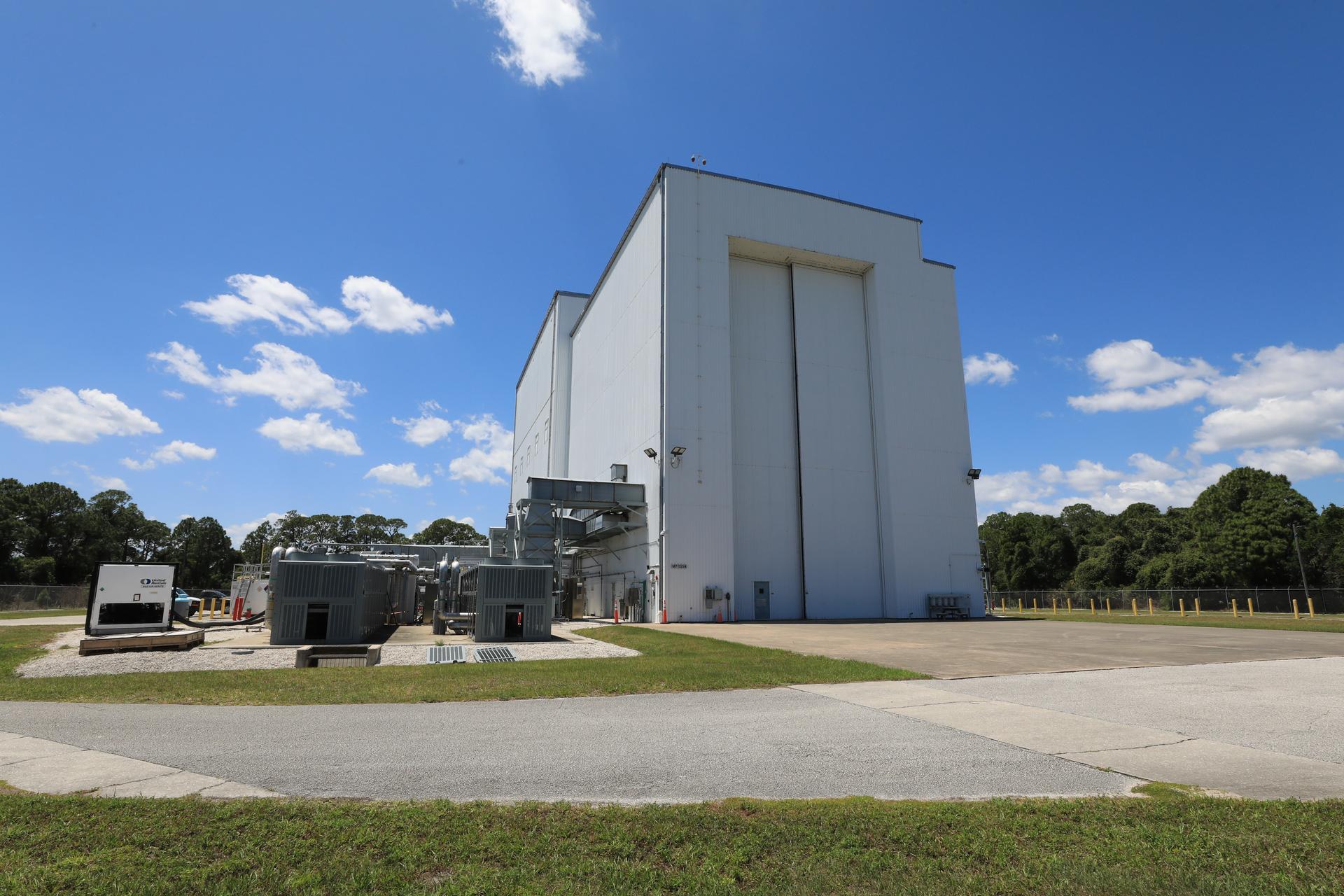
A photograph shows the exterior of NASA’s Payload Hazardous Servicing Facility (PHSF) on Tuesday, April 21, 2026, at NASA’s Kennedy Space Center in Florida. Recently, technicians performed several upgrades to the facility ahead of the arrival of the agency’s Nancy Grace Roman Space Telescope, designed to provide deep, panoramic views of the cosmos, generating never-before-seen pictures that will revolutionize our understanding of the universe. Roman will undergo several prelaunch operations, including thermal protection closeout, cleaning, solar array work, and loading hydrazine propellant. The PHSF is one of the very few facilities where spacecraft undergo both hazardous fueling operations and delicate contamination control procedures.
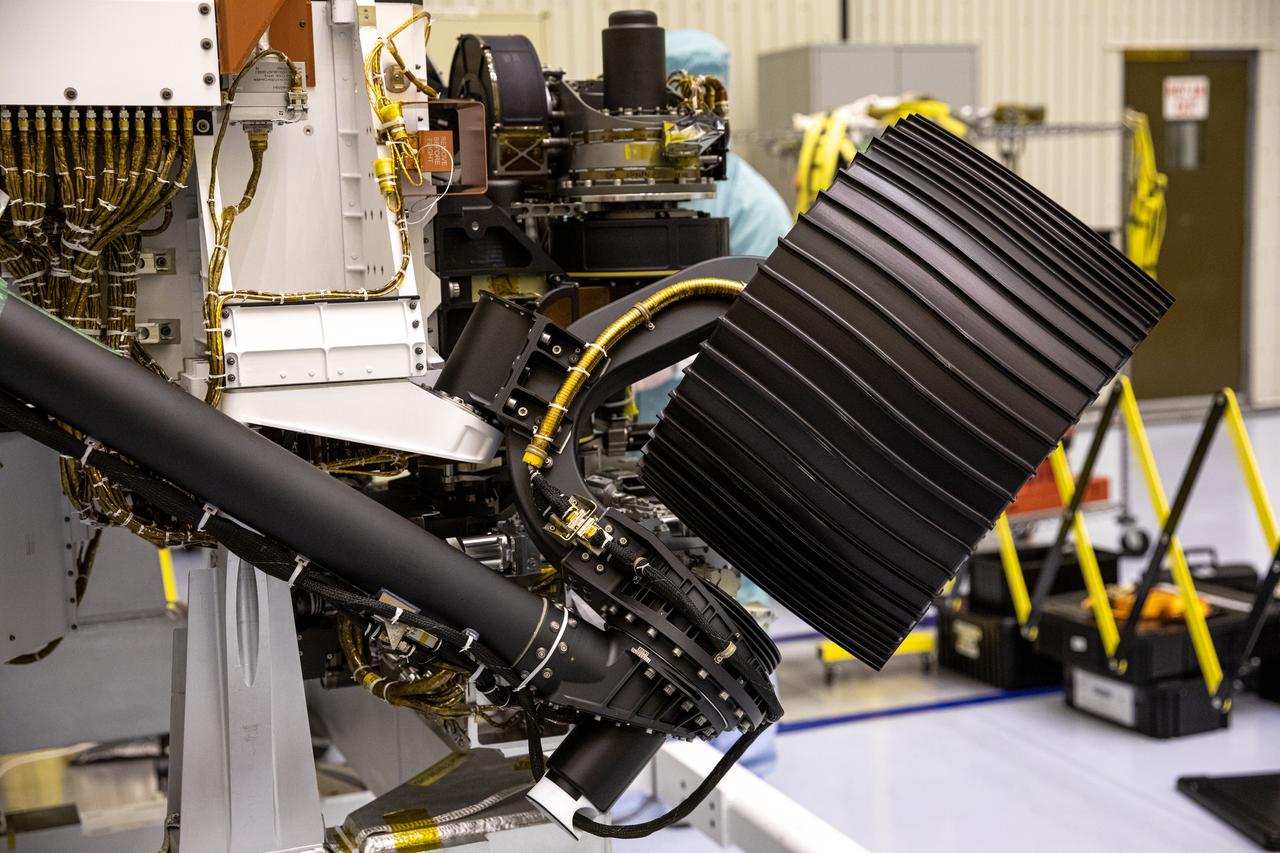
The Mars 2020 rover undergoes processing inside the Payload Hazardous Servicing Facility at NASA’s Kennedy Space Center in Florida on Feb. 14, 2020. Initial processing took place on Feb. 13, one day after a C-17 aircraft, with the rover aboard, touched down at the Launch and Landing Facility at Kennedy. The cross-country trip began at NASA’s Jet Propulsion Laboratory, where the rover was manufactured. The mission, targeted for mid-July 2020, will launch aboard an Atlas V 541 rocket from Cape Canaveral Air Force Station. NASA’s Launch Services Program based at Kennedy is managing the launch. Click here for more information on the Mars 2020 rover mission.
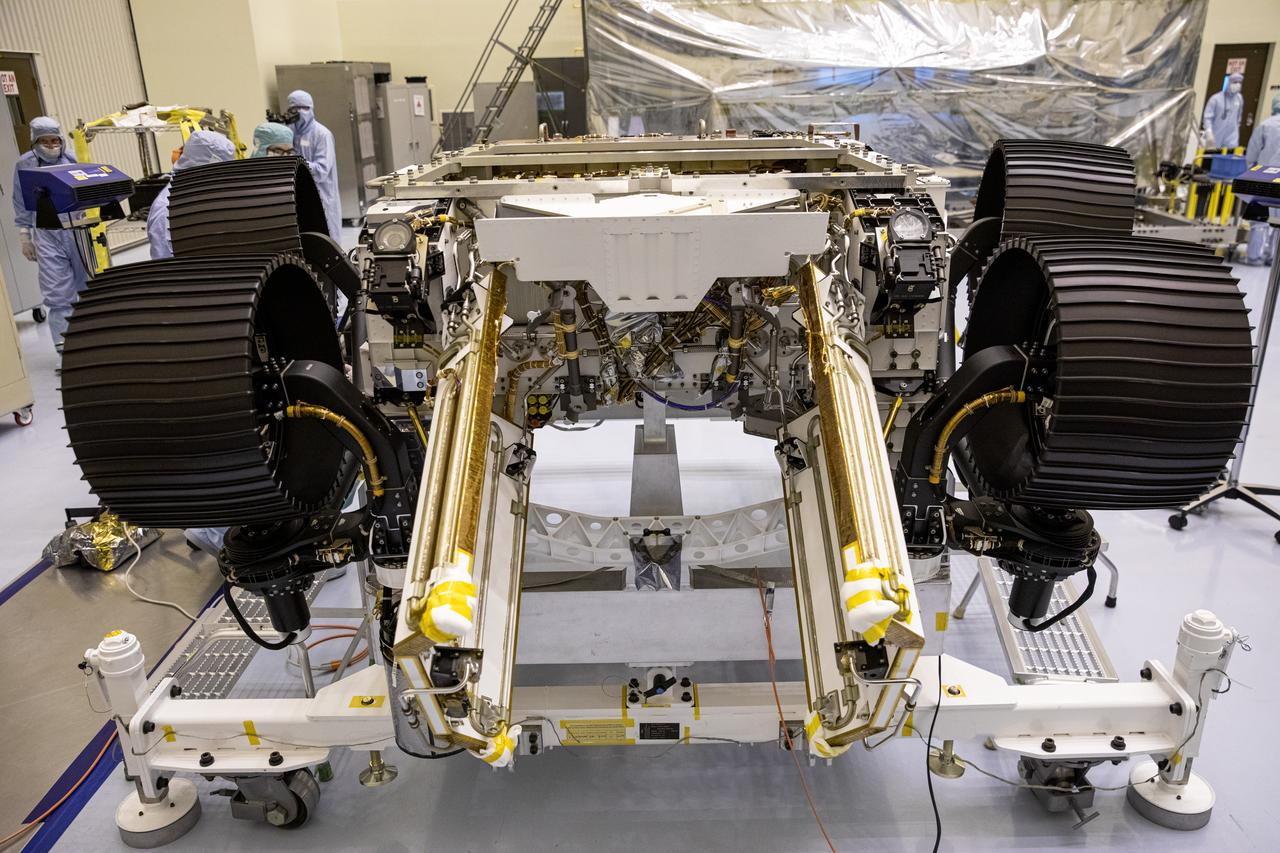
The Mars 2020 rover undergoes processing inside the Payload Hazardous Servicing Facility at NASA’s Kennedy Space Center in Florida on Feb. 14, 2020. Initial processing took place on Feb. 13, one day after a C-17 aircraft, with the rover aboard, touched down at the Launch and Landing Facility at Kennedy. The cross-country trip began at NASA’s Jet Propulsion Laboratory, where the rover was manufactured. The mission, targeted for mid-July 2020, will launch aboard an Atlas V 541 rocket from Cape Canaveral Air Force Station. NASA’s Launch Services Program based at Kennedy is managing the launch. Click here for more information on the Mars 2020 rover mission.
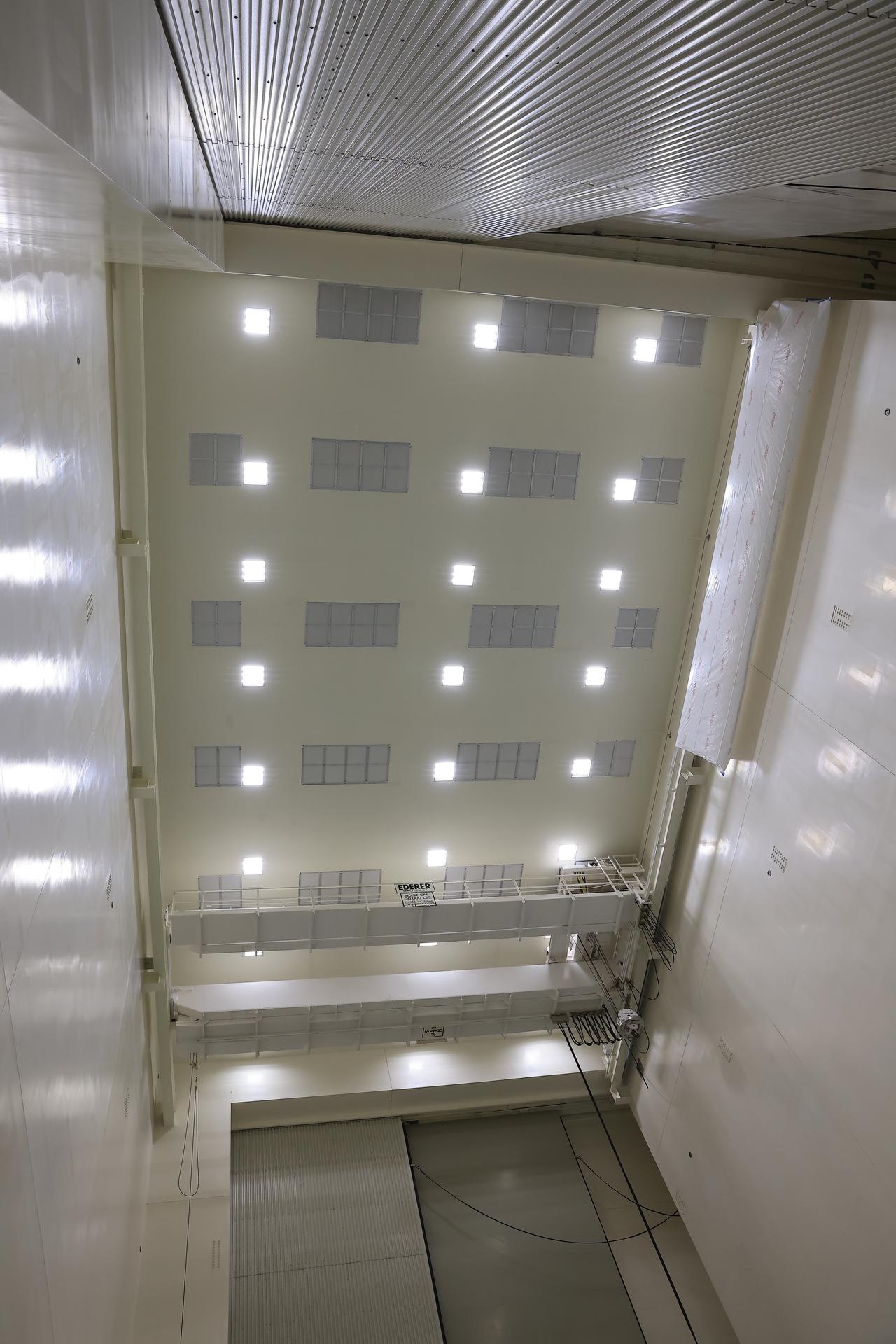
This photograph shows a newly repainted crane mounted inside NASA’s Payload Hazardous Servicing Facility on Friday, Feb. 27, 2026, preparations for the arrival of the agency’s Nancy Grace Roman Space Telescope to NASA’s Kennedy Space Center in Florida. Workers repainted the facility’s 15-ton bridge crane to prevent any paint chips from becoming foreign object debris. The Roman space telescope will provide deep, panoramic views of the cosmos, generating never-before-seen pictures that will revolutionize our understanding of the universe. Roman will undergo several prelaunch operations, including thermal protection closeout, cleaning, solar array work, and loading hydrazine propellant.
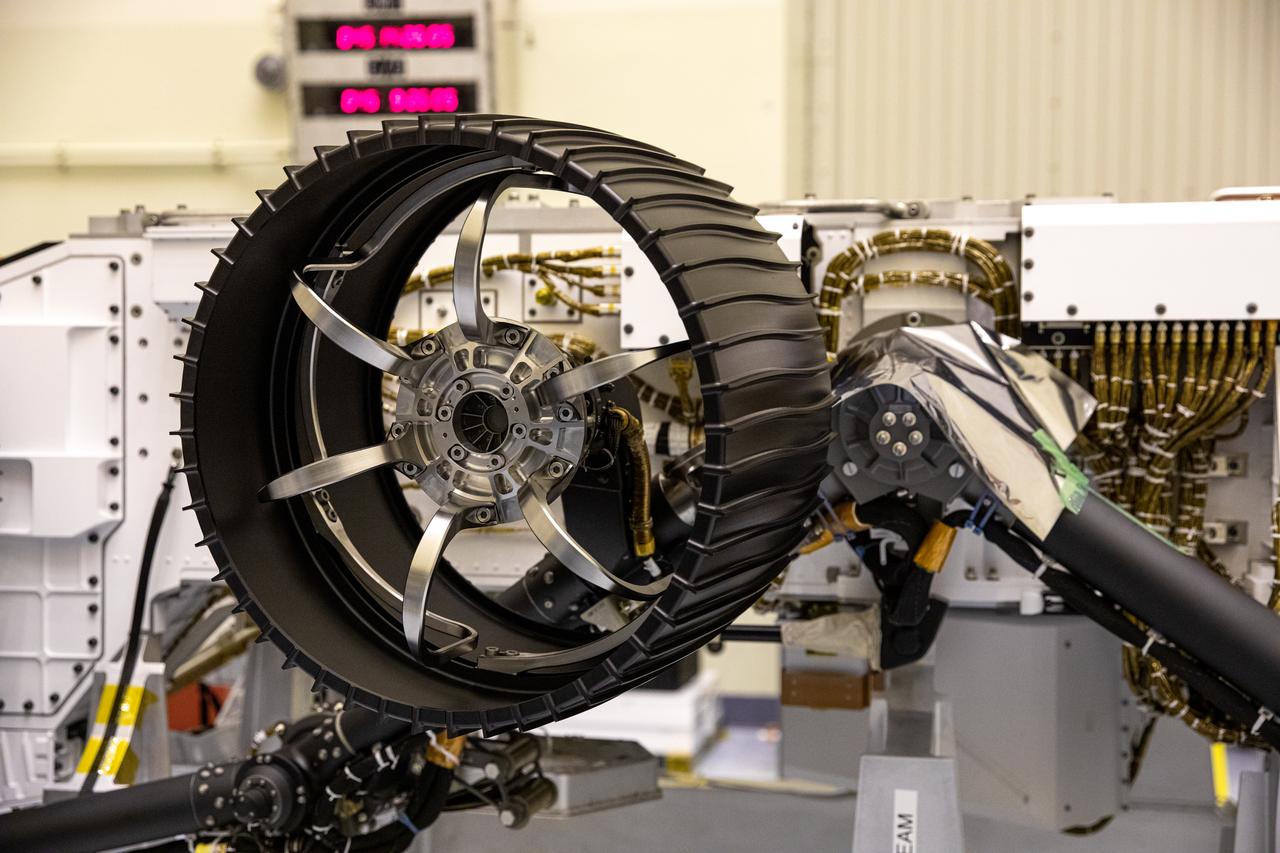
The Mars 2020 rover undergoes processing inside the Payload Hazardous Servicing Facility at NASA’s Kennedy Space Center in Florida on Feb. 14, 2020. Initial processing took place on Feb. 13, one day after a C-17 aircraft, with the rover aboard, touched down at the Launch and Landing Facility at Kennedy. The cross-country trip began at NASA’s Jet Propulsion Laboratory, where the rover was manufactured. The mission, targeted for mid-July 2020, will launch aboard an Atlas V 541 rocket from Cape Canaveral Air Force Station. NASA’s Launch Services Program based at Kennedy is managing the launch. Click here for more information on the Mars 2020 rover mission.
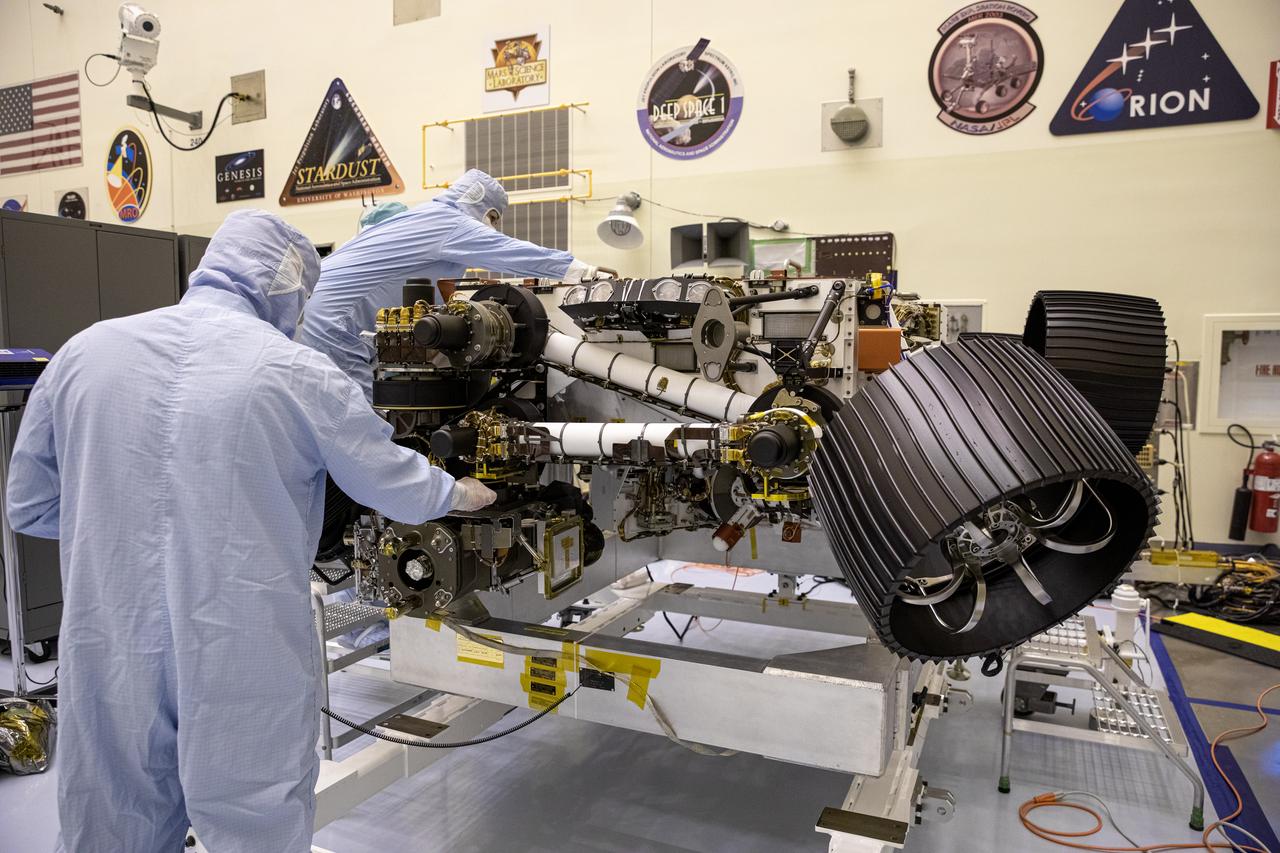
The Mars 2020 rover undergoes processing inside the Payload Hazardous Servicing Facility at NASA’s Kennedy Space Center in Florida on Feb. 14, 2020. Initial processing took place on Feb. 13, one day after a C-17 aircraft, with the rover aboard, touched down at the Launch and Landing Facility at Kennedy. The cross-country trip began at NASA’s Jet Propulsion Laboratory, where the rover was manufactured. The mission, targeted for mid-July 2020, will launch aboard an Atlas V 541 rocket from Cape Canaveral Air Force Station. NASA’s Launch Services Program based at Kennedy is managing the launch. Click here for more information on the Mars 2020 rover mission.
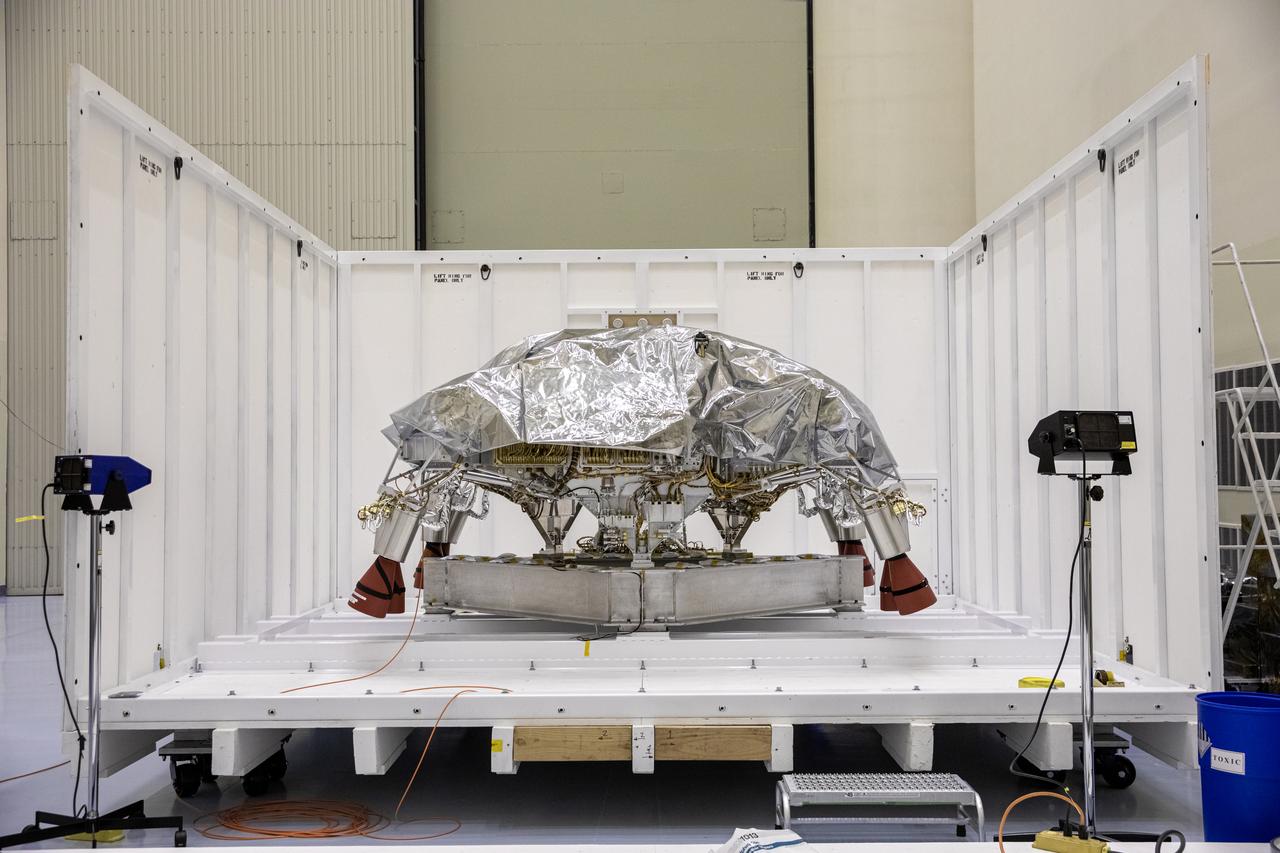
The Mars 2020 rover undergoes processing inside the Payload Hazardous Servicing Facility at NASA’s Kennedy Space Center in Florida on Feb. 14, 2020. Initial processing took place on Feb. 13, one day after a C-17 aircraft, with the rover aboard, touched down at the Launch and Landing Facility at Kennedy. The cross-country trip began at NASA’s Jet Propulsion Laboratory, where the rover was manufactured. The mission, targeted for mid-July 2020, will launch aboard an Atlas V 541 rocket from Cape Canaveral Air Force Station. NASA’s Launch Services Program based at Kennedy is managing the launch. Click here for more information on the Mars 2020 rover mission.
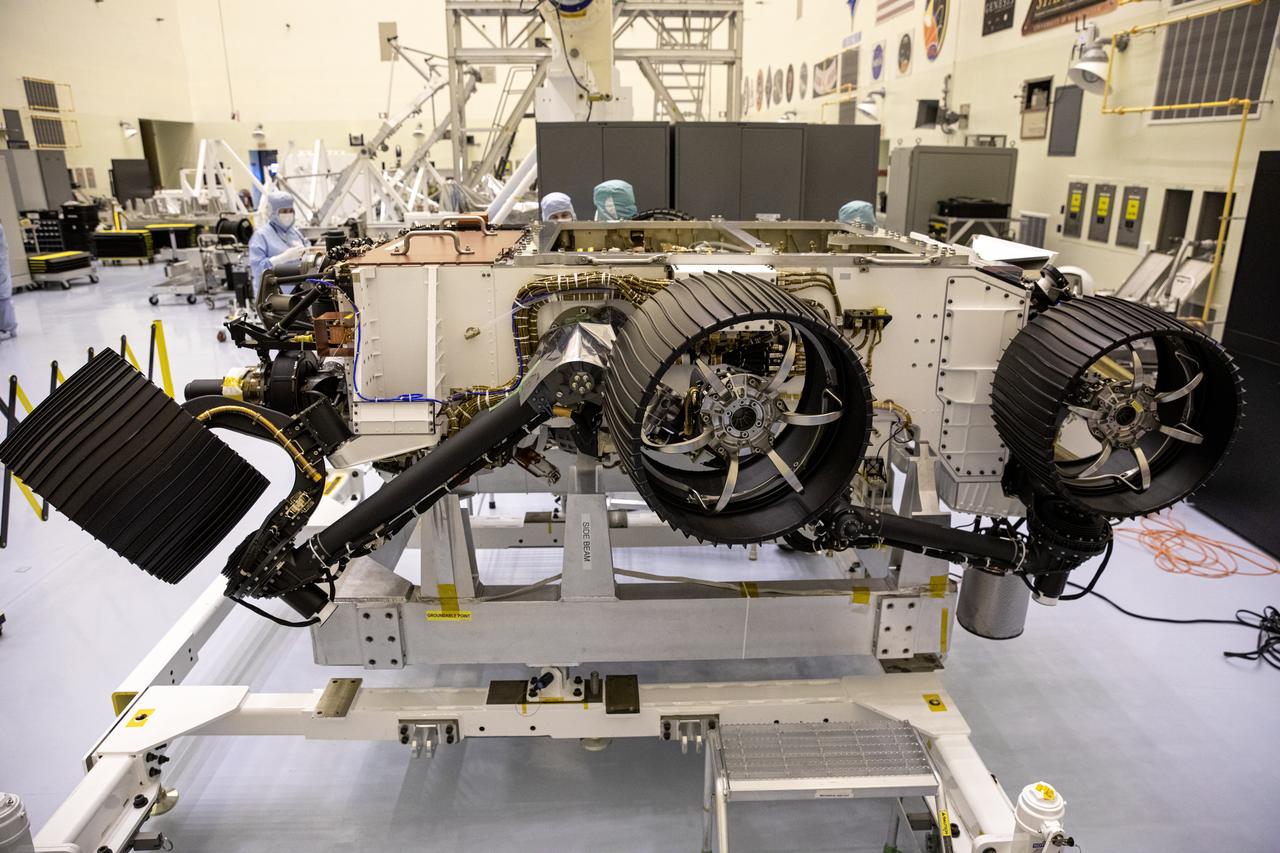
The Mars 2020 rover undergoes processing inside the Payload Hazardous Servicing Facility at NASA’s Kennedy Space Center in Florida on Feb. 14, 2020. Initial processing took place on Feb. 13, one day after a C-17 aircraft, with the rover aboard, touched down at the Launch and Landing Facility at Kennedy. The cross-country trip began at NASA’s Jet Propulsion Laboratory, where the rover was manufactured. The mission, targeted for mid-July 2020, will launch aboard an Atlas V 541 rocket from Cape Canaveral Air Force Station. NASA’s Launch Services Program based at Kennedy is managing the launch. Click here for more information on the Mars 2020 rover mission.
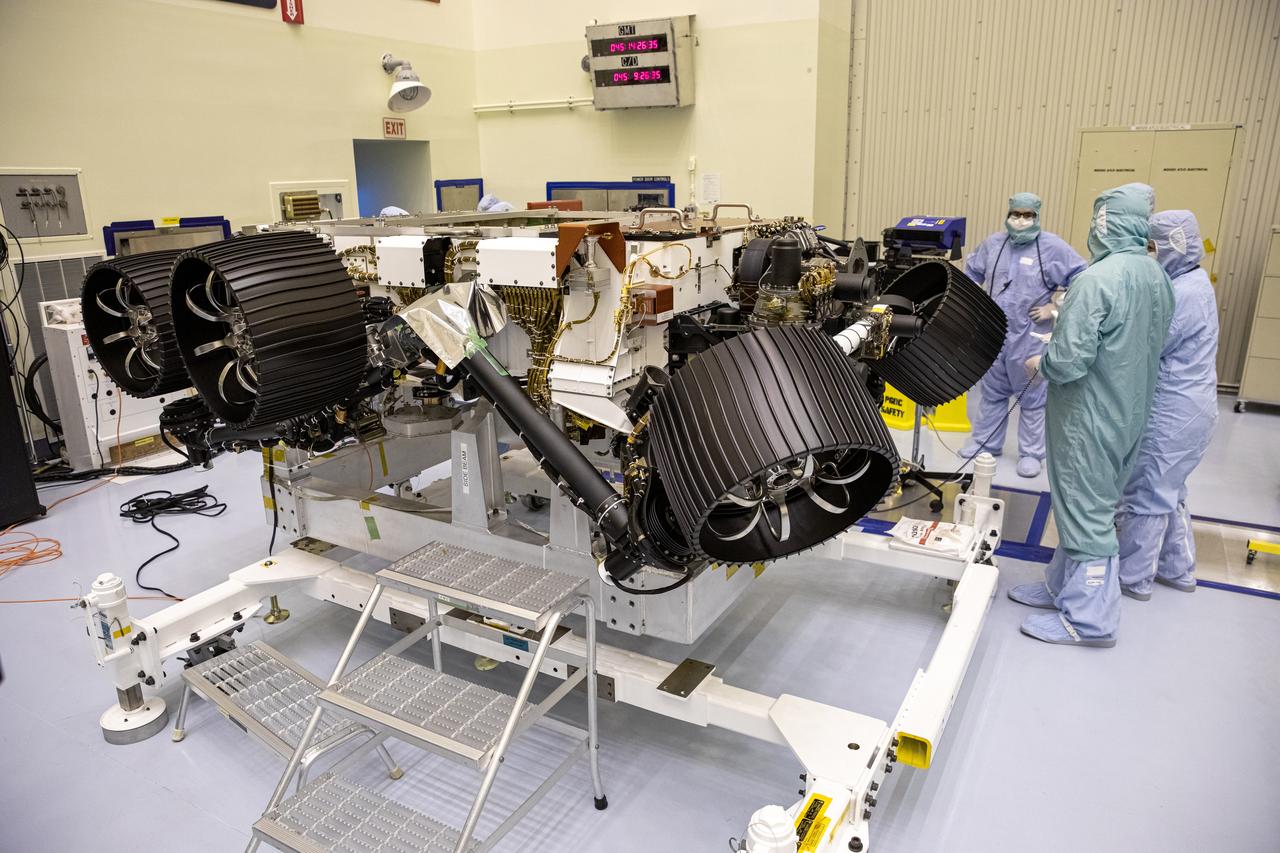
The Mars 2020 rover undergoes processing inside the Payload Hazardous Servicing Facility at NASA’s Kennedy Space Center in Florida on Feb. 14, 2020. Initial processing took place on Feb. 13, one day after a C-17 aircraft, with the rover aboard, touched down at the Launch and Landing Facility at Kennedy. The cross-country trip began at NASA’s Jet Propulsion Laboratory, where the rover was manufactured. The mission, targeted for mid-July 2020, will launch aboard an Atlas V 541 rocket from Cape Canaveral Air Force Station. NASA’s Launch Services Program based at Kennedy is managing the launch. Click here for more information on the Mars 2020 rover mission.
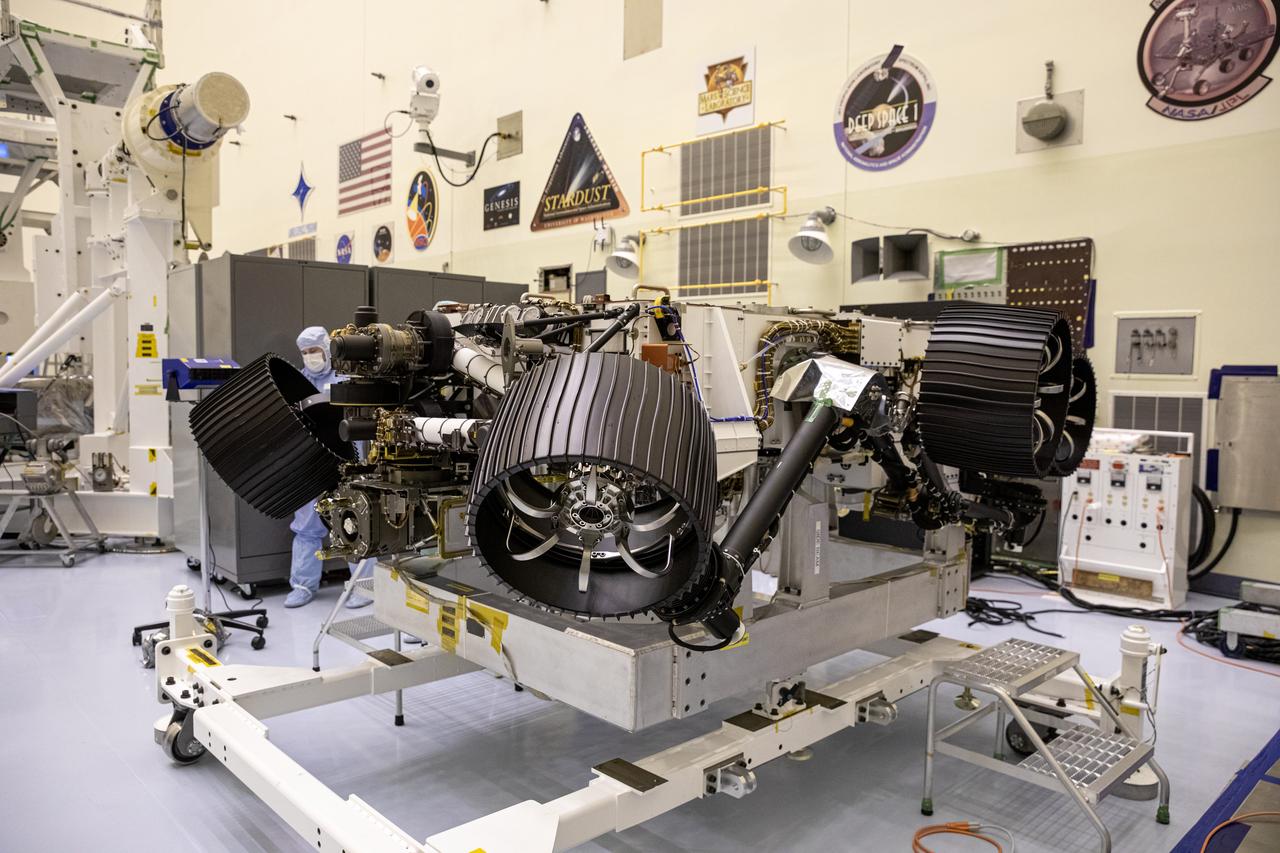
The Mars 2020 rover undergoes processing inside the Payload Hazardous Servicing Facility at NASA’s Kennedy Space Center in Florida on Feb. 14, 2020. Initial processing took place on Feb. 13, one day after a C-17 aircraft, with the rover aboard, touched down at the Launch and Landing Facility at Kennedy. The cross-country trip began at NASA’s Jet Propulsion Laboratory, where the rover was manufactured. The mission, targeted for mid-July 2020, will launch aboard an Atlas V 541 rocket from Cape Canaveral Air Force Station. NASA’s Launch Services Program based at Kennedy is managing the launch. Click here for more information on the Mars 2020 rover mission.
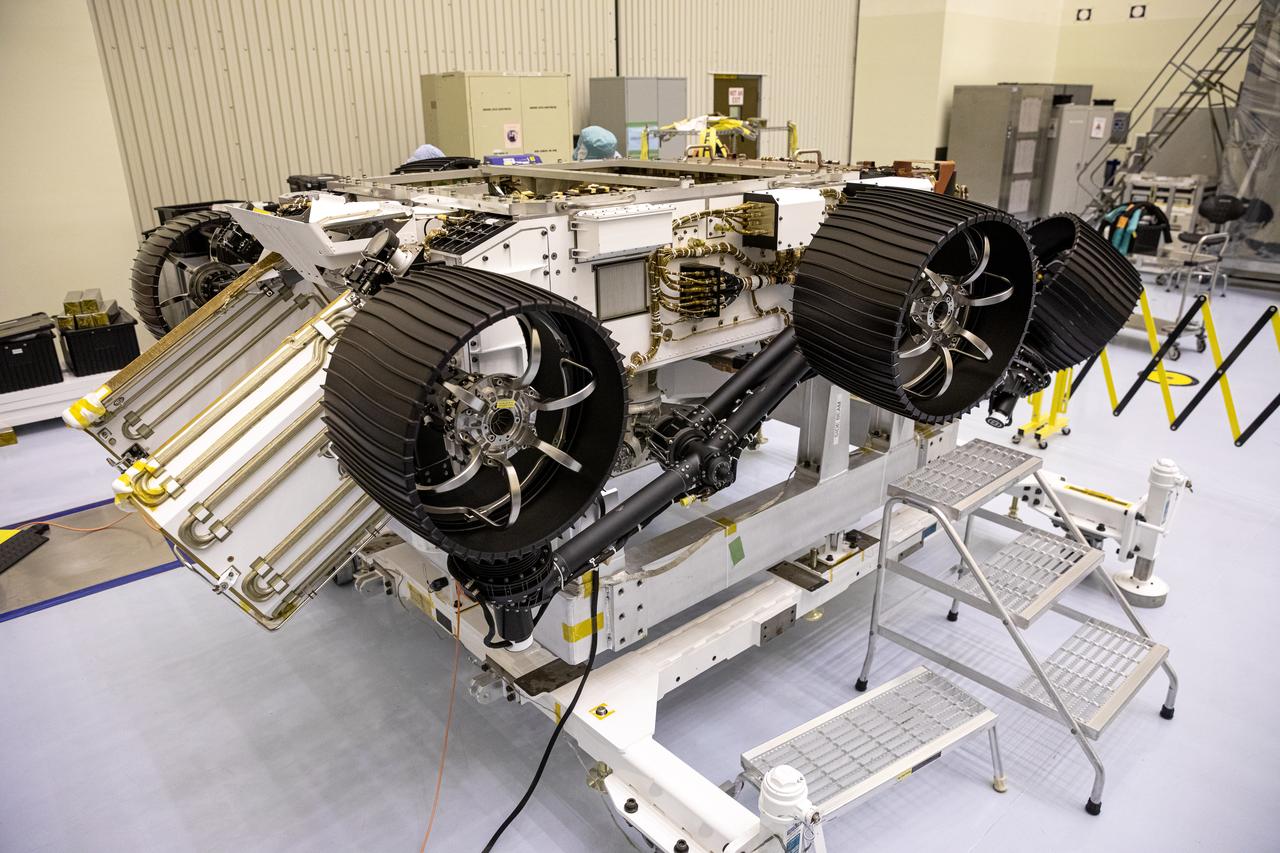
The Mars 2020 rover undergoes processing inside the Payload Hazardous Servicing Facility at NASA’s Kennedy Space Center in Florida on Feb. 14, 2020. Initial processing took place on Feb. 13, one day after a C-17 aircraft, with the rover aboard, touched down at the Launch and Landing Facility at Kennedy. The cross-country trip began at NASA’s Jet Propulsion Laboratory, where the rover was manufactured. The mission, targeted for mid-July 2020, will launch aboard an Atlas V 541 rocket from Cape Canaveral Air Force Station. NASA’s Launch Services Program based at Kennedy is managing the launch. Click here for more information on the Mars 2020 rover mission.
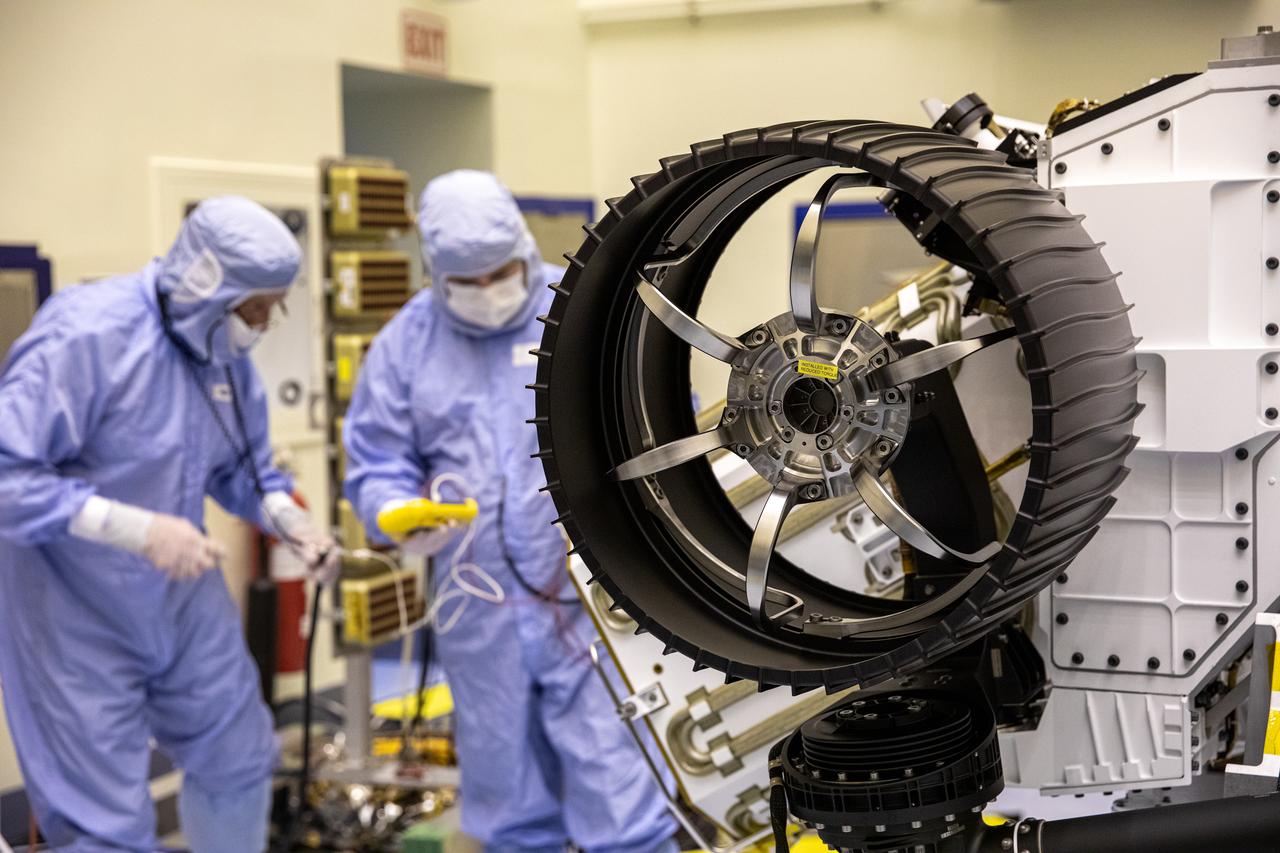
The Mars 2020 rover undergoes processing inside the Payload Hazardous Servicing Facility at NASA’s Kennedy Space Center in Florida on Feb. 14, 2020. Initial processing took place on Feb. 13, one day after a C-17 aircraft, with the rover aboard, touched down at the Launch and Landing Facility at Kennedy. The cross-country trip began at NASA’s Jet Propulsion Laboratory, where the rover was manufactured. The mission, targeted for mid-July 2020, will launch aboard an Atlas V 541 rocket from Cape Canaveral Air Force Station. NASA’s Launch Services Program based at Kennedy is managing the launch. Click here for more information on the Mars 2020 rover mission.
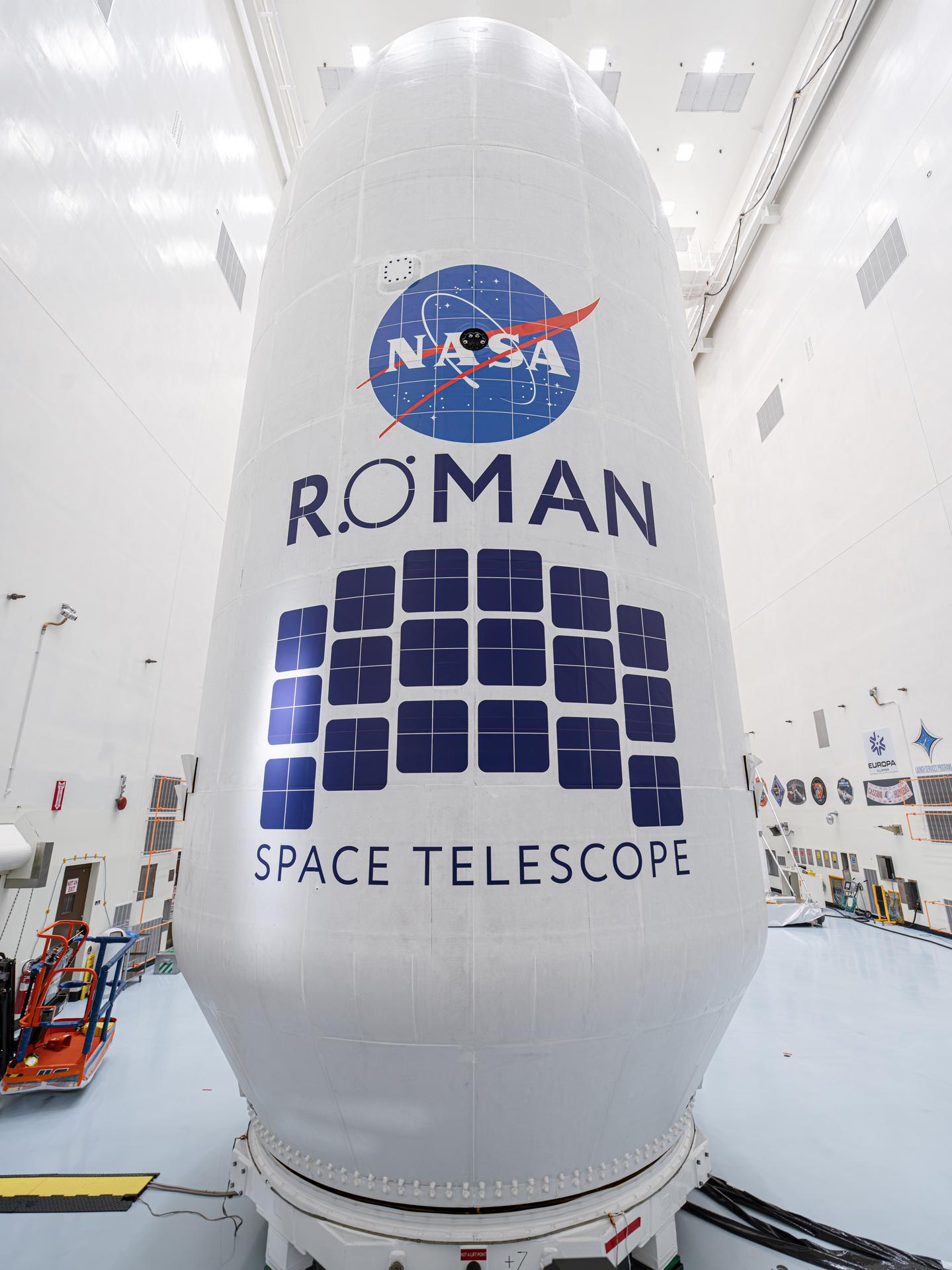
Teams inside the Payload Hazardous Servicing Facility at NASA’s Kennedy Space Center in Florida encapsulate the agency’s Nancy Grace Roman Space Telescope within the payload fairing on Friday, Aug. 21, 2026, ahead of mating to a SpaceX Falcon Heavy rocket. Encapsulation shields the spacecraft during rollout, ascent, and the early phases of flight. Roman will investigate dark energy and dark matter, conduct a statistical census of planetary systems, and enable a broad range of additional astrophysics research. Liftoff from Launch Complex 39A at Kennedy is targeted for no earlier than Sunday, Aug. 30, 2026.
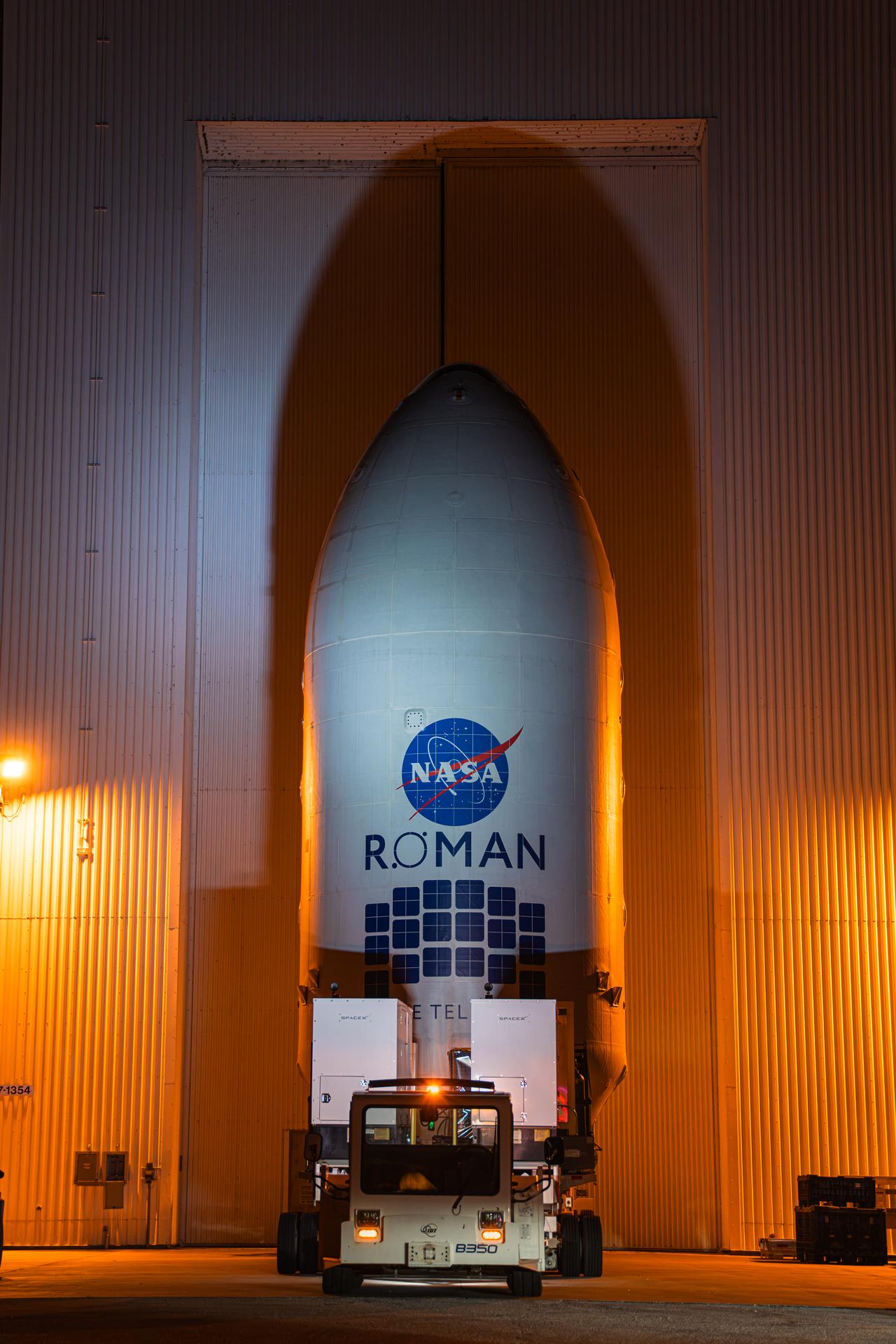
Teams inside the Payload Hazardous Servicing Facility at NASA’s Kennedy Space Center in Florida encapsulate the agency’s Nancy Grace Roman Space Telescope within the payload fairing on Friday, Aug. 21, 2026, ahead of mating to a SpaceX Falcon Heavy rocket. Encapsulation shields the spacecraft during rollout, ascent, and the early phases of flight. Roman will investigate dark energy and dark matter, conduct a statistical census of planetary systems, and enable a broad range of additional astrophysics research. Liftoff from Launch Complex 39A at Kennedy is targeted for no earlier than Sunday, Aug. 30, 2026.
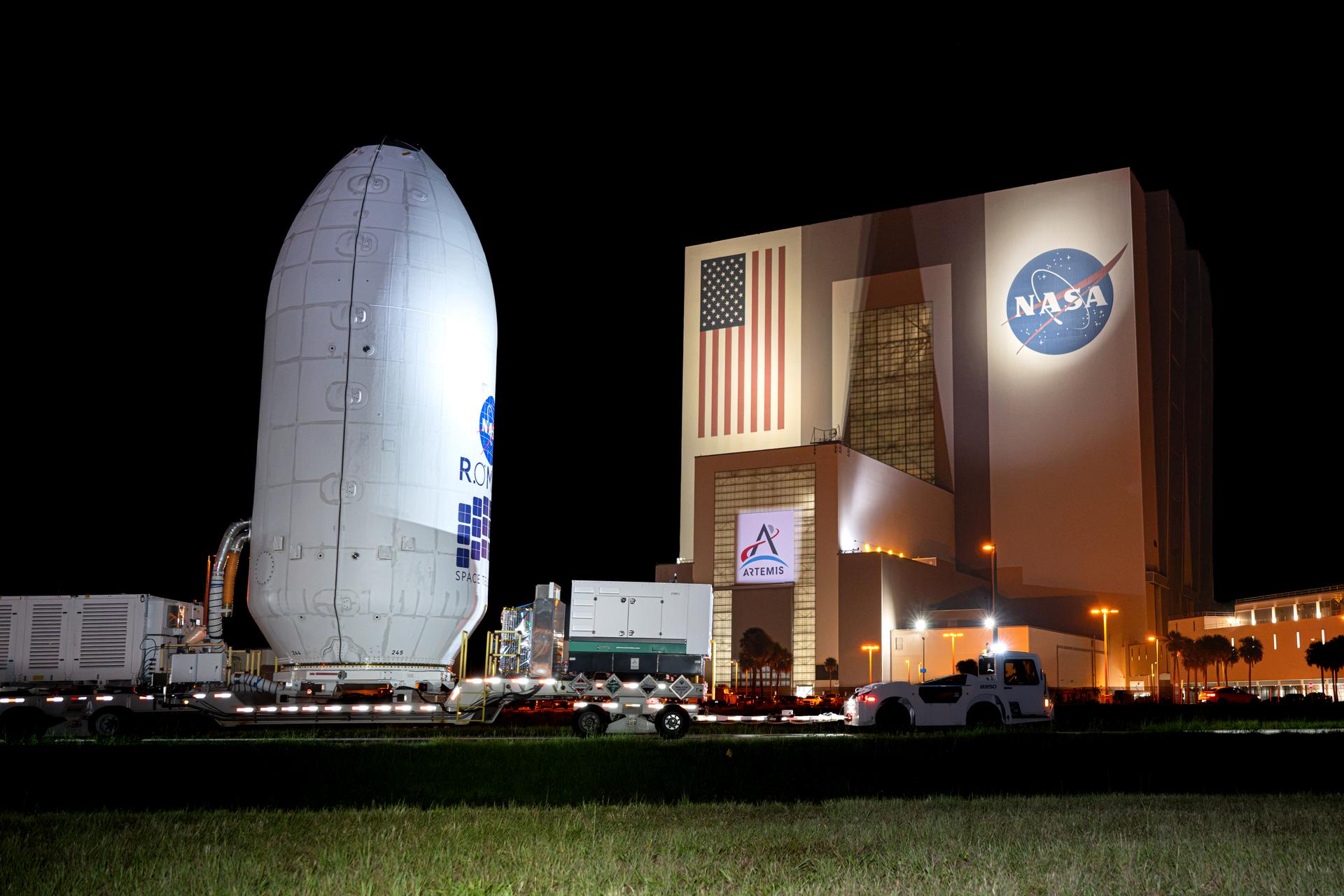
NASA’s Nancy Grace Roman Space Telescope, encapsulated in its payload fairing, travels from the Payload Hazardous Servicing Facility to the SpaceX hangar at Launch Complex 39A at NASA’s Kennedy Space Center on Tuesday, Aug. 25, 2026, ahead of mating to a SpaceX Falcon Heavy rocket. Roman’s science instruments are designed to help researchers understand dark energy, the mysterious force accelerating the universe’s expansion. The observatory also will map how galaxies form, cluster, and evolve by tracing the influence of dark matter. Liftoff from NASA Kennedy is targeted no earlier than Sunday, Aug. 30, 2026.
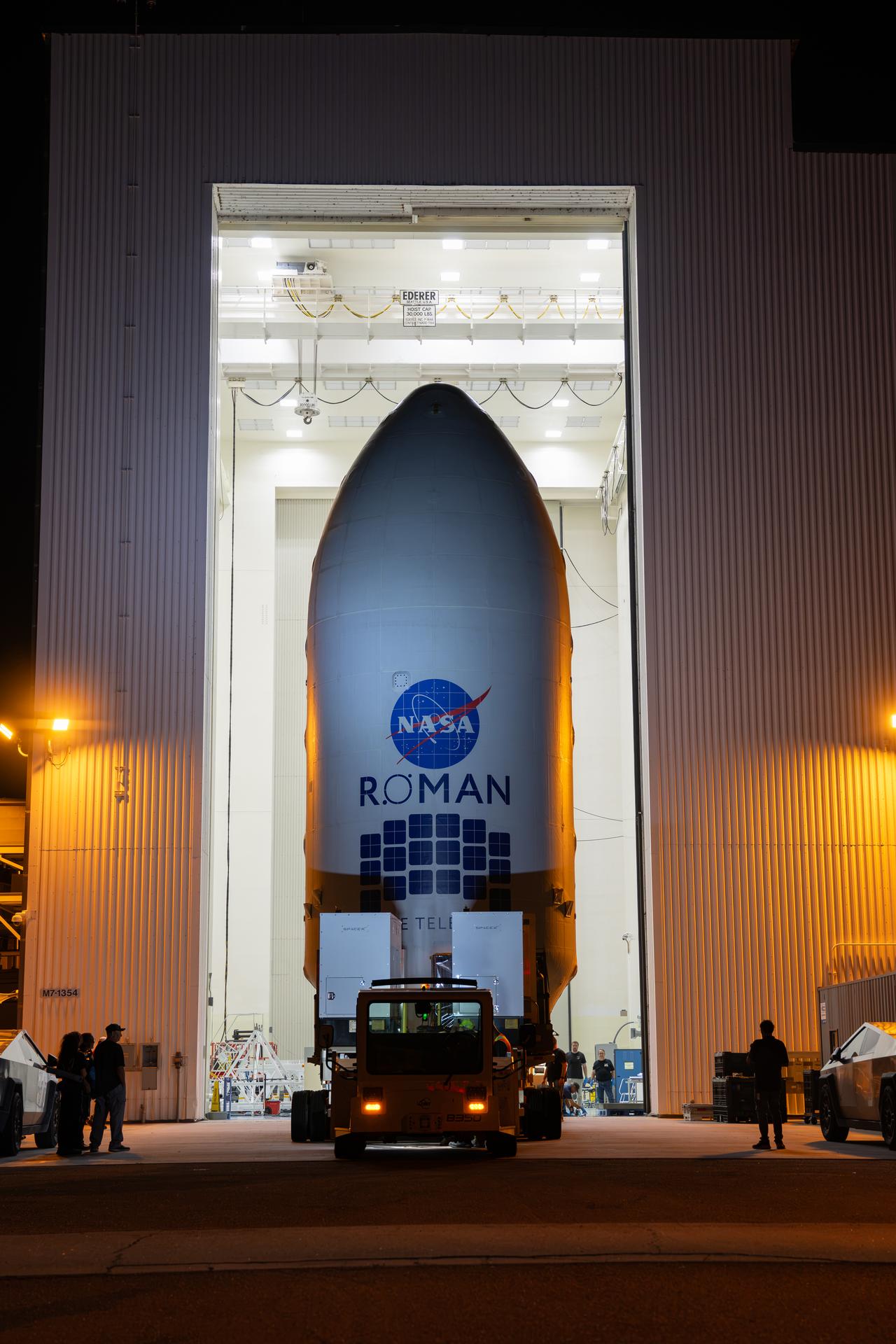
Teams inside the Payload Hazardous Servicing Facility at NASA’s Kennedy Space Center in Florida encapsulate the agency’s Nancy Grace Roman Space Telescope within the payload fairing on Friday, Aug. 21, 2026, ahead of mating to a SpaceX Falcon Heavy rocket. Encapsulation shields the spacecraft during rollout, ascent, and the early phases of flight. Roman will investigate dark energy and dark matter, conduct a statistical census of planetary systems, and enable a broad range of additional astrophysics research. Liftoff from Launch Complex 39A at Kennedy is targeted for no earlier than Sunday, Aug. 30, 2026.
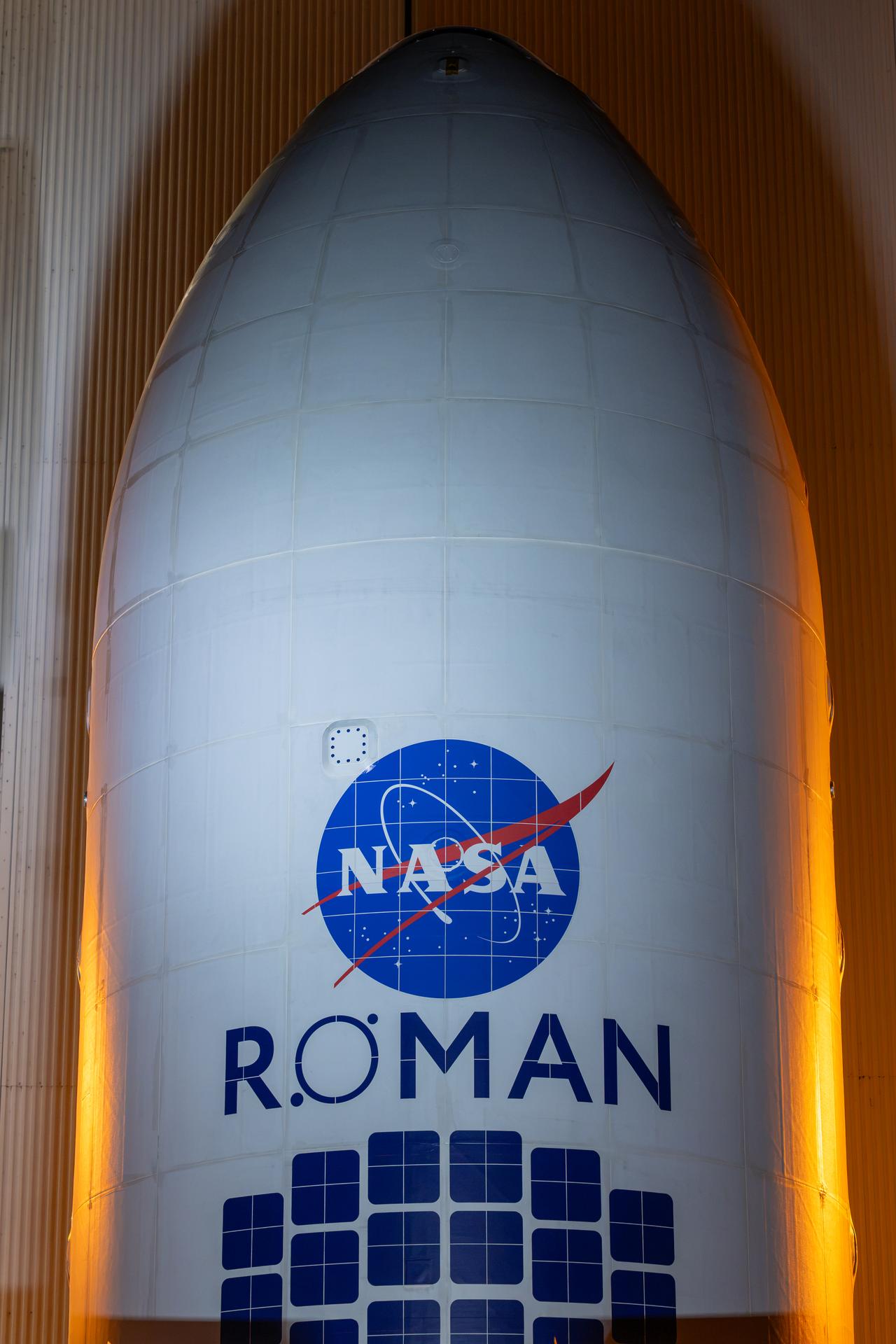
Teams inside the Payload Hazardous Servicing Facility at NASA’s Kennedy Space Center in Florida encapsulate the agency’s Nancy Grace Roman Space Telescope within the payload fairing on Friday, Aug. 21, 2026, ahead of mating to a SpaceX Falcon Heavy rocket. Encapsulation shields the spacecraft during rollout, ascent, and the early phases of flight. Roman will investigate dark energy and dark matter, conduct a statistical census of planetary systems, and enable a broad range of additional astrophysics research. Liftoff from Launch Complex 39A at Kennedy is targeted for no earlier than Sunday, Aug. 30, 2026.
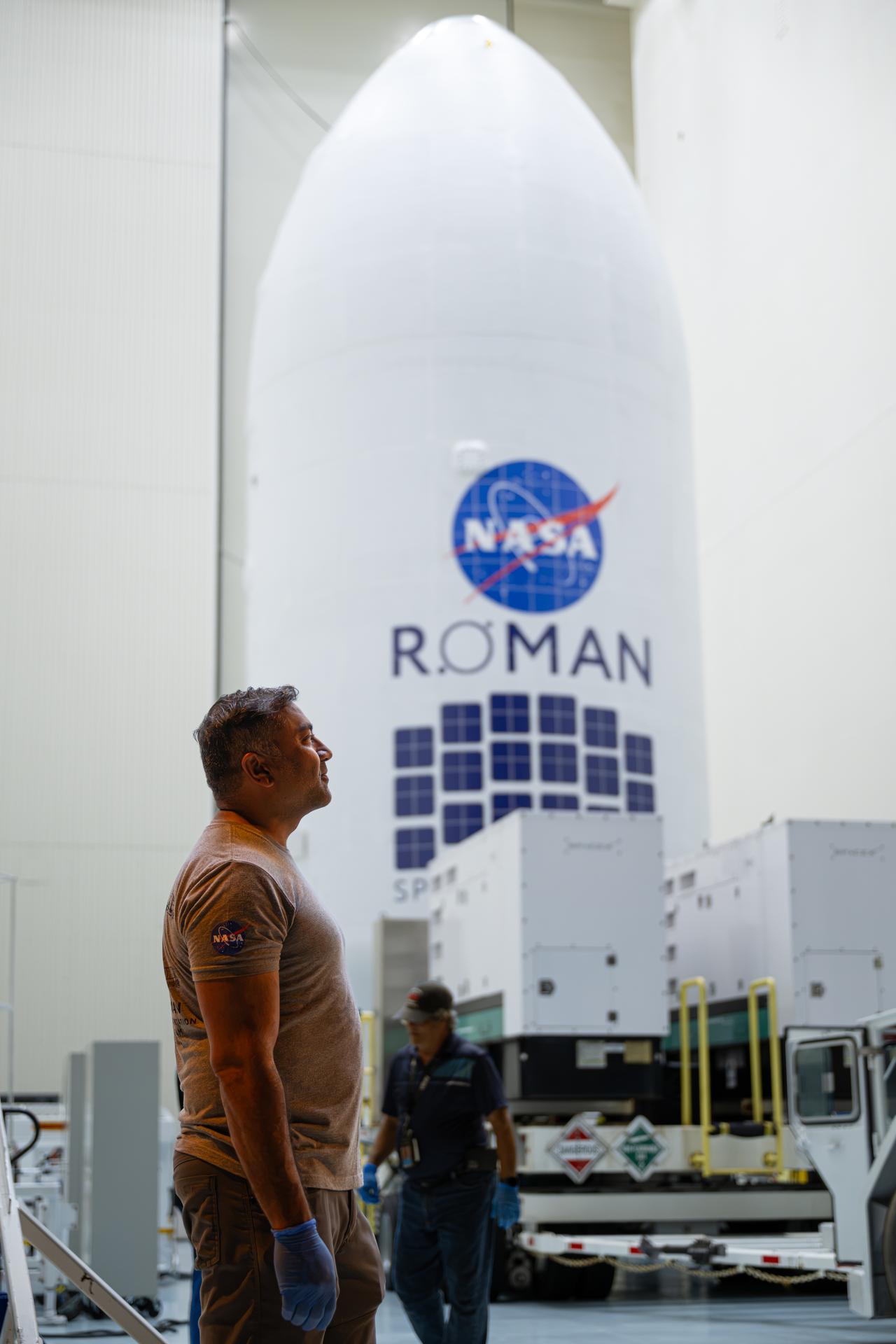
Teams inside the Payload Hazardous Servicing Facility at NASA’s Kennedy Space Center in Florida encapsulate the agency’s Nancy Grace Roman Space Telescope within the payload fairing on Friday, Aug. 21, 2026, ahead of mating to a SpaceX Falcon Heavy rocket. Encapsulation shields the spacecraft during rollout, ascent, and the early phases of flight. Roman will investigate dark energy and dark matter, conduct a statistical census of planetary systems, and enable a broad range of additional astrophysics research. Liftoff from Launch Complex 39A at Kennedy is targeted for no earlier than Sunday, Aug. 30, 2026.
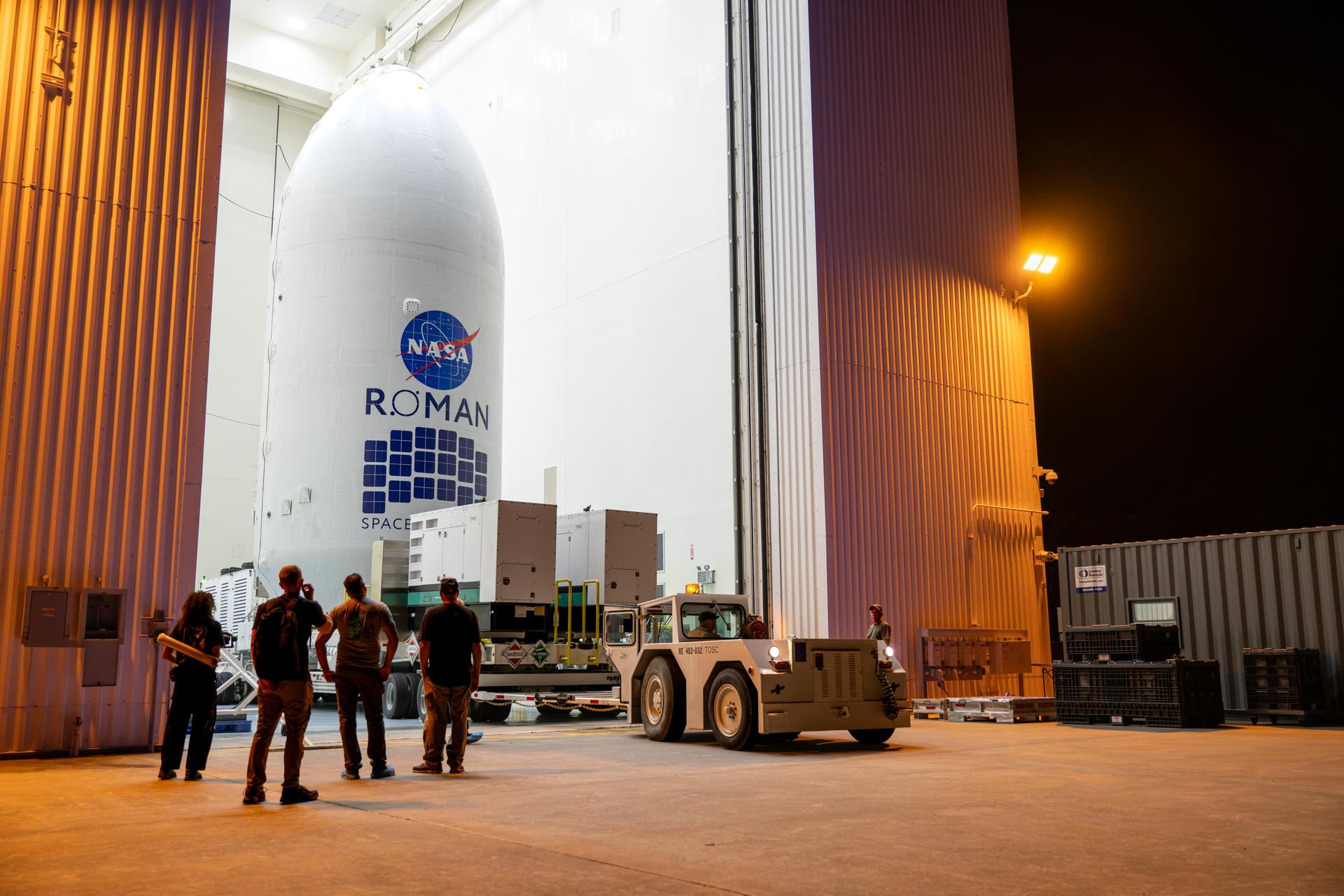
Teams inside the Payload Hazardous Servicing Facility at NASA’s Kennedy Space Center in Florida encapsulate the agency’s Nancy Grace Roman Space Telescope within the payload fairing on Friday, Aug. 21, 2026, ahead of mating to a SpaceX Falcon Heavy rocket. Encapsulation shields the spacecraft during rollout, ascent, and the early phases of flight. Roman will investigate dark energy and dark matter, conduct a statistical census of planetary systems, and enable a broad range of additional astrophysics research. Liftoff from Launch Complex 39A at Kennedy is targeted for no earlier than Sunday, Aug. 30, 2026.
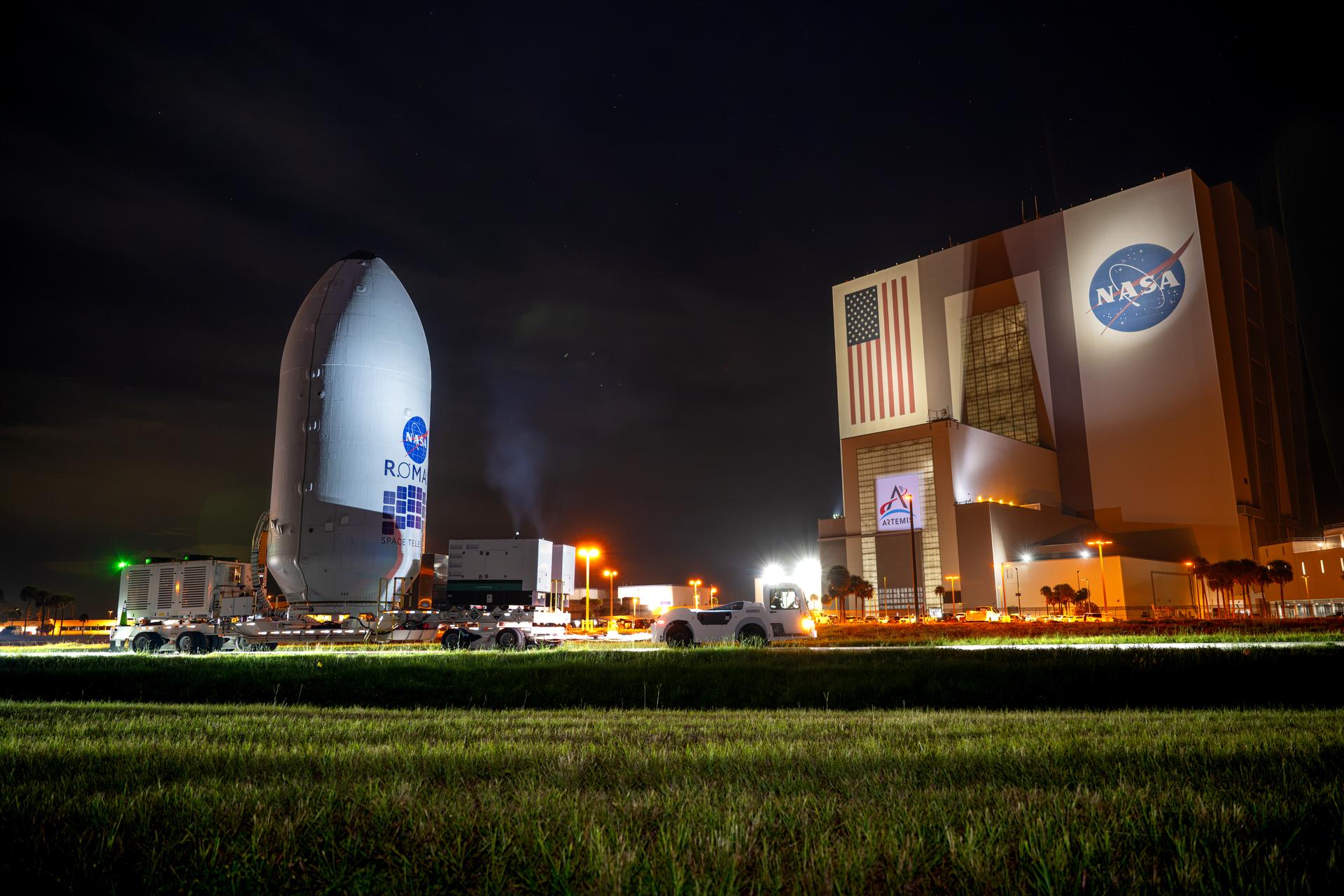
NASA’s Nancy Grace Roman Space Telescope, encapsulated in its payload fairing, travels from the Payload Hazardous Servicing Facility to the SpaceX hangar at Launch Complex 39A at NASA’s Kennedy Space Center on Tuesday, Aug. 25, 2026, ahead of mating to a SpaceX Falcon Heavy rocket. Roman’s science instruments are designed to help researchers understand dark energy, the mysterious force accelerating the universe’s expansion. The observatory also will map how galaxies form, cluster, and evolve by tracing the influence of dark matter. Liftoff from NASA Kennedy is targeted no earlier than Sunday, Aug. 30, 2026.
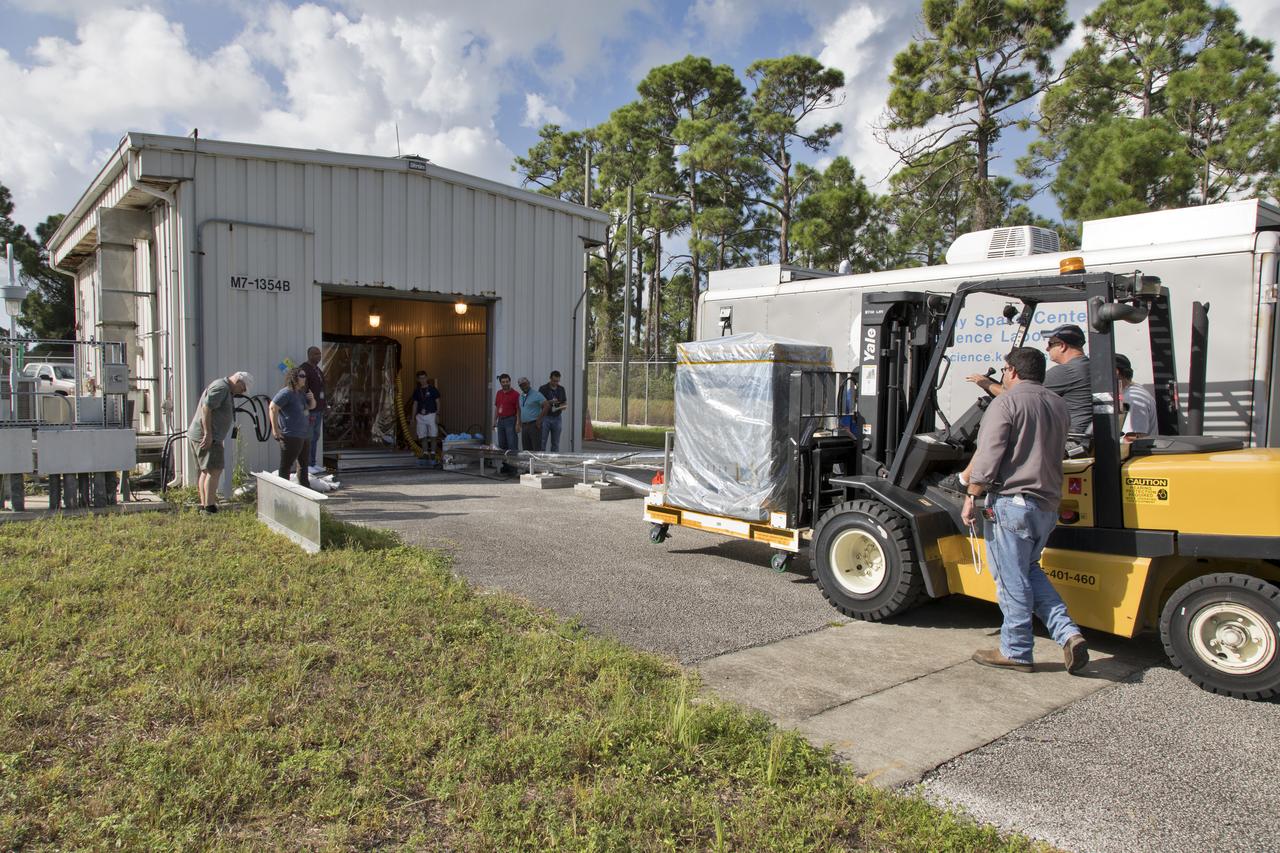
A worker uses a forklift to carry the Robotic Refueling Mission-3 (RRM3) payload to the entrance of the Payload Hazardous Servicing Facility on Oct. 3, 2018, at NASA's Kennedy Space Center in Florida. The payload will be carried to the International Space Station on SpaceX's 16th Commercial Resupply Services mission. RRM3 demonstrates the transfer of xenon gas and liquid methane in microgravity, and advances technologies for storing and manipulating these cryogenic fuels robotically. RRM3 also supports development of technology for the Restore-L mission, a robotic spacecraft equipped to service satellites in-orbit.
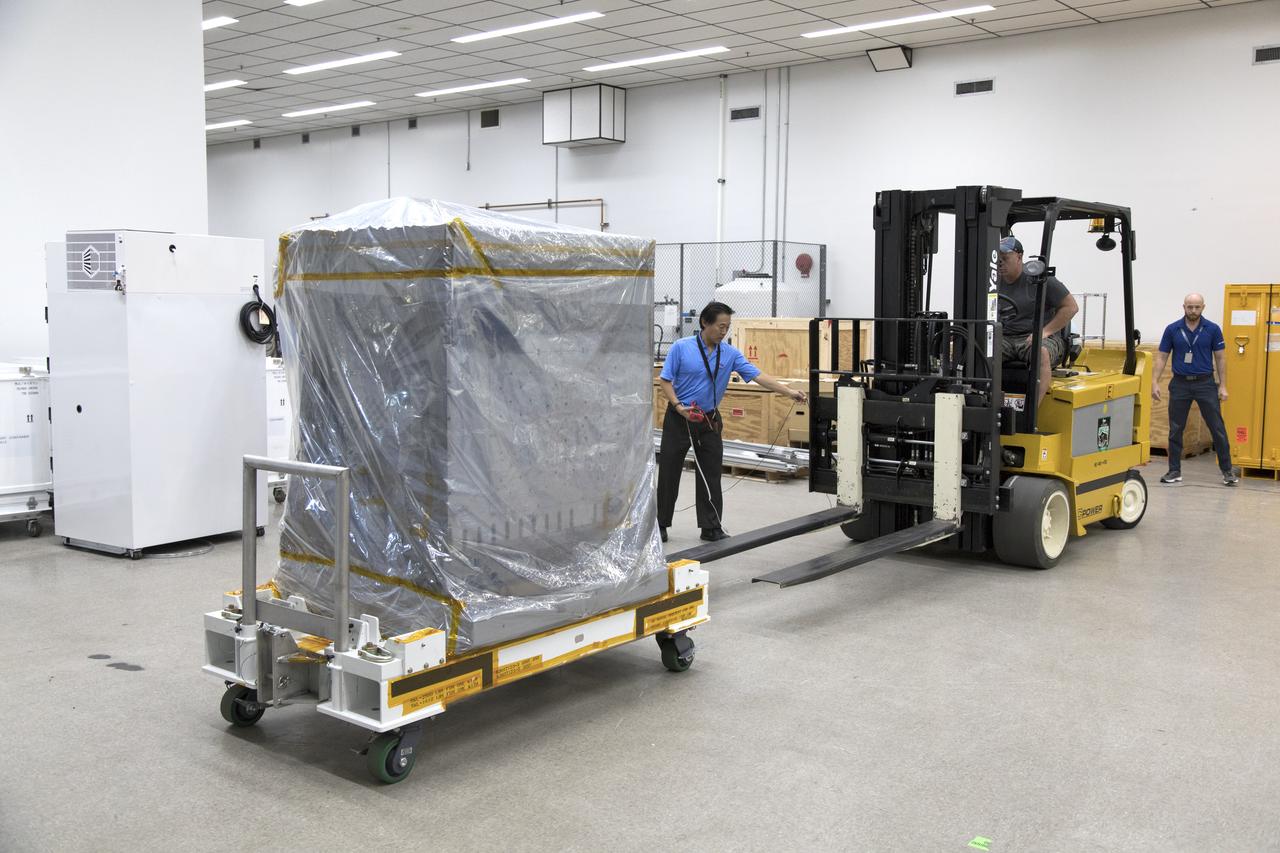
Workers prepare the Robotic Refueling Mission-3 (RRM3) payload to be transferred from the Space Station Processing Facility high bay to the Payload Hazardous Servicing Facility on Oct. 3, 2018, at NASA's Kennedy Space Center in Florida. The payload will be carried to the International Space Station on SpaceX's 16th Commercial Resupply Services mission. RRM3 demonstrates the transfer of xenon gas and liquid methane in microgravity, and advances technologies for storing and manipulating these cryogenic fuels robotically. RRM3 also supports development of technology for the Restore-L mission, a robotic spacecraft equipped to service satellites in-orbit.
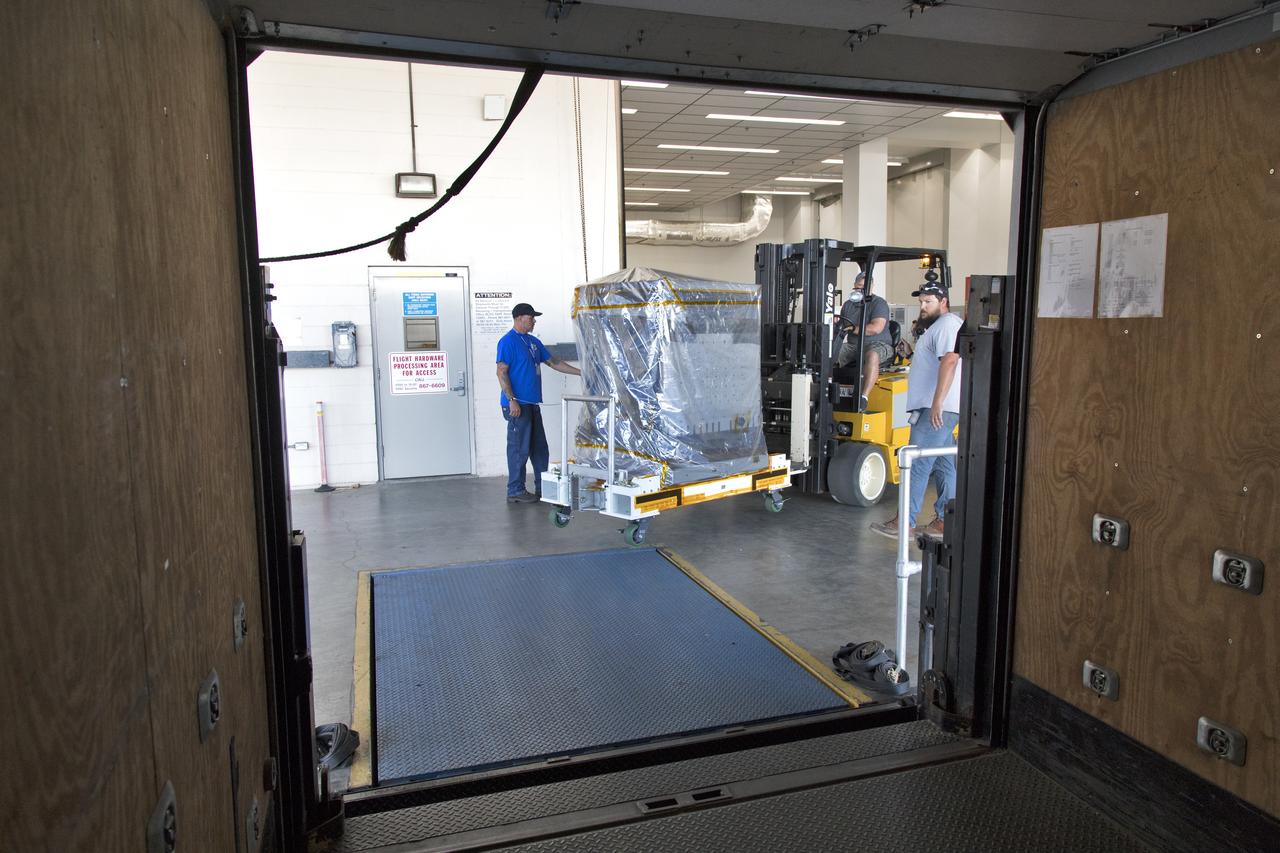
Workers prepare to transfer the Robotic Refueling Mission-3 (RRM3) payload from the Space Station Processing Facility high bay to the Payload Hazardous Servicing Facility on Oct. 3, 2018, at NASA's Kennedy Space Center in Florida. The payload will be carried to the International Space Station on SpaceX's 16th Commercial Resupply Services mission. RRM3 demonstrates the transfer of xenon gas and liquid methane in microgravity, and advances technologies for storing and manipulating these cryogenic fuels robotically. RRM3 also supports development of technology for the Restore-L mission, a robotic spacecraft equipped to service satellites in-orbit.
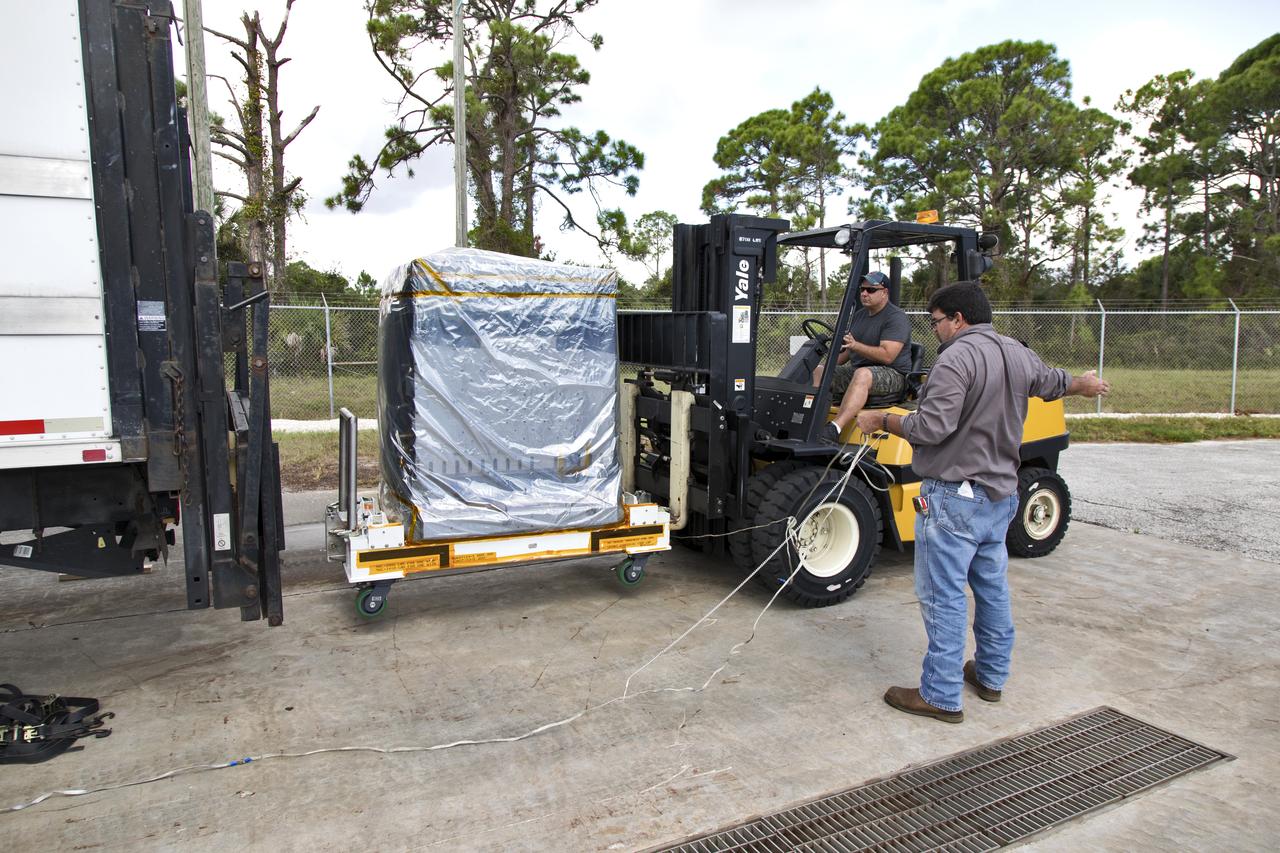
A worker uses a forklift to unload the Robotic Refueling Mission-3 (RRM3) payload from a truck at the Payload Hazardous Servicing Facility on Oct. 3, 2018, at NASA's Kennedy Space Center in Florida. The payload will be carried to the International Space Station on SpaceX's 16th Commercial Resupply Services mission. RRM3 demonstrates the transfer of xenon gas and liquid methane in microgravity, and advances technologies for storing and manipulating these cryogenic fuels robotically. RRM3 also supports development of technology for the Restore-L mission, a robotic spacecraft equipped to service satellites in-orbit.
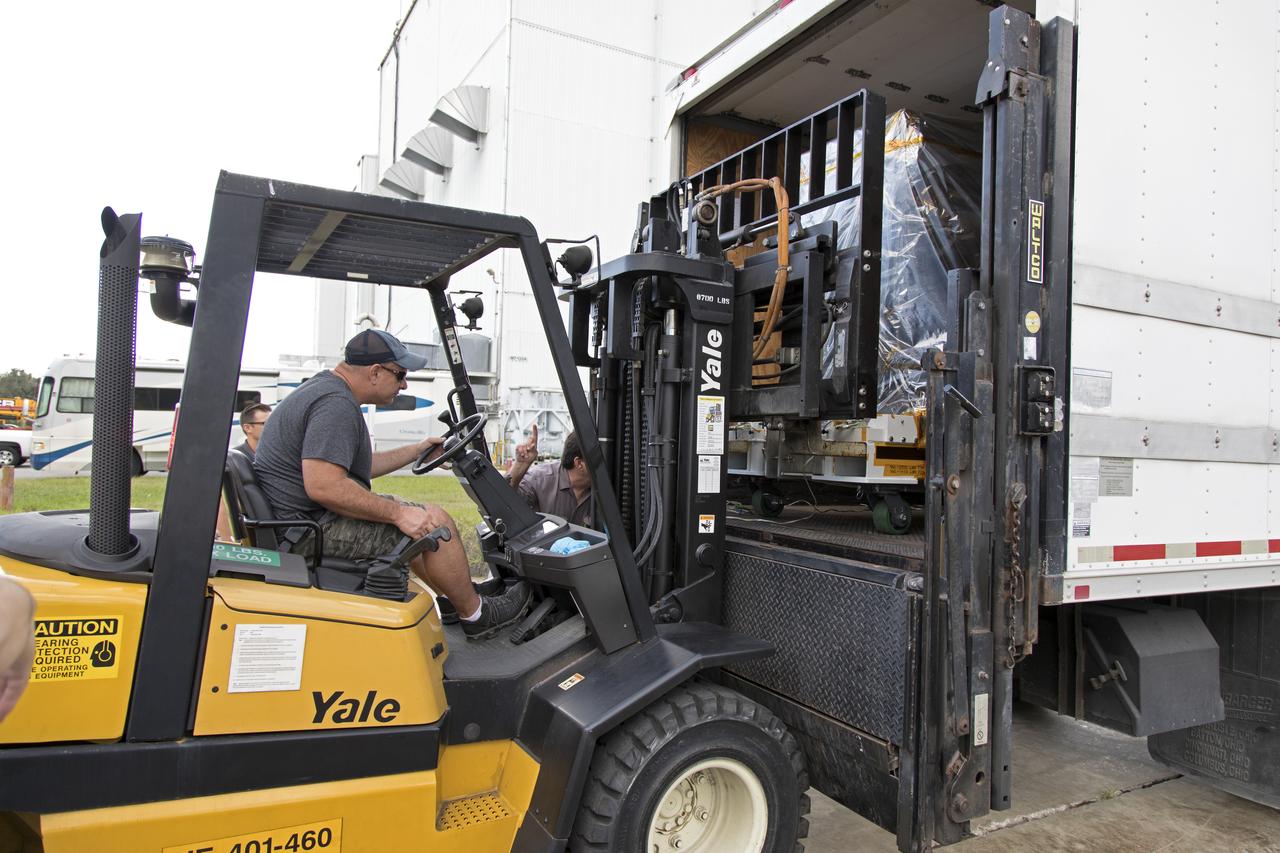
A worker uses a forklift to unload the Robotic Refueling Mission-3 (RRM3) payload from a truck at the Payload Hazardous Servicing Facility on Oct. 3, 2018, at NASA's Kennedy Space Center in Florida. The payload will be carried to the International Space Station on SpaceX's 16th Commercial Resupply Services mission. RRM3 demonstrates the transfer of xenon gas and liquid methane in microgravity, and advances technologies for storing and manipulating these cryogenic fuels robotically. RRM3 also supports development of technology for the Restore-L mission, a robotic spacecraft equipped to service satellites in-orbit.
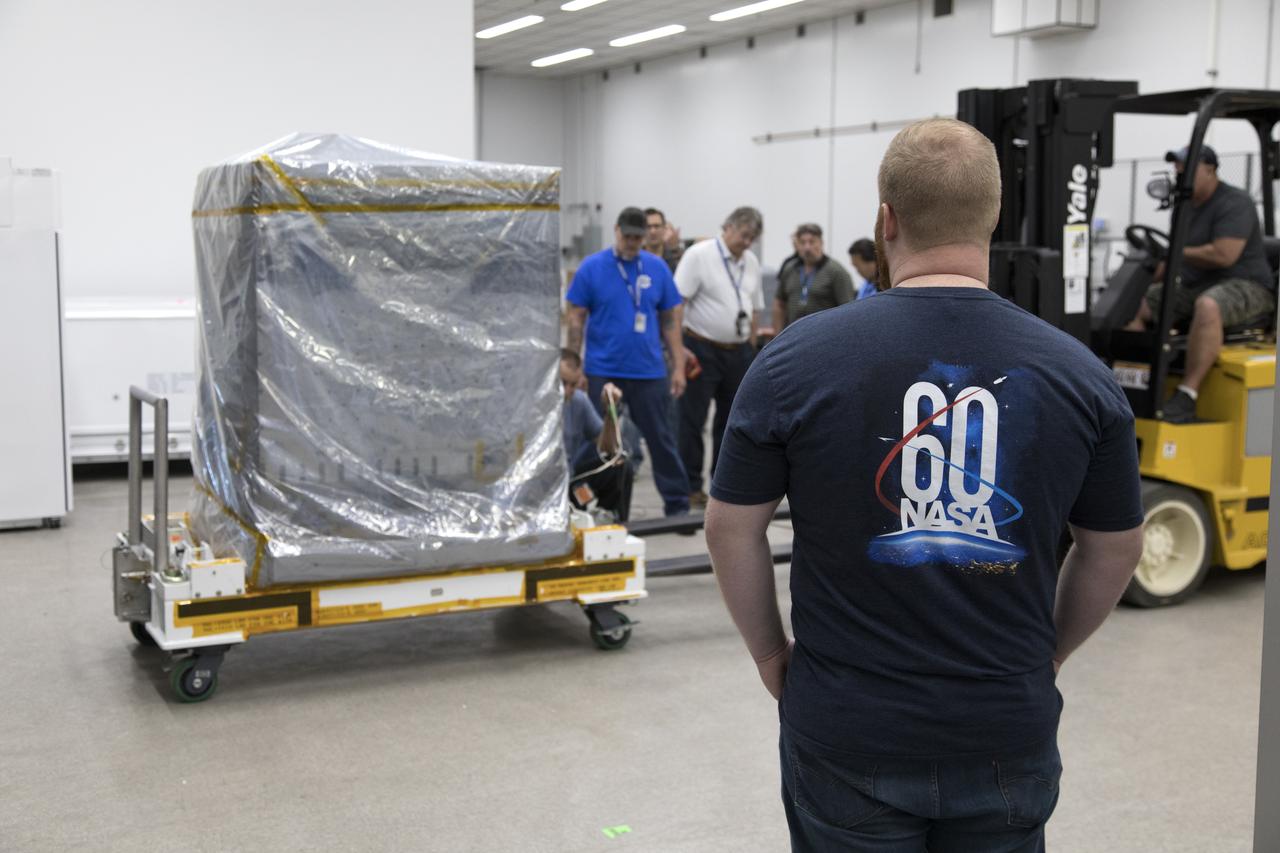
Workers prepare the Robotic Refueling Mission-3 (RRM3) payload to be transferred from the Space Station Processing Facility high bay to the Payload Hazardous Servicing Facility on Oct. 3, 2018, at NASA's Kennedy Space Center in Florida. The payload will be carried to the International Space Station on SpaceX's 16th Commercial Resupply Services mission. RRM3 demonstrates the transfer of xenon gas and liquid methane in microgravity, and advances technologies for storing and manipulating these cryogenic fuels robotically. RRM3 also supports development of technology for the Restore-L mission, a robotic spacecraft equipped to service satellites in-orbit.
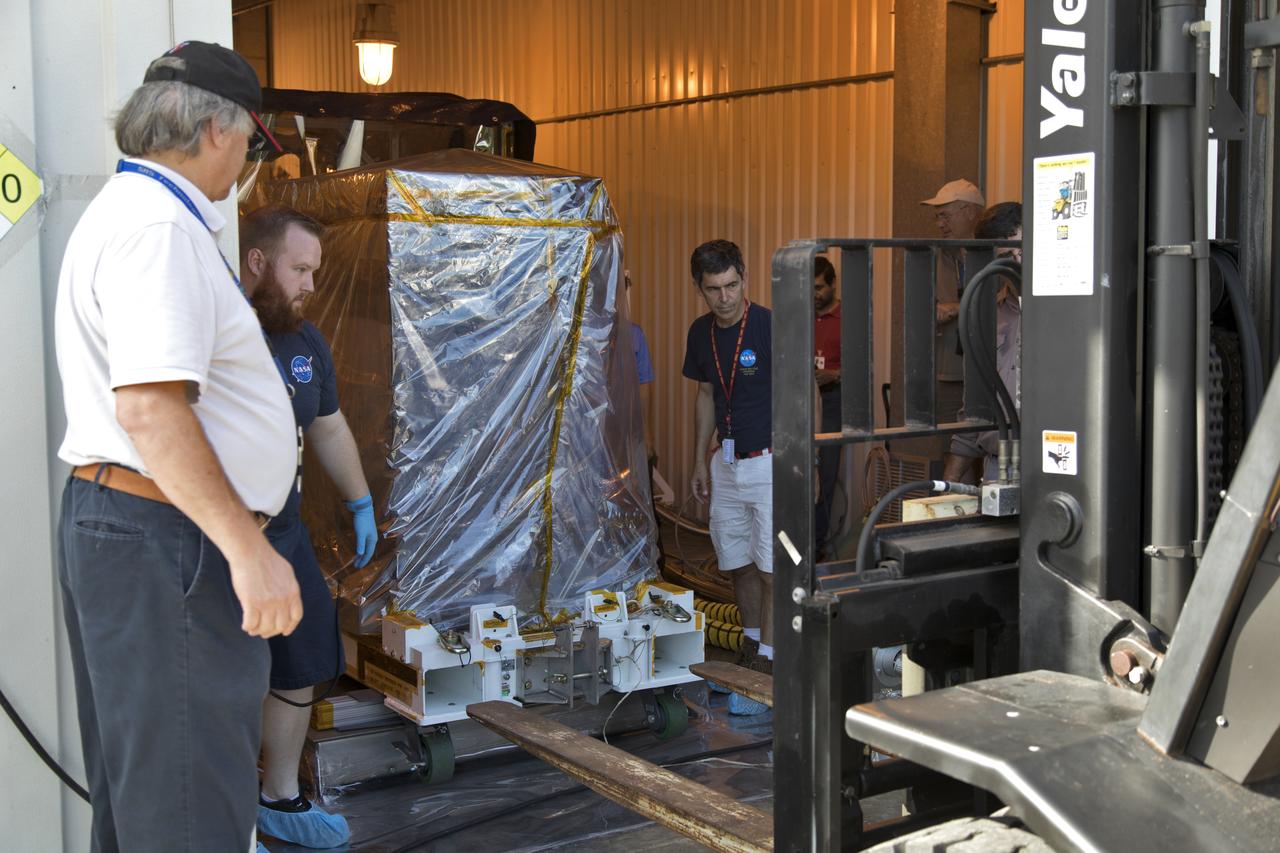
The Robotic Refueling Mission-3 (RRM3) payload is unloaded from a forklift inside the Payload Hazardous Servicing Facility on Oct. 3, 2018, at NASA's Kennedy Space Center in Florida. The payload will be carried to the International Space Station on SpaceX's 16th Commercial Resupply Services mission. RRM3 demonstrates the transfer of xenon gas and liquid methane in microgravity, and advances technologies for storing and manipulating these cryogenic fuels robotically. RRM3 also supports development of technology for the Restore-L mission, a robotic spacecraft equipped to service satellites in-orbit.
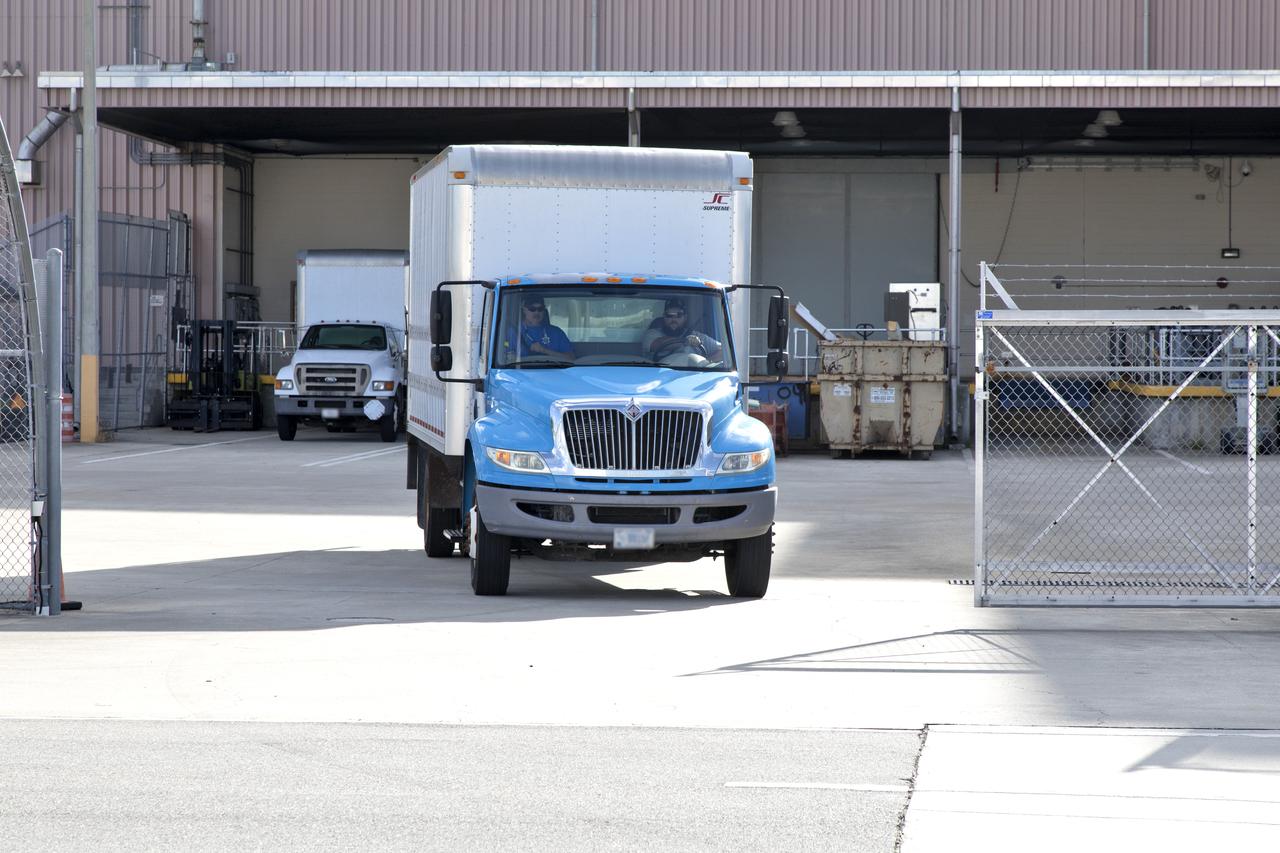
A truck carrying the Robotic Refueling Mission-3 (RRM3) payload departs from the Space Station Processing Facility on its way to the Payload Hazardous Servicing Facility on Oct. 3, 2018, at NASA's Kennedy Space Center in Florida. The payload will be carried to the International Space Station on SpaceX's 16th Commercial Resupply Services mission. RRM3 demonstrates the transfer of xenon gas and liquid methane in microgravity, and advances technologies for storing and manipulating these cryogenic fuels robotically. RRM3 also supports development of technology for the Restore-L mission, a robotic spacecraft equipped to service satellites in-orbit.
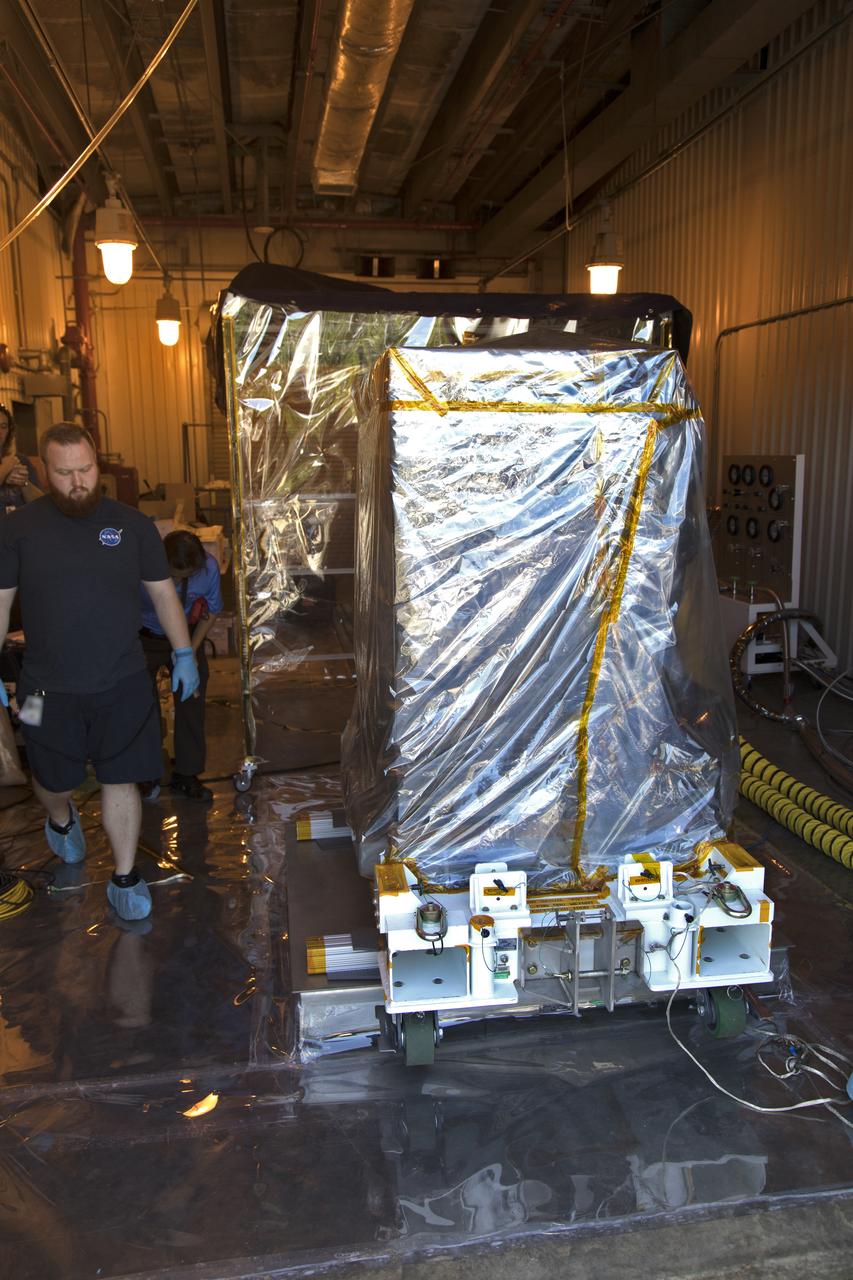
The Robotic Refueling Mission-3 (RRM3) payload is inside the Payload Hazardous Servicing Facility on Oct. 3, 2018, at NASA's Kennedy Space Center in Florida. The payload will be carried to the International Space Station on SpaceX's 16th Commercial Resupply Services mission. RRM3 demonstrates the transfer of xenon gas and liquid methane in microgravity, and advances technologies for storing and manipulating these cryogenic fuels robotically. RRM3 also supports development of technology for the Restore-L mission, a robotic spacecraft equipped to service satellites in-orbit.
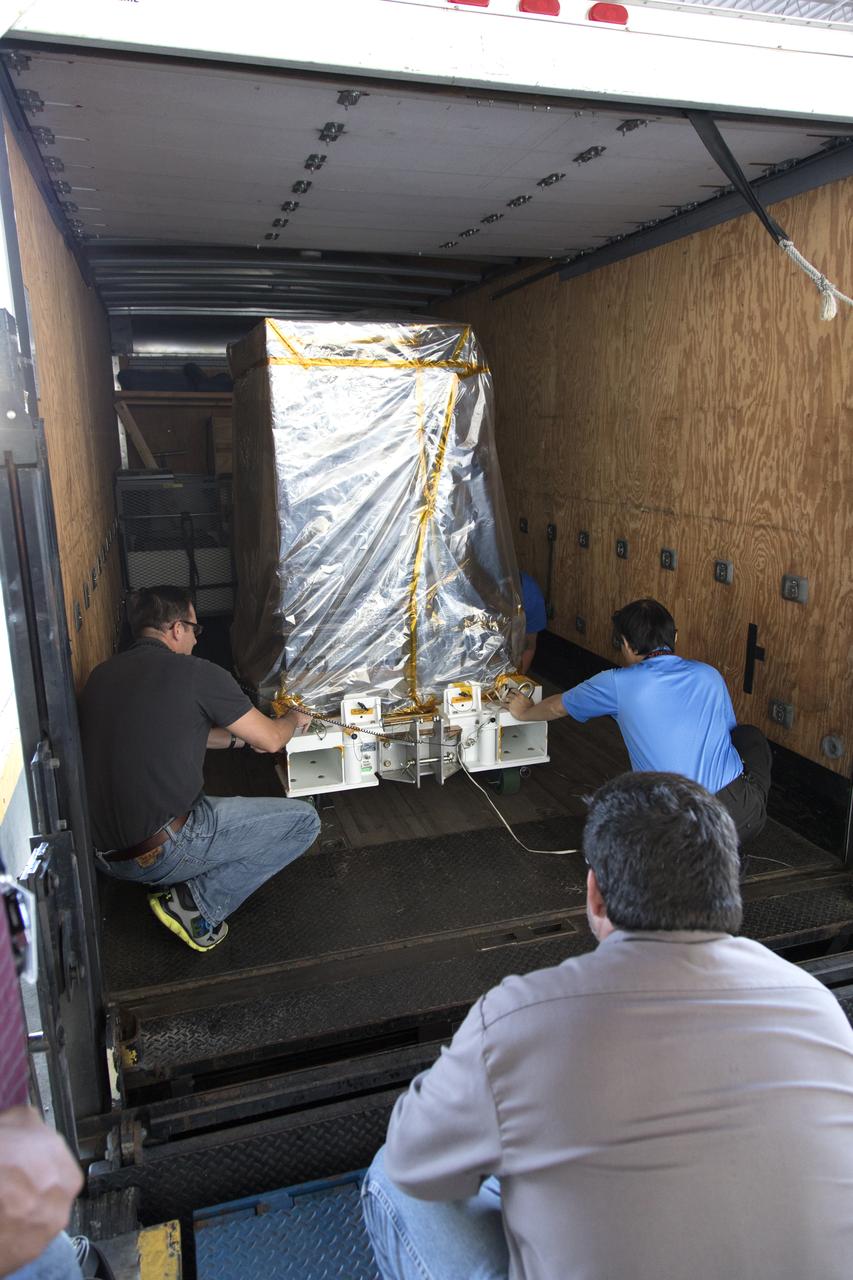
Workers load the Robotic Refueling Mission-3 (RRM3) payload onto a truck at the Space Station Processing Facility for transfer to the Payload Hazardous Servicing Facility on Oct. 3, 2018, at NASA's Kennedy Space Center in Florida. The payload will be carried to the International Space Station on SpaceX's 16th Commercial Resupply Services mission. RRM3 demonstrates the transfer of xenon gas and liquid methane in microgravity, and advances technologies for storing and manipulating these cryogenic fuels robotically. RRM3 also supports development of technology for the Restore-L mission, a robotic spacecraft equipped to service satellites in-orbit.