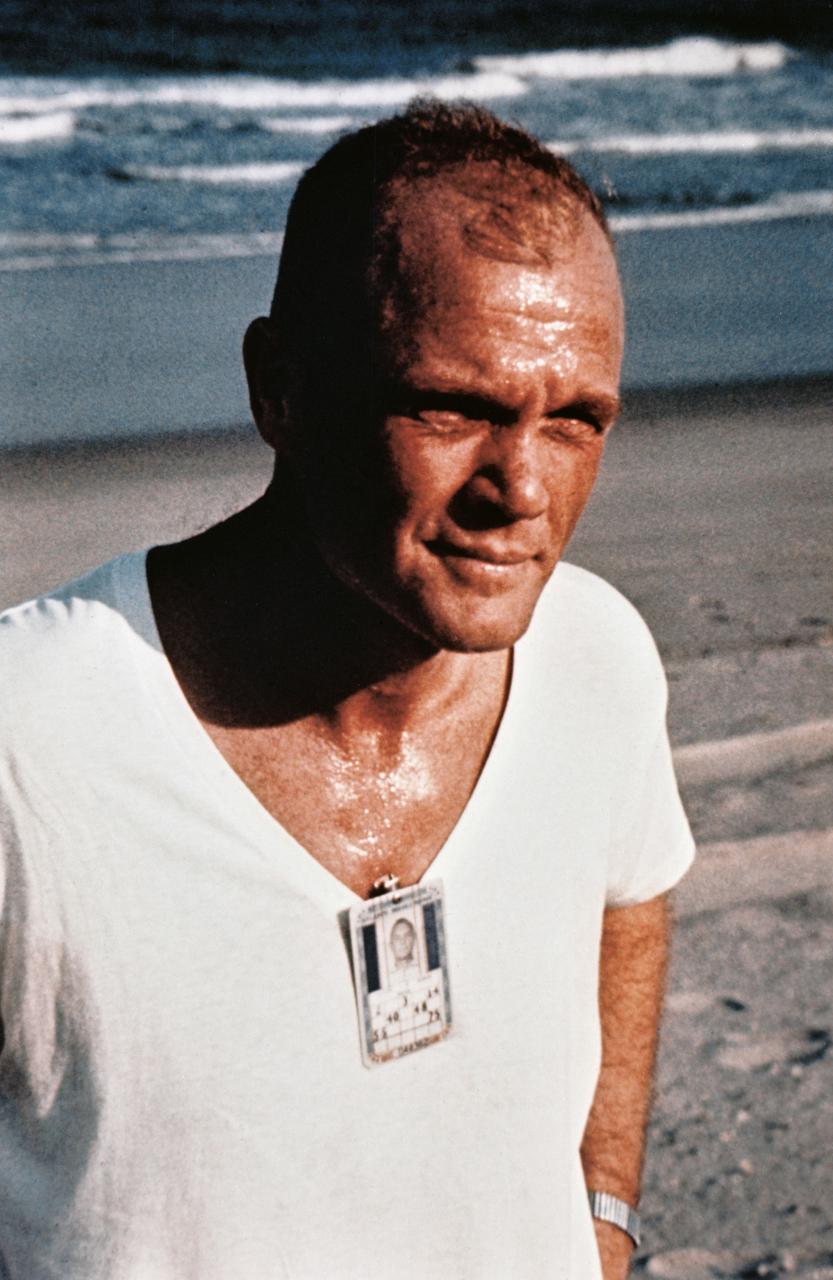
S64-14883 (1962) --- Astronaut John H. Glenn Jr., pilot of the Mercury-Atlas 6 mission, participates in a strict physical training program, as he exemplifies by frequent running. Here he pauses during an exercise period on the beach near Cape Canaveral, Florida. Photo credit: NASA
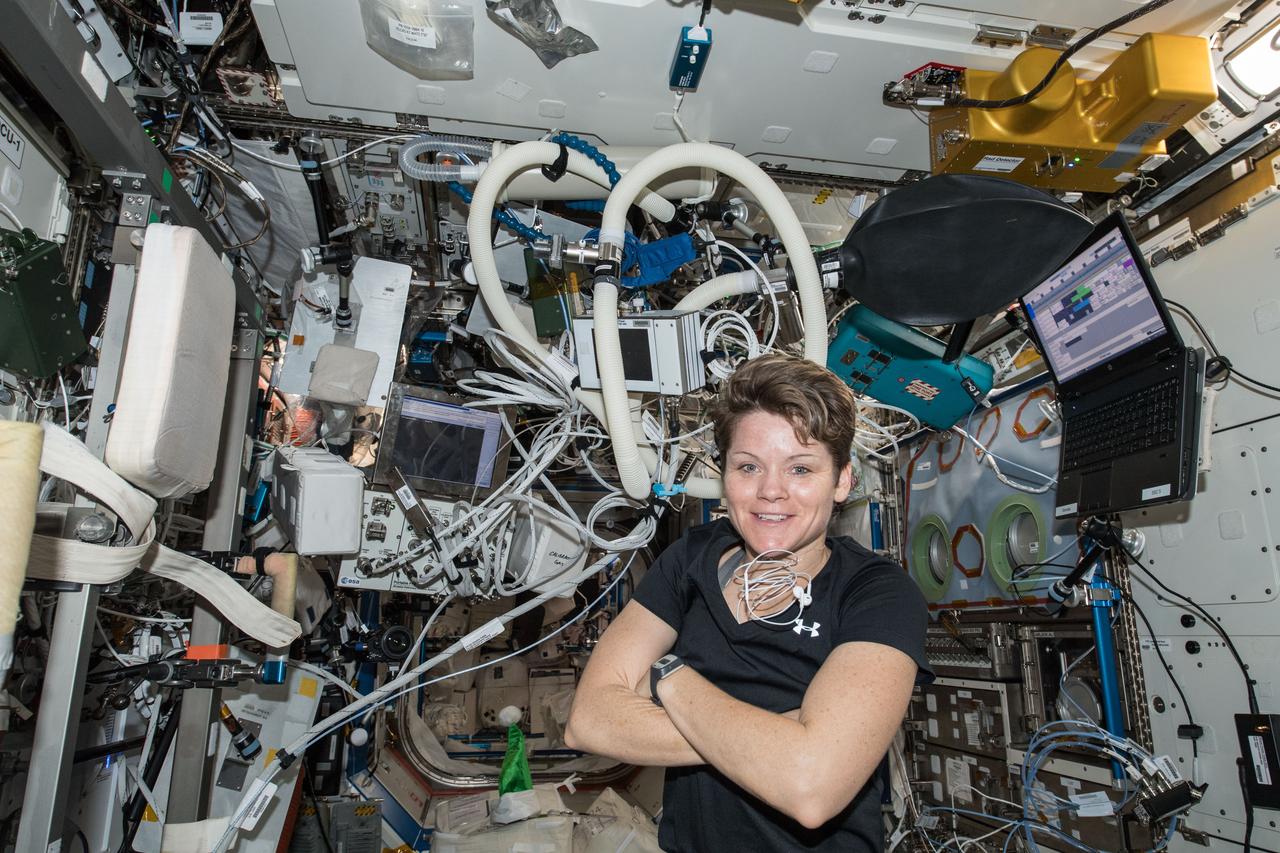
iss057e134112 (Dec. 14, 2018) --- NASA astronaut Anne McClain is inside the Destiny laboratory module surrounded by exercise gear, including laptop computers and sensors that measure physical exertion and aerobic capacity, during a workout session aboard the International Space Station.
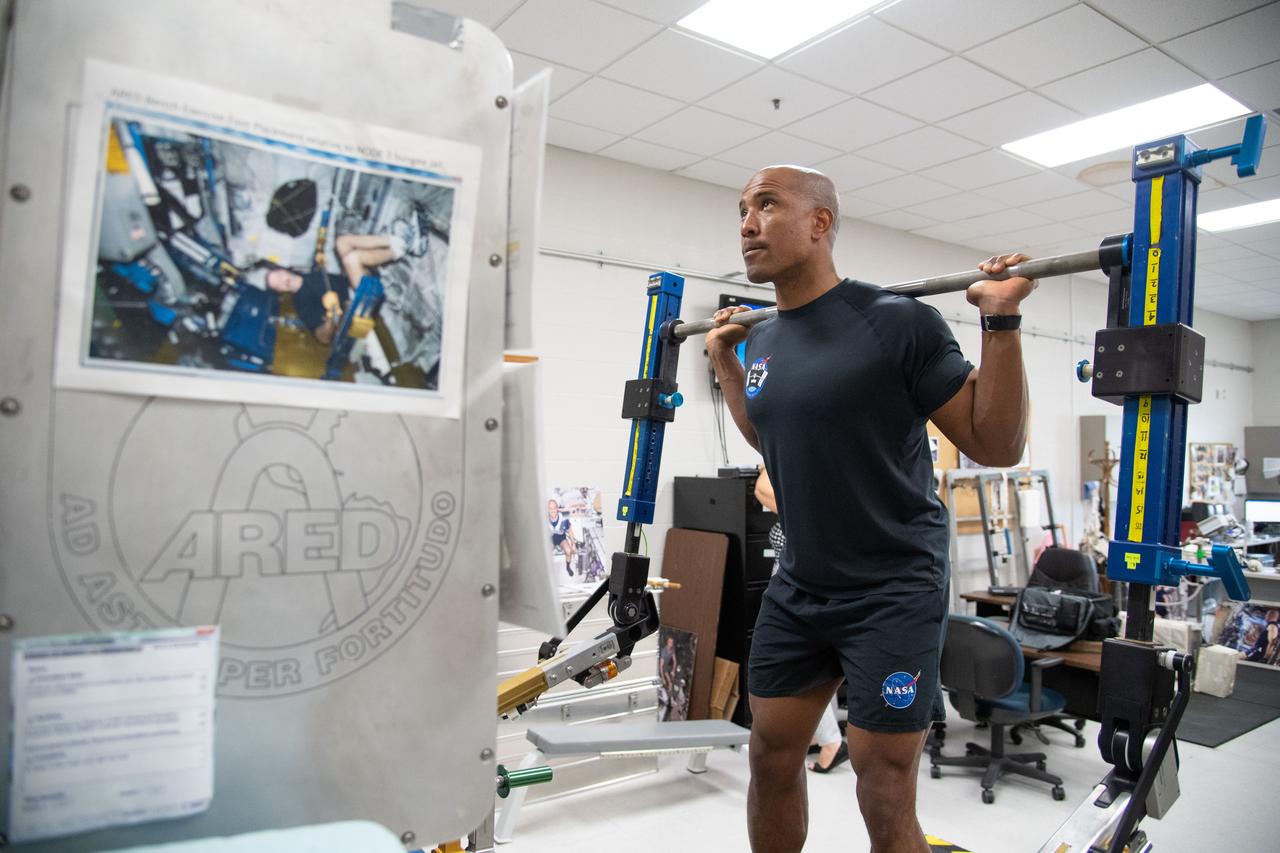
NASA commercial crew astronaut Victor Glover performs physical training on the Advanced Resistive Exercise Device (ARED) at the agency’s Johnson Space Center in Houston. Glover is assigned to the SpaceX Crew Dragon’s second crewed flight.
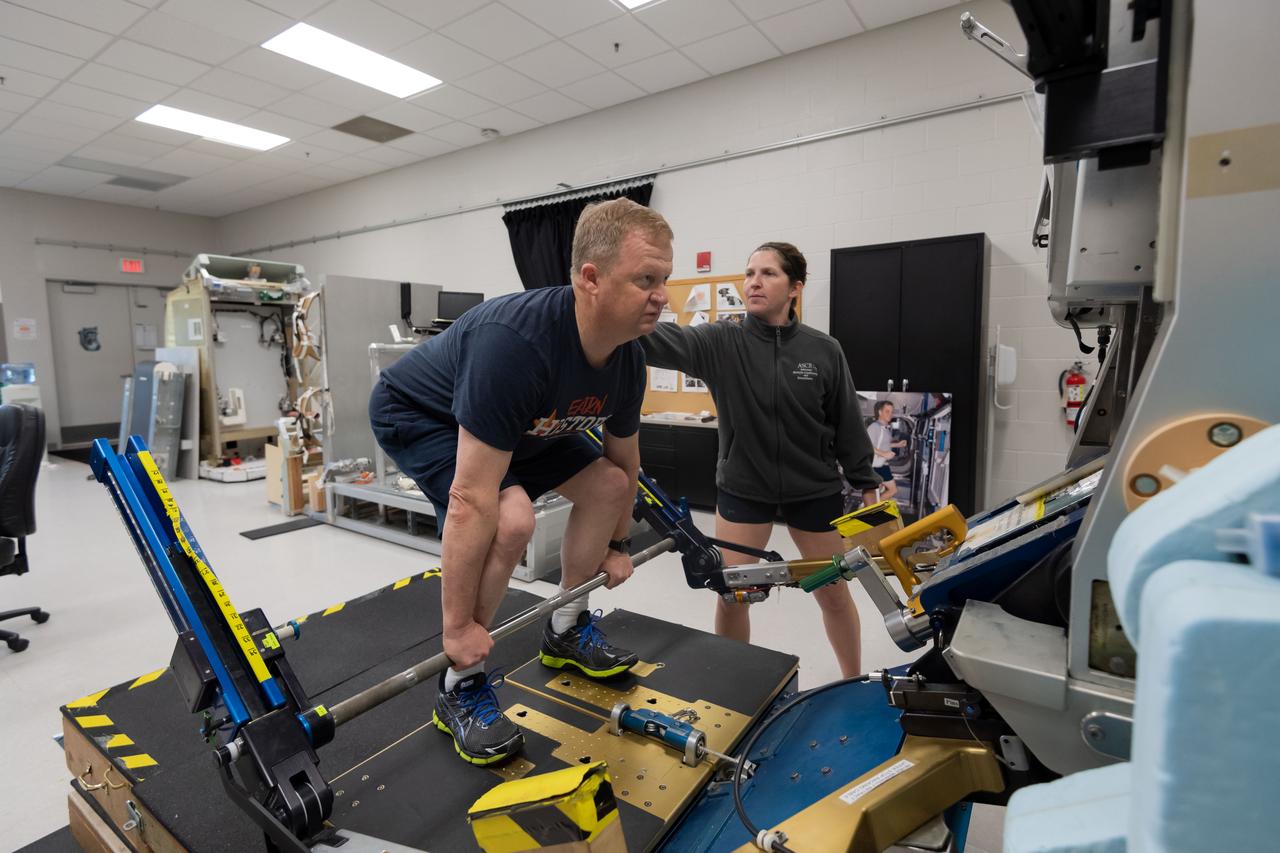
NASA commercial crew astronaut Eric Boe performs physical training on the Advanced Resistive Exercise Device (ARED) at the agency’s Johnson Space Center in Houston. Boe is assigned to the Boeing Starliner’s first crewed flight.
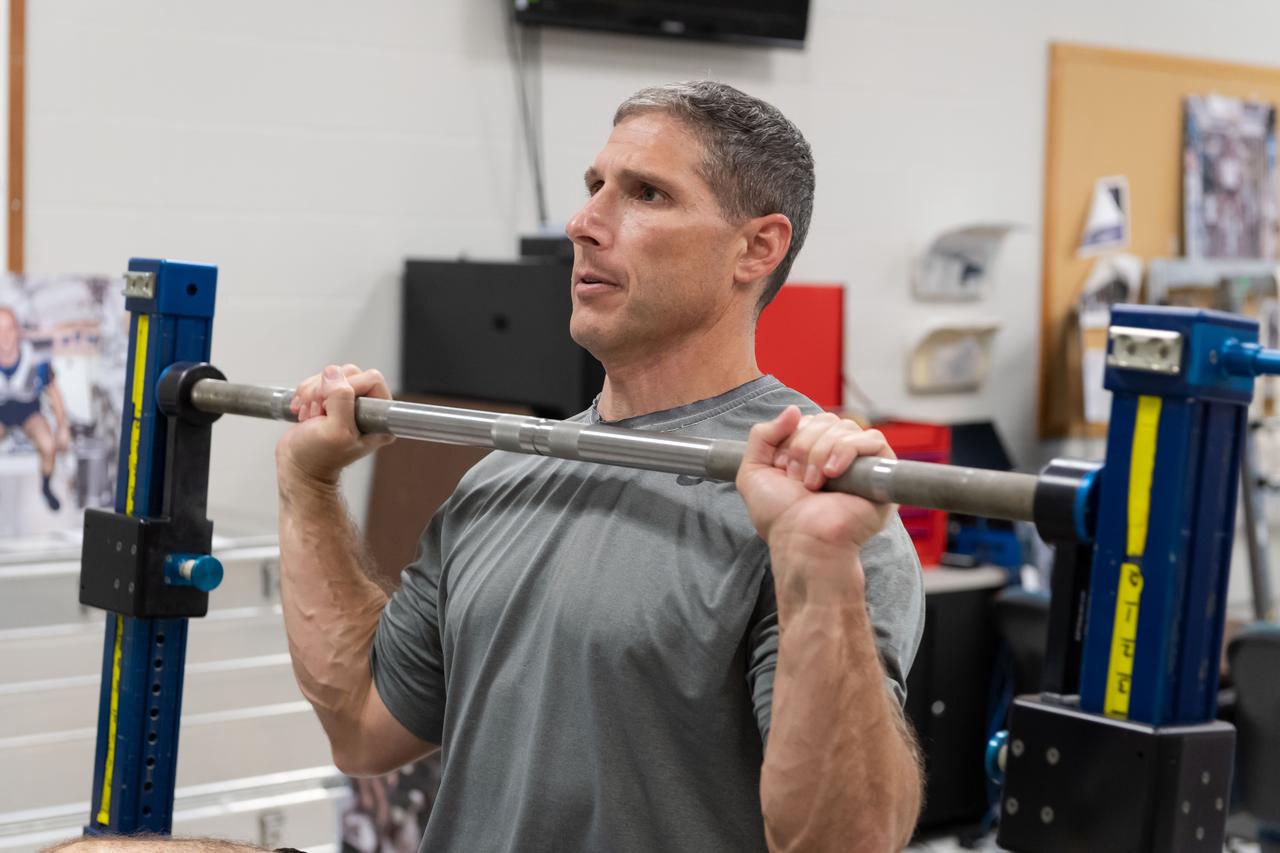
NASA commercial crew astronaut Mike Hopkins performs physical training on the Advanced Resistive Exercise Device (ARED) at the agency’s Johnson Space Center in Houston. Hopkins is assigned to the SpaceX Crew Dragon’s second crewed flight.
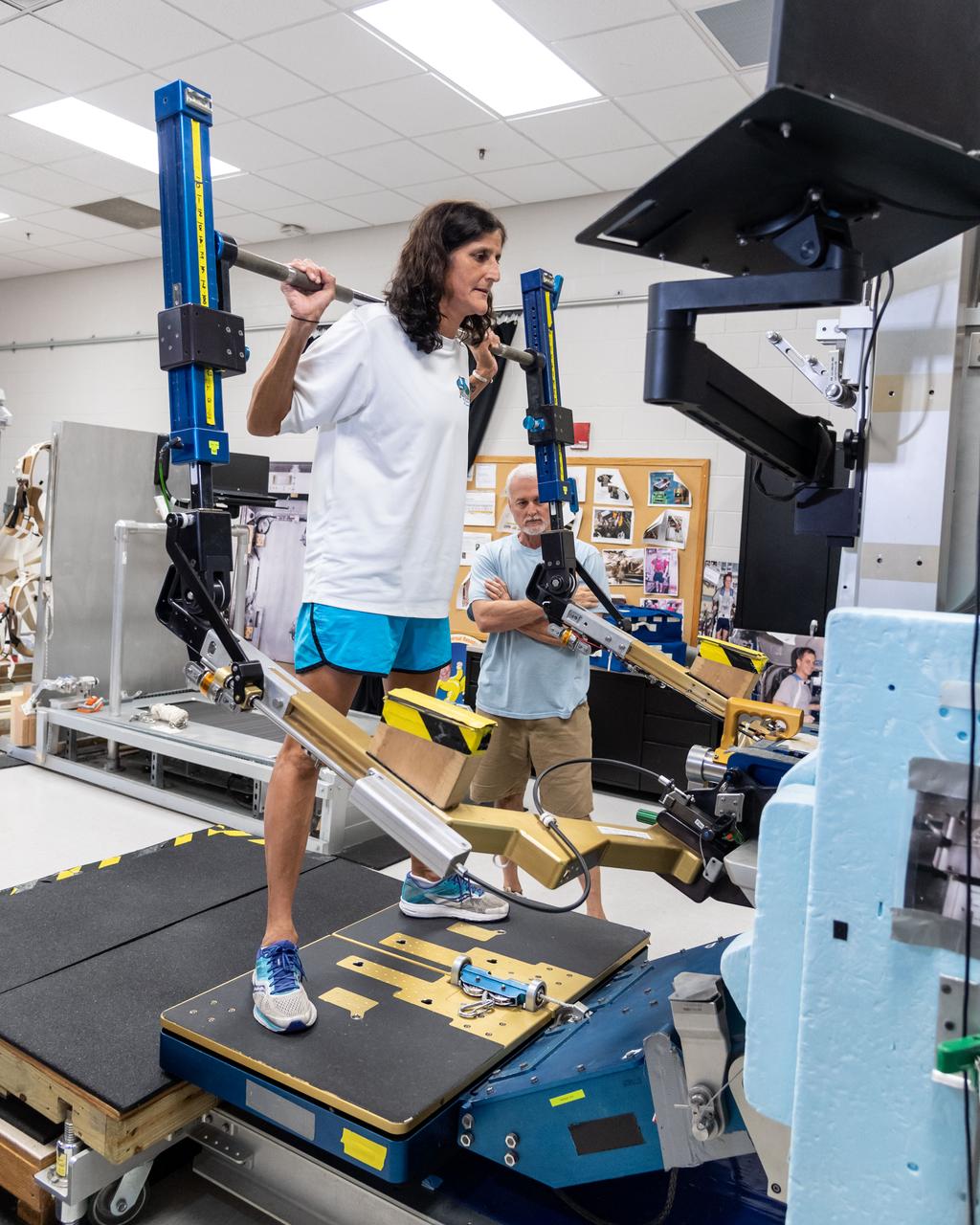
NASA commercial crew astronaut Suni Williams performs physical training on the Advanced Resistive Exercise Device (ARED) at the agency’s Johnson Space Center in Houston. Williams is assigned to the Boeing Starliner’s second crewed flight.
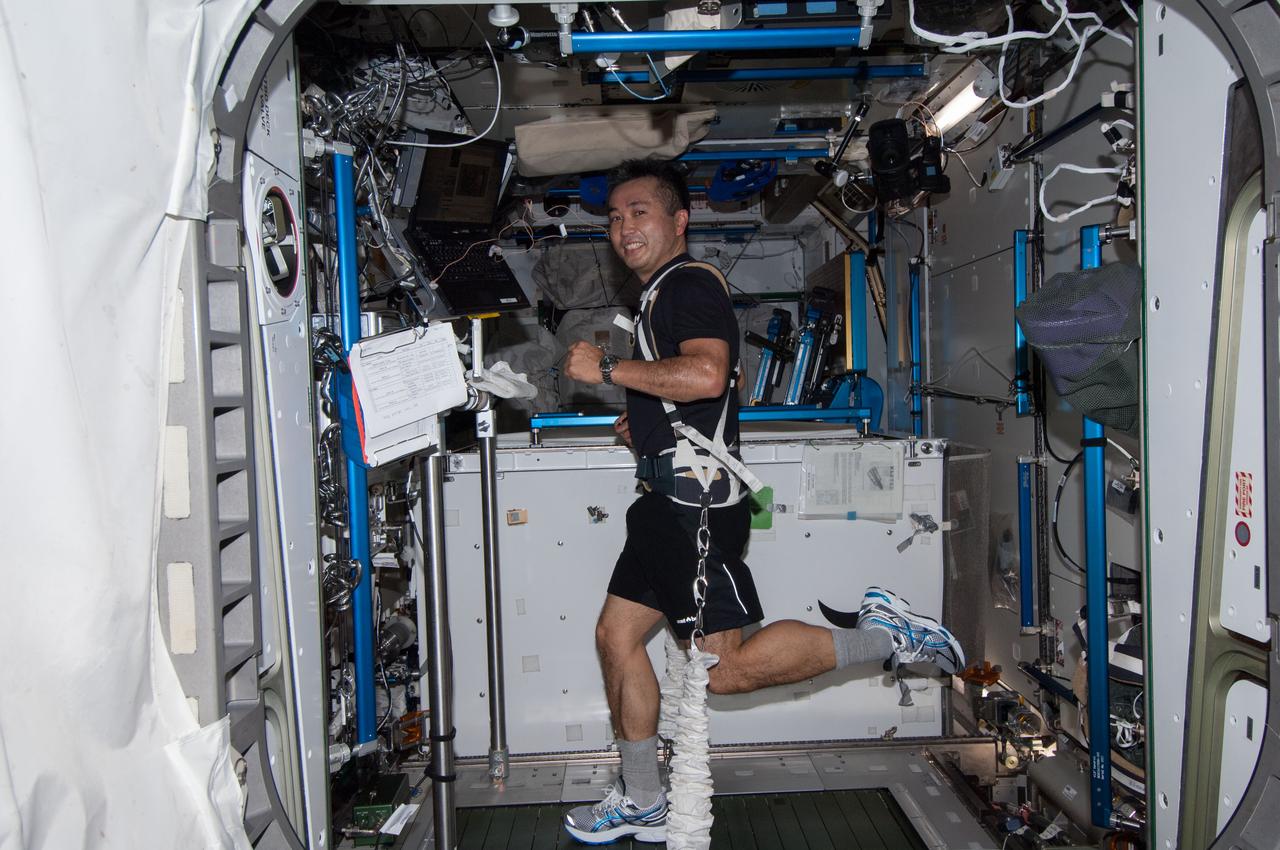
ISS038-E-002210 (14 Nov. 2013) --- Japan Aerospace Exploration Agency astronaut Koichi Wakata, Expedition 38 flight engineer, equipped with a bungee harness, exercises on the Combined Operational Load Bearing External Resistance Treadmill (COLBERT) in the Tranquility node of the International Space Station.
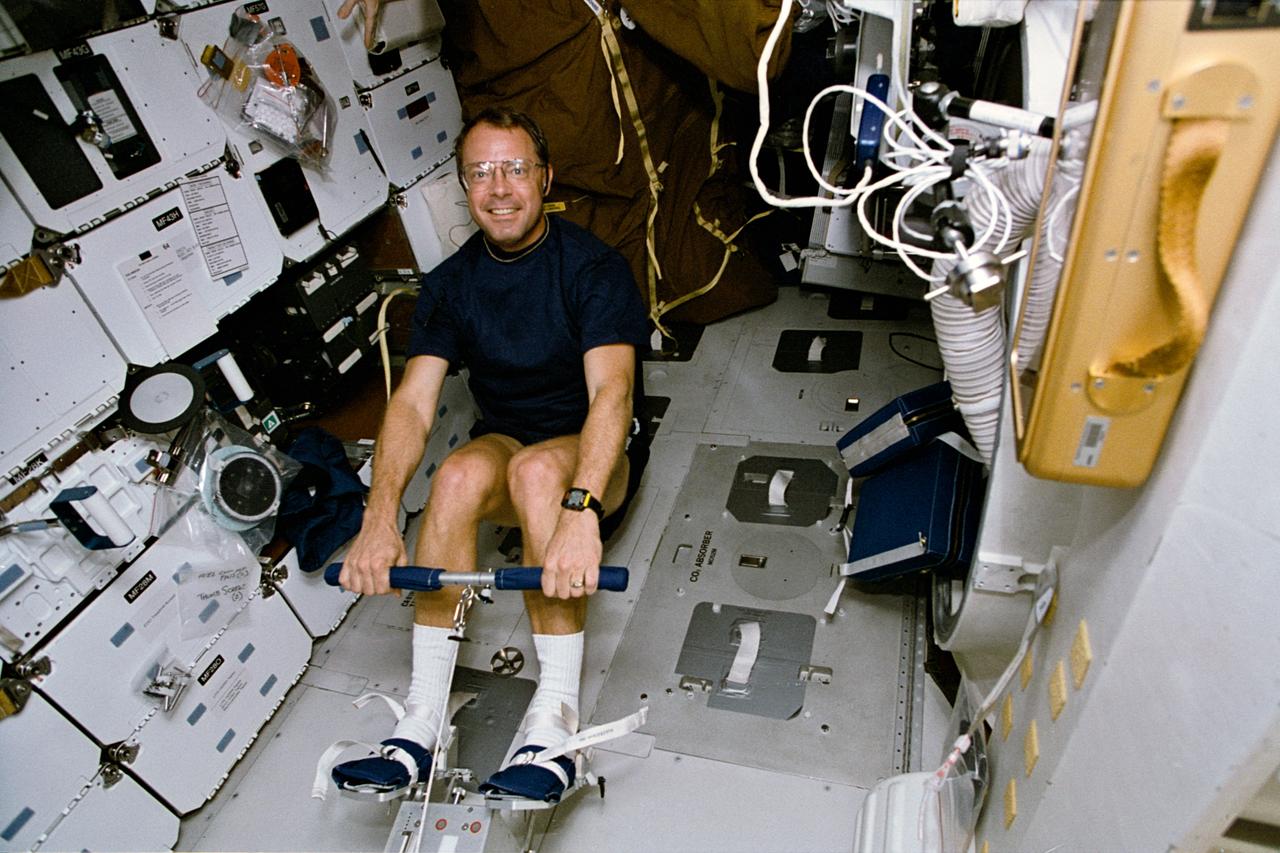
STS064-09-026 (9-20 Sept. 1994) --- Astronaut L. Blaine Hammond, STS-64 pilot, gets microgravity exercise on the rowing machine. This area of the space shuttle Discovery's middeck was also used for the treadmill exercising device. Blaine and five other NASA astronauts spent almost 11 days in Earth orbit in support of the mission. Photo credit: NASA or National Aeronautics and Space Administration
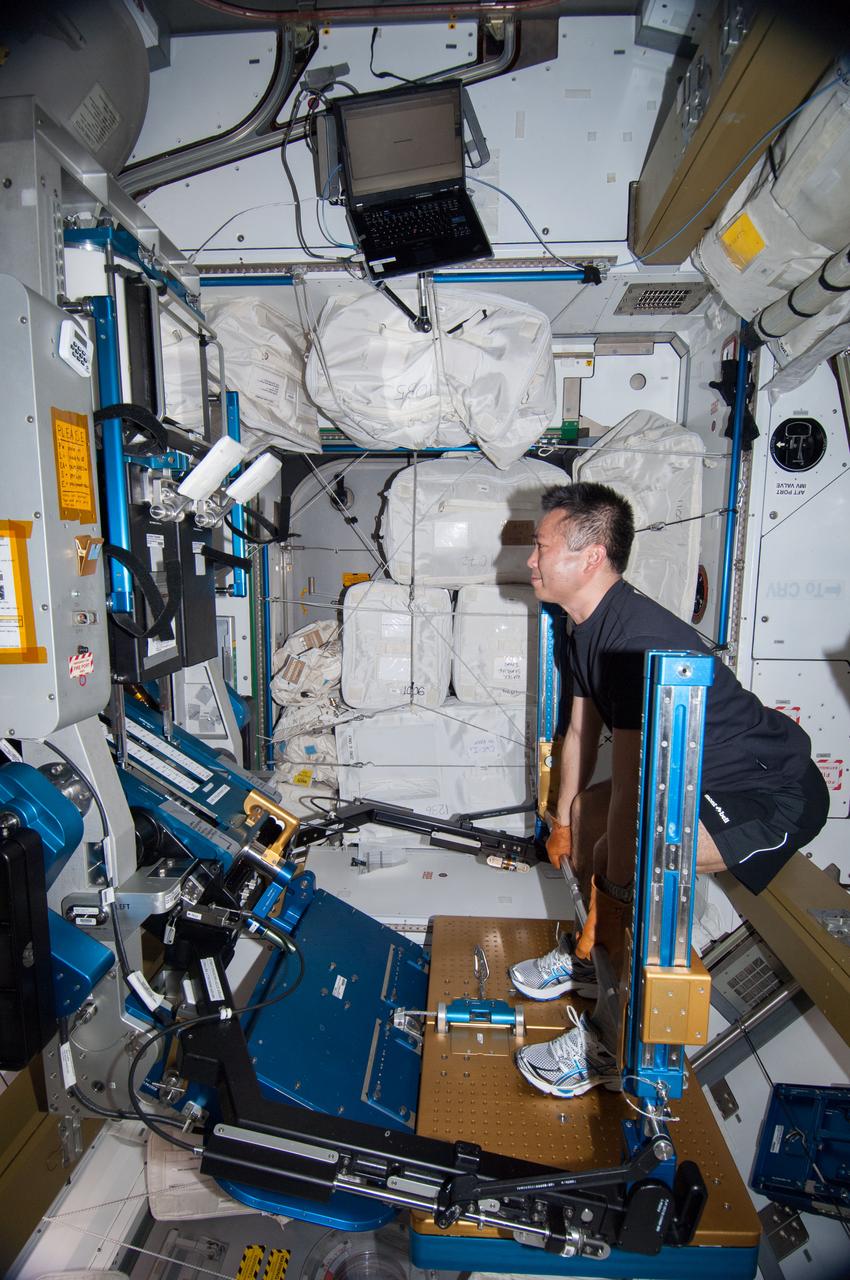
View of Koichi Wakata, Expedition 38 Flight Engineer (FE), exercising on the Advanced Resistive Exercise Device (aRED), in the Node 3. Photo was taken during Expedition 38. Image was released by astronaut on Twitter.
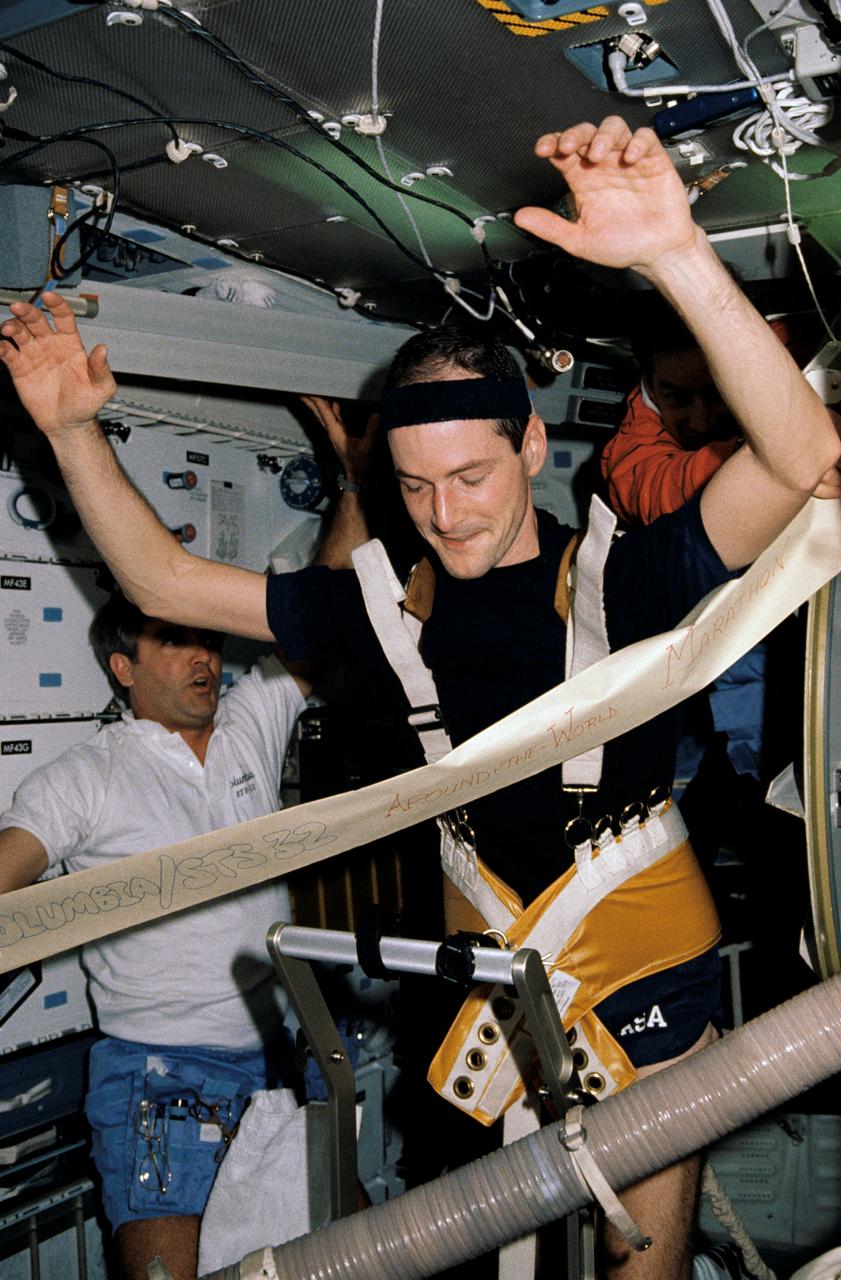
STS032-03-021 (9-20 Jan. 1990) --- Three crew members aboard the Space Shuttle Columbia enjoy one of the lighter moments of the 11-day mission on the flight deck. Astronaut G. David Low "runs" on a treadmill device while astronauts Daniel C. Brandenstein, left, and James D. Wetherbee look on. Wetherbee's mother competed in a marathon in Houston while the crew members had their own in-space version. The treadmill served as an exerciser and also was an important element of onboard biomedical testing. This picture was used by the astronauts at their January 30, 1990 Post Flight Press Conference (PFPC) at the Johnson Space Center (JSC).
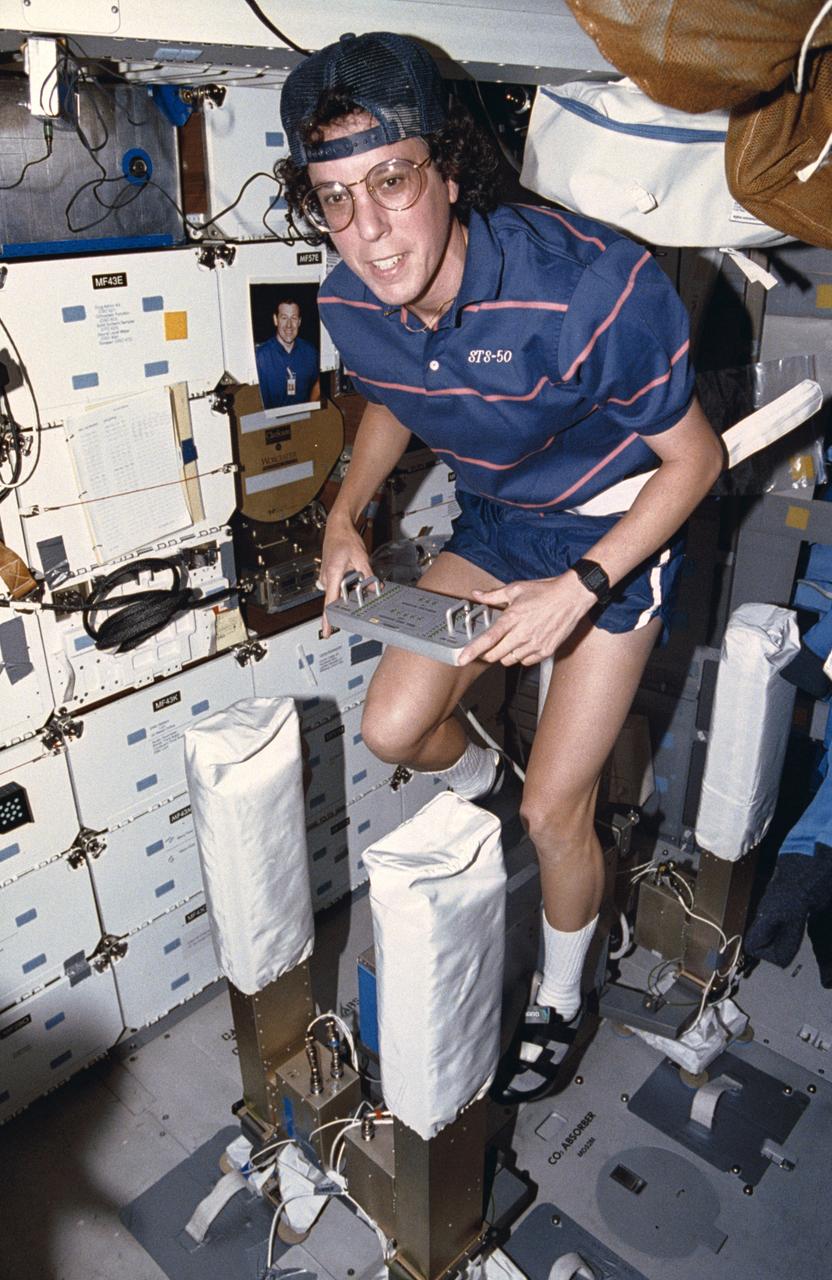
STS050-21-035 (25 June- 9 July 1992) --- Astronaut Ellen S. Baker, mission specialist, works out on the bicycle ergometer on the mid-deck of the Earth-orbiting Space Shuttle Columbia. Baker was joined by four other astronauts and two scientists from the private sector for the record-setting 14-day United States Microgravity Laboratory 1 (USML-1) mission.

ISS040-E-006091 (31 May 2014) --- NASA astronaut Reid Wiseman, Expedition 40 flight engineer, equipped with a bungee harness, exercises on the Combined Operational Load Bearing External Resistance Treadmill (COLBERT) in the Tranquility node of the International Space Station.

Four STS 51-G crewmembers huddle in a corner of the Discovery's middeck area. Daniel C. Brandenstein, mission commander, assists Steven R. Nagel with the treadmill device while John O. Creighton and Shannon W. Lucid look on.
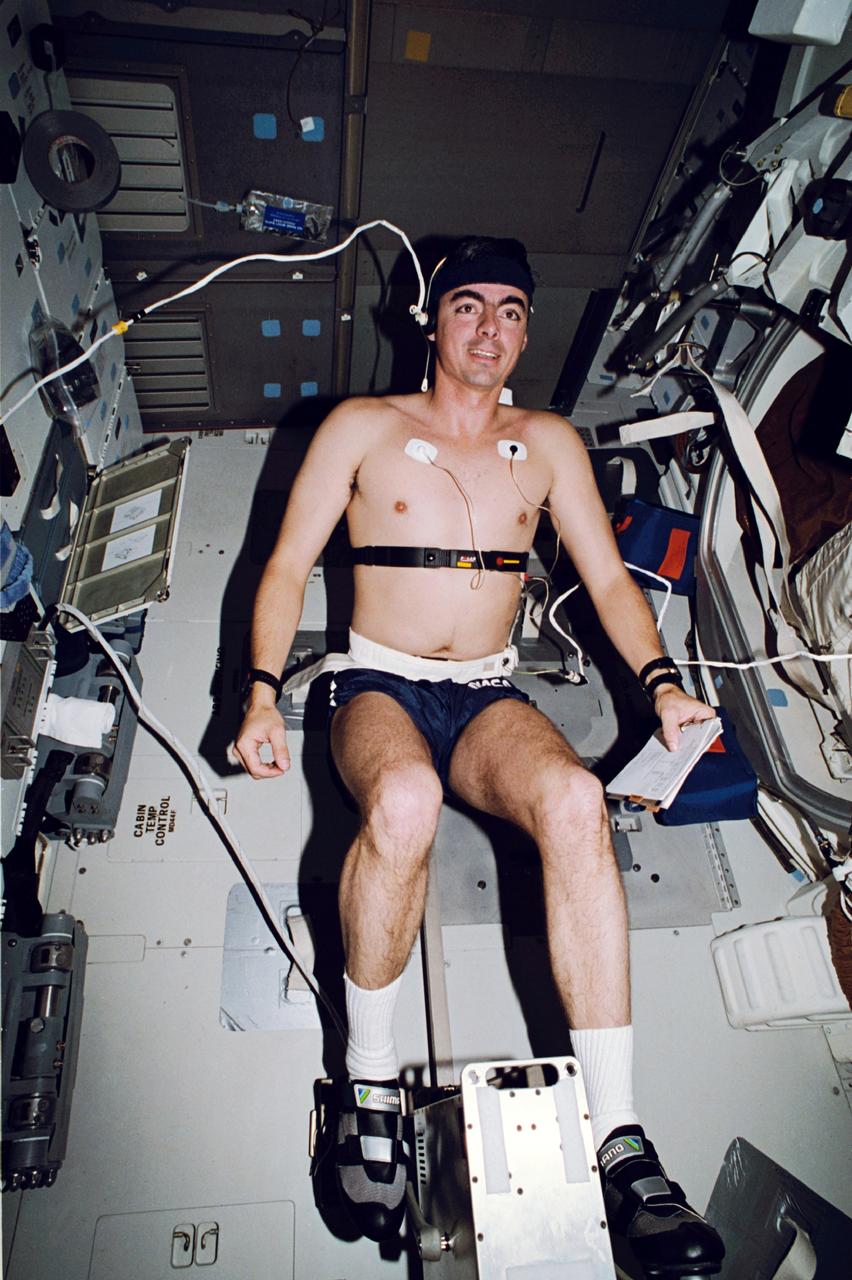
STS046-24-025 (31 July-8 Aug. 1992) --- Astronaut Andrew M. Allen, STS-46 pilot, exercises on the bicycle ergometer device on the flight deck of the Space Shuttle Atlantis as it makes one of its 127 total orbits for the eight-day mission. Allen, equipped with sensors for monitoring his biological systems during the run, was joined by four other NASA astronauts and two European scientists on the mission.
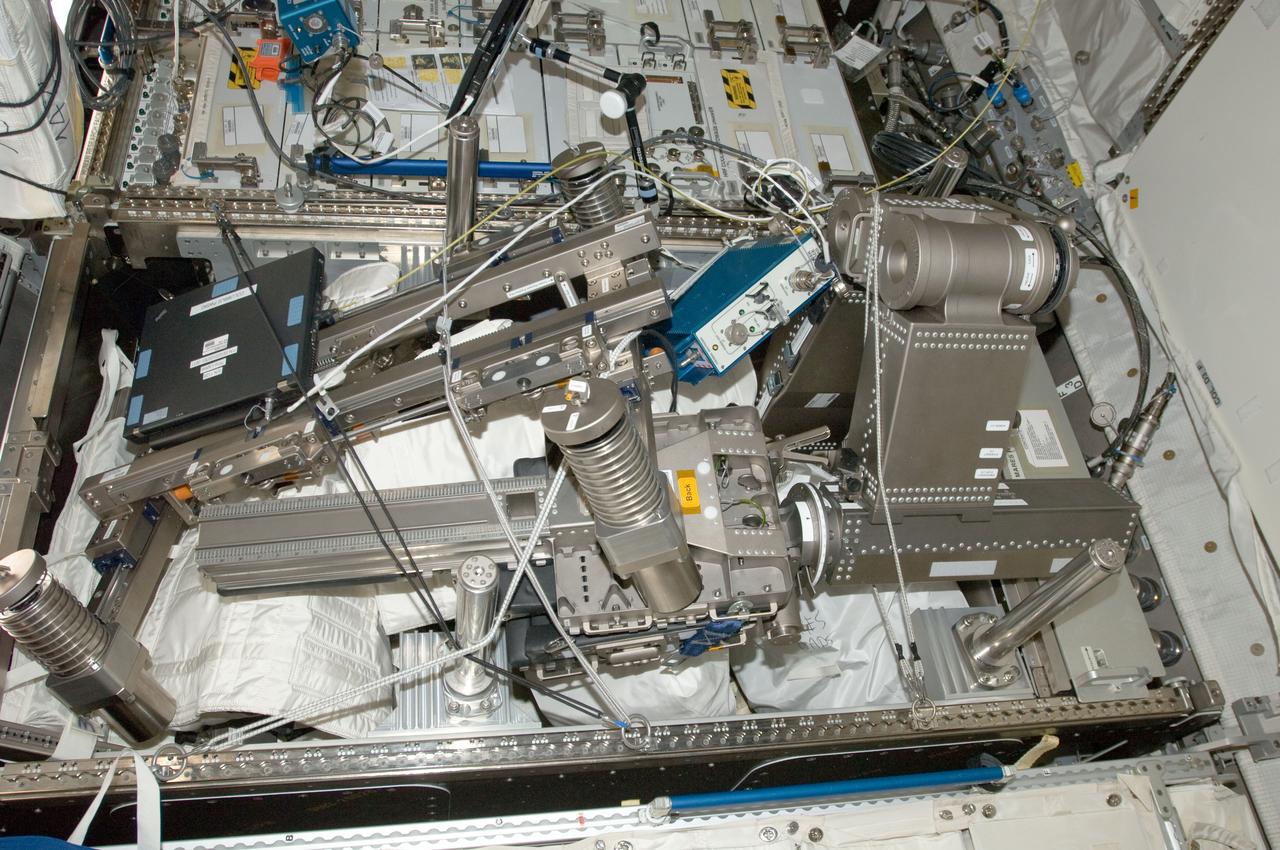
View of the Muscle Atrophy Research and Exercise System (MARES),in the Columbus Module (COL1F3). MARES will carry out research on musculoskeletal,bio-mechanical,and neuromuscular human physiology. Photo was taken during Expedition 34.
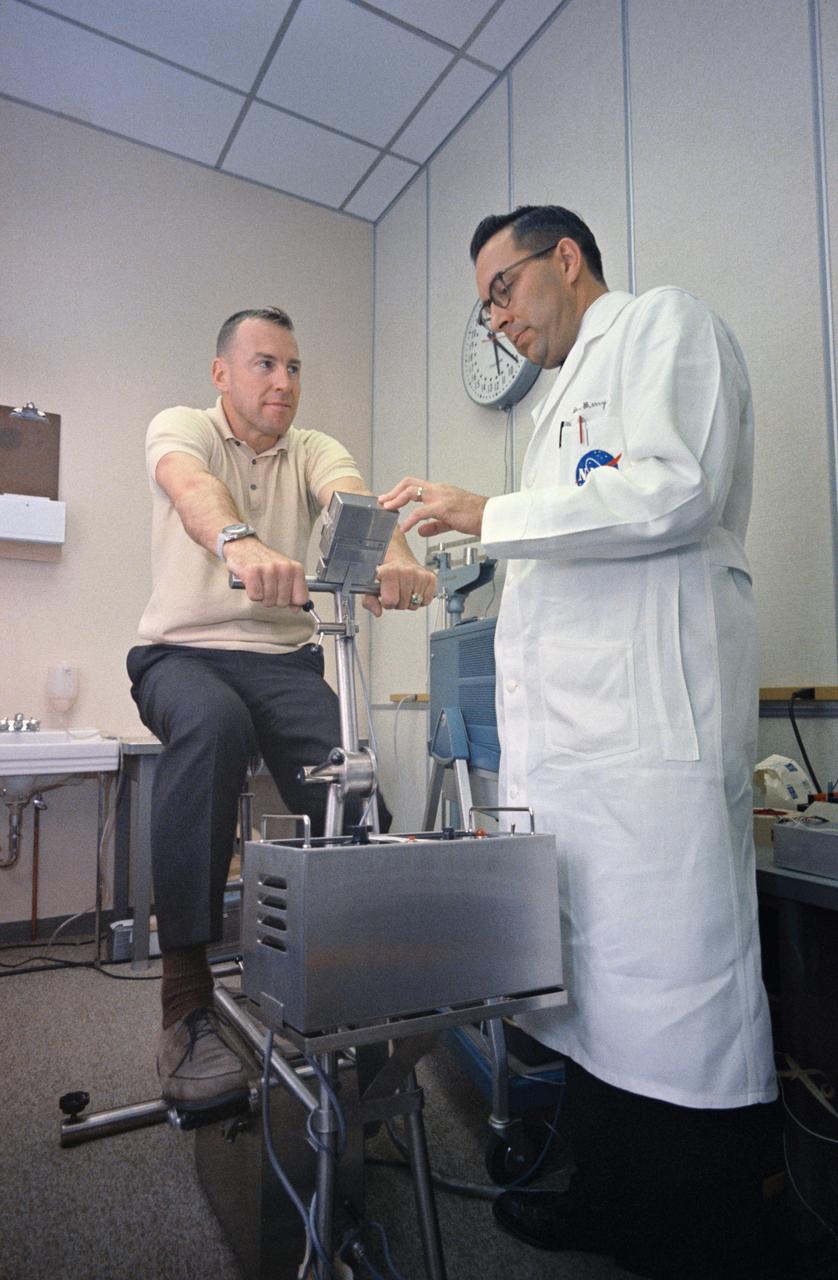
S65-60602 (2 Dec. 1965) --- Dr. Charles A. Berry checks astronaut James A. Lovell Jr., Gemini-7 prime crew pilot, following a workout on an exercise machine. Results will be compared with those obtained during spaceflight for evaluation. Lovell and astronaut Frank Borman (not pictured), command pilot, will pilot the Gemini-7 spacecraft on a planned 14-day mission. Dr. Berry is chief, MSC Center Medical Programs. Photo credit: NASA
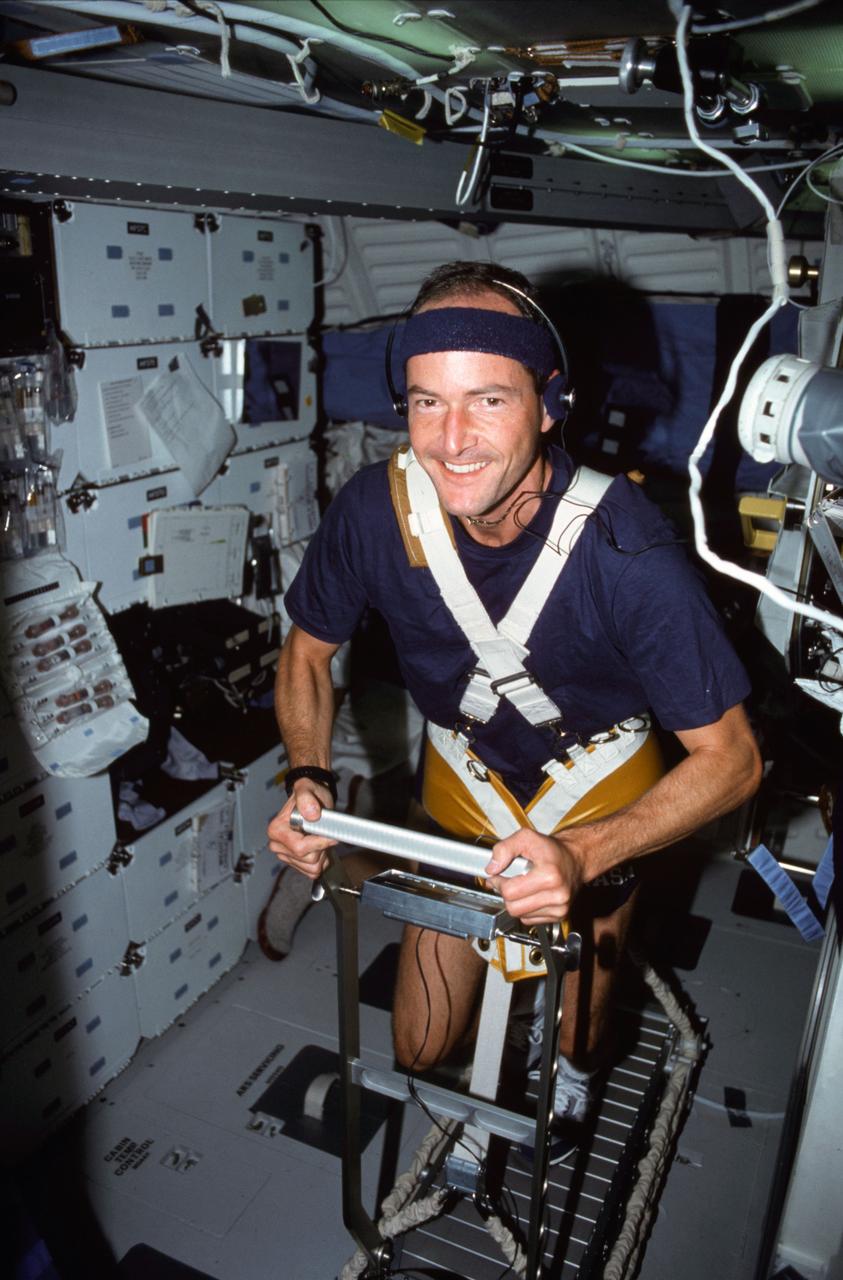
STS043-04-016 (2-11 Aug 1991) --- Astronaut G. David Low, STS-43 mission specialist, works out on a treadmill device which was used for medical testing on the nine-day flight. The scene, photographed with a 35mm camera, is on Atlantis? flight deck.
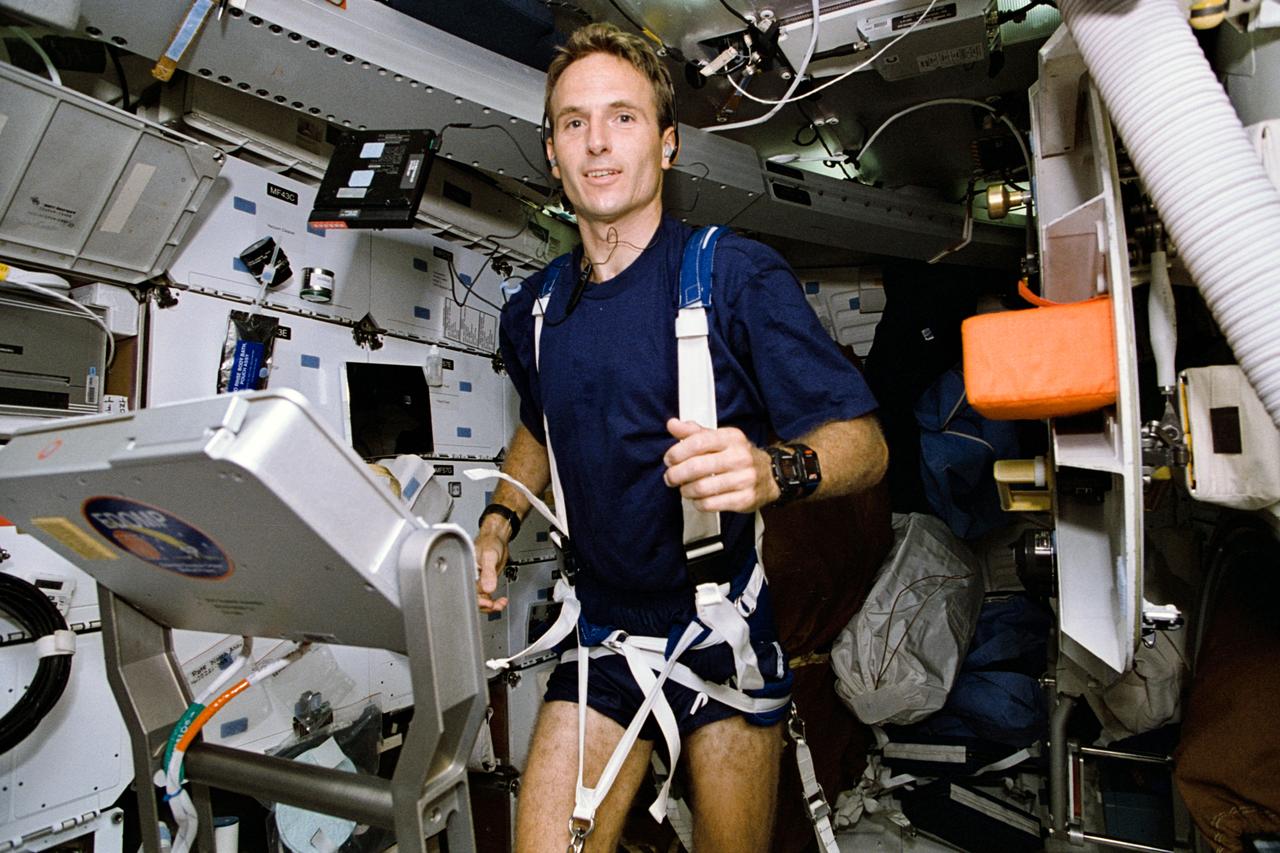
STS064-41-006 (9-20 Sept. 1994) --- Astronaut Jerry M. Linenger, STS-64 mission specialist, works out on the treadmill device on the space shuttle Discovery's middeck. "Running was a pleasure...just like being back on Earth," Linenger told a large audience of Johnson Space Center employees at the Crew Employee Presentation on Sept. 29, 1994. Linenger joined five other NASA astronauts for almost 11 days in Earth orbit aboard Discovery. Photo credit: NASA or National Aeronautics and Space Administration
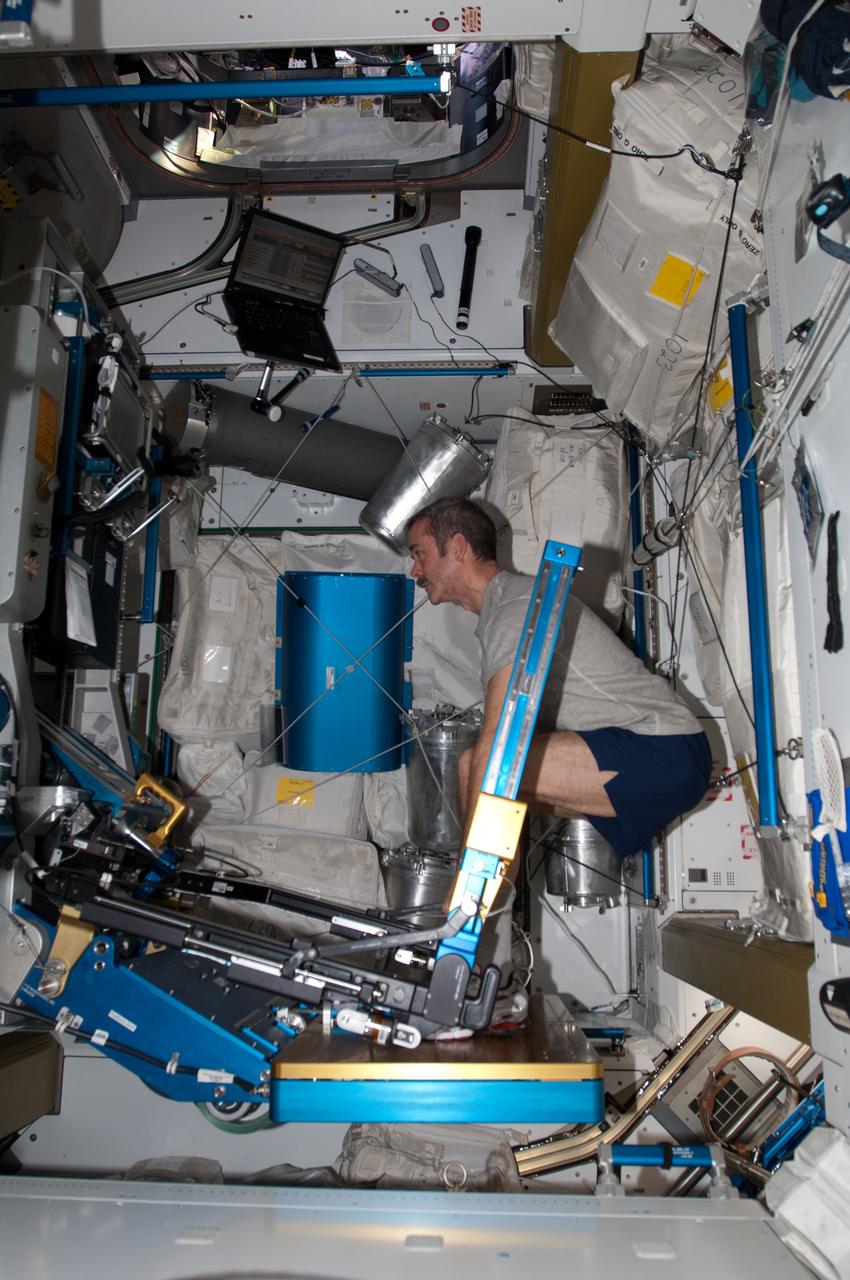
View of Canadian Space Agency (CSA) Chris Hadfield,Expedition 34 Flight Engineer (FE),exercising on the Advanced Resistive Exercise Device (ARED),in the Node 3. Photo was taken during Expedition 34.
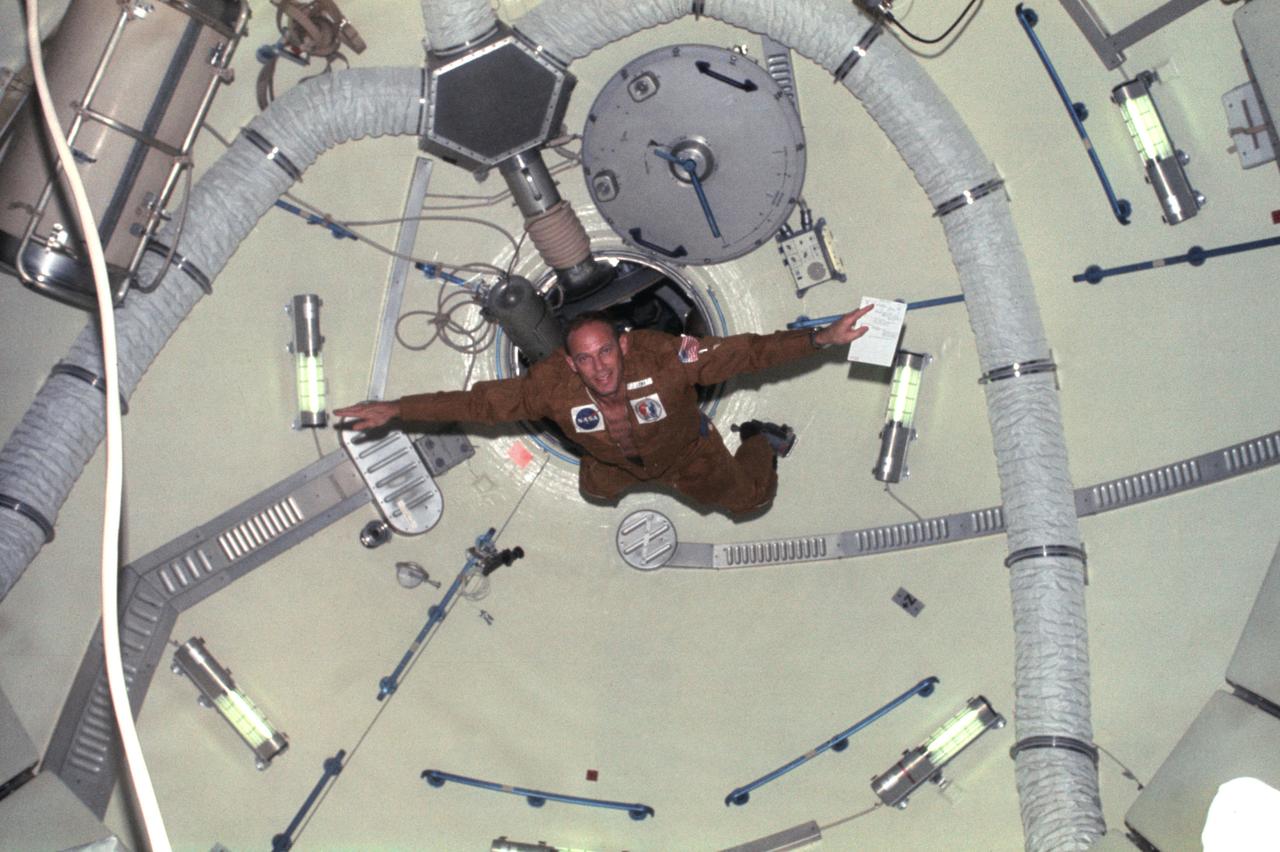
Astronaut Jack R. Lousma, Skylab 3 pilot, doing acrobatics in the dome area of the Orbital Workshop (OWS) on the space station cluster in Earth orbit. The dome area is about 22 feet in diameter and 19 feet from top to bottom.
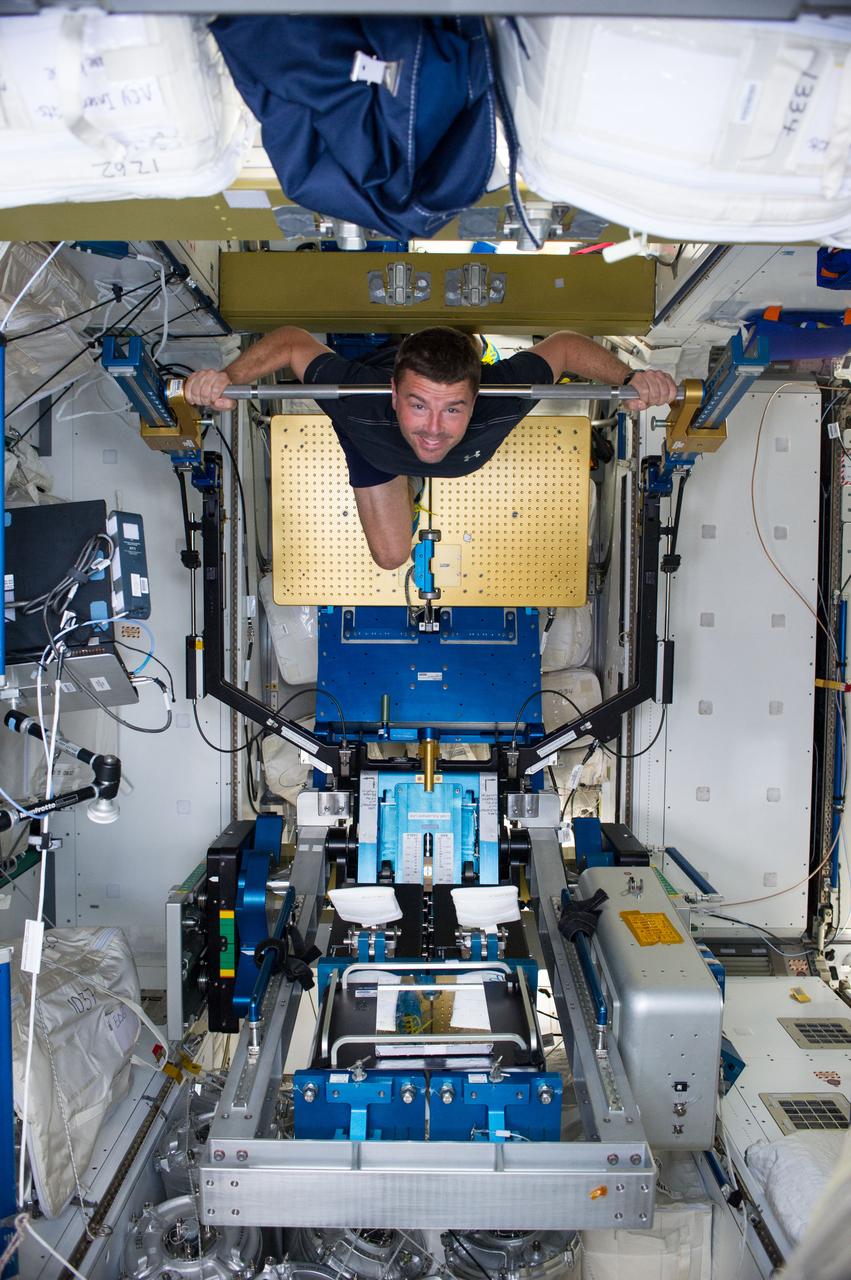
ISS040-E-006343 (1 June 2014) --- NASA astronaut Reid Wiseman, Expedition 40 flight engineer, gets a workout on the advanced Resistive Exercise Device (aRED) in the Tranquility node of the International Space Station.
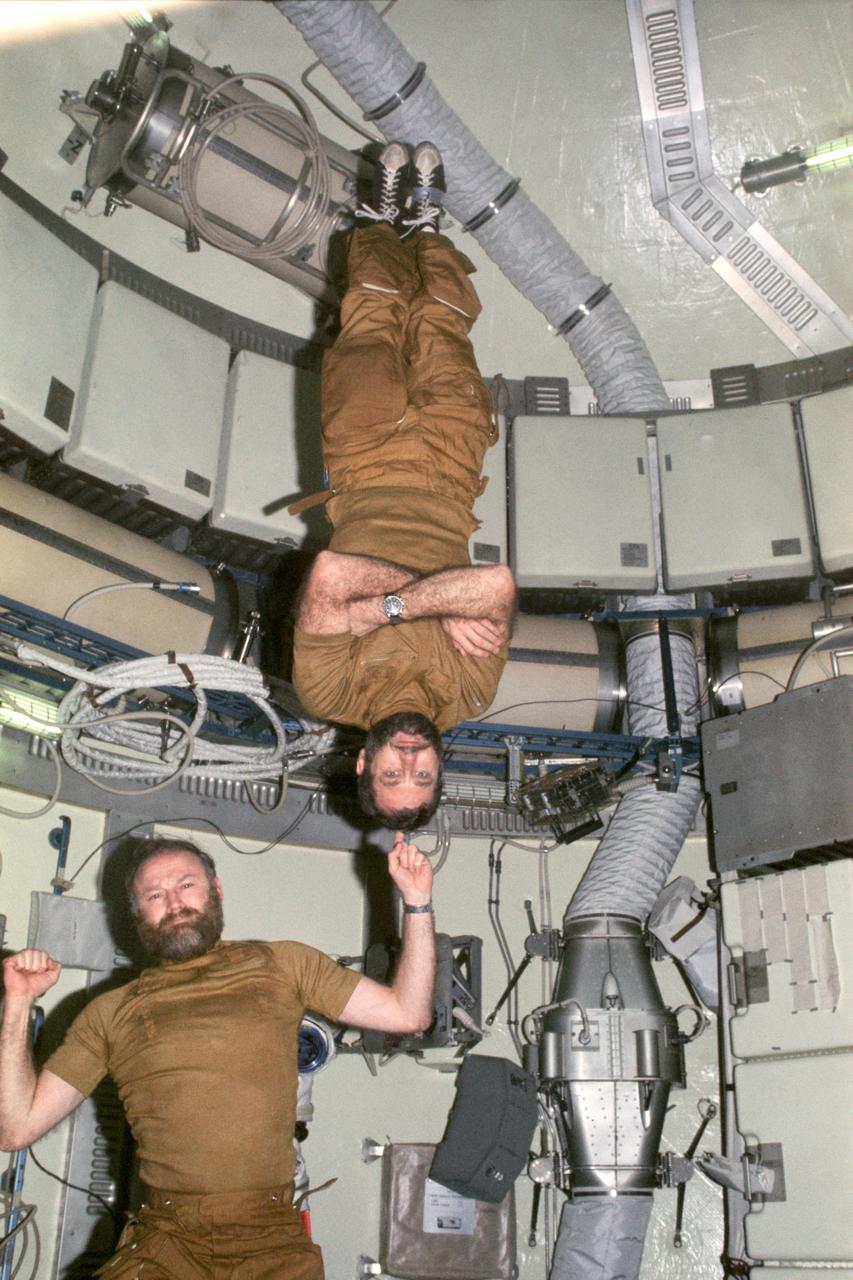
SL4-150-5080 (16 Nov. 1973-8 Feb. 1974) --- Two of the three Skylab 4 (third manning) astronauts exhibit the "magic" that can be accomplished in the weightlessness of space. Astronaut Gerald D. Carr, mission commander, uses his index finger to suspend astronaut William R. Pogue, pilot, in the Orbital Workshop (OWS). The two "wizards" completed almost three months aboard the Earth-orbiting Skylab space station, plenty of time to grow these full beards. The photograph was taken with a 35mm camera by astronaut Edward G. Gibson, science pilot. Photo credit: NASA
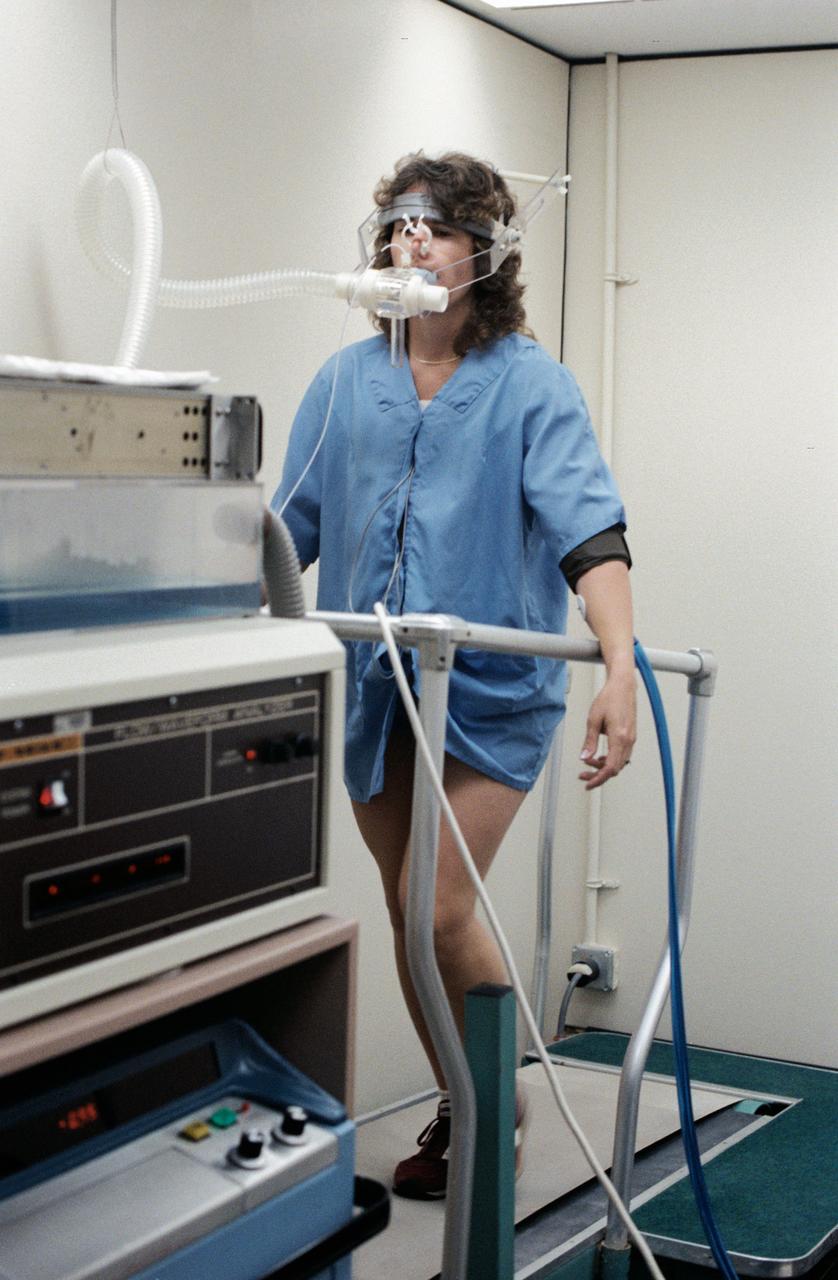
S85-37165 (8-12 July 1985) -- Sharon C. (Christa) McAuliffe of Concord High, Concord, New Hampshire, runs in place on treadmill to test physiological responses at Johnson Space Center. Christa McAuliffe was eventually chosen as the first Teacher in Space and was a member of the seven-member Challenger shuttle crew which died tragically in the explosion of the spacecraft during the launch of STS-51L from the Kennedy Space Center about 11:40 a.m., EST, on Jan. 28, 1986. The explosion occurred 73 seconds into the flight as a result of a leak in one of two Solid Rocket Boosters that ignited the main liquid fuel tank. The crew members of the Challenger represented a cross-section of the American population in terms of race, gender, geography, background, and religion. The explosion became one of the most significant events of the 1980s, as billions around the world saw the accident on television and empathized with any one of the several crew members killed. Photo credit: NASA
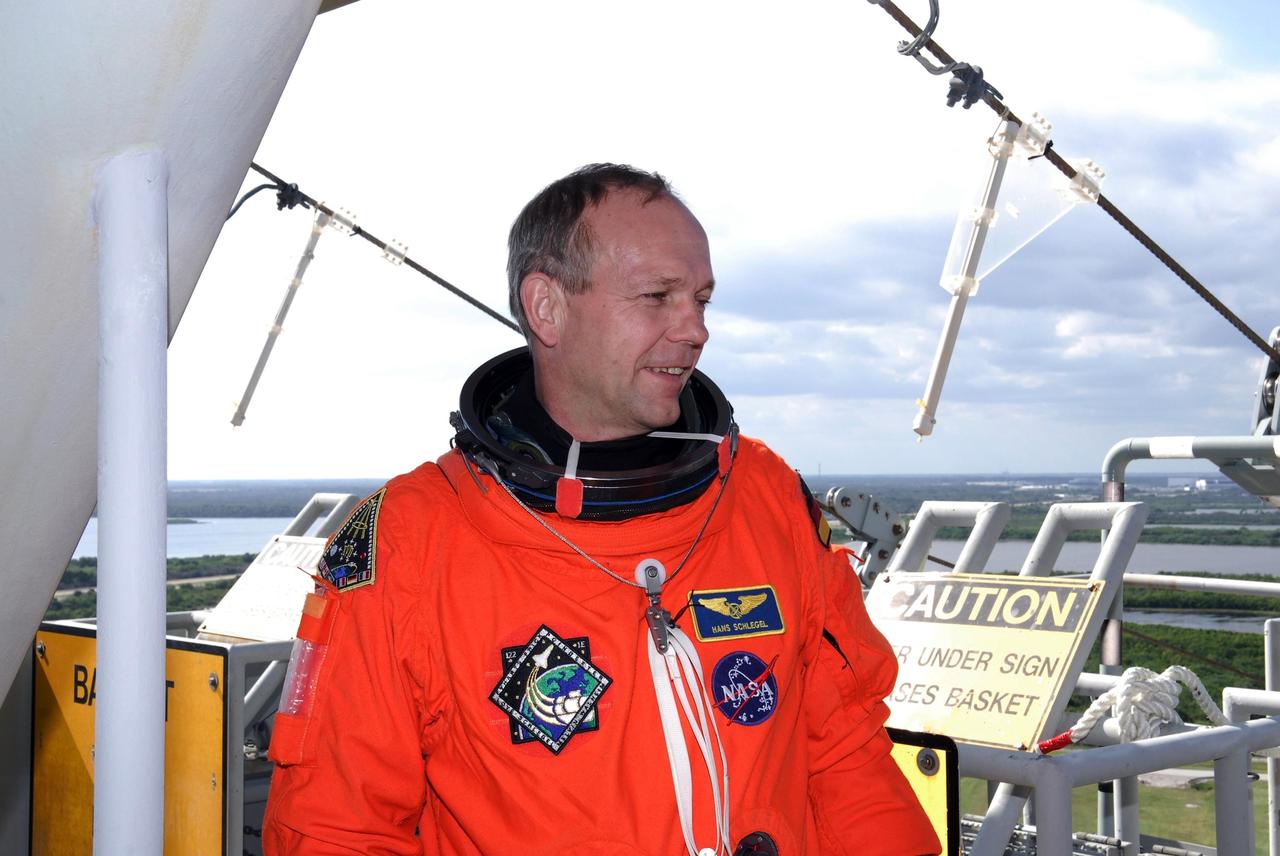
KENNEDY SPACE CENTER, FLA. -- Space shuttle Atlantis STS-122 Mission Specialist Hans Schlegel relaxes for a moment following a simulated launch countdown at Launch Pad 39A. The exercise is part of terminal countdown demonstration test, or TCDT, activities at NASA's Kennedy Space Center. The TCDT is a dress rehearsal for launch and also provides astronauts and ground crews with equipment familiarization and emergency egress training. On mission STS-122, Atlantis will deliver the Columbus module to the International Space Station. The European Space Agency's largest single contribution to the station, Columbus is a multifunctional, pressurized laboratory that will be permanently attached to U.S. Node 2, called Harmony. The laboratory will expand the research facilities aboard the station, providing crew members and scientists from around the world the ability to conduct a variety of experiments in the physical, materials and life sciences. Atlantis' launch is targeted for Dec. 6. Photo credit: NASA/Kim Shiflett
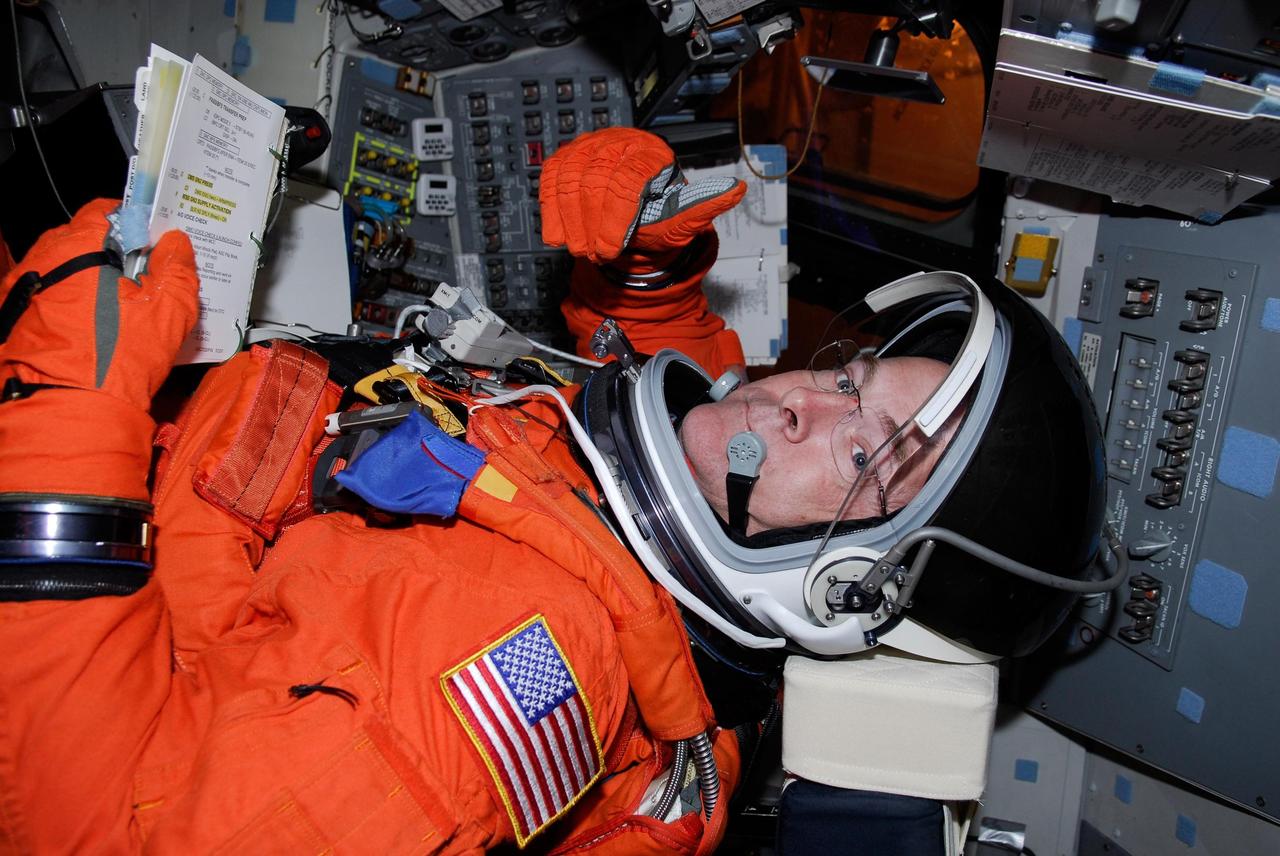
KENNEDY SPACE CENTER, FLA. -- Space shuttle Atlantis STS-122 Pilot Alan Poindexter, strapped in his seat in Atlantis' cockpit, signals that he is ready to proceed with the simulated launch countdown. The exercise is part of terminal countdown demonstration test, or TCDT, activities at NASA's Kennedy Space Center. The TCDT is a dress rehearsal for launch and also provides astronauts and ground crews with equipment familiarization and emergency egress training. On mission STS-122, Atlantis will deliver the Columbus module to the International Space Station. The European Space Agency's largest single contribution to the station, Columbus is a multifunctional, pressurized laboratory that will be permanently attached to U.S. Node 2, called Harmony. The laboratory will expand the research facilities aboard the station, providing crew members and scientists from around the world the ability to conduct a variety of experiments in the physical, materials and life sciences. Atlantis' launch is targeted for Dec. 6. Photo credit: NASA/Kim Shiflett

KENNEDY SPACE CENTER, FLA. -- Space shuttle Atlantis STS-122 Mission Specialist Leland Melvin, strapped in his seat on Atlantis' fight deck, signals that he is ready to proceed with the simulated launch countdown. The exercise is part of terminal countdown demonstration test, or TCDT, activities at NASA's Kennedy Space Center. The TCDT is a dress rehearsal for launch and also provides astronauts and ground crews with equipment familiarization and emergency egress training. On mission STS-122, Atlantis will deliver the Columbus module to the International Space Station. The European Space Agency's largest single contribution to the station, Columbus is a multifunctional, pressurized laboratory that will be permanently attached to U.S. Node 2, called Harmony. The laboratory will expand the research facilities aboard the station, providing crew members and scientists from around the world the ability to conduct a variety of experiments in the physical, materials and life sciences. Atlantis' launch is targeted for Dec. 6. Photo credit: NASA/Kim Shiflett
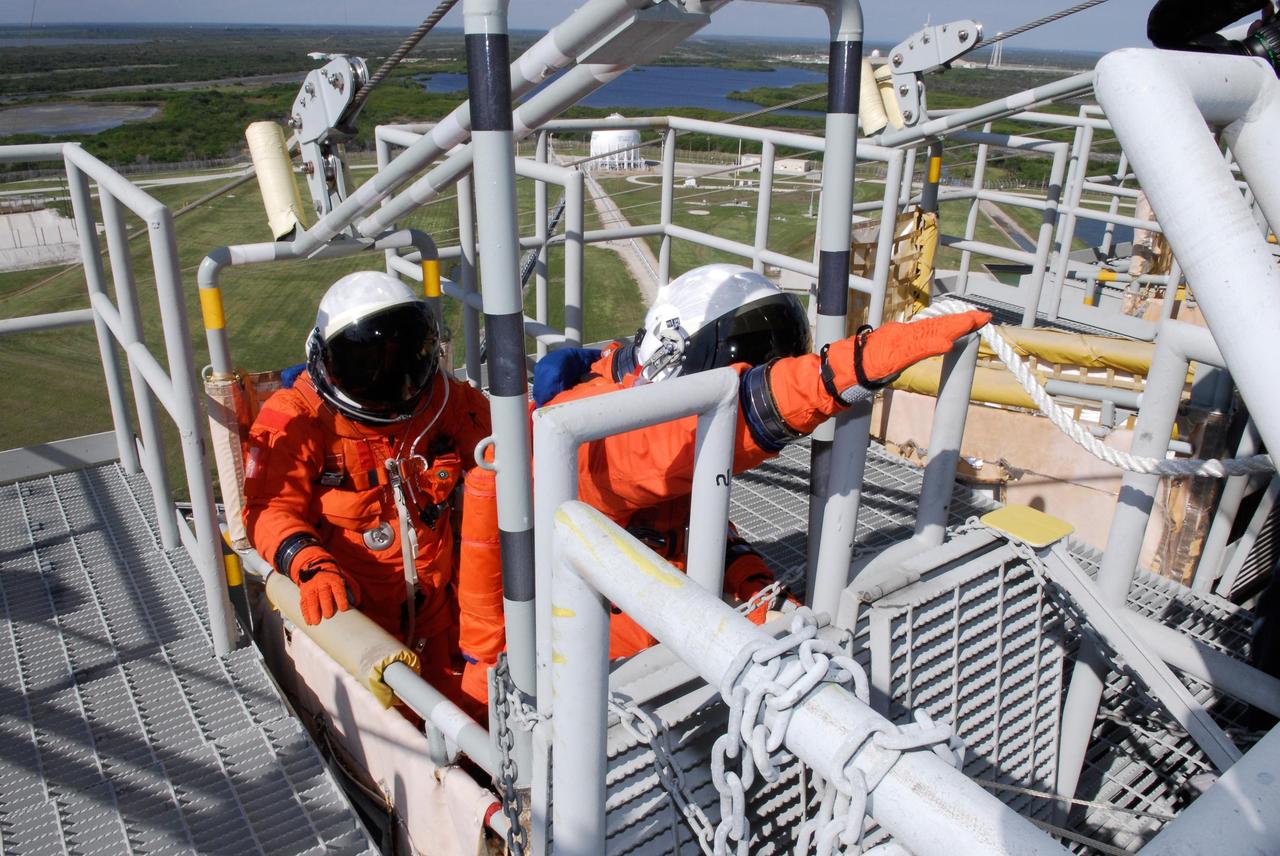
KENNEDY SPACE CENTER, FLA. -- Members of space shuttle Atlantis' STS-122 crew practice emergency exit procedures in a slidewire basket at Launch Pad 39A following a simulated launch countdown. The exercise is part of terminal countdown demonstration test, or TCDT, activities at NASA's Kennedy Space Center. The TCDT is a dress rehearsal for launch and also provides astronauts and ground crews with equipment familiarization and emergency egress training. On mission STS-122, Atlantis will deliver the Columbus module to the International Space Station. The European Space Agency's largest single contribution to the station, Columbus is a multifunctional, pressurized laboratory that will be permanently attached to U.S. Node 2, called Harmony. The laboratory will expand the research facilities aboard the station, providing crew members and scientists from around the world the ability to conduct a variety of experiments in the physical, materials and life sciences. Atlantis' launch is targeted for Dec. 6. Photo credit: NASA/Kim Shiflett
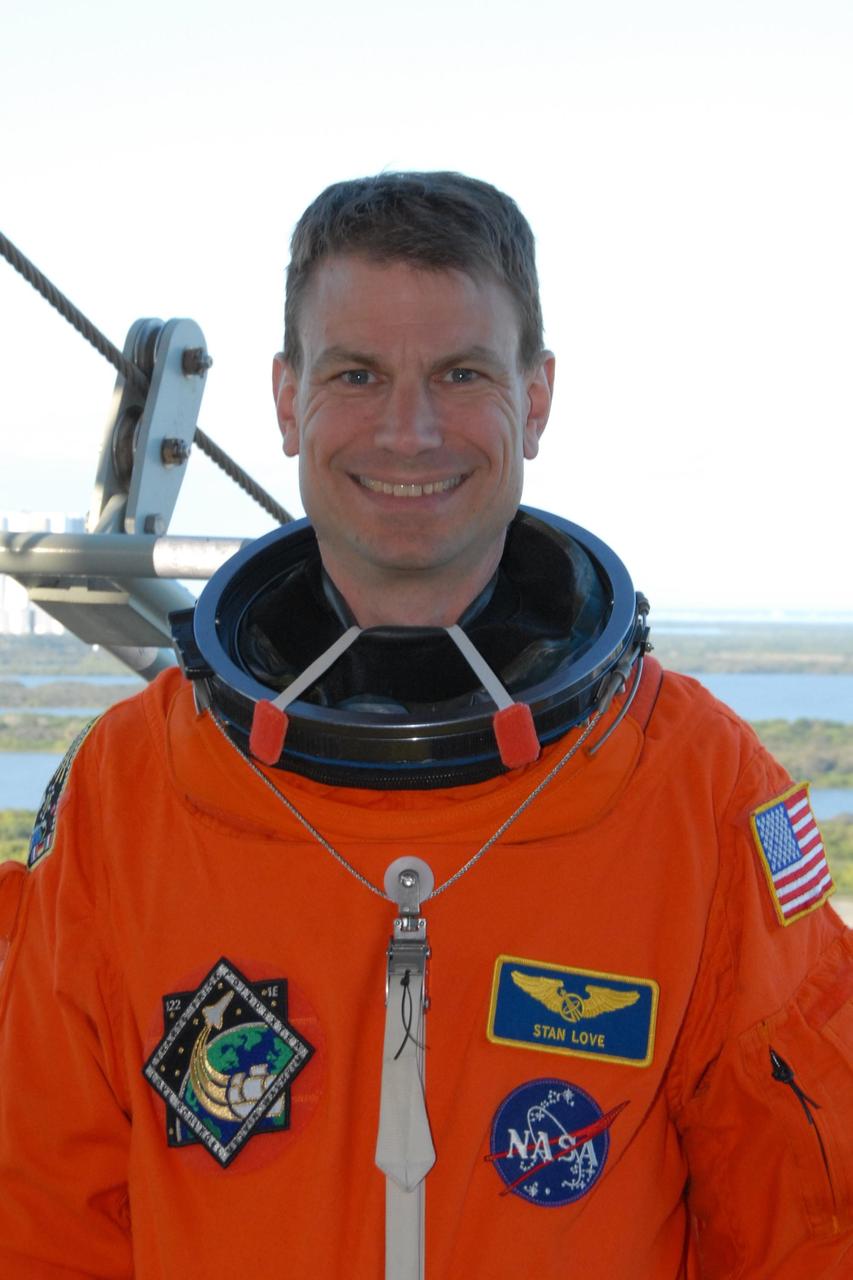
KENNEDY SPACE CENTER, FLA. -- Space shuttle Atlantis STS-122 Mission Specialist Stanley Love arrives at Launch Pad 39A, dressed in his launch and entry suit, to participate in a simulated launch countdown aboard Atlantis. The exercise is part of terminal countdown demonstration test, or TCDT, activities at NASA's Kennedy Space Center. The TCDT is a dress rehearsal for launch and also provides astronauts and ground crews with equipment familiarization and emergency egress training. On mission STS-122, Atlantis will deliver the Columbus module to the International Space Station. The European Space Agency's largest single contribution to the station, Columbus is a multifunctional, pressurized laboratory that will be permanently attached to U.S. Node 2, called Harmony. The laboratory will expand the research facilities aboard the station, providing crew members and scientists from around the world the ability to conduct a variety of experiments in the physical, materials and life sciences. Atlantis' launch is targeted for Dec. 6. Photo credit: NASA/George Shelton
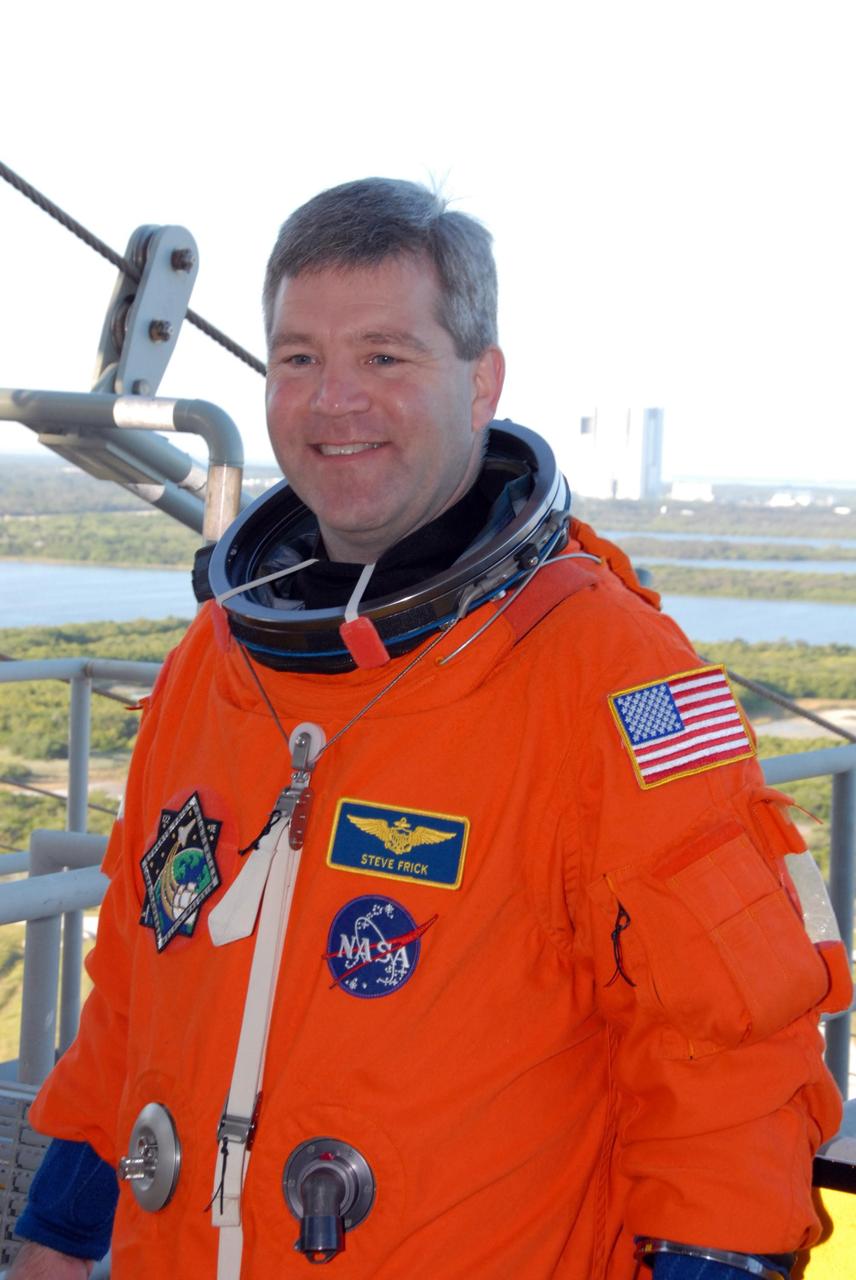
KENNEDY SPACE CENTER, FLA. -- Space shuttle Atlantis STS-122 Commander Steve Frick arrives at Launch Pad 39A, dressed in his launch and entry suit, to participate in a simulated launch countdown aboard Atlantis. The exercise is part of terminal countdown demonstration test, or TCDT, activities at NASA's Kennedy Space Center. The TCDT is a dress rehearsal for launch and also provides astronauts and ground crews with equipment familiarization and emergency egress training. On mission STS-122, Atlantis will deliver the Columbus module to the International Space Station. The European Space Agency's largest single contribution to the station, Columbus is a multifunctional, pressurized laboratory that will be permanently attached to U.S. Node 2, called Harmony. The laboratory will expand the research facilities aboard the station, providing crew members and scientists from around the world the ability to conduct a variety of experiments in the physical, materials and life sciences. Atlantis' launch is targeted for Dec. 6. Photo credit: NASA/George Shelton
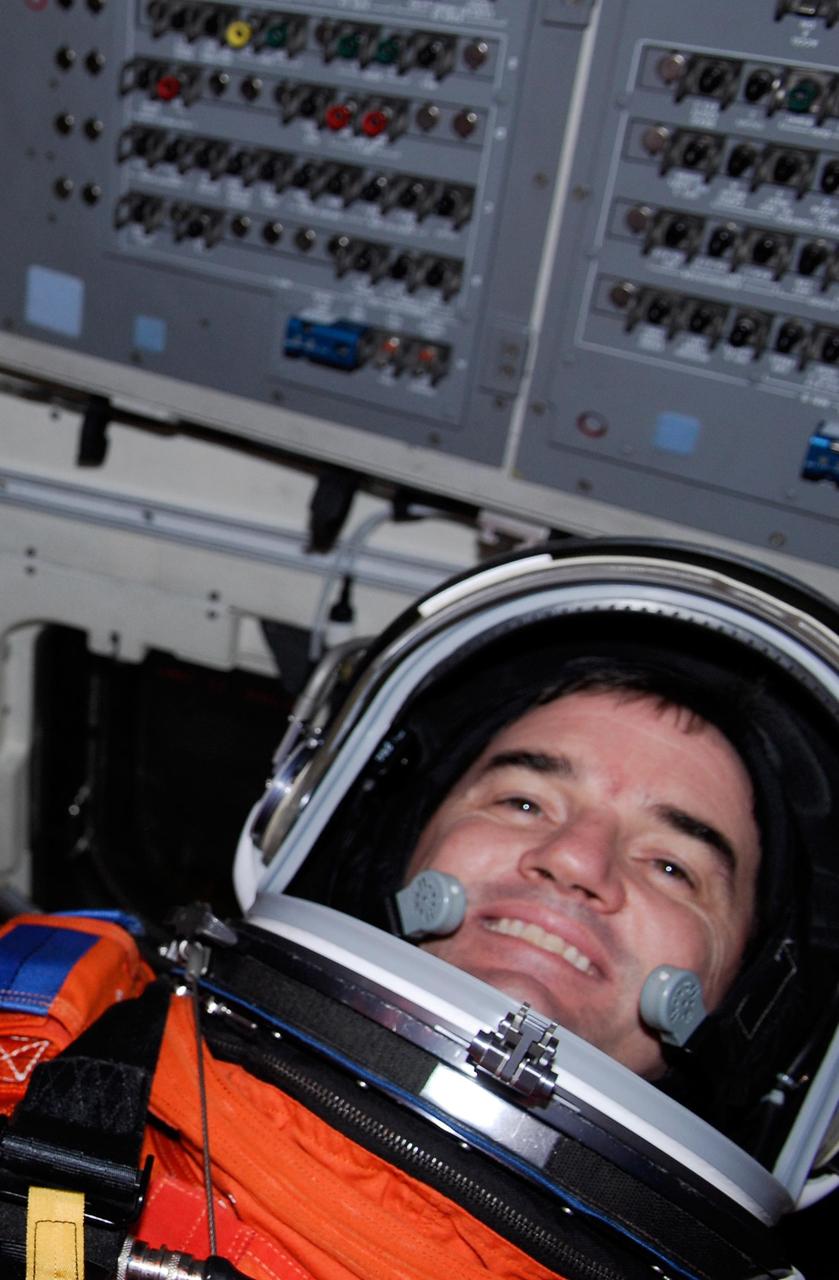
KENNEDY SPACE CENTER, FLA. -- Space shuttle Atlantis STS-122 Mission Specialist Rex Walheim is strapped into his seat on Atlantis' fight deck during a simulated launch countdown. The exercise is part of terminal countdown demonstration test, or TCDT, activities at NASA's Kennedy Space Center. The TCDT is a dress rehearsal for launch and also provides astronauts and ground crews with equipment familiarization and emergency egress training. On mission STS-122, Atlantis will deliver the Columbus module to the International Space Station. The European Space Agency's largest single contribution to the station, Columbus is a multifunctional, pressurized laboratory that will be permanently attached to U.S. Node 2, called Harmony. The laboratory will expand the research facilities aboard the station, providing crew members and scientists from around the world the ability to conduct a variety of experiments in the physical, materials and life sciences. Atlantis' launch is targeted for Dec. 6. Photo credit: NASA/Kim Shiflett
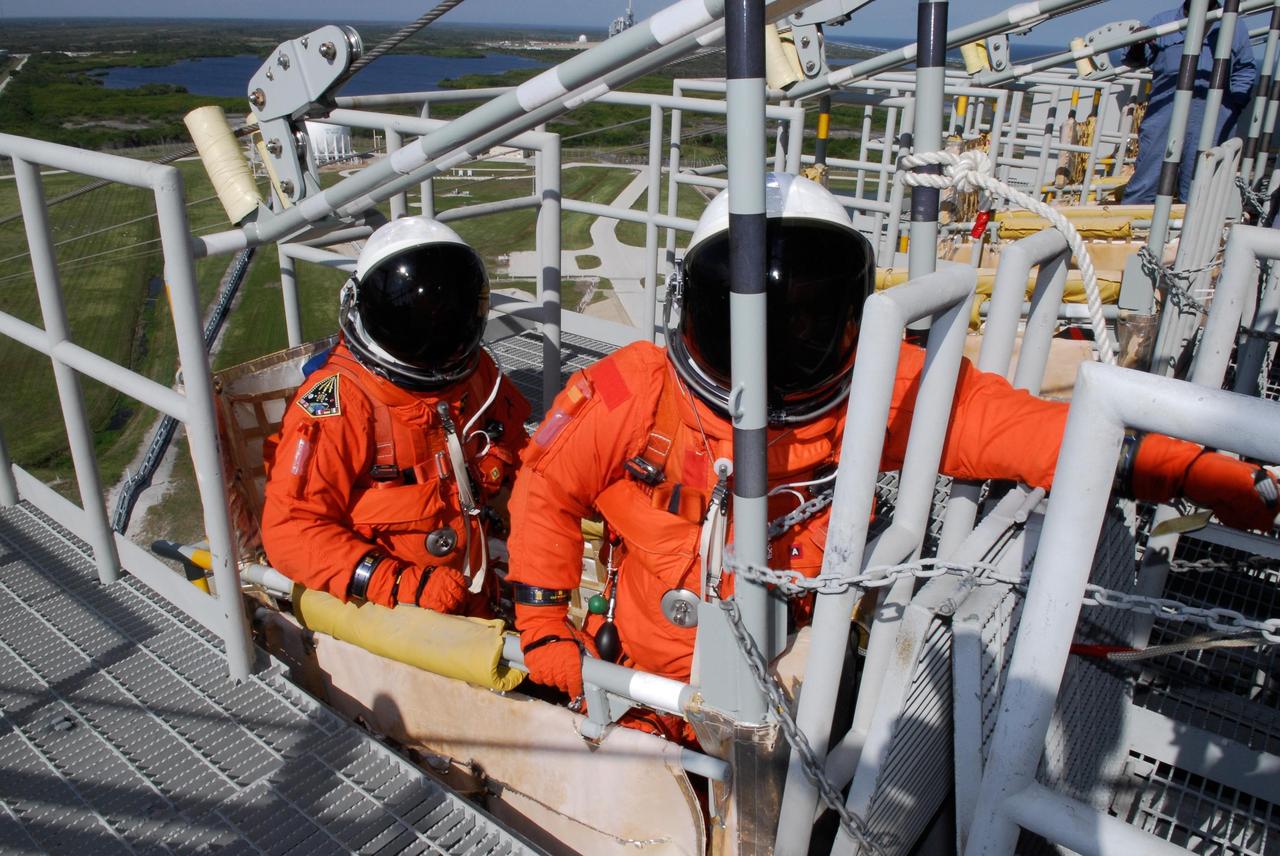
KENNEDY SPACE CENTER, FLA. -- Members of space shuttle Atlantis' STS-122 crew practice emergency exit procedures in a slidewire basket at Launch Pad 39A following a simulated launch countdown. The exercise is part of terminal countdown demonstration test, or TCDT, activities at NASA's Kennedy Space Center. The TCDT is a dress rehearsal for launch and also provides astronauts and ground crews with equipment familiarization and emergency egress training. On mission STS-122, Atlantis will deliver the Columbus module to the International Space Station. The European Space Agency's largest single contribution to the station, Columbus is a multifunctional, pressurized laboratory that will be permanently attached to U.S. Node 2, called Harmony. The laboratory will expand the research facilities aboard the station, providing crew members and scientists from around the world the ability to conduct a variety of experiments in the physical, materials and life sciences. Atlantis' launch is targeted for Dec. 6. Photo credit: NASA/Kim Shiflett
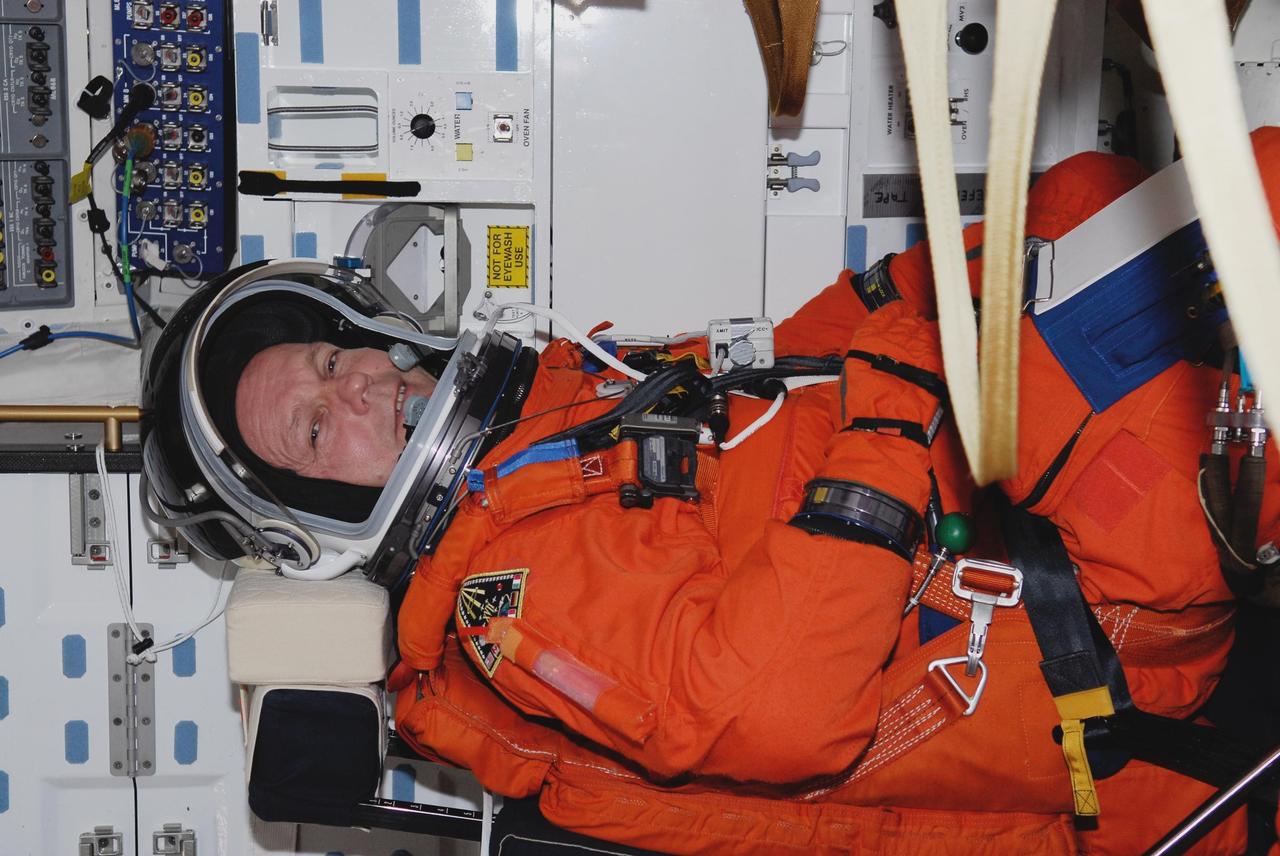
KENNEDY SPACE CENTER, FLA. -- Space shuttle Atlantis STS-122 Mission Specialist Hans Schlegel is strapped into his seat on Atlantis' fight deck during a simulated launch countdown. Schlegel is with the European Space Agency. The exercise is part of terminal countdown demonstration test, or TCDT, activities at NASA's Kennedy Space Center. The TCDT is a dress rehearsal for launch and also provides astronauts and ground crews with equipment familiarization and emergency egress training. On mission STS-122, Atlantis will deliver the Columbus module to the International Space Station. The European Space Agency's largest single contribution to the station, Columbus is a multifunctional, pressurized laboratory that will be permanently attached to U.S. Node 2, called Harmony. The laboratory will expand the research facilities aboard the station, providing crew members and scientists from around the world the ability to conduct a variety of experiments in the physical, materials and life sciences. Atlantis' launch is targeted for Dec. 6. Photo credit: NASA/Kim Shiflett
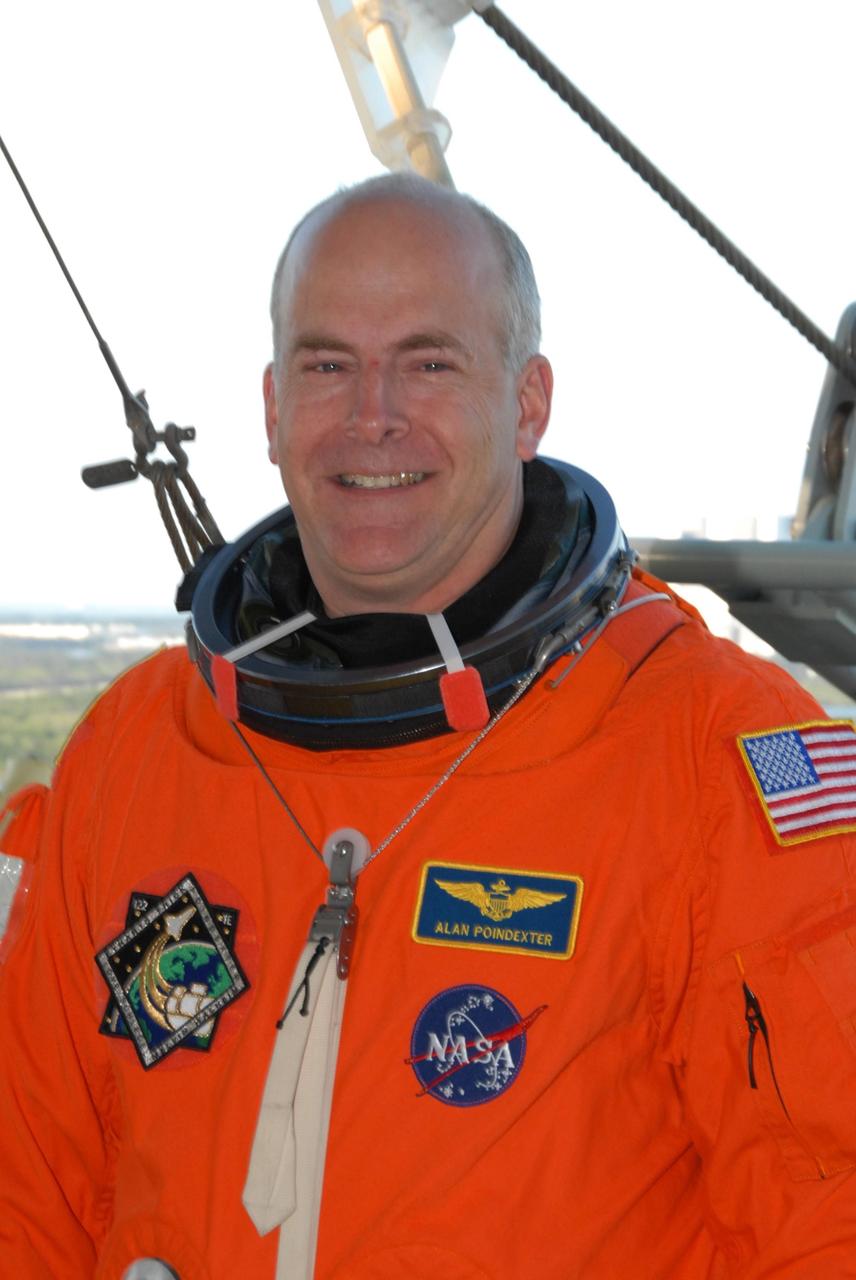
KENNEDY SPACE CENTER, FLA. -- Space shuttle Atlantis STS-122 Pilot Alan Poindexter arrives at Launch Pad 39A, dressed in his launch and entry suit, to participate in a simulated launch countdown aboard Atlantis. The exercise is part of terminal countdown demonstration test, or TCDT, activities at NASA's Kennedy Space Center. The TCDT is a dress rehearsal for launch and also provides astronauts and ground crews with equipment familiarization and emergency egress training. On mission STS-122, Atlantis will deliver the Columbus module to the International Space Station. The European Space Agency's largest single contribution to the station, Columbus is a multifunctional, pressurized laboratory that will be permanently attached to U.S. Node 2, called Harmony. The laboratory will expand the research facilities aboard the station, providing crew members and scientists from around the world the ability to conduct a variety of experiments in the physical, materials and life sciences. Atlantis' launch is targeted for Dec. 6. Photo credit: NASA/George Shelton
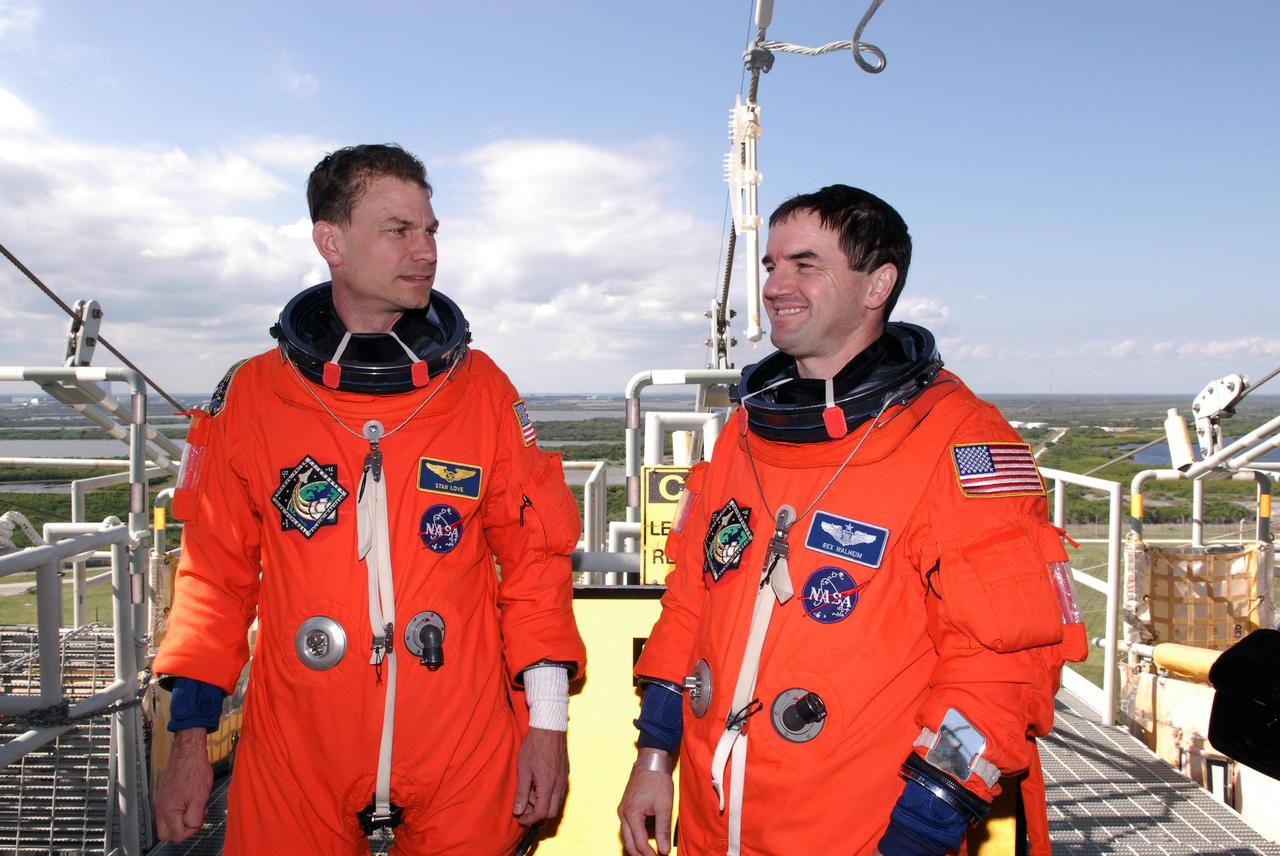
KENNEDY SPACE CENTER, FLA. -- Space shuttle Atlantis STS-122 Mission Specialists Stanley Love, left, and Rex Walheim relax for a moment following a simulated launch countdown at Launch Pad 39A. The exercise is part of terminal countdown demonstration test, or TCDT, activities at NASA's Kennedy Space Center. The TCDT is a dress rehearsal for launch and also provides astronauts and ground crews with equipment familiarization and emergency egress training. On mission STS-122, Atlantis will deliver the Columbus module to the International Space Station. The European Space Agency's largest single contribution to the station, Columbus is a multifunctional, pressurized laboratory that will be permanently attached to U.S. Node 2, called Harmony. The laboratory will expand the research facilities aboard the station, providing crew members and scientists from around the world the ability to conduct a variety of experiments in the physical, materials and life sciences. Atlantis' launch is targeted for Dec. 6. Photo credit: NASA/Kim Shiflett
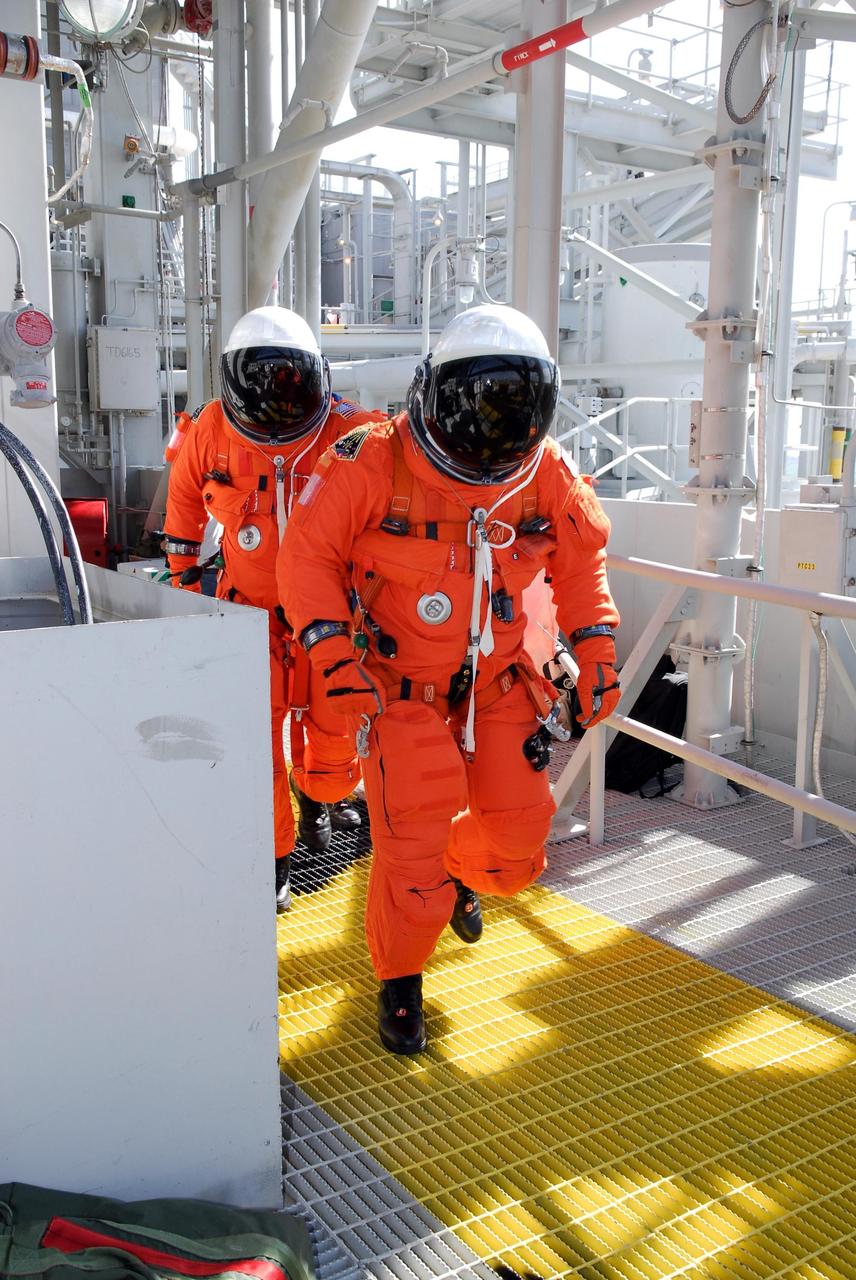
KENNEDY SPACE CENTER, FLA. -- Members of space shuttle Atlantis' STS-122 crew exit Atlantis' fight deck following a simulated launch countdown at Launch Pad 39A. The exercise is part of terminal countdown demonstration test, or TCDT, activities at NASA's Kennedy Space Center. The TCDT is a dress rehearsal for launch and also provides astronauts and ground crews with equipment familiarization and emergency egress training. On mission STS-122, Atlantis will deliver the Columbus module to the International Space Station. The European Space Agency's largest single contribution to the station, Columbus is a multifunctional, pressurized laboratory that will be permanently attached to U.S. Node 2, called Harmony. The laboratory will expand the research facilities aboard the station, providing crew members and scientists from around the world the ability to conduct a variety of experiments in the physical, materials and life sciences. Atlantis' launch is targeted for Dec. 6. Photo credit: NASA/Kim Shiflett
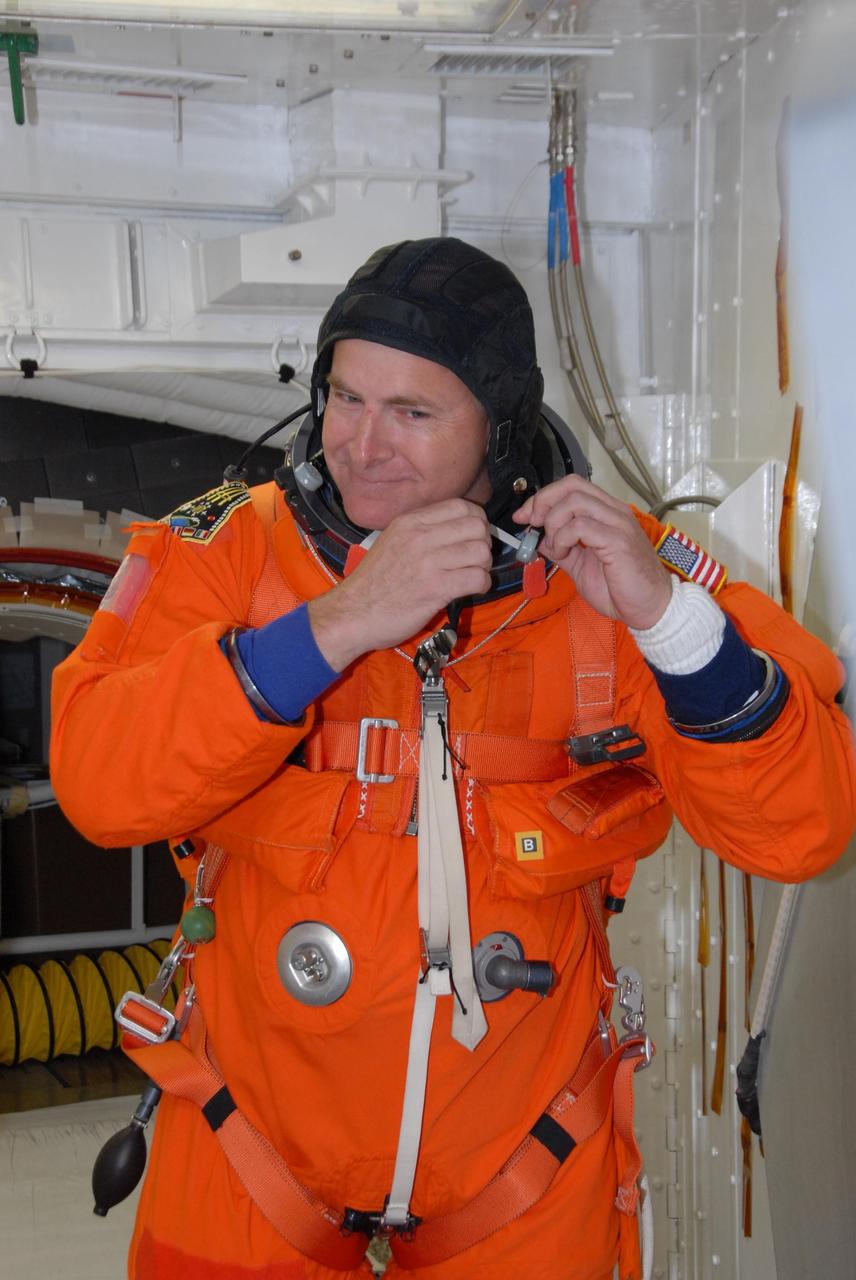
KENNEDY SPACE CENTER, FLA. -- In the White Room on Launch Pad 39A, space shuttle Atlantis STS-122 Pilot Alan Poindexter suits up for his entry into Atlantis' cockpit, through the hatch behind him. The exercise is part of terminal countdown demonstration test, or TCDT, activities at NASA's Kennedy Space Center. The TCDT is a dress rehearsal for launch and also provides astronauts and ground crews with equipment familiarization and emergency egress training. On mission STS-122, Atlantis will deliver the Columbus module to the International Space Station. The European Space Agency's largest single contribution to the station, Columbus is a multifunctional, pressurized laboratory that will be permanently attached to U.S. Node 2, called Harmony. The laboratory will expand the research facilities aboard the station, providing crew members and scientists from around the world the ability to conduct a variety of experiments in the physical, materials and life sciences. Atlantis' launch is targeted for Dec. 6. Photo credit: NASA/George Shelton
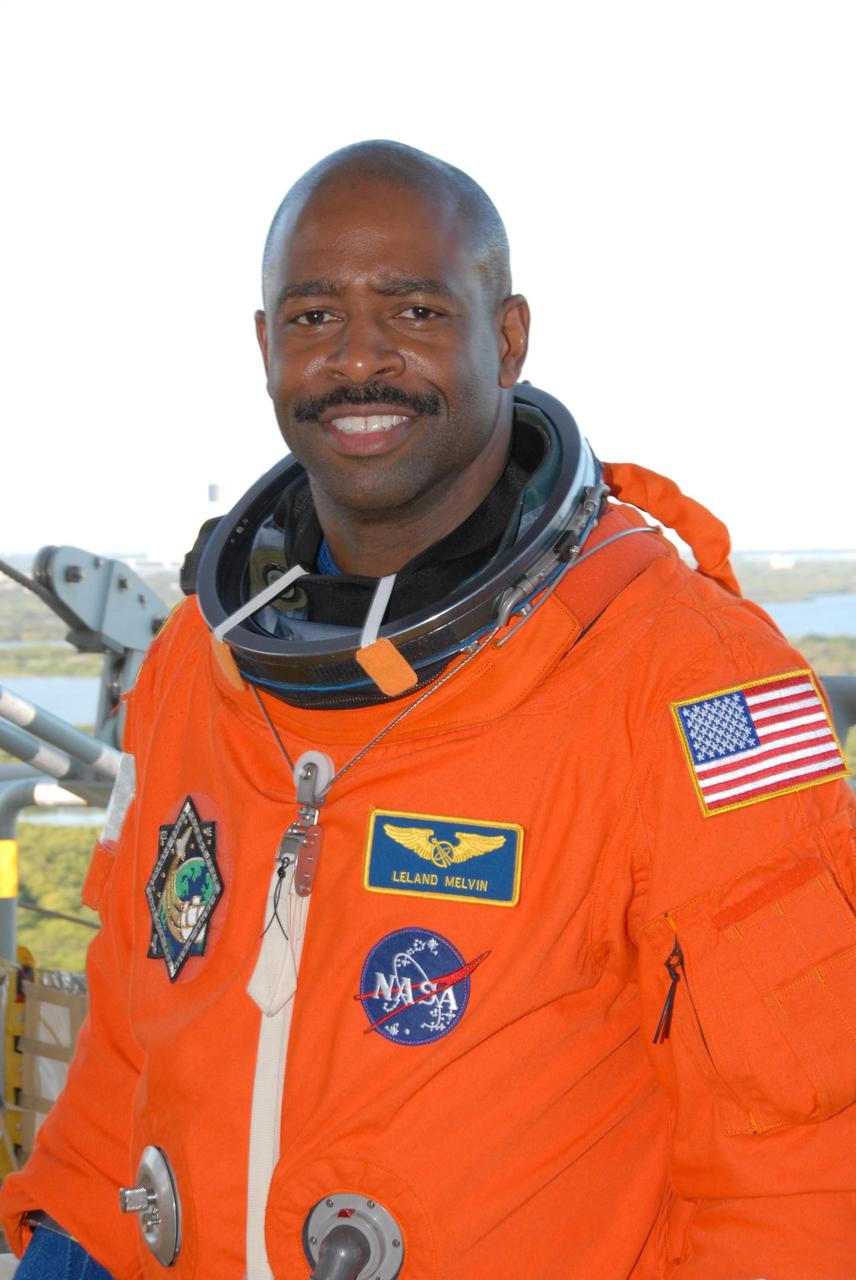
KENNEDY SPACE CENTER, FLA. -- Space shuttle Atlantis STS-122 Mission Specialist Leland Melvin arrives at Launch Pad 39A, dressed in his launch and entry suit, to participate in a simulated launch countdown aboard Atlantis. The exercise is part of terminal countdown demonstration test, or TCDT, activities at NASA's Kennedy Space Center. The TCDT is a dress rehearsal for launch and also provides astronauts and ground crews with equipment familiarization and emergency egress training. On mission STS-122, Atlantis will deliver the Columbus module to the International Space Station. The European Space Agency's largest single contribution to the station, Columbus is a multifunctional, pressurized laboratory that will be permanently attached to U.S. Node 2, called Harmony. The laboratory will expand the research facilities aboard the station, providing crew members and scientists from around the world the ability to conduct a variety of experiments in the physical, materials and life sciences. Atlantis' launch is targeted for Dec. 6. Photo credit: NASA/George Shelton
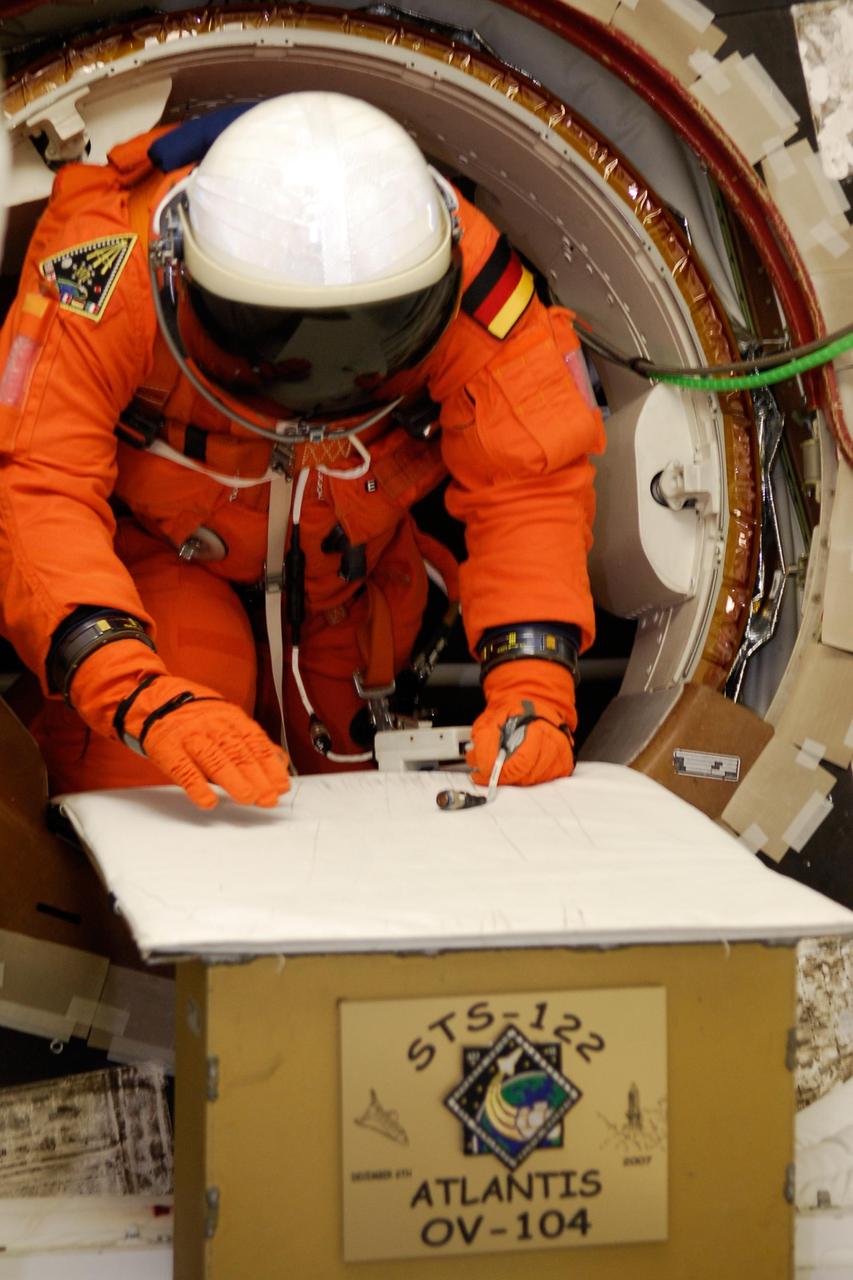
KENNEDY SPACE CENTER, FLA. -- Space shuttle Atlantis STS-122 Mission Specialist Hans Schlegel exits Atlantis' fight deck following a simulated launch countdown at Launch Pad 39A. Schlegel is with the European Space Agency. The exercise is part of terminal countdown demonstration test, or TCDT, activities at NASA's Kennedy Space Center. The TCDT is a dress rehearsal for launch and also provides astronauts and ground crews with equipment familiarization and emergency egress training. On mission STS-122, Atlantis will deliver the Columbus module to the International Space Station. The European Space Agency's largest single contribution to the station, Columbus is a multifunctional, pressurized laboratory that will be permanently attached to U.S. Node 2, called Harmony. The laboratory will expand the research facilities aboard the station, providing crew members and scientists from around the world the ability to conduct a variety of experiments in the physical, materials and life sciences. Atlantis' launch is targeted for Dec. 6. Photo credit: NASA/Kim Shiflett
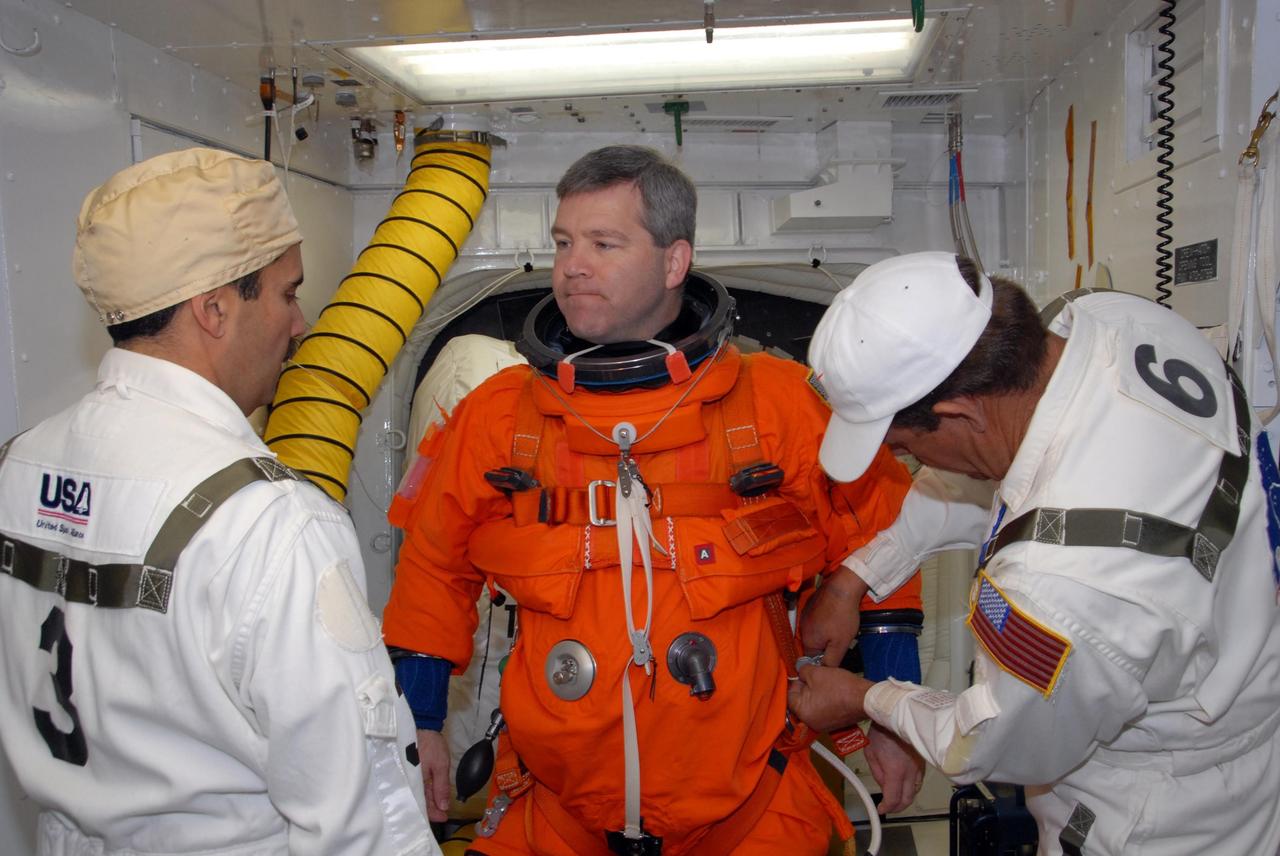
KENNEDY SPACE CENTER, FLA. -- In the White Room on Launch Pad 39A, suit technicians prepare space shuttle Atlantis STS-122 Commander Steve Frick for entry into Atlantis' cockpit, through the hatch behind him. The exercise is part of terminal countdown demonstration test, or TCDT, activities at NASA's Kennedy Space Center. The TCDT is a dress rehearsal for launch and also provides astronauts and ground crews with equipment familiarization and emergency egress training. On mission STS-122, Atlantis will deliver the Columbus module to the International Space Station. The European Space Agency's largest single contribution to the station, Columbus is a multifunctional, pressurized laboratory that will be permanently attached to U.S. Node 2, called Harmony. The laboratory will expand the research facilities aboard the station, providing crew members and scientists from around the world the ability to conduct a variety of experiments in the physical, materials and life sciences. Atlantis' launch is targeted for Dec. 6. Photo credit: NASA/George Shelton
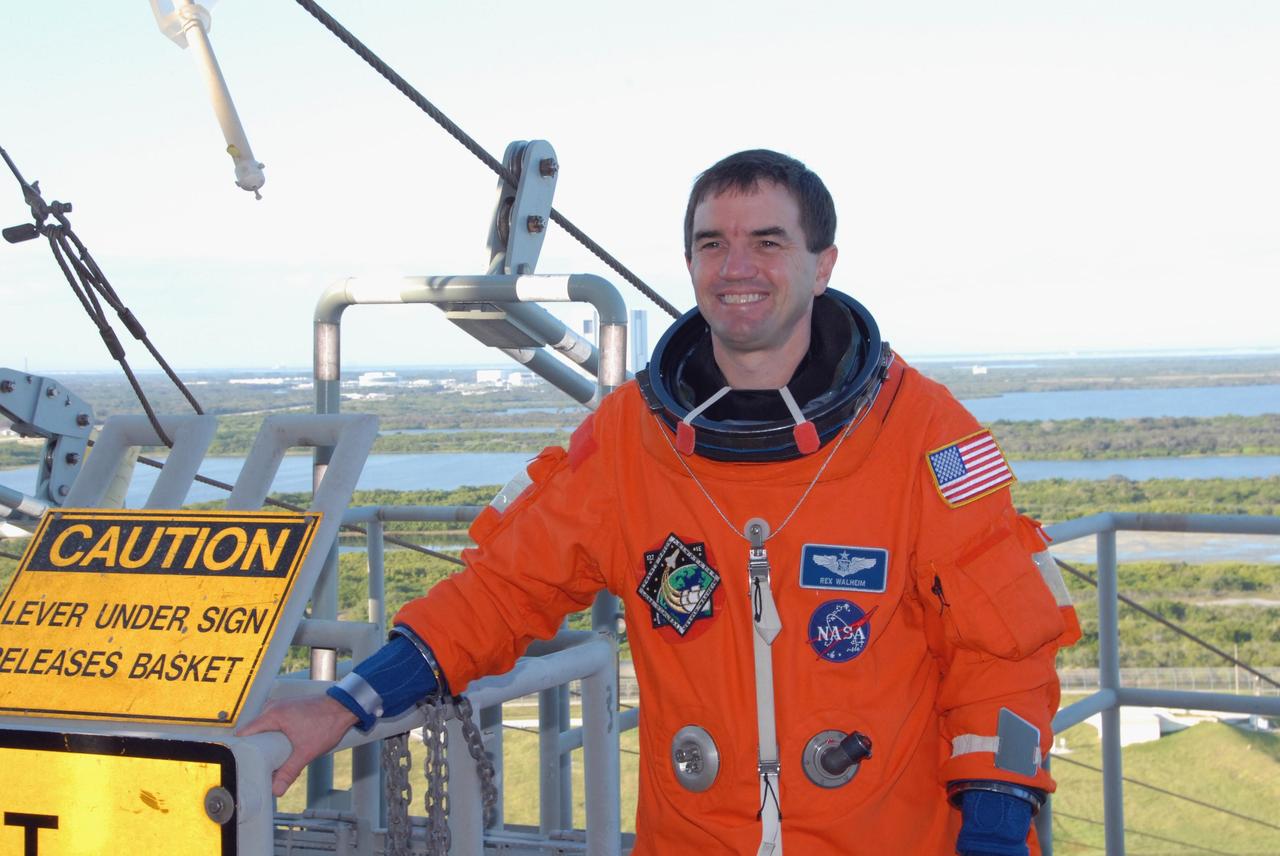
KENNEDY SPACE CENTER, FLA. -- Space shuttle Atlantis STS-122 Mission Specialist Rex Walheim arrives at Launch Pad 39A, dressed in his launch and entry suit, to participate in a simulated launch countdown aboard Atlantis. The exercise is part of terminal countdown demonstration test, or TCDT, activities at NASA's Kennedy Space Center. The TCDT is a dress rehearsal for launch and also provides astronauts and ground crews with equipment familiarization and emergency egress training. On mission STS-122, Atlantis will deliver the Columbus module to the International Space Station. The European Space Agency's largest single contribution to the station, Columbus is a multifunctional, pressurized laboratory that will be permanently attached to U.S. Node 2, called Harmony. The laboratory will expand the research facilities aboard the station, providing crew members and scientists from around the world the ability to conduct a variety of experiments in the physical, materials and life sciences. Atlantis' launch is targeted for Dec. 6. Photo credit: NASA/George Shelton
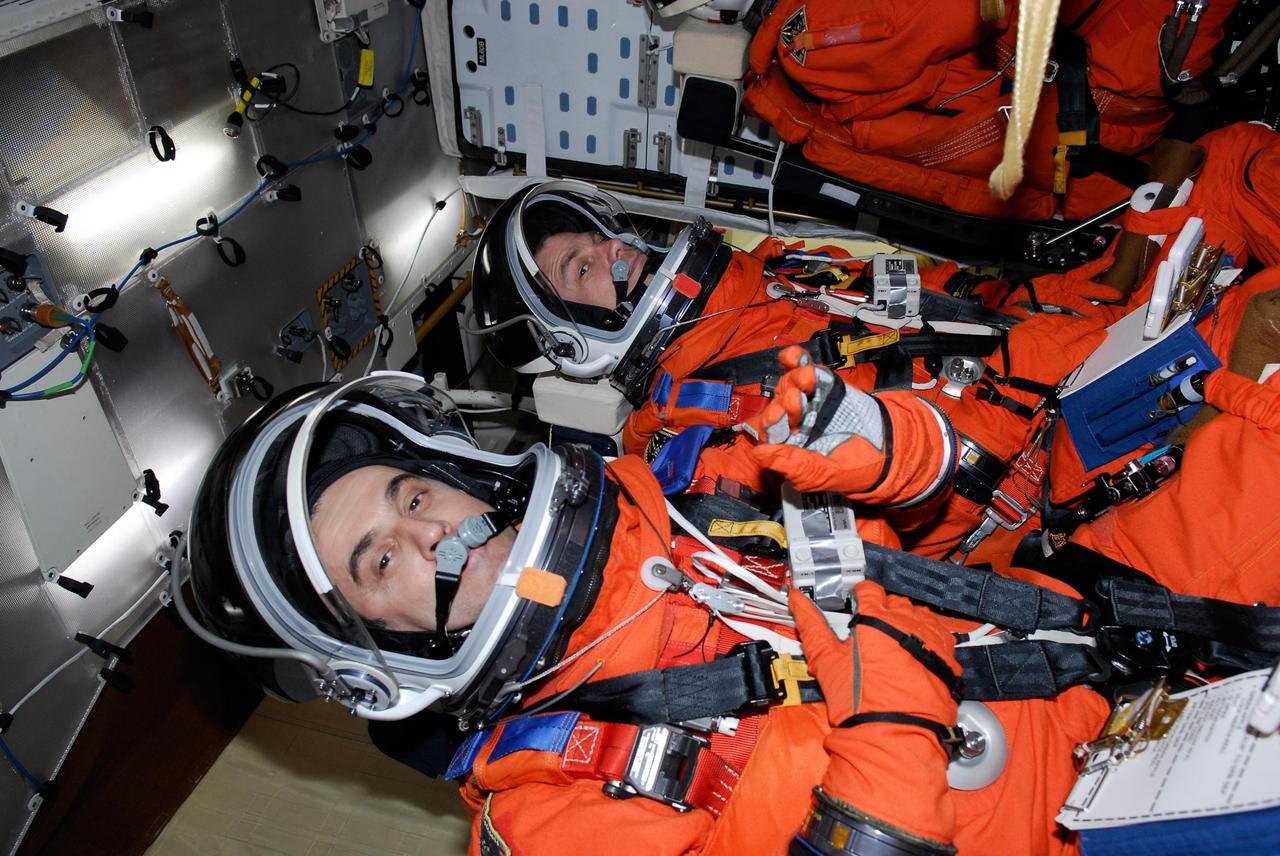
KENNEDY SPACE CENTER, FLA. -- Space shuttle Atlantis STS-122 Mission Specialists Leopold Eyharts, left, and Stanley Love are strapped into their seats on Atlantis' fight deck during a simulated launch countdown. Eyharts is with the European Space Agency and will remain on the International Space Station as a flight engineer for Expedition 16 following the STS-122 mission. The exercise is part of terminal countdown demonstration test, or TCDT, activities at NASA's Kennedy Space Center. The TCDT is a dress rehearsal for launch and also provides astronauts and ground crews with equipment familiarization and emergency egress training. On mission STS-122, Atlantis will deliver the Columbus module to the International Space Station. The European Space Agency's largest single contribution to the station, Columbus is a multifunctional, pressurized laboratory that will be permanently attached to U.S. Node 2, called Harmony. The laboratory will expand the research facilities aboard the station, providing crew members and scientists from around the world the ability to conduct a variety of experiments in the physical, materials and life sciences. Atlantis' launch is targeted for Dec. 6. Photo credit: NASA/Kim Shiflett
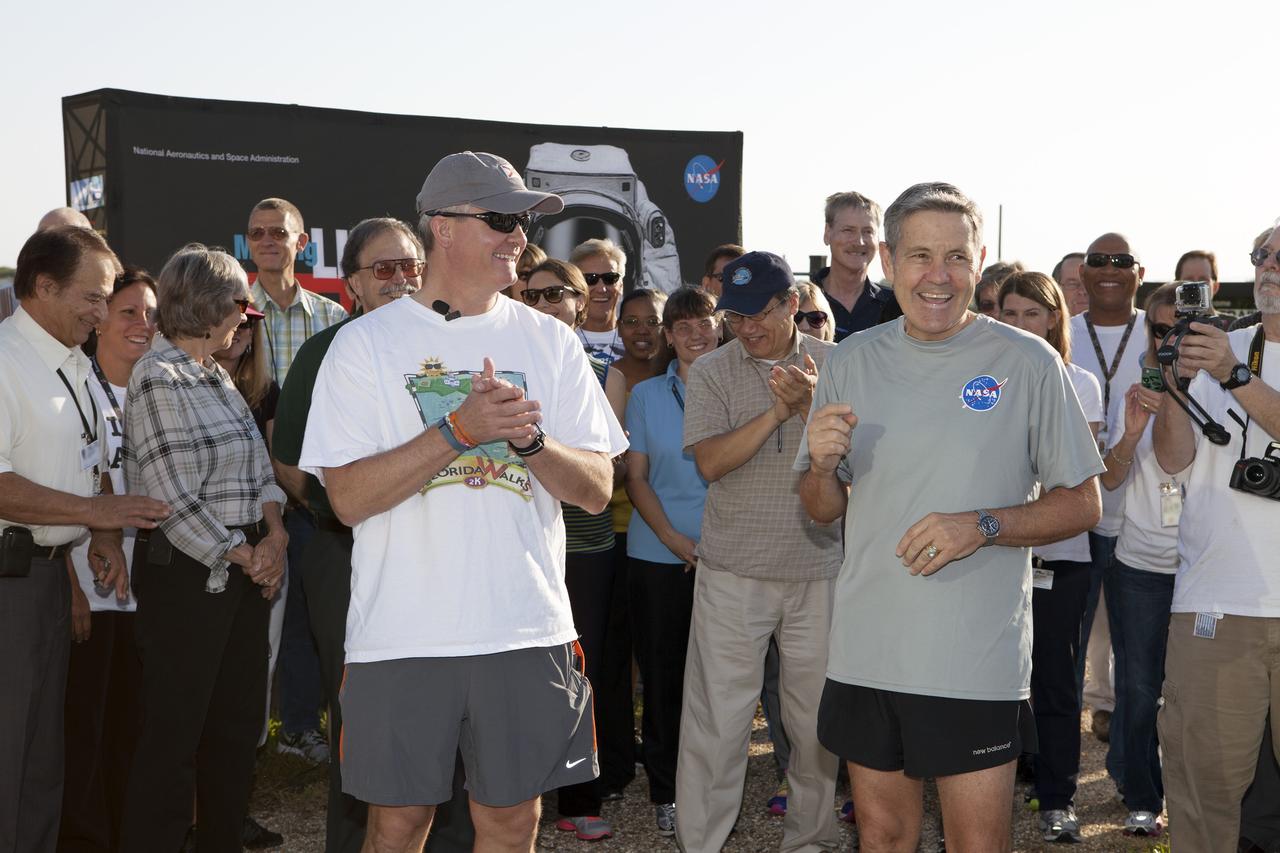
CAPE CANAVERAL, Fla. – Kennedy Space Center Director Bob Cabana, right, Florida State Surgeon General John Armstrong and other guests prepare for an early morning run at the center's Pathfinder Trail near the Operations and Support Building II at Kennedy Space Center in Florida, to officially kick off National Employee Health and Fitness Month with the NASA Moves! challenge. NASA Moves! challenged the workforce from each of the agency's field centers to engage in at least 20 minutes of activity, or 10,000 steps, each day from May 18-31. About 100 people participated in the kickoff event on the Pathfinder Trail in the heart of the center's Launch Complex 39. The one-third-mile-long gravel walkway traces the iconic shape of a space shuttle orbiter and features a set of exercise stations. The friendly contest is part of NASA's new Health4Life initiative, a Web-based health initiative designed to help employees track their health, fitness and nutrition. Health4Life also provides an array of resources geared toward increasing physical activity. Photo credit: NASA/Dimitri Gerondidakis
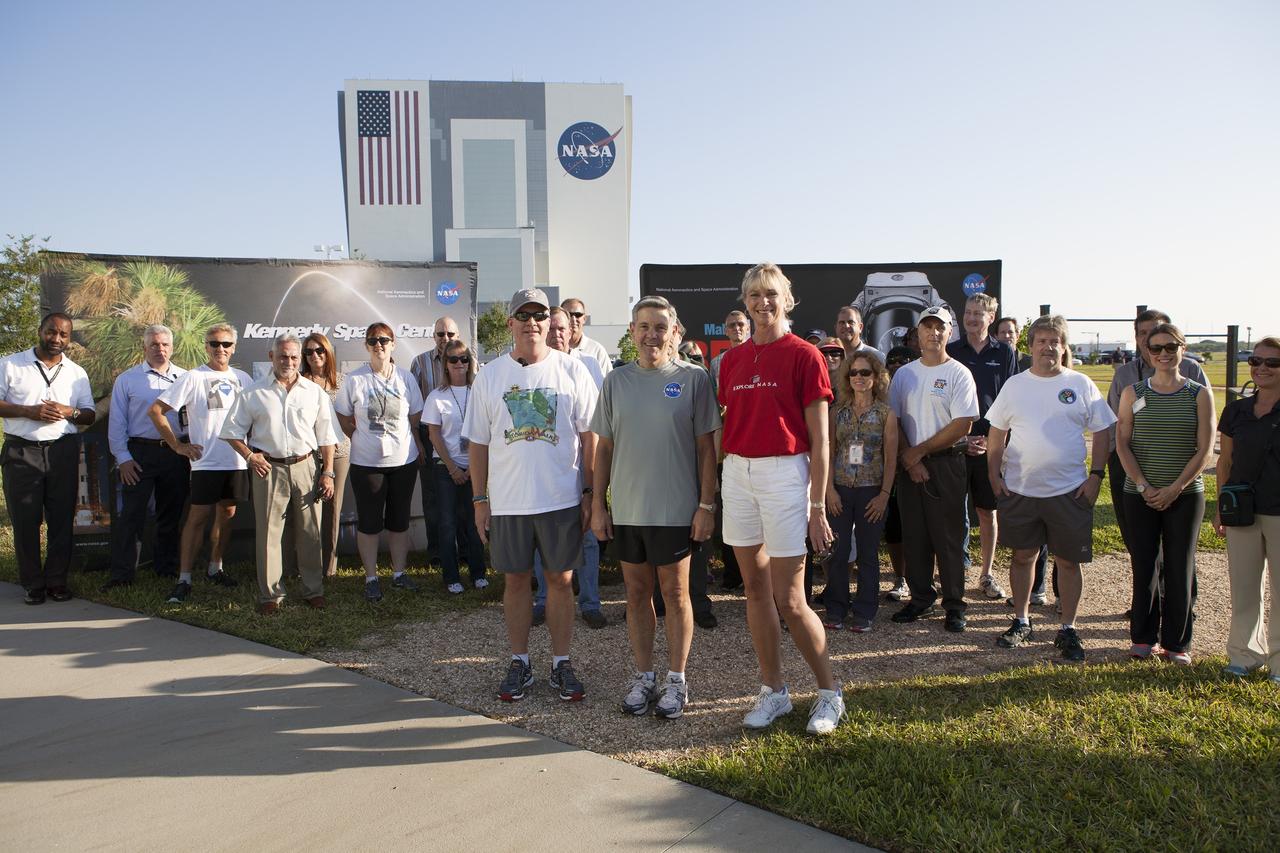
CAPE CANAVERAL, Fla. – From left, Florida State Surgeon General John Armstrong, Kennedy Space Center Director Bob Cabana, Center Operations Director Nancy Bray and Kennedy workers and guests prepare to take an early morning run along the center's Pathfinder Trail near the Operations and Support Building II at Kennedy Space Center in Florida, to officially kick off National Employee Health and Fitness Month with the NASA Moves! challenge. NASA Moves! challenged the workforce from each of the agency's field centers to engage in at least 20 minutes of activity, or 10,000 steps, each day from May 18-31. About 100 people participated in the kickoff event on the Pathfinder Trail in the heart of the center's Launch Complex 39. The one-third-mile-long gravel walkway traces the iconic shape of a space shuttle orbiter and features a set of exercise stations. The friendly contest is part of NASA's new Health4Life initiative, a Web-based health initiative designed to help employees track their health, fitness and nutrition. Health4Life also provides an array of resources geared toward increasing physical activity. Photo credit: NASA/Dimitri Gerondidakis
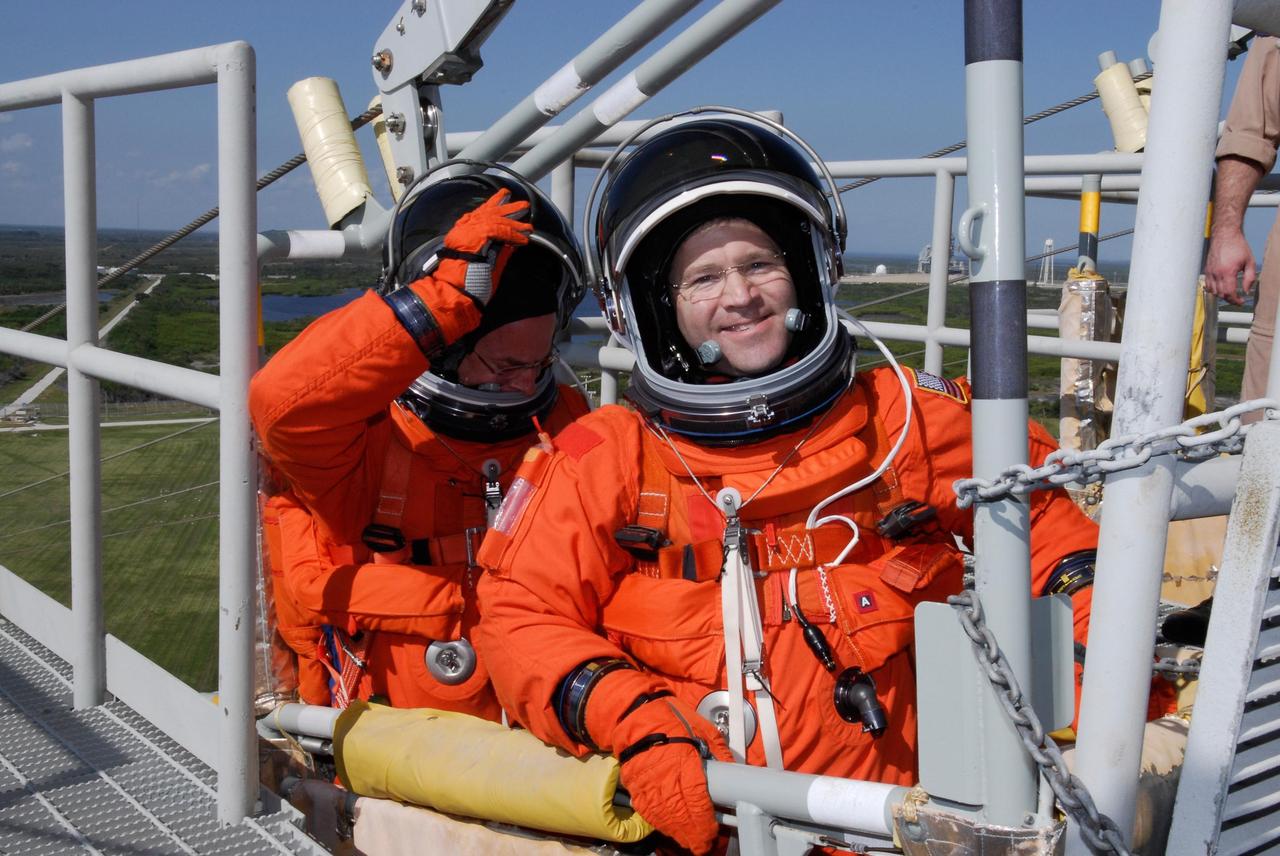
KENNEDY SPACE CENTER, FLA. -- Space shuttle Atlantis STS-122 Pilot Alan Poindexter, left, and Commander Steve Frick practice emergency exit procedures in a slidewire basket at Launch Pad 39A following a simulated launch countdown. The exercise is part of terminal countdown demonstration test, or TCDT, activities at NASA's Kennedy Space Center. The TCDT is a dress rehearsal for launch and also provides astronauts and ground crews with equipment familiarization and emergency egress training. On mission STS-122, Atlantis will deliver the Columbus module to the International Space Station. The European Space Agency's largest single contribution to the station, Columbus is a multifunctional, pressurized laboratory that will be permanently attached to U.S. Node 2, called Harmony. The laboratory will expand the research facilities aboard the station, providing crew members and scientists from around the world the ability to conduct a variety of experiments in the physical, materials and life sciences. Atlantis' launch is targeted for Dec. 6. Photo credit: NASA/Kim Shiflett
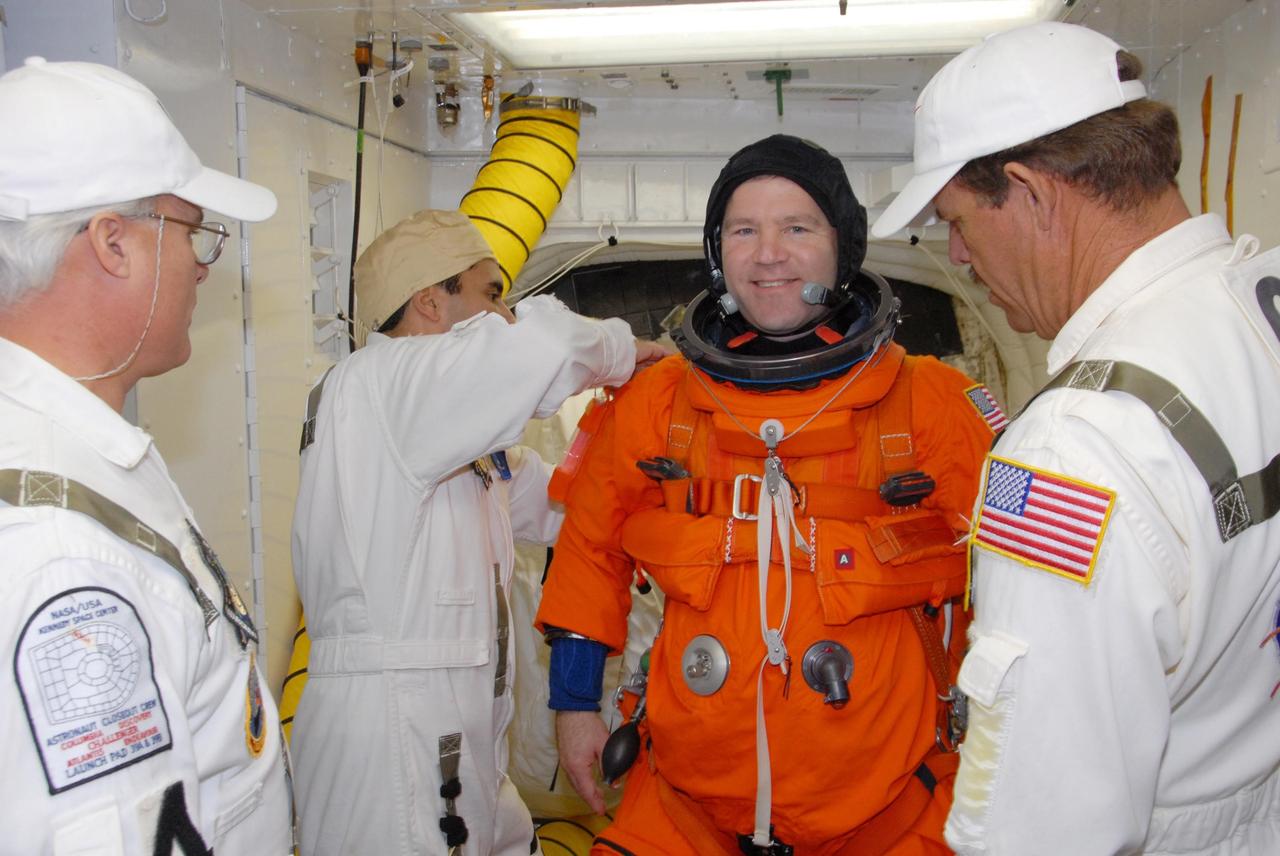
KENNEDY SPACE CENTER, FLA. -- In the White Room on Launch Pad 39A, suit technicians put the finishing touches on the flight and entry suit of space shuttle Atlantis STS-122 Commander Steve Frick for his entry into Atlantis' cockpit, through the hatch behind him. The exercise is part of terminal countdown demonstration test, or TCDT, activities at NASA's Kennedy Space Center. The TCDT is a dress rehearsal for launch and also provides astronauts and ground crews with equipment familiarization and emergency egress training. On mission STS-122, Atlantis will deliver the Columbus module to the International Space Station. The European Space Agency's largest single contribution to the station, Columbus is a multifunctional, pressurized laboratory that will be permanently attached to U.S. Node 2, called Harmony. The laboratory will expand the research facilities aboard the station, providing crew members and scientists from around the world the ability to conduct a variety of experiments in the physical, materials and life sciences. Atlantis' launch is targeted for Dec. 6. Photo credit: NASA/George Shelton
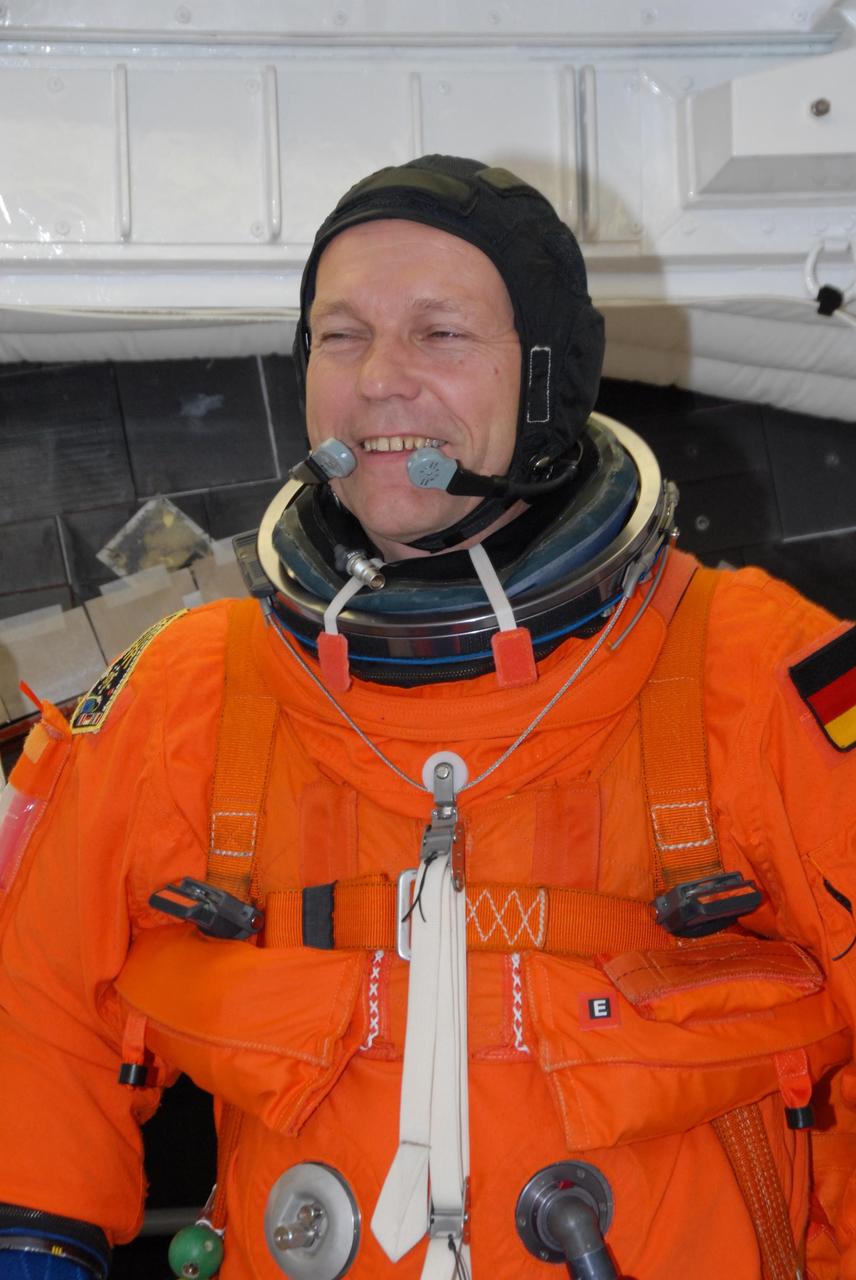
KENNEDY SPACE CENTER, FLA. -- In the White Room on Launch Pad 39A, space shuttle Atlantis STS-122 Mission Specialist Hans Schlegel prepares for his entry onto Atlantis' flight deck. Schlegel is with the European Space Agency. The exercise is part of terminal countdown demonstration test, or TCDT, activities at NASA's Kennedy Space Center. The TCDT is a dress rehearsal for launch and also provides astronauts and ground crews with equipment familiarization and emergency egress training. On mission STS-122, Atlantis will deliver the Columbus module to the International Space Station. The European Space Agency's largest single contribution to the station, Columbus is a multifunctional, pressurized laboratory that will be permanently attached to U.S. Node 2, called Harmony. The laboratory will expand the research facilities aboard the station, providing crew members and scientists from around the world the ability to conduct a variety of experiments in the physical, materials and life sciences. Atlantis' launch is targeted for Dec. 6. Photo credit: NASA/George Shelton
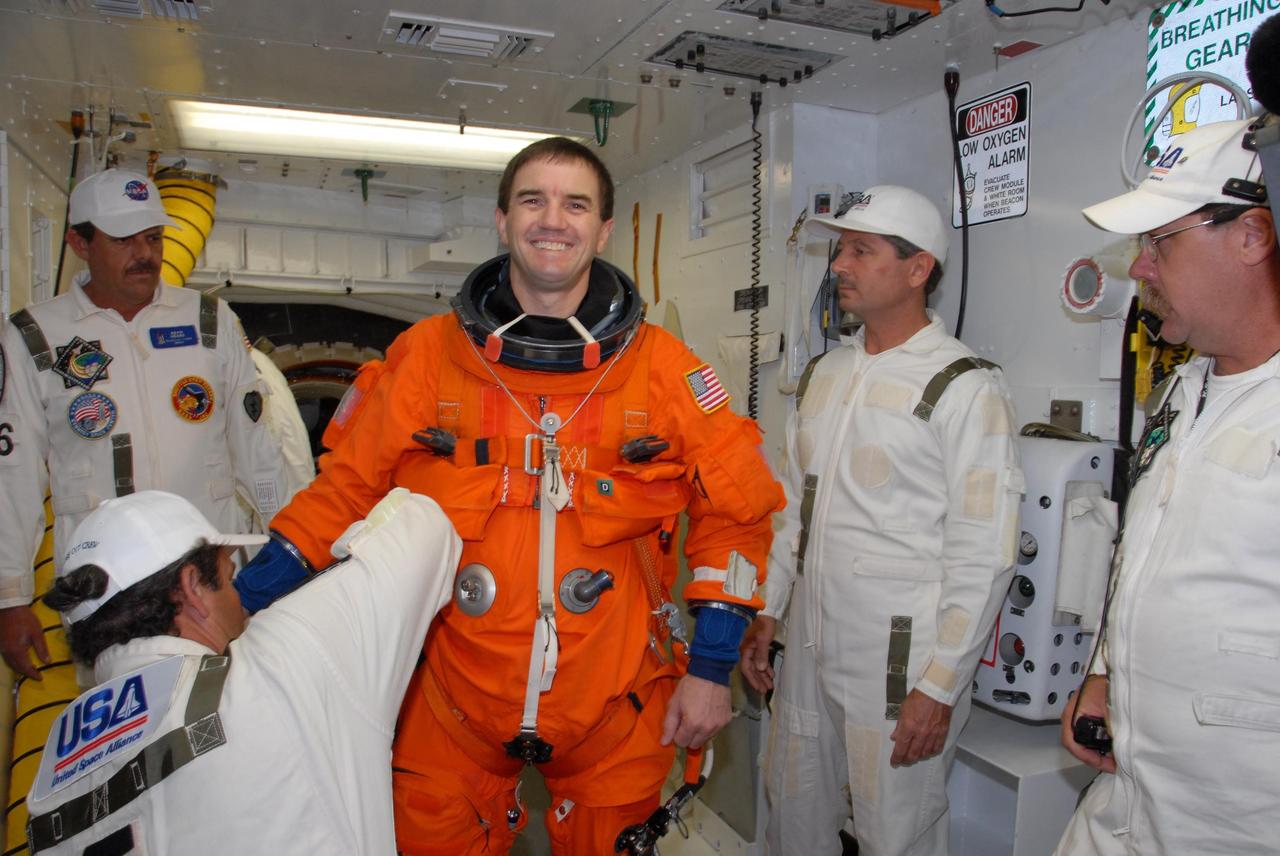
KENNEDY SPACE CENTER, FLA. -- In the White Room on Launch Pad 39A, suit technicians help space shuttle Atlantis STS-122 Mission Specialist Rex Walheim with his flight and entry suit before his entry onto Atlantis' flight deck, through the hatch behind him. The exercise is part of terminal countdown demonstration test, or TCDT, activities at NASA's Kennedy Space Center. The TCDT is a dress rehearsal for launch and also provides astronauts and ground crews with equipment familiarization and emergency egress training. On mission STS-122, Atlantis will deliver the Columbus module to the International Space Station. The European Space Agency's largest single contribution to the station, Columbus is a multifunctional, pressurized laboratory that will be permanently attached to U.S. Node 2, called Harmony. The laboratory will expand the research facilities aboard the station, providing crew members and scientists from around the world the ability to conduct a variety of experiments in the physical, materials and life sciences. Atlantis' launch is targeted for Dec. 6. Photo credit: NASA/George Shelton
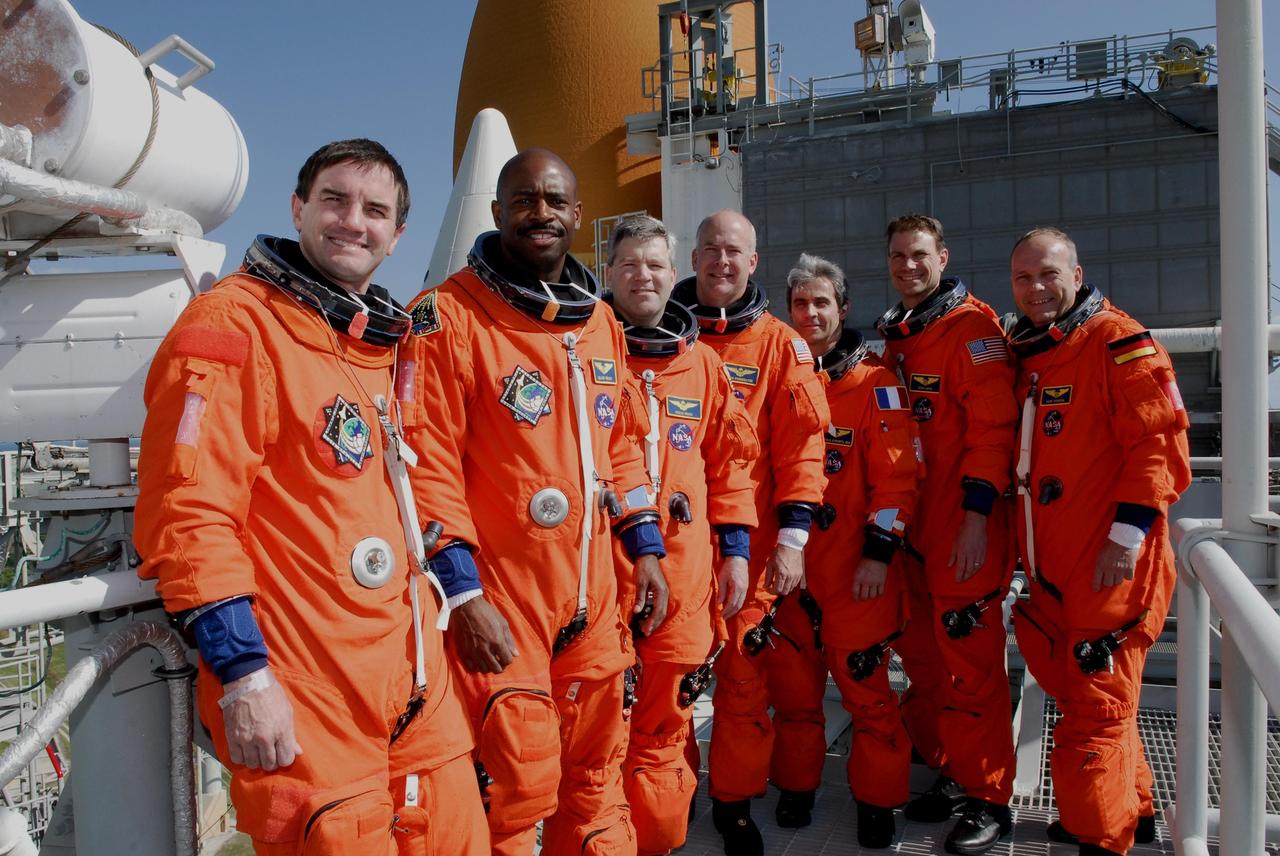
KENNEDY SPACE CENTER, FLA. -- Members of space shuttle Atlantis' STS-122 crew pose for a group portrait in front of Atlantis' external tank following a simulated launch countdown at Launch Pad 39A. From left are Mission Specialists Rex Walheim and Leland Melvin; Commander Steve Frick; Pilot Alan Poindexter; and Mission Specialists Leopold Eyharts, Stanley Love and Hans Schlegel. Schlegel and Eyharts are with the European Space Agency. Eyharts will remain on the International Space Station as a flight engineer for Expedition 16 following the STS-122 mission. The exercise is part of terminal countdown demonstration test, or TCDT, activities at NASA's Kennedy Space Center. The TCDT is a dress rehearsal for launch and also provides astronauts and ground crews with equipment familiarization and emergency egress training. On mission STS-122, Atlantis will deliver the Columbus module to the International Space Station. The European Space Agency's largest single contribution to the station, Columbus is a multifunctional, pressurized laboratory that will be permanently attached to U.S. Node 2, called Harmony. The laboratory will expand the research facilities aboard the station, providing crew members and scientists from around the world the ability to conduct a variety of experiments in the physical, materials and life sciences. Atlantis' launch is targeted for Dec. 6. Photo credit: NASA/Kim Shiflett

CAPE CANAVERAL, Fla. – Workers take an early morning walk along the Pathfinder Trail near the Operations and Support Building II at Kennedy Space Center in Florida, to officially kick off National Employee Health and Fitness Month with the NASA Moves! challenge. NASA Moves! challenged the workforce from each of the agency's field centers to engage in at least 20 minutes of activity, or 10,000 steps, each day from May 18-31. About 100 people participated in the kickoff event on the Pathfinder Trail in the heart of the center's Launch Complex 39. The one-third-mile-long gravel walkway traces the iconic shape of a space shuttle orbiter and features a set of exercise stations. The friendly contest is part of NASA's new Health4Life initiative, a Web-based health initiative designed to help employees track their health, fitness and nutrition. Health4Life also provides an array of resources geared toward increasing physical activity. Photo credit: NASA/Dimitri Gerondidakis
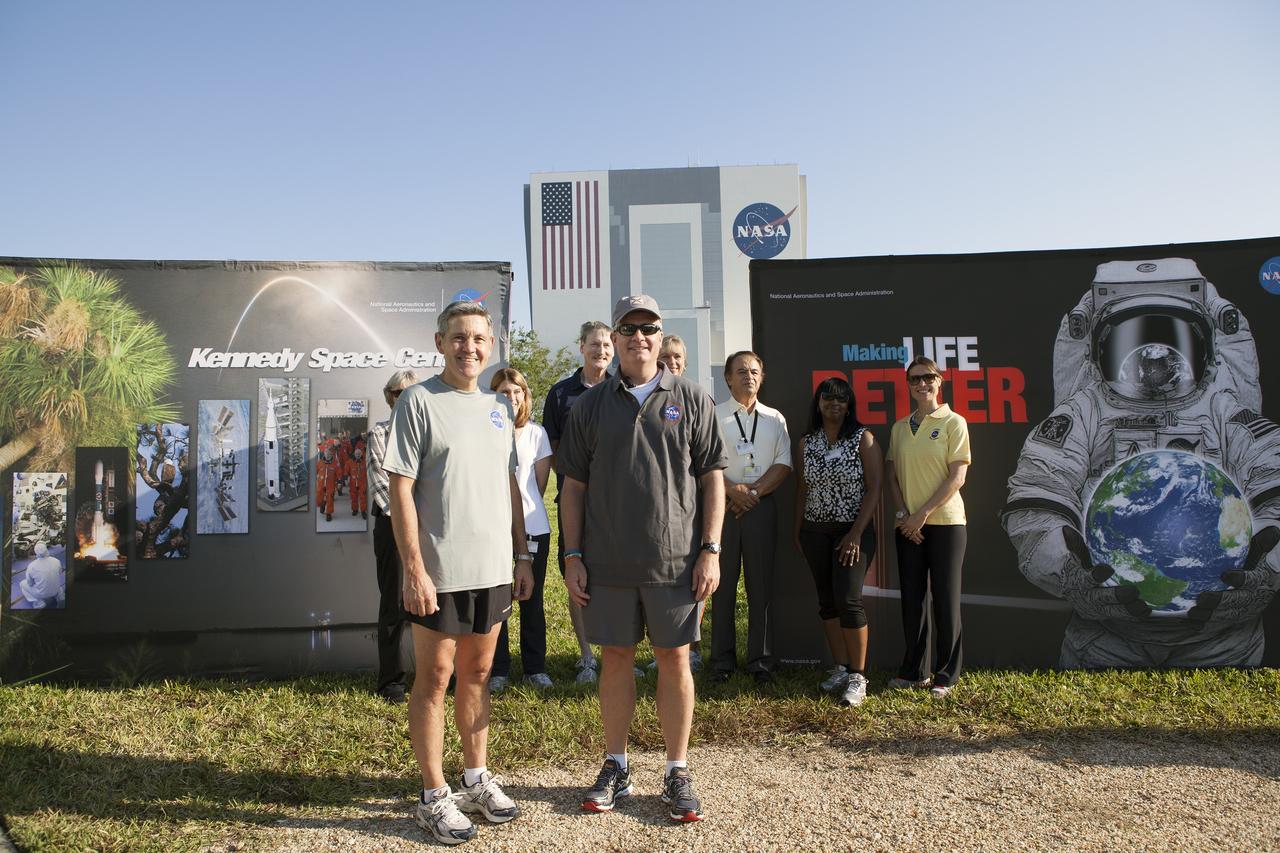
CAPE CANAVERAL, Fla. – Kennedy Space Center Director Bob Cabana, left, and Florida State Surgeon General John Armstrong complete an early morning run along the center's Pathfinder Trail near the Operations and Support Building II at Kennedy Space Center in Florida, to officially kick off National Employee Health and Fitness Month with the NASA Moves! challenge. NASA Moves! challenged the workforce from each of the agency's field centers to engage in at least 20 minutes of activity, or 10,000 steps, each day from May 18-31. About 100 people participated in the kickoff event on the Pathfinder Trail in the heart of the center's Launch Complex 39. The one-third-mile-long gravel walkway traces the iconic shape of a space shuttle orbiter and features a set of exercise stations. The friendly contest is part of NASA's new Health4Life initiative, a Web-based health initiative designed to help employees track their health, fitness and nutrition. Health4Life also provides an array of resources geared toward increasing physical activity. Photo credit: NASA/Dimitri Gerondidakis
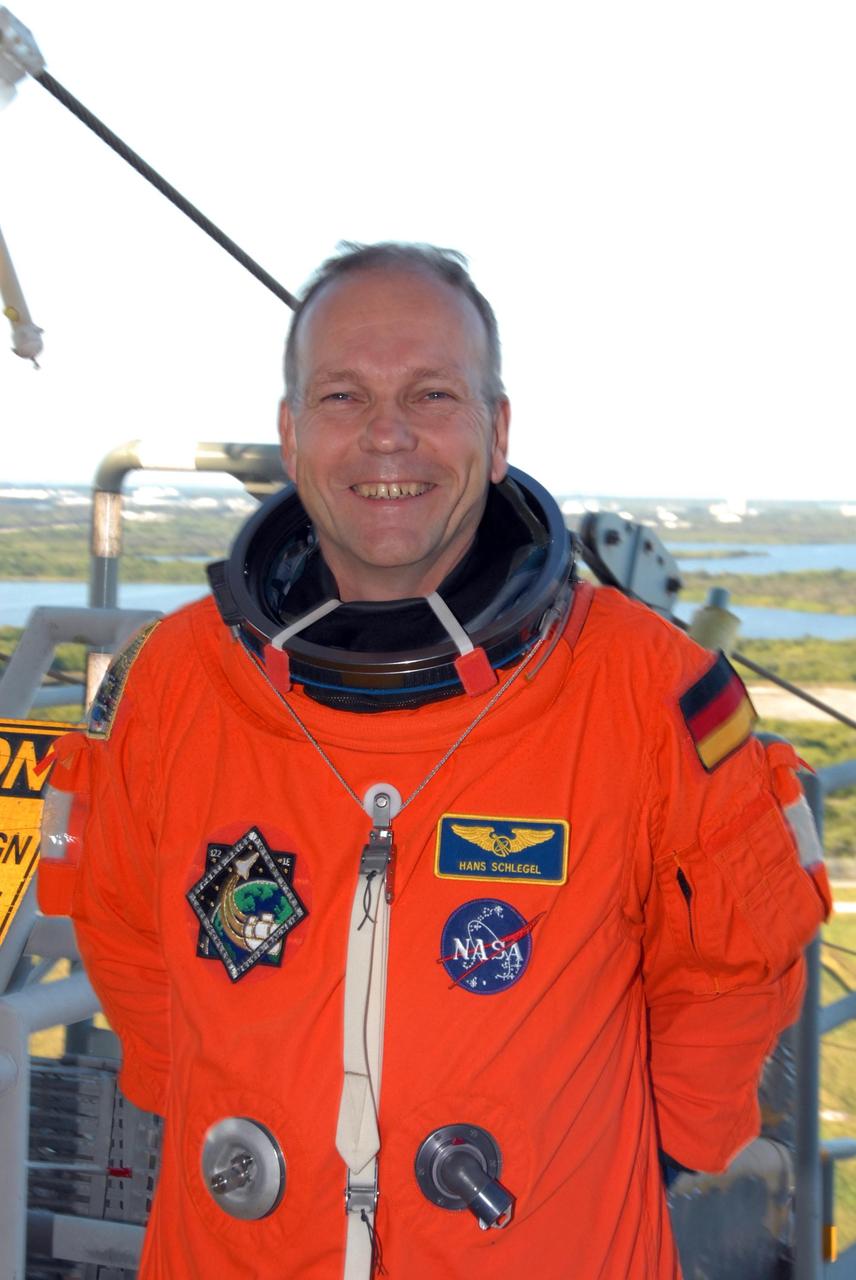
KENNEDY SPACE CENTER, FLA. -- Space shuttle Atlantis STS-122 Mission Specialist Hans Schlegel arrives at Launch Pad 39A, dressed in his launch and entry suit, to participate in a simulated launch countdown aboard Atlantis. Schlegel is with the European Space Agency. The exercise is part of terminal countdown demonstration test, or TCDT, activities at NASA's Kennedy Space Center. The TCDT is a dress rehearsal for launch and also provides astronauts and ground crews with equipment familiarization and emergency egress training. On mission STS-122, Atlantis will deliver the Columbus module to the International Space Station. The European Space Agency's largest single contribution to the station, Columbus is a multifunctional, pressurized laboratory that will be permanently attached to U.S. Node 2, called Harmony. The laboratory will expand the research facilities aboard the station, providing crew members and scientists from around the world the ability to conduct a variety of experiments in the physical, materials and life sciences. Atlantis' launch is targeted for Dec. 6. Photo credit: NASA/George Shelton
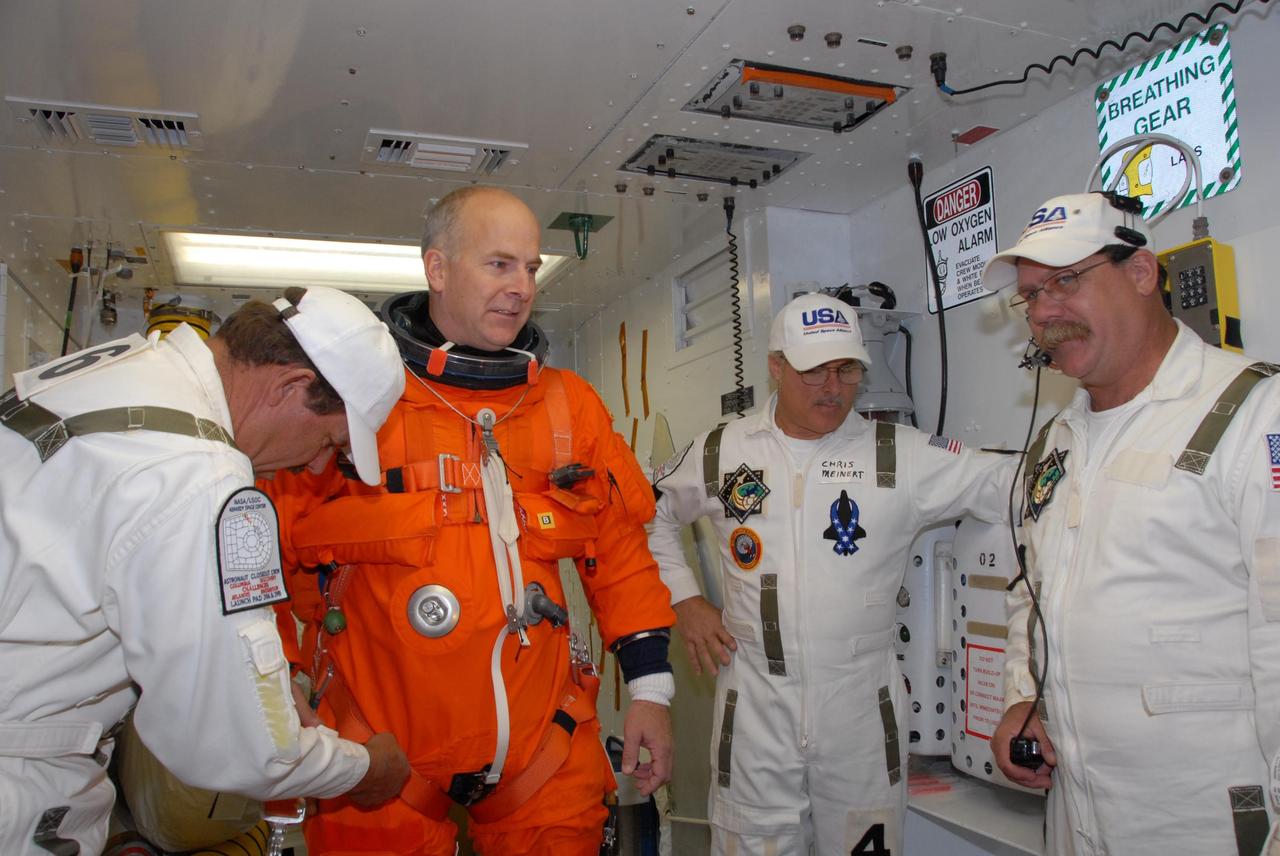
KENNEDY SPACE CENTER, FLA. -- In the White Room on Launch Pad 39A, suit technicians put the finishing touches on the flight and entry suit of space shuttle Atlantis STS-122 Pilot Alan Poindexter for his entry into Atlantis' cockpit. The exercise is part of terminal countdown demonstration test, or TCDT, activities at NASA's Kennedy Space Center. The TCDT is a dress rehearsal for launch and also provides astronauts and ground crews with equipment familiarization and emergency egress training. On mission STS-122, Atlantis will deliver the Columbus module to the International Space Station. The European Space Agency's largest single contribution to the station, Columbus is a multifunctional, pressurized laboratory that will be permanently attached to U.S. Node 2, called Harmony. The laboratory will expand the research facilities aboard the station, providing crew members and scientists from around the world the ability to conduct a variety of experiments in the physical, materials and life sciences. Atlantis' launch is targeted for Dec. 6. Photo credit: NASA/George Shelton
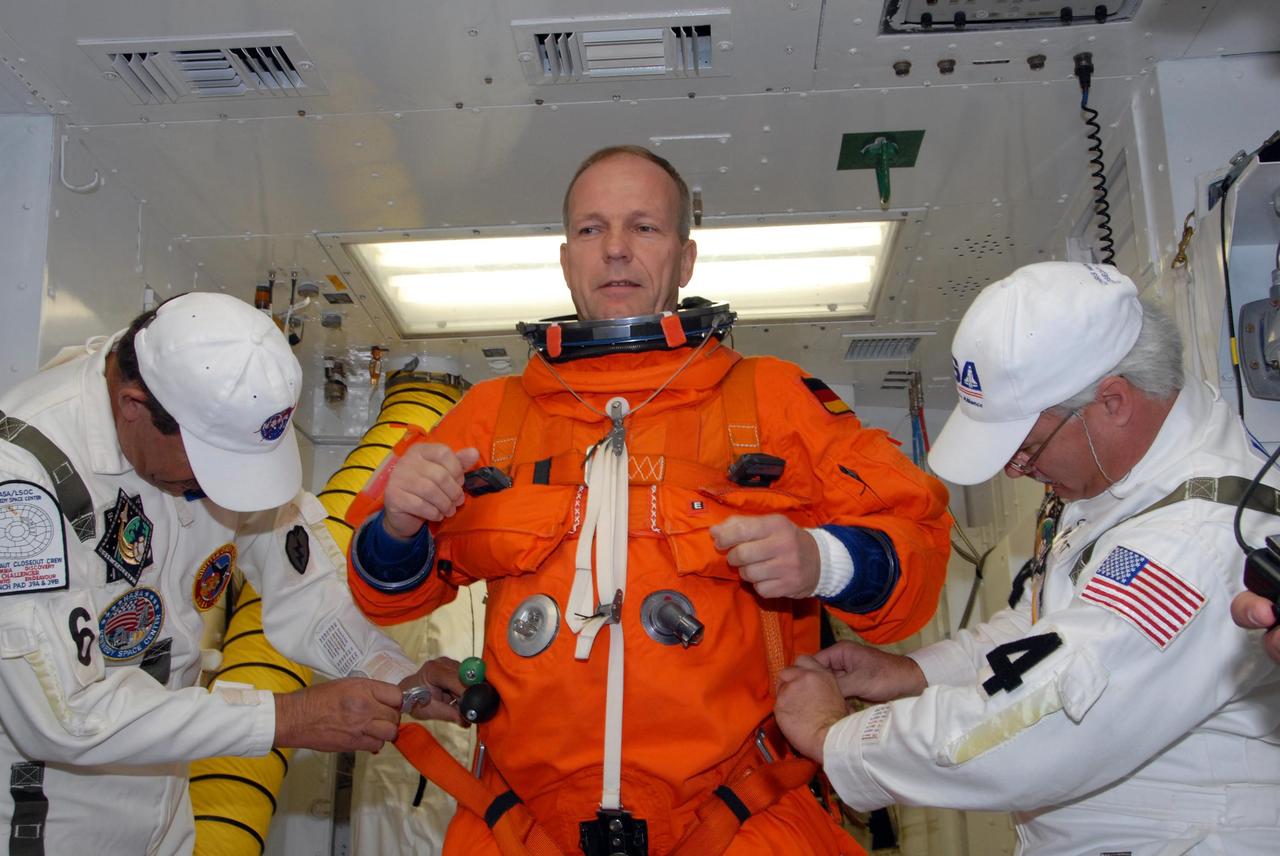
KENNEDY SPACE CENTER, FLA. -- In the White Room on Launch Pad 39A, suit technicians help space shuttle Atlantis STS-122 Mission Specialist Hans Schlegel with his flight and entry suit before his entry onto Atlantis' flight deck. Schlegel is with the European Space Agency. The exercise is part of terminal countdown demonstration test, or TCDT, activities at NASA's Kennedy Space Center. The TCDT is a dress rehearsal for launch and also provides astronauts and ground crews with equipment familiarization and emergency egress training. On mission STS-122, Atlantis will deliver the Columbus module to the International Space Station. The European Space Agency's largest single contribution to the station, Columbus is a multifunctional, pressurized laboratory that will be permanently attached to U.S. Node 2, called Harmony. The laboratory will expand the research facilities aboard the station, providing crew members and scientists from around the world the ability to conduct a variety of experiments in the physical, materials and life sciences. Atlantis' launch is targeted for Dec. 6. Photo credit: NASA/George Shelton
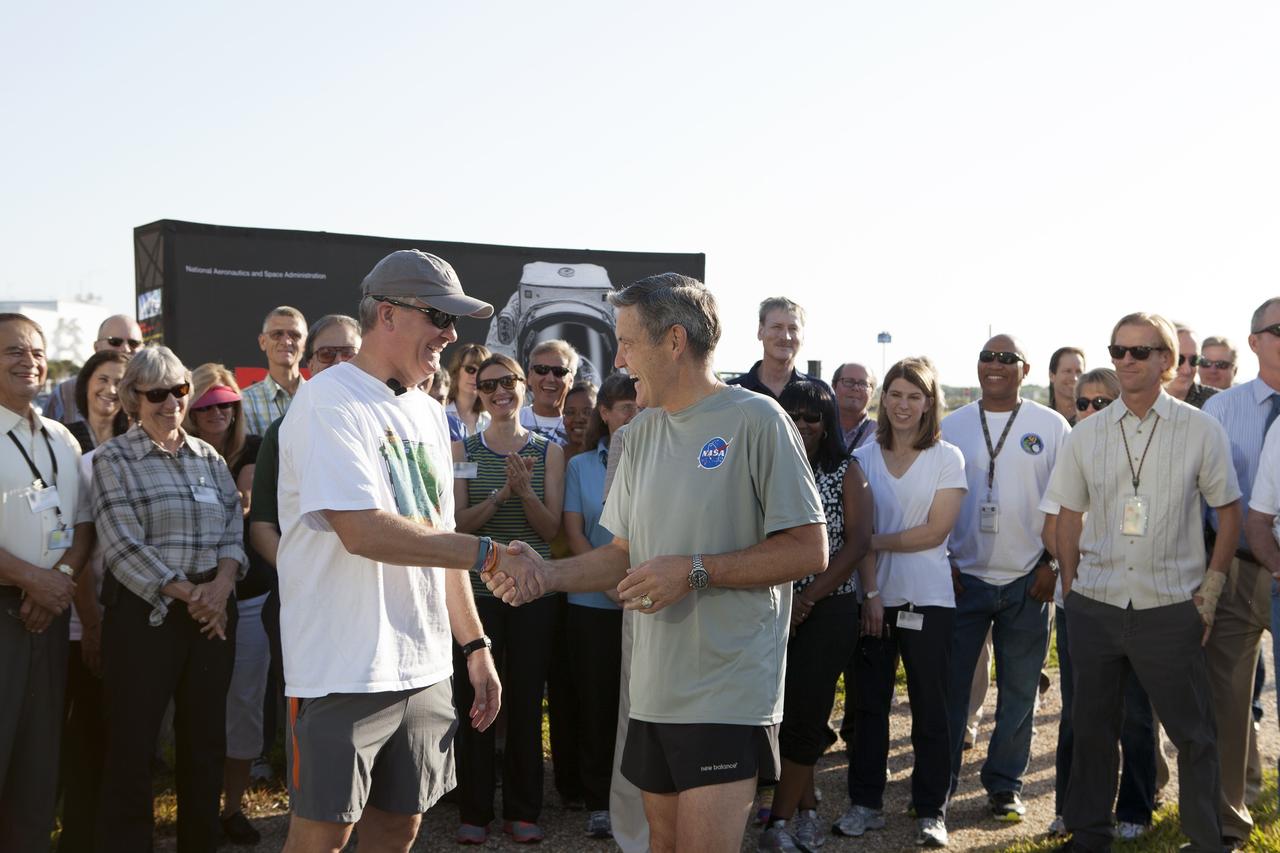
CAPE CANAVERAL, Fla. – Kennedy Space Center Director Bob Cabana, right, shakes hands with Florida State Surgeon General John Armstrong before an early morning run along the center's Pathfinder Trail near the Operations and Support Building II at Kennedy Space Center in Florida, to officially kick off National Employee Health and Fitness Month with the NASA Moves! challenge. NASA Moves! challenged the workforce from each of the agency's field centers to engage in at least 20 minutes of activity, or 10,000 steps, each day from May 18-31. About 100 people participated in the kickoff event on the Pathfinder Trail in the heart of the center's Launch Complex 39. The one-third-mile-long gravel walkway traces the iconic shape of a space shuttle orbiter and features a set of exercise stations. The friendly contest is part of NASA's new Health4Life initiative, a Web-based health initiative designed to help employees track their health, fitness and nutrition. Health4Life also provides an array of resources geared toward increasing physical activity. Photo credit: NASA/Dimitri Gerondidakis
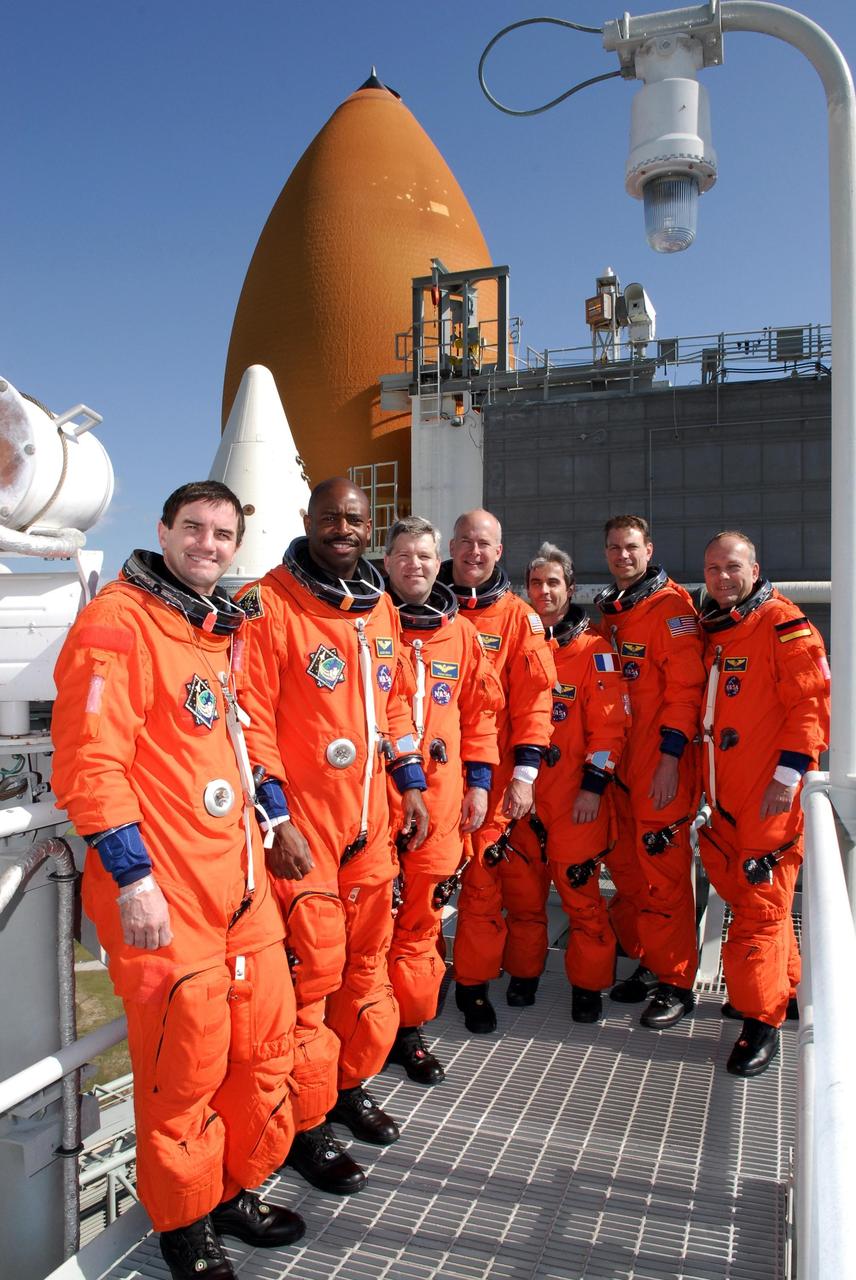
KENNEDY SPACE CENTER, FLA. -- Members of space shuttle Atlantis' STS-122 crew pose for a group portrait with the tip of Atlantis' external tank in the background following a simulated launch countdown at Launch Pad 39A. From left are Mission Specialists Rex Walheim and Leland Melvin; Commander Steve Frick; Pilot Alan Poindexter; and Mission Specialists Leopold Eyharts, Stanley Love and Hans Schlegel. Schlegel and Eyharts are with the European Space Agency. Eyharts will remain on the International Space Station as a flight engineer for Expedition 16 following the STS-122 mission. The exercise is part of terminal countdown demonstration test, or TCDT, activities at NASA's Kennedy Space Center. The TCDT is a dress rehearsal for launch and also provides astronauts and ground crews with equipment familiarization and emergency egress training. On mission STS-122, Atlantis will deliver the Columbus module to the International Space Station. The European Space Agency's largest single contribution to the station, Columbus is a multifunctional, pressurized laboratory that will be permanently attached to U.S. Node 2, called Harmony. The laboratory will expand the research facilities aboard the station, providing crew members and scientists from around the world the ability to conduct a variety of experiments in the physical, materials and life sciences. Atlantis' launch is targeted for Dec. 6. Photo credit: NASA/Kim Shiflett

KENNEDY SPACE CENTER, FLA. -- In the White Room on Launch Pad 39A, suit technicians help space shuttle Atlantis STS-122 Mission Specialist Leopold Eyharts with his flight and entry suit before his entry onto Atlantis' flight deck, through the hatch behind him. Eyharts is with the European Space Agency and will remain on the International Space Station as a flight engineer for Expedition 16 following the STS-122 mission. The exercise is part of terminal countdown demonstration test, or TCDT, activities at NASA's Kennedy Space Center. The TCDT is a dress rehearsal for launch and also provides astronauts and ground crews with equipment familiarization and emergency egress training. On mission STS-122, Atlantis will deliver the Columbus module to the International Space Station. The European Space Agency's largest single contribution to the station, Columbus is a multifunctional, pressurized laboratory that will be permanently attached to U.S. Node 2, called Harmony. The laboratory will expand the research facilities aboard the station, providing crew members and scientists from around the world the ability to conduct a variety of experiments in the physical, materials and life sciences. Atlantis' launch is targeted for Dec. 6. Photo credit: NASA/George Shelton
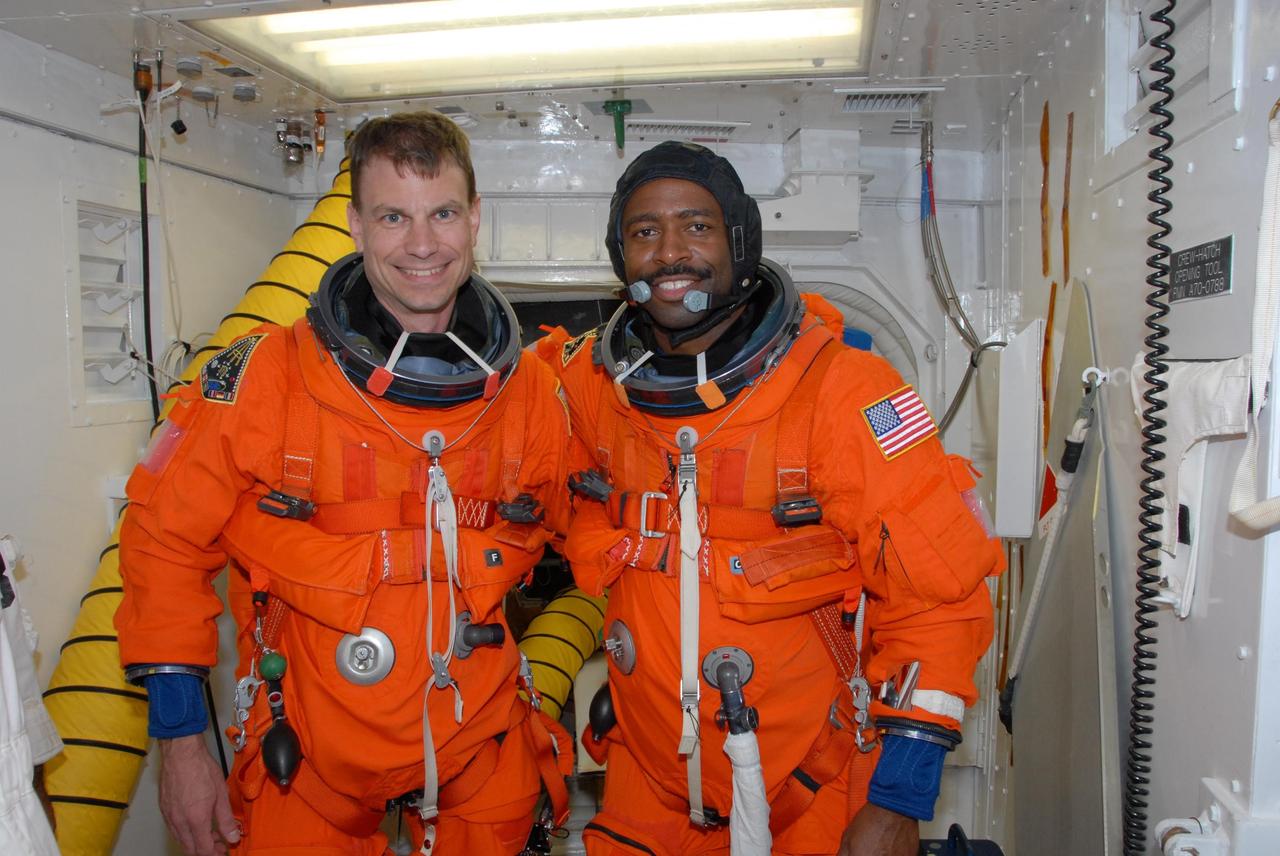
KENNEDY SPACE CENTER, FLA. -- In the White Room on Launch Pad 39A, space shuttle Atlantis STS-122 Mission Specialists Stanley Love and Leland Melvin take time out for a photo during their preparations for entry onto Atlantis' flight deck. The exercise is part of terminal countdown demonstration test, or TCDT, activities at NASA's Kennedy Space Center. The TCDT is a dress rehearsal for launch and also provides astronauts and ground crews with equipment familiarization and emergency egress training. On mission STS-122, Atlantis will deliver the Columbus module to the International Space Station. The European Space Agency's largest single contribution to the station, Columbus is a multifunctional, pressurized laboratory that will be permanently attached to U.S. Node 2, called Harmony. The laboratory will expand the research facilities aboard the station, providing crew members and scientists from around the world the ability to conduct a variety of experiments in the physical, materials and life sciences. Atlantis' launch is targeted for Dec. 6. Photo credit: NASA/George Shelton
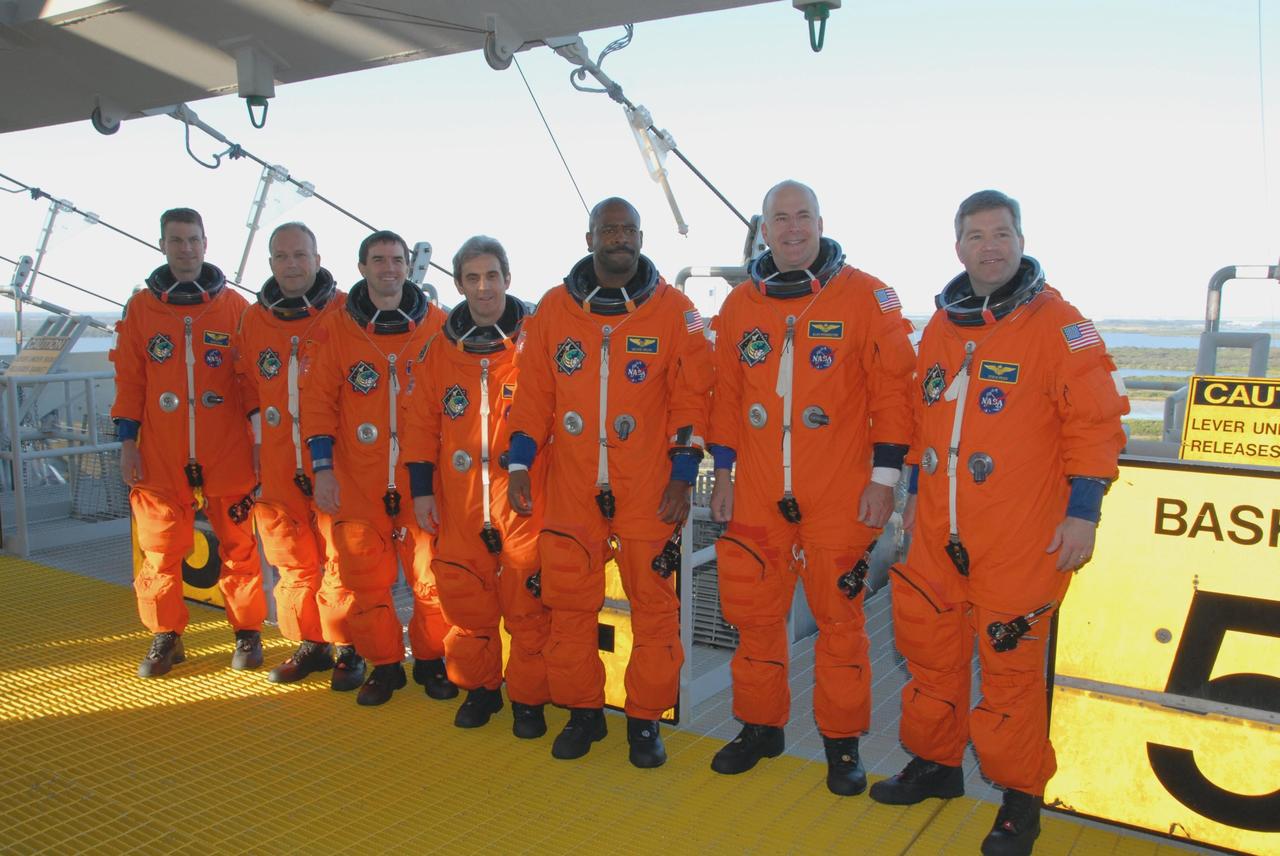
KENNEDY SPACE CENTER, FLA. -- The space shuttle Atlantis STS-122 crew arrives at Launch Pad 39A, dressed in launch and entry suits, to participate in a simulated launch countdown aboard Atlantis. From left are Mission Specialists Stanley Love, Hans Schlegel, Rex Walheim, Leopold Eyharts and Leland Melvin; Pilot Alan Poindexter; and Commander Steve Frick. Schlegel and Eyharts are with the European Space Agency. Eyharts will remain on the International Space Station as a flight engineer for Expedition 16 following the STS-122 mission. The exercise is part of terminal countdown demonstration test, or TCDT, activities at NASA's Kennedy Space Center. The TCDT is a dress rehearsal for launch and also provides astronauts and ground crews with equipment familiarization and emergency egress training. On mission STS-122, Atlantis will deliver the Columbus module to the International Space Station. The European Space Agency's largest single contribution to the station, Columbus is a multifunctional, pressurized laboratory that will be permanently attached to U.S. Node 2, called Harmony. The laboratory will expand the research facilities aboard the station, providing crew members and scientists from around the world the ability to conduct a variety of experiments in the physical, materials and life sciences. Atlantis' launch is targeted for Dec. 6. Photo credit: NASA/George Shelton
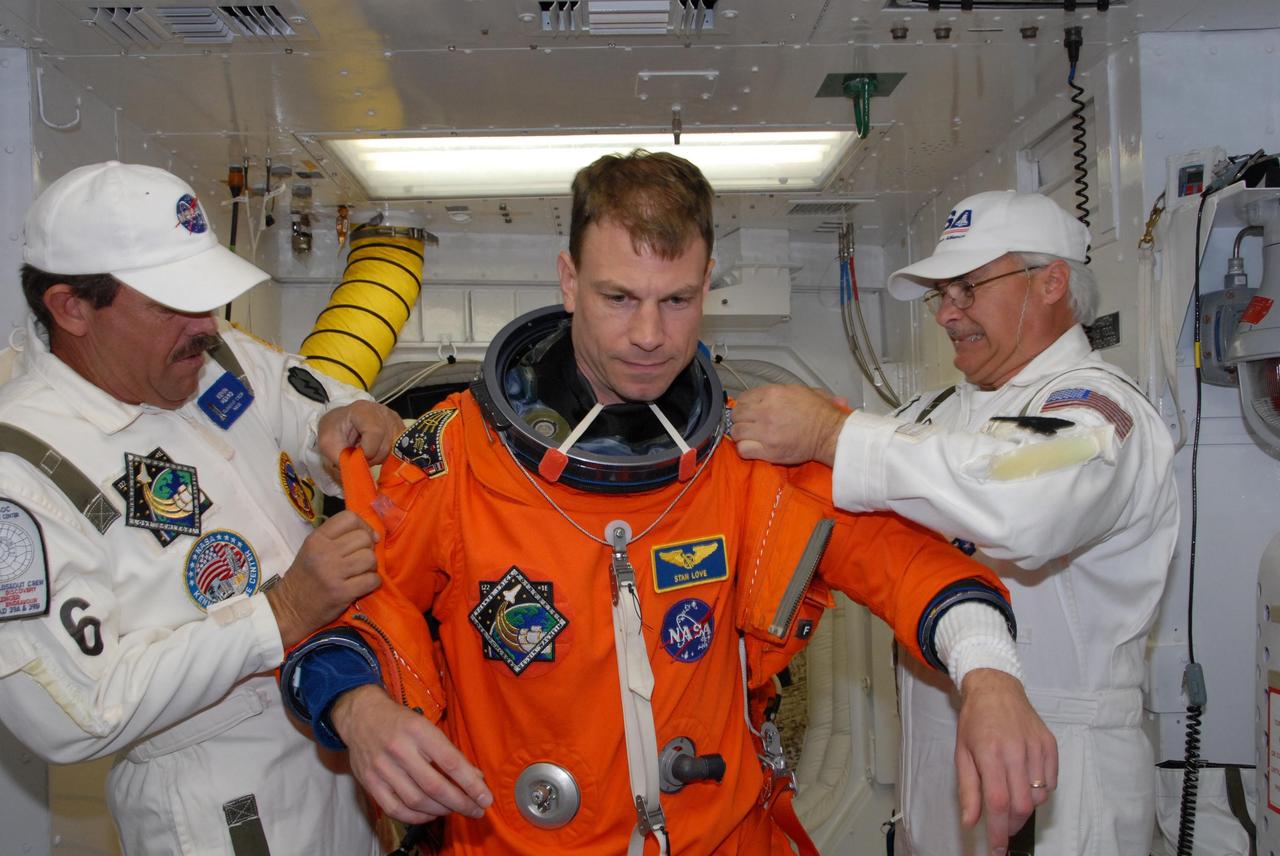
KENNEDY SPACE CENTER, FLA. -- In the White Room on Launch Pad 39A, suit technicians help space shuttle Atlantis STS-122 Mission Specialist Stanley Love with his flight and entry suit before his entry onto Atlantis' flight deck, through the hatch behind him. The exercise is part of terminal countdown demonstration test, or TCDT, activities at NASA's Kennedy Space Center. The TCDT is a dress rehearsal for launch and also provides astronauts and ground crews with equipment familiarization and emergency egress training. On mission STS-122, Atlantis will deliver the Columbus module to the International Space Station. The European Space Agency's largest single contribution to the station, Columbus is a multifunctional, pressurized laboratory that will be permanently attached to U.S. Node 2, called Harmony. The laboratory will expand the research facilities aboard the station, providing crew members and scientists from around the world the ability to conduct a variety of experiments in the physical, materials and life sciences. Atlantis' launch is targeted for Dec. 6. Photo credit: NASA/George Shelton
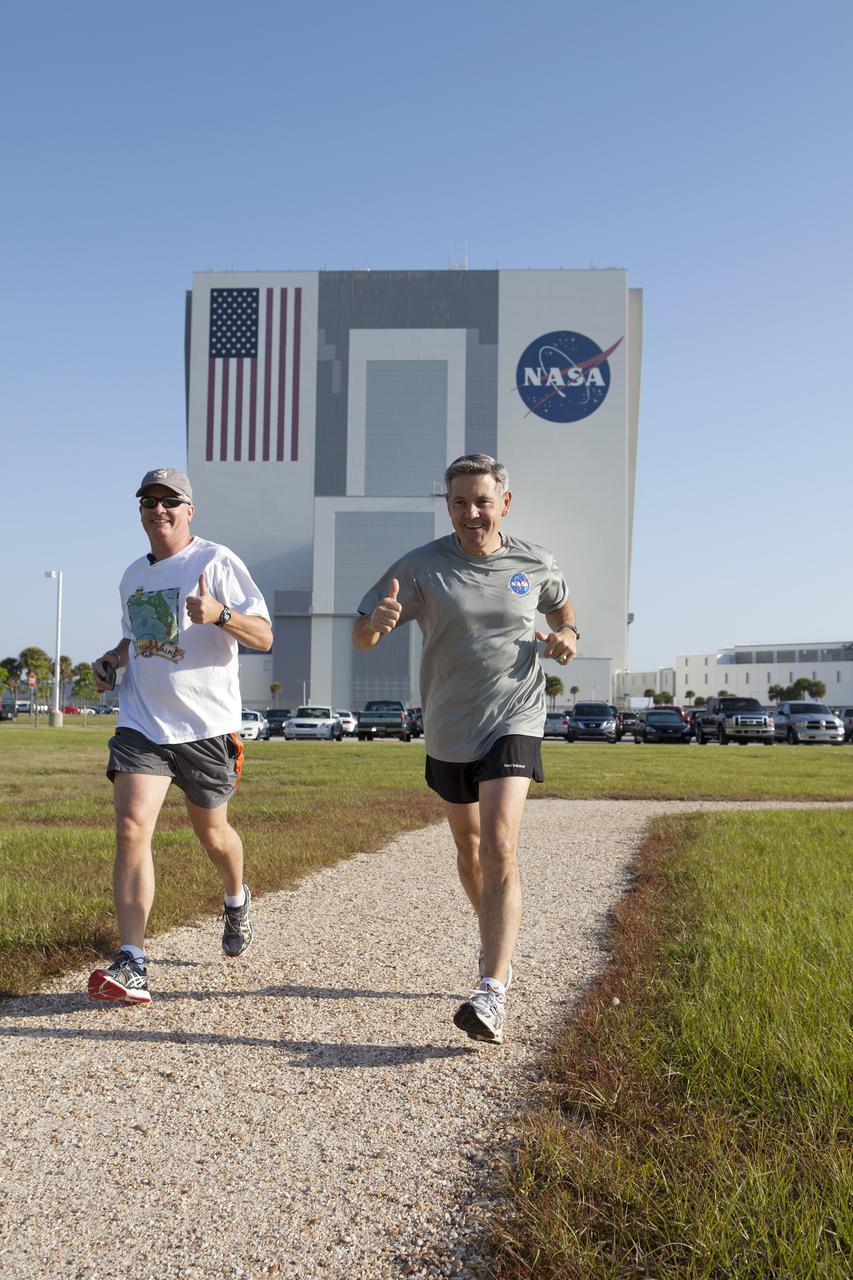
CAPE CANAVERAL, Fla. – Kennedy Space Center Director Bob Cabana, right, and Florida State Surgeon General John Armstrong take an early morning run along the center's Pathfinder Trail near the Operations and Support Building II at Kennedy Space Center in Florida, to officially kick off National Employee Health and Fitness Month with the NASA Moves! challenge. NASA Moves! challenged the workforce from each of the agency's field centers to engage in at least 20 minutes of activity, or 10,000 steps, each day from May 18-31. About 100 people participated in the kickoff event on the Pathfinder Trail in the heart of the center's Launch Complex 39. The one-third-mile-long gravel walkway traces the iconic shape of a space shuttle orbiter and features a set of exercise stations. The friendly contest is part of NASA's new Health4Life initiative, a Web-based health initiative designed to help employees track their health, fitness and nutrition. Health4Life also provides an array of resources geared toward increasing physical activity. Photo credit: NASA/Dimitri Gerondidakis
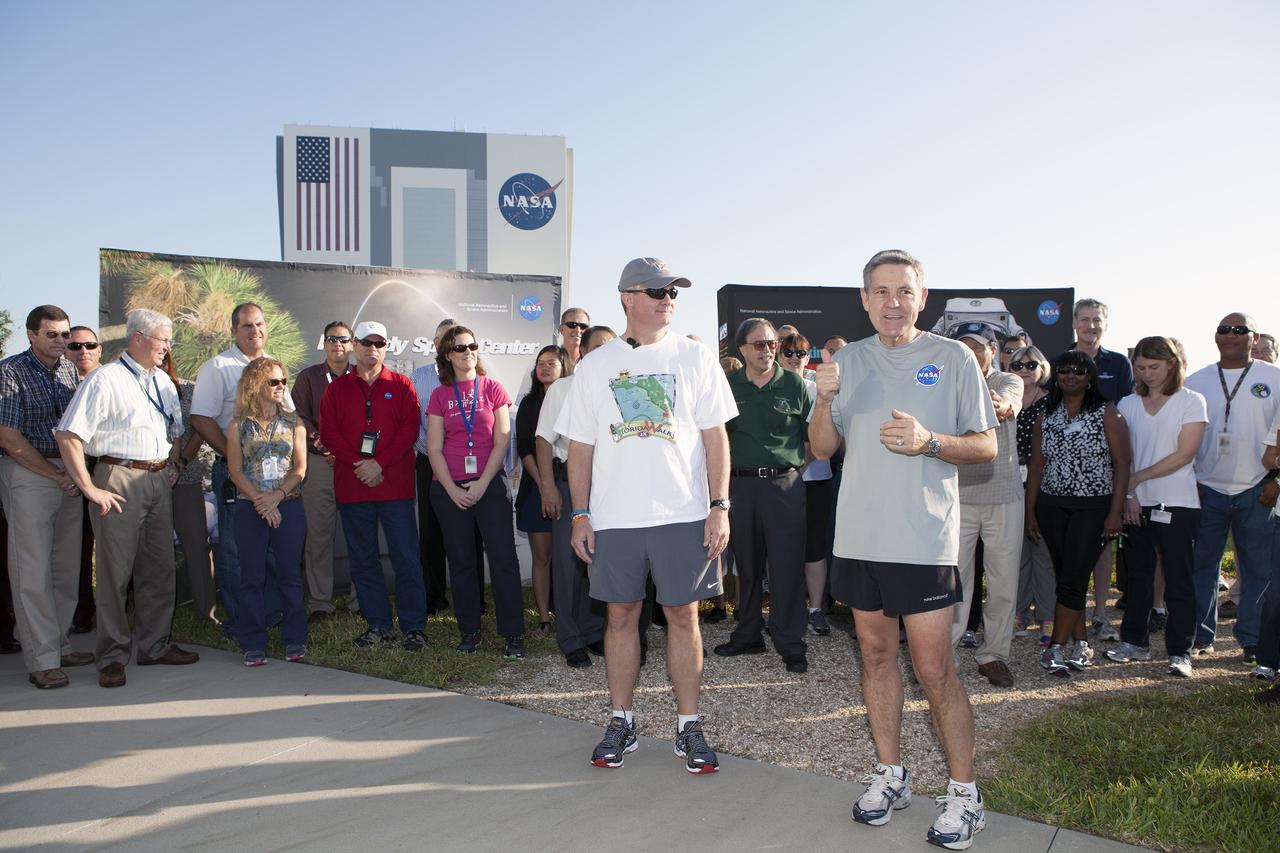
CAPE CANAVERAL, Fla. – Kennedy Space Center Director Bob Cabana, right, Florida State Surgeon General John Armstrong, other Kennedy managers and guests prepare for an early morning run at the center's Pathfinder Trail near the Operations and Support Building II at Kennedy Space Center in Florida, to officially kick off National Employee Health and Fitness Month with the NASA Moves! challenge. NASA Moves! challenged the workforce from each of the agency's field centers to engage in at least 20 minutes of activity, or 10,000 steps, each day from May 18-31. About 100 people participated in the kickoff event on the Pathfinder Trail in the heart of the center's Launch Complex 39. The one-third-mile-long gravel walkway traces the iconic shape of a space shuttle orbiter and features a set of exercise stations. The friendly contest is part of NASA's new Health4Life initiative, a Web-based health initiative designed to help employees track their health, fitness and nutrition. Health4Life also provides an array of resources geared toward increasing physical activity. Photo credit: NASA/Dimitri Gerondidakis

CAPE CANAVERAL, Fla. – Nancy Bray, right, Center Operations director at Kennedy Space Center, and Lori Hicks, Human Resources, take an early morning walk along the center's Pathfinder Trail near the Operations and Support Building II at Kennedy Space Center in Florida, to officially kick off National Employee Health and Fitness Month with the NASA Moves! challenge. NASA Moves! challenged the workforce from each of the agency's field centers to engage in at least 20 minutes of activity, or 10,000 steps, each day from May 18-31. About 100 people participated in the kickoff event on the Pathfinder Trail in the heart of the center's Launch Complex 39. The one-third-mile-long gravel walkway traces the iconic shape of a space shuttle orbiter and features a set of exercise stations. The friendly contest is part of NASA's new Health4Life initiative, a Web-based health initiative designed to help employees track their health, fitness and nutrition. Health4Life also provides an array of resources geared toward increasing physical activity. Photo credit: NASA/Dimitri Gerondidakis
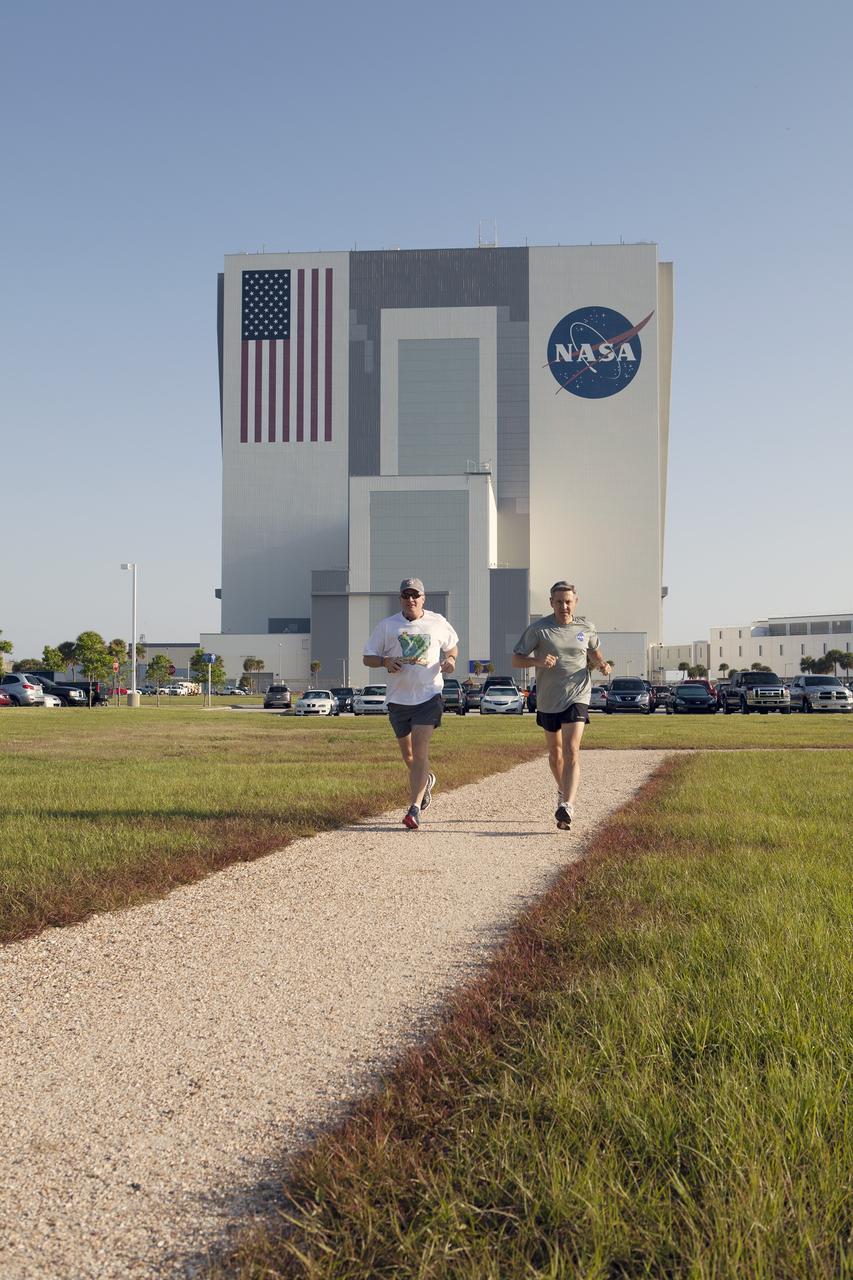
CAPE CANAVERAL, Fla. – Kennedy Space Center Director Bob Cabana, right, and Florida State Surgeon General John Armstrong begin an early morning run along the center's Pathfinder Trail near the Operations and Support Building II at Kennedy Space Center in Florida, to officially kick off National Employee Health and Fitness Month with the NASA Moves! challenge. NASA Moves! challenged the workforce from each of the agency's field centers to engage in at least 20 minutes of activity, or 10,000 steps, each day from May 18-31. About 100 people participated in the kickoff event on the Pathfinder Trail in the heart of the center's Launch Complex 39. The one-third-mile-long gravel walkway traces the iconic shape of a space shuttle orbiter and features a set of exercise stations. The friendly contest is part of NASA's new Health4Life initiative, a Web-based health initiative designed to help employees track their health, fitness and nutrition. Health4Life also provides an array of resources geared toward increasing physical activity. Photo credit: NASA/Dimitri Gerondidakis