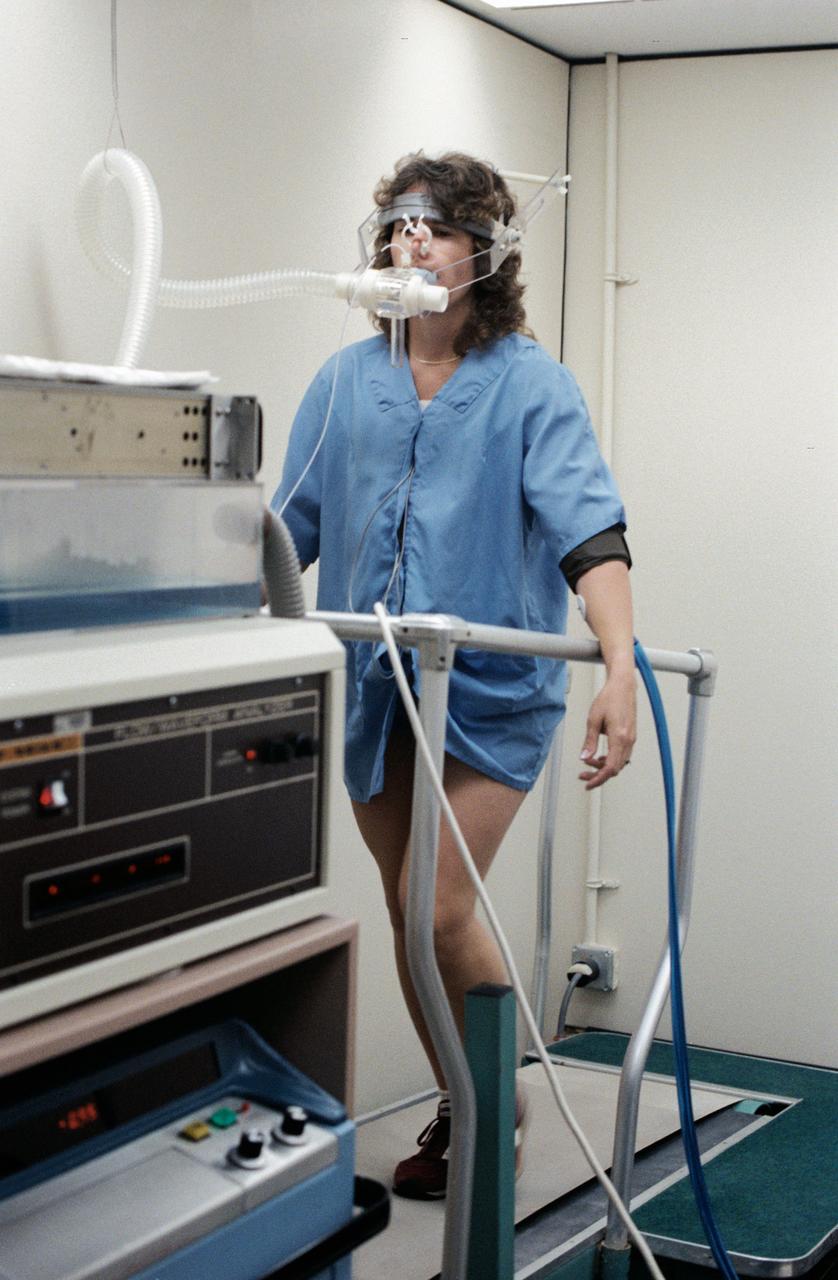
S85-37165 (8-12 July 1985) -- Sharon C. (Christa) McAuliffe of Concord High, Concord, New Hampshire, runs in place on treadmill to test physiological responses at Johnson Space Center. Christa McAuliffe was eventually chosen as the first Teacher in Space and was a member of the seven-member Challenger shuttle crew which died tragically in the explosion of the spacecraft during the launch of STS-51L from the Kennedy Space Center about 11:40 a.m., EST, on Jan. 28, 1986. The explosion occurred 73 seconds into the flight as a result of a leak in one of two Solid Rocket Boosters that ignited the main liquid fuel tank. The crew members of the Challenger represented a cross-section of the American population in terms of race, gender, geography, background, and religion. The explosion became one of the most significant events of the 1980s, as billions around the world saw the accident on television and empathized with any one of the several crew members killed. Photo credit: NASA
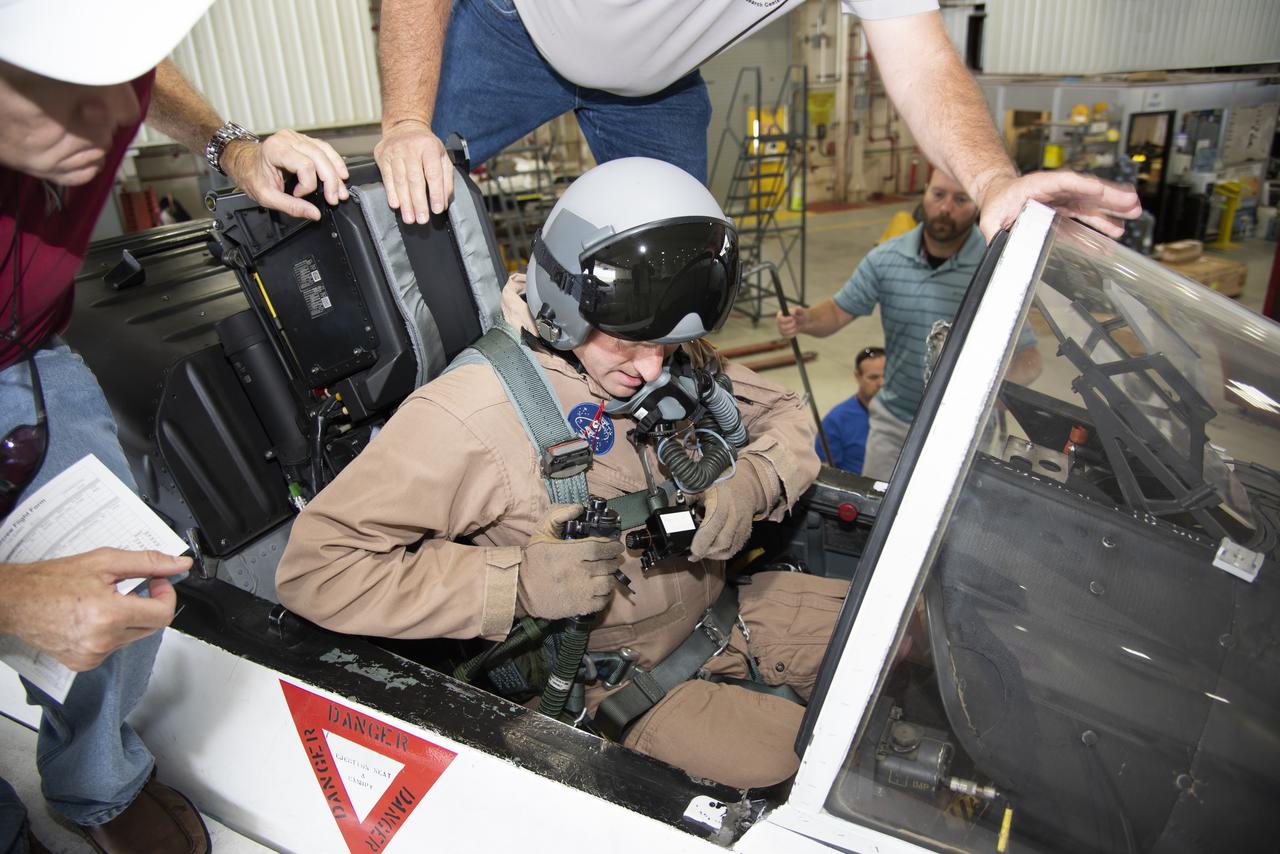
NASA pilot Jim Less sits in the cockpit of a NASA F/A-18 aircraft in preparation for flight tests that will be used to understand the physiological impacts that high-performance aircraft have on pilots.
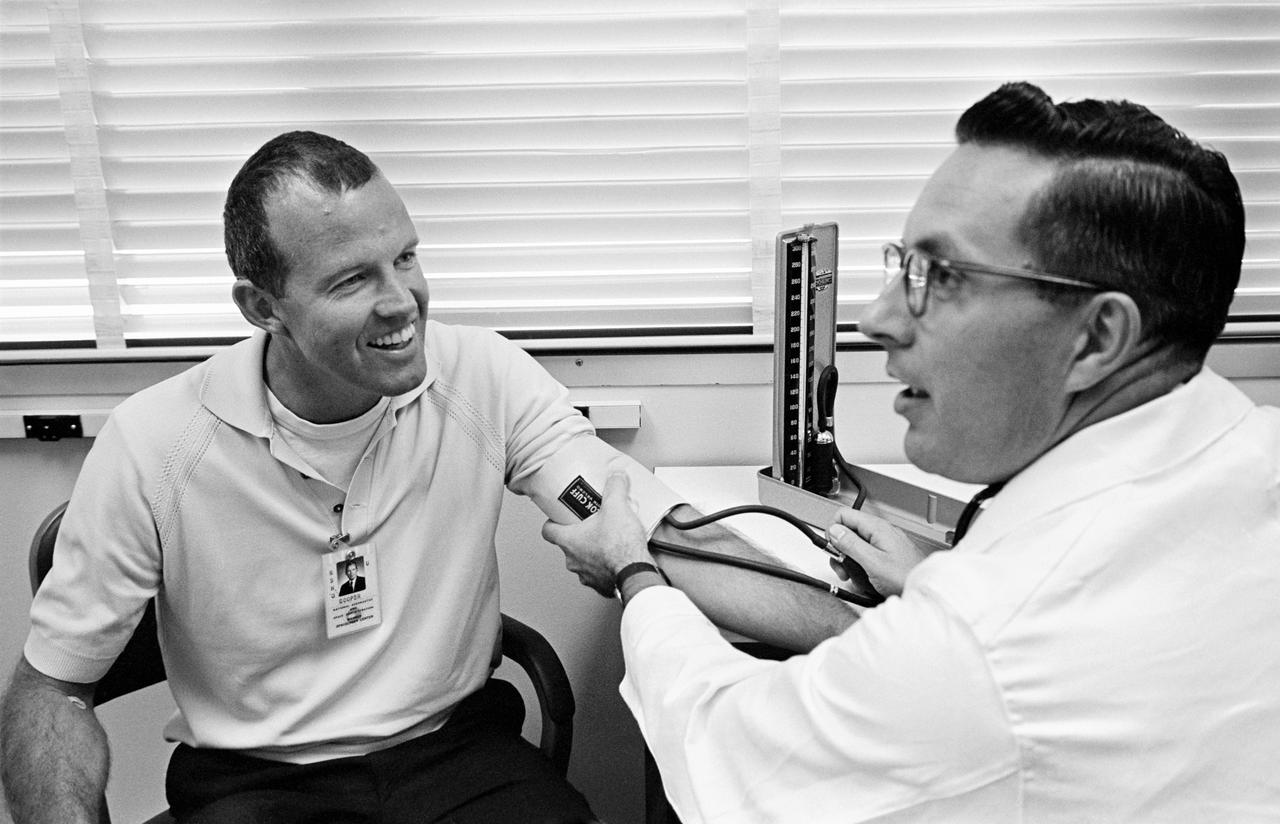
S65-28710 (17 Aug. 1965) --- Astronaut L. Gordon Cooper Jr., command pilot for the Gemini-5 spaceflight, has his blood pressure checked by Dr. Charles A. Berry, chief, Center Medical Programs, Manned Spacecraft Center, during a preflight physical examination.
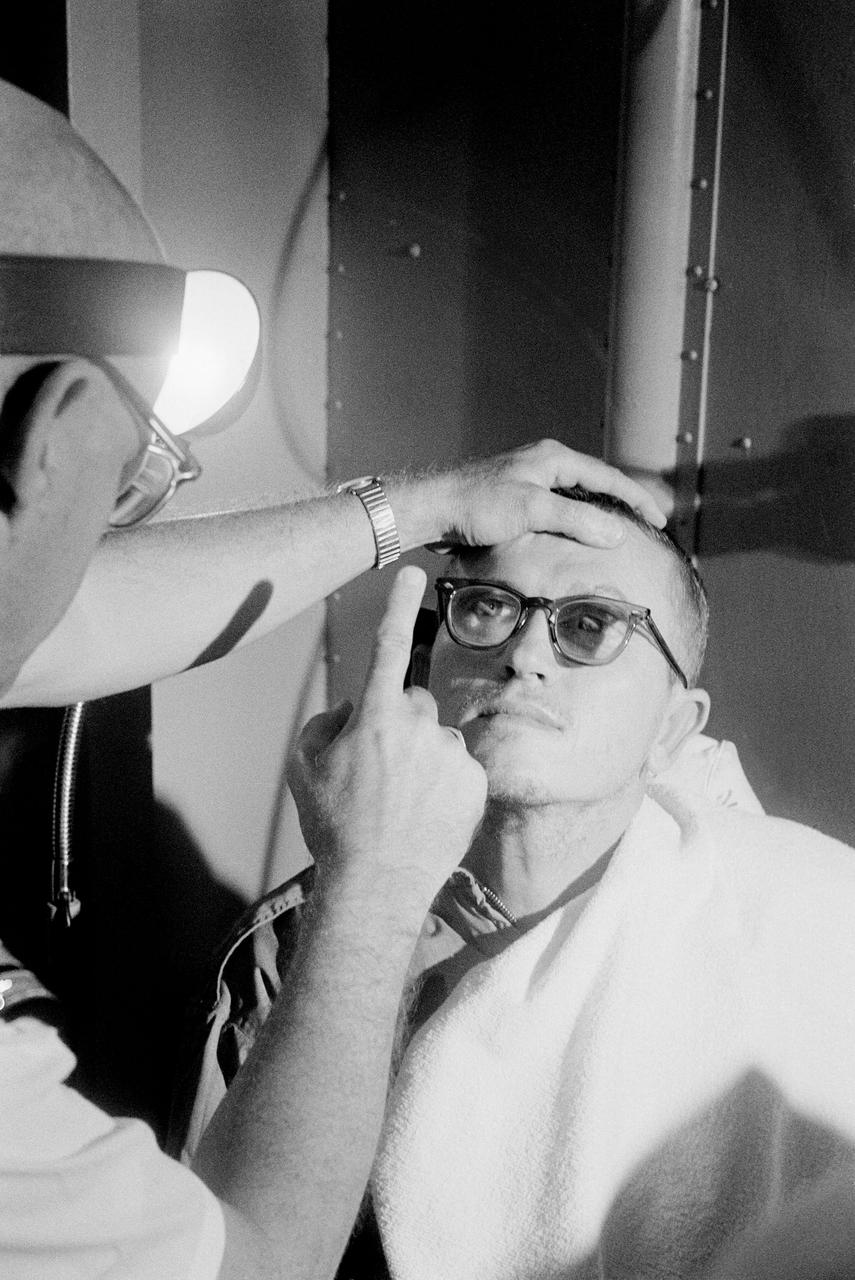
S66-17442 (19 Jan. 1966) --- Astronaut Frank Borman, command pilot for the Gemini-7 mission, has his vision checked during a postflight medical exam. Photo credit: NASA
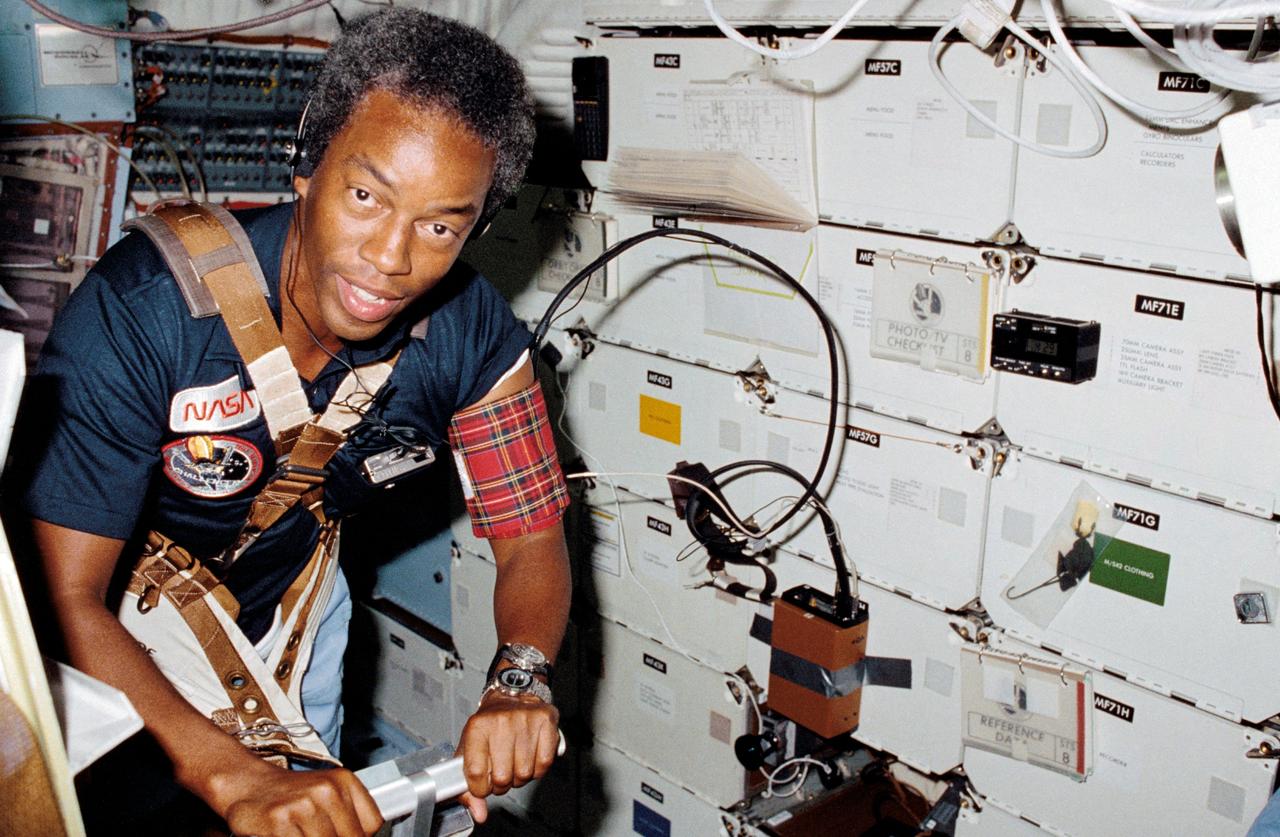
STS008-13-0361 (30 Aug.-5 Sept. 1983) --- Astronaut Guion S. Bluford, STS-8 mission specialist, assists Dr. William E. Thornton (out of frame) with a medical test that requires use of the treadmill exercising device designed for spaceflight by the STS-8 medical doctor. This frame was shot with a 35mm camera. Photo credit: NASA
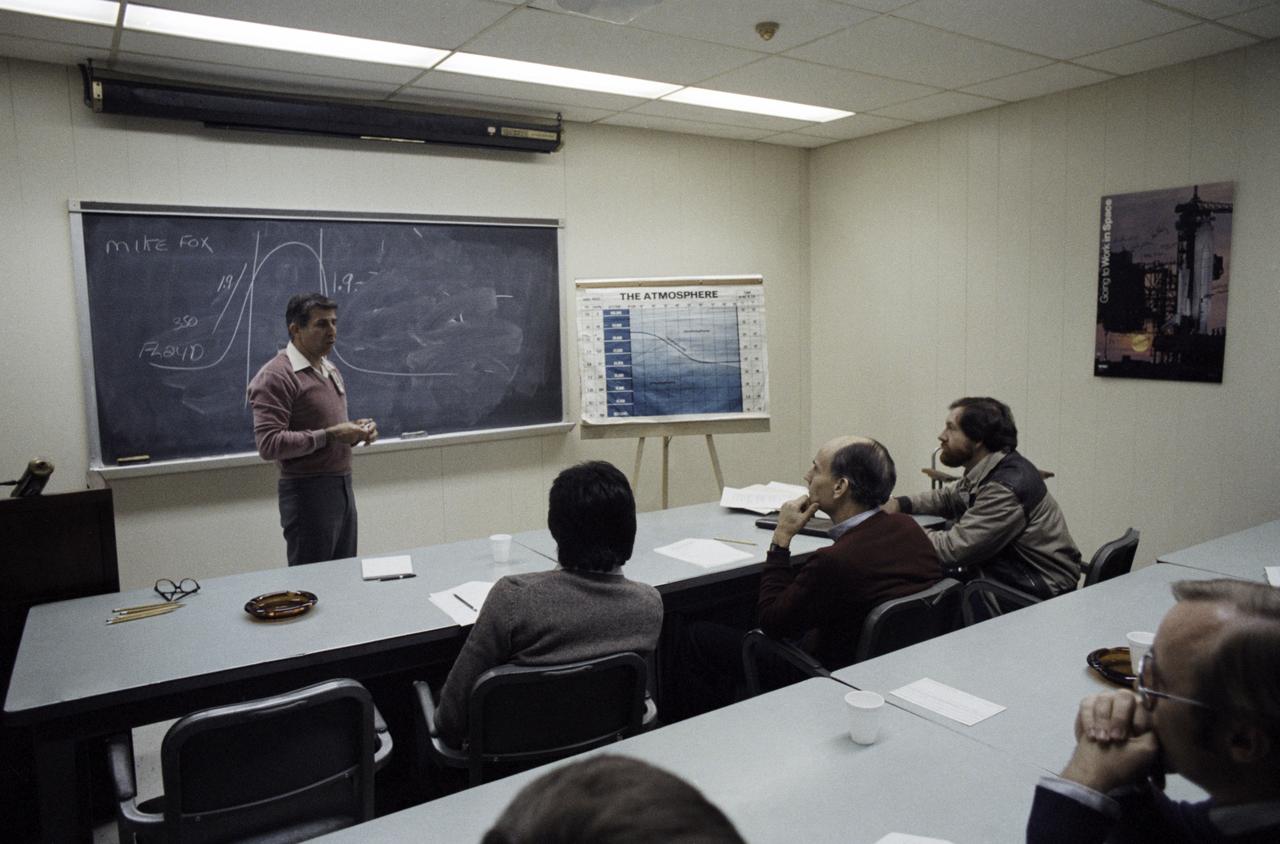
Senator Jake Garn (R., Utah), center on front row, listens to a briefing by Michael Fox, an Aeromedical Physiological Training Technician. Classroom activities in preparation for Vacuum Chamber Test. He is joined on the front row by Frank Martinez, a JSC safety diver and Jeff Bingham, the Senator's aide. 1. Senator E. J. "Jake" Garn Also available in 35mm CN
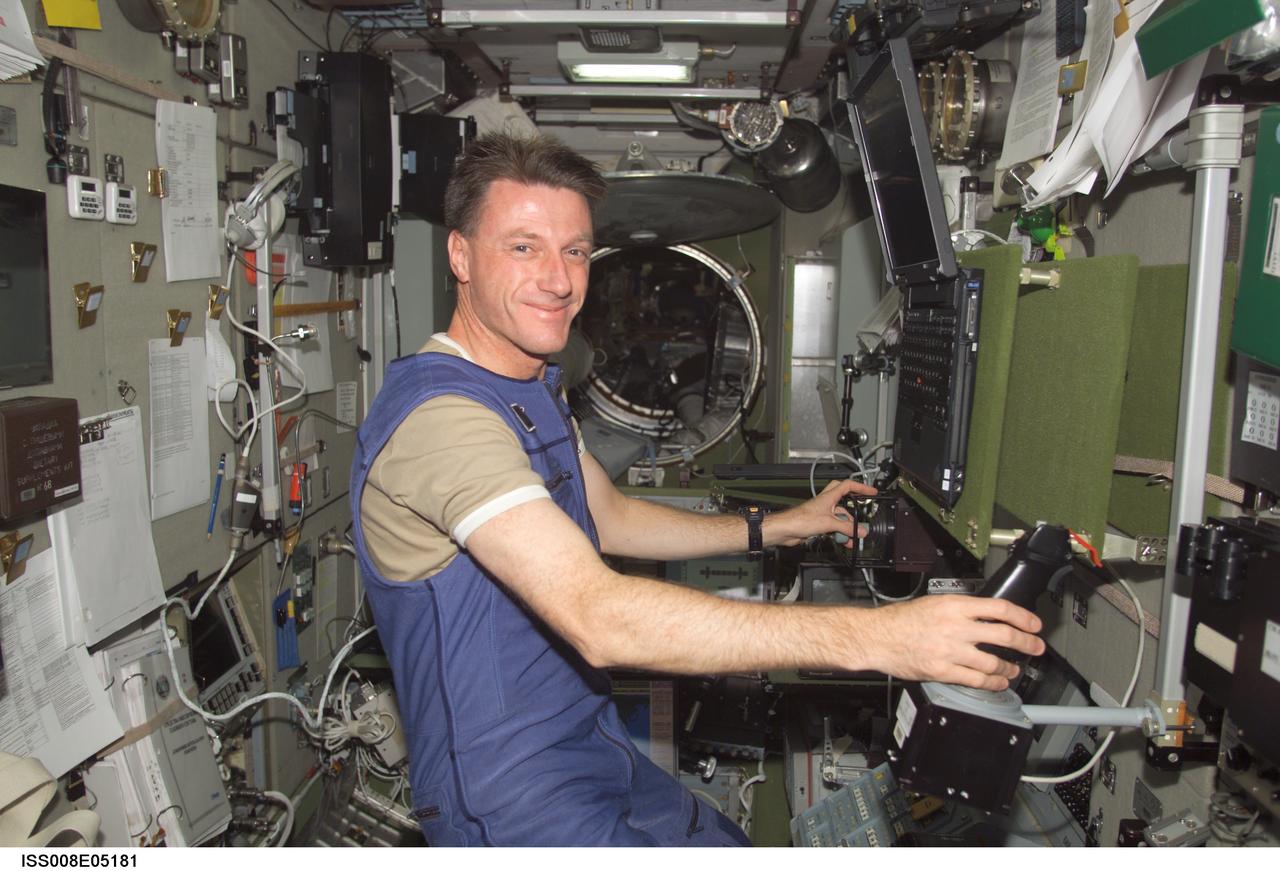
ISS008-E-05181 (31 October 2003) --- Astronaut C. Michael Foale, Expedition 8 mission commander and NASA ISS science officer, works with the Russian biomedical “Pilot” experiment (MBI-15) in the Zvezda Service Module on the International Space Station (ISS). The experiment, which looks at psychological and physiological changes in crew performance during long-duration spaceflight, requires a worktable, ankle restraint system and two control handles for testing piloting skill.

ISS022-E-091395 (12 March 2010) --- NASA astronaut Jeffrey Williams, Expedition 22 commander, works with test samples in the Human Research Facility 2 (HRF-2) Refrigerated Centrifuge as a part of the Nutritional Status Assessment (Nutrition) experiment in the Columbus laboratory of the International Space Station. The results of the Nutrition experiment will be used to better understand the time course effects of space flight on human physiology.
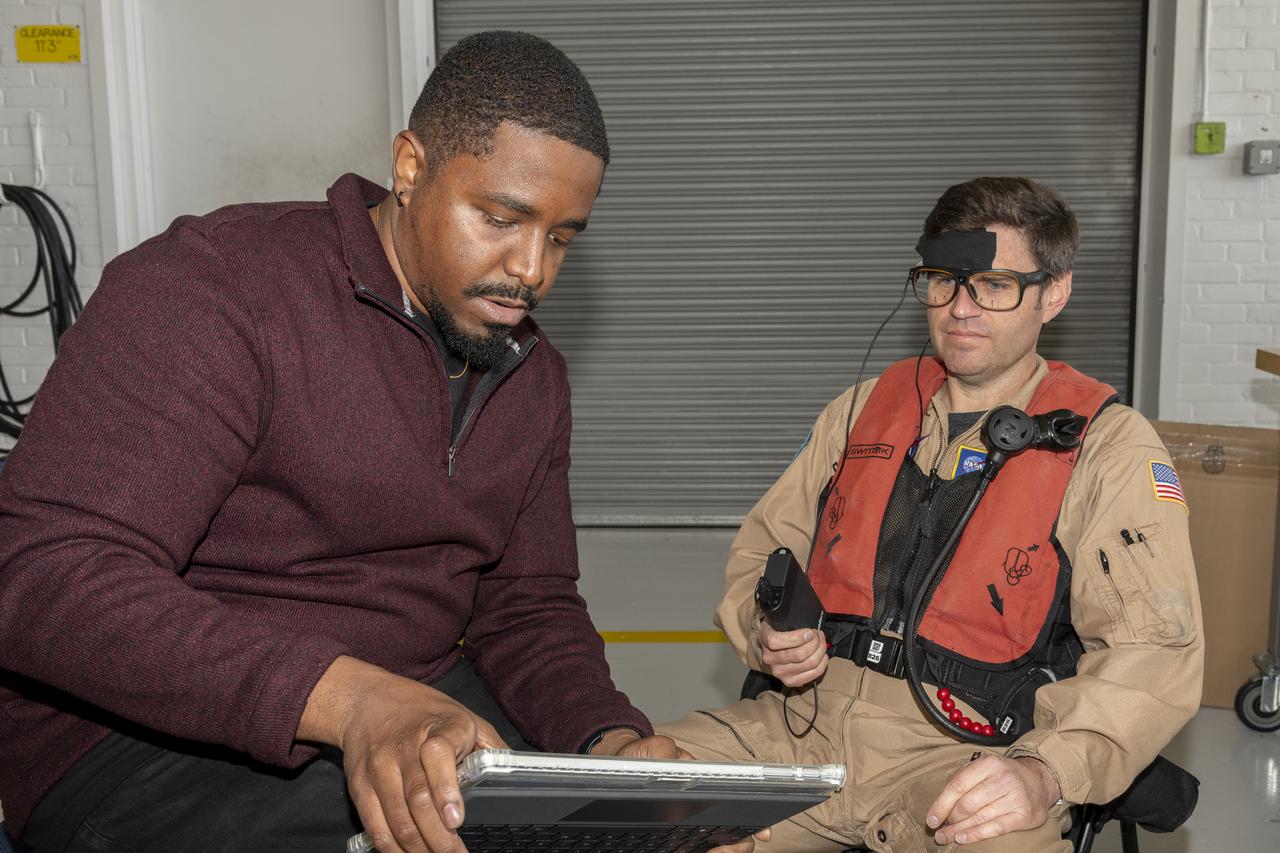
NASA human factors researcher Kevin J. Monk, left, and NASA pilot Scott Howe verify the connectivity and accuracy of the biometric sensors placed on Howe for test flight at Sikorsky Memorial Airport, Bridgeport, Connecticut on Tuesday, Oct. 24, 2023. These sensors will track various physiological responses sending the data to Monk’s computer as Howe engages with the autonomous flight software used to fly the aircraft.
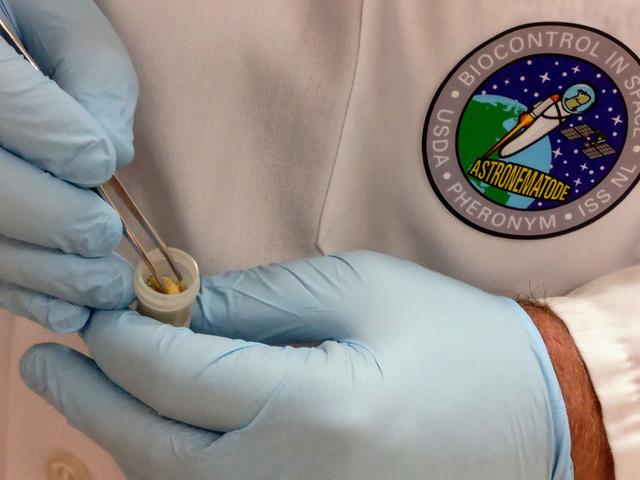
jsc2019e062137 (10/24/2019) --- Loading of the nematodes into the sample tubes. Microgravity Effect on Entomopathogenic Nematodes’ Ability to Find and Kill Insects (Module-85 Pheronym) tests the effects of microgravity on the movement and infection behavior of beneficial nematodes, which are used to control agricultural insect pests. The research looks at whether these nematodes can navigate through soil, infect insects and reproduce in space. It also looks at whether their symbiotic bacteria function normally in microgravity and has any effects on insect host physiology. Image Courtesy of: Fatma Kaplan (PI)
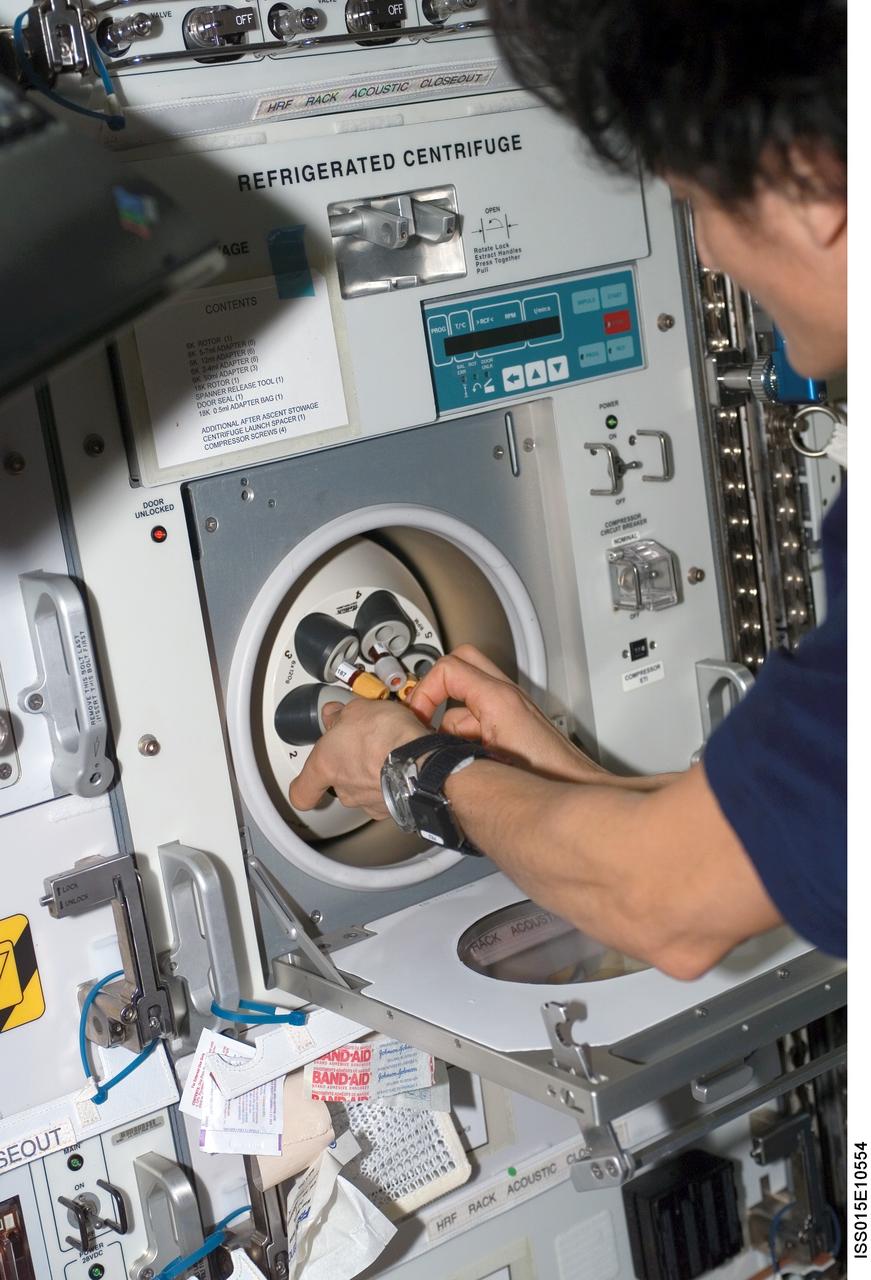
ISS015-E-10554 (1 June 2007) --- Astronaut Sunita L. Williams, Expedition 15 flight engineer, loads test samples in the Human Research Facility 2 (HRF-2) Refrigerated Centrifuge as a part of the Nutritional Status Assessment (Nutrition) experiment in the Destiny laboratory of the International Space Station. The results of the Nutrition experiment will be used to better understand the time course effects of space flight on human physiology.
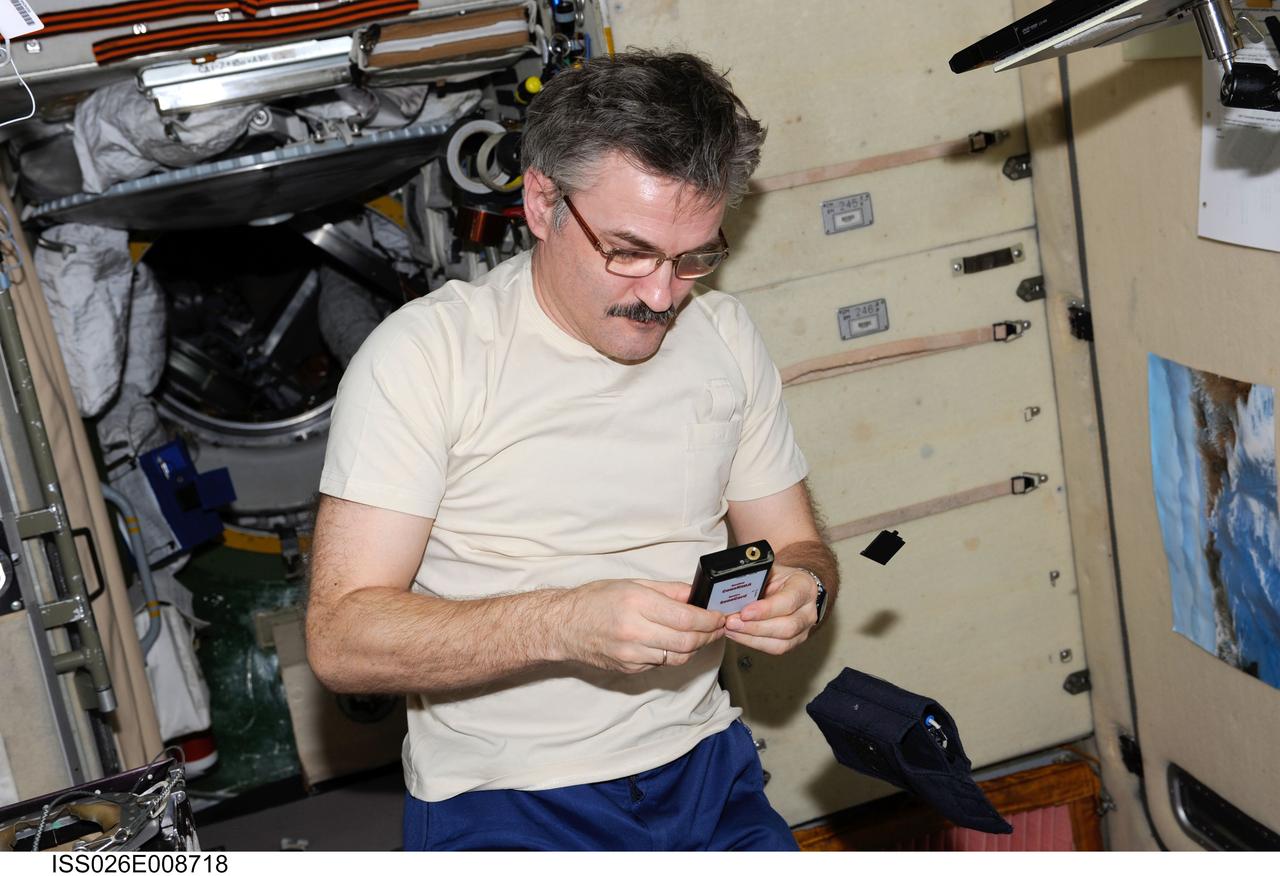
ISS026-E-008718 (8 Dec. 2010) --- Russian cosmonaut Alexander Kaleri, Expedition 26 flight engineer, sets up the Russian MBI-12 payload for a Sonokard experiment session in the Zvezda Service Module of the International Space Station. Kaleri used a sports shirt from the Sonokard kit with a special device in the pocket for testing a new method for acquiring physiological data without using direct contact on the skin. Measurements are recorded on a data card for return to Earth.
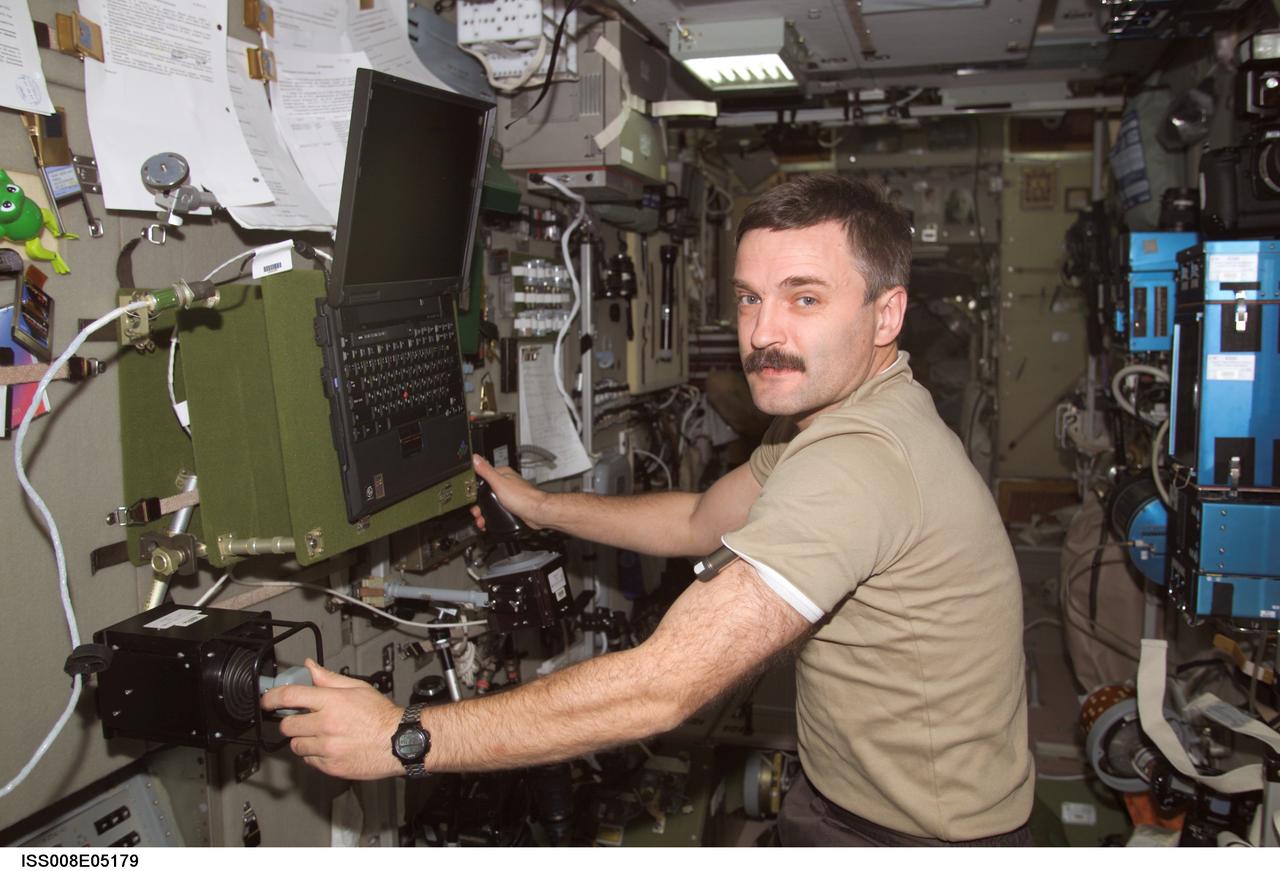
ISS008-E-05179 (31 October 2003) --- Cosmonaut Alexander Y. Kaleri, Expedition 8 flight engineer, works with the Russian biomedical “Pilot” experiment (MBI-15) in the Zvezda Service Module on the International Space Station (ISS). The experiment, which looks at psychological and physiological changes in crew performance during long-duration spaceflight, requires a worktable, ankle restraint system and two control handles for testing piloting skill. Kaleri represents Rosaviakosmos.
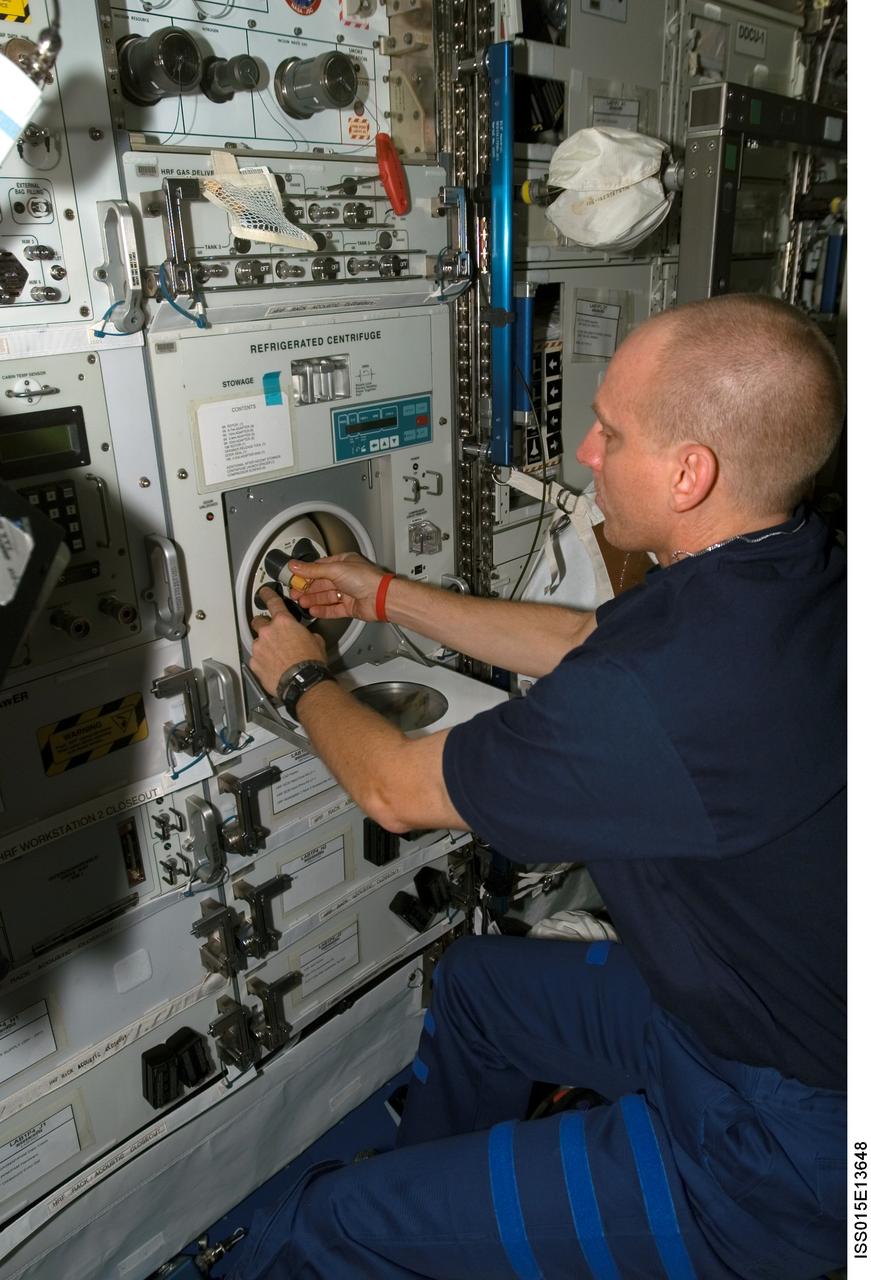
ISS015-E-13648 (25 June 2007) --- Astronaut Clayton Anderson, Expedition 15 flight engineer, works with test samples in the Human Research Facility 2 (HRF-2) Refrigerated Centrifuge as a part of the Nutritional Status Assessment (Nutrition) experiment in the Destiny laboratory of the International Space Station. The results of the Nutrition experiment will be used to better understand the time course effects of space flight on human physiology.
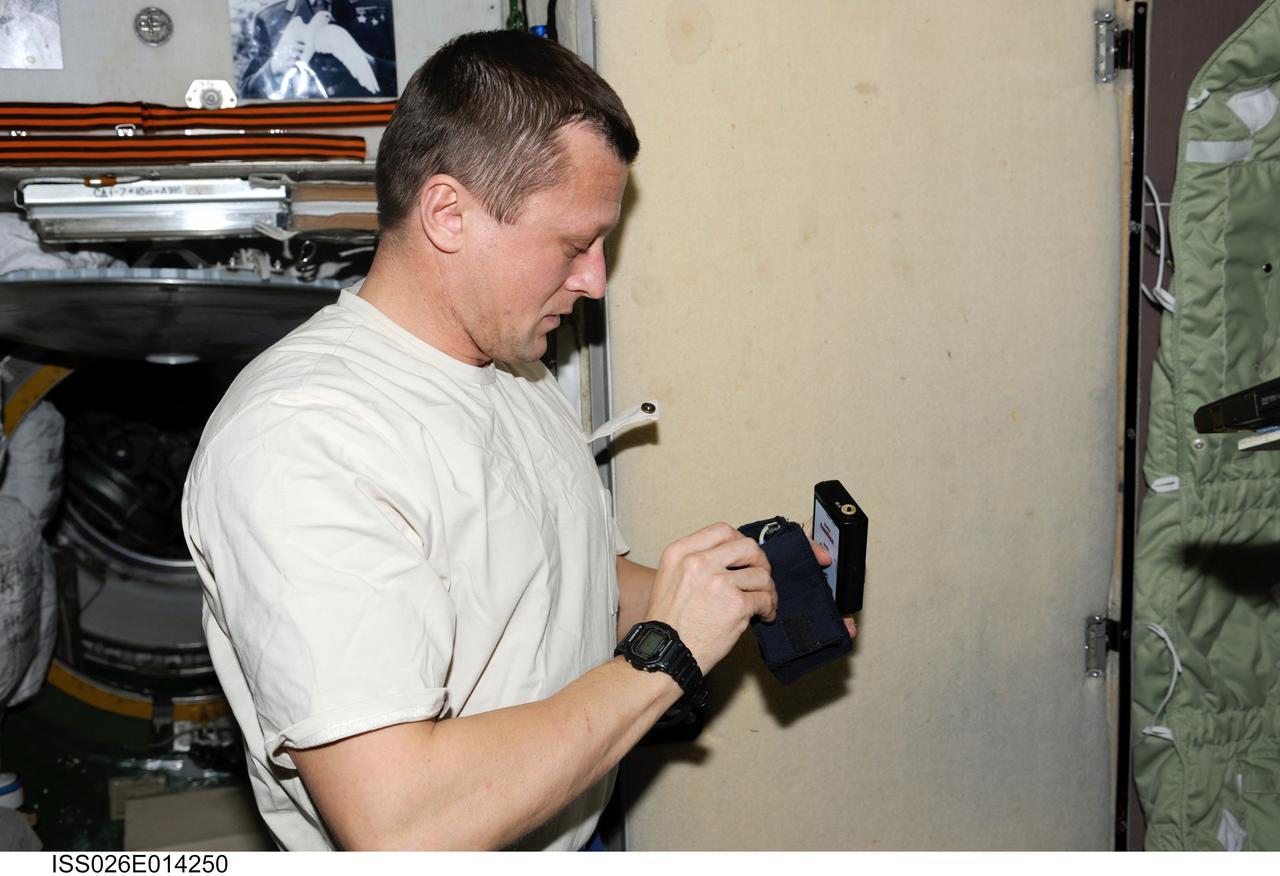
ISS026-E-014250 (3 Jan. 2011) --- Russian cosmonaut Dmitry Kondratyev, Expedition 26 flight engineer, sets up the Russian MBI-12 payload for a Sonokard experiment session in the Zvezda Service Module of the International Space Station. Kondratyev used a sports shirt from the Sonokard kit with a special device in the pocket for testing a new method for acquiring physiological data without using direct contact on the skin. Measurements are recorded on a data card for return to Earth.
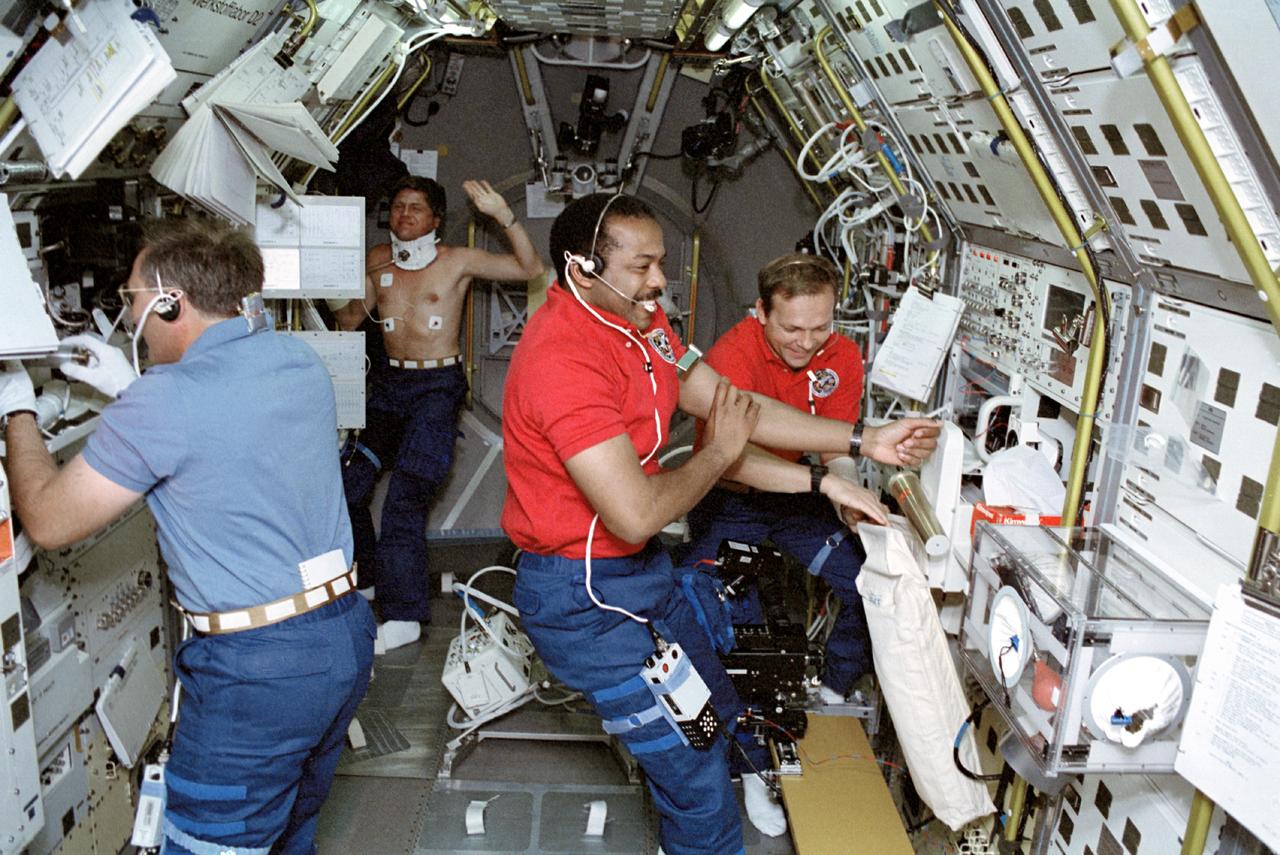
STS055-22-004 (26 April-6 May 1993) --- Four of the seven crew members who spent 10 days aboard the Space Shuttle Columbia are pictured during a brief shift overlap period in the Spacelab D-2 Science Module. Left to right are Jerry L. Ross, Ulrich Walter, Bernard A. Harris, Jr. and Hans Schlegel. Ross, STS-55 payload commander, is changing a sample in a materials processing furnace; Walter, a German payload specialist is in the midst of a baroreflex test and fellow payload specialist Schlegel assists mission specialist and physician Harris with a physiological test at the "Anthrorack".
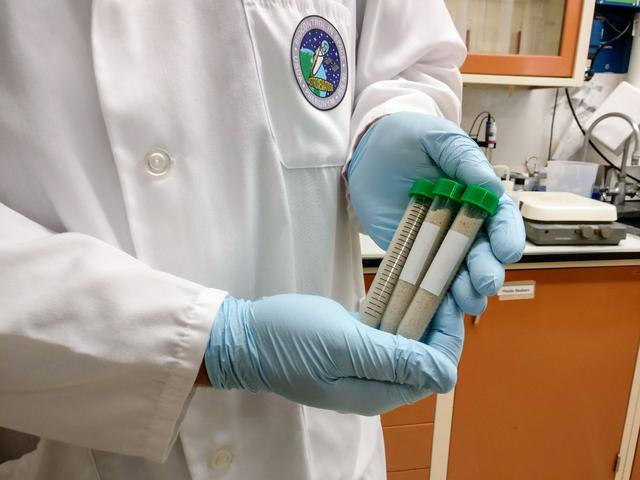
jsc2019e062136 (10/24/2019) --- Dr. Karl Shiller presents the loaded nematode tube samples. Microgravity Effect on Entomopathogenic Nematodes’ Ability to Find and Kill Insects (Module-85 Pheronym) tests the effects of microgravity on the movement and infection behavior of beneficial nematodes, which are used to control agricultural insect pests. The research looks at whether these nematodes can navigate through soil, infect insects and reproduce in space. It also looks at whether their symbiotic bacteria function normally in microgravity and has any effects on insect host physiology. Image Courtesy of: Fatma Kaplan (PI)
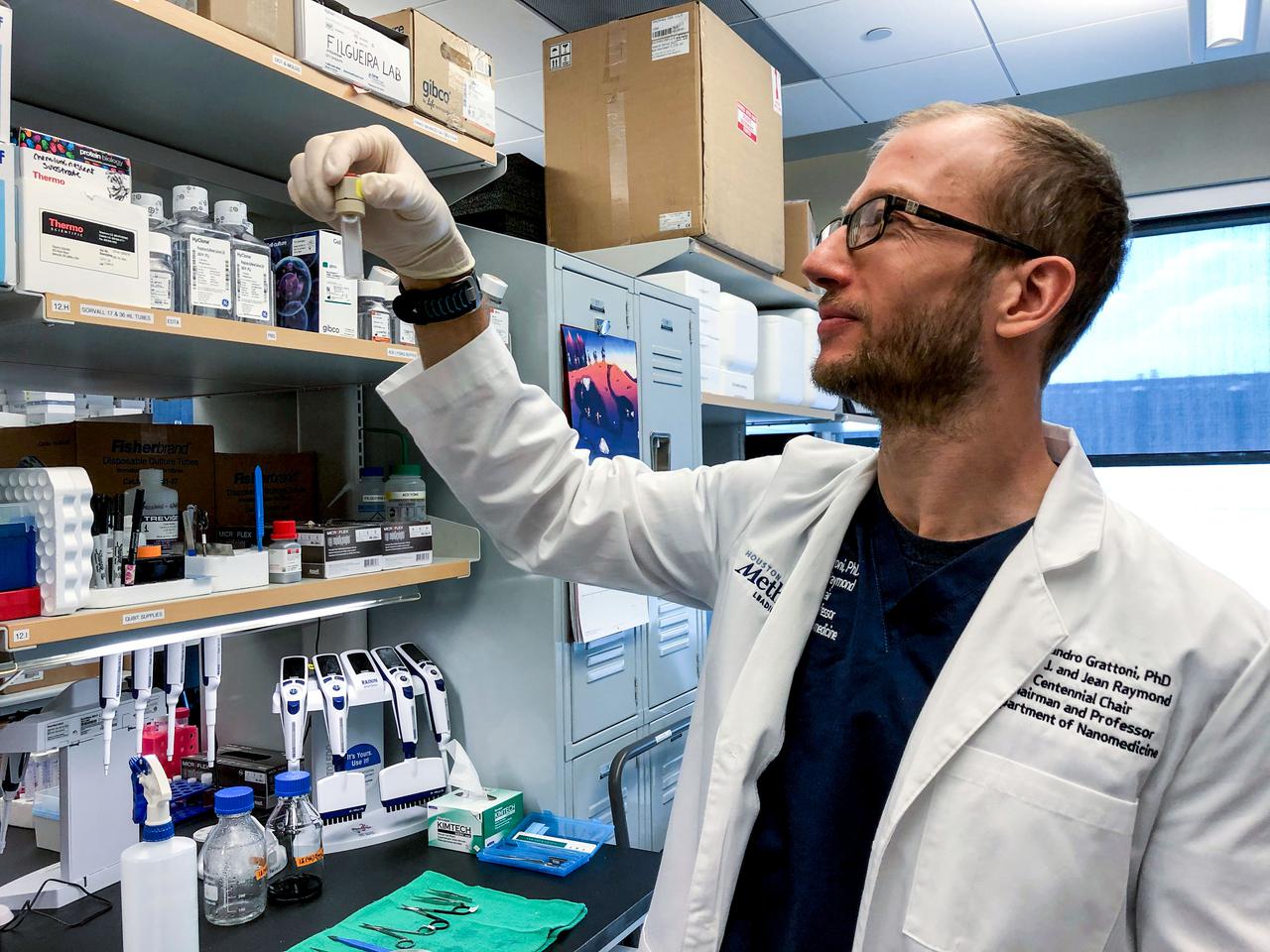
jsc2021e037284 (4/9/2020) --- Nanofluidic Implant Communication Experiment (NICE) (Faraday-NICE) aims to develop an implantable drug delivery system that allows for remote control and modulation of the release of therapeutics over weeks to months. In this investigation, fully assembled implantable devices are tested for remote communication capabilities from Earth to the International Space Station (ISS). This investigation aims to verify that 100% of the communications between controller and implant is achieved and maintained on station. Implants are immersed in saline solution, a surrogate of physiological conditions, then placed and sealed in 15 ml containers. The tubes are mounted within the ProxOpS Faraday experimental box. Image Credit: Houston Methodist Research Institute
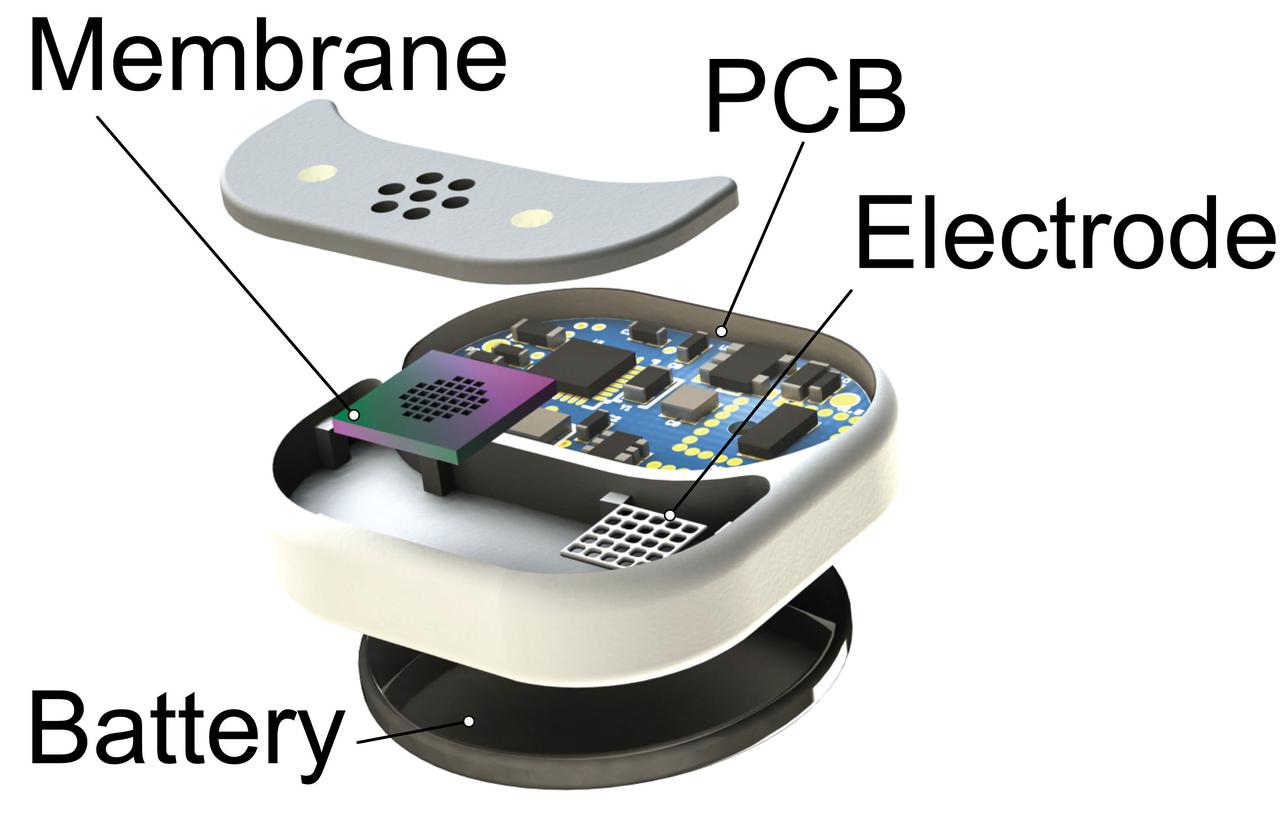
sc2021e037282 (8/20/2021) --- Nanofluidic Implant Communication Experiment (NICE) (Faraday-NICE) aims to develop an implantable drug delivery system that allows for remote control and modulation of the release of therapeutics over weeks to months. In this investigation, fully assembled implantable devices are tested for remote communication capabilities from Earth to the International Space Station (ISS). This investigation aims to verify that 100% of the communications between controller and implant is achieved and maintained on station. Implants are immersed in saline solution, a surrogate of physiological conditions, then placed and sealed in 15 ml containers. The tubes are mounted within the ProxOpS Faraday experimental box. Image Credit: Houston Methodist Research Institute
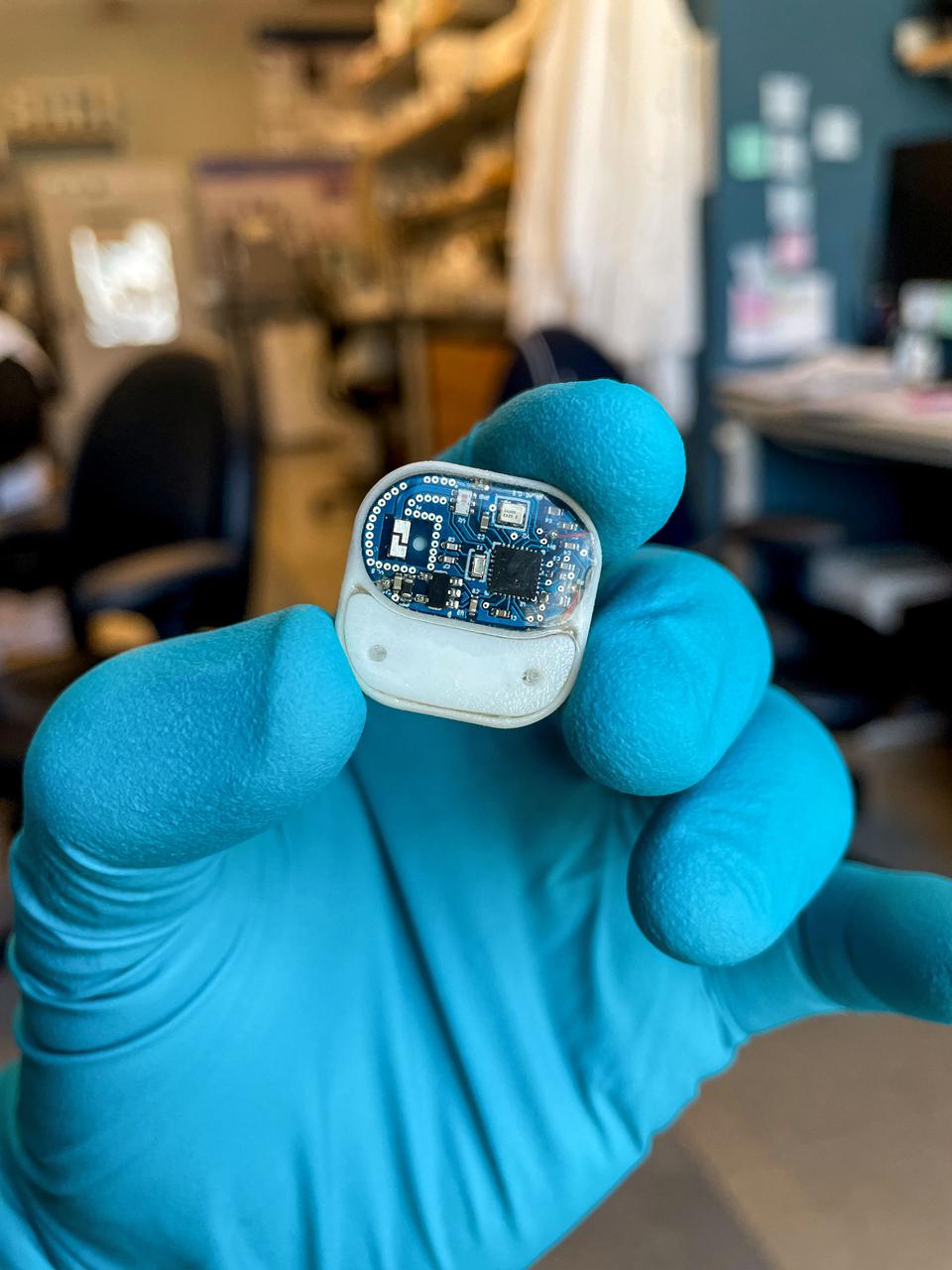
jsc2021e037283 (8/11/2021) --- Nanofluidic Implant Communication Experiment (NICE) (Faraday-NICE) aims to develop an implantable drug delivery system that allows for remote control and modulation of the release of therapeutics over weeks to months. In this investigation, fully assembled implantable devices are tested for remote communication capabilities from Earth to the International Space Station (ISS). This investigation aims to verify that 100% of the communications between controller and implant is achieved and maintained on station. Implants are immersed in saline solution, a surrogate of physiological conditions, then placed and sealed in 15 ml containers. The tubes are mounted within the ProxOpS Faraday experimental box. Image Credit: Houston Methodist Research Institute
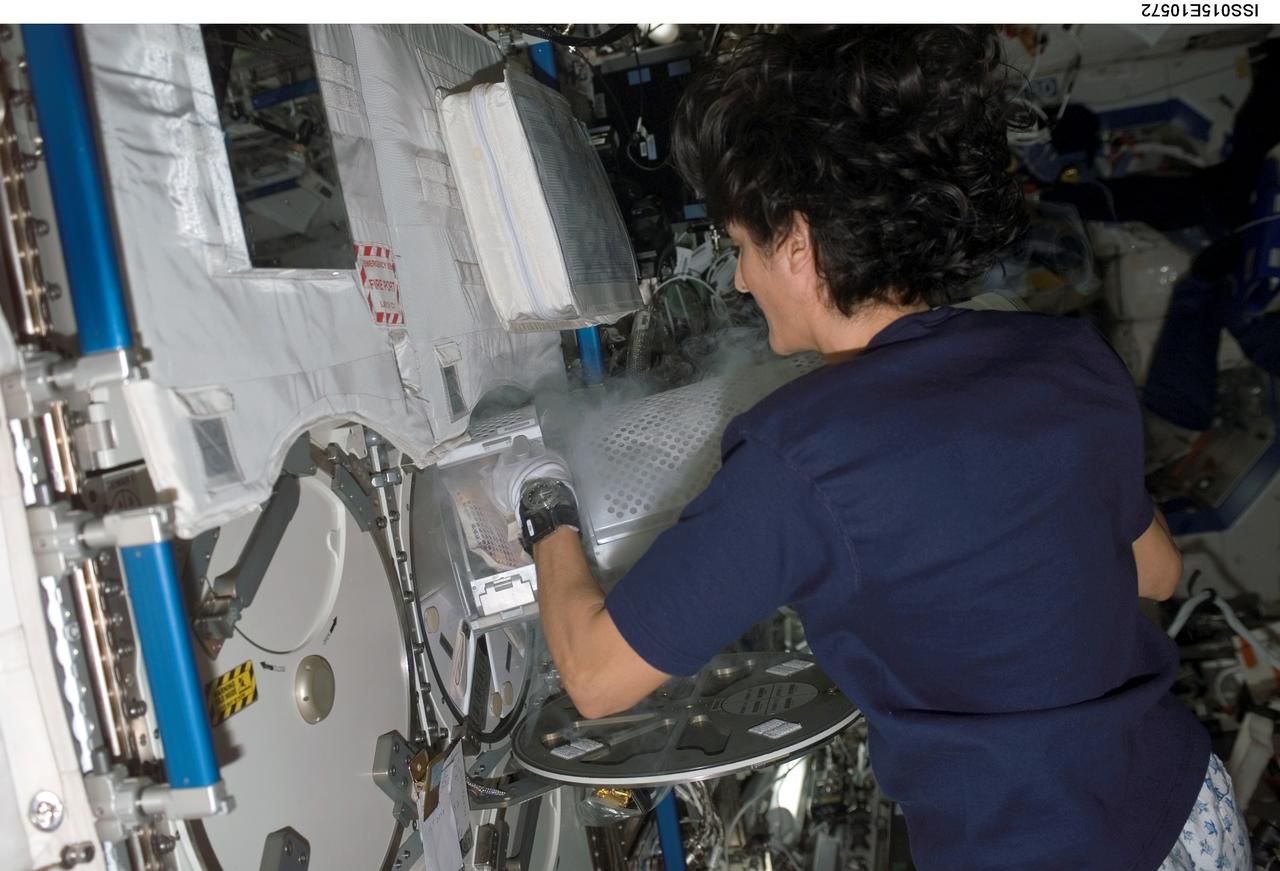
ISS015-E-10572 (1 June 2007) --- Astronaut Sunita L. Williams, Expedition 15 flight engineer, inserts test samples in the Minus Eighty Degree Laboratory Freezer for ISS (MELFI) as a part of the Nutritional Status Assessment (Nutrition) experiment in the Destiny laboratory of the International Space Station. MELFI is a low temperature freezer facility with nominal operating temperatures of -80, -26 and +4 degrees Celsius that will preserve experiment materials over long periods. The results of the Nutrition experiment will be used to better understand the time course effects of space flight on human physiology.
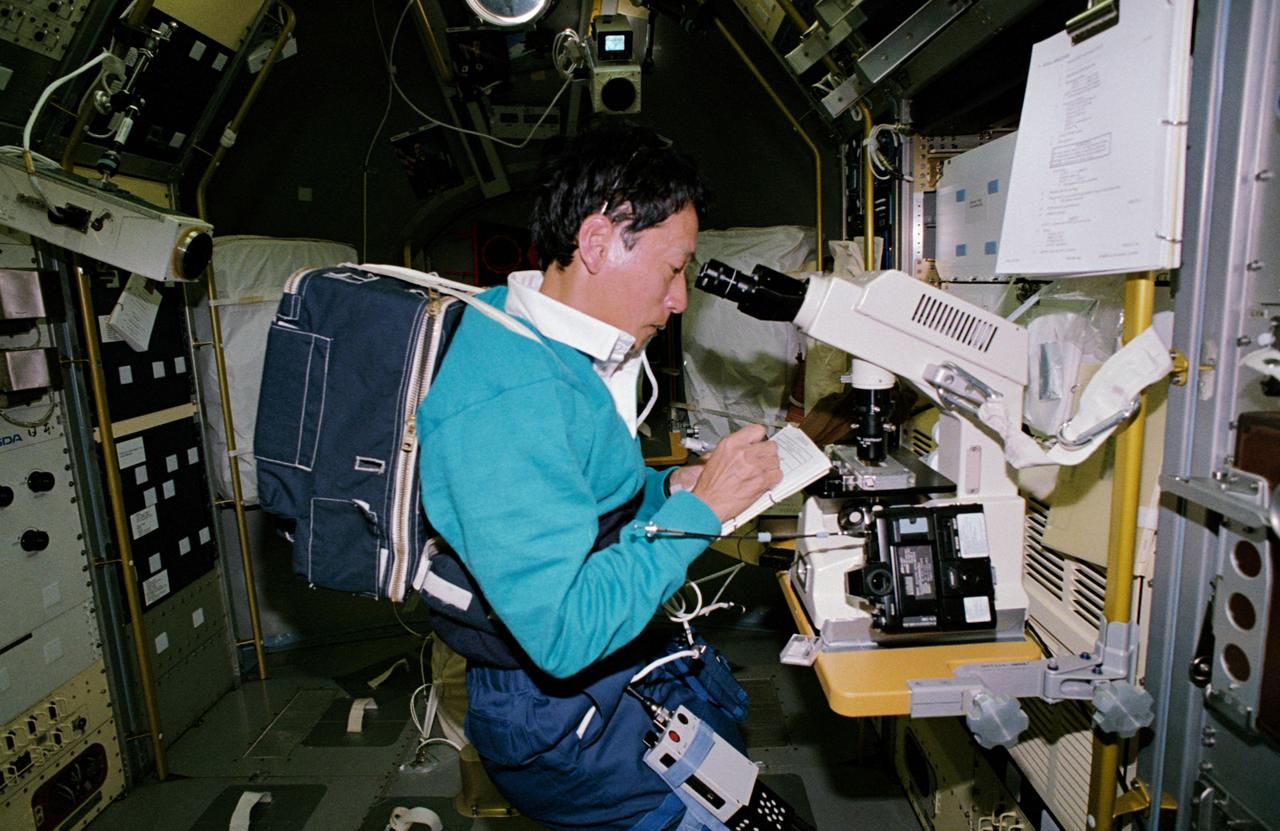
STS047-05-025 (12 - 20 Sept 1992) --- Payload specialist Mamoru Mohri, representing Japan's National Space Development Agency (NASDA), uses a microscope to produce photomicrographs of mammalian cells. The mammal cell structure experiment is one of a large number of tests that were performed during the eight-day Spacelab-J mission. On his back, Dr. Mohri totes a health monitoring experiment. The primary objective of the physiological monitoring system is to observe the health condition of the Japanese payload specialist so that good health can be maintained during and after the spaceflight.
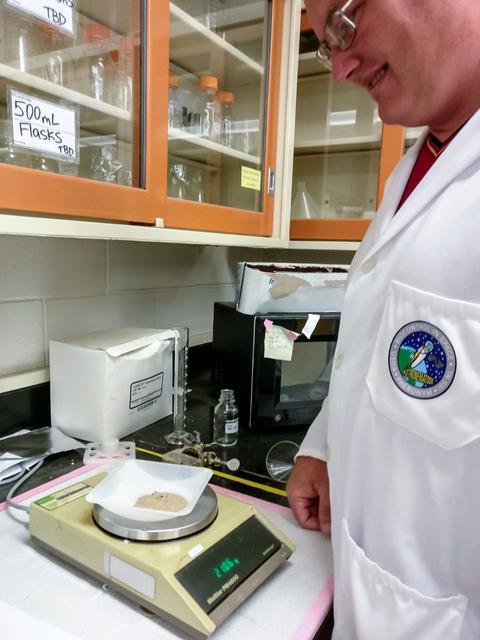
jsc2019e062135 (10/24/2019) --- Dr. Karl Shiller weighs some of the material included with the nematodes tubes. Microgravity Effect on Entomopathogenic Nematodes’ Ability to Find and Kill Insects (Module-85 Pheronym) tests the effects of microgravity on the movement and infection behavior of beneficial nematodes, which are used to control agricultural insect pests. The research looks at whether these nematodes can navigate through soil, infect insects and reproduce in space. It also looks at whether their symbiotic bacteria function normally in microgravity and has any effects on insect host physiology. Image Courtesy of: Fatma Kaplan (PI)
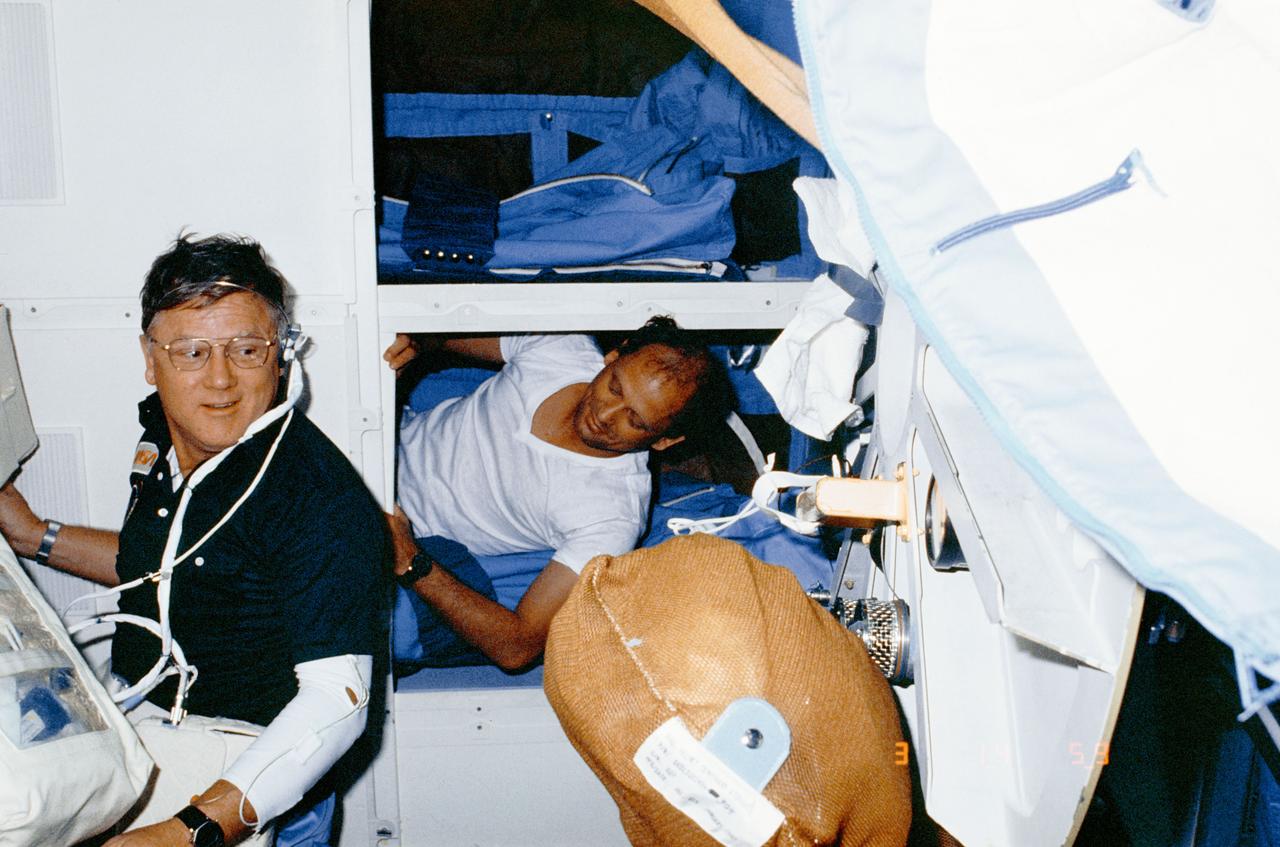
Astronaut Norman E. Thagard, mission specialist for the "silver" team, rests on the middeck while the "gold" team is on duty in the science module. Don L. Lind, left, "gold" team member, meanwhile participates in autogenic feedback training (AFT), designed to help flight crewmembers overcome the effects of zero-gravity adaptation.
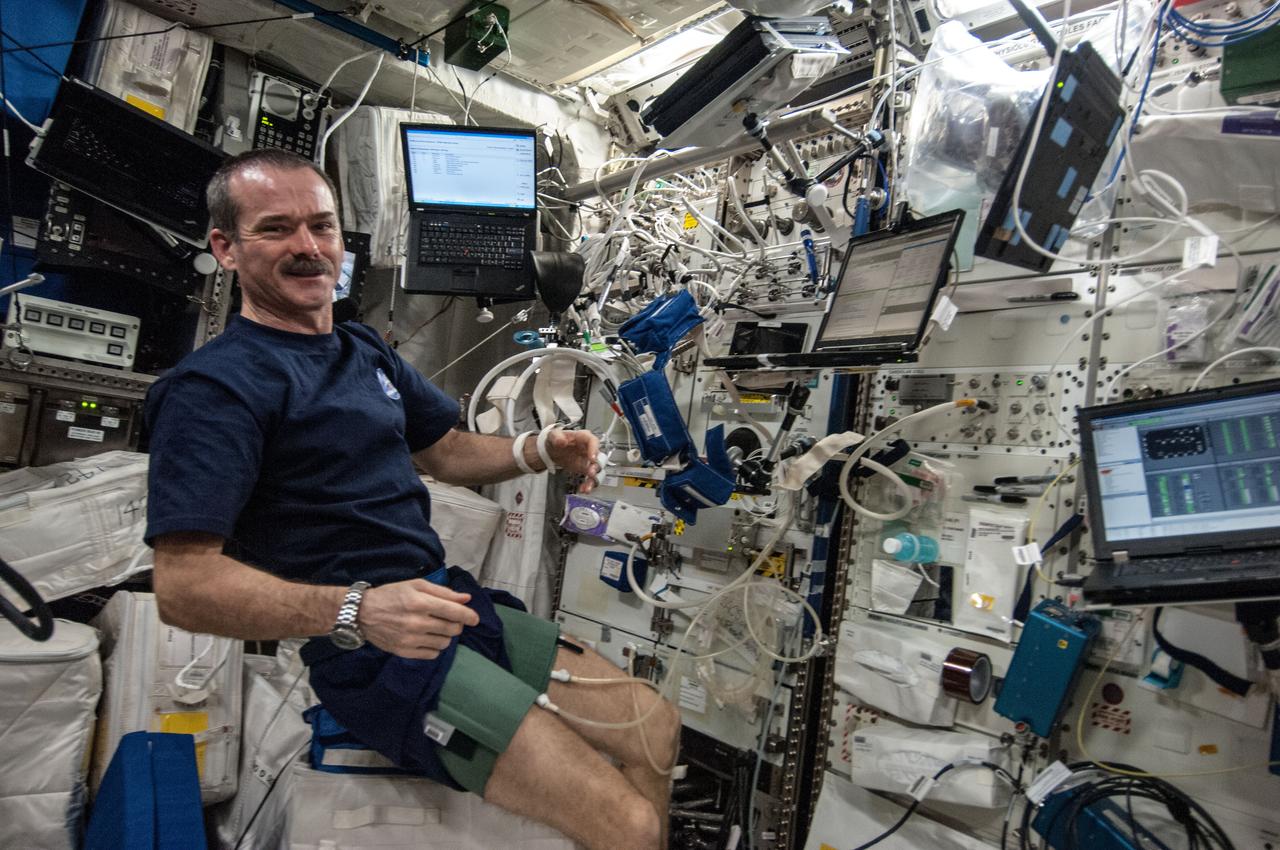
ISS035-E-022357 (17 April 2013) --- In support of the Blood Pressure Regulation Experiment (BP Reg), Expedition 35 Commander Chris Hadfield of the Canadian Space Agency is pictured after having set up the Human Research Facility (HRF) PFS (Pulmonary Function System) and the European Physiology Module (EPM) Cardiolab (CDL) Leg/Arm Cuff System (LACS) and conducting the first ever session of this experiment. The test, which will be repeated using other crew members as well, will help to identify the astronauts who could benefit from countermeasures before returning to Earth. Thus, this method has great potential for astronaut health monitoring during future long-term space flights and it also has important implications for testing of individuals on Earth, especially the elderly, who are at risk for fainting. The research will also allow demonstrating the feasibility of obtaining a set of indicators of overall cardiovascular regulation from the non-invasive measurement of continuous blood pressure.
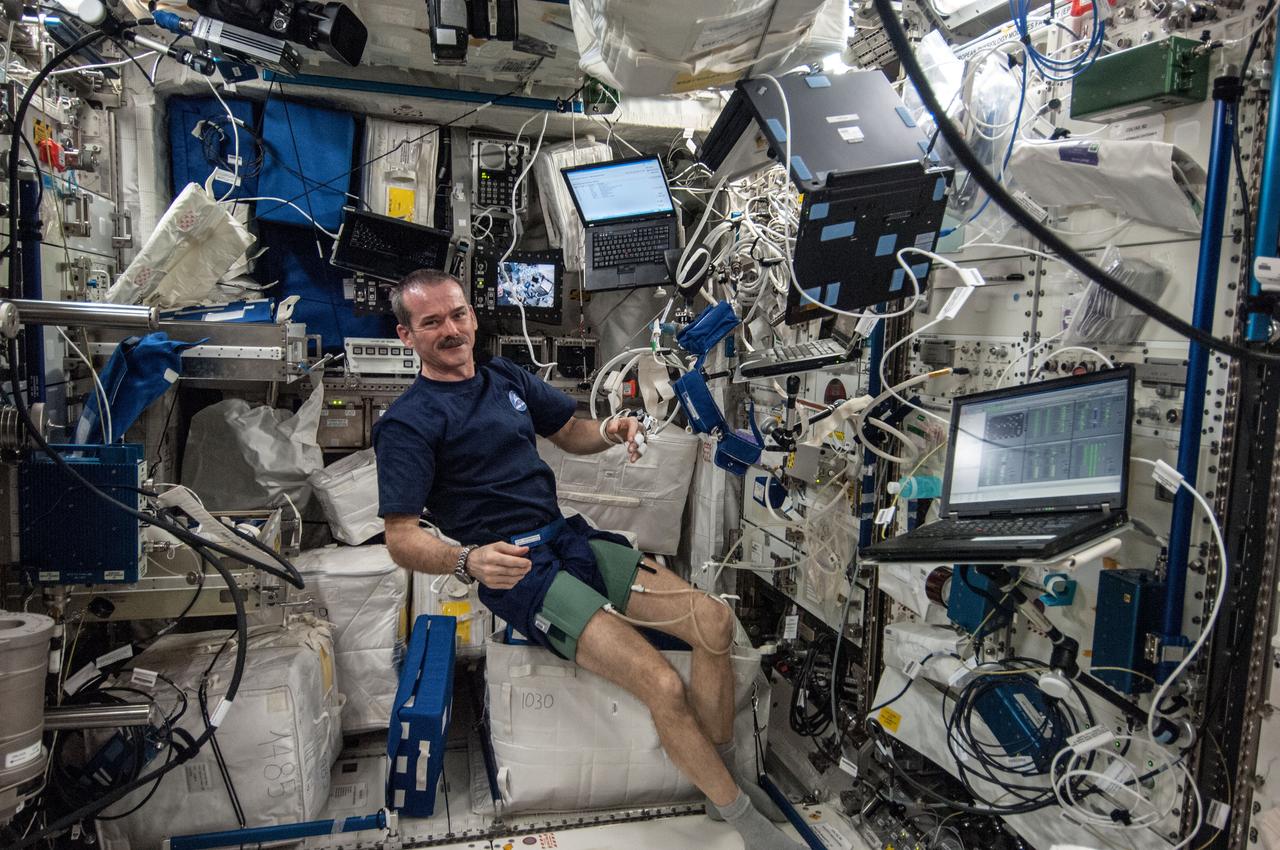
ISS035-E-022356 (17 April 2013) --- In support of the Blood Pressure Regulation Experiment (BP Reg), Expedition 35 Commander Chris Hadfield of the Canadian Space Agency is pictured after having set up the Human Research Facility (HRF) PFS (Pulmonary Function System) and the European Physiology Module (EPM) Cardiolab (CDL) Leg/Arm Cuff System (LACS) and conducting the first ever session of this experiment. The test, which will be repeated using other crew members as well, will help to identify the astronauts who could benefit from countermeasures before returning to Earth. Thus, this method has great potential for astronaut health monitoring during future long-term space flights and it also has important implications for testing of individuals on Earth, especially the elderly, who are at risk for fainting. The research will also allow demonstrating the feasibility of obtaining a set of indicators of overall cardiovascular regulation from the non-invasive measurement of continuous blood pressure.
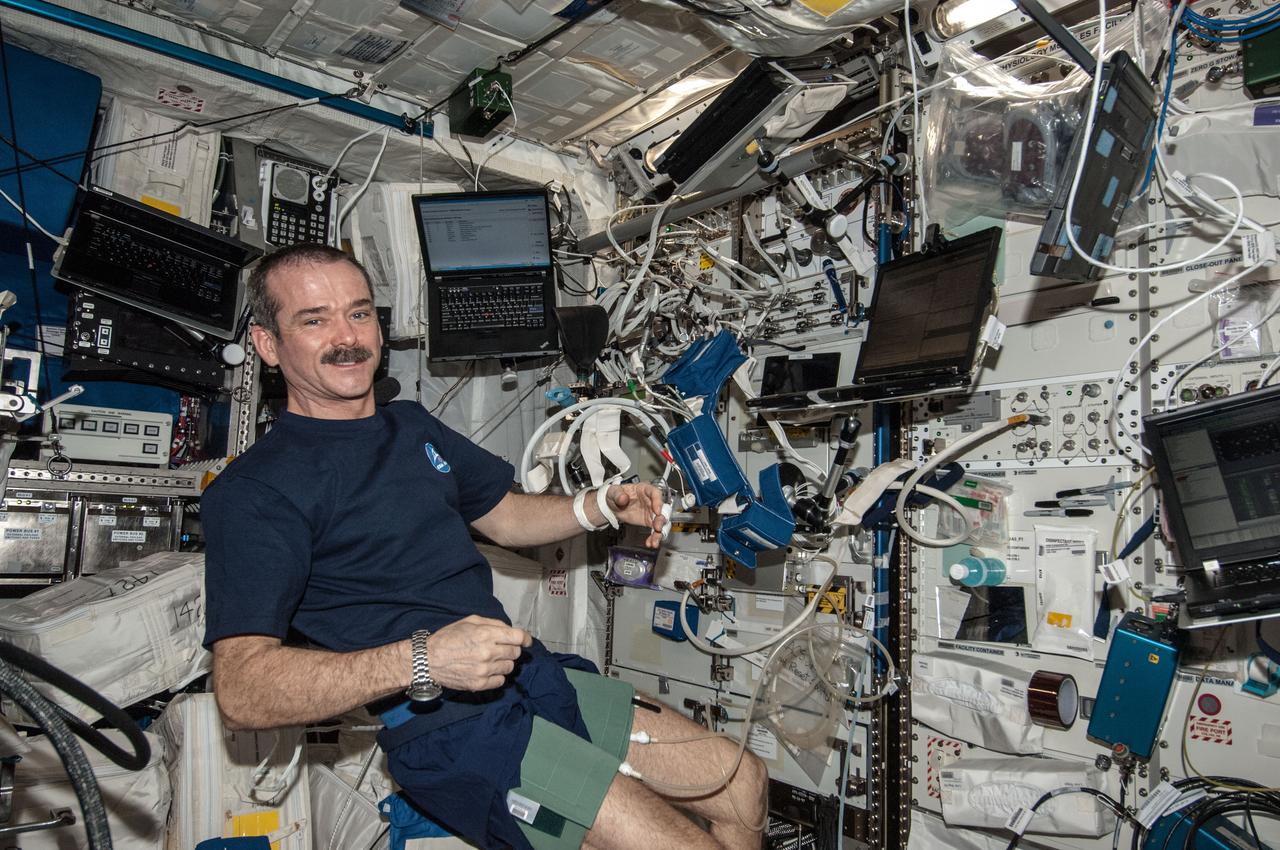
ISS035-E-022360 (17 April 2013) --- In support of the Blood Pressure Regulation Experiment (BP Reg), Expedition 35 Commander Chris Hadfield of the Canadian Space Agency is pictured after having set up the Human Research Facility (HRF) PFS (Pulmonary Function System) and the European Physiology Module (EPM) Cardiolab (CDL) Leg/Arm Cuff System (LACS) and conducting the first ever session of this experiment. The test, which will be repeated using other crew members as well, will help to identify the astronauts who could benefit from countermeasures before returning to Earth. Thus, this method has great potential for astronaut health monitoring during future long-term space flights and it also has important implications for testing of individuals on Earth, especially the elderly, who are at risk for fainting. The research will also allow demonstrating the feasibility of obtaining a set of indicators of overall cardiovascular regulation from the non-invasive measurement of continuous blood pressure.
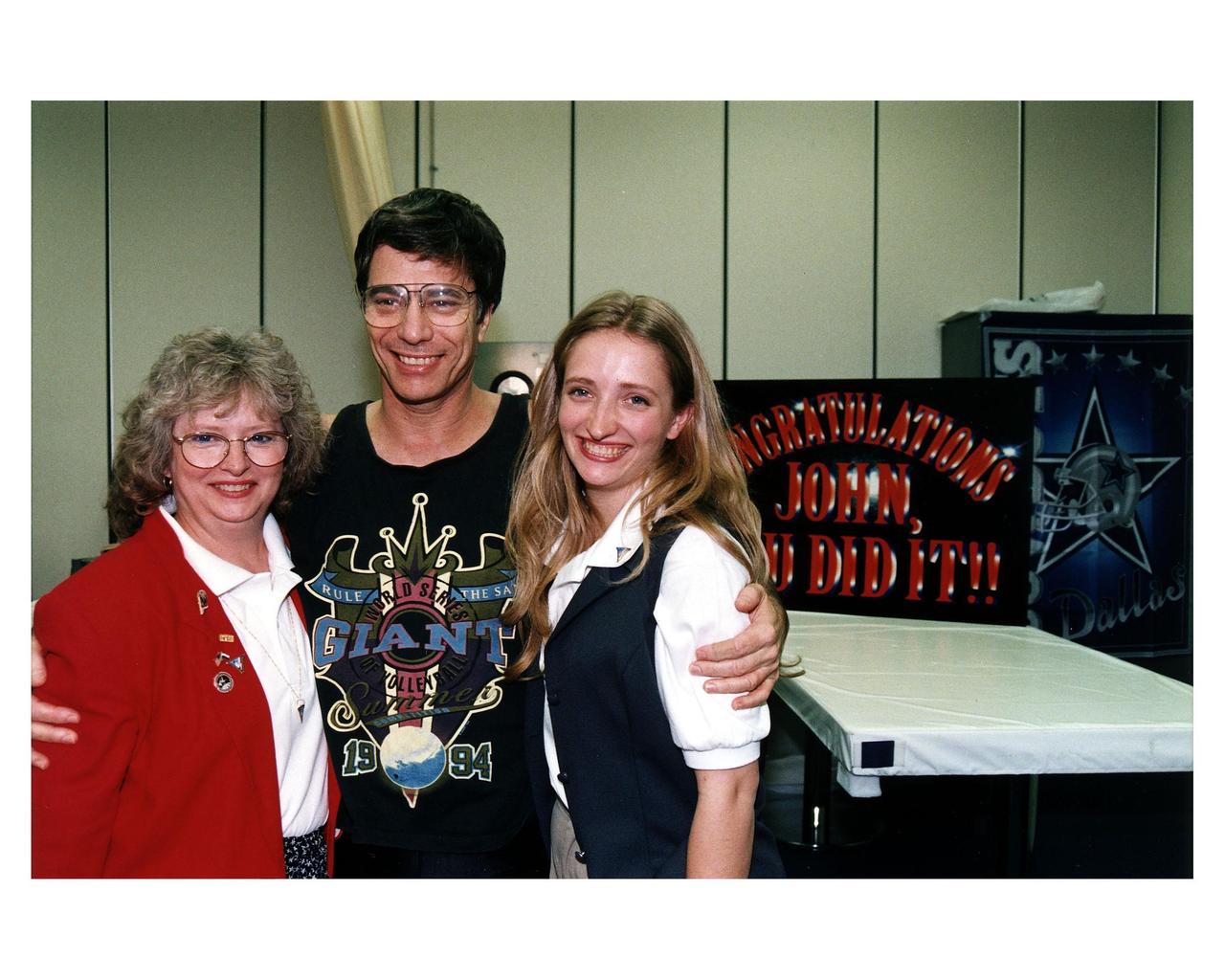
U. S. astronaut John E. Blaha and his family are all smiles as they embrace in the crew quarters at KSC after he answered questions about his four-month stay aboard the Russian Mir space station. Blaha’s wife, Brenda, is on the left and his daughter, Carolyn, is on the right. Blaha returned to Earth earlier today aboard the Space Shuttle orbiter Atlantis when it touched down at 9:22:44 a.m. EST Jan. 22 on Runway 33 of KSC’s Shuttle Landing Facility at the conclusion of the STS-81 mission. Blaha and the other five returning STS-81 crew members are spending the night here in the Operations and Checkout Building before returning to Johnson Space Center in Houston tomorrow morning. Blaha will undergo a two-week series of medical tests to help determine the physiological effects of his long-duration mission
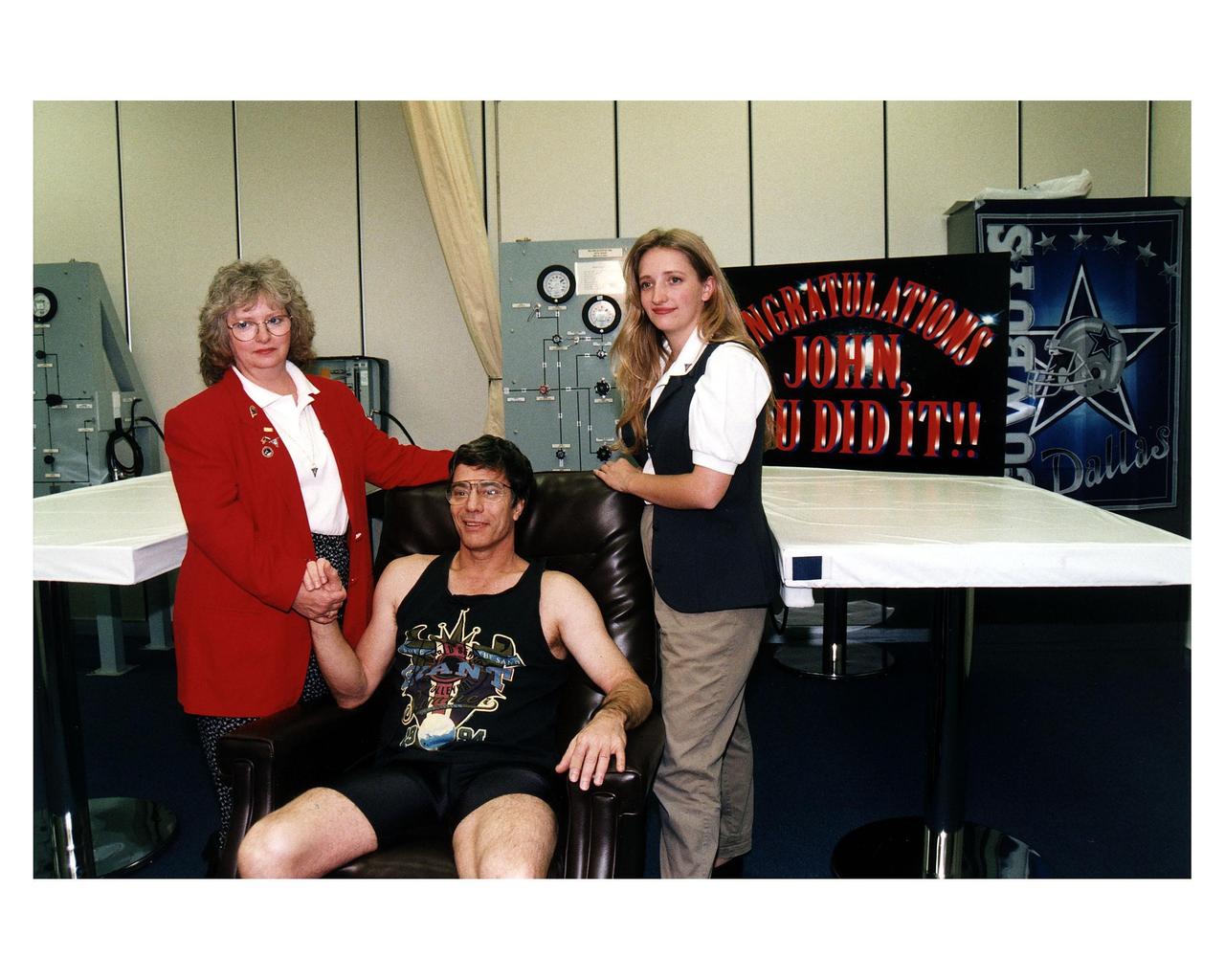
U. S. astronaut John E. Blaha poses with his wife, Brenda (left), and daughter, Carolyn (right), in the crew quarters at KSC after answering questions about his four-month stay aboard the Russian Mir space station. Blaha returned to Earth earlier today aboard the Space Shuttle orbiter Atlantis when it touched down at 9:22:44 a.m. EST Jan. 22 on Runway 33 of KSC’s Shuttle Landing Facility at the conclusion of the STS-81 mission. Blaha and the other five returning STS-81 crew members are spending the night here in the Operations and Checkout Building before returning to Johnson Space Center in Houston tomorrow morning. Blaha will undergo a two-week series of medical tests to help determine the physiological effects of his long-duration mission
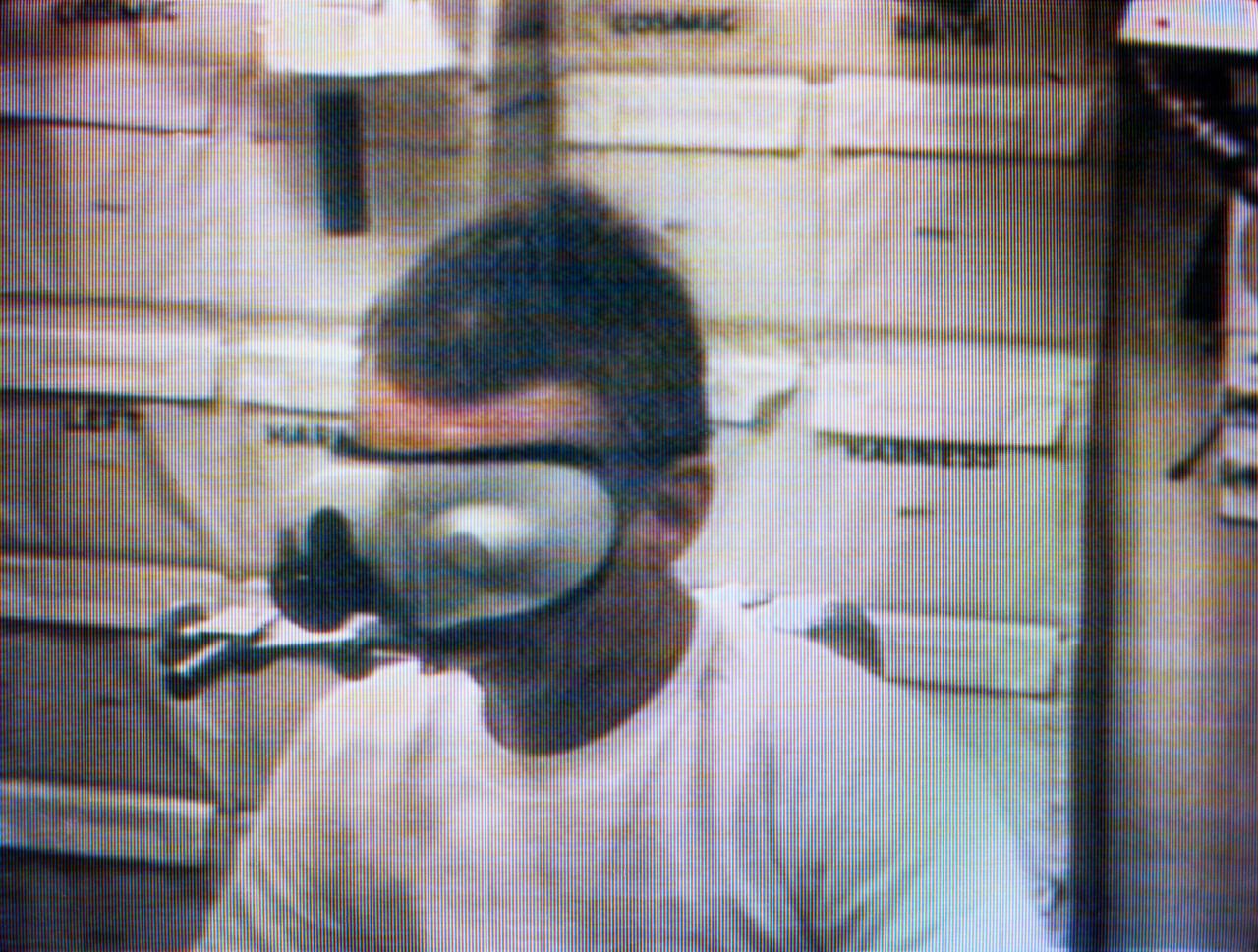
S73-32113 (9 Aug. 1973) --- Scientist-astronaut Owen K. Garriott, Skylab 3 science pilot, serves as test subject for the Skylab ?Human Vestibular Function? M131 Experiment, as seen in this photographic reproduction taken from a television transmission made by a color TV camera aboard the Skylab space station in Earth orbit. The objectives of the Skylab M131 experiment are to obtain data pertinent to establishing the validity of measurements of specific behavioral/physiological responses influenced by vestibular activity under one-g and zero-g conditions; to determine man?s adaptability to unusual vestibular conditions and predict habitability of future spacecraft conditions involving reduced gravity and Coriollis forces; and to measure the accuracy and variability in man?s judgment of spatial coordinates based on atypical gravity receptor cues and inadequate visual cues. Photo credit: NASA
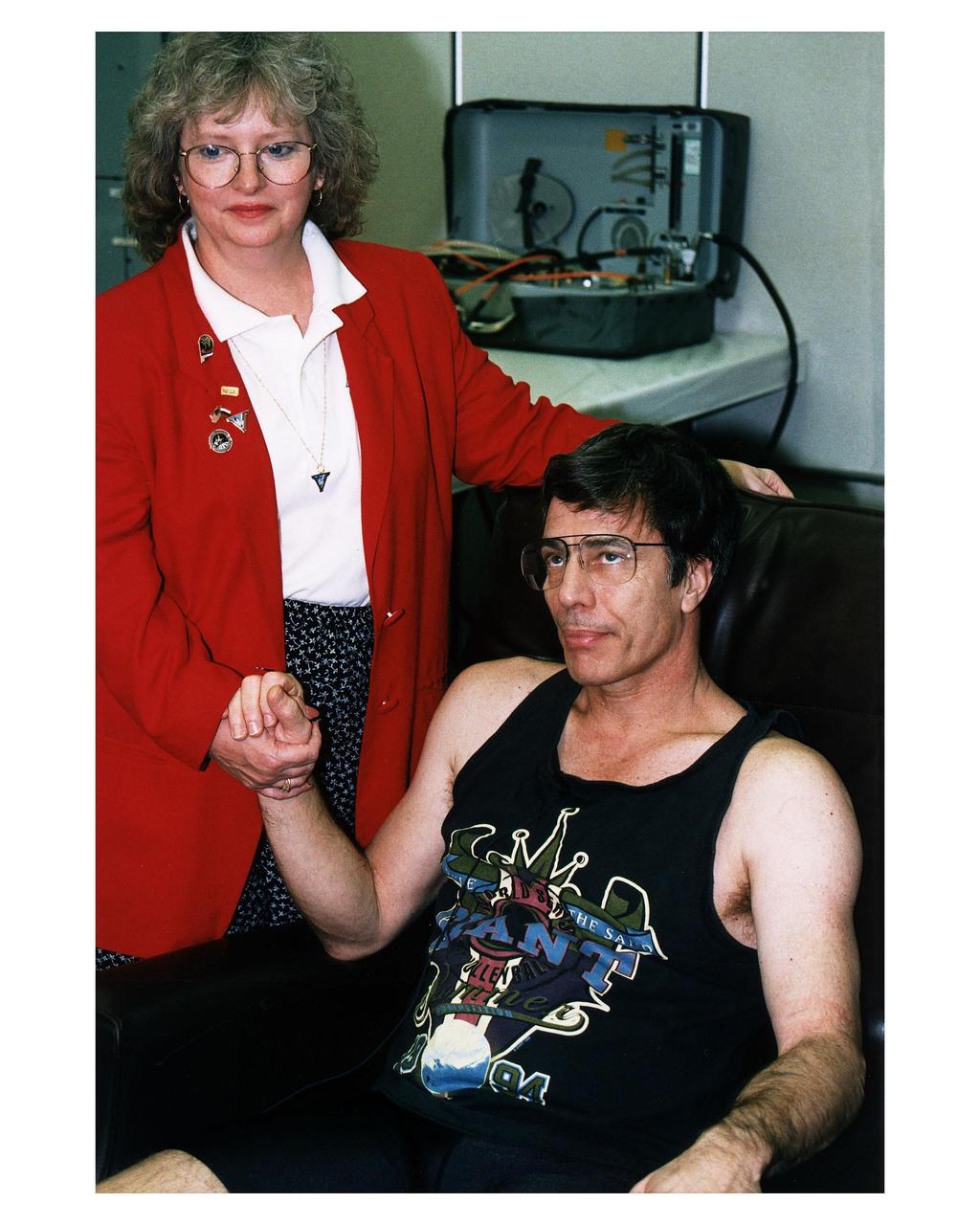
U. S. astronaut John E. Blaha and his wife, Brenda, hold hands in the crew quarters at KSC after he answered questions about his four-month stay aboard the Russian Mir space station. Blaha returned to Earth earlier today aboard the Space Shuttle orbiter Atlantis when it touched down at 9:22:44 a.m. EST Jan. 22 on Runway 33 of KSC’s Shuttle Landing Facility at the conclusion of the STS-81 mission. Blaha and the other five returning STS-81 crew members are spending the night here in the Operations and Checkout Building before returning to Johnson Space Center in Houston tomorrow morning. Blaha will undergo a two-week series of medical tests to help determine the physiological effects of his long-duration mission
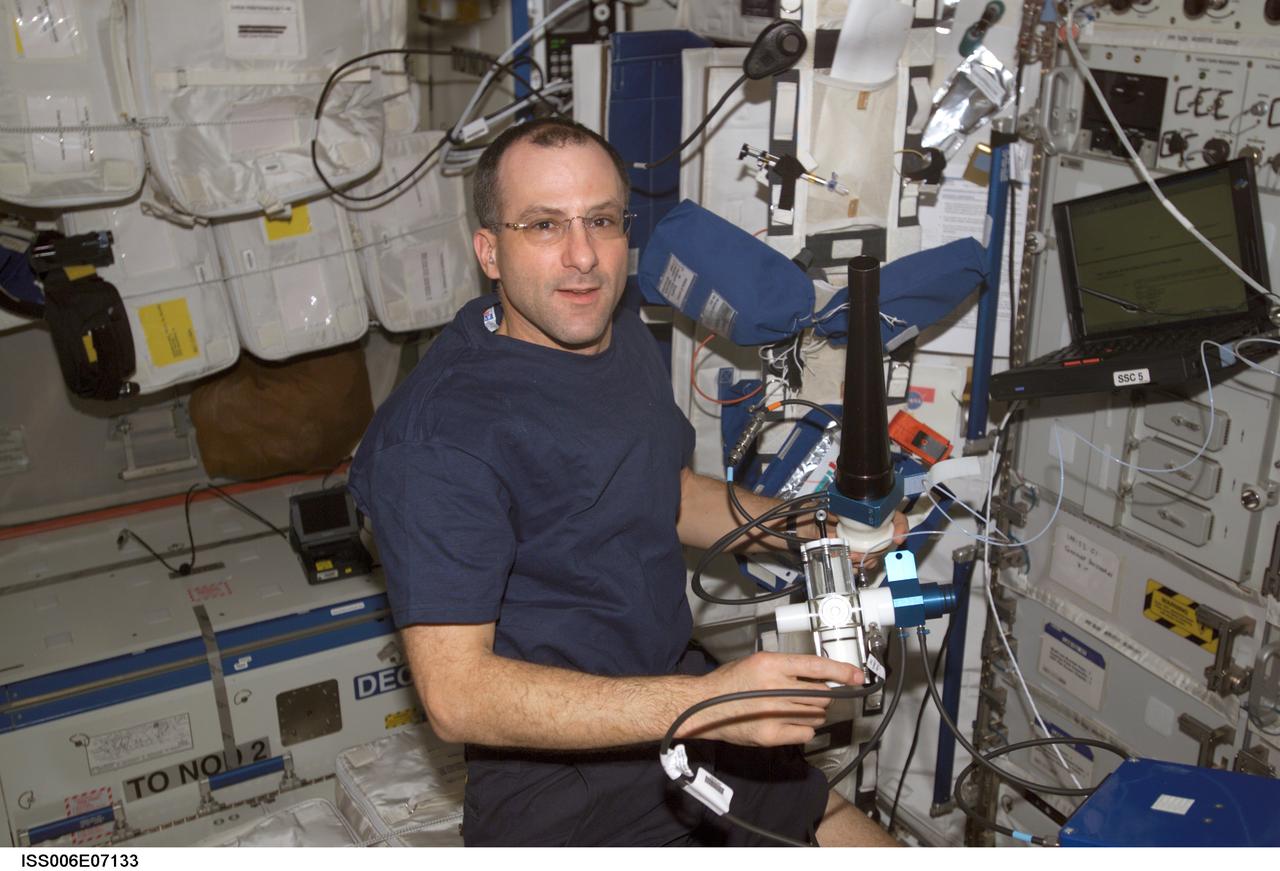
In this International Space Station (ISS) onboard photo, Expedition Six Science Officer Donald R. Pettit works to set up the Pulmonary Function in Flight (PuFF) experiment hardware in the Destiny Laboratory. Expedition Six is the fourth and final crew to perform the PuFF experiment. The PuFF experiment was developed to better understand what effects long term exposure to microgravity may have on the lungs. The focus is on measuring changes in the everness of gas exchange in the lungs, and on detecting changes in respiratory muscle strength. It allows astronauts to measure blood flow through the lungs, the ability of the lung to take up oxygen, and lung volumes. Each PuFF session includes five lung function tests, which involve breathing only cabin air. For each planned extravehicular (EVA) activity, a crew member performs a PuFF test within one week prior to the EVA. Following the EVA, those crew members perform another test to document the effect of exposure of the lungs to the low-pressure environment of the space suits. This experiment utilizes the Gas Analyzer System for Metabolic Analysis Physiology, or GASMAP, located in the Human Research Facility (HRF), along with a variety of other Puff equipment including a manual breathing valve, flow meter, pressure-flow module, pressure and volume calibration syringes, and disposable mouth pieces.
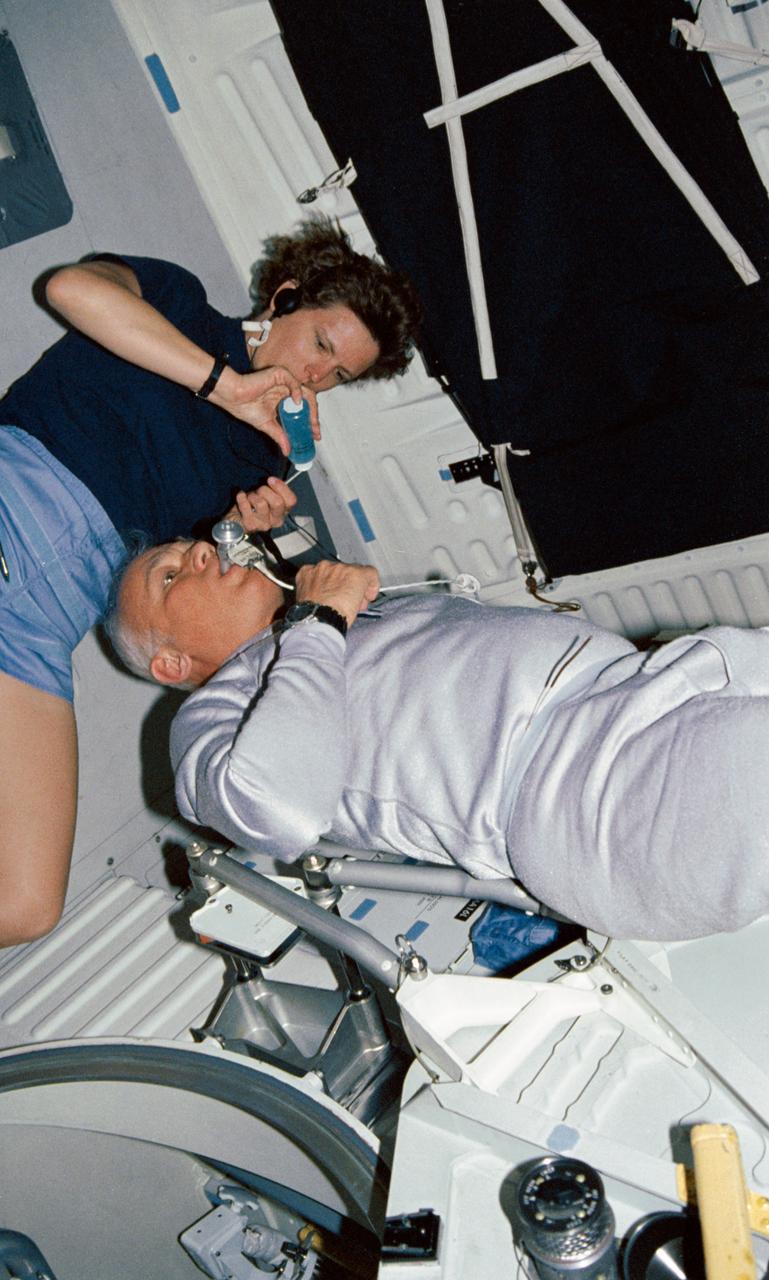
STS031-04-002 (24-29 April 1990) --- Astronauts Kathryn D. Sullivan and Bruce McCandless II, mission specialists, work together to perform one of the mission's medical experiments. The experiment is Detailed Supplementary Objective (DSO) 462, Non invasive Estimation of Central Venous Pressure During Spaceflight. Sullivan applies a gel substance to a transducer which will be placed on McCandless' jugular vein to collect the sought data. The cable links to a data recorder.
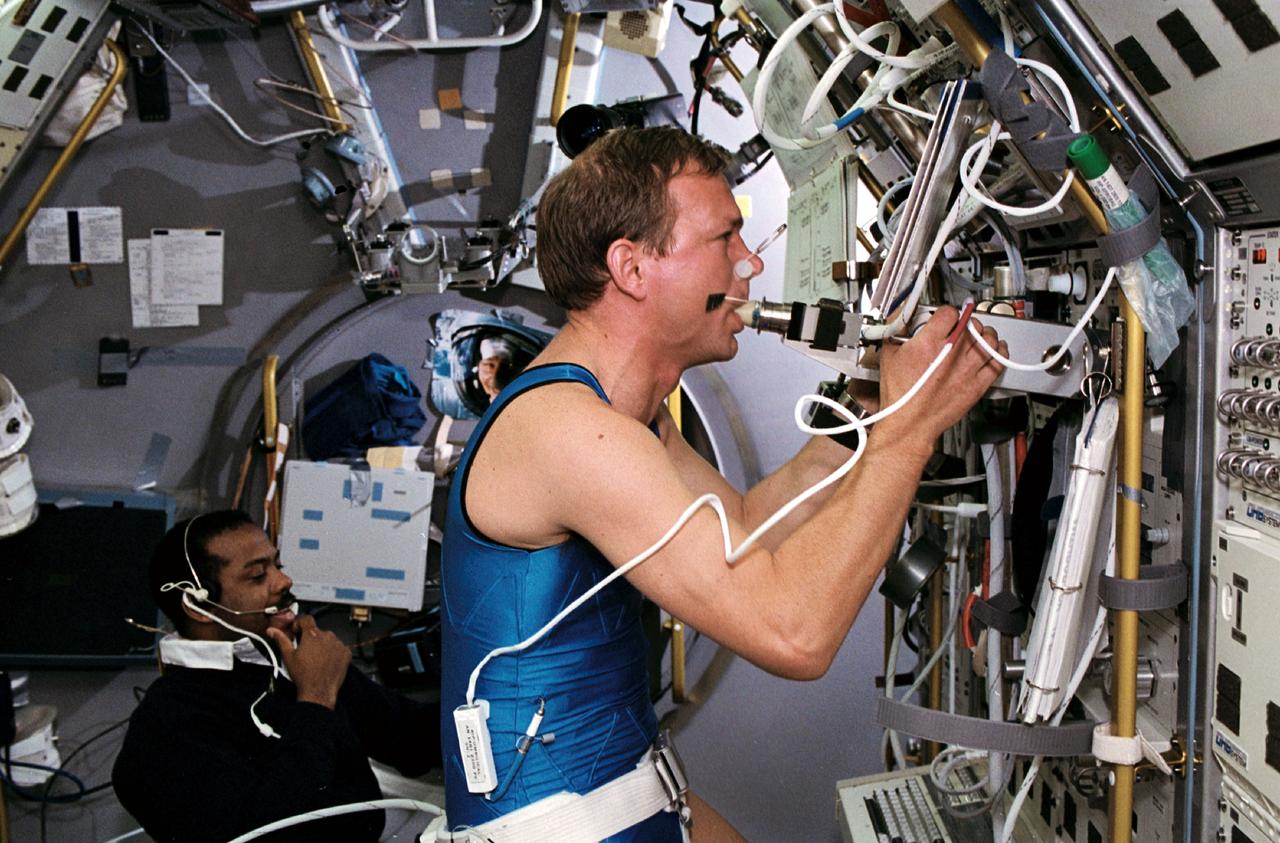
STS055-45-017 (26 April-6 May 1993) --- Hans Schlegel (foreground) participates in the ongoing investigation of human physiology under microgravity conditions as he works out on the ergometer at the Anthrorack. Monitoring the "run" is astronaut Bernard A. Harris, Jr., STS-55 mission specialist. Schlegel is one of two payload specialists representing the German Aerospace Research Establishment (DLR) on the Spacelab D-2 mission.
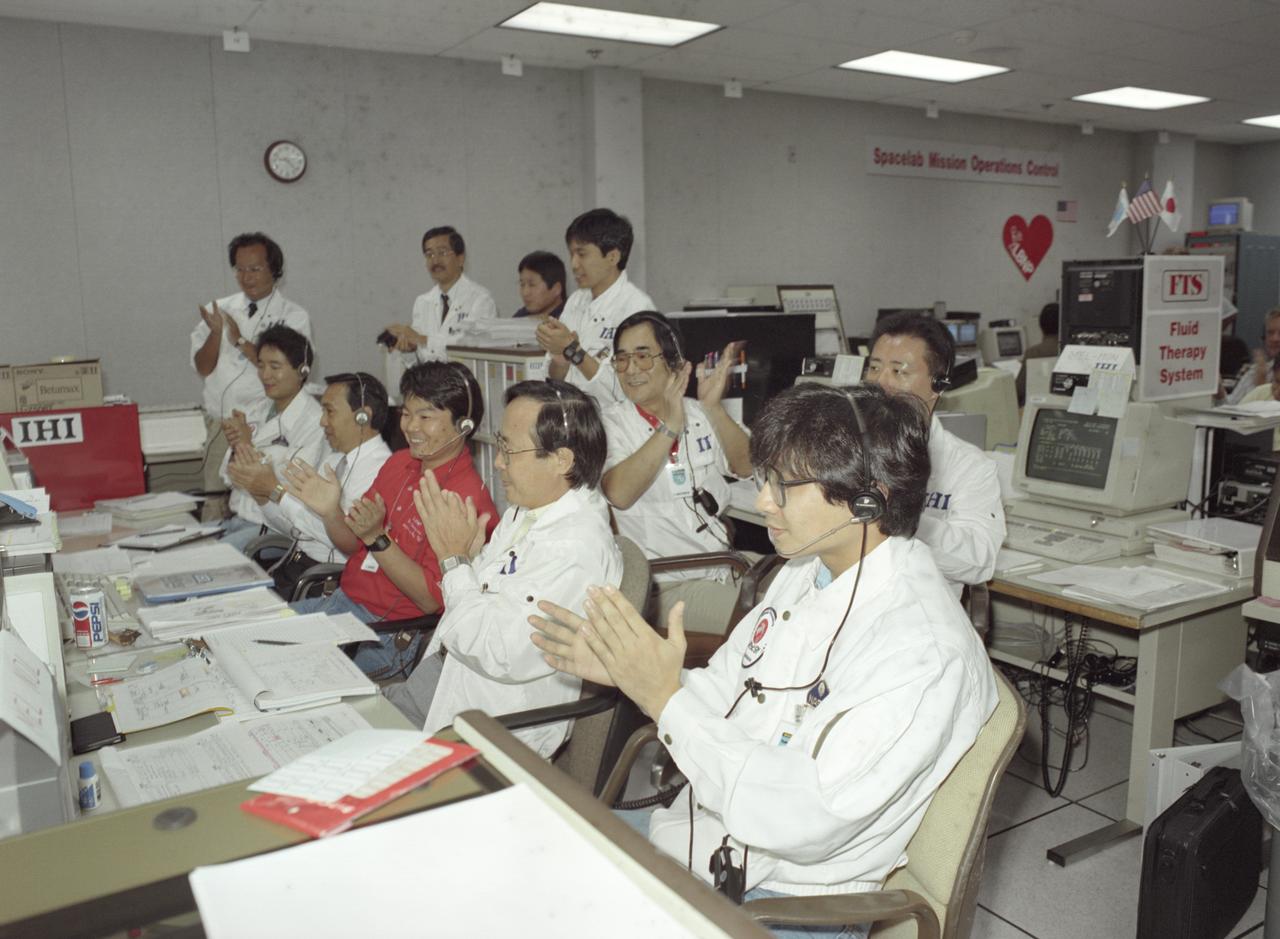
The science laboratory, Spacelab-J (SL-J), flown aboard the STS-47 flight was a joint venture between NASA and the National Space Development Agency of Japan (NASDA) utilizing a manned Spacelab module. The mission conducted 24 materials science and 20 life science experiments, of which 35 were sponsored by NASDA, 7 by NASA, and two collaborative efforts. Materials science investigations covered such fields as biotechnology, electronic materials, fluid dynamics and transport phenomena, glasses and ceramics, metals and alloys, and acceleration measurements. Life sciences included experiments on human health, cell separation and biology, developmental biology, animal and human physiology and behavior, space radiation, and biological rhythms. Test subjects included the crew, Japanese koi fish (carp), cultured animal and plant cells, chicken embryos, fruit flies, fungi and plant seeds, and frogs and frog eggs. Featured together in the Science Operation Area (SOA) are payload specialists’ first Materials Processing Test during NASA/NASDA joint ground activities at the Huntsville Operations Support Center (HOSC) Spacelab Payload Operations Control Center (SL POCC) at Marshall Space Flight Center (MSFC).
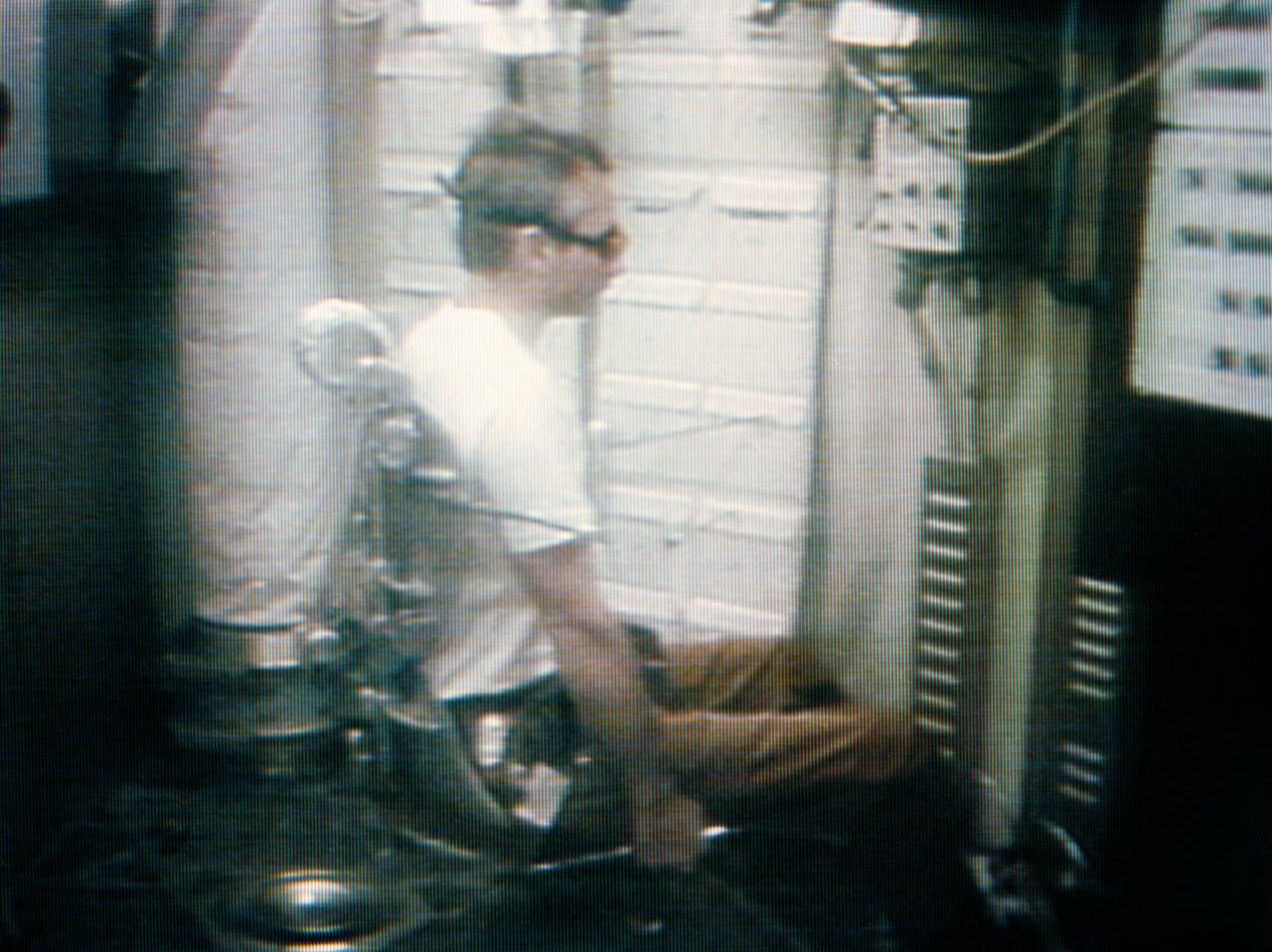
S73-34171 (9 Aug. 1973) --- Scientist-astronaut Owen K. Garriott, Skylab 3 science pilot, serves as test subject for the Skylab ?Human Vestibular Function? M131 Experiment, as seen in this photographic reproduction taken from a television transmission made by a color TV camera aboard the Skylab space station in Earth orbit. The objectives of the Skylab M131 experiment are to obtain data pertinent to establishing the validity of measurements of specific behavioral/physiological responses influenced by vestibular activity under one-g and zero-g conditions; to determine man?s adaptability to unusual vestibular conditions and predict habitability of future spacecraft conditions involving reduced gravity and Coriollis forces; and to measure the accuracy and variability in man?s judgment of spatial coordinates based on atypical gravity receptor cues and inadequate visual cures. Dr. Garriott is seated in the experiment?s litter chair which can rotate the test subject at predetermined rotational velocity or programmed acceleration/decelerational profile. Photo credit: NASA
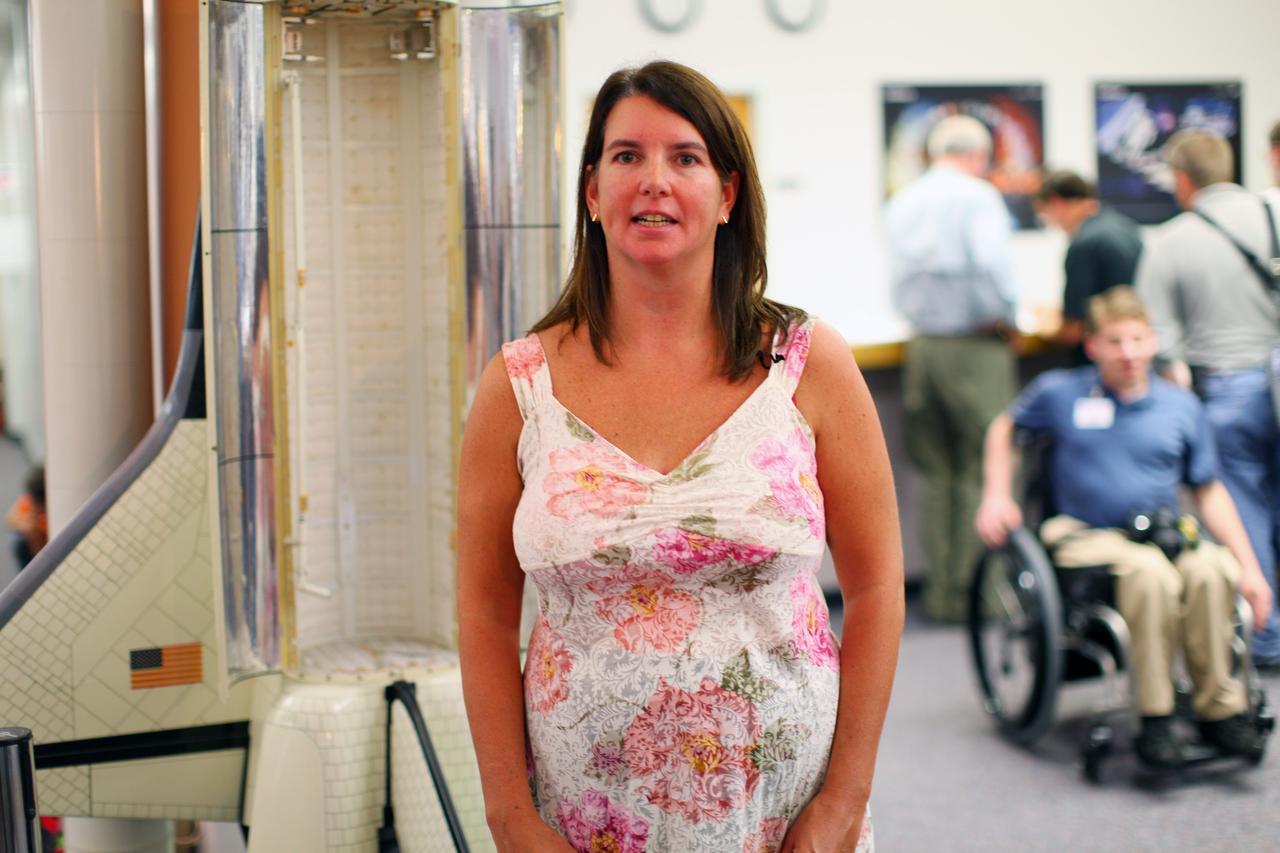
CAPE CANAVERAL, Fla. – Dr. Freya Shephard is interviewed by the media in the NASA Newsroom at Kennedy Space Center in Florida during prelaunch activities for the SpaceX demonstration test flight. Shephard is a researcher from the University of Nottingham in the United Kingdom and mentor to Paul Warren, an eleventh-grade student investigator from Henry E. Lackey High School in Charles County, Md. Warren’s experiment “Physiological Effects of Microgravity and Increased Levels of Radiation on Wild Type and Genetically Engineered Caenorhabditis elegans,” is one of 15 in the Student Spaceflight Experiments Program, or SSEP, being ferried to the International Space Station inside the Dragon capsule. The launch will be the second demonstration test flight for SpaceX for NASA's Commercial Orbital Transportation Services program, or COTS. SSEP, which began operation in June 2010 through a partnership of the National Center for Earth and Space Science Education with NanoRacks LLC, is a U.S. national science, technology, engineering and mathematics STEM education initiative that gives students across a community the opportunity to propose and design real experiments to fly in low Earth orbit. SSEP experiments flew on space shuttle missions STS-134 and STS-135 in 2011, the final flights of space shuttles Endeavour and Atlantis. For more information on SSEP, visit http://www.nasa.gov/audience/foreducators/station-here-we-come.html. Photo credit: NASA/Gianni Woods
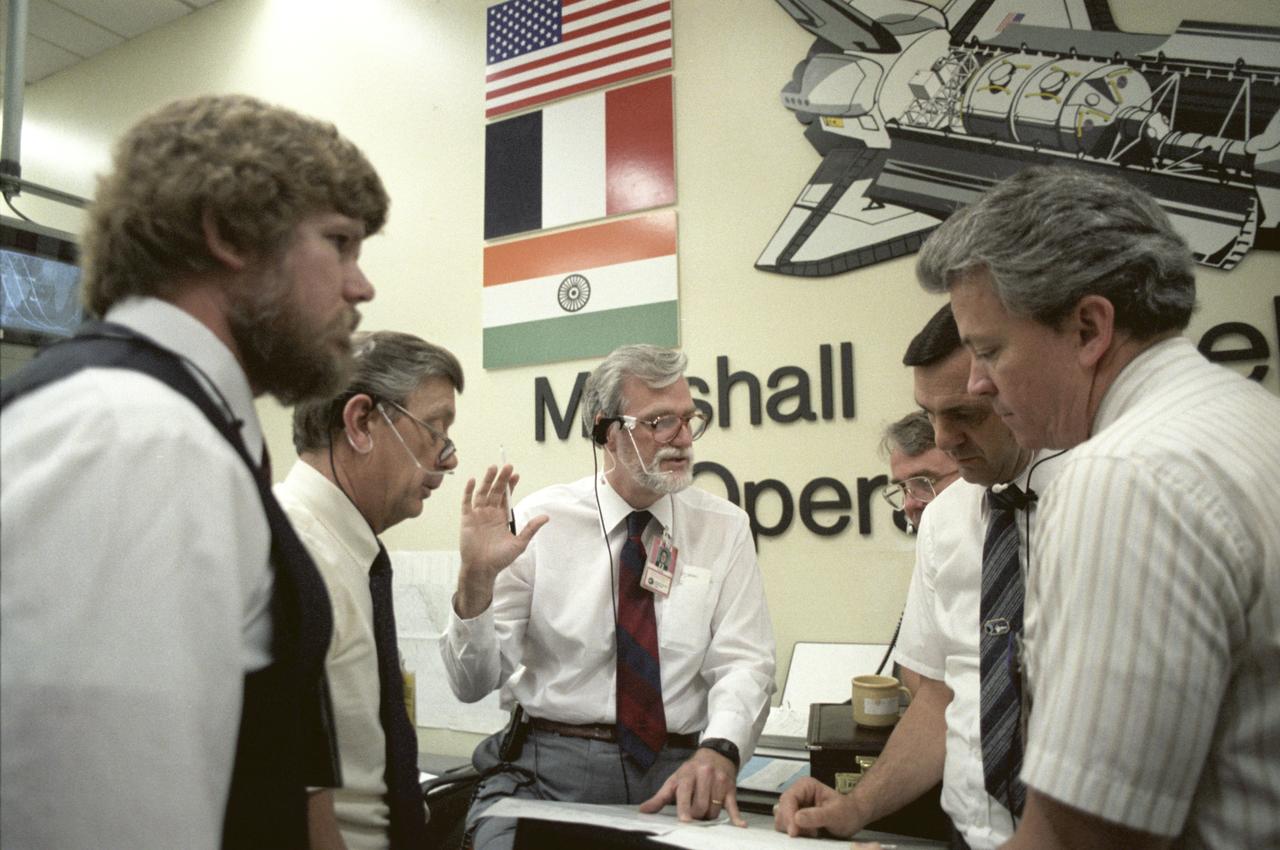
Spacelab-3 launched aboard STS-51B, with the major science objective being to perform engineering tests on two new facilities: the rodent animal holding facility and the primate animal holding facility. In addition, scientists observed the animals to obtain first hand knowledge of the effects of launch and reentry stresses and behavior. The need for suitable animal housing to support research in space led to the development of the Research Animal Holding Facility at the Ames Research Center. Scientists often study animals to find clues to human physiology and behavior. Rats, insects, and microorganisms had already been studied aboard the Shuttle on previous missions. On Spacelab-3, scientists had a chance to observe a large number of animals living in space in a specially designed and independently controlled housing facility. Marshall Space Flight Center (MSFC) had management responsibility for the Spacelab 3 mission. This photograph depicts activities during the mission at the Huntsville Operations Support Center (HOSC) Spacelab Payload Operations Control Center (SL POCC) at MSFC.
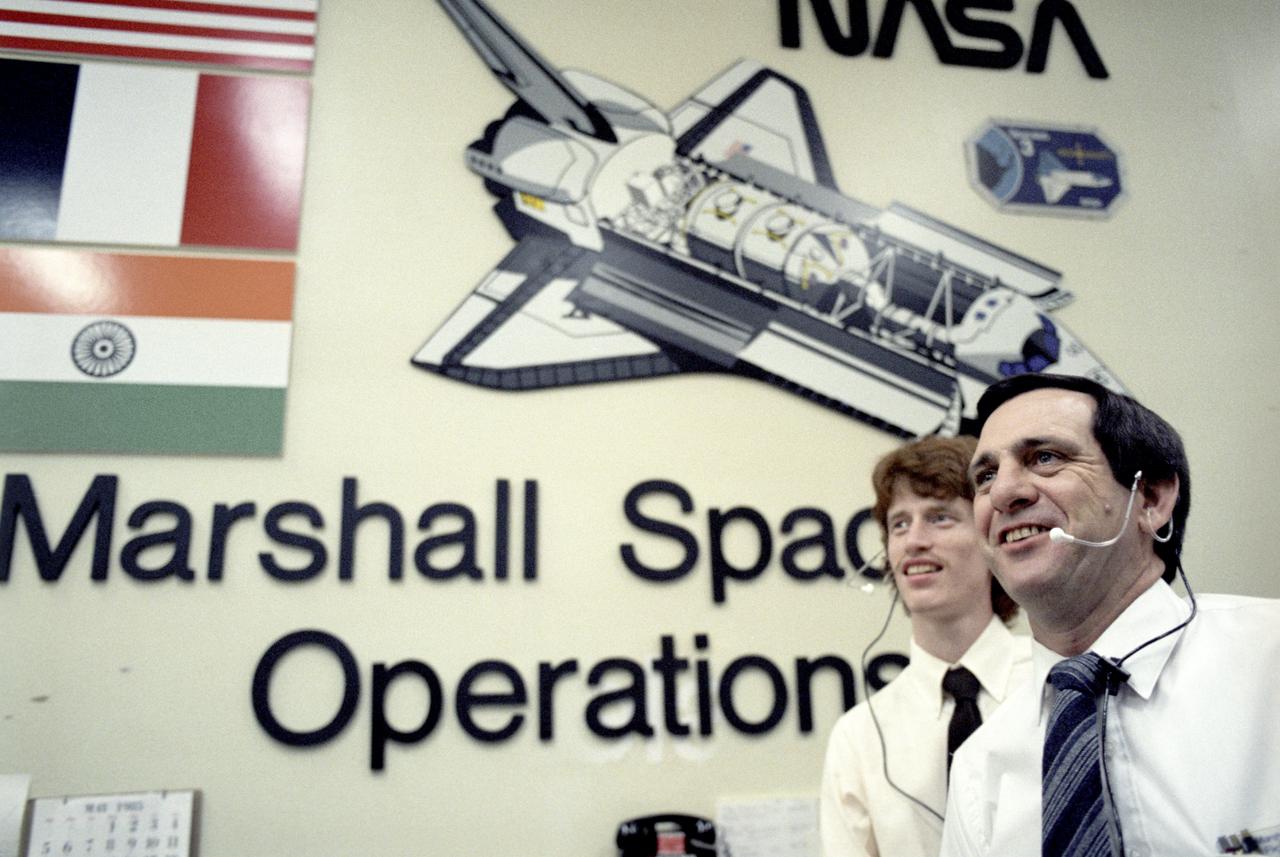
Spacelab-3 launched aboard STS-51B, with the major science objective being to perform engineering tests on two new facilities: the rodent animal holding facility and the primate animal holding facility. In addition, scientists observed the animals to obtain first hand knowledge of the effects of launch and reentry stresses and behavior. The need for suitable animal housing to support research in space led to the development of the Research Animal Holding Facility at the Ames Research Center. Scientists often study animals to find clues to human physiology and behavior. Rats, insects, and microorganisms had already been studied aboard the Shuttle on previous missions. On Spacelab-3, scientists had a chance to observe a large number of animals living in space in a specially designed and independently controlled housing facility. Marshall Space Flight Center (MSFC) had management responsibility for the Spacelab-3 mission. This photograph depicts activities during the mission at the Huntsville Operations Support Center (HOSC) Spacelab Payload Operations Control Center (SL POCC) at MSFC.
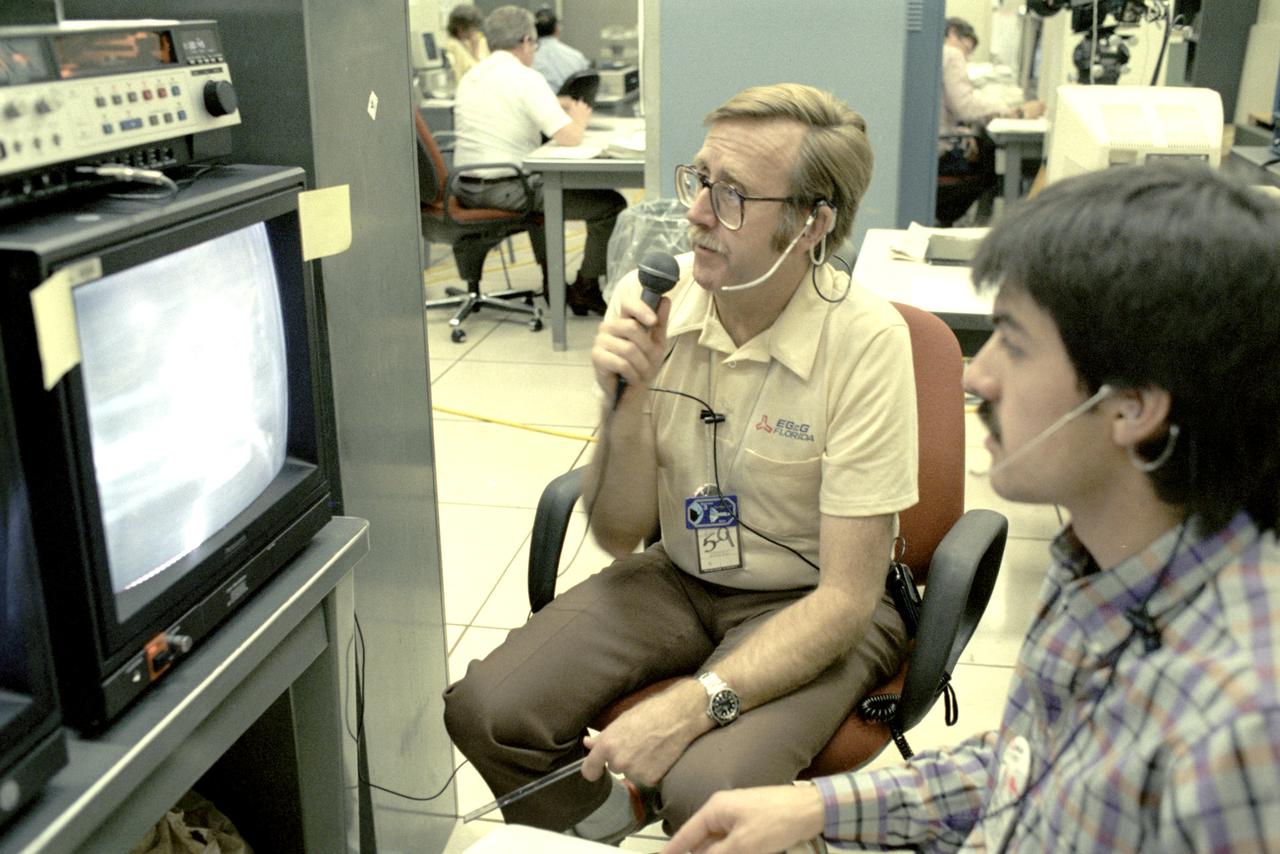
Spacelab-3 launched aboard STS-51B, with the major science objective being to perform engineering tests on two new facilities: the rodent animal holding facility and the primate animal holding facility. In addition, scientists observed the animals to obtain first hand knowledge of the effects of launch and reentry stresses and behavior. The need for suitable animal housing to support research in space led to the development of the Research Animal Holding Facility at the Ames Research Center. Scientists often study animals to find clues to human physiology and behavior. Rats, insects, and microorganisms had already been studied aboard the Shuttle on previous missions. On Spacelab-3, scientists had a chance to observe a large number of animals living in space in a specially designed and independently controlled housing facility. Marshall Space Flight Center (MSFC) had management responsibility for the Spacelab-3 mission. This photograph depicts activities during the mission at the Huntsville Operations Support Center (HOSC) Spacelab Payload Operations Control Center (SL POCC) at MSFC.
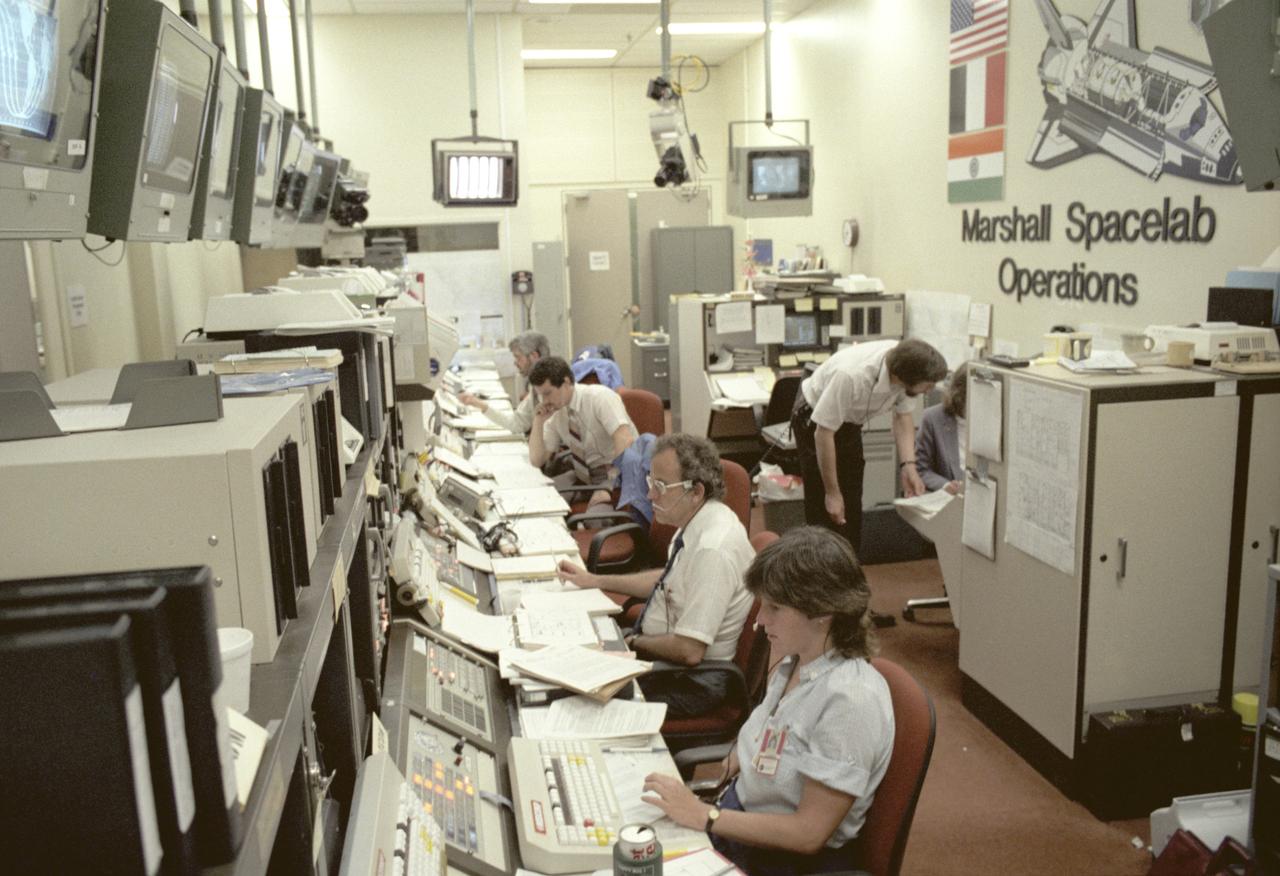
Spacelab-3 launched aboard STS-51B, with the major science objective being to perform engineering tests on two new facilities: the rodent animal holding facility and the primate animal holding facility. In addition, scientists observed the animals to obtain first hand knowledge of the effects of launch and reentry stresses and behavior. The need for suitable animal housing to support research in space led to the development of the Research Animal Holding Facility at the Ames Research Center. Scientists often study animals to find clues to human physiology and behavior. Rats, insects, and microorganisms had already been studied aboard the Shuttle on previous missions. On Spacelab-3, scientists had a chance to observe a large number of animals living in space in a specially designed and independently controlled housing facility. Marshall Space Flight Center (MSFC) had management responsibility for the Spacelab-3 mission. This photograph depicts activities during the mission at the Huntsville Operations Support Center (HOSC) Spacelab Payload Operations Control Center (SL POCC) at MSFC.
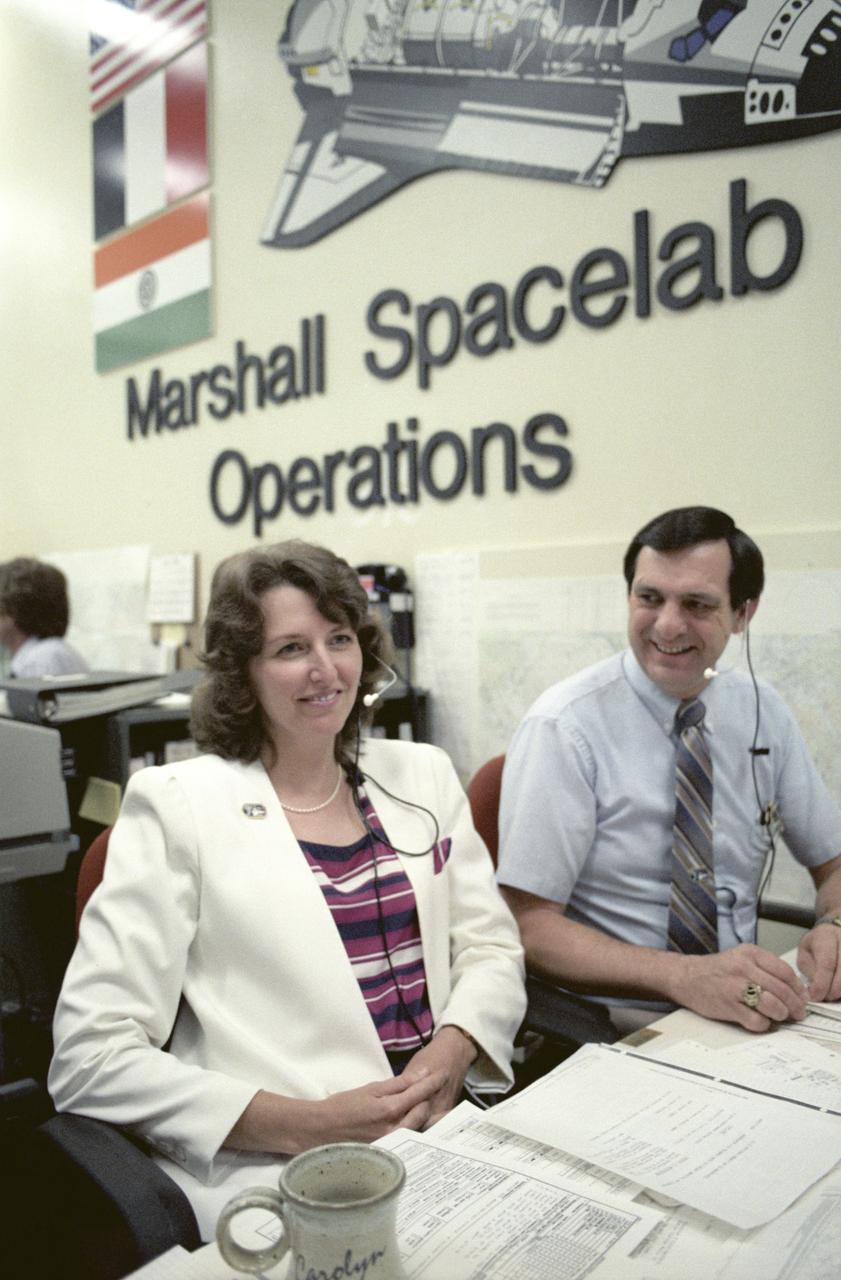
Spacelab-3 launched aboard STS-51B, with the major science objective being to perform engineering tests on two new facilities: the rodent animal holding facility and the primate animal holding facility. In addition, scientists observed the animals to obtain first hand knowledge of the effects of launch and reentry stresses and behavior. The need for suitable animal housing to support research in space led to the development of the Research Animal Holding Facility at the Ames Research Center. Scientists often study animals to find clues to human physiology and behavior. Rats, insects, and microorganisms had already been studied aboard the Shuttle on previous missions. On Spacelab-3, scientists had a chance to observe a large number of animals living in space in a specially designed and independently controlled housing facility. Marshall Space Flight Center (MSFC) had management responsibility for the Spacelab-3 mission. This photograph depicts activities during the mission at the Huntsville Operations Support Center (HOSC) Spacelab Payload Operations Control Center (SL POCC) at MSFC.
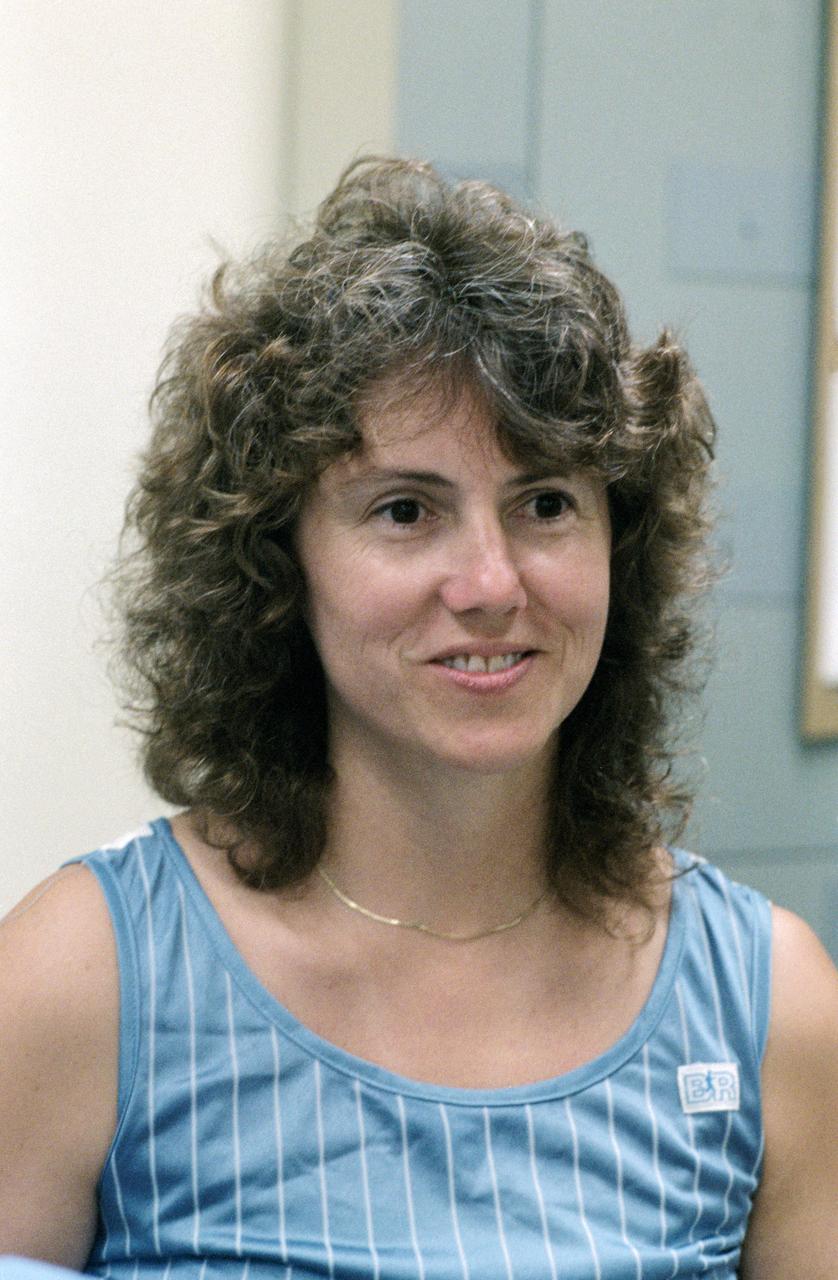
S85-37677 (8-12 July 1985) --- Sharon C. (Christa) McAuliffe of Concord High, Concord, New Hampshire, talks to nurse during physiological testing on first day at Johnson Space Center (JSC). Christa McAuliffe was eventually chosen as the first Teacher in Space and was a member of the seven-member Challenger shuttle crew which died tragically in the explosion of the spacecraft during the launch of STS-51L from the Kennedy Space Center about 11:40 a.m., EST, on Jan. 28, 1986. The explosion occurred 73 seconds into the flight as a result of a leak in one of two Solid Rocket Boosters that ignited the main liquid fuel tank. The crew members of the Challenger represented a cross-section of the American population in terms of race, gender, geography, background, and religion. The explosion became one of the most significant events of the 1980s, as billions around the world saw the accident on television and empathized with any one of the several crew members killed. Photo credit: NASA

Spacelab-3 launched aboard STS-51B, with the major science objective being to perform engineering tests on two new facilities: the rodent animal holding facility and the primate animal holding facility. In addition, scientists observed the animals to obtain first hand knowledge of the effects of launch and reentry stresses and behavior. The need for suitable animal housing to support research in space led to the development of the Research Animal Holding Facility at the Ames Research Center. Scientists often study animals to find clues to human physiology and behavior. Rats, insects, and microorganisms had already been studied aboard the Shuttle on previous missions. On Spacelab-3, scientists had a chance to observe a large number of animals living in space in a specially designed and independently controlled housing facility. Marshall Space Flight Center (MSFC) had management responsibility for the Spacelab 3 mission. This photograph depicts activities during the mission at the Huntsville Operations Support Center (HOSC) Spacelab Payload Operations Control Center (SL POCC) at MSFC.
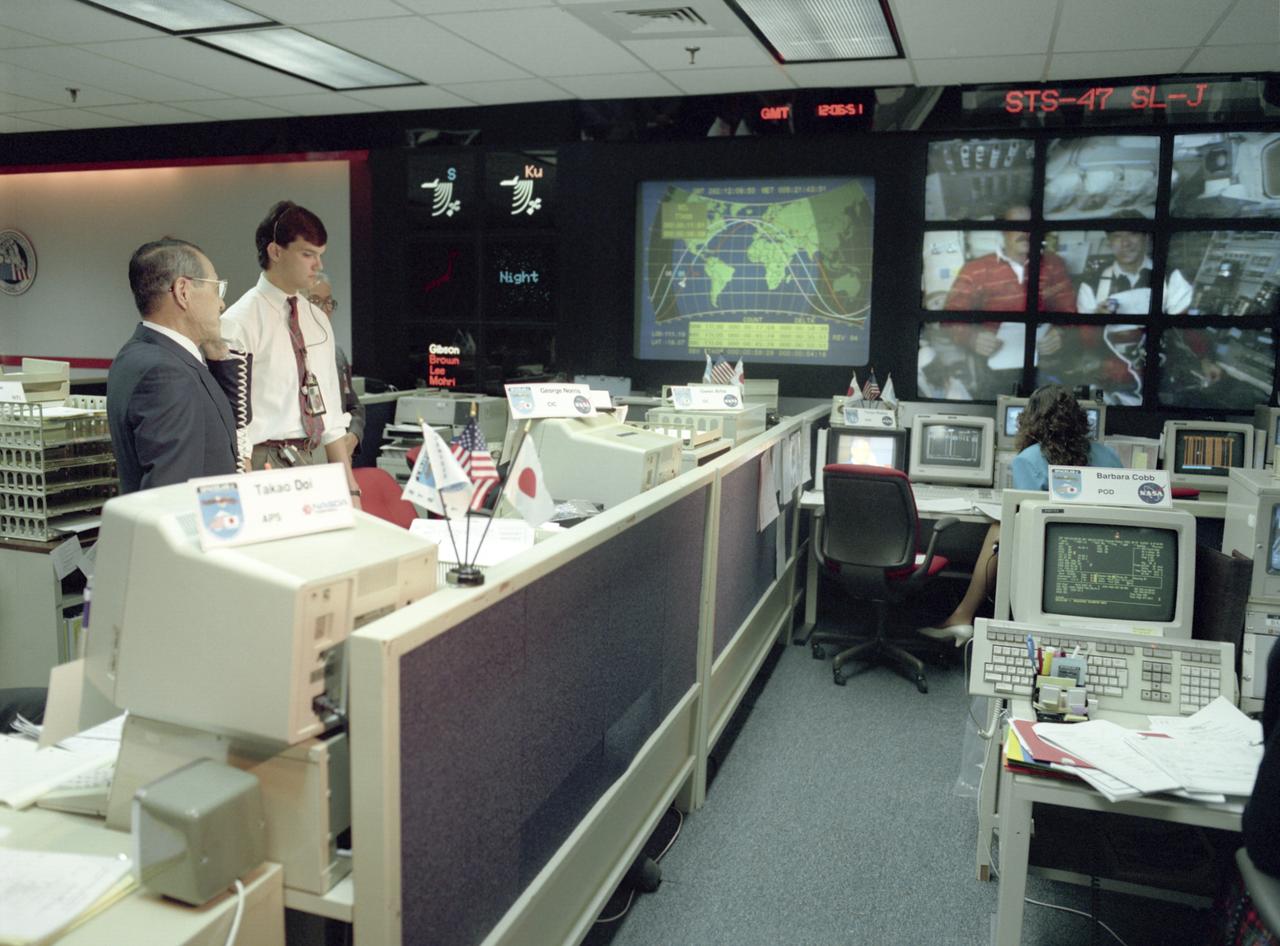
The science laboratory, Spacelab-J (SL-J), flown aboard the STS-47 flight was a joint venture between NASA and the National Space Development Agency of Japan (NASDA) utilizing a manned Spacelab module. The mission conducted 24 materials science and 20 life science experiments, of which 35 were sponsored by NASDA, 7 by NASA, and two collaborative efforts. Materials science investigations covered such fields as biotechnology, electronic materials, fluid dynamics and transport phenomena, glasses and ceramics, metals and alloys, and acceleration measurements. Life sciences included experiments on human health, cell separation and biology, developmental biology, animal and human physiology and behavior, space radiation, and biological rhythms. Test subjects included the crew, Japanese koi fish (carp), cultured animal and plant cells, chicken embryos, fruit flies, fungi and plant seeds, and frogs and frog eggs. From the Huntsville Operations Support Center (HOSC) Spacelab Payload Operations Control Center (SL POCC), NASDA President, Mr. Yamano, speaks to Payload Specialist Mamoru Mohri, a Japanese crew member aboard the STS-47 Spacelab J mission.
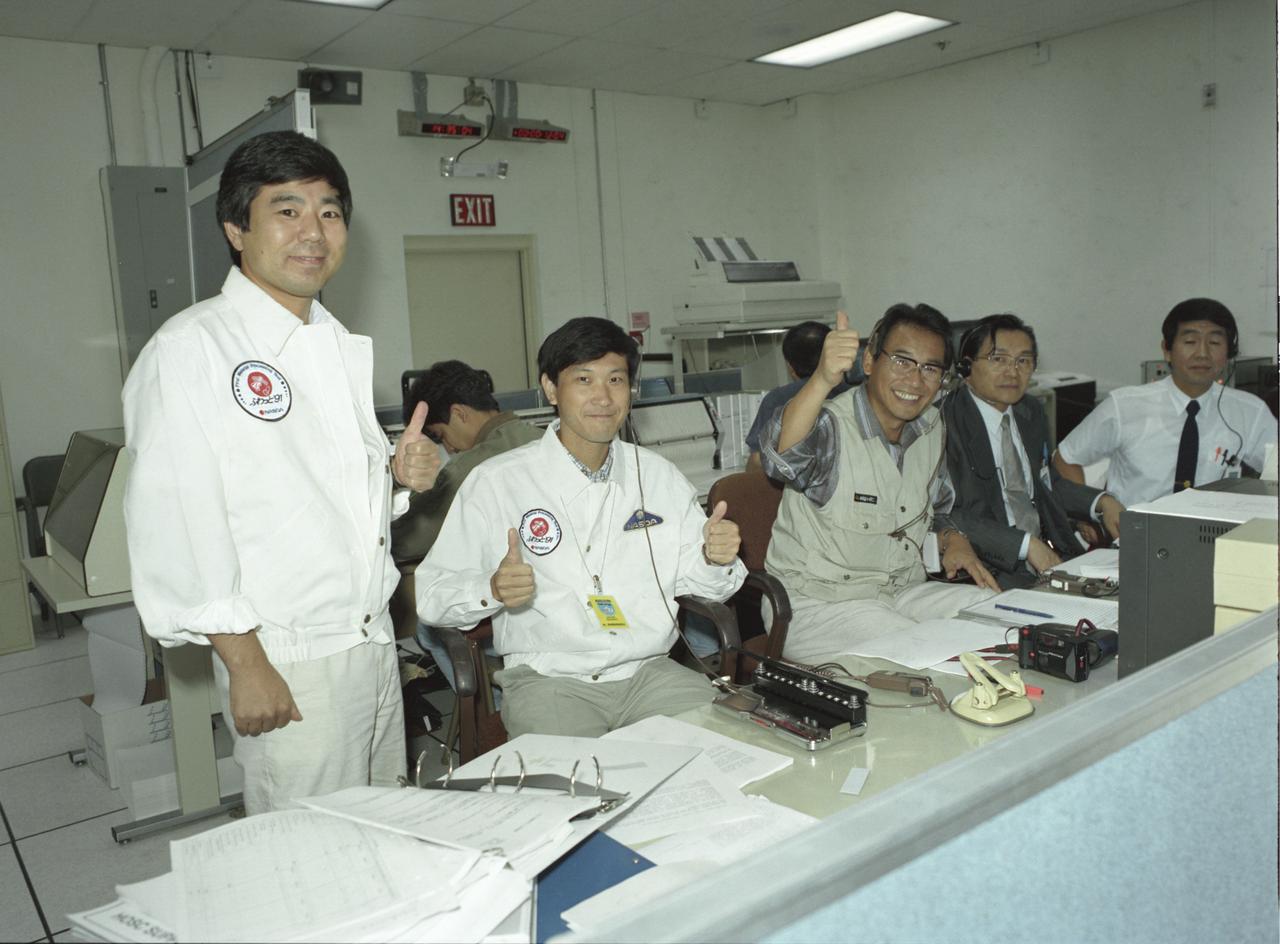
The group of Japanese researchers of the Spacelab-J (SL-J) were thumbs-up in the Payload Operations Control Center (POCC) at the Marshall Space Flight Center after the successful launch of Space Shuttle Orbiter Endeavour that carried their experiments. The SL-J was a joint mission of NASA and the National Space Development Agency of Japan (NASDA) utilizing a marned Spacelab module. The mission conducted microgravity investigations in materials and life sciences. Materials science investigations covered such fields as biotechnology, electronic materials, fluid dynamics and transport phenomena, glasses and ceramics, metals and alloys, and acceleration measurements. Life sciences included experiments on human health, cell separation and biology, developmental biology, animal and human physiology and behavior, space radiation, and biological rhythms. Test subjects included the crew, Japanese koi fish (carp), cultured animal and plant cells, chicken embryos, fruit flies, fungi and plant seeds, frogs, and frog eggs. The POCC was the air/ground communications channel between the astronauts and ground control teams during the Spacelab missions. The Spacelab science operations were a cooperative effort between the science astronaut crew in orbit and their colleagues in the POCC. Spacelab-J was launched aboard the Space Shuttle Orbiter Endeavour on September 12, 1992.
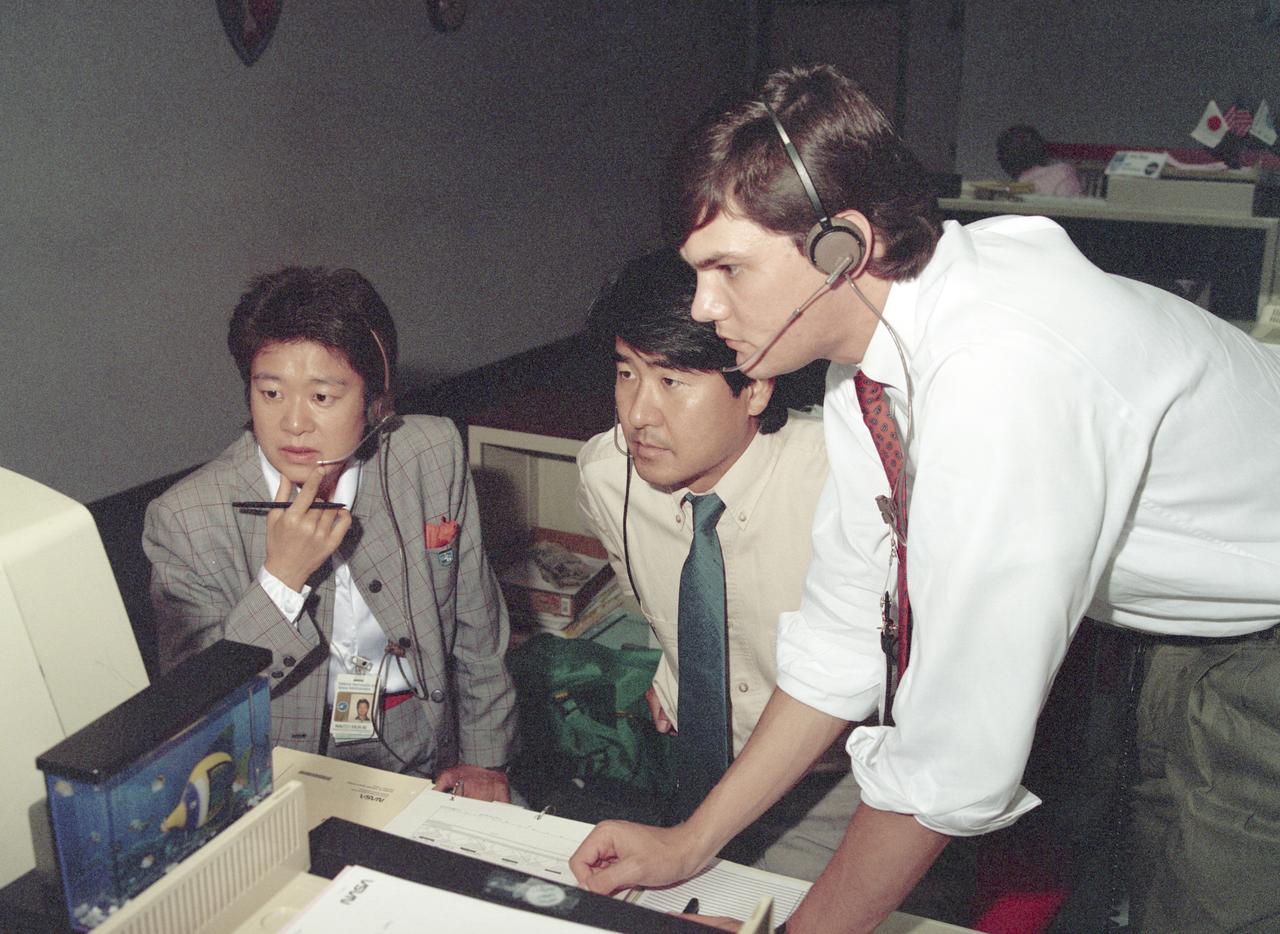
The science laboratory, Spacelab-J (SL-J), flown aboard the STS-47 flight was a joint venture between NASA and the National Space Development Agency of Japan (NASDA) utilizing a manned Spacelab module. The mission conducted 24 materials science and 20 life science experiments, of which 35 were sponsored by NASDA, 7 by NASA, and two collaborative efforts. Materials science investigations covered such fields as biotechnology, electronic materials, fluid dynamics and transport phenomena, glasses and ceramics, metals and alloys, and acceleration measurements. Life sciences included experiments on human health, cell separation and biology, developmental biology, animal and human physiology and behavior, space radiation, and biological rhythms. Test subjects included the crew, Japanese koi fish (carp), cultured animal and plant cells, chicken embryos, fruit flies, fungi and plant seeds, and frogs and frog eggs. Pictured along with George Norris in the Huntsville Operations Support Center (HOSC) Spacelab Payload Operations Control Center (SL POCC) at Marshall Space Flight Center (MSFC) are NASDA alternate payload specialists Dr. Doi and Dr. Mukai.
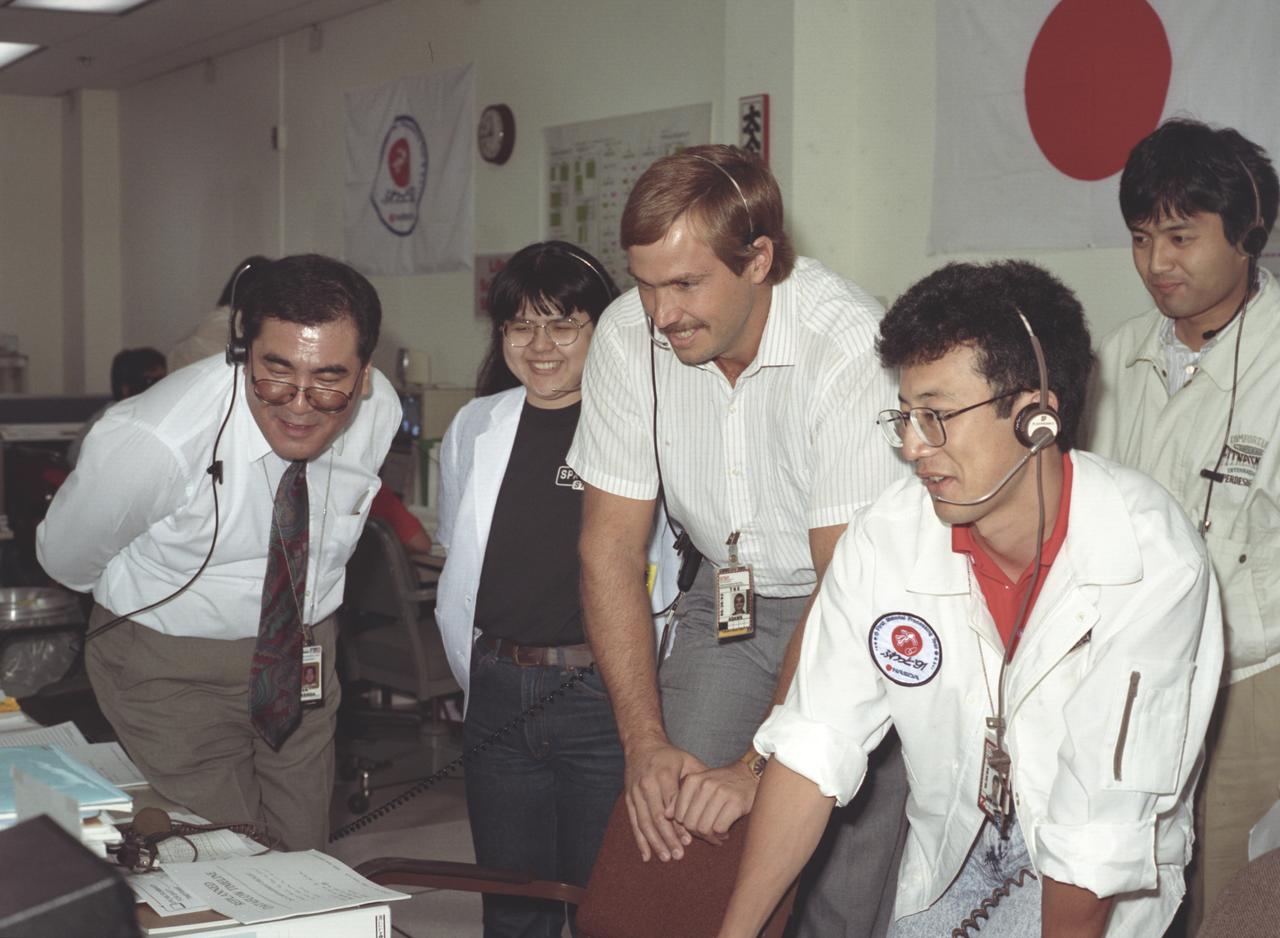
The science laboratory, Spacelab-J (SL-J), flown aboard the STS-47 flight was a joint venture between NASA and the National Space Development Agency of Japan (NASDA) utilizing a manned Spacelab module. The mission conducted 24 materials science and 20 life science experiments, of which 35 were sponsored by NASDA, 7 by NASA, and two collaborative efforts. Materials science investigations covered such fields as biotechnology, electronic materials, fluid dynamics and transport phenomena, glasses and ceramics, metals and alloys, and acceleration measurements. Life sciences included experiments on human health, cell separation and biology, developmental biology, animal and human physiology and behavior, space radiation, and biological rhythms. Test subjects included the crew, Japanese koi fish (carp), cultured animal and plant cells, chicken embryos, fruit flies, fungi and plant seeds, and frogs and frog eggs. Featured together in joint ground activities during the SL-J mission are NASA/NASDA personnel at the Huntsville Operations Support Center (HOSC) Spacelab Payload Operations Control Center (SL POCC) at Marshall Space Flight Center (MSFC).
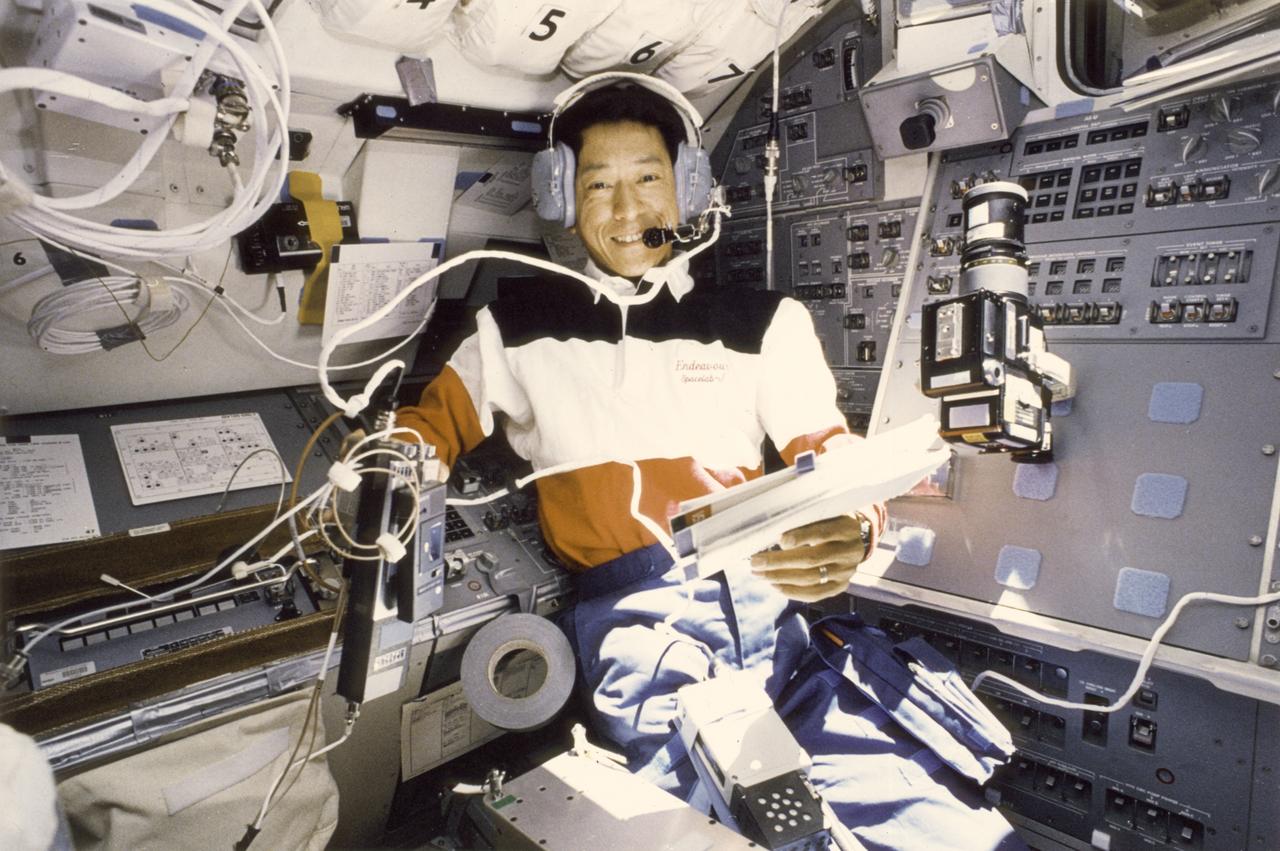
Japanese astronaut, Mamoru Mohri, talks to Japanese students from the aft flight deck of the Space Shuttle Orbiter Endeavour during the Spacelab-J (SL-J) mission. The SL-J mission was a joint venture between NASA and the National Space Development Agency of Japan (NASDA) utilizing a marned Spacelab module. The mission conducted 24 materials science and 20 life science experiments, of which 35 were sponsored by NASDA, 7 by NASA, and two collaborative efforts. Materials science investigations covered such fields as biotechnology, electronic materials, fluid dynamics and transport phenomena, glasses and ceramics, metals and alloys, and acceleration measurements. Life sciences included experiments on human health, cell separation and biology, developmental biology, animal and human physiology and behavior, space radiation, and biological rhythms. Test subjects included the crew, Japanese koi fish (carp), cultured animal and plant cells, chicken embryos, fruit flies, fungi and plant seeds, and frogs and frog eggs. Spacelab-J was launched aboard the Space Shuttle Orbiter Endeavour on September 12, 1992.
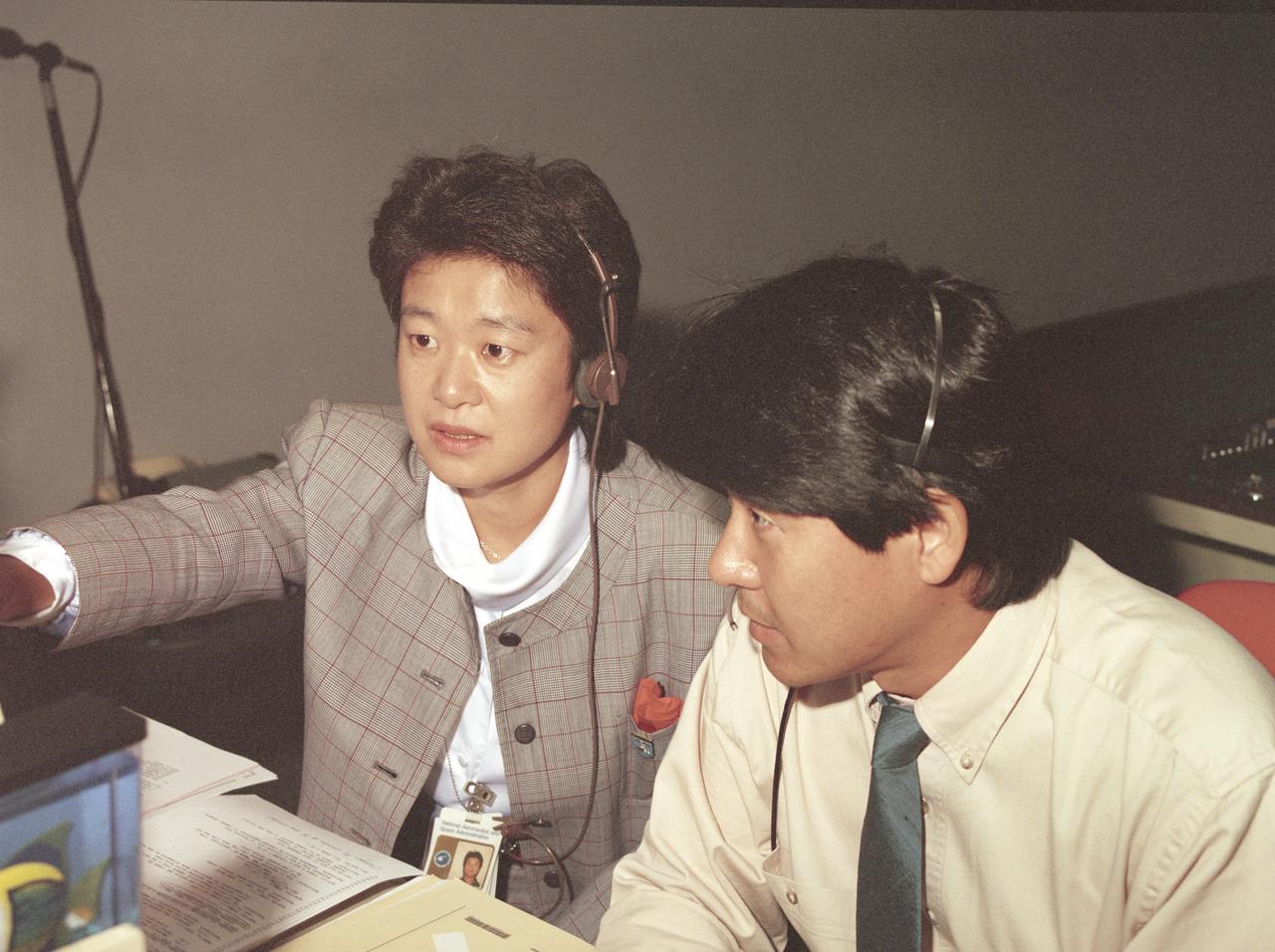
The science laboratory, Spacelab-J (SL-J), flown aboard the STS-47 flight was a joint venture between NASA and the National Space Development Agency of Japan (NASDA) utilizing a manned Spacelab module. The mission conducted 24 materials science and 20 life science experiments, of which 35 were sponsored by NASDA, 7 by NASA, and two collaborative efforts. Materials science investigations covered such fields as biotechnology, electronic materials, fluid dynamics and transport phenomena, glasses and ceramics, metals and alloys, and acceleration measurements. Life sciences included experiments on human health, cell separation and biology, developmental biology, animal and human physiology and behavior, space radiation, and biological rhythms. Test subjects included the crew, Japanese koi fish (carp), cultured animal and plant cells, chicken embryos, fruit flies, fungi and plant seeds, and frogs and frog eggs. Pictured in the Huntsville Operations Support Center (HOSC) Spacelab Payload Operations Control Center (SL POCC) of Marshall Space Flight Center (MSFC) are NASDA alternate payload specialists Dr. Doi and Dr. Mukai.
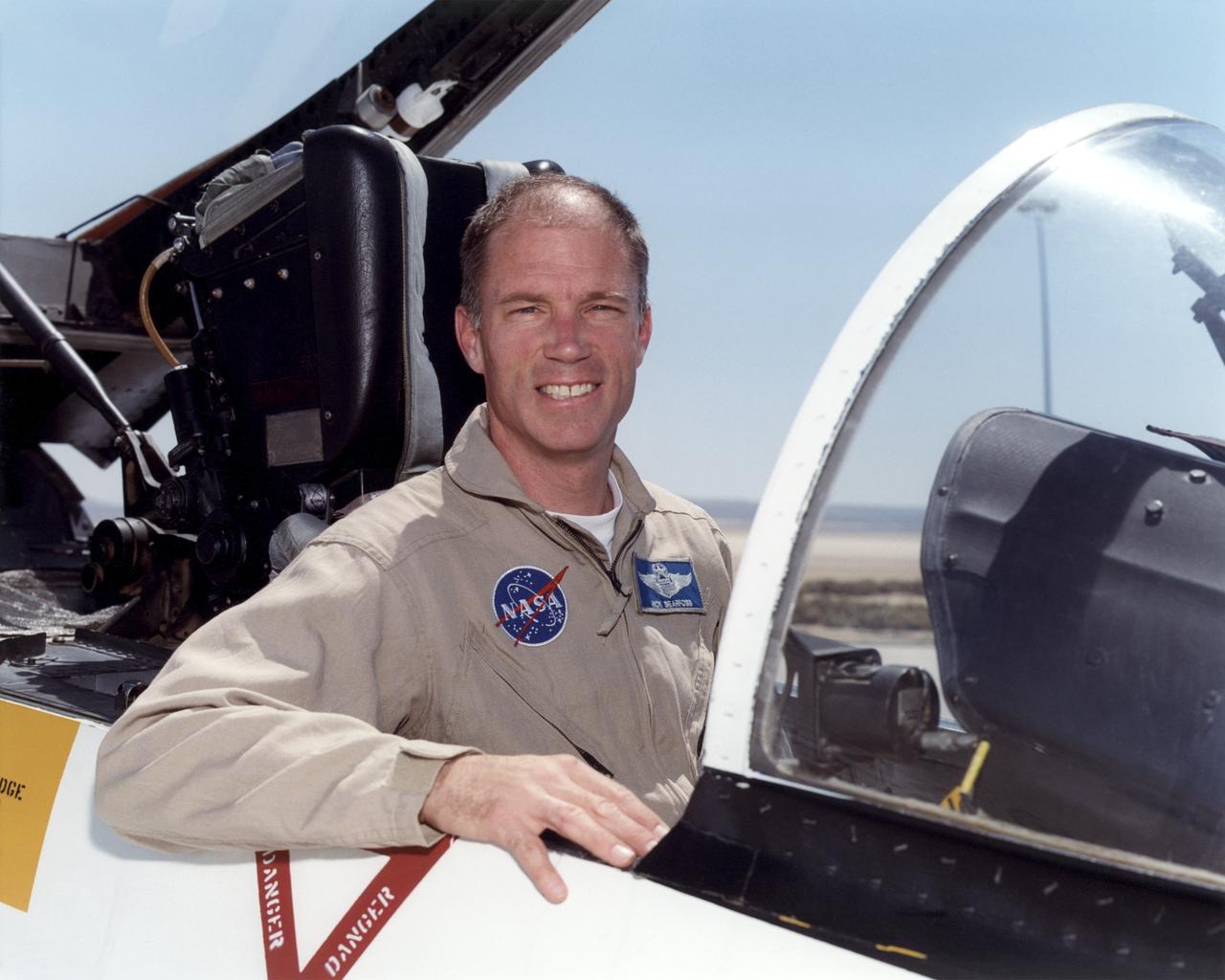
Richard A. Searfoss became a research pilot in the Flight Crew Branch of NASA's Dryden Flight Research Center, Edwards, Calif., in July 2001. He brought to Dryden more than 5,000 hours of military flying time and 939 hours in space. Searfoss served in the U.S. Air Force for more than 20 years, retiring with the rank of colonel. Following graduation in 1980 from Undergraduate Pilot Training at Williams Air Force Base, Ariz., Searfoss flew F-111s at RAF Lakenheath, England, and Mountain Home Air Force Base, Idaho. In 1988 he attended the U.S. Naval Test Pilot School, Patuxent River, Md., as a U.S. Air Force exchange officer. He was an instructor pilot at the U.S. Air Force Test Pilot School, Edwards Air Force Base, Calif., when selected for the astronaut program in January 1990. Searfoss became an astronaut in July 1991. A veteran of three space flights, Searfoss has logged 39 days in space. He served as STS-58 pilot on the seven-person life science research mission aboard Space Shuttle Columbia, launching from NASA's Kennedy Space Center, Fla., on Oct. 18, 1993, and landing at Edwards Air Force Base, Calif., on Nov. 1, 1993. The crew performed a number of medical experiments on themselves and 48 rats, expanding knowledge of human and animal physiology. Searfoss flew his second mission as pilot of STS-76 aboard the Space Shuttle Atlantis. During this nine-day mission, which launched March 22, 1996, the crew preformed the third docking of an American spacecraft with the Russian space station Mir. The crew transported to Mir nearly two tons of water, food, supplies, and scientific equipment, as well as U.S. Astronaut Shannon Lucid to begin her six-month stay in space. Completing 145 orbits, STS-76 landed at Edwards Air Force Base, Calif., on March 31, 1996. Searfoss commanded a seven-person crew on the STS-90 Neurolab mission launched on April 17, 1998. The crew served as both experiment subjects and operators for life science experiments focusing on the effects of m