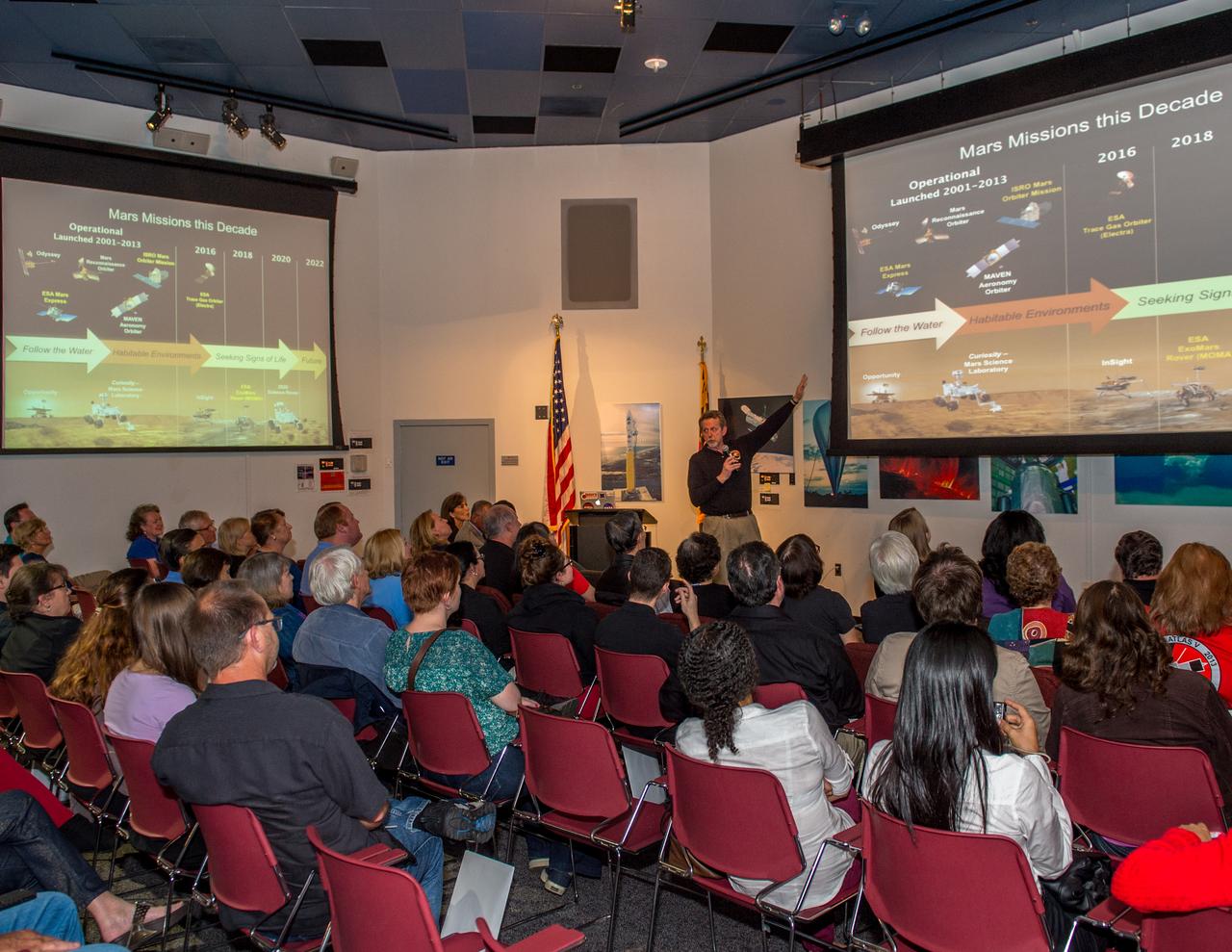
James Green , NASA PLanetary Science Division Director at the Mars Atmosphere and Volatile Evolution Mission (MAVEN) ORBIT INSERTION event
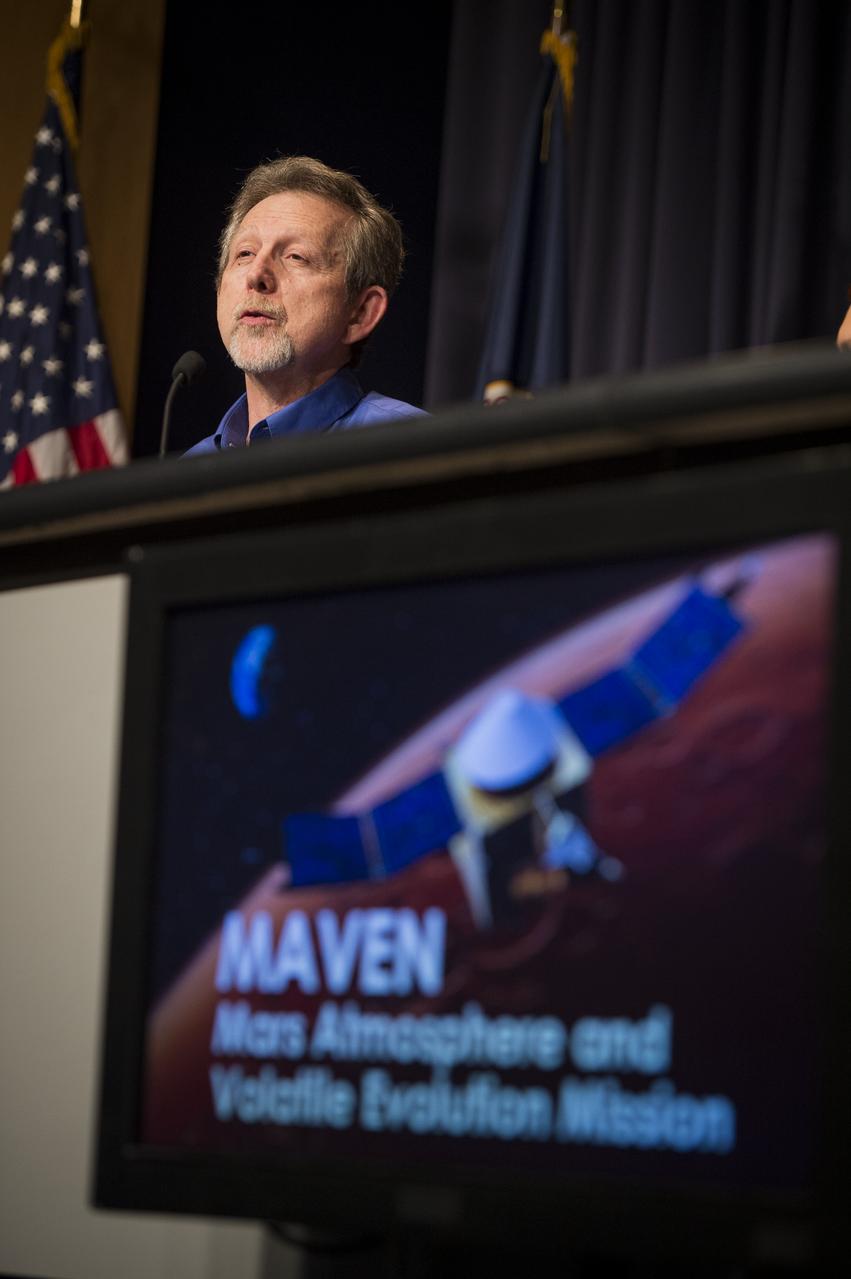
Jim Green, director, Planetary Science Division, NASA Headquarters, discusses the upcoming launch of the Mars Atmosphere and Volatile Evolution (MAVEN) mission, at a press conference at NASA Headquarters in Washington on Monday, Oct. 28th, 2013. MAVEN is the agency's next mission to Mars and the first devoted to understanding the upper atmosphere of the Red Planet. (Photo credit: NASA/Jay Westcott)
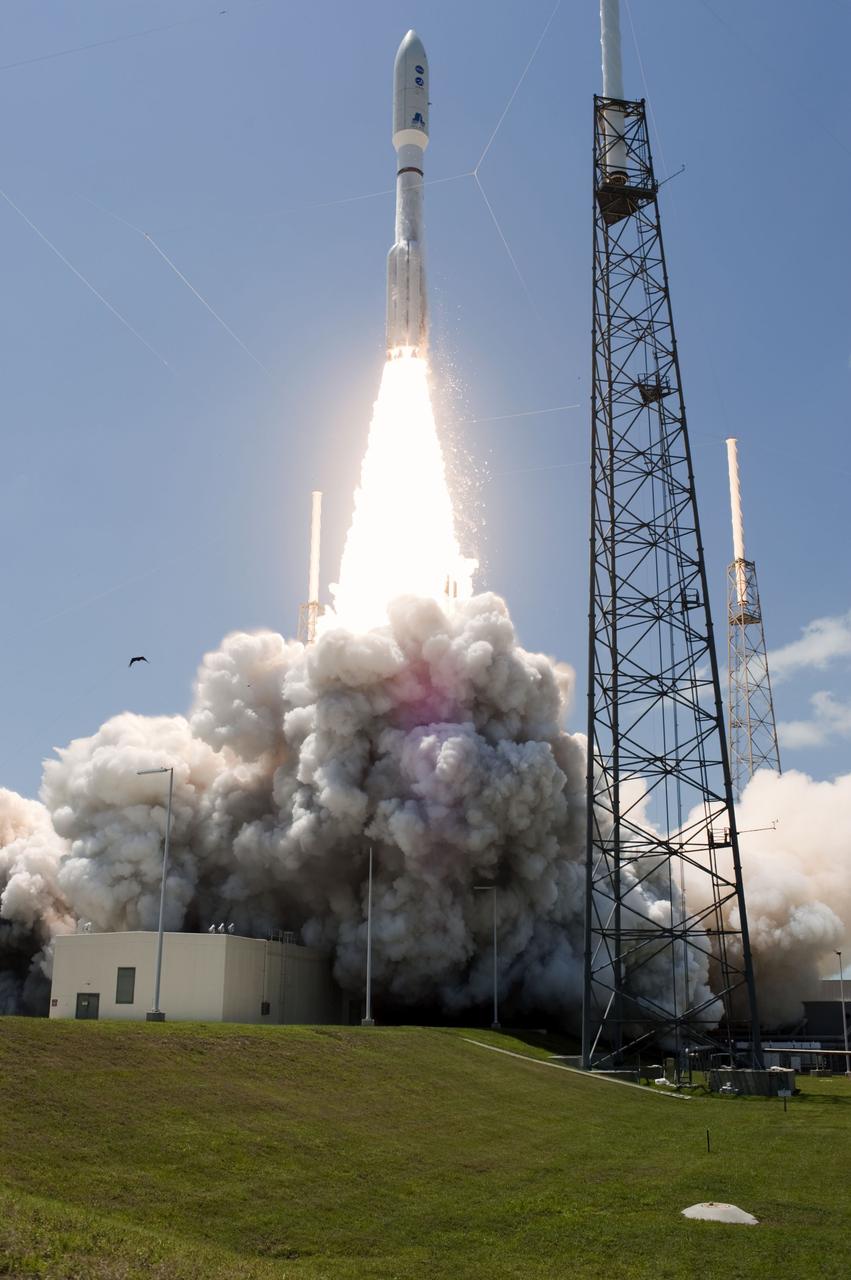
CAPE CANAVERAL, Fla. -- Rising from fire and smoke, NASA's Juno planetary probe, enclosed in its payload fairing, launches atop a United Launch Alliance Atlas V rocket. Leaving from Space Launch Complex 41 on Cape Canaveral Air Force Station in Florida, the spacecraft will embark on a five-year journey to Jupiter. Liftoff was at 12:25 p.m. EDT Aug. 5. The solar-powered spacecraft will orbit Jupiter's poles 33 times to find out more about the gas giant's origins, structure, atmosphere and magnetosphere and investigate the existence of a solid planetary core. For more information, visit www.nasa.gov/juno. Photo credit: NASA/Tony Gray and Tim Powers
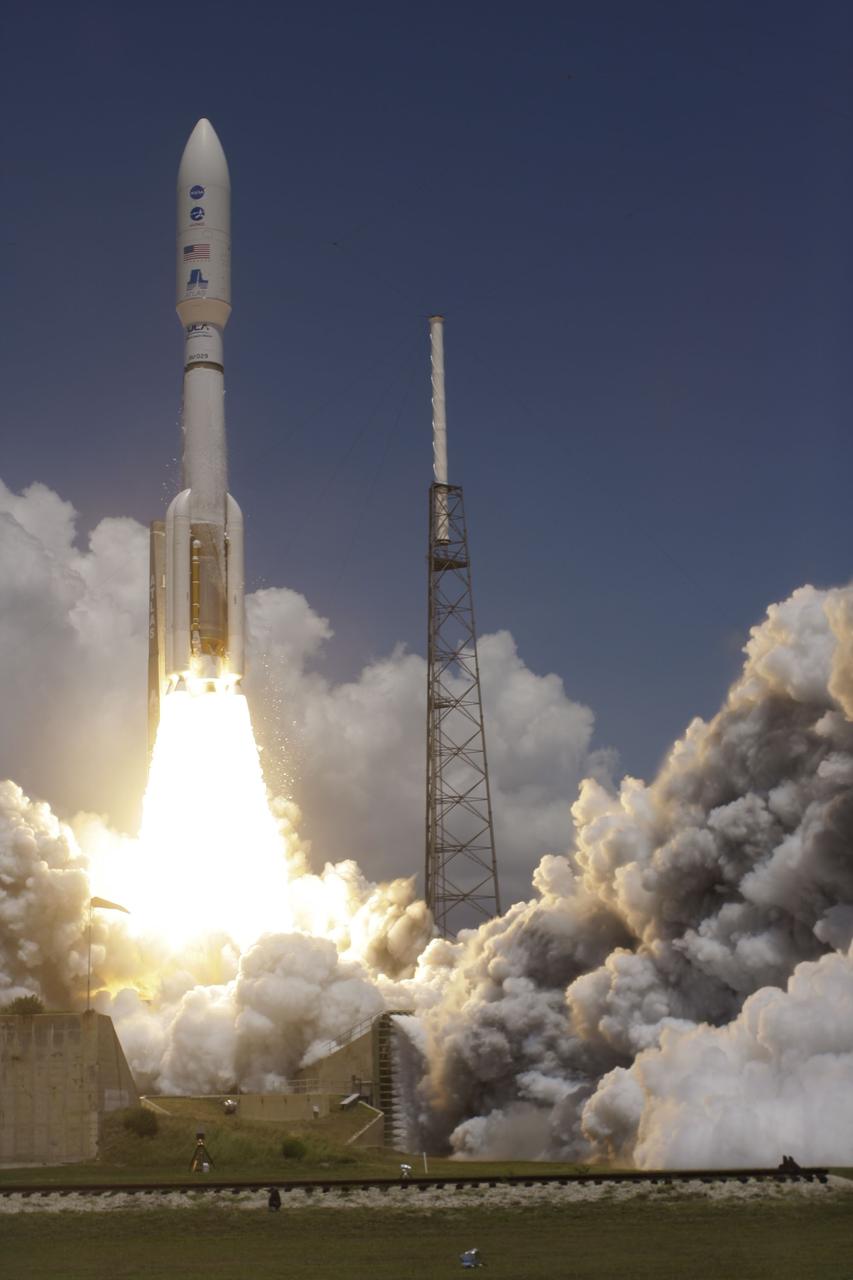
CAPE CANAVERAL, Fla. -- Rising from fire and smoke, NASA's Juno planetary probe, enclosed in its payload fairing, launches atop a United Launch Alliance Atlas V rocket. Leaving from Space Launch Complex 41 on Cape Canaveral Air Force Station in Florida, the spacecraft will embark on a five-year journey to Jupiter. Liftoff was at 12:25 p.m. EDT Aug. 5. The solar-powered spacecraft will orbit Jupiter's poles 33 times to find out more about the gas giant's origins, structure, atmosphere and magnetosphere and investigate the existence of a solid planetary core. For more information, visit www.nasa.gov/juno. Photo credit: Courtesy Scott Andrews
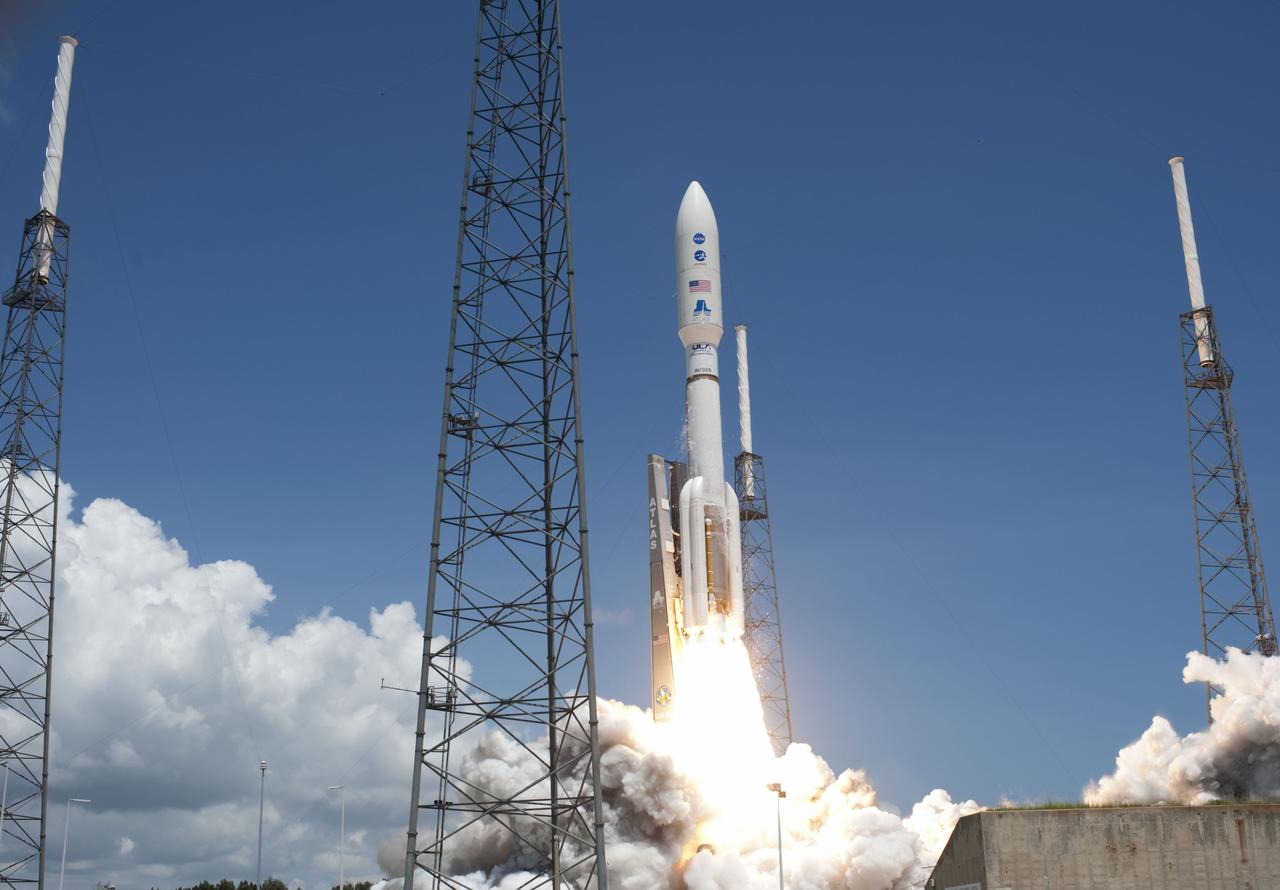
CAPE CANAVERAL, Fla. -- Fire lights up a crystal-clear blue sky on Space Launch Complex 41 on Cape Canaveral Air Force Station in Florida as a United Launch Alliance Atlas V rocket lofts NASA's Juno planetary probe into space. Liftoff was at 12:25 p.m. EDT Aug. 5. The solar-powered spacecraft will orbit Jupiter's poles 33 times to find out more about the gas giant's origins, structure, atmosphere and magnetosphere and investigate the existence of a solid planetary core. For more information, visit www.nasa.gov/juno. Photo credit: NASA/Tony Gray and Don Kight
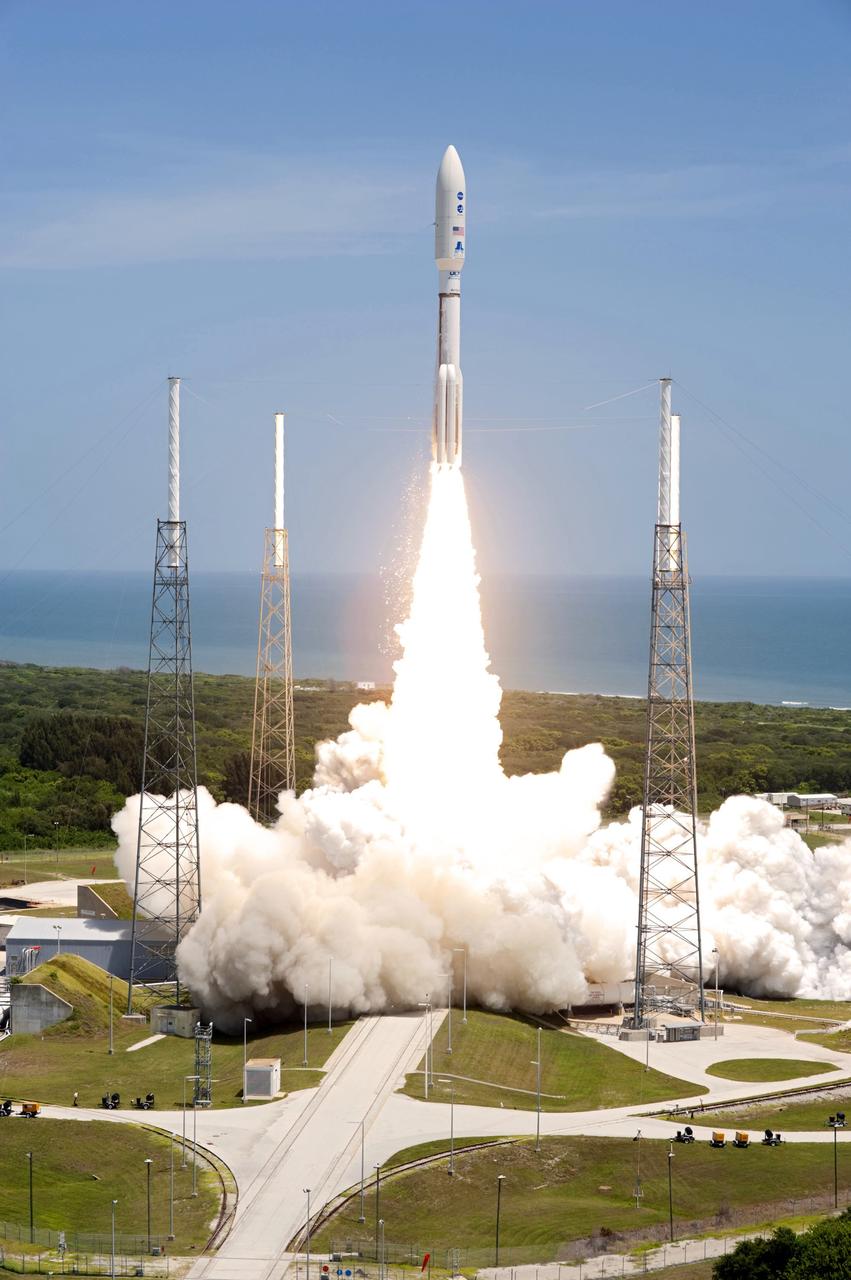
CAPE CANAVERAL, Fla. -- Rising from fire and smoke, NASA's Juno planetary probe, enclosed in its payload fairing, launches atop a United Launch Alliance Atlas V rocket. Leaving from Space Launch Complex 41 on Cape Canaveral Air Force Station in Florida, the spacecraft will embark on a five-year journey to Jupiter. Liftoff was at 12:25 p.m. EDT Aug. 5. The solar-powered spacecraft will orbit Jupiter's poles 33 times to find out more about the gas giant's origins, structure, atmosphere and magnetosphere and investigate the existence of a solid planetary core. For more information, visit www.nasa.gov/juno. Photo credit: NASA/Tony Gray and Tim Powers
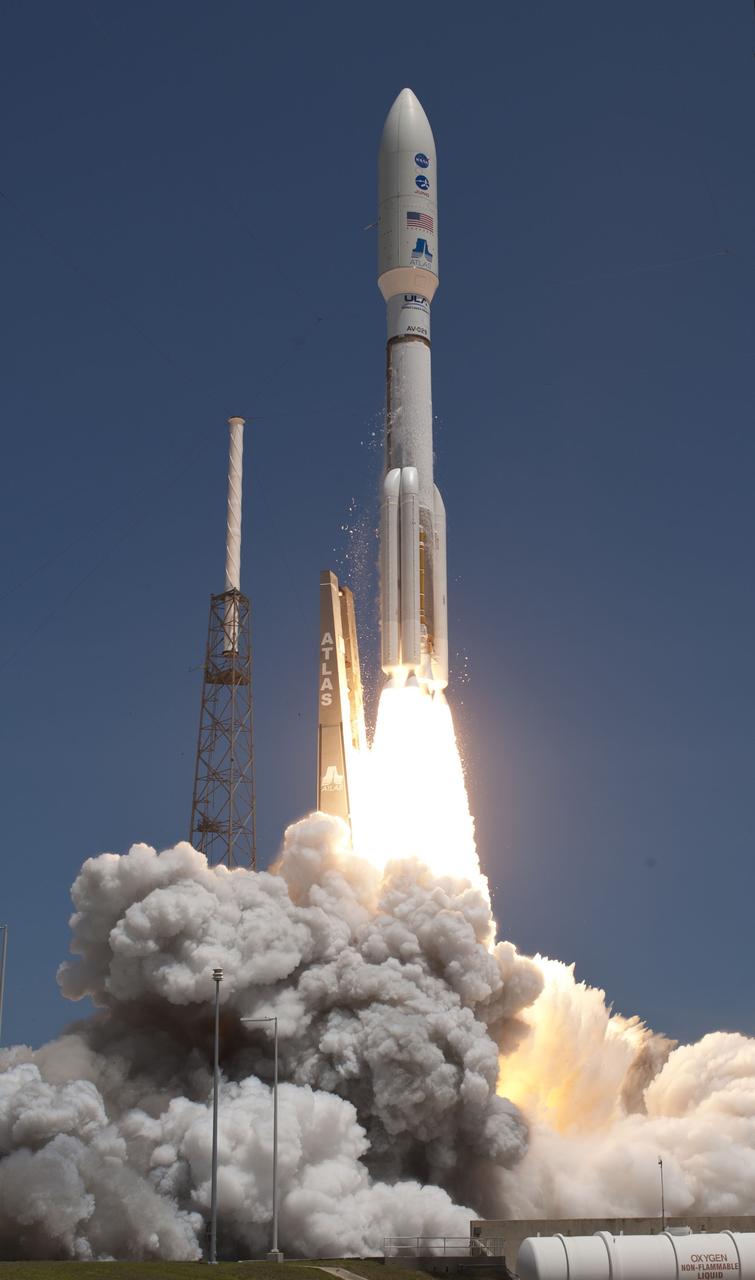
CAPE CANAVERAL, Fla. -- Rising from fire and smoke, NASA's Juno planetary probe, enclosed in its payload fairing, launches atop a United Launch Alliance Atlas V rocket. Leaving from Space Launch Complex 41 on Cape Canaveral Air Force Station in Florida, the spacecraft will embark on a five-year journey to Jupiter. Liftoff was at 12:25 p.m. EDT Aug. 5. The solar-powered spacecraft will orbit Jupiter's poles 33 times to find out more about the gas giant's origins, structure, atmosphere and magnetosphere and investigate the existence of a solid planetary core. For more information, visit www.nasa.gov/juno. Photo credit: Courtesy Scott Andrews
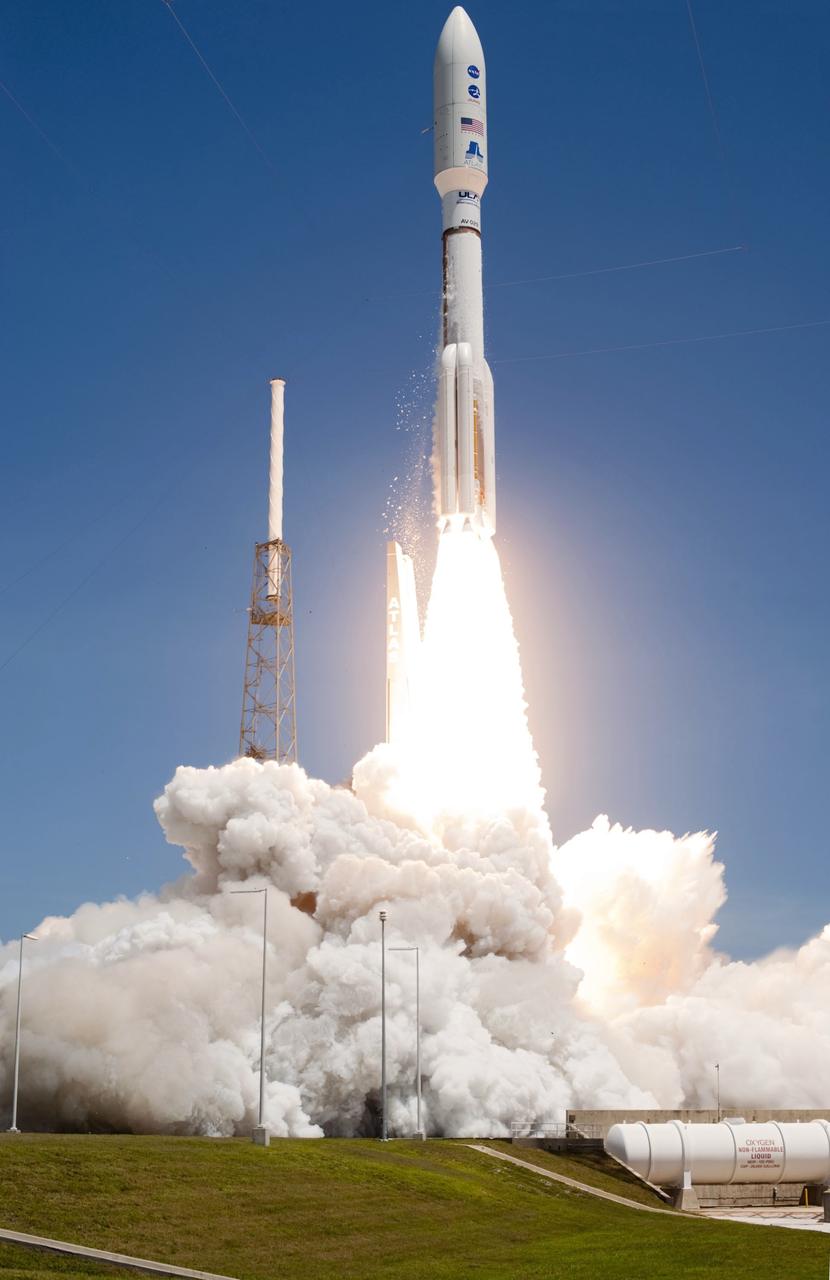
CAPE CANAVERAL, Fla. -- Rising from fire and smoke, NASA's Juno planetary probe, enclosed in its payload fairing, launches atop a United Launch Alliance Atlas V rocket. Leaving from Space Launch Complex 41 on Cape Canaveral Air Force Station in Florida, the spacecraft will embark on a five-year journey to Jupiter. Liftoff was at 12:25 p.m. EDT Aug. 5. The solar-powered spacecraft will orbit Jupiter's poles 33 times to find out more about the gas giant's origins, structure, atmosphere and magnetosphere and investigate the existence of a solid planetary core. For more information, visit www.nasa.gov/juno. Photo credit: NASA/Tony Gray and Don Kight
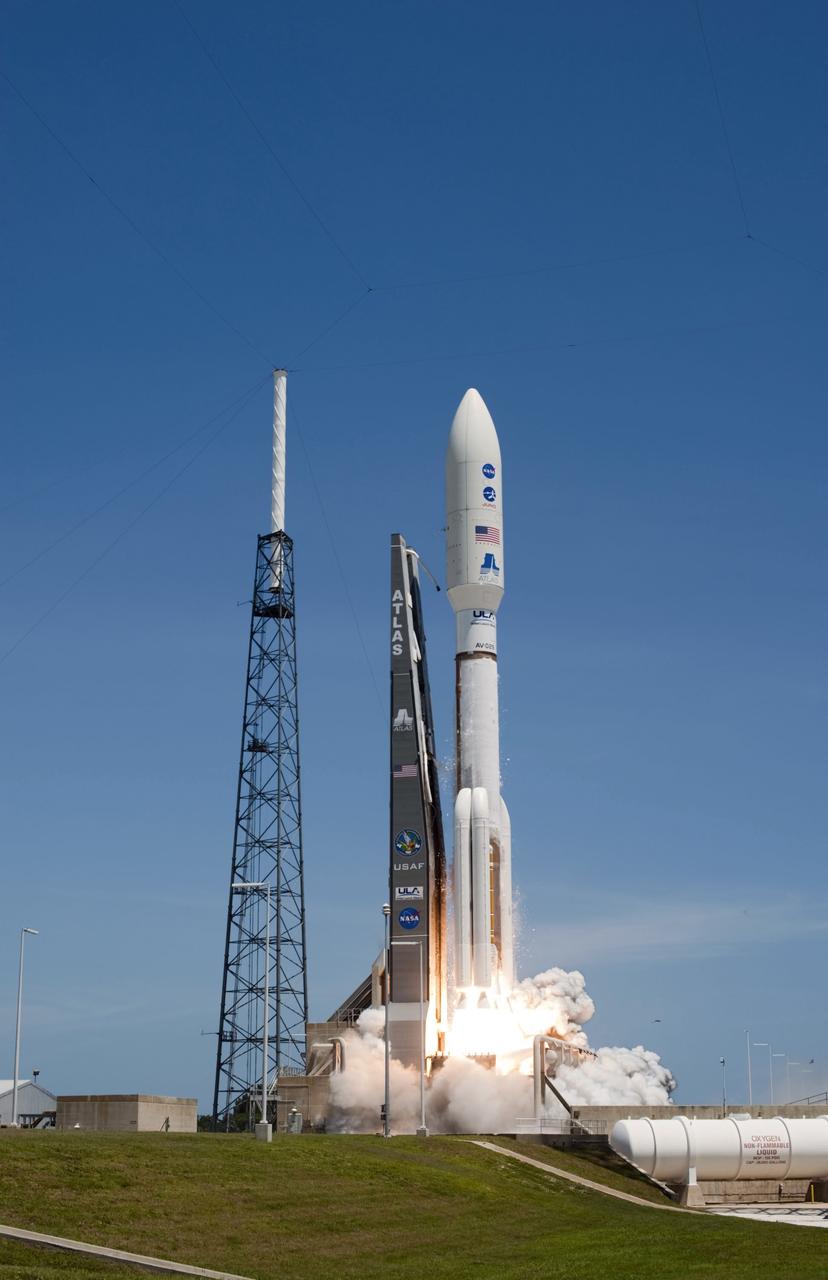
CAPE CANAVERAL, Fla. -- Rising from fire and smoke, NASA's Juno planetary probe, enclosed in its payload fairing, launches atop a United Launch Alliance Atlas V rocket. Leaving from Space Launch Complex 41 on Cape Canaveral Air Force Station in Florida, the spacecraft will embark on a five-year journey to Jupiter. Liftoff was at 12:25 p.m. EDT Aug. 5. The solar-powered spacecraft will orbit Jupiter's poles 33 times to find out more about the gas giant's origins, structure, atmosphere and magnetosphere and investigate the existence of a solid planetary core. For more information, visit www.nasa.gov/juno. Photo credit: NASA/Tony Gray and Don Kight
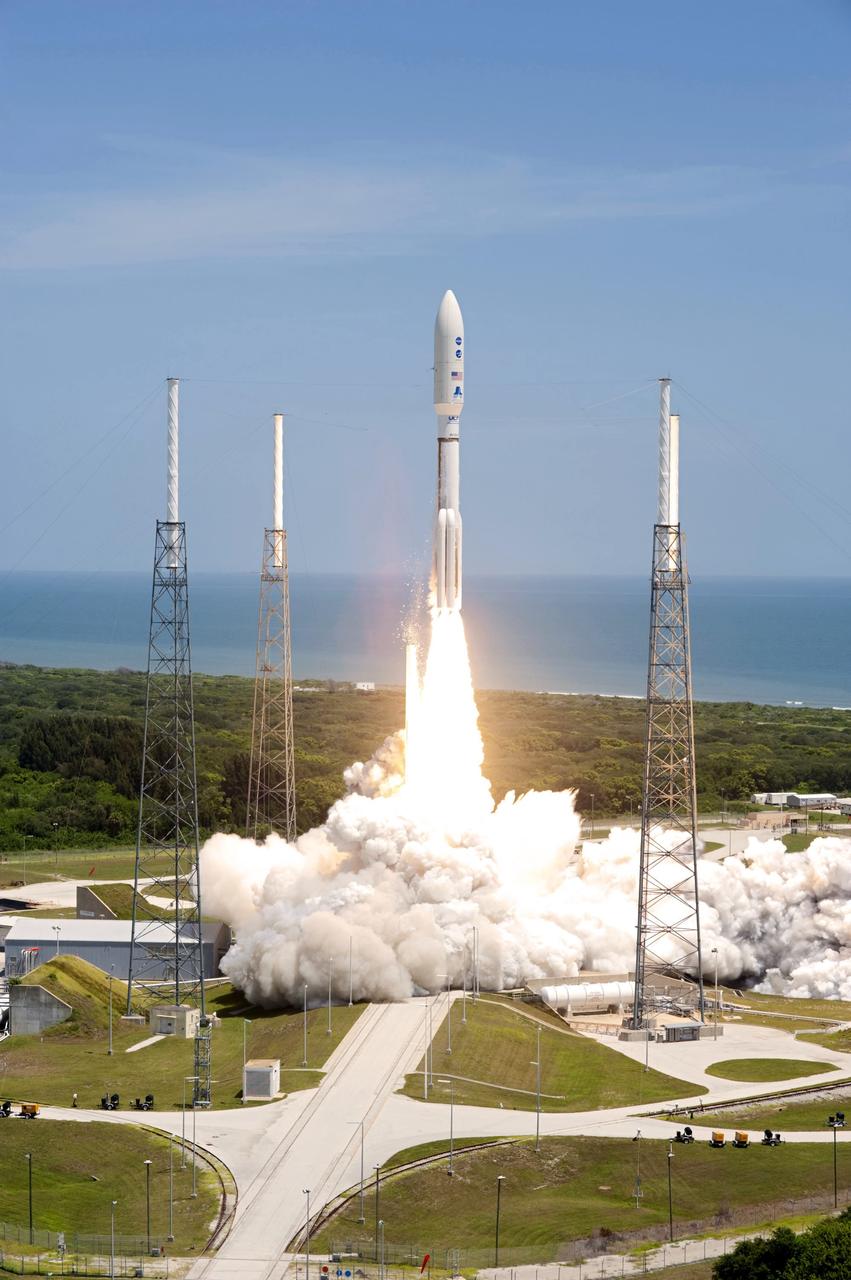
CAPE CANAVERAL, Fla. -- Rising from fire and smoke, NASA's Juno planetary probe, enclosed in its payload fairing, launches atop a United Launch Alliance Atlas V rocket. Leaving from Space Launch Complex 41 on Cape Canaveral Air Force Station in Florida, the spacecraft will embark on a five-year journey to Jupiter. Liftoff was at 12:25 p.m. EDT Aug. 5. The solar-powered spacecraft will orbit Jupiter's poles 33 times to find out more about the gas giant's origins, structure, atmosphere and magnetosphere and investigate the existence of a solid planetary core. For more information, visit www.nasa.gov/juno. Photo credit: NASA/Tony Gray and Tim Powers
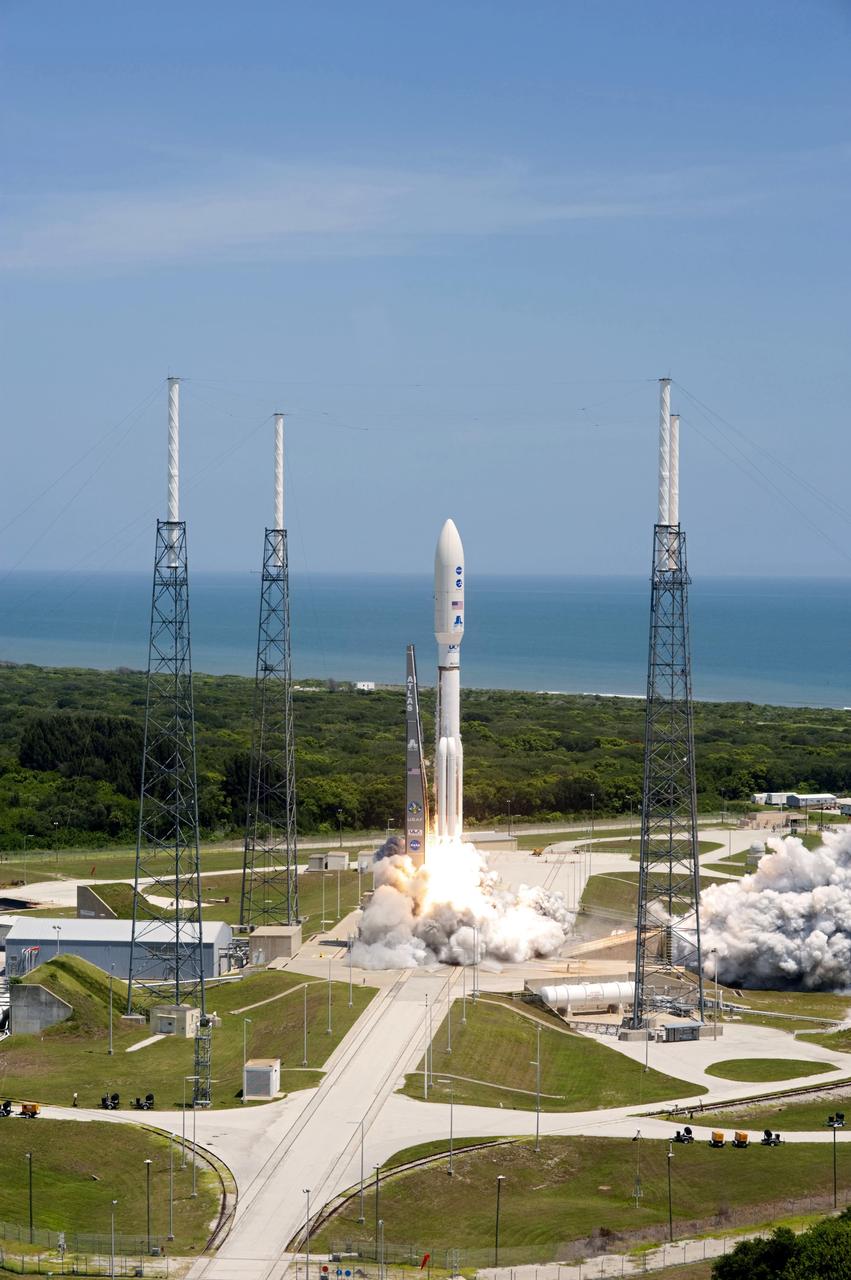
CAPE CANAVERAL, Fla. -- Rising from fire and smoke, NASA's Juno planetary probe, enclosed in its payload fairing, launches atop a United Launch Alliance Atlas V rocket. Leaving from Space Launch Complex 41 on Cape Canaveral Air Force Station in Florida, the spacecraft will embark on a five-year journey to Jupiter. Liftoff was at 12:25 p.m. EDT Aug. 5. The solar-powered spacecraft will orbit Jupiter's poles 33 times to find out more about the gas giant's origins, structure, atmosphere and magnetosphere and investigate the existence of a solid planetary core. For more information, visit www.nasa.gov/juno. Photo credit: NASA/Tony Gray and Tim Powers
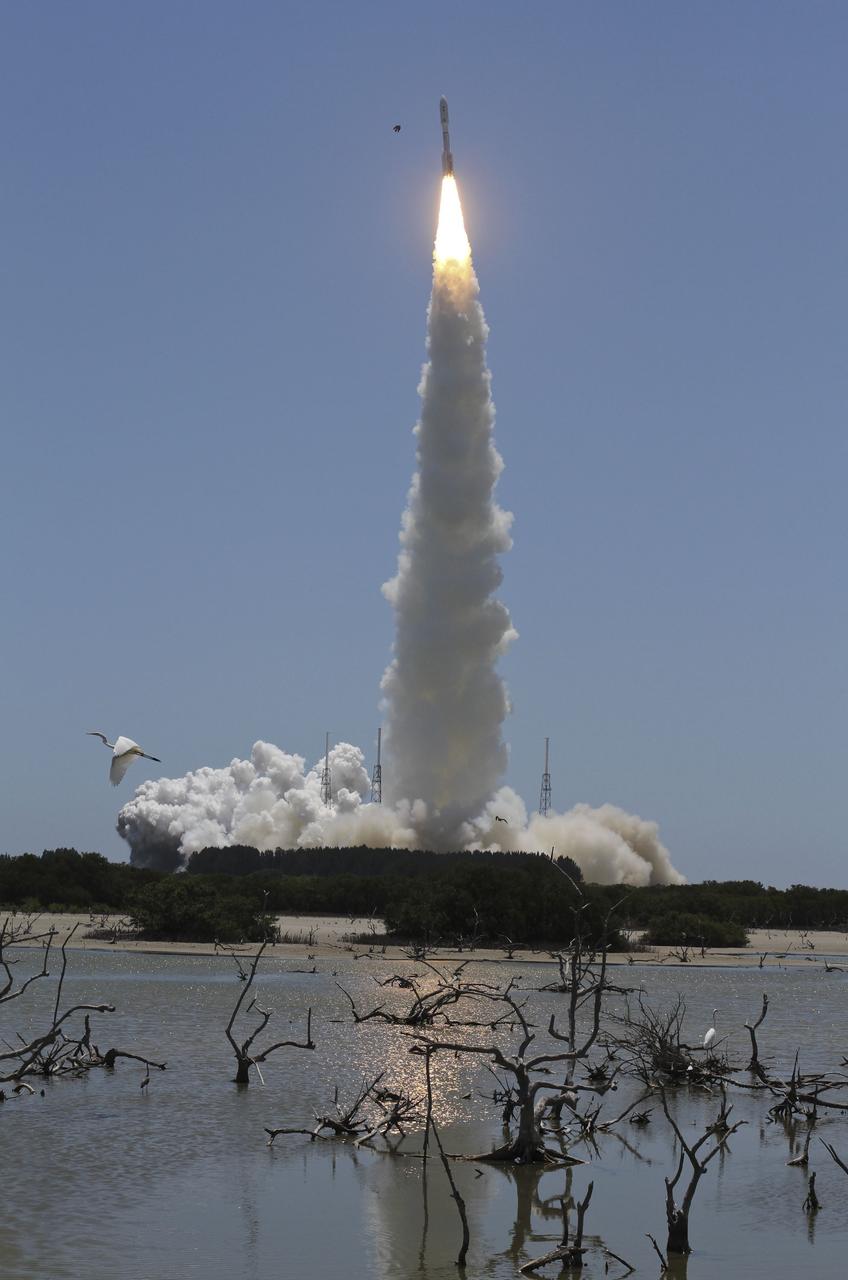
CAPE CANAVERAL, Fla. -- Reflected in water surrounding Space Launch Complex 41 on Cape Canaveral Air Force Station in Florida, fire lights up a crystal-clear blue sky as a United Launch Alliance Atlas V rocket lofts NASA's Juno planetary probe into space. Liftoff was at 12:25 p.m. EDT Aug. 5. The solar-powered spacecraft will orbit Jupiter's poles 33 times to find out more about the gas giant's origins, structure, atmosphere and magnetosphere and investigate the existence of a solid planetary core. For more information, visit www.nasa.gov/juno. Photo credit: Courtesy Scott Andrews
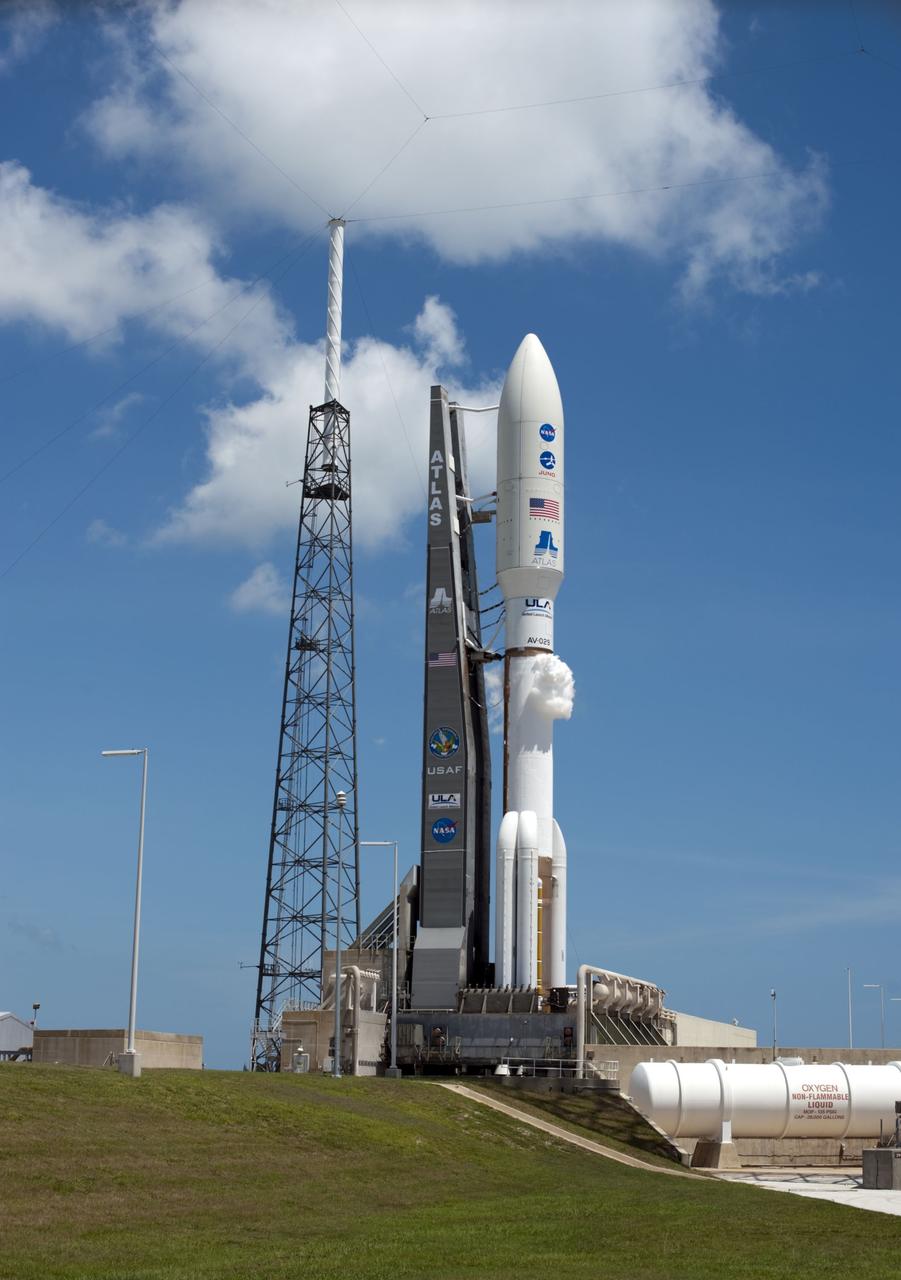
CAPE CANAVERAL, Fla. -- NASA's Juno planetary probe, enclosed in its payload fairing, is moments away from liftoff atop a United Launch Alliance Atlas V rocket. Leaving from Space Launch Complex 41 on Cape Canaveral Air Force Station in Florida, the spacecraft will embark on a five-year journey to Jupiter. Liftoff was at 12:25 p.m. EDT Aug. 5. The solar-powered spacecraft will orbit Jupiter's poles 33 times to find out more about the gas giant's origins, structure, atmosphere and magnetosphere and investigate the existence of a solid planetary core. For more information, visit www.nasa.gov/juno. Photo credit: NASA/Tony Gray and Tim Powers
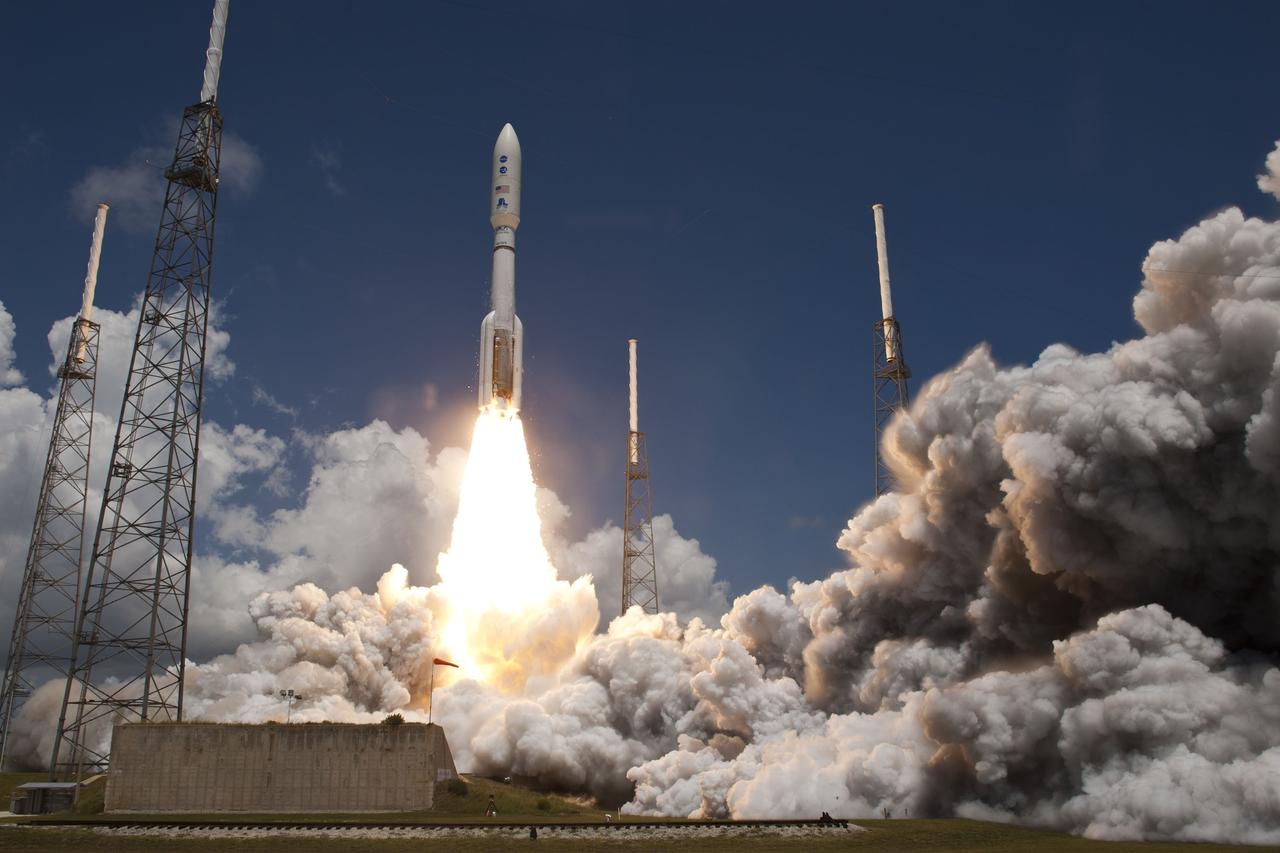
CAPE CANAVERAL, Fla. -- Rising from fire and smoke, NASA's Juno planetary probe, enclosed in its payload fairing, launches atop a United Launch Alliance Atlas V rocket. Leaving from Space Launch Complex 41 on Cape Canaveral Air Force Station in Florida, the spacecraft will embark on a five-year journey to Jupiter. Liftoff was at 12:25 p.m. EDT Aug. 5. The solar-powered spacecraft will orbit Jupiter's poles 33 times to find out more about the gas giant's origins, structure, atmosphere and magnetosphere and investigate the existence of a solid planetary core. For more information, visit www.nasa.gov/juno. Photo credit: Courtesy Scott Andrews
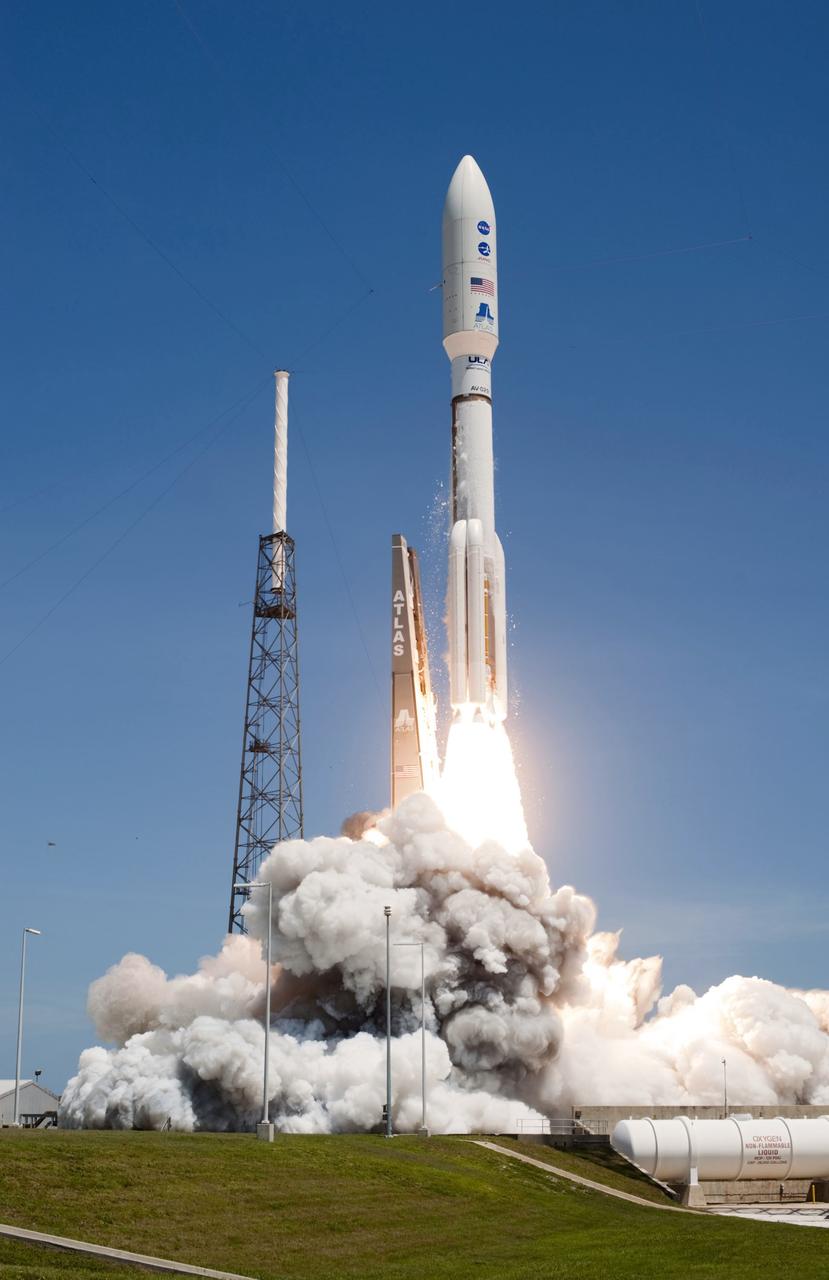
CAPE CANAVERAL, Fla. -- Rising from fire and smoke, NASA's Juno planetary probe, enclosed in its payload fairing, launches atop a United Launch Alliance Atlas V rocket. Leaving from Space Launch Complex 41 on Cape Canaveral Air Force Station in Florida, the spacecraft will embark on a five-year journey to Jupiter. Liftoff was at 12:25 p.m. EDT Aug. 5. The solar-powered spacecraft will orbit Jupiter's poles 33 times to find out more about the gas giant's origins, structure, atmosphere and magnetosphere and investigate the existence of a solid planetary core. For more information, visit www.nasa.gov/juno. Photo credit: NASA/Tony Gray and Don Kight
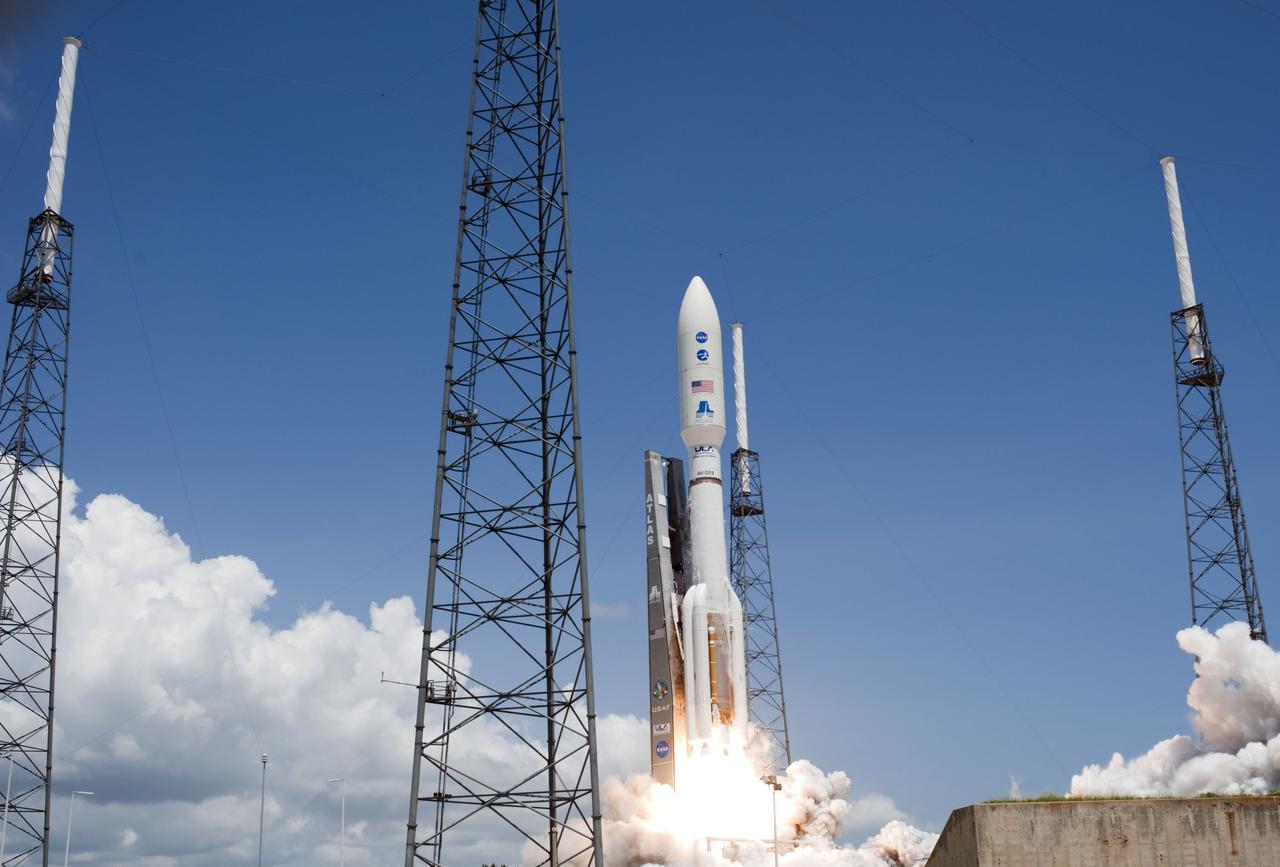
CAPE CANAVERAL, Fla. -- Fire lights up a crystal-clear blue sky on Space Launch Complex 41 on Cape Canaveral Air Force Station in Florida as a United Launch Alliance Atlas V rocket lofts NASA's Juno planetary probe into space. Liftoff was at 12:25 p.m. EDT Aug. 5. The solar-powered spacecraft will orbit Jupiter's poles 33 times to find out more about the gas giant's origins, structure, atmosphere and magnetosphere and investigate the existence of a solid planetary core. For more information, visit www.nasa.gov/juno. Photo credit: NASA/Tony Gray and Don Kight
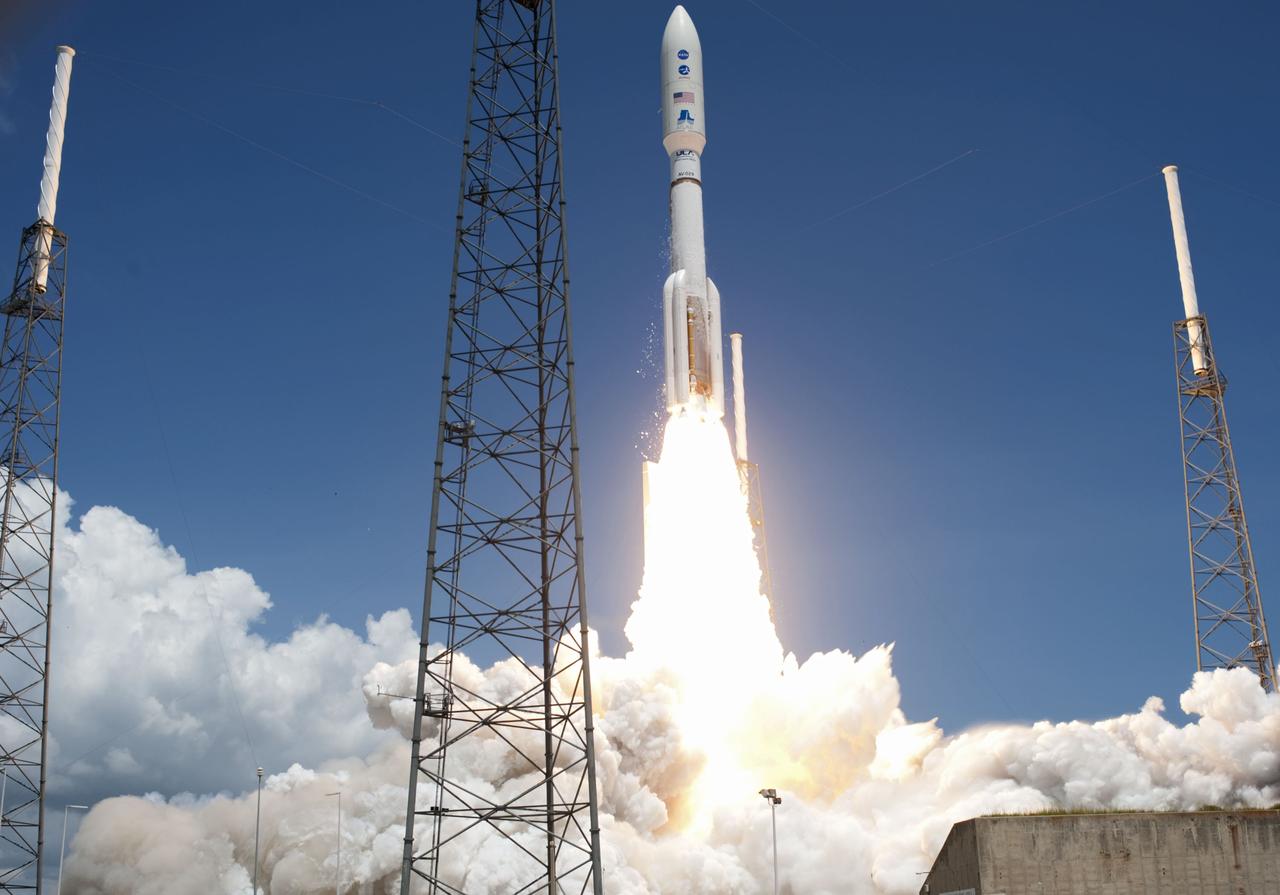
CAPE CANAVERAL, Fla. -- Fire lights up a crystal-clear blue sky on Space Launch Complex 41 on Cape Canaveral Air Force Station in Florida as a United Launch Alliance Atlas V rocket lofts NASA's Juno planetary probe into space. Liftoff was at 12:25 p.m. EDT Aug. 5. The solar-powered spacecraft will orbit Jupiter's poles 33 times to find out more about the gas giant's origins, structure, atmosphere and magnetosphere and investigate the existence of a solid planetary core. For more information, visit www.nasa.gov/juno. Photo credit: NASA/Tony Gray and Don Kight
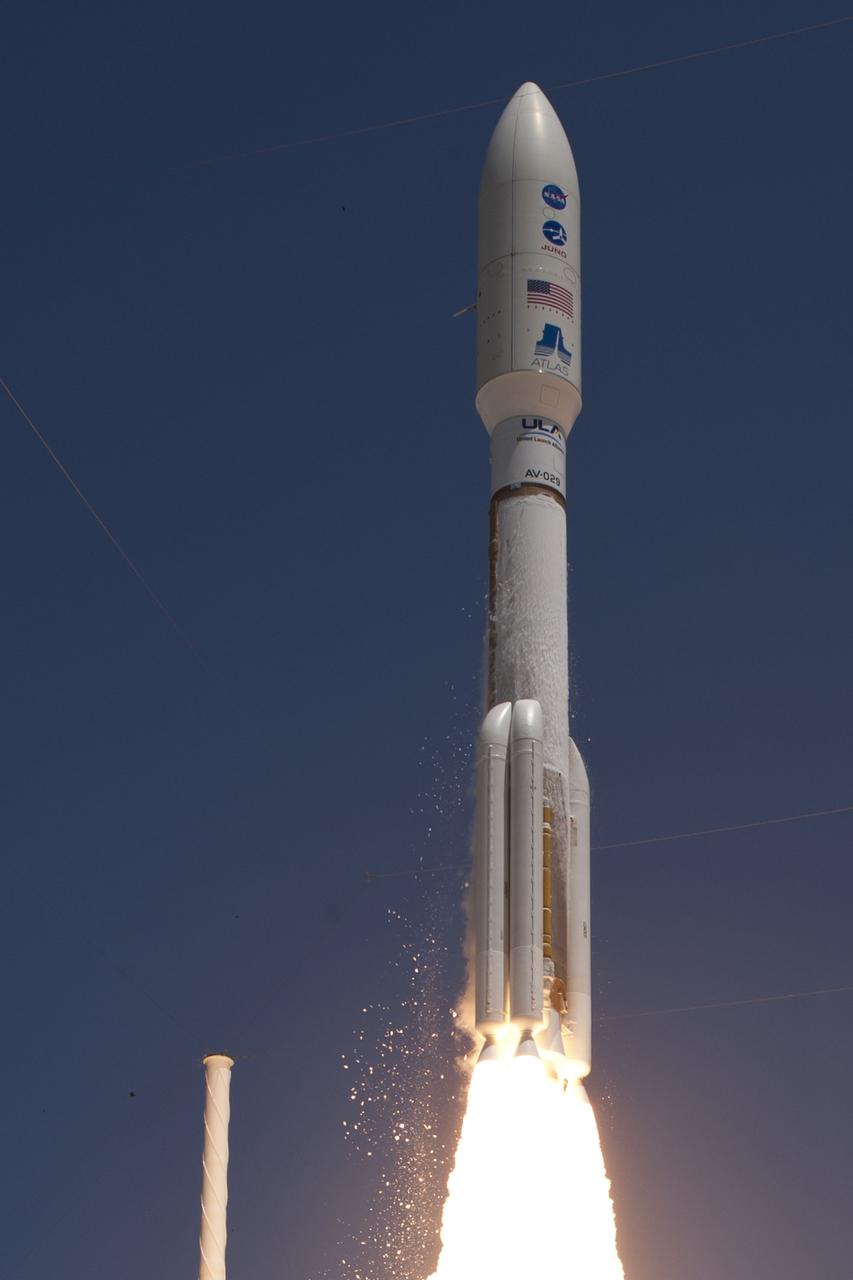
CAPE CANAVERAL, Fla. -- Fire lights up a crystal-clear blue sky on Space Launch Complex 41 on Cape Canaveral Air Force Station in Florida as a United Launch Alliance Atlas V rocket lofts NASA's Juno planetary probe into space. Liftoff was at 12:25 p.m. EDT Aug. 5. The solar-powered spacecraft will orbit Jupiter's poles 33 times to find out more about the gas giant's origins, structure, atmosphere and magnetosphere and investigate the existence of a solid planetary core. For more information, visit www.nasa.gov/juno. Photo credit: Courtesy Scott Andrews
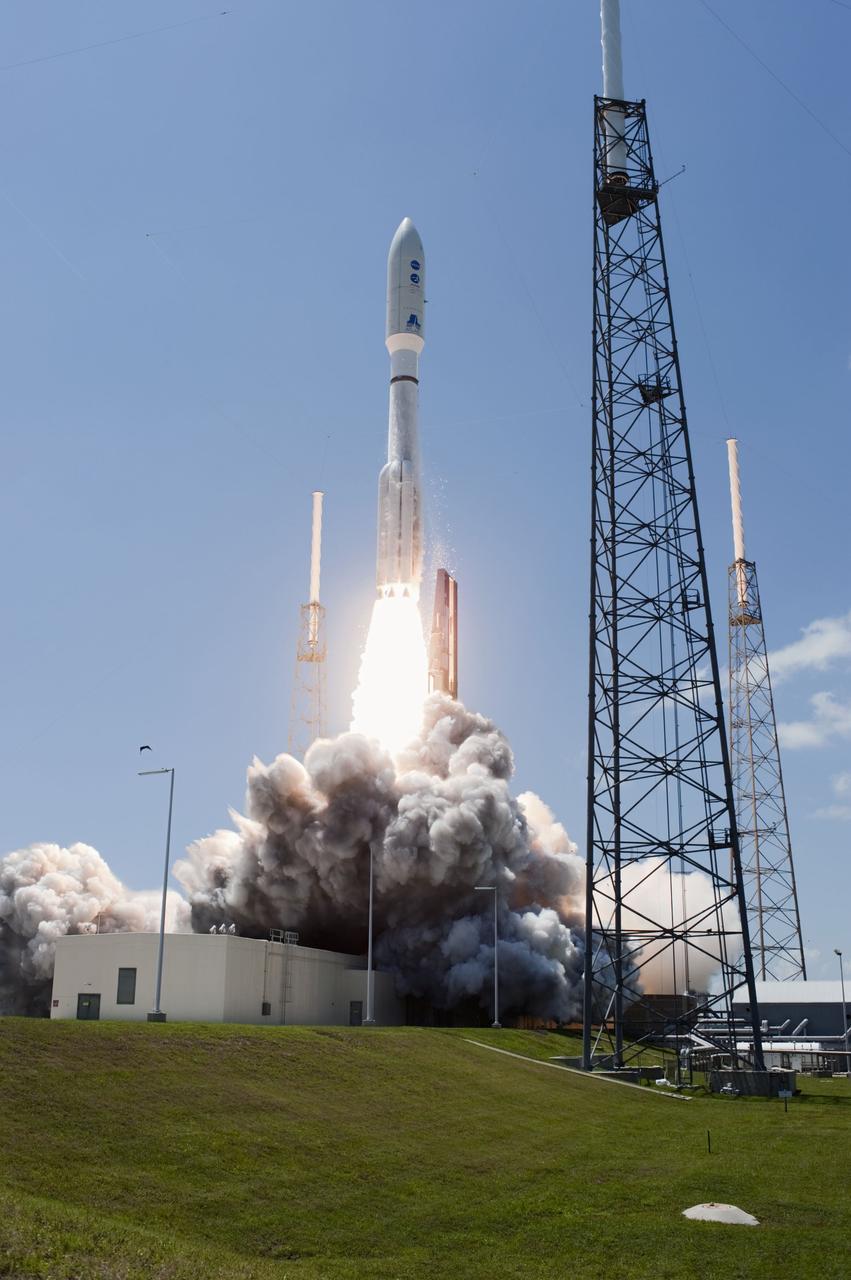
CAPE CANAVERAL, Fla. -- Rising from fire and smoke, NASA's Juno planetary probe, enclosed in its payload fairing, launches atop a United Launch Alliance Atlas V rocket. Leaving from Space Launch Complex 41 on Cape Canaveral Air Force Station in Florida, the spacecraft will embark on a five-year journey to Jupiter. Liftoff was at 12:25 p.m. EDT Aug. 5. The solar-powered spacecraft will orbit Jupiter's poles 33 times to find out more about the gas giant's origins, structure, atmosphere and magnetosphere and investigate the existence of a solid planetary core. For more information, visit www.nasa.gov/juno. Photo credit: NASA/Tony Gray and Tim Powers
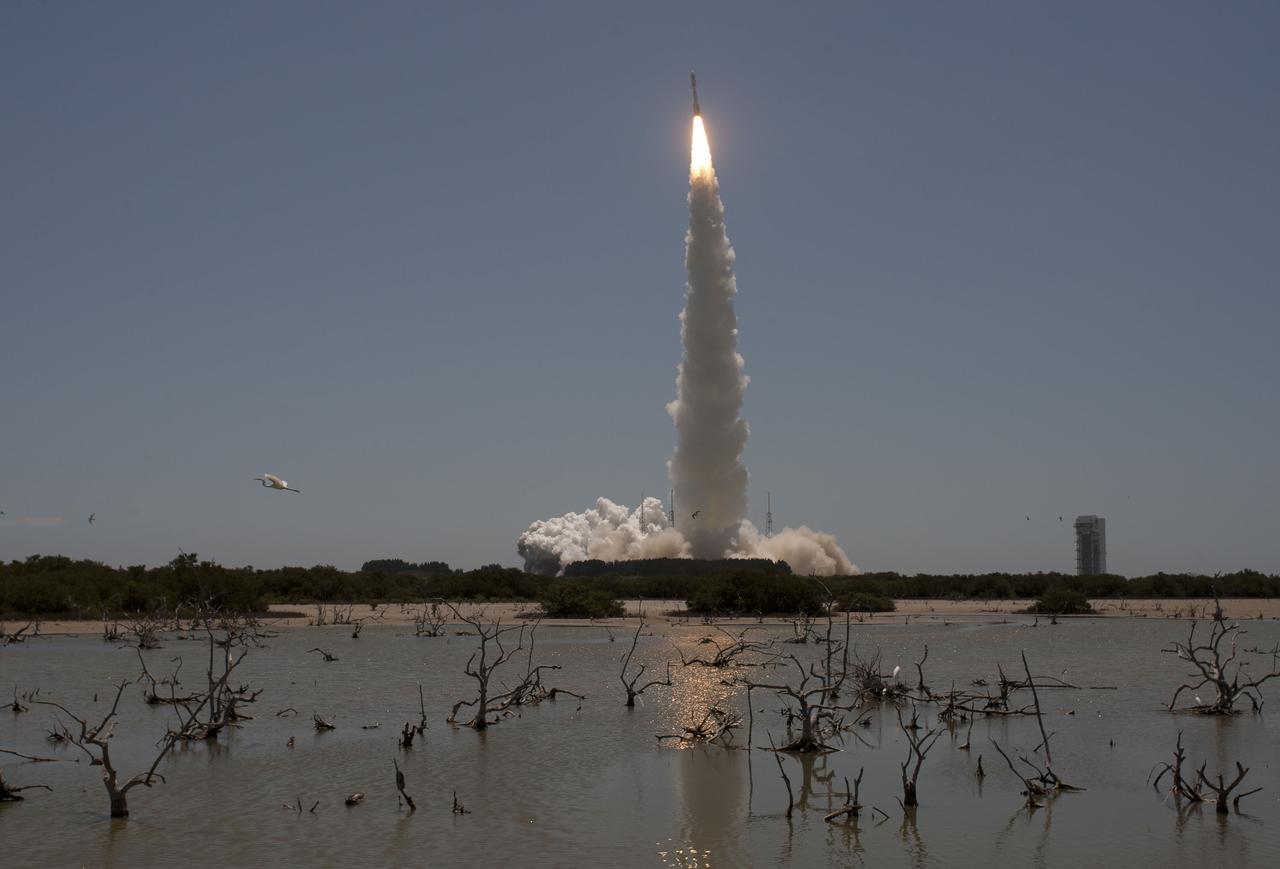
CAPE CANAVERAL, Fla. -- Reflected in water surrounding Space Launch Complex 41 on Cape Canaveral Air Force Station in Florida, fire lights up the sky as a United Launch Alliance Atlas V rocket lofts NASA's Juno planetary probe into space. Liftoff was at 12:25 p.m. EDT Aug. 5. The solar-powered spacecraft will orbit Jupiter's poles 33 times to find out more about the gas giant's origins, structure, atmosphere and magnetosphere and investigate the existence of a solid planetary core. For more information, visit www.nasa.gov/juno. Photo credit: Courtesy Scott Andrews

Labeled line drawing entitled GALILEO PROBE identifies the deceleration module aft cover, descent module, and deceleration module aeroshell configurations and dimensions prior to and during entry into Jupiter's atmosphere.
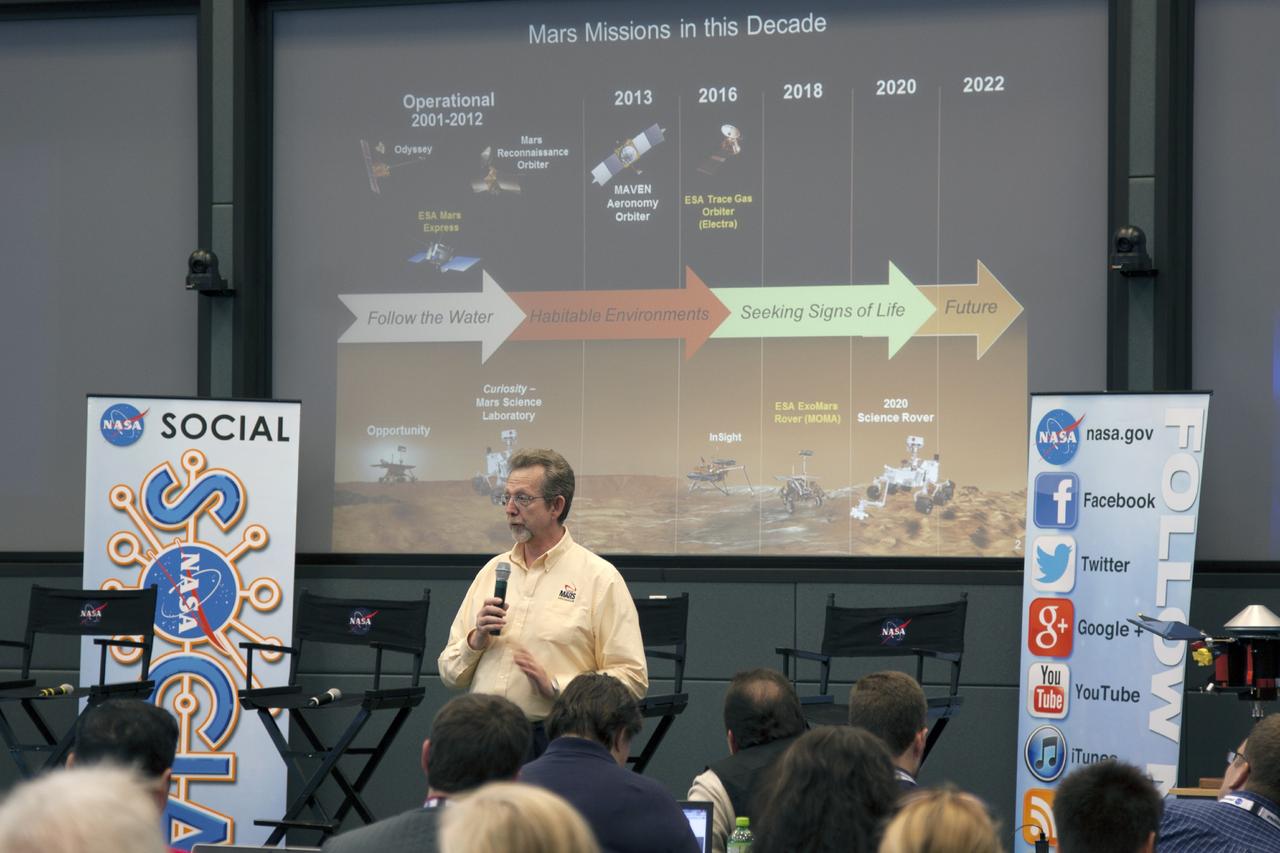
CAPE CANAVERAL, Fla. -- In the conference room of Operations Support Building II at NASA's Kennedy Space Center in Florida, social media participants listen to a briefing on the Mars Atmosphere and Volatile Evolution, or MAVEN, mission by Dr. Jim Green, the agency's Planetary Science director. The social media participants gathered at the Florida spaceport for the launch of the Mars Atmosphere and Volatile Evolution, or MAVEN, spacecraft. Their visit included tours of key facilities and participating in presentations by key NASA leaders who updated the space agency's current efforts. Photo credit: NASA/Jim Grossman
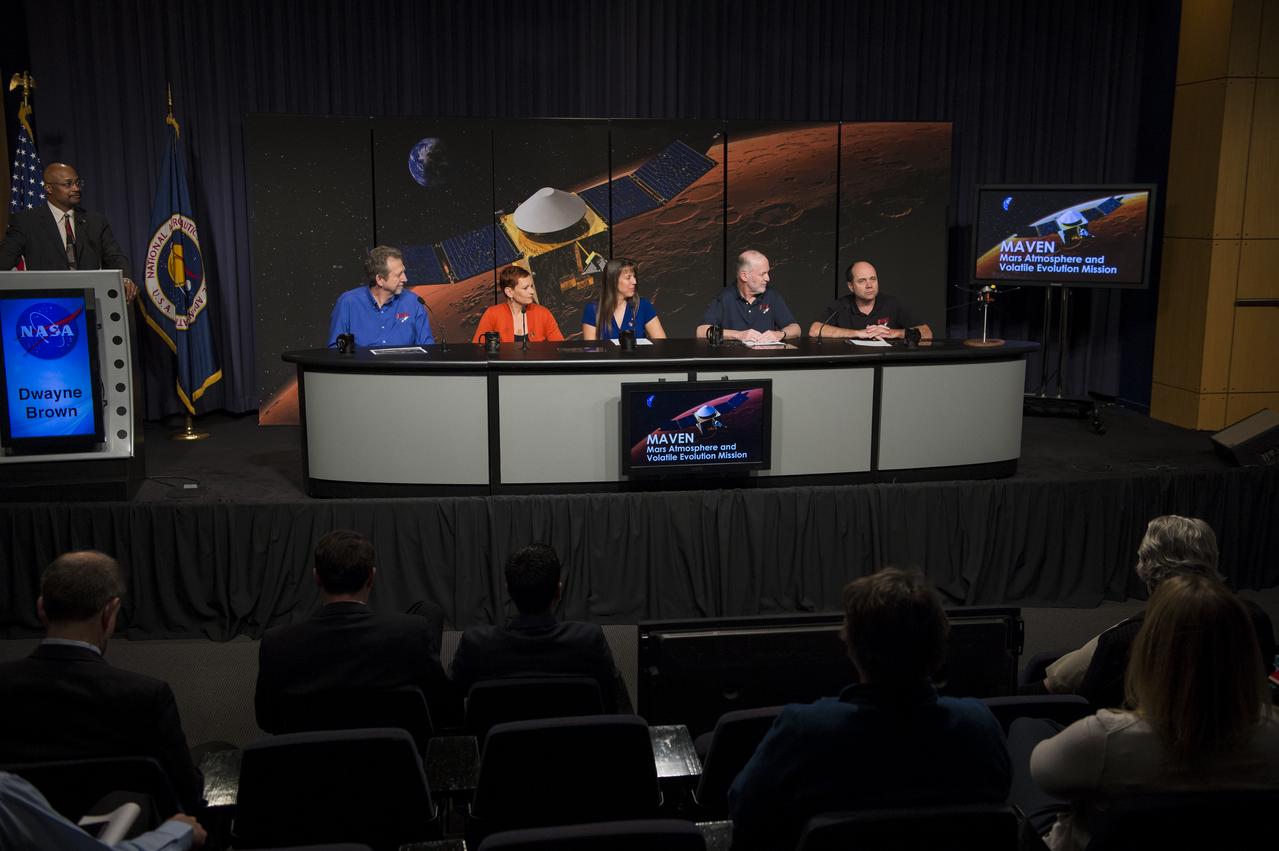
L-R: Dwayne Brown, NASA Public Affairs Officer, Jim Green, director, Planetary Science Division, NASA Headquarters, Lisa May, MAVEN program executive, NASA Headquarters, Kelly Fast, MAVEN program scientist, NASA Headquarters, Bruce Jakosky, MAVEN principal investigator, University of Colorado Boulder Laboratory for Atmospheric and Space Physics, and David Mitchell, MAVEN project manager, NASA's Goddard Space Flight Center, Greenbelt, Md. discuss the upcoming launch of the Mars Atmosphere and Volatile Evolution (MAVEN) mission, at a press conference at NASA Headquarters in Washington on Monday, Oct. 28th, 2013. MAVEN is the agency's next mission to Mars and the first devoted to understanding the upper atmosphere of the Red Planet. (Photo credit: NASA/Jay Westcott)
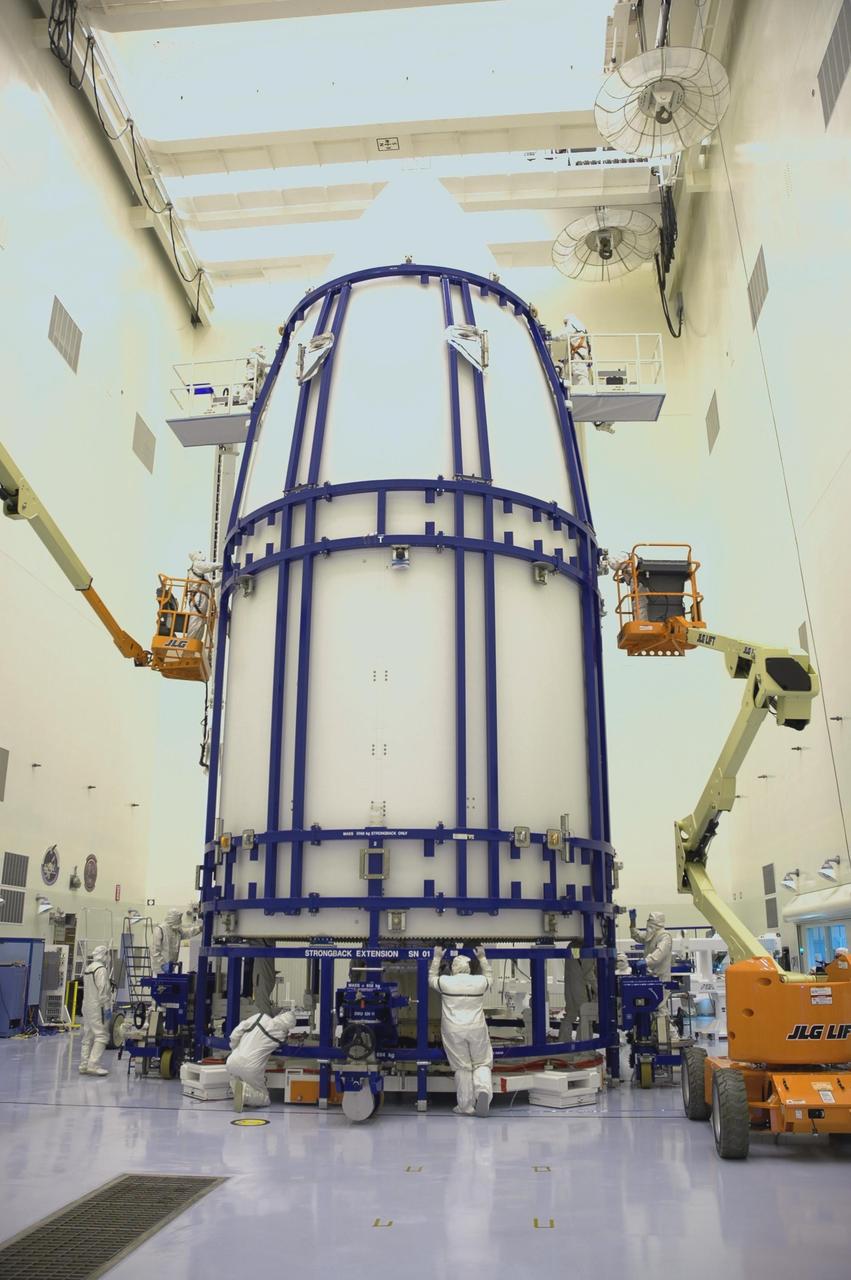
KENNEDY SPACE CENTER, FLA. - In the Payload Hazardous Servicing Facility, clean-suit garbed workers secure the fairing sections around the New Horizons spacecraft for encapsulation. The fairing protects the spacecraft during launch and flight through the atmosphere. Once out of the atmosphere, the fairing is jettisoned. The compact 1,060-pound New Horizons probe carries seven scientific instruments that will characterize the global geology and geomorphology of Pluto and its moon Charon, map their surface compositions and temperatures, and examine Pluto's complex atmosphere. After that, flybys of Kuiper Belt objects from even farther in the solar system may be undertaken in an extended mission. New Horizons is the first mission in NASA's New Frontiers program of medium-class planetary missions. The spacecraft, designed for NASA by the Johns Hopkins University Applied Physics Laboratory in Laurel, Md., will fly by Pluto and Charon as early as summer 2015.
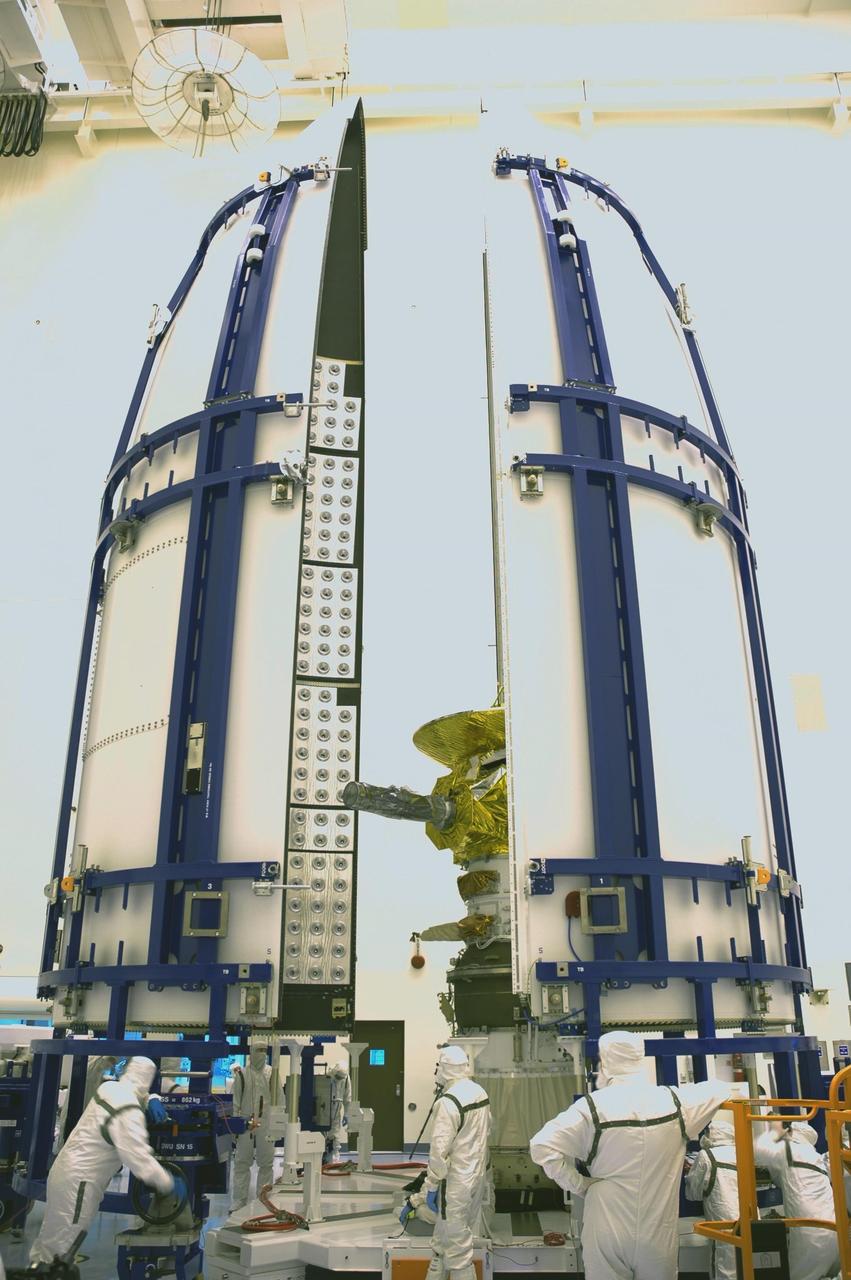
KENNEDY SPACE CENTER, FLA. - In the Payload Hazardous Servicing Facility, the two fairing sections close in around the New Horizons spacecraft to encapsulate it. The fairing protects the spacecraft during launch and flight through the atmosphere. Once out of the atmosphere, the fairing is jettisoned. The compact 1,060-pound New Horizons probe carries seven scientific instruments that will characterize the global geology and geomorphology of Pluto and its moon Charon, map their surface compositions and temperatures, and examine Pluto's complex atmosphere. After that, flybys of Kuiper Belt objects from even farther in the solar system may be undertaken in an extended mission. New Horizons is the first mission in NASA's New Frontiers program of medium-class planetary missions. The spacecraft, designed for NASA by the Johns Hopkins University Applied Physics Laboratory in Laurel, Md., will fly by Pluto and Charon as early as summer 2015.

KENNEDY SPACE CENTER, FLA. - In the Vertical Integration Facility on Launch Complex 41, Cape Canaveral Air Force Station, Hal Weaver, New Horizons project scientist with the Johns Hopkins University Applied Physics Laboratory, signs the fairing enclosing the New Horizons spacecraft. The fairing protects the spacecraft during launch and flight through the atmosphere. Once out of the atmosphere, the fairing is jettisoned. The compact 1,060-pound New Horizons probe carries seven scientific instruments that will characterize the global geology and geomorphology of Pluto and its moon Charon, map their surface compositions and temperatures, and examine Pluto's complex atmosphere. New Horizons is the first mission in NASA's New Frontiers program of medium-class planetary missions. The spacecraft, designed for NASA by the Johns Hopkins University Applied Physics Laboratory in Laurel, Md., will fly by Pluto and Charon as early as summer 2015.
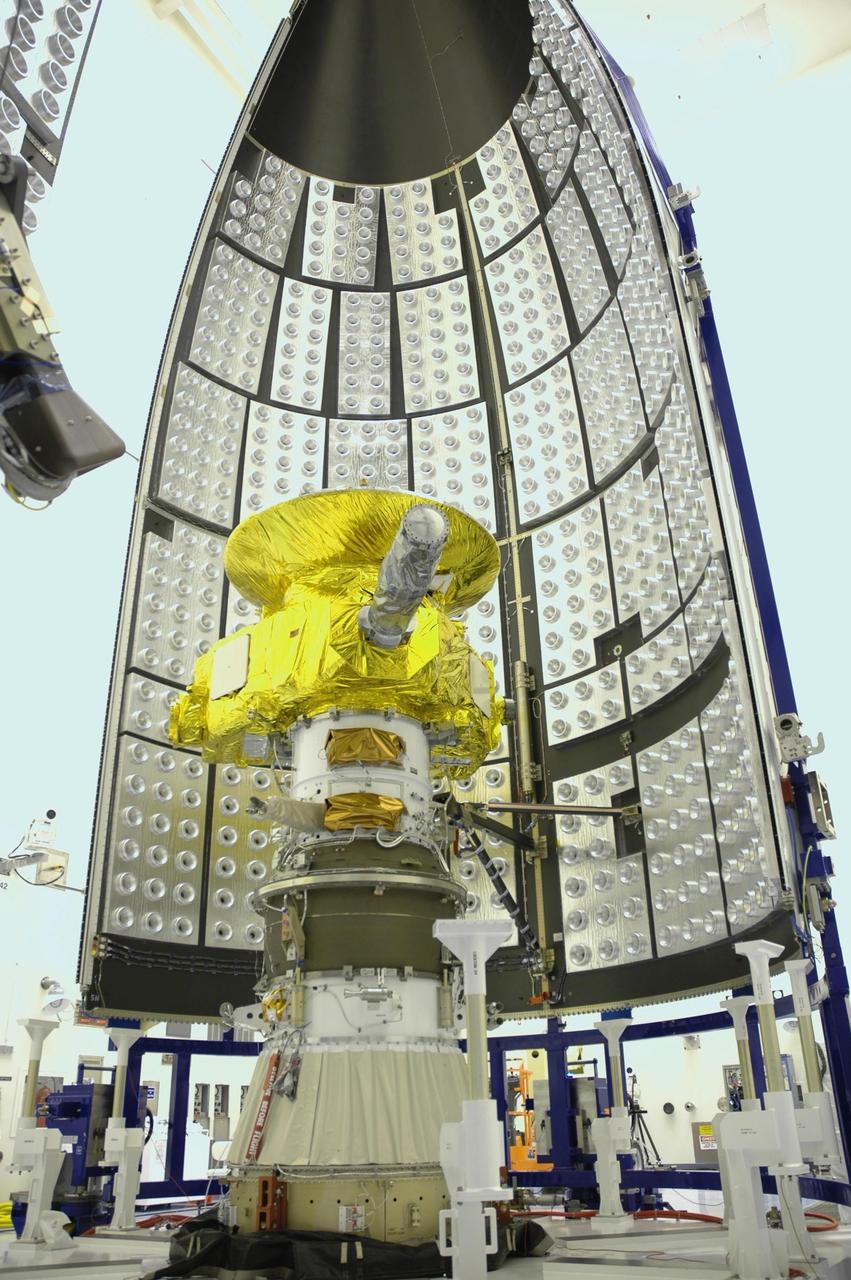
KENNEDY SPACE CENTER, FLA. - In the Payload Hazardous Servicing Facility, the New Horizons spacecraft waits for encapsulation within the fairing sections waiting nearby. The fairing protects the spacecraft during launch and flight through the atmosphere. Once out of the atmosphere, the fairing is jettisoned. The compact 1,060-pound New Horizons probe carries seven scientific instruments that will characterize the global geology and geomorphology of Pluto and its moon Charon, map their surface compositions and temperatures, and examine Pluto's complex atmosphere. After that, flybys of Kuiper Belt objects from even farther in the solar system may be undertaken in an extended mission. New Horizons is the first mission in NASA's New Frontiers program of medium-class planetary missions. The spacecraft, designed for NASA by the Johns Hopkins University Applied Physics Laboratory in Laurel, Md., will fly by Pluto and Charon as early as summer 2015.
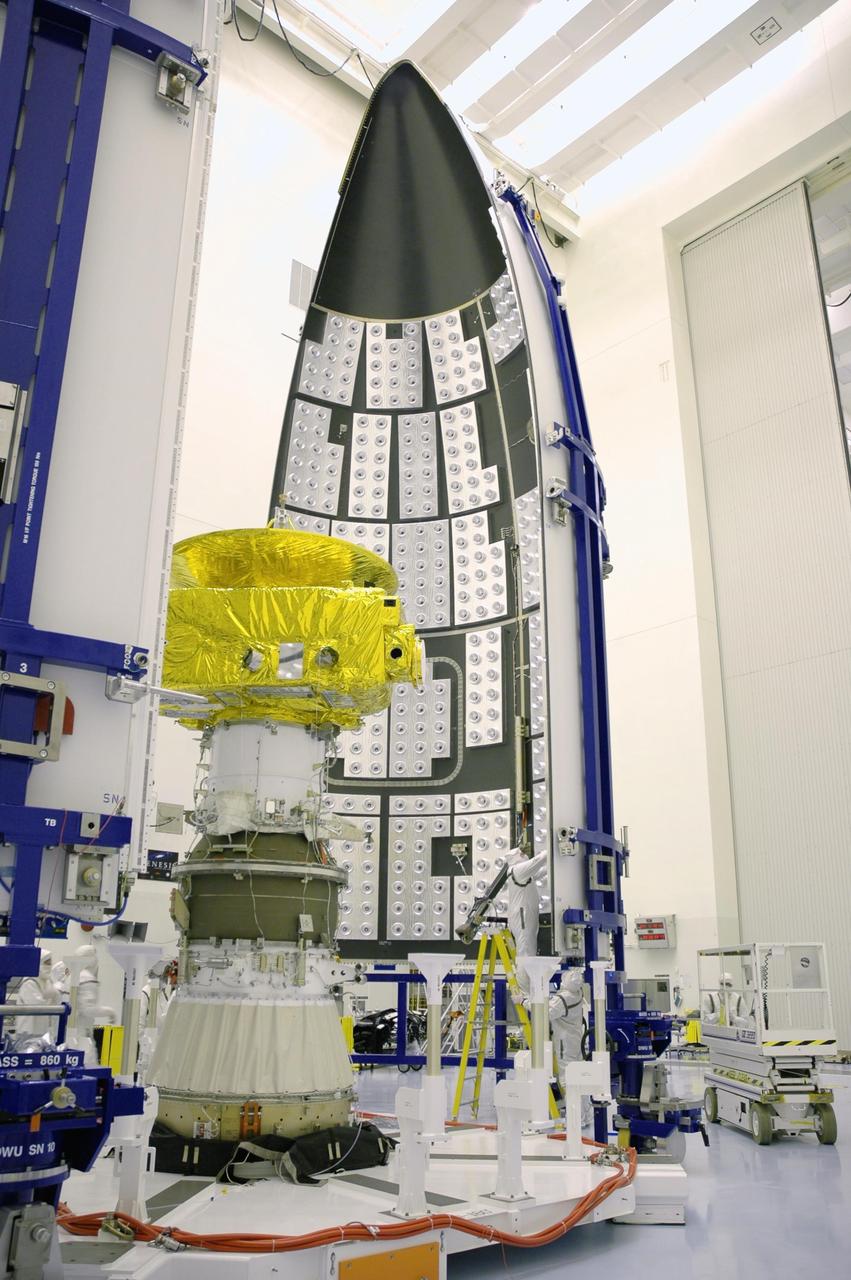
KENNEDY SPACE CENTER, FLA. - In the Payload Hazardous Servicing Facility, clean-suit garbed workers prepare the first fairing section (in the background) that will encapsulate the New Horizons spacecraft at left for flight. The fairing protects the spacecraft during launch and flight through the atmosphere. Once out of the atmosphere, the fairing is jettisoned. The compact 1,060-pound New Horizons probe carries seven scientific instruments that will characterize the global geology and geomorphology of Pluto and its moon Charon, map their surface compositions and temperatures, and examine Pluto's complex atmosphere. After that, flybys of Kuiper Belt objects from even farther in the solar system may be undertaken in an extended mission. New Horizons is the first mission in NASA's New Frontiers program of medium-class planetary missions. The spacecraft, designed for NASA by the Johns Hopkins University Applied Physics Laboratory in Laurel, Md., will fly by Pluto and Charon as early as summer 2015.
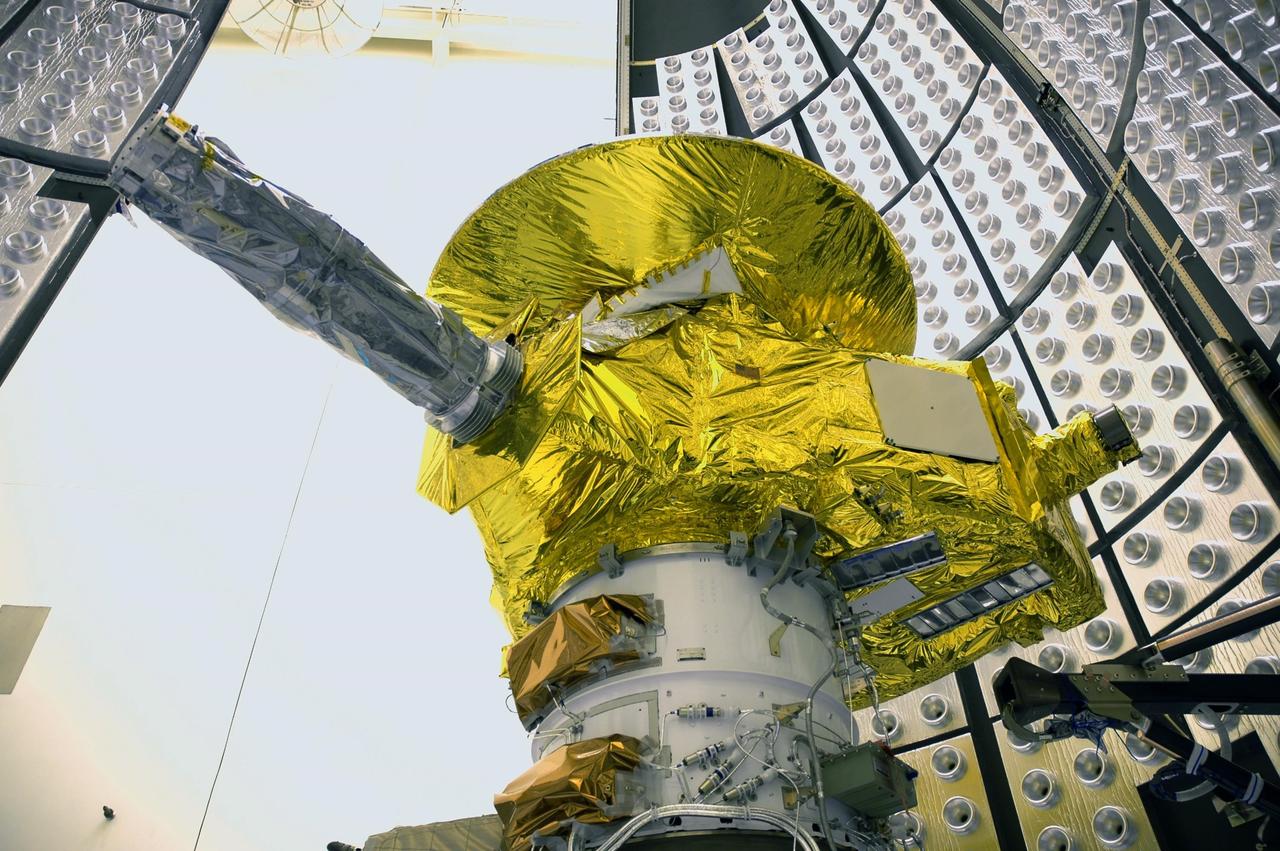
KENNEDY SPACE CENTER, FLA. - In the Payload Hazardous Servicing Facility, the two fairing sections move into place around the New Horizons spacecraft for encapsulation. The fairing protects the spacecraft during launch and flight through the atmosphere. Once out of the atmosphere, the fairing is jettisoned. The compact 1,060-pound New Horizons probe carries seven scientific instruments that will characterize the global geology and geomorphology of Pluto and its moon Charon, map their surface compositions and temperatures, and examine Pluto's complex atmosphere. After that, flybys of Kuiper Belt objects from even farther in the solar system may be undertaken in an extended mission. New Horizons is the first mission in NASA's New Frontiers program of medium-class planetary missions. The spacecraft, designed for NASA by the Johns Hopkins University Applied Physics Laboratory in Laurel, Md., will fly by Pluto and Charon as early as summer 2015.
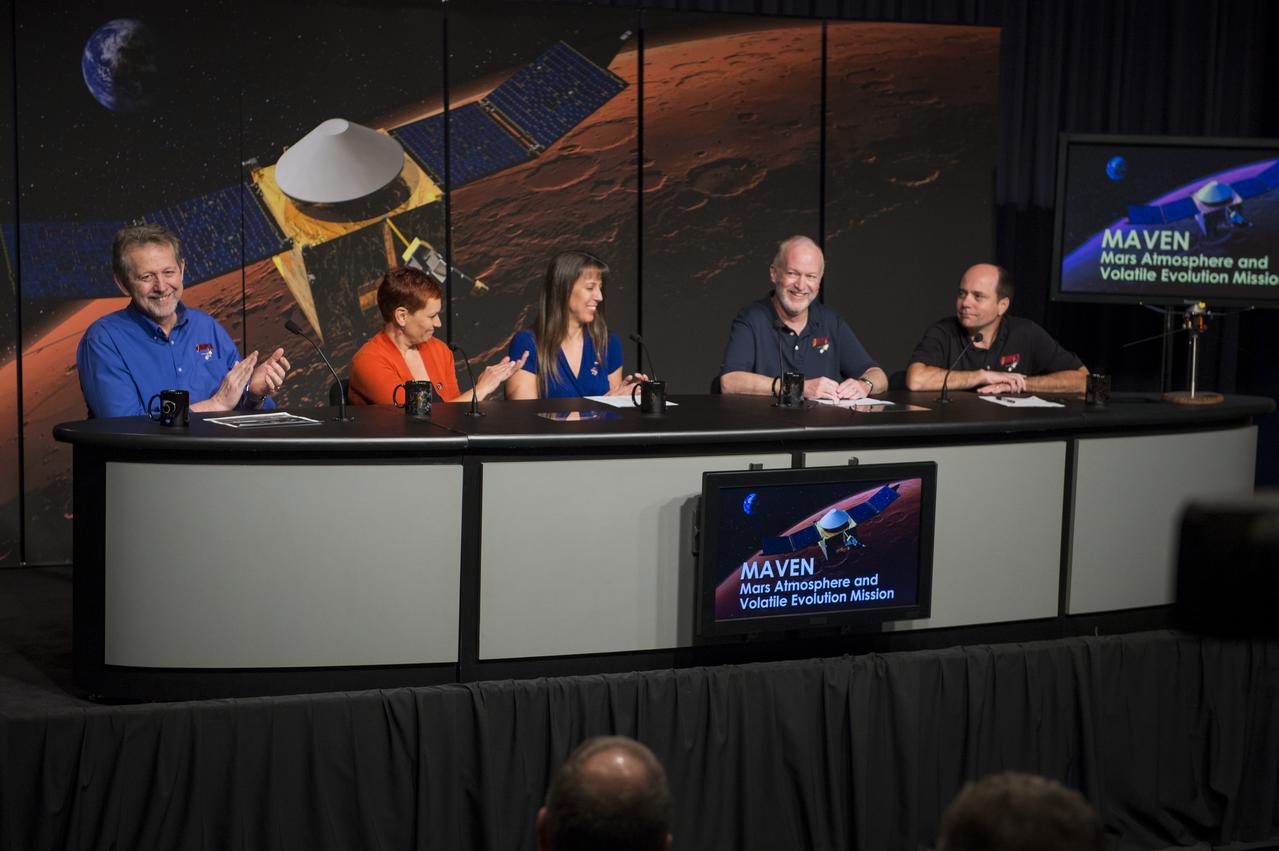
L-R: Jim Green, director, Planetary Science Division, NASA Headquarters, Lisa May, MAVEN program executive, NASA Headquarters, Kelly Fast, MAVEN program scientist, NASA Headquarters, Bruce Jakosky, MAVEN principal investigator, University of Colorado Boulder Laboratory for Atmospheric and Space Physics, and David Mitchell, MAVEN project manager, NASA's Goddard Space Flight Center, Greenbelt, Md. are applauded at the end of a panel discussion on the upcoming launch of the Mars Atmosphere and Volatile Evolution (MAVEN) mission, at a press conference at NASA Headquarters in Washington on Monday, Oct. 28th, 2013. MAVEN is the agency's next mission to Mars and the first devoted to understanding the upper atmosphere of the Red Planet. (Photo credit: NASA/Jay Westcott)
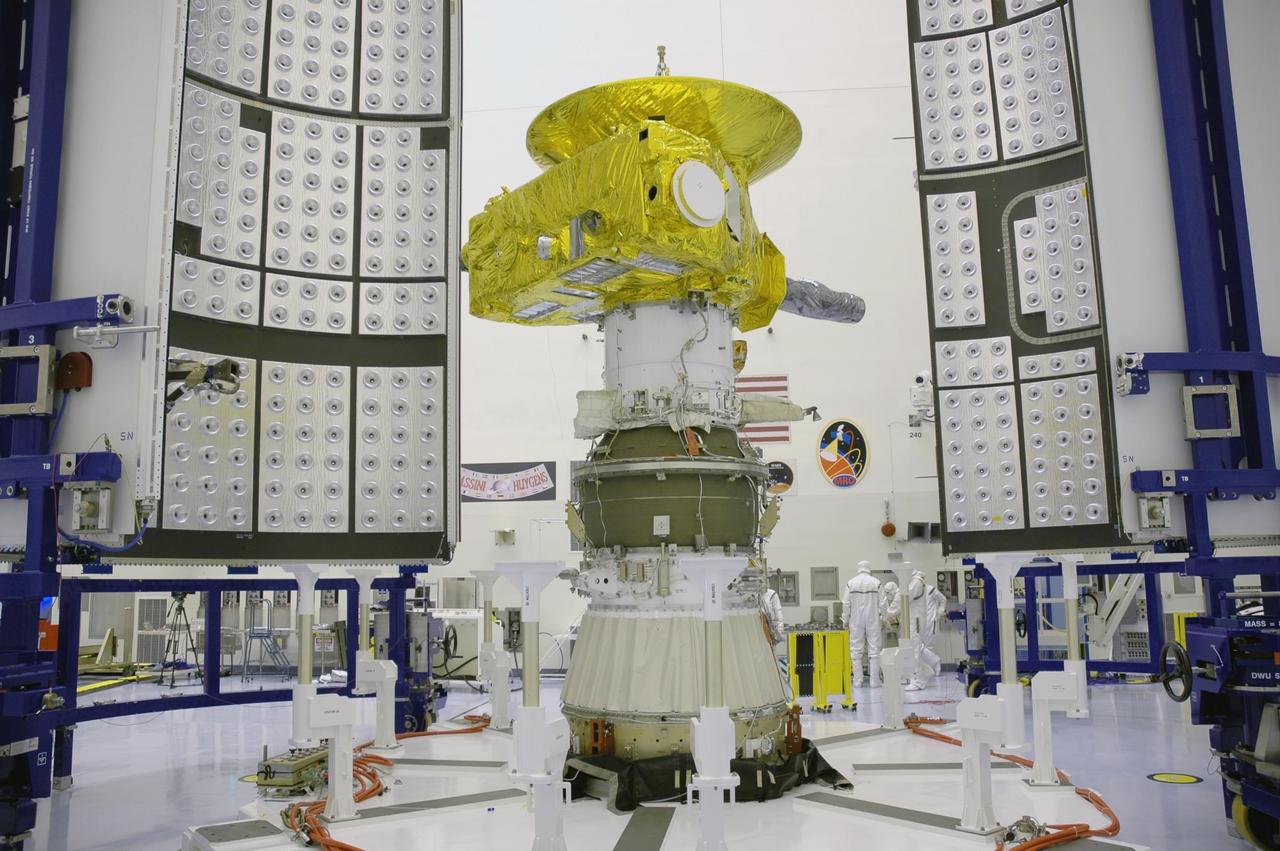
KENNEDY SPACE CENTER, FLA. - In the Payload Hazardous Servicing Facility, the two fairing sections are ready to be moved in place around the New Horizons spacecraft (in center) for encapsulation. The fairing protects the spacecraft during launch and flight through the atmosphere. Once out of the atmosphere, the fairing is jettisoned. The compact 1,060-pound New Horizons probe carries seven scientific instruments that will characterize the global geology and geomorphology of Pluto and its moon Charon, map their surface compositions and temperatures, and examine Pluto's complex atmosphere. After that, flybys of Kuiper Belt objects from even farther in the solar system may be undertaken in an extended mission. New Horizons is the first mission in NASA's New Frontiers program of medium-class planetary missions. The spacecraft, designed for NASA by the Johns Hopkins University Applied Physics Laboratory in Laurel, Md., will fly by Pluto and Charon as early as summer 2015.
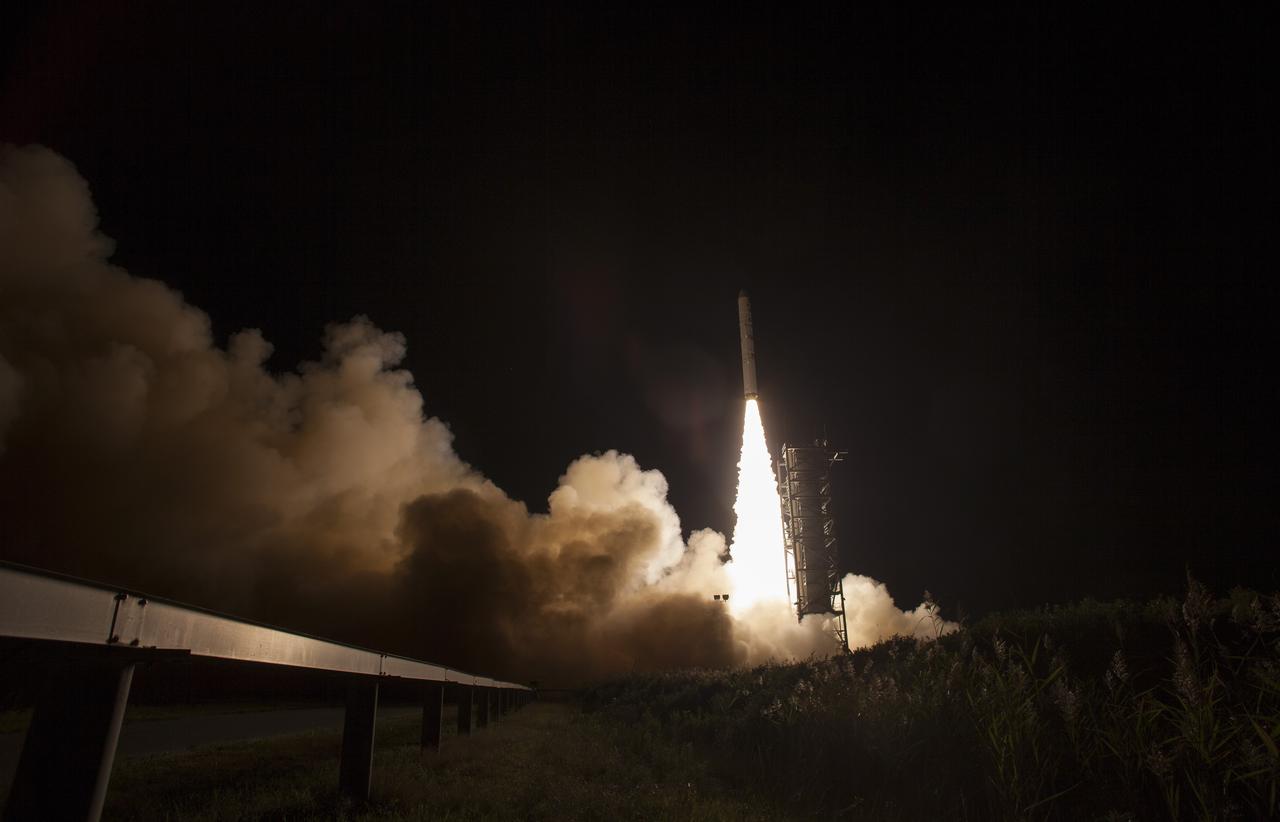
NASA's Lunar Atmosphere and Dust Environment Explorer (LADEE) observatory launches aboard the Minotaur V rocket from the Mid-Atlantic Regional Spaceport (MARS) at NASA's Wallops Flight Facility, Friday, Sept. 6, 2013 in Virginia. LADEE is a robotic mission that will orbit the moon where it will provide unprecedented information about the environment around the moon and give scientists a better understanding of other planetary bodies in our solar system and beyond. Photo Credit: (NASA/Carla Cioffi)
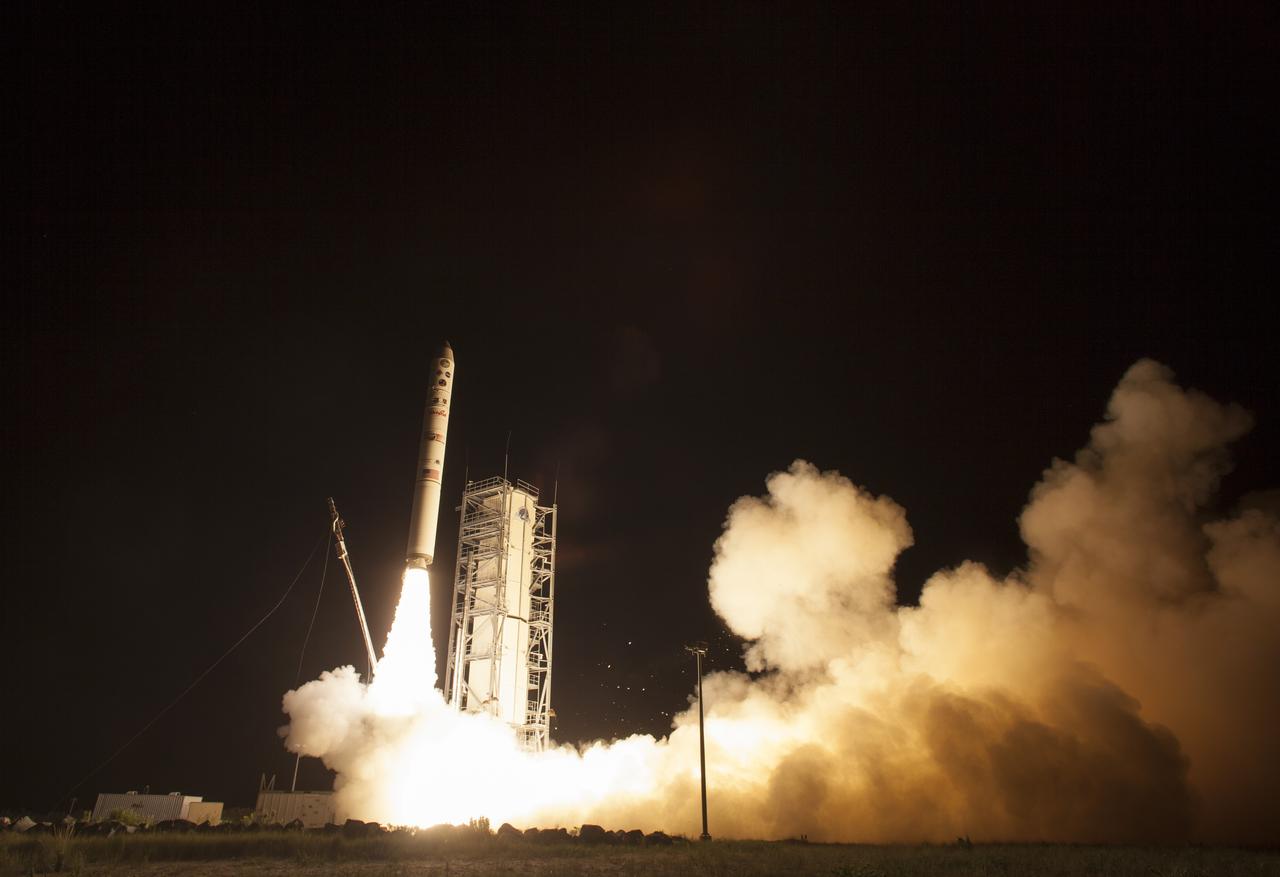
NASA's Lunar Atmosphere and Dust Environment Explorer (LADEE) observatory launches aboard the Minotaur V rocket from the Mid-Atlantic Regional Spaceport (MARS) at NASA's Wallops Flight Facility, Friday, Sept. 6, 2013 in Virginia. LADEE is a robotic mission that will orbit the moon where it will provide unprecedented information about the environment around the moon and give scientists a better understanding of other planetary bodies in our solar system and beyond. Photo Credit: (NASA/Carla Cioffi)
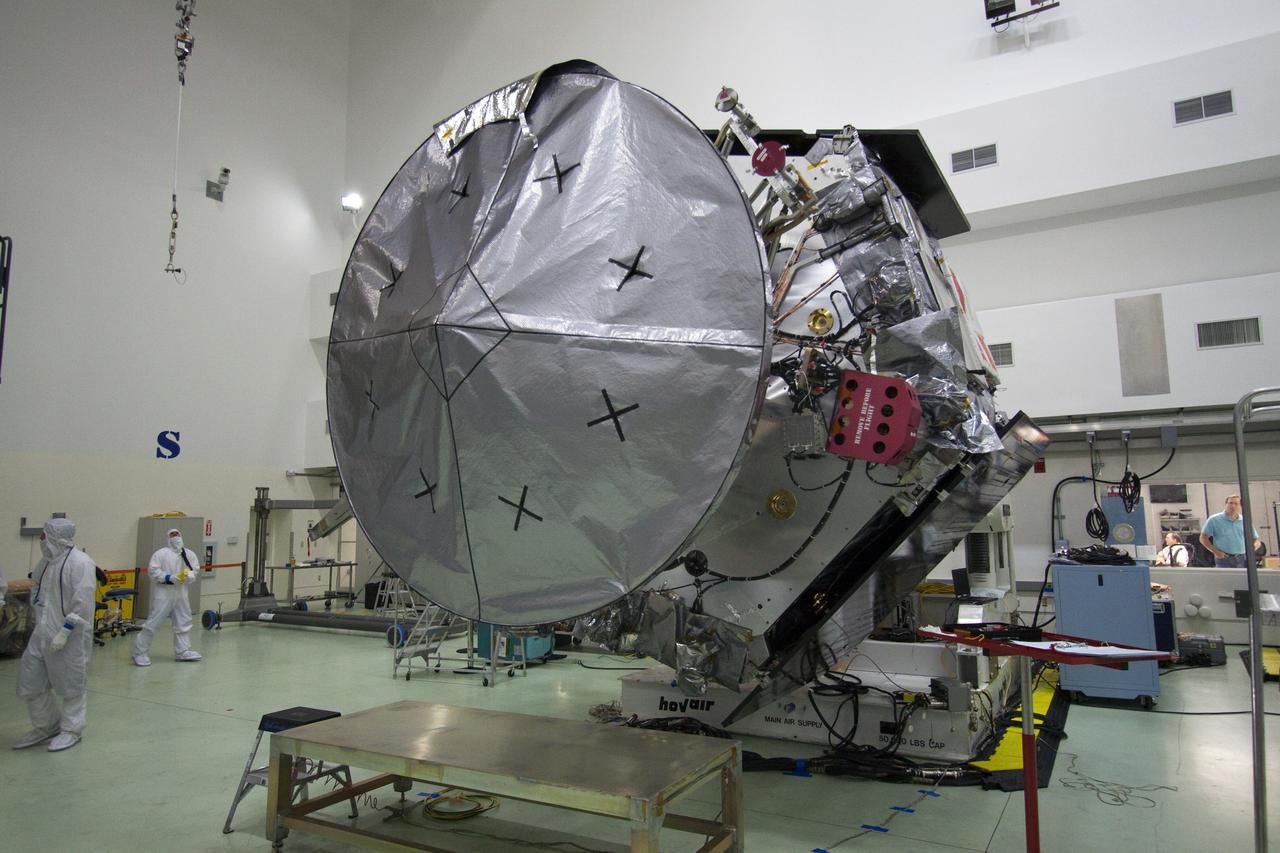
CAPE CANAVERAL, Fla. -- Technicians at Astrotech's payload processing facility in Titusville, Fla. have installed the high-gain antenna to NASA's Juno spacecraft. Juno is scheduled to launch aboard an Atlas V rocket from Cape Canaveral, Fla. Aug. 5.The solar-powered spacecraft will orbit Jupiter's poles 33 times to find out more about the gas giant's origins, structure, atmosphere and magnetosphere and investigate the existence of a solid planetary core. For more information visit, www.nasa.gov/juno. Photo credit: NASA/Jack Pfaller
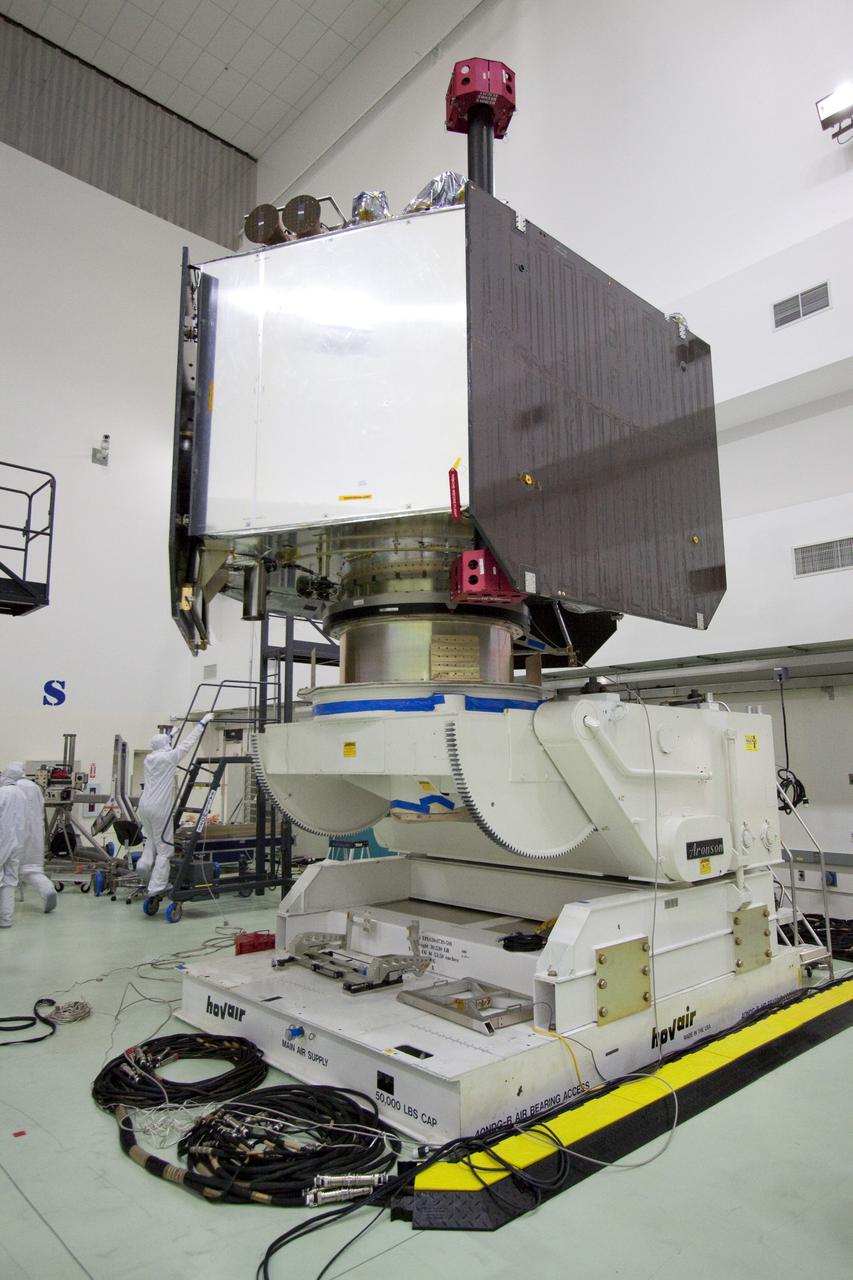
CAPE CANAVERAL, Fla. -- NASA's Juno spacecraft is secured to the rotation stand for testing in Astrotech's payload processing facility in Titusville, Fla. The solar-powered spacecraft will orbit Jupiter's poles 33 times to find out more about the gas giant's origins, structure, atmosphere and magnetosphere and investigate the existence of a solid planetary core. Juno is scheduled to launch aboard an Atlas V rocket from Cape Canaveral, Fla. Aug. 5. For more information visit, www.nasa.gov/juno. Photo credit: NASA/Jack Pfaller
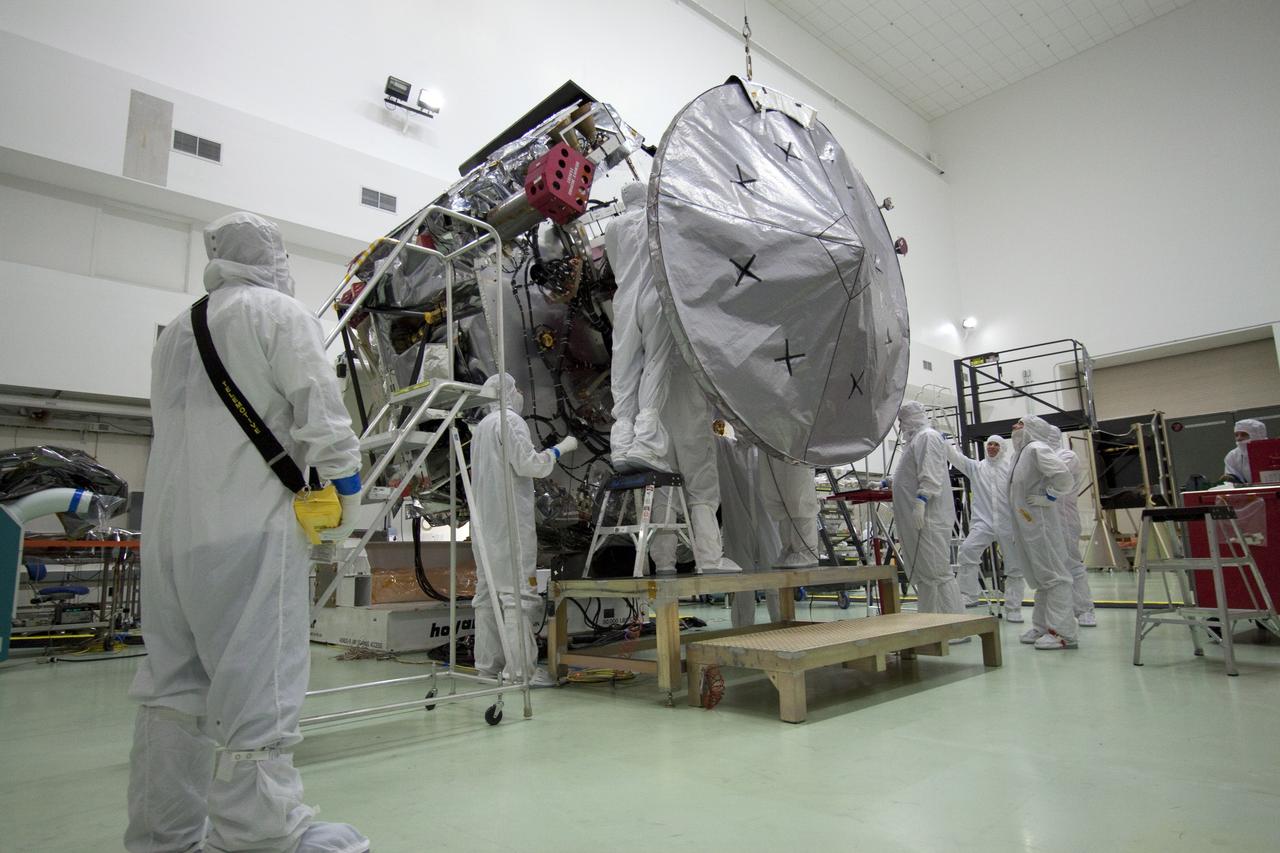
CAPE CANAVERAL, Fla. -- Technicians at Astrotech's payload processing facility in Titusville, Fla. install the high-gain antenna to NASA's Juno spacecraft. Juno is scheduled to launch aboard an Atlas V rocket from Cape Canaveral, Fla. Aug. 5.The solar-powered spacecraft will orbit Jupiter's poles 33 times to find out more about the gas giant's origins, structure, atmosphere and magnetosphere and investigate the existence of a solid planetary core. For more information visit, www.nasa.gov/juno. Photo credit: NASA/Jack Pfaller
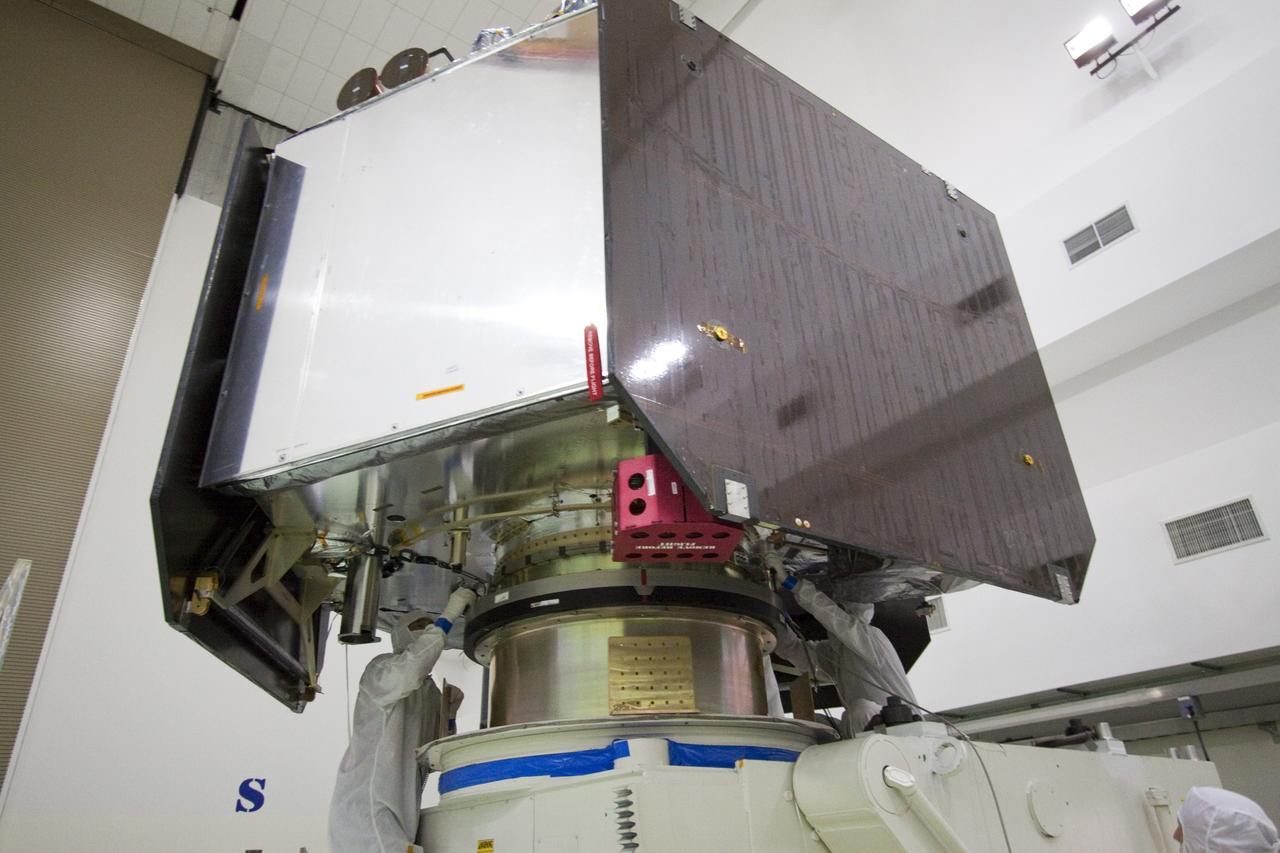
CAPE CANAVERAL, Fla. -- Technicians at Astrotech's payload processing facility in Titusville, Fla. secure NASA's Juno spacecraft to the rotation stand for testing. The solar-powered spacecraft will orbit Jupiter's poles 33 times to find out more about the gas giant's origins, structure, atmosphere and magnetosphere and investigate the existence of a solid planetary core. Juno is scheduled to launch aboard an Atlas V rocket from Cape Canaveral, Fla. Aug. 5. For more information visit, www.nasa.gov/juno. Photo credit: NASA/Jack Pfaller
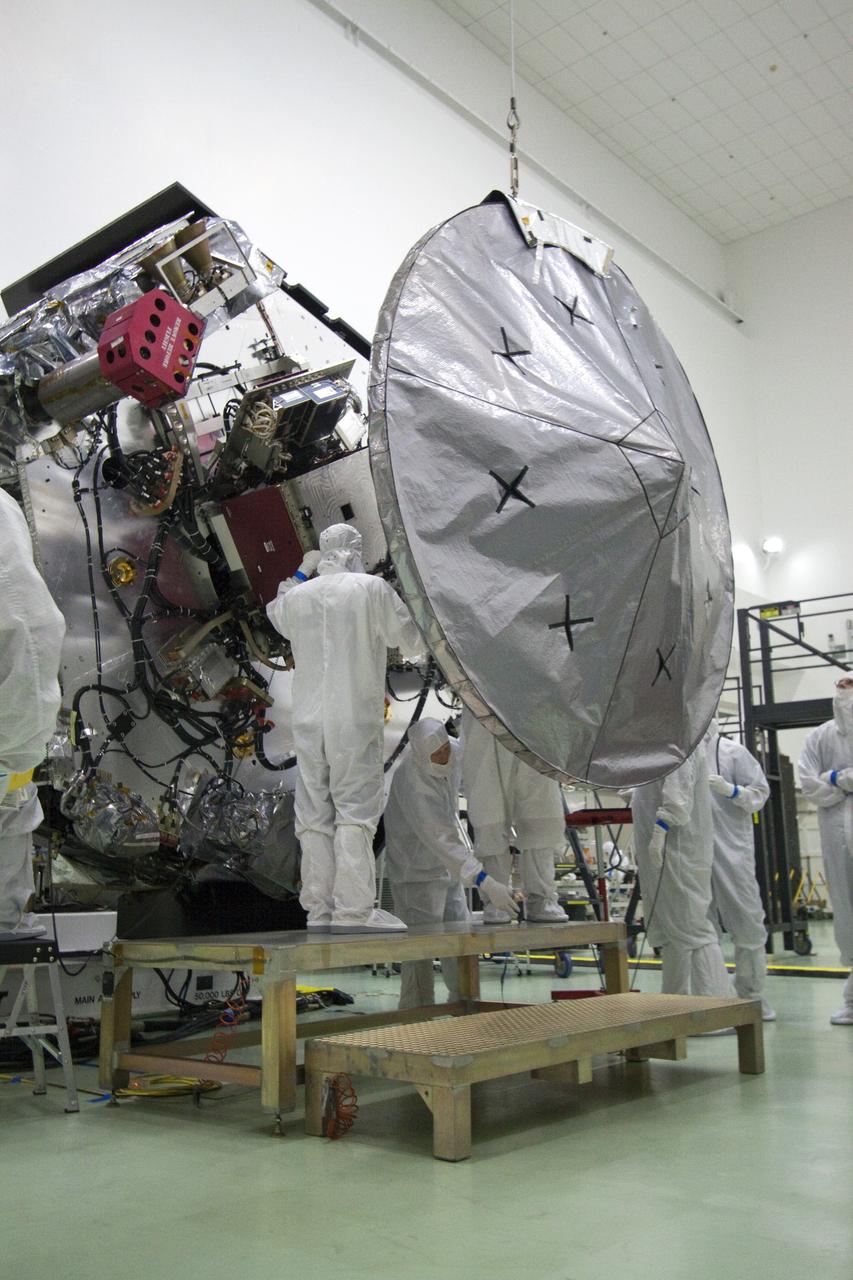
CAPE CANAVERAL, Fla. -- Technicians at Astrotech's payload processing facility in Titusville, Fla. install the high-gain antenna to NASA's Juno spacecraft. Juno is scheduled to launch aboard an Atlas V rocket from Cape Canaveral, Fla. Aug. 5.The solar-powered spacecraft will orbit Jupiter's poles 33 times to find out more about the gas giant's origins, structure, atmosphere and magnetosphere and investigate the existence of a solid planetary core. For more information visit, www.nasa.gov/juno. Photo credit: NASA/Jack Pfaller
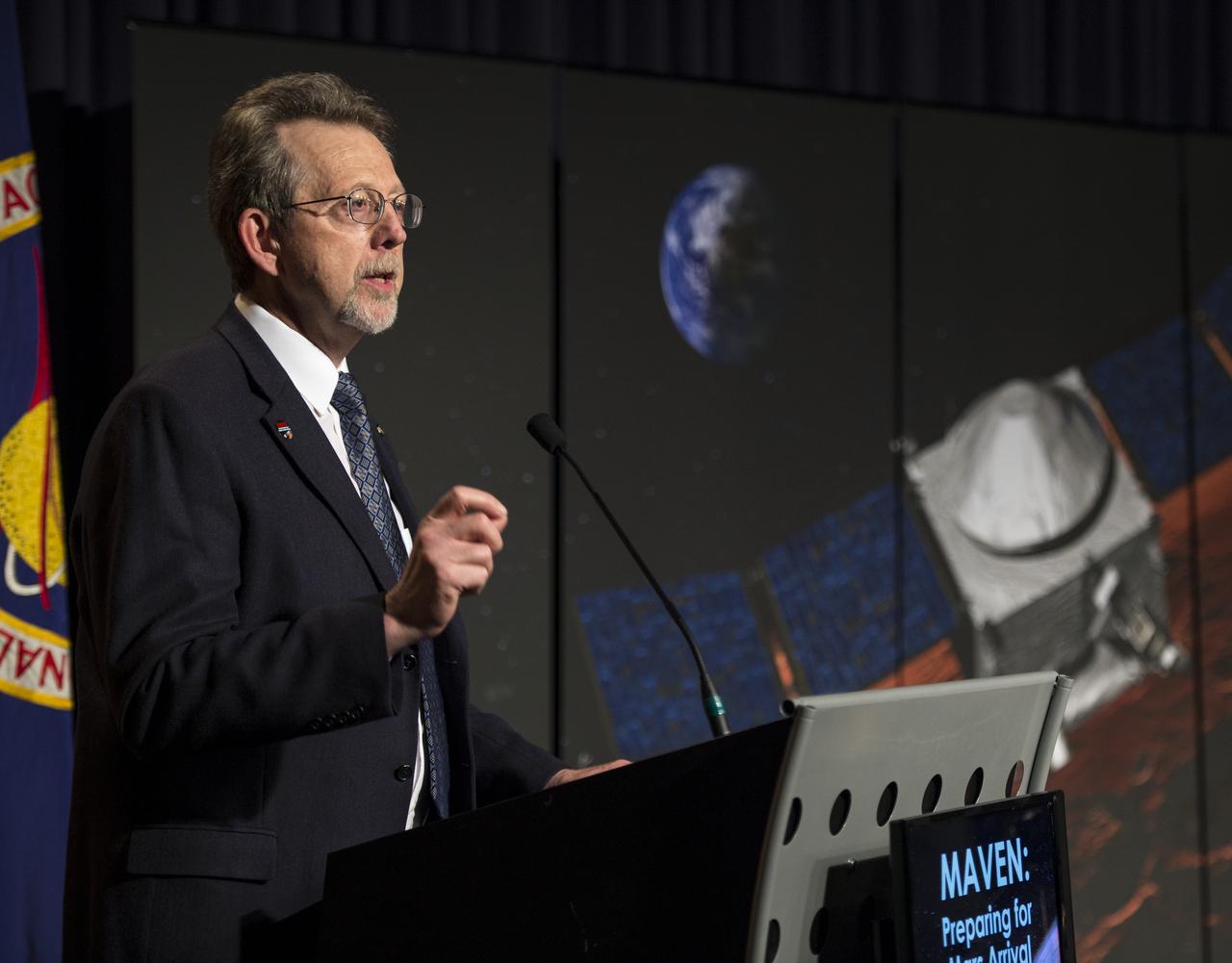
Dr. Jim Green, NASA‘s Planetary Science Division Director and Head of Mars Program, gives opening remarks at a media briefing where panelist outlined activities around the Sunday, Sept. 21 orbital insertion at Mars of the agency’s Mars Atmosphere and Volatile EvolutioN (MAVEN) spacecraft, Wednesday, Sept. 17, 2014 at NASA Headquarters in Washington. (Photo credit: NASA/Bill Ingalls)
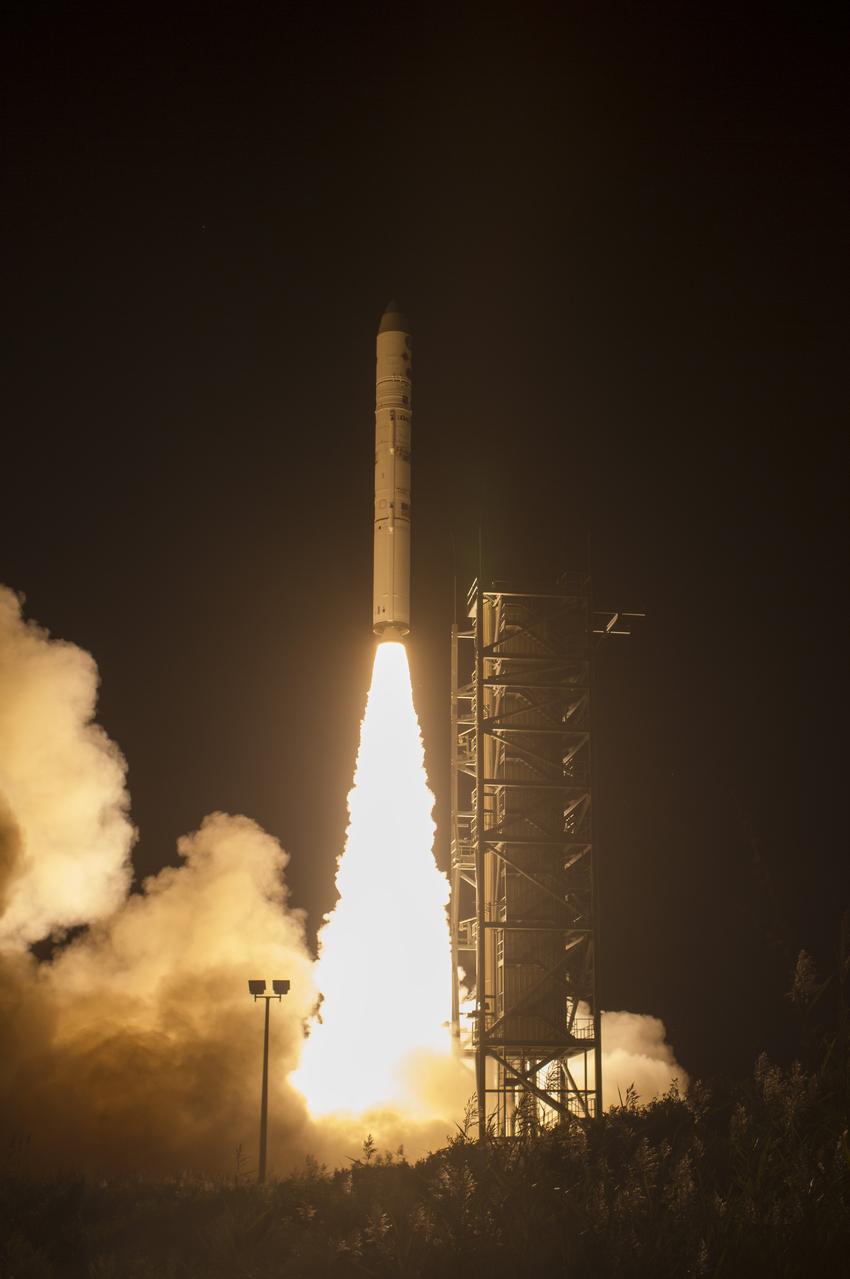
NASA's Lunar Atmosphere and Dust Environment Explorer (LADEE) observatory launches aboard the Minotaur V rocket from the Mid-Atlantic Regional Spaceport (MARS) at NASA's Wallops Flight Facility, Friday, Sept. 6, 2013 in Virginia. LADEE is a robotic mission that will orbit the moon where it will provide unprecedented information about the environment around the moon and give scientists a better understanding of other planetary bodies in our solar system and beyond. Photo Credit: (NASA/Carla Cioffi)
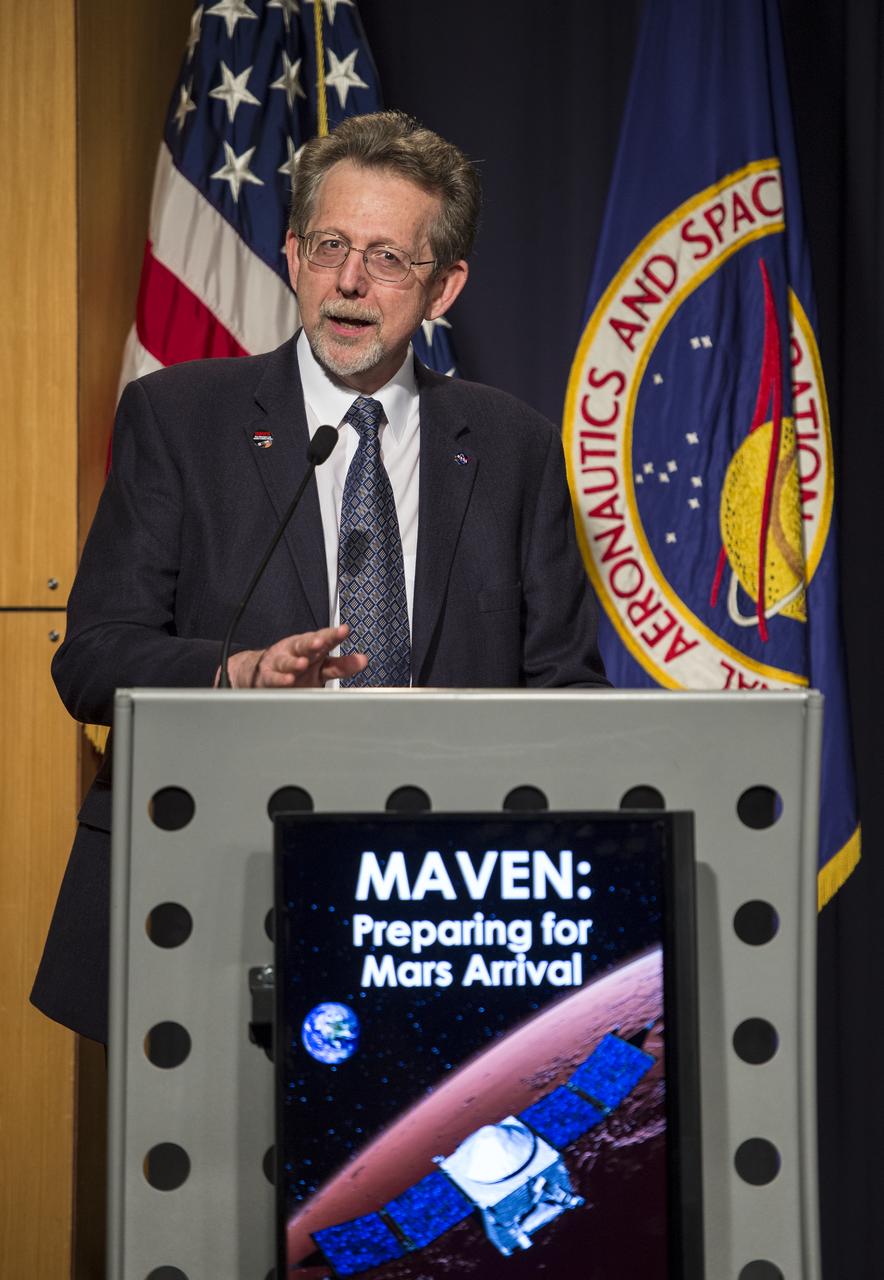
Dr. Jim Green, NASA‘s Planetary Science Division Director and Head of Mars Program, gives opening remarks at a media briefing where panelist outlined activities around the Sunday, Sept. 21 orbital insertion at Mars of the agency’s Mars Atmosphere and Volatile EvolutioN (MAVEN) spacecraft, Wednesday, Sept. 17, 2014 at NASA Headquarters in Washington. (Photo credit: NASA/Bill Ingalls)

CAPE CANAVERAL, Fla. -- NASA's Juno planetary probe, enclosed in its payload fairing, is moments away from liftoff atop a United Launch Alliance Atlas V rocket. Leaving from Space Launch Complex 41 and its four lightning protection system towers on Cape Canaveral Air Force Station in Florida, the spacecraft will embark on a five-year journey to Jupiter. Liftoff was at 12:25 p.m. EDT Aug. 5. The solar-powered spacecraft will orbit Jupiter's poles 33 times to find out more about the gas giant's origins, structure, atmosphere and magnetosphere and investigate the existence of a solid planetary core. For more information, visit www.nasa.gov/juno. Photo credit: NASA/Tony Gray and Don Kight
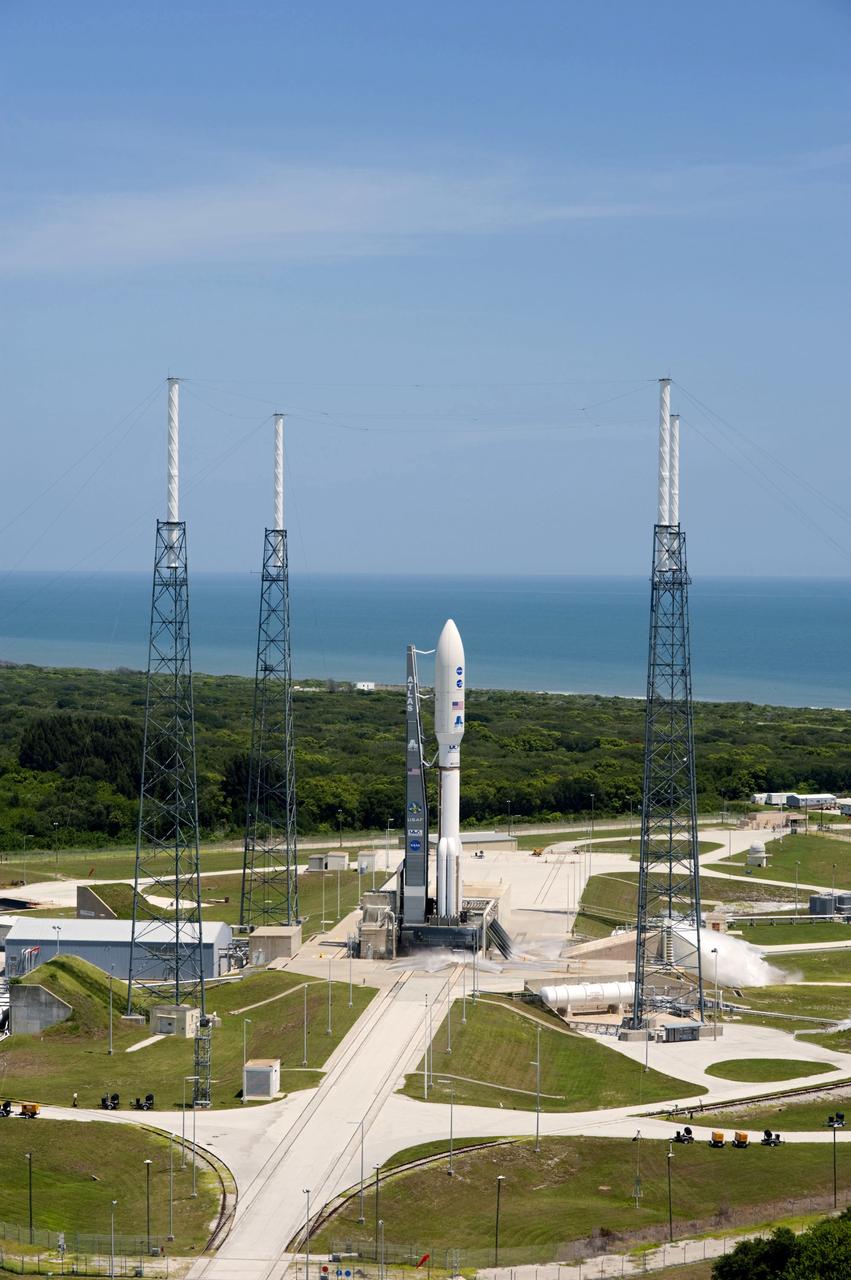
CAPE CANAVERAL, Fla. -- Backdropped by the Atlantic Ocean and surrounded by its four-tower lightning protection system, NASA's Juno planetary probe, enclosed in its payload fairing, is seconds away from liftoff atop a United Launch Alliance Atlas V rocket. Leaving from Space Launch Complex 41 on Cape Canaveral Air Force Station in Florida, the spacecraft will embark on a five-year journey to Jupiter. On the right, water is seen dumping into a flame trench to suppress vibrations at launch. Liftoff was at 12:25 p.m. EDT Aug. 5. The solar-powered spacecraft will orbit Jupiter's poles 33 times to find out more about the gas giant's origins, structure, atmosphere and magnetosphere and investigate the existence of a solid planetary core. For more information, visit www.nasa.gov/juno. Photo credit: NASA/Tony Gray and Tim Powers

CAPE CANAVERAL, Fla. -- Rising from fire and smoke, NASA's Juno planetary probe, enclosed in its payload fairing, launches atop a United Launch Alliance Atlas V rocket. Leaving from Space Launch Complex 41 and its four lightning protection system towers on Cape Canaveral Air Force Station in Florida, the spacecraft will embark on a five-year journey to Jupiter. Liftoff was at 12:25 p.m. EDT Aug. 5. The solar-powered spacecraft will orbit Jupiter's poles 33 times to find out more about the gas giant's origins, structure, atmosphere and magnetosphere and investigate the existence of a solid planetary core. For more information, visit www.nasa.gov/juno. Photo credit: NASA/Tony Gray and Don Kight
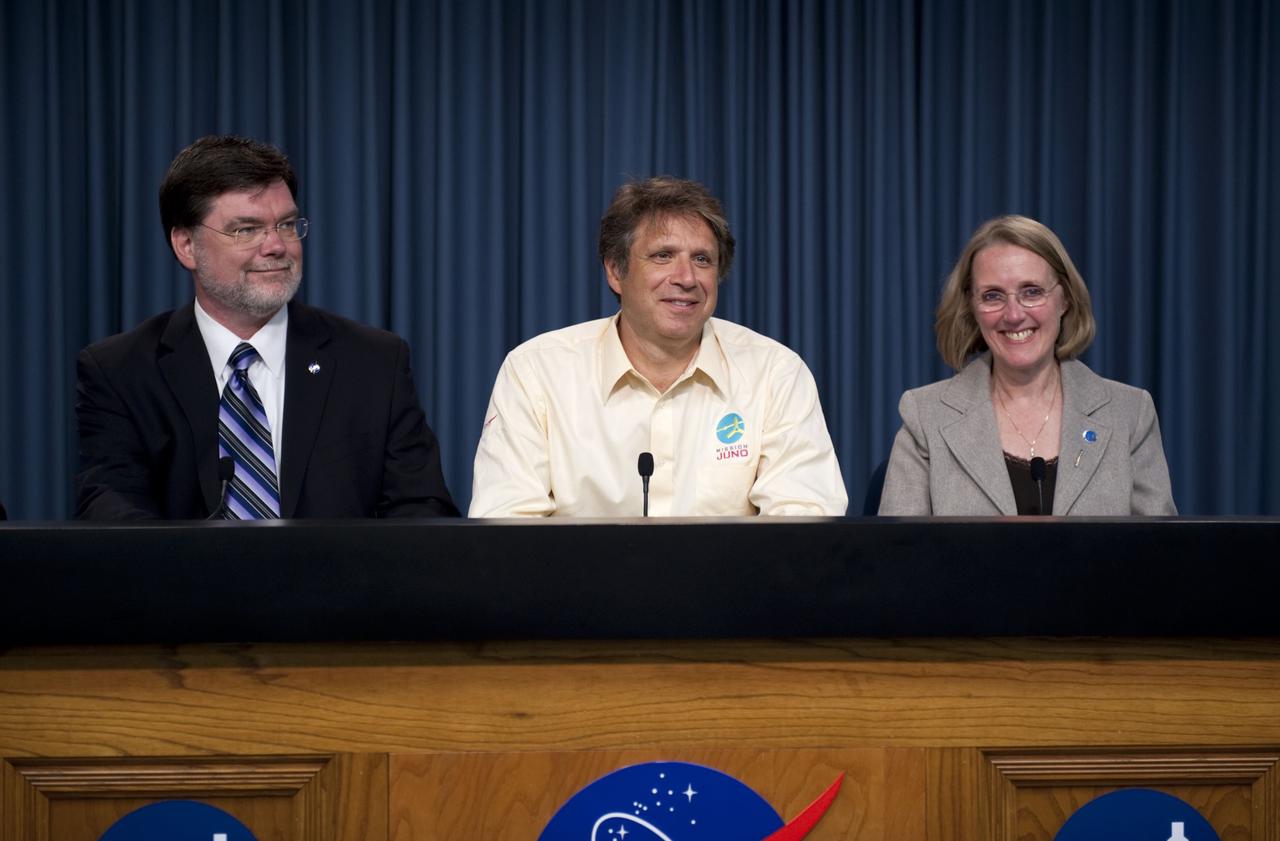
CAPE CANAVERAL, Fla. -- From left, Jim Adams, the deputy director of NASA's Planetary Science Division; Scott Bolton, Juno's principal investigator at the Southwest Research Institute (SWRI); and Jan Chodas, Juno's project manager at the Jet Propulsion Laboratory (JPL), participate in a post-launch news conference following the successful liftoff of the Juno spacecraft atop a United Launch Alliance Atlas V rocket. Launch was at 12:25 p.m. EDT Aug. 5. The solar-powered spacecraft now is on a five-year journey to Jupiter, where it will orbit the planet's poles 33 times to find out more about the gas giant's origins, structure, atmosphere and magnetosphere and investigate the existence of a solid planetary core. For more information, visit www.nasa.gov/juno. Photo credit: Kim Shiflett
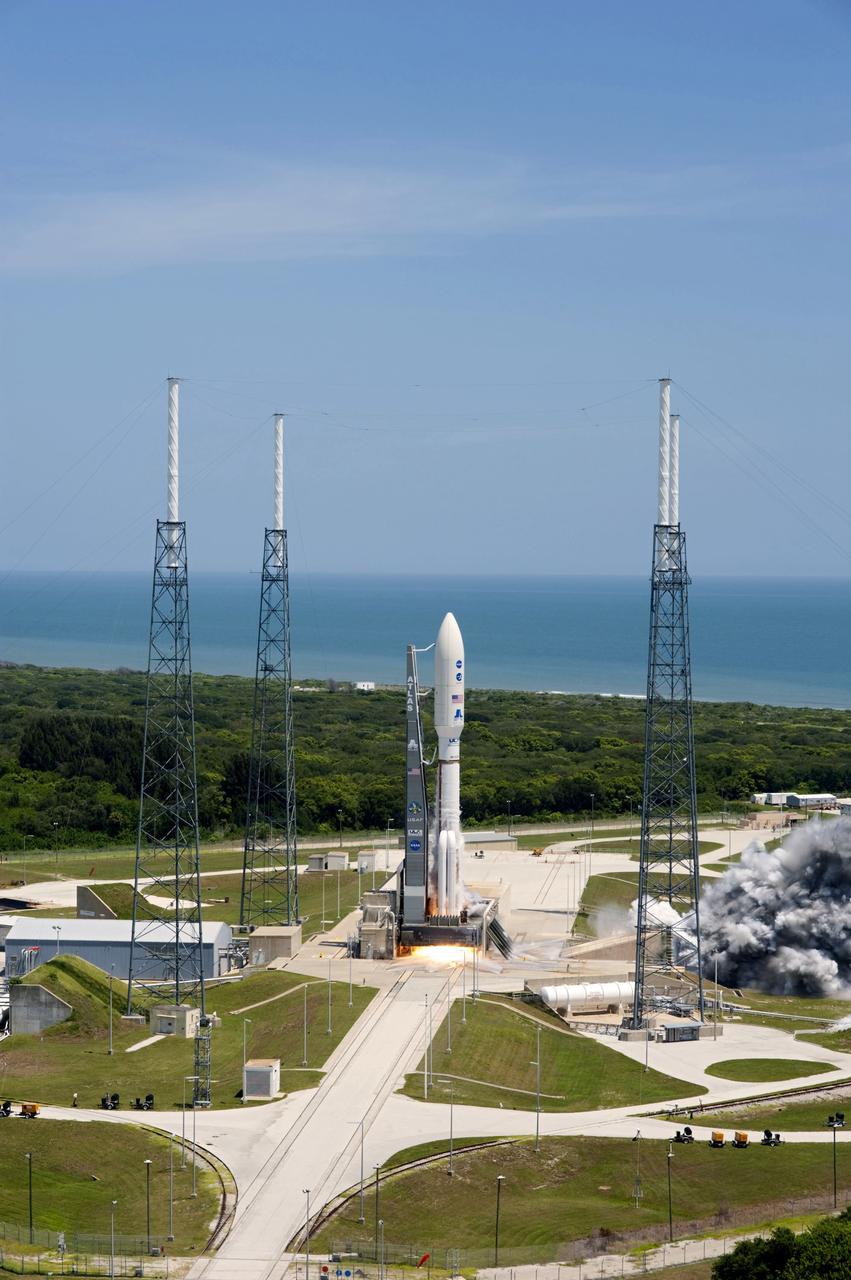
CAPE CANAVERAL, Fla. -- Backdropped by the Atlantic Ocean and surrounded by its four-tower lightning protection system, NASA's Juno planetary probe, enclosed in its payload fairing, is seconds away from liftoff atop a United Launch Alliance Atlas V rocket. Leaving from Space Launch Complex 41 on Cape Canaveral Air Force Station in Florida, the spacecraft will embark on a five-year journey to Jupiter. Liftoff was at 12:25 p.m. EDT Aug. 5. The solar-powered spacecraft will orbit Jupiter's poles 33 times to find out more about the gas giant's origins, structure, atmosphere and magnetosphere and investigate the existence of a solid planetary core. For more information, visit www.nasa.gov/juno. Photo credit: NASA/Tony Gray and Tim Powers
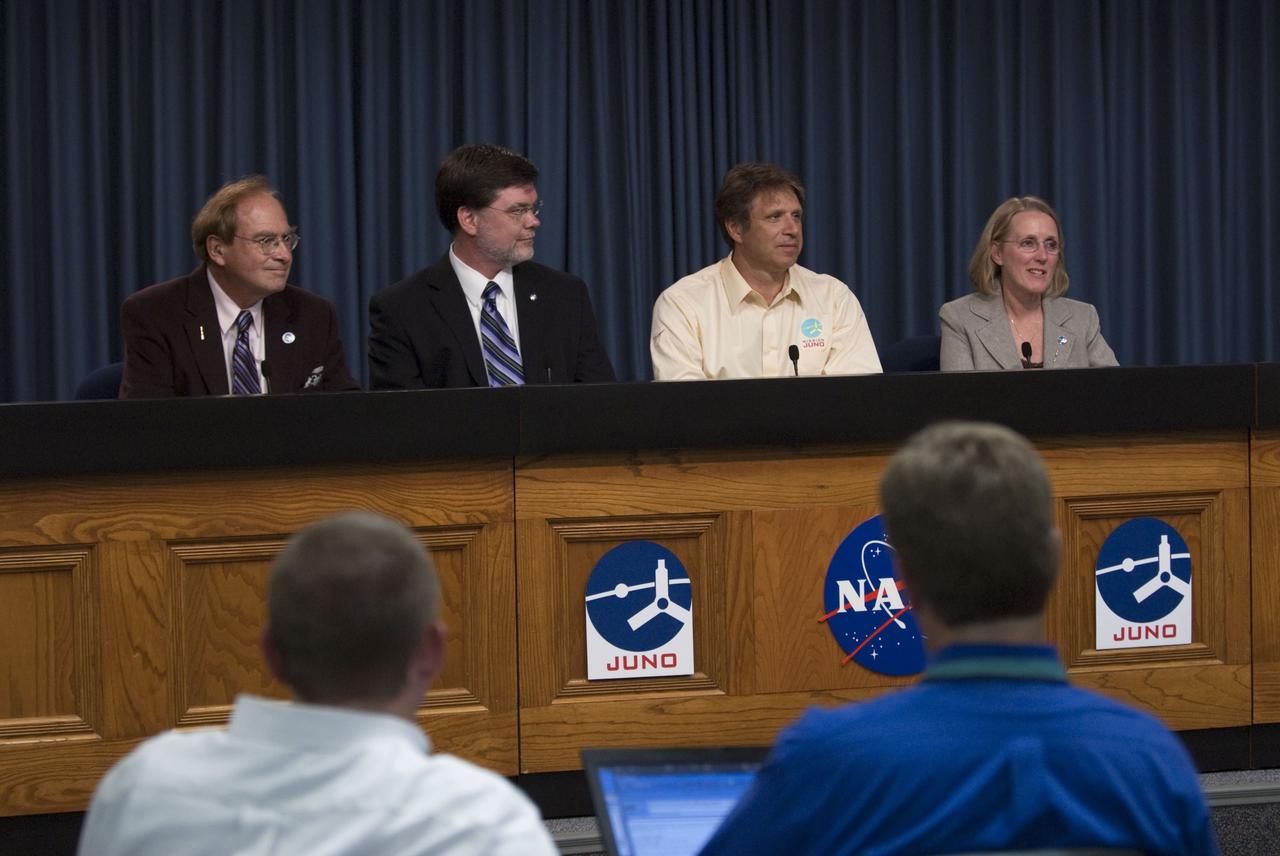
CAPE CANAVERAL, Fla. -- From left, NASA Public Affairs Officer George Diller; Jim Adams, the deputy director of NASA's Planetary Science Division; Scott Bolton, Juno's principal investigator at the Southwest Research Institute (SWRI); and Jan Chodas, Juno's project manager at the Jet Propulsion Laboratory (JPL), participate in a post-launch news conference following the successful liftoff of the Juno spacecraft atop a United Launch Alliance Atlas V rocket. Launch was at 12:25 p.m. EDT Aug. 5. The solar-powered spacecraft now is on a five-year journey to Jupiter, where it will orbit the planet's poles 33 times to find out more about the gas giant's origins, structure, atmosphere and magnetosphere and investigate the existence of a solid planetary core. For more information, visit www.nasa.gov/juno. Photo credit: Kim Shiflett
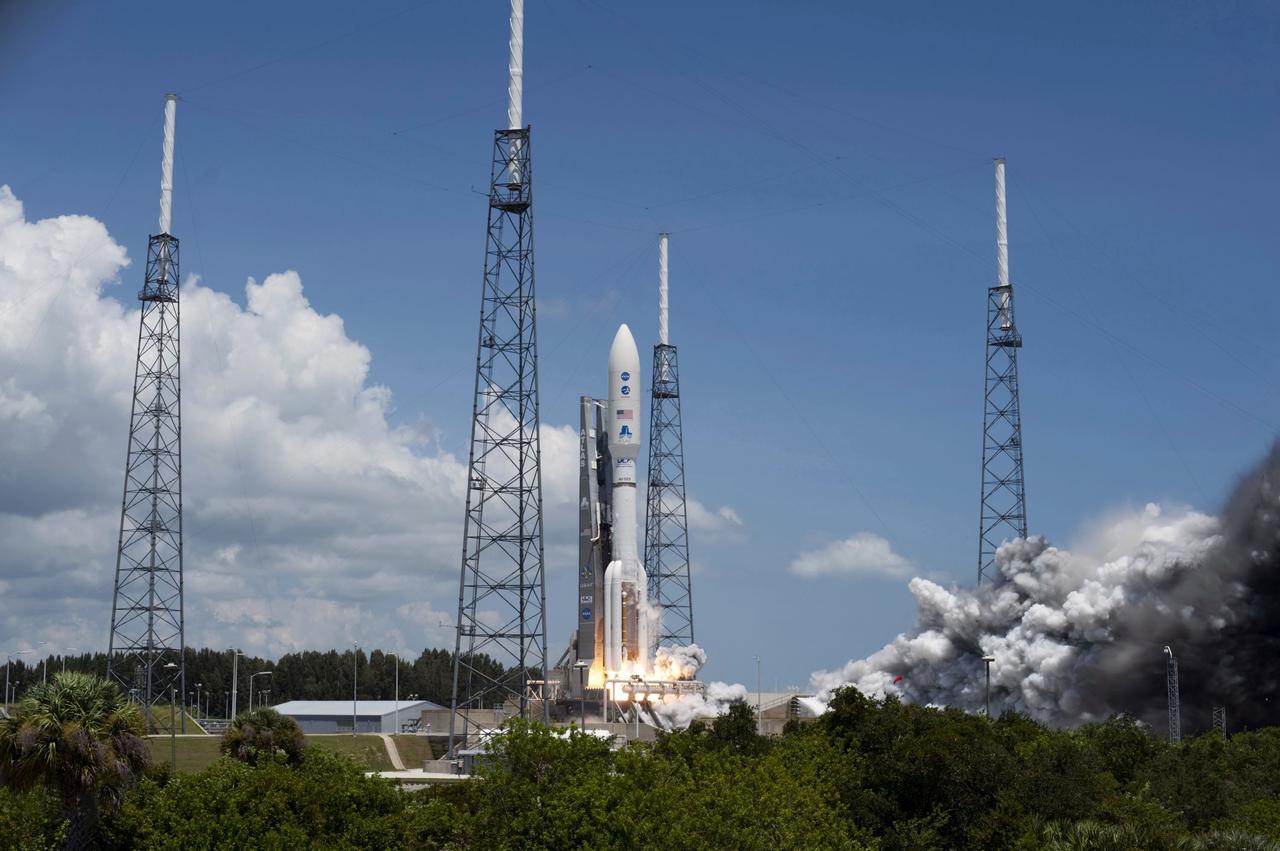
CAPE CANAVERAL, Fla. -- Rising from fire and smoke, NASA's Juno planetary probe, enclosed in its payload fairing, launches atop a United Launch Alliance Atlas V rocket. Leaving from Space Launch Complex 41 and its four lightning protection system towers on Cape Canaveral Air Force Station in Florida, the spacecraft will embark on a five-year journey to Jupiter. Liftoff was at 12:25 p.m. EDT Aug. 5. The solar-powered spacecraft will orbit Jupiter's poles 33 times to find out more about the gas giant's origins, structure, atmosphere and magnetosphere and investigate the existence of a solid planetary core. For more information, visit www.nasa.gov/juno. Photo credit: NASA/Tony Gray and Don Kight
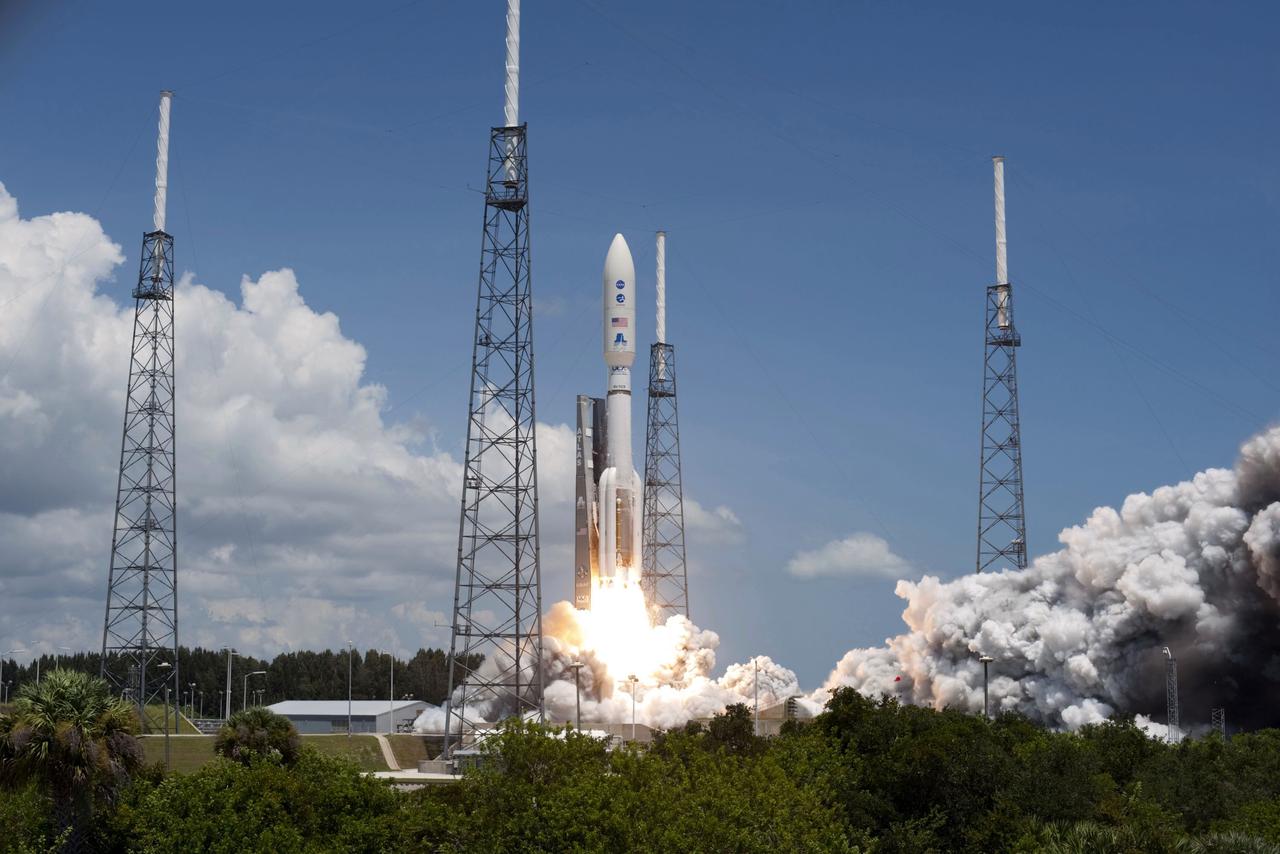
CAPE CANAVERAL, Fla. -- Rising from fire and smoke, NASA's Juno planetary probe, enclosed in its payload fairing, launches atop a United Launch Alliance Atlas V rocket. Leaving from Space Launch Complex 41 and its four lightning protection system towers on Cape Canaveral Air Force Station in Florida, the spacecraft will embark on a five-year journey to Jupiter. Liftoff was at 12:25 p.m. EDT Aug. 5. The solar-powered spacecraft will orbit Jupiter's poles 33 times to find out more about the gas giant's origins, structure, atmosphere and magnetosphere and investigate the existence of a solid planetary core. For more information, visit www.nasa.gov/juno. Photo credit: NASA/Tony Gray and Don Kight
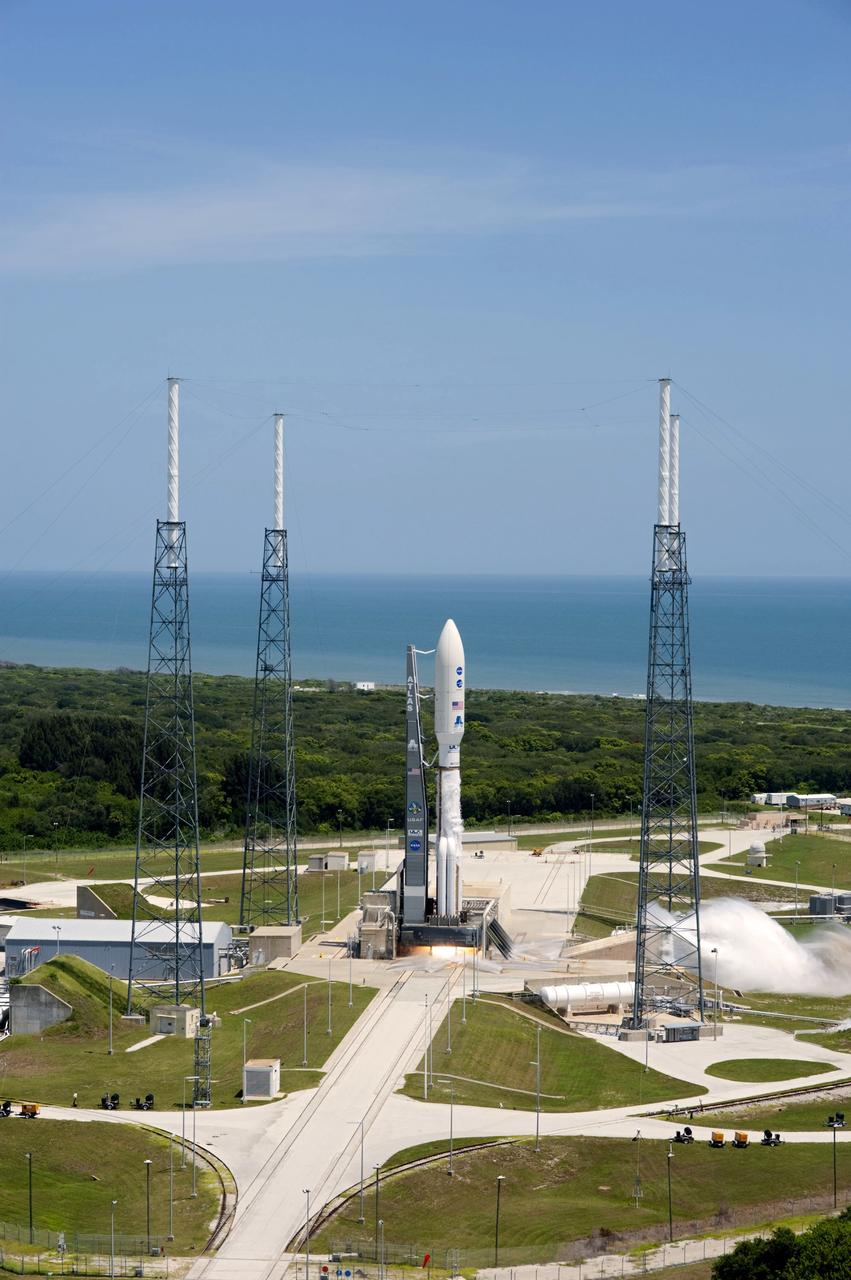
CAPE CANAVERAL, Fla. -- Backdropped by the Atlantic Ocean and surrounded by its four-tower lightning protection system, NASA's Juno planetary probe, enclosed in its payload fairing, is seconds away from liftoff atop a United Launch Alliance Atlas V rocket. Leaving from Space Launch Complex 41 on Cape Canaveral Air Force Station in Florida, the spacecraft will embark on a five-year journey to Jupiter. On the right, water is seen dumping into a flame trench to suppress vibrations at launch. Liftoff was at 12:25 p.m. EDT Aug. 5. The solar-powered spacecraft will orbit Jupiter's poles 33 times to find out more about the gas giant's origins, structure, atmosphere and magnetosphere and investigate the existence of a solid planetary core. For more information, visit www.nasa.gov/juno. Photo credit: NASA/Tony Gray and Tim Powers

This diagram illustrates how hypothetical helium atmospheres might form. These would be on planets about the mass of Neptune, or smaller, which orbit tightly to their stars, whipping around in just days. They are thought to have cores of water or rock, surrounded by thick atmospheres of gas. Radiation from their nearby stars would boil off hydrogen and helium, but because hydrogen is lighter, more hydrogen would escape. It's also possible that planetary bodies, such as asteroids, could impact the planet, sending hydrogen out into space. Over time, the atmospheres would become enriched in helium. With less hydrogen in the planets' atmospheres, the concentration of methane and water would go down. Both water and methane consist in part of hydrogen. Eventually, billions of years later (a "Gyr" equals one billion years), the abundances of the water and methane would be greatly reduced. Since hydrogen would not be abundant, the carbon would be forced to pair with oxygen, forming carbon monoxide. NASA's Spitzer Space Telescope observed a proposed helium planet, GJ 436b, with these traits: it lacks methane, and appears to contain carbon monoxide. Future observations are needed to detect helium itself in the atmospheres of these planets, and confirm this theory. http://photojournal.jpl.nasa.gov/catalog/PIA19345
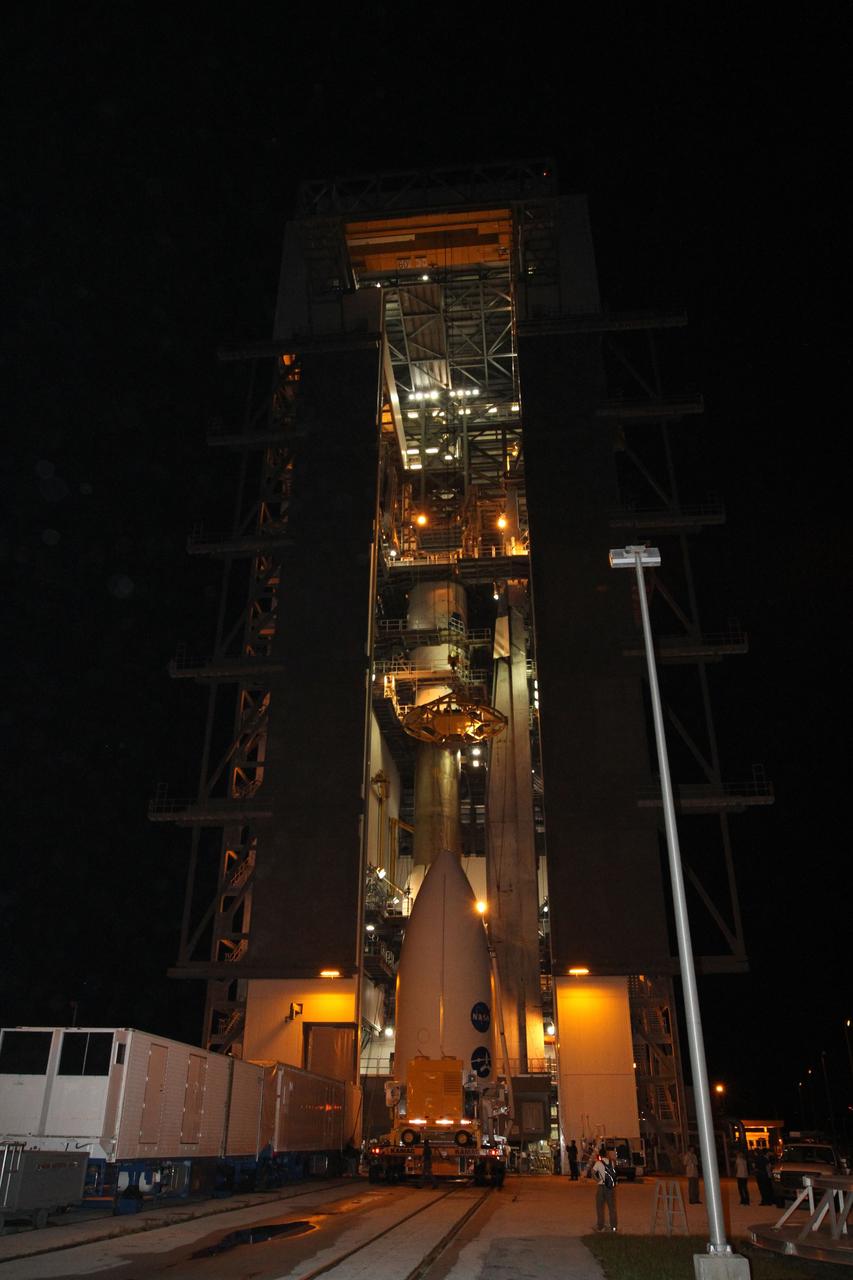
CAPE CANAVERAL, Fla. -- At Space Launch Complex 41, preparations are under way to lift the Juno spacecraft, enclosed in an Atlas payload fairing, on top of the Atlas rocket stacked in the Vertical Integration Facility. The spacecraft was prepared for launch in the Astrotech Space Operations' payload processing facility in Titusville, Fla. The fairing will protect the spacecraft from the impact of aerodynamic pressure and heating during ascent and will be jettisoned once the spacecraft is outside the Earth's atmosphere. Juno is scheduled to launch Aug. 5 aboard a United Launch Alliance Atlas V rocket from Cape Canaveral Air Force Station in Florida. The solar-powered spacecraft will orbit Jupiter's poles 33 times to find out more about the gas giant's origins, structure, atmosphere and magnetosphere and investigate the existence of a solid planetary core. For more information, visit www.nasa.gov/juno. Photo credit: NASA/Cory Huston
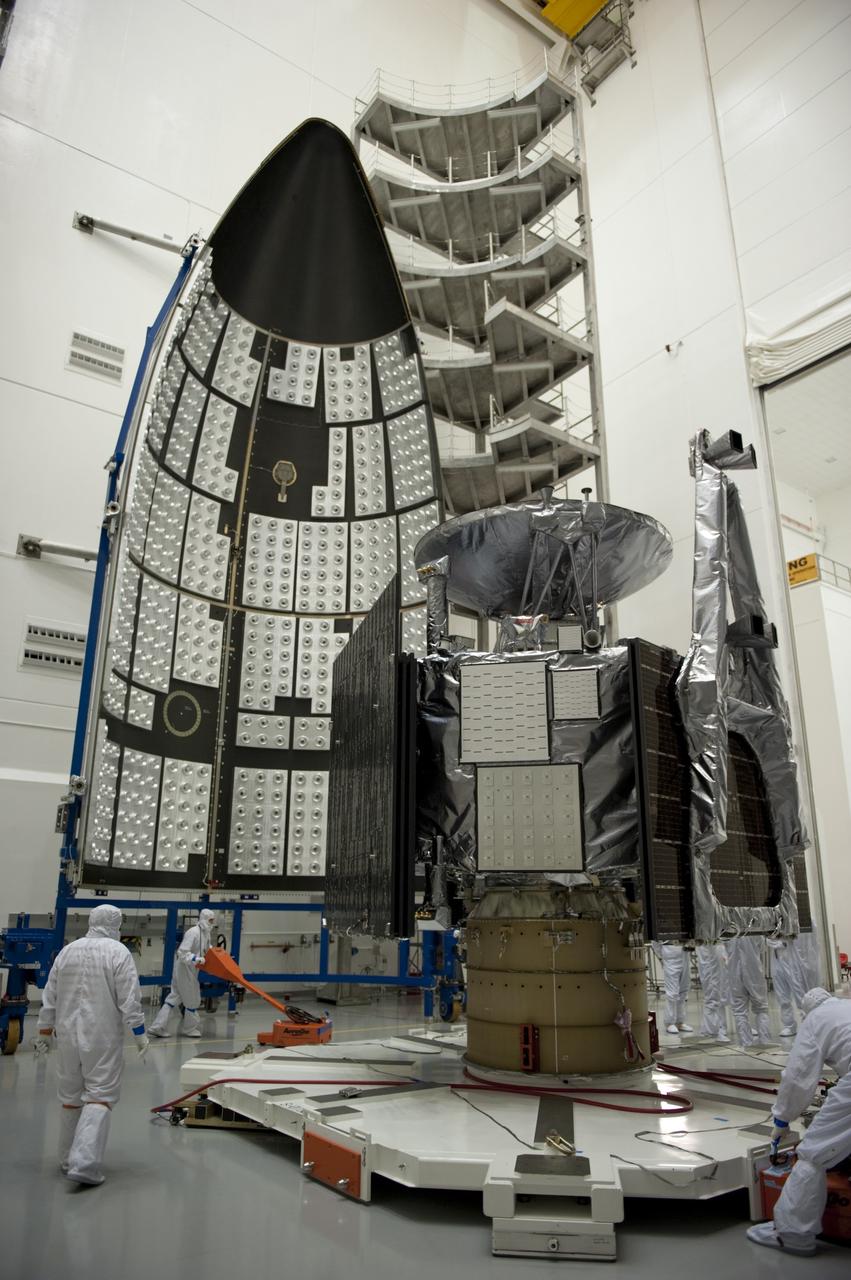
CAPE CANAVERAL, Fla. -- In the Astrotech payload processing facility near Kennedy Space Center in Florida, work has begun to enclose the Juno spacecraft in its Atlas payload fairing for launch. The fairing will protect the spacecraft from the impact of aerodynamic pressure and heating during ascent and will be jettisoned once the spacecraft is outside the Earth's atmosphere. Juno is scheduled to launch aboard a United Launch Alliance Atlas V rocket from Cape Canaveral, Fla., Aug. 5.The solar-powered spacecraft will orbit Jupiter's poles 33 times to find out more about the gas giant's origins, structure, atmosphere and magnetosphere and investigate the existence of a solid planetary core. For more information, visit www.nasa.gov/juno. Photo credit: NASA/Kim Shiflett
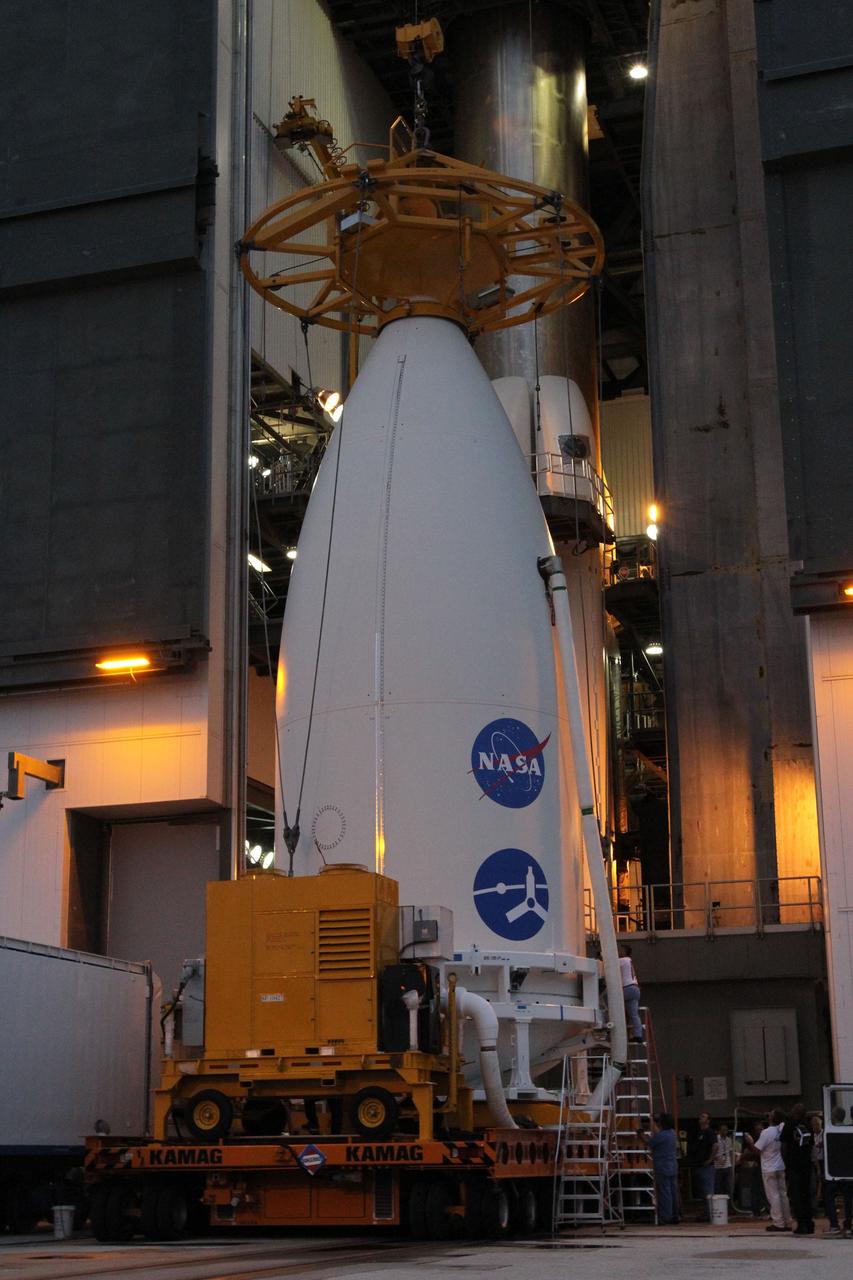
CAPE CANAVERAL, Fla. -- At Space Launch Complex 41, a crane comes to rest on the nose of the Atlas payload fairing enclosing the Juno spacecraft in preparation for its lift to the top of the Atlas rocket stacked in the Vertical Integration Facility. The spacecraft was prepared for launch in the Astrotech Space Operations' payload processing facility in Titusville, Fla. The fairing will protect the spacecraft from the impact of aerodynamic pressure and heating during ascent and will be jettisoned once the spacecraft is outside the Earth's atmosphere. Juno is scheduled to launch Aug. 5 aboard a United Launch Alliance Atlas V rocket from Cape Canaveral Air Force Station in Florida. The solar-powered spacecraft will orbit Jupiter's poles 33 times to find out more about the gas giant's origins, structure, atmosphere and magnetosphere and investigate the existence of a solid planetary core. For more information, visit www.nasa.gov/juno. Photo credit: NASA/Cory Huston
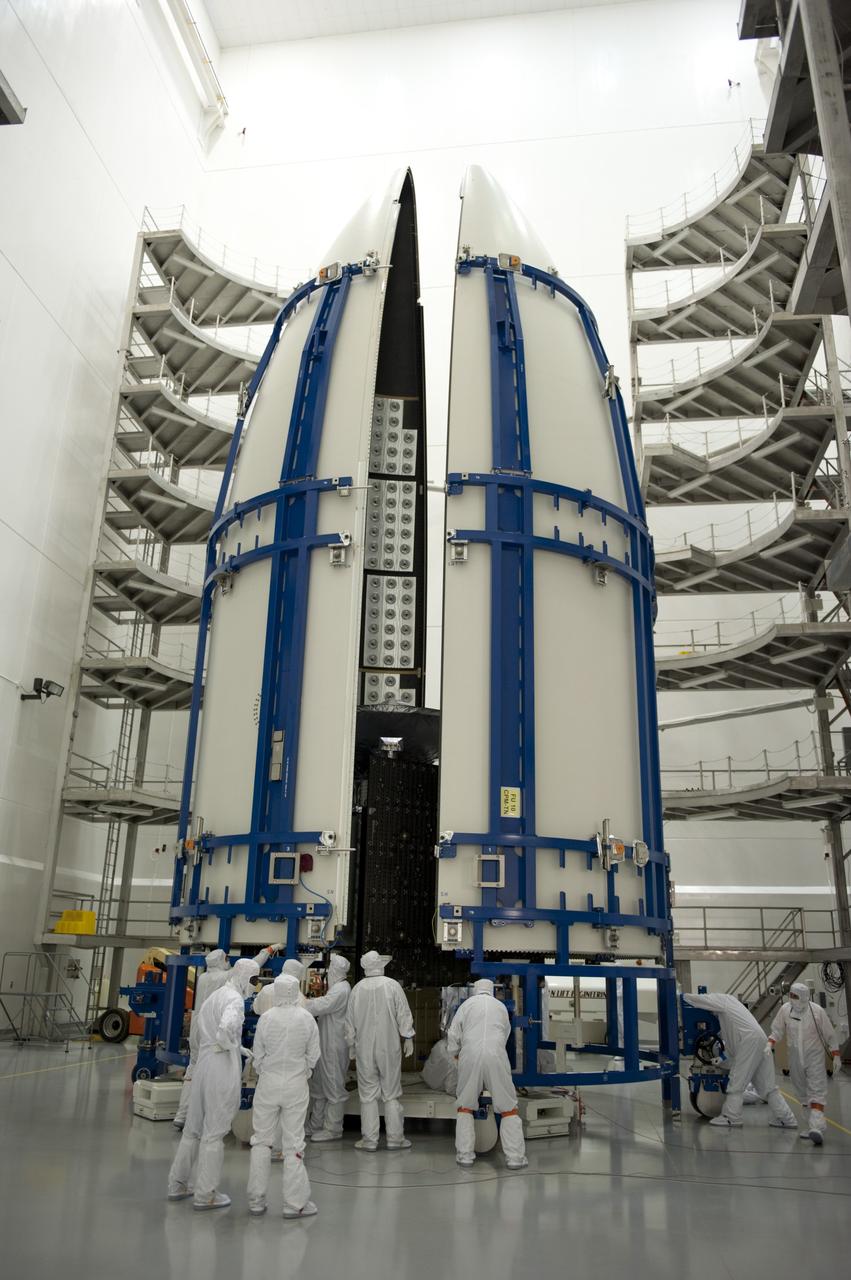
CAPE CANAVERAL, Fla. -- In the Astrotech payload processing facility near Kennedy Space Center in Florida, the Atlas payload fairing nearly obscures the Juno spacecraft from view during work to enclose the spacecraft for launch. The fairing will protect the spacecraft from the impact of aerodynamic pressure and heating during ascent and will be jettisoned once the spacecraft is outside the Earth's atmosphere. Juno is scheduled to launch aboard a United Launch Alliance Atlas V rocket from Cape Canaveral, Fla., Aug. 5.The solar-powered spacecraft will orbit Jupiter's poles 33 times to find out more about the gas giant's origins, structure, atmosphere and magnetosphere and investigate the existence of a solid planetary core. For more information, visit www.nasa.gov/juno. Photo credit: NASA/Kim Shiflett
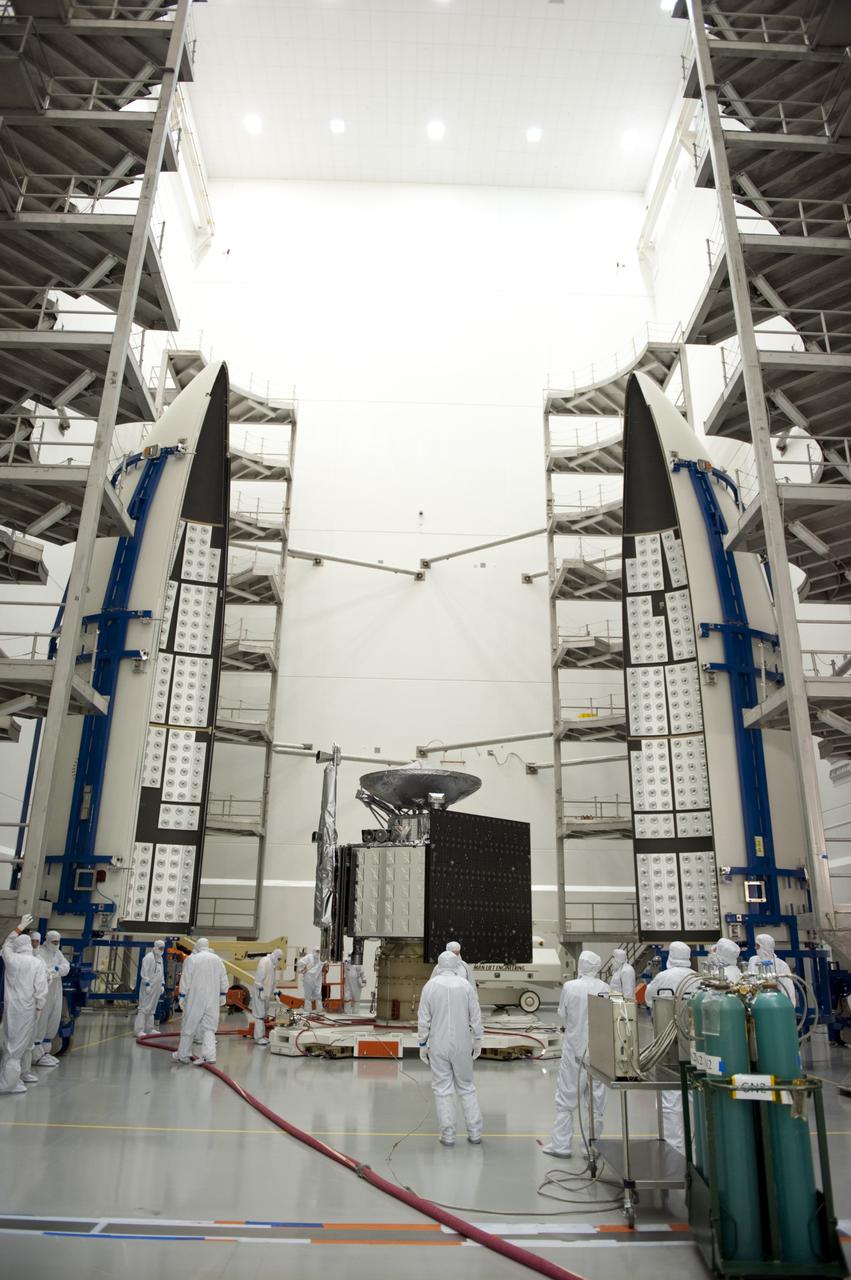
CAPE CANAVERAL, Fla. -- In the Astrotech payload processing facility near Kennedy Space Center in Florida, preparations are under way to enclose the Juno spacecraft in its Atlas payload fairing for launch. The fairing will protect the spacecraft from the impact of aerodynamic pressure and heating during ascent and will be jettisoned once the spacecraft is outside the Earth's atmosphere. Juno is scheduled to launch aboard a United Launch Alliance Atlas V rocket from Cape Canaveral, Fla., Aug. 5.The solar-powered spacecraft will orbit Jupiter's poles 33 times to find out more about the gas giant's origins, structure, atmosphere and magnetosphere and investigate the existence of a solid planetary core. For more information, visit www.nasa.gov/juno. Photo credit: NASA/Kim Shiflett
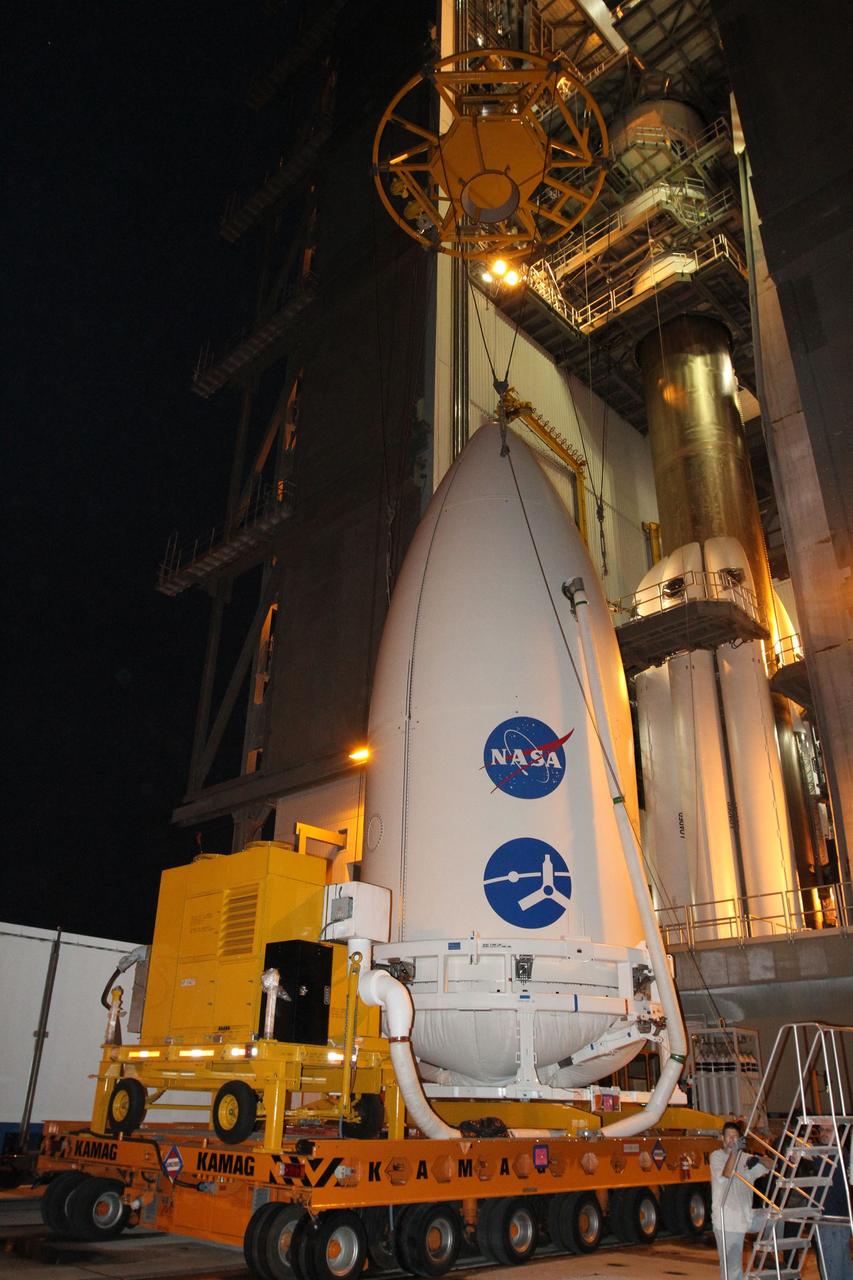
CAPE CANAVERAL, Fla. -- At Space Launch Complex 41, a crane is lowered toward the Juno spacecraft, enclosed in an Atlas payload fairing, to lift it on top of the Atlas rocket stacked in the Vertical Integration Facility. The spacecraft was prepared for launch in the Astrotech Space Operations' payload processing facility in Titusville, Fla. The fairing will protect the spacecraft from the impact of aerodynamic pressure and heating during ascent and will be jettisoned once the spacecraft is outside the Earth's atmosphere. Juno is scheduled to launch Aug. 5 aboard a United Launch Alliance Atlas V rocket from Cape Canaveral Air Force Station in Florida. The solar-powered spacecraft will orbit Jupiter's poles 33 times to find out more about the gas giant's origins, structure, atmosphere and magnetosphere and investigate the existence of a solid planetary core. For more information, visit www.nasa.gov/juno. Photo credit: NASA/Cory Huston
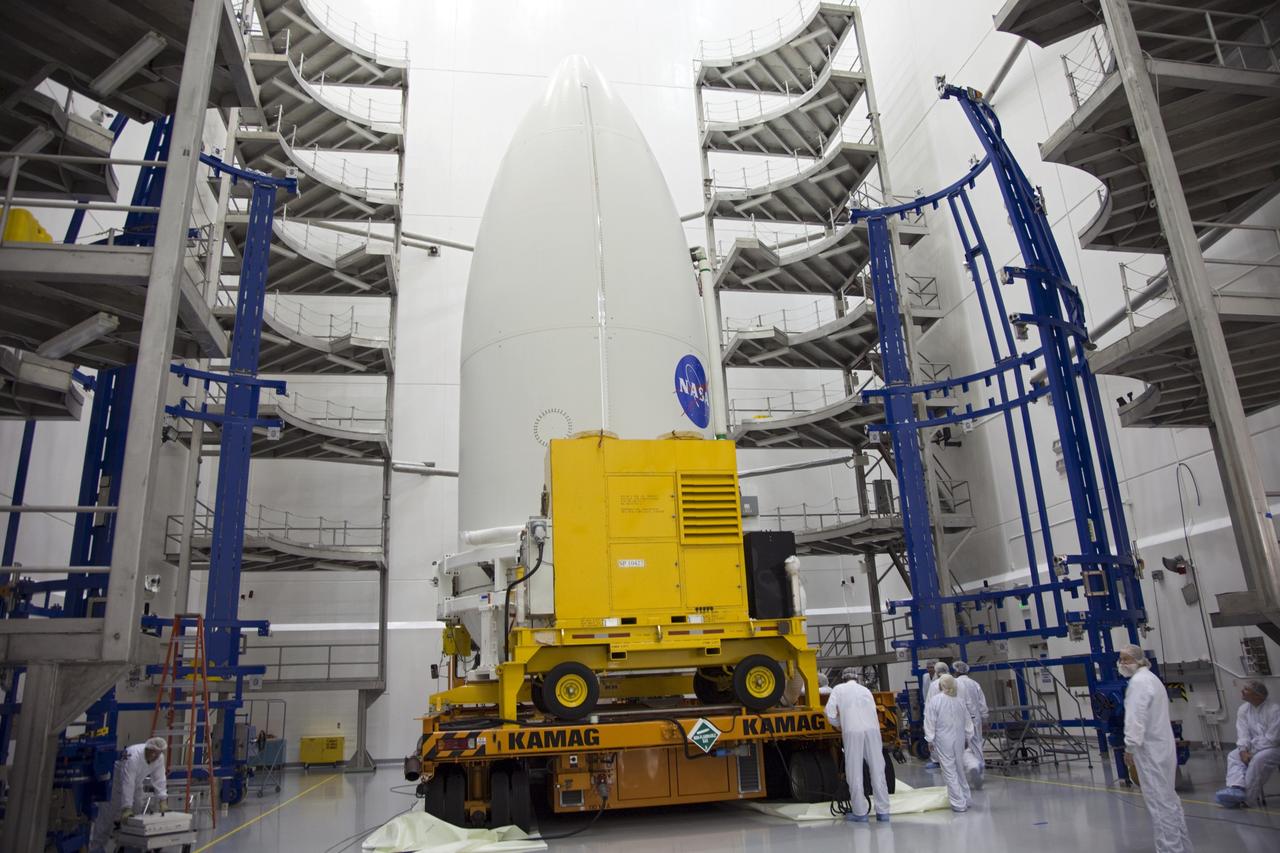
CAPE CANAVERAL, Fla. -- In the Astrotech payload processing facility near Kennedy Space Center in Florida, the Atlas payload fairing enclosing the Juno spacecraft is secured on a transporter and ready for its trip to Space Launch Complex 41. The fairing will protect the spacecraft from the impact of aerodynamic pressure and heating during ascent and will be jettisoned once the spacecraft is outside the Earth's atmosphere. Juno is scheduled to launch aboard a United Launch Alliance Atlas V rocket from Cape Canaveral, Fla., Aug. 5.The solar-powered spacecraft will orbit Jupiter's poles 33 times to find out more about the gas giant's origins, structure, atmosphere and magnetosphere and investigate the existence of a solid planetary core. For more information, visit www.nasa.gov/juno. Photo credit: NASA/Frank Michaux
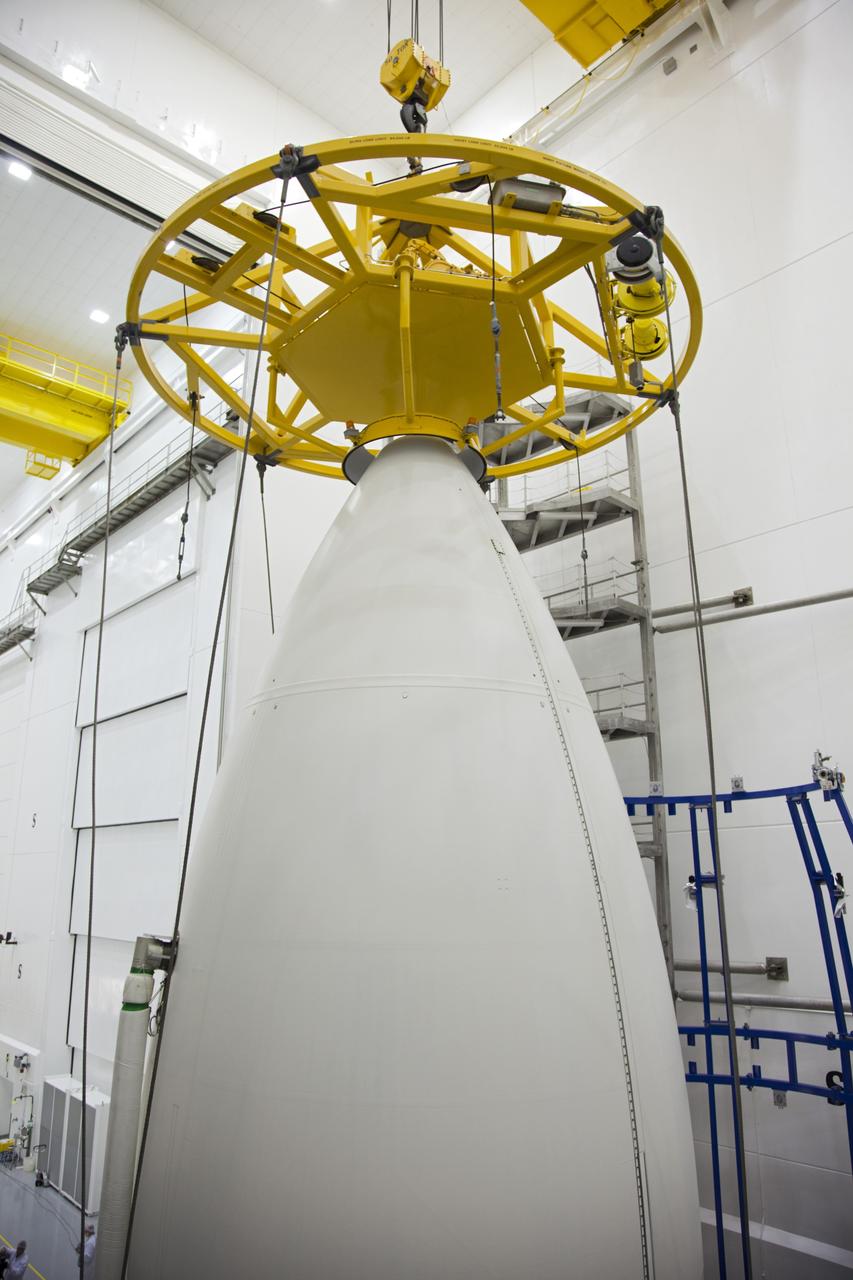
CAPE CANAVERAL, Fla. -- In the Astrotech payload processing facility near Kennedy Space Center in Florida, a lifting device is lowered onto the nose of the Atlas payload fairing enclosing the Juno spacecraft during operations to lift the spacecraft onto a transporter for its trip to Space Launch Complex 41. The fairing will protect the spacecraft from the impact of aerodynamic pressure and heating during ascent and will be jettisoned once the spacecraft is outside the Earth's atmosphere. Juno is scheduled to launch aboard a United Launch Alliance Atlas V rocket from Cape Canaveral, Fla., Aug. 5.The solar-powered spacecraft will orbit Jupiter's poles 33 times to find out more about the gas giant's origins, structure, atmosphere and magnetosphere and investigate the existence of a solid planetary core. For more information, visit www.nasa.gov/juno. Photo credit: NASA/Frank Michaux
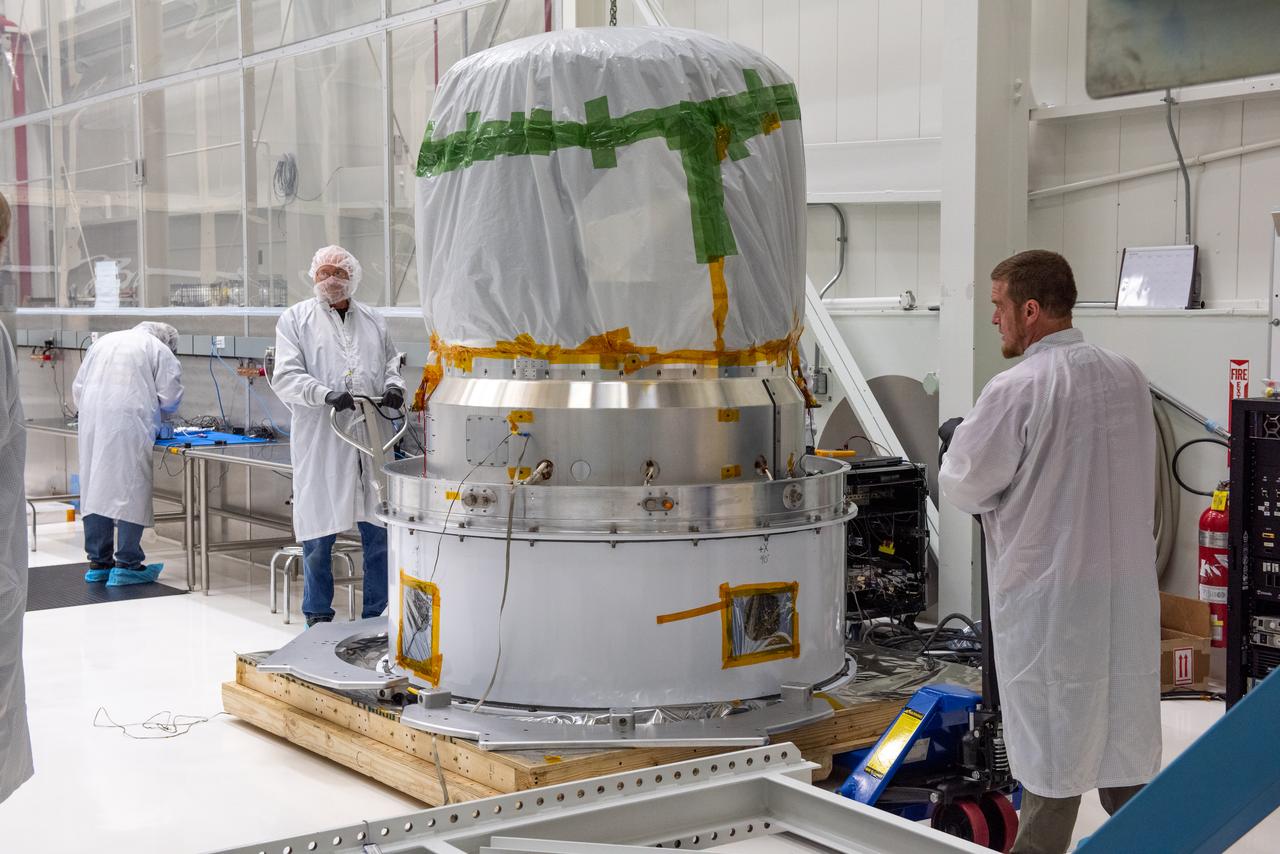
Technicians prepare to move NASA’s Low-Earth Orbit Flight Test of an Inflatable Decelerator (LOFTID) re-entry vehicle onto a turnover fixture for prelaunch processing inside Building 836 at Vandenberg Space Force Base in California on Aug. 19, 2022. Dedicated to the memory of Bernard Kutter, LOFTID is a technology demonstration mission aimed at validating inflatable heat shield technology for atmospheric re-entry. This technology could enable missions to other planetary bodies, as well as allow NASA to return heavier payloads from low-Earth orbit. LOFTID is a rideshare launching with the National Oceanic and Atmospheric Administration’s (NOAA) Joint Polar Satellite System-2 (JPSS-2) satellite. NASA and NOAA are targeting Nov. 1, 2022, for the launch of JPSS-2 on a United Launch Alliance Atlas V rocket from Space Launch Complex-3 at Vandenberg.

CAPE CANAVERAL, Fla. -- At Space Launch Complex 41, a crane hoists the Atlas payload fairing enclosing the Juno spacecraft off its transporter for its lift to the top of the Atlas rocket stacked in the Vertical Integration Facility. The spacecraft was prepared for launch in the Astrotech Space Operations' payload processing facility in Titusville, Fla. The fairing will protect the spacecraft from the impact of aerodynamic pressure and heating during ascent and will be jettisoned once the spacecraft is outside the Earth's atmosphere. Juno is scheduled to launch Aug. 5 aboard a United Launch Alliance Atlas V rocket from Cape Canaveral Air Force Station in Florida. The solar-powered spacecraft will orbit Jupiter's poles 33 times to find out more about the gas giant's origins, structure, atmosphere and magnetosphere and investigate the existence of a solid planetary core. For more information, visit www.nasa.gov/juno. Photo credit: NASA/Cory Huston
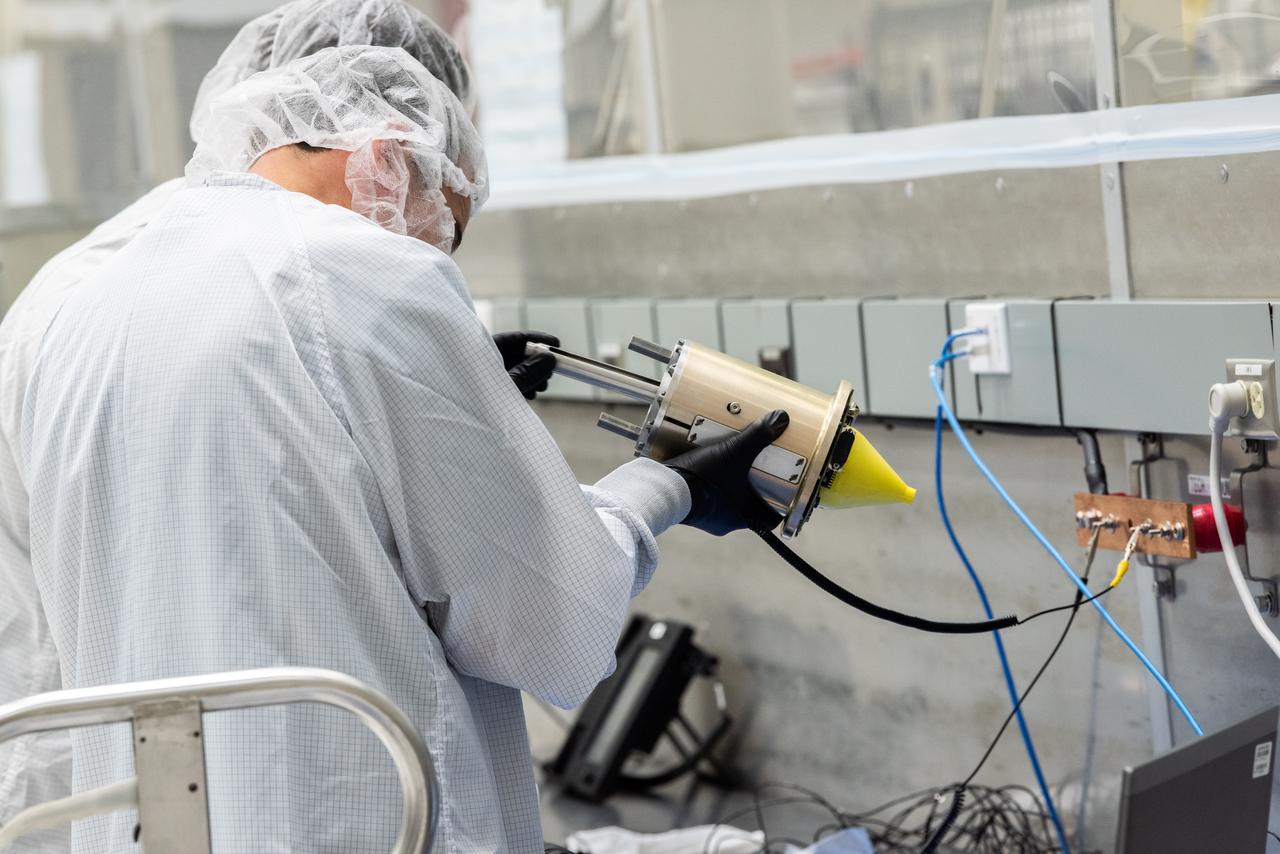
Inside Building 836 at Vandenberg Space Force Base in California, a technician works on installing ejetable data recorders onto NASA’s Low-Earth Orbit Flight Test of an Inflatable Decelerator (LOFTID) on Aug. 19, 2022. Dedicated to the memory of Bernard Kutter, LOFTID is a technology demonstration mission aimed at validating inflatable heat shield technology for atmospheric re-entry. This technology could enable missions to other planetary bodies, as well as allow NASA to return heavier payloads from low-Earth orbit. LOFTID is a rideshare launching with the National Oceanic and Atmospheric Administration’s (NOAA) Joint Polar Satellite System-2 (JPSS-2) satellite. NASA and NOAA are targeting Nov. 1, 2022, for the launch of JPSS-2 on a United Launch Alliance Atlas V rocket from Space Launch Complex-3 at Vandenberg.
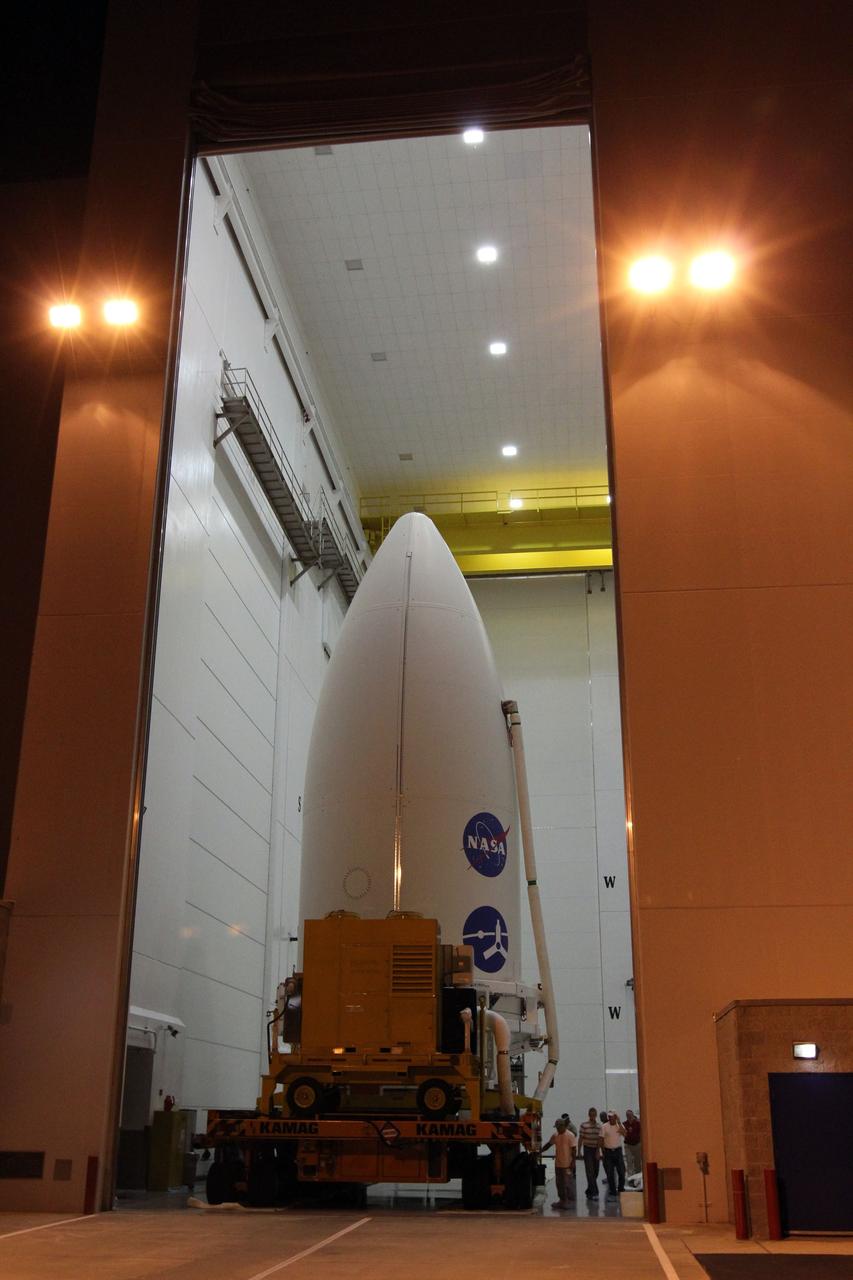
CAPE CANAVERAL, Fla. -- In the Astrotech Space Operations' payload processing facility in Titusville, Fla., preparations are under way to transport the Juno spacecraft, enclosed in an Atlas payload fairing, to Space Launch Complex 41. The fairing will protect the spacecraft from the impact of aerodynamic pressure and heating during ascent and will be jettisoned once the spacecraft is outside the Earth's atmosphere. Juno is scheduled to launch Aug. 5 aboard a United Launch Alliance Atlas V rocket from Cape Canaveral Air Force Station in Florida. The solar-powered spacecraft will orbit Jupiter's poles 33 times to find out more about the gas giant's origins, structure, atmosphere and magnetosphere and investigate the existence of a solid planetary core. For more information, visit www.nasa.gov/juno. Photo credit: NASA/Cory Huston
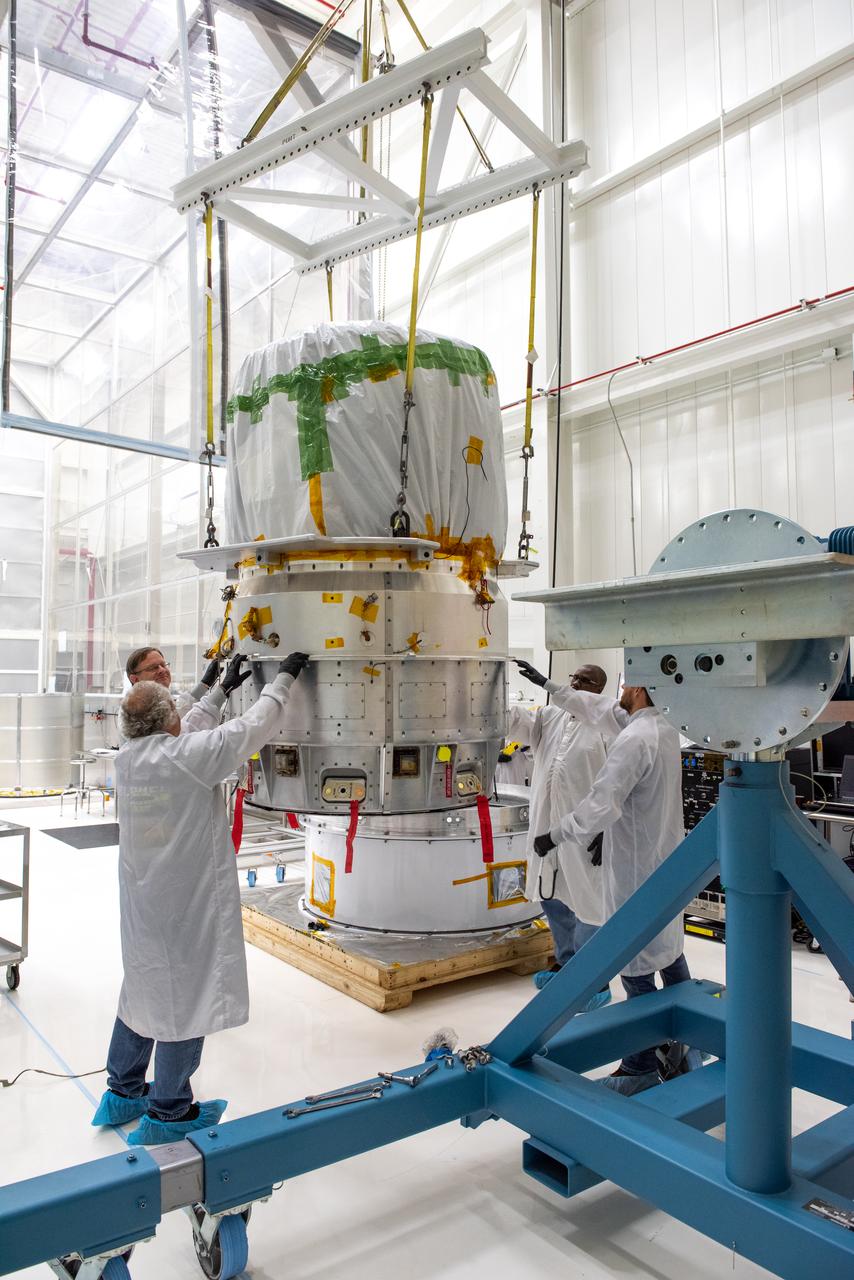
Technicians move NASA’s Low-Earth Orbit Flight Test of an Inflatable Decelerator (LOFTID) re-entry vehicle over to a turnover fixture for prelaunch processing inside Building 836 at Vandenberg Space Force Base in California on Aug. 19, 2022. Dedicated to the memory of Bernard Kutter, LOFTID is a technology demonstration mission aimed at validating inflatable heat shield technology for atmospheric re-entry. This technology could enable missions to other planetary bodies, as well as allow NASA to return heavier payloads from low-Earth orbit. LOFTID is a rideshare launching with the National Oceanic and Atmospheric Administration’s (NOAA) Joint Polar Satellite System-2 (JPSS-2) satellite. NASA and NOAA are targeting Nov. 1, 2022, for the launch of JPSS-2 on a United Launch Alliance Atlas V rocket from Space Launch Complex-3 at Vandenberg.
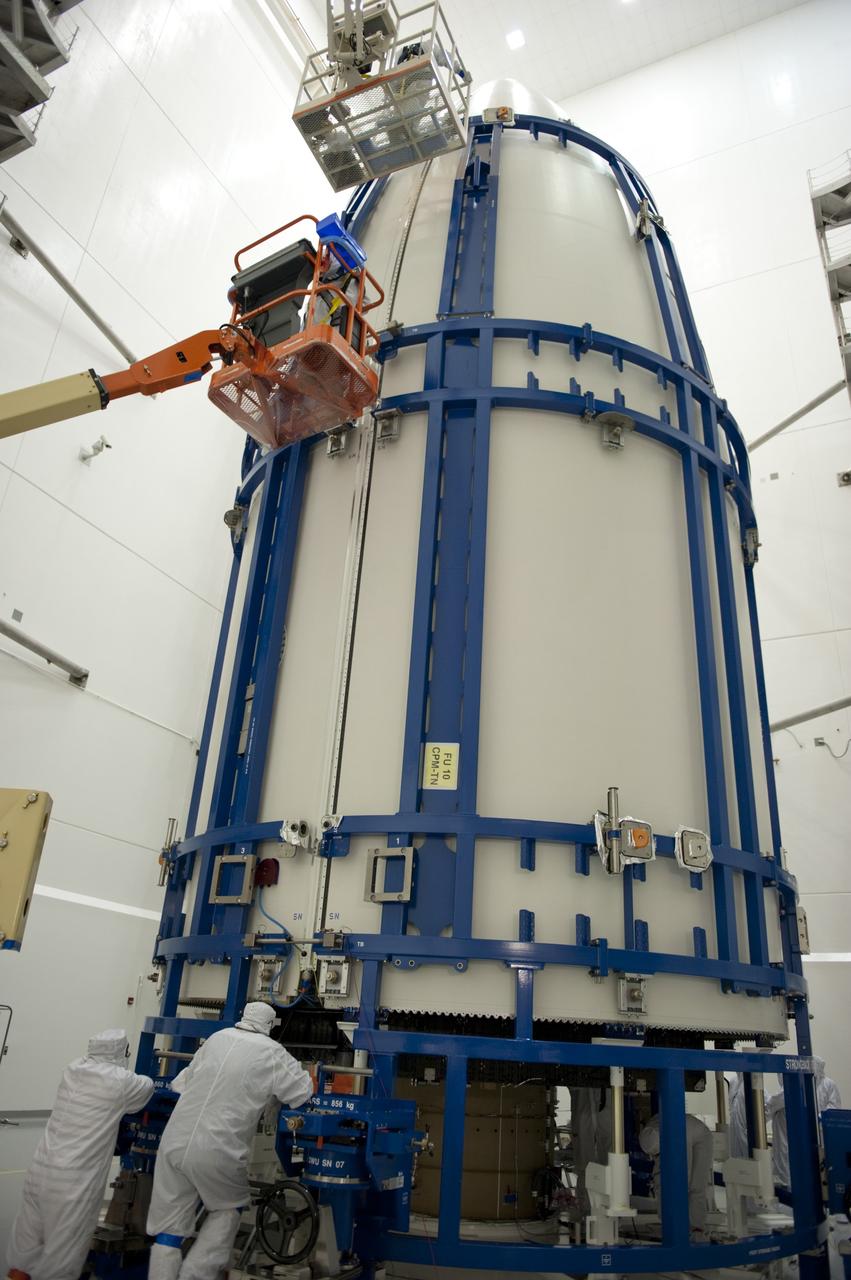
CAPE CANAVERAL, Fla. -- In the Astrotech payload processing facility near Kennedy Space Center in Florida, spacecraft technicians secure the Atlas payload fairing around the Juno spacecraft for launch. The fairing will protect the spacecraft from the impact of aerodynamic pressure and heating during ascent and will be jettisoned once the spacecraft is outside the Earth's atmosphere. Juno is scheduled to launch aboard a United Launch Alliance Atlas V rocket from Cape Canaveral, Fla., Aug. 5.The solar-powered spacecraft will orbit Jupiter's poles 33 times to find out more about the gas giant's origins, structure, atmosphere and magnetosphere and investigate the existence of a solid planetary core. For more information, visit www.nasa.gov/juno. Photo credit: NASA/Kim Shiflett
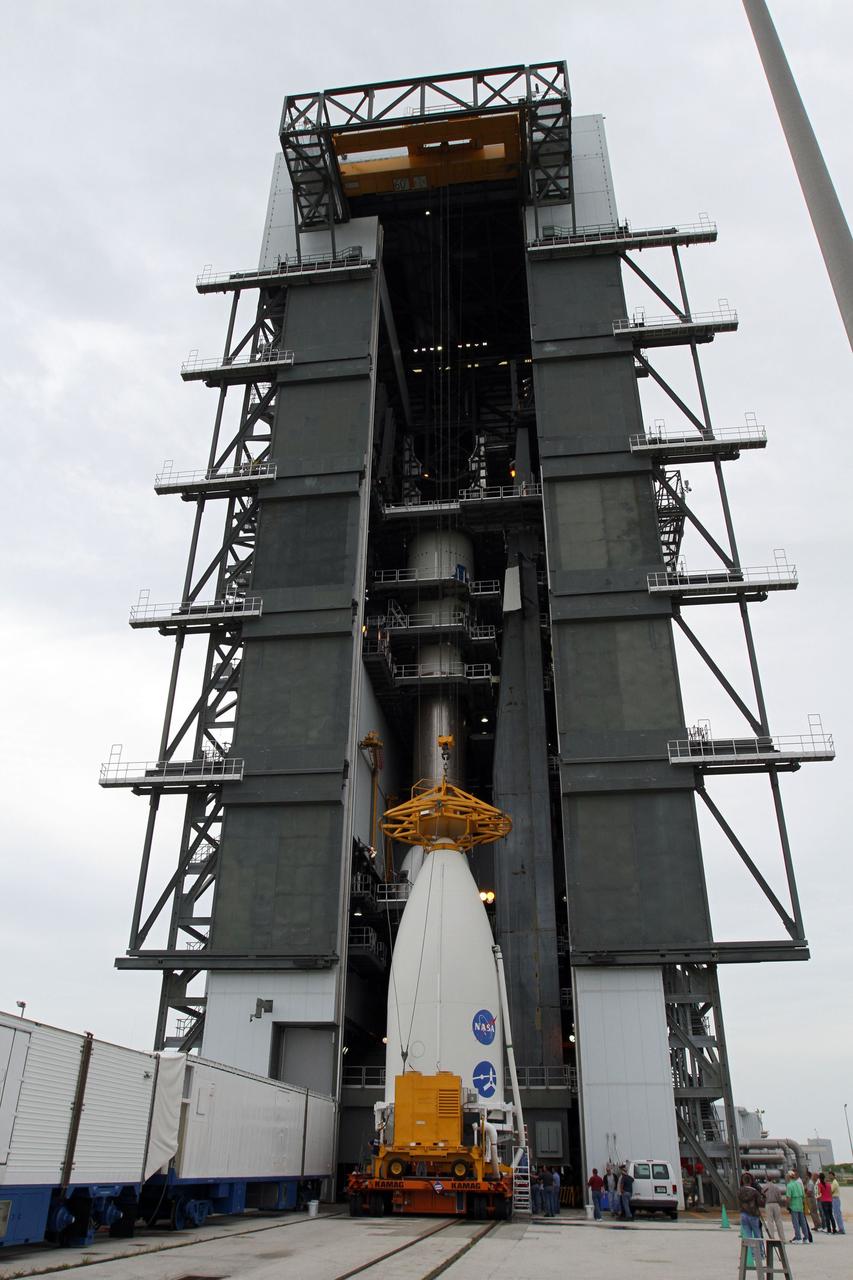
CAPE CANAVERAL, Fla. -- At Space Launch Complex 41, a crane is attached to the nose of the Atlas payload fairing enclosing the Juno spacecraft in preparation for its lift to the top of the Atlas rocket stacked in the Vertical Integration Facility. The spacecraft was prepared for launch in the Astrotech Space Operations' payload processing facility in Titusville, Fla. The fairing will protect the spacecraft from the impact of aerodynamic pressure and heating during ascent and will be jettisoned once the spacecraft is outside the Earth's atmosphere. Juno is scheduled to launch Aug. 5 aboard a United Launch Alliance Atlas V rocket from Cape Canaveral Air Force Station in Florida. The solar-powered spacecraft will orbit Jupiter's poles 33 times to find out more about the gas giant's origins, structure, atmosphere and magnetosphere and investigate the existence of a solid planetary core. For more information, visit www.nasa.gov/juno. Photo credit: NASA/Cory Huston
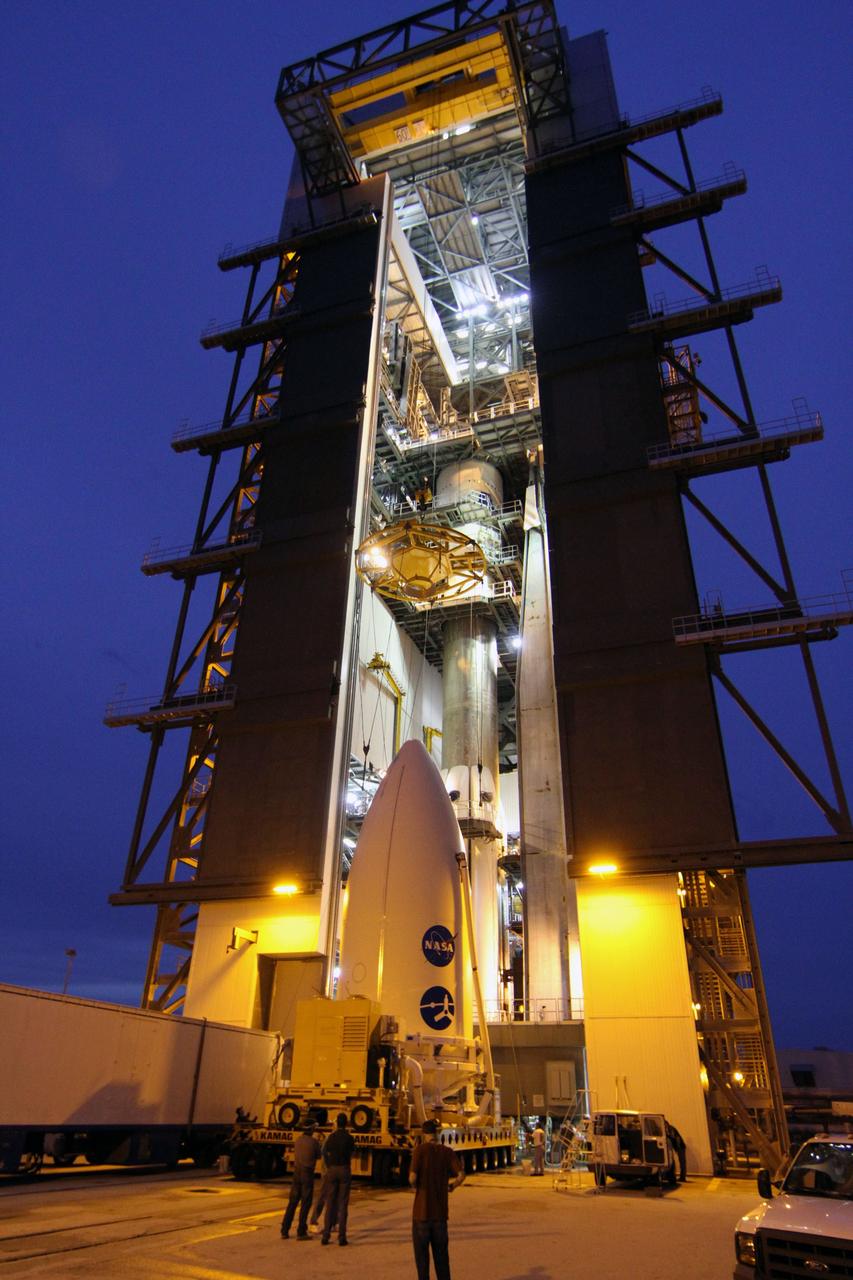
CAPE CANAVERAL, Fla. -- At Space Launch Complex 41, technicians monitor a crane as it is lowered toward the Juno spacecraft, enclosed in an Atlas payload fairing, for its lift to the top of the Atlas rocket stacked in the Vertical Integration Facility. The spacecraft was prepared for launch in the Astrotech Space Operations' payload processing facility in Titusville, Fla. The fairing will protect the spacecraft from the impact of aerodynamic pressure and heating during ascent and will be jettisoned once the spacecraft is outside the Earth's atmosphere. Juno is scheduled to launch Aug. 5 aboard a United Launch Alliance Atlas V rocket from Cape Canaveral Air Force Station in Florida. The solar-powered spacecraft will orbit Jupiter's poles 33 times to find out more about the gas giant's origins, structure, atmosphere and magnetosphere and investigate the existence of a solid planetary core. For more information, visit www.nasa.gov/juno. Photo credit: NASA/Cory Huston
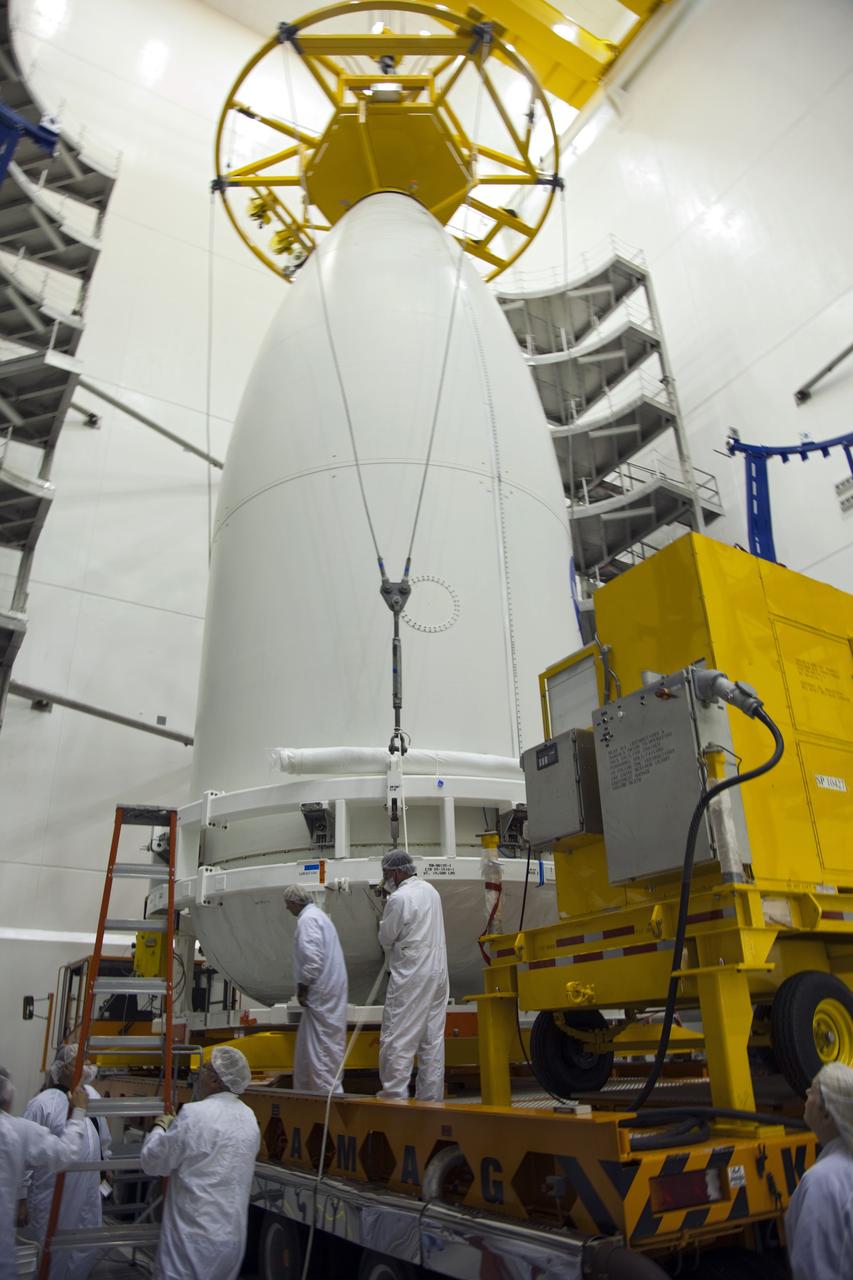
CAPE CANAVERAL, Fla. -- In the Astrotech payload processing facility near Kennedy Space Center in Florida, spacecraft technicians secure the Atlas payload fairing enclosing the Juno spacecraft on a transporter during operations to move the spacecraft to Space Launch Complex 41. The fairing will protect the spacecraft from the impact of aerodynamic pressure and heating during ascent and will be jettisoned once the spacecraft is outside the Earth's atmosphere. Juno is scheduled to launch aboard a United Launch Alliance Atlas V rocket from Cape Canaveral, Fla., Aug. 5.The solar-powered spacecraft will orbit Jupiter's poles 33 times to find out more about the gas giant's origins, structure, atmosphere and magnetosphere and investigate the existence of a solid planetary core. For more information, visit www.nasa.gov/juno. Photo credit: NASA/Frank Michaux
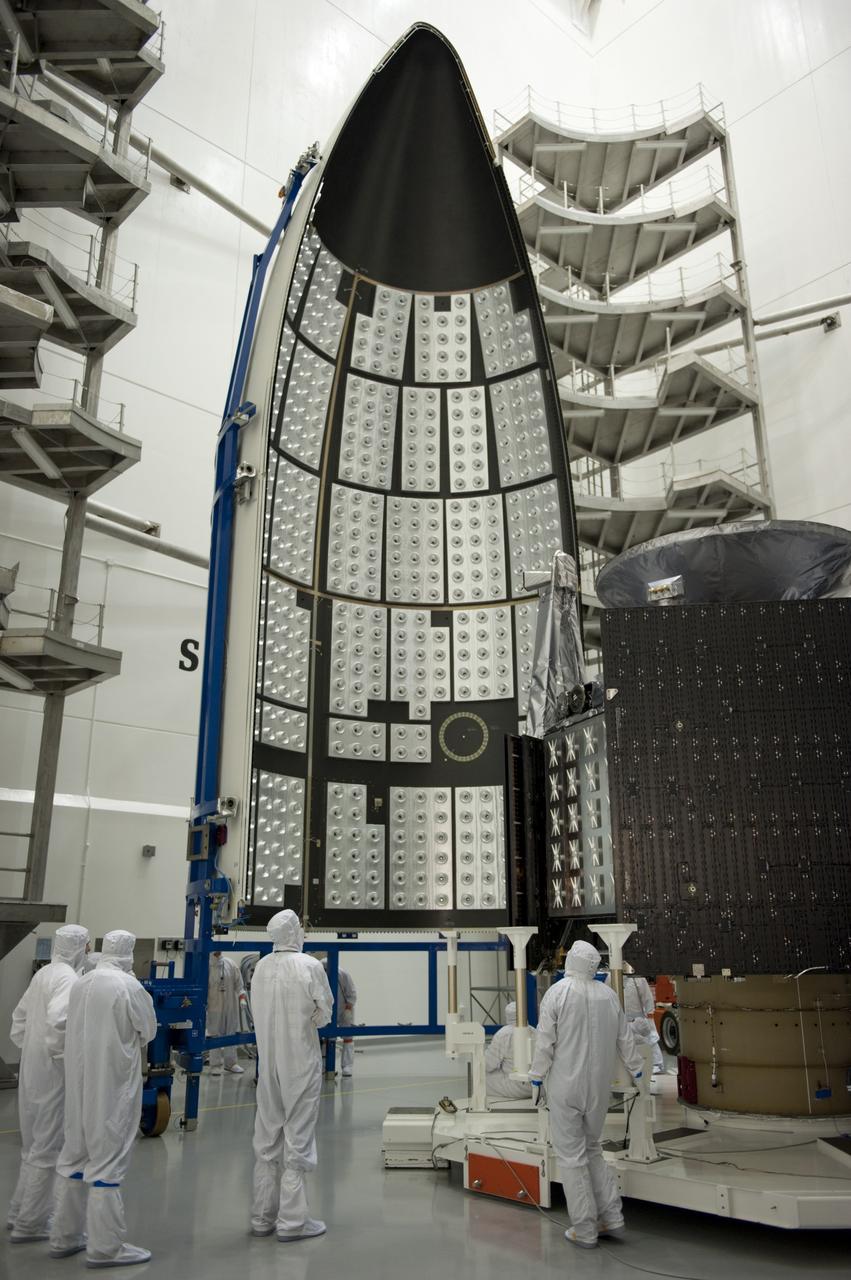
CAPE CANAVERAL, Fla. -- In the Astrotech payload processing facility near Kennedy Space Center in Florida, half of the Atlas payload fairing is moved toward the Juno spacecraft during work to enclose the spacecraft for launch. The fairing will protect the spacecraft from the impact of aerodynamic pressure and heating during ascent and will be jettisoned once the spacecraft is outside the Earth's atmosphere. Juno is scheduled to launch aboard a United Launch Alliance Atlas V rocket from Cape Canaveral, Fla., Aug. 5.The solar-powered spacecraft will orbit Jupiter's poles 33 times to find out more about the gas giant's origins, structure, atmosphere and magnetosphere and investigate the existence of a solid planetary core. For more information, visit www.nasa.gov/juno. Photo credit: NASA/Kim Shiflett
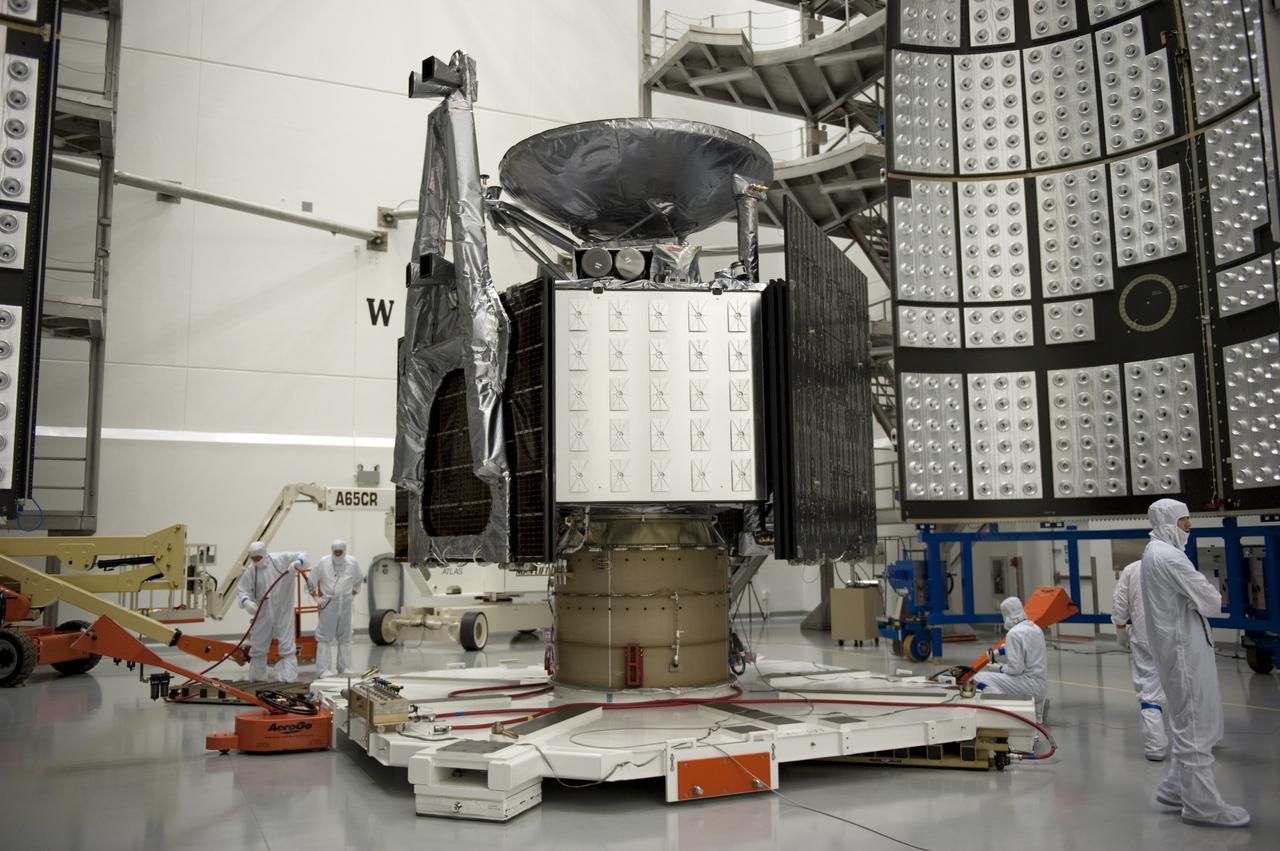
CAPE CANAVERAL, Fla. -- In the Astrotech payload processing facility near Kennedy Space Center in Florida, spacecraft technicians dressed in clean-room attire, known as bunny suits, prepare to enclose the Juno spacecraft in its Atlas payload fairing for launch. The fairing will protect the spacecraft from the impact of aerodynamic pressure and heating during ascent and will be jettisoned once the spacecraft is outside the Earth's atmosphere. Juno is scheduled to launch aboard a United Launch Alliance Atlas V rocket from Cape Canaveral, Fla., Aug. 5.The solar-powered spacecraft will orbit Jupiter's poles 33 times to find out more about the gas giant's origins, structure, atmosphere and magnetosphere and investigate the existence of a solid planetary core. For more information, visit www.nasa.gov/juno. Photo credit: NASA/Kim Shiflett
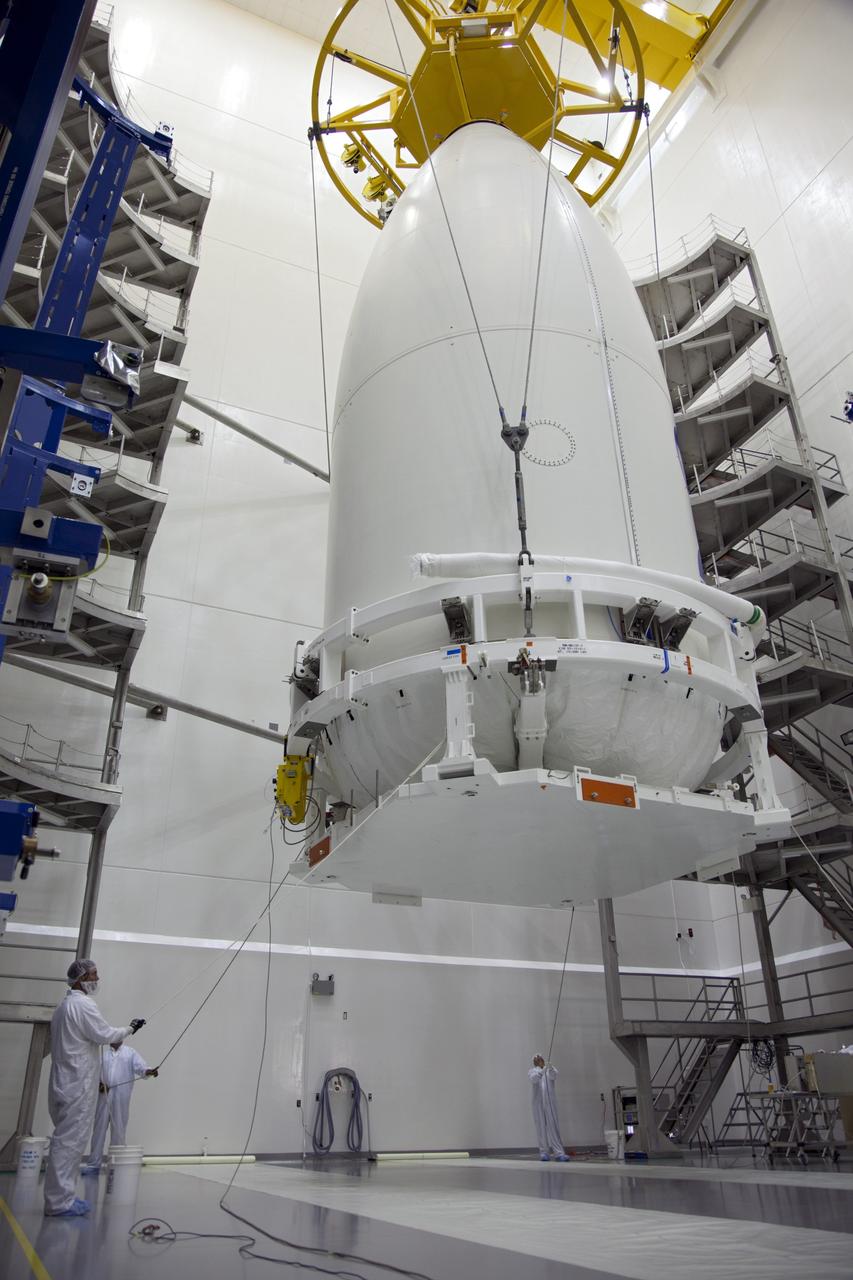
CAPE CANAVERAL, Fla. -- In the Astrotech payload processing facility near Kennedy Space Center in Florida, a lifting device raises the Atlas payload fairing enclosing the Juno spacecraft from the clean-room floor during operations to lift the spacecraft onto a transporter for its trip to Space Launch Complex 41. The fairing will protect the spacecraft from the impact of aerodynamic pressure and heating during ascent and will be jettisoned once the spacecraft is outside the Earth's atmosphere. Juno is scheduled to launch aboard a United Launch Alliance Atlas V rocket from Cape Canaveral, Fla., Aug. 5.The solar-powered spacecraft will orbit Jupiter's poles 33 times to find out more about the gas giant's origins, structure, atmosphere and magnetosphere and investigate the existence of a solid planetary core. For more information, visit www.nasa.gov/juno. Photo credit: NASA/Frank Michaux
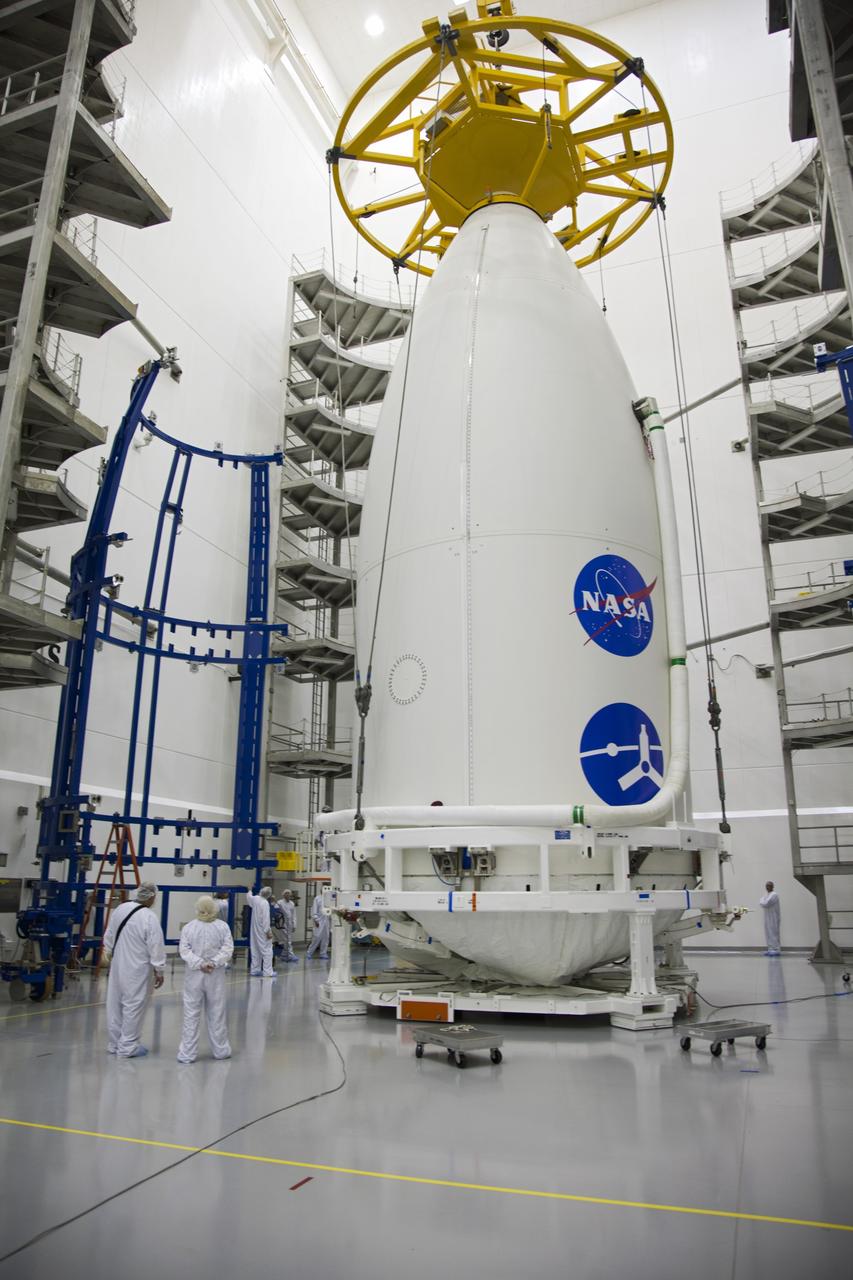
CAPE CANAVERAL, Fla. -- In the Astrotech payload processing facility near Kennedy Space Center in Florida, a lifting device rests atop the nose of the Atlas payload fairing enclosing the Juno spacecraft during operations to lift the spacecraft onto a transporter for its trip to Space Launch Complex 41. The fairing will protect the spacecraft from the impact of aerodynamic pressure and heating during ascent and will be jettisoned once the spacecraft is outside the Earth's atmosphere. Juno is scheduled to launch aboard a United Launch Alliance Atlas V rocket from Cape Canaveral, Fla., Aug. 5.The solar-powered spacecraft will orbit Jupiter's poles 33 times to find out more about the gas giant's origins, structure, atmosphere and magnetosphere and investigate the existence of a solid planetary core. For more information, visit www.nasa.gov/juno. Photo credit: NASA/Frank Michaux
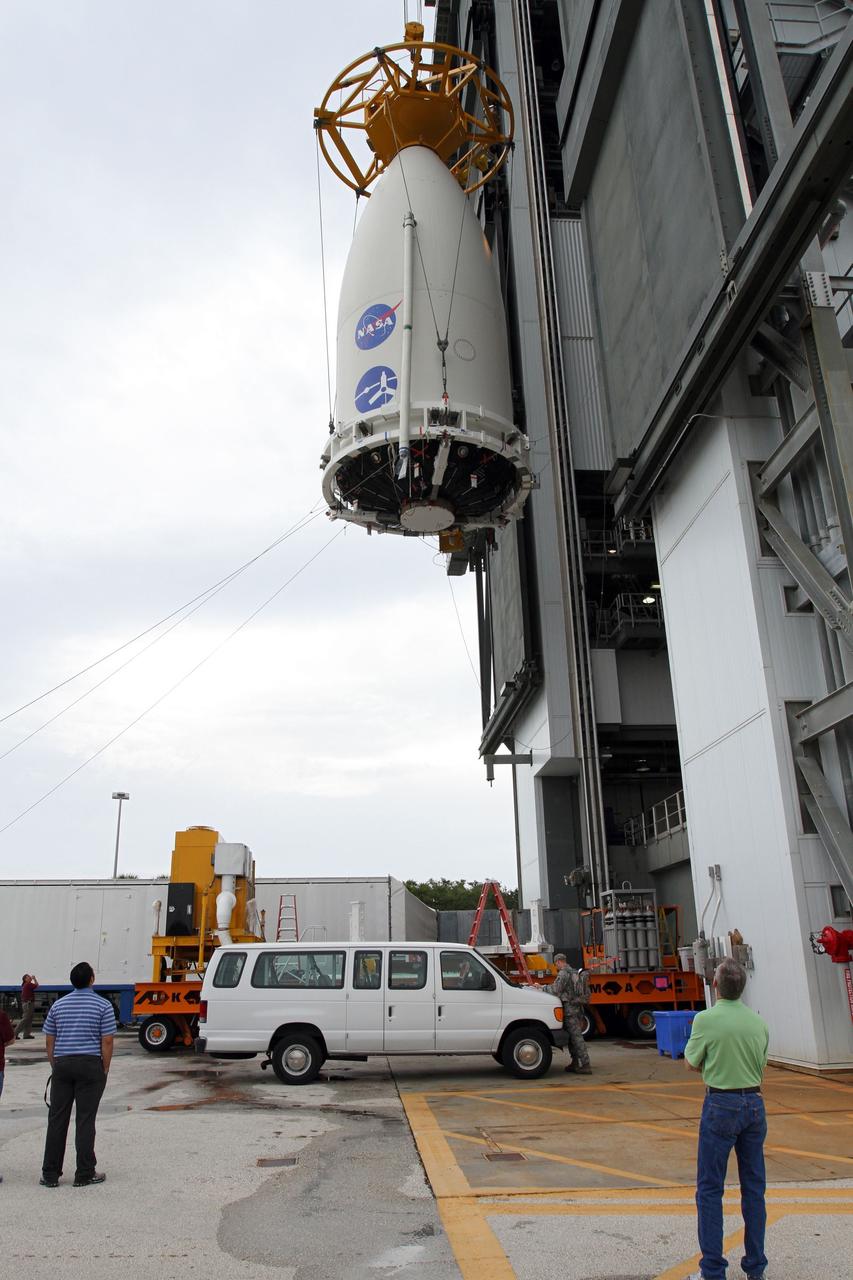
CAPE CANAVERAL, Fla. -- At Space Launch Complex 41, the Juno spacecraft, enclosed in an Atlas payload fairing, appears to hover over its transporter as it is lifted up the side of the Vertical Integration Facility to the top of the Atlas rocket already stacked inside. The spacecraft was prepared for launch in the Astrotech Space Operations' payload processing facility in Titusville, Fla. The fairing will protect the spacecraft from the impact of aerodynamic pressure and heating during ascent and will be jettisoned once the spacecraft is outside the Earth's atmosphere. Juno is scheduled to launch Aug. 5 aboard a United Launch Alliance Atlas V rocket from Cape Canaveral Air Force Station in Florida. The solar-powered spacecraft will orbit Jupiter's poles 33 times to find out more about the gas giant's origins, structure, atmosphere and magnetosphere and investigate the existence of a solid planetary core. For more information, visit www.nasa.gov/juno. Photo credit: NASA/Cory Huston

CAPE CANAVERAL, Fla. -- Inside the Vertical Integration Facility at Space Launch Complex 41, the Juno spacecraft, enclosed in an Atlas payload fairing, is lowered onto the top of the Atlas rocket stacked beneath it. The spacecraft was prepared for launch in the Astrotech Space Operations' payload processing facility in Titusville, Fla. The fairing will protect the spacecraft from the impact of aerodynamic pressure and heating during ascent and will be jettisoned once the spacecraft is outside the Earth's atmosphere. Juno is scheduled to launch Aug. 5 aboard a United Launch Alliance Atlas V rocket from Cape Canaveral Air Force Station in Florida. The solar-powered spacecraft will orbit Jupiter's poles 33 times to find out more about the gas giant's origins, structure, atmosphere and magnetosphere and investigate the existence of a solid planetary core. For more information, visit www.nasa.gov/juno. Photo credit: NASA/Cory Huston
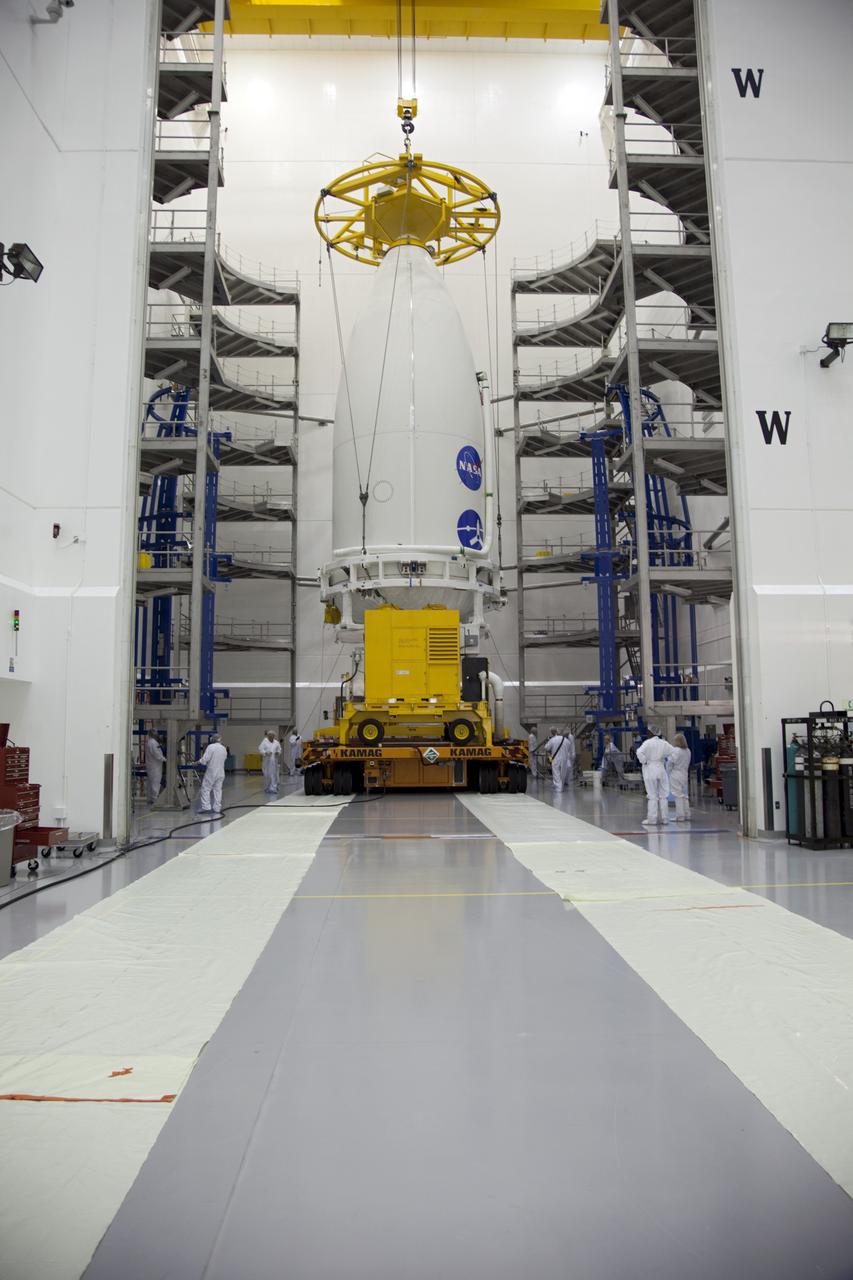
CAPE CANAVERAL, Fla. -- In the Astrotech payload processing facility near Kennedy Space Center in Florida, a lifting device lowers the Atlas payload fairing enclosing the Juno spacecraft onto a transporter during operations to move the spacecraft to Space Launch Complex 41. The fairing will protect the spacecraft from the impact of aerodynamic pressure and heating during ascent and will be jettisoned once the spacecraft is outside the Earth's atmosphere. Juno is scheduled to launch aboard a United Launch Alliance Atlas V rocket from Cape Canaveral, Fla., Aug. 5.The solar-powered spacecraft will orbit Jupiter's poles 33 times to find out more about the gas giant's origins, structure, atmosphere and magnetosphere and investigate the existence of a solid planetary core. For more information, visit www.nasa.gov/juno. Photo credit: NASA/Frank Michaux
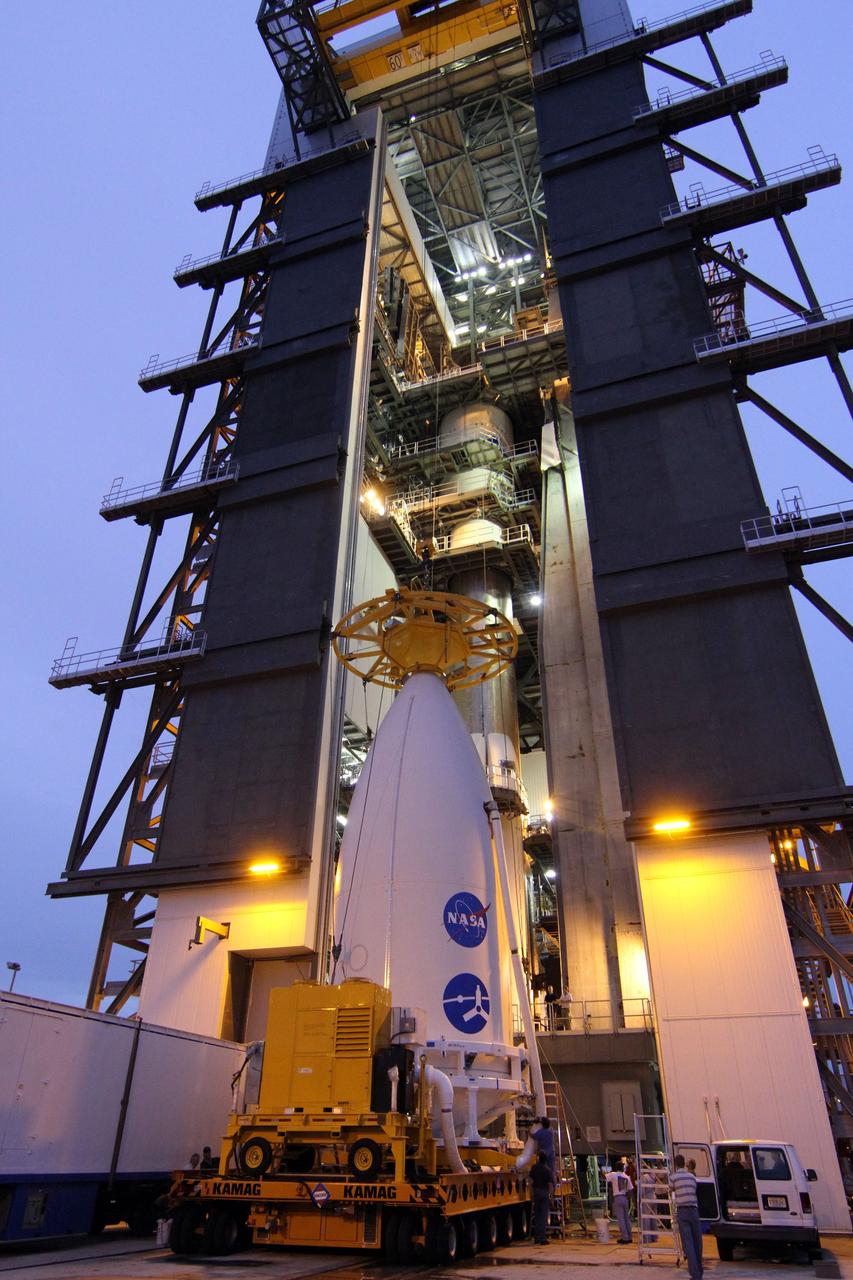
CAPE CANAVERAL, Fla. -- At Space Launch Complex 41, a crane is lowered over the nose of the Atlas payload fairing enclosing the Juno spacecraft in preparation for its lift to the top of the Atlas rocket stacked in the Vertical Integration Facility. The spacecraft was prepared for launch in the Astrotech Space Operations' payload processing facility in Titusville, Fla. The fairing will protect the spacecraft from the impact of aerodynamic pressure and heating during ascent and will be jettisoned once the spacecraft is outside the Earth's atmosphere. Juno is scheduled to launch Aug. 5 aboard a United Launch Alliance Atlas V rocket from Cape Canaveral Air Force Station in Florida. The solar-powered spacecraft will orbit Jupiter's poles 33 times to find out more about the gas giant's origins, structure, atmosphere and magnetosphere and investigate the existence of a solid planetary core. For more information, visit www.nasa.gov/juno. Photo credit: NASA/Cory Huston
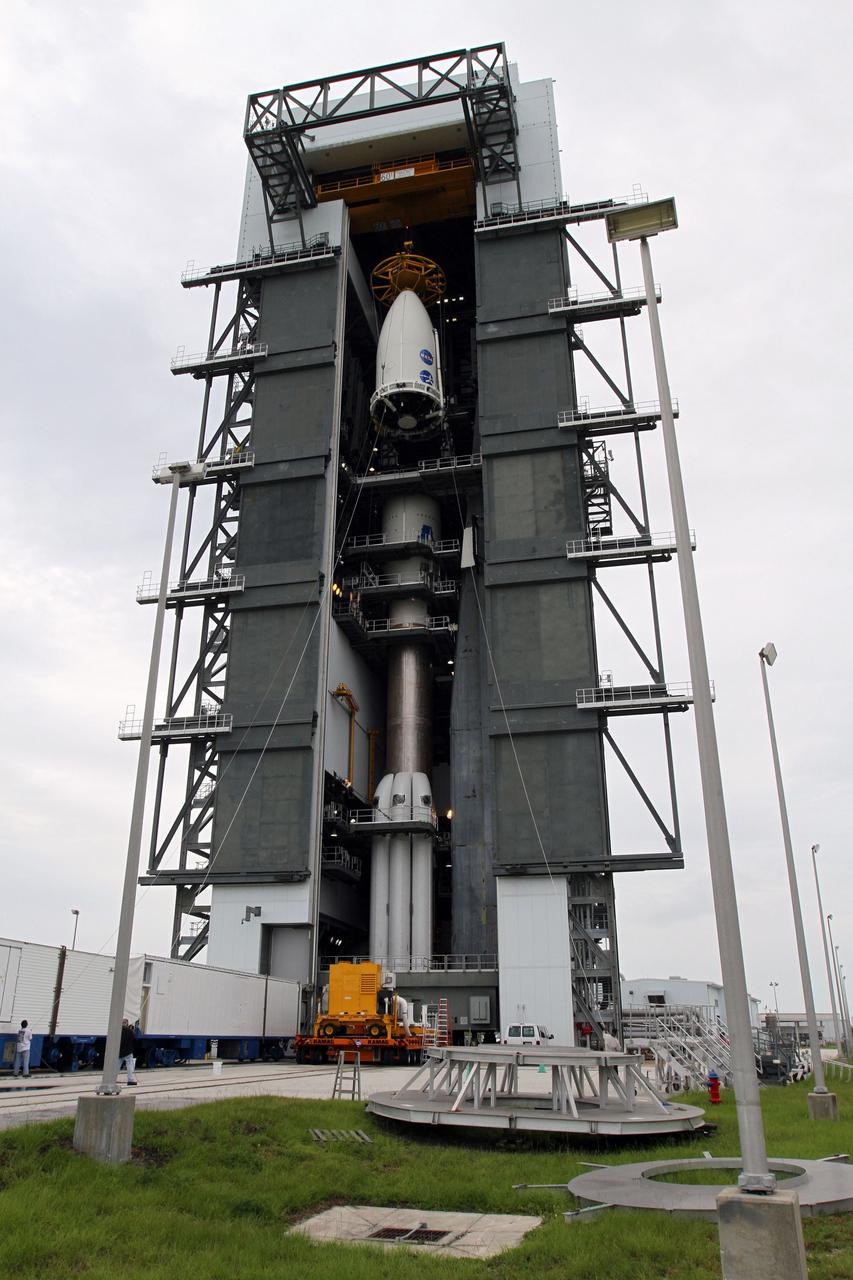
CAPE CANAVERAL, Fla. -- At Space Launch Complex 41, the Atlas rocket stacked inside the Vertical Integration Facility stands ready to receive the Juno spacecraft, enclosed in an Atlas payload fairing. The spacecraft was prepared for launch in the Astrotech Space Operations' payload processing facility in Titusville, Fla. The fairing will protect the spacecraft from the impact of aerodynamic pressure and heating during ascent and will be jettisoned once the spacecraft is outside the Earth's atmosphere. Juno is scheduled to launch Aug. 5 aboard a United Launch Alliance Atlas V rocket from Cape Canaveral Air Force Station in Florida. The solar-powered spacecraft will orbit Jupiter's poles 33 times to find out more about the gas giant's origins, structure, atmosphere and magnetosphere and investigate the existence of a solid planetary core. For more information, visit www.nasa.gov/juno. Photo credit: NASA/Cory Huston
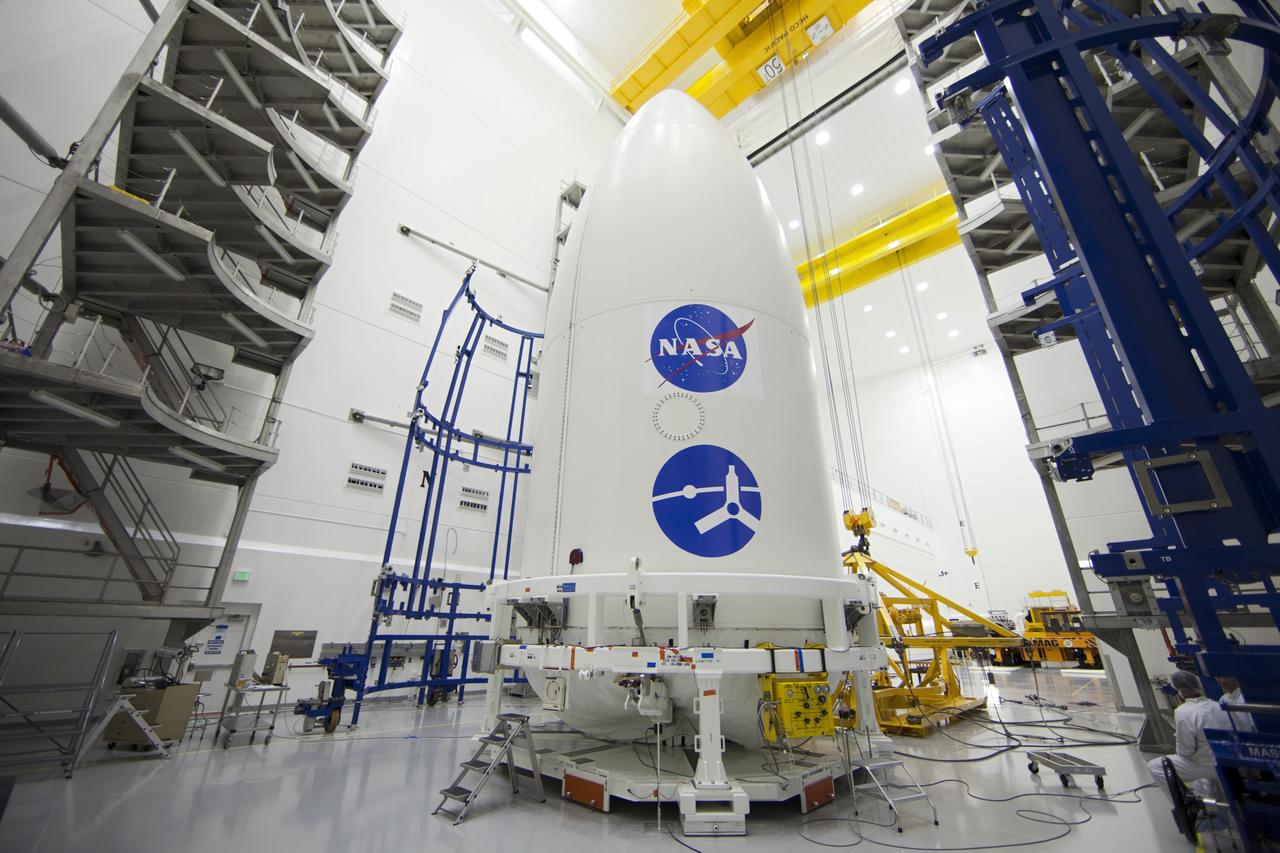
CAPE CANAVERAL, Fla. -- In the Astrotech payload processing facility near Kennedy Space Center in Florida, preparations are under way to lift the Juno spacecraft, enclosed in an Atlas payload fairing, onto a transporter for its trip to Space Launch Complex 41. The fairing will protect the spacecraft from the impact of aerodynamic pressure and heating during ascent and will be jettisoned once the spacecraft is outside the Earth's atmosphere. Juno is scheduled to launch aboard a United Launch Alliance Atlas V rocket from Cape Canaveral, Fla., Aug. 5.The solar-powered spacecraft will orbit Jupiter's poles 33 times to find out more about the gas giant's origins, structure, atmosphere and magnetosphere and investigate the existence of a solid planetary core. For more information, visit www.nasa.gov/juno. Photo credit: NASA/Frank Michaux
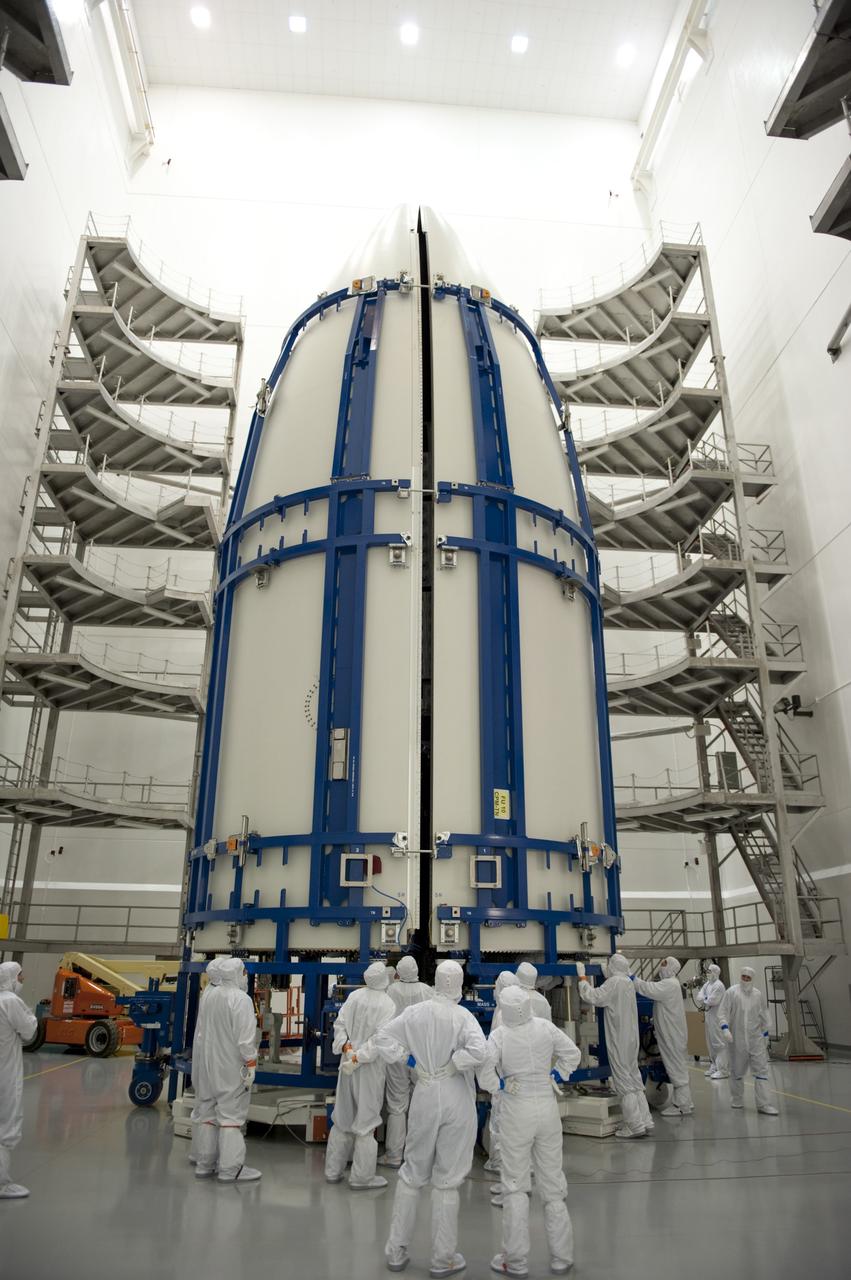
CAPE CANAVERAL, Fla. -- In the Astrotech payload processing facility near Kennedy Space Center in Florida, the Atlas payload fairing obscures the Juno spacecraft from view as the fairing closes around the spacecraft for launch. The fairing will protect the spacecraft from the impact of aerodynamic pressure and heating during ascent and will be jettisoned once the spacecraft is outside the Earth's atmosphere. Juno is scheduled to launch aboard a United Launch Alliance Atlas V rocket from Cape Canaveral, Fla., Aug. 5.The solar-powered spacecraft will orbit Jupiter's poles 33 times to find out more about the gas giant's origins, structure, atmosphere and magnetosphere and investigate the existence of a solid planetary core. For more information, visit www.nasa.gov/juno. Photo credit: NASA/Kim Shiflett
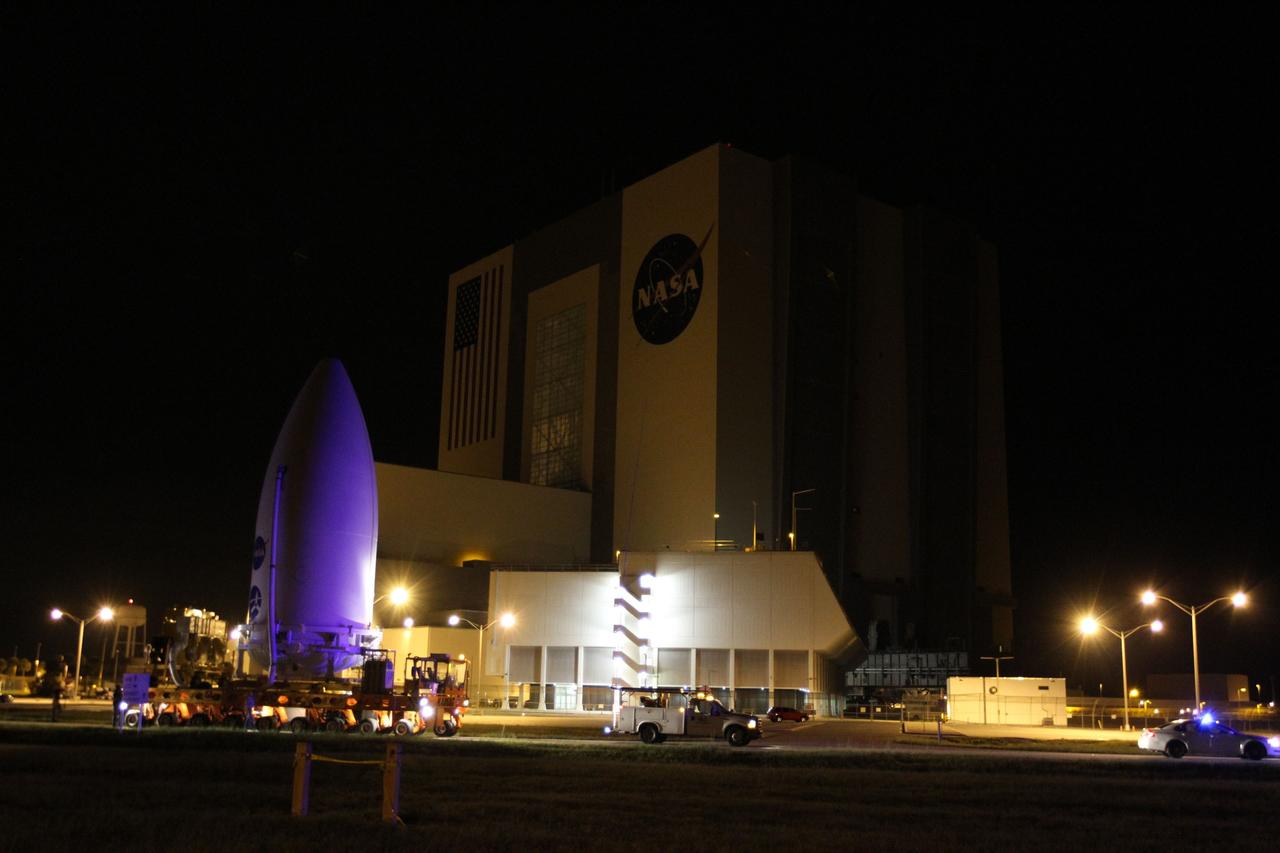
CAPE CANAVERAL, Fla. -- The Juno spacecraft, enclosed in an Atlas payload fairing, rolls past the 525-foot-tall Vehicle Assembly Building in Kennedy Space Center's Launch Complex 39 on its way to Space Launch Complex 41. The spacecraft was prepared for launch in the Astrotech Space Operations' payload processing facility in Titusville, Fla. The fairing will protect the spacecraft from the impact of aerodynamic pressure and heating during ascent and will be jettisoned once the spacecraft is outside the Earth's atmosphere. Juno is scheduled to launch Aug. 5 aboard a United Launch Alliance Atlas V rocket from Cape Canaveral Air Force Station in Florida. The solar-powered spacecraft will orbit Jupiter's poles 33 times to find out more about the gas giant's origins, structure, atmosphere and magnetosphere and investigate the existence of a solid planetary core. For more information, visit www.nasa.gov/juno. Photo credit: NASA/Cory Huston
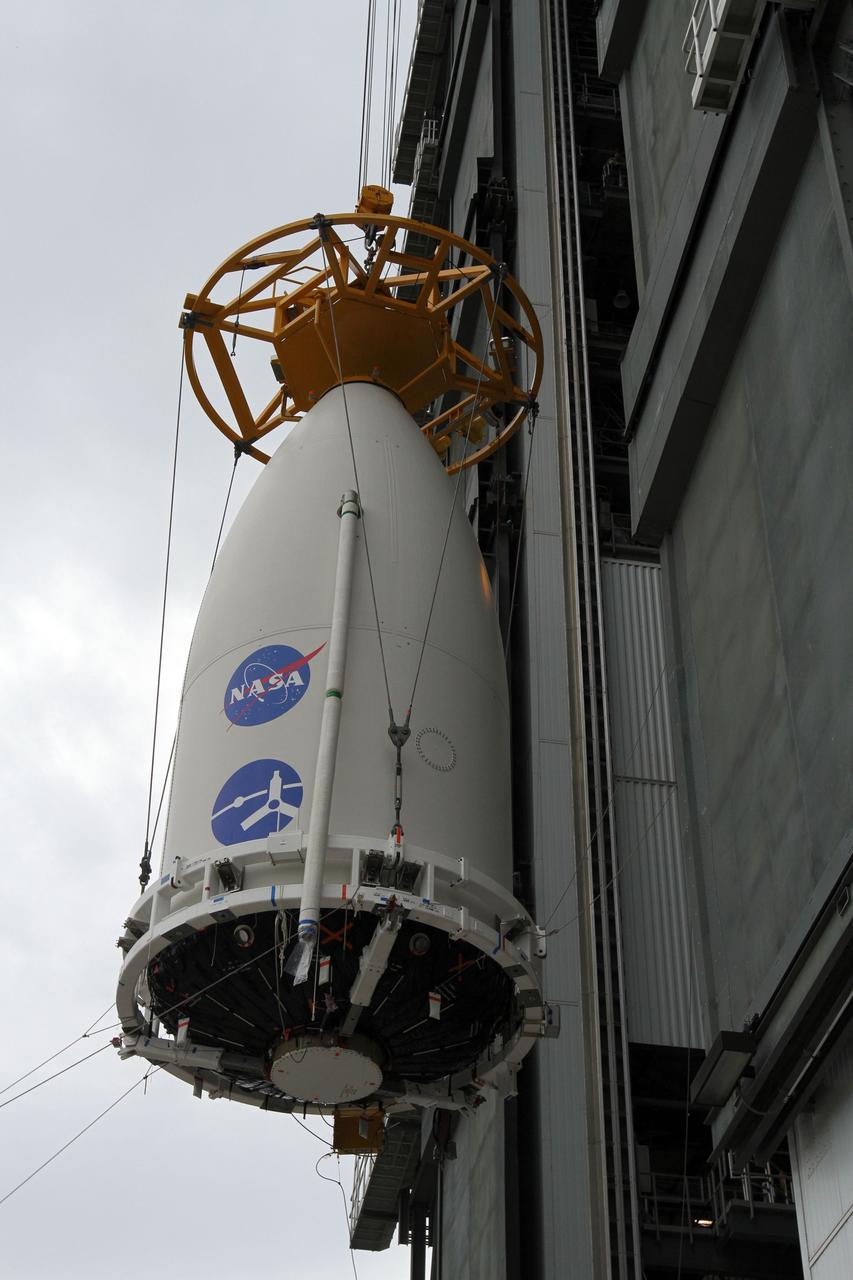
CAPE CANAVERAL, Fla. -- At Space Launch Complex 41, the Juno spacecraft, enclosed in an Atlas payload fairing, is lifted slowly and carefully up the outside of the Vertical Integration Facility to the top of the Atlas rocket already stacked inside. The spacecraft was prepared for launch in the Astrotech Space Operations' payload processing facility in Titusville, Fla. The fairing will protect the spacecraft from the impact of aerodynamic pressure and heating during ascent and will be jettisoned once the spacecraft is outside the Earth's atmosphere. Juno is scheduled to launch Aug. 5 aboard a United Launch Alliance Atlas V rocket from Cape Canaveral Air Force Station in Florida. The solar-powered spacecraft will orbit Jupiter's poles 33 times to find out more about the gas giant's origins, structure, atmosphere and magnetosphere and investigate the existence of a solid planetary core. For more information, visit www.nasa.gov/juno. Photo credit: NASA/Cory Huston
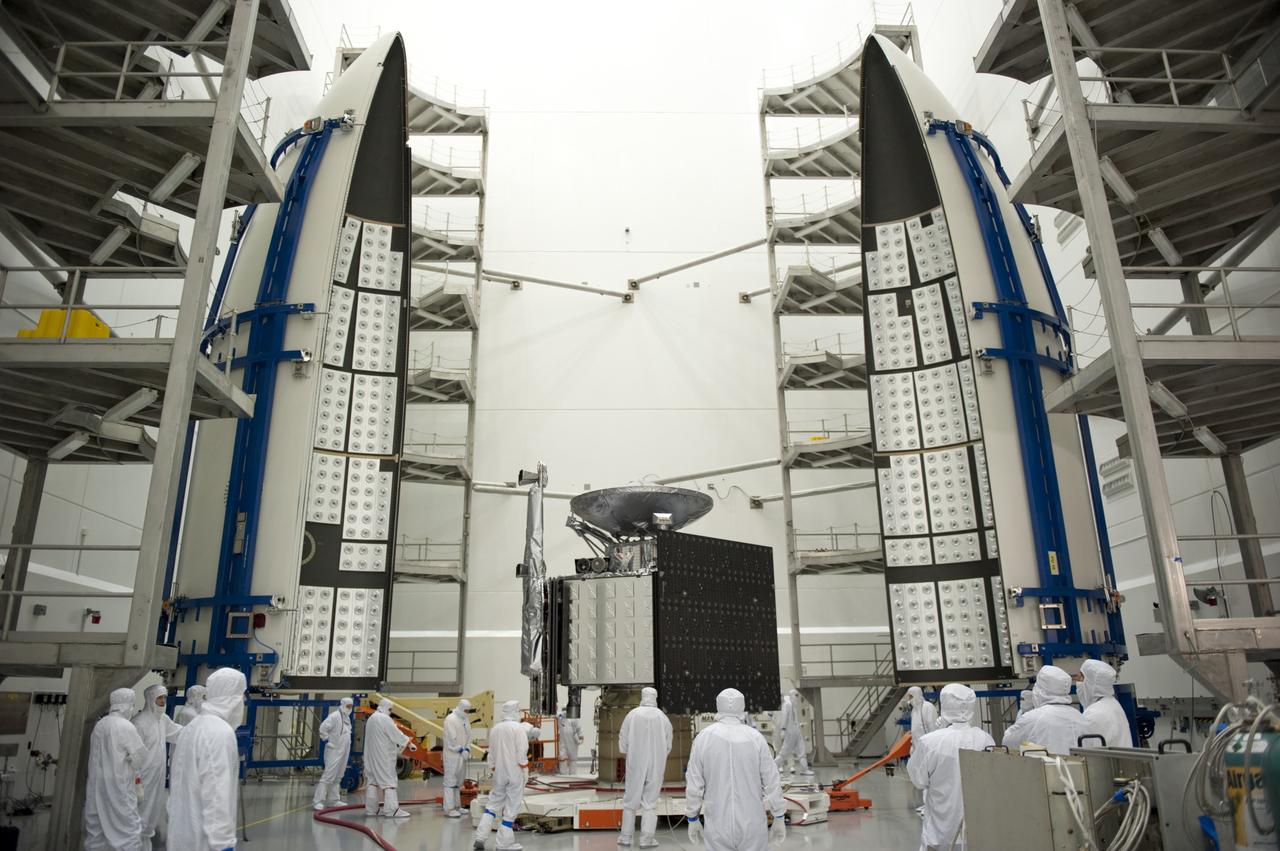
CAPE CANAVERAL, Fla. -- In the Astrotech payload processing facility near Kennedy Space Center in Florida, the Juno spacecraft is viewable for the last time before it is enclosed in the Atlas payload fairing for launch. The fairing will protect the spacecraft from the impact of aerodynamic pressure and heating during ascent and will be jettisoned once the spacecraft is outside the Earth's atmosphere. Juno is scheduled to launch aboard a United Launch Alliance Atlas V rocket from Cape Canaveral, Fla., Aug. 5.The solar-powered spacecraft will orbit Jupiter's poles 33 times to find out more about the gas giant's origins, structure, atmosphere and magnetosphere and investigate the existence of a solid planetary core. For more information, visit www.nasa.gov/juno. Photo credit: NASA/Kim Shiflett
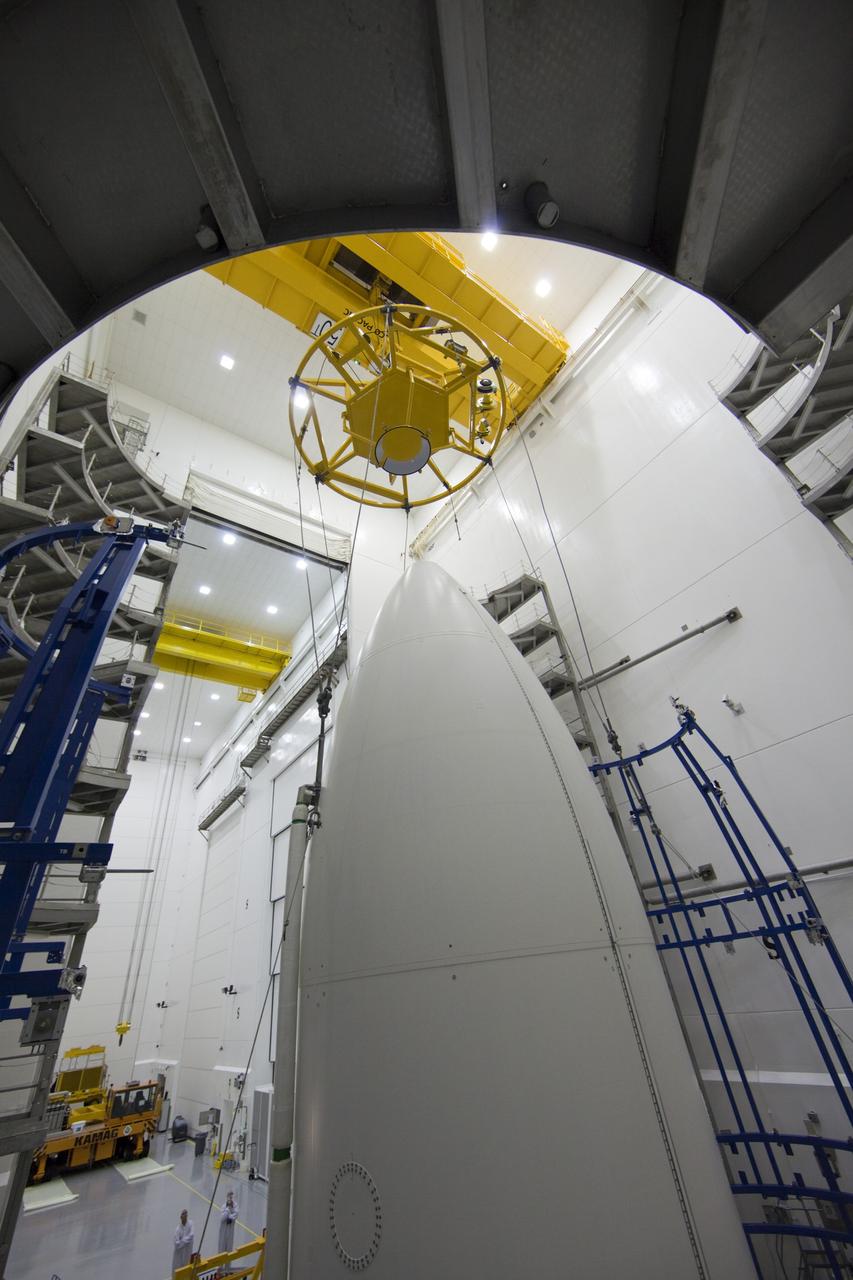
CAPE CANAVERAL, Fla. -- In the Astrotech payload processing facility near Kennedy Space Center in Florida, a lifting device is positioned over the Atlas payload fairing enclosing the Juno spacecraft during operations to lift the spacecraft onto a transporter for its trip to Space Launch Complex 41. The fairing will protect the spacecraft from the impact of aerodynamic pressure and heating during ascent and will be jettisoned once the spacecraft is outside the Earth's atmosphere. Juno is scheduled to launch aboard a United Launch Alliance Atlas V rocket from Cape Canaveral, Fla., Aug. 5.The solar-powered spacecraft will orbit Jupiter's poles 33 times to find out more about the gas giant's origins, structure, atmosphere and magnetosphere and investigate the existence of a solid planetary core. For more information, visit www.nasa.gov/juno. Photo credit: NASA/Frank Michaux

CAPE CANAVERAL, Fla. -- Inside the Vertical Integration Facility at Space Launch Complex 41, the Juno spacecraft, enclosed in an Atlas payload fairing, is in position on top of its Atlas launch vehicle. The spacecraft was prepared for launch in the Astrotech Space Operations' payload processing facility in Titusville, Fla. The fairing will protect the spacecraft from the impact of aerodynamic pressure and heating during ascent and will be jettisoned once the spacecraft is outside the Earth's atmosphere. Juno is scheduled to launch Aug. 5 aboard a United Launch Alliance Atlas V rocket from Cape Canaveral Air Force Station in Florida. The solar-powered spacecraft will orbit Jupiter's poles 33 times to find out more about the gas giant's origins, structure, atmosphere and magnetosphere and investigate the existence of a solid planetary core. For more information, visit www.nasa.gov/juno. Photo credit: NASA/Cory Huston

NASA has extended the mission of its Juno spacecraft exploring Jupiter. The agency's most distant planetary orbiter will now extend its investigation of the solar system's largest planet through September 2025, or until the spacecraft's end of life. This extension tasks Juno with becoming an explorer of the full Jovian system — Jupiter and its rings and moons — with multiple rendezvous planned for three of Jupiter's most intriguing Galilean moons: Ganymede, Europa, and Io. The prime mission operations will be completed in July 2021. Involving 42 additional orbits, the extended mission expands on discoveries Juno has already made about Jupiter's interior structure, internal magnetic field, atmosphere (including polar cyclones, deep atmosphere, and aurora) and magnetosphere. It includes close passes of Jupiter's north polar cyclones; the first extensive exploration of the faint rings encircling the planet; and flybys of the moons Ganymede, Europa, and Io. https://photojournal.jpl.nasa.gov/catalog/PIA24308
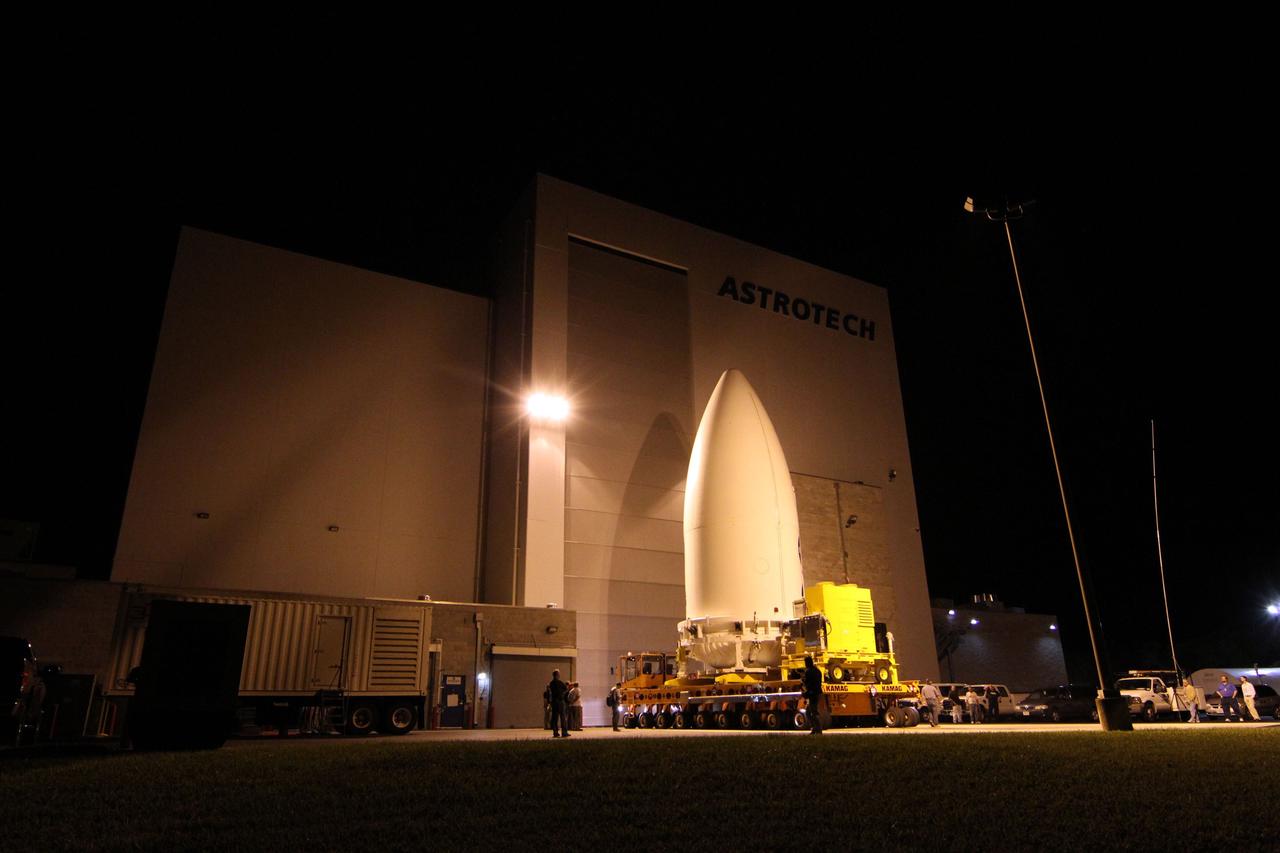
CAPE CANAVERAL, Fla. -- The Juno spacecraft, enclosed in an Atlas payload fairing, outside the Astrotech Space Operations' payload processing facility in Titusville, Fla., is ready for transport to Space Launch Complex 41. The fairing will protect the spacecraft from the impact of aerodynamic pressure and heating during ascent and will be jettisoned once the spacecraft is outside the Earth's atmosphere. Juno is scheduled to launch Aug. 5 aboard a United Launch Alliance Atlas V rocket from Cape Canaveral Air Force Station in Florida. The solar-powered spacecraft will orbit Jupiter's poles 33 times to find out more about the gas giant's origins, structure, atmosphere and magnetosphere and investigate the existence of a solid planetary core. For more information, visit www.nasa.gov/juno. Photo credit: NASA/Cory Huston

Technicians work on installing ejectable data recorders onto NASA’s Low-Earth Orbit Flight Test of an Inflatable Decelerator (LOFTID) inside Building 836 at Vandenberg Space Force Base in California on Aug. 19, 2022. Dedicated to the memory of Bernard Kutter, LOFTID is a technology demonstration mission aimed at validating inflatable heat shield technology for atmospheric re-entry. This technology could enable missions to other planetary bodies, as well as allow NASA to return heavier payloads from low-Earth orbit. LOFTID is a rideshare launching with the National Oceanic and Atmospheric Administration’s (NOAA) Joint Polar Satellite System-2 (JPSS-2) satellite. NASA and NOAA are targeting Nov. 1, 2022, for the launch of JPSS-2 on a United Launch Alliance Atlas V rocket from Space Launch Complex-3 at Vandenberg.
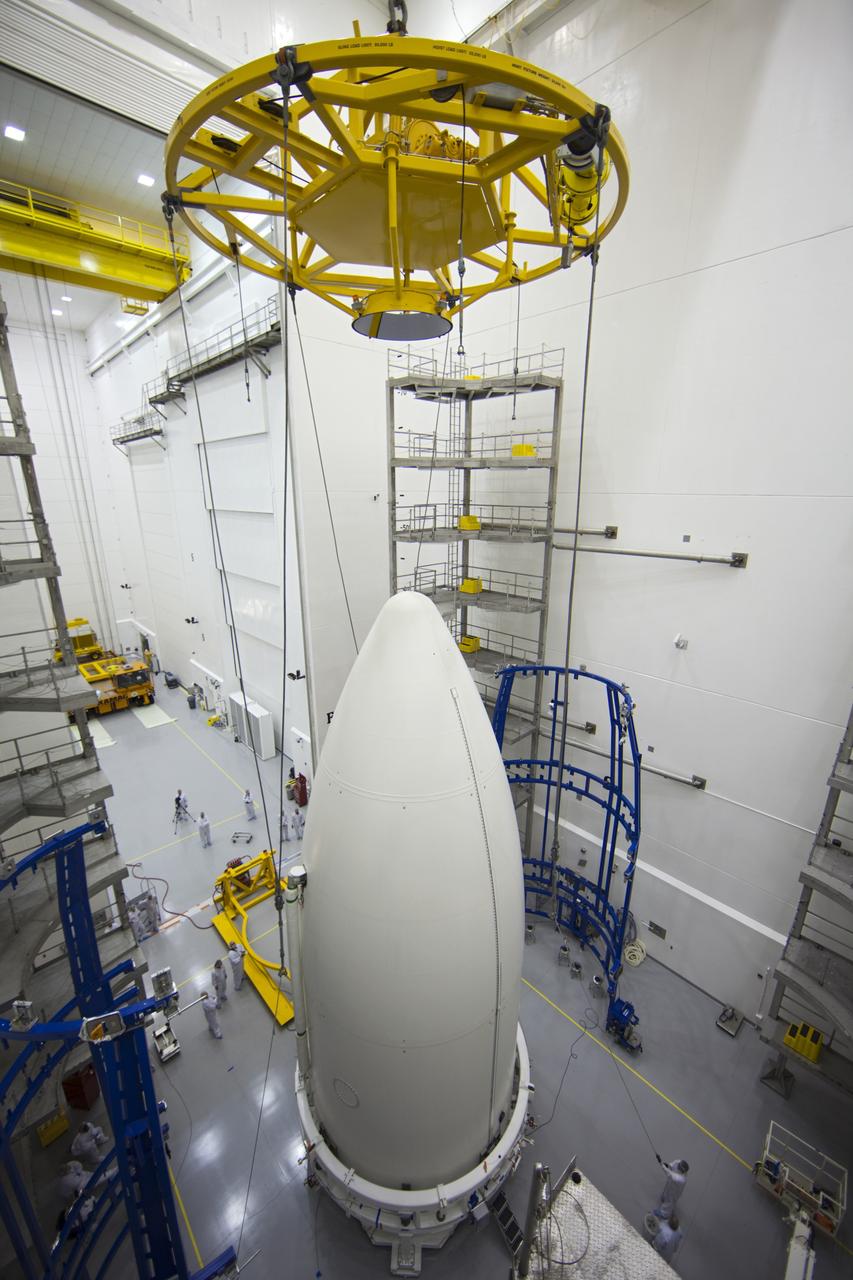
CAPE CANAVERAL, Fla. -- In the Astrotech payload processing facility near Kennedy Space Center in Florida, a lifting device is lowered toward the Atlas payload fairing enclosing the Juno spacecraft during operations to lift the spacecraft onto a transporter for its trip to Space Launch Complex 41. The fairing will protect the spacecraft from the impact of aerodynamic pressure and heating during ascent and will be jettisoned once the spacecraft is outside the Earth's atmosphere. Juno is scheduled to launch aboard a United Launch Alliance Atlas V rocket from Cape Canaveral, Fla., Aug. 5.The solar-powered spacecraft will orbit Jupiter's poles 33 times to find out more about the gas giant's origins, structure, atmosphere and magnetosphere and investigate the existence of a solid planetary core. For more information, visit www.nasa.gov/juno. Photo credit: NASA/Frank Michaux
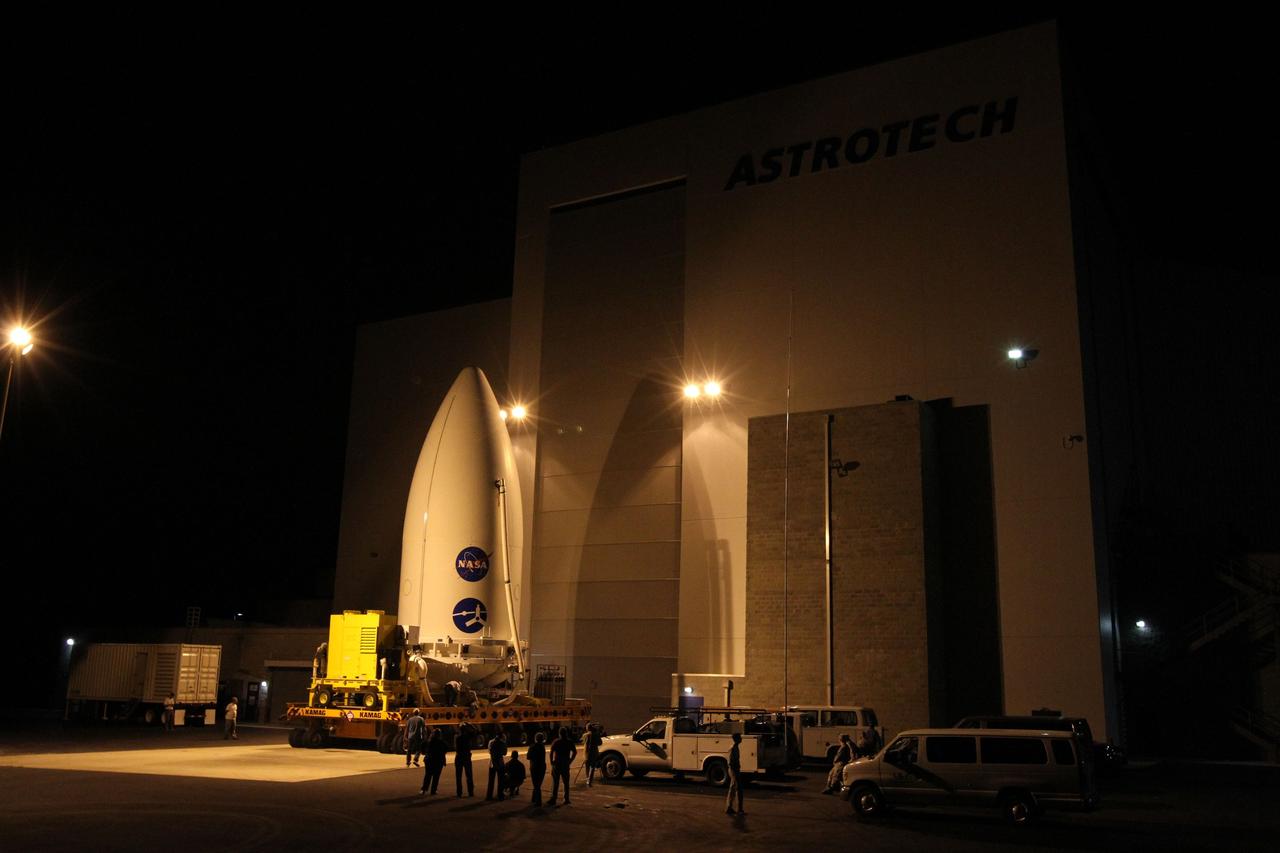
CAPE CANAVERAL, Fla. -- The Juno spacecraft, enclosed in an Atlas payload fairing, begins its trip from the Astrotech Space Operations' payload processing facility in Titusville, Fla., to Space Launch Complex 41. The fairing will protect the spacecraft from the impact of aerodynamic pressure and heating during ascent and will be jettisoned once the spacecraft is outside the Earth's atmosphere. Juno is scheduled to launch Aug. 5 aboard a United Launch Alliance Atlas V rocket from Cape Canaveral Air Force Station in Florida. The solar-powered spacecraft will orbit Jupiter's poles 33 times to find out more about the gas giant's origins, structure, atmosphere and magnetosphere and investigate the existence of a solid planetary core. For more information, visit www.nasa.gov/juno. Photo credit: NASA/Cory Huston
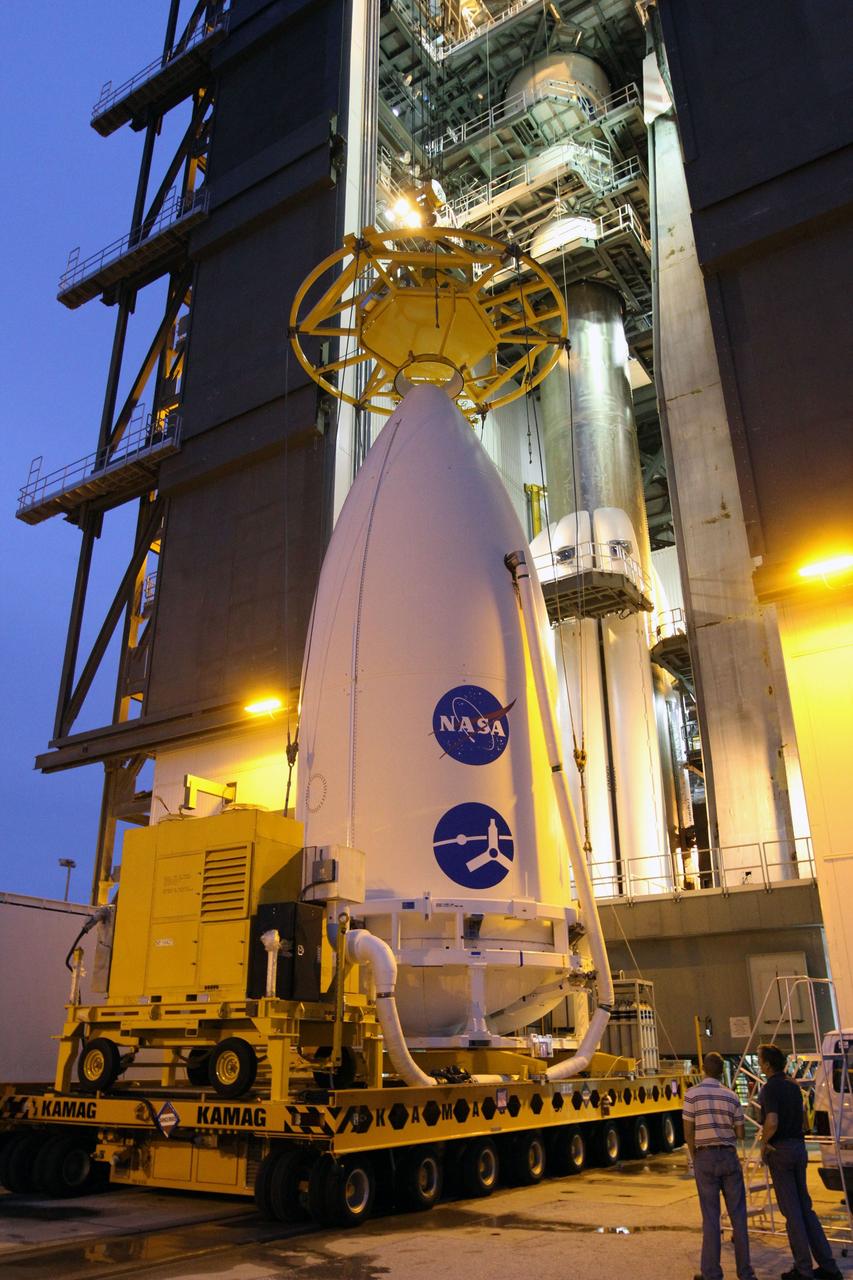
CAPE CANAVERAL, Fla. -- At Space Launch Complex 41, a crane is lowered over the nose of the Atlas payload fairing enclosing the Juno spacecraft in preparation for its lift to the top of the Atlas rocket stacked in the Vertical Integration Facility. The spacecraft was prepared for launch in the Astrotech Space Operations' payload processing facility in Titusville, Fla. The fairing will protect the spacecraft from the impact of aerodynamic pressure and heating during ascent and will be jettisoned once the spacecraft is outside the Earth's atmosphere. Juno is scheduled to launch Aug. 5 aboard a United Launch Alliance Atlas V rocket from Cape Canaveral Air Force Station in Florida. The solar-powered spacecraft will orbit Jupiter's poles 33 times to find out more about the gas giant's origins, structure, atmosphere and magnetosphere and investigate the existence of a solid planetary core. For more information, visit www.nasa.gov/juno. Photo credit: NASA/Cory Huston
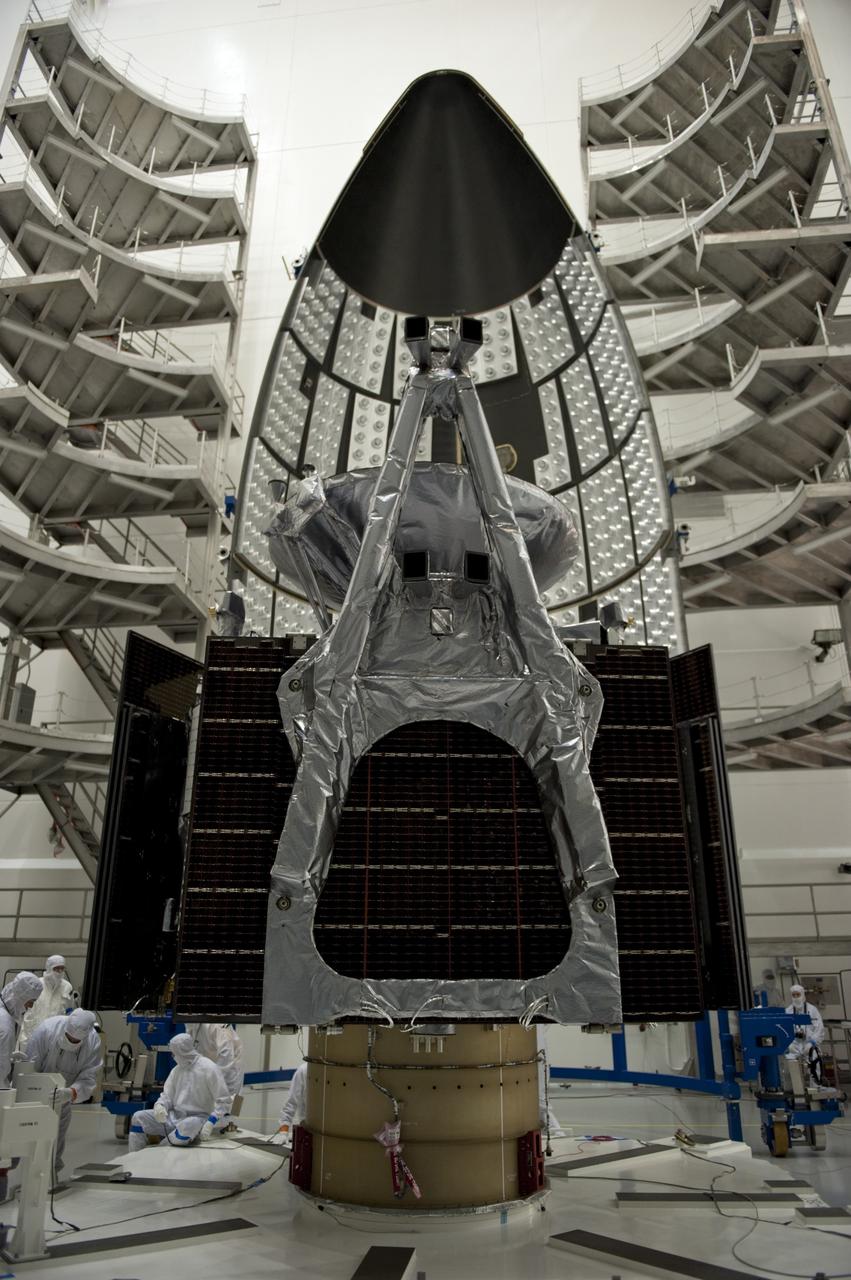
CAPE CANAVERAL, Fla. -- In the Astrotech payload processing facility near Kennedy Space Center in Florida, half of the Atlas payload fairing appears to loom above the Juno spacecraft as work to enclose the spacecraft for launch gets under way. The fairing will protect the spacecraft from the impact of aerodynamic pressure and heating during ascent and will be jettisoned once the spacecraft is outside the Earth's atmosphere. Juno is scheduled to launch aboard a United Launch Alliance Atlas V rocket from Cape Canaveral, Fla., Aug. 5.The solar-powered spacecraft will orbit Jupiter's poles 33 times to find out more about the gas giant's origins, structure, atmosphere and magnetosphere and investigate the existence of a solid planetary core. For more information, visit www.nasa.gov/juno. Photo credit: NASA/Kim Shiflett
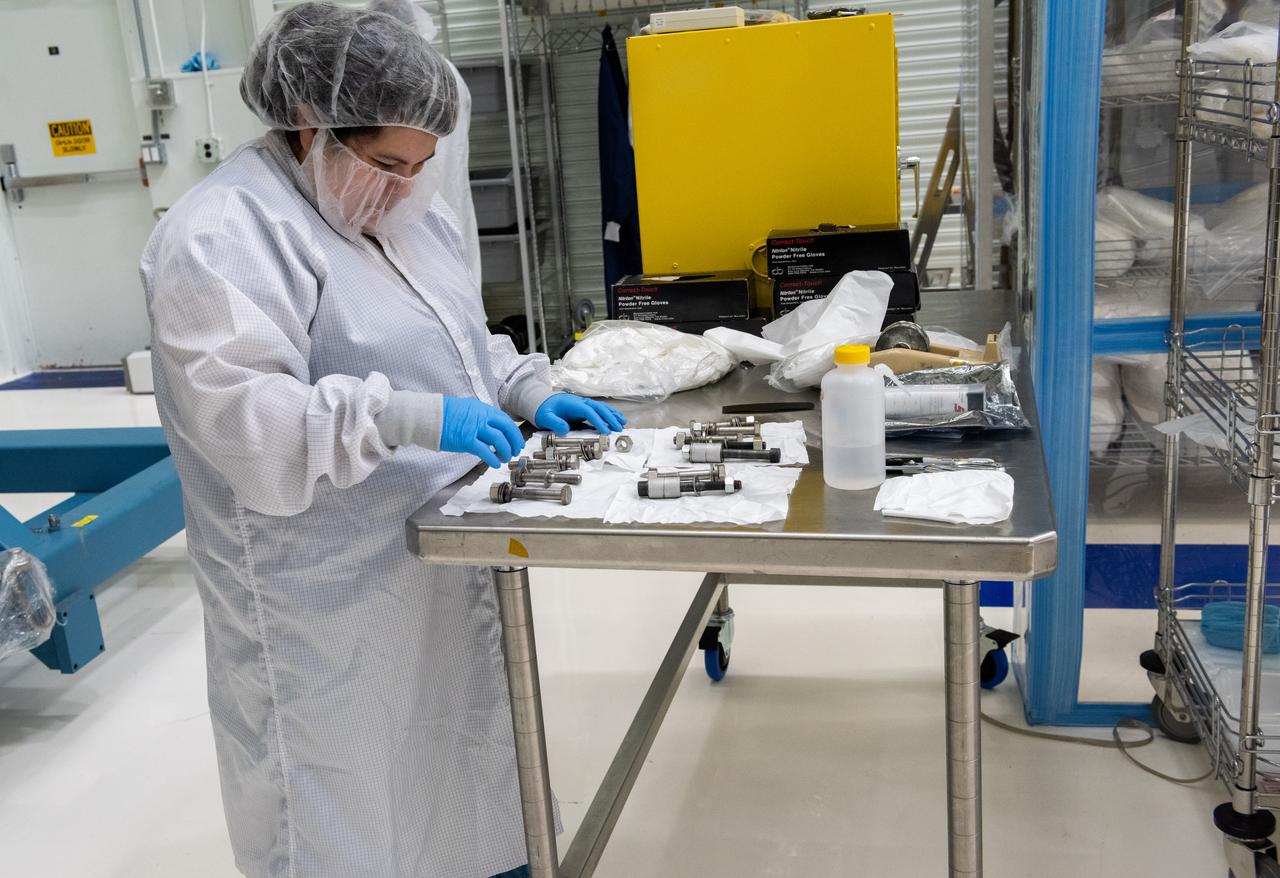
Inside Building 836 at Vandenberg Space Force Base in California, a worker inspects and prepares hardware used during the installation of ejectable data recorders onto NASA’s Low-Earth Orbit Flight Test of an Inflatable Decelerator (LOFTID) on Aug. 19, 2022. Dedicated to the memory of Bernard Kutter, LOFTID is a technology demonstration mission aimed at validating inflatable heat shield technology for atmospheric re-entry. This technology could enable missions to other planetary bodies, as well as allow NASA to return heavier payloads from low-Earth orbit. LOFTID is a rideshare launching with the National Oceanic and Atmospheric Administration’s (NOAA) Joint Polar Satellite System-2 (JPSS-2) satellite. NASA and NOAA are targeting Nov. 1, 2022, for the launch of JPSS-2 on a United Launch Alliance Atlas V rocket from Space Launch Complex-3 at Vandenberg.
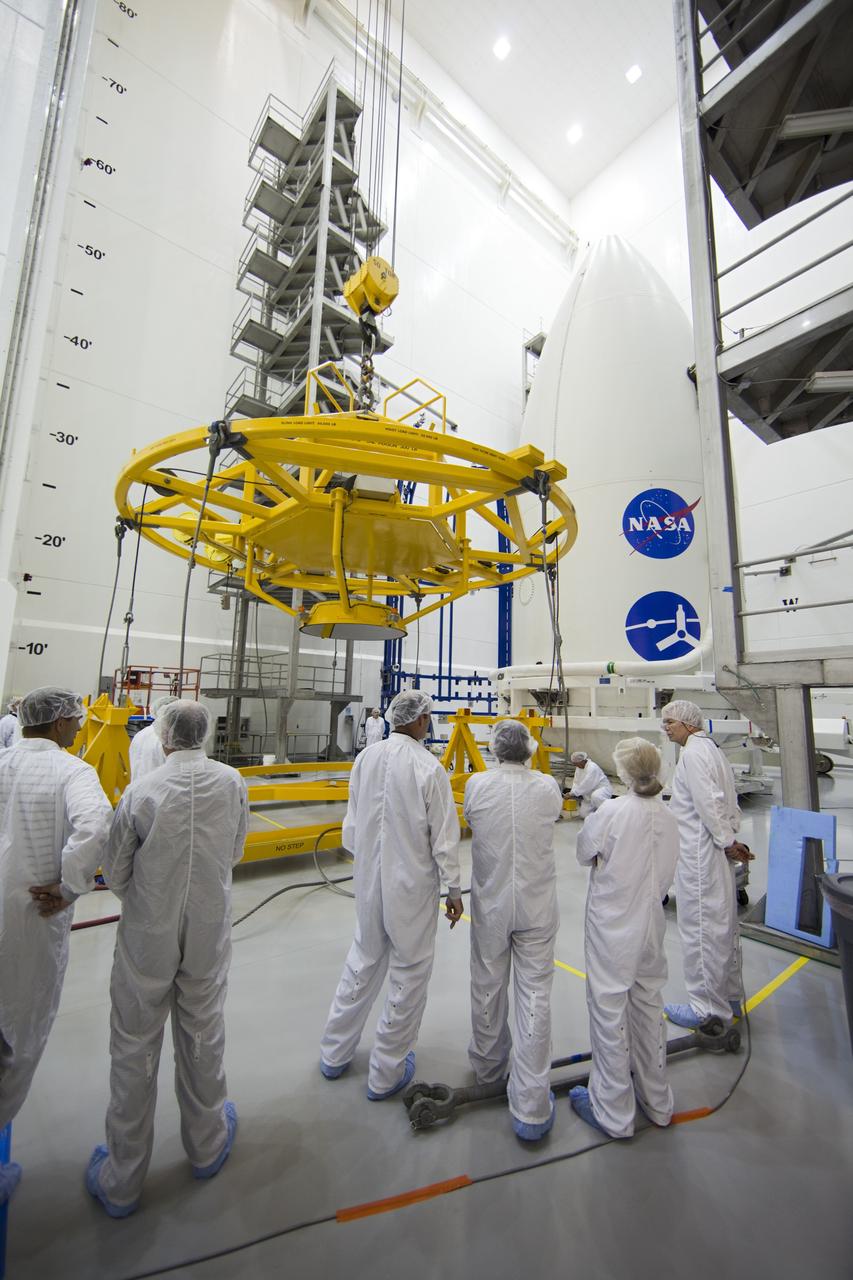
CAPE CANAVERAL, Fla. -- In the Astrotech payload processing facility near Kennedy Space Center in Florida, spacecraft technicians move a lifting device toward the Juno spacecraft, enclosed in an Atlas payload fairing, during operations to lift the spacecraft onto a transporter for its trip to Space Launch Complex 41. The fairing will protect the spacecraft from the impact of aerodynamic pressure and heating during ascent and will be jettisoned once the spacecraft is outside the Earth's atmosphere. Juno is scheduled to launch aboard a United Launch Alliance Atlas V rocket from Cape Canaveral, Fla., Aug. 5.The solar-powered spacecraft will orbit Jupiter's poles 33 times to find out more about the gas giant's origins, structure, atmosphere and magnetosphere and investigate the existence of a solid planetary core. For more information, visit www.nasa.gov/juno. Photo credit: NASA/Frank Michaux
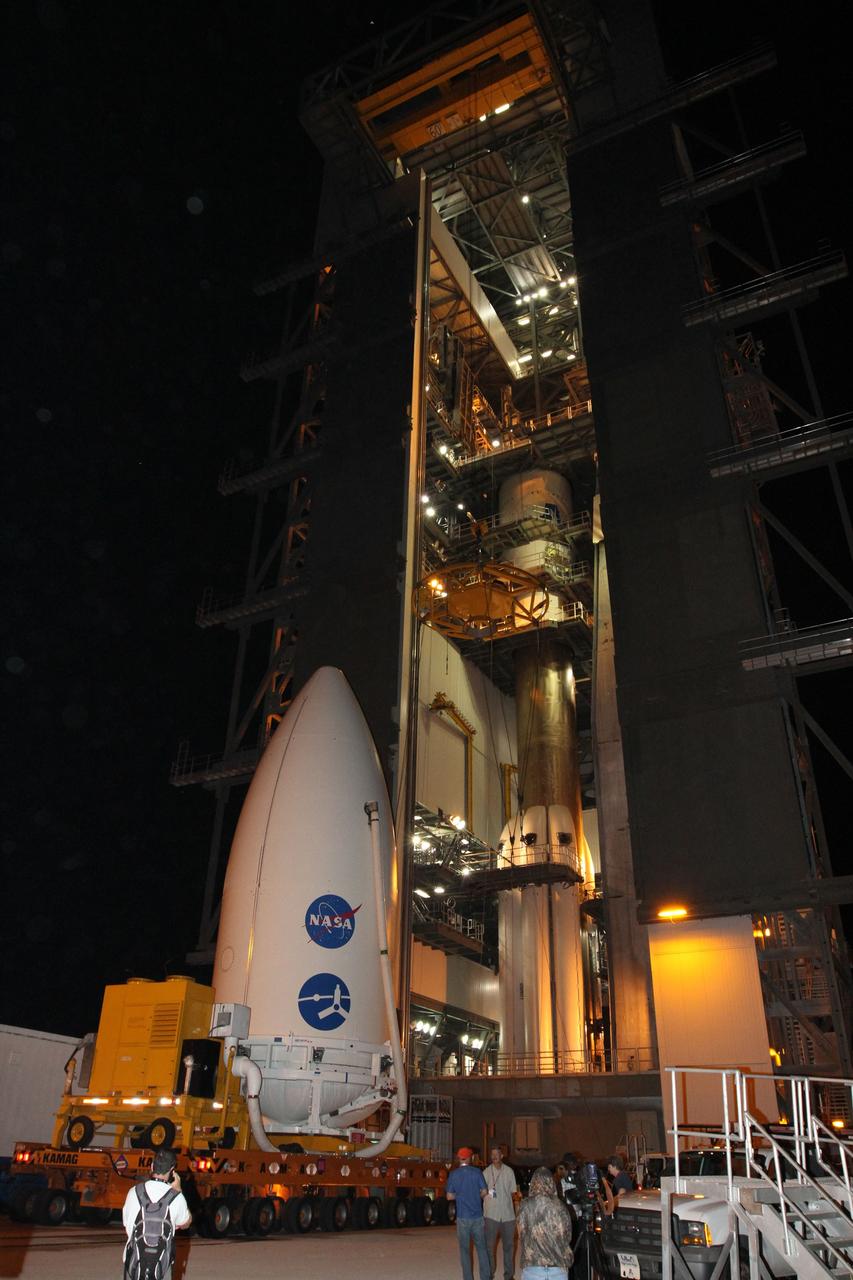
CAPE CANAVERAL, Fla. -- The Juno spacecraft, enclosed in an Atlas payload fairing, arrives at Space Launch Complex 41. The spacecraft was prepared for launch in the Astrotech Space Operations' payload processing facility in Titusville, Fla. The fairing will protect the spacecraft from the impact of aerodynamic pressure and heating during ascent and will be jettisoned once the spacecraft is outside the Earth's atmosphere. Juno is scheduled to launch Aug. 5 aboard a United Launch Alliance Atlas V rocket from Cape Canaveral Air Force Station in Florida. The solar-powered spacecraft will orbit Jupiter's poles 33 times to find out more about the gas giant's origins, structure, atmosphere and magnetosphere and investigate the existence of a solid planetary core. For more information, visit www.nasa.gov/juno. Photo credit: NASA/Cory Huston
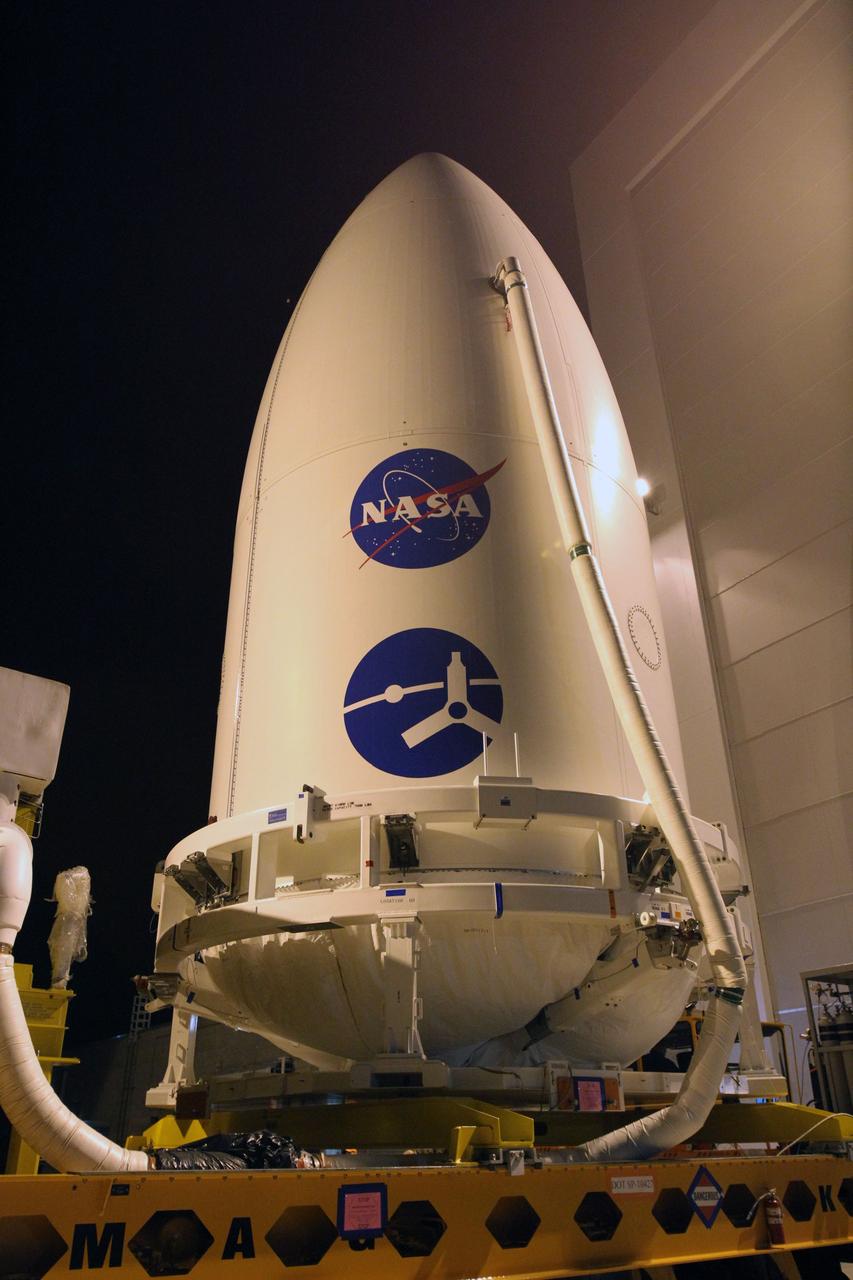
CAPE CANAVERAL, Fla. -- The door to the high bay of the Astrotech Space Operations' payload processing facility in Titusville, Fla., closes behind the Juno spacecraft, enclosed in an Atlas payload fairing, as its trip to Space Launch Complex 41 begins. The fairing will protect the spacecraft from the impact of aerodynamic pressure and heating during ascent and will be jettisoned once the spacecraft is outside the Earth's atmosphere. Juno is scheduled to launch Aug. 5 aboard a United Launch Alliance Atlas V rocket from Cape Canaveral Air Force Station in Florida. The solar-powered spacecraft will orbit Jupiter's poles 33 times to find out more about the gas giant's origins, structure, atmosphere and magnetosphere and investigate the existence of a solid planetary core. For more information, visit www.nasa.gov/juno. Photo credit: NASA/Cory Huston
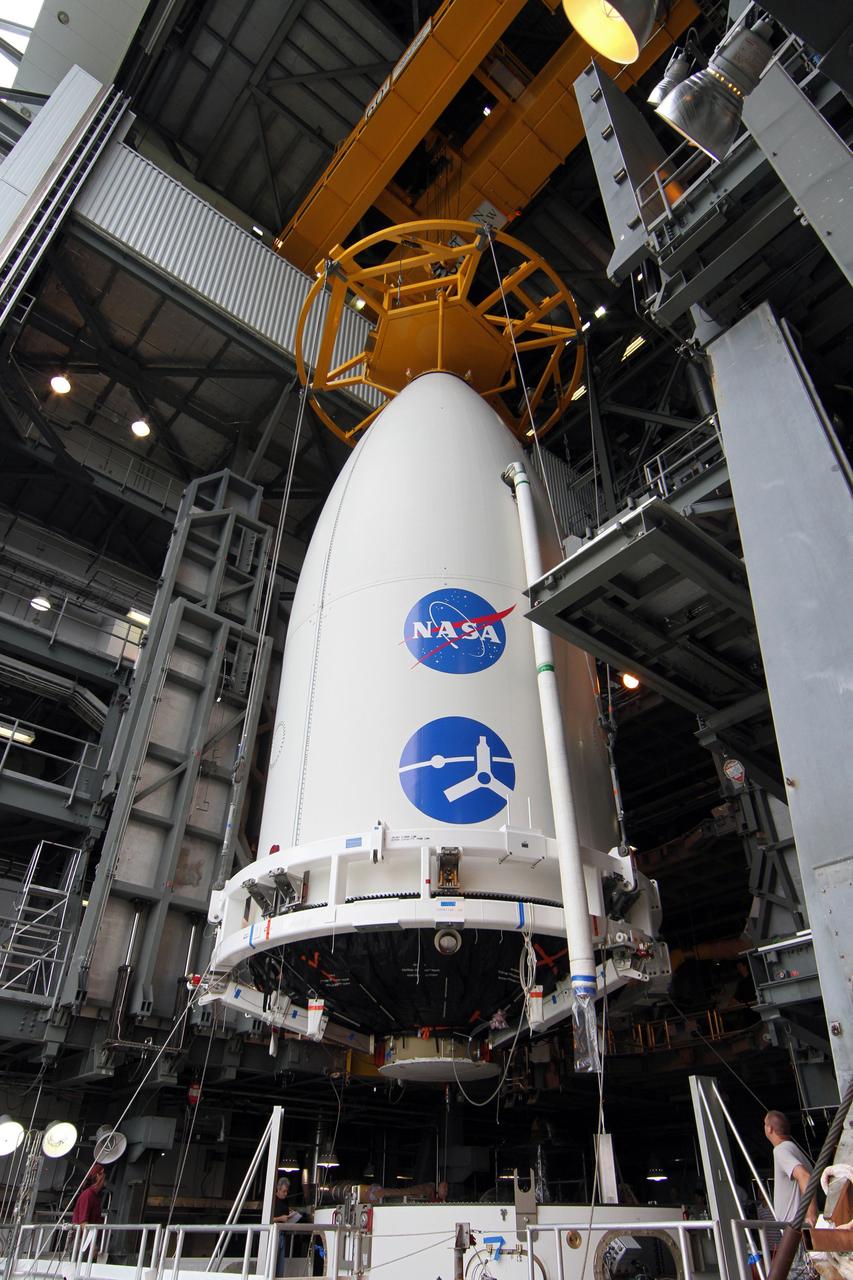
CAPE CANAVERAL, Fla. -- At Space Launch Complex 41, the Juno spacecraft, enclosed in an Atlas payload fairing, is transferred into the Vertical Integration Facility where it will be positioned on top of the Atlas rocket stacked inside. The spacecraft was prepared for launch in the Astrotech Space Operations' payload processing facility in Titusville, Fla. The fairing will protect the spacecraft from the impact of aerodynamic pressure and heating during ascent and will be jettisoned once the spacecraft is outside the Earth's atmosphere. Juno is scheduled to launch Aug. 5 aboard a United Launch Alliance Atlas V rocket from Cape Canaveral Air Force Station in Florida. The solar-powered spacecraft will orbit Jupiter's poles 33 times to find out more about the gas giant's origins, structure, atmosphere and magnetosphere and investigate the existence of a solid planetary core. For more information, visit www.nasa.gov/juno. Photo credit: NASA/Cory Huston

CAPE CANAVERAL, Fla. -- At Space Launch Complex 41, a crane hoists the Juno spacecraft, enclosed in an Atlas payload fairing, up the side of the Vertical Integration Facility to the top of the Atlas rocket stacked inside the facility. The spacecraft was prepared for launch in the Astrotech Space Operations' payload processing facility in Titusville, Fla. The fairing will protect the spacecraft from the impact of aerodynamic pressure and heating during ascent and will be jettisoned once the spacecraft is outside the Earth's atmosphere. Juno is scheduled to launch Aug. 5 aboard a United Launch Alliance Atlas V rocket from Cape Canaveral Air Force Station in Florida. The solar-powered spacecraft will orbit Jupiter's poles 33 times to find out more about the gas giant's origins, structure, atmosphere and magnetosphere and investigate the existence of a solid planetary core. For more information, visit www.nasa.gov/juno. Photo credit: NASA/Cory Huston
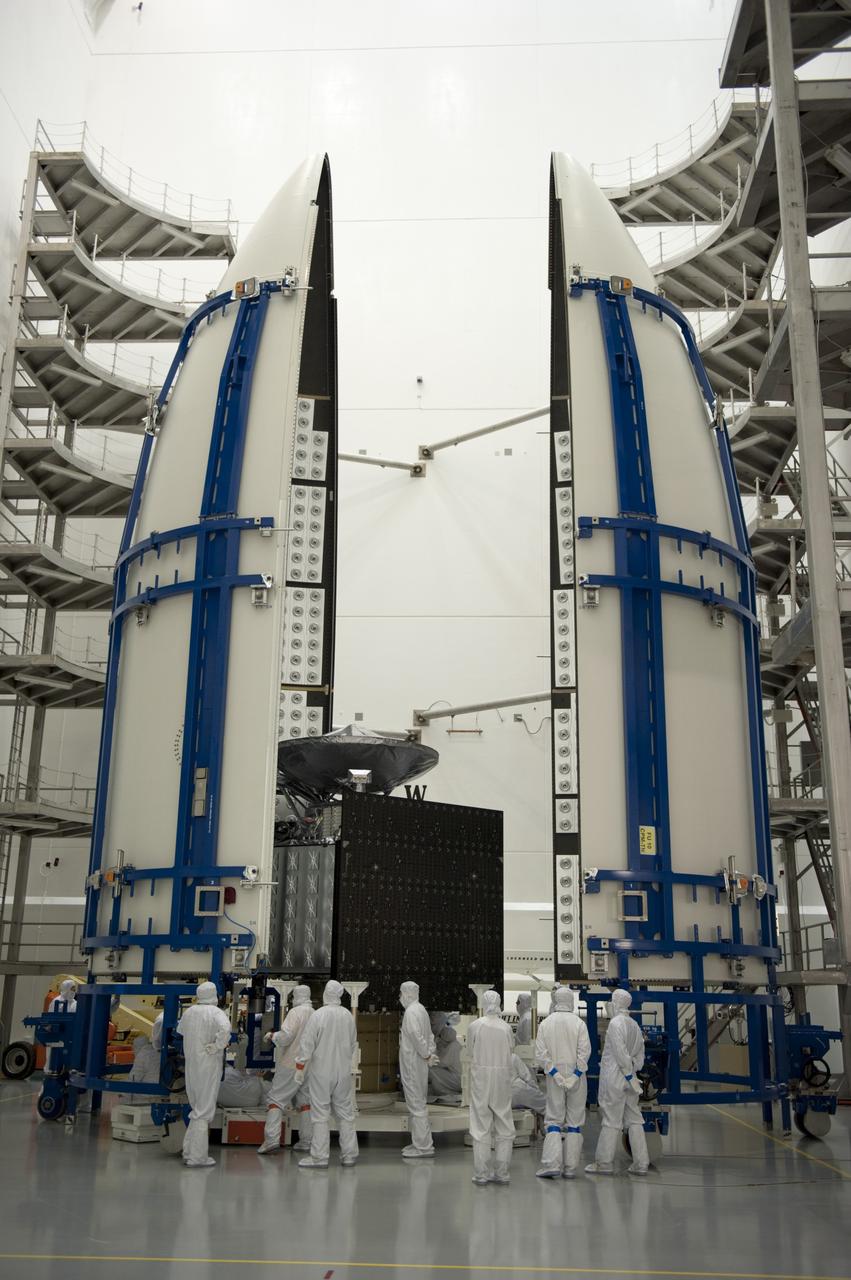
CAPE CANAVERAL, Fla. -- In the Astrotech payload processing facility near Kennedy Space Center in Florida, the Juno spacecraft is carefully positioned into half of the Atlas payload fairing during work to enclose the spacecraft for launch. The fairing will protect the spacecraft from the impact of aerodynamic pressure and heating during ascent and will be jettisoned once the spacecraft is outside the Earth's atmosphere. Juno is scheduled to launch aboard a United Launch Alliance Atlas V rocket from Cape Canaveral, Fla., Aug. 5.The solar-powered spacecraft will orbit Jupiter's poles 33 times to find out more about the gas giant's origins, structure, atmosphere and magnetosphere and investigate the existence of a solid planetary core. For more information, visit www.nasa.gov/juno. Photo credit: NASA/Kim Shiflett

Technicians move NASA’s Low-Earth Orbit Flight Test of an Inflatable Decelerator (LOFTID) re-entry vehicle onto a turnover fixture for prelaunch processing inside Building 836 at Vandenberg Space Force Base in California on Aug. 19, 2022. Dedicated to the memory of Bernard Kutter, LOFTID is a technology demonstration mission aimed at validating inflatable heat shield technology for atmospheric re-entry. This technology could enable missions to other planetary bodies, as well as allow NASA to return heavier payloads from low-Earth orbit. LOFTID is a rideshare launching with the National Oceanic and Atmospheric Administration’s (NOAA) Joint Polar Satellite System-2 (JPSS-2) satellite. NASA and NOAA are targeting Nov. 1, 2022, for the launch of JPSS-2 on a United Launch Alliance Atlas V rocket from Space Launch Complex-3 at Vandenberg.
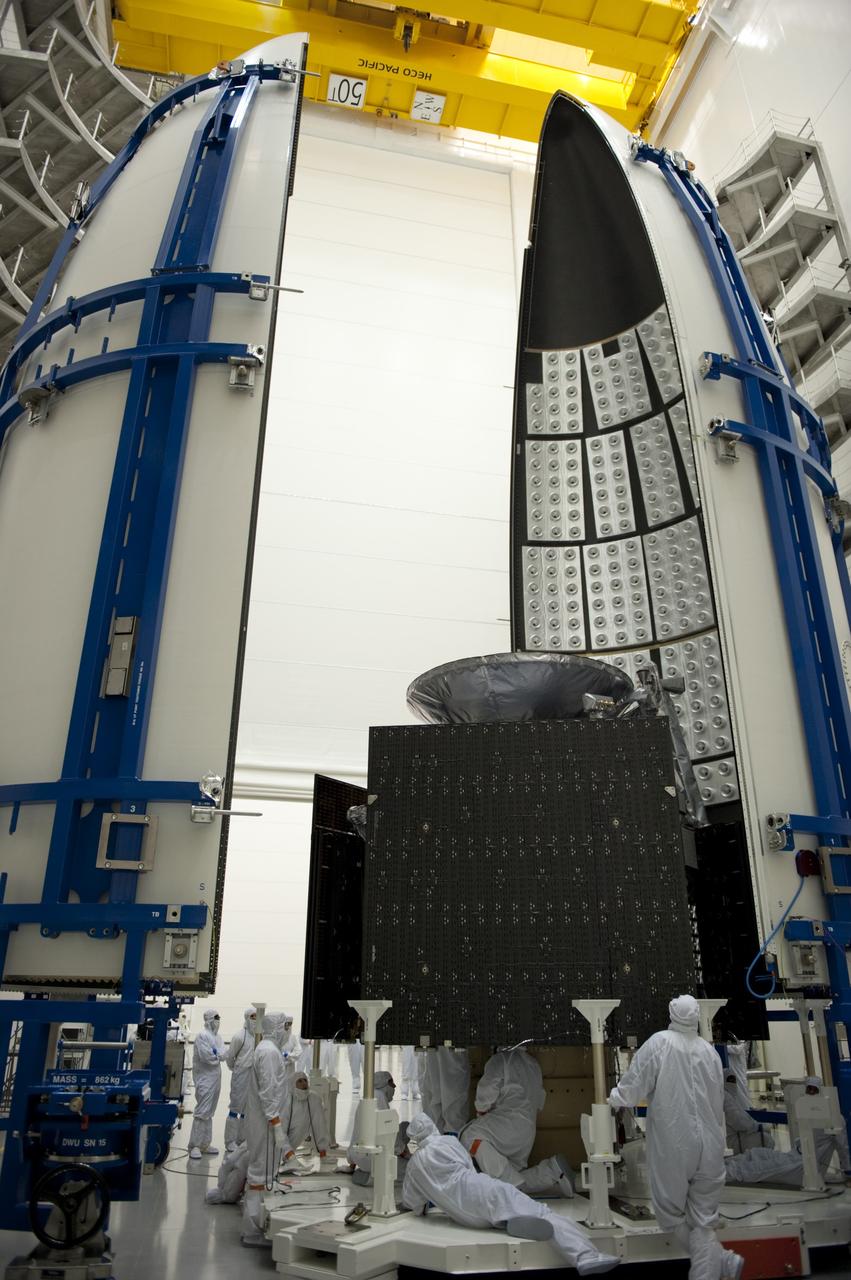
CAPE CANAVERAL, Fla. -- In the Astrotech payload processing facility near Kennedy Space Center in Florida, twin sections of the Atlas payload fairing are moved closer to the Juno spacecraft during work to enclose the spacecraft for launch. The fairing will protect the spacecraft from the impact of aerodynamic pressure and heating during ascent and will be jettisoned once the spacecraft is outside the Earth's atmosphere. Juno is scheduled to launch aboard a United Launch Alliance Atlas V rocket from Cape Canaveral, Fla., Aug. 5.The solar-powered spacecraft will orbit Jupiter's poles 33 times to find out more about the gas giant's origins, structure, atmosphere and magnetosphere and investigate the existence of a solid planetary core. For more information, visit www.nasa.gov/juno. Photo credit: NASA/Kim Shiflett