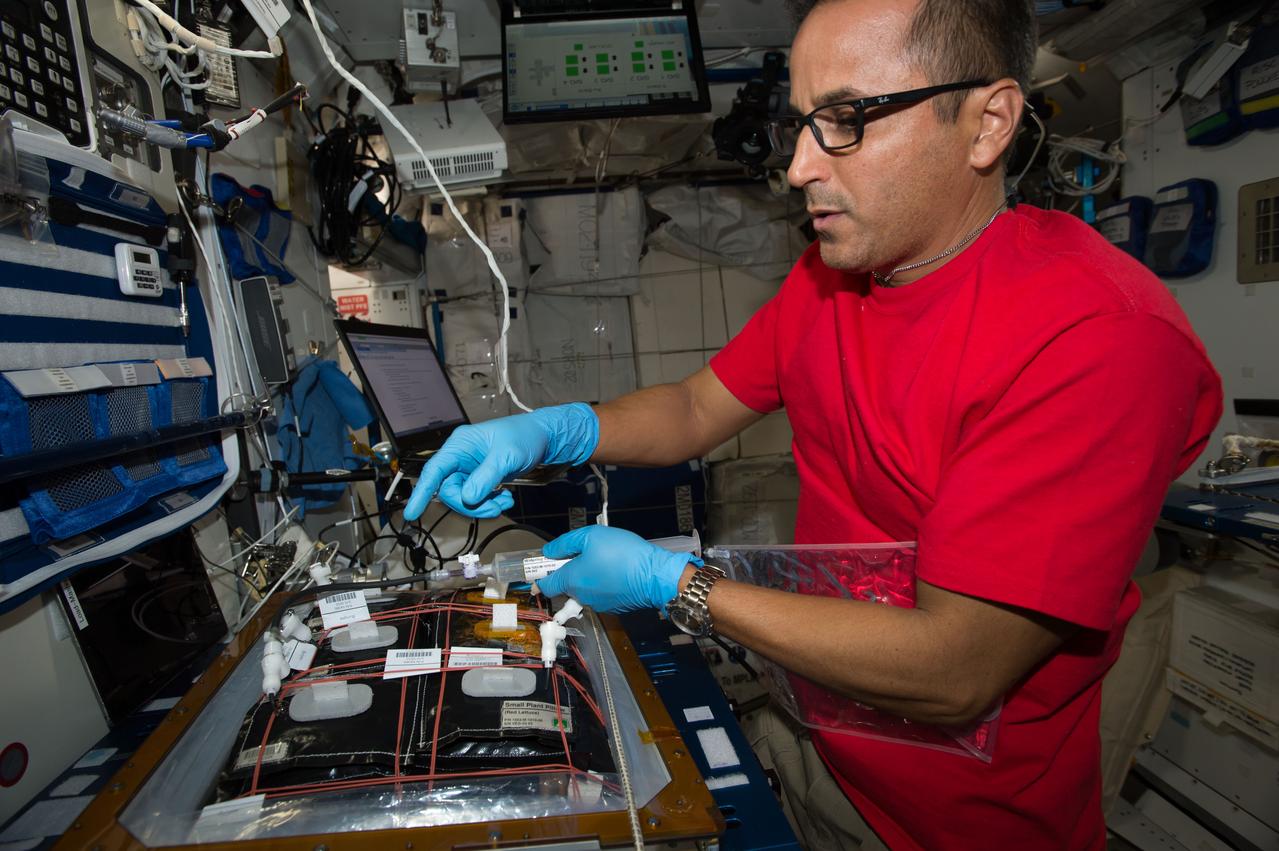
iss053e047057 (Sept. 26, 2017) --- Flight Engineer Joe Acaba installs botany gear for the Veggie facility to demonstrate plant growth in space for the Veg-03 experiment. The botany study uses the Veggie plant growth facility to cultivate cabbage, lettuce and mizuna, which are harvested on-orbit with samples returned to Earth for testing.
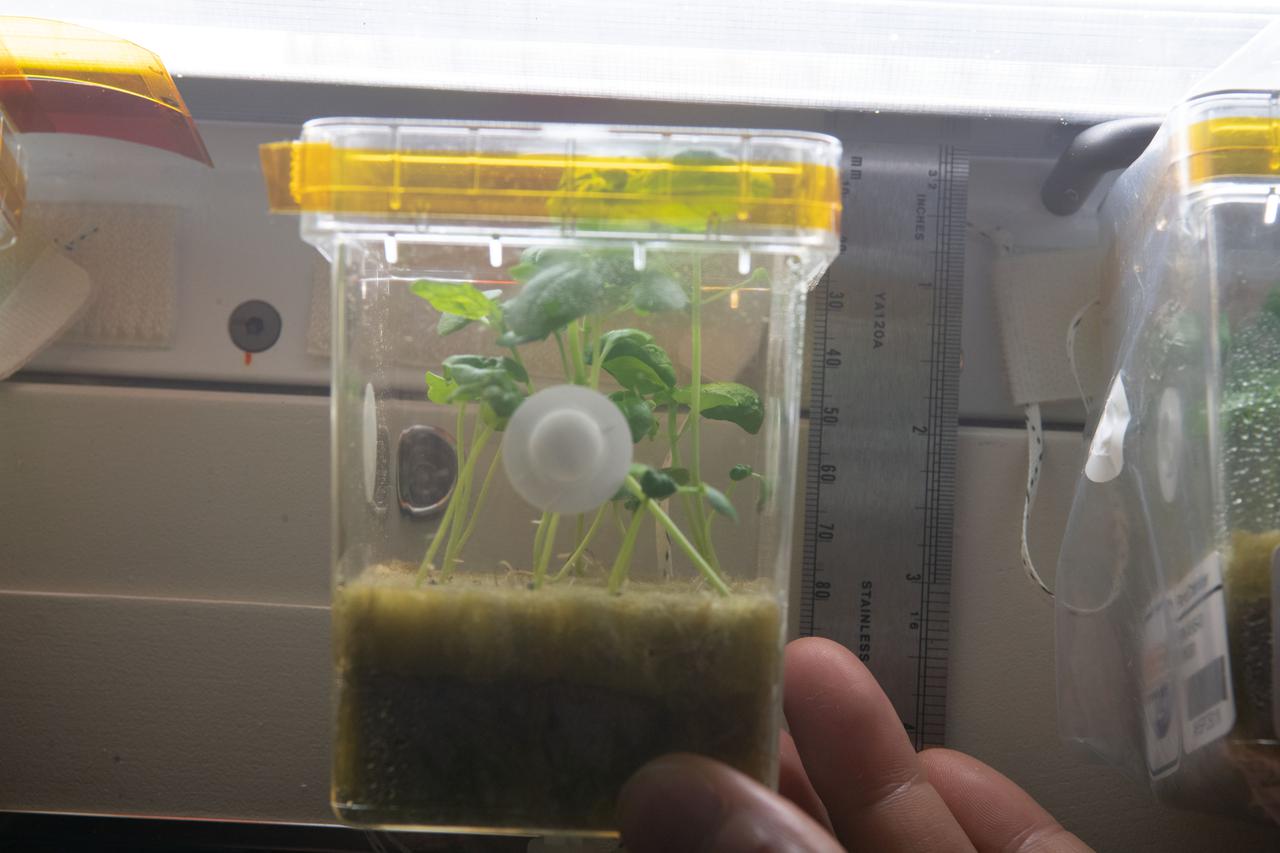
iss064e041150 (March 11, 2021) --- Plants are pictured growing inside a container for the Asian Herbs study. The space botany investigation is exploring ways to cultivate fast-growing plants used for traditional medicine and food flavoring.
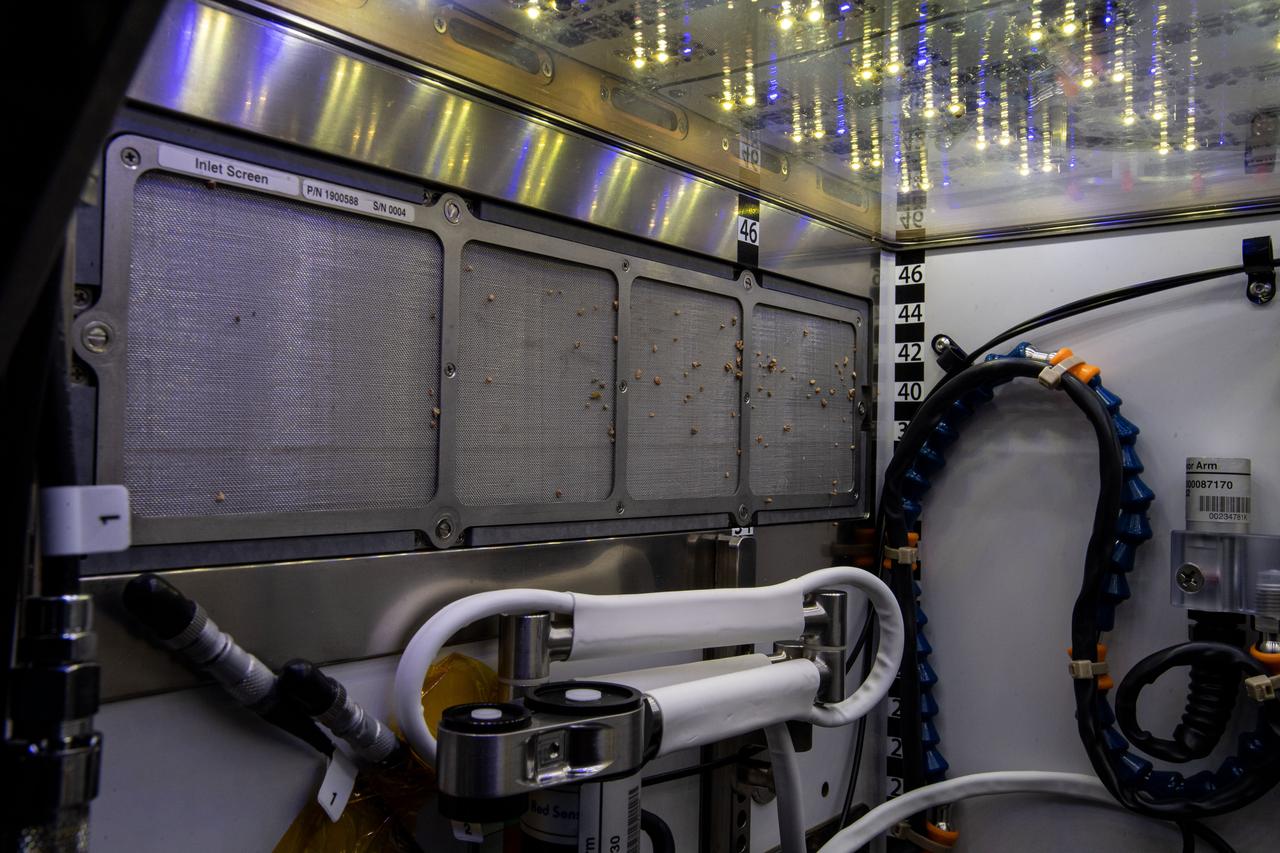
iss064e016718 (Dec. 30, 2020) --- The inside of the Advanced Plant Habitat, a fully automated space botany research facility, is pictured aboard the International Space Station.
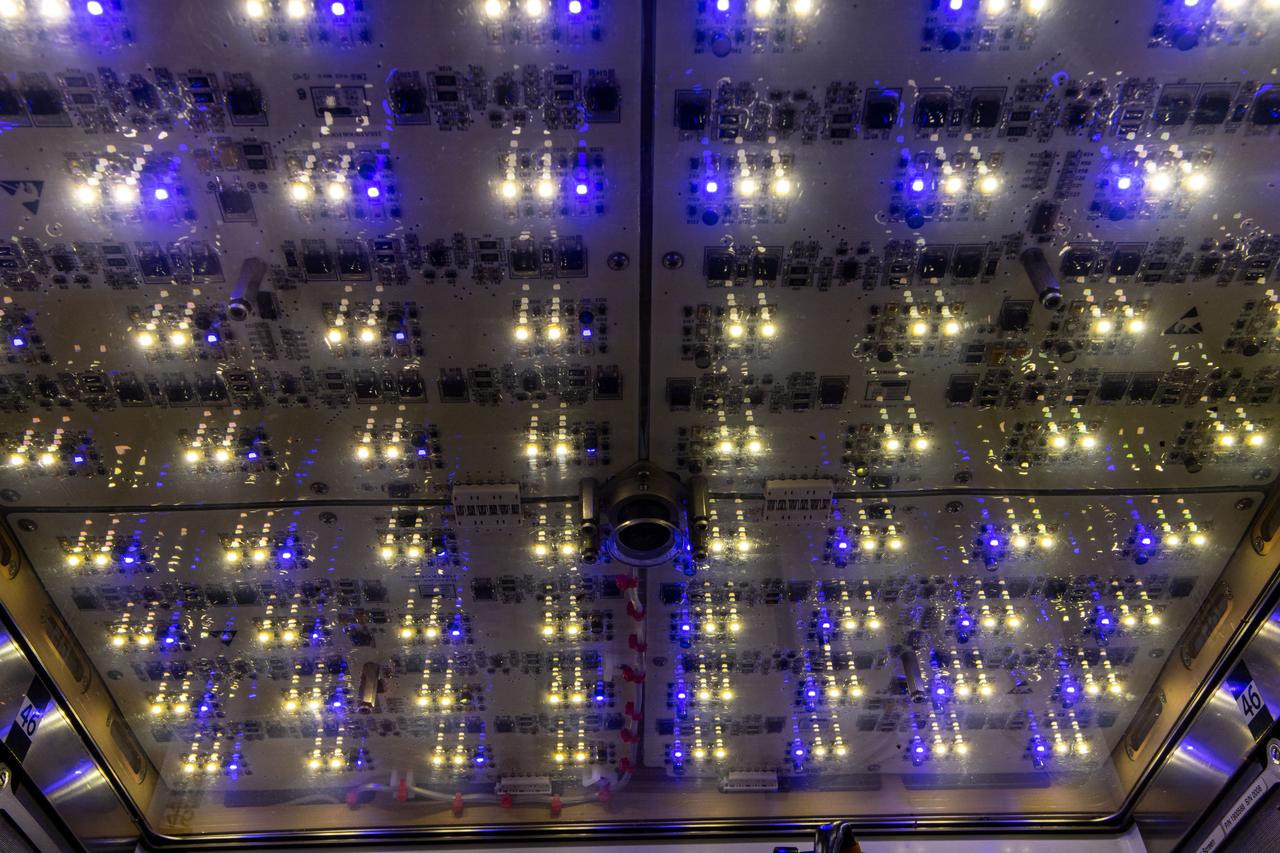
iss064e016721 (Dec. 30, 2020) --- Lights are pictured inside the Advanced Plant Habitat, a fully automated space botany research facility aboard the International Space Station.
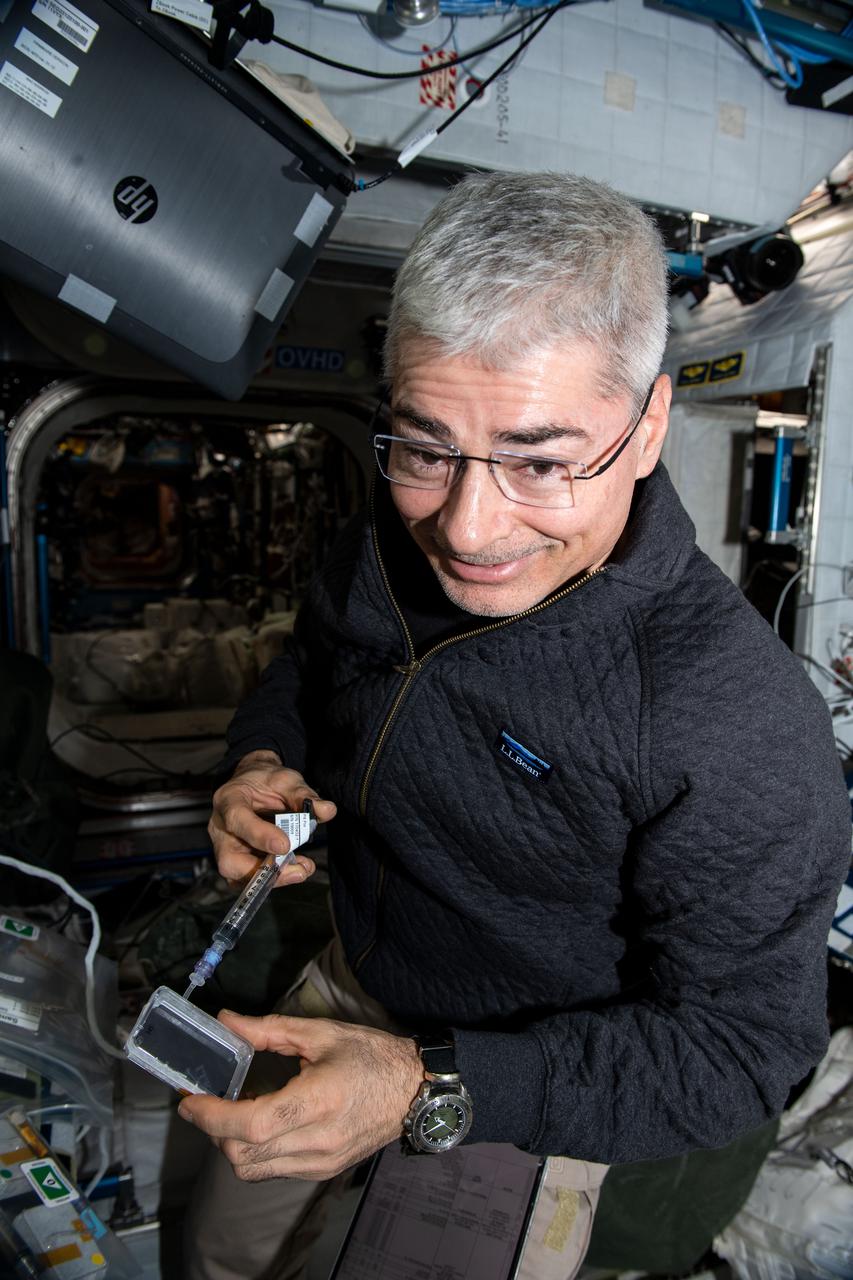
iss066e097028 (Dec. 27, 2021) --- NASA astronaut and Expedition 66 Flight Engineer Mark Vande Hei conducts research operations for the MVP-Plant-01, or Plant RNA Regulation Redux in Multi Variable Platform, space botany study. The experiment seeks to develop plants that adapt to growing in the microgravity environment.
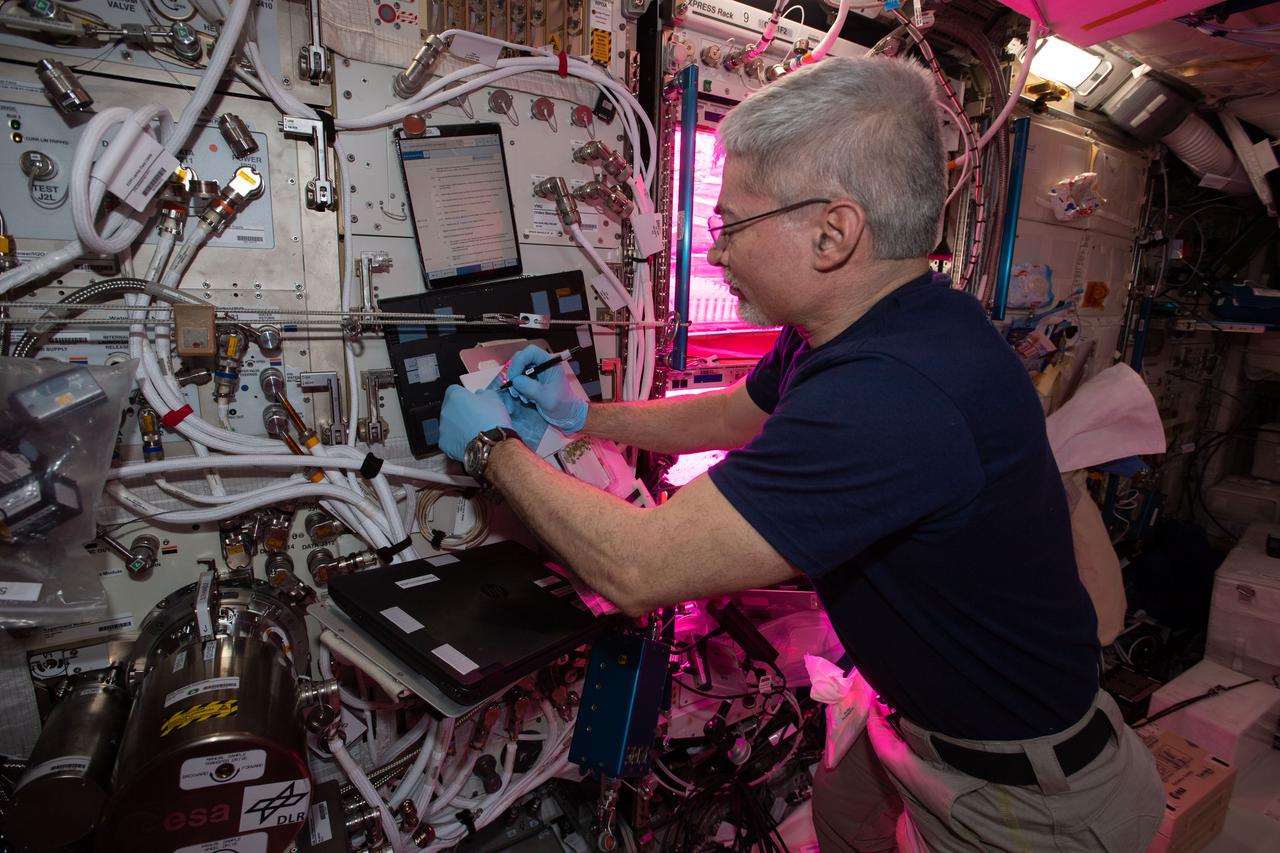
iss066e110211 (Jan. 10, 2022) --- NASA astronaut and Expedition 66 Flight Engineer Mark Vande Hei harvests plants grown on petri plates for the APEX-07 (Advanced Plant Experiments) space botany study that is exploring how microgravity affects genetic expression in plants.
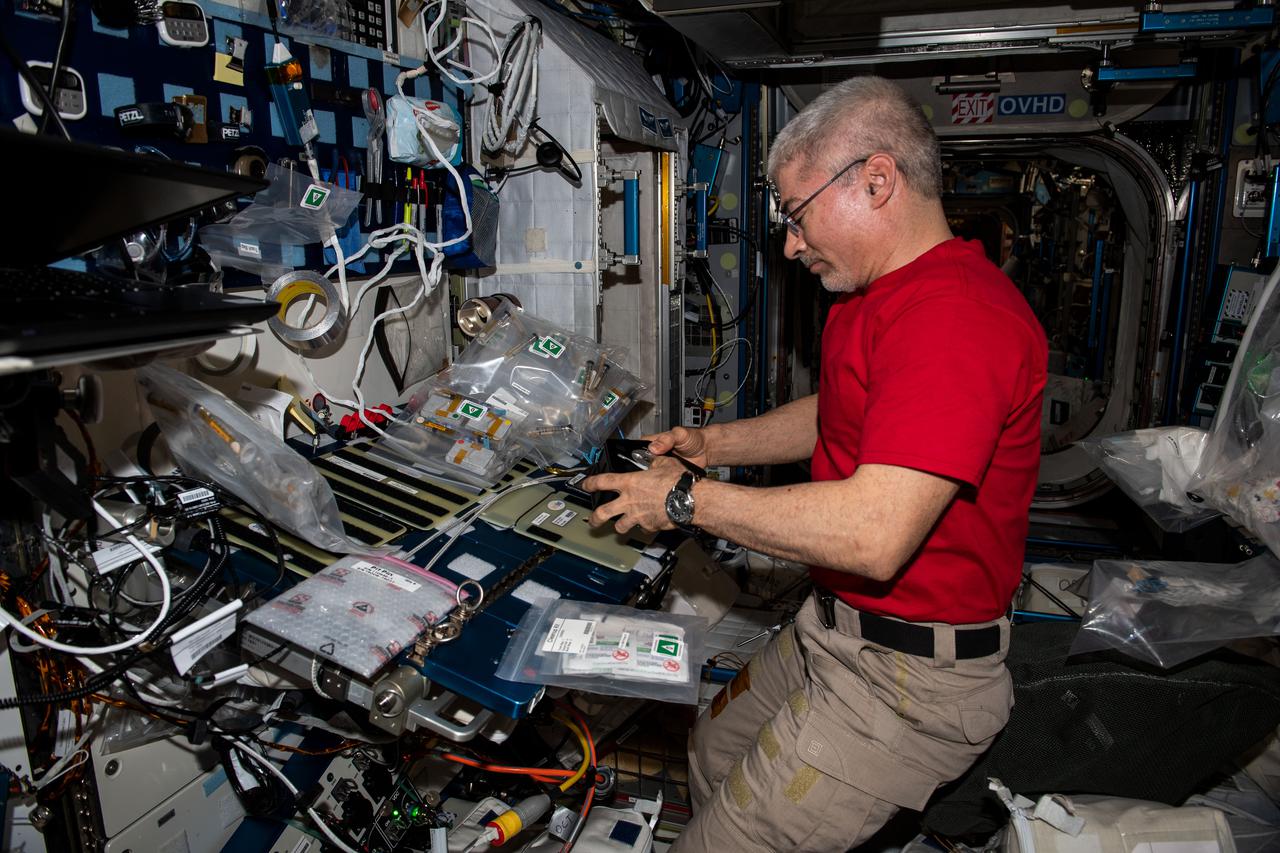
iss066e129788 (Jan. 26, 2022) --- NASA astronaut and Expedition 66 Flight Engineer Mark Vande Hei sets up components for the MVP-Plant-01 space botany study and nourishes Arabidopsis plants grown on petri plates. That investigation is exploring how plant molecular mechanisms and regulatory networks adapt to the weightless environment of space.
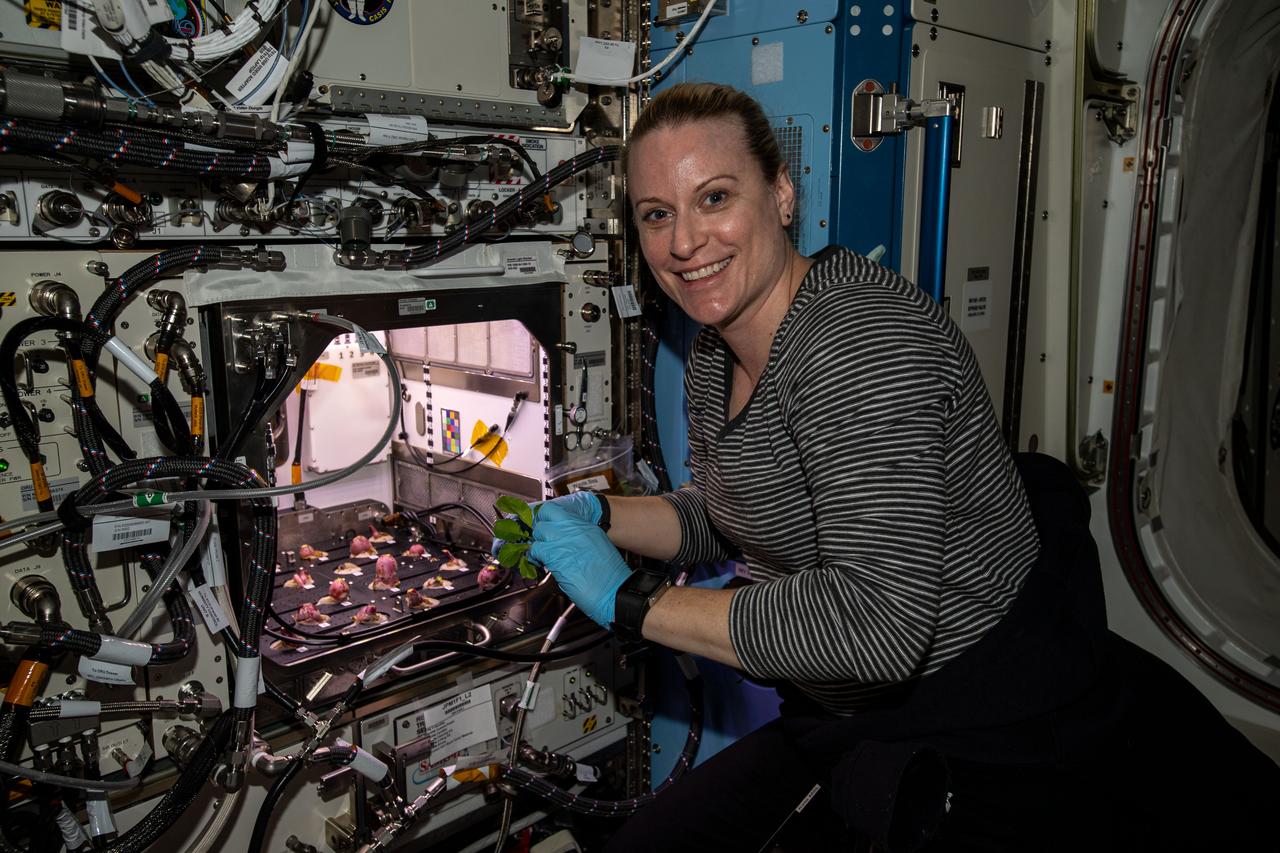
iss064e008380 (Nov. 30, 2020) --- NASA astronaut and Expedition 64 Flight Engineer Kate Rubins is pictured with radish bulbs after harvesting operations for the Plant Habitat-02 experiment. The space botany investigation seeks to optimize plant growth in the unique environment of space and evaluate nutrition and taste of the plants.
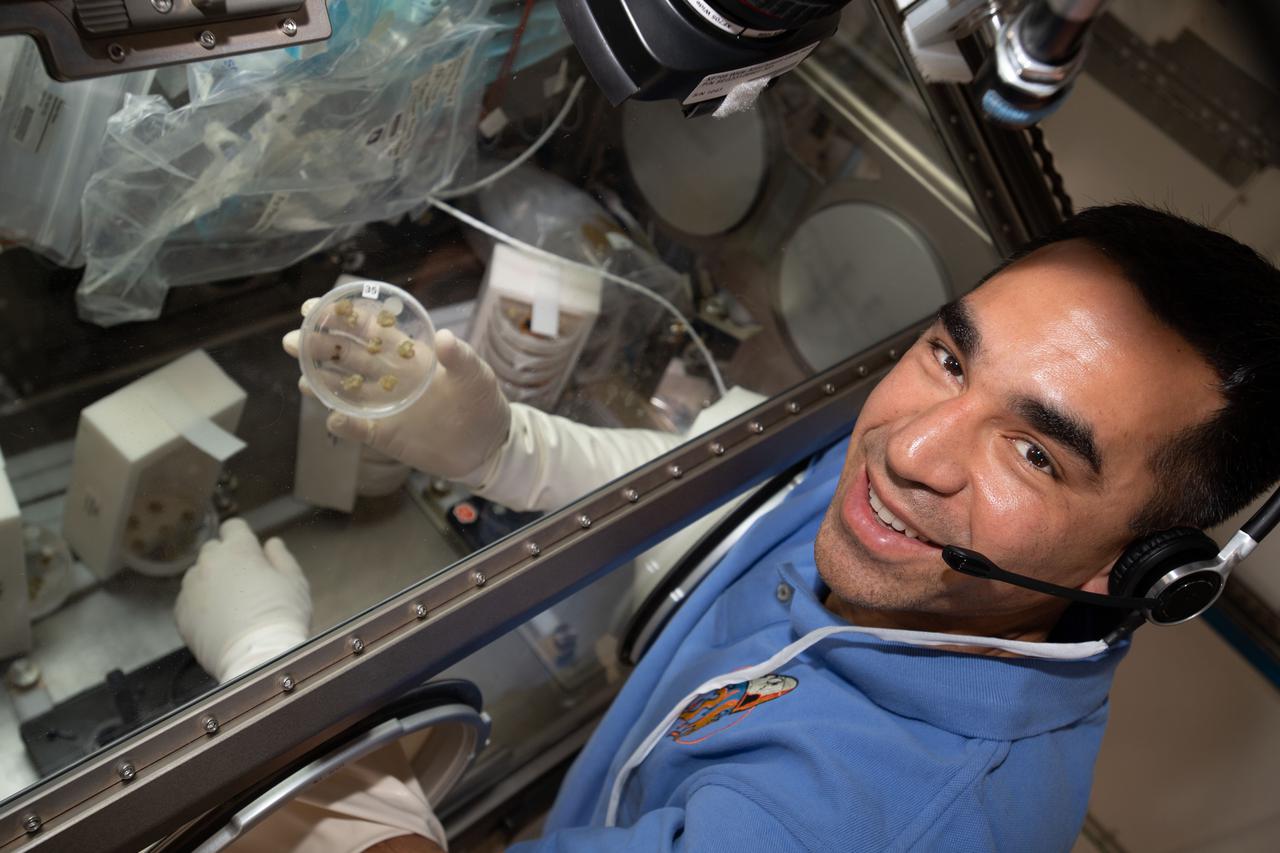
iss066e127275 (Jan. 26, 2022) --- NASA astronaut and Expedition 66 Flight Engineer Raja Chari works inside the Life Science Glovebox and displays cotton cells growing on a petri dish for the Plant Habitat-05 space botany study. The experiment uses the microgravity environment to observe the genetic architecture of plant regeneration.
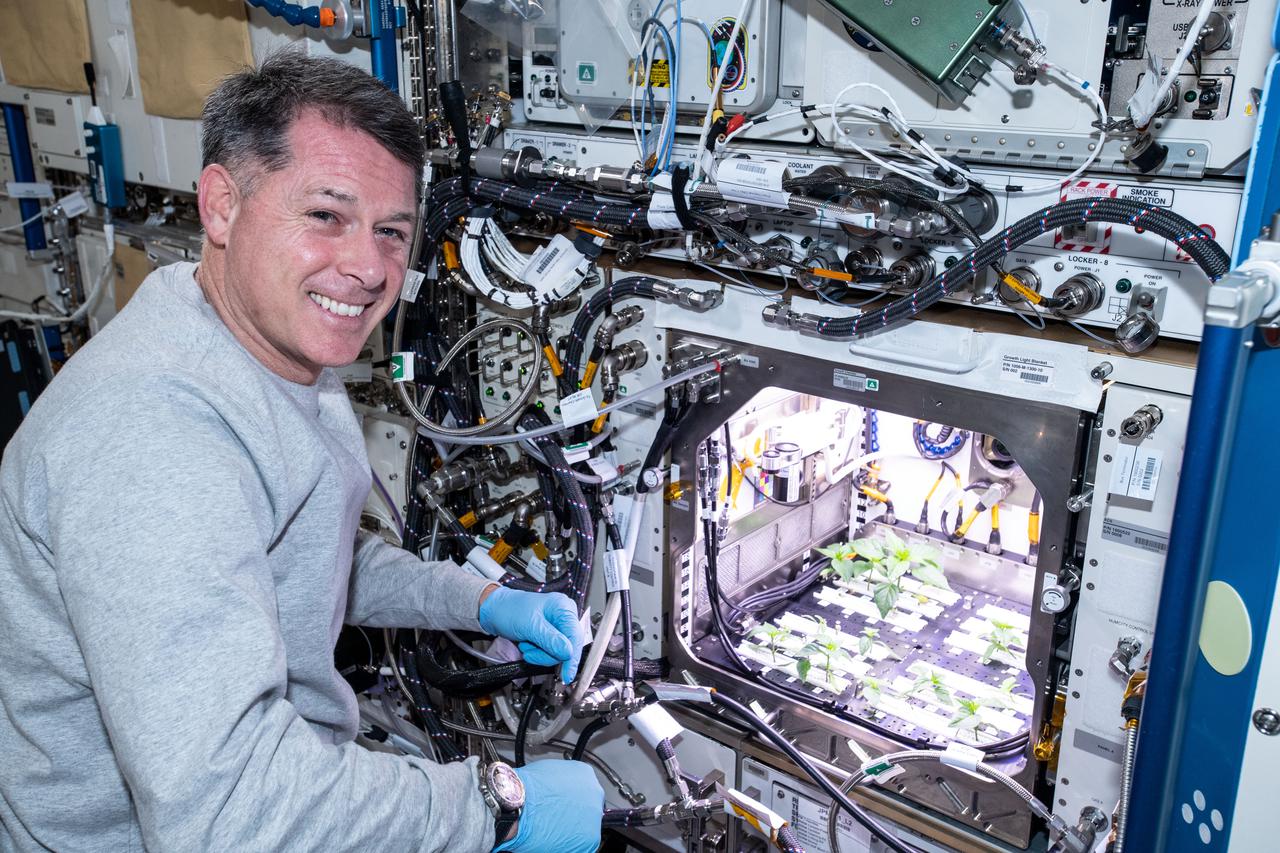
iss065e235375 (Aug. 10, 2021) --- NASA astronaut and Expedition 65 Flight Engineer Shane Kimbrough checks Hatch chile plants growing for the Advanced Plant Habitat-04 space botany investigation taking place inside the Columbus laboratory module.
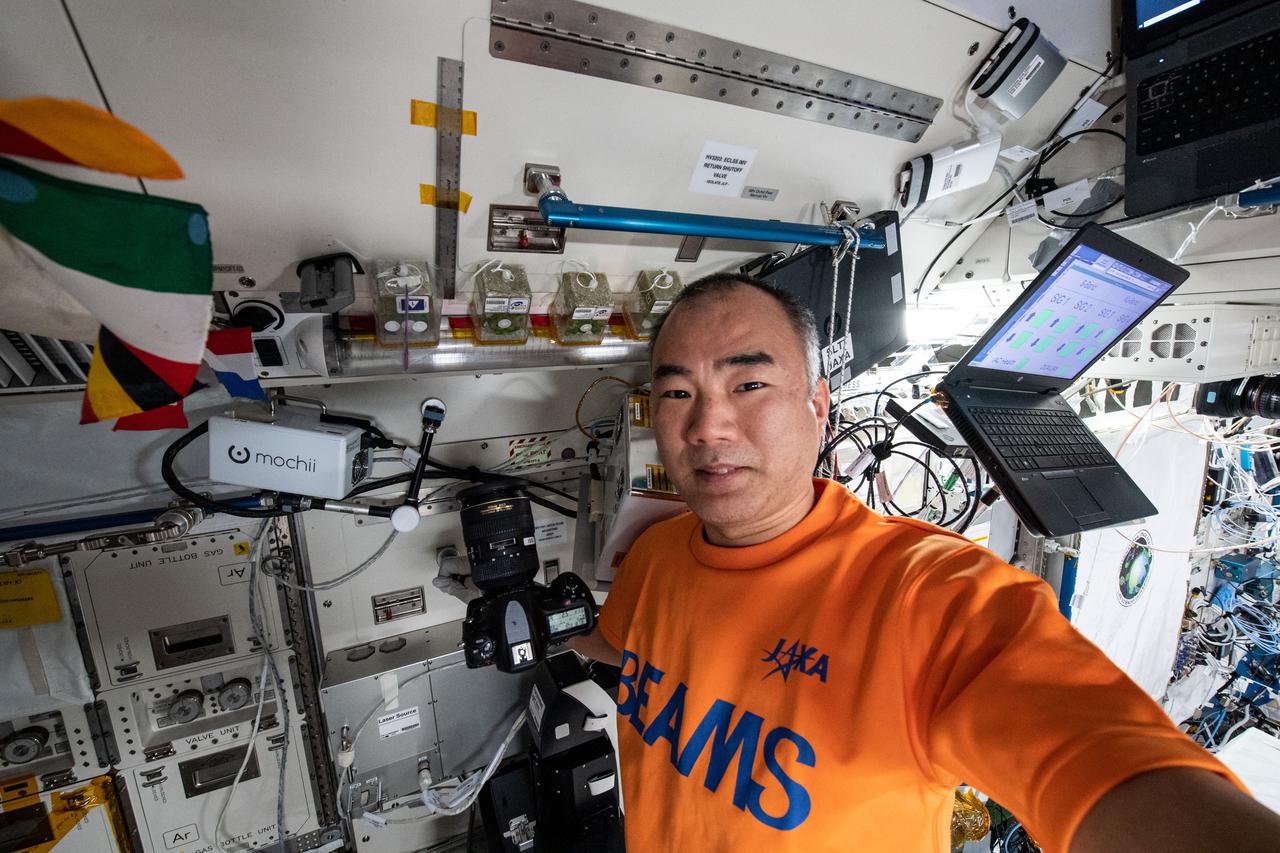
iss064e040578 (March 9, 2021) --- JAXA (Japan Aerospace Exploration Agency) Soichi Noguchi astronaut poses with plants growing inside containers for the Asian Herbs study. The space botany investigation is exploring ways to cultivate fast-growing plants used for traditional medicine and food flavoring.

iss064e022520 (Jan. 13, 2021) --- Flight Engineer Shannon Walker tends to plants growing inside the Veggie plant growth facility for the Veg-03J space botany study. The investigation is cultivating Extra Dwarf Pak Choi, Amara Mustard and Red Romaine Lettuce which are harvested on-orbit with samples returned to Earth for testing.
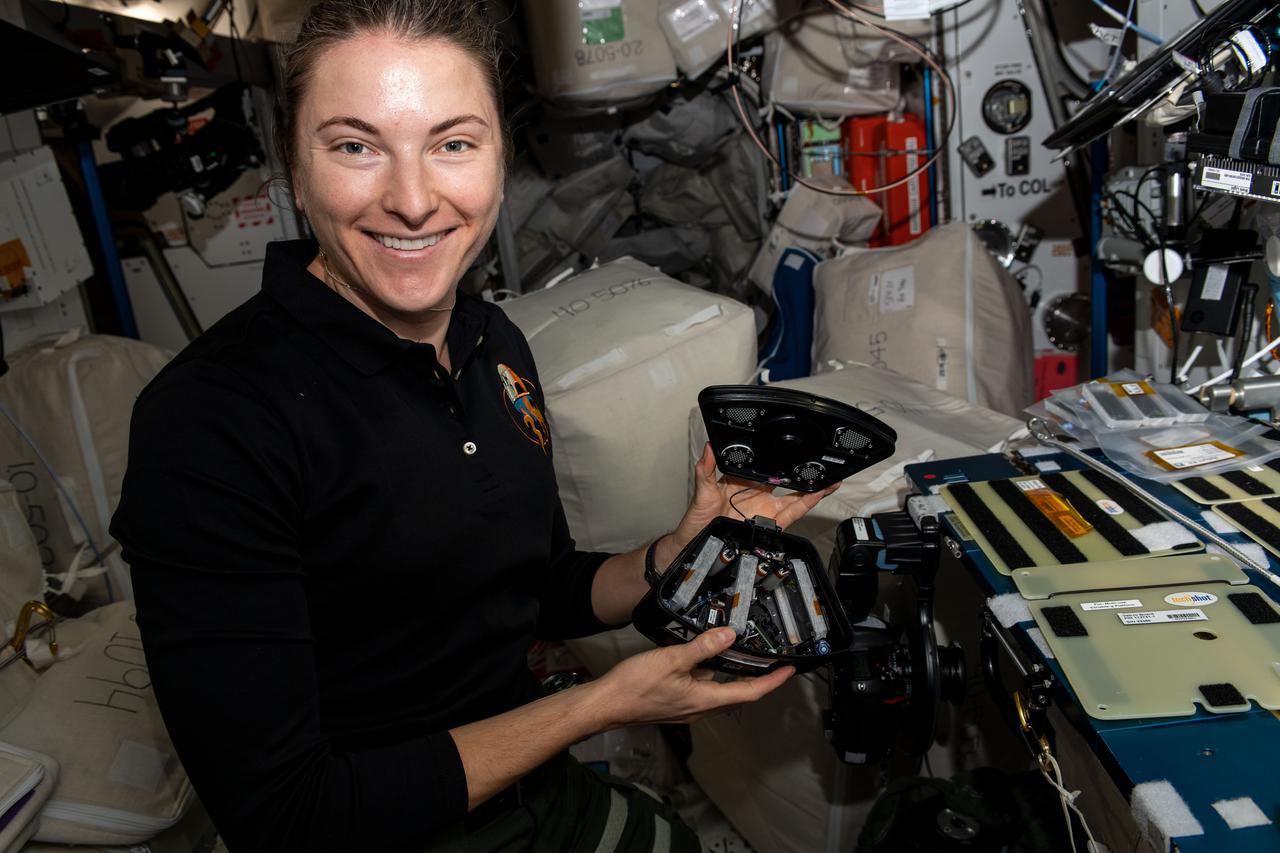
iss066e110795 (Jan. 11, 2022) --- NASA astronaut and Expedition 66 Flight Engineer Kayla Barron performs research operations for the MVP-Plant-01 (Multi-use Variable-gravity Platform) space botany study that monitors shoot and root development in Arabidopsis plants in microgravity.
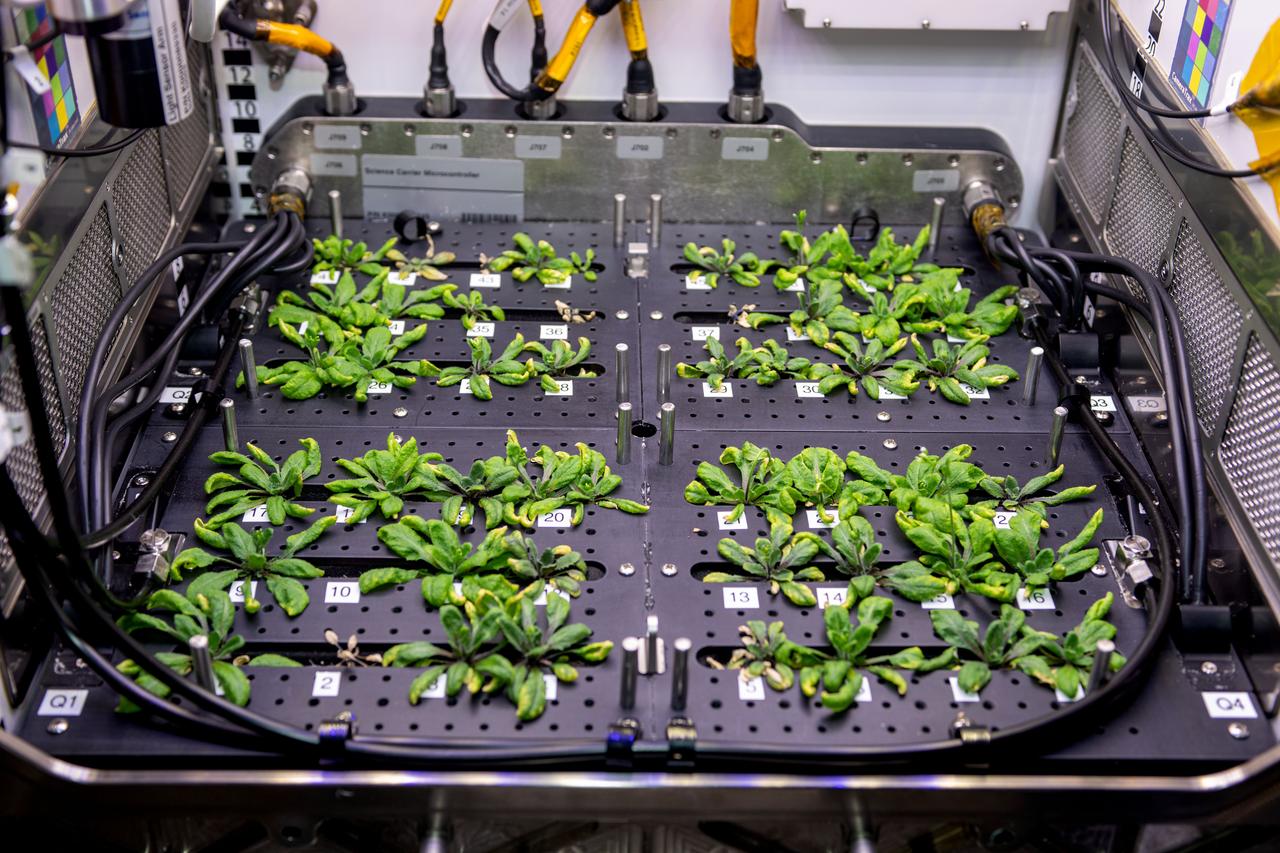
iss069e055081 (Aug. 8, 2023) --- Thale cress plants, similar to cabbage and mustard, are pictured growing for the Plant Habitat-03 space botany experiment helping researchers learn how to grow food and sustain crews on future space missions.
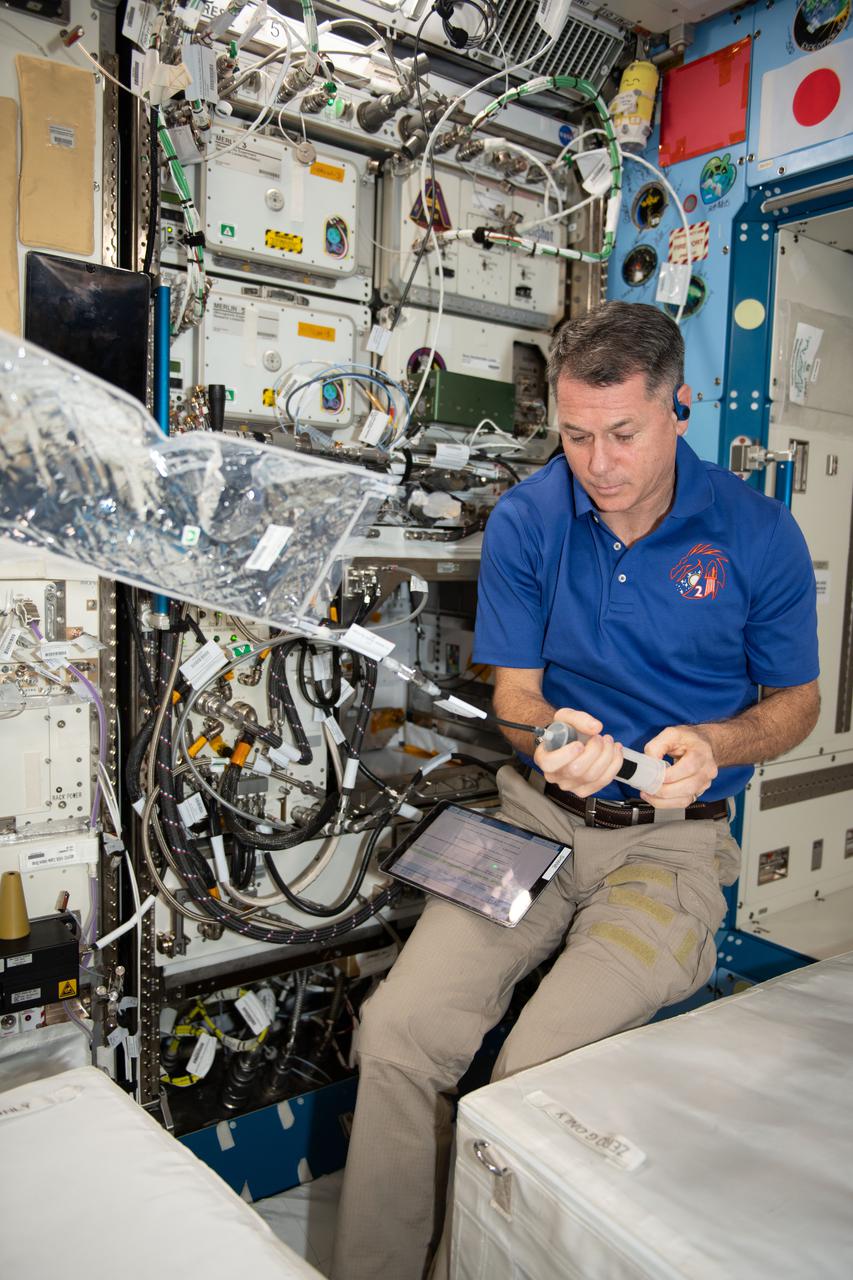
iss065e163206 (June 9, 2021) --- NASA astronaut and Expedition 65 Flight Engineer Shane Kimbrough configures the Advanced Plant Habitat and fills it with water to support the Plant Habitat-04 space botany experiment. The study is demonstrating growing peppers, which are an excellent source of vitamin C, in space for the first time.
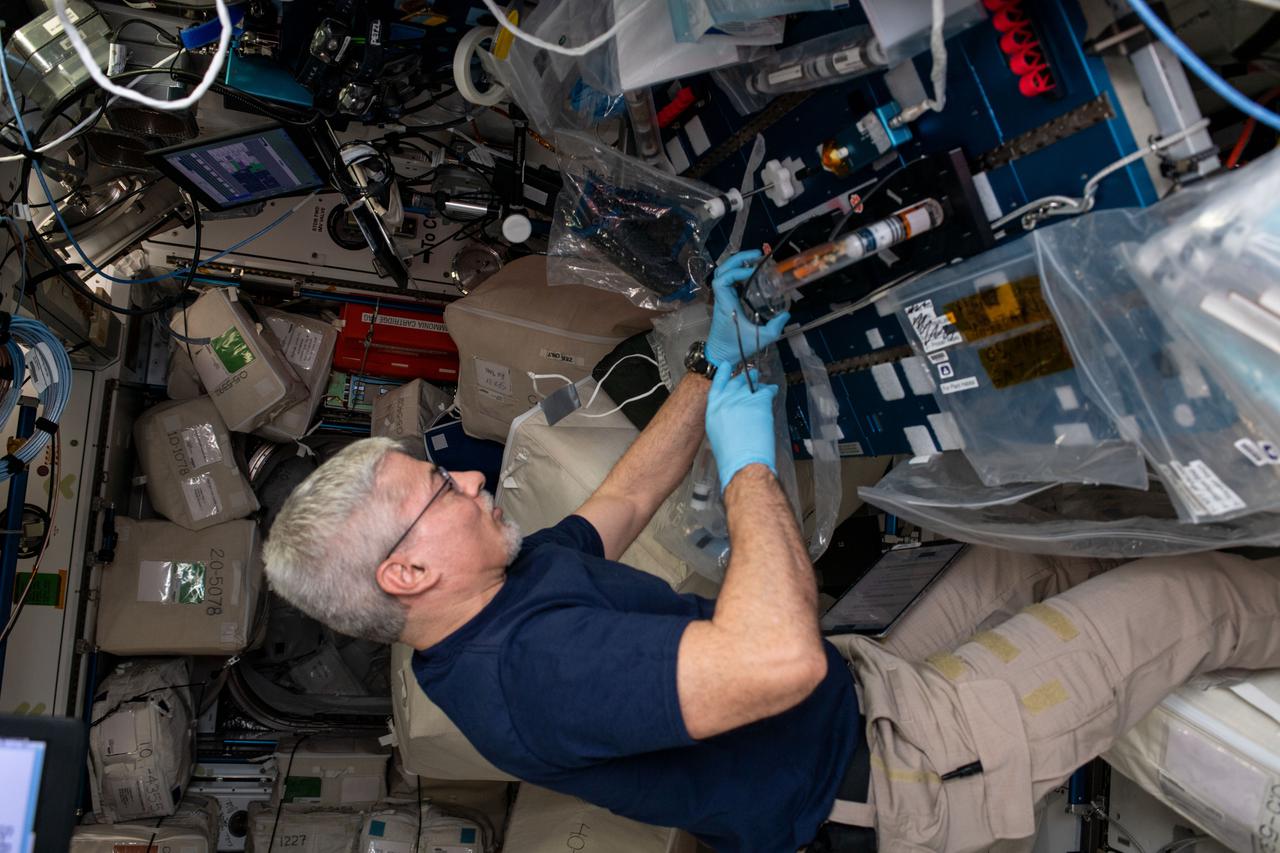
iss066e110821 (Jan. 11, 2022) --- NASA astronaut and Expedition 66 Flight Engineer Mark Vande Hei performs research operations for the Plant Habitat-05 space botany experiment that observes cotton cultures grown on the International Space Station to understand how weightlessness affects plant genetics.
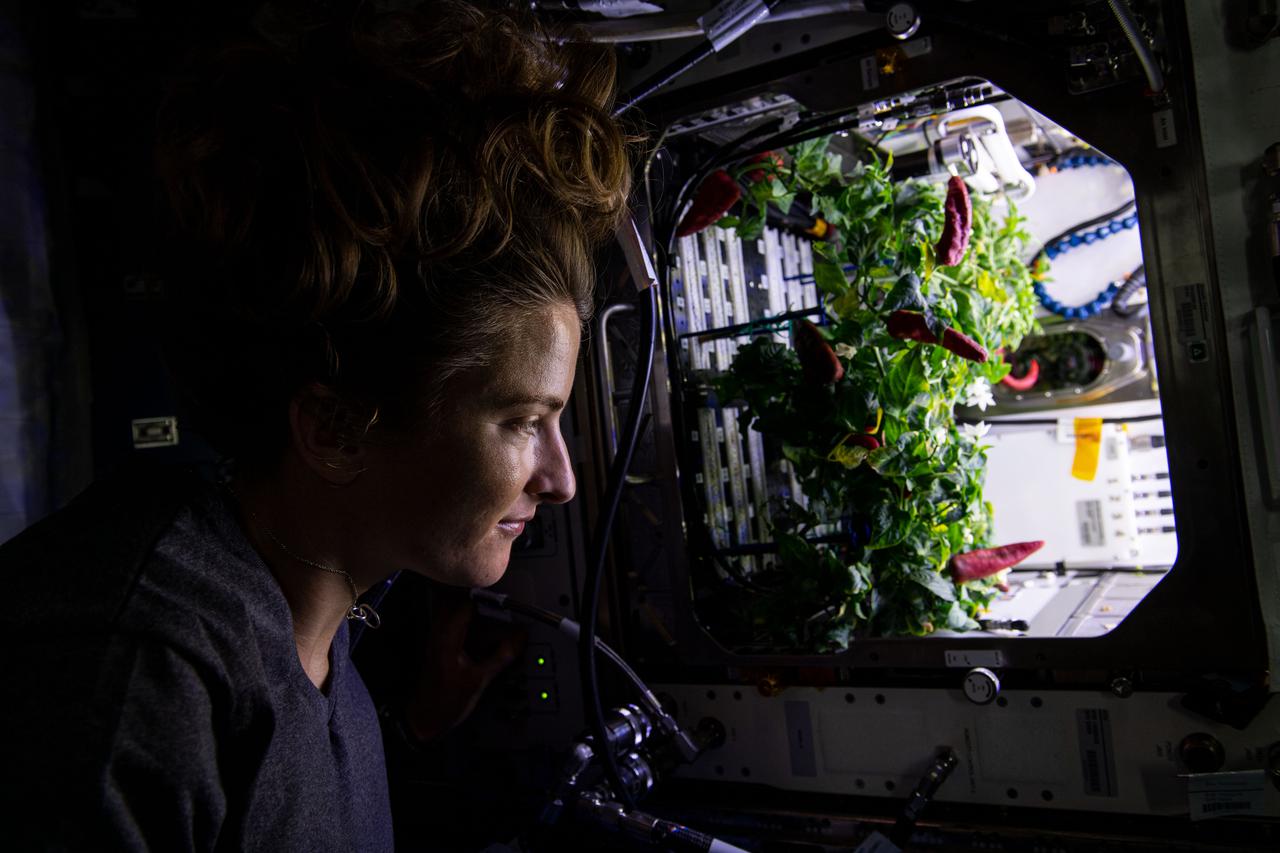
iss066e084293 (Nov. 26, 2021) --- NASA astronaut and Expedition 66 Flight Engineer Kayla Barron checks out chile peppers growing inside the International Space Station's Advanced Plant Habitat before they were harvested for the Plant Habitat-04 space botany experiment.

iss064e016127 (Dec. 27, 2020) --- Expedition 64 Flight Engineer and JAXA astronaut Soichi Noguchi poses with radish plants growing inside the Advanced Plant Habitat, a fully automated facility that is used to conduct space botany investigations on the International Space Station.
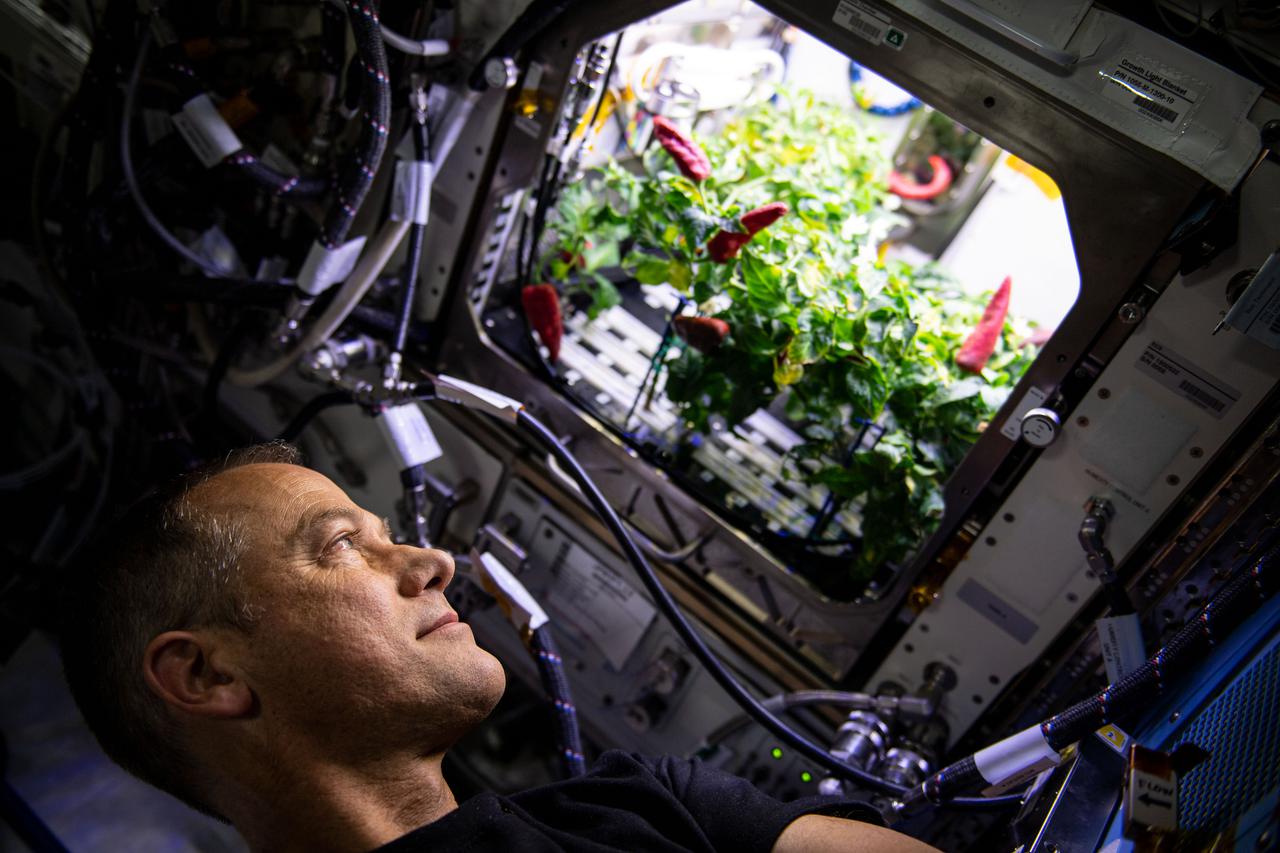
iss066e084306 (Nov. 26, 2021) --- NASA astronaut and Expedition 66 Flight Engineer Thomas Marshburn checks out chile peppers growing inside the International Space Station's Advanced Plant Habitat before they were harvested for the Plant Habitat-04 space botany experiment.
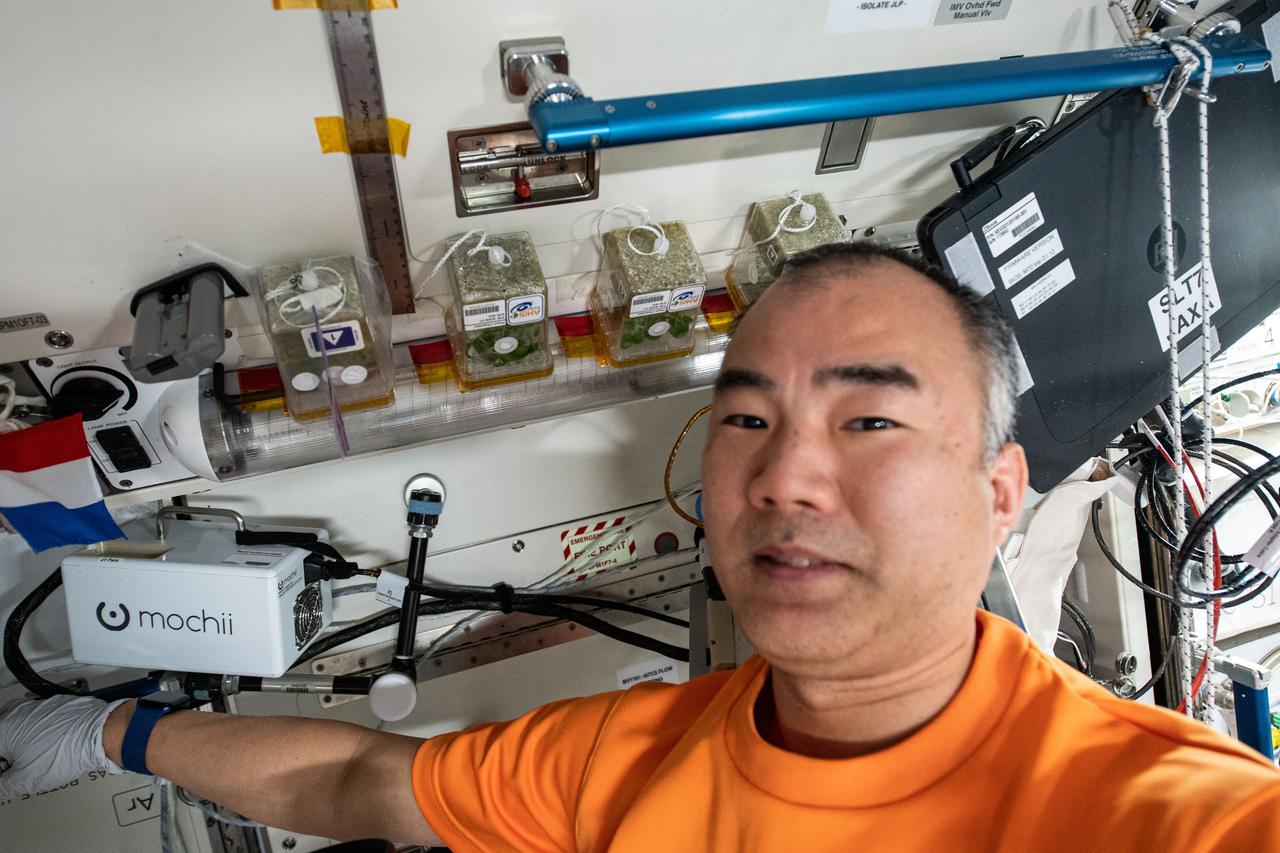
iss064e040580 (March 9, 2021) --- JAXA (Japan Aerospace Exploration Agency) astronaut Soichi Noguchi poses with plants growing inside containers for the Asian Herbs study. The space botany investigation is exploring ways to cultivate fast-growing plants used for traditional medicine and food flavoring.
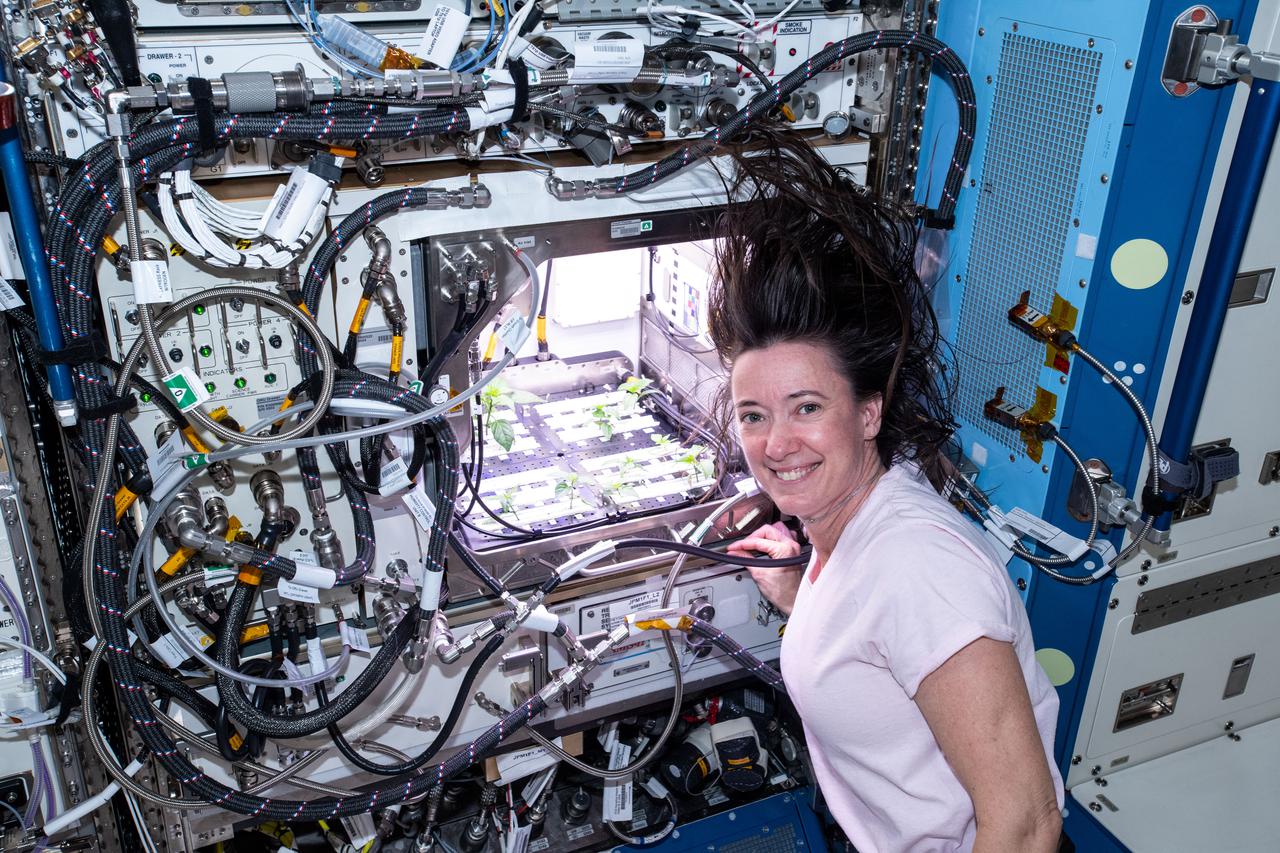
iss065e235377 (Aug. 10, 2021) --- NASA astronaut and Expedition 65 Flight Engineer Megan McArthur checks Hatch chile plants growing for the Advanced Plant Habitat-04 space botany investigation taking place inside the Columbus laboratory module.
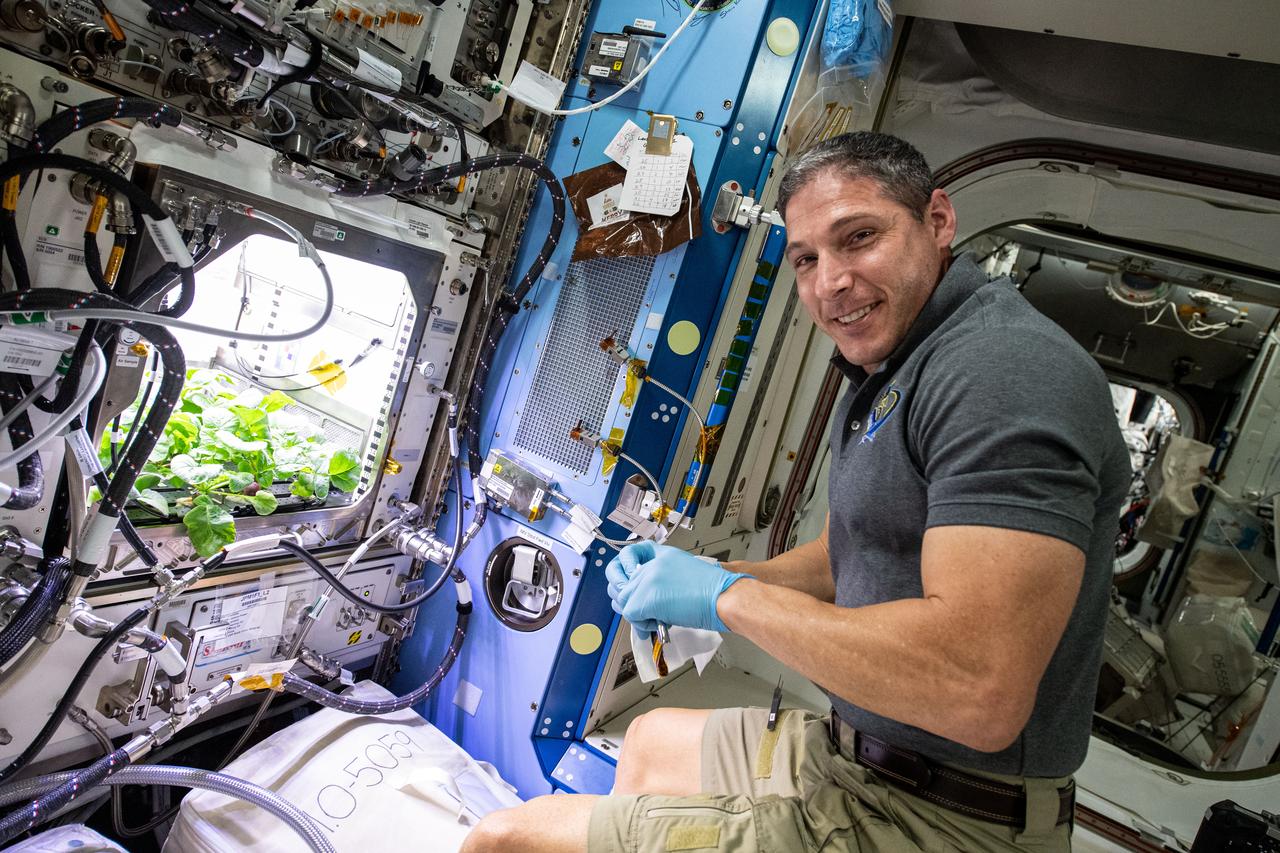
iss064e016122 (Dec. 27, 2020) --- Expedition 64 Flight Engineer and NASA astronaut Michael Hopkins poses with radish plants growing inside the Advanced Plant Habitat, a fully automated facility that is used to conduct space botany investigations on the International Space Station.
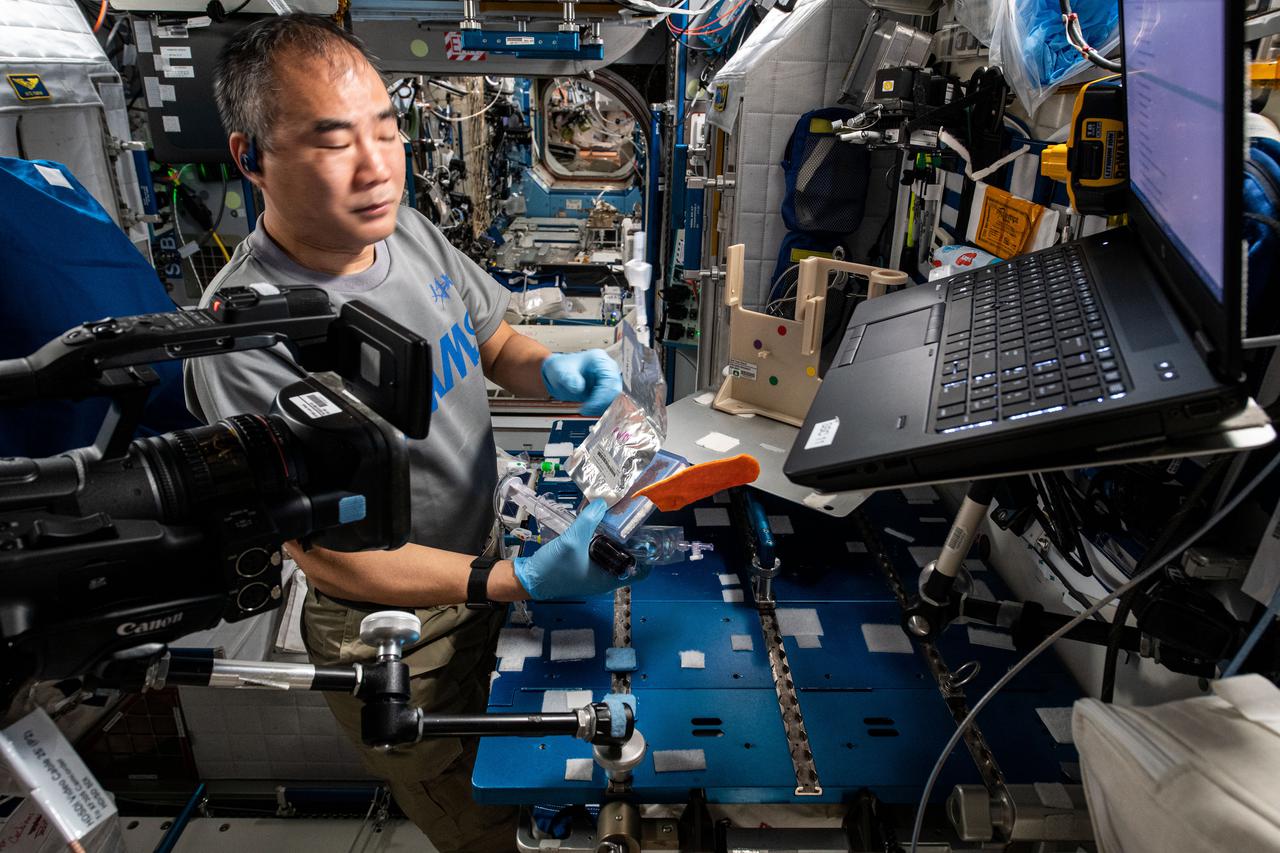
iss064e033912 (Feb. 17, 2021) --- JAXA (Japan Aerospace Exploration Agency) astronaut and Expedition 64 Flight Engineer Soichi Noguchi stows hardware used during the Plant Water Management experiment. The botany study demonstrated hydroponics as a way to sustain plants in microgravity from germination through harvest.
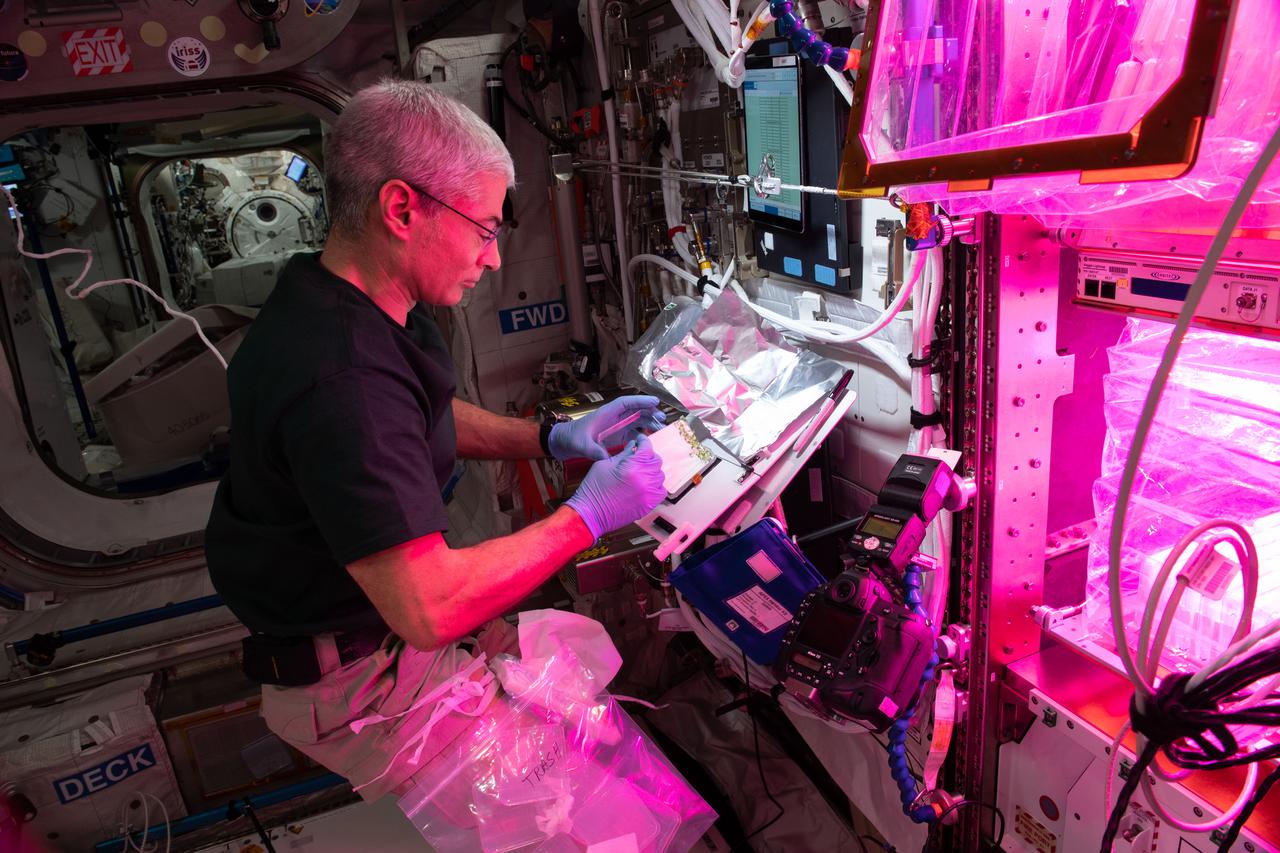
iss065e147928 (June 26, 2021) --- NASA astronaut and Expedition 65 Flight Engineer Mark Vande Hei harvests plants growing in petri plates inside the Veggie facility for the APEX-7 (Advanced Plant Experiment-07) space botany study.
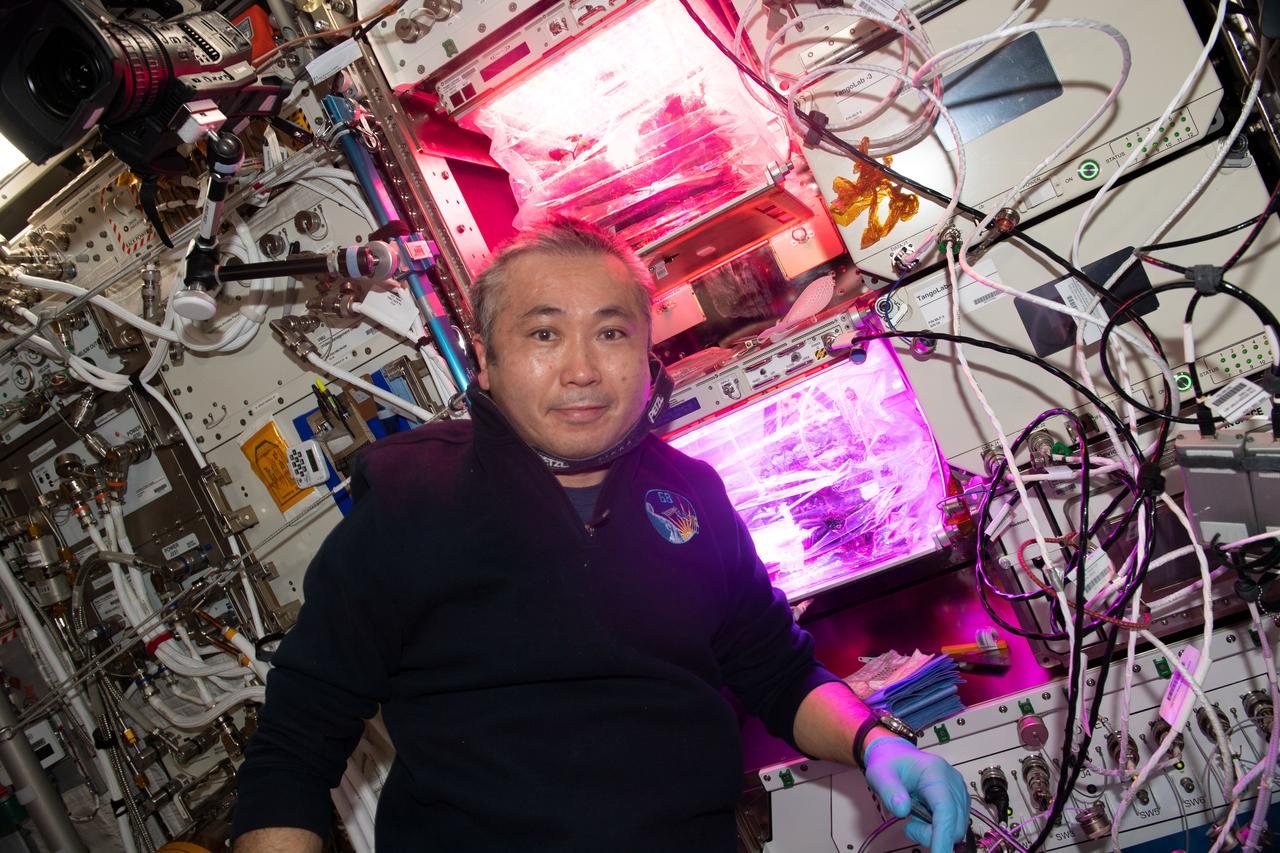
iss068e051275 (Feb. 11, 2023) --- Expedition 68 Flight Engineer Koichi Wakata of the Japan Aerospace Exploration Agency (JAXA) tends to tomato plants growing inside the Columbus laboratory module's Veggie space botany facility.
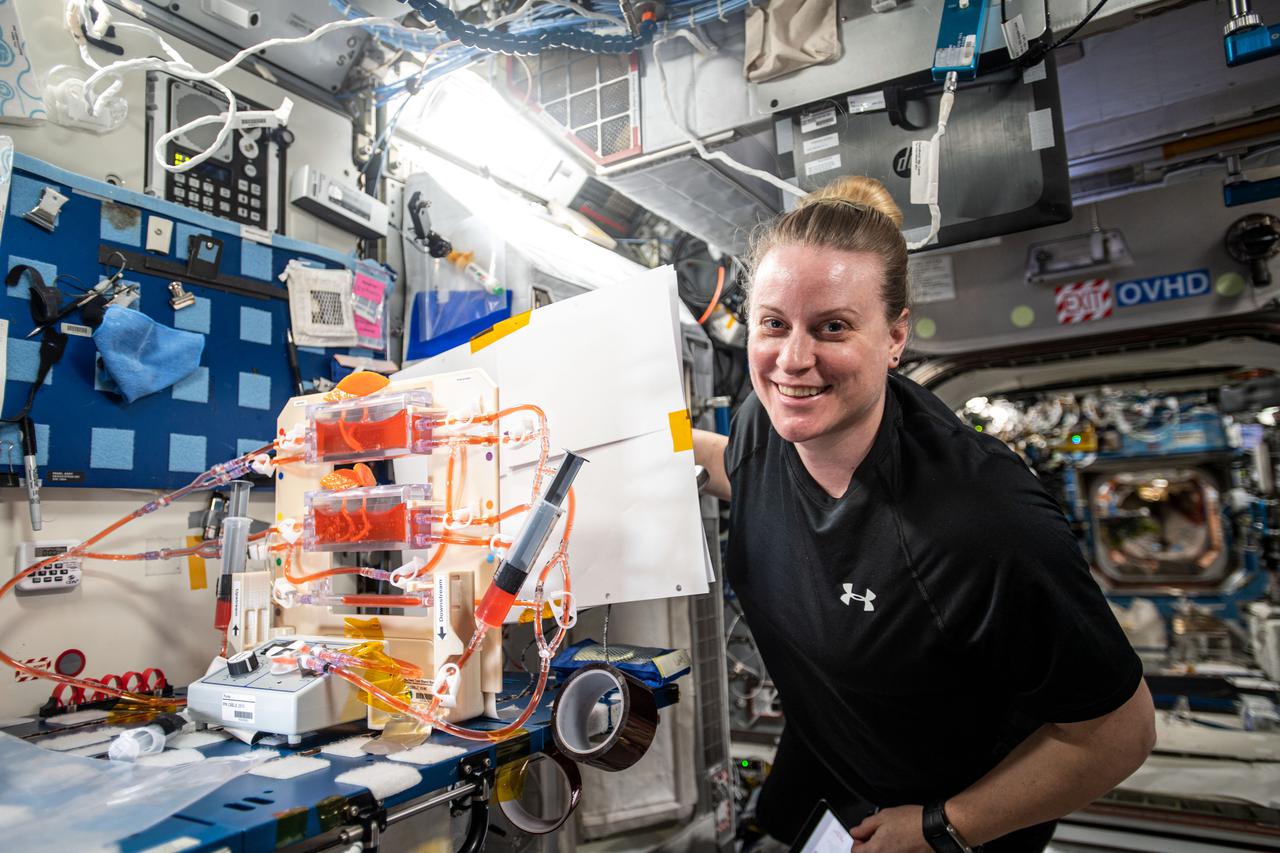
iss064e049288 (March 30, 2021) --- NASA astronaut and Expedition 64 Flight Engineer Kate Rubins works botany research for the Plant Water Management experiment that is testing hydroponics as a way to support space agriculture.
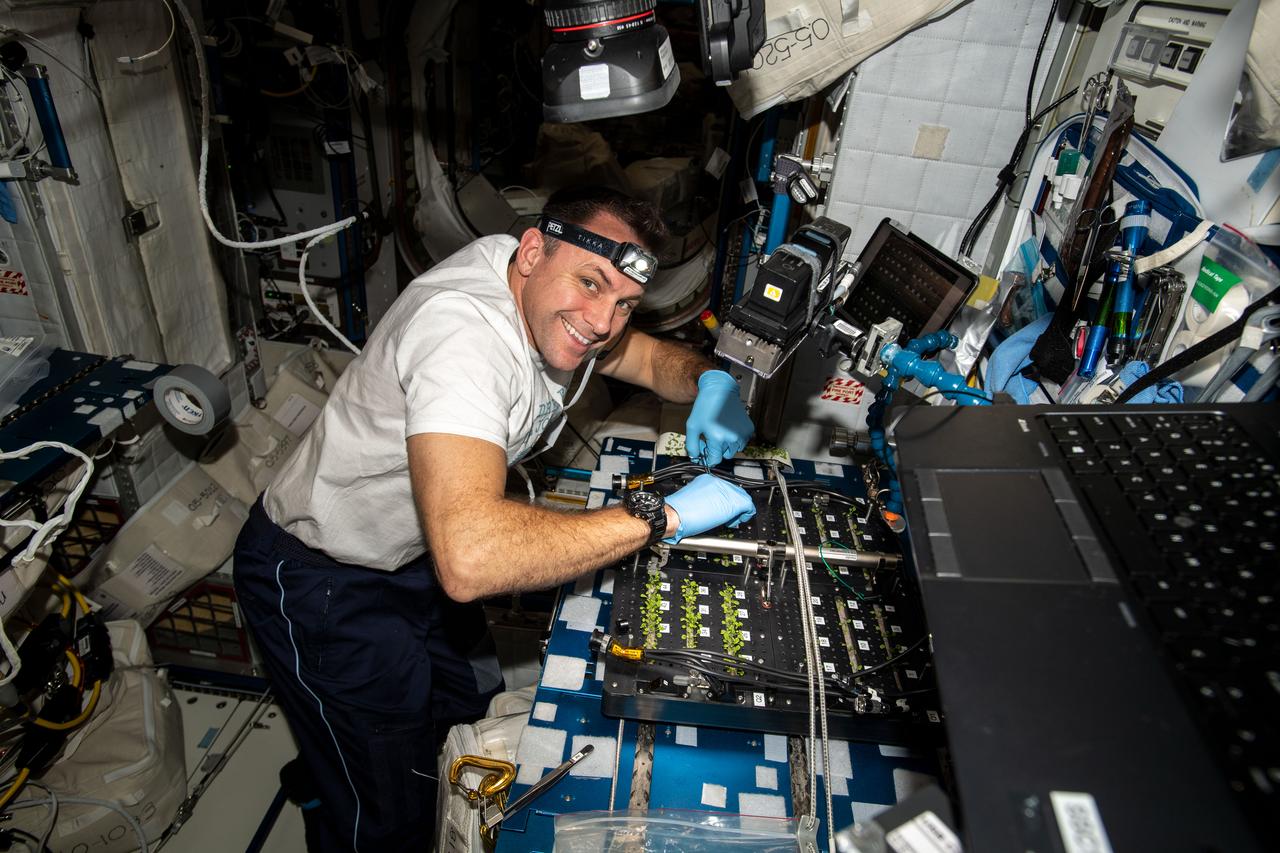
iss068e043103 (Jan. 12, 2023) --- NASA astronaut and Expedition 68 Flight Engineer Josh Cassada tends to thale cress plants growing for the Plant Habitat-03 space botany study that explores how plants genetically adapt to microgravity. Cassada removed the plants from the Advanced Plant Habitat located in the Kibo laboratory module and conducted the research activities in the Harmony module's maintenance work area.
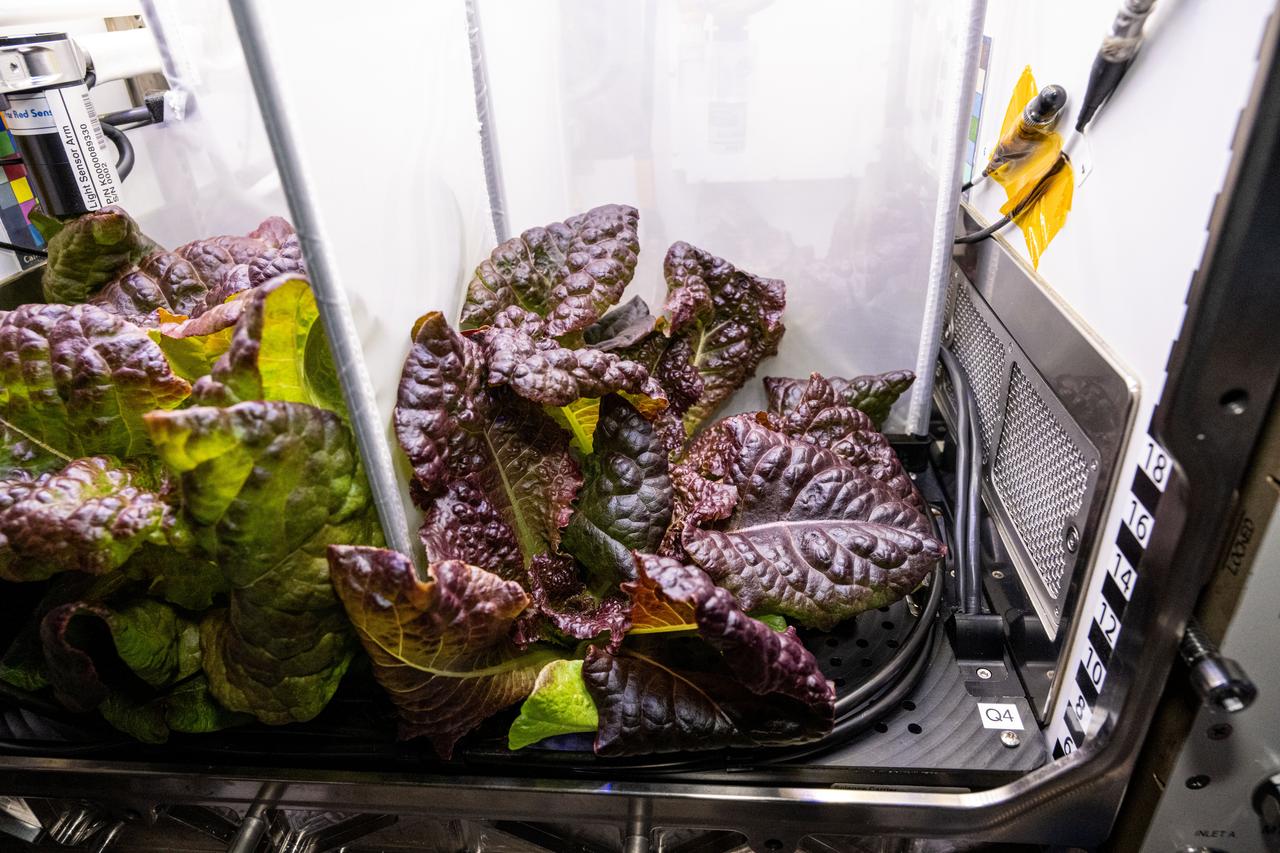
iss072e404269 (Dec. 27, 2024) --- Red Romaine lettuce is pictured growing inside the Kibo laboratory module's Advanced Plant Habitat aboard the International Space Station. The lettuce was being grown for the Plant Habitat-07 space botany investigation that is exploring how plants and their associated communities of microorganisms respond to different levels of water in microgravity. Results could support plant growth and the creation of systems that produce safe and nutritious food for crew members on future space missions.
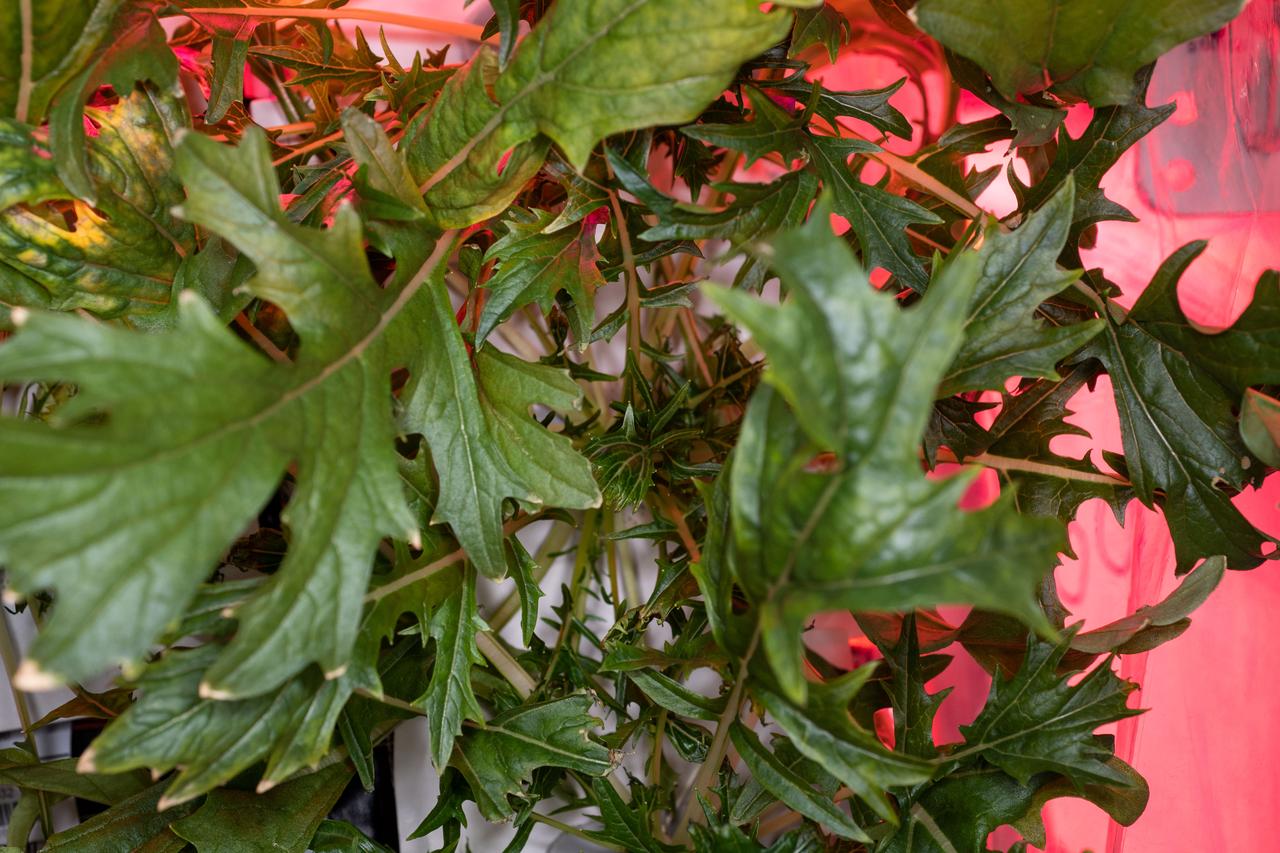
iss060e004259 (July 5, 2019) --- Leafy greens are pictured growing inside the Columbus laboratory module's VEGGIE botany research facility. The VEG-04 botany study is exploring the viability of growing fresh food in space to support astronauts on long-term missions. The salad-type plants are harvested after 28 days of growth, with some samples stowed for analysis and the rest taste-tested by the crew aboard the International Space Station.
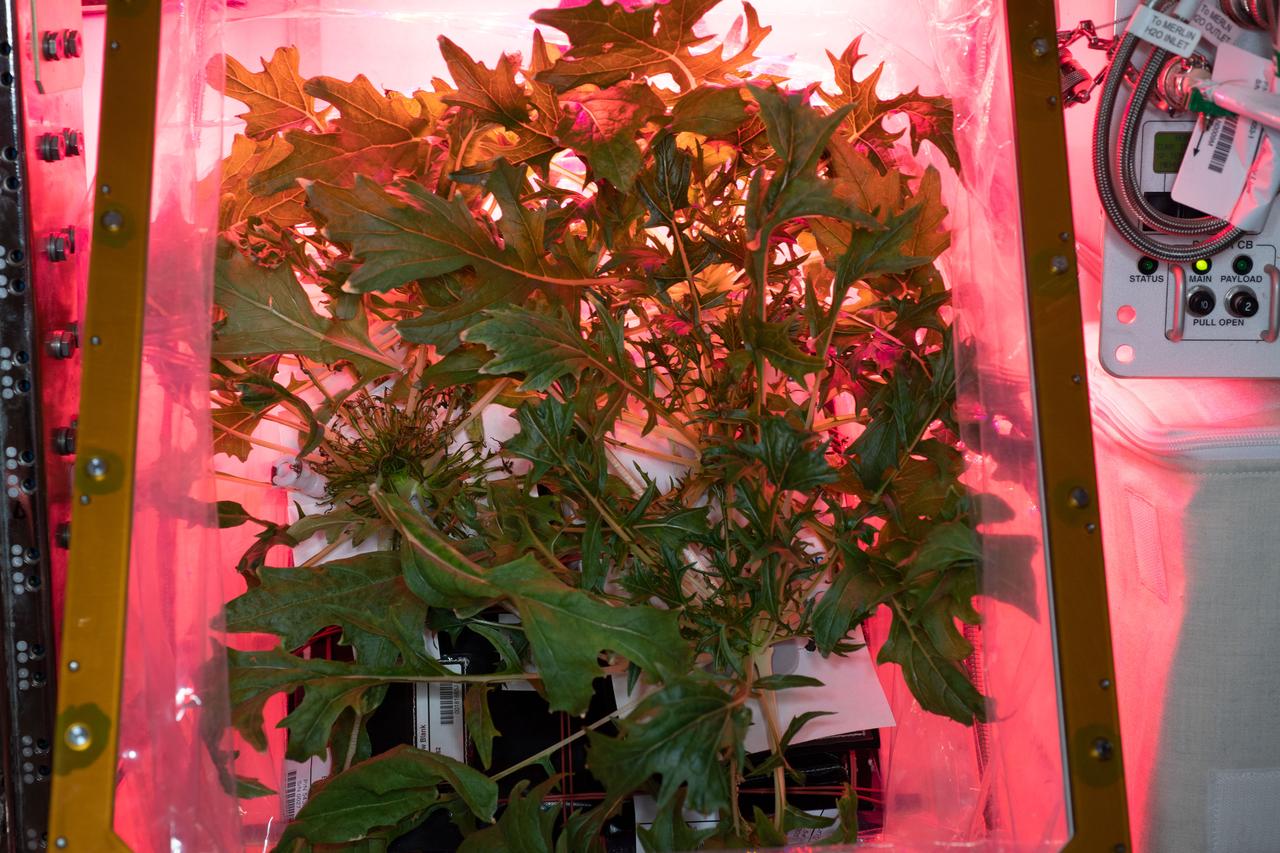
iss060e004723 (July 7, 2019) --- Leafy greens are pictured growing inside the Columbus laboratory module's VEGGIE botany research facility. The VEG-04 botany study is exploring the viability of growing fresh food in space to support astronauts on long-term missions. The salad-type plants are harvested after 28 days of growth, with some samples stowed for analysis and the rest taste-tested by the crew aboard the International Space Station.
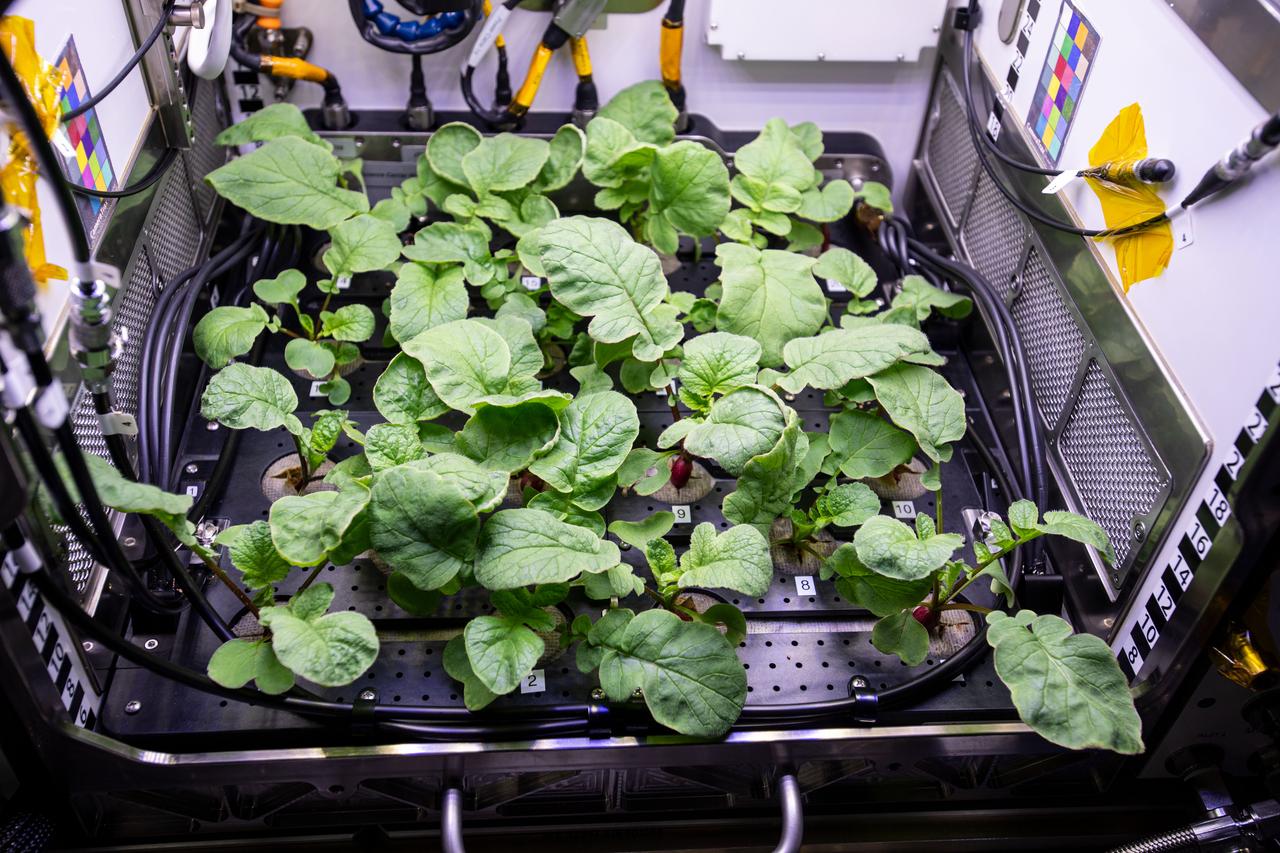
iss064e005049 (Nov. 20, 2020) --- Radish plants are pictured growing inside the Columbus laboratory module's Advanced Plant Habitat. Leaf samples were collected and stowed afterward for analysis so scientists can understand how microgravity affects the growth of plants. Space botany helps NASA and its international partners learn to sustain healthy crews on long-term missions to the Moon, Mars and beyond.
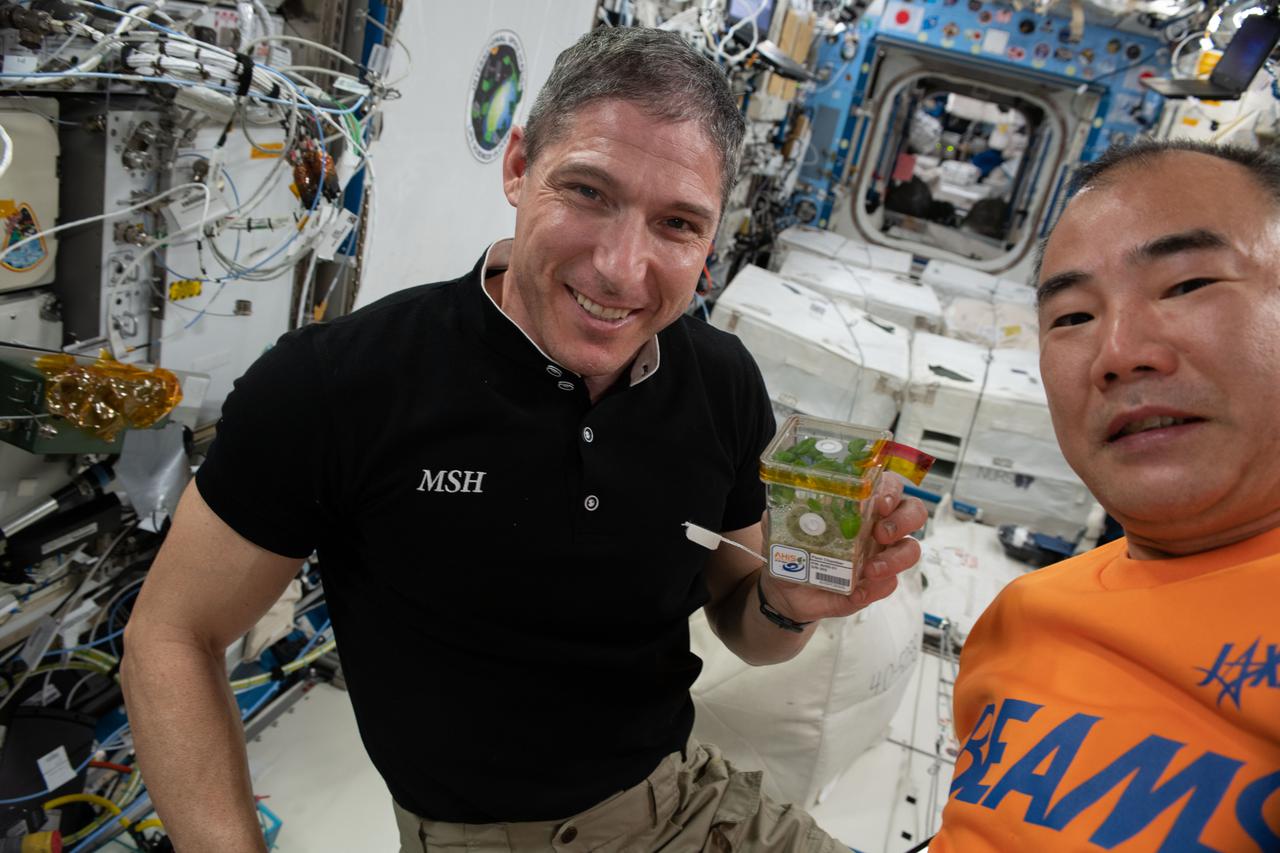
iss064e043776 (March 16, 2021) --- Expedition 64 Flight Engineers Michael Hopkins of NASA and Soichi Noguchi of JAXA (Japan Aerospace Exploration Agency) are pictured inside the International Space Station's Kibo laboratory module. Hopkins is showing a plant chamber containing plants growing for the Asian Herb in Space (AHiS) study. The space botany investigation is exploring ways to cultivate fast-growing plants used for traditional medicine and food flavoring.
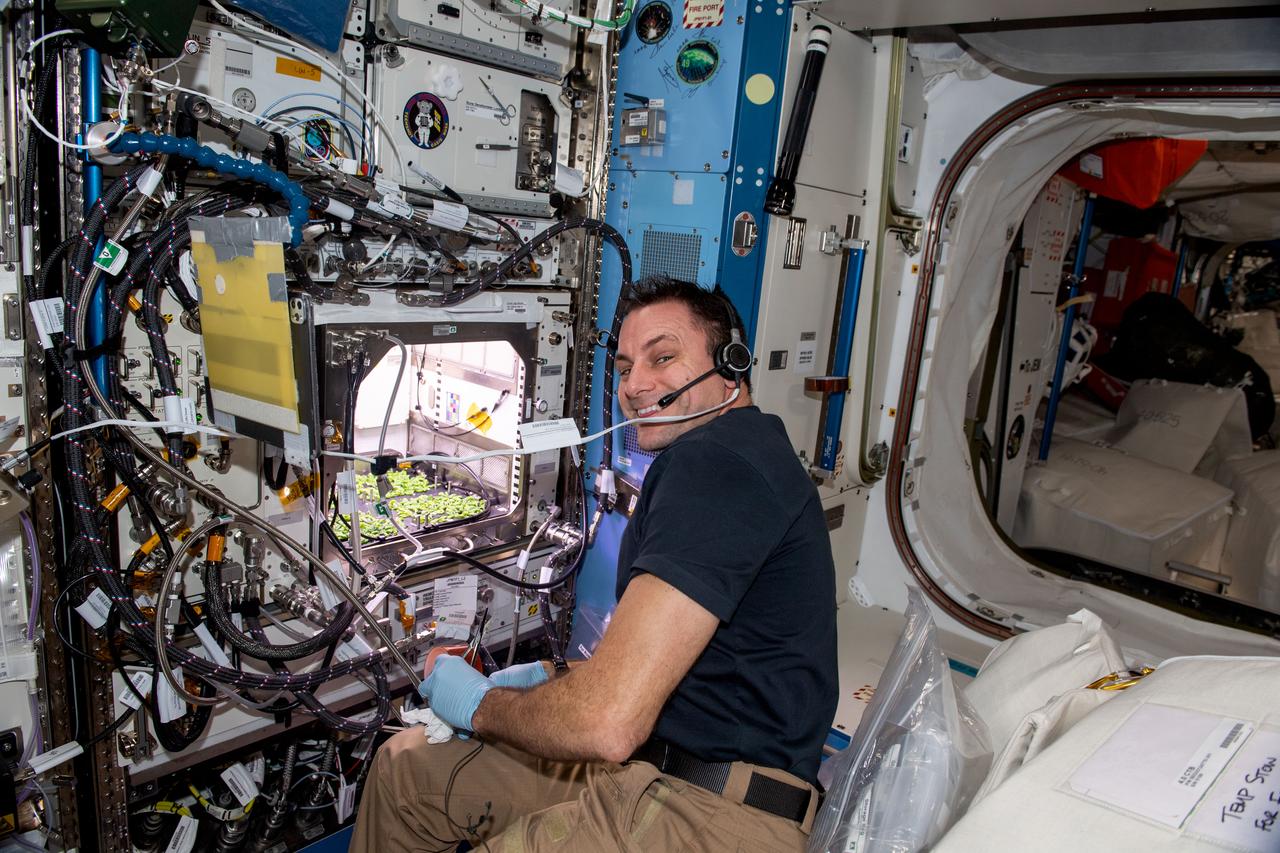
iss068e042034 (Jan. 26, 2023) --- NASA astronaut and Expedition 68 Flight Engineer Josh Cassada harvests thale cress plants housed inside the Advanced Plant Habitat for stowage and analysis on Earth. The space botany study takes place inside the International Space Station's Kibo laboratory module and studies genetic changes that take place in plants growing in microgravity
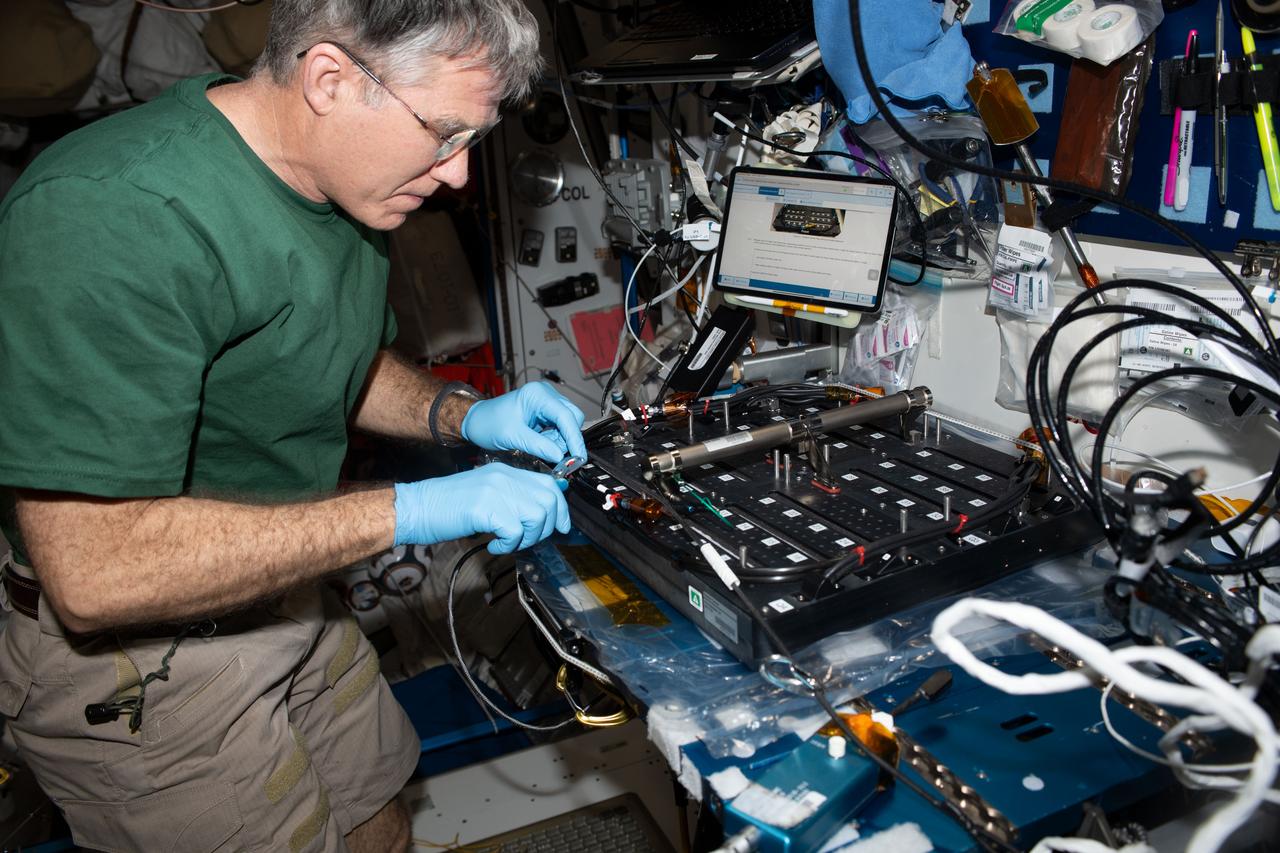
iss069e030677 (July 10, 2023) --- NASA astronaut and Expedition 69 Flight Engineer Stephen Bowen works on the Plant Habitat-03B Science Carrier, a space botany research device, in the International Space Station's Harmony module. The Plant Habitat-03 investigation explores how space-caused DNA changes are transferred from one generation of plants to the next and then continue to accumulate or stabilize. This could provide insight into how to grow repeated generations of crops to provide food and other services on future space missions.
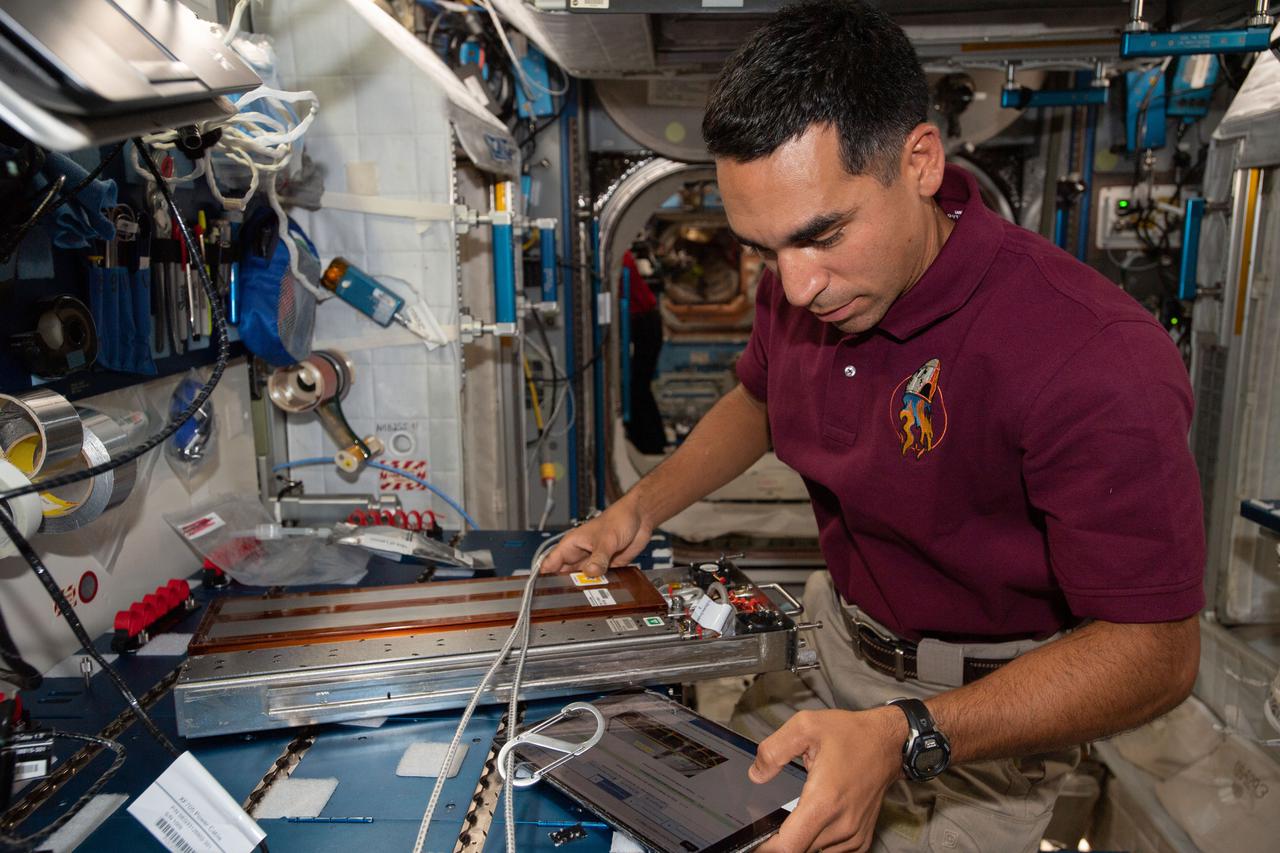
iss066e091053 (Dec. 15, 2021) --- NASA astronaut and Expedition 66 Flight Engineer Raja Chari works inside the Harmony module setting up the Advanced Plant Habitat before the arrival of new space botany experiments inside the SpaceX Cargo Dragon resupply ship.
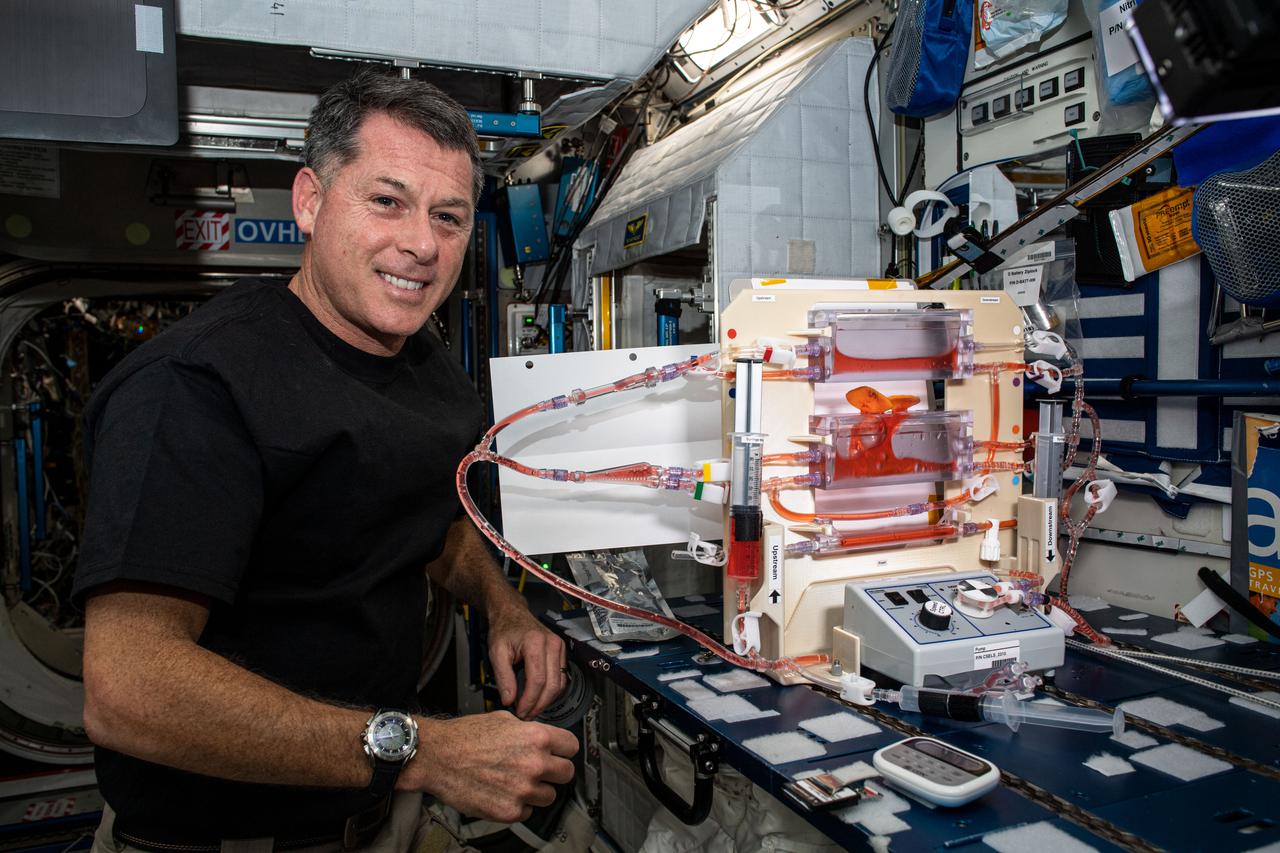
iss065e074538 (May 27, 2021) --- NASA astronaut and Expedition 65 Flight Engineer Shane Kimbrough conducts cylinder test operations for the Plant Water Management experiment. The space botany study explores hydroponics in microgravity and may also improve watering systems on Earth.
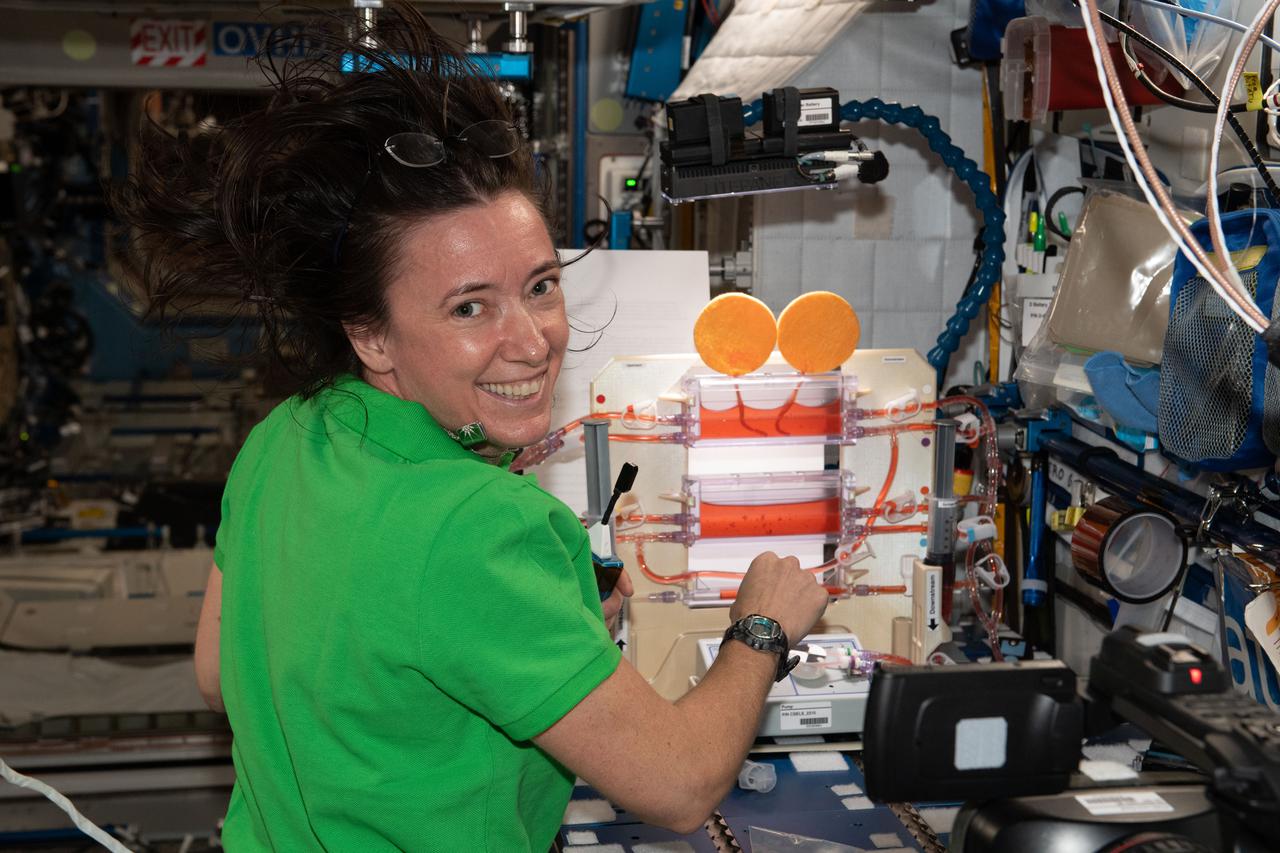
iss065e206774 (July 27, 2021) --- NASA astronaut and Expedition 65 Flight Engineer Megan McArthur works on the Plant Water Management space botany study that explores operating hydroponics in microgravity and may also improve watering systems on Earth.

iss068e045014 (Feb. 1, 2023) --- NASA astronaut and Expedition 68 Flight Engineer Josh Cassada uses a watering syringe to water tomato plants growing inside the EXPRESS rack's Veggie space botany facility located inside the Columbus laboratory module aboard the International Space Station.
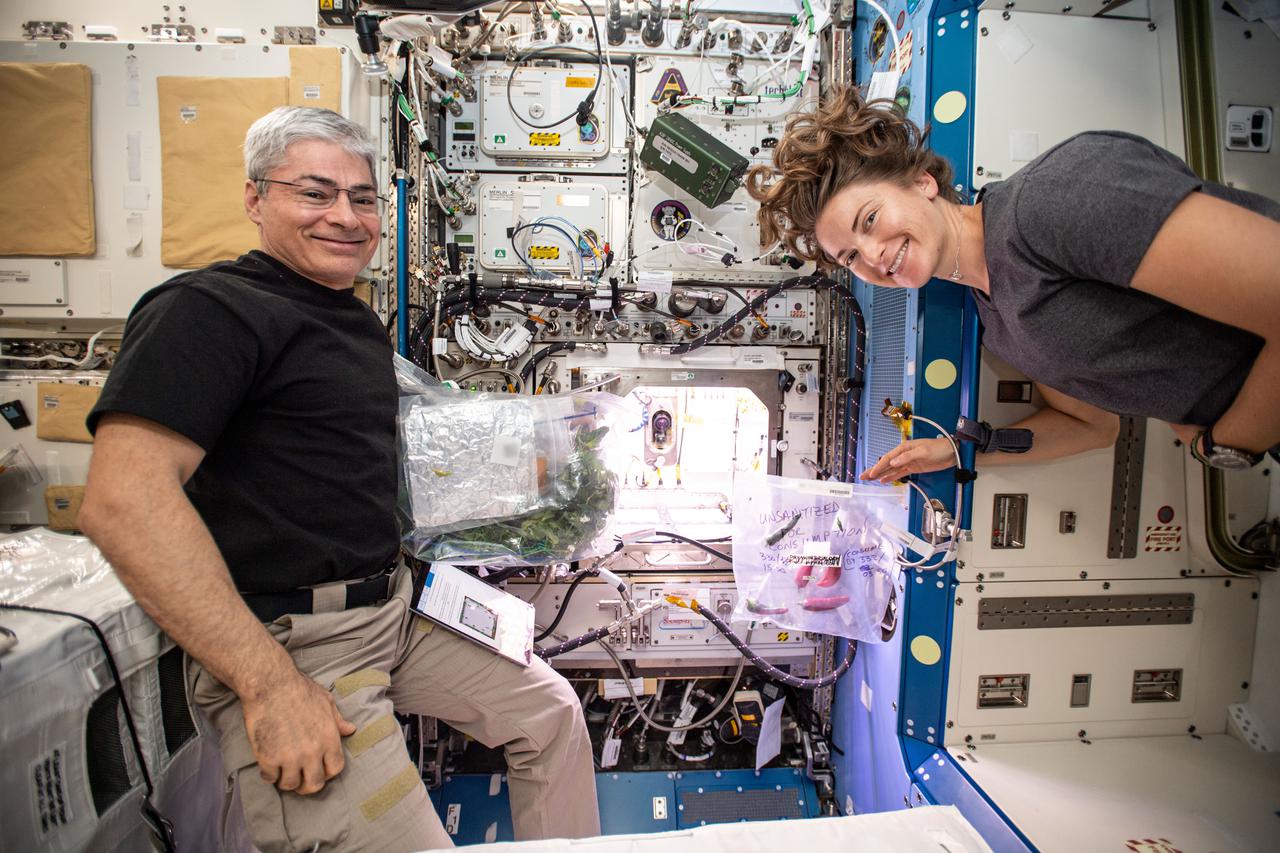
iss066e083427 (Nov. 26, 2021) --- NASA astronauts and Expedition 66 Flight Engineers Mark Vande Hei and Kayla Barron are pictured in front of the International Space Station's Advanced Plant Habitat after harvesting chile peppers grown inside the space botany research device.

iss068e038960 (Jan. 7, 2023) --- Expedition 68 Flight Engineer Koichi Wakata of the Japan Aerospace Exploration (JAXA) poses in front of the VEGGIE space botany research facility after tending to tomato plants growing aboard the International Space Station.
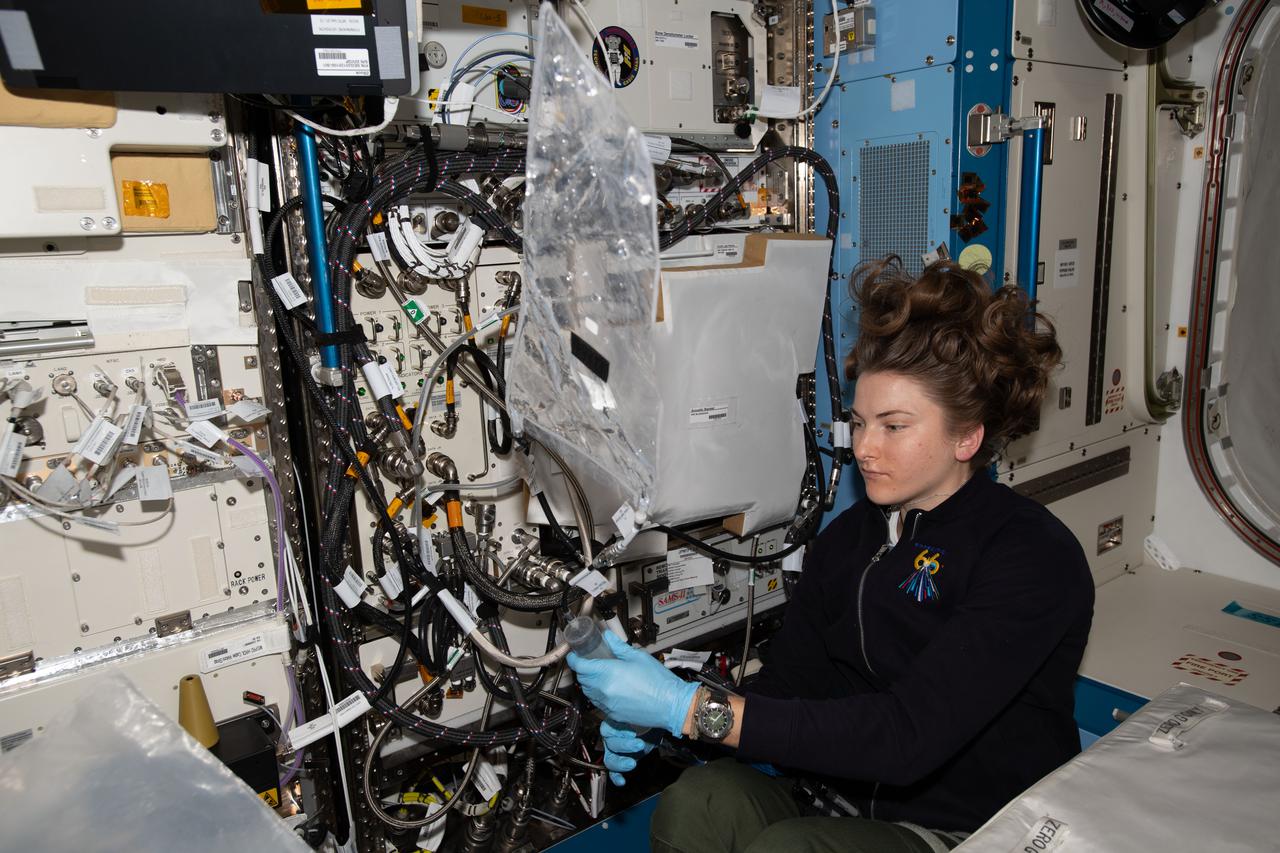
iss066e137017 (Feb. 7, 2022) --- NASA astronaut and Expedition 66 Flight Engineer Kayla Barron refills water and cleans the Plant Habitat Facility that supports space botany research inside the International Space Station's Kibo laboratory module.
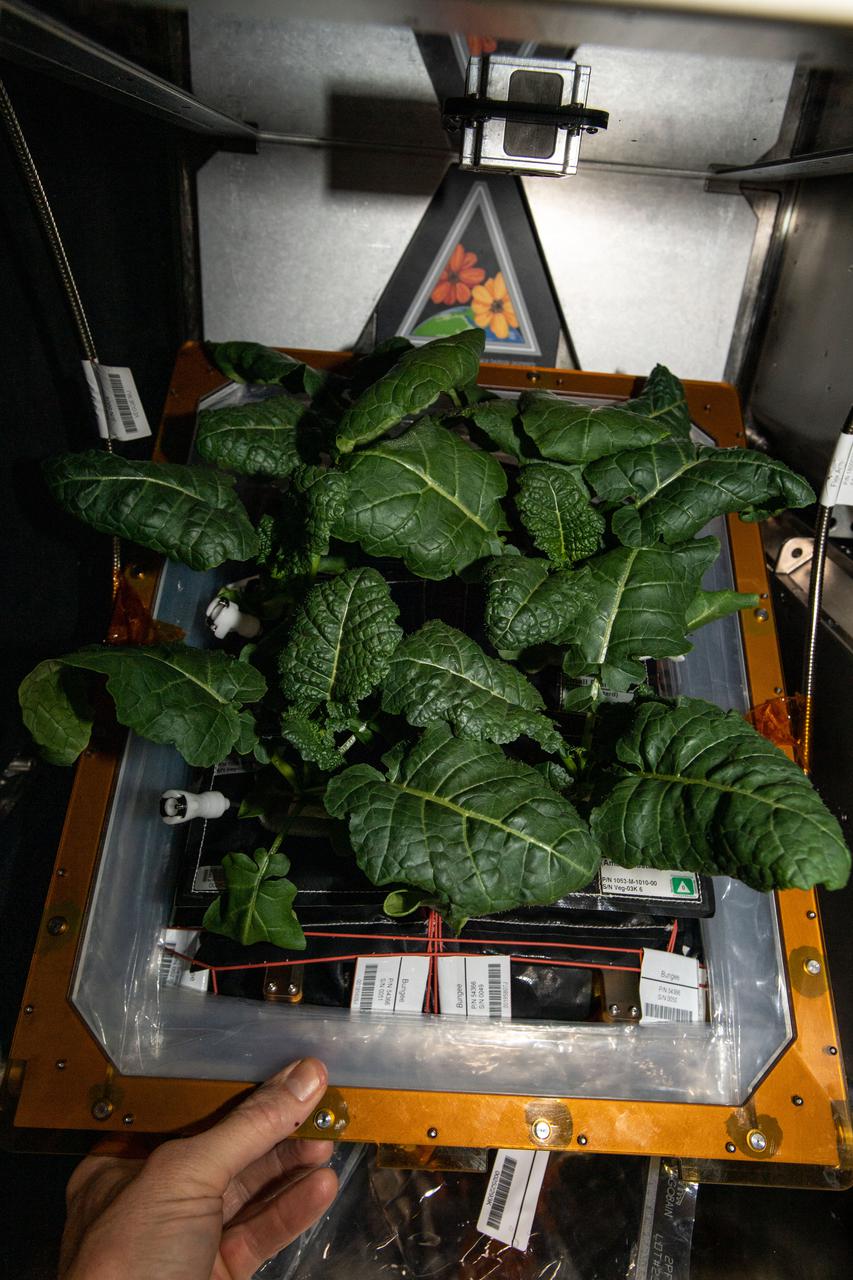
iss064e038852 (March 1, 2021) --- Amara Mustard plants are pictured growing inside the Veggie space botany research facility aboard the International Space Station. The Veg-03 investigation is exploring how to grow food in space and assesses the impact of space gardening on crew morale and mood.
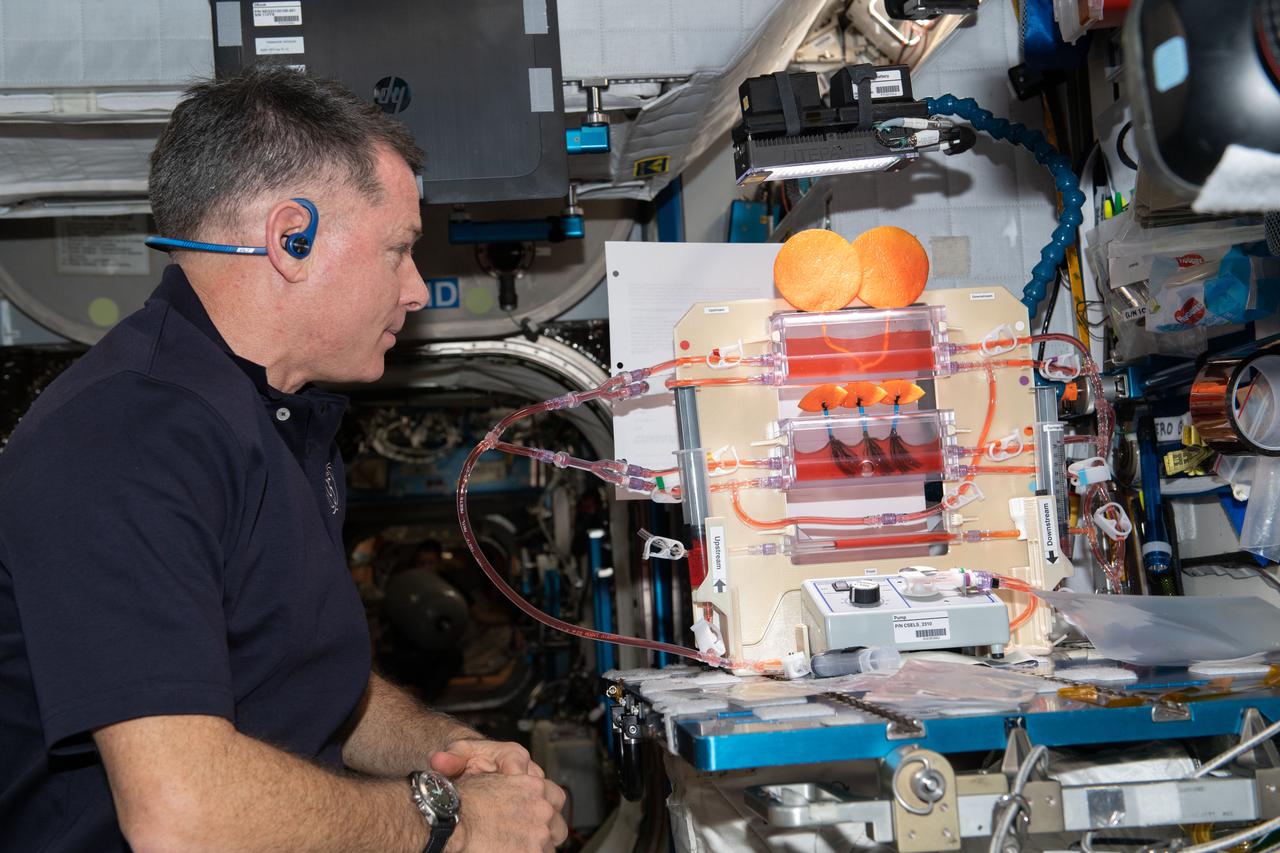
iss065e208539 (July 28, 2021) --- NASA astronaut and Expedition 65 Flight Engineer Shane Kimbrough works on the Plant Water Management space botany study that explores operating hydroponics in microgravity and may also improve watering systems on Earth.
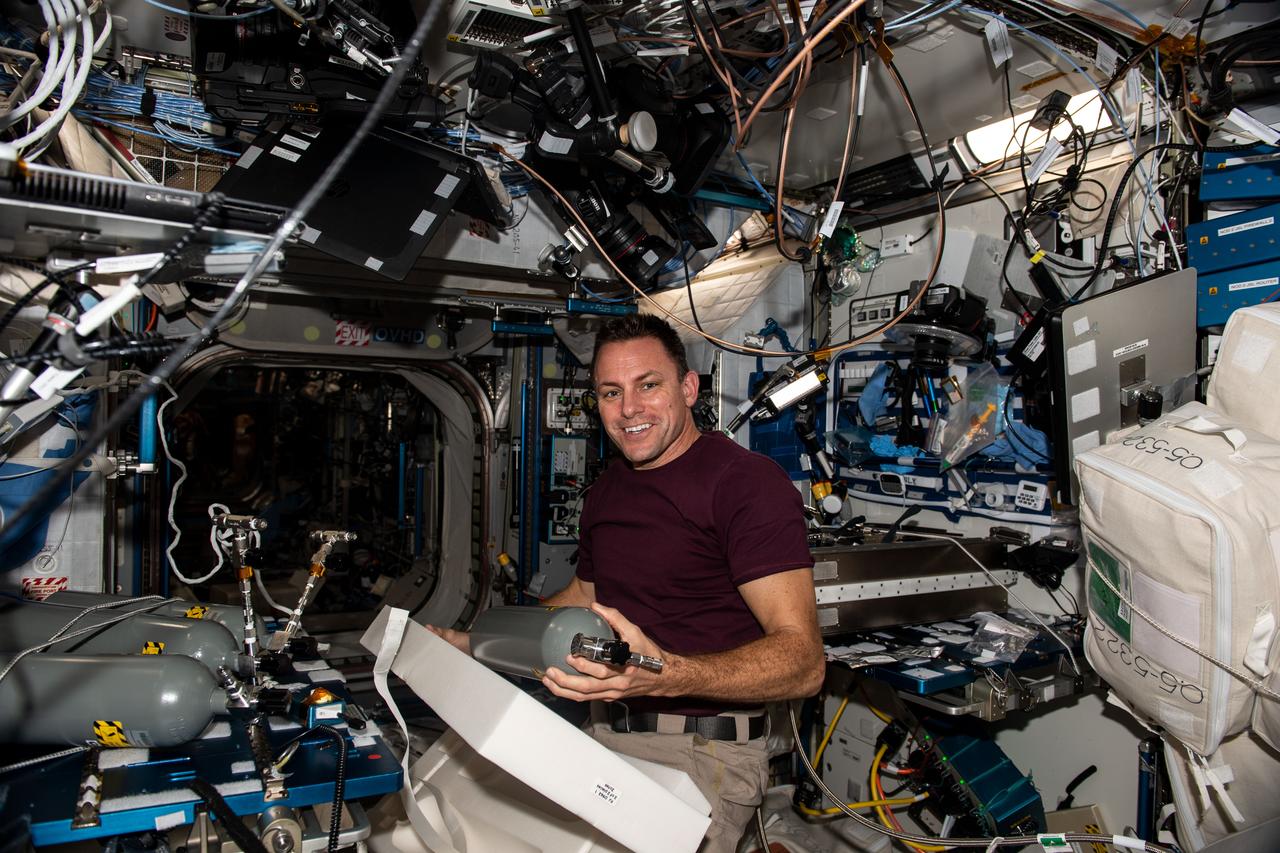
iss068e023646 (Nov. 21, 2022) --- NASA astronaut and Expedition 68 Flight Engineer Josh Cassada works inside the International Space Station's Harmony module replacing carbon dioxide bottles that support space botany research inside the Plant Habitat.
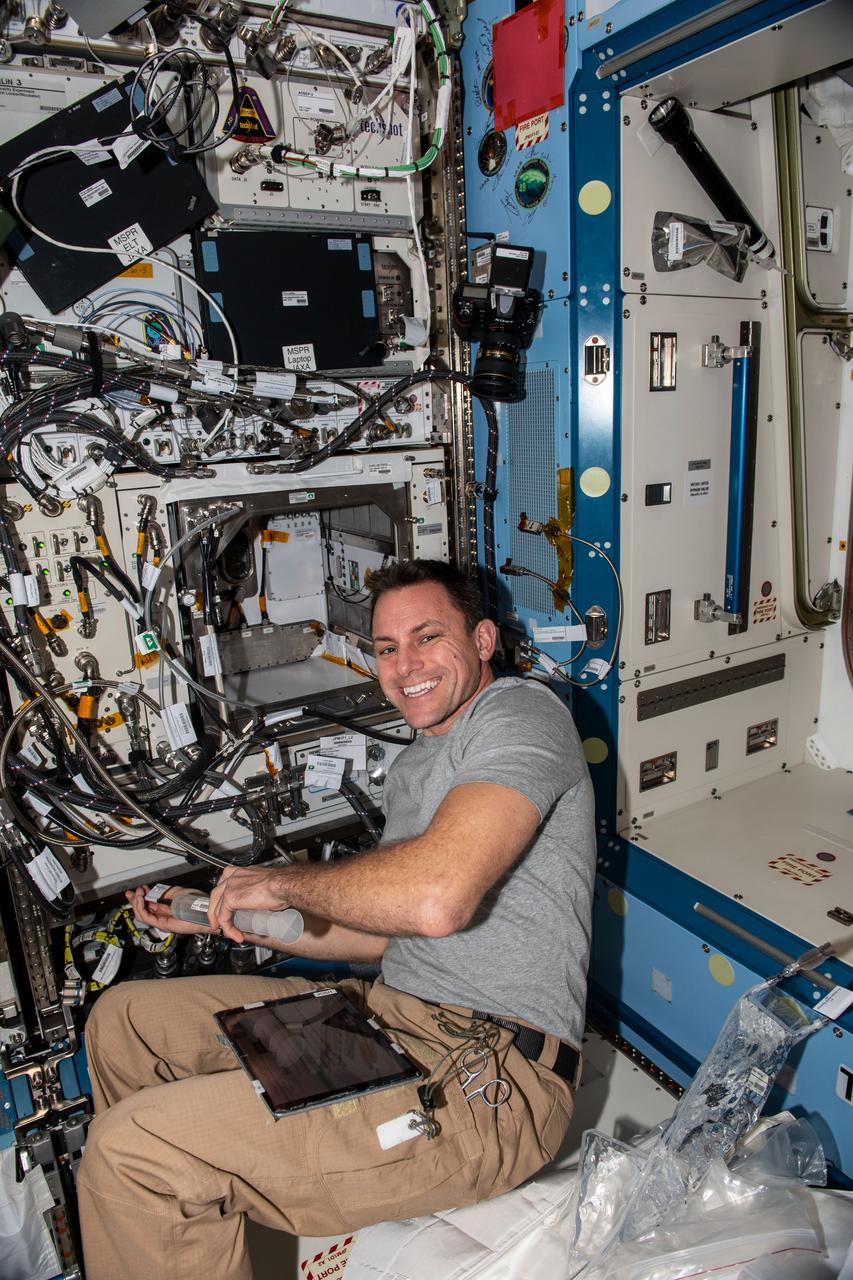
iss068e029941 (Dec. 15, 2022) --- NASA astronaut and Expedition 68 Flight Engineer Josh Cassada works in the Kibo laboratory module filling water reservoirs on the Pant Habitat for a space botany study exploring the genetic changes plants may go through when adapting to microgravity.
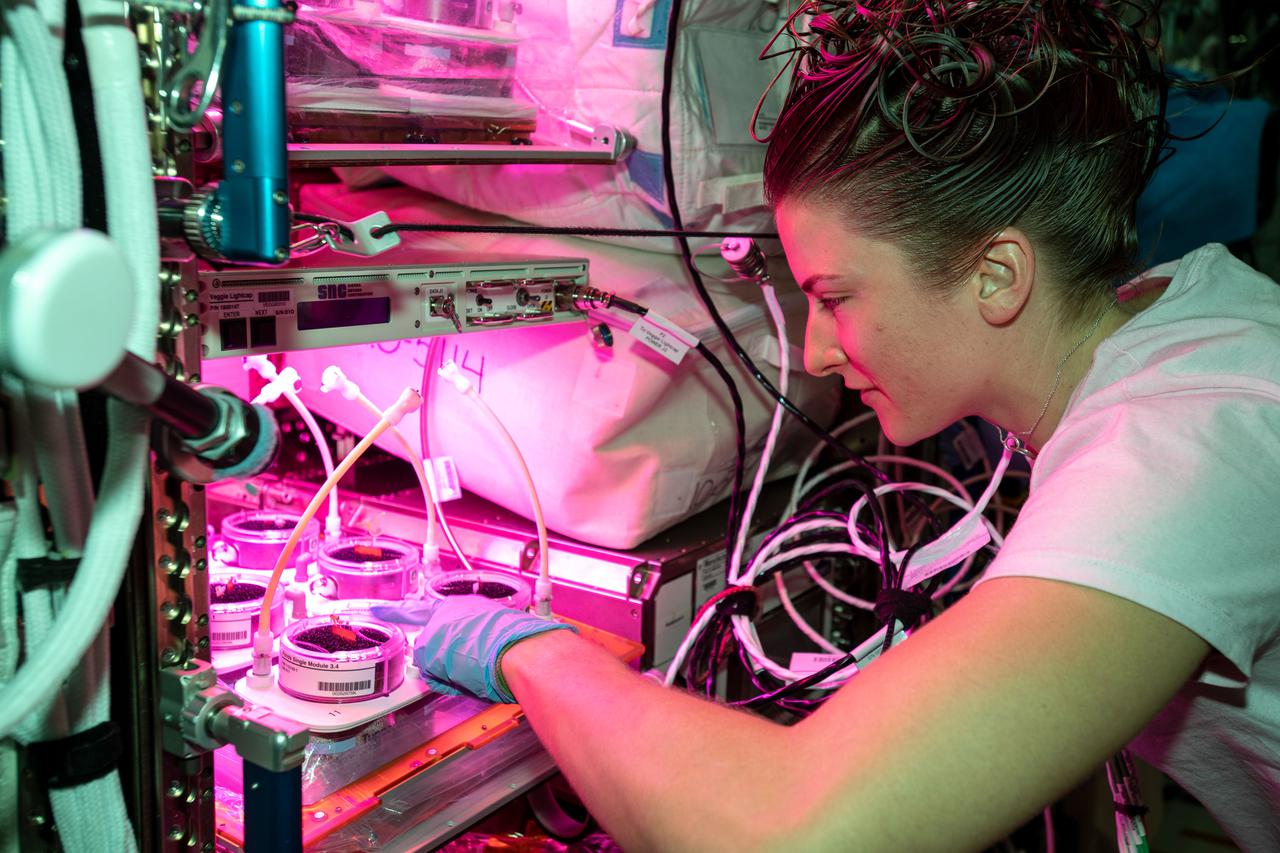
iss066e133016 (Feb. 1, 2022) --- NASA astronaut and Expedition 66 Flight Engineer Kayla Barron checks out plants growing inside the Veggie botany research facility for the Veggie PONDS experiment. The investigation tests ways to grow crops in space to supporting long-term crewed missions to the Moon, Mars and beyond.
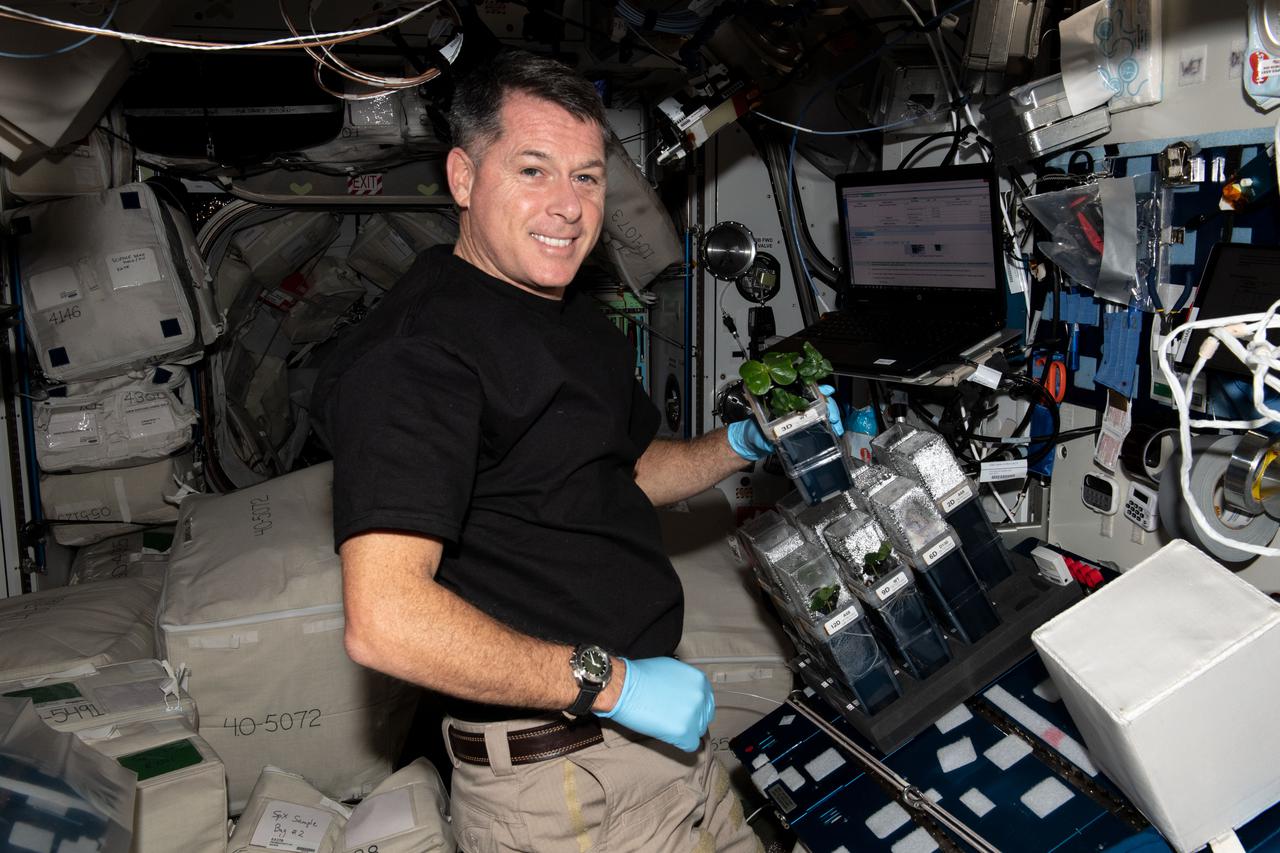
iss065e096005 (June 11, 2021) --- NASA astronaut and Expedition 65 Flight Engineer Shane Kimbrough checks on cotton plants growing for the TICTOC space botany study. The investigation looks at gene expression and root growth in microgravity which may improve both space agriculture and cotton cultivation on Earth.
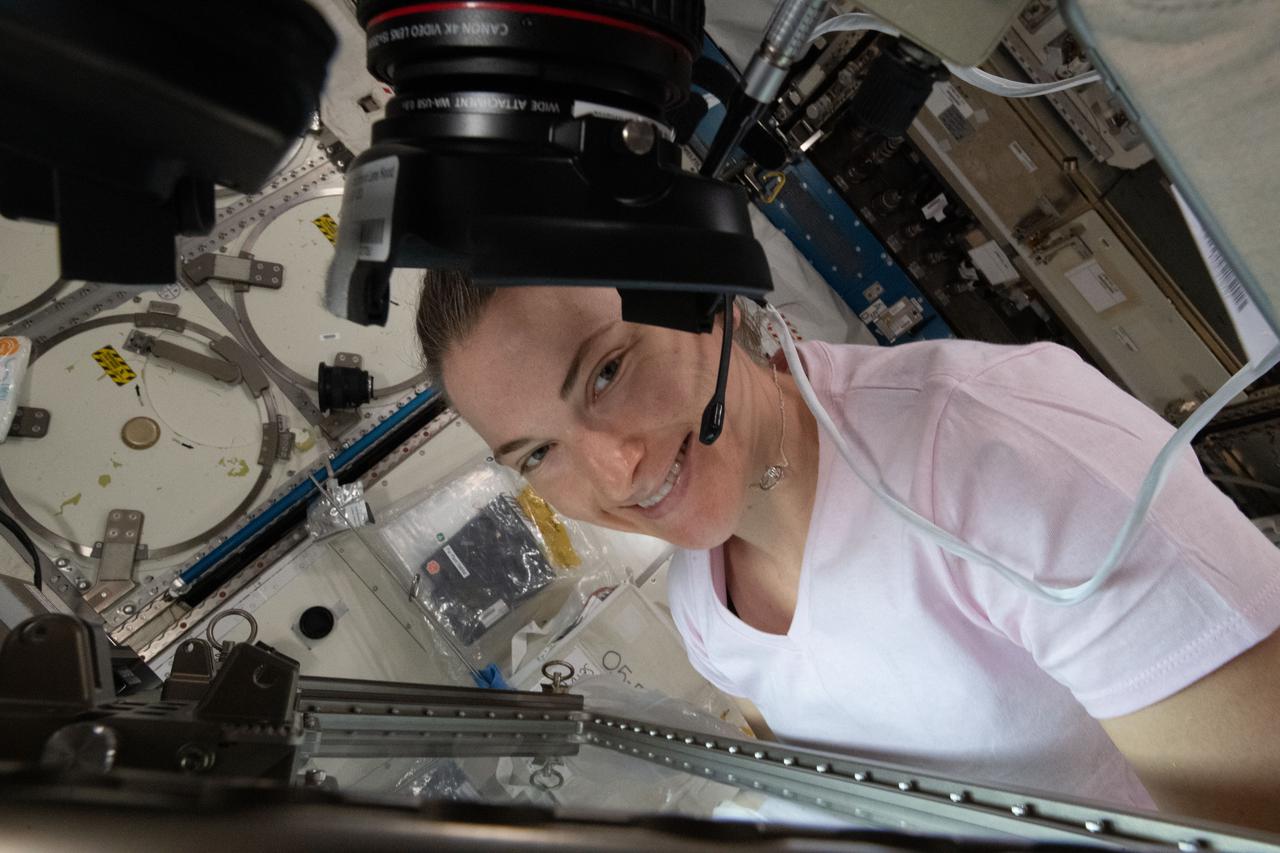
iss066e153087 (Fab. 29, 2022) --- NASA astronaut and Expedition 66 Flight Engineer Kayla Barron works inside the Life Science Glovebox conducting botany research for the Plant Habitat-05 investigation. The space agriculture study explores genetic expression in cotton cultures to learn more about the process of plant regeneration possibly improving crop production on Earth.
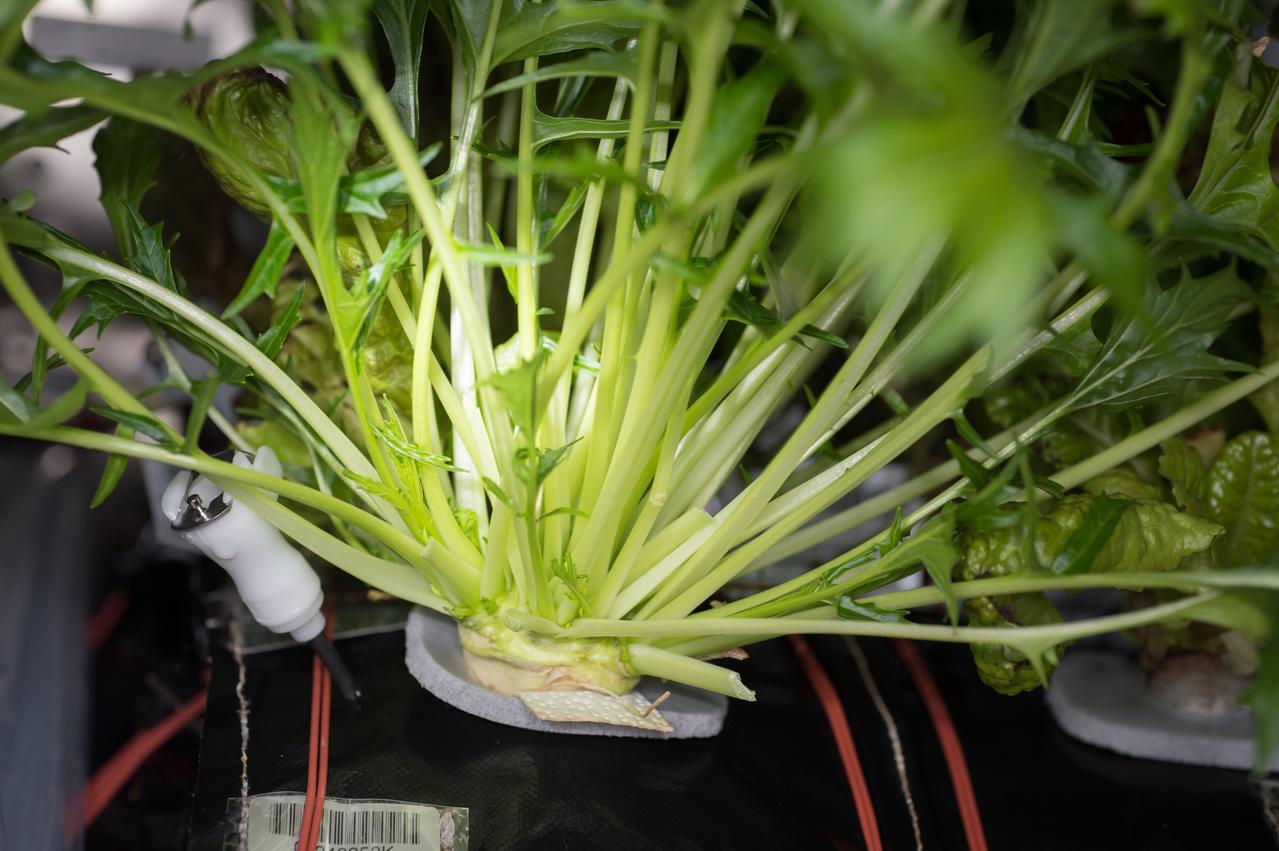
iss053e180041 (Nov. 14, 2017) --- Mizuna is pictured being cultivated inside the Veggie facility for the Veg-03 botany experiment. Future long-duration missions will look to have crew members grow their own food, so understanding how plants respond to microgravity is an important step toward that goal. Veg-03 uses the Veggie plant growth facility to cultivate a type of cabbage, lettuce and mizuna which are harvested on-orbit with samples returned to Earth for testing.
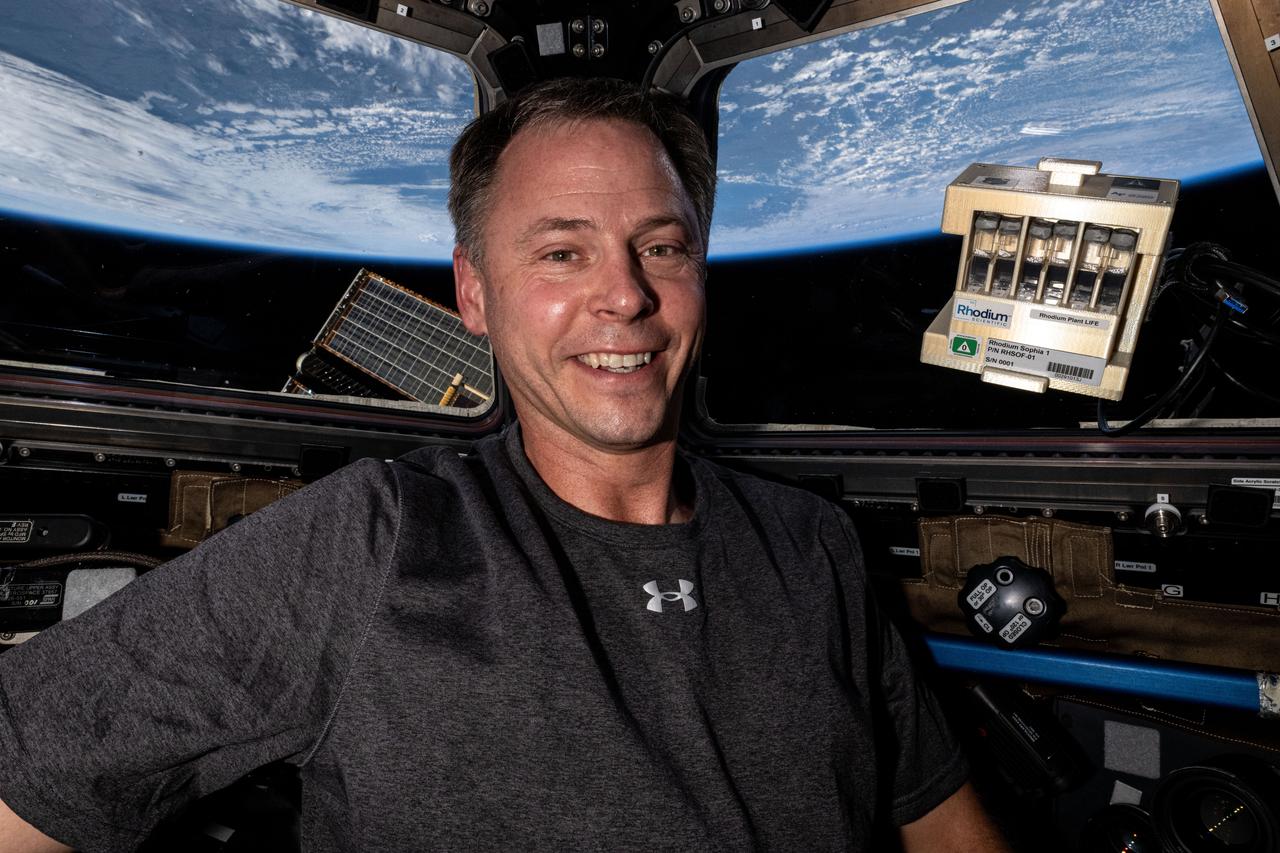
iss072e034791 (Oct. 11, 2024) --- NASA astronaut and Expedition 72 Flight Engineer Nick Hague is pictured inside the cupola with space botany hardware that supports the Rhodium Plant LIFE investigation. The experiment studies the affects of radiation and microgravity on plant growth to promote self-sustainable long-term human missions and increase crop production on Earth. The International Space Station was orbiting 259 miles above the Alps in Austria at the time of this photograph.
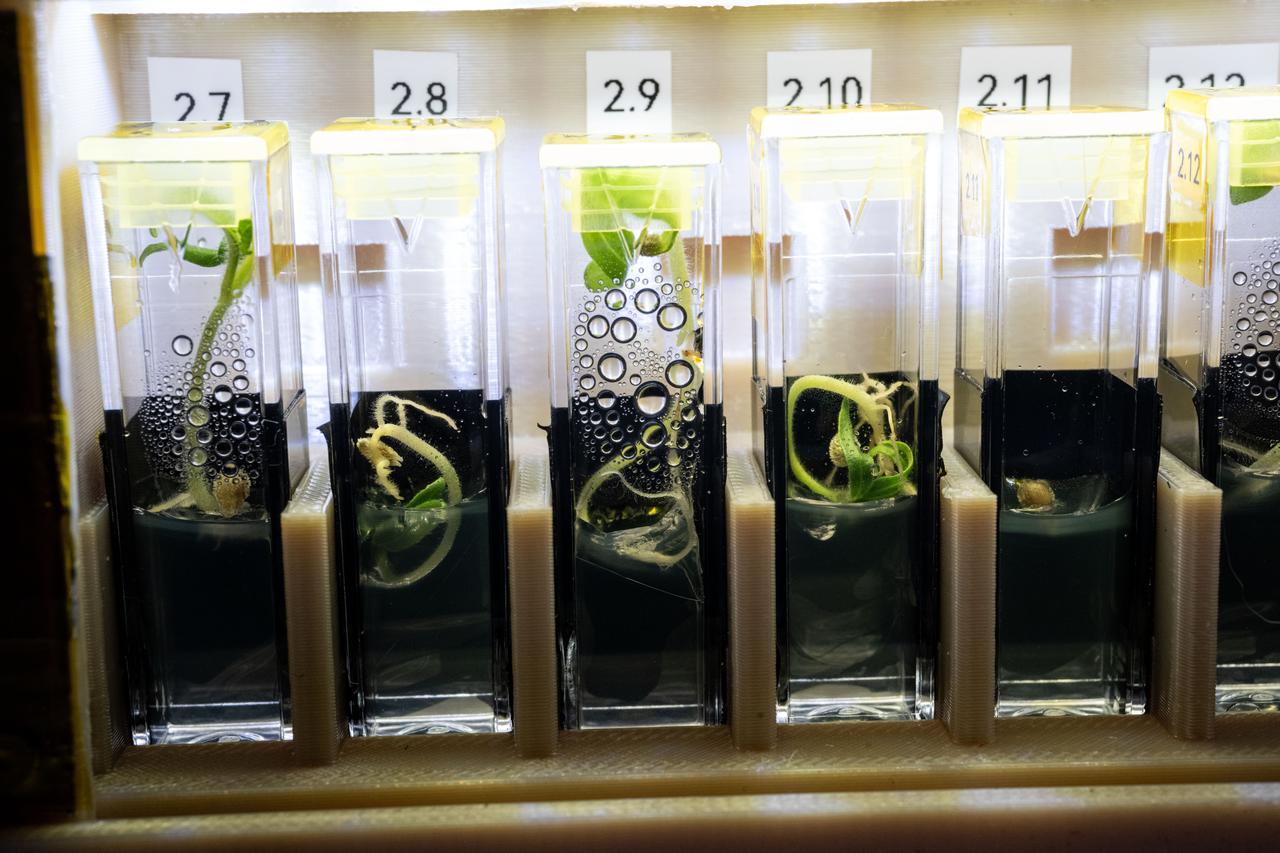
iss073e0032789 (May 16, 2025) --- Genetically modified, extemely dwarf tomato plants are pictured growing inside specialized research hardware, called Rhodium BioCuvettes, aboard the International Space Station's Destiny laboratory module. The space botany experiment tests the plants ability to grow without photosynthesis and survive in confined environments in weightlessness potentially supporting crop production on spacecraft.
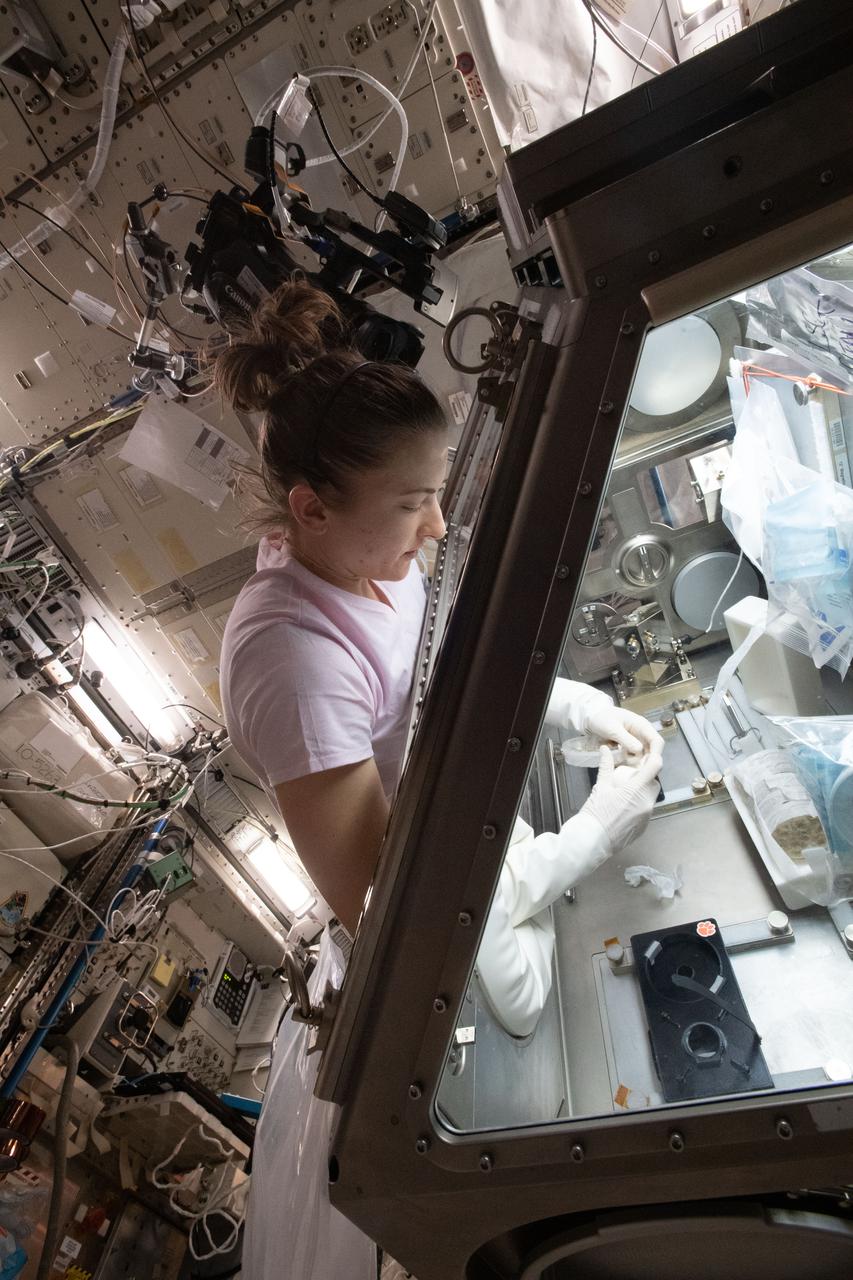
iss066e153063 (Fab. 29, 2022) --- NASA astronaut and Expedition 66 Flight Engineer Kayla Barron works inside the Life Science Glovebox conducting botany research for the Plant Habitat-05 investigation. The space agriculture study explores genetic expression in cotton cultures to learn more about the process of plant regeneration possibly improving crop production on Earth.
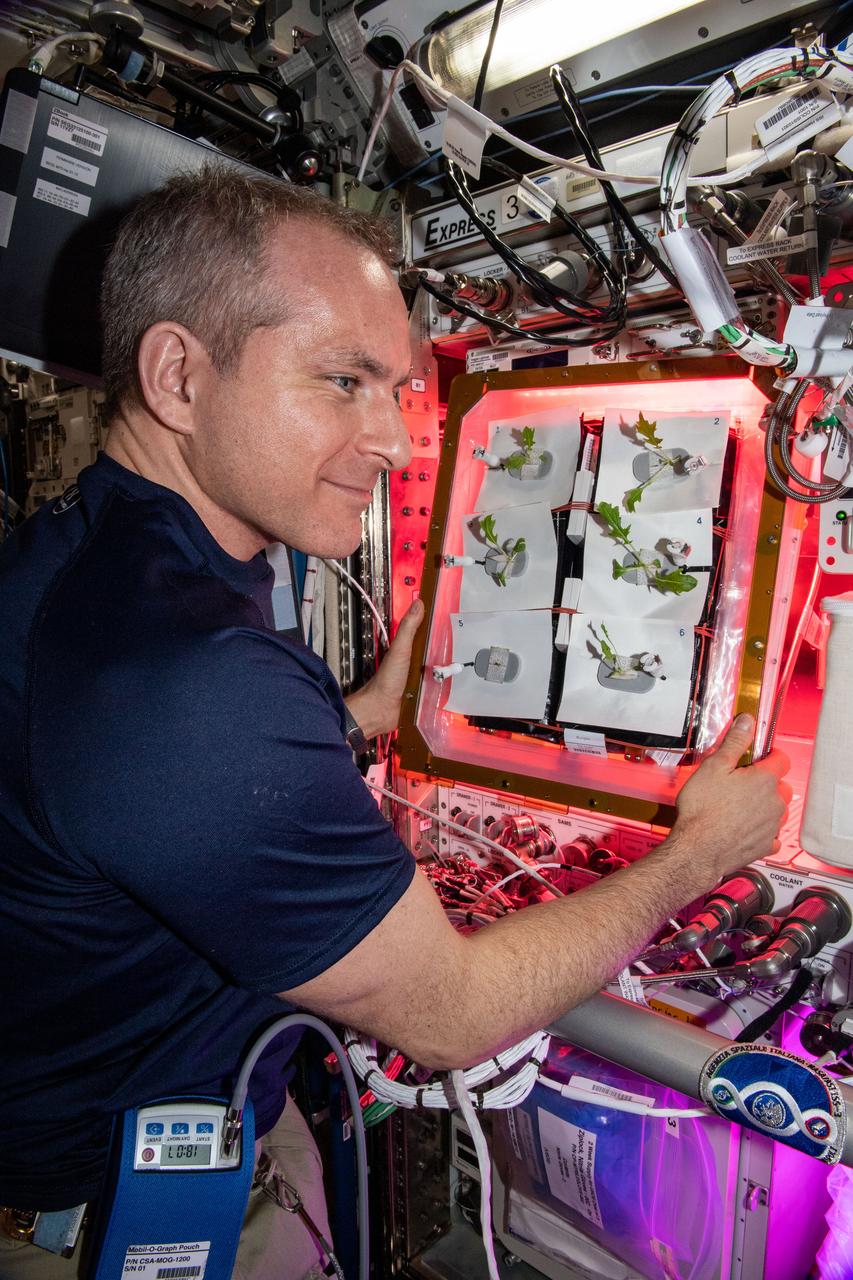
iss059e113779 (June 18, 2019) --- Canadian Space Agency astronaut David Saint-Jacques checks plants being grown for the Veg-04A space botany experiment taking place inside the International Space Station's Columbus laboratory module from the European Space Agency. The study focuses on the impact of light quality and fertilizer on leafy crop growth for a 28-day grow-out, microbial food safety, nutritional value, taste acceptability by the crew, and the overall behavioral health benefits of having plants and fresh food in space.

iss072e035666 (Oct. 11, 2024) --- NASA astronauts Matthew Dominick and Jeanette Epps (rear center), both Expedition 72 Flight Engineers, are pictured during a variety of activities aboard the International Space Station. Dominick is pedaling on the Cycle Ergometer with Vibration Isolation and Stabilization (CEVIS), an exercise cycle providing aerobic and cardiovascular conditioning inside the Destiny laboratory module. Epps is in the Harmony module exploring how to water plants in the microgravity environment for the Plant Water Management 5 space botany investigation.
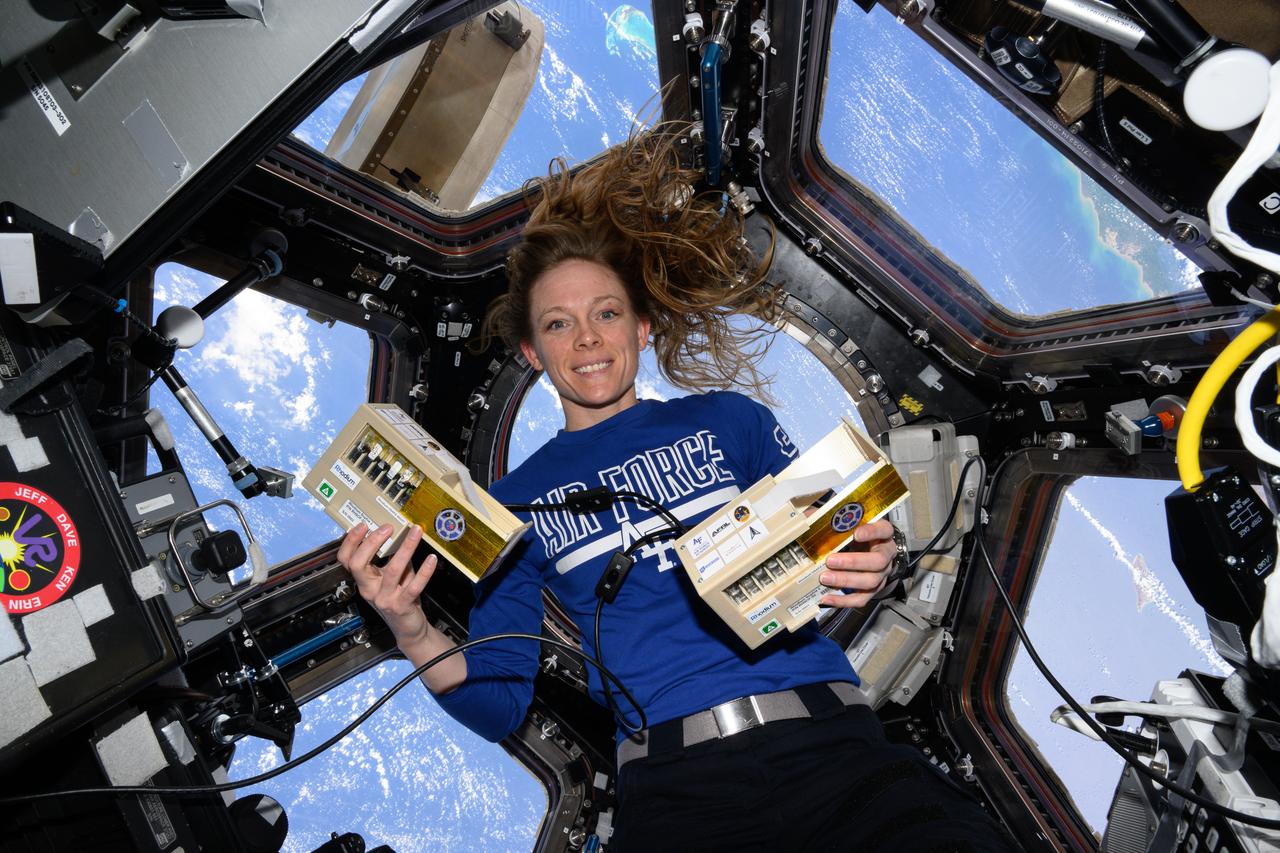
iss073e0076885 (5/21/2025) --- NASA astronaut Nichole Ayers is pictured inside the cupola with space botany hardware that supports the LEO Integrated Flori-culture Experiment (LIFE) 01 (Rhodium Plant LIFE) investigation. The investigation studies the affects of radiation and microgravity on plant growth to promote self-sustainable long-term human missions and increase crop production on Earth.
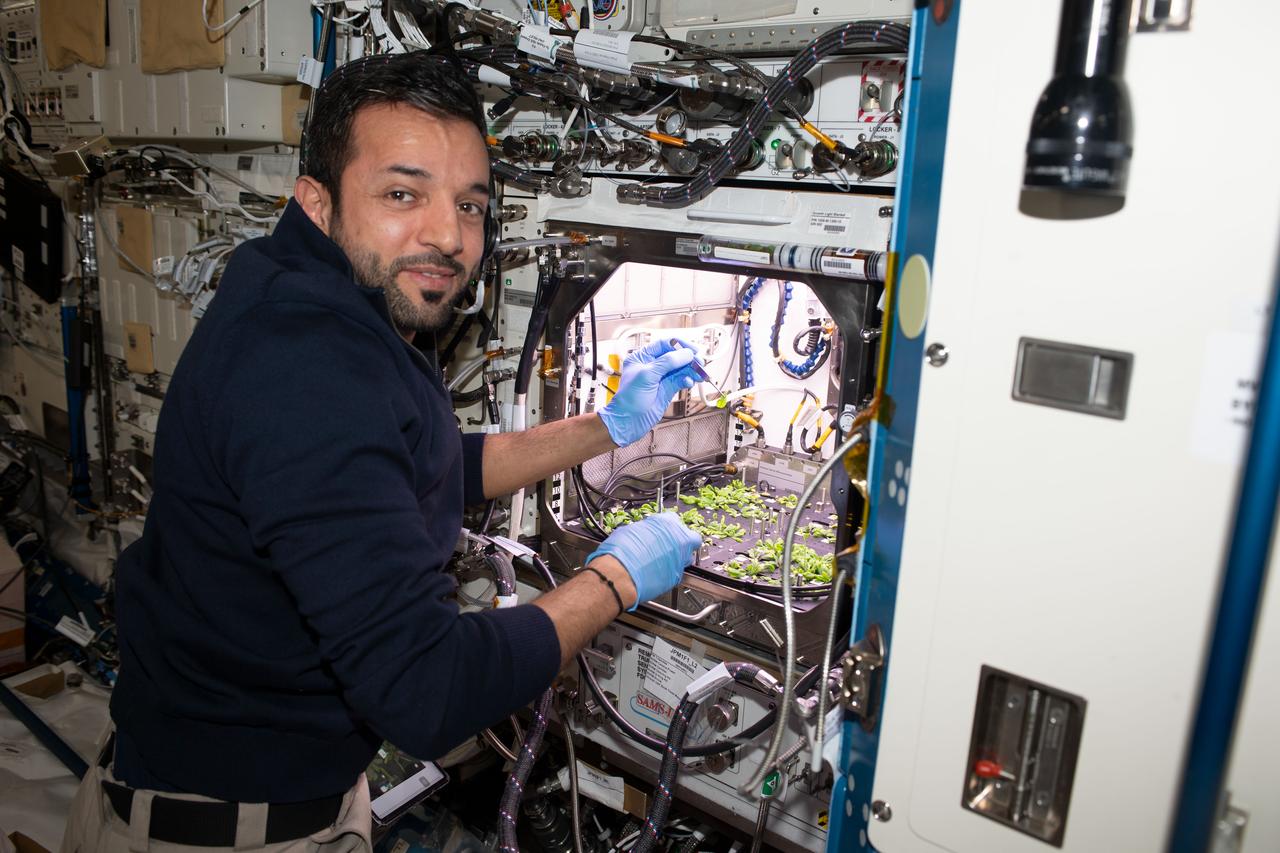
iss069e055101 (Aug. 8, 2023) --- UAE (United Arab Emirates) astronaut and Expedition 69 Flight Engineer Sultan Alneyadi works in the Kibo laboratory module harvesting leaves from thale cress plants that are similar to cabbage and mustard. The Plant Habitat-03 space botany experiment is informing researchers how to grow food and sustain crews on future space missions.
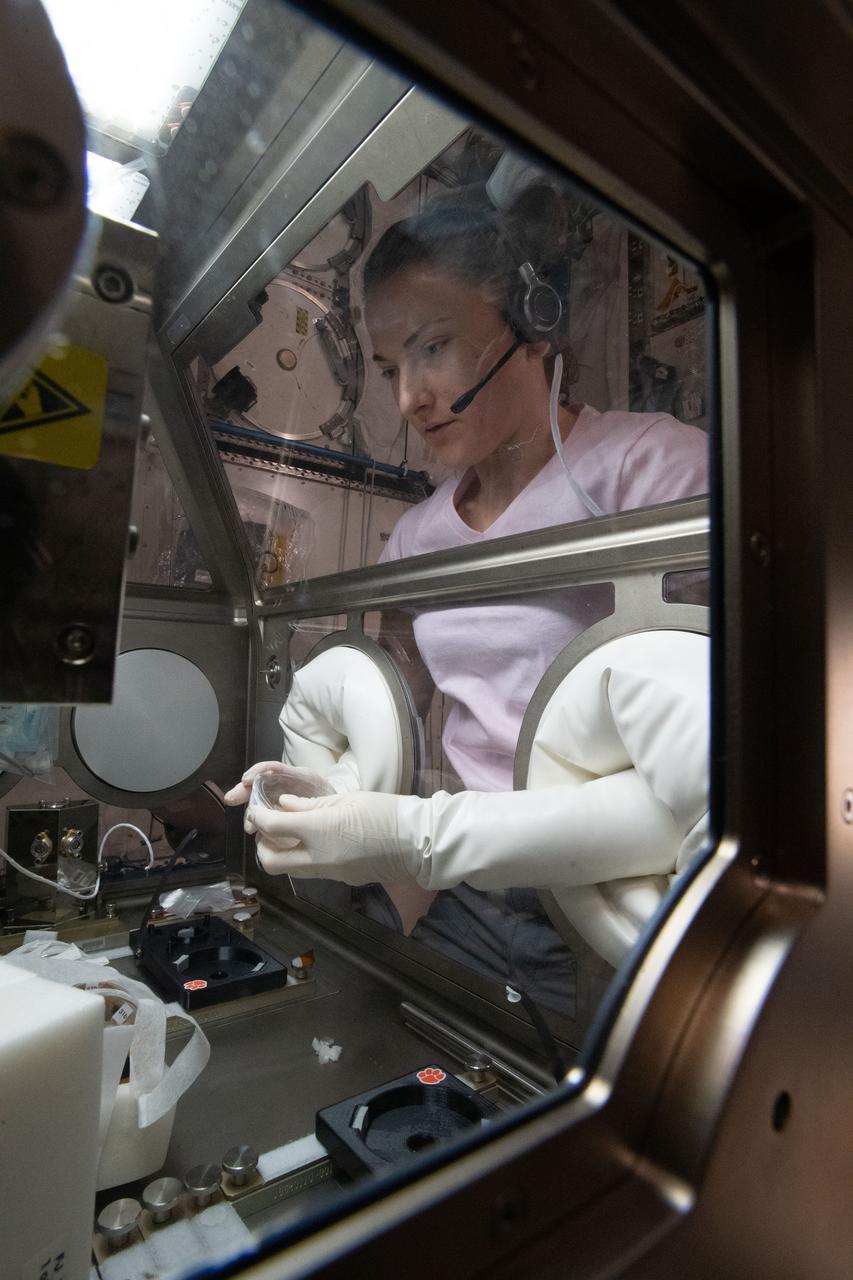
iss066e153069 (Fab. 29, 2022) --- NASA astronaut and Expedition 66 Flight Engineer Kayla Barron works inside the Life Science Glovebox conducting botany research for the Plant Habitat-05 investigation. The space agriculture study explores genetic expression in cotton cultures to learn more about the process of plant regeneration possibly improving crop production on Earth.

iss073e0071009 (May 11, 2025) --- NASA astronaut and Expedition 73 Flight Engineer Jonny Kim photographs genetically modified, extemely dwarf tomato plants growing inside specialized research hardware, called Rhodium BioCuvettes, aboard the International Space Station's Destiny laboratory module. The space botany experiment tests the plants ability to grow without photosynthesis and survive in confined environments in weightlessness potentially supporting crop production on spacecraft.
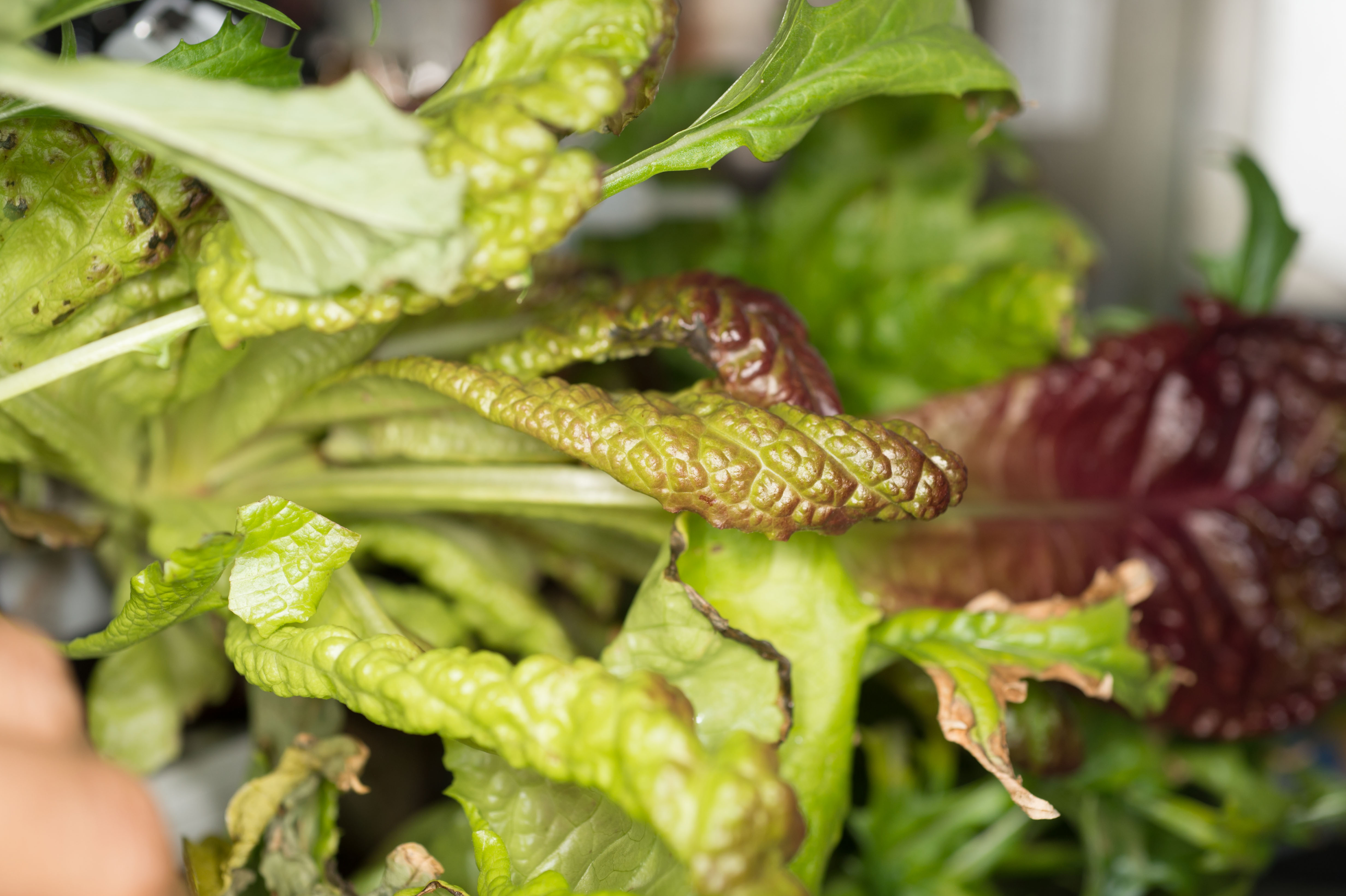
iss053e143976 (Nov. 11, 2017) --- Red lettuce is pictured being cultivated inside the Veggie facility for the Veg-03 botany experiment. Future long-duration space missions will look to have crew members grow their own food, so understanding how plants respond to microgravity is an important step toward that goal. Veg-03 uses the Veggie plant growth facility to cultivate a type of cabbage, lettuce and mizuna which are harvested on-orbit with samples returned to Earth for testing.
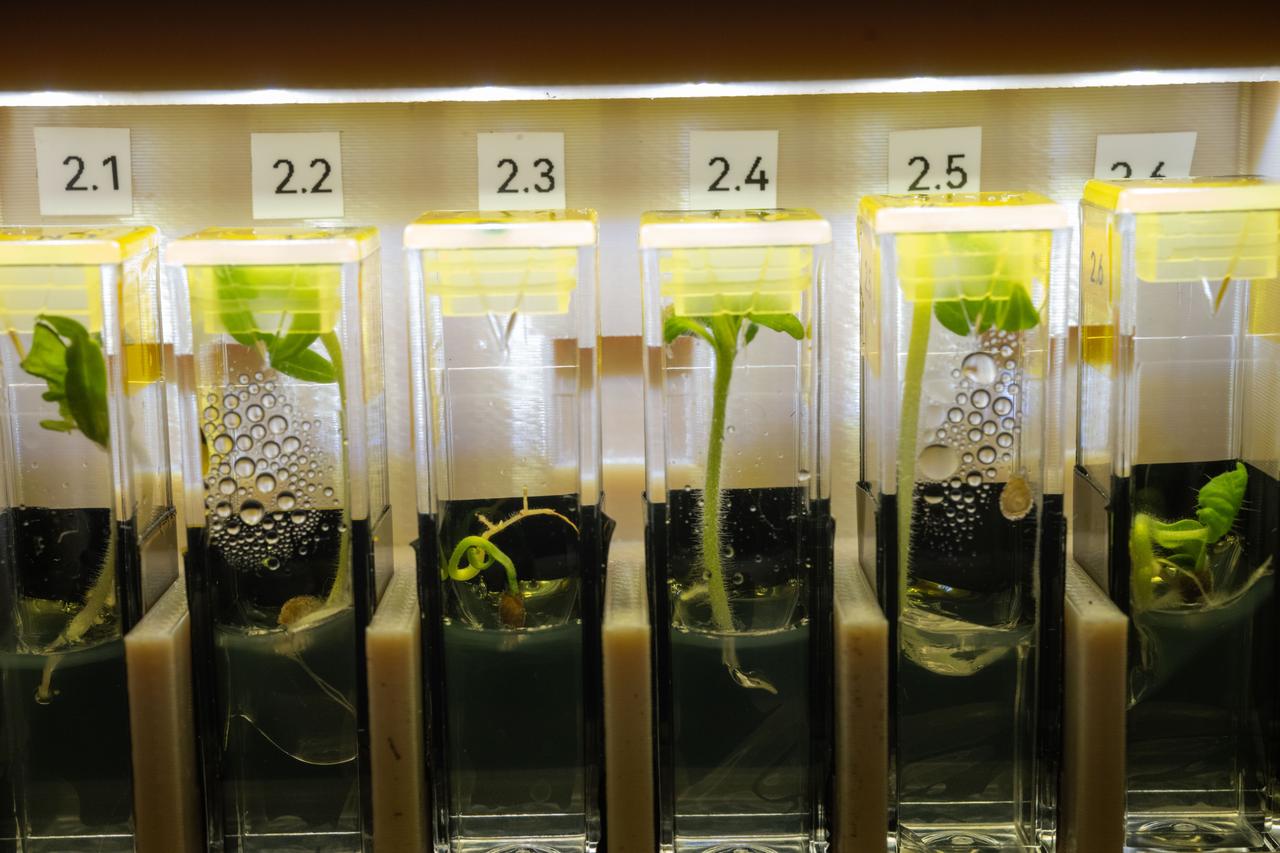
iss073e0031528 (May 15, 2025) --- Genetically modified, extemely dwarf tomato plants are pictured growing inside specialized research hardware, called Rhodium BioCuvettes, aboard the International Space Station's Destiny laboratory module. The space botany experiment tests the plants ability to grow without photosynthesis and survive in confined environments in weightlessness potentially supporting crop production on spacecraft.

ISS040-E-009116 (10 June 2014) --- In the International Space Station?s Harmony node, NASA astronaut Steve Swanson, Expedition 40 commander, harvests a crop of red romaine lettuce plants that were grown from seed inside the station?s Veggie facility, a low-cost plant growth chamber that uses a flat-panel light bank for plant growth and crew observation. For the Veg-01 experiment, researchers are testing and validating the Veggie hardware, and the plants will be returned to Earth to determine food safety.

Close-up view of plant growth taken by the Expedition 37 crew.

View of pumpkin plant. Image was released by astronaut on Twitter.

Commander Steve Swanson harvests plants for the VEG-01 investigation. He is harvesting them on the Maintenance Work Area (MWA) in the Node 2/Harmony. The Veg-01 hardware validation test investigation utilizes the Veggie facility on ISS. This investigation will assess on-orbit function and performance of the Veggie,and focus on the growth and development of Outredgeous Lettuce (Lactuca sativa ) seedlings in the spaceflight environment and the effects of the spaceflight environment on composition of microbial flora on the Veggie-grown plants and the Veggie facility. Lettuce plants are harvested on-orbit, frozen at <-80oC and returned to the ground for post-flight evaluation. Microbial sampling swabs will be taken of the Veggie facility and plant material, frozen and returned to the ground for environmental microbiological examination. Rooting pillows and water sample syringes will also be returned for microbial sampling and root analysis.
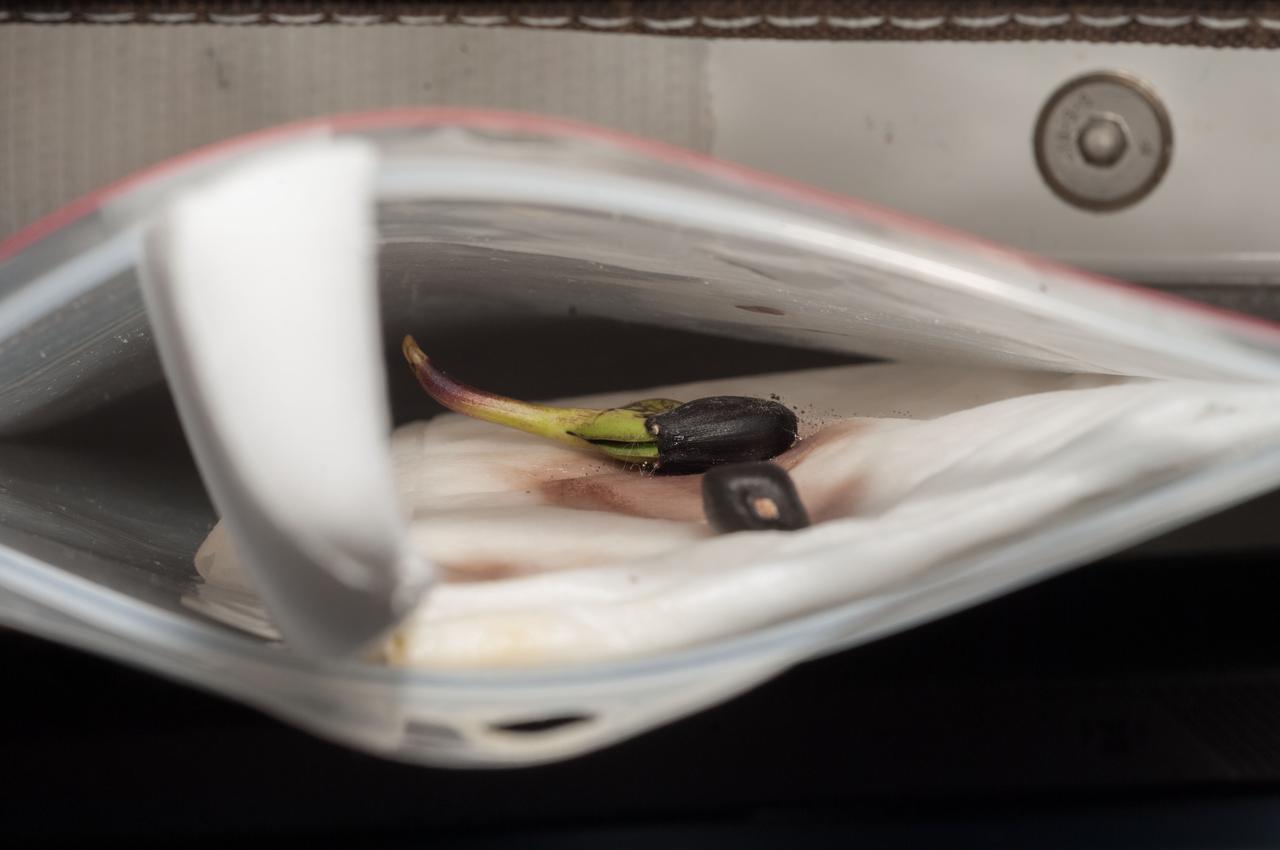
ISS037-E-026274 (4 Nov. 2013) --- A two-day old sunflower sprout is being closely monitored in its temporary home inside a plastic bag by the Expedition 37 crew members onboard the Earth-orbiting International Space Station.
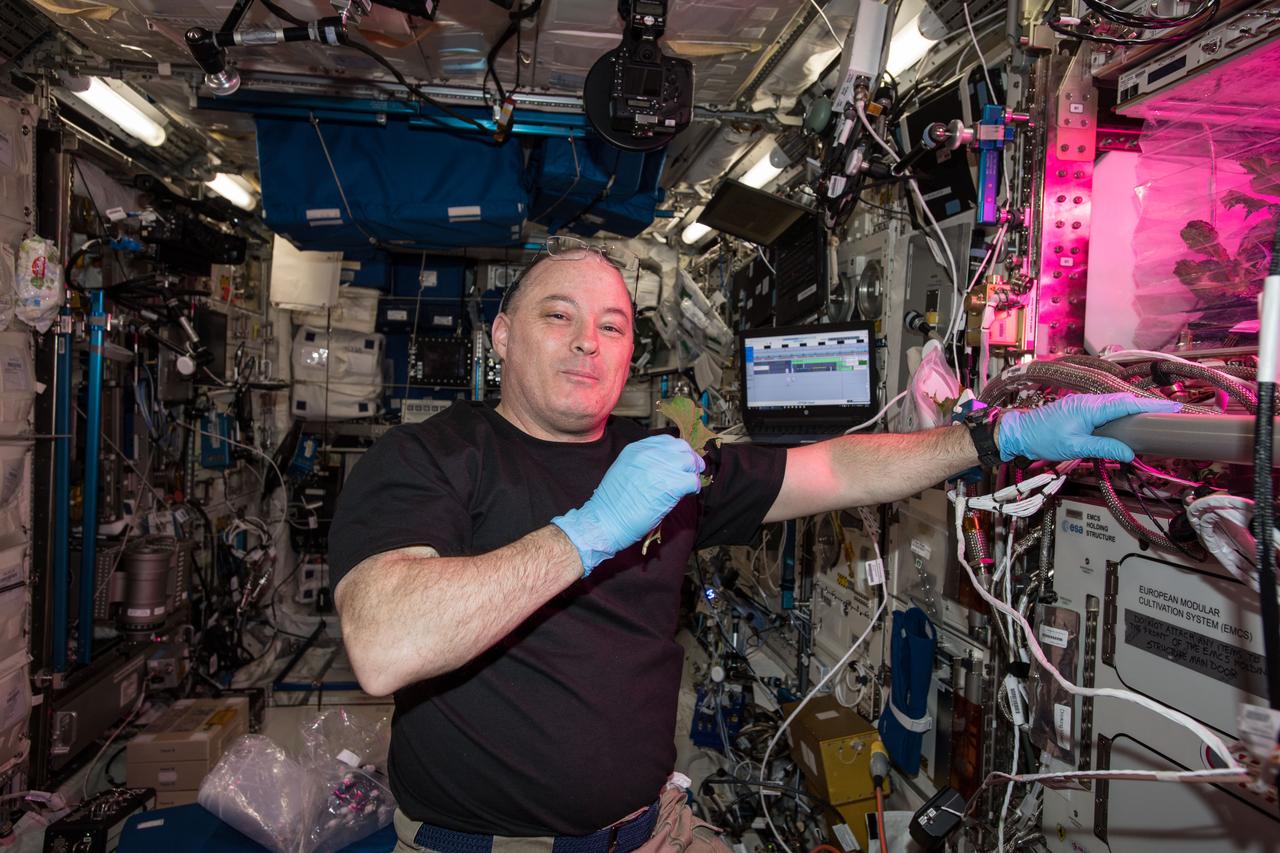
iss055e001193 (March 8, 2018) --- NASA astronaut Scott Tingle eats a piece of lettuce harvested as part of the ongoing space crop study VEG-03. The botany experiment uses the Veggie plant growth facility to cultivate a type of cabbage, lettuce and mizuna which are harvested on-orbit with some samples consumed by astronauts and others returned to Earth for testing.
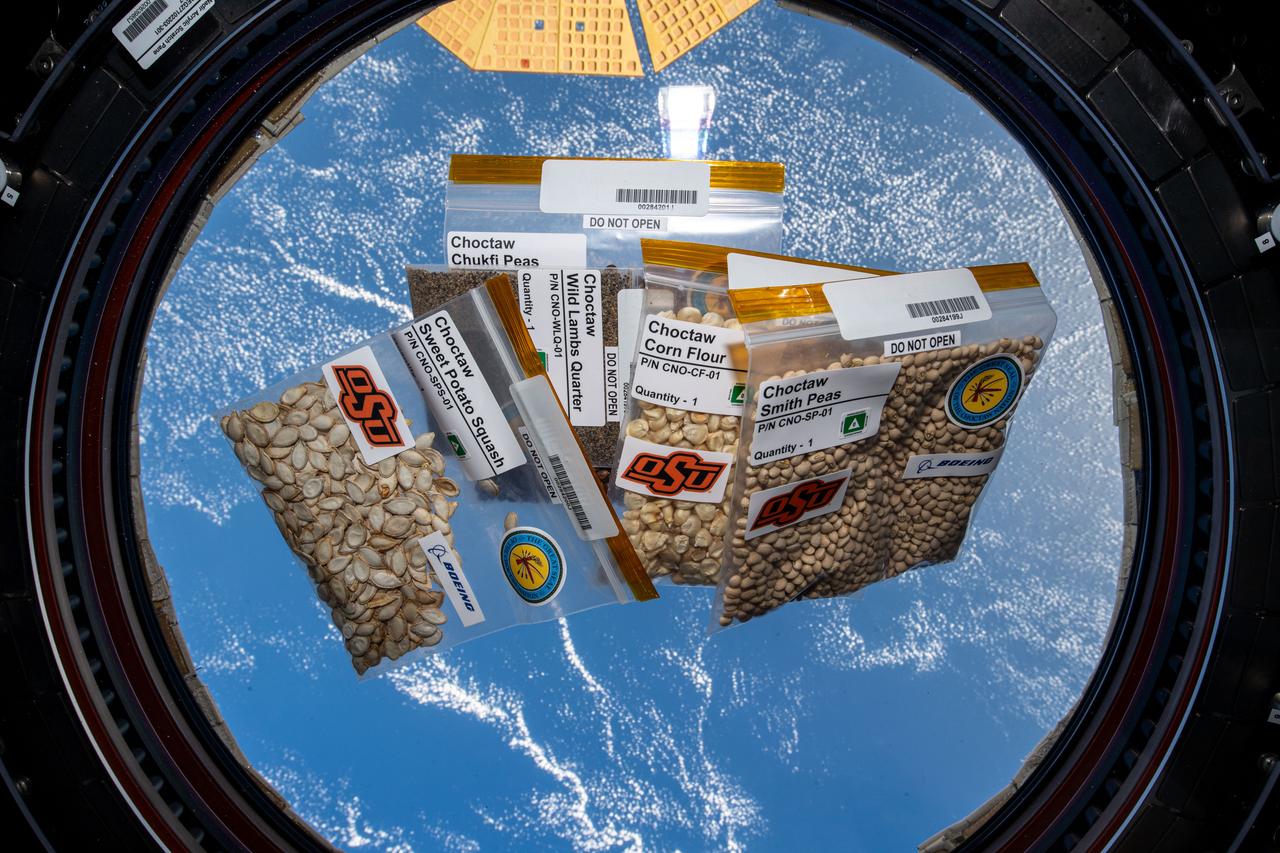
iss070e028324 (Nov. 21, 2023) --- Five varieties of seeds provided by the Choctaw Nation of Oklahoma are pictured inside the cupola as the International Space Station orbited 260 miles above the Atlantic Ocean. The seeds are exposed to microgravity for several months then returned to Earth and planted next to the same seeds left on Earth for comparison. The space botany experiment is promoting STEM (Science, Technology, Engineering, and Math) education among tribal members.
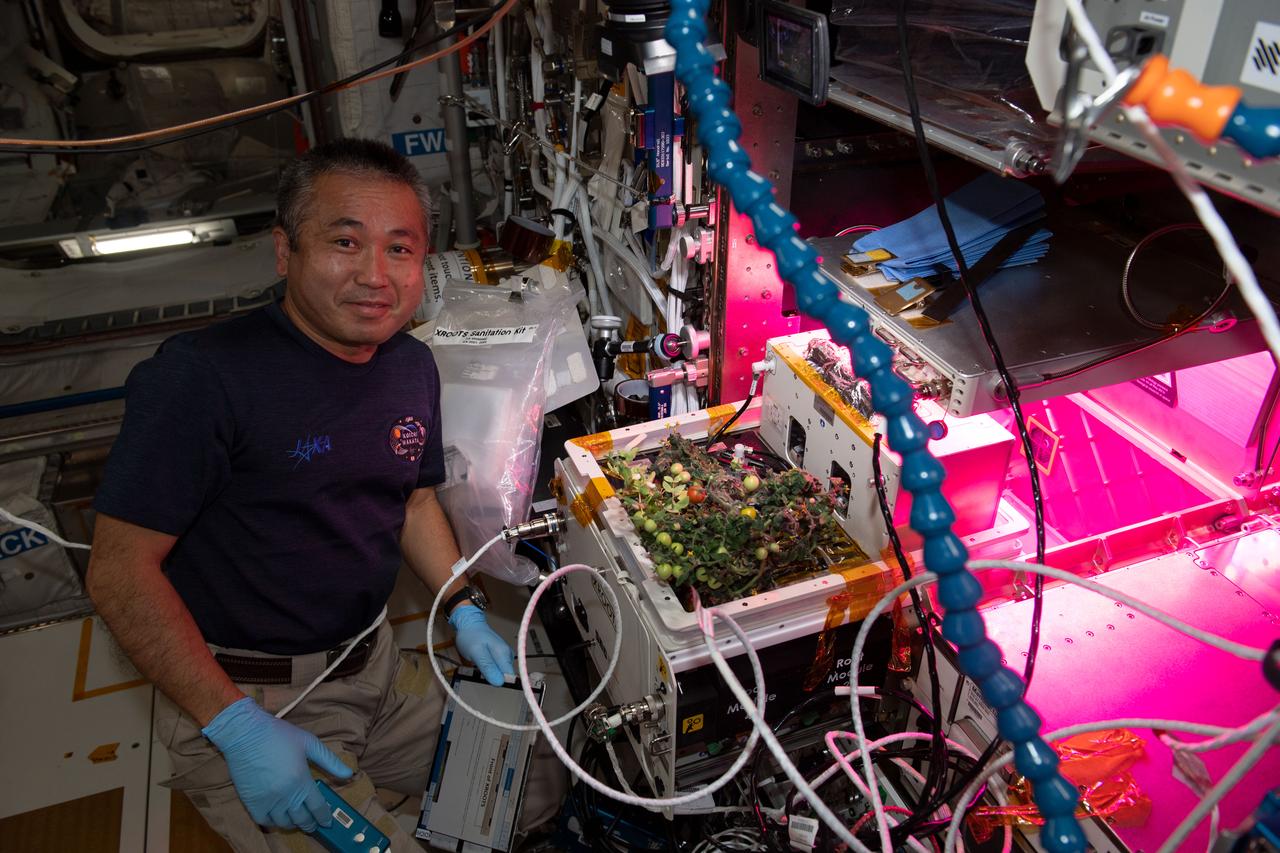
iss068e017824 (Oct. 21, 2022) --- Astronaut and Expedition 68 Flight Engineer Koichi Wakata of the Japan Aerospace Exploration Agency (JAXA) checks tomato plants growing inside the International Space Station for the XROOTS space botany study. The tomatoes were grown without soil using hydroponic and aeroponic nourishing techniques to demonstrate space agricultural methods to sustain crews on long term space flights farther away from Earth where resupply missions become impossible. Credit: Nicole Mann/NASA
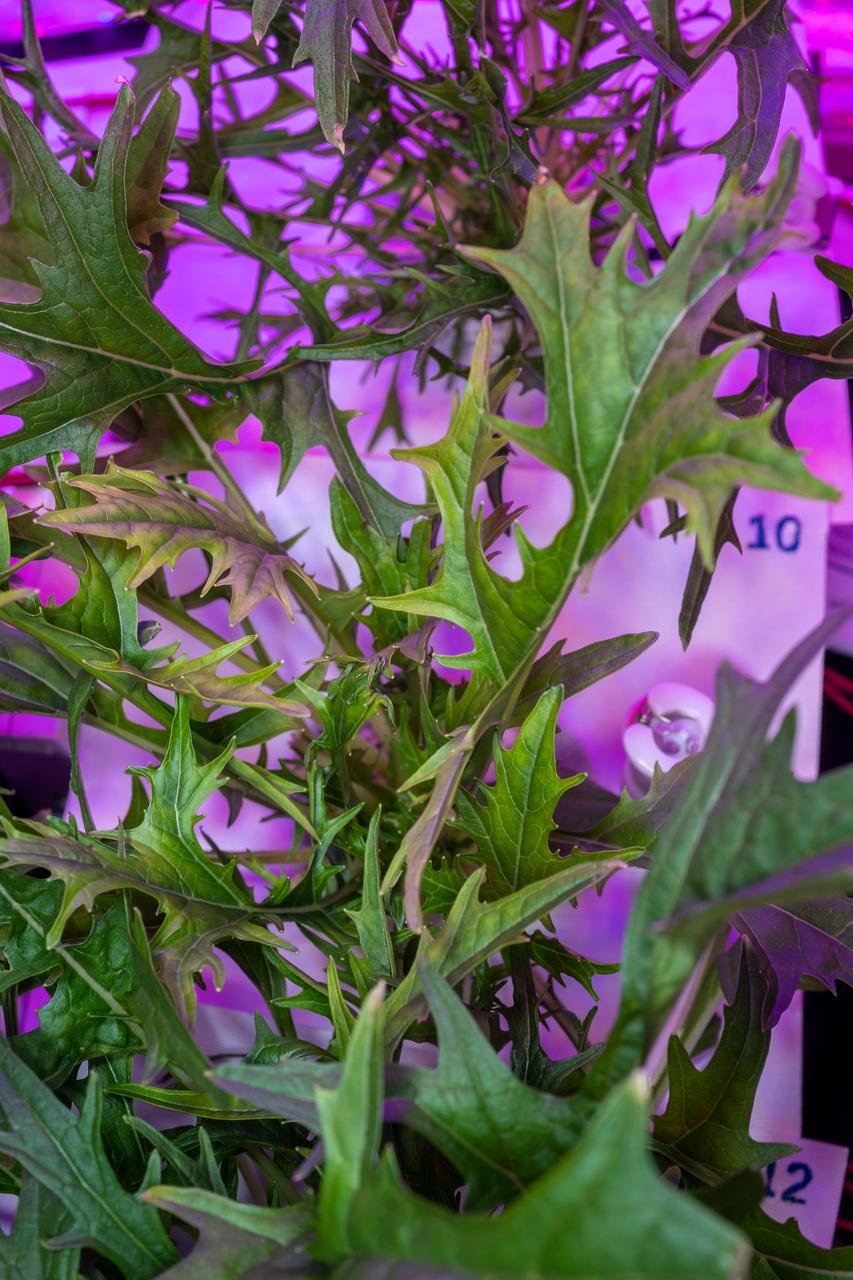
iss061e033379 (Nov. 7, 2019) --- Mizuna mustard greens are growing aboard the International Space Station to demonstrate the feasibility of space agriculture to provide fresh food for crews on deep space missions. The plants are grown under red-to-blue lighting and watered in pillows rather than soil in a specialized botany facility called VEGGIE. Crops are grown, harvested and consumed by astronauts with some samples stowed in science freezers for later analysis as part of the VEG-04 study.
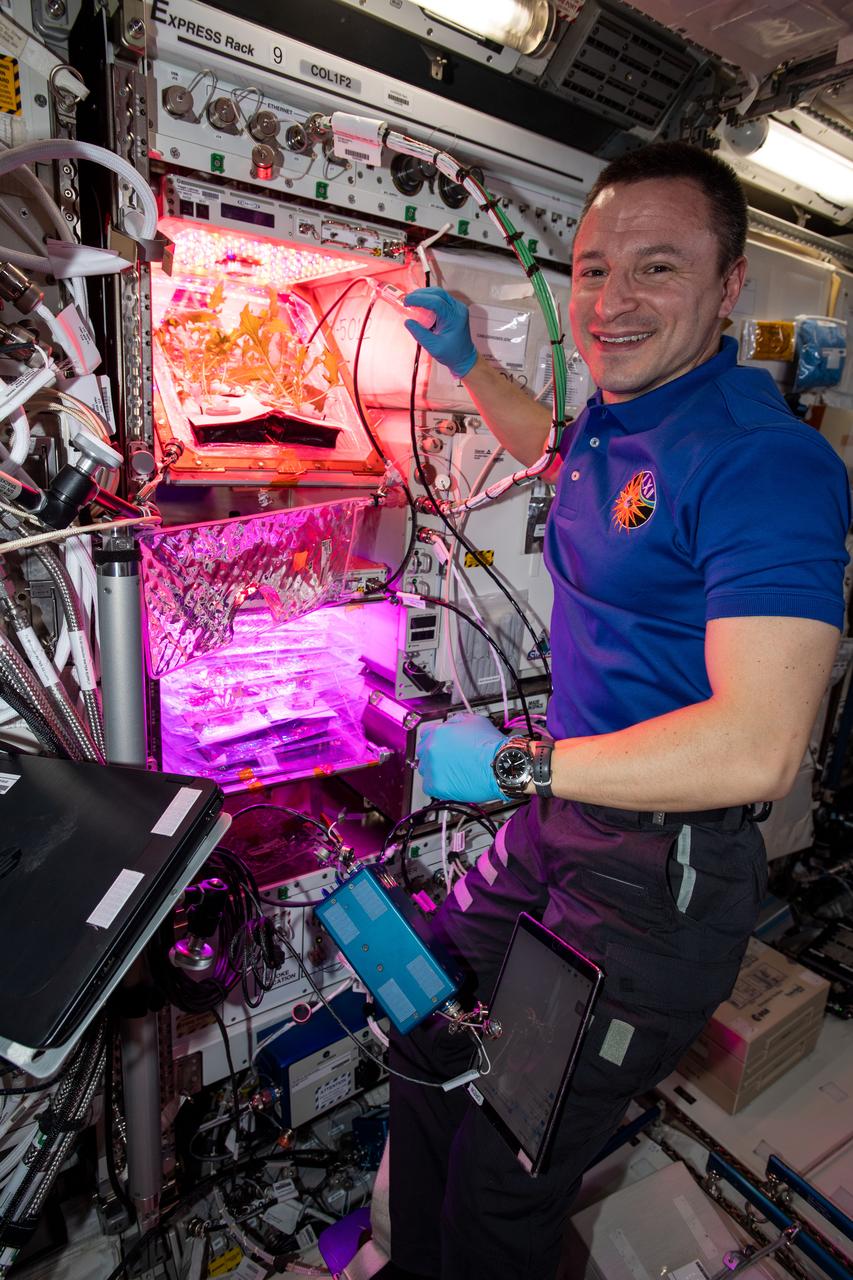
iss061e012956 (Oct. 23, 2019) --- This past week NASA astronaut Andrew Morgan watered the plant pillows in which Mizuna mustard greens are growing for the Veg-04B experiment. Veg-04B focuses on the effects of light quality and fertilizer on the leafy Mizuna crop, microbial food safety, nutritional value and the taste acceptability by the crew. The space botany research is also informing NASA how to provide fresh food for crews on long-term space missions.
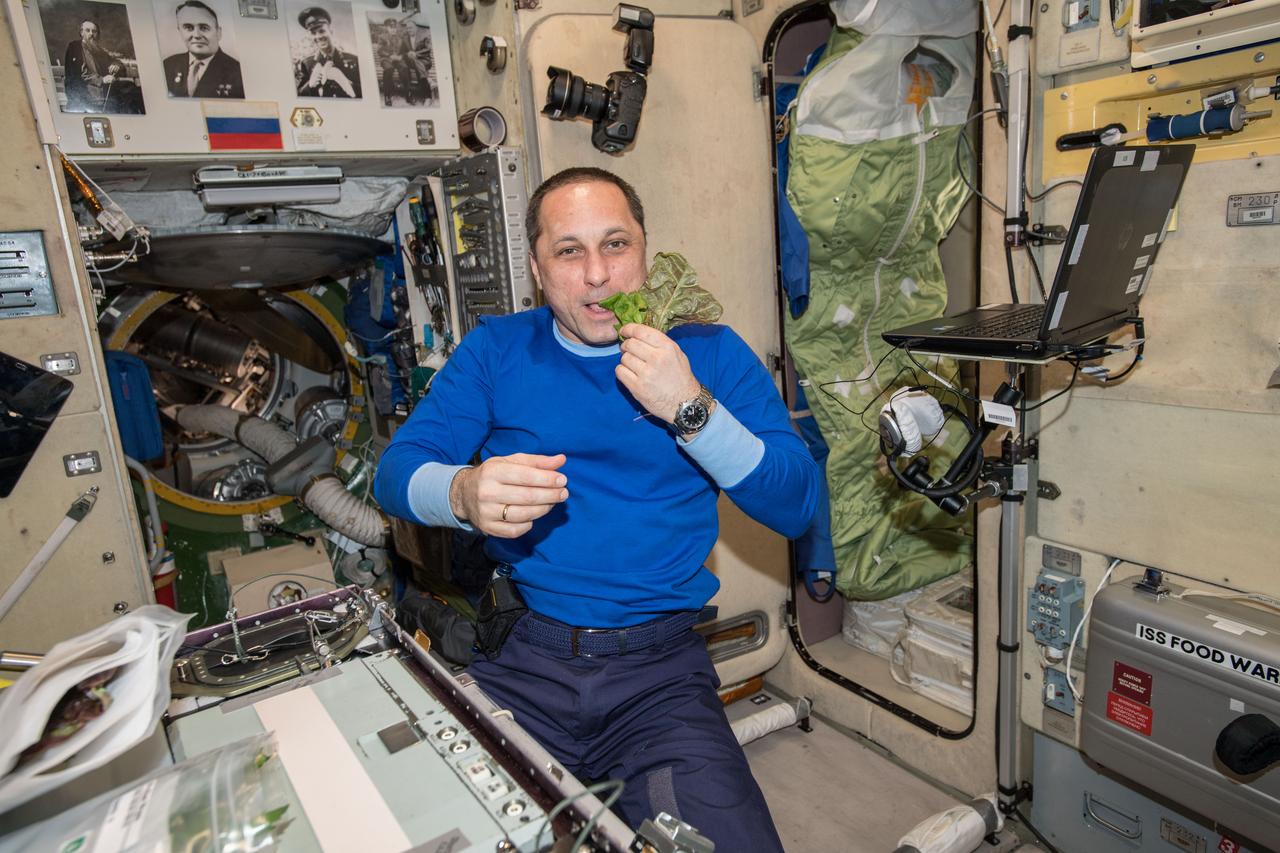
iss055e001536 (March 8, 2018) --- Expedition 55 Commander Anton Shkaplerov eats a piece of lettuce harvested as part of the ongoing space crop study VEG-03. The botany experiment uses the Veggie plant growth facility to cultivate a type of cabbage, lettuce and mizuna which are harvested on-orbit with some samples consumed by astronauts and others returned to Earth for testing.
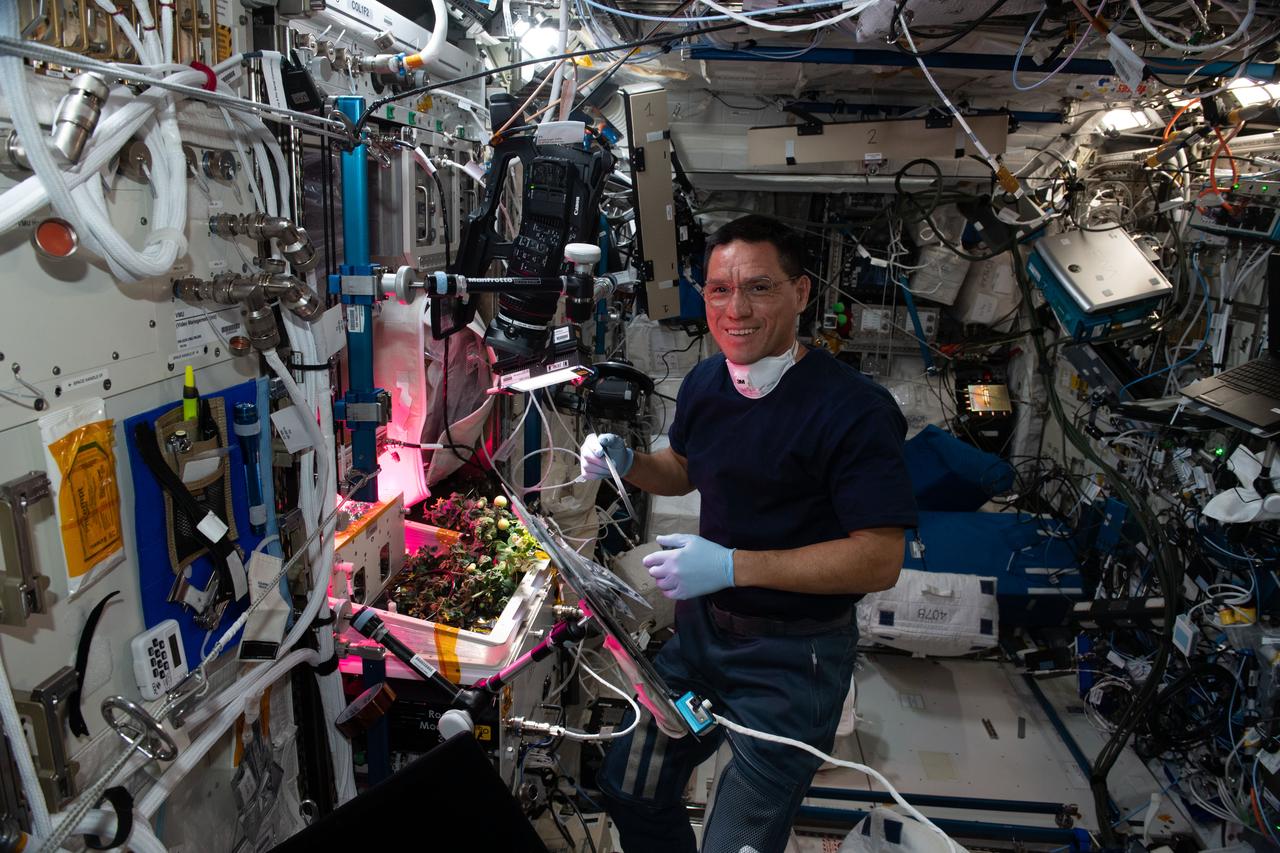
iss068e017257 (Oct. 14, 2022) --- NASA astronaut and Expedition 68 Flight Engineer Frank Rubio checks tomato plants growing inside the International Space Station for the XROOTS space botany study. The tomatoes were grown without soil using hydroponic and aeroponic nourishing techniques to demonstrate space agricultural methods to sustain crews on long term space flights farther away from Earth where resupply missions become impossible. Credit: Koichi Wakata/Japan Aerospace Exploration Agency
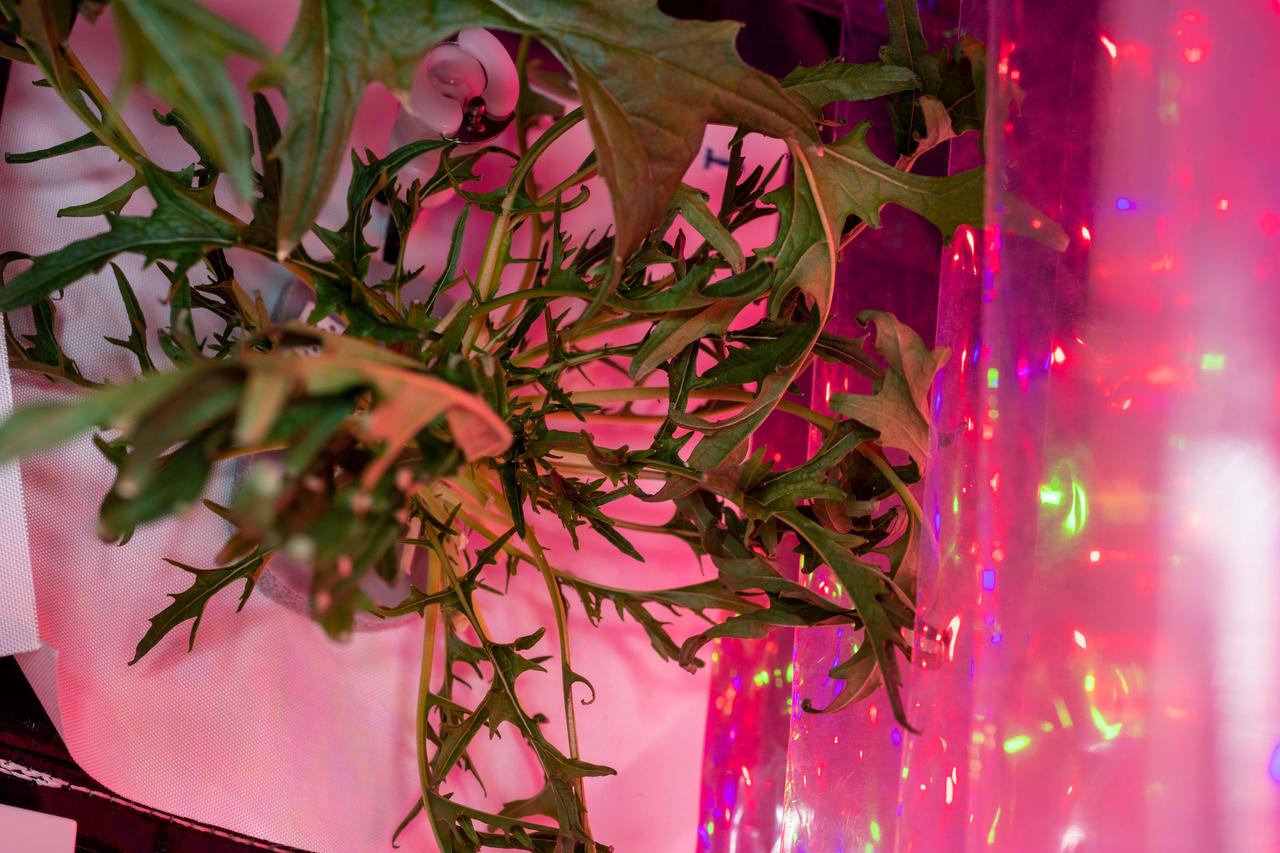
iss061e033363 (Nov. 7, 2019) --- Mizuna mustard greens are growing aboard the International Space Station to demonstrate the feasibility of space agriculture to provide fresh food for crews on deep space missions. The plants are grown under red-to-blue lighting and watered in pillows rather than soil in a specialized botany facility called VEGGIE. Crops are grown, harvested and consumed by astronauts with some samples stowed in science freezers for later analysis as part of the VEG-04 study.
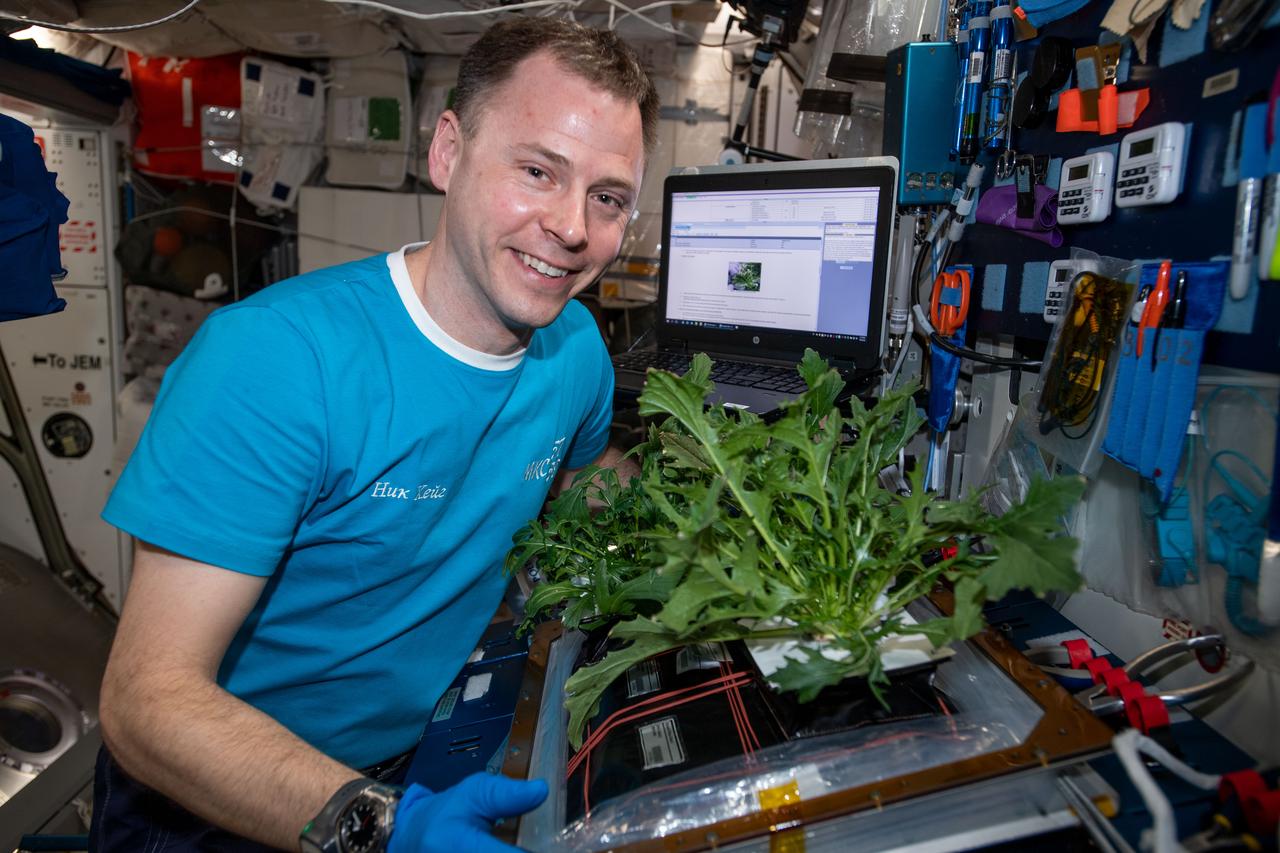
iss060e006113 (July 9, 2019) --- Expedition 60 Flight Engineer Nick Hague of NASA harvests Mizuna mustard greens for the VEG-04 botany study that is exploring the viability of growing fresh food in space to support astronauts on long-term missions. Station crewmembers pick the salad-type plants after 28 days of growth, stow some samples for analysis and taste test the rest.

S69-53894 (October 1969) --- Dr. Charles H. Walkinshaw, Jr., Spaceflight Biotechnology Branch botanist, Preventive Medicine Division, Manned Spacecraft Center (MSC), examines sorghum and tobacco plants in lunar (germ free) soil in the Plant Laboratory of the MSC’s Lunar Receiving Laboratory. The soil was brought back from the moon by the crew of the Apollo 11 lunar landing mission.
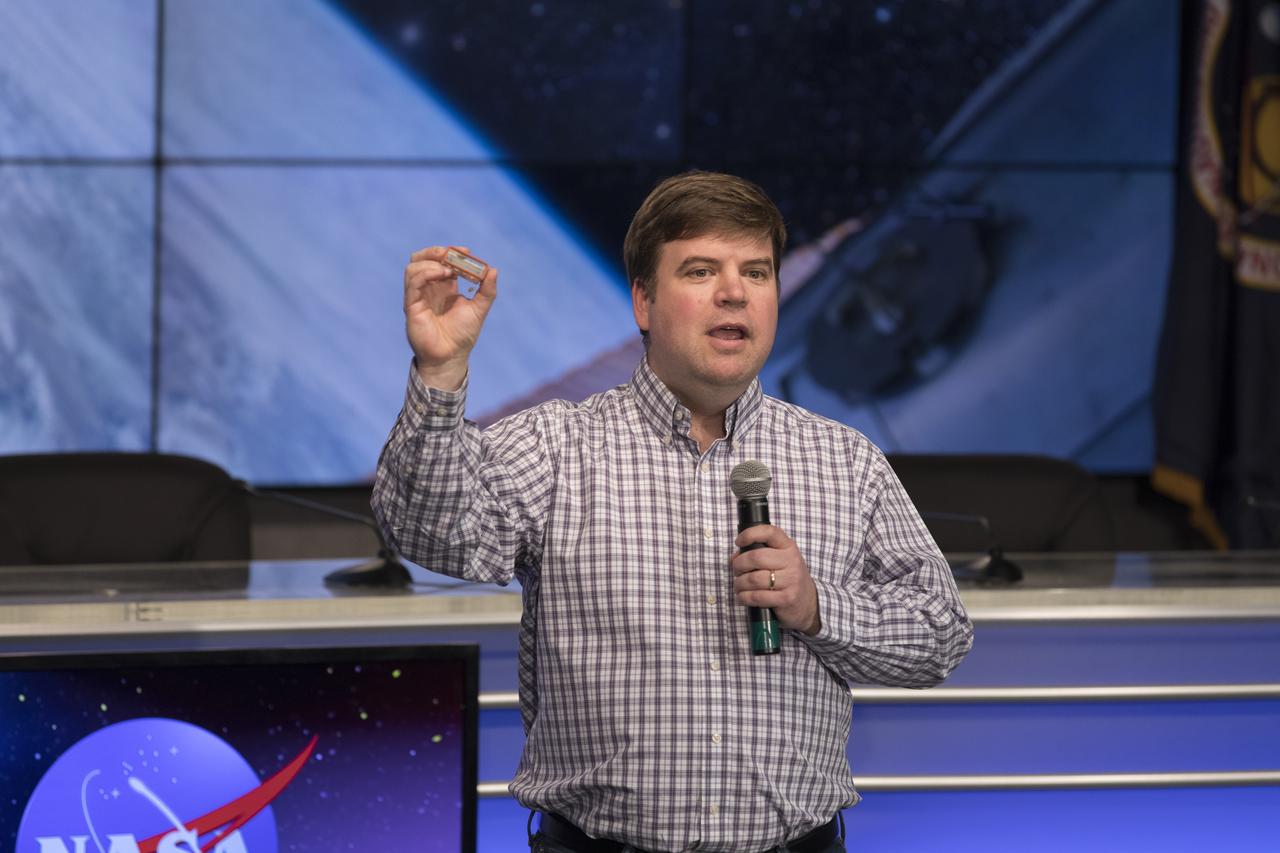
Chris Wolverton, Ph.D., professor of botany/microbiology at Ohio Wesleyan University, speaks on the Plant Gravity Perception experiment with members of social media in the Kennedy Space Center’s Press Site auditorium. The briefing focused on research planned for launch to the International Space Station. The scientific materials and supplies will be aboard a Dragon spacecraft scheduled for liftoff from Cape Canaveral Air Force Station's Space Launch Complex 40 at 11:46 a.m. EST, on Dec. 12, 2017. The SpaceX Falcon 9 rocket will launch the company's 13th Commercial Resupply Services mission to the space station.
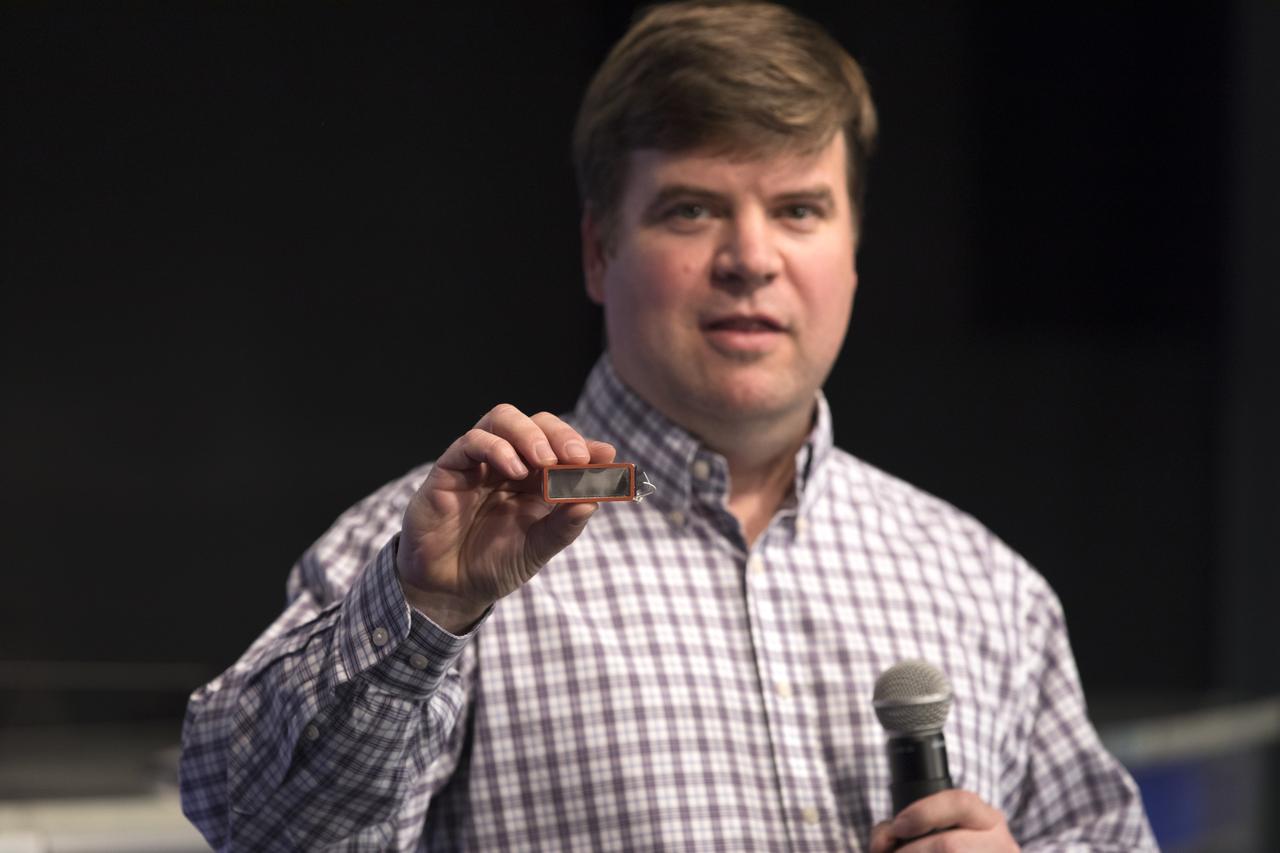
Chris Wolverton, Ph.D., professor of botany/microbiology at Ohio Wesleyan University, speaks on the Plant Gravity Perception experiment with members of social media in the Kennedy Space Center’s Press Site auditorium. The briefing focused on research planned for launch to the International Space Station. The scientific materials and supplies will be aboard a Dragon spacecraft scheduled for liftoff from Cape Canaveral Air Force Station's Space Launch Complex 40 at 11:46 a.m. EST, on Dec. 12, 2017. The SpaceX Falcon 9 rocket will launch the company's 13th Commercial Resupply Services mission to the space station.
Dr. Arko Bakshi, a research associate with the Department of Botany at the University of Wisconsin, Madison, adds nutrient gel to Target Veggie Chambers, or TVCs, inside a laboratory in the Space Station Processing Facility at Kennedy Space Center in Florida on May 28, 2021. Bakshi waited until the gel solidified and then planted cotton seeds in it as part of the Targeting Improved Cotton Through Orbital Cultivation (TICTOC) experiment, which will launch to the International Space Station aboard SpaceX’s 22nd commercial resupply services mission. TICTOC will investigate how environmental factors and genes control development of roots in the absence of gravity. Liftoff of the SpaceX Falcon 9 rocket and Dragon capsule is scheduled for 1:29 p.m. EDT Thursday, June 3, 2021, from Launch Complex 39A at Kennedy Space Center.
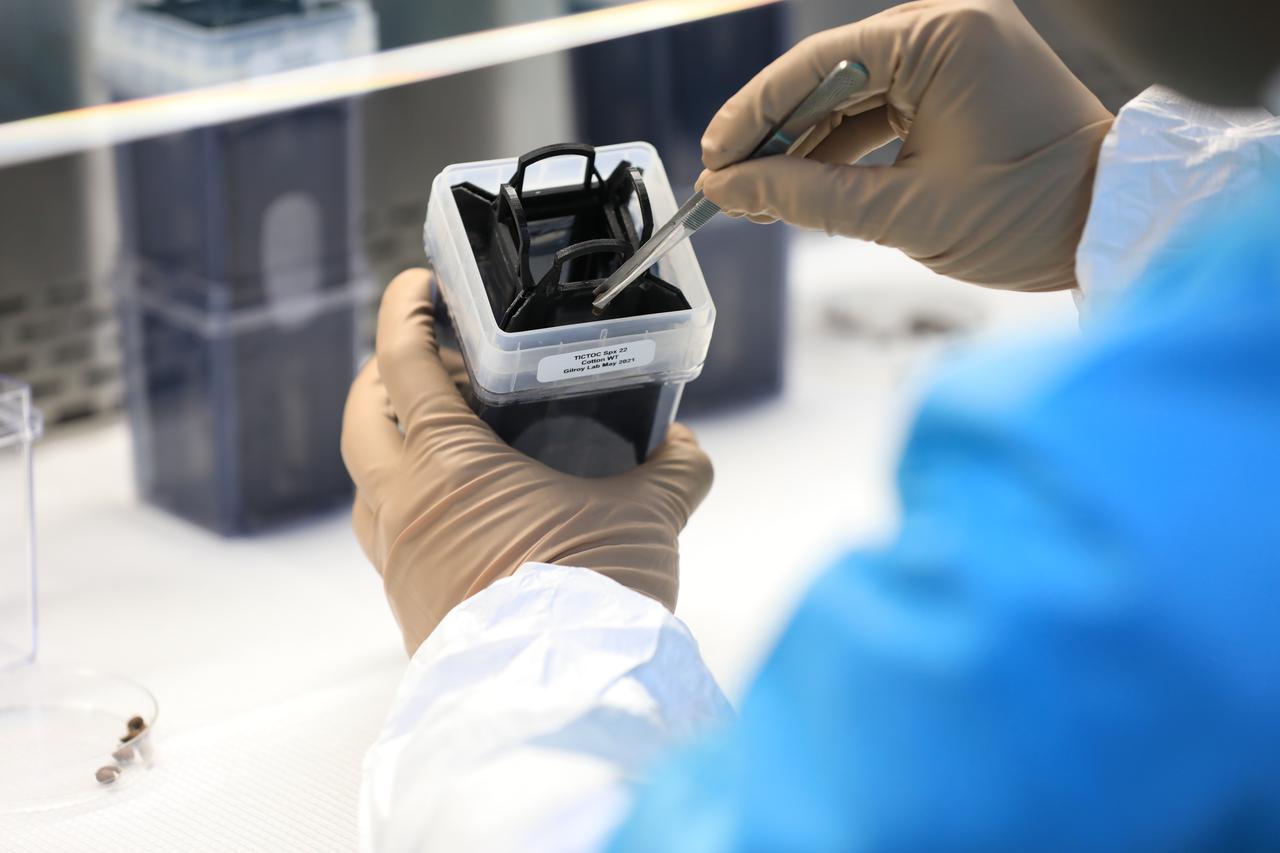
Dr. Arko Bakshi, a research associate with the Department of Botany at the University of Wisconsin, Madison, adds nutrient gel to Target Veggie Chambers, or TVCs, inside a laboratory in the Space Station Processing Facility at Kennedy Space Center in Florida on May 28, 2021. Bakshi waited until the gel solidified and then planted cotton seeds in it as part of the Targeting Improved Cotton Through Orbital Cultivation (TICTOC) experiment, which will launch to the International Space Station aboard SpaceX’s 22nd commercial resupply services mission. TICTOC will investigate how environmental factors and genes control development of roots in the absence of gravity. Liftoff of the SpaceX Falcon 9 rocket and Dragon capsule is scheduled for 1:29 p.m. EDT Thursday, June 3, 2021, from Launch Complex 39A at Kennedy Space Center.
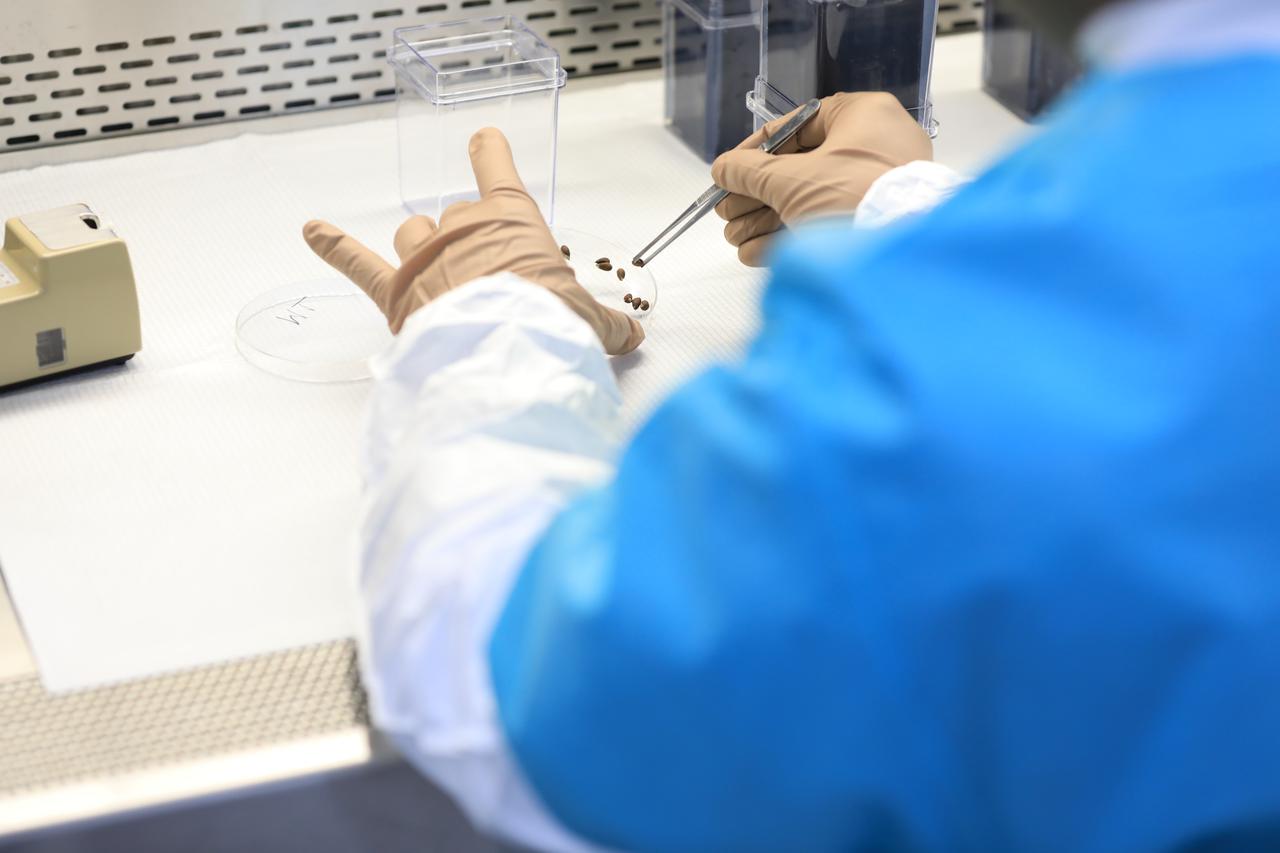
Dr. Arko Bakshi, a research associate with the Department of Botany at the University of Wisconsin, Madison, adds nutrient gel to Target Veggie Chambers, or TVCs, inside a laboratory in the Space Station Processing Facility at Kennedy Space Center in Florida on May 28, 2021. Bakshi waited until the gel solidified and then planted cotton seeds in it as part of the Targeting Improved Cotton Through Orbital Cultivation (TICTOC) experiment, which will launch to the International Space Station aboard SpaceX’s 22nd commercial resupply services mission. TICTOC will investigate how environmental factors and genes control development of roots in the absence of gravity. Liftoff of the SpaceX Falcon 9 rocket and Dragon capsule is scheduled for 1:29 p.m. EDT Thursday, June 3, 2021, from Launch Complex 39A at Kennedy Space Center.
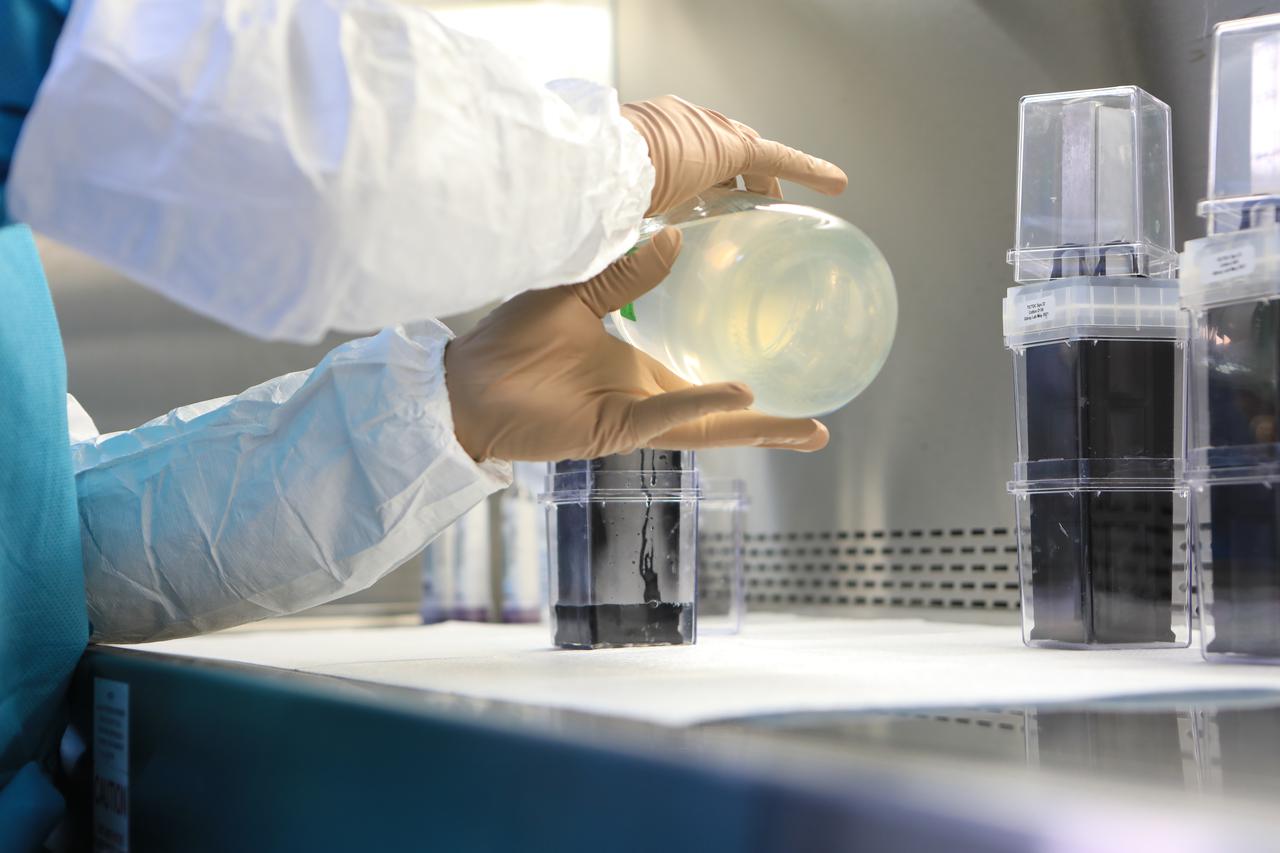
Dr. Arko Bakshi, a research associate with the Department of Botany at the University of Wisconsin, Madison, adds nutrient gel to Target Veggie Chambers, or TVCs, inside a laboratory in the Space Station Processing Facility at Kennedy Space Center in Florida on May 28, 2021. Bakshi waited until the gel solidified and then planted cotton seeds in it as part of the Targeting Improved Cotton Through Orbital Cultivation (TICTOC) experiment, which will launch to the International Space Station aboard SpaceX’s 22nd commercial resupply services mission. TICTOC will investigate how environmental factors and genes control development of roots in the absence of gravity. Liftoff of the SpaceX Falcon 9 rocket and Dragon capsule is scheduled for 1:29 p.m. EDT Thursday, June 3, 2021, from Launch Complex 39A at Kennedy Space Center.
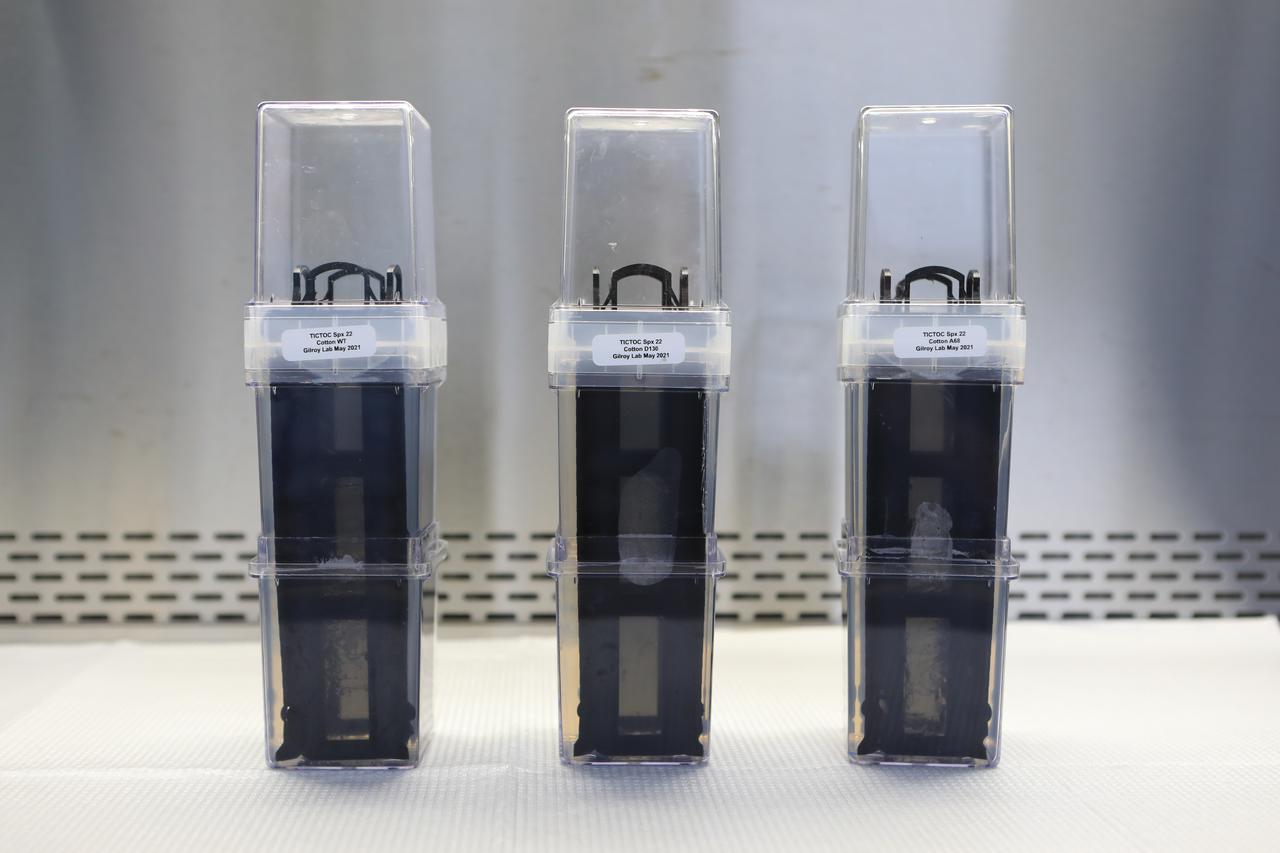
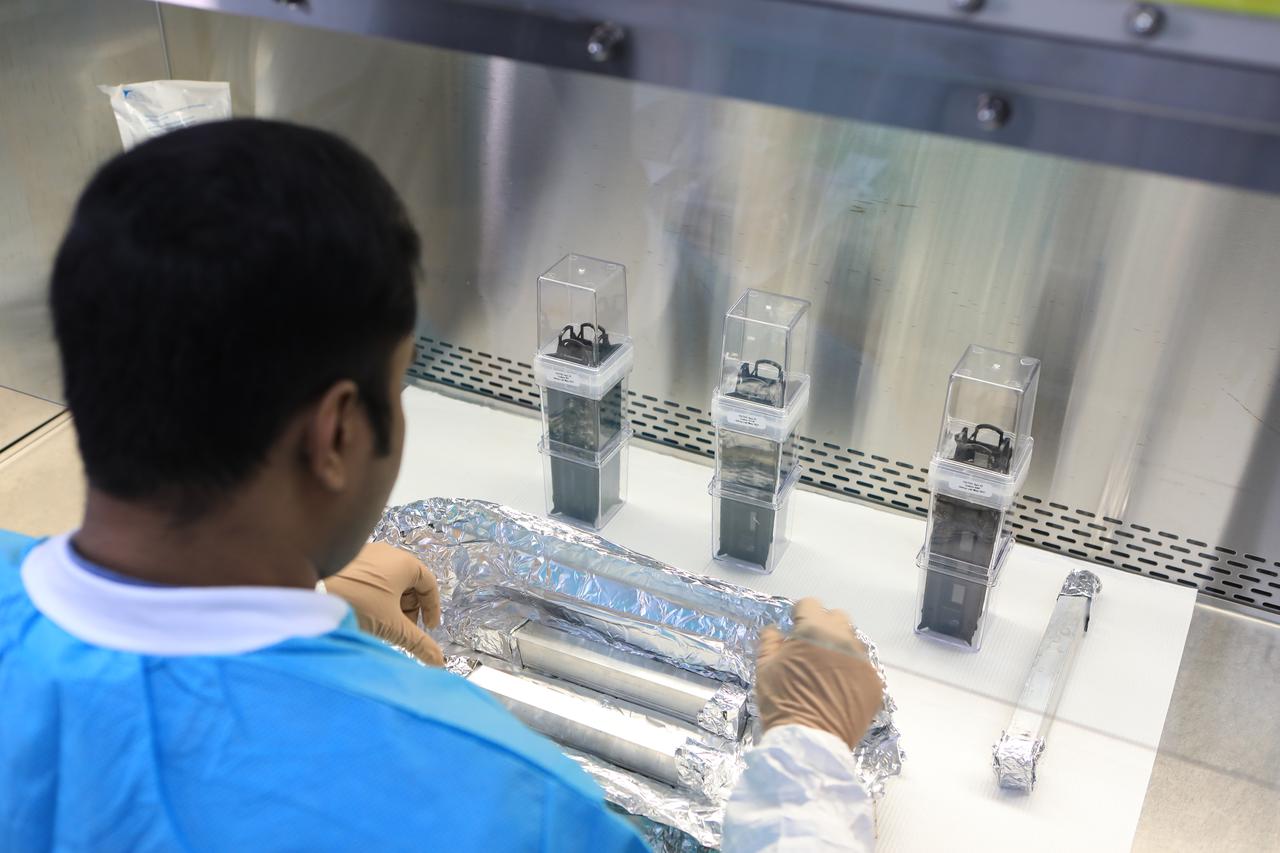
Several Target Veggie Chambers, or TVCs, are in view inside a laboratory in the Space Station Processing Facility at NASA’s Kennedy Space Center in Florida on May 28, 2021. A nutrient gel has been added to them, and when the gel solidified, Dr. Arko Bakshi, a research associate with the Department of Botany at the University of Wisconsin, Madison, planted cotton seeds in them as part of the Targeting Improved Cotton Through Orbital Cultivation (TICTOC) experiment, which will launch to the International Space Station aboard SpaceX’s 22nd commercial resupply services mission. TICTOC will investigate how environmental factors and genes control development of roots in the absence of gravity. Liftoff of the SpaceX Falcon 9 rocket and Dragon capsule is scheduled for 1:29 p.m. EDT Thursday, June 3, 2021, from Launch Complex 39A at Kennedy Space Center.
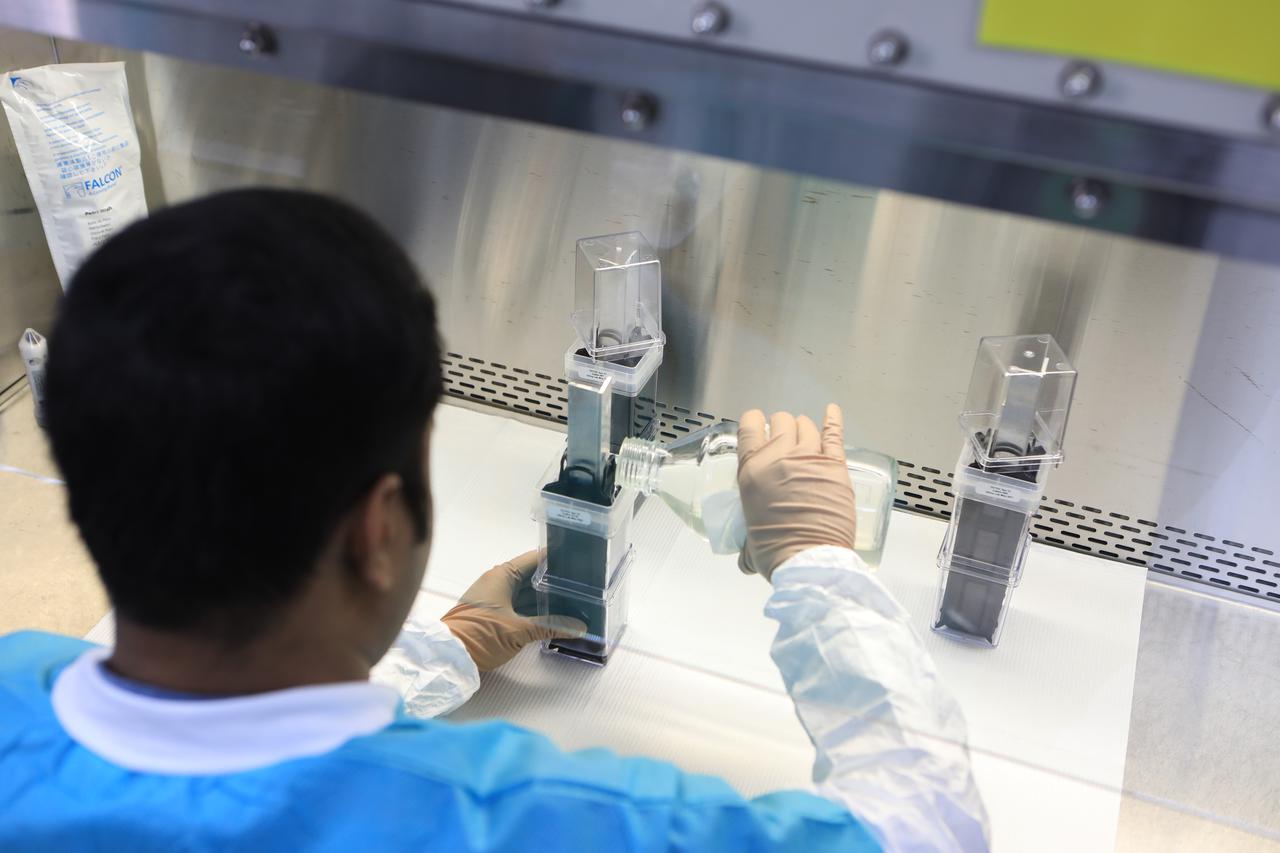
Dr. Arko Bakshi, a research associate with the Department of Botany at the University of Wisconsin, Madison, adds nutrient gel to Target Veggie Chambers, or TVCs, inside a laboratory in the Space Station Processing Facility at Kennedy Space Center in Florida on May 28, 2021. Bakshi waited until the gel solidified and then planted cotton seeds in it as part of the Targeting Improved Cotton Through Orbital Cultivation (TICTOC) experiment, which will launch to the International Space Station aboard SpaceX’s 22nd commercial resupply services mission. TICTOC will investigate how environmental factors and genes control development of roots in the absence of gravity. Liftoff of the SpaceX Falcon 9 rocket and Dragon capsule is scheduled for 1:29 p.m. EDT Thursday, June 3, 2021, from Launch Complex 39A at Kennedy Space Center.
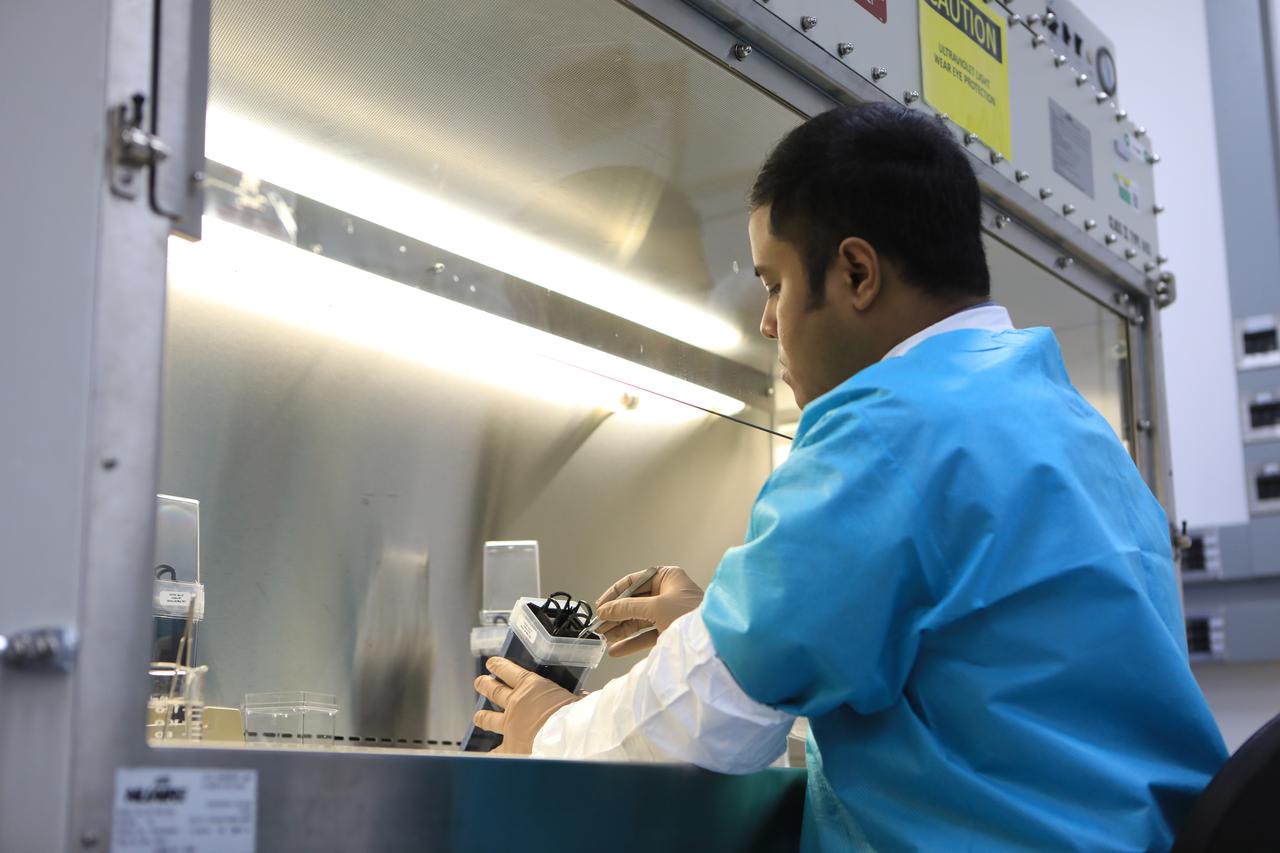
Dr. Arko Bakshi, a research associate with the Department of Botany at the University of Wisconsin, Madison, adds nutrient gel to Target Veggie Chambers, or TVCs, inside a laboratory in the Space Station Processing Facility at Kennedy Space Center in Florida on May 28, 2021. Bakshi waited until the gel solidified and then planted cotton seeds in it as part of the Targeting Improved Cotton Through Orbital Cultivation (TICTOC) experiment, which will launch to the International Space Station aboard SpaceX’s 22nd commercial resupply services mission. TICTOC will investigate how environmental factors and genes control development of roots in the absence of gravity. Liftoff of the SpaceX Falcon 9 rocket and Dragon capsule is scheduled for 1:29 p.m. EDT Thursday, June 3, 2021, from Launch Complex 39A at Kennedy Space Center.
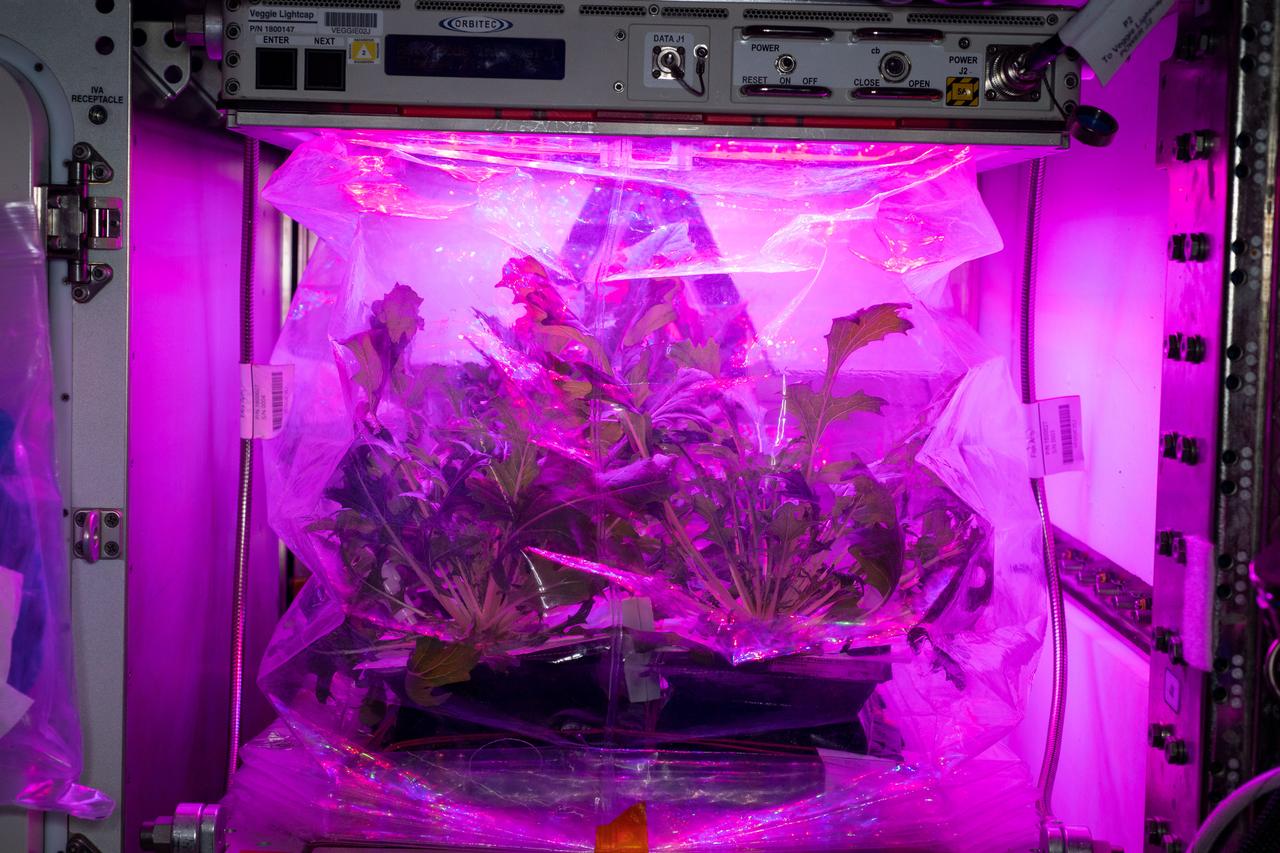
Mizuna Mustard mustard greens, part of the Veg-04A experiment, are shown growing in a Veggie plant growth chamber aboard the International Space Station on July 9, 2019. The Veg-04A experiment tested the greens, grown in blue-rich lighting and red-rich lighting, to determine the effects of different light ratios on plants grown in space on the station. The plants arrived aboard the SpaceX Commercial Resupply Services-16 mission. Astronaut Christina Koch initiated the on-orbit experiment on June 4, 2019, in the station’s two Veggie plant growth chambers, with six plant pillows per chamber. On June 11, 2019, Koch thinned the Mizuna plants to one plant per pillow. The on-orbit harvest took place July 9, 2019, with astronaut Nick Hague harvesting the plants grown under blue-rich light and Koch harvesting the plants grown under red-rich lights.
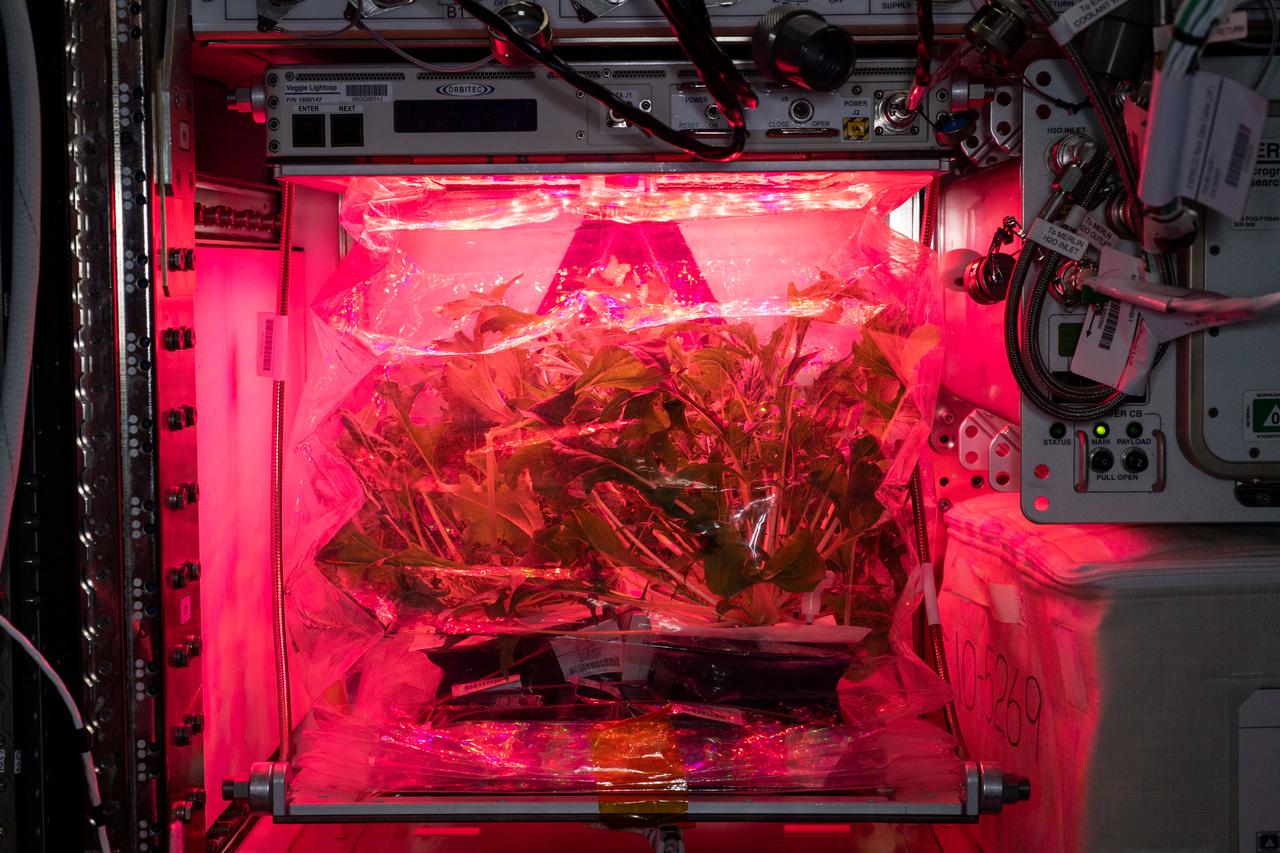
Mizuna Mustard mustard greens, part of the Veg-04A experiment, are shown growing in a Veggie plant growth chamber aboard the International Space Station on July 9, 2019. The Veg-04A experiment tested the greens, grown in blue-rich lighting and red-rich lighting, to determine the effects of different light ratios on plants grown in space on the station. The plants arrived aboard the SpaceX Commercial Resupply Services-16 mission. Astronaut Christina Koch initiated the on-orbit experiment on June 4, 2019, in the station’s two Veggie plant growth chambers, with six plant pillows per chamber. On June 11, 2019, Koch thinned the Mizuna plants to one plant per pillow. The on-orbit harvest took place July 9, 2019, with astronaut Nick Hague harvesting the plants grown under blue-rich light and Koch harvesting the plants grown under red-rich lights.
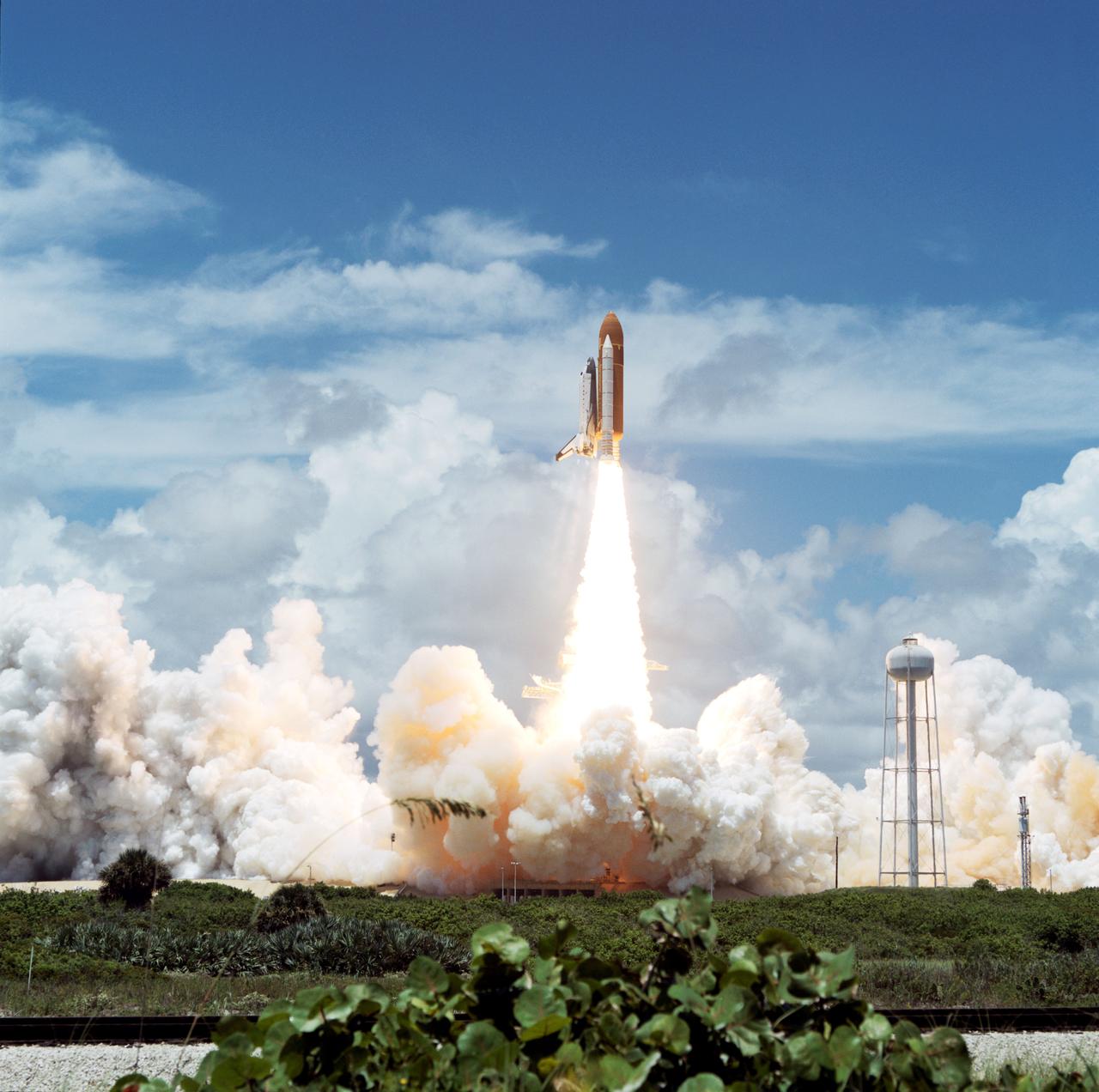
Columbia, Orbiter Vehicle (OV) 102, heads skyward after clearing the fixed service structure (FSS) tower at Kennedy Space Center (KSC) Launch Complex (LC) Pad 39A. Florida plant life appears in the foreground. The exhaust cloud produced by OV-102's solid rocket boosters (SRBs) covers the launch pad area with the exception of the sound suppression water system tower. OV-102's starboard side and the right SRB are visible from this angle. Launch occurred at 12:43 pm Eastern Daylight Time (EDT). Once in Earth orbit, STS-65's six NASA astronauts and a Japanese Payload Specialist aboard OV-102 will begin two weeks of experimentation in support of the second International Microgravity Laboratory (IML-2).
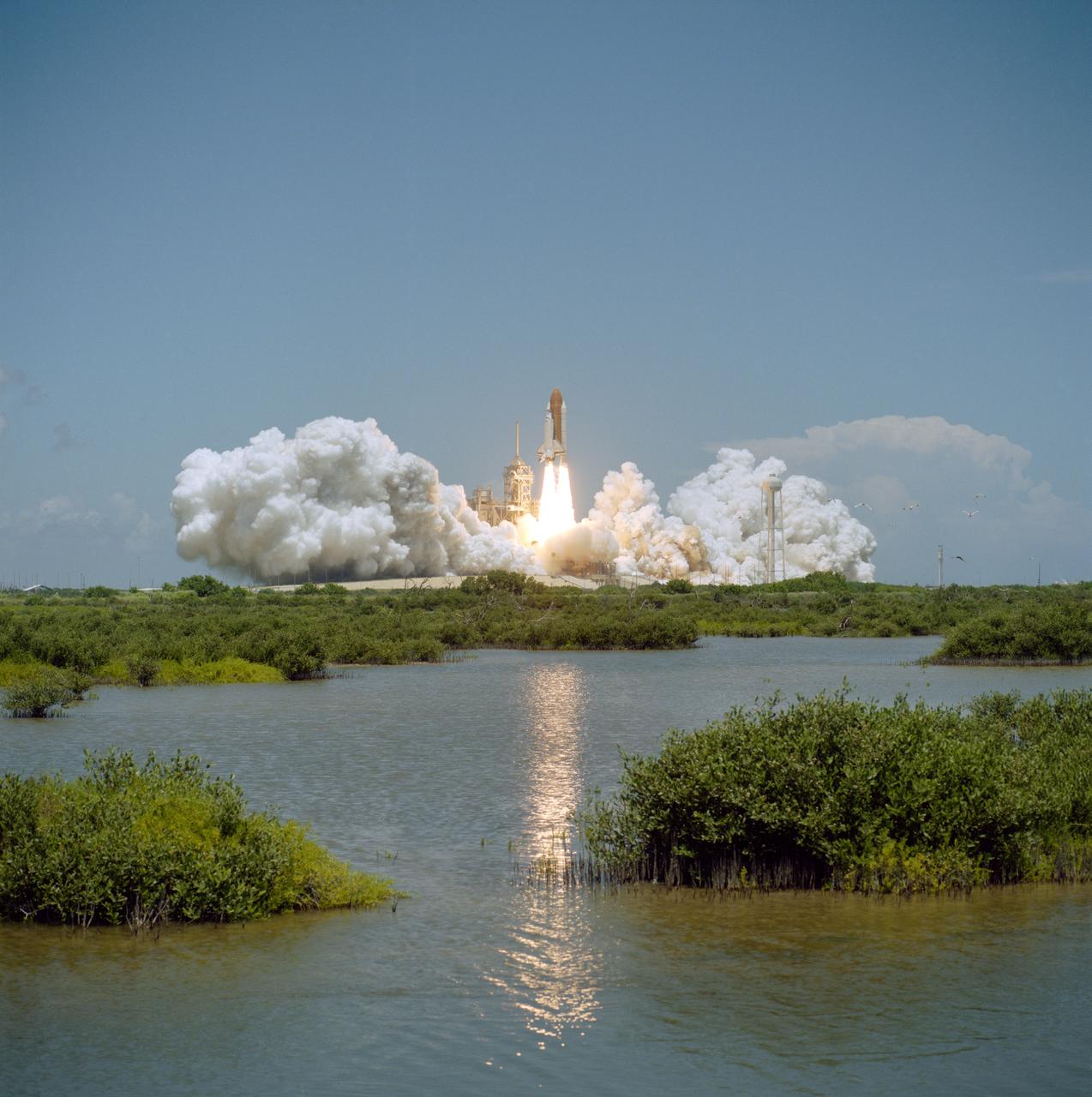
Columbia, Orbiter Vehicle (OV) 102, rises above Kennedy Space Center (KSC) Launch Complex (LC) Pad 39A after liftoff at 12:43 pm Eastern Daylight Time (EDT). An exhaust cloud covers the launch pad area and the glow of the space shuttle main engine (SSME) and solid rocket booster (SRB) firings is reflected in a nearby marsh as OV-102 atop its external tank (ET) heads toward Earth orbit. A small flock of birds is visible at the right. Once in Earth's orbit, STS-65's six NASA astronauts and a Japanese Payload Specialist aboard OV-102 will begin two weeks of experimentation in support of the second International Microgravity Laboratory (IML-2) mission.